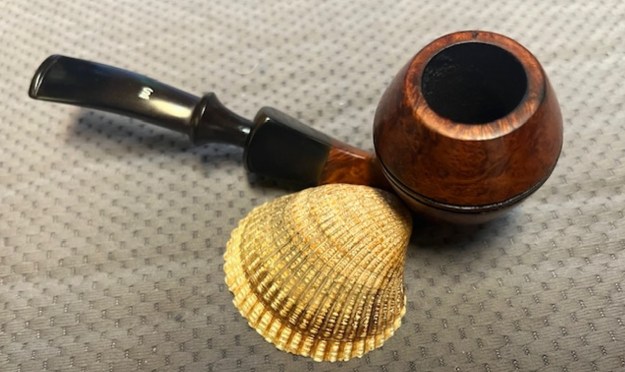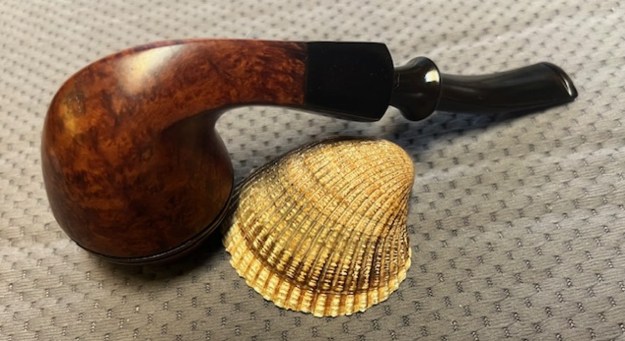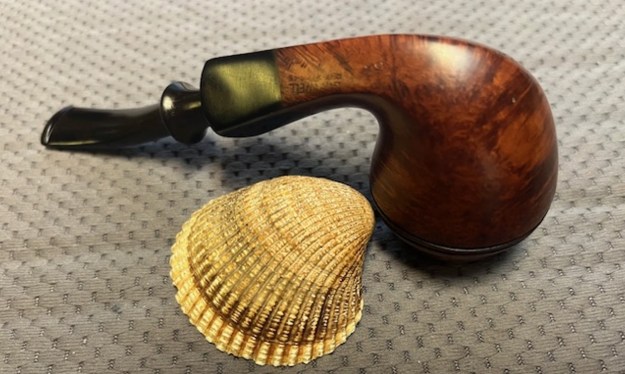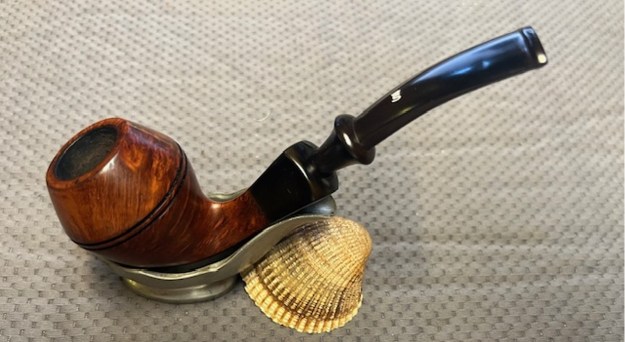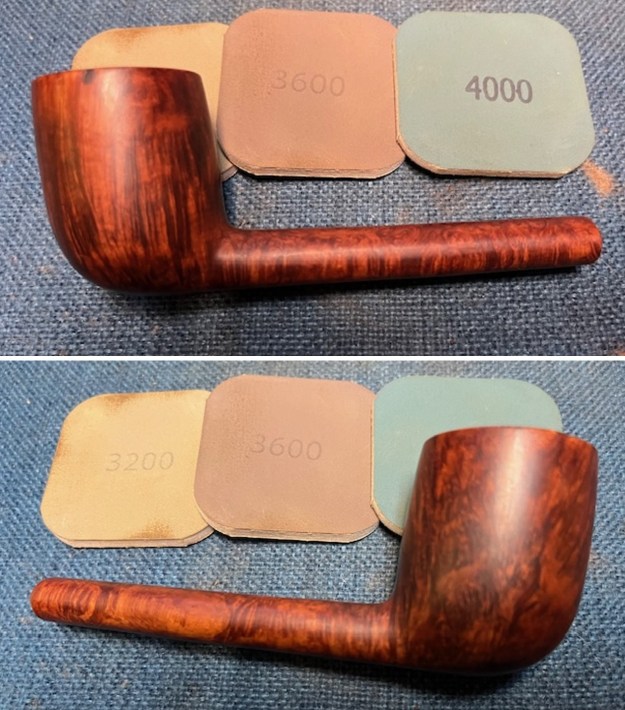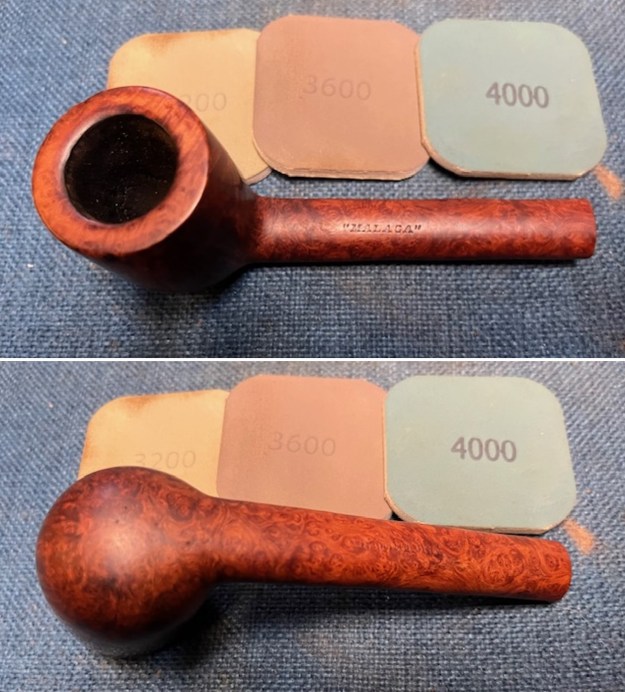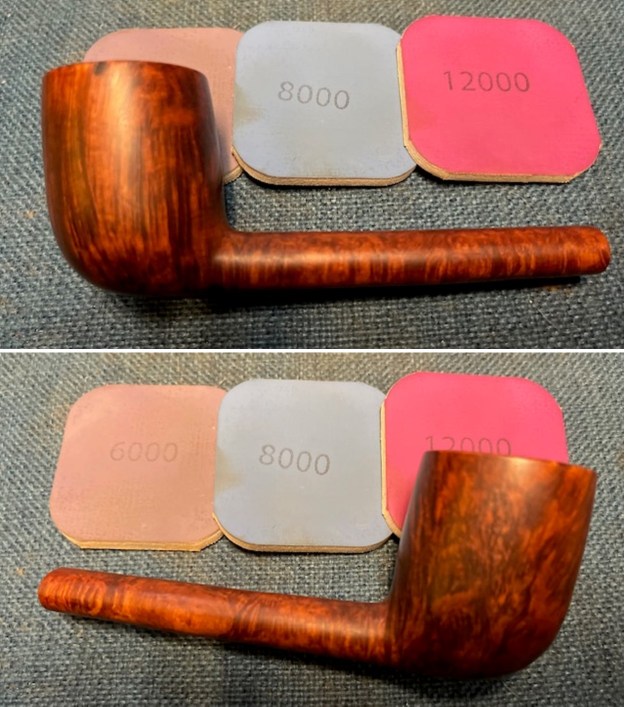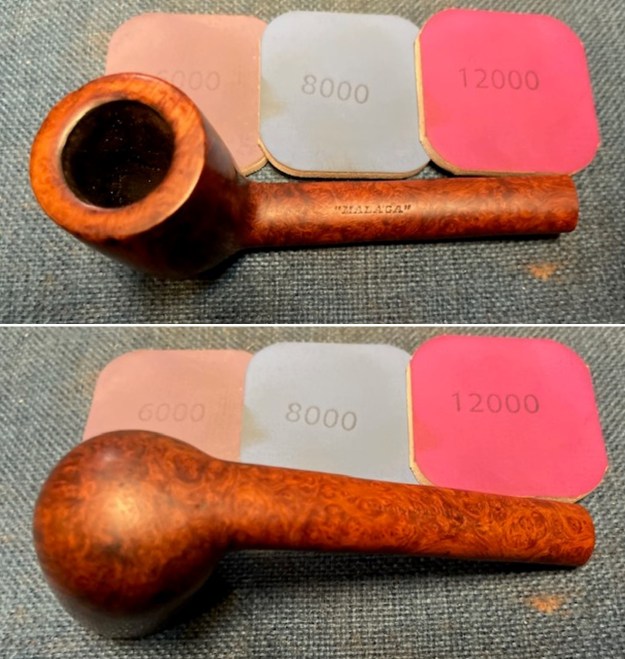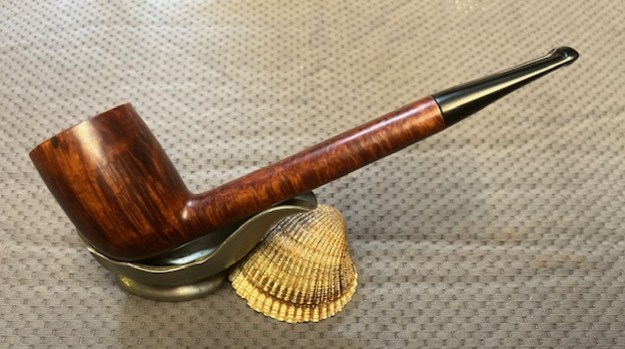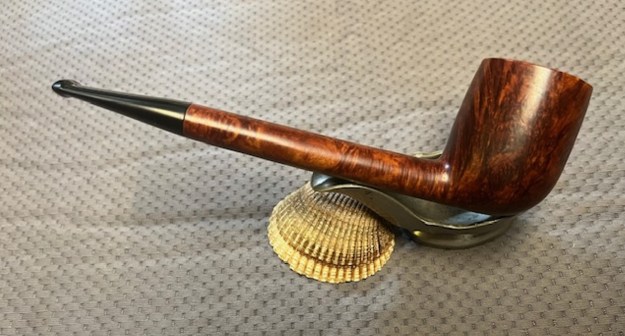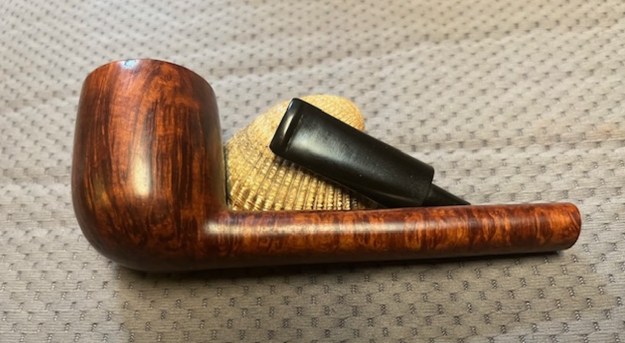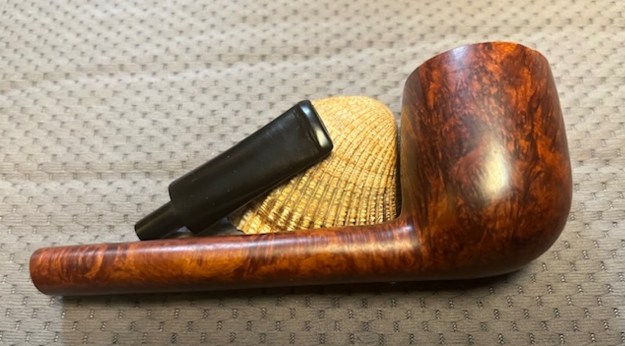
Tag Archives: topping a bowl

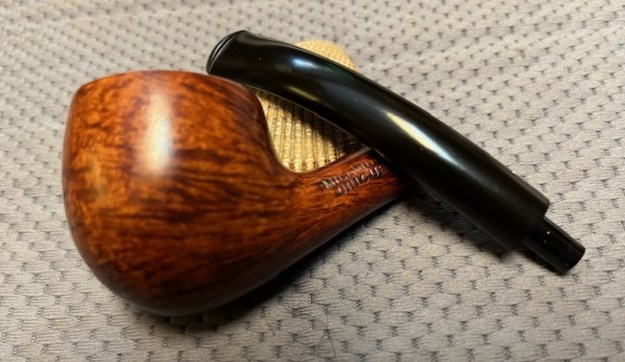
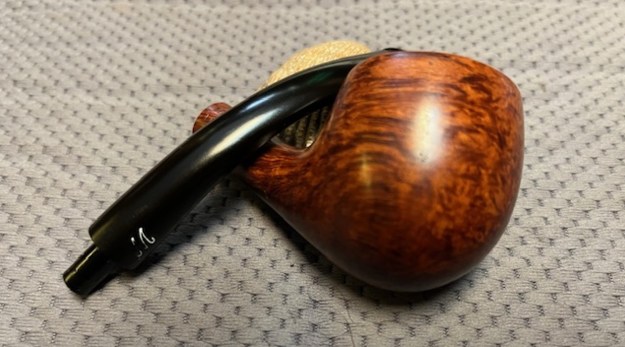
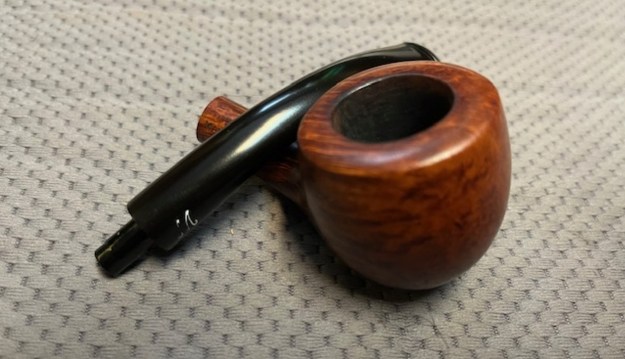
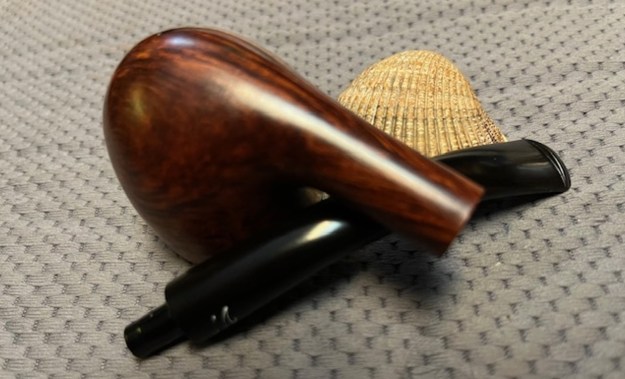
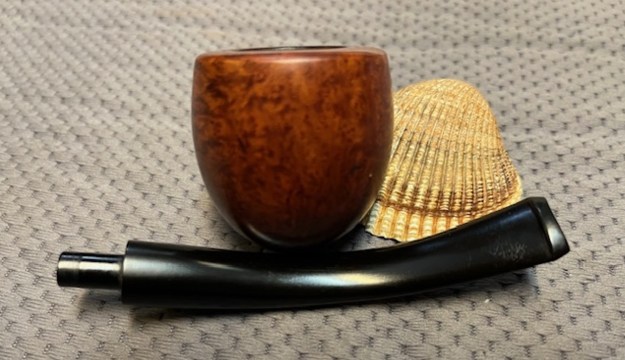
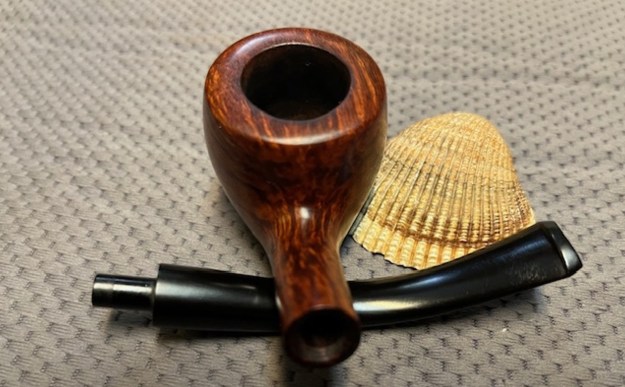
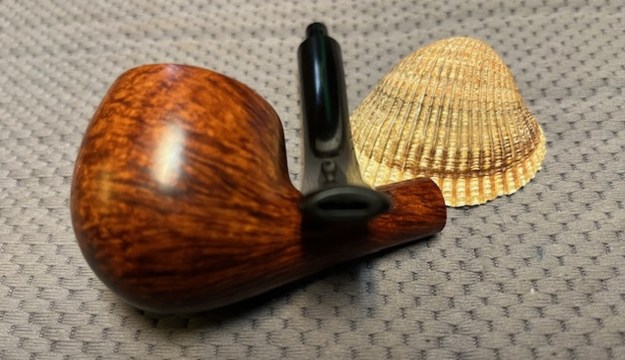
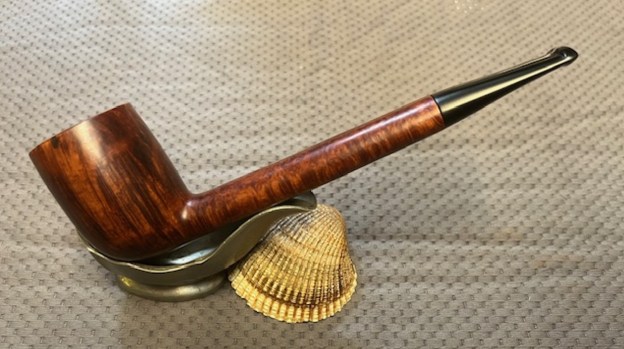
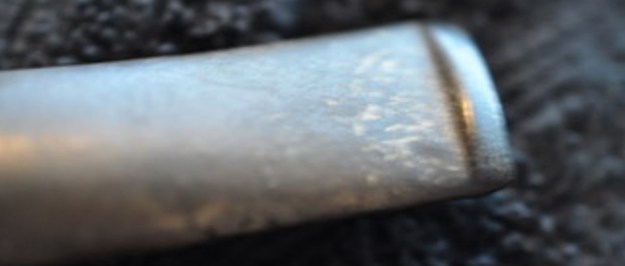
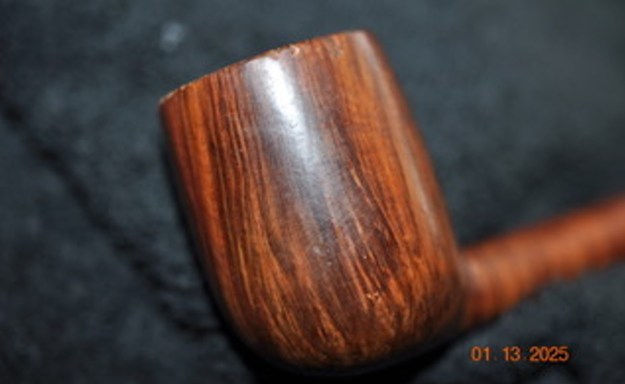
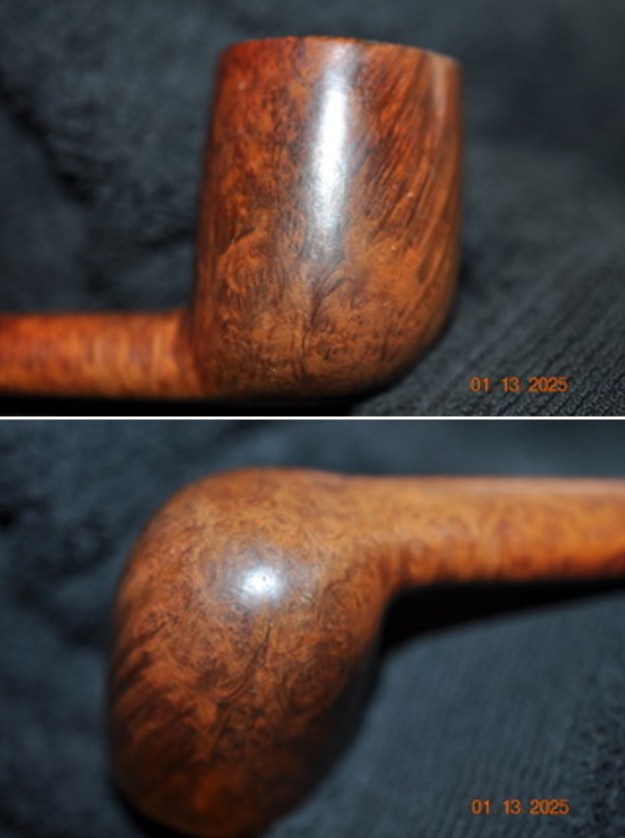
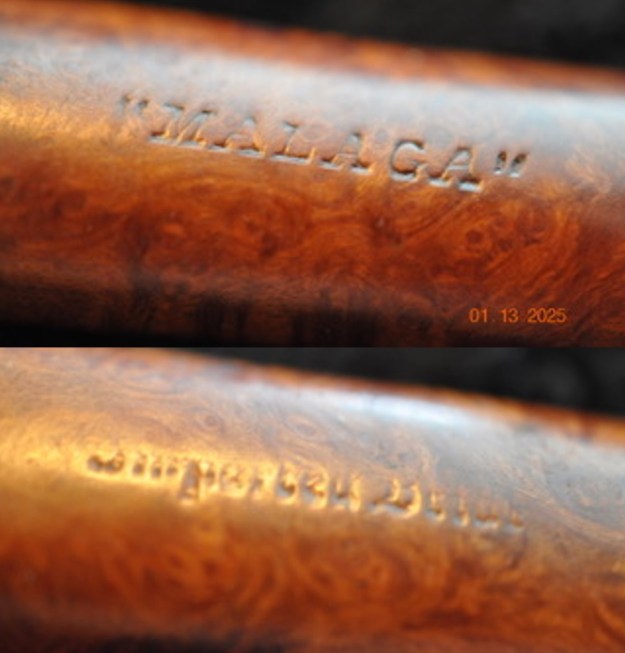
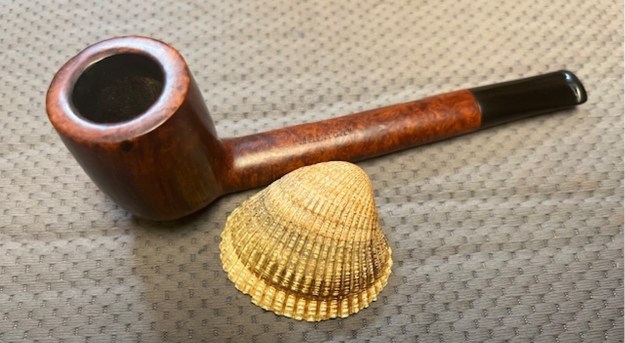
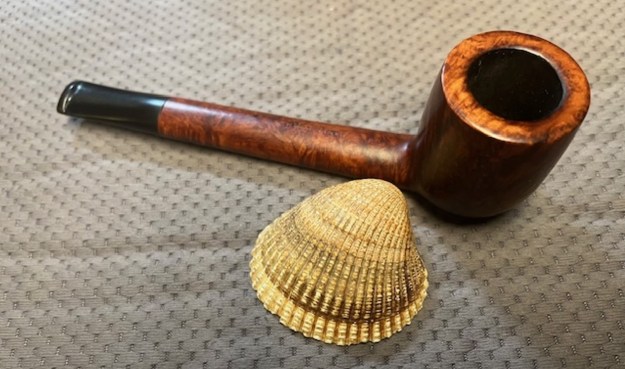
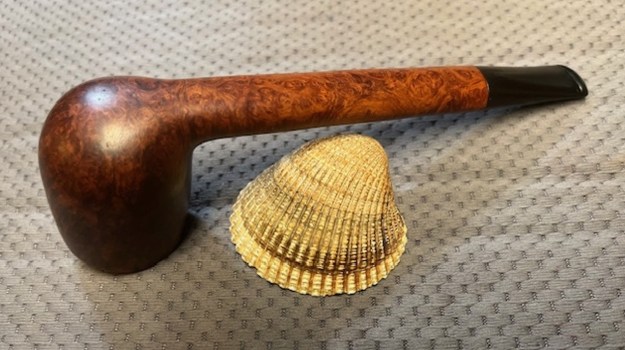
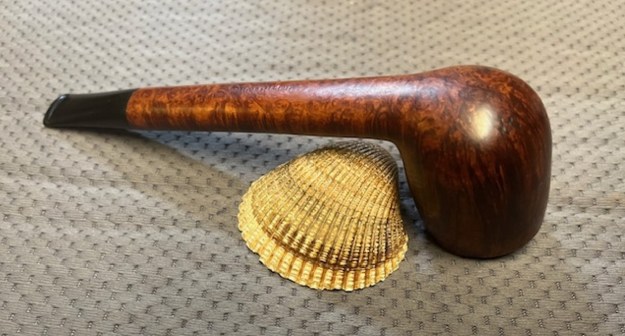
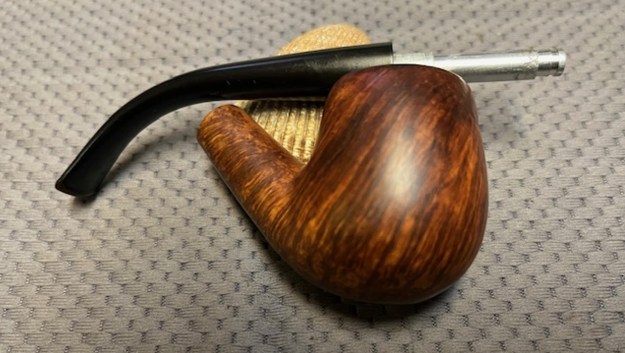
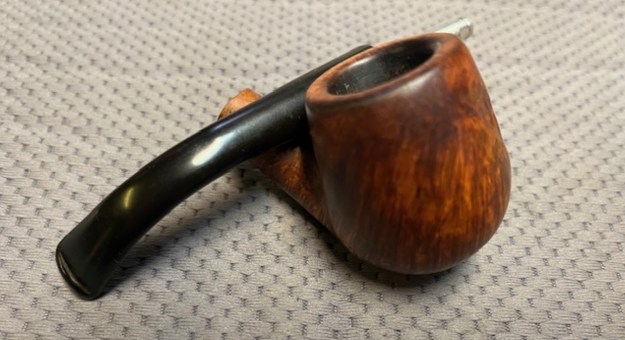
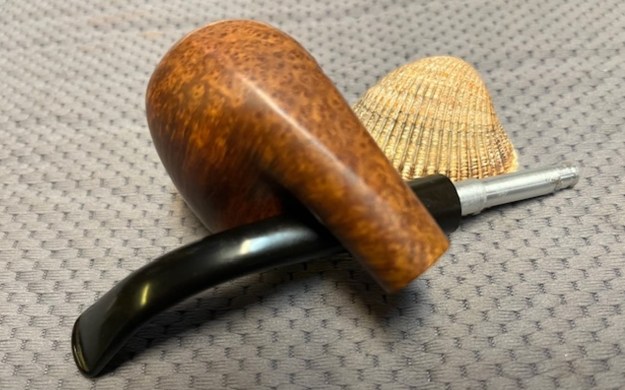
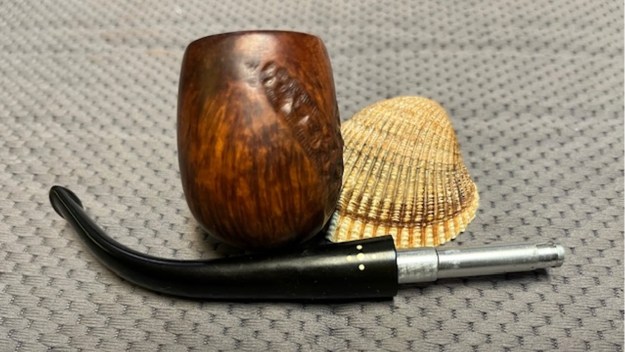
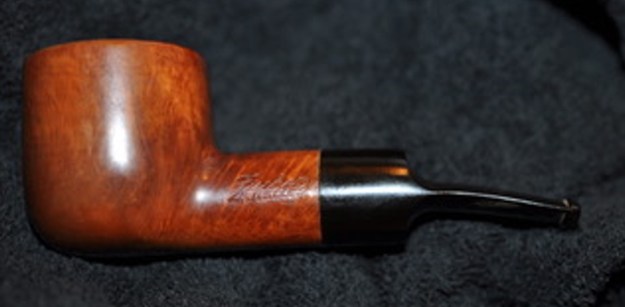
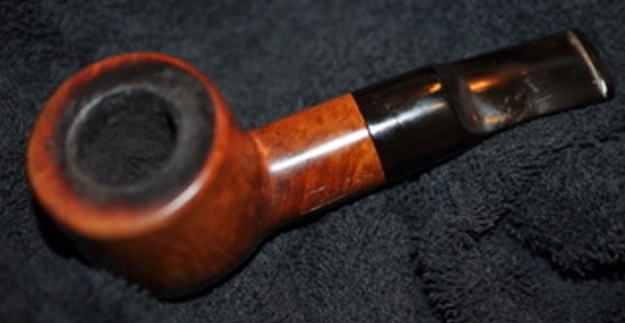
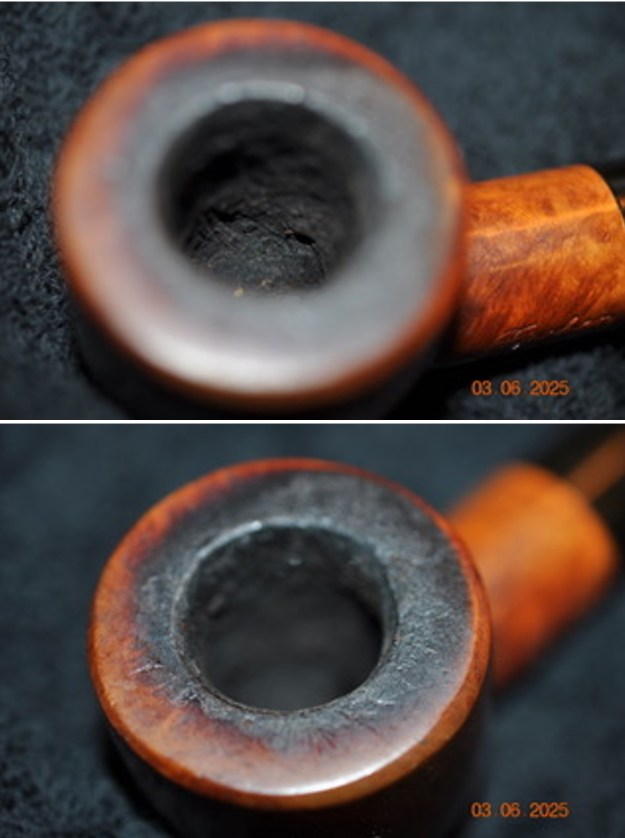
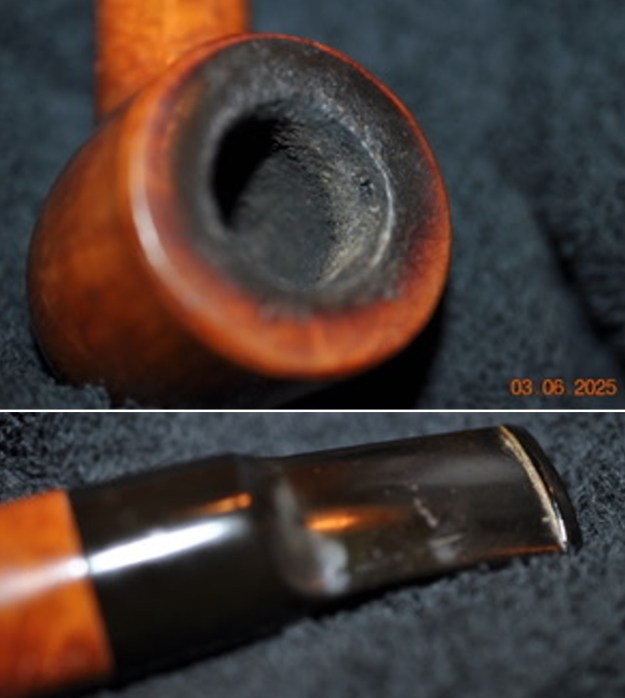
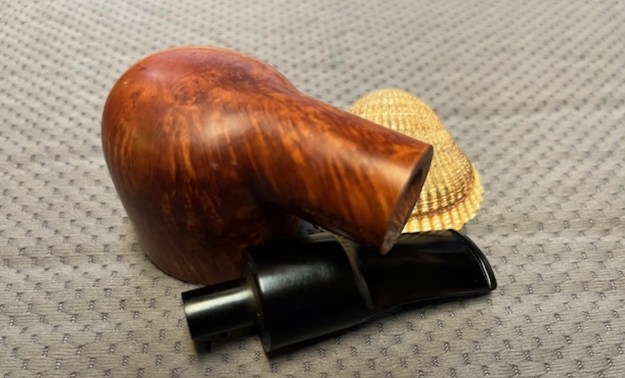
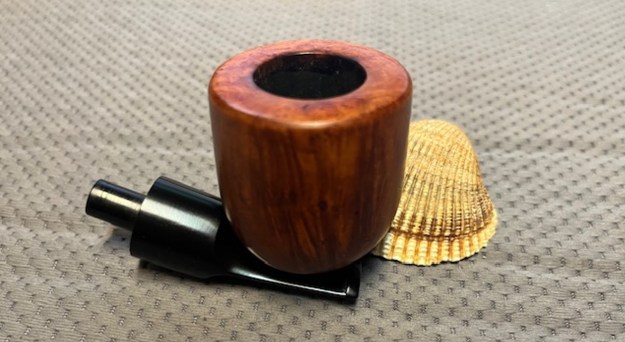
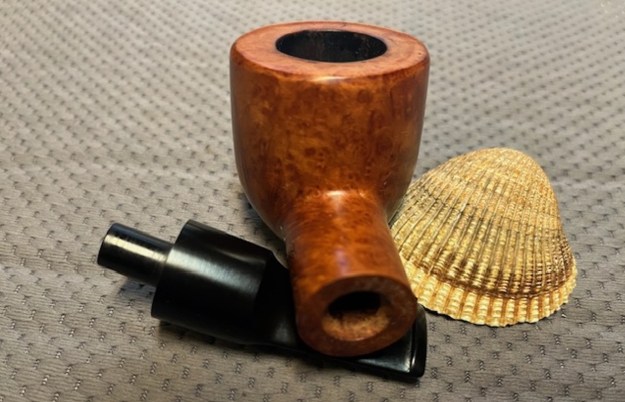
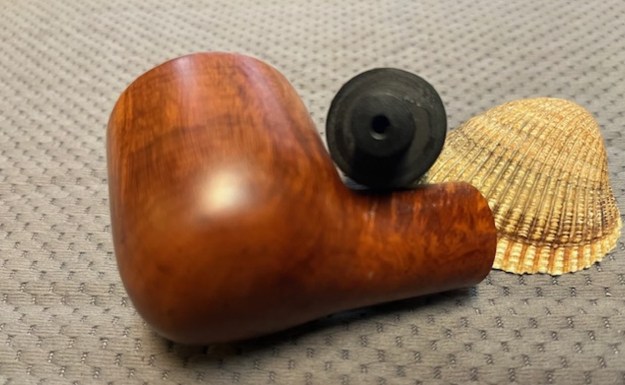
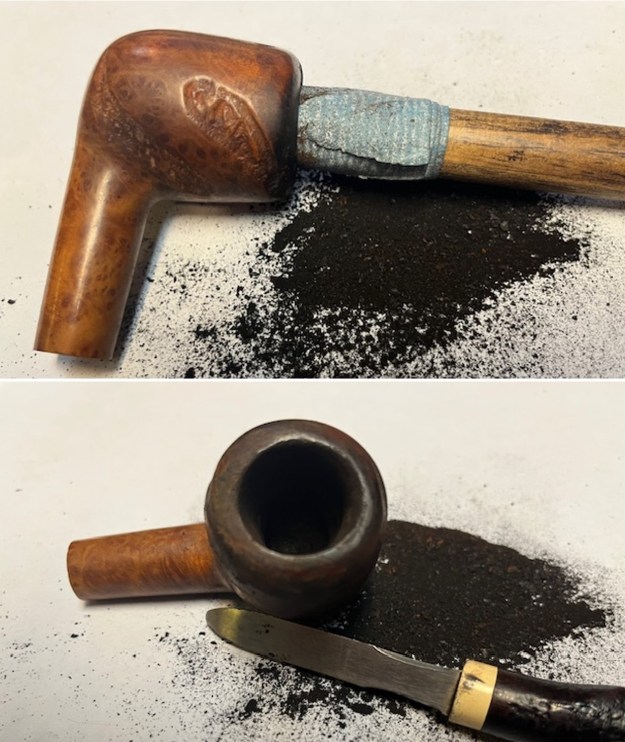
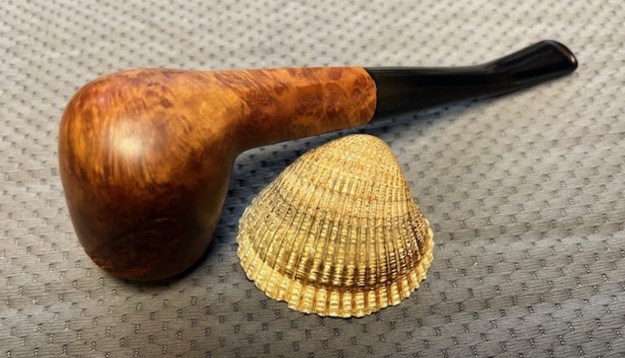
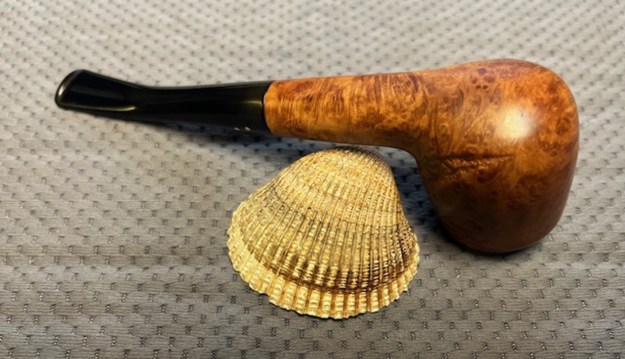
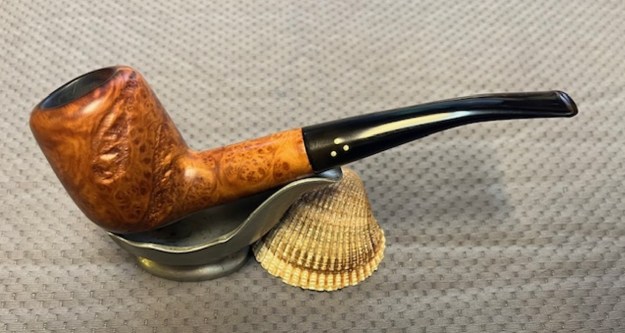
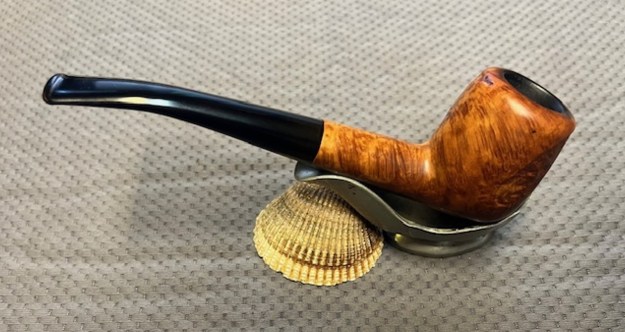
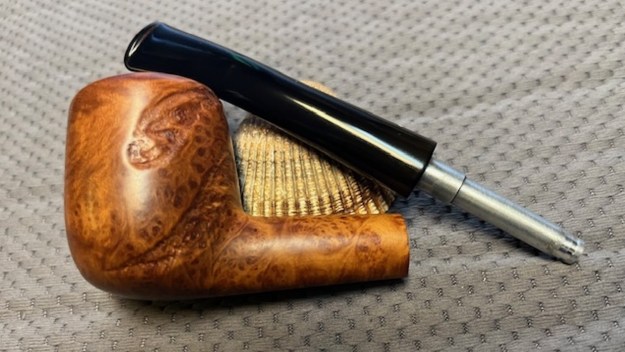
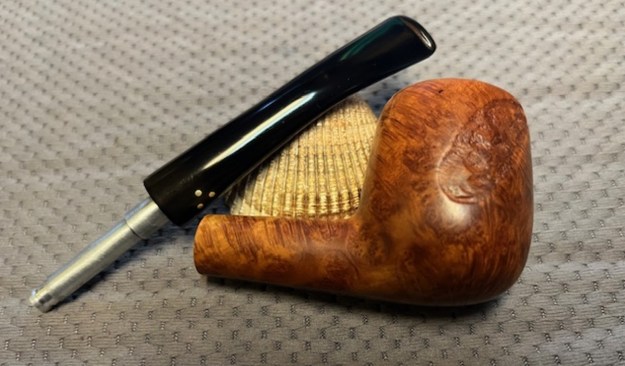
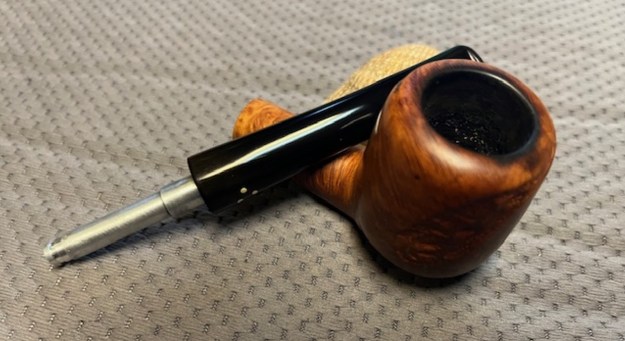
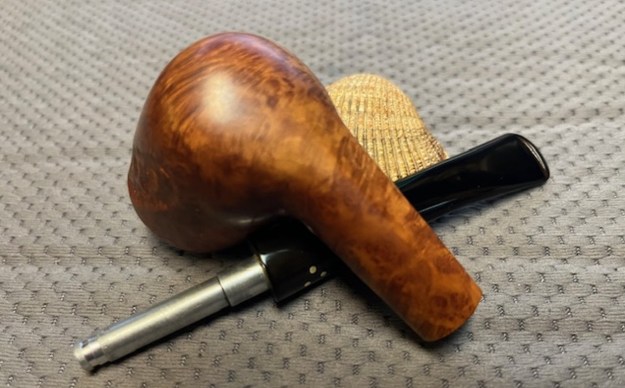
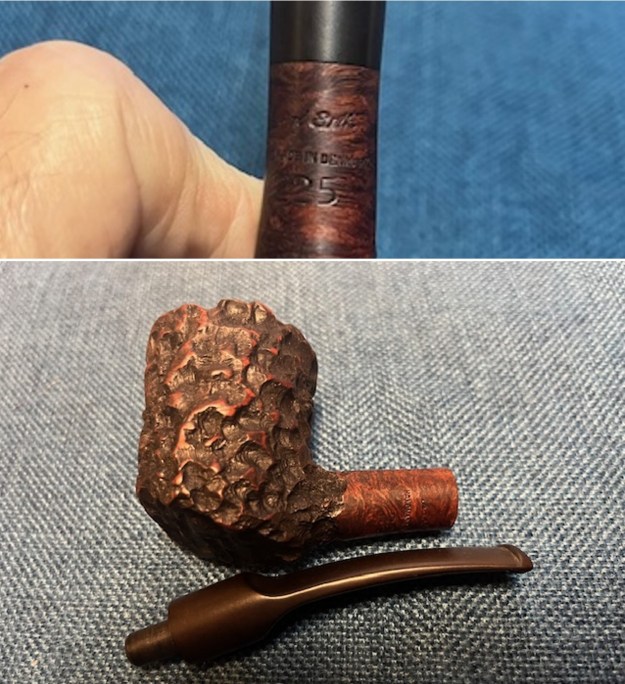
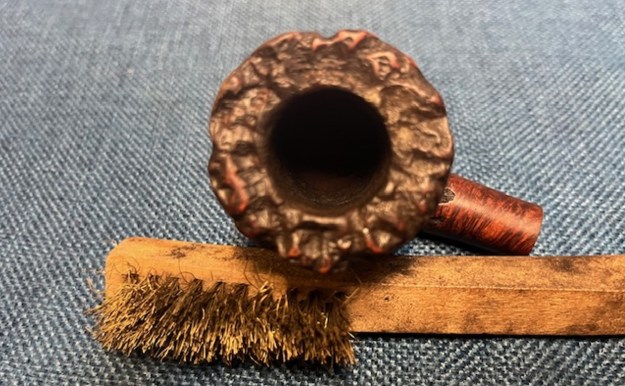
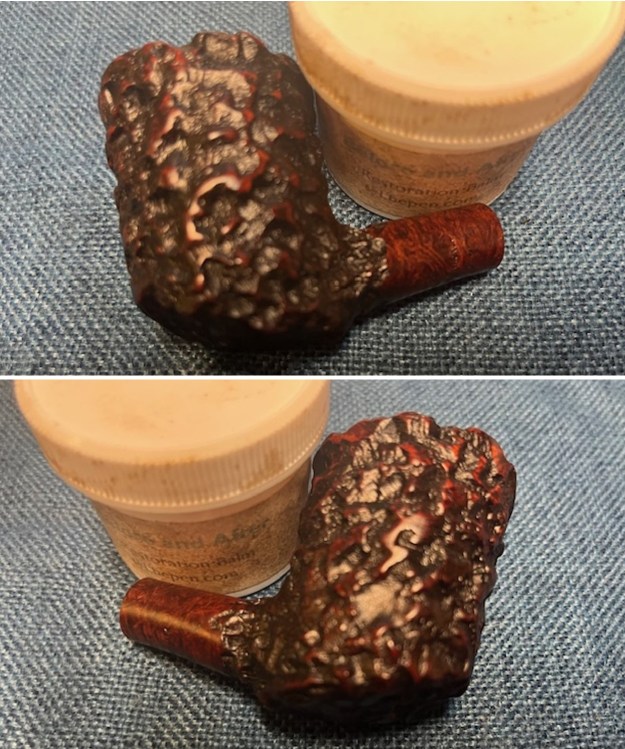
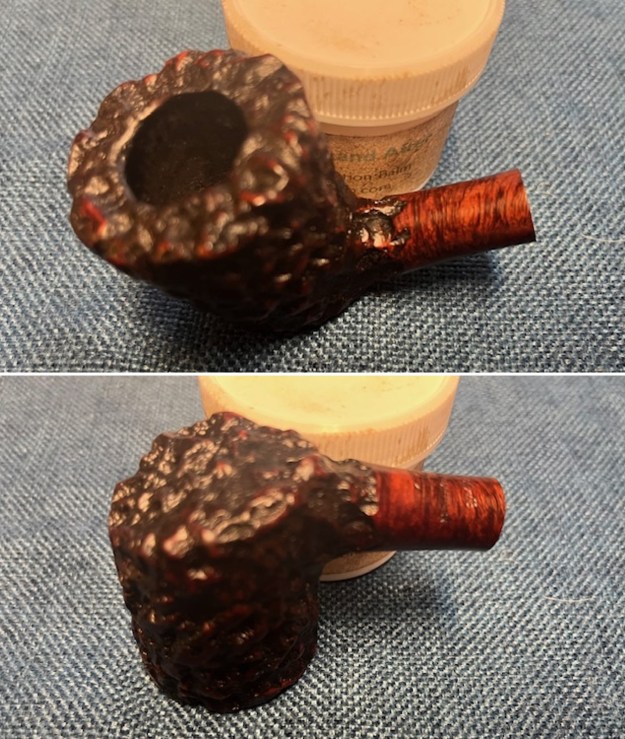
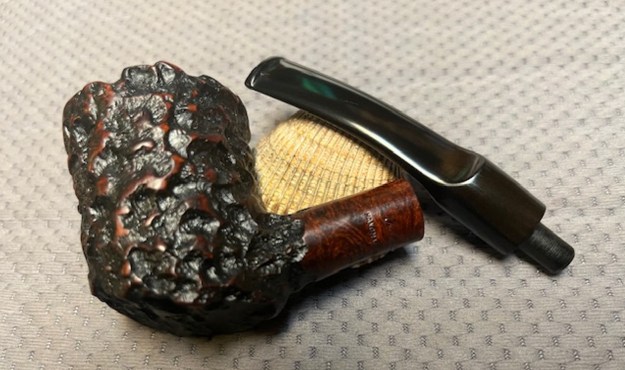
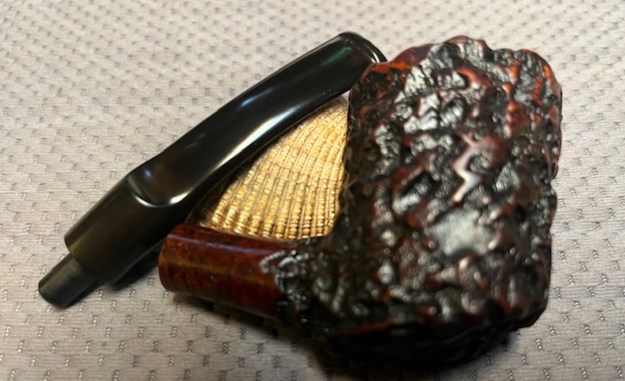
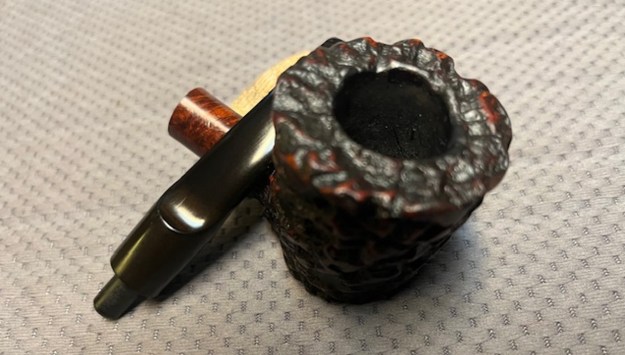
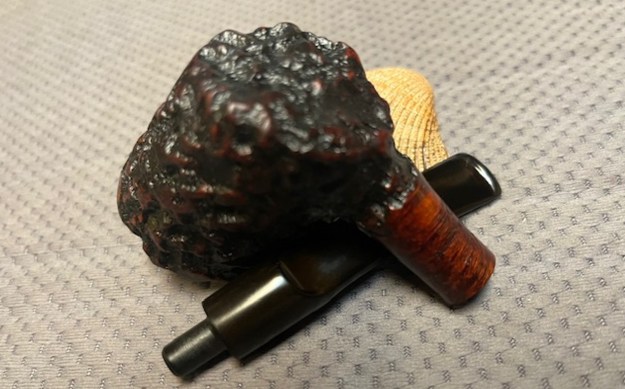
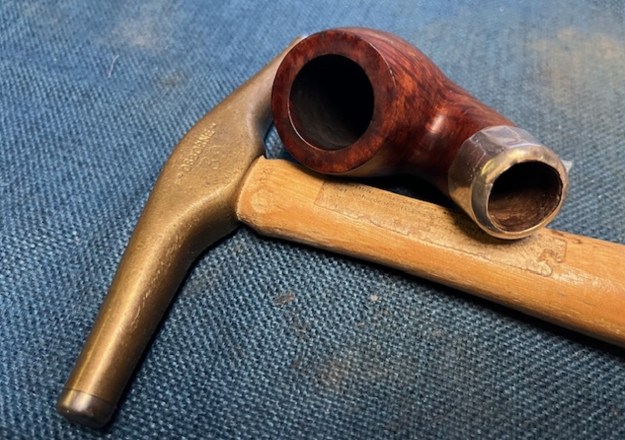
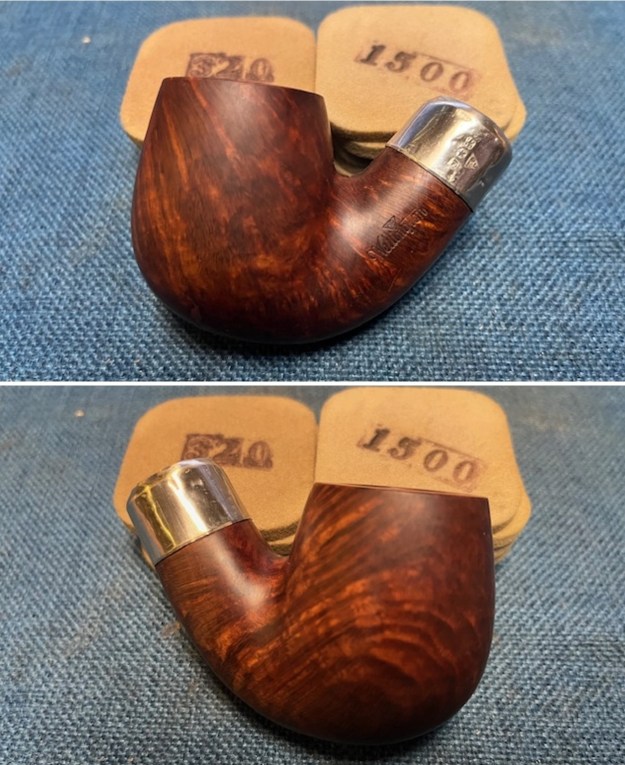
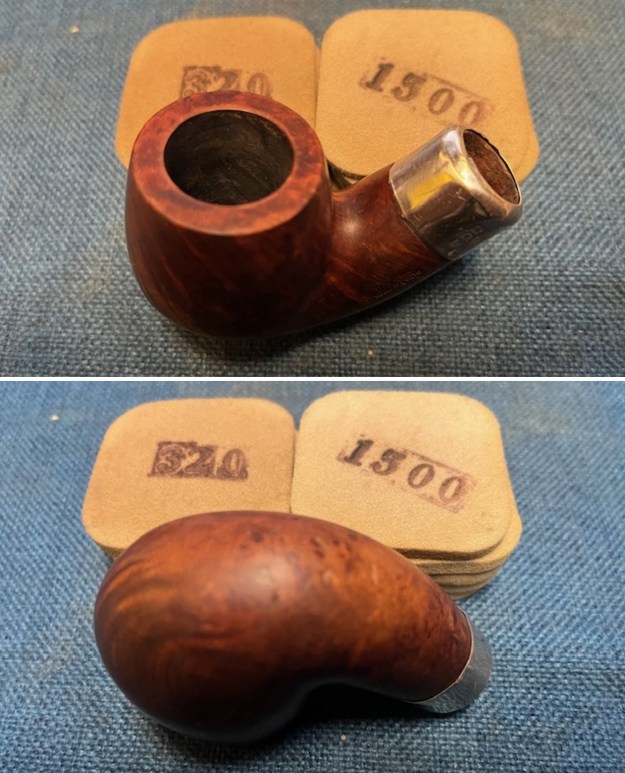
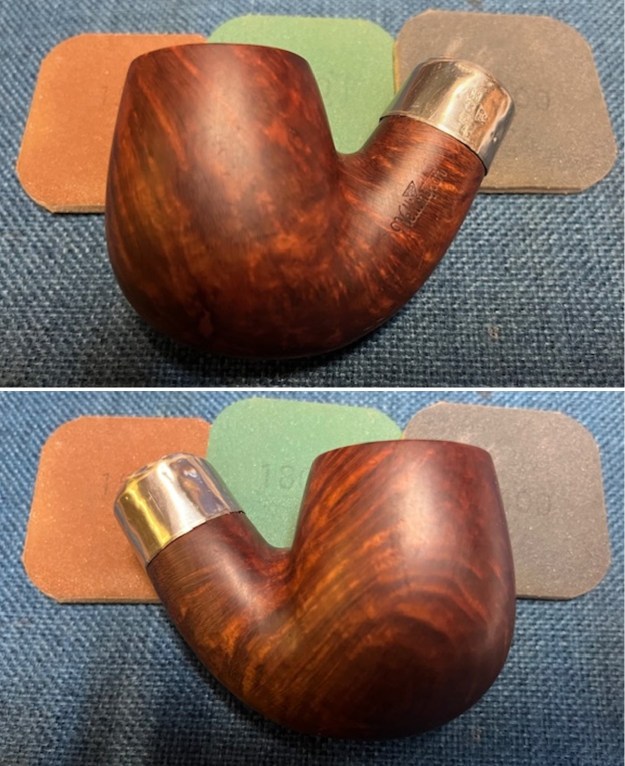
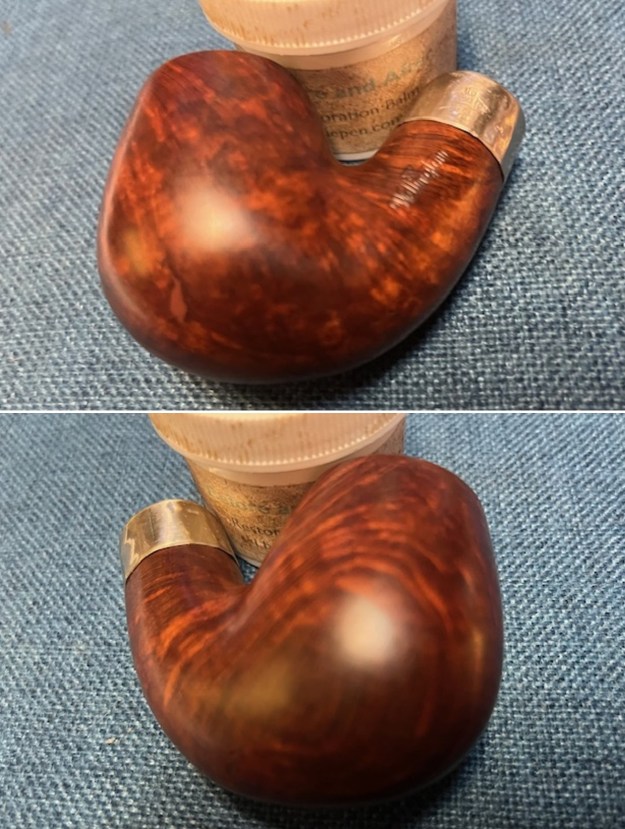
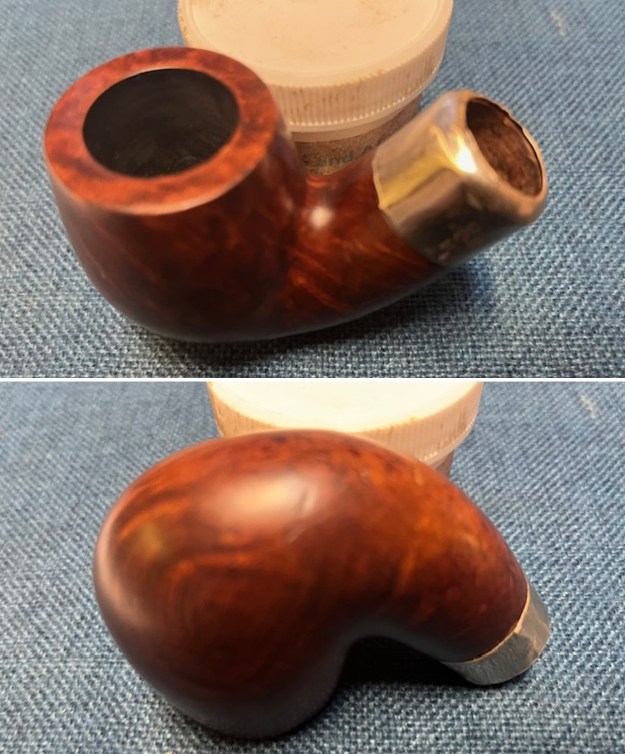
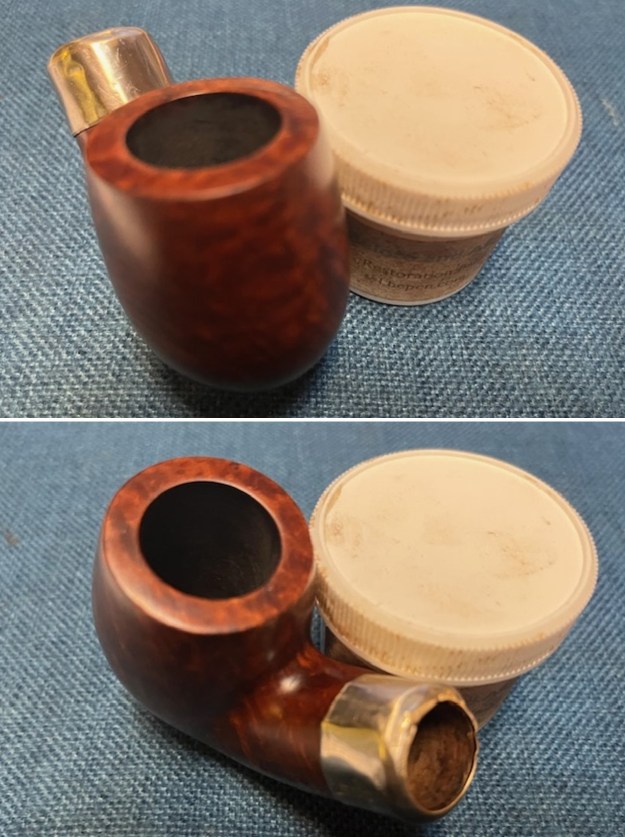
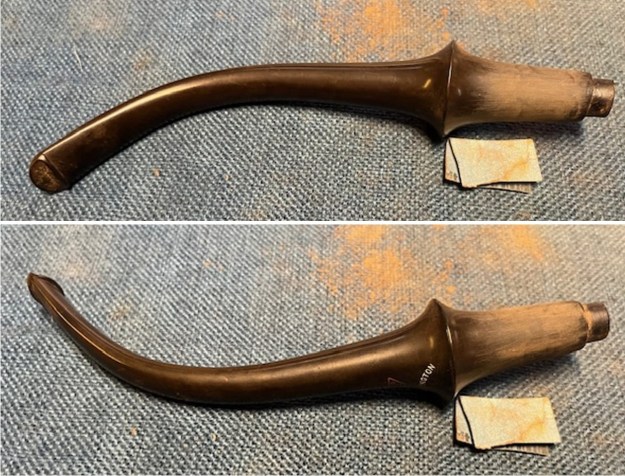
Restoring a Bjarne Handmade in Denmark War Club Billiard


by Steve Laug

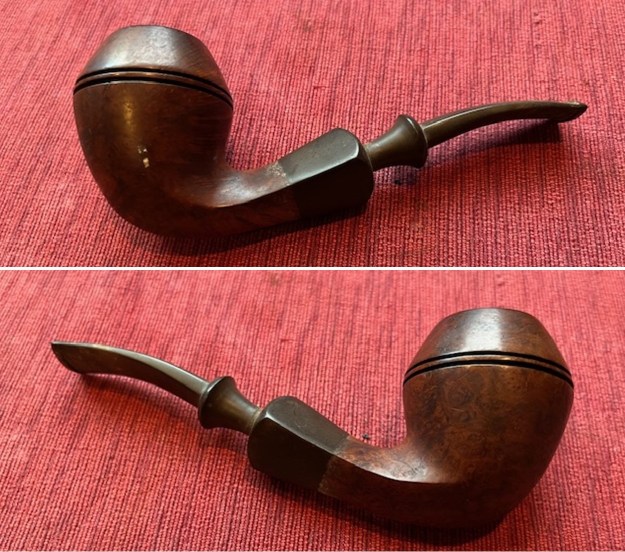
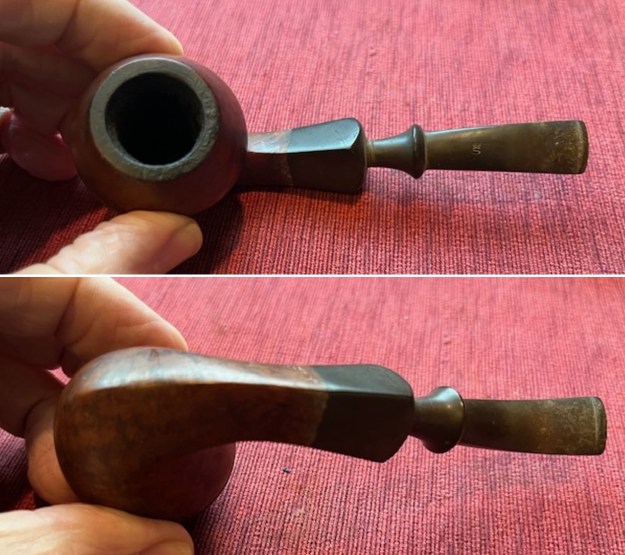
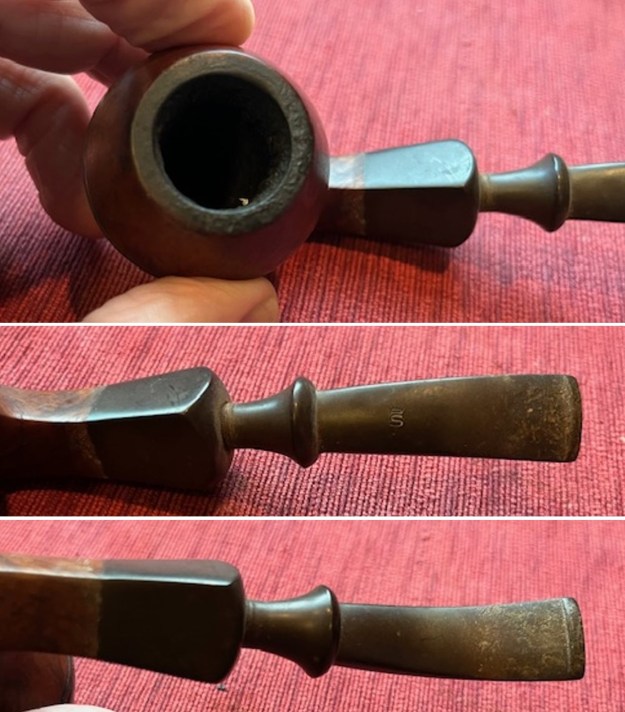
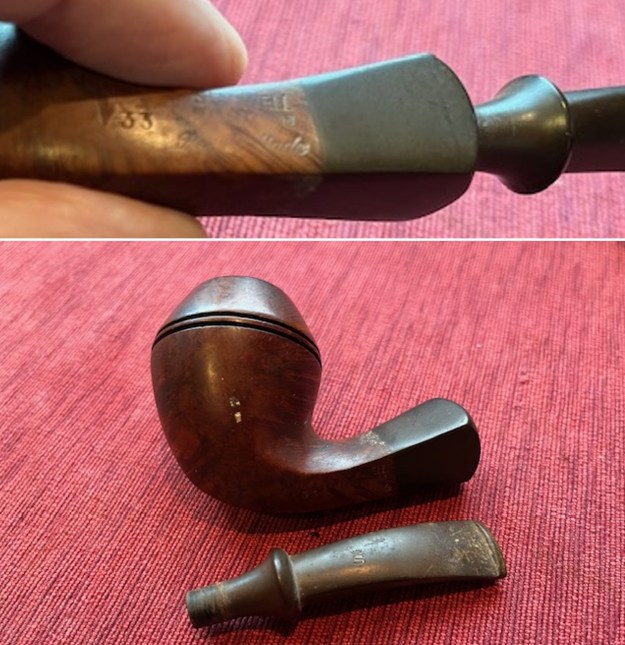
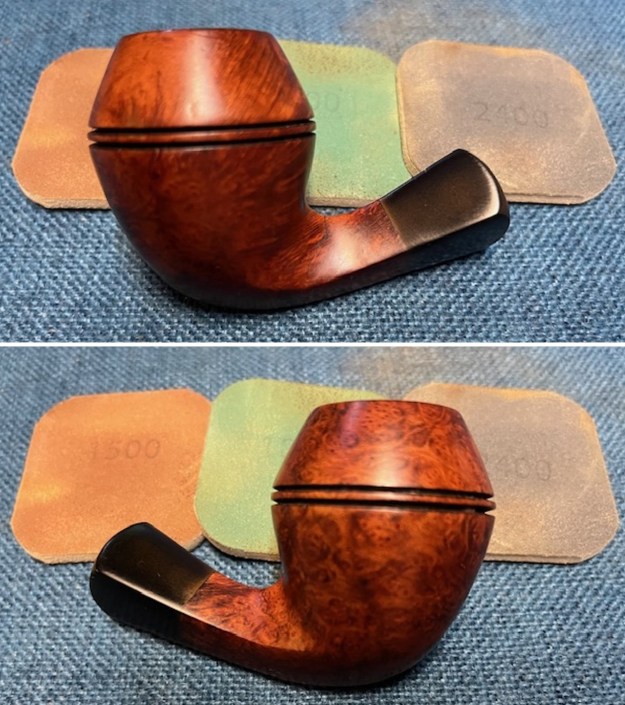
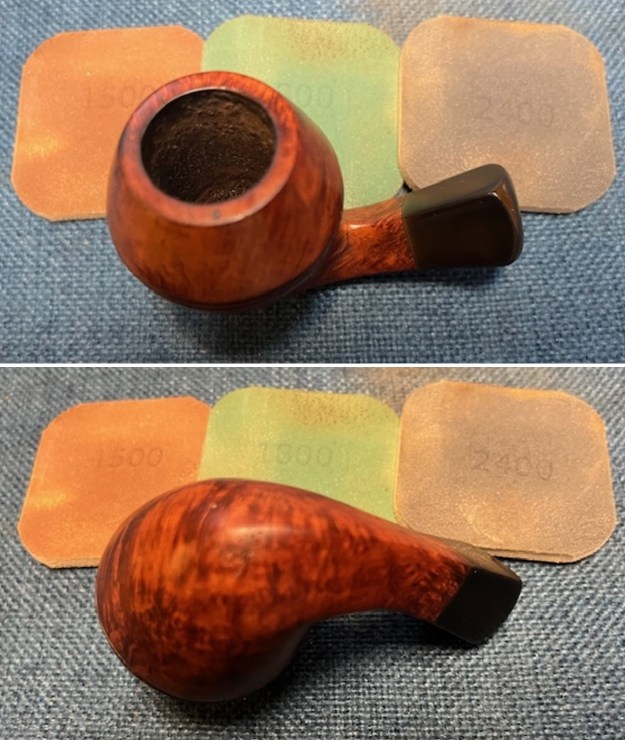
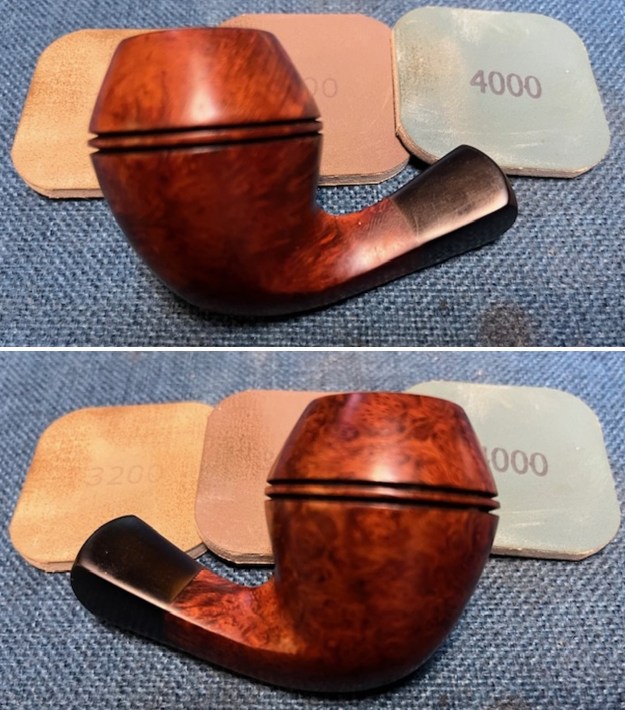
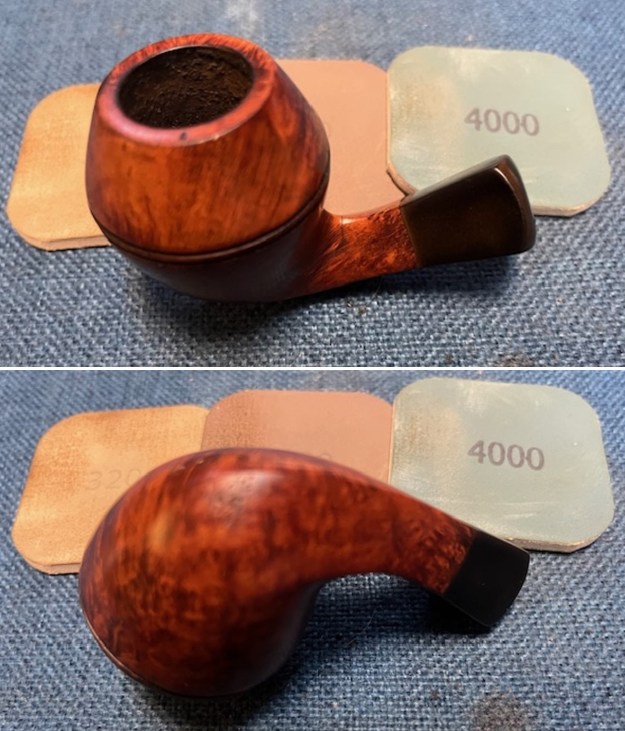
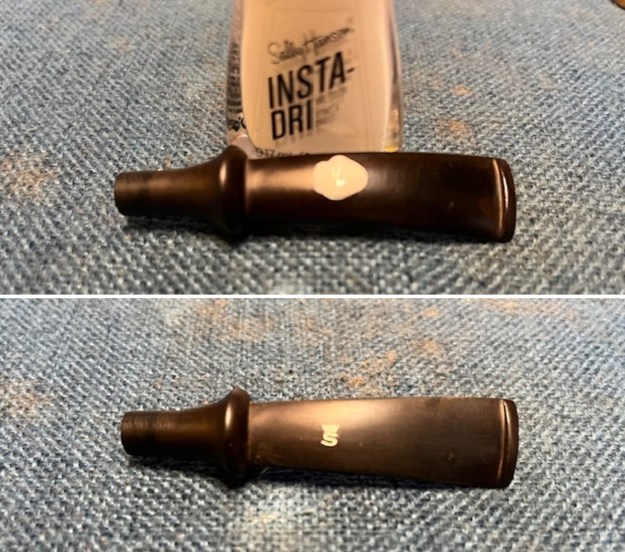
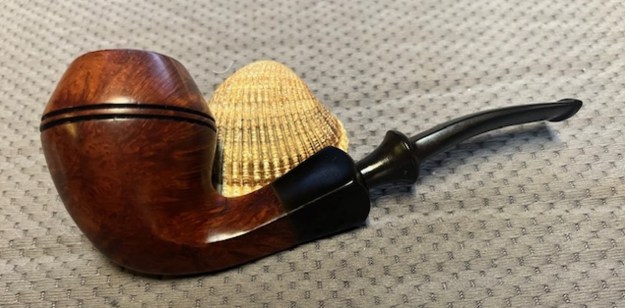
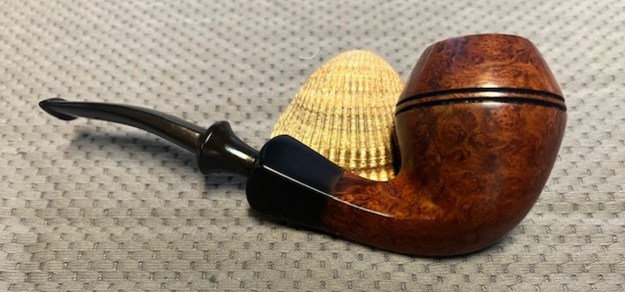
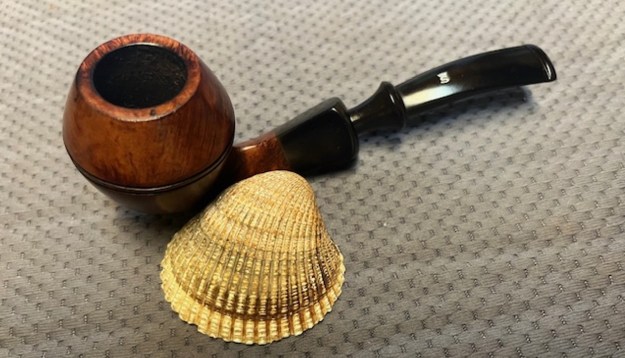
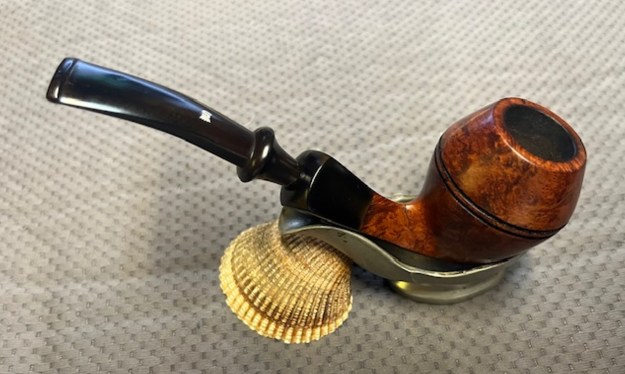
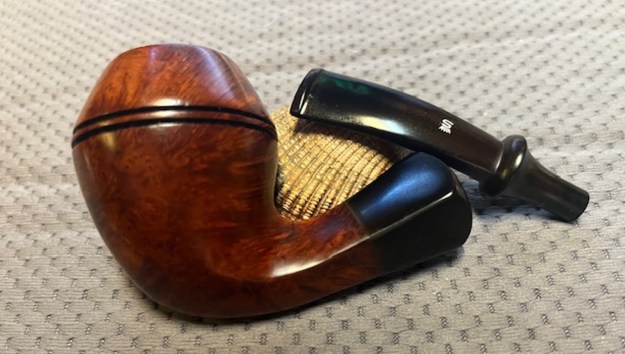
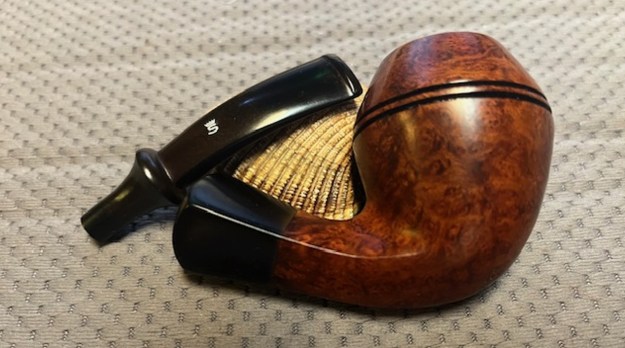
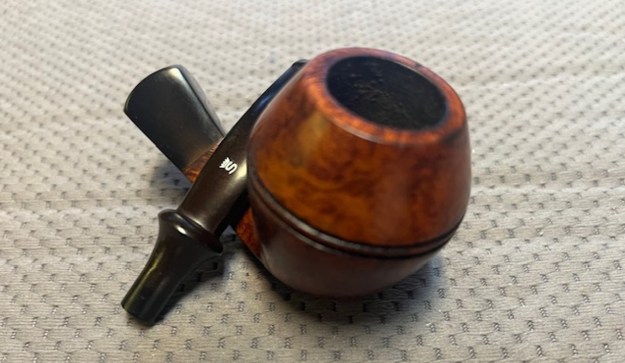
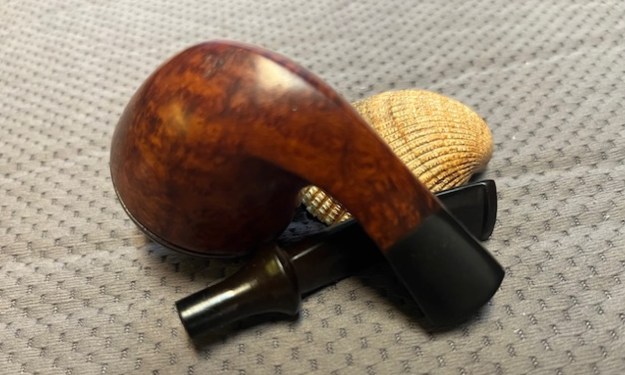
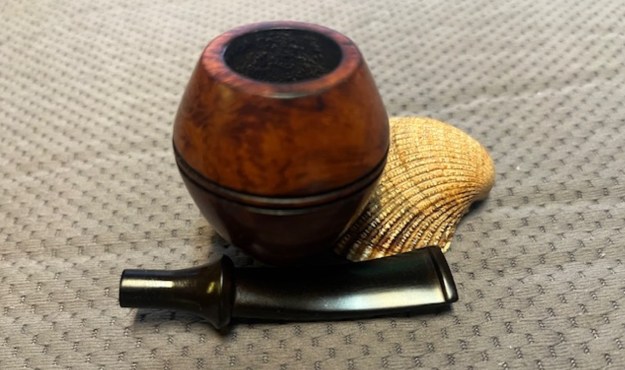
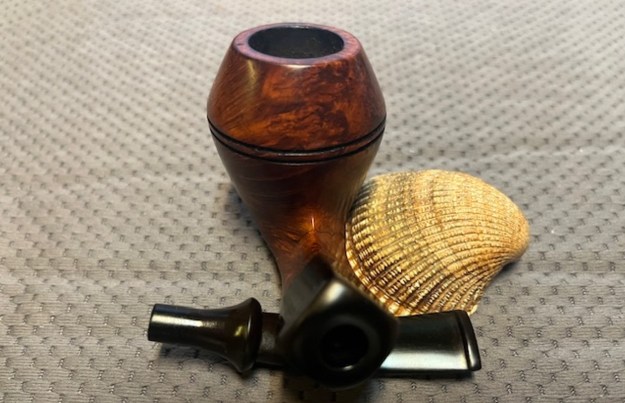
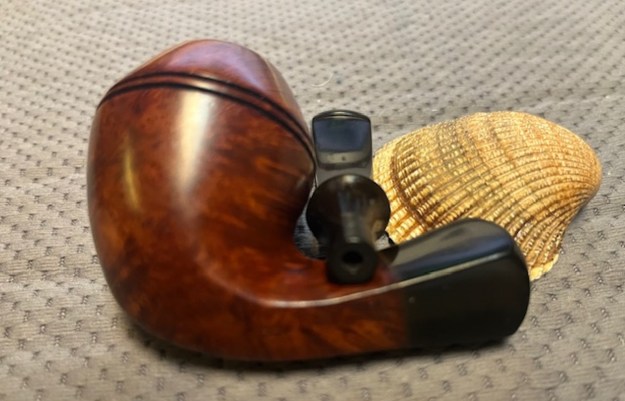
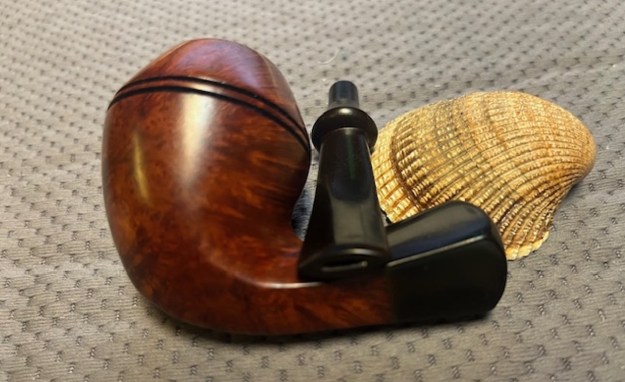
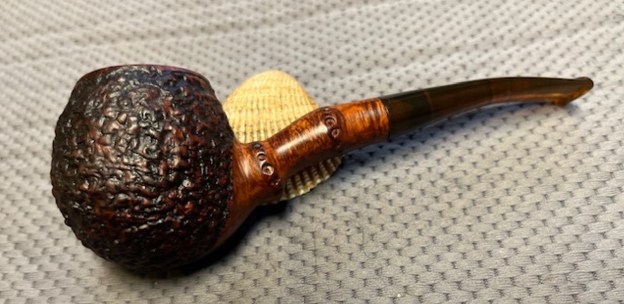
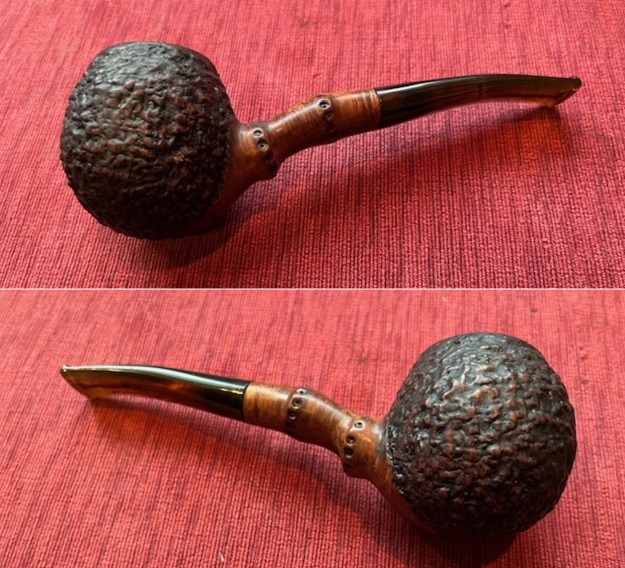
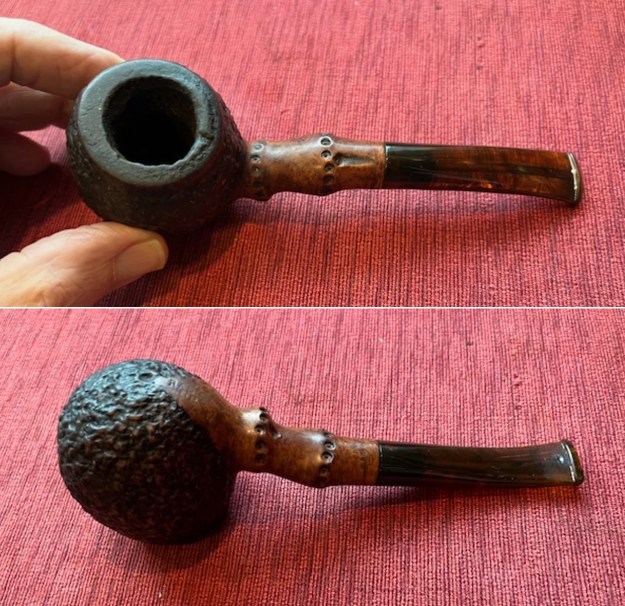
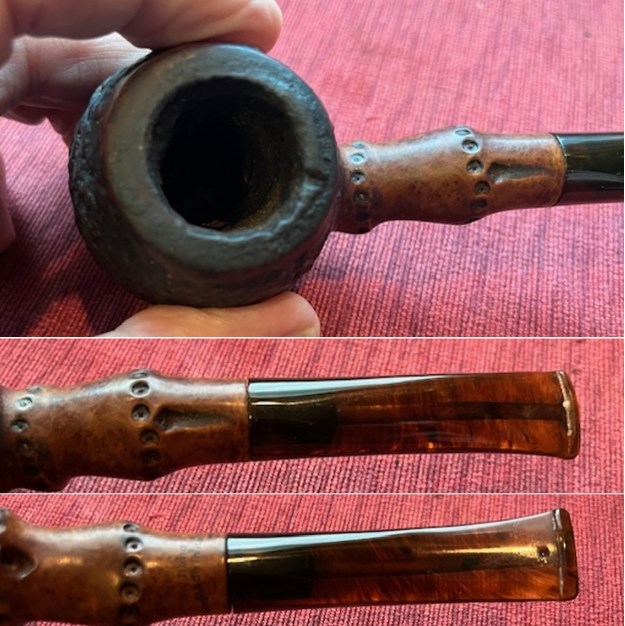
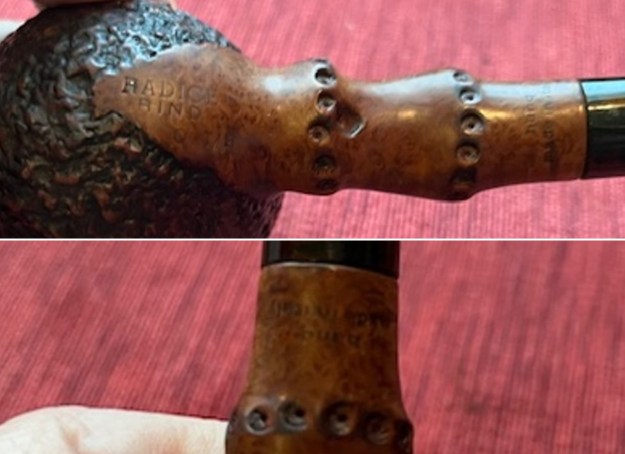
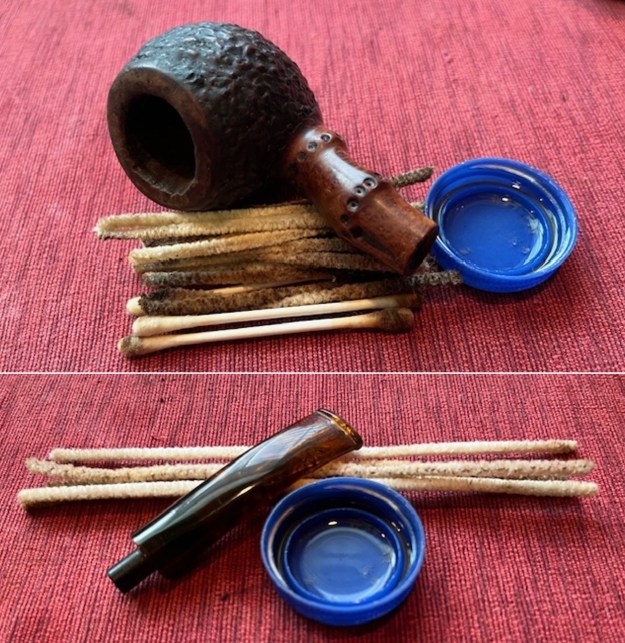
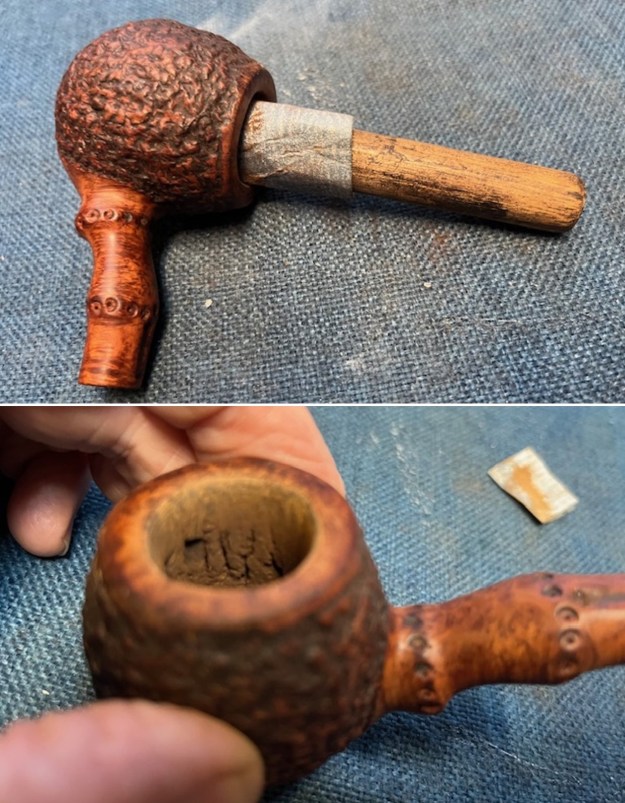
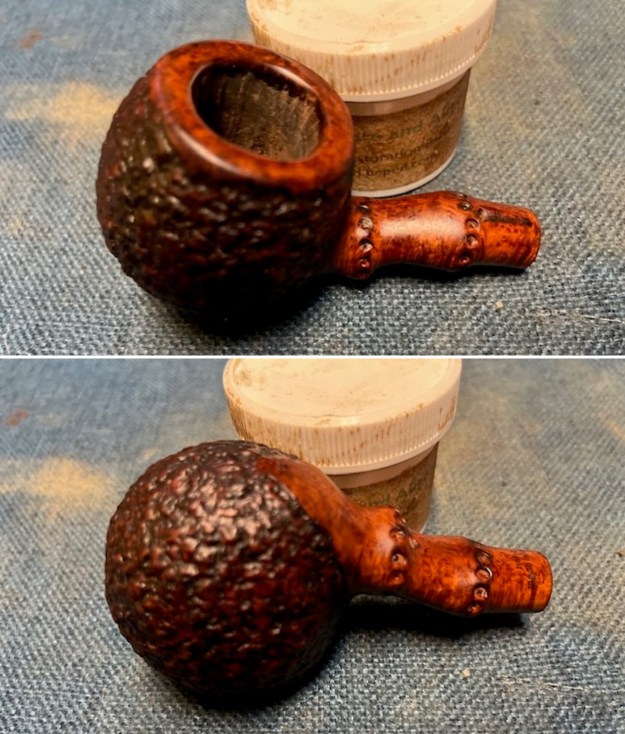
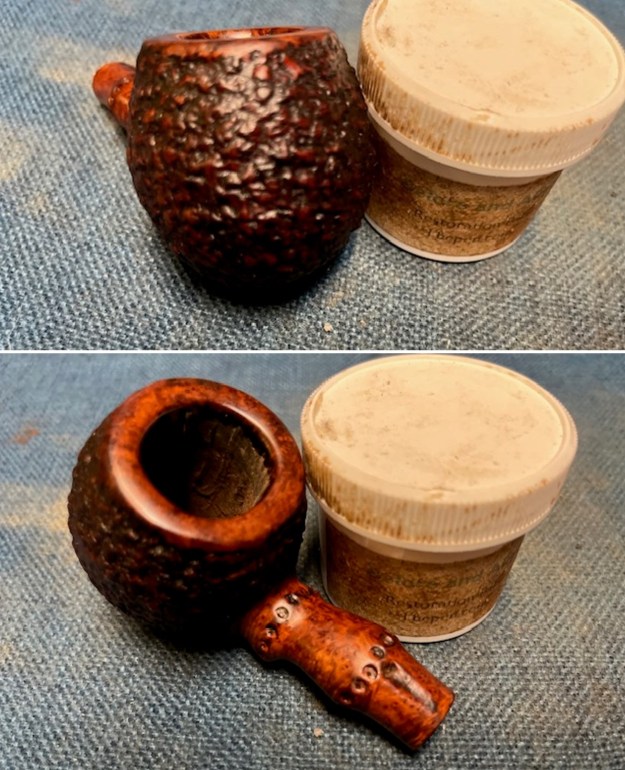
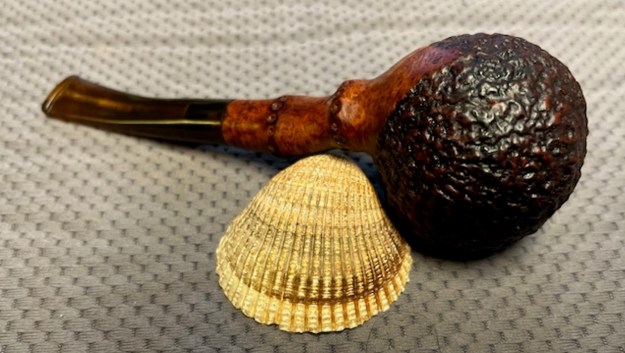
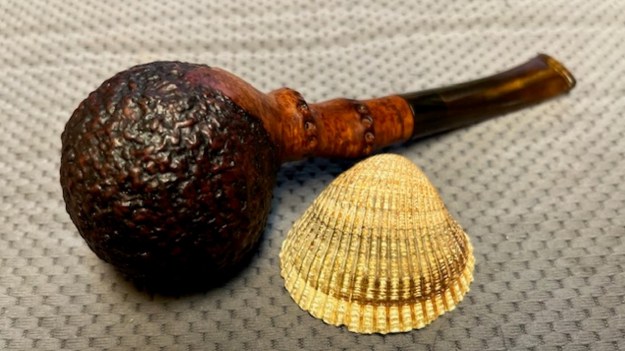
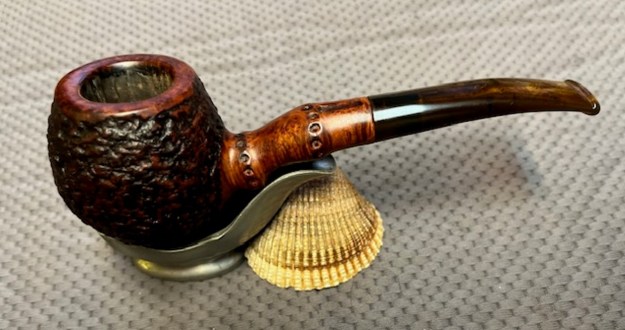
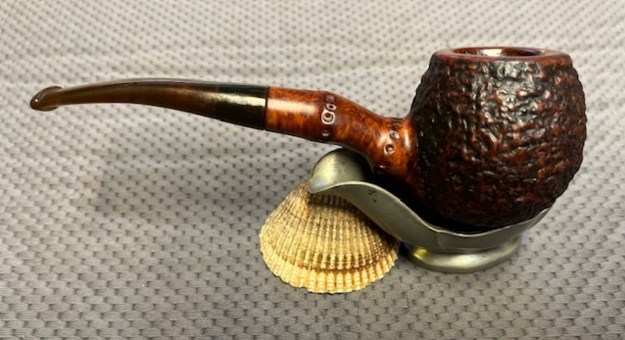
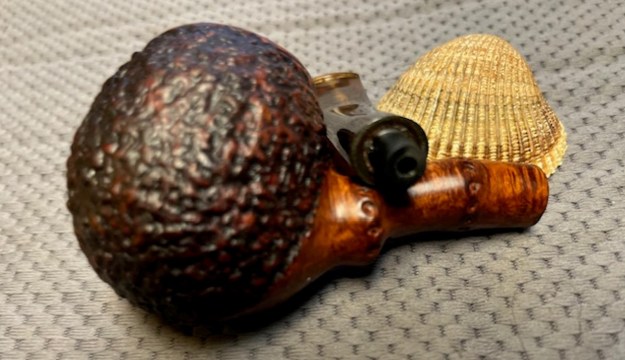
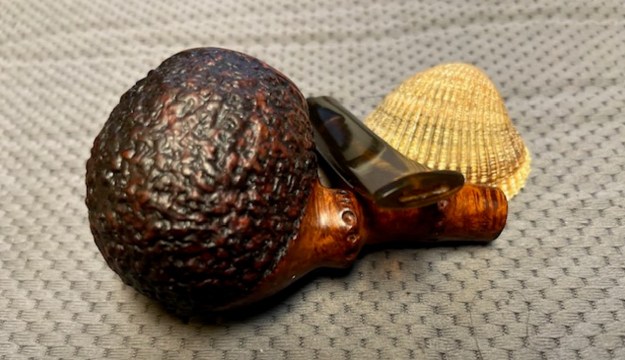
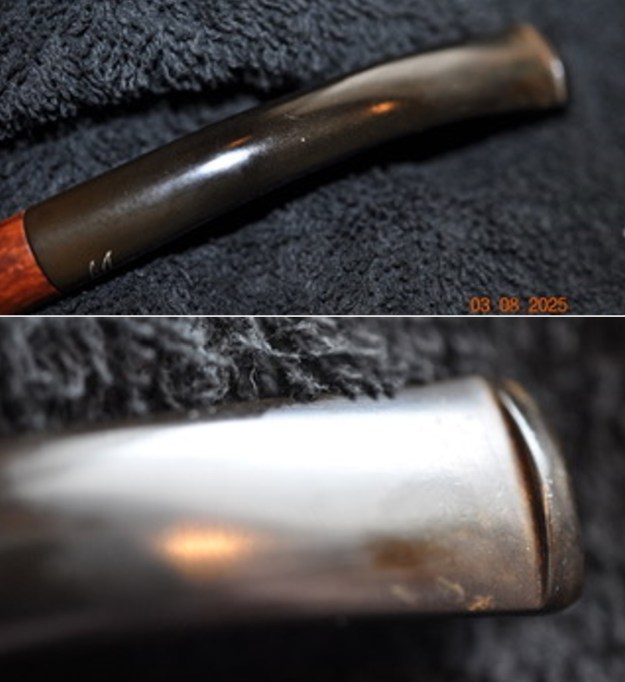
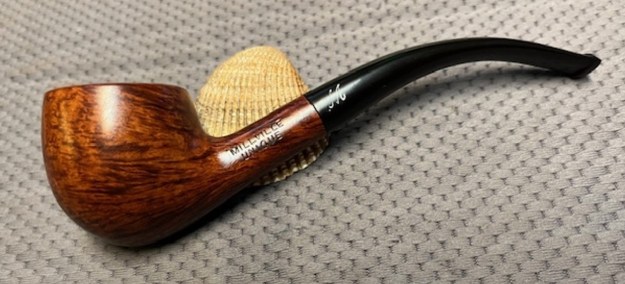
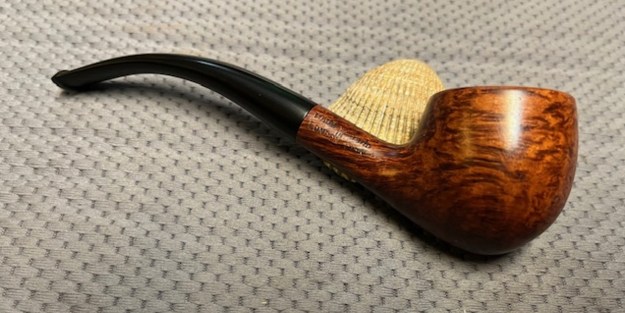
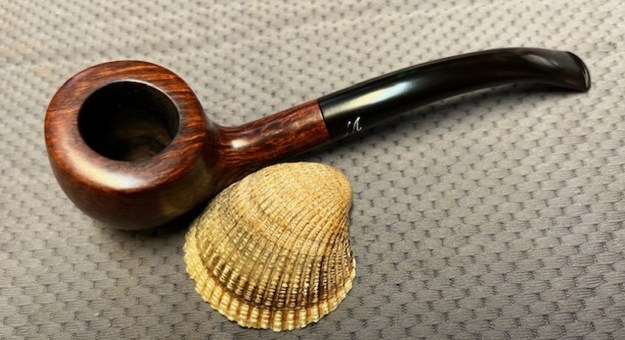
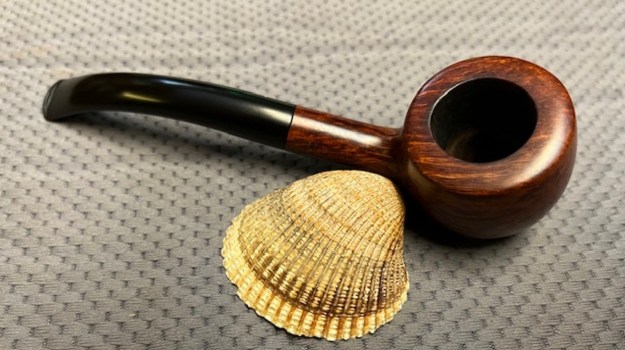
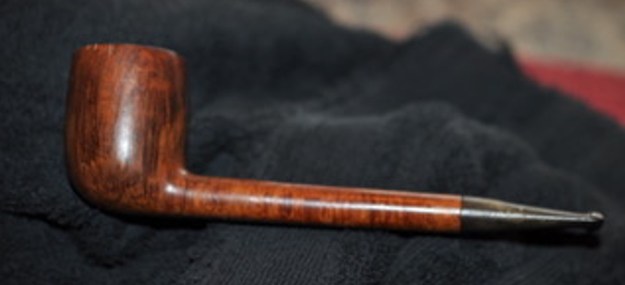
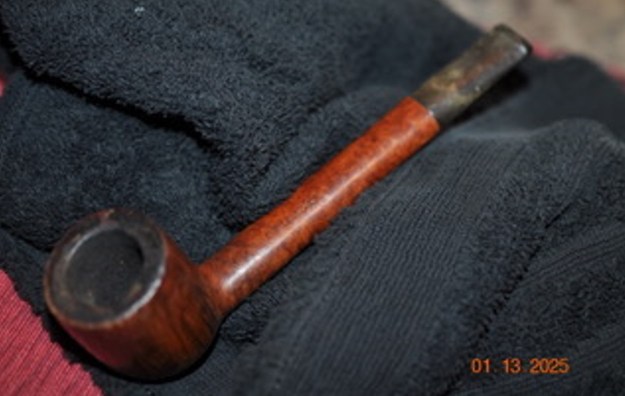
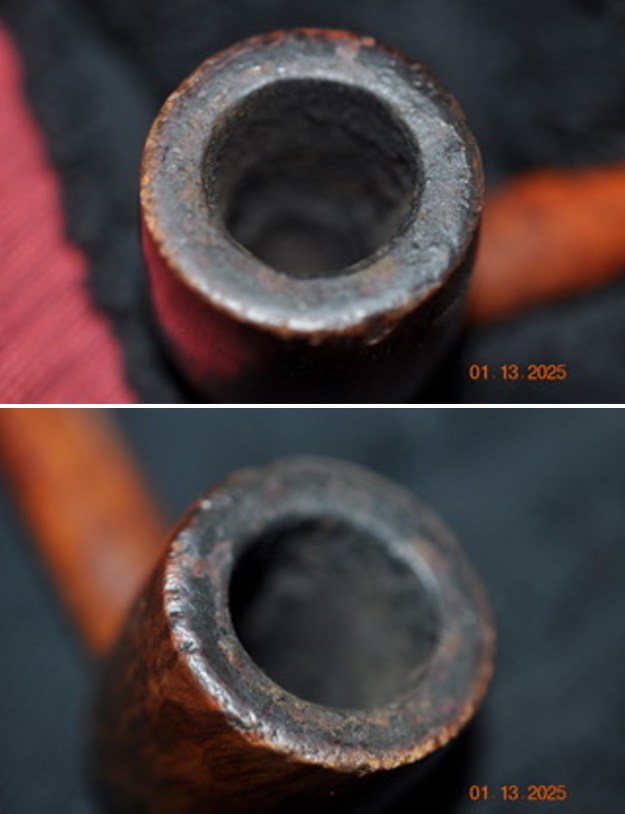
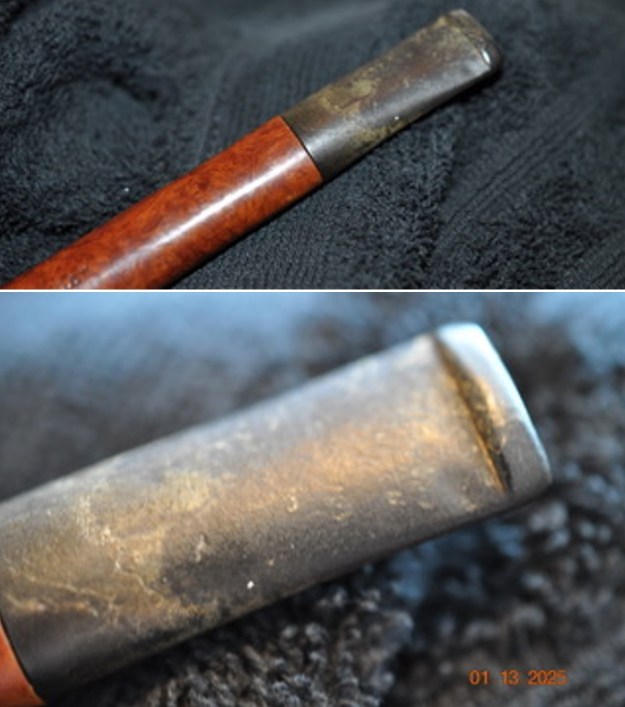
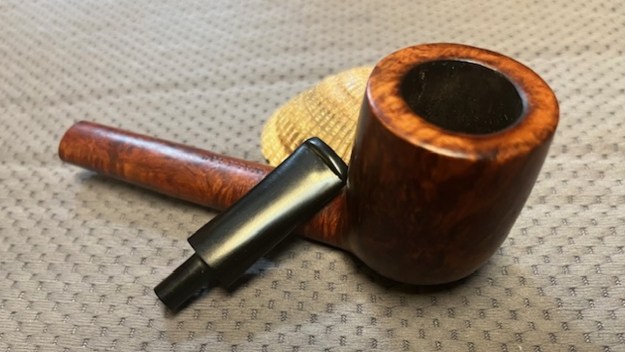
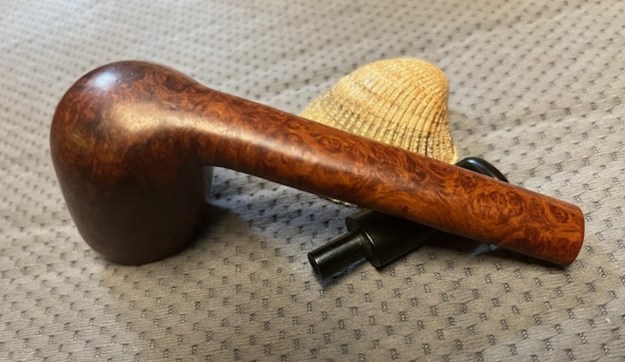
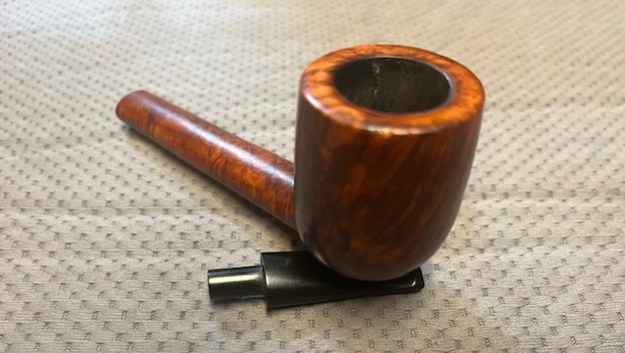
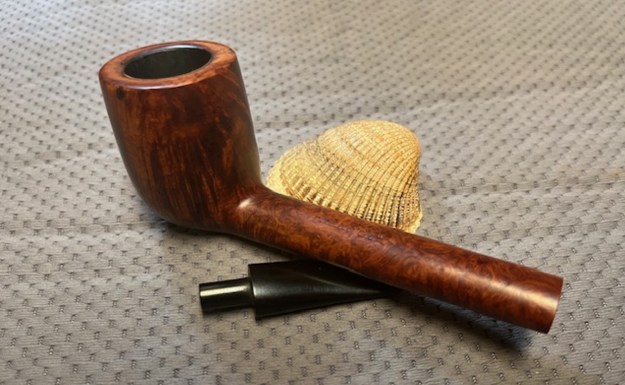
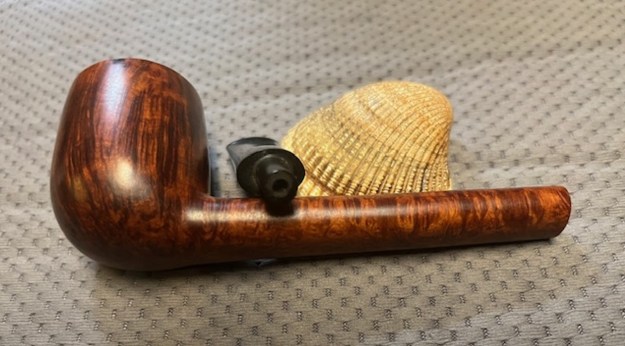
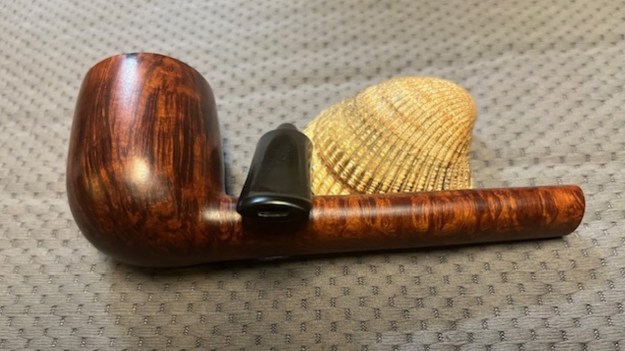
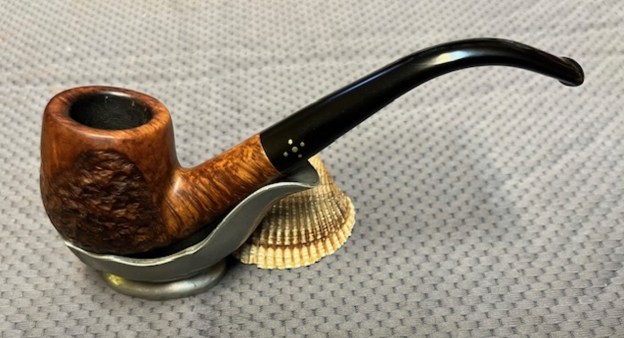
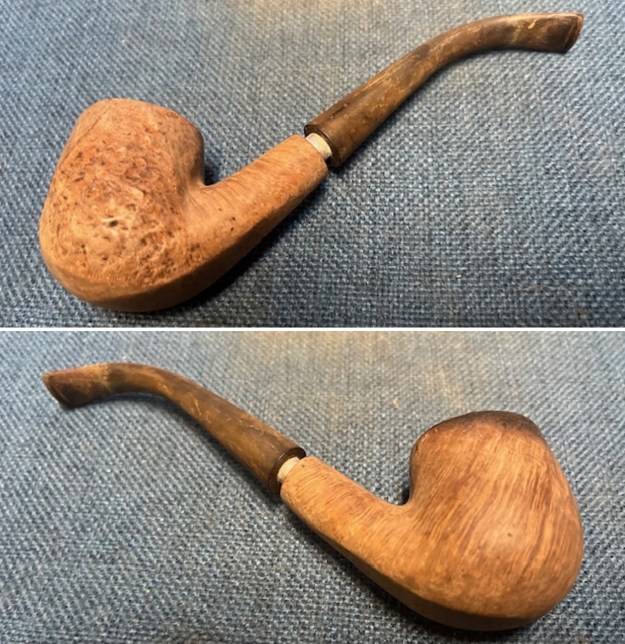
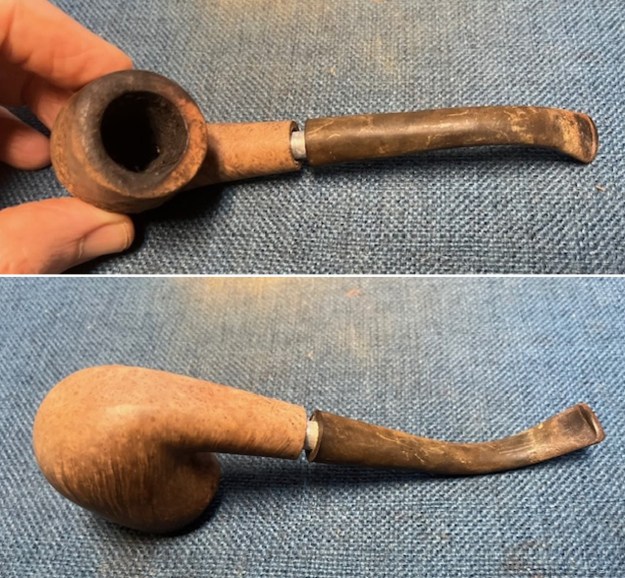
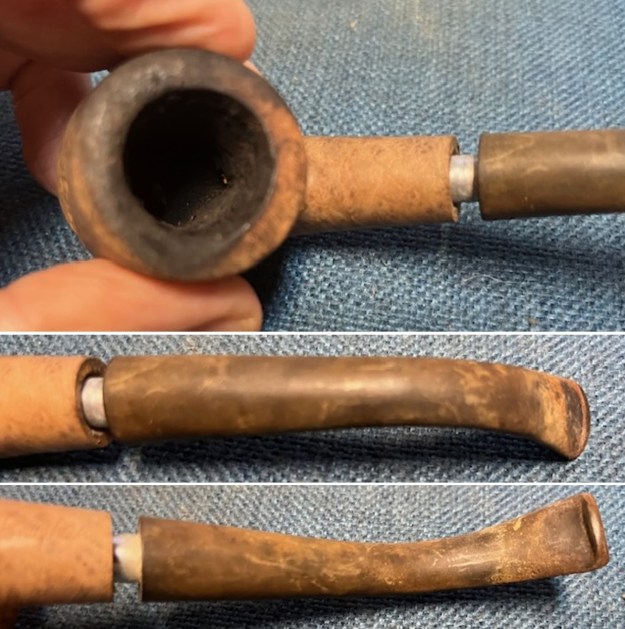
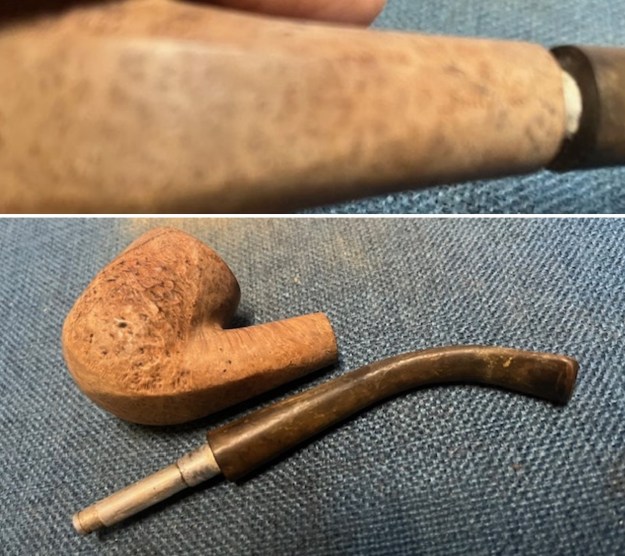
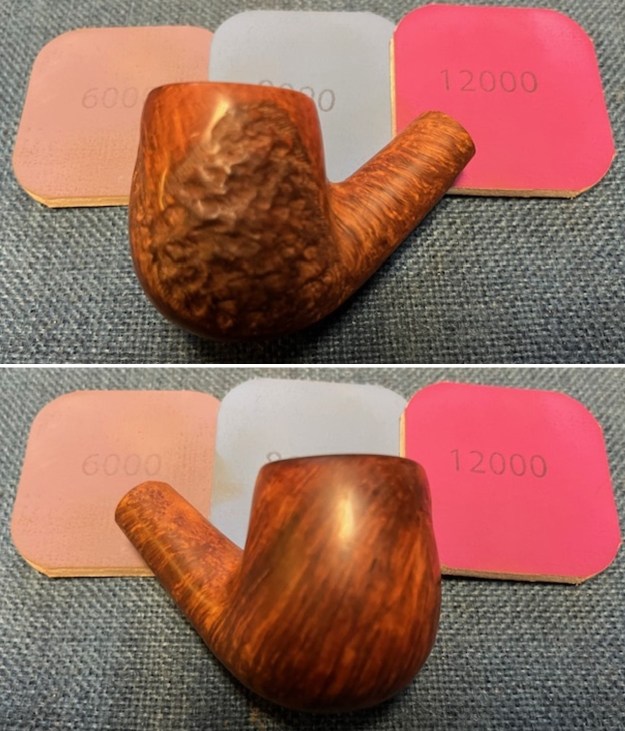
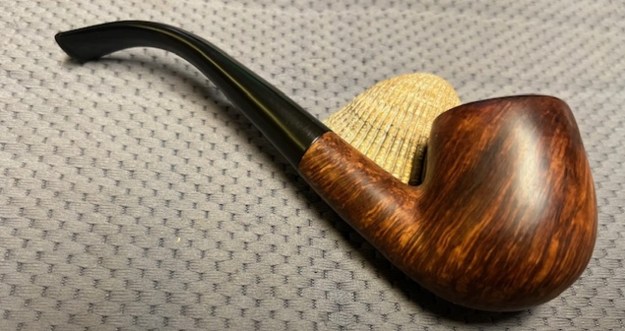
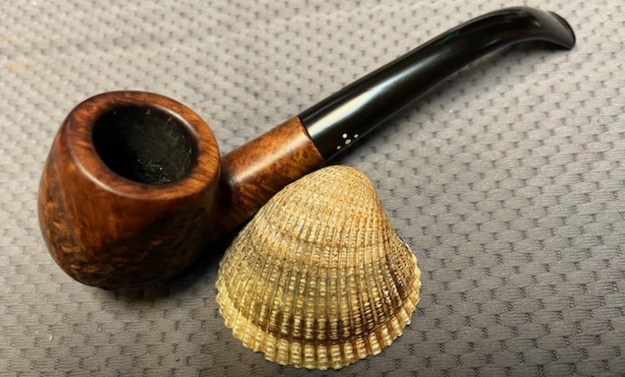
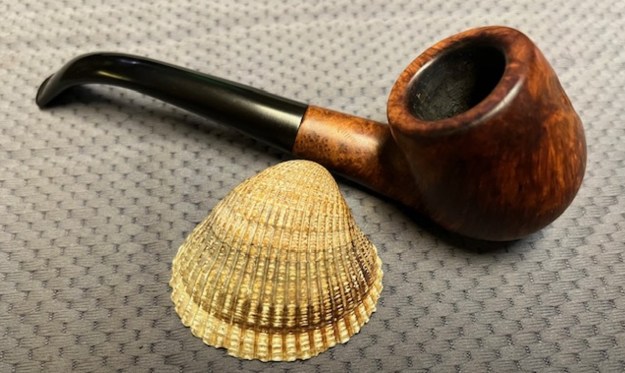
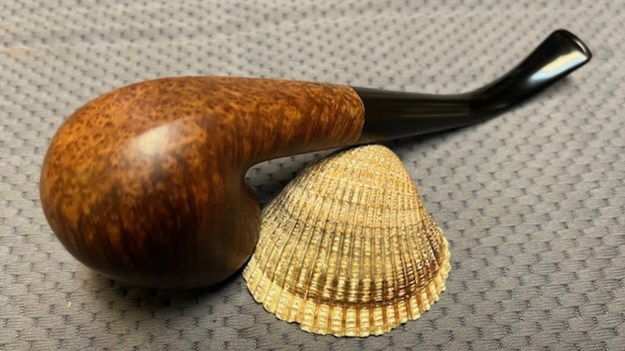
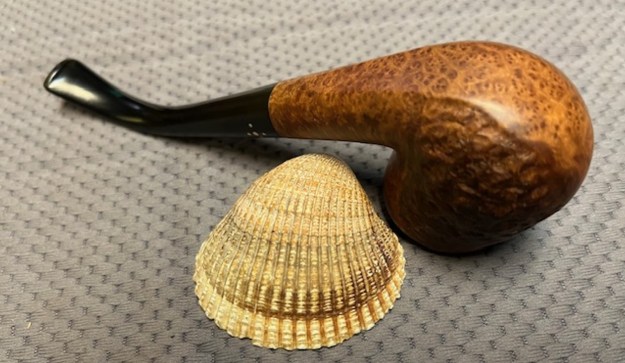
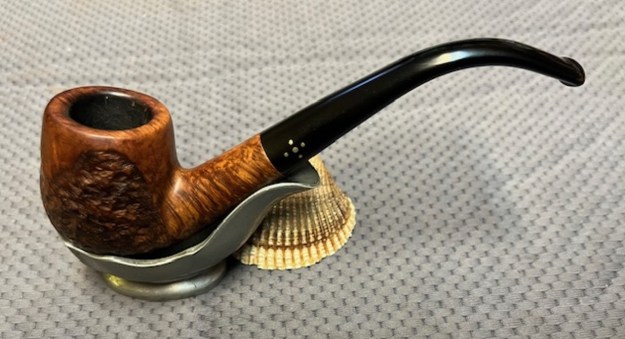
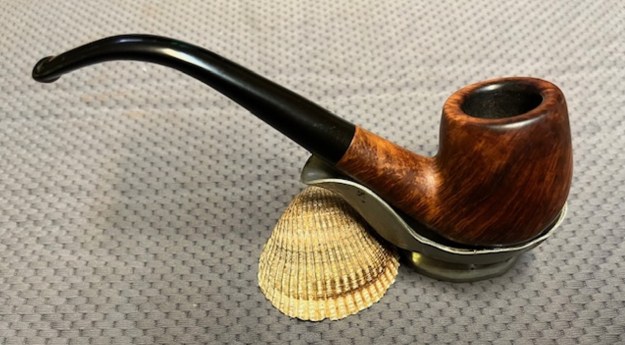
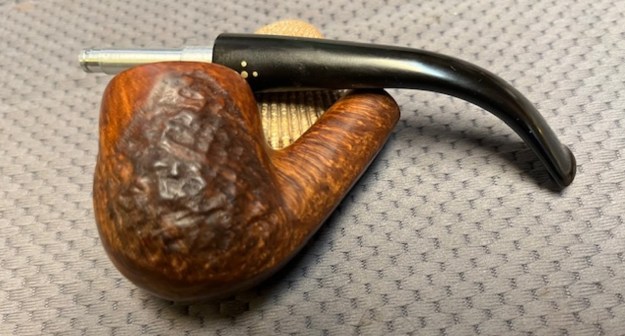
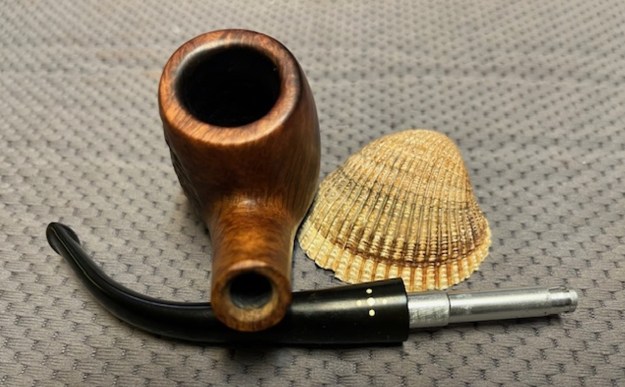
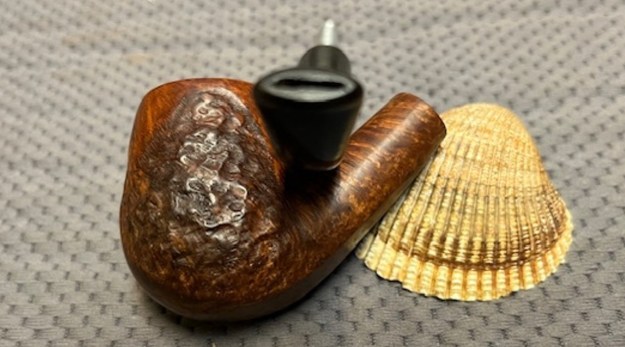
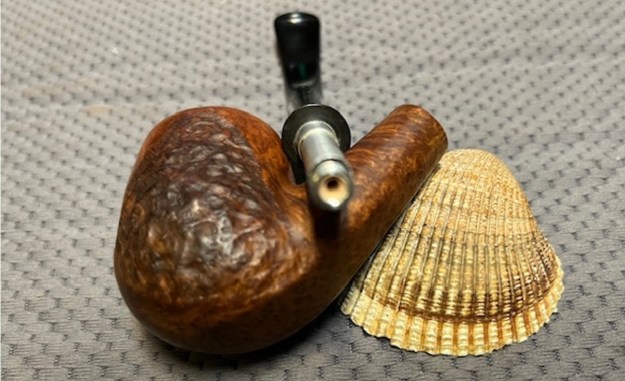
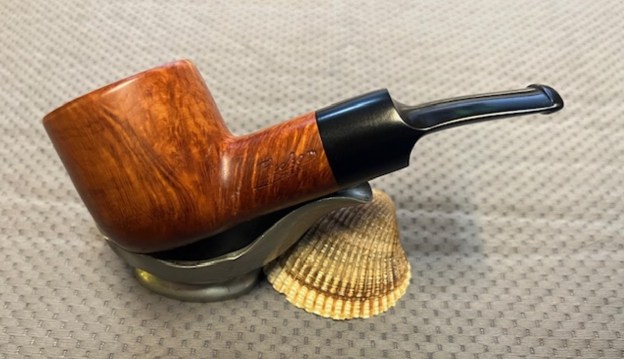
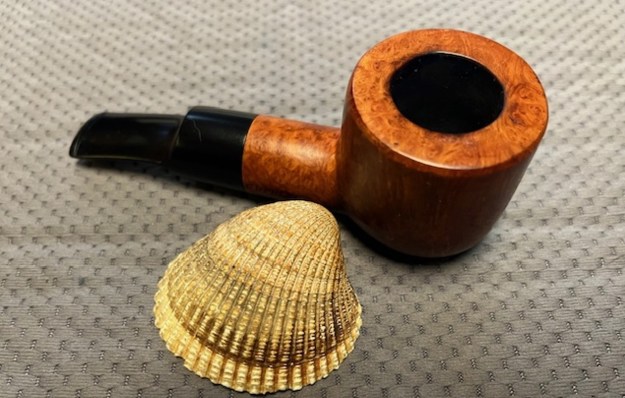
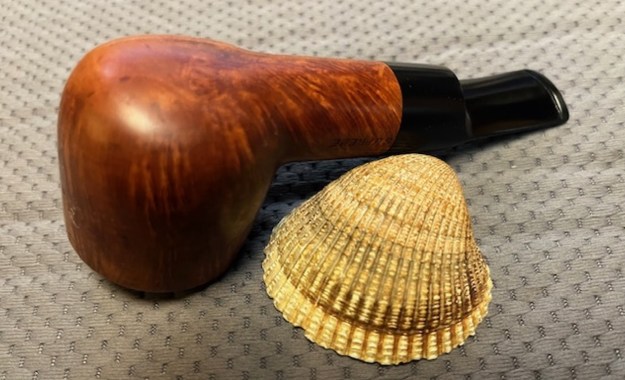
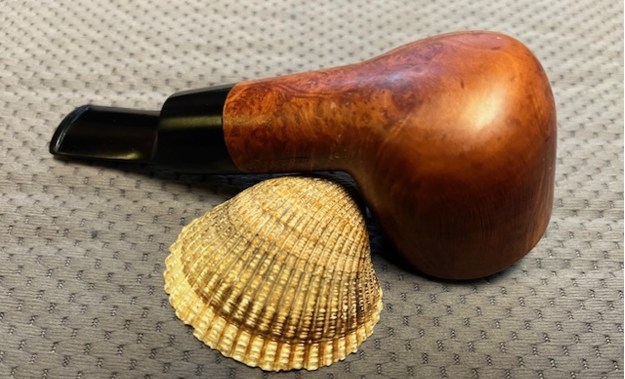
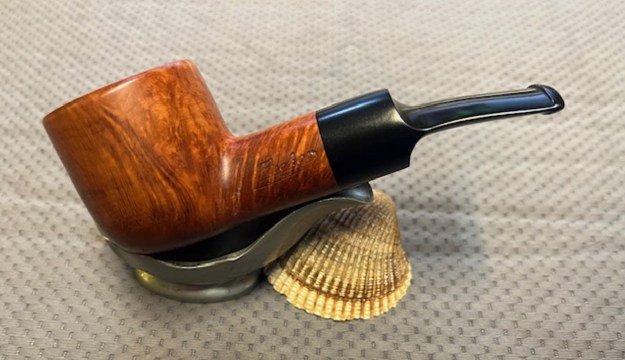
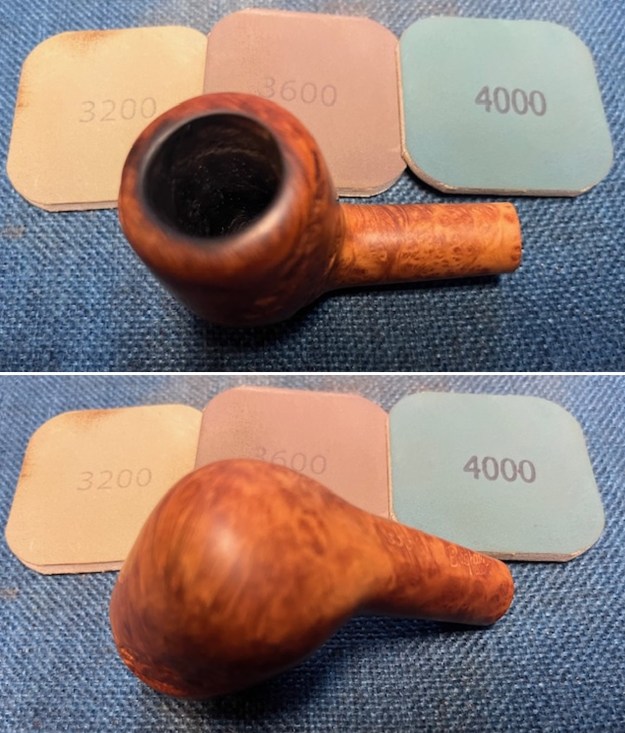
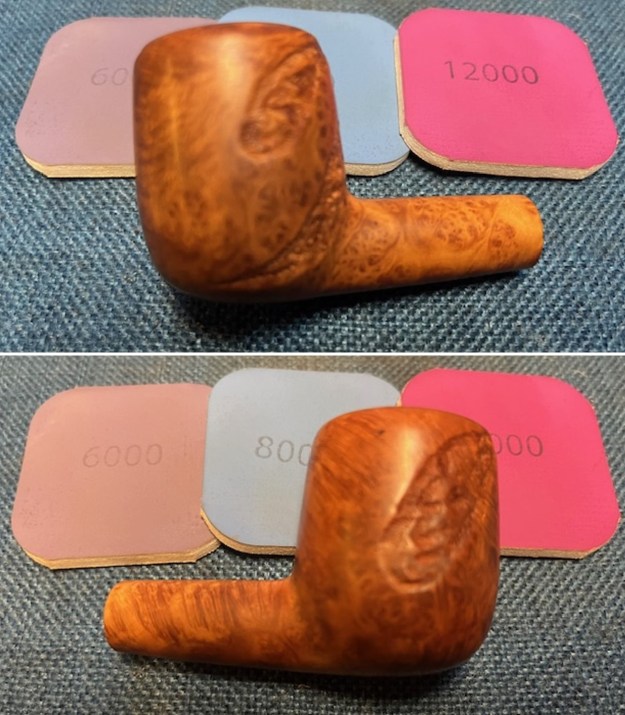
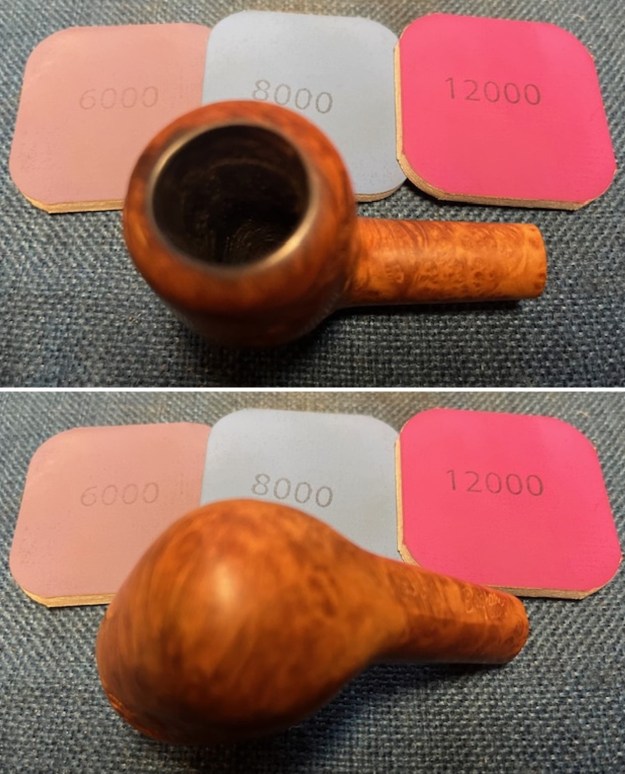
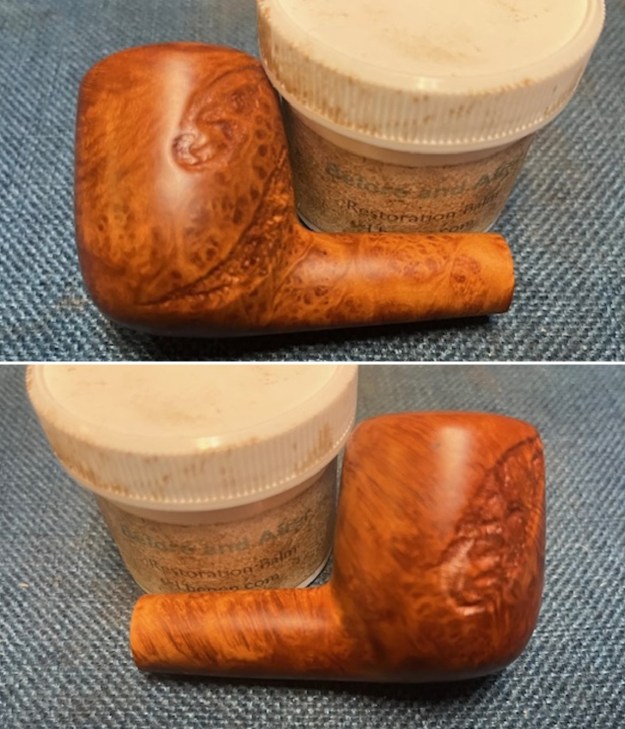
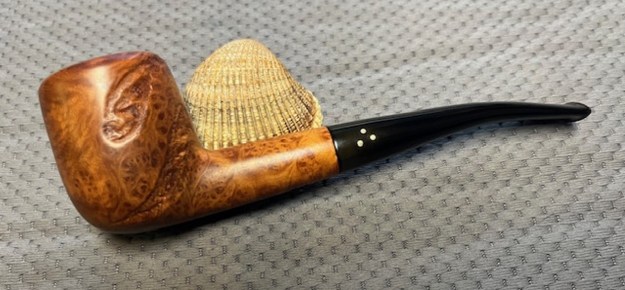
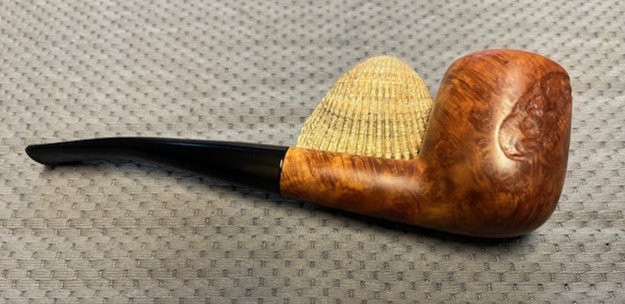
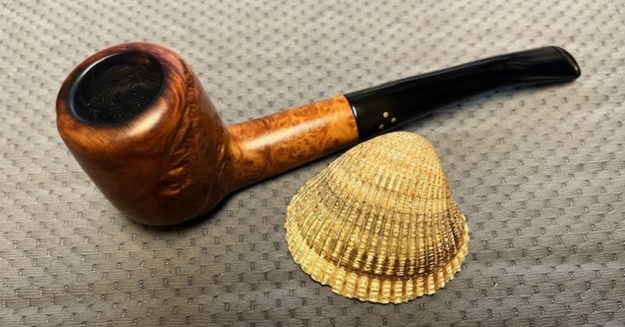
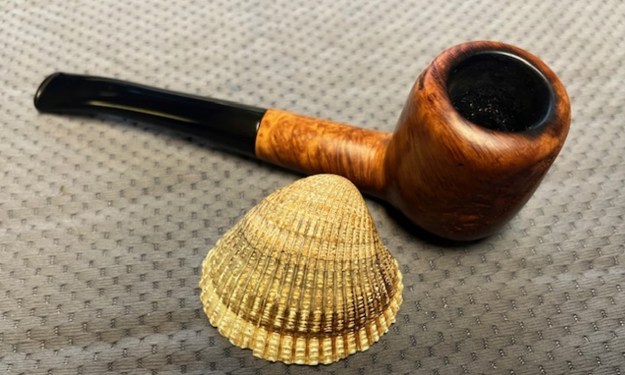
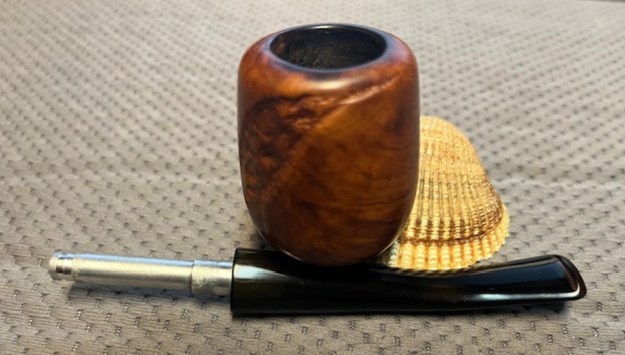
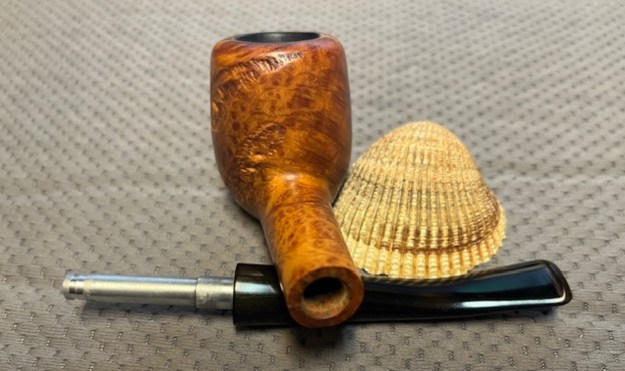
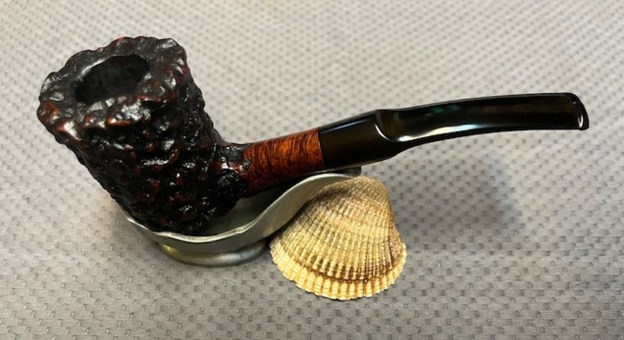
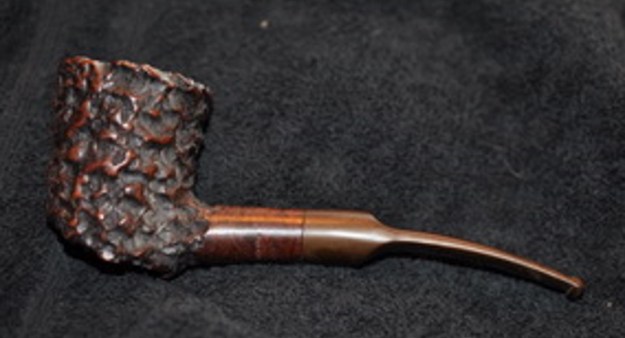
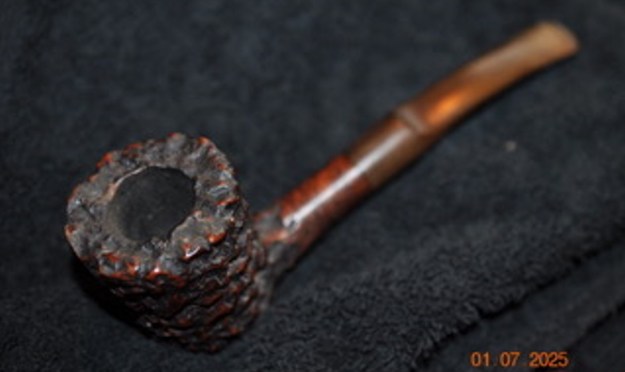
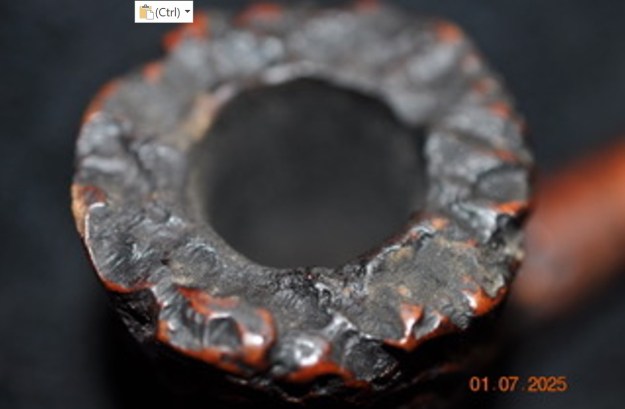
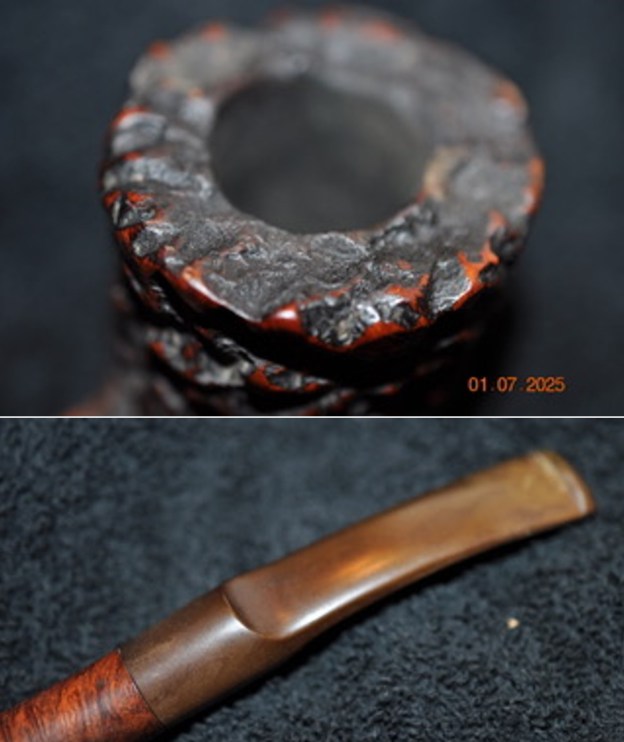
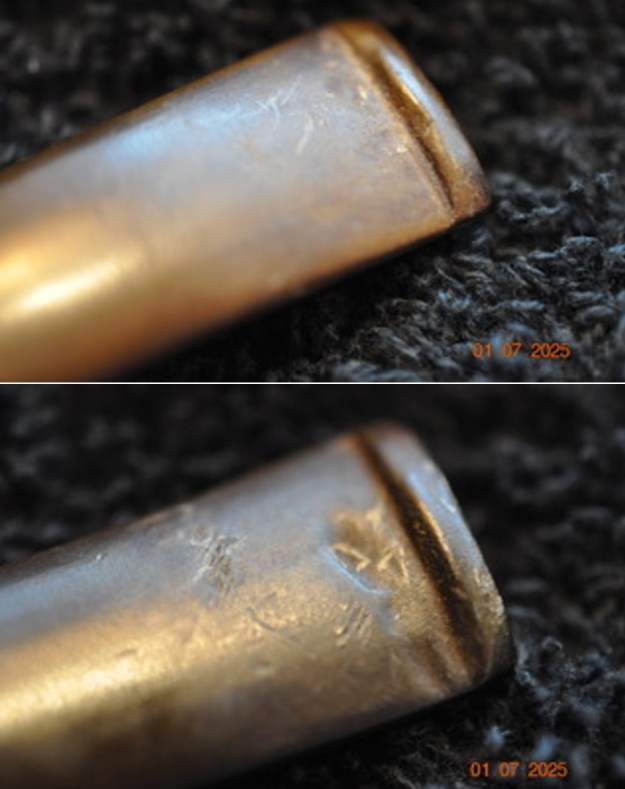
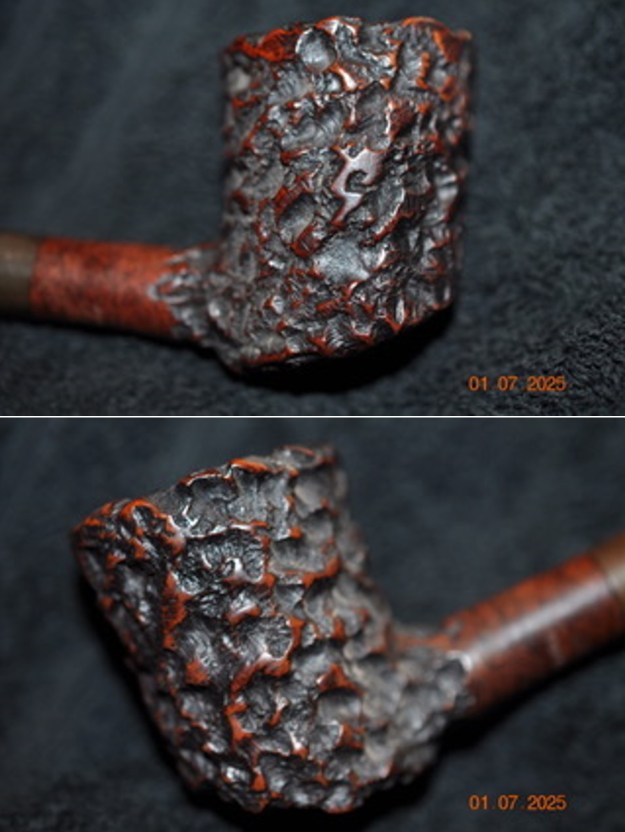
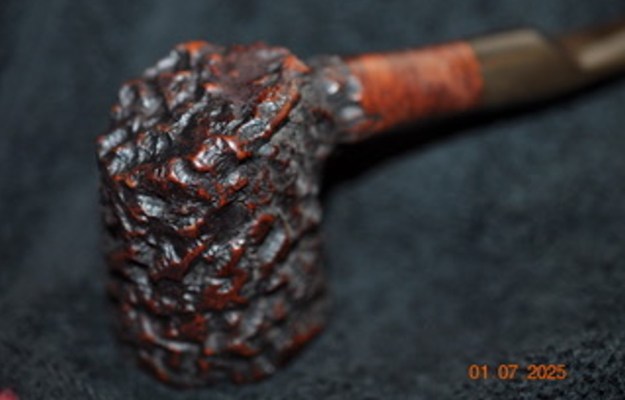
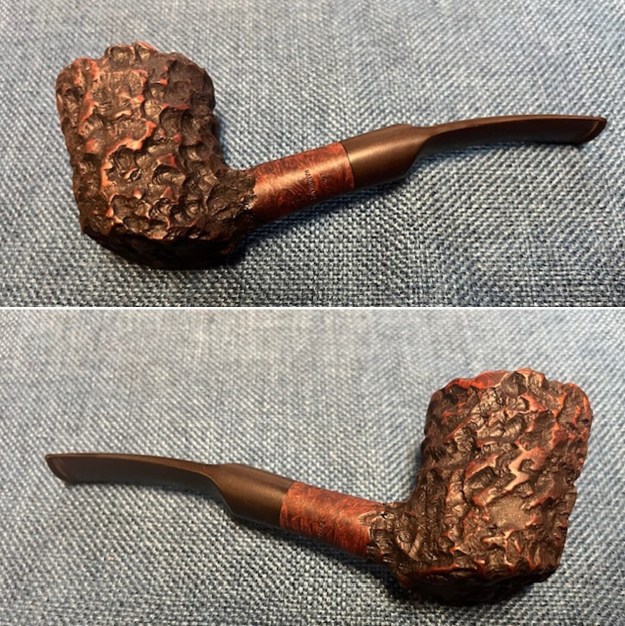
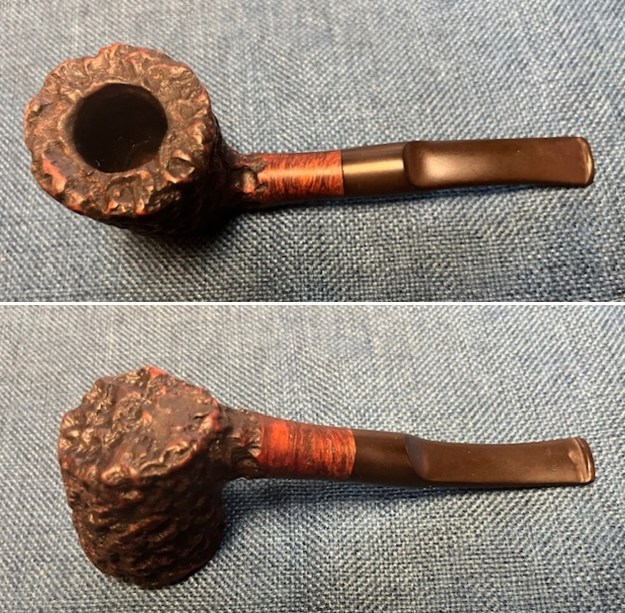
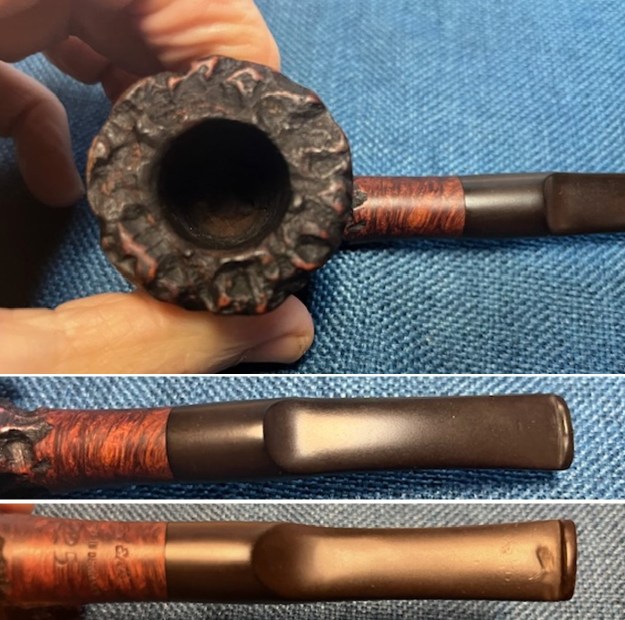
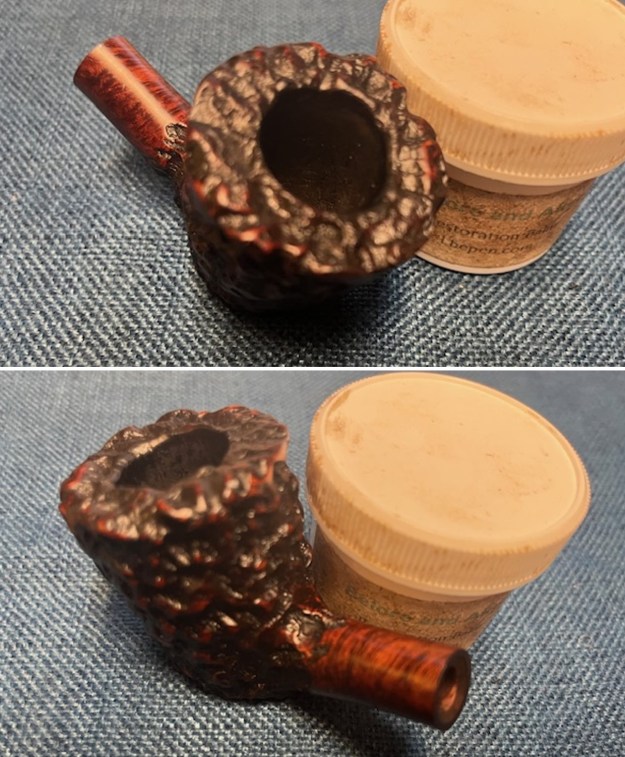
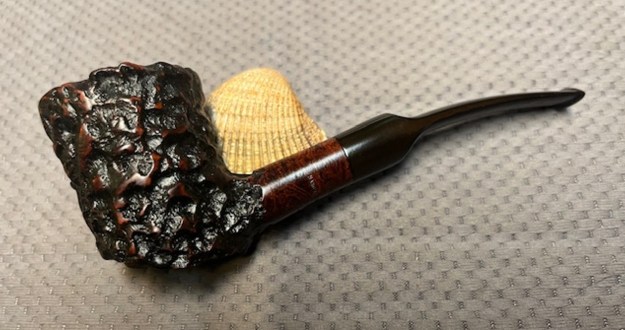
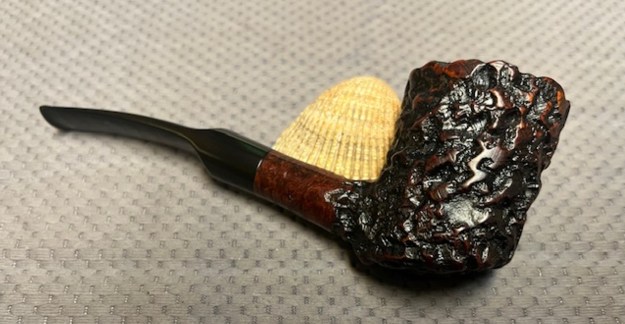
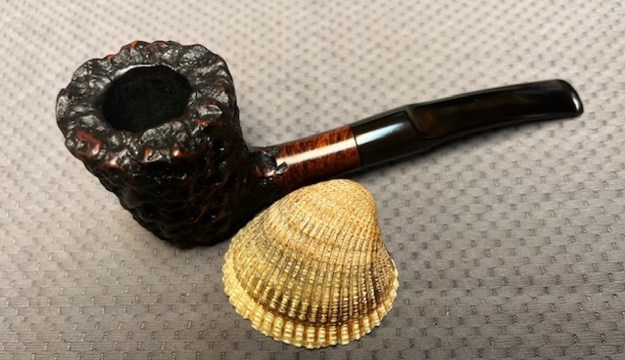
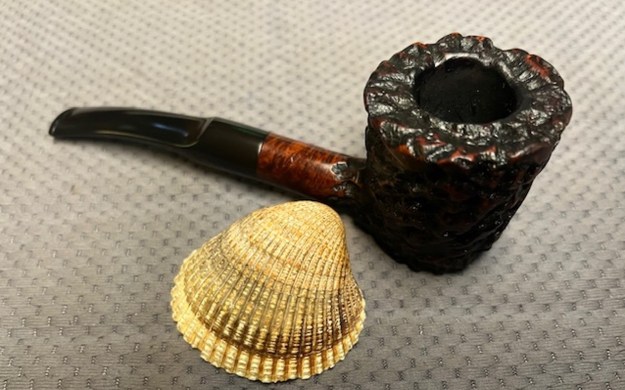
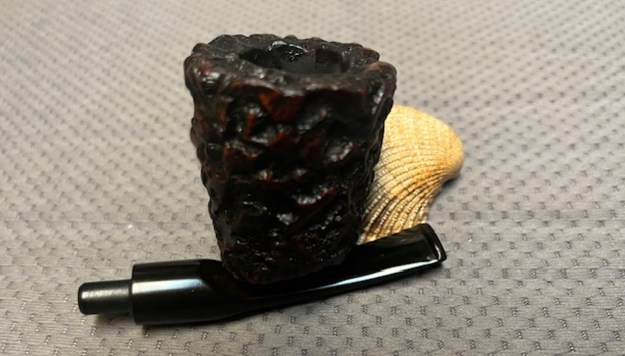
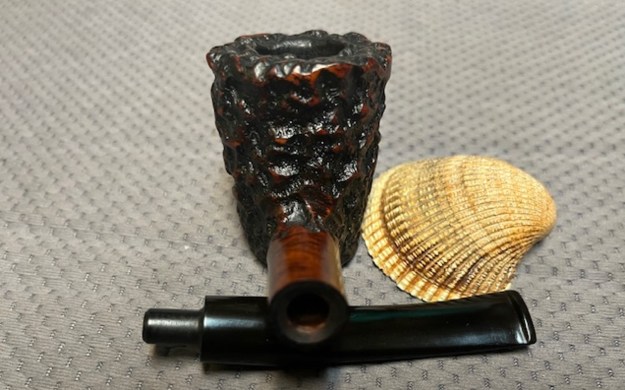
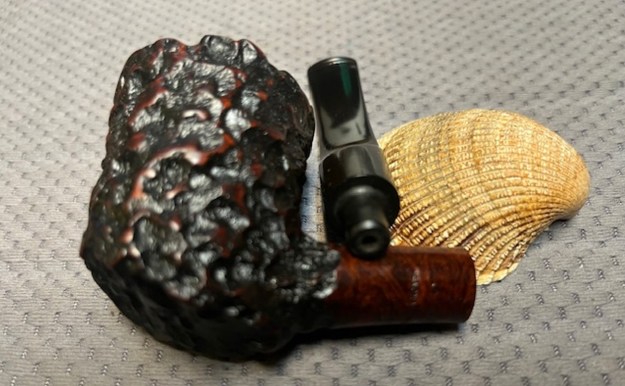
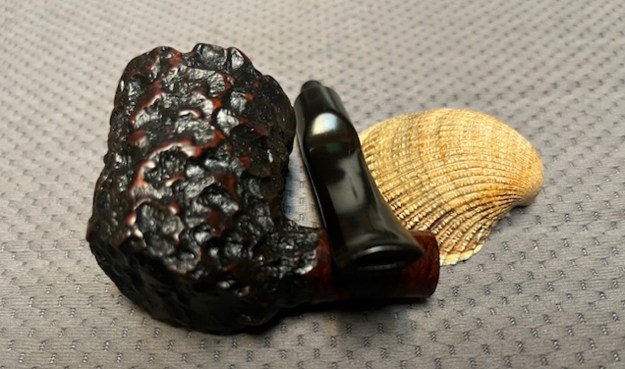
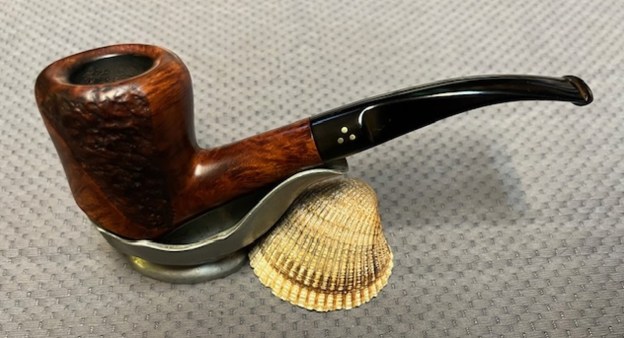
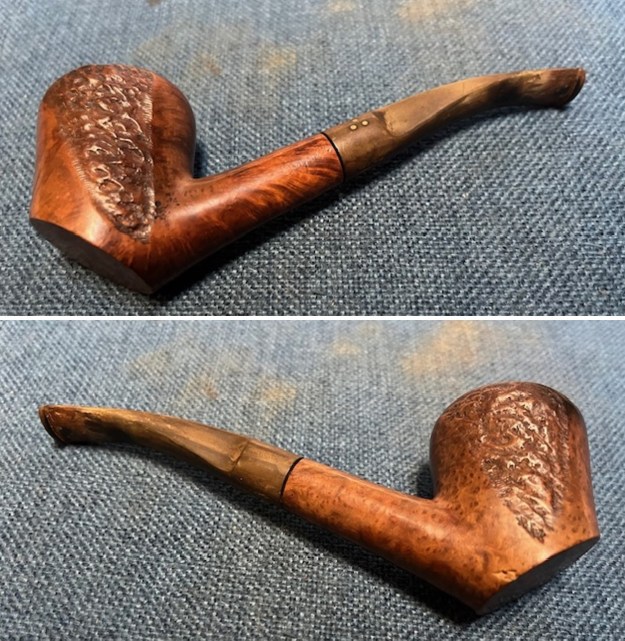
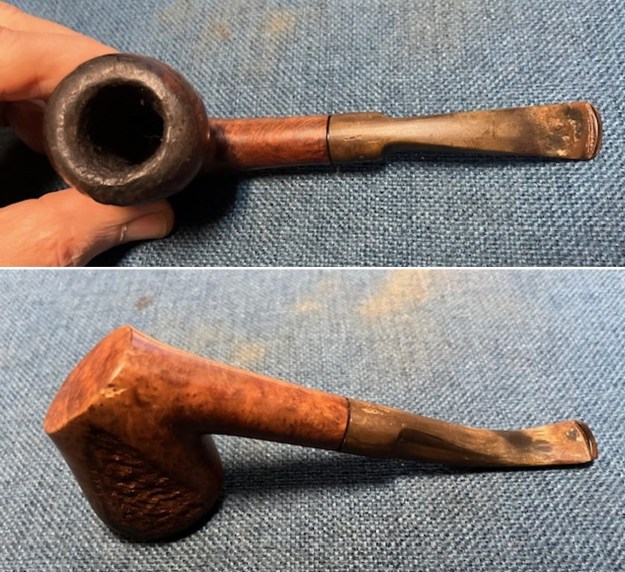
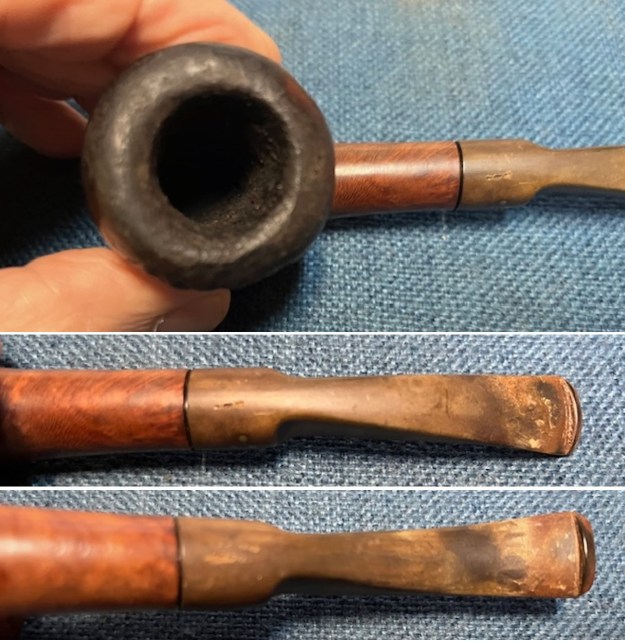
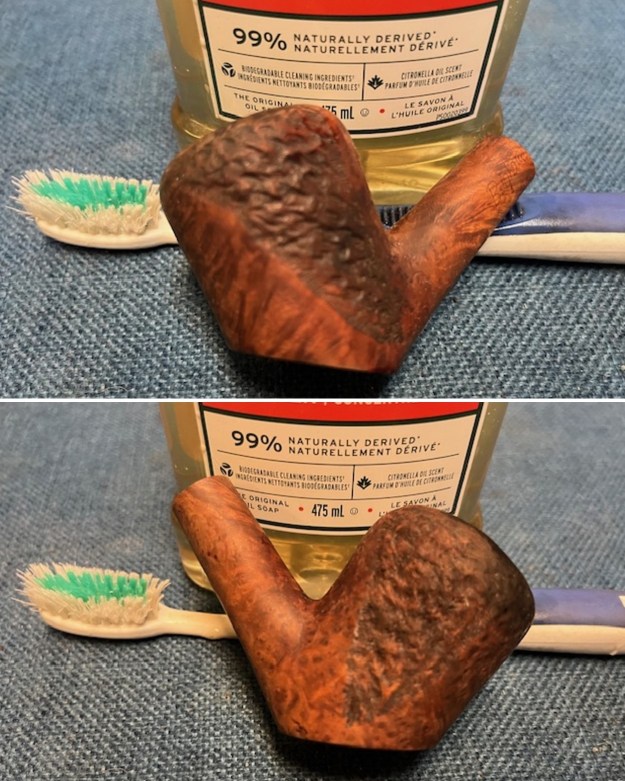
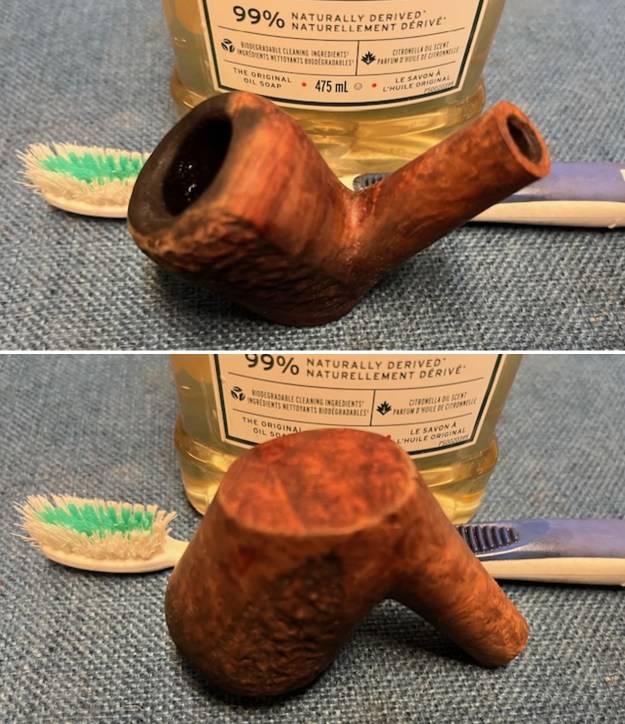
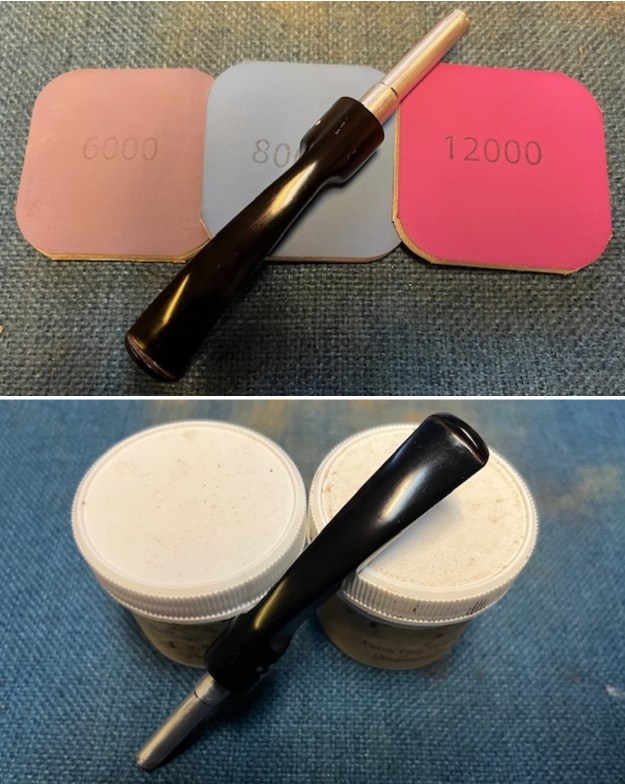
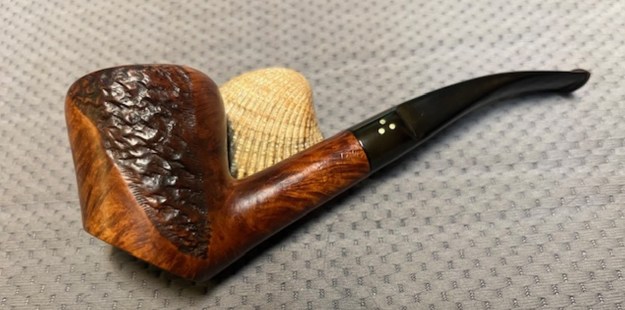
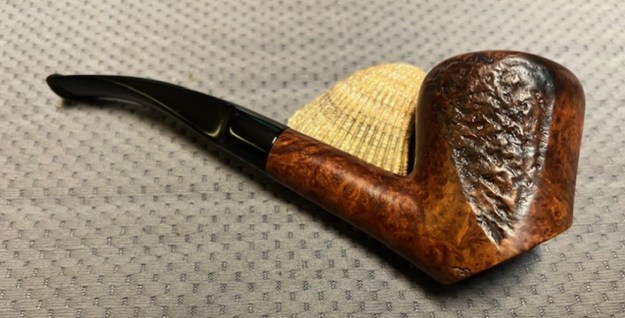
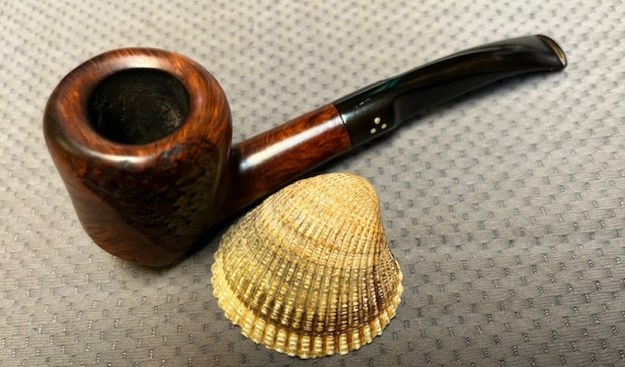
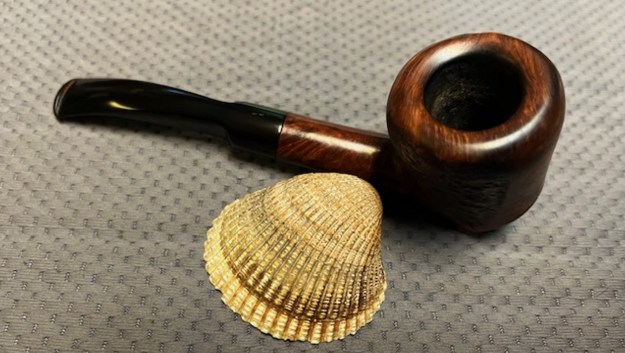
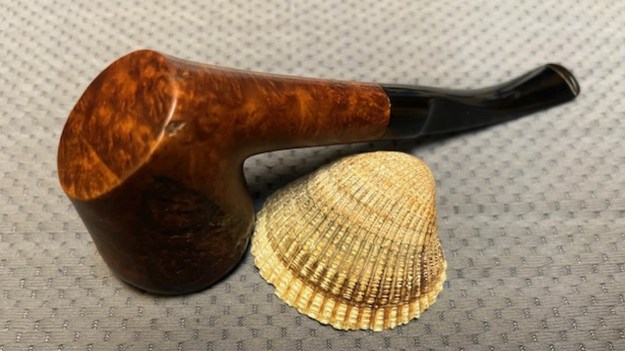
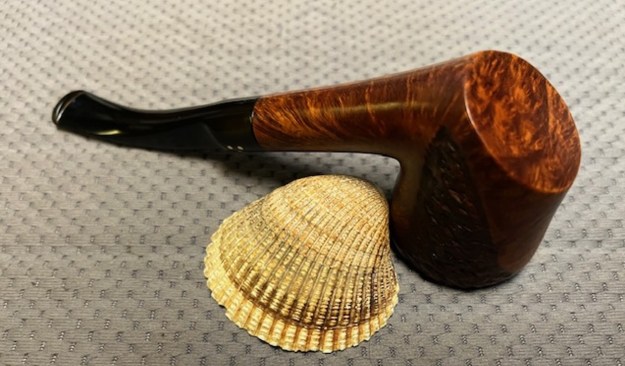
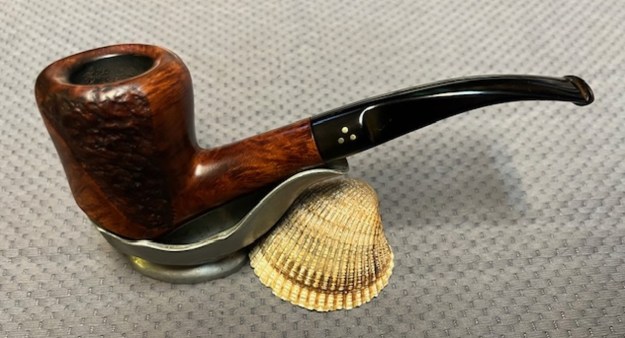
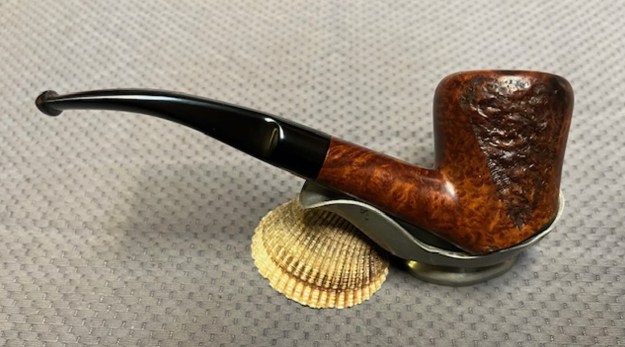
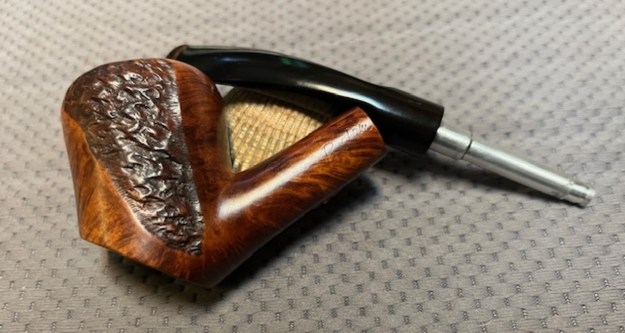
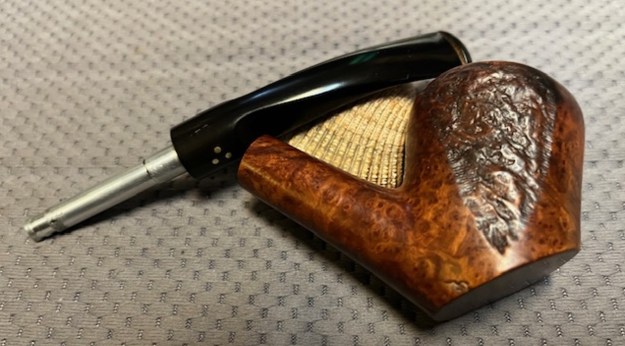
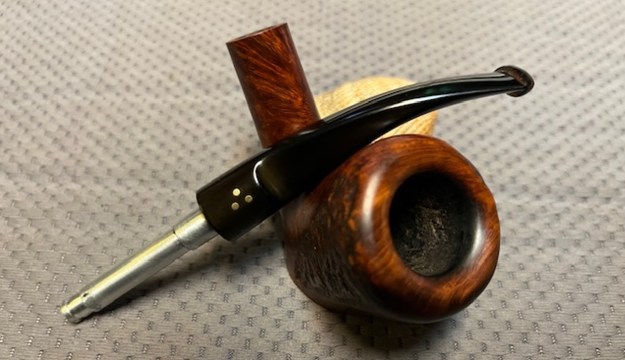
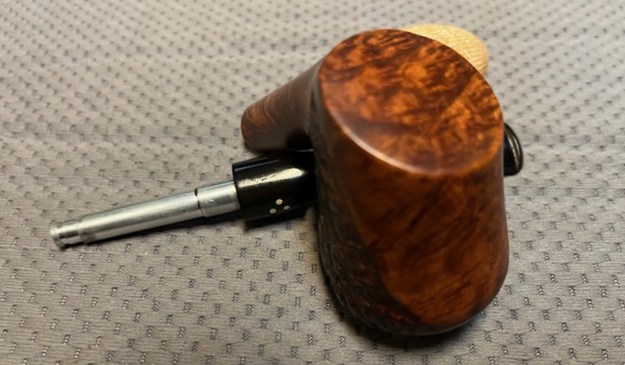
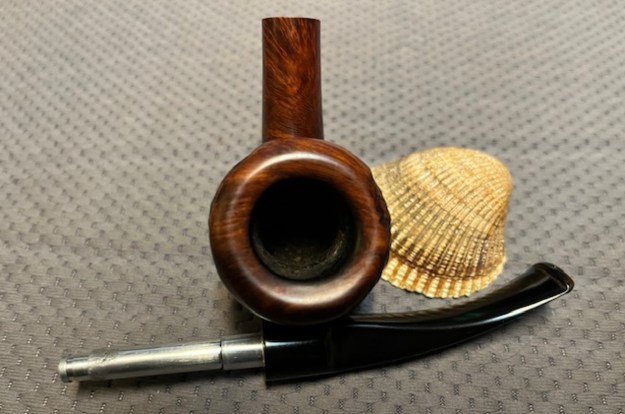
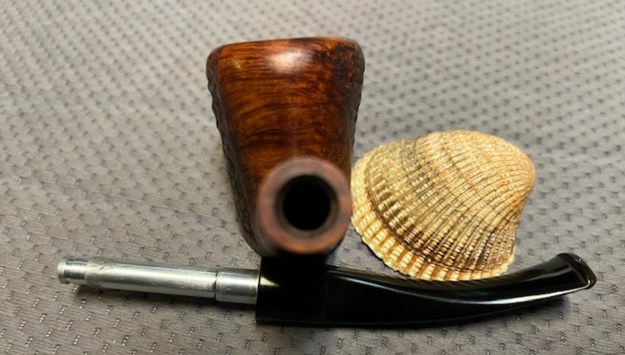
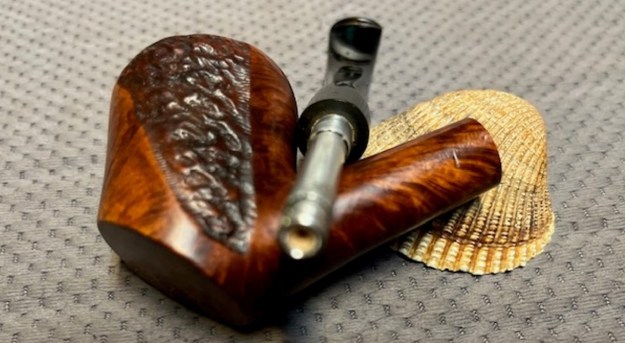
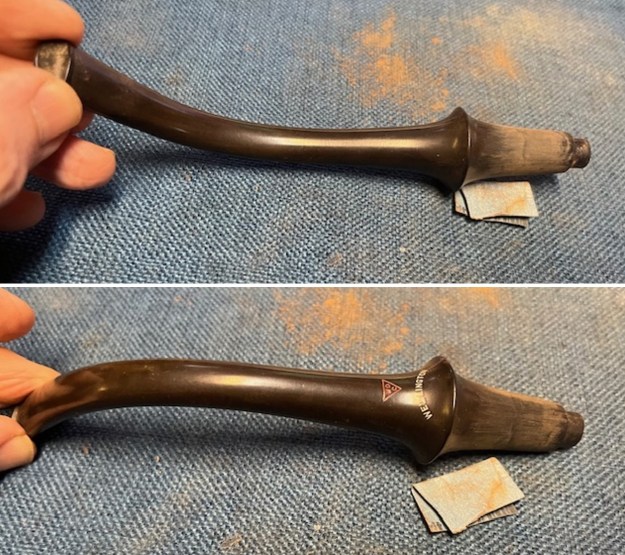
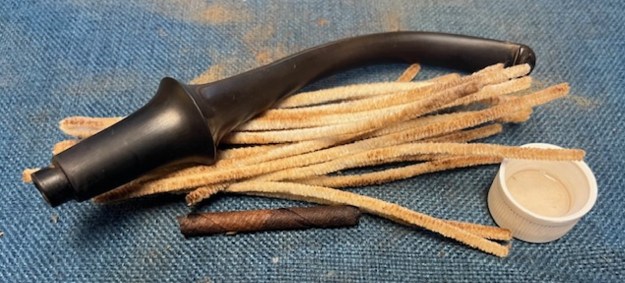
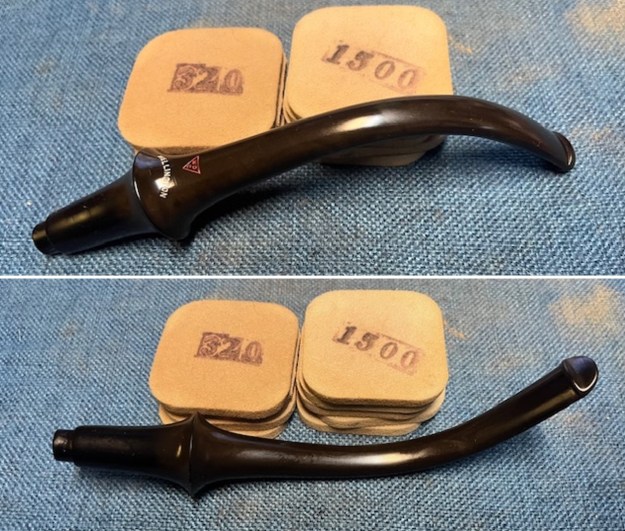
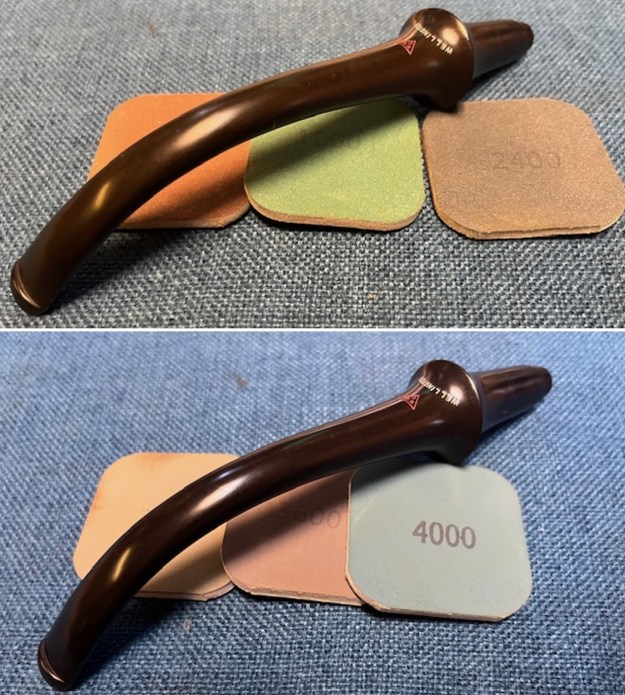
This large rusticated bowl, smooth rimtop briar pipe was purchased from an eBay seller on 08/27/2-24 from Memphis, Tennesse, USA. It is stamped on the underside of the shank and clearly reads Bjarne [over] Handmade [over] In Denmark. The bowl had a thick cake on the walls and a heavy overflow of lava onto the rim top and edges. The smooth rim top and inner edges also had burn damage leaving the bowl out of round. It obviously had been lit repeatedly with a torch lighter and the damage told the story. The rusticated finish is very tactile but dirty with debris and oils. The previous pipeman had cut a piece of wine cork to make a cork spacer on the stem. It still had the makers marks on the cork. His drilling to fit the tenon was off and not centred. It was not the same thickness from the outside to the center drilling. With it in place the tenon was quite short. The vulcanite taper stem has a bj stamped on the left side of the taper. The stem was lightly oxidized, calcified and had light tooth marks and chatter on both sides ahead of the button. I really like the rustication on the bowl and shank even through the grime in the finish. Jeff took photos of the pipe before he started cleaning it up. Have a look. Jeff took close up photos of the bowl and rim top to show the condition of the bowl and the rim top. You can also see the lava on the rim top, inner edge and the cake in the bowl. The burn damage on the top is very visible and has left the bowl is out of round. He also took close up photos of the stem to show its condition as mentioned above. He also took photos of the tooth marks and chatter on both sides of the stem. He took photos of the bowl sides and heel to show the details of the rustication around the bowl. The rustication is deep and has interesting characteristics that show up in the photos around the bowl and shank. He took a photo of the stamping on the underside of the shank. It is clear and readable as noted above. There is a bj logo on the left side of the stem that looks deeper enough to touch up. You can also see the wine cork and some of the writing on it in the second photo. It is also poorly cut. The next two photos show the look of the cork spacer on the stem. It is an obvious home made addition and one that I plan on removing. I have had many Bjarne pipes cross my work table over the years but all had been stamped only Bjarne or Bjarne Handmade. None of them had his full name stamped on it and none had a letter stamp which I assumed indicated the grade of the pipe. I did some research on Pipedia.com and found some helpful information on both the stamping of my pipe and the history of Bjarne Nielsen himself. I am including the link to the full article on Pipedia and also some pertinent sections of the article that I have edited for quick reference. https://pipedia.org/wiki/Bjarne

From the early 1990s Bjarne had seven pipemakers employed and the pipes were sold in no fewer than 32 countries. For more than six months each year, Bjarne traveled around the world to promote his pipes by meeting with dealers and customers. But sadly, it all ended in February 2008 when Bjarne, then 66 years old suffered a fatal heart attack. An unexpected blow first of all to his family, but also to the pipemakers who had been working for him, and to all lovers of his pipes from around the world. And as no one was willing to take over, the Bjarne pipe died together with its creator.

Among the pipemakers that worked for Bjarne were Johs (for the lower priced high volume pieces), and makers like Ph. Vigen, Ole Bandholm and Tonni Nielsen for high grade pieces. The cheaper line was stamped “Bjarne” while the highest grades were stamped “Bjarne Nielsen” (never with the pipemakers’ name) and graded, from highest to lowest, by the letters: AX, A, B, C, D, E, F, G, H, I, and J.

Now I knew that the pipe I had was made before 2008 and was one of his cheaper line stamped Bjarne.

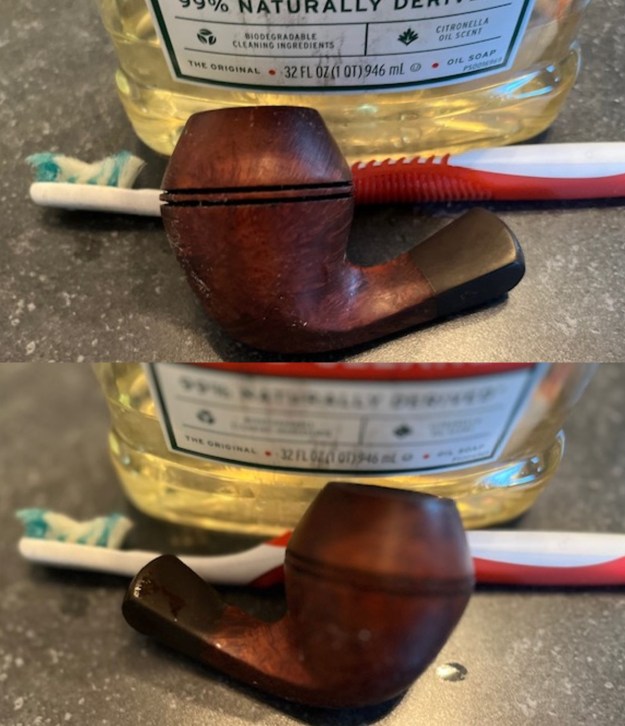
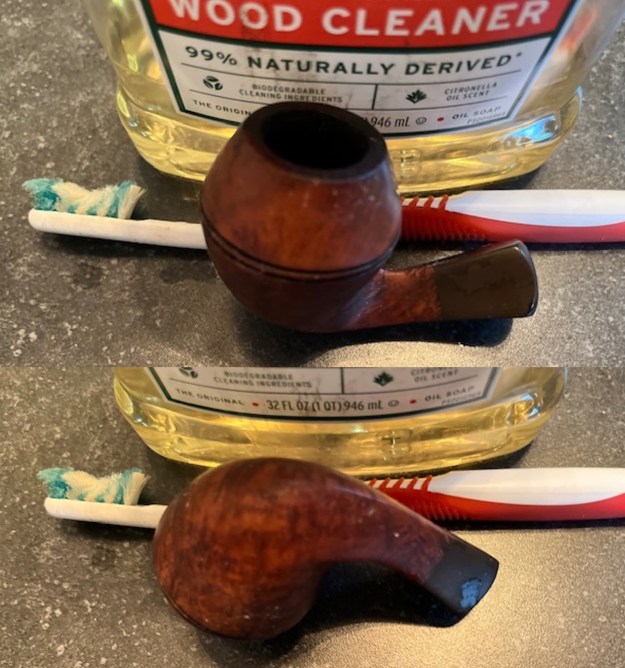
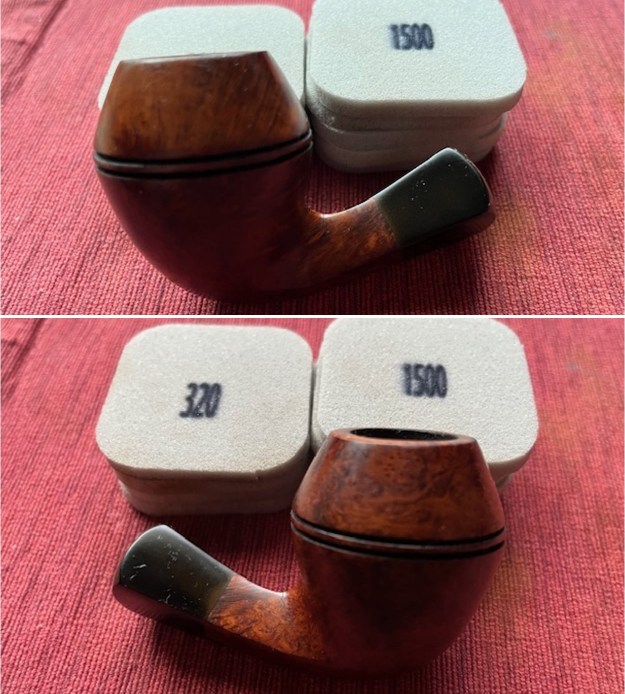
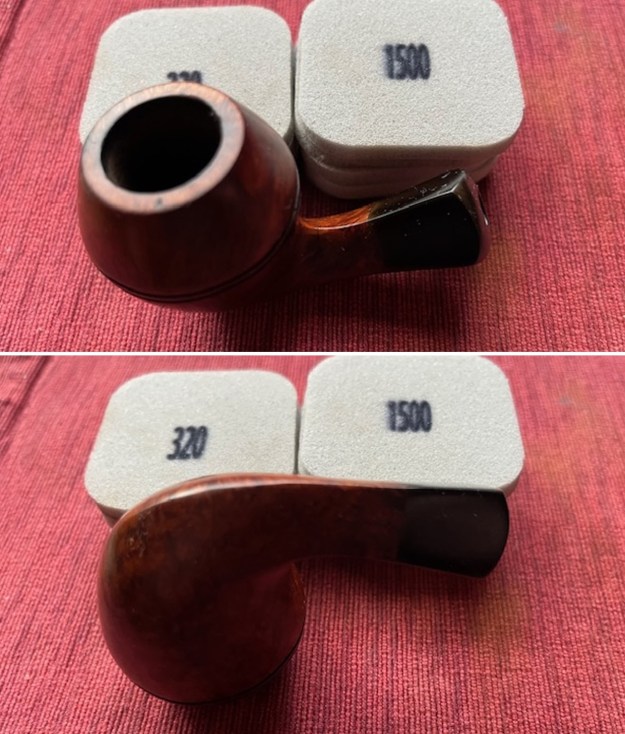
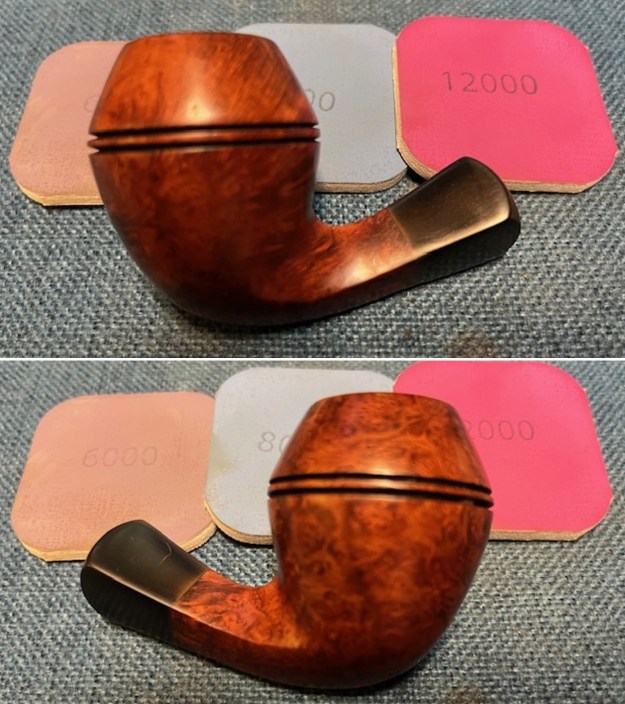
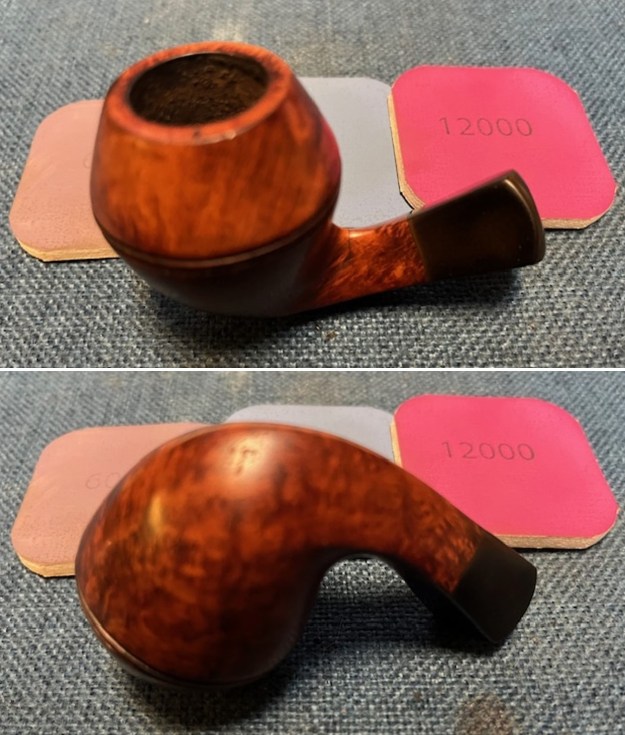
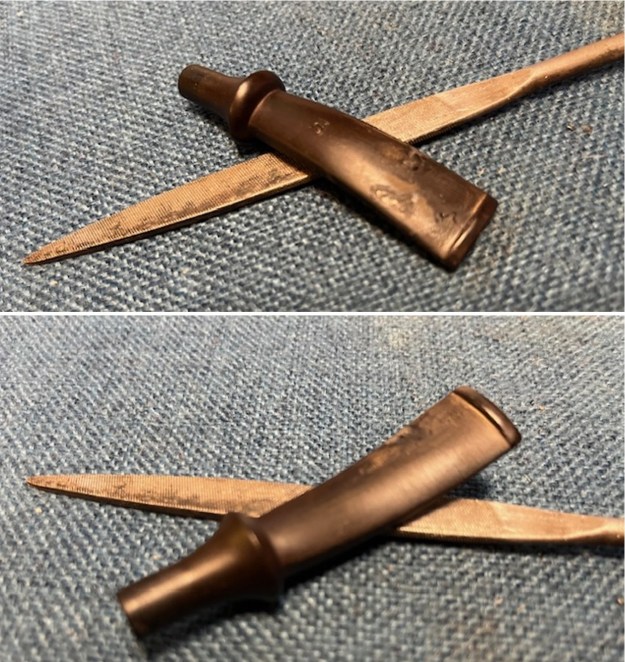
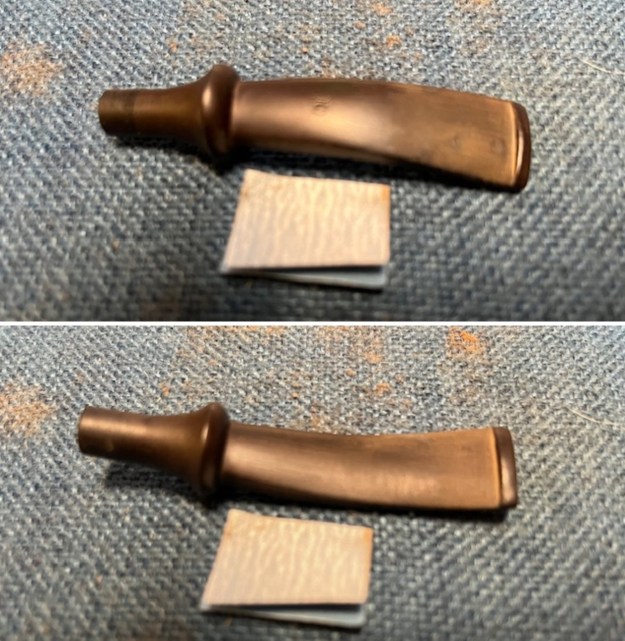
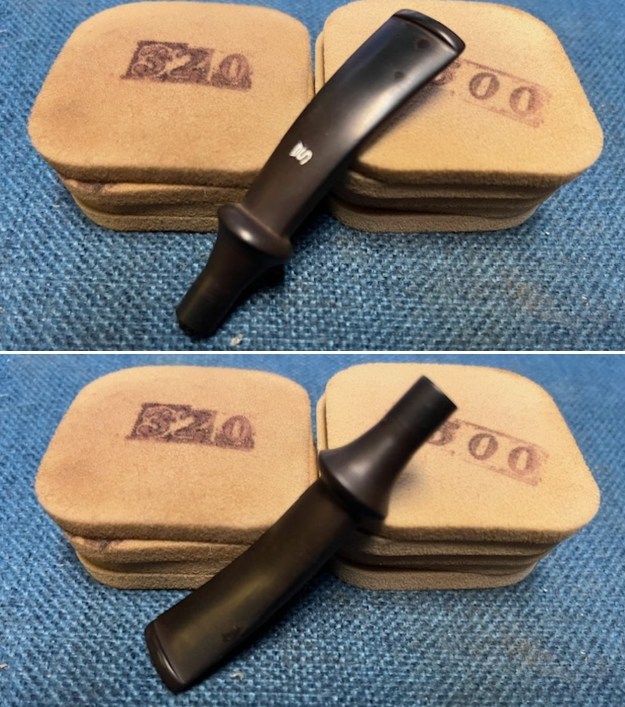
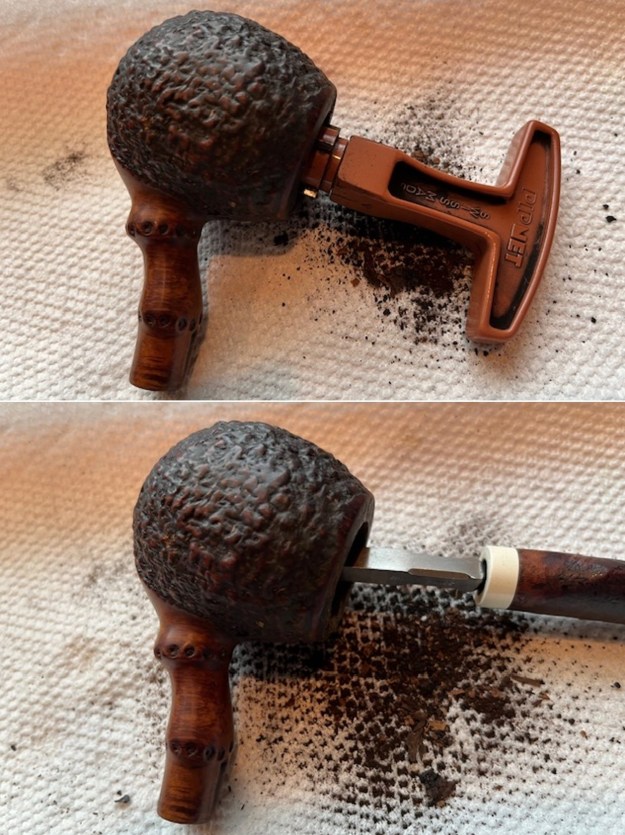
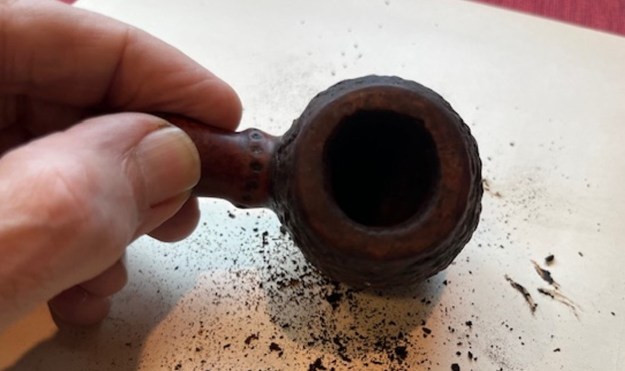
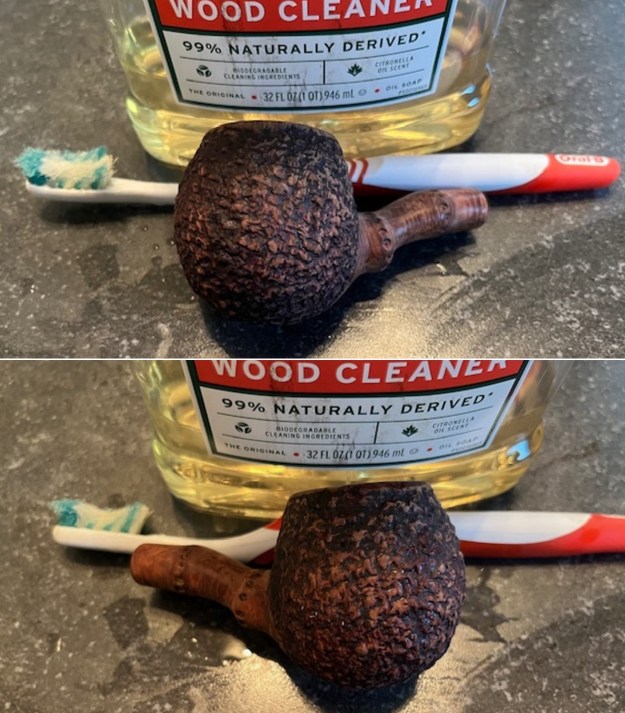
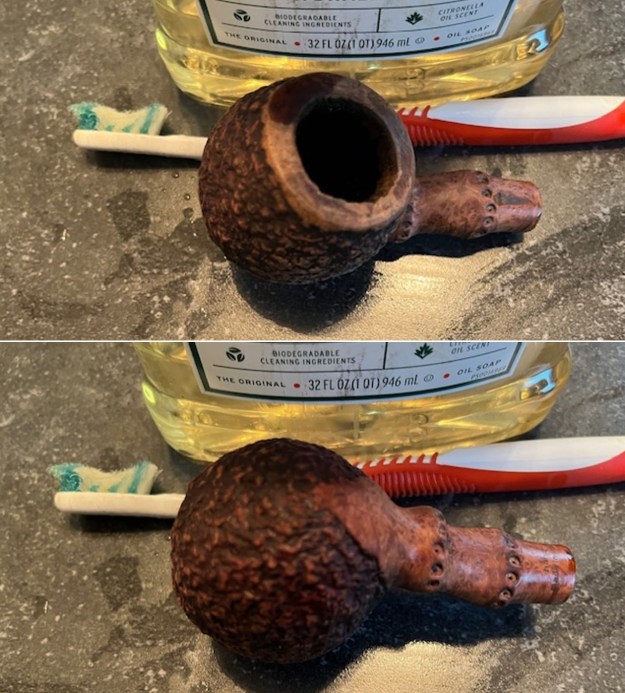
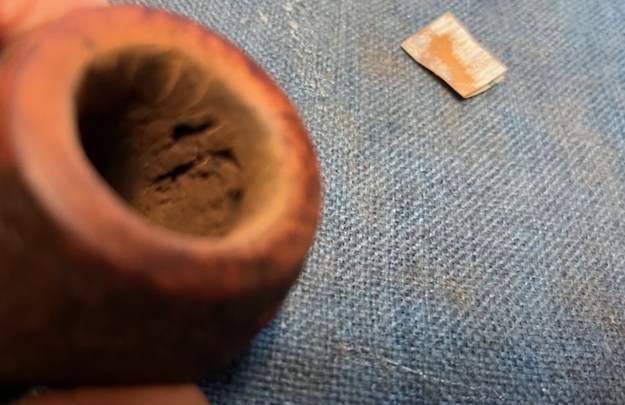
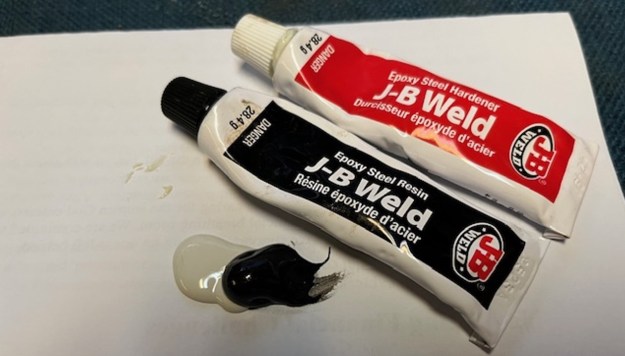
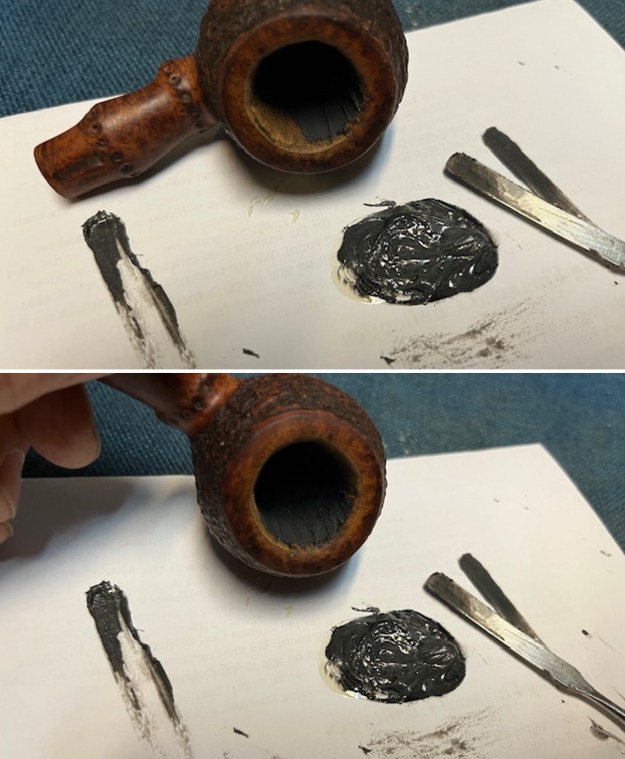
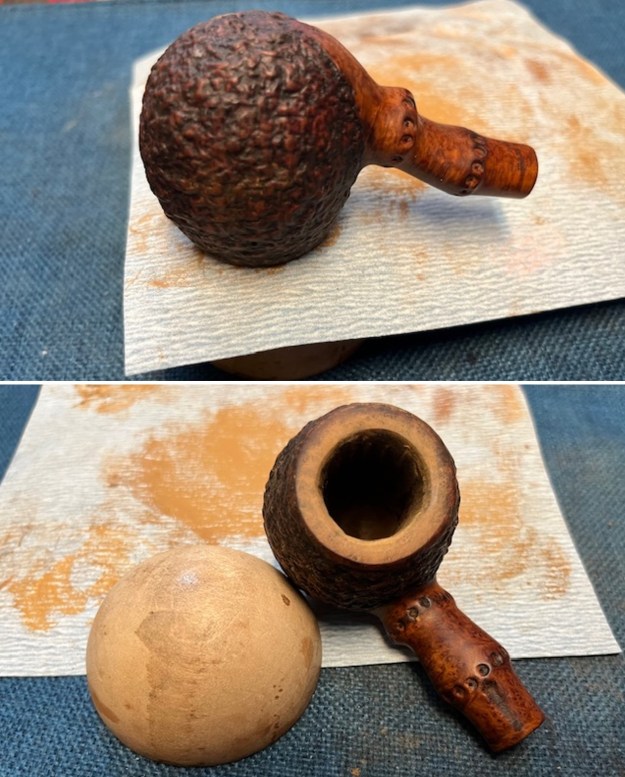
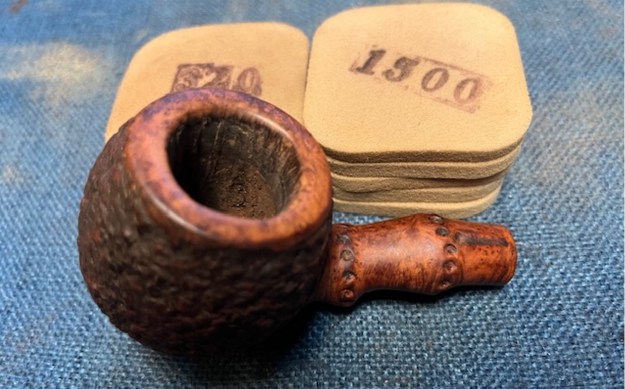
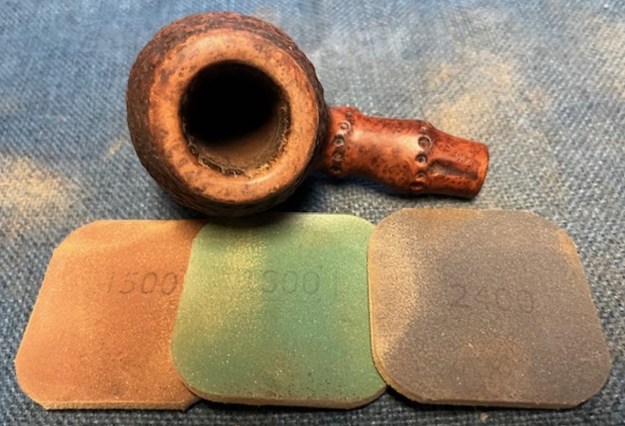
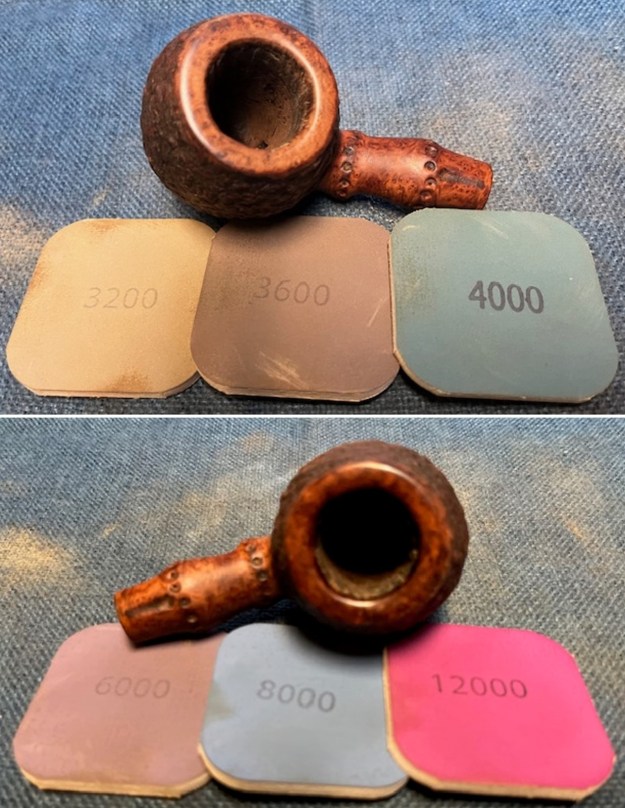
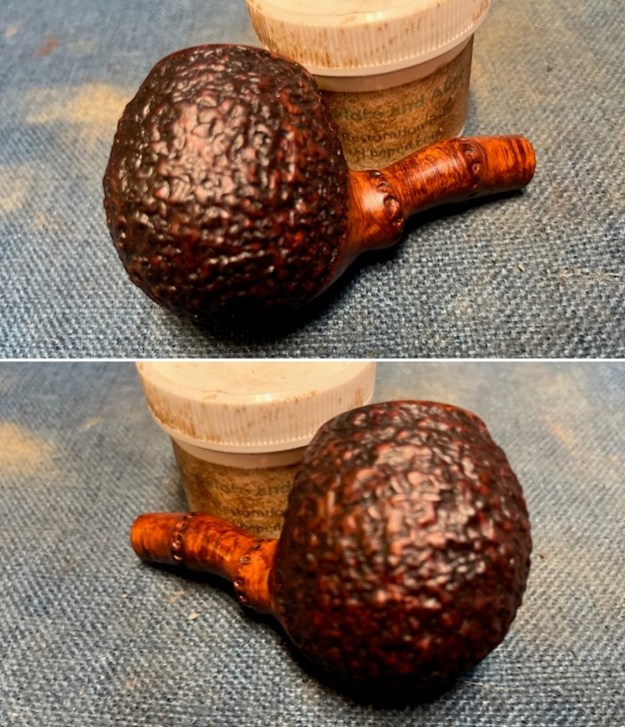
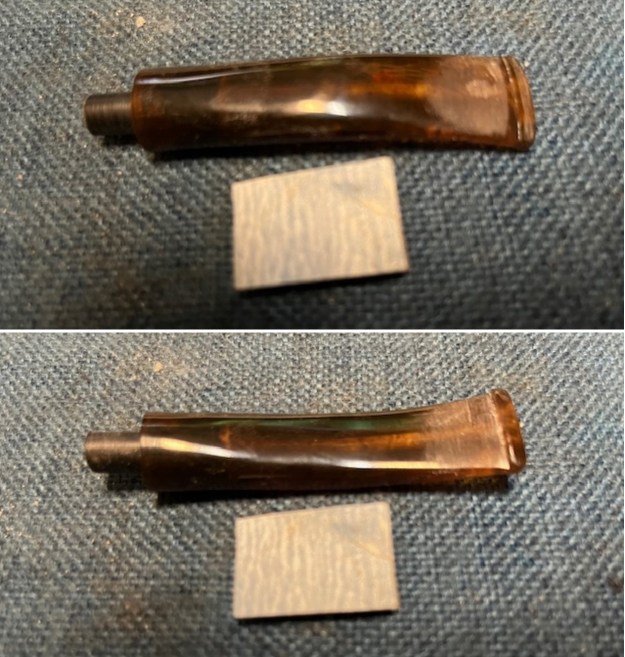
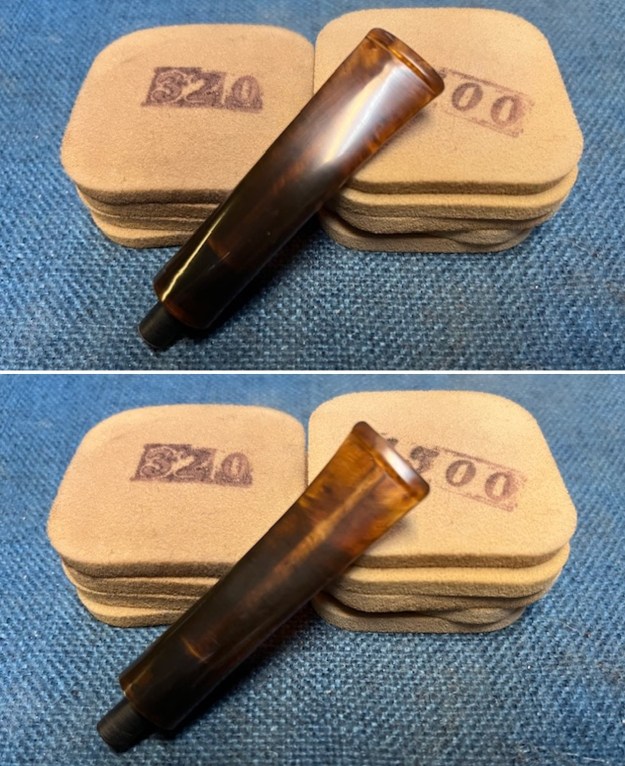
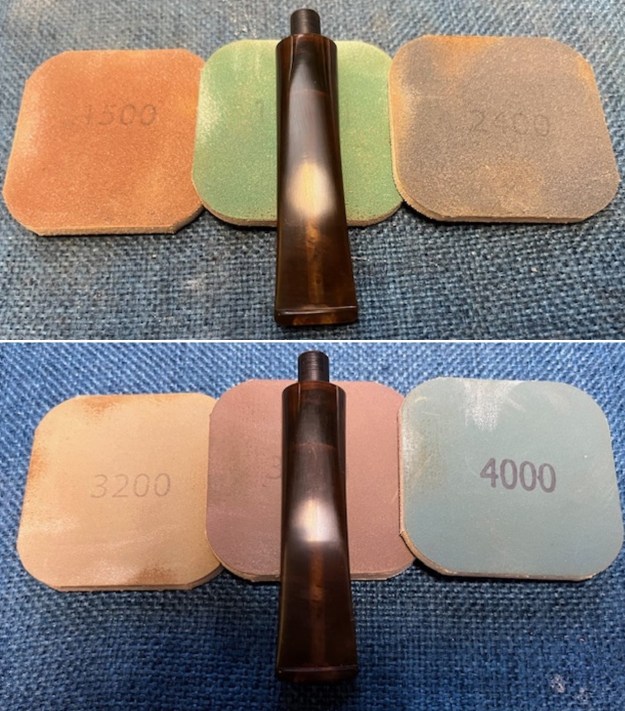
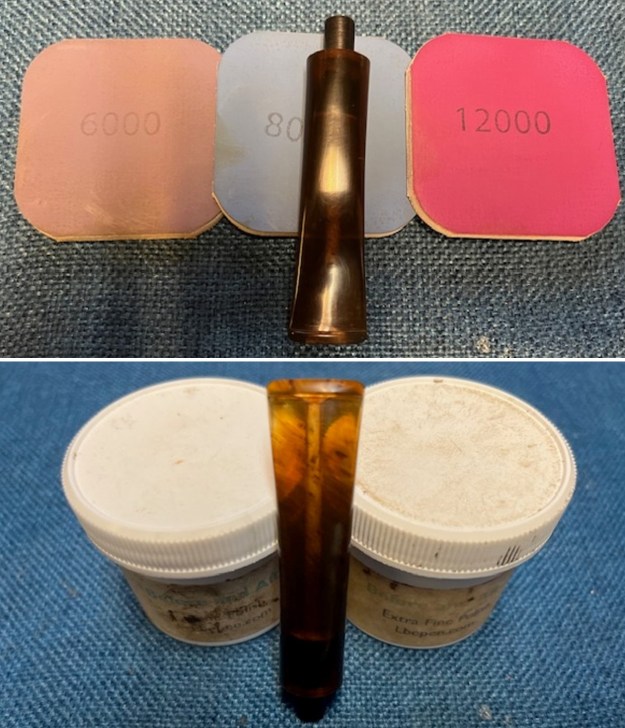
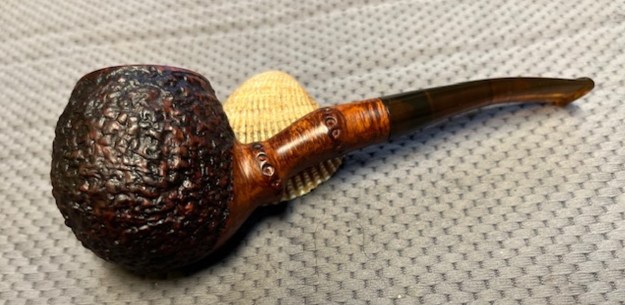
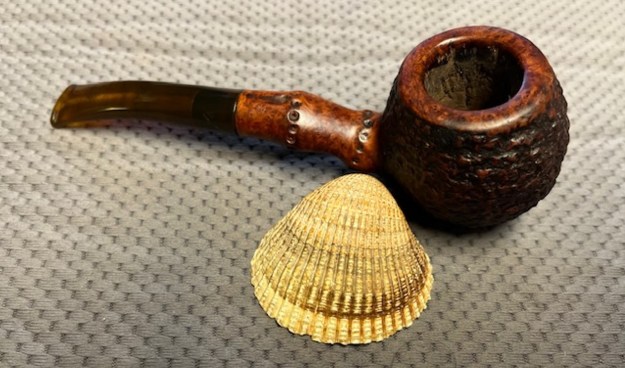
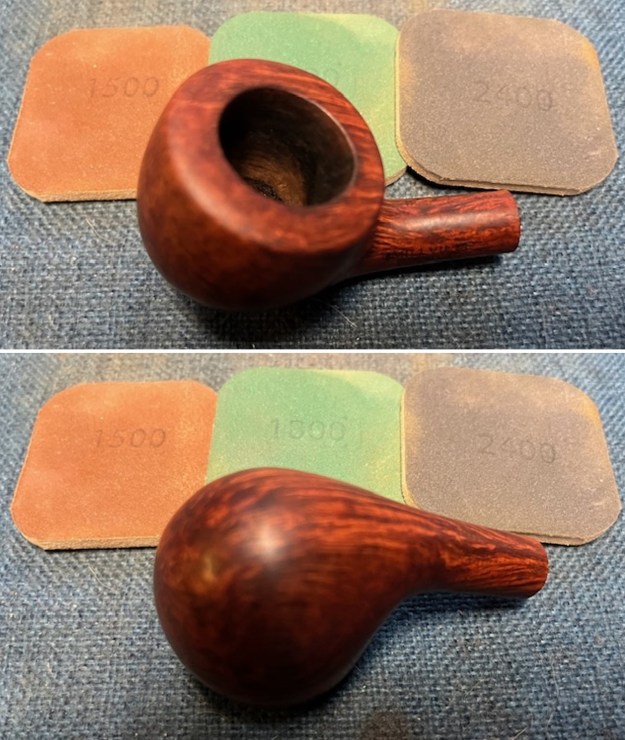
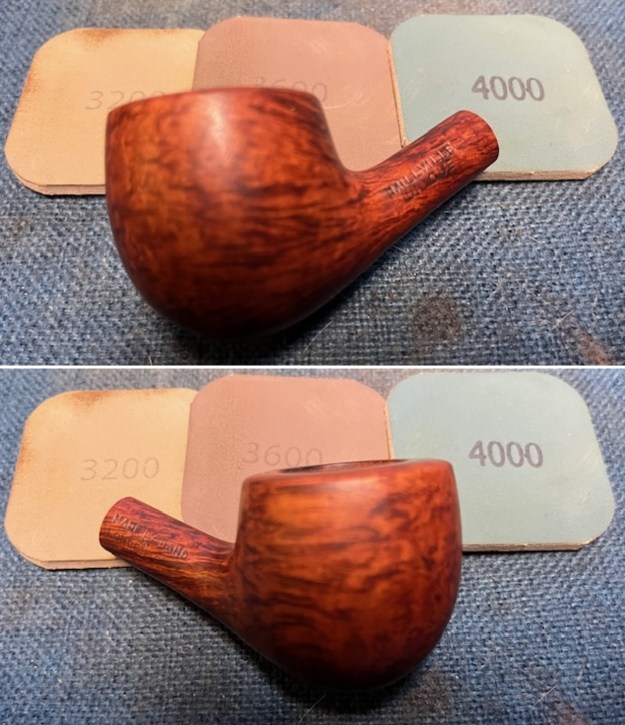
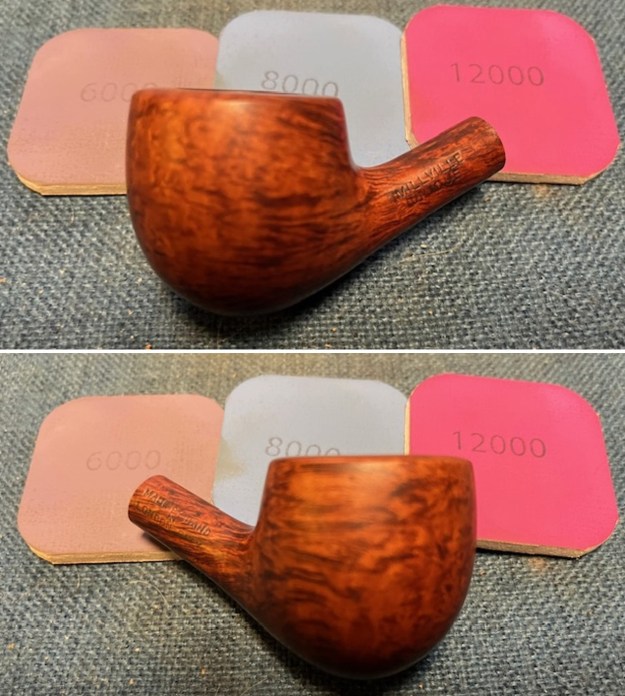
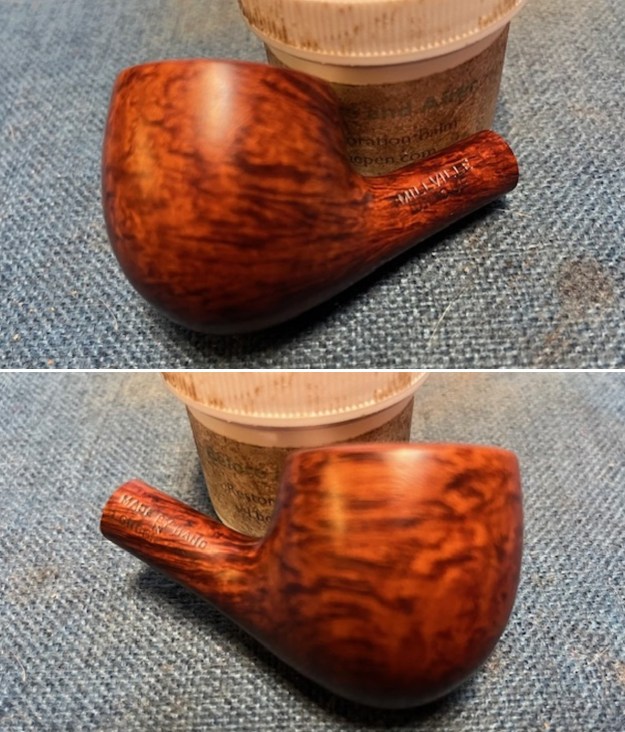
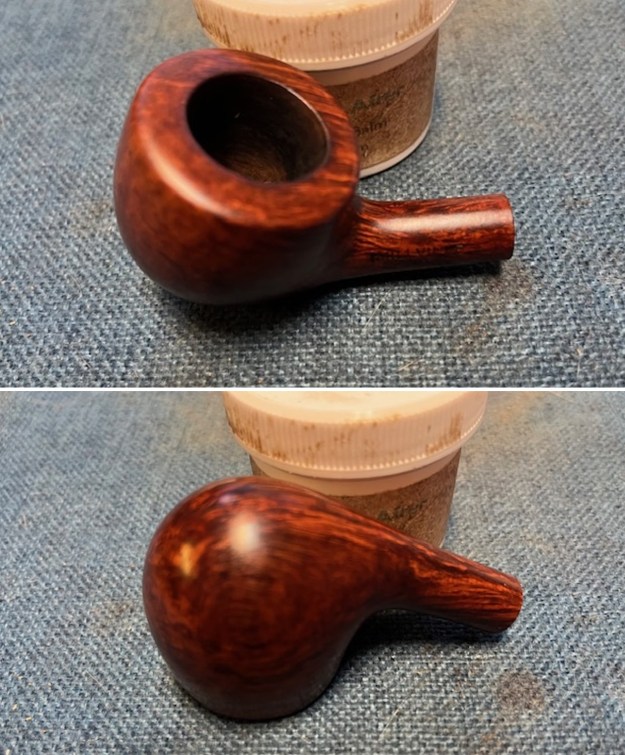
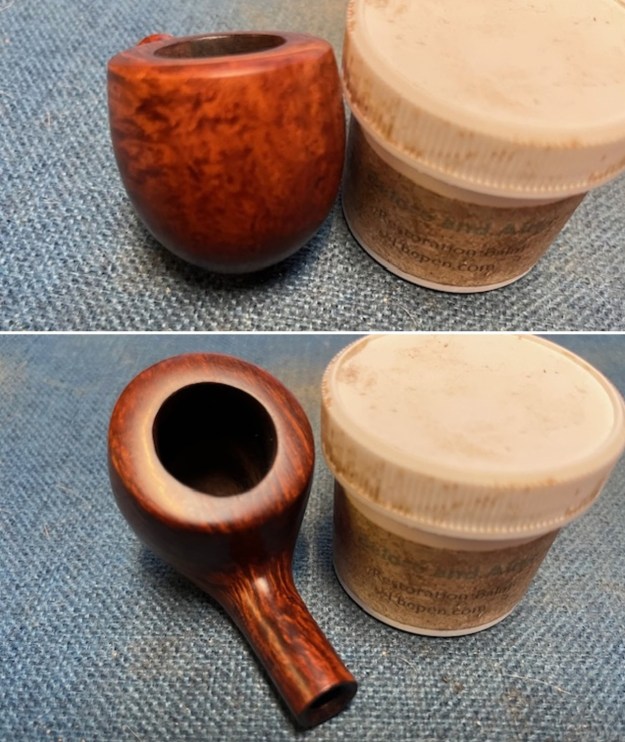
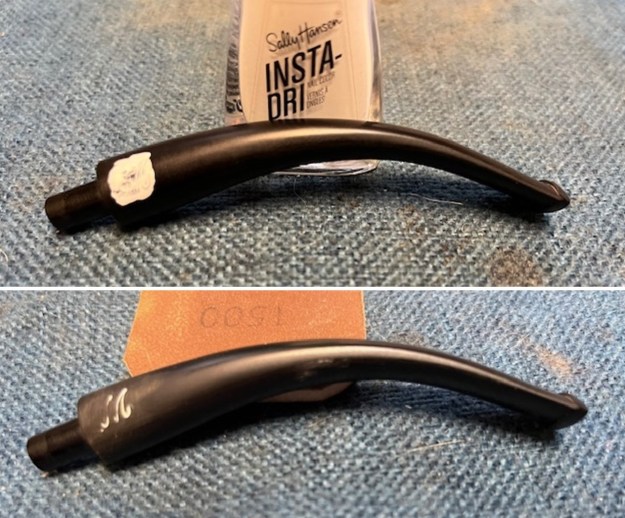
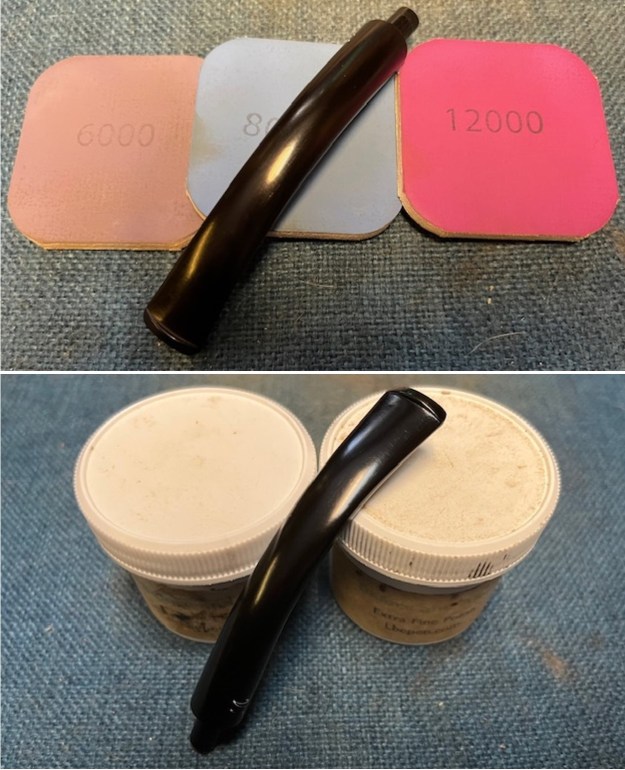
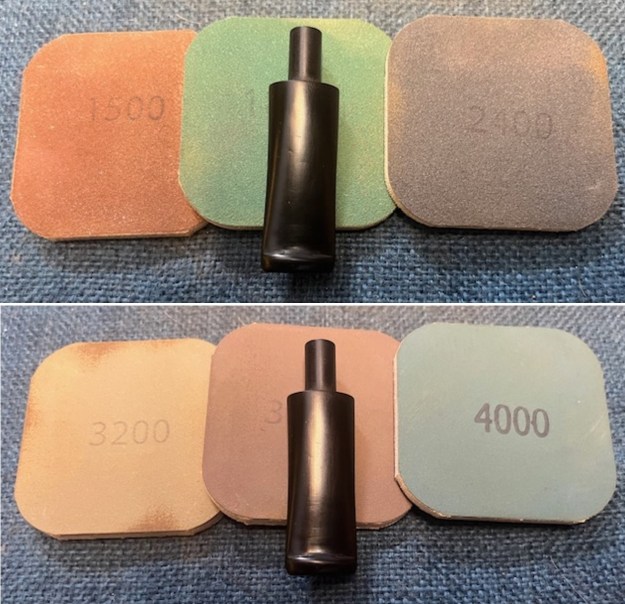
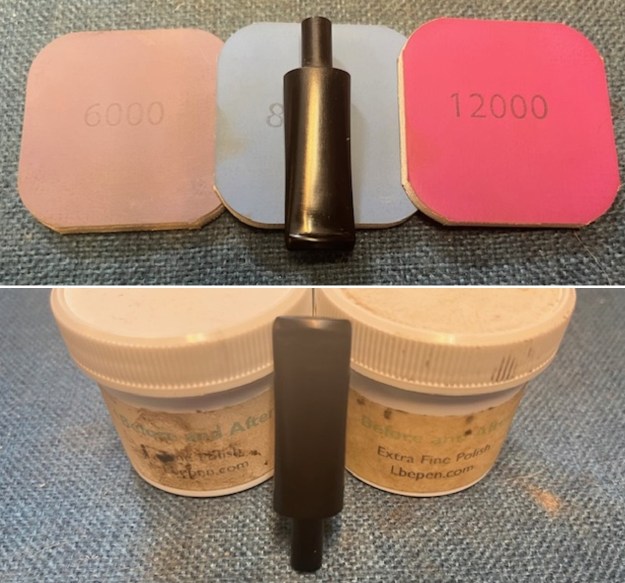
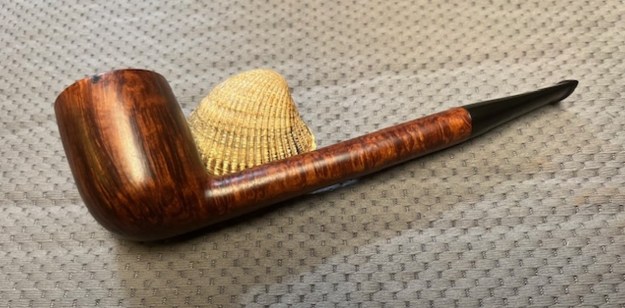
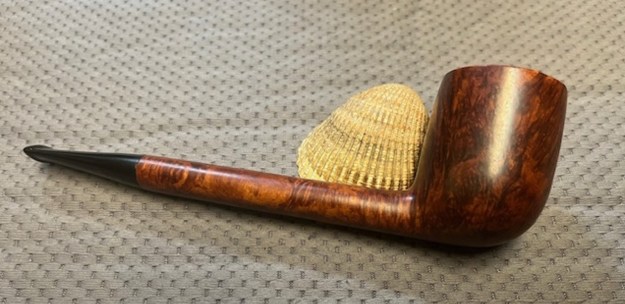
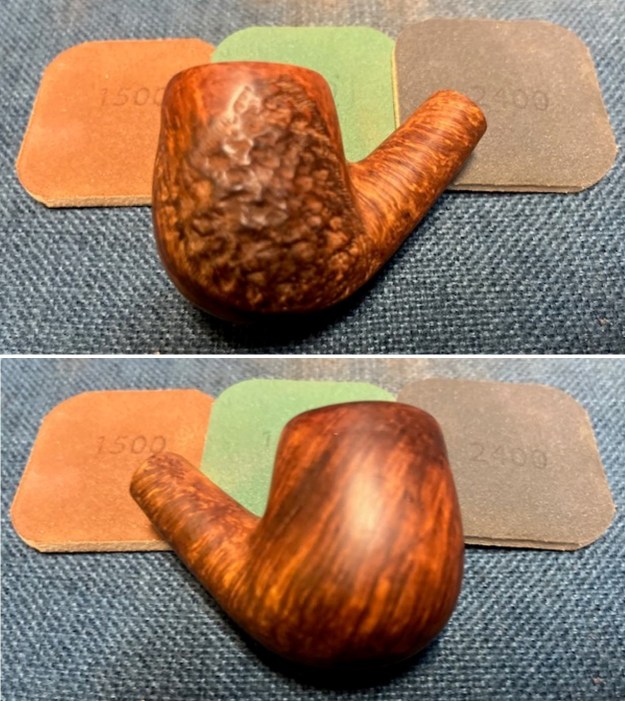
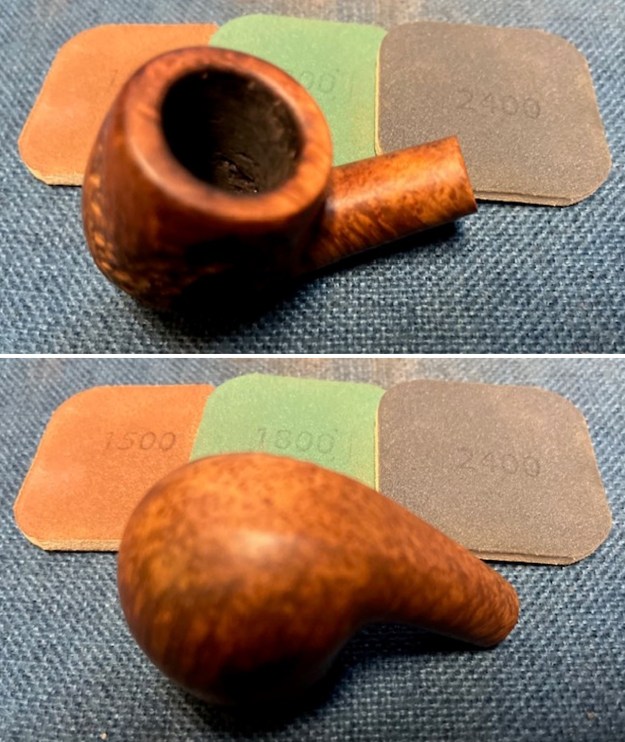
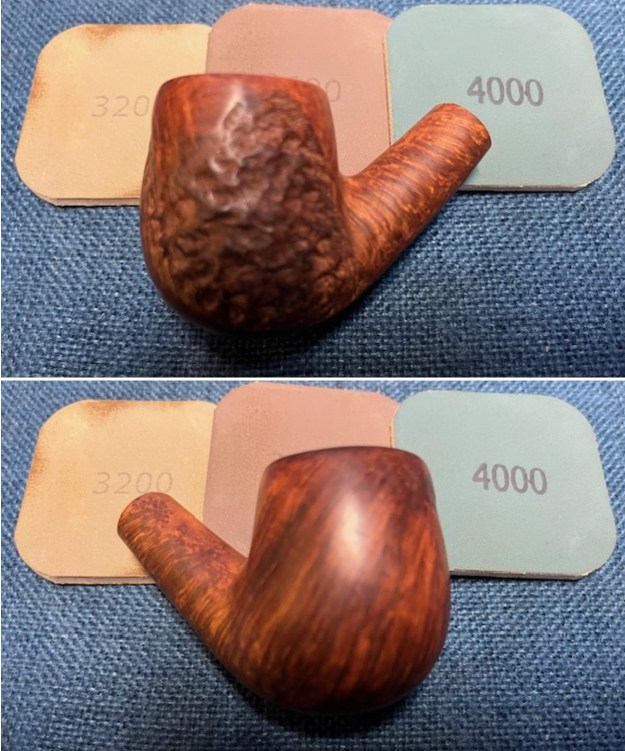
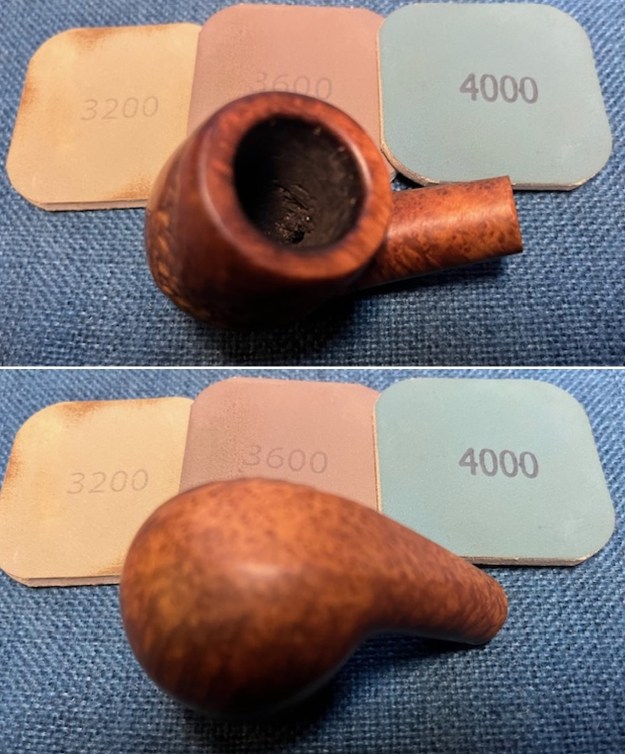
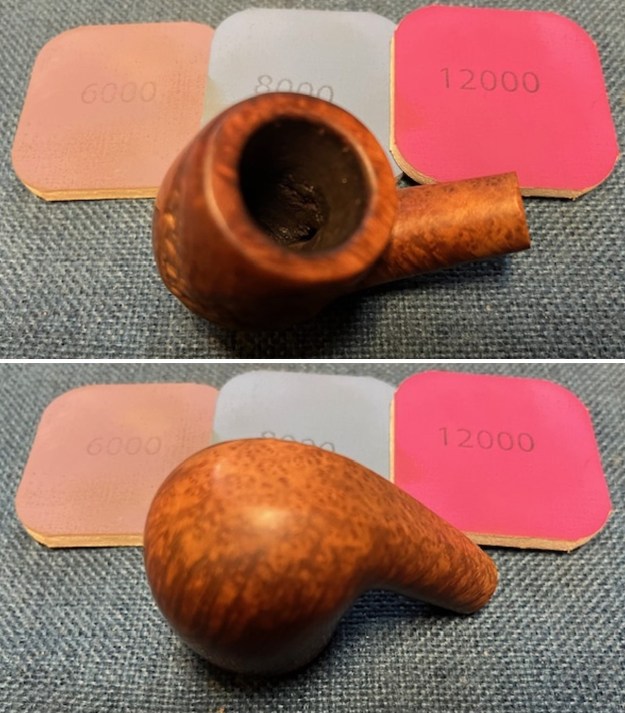
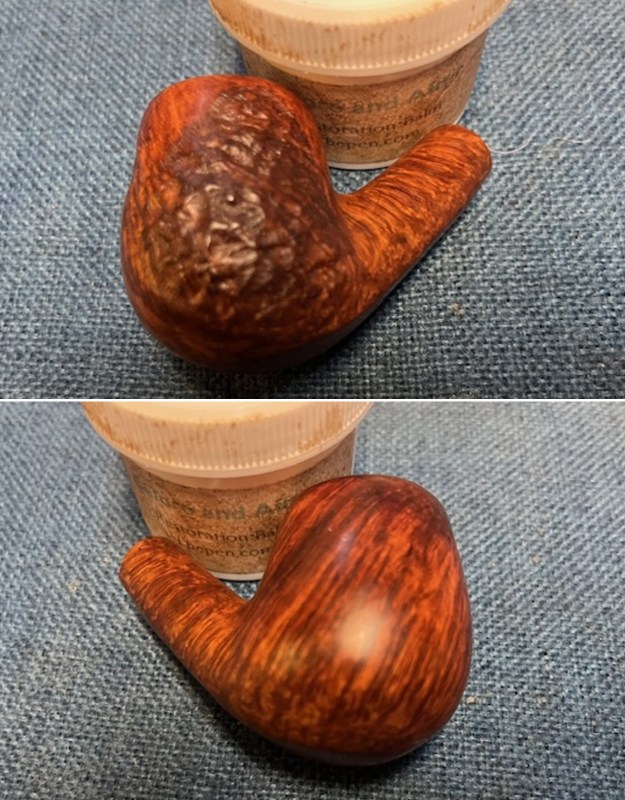
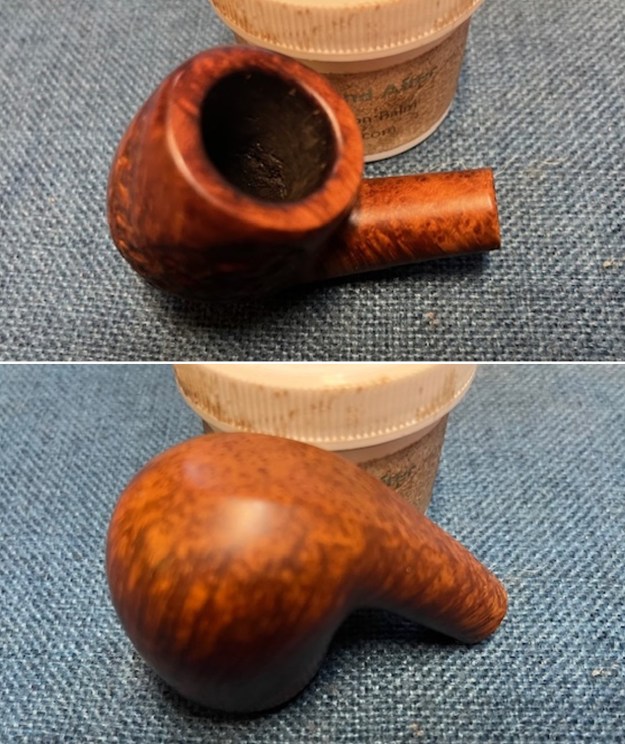
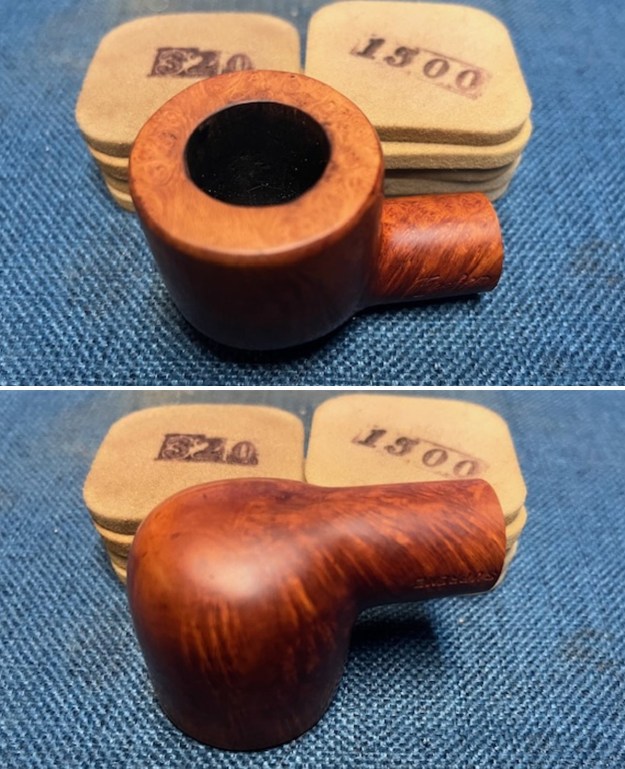
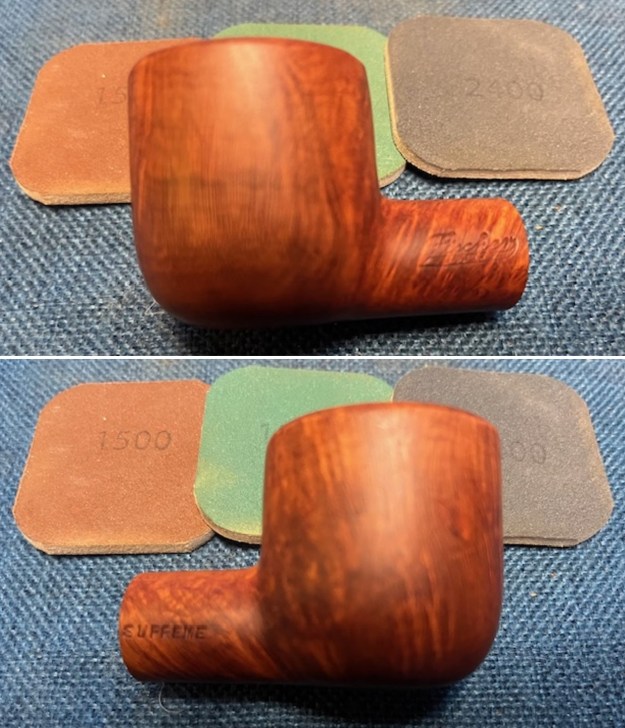
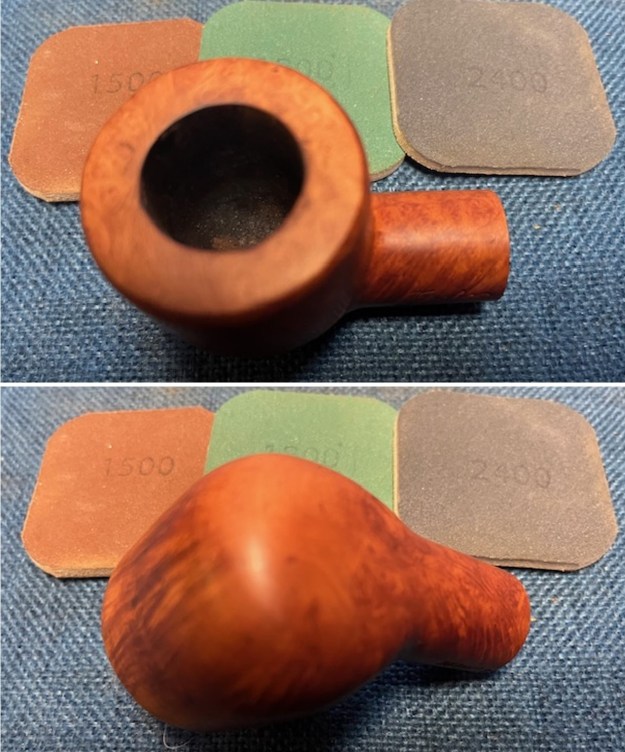
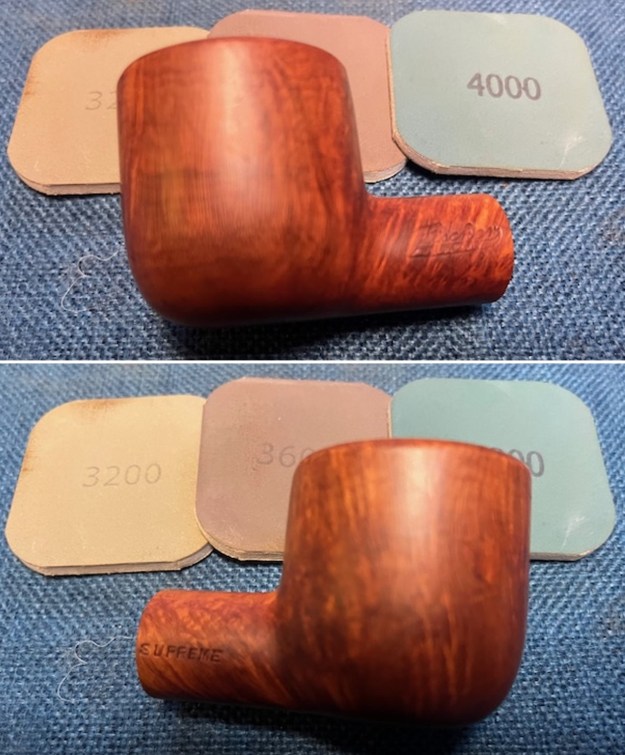
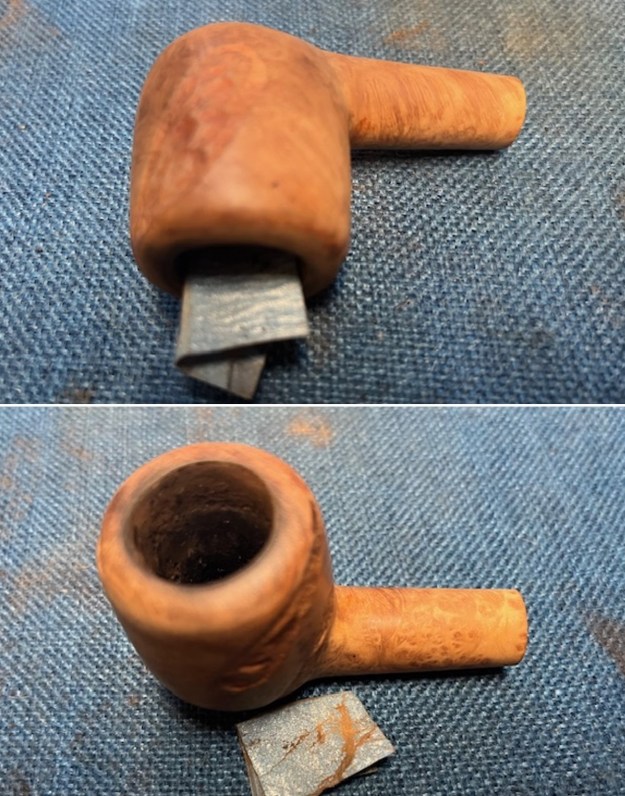
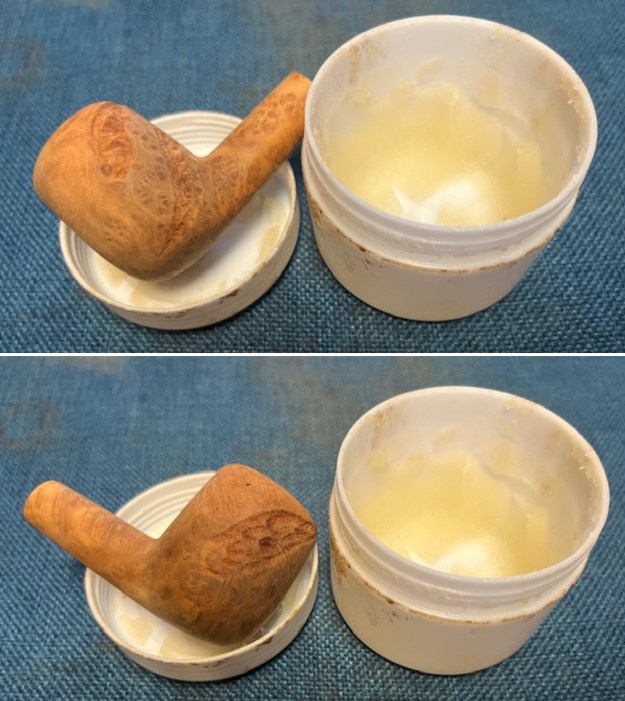
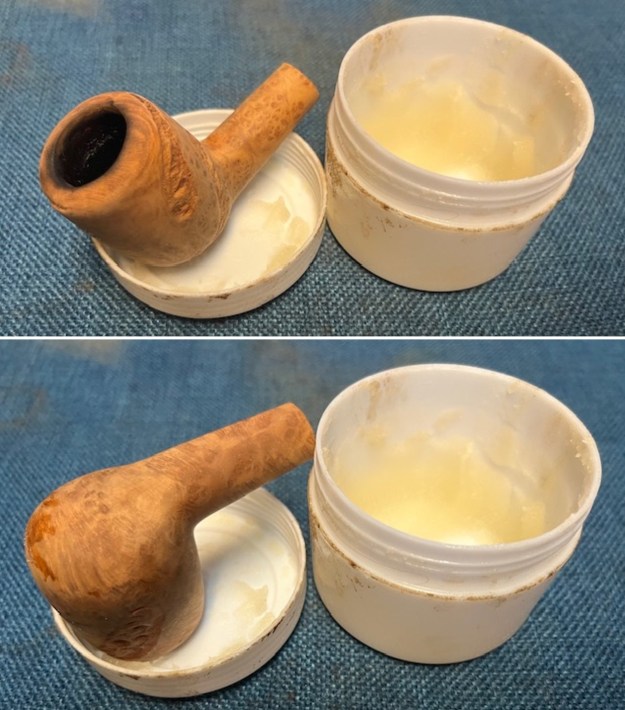
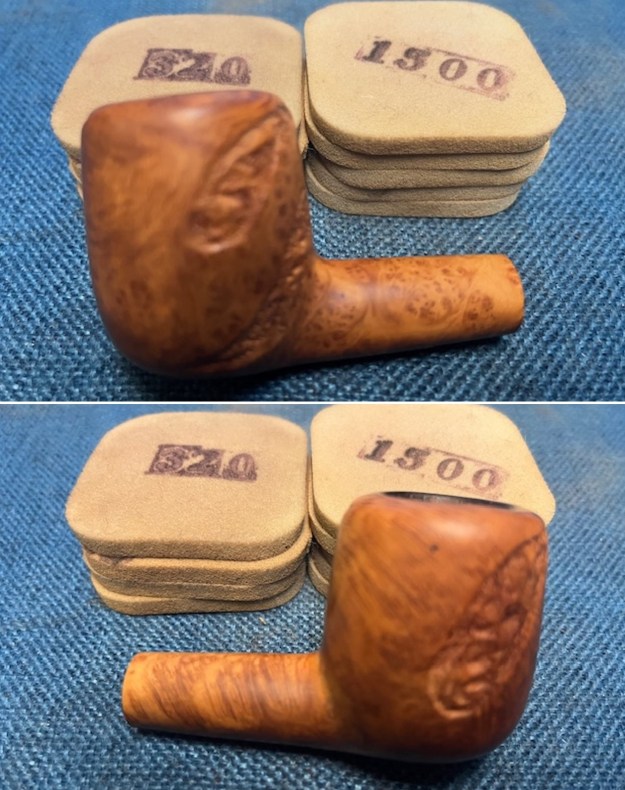
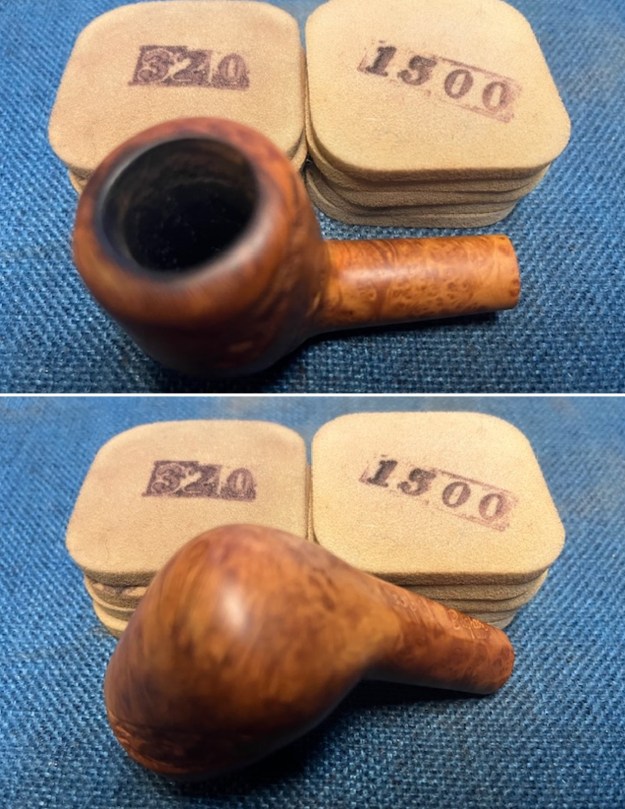
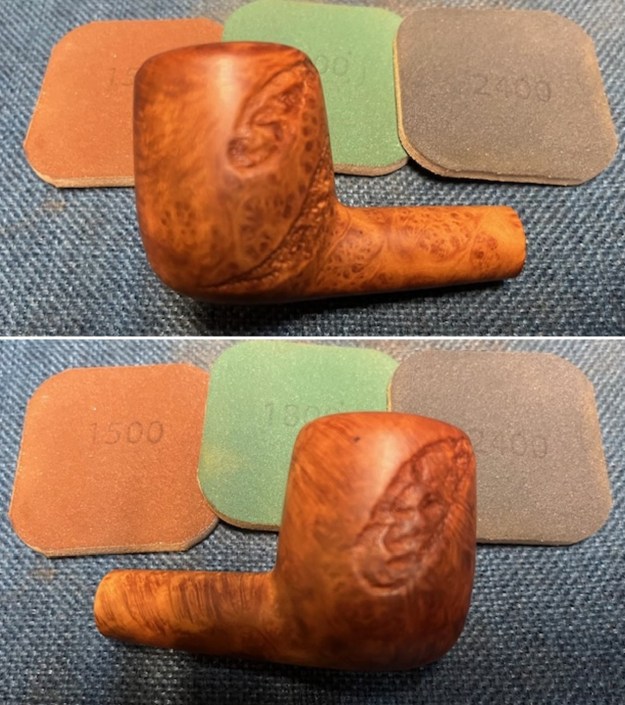
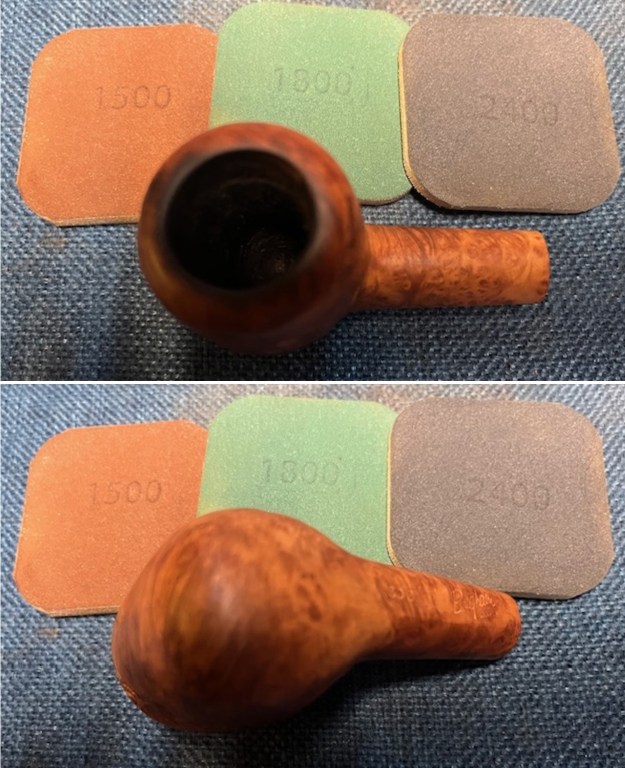
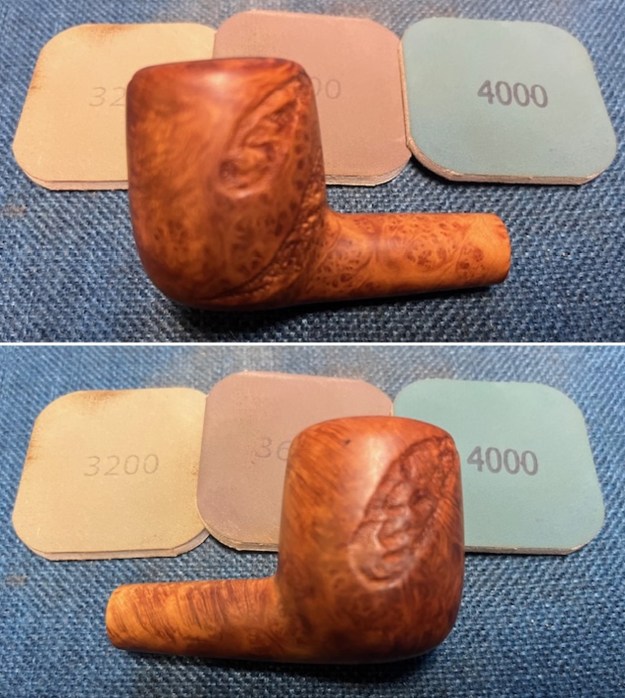
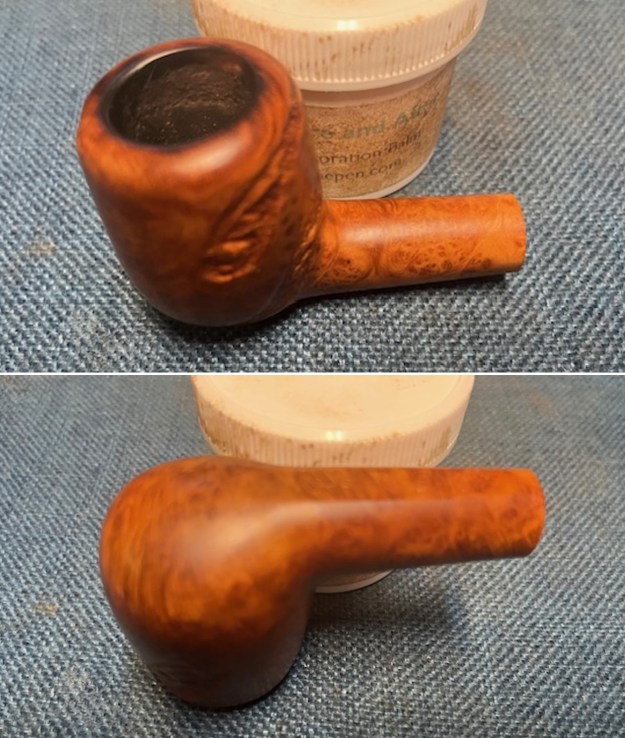
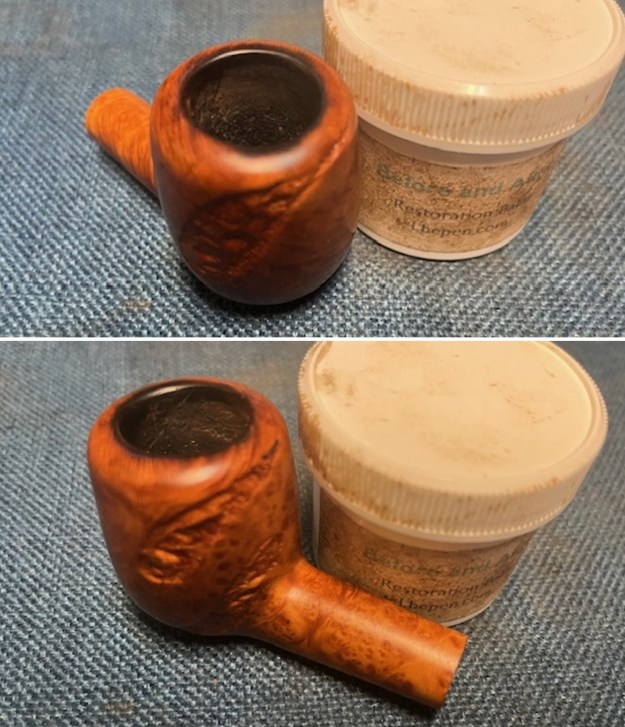
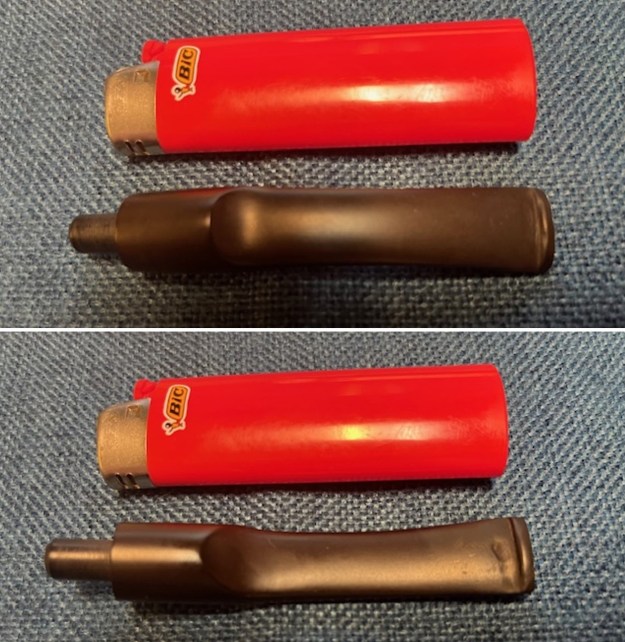
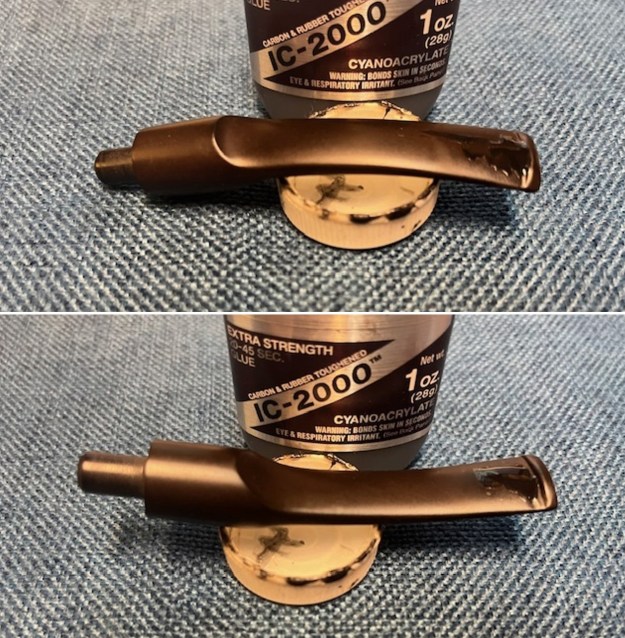
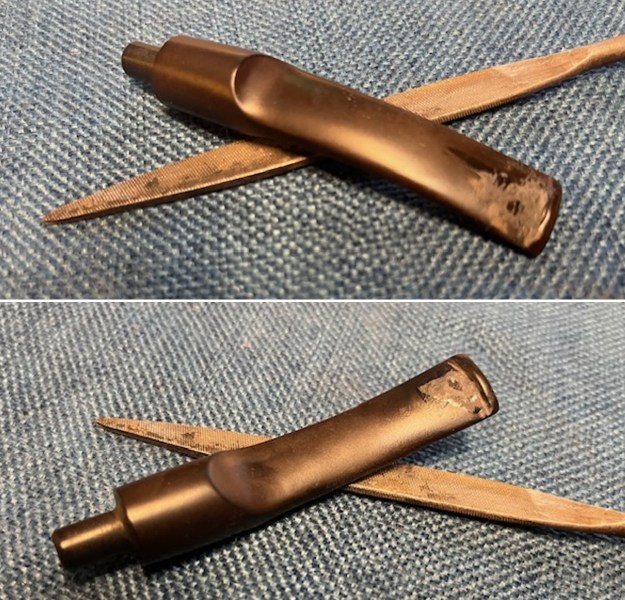
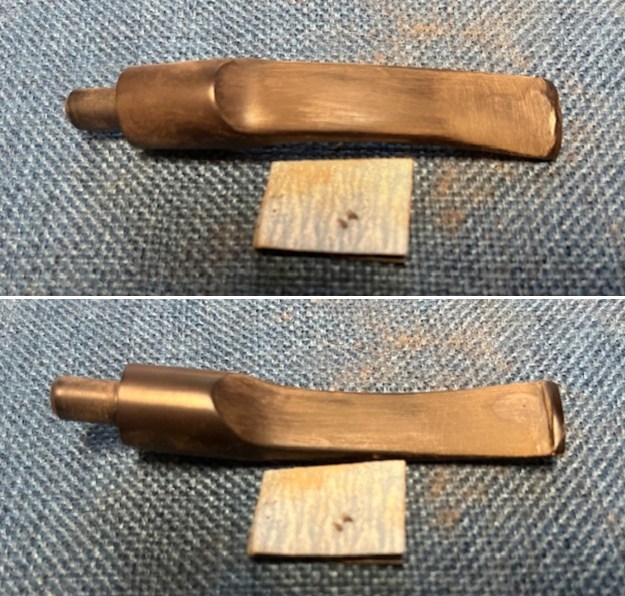
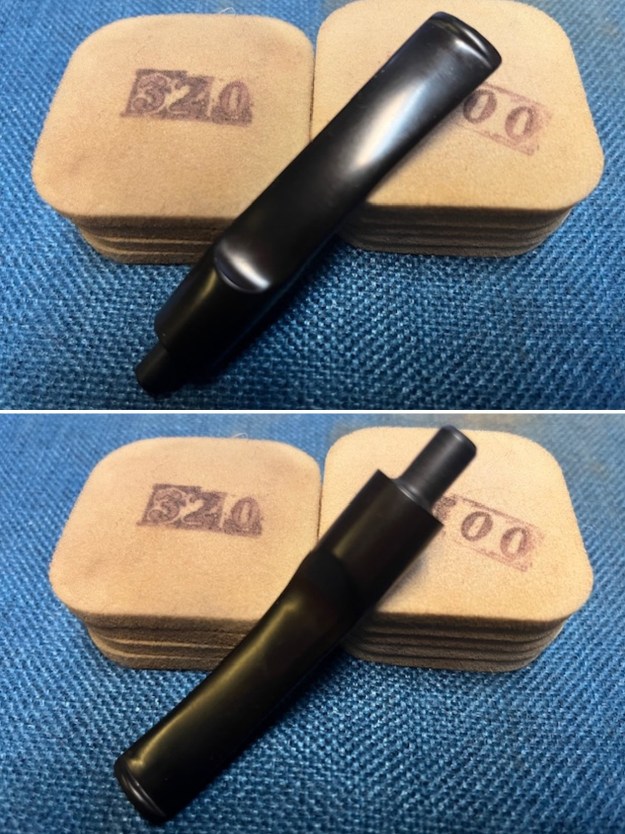
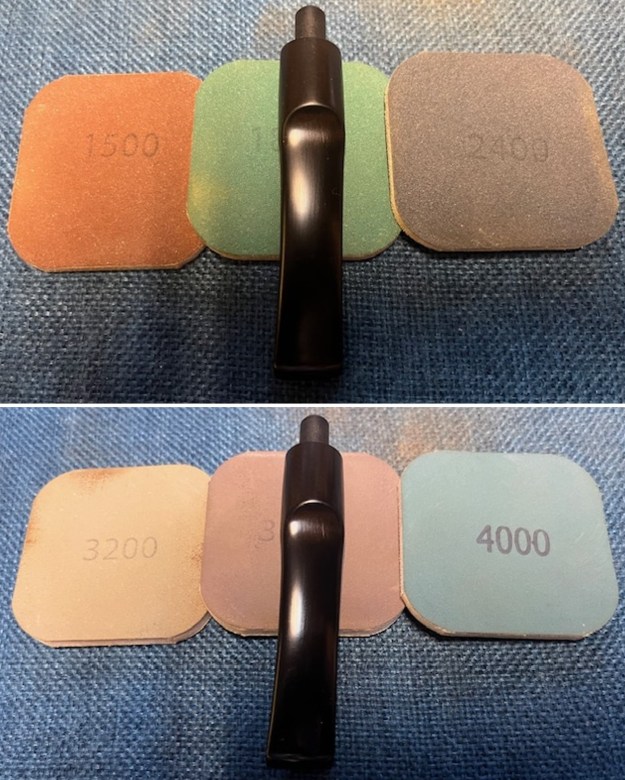
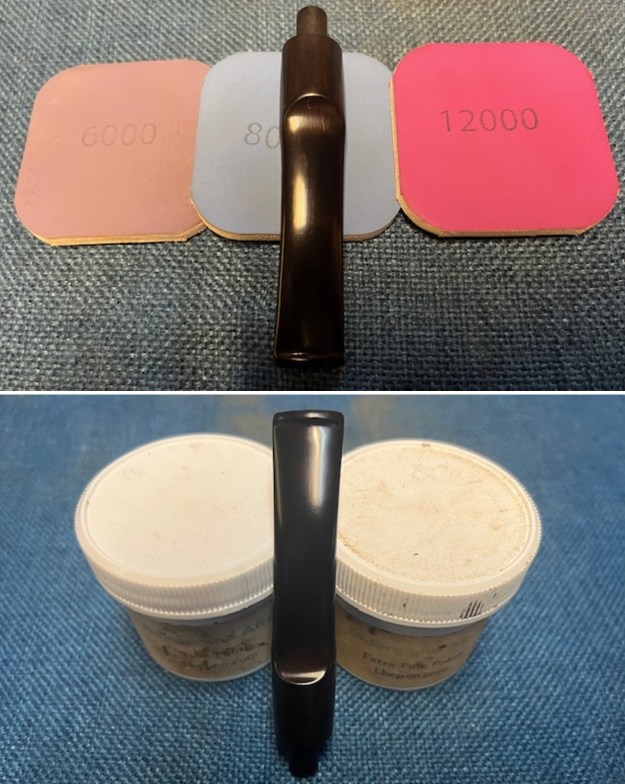
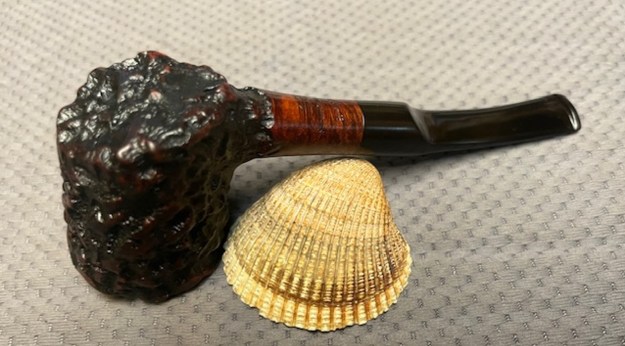
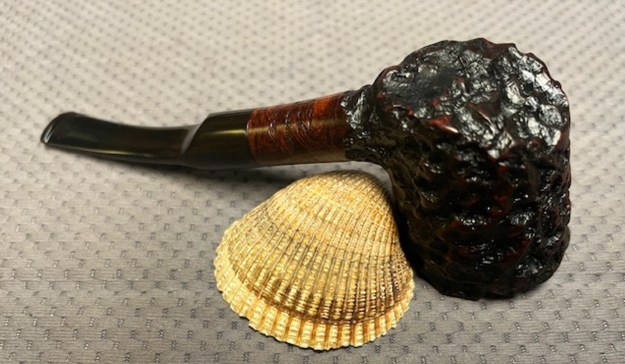
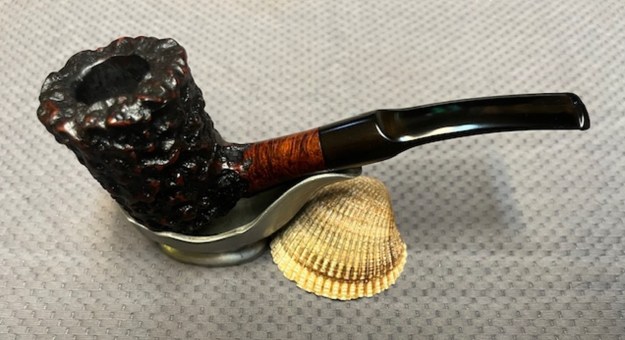
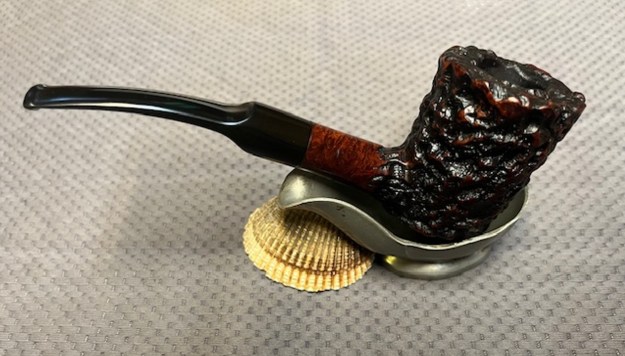
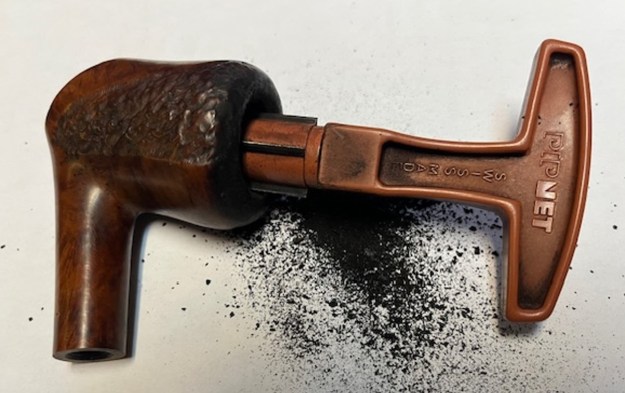
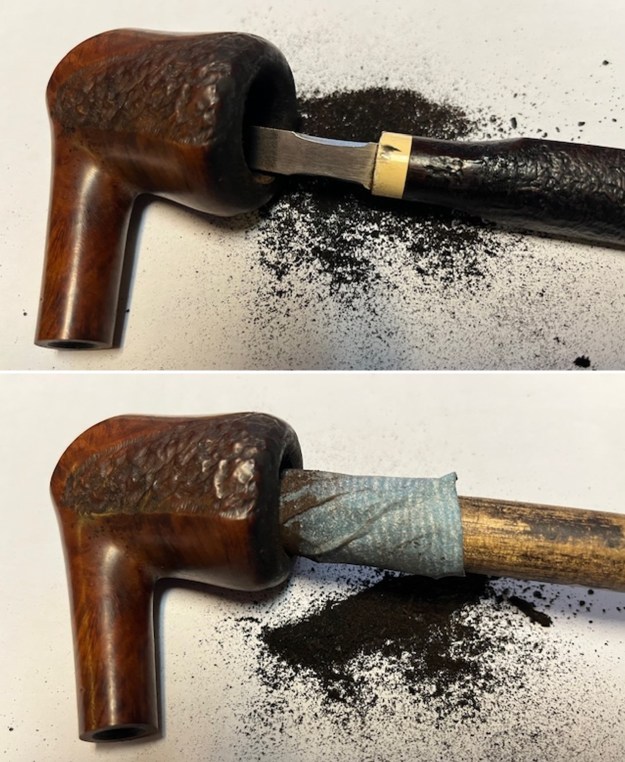
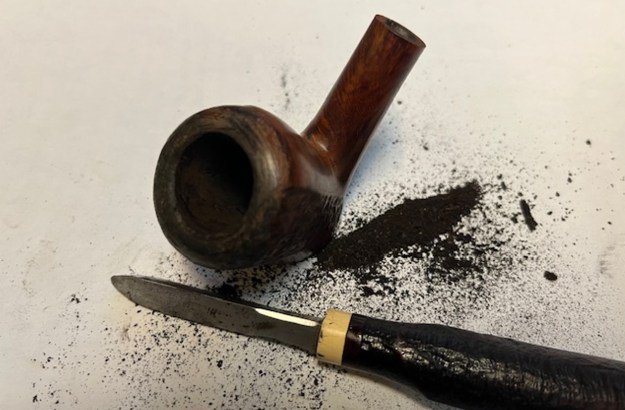
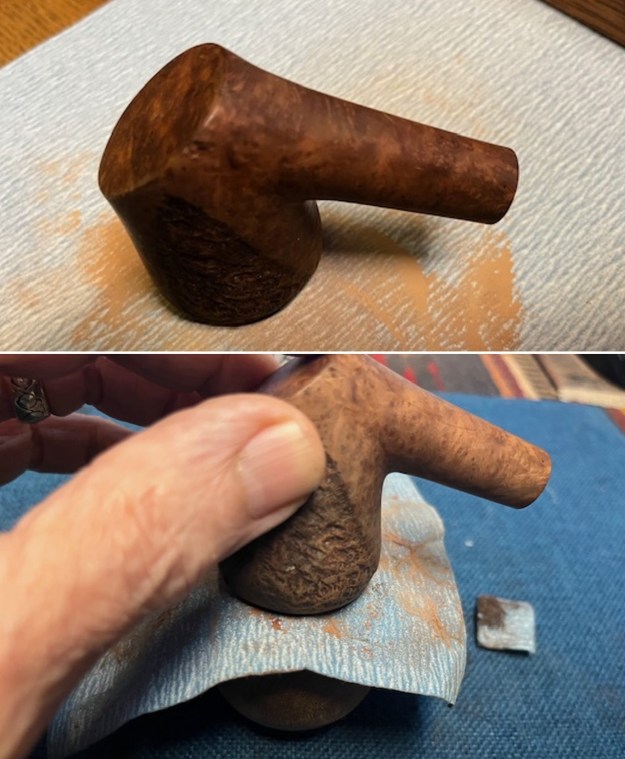
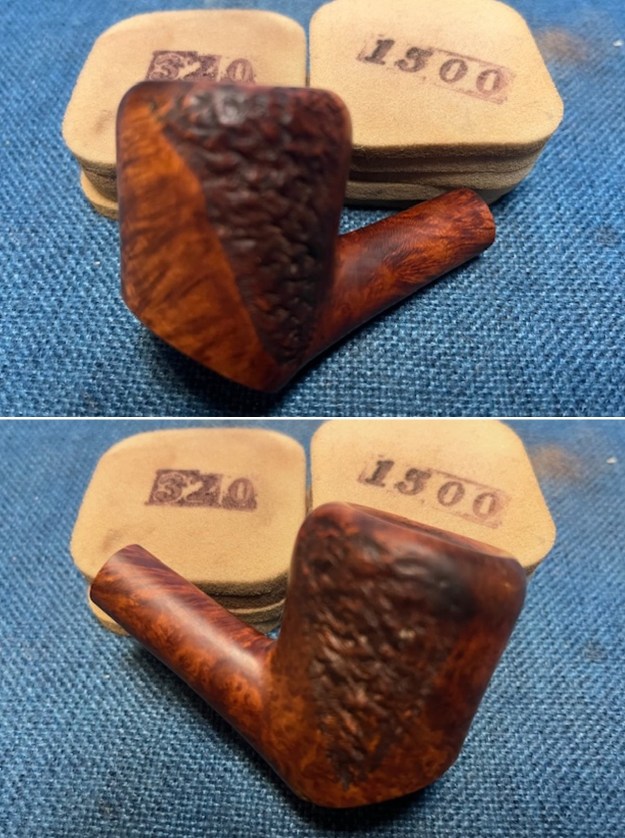
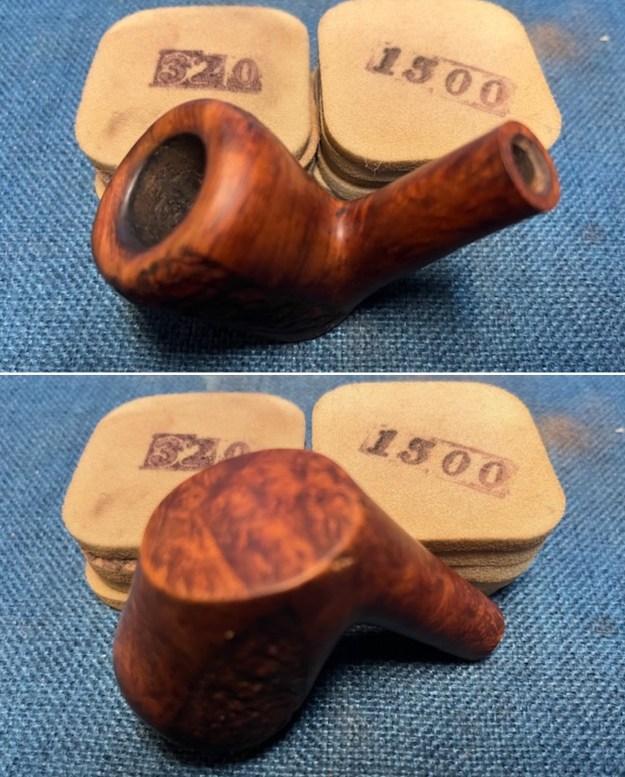
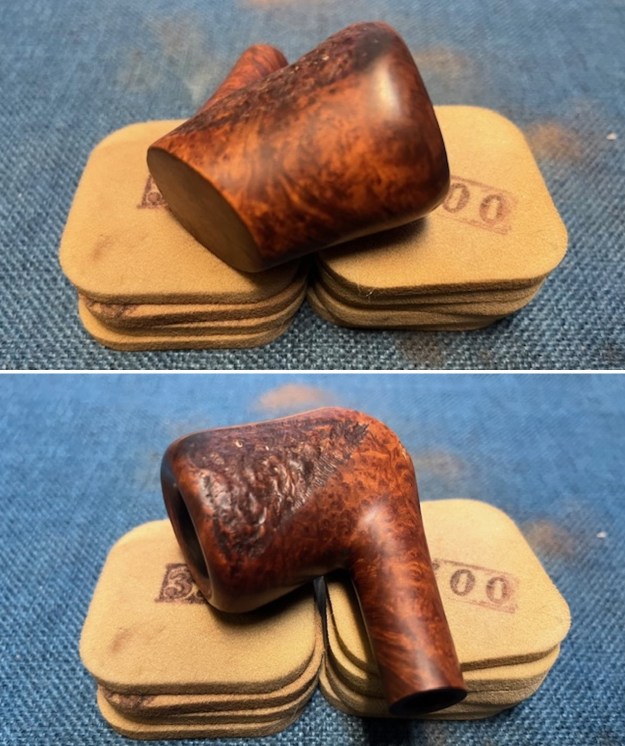
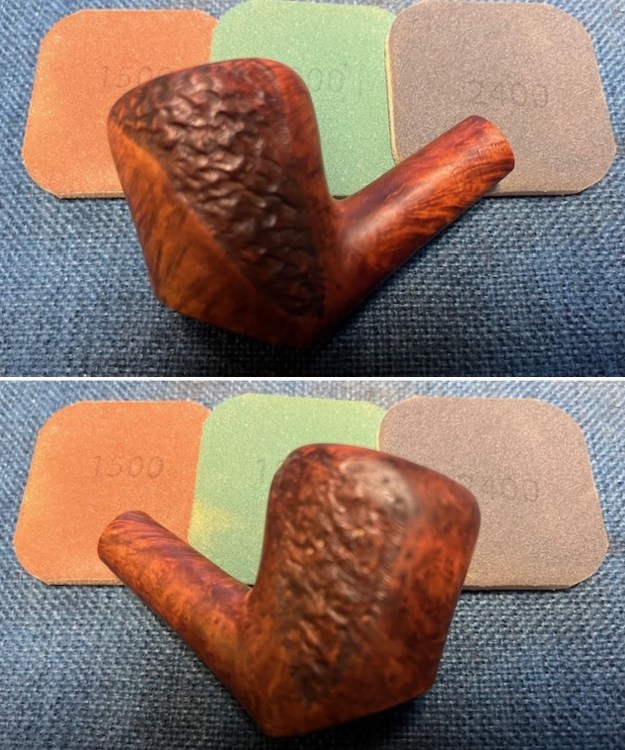
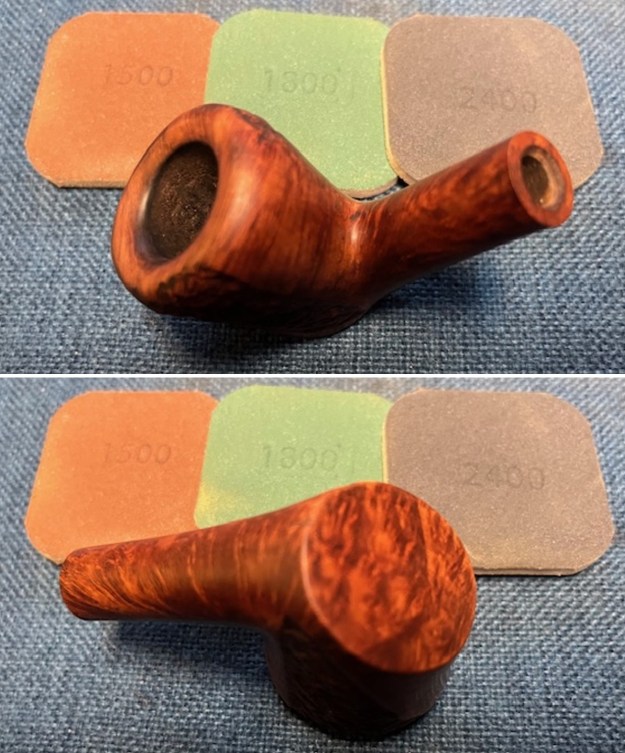
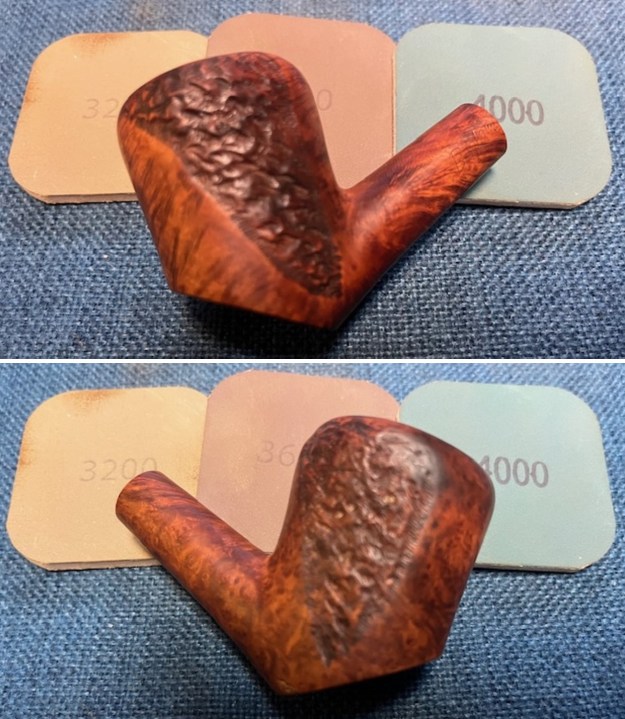
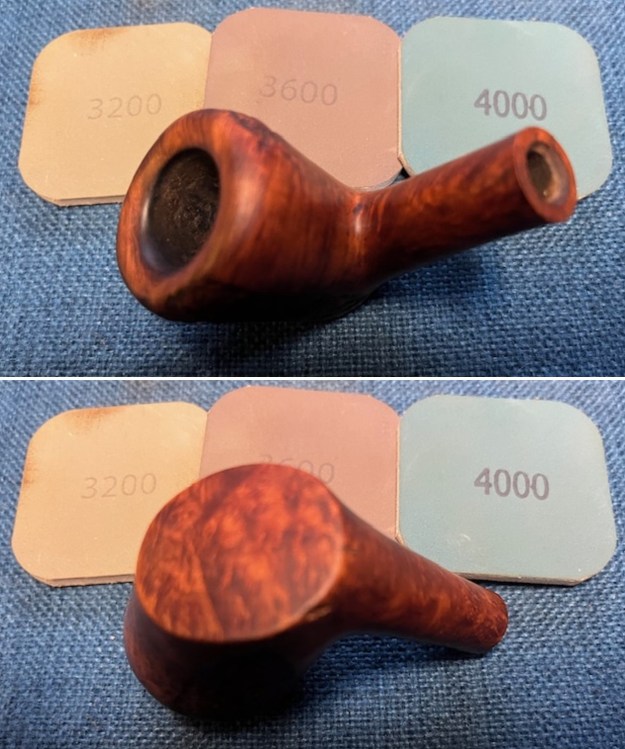
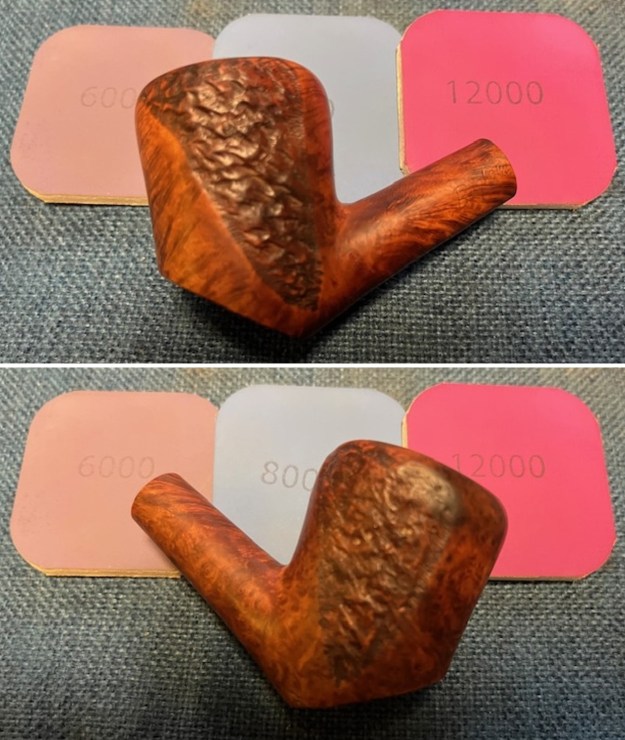
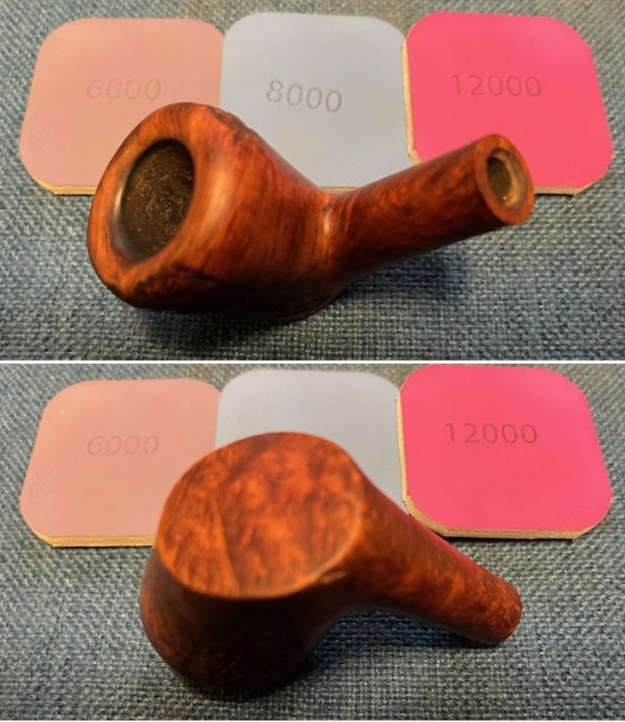
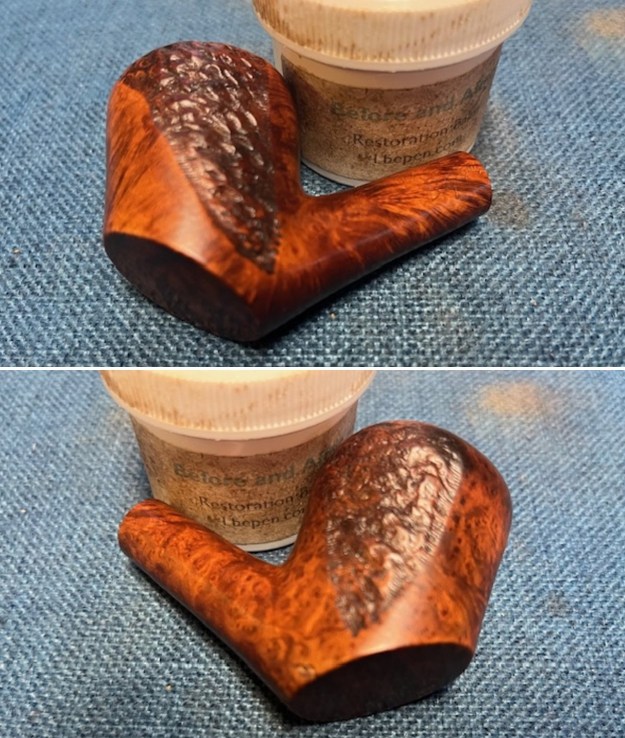
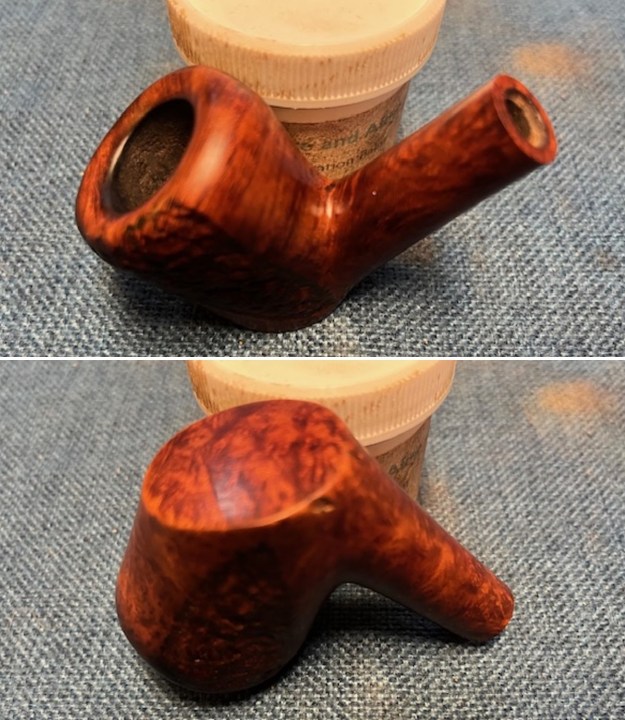
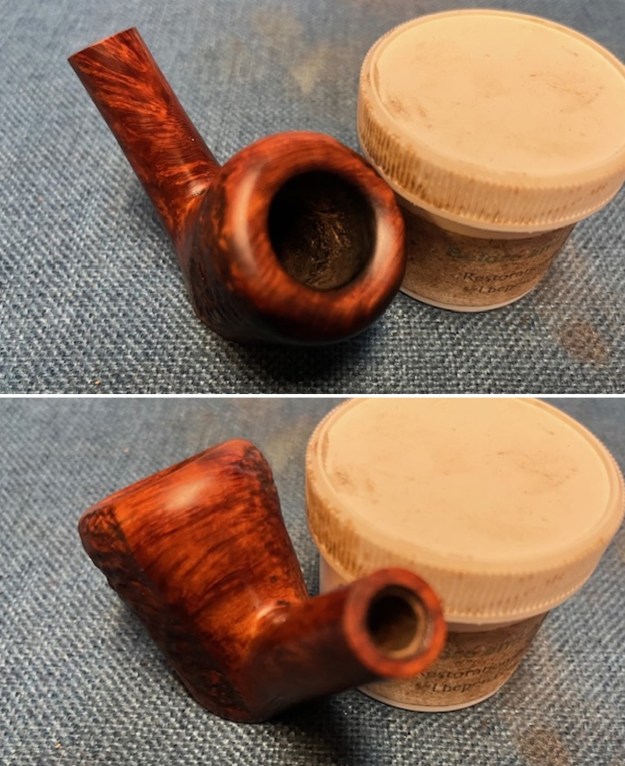
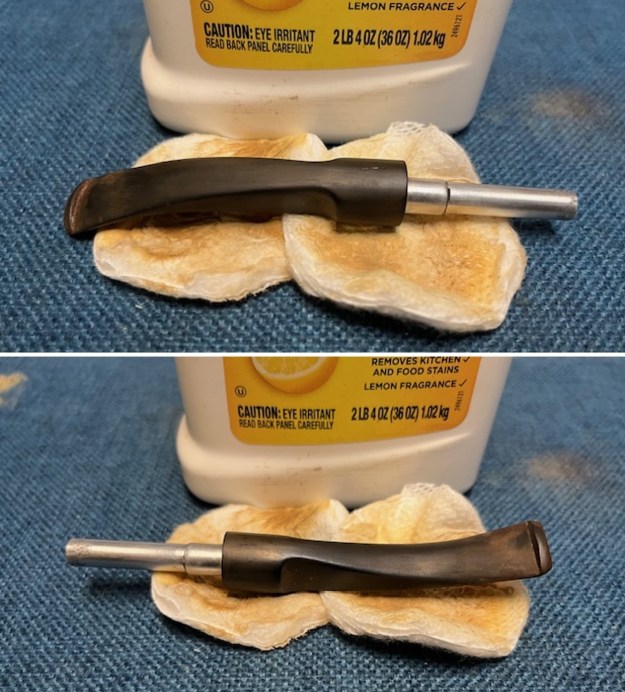
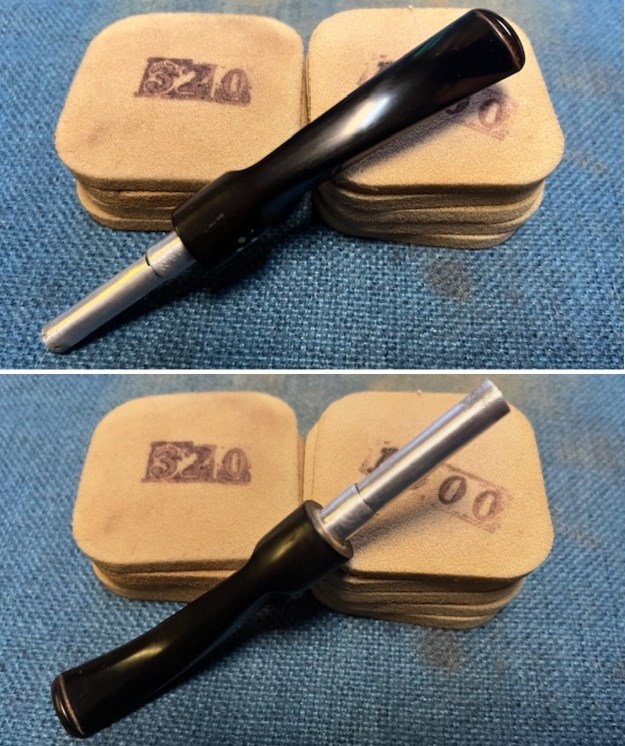
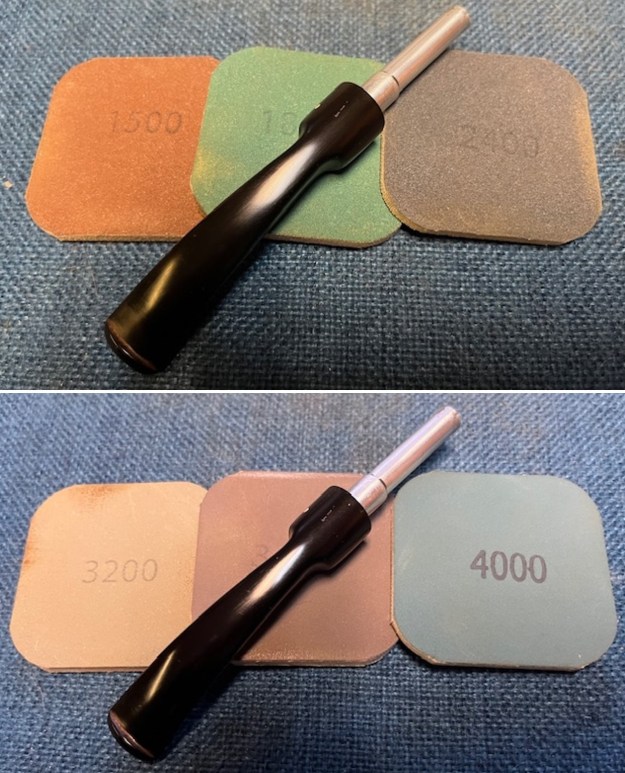
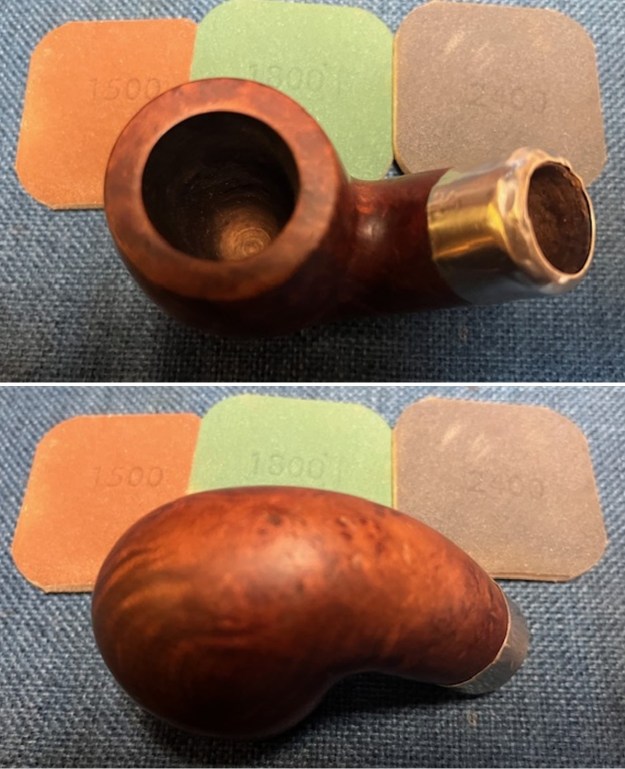
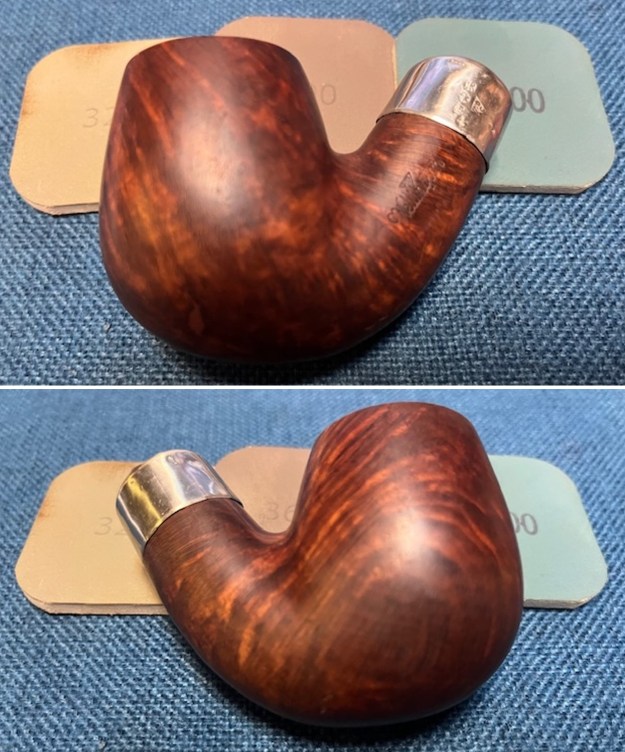
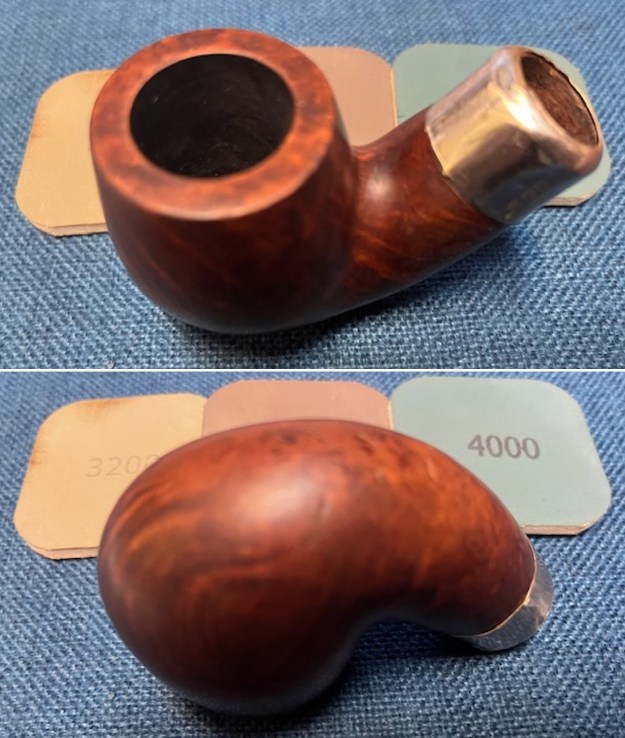
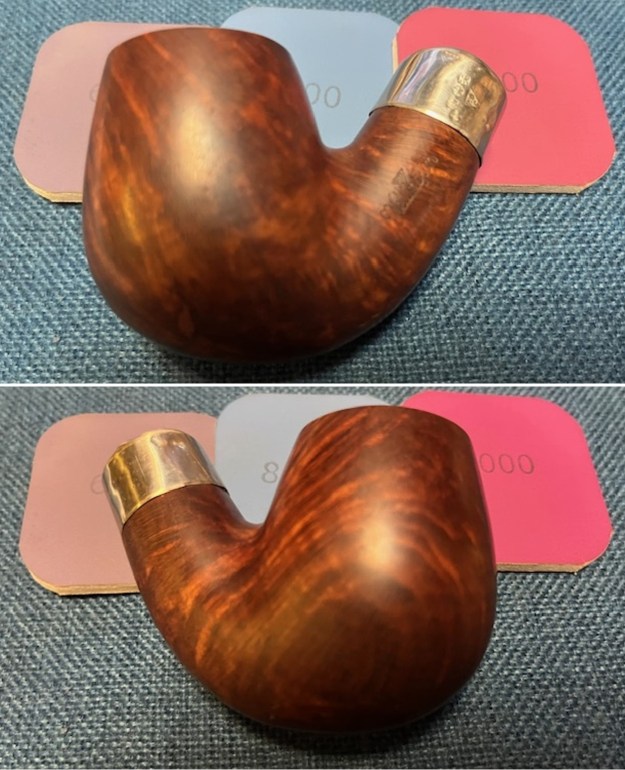
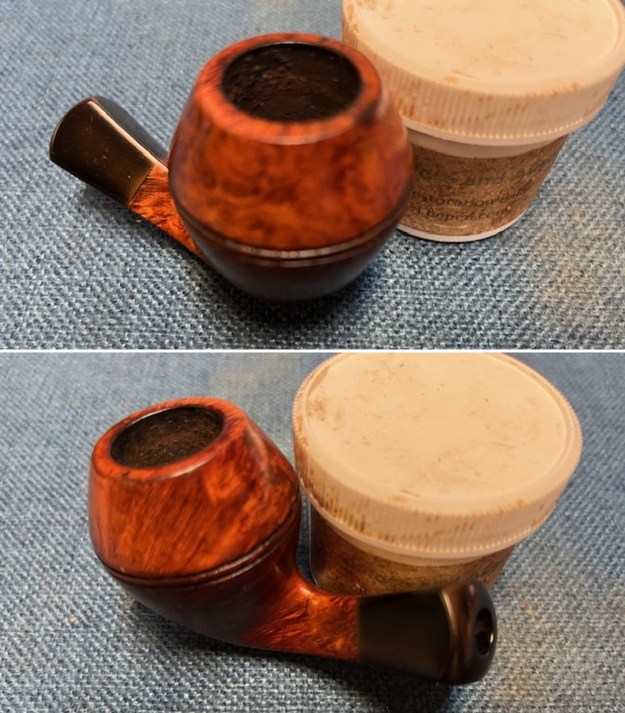
Armed with the information above, I turned my attention to the pipe itself. Jeff had cleaned the pipe with his usual penchant for thoroughness that I really appreciate. He reamed it with a PipNet pipe reamer and cleaned up the reaming with a Savinelli Fitsall Pipe Knife. He scrubbed out the internals with alcohol, pipe cleaners, shank brushes and cotton swabs until the pipe was clean. He scrubbed the exterior of the bowl with Murphy’s Oil Soap and a tooth brush to remove the grime and grit on the briar and the lava on the rim top. The finish looks very good with good looking grain around the bowl and shank. Jeff soaked the stem in Before & After Deoxidizer to remove the oxidation on the rubber. When the pipe arrived here in Vancouver for the second stop of its restoration tour it looked very good. I took photos before I started my part of the work. While I appreciated and understood the idea behind the cork spacer it bothered me. I looked at the tenon and could see that the length was the same as the depth of the mortise in the shank. I also noticed that there was hard glue on the stem that formed a ridge that held the cork in place. I used a flat file and a folded piece of 220 grit sandpaper to get rid of the glue and smooth out the surface of the tenon. It still needed to be polished but I wanted to see if it would fit. I turned it into the mortise and took photos of the look of the pipe without the cork. It was back to what it must have looked like when it left the factory. I like it and would proceed sans cork space. Have a look at the pipe without the cork spacer. What do you think? I took close up photos of the bowl, rim top and stem to show how clean the pipe was. The bowl was clean and the rim top and the inner edge had significant burn damage and was slightly out of round. The stem was clean and showed light tooth marks and chatter.I took a photo of the stamping on the underside of the shank. It is readable and read as noted above. I also removed the stem from the shank and took photos of the pipe to show the look of the parts.The rim top and inner edge of the bowl was in rough condition. I flattened out the damaged rim top by lightly topping it on a topping board with a new piece of 220 grit sandpaper. Once it was flat again I used a wooded sphere and half sphere to work over the inner edge of the bowl and give it a slight bevel to try and bring the bowl back to round. (NOTE: the second photo is staged as I had already put a coat of stain on the polished rim top before realizing I forgot this photo.) The third photo shows the rim top and edges after the sanding process. The burn marks are gone and it looks well. I sanded the rim top with 320-3500 grit sanding pads. I wiped the top down with a damp cloth after each sanding pad and by the end the rim top had a shine and definitely looked better.I polished the rim top with micromesh sanding pads – dry sanding with 1500-12000 grit sanding pads. I wiped it down after each pad with the cloth. The bowl continued to develop a deeper shine. I restained the rim top with a Cherry and Mahogany stain pen to match the shank end and panel on the underside of the shank. It would matched well once waxed and buffed.I worked some Before & After Restoration Balm into the briar with my finger tips and a shoe brush to get into the nooks and crannies. I let it sit on the bowl for 10 minutes and then buffed it off with a paper towel and soft cloth. The product is a great addition to the restoration work. It enlivens, enriches and protects the briar while giving it a deep glow. It is a product I use on every pipe I restore. I set the bowl aside and turned my attention to the stem. I “painted” the surface of the stem with the flame of a lighter to lift the tooth marks and had success. I sanded the light marks that remained with 220 grit sandpaper. It looked better. Polishing would finish the work. I continued the sanding process with 320-3500 grit sanding pads. After each pad I wiped the stem down with some Obsidian Oil to clearly show me the scratches and areas that still needed work. It was really looking good.I touched up the bj logo on the left side of the taper stem with white acrylic nail polish. Once it cured I scraped off the excess and used a 1500 grit micromesh pad to clean it up further.I polished the stem with micromesh sanding pads – dry sanding with 1500-12000 grit pads. Once again, I wiped it down between each pad with Obsidian Oil. I further polished it with Before and After Stem Polish – both Fine and Extra Fine. I gave it a final coat of Obsidian Oil. It looked very good. I am really happy with the way that rim top and edge reworking turned out on this Bjarne Hand Made Large Rusticated Billiard turned out. It really is a beautiful looking pipe with a unique shape and combining a sandblast bowl with a smooth rim and shank end. The vulcanite taper stem is really nice. The briar really came alive with the buffing. The rich brown and black stains of the finish gave the pipe a sense of depth with the polishing and waxing. I carefully buffed the pipe with Blue Diamond on the buffing wheel using a light touch on the briar. I gave the bowl and the stem multiple coats of carnauba wax on the buffing wheel. I buffed the pipe with a clean buffing pad to raise the shine. I hand buffed the pipe with a microfiber cloth to deepen the shine. The finished Bjarne Rusticated War Club Billiard really is a beauty and feels great in the hand and looks very good. Give the finished pipe a look in the photos below. The dimensions of the pipe are Length: 7 inches, Height: 2 ½ inches, Outside diameter of the bowl: 2 inches, Chamber diameter: 1 inch. The weight of the pipe is 102 grams/3.63 ounces. The pipe will be going on the rebornpipes store in the Danish Pipe Makers Section if you would like to add it to your collection. Thanks for reading this blog and my reflections on the pipe while I worked on it. It was a fun one to work on!

Restoring a Republic Era Made for Canada Peterson’s System Standard 1307


by Steve Laug

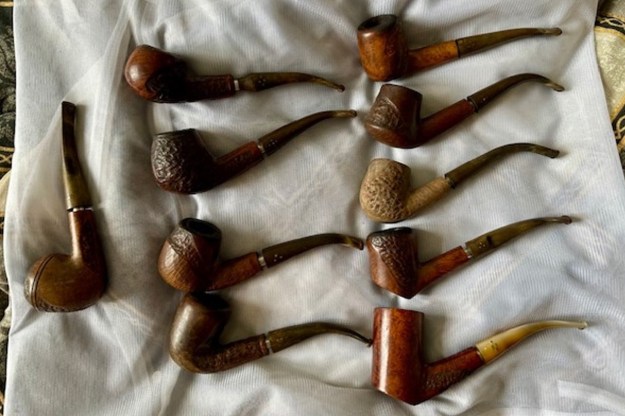
Last weekend Kenneth and I went to an antique show in New Westminster, BC. It is our third year going but still we have no idea what we are going to fine each time we go. It is always a part of the fun to wander through the various stalls and see what the vendors are offering on their tables. There are always surprising things – items that I grew up with that are now called antiques or at least collectibles. If only my foresight had been as good as my memory is now I could have sold many of the things I played with and ate from! But I digress. Back to the pipe hunting. We saw the usual offerings of things Grabow and Medico that were in very rough shape. I think we both have become much more selective over time and we passed on spending time with them. I did a few items that I picked up to restore. I took a picture of the group of fout pipes. In the left column from top to bottom there was a Peterson’s System Standard 1307 (Canadian number on a 307 shape), a Bulldog that was stamped Fraser Valley Made in Canada with a white dot stem and at the bottom was another Peterson – a K&P Dublin Made in Ireland Canadian with a Sterling Silver Band. The one on the right side is an older GBD Nosewarmer with an orific button on the short stem. Not a bad group of pipes to bring to the work table.The last pipe that I picked up at the Antique fair a few weekends ago – a Peterson’s System Standard pipe. It had a smooth finish. It was stamped on both sides of the shank. On the left side it read Peterson’s System Standard. On the right side it was stamped Made in the Republic of Ireland and under that was the shape number 1307. The nickel ferrule was in good condition and was stamped K&P Peterson. There were faux hallmarks under that. The finish was dirty and dusty with oils ground into the briar. The rim top had some lava on the flat surface and the inner rim is damaged and slightly out of round. The bowl had a moderate cake on the walls but appeared to be in decent condition underneath. The vulcanite stem was lightly oxidized and had tooth marks and chatter near the button on both sides. I took close up photos of the bowl and rim top to show the condition of the bowl and the rim top. You can also see the lava on the rim and the cake in the bowl. The inner edge shows some chipping and damage. I also took close up photos of the stem to show its condition as mentioned above. I also took photos of the tooth marks and chatter on both sides of the stem. I took photos of the stamping on both sides of the shank to show what I was speaking about above. It is very readable. On the left side it reads Peterson’s System Standard. On the right side it read Made in the Republic of Ireland over the shape number 1307. The nickel ferrule stamping is very readable and undamaged.  I also took a photo of the bowl with the stem removed. It is a beauty with great grain. I have included the information on the shape number on this pipe that I picked up on researching the other pipes. It is a Peterson’s System Standard pipe with a 1307 shape number. The 307 is identical in shape, size and marking. I started my hunt for information by turning to a Peterson Catalogue that I have on rebornpipes and looked up the System Standard pipes (https://rebornpipes.com/tag/peterson-hallmark-chart/). I have put a red box around the 307 shown in the catalogue page shown below. That should give a clear picture of the size and shape of the pipe. But there was nothing to give me any information on what the first number 1 meant in the shape number 1307 that I am working on. Since this is stamped with the same “1” as previous Peterson pipes that I have worked on I turned to the blog and had a look. I am including the information on the unique numbering. Mark pointed me in the direction that I needed. I quote the pertinent part of his email. The underlined portion was the clue I was looking for on this pipe. I have already cleaned up several of Bob’s pipes that were sold through GT&C (Genin, Trudeau and Company, Montreal, Quebec).

The index at the back of the book is pretty good, and points you to all the GT&C goodies, but 155 has a photo from the catalog with your 1307, while 318 and 323 explain the rationale for the “1” prefix. In a nutshell, just drop the “1” and you’ve got the shape. My theory is that GT&C added this to aid them in warranty work, so they’d know the pipe was bought on Canadian soil.

I turned then to a previous blog I had written on a Kapruf 54 that had an odd shape number stamp and referred to the Canadian numbering system used by GT&C. Here it the link to that blog (https://rebornpipes.com/2019/08/09/back-to-bob-kerrs-estate-another-canadian-import-petersons-kapruf-a-54/). In the blog I included a link to a blog I did on the GT&C Catalogue that came to me in some paperwork the family gave me. I have included the cover of the catalogue and the page on the system pipes showing the 1312 shape. I have put a red box around the shape for ease of reference (https://rebornpipes.com/2016/09/13/petersons-pipes-brochure-from-genin-trudeau-co-montreal-quebec/). Be sure to check out the rest of the document on the link.

The GT&C Catalogue combined with the earlier Peterson Pipe Catalogue page make the link definitive. I am also including the information from Pipedia’s article on Peterson pipes. It is a great read in terms of the history of the brand (https://pipedia.org/wiki/Peterson). I have included a bit of the pertinent history here.

1950 – 1989 The Republic Era – From 1950 to the present time, the stamp for this era is “Made in the Republic of Ireland” in a block format generally in three lines but two lines have been used with or without Republic being abbreviated.

During the 1950’s and 60’s the Kapp & Peterson company was still in the ownership of the Kapp family. However 1964 saw the retiral of the company Managing Director Frederick Henry(Harry) Kapp.

Pipedia also included a section of information on the System pipes including a diagram of the sytems look (https://pipedia.org/wiki/Peterson#Republic_Era_Pipes). I quote a section of the article in part and include a link to another article on Pipedia on the System pipe.

The Peterson System pipes are the standard bearers of the Peterson pipe family, famous for the excellent smoking pleasure they provide. Often imitated but never equaled, the Peterson System smokes dry, cool and sweet, thanks to the scientific effectiveness of the original design. The heart of the System is the unique graduated bore in the mouthpiece. This makes the suction applied by the smoker 15 times weaker by the time it reaches the tobacco chamber. The result is that all the moisture flows into the reservoir and, thus cannot reach the smoker’s mouth. The Peterson Lip further enhances the effectiveness of the graduated bore by directing the flow of smoke upwards and away from the tongue. This achieves a uniquely even distribution of smoke and virtually eliminates any chance of tonguebite or bitterness. Furthermore, the shape is contoured so that the tongue rests comfortably in the depression under the opening. Each “PLip” mouthpiece is made from Vulcanite. For the Peterson System pipes to work properly, the stem/tenon has to have an extension, the tip of which will pass by the draft hole from the bowl and into the sump. Upon the smoker drawing in smoke, this extension then directs the smoke down and around the sump to dispense a lot of the moisture before the smoke enters the extension and stem. On the System Standards and other less expensive systems, this extension with be made of Vulcanite turned integrally with the stem. On the more expensive System pipes this extension will be made of metal which screws into the Vulcanite stem. This extension on the earlier pipes will be of brass and the newer pipes will be of aluminium. Most smokers not knowing this function of the metal extension, assumes that it is a condenser/stinger and will remove it as they do with the metal condensers of Kaywoodie, etc. Should you have a System pipe with this metal extension, do not remove it for it will make the System function properly and give you a dryer smoke (https://pipedia.org/wiki/A_closer_look_at_the_famous_Peterson_Standard_System_Pipe).

With that information in hand I knew what I was dealing with in terms of the stamping and the age of this pipe. I knew from the information that the pipe was made during the Republic Era between 1950 and 1989. My guess is that this is also a 60’s era pipe. I also knew that the pipe was brought into Canada by the Canadian Importer, Genin, Trudeau & Co. in Montreal, Quebec. Noting above that the catalogue postal code puts it in the late 60s early 70s which also fits the story. Now it was time to work on the pipe.

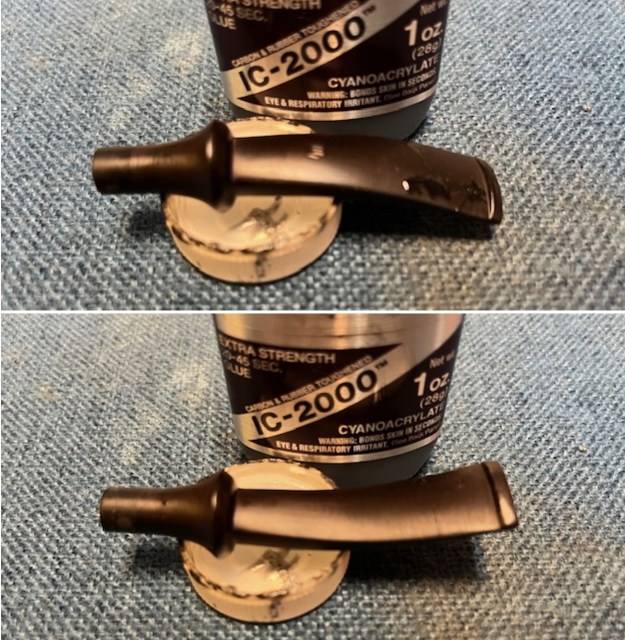
I reamed the pipe with a PipNet pipe reamer using the first two cutting heads. I followed up with a Savinelli Fitsall Pipe Knife to clean up the remnants of cake left in the bowl and check the bowl walls. I sanded the bowl with a piece of dowel wrapped with 220 grit sandpaper. It looked much better at this point. I used a folded piece of 220 grit sandpaper to clean up the top of the rim and to lightly bevel the inner edge to clean up the out of round bowl. I was able to make it look better. I cleaned the mortise and the airway in the shank and stem with alcohol, cotton swabs and pipe cleaners. They were dirty but the pipe is clean now.   I scrubbed the externals of the pipe with undiluted Murphy’s Oil Soap and a tooth brush to remove the grime in the finish and on the rim top. I worked on it until it looked much better and then rinsed it off with warm water. I dried it off with a soft cloth. I sanded the bowl with 320-3500 grit sanding pads. I wiped the bowl down with a damp cloth after each sanding pad. By the final pad it looked quite good. I polished the bowl and worked on the rim top with micromesh sanding pads – dry sanding with 1500-12000 grit sanding pads. I wiped it down between pads with a bit of olive oil on a paper towel. It really began to take on a deep shine. The grain really began to show on the briar. The exterior of the bowl looks better after sanding. I worked some Before & After Restoration Balm into the briar with my finger tips. I let it sit on the bowl for 10 minutes and then buffed it off with a paper towel and soft cloth. The product is a great addition to the restoration work. It enlivens, enriches and protects the briar while giving it a deep glow. It is a product I use on every pipe I restore. I set the bowl aside and turned my attention to the stem. I “painted” the hard rubber surface with the flame of a lighter to try and lift the tooth marks. I was able to lift some of them. The remaining ones I filled in with rubberized black CA glue. Once the repairs cured I flattened them with a small file and then finished blending them in with 220 grit sandpaper. I sanded the stem with 320-3500 grit sanding pads to further blend in the repairs and remove the remaining oxidation on the stem surface. I wiped it down with Obsidian Oil after each sanding pad to remove the sanding dust.I polished the stem with micromesh sanding pads – dry sanding with 1500-12000 grit pads. I wiped the stem down after each sanding pad with Obsidian Oil to further protect the vulcanite surface. I finished the polishing with Before & After Pipe Stem Polish – Fine and Extra Fine. I wiped the stem down a final time with Obsidian Oil and a cloth. It really looks very good. It feels good to be finishing the restoration of last of the four pipes found at the Antique Fair, a Peterson’s System Standard 1307 Bent Billiard. I polished the bowl and stem with Blue Diamond to polish out the scratches in the briar and the vulcanite. I gave the bowl and the stem multiple coats of carnauba wax on the buffer. I buffed the pipe with a clean buffing pad to raise the shine. I hand buffed it with a microfiber cloth to deepen the shine. The pipe polished up pretty nicely. The grain is quite stunning and really pops with the wax and polish. The shiny black vulcanite stem is a beautiful contrast to the browns of the bowl and shank. This Peterson’s System Standard 1307 Bent Billiard was a great pipe to end the restoration of the four pipes I picked up. The polished nickel Ferrule works as a contrast between the stem and the briar and binds it all together. It really is a quite stunning piece of briar whose shape follows the flow of the briar. The pipe is comfortable pipe to hold in the hand. The finished pipe is shown in the photos below. The dimensions of the pipe are Length: 6 ½ inches, Height: 2 inches, Outside diameter of the bowl: 1 ¼ inches, Chamber diameter: ¾ of an inch. The weight of the pipe 2.54 ounces/71 grams. This beautiful pipe will be going on the Irish Pipe Makers Section of the rebornpipes store. Email if you are interested in adding it to your rack. Thanks for reading this blog and my reflections on the pipe while I worked on it. This was an interesting pipe to bring back to life.

Breathing new life into a BBB Own Make Made in London England 636 Billiard


by Steve Laug

The next pipe on the work table is a BBB pipe with a silver shank band and a vulcanite taper stem. We picked the pipe up from a seller in Ogden, Utah, USA on 12/12/2024. It is stamped on the left side of the shank and reads BBB in a Diamond with Own on the left side of the Diamond and Make on the right side. On the right side of the shank it is stamped Made in London [over] England [over] 636. The silver band is stamped Sterling Silver under BBB in a Dimaond on the left side of the band. It is oxidized and scratched. The finish is a reddish-brown colour that really highlights the grain around the bowl and shank. The bowl colour is a stark contrast to the silver band and the black taper stem. There is a BBB Diamond brass logo inlaid on the top of the stem. The bowl was moderately caked and there was some lava on the inner bevelled edge of the rim and the top. The vulcanite stem had some oxidation and some chatter and light tooth marks on the top and underside of the stem near the button. It also looks like it had a softee bit on the stem at one time as it left a defined line. Jeff took some photos of the pipe to show the general condition of the pipe before he started his clean up. He took some photos of the rim top and bowl from various angles to give me a clear picture of the condition of the rim top and bowl. You can see the moderate cake in the bowl and the lava on the rim edge and top. The next photos show the top and underside of the stem. It is oxidized and appears to have had a Softee bit on it at one time. Jeff took photos of the sides of the bowl to show the condition of the finish on the pipe. The photos showed some great grain. It is a pretty piece of briar. He took some photos of the stamping on the underside of the shank and the Sterling Silver band. The stamping was clear and readable on both shank sides and the band as noted above. He also took a photo of the BBB logo on the topside of the taper stem. Jeff did his usual thorough job cleaning the pipe which I really appreciate because of the freedom it gives me in dealing with pipes. He reamed it with a PipNet pipe reamer and got rid of the cake. He cleaned up the reaming with a Savinelli Fitsall Pipe Knife so that we could see the walls of the bowl and assess for damage. He cleaned the internals of the shank and stem with alcohol, pipe cleaners and alcohol. He scrubbed the exterior with undiluted Murphy’s Oil Soap and a tooth brush. He rinsed the pipe under warm water. He dried it off with a cloth and then let it air dry. The stem was scrubbed with Soft Scrub and had a soak in Before & After Deoxidizer to remove the oxidation. One it was rinsed off, it came out looking very good. The finish on the bowl and the rim top cleaned up nicely. I took pictures of the pipe to show how it looked when I unpacked it. I took a close up photo of the bowl and rim top to show how clean the pipe was. The bowl was very clean and showed that the inner tube sitting in the bottom of the bowl. The stem looked good with very light tooth marks and chatter. Overall the pipe is a beautiful looking piece.I took photos of the stamping on the sides of the shank. It read as noted above. It is very clear and readable. I also removed the stem from the shank and took photos of the pipe to show the look of the parts. I decided to start my work on the bowl by polishing the rim top and the briar with micromesh sanding pads – dry sanding with 1500-12000 grit pads. I wiped the bowl down with a damp cloth after each sanding pad to remove the dust and debris. I gave the bowl and shank a coating of Before & After Restoration Balm. I worked it into the surface of the briar with my fingertips to clean, enliven and protect the briar. I let the balm sit for 15 minutes and then buffed with a cotton cloth to raise the shine. The photos show the bowl at this point in the restoration process. I polished the silver band with a jeweller’s cloth to remove the tarnish and oxidation. It took some elbow grease but the cloth works to clean and protect the silver from further tarnishing. It looks significantly better than when I started. I set the bowl aside and turned my attention to the stem. I polished it with micromesh sanding pads – 1500-12000 grit sanding pads and water to wet sand the stem. I wiped it down after each sanding pad with Obsidian Oil on a cotton rag after each sanding pads. After finishing with the micromesh pads I rub the stem down with Before & After Fine and Extra Fine stem polish as it seems to really remove the fine scratches in the vulcanite. I finished polishing the stem with a final coat of Obsidian Oil and set the stem aside to let the oil absorb. This process gives the stem a shine and also a bit of protection. This BBB Own Make 636 Made in London England Billiard turned out to be a great looking pipe. With polishing, the grain shines through clearly. The black vulcanite stem is in excellent condition and works great with the polished briar. The polished silver is a touch of class. I put the stem back on the bowl and carefully buffed the pipe with Blue Diamond on the buffing wheel using a light touch on the briar. I gave the bowl and stem multiple coats of carnauba wax on the buffing wheel and followed that by buffing the entire pipe with a clean buffing pad. I hand buffed the pipe with a microfiber cloth to deepen the shine. The finished BBB Own Make 636 Billiard fits nicely in the hand and feels great. Give the finished pipe a look in the photos below. The dimensions of the pipe are Length: 6 inches, Height: 1 ¾ inches, Outside diameter of the bowl: 1 ¼ inches, Chamber diameter: ¾ of an inch. The weight of the pipe is 43 grams/1.52 ounces. It is a great looking pipe that I will soon be adding it to the rebornpipes store in the British Pipemakers Section. If you are interested in adding it to your collection let me know Thanks for reading this blog and my reflections on the pipe while I worked on it.
Restoring a Handsome Peterson Dunmore 73


by Kenneth Lieblich

Lá Fhéile Pádraig sona duit!

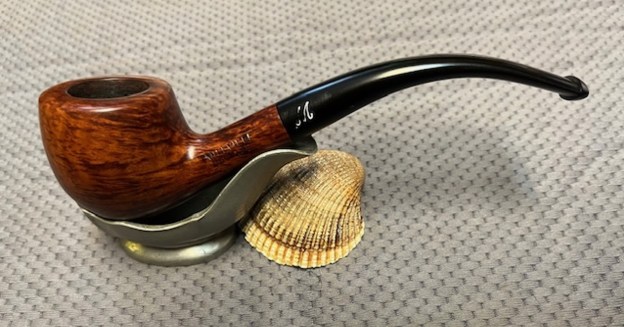
As it is the feast of Saint Patrick, I thought I would post an Irish pipe today – even though I have no Irish heritage myself. No matter! Petersons are very popular, so why not put some spit and polish on this handsome devil. I nabbed this beauty a couple of years ago and, unaccountably, it’s been sitting around waiting for me to clean it up. Let’s look at the markings. On the left side of the shank are the words Peterson’s [over] “Dunmore”. On the right side of the shank are the words Made in the [over] Republic [over] of Ireland. Then down and to the right of that is the shape number, 73. Finally, on the left side of the stem, is the stylized letter P of the Peterson Pipe Company.I’ve always found the scalloped edge at the end of Dunmore shanks to be quite attractive. Let’s investigate the Dunmore line a bit more. Mark Irwin of the Peterson Pipe Notes blog has a great article about Dunmores, which you should read here. Allow me to quote a few passages:

The line originated in collaboration with Iwan Reis in 1971. How it came about is anyone’s guess at this point. Chuck Levi, the man who more than any other was responsible for bringing the great Danish artisan pipes to the US, was working with the creative minds at K&P to bring something new to the IRC catalog, and this was one of about a dozen K&P lines that debuted as exclusives in the Iwan Reis catalogs of that era.The concept was to modernize the System pipe by removing what was perceived as the old-fashioned nickel mount. And old-fashioned it was—if you look at pipe catalogs from the 1940s on through most of the rest of the 20th century, nickel ferrules and even bands were almost non-existent. K&P was virtually the only hold out, using sterling bands on the Sterling Silver Classic line and on the Premier & De Luxe Systems. A bead was then carved around the stummel at the mortise end…

But there were two more ingredients to the original Dunmore aesthetic…. Paddy Larrigan, K&P’s master-craftsman, was always striving to push the envelope in pipe engineering, and one of the things he dearly loved was a pipe that would sit, so he shaved off the bottom of the shank to allow the Dunmore System to sit on its shank and button, which gives it its uniqueness in the catalog. The downside of this is that I am not convinced that all the Dunmore reservoirs, being slightly smaller than the traditional System, are quite as effective. 

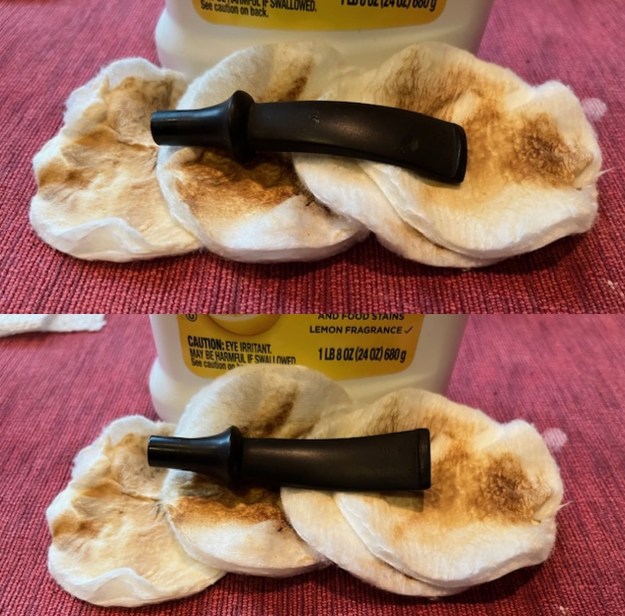
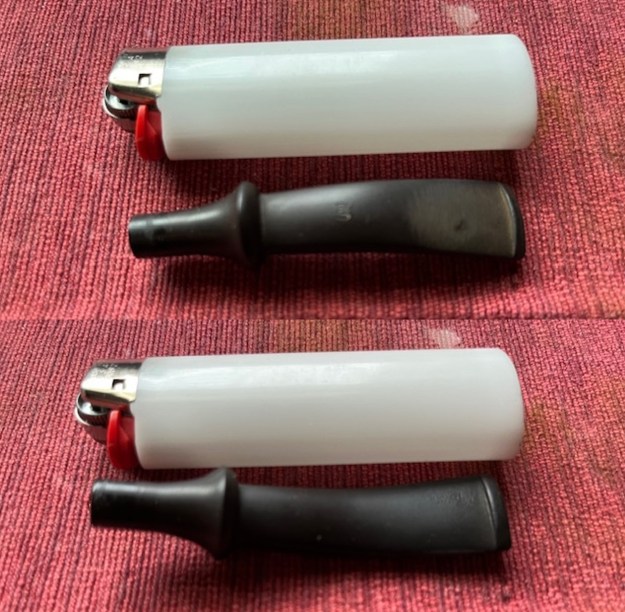
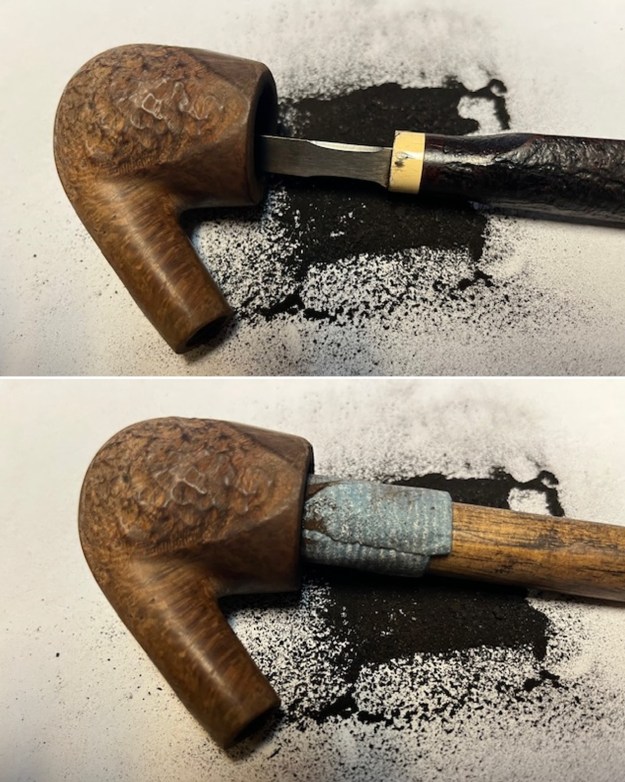
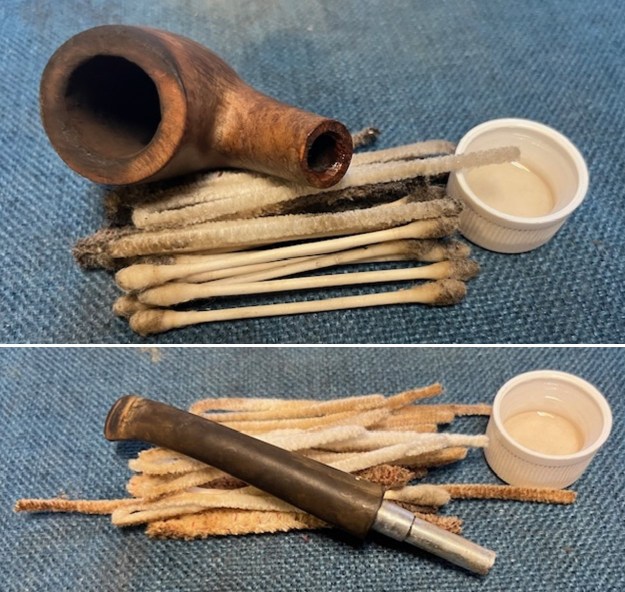
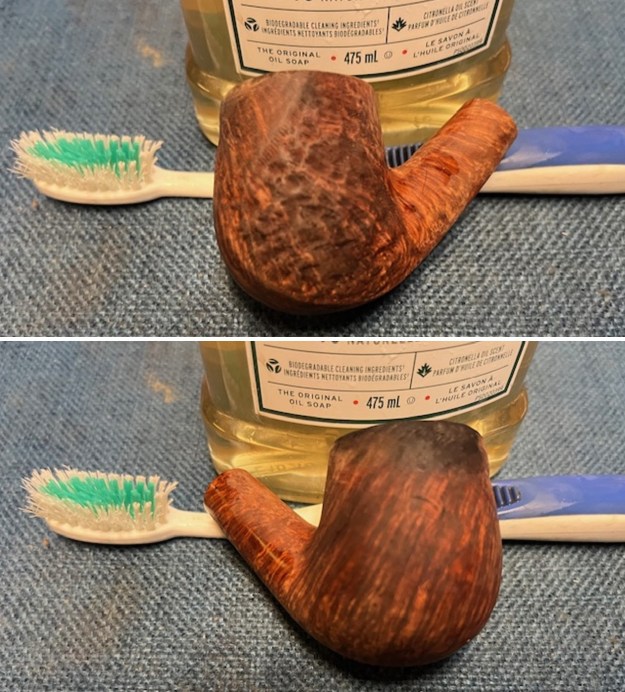
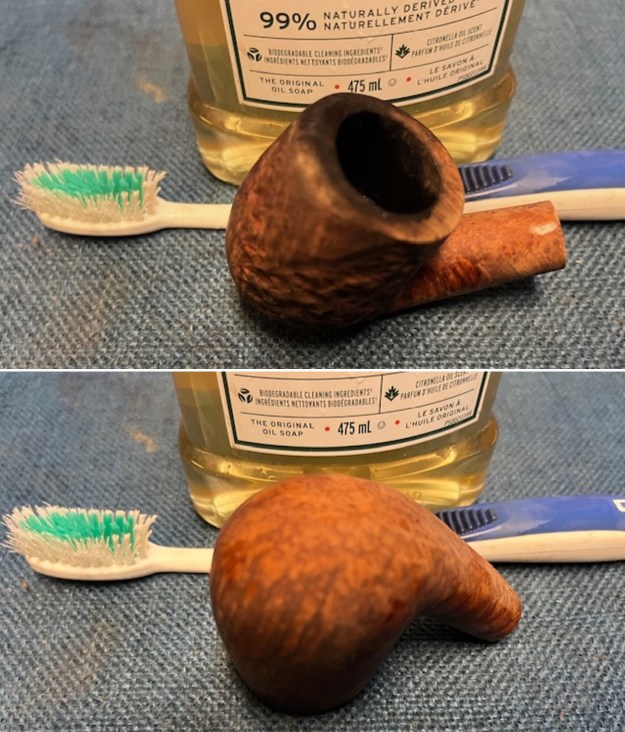
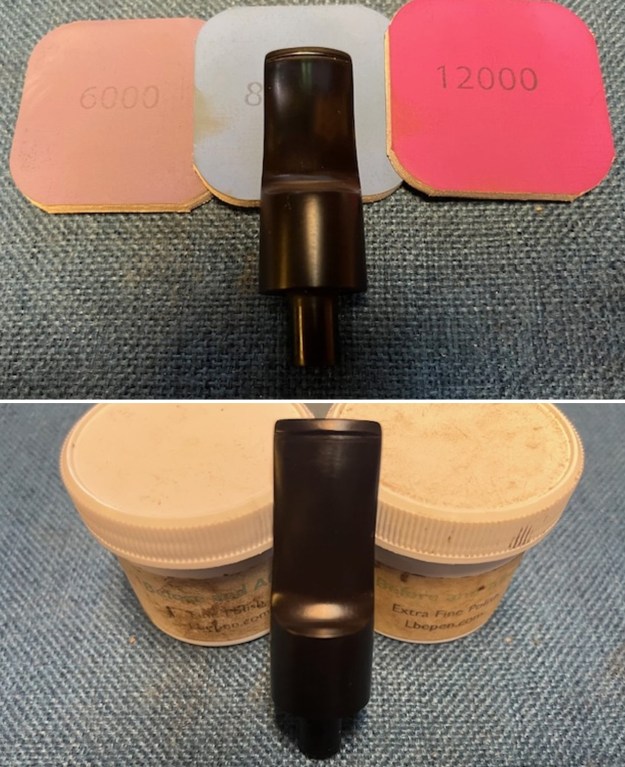
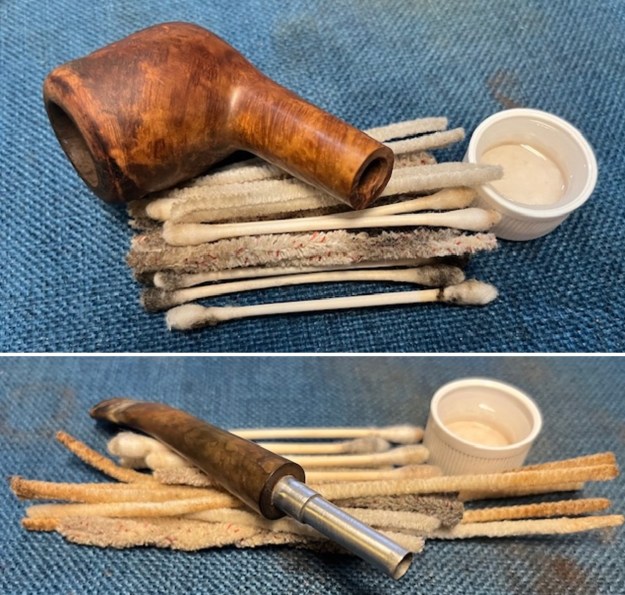
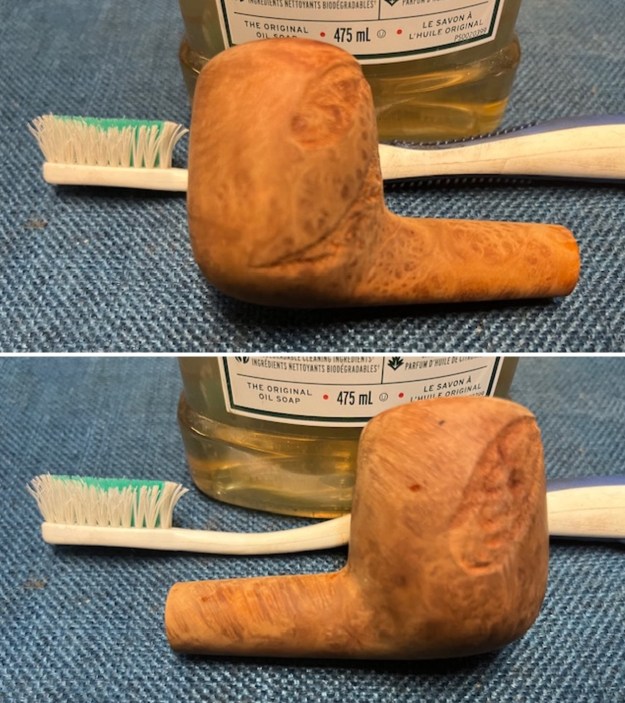
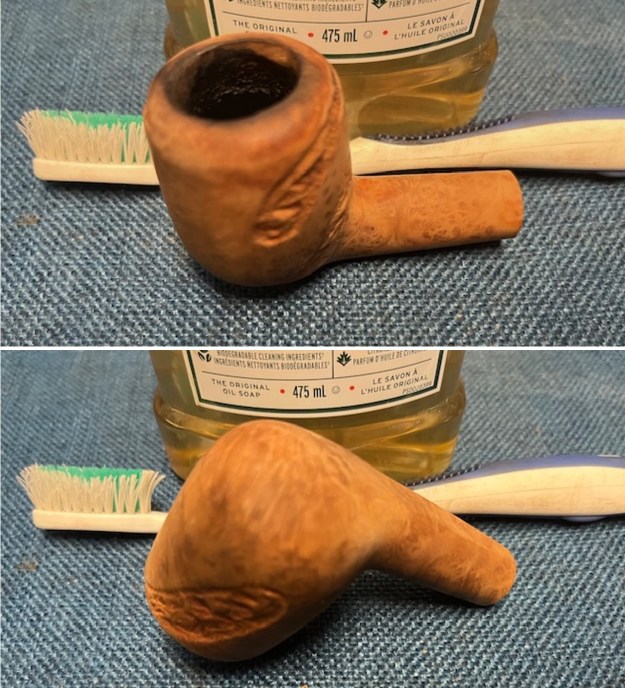
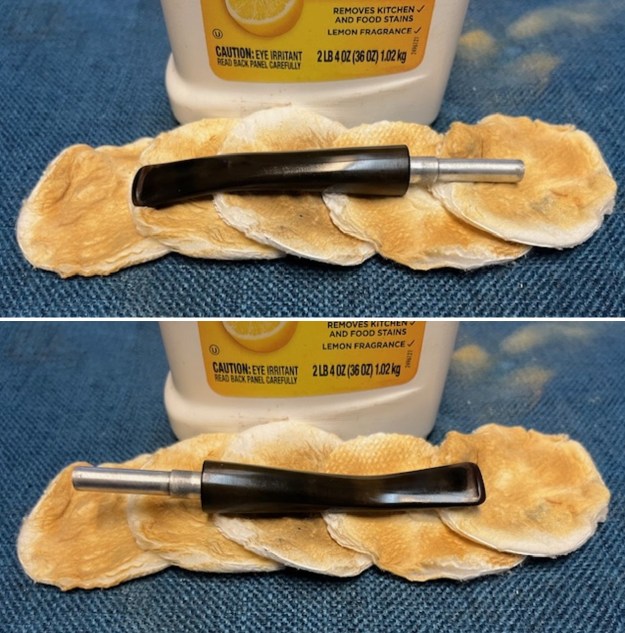
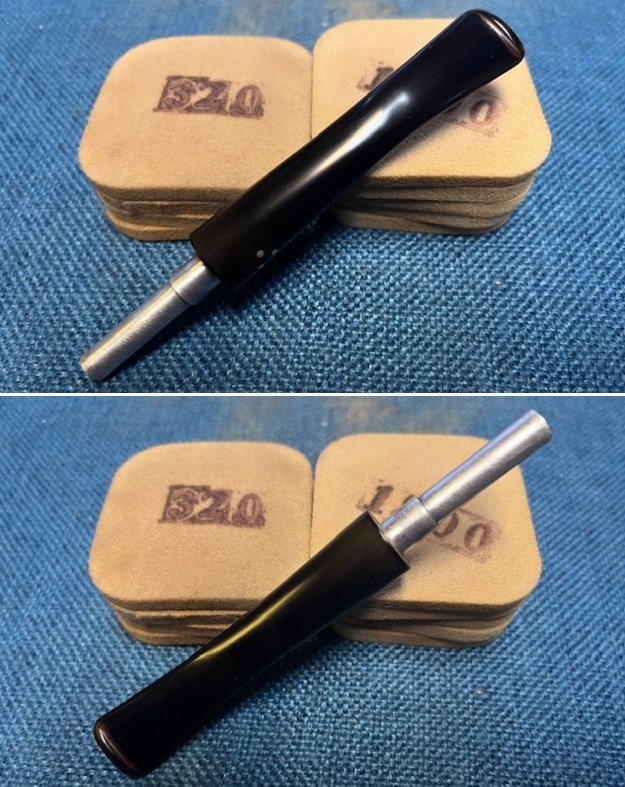
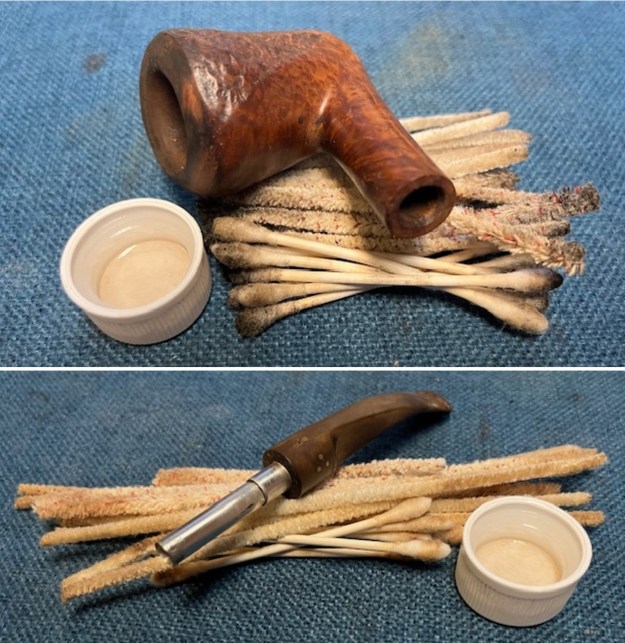
The third distinguishing mark of the original Dunmore lines is the stem. Both the System and Classic versions utilized the wide-shoulder “Comfort Lip,” with a painted  gold P on the stem. This doubtless helps the System sit as well as giving it a more muscular visual balance, strength being a long-standing concept in the design language of the company. While it gives the illusion of being an army “push” mount, of course it isn’t, but is a traditional tenon-mortise or “navy mount” as the old hands at K&P used to call it.Based on Mark’s information on his website and in his book, The Peterson Pipe Book, I can estimate that this pipe is from the mid- to late-70s – something like 50 years old. Many thanks to Mark for his help.On to the work! The pipe was in good shape and – boy-oh-boy – it had been smoked a lot! Things were dirty, rather than damaged – which is much preferred. The stem was oxidized and had a few tooth marks, but nothing deep or large. The stummel was loaded with cake and had substantial lava on the rim.I used a disposable lighter and ‘painted’ the stem with its flame. The gentle heat of the flame can cause the dents in the vulcanite of the stem to expand back into shape. In this case, it actually worked reasonably well and there was a bit of lift.I used oil soap on a few cotton rounds and wiped the stem down to provide an initial cleaning of filth before moving on to the next steps. The primary cleaning comes next. I cleaned the inside of the stem with both pipe cleaners and cotton swabs dipped in 99% lemon-infused isopropyl alcohol. I scrubbed thoroughly to make sure the interior was clean. I used quite a few pipe cleaners and cotton swabs – more than the photo shows.The goal of the next step is the removal (or minimization) of oxidation. Going to my sink, I used cream cleanser, cotton rounds, and a toothbrush, and scoured the stem to remove as much surface oxidation as possible. As the photos show, the result is a hideous brownish mess – but better off the stem than on it. Once the stem was reasonably clean, I soaked it overnight in some Briarville Stem Oxidation Remover. This solution works to draw oxidation in the stem to the surface. This is a major aid and an important step in ensuring a clean stem. The following day, I drew the stem out from its bath and scrubbed the lingering fluid with a toothbrush. Now that the stem is clean and dry, I set about fixing the marks and dents in the vulcanite. This is done by filling those divots with black cyanoacrylate adhesive, impregnated with carbon and rubber. I left this to cure and moved on. After this, I painted the logo on the stem with a gold-coloured metallic wax finish. I restored the logo carefully and let it fully set before proceeding.The penultimate step for the stem is sanding. First, with my set of needle files, I reduce the bulk of the cyanoacrylate repairs. I want to remove the excess adhesive as near to the surface as possible, without cutting into the vulcanite. Following that, I use all nine of the micromesh sanding pads (1,500 through 12,000 grit) to sand out flaws, even out the vulcanite, and provide gentle polishing of the finished surface. I also apply pipe-stem oil while using the last five micromesh pads. There was a wonderful, deep black shine to the stem when I was done.Now that the stem is (nearly) complete, I can move on to the stummel. The first step for me is to ream out the bowl – that is to say, remove all the cake inside the bowl. This accomplishes a couple of things. First (and most obviously), it cleans the bowl and provides a refurbished chamber for future smoking. Second, when the old cake is removed, I can inspect the interior walls of the bowl and determine if there is damage or not. I used a reamer, a pipe knife, and a piece of sandpaper taped to a wooden dowel. Collectively, these ensure that all the debris is removed.My next step was to remove the lava on the rim. For this, I took a piece of machine steel and gently scraped the lava away. The metal’s edge is sharp enough to remove what I need, but not so sharp that it damages the rim. Similar to the stem, I then cleaned the stummel with both pipe cleaners and cotton swabs dipped in 99% lemon-infused isopropyl alcohol. With a pipe this dirty, it took quite a while and much cotton to get clean. It was so, so dirty.I then decided to ‘de-ghost’ the pipe – that is to say, exorcize the remaining filth from the briar. I filled the bowl and the shank with cotton balls, then saturated them with 99% isopropyl alcohol. I let the stummel sit overnight. This caused any remaining oils, tars and smells to leach out into the cotton.To tidy up the briar, I also wiped down the outside with some oil soap on cotton rounds (and a toothbrush). This does a good job of cleaning any latent dirt on the surface of the briar. I also used a nylon brush on the rim. The last step of the cleaning process is to scour the inside of the stummel with some soap and tube brushes. This is the culmination of a lot of hard work in getting the pipe clean.I used all nine micromesh pads (1,500 through 12,000 grit) on the outside of the stummel to finish it off. This sanding minimizes flaws in the briar and provides a beautiful smoothness to the wood. I rubbed some Before & After Restoration Balm into the briar and let it sit for 20 minutes or so. The balm moisturizes the wood and gives a beautiful depth to the briar. I then buffed it with a microfibre cloth. For the final step, I took the pipe to my bench buffer and carefully polished it – first with a white diamond compound, then with three coats of carnauba wax. This procedure makes the pipe look its best – the stummel sings and the stem glows.

All done! This Peterson Dunmore 73 looks fantastic again and is ready to be enjoyed by its next owner. I am pleased to announce that this pipe is for sale! If you are interested in acquiring it for your collection, please have a look in the ‘Irish’ section of the store here on Steve’s website. You can also email me directly at kenneth@knightsofthepipe.com. The approximate dimensions of the pipe are as follows: length 5¼ in. (133 mm); height 3 in. (76 mm); bowl diameter 1⅛ in. (30 mm); chamber diameter ⅝ in. (18 mm). The weight of the pipe is 1¼ oz. (36 g). I hope you enjoyed reading the story of this pipe’s restoration as much as I enjoyed restoring it. If you are interested in more of my work, please follow me here on Steve’s website or send me an email. Thank you very much for reading and, as always, I welcome and encourage your comments.

Cleaning up the first of a lot of 12 pipes for a customer – a No Name Freehand Sitter


by Steve Laug

Back in January, I received an email from Robert with a group 12 pipes that needed to be restored in various ways from cleanup to restemming. The first of these I chose to work on was a partially rusticated Freehand sitter. The front and the sides of the bowl were smooth part way back. The back half of the bowl and shank sides were rusticated with a unique looking rustication. The top of the shank and the underside were both smooth. The rim top and the shank end were both plateau finish. The bottom of the foot of the shank is etched with the date 11/17/79. The plateau rim top and shank end were dirty and debris in the plateau. The bowl had been reamed and was smooth on the inside walls of the bowl. There were some tars and oils in the mortise and the airway in the shank and the stem. The fancy turned, vulcanite stem was oxidized and dirty with light tooth marks and chatter in the top and underside of the stem ahead of the button. I took some photos of the pipe to show its condition before I started my work on it. The relatively clean bowl looks quite good. There was some debris in the plateau rim top and some lava build up on the inner edge and the grooves of the plateau. It looked to be in good condition other than the debris and darkening. The fancy vulcanite saddle stem was dirty, lightly oxidized and has tooth chatter and marks on both sides. I took photos of the bowl, rim top and the stem to show the condition of both.The stamping on the shank are not to be found on the shank. There is however, an etched 11/17/79 on the flat bottom of the foot as shown in the photos below. I tried to capture the detail in the photos below. I also took a photo of the pipe with the stem removed to show the proportion of this pipe. It is really a beauty. I turned to work on the pipe itself. I worked over the plateau rim top and shank end with a brass bristle wire brush to knock off the debris. It removed the debris and it looked much better.I scrubbed the bowl exterior with a tooth brush and undiluted Murphy’s Oil Soap to clean the debris in the rustication and also remove the oils and tars in the finish. I rinsed it with clean warm water and dried it off with a soft cotton cloth. I used a folded piece of sandpaper to smooth out the damage and darkening on the smooth inner edge of the bowl. It looked much better once the debris was removed.I cleaned out the mortise and airway in the shank and the stem with alcohol, cotton swabs and pipe cleaners. I was able to remove the grime and oils in the shank and the airway in the stem.I used a black Sharpie pen to touch up the valleys and deep spots on the plateau rim top and shank end. It looks much better at this point.I polished the smooth portions of the bowl and shank along with the high spots on the plateau with 320-3500 grit sanding pads. It smoothed out the finish very well and made the contrast between the ridges and valleys of the finish stand out well. I worked some Before & After Restoration Balm into the surface of the briar with my fingertips and a horsehair shoe brush to clean, enliven and protect the briar. I let the balm sit for 15 minutes and then buffed it off with a cotton cloth to raise the shine. The photos show the bowl at this point in the restoration process. I set the bowl aside and turned my attention to the stem. I scrubbed the surface of the stem with cotton pads and Soft Scrub. I was able to remove the debris on the stem and the oxidation on the surface. It looked much better.I “painted” the surface of the stem with the flame of a Bic lighter to lift the tooth marks. I was able to lift them all considerably. I filled in the two deep marks – one on each side of the stem just ahead of the button – with black rubberized CA glue. Once it cured, I sanded the repairs with 220 grit sandpaper to blend them into the surface. It looked significantly better at this point. I sanded the stem with 320-3500 grit sanding pads to further blend in the repairs and remove the residual light oxidation on the stem surface. I am happy with the way that it looked at this point.I polished the vulcanite with micromesh sanding pads – 1500-12000 grit pads. I wiped it down with Obsidian Oil after each sanding pad. I used Before & After Pipe Polish – both Fine and Extra Fine to further polish the stem. This No Name Mixed Finish Plateau Freehand etched 11/17/79 with a vulcanite fancy saddle stem has a beautiful, unique finish with great grain on the smooth portions and rustication on the sides and shank. The medium brown finish highlights some great grain around the bowl and shank. It has a unique finish and the polished fancy turned stem adds to the mix. I put the stem back on the bowl and buffed the pipe with Blue Diamond on the buffing wheel being careful to not buff the stamping. I gave the bowl and the stem multiple coats of carnauba wax on the buffing wheel and followed that by buffing it with a clean buffing pad. I hand buffed the pipe with a microfiber cloth to deepen the shine. The finished No Name Freehand is quite nice and feels great in the hand. Give the finished pipe a look in the photos below. The dimensions of the pipe are Length: 7 inches, Height: 2 ¾ inches, Outside diameter of the bowl: 1 ¾ inch x 2 inches long, Chamber diameter: 1 inch. The weight of the pipe is 2.57 ounces/72 grams. Thanks for walking through the restoration with me as I worked over another beautiful pipe. I will be sending it back to Robert once I finish the other 11 pipes he sent me to restore. I look forward to hearing what he thinks of this beauty. Thanks for your time.
Restoring a Dunhill Amber Root 4106 Pot


by Steve Laug

The first pipe on the table since I returned from my long Asia trip for work is one that was sent to me by Jim for restoration. It is a nice-looking Dunhill Amber Root Pot. The stamping on the left side of the shank reads 4106 (the shape number), near the bowl shank junction. It is followed by some unique stamping that reads Alfred [over] The White Spot [over] dunhill’s. On the right side it is stamped Amber Root [over] Made in England15. The pipe was in decent condition, just well used and stunk of an aromatic, vanilla tobacco. The outside of the bowl and shank were dirty and dull with hand oils but the flash on the photos shows the nice grain. The bowl had been reamed recently and there was no cake in the bowl. The rim top had some darkening around the inner edge and on the top. The inner edge has some damage and is slightly out of round. The outer edge looked good. The vulcanite taper stem was oxidized and had some light tooth marks on the top and underside ahead of the button. The shank of the pipe was quite dirty with the oils and tars of the aromatic tobacco that had been smoked in it. I took photos of the pipe when I brought it to my work table and before I started the clean up. Try to imagine how the pipe smelled. Even your imagination cannot begin to capture the smells of the briar in your hand. The relatively clean bowl looks quite good. There are some nicks in the inner edge from zealous reaming that left it rough and damaged. The vulcanite, taper stem was dirty, lightly oxidized and has tooth chatter and marks on both sides. I took photos of the bowl, rim top and the stem to show the condition of both.The stamping on the sides of the shank are shown in the photos below. It looks very good with portions of it faint but readable. It reads as noted and explained above. I tried to capture the detail in the photos below. I also took a photo of the pipe with the stem removed to show the proportion of this pipe. It is really a beauty. I wanted to unpack the Dunhill stamping on the shank and work to understand each element of the stamp. I generally use the Pipephil site to gather as much initial information as possible (http://pipephil.eu/logos/en/dunhill/amber1.html). The stamping is interpreted as follows: The number 4106 is the shape number that unpacks as follows: the 4 is the bowl size, 1 is the normal identifier for a taper stem, 06 is the shape designation – a Pot. The Amber Root stamp refers to the finish. The superscript 15 following the D of England would give the date the pipe.Pipephil also has some helpful dating keys on the site that are basically flow charts that you can walk through to date your pipe (http://pipephil.eu/logos/en/dunhill/cledat-en1.html). I turned to Part 1 of the Dating Key and followed the chart. This pipe has a number 15  following the D in England. There was no patent number so that took me to the section on the chart below (column one) which instructed me that the pipe could be dated as being made “posterior to 1954”.I followed the link under “Your pipe is posterior to 1954. Narrow down your dating”. That took me to Page 2 of the dating key (http://pipephil.eu/logos/en/dunhill/cledat-en1a.html). The last column (suffix 00, 01, 02…) led me to the section with a 15 after the D in England. There was a directive for dating the pipe spelled out as follows: 2000 + suffix which gives the pipe a date of 2015. From that I knew that the pipe was made in 2015. I chose this column rather than the second column which would have dated it as 1975 because of the date that the Amber Root was released by Dunhill being 1995. I hope that the logic of the dating is clear. I then turned to Pipedia’s section on Dunhill pipes to get a bit of background on the Dunhill finishes (https://pipedia.org/wiki/Dunhill#Root_Briar). I quote:

Amber Root – Introduced in 1995. A warm yellow-orange stain, reminiscent of the original Root Briar finish. Cumberland stems were used, although recently, Amber Root pipes have appeared with black stems. This is also a limited production pipe that is found in mainly Company stores and Principle Pipe Dealers. Straight grained pipes are made available in this finish under the name Amber-flame and are graded from one to three flames.

Note: While the Amber Root finish existed in the past with Cumberland and black Vulcanite mouthpieces (now we use usually the black Vulcanite variety only)[32].

I have also included a chart from the site spelling out the Standard Pipe Finishes and giving a timeline. You can see that the Amber Root Finish (a smooth polished medium stain) was introduced in 1995 so this is definitely dates this 15 year stamped pipe to 2015. I turned to work on the pipe itself. I cleaned out the mortise and airway in the shank and the stem with alcohol, cotton swabs and pipe cleaners. I was able to remove a lot of the grime and oils in the shank but the stench of the strong aromatic still remained.To help remove the ghost in the bowl I stuffed it with cotton bolls and rolled a plug from cotton for the shank end. I filled the bowl with 99% Isopropyl alcohol and let it sit overnight to wick out the strong oils and tars from the bowl walls and the shank. In the morning when I checked it the cotton was heavily darkened with the oils. I removed them and set the bowl aside to airdry. I set the bowl aside to airdry after deghosting and turned to address the stem issues. I “painted” the surface of the stem with the flame of a Bic lighter to lift the tooth marks. I was able to lift them all considerably. I filled in the two deep marks – one on each side of the stem just ahead of the button – with black rubberized CA glue. Once it cured, I used a small, flat needle file to recut the button edge and flatten the repair. I sanded the repairs with 220 grit sandpaper to blend them into the surface. It looked significantly better at this point. I sanded the stem with 320-3500 grit sanding pads to further blend in the repairs and remove the residual light oxidation on the stem surface. I am happy with the way that it looked at this point.I polished the vulcanite with micromesh sanding pads – 1500-12000 grit pads. I wiped it down with Obsidian Oil after each sanding pad. I used Before & After Pipe Polish – both Fine and Extra Fine to further polish the stem. I set the stem aside and went back to the bowl. I used some Before & After Briar Cleaner to remove the tars from the finish. I scrubbed the surface of the bowl with a tooth brush. I rinsed of the debris with warm water and dried it off with a soft cloth. I used a folded piece of 220 grit sandpaper to smooth out the rough inner edge of the bowl. I also sanded the scratches and the darkening of the rim top with the sandpaper. It did not take much and it looked much better.There was a dent on the right side of the bowl toward the heel. I used a damp cloth and a hot knife to steam the dent out as much as possible. I was able to lift it to a large degree but not completely with the steam. I polished the rim top and bowl with micromesh sanding pads – dry sanding with 1500-12000 grit pads and wiping the bowl down with a damp cloth to remove the dust. The rim top and the bowl came out looking very good. I worked some Before & After Restoration Balm into the surface of the briar with my fingertips to clean, enliven and protect the briar. I let the balm sit for 15 minutes and then buffed it off with a cotton cloth to raise the shine. The photos show the bowl at this point in the restoration process. I rubbed the briar down with Before & After Restoration Balm. I worked it into the briar with my fingertips. The product works to clean, enliven and preserve the briar. I let it sit for 10 minutes then I buffed it with a cotton cloth to deepen the shine. The briar comes alive with the balm. This 2015 Dunhill Amber Root 4106 Pot with a vulcanite taper stem has a beautiful, unique Dunhill smooth finish with great grain. The medium orange brown finish highlights some great grain around the bowl and shank. It has a unique finish and the polished taper stem adds to the mix. I put the stem back on the bowl and buffed the pipe with Blue Diamond on the buffing wheel being careful to not buff the stamping. I gave the bowl and the stem multiple coats of carnauba wax on the buffing wheel and followed that by buffing it with a clean buffing pad. I hand buffed the pipe with a microfiber cloth to deepen the shine. The finished Dunhill Amber Root 4106 Pot is quite nice and feels great in the hand. Give the finished pipe a look in the photos below. The dimensions of the pipe are Length: 5 ½ inches, Height: 1 ¾ inches, Outside diameter of the bowl: 1 ½ inch, Chamber diameter: ¾ of an inch. The weight of the pipe is 1.55 ounces/44 grams. Thanks for walking through the restoration with me as I worked over another beautiful pipe. I will be sending it back to Jim on the weekend. I look forward to hearing what he thinks of this beauty. Thanks for your time.

Giving Some Life Back to a Kirsten Companion K


by Kenneth Lieblich

The latest restoration story belongs to a handsome Kirsten Companion ‘K’. Once again, this pipe is going to a young man from a local family who wanted some pipes restored. I’ve always been interested in Kirsten pipes – I’m not sure I always like them, but I always study them. The young fellow who acquired this pipe wanted something unusual and unlike the rest of his family – and he certainly got that! I quite like Steve’s description of Kirsten pipes:

Kirsten pipes have always been a bit of an enigma to me. The combination of briar and aluminum is unique. It is a pipe that is not really fish or fowl in terms of briar or metal. It is a pipe with an aluminum radiator with a bowl attached to it. The vulcanite stem is attached to an aluminum metal pin that extends the length of the radiator. On the end is a valve that controls the flow of air to bowl and is adjustable. This pipe has some markings. Interestingly, the name Kirsten is not one of them, but this is unquestionably a Kirsten pipe. On the left side of the aluminum body is the word, Companion. On the underside of the body are the words, Made in U.S.A. – next to that is the shape letter, K.Kirsten pipes have a long and interesting history. Naturally, Pipedia has a long article on this, but, in fact, that information comes from the fascinating Smoking Metal website. I encourage you to read the various articles they have on Kirstens.Let’s examine the pipe a bit. The aluminum is in decent shape – no major dents or scratches. There are merely micro-scratches, but no big deal. Similarly, the stem was in really nice shape. Only very minor tooth wear. Little oxidation and calcification. However, the briar bowl did have some issues. It had some cake in the bowl and was fairly dirty. The main problem was a significant burn on the rim. I’d have to take a closer look at that.My first step was to take the entire pipe apart. Here is a good photo of the various components of this Kirsten – plus the screwdriver I used to take the pipe apart.I decided to work on the briar bowl first on this occasion. The first step for the bowl is to ream it out – that is to say, remove all the cake inside. This accomplishes a couple of things. First (and most obviously), it cleans the bowl and provides a refurbished chamber for future smoking. Second, when the old cake is removed, I can inspect the interior walls of the bowl and determine if there is damage or not. I used a reamer, a pipe knife, and a piece of sandpaper taped to a wooden dowel. Collectively, these ensure that all the debris is removed.The damage to the rim is significant. In order to lessen the burns and nicks on the rim, I ‘topped’ the pipe – that is to say, I gently and evenly sanded the rim on a piece of 220-grit sandpaper. This effectively minimizes the damage, without altering the look of the pipe.Some of the burn remained on the rim, so I took some crystalized oxalic acid and dissolved it in warm water. I took some cotton swaps, dipped in the solution, and rubbed the burned spot vigorously. Some of the burn was removed, but, unfortunately, some will always remain as part of this pipe’s history.To tidy up the briar, I also wiped down the outside with some oil soap on cotton rounds (and a toothbrush). This does a good job of cleaning any latent dirt on the surface of the briar. The last step of the cleaning process is to scour the inside of the stummel with some soap and tube brushes. This is the culmination of a lot of hard work in getting the bowl clean.I took a solid wooden sphere, wrapped a piece of 220-grit sandpaper around it, and sanded the inner edge of the rim. This achieves two things: first, it removes some of the burn marks; and second (and more importantly), the circular shape and motion of the sphere gradually returns the edge to a perfect circle. I then used all nine micromesh pads (1,500 through 12,000 grit) on the outside of the stummel to finish it off. This sanding minimizes flaws in the briar and provides a beautiful smoothness to the wood. I rubbed some Before & After Restoration Balm into the briar and let it sit for 20 minutes or so. The balm moisturizes the wood and gives a beautiful depth to the briar. I then buffed it with a microfibre cloth. On to the stem. I cleaned the inside with both pipe cleaners and cotton swabs dipped in 99% lemon-infused isopropyl alcohol. I scrubbed thoroughly to make sure the interior was clean.The goal of the next step is the removal (or minimization) of oxidation. Going to my sink, I used cream cleanser, cotton rounds, and a toothbrush, and scoured the stem to remove as much surface oxidation as possible. As the photos show, the result is a hideous brownish mess – but better off the stem than on it.Once the stem was reasonably clean, I soaked it overnight in some de-oxidation fluid. This solution works to draw oxidation in the stem to the surface. This is a major aid and an important step in ensuring a clean stem. The following day, I drew the stem out from its bath and scrubbed the lingering fluid with a toothbrush.I used all nine of the micromesh sanding pads (1,500 through 12,000 grit) to sand out flaws, even out the vulcanite, and provide gentle polishing of the finished surface. I also applied pipe-stem oil while using the last five micromesh pads. There was a wonderful, deep black shine to the stem when I was done.Next was the aluminum body of this old Kirsten. In order to loosen up some of the old filth, I soaked all the metal pieces in a vinegar solution. This was only mildly successful and I would need to do more.Just like other pipes, I cleaned the insides thoroughly with cotton swabs dipped in 99% lemon-infused isopropyl alcohol. This wasn’t enough – I also cleaned the inside of the aluminum with my cream cleanser and some tube brushes. That worked well! I then used my grey micromesh pads and polished the metal to a beautiful shine. Boy, it looked terrific after that.For the final step, I took the bowl to my bench buffer and carefully polished it – first with a white diamond compound, then with three coats of carnauba wax. This procedure makes the pipe look its best – the stummel sings and the stem glows.All done! This Kirsten Companion K looks fantastic again and is ready to be enjoyed by its new owner. It was great fun to work on. The approximate dimensions of the pipe are as follows: length 5⅓ in. (136 mm); height 1⅞ in. (48 mm); bowl diameter 1½ in. (39 mm); chamber diameter ⅞ in. (22 mm). The weight of the pipe is 1⅝ oz. (49 g). I hope you enjoyed reading the story of this pipe’s restoration as much as I enjoyed restoring it. If you are interested in more of my work, please follow me here on Steve’s website or send me an email at kenneth@knightsofthepipe.com. Thank you very much for reading and, as always, I welcome and encourage your comments.

Restemming and Restoring a Rogers Rarity Imported Bruyere 310 Bulldog


by Steve Laug

I decided to restem another bowl that I had here in the box. Jeff and I purchased on 10/17/2017 from am antique shop in Pocatello, Idaho, USA. It is a nicely grained bowl that came with some odd stem stuck in the shank. It was obviously the wrong one so it would have to go. The left side of the shank is stamped and reads Rogers [over] Rarity in an oval. The right side is stamped Imported [arched over] the shape number 310 and underneath was arched Bruyere. The bowl had a thick cake and lava overflow on the rim top and inner edge. The briar is oily and dirty with some lava coming down the outer edge of the rim top onto the bullcap. There was some great grain hidden by the grime. Jeff took some photos of the pipe before he started his work on cleaning it up. He included photos of the stem that came on it when we purchased it.He captured the cake in the bowl and the thick eruption of lava on the rim top and edges exceptionally well in the next photo. It was very clear that the pipe had not been seriously cleaned in a very long time. But it is also very clear that it was an exceptional smoker! The incorrect stem is oxidized and dull with tooth marks and chatter on both sides ahead of the button. It was going to be replaced but I always find it interesting to see what pipesmokers do to make a pipe remain usable. Jeff somehow captured some of the beauty of the shape and the grain in the next photos. You can certainly see what lies beneath the grime on the briar. You can also see a few small fills in the bowl and along the twin rings of the bullcap. He took photos of the stamping on the top left and right of the shank. It is clear and readable as noted above.From reading Bill Unger’s book on Custom-Bilt Pipes I remember “Rogers Rarity” was made by the same company as one of its non-sculptured or rusticated pipes. I did a Google search to see if I could confirm that online. I found a pipe labeled Rogers Rarity for sale on Worthpoint, an online sales site (https://www.worthpoint.com/worthopedia/rogers-rarity-custombilt-large-briar-1821532853). In the description they made the link to Custombilt. I quote:

Rogers Rarity briar pipes were made by Custombilt, and show all the beauty and originality of the brand.

I searched further and found a conversation asking about the brand on Pipesmagazine online forum. There was a great conversation about the brand.

(https://pipesmagazine.com/forums/threads/help-with-dating-a-pipe.62314/). I found a particular response by Jon Guss of the Seattle Pipe Club particularly helpful. I quote from Jon in full.

First, “Rodgers” is a misspelling; it was always spelled “Rogers”. Three generations of the Rogers family ran one of the leading importers of pipes (including Petersons for a number of years) and resellers of pipes and smokers articles; they also did a bit of manufacturing. The name of the company was Rogers Imports, Inc.

Second, for several reasons I also believe that Rogers Rarity pipes were made for Rogers Imports by CustomBilt.

The Rogers Rarity line was introduced by the company in late 1945. The advertising copy from the spring of 1946 described Rogers Rarity pipes as “The height of pipe luxury and enjoyment”, and claimed that they were “Carved by hand of Algerian bruyere over 150 years old”. Was it true? I would guess not, but age fabrication regarding the briar from which pipes were made was a kind of industry trope for generations. While most of the Rarity pipes apparently sold for $5, the listed price range stated various models cost from $5-25. The $5 pipes were available in natural and grain finishes; there was also a $10 version called the Rogers Rarity Deluxe that was sterling banded and meerschaum lined.

I can’t be sure when the line ceased production, but believe it was by the end of 1949. Certainly Rogers Rarity pipes are no longer listed in the RTDA Almanac from 1950 on, and mentions of the pipe in advertisements to consumers become thin on the ground. More tellingly newspaper ads from 1951 show the pipe heavily discounted, suggesting that excess inventory of an obsolete line was being flushed through the channel…

Now I knew that my memory was correct. The pipe was made by CustomBilt for Rogers Imports. I also knew that it was made between 1945-1949 when the line was no longer made. It was a bit of an old timer… Now it was time to work on the pipe.

I was amazed at how clean and new the pipe looked when I took it out of the box. It is really a beautiful piece. Jeff had done a great cleanup on the pipe. He reamed the bowl with a PipNet pipe reamer and followed up with a Savinelli Fitsall pipe knife to remove the cake. He scrubbed out the mortise and the airway in the shank and the stem with alcohol, cotton swabs and pipe cleaners. He scrubbed the bowl exterior with a tooth brush and Murphy’s Oil Soap to remove the grime on the finish of the bowl and the lava from the rim top. He rinsed it under running water. One of the benefits of this scrub is that it also tends to lift some of the scratches and nicks in the surface of the briar. He dried it off with a soft cloth. We put the stem in our stem can. I took photos of the pipe bowl as I saw it when I put it on the table. I took photos of the rim top to show the condition. The rim top had some darkening on the top and outer edge but did not look deeply damaged. The inner edge of the bowl showed some damage and was slightly out of round.The stamping on the top left and right sides of the diamond shaped shank are clear and readable as noted above.I started my work on this pipe by fitting a new stem to the shank. Once I had that done I would move on to cleaning up the bowl. I had a stem picked out that was a clear/Perspex style acrylic that would look great on this pipe. I first adjusted the fit of the tenon to the shank with my Dremel, files and sandpaper. Once I had a fit I took some photos. I think the stem would work very well with this pipe. As is usual with pipes the shank was not a true diamond and I needed to adjust the facets of the diamond shank to properly match those of the shank. I did this by hand using a folded piece of 220 grit sandpaper. I was fortunate that the top facets lined up well so I could avoid the stamping on them. I set the stem aside and dealt with the damage to the inner edge of the bowl. I used a folded piece of 220 grit sandpaper to smooth out the inner edge and give it form once again. It worked quite well. Then I used a wooden sphere and a piece of 220 grit sandpaper to lightly bevel the inner edge of the rim to remove the burn damage. The result was actually quite good. I sanded the bowl with 320-3500 grit sanding pads. I worked over the rim top, bowl sides, shank (carefully avoiding the stamping). I wiped it down with a damp cloth after each sanding pad. The briar began to look very good and the grain richly shone. I polished the briar with 1200-1500 micromesh sanding pads and wiping it down with damp cloth after each sanding pad. As I worked through the cycle of pads the shine developed with each change of pad. The pipe looks very good. Now it was time to bend the stem. I have had better luck bending acrylic/Perspex stems with boiling water than a heat gun. I boiled some water in the microwave and put the stem in the hot water. I repeated it several times to soften the acrylic. I bent it over a pill bottle to give it a correct bend. I set the bend with cool water. I put it partially in the shank to check the bend. I and happy with the way it turned out. It had a nice smooth bend.The button had a small round opening. I used a slot saw and three different files to shape an oval slot in the shank. It was a well-shaped slot that I smoothed out. With the bend in the stem and new slot it was very workable. I fit the stem in shank and took photos of the new look to the slightly bent bulldog. The Perspex stem fit well and looked very good. I removed the stem and rubbed the bowl and shank down with Before & After Restoration Balm. I worked it into the surface of the bowl sides and shank with my fingertips to clean, enliven and protect the briar. I let the balm sit for 10 minutes, then buffed with a cotton cloth to raise the shine. The Balm did its magic and the grain stood out on the briar. I set the bowl aside and turned my attention to polishing the stem. I sanded it with 320-3500 grit sanding pads. I wiped it down between pads with a Obsidian Oil impregnated cloth. It was looking much better.I polished the stem with micromesh sanding pads – dry sanding with 1500-12000 grit sanding pads. I wiped it down after each sanding pad with Obsidian Oil. I polished it with Before & After Pipe Stem Polish – both Fine and Extra Fine. I wiped down again with Obsidian Oil and set it aside while I worked on the stem. This Chubby 1945-49 Rogers Rarity 310 Bent Bulldog with an Acrylic/Perspex saddle stem is a well grained pipe with a flowing shape that looks great. The rich browns of the darkened natural finish make the grain come alive with the polishing and waxing. I put the stem back on the bowl and carefully buffed the pipe with Blue Diamond on the buffing wheel using a light touch on the briar. I gave the bowl and the stem multiple coats of carnauba wax on the buffing wheel and followed that by buffing the entire pipe with a clean buffing pad. I hand buffed the pipe with a microfiber cloth to deepen the shine. The finished Rogers Rarity Bent Bulldog really is a beauty and fits nicely in the hand and looks very good. Give the finished pipe a look in the photos below. The dimensions of the pipe are Length: 6 inches, Height: 1 ¾ inches, Outside diameter of the bowl: 2 ¼ inches, Chamber diameter: ¾ of an inch. The weight of the pipe is 1.90 ounces/54 grams. This old timer will soon be on the American Pipe Makers Section of the rebornpipes store if you would like to add it to your collection. Thanks for reading this blog and my reflections on the pipe while I worked on it.

Restoring a Butz-Choquin Vendôme Extra 1688 Apple


by Kenneth Lieblich

Here’s a charming pipe! I’ve been restoring a good number of pipes for a local family and this is the latest of the bunch: a Butz-Choquin Vendôme Extra 1688. This is an apple shape (in French, the shape is called boule – meaning ball), with a round shank and a tapered stem. It’s an attractive pipe, but it has seen better days. Time to spiff it up for its new owner. Let’s have a look at the markings on this pipe. As the photos show, the left side of the shank reads, Butz-Choquin [over] Vendôme [over] Extra. The right side of the stem reads, St Claude [over] France [over] 1688. Additionally, the stem shows the BC logo of Butz-Choquin in a clear, acrylic circle. Both Pipedia and Pipephil have good write-ups on the history of Butz-Choquin and I encourage you to read both. Also, Steve has restored quite a few and it’s worth having a look at his writings too. For the moment, here is some information from Pipedia:

The pipe, from Metz to Saint-Claude.

 Jean-Baptiste Choquin of Metz started out as a tobacconist. This enterprise was prosperous; he had several employees. Among those, there was a certain Gustave Butz who was its first workman and who became his son-in-law by marrying Choquin’s daughter Marie in 1858.

In 1858 Jean-Baptiste Choquin created, in collaboration with Gustave Butz, the Choquin pipe. This bent pipe with a flat-bottomed bowl was finished with an albatross-bone mouthpiece, fixed with silver rings.

In 1858, still in Metz, Gustave Butz built an establishment for the manufacture of the Choquin pipe which took the name of. In 1951, the Berrod-Regad company bought the trademark, continuing manufacture until 2002. Departing from Metz, the workshop was relocated to Saint-Claude, then also called “the world capital of the briar pipe”, under the Berrod-Regad group. The Berrod-Regad group would go on to completely rebuild the network of representatives until finally entering the export market in 1960 and has since won several prizes, as well as the Gold Cup of French good taste.

In a few years, the brand’s collection increased from ten to seventy series. 135 years after it was founded, the pipe is still well-known not only in France but throughout the world. In 2002, the Berrod family, wishing to preserve manufacture of pipes in Saint-Claude, handed over the company to Fabien Guichon, a native of the area, who will continue to develop the brand during the 21st century.Meanwhile, Pipephil says this:

The origin of the brand reaches back to 1858 when Jean-Baptiste Choquin in collaboration with his son-in-law Gustave Butz created their first pipe in Metz (France). Since 1951 Butz-Choquin Site officiel Butz Choquin, pipes de Saint-Claude jura. BC pipe de bruyere luxe is a brand of the Berrod-Regad group (Saint-Claude, France).

Jean Paul Berrod managed the company from 1969 to 2002 when he retired and sold the corporate to Mr Fabien Gichon. Denis Blanc, allready owner of EWA, took over the S.A. Berrod-Regad in 2006.

In an old Butz-Choquin catalogue, I found the pipe shape in question, listed with its requisite number:An inspection of the pipe showed a few flaws to be addressed. The bowl was dirty and stained. It also had some burn marks on the rim top. Furthermore, it had an unattractive lacquer-like finish to it. Meanwhile, the stem was dirty and scratched. There were minor bite marks and there was some oxidation.To begin, I used oil soap on a few cotton rounds and wiped the stem down to provide an initial cleaning of filth before moving on. The primary cleaning comes next. I cleaned the inside of the stem with both pipe cleaners and cotton swabs dipped in 99% lemon-infused isopropyl alcohol. I scrubbed thoroughly to make sure the interior was clean.The goal of the next step is the removal (or minimization) of oxidation. Going to my sink, I used cream cleanser, cotton rounds, and a toothbrush, and scoured the stem to remove as much surface oxidation as possible. As the photos show, the result is a hideous brownish mess – but better off the stem than on it.Once the stem was reasonably clean, I soaked it overnight in some de-oxidation fluid. This solution works to draw oxidation in the stem to the surface. This is a major aid and an important step in ensuring a clean stem. The following day, I drew the stem out from its bath and scrubbed the lingering fluid with a toothbrush.Now that the stem is clean and dry, I set about fixing the marks and dents in the vulcanite. This is done by filling those divots with black cyanoacrylate adhesive, impregnated with carbon and rubber. I left this to cure and moved on.The penultimate step for the stem is sanding. First, with my set of needle files, I reduce the bulk of the cyanoacrylate repairs. I want to remove the excess adhesive as near to the surface as possible, without cutting into the vulcanite. Following that, I use all nine of the micromesh sanding pads (1,500 through 12,000 grit) to sand out flaws, even out the vulcanite, and provide gentle polishing of the finished surface. I also apply pipe-stem oil while using the last five micromesh pads. There was a wonderful, deep black shine to the stem when I was done.Now that the stem is (nearly) complete, I can move on to the stummel. The first step for me is to ream out the bowl – that is to say, remove all the cake inside the bowl. This accomplishes a couple of things. First (and most obviously), it cleans the bowl and provides a refurbished chamber for future smoking. Second, when the old cake is removed, I can inspect the interior walls of the bowl and determine if there is damage or not. I used a reamer, a pipe knife, and a piece of sandpaper taped to a wooden dowel. Collectively, these ensure that all the debris is removed. Plenty of cake in there…The inside of the stummel needs to be cleaned thoroughly. Similar to the stem, I then cleaned it with both pipe cleaners and cotton swabs dipped in 99% lemon-infused isopropyl alcohol. With a pipe this dirty, it took quite a while and much cotton to get clean (as the photos will attest).I then decided to ‘de-ghost’ the pipe – that is to say, exorcize the remaining filth from the briar. I filled the bowl and the shank with cotton balls, then saturated them with 99% isopropyl alcohol. I let the stummel sit overnight. This caused any remaining oils, tars and smells to leach out into the cotton.To tidy up the briar, I also wiped down the outside with some oil soap on cotton rounds (and a toothbrush). This does a good job of cleaning any latent dirt on the surface of the briar. The last step of the cleaning process is to scour the inside of the stummel with some soap and tube brushes. This is normally the culmination of a lot of hard work in getting the pipe clean.However, I noticed that the lacquer was flaking and looking terrible. As a result, I chose to remove it all with acetone on some cotton rounds. Of course, acetone is a volatile chemical, and I only use it rarely and judiciously in my pipe work. In this case, it acted perfectly to remove what I needed and left beautiful wood underneath. In fact, it looked so much better after having wiped it down. The damage to the rim is not terrible, but it is notable. In order to lessen the burns on the rim, I ‘topped’ the pipe – that is to say, I gently and evenly sanded the rim on a piece of 220-grit sandpaper. This effectively minimizes the damage, without altering the look of the pipe. A little of the burn remains, but that is part of this pipe’s life story.I used all nine micromesh pads (1,500 through 12,000 grit) on the outside of the stummel to finish it off. This sanding minimizes flaws in the briar and provides a beautiful smoothness to the wood.The removal of the lacquer was a positive, necessary step, but it made the stummel a bit pale. I decided to stain the wood with an alcohol-based, aniline dye. I use this type of dye because it is easy to work with, uniform in colour, quite penetrating, and is easily thinned with isopropyl alcohol. For this pipe, I chose a light brown colour, as it most closely resembled what the pipe would have looked like when new. I spread the dye all over the outside of the stummel with a small dauber and then applied a gentle flame to it. This flame assists in setting the stain by quickly evaporating the isopropyl alcohol. If necessary, the stain can be lightened by wiping the briar with pure alcohol – and, in this case, that’s precisely what I did. I rubbed some Before & After Restoration Balm into the briar and let it sit for 20 minutes or so. The balm moisturizes the wood and gives a beautiful depth to the briar. I then buffed it with a microfibre cloth. For the final step, I took the pipe to my bench buffer and carefully polished it – first with a white diamond compound, then with three coats of carnauba wax. This procedure makes the pipe look its best – the stummel sings and the stem glows.This Butz-Choquin Vendôme Extra 1688 apple is a very handsome pipe and will provide many years of smoking pleasure for its new owner. The approximate dimensions of the pipe are as follows: length 5¼ in. (134 mm); height 1⅝ in. (40 mm); bowl diameter 1⅓ in. (34 mm); chamber diameter ¾ in. (19 mm). The weight of the pipe is 1⅛ oz. (34 g). I hope you enjoyed reading the story of this pipe’s restoration as much as I enjoyed restoring it. If you are interested in more of my work, please follow me here on Steve’s website or email me directly at kenneth@knightsofthepipe.com. Thank you very much for reading and, as always, I welcome and encourage your comments.

Restoring the third of six pipes for a Vancouver Pipeman – No Name Bent Rhodesian


by Steve Laug

Earlier this week I received an email from Stephen regarding a few more pipe projects that he had for me to work on. He dropped them off here yesterday for me to work on. There were six pipes in the lot. Two were his that I had worked on a few years ago – a Mayfair 1005 rusticated tree stump and a Jost Supreme. Both were favourite pipes of his. One was a Savinelli Bent Billiard that he purchased on a trip to Italy. The final three were pipes that belonged to his father who would soon be visiting him in Vancouver – a Brigham full bent four dot 4244, a Savinelli Portofino Bent Pot and a Bent Rhodesian with no name stamped on the shank sides. Stephen texted me this photo of the pipes before he sent them.I decided to work on the second of Stephen’s father’s pipes. It is a smooth Bent Rhodesian. It is a beautiful grained piece of briar that I can appreciate why he chose it. The pipe is unstamped and does not appear to have even the remnants of any stamping. The briar is dirty from use with a moderate cake in the bowl and a lot of chipping and dents in the rim top and the twin rings on Bullcap on the bowl. The stem was oxidized, calcified and had some tooth marks and chatter on the top and underside of the stem ahead of and on the surface of the button. There is no stamping on the side of the stem as it was unmarked. I took photos of the pipe before I started my work and included them below. I took a photo of the stem surfaces and the bowl and rim to give a sense of condition of the pipe. You can see the cake in bowl and the lava overflow and the heavy nicking and denting on the edges and rim top of the bowl. The stem surface is very dirty and you can see the tooth marks and chatter on both sides ahead of the button. There is also a paper wash inserted in the mortise of the pipe to tighten the fit of the stem.I removed the stem from the shank of the pipe and took a photo of the parts to show the flow of the pipe. It has some great grain.I used a dental spatula to scrape out the paper washer from the inside of the shank. It had been glued to the right side of the shank to thicken the wall of the right side. It was not an effective way as the shank was not drilled evenly. It was straight but the shank was not round. The stem turned the same way the stem was.To address the damage on the rim top I topped it with 220 grit sandpaper on a topping board. I took off the rim damage and smoothed out the top of the rim. It looked much better. I reamed the bowl with a PipNet pipe reamer using the second and third cutting head to trim the cake back. I used a Savinelli Fitsall Pipe knife to clean up the remnants leaving bare briar. I sanded the bowl walls with 220 grit sandpaper wrapped around a piece of dowel. The bowl was significantly cleaner. I cleaned out the airway in the shank and mortise as well as the stem with cotton swabs, pipe cleaners and isopropyl alcohol. It was dirty but it cleaned up very well. I cleaned the surface of the briar with a cotton pad and acetone to remove the grime and the remnants of the finish on the briar. It looked much better.There was a large divot on the bottom of the bowl that I decided to repair. I filled it in with some clear CA glue and pressed briar dust into the glue. I repeated the process until the damaged area was filled in. Once the repair cured I sanded it flat to blend it into the surrounding surface of the briar. It looked much better when I was finished. I sanded the bowl with 320-3500 grit sanding pads. I wiped the bowl down after each sanding pad with a damp cloth to remove the sanding debris. I polished the briar with 1500-12000 micromesh sanding pads – dry sanding the bowl with the pads and wiping it down after each sanding pad to remove the sanding debris. It is looking much better. I left the nicks on the twin rings around the top of the Bullcap as they are a part of the pipe’s journey. I rubbed the bowl down with Before & After Restoration Balm. I worked it into the surface of the briar with my fingertips and a shoe brush to work it into the rings around the Bullcap. The product works to clean, restore and preserve the briar. I let it do its magic for 15 minutes then buffed it off with a cotton cloth. The pipe looks very good at this point in the process. I set the bowl aside and turned my attention to the vulcanite taper stem. I scrubbed the surface of the stem with Soft Scrub to break through the oxidation, calcification and clean up the tooth marks.I filled in the tooth marks on the stem surface and on the surface of the button on both sides with black CA glue. The glue I use has both rubber and carbon in the mix that harden as it dries but does not become brittle. Once it cured I flattened the repairs and reshaped the button edge with a flat needle file. I cleaned up the repaired areas with 220 grit sandpaper. I sanded the stem with 320-3500 grit sanding pads. I wiped the stem down after each sanding pad to remove the sanding debris and dust. The stem looked very good. I polished the stem with micromesh sanding pads – 1500-12000 grit pads. I wiped it down with an Obsidian Oil cloth after each sanding pad.  I finished polishing it with Before & After Pipe Stem Polish – both Fine and Extra Fine and buffed it off with a cotton cloth. I gave it a coat of Obsidian Oil to preserve and protect the stem. This No Name Bent Rhodesian is a great looking pipe now that it has been restored. The mix of brown stains really highlight the grain and the polished finish has depth. The nicks in the rings give a bit of character and history to the pipe. I put the vulcanite stem back on the bowl and carefully buffed the pipe with Blue Diamond on the buffing wheel. I gave the bowl and the stem multiple coats of carnauba wax on the buffing wheel and followed that by buffing the entire pipe with a clean buffing pad. I hand buffed the pipe with a microfiber cloth to deepen the shine. The finished Bent Rhodesian fits nicely in the hand and feels great. Give the finished pipe a look in the photos below. The dimensions of the pipe are Length: 5 inches, Height: 1 ½ inches, Outside diameter of the bowl: 1 inch, Chamber diameter: ¾ of an inch. The weight of the pipe is 48 grams /1.69 ounces. I have three more of Stephen’s pipes to work on. Once I have finished I will get them back to him to enjoy with his father. Thanks for reading this blog and my reflections on the pipe while I worked on it.
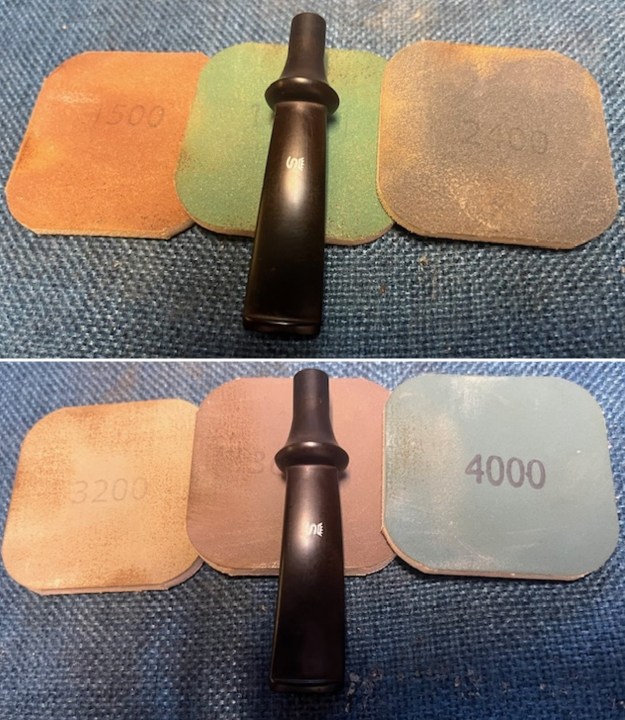
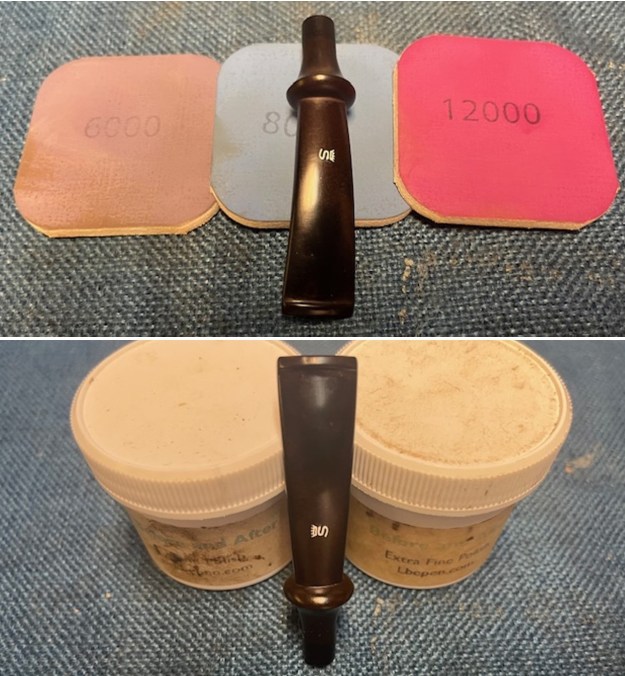
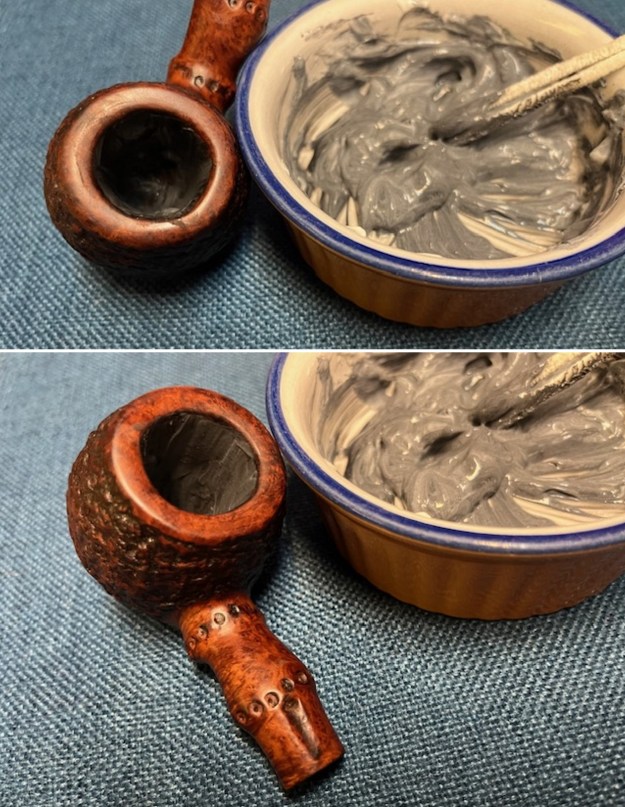
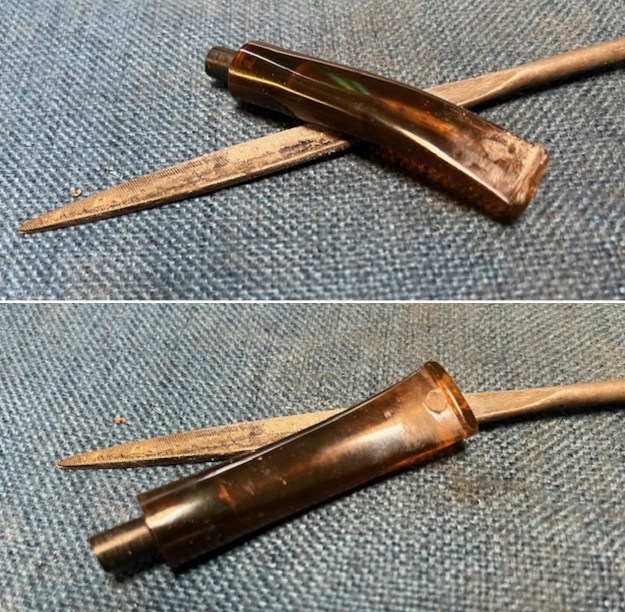
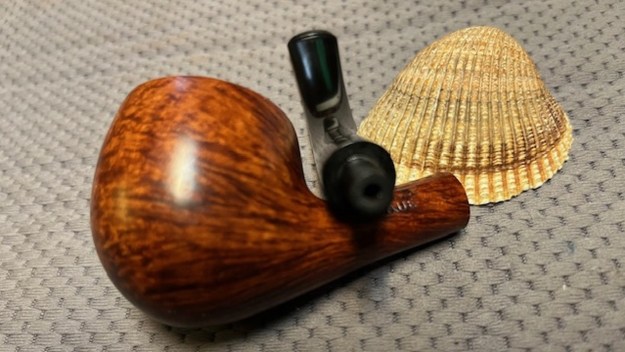
As always, I encourage your questions and comments as you read the blog. Thanks to each of you who are reading this blog. Remember we are not pipe owners; we are pipe men and women who hold our pipes in trust until they pass on into the trust of those who follow us.