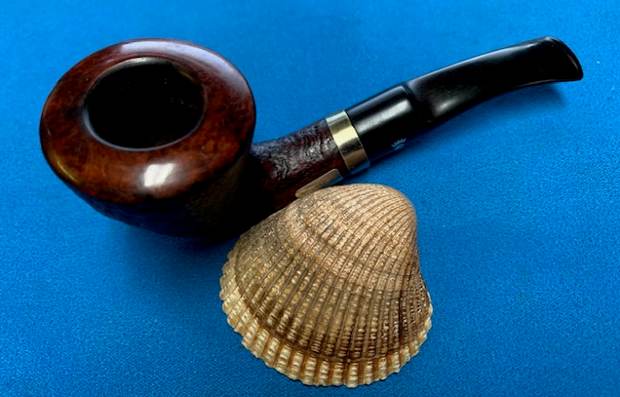
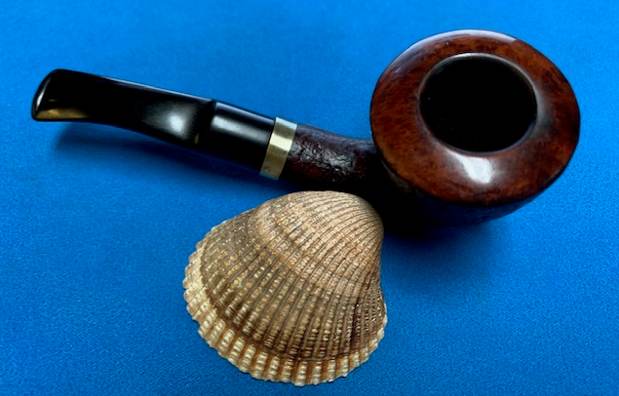
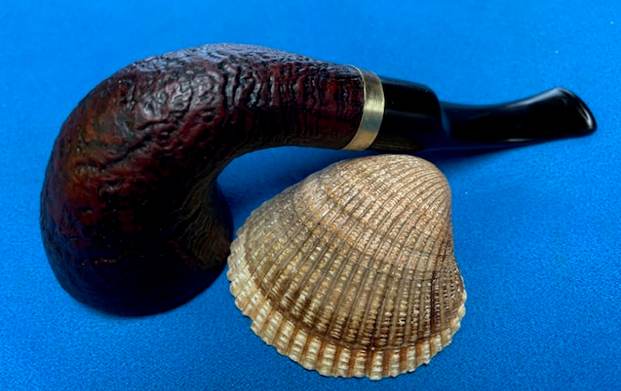
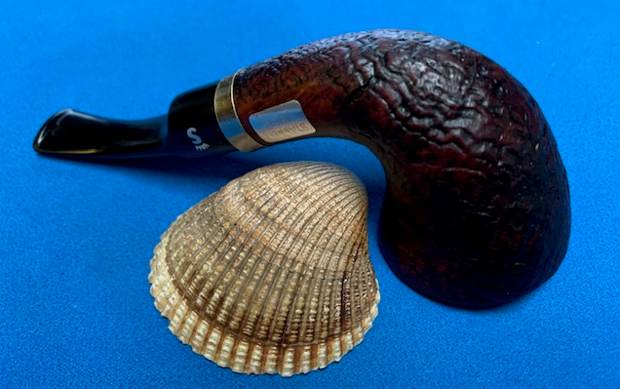
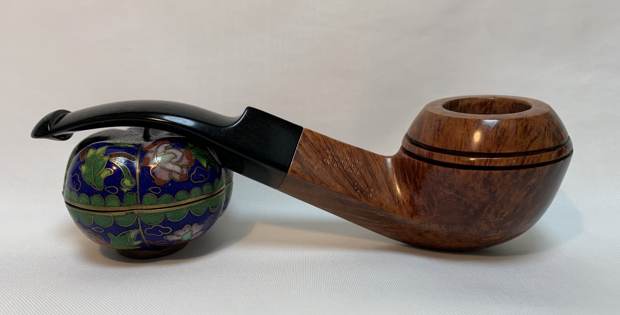
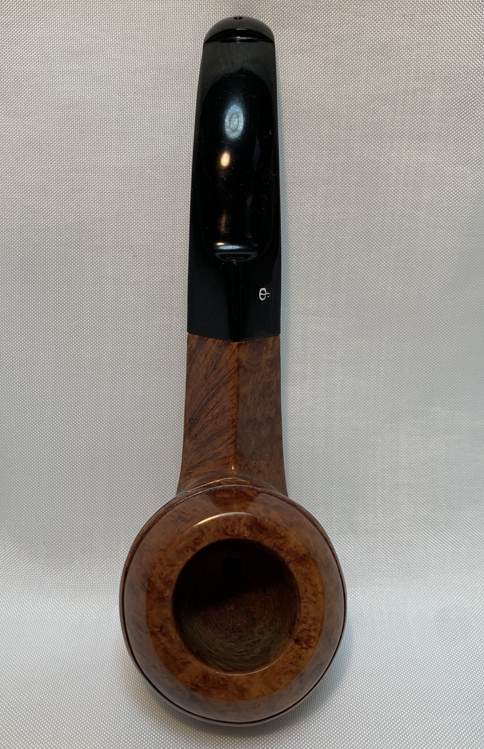
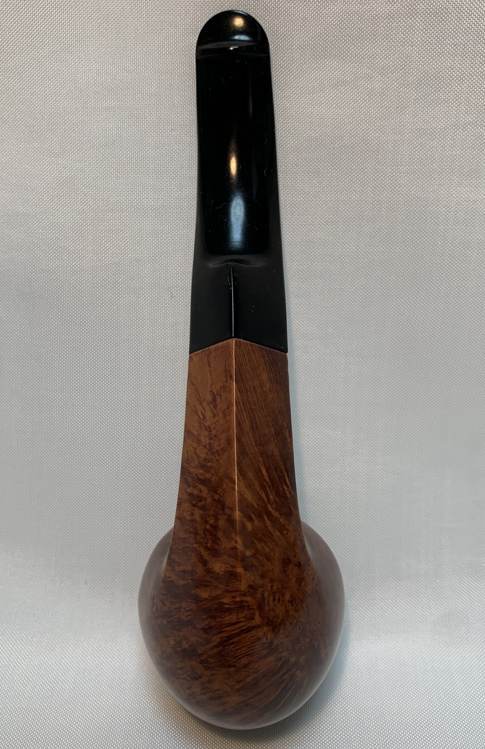
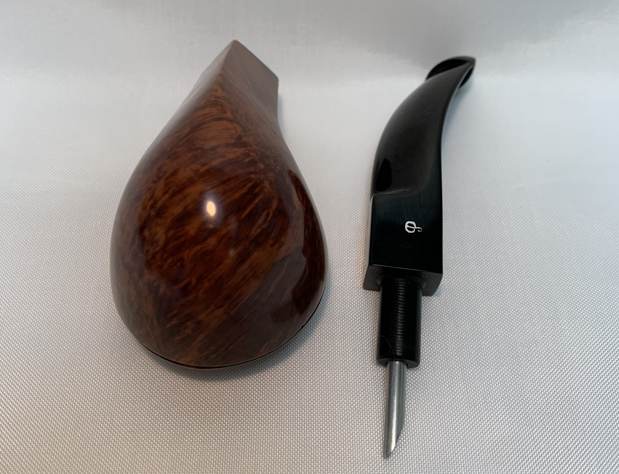
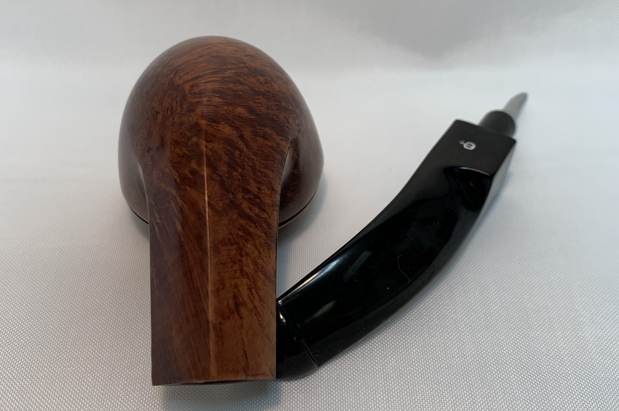
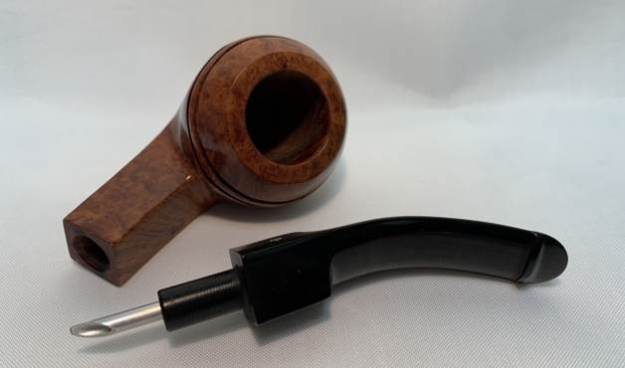
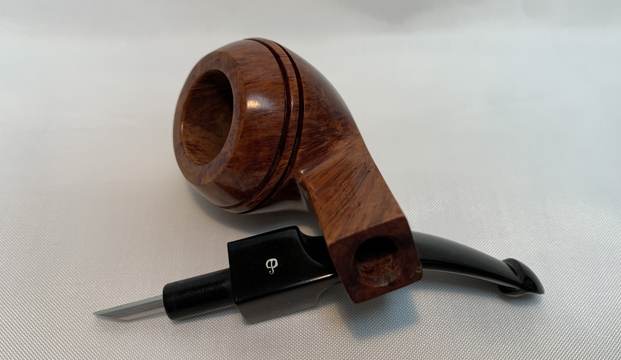
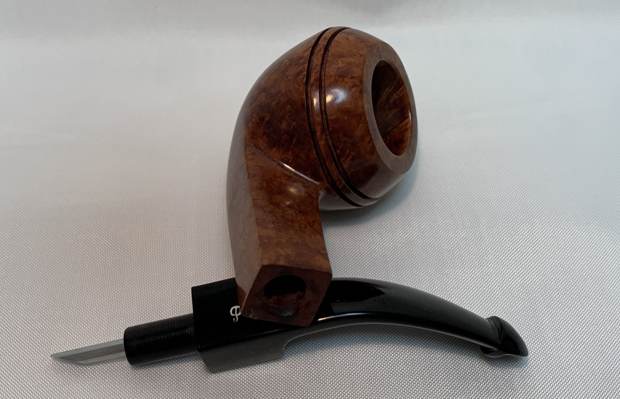
Tag Archives: topping a bowl

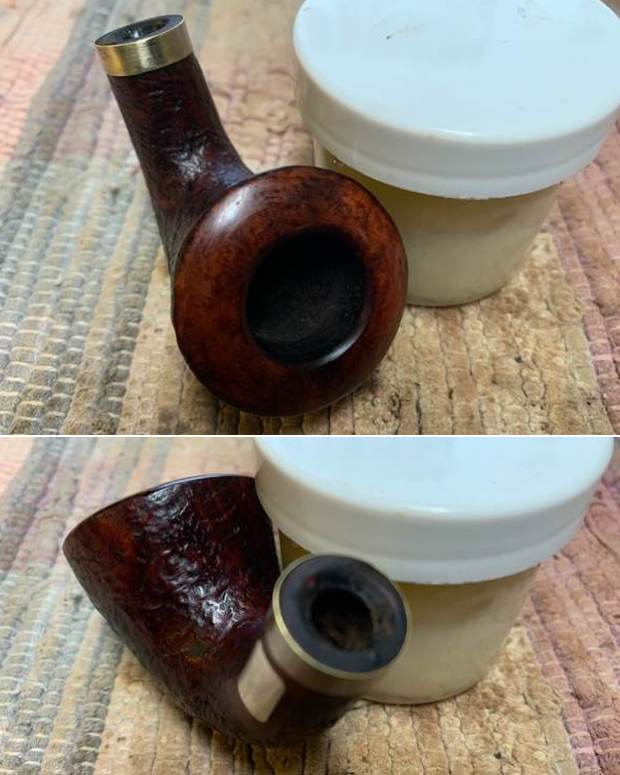
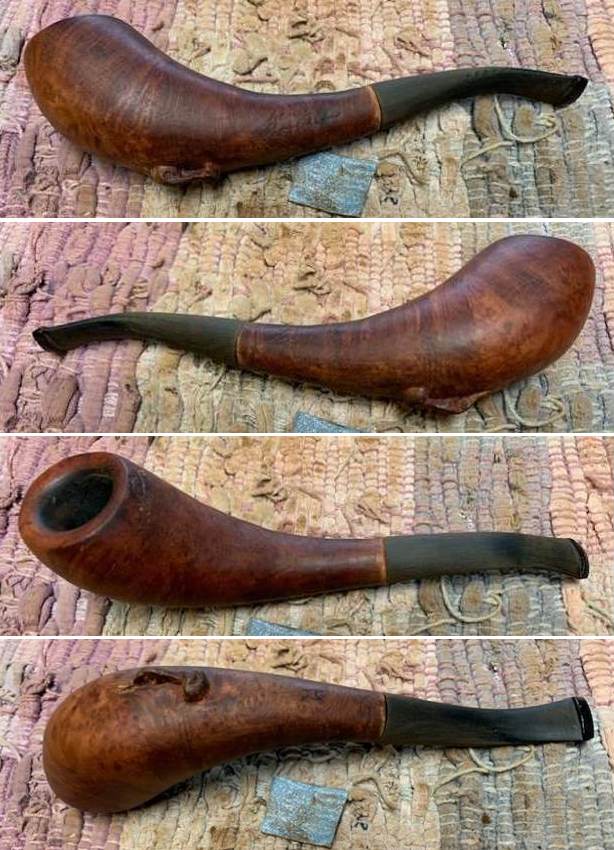
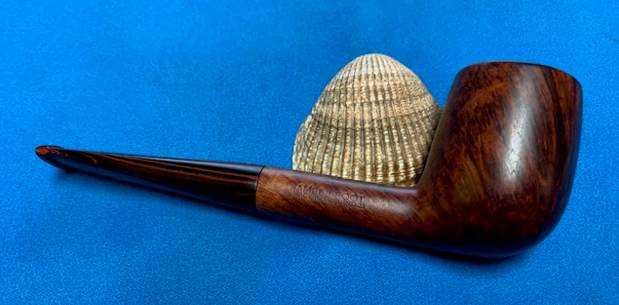
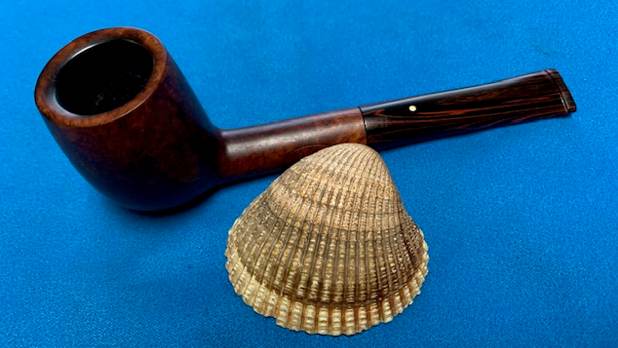
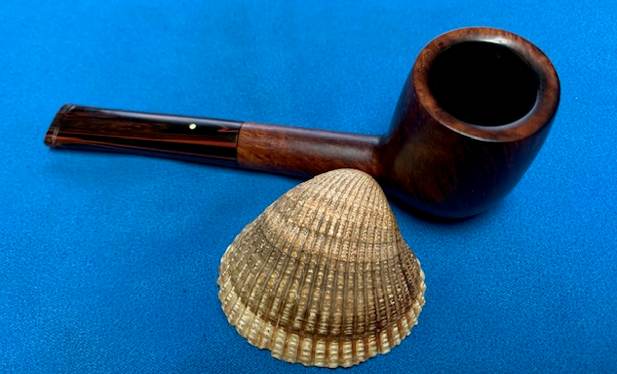
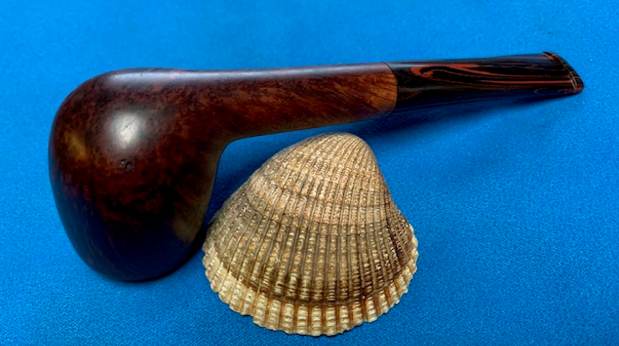
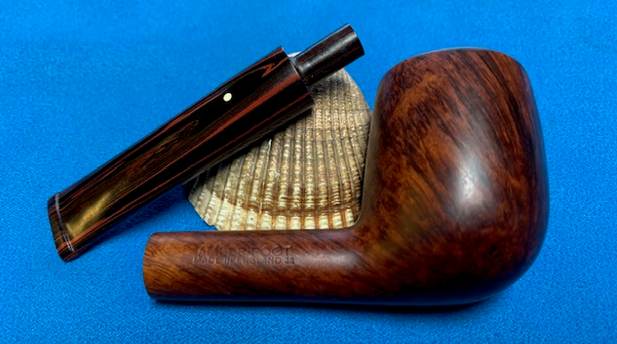
Restoring an Anderson S&R Hand Carved Acorn with a Fancy turned stem


Blog by Steve Laug

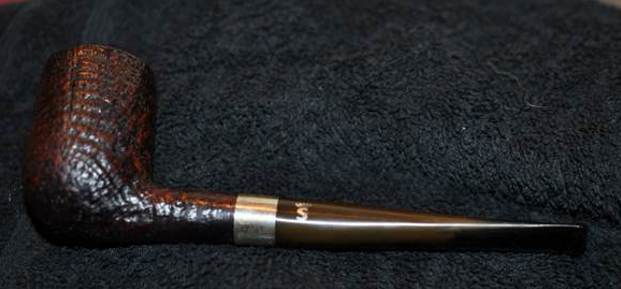
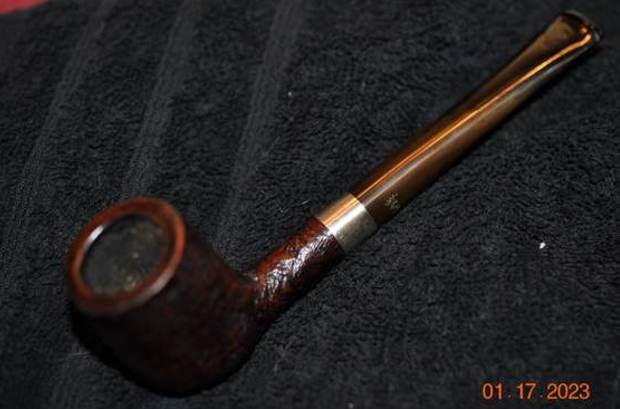
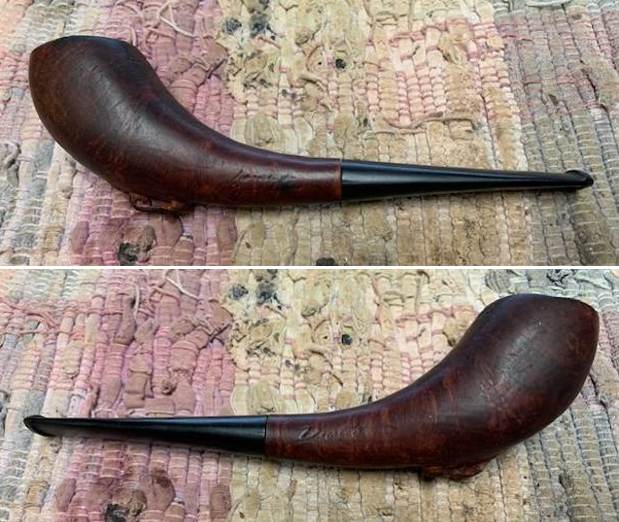
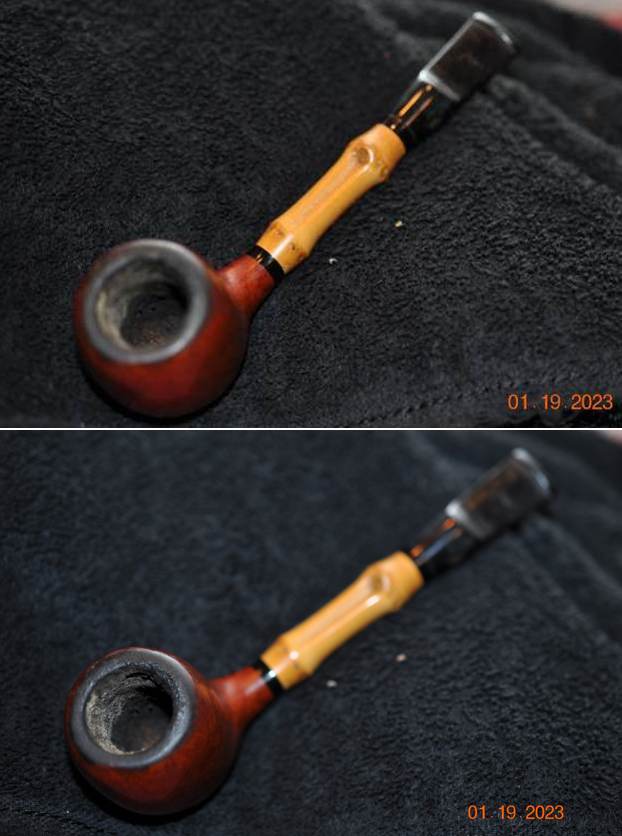
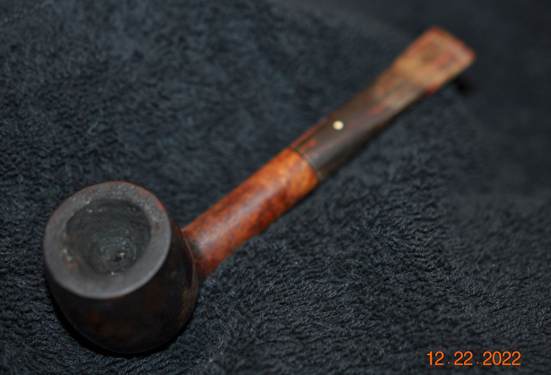
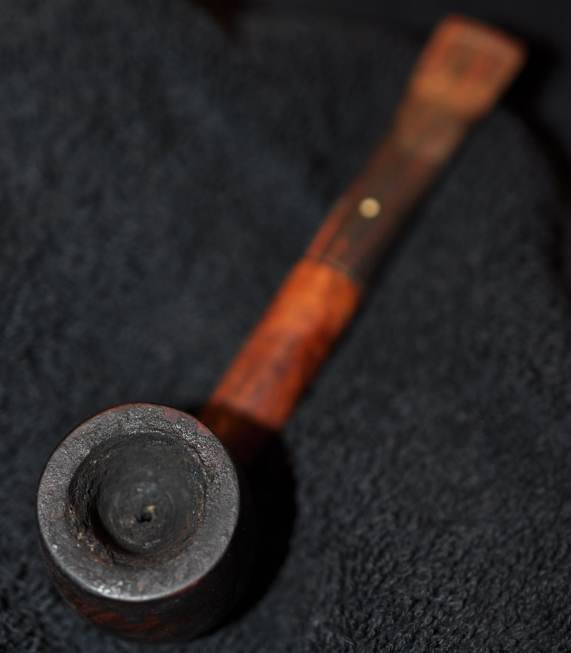
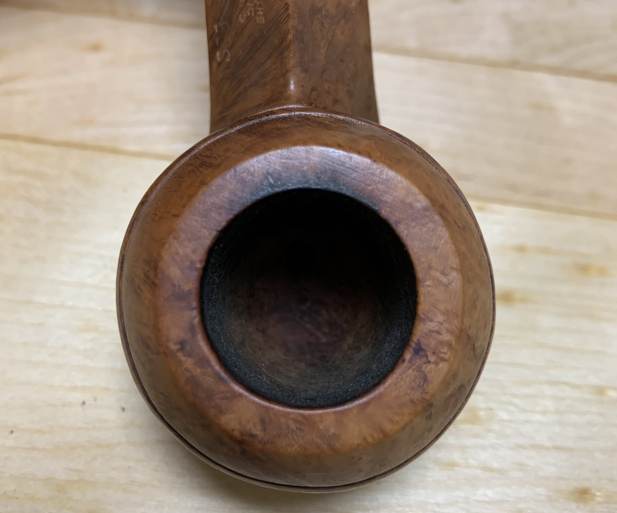
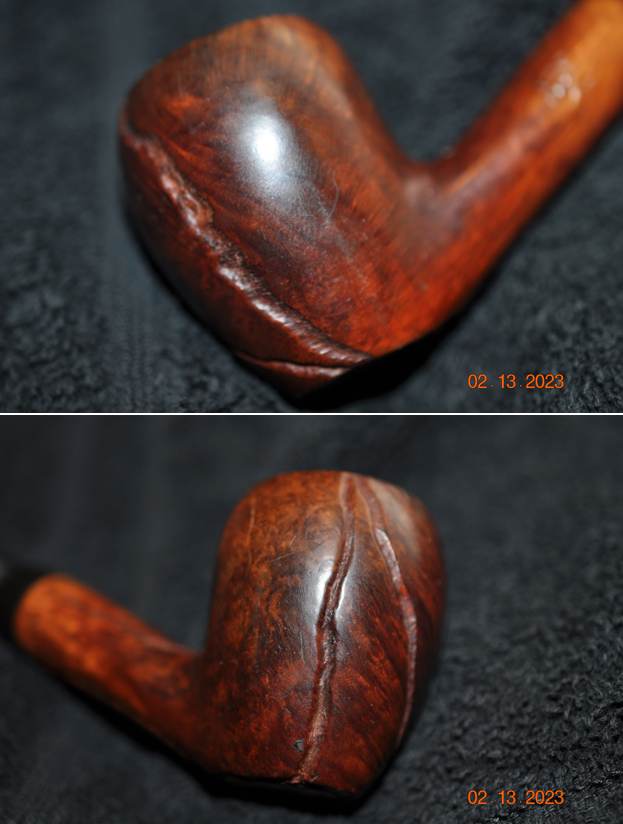
I am continuing with the same tack I have taken on the last five pipes I have worked on and take you through my process of working on each pipe that we purchase. Jeff has set up a spread sheet to track where the pipe came from, the date of purchase and what we paid for it so that we know what we have invested in the pipe before we even work on it. This takes a lot of the guess work out of the process. This particular pipe was purchased on 01/23/2023 in a group of pipes from a lady in Cincinnati, Ohio, USA. I also want you to understand why we take the photos we do. It is not accidental or chance as the photos have been taken to help me make an assessment of the pipe Jeff sees before he starts his clean up work. We do this to record the condition that the pipe was in when received it and to assess what kind of work will need to be done on. When I look at these photos this is what I see.

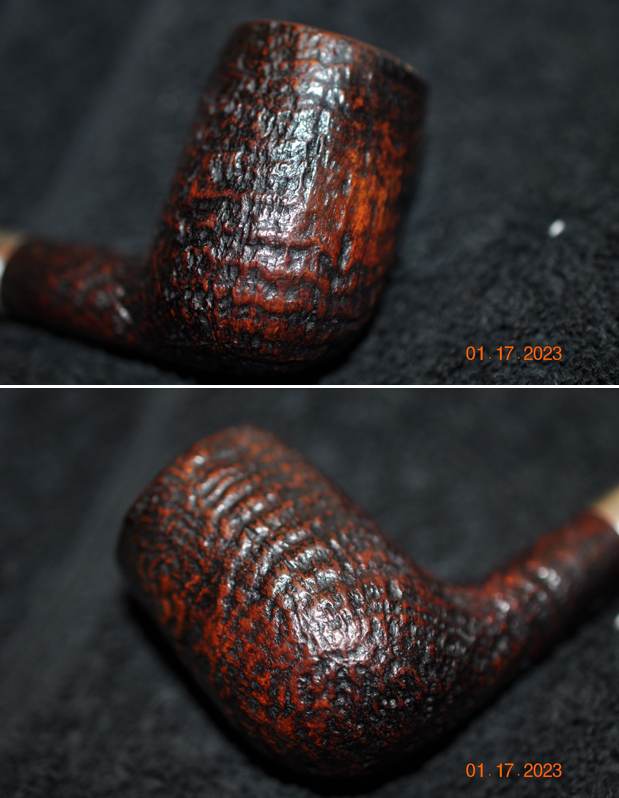
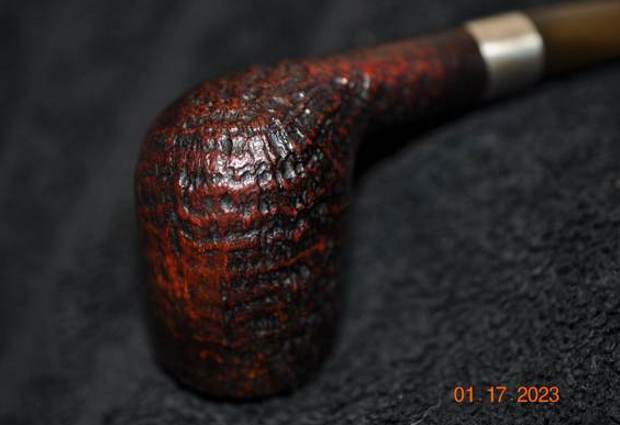
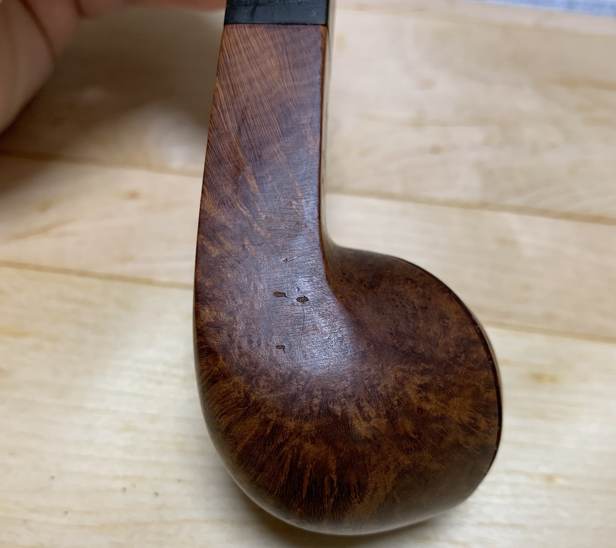
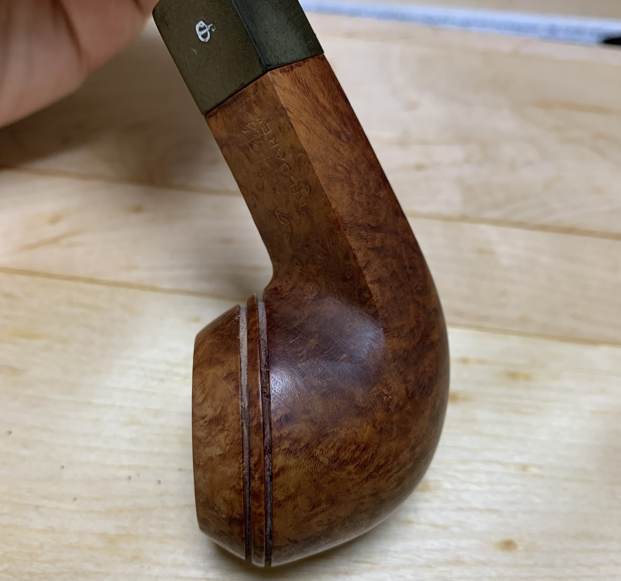
  1. The finish is dirty with oils darkening the bowl sides and shank. The worm trails carved around the bowl are dirty with dust and oils. This kind of darkening happens as the oils from our hands are absorbed by the briar and over time it grows dark.
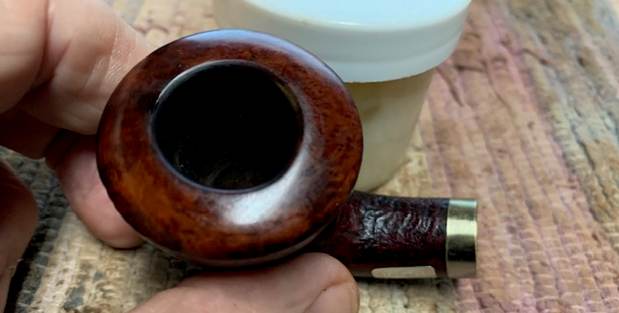
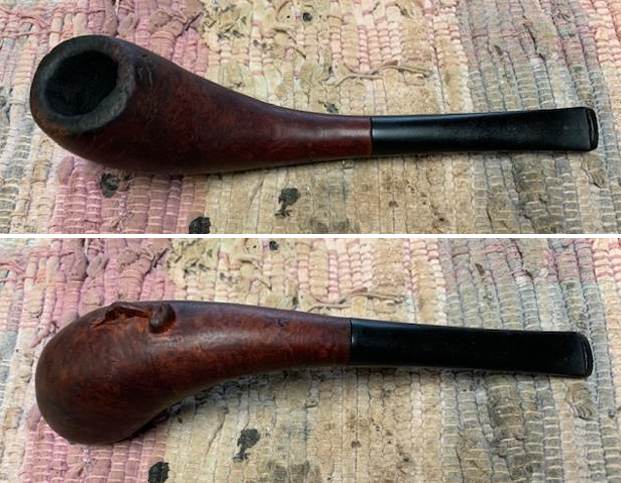
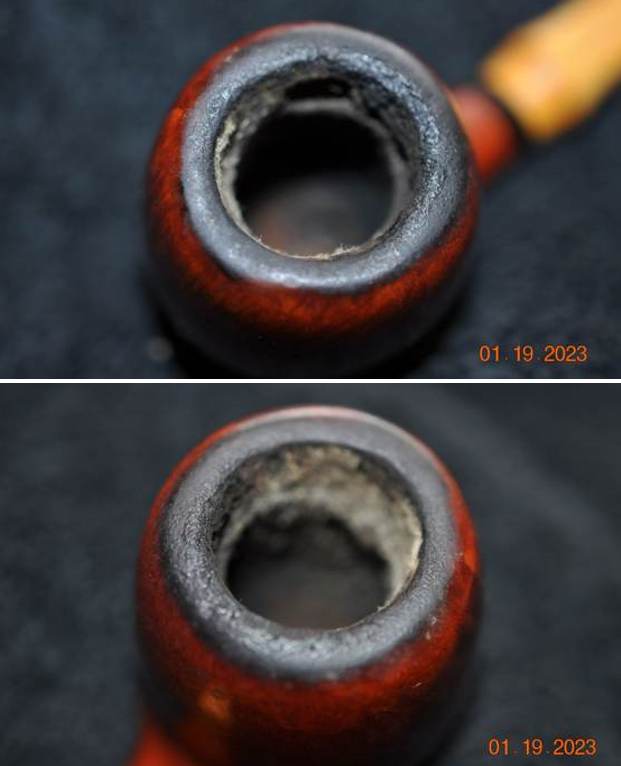
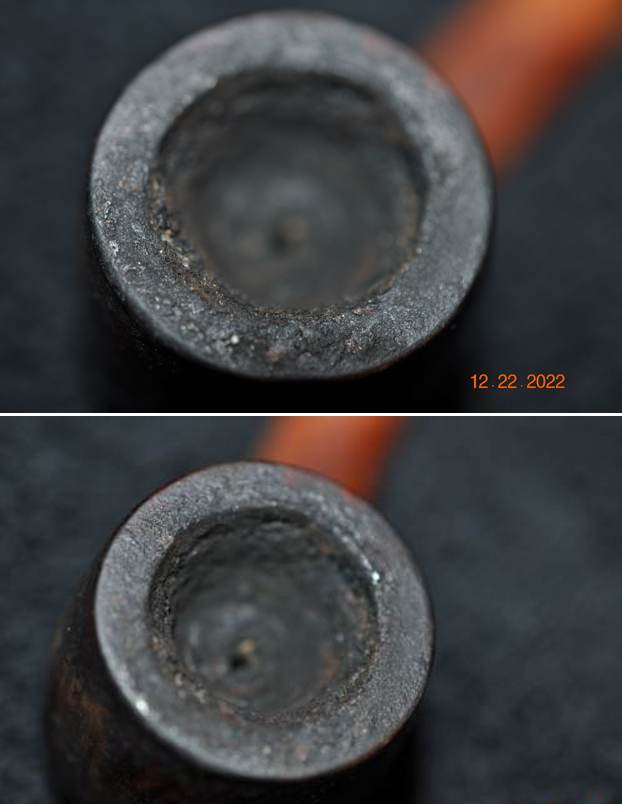
  2. The rim top is dirty and there is a lava overflow from the cake in the bowl and some darkening on the rim top. The rim top also shows damage from being knocked against some hard.
  3. The bowl has a thick cake in it but the inner bevel and outer edge of the bowl actually look to be undamaged other thank the scratches and darkening. There does not appear to be any burning or reaming damage to the edges of the bowl.
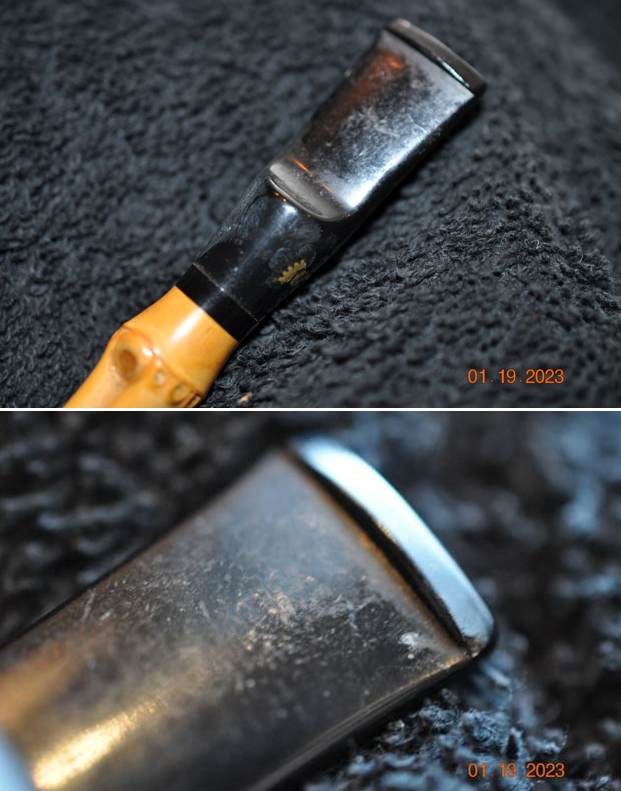
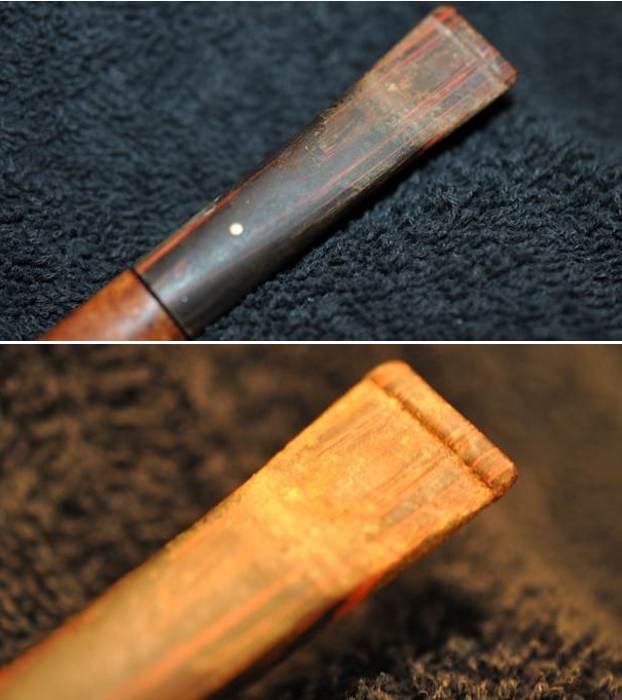
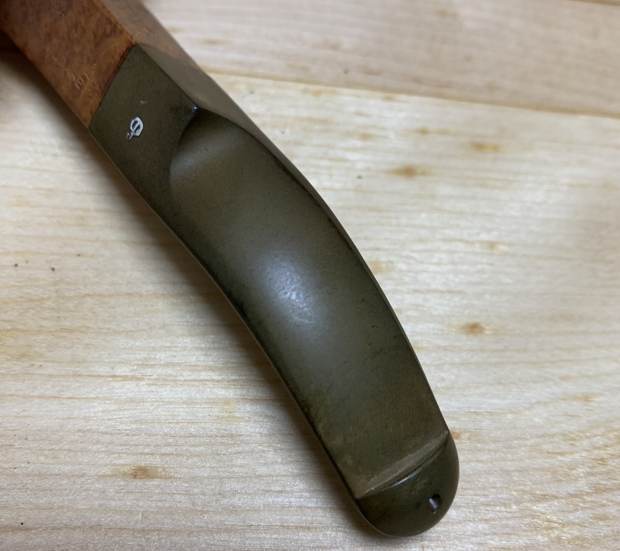
  4. The fancy turned stem is vulcanite and there is no logo in the surface.
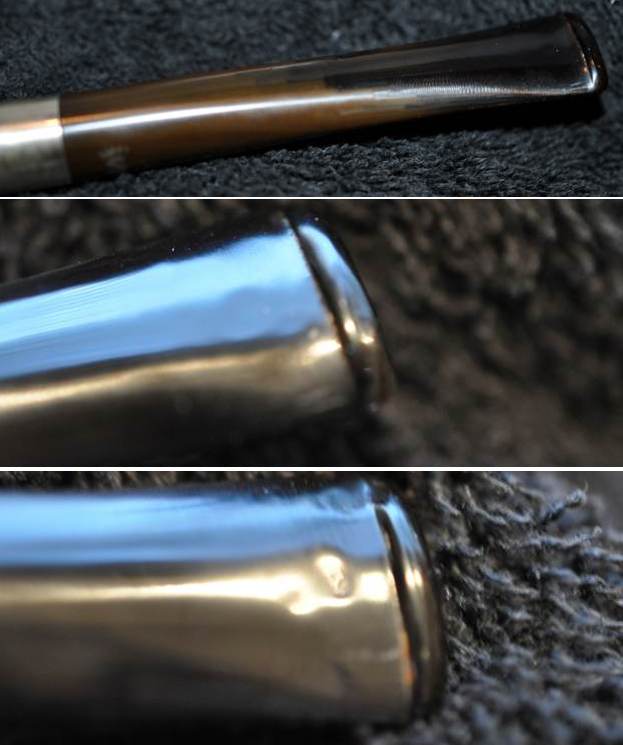
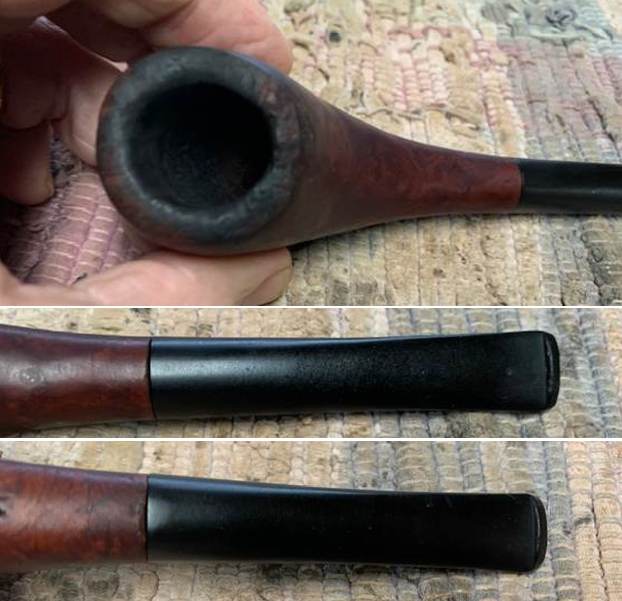
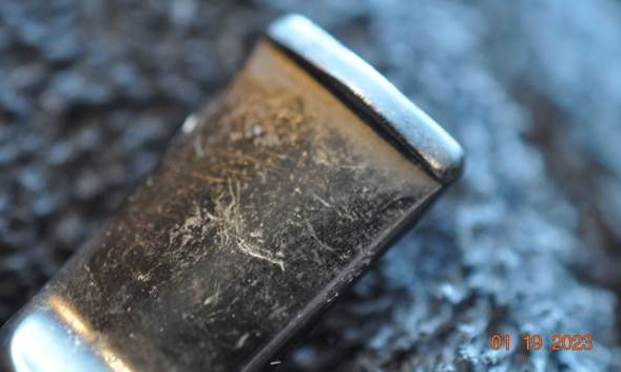
  5. The vulcanite stem has some light oxidation but was dirty. There were tooth marks and chatter ahead of the button that are visible in the photos below. Nothing to deep but nonetheless present.

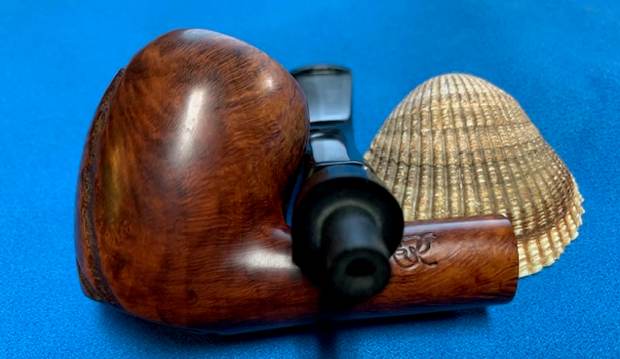
Overall my impressions of this unique hand made artisan pipe was that it was in solid shape with a lot of damage on the rim top and edges – nothing horrible but knocked hard against a hard surface throughout its trust with the last person who smoked it. The cake does not seem to hide any burns or checking but I will know more once it is cleaned and reamed. The exterior of the bowl does not show any hot spots but with the darkening by hand oils it is very hard to know with certainty. It is a good looking pipe in spite of the poor care it has had. The photos below confirm the assessment above. Hopefully as you have learned from the last few blogs we always include close up photos of key areas on the pipe we buy. We do this so that I can have a clearer picture of the condition of the bowl and rim edges and top since Jeff does the clean up and we live quite far apart. The rim top photos confirm my assessment above. The cake in the bowl is quite thick and the rim top has some lava and debris in the grooves that will need to come off. You can also see the condition of the inner and outer edges of the rim. While it is beat up and nicked you can also see that there does not appear to be any over reaming or burn damage to the edges. This is what I look for when assessing a pipe. Even with all of the abuse the bowl is still round. His photos of the stem surface confirmed and heightened my assessment of the condition. You can see the light oxidation on the stem surface. You can see the appearance of the tooth marks on the stem surface ahead of the button on both sides. Remember that we include photos of the sides and heel of the bowl for me to do a more thorough assessment of the condition of the briar and the finish before I have it in hand. The darkening on the finish is definitely oils as the grain shows through clearly and cleaning should remove that. There were no cracks or splits following the grain or coming down from the rim edges. There were no cracks in the shank. I also look for flaws in what I call the worm trail carvings as they can be used to hide flaws in the briar. In this case the bowl exterior is sound and should clean up very well. We take photos of the stamping so I can see if it is faint in any spots or double stamped or unclear. It often takes several photos to capture what I am looking for. The stamping on the left side of the shank is clear and readable in the pictures below. This stamp often fools folks and they cannot identify the maker. It is simply an “S” incorporating a stylized pipe curving toward the shank end and it is crossed by an “R” utilizing the shank and stem of the “S” pipe to form the back leg of the “R”. Hopefully that helps you to identify the stamp clearly. For me researching the brand and the maker are an important part of the restoration process. It gives me the background on the philosophy of the pipemakers as well as an understanding of their perspective in making a pipe. That is why I generally include it in my restoration write ups. It is important for me and it is important in educating us on those who have left behind a rich heritage. Here is what I have found on this brand and how I carry on the hunt for data. I turned to Pipedia and read the article that was included there (https://pipedia.org/wiki/S%26R_Pipes). I quote in full below:
Stephen and Roswitha Anderson of S&R Pipes, also known as S&R Woodcrafters, have become pipe makers renowned throughout the world as talented carvers of high-grade briar pipes. They have been featured in several trade publications and magazines such as Pipes and Tobaccos and PipeSmoker, and have several pieces on display in museums in Europe and the United States.

They are the first American pipe carvers honored with induction into the Conferee of Pipe Makers of St. Claude, France; the very place where the carving of briar pipes became a world-wide industry. Sadly, Steve passed away in March of 2009. Roswitha is still carving S&R pipes and carrying on with the shop with help from her “guys” David, Marty, and Tony.

Steve and Roswitha began carving pipes in the 1960’s. They travelled to pipe shows and arts and crafts shows throughout the country and Europe selling their pipes and built up quite an extensive loyal customer base. Eventually, it became time to offer their pipes to the retail fraternity of pipe smokers.

Pipes & Pleasures had its grand opening in a distinct red brick house on Main Street in Columbus, Ohio in 1977. The front section of the house was converted into a traditional tobacco shop selling pipe tobacco, cigars, and pipes manufactured by well known companies such as Dunhill, Charatan, and Savinelli as well as the high-grade S&R pipes that Steve and Roswitha carved. A workshop was set up in the back section of the house.

When the cigar boom hit in the ’90’s, the shop was expanded by building a large computer controlled walk-in humidor. It’s no secret throughout the country that Pipes & Pleasures has the best maintained cigars in the Columbus area as well as the best selection of premium cigars available in the area including the much sought-after Davidoff line.

Soon after the boom began, Steve and Roswitha moved their pipe making workshop to their farm and converted that space into a large smoking lounge for their many customers. The lounge features comfortable easy chairs, a television set, a stereo, a library of books and magazines about every aspect of tobacciana, a chess table, and a couple of card tables. The lounge is populated daily with long-time loyal customers and newcomers to the enjoyment and relaxation of cigar and pipe smoking. It’s also the room where several cigar tastings and samplings are held every year by representatives from cigar companies such as Davidoff and La Flor Dominicana.

I captured a photo of the shop from the Pipedia article to include below. It is a great looking shop.
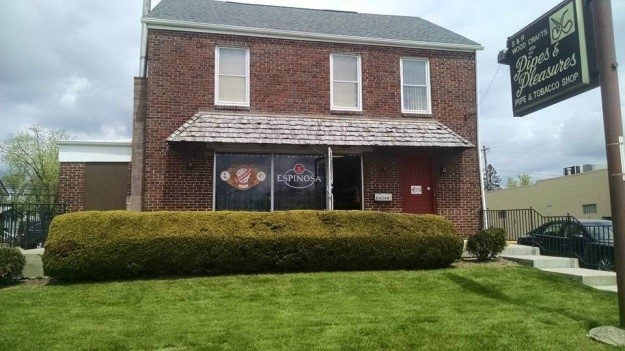
The Pipes & Pleasures shop, home of S&R Woodcrafters.

From there I turned to the website for Pipes & Pleasures and copied the “About Us” section. Here is the link to the site (https://www.pipesandpleasures.biz/maintenance). I quote in part.

Pipes & Pleasures proprietors Stephen and Roswitha Anderson have become pipe makers renowned throughout the world as talented carvers of high-grade briar pipes. They have been featured in several trade publications and magazines such as Pipes and Tobaccos and PipeSmoker, and have several pieces on display in museums in Europe and the United States. They are the first American pipe carvers honored with induction into the Conferee of Pipe Makers of St. Claude, France; the very place where the carving of briar pipes became a world-wide industry.

Steve and Roswitha began carving pipes in the 1960’s. They travelled to pipe shows and arts and crafts shows throughout the country and Europe selling their pipes and built up quite an extensive loyal customer base. Eventually, it became time to offer their pipes to the retail fraternity of pipe smokers…

…Sadly, Steve passed away in March of 2009. Roswitha is still carving S&R pipes and carrying on with the shop with help from her “guys” David, Marty, and Tony, who welcome you to this website.

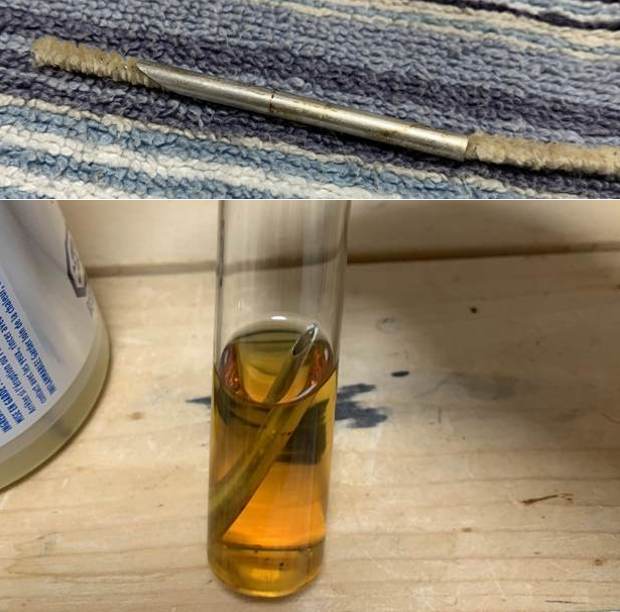
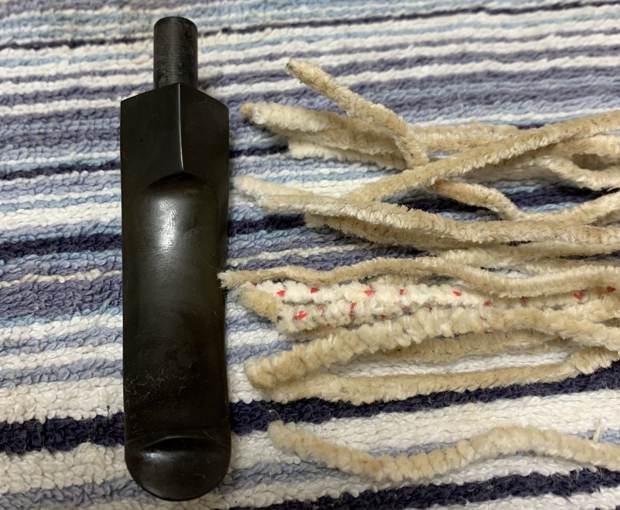
While I am sure that some of you will skip the next section of this blog I encourage you to read the process that we use to clean our pipes. It is an important part of the our work of restoration. Jeff wrote a detailed blog about his cleaning process. I am including a link to that now so you can see what I mean about his process. Do not skip it! Give it a read (https://rebornpipes.com/2020/01/20/got-a-filthy-estate-pipe-that-you-need-to-clean/). Here is the introduction to that blog and it is very true even to this day.

Several have asked about Jeff’s cleaning regimen as I generally summarize it in the blogs that I post rather than give a detailed procedure. I have had the question asked enough that I asked Jeff to put together this blog so that you can get a clear picture of the process he uses. Like everything else in our hobby, people have different methods they swear by. Some may question the method and that is fine. But it works very well for us and has for many years. Some of his steps may surprise you but I know that when I get the pipes from him for my part of the restoration they are impeccably clean and sanitized. I have come to appreciate the thoroughness of the process he has developed because I really like working on clean pipe!

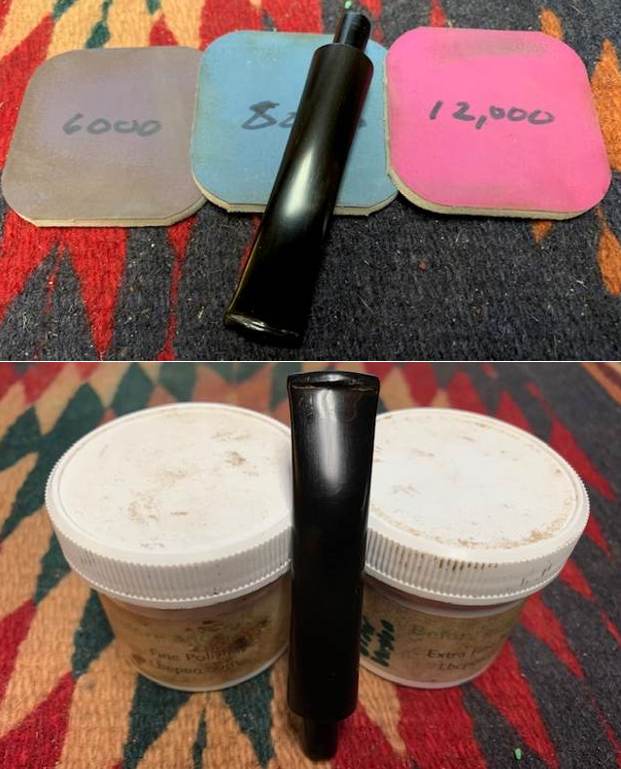
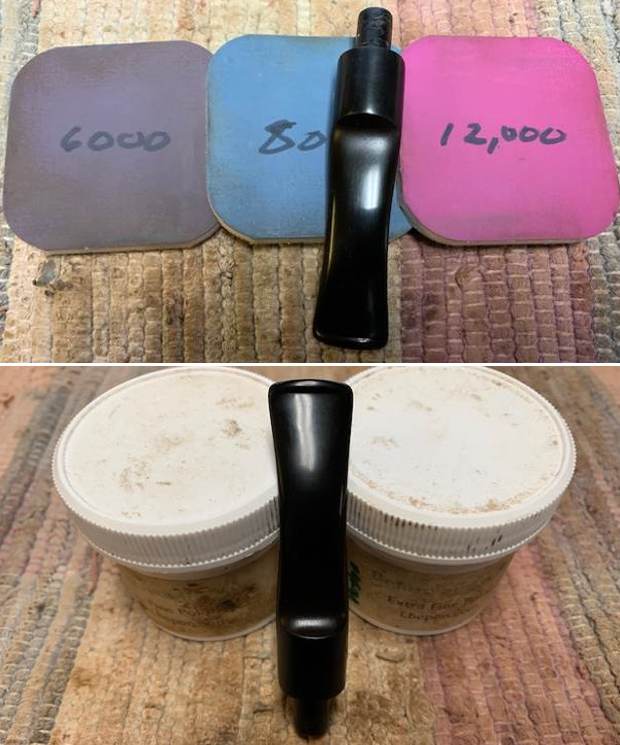
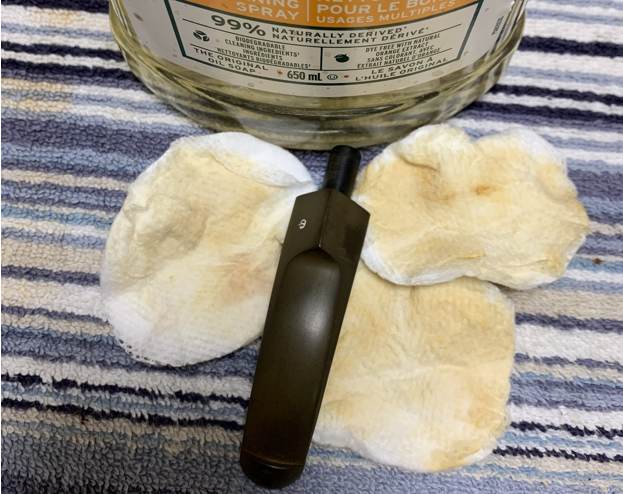
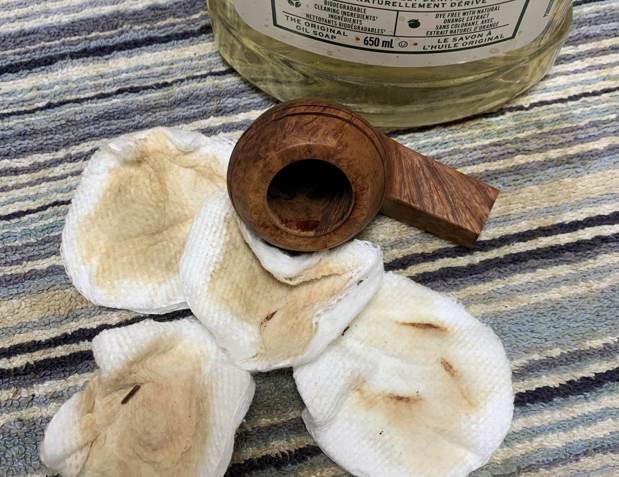
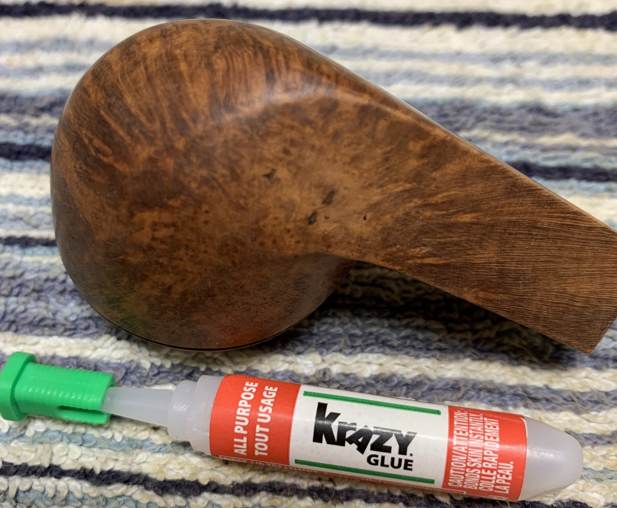
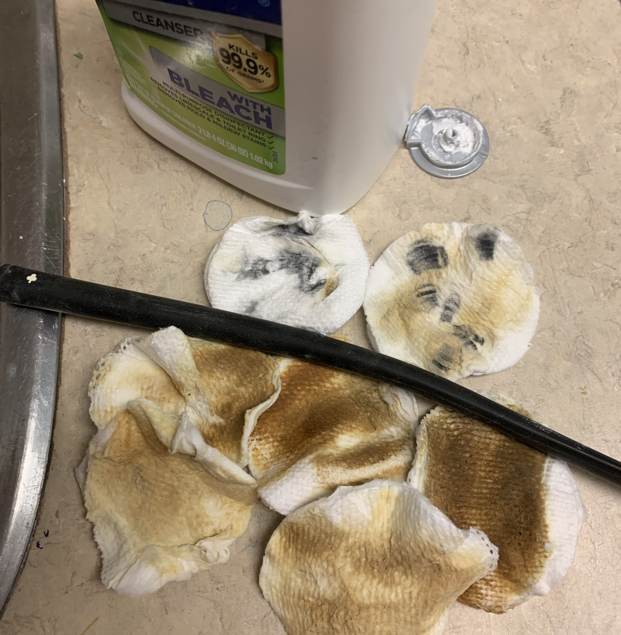
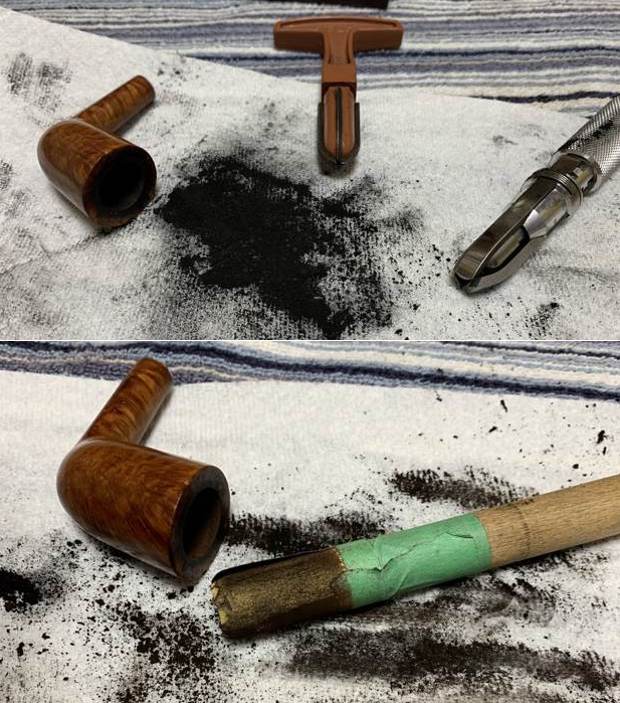
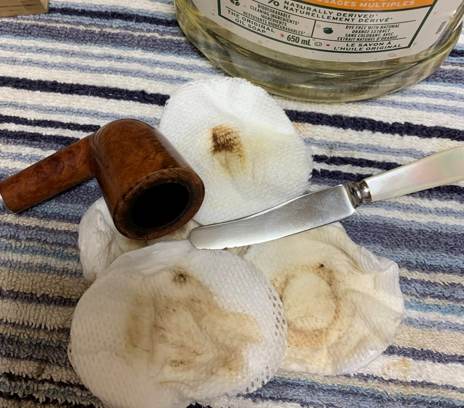
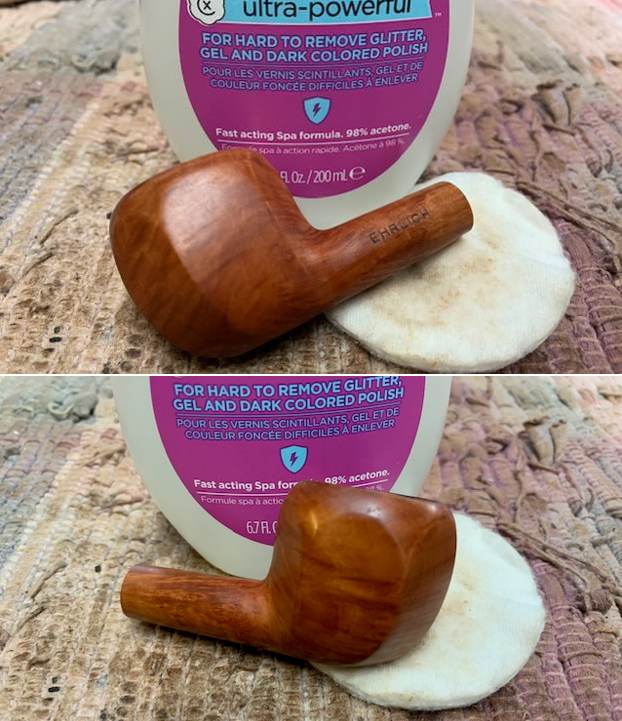
For the benefit of some of you who may be unfamiliar with some of the products he uses I have included photos of three of the items that Jeff mentions in his list. This will make it easier for recognition. These three are definitely North American Products so you will need to find suitable replacements or order these directly on Amazon. The makeup pads are fairly universal as we were able to pick some up in India when we were with Paresh and his family.

In the blog itself he breaks his process down into two parts – cleaning the stem and cleaning the bowl. Each one has a large number of steps that he methodically does every time. I know because I have watched him do the work and I have seen the pipes after his work on them. He followed this process step by step and when the pipe got to me it was spotlessly clean and ready for my work. The inside of the stem, shank and bowl were clean and to me that is an amazing gift as it means that my work on this end is with a clean pipe! I cannot tell you how much difference that makes for my work.

When the pipe arrives here in Vancouver I have a clean pipe and I go over it keeping in mind my assessment shared in the opening paragraph above. I am looking for any significant structural changes in the bowl and finish as I go over it.

  1. The finish cleaned up really well and the oils and grime ground into the briar have been removed. The grooves in the finish (worm trails) are also clean revealing the carving marks in the. The was very clean and looked much better. With all the grime removed there was some excellent grain coming through.
  2. The carved rim top cleaned up well, though was still some darkening on the briar and some damage on the right front inner edge showed up in the clean up. Some of the nicks in the briar lifted during the clean up as well and it looks better.
  3. The bowl was very clean and the top and inner edge of the bowl show some damage is noted in number 2 above. The bowl walls are also very clean and smooth with no checking or burn marks on the inside or out of the bowl. The walls were undamaged.
  4. The fancy turned vulcanite saddle stem looks good’
  5. The vulcanite stem clearly shows the tooth marks and chatter ahead of the button that that will need to be addressed.

Hopefully the steps above show you both what I look for when I go over the pipe when I bring it to the work table and also what I see when I look at the pipe in my hands. They also clearly spell out a restoration plan in short form. My work is clear and addressing it will be the next steps. I took photos of the whole pipe to give you a picture of what I see when I have it on the table. This is important to me in that it also shows that there was no damage done during the clean up work or the transit of the pipe from Idaho to here in Vancouver. Also things stand out that I did not see in the photos. For instance I did not note the flat bottom on the bowl. It appears to have been made into a sitter however with the stem in place it did not sit. Minus the stem it sat upright on its own.
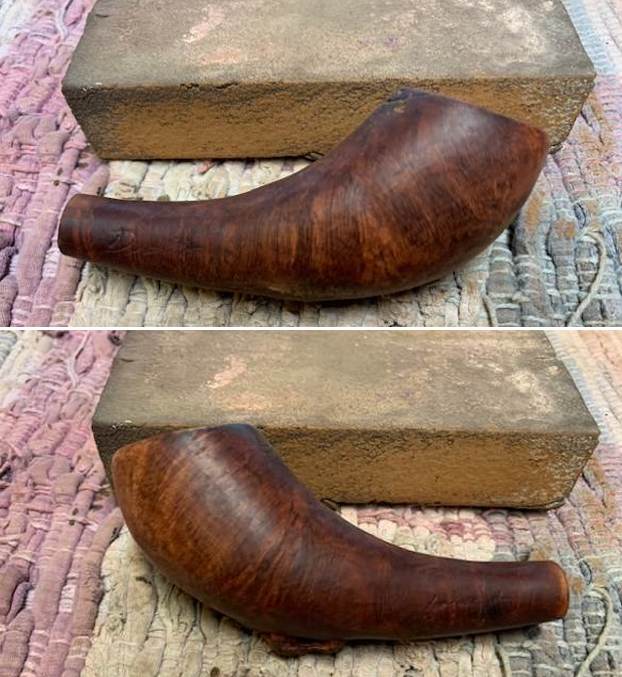
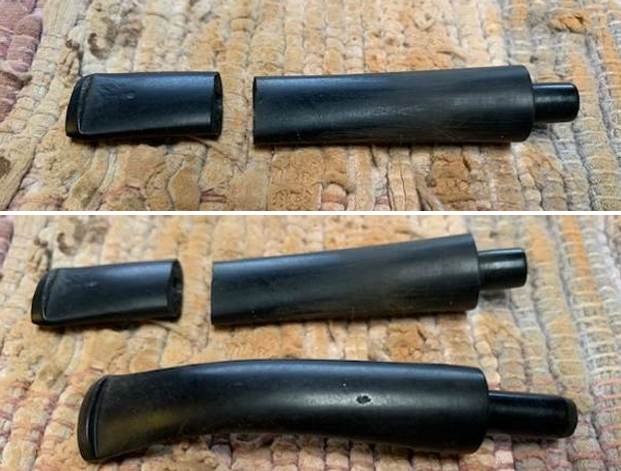
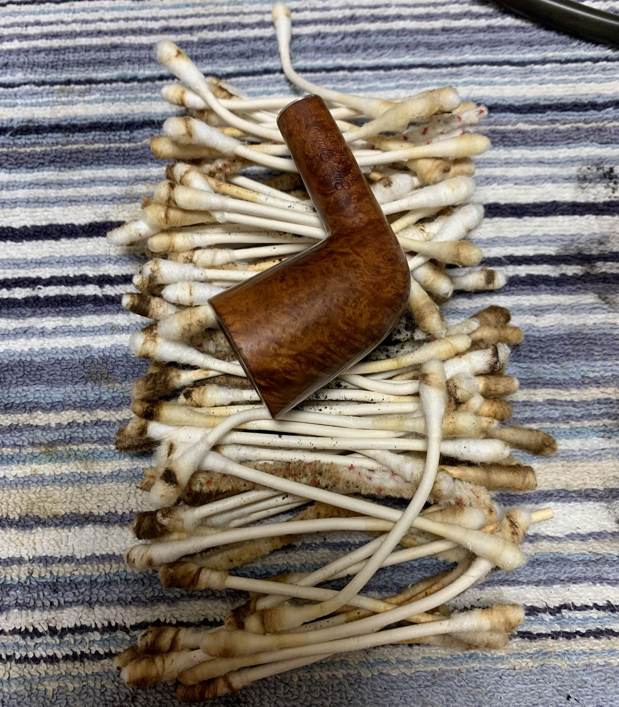
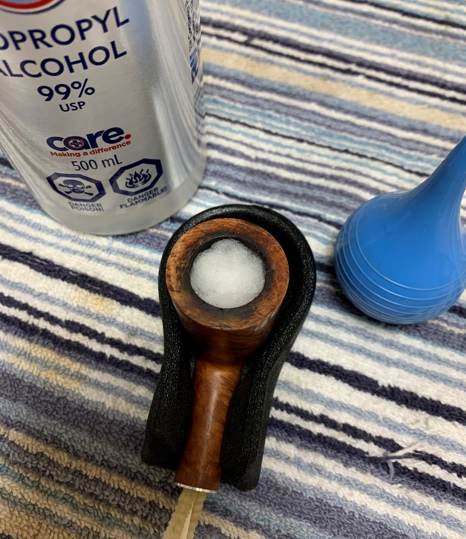
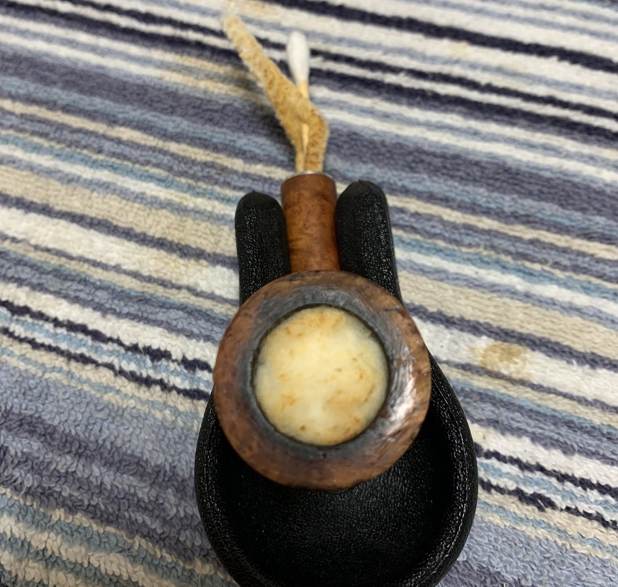
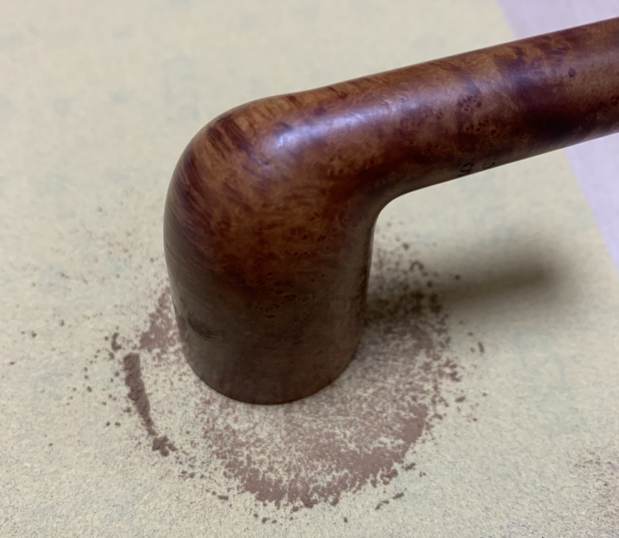
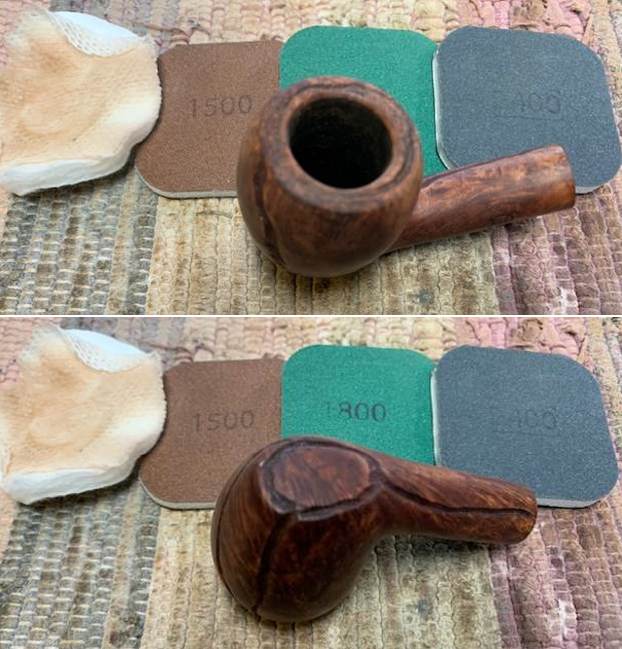
I then spent some time going over the bowl and rim top to get a sense of what is happening there. The bowl looked very good and the walls were smooth. There was no damage internally. The rim top was clean and I could clearly see the worm trail carving around the rim top. It was clean and clear. There as some damage on the rim top and inner and outer edge particularly at the front of the bowl that would need to be dealt. There were also nick on the top of the shank. I also went over the stem carefully. There were dents in the stem that are visible in the photos. But the good news is that the tooth marks were not deep and did not seem to puncture the airway. They would clean up well. I examined the button edge and was happy to see that the marks there were not too bad and should be able to be sanded out. I took photos of the rim top and stem sides to show as best as I can what I see when I look at them.As usual I checked the stamping to make sure that the clean up work did not damage the stamping on the shank in any way. I know Jeff is cognizant of this but I do it anyway and take a photo to show what I see when I examine it. In this case it has not changed at all from the pictures I included above. It is clear and distinct. I removed the stem from the shank and checked the tenon and lay the parts of the pipe out to get a sense of the proportion that was in the mind of the pipe maker when he crafted the pipe. It is a beauty in flow and shape.Remember the question of where to begin the restoration work is a matter of personal preference. If you read rebornpipes much you will see that each of the restorers who post here all start at different points. Kenneth always starts with the stems, others as well do that. I personally like to start with the bowl because it gives me hope that this pipe is really a beauty. I think that is why I always leave the stem until last even though I know that it needs to be done. So if you are restoring your pipes choose where you want to start and go from there. Just know that it all will need to be done by the end but for me the encouragement of seeing a rejuvenated bowl is the impetus I need to attack the stem work.

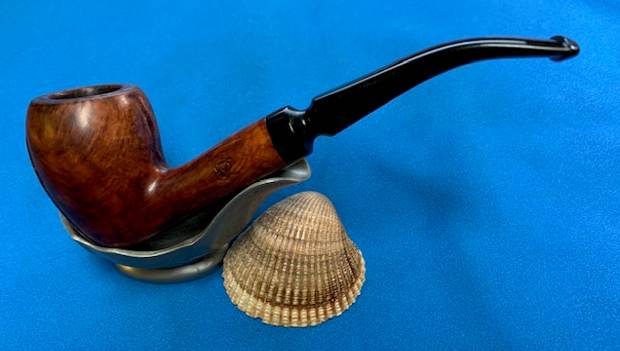
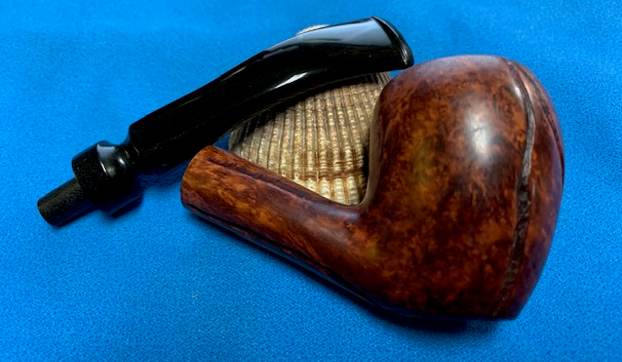
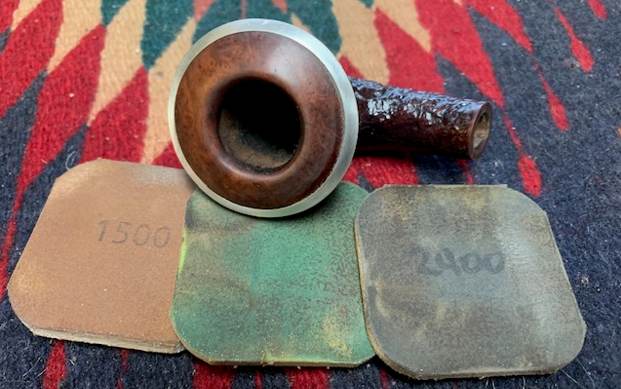
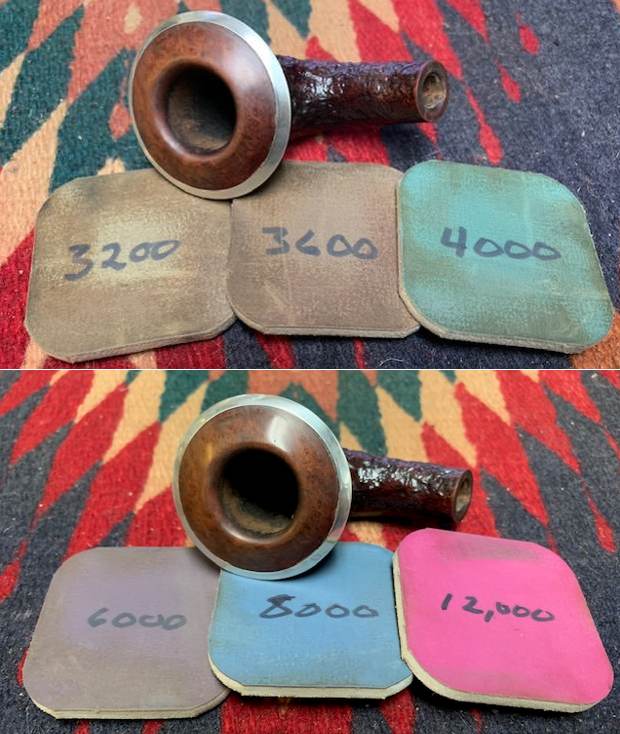
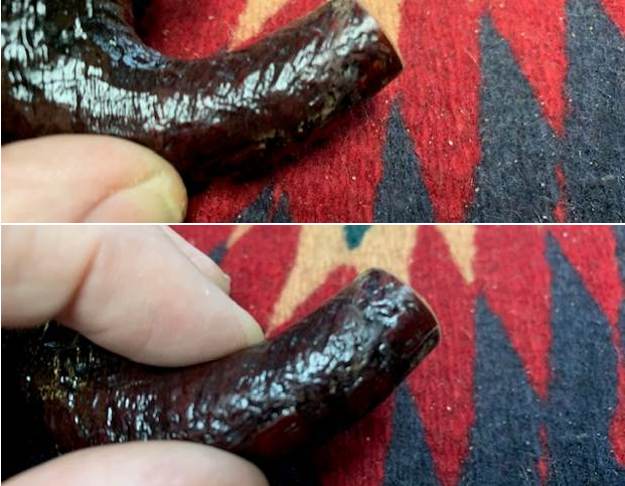
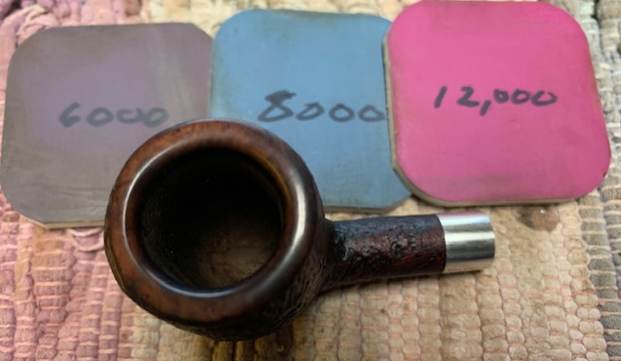
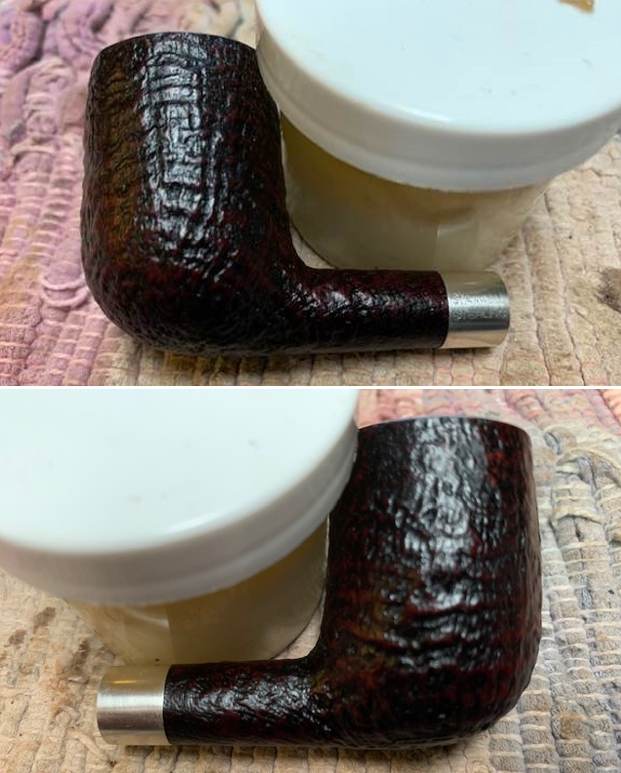
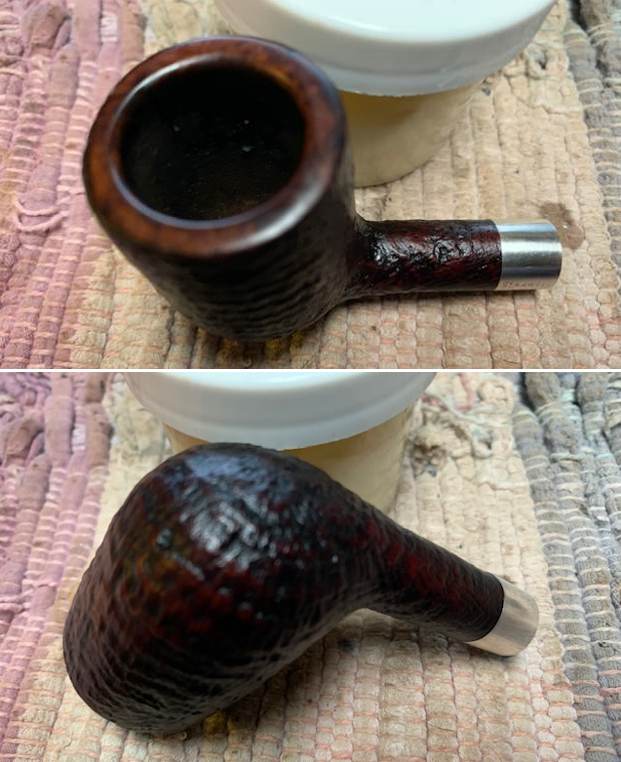
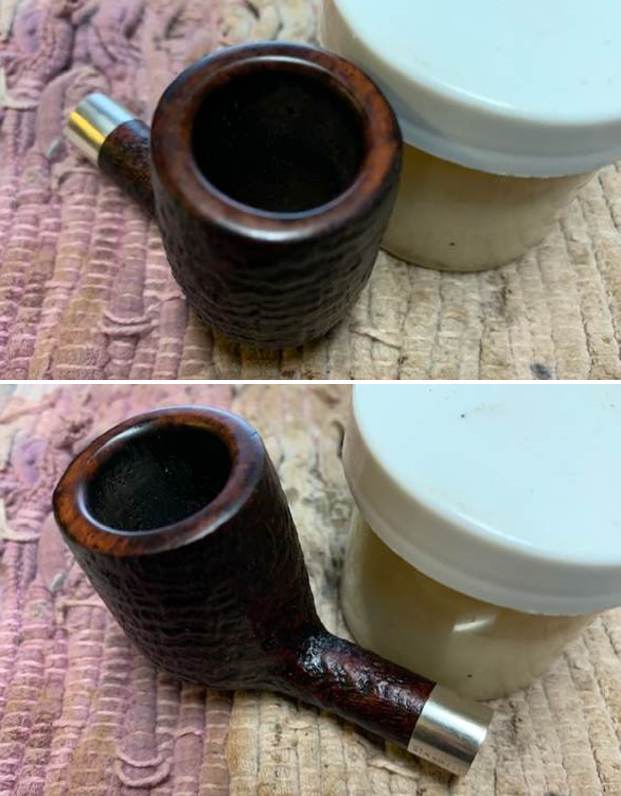
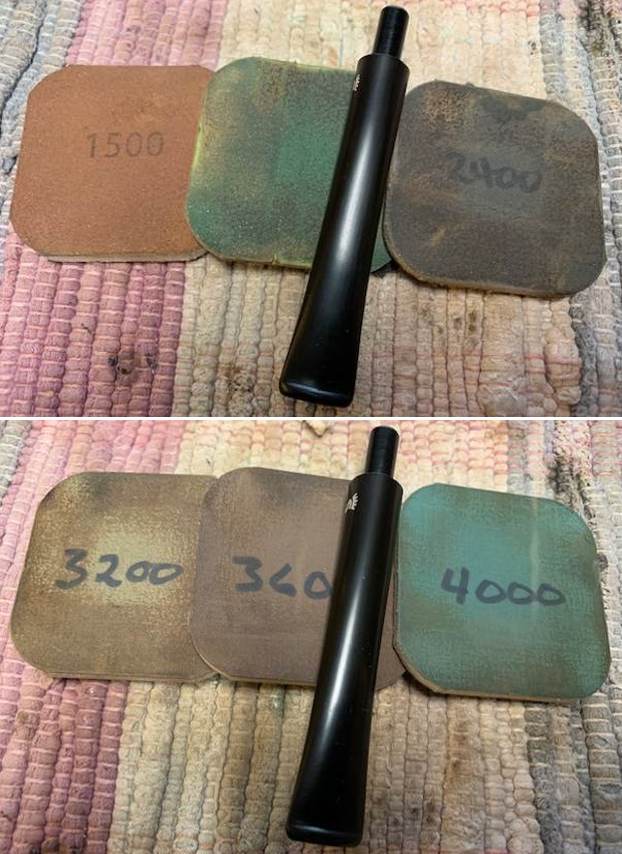
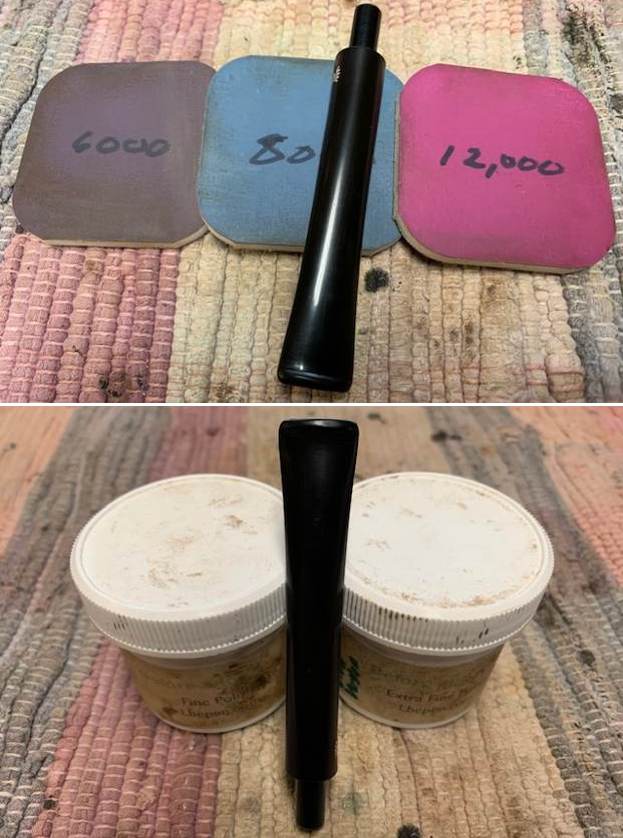
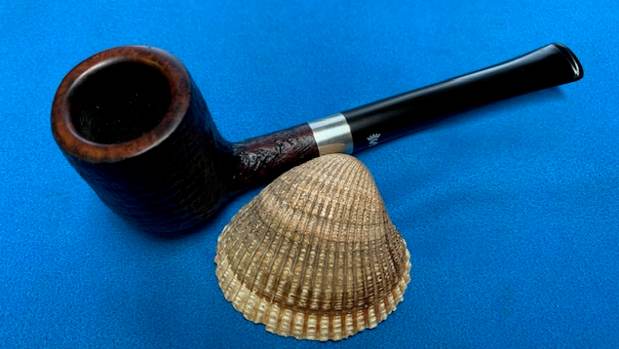
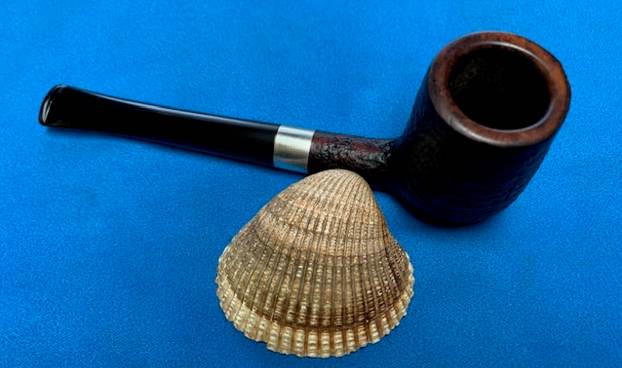
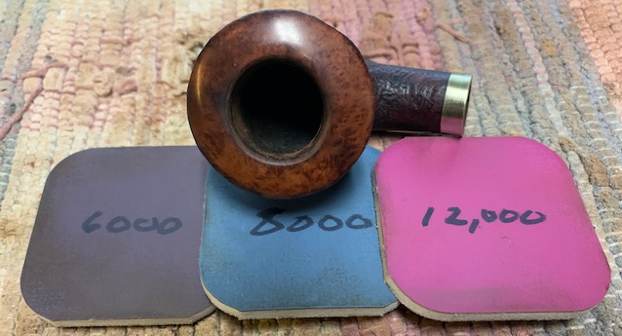
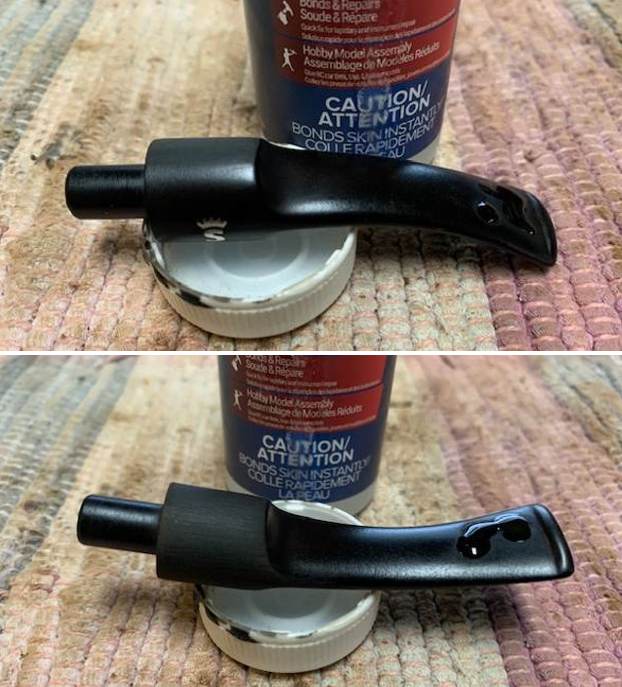
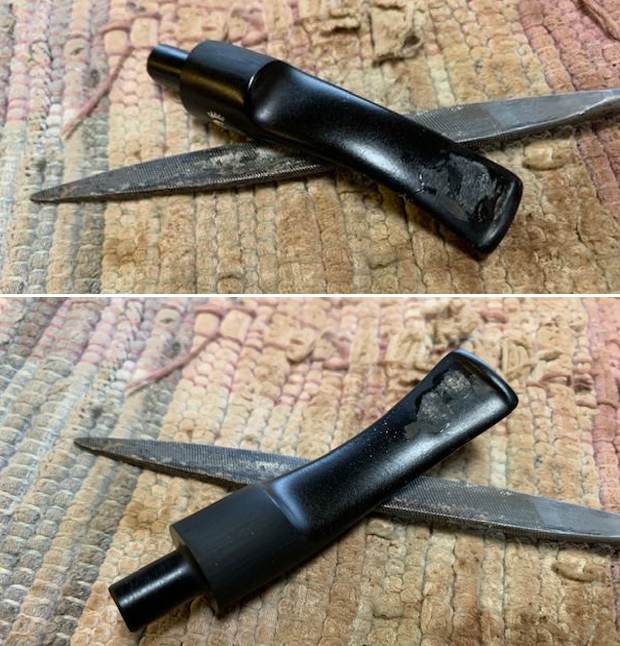
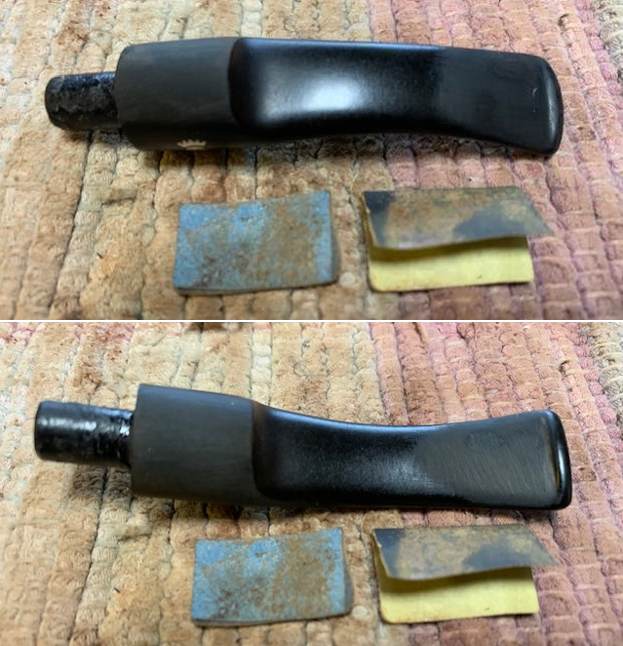
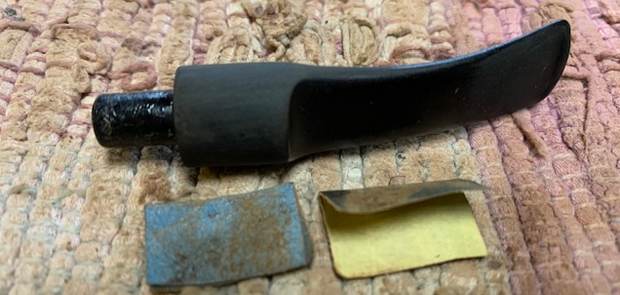
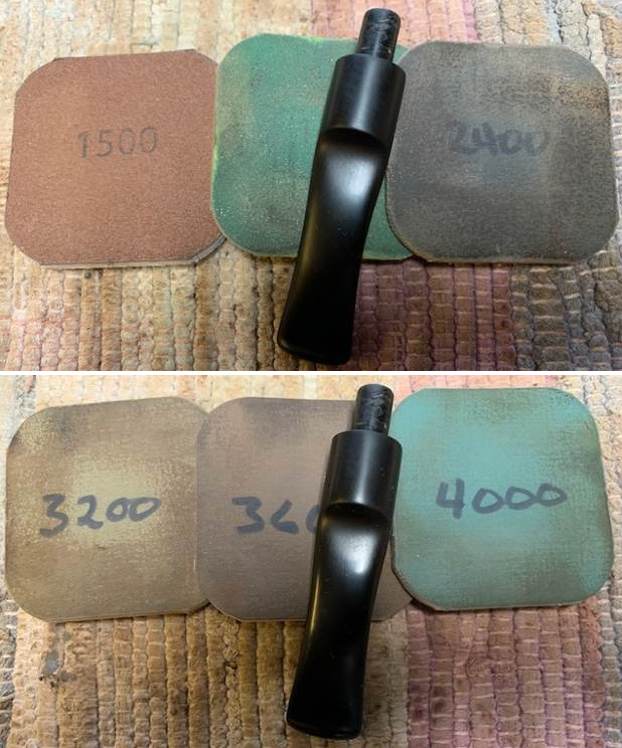
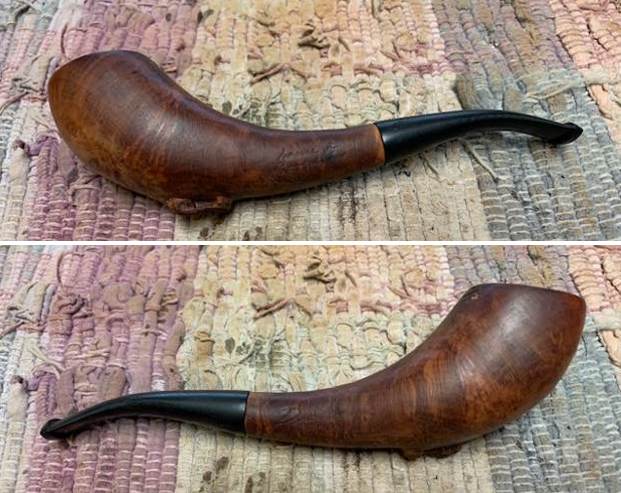
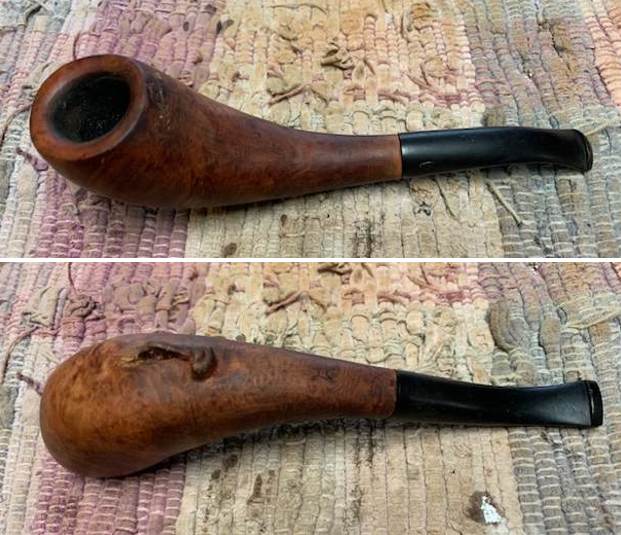
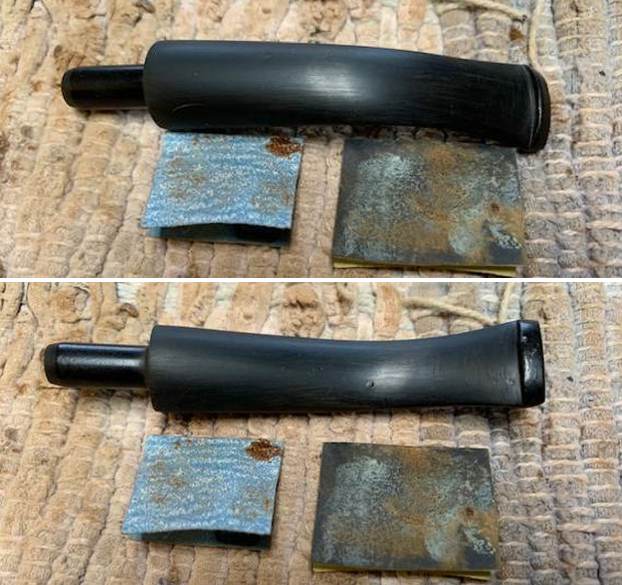
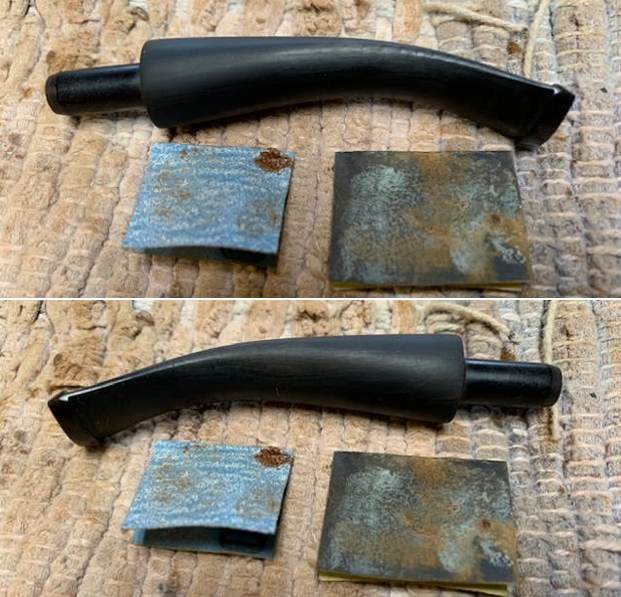
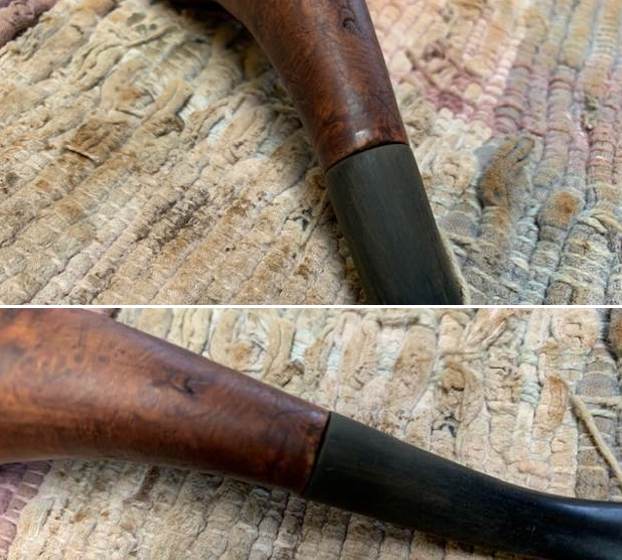
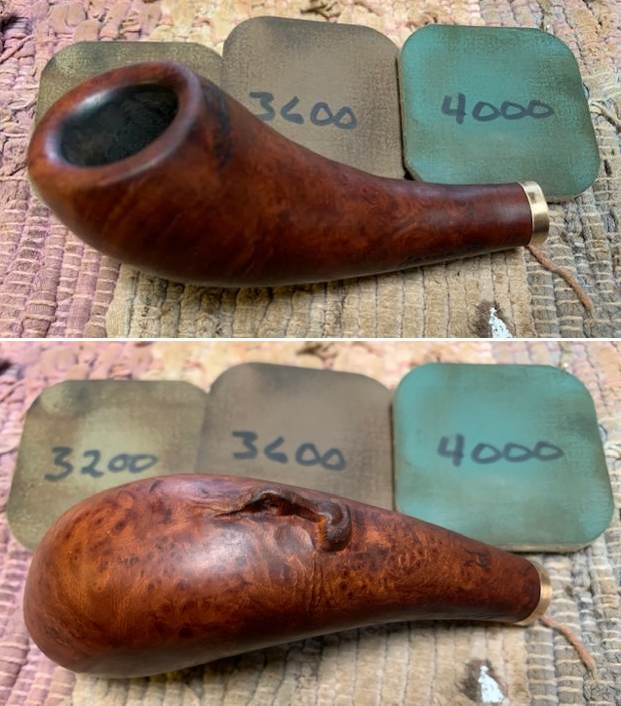
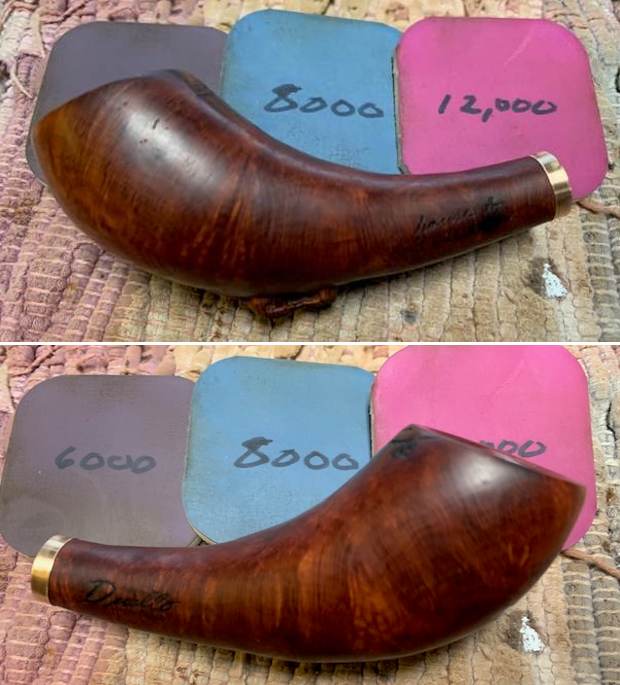
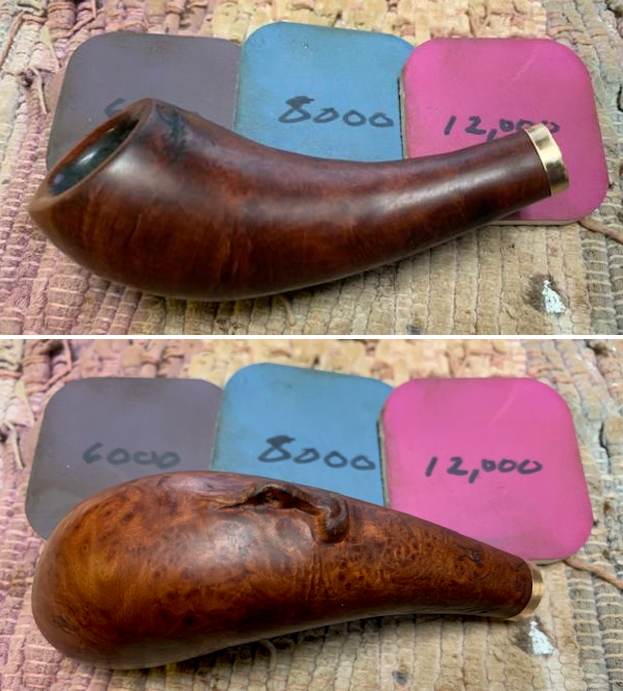
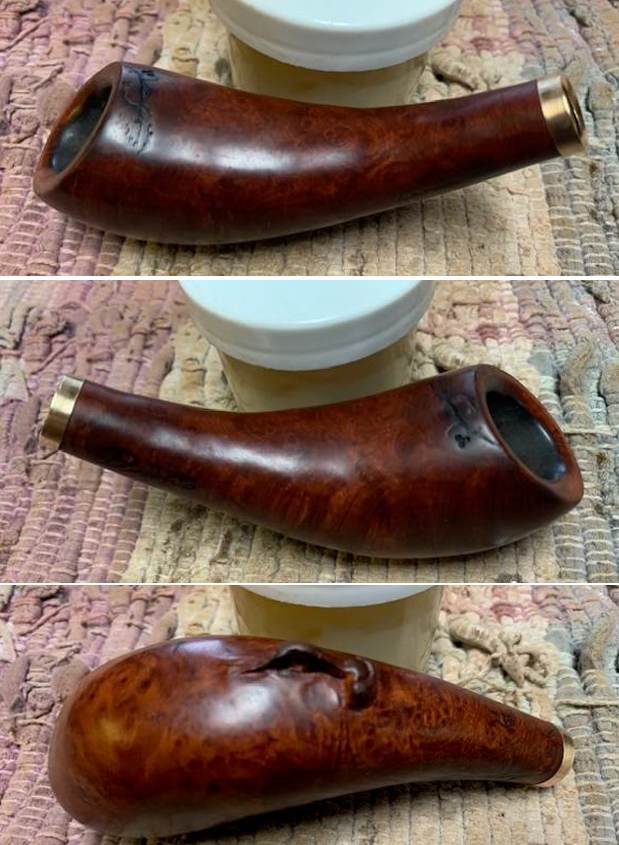
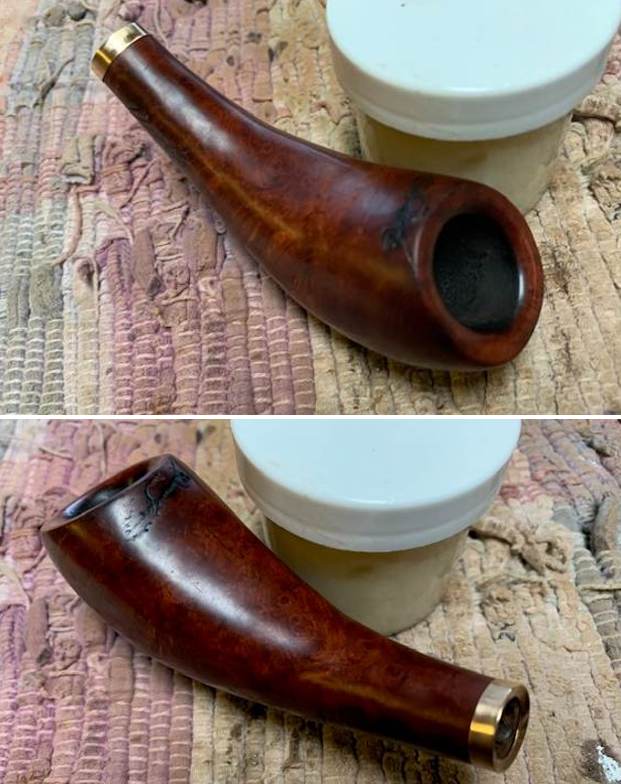
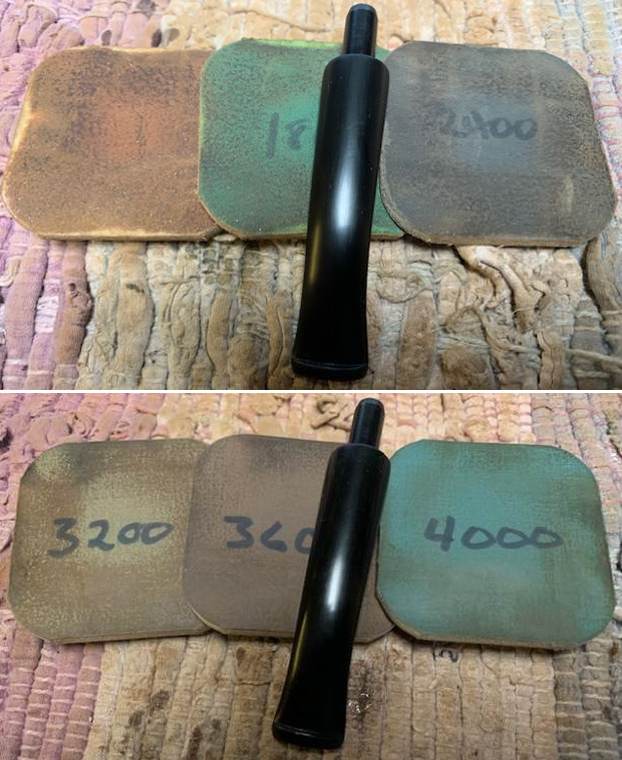
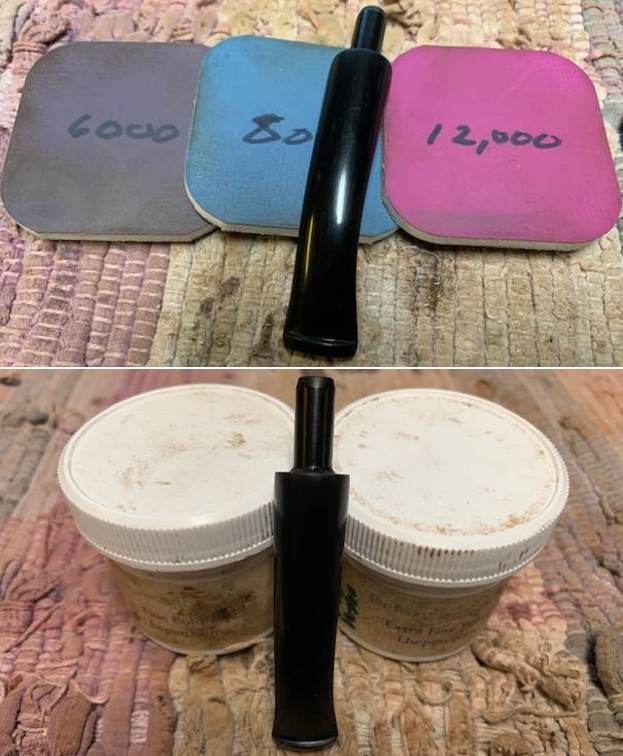
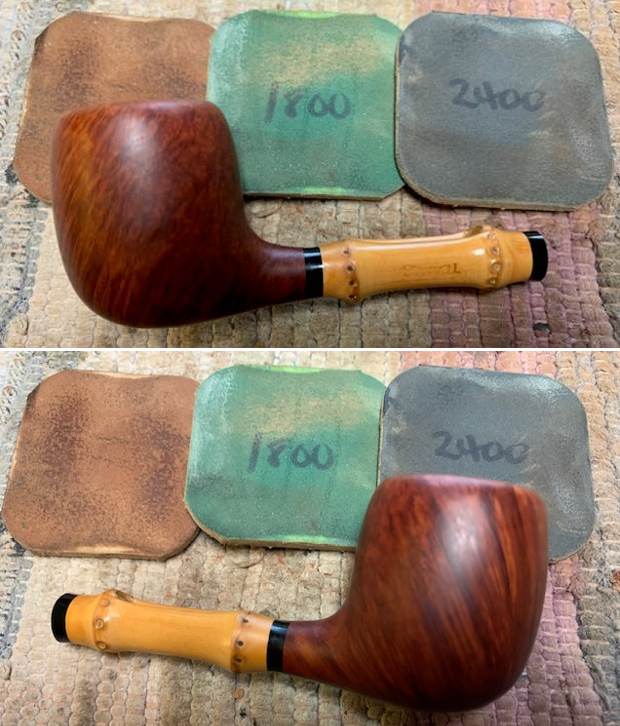
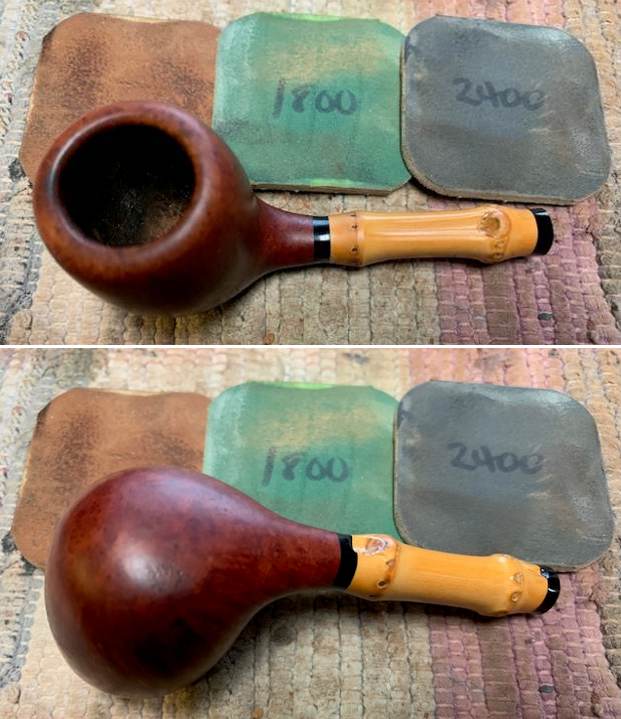
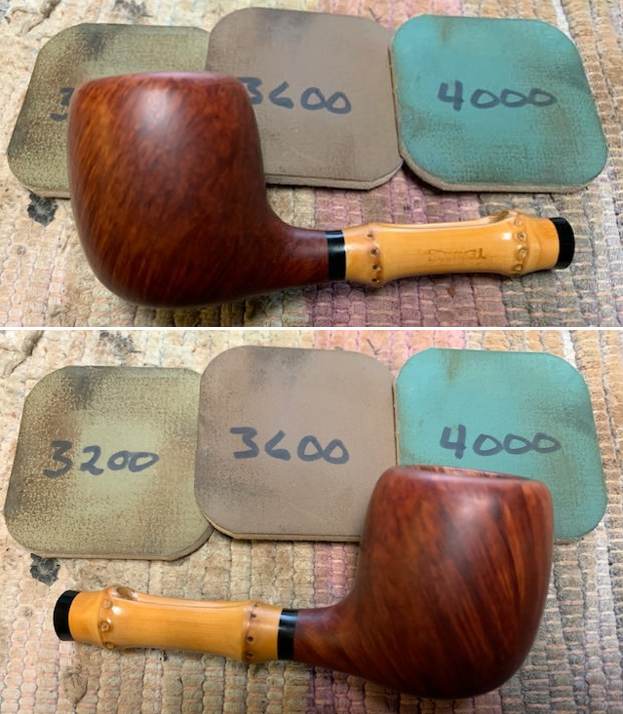
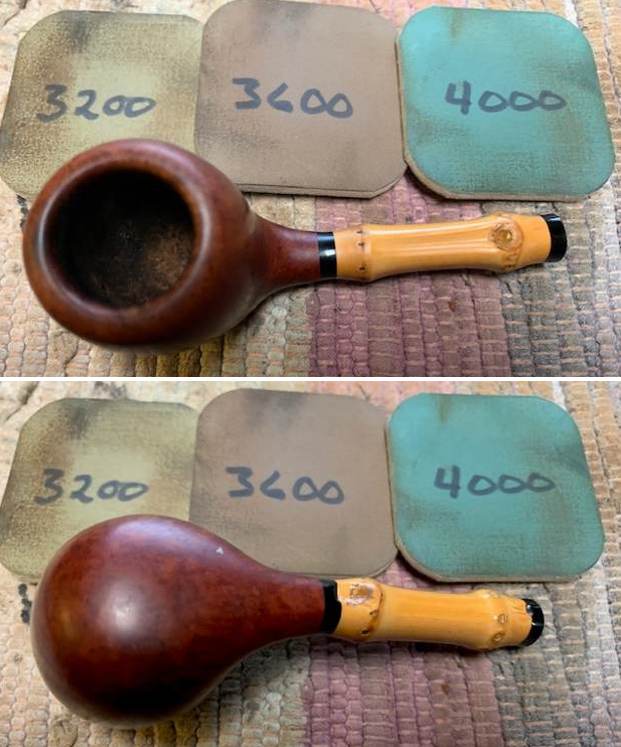
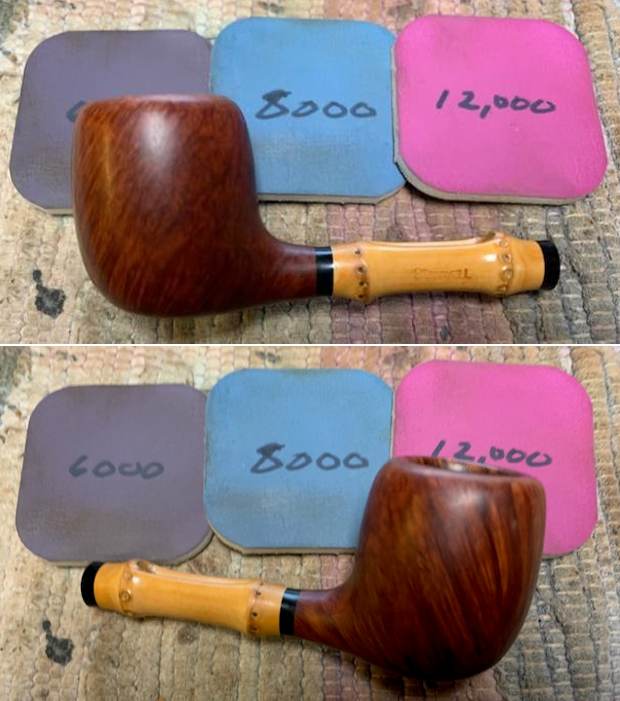
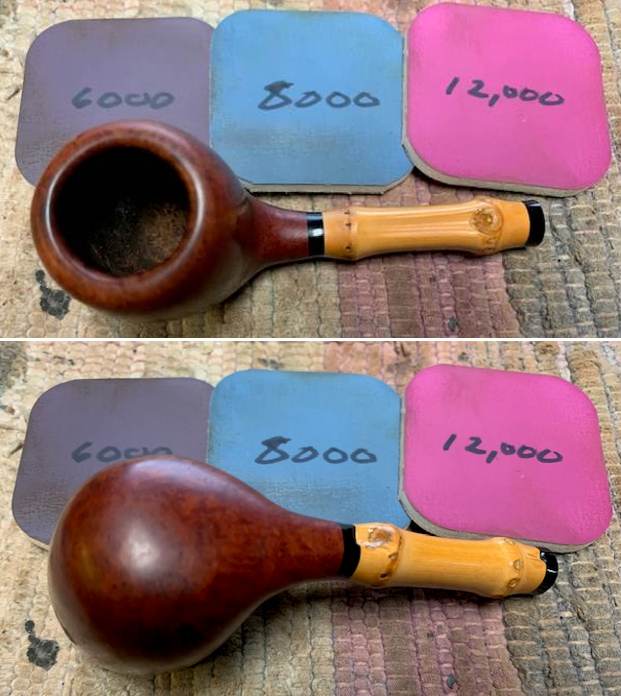
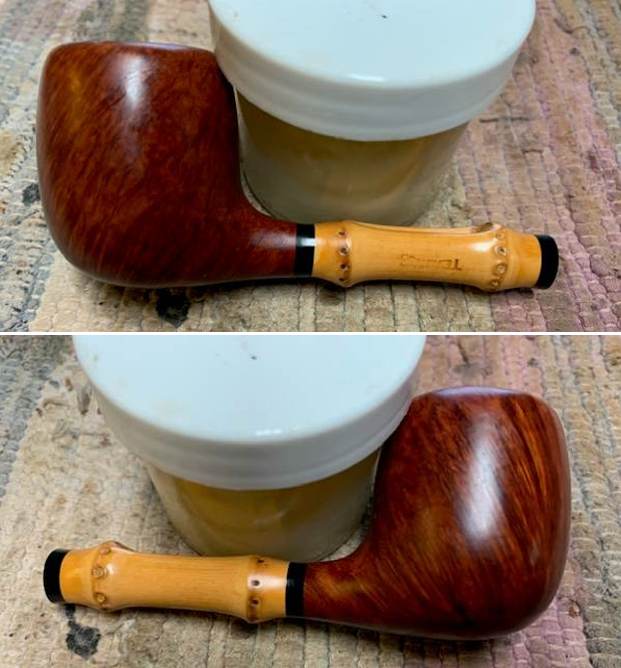
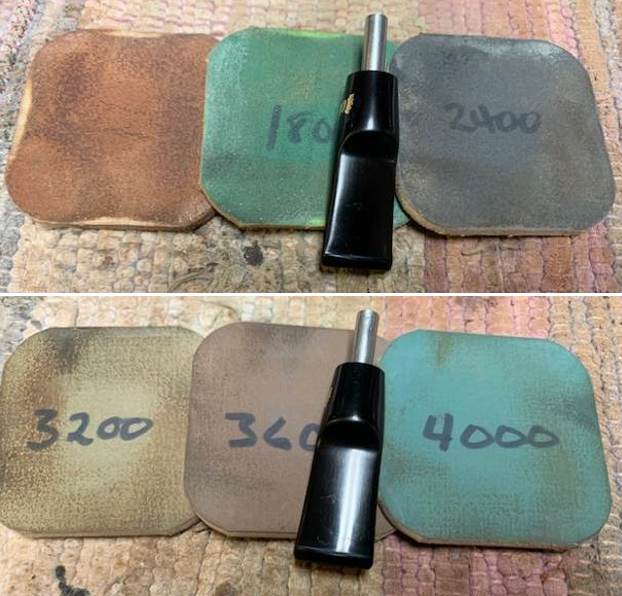
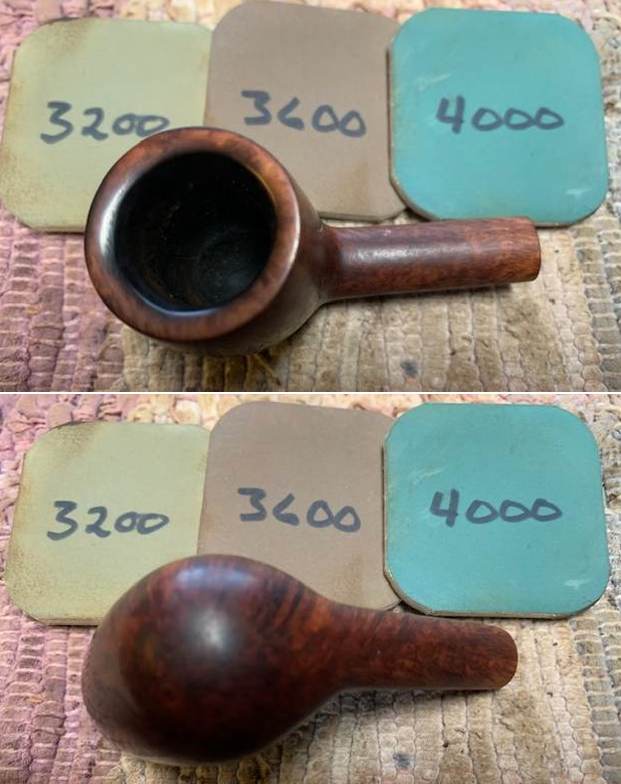
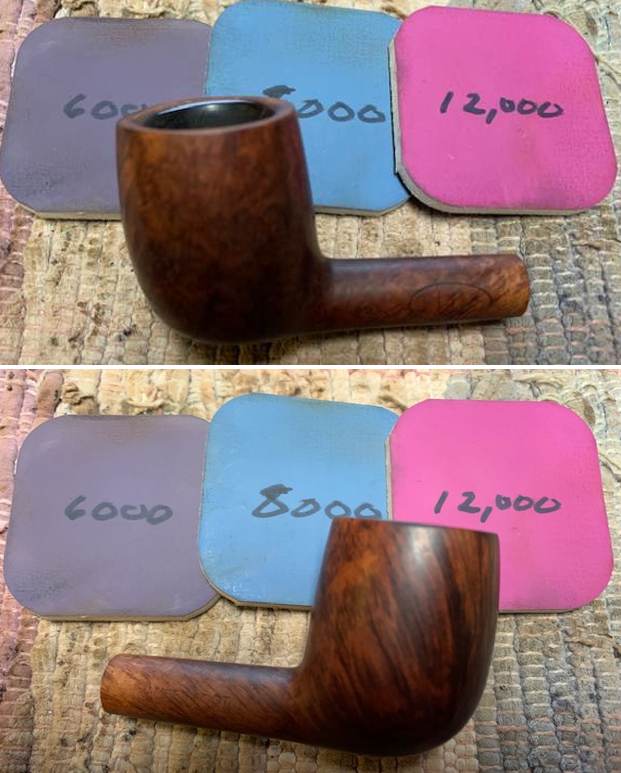
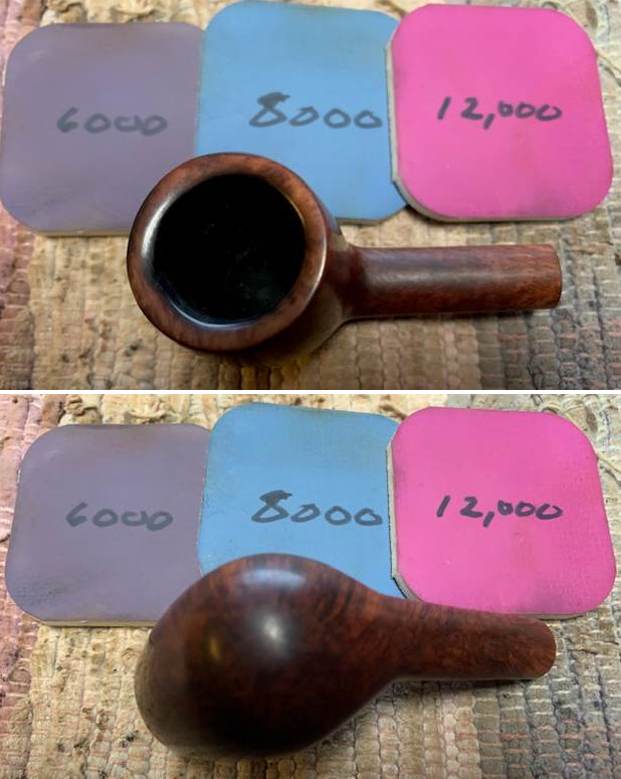
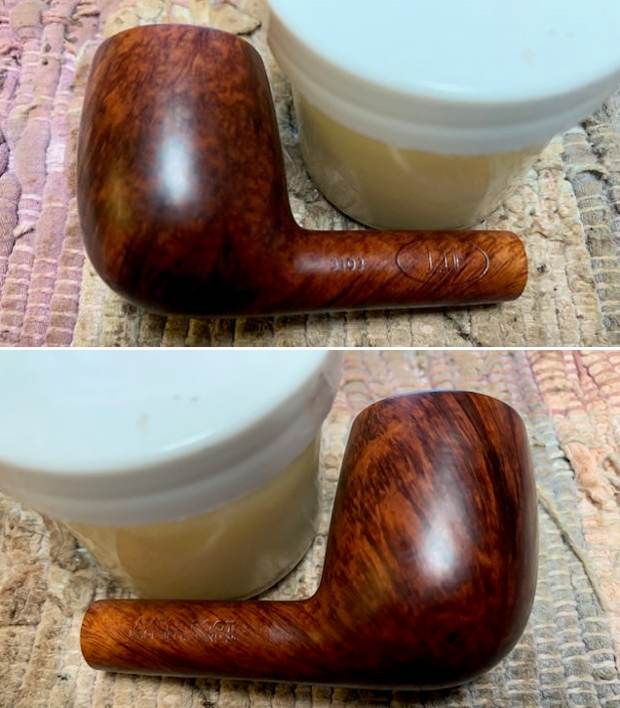
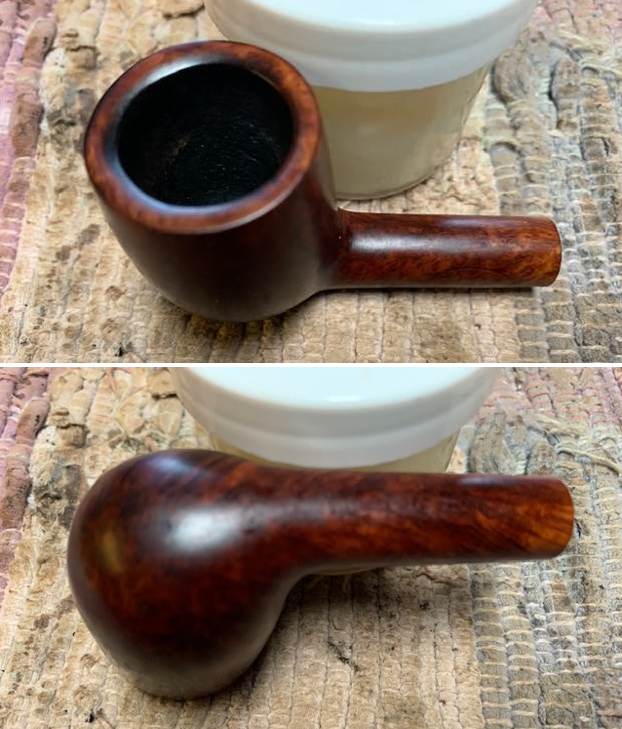
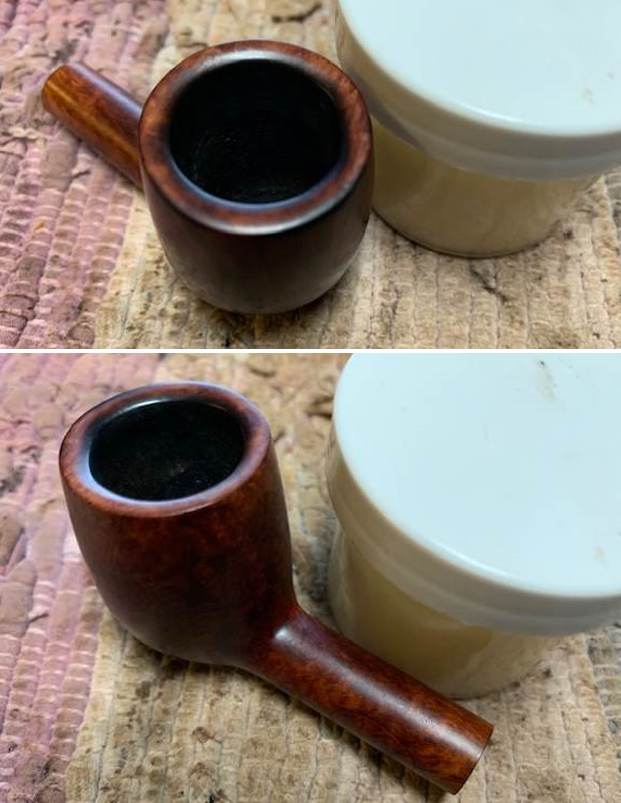
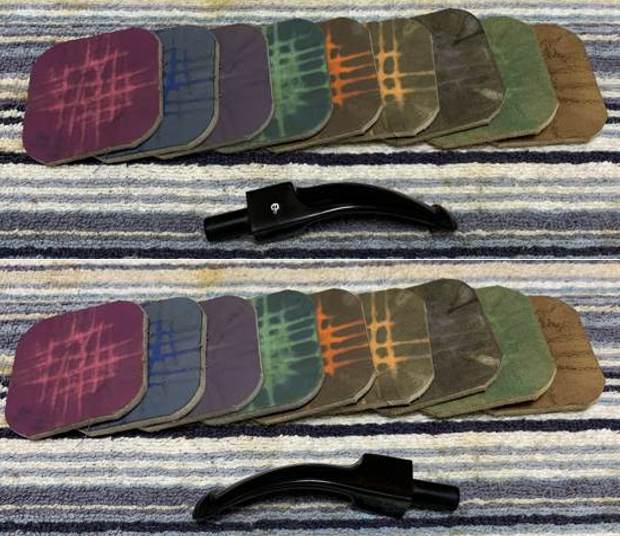
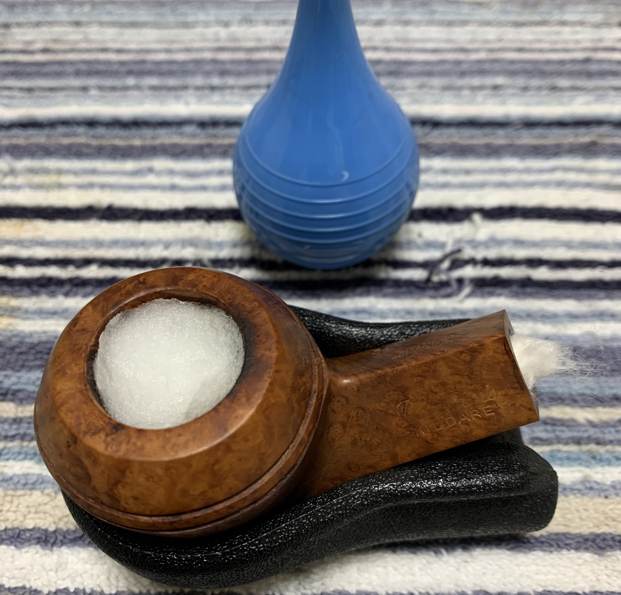
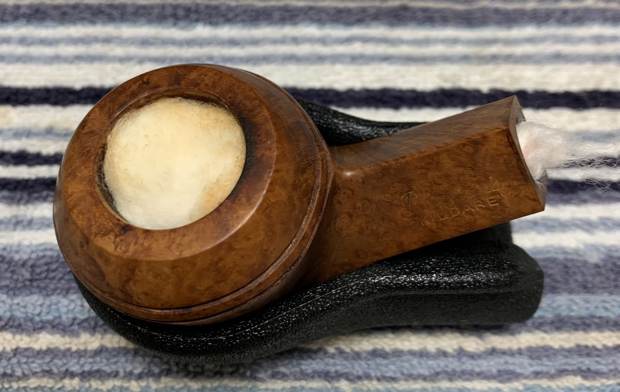
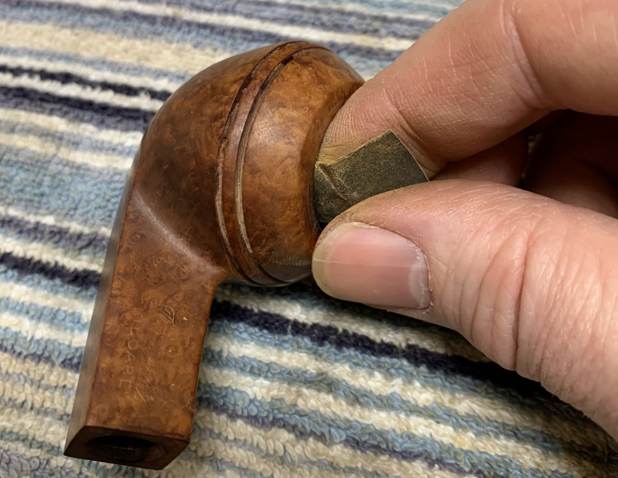
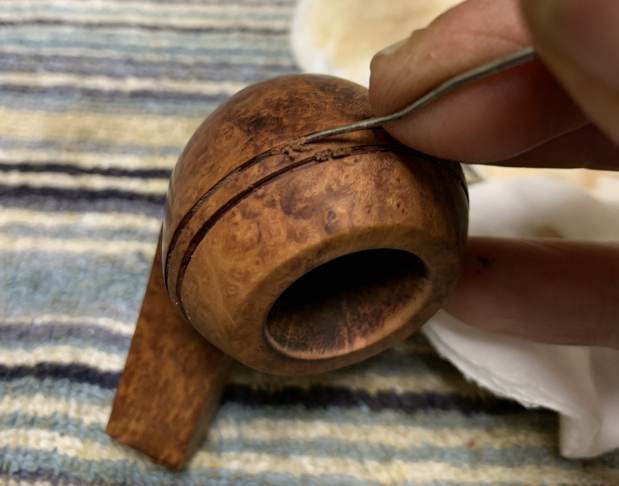
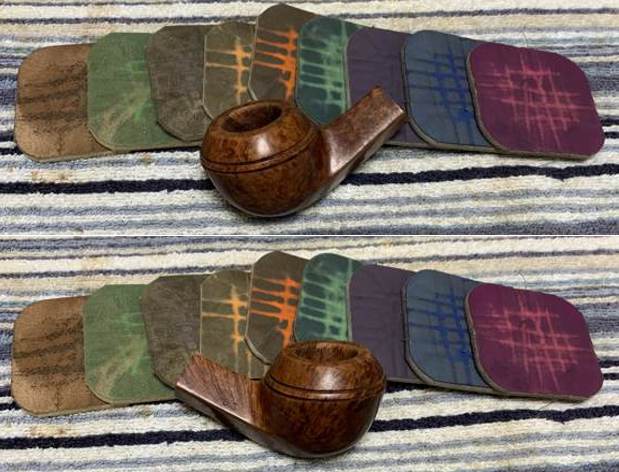
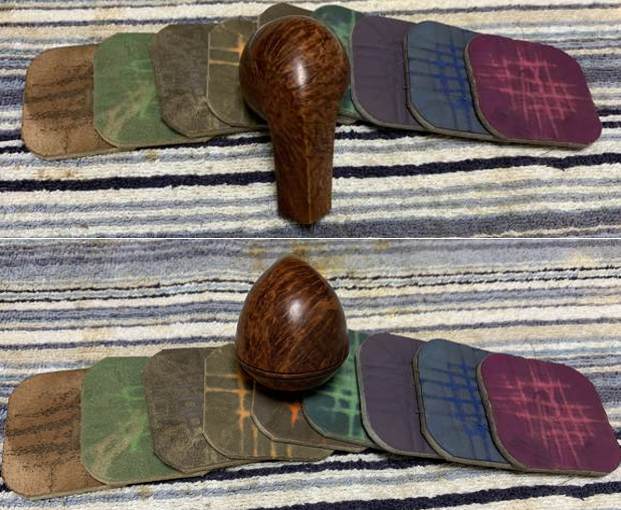
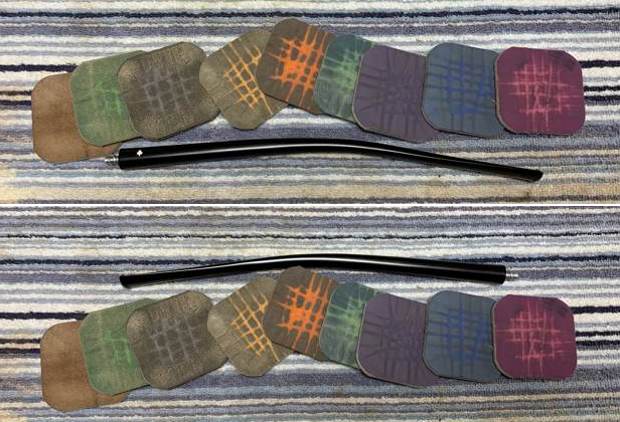
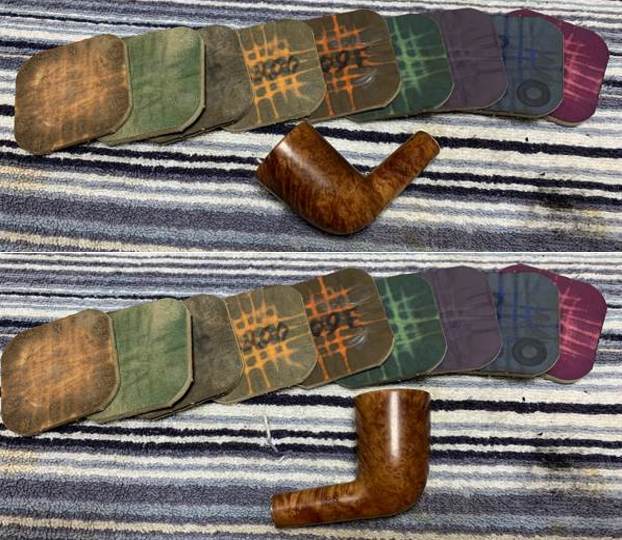
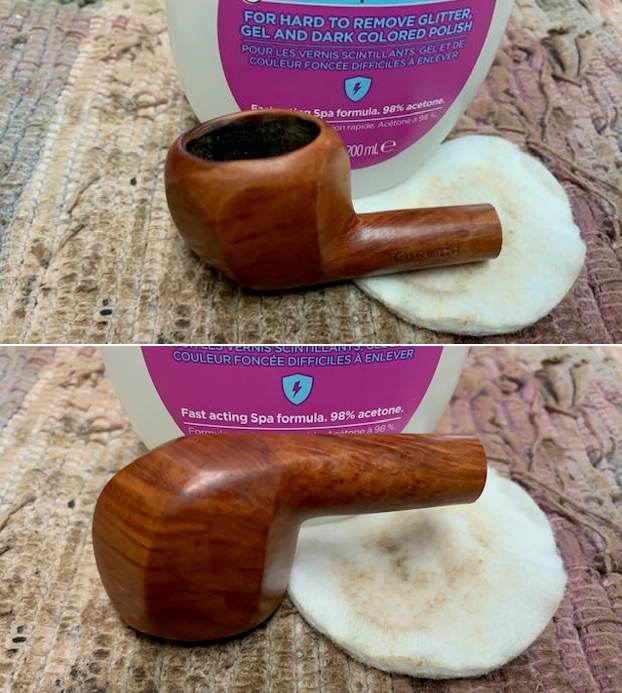
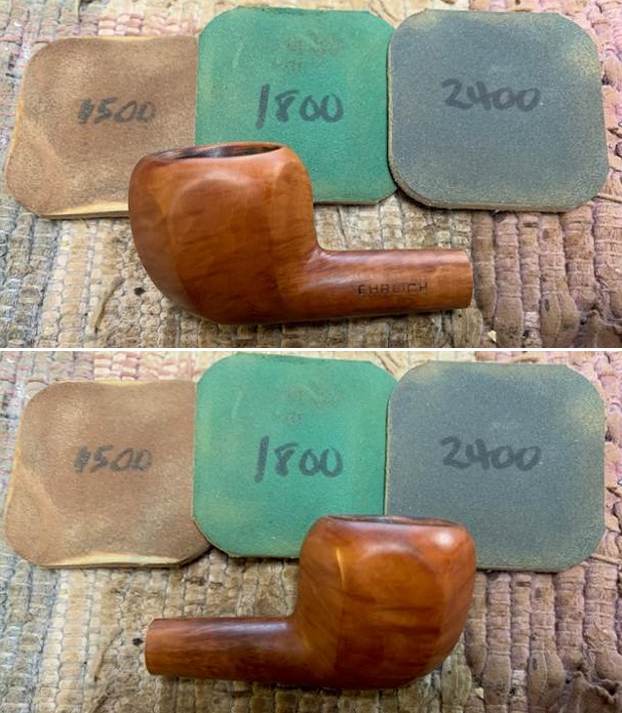
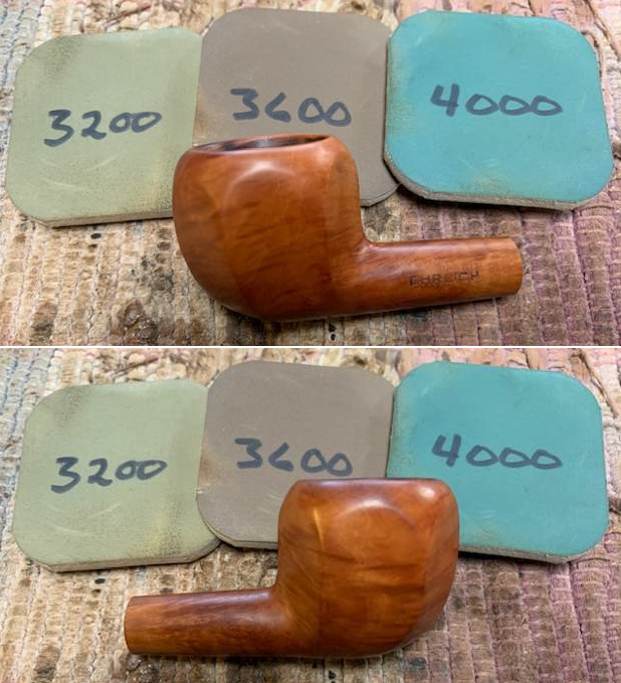
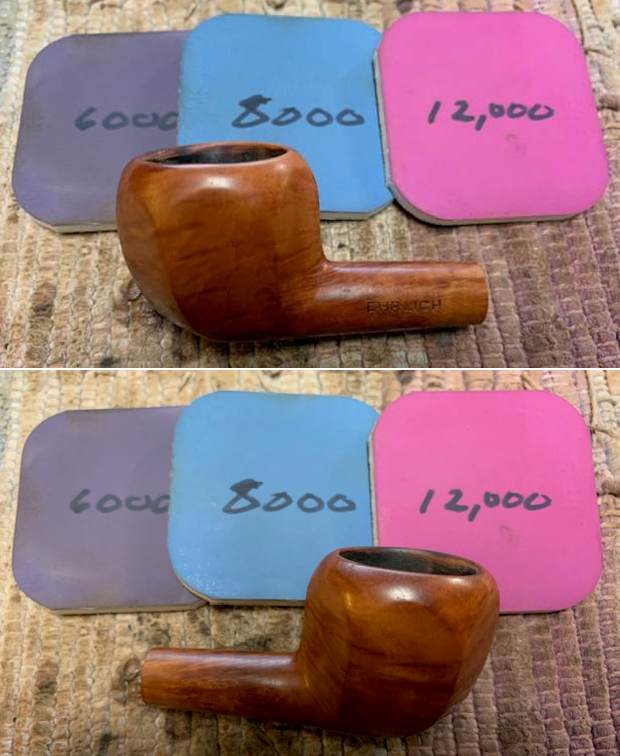
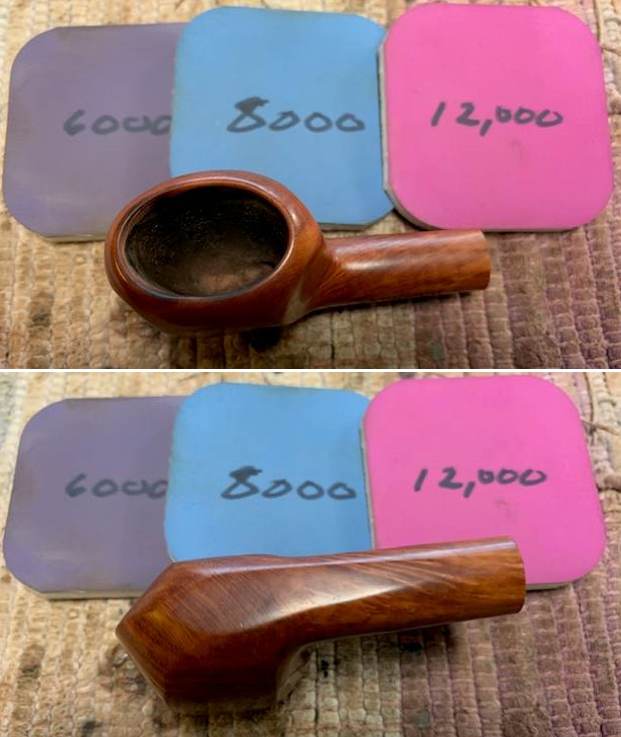
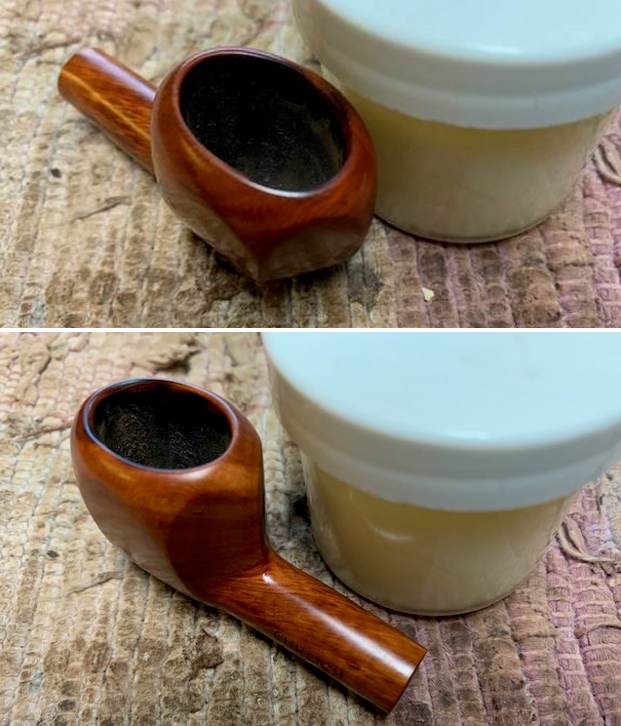
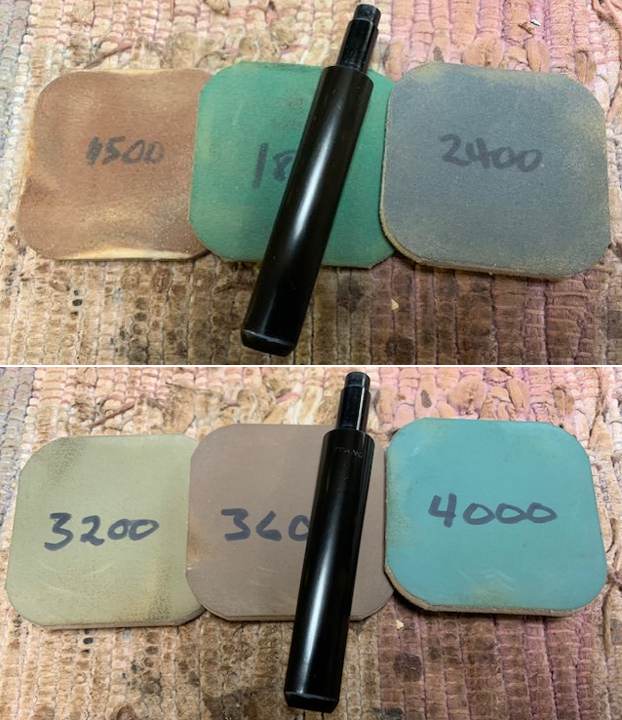
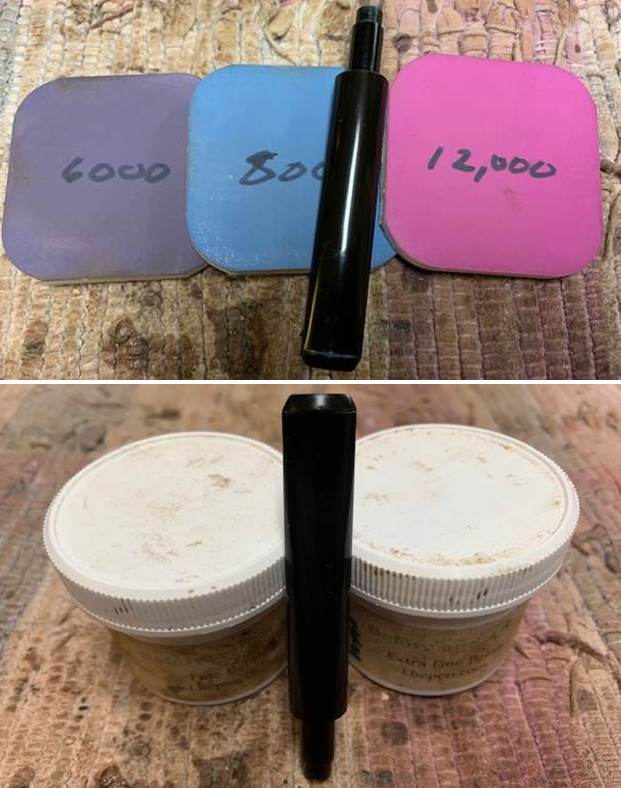
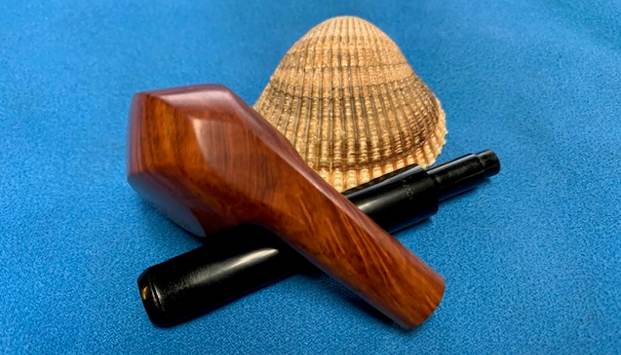
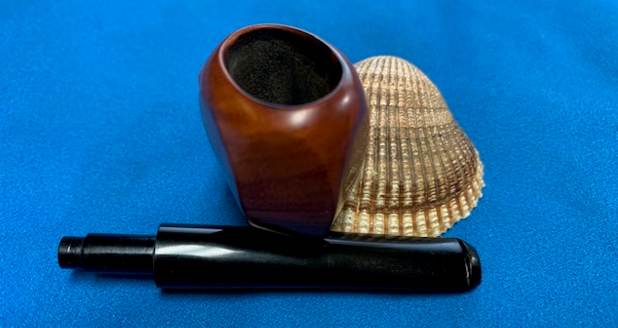
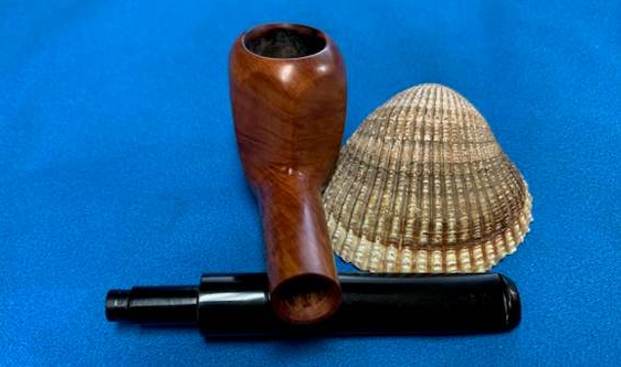
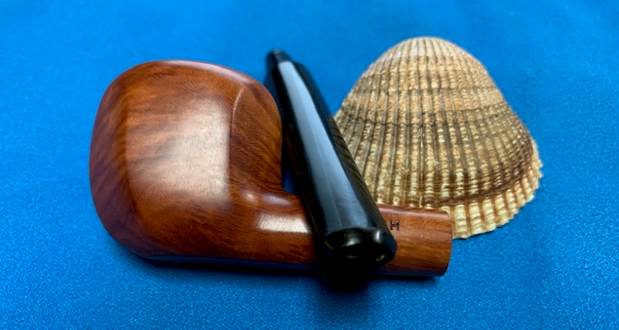
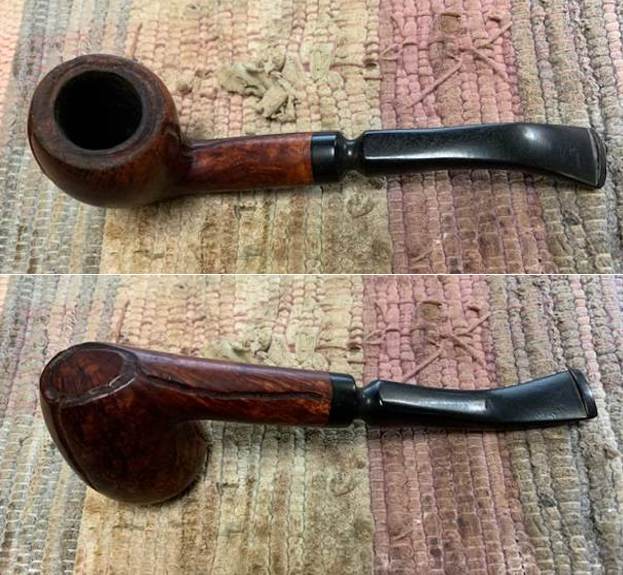
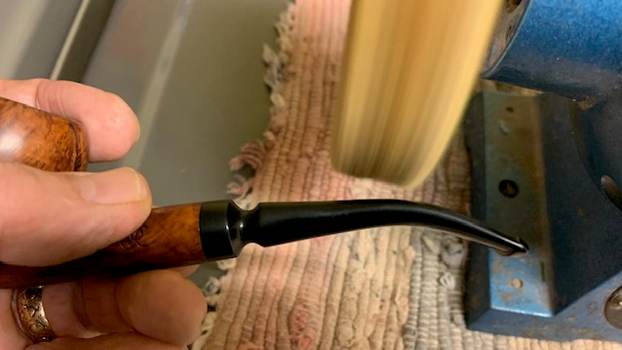
Knowing that about me you can guess that I started working on this pipe by turning to the bowl. The bowl was in great condition over all but the rim top needed attention. I decided to clean up the rim top. I worked on the damage edges and top with a folded piece of 220 grit sandpaper. I used the sandpaper to bring the bowl back into round.I finished the rim top and edge clean up and wiped the bowl down with acetone on a cotton pad to remove more of the oils in the finish that still darkened the briar. I then polished the briar with micromesh sanding pads. I chose to dry sand the briar rather than wet sand it. Again it is a matter of personal preference. I prefer to use the pads dry and find they work very well on the briar. I sand with each pad (9 in total) and group them by threes for ease of reference. I wipe the bowl down with a damp cloth after each pad to remove the sanding debris and check the briar. I love seeing the developing shine on the briar as I move through the pads. I include the many photos of various angles of the bowl so you can see the change. Pay attention to the changes in the briar in these photos as you work through them. As usual for me when I get the bowl to this point in the process I use Before & After Restoration Balm. It is a paste/balm that is rubbed into the surface of the briar. The product works to deep clean the finish, enliven and protect the briar. I worked it into the briar with my finger tips to make sure that it covers every square inch of the pipe. I set it aside for 10 minutes to let it do its work. Once the time has passed I wiped it off with a soft cloth then buffed it with a cotton cloth. The briar really began to have a deep shine. The photos I took of the bowl at this point mark the progress in the restoration. You see the shine that the briar has taken on, the removal of the deep oils on the sides of the bowl and the way the grain just pops. It is a gorgeous pipe. Now it was time to address the part of the restoration I leave until last. I set the bowl aside and turned my attention to the stem. I wanted to repair the tooth damage on the stem surface and on the surface of the button. Before doing any repairs to a stem surface I always try to lift the marks as much as possible. To do that I use a Bic lighter to heat the tooth marks and dents in the stem surface. I describe that as “painting” the surface. What I mean by that is that I hold the stem stationary and quickly move the flame of the lighter across the dents repeatedly. Typically I am able to lift the dents significantly and sometimes in totality with the heat. It utilizes the “memory” vulcanite and the heat raises the marks.In this case I lifted all quite a bit but the heat did not raise them all the way. To take care of that I filled in the tooth marks that remained with clear CA glue and let it cure. Once it was hardened I flattened the repairs with a small file to blend them into the stem surface. I finished smoothing out the repairs on the stem with 220 grit sandpaper and started polishing it with 600 grit wet dry sandpaper to remove the scratches. This process makes the repairs almost invisible when polished and also takes care of scratching in the surface of the vulcanite.It was the time now to polish the stem and bring back a shine. Over the years I have developed my own process for this. It is all preparation for the buffing that will come last. I use micromesh sanding pads and water to wet sand the stem with 1500-12000 grit sanding pads. I wiped it down after each sanding pad with Obsidian Oil on a cotton rag after each sanding pad as I find it does two things – first it protects the vulcanite and second it give the sanding pads some bite in the polishing process. After finishing with the micromesh pads I always rub the stem down with Before & After Fine and Extra Fine stem polish as it seems to really remove the fine scratches in the vulcanite. I rub the Fine Polish on the stem and wipe it off with a paper towel and then repeat the process with the Extra Fine polish. I finish the polishing of the stem by wiping it down with a final coat of Obsidian Oil and set the stem aside to let the oil absorb. This process gives the stem a shine and also a bit of protection from oxidizing quickly.The final steps in my process involve using the buffer. I first buff the stem and the briar with Blue Diamond on the buffing wheel. Blue Diamond is a plastic polish but I find that it works very well to polish out the light scratches in the vulcanite and the briar. I work the pipe over on the wheel with my finger or thumb in the bowl to keep it from becoming airborne. It works well and I am able to carefully move forward with the buffing. I lightly buff the plateau on the rim top and shank end at the same time making sure to keep the product from building up in the grooves of the finish. I finished with the Blue Diamond and moved on to buffing with carnauba wax. Once I have a good shine in the briar and vulcanite I always give the bowl and the stem multiple coats of carnauba wax. I have found that I can get a deeper shine if I following up the wax buff with a clean buffing pad. It works to raise the shine and then I follow that up with a hand buff with a microfiber cloth to deepen the shine. It is always fun for me to see what the polished bowl looks like with the polished vulcanite stem. It really is a beautiful pipe. The smooth finish around the bowl sides and shank show the grain shining through the rich brown stains of this S&R Freehand Acorn and the polished vulcanite stem. There are still some remaining marks from the long story of the pipe that to me add a sense of time that is an interesting part of the story. The finished pipe feels great in my hand. It is light and well balanced. Have a look at it with the photos below. The dimensions are Length: 6 inches, Height: 1 ¾ inches, Outside diameter of the bowl: 1 ¼ inches, Chamber diameter: ¾ of an inch. The weight of the pipe is 1.52 ounces/44 grams. It is a beautiful pipe and one that I will be putting on the rebornpipes store in the American (US) Pipe Maker section.
Hopefully this tack of writing this blog is helpful to you in some way. In it I show both what I am looking for and how I move forward in addressing what I see when work on a pipe has been helpful to you. It is probably the most straightforward detailed description of my work process. As always I encourage your questions and comments as you read the blog. Thanks to each of you who are reading this blog. Remember we are not pipe owners; we are pipemen and women who hold our pipes in trust until they pass on into the trust of those who follow us.

Breathing New Life into a Lovely S. Bang Calabash


Blog by Steve Laug

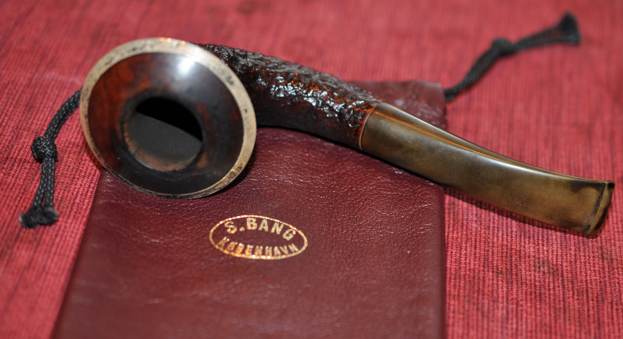
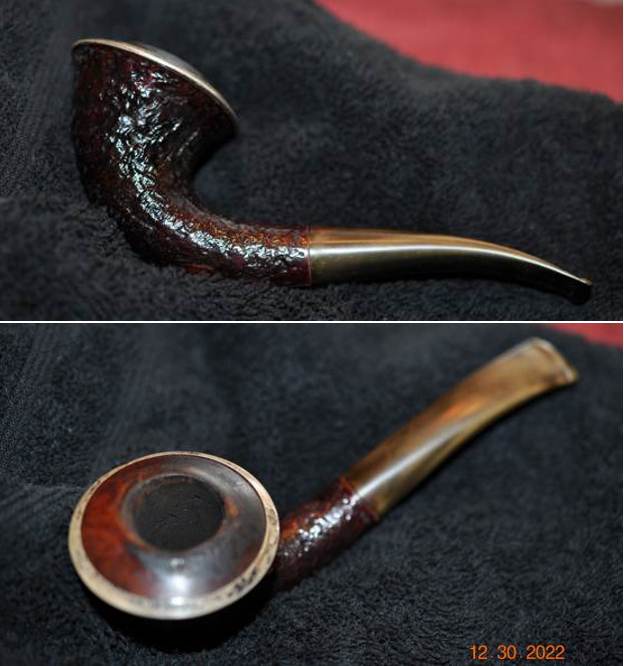
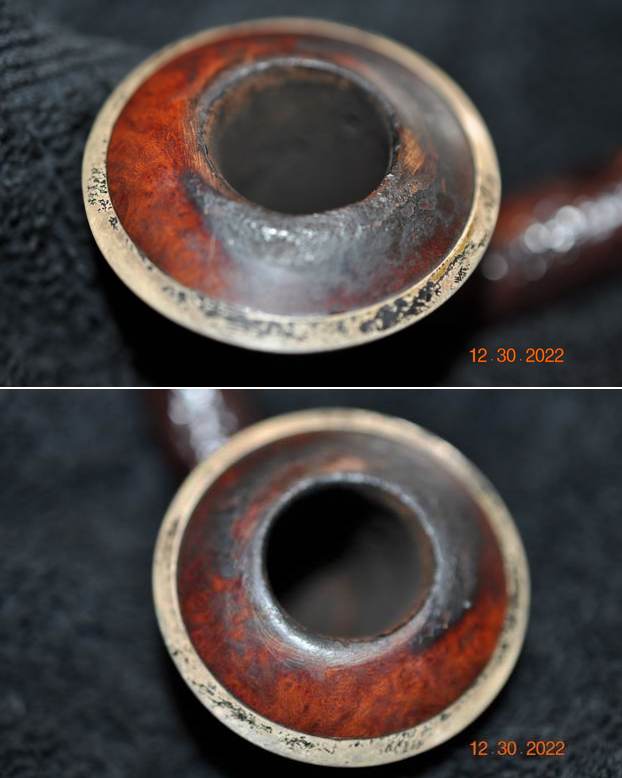
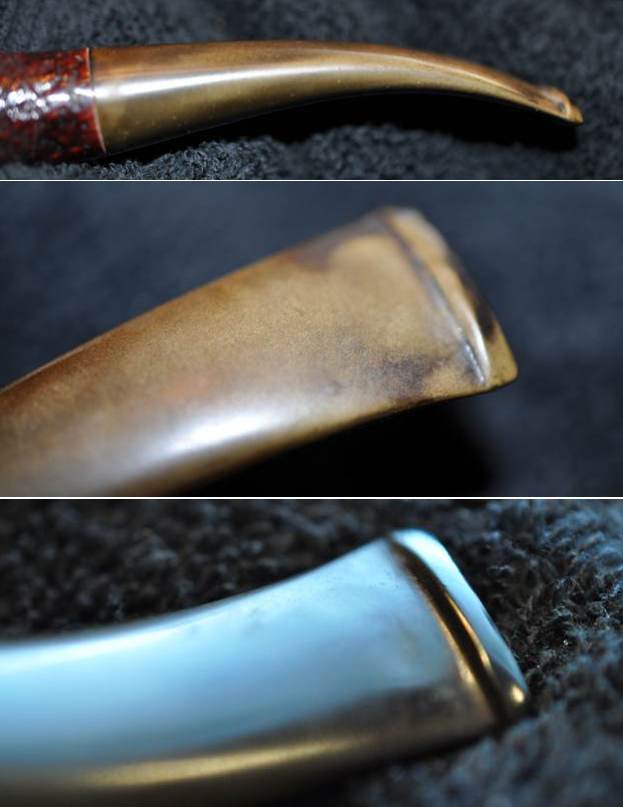
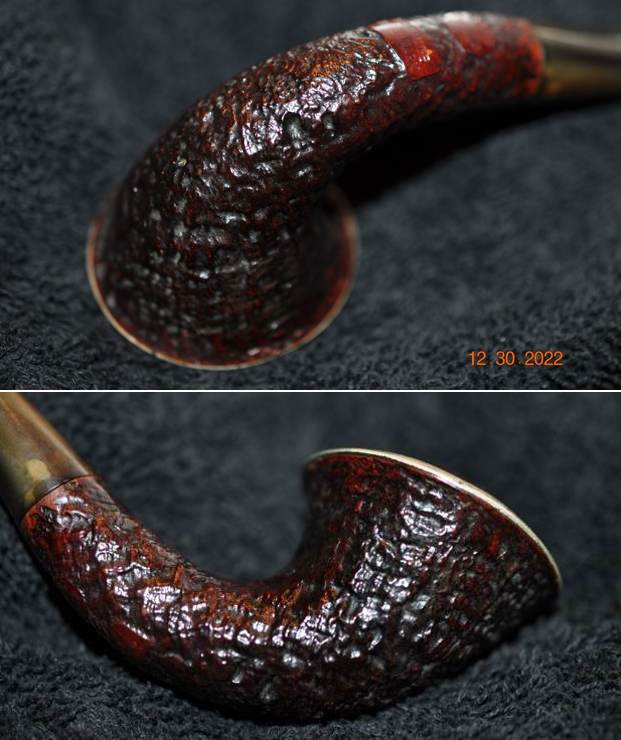
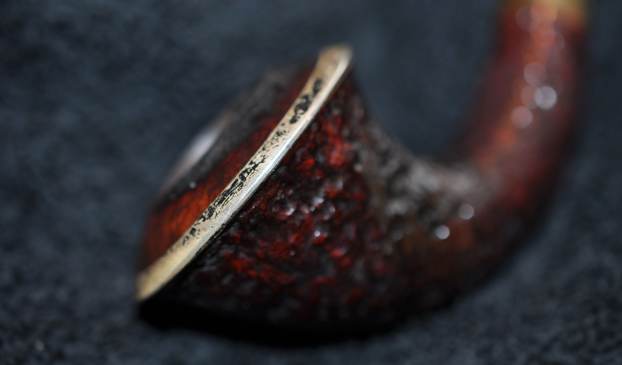
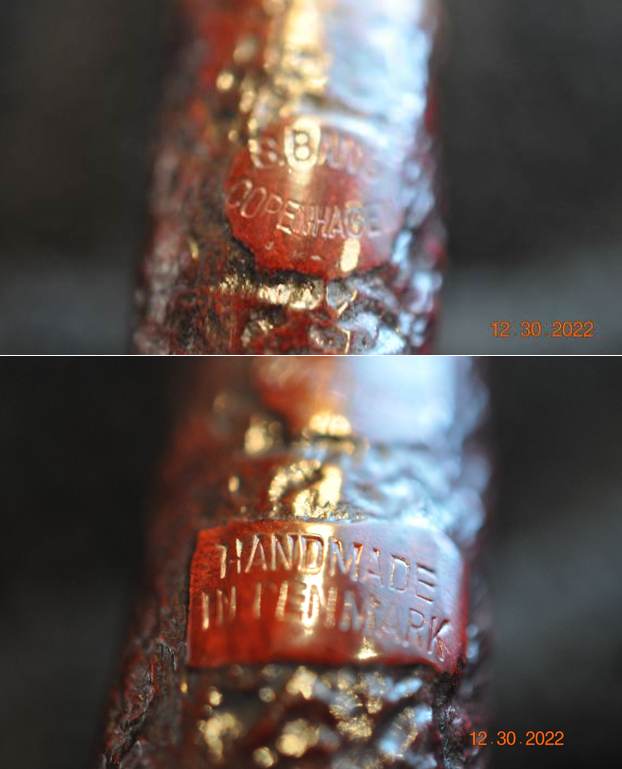
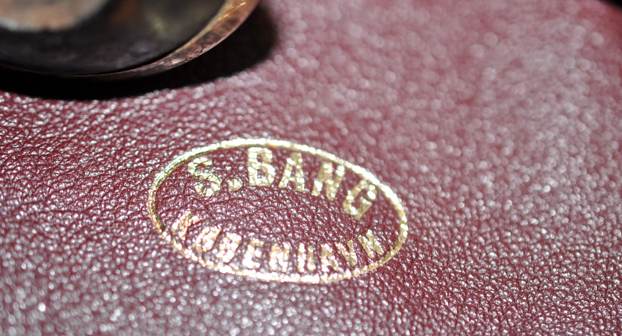
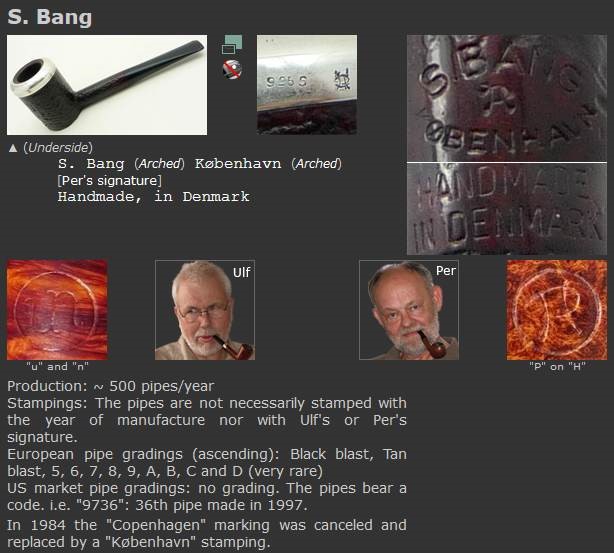
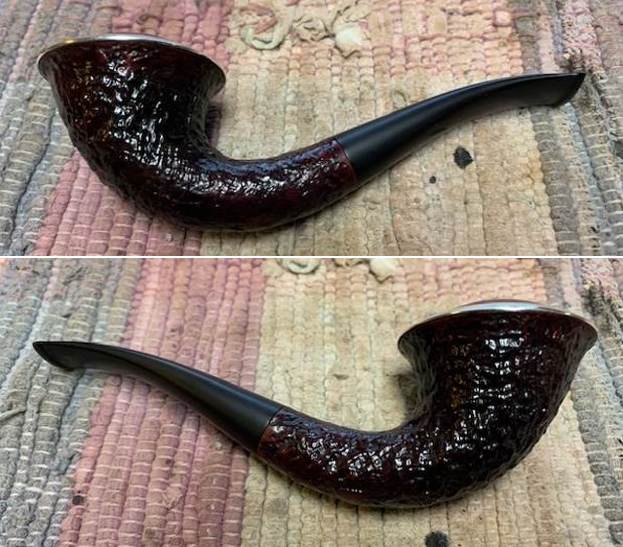
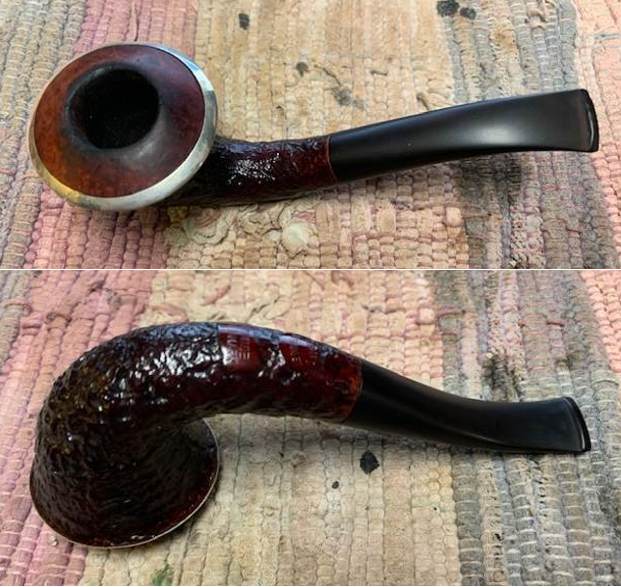
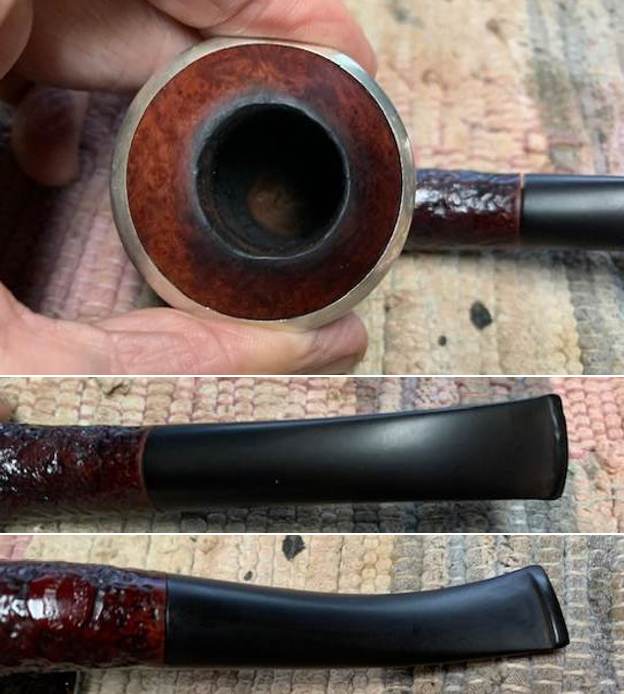
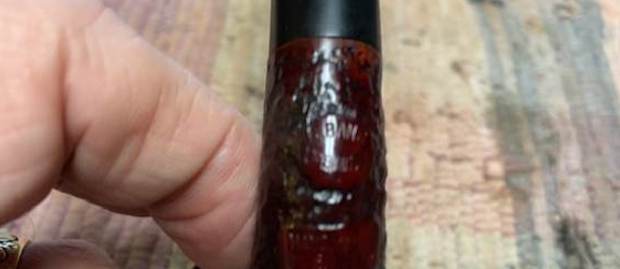
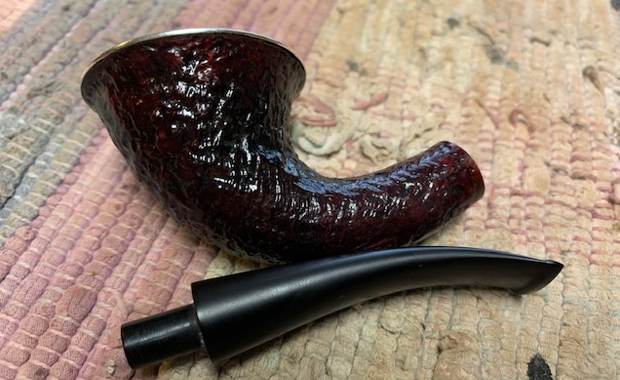
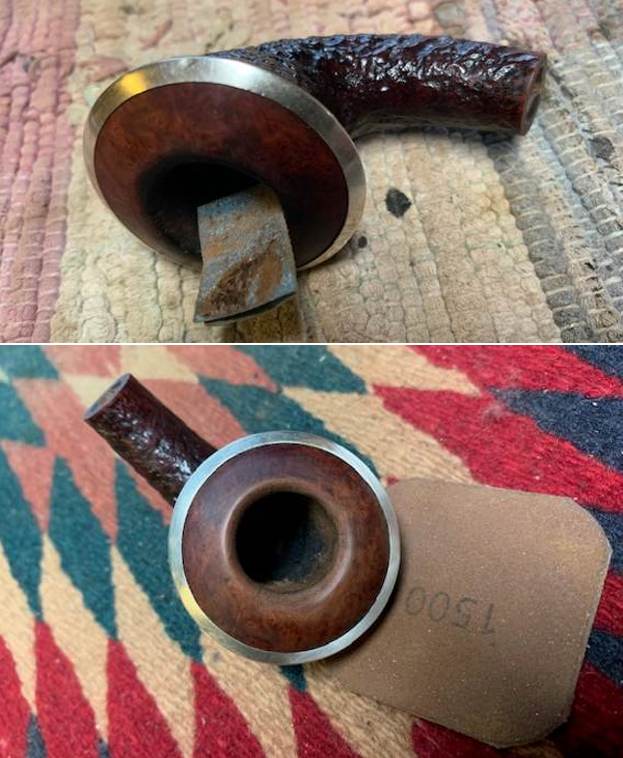
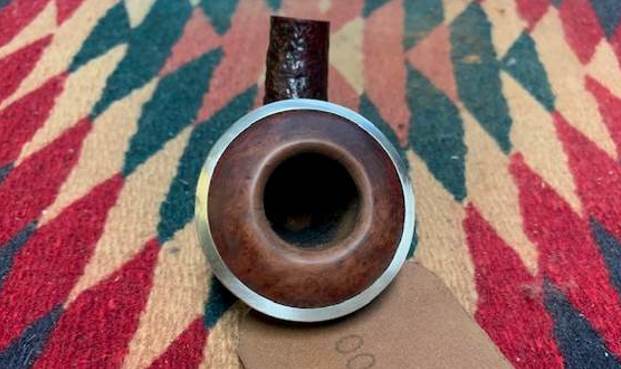
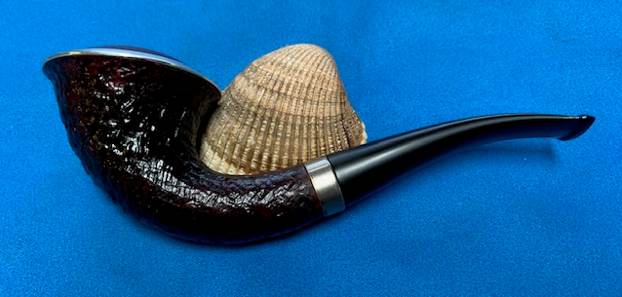
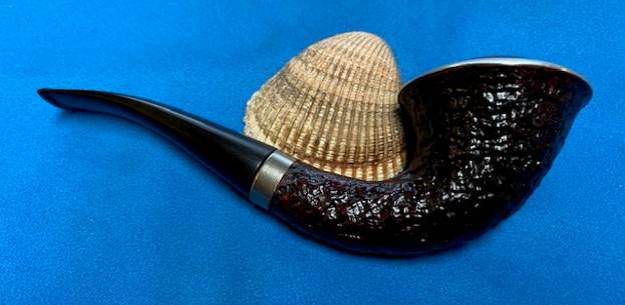
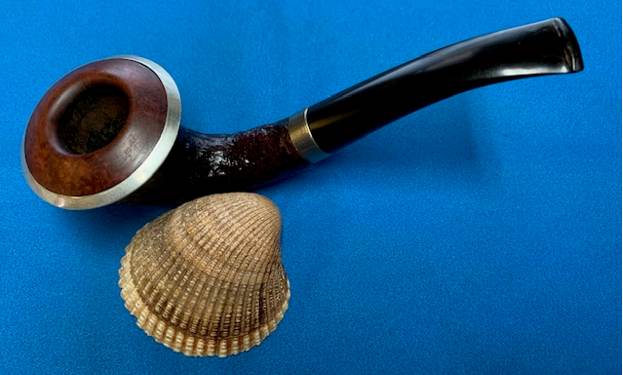
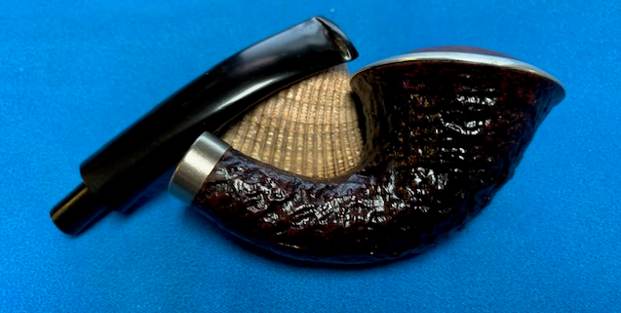
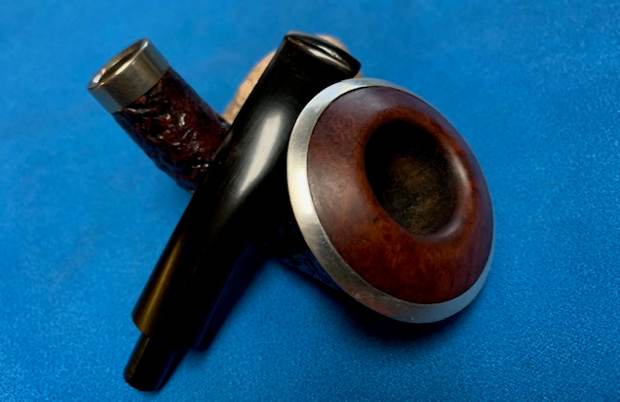
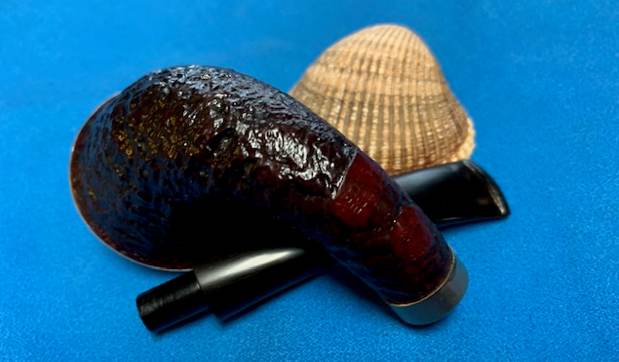
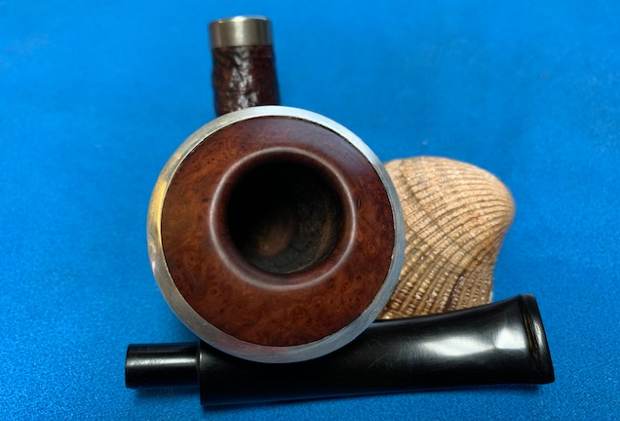
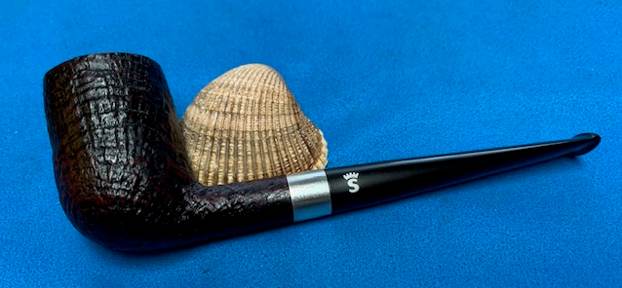
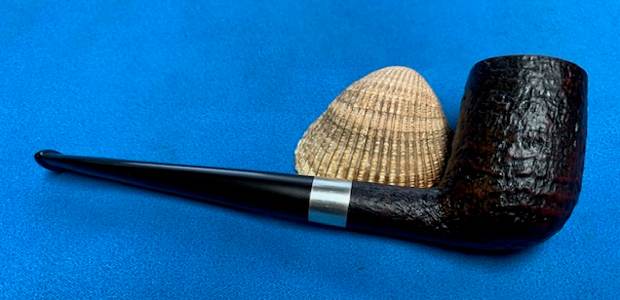
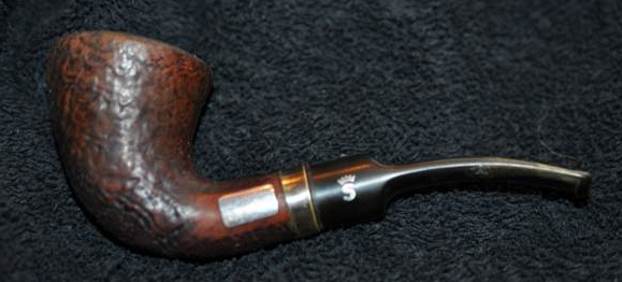
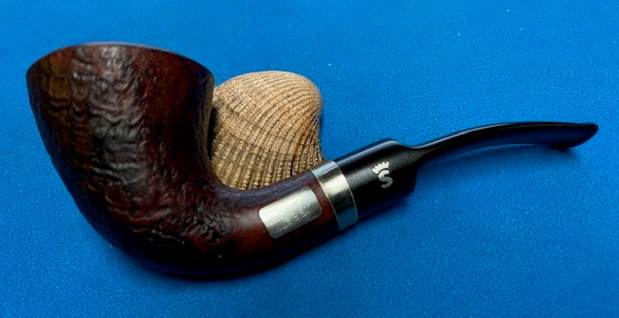
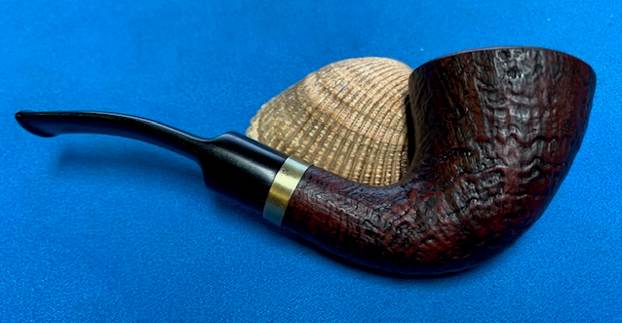
The next pipe was another surprise to Jeff and me when we bought it from the fellow in Copenhagen, Denmark on November 10, 2022. It is a sandblast Calabash with a smooth rim top and a silver ring around the outer edge of the bowl. The stem is vulcanite and the ring is Sterling Silver. The pipe is stamped S. Bang [over] Copenhagen on a smooth oval on the underside of the shank. Under that is over another smooth patch, a rectangle stamped with Handmade [over] In Denmark. The Sterling Silver around the outer edge of the bowl is not stamped. The bowl had a thick cake with some lava overflow on the rim top and inwardly beveled inner edge of the bowl. There was some damage on the inner edge and bevel. The silver was oxidized and darkened. The finish on the bowl was dirty but also seemed to have a very shiny coat on it. The vulcanite taper stem is oxidized, dirty and had tooth chatter and marks on the top and underside of the stem ahead of the button. It came with a leather bag stamped S. Band over Kobenhavn in gold on the front of it. Jeff took these  photos of the pipe before he started his cleanup work. He took photos of the rim and bowl to show the thick cake and lava coat covering the rim top. It really was filthy and a mess. The photos show the damage to the rim top and beveled inner edge. There are also scratches on the rim top at the front and back of the bowl. He also took photos of the stem surfaces to show its overall condition when it arrived. The photos of the sides and heel of the bowls show beautiful blast around the bowl and shank sides. The rich brown stains highlights the grain and adds depth to the finish. It shows some promise. He also took photos of the stamping on the smooth panels on the underside of the shank. It took several photos to capture the stamp on the curve but they were clear and read as noted above. The leather pipe sock is stamped in gold and reads as follows:To help me understand the stamping a bit more I turned to Pipephil’s site and read what it said about S. Bang pipes (http://pipephil.eu/logos/en/logo-s1.html). I have included a screen capture of the section below as well as the side bar information below the capture. Sven Bang opened his tobacco and pipe shop in 1968 in Copenhagen. He was more a business man than a pipe carver and began to hire pipemakers. About half a dozen succeeded each other in his workshop during the 1970’s (Ivan Holst Nielsen, Jan Wideløv, Phil Vigen…). At least Per Hansen and Ulf Noltensmeier stayed and when Sven retired in 1983 they took over the company (in 1984) keeping its name.

I knew from that the pipe I have was made for the European market and was known as a Black Blast. I also knew that it was made before 1984 when the stamp Copenhagen was replaced with Kobenhavn. It is also the time when Ulf and Per took over the company so it was made by one of them.

To close my understanding of the pipe I turned to Pipedia (https://pipedia.org/wiki/S._Bang). I quote the section from the article where the company changed hands from S. Bang to Hansen and Noltensmeier in 1984. It is a great read so I have included it below.

Svend Bang retired in 1984. Evidently he felt a great deal of pride in the product that he initiated throughout his career and retirement and until his death in 1993.

Once Hansen and Noltensmeier took over the company (in 1984) they knew it was best to retain the S. Bang name – the two carvers always shared the same philosophy about that. Noltensmeier and Hansen were determined to maintain top quality at the expense of increased numbers. The only change they made concerns the stamping on the pipes changing from the English version “COPENHAGEN” to the Danish “KOBENHAVN”.

Still, they are two separate carvers, with their own styles and preferences. Each makes his own pipes – there is no “assembly line” construction at S. Bang. They bounce ideas off of each other, of course, and admit that when problems arise in a pipe, it is nice to have a partner to discuss them with.

Though they carve pipes as individuals, there are similarities in their work. All Bang pipes are made with black, hand-cut vulcanite stems.

The same engineering is used by both carvers as well. The shape and size of the tobacco chambers vary according to size and design of the pipe, but each carver follows the same design guidelines for choosing the proper chamber dimensions. The smoke channel is always engineered for optimum performance.

Bang pipes are noted for the high definition and fine contrast in the grain. They undergo a double staining process to achieve that effect. The technique makes the grain leap from the bowl of the pipe, making well-grained wood become extra ordinary. The same coloring, however, will produce different results in different pieces of briar, making each pipe truly individual.

Per Hansen is the designated sandblasting artist for the team. He personally takes those pieces that are to be sandblasted to Stanwell, and is permitted to use the sandblasting equipment himself. That is the only S. Bang process, though, that is not executed by the individual carver of each pipe. Everything else, including the famous S. Bang silverwork, is done in the shop by each of the carvers on his own pipes.

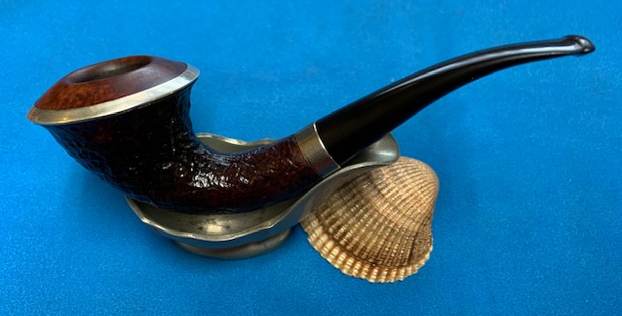
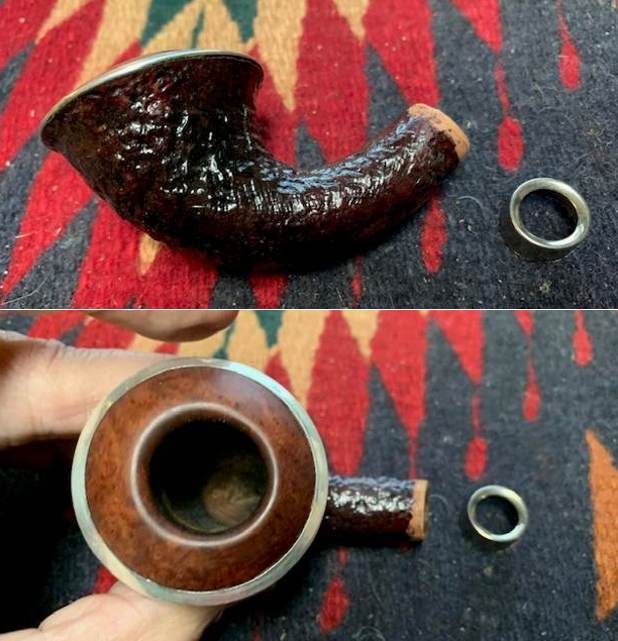
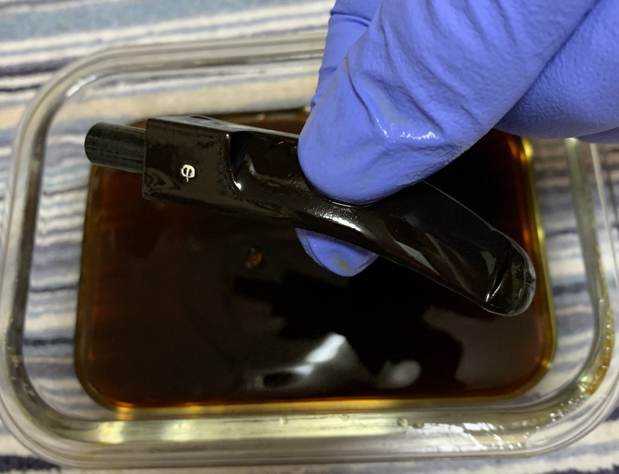
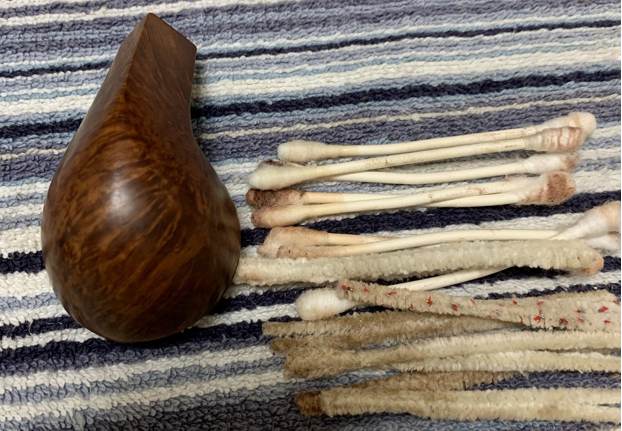
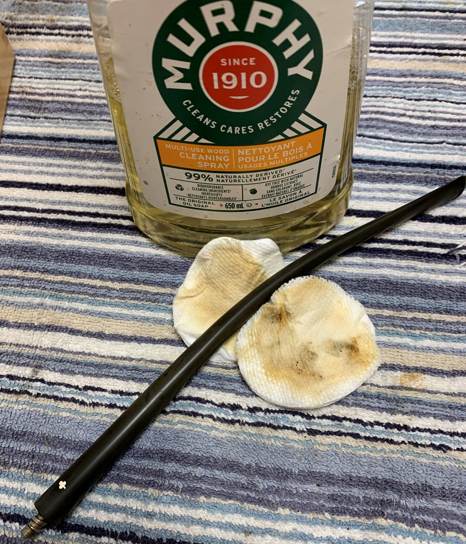
Jeff cleaned up the pipe for me. He reamed the bowl with a PipNet pipe reamer and cleaned it up with a Savinelli Fitsall Pipe Knife. He scrubbed the exterior with Murphy’s Oil Soap and a tooth brush to clean off the grime off the finish and the overflow of lava on the rim top. The cleaning had removed the debris on the rim top. He cleaned up the internals of the shank, mortise and stem with pipe cleaners, cotton swabs and alcohol to remove all of the oils and tars in the pipe. He soaked the stem in Before & After Deoxidizer and was able to remove much of the oxidation, calcification. When it arrived here in Vancouver it was a clean pipe and I knew what I had to work with. I took photos of it before I started my part of the restoration. I took a photo of the rim top and the stem to show their condition once it arrived in Canada. Jeff was able to clean up the cake and the lava overflow that was shown in the rim and bowl photos above. The rim top and the inner edge of the bowl showed some damage to the inner edge and top toward the front of the bowl. He was also able to get rid of the grime and grit in the surface of the briar. The stem looked better, though there were tooth marks and chatter on both sides near the button.I took a photo of the stamping on the underside of the shank. It reads as noted above.I removed the stem from the shank and took a photo of the parts to give a sense of what the pipe looks like.I started my work on the bowl by dealing with the burn damage on the inner edge and rim top. I followed the bevel on the inner edge and removed the burn damage while cleaning the bevel using 220 grit sandpaper. Once I got the bevel cleaned up and the rim damage removed I burn and the scratches on the rim top with 220 grit sandpaper. I smoothed out the repairs with a 1500 grit micromesh sanding pad. I polished the rim top and silver rim edge with micromesh sanding pads – dry sanding with 1500-12000 grit pads. I wiped it down after each sanding pad with a damp cloth to remove the sanding debris. I rubbed the bowl and shank down with Before & After Restoration Balm to deep clean them. The product works to clean, enliven and protect the briar. I worked it in with my fingers to get it into the briar. I let it sit for 10 minutes then I wiped it off and buffed it with a soft cloth. The briar really began to have a rich shine. While I was rubbing it down with the Balm a chunk of the shank fell out in my hand. There must have been cracks in the shank as the stem was loose before. It is frustrating when that happens. I repaired the cracks with clear CA glue and pressed the piece back into the shank.Once the repair cured I sanded the shank end smooth to hold a silver band. I sanded the depth of the band and removed half of the depth of the band. It would look good once it was pressed in place on the shank end. I coated the shank end with all purpose glue and heated and pressed the band on to  the shank end. I stained the sanded areas on the shank just ahead of the band with a Walnut stain pen to blend them into the surrounding briar. It looks very good. I rubbed the bowl and shank down once again with Before & After Restoration Balm to deep clean them. The product works to clean, enliven and protect the briar. I worked it in with my fingers to get it into the briar. I let it sit for 10 minutes then I wiped it off and buffed it with a soft cloth. The briar really began to have a rich shine. I set aside the bowl and turned my attention to the damage on the stem. I painted the stem surface with the flame of a lighter to lift the tooth marks. I lifted them some. I filled in what remained of the marks on both sides with black CA glue. I set it aside to cure. Once the repairs cured I flattened them out with a small file. I sanded the repairs with 220 grit sandpaper to blend them into the stem surface. I started polishing it with 400 grit wet dry sandpaper.  I polished the stem with micromesh sanding pads – dry sanding with 1500-12000 grit pads. I wiped the stem down after each pad with a damp cloth to remove the sanding dust. I gave it a further polish with Before & After Stem Polish – both Fine and Extra Fine. I finished by wiping the stem down with a final coat of Obsidian Oil and set it aside to dry. I put the stem back on the S. Bang Black Sandblast Calabash and took the pipe to the buffer. I buffed the bowl and stem with Blue Diamond to polish the briar and the vulcanite. Blue Diamond does a great job on the smaller scratches that remain in both. I gave the bowl and the stem several coats of carnauba wax and buffed the pipe with a clean buffing pad to raise the shine. I hand buffed it with a microfiber cloth to deepen the shine. Considering the mess the pipe was when we received it and the surprise of a cracked shank that appeared in the cleanup, I am amazed at how well it turned out. The finished pipe is shown in the photos below. This is a beautiful S. Bang Sandblast Calabash – the vulcanite taper stem and rim top and sandblast finish combine to give the pipe a great look. The newly fitted silver band and the polished black, vulcanite stem looks really good with the rich grain standing out on the bowl and shank. The dimensions of the pipe are Length: 5 ½ inches, Height: 1 ¾ inches, Outside diameter of the bowl: 1 ¾ inches, Chamber diameter: ¾ of an inch. The weight of the pipe is 1.48 ounces/43 grams. This beautiful S. Bang will be staying with me for awhile. Thanks for walking through the restoration with me on this beauty!

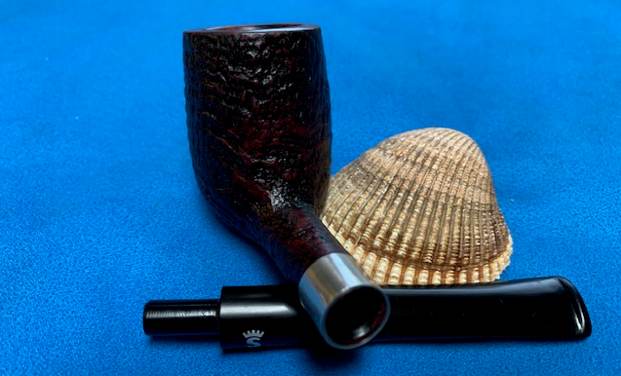
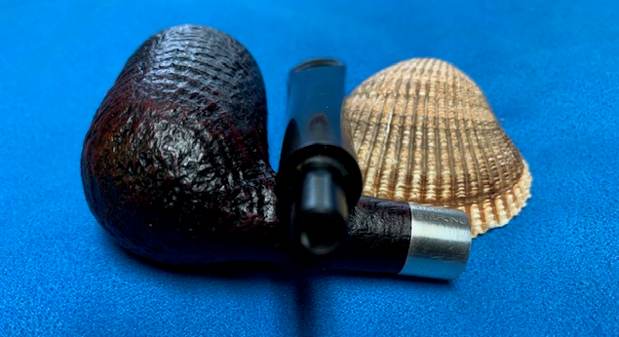
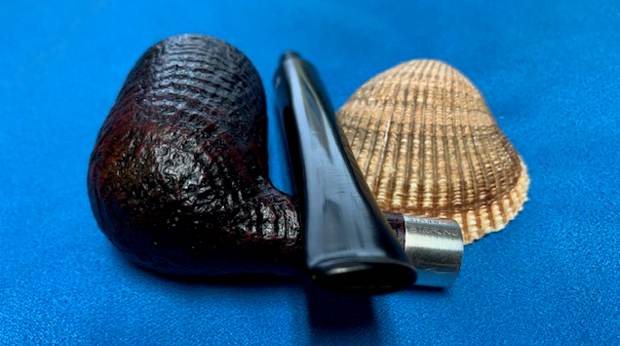
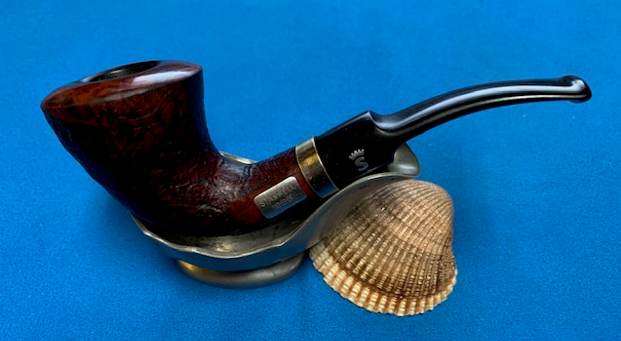
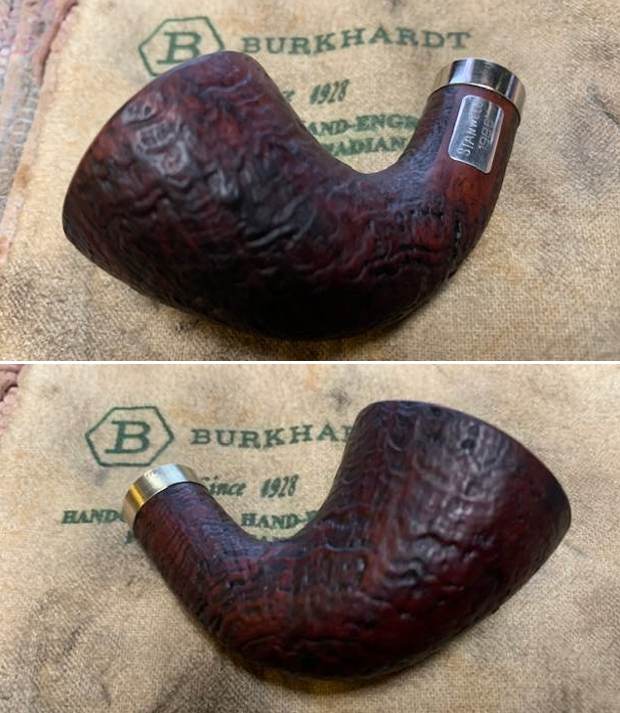
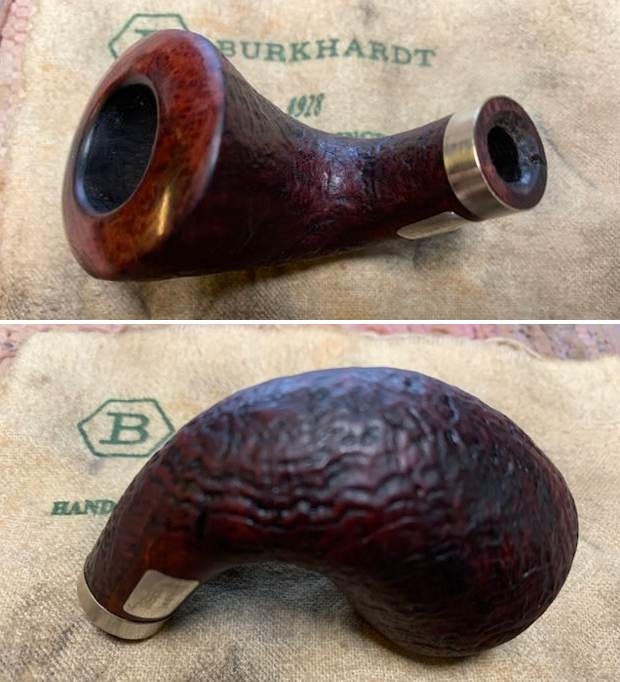
Cleaning up another Dark Sandblast Stanwell Sterling Silver Billiard


Blog by Steve Laug

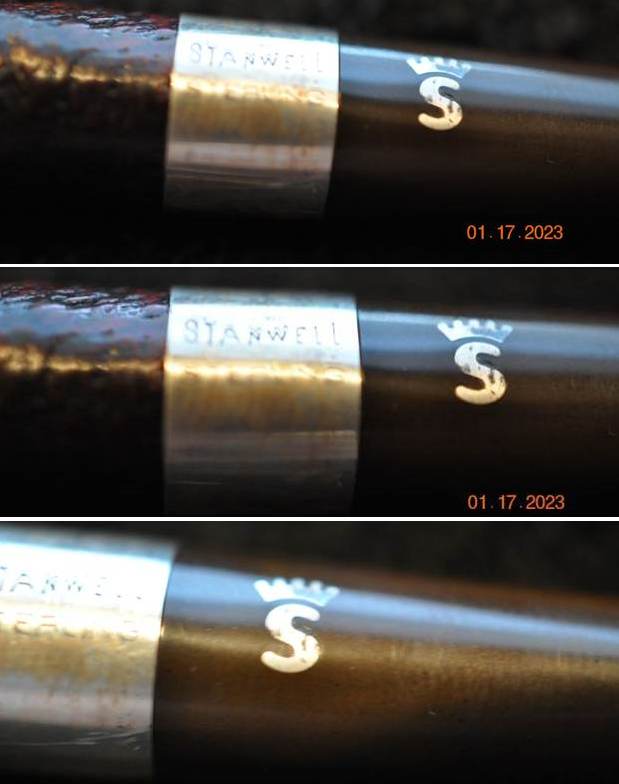
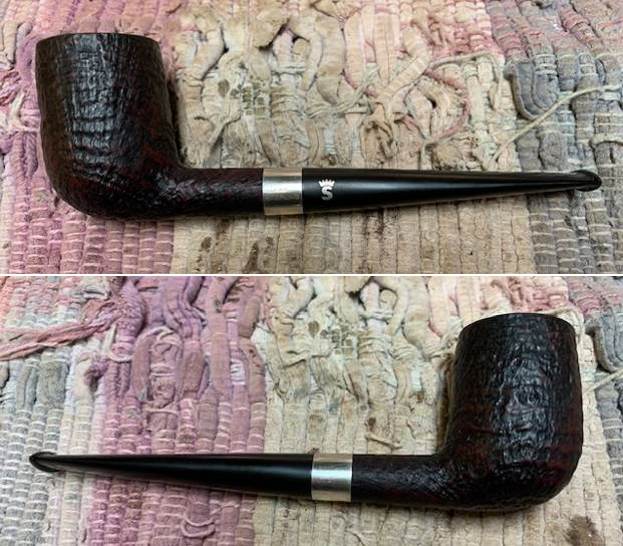
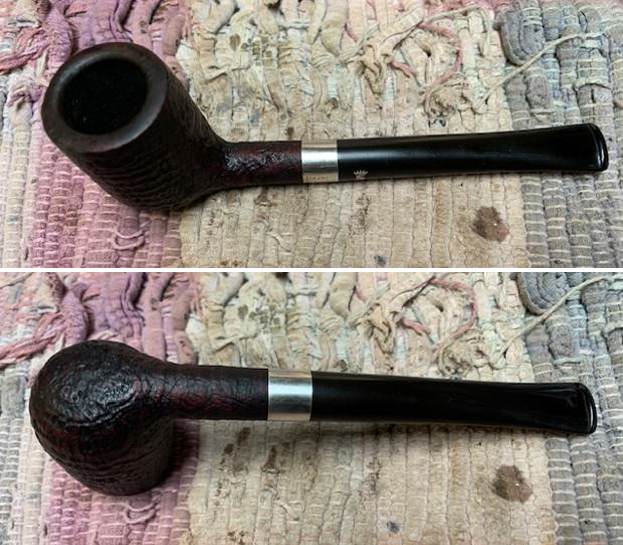
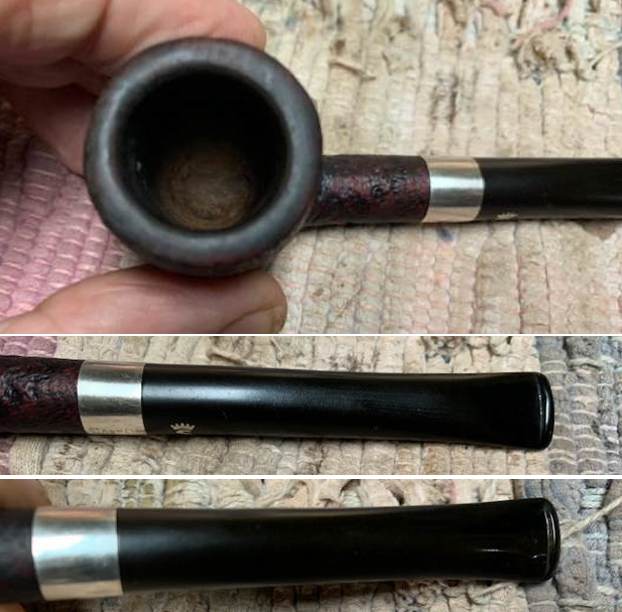
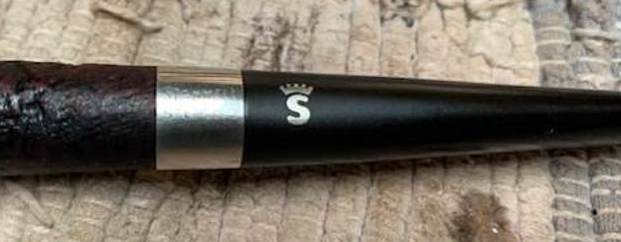
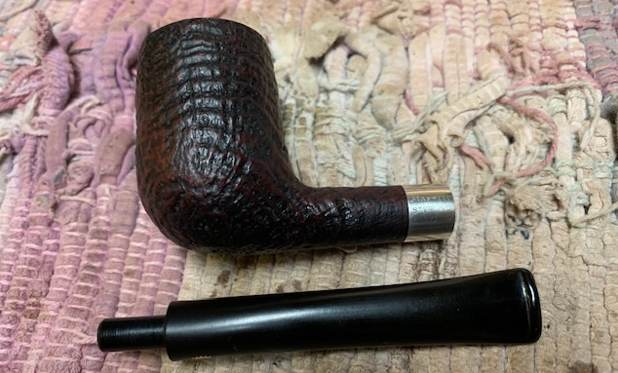
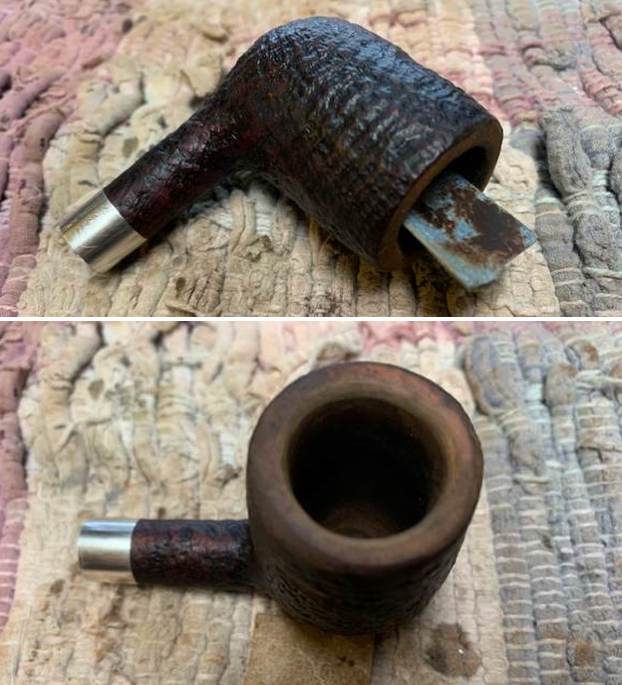
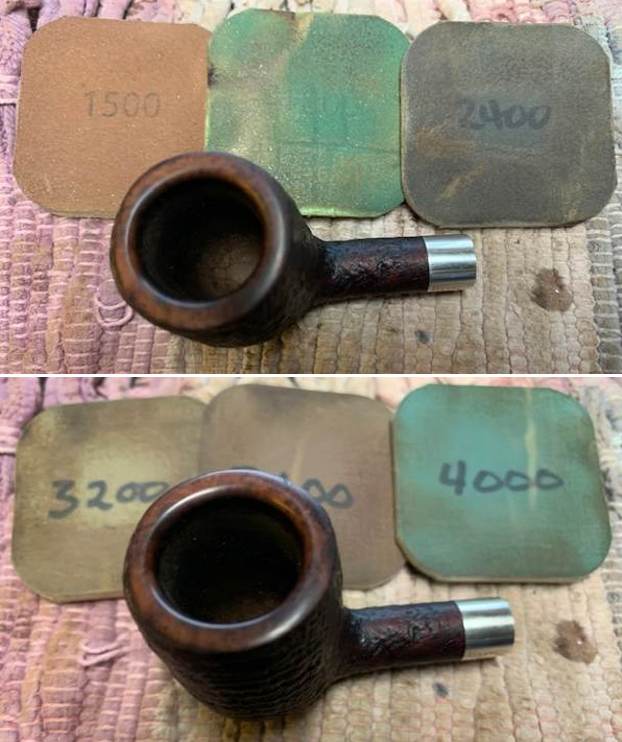
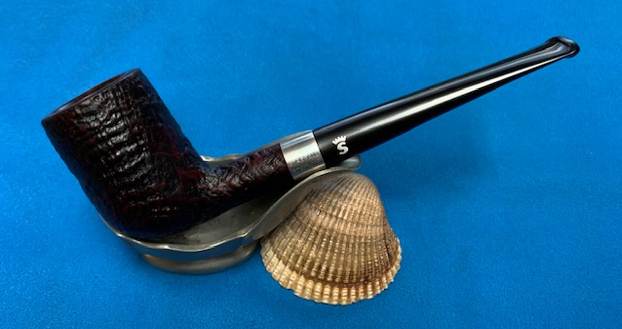
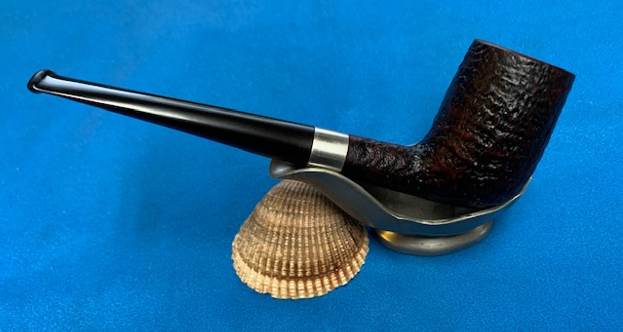
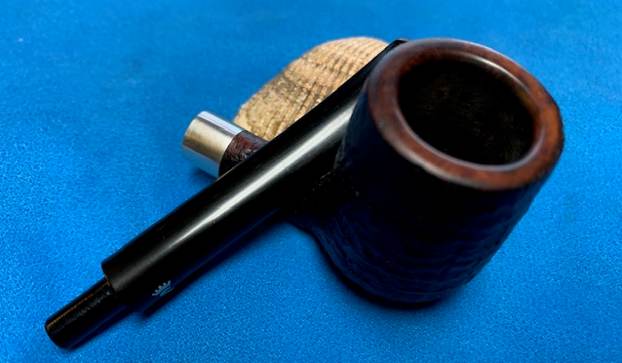
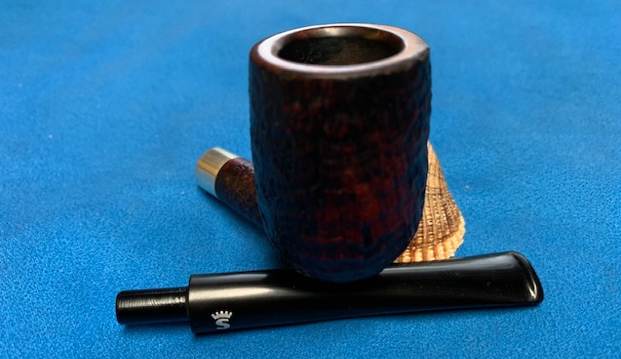
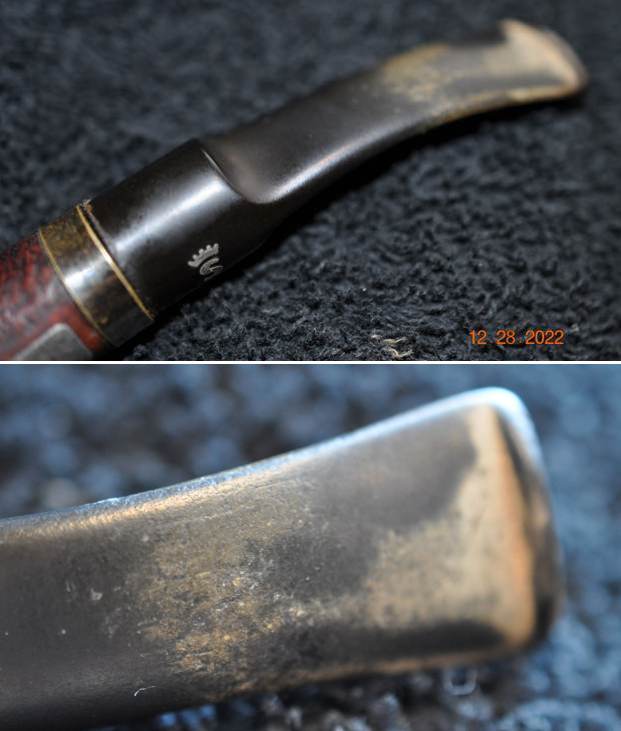
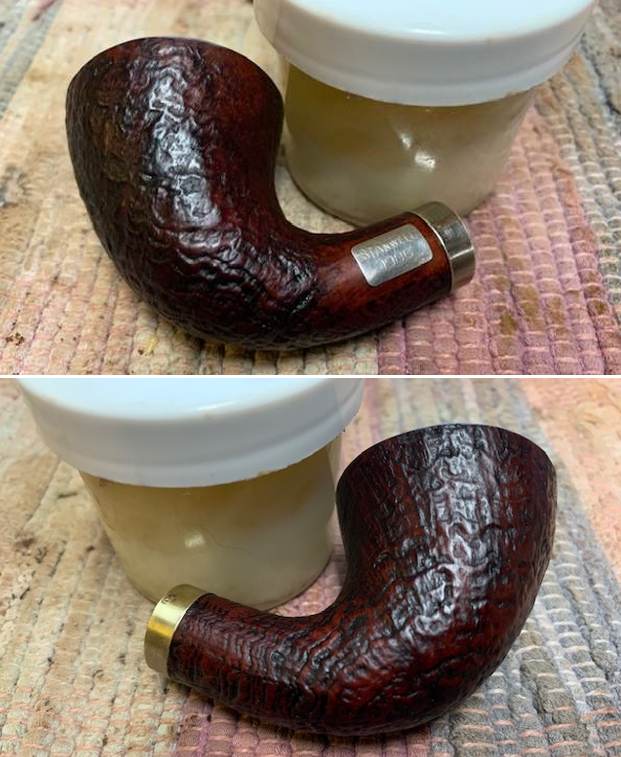
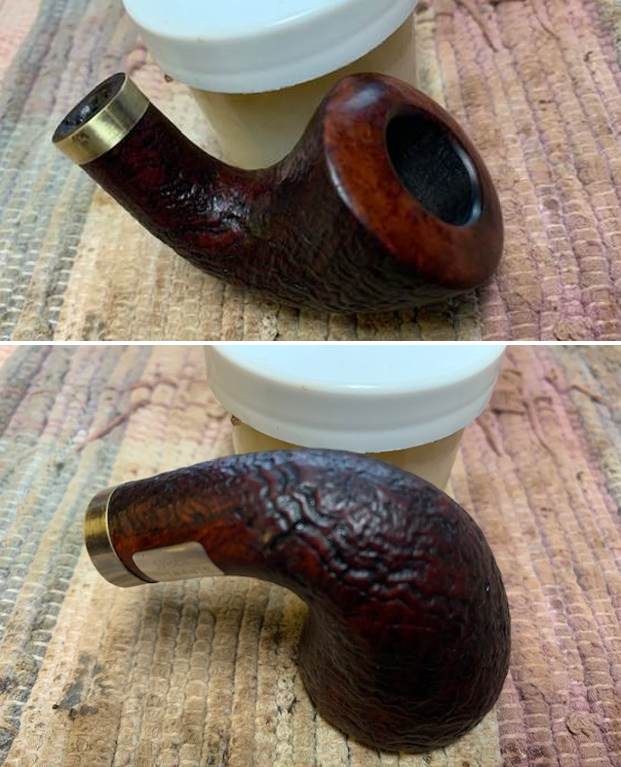
The next pipe I am working on was purchased on 01/10/2023 as part of another group of pipes from a fellow in Copenhagen, Denmark. This was another tired and dirty pipe but it had a great sandblast on the bowl and shank and a smooth rim top. The only mark on the pipe is on the silver band on the shank that reads Stanwell [over] Silver. The pipe is classic Danish Billiard. There were tars and oils ground into the valleys and crevices of the sandblast. The bowl had a thick cake that flowed over the top of the rim in a thin coat of a lava and some damage to the top and inner edge of the bowl. The stem was a black vulcanite taper stem with a silver Crown S logo on the left side. It was oxidized, calcified and had tooth marks and chatter on both sides ahead of the button. I think it would clean up to be a beautiful pipe. Jeff took photos of the pipes before he started his clean up work.  He took photos of the rim and bowl to show the thick cake and lava coat covering the rim top. It really was filthy and a mess. You can also see the rim top and inner edge damage in the photos. He also took photos of the stem surfaces to show its overall condition when it arrived. The photos of the sides and heel of the bowls show beautiful blast around the bowl and shank sides. The rich brown stains highlights the grain and adds depth to the finish. It shows some promise. He also took photos of the stamping on the silver band. It took several photos to capture the stamp on the curve but they were clear and read as noted above. Jeff cleaned up the pipe for me. He reamed the bowl with a PipNet pipe reamer and cleaned it up with a Savinelli Fitsall Pipe Knife. He scrubbed the exterior with Murphy’s Oil Soap and a tooth brush to clean off the grime off the finish and the overflow of lava on the rim top. The cleaning had removed the debris on the rim top. He cleaned up the internals of the shank, mortise and stem with pipe cleaners, cotton swabs and alcohol to remove all of the oils and tars in the pipe. He soaked the stem in Before & After Deoxidizer and was able to remove much of the oxidation, calcification. When it arrived here in Vancouver it was a clean pipe and I knew what I had to work with. I took photos of it before I started my part of the restoration. I took a photo of the rim top and the stem to show their condition once it arrived in Canada. Jeff was able to clean up the cake and the lava overflow that was shown in the rim and bowl photos above. The rim top and the inner edge of the bowl showed some damage to the inner edge and some darkening on the rim top. He was also able to get rid of the grime and grit in the surface of the briar. The stem looked better, though there were tooth marks and chatter on both sides near the button. I tried to capture the Stanwell Sterling on the silver band. It is clearer in person than is shown in the photo. I removed the stem from the shank and took a photo of the parts to give a sense of what the pipe looks like. I started my work on the bowl by working on the damage to the inner edge of the bowl and the darkening on the rim top and outer edge with 220 grit sandpaper. I was able to clean it up nicely.I polished the smooth rim top with micromesh sanding pads – dry sanding with 1500-12000 grit pads. I wiped the briar down after each pad. I rubbed the bowl and shank down with Before & After Restoration Balm to deep clean them. The product works to clean, enliven and protect the briar. I worked it in with my fingers to get it into the briar. I let it sit for 10 minutes then I wiped it off and buffed it with a soft cloth. The briar really began to have a rich shine. I took some photos of the bowl at this point to mark the progress in the restoration. It is a beautiful bowl. I set aside the bowl and turned my attention to the damage on the stem. I “painted” the surface of the stem with the flame of a lighter to lift them as much as possible. I filled in the ones that remained with clear CA glue and set it aside to cure. I used a small file to flatten the repairs and recut the button edge. I sanded the stem smooth with 220 grit sandpaper and started polishing it with 400 grit wet dry sandpaper. I polished the stem with micromesh sanding pads – dry sanding with 1500-12000 grit pads. I wiped the stem down after each pad with a damp cloth to remove the sanding dust. I gave it a further polish with Before & After Stem Polish – both Fine and Extra Fine. I finished by wiping the stem down with a final coat of Obsidian Oil and set it aside to dry. I put the stem back on the Stanwell Sterling Sandblast Billiard and took the pipe to the buffer. I buffed the bowl and stem with Blue Diamond to polish the briar and the vulcanite. Blue Diamond does a great job on the smaller scratches that remain in both. I gave the bowl and the stem several coats of carnauba wax and buffed the pipe with a clean buffing pad to raise the shine. I hand buffed it with a microfiber cloth to deepen the shine. Considering the mess the pipe was when we received it I am amazed at how well it turned out. The finished pipe is shown in the photos below. This is a beautiful Stanwell Sterling Sandblast Billiard – the vulcanite taper stem and rim top and sandblast finish combine to give the pipe a great look. The polished black, vulcanite stem looks really good with the rich grain standing out on the bowl and shank. The dimensions of the pipe are Length: 5 ½ inches, Height: 1 ¾ inches, Outside diameter of the bowl: 1 1/8 inches, Chamber diameter: ¾ of an inch. The weight of the pipe is 1.27 ounces/36 grams. This is another pipe that I will be putting on the rebornpipes online store in the Danish Pipe Pipemaking Companies Section shortly, if you are interested in adding it to your collection. Thanks for walking through the restoration with me on this beauty!

Is it possible to give this Horribly Abused Stanwell 1986 POY Dublin New Life?


Blog by Steve Laug

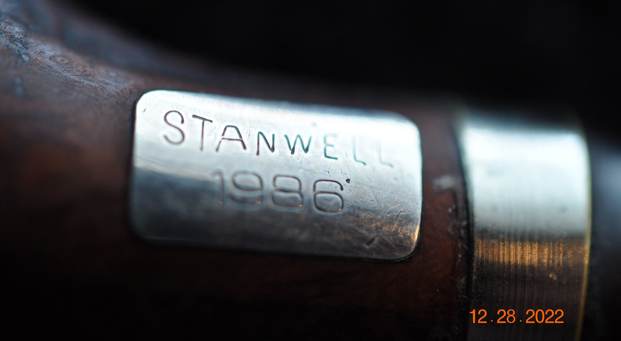
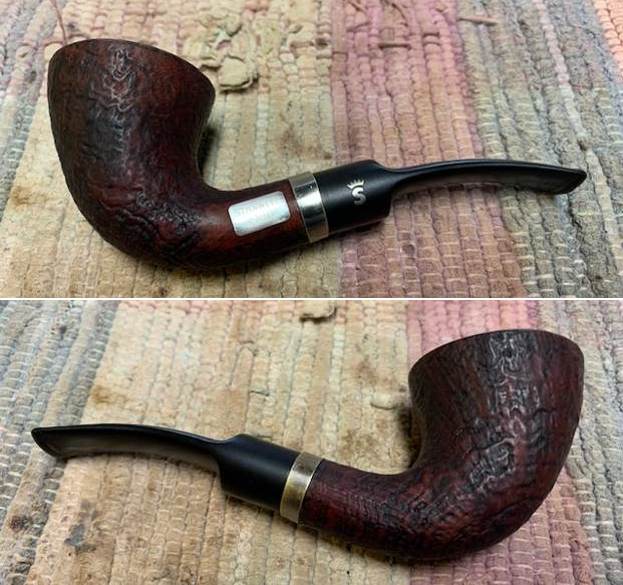
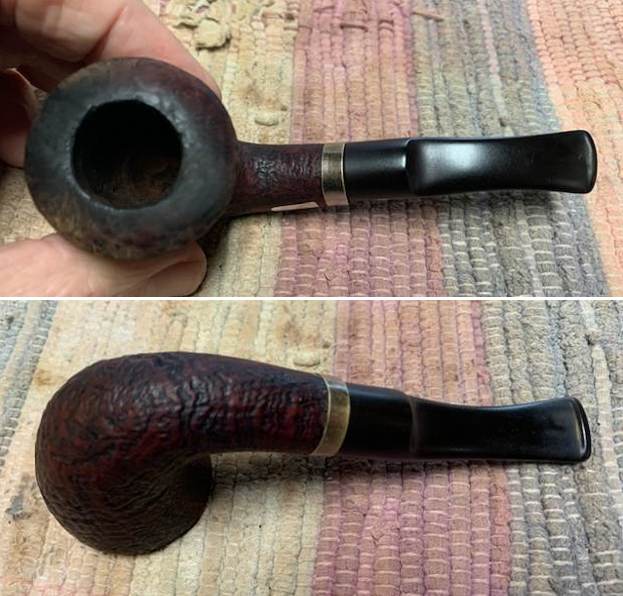
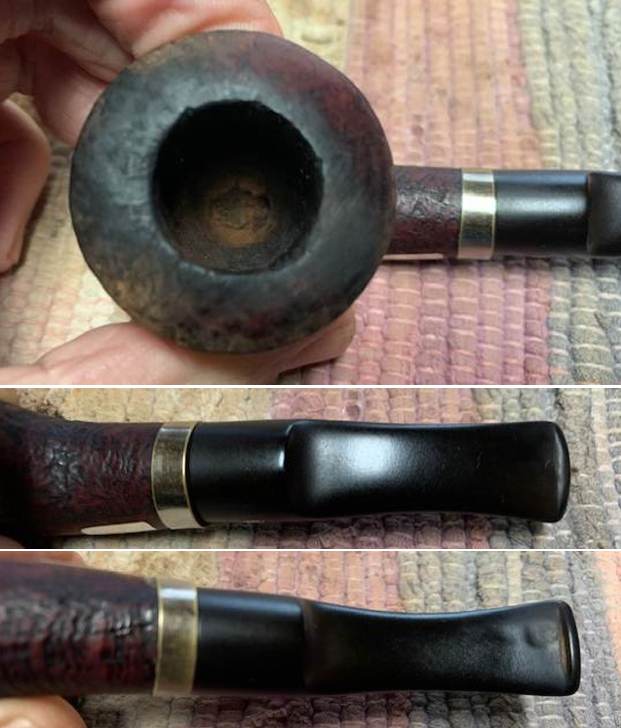
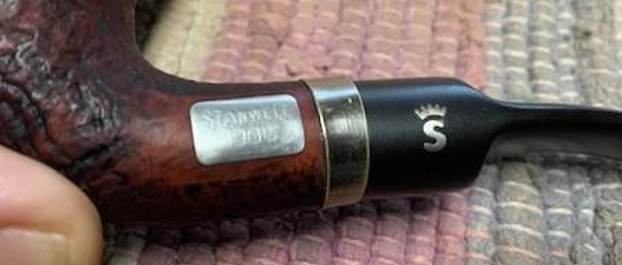
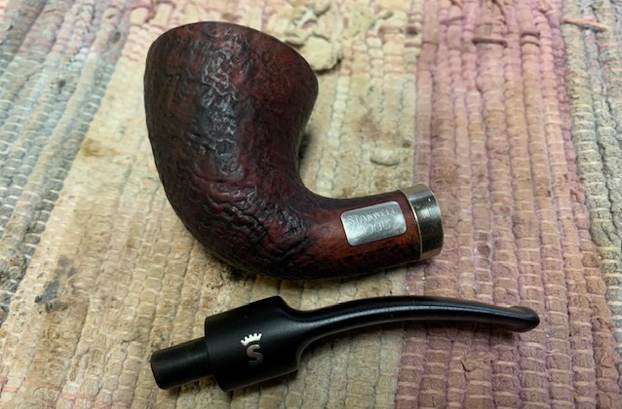
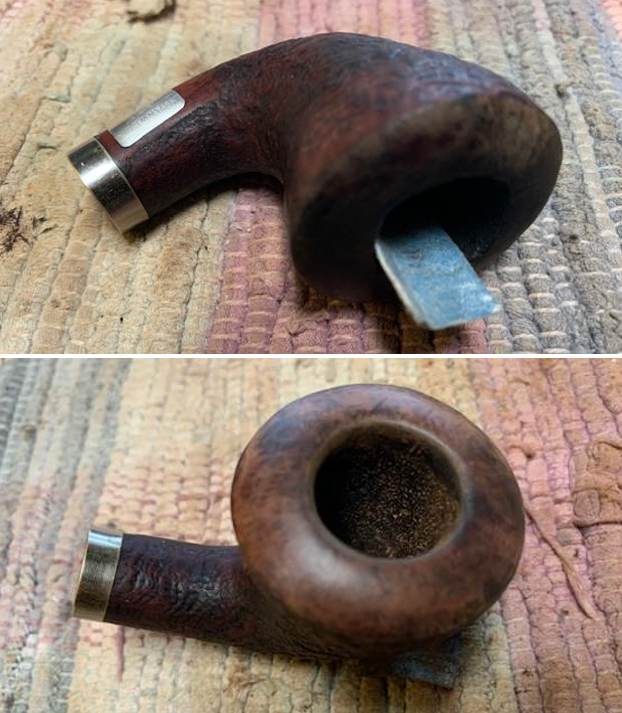
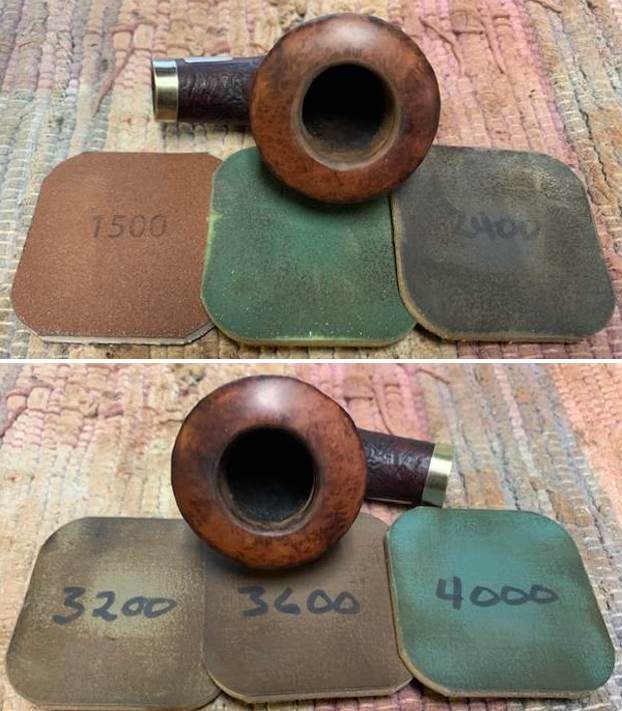
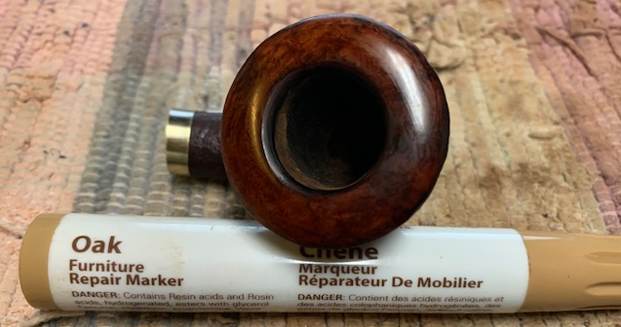
The next pipe I am working on was purchased on 11/14/2022 as part of a group of pipes from a fellow in Copenhagen, Denmark. This was a horribly tired and dirty pipe with a lot of wear and tear and obviously it had been someone’s favourite smoker. The pipe has an identifying plate on the left side of the shank that reads Stanwell [over] 1986. There was no other stamping on the shank and the silver plate confirmed for me that it was a Stanwell Pipe of the Year. The dirty sandblast finish on this was worn and tired looking. There were tars and oils ground into the surface of the briar. The silver band on the shank was an later addition to address a crack in the shank on the underside. one showed some nice grain around the bowl and shank and though it was a little dirty it was a nice looking pipe. The bowl had a thick cake that flowed over the top of the lightly crowned rim in a thick coat of a lava and showed potential damage on the top and the inner edge. The stem was a black vulcanite saddle stem with a silver Crown S on the left side of the saddle. It had some deep and wide tooth marks and chatter on both sides ahead of the button. There was also some oxidation and calcification on both sides of the stem. For me the question was would it clean up well enough to make it worth doing a thorough restoration. Time would tell once it was cleaned up and I had a chance to look it over. Jeff took photos of the pipes before he started his clean up work.  He took photos of the rim and bowl to show the heavy cake and thick lava coat covering the rim top. It really was filthy and a mess. He also took photos of the stem surfaces to show its overall condition when it arrived. The photos of the sides and heel of the bowls show beautiful grain around the bowl and shank sides. The sandblast is nicely done and highlights the grain. The brown stain on the briar adds depth finish on the pipe and makes the grain really stand out. It shows some promise. He took a photo of the crack in the underside of the shank. It had been repaired before but the band had slipped off a bit and the crack had opened up. He also took a photo of the stamped silver plate on the left underside of the shanks. It reads as noted above. Jeff cleaned up the pipe for me. He reamed the bowl with a PipNet pipe reamer and cleaned it up with a Savinelli Fitsall Pipe Knife. He scrubbed the exterior with Murphy’s Oil Soap and a tooth brush to clean off the grime off the finish and the heavy overflow of lava on the rim top. The cleaning had removed the thick coat on the rim top. He cleaned up the internals of the shank, mortise and stem with pipe cleaners, cotton swabs and alcohol to remove all of the oils and tars in the pipe. He soaked the stem in Before & After Deoxidizer and was able to remove much of the oxidation, calcification. When it arrived here in Vancouver it was a clean pipe and I knew what I had to work with. I took photos of it before I started my part of the restoration. I took a photo of the rim top and the stem to show their condition once it arrived in Canada. Jeff was able to clean up the incredibly thick cake and the lava overflow that was shown in the rim and bowl photos above. The rim top showed damage on the surface and the inner edge of the bowl was in rough condition. It was chipped and out of round. He was also able to get rid of the grime and grit in the surface of the briar around the sandblast. The last photo of the three below shows the crack in the shank. The stem looked better, though there were deep tooth marks and chatter on both sides near the button. I took a photo of the stamping on the silver plate on the left side of the shank to show that it was readable and undamaged by the cleanup work.I removed the stem from the shank and took a photo of the parts to give a sense of what the pipe looks like.I started my work on the inner edge and rim top with a folded piece of 220 grit sandpaper. I was able to remove that damage on the rim top and bring the inner edge back into round. It looked much better. (I also filled in the remnants of the crack on the underside of the shank with clear CA glue to further strengthen the  previous repair. I forgot to take pictures of this step.)I started polishing the smooth rim top with micromesh sanding pads. I wet sanded it with 1500-12000 grit pads. I wiped the bowl down after each pad with a damp cloth. The crowned rim top began to take on a rich shine and grain was beginning to stand out. I wet sanded with all of the pads and wiped the bowl down after each pad with a soft cloth. I used an oak stain pen to touch up the stain on the rim top to match the other smooth portions of the bowl and shank.I rubbed the bowl and shank down with Before & After Restoration Balm to deep clean the finish on the bowl and shank. The product works to clean, enliven and protect the briar. I worked it in with my fingers to get it into the briar. I used a horsehair shoe brush to work it into the sand blast. I let it sit for 10 minutes then I wiped it off and buffed it with a soft cloth. The briar really began to have a rich shine. I took some photos of the bowl at this point to mark the progress in the restoration. It is a beautiful bowl. I polished the silver band and plaque on the side of the shank with a jewelers cloth to remove the slight remaining oxidation and to protect and preserve it. I set the bowl aside and worked on the stem at this point in the process. The stem sat straight in the shank but the fit was thicker on the right side of the shank rather than the left side. I would need to reduce the diameter of the stem on the right side to get a more centered fit. I sanded the side with a piece of 220 grit sandpaper to reduce the diameter on that side. At the same time I filled in the deep tooth marks with clear CA glue. I flattened the repairs with a small file. And sanded the smooth with 220 grit. I started polishing the whole stem with 600 grit sandpaper until the sanding marks were gone. I polished the stem with micromesh sanding pads – dry sanding with 1500-12000 grit pads. I wiped the stem down after each pad with a damp cloth to remove the sanding dust. I gave it a further polish with Before & After Stem Polish – both Fine and Extra Fine. I finished by wiping the stem down with a final coat of Obsidian Oil and set it aside to dry. I put the stem back on the Stanwell Pipe of the Year 1986 Dublin Calabash pipe and took the pipe to the buffer. I buffed the bowl and stem with Blue Diamond to polish the briar and the acrylic. Blue Diamond does a great job on the smaller scratches that remain in both. I gave the bowl and the stem several coats of carnauba wax and buffed the pipe with a clean buffing pad to raise the shine. I hand buffed it with a microfiber cloth to deepen the shine. Considering the mess the pipe was when we received it I am amazed at how well it turned out. The finished pipe is shown in the photos below. This is a beautiful Stanwell POY 1986 – the vulcanite saddle stem and crowned rim top and sandblast finish combine to give the pipe a great look. The polished black, vulcanite stem looks really good with the rich browns standing out in the sandblast. The dimensions of the pipe are Length: 5 inches, Height: 2 inches, Outside diameter of the bowl: 1 ½ inches, Chamber diameter: ¾ of an inch. The weight of the pipe is 1.34 ounces/38 grams. This is another pipe that I will be putting on the rebornpipes online store in the Danish Pipe Pipemaking Companies Section shortly, if you are interested in adding it to your collection. Thanks for walking through the restoration with me on this beauty!

Trying to Breathe Life into a House of Robertson Drinking Horn


Blog by Steve Laug

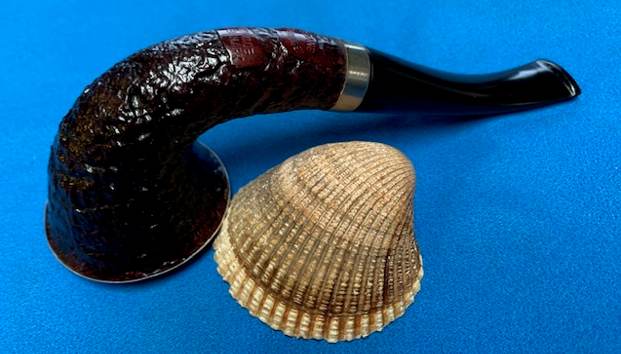
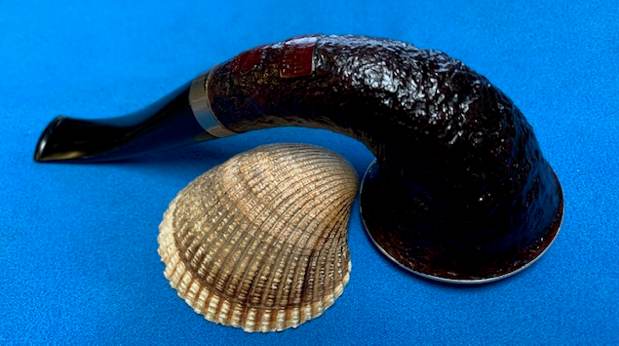
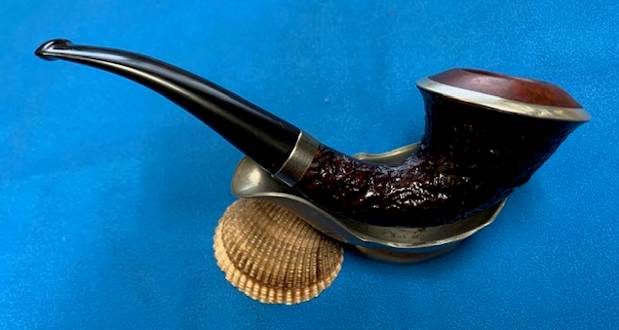
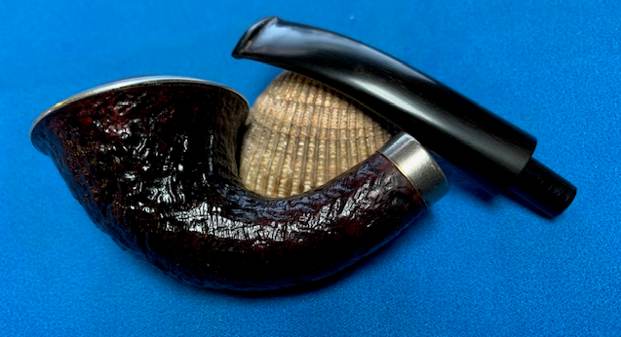
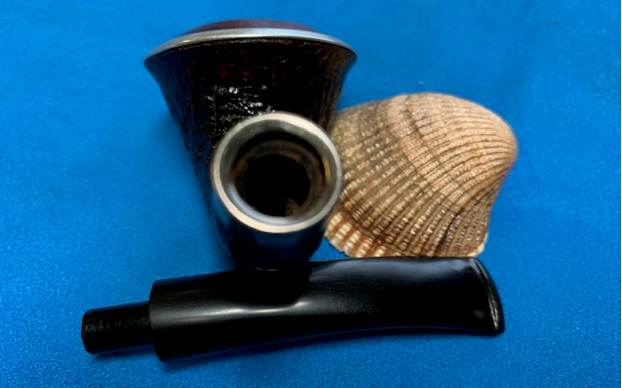
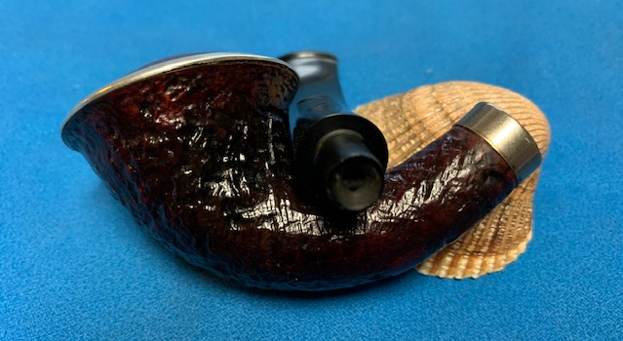
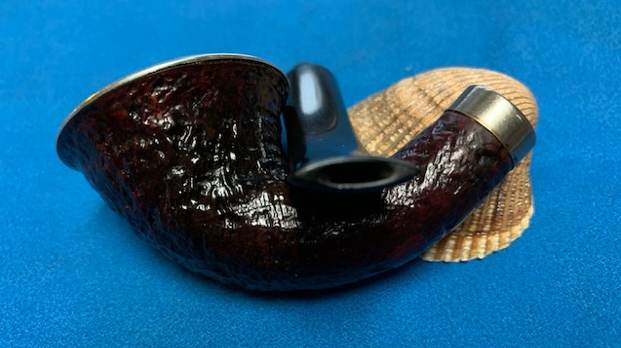
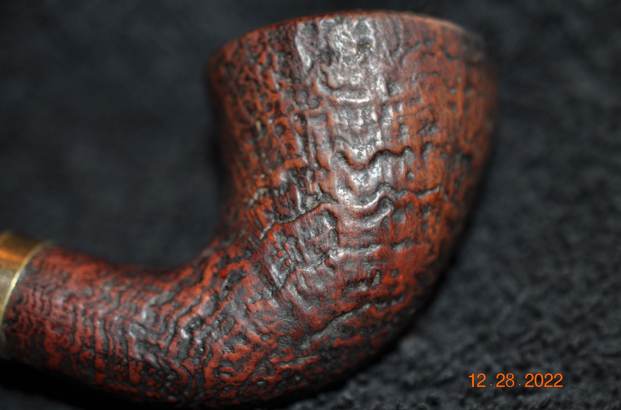
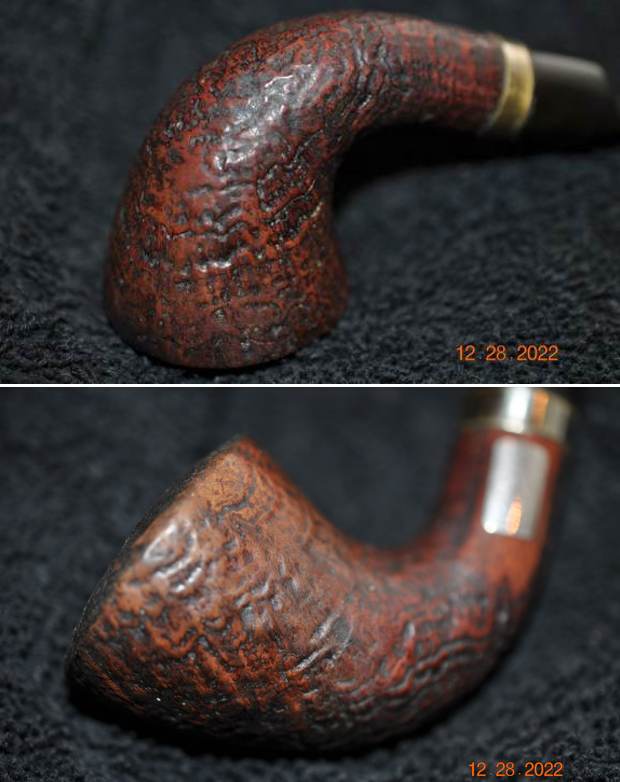
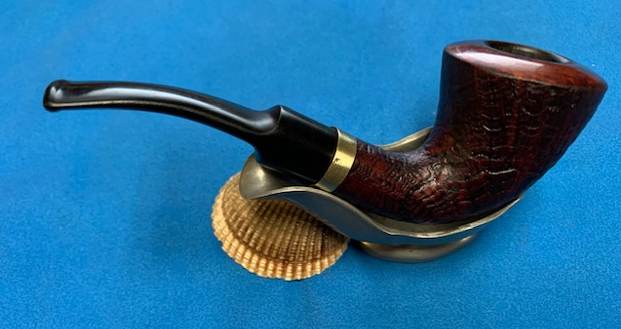
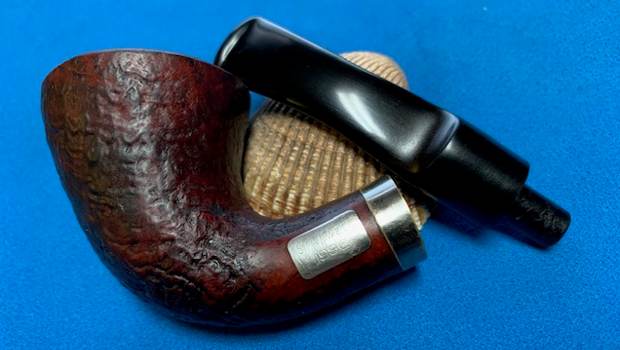
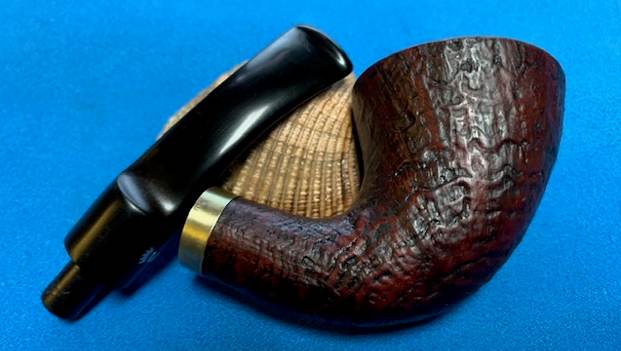
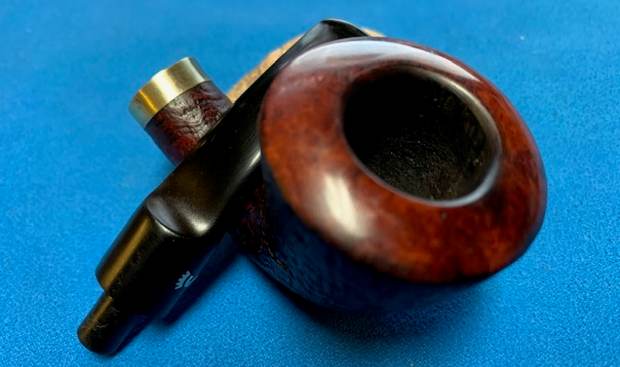
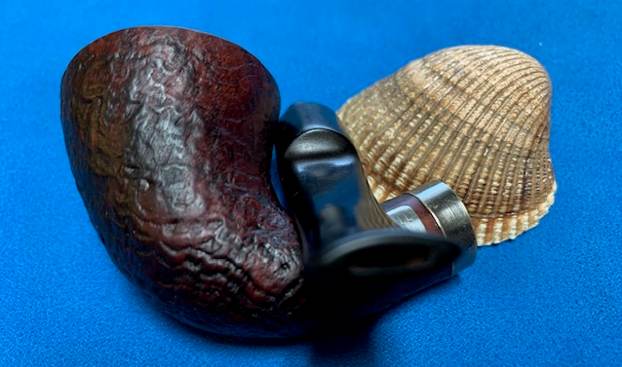
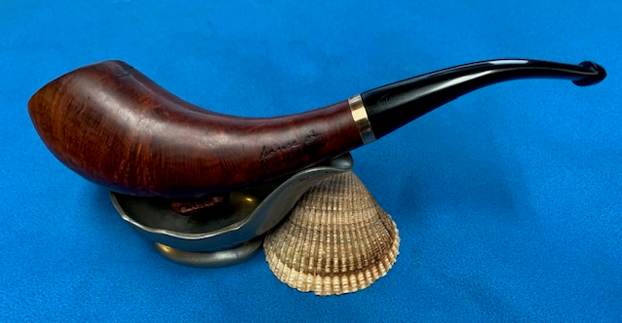
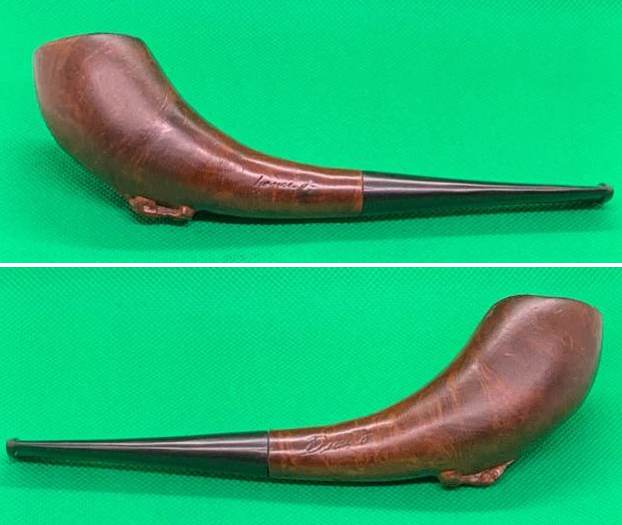
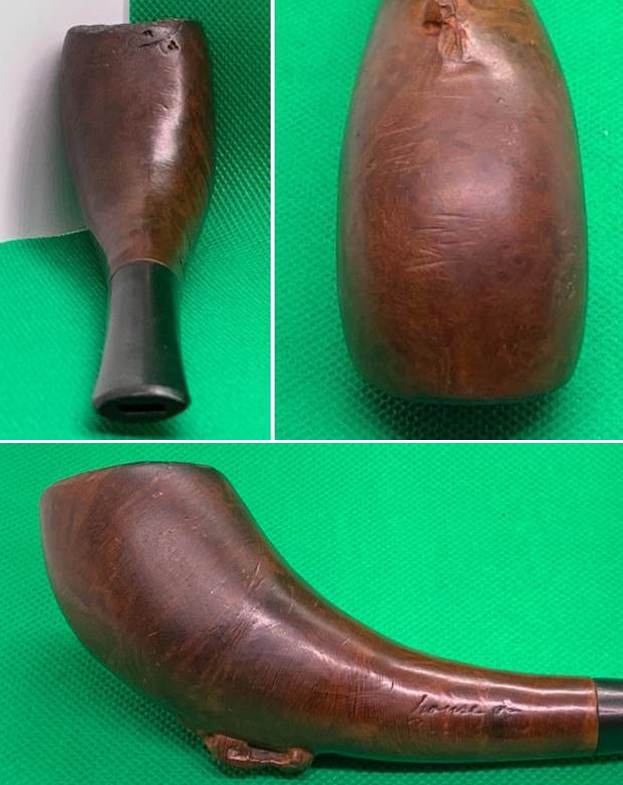
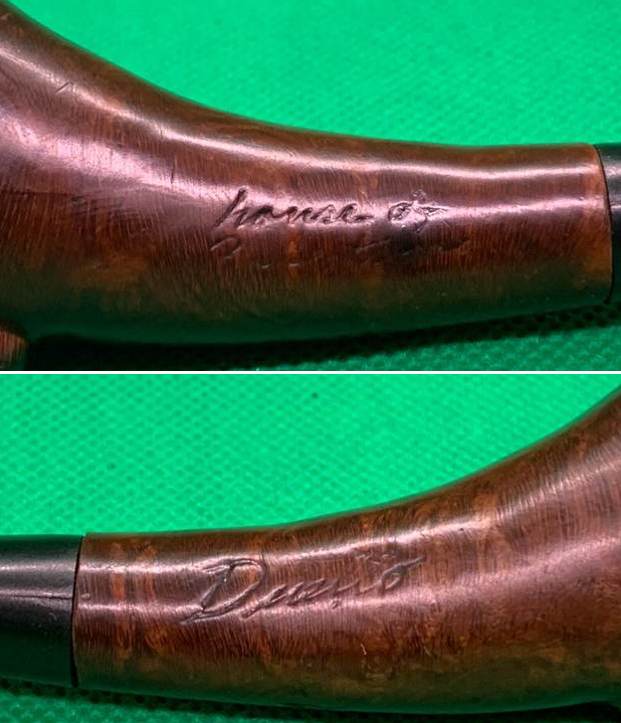
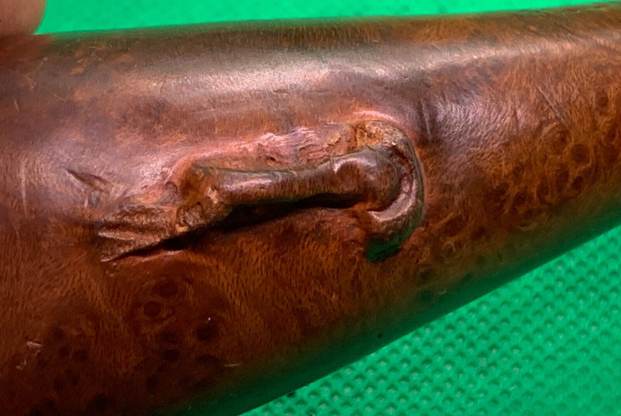
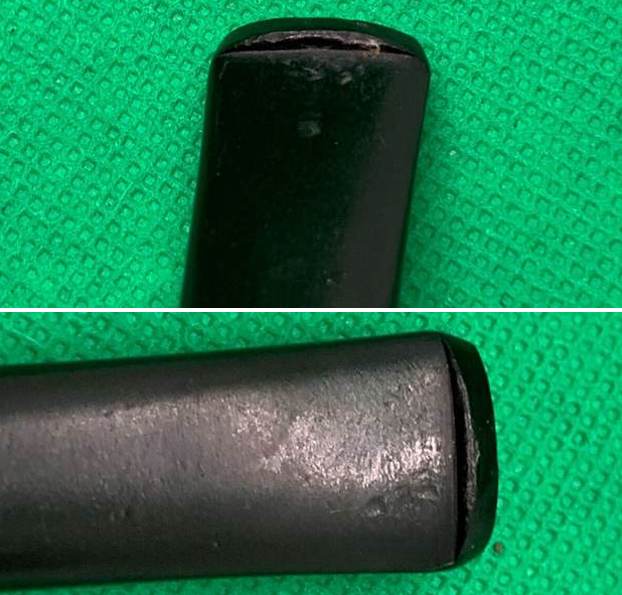
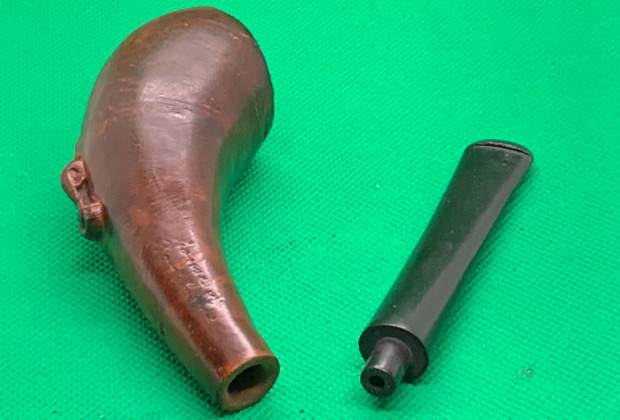
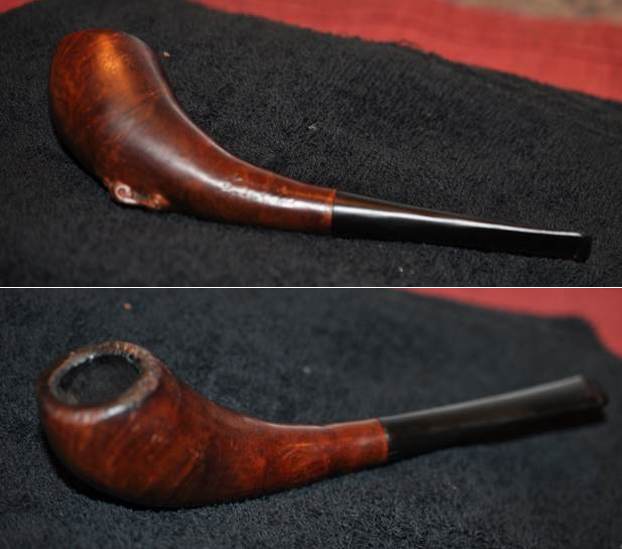
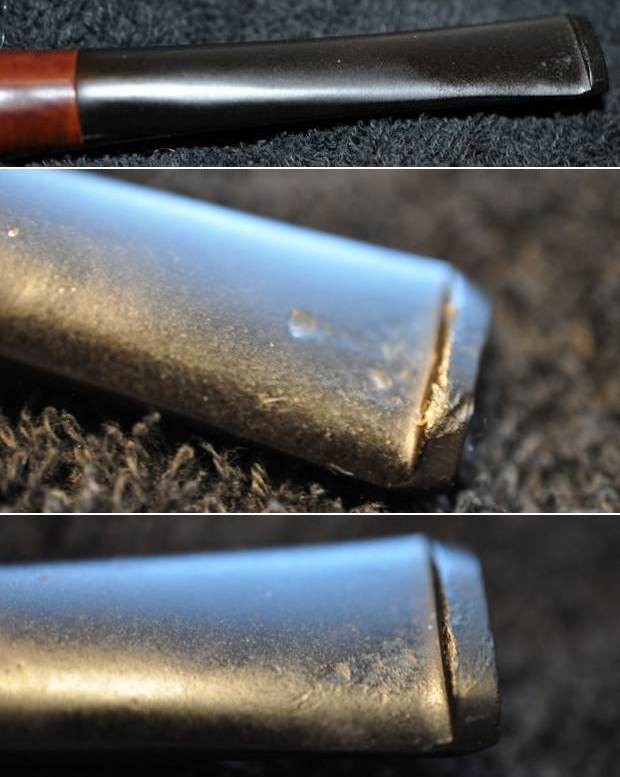
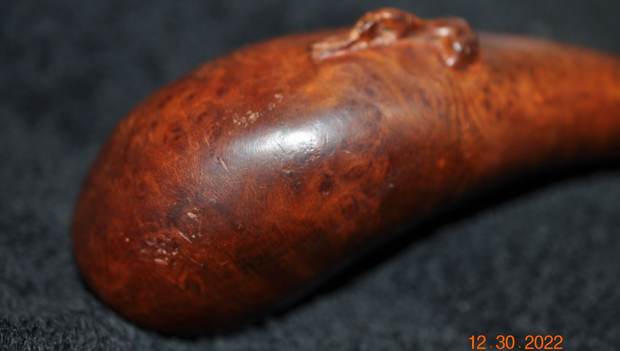
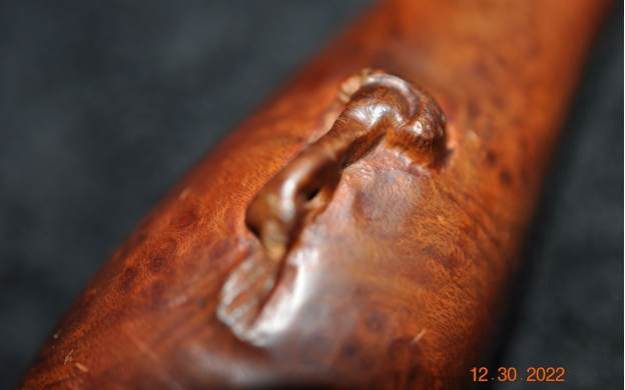
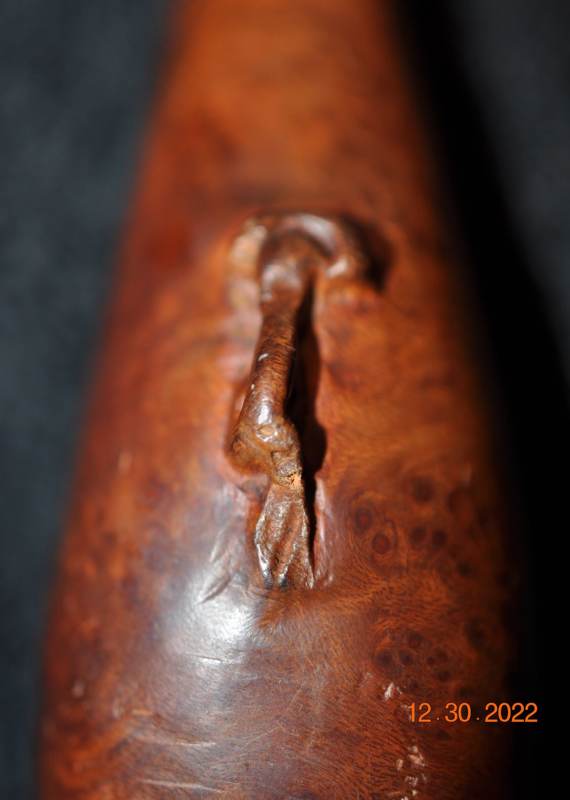
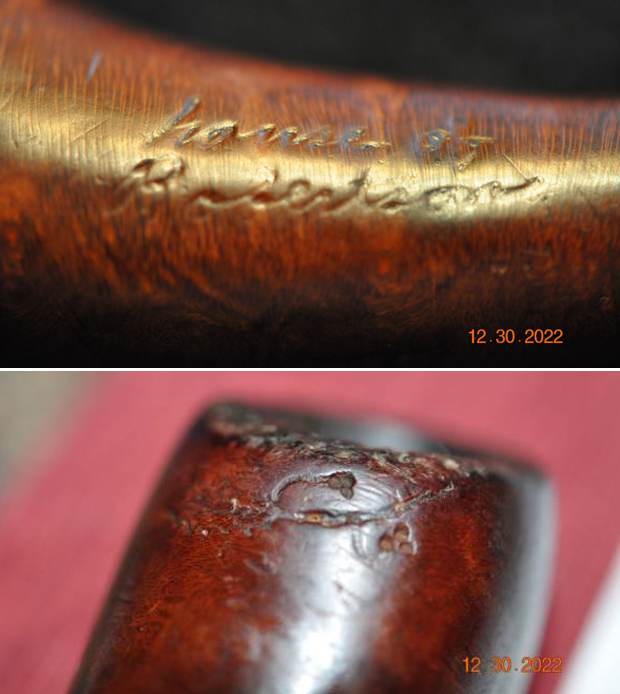
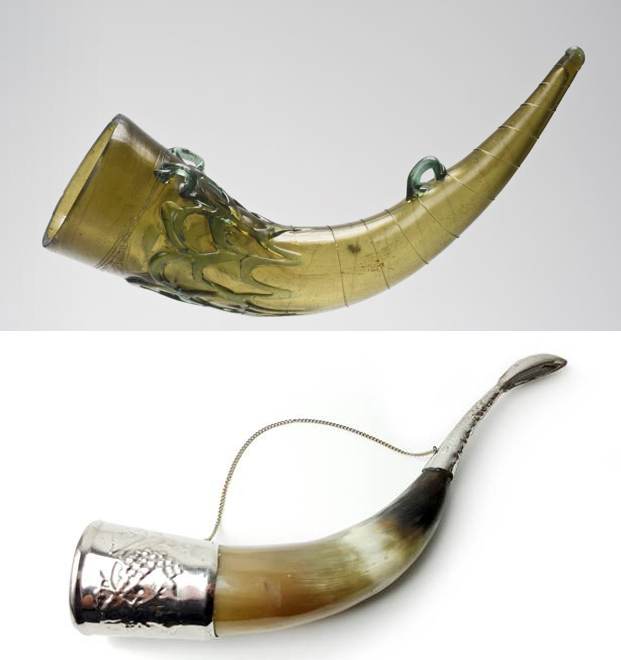
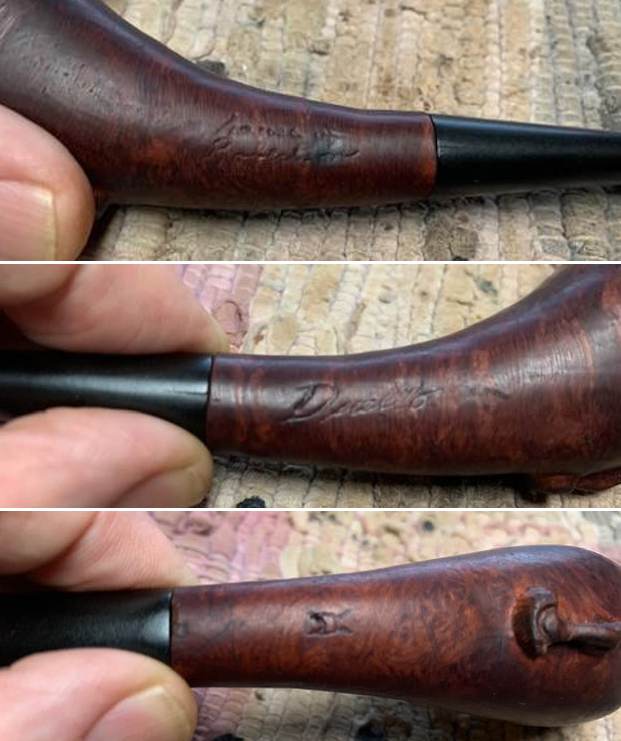
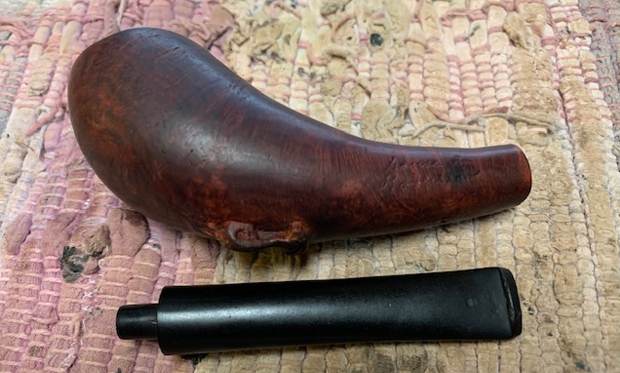
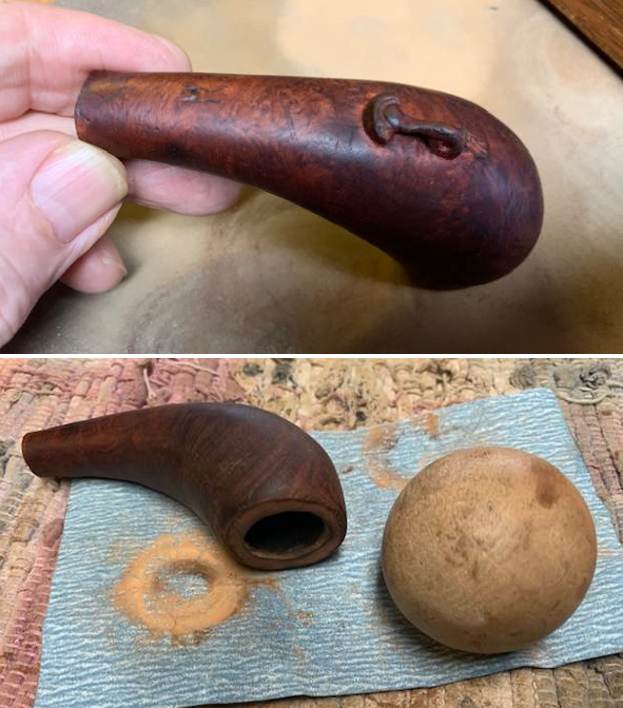
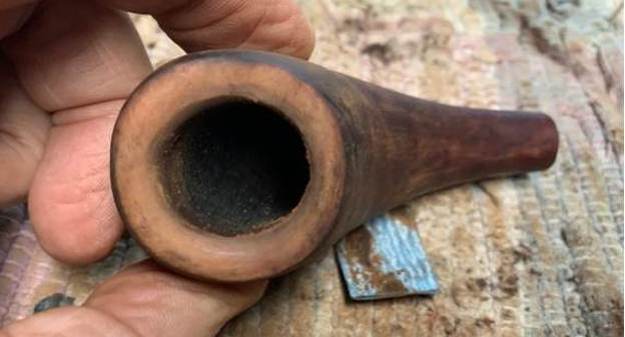
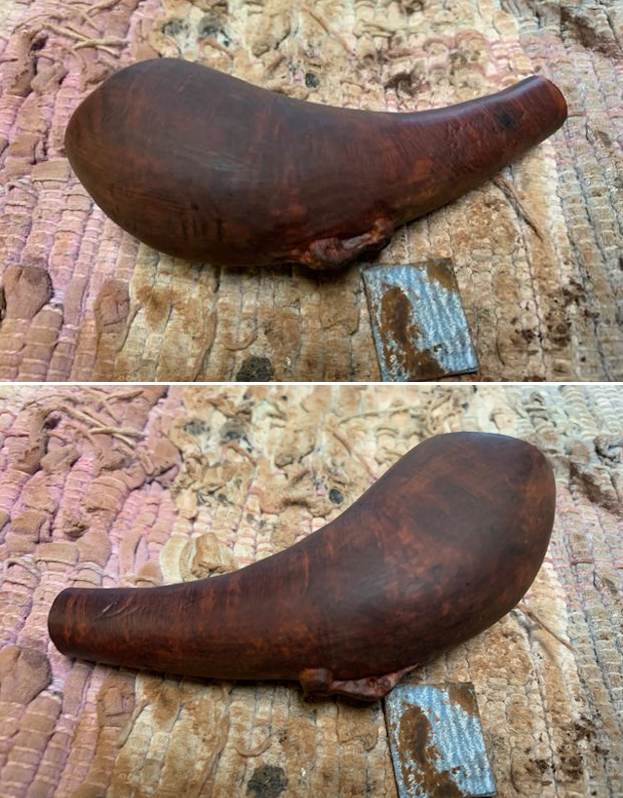
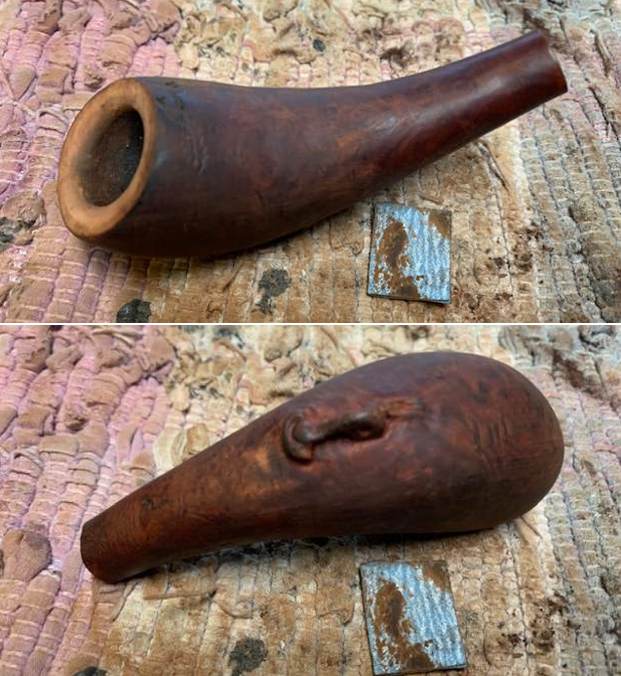
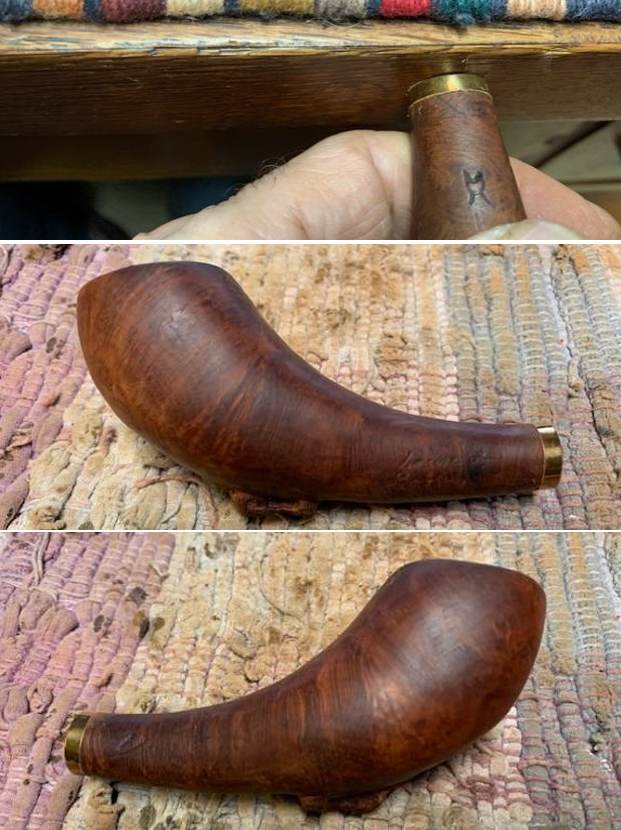
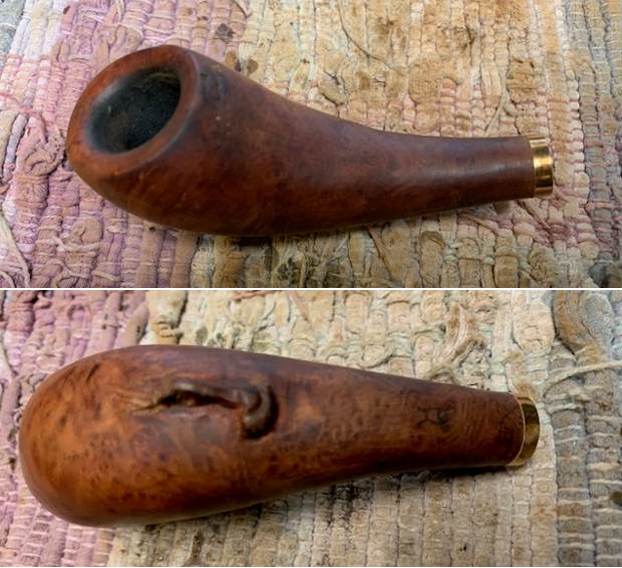
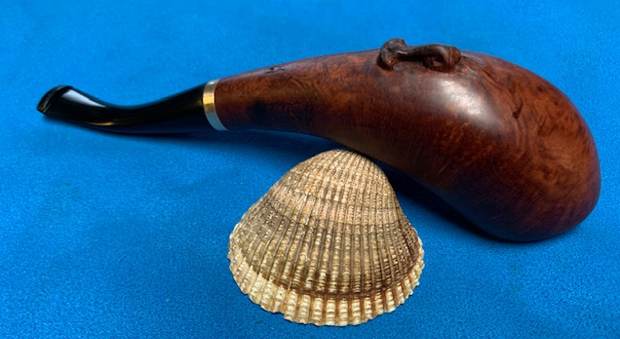
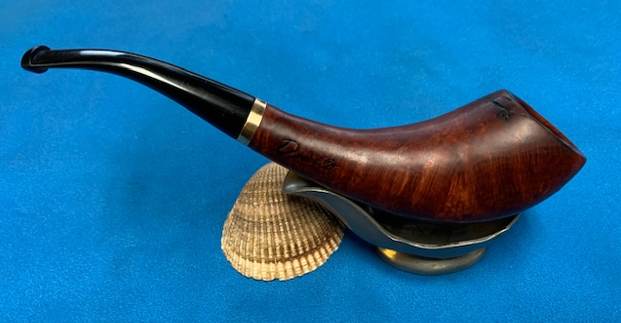
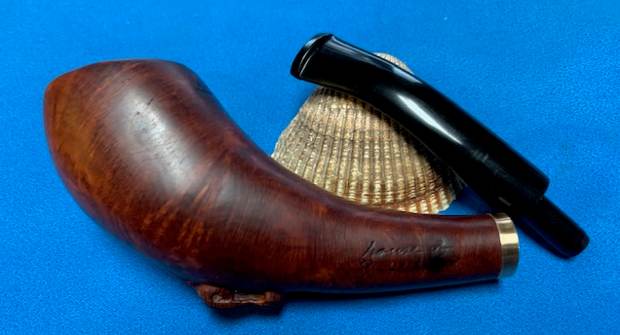
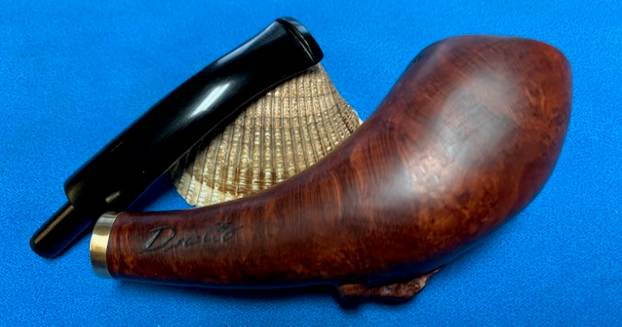
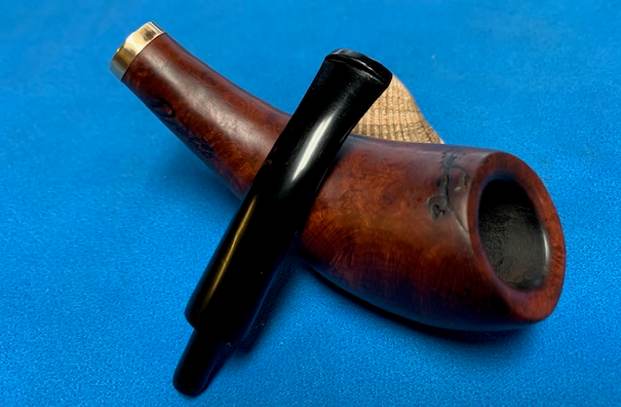
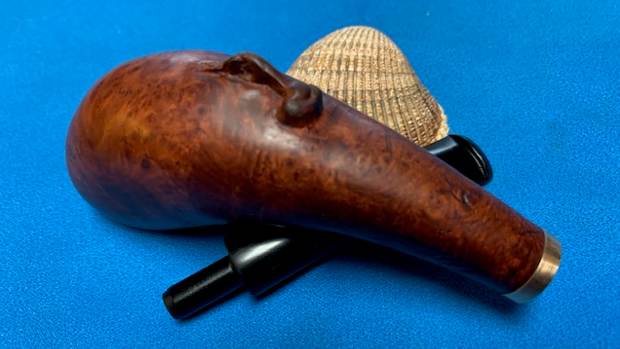
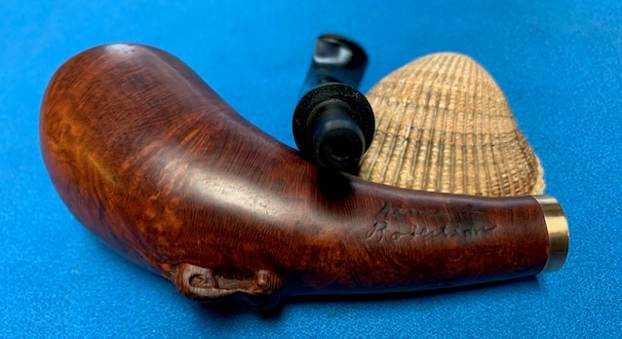
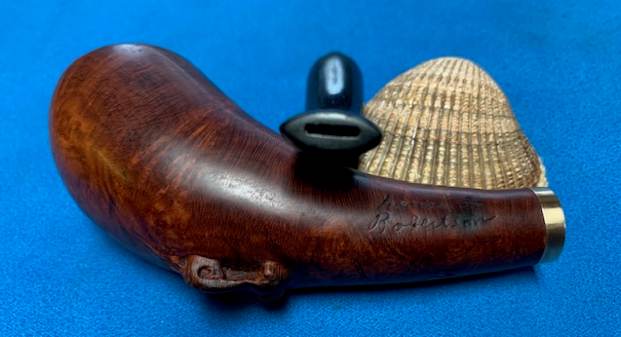
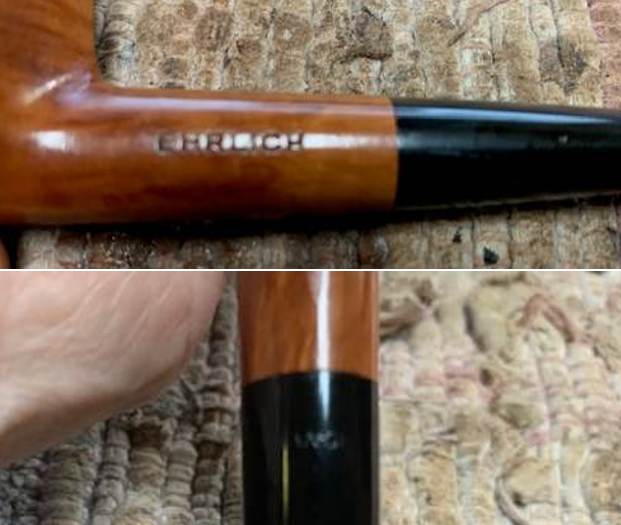
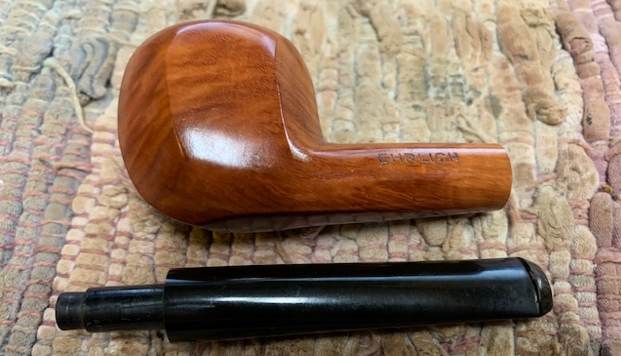
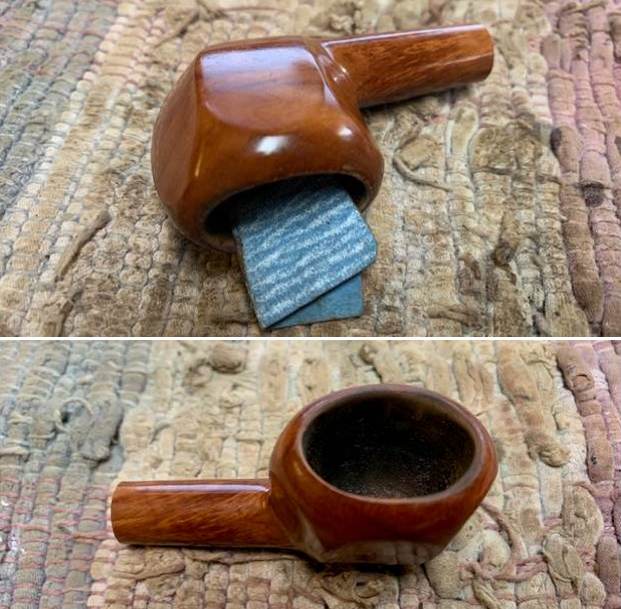
This very beat up, large, long House of Robertson Horn Shape Pipe is the next pipe I chose to work on. We purchased it on EBay on 10/31/22 from a seller in Abita Springs, Louisiana, USA. It is quite different from the other pipes from this Boise based store that I have worked on. It is a Horn that is stamped on the left side of the shank and reads House of Robertson (two lines). On the right side it is stamped Duello. On the underside of the shank it is carved with what looks like a helmet or a cup. There is carved branch with grapes on the back top of the bowl. There was a carved object on the underside of the shank that allows the pipe to be a sitter. It seems to look like a twisted vine carved into the bottom of the bowl. I am including photos below that were included by the seller in his EBay listing. The first two show the sides of the bowl.The next series of photos show the grain around the bowl and the stamping on the shank sides.He included photos of the stamping on the sides of the shank and the carving on the underside of the shank.The stem had tooth marks and wear on both sides ahead of the button and on the surface of the button itself.He included a photo of the bowl with the stem removed. It is a pipe with a lot of potential.The pipe has the name House of Robertson roughly hand-etched on the left side of the shank with an engraving tool. I am including the information that I found when I received my first of the House of Robertson Pipes. I found a link on Pipedia (https://pipedia.org/wiki/Robertson) that gave me the only information I could find on the brand. I include that in total as it is interesting to read.

 “House of Robertson” was in business for many years, but alas, closed their doors in 1999. They were located in Boise, Idaho. They are noted for making rather large and interesting pipes. Thayne Robertson was a Master Mason, AF & AM, and started the shop about 1947 and his son Jon started working there in 1970 when he finished college, along with Thayne’s daughter. Thayne and his son started making the big pipes at that time, and made them together until 1987 when Thayne passed away. Jon kept the store and his sister moved on to other things. The House of Robertson appears to have closed around 1999.

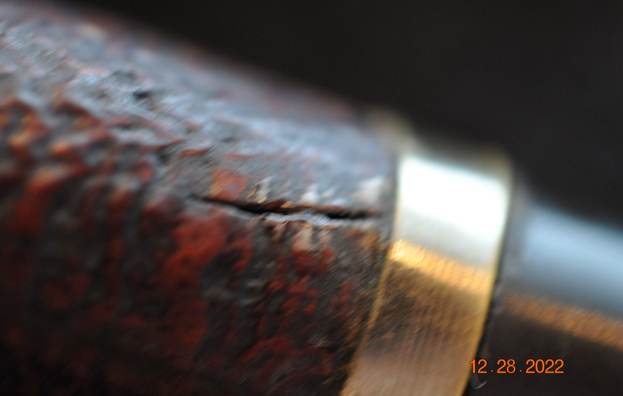
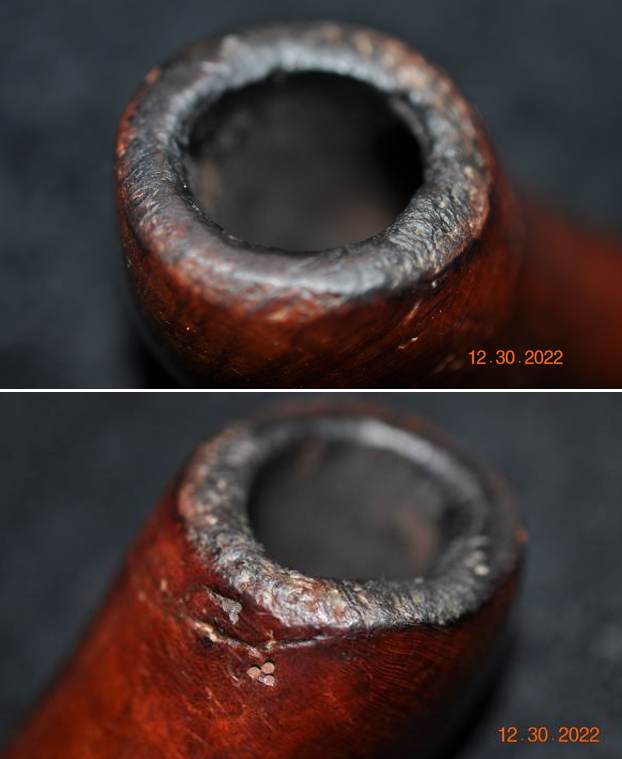
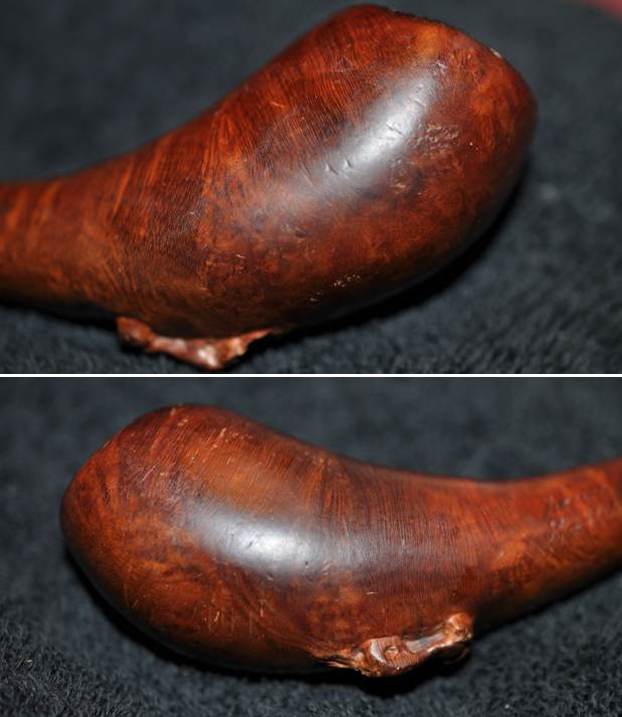
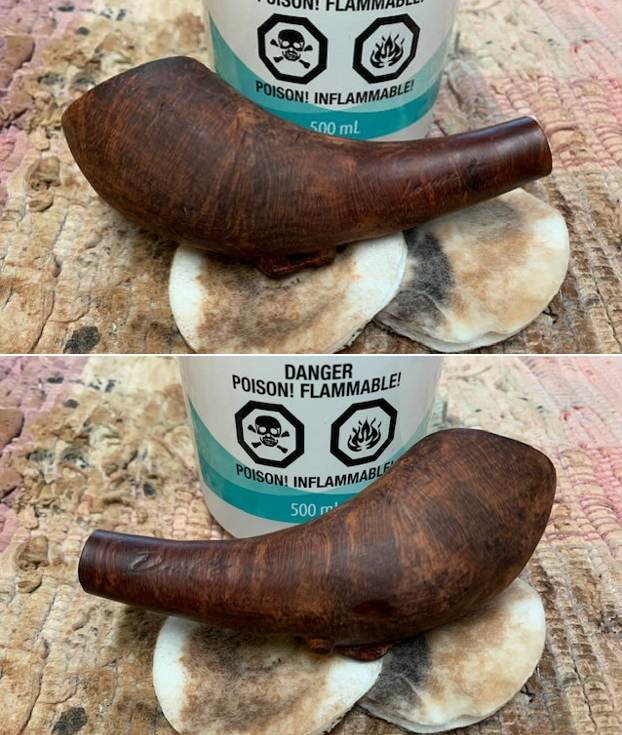
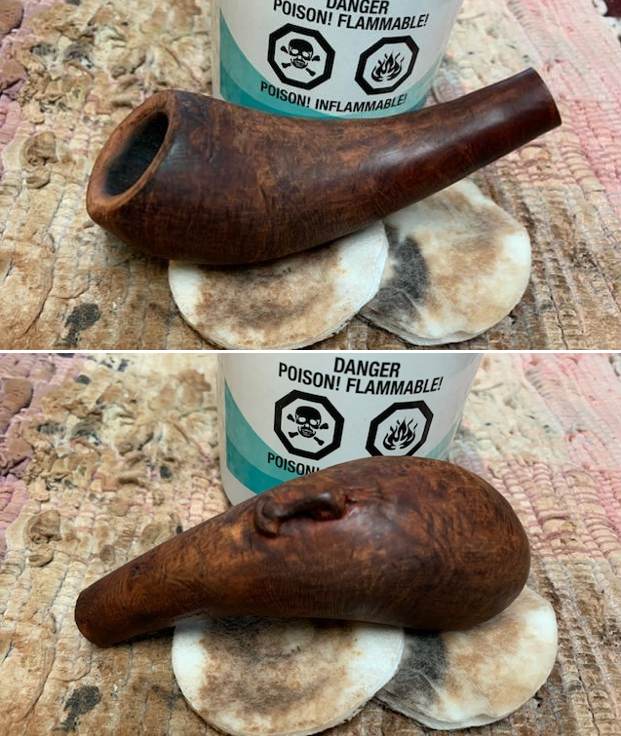
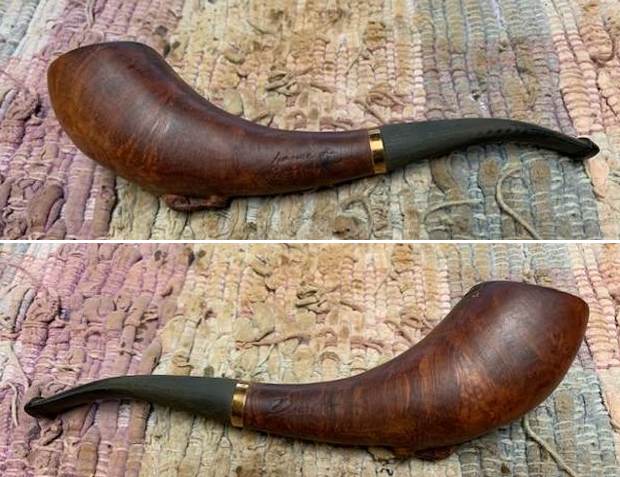
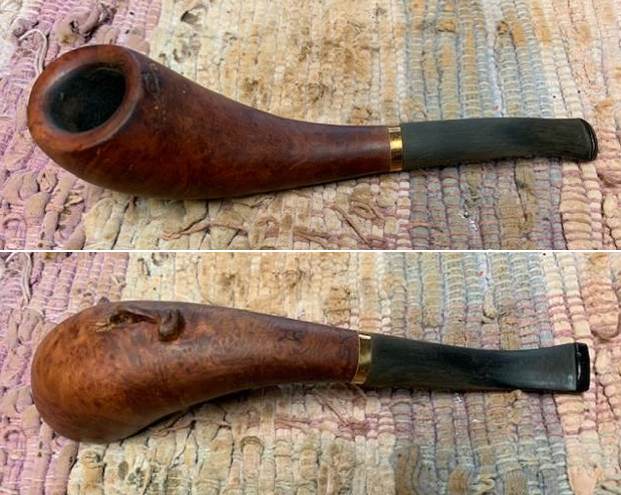
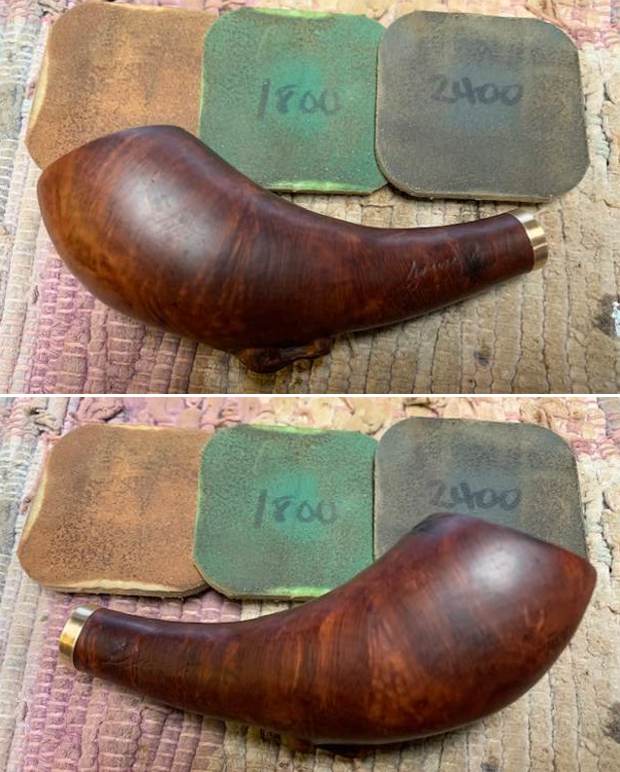
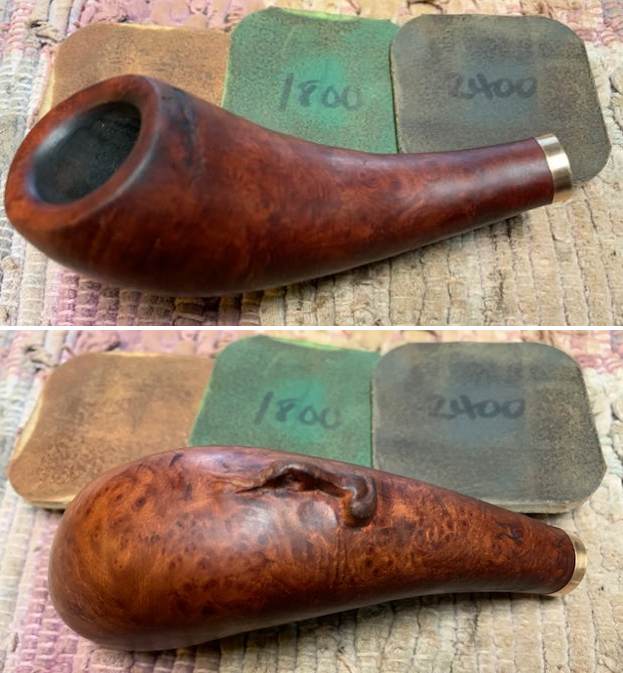
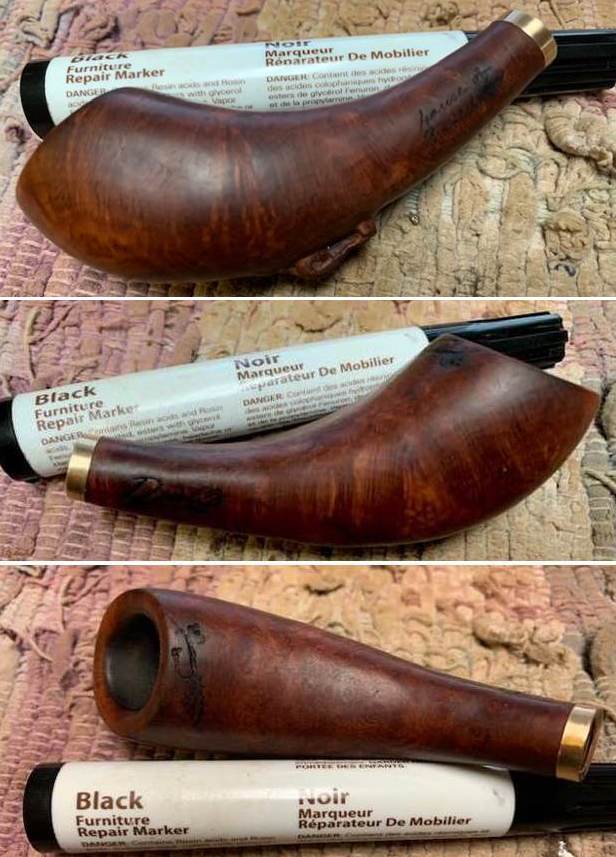
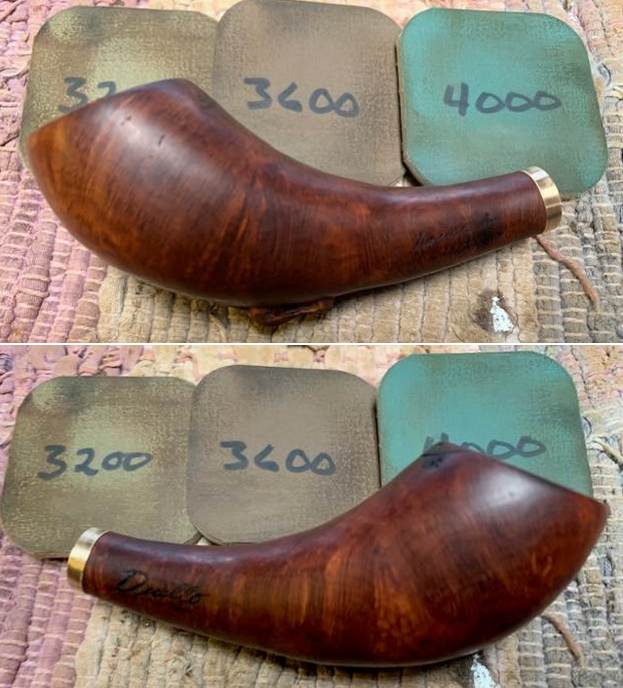
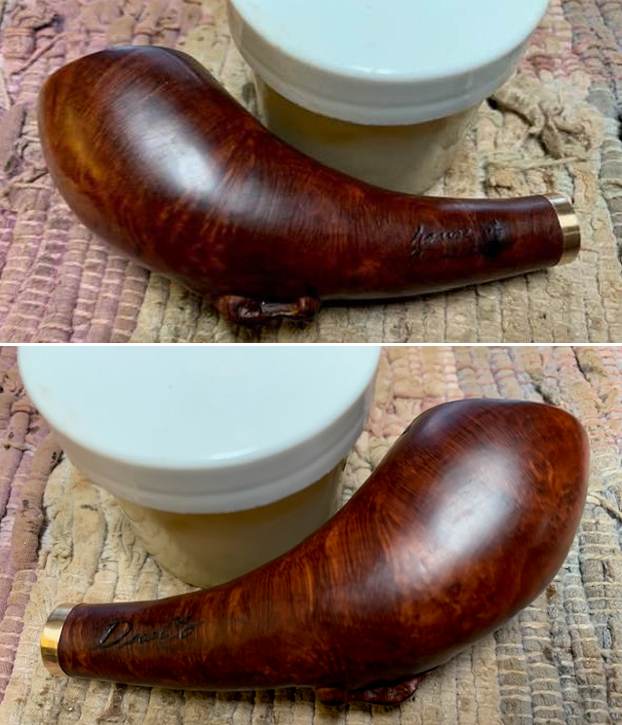
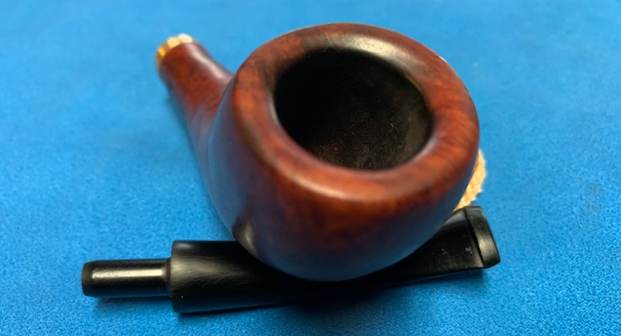
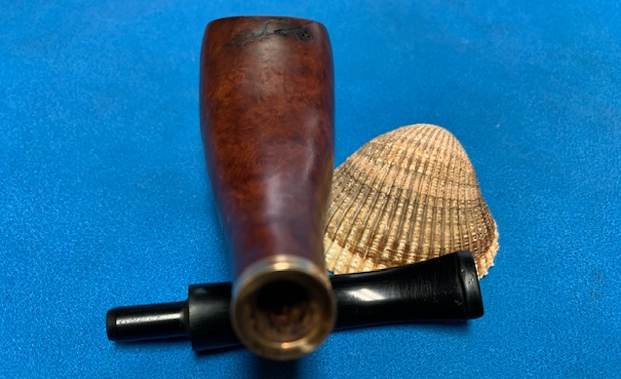
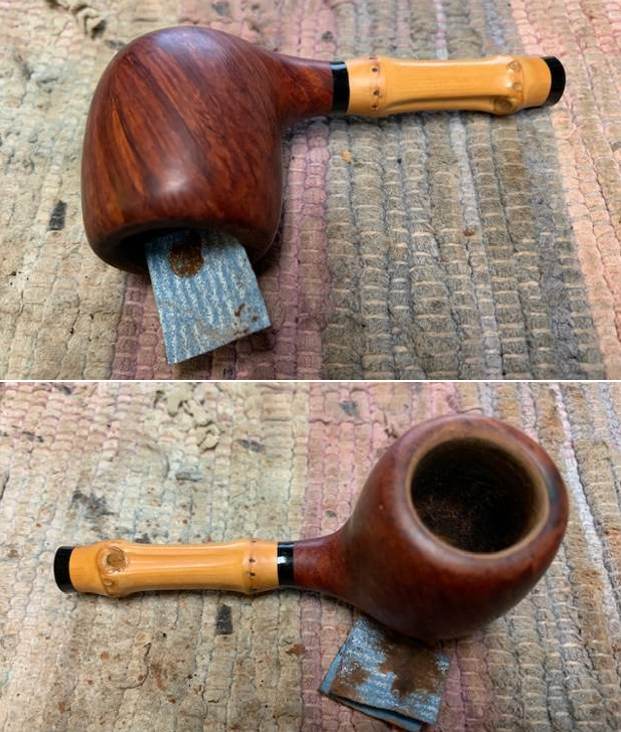
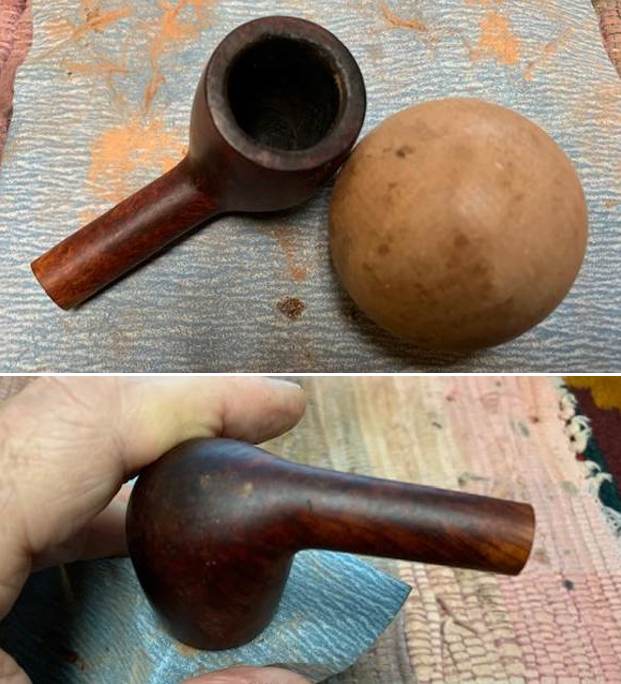
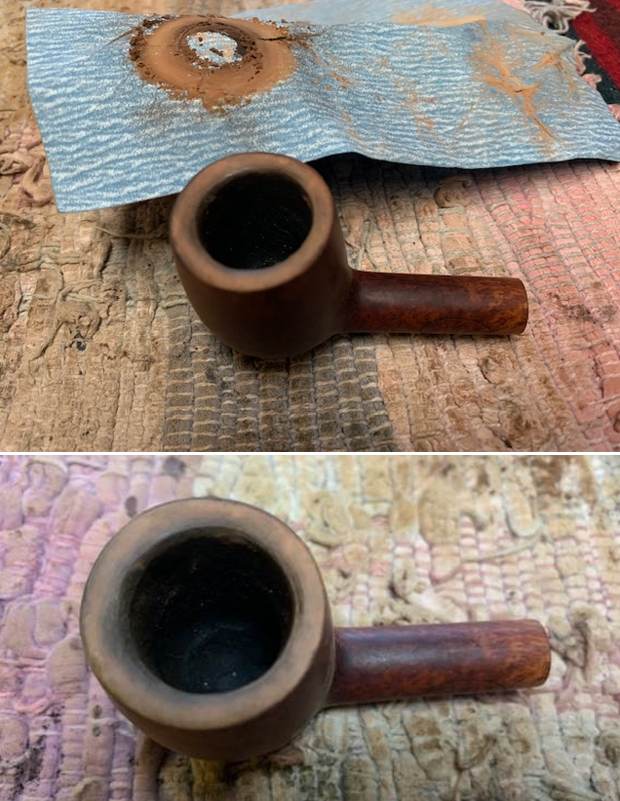
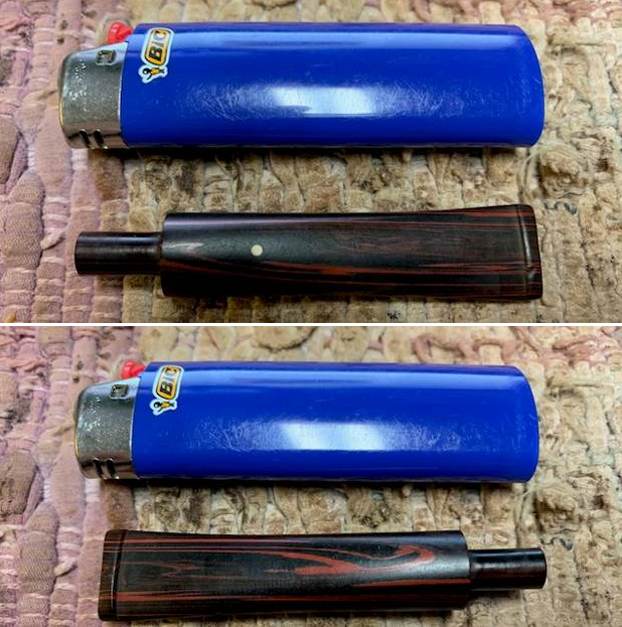
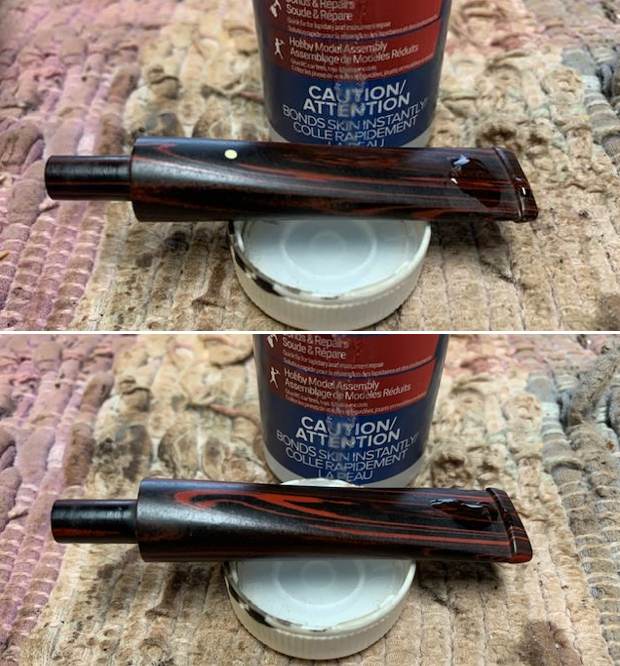
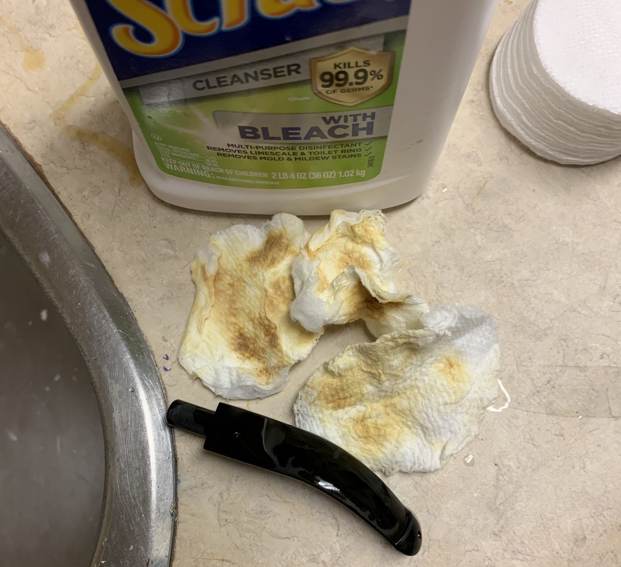
When Jeff received the pipe he took photos of it to capture what it looked like when he removed it from the box. The pipe was dirty but underneath all of the grime it seemed like it has some nice grain around the bowl and shank. The rim top and edges of the bowl had been badly abused and beat up and showed chips and wear. There was a thick cake in the bowl and an overflow on the top and edges. There were a lot of scratches and cuts in the briar around the bowl sides and shank. The carving of the vine and grapes at the back top of the bowl is quite damaged as is the “carved vine” on the bottom of the bowl. The pipe has seen a lot of rough travel since the day it left Robertson’s pipe shop in Boise, Idaho. The fit of the stem to the shank is snug and looks good. There were casting marks on the left and right sides of the stem at the shank union that make me think it is a replacement stem. There is also a chipped area on the underside of the shank where it appears the stem had been pried away at some point. The tenon on the stem was incredibly short given the depth of the mortise. There were tooth marks on both sides of the stem ahead of the button and on the button surface itself. Jeff took the following photos of the pipe to show its condition when he received it.The next close-up photos show the condition of the bowl and the rim top. They show the cake in the bowl and the lava overflowing onto the rim top. You can also see how beat up the rim top is. It is in rough condition. The edges are also chipped and damaged. The photos of the stem show the tooth mark and tooth marks on both sides of the stem. The photos of the sides and heel of the bowl show the grain and the nicks and scratches around the bowl and shank. The brown stain adds depth finish on the pipe. Even under the grime it is a unique piece.He also took photos of the carving on the underside of the shank. You can see the damage on the front side of the carving.The next photo shows the etched name on the left side of shank. It reads House of Robertson. On the back top of the bowl you can see the condition of what appears to be a grape vine. The more I looked at it the combination of grape vines, grapes and the thick branch on the underside of the shank make me think that the pipe is a drinking or wine horn. The shape is very reminiscent of the shape of the horn. It would really help if the stem had a bend in it. The carved vine on the rim edge, the carved chunk of fine on the underside seem to point in this direction.Jeff had thoroughly cleaned up the pipe. He reamed the pipe with a PipNet Pipe Reamer and cleaned up the remnants with a Savinelli Fitsall Pipe Knife. He scrubbed the bowl with undiluted Murphy’s Oil Soap with a tooth brush. He rinsed it under running warm water to remove the soap and grime. He cleaned out the inside of the shank and the airway in the stem with alcohol, cotton swabs and pipe cleaners. He scrubbed the exterior of the stem with Soft Scrub to remove the grime and calcification. He soaked the stem in Before & After Deoxidizer and rinsed it off with warm water. The pipe looked very good when it arrived here in Vancouver. I took a photo of the bowl and rim top to show how clean the bowl and the rim top and inner edges of the bowl. I took photos of the stem surface to show the condition and tooth marks and chatter on both sides ahead of the button. You can see the chip or dented area where the stem meets the shank in the third photo below.I took photos of the stamping on the shank sides (left, right and underside). It is readable as noted above and though faint is clear.I removed the stem (note the short tenon) from the shank and took a photo of the pipe parts. It is a unique piece. The bowl needed a lot of work. I would need to rework the rim top and the inner and outer edge of the bowl and the also sand out the deep gouges, scratches and file marks in the briar on the sides of the bowl. It really was a refinishing nightmare. I decided to start my work on the bowl by addressing the damaged rim top and edges. I topped the bowl to get a flat surface to start on. I used a topping board and 220 grit sandpaper. I then used a wooden ball and 220 grit sandpaper to give the inner edge a bevel inward. Doing that hid the damage on the inner edge of the bowl and blended it into the surface. I sanded the bowl sides and shank with a folded piece of 220 grit sandpaper to smooth out and minimize the scratches and marks on the briar of the bowl and shank. It was beginning to look much better. I wiped the bowl and rim top down with alcohol and cotton pads to remove the debris and the heavy stain coat that hid the grain. Once I had wiped it down the grain really stood out. I used a medium and fine grit sanding pad to sand the bowl and rim top further. Once finished the pipe really started to show promise that I was hoping for in an other other wise mess of a pipe. The grain stood out better and the carving on top back of the bowl was clearly a vine and grapes. It looked much better.I needed a break from sanding the bowl so I set it aside and turned my attention to the stem. To start my work on it I decided to heat it and give it a slight bend in keeping with the look of the horn. When it was flexible I bent it and it snapped off in my hand – utter frustration!! That set me back a bit but in the long haul it was much better as I could use a stem with a longer tenon and a better fit to the shank. I went through my can of stems and found a stem with the right bend, the right tenon sized and length for the shank and that would only need a little adjustment to the diameter to make it fit.I put the stem on the shank and took photos of the new look of the pipe. You can see that the diameter of the stem is slightly larger than the diameter of the shank. But I liked the look of the new stem and the angles of the bend it really is looking like a drinking/wine horn. I sanded the diameter of the stem with 220 grit sandpaper to reduce it to the same diameter as the shank. Once the stem was adjusted in diameter it looked very good. I sanded the entire stem including the light tooth chatter at the button with 220 grit sandpaper to smooth out the stem.I removed the stem from the shank and continued sanding out the tooth marks and chatter at the button and smoothing out and shaping the shank end of the stem. Once I was happy with the fit and look of the stem I started polishing it with 600 grit wet dry sandpaper. I took photos of the underside of the shank stem junction to show the damage that I noted above – the chip out of the underside of the shank. It made the fit against the underside of the shank a challenge that gave me two options to address. I could either use the topping board to flatten it or I could put a thin band on the shank.I tried to top the shank end a bit on the topping board with 220 grit sandpaper but it did not solve the problem as the chip went quite deep into the underside. I decided to go with a thin brass band on the shank end to repair the damage on the end of the shank. I heated the band and pressed in place on the shank. It gave the shank a flat face for the stem to sit against. I liked the look of the bling and the fit of the stem against it. (A passing comment. Can you see the wine cup in the stamp on the shank in the first photo. I put the fitted stem in place on the shank and took photos of the look of the pipe at this point in the process. It looks far better than when I started. Now it was time to polish the bowl and shank with micromesh sanding pads – dry sanding with 1500-12000 grit pads. I wiped the bowl down after each  pad to remove the grit. The bowl began to take on a rich shine. It is a beauty. I used a Black stain pen to darken the vine and the grapes on the back side of the bowl and the stamping on the shank sides to highlight the House of Robertson and the Duello stamp. Once they were stained I used the remainder of the micromesh pads to clean up the excess black. I worked Before & After Restoration Balm deep into the nooks and crannies of the carvings to clean, enliven and protect the briar. I hand rubbed it with my fingers and worked it into the finish with a horsehair shoe brush. I wiped it off with a soft cloth. I buffed the bowl with a cotton cloth to polish it. It really began to have a deep shine in the briar. I took some photos of the bowl at this point to mark the progress in the restoration. I polished the stem with micromesh sanding pads – 1500-12000 grit pads. I wiped it down with a damp cloth after each sanding pad. I used Before & After Pipe Polish – both Fine and Extra Fine to further polish the stem. I put the House of Robertson Drinking Horn back together and worked the pipe over on the buffing wheel using Blue Diamond to lightly polish the stem. I buffed the bowl with a light touch so as not to get any of the buffing compounds in the grooves of the rustication. I buffed the stem to raise the gloss on the vulcanite. I gave the bowl and the stem multiple coats of carnauba wax. I buffed the entire pipe with a clean buffing pad to raise the shine. I hand buffed it with a microfiber cloth to deepen the shine. The finished HOR Drinking Horn is shown in the photos below. The medium brown stains on the well grained briar worked well with the brass band and the bent black of the vulcanite stem. The polishing and the reworking of the stem material left this a beautiful and interesting looking pipe. The dimensions of the pipe are: Length: 7 inches, Height: 2 inches, Outside Diameter: 1 ¼ inches, Diameter of the chamber: 7/8 inches. The weight of the pipe is 1.69 ounces/ 48 grams. This would be a great addition to the collection of a House of Robertson collector.  If you are interested in adding it to your collection it will be on the rebornpipes store in the American (US) Pipemakers Section shortly. Thanks for looking.

Restoring a Stanwell Bamboo Apple


Blog by Steve Laug

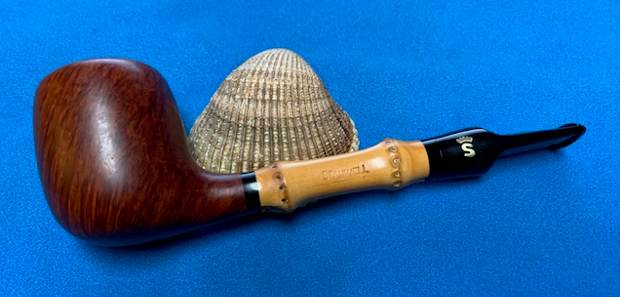
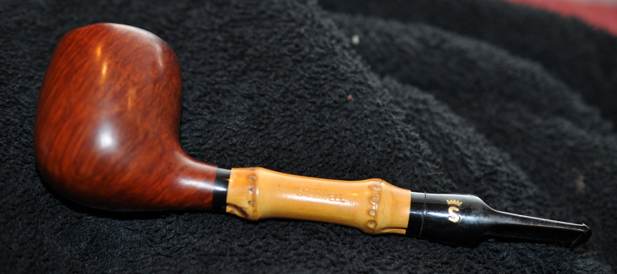
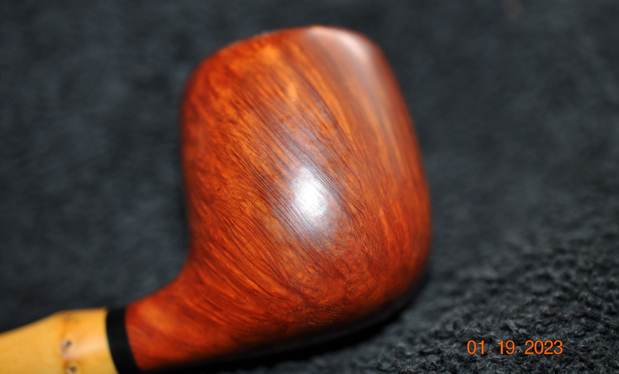
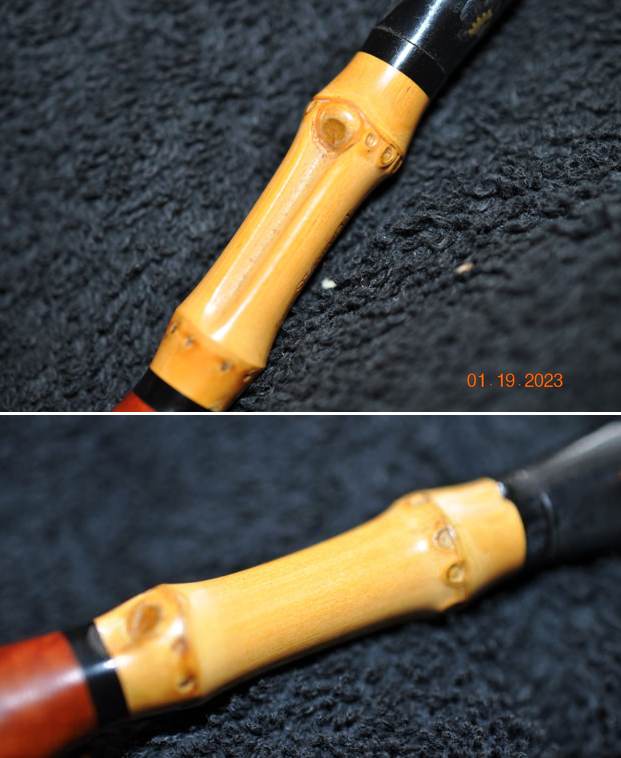
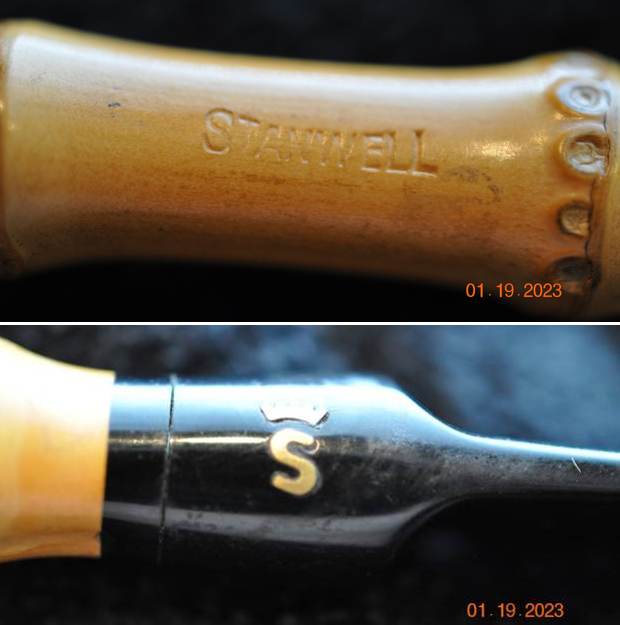
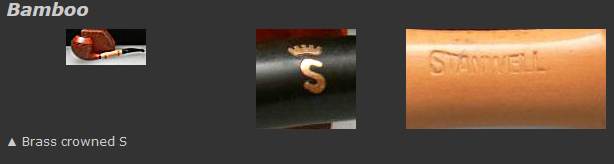
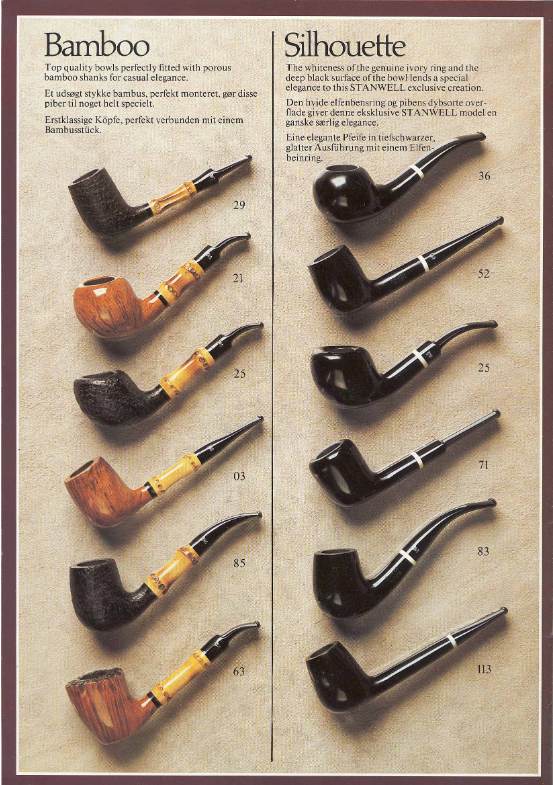
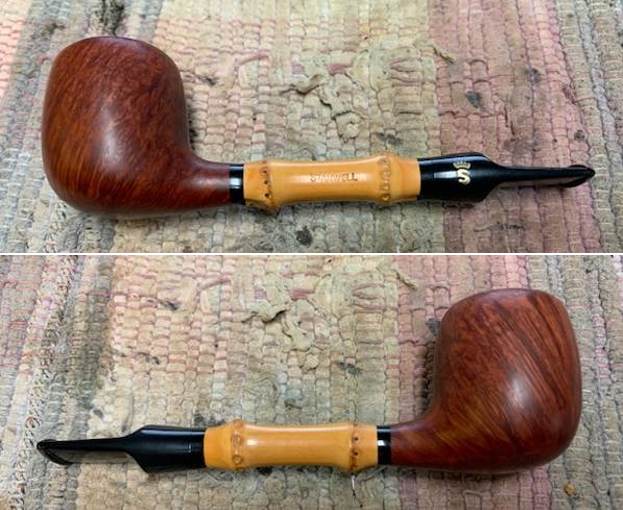
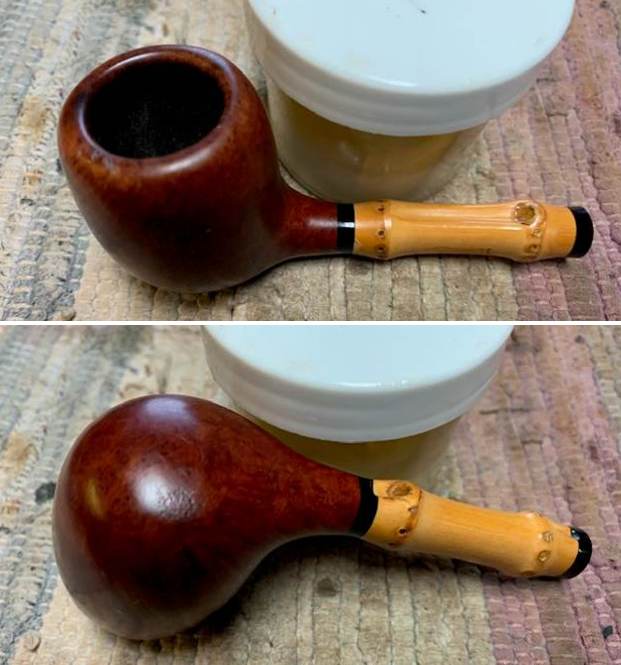
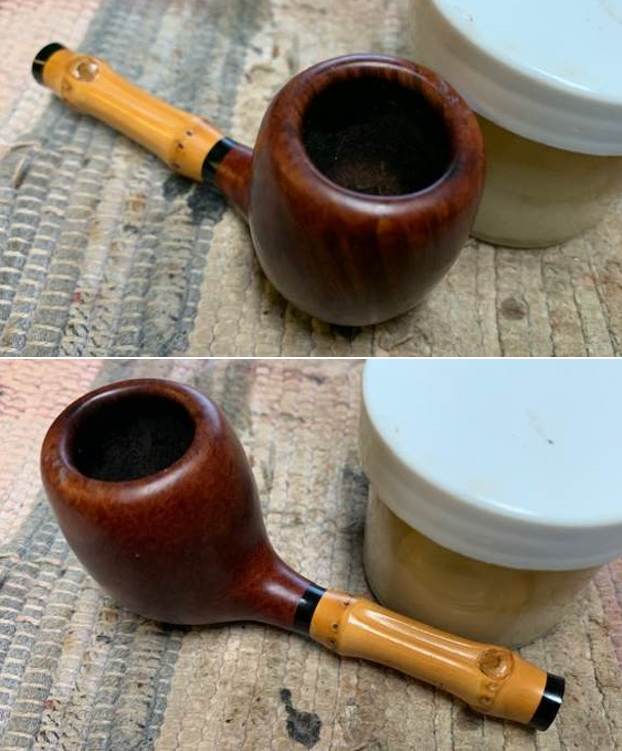
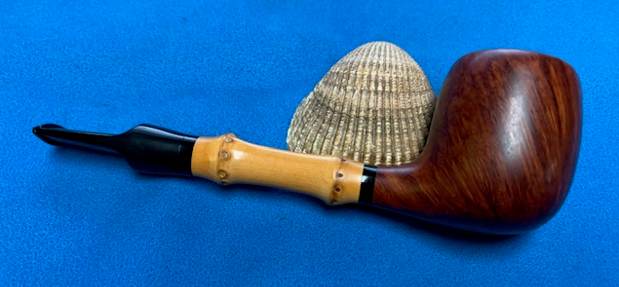
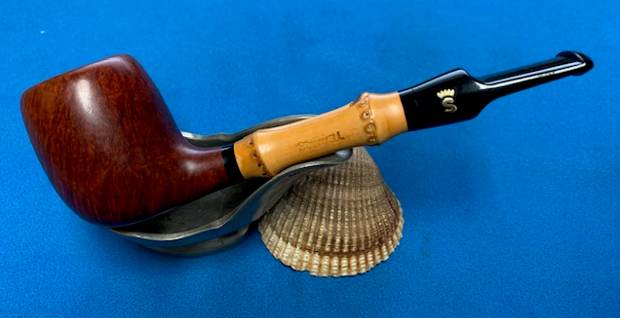
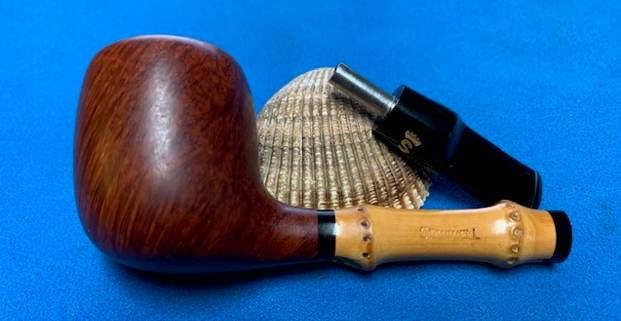
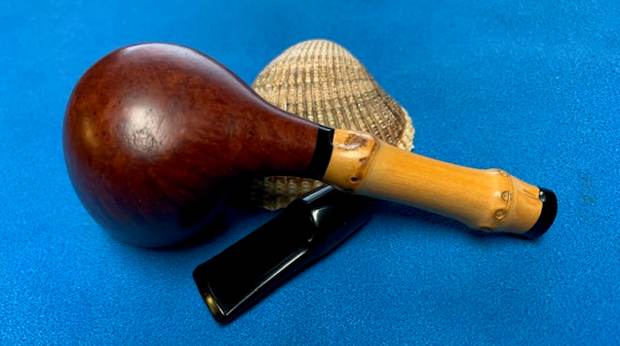
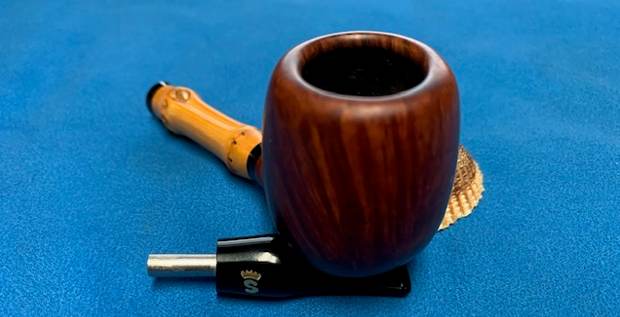
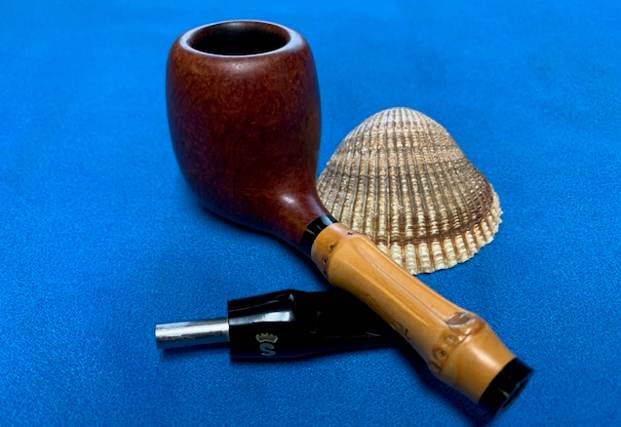
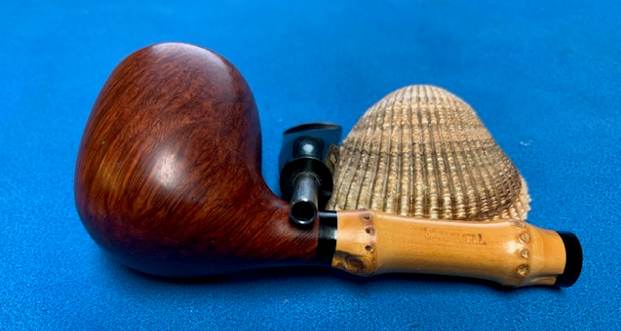
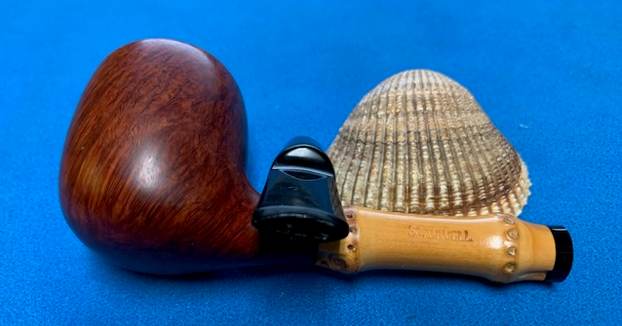
This rainy evening here in Vancouver I decided to work on was another one that was purchased on 11/14/2022 in a lot of pipes that came to us from Copenhagen, Denmark  It included a group of Stanwell Bamboo pipe that are quite beautiful, combining a briar bowl, a bamboo shank and a an acrylic stem. The grain around the bowl and shank has a mix of straight and flame grain. The pipe is stamped on the left side of the bamboo and reads STANWELL. The pipe was a well used pipe when Jeff received it. There was dust and grime ground into the finish. The mixture of brown stains highlights some beautiful grain under the dirt. The bowl was heavily caked and there was an overflow of lava on the rim top. The inner edge was hard to see clearly and the lava could easily be hiding damage. The stem is acrylic and was dirty with light tooth marks and chatter on both sides ahead of the button and on the button itself. There is a brass/gold crown S logo inlaid on the left side of the saddle stem. Jeff took photos of the pipe before he started his clean up work on it. He took photos of the bowl and rim top to show what they looked like before his clean up. He also took some of the stem to show the condition of both sides. The photos of the sides and heel of the bowl show the uniquely stained grain around the bowl and shank. The mixture of black and brown stains adds depth finish on the pipe. Even under the grime it is a real beauty. The two knuckle bamboo has a nice patina on it and will only get better with time. The stamping on the left side the bamboo is shown in the photo below. It is clear and readable as noted above. The second photo shows the gold crown S on the stem side.  Before I started my work on the pipe I wanted to see if I could find any information that would help me date this pipe and get a sense of the line. I turned to Pipephil to get a quick review of the brand (http://pipephil.eu/logos/en/logo-stanwell.html). The Brass Crowned S inlaid logo on the stem is shown in the photo below. I have included a screen capture of the brand info there.I then turned to Pipedia (https://pipedia.org/wiki/Stanwell) for more information. The article is great and gives a lot of history on the brand. There were also links to catalogues at the bottom of the page. I am including a page from a catalogue on the site below that gives a bit of a glimpse into the brand. Here is the link (http://www.axeljeske.de/Pfeifen/Stanwell_Amager.pdf). The catalogue page gives a great description of the Bamboo line. It reads as follows: Top quality bowls perfectly fitted with porous bamboo shanks for casual elegance.

Now it was time to work on the pipe.

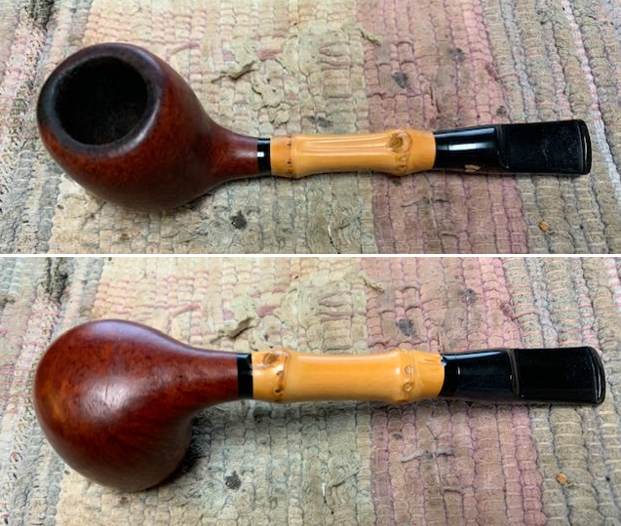
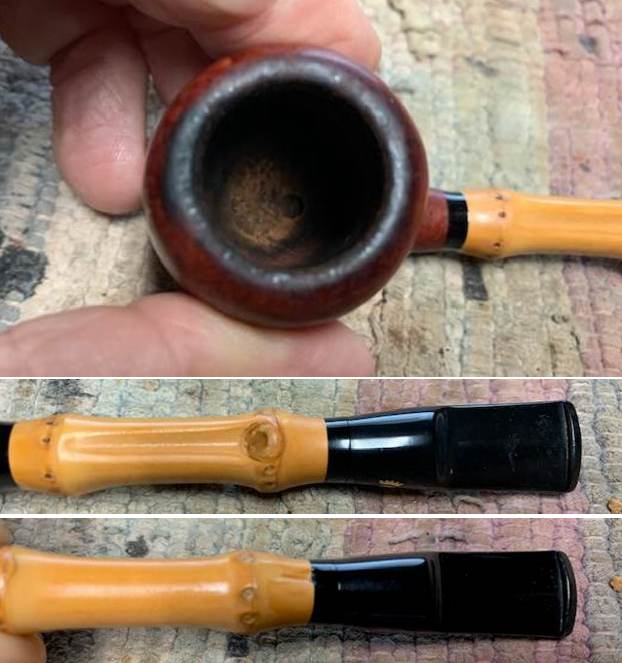
Jeff had thoroughly cleaned up the pipe. He reamed the pipe with a PipNet Pipe Reamer and cleaned up the remnants with a Savinelli Fitsall Pipe Knife. He scrubbed the bowl with undiluted Murphy’s Oil Soap with a tooth brush. He rinsed it under running warm water to remove the soap and grime. He cleaned out the inside of the shank and the airway in the stem with alcohol, cotton swabs and pipe cleaners. He scrubbed the exterior of the stem with Soft Scrub to remove the grime and calcification. He soaked the stem in Before & After Deoxidizer and rinsed it off with warm water. The pipe looked very good when it arrived here in Vancouver. I took close up photos of the bowl, rim and the stem. You can see the darkening and scratches on rim top and edges. The bowl is quite clean inside. The stem is in good condition with light tooth marks and some chatter as noted above.I took photo of the stamping on the left side of the shank. It is readable as noted above. I removed the stem from the shank and took a photo to give a sense of the proportions of the pipe.I started my work on the pipe working on the damage to the inner edge and the rim top with a folded piece of 220 grit sandpaper to bring the edge back into round and it looked much better.I polished the briar with micromesh sanding pads – dry sanding with 1500-12000 grit pads. I wiped the bowl down after each  pad to remove the grit. The bowl began to take on a rich shine. It is a beauty.   I rubbed the bowl down with Before & After Restoration Balm. I worked it into the briar with my finger tips. I let it sit for 10 minutes and the Balm did its magic. It enlivens, cleans and preserves the briar. It certainly brought this bowl back to life. I buffed it off with a clean cloth and took the following photos. I set the bowl aside and turned my attention to the stem. I was able to polish out the light tooth marks and chatter with micromesh sanding pads – 1500-12000 grit pads. I wiped it down with a damp cloth after each sanding pad. I used Before & After Pipe Polish – both Fine and Extra Fine to further polish the stem. This Stanwell Bamboo Apple with an acrylic saddle stem is a great looking pipe now that it has been restored. The beautiful finish really highlights the grain and the polished finish is stunning. I put the stem back on the bowl and carefully buffed the pipe with Blue Diamond on the buffing wheel. I gave the bowl and the stem multiple coats of carnauba wax on the buffing wheel and followed that by buffing the entire pipe with a clean buffing pad. I hand buffed the pipe with a microfiber cloth to deepen the shine. The finished Stanwell Bamboo Apple fits nicely in the hand and feels great. Give the finished pipe a look in the photos below. The dimensions of the pipe are Length: 5 ½ inches, Height: 1 ½ inches, Outside diameter of the bowl: 1 1/8 inches, Chamber diameter: ¾ of an inch. The weight of the pipe is 34 grams / 1.20 ounces. I will be adding the pipe to the Danish Pipe Makers Section of the rebornpipes store. If you are interested in purchasing this pipe send me a message or an email. Thanks for reading this blog and my reflections on the pipe while I worked on it.

Can this one be brought back to life? Dunhill Amber Root 3103 Billiard


Blog by Steve Laug

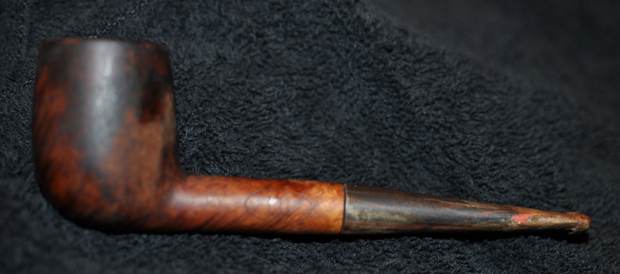
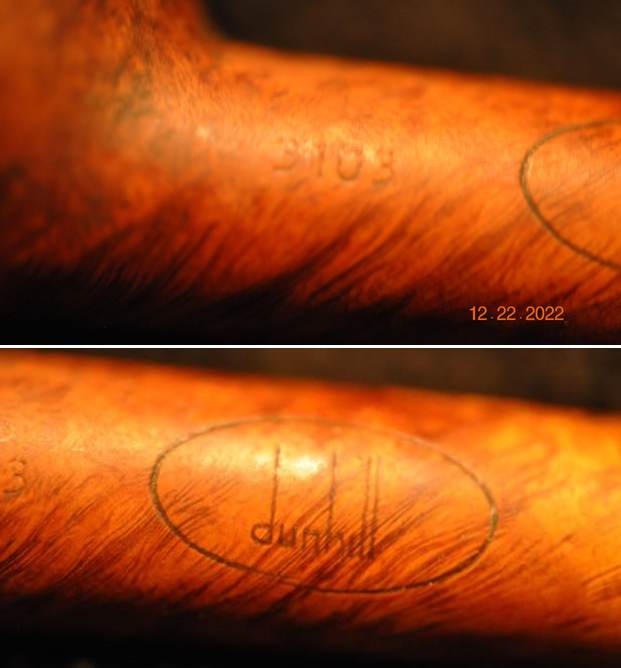
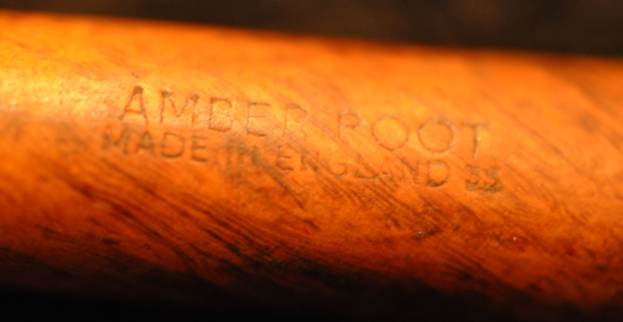
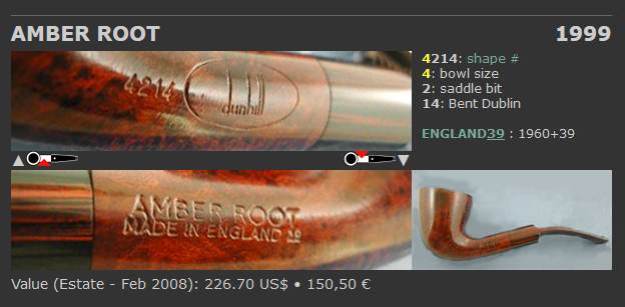
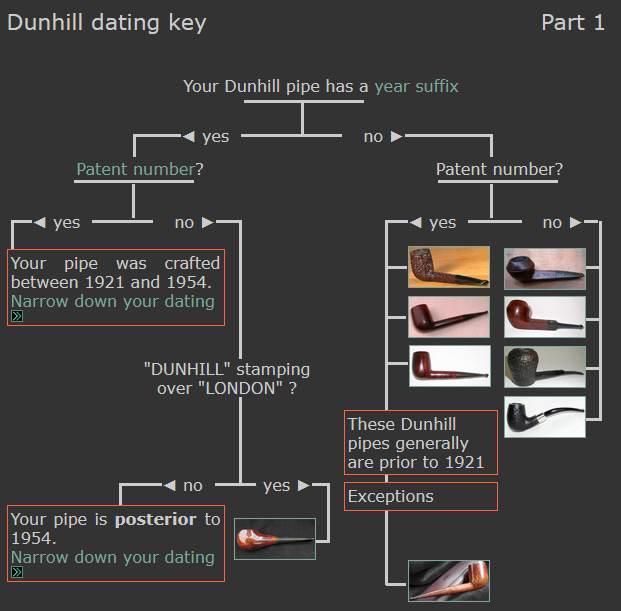
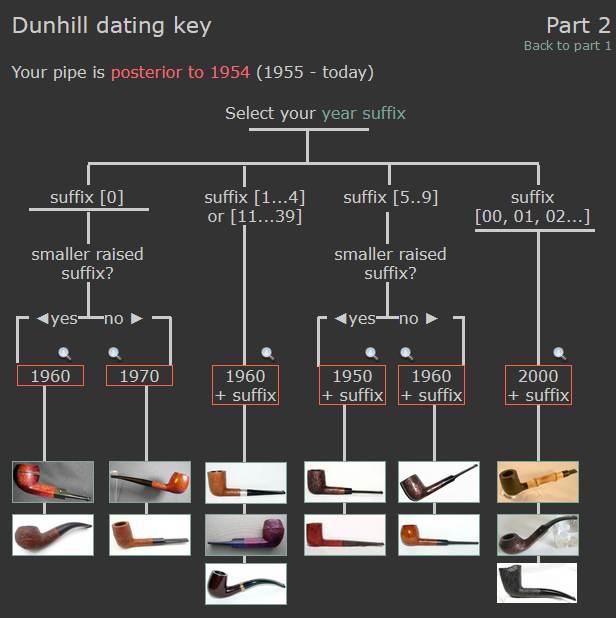
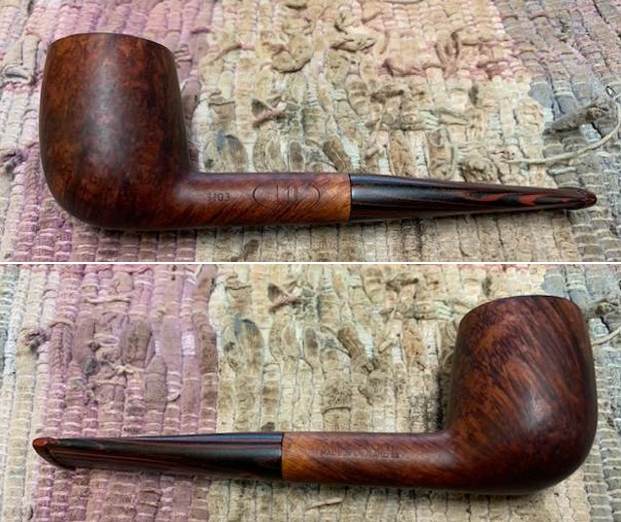
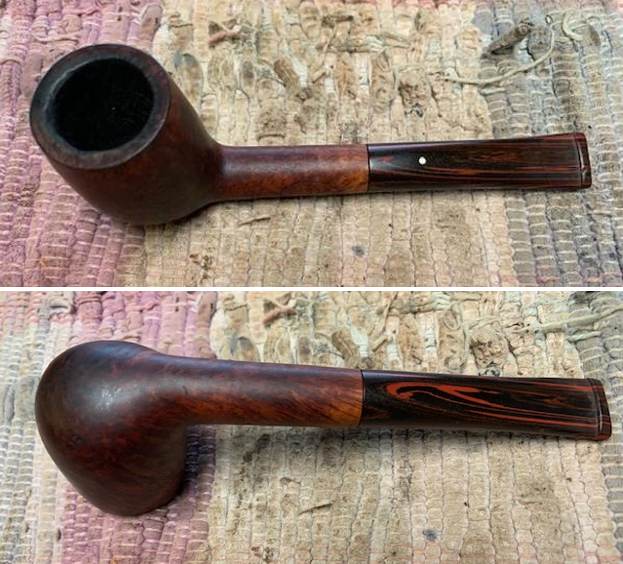
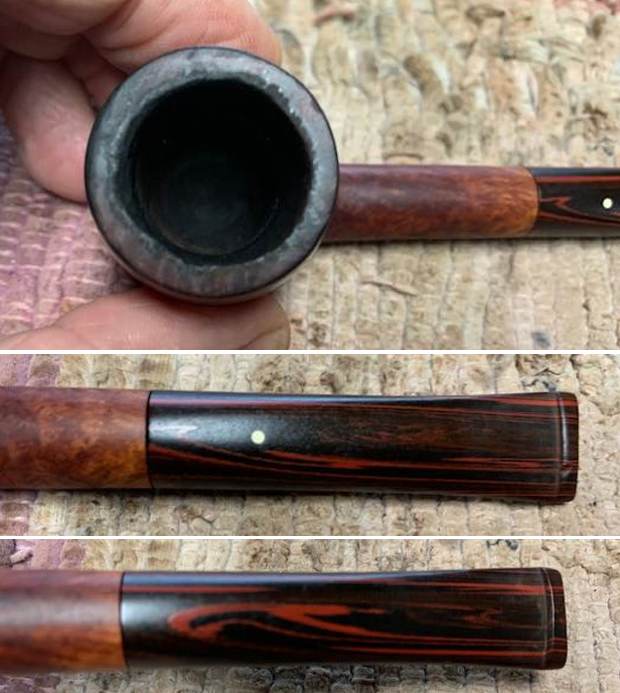
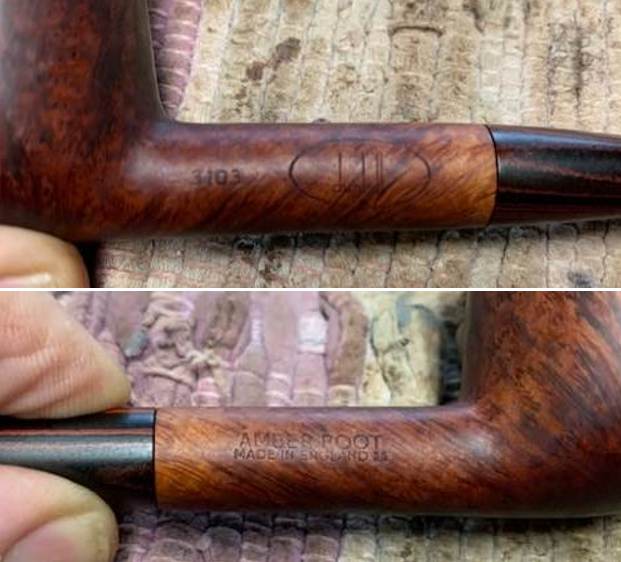
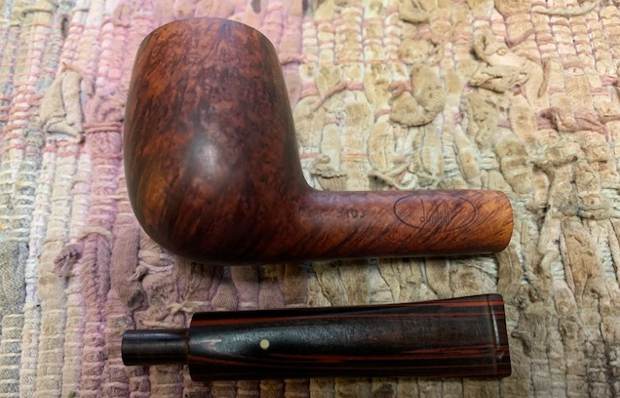
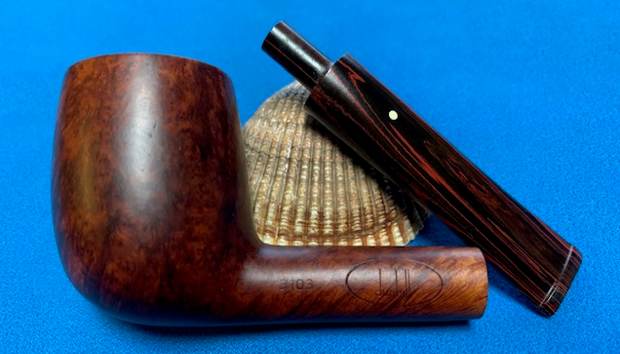
Sometimes on a pipe hunt you have a surprising find. We look for pipes wherever we go so we go through a lot of shops and look at a lot of pipes. Many are just junk we leave behind but there are always some good ones. The next one was purchased on 10/20/22 from an antique store in Vancouver, Washington, USA. Jeff found it and excited when he saw it and more excited when he picked it up. It is a filthy looking Billiard with a Cumberland stem. It turned out to be a Dunhill pipe. It is stamped on the left side of the shank and reads Dunhill (in an oval). To the left of it the shape number 3103 is stamped. On the right side of the shank it is stamped AMBER ROOT [over] Made in England35. The 35 identifies the date of the pipe. The pipe was in rough shape. The outside of the bowl and shank were heavily coated in thick oils that were almost black. The bowl had a thick cake that overflowed as lava onto the rim top. The Cumberland stem was oxidized, calcified, coated in sludge but had little or no tooth damage on the stem top or underside. The shank was so coated with internal sludge that the stem did not fit the shank well. Jeff took photos of the pipe when he found it and before he started the clean up. Try to imagine how the pipe smelled and felt. Even your imagination cannot begin to capture the smells or feelings of the briar in your hand. The heavy cake in the bowl flows from the bottom up and all over the rim top and edges. It was impossible to know what the condition of the top and edges was underneath that thick, rock hard coating. The Cumberland stem was dirty, oxidized and calcified but had only light tooth chatter on both sides. Jeff took photos of the bowl, rim top and the stem to show the condition of both. The photos of the sides and heel of the bowl show the grain peeking through but it is almost impossible to see what the finish is underneath the thick sludge. I am hoping that underneath the thick grit it is a real beauty.  The stamping on the sides of the shank are shown in the photos below. It looks very good with portions of it faint but readable. It reads as noted and explained above. Jeff captured the detail in the photos below. I wanted to unpack the Dunhill stamping on the shank and work to understand each element of the stamp. I generally use the Pipephil site to gather as much initial information as possible (http://pipephil.eu/logos/en/dunhill/amber1.html). The stamping is interpreted as follows: The number 3103 is the shape number that unpacks as follows: the 3 is the bowl size, 1 is the normal identifier for a taper stem, 03 is the shape designation – a billiard. The Amber Root stamp refers to the finish. The superscript 35 following the D of England would give the date the pipe.Pipephil also has some helpful dating keys on the site that are basically flow charts that you can walk through to date your pipe (http://pipephil.eu/logos/en/dunhill/cledat-en1.html). I turned to Part 1 of the Dating Key and followed the chart. This pipe has a superscript 35  following the D in England. There was no patent number so that took me to the section on the chart below (column one) which instructed me that the pipe could be dated as being made “posterior to 1954”.I followed the link under “Your pipe is posterior to 1954. Narrow down your dating”. That took me to Page 2 of the dating key (http://pipephil.eu/logos/en/dunhill/cledat-en1a.html). The second column (suffix 1…4) or (11…39) led me to the section with a 35 after the D in England. There was a directive for dating the pipe spelled out as follows: 1960 + suffix which gives the pipe a date of 1995. From that I knew that the pipe was made in 1995 but since the last digit was covered I could not identify the exact year. I then turned to Pipedia’s section on Dunhill Cumberland to get a bit of background on the Dunhill finishes (https://pipedia.org/wiki/Dunhill#Root_Briar). I quote:

Amber Root – Introduced in 1995. A warm yellow-orange stain, reminiscent of the original Root Briar finish. Cumberland stems were used, although recently, Amber Root pipes have appeared with black stems. This is also a limited production pipe that is found in mainly Company stores and Principle Pipe Dealers. Straight grained pipes are made available in this finish under the name Amber-flame and are graded from one to three flames.

Note: While the Amber Root finish existed in the past with Cumberland and black Vulcanite mouthpieces (now we use usually the black Vulcanite variety only)[32].

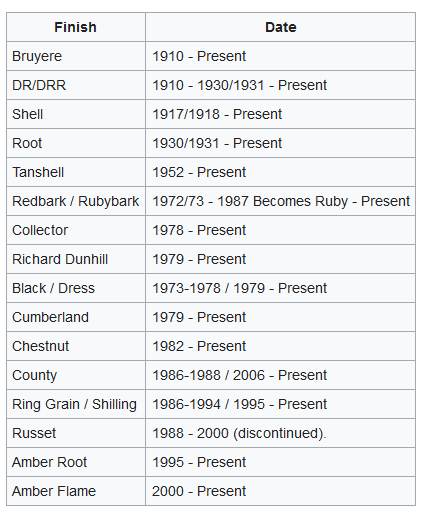
I have also included a chart from the site spelling out the Standard Pipe Finishes and giving a timeline. You can see that the Amber Root Finish (a smooth polished medium stain) was introduced in 1995 so this is definitely from the first year of the release of that finish from the factory. I turned to work on the pipe itself. Jeff had done an amazing cleanup of the pipe. He reamed the light cake with a PipNet reamer and cleaned up that with a Savinelli Fitsall Pipe Knife. He scrubbed the internals of the bowl and stem with alcohol, cotton swabs and pipe cleaners. He scrubbed the externals with undiluted Murphy’s Oil Soap and rinsed the bowl off with running water. He soaked the stem in Briarville’s Pipe stem Deoxidizer and once it had soaked rinsed it off with warm water to remove the residual solution. He dried it off and rubbed it down to remove any oxidation that was still on the stem. The pipe looked very good when I received it. I took a photo of the rim top to show the condition. You can see the clean bowl. The rim top and inner edge are damaged and the bowl is slightly out of round. The stem came out looking quite good. There are some scratches, light tooth marks and chatter on both sides ahead of the button.  I took a photo of the sides of the shank to show the stamping. The photo shows the stamping and is actually more readable in person.I removed the stem from the shank and took a photo of the pipe parts to show what I was working with. It is a nice looking pipe.I worked on the inside and top of the rim with a piece of 220 grit sandpaper and a wooden ball to clean up the damage on the rim top and edges. I used a folded piece of 220 to clean up the inner edge even more. It would take some work but this was a good start. I polished the cleaned up rim top and edges with micromesh sanding pads – dry sanding with 1500-12000 grit pads and wiping the bowl down with a damp cloth to remove the dust. The rim top came out looking very good.   I rubbed the briar down with Before & After Restoration Balm. I worked it into the briar with my fingertips. The product works to clean, enliven and preserve the briar. I let it sit for 10 minutes then I buffed it with a cotton cloth to deepen the shine. The briar comes alive with the balm. I set the bowl aside and turned to address the stem issues. I “painted” the surface of the stem with the flame of a Bic lighter to lift the tooth marks. I was able to lift them considerably. I filled in what remained with clear CA glue. Once the glue cured I flattened the repairs with a small flat file. I sanded them with 220 grit sandpaper to blend them into the surface and started polishing the stem with 400 grit wet dry sandpaper. I polished the vulcanite with micromesh sanding pads – 1500-12000 grit pads. I wiped it down with Obsidian Oil after each sanding pad. I used Before & After Pipe Polish – both Fine and Extra Fine to further polish the stem. This 1995 Dunhill Amber Root 3103 Billiard with a Cumberland taper stem has a beautiful, unique Dunhill smooth finish with great grain. The medium orange brown finish highlights some great grain around the bowl and shank. It has a unique finish and the polished Cumberland taper stem adds to the mix. I put the stem back on the bowl and buffed the pipe with Blue Diamond on the buffing wheel being careful to not buff the stamping. I gave the bowl and the stem multiple coats of carnauba wax on the buffing wheel and followed that by buffing it with a clean buffing pad. I hand buffed the pipe with a microfiber cloth to deepen the shine. The finished Dunhill Amber Root 3103 Billiard is quite nice and feels great in the hand. Give the finished pipe a look in the photos below. The dimensions of the pipe are Length: 5 ½ inches, Height: 1 ¾ inches, Outside diameter of the bowl: 1 1/8 inch, Chamber diameter: ¾ of an inch. The weight of the pipe is 1.20 ounces/33 grams. Thanks for walking through the restoration with me as I worked over another beautiful pipe. I will be adding it to the rebornpipes store soon in the British Pipe Makers Section. If you want to add it to your collection let me know. Thanks for your time.

A Very Spiffy Peterson Kildare Bent Bulldog


Blog by Kenneth Lieblich

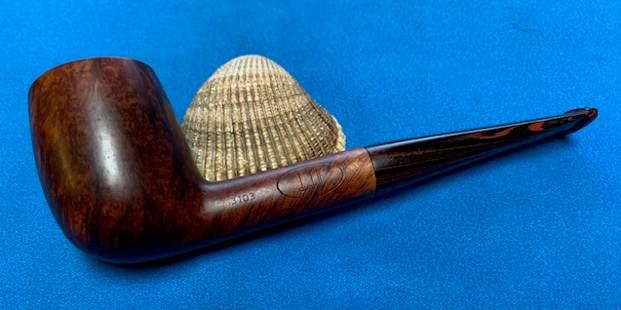
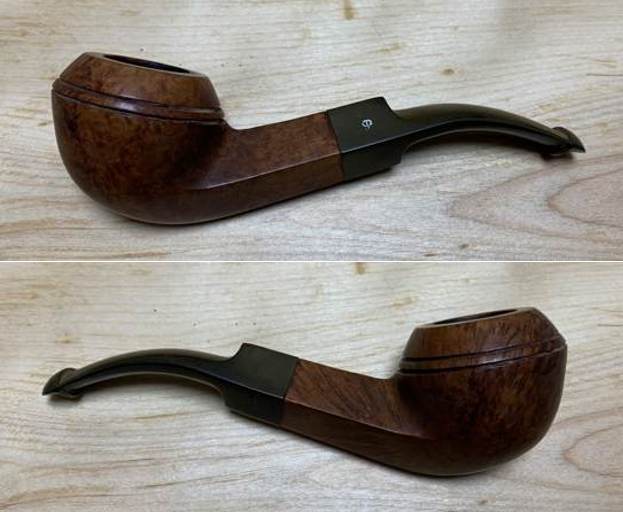
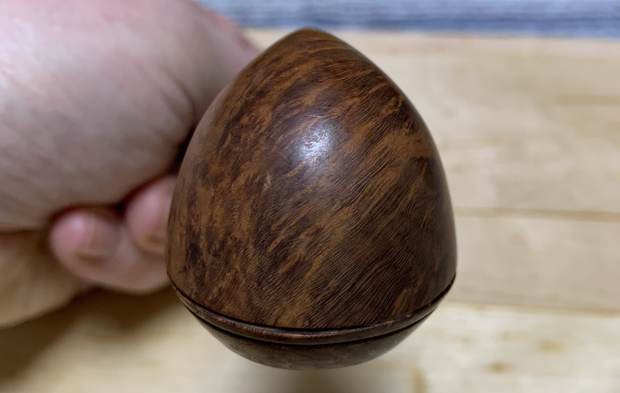
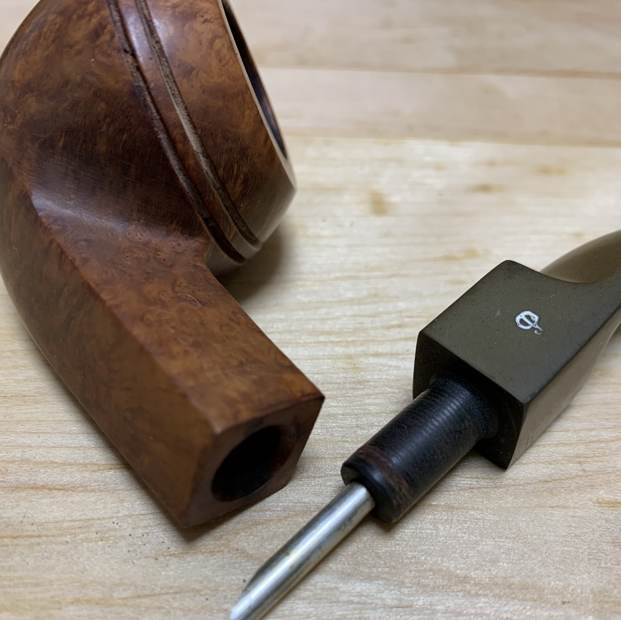
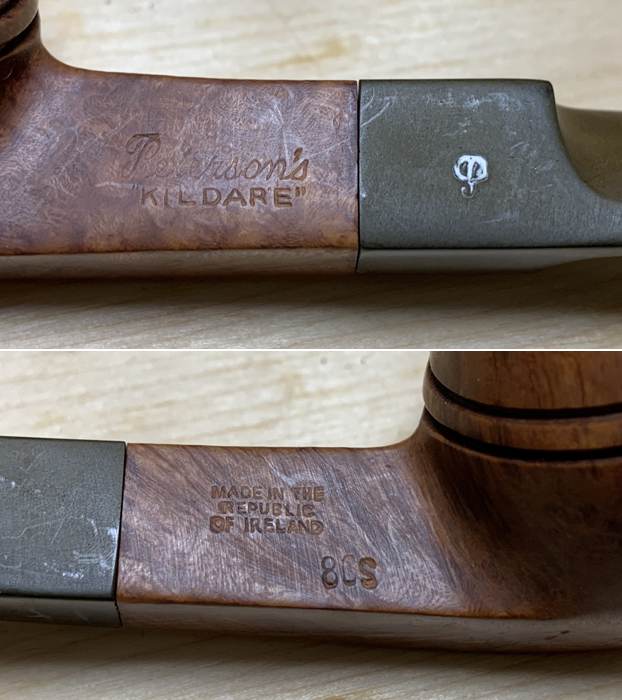
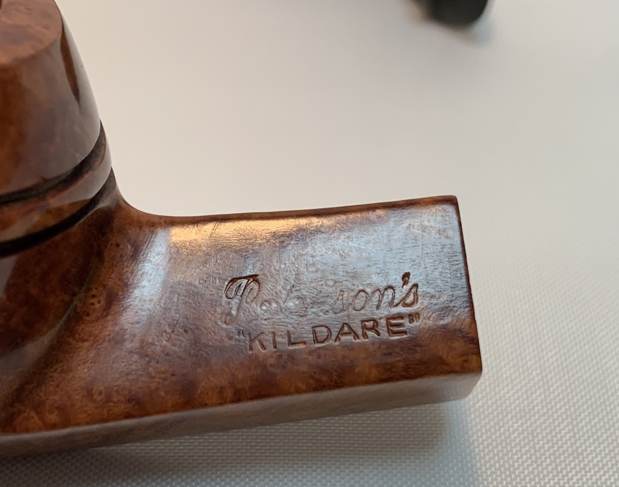
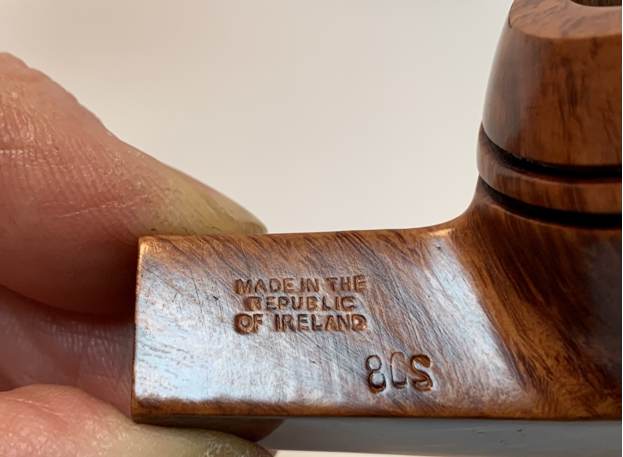
How fine it is to come across a pipe as comely as this. I found this republic-era Peterson bent bulldog at a local antique fair and I was charmed by it right away. There is a feeling of satisfaction in just looking at it and a feeling of comfort with it in hand. Despite its rather shabby appearance when I found it, the pipe held great promise – and I was sure that I could tease out its beauty with a little TLC. Let’s have a closer look. This Peterson pipe has the classic bulldog shape: diamond shank and tapered stem. In this case, it also had a very nice bend and the traditional Peterson P-lip stem. The markings on the left side of the shank are Peterson’s [over] “Kildare”. The right side of the shank showed Made in the [over] Republic [over] of Ireland. Further along the right side of the shank was the shape number: 80S. Naturally, the Peterson logo “P” was engraved on the stem. I know something about Peterson pipes, but little about the Kildare line, so I went over to Pipedia to have a look. Obviously, there is a long and very good article about Peterson – here is the link. Here is a brief quotation about the republic-era pipes:

1950 – 1989 The Republic Era – From 1950 to the present time, the stamp for this era is “Made in the Republic of Ireland” in a block format generally in three lines but two lines have been used with or without Republic being abbreviated. During the 1950’s and 60’s the Kapp & Peterson Company was still in the ownership of the Kapp family. However, 1964 saw the retiral of the company Managing Director Frederick Henry (Harry) Kapp.

No mention was made of the Kildare line there, but Mark Irwin and Gary Malmberg’s book, The Peterson Pipe: The Story of Kapp & Peterson, did make mention of it:

Kildare (1965–) First issue of line with matte-finish in Classic Range shapes, P-Lip and fishtail mouthpiece. Second issue C.1979 as Kildare Patch, with rusticated patches on pipe surface. Third issue 2010, matte-brown, P-Lip or fishtail mouthpiece, no band. Fourth issue 2011-, burgundy sandblast finish, nickel army mount, fishtail mouthpiece, exclusive to smokingpipes.com.So? Does this mean I have a First Issue Kildare or a Third Issue Kildare (it’s clearly not Second or Fourth). Truth be told: I don’t know for sure. But the First Issue is the only one that specifically mentions the Classic Shapes, of which the 80S is one. So I have no reason to think that this isn’t from the earliest (1965-79) range. I am more than happy to be corrected by someone who knows more than I do!

Let’s have a closer look at this pipe. Someone had clearly attempted to clean the pipe in the past. Their cleaning job was mediocre, but better than nothing. The near side of the rim of the bowl had a clear burn mark. Mercifully, the burn looks quite superficial. The stummel has a couple of small nicks, which are not a big deal. The two grooves which wrap around the bowl were fairly grungy and would need to be cleaned. Fortunately, the stem was in good shape – just some oxidation to address. There was an inner tube in this pipe and it needed to be cleaned. I threw it in some lemon-infused isopropyl alcohol and let it soak for a while. I took it out, cleaned with some SoftScrub, gave it a rinse, and gave it a polish. Much better.Stem next. As usual, I cleaned the insides with lemon-infused isopropyl alcohol and some pipe cleaners. Fortunately, it wasn’t too dirty inside. Then I wiped down the outside of the stem with Murphy’s Oil Soap on some cotton rounds – that removed some exterior dirt. Then, of course, I stuck it in the deoxidizing solution overnight. The next day, I scrubbed it down with some SoftScrub on cotton rounds. Before moving on to sanding, I wanted to restore the stylized “P” logo on the stem. I could see that the impression was shallower at the bottom than at the top. I painted that “P” in white and let it dry. I then used all nine Micromesh pads (1,500 through 12,000 grit) to bring out the lovely black lustre on the stem. I also used Obsidian Pipe Stem Oil in between each pad scrubbing (from 3,600 on). Setting aside the stem, I grabbed the stummel and started on that. Fortunately, this pipe didn’t need to be reamed, but other cleaning still needed to be done. Just like the stem, I cleaned the insides with lemon-infused isopropyl alcohol and some pipe cleaners and Q-tips. One has to keep cleaning until the pipe cleaners no longer show any interior filth.Since I wasn’t sure what was done in the previous owner’s cleaning job, I decided that a de-ghosting session would be sensible. I thrust cotton balls into the bowl and the shank and saturated them with 99% isopropyl alcohol. I let the stummel sit overnight. This caused the oils, tars and smells to leach out into the cotton. The bowl was nice and clean after this. I then took some 400-grit sandpaper and gently sanded down the inside edge of the bowl. I wanted to remove any remaining detritus. Following that, I grabbed a dental tool and dug out the muck that filled the two grooves on the bowl. I was actually surprised how much stuff was in there. Once done, I thoroughly cleaned the outside with Murphy’s on cotton rounds. I gently “topped” the pipe in order to safely remove the burn on the rim. The burn was very slight, so it didn’t take much. The pipe was really beginning to look beautiful. I followed that up by cleaning the insides of the stummel with some dish soap and tube brushes.Almost forgot the little dents on the underside of the bowl! Those were easily repaired with cyanoacrylate adhesive and briar dust. After this, I used all nine Micromesh pads (1,500 through 12,000 grit) to sand the stummel smooth. I then applied some Before & After Restoration Balm which I massaged into the wood and let sit for 20 minutes or so. After that, I rubbed it with a microfiber cloth. The balm brings out the best in the beautiful wood. It makes things shine and really shows the lustre. Finally, I took it to the buffer and used some White Diamond and a few coats of carnauba wax.This Peterson Kildare really came out well. I am proud of the work and I’m sure the new owner will love it! I am pleased to announce that this pipe is for sale! If you are interested in acquiring it for your collection, please have a look in the ‘Irish’ pipe section of the store here on Steve’s website. You can also email me directly at kenneth@knightsofthepipe.com. The approximate dimensions of the pipe are as follows: length 5⅜ in. (136 mm); height 1¾ in. (45 mm); bowl diameter 1⅝ in. (41 mm); chamber diameter ¾ in. (19 mm). The weight of the pipe is 1¼ oz. (39 g). I hope you enjoyed reading the story of this pipe’s restoration as much as I did restoring it. If you are interested in more of my work, please follow me here on Steve’s website or send me an email. Thank you very much for reading and, as always, I welcome and encourage your comments.
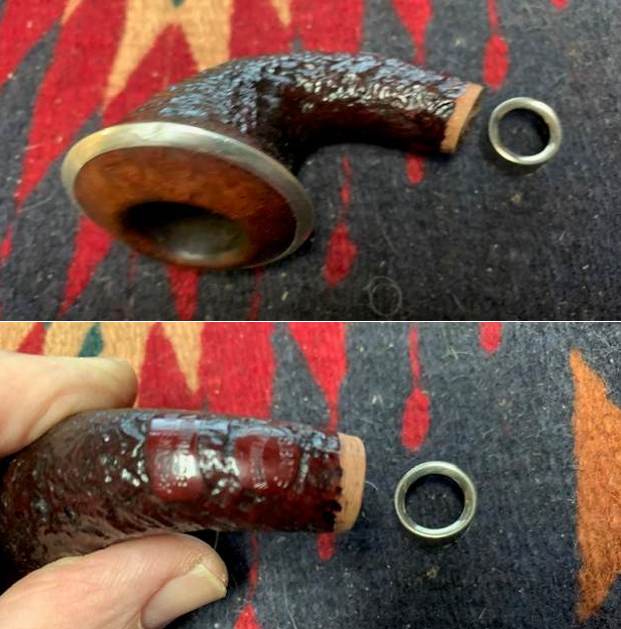
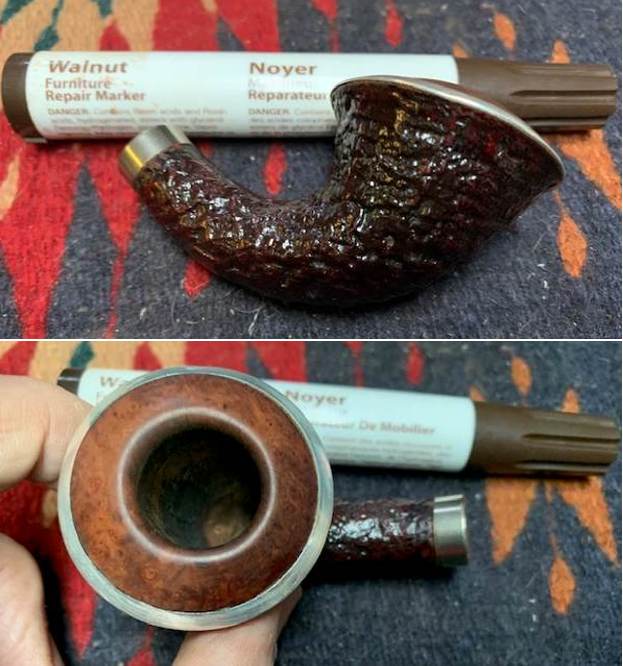
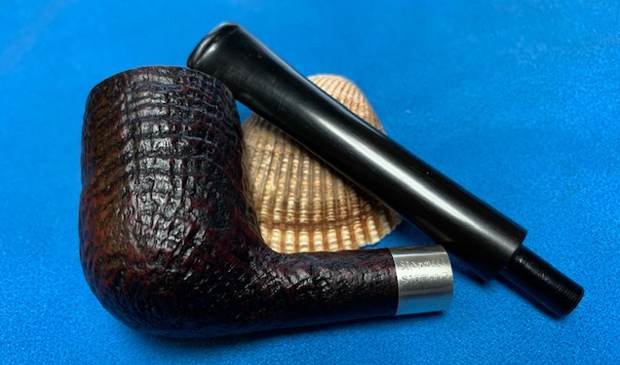
Restoring a Kaywoodie Churchwarden


Blog by Kenneth Lieblich

Next on the chopping block is a charming and looooong Kaywoodie Dublin churchwarden (twelve inches long), commissioned by the daughter of a friend, for her fiancé. She was determined to get her beau a churchwarden as a gift. Fortunately, I was able to lay my hands on one and did a nifty restoration job on it. This pipe was made by the well-known American pipe company, Kaywoodie. The markings on the left side of the shank read Super Grain [over] Kaywoodie. On the right side of the shank is the shape number: 95. The left side of the stem has the traditional Kaywoodie logo, a club: ♣.   I went over to Pipedia, in order work out a rough date for this pipe. I know that the very old Kaywoodies have four-digit shape numbers – and this pipe obviously only has two digits. On the list of Kaywoodie shape numbers, the following information was shown:
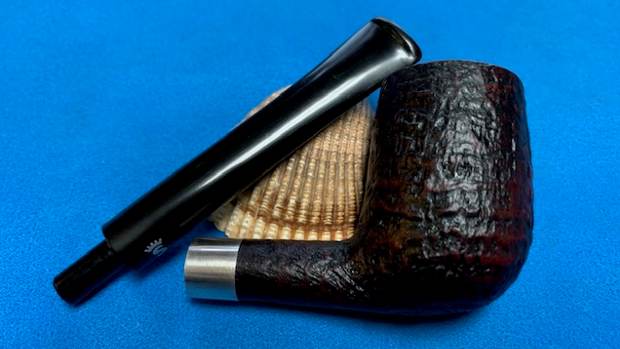
Shape #                 Description                                                         Years Produced

95                           Extra Long Dublin Churchwarden              1932-1937, 1947-1972

So, at its youngest, this pipe is a minimum of 50 years old. Having said that, however, I think it’s older because the scant information I could find suggests that the 95 was not produced in Super Grain from at least 1968. I also don’t feel that this pipe falls into the earlier year ranges. My best estimate is that this pipe dates from the period of 1955 to 1968. Sadly, I cannot be more precise than that. The following photo shows the pipe in question from a 1955 Kaywoodie catalogue:The pipe was in decent condition. The pipe had been well-smoked add the bowl and shank were quite dirty, but nothing outlandish. The bowl had notable cake on the inside and some lava on the rim. I felt that some burning was possibly there too. Similarly, the stem was relatively clean – not much oxidation to speak of, and what I would describe as “typical” tooth marks on the bit. The stem was somewhat bent out of shape (in the yaw, pitch, and roll axes) and would need to be corrected. Finally, some previous owner had decapitated the drinkless filter system. Time to get to work. The stem was first on my list. I wiped the outside down with Murphy’s Oil Soap on some cotton pads. I cleaned out the insides with lemon-infused isopropyl alcohol and some churchwarden pipe cleaners. I also took a BIC lighter and ‘painted’ the stem with its flame to lift the few bite marks and dents. This was reasonably successful in raising the damage. It wasn’t perfect, but it was improved.

As I mentioned, the stinger thing had been lopped off. There was no repairing it – and I didn’t want to anyway! What I did do, however, was to gently sand down the cut edge with metal sandpaper in coarse, medium and fine grits. This worked beautifully and I was pleased with the results. I cleaned off the end with some alcohol on a cotton pad and gave the metal a quick polish. I then heated the stem with my heat gun and gently worked the twisted stem back into place. I have bent many stems before, but this one was by far the trickiest – perhaps because it was so long. There was considerable resistance in the stem and, after correcting the yaw and roll axes, I opted to leave some of the pitch – figuring that discretion was the better part of valour. Or, rather, I didn’t want to break the darn thing!

Fortunately, the stem was in good enough shape that it didn’t need a soak in the Pipe Stem Oxidation Remover. I simply scrubbed and scrubbed with SoftScrub on some cotton pads. I built up the remaining marks on the stem with black cyanoacrylate adhesive and then cured it with the aid of some CA glue accelerator. I then carefully sanded the adhesive down with 220-, 400-, and 600-grit sandpapers to meld seamlessly into the stem. I then used all nine Micromesh pads (1,500 through 12,000 grit) to bring out the lovely black lustre on the stem. I also used Obsidian Pipe Stem Oil in between each pad scrubbing (from 3,600 onward). Now for the stummel. I decided to ream out the bowl. I used the PipNet reamer to remove the built-up cake and followed that with 220-grit sandpaper taped to a dowel to eliminate as much as I could. I took the chamber down to bare briar, as I wanted to ensure there were no hidden flaws in the wall. Fortunately, there were none.   I then proceeded to clean out the insides of the shank with Q-tips, pipe cleaners, and lemon-infused isopropyl alcohol. There was quite a bit of filth inside this stummel and it took a fair amount of cotton to get it clean. I used cotton rounds and some Murphy’s Oil Soap to scrub the outside of the stummel. I soaked the rim of the pipe in Murphy’s in order to soften the lava. This worked well, but burn marks remained on the wood of the rim. I followed that up by cleaning the insides of the stummel with some dish soap and tube brushes. Next, I decided to de-ghost the pipe in order to remove any lingering smells of the past. I thrust cotton balls into the bowl and the shank and saturated them with 99% isopropyl alcohol. I let the stummel sit overnight. This caused any remaining oils, tars and smells to leach out into the cotton. The bowl was nice and clean after this. Often, to remove burn marks, I use oxalic acid, but, in this case, the burning was too extensive. I should say that the burning wasn’t severe or deep – just wide. In order to safely remove the burns on the rim, I “topped” the pipe – that is to say, I gently and evenly sanded down the rim on a piece of 220-grit sandpaper. This effectively removed the damage, without altering the look of the pipe.Before sanding, I applied some Before & After Restoration Balm and let it sit for 20 minutes or so. It does lovely things to the wood. Once I polished it with a microfibre cloth, I sanded the stummel down with all nine Micromesh pads (1,500 through 12,000 grit). Finally, I applied some more Before & After Restoration Balm and buffed it with a microfiber cloth a second time. I then took the pipe to my bench polisher and buffed it with White Diamond and a few coats of carnauba wax. Wow – the pipe really looks lovely. My friend’s daughter presented her fiancé with the pipe and he seemed quite pleased with it. I met the lucky fellow myself and I know that he will enjoy smoking it for many years to come. I hope you enjoyed reading the story of this pipe as much I as I did restoring it. If you are interested in more of my work, please follow me here on Steve’s website or email me directly at kenneth@knightsofthepipe.com. Thank you very much for reading and, as always, I welcome and encourage your comments.

Yet another one of my own – an Ehrlich Hexagonal Opera Pipe


Blog by Steve Laug

This is another pipe that I have taken out of my personal collection as I do not use enough to warrant keeping it. This pipe was one that I kept from a group of pipes Jeff and I purchased a few years ago. It was not used very often and I believe it is one that I actually found in a lightly smoked condition when I picked it up. I cleaned the pipe but never smoked it after the clean up work. The airway in the shank and the mortise were quite clean. The smooth finish and rim top were in good condition. There was some darkening on the inner edge of the bowl around the bowl. The stamping on the pipe is very simple and on the left side of the shank it is stamped EHRLICH. On the underside of the stem it is stamped FRANCE. The finish is a natural brown with a shiny coat of varnish that gave it a rich look. The rich brown finish goes well with the black, taper vulcanite stem which is in excellent condition with no tooth marks or chatter on either side. I took photos of the pipe before I did my clean up work on it. I took a photo of the bowl and rim top to verify the description above. I also took photos of the stem surface showing the light chatter and tooth marks on both side. I took a photo of the stamping on the left side of the shank and the underside of the stem. It is clear and readable as noted above. I took the stem off the bowl and took a photo of the pipe to give a sense of proportion of the pipe. You can also see the grain around the side of bowl and the shank and it is a beauty. Now it was time to work on the pipe. I worked on the inner edge of the bowl 220 grit sandpaper to give the inner edge a slight bevel and clean up the damage that was present there. I used a ball and a piece of 220 grit sandpaper to smooth it out. The rim came out looking quite good.I wiped the bowl down with a cotton pad and acetone to remove the varnish coat on the briar. I find that once the varnish is removed the grain really stands out and can be appreciated. That was certainly true with this one. I polished the rim top and the briar with micromesh sanding pads – dry sanding with 1500-12000 grit pads. I wiped the bowl down with a damp cloth after each sanding pad to remove the dust and debris. The rim top polished out and matched the oil cured look of the bowl and shank. I cleaned the mortise and airways in the shank and stem with cotton swabs, pipe cleaners and isopropyl alcohol to remove the debris and tars from my smoking. You can see that it was not too bad as I tend to keep my pipes clean. The bowl was in such good condition that decided to give the bowl and shank a coating of Before & After Restoration Balm. I worked it into the surface of the briar with my fingertips and a horsehair shoe brush to clean, enliven and protect the briar. I let the balm sit for 15 minutes and then buffed with a cotton cloth to raise the shine. The photos show the bowl at this point in the restoration process. I set the bowl aside and turned my attention to the stem. I polished it with micromesh sanding pads – dry sanding with 1500-12000 grit pads. I rubbed it down between pads with Obsidian Oil. I polished it with Before & After Fine and Extra Fine Pipe Stem Polish. I wiped it down with some Obsidian Oil and buffed it off. It is a beautiful stem. It is good to put the final touches on another of my own pipes that I am selling – Ehrlich Hexagonal Bowl Straight Opera Pipe. I put the pipe back together and buffed the stem with Blue Diamond on the buffing wheel. I gave the bowl and the stem multiple coats of carnauba wax. I hand buffed the pipe with a clean buffing pad to raise the shine. It is fun to see what the polished bowl looks like with the beautiful grain and the polished vulcanite saddle stem. This smooth Ehrlich Opera Pipe is great looking and the pipe feels great in my hand. It is light and well balanced. Have a look at it with the photos below. The dimensions are Length: 5 inches, Height: 1 ¼ inches, Outside diameter of the bowl: 1 inch x 1 ½ inches, Chamber diameter: ¾ of an inch x 1 inch. The weight of the pipe is 22 grams/.78 ounces. It is a beautiful pipe that I will soon be putting on the rebornpipes store in the American Pipe Makers Section. If you are interested in adding it to your collection send me an email or a message. Thanks for walking through the restoration with me as I worked over this pipe. Thanks to each of you who are reading this blog.