Tag Archives: super glue

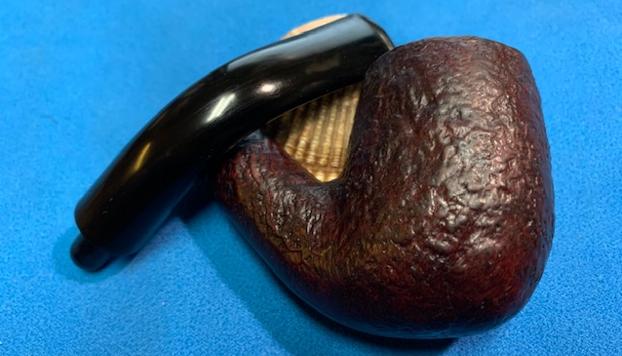
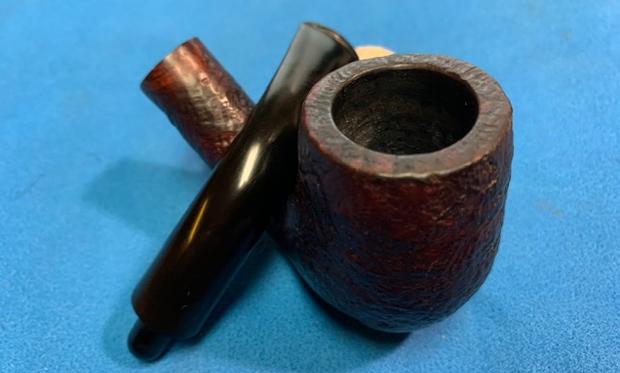
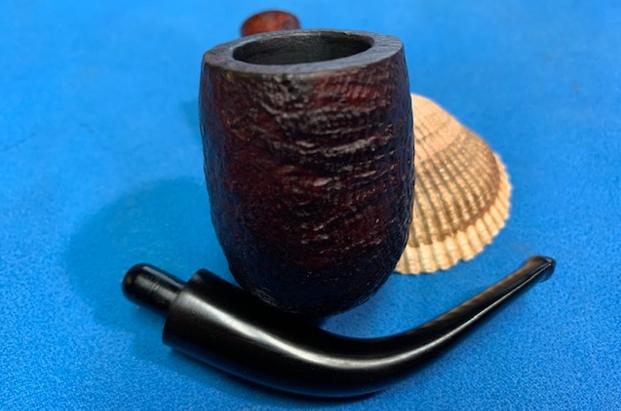
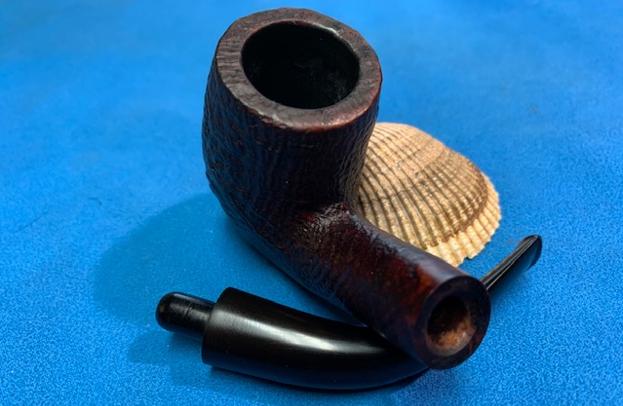
Resurrecting What I think is an older Comoy’s Sandblast 43 Bent Billiard


Blog by Steve Laug

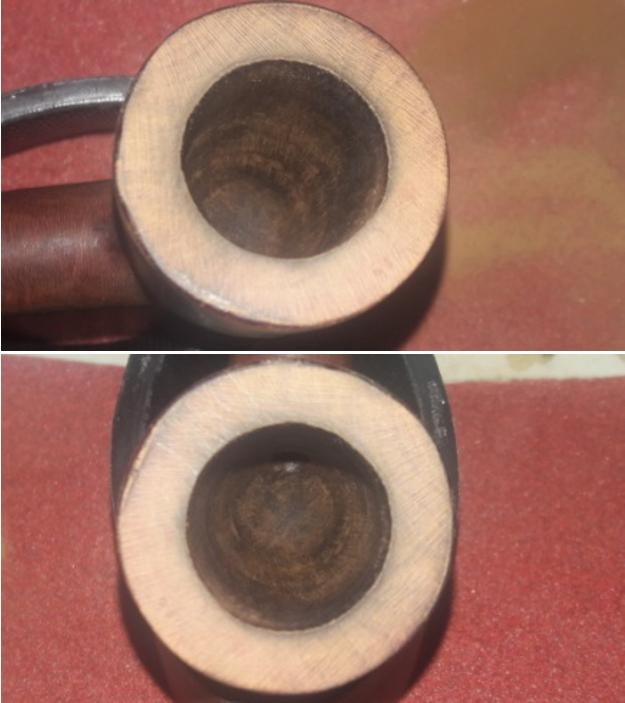
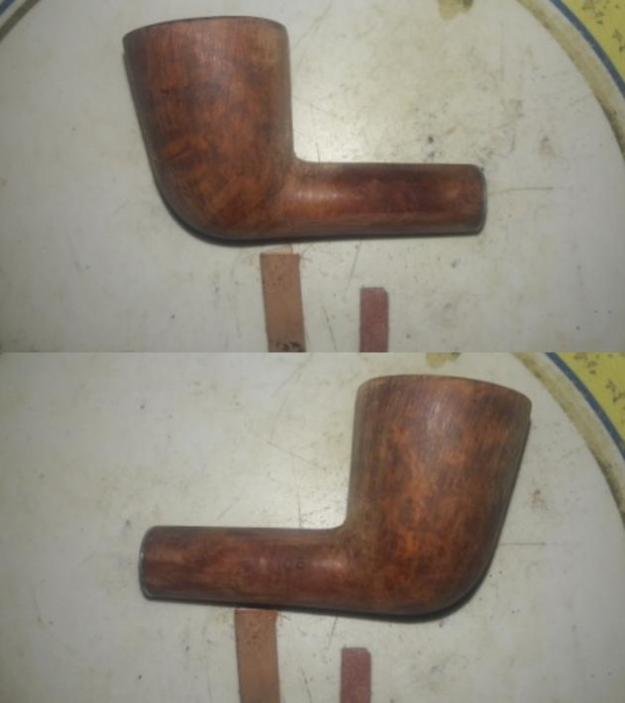
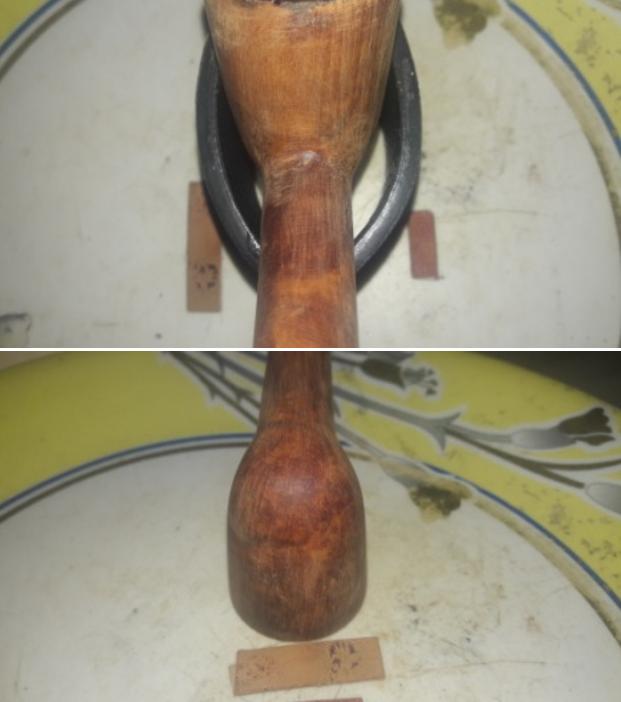
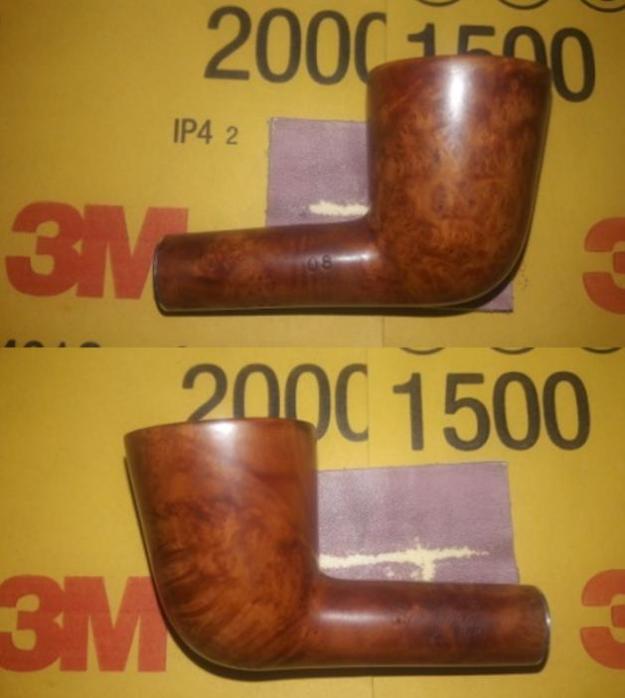
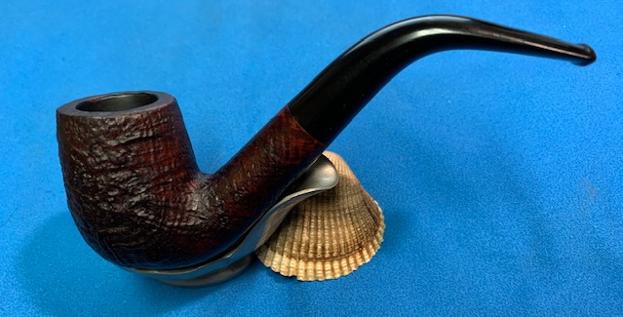
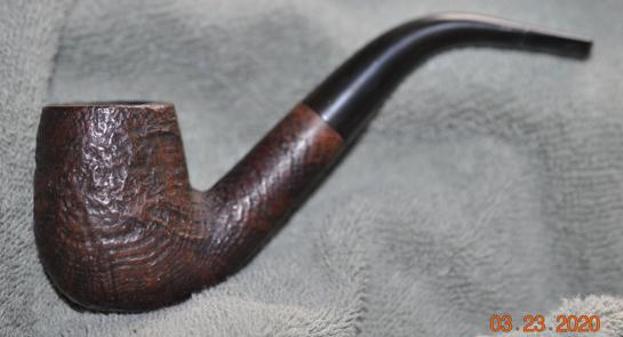
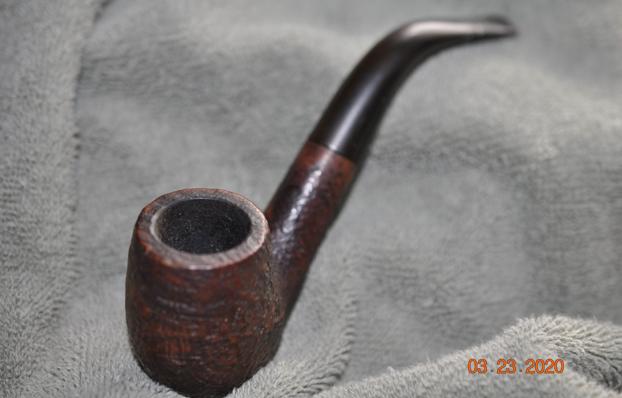
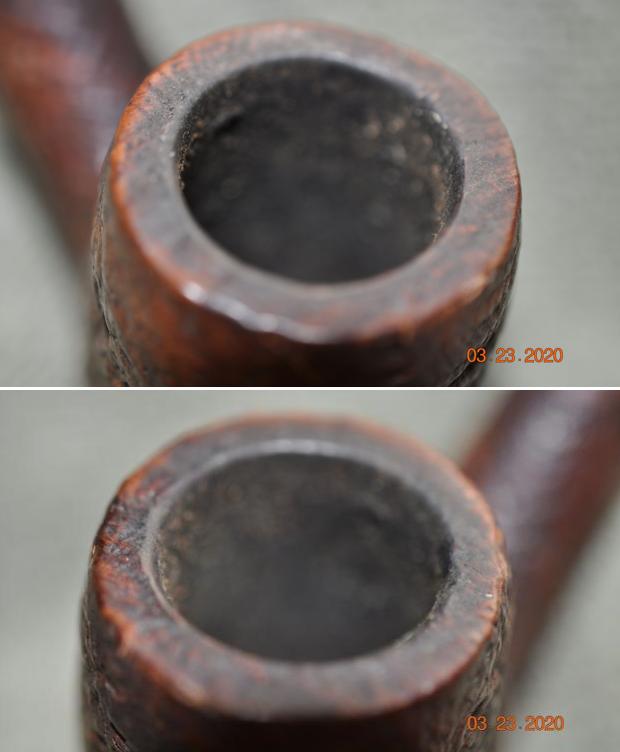
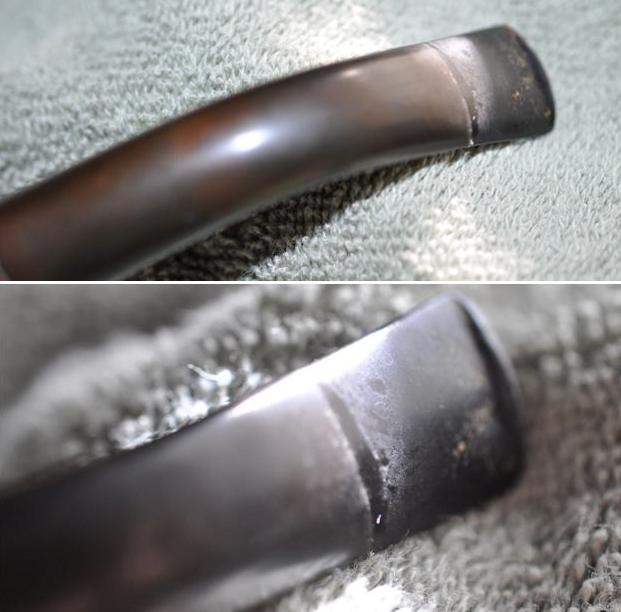
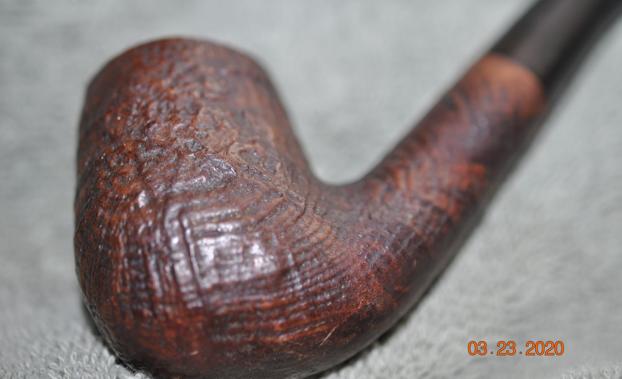
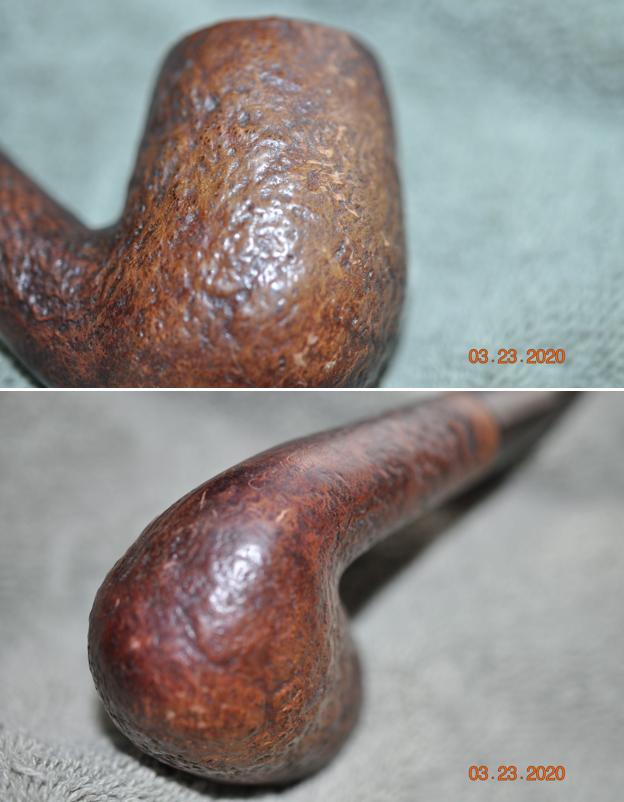
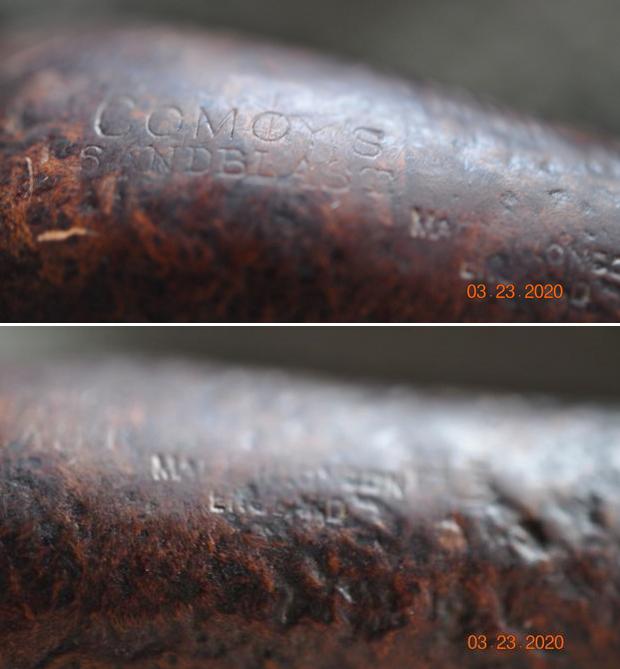
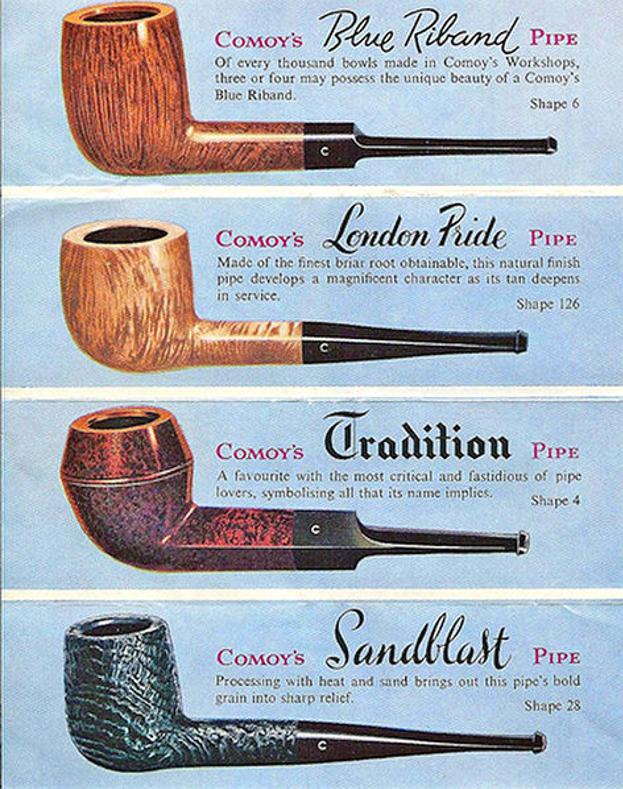
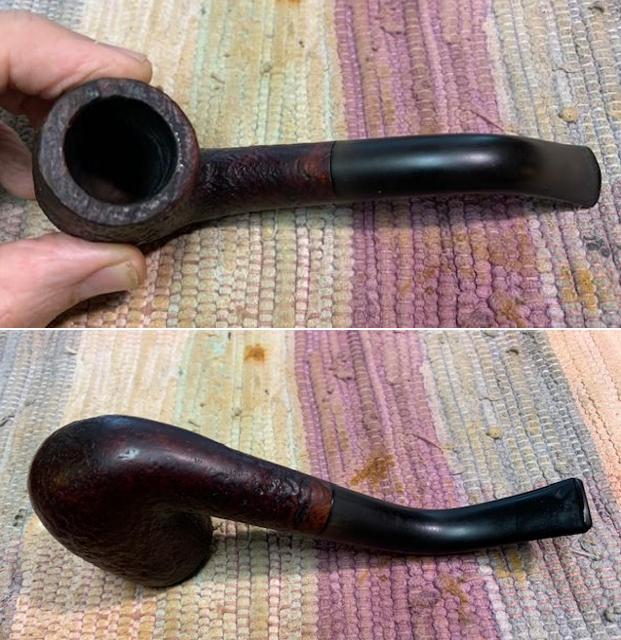
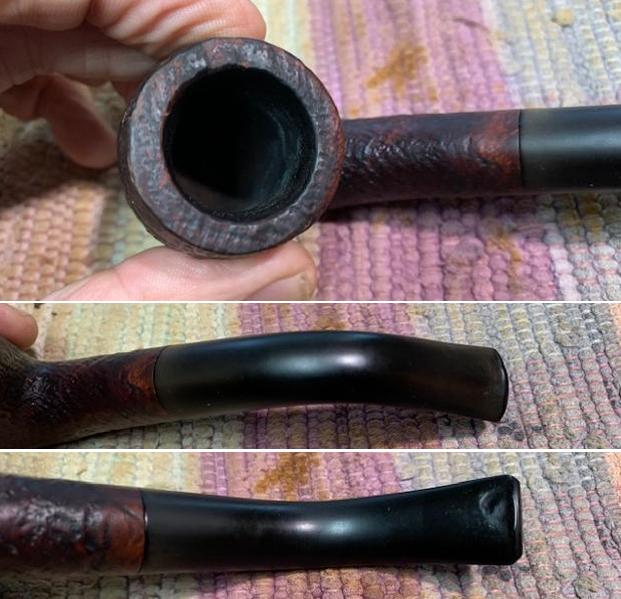
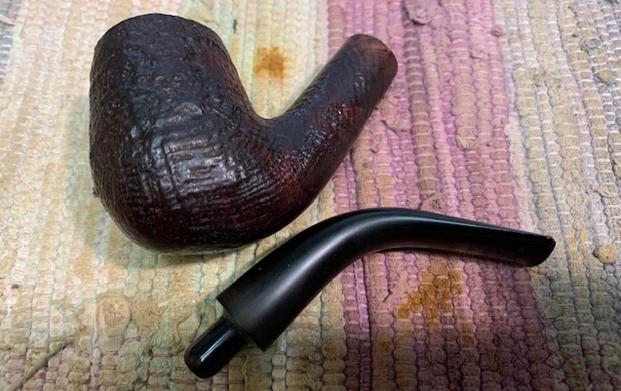
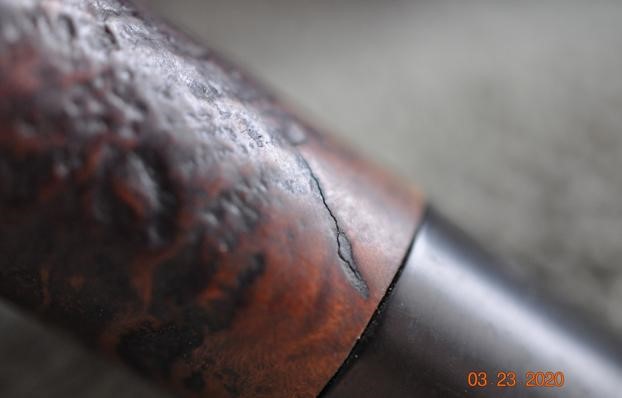
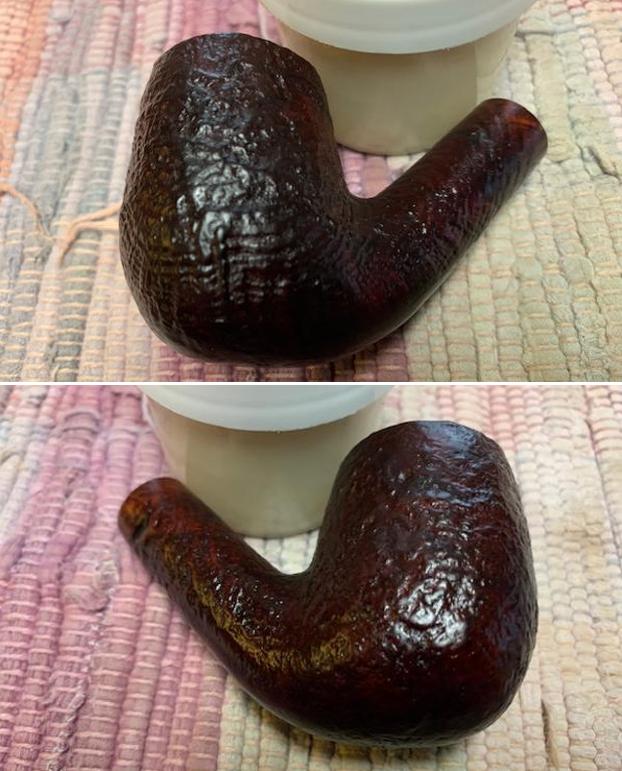
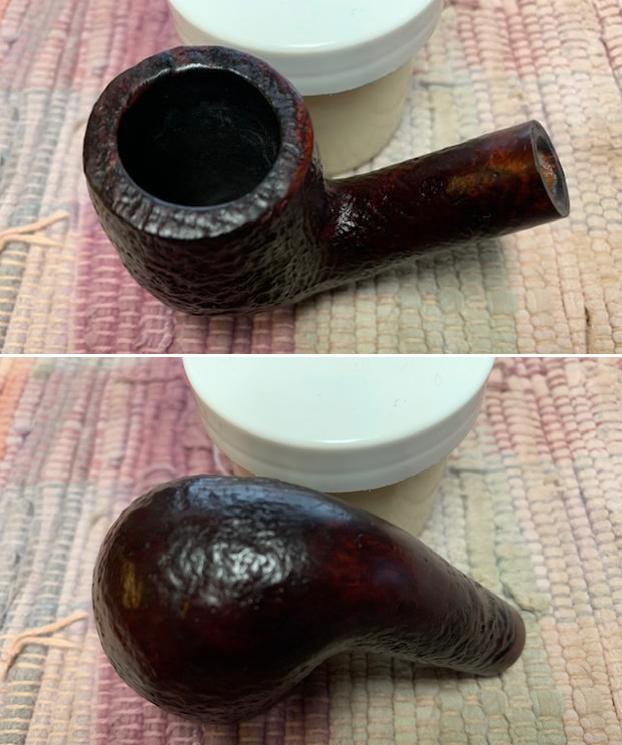
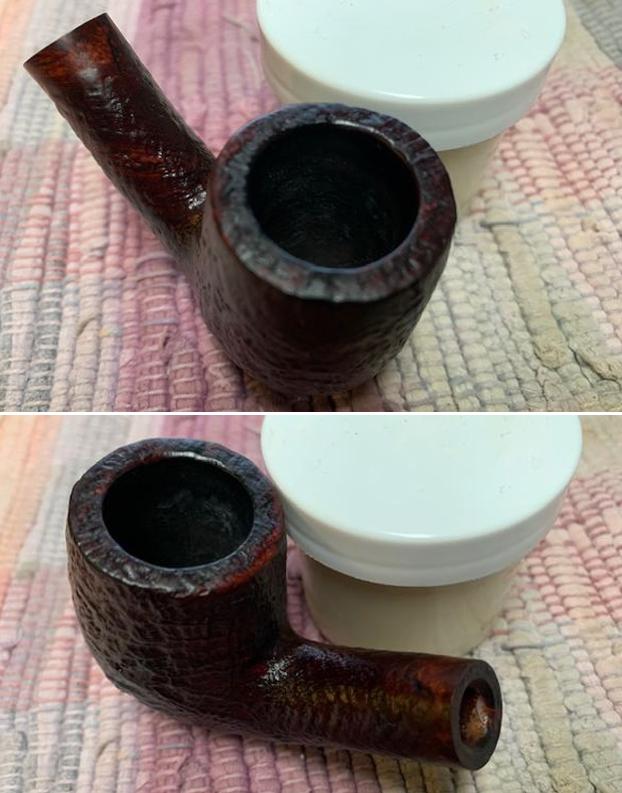
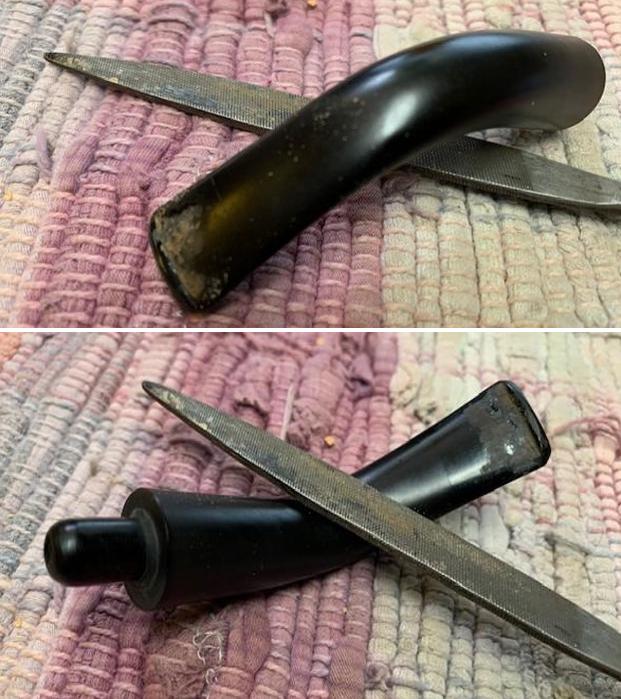
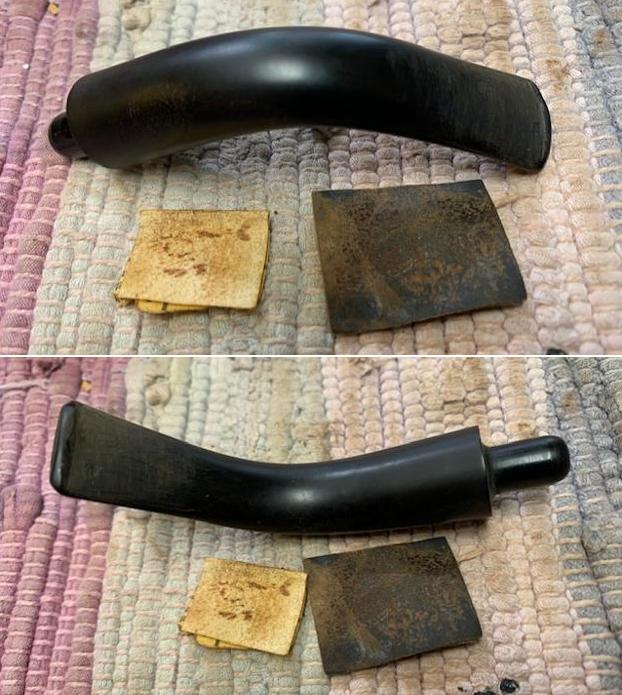
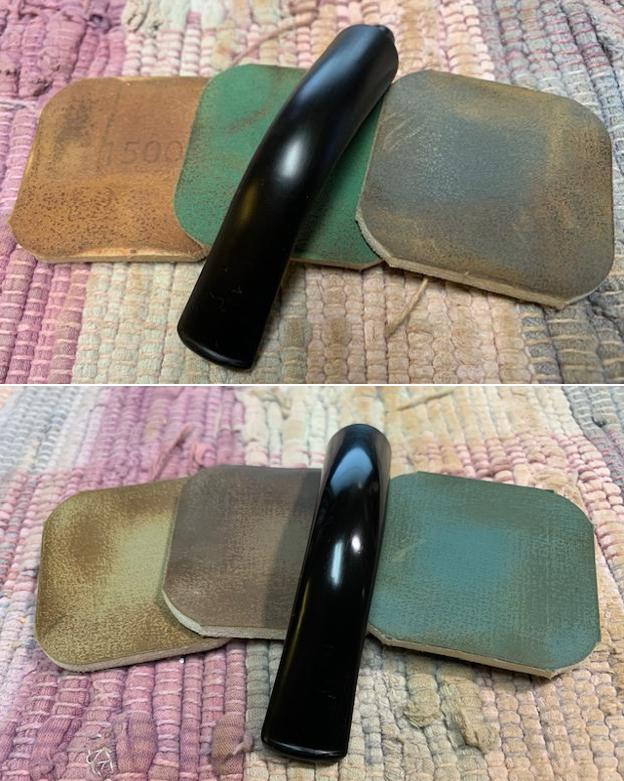
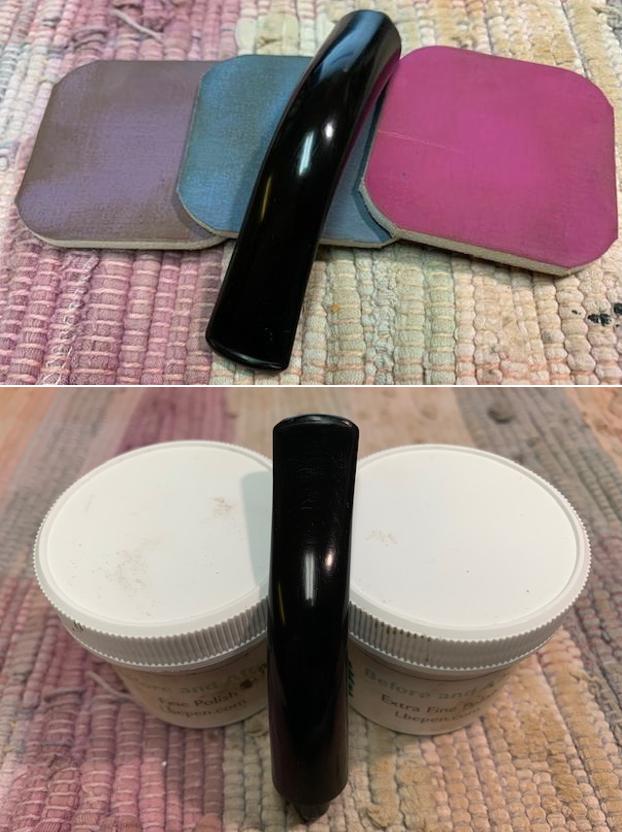
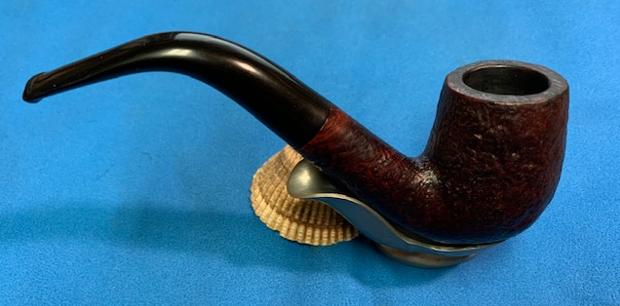
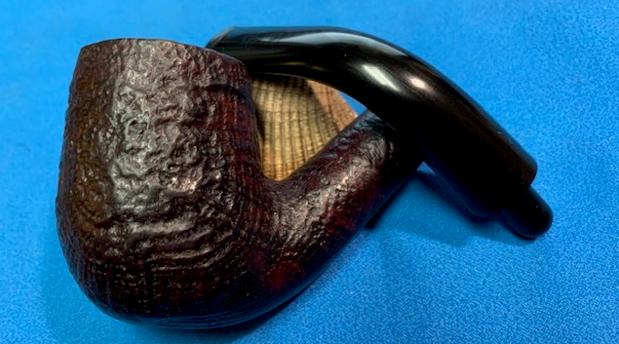
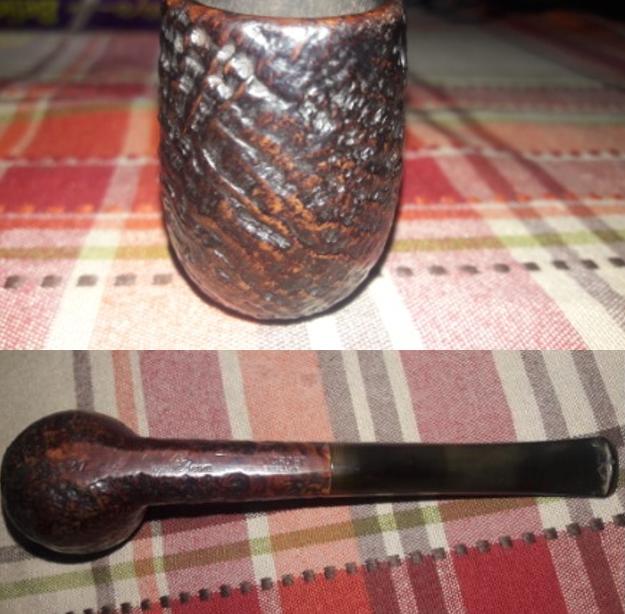
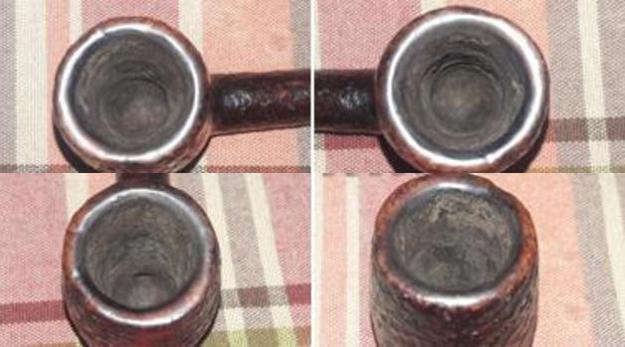
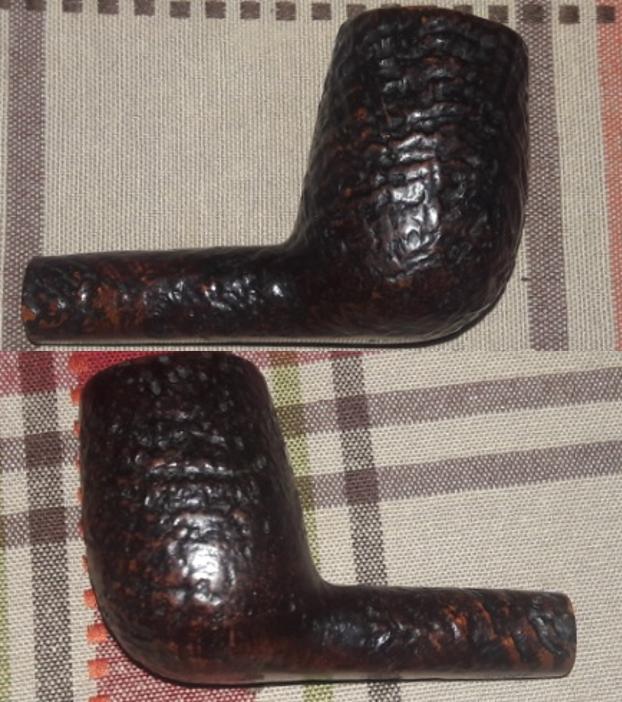
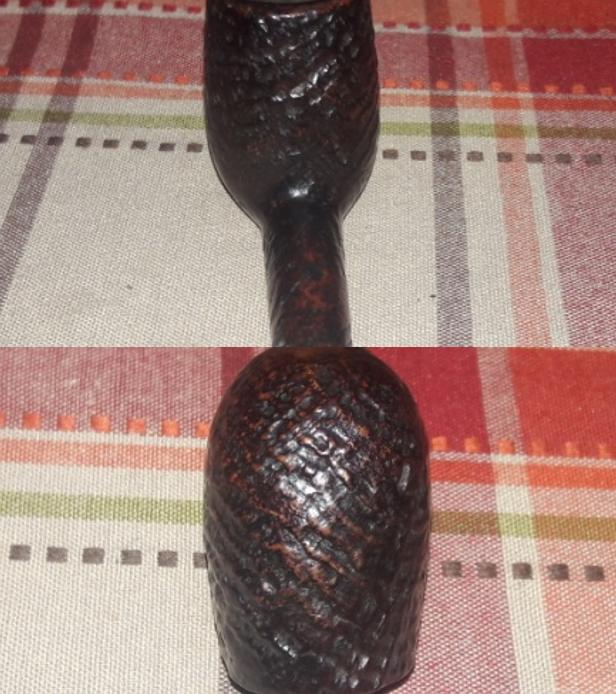
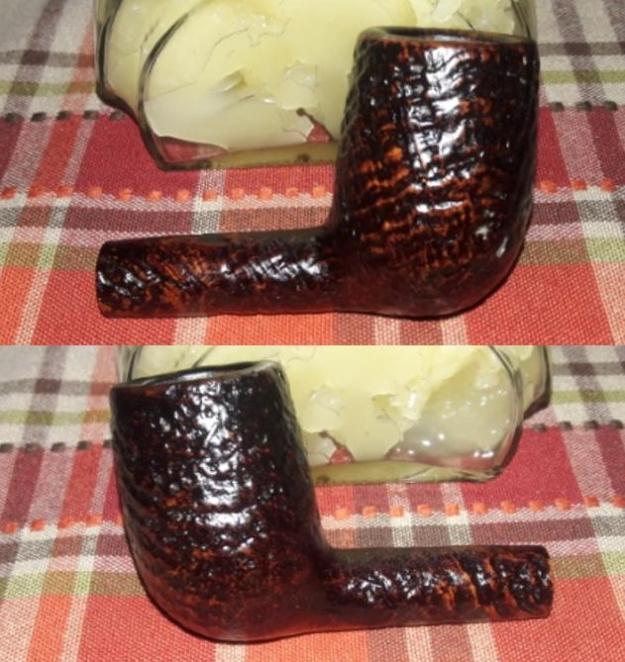
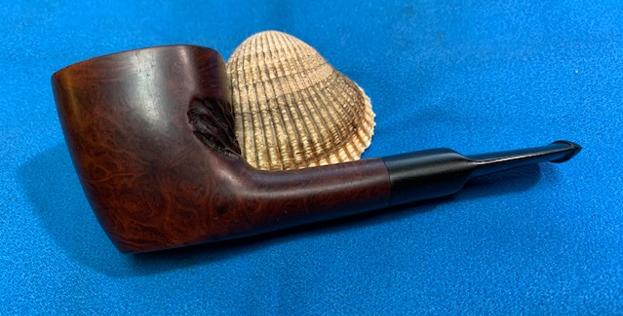
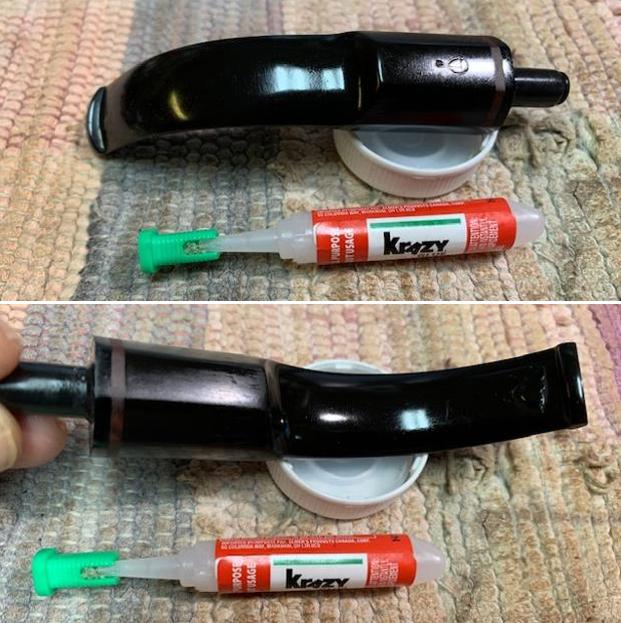
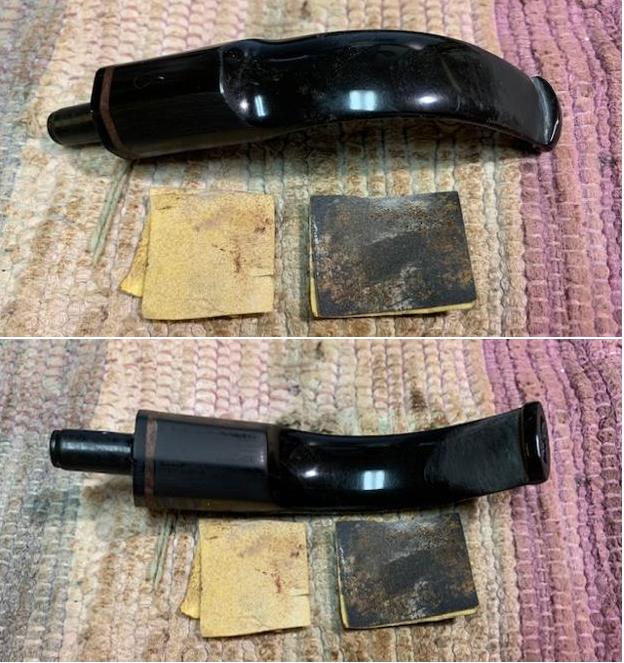
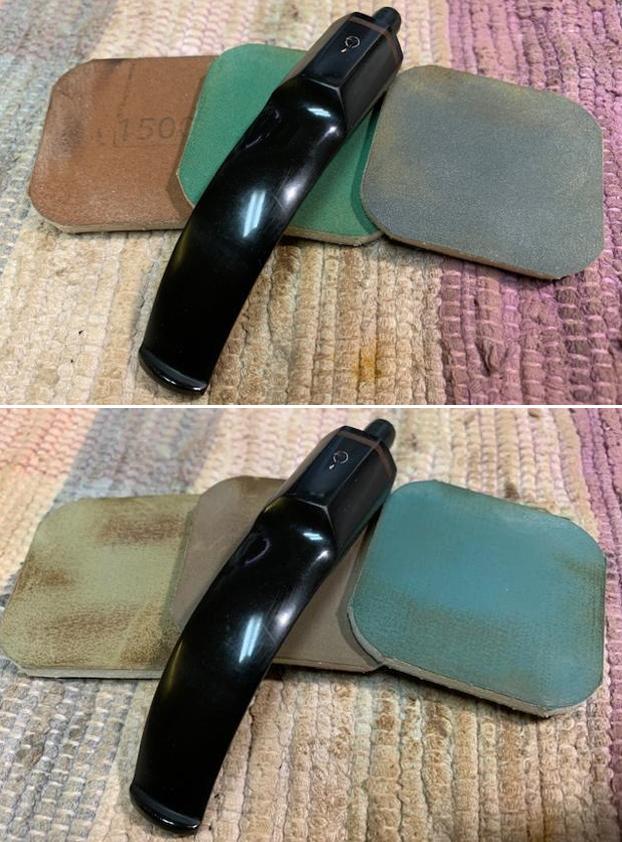
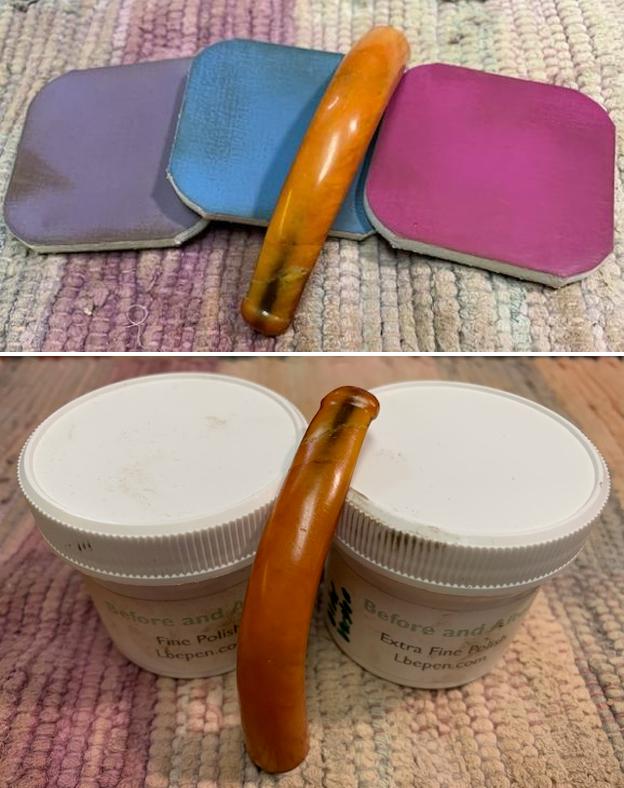
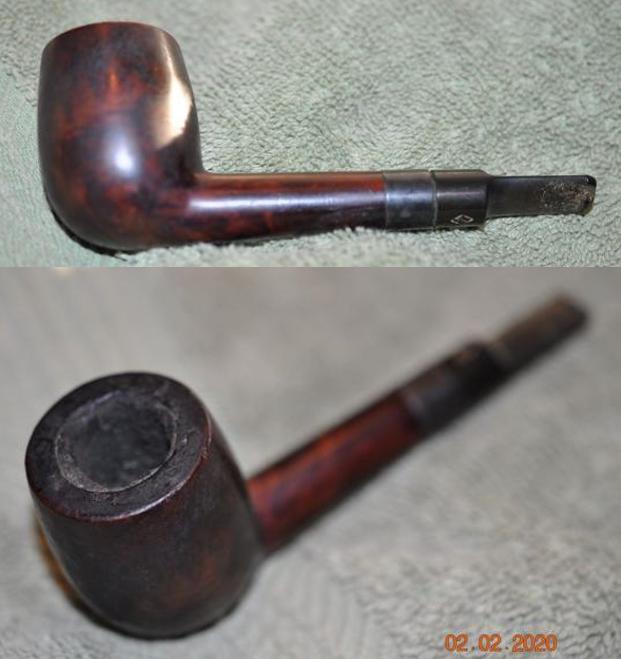
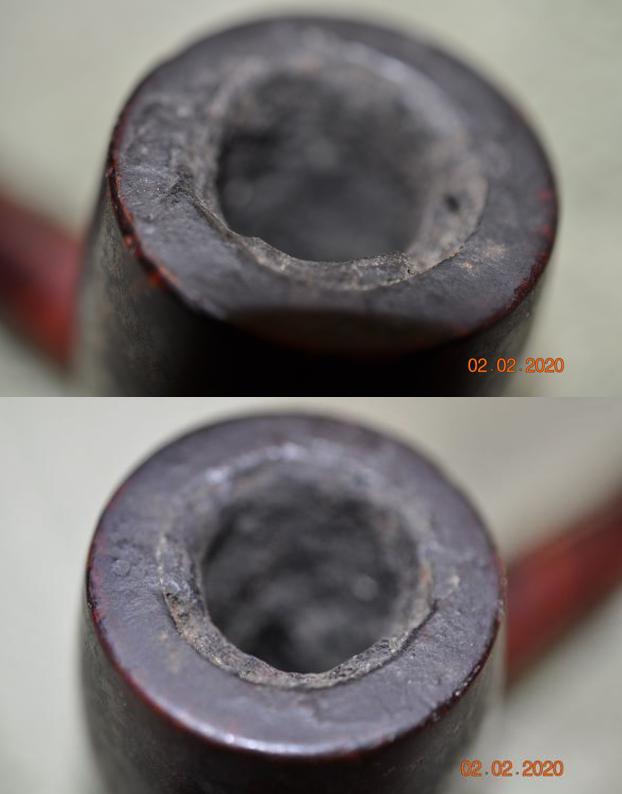
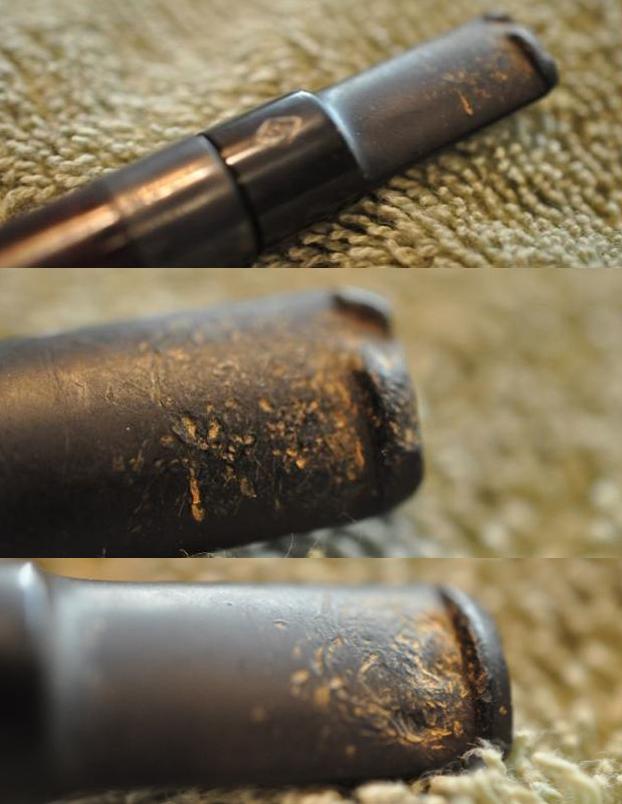
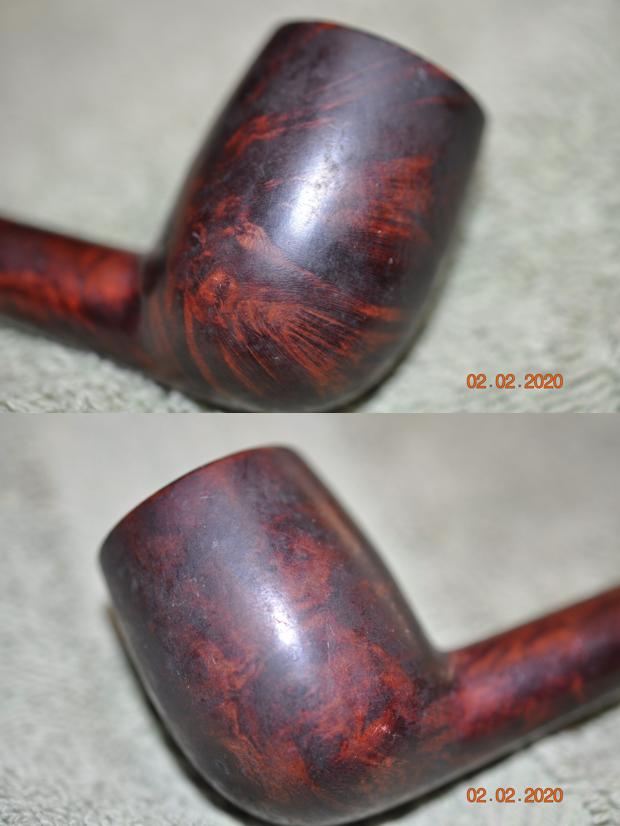
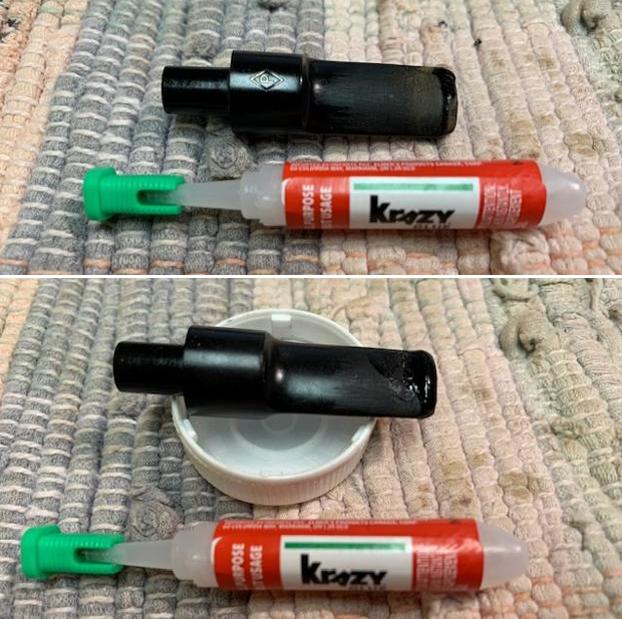
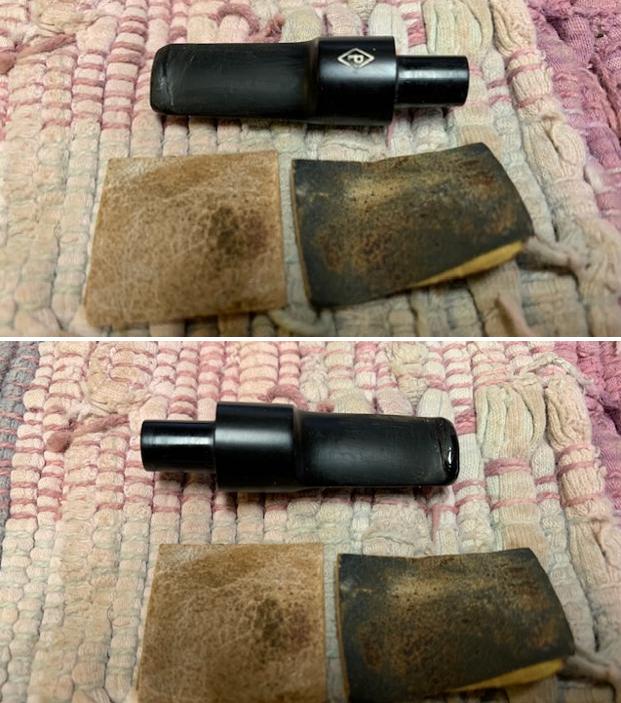
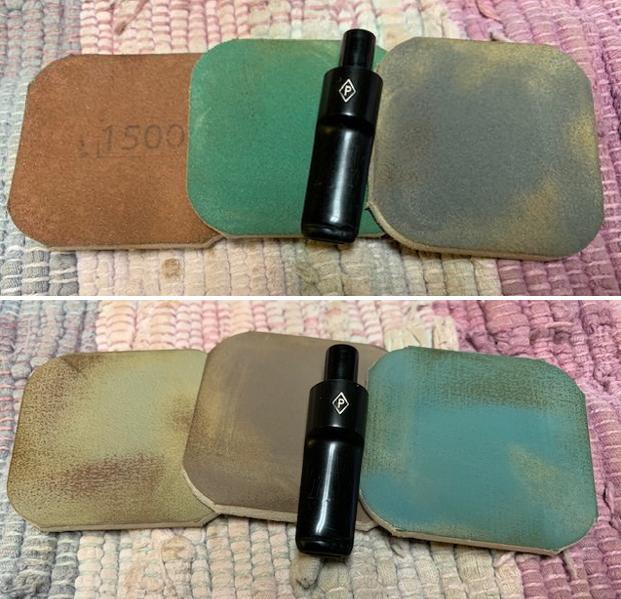
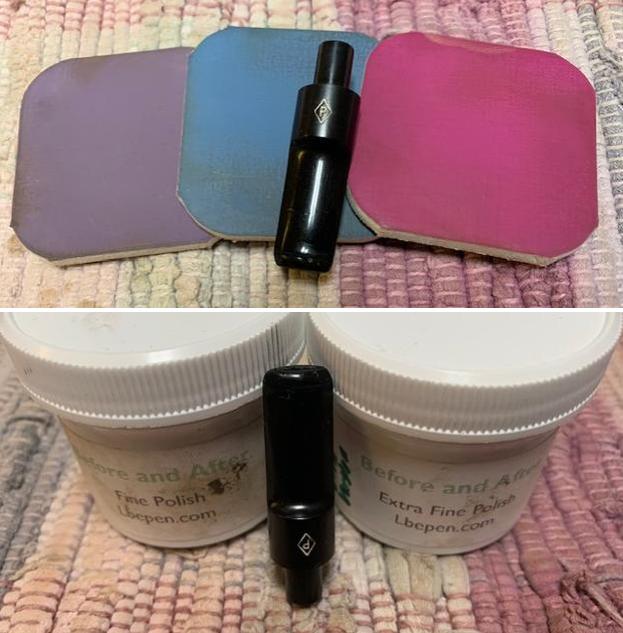
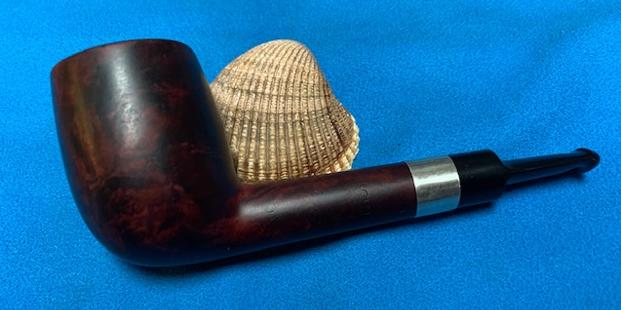
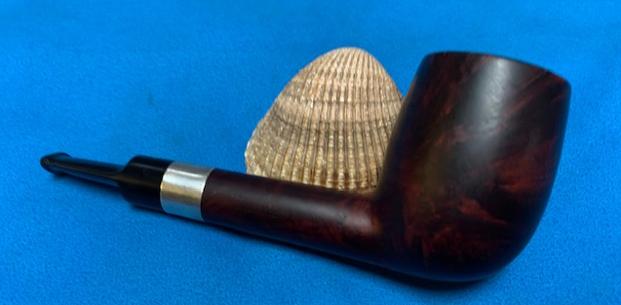
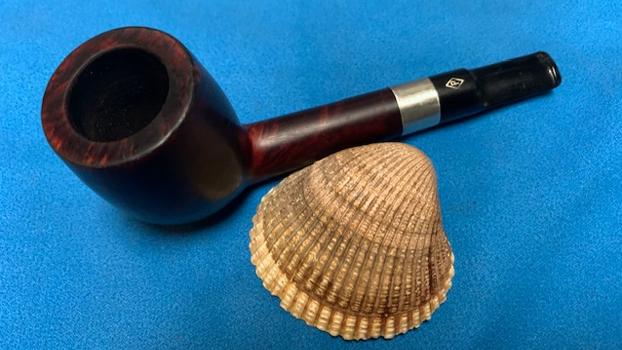
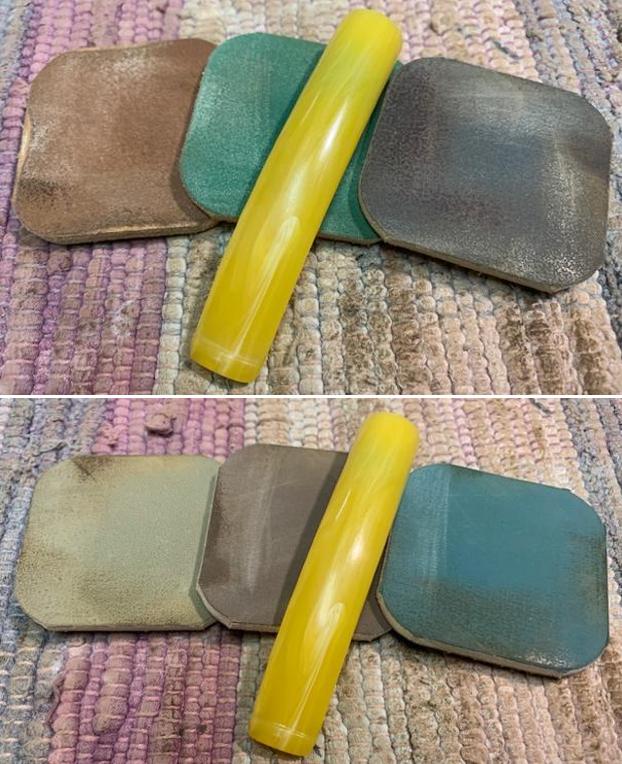
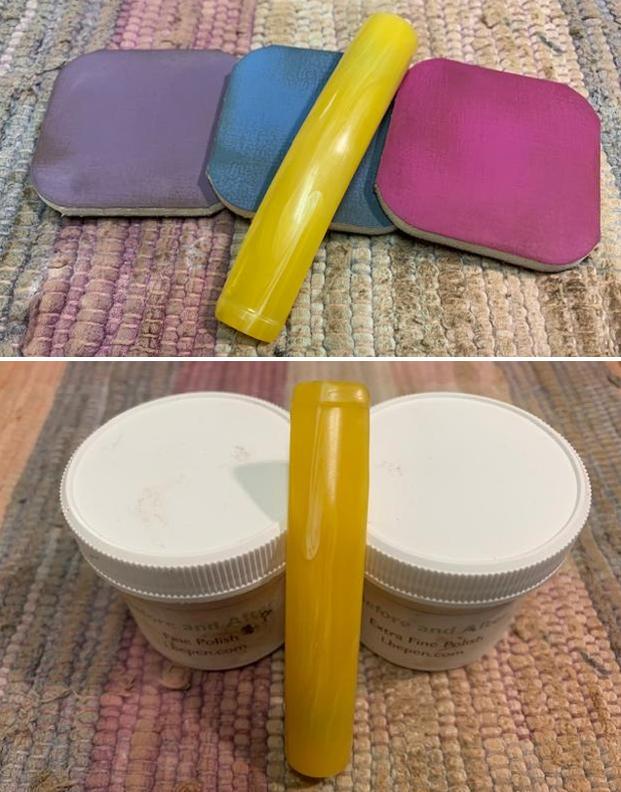
The next pipe on the work table came to us from a fellow in Brazil, Indiana, USA in March of 2020. The pipe is a classic looking Bent Billiard that has a deep and rugged sandblast. The pipe is stamped on the underside of the shank and reads Comoy’s [over] Sandblast followed by Made in London [over] England followed by the shape number 43. The stain is a mix of browns that contrasts well with the black of the hard rubber stem. The finish was very dirty with grime ground into the finish making it hard to see beyond that to the grain underneath. There was a thick cake in the bowl and it had overflowed with lava onto the rim top and edges. It was hard to know at this point the condition of the rim edges. The stem was made of hard rubber which pointed to an earlier date for the making of the stem. The stem had no stamping or identifying marks on it. Jeff took photos of the pipe before he started working on it. I include those below. He took photos of the rim top to show the thick cake and the thick lava coat on the edge and onto the top. It is hard to know what the condition of the rim top and edges is like under that thick lava. It is an incredibly dirty pipe but obviously one that was a great smoker. The stem has tooth marks and chatter on both sides ahead of the button. It also has some residue left behind by a rubber Softee Bit. He took photos of the sides and heel of the bowl to show the beautiful sandblasted grain around the bowl and the condition of the pipe. You can see the grime ground into the surface of the briar.    He took photos of the stamping on the underside of the shank. It is clear and readable as noted above. Jeff took a photo of the underside of the shank showing a shrunken fill with a crack in it. Fortunately it was not in the briar but in the fill itself. I turned to Pipedia (https://pipedia.org/wiki/Comoy%27s) and reread the great history of the brand and found an advertizement for the Sandblast line. I include that advert below.I turned to the listing on the site that gave shape numbers and a description of the various shapes in chart form (https://pipedia.org/index.php?title=Comoy%27s_Shape_Number_Chart). I found the shape number 43 which was on this pipe. It is described in the chart below as a ½ Bent Billiard in a large size. That is a perfect description of the pipe I am working on.It was time to work on the pipe. As usual Jeff had done a thorough cleanup on the pipe. He reamed the bowl with a PipNet pipe reamer and followed up with a Savinelli Fitsall pipe knife to remove the cake. He scrubbed out the mortise and the airway in the shank and the stem with alcohol, cotton swabs and pipe cleaners. He scrubbed the exterior of the bowl, rim, shank and stem with a tooth brush and Murphy’s Oil Soap to remove the oils and tars on the rim and the grime on the finish of the bowl. He rinsed it under running water. He dried it off with a soft cloth. He cleaned the internals and externals of the stem with alcohol, pipe cleaners and cotton swabs. He soaked the stem in Briarville’s Pipe Stem Deoxidizer and rinsed it off with warm water and cleaned out the airway in the stem with alcohol. This Bent Billiard pipe actually was quite stunning!   I took a photo of the rim top and stem to show the condition. The rim top and edges looked very good. The hard rubber stem had tooth chatter and marks on both sides ahead of the button and on the button edges. There was one deeper large one on the underside of the stem. I removed the stem and took a photo of the pipe to give a sense of the whole. It is a nice looking pipe that should clean up very well. I decided to address the crack in the fill on the underside of the shank first. I filled it in with clear CA glue and once it cured I smooth out the repair with 1500-2400 micromesh sanding pads. It looked much better once it was finished. I rubbed the bowl and shank down with Before & After Restoration Balm. I worked it into the surface of the bowl sides and shank with my fingertips to clean, enliven and protect the briar. I let the balm sit for a little while and then buffed with a cotton cloth to raise the shine. The Balm did its magic and the grain stood out.   I set the bowl aside and turned my attention to the stem. I “painted” the tooth marks on the stem with the flame of a lighter to raise them. I filled in the remaining tooth marks with clear CA glue and set it aside until the repairs cured. I used a small file to flatten the repair and recut the edge of the button. I sanded the repaired areas with 220 grit sandpaper to blend them into the stem surface and also worked on the remaining oxidation at the shank junction. I started the polishing process with 400 grit wet dry sandpaper.   I polished the hard rubber stem with micromesh sanding pads – 1500-12000 grit pads. I wiped it down with Obsidian Oil after each sanding pad. I used Before & After Pipe Polish – both Fine and Extra Fine to further polish the stem. The photo below shows the polished stem. This nice looking older Comoy’s Sandblast 43 Bent Billiard with a hard rubber taper stem is a great looking pipe now that it has been restored. The briar is clean and the blast really came alive. The rich brown and black stains gave the blast a sense of depth with the polishing and waxing. The grain really popped. I put the hard rubber stem back on the bowl and carefully buffed the pipe with Blue Diamond on the buffing wheel using a light touch on the briar. I gave the bowl multiple coats of Conservator’s Wax and the stem multiple coats of carnauba wax on the buffing wheel. I buffed the pipe with a clean buffing pad to raise the shine. I hand buffed the pipe with a microfiber cloth to deepen the shine. The finished Comoy’s Sandblast Bent Billiard really is a beauty and feels great in the hand and looks very good. Give the finished pipe a look in the photos below. The dimensions of the pipe are Length: 5 ½ inches, Height: 2 inches, Outside diameter of the bowl: 1 ¼ inches, Chamber diameter: 7/8 of an inch. The weight of the pipe is 54 grams/1.90 oz. The pipe will be going on the rebornpipes store soon. It will be in the section on British Pipe Makes if you would like to add it to your collection.Thanks for reading this blog and my reflections on the pipe while I worked on it. There are many more to come!

A Simple Restoration Of An Inherited BBB “Thorneycroft” # 637 Sandblast Billiard


Blog by Paresh Deshpande

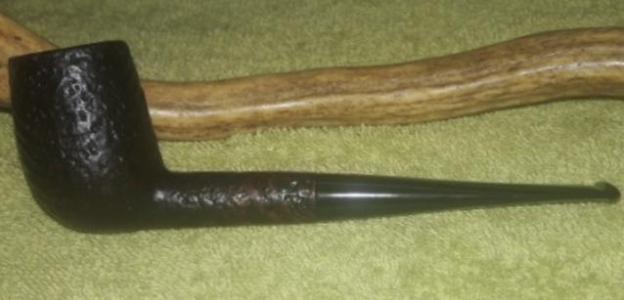
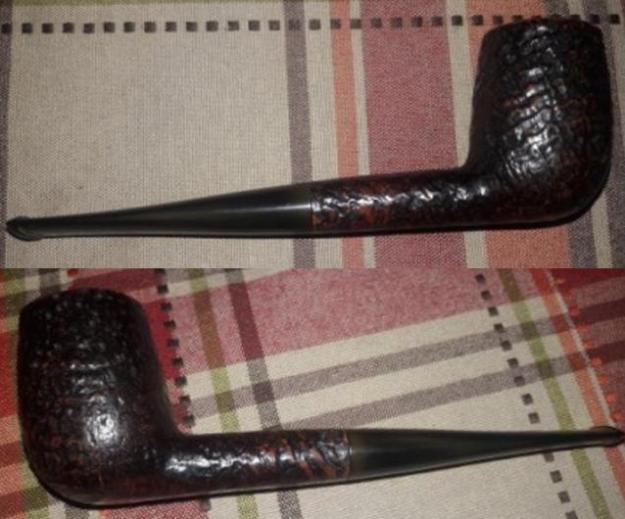
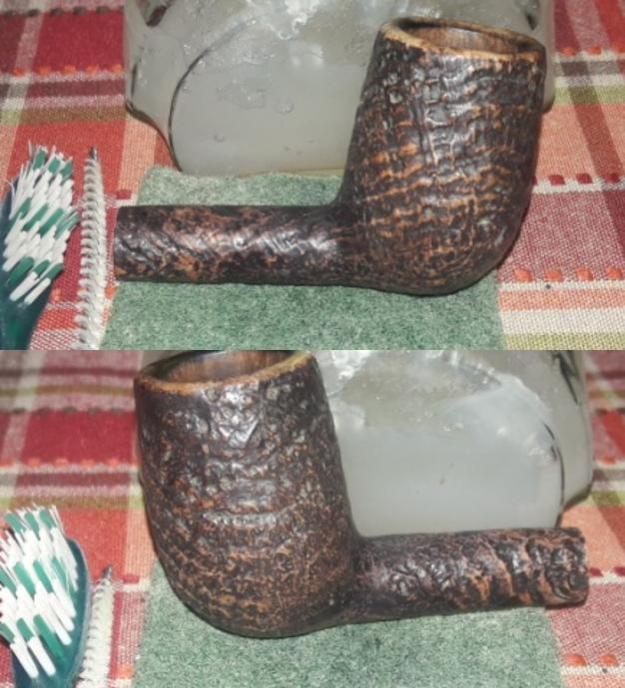
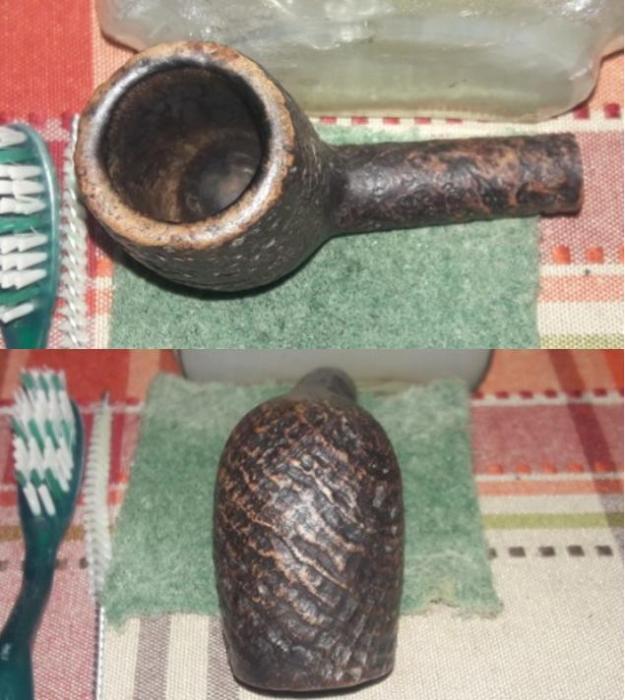
I love my classic shaped pipes and one such pipe from my inheritance is now on my work table. It’s a classic tapered stem Billiard with a deep scraggy sandblasted stummel. The moment I picked it up, I knew this could be a Barling’s “Fossil” or some English brand. The sandblast, quality of the stem and the briar all oozed quality. The stem logo of BBB in brass rhombus did bring an inadvertent smile on my face. I love this brand and have a few BBBs in my collection.

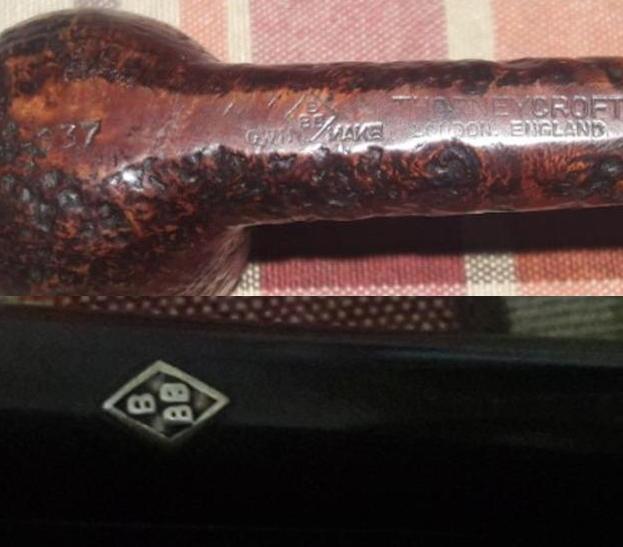
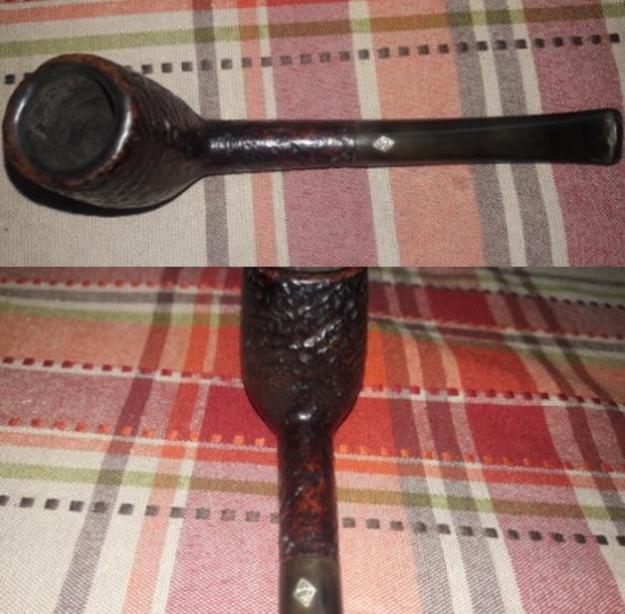
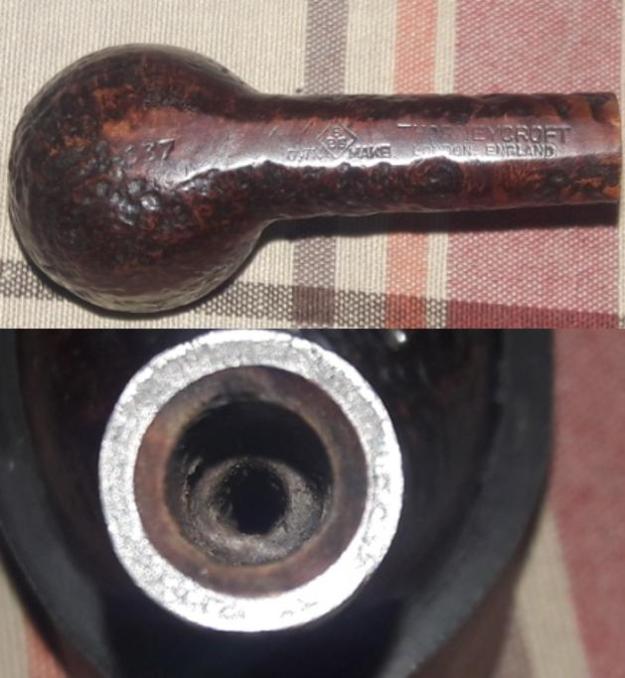
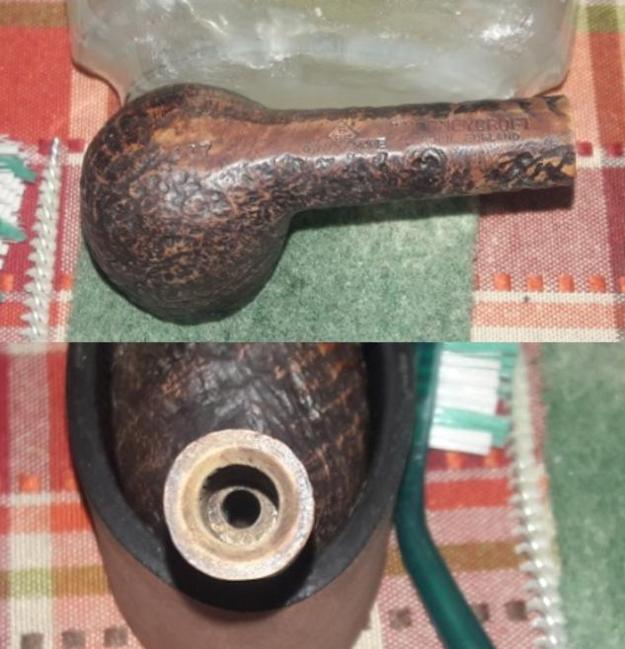
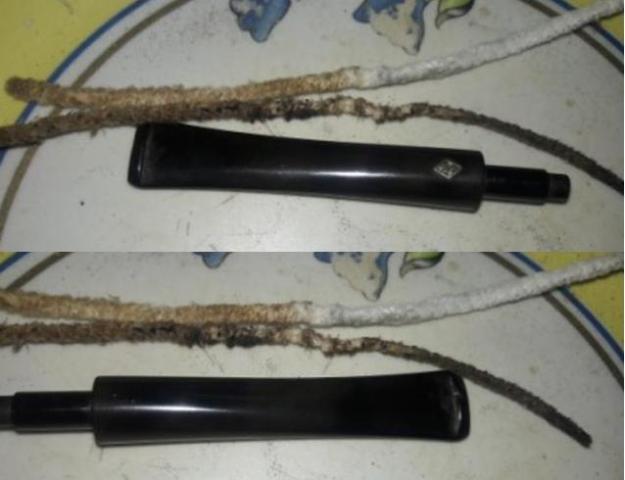
The pipe is a classic Billiard shaped sitter with deep craggy sandblast that feels tactile in the hand. It has a medium sized bowl and is very light in weight. This pipe is stamped on the bottom smooth surface of the shank with shape code #637 at the foot followed by “BBB” in a rhombus with “OWN MAKE” on either side in block capital letters. Further towards the shank end on the same smooth surface, it is stamped as “THORNEYCROFT” over “LONDON ENGLAND”. The high quality vulcanite tapered stem bears the trademark inlaid BBB brass diamond logo on the upper surface of the stem. The stampings are all crisp and clear.  If you are interested to know anything about BBB pipes, look no further than rebornpipes.com!! This is Steve’s favorite brand and he has been researching and collecting BBB pipes for decades. I visited rebornpipes and sure enough there was a write up on “History of BBB Pipes”! Here is the link to the blog (https://rebornpipes.com/2012/08/05/history-of-bbb-pipes/).

I had worked on a BBB 2 Star “SPECIAL” pipe and had extensively read about the brand and its various lines through the years which also helped in dating BBB pipes. Here is the link to the write up with a request to the esteemed Readers to refer to the write up for detailed information on the brand and dating of BBB pipes (Restoring a 2 Star BBB “Special” # 395 | rebornpipes).

The information reproduced below places the pipe to be made between 1950 and 1960.
During the middle of 1950s and 1960s, BBB lines were comparatively stable. The top pipes of the line were stamped Own Make “Rare Grain”, followed by Own Make “Virgin”, Own Make “Walnut” and finally Own Make “Thorneycroft”.

Armed with the above information, I moved ahead with initial inspection of the pipe…

Initial Visual Inspection
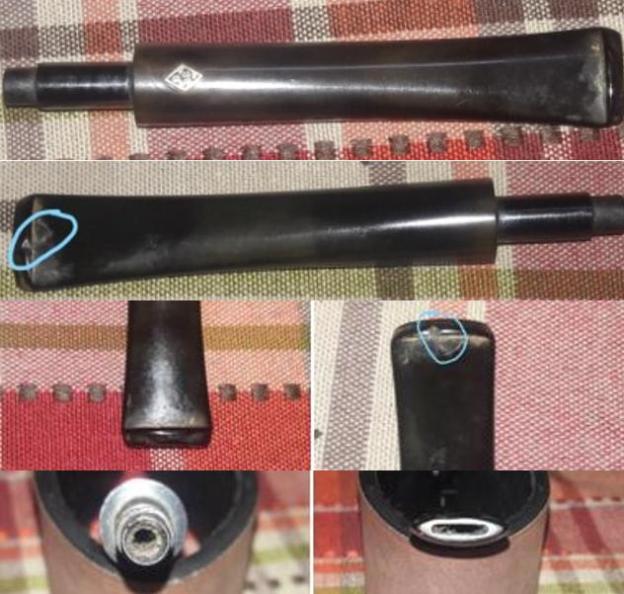
The deeply sandblasted saddle stem sitter is covered in dirt, dust and grime. There is a thick layer of cake in the chamber and the mortise shows accumulation of dried old oils and tars. The tapered vulcanite stem is heavily oxidized and the bite zone is peppered with minor tooth chatter on both the surfaces. There are a few deep bite marks on either surface in the bite zone with what appears to be a cracked button edge on the lower surface. Here is how the pipe appears as it sits on my work table. Detailed Inspection Of The Pipe And Observations
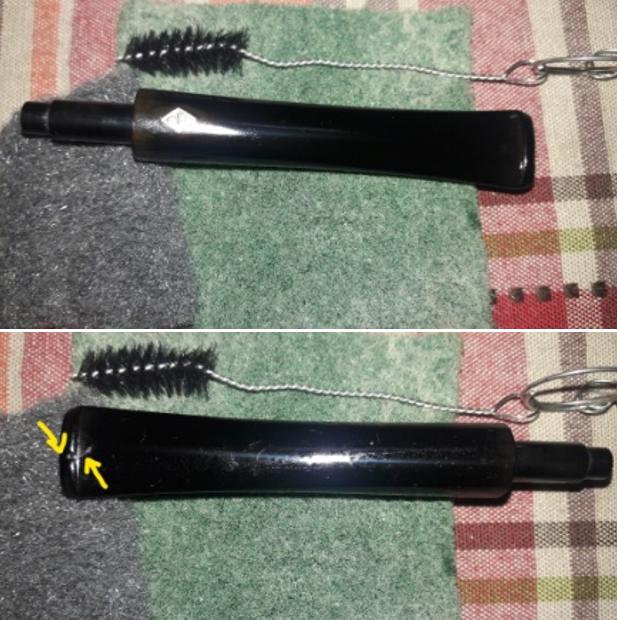
The bowl is nicely rounded with a chamber depth of about 2 inches. The chamber has a layer of thick cake that is slightly thicker in the bottom half of the chamber. The sandblasted rim top surface has worn out (or not?) and now appears shallow blasted/smooth in most places. The inner and outer rim is in pristine condition, save for suspected minor darkening of the inner edge in 1 o’clock direction. The condition of the inner walls of the chamber can be commented upon after the cake has been taken down to the bare briar. The chamber has strong smells from the old tobaccos. The draught hole is in center at the bottom of the chamber with a nice wide open airway and this makes me believe that it should smoke smooth to the last morsel of tobacco in the chamber. The stummel, all around appears solid to the touch and hence I do not foresee any serious damage to the walls in the form of burnout/ deep heat fissures/ lines or pits. I may have to resort to the salt and alcohol treatment of the chamber if the ghost smells do not reduce after the cake has been removed and the shank internals are thoroughly cleaned.The crevices in the sandblasted surface are filled with dust, dirt and grime from all the years of smoking and storage. The fact that the grooved patterns are dusty and filled with dirt is accentuated more due to the brown and black hues on the stummel and the shank. The briar looks lifeless and bone dry and has taken on dirty grey hues. The mortise shows accumulation of oils, tars and gunk and the air flow is not full and smooth. I need to be careful while cleaning the shank bottom surface to preserve the stampings on this pipe. Thorough cleaning and rising under warm water of the stummel surface should highlight the grain patterns, depth and cragginess of the sandblast. The high quality straight vulcanite stem is so heavily oxidized that it appears brownish green in color. Some minor tooth chatter and deep bite marks are seen on both surfaces of the stem in the bite zone along with minor calcium deposits. This issue should not be a major headache to address. The lip edge on both sides has minor bite marks and would need to be reconstructed and reshaped. A crack across the button edge on the lower surface is seen (encircled in pastel blue) and would need to be addressed. The tenon has accumulated ash and oils/ tars that have dried out on the inside as well as on the outside. The horizontal slot has tar deposits which will have to be cleaned. The tooth chatter and the bite marks will be raised to the surface by heating and the deeper tooth indentations will be filled using charcoal and CA superglue mix.The Process
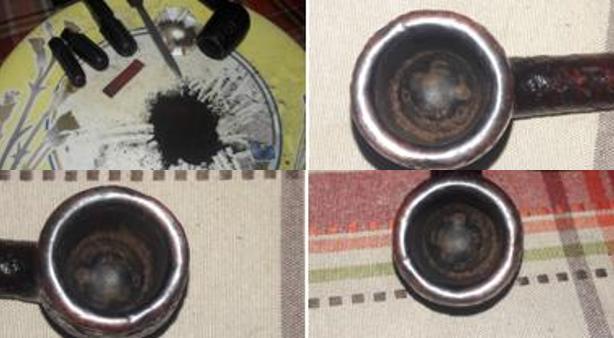
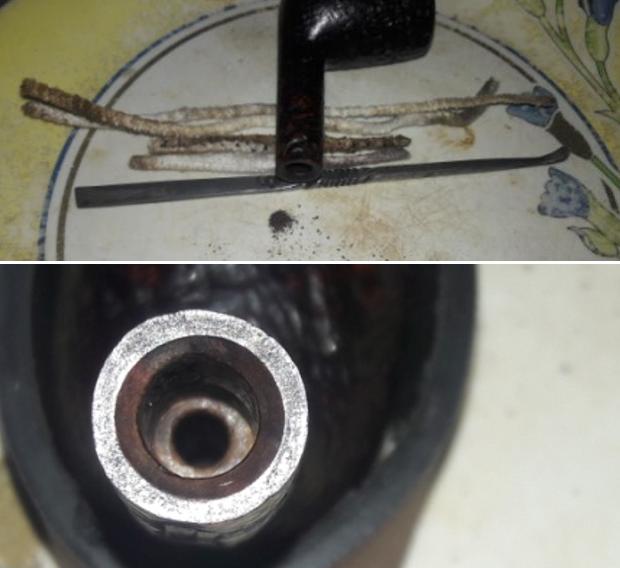
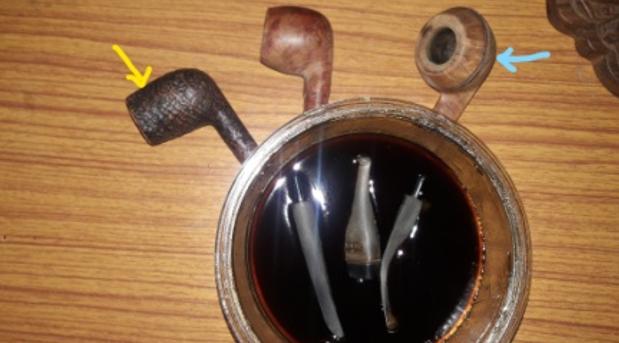
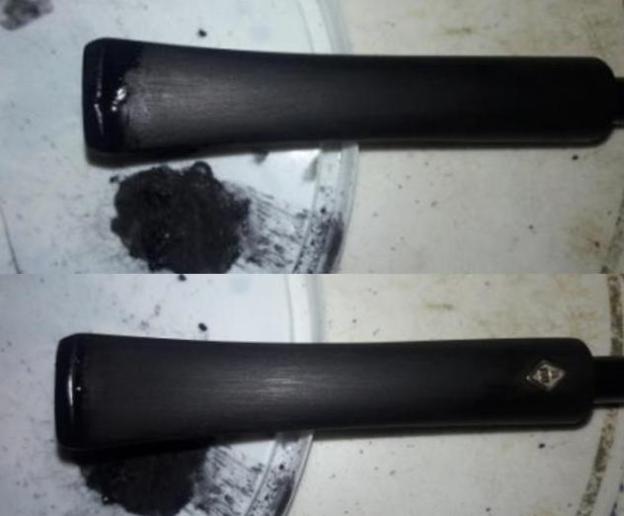
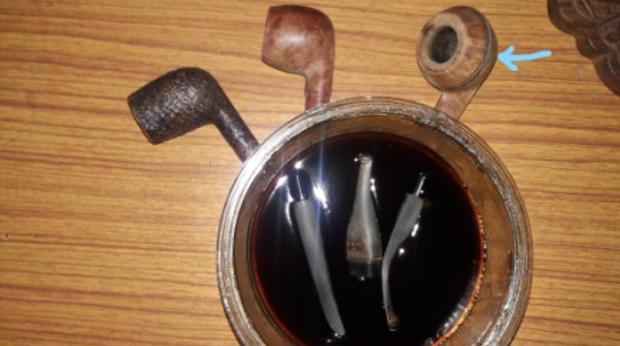
I started the restoration of this pipe by first reaming the chamber with size 1, 2 and 3 Castleford reamer heads. I further scraped the chamber walls with my fabricated knife to remove the remaining carbon deposits. Once the cake was reamed back to the bare briar, I used a 150 grit sand paper followed by 220 grit sand paper to remove all the traces of remaining cake and also to smooth out the inner walls of the chamber surface. Finally, to remove the residual carbon dust, I wiped the chamber with a cotton pad wetted with 99.9% pure isopropyl alcohol. The chamber walls are sans any damage. The smells from the chamber are greatly reduced and would be completely eliminated once the shank internals are thoroughly cleaned.This was followed by cleaning the mortise pipe cleaners and shank brush dipped in isopropyl alcohol. I scraped the walls of the mortise with my fabricated knife to remove the dried oils and tars. Though this further eliminated trace of old smells from previous usage, I will continue further cleaning of the shank internals while cleaning the external surface of the stummel. Next, I moved to clean the exterior of the stummel. I generously applied “Briar Cleaner”, a product that has been developed by my friend Mark Hoover, to the external surface of the bowl and the sandblasted rim top surface. It works similar to Murphy’s oil soap and needs to be applied to the stummel surface and set aside for 5-10 minutes. The product pulls out all the dirt and grime to the surface making further cleaning easy. I am quite happy with this product. I used a hard bristled tooth brush to scrub the stummel and rim top with the solution. After the scrub with Briar cleaner solution, I washed the stummel under running warm water with anti oil dish washing detergent till the stummel surface was clean and dried it using paper towels and a soft cotton cloth. I deliberately cleaned the sandblasted rim top with hard bristled toothbrush and set the stummel aside to dry out naturally. I simultaneously cleaned the shank internals with the detergent and hard bristled shank brush. The stummel surface has cleaned up nicely with the intricate sandblast patterns on full display. The shank internals too are nice and clean. The brown hues of the raised portions of the sandblast contrast beautifully with the black of the rest of the stummel. These brown hues will darken considerably once the stummel briar is rehydrated and rejuvenated using the balm and subsequent wax polishing. The rim top surface has cleaned up nicely to reveal pristine inner and outer rim edges, though lighter in color as compared with the rest of the stummel surface. The ghost smells are completely eliminated at this stage. I began the stem repairs by first cleaning the internals of the stem with bristled pipe cleaners and 99.9% pure isopropyl alcohol. I scraped out the dried oils and tars from the tenon end with my fabricated knife and also removed the calcified deposits from the bite zone. I followed it up by sanding the entire stem with a folded piece of 220 grit sand paper to remove the surface oxidation. It has been our (Abha and my) experience that sanding a stem before dunking it in to the deoxidizer solution helps in bringing the deep seated oxidation to the surface which in turn makes further cleaning a breeze with fantastic results.I dropped the stem in to “Before and After Deoxidizer” solution developed by my friend Mark Hoover. The solution helps to draw out heavy oxidation to the surface, making it’s further removal a breeze, while the minor oxidation is eliminated to a very great extent. The initial sanding helps to draw out the complete oxidation as the sanding opens up the stem surface that has been initially covered with oxidation. I usually dunk stems of 4-5 pipes that are in-line for restoration and this pipe is marked by a yellow arrow. I generally allow the stems to soak in this solution overnight to do its work.The next morning, Abha removed the stems that had been soaking in the deoxidizer solution overnight. She cleaned the stem and the stem airway under running warm water and scrubbed the raised oxidation from the stem surface using a Scotch Brite pad and the airway with a thin shank brush. She further removed the oxidation by scrubbing the stem with 0000 grade steel wool and applied a little EVO to rehydrate the stem. This now gives a clearer picture of the extent of crack as can be seen in the pictures below. These will definitely require a fill.I used a 220 grit sand paper to sand the stem and remove all the oxidation that was raised to the surface. This step further reduced the tooth chatter and bite marks present on the stem. I wiped the stem with Murphy’s Oil soap on a cotton swab. This helps in cleaning the stem surface while removing the loosened oxidation. Using a lighter, I flamed the surface of the stem. This helped in raising some of the tooth chatter and bite marks to the surface as vulcanite has a property to regain it’s original shape on heating. I addressed the crack over the lower button and the button edges by filling them up with a mix of activated charcoal and CA superglue. I applied a slightly thick layer over the lip which I will later sanded down to create a defined edge. Once I had applied the mix, I set it aside to cure overnight. My apologies for bungling on taking pictures, but the readers will get a picture of the process in general. While the stem repairs were curing, I rubbed generous quantity of “Before and After Restoration Balm” in to the stummel surface with my finger tips, working it deep into the sandblasts and let it rest for a few minutes. I rubbed the balm into the sandblasted rim top surface too. The balm almost immediately works it’s magic and the briar now has a vibrant appearance with the beautiful sandblast patterns displayed in their complete splendor. The contrast of the dark browns of the raised sandblast with the dark black of the rest of the stummel adds an interesting dimension to the appearance of the stummel. I further buffed it with a horse hair brush. As I was taking close up pictures of the stummel, I observed a webbing of very minute heat lines to the front of the chamber wall (indicated by yellow arrows). Though not an issue if the pipe is smoked gently, it may lead to a burnout subsequently in the hands of an enthusiastic smoker. I shall give a thin protective bowl coating of yogurt and activated charcoal. This will firstly prevent the burning tobacco coming in direct contact with the briar and secondly aid in faster cake build up.  I addressed this issue by mixing activated charcoal and plain yogurt to a thicker consistency, just enough that it would spread easily and applied it evenly all along the chamber walls after inserting a folded pipe cleaner through the draught hole to keep it open. Once dry and set, this will not only protect the walls but also aid in faster buildup of cake.With the stummel rejuvenation almost complete, save for the final wax polish, I worked the stem. The fill had cured and with a flat head needle file, I worked on the filling till I had achieved a rough match with the surrounding surface and had sufficiently sharpened the button edges. For a better blending, I further sanded the entire stem with 220 followed by 400, 600 and 800 grit sand papers. This helps to reduce the scratch marks left behind by the more abrasive 220 grit paper. To bring a deep shine to the vulcanite stem, I went through the complete set of micromesh pads, wet sanding with 1500 to 2000 grit sandpapers and dry sanding with 3200 to 12000 grit pads. I wiped the stem with moist cloth after each pad and rubbed it down with Extra Virgin Olive oil to rejuvenate the vulcanite. The finished stem is shown below.To complete the restoration, I mounted a cotton cloth buffing wheel on to my hand held rotary tool and applied several coats of carnauba wax. I finished the restoration by giving the entire pipe a rigorous hand buffing using a microfiber cloth to raise the shine further and remove any residual wax from in between the sandblasts. The finished pipe looks amazingly beautiful and is now ready for its long second innings with me. I only wish it could share with me the stories of its past years while I enjoy smoking my favorite Virginia blend in it or maybe just keep admiring it !! The finished pipe is as shown below. P.S. – A few weeks earlier, there was another pipe that I had restored (WALLY FRANK Ltd “BLACKTHORNE”) and one which required a bowl coat of activated charcoal and yogurt. It was while I coated the chamber walls of this pipe that I coated the walls of the chamber of BLACKTHORNE pipe to protect them by helping in a speedy formation of cake. Apologies for the missing pictures though…

I wish to thank each one for sparing their valuable time to read through this write up and praying for the health and safety of you and your loved ones. Stay home…stay safe!!

This Beat up Yves St. Claude Interlude 96 Pocket Pipe Needs an Interlude


Blog by Steve Laug

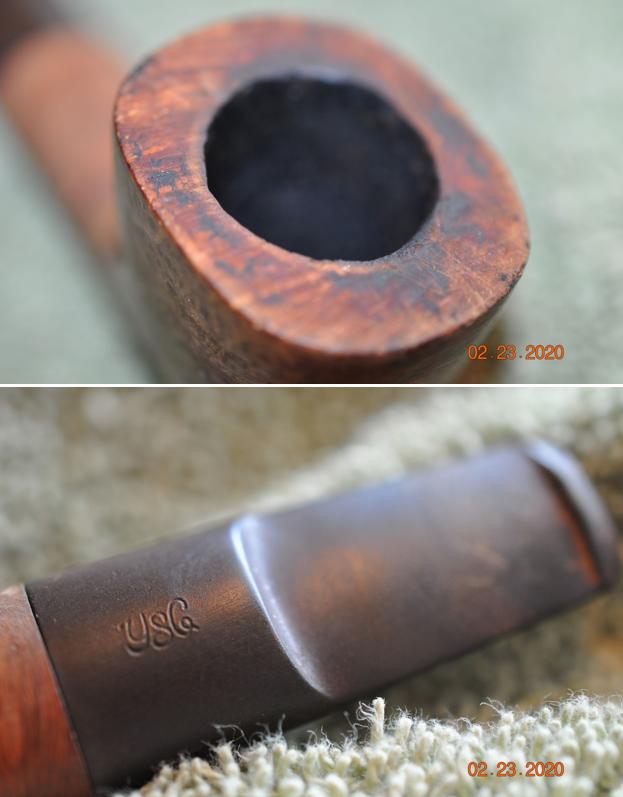
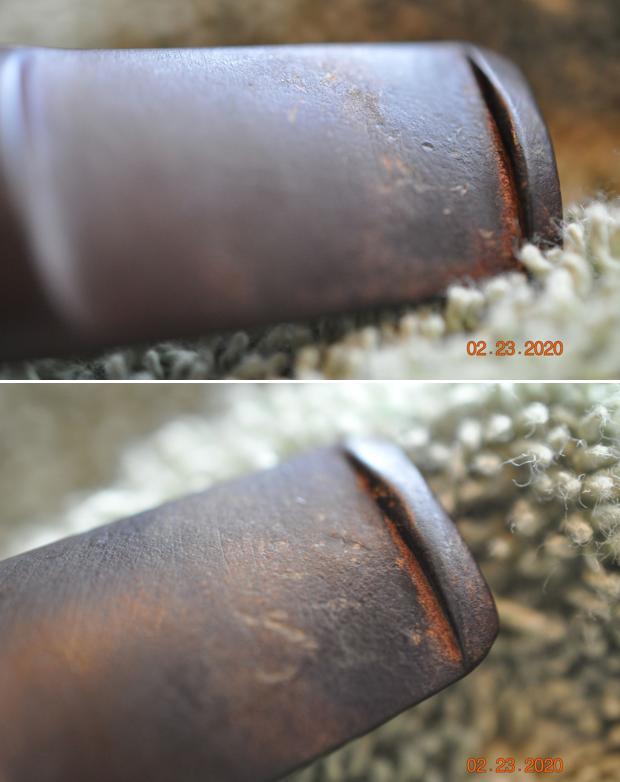
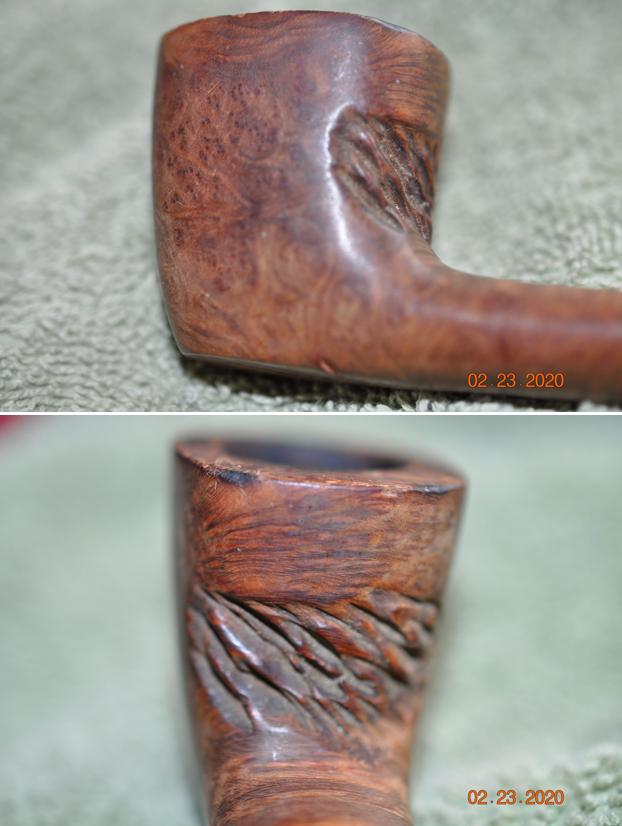
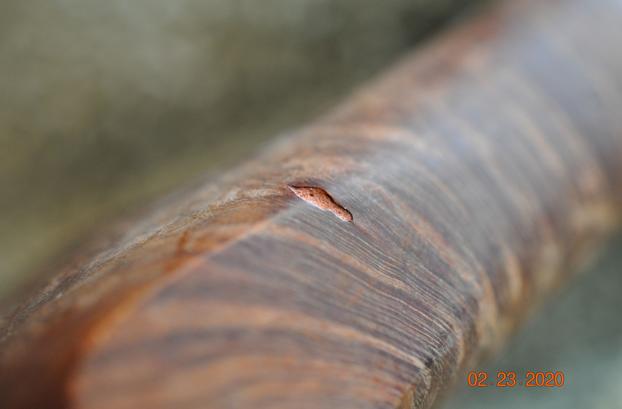
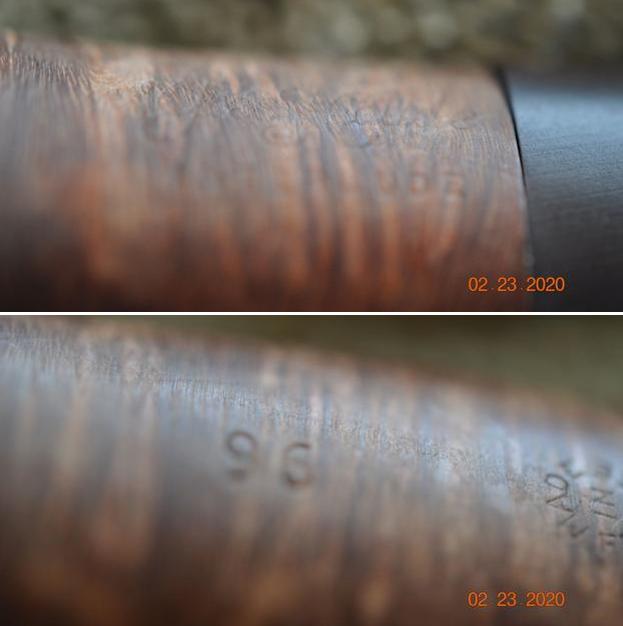
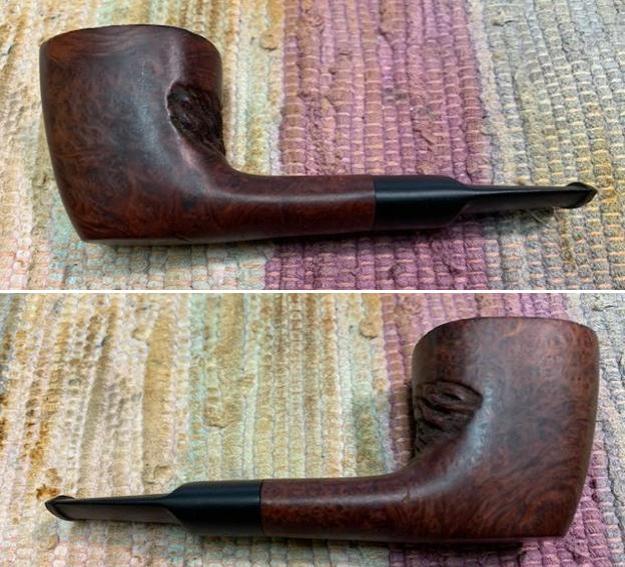
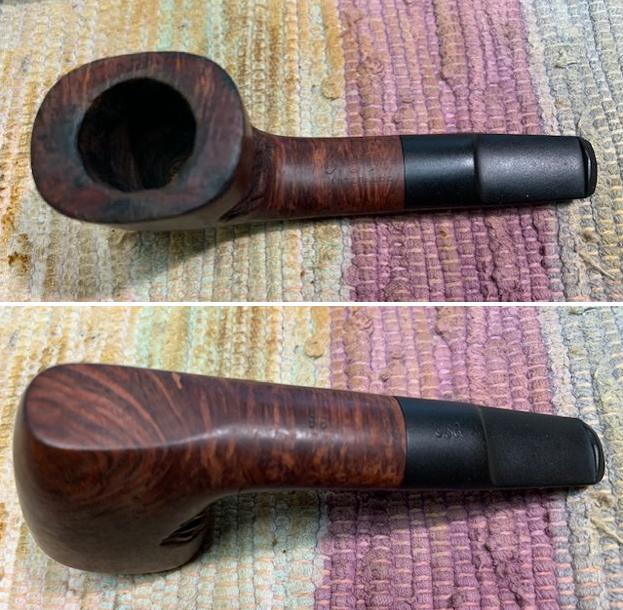
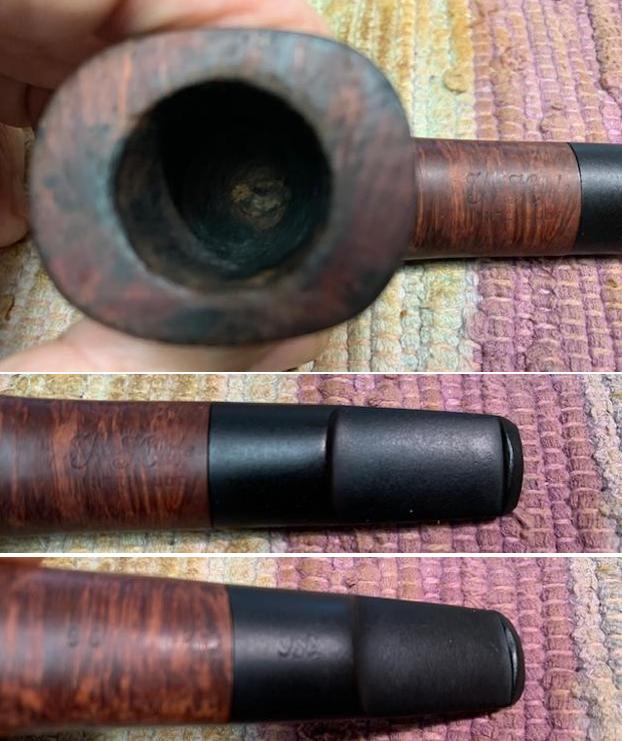
The next pipe on the work table came to us from a fellow in Brazil, Indiana, USA earlier this year. It is a small pocket pipe with flat sides and an oval shank. There is some nice grain on the bowl and there is carved pattern on the back side of the bowl. The rim top is pretty beat up and has some ground in grime and lava build up. The inner edge of the rim is in rough shape and there is damage and burn marks on the outer edge as well. The finish on the bowl is very worn and dirty but there is still something intriguing about the pipe even with the grime on the surface of the briar. There is a large shrunken fill on the left side of the heel of the bowl. This pipe is stamped on the topside of the shank and reads Yves St. Claude [over] Interlude. On the underside of shank it has the shape number 96 followed by the Made in France circular COM stamp. There was a stylized YSC stamped on the top of the oval saddle stem. The pipe is heavily smoked with a moderate cake in the bowl that has been poorly reamed. There were some tooth marks and chatter on both sides of the stem near the button. The pipe is in a condition that is a challenge to bring back to life. Jeff took photos of the pipe before he started his cleanup. He took photos of the rim top to show the condition of the top and edges of the bowl. It is a heavily smoked and well worn older pipe that must have been someone’s favourite. The stem had tooth marks and chatter on both sides ahead of the button.He took photos of the sides and heel of the bowl to show the interesting grain around the bowl and the condition of the pipe. He also captured the carving on the back of the bowl. It is a unique looking pipe. He took a photo of the shrunken fill on the left side of the heel of the bowl. It was a large fill that had chipped and left a pit.He took photos of the stamping on the sides of the shank. It is clear and readable as noted above. He also took photos of the YSC stamp on the left side and Hand Cut on the right side of the taper stem.   I turned first to a blog I had written on the restoration of previous YSC pipe that I received (https://rebornpipes.com/2020/04/23/next-on-the-table-an-yves-st-claude-marbre-75-bulldog/).

In the previous blog that I cited above I had found several references to Yves Grenard, trained in Comoy’s England factory, purchasing the Chacom plant in St. Claude. He managed the factory and it passed on to his son afterward. The shape of this Yves St. Claude pipe makes me believe that it may have been made by Chacom in France with the stamping bearing Yves name.

I turned back to Pipephil’s site to have a look at what was listed there and did a screen capture of the section (http://www.pipephil.eu/logos/en/logo-y.html).I turned to Pipedia and in the listing of French Brands and Maker I found a connection of the brand to Chapuis-Comoy and that the YSC brand was made primarily for Tinder Box (https://pipedia.org/wiki/French_Pipe_Brands_%26_Makers_U_-_Z). I followed that up by turning to the Chapuis-Comoy article from Pipedia (https://pipedia.org/wiki/Chapuis-Comoy).

French factory, in St. Claude. It began with Francois Comoy who, in 1825, was making pipes in boxwood and other types, as well as in clay, for the armies of Napoleon. In 1856, the Comoy factory was the first to produce briar bowls at St. Claude. In 1870, Francois’s grandson, Henri Comoy (1850-1924) was taken prisoner in Switzerland whilst serving in the French army during the Franco-Prussian war, where he found his cousins, the Chapuis. This meeting produced the idea of an association, which only became a reality in 1922, with the creation of Chapuis-Comoy. After Henri’s death, his sons Paul and Adrien, took over the company with the support of their cousins, Emile and Louis Chapuis Sr., and in 1928 they created the Chacom brand.

In 1932, due to the economic crisis at Saint-Claude, the factory merged with La Bruyère, adopting that name, and becoming one of the biggest pipe companies in the world, with 450 workers. Louis Chapuis Jr., joined the company in 1938 and Pierre Comoy in 1947. The name Chapuis-Comoy returned in 1957 (125 workers), due to the success of the Chacom brand in France. In 1971, the London factory (see Comoy’s) became independent, and Yves Grenard, second cousin to Pierre, took over Saint-Claude, and is still running it. Between 1987 and 2001, the factory, which employed over 40 people, joined the Cuty-Fort Enterprises SA holding and, in 1994, included the Ropp brand it its catalog.

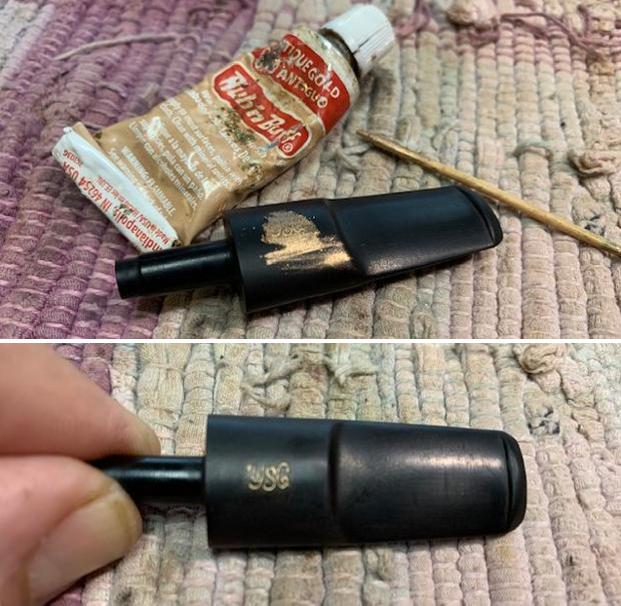
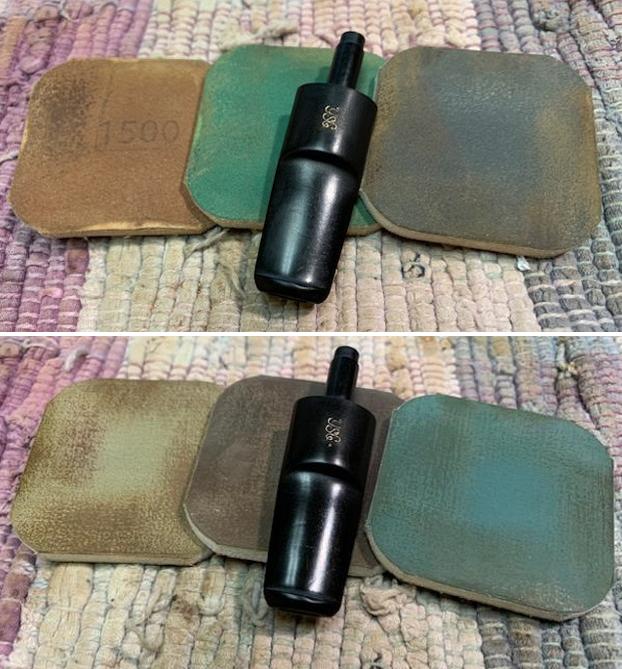
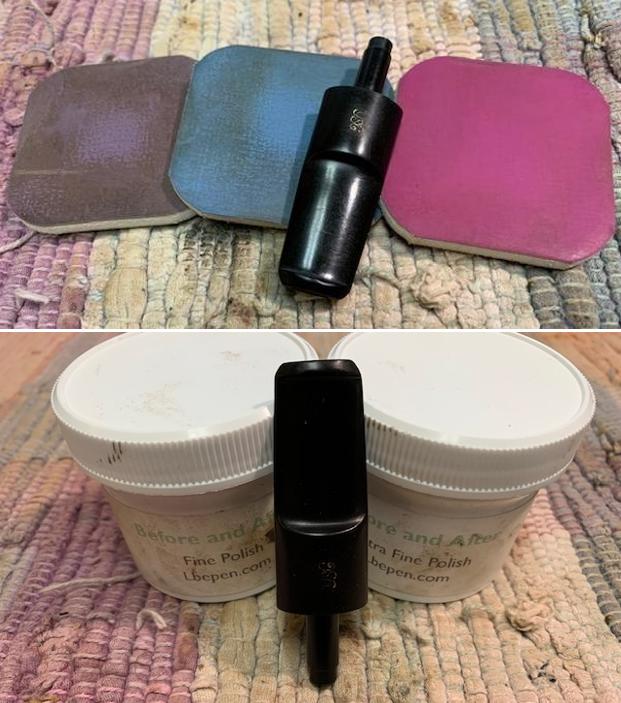
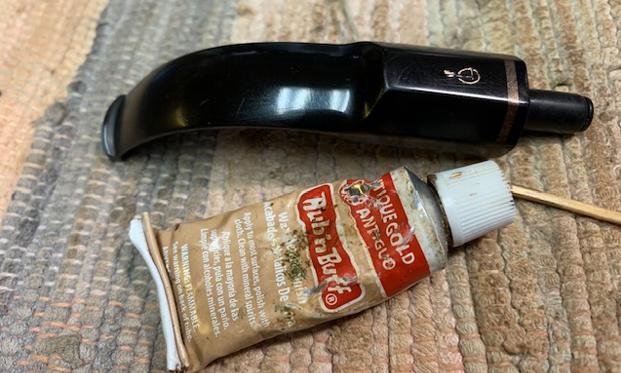
Reminded about the Chacom connection for the YSC brand it was now time to turn to the pipe itself and do my part of the work. As usual Jeff had done a thorough cleanup on the pipe. He reamed the bowl with a PipNet pipe reamer and followed up with a Savinelli Fitsall pipe knife to remove the cake. He scrubbed out the mortise and the airway in the shank and the stem with alcohol, cotton swabs and pipe cleaners. He scrubbed the exterior of the bowl, rim, shank and stem with a tooth brush and Murphy’s Oil Soap to remove the oils and tars on the rim and the grime on the finish of the bowl. He rinsed it under running water. One of the benefits of this scrub is that it also tends to lift some of the scratches and nicks in the surface of the briar. He dried it off with a soft cloth. He cleaned the internals and externals of the stem with alcohol, pipe cleaners and cotton swabs. He soaked the stem in Briarville’s Pipe Stem Deoxidizer and rinsed it off with warm water and cleaned out the airway in the stem with alcohol. Other than the damaged rim top and edges the pipe looked good. Strangely, I did not notice I had put the stem on upside down until I looked through these pictures. I have the YSC stamp on the underside of the stem rather than the top! Oops. I will fix that.I took a photo of the rim top and stem to show the condition (though it is a little blurry it is clear enough to see the damage). The edges of the bowl are in rough condition. The oval vulcanite saddle stem had tooth chatter and marks on both sides ahead of the button and on the edges. The stamping on the sides of the shank is faint but readable as noted above.       I removed the stem from the shank and took a photo of the pipe to give a sense of the whole. It is unique looking pipe that is carved with a notch for the thumb of either hand when it is wrapped around the bowl. I started working on the pipe by topping the damaged rim top on a topping board with 180 grit wet dry sandpaper. I wanted to minimize the damage to the rim top and the inner and outer edges as much as possible. I used a folded piece of 180 grit sandpaper to clean up the inner edge and give it a slight bevel. I repaired the flaw on the left side of the heel of the bowl with briar dust and super glue. Once it dried I sanded it smooth with 220 grit sandpaper to blend it into the surrounding briar.  I sanded it with micromesh sanding pads, wet sanding with 1500-12000 grit sanding pads and wiping it down with an alcohol dampened pad after each sanding pad. I rubbed the bowl and shank down with Before & After Restoration Balm. I worked it into the surface of the bowl sides and shank with my fingertips to clean, enliven and protect the briar. I let the balm sit for a little while and then buffed with a cotton cloth to raise the shine. The Balm did its magic and the grain stood out.   I set the bowl aside and worked on the stem. I touched up the YSC stamp on the top of the saddle stem with Antique Gold Rub’n Buff working it into the stamp with a tooth pick. I buffed it off with a soft cloth.   I polished the vulcanite stem with micromesh sanding pads – 1500-12000 grit pads. I wiped it down with Obsidian Oil after each sanding pad. I used Before & After Pipe Polish – both Fine and Extra Fine to further polish the stem. The photo below shows the polished stem. This nice smooth finished Yves St. Claude Interlude 96 Pocket Pipe with a vulcanite saddle stem is a great looking pipe. The rich medium brown finish and the black stem work really well together. The briar is clean and really came alive. The rich medium brown stain gave the grain a sense of depth with the polishing and waxing. The grain really popped. I put the stem back on the bowl and carefully buffed the pipe with Blue Diamond on the buffing wheel using a light touch on the briar. I gave the bowl and the stem multiple coats of carnauba wax on the buffing wheel. I buffed the pipe with a clean buffing pad to raise the shine. I hand buffed the pipe with a microfiber cloth to deepen the shine. The finished YSC Interlude Pocket Pipe is a beauty and feels great in the hand and looks very good. Give the finished pipe a look in the photos below. The dimensions of the pipe are Length: 4 ½ inches, Height: 1 ¾ inches, Outside diameter of the bowl: 1 ¼ inches wide x 1 ½ inches long, Chamber diameter: ¾ of an inch. The weight of the pipe is 36 grams/1.27 ounces. If you are interested in adding it to your collection let me know. I will be adding to the French Pipe Makers section of the rebornpipes store shortly. Thanks for reading this blog and my reflections on the pipe while I worked on it.

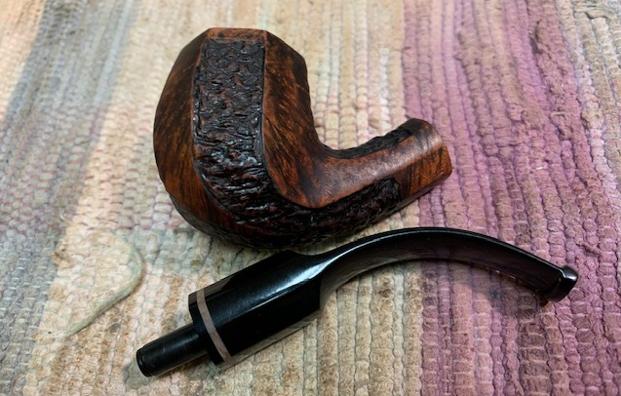
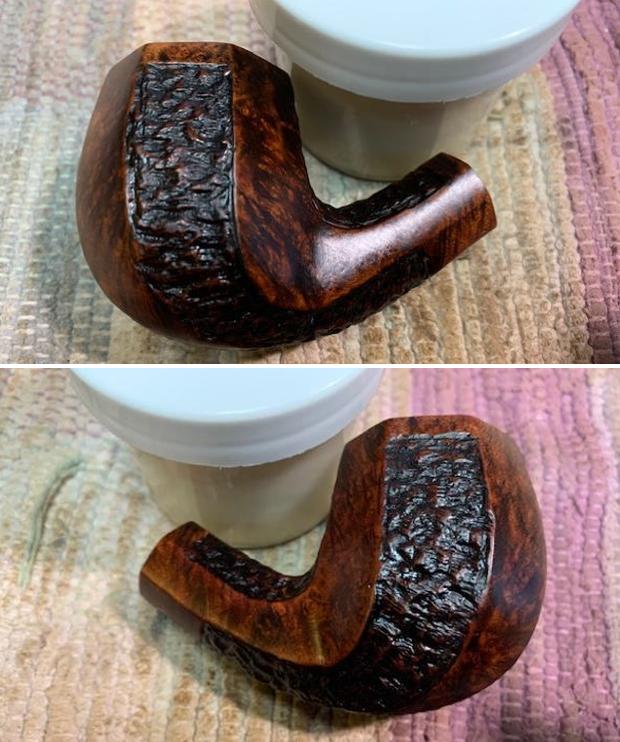
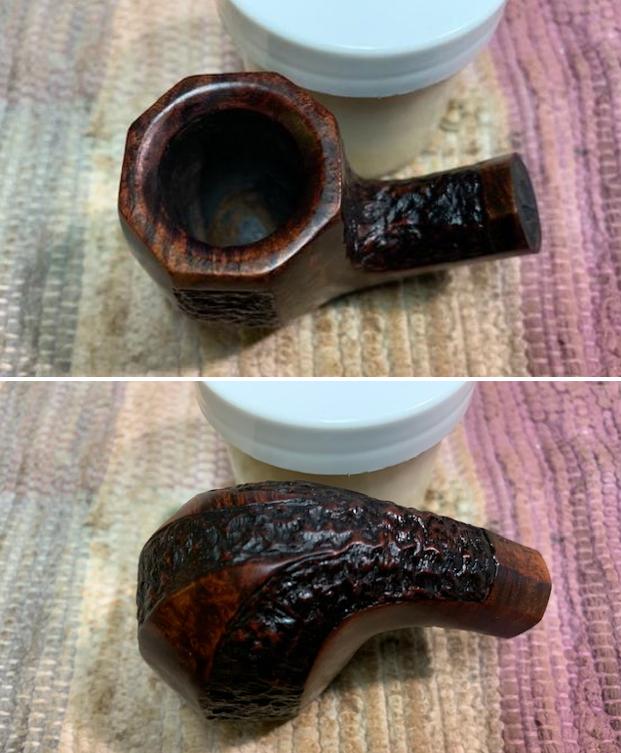
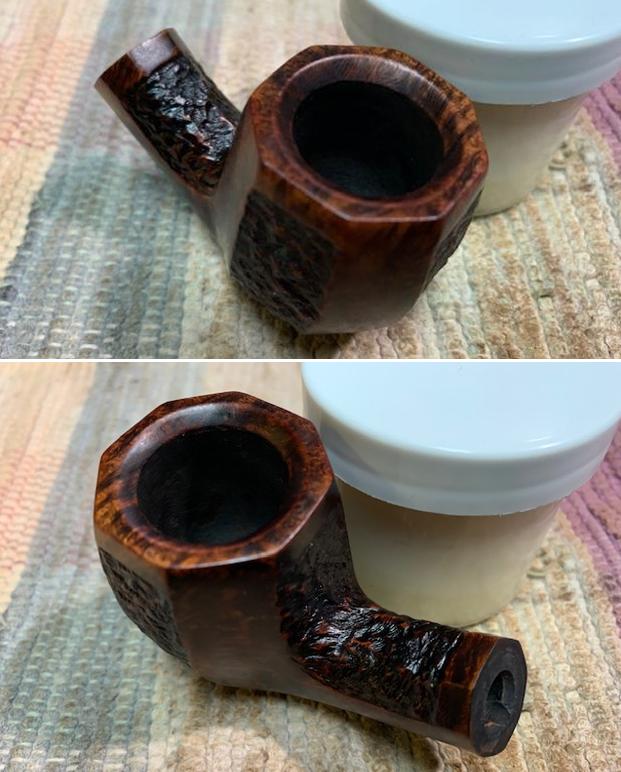
Rebirthing an Oldrich Jirsa Bent Octagonal Panel 138 Billiard


Blog by Steve Laug

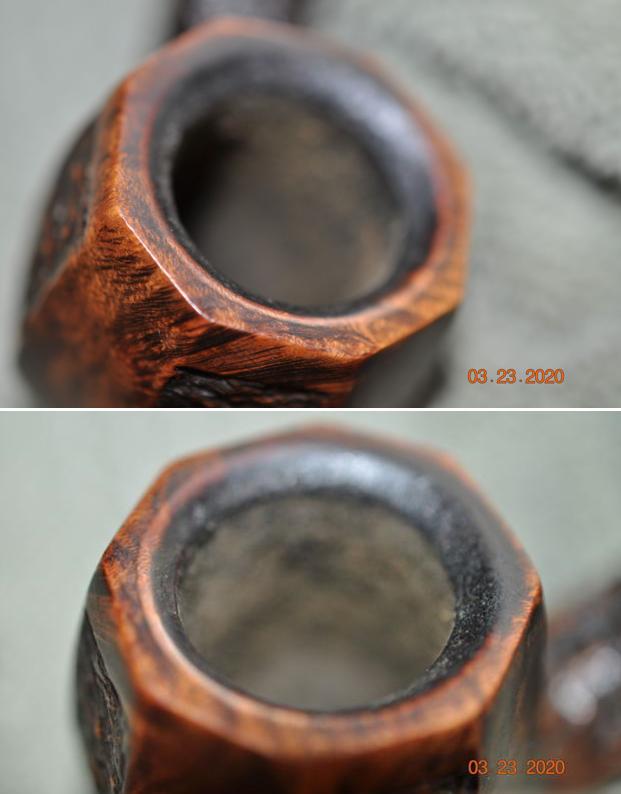
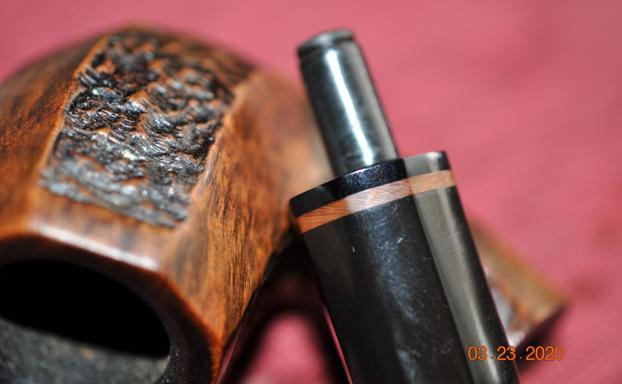
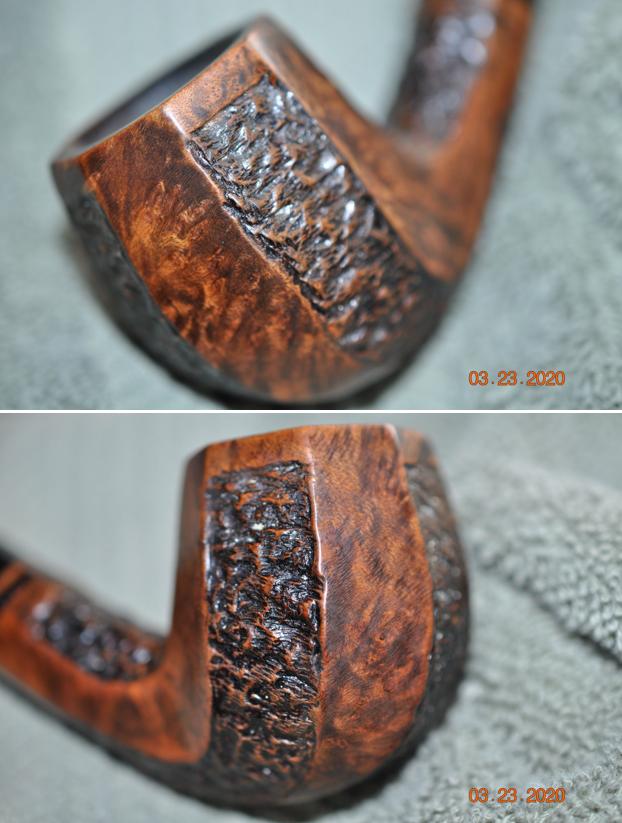
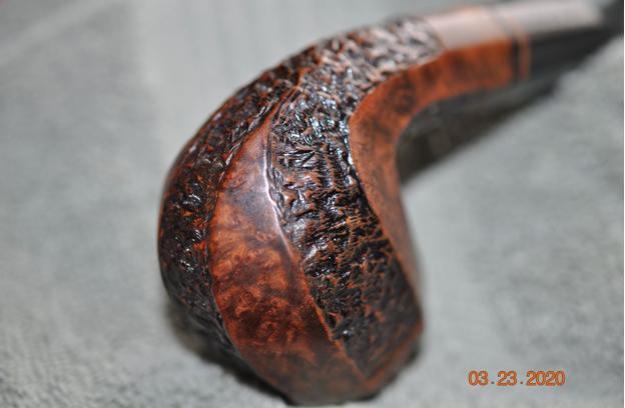
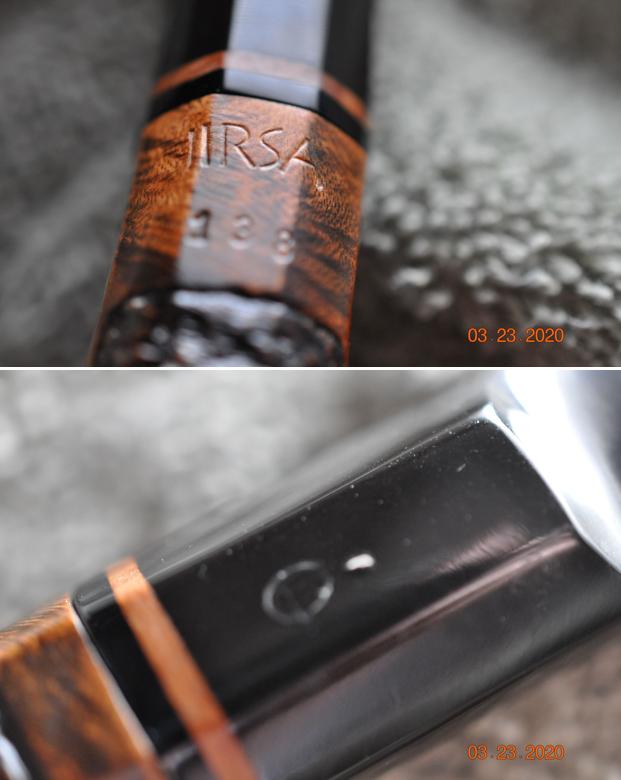
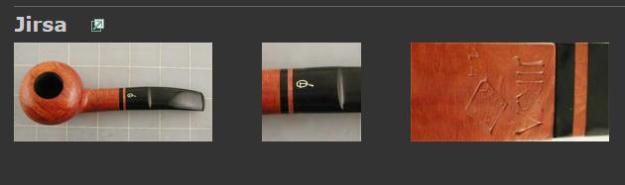
The picture to the left is the pipe carver Oldrich Jirsa (photo from Pipephil). He is the carver of the next pipe I have chosen to work on. It is octagonal paneled pipe with smooth and rusticated finishes around the panels. The rim top is beveled inward and smooth. It is an interesting looking pipe. We purchased it from an antique mall in Utah on 03/05/21. it has a mixture of various brown coloured finishes with amazing grain around the smooth panels on bowl sides and shank and a nice looking rustication on the other panels. It was stamped on the underside of the shank and read Jirsa over the shape number 138. It was in filthy condition when Jeff brought it to the table. There was a thick cake in the bowl and lava and debris rim top and the beveled inner edge of the bowl. The acrylic stem was oxidized and had tooth marks and chatter on the top and underside on and near the button. There is an inserted briar ring around the saddle stem. Jeff took photos of the pipe before his cleanup work to give a picture of its condition. Jeff took photos of the rim top and stem to show the general condition of the pipe. The bowl is heavily caked and the rim top and edges have a thick lava overflow on the beveled inner edge of the bowl and on the rim top. The stem has grime and tooth marks on the top and underside near the button. Jeff took photos of the tenon and the briar insert on the stem.Jeff took some photos of the bowl sides and heel to show the grain that was around this bowl. It is a nice looking pipe. He took photos of the sides of the shank to show the stamping. The stamping is readable in the photos below and is as noted above. The logo stamp is also readable on the top of the saddle stem.I turned to Pipephil’s site to see what he had on the Jirsa brand (http://pipephil.eu/logos/en/logo-j2.html). He had an entry that I did a screen capture of and also the following information on the brand. Artisan: Oldrich Jirsa (born 1962) makes pipes since 1994. I turned to Pipedia for more information on the brand (https://pipedia.org/wiki/Jirsa). I quote from the article below.

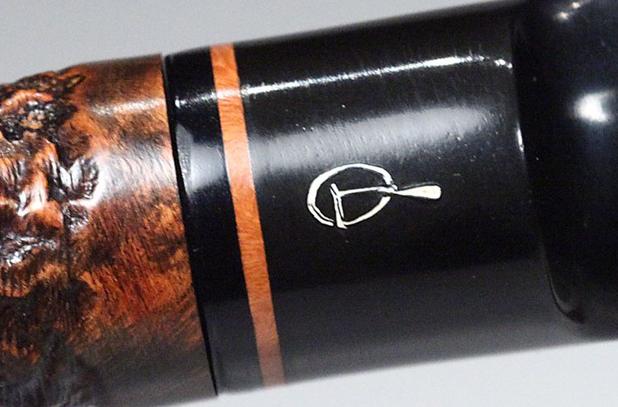
Jirsa is a Czech Republic brand owned by the family company headed by the artisan Oldrich Jirsa. They use Ebonite and cumberland stems. Best Grading: SG (Grain), three stars. Symbol: stylized J coming out of an oval. I knew that I was working on a Czech made pipe by Oldrich Jirsa. The stem on the one I was working on was acrylic and had a briar insert like the one in the photo above. Now it was time to work on the pipe.

Jeff had done a great job cleaning up the pipe as usual. He reamed the pipe with a PipNet reamer and cut back the cake back to the bare briar. He cleaned up the walls with a Savinelli Fitsall Pipe Knife. He scrubbed the interior of the bowl and shank with pipe cleaners, cotton swabs and alcohol to remove the tars and oils. He scrubbed the exterior of the pipe with Murphy’s Oil Soap and a tooth brush to remove the grime from the finish. He worked on the rim top and beveled edge lava and darkening with the soap and tooth brush. He scrubbed the inside of the stem with alcohol and pipe cleaners. He scrubbed the exterior with Soft Scrub and then soaked it in Briarville’s Pipe Stem Deoxidizer. He washed it off with warm water to remove the deoxidizer. The pipe looked very good when it arrived here. I took some close up photos of the rim top and also of the stem surface. The rim top and the beveled inner edge looked very good. The stem was clean and the tooth marks and chatter were few. I took photos of the stamping on the underside of the shank. You can see that it is stamped as noted above. It is clear and readable. The logo on the stem top is also readable. I took the pipe apart and took a photo of the parts. It is a good looking pipe and has some nice looking grain and rustication around the bowl. The briar came out looking very good so I did not need to polish it with micromesh. Instead immediately worked some Before & After Restoration Balm into the surface of the briar with my fingertips and a horsehair shoe brush. The product works to clean, enliven and protect the briar. I let the balm sit for 15 minutes and then buffed with a cotton cloth to raise the shine. The photos show the bowl at this point in the restoration process.I set the bowl aside and turned my attention to the stem. I filled in the deep tooth marks in the acrylic with clear CA glue and set it aside to let the repairs cure. Once they cured and hardened, I sanded out the repairs on the top and underside of the stem ahead of the button with 220 grit sandpaper and started polishing it with 400 grit wet dry sandpaper. I used Rub’n Buff Antique Gold to repaint the logo on the stem top. I worked it into the stamp with a tooth pick and buffed off the excess. It looks quite good.I polished the stem with micromesh sanding pads – wet sanding with 1500-12000 grit sanding pads. I wiped it down after each sanding pad with Obsidian Oil. I polished it with Before & After Pipe Stem Polish – both Fine and Extra Fine.I am excited to finish this Jirsa Octagonal Panel Bent 138 Billiard. I put the pipe back together and buffed it with Blue Diamond on the buffing wheel. I gave the bowl and the stem multiple coats of carnauba wax. I hand buffed the pipe with a clean buffing pad to raise the shine. It is fun to see what the polished bowl looks like with the grain popping all around the smooth panels and the interesting rustication on the other panels. Combining that finish with the black, fancy acrylic stem with a briar ring all work to make this a beautiful pipe. This smooth Octagonal Panel Bent Billiard is nice looking and the pipe feels great in my hand. It is light and well balanced. Have a look at it with the photos below. The dimensions are Length: 6 inches, Height: 2 inches, Outside diameter of the bowl: 1 ¼ inches, Chamber diameter: ¾ of an inch. The weight of the pipe is 55grams/1.94oz. It is a beautiful pipe and one that will be on the PIPES FROM VARIOUS MAKERS – CZECH, BELGIAN, GERMAN, ISRAELI, SPANISH PIPEMAKERS ALONG WITH METAL PIPES section of the rebornpipes store soon. If you are interested in adding it to your collection let me know. Thanks for walking through the restoration with me as I worked over this pipe. Thanks to each of you who are reading this blog.

Refurbishing A Hardcastle’s “Drawal” # 27


Blog by Paresh Deshpande

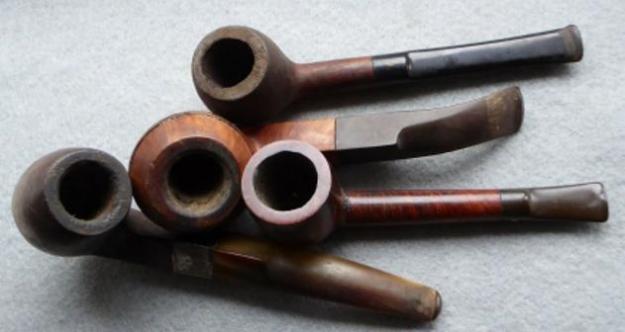
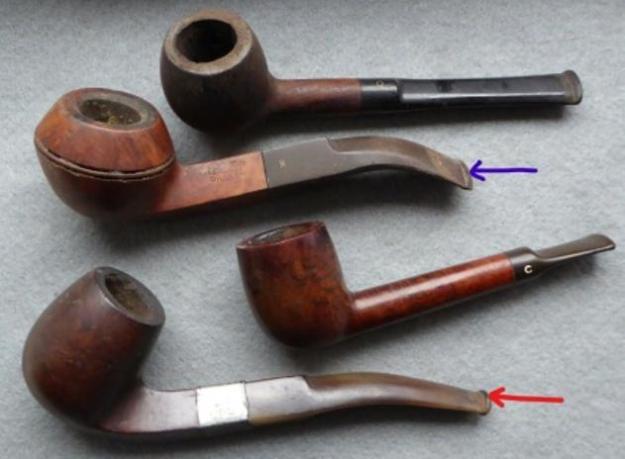
While surfing eBay for estate pipe lots, I came across a job lot that contained four estate pipes. The seller had not included any description for the item other than a simple statement that read “The lot is being sold as is. Pictures are part of description” or words to that effect. The worst part was that there were only two pictures that were posted by the seller!! Here are the pictures that were posted by the seller… I could make out one Orlik with dental stem, a Hardcastle’s Bulldog, one Comoy’s Lovat, and the last one was unidentifiable but appeared to be fitted with a horn stem. The pipes appeared to be in a decent condition and included some nice brand names. Soon the pipes reached Abha at my home town. I had restored the pipe with horn stem and it turned out to be a gem from an old and reputable maker “Salmon (Barnett) & Gluckstein” from the period 1894 (guesstimated). Here is the link to the write up that was posted on rebornpipes;

Refurbishing an 1894 (?) Hallmarked “S & G” Square Shank Bent Billiard With a Horn Stem | rebornpipes

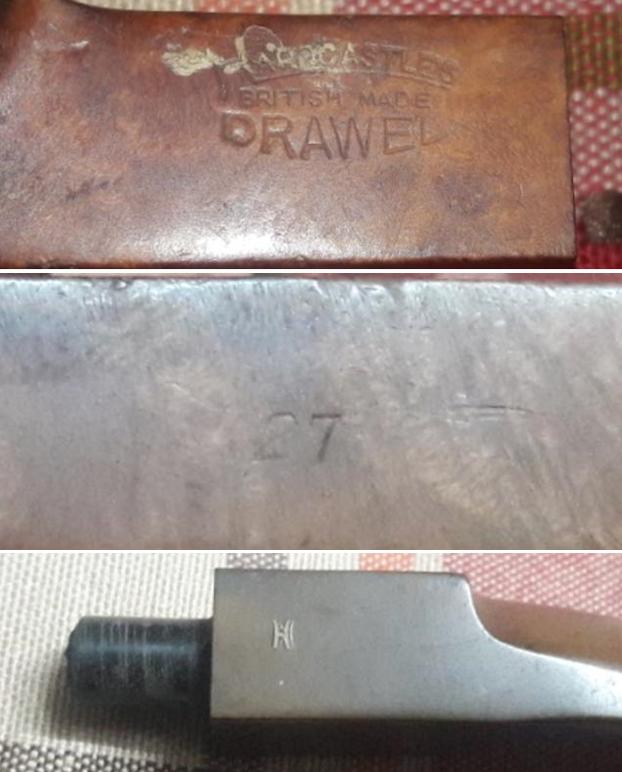
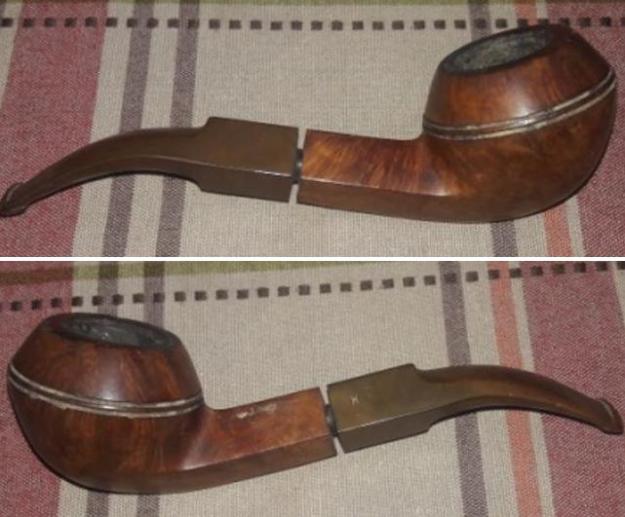
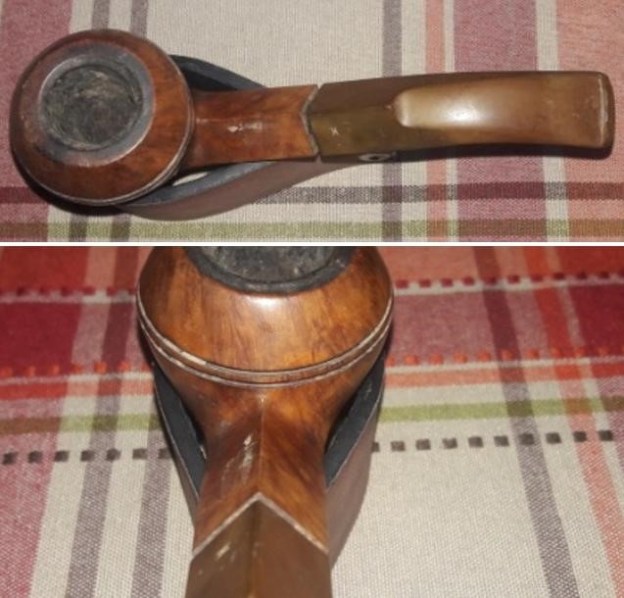
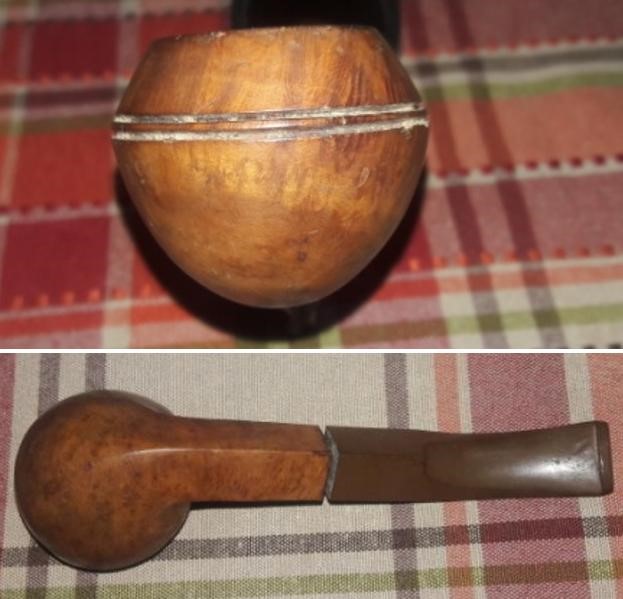
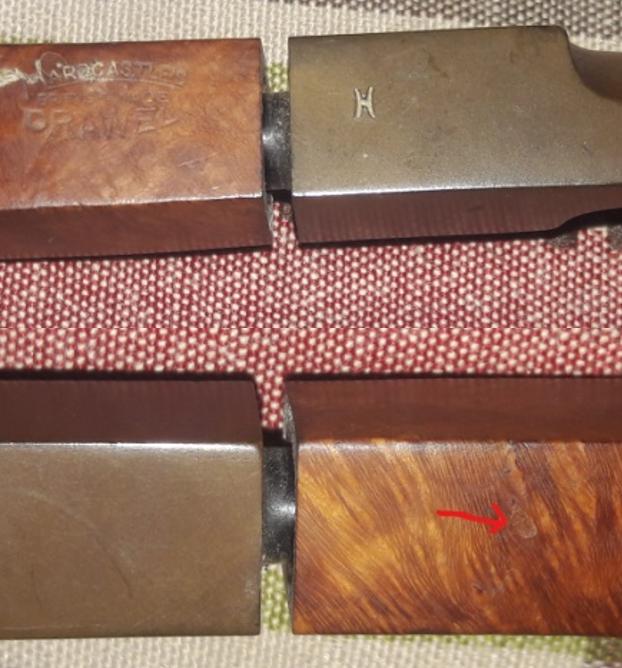
The 2nd pipe that I selected to work on from this lot is the Hardcastle’s Bulldog and is indicated with indigo blue arrow.The pipe is a classic Bent Bulldog with a diamond shank and a saddle vulcanite stem with a push-fit tenon. It is a medium sized pipe with a nice hand feel and a nice heft to it. The pipe may not have fantastic flame grains to boast, but has a beautiful mix of bird’s eye and straight grains scattered around the stummel surface and is without a single fill. The briar piece used to carve this pipe is of top quality and the construction and finish of the stummel and mouthpiece feels top notch too. It is stamped on the left shank panel as underlined “HARDCASTLE’S” in an arch in capital letters over “BRITISH MADE” over “DRAWEL” in an opposite arch forming a rugby ball shaped stamping. The right shank panel bears the shape code # 27 in the centre. The high quality saddle stem bears the trademark logo “H” on the left face of the saddle. The stampings are crisp and easily readable and shown below.I had cleaned up a Hardcastle’s Royal Windsor, a quaint lightweight sandblasted straight billiards with ring grains all round even before I started posting my work on rebornpipes and had read about the marquee. I remembered the brand to be British that was taken over by Dunhill and eventually relegated to being a seconds brand to even Parker, also taken over by Dunhill. To refresh my memory and relive the painful demise of a classic quality pipe maker from Britain, I visited pipedia.org. I have reproduced the snippets of relevant information for easy referencing of the esteemed readers.

Hardcastle – Pipedia

Hardcastle was founded in 1908 by Edmund Hardcastle and built itself a good reputation among the numerous British mid-graders. In 1935 Dunhill started to build a factory next door to Hardcastle in Forest Road, Walthamstow, London E17. The family owned Hardcastle Pipes Limited sold 49% of its equity to Dunhill In 1936.

Along with closing down its pipe factory in Notting Hill in 1946 Dunhill bought the remaining shares, turning Hardcastle into a 100% Dunhill subsidiary. As members of the Hardcastle family continued as executives in the company’s management Hardcastle retained a certain independence.

This ended in 1967. Dunhill merged Hardcastle with Parker (100% Dunhill as well). The new Parker Hardcastle Limited also absorbed the former Masta Patent Pipe Company. Hardcastle’s Forest Road plant was immediately given up and the production of Hardcastle pipes was shifted to Parker’s nearby St. Andrews Road factory – now consequently called Parker-Hardcastle factory.

In fact this put a definite end to Hardcastle as an own-standing pipe brand, and none other than Edwin Hardcastle, the last of the family executives, spoke frankly and loudly of Hardcastle pipes being degenerated to an inferior Dunhill second.

Today Hardcastle pipes use funneled down bowls that are not deemed suitable to bear the Dunhill or even the Parker name (as well as obtaining briar from other sources).

Timeline

  • 1903: Edmund Hardcastle establishes the brand
  • 1936: Family sells 49% of the Hardcastle Pipes Limited shares to Dunhill
  • 1946: Dunhill buys the remaining shares, but the family continues to manage the company
  • 1967: Dunhill merges Hardcastle with Parker. The new Parker-Hardcastle Limited company absorbs the Masta Patent Pipe Company also.
  • After 1967 it is speculated that Hardcastle became the brand for “Parker Seconds”

John Loring states in “The Dunhill Briar Pipe – ‘the patent years and after'” that in the absence of sales receipts, or other items of provenance, Hardcastles cannot be accurately dated. Loring further states that he knows of no way to distinguish the briar source when looking at Hardcastle, Parker, or Parker-Hardcastle pipes.

Models & Grades
Family Period
Straight Grain, Supergrain, Leweard, Nut Bruyere, De Luxe, Royal Windsor Sandhewn, Royal Crown, The Crown, Phito Dental, Old Bruyere, Jack O’London, Dental Briar, Phito, Dental, Dryconomy, Drawel, Phithu, Telebirar, Camden, Lightweight, The Table, Dovetail, Dental, Crescent Extra, Lonsdale, Welard De Luxe

Thus from the above, it is evident that the pipe on my work table is from the family era and made prior to 1967 when Hardcastle became the brand for “Parker Seconds”.

Initial Visual Inspection
This pipe has the classic Bent Bulldog shape with a diamond shank and a medium sized bowl. The stummel boasts of some beautiful bird’s eye and cross grains all over the bowl and shank. The stummel surface is covered in dirt and grime of the overflowed lava. There is not a single fill in the briar which speaks of high quality selection of the briar. There is a thick layer of cake in the chamber. The saddle vulcanite stem is heavily oxidized with tooth chatter and light tooth indentations on either surface in the bite zone. The stem does not seat flush with the shank face. The set of pictures below shows the condition of the pipe when it had reached us. Detailed Inspection Of The Pipe And Observations
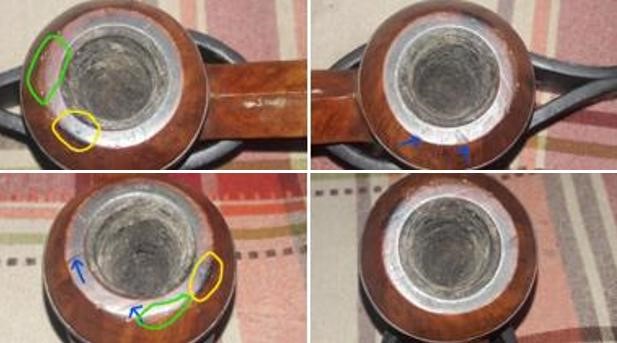
The chamber has an even layer of thick cake. The smooth rim top surface shows a couple of dents/ dings (indicated with blue arrows) and is covered in lava overflow, dirt and grime from previous usage. The outer rim edge has a charred spot in 10 o’clock direction (encircled in yellow) and has suffered a few blows on a hard surface resulting in a few chipped edge surfaces in 12 o’ clock direction (encircled in green). The inner edge appears to be in decent condition. The condition of the inner walls of the chamber can be commented upon after the cake has been taken down to the bare briar. The chamber exudes a very strong odor of old tobacco. The draught hole is dead center at the bottom of the chamber and that makes me believe that it should be a great smoke and the thick cake in the chamber lends credence to this observation. The stummel appears solid to the touch all around and hence I do not foresee any serious damage to the walls in the form of a burnout/ deep heat fissures/ lines or pits. To address the damage to outer rim edge, I shall create a slight bevel over the rim edge. Topping the rim surface should address the dents and dings over the rim top surface. The reaming and subsequent cleaning of the chamber and mortise should reduce the ghost smells from the chamber.The smooth stummel surface is covered in lava overflow that has attracted a lot of dust and dirt. The natural hued briar has taken on a layer of aged patina through which one can make out the beautiful cross grains that adorns most of the stummel surface and Bird’s eye grain at the foot and bottom of the shank. There are a few dents and chipped areas over the bowl cap (encircled in yellow), probably due to falls and or rough, uncared for handling of the pipe. Close observation of the stummel surface under magnification has revealed three very minute fills, two at the front of the bowl and one on the shank (indicated by red arrows) in the entire stummel. The double ring that separates the cap from the rest of the bowl is uneven but intact; however, it is filled with dust, dirt and grime. The briar looks lifeless and bone dry and has taken on dull dark hues. The mortise shows heavy accumulation of oils, tars and gunk and due to which the air flow is not full and smooth. Thorough cleaning of the stummel surface and rinsing it under warm water should highlight the grain patterns. This cleaning will further reveal any other damage to the stummel surface. In all probability, I shall let the minor fills in the stummel surface remain and avoid the process of refreshing these fills. The dents and dings to the bowl cap and the rest of the stummel will be addressed to an extent once the stummel is sanded and polished using micromesh pads.

The seating of the stem tenon into the mortise is not flush. The most probable reason for this could be the accumulated gunk in the mortise. Thorough cleaning of the mortise should address this issue. The minor fill in the shank described above, is indicated with a red arrow. The vulcanite saddle stem is heavily oxidized. The bite zone has tooth chatter on either surface. The lower stem surface has deep tooth indentation that, in all probability, would need to be filled. The button edges on both surfaces have minor bite marks and would need to be sharpened. The tenon is smeared in oils and tars and grime and so is the horizontal slot. The high quality saddle stem bears the trademark logo “H” on the left face of the saddle and would need to be refreshed/ highlighted. Overall, the stem is in a decent condition and the high quality of the vulcanite means that it should take on a nice shine readily.The Process
I started the restoration of this pipe by reaming the chamber with size 1 and 2 heads of the` Castleford reamer. With my fabricated knife, I further scraped the chamber walls to remove the remaining carbon deposits and also scraped out the lava overflow from the rim top surface. Once the cake was reamed back to the bare briar, I used a 220 grit sand paper to remove all the traces of remaining cake and also to smooth out the inner walls of the chamber surface. Finally, to remove the residual carbon dust, I wiped the chamber with a cotton pad wetted with 99.9% pure isopropyl alcohol. The chamber walls are in pristine condition with no signs of heat lines/ fissures. The beveled inner rim edge shows signs of minor charring in the 10 ‘O’ clock direction which will be addressed by light sanding along the beveled edge. This charring further extends to the outer rim edge as well and will be addressed while topping the rim top. The rim top surface itself is peppered with dents/ dings and scratches which will be smoothed by topping. The problem of the chipped outer edge will be resolved during the topping of rim surface followed by creating a slight bevel, if need be. The ghost smells are still very strong and may further reduce after the shank/ mortise are thoroughly cleaned. This was followed by cleaning the mortise with cue tips, pipe cleaners and shank brush dipped in isopropyl alcohol. I scraped the walls of the mortise with my fabricated knife to remove the dried oils and tars. The mortise was a bear to clean and the heap of pipe cleaners, q-tips that were used and the pile of scraped out gunk is an indication of how dirty the shank internals were. The old smells of the tobacco are still strong and would need more invasive methods to get rid of these odors.With the bowl internals clean, I moved to clean the exterior of the stummel. I used a hard bristled tooth brush and Briar Cleaner, a product that has been developed by Mark Hoover, to scrub the stummel and rim top. I set the stummel aside for 10 minutes for the product to draw out all the grime from the briar surface. After 10 minutes, I washed the stummel under running warm water with anti oil dish washing detergent till the stummel surface was clean and dried it using paper towels and a soft cotton cloth. I simultaneously cleaned the shank internals with the detergent and hard bristled shank brush and set the stummel aside to dry out naturally. I diligently cleaned the grooves between the bowl rings that separated the bowl cap from rest of the stummel surface. The stummel surface, including the rim top has cleaned up nicely with the beautiful grain patterns on full display. The lower edge of the bowl cap has chipped areas that were exposed during the cleaning of the grooves. I shall try to even it out by sanding in between the grooves with a folded piece of 220 grit sandpaper. The three very small fills that I had noticed under magnification, are all solid and refreshing them is not required. I shall subject the chamber to cotton and alcohol treatment to eliminate the ghost smells completely as the smell is still very strong. Next I cleaned the internals of the stem with bristled pipe cleaners and 99.9% pure isopropyl alcohol. With my fabricated knife, I gently scraped out the dried gunk from the tenon end and the horizontal slot. I further cleaned out the stem internals with a shank brush and dish washing liquid soap. Once the stem internals were cleaned, I sanded the entire stem surface with a 220 grit sand paper in preparation for dunking the stem in Before and After Deoxidizer solution.I thereafter, dropped the stem in to “Before and After Deoxidizer” solution developed by my friend Mark Hoover. The solution helps to draw out heavy oxidation to the surface, making it’s further removal a breeze, while the minor oxidation is eliminated to a very great extent. The initial sanding helps to draw out the complete oxidation as the sanding opens up the stem surface that has been initially covered with oxidation. I usually dunk stems of the pipes that are in-line for restoration and this pipe is marked in a pastel blue arrow. I generally allow the stems to soak overnight for the solution to do its work.While the stem was soaking in the deoxidizer solution, I continued the cleaning of the chamber and shank internals with a salt and alcohol bath. I used cotton balls which is an at par substitute as I have realized over the years. I drew out a wick from the cotton and along with a folded regular pipe cleaner; inserted it into the mortise and through the draught hole into the chamber. Thereafter, I packed the chamber with cotton balls to about quarter of an inch below the inner rim edge and soaked the cotton balls with isopropyl alcohol up to the brim. About half an hour later, the level of alcohol had gone down, having being absorbed by the cotton. I topped it up once again and set it aside overnight. By the next morning, the cotton and alcohol had drawn out all the remaining oils and tars from the chamber and mortise, fulfilling its intended task. I removed the cotton balls and ran pipe cleaners through the mortise to clean out all the loosened tars and gunk and further cleaned it with alcohol and q-tips. The chamber now smells clean and fresh. I set the stummel aside to dry out naturally.The next morning, after I had cleaned the chamber and shank, I removed the stem that had been soaking in the deoxidizer solution overnight. I cleaned the stem and the stem airway under running warm water and scrubbed the raised oxidation from the stem surface using a Magic Eraser pad followed by Scotch Brite pad and the airway with a thin shank brush. I further removed the oxidation by scrubbing the stem with 0000 grade steel wool and applied a little EVO to rehydrate the stem. This now gives a clearer picture of the extent of depth of the bite marks as can be seen in the pictures below. These will definitely require a fill even after I have heated and raised the vulcanite. I need to rebuild the entire button edges on both the upper and lower surface of the stem. Traces of stubborn deep seated oxidation can be seen, especially on the saddle portion of the stem that would need to be eliminated before polishing the stem.To begin repairs to the stem, I sanded the entire stem surface with a folded piece of 220 grit sand paper till the complete oxidation was eliminated from the stem and saddle portion in particular. I cleaned the entire stem and areas in the bite zone with cotton swab and alcohol. Next, I filled the tooth indentations in the lower surface with a mix of clear CA superglue and activated charcoal and set it aside to cure. After the glue had partially hardened on the lower surface, likewise, I filled the upper surface tooth marks and set the stem aside for the superglue to harden completely. Once the fill has hardened, I shall file and sand the fills to reconstruct the bite zone and the buttons on either surfaces and subsequently match it with the surface of the stem.I turned my attention to address the damage to the stummel. I next decided to smooth the rim top surface dents/dings and the charred surface in 10 o’clock direction extending from inner to outer rim edge. I topped the rim top surface on a piece of 220 grit sand paper, checking frequently for the progress being made as I hate to loose briar estate any more than absolutely necessary. The darkened rim top extending from inner to outer edges can still be seen, though much greatly reduced. With a folded piece of a 220 grit sand paper pinched between my thumb and forefinger, I cleaned the bevel on the inner edge of the rim top surface to minimize the darkening. This helps to mask and address the minor dents and dings that had remained on the rim edges after topping. I am careful so as not to alter the profile of the stummel by excessive topping or creation of the bevels. I am pretty pleased with the appearance of the rim top and edges at this stage. The following pictures show the progress being made and improvements to the inner and outer rim edges.I followed it by wet sanding the stummel with 1500 to 2000 wet & dry sand paper and further with 3200 to 12000 grit micromesh pads, wiping frequently with a moist cloth to check the progress. The minor outer rim damage was repaired to a very large extent and so was the darkening during this process. I really like the looks of the stummel at this point in restoration. The grain and the clean classic lines of this pipe are worthy of appreciation. At this point in the restoration, I remembered that I had to even out the lower edge of the bowl ring. I firstly cleaned the debris that was lodged in between the rings with a sharp knife after the sanding and polishing process. I folded a piece of 220 grit sand paper and inserting it into the grooves, evened out the edges.Next, I rubbed a small quantity of “Before and After Restoration Balm” deep in to the briar with my finger tips and let it rest for a few minutes. The balm almost immediately works it’s magic and the briar now has a nice vibrant appearance with the beautiful grain patterns displayed in their complete splendor. I further buffed it with a horse hair brush. The contrast of the dark browns of the Bird’s eye and cross grains with the natural patina of the rest of the stummel adds an interesting dimension to the appearance of the stummel which may be insufficiently described in words and be rather seen in person. With the stummel rejuvenation almost complete, save for the final wax polish, I worked the stem. The fill had cured and with a flat head needle file, I worked on the filling till I had achieved a rough match with the surrounding surface and had sufficiently sharpened the button edges. To bring a deep shine to the stem, I went through the complete set of micromesh pads, wet sanding with 1500 to 2000 wet & dry sand paper and further with 3200 to 12000 grit micromesh pads. I wiped the stem with moist cloth after each pad and rubbed it down with Extra Virgin Olive oil to rejuvenate the vulcanite. I am pretty happy with the way the stem repairs have shaped up and also the buttons have a nice delicate shape to them. The finished stem is shown below. I used a white correction pen to highlight the stem logo. I smeared the correction ink over the logo and once dried, I gently wiped out the excess ink. The stem logo “H” is now prominently visible.I have now reached the homestretch in this restoration project. To complete the restoration, I mounted a cotton cloth buffing wheel onto my hand held rotary tool and polished the stummel and stem with Blue Diamond compound. This compound helps to remove the minor scratch marks that remain from the sanding. I mounted another cotton buffing wheel that I have earmarked for carnauba wax and applied several coats of the wax. I finished the restoration by giving the entire pipe a rigorous hand buffing using a microfiber cloth to raise the shine further. The finished pipe looks amazingly beautiful and is ready to join my collection of other Hardcastle’s pipes that I have inherited. I only wish it could share with me it’s story of the past years while I enjoy smoking my favorite Virginia blend in it or maybe an English blend or maybe just keep admiring it!! A big thank you to all the readers who have joined me on this path by reading this write up as I restored and completed this project.

Breathing Life into a Cased Orlik Gourd Calabash with a damaged Amber Stem


Blog by Steve Laug

I have finished restoring all but this last pipe from the collection of pipes that we purchased from the older gentleman. He sent me the photos and I was amazed at what I saw. You have seen many of the pipes that he had. These included Dunhill, BBB, Orlik, Barclay Rex, a cased Ben Wade, an H. Simmons all briar, Hardcastles and some Meerschaums. There were also some assorted others that I will get to in the days ahead. It was a great collection.

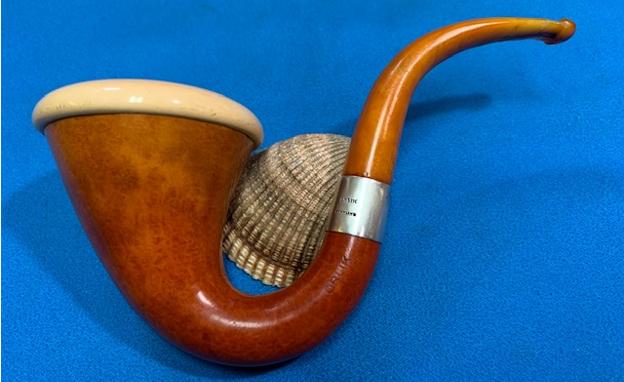
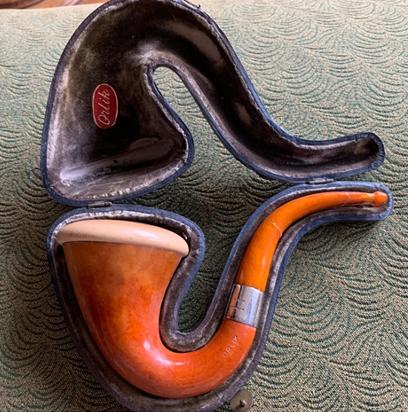
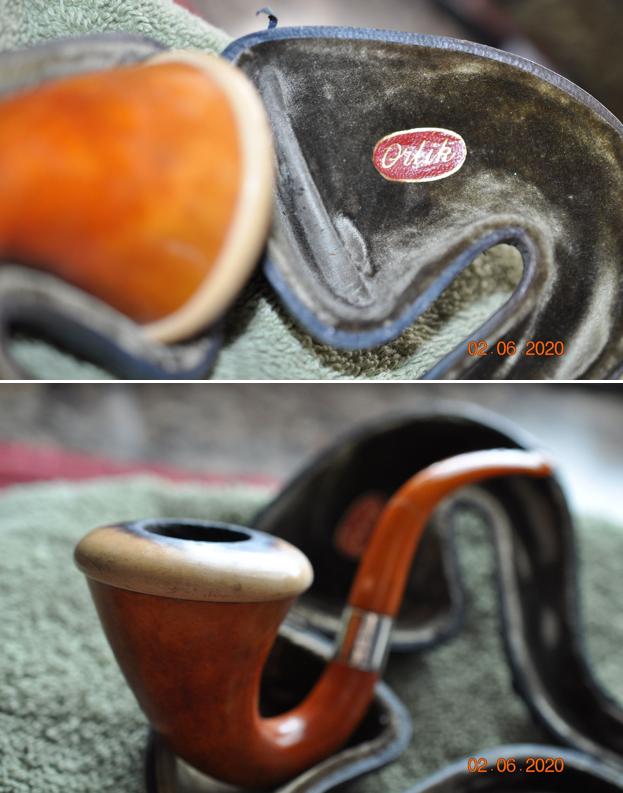
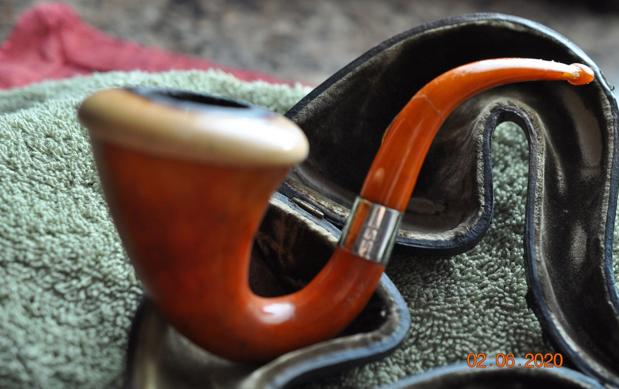
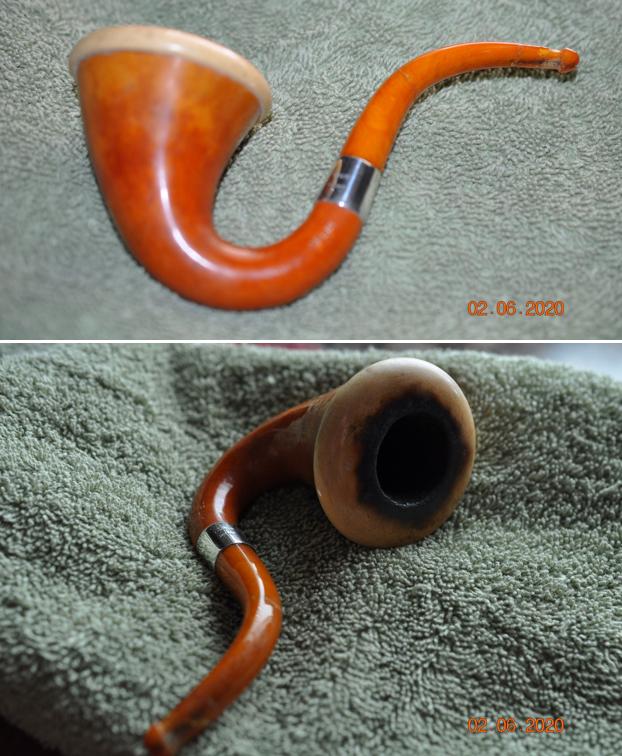
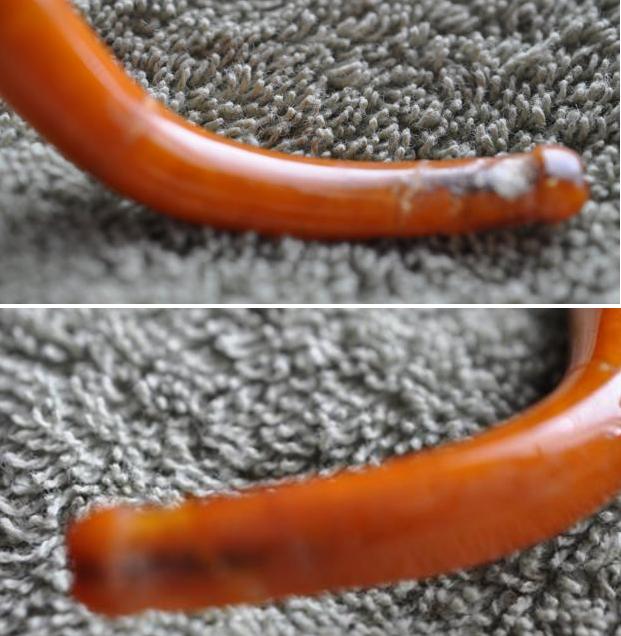
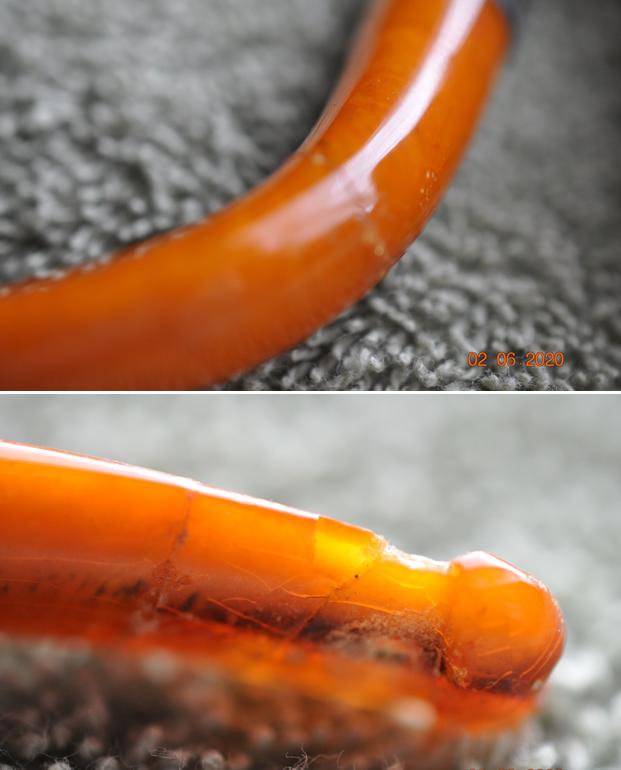
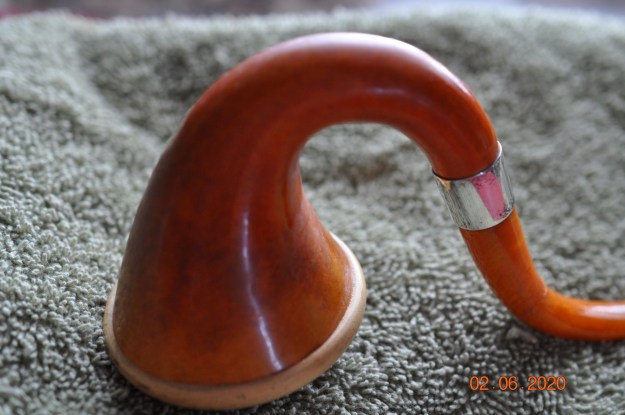
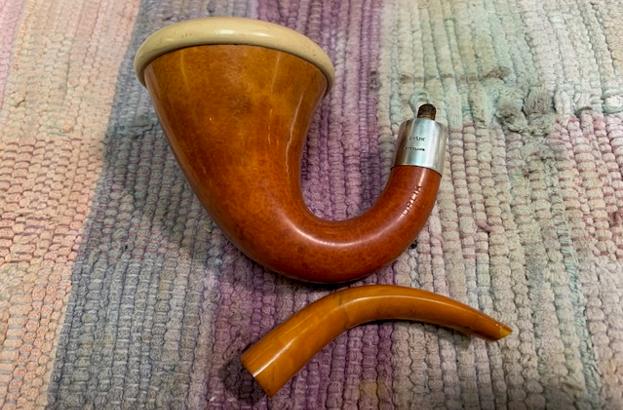
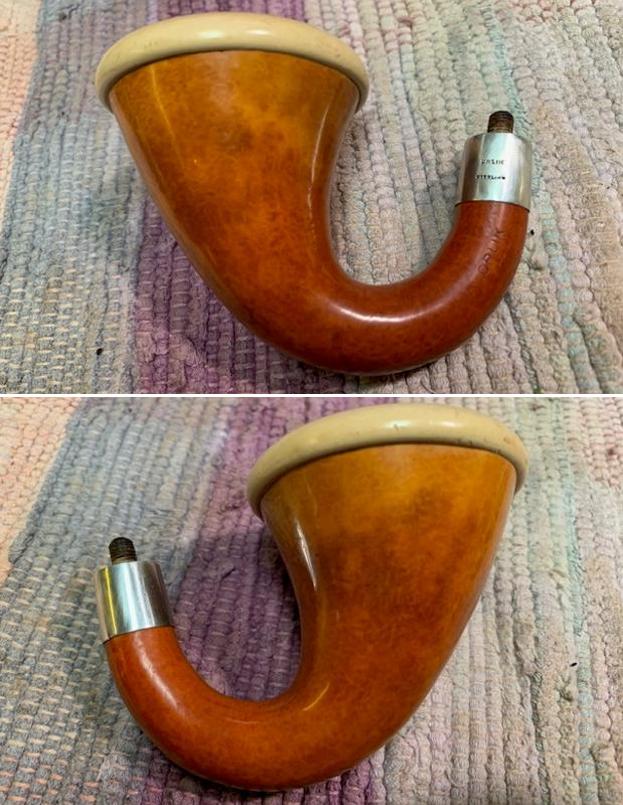
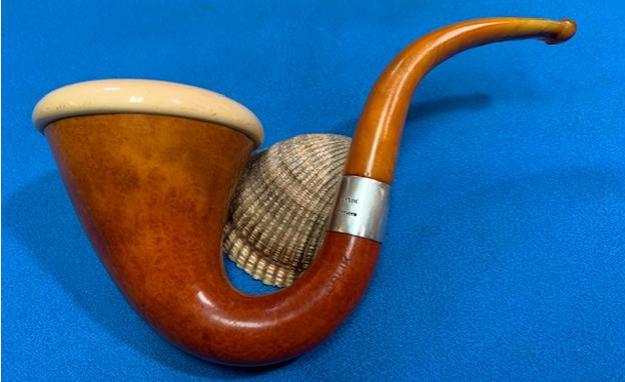
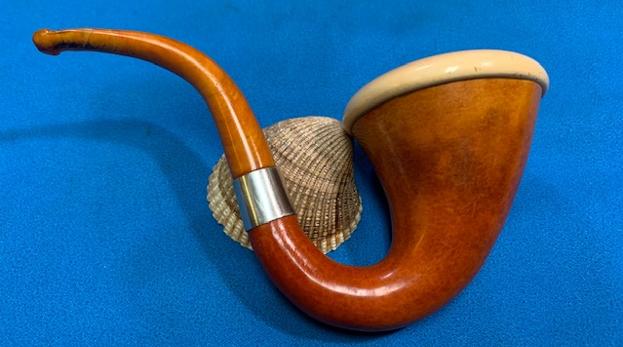
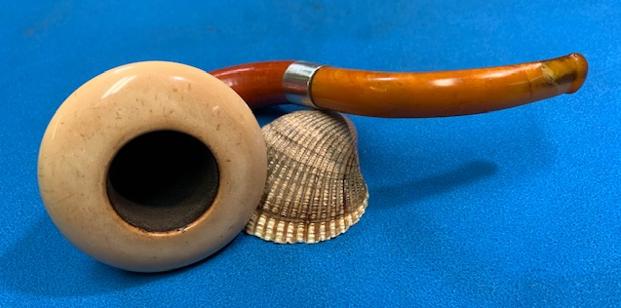
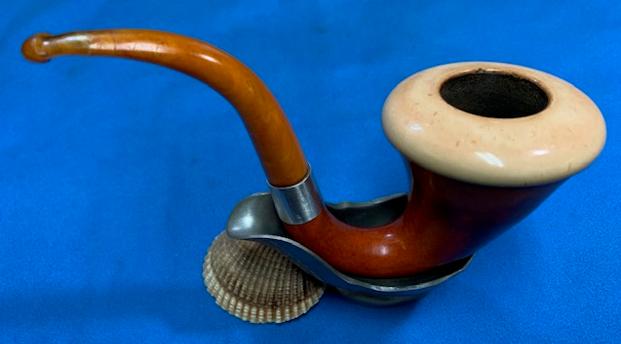
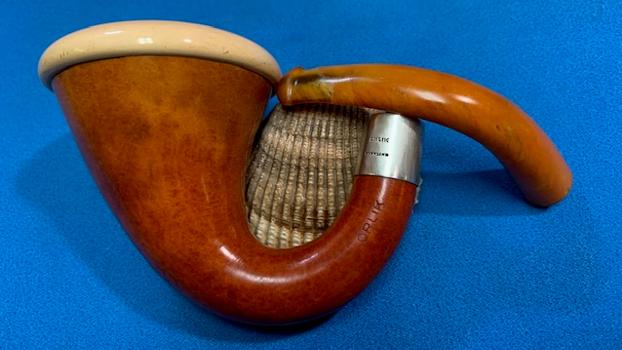
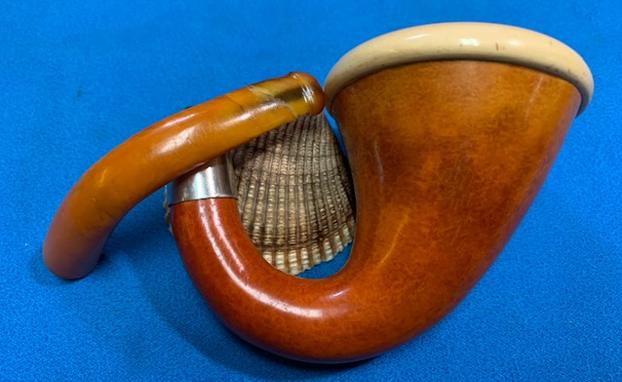
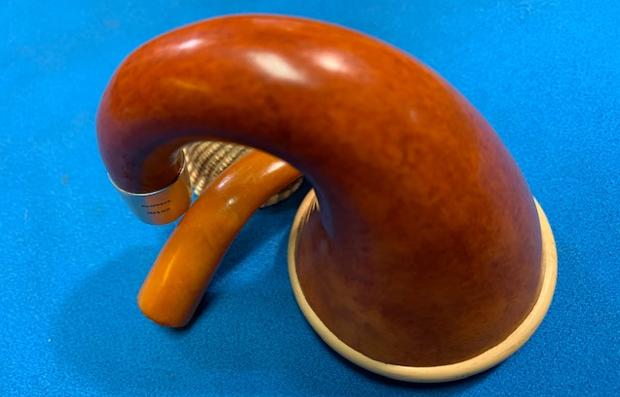
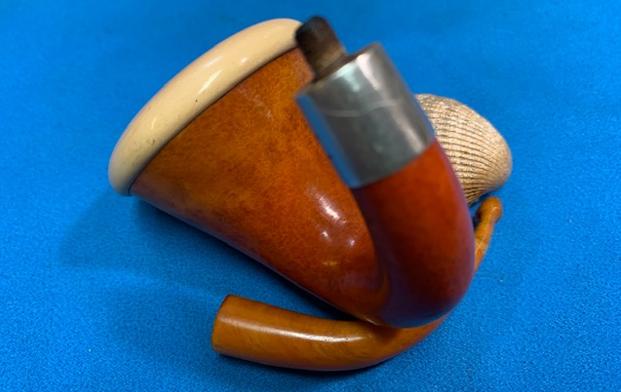
The last pipe I have chosen is a Gourd Calabash that is in a black case. It is stamped on the left side of the Gourd and reads Orlik. The silver band is also stamped Orlik Sterling. It has a meerschaum bowl in gourd that is dirty and has a thick cake in the bowl and a thick coat of lava on the rim top. It is pictured above in the photo I received from the old gentleman. It was filthy both inside and out. I think that the Orlik stamp on the calabash and the case made me want to try to redeem this old pipe. The stem is amber and was the problem with the pipe. It had been broken in half and repair. That repair held. There was also a repair to the amber about an inch from the button. The the ½ inch ahead of the button was also chipped and seemed to be cracked. This was another well loved pipe that obviously been a good smoker!

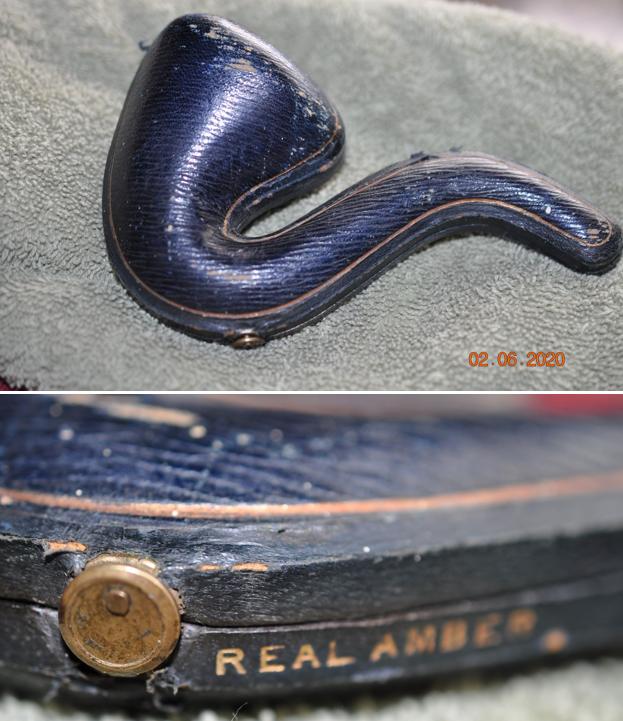
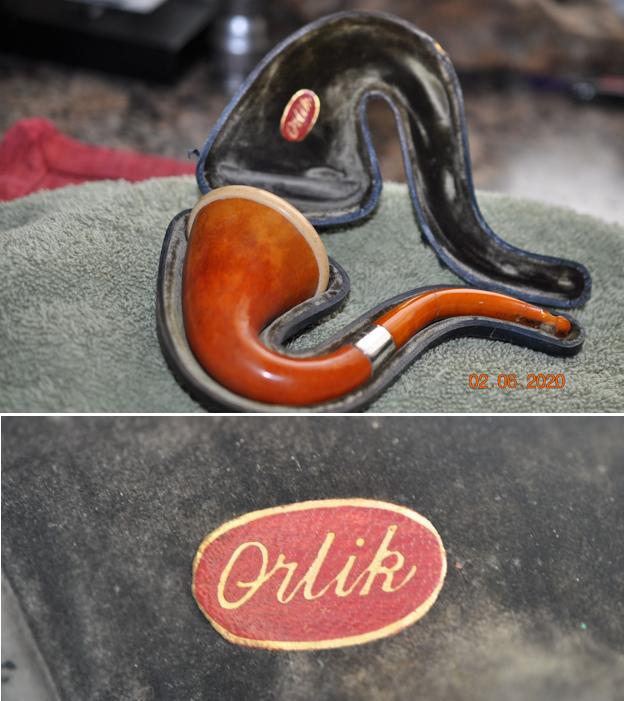
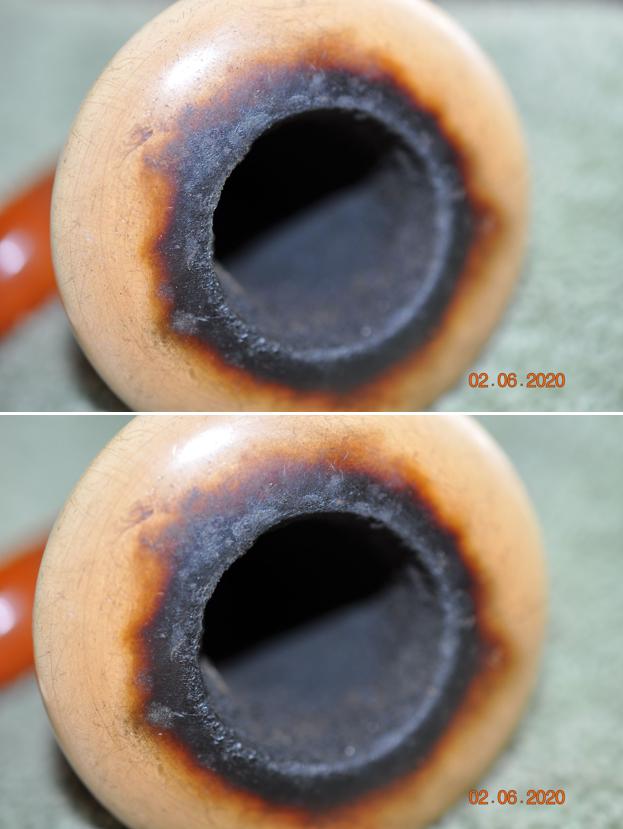
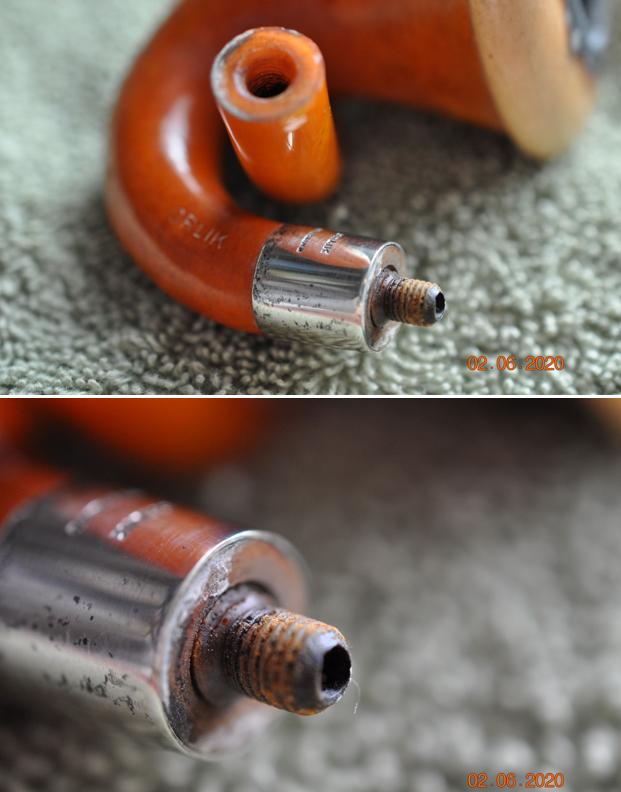
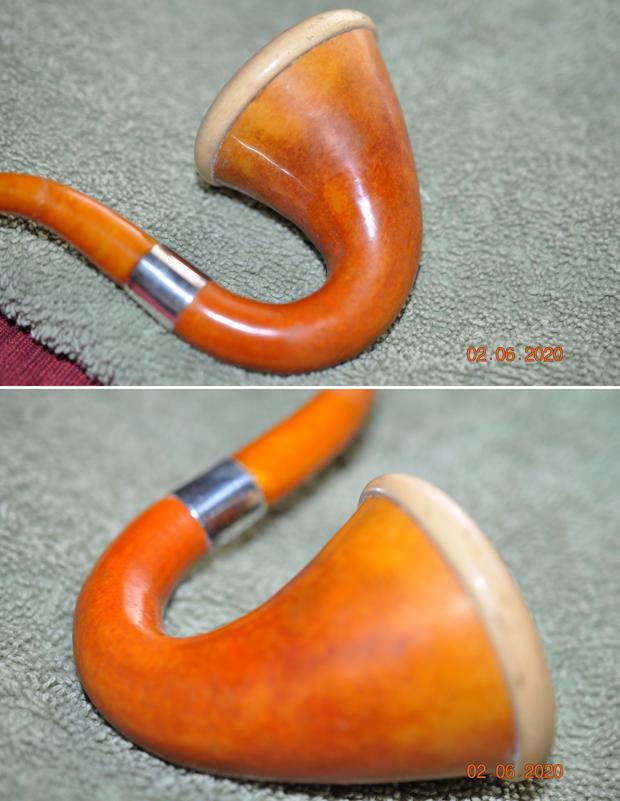
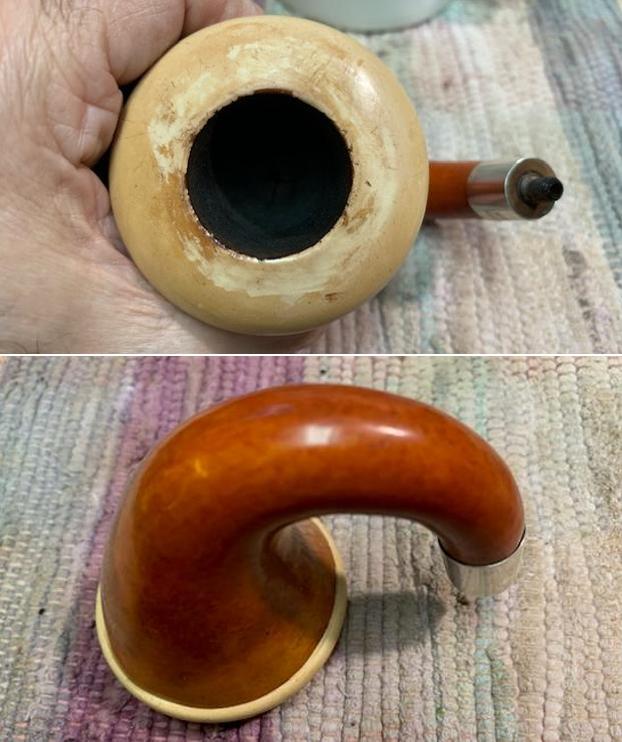
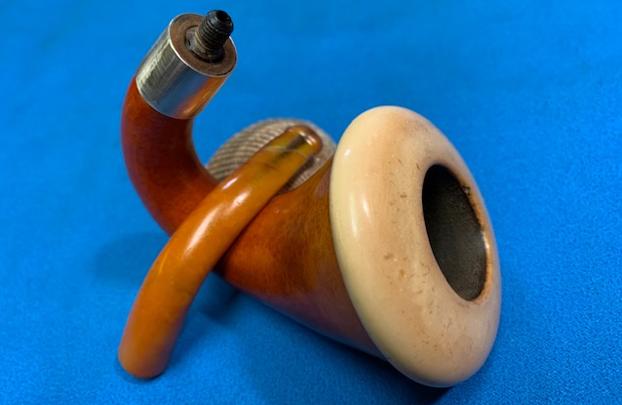
Jeff took some photos of the Orlik Gourd Calabash with a Meerschaum Bowl and amber stem before he worked his magic in cleaning up the pipe. It is a an interesting pipe with a lot of potential and what appears to be some great grain under the grime and debris of the years. The first five photos show the case, the Real Amber stamp on the case next to the clasp, the pipe in the case and the stamp/logo decal on the inside of the lid that read Orlik.    Jeff took the pipe out of the case and took photos of it to show what it looked like. If you look closely at the stem you can see the crack in the amber and the damage on the button end. You can also see the thick lava coat on the top of the meerschaum cup.Jeff took photos of the bowl, rim top to show the thickness of the cake in the bowl and the thick lava on the rim top. The rim top and inner edge are thickly covered with lava. The meerschaum has some patina developing. He took photos of the top and underside of the amber stem showing the cracks and chips on both sides. The stem is a mess that will take time to repair. Jeff also took some photos of the Sterling Silver band on the gourd and the inset tenon that is in the shank end. The tenon is dirty and the silver oxidized.Jeff took photos of the sides and heel of the bowl to show the condition of the gourd bowl the patina on the meerschaum cup. You can see the beautiful shape of the bowl and some interesting patterns in the meerschaum even through the damage, dirt and debris of many years. This Cased Orlik Gourd Calabash is an interesting looking pipe. The meerschaum bowl has developed a patina and the damaged amber stem looks very good with. Because the old gentleman that we bought the pipes from intimated that he purchased his pipes at the Manhattan Barclay-Rex store I would imagine that he may have purchased this one from them as well. I was unable to pin down any information regarding the date this pipe so it was time to move on and work on the pipe.

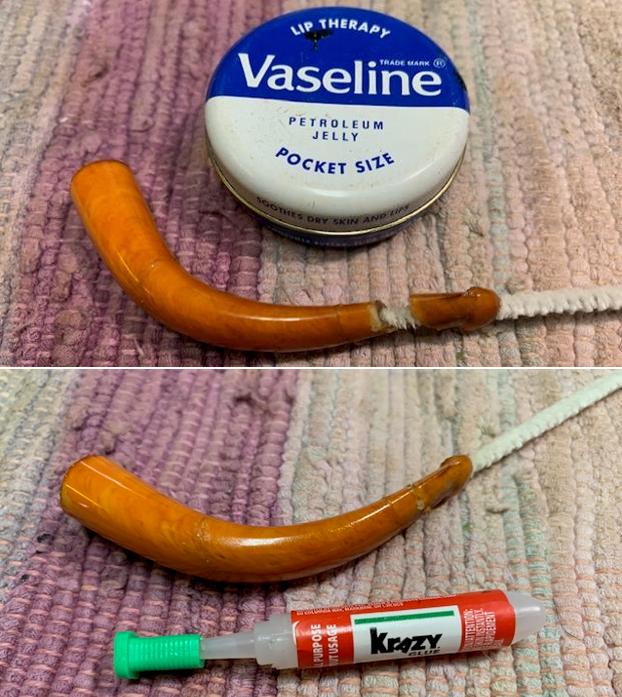
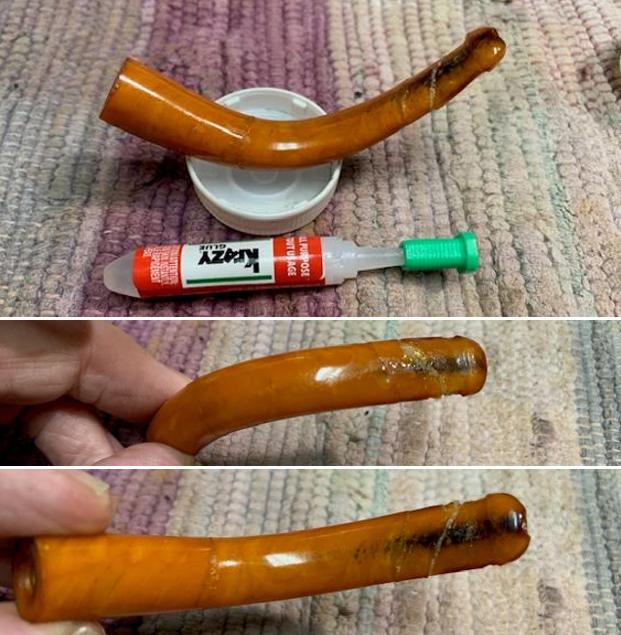
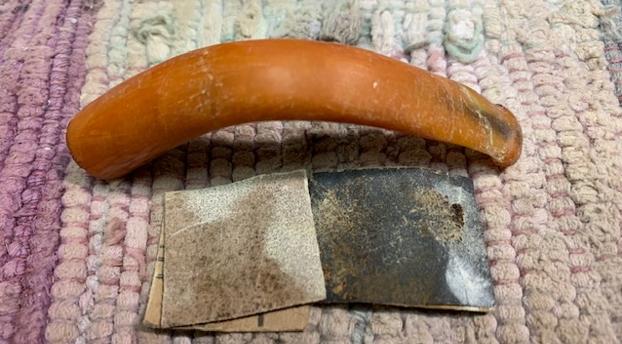
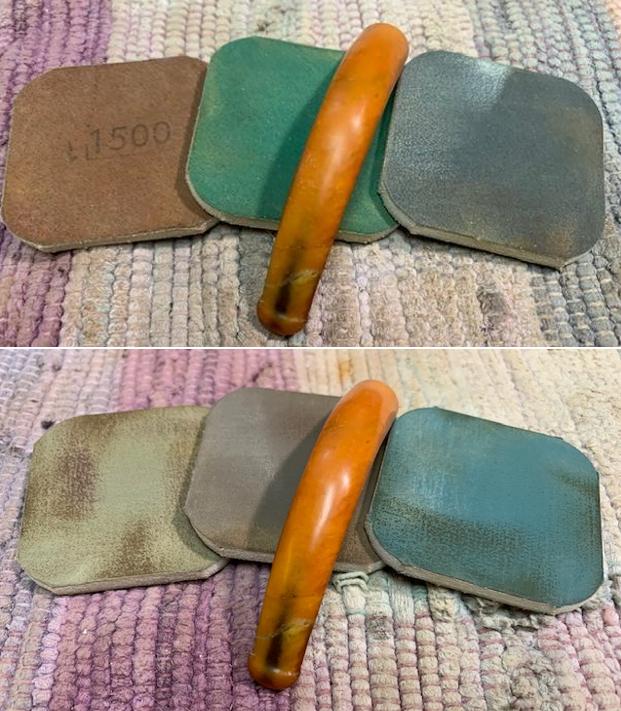
Jeff carefully cleaned the pipe so as not to damage it further. He reamed it with a PipNet pipe reamer and then cleaned up the reaming with a Savinelli Fitsall Pipe Knife. He scrubbed out the internals of the shank, stem and shank extension with alcohol, pipe cleaners and cotton swabs until the pipe was clean. He carefully scrubbed the exterior of the bowl with Murphy’s Oil Soap and a tooth brush to remove the grime and grit on the exterior of the meerschaum cup and rim top and lava on the rim top. The finish looks much better and has a deep richness in the colour that highlights the patina in the meerschaum and the gold of the gourd. The chipped and cracked end of the amber stem came off while Jeff cleaned it. He wrapped it in a paper towel and shipped it to me in the bowl. He cleaned the internals of the stem with alcohol and carefully scrubbed the amber with Soft Scrub to remove the grime on the amber. When the pipe arrived here in Vancouver I was amazed that it looked so good. I took a photo of the parts of the bowl and stem. I took some photos of the bowl and meerschaum cup. The rim top looks very good after the clean up though it is spotty. I polished the smooth rim top with micromesh sanding pads – dry sanding with 1500-12000 grit sanding pads. I wiped the bowl down after each pad with a damp cloth to remove the sanding debris. I worked some Before & After Restoration Balm into the surface of the bowl and shank with my fingertips to clean, enliven and protect the gourd and meerschaum. I let the balm sit for 15 minutes and then buffed with a cotton cloth to raise the shine. The photos show the bowl at this point in the restoration process. I set the bowl aside and turned my attention to the stem repairs. I greased a pipe cleaner with Vaseline and slid it through the broken piece and into the larger part of the stem. I put some clear super glue (CA) on each portion of the broken stem. I pressed the portions together and let the glue cure. I slid the pipe cleaner out of the stem and filled in the cracks on the top and underside of the stem. I sanded the repairs on the top and underside of the stem with 220 grit sandpaper to smooth out the repairs. I started to polish the stem with 400 grit wet dry sandpaper.I polished the stem with micromesh sanding pads – dry sanding with 1500-12000 grit sanding pads. I wiped it down after each sanding pad with Obsidian Oil. I polished it with Before & After Pipe Stem Polish – both Fine and Extra Fine. I gave it a final coat of Obsidian Oil. It looks significantly better and is smooth but the repairs show! With the bowl and the stem finished I put the beautiful Orlik Gourd Calabash with Meerschaum cup and an amber stem back together and buffed it the bowl and cup lightly on the wheel using Blue Diamond to give it a shine. I hand buffed the amber stem by hand. I gave the stem multiple coats of Conservator’s Wax. I buffed the pipe with a microfiber cloth to deepen the shine. The finish on the gourd and meer is a great looking. The repaired amber stem looked very good. The dimensions of the pipe are – Length: 5 ¾ inches, Height: 2 ¾ inch, Outside diameter of the bowl: 2 ¼ inches, Chamber diameter: 1 inch. The weight of this large pipe is 2.08 ounces /59 grams. This Orlik Gourd Calabash is another great find from this collection. It is much more beautiful in person than these photos can capture. This is another pipe that has the possibility of transporting the pipe man or woman back to a slower paced time in history where you can enjoy a respite. Thanks for walking through the restoration with me.

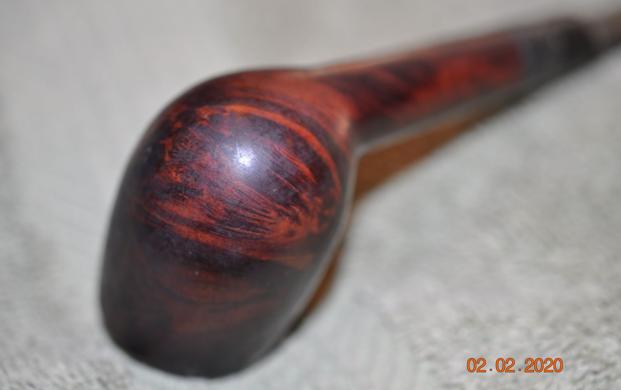
Restoring a Parker’s Bruyere Lovat made about 1923


Blog by Steve Laug

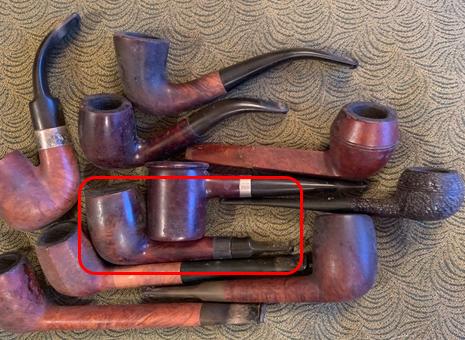
The next pipe on the work table came to us from the old gentleman who had purchased much of his wonderful collection from Barclay-Rex in New York City. He said he used to go there from his workplace to purchase tobacco and pipes. This is the last of his briar’s that I am working on. I have marked it in the photo to the left with a red rectangle around the pipe in the group of pipes above.

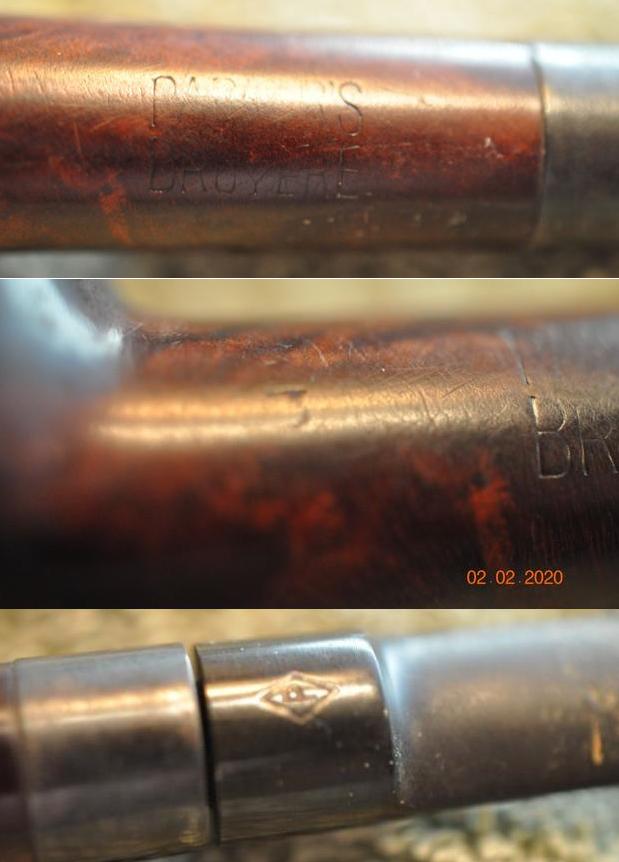
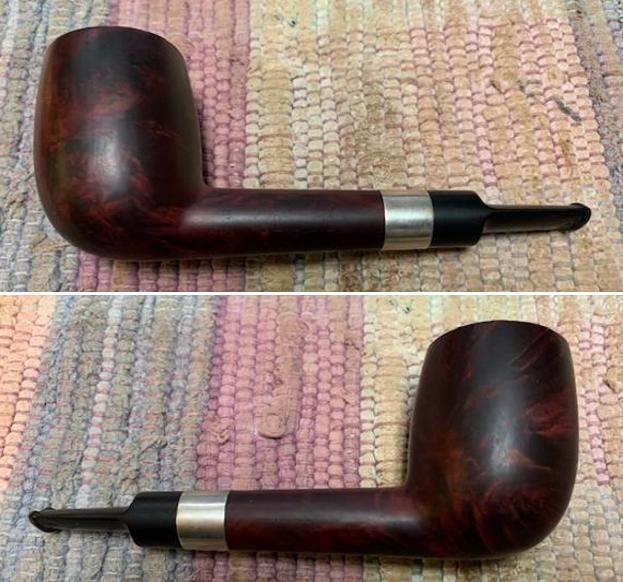
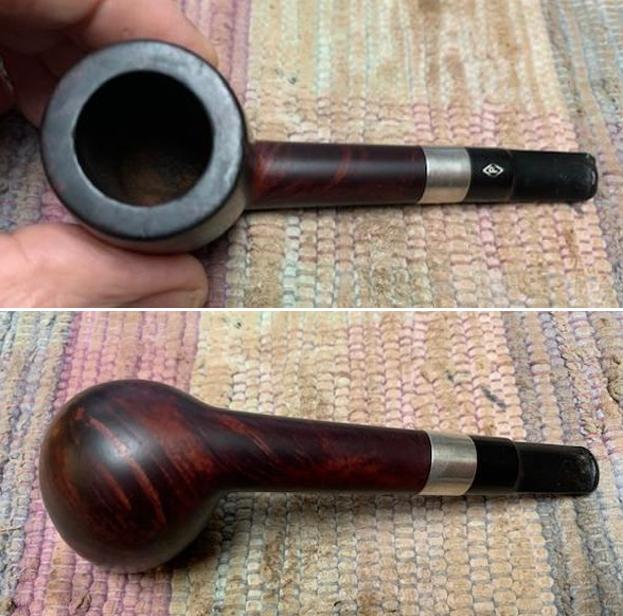
It is a nice looking Parker’s Bruyere Lovat with a Sterling Silver band and a saddle stem. The bowl has a rich reddish brown colour combination that highlights grain. The pipe has some grime ground into the surface of the briar. This pipe is stamped on the sides of the shank. On the left it reads 3 followed by Parker’s [over] Bruyere. On the right it read Made in London England. The saddle stem has a Parker “P” in a Diamond logo on the top side. There is an oxidized band on the shank that needed attention. There is a thick cake in the bowl and some overflow of lava on the edges of the rim top. The rim top looks good but it is hard to know for sure as the lava is quite thick. There were some tooth marks and chatter on both sides of the vulcanite stem near the button. The pipe looks to be in good condition under the grime. Jeff took photos of the pipe before he started his cleanup.He took photos of the rim top to show the cake and the lava coat. The inner edge of the bowl looks good. The top and outer edge also look okay. It is an incredibly dirty pipe but obviously one that was a great smoker. He also captured the condition of the stem. It is oxidized, calcified and has tooth marks and chatter on the top and underside of the stem near the button. There is a chip out of the top right side of the button. He took photos of the sides and heel of the bowl to show the beautiful grain around the bowl and the condition of the pipe. You can see the grime ground into the surface of the briar. He took photos of the stamping on the side of the shank. They are clear and readable as noted above. The photos show the left side of the shank. He did not take photos of the right side. He also included a photo of the Diamond P stamp.I turned first to Pipephil’s site to look at the Parker write up there and see if I could learn anything about the line (http://www.pipephil.eu/logos/en/logo-parker.html). There were no pipes matching the stamping on this one – Parker’s Bruyere.

I looked up the Parker brand on Pipedia to see if I could find the Parker’s Bruyere there or at least the possessive Parker’s stamping (https://pipedia.org/wiki/Parker).

Dating

Prior to Word War II, the possessive PARKER’S stamp was used. However, at least some pipes were stamped with the non-possessive as early as 1936.

Like Dunhill, Parker pipes are date stamped, but differently than Dunhill. The Parker date code always followed the MADE IN LONDON over ENGLAND stamping. The first year’s pipes (1923) had no date code; from 1924 on it ran consecutively from 1 to 19.

There is no indication of a date code for the war years. Parker was not a government approved pipe manufacturer, while Dunhill and Hardcastle were. During the war years Parker manufactured the “Wunup” pipe made of Bakelite and clay.

The pipe that I was working on was stamped with the possessive PARKER’S stamp which identified it as being mad prior to WWII.  There was not any date code on the right side of the shank which may have linked it to a pipe made in 1923 but definitely before 1939. The 3 on the shank side seems to have been a shape number. This is another old timer.

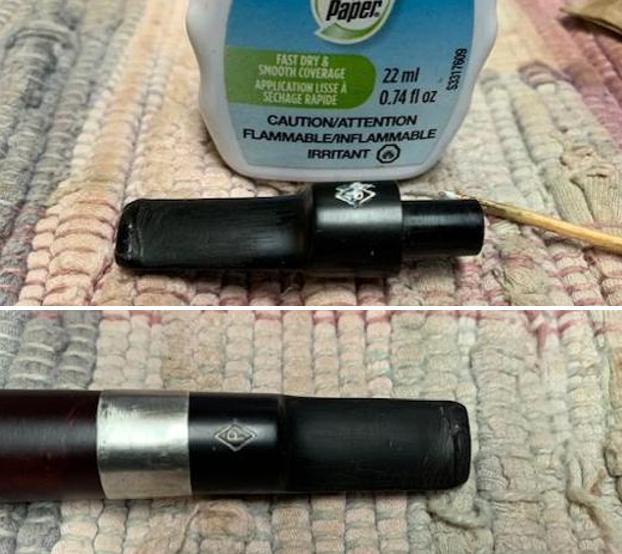
It was time to work on the pipe. As usual Jeff had done a thorough cleanup on the pipe. He reamed the bowl with a PipNet pipe reamer and followed up with a Savinelli Fitsall pipe knife to remove the cake. He scrubbed out the mortise and the airway in the shank and the stem with alcohol, cotton swabs and pipe cleaners. He scrubbed the exterior of the bowl, rim, shank and stem with a tooth brush and Murphy’s Oil Soap to remove the oils and tars on the rim and the grime on the finish of the bowl. He rinsed it under running water. One of the benefits of this scrub is that it also tends to lift some of the scratches and nicks in the surface of the briar. He also polished the band which appears to be silver. He dried it off with a soft cloth. He cleaned the internals and externals of the stem with alcohol, pipe cleaners and cotton swabs. He soaked the stem in Before & After Deoxidizer and rinsed it off with warm water and cleaned out the airway in the stem with alcohol. The pipe looked very good when it arrived. I took a photo of the rim top and stem to show the condition. The rim top looked very good. The inner edge of the bowl a few small nicks around the front and left side. The vulcanite taper stem had light tooth chatter and marks on both sides ahead of the button and on the button edges.  The top right side of the button had a chip missing.The stamping on the sides of the shank is clear and readable as noted above.I removed the stem and the extension from the shank and took a photo of the pipe to give a sense of the whole. It is a nice Straight Grain Billiard that should clean up very well.I reshaped the bowl edges with a folded piece of 220 grit sandpaper to remove the damaged areas from the inner edge of the bowl. I polished the briar with micromesh sanding pads – dry sanding with 1500-12000 grit pads and wiped down the bowl after each sanding pad. I rubbed the bowl and shank down with Before & After Restoration Balm. I worked it into the surface of the bowl sides and shank with my fingertips to clean, enliven and protect the briar. I let the balm sit for a little while and then buffed with a cotton cloth to raise the shine. The Balm did its magic and the grain stood out.  I set the bowl aside and turned my attention to the stem. I sanded out the tooth marks and chatter with 220 grit sandpaper. I filled the tooth marks on the stem and button with clear super glue and let it cure.   I used PaperMate Liquid Paper to fill in the Diamond P stamp on the top side of the taper stem. I let it dry the scraped off the excess with my fingernail.   I sanded the repairs smooth with 220 grit sandpaper and started the polishing process with 400 grit wet dry sandpaper. I polished the vulcanite stem with micromesh sanding pads – 1500-12000 grit pads. I wiped it down with Obsidian Oil after each sanding pad. I used Before & After Pipe Polish – both Fine and Extra Fine to further the stem. The photo below shows the polished stem. This nicely grained Parker’s Bruyere 3 Lovat with a vulcanite saddle stem is a great looking pipe now that it has been restored. The briar around the bowl is clean and really came alive. The rich brown stains gave the grain a sense of depth with the polishing and waxing. The grain really popped. I put the vulcanite stem back on the bowl and carefully buffed the pipe with Blue Diamond on the buffing wheel using a light touch on the briar. I gave the bowl and the stem multiple coats of carnauba wax on the buffing wheel. I buffed the pipe with a clean buffing pad to raise the shine. I hand buffed the pipe with a microfiber cloth to deepen the shine. The finished Parker’s Lovat is a beauty and feels great in the hand and looks very good. Give the finished pipe a look in the photos below. The dimensions of the pipe are Length: 4 ½ inches, Height: 1 ¾ inches, Outside diameter of the bowl: 1 ¼ inches, Chamber diameter: ¾ of an inch. The weight of this large pipe is 1.31 ounces /37 grams. This Parker’s Bruyere Lovat is another great find our hunts. It is much more beautiful in person than these photos can capture. I am not sure where this one will end up so I will hold onto it for a short time. This is another pipe that has the possibility of transporting the pipe man or woman back to a slower paced time in history where you can enjoy a respite. Thanks for walking through the restoration with me.


Repairing and Refurbishing a Jobey “Gondoli” From Steve’s Grab Box


Blog by Paresh Deshpande

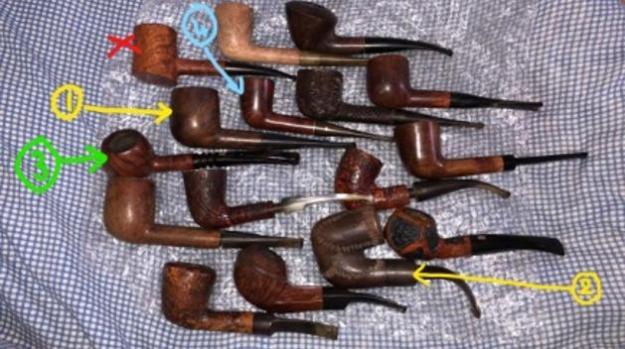
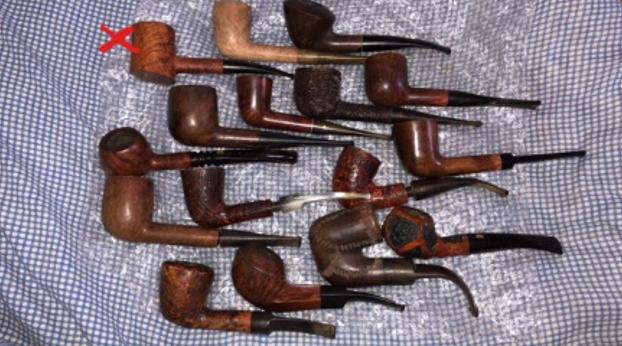
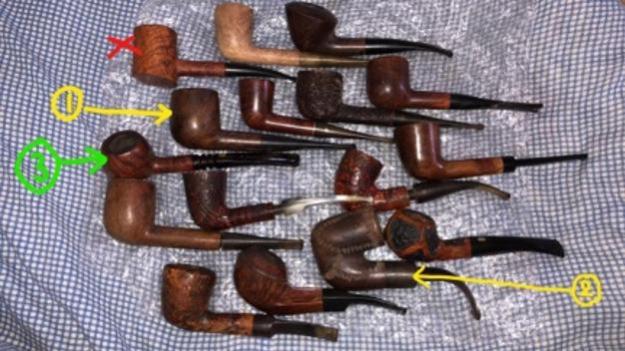
Steve, my friend and mentor, had sent me a pipe lot of 15 pipes for restoration about 3 years back. These assorted pipes were requested by me with an intent that these would provide me with an opportunity to further hone my skills and gain experience in tackling varied issues that one may come across during restoration. Each of these pipes has its own set of issues to address and I look forward to work on each one of this pipe lot. Here is the picture of the pipes as I received it. The one marked with a red cross is a Dunhill Root that has been restored by Steve for my personal collection.

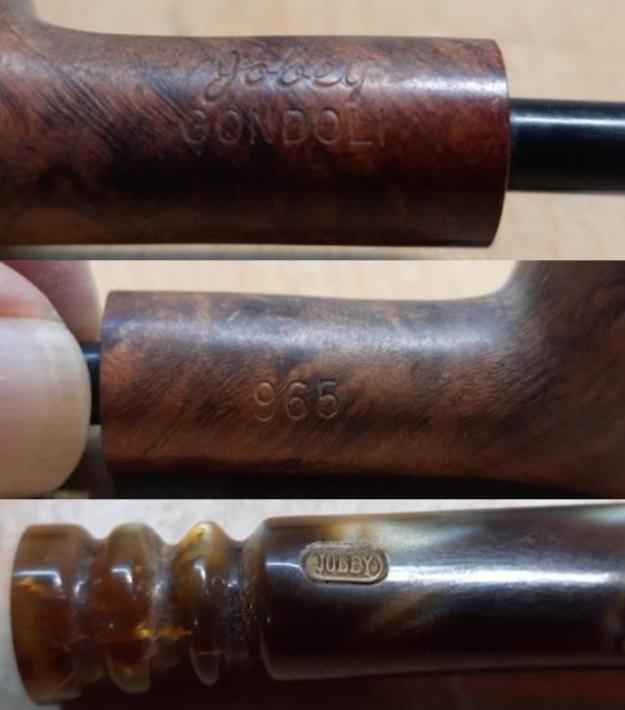
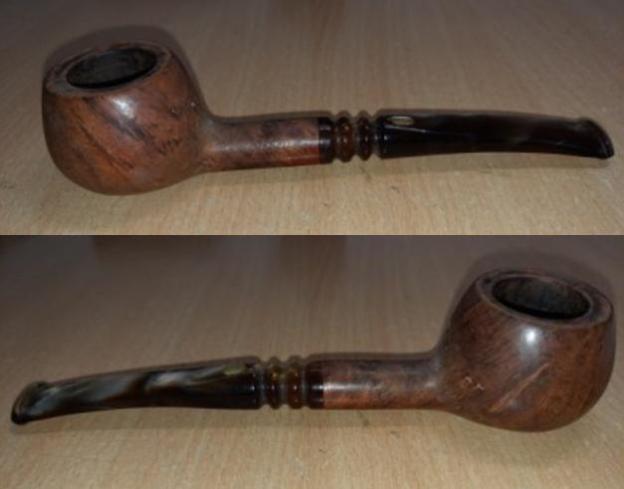
I have worked on a no name straight billiard and an Oom Paul from this lot and both turned out to be beautiful pipes. The next pipe from this lot that I selected to work on is a Jobey “GONDOLI” and is marked with a green arrow and numeral 3.This pipe has a nice hand feel to it and the classic Prince shape with a beautiful variegated fancy stem makes it a very attractive looking pipe. The stummel boasts of beautiful mixed grains. It is stamped on the left side of the shank as “Jobey” in fancy script over “GONDOLI” in capital letters, towards the shank end. On the right side of the shank it is stamped with shape code “965”. The variegated acrylic stem with swirls of brown carries the trademark logo of JOBEY in a brass roundel atop the surface of the stem.I had previously worked on two Jobey pipes and had researched the brand at that time. Here is the link for the research and write on the pipe.  A Simple Restoration of a “Jobey Filtersan # 690” | rebornpipes

No other information was available on the internet that I could link with the GONDOLI line or the shape code # 965. Any assistance in unearthing additional information is most welcome!!

Initial Visual Inspection
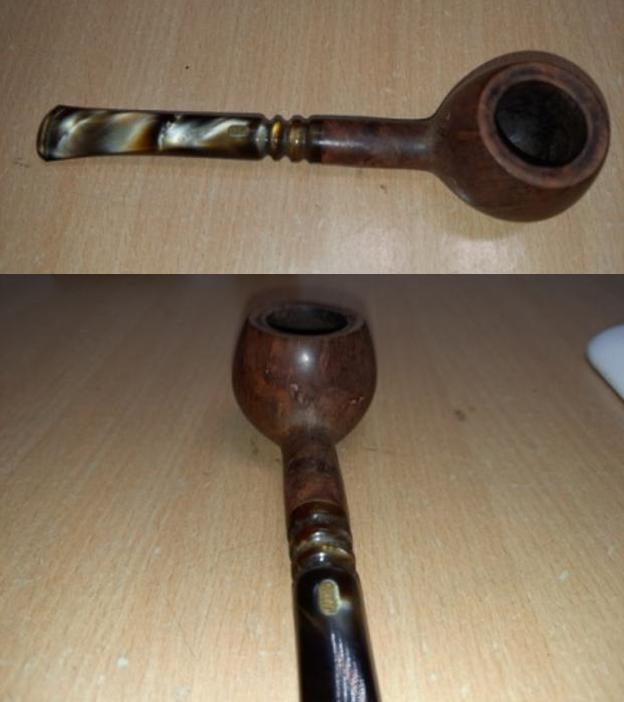
This grab bag that Steve had sent me contained few pipes that Jeff had already cleaned and sent across to Steve for further restoration. Thus, unfortunately, before condition pictures are not available with me to share with the readers, but fortunately, I get to work on a pipe that Jeff has already worked his magic upon and presented me with a clean pipe. Below are a few pictures of the pipe as I had received it. Detailed Inspection
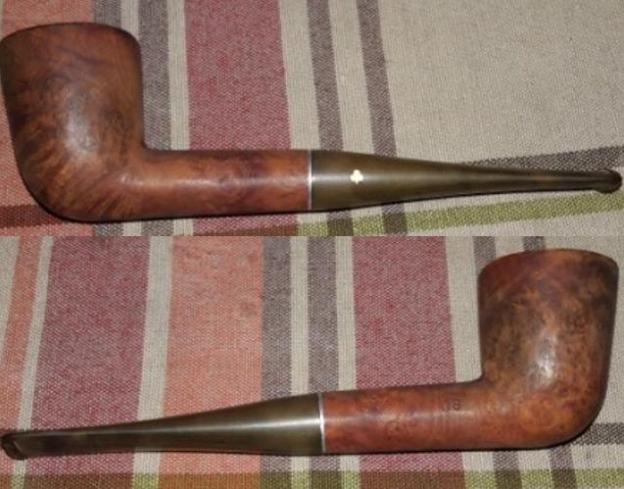
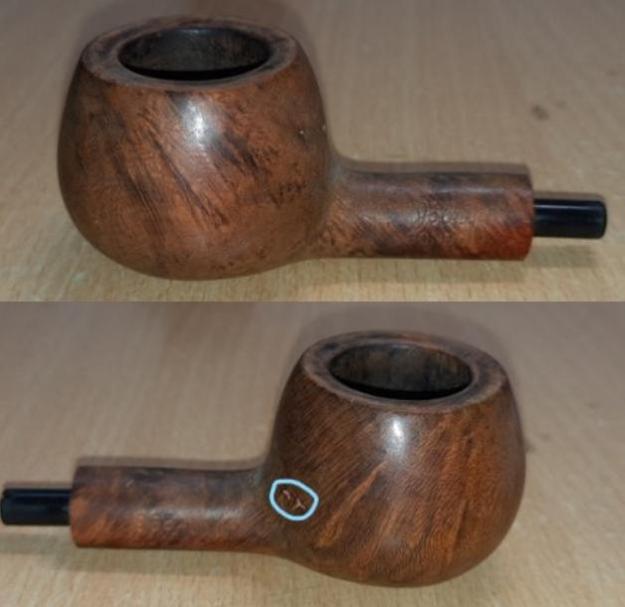
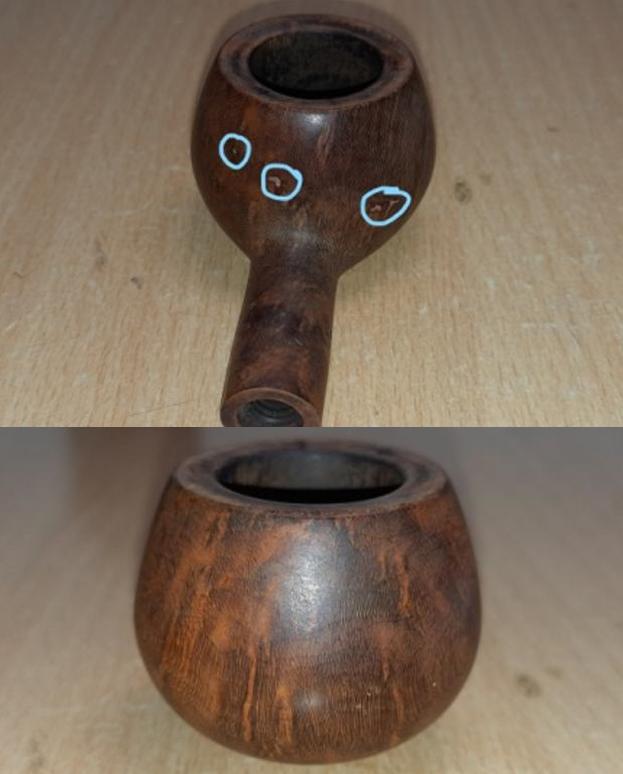
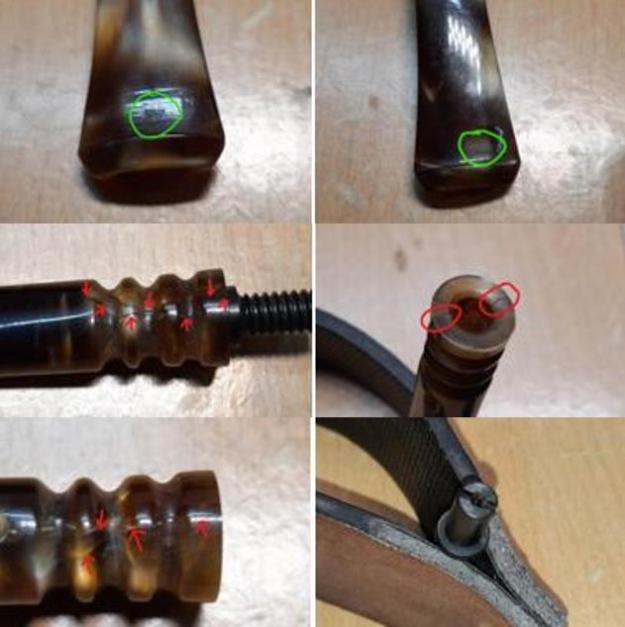
The chamber is nice and clean with thick walls without any damage. The rim top surface has a couple of darkened areas which should be easy to clean up. The inner and outer rim edges are in decent shape and the chamber smells clean.The external surface of the stummel has been cleaned and lacquer coat has been removed in most of the places. However, a few spots remain where the lacquer coating is visible. The stummel had a reddish orange stain that has been cleaned out but would need to be eliminated completely (personal choice!). There are a few fills (encircled in pastel blue) at the back of the stummel that would need to be refreshed. There are few dents and dings over the stummel surface that needs attention. Through all this patchy lacquer coat and stain, beautiful Angel’s hair peeks out from the smooth surface. Once the stummel is cleaned and polished, these grains will pop out in all their refined glory. All in all as it stands now, this is one dull and tired looking stummel that requires a lot of TLC!! The mortise is threaded to accommodate the screw-in Jobey link tenon which was patented by Jobey. The mortise is otherwise clean but for the accumulation of dust and grime from three years of storage. This will need to be thoroughly cleaned. The famed Jobey-link Delrin tenon is shown below.The variegated acrylic fancy stem with swirls of browns and grey look very attractive, but to put it mildly, is an utter mess!! It has bite marks (encircled in green) on both upper and lower stem surface with minor tooth chatter all over the bite zone on both sides; however, these should be an easy fix. The real serious damage to the stem can be seen at the tenon end. There is a deep crack from the face of the tenon end on either surface that extends right up to the shoulders of the stem. Along the way this crack on either surface, has further bifurcated in to a couple of more cracks extending to the sides. The extents of all these cracks are indicated with red arrows.

Note: This is one tricky stem repair that I would be undertaking. I had half a mind to completely replace this stem with a new one rather than repair it. But I wanted to preserve the originality of the pipe and secondly, I did not have a suitable acrylic stem to match the beauty of the original stem and pipe combo. So repairs to this stem are the way out for me at the moment. The Process
Firstly, I cleaned the stummel exterior with Murphy’s soap and hard bristled tooth brush. I used an abrasive Scotch Brit pad to completely eliminate the lacquer coat from the surface. I diligently worked the rim top surface to remove the minor traces of darkened stains that remained. With a shank brush, I thoroughly cleaned the mortise of all the dust that had accumulated inside and along the mortise walls.

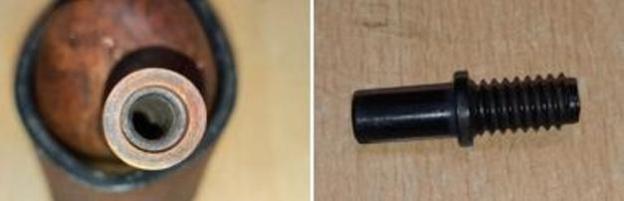
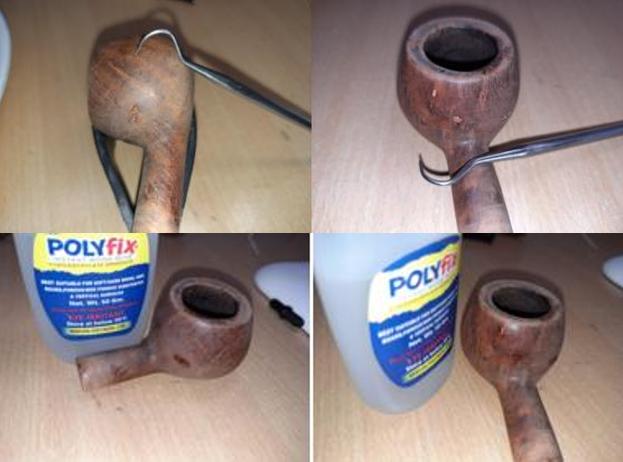
Note: The reddish orange stain on the stummel has reduced significantly, but not completely. I would need to resort to other stronger measures to eliminate the old stain. The rim top is now clean and the lacquer coating from surface has been removed completely. The fills would need to be refreshed. Next, I wiped the stummel with pure acetone on a cotton swab to eliminate the minor reddish orange stain that remained on the surface. The acetone worked well and the stummel is now free of the old stain, presenting me a fresh canvas to work further. Continuing with the stummel refurbishment, I decided to refresh the fills at the back of the stummel. Using a sharp dental tool, I removed the old fills and cleaned the area with a cotton swab and isopropyl alcohol. The gouged out spots were filled with clear CA superglue and set aside for curing.With the stummel fills set aside for curing, it was time to undertake the repairs to the stem. I first cleaned the stem surface with isopropyl alcohol on a cotton swab. Using nose pliers, I gently flexed the crack just enough for the superglue to seep in. I applied a generous layer of clear CA superglue of medium viscosity over the crack and flexed it a couple of times to make sure that the glue had seeped in to the crack. I pressed the crack together in a vice and set it aside for the glue to cure.

Note: The last picture shows that the glue had seeped completely in to the crack and inside the stem opening that houses the tenon. I shall resort to sanding to remove the excess glue from inside the stem.  Once the glue had completely hardened, I applied another coat of superglue over and around the cracks on either surface. I spot filled the tooth indentations in the bite zone with clear CA superglue and set the stem aside for the glue to cure.Next, while the stem fills are curing, I sand the stummel fills with a flat head needle file to achieve a rough match with the rest of the surface. To achieve a better match and also to address the dents/ dings over the stummel surface, I sand the entire stummel surface with a piece of 220 grit sand paper. I also work the rim top surface and inner rim edge with the sandpaper to even out the rim edge. This sanding also helps in removing residual old stain while providing a smooth surface for the next stage which is polishing cycle using complete set of micromesh pads. I was especially very careful while sanding the sides of the shank around the stampings, as it is very easy to miss out the stamp and one swipe of the sand paper is enough to ruin/ damage the stampings. To remove the sanding marks and bring a deeper shine, I polished the stummel with micromesh pads, wet sanding with 1500 to 12000 pads. I wiped the surface with a soft cloth at the end of the micromesh cycle. The shining stummel looks amazing with a deep brown coloration and beautiful Angel’s hair grains popping over the stummel surface. Next, I rub a small quantity of “Before and After Restoration Balm” in to the briar with my finger tips and let it rest for a few minutes. The balm almost immediately works its magic and the briar now has a nice vibrant appearance with the beautiful darkened grain patterns on full display. I further buff it with a horse hair shoe brush. The next afternoon, I work the stem as the fills had hardened nicely. First, with a flat head needle file, I sand the fills in the bite zone to achieve a rough match. I further fine tuned the match by sanding the filled area with a folded piece of 220 grit sand paper pinched between my thumb and forefinger.Next, I sand the excess glue from over and around the crack using a flat head needle file followed by a piece of 220 grit sand paper. I used a round needle file and a rolled piece of 220 grit sandpaper to sand out the excess glue from inside the stem opening for the tenon. I also remove excess glue from within the grooves of the fancy stem.
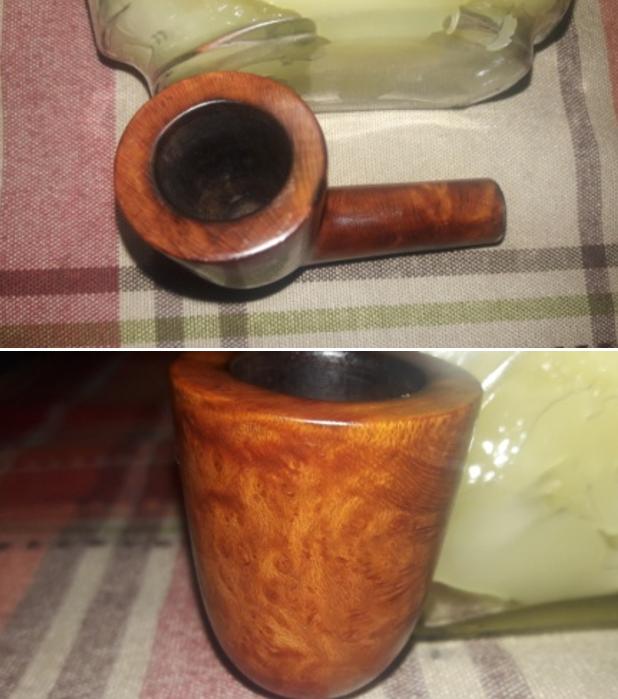
Note: I was careful to maintain a very thin layer of glue over the cracked surface as it would lend additional support and rigidity to the cracked area. Also, I was extra careful while sanding the inside of the stem opening for the tenon to achieve a smooth and even surface for the seating of the tenon.One of the probable causes for the cracks over the tenon end of the stem could have been a very tight fitting tenon. I lightly sand the smooth end of the Delrin tenon with a folded piece of 220 grit sandpaper to achieve a snug fit (not tight and not very loose) in to the stem opening for the tenon. I frequently checked for the seating as I did not want to open up the cracks again. At this stage I am very pleased with the stem repairs and the seating of the Delrin tenon in to the stem.

Note: While sanding the smooth end of the Delrin tenon, one has to be careful and ensure an even all around sanding of tenon as it directly affects the seating of the tenon in to the mortise and thus the seating of the stem face against the shank.  Next I dry sand the entire stem surface using 600 and 800 grit sand papers followed by wet sanding with 1000 grit sandpaper. This serves to reduce the sanding marks of the more abrasive sand papers. I also sharpened the button edges with the sand papers. I wiped the stem with a cotton swab and alcohol to remove all the oxidation and sanding dust from the surface.I followed up the sanding regime with micromesh polishing to bring a shine on the stem surface. I wet sand the stem with 1500 to 12000 girt micromesh pads. I rub a small quantity of olive oil (though not necessary for acrylic stem) in to the stem surface to hydrate it and set it aside. The stem looks nice and shinning.Now, on to the home stretch!! I very excited to see the result of the final polishing cycle with Blue Diamond and carnauba wax.

To apply the finishing touches, I first mount a cotton cloth buffing wheel on to my hand held rotary tool and apply a coat of Blue Diamond to the stummel and the stem to polish out the minor scratches. With a cotton buffing wheel that I use for carnauba wax, I apply a coat of carnauba wax and continue to work on it till the complete coat of wax had been polished out. I mount a clean cotton cloth buffing wheel and give the entire pipe a once over buff. I finished the restoration by giving the entire pipe a rigorous hand buffing using a microfiber cloth to raise the shine further. The finished pipe looks fantastic, the beauty of which is accentuated by its classic shape, size and hand feel. P.S. The stem repairs are solid and with a little care while handling, this pipe should last a few more decades. This pipe is all set for a new home and is now truly ready for a long hiatus with a new piper, providing years of service in future.

Thank you all for reading through this write up and for the valuable time you have invested in doing so. If any reader is interested in adding this pipe to his/ her pipe rotation, feel free to contact me at deshpandeparesh@yahoo.co.in

Breathing Life into a well carved Meerschaum Bent Billiard


Blog by Steve Laug

I have finished restoring quite a few of the pipes in this collection that we purchased from the older gentleman. He sent me the photos and I was amazed at what I saw. You have seen many of the pipes that he had. These included Dunhill, BBB, Orlik, Barclay Rex, a cased Ben Wade, an H. Simmons all briar, Hardcastles and some Meerschaums. There were also some assorted others that I will get to in the days ahead. It was a great collection.

The next pipe I have chosen is a worn and dirty looking Bent Meerschaum Billiard. It is the first [top] of the three meerschaum pipes in the photo above. There was a thick cake in the bowl and the rim top and edges were told buried under a thick coat of lava. It was filthy both inside and out. The shape probably caught my eye because it is quite lovely even under the grime and wear. The stem is yellow acrylic and it is chipped and damaged. The exterior of the bowl had a lot of debris in the rustication around the bowl. The stem had tooth chatter on the top and underside near the button. This was another well loved pipe that obviously been a good smoker!
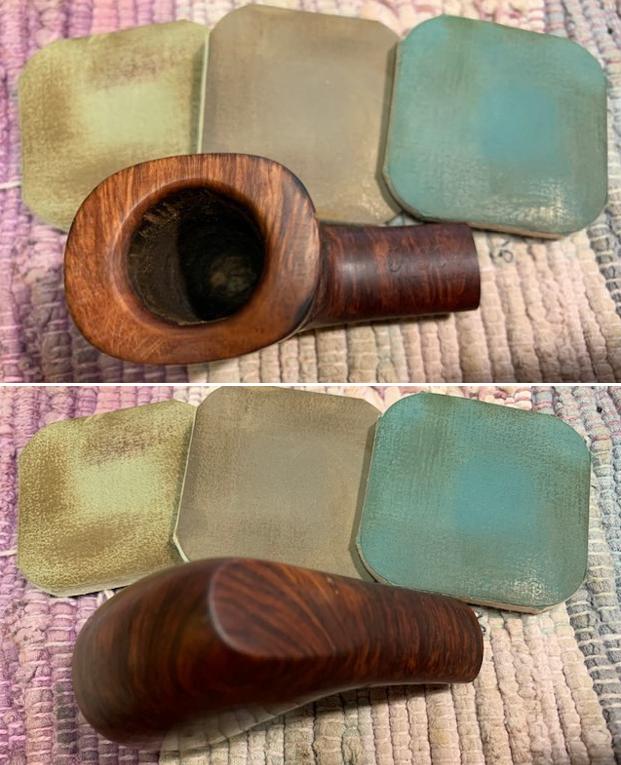
Jeff took some photos of the Meerschuam Bent Billiard before he worked his magic in cleaning up the pipe. It is a an interesting pipe with a lot of potential and what appears to be some great grain under the grime and debris of the years. Jeff took photos of the bowl, rim top to show the thickness of the cake in the bowl and the thick lava on the rim top. The rim top and inner edge are so thickly covered that it is hard to know their condition. All of the issues will become clearer after the clean up. He took photos of the top and underside of the acrylic stem showing the tooth chatter on both sides and the chip out of the underside of the stem on the right.   Jeff also took some photos of the threaded metal tenon in the shank and the threaded inside of the stem to show the appearance and condition of both.Jeff took photos of the sides and heel of the bowl to show the condition of the rustication. You can see the beautiful shape of the bowl and some interesting patterns in the meerschaum even through the dirt and debris of many years. This unstamped Meerschaum Bent Billiard is an interesting looking pipe. There appears to be a JW written on both the face of the shank and stem. Because the old gentleman that we bought the pipes from intimated that he purchased his pipes at the Manhattan Barclay-Rex store I would imagine that he may have purchased this one from them as well. I was unable to pin down any information regarding the date this pipe so it was time to move on and work on the pipe.

Jeff carefully cleaned the pipe. He reamed it with a PipNet pipe reamer and then cleaned up the reaming with a Savinelli Fitsall Pipe Knife. He scrubbed out the internals of the shank, stem and shank extension with alcohol, pipe cleaners and cotton swabs until the pipe was clean. He scrubbed the exterior of the bowl with Murphy’s Oil Soap and a tooth brush to remove the grime and grit on the briar and lava on the rim top. The finish looks much better and has a deep richness in the colour that highlights the dimensions of the rustication. The edges looked good otherwise. He scrubbed the acrylic stem with Soft Scrub to remove the grime and oils on the stem. When the pipe arrived here in Vancouver I was amazed that it looked so good. Here are some photos of what I saw. I took some close up photos of the rim top and the stem surface. The top and inner and outer edge of the rim showed some darkening/heavy tars and damage. The stem had tooth marks and chatter on both sides near the button.I removed the stem from the shank and took a photo of the parts of the pipe. I started my work on the pipe by polishing the smooth rim top with micromesh sanding pads – dry sanding with 1500-12000 grit sanding pads. I wiped the bowl down after each pad with a damp cloth to remove the sanding debris. I worked some Before & After Restoration Balm into the surface of the bowl and shank with my fingertips to clean, enliven and protect the smooth surfaces of the meerschaum. I let the balm sit for 15 minutes and then buffed with a cotton cloth to raise the shine. The photos show the bowl at this point in the restoration process. I filled in the large chip on the right underside with clear CA glue, layering it on to repair both the stem ahead of the button and building up the button. I set it aside to cure. Once it cured I sanded it smooth with 220 grit sandpaper and started the polishing with 400 grit wet dry sandpaper. I polished the stem with micromesh sanding pads – dry sanding with 1500-12000 grit sanding pads. I wiped it down after each sanding pad with Obsidian Oil. I polished it with Before & After Pipe Stem Polish – both Fine and Extra Fine. I gave it a final coat of Obsidian Oil. It looks significantly better and is smooth but the repairs show! With the bowl and the stem finished I put the beautiful Meerschaum Bent Billiard back together and buffed it lightly on the wheel using Blue Diamond to give it a shine. I gave the stem multiple coats of carnauba wax on the wheel. I buffed the bowl with a horsehair shoe brush to raise the shine. I hand buffed it with a microfiber cloth to deepen the shine. The smooth and carved finish is a great looking. The dimensions of the pipe are – Length: 6 inches, Height: 1 ¾  inches, Outside diameter of the bowl: 1 ¼ inches, Chamber diameter: ¾ of an inch. The weight of this large pipe is 1.27 ounces /36 grams. This Meerschaum Bent Billiard is another great find from this collection. It is much more beautiful in person than these photos can capture. I will be adding it to the rebornpipes store soon. If you want to add it to your collection it will make a fine smoking addition. This is another pipe that has the possibility of transporting the pipe man or woman back to a slower paced time in history where you can enjoy a respite. Thanks for walking through the restoration with me.

Breathing Life into a Rusticated Meerschaum Prince


Blog by Steve Laug

I have finished restoring quite a few of the pipes in this collection that we purchased from the older gentleman. He sent me the photos and I was amazed at what I saw. You have seen many of the pipes that he had. These included Dunhill, BBB, Orlik, Barclay Rex, a cased Ben Wade, an H. Simmons all briar, Hardcastles and some Meerschaums. There were also some assorted others that I will get to in the days ahead. It was a great collection.

The next pipe I have chosen is a worn and dirty looking rusticated Meerschaum Prince. It is the middle of the three meerschaum pipes in the photo above. There was a thick cake in the bowl and the rim top and edges were told buried under a thick coat of lava. It was filthy both inside and out. The shape probably caught my eye because it is quite lovely even under the grime and wear. The stem is yellow acrylic and it was a complete mess. The exterior of the bowl had a lot of debris in the rustication around the bowl. The stem had tooth marks on the top and underside near the button. This was another well loved pipe that obviously been a good smoker!

Jeff took some photos of the Rusticated Meerschaum Prince before he worked his magic in cleaning up the pipe. It is a an interesting pipe with a lot of potential and what appears to be some great grain under the grime and debris of the years. Jeff took photos of the bowl, rim top to show the thickness of the cake in the bowl and the thick lava on the rim top. The rim top and inner edge are so thickly covered that it is hard to know their condition. It appears that there were nicks and chips on the rim top. All of the issues will become clearer after the clean up. He took photos of the top and underside of the acrylic stem showing the tooth marks and chatter on both sides.   Jeff also took some photos of the threaded metal tenon in the shank and the threaded inside of the stem to show the appearance and condition of both.Jeff took photos of the sides and heel of the bowl to show the condition of the rustication. You can see the beautiful shape of the bowl and some interesting patterns in the meerschaum even through the dirt and debris of many years. This unstamped Meerschaum Prince is an interesting looking pipe. Because the old gentleman that we bought the pipes from intimated that he purchased his pipes at the Manhattan Barclay-Rex store I would imagine that he may have purchased this one from them as well. I was unable to pin down any information regarding the date this pipe so it was time to move on and work on the pipe.

Jeff carefully cleaned the pipe. He reamed it with a PipNet pipe reamer and then cleaned up the reaming with a Savinelli Fitsall Pipe Knife. He scrubbed out the internals of the shank, stem and shank extension with alcohol, pipe cleaners and cotton swabs until the pipe was clean. He scrubbed the exterior of the bowl with Murphy’s Oil Soap and a tooth brush to remove the grime and grit on the briar and lava on the rim top. The finish looks much better and has a deep richness in the colour that highlights the dimensions of the rustication. The edges looked good otherwise. He scrubbed the acrylic stem with Soft Scrub to remove the grime and oils on the stem and chewed stem end. When the pipe arrived here in Vancouver I was amazed that it looked so good. Here are some photos of what I saw. I took some close up photos of the rim top and the stem surface. The top and inner and outer edge of the rim showed some darkening/heavy tars and damage. The stem had tooth marks and chatter on both sides near the button.I removed the stem from the shank and took a photo of the parts of the pipe. I started my work on the pipe by addressing the damage and tars on the rim top and edges of the bowl. I topped it on a topping board with 220 grit sandpaper. I cleaned up the inner edge with a piece of 220 grit sandpaper.I polished the smooth rim top with micromesh sanding pads – dry sanding with 1500-12000 grit sanding pads. I wiped the bowl down after each pad with a damp cloth to remove the sanding debris. I worked some Before & After Restoration Balm into the surface of the bowl and shank with my fingertips to clean, enliven and protect the briar. I let the balm sit for 15 minutes and then buffed with a cotton cloth to raise the shine. The photos show the bowl at this point in the restoration process. I “painted” the stem surface with the flame of a Bic lighter to lift them. I have tried it before on acrylic stems but it has never worked and still did not. I filled in the tooth marks with clear CA glue and set it aside to cure. Once it cured I sanded it smooth with 220 grit sandpaper and started the polishing with 400 grit wet dry sandpaper. I polished the stem with micromesh sanding pads – dry sanding with 1500-12000 grit sanding pads. I wiped it down after each sanding pad with Obsidian Oil. I polished it with Before & After Pipe Stem Polish – both Fine and Extra Fine. I gave it a final coat of Obsidian Oil. It looks significantly better and is smooth but the repairs show! With the bowl and the stem finished I put the beautiful Rusticated Meerschaum Prince back together and buffed it lightly on the wheel using Blue Diamond to give it a shine. I gave the stem multiple coats of carnauba wax on the wheel. I buffed the pipe with a horsehair shoe brush to raise the shine. I hand buffed it with a microfiber cloth to deepen the shine. The smooth and rusticated finish is a great looking. The dimensions of the pipe are – Length: 4 ¾ inches, Height: 1 ½ inch, Outside diameter of the bowl: 1 ¼ inches, Chamber diameter: ¾ of an inch. The weight of this large pipe is 1.23 ounces /35 grams. This Rusticated Meerschaum Prince is another great find from this collection. It is much more beautiful in person than these photos can capture. I will be adding it to the rebornpipes store soon. If you want to add it to your collection it will make a fine smoking addition. This is another pipe that has the possibility of transporting the pipe man or woman back to a slower paced time in history where you can enjoy a respite. Thanks for walking through the restoration with me.