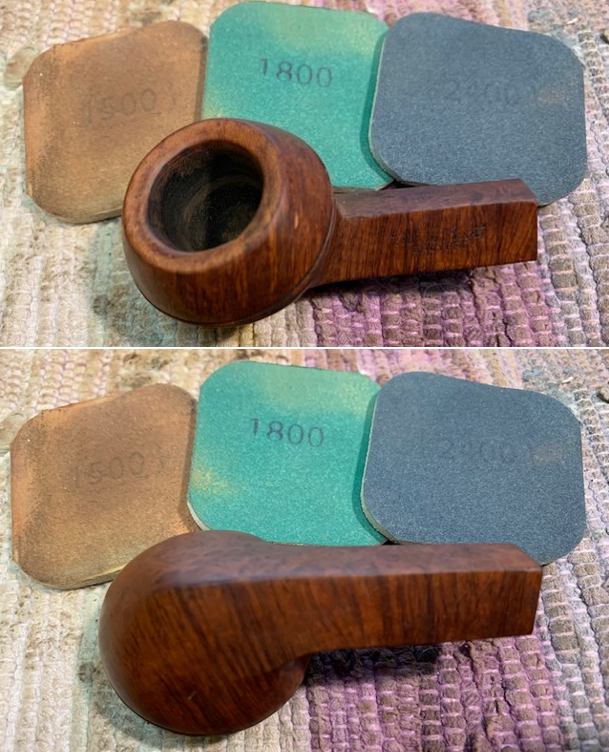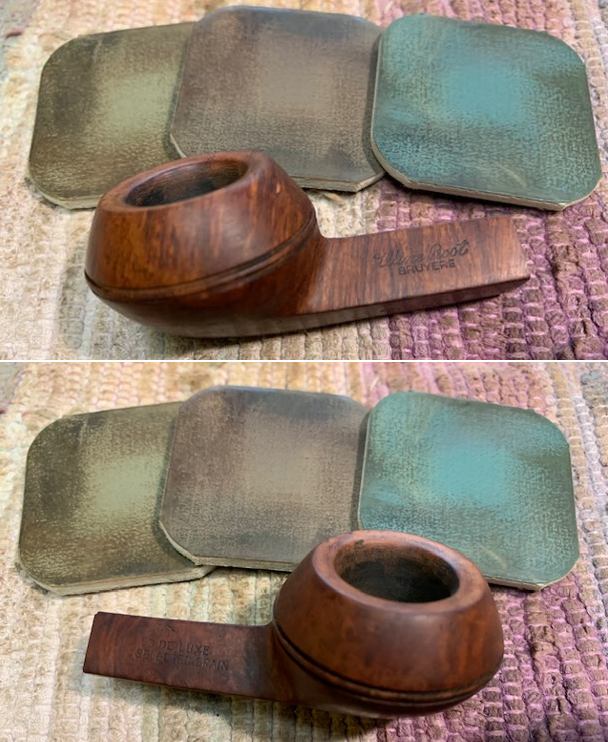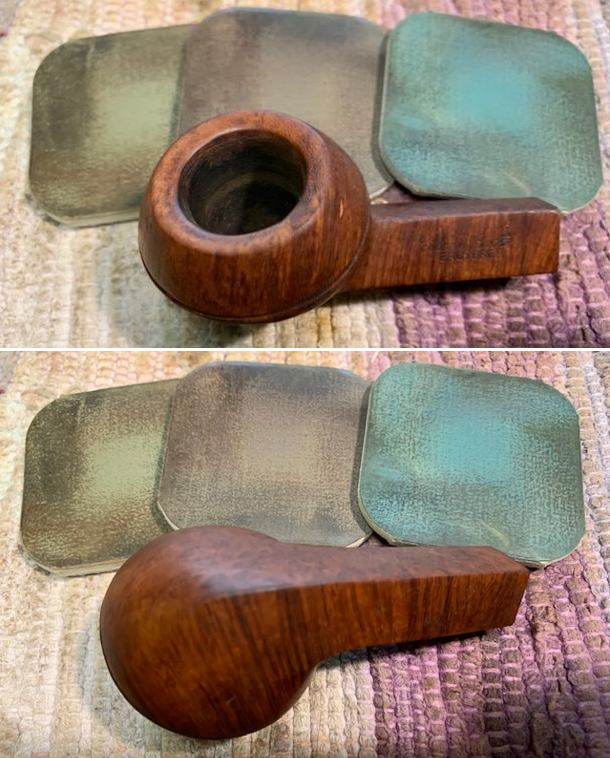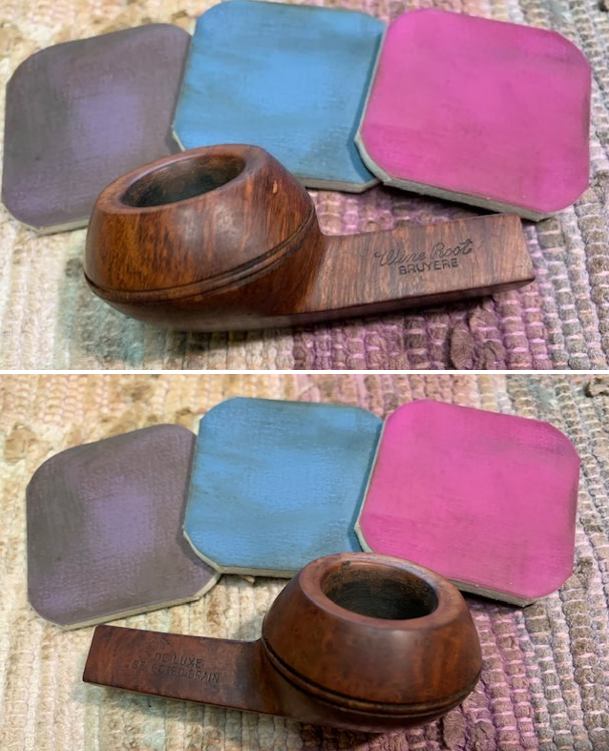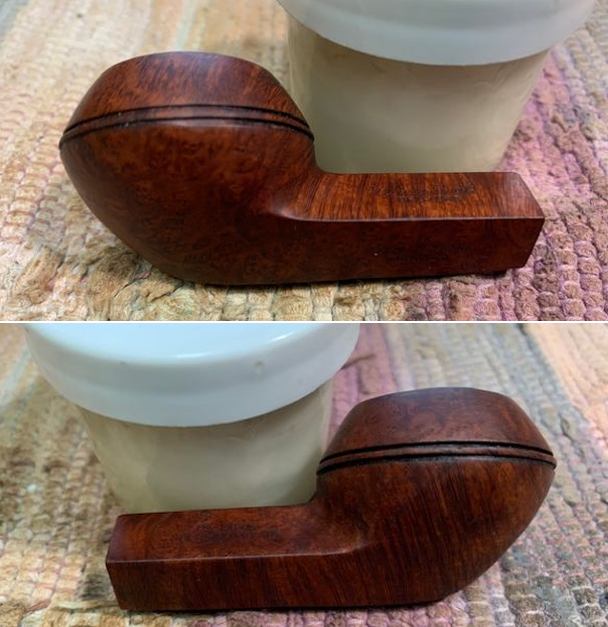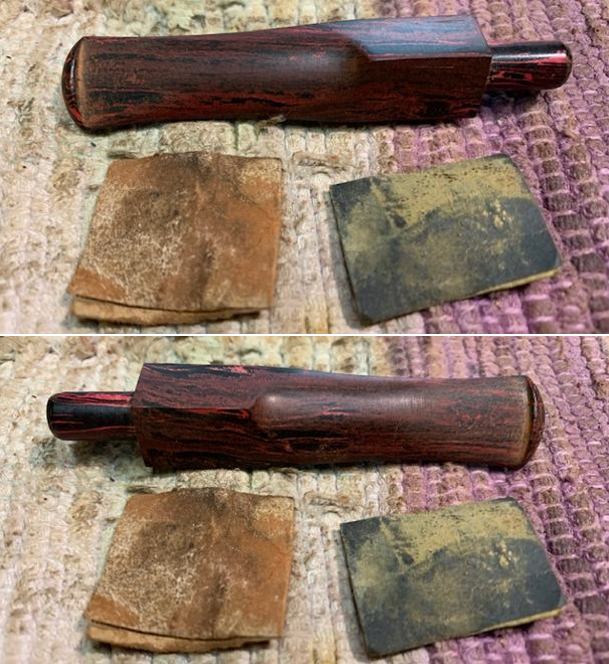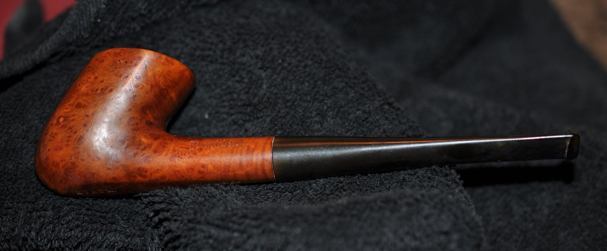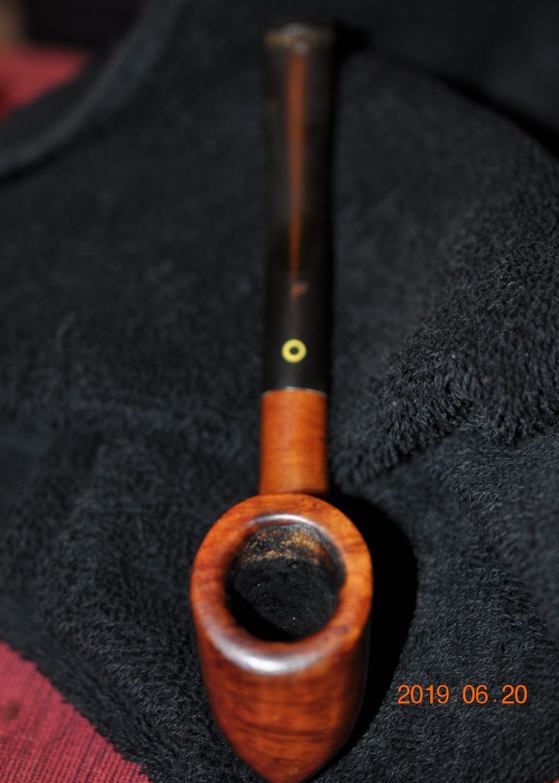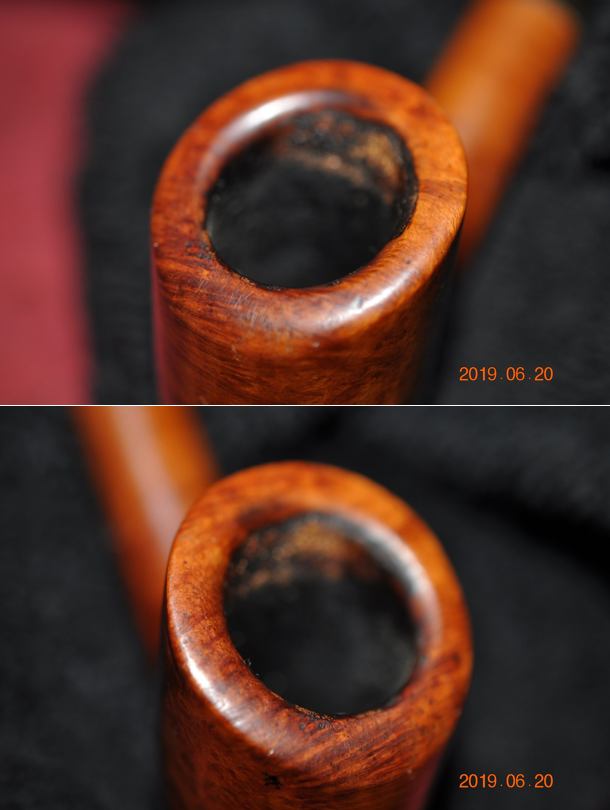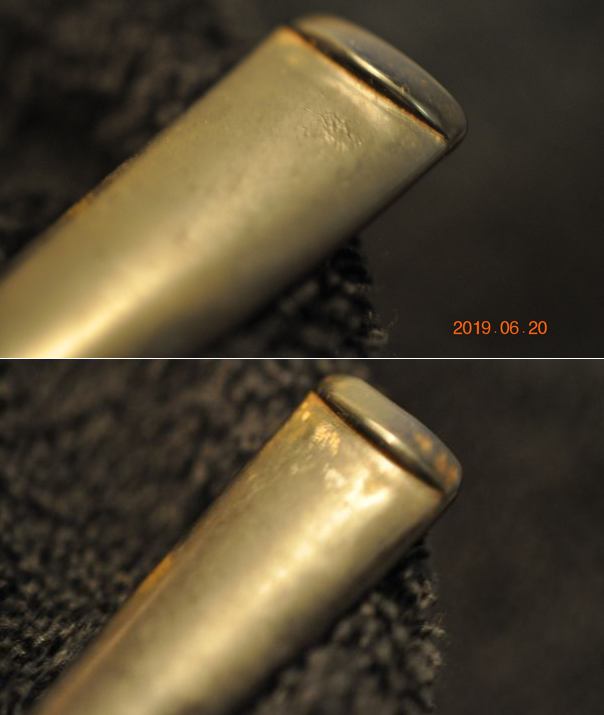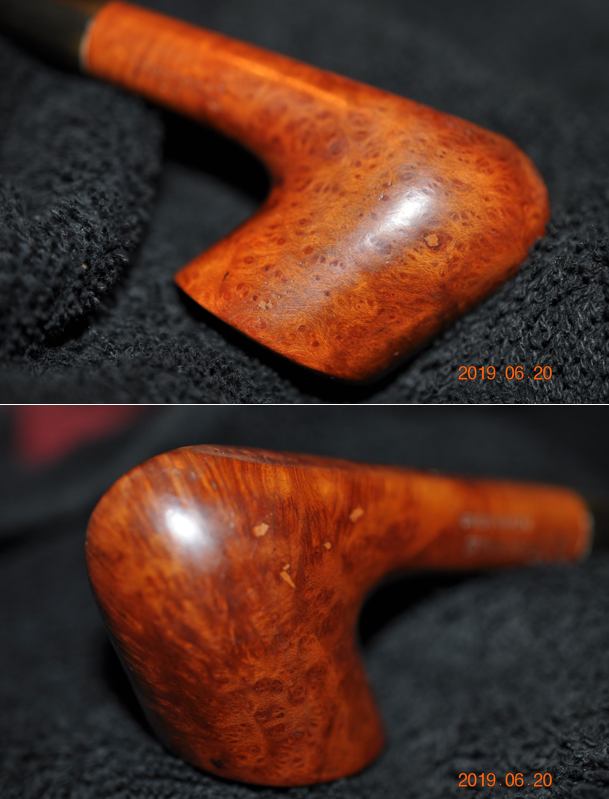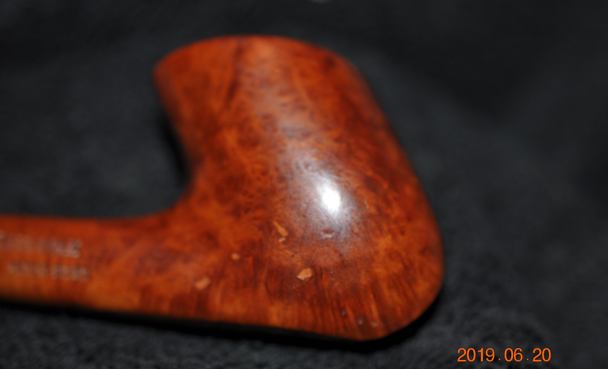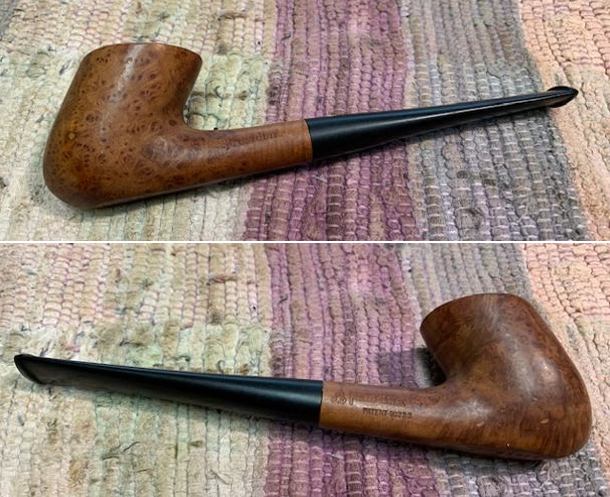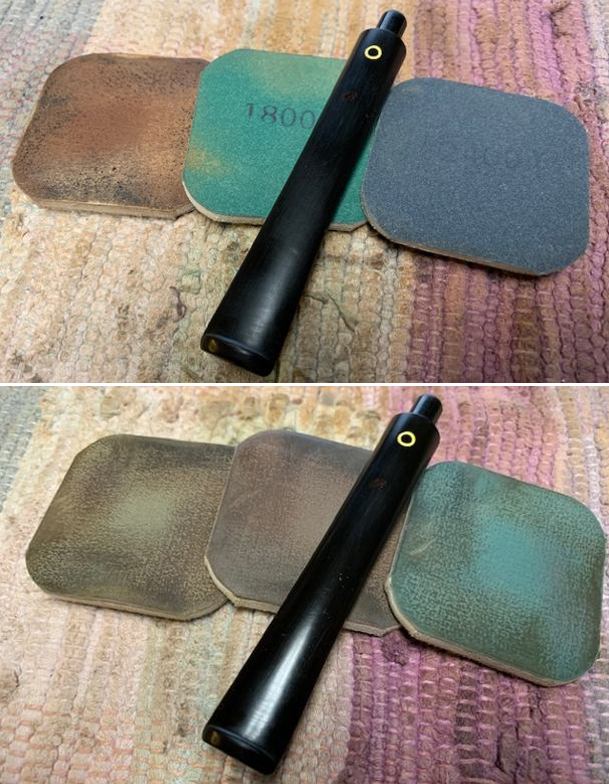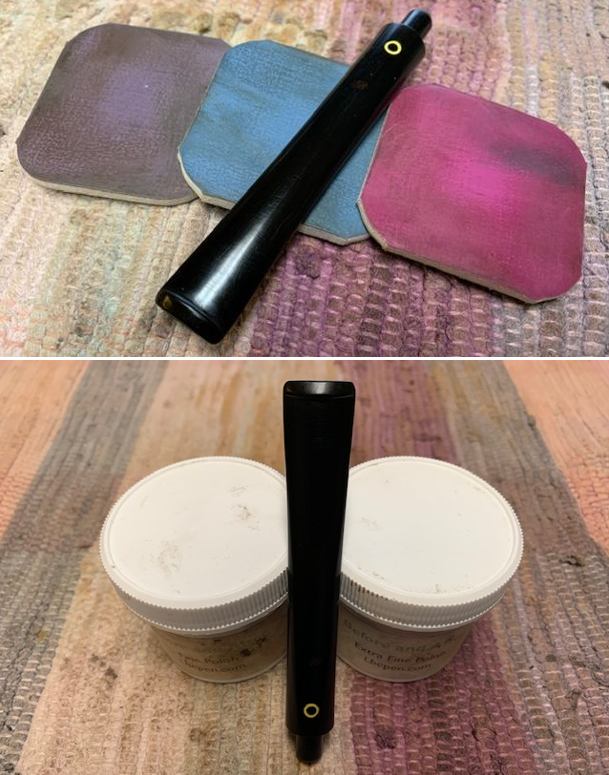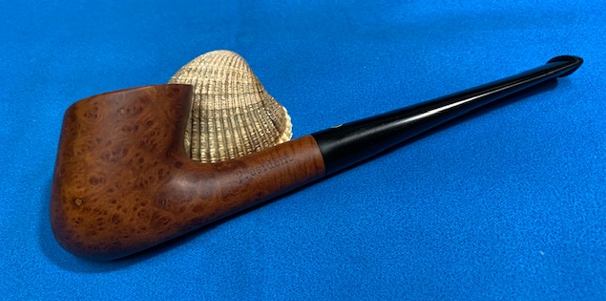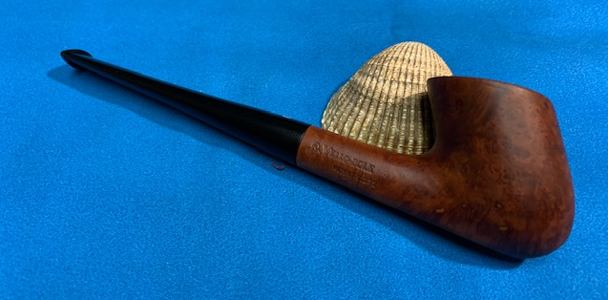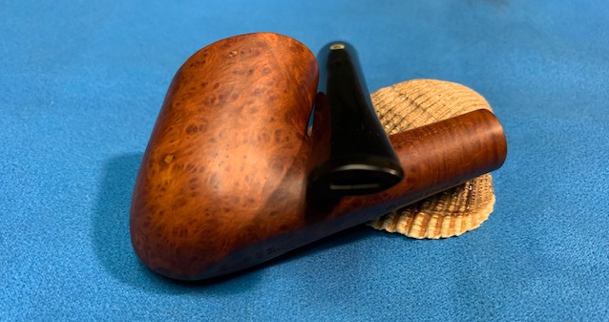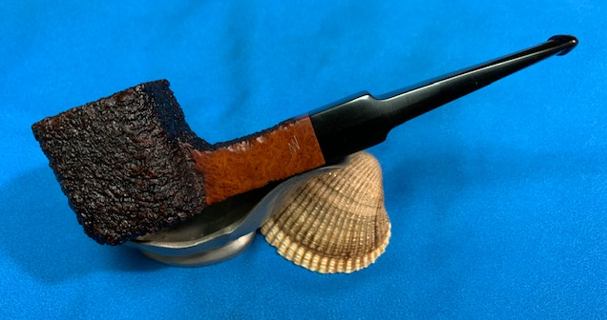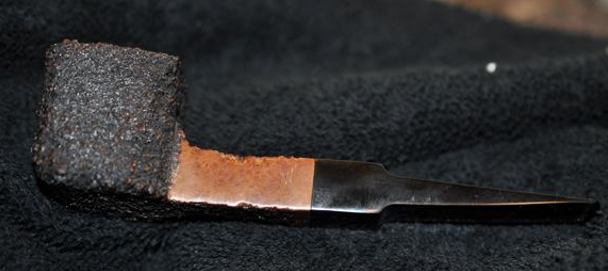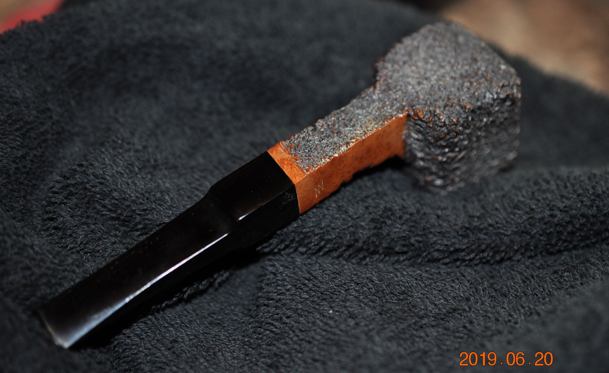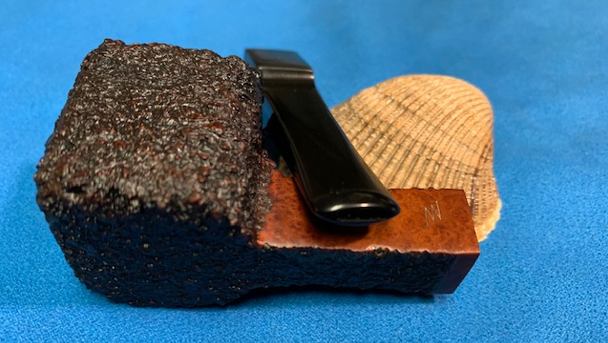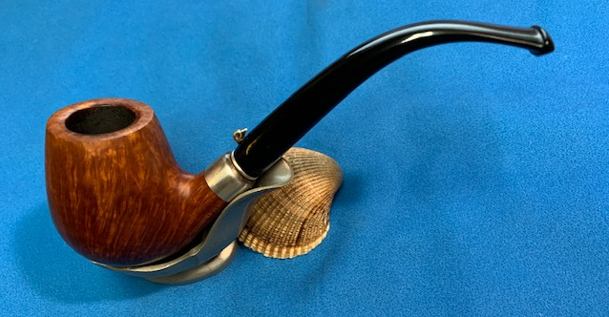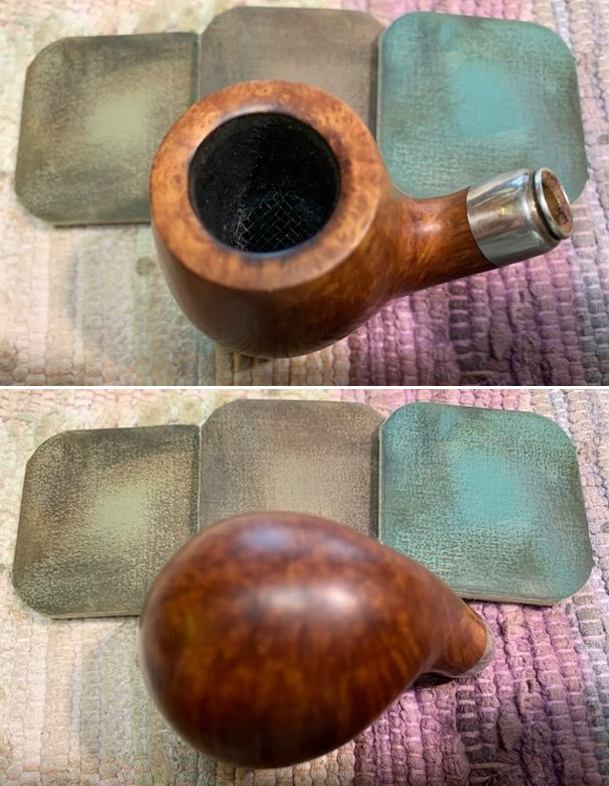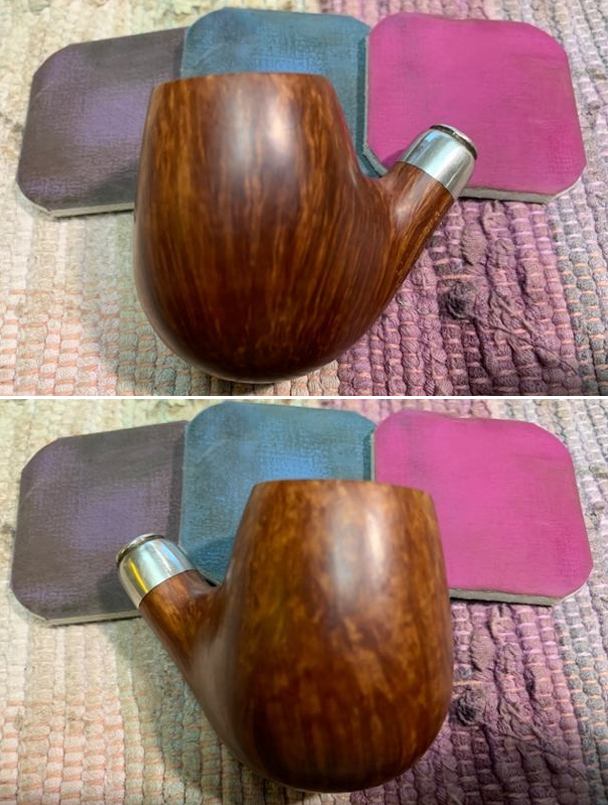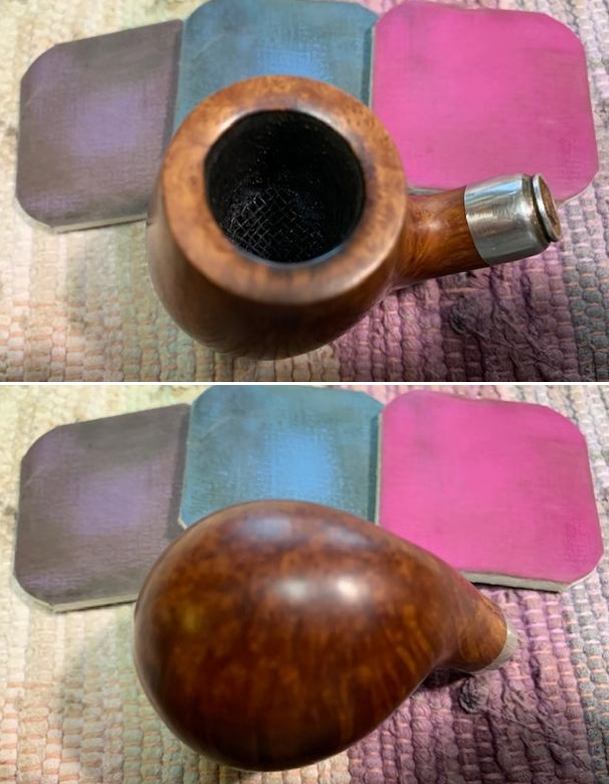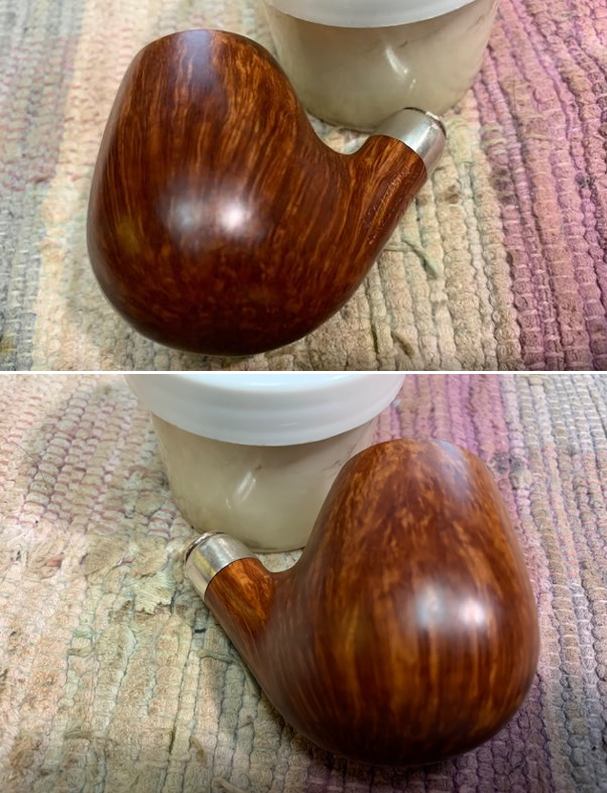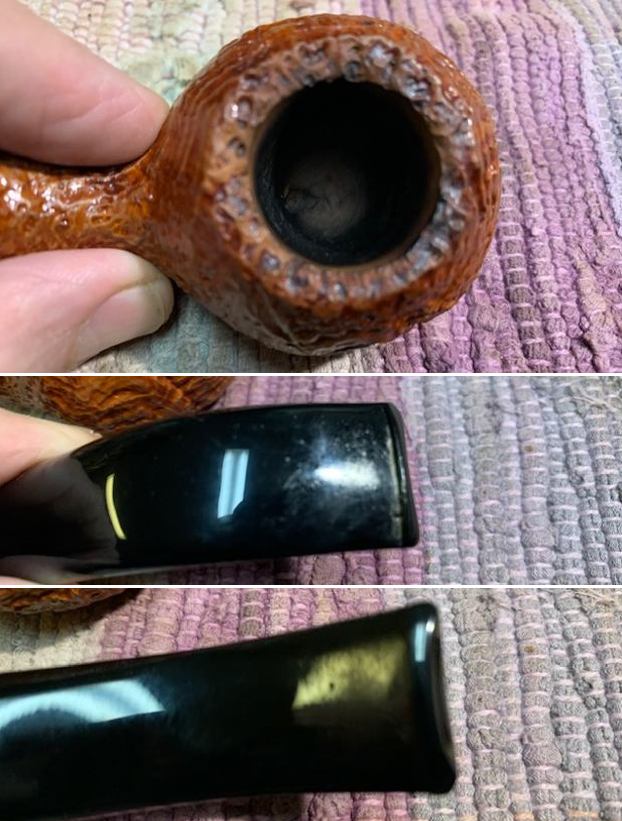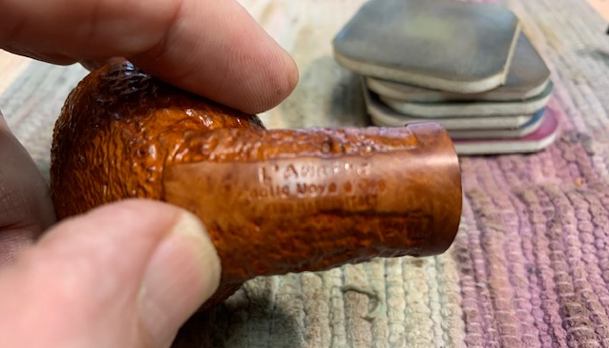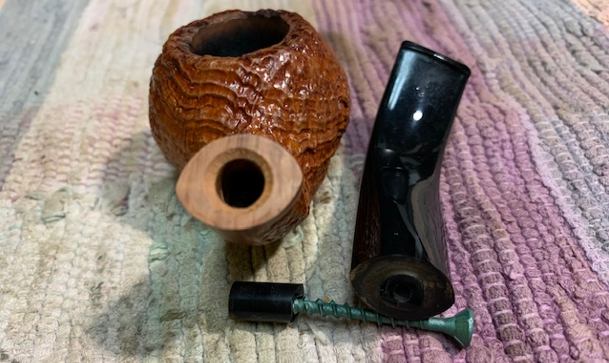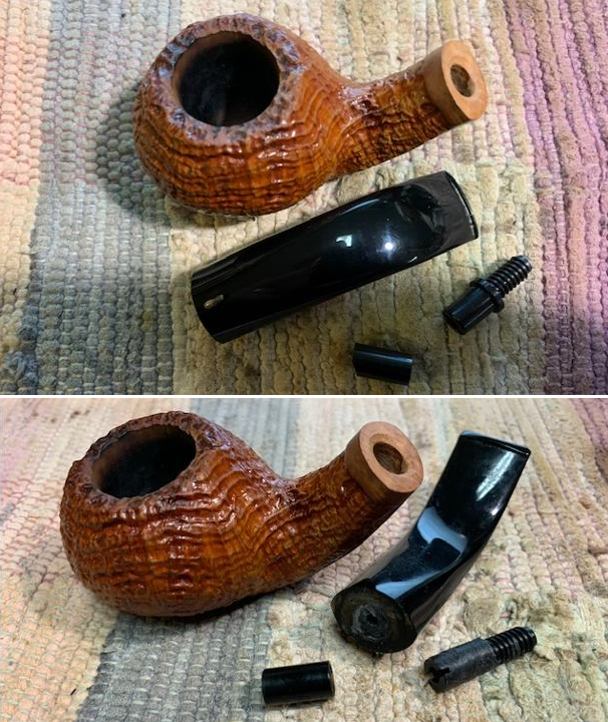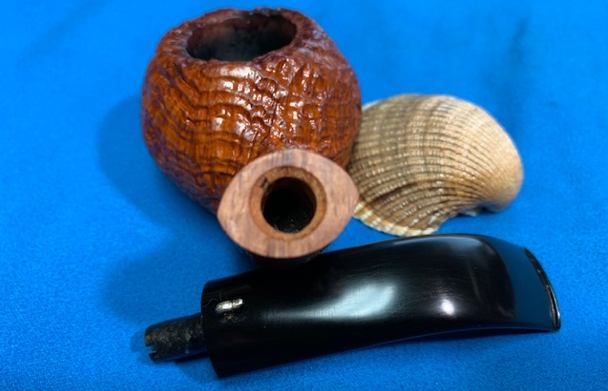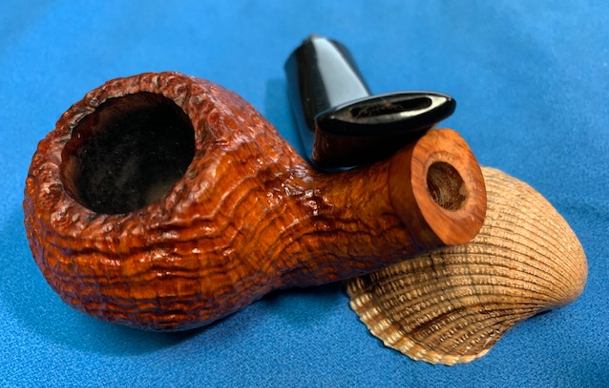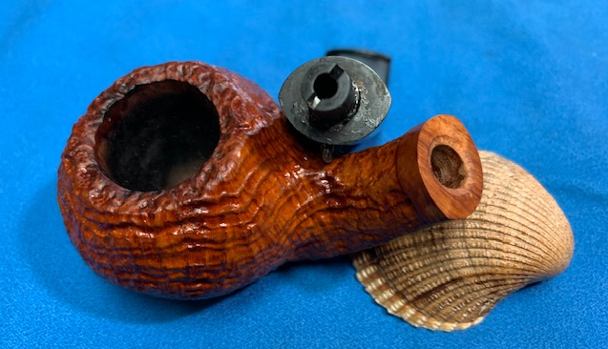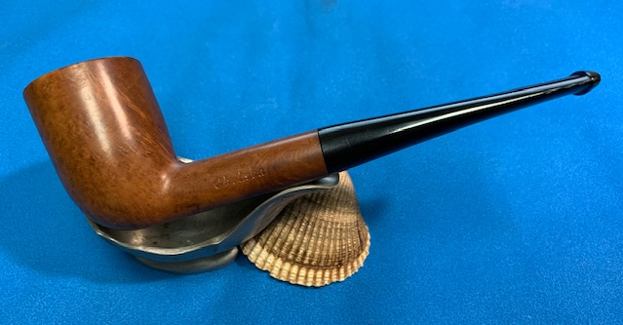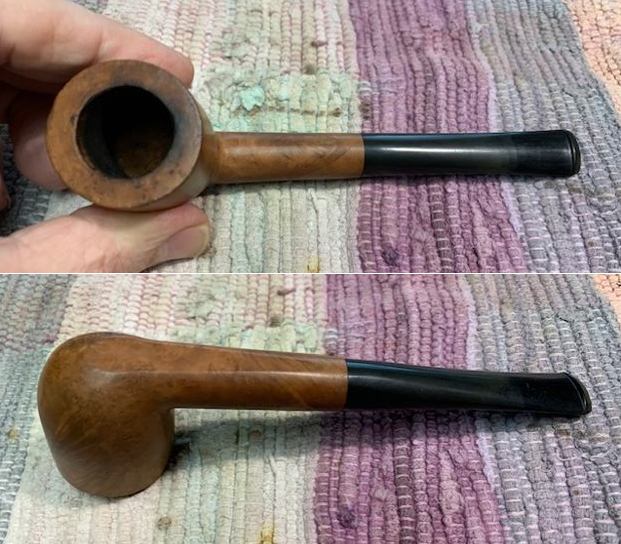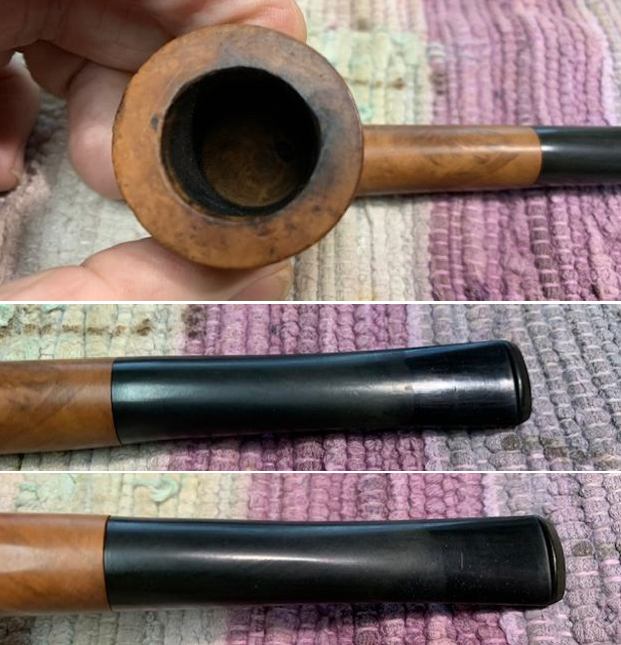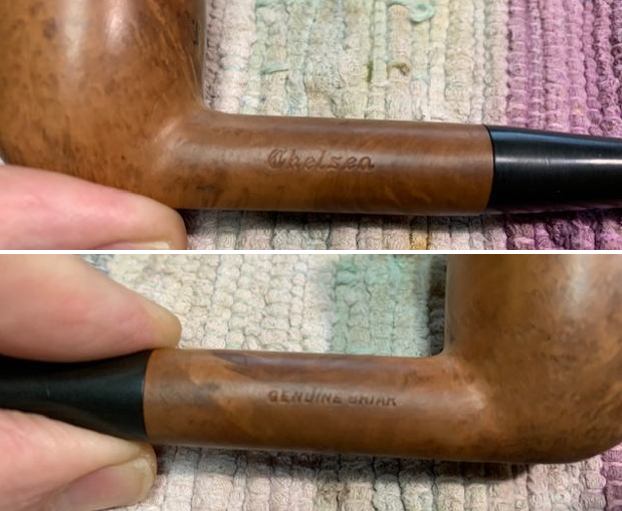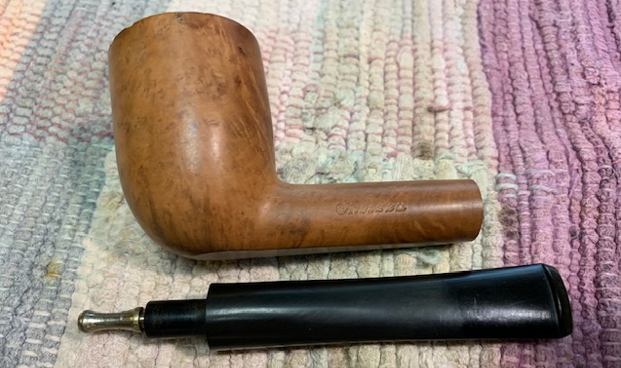
Tag Archives: stem work

Repairing An Interesting Surprise on a Beautiful Heritage Antique 73S Canadian


Blog by Steve Laug

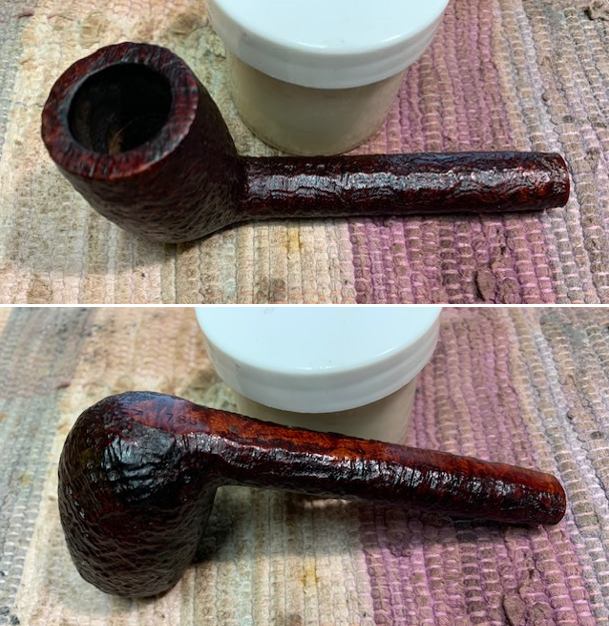
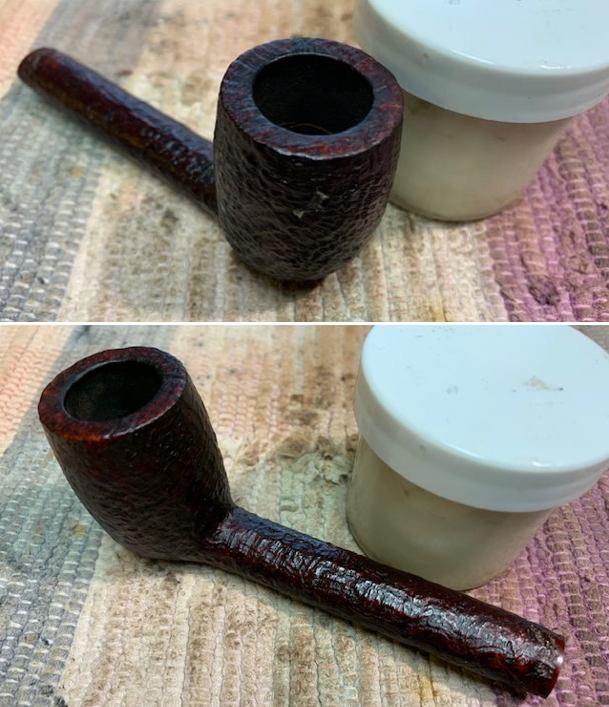
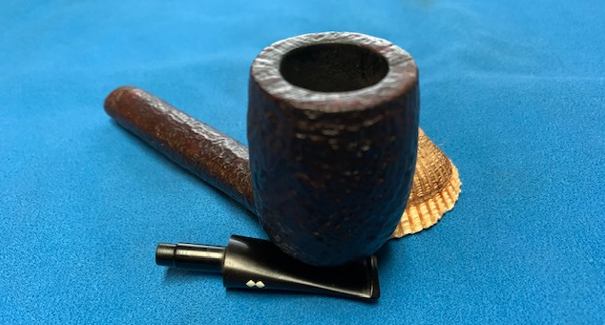
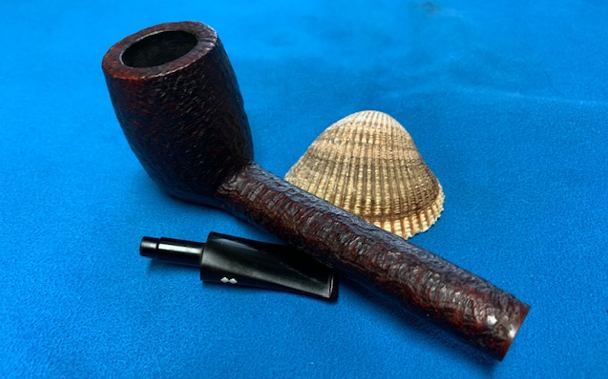
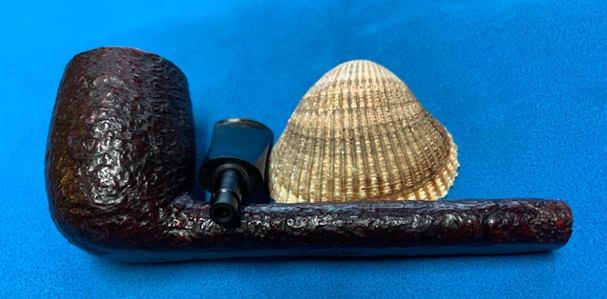
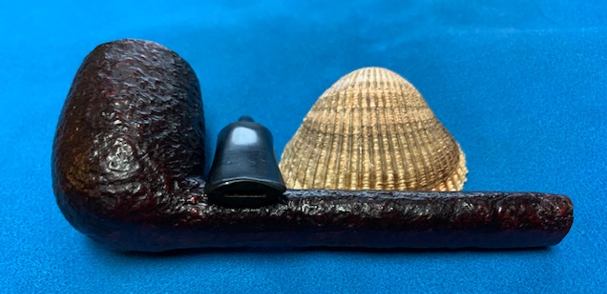
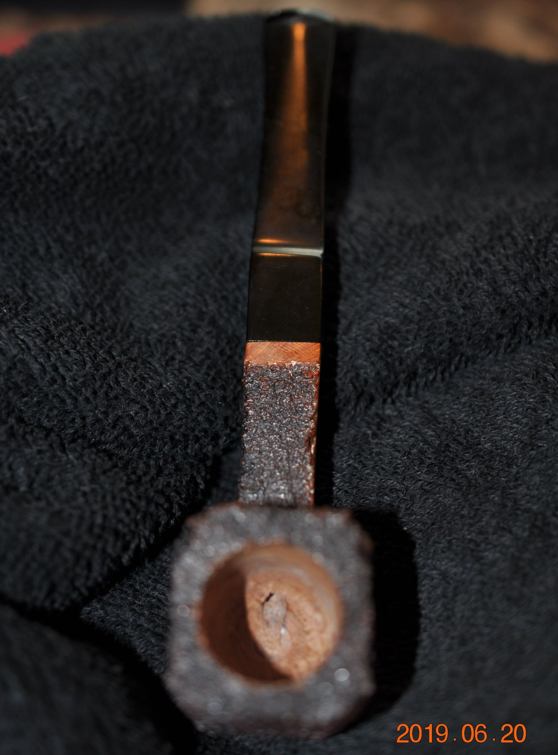
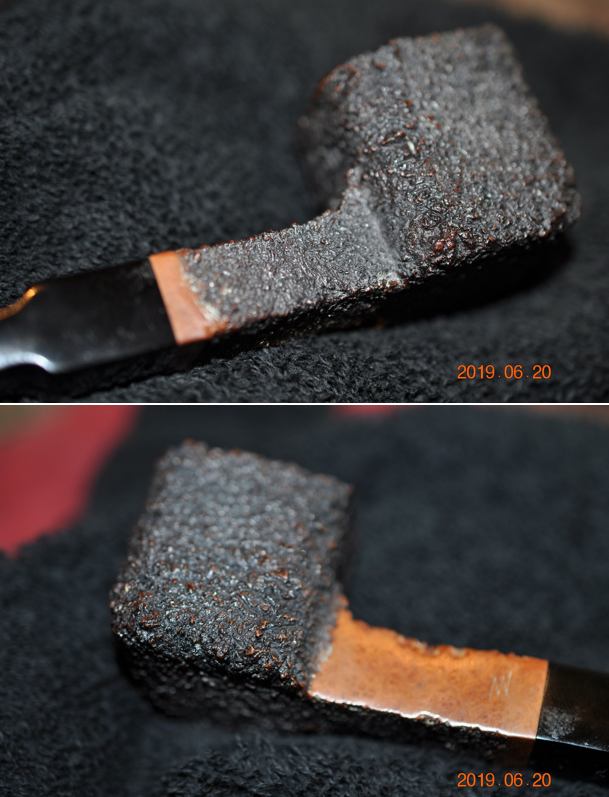
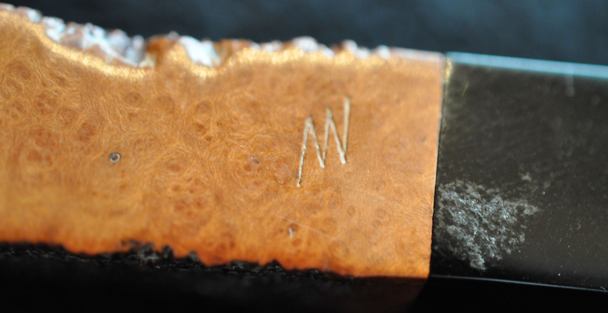
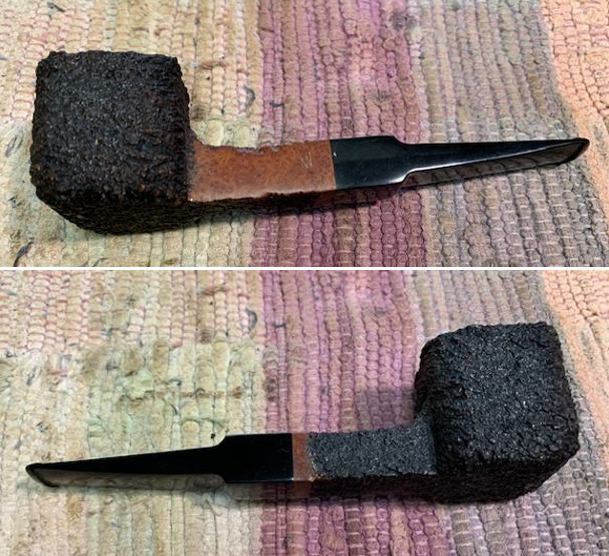
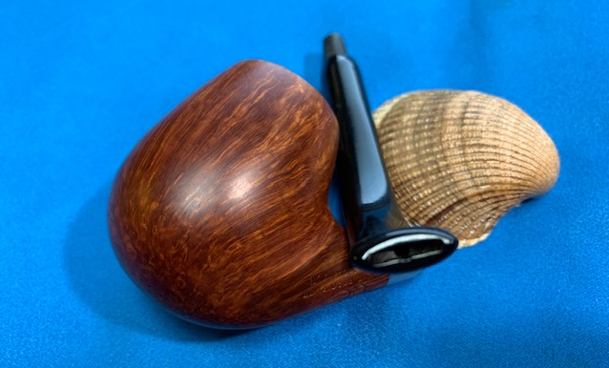
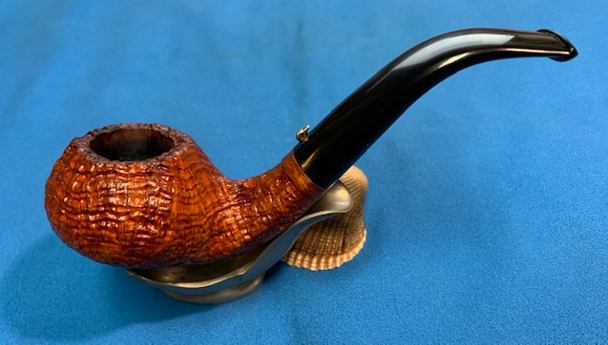
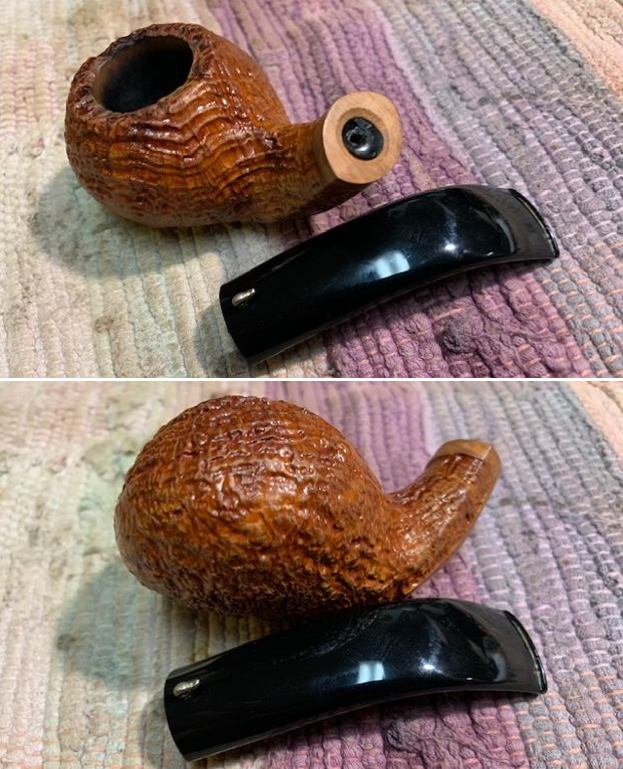
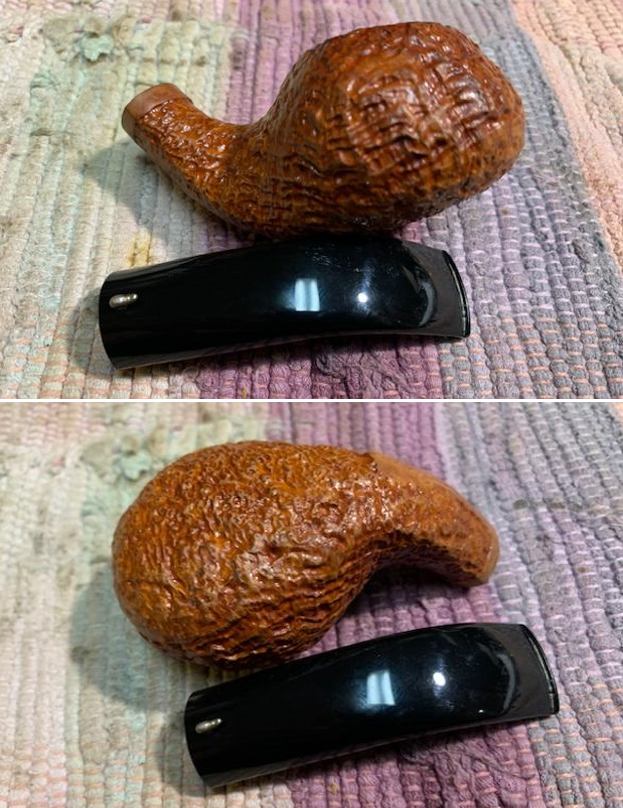
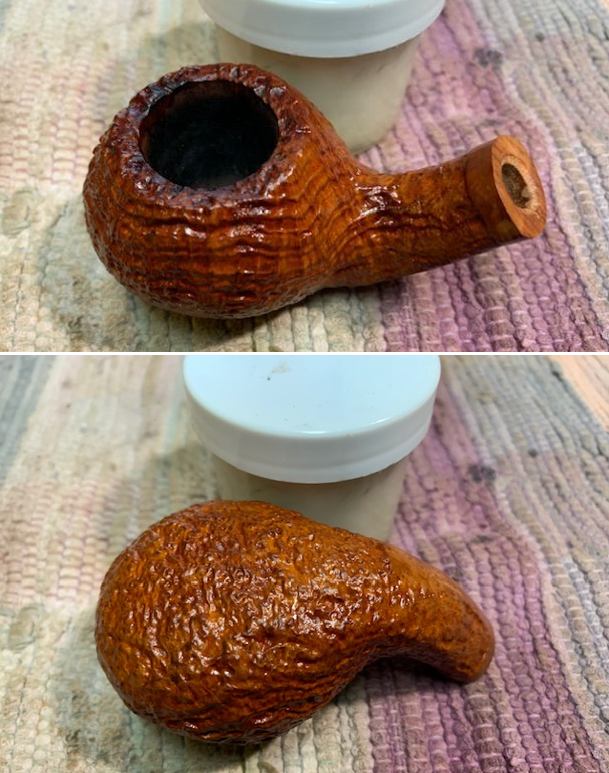
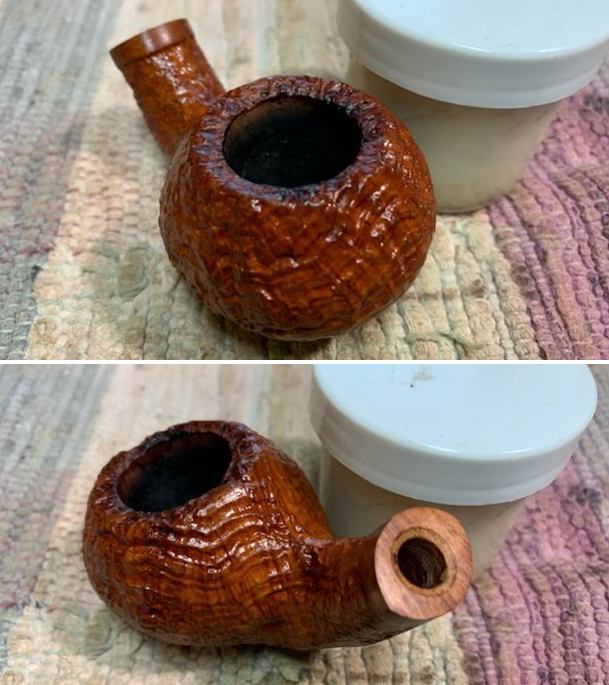
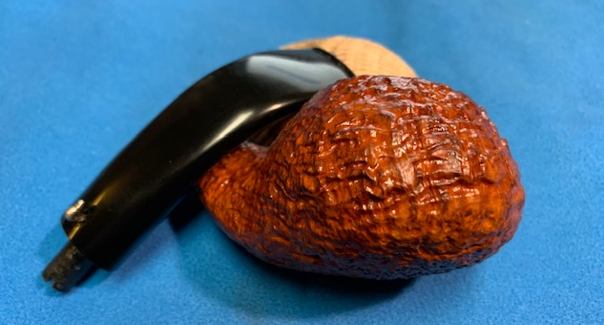
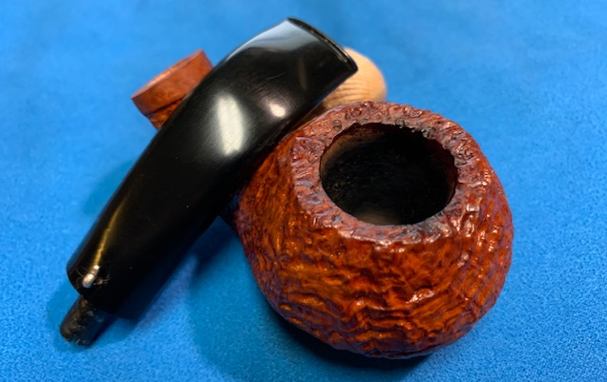
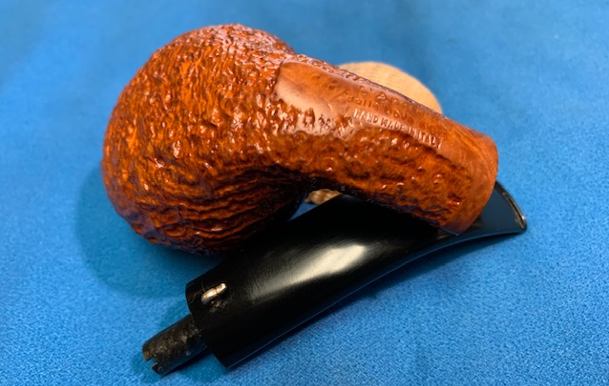
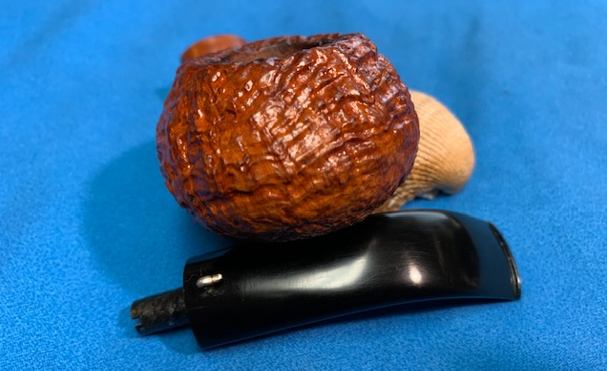
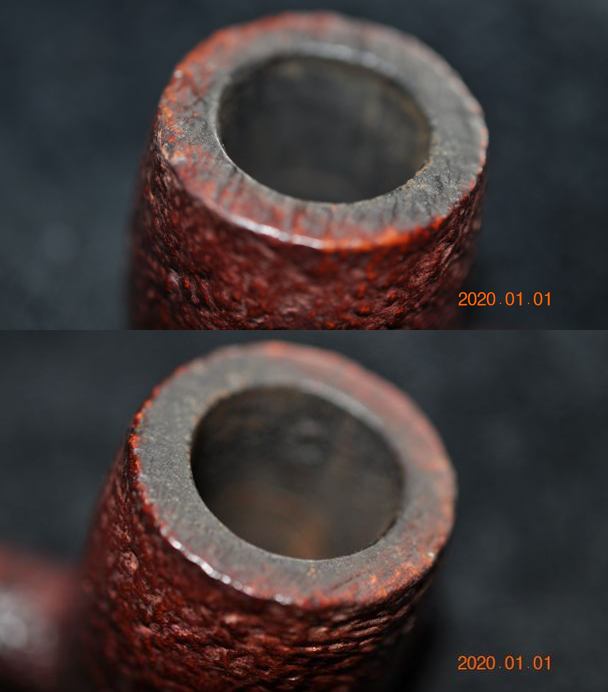
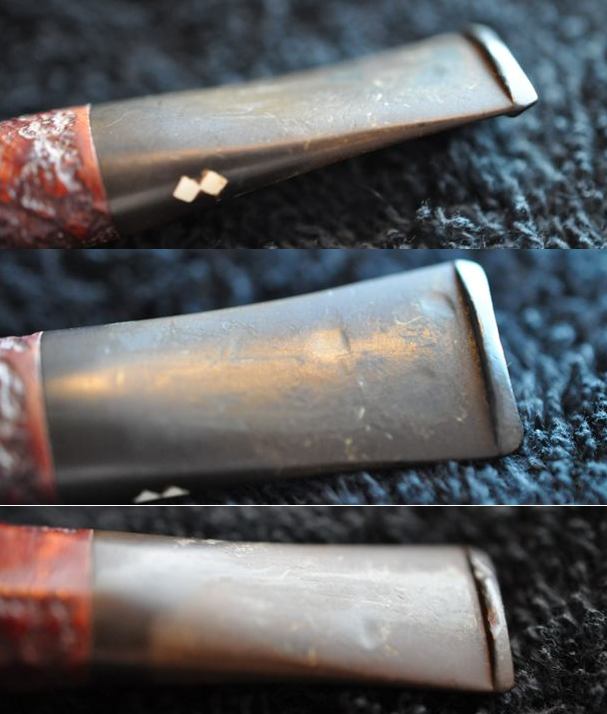
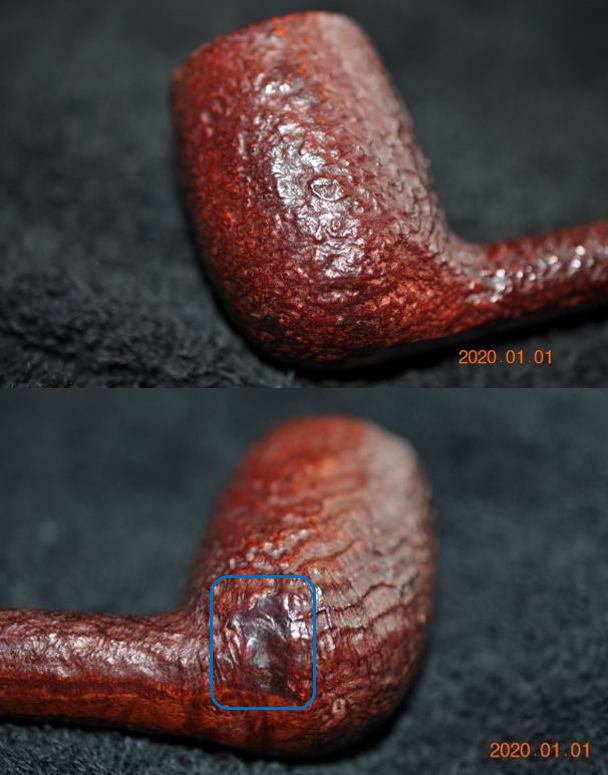
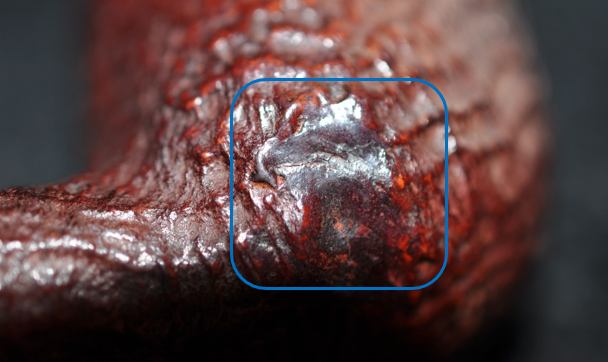
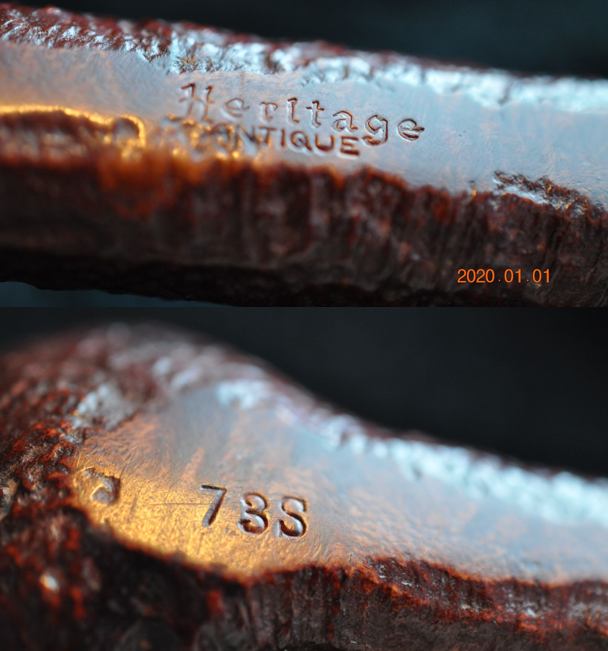
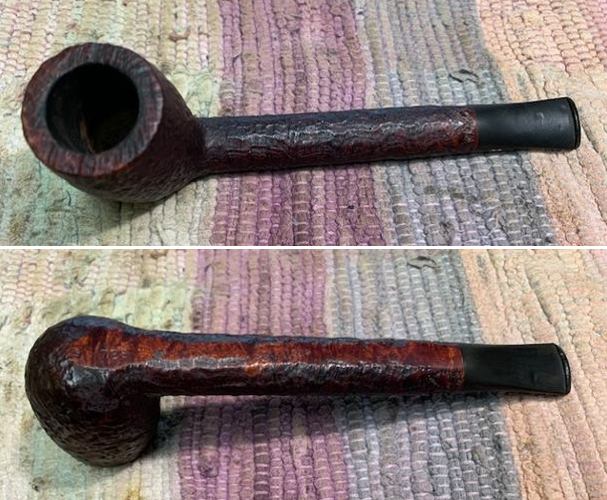
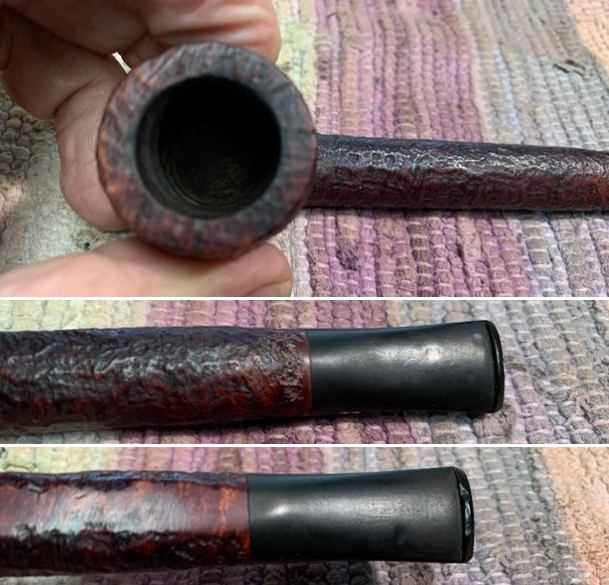
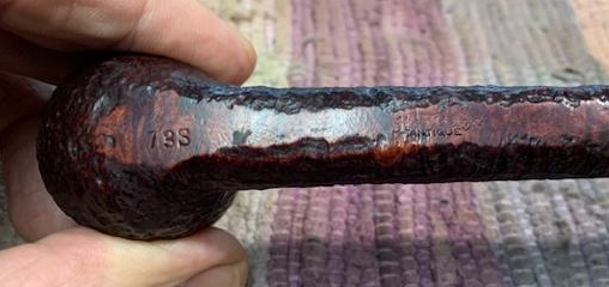
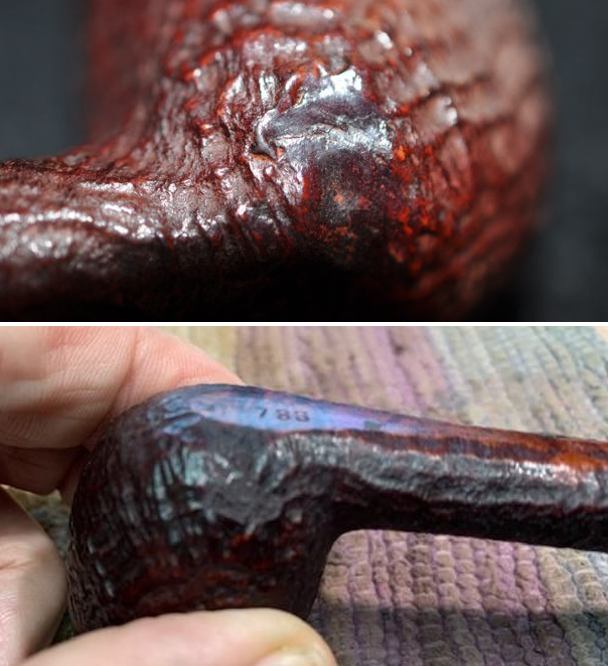
I have always had an interest in the Kaywoodie Made Heritage Pipe line. I really like the way they are made – both in terms of workmanship and style. They really made some amazing looking pipes and I always try to pick them up when I can. Jeff has also found this to be true so he is on the lookout for this brand in all of his pipe hunts and auction haunts. When this pipe became available to us late in 2019 from a fellow in Los Angeles, California, USA we bought it. It is stamped 73S on the heel of the bowl and Heritage [over] Antique on a smooth panel on the underside of the shank. The pictures of the sandblast showed it was well done. The finish was dirty and there was a thick cake in the bowl. It appeared that the bowl had been lightly reamed before it came to us. There was a lava overflow in the sandblast finish on the rim top that would need to go. There was the Heritage double diamond logo on the left side of the stem. The stem was oxidized and had deep tooth marks on both sides ahead of the button. All totaled it was still a beautiful pipe. We were hooked. Jeff took these photos before he started his clean up work. Jeff took photos of the bowl and rim top to show the condition that I noted in the description above. Even though it is very dirty you can see that the rim top and edges all look very good. The stem photos clearly show the oxidation and tooth marks on both sides. It would need some work. Jeff took photos of the sides of the bowl and heel to show the sandblast finish on the bowl. He also took photos of a strange looking area on the lower right side of the bowl. It appeared that there was a large flaw that had been filled in that area. It was obviously a dark putty and there were some small cracks in the middle area of the fill material. I drew a box around it in the second photo. I have worked on quite a few Heritage pipes and have never seen this before.Jeff took a close up photo of that area to show more clearly what we are speaking of. You can see the tiny cracks in the fill area toward the top of the repair. The patch material is dark and very hard so it should be repairable.The next photos show the stamping that I described in the opening paragraph. It is clear and readable.In other blogs on the brand I have given a bit of history on the Heritage Brand. I have included that here as well for ease of reference. Andrew Selkirk did a great job in researching a link to his work on the blog. Here is the link: https://rebornpipes.com/2014/12/23/refurbishing-a-heritage-heirloom/. I am including a brief summary of what he found in the next two short paragraphs to set the stage for the pipe on my work table.
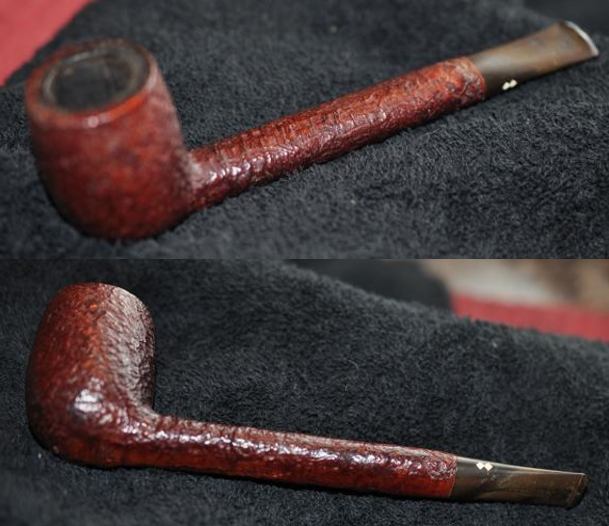
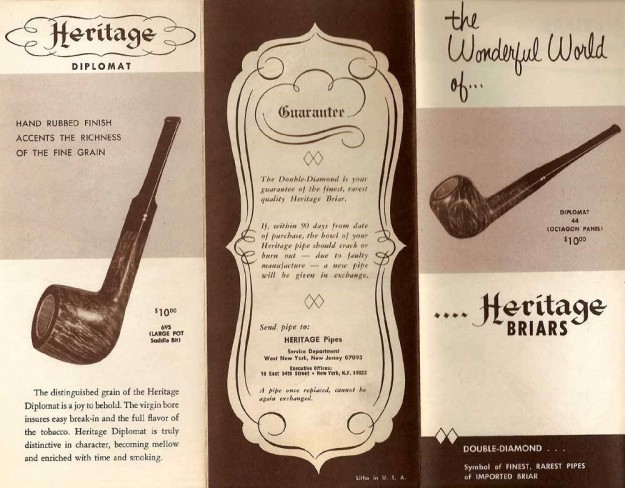
Heritage pipes were Kaywoodie’s answer to Dunhill. According to one of their brochures, Heritage pipes were made from “briar burls seasoned and cured for up to 8 months,” with only “one briar bowl in over 300 selected to bear the Heritage name.” “Heritage stems are custom fitted with the finest hand finished Para Rubber stems. Mouthpieces are wafer thin and concave.”

The Heritage line began in the early 1960’s, with the trademark issued in 1964. The line was started at the request of Stephen Ogdon, (who worked for Kaywoodie in 1962). Mr. Ogdon had previous experience working for Dunhill, either running the New York store or working for Dunhill North America. Mr. Ogden was made President of Heritage Pipes, Inc., Kaywoodie Tobacco Co.,Inc. and Kaywoodie Products Inc. as well as a Vice President of S.M. Frank & Co. Heritage Pipes were produced from 1964 until 1970 (Source kaywoodie.myfreeforum.org).

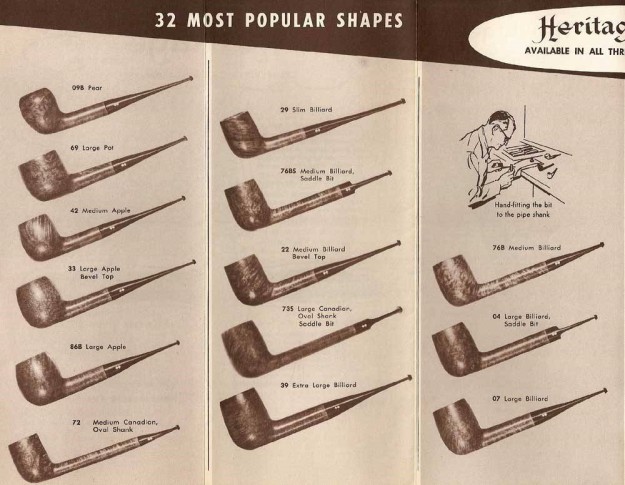
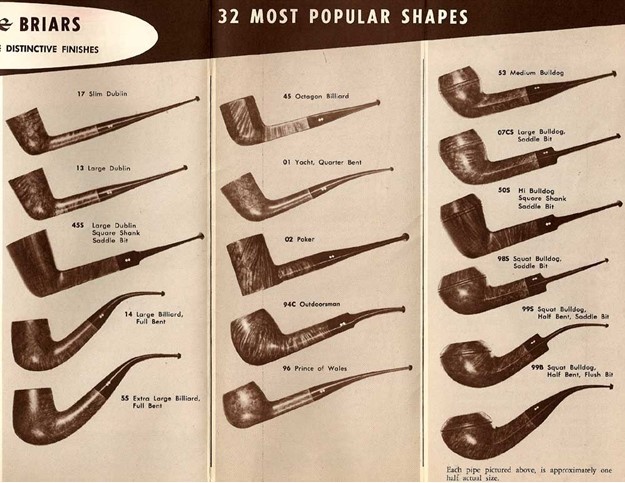
Andrew also included a copy of the Heritage brochure that I am also including below (Courtesy kaywoodiemyfreeforum). In going through the models displayed on the page there is not one for the 73S. The closest is the shape 72 Canadian. The brochure has a great write up on the Heritage Antique Line. It reads Rustic Grain Stands out in Rugged Relief. It describes the line as follows:
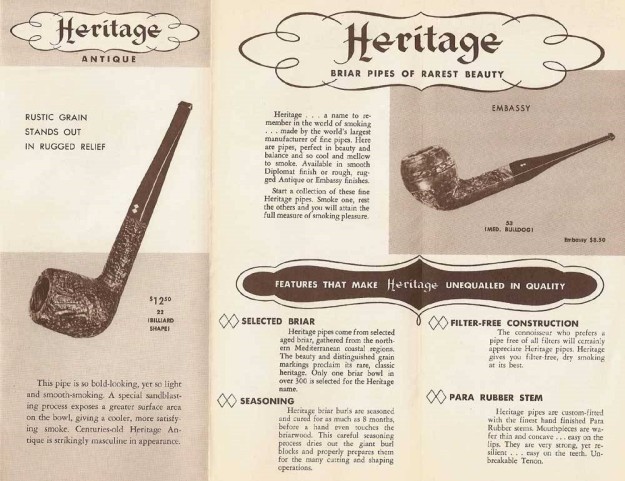
This pipe is so bold looking, yet so light and smooth smoking. A special sandblasting process exposes a greater surface area on the bowl, giving a cooler, more satisfying smoke. Centuries-old Heritage Antique is strikingly masculine in appearance.

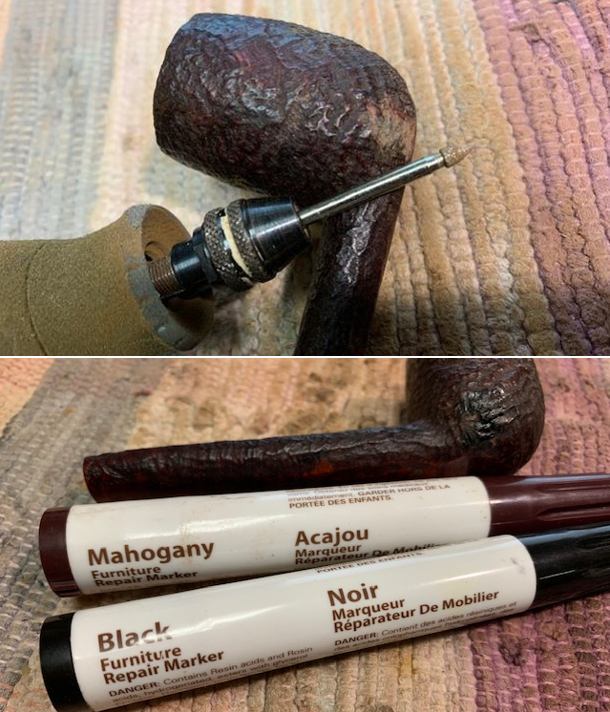
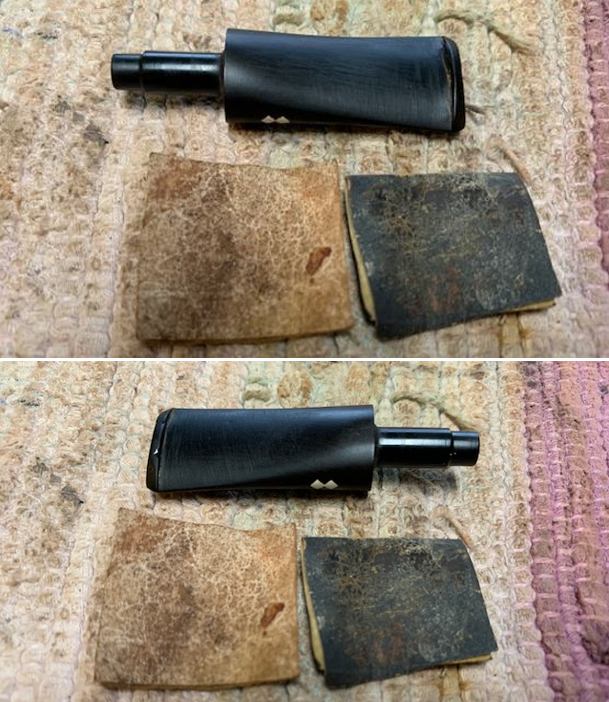
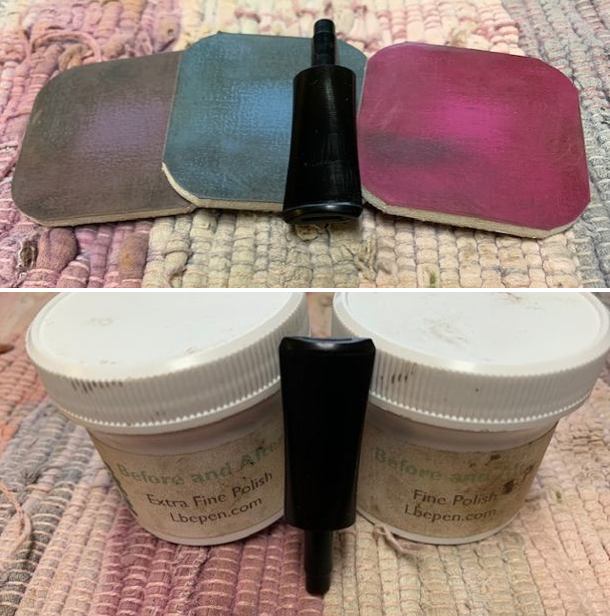
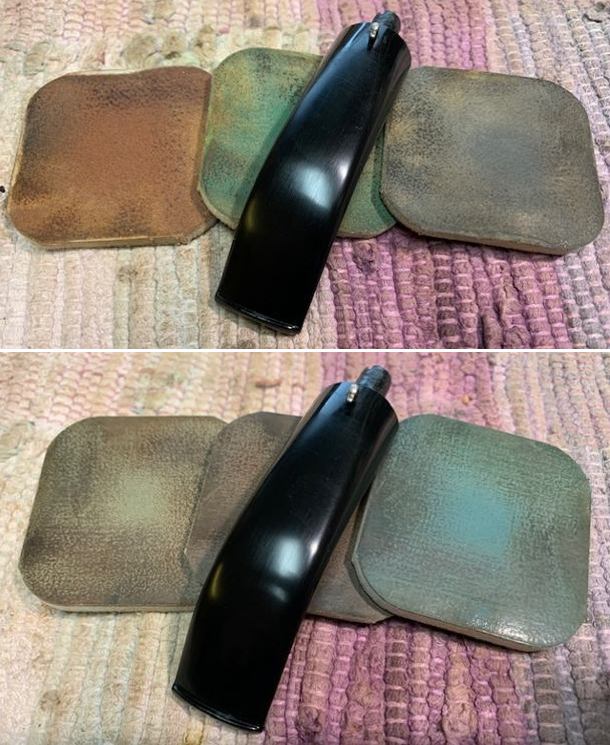
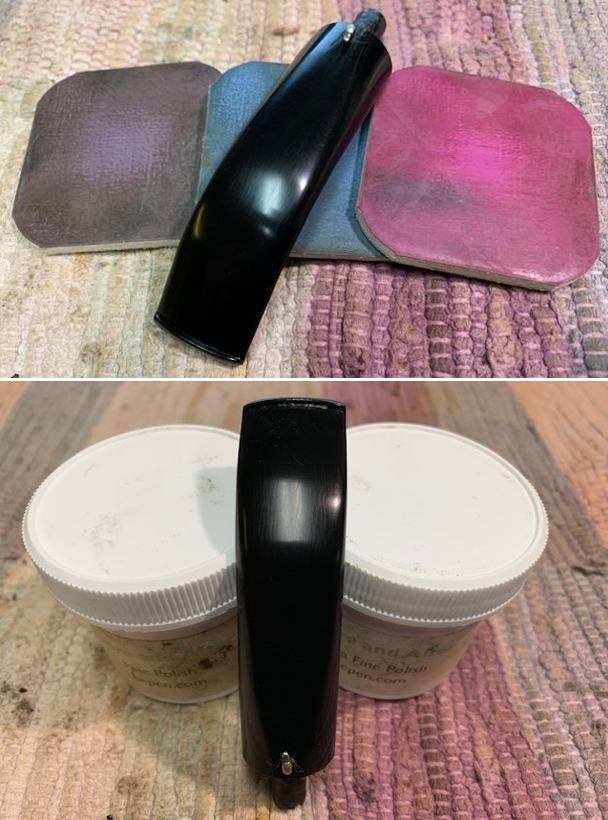
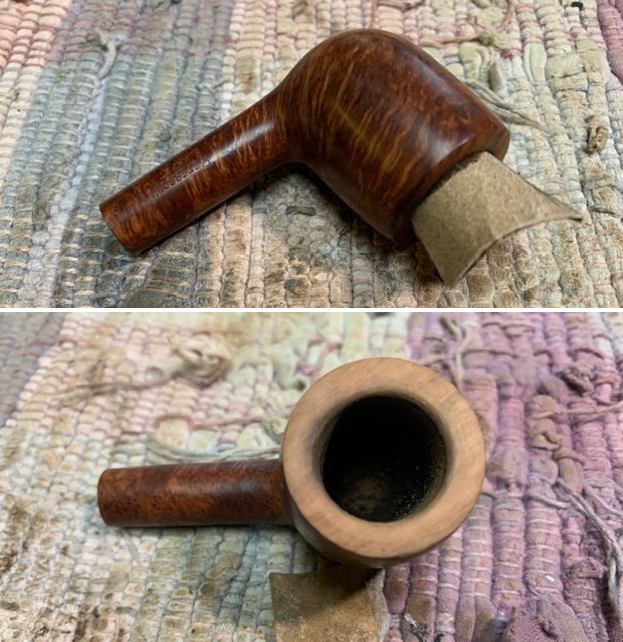
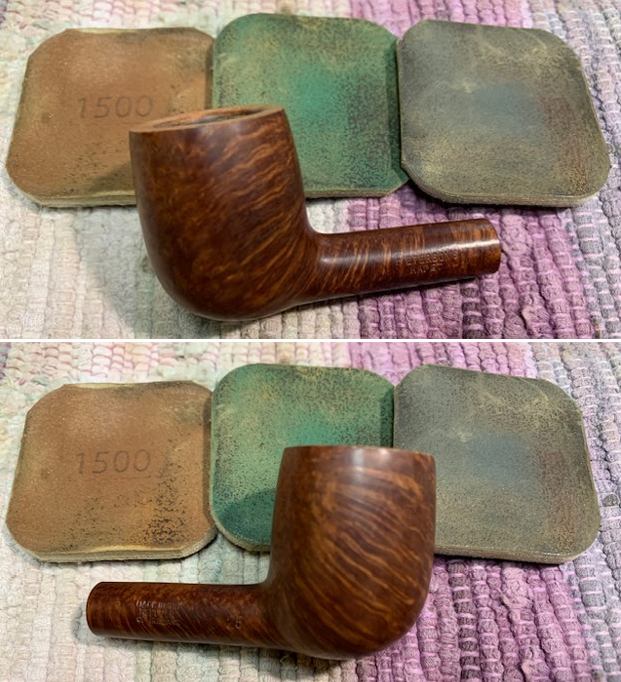
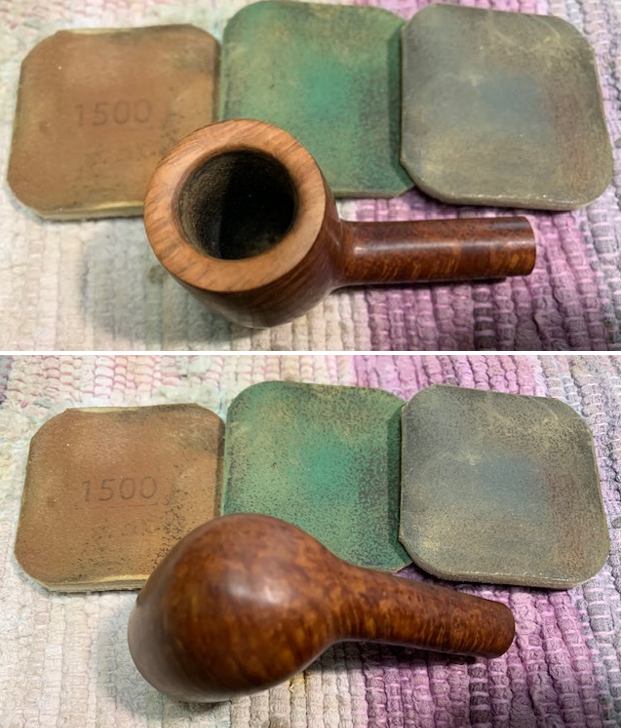
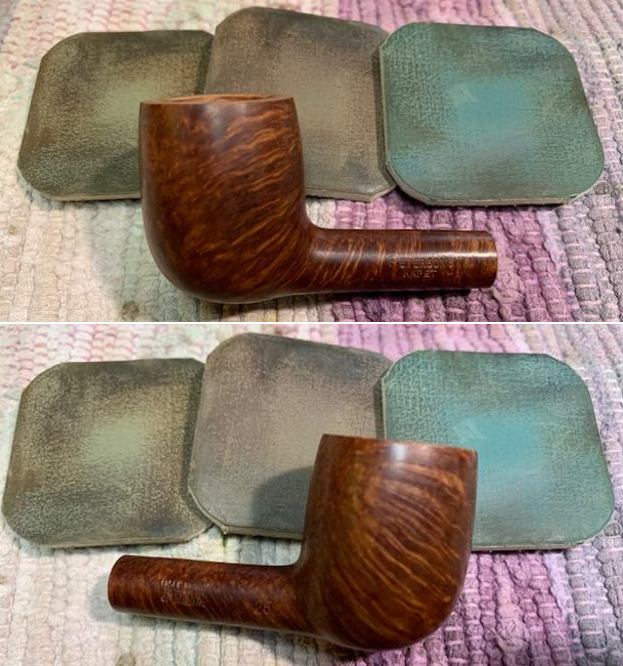
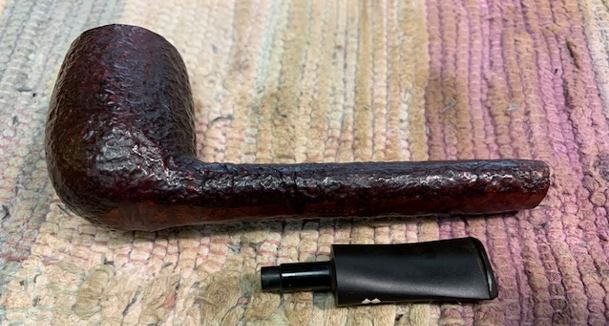
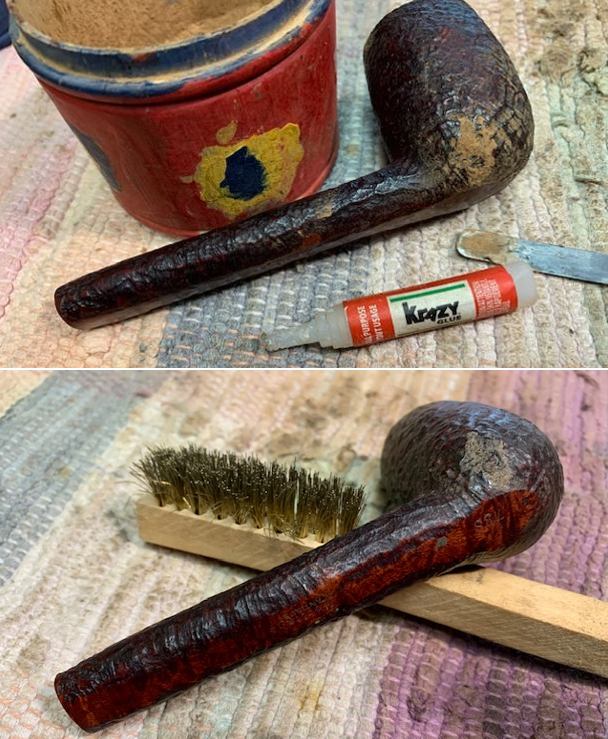
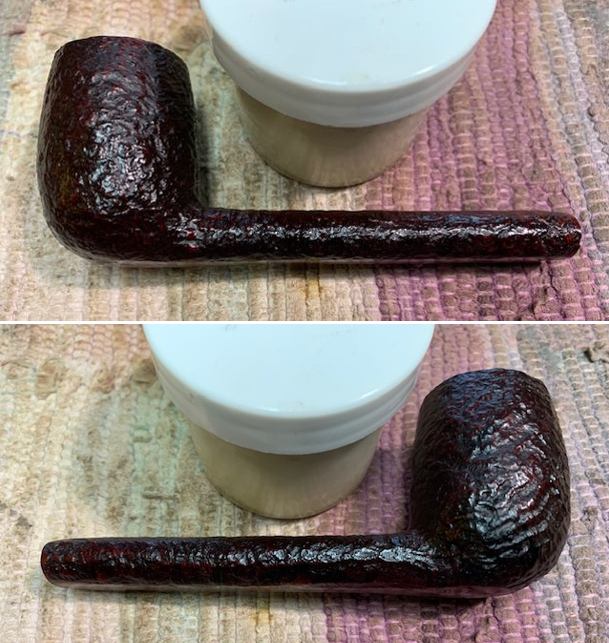
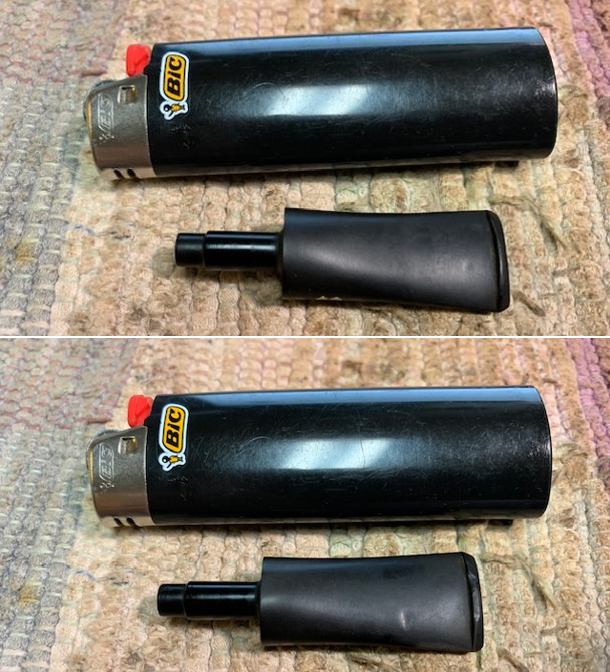
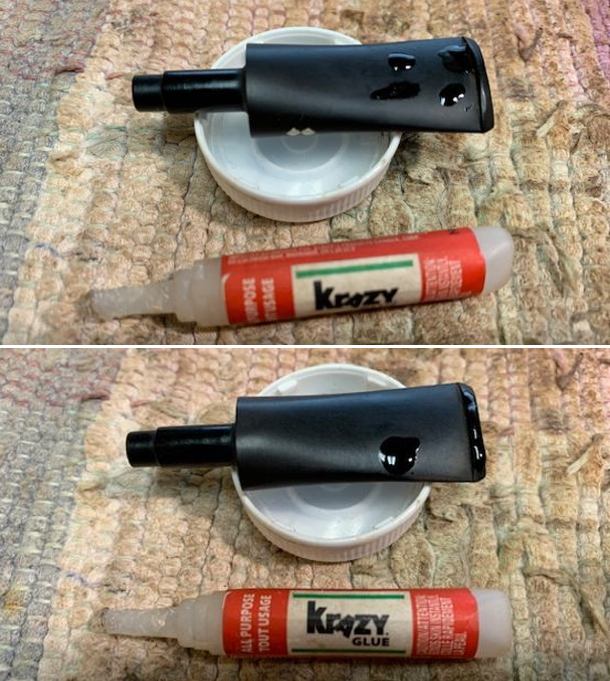
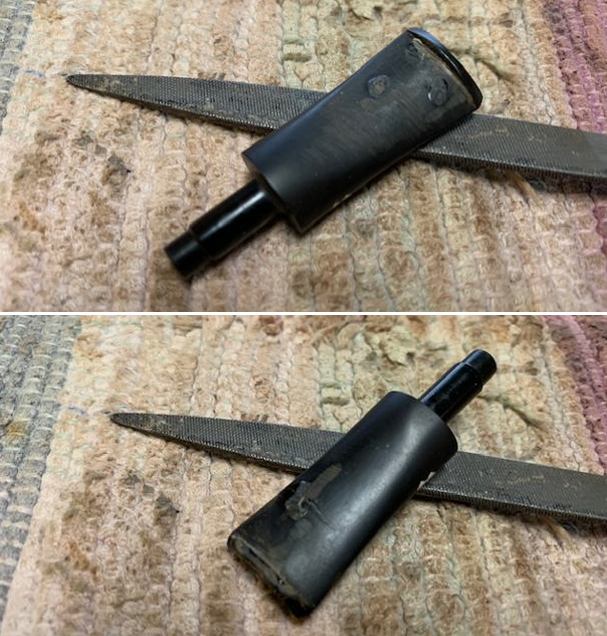
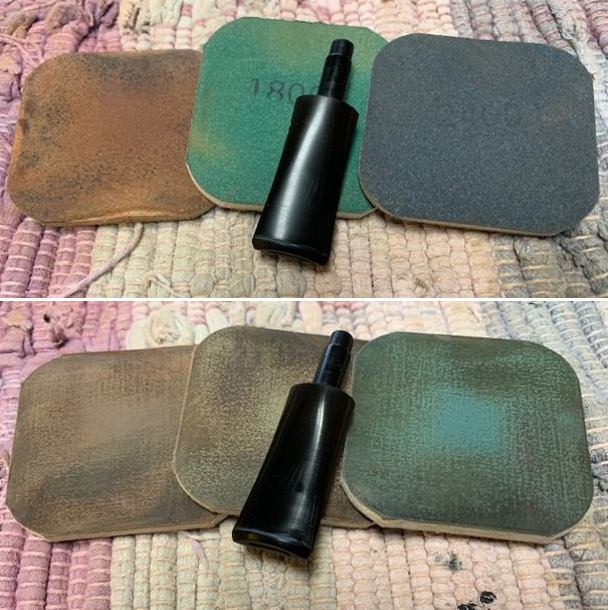
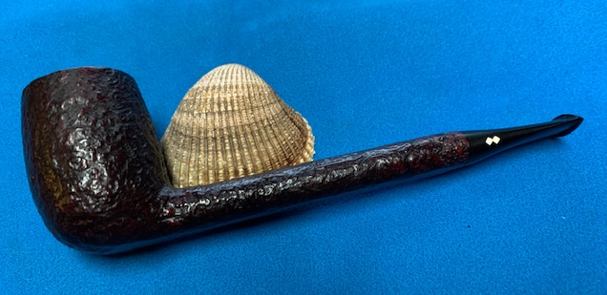
Jeff had cleaned up the pipe with his usual precise work. He reamed the pipe with a PipNet Pipe Reamer and cleaned up the remnants with a Savinelli Fitsall Pipe Knife.  He scrubbed the bowl with undiluted Murphy’s Oil Soap with a tooth brush. He rinsed it under running warm water to remove the soap and grime. The fill on the lower right side of the bowl did not loosen, crack more or fall out. It was solid. The rim top cleaned up very well. He cleaned out the inside of the shank and the airway in the stem with alcohol, cotton swabs and pipe cleaners. He soaked the stem in Before & After Deoxidizer and rinsed it off with warm water. I took photos of the pipe once I received it. Now it was time to work on the pipe itself. The bowl and the rim top looked very good. The inner and outer edges of the rim also looked very good. There was no damage to the edges. The stem surface showed deep tooth marks and chatter on both sides near the button. I took photos of the stamping on the underside shank. The stamping was clear and readable as noted above. I took the stem off the shank and took a photo of the parts of the pipe to show the overall look of the pipe. To me it is a vary British looking sandblast Canadian.I decided to deal with the large filled area on the lower right side of the bowl. It was hard and solid but had some small cracks toward the top of the fill. The first two photos show the filled area before and after cleaning. I roughed it up a little bit with a brush then filled in the cracks and sunken portions of the fill with clear CA glue and briar dust. Once the repair hardened I used a brass bristle wire brush to knock off the loose briar dust and give a bit of texture to the fill. I used the Dremel and a pointed burr to carve grain patterns to match the surrounding areas of the briar. I liked the way it was looking. I mixed a black and a mahogany stain pen into the rusticated surface to match the surrounding colour of the bowl. I was happy with how the repair had blended into the rest of the surrounding briar. I worked some Before & After Restoration Balm into the surface of the briar with my fingertips and a horsehair shoe brush to clean, enliven and protect it. I let the balm sit for a little while and then buffed with a cotton cloth to raise the shine. The following photos show the bowl at this point in the restoration process. I am very happy with the results. I set the bowl aside and turned my attention to the stem. I “painted” the stem with the flame of a Bic lighter to lift the tooth marks. I was able to lift them out significantly. I filled in the remaining dents in the stem surface with clear CA glue and set it aside to cure. I flattened out the repairs with a small file to start the process of blending them into the surface of the vulcanite. I then sanded them smooth with 220 grit sandpaper to further blend them in and started polishing the stem with 400 grit wet dry sandpaper. I polished the vulcanite stem with micromesh sanding pads – 1500-12000 grit pads. I wiped it down with a damp cloth after each sanding pad. I used Before & After Pipe Polish – both Fine and Extra Fine to further polish the stem. I wiped it down with a final coat of Obsidian Oil and set it aside.     The repair on the lower right side of the sandblast Heritage Antique 73S Canadian came out very well and really is unnoticeable. The pipe is a real beauty and the finish and shape are well done and have a classic English look even though this is an American Made pipe. The thin taper vulcanite stem polished up on the buffing wheel with Blue Diamond and had a rich glue. I gave the bowl multiple coats of Conservator’s Wax and the stem multiple coats of carnauba wax on the buffing wheel and followed that by buffing the entire pipe with a clean buffing pad. I hand buffed the pipe with a microfiber cloth to deepen the shine. The finished Heritage Antique Canadian fits nicely in the hand and feels great. Give the finished pipe a look in the photos below. The dimensions of the pipe are Length: 6 inches, Height: 1 ¾ inches, Outside diameter of the bowl: 1 ¼ inches, Chamber diameter: ¾ of an inch. The weight of the pipe is 1.27 ounces/36 grams. I will soon be adding it to the rebornpipes store in the American Pipe Maker section. If you are interested in adding this pipe to your collection send me a message or an email. Thanks for reading this blog and my reflections on the pipe while I worked on it. There are many more to come!
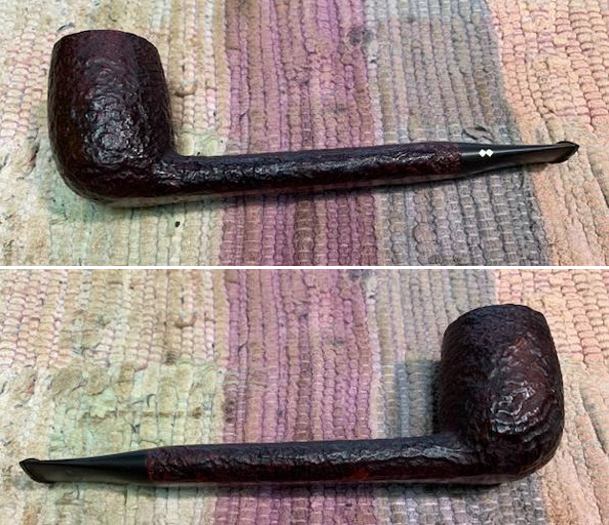
Breathing New Life into a Wally Frank Wine Root Bruyere De Luxe Selected Grain Squat Bulldog


Blog by Steve Laug

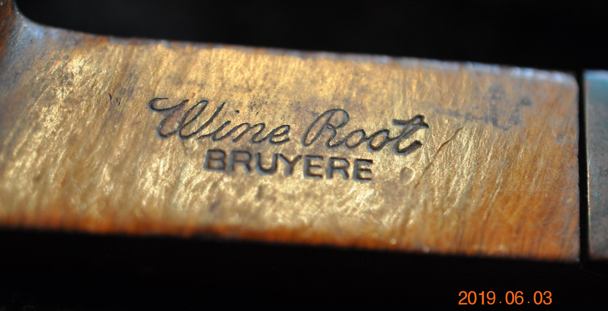
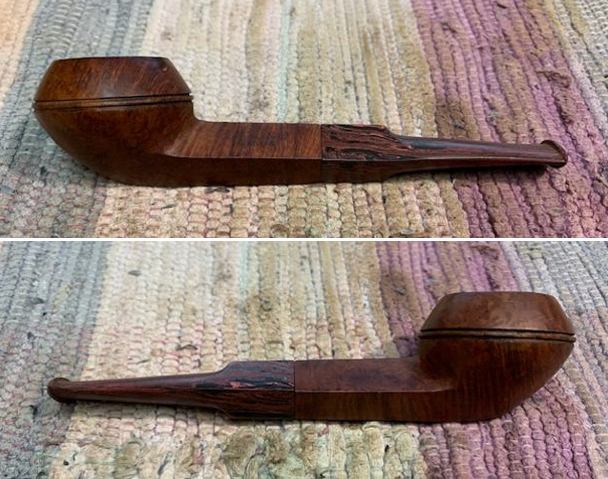
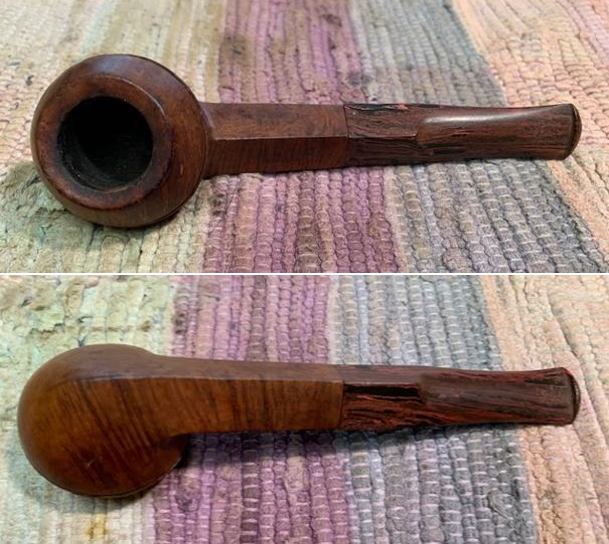
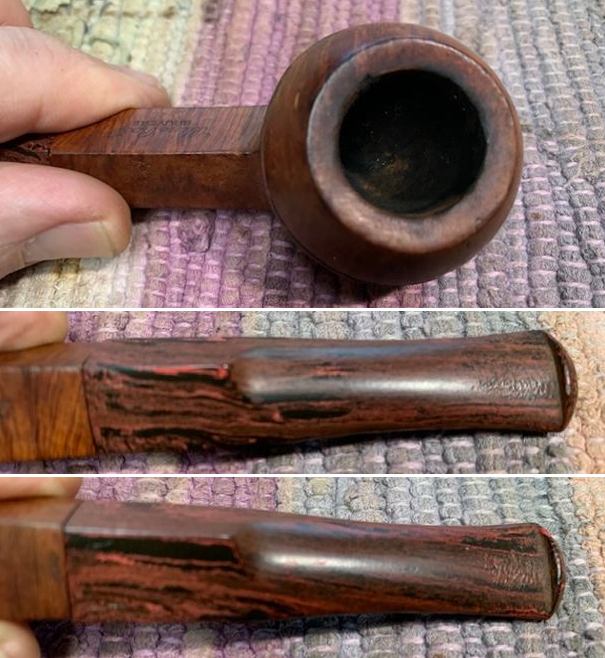
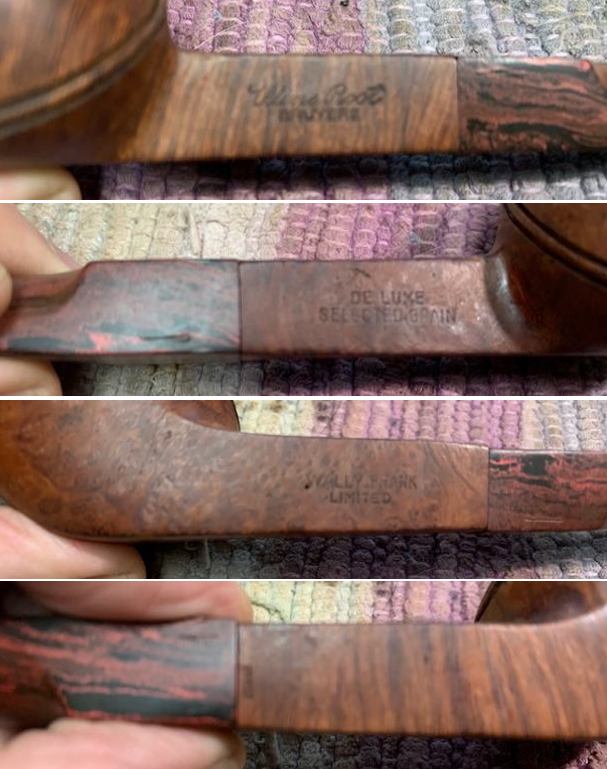
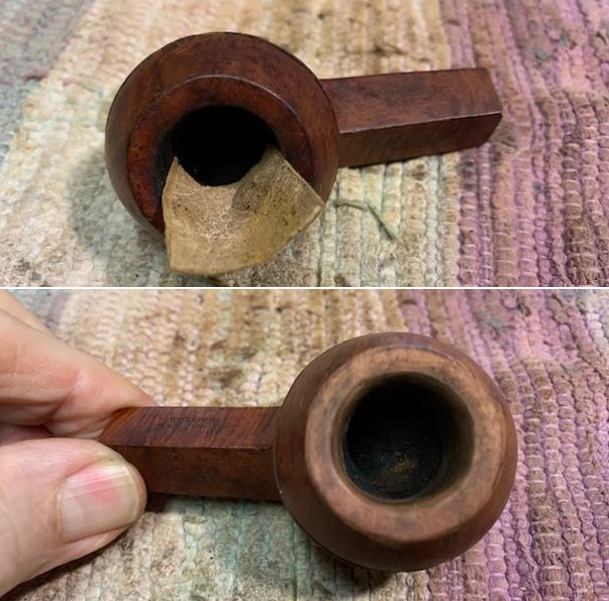
The next pipe on the table was purchased on 05/08/19 from an online auction in Cedar Springs, Michigan, USA. Jeff picked it up because we both like Cumberland stems and this little Bulldog had that and some great grain. The pipe is stamped Wine Root [over] Bruyere on the top left side of the shank and  Wally Frank  [over] Limited on the bottom left side. On the top right side it read De Luxe [over] Selected Grain and on the bottom right side it was stamped ITALY. The bowl was heavily caked with a heavy overflow of lava on the beveled rim top. There was some darkening on the outer edge of the rim down the side of the cap toward the back of the bowl. The finish was dirty and oily from the heavy use it had seen. It had a Cumberland push stem and an interesting/odd stinger apparatus in the tenon. The stem was oxidized to the point that the Cumberland was almost hidden. There were tooth marks and chatter on both sides ahead of the button. Jeff took some photos of the pipe before he started his clean up work. The a photo of the rim top show the thick lava coat that flows out of the bowl and over the edge of the bowl. It is hard to know what the edges of the bowl – inner and outer – look like because of the lava and cake. The photos of the stem show the heavy oxidation and tooth marks and chatter on both sides. Jeff took a photo of the stinger apparatus that shows how packed full of debris and tars that the fins around the stinger really are.The next three photos show the grain around the sides of the bowl and heel as well as the placement of the fills on the sides of the bowl. It is a pretty neat looking pipe. The next photo shows the stamping on the top left side of the shank. It was clear and readable. Jeff did not take photos of the other sides of the shank.I turned to Pipedia (https://pipedia.org/wiki/Wally_Frank) to refresh my sense of the history of the brand. I quote below the history that is noted there.

Wally Frank, Ltd. was one of America’s oldest and most respected names in pipes and tobaccos, beginning in the early 1930’s. Wally Frank operated a chain of tobacco stores in New York City (the flagship store was in Lexington Avenue) and had a vast catalog business for pipes and pipe tobaccos. Their numerous private-label pipes were made by many makers, including Charatan, Sasieni, Weber, and many others. Wally Frank, Ltd. also owned the Pioneer brand of meerschaum pipes, made from both Turkish and African meerschaum. In addition to importing pipes, he had many pipes made in his own name and also employed pipemakers like Peter Stokkebye, Svend Bang, and Ed Burak (who later became the owner of Connoisseur). As a result, each Wally Frank pipe must be individually evaluated on its own merit.

Members of Wally Frank’s “The Pipe of the Month Club” received a new pipe in the mail once a month.

In 1952, Wally Frank was on a buying trip in Italy and “discovered” pipe maker Carlo Scotti. Frank liked Scotti’s pipes, but there was the small problem of Scotti’s pipes bearing the same trademark or logo as one of Wally Frank’s pipe lines, the White Bar. The two men decided on creating a new logo for pipes sold in the U.S.: a hole drilled in the stem and with a piece of silver foil inserted in the hole and covered with clear Lucite.

There was no specific information on the line I was working on but the history of the brand was good to be reminded of. Now it was time to work on the pipe.

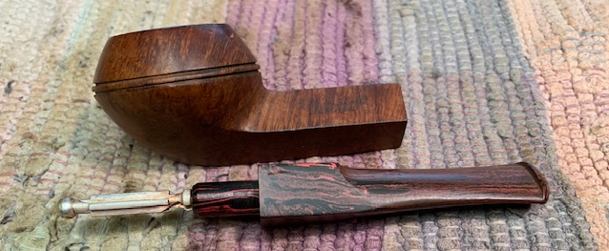
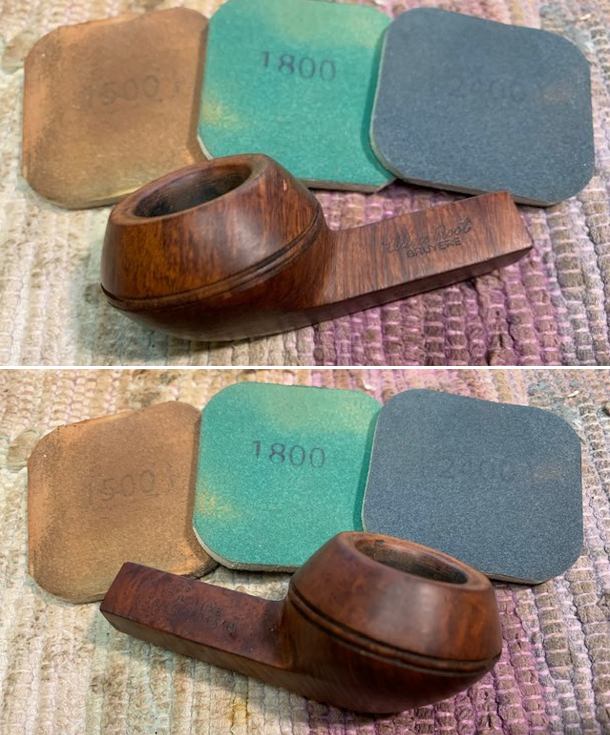
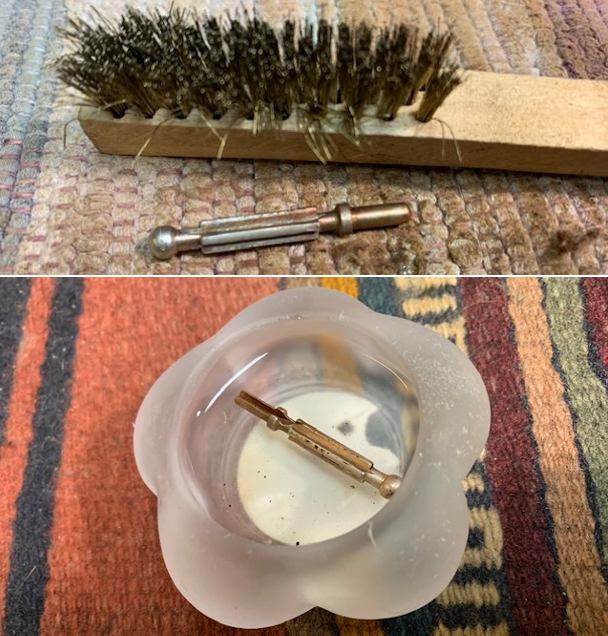
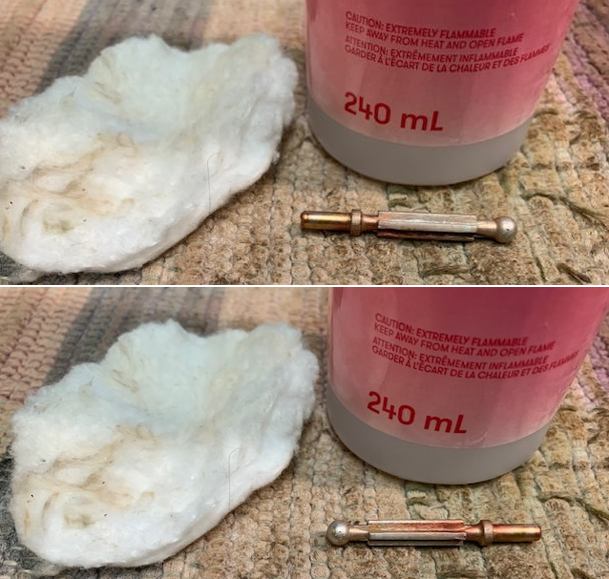
It may seem that I praise Jeff’s work in cleaning up the pipes I work on a lot! I know I do but he is an indispensable part of the restoration work for me. He has developed a system of cleaning that is quite remarkable and leaves the pipes very clean. It saves me a lot of time so I have no issues saying that! Jeff did a great job cleaning up the pipe as usual. He reamed the pipe with a PipNet reamer and cut back the cake back to the bare briar. He cleaned up the walls with a Savinelli Fitsall Pipe Knife. He scrubbed the interior of the bowl and shank with pipe cleaners, cotton swabs and alcohol to remove the tars and oils. He scrubbed the exterior of the pipe with Murphy’s Oil Soap and a tooth brush to remove the grime from the finish. He worked on the rim top lava and darkening with the soap and tooth brush. He scrubbed the inside of the stem with alcohol and pipe cleaners. He scrubbed the exterior with Soft Scrub and then soaked it in Before & After Deoxidizer. He washed it off with warm water to remove the Deoxidizer. The pipe looked far better when it arrived.    I took some close up photos of the rim top and also of the stem surface. I wanted to show how well it had cleaned up but also to show the damage. The rim top photo looks good but there are some nicks and damage on the top and the beveled inner rim edge. The outer edge is also nicked. I also took close up photos of the stem to show the light tooth marks and chatter on the surface near the button on both sides. The next series of photos show the stamping on the shank sides. The stamping is clear and readable as noted above.I took the pipe apart and took a photo of the pipe. It is a good looking pipe and has some great grain on the side of the bowl. The stinger is very unique and is stained red from the stain on the bowl that has permeated the aluminum.I decided to address the rim top damage first. I used a folded piece of 220 grit sandpaper to the beveled inner edge to minimize the damage to the rim. I think that it is definitely better once I finished. I would polish the flat top of the rim with micromesh and try to minimize the scratching there. The angle of the stem makes topping the bowl seem impractical.   I polished the briar rim top and edges along with the rest of the briar with micromesh sanding pads –dry sanding with 1500-12000 grit pads and using a damp cloth after each pad. I worked some Before & After Restoration Balm into the surface of the briar with my fingertips to clean, enliven and protect the briar. I let the balm sit for 15 minutes and then buffed with a cotton cloth to raise the shine. The photos show the bowl at this point in the restoration process. I set the bowl aside and turned my attention to the stem. I sanded out the tooth marks and chatter with 220 grit sandpaper and was able to remove them from the surface. I started the polishing with 400 grit wet dry sandpaper. I wiped it down with some Obsidian Oil.I decided to try and clean up the stinger next. I used a brass bristle brush to try to clean off the stain on the aluminum. It did very little so I put it in a small alcohol bath for about an hour to see if it works. I worked on it with a cotton pads and alcohol to remove more of the stain. It did not do too much. I then scrubbed the stinger with acetone and removed some more. It did not remove any more so there is a pink tinge that remove. I polished the stem with micromesh sanding pads – wet sanding with 1500-12000 grit sanding pads. I wiped it down after each sanding pad with Obsidian Oil. I polished it with Before & After Pipe Stem Polish – both Fine and Extra Fine. Afterwards I rubbed it down with another coat of Obsidian Oil and let it dry. I am excited to finish restoration of this Wally Frank Wine Root Bruyere De Luxe Selected Grain Squat Bulldog. I put the pipe back together and buffed it with Blue Diamond on the buffing wheel. I gave the bowl and stem multiple coats of carnauba wax. I buffed the pipe with a clean buffing pad to raise the shine and hand buffed it with a microfibre cloth to deepen the shine. It is fun to see what the polished bowl looks like with the polished Cumberland saddle stem. This squat Wally Frank Wine Root Bruyere Bulldog feels great in my hand. It is light and well balanced. Have a look at it with the photos below. The dimensions are Length: 5 ½ inches, Height: 1 ¼ inches, Outside diameter of the bowl: 1 ¼ inches, Chamber diameter: ¾ of an inch. The weight of the pipe is 31 grams/ 1.09 oz. It is a beautiful pipe and one that will be on the American Pipe Makers section of the rebornpipes store soon. If you are interested in adding it to your collection let me know. Thanks for walking through the restoration with me as I worked over this pipe. Thanks to each of you who are reading this blog.

Breathing New Life into a Patented KBB Yello-Bole 2198L President


 Blog by Steve Laug

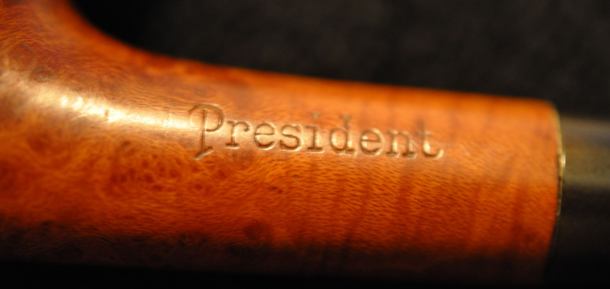
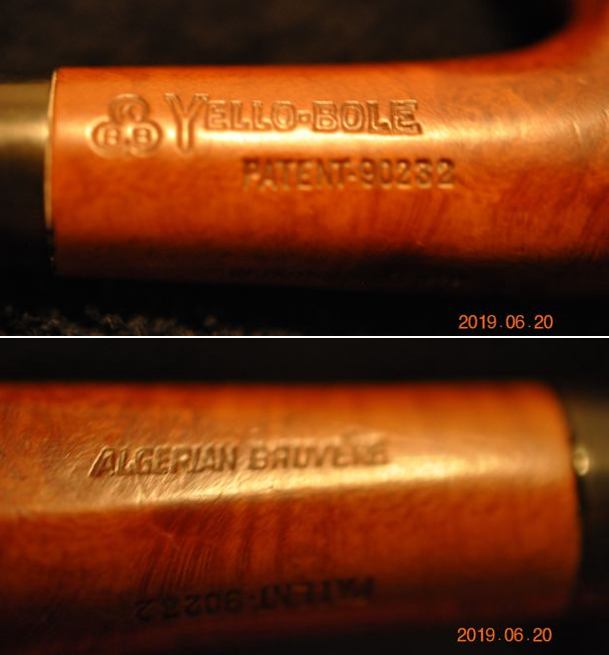
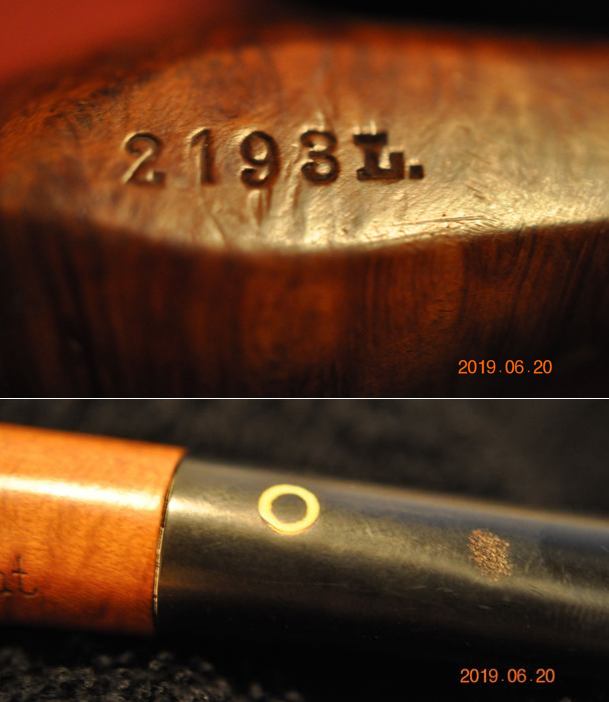
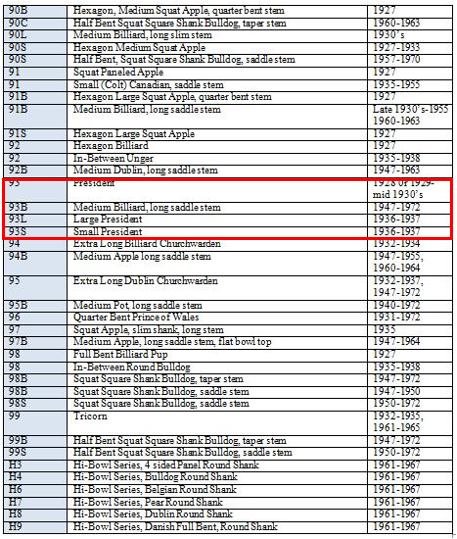
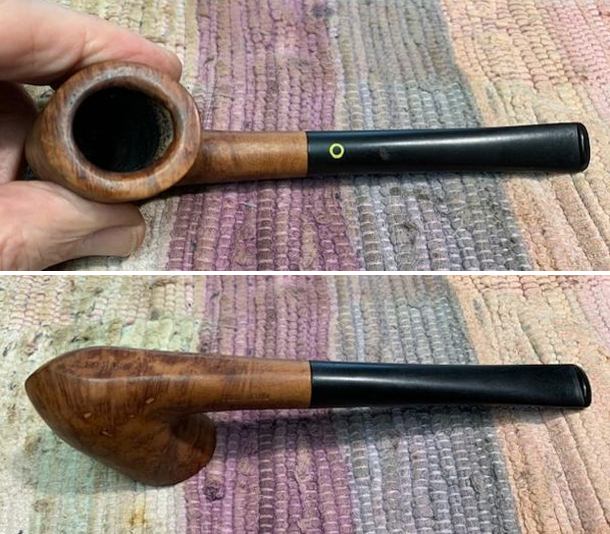
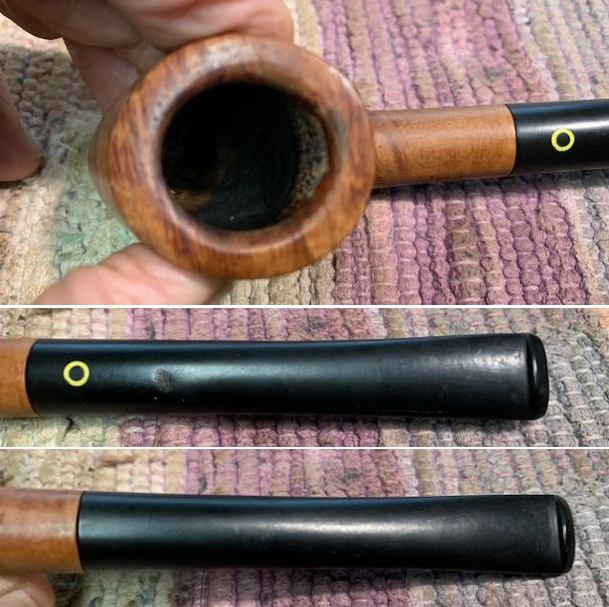
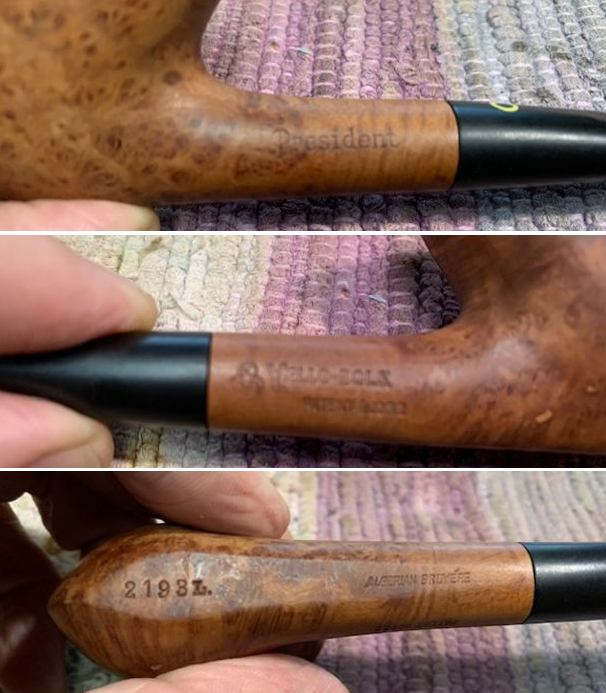
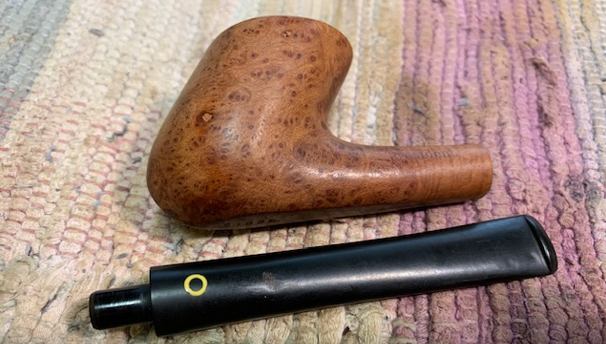
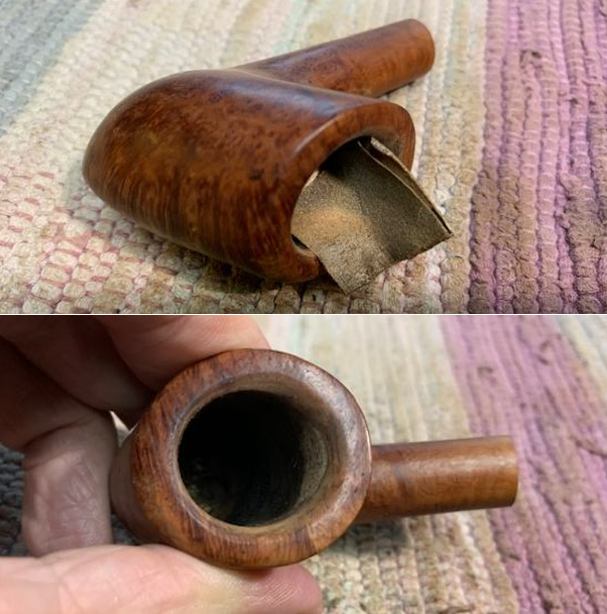
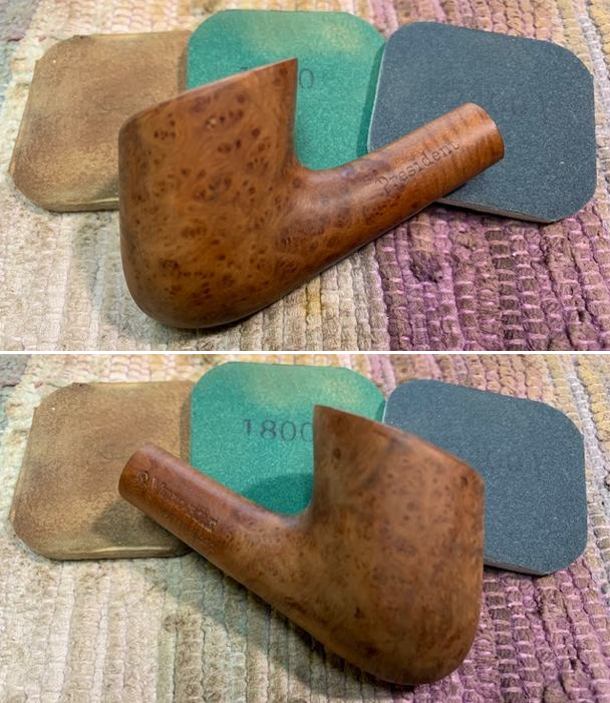
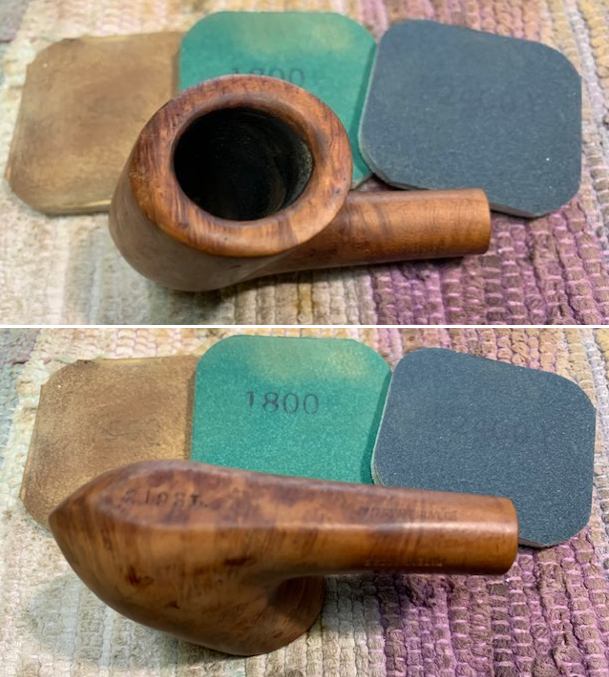
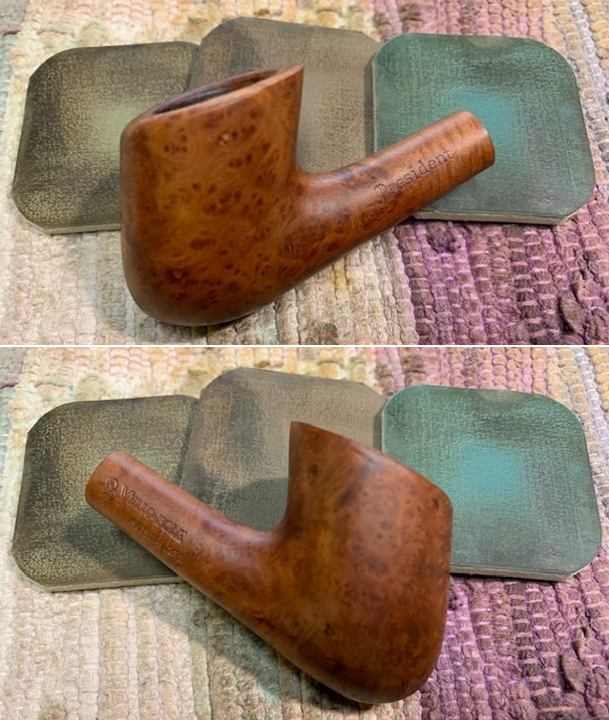
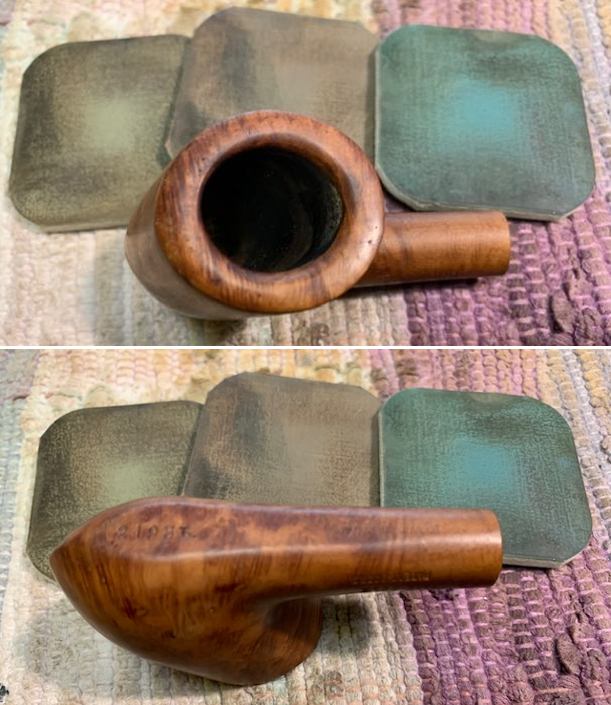
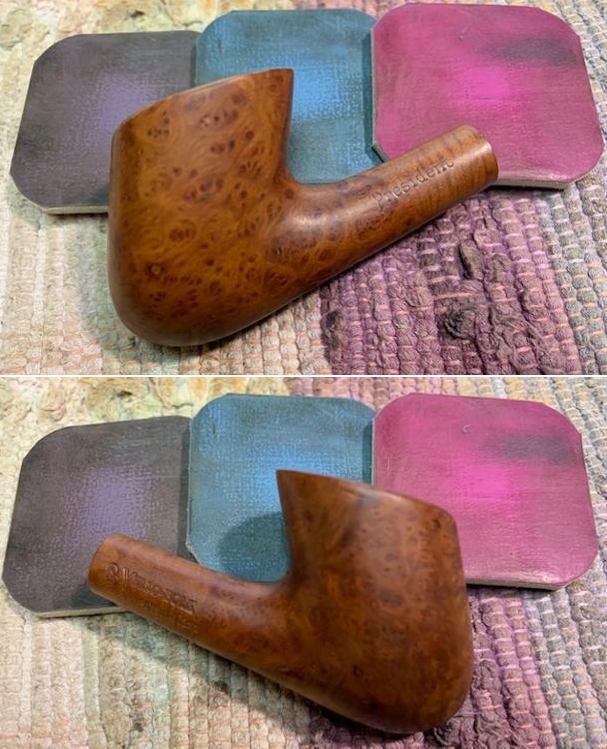
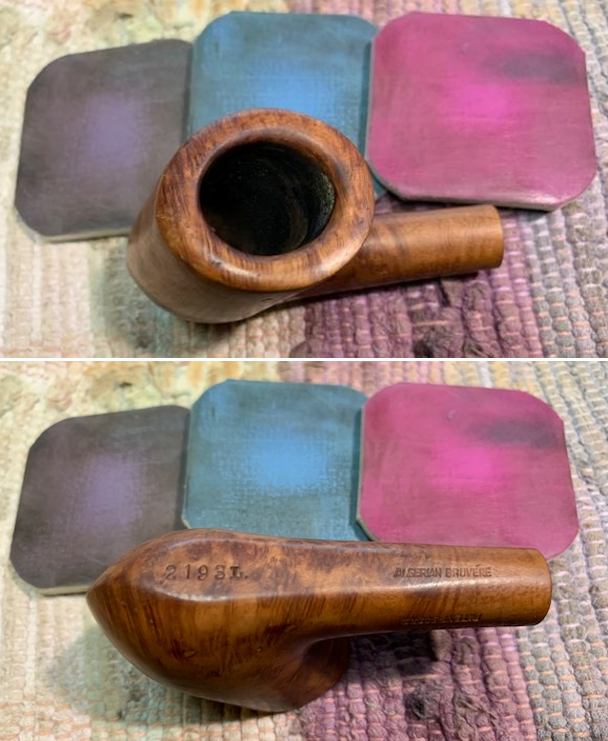
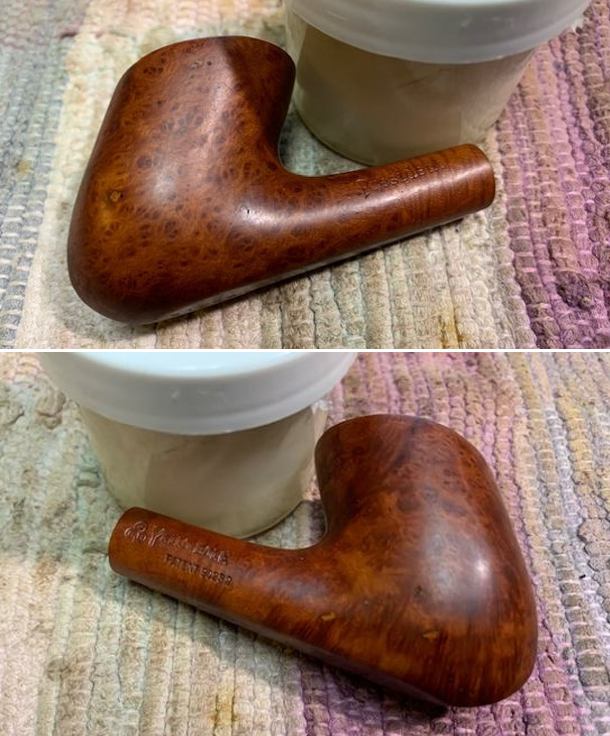
This pipe was purchased from an antique mall on 04/28/19 in Ogden, Utah, USA. Jeff picked it up because it was such a unique shape. It seems to somehow combine parts of the Skater shape and the Bullmoose’s protruding chin. The grain was nice and it had some fills on the sides of the bowl but not too obvious or obnoxious. The pipe is stamped President on the left side of the shank and KBB in a cloverleaf followed by Yello-Bole [over] Patent – 90232 on the right side of the shank. On the underside at the heel it is stamped with the shape number 2198L and mid shank reads Algerian Bruyere. The bowl had a moderate cake but you could see the yellow Honey Coating that Yello-Bole draw their name from. The finish was dirty and had a lot of nicks and scratches on the rim top and around the bowl sides. The base of the bowl and shank had been flattened to make the pipe a sitter. It had a vulcanite push stem and no stinger apparatus in the tenon or shank and there was no evidence that their ever had been one. The stem was lightly oxidized. There are a burn mark on the top side near the yellow O logo. There were tooth marks and chatter on both sides ahead of the button. Jeff took some photos of the pipe before he started his clean up work. The photos of the rim top show the nicks and scratch on the top and the darkening on the inner edge of the bowl. You can also see the yellow bowl coating on the back side near the top of the bowl above and surrounded by the cake. The photos of the stem show the oxidation and tooth marks and chatter on both sides. They do not show the damage on the top of the stem near the O stamp. The next three photos show the grain around the sides of the bowl and heel as well as the placement of the fills on the sides of the bowl. It is a pretty neat looking pipe. The next series of photos show the stamping on the shank sides and the O logo stamp on the stem top. You can also see the burn mark on the stem top in the photo of the logo. The stamping is clear and readable as noted above. Before I started my work on the pipe I decided to do a bit of work on the Patent Number and the shape number on the heel of the bowl. I remembered that Troy Wilburn, one of our blog writers and good friend of rebornpipes sent me a shape number list for old Kaywoodie and Yello-Bole pipes that is on the blog. I found it very useful and typed it into a chart format. Troy said that he got the data for this from the Kaywoodie Forums. If you have not visited the forums here is the link: http://kaywoodie.myfreeforum.org/ . I decided to post the chart on the blog for easy access. Thank you to the KW forum for the information. Here is the link to the full shape chart information that I have on the site (https://rebornpipes.com/2016/05/07/kaywoodie-yello-bole-shape-numbers/).

I also have included the pertinent sections of the chart on this particular 2193 shape. I remembered that the last two numbers and letter on heel of the bowl were the shape of the pipe. In this case the 93L referred to a shape that KBB called a Large President. I have drawn a box around that stamp number. The 93 is thus the President shape and the L identifies it as a large version of the pipe. Note also that the pipe was only made between 1936-1937 so it is an old timer.Troy also included the following information on the first two digits of the shape number. I quote in full regarding that below.

2-digit prefixes for 4-digit pipes – you might find an odd ball or a rare one that is not on the list.
From the time of the first Kaywoodie until 1938 for Kaywoodie and for Yello-Bole, Kaufmann Brothers & Bondy used a 4-digit number system (plus a letter sometimes) to identify the line and shape number. The 4-digits were not used after 1938. The first two, which we’ll call the prefix, referred to the finish and the second two, the suffix numbers referred to the shape number.

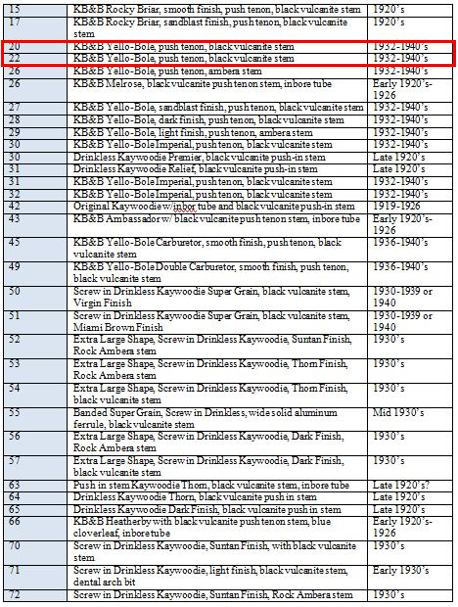
I have identified the section on the chart where this pipe stands. Note that the 21 prefix is missing but the description of the 20 and 22 is identical to the information on this pipe. From that I know that the pipe I am working on should have a push tenon, vulcanite stem. The good news is that I have the original stem.Now it was time to see if I could find anything out about the Patent number. I am assuming it is a US Patent as the pipe is an American brand. The number on the right side of the bowl reads as follows:  Patent – 90232. I turned to the US Patent search site to see what I could find out there. Here is the link to the site: https://patft.uspto.gov/netahtml/PTO/patimg.htm . Unfortunately that patent number takes me to a series of drawings of a new plowshare. At this point the Patent information is a dead end.

It may seem that I praise Jeff’s work in cleaning up the pipes I work on a lot! I know I do but he is an indispensable part of the restoration work for me. He has developed a system of cleaning that is quite remarkable and leaves the pipes very clean. It saves me a lot of time so I have no issues saying that! Jeff did a great job cleaning up the pipe as usual. He reamed the pipe with a PipNet reamer and cut back the cake back to the bare briar. He cleaned up the walls with a Savinelli Fitsall Pipe Knife. He scrubbed the interior of the bowl and shank with pipe cleaners, cotton swabs and alcohol to remove the tars and oils. He scrubbed the exterior of the pipe with Murphy’s Oil Soap and a tooth brush to remove the grime from the finish. He worked on the rim top lava and darkening with the soap and tooth brush. He scrubbed the inside of the stem with alcohol and pipe cleaners. He scrubbed the exterior with Soft Scrub and then soaked it in Before & After Deoxidizer. He washed it off with warm water to remove the Deoxidizer. The pipe looked far better when it arrived.  I took some close up photos of the rim top and also of the stem surface. I wanted to show how well it had cleaned up. The rim top photo looks good but there are some nicks and scratches on the top and the beveled inner rim edge. I also took close up photos of the stem to show the light tooth marks and chatter on the surface near the button and the burn mark on the top near the O logo. I took photos of the stamping on the sides of the shank. You can see that it is stamped as noted above. It is clear and readable.I took the pipe apart and took a photo of the pipe. It is a good looking pipe and has some great grain on the side of the bowl.I decided to address the rim top damage first. I used a folded piece of 220 grit sandpaper to the beveled inner edge to minimize the damage to the rim. I think that it is definitely better once I finished. I would polish the flat top of the rim with micromesh and try to minimize the scratching there. The angle of the stem makes topping the bowl seem impractical.I polished the briar rim top and edges along with the rest of the briar with micromesh sanding pads –dry sanding with 1500-12000 grit pads and using a damp cloth after each pad. I worked some Before & After Restoration Balm into the surface of the briar with my fingertips to clean, enliven and protect the briar. I let the balm sit for 15 minutes and then buffed with a cotton cloth to raise the shine. The photos show the bowl at this point in the restoration process. I set the bowl aside and turned my attention to the stem. I filled in the burn mark on the top and the tooth marks on the top and underside of the stem with clear super glue. I let the repairs cure. Once they had cured I sanded the repairs on the underside and the chatter on the topside with 220 grit sandpaper. I started the polishing with 400 grit wet dry sandpaper. I wiped it down with some Obsidian Oil.   I polished the stem with micromesh sanding pads – wet sanding with 1500-12000 grit sanding pads. I wiped it down after each sanding pad with Obsidian Oil. I polished it with Before & After Pipe Stem Polish – both Fine and Extra Fine. Afterwards I rubbed it down with another coat of Obsidian Oil and let it dry. I am excited to finish restoration of this older KBB Yello-Bole President 2193L pipe. I put the pipe back together and buffed it with Blue Diamond on the buffing wheel. I gave the bowl and stem multiple coats of carnauba wax. I buffed the pipe with a clean buffing pad to raise the shine and hand buffed it with a microfibre cloth to deepen the shine. It is fun to see what the polished bowl looks like with the polished black vulcanite stem. This unique looking KBB Yello-Bole President actually feels great in my hand. It is light and well balanced. Have a look at it with the photos below. The dimensions are Length: 6 ½ inches, Height: 1 ¾ inches, Outside diameter of the bowl: 1 ¼ inches, Chamber diameter: ¾ of an inch. The weight of the pipe is 32 grams/ 1.16 oz. It is a beautiful pipe and one that will be on the American Pipe Makers section of the rebornpipes store soon. If you are interested in adding it to your collection let me know. Thanks for walking through the restoration with me as I worked over this pipe. Thanks to each of you who are reading this blog.

Another Unsmoked Hand Made Mystery Pipe – A Rusticated Panel Pot


Blog by Steve Laug

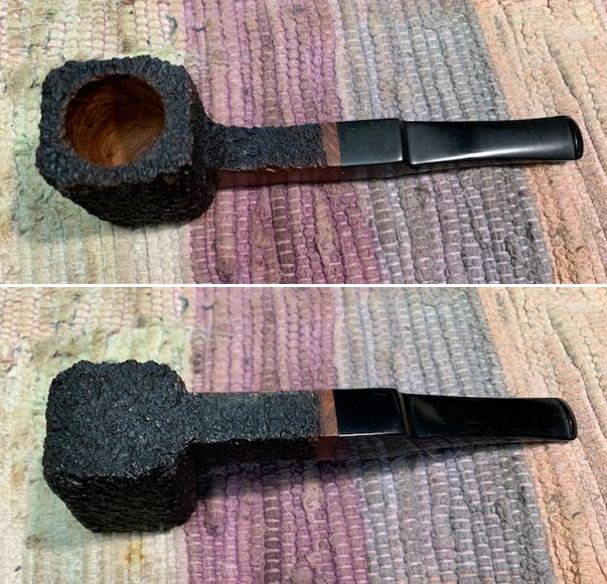
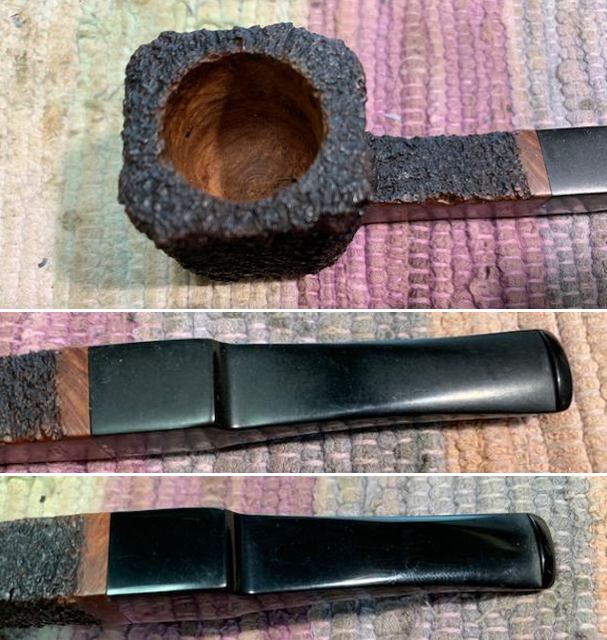
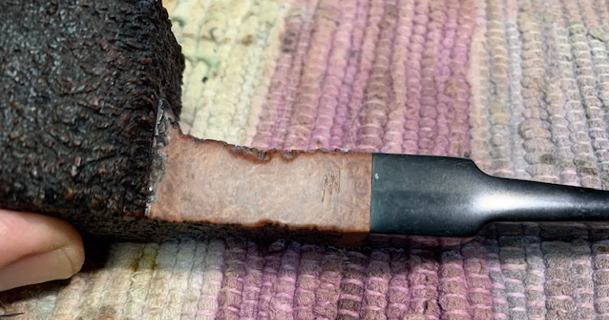
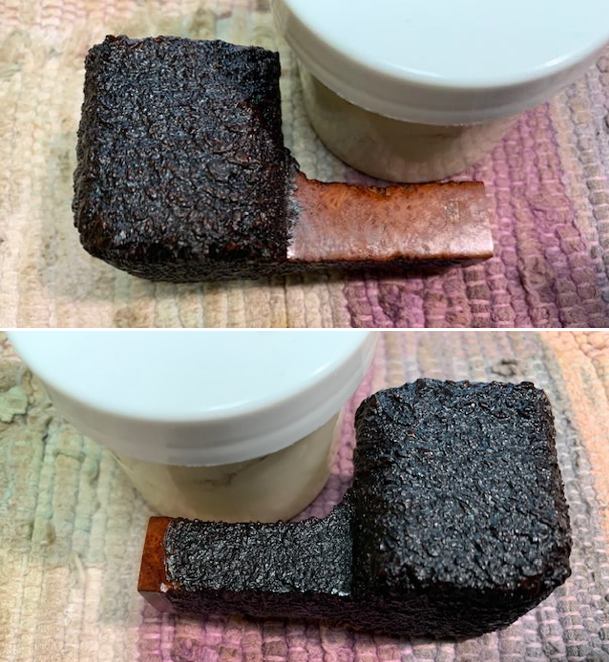
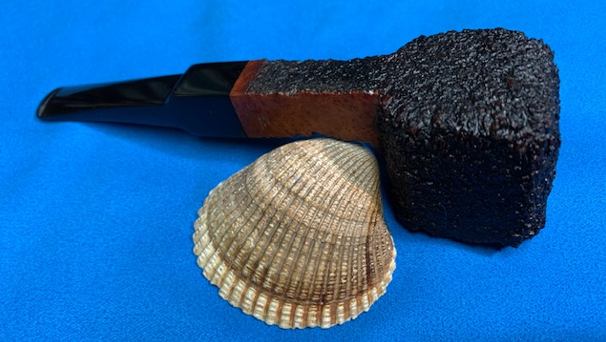
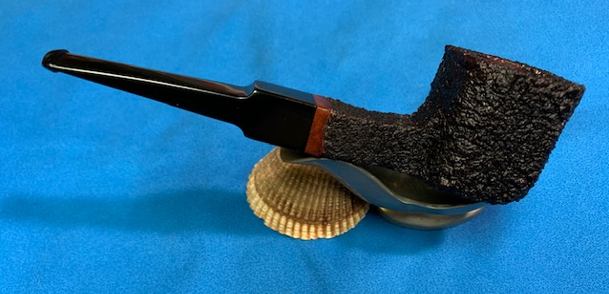
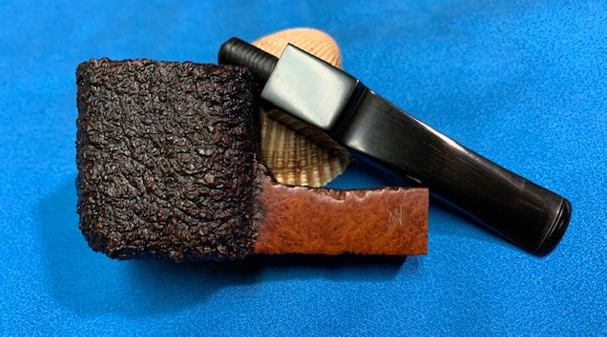
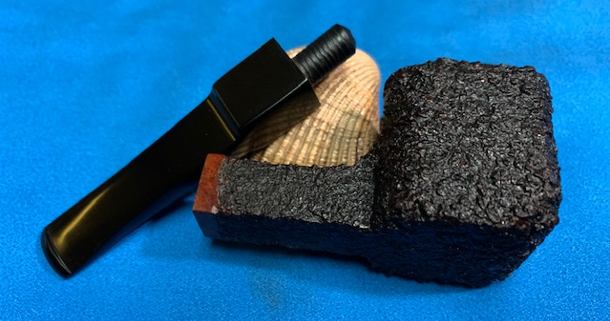
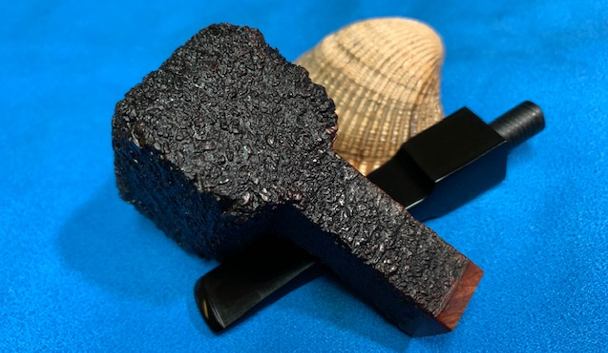
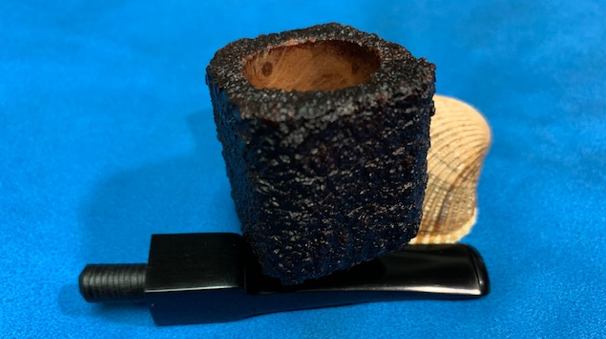
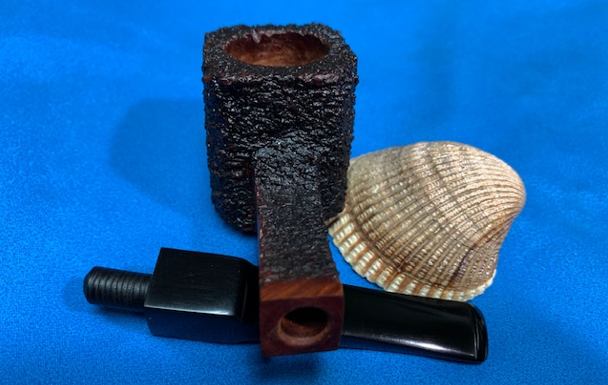
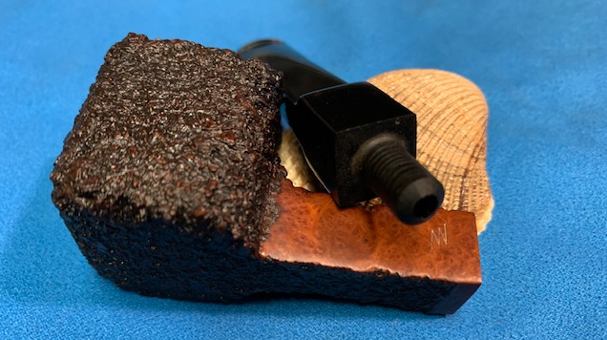
The next pipe on the table was one of a pair of unsmoked Mystery Pipes. The first was an unsmoked Poker or Cherrywood with a stamped MV, VM or NN logo on the bowl bottom that I cannot interpret. No one seems to be able to identify the maker. When Jeff and I picked this one up it was one of two pipes in a batch of pipes we bought from am online auction in Wilkes Barre, Pennsylvania, USA in March of 2019. It has taken a while for me to work on these. The one pictured below is for sale in the American Pipe Makers section of the rebornpipes store if you want to see a few more photos of it.This second pipe from the pair is a rusticated Panel Pot that is quite nice. It too is unsmoked and it is stamped with the same logo but this time on a smooth panel on the left side of the shank. It is as well made as the previous one. The pipe has a very tight almost cut glass-like rustication that has been stained in dark brown that complements and contrasts with the light brown on the smooth left shank and the band around the other three sides of the shank. The finish was dusty and dirty but other than that it was a clean unsmoked pipe. The bowl and rim looked good and the stem was flawless polished vulcanite that is deceptively shiny. Jeff took photos of the pipe before he cleaned it up. Jeff took photos of the bowl and rim top to show the new condition of the pipe. He also took photos of the stem showing what it looked like on both sides from the shank to the button. It was very clean. The top side had some light oxidation but no marks.The finish on the sides of the bowl and shank is deeply rusticated with a very tight pattern that makes it like cut glass (but not sharp). It is quite pretty.The next photo shows the mysterious seemingly unidentifiable makers mark. Is it an “NN”, an “NV”,  “MV”, “AW”? I am not sure and it seems I have found no one else who knows the mark. Do you? Leave a comment in the box at the bottom of the blog and fill us all in on your thoughts. Thanks.Jeff had done a great job cleaning up the pipe, scrubbing the interior of the shank and stem to remove the dust and debris of time using pipe cleaners and alcohol. He scrubbed the exterior of the pipe with Murphy’s Oil Soap and a tooth brush to remove the dust from the rusticated finish. He scrubbed the exterior of the stem with Soft Scrub and then soaked it in Before & After Deoxidizer. He washed it off with warm water to remove the Deoxidizer. The pipe looked good when it arrived. I took some photos of it before I did my part of the restoration. I took some close up photos of the rim top and also of the stem surface. I wanted to show how well it had cleaned up. The rim top photo looks good and the bowl clean and ready to be smoked. I also took close up photos of the stem to show how clean it looked. There was still a light oxidation on the top side but otherwise it was in good condition.I took a photo of the stamping on the left side of the shank. Any ideas?I removed the stem from the shank and took a photos of the parts. It is a nice looking pipe.The pipe was virtually new so I started my restoration with a simple first step. I worked some Before & After Restoration Balm into the surface of the briar with my fingertips and a horsehair shoe brush to clean, enliven and protect the briar. I let the balm sit for 15 minutes and then buffed with a cotton cloth to raise the shine. The photos show the bowl at this point in the restoration process. I wanted to give some idea of how the shank, though it appeared to be square, was not. It was wider on the left and the top than the bottom. The tenon had some different looking turning marks on it that I would need to smooth out. It is definitely a hand made pipe not machine made.I set the bowl aside and polished the stem with micromesh sanding pads – wet sanding with 1500-12000 grit sanding pads. I wiped it down after each sanding pad with Obsidian Oil. I polished it with Before & After Pipe Stem Polish – both Fine and Extra Fine. I gave it a final coat of Obsidian Oil and set it aside to dry. This Hand Made Rusticated Panel Pot  turned out to be a great looking pipe. The rusticated dark brown finish on the briar is beautiful and the nooks and crannies have taken on depth that is quite stunning around the bowl and shank. I put the pipe back together and buffed it lightly with Blue Diamond on the buffing wheel. I gave the bowl multiple coats of Conservator’s Wax and the stem multiple coats of carnauba wax. I buffed the pipe with a clean buffing pad to raise the shine and hand buffed it with a microfibre cloth to deepen the shine. It is fun to see what the polished bowl looks like with the polished black vulcanite stem. This classic looking No Name Panel Pot feels great in my hand. It is light and well balanced. Have a look at it with the photos below. The dimensions are Length: 5 ½ inches, Height: 1 ½ inches, Outside diameter of the bowl: 1 ¼ x 1 3/8 inches, Chamber diameter: ¾ of an inch. The weight of the pipe is 35 grams/1.23 oz. It is a beautiful pipe and one that I will be putting in the rebornpipes store in the American Pipe Makers section with the Cherrywood Mate. Thanks for walking through the restoration with me as I worked over this pipe. Thanks to each of you who are reading this blog.

Replacing a Broken Tenon on a L’Anatra dalle Uova d’ Oro 2 Egg Bent Egg


Blog by Steve Laug

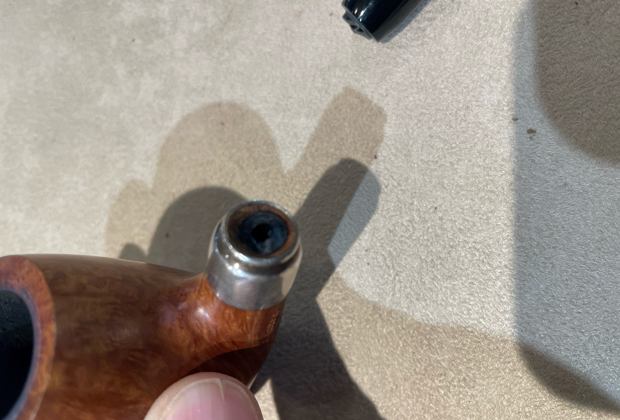
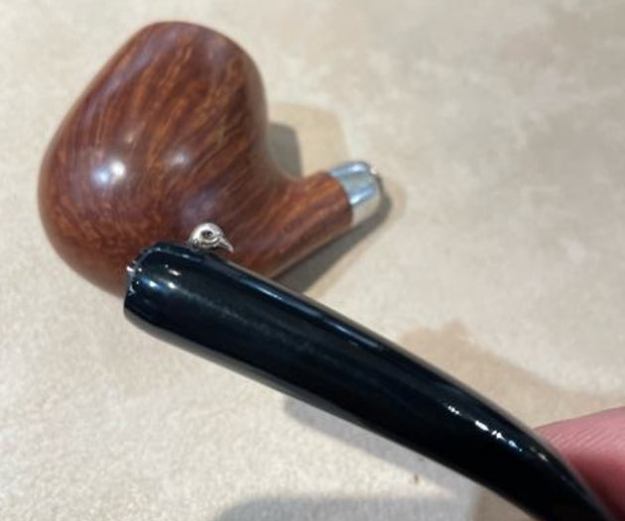
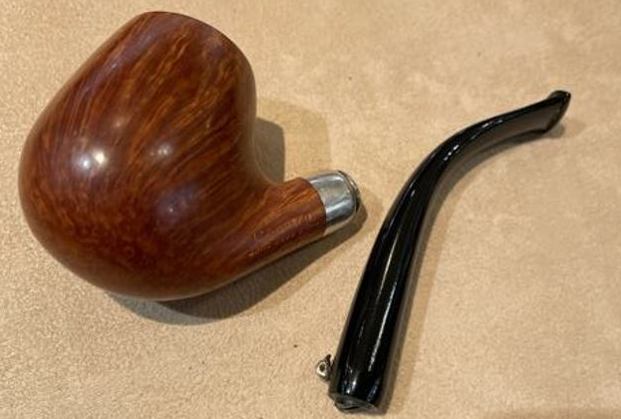
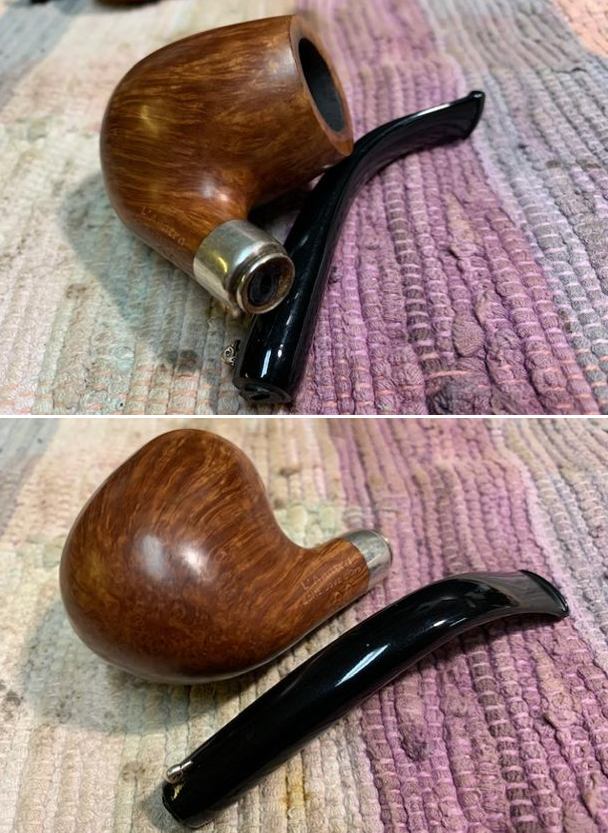
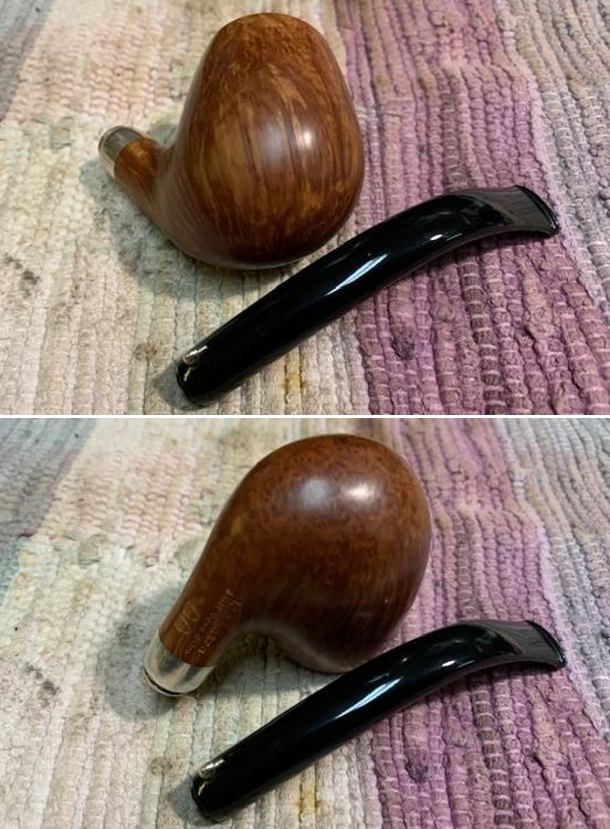
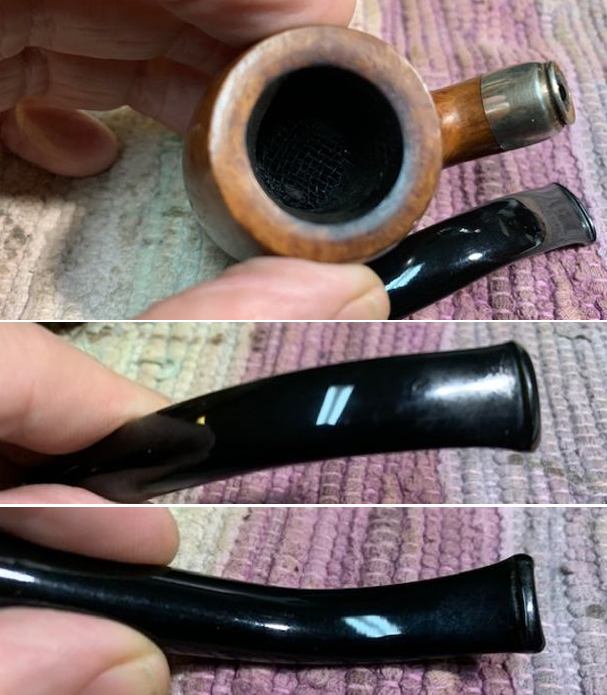
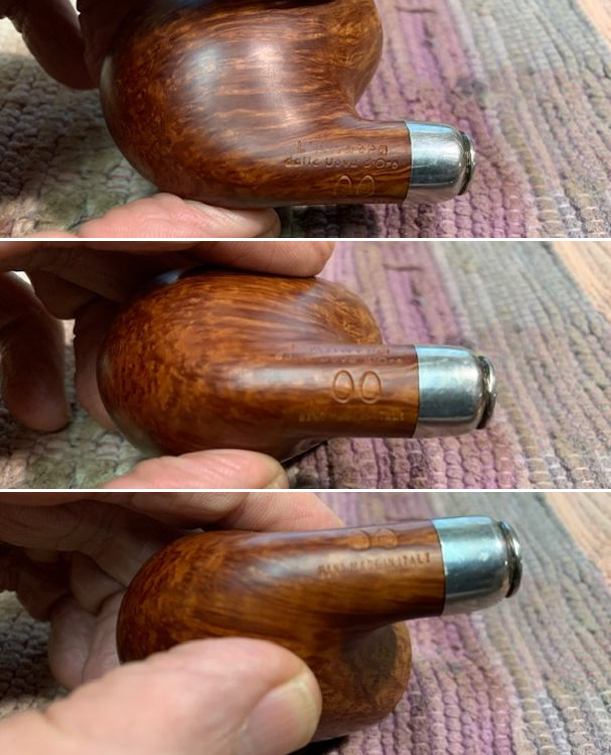
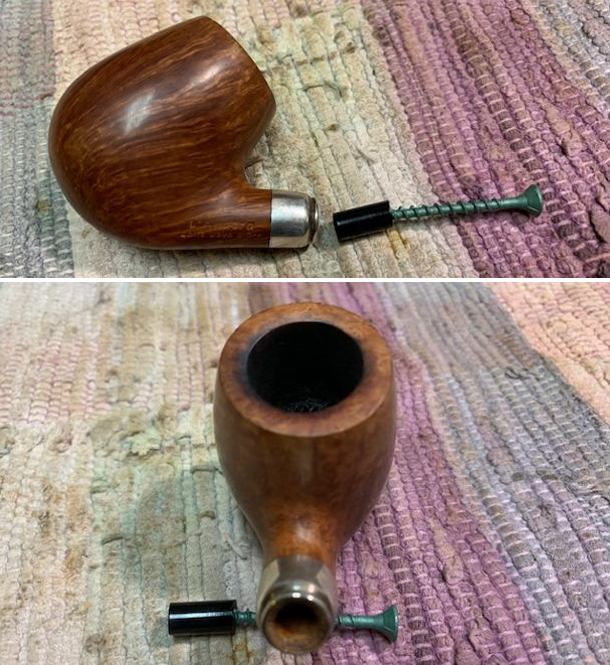
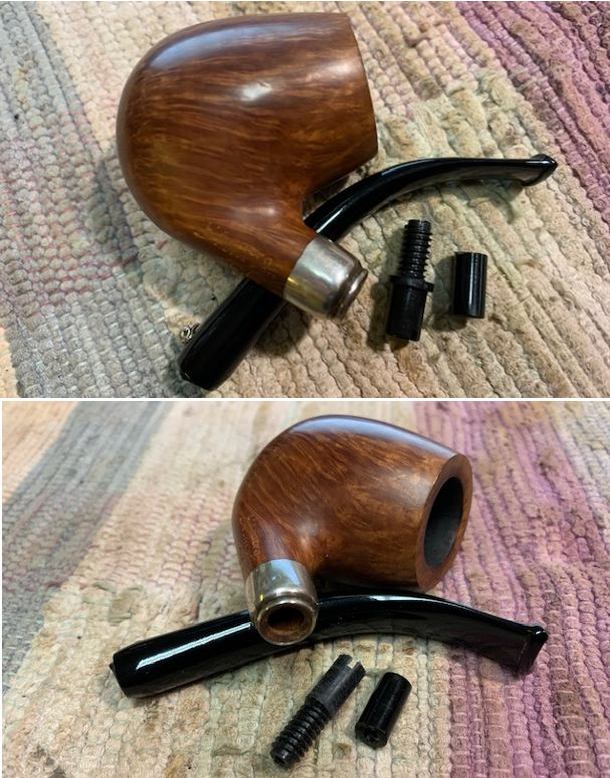
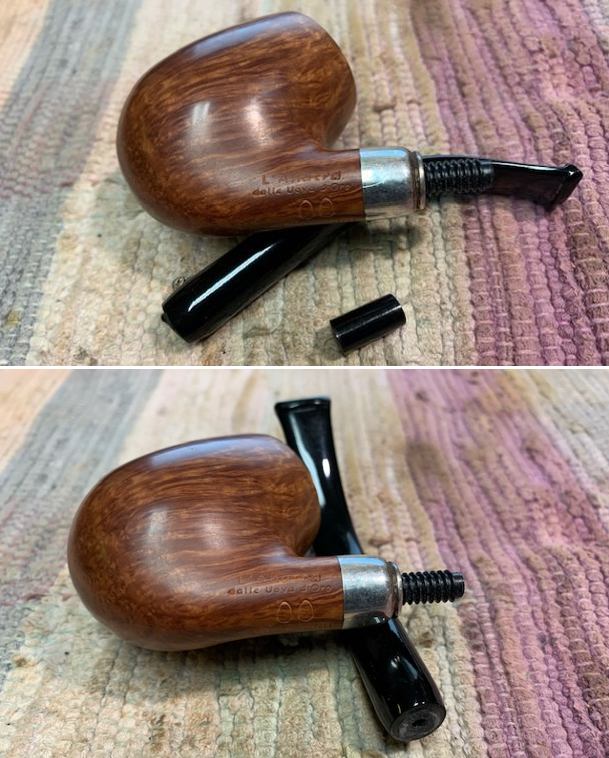
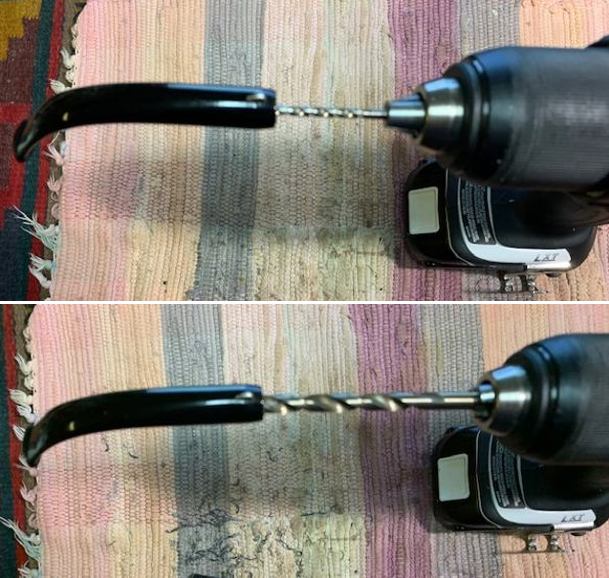
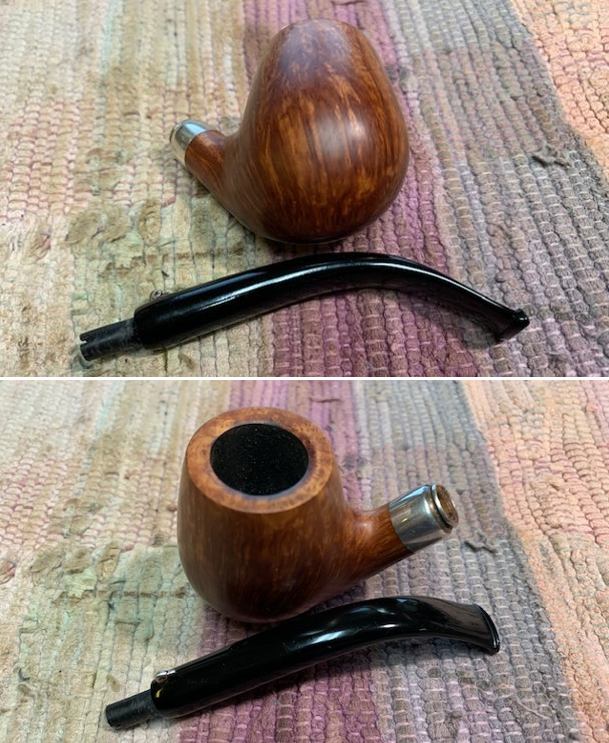
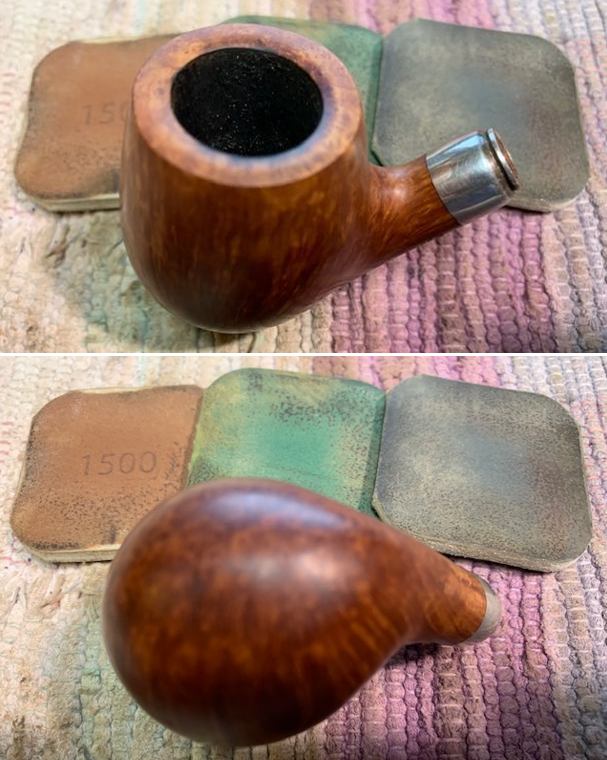
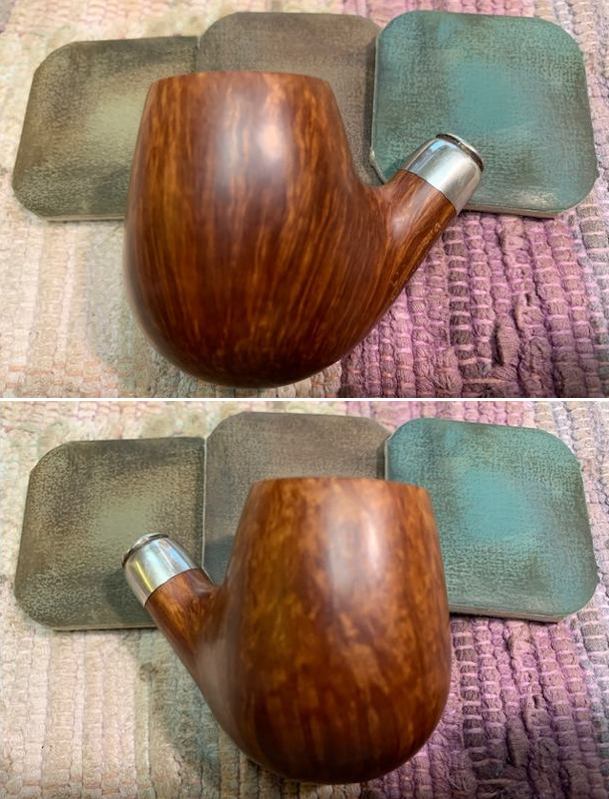
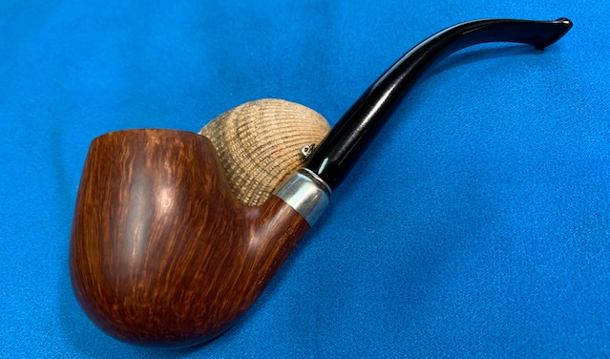
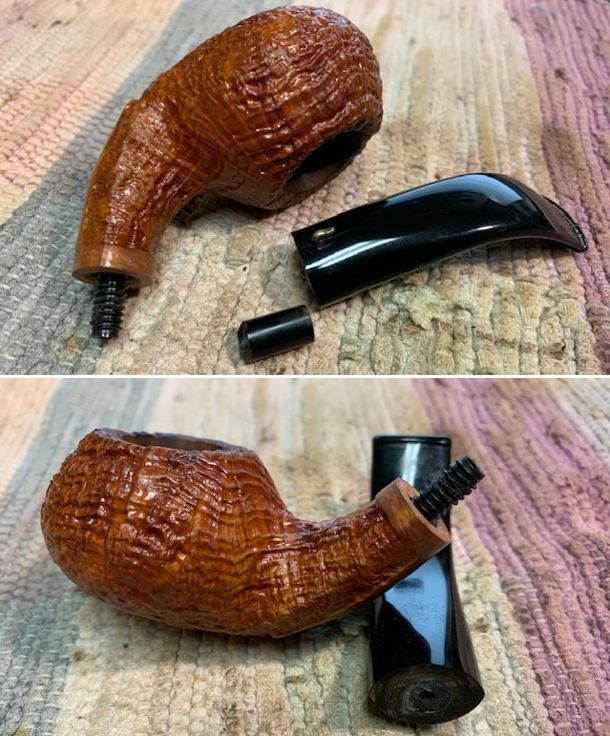
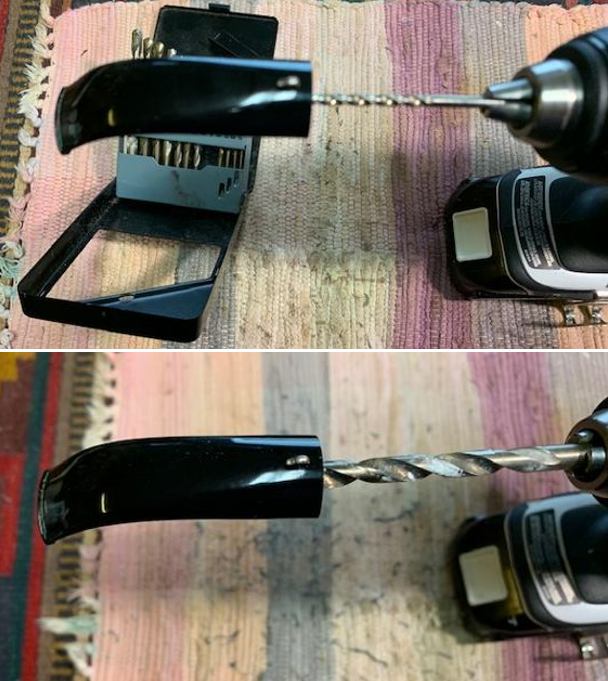
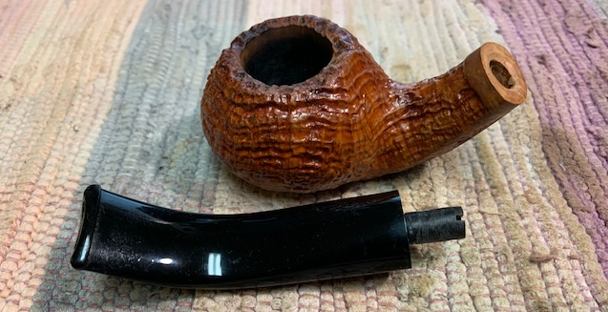
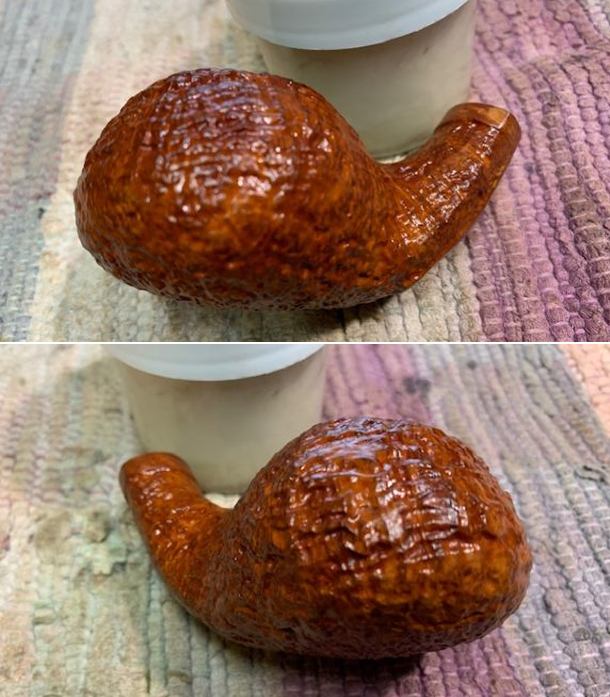
Last week I received a call from a local Vancouver realtor who had gotten my phone number from the pipe shop here. He had a pipe that he said needed a stem replacement and wanted to know if I could do that for him. I have learned to ask what he meant about needing a stem replacement. I had him send me photos of the pipe so I could see what it needed. It was a L’anatra bent egg shape with a silver ferrule. In the first photo you can see the tenon snapped off in the shank. I talked with the fellow a bit and we decided to do a tenon replacement. He was keen to keep the Duck head on the stem so this seemed the best solution for him. I told him to drop the pipe off at the house so I could work on it. I have included the photos that he sent me so you could see what I was going to deal with. With the oval shank L’Anatra tenon replaced I turned my attention to the original one that he had called me about. It too had the tenon snapped off in the shank. It was stamped on the left side of the shank and read L’Anatra [over] dalle Uova d’ Oro [over] 2 Eggs for the Grade of smooth pipe that it was. Underneath that it was stamped Hand Made in Italy. It had some beautiful grain around the bowl and shank. It was a little dirty with some debris and darkening on the beveled inner edge of the bowl. It had been smoked significantly more than the previous pipe. It had a screen in the bowl to help with what I assume was wet smoking but I did not know for sure. I left it in the bowl. It looked like he had dropped it as well but there were no dents in the finish. The stem was in good condition with some chatter on both side ahead of the button but nothing to deep. Once the tenon was replaced it would be a quick clean up and polish before I gave it back to him. I took some photos of the bowl and stem when I received it to show what a great looking pipe it was. I took photos of the rim top to show the condition of the bowl and the darkening on the back inner edge of the rim. I also took photos of the stem to show the tooth chatter on both sides at the button. I rotated the bowl and took photos of the stamping on the left and underside of the shank. It was clear and readable as noted above.I decided to start my work on the pipes by pulling the tenon on both pipes. That way I could proceed on them both from the same starting place. The broken tenon was firmly stuck in the shank so I put the bowl in the freezer while I had a coffee. When I finished the coffee I tried to pull the tenon again with the screw and it came out very easily. I went through my tenons and found a threaded one that would fit the shank with a few minor adjustments. I used a Dremel and sanding drum to remove the should ahead of the threads and to reduce the diameter slightly to fit the shank. I also used the Dremel and sanding drum to remove the fragments of the broken tenon on the stem face. I put the tenon in the shank and took some photos of the fit. It was looking very good. Now it was time to work on replacing the broken tenon. I drilled out the face of the stem with a cordless drill and a bit roughly the size of the airway in the stem. I find that this helps to center the drilling. I worked my way through drill bits up to 15/64s which is approximately the size of the threaded portion of the tenon.I flattened out the threads with the Dremel and sanding drum until the fit in the new opening on the stem was snug. I fit a pipe cleaner in the stem and then coated the threaded tenon end with black CA glue and turned it into the stem. I set it aside to let the glue harden. Once it had I removed the pipe cleaner and took some photos of the pipe with the stem. While the glue cured on the new tenon I turned my attention to the bowl. I polished the briar with micromesh sanding pads – dry sanding with 1500-12000 grit pads. I wiped the bowl down after each pad with a damp cloth. I worked over the darkening on the rim top at the same time. It looked much better. I worked some Before & After Restoration Balm into the surface of the briar with my fingertips to clean, enliven and protect the briar. I let the balm sit for 15 minutes and then buffed with a cotton cloth to raise the shine. The photos show the bowl at this point in the restoration process. I set the bowl aside and turned my attention to the stem. It was in such great condition that I polished it with micromesh sanding pads – wet sanding with 1500-12000 grit sanding pads. I wiped it down after each sanding pad with Obsidian Oil. I polished it with Before & After Pipe Stem Polish – both Fine and Extra Fine. I finished it with a final coat of Obsidian Oil. This L’Anatra dalle Uova d’ Oro 2 Egg Grade Bent Egg turned out to be a more beautiful pipe than I had expected once I had replaced the tenon. The finish on the briar is beautiful and the grain is quite stunning around the bowl and shank. I put the pipe back together and buffed it lightly with Blue Diamond on the buffing wheel. I gave the bowl and the acrylic stem multiple coats of carnauba wax. I buffed the pipe with a clean buffing pad to raise the shine and hand buffed it with a microfibre cloth to deepen the shine. It is fun to see what the polished bowl looks like with the polished black vulcanite stem. This classic looking L’Anatra dalle Uova d’ Oro Bent Egg feels great in my hand. It is light and well balanced. Have a look at it with the photos below. The dimensions are Length: 5 ½ inches, Height: 2 inches, Outside diameter of the bowl: 1 ¼ inches, Chamber diameter: ¾ of an inch. The weight of the pipe is 54 grams/1.90 oz. It is a beautiful pipe and another one that will be heading back to the Vancouver Realtor now that I have replaced a broken tenon on each of the pipes. Thanks for walking through the restoration with me as I worked over this pipe. Thanks to each of you who are reading this blog.

Replacing a Broken Tenon on a L’Anatra dalle Uova d’ Oro Sandblast Squashed Tomato


Blog by Steve Laug

Last week I received a call from a local Vancouver realtor who had gotten my phone number from the pipe shop here. He had a pipe that he said needed a stem replacement and wanted to know if I could do that for him. I have learned to ask what he meant about needing a stem replacement. I had him send me photos of the pipe so I could see what it needed. It was a L’Anatra bent egg shape with a silver ferrule. In the first photo you can see the tenon snapped off in the shank. I talked with the fellow a bit and we decided to do a tenon replacement. He was keen to keep the Duck head on the stem so this seemed the best solution for him. I told him to drop the pipe off at the house so I could work on it. I have included the photos that he sent me so you could see what I was going to deal with. The day that he was going to drop the pipe off he called and asked if he could put another pipe in the bag that had the same problem – a snapped tenon in the shank. I told him to go ahead and add it to the bag. When I came home from work the pipes were waiting for me. The second pipe was another L’Anatra. This one was a beautifully sandblasted bent squashed tomato shape with an oval shank. Like the first one the tenon was snapped off in the shank. It was stamped on the underside of the shank and read L’Anatra [over] dalle Uova d’ Oro [over] Hand Made in Italy. The blast was very well done – deep and rugged. The sandblast on the rim top had some debris and darkening but otherwise was clean. The bowl itself was clean and still had raw briar in the bottom half of the bowl. It looked like he had dropped it not too long after he acquired it. The stem was in good condition with some chatter on both side ahead of the button but nothing to deep. I decided to deal with this one first. Once the tenon was replaced it would be a quick clean up and polish before I gave it back to him. I took some photos of the bowl and stem when I received it to show what a great looking pipe it was. I took photos of the rim top to show the condition of the bowl and the darkening in the sandblast finish of the rim. I also took photos of the stem to show the tooth chatter on both sides at the button.I took a photo of the stamping on the underside of the shank. It was clear and readable as noted above.I decided to start my work on the pipes by pulling the tenon on both pipes. That way I could proceed on them both from the same starting place. I used a dry wall screw and twisted it into the airway. On this pipe a bit of wiggling and the tenon popped free of the shank. The other was a bit tougher but I will talk about it on the next blog.I went through my tenons and found a threaded one that would fit the shank with a few minor adjustments. I used a Dremel and sanding drum to remove the should ahead of the threads and to reduce the diameter slightly to fit the shank. I also used the Dremel and sanding drum to remove the fragments of the broken tenon on the stem face.I put the tenon in the shank and took some photos of the fit. It was looking very good.Now it was time to work on replacing the broken tenon. I drilled out the face of the stem with a a cordless drill and a bit roughly the size of the airway in the stem. I find that this helps to center the drilling. I worked my way through drill bits up to 15/64th which is approximately the size of the threaded portion of the tenon.I flattened out the threads with the Dremel and sanding drum until the fit in the new opening on the stem was snug. I fit a pipe cleaner in the stem and then coated the threaded tenon end with black CA glue and turned it into the stem. I set it aside to let the glue harden. Once it had I removed the pipe cleaner and took some photos of the pipe with the stem. While the glue cured on the new tenon I turned my attention to the bowl. I used a brass bristle wire brush to scrub off some of the darkening on the rim top. I worked some Before & After Restoration Balm into the surface of the briar with my fingertips and a horse hair shoe brush to clean, enliven and protect the briar. I let the balm sit for 15 minutes and then buffed with a cotton cloth to raise the shine. The photos show the bowl at this point in the restoration process. I set the bowl aside and turned my attention to the stem. It was in such great condition that I polished it with micromesh sanding pads – wet sanding with 1500-12000 grit sanding pads. I wiped it down after each sanding pad with Obsidian Oil. I polished it with Before & After Pipe Stem Polish – both Fine and Extra Fine. This L’Anatra dalle Uova d’ Oro Sandblast Squashed Tomato turned out to be a more beautiful pipe than I had expected once I had replaced the tenon. The sandblast finish on the briar is beautiful and the nooks and crannies of the blast really show the depth of the finish. I put the pipe back together and buffed it lightly with Blue Diamond on the buffing wheel. I gave the bowl multiple coats of Conservator’s Wax and the acrylic stem multiple coats of carnauba wax. I hand buffed the pipe with a clean buffing pad to raise the shine and hand buffed it with a microfibre cloth to deepen the shine. It is fun to see what the polished bowl looks like with the polished black vulcanite stem. This classic looking L’Anatra dalle Uova d’ Oro Squashed Tomato feels great in my hand. It is light and well balanced. Have a look at it with the photos below. The dimensions are Length: 6 inches, Height: 1 ½ inches, Outside diameter of the bowl: 1 ½ inches, Chamber diameter: 7/8 of an inch. The weight of the pipe is 63 grams/2.22 oz. It is a beautiful pipe and one that will be heading back to the Vancouver Realtor once I finish the tenon replacement on his second L’Anatra – an Egg. Thanks for walking through the restoration with me as I worked over this pipe. Thanks to each of you who are reading this blog.

A Very Oddly Modified Chelsea Selected Briar Natural Billiard


Blog by Steve Laug

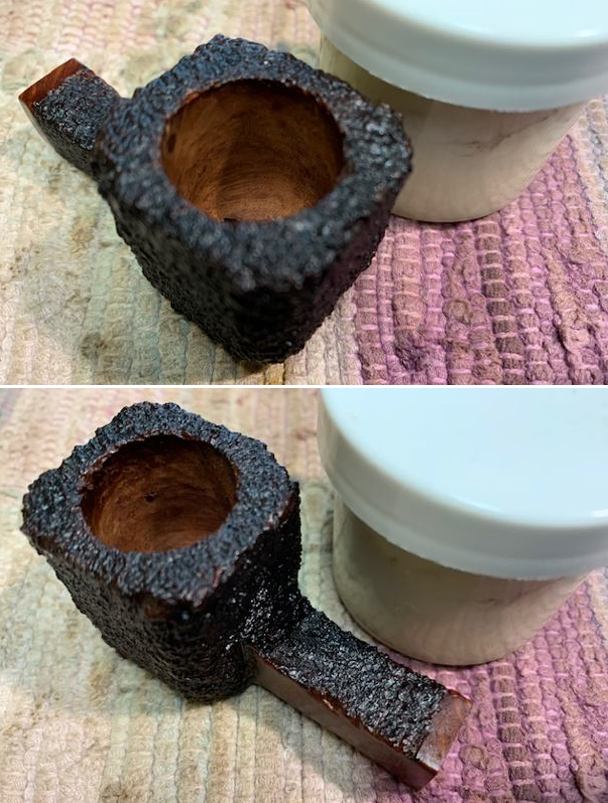
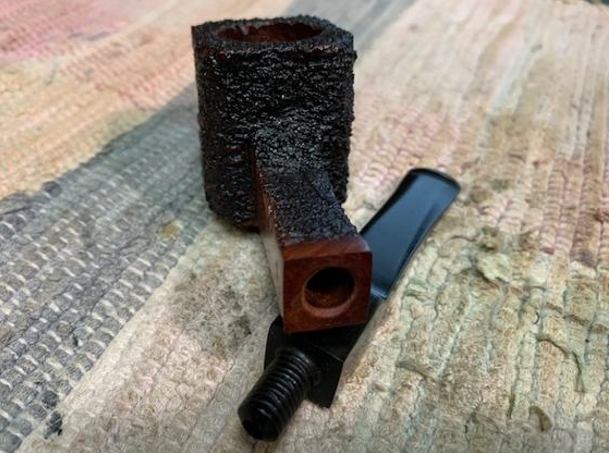
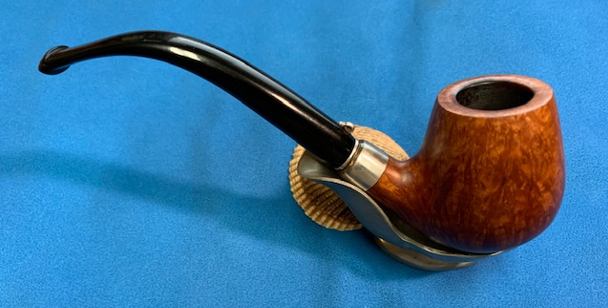
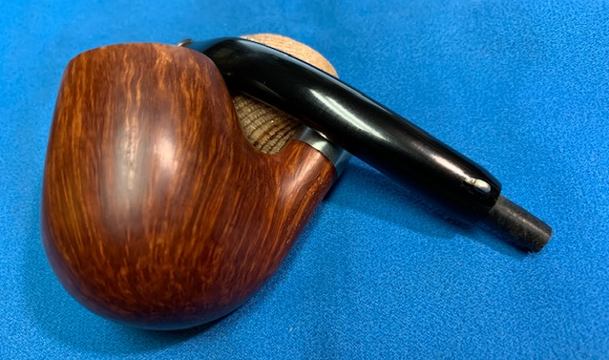
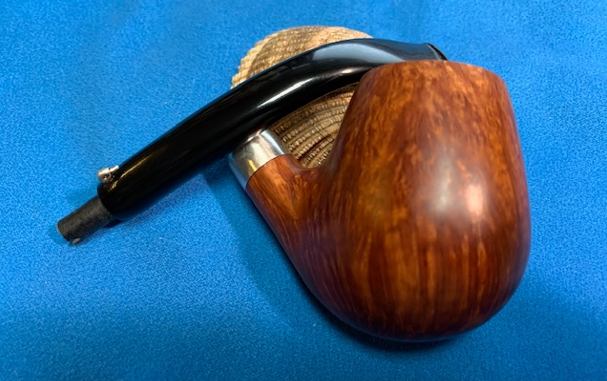
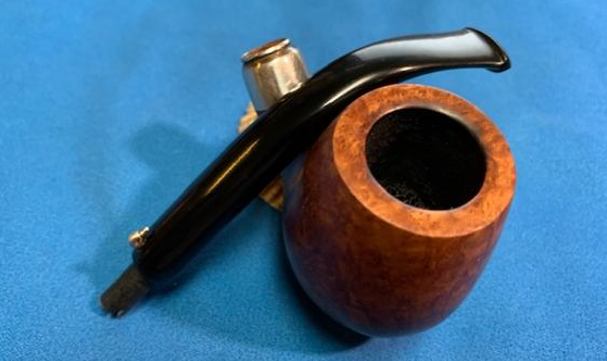
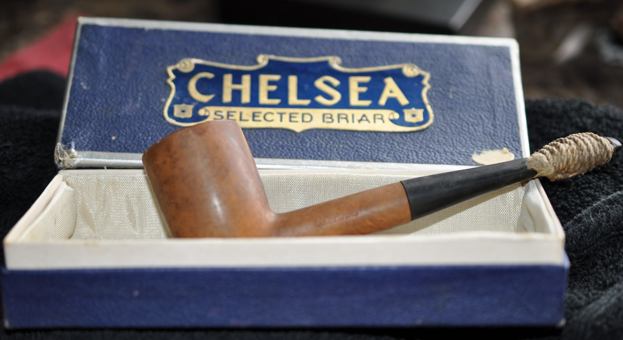
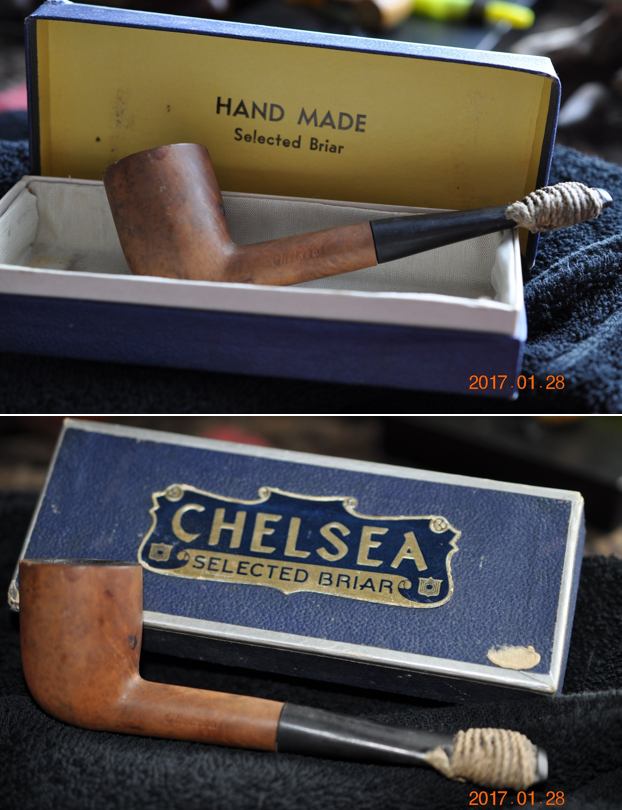
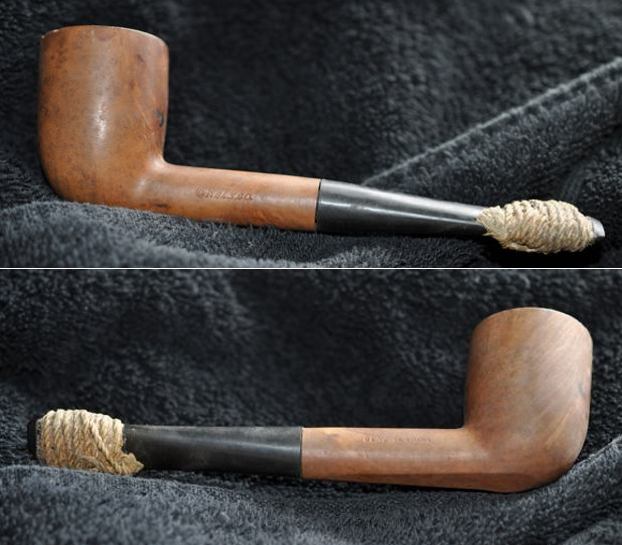
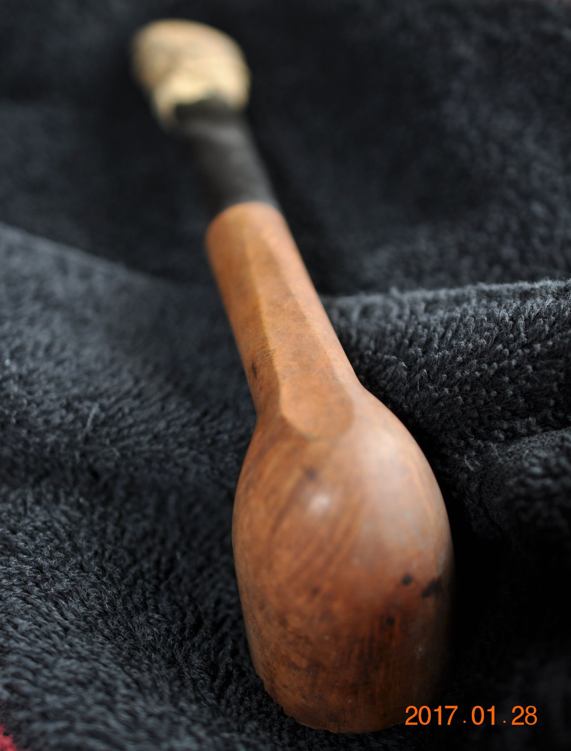
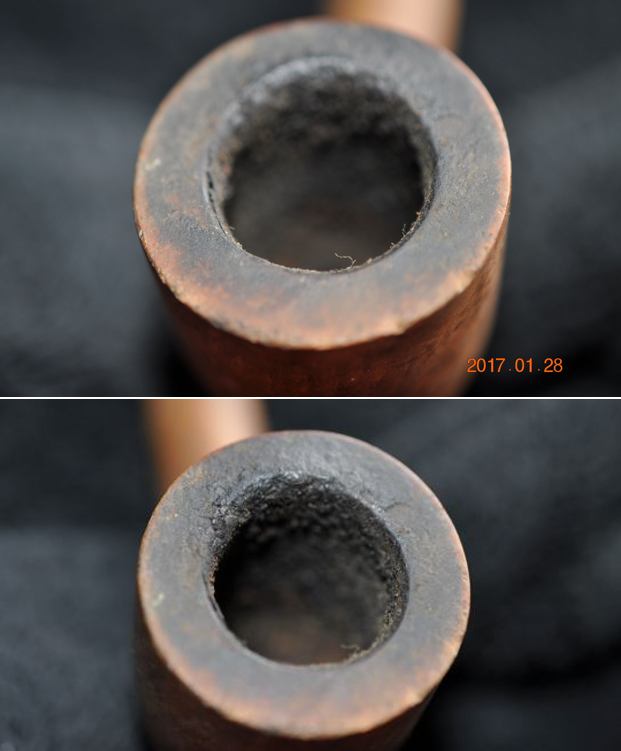
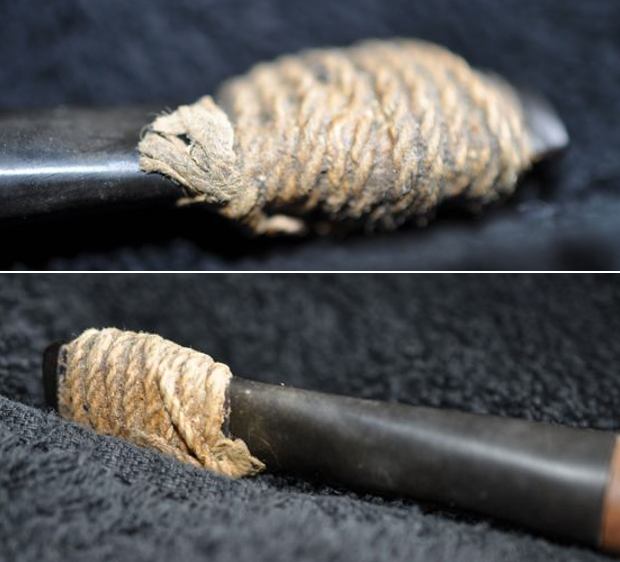
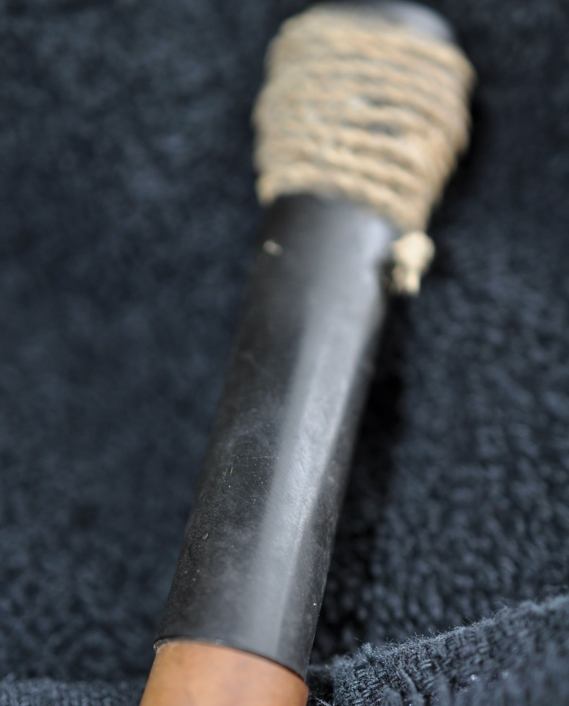
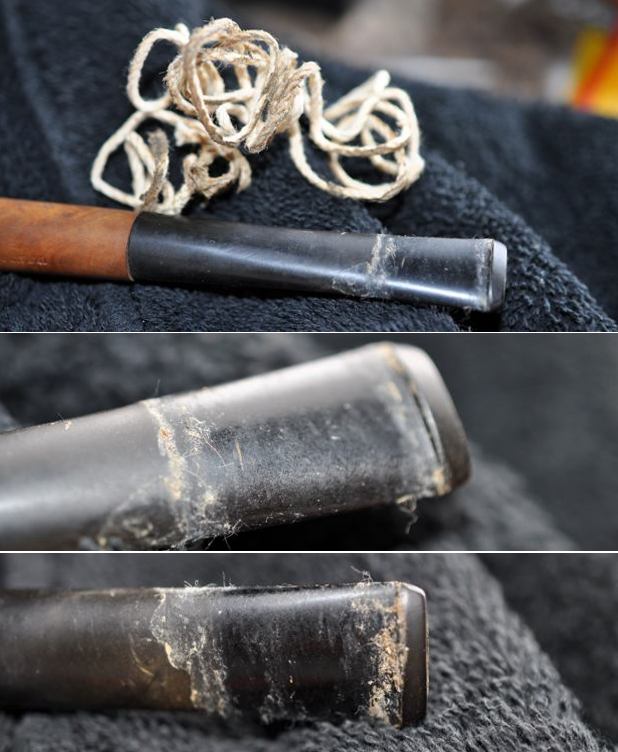
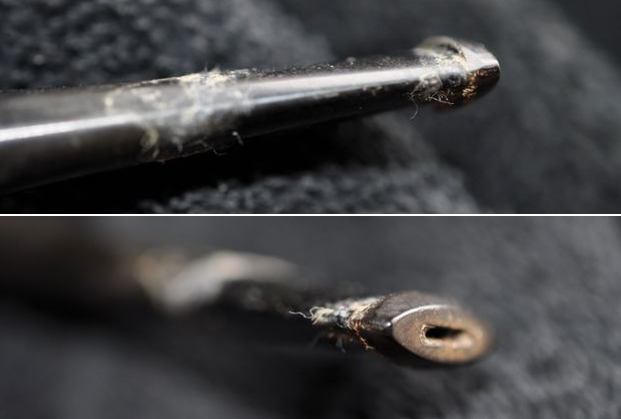
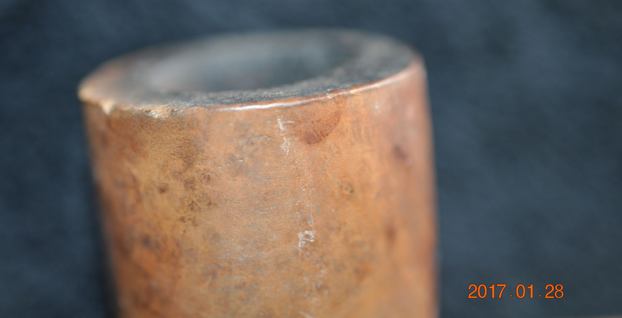
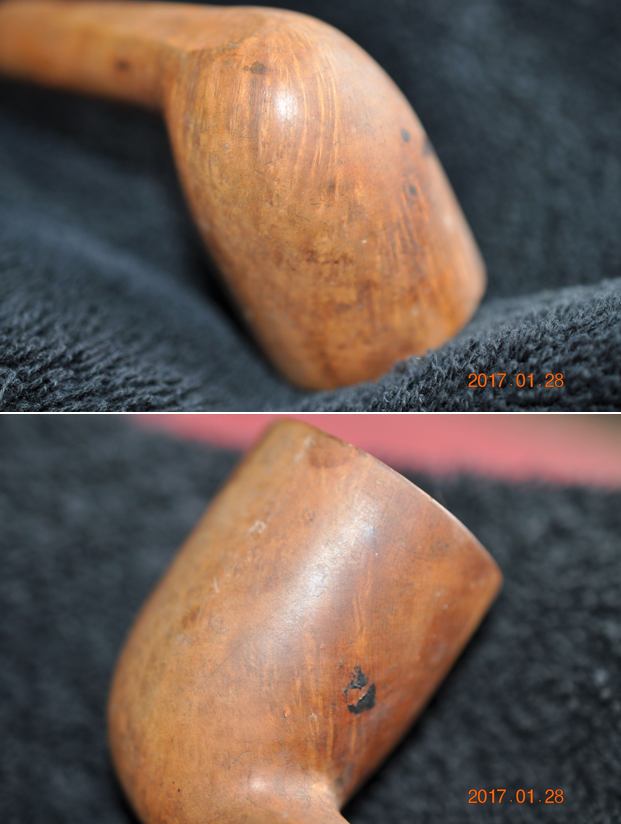
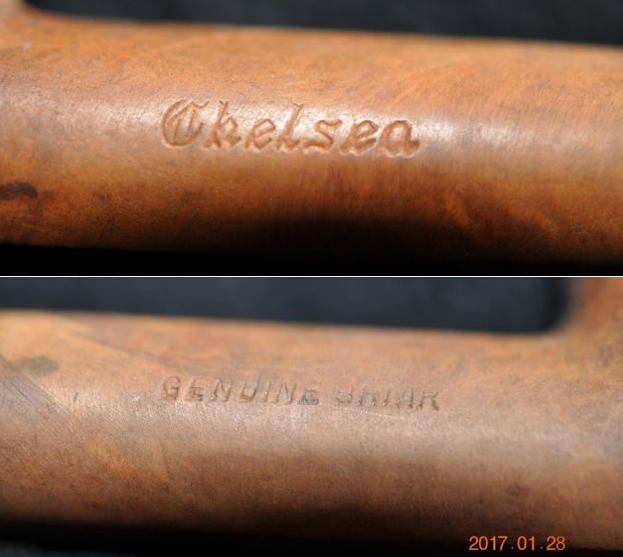
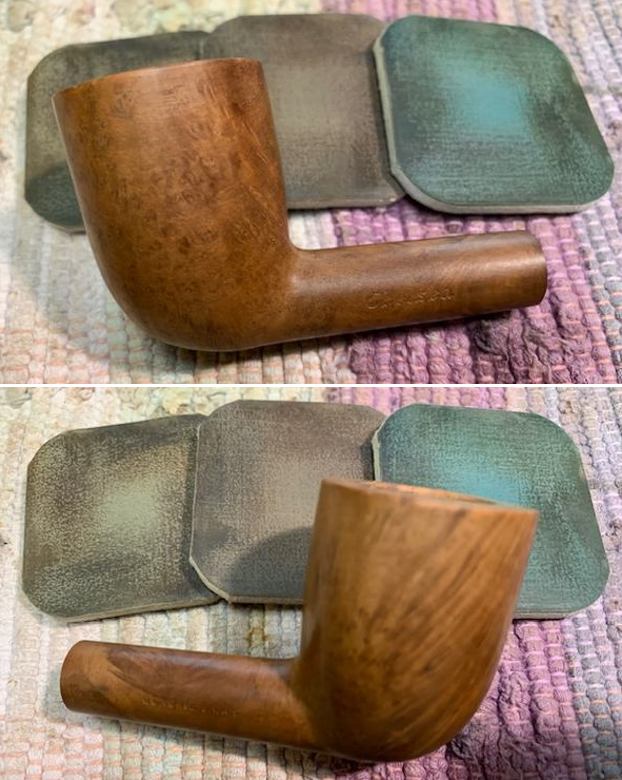
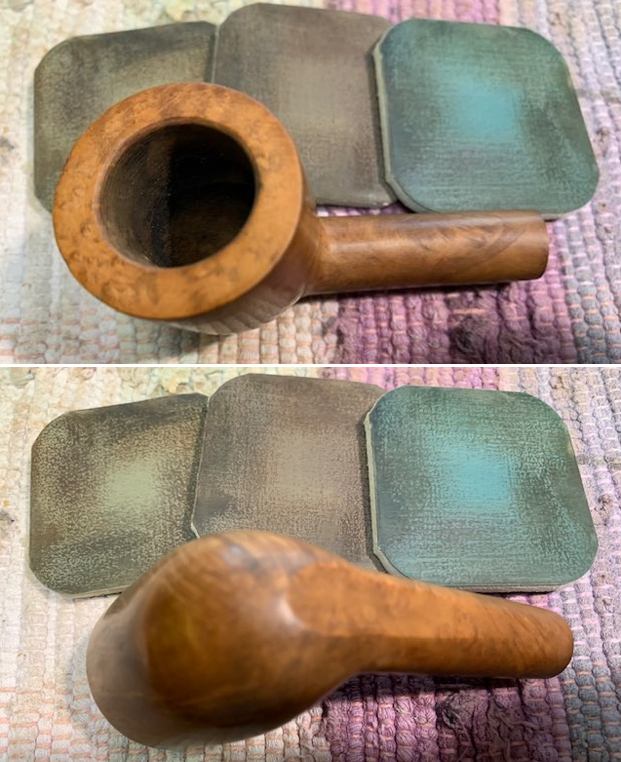
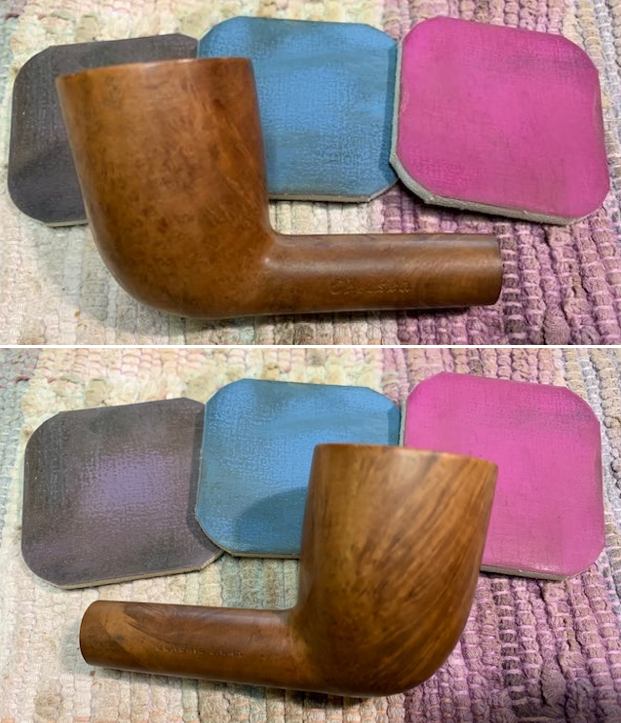
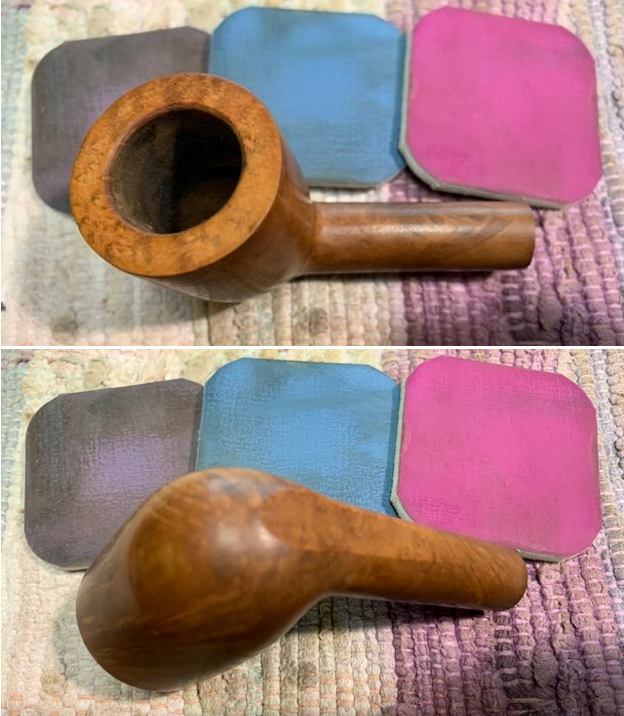
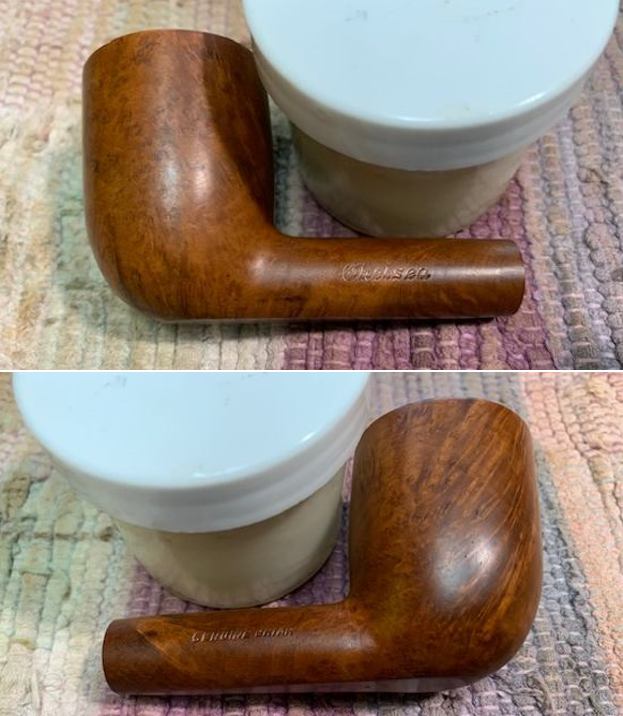
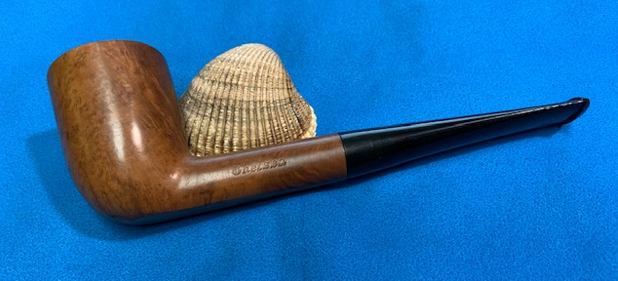
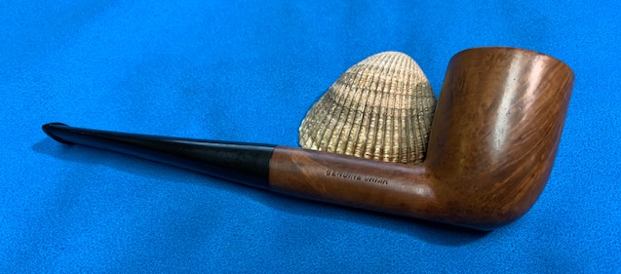
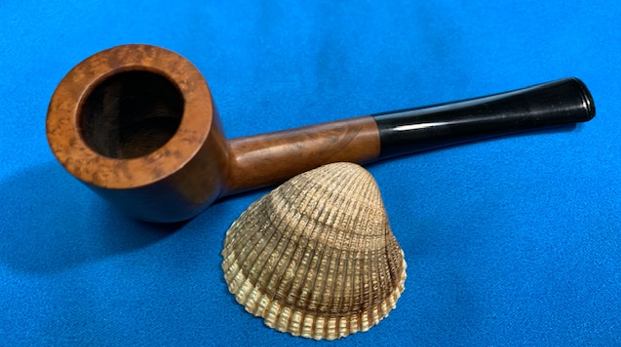
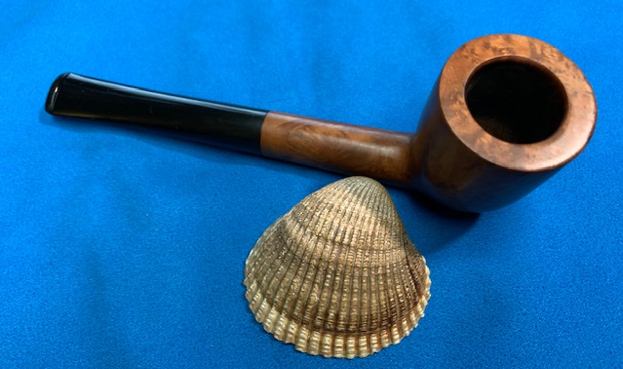
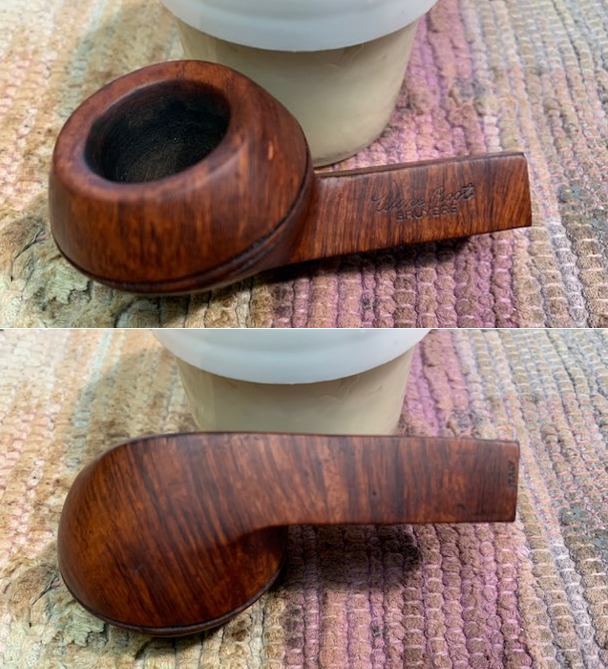
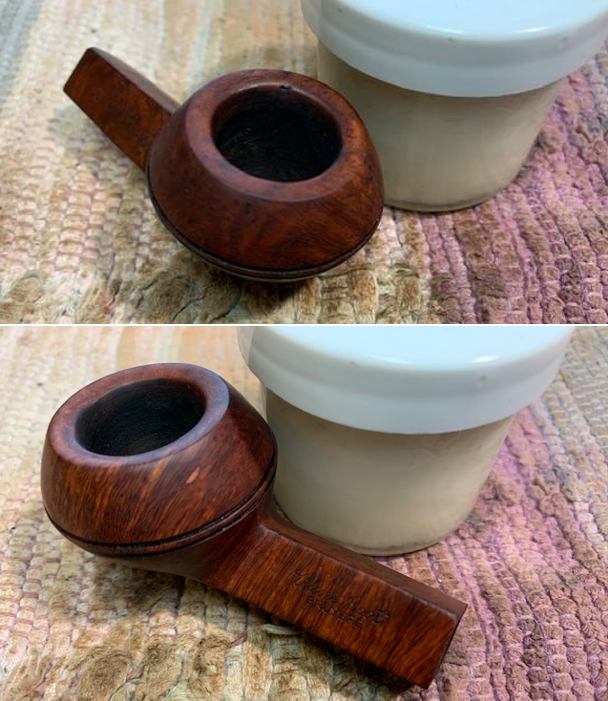
To be honest I think the only reason we picked up this pipe is because the way it was when saw it on Ebay back in 2017. It came from a seller who was in La Mesa, California, USA. It came in a nice blue box with a linen coloured satiny lining. The box was in okay condition and read Chelsea Selected Briar on the cover. The pipe itself was the oddity. The previous owner had wrapped the stem end with string and built his/her own bit protector. The wrapping was quite thick so it looked utterly uncomfortable. It made me wonder if he/she did not have teeth and this was the way the made the pipe a dental bit. LOL! I suppose that we will never know for sure but it is certainly one of the strangest looking ones that we have picked up.Jeff took quite a few pictures of the pipe in the box to give an idea of what the box looked like inside and out. Each of the photos showed the odd string wrapping around the stem. It really made us wonder what was hidden under the string.He took the pipe out of the box to take photos of it to show the condition of the bowl and stem. The briar has natural finish and was stained and very dirty. There were dark spots on the sides of the bowl. The pipe was stamped on the left side of shank and read CHELSEA in an italic script. On right side it read Genuine Briar. It had a great shape to it. The stem did not fit against the shank very well probably because it was dirty inside as well. The bowl was thickly caked and there was a thick lava coat on the rim top. It looked like there was some burn damage on the inner back edge of the bowl but it would become clear once it was cleaned. The stem is dirty and you can see the thickness of the string wrap on the end. I am amazed at how thick it is and to me how uncomfortable! Jeff took some close up photos of the bowl and rim to give a clear picture of the thickness of the cake and the lava overflow on the rim top. You can also see the nicks in the outer edge of the bowl in the photos below. He also took photos of the string wrap to show how rough and thick it really is. I really want to know what is underneath it! The time for the unwrapping was at hand. Jeff cut the string and untwisted it. To our surprise the stem was in perfect condition. There were no tooth marks and no chatter. The only thing on it was debris and a bit of calcification . It would clean up well. It was also obvious that the stem was on the shank upside down. He took some photos of the sides and heel of the bowl. While dirty and nicked the pipe has some great grain. The stamping on the sides of the shank were clear and readable as noted above.The stamping on the pipe pointed me to either an American Made pipe of one Made for Import into the American market. I did a Google search and found other pipes with the same Chelsea stamp and several were made in Italy. Several others said Imported Briar and had what appeared to be Comoy’s shape numbers. I remembered that late in Comoy’s history there had been a link between Lorenzo pipes and them so it could be true that the pipes were made for or by Comoy’s.
I turned to Pipedia and came up empty handed. There was nothing on the brand nor was there anything linking them to Comoy’s. I turned then to Pipephil (http://pipephil.eu/logos/en/logo-c4.html) and the site made a link to Comoy’s on a pipe made for the 1933 Chicago World’s Fair. While it is not definitive, there is a tie it seems. However, there is still a part of me after working on this pipe that will always think that it is American made. The look and feel of it reminds of Bertrams pipes from Washington DC.

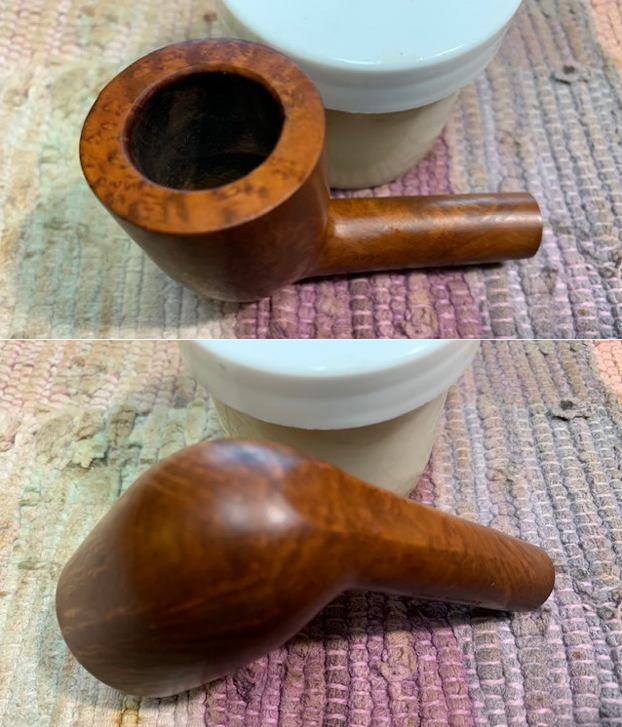
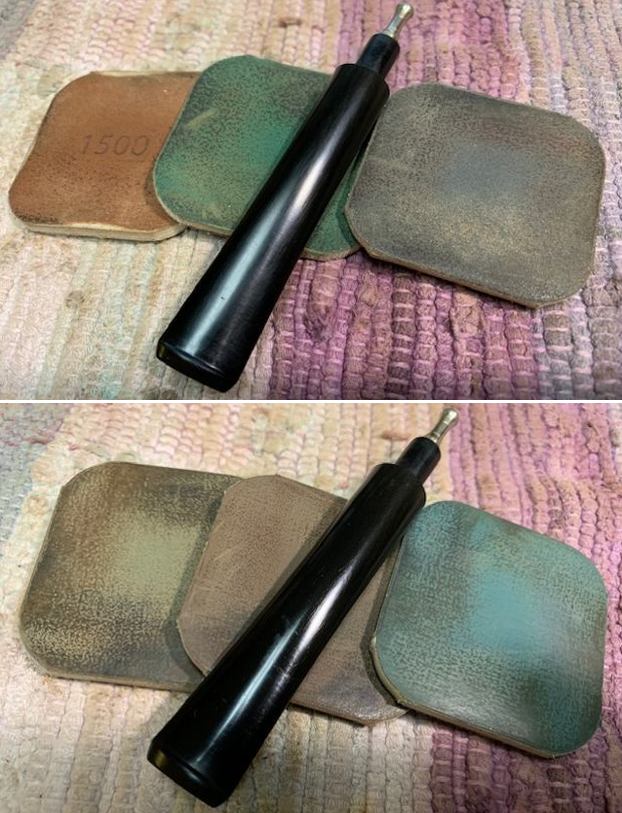
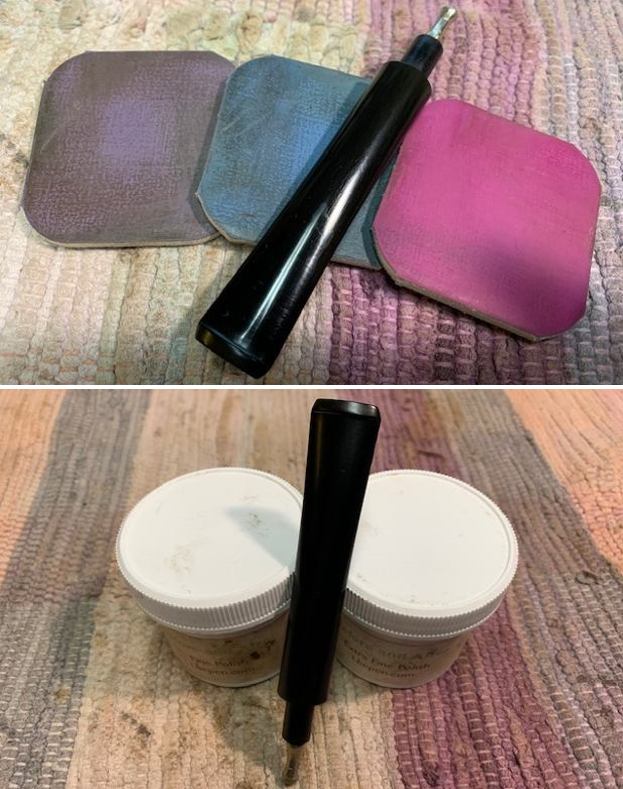
Jeff had done a great job cleaning up the pipe as usual. He reamed the pipe with a PipNet reamer and cut back the cake back to the bare briar. He cleaned up the walls with a Savinelli Fitsall Pipe Knife. He scrubbed the interior of the bowl and shank with pipe cleaners, cotton swabs and alcohol to remove the tars and oils. He scrubbed the exterior of the pipe with Murphy’s Oil Soap and a tooth brush to remove the grime from the finish. He worked on the rim top lava and darkening with the soap and tooth brush. He scrubbed the inside of the stem with alcohol and pipe cleaners. He scrubbed the exterior with Soft Scrub and then soaked it in Before & After Deoxidizer. He washed it off with warm water to remove the Deoxidizer. When I finally took it out of the box four years later I was surprised at how good the pipe looked. It was a nice looking pipe now.  I took some close up photos of the rim top and also of the stem surface. I wanted to show how well it had cleaned up. The rim top photo looks good but there is some burn damage on the inner edge at the back of the bowl and all around the inner edge there is darkening. There are some rough areas on the outer edge of the rim all the way around the bowl. I also took close up photos of the stem to show how almost pristine it was thanks to the string wrap it had worn. There were some scratches but they would clean up quite easily.I took photos of the stamping on the sides of the shank. You can see that it is stamped as noted above. It is clear and readable.    I took the pipe apart and took a photo of the parts. It is a good looking pipe and has some great mixed grain on the sides of the bowl. I decided to address the rim top damage first. I lightly topped the bowl on a topping board with 220 grit sandpaper to minimize the damage to the top and inner edge of the bowl. I then used a folded piece of 220 grit sandpaper to give the edge a slight bevel to further minimize the damage to the rim. I think that it is definitely better once I finished. I polished the briar rim top and edges along with the rest of the briar with micromesh sanding pads –dry sanding with 1500-12000 grit pads and using a damp cloth after each pad. I worked some Before & After Restoration Balm into the surface of the briar with my fingertips to clean, enliven and protect the briar. I let the balm sit for 15 minutes and then buffed with a cotton cloth to raise the shine. The photos show the bowl at this point in the restoration process. I set the bowl aside and turned my attention to the stem. It was in such great condition that I polished it with micromesh sanding pads – wet sanding with 1500-12000 grit sanding pads. I wiped it down after each sanding pad with Obsidian Oil. I polished it with Before & After Pipe Stem Polish – both Fine and Extra Fine. This Chelsea Selected Briar Natural Billiard turned out to be a more beautiful pipe than I had expected. The natural finish on the briar is beautiful and the grain pops. I put the pipe back together and buffed it with Blue Diamond on the buffing wheel. I gave the bowl and stem multiple coats of carnauba wax. I hand buffed the pipe with a clean buffing pad to raise the shine and hand buffed it with a microfibre cloth to deepen the shine. It is fun to see what the polished bowl looks like with the polished black vulcanite stem. This classic looking Chelsea Billiard feels great in my hand. It is light and well balanced. Have a look at it with the photos below. The dimensions are Length: 6 inches, Height: 1 ¾ inches, Outside diameter of the bowl: 1 ¼ inches, Chamber diameter: ¾ of an inch. The weight of the pipe is 33 grams/1.16 oz. It is a beautiful pipe and one that will be on the American Pipe Makers section of the rebornpipes store soon. If you are interested in adding it to your collection let me know. Thanks for walking through the restoration with me as I worked over this pipe. Thanks to each of you who are reading this blog.

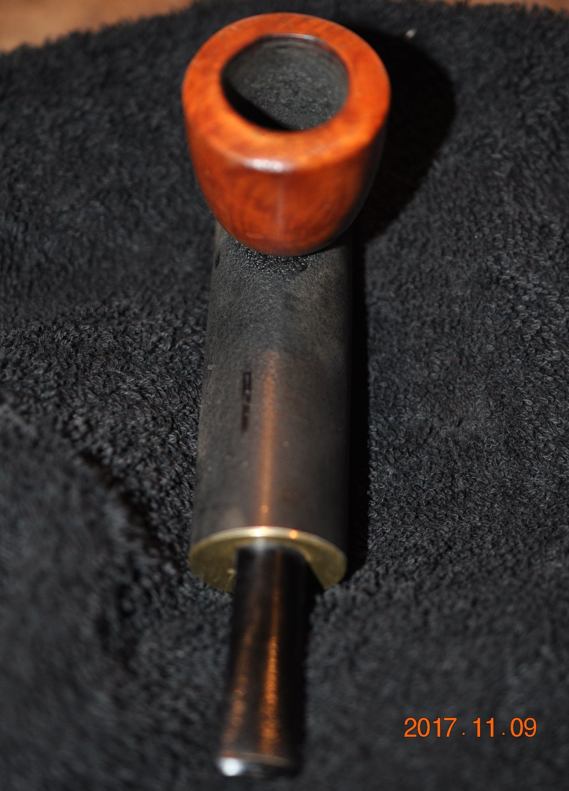
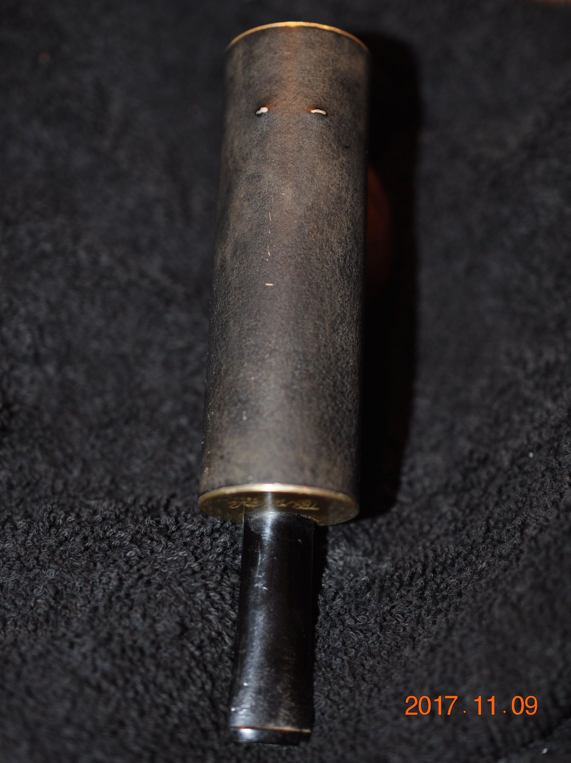
This one is strangely beautiful – a Smooth Bowled Brial System Pipe


Blog by Steve Laug

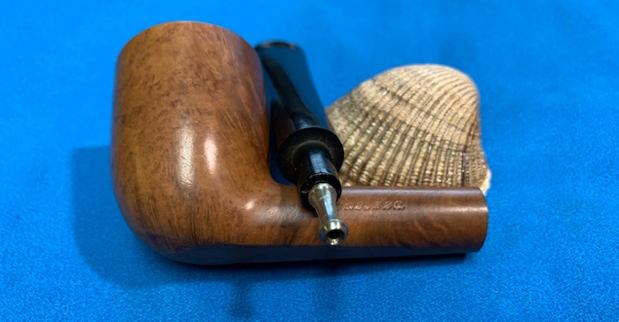
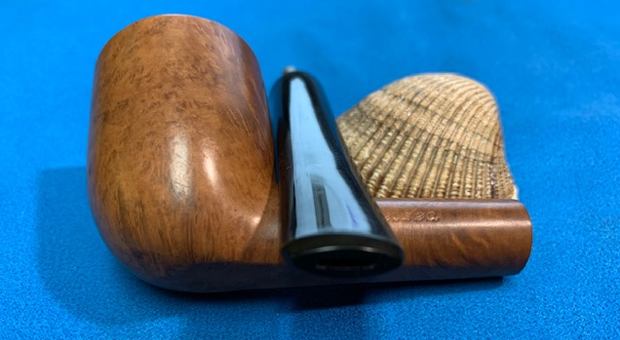
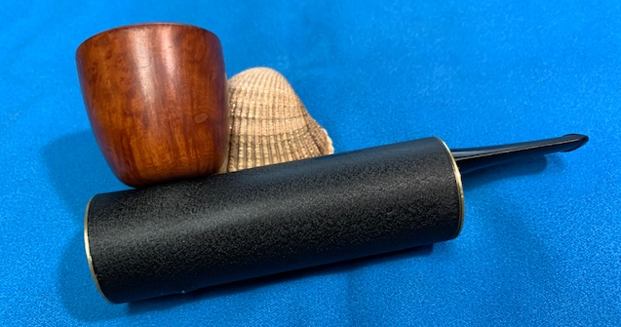
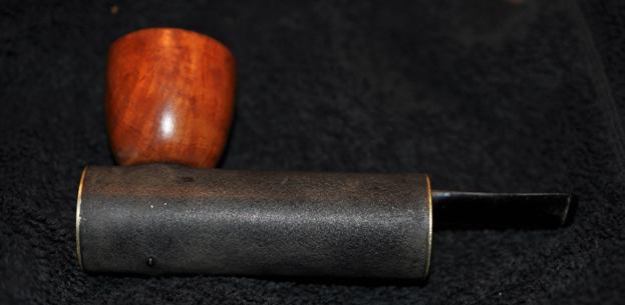
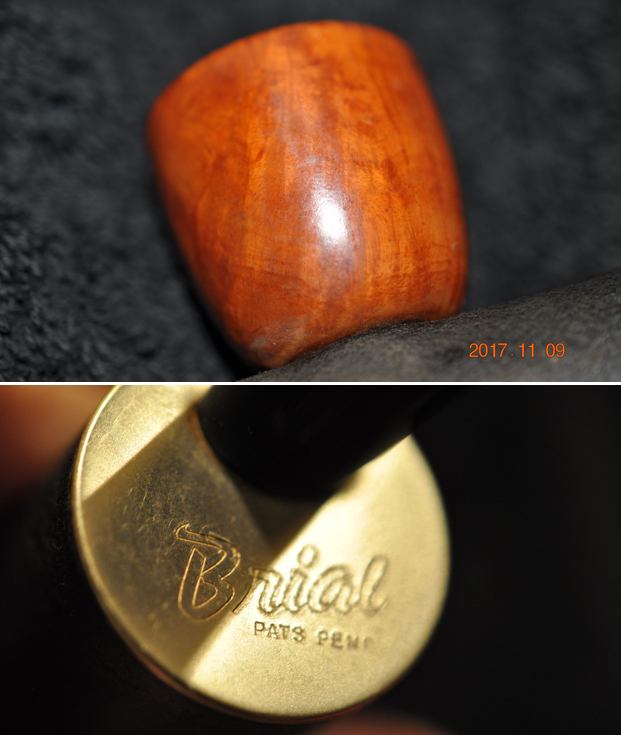
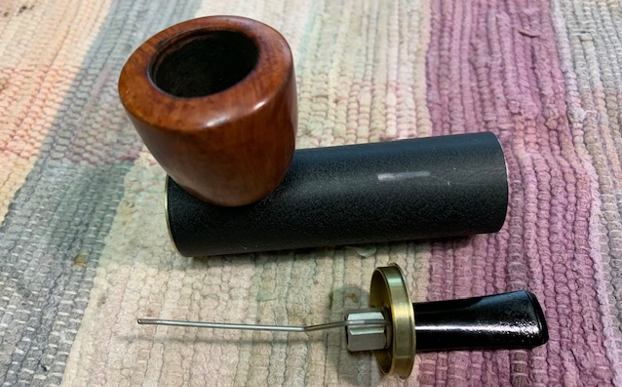
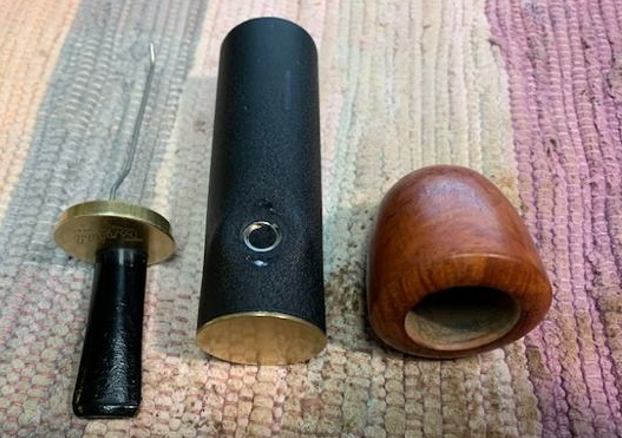
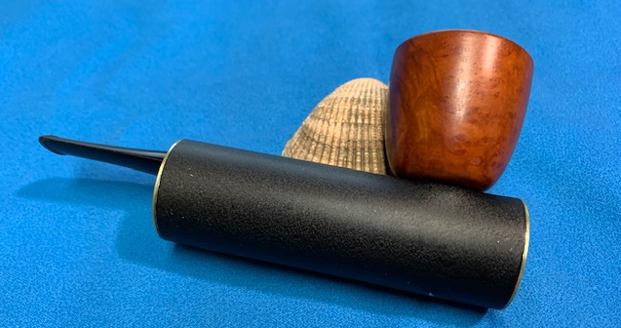
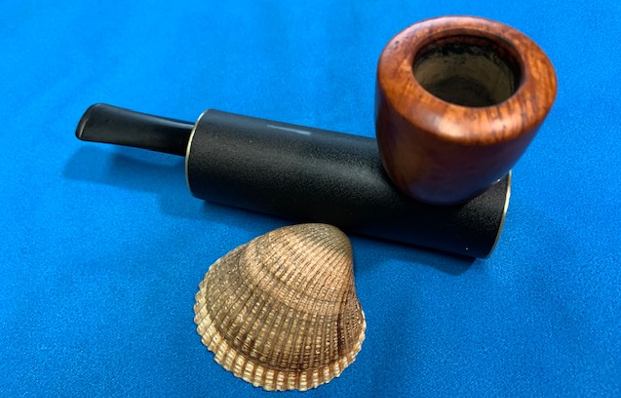
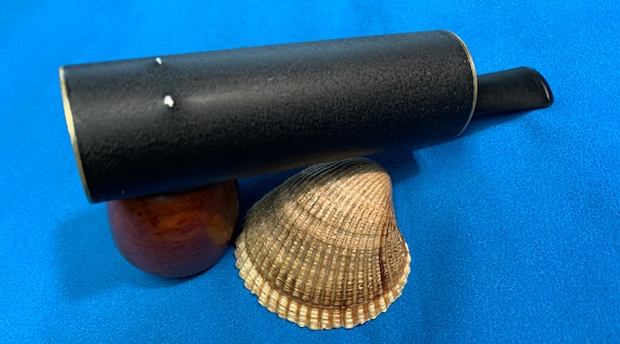
This particular style of system pipe always reminds me of the tadpoles we used to catch when I was younger. We would get a jarful and watch them become frogs. The pipe has that same look to me. Or you might compare it to an inflated puffer fish. Either way it is an odd pipe and yet there is something strangely beautiful about it. We purchased this smooth bowled one from an antique mall on 10/28/17 in Bozeman, Montana, USA. I have worked on one other of these Brial pipes and have found them hilariously interesting. The base tube that receives the stem is made to be stuffed with wads of toilet paper or tissue to filter out the moisture in the smoke. The one I had before still had that in it. Fortunately, this did not as it is quite smelly and messy. This one had a fairly thick cake in the bowl  and some dings in the rim top and light lava on the inner edge of the bowl. The briar bowl was dirty with ground in oils and the tubular shank was dusty and dirty as well. The brass coloured ends of the tube were also lightly scratched and dirty. The tube has two small bumps on the bottom that act as feet making the pipe a sitter. The stem had tooth chatter and marks on both sides. I think the stem is a plastic product rather than vulcanite. It is quite different feeling and the marks in it are much like what I have seen on Medico pipe stems. The brass end plate on the stem end of the tube read Brial [over] Pats Pend. When removed there was a nickel nut on the inside holding the stem in place and a wire to wrap the tissue paper filter around. Jeff took these photos before he started his clean up of the pipe. Jeff took some photos of the rim and bowl to give a sense of the cake and lava situation. You can also see the nicks and scratches in the briar. It is still a nice looking piece of briar. The stem is also shown. You can see the tooth marks and chatter on the surface. Even the marks look different than the ones that are in vulcanite or acrylic. Jeff took a photo of the side of the bowl to give a glimpse of the grain on the briar. It is quite nice. He also captured the etching on the brass stem end of the tube. It reads as noted above.I mentioned above about the earlier Brial pipe that I had worked on. I turned to that blog now and reread the information that I had gathered on the brand. Here is the link to the blog if you would like to have a look at it (https://rebornpipes.com/2017/07/17/a-messy-cleanup-on-a-brial-system-pipe/). I quote the section from the blog on the brand itself. It is quite interesting.

I remember when I first started looking at getting a Brial pipe I Googled and found a write up on the brand on the Smoking Metal Website. It was that brief description, the photos and printed advertisement that hooked me and set me on the hunt to acquire one of them. I have included that write up for you. If you wish to read it on the website here is the link – http://www.smokingmetal.co.uk/pipe.php?page=70.

The BRIAL pipe is basically an alloy cylinder to which the briar bowl is screwed through the base of the bowl. The front end is permanently sealed with an alloy endpiece. The cylinder is filled with a tissue to act as an absorption media. This can be tamped in or extracted by means of the probe attached to the mouthpiece plate.

To enable the pipe to stay upright on a table, two dimples have been made in the underside of the cylinder to act as ‘feet’ as shown in my photos.

Brials were available in natural aluminium, brass anodized finish or black… The pipe was patented and manufactured by Salimar Oden in Jefferson Historic District, Muskegon, Michigan. It is believed he continued to market them until his move to Florida in 2000.

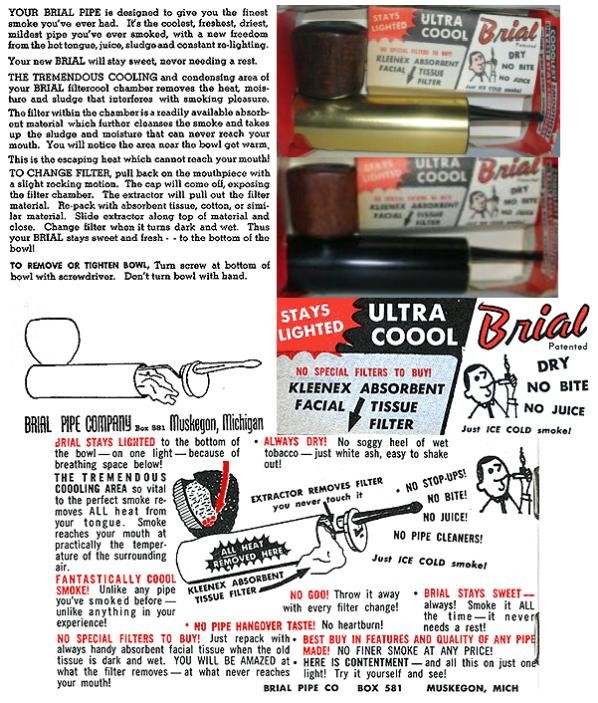
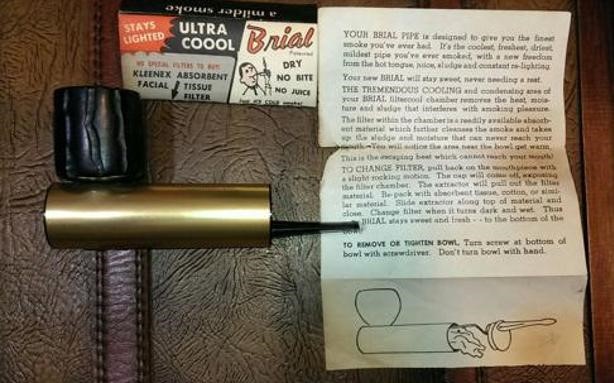
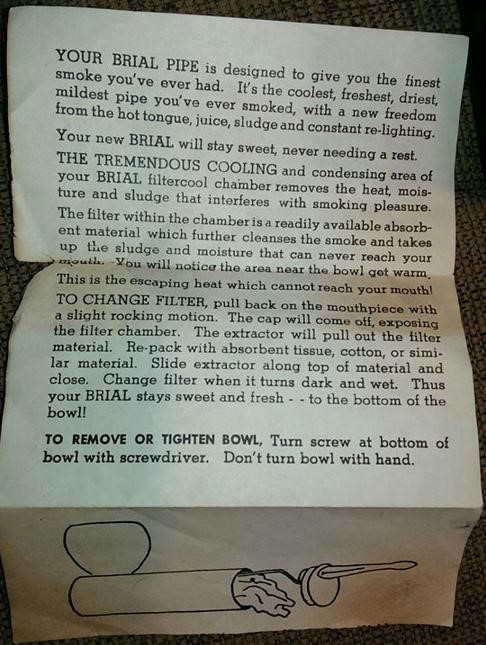
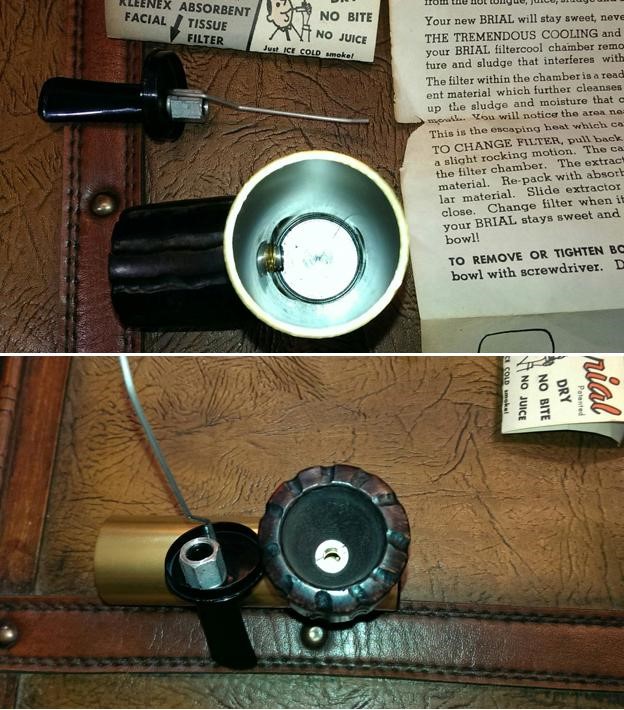
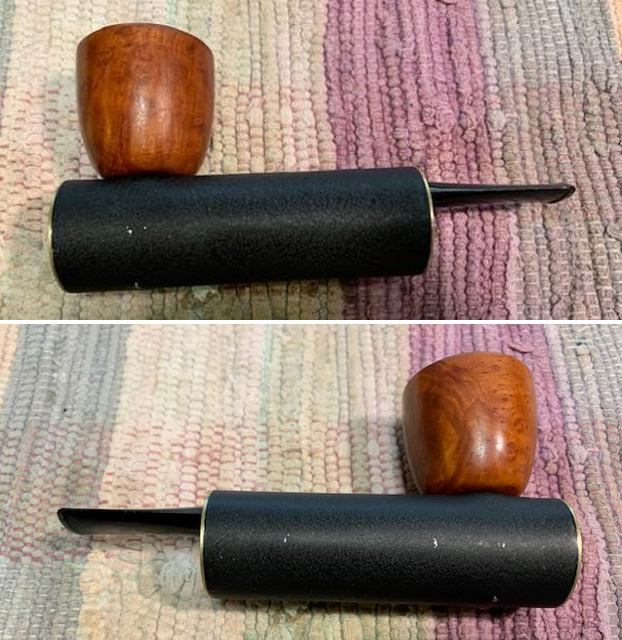
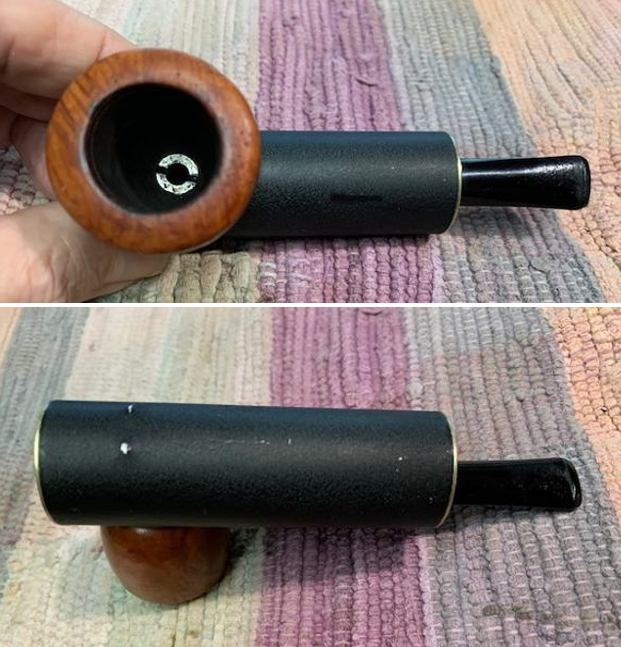
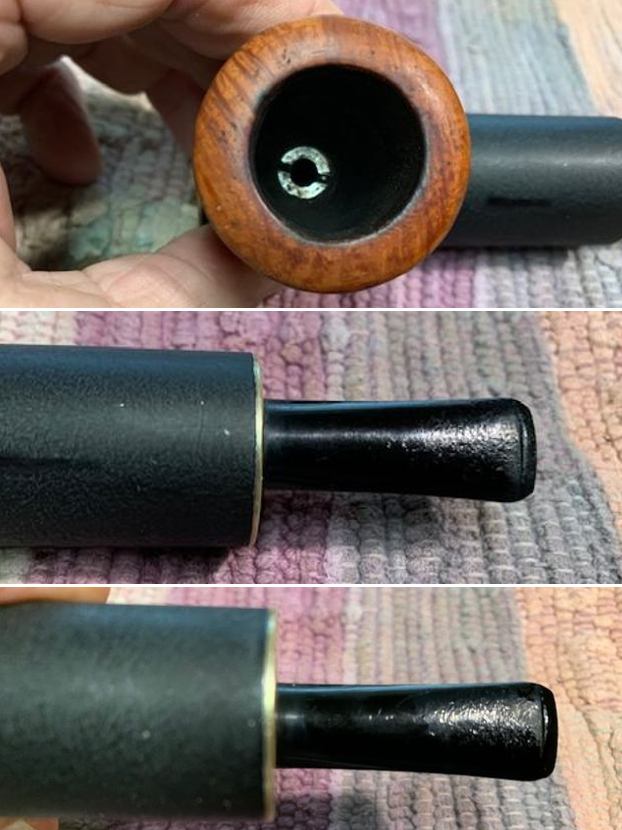
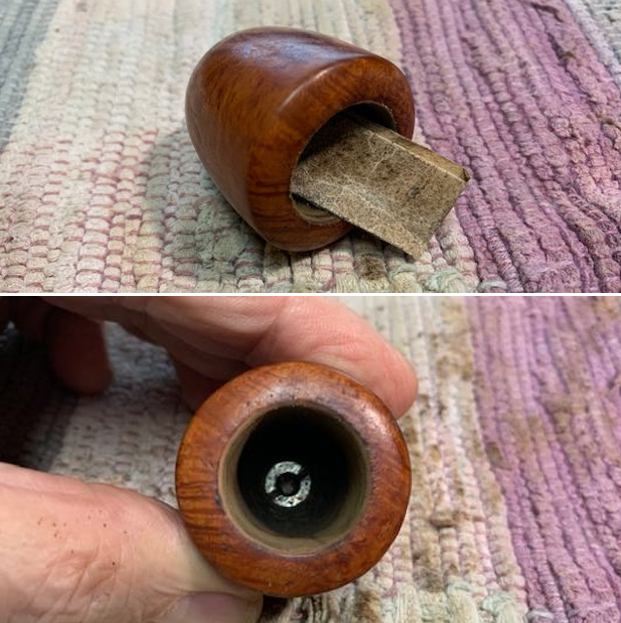
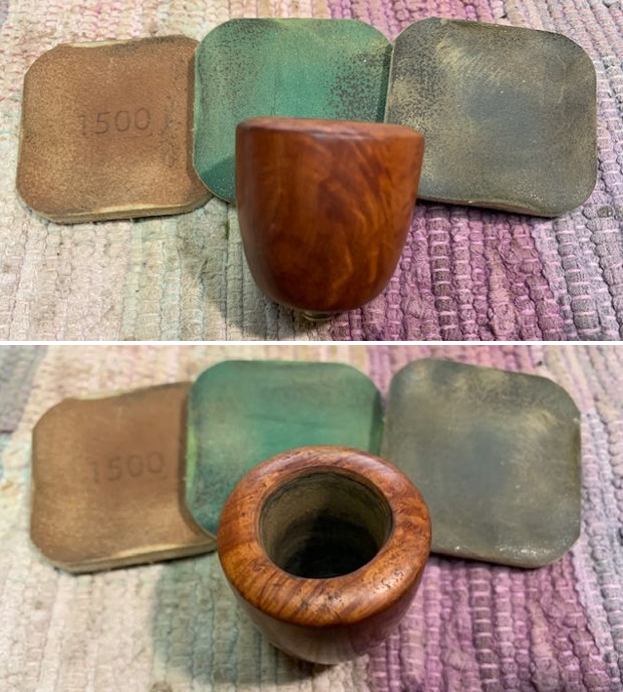
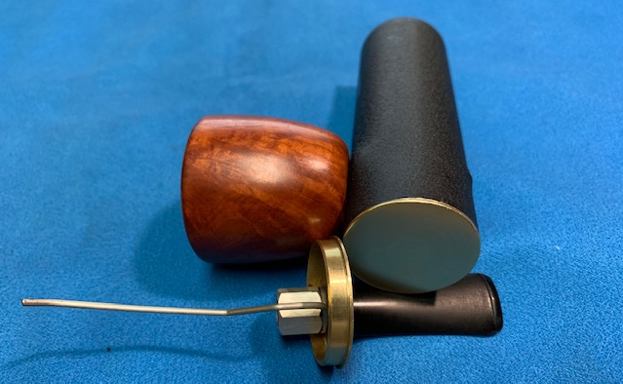
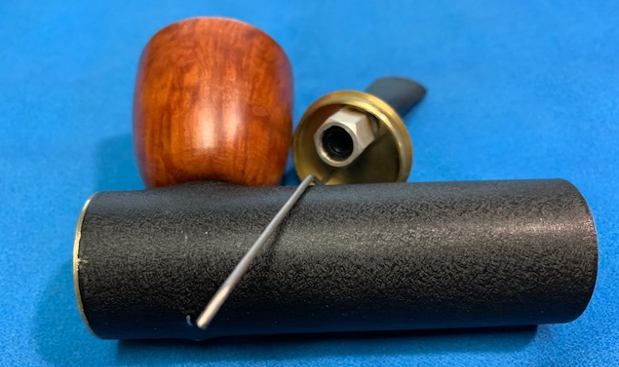
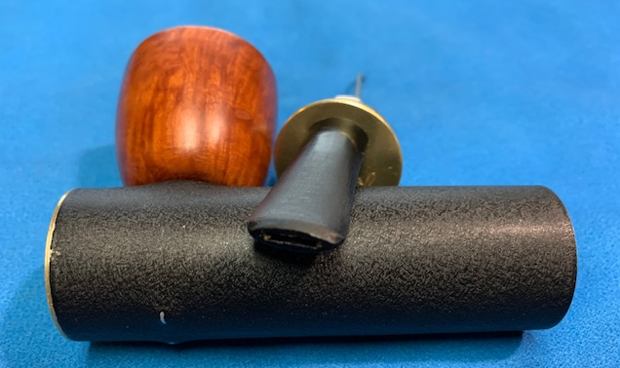
Smoking Metal also had a copy of this advertisement sheet on their site. Personally, I love the wording and descriptions on these older advertising flyers. The way they speak of the pipes and what they deliver always gives me cause to laugh. This one is no exception. I include it below. Make sure to give it a read.I posted a note on the Facebook Metal Pipe Smokers Group asking about information on the pipe and potential patent information. One of the members, Cody Easom posted some pictures of a new old stock, unsmoked Brial with the various inserts that came with the pipe. The first photo shows the new pipe with the box and the insert. The second photo shows the insert itself. The third and fourth photos show the inside of the new pipe. Now, the goal is in front of me – to get the old pipe on my table to look like this one. My brother did an amazing job cleaning out the inside of the pipe. He reamed the bowl with a PipNet reamer and took the cake back to bare briar. He cleaned out the inside of the tube/cooling chamber and the airway in the screw in the bottom of the bowl and the stem with pipe cleaners, cotton swabs and alcohol. He scoured out the inside of the chamber with steel wool, cotton swabs and alcohol until the inside shone. He scrubbed the stem with Soft Scrub and soaked it in Before & After Deoxidizer. He rinsed it with warm water to remove the excess Deoxidizer. When I finally brought it to my work table I took photos of the pipe. The black matter chamber is very nice with a few small nicks on the sides. The briar bowl is very nice.    I took some close up photos of the bowl, rim and stem surfaces to show how well it had cleaned up and what would need to be addressed. The bowl looked very good. There was some darkening around the inner edge of the bowl and some burn damage on the back side. The stem had a lot of tooth marks and chatter on both sides and looks very different from its vulcanite counterparts with tooth chatter.I took a photo of the stamping on the brass end of the barrel. It is clear and readable as noted above. The brass is in great condition. I took the pipe apart and took photos of the parts. The first one shows the stem removed from the shank and the wire that holds the tissue filter paper. The others show all the parts. I started my work on the pipe by addressing the darkening and burn damage on the inner edge of the rim. I used a folded piece of 220 grit sandpaper to smooth it out and give it a light bevel. I decided to polish out the nicks and scratches with the micromesh sanding pads and to leave behind what remained as a part of this pipe’s journey. I polished the briar bowl with micromesh sanding pads – dry sanding with 1500-12000 grit pads. I wiped the bowl down after each pad with a damp cloth. The bowl and rim began to take on a rich shine by the end of the cycle. I worked some Before & After Restoration Balm into the surface of the briar with my fingertips to clean, enliven and protect the briar. I let the balm sit for 15 minutes and then buffed with a cotton cloth to raise the shine. The photos show the bowl at this point in the restoration process. I touched up the nicks in the matte black finish of the sides of the barrel with a black Sharpie pen. It worked surprisingly well.I rubbed the finish down with some Before & After Restoration Balm. I worked it into the finish and let it sit for 10 minutes then buffed it off with a soft cloth. It looked really good.With that finished I turned my attention to the plastic/nylon/strange material stem! I sanded out the tooth chatter with 220 grit sandpaper and started the polishing with 400 grit wet dry sandpaper. I spent more time than usual with the wet dry sandpaper as the stem material was very porous looking and I wanted to smooth it out.I polished the stem with micromesh sanding pads – wet sanding with 1500-12000 grit sanding pads. I wiped it down after each sanding pad with Obsidian Oil. I polished it with Before & After Pipe Stem Polish – both Fine and Extra Fine.This is one that I am excited to finish the restoration on. Metal pipes can be a bear and painted ones even more so. But, this Brial Pat Pend System Pipe was actually an exception. I put the pipe back together and gently buffed it with Blue Diamond on the buffing wheel. I gave the bowl and stem multiple coats of carnauba wax. I hand buffed the pipe with a clean buffing pad to raise the shine and hand buffed it with a microfibre cloth to deepen the shine. It is fun to see what the polished bowl looks like with the polished  matte black shank tube and the black stem. This is truly beautiful in a very odd way. It actually feels great in my hand. It is light and well balanced. Have a look at it with the photos below. The dimensions are Length: 5 inches, Height: 2 ½ inches, Outside diameter of the bowl: 1 ½ inches, Chamber diameter: 7/8 of an inch. The weight of the pipe is 50 grams/1.76 oz. It is an interesting pipe and one that will be added to the American Pipe Makers section of the rebornpipes store soon. If you are interested in adding it to your collection let me know. Thanks for walking through the restoration with me as I worked over this pipe. Thanks to each of you who are reading this blog.
An Anton Partsch Crafted Austrian Glazed Clay Long Pipe


Blog by Steve Laug

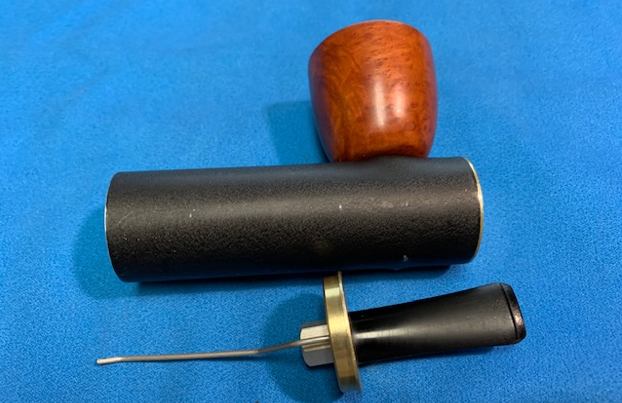
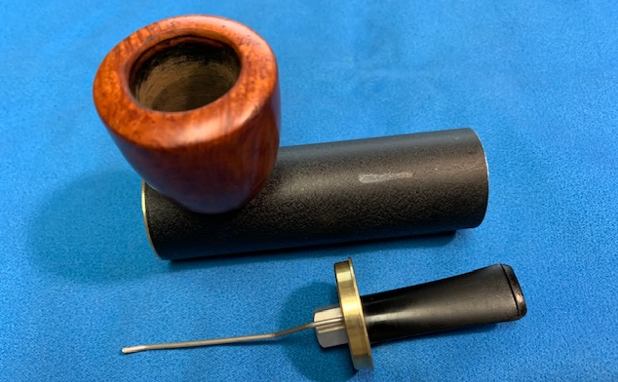
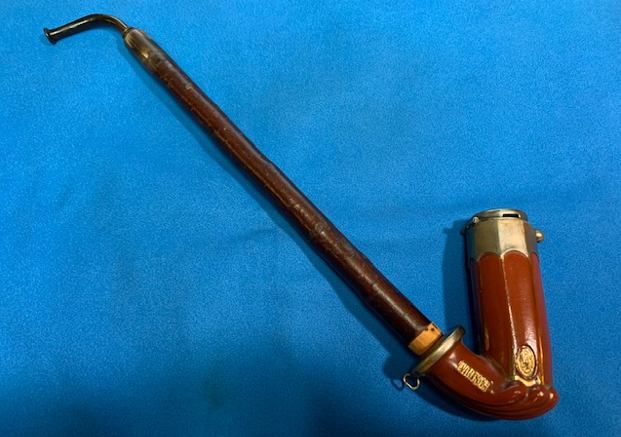
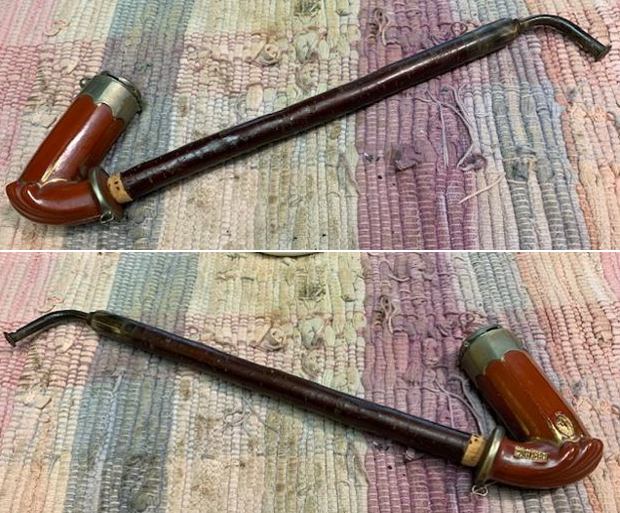
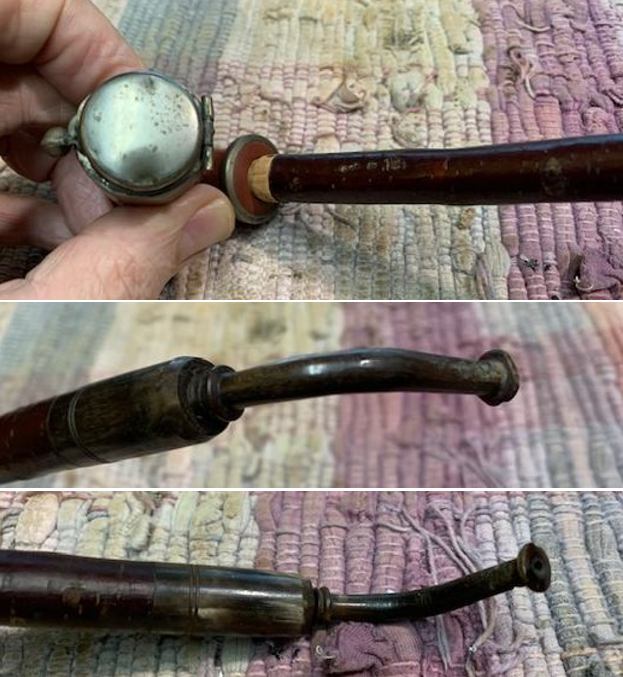
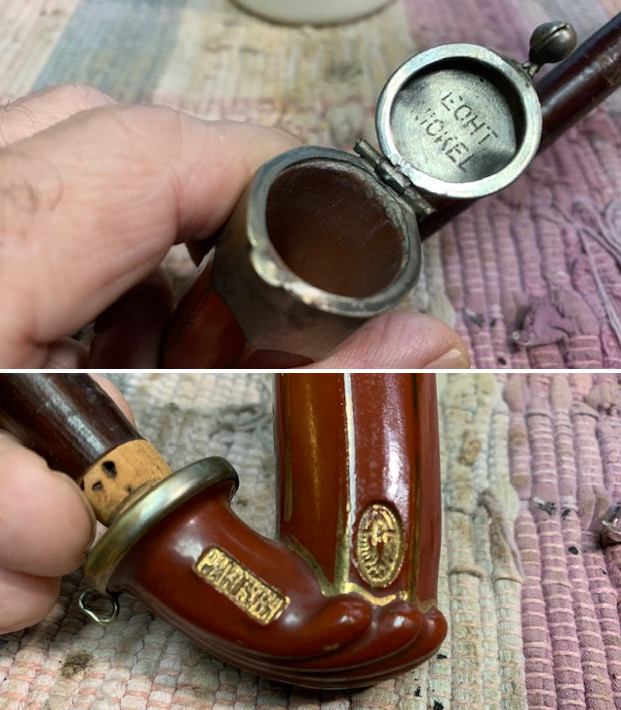
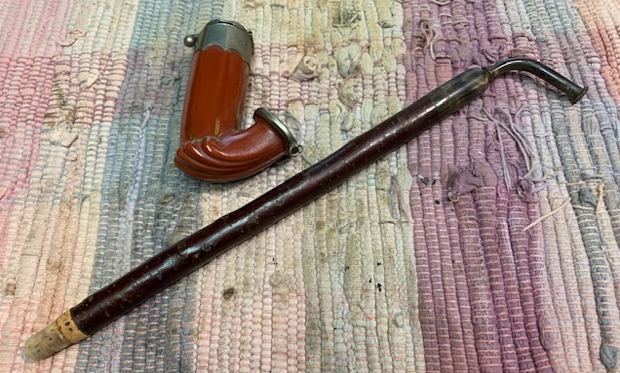
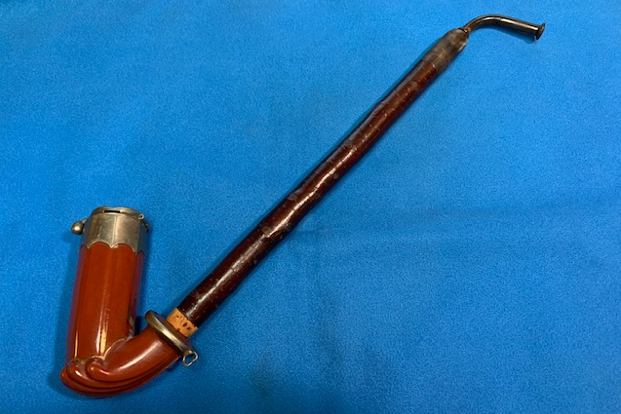
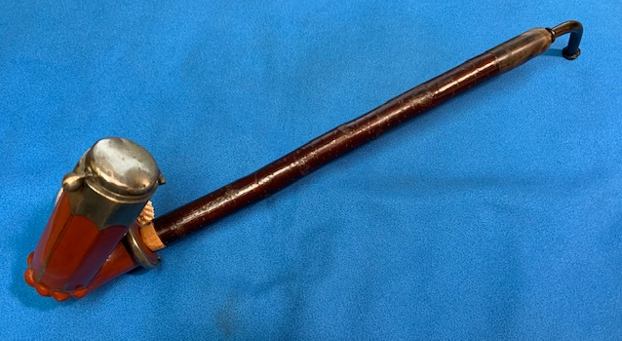
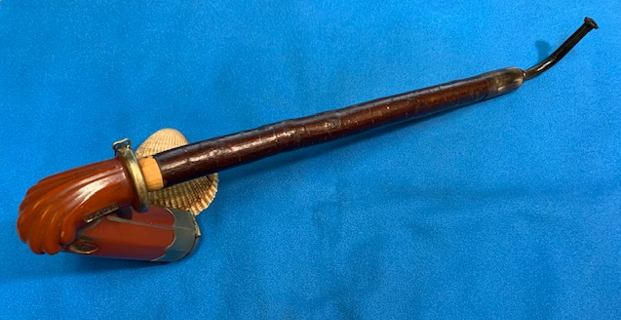
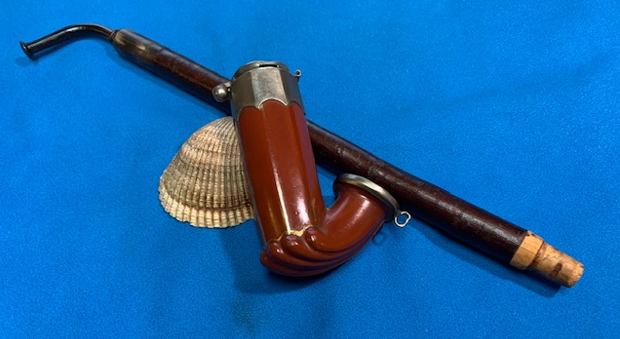
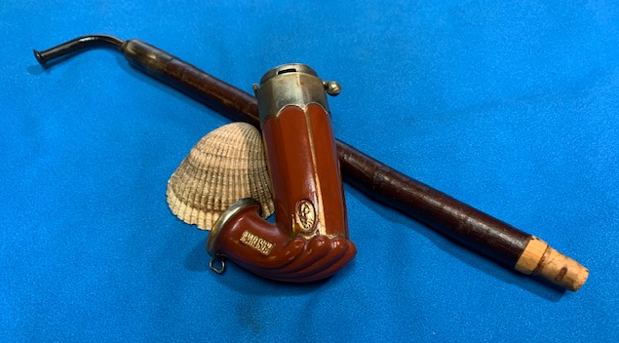
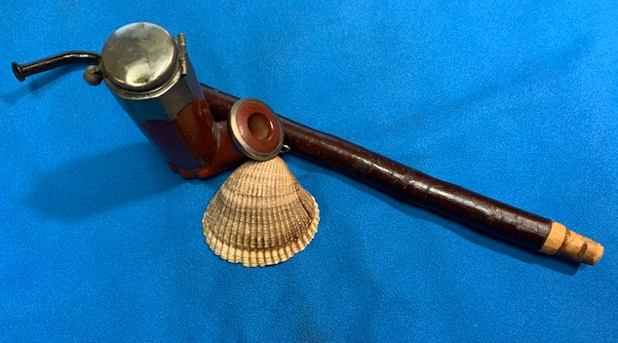
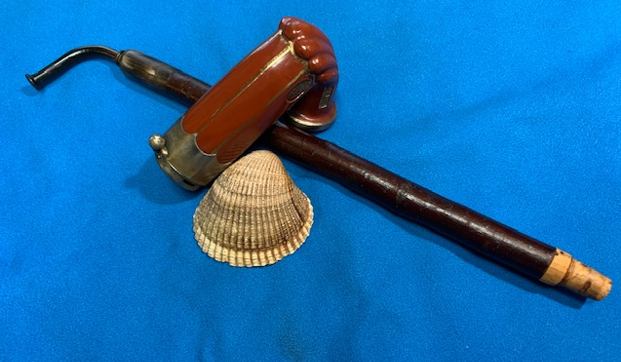
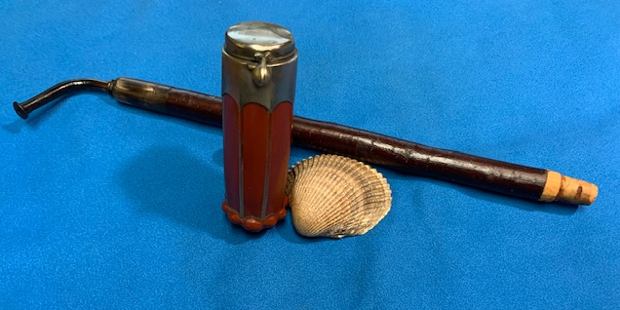
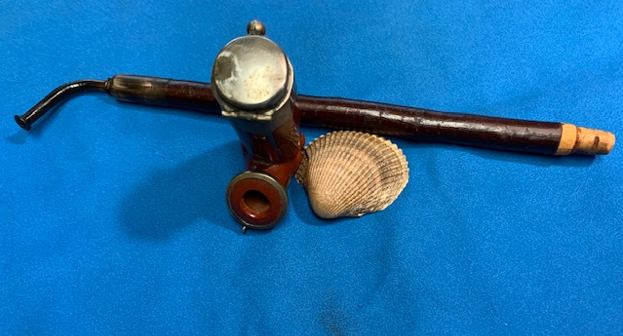
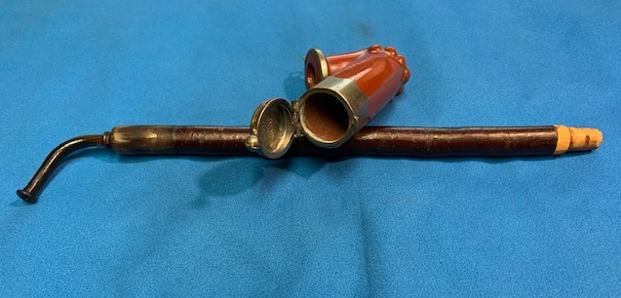
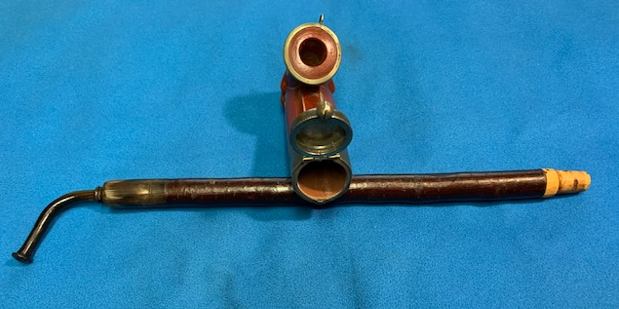
The next pipe has been here for quite a while and it is one that I have repeatedly looked at and passed over. I am guessing that it is an old timer from possibly the early 19th century. It has a red clay bowl that is unsmoked and the outside has been fired with a glaze that looks very good. It has gold paint on all eight of the angles of the octagonal bowl. The base of the bowl is a clam shell that holds the upright chimney of the bowl. There is a nickel rim cap and hinged wind cap on the bowl. There is a nickel band on the shank end with a ring for a piece of string that originally went from there to the top of the horn stem. The pipe has two embossed stamps on the left side of the bowl. The one on the bowl is an eagle with outstretched wings and the one on the base reads Partsch. Both have been embossed with gold. The shank has a corked end on the long cherry wood barked branch to keep it in the bowl end. The top of the cherry wood is capped with a polished horn ferrule and is threaded to receive a bent horn stem. There was some worm damage to the stem. The amazing thing about the pipe is that it has never been smoked. The pipe is quite large with an overall length from the front of the scallop to the tip of the stem of 12 inches. The parts of the pipe are even longer when apart – the cherry wood shank is 9 inches long, the bowl is 2 inches long and the stem is 2 inches long. The bowl is 3 inches tall to the rim top with the wind cap adding an extra ¼ of an inch.

I took some photos of the parts of the pipe to give a better picture of it. The first one below shows the wind cap. You can see that the diameter is quite wide. The cap has some dents and scratches that I will probably leave as is rather than risk damaging it. The second and third photos show the horn ferrule and stem. The worm damage is on the right side of the stem at the button end. The other end is threaded and there is an extra ring where the cord and tassels were attached.The next photos show the stamping on the inside of the wind cap and the side of the bowl and base. The inside of the cap reads ECHT NICKEL which translates Genuine Nickel. On the right base side it reads PARTSCH in a gold rectangle. On the side of the bowl is an gold oval with an Eagle with extended wings.I took the cherry wood shank off the glazed clay base and took a photo of the pipe to give a sense of the proportions and size. The cork is in such good condition that I am almost certain that it has been replaced.That is the pipe as it stands before I did anything to it. Remember it was unsmoked so it would not be an intrusive or intensive restoration. Rather it would be a polishing and shining up an already beautiful pipe without doing any damage to the antiquity of the pipe. But before I started on that process I wanted to learn more about the brand. What, where and who made this red fired clay pipe. It was time to do some research and dig out what I could find out about the brand.

I turned to my usual sources to dig out any information that I could find and there was nothing on either Pipephil’s site or Pipedia. Both came up empty. I expanded the search to a general Google search for the Partsch label to see if I could find anything listed. That was a much more fruitful search. The first site that came up was picclick.co.uk and it had some information on the brand. I quote from the site below. https://picclick.co.uk/Partsch-red-tobacco-pipe-with-original-stem-Smoking-172799026344.html

Partsch red tobacco pipe with original stem. Partsch red tobacco pipe with original stem. A fine antique Partsch German long clay pipe. This beautiful long pipe has a red brown bowl with a nickel cap. The cap is stamped underneath ‘echt nickel’. The bowl is marked Partsch and has also an impressed Austrian eagle. This also appears to have its original cherry wood stem and original mouthpiece. Dimensions: 28.5cms long. Height of the bowl from cover to base 8.5cms. Cross section of the bowl 2.5cms x 2.5cms and bowl aperture is 2.1cms.Weight: 85gms Condition: Rare to get a pipe with all original parts.

The description of the pipe associates the ‘Echt Nickel’ stamp with German and identifies the pipe as a German made long clay pipe. I was not sure of that so the hunt continued.

The next mention on the Google hunt was to a pin on Pinterest. These often are unproductive so I was not overly hopeful regarding information, but I was wrong. I quote from the description on the pin below (https://www.pinterest.ca/pin/25051341664836403/).

This is a fine antique, long handle, smokers pipe that has been well used and well loved. It was made in Austria by Anton Partsch and bears the stamp “PARTSCH” as well as the “Austrian Eagle Crest” on its bowl. The bowl has a clamshell relief pattern at its base and is in a terra-cotta red glazed clay. The hinged metal wind cap has two slots and a turned down ball clasp for closure. There is a cord loop on the metal band around the shank but no cord. I believe the reddish bark coloured wood is cherry…

From that information I learned that I was dealing with a pipe made by Anton Partsch and that the stamps on the side were indeed what I thought they were. What was really helpful was the author identified the Eagle with outstretched wings as the “Austrian Eagle Crest”.

The next link provided more information. It was a pipe that was for sale/sold on Worthpoint and the description added new information to my growing understanding of the brand. (https://www.worthpoint.com/worthopedia/partsch-schemnitz-pipe-bowl-antique-1855443319) I quote below.

The vast majority were finished in subdued solid colors of carmine, terracotta, brown, and black, the last two being the most common. and occasionally found in mottled, marbled, or dappled green and blue. These early, paneled bowls were mass-produced in the town of Banská Štiavnica, Slovakia, Selmecbánya (Hungarian), Schemnitz (German), or Chemnitz (English), once the largest and most famous mining center of the Austro-Hungarian Empire. These pipe bowls are often identified in literature as hard stone, or stoneware, because of their highly polished and transparent-glazed surface finish, but they were not of a hard stone composition; they were fired, containing a mixture of white clay for strength and red clay for sheen.

This was the most detail of the area that the bowl came from in the Austro-Hungarian Empire and that they were made of a mixture of white clay from strength and red clay for sheen. They had a glazed surface that gave them the look of stone but were not made of that. Fascinating how the picture is growing.

The next piece of the puzzle came from a discussion on Pipesmagazine.com forums. I quote some of the pertinent parts of the discussion that added to my understanding. The initial poster refers to an article on Facebook that is no longer available. You can click on the link and read the discussion in its entirety if you so choose (https://pipesmagazine.com/forums/threads/antique-schemnitz-austro-hungarian-clay-pipe-rarity-age.36245/).

…The article says they’re most common in black and brown, less so in terra-cotta and red, and “occasionally” in blue or green. I found some closed auctions on eBay and posts elsewhere showing terra-cotta, mottled brown, and black ones. They usually seem to have a scalloped metal sleeve on the bowl with a hinged wind-cap, and some have a metal band around the end of the shank, presumably to prevent cracks.

…The bowl is glazed in cream color with softly-dappled green swirl patterns, the cream becoming a sort of buttercream yellow behind the green areas. The shell bottom and shank are black, with a tiny hint of gold on the scallops. The wind-cap has eight slots around the edge and a nice curled clasp that snaps down; I’ve seen photos of very plain bands on the bowl, solid with a scalloped lower edge, and some very ornate pierced ones, and this is somewhere in the middle, plain with a fancy, pierced border. The inside of the cap has “ECHT NICKEL” (genuine nickel) stamped in big block letters…

The maker’s mark, stamped into the shank and gold-glazed, is “PARTSCH,” which that article tells me is Anton Partsch. There is also, up on the lower part of the bowl, a gold oval stamp with a soft pattern in the center, I assume the maker’s company sigil. The shank has a plain metal band, with a loop for a cord…

…It has a bark-covered wood stem, with a cork-and-reed tip on the bottom and a turned horn ferrule (which has a tiny age crack) on top and a wooden mouthpiece (on closer examination just now, the lip is translucent under a very bright, focused light, so I think this must also be horn). The stem is kept with the bowl by a brown string or cord, tied around the mouthpiece and ending in two tassels, like many of the German wood and porcelain pipes…

I have highlighted the information that fits my pipe in bold in the quotes above. I did find from the conversation that the Terra Cotta version I have is a bit rarer to find than the black or brown versions of the pipe.

I found two scholarly articles. I have included the link to the first one below. It is a PDF on pipes made in Theresienfeld (Davey 2010 Theresienfeld pipes.pdf). I quote a portion of the paper on the PARTSCH pipes. It is very interesting and confirms the stamping.

These pipes bear a PARTSCH relief stamp in a rectangular  frame  on  the  side  of  the  socket  and  an  oval SCHUTZMARKE  relief  stamp  at  the  base  of  the  funnel  in which the legend surrounds the upper part of an eagle with spread wings.

The next information came from a Master’s Thesis for Oregon State University. I included the link and the identifying information below. I quote tow paragraphs that help give information on the Partsch pipe I am working on.

An Abstract Of The Thesis Of – Oregon State University

AN ABSTRACT OF THE THESIS OF Diane Zentgraf for the degree of Master of Science in Applied Anthropology presented on December 14, 2018.

Title:  Mid-Nineteenth Century Clay Smoking Pipes from Fort Hoskins (35BE15) and Fort

Yamhill (35PO75), Oregon.

 …Reed stem clay pipe manufacturing began in the Austro-Hungarian Empire during
the last quarter of the 17th century (Gačić 2011: 31), utilizing local clays in Northern and
Western Hungary (Gačić 2011:31, citing Ridovics 2009:64). During the 19th century, the
pipe making was concentrated in Wiener Neustadt, Theresienfeld and Pernitz, in the
southern section of Austria, with strong connections to production centers in Hungary
.

Twenty pipe making workshops have been identified by Bielich and Curny (2009: 342-
348), including pipe makers S. Boscovitz, Anton Partsch, Jacob Reinitz, S. Seiler, Károly
Zachar, Anton Ress, Michael Honig, M. Amstätter and Joseph Schmidt.

The Hapsburg dynasty required pipes be marked with a maker’s mark in the early 19th century (Bielich and Curney 2009:358).  In the literature these are termed Austro-Hungarian pipes and are characterized by a consistent form that was repeated with very little change (Gacic 2011:54).  The most common pipe form is termed a Schemnitz pipe and is described as made of good quality clay in molds and having a narrow “tall cylindrical head (with either round or polygonal cross-section) profiled like a shell at the bottom” (Gacic 2011:54). These pipes were popular and often copied (Figure 21) 49 (Morgenroth 2001:56), and are described as having muted colors, reddish to black in color, marbled black-grey color, often mixed with white clay.

I am pretty certain I have found the last piece of information I needed. It seems that there were many pipe making workshops in the early 19th century concentrated in three areas in southern Austria – Wiener Neustadt, Theresienfeld and Pernitz. It is in those areas that Anton Partsch is said to have been a pipe maker. It is also clear that during the Hapsburg Dynasty all pipes had to be marked with the maker’s mark in the early 19th century. That further locks the date down for the pipe I am working on.

Now that I had gathered a bit of an education on the maker and pipe it was time to do some polishing on the pipe. I polished the horn ferrule with micromesh sanding pads – dry sanding with 1500-12000 grit pads and wiped it down with Obsidian Oil. The horn took on a lot of life and depth from the polishing It is a nice looking piece. I rubbed the bark of the cherry wood shank piece with Before & After Restoration Balm. I worked it into the bark, cork and horn with my finger tips. It works to clean, preserve and protect wood. I let it sit for 15 minutes then buffed it off with a soft cotton cloth. The bent horn stem had some worm damage on the right side near the button. I filled it in with some clear CA glue and built up the damaged area. I reshaped the button as well as it had some nicks in it. I sanded the repaired area with 220 grit sandpaper to smooth it out and then started polishing the horn with 400 grit wet dry sandpaper. It looked better. I polished the horn with micromesh sanding pads – 1500-12000 grit pads. I wiped it down after each pad with some Obsidian Oil. I gave it a final polish with Before & After Stem Polish – both Fine and Extra Fine. I gave it another rub down with Obsidian Oil. The horn really began to shine as I finished the polishing. With the stem repaired and polished I was finished with my work on the pipe. I wiped down the nickel plated rim and wind cap as well as the nickel plated shank end cap with a jewelers cloth to remove the moderate oxidation and to protect it. I did not want to remove the dents in the wind cap as it could actually ruin the value of the pipe. I gave it a coat of Conservator’s Wax and a hand buff with a fluffy cloth to raise the shine. This Anton Partsch Red Glazed Pottery Bowled Long Pipe came out looking quite amazing. The horn ferrule and stem polished nicely as did the cherry wood shank. It all came together well. To think that the pipe is at least 200 years old and never been smoked is quite unbelievable. The dimensions of the pipe are, Length: 12 inches, Height: 3 inches, Outside diameter of the bowl: 1 inch, Chamber diameter: ¾ of an inch. The weight of the pipe is; 92 grams/3.25 ounces. I really enjoyed working on this beauty and felt a sense of touching the past in a tangible way. The pipe will stay in my own collection to be enjoyed and savored. I don’t think I will ever fire up a bowl as it has not been smoked since it was made and there is something unique about that. But then again, the right day may come and I will fire it up. We shall see. Thanks for walking through the restoration with me. As Paresh always says, “Stay Safe”.

Rebirthing a Lovely Republic Era Peterson’s Kapet 25 Billiard


Blog by Steve Laug

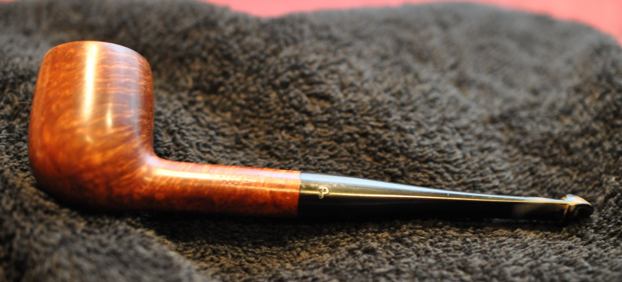
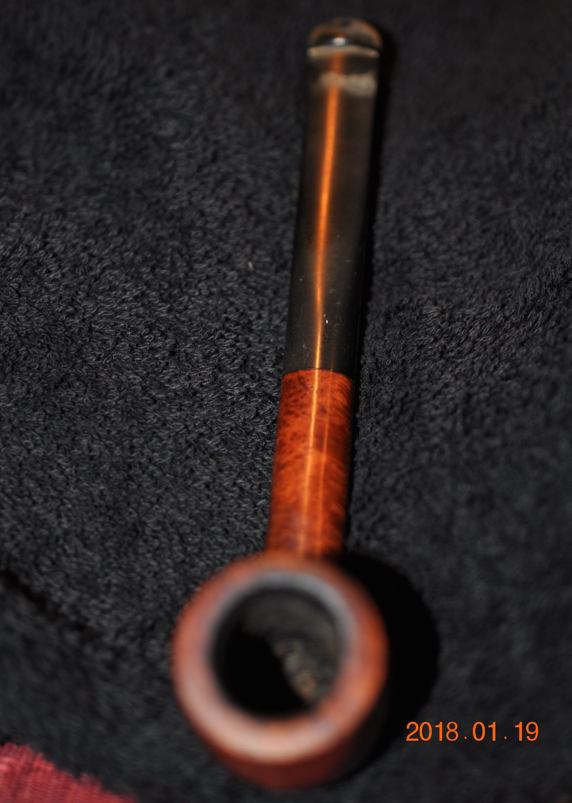
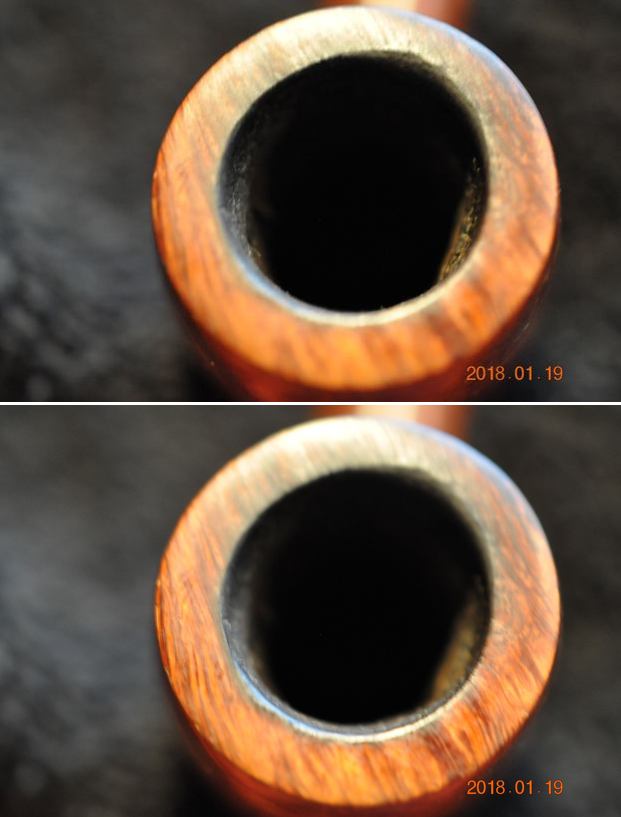
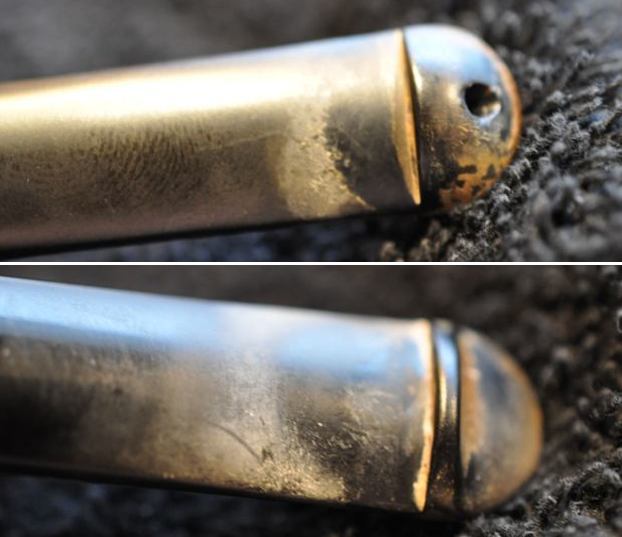
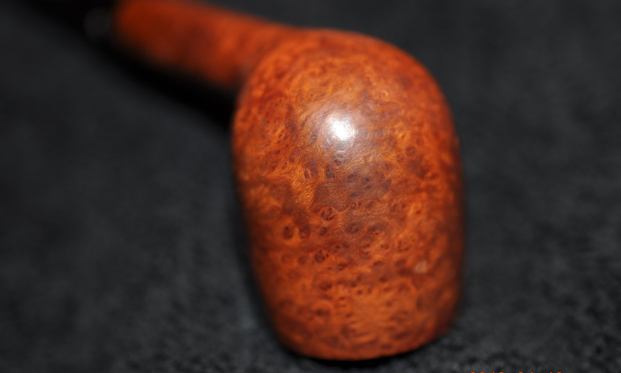
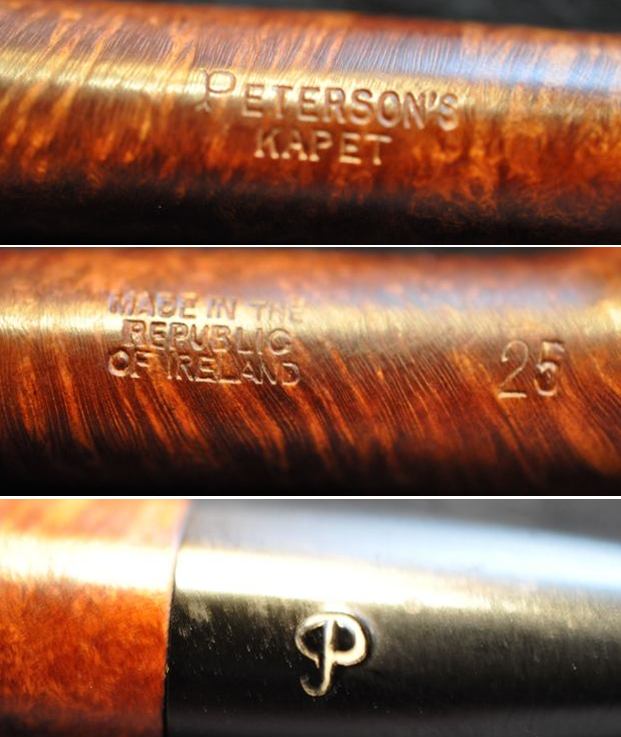
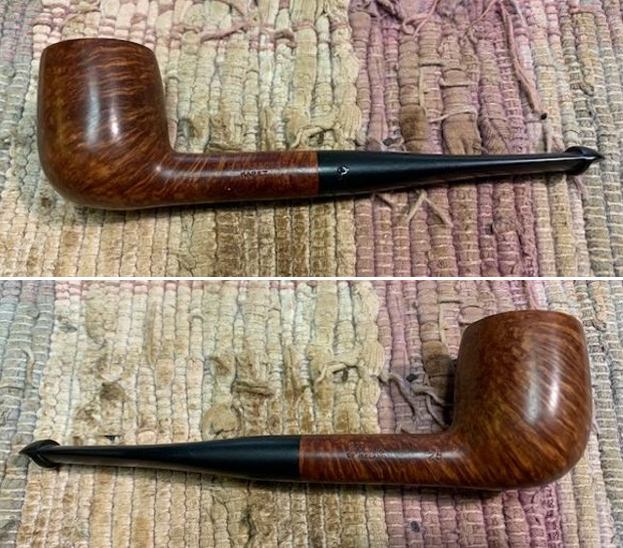
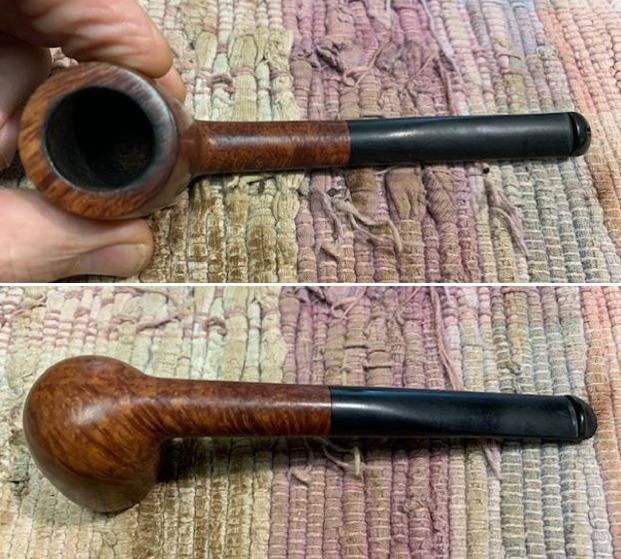
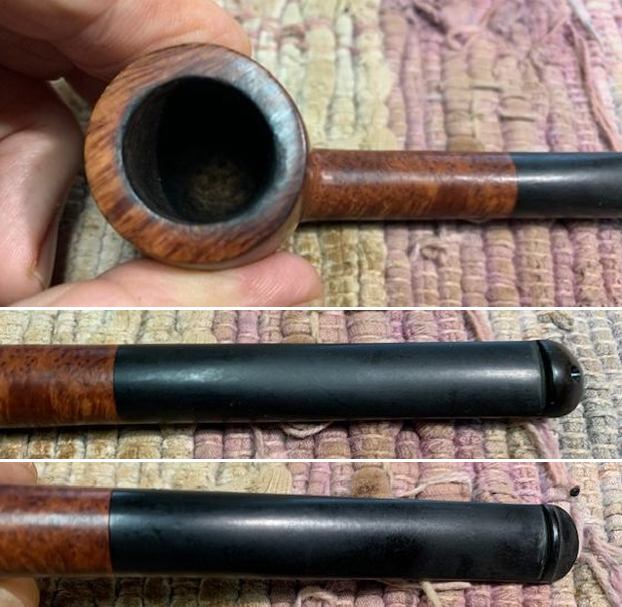
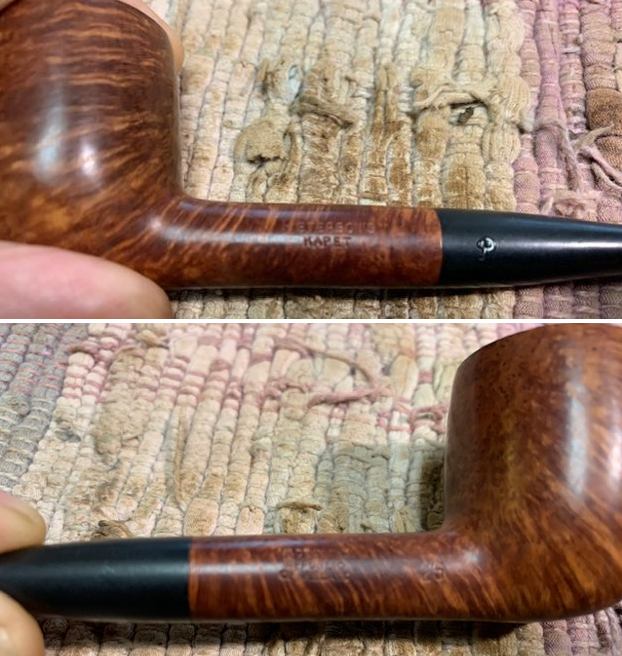
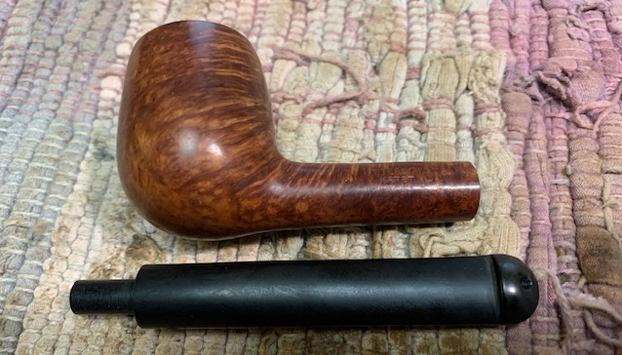
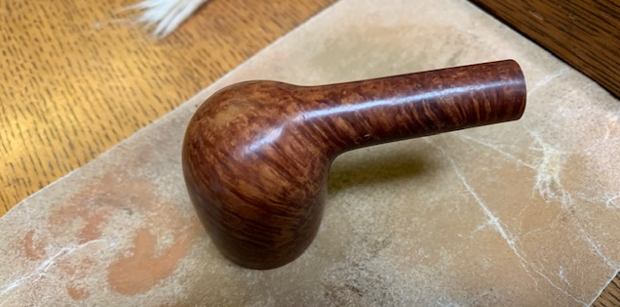
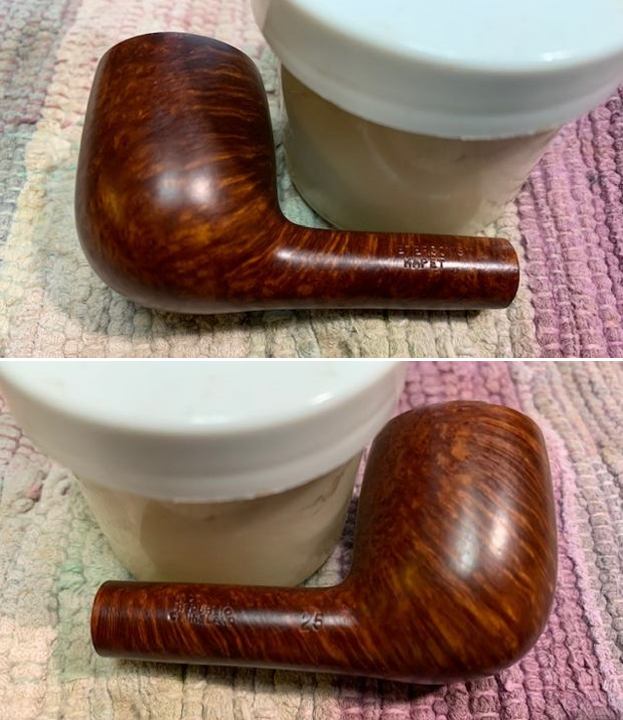
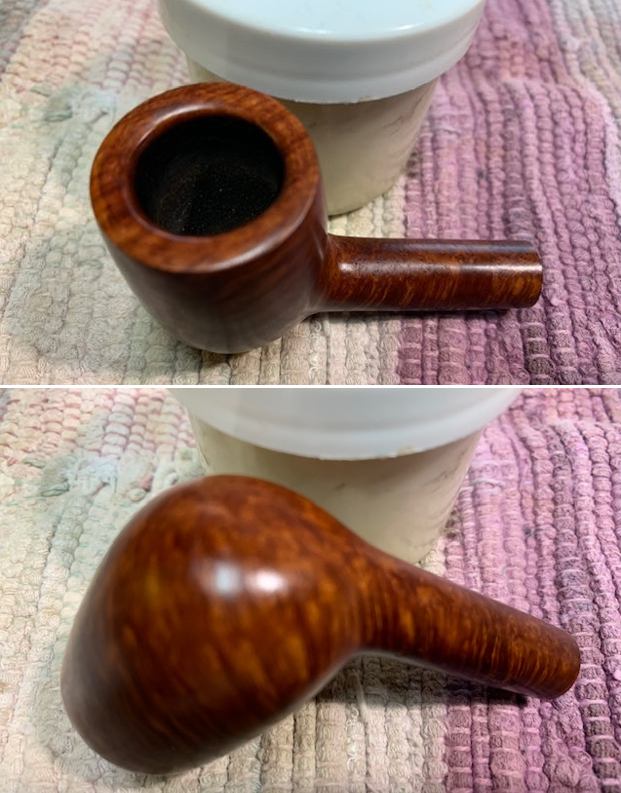
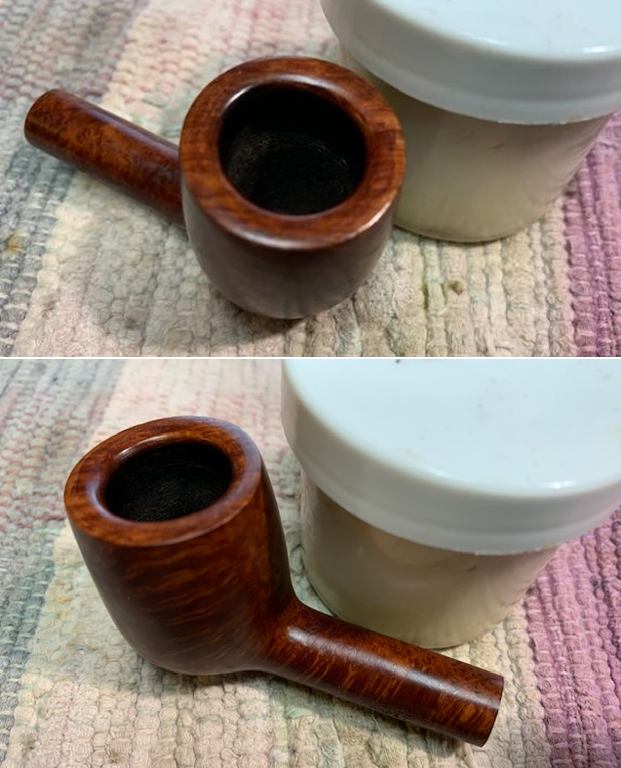
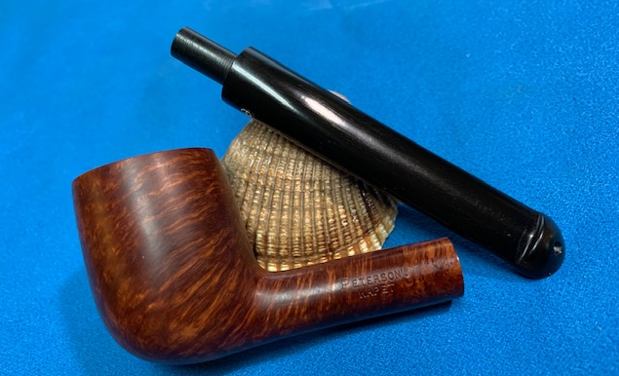
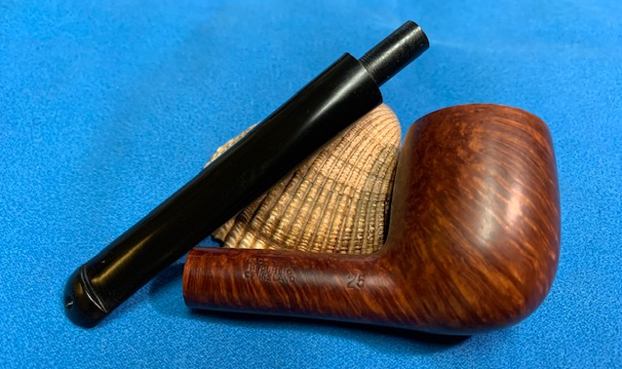
The next pipe I have chosen is a smooth Peterson’s pipe, a straight Billiard. It was also incredibly dirty. This Billiard is a real beauty under the grime with some great grain around the bowl. The grime was ground into the finish on the bowl sides. The contrast of the brown stains gave the grain a sense of depth. It was stamped on the left side of the shank and read Peterson’s [over] Kapet. The right side had the shape number 25 stamped near the bowl. Centered on the right side of the shank is stamped Made in the Republic of Ireland (in three lines). There was a moderate cake in the bowl and a light overflow of lava on the inner edge of the rim at the back. There was also burn damage on the inner edge of the rim at the back of the bowl. The stem was lightly oxidized, calcified and had light tooth marks, chatter on the top and underside near the button. There is a P stamped on the left side of the taper. It was in great condition. Jeff took photos of the pipe before his cleanup work. They tell the story and give a glimpse of the promise that we see in this pipe. Jeff took photos of the rim top and stem to show the general condition of the pipe. The bowl is moderately caked and the rim top has some lava and you can see the burn damage on the back inner edge. The photos of the stem show that it was oxidized and has light tooth marks on the top and underside near the button. Jeff took a photo of the bowl sides and heel to show the grain that was around this bowl. It is a nice looking pipe.      He took photos of the stamping on the sides of the shank. It is clear and readable and reads as noted above.   I turned to “The Peterson Pipe” by Mark Irwin and Gary Malmberg to get some background on the Kapet line. On page 305 it had the following information.

Kapet (1925-87) Line first described in 1925 brochure and featured in occasional catalogs through ’87. Early specimens will be stamped IRISH over FREE STATE. Described in 1937 catalog as available in dark plum or natural finish. Featured an aluminum “inner tube” or stinger until ’45. Mid-century specimens may be stamped MADE IN over IRELAND. Specimens from 1970 on may have mounts with hallmarks.

I knew that I was dealing with a Republic Era Kapet. Now it was time to work on the pipe.

Jeff had done a great job cleaning up the pipe as usual. He reamed the pipe with a PipNet reamer and cut back the cake back to the bare briar. He cleaned up the walls with a Savinelli Fitsall Pipe Knife. He scrubbed the interior of the bowl and shank with pipe cleaners, cotton swabs and alcohol to remove the tars and oils. He scrubbed the exterior of the pipe with Murphy’s Oil Soap and a tooth brush to remove the grime from the finish. He worked on the rim top lava and darkening with the soap and tooth brush. He scrubbed the inside of the stem with alcohol and pipe cleaners. He scrubbed the exterior with Soft Scrub and then soaked it in Before & After Deoxidizer. He washed it off with warm water to remove the Deoxidizer. The pipe looked far better when it arrived.  I took some close up photos of the rim top and also of the stem surface. I wanted to show how well it had cleaned up. The rim top photo looks good but there is some burn damage on the inner edge at the back of the bowl and all around the inner edge there is darkening. I also took close up photos of the stem to show the light tooth marks and chatter on the surface near the button. I took photos of the stamping on the sides of the shank. You can see that it is stamped as noted above. It is clear and readable.     I took the pipe apart and took a photo of the pipe. It is a good looking pipe and has some great cross grain on the sides of the bowl.I decided to address the rim top damage first. I lightly topped the bowl on a topping board with 220 grit sandpaper to minimize the damage to the top and inner edge of the bowl. I then used a folded piece of 220 grit sandpaper to give the edge a slight bevel to further minimize the damage to the rim. I think that it is definitely better once I finished. I polished the briar rim top and edges along with the rest of the briar with micromesh sanding pads –dry sanding with 1500-12000 grit pads and using a damp cloth after each pad.       I combined a Mahogany and a Cherry stain pen to restain the rim top to match the rest of the bowl. It would match even better once it was buffed and polished.I worked some Before & After Restoration Balm into the surface of the briar with my fingertips to clean, enliven and protect the briar. I let the balm sit for 15 minutes and then buffed with a cotton cloth to raise the shine. The photos show the bowl at this point in the restoration process. I set the bowl aside and turned my attention to the stem. I filled in the tooth marks on the underside of the stem with clear super glue. I let the repairs cure. Once they had cured I sanded the repairs on the underside and the chatter on the topside with 220 grit sandpaper. I started the polishing with 400 grit wet dry sandpaper. I wiped it down with some Obsidian Oil.I touched up the “P” stamp on the stem with an acrylic white fingernail polish. I worked it into the stamp with a toothpick. I let it sit for a few minutes then scraped off the excess. I polished the stem with micromesh sanding pads – wet sanding with 1500-12000 grit sanding pads. I wiped it down after each sanding pad with Obsidian Oil. I polished it with Before & After Pipe Stem Polish – both Fine and Extra Fine. I am always excited to finish a restoration and this Peterson’s Kapet 25 Billiard is no exception. I put the pipe back together and buffed it with Blue Diamond on the buffing wheel. I gave the bowl and stem multiple coats of carnauba wax. I hand buffed the pipe with a clean buffing pad to raise the shine and hand buffed it with a microfibre cloth to deepen the shine. It is fun to see what the polished bowl looks like with the polished black vulcanite stem. This Classic looking Peterson’s Kapet Billiard feels great in my hand. It is light and well balanced. Have a look at it with the photos below. The dimensions are Length: 5 ½ inches, Height: 1 ½ inches, Outside diameter of the bowl: 1 1/8 inches, Chamber diameter: ¾ of an inch. The weight of the pipe is 26 grams/.92 oz. It is a beautiful pipe and one that will be on the Irish Pipe Makers section of the rebornpipes store soon. If you are interested in adding it to your collection let me know. Thanks for walking through the restoration with me as I worked over this pipe. Thanks to each of you who are reading this blog.