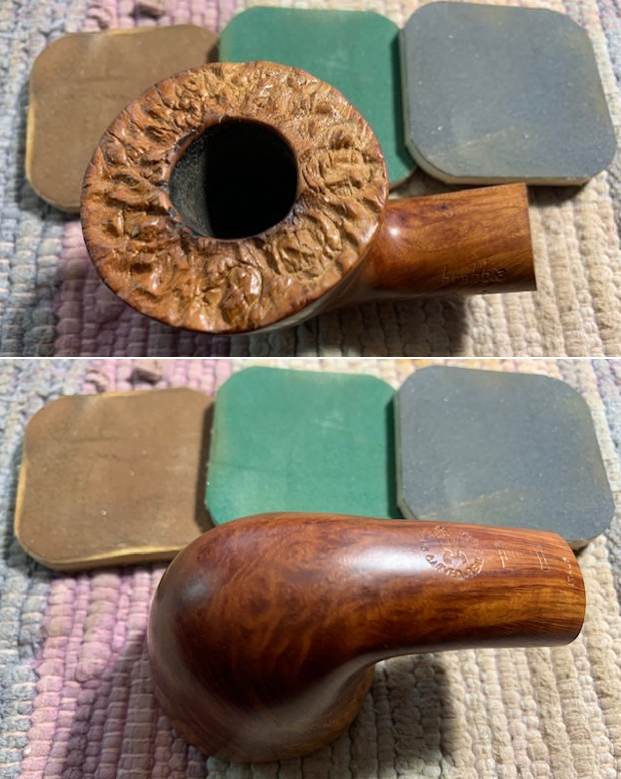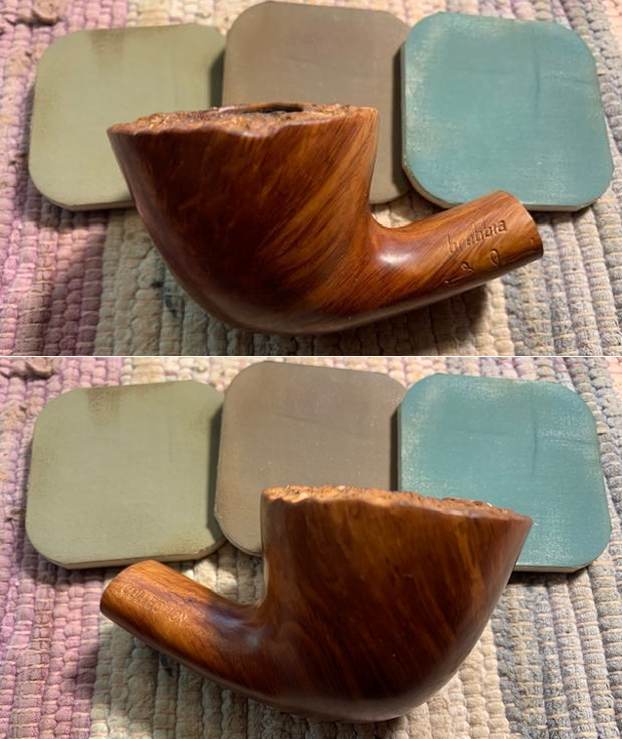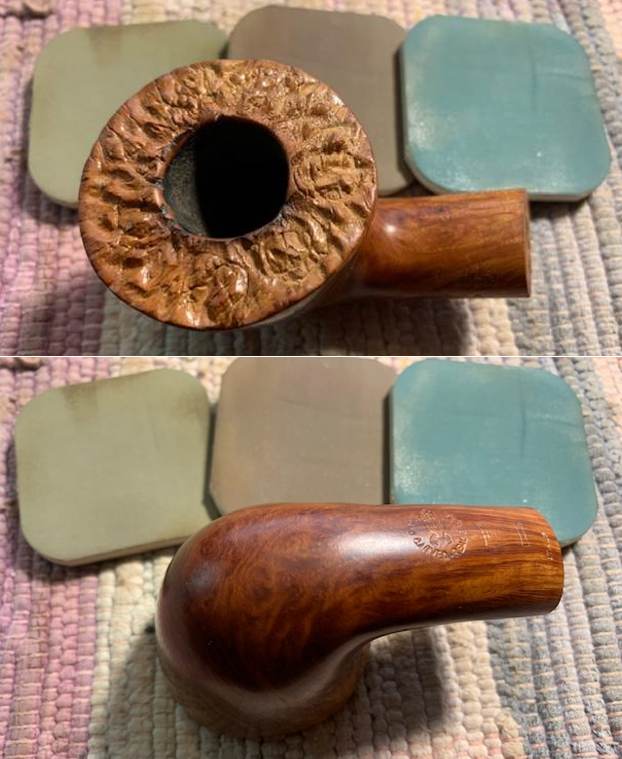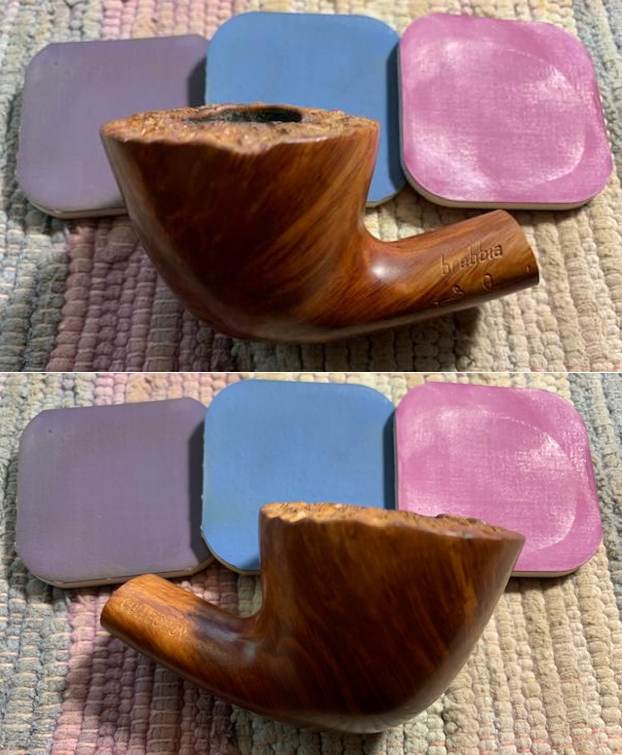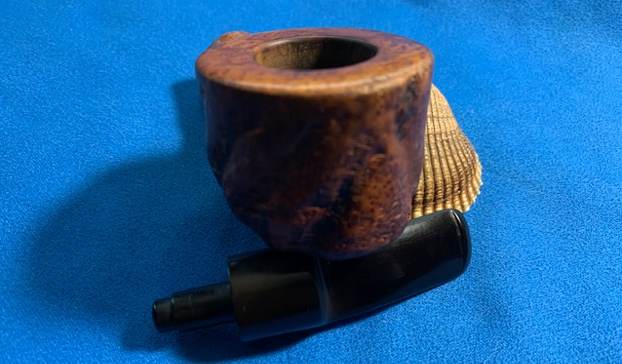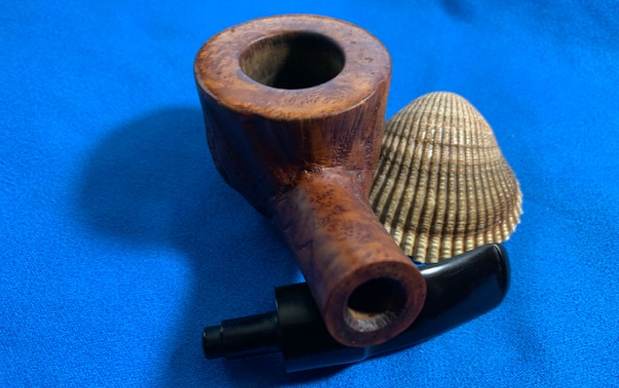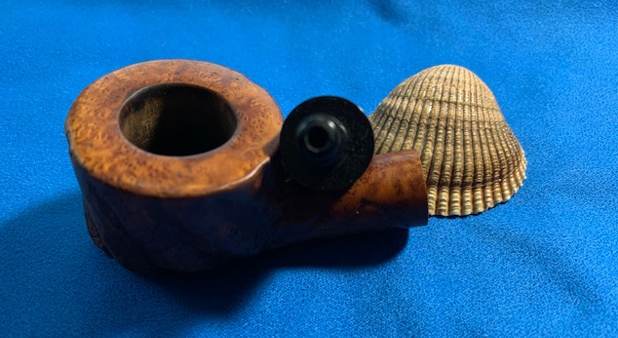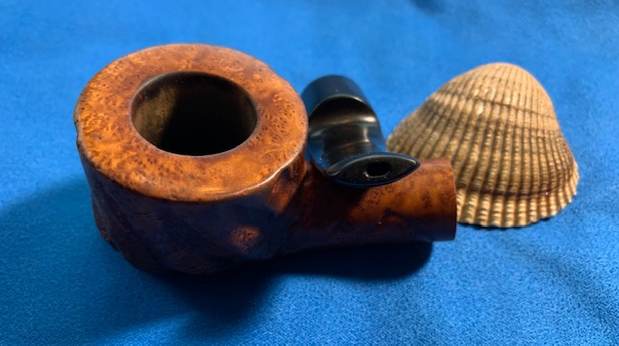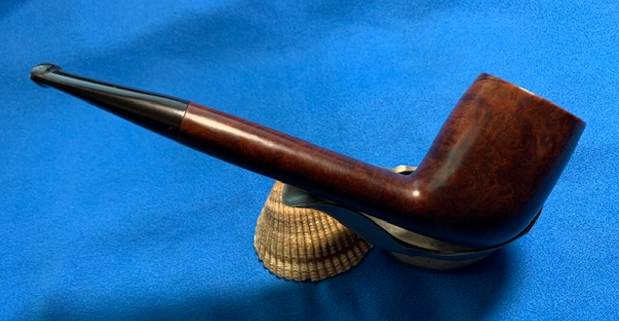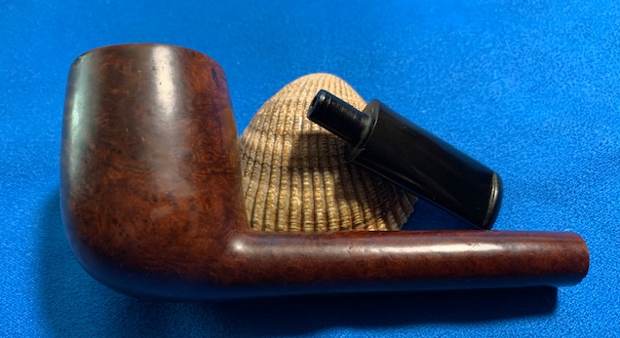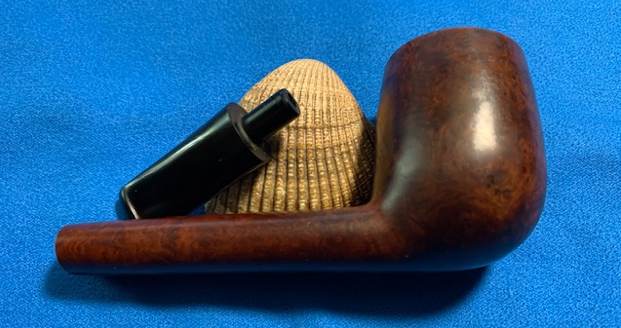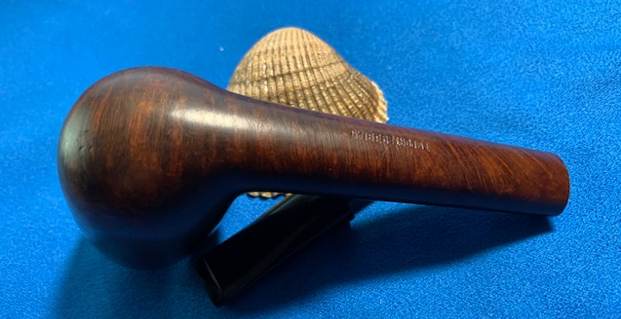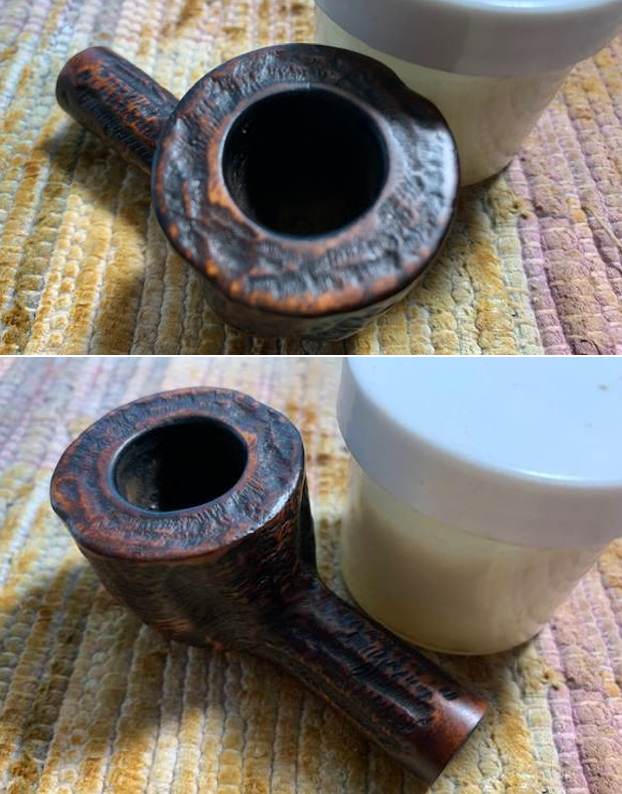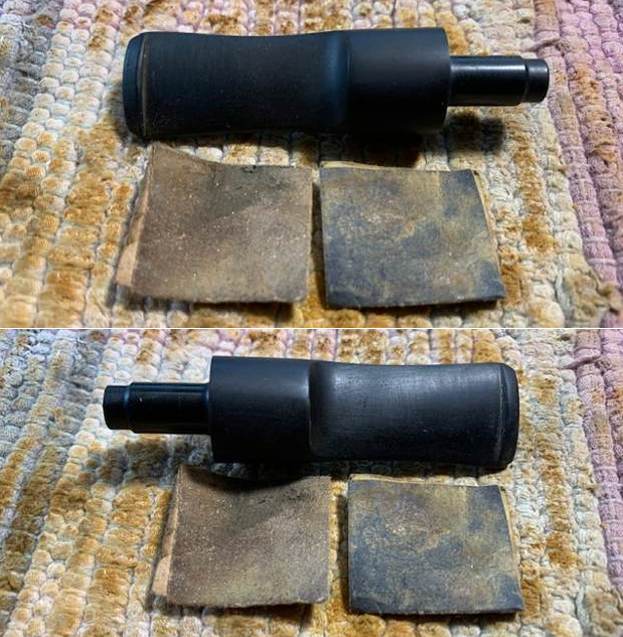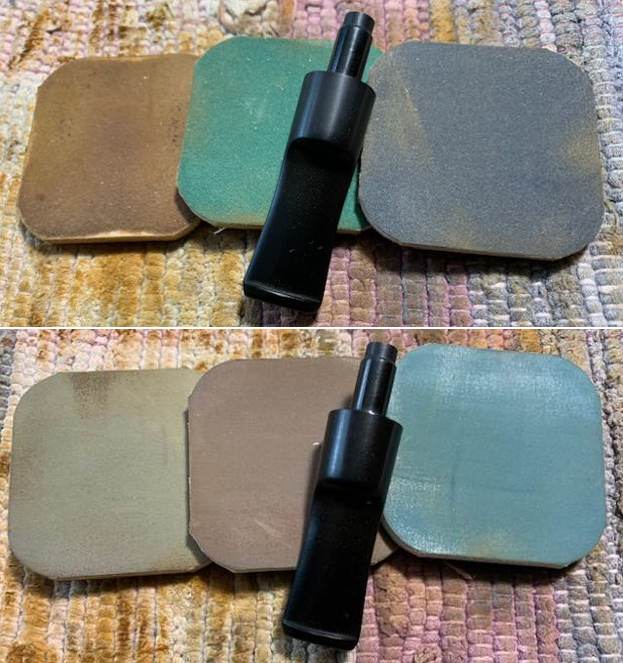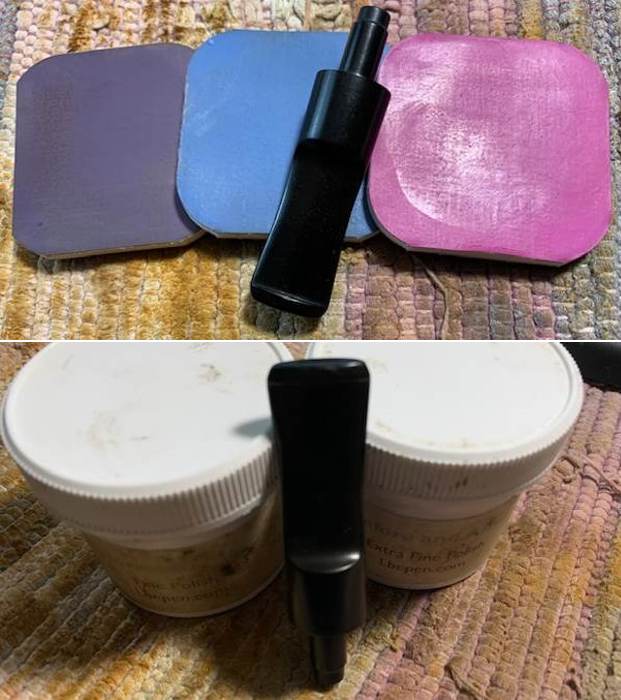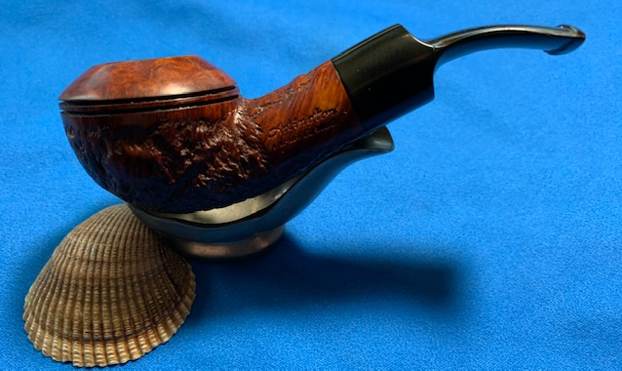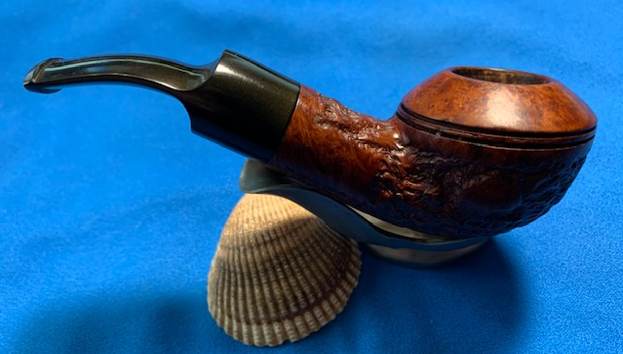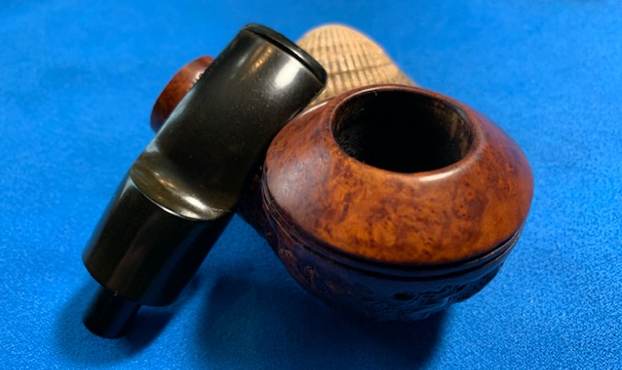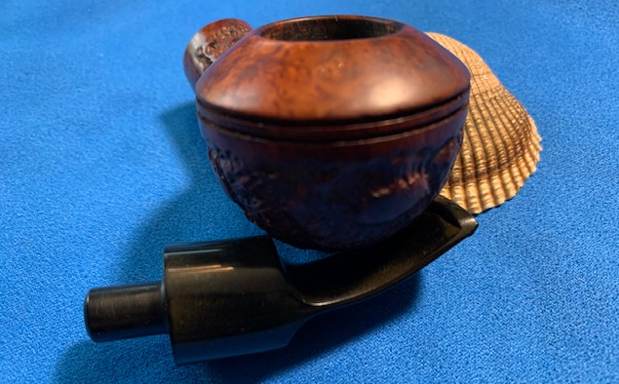
Tag Archives: stem work

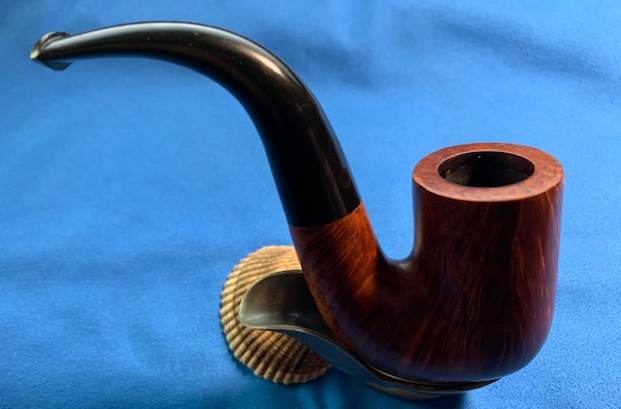
Restoring and Restemming a Bari Pearl 7075 with a Bamboo Shank


Blog by Steve Laug

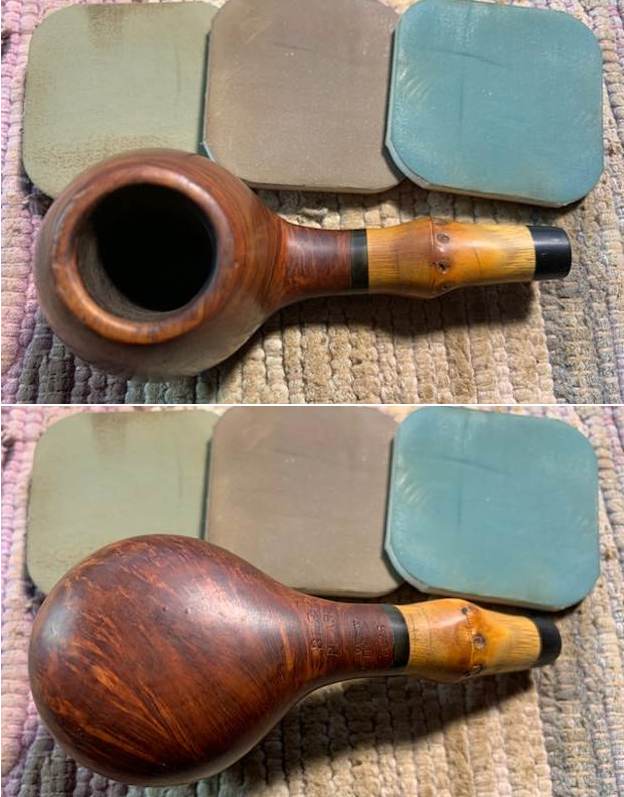
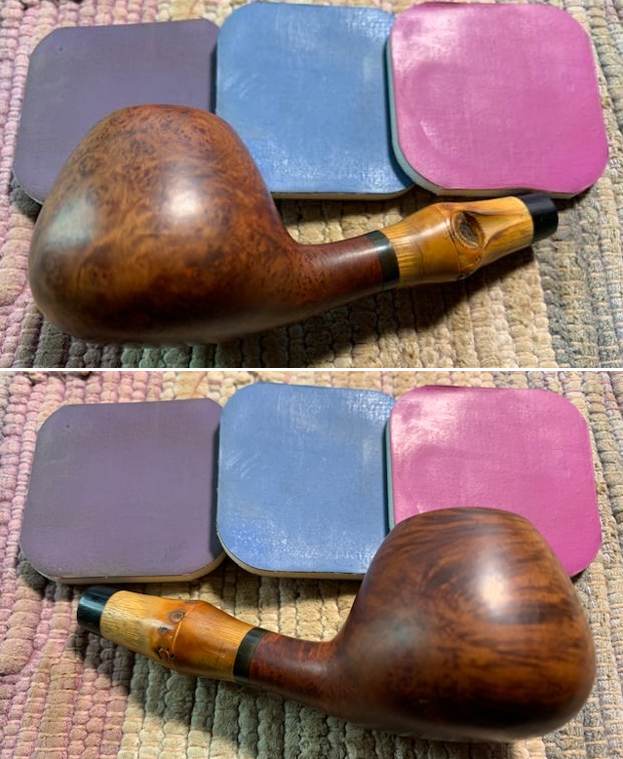
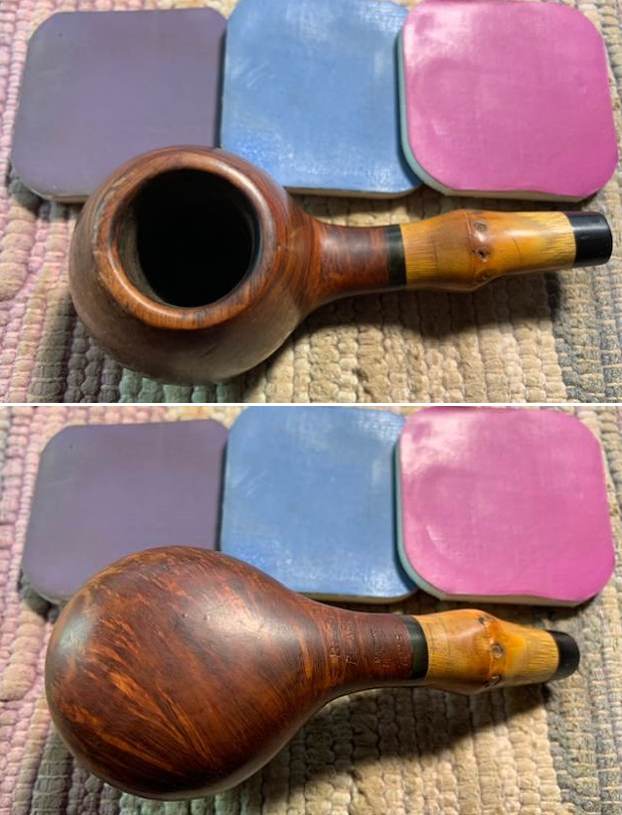
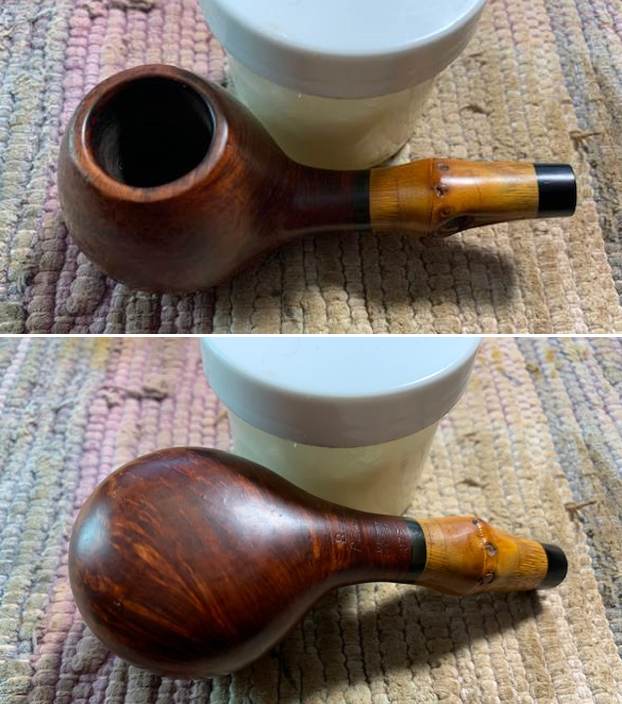
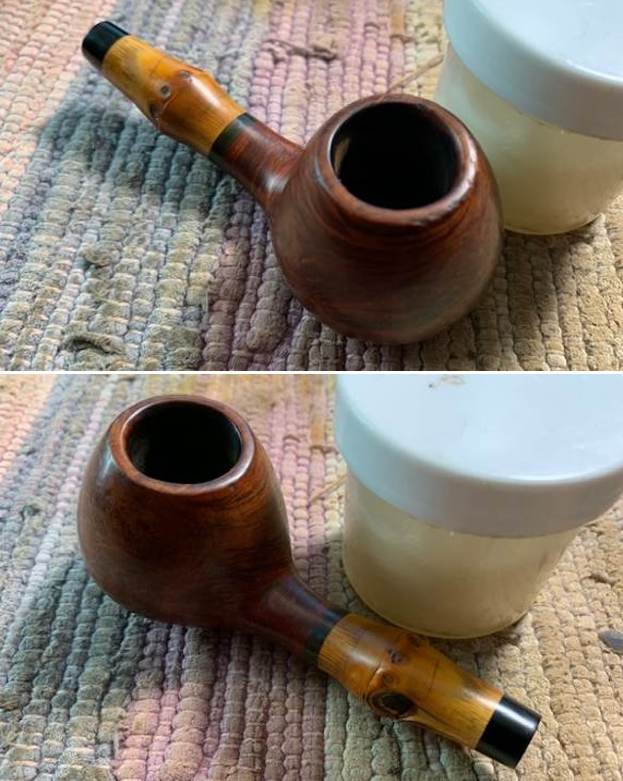
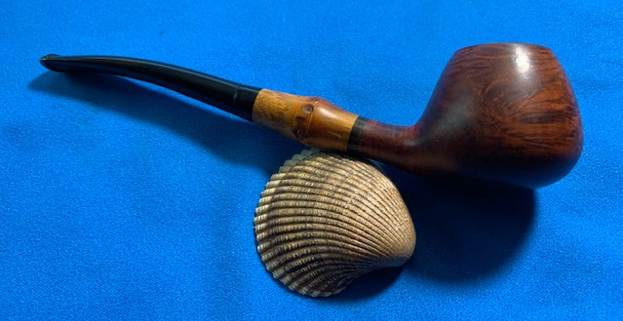
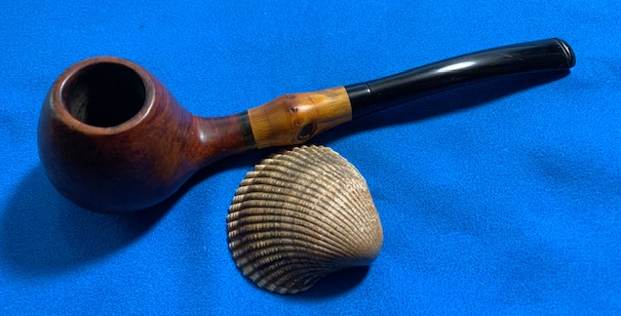
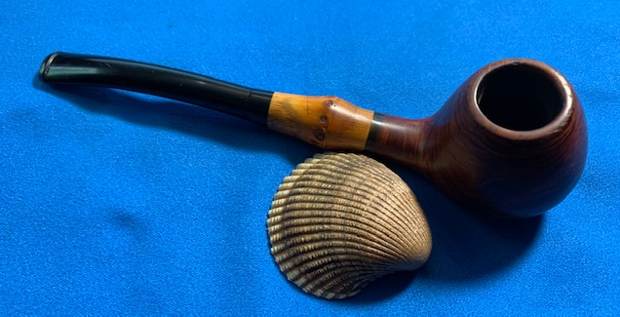
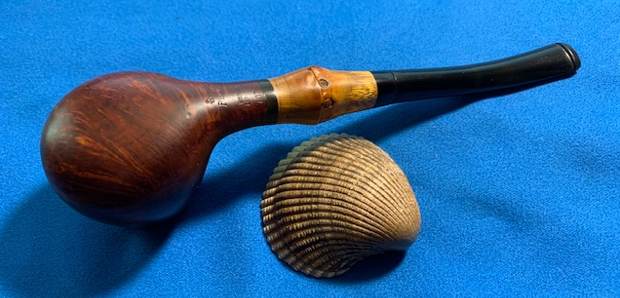
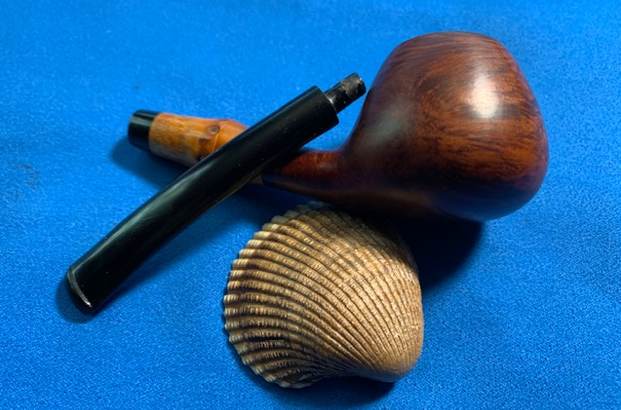
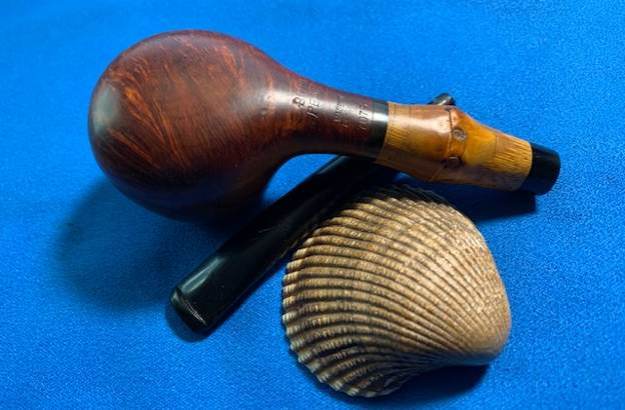
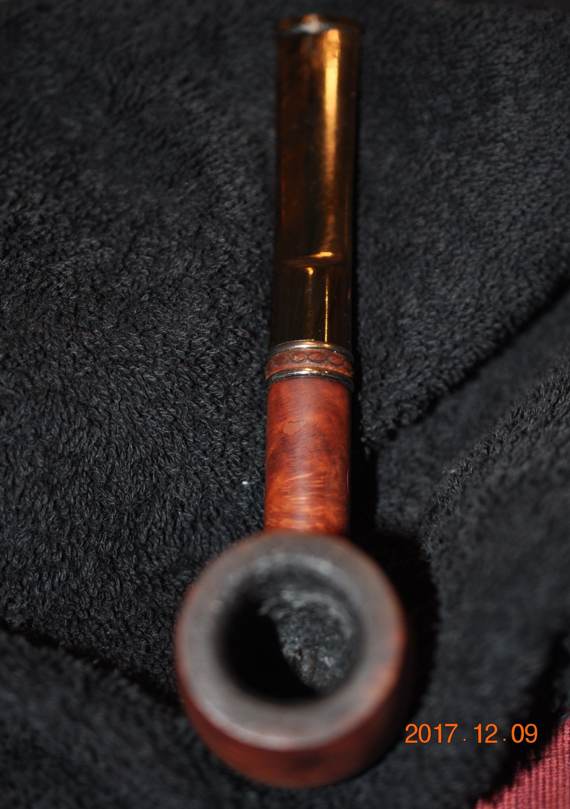
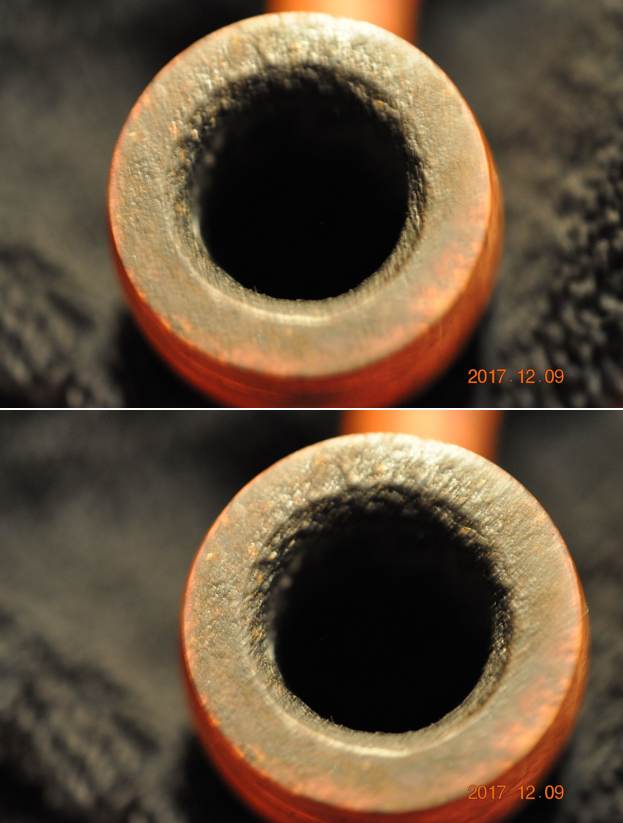
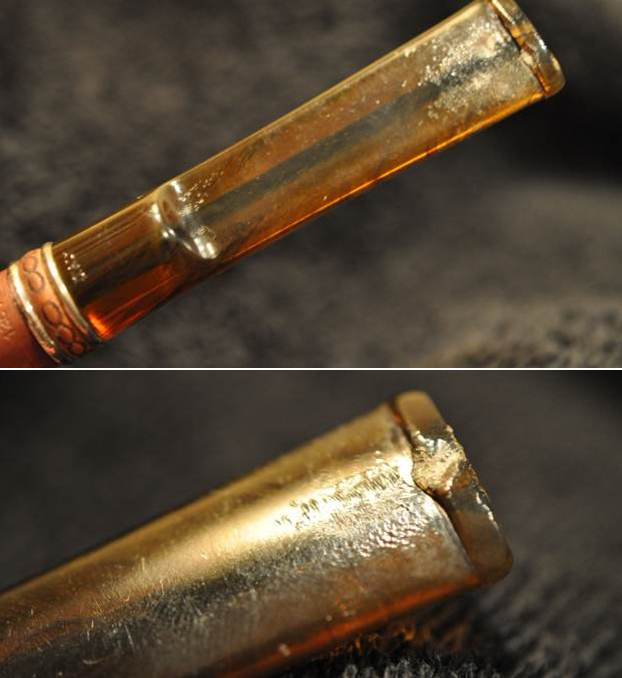
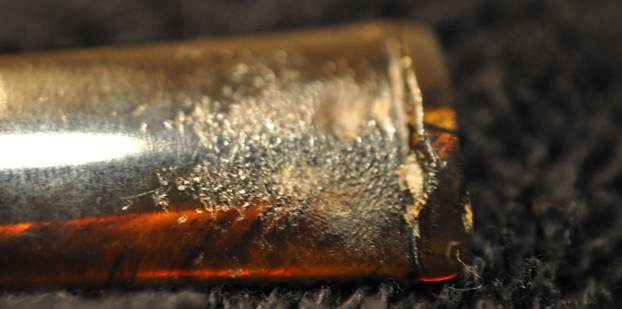
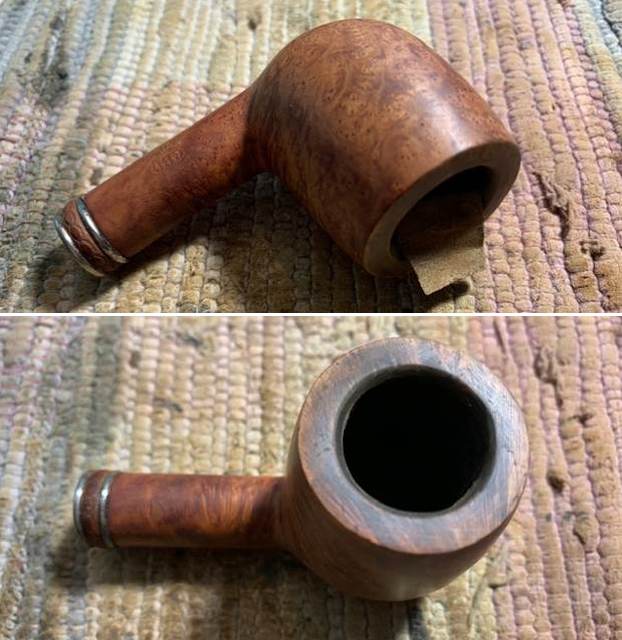
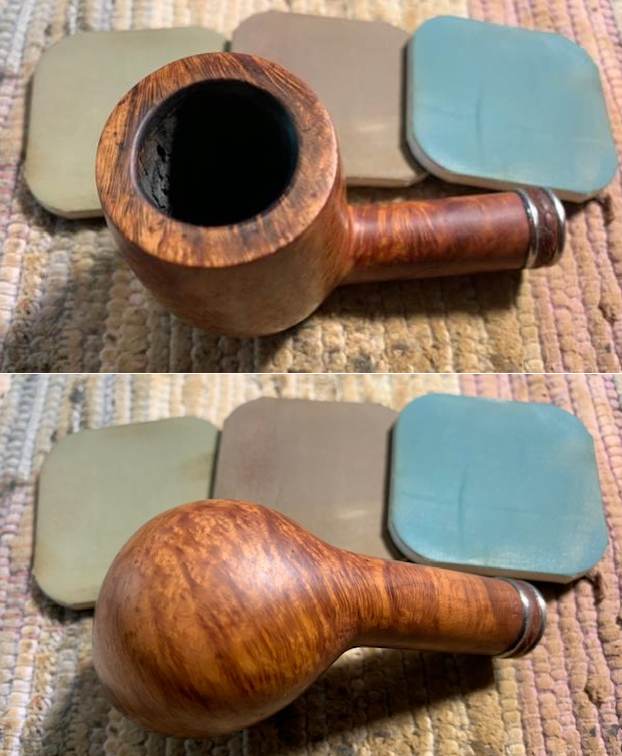
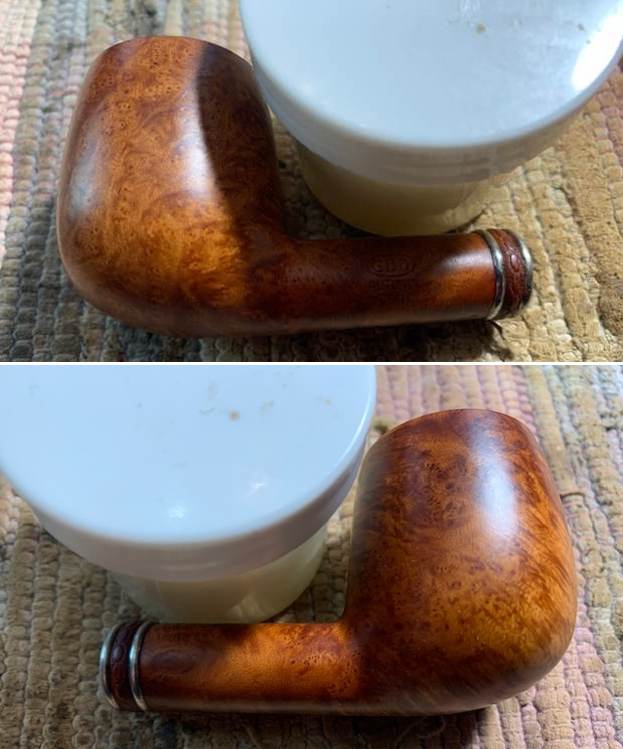
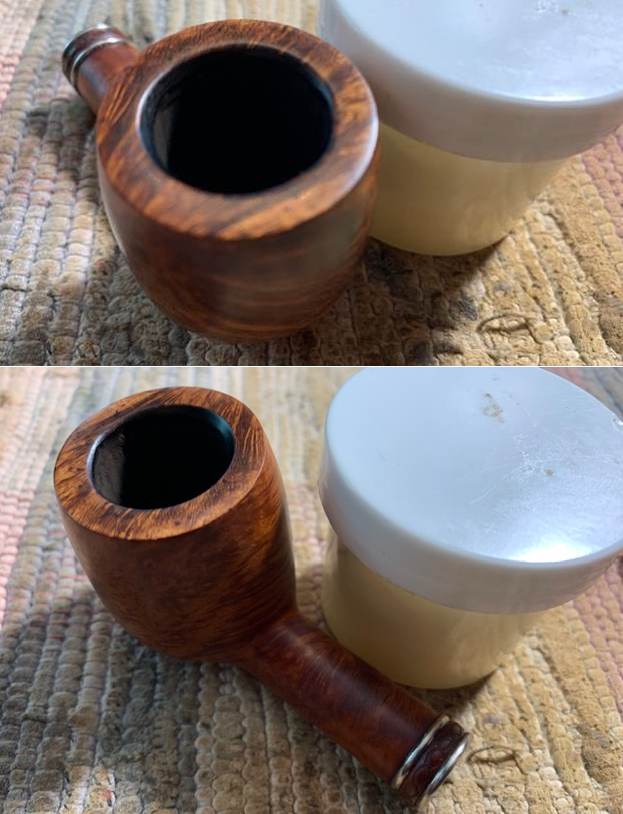
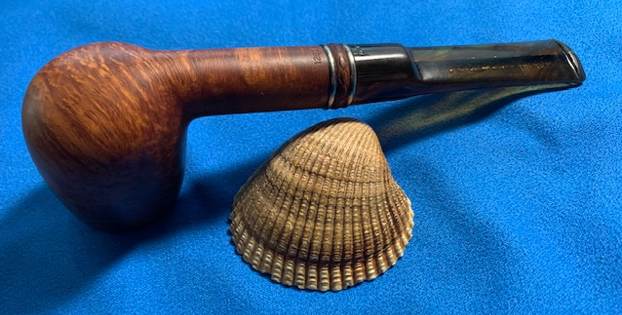
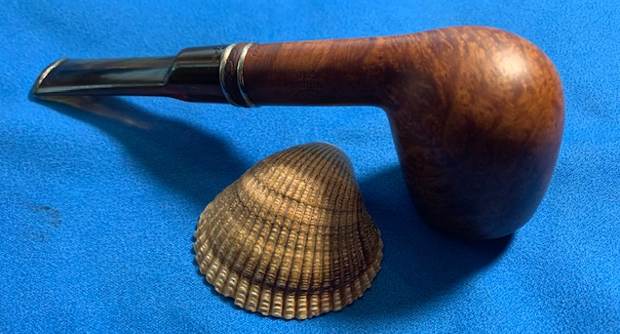
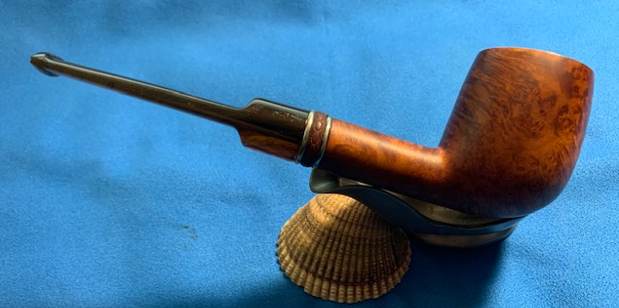
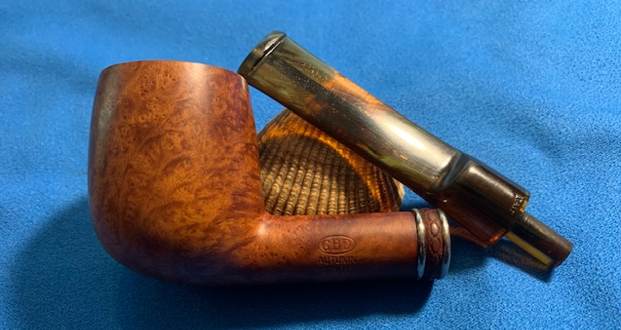
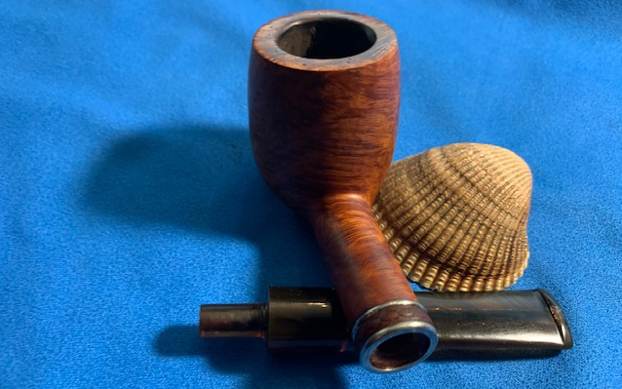
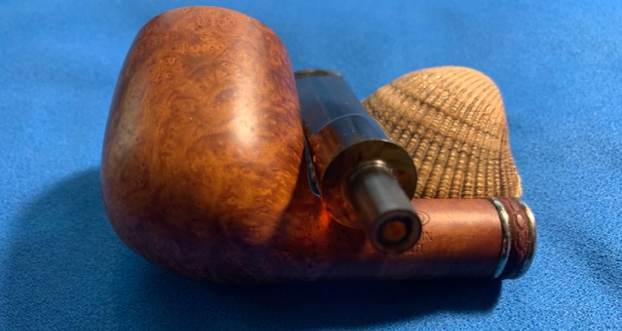
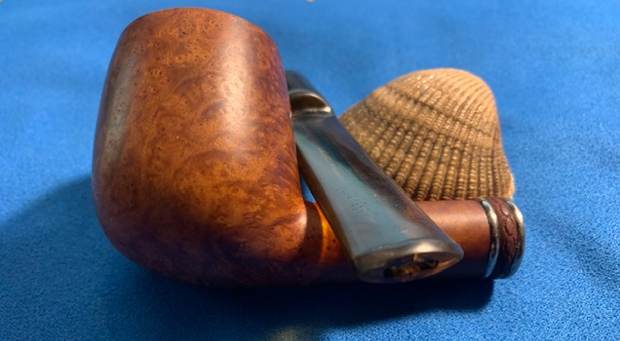
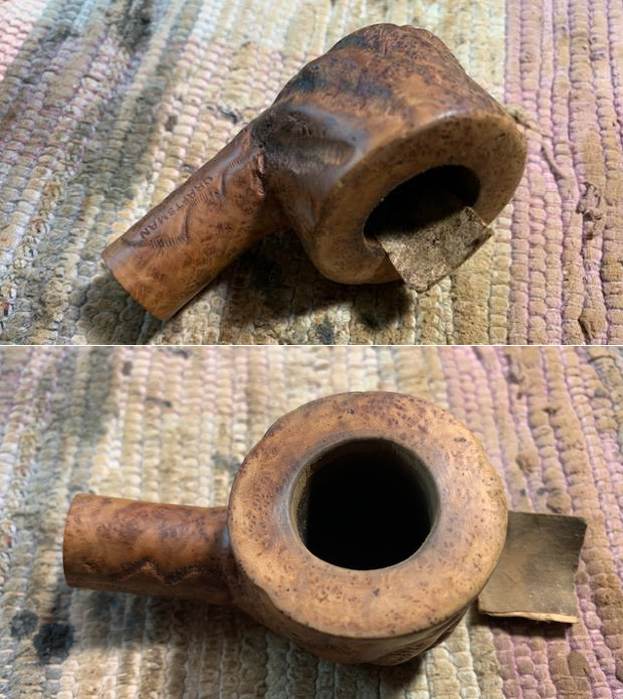
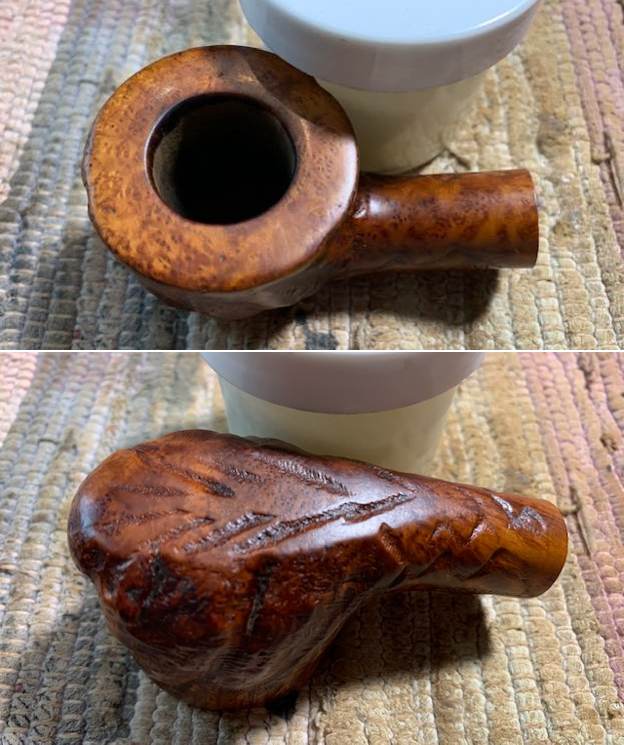
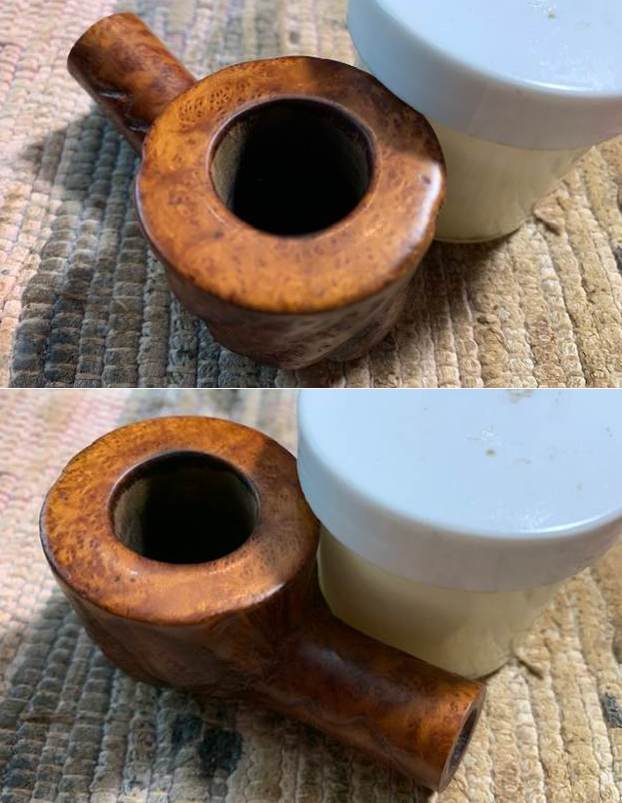
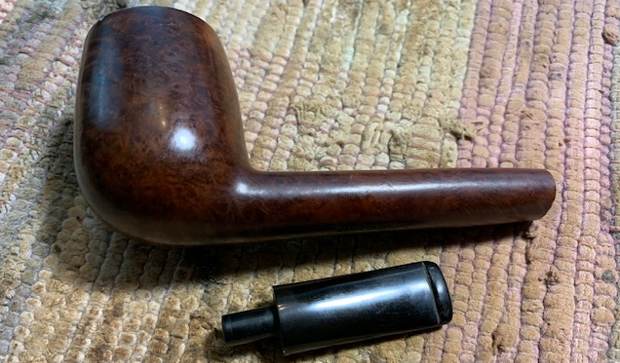
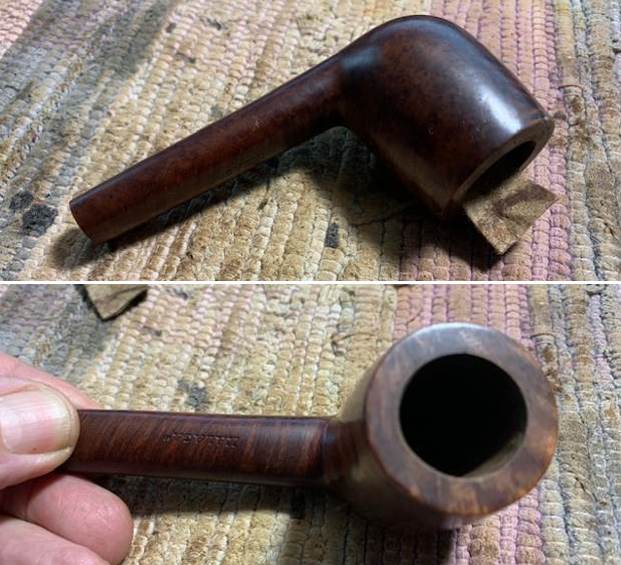
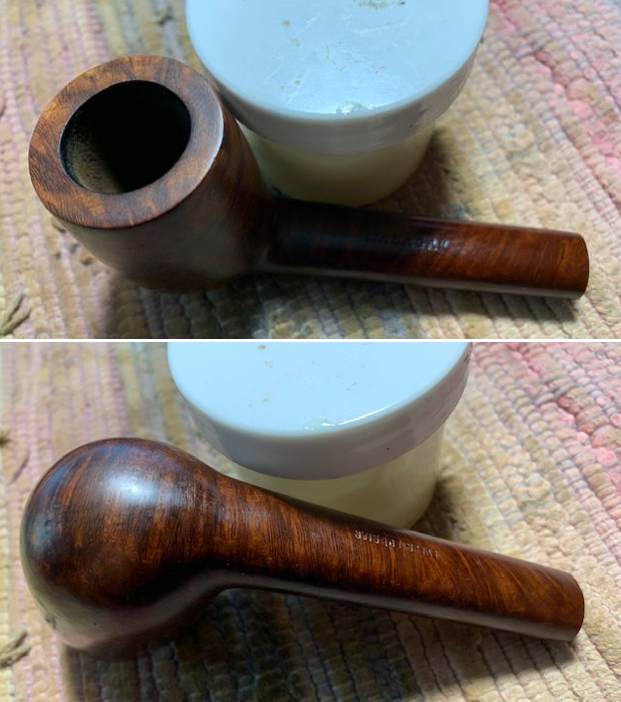
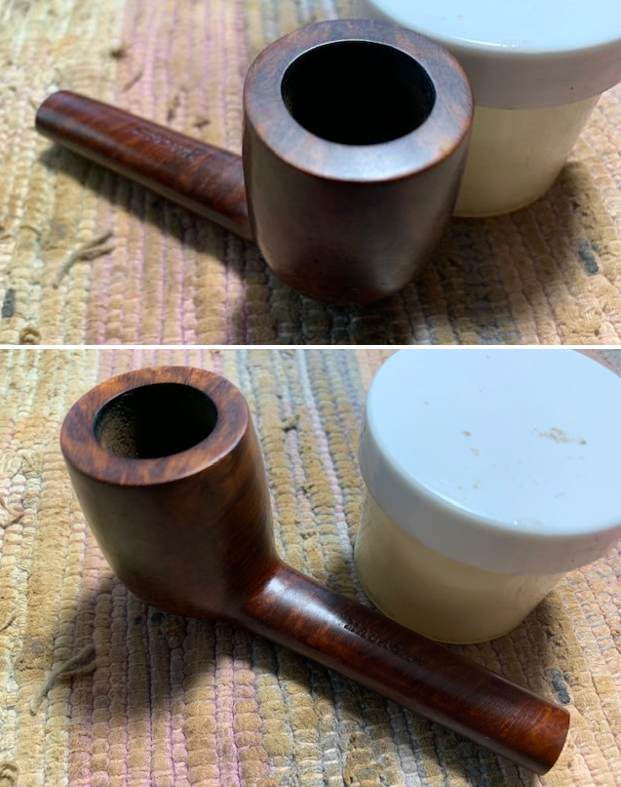
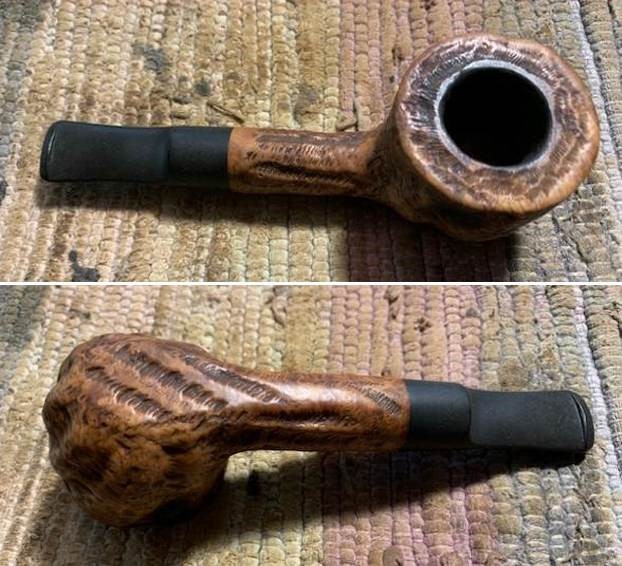
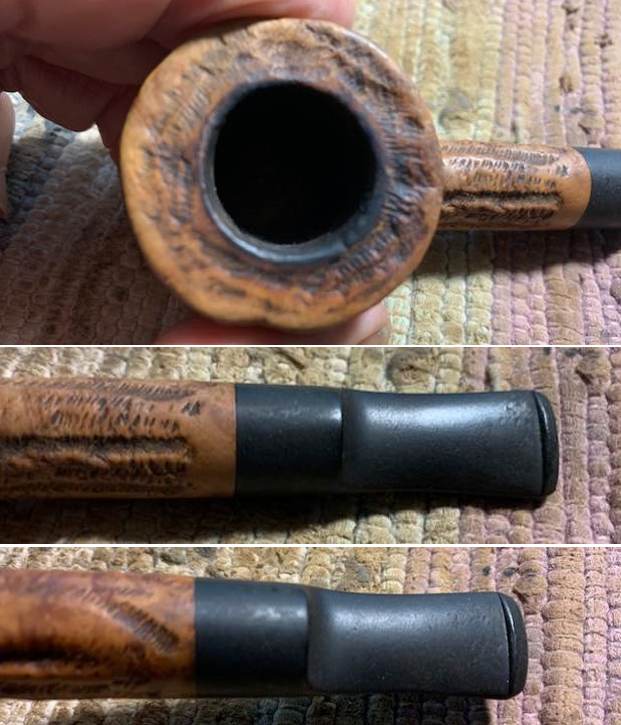
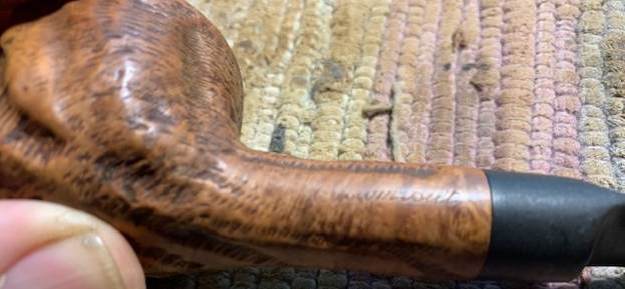
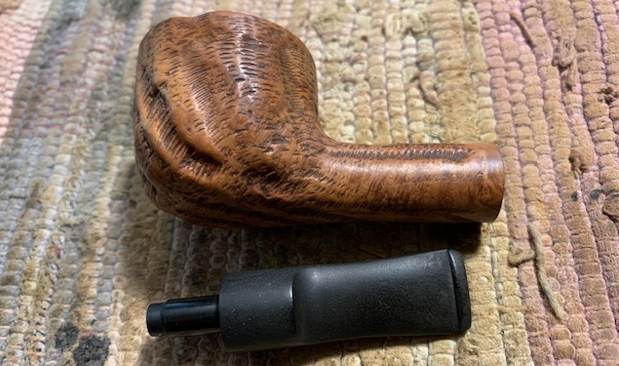
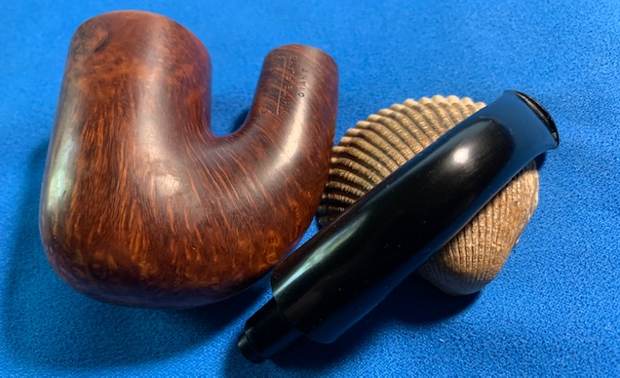
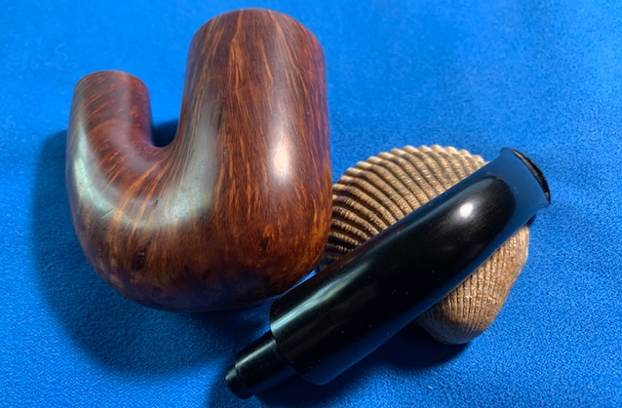
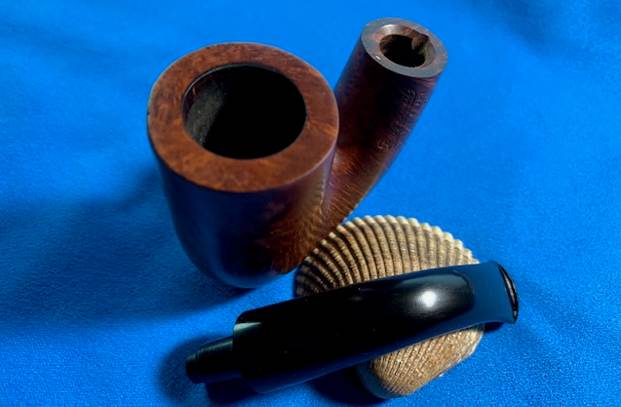
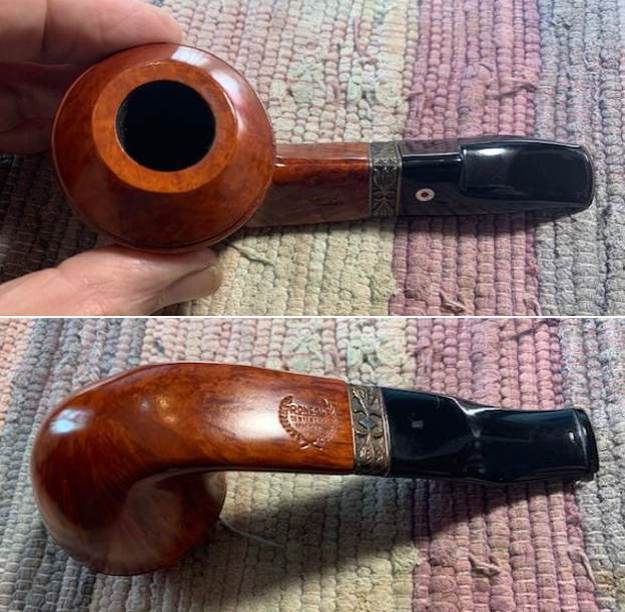
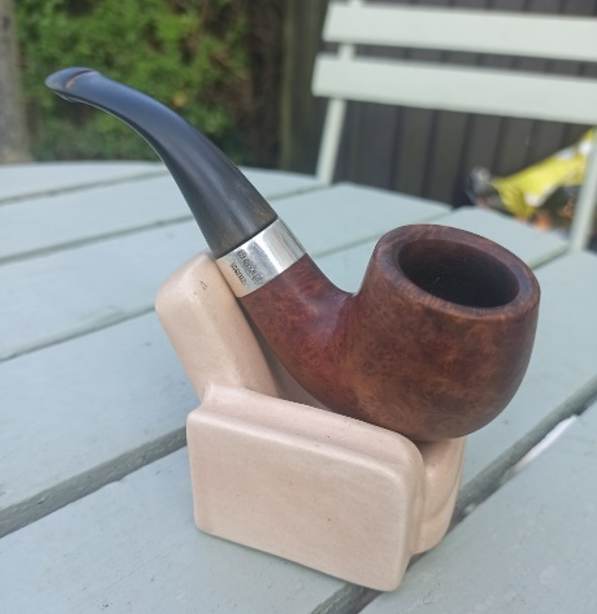
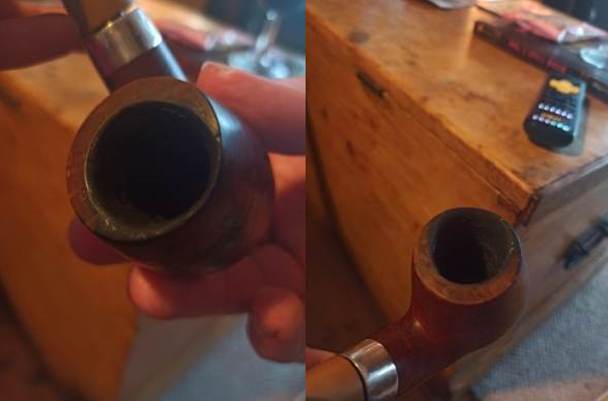
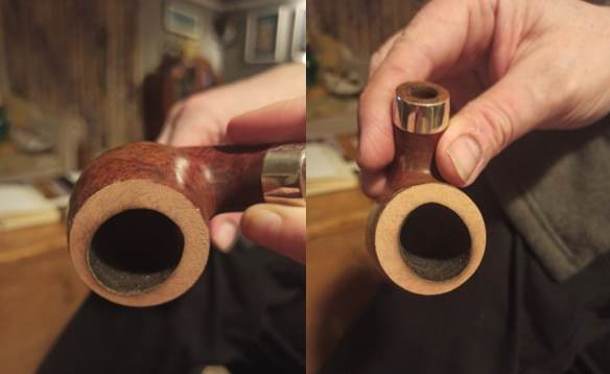
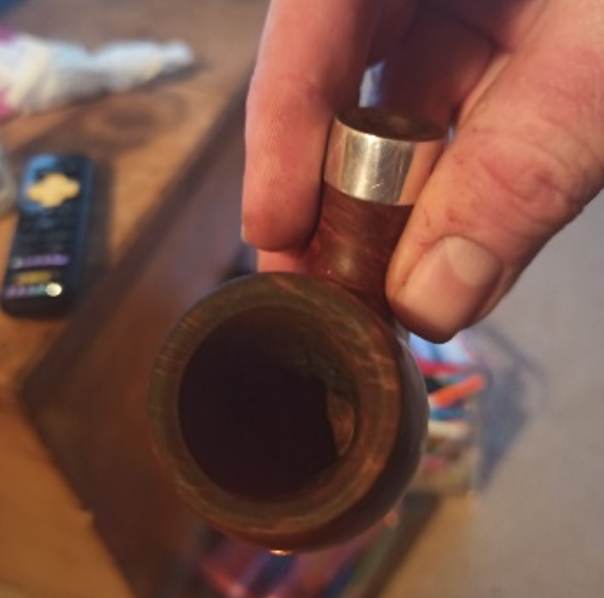
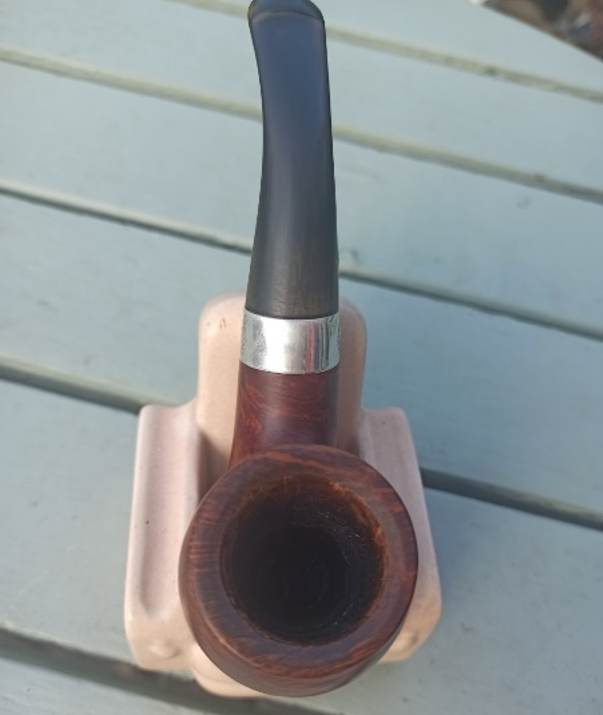
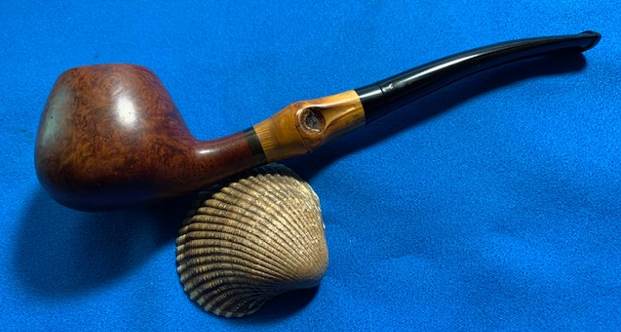
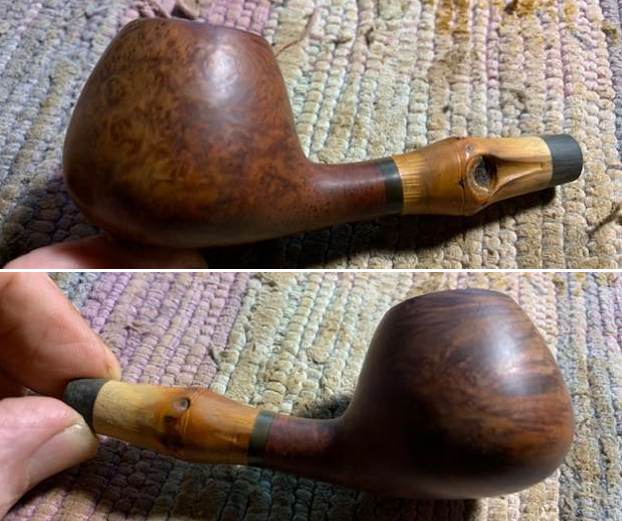
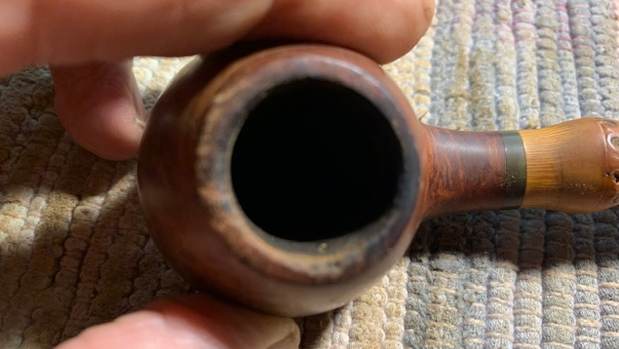
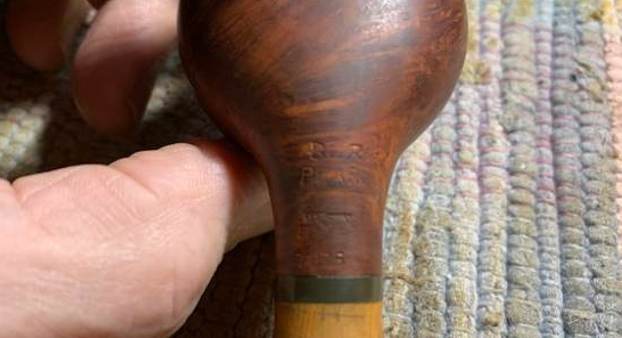
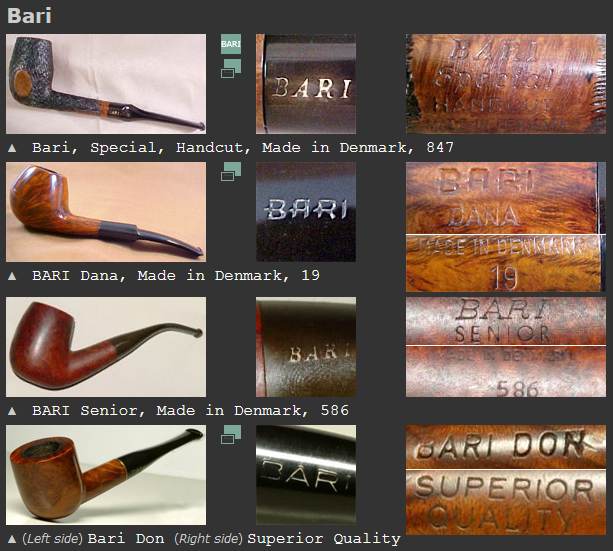
Jeff and I went through all the bowls that we had in boxes at his place recently. We wanted to consolidate them into one place and clean them all up. We sorted them as we went through them all. Many ended up being junk while a large number went into a box to be sent to me for restemming. One of those which caught my attention was an interesting bowl with a well coloured bamboo shank. It had a vulcanite spacer between the briar and the one knuckle piece of bamboo and another one at the shank end. It was a nice Brandy shape pipe with some great grain around the sides and shank. The bowl had been smoked and the top had some darkening and slight damage on the flat top and inner edge. The bamboo had a nice patina to it that showed that it had been someone’s favourite and had been well smoked. The shank end was smooth so a tight fit would be easy to do. It was stamped on the underside of the shank and read BARI [over] Pearl [over] Made In [over] Denmark [over] 7075 which is the shape number. Jeff had reamed and cleaned it before he sent it to me so it was in good shape when it arrived today. When I unpacked the box of bowls this one caught my eye. I wanted to restem it so I pulled it out to work on next. I took a photo of the rim top and edges to show the condition. You can see that it is damaged on the top and both edges. There is some darkening on the top and edges and there are some rough spots around the bowl top and edges. I took a photo of the stamping on the underside of the shank. It reads as noted above. It is clear and readable though faint in spots.I turned to Pipephil to see if I could find information on the Pearl model but there was nothing there on the model (http://pipephil.eu/logos/en/logo-b1.html). I quote from the sidebar below and also have included a screen capture of the information.
Brand founded by Viggo Nielsen in 1950 and sold to Van Eicken Tobaccos in 1978. At this time Age Bogelund managed Bari’s production. The company has been bought in 1993 by Helmer Thomsen. Bari’s second: Don, Proctus.  I then turned to Pipedia for some history of the brand and also to see if there as information on the Pearl model (https://pipedia.org/wiki/Bari). I have included the history below. There was also a photo that was done by Smoking Pipes.com and had a copy right so I did not include it. It did help me determine the kind of stem to use on the pipe.
Bari Piber was founded by Viggo Nielsen in Kolding around the turn of 1950/51. Viggo’s sons Kai Nielsen and Jørgen Nielsen both grew into their father’s business from a very young age and worked there till 1975.

Bari had very successfully adapted the new Danish Design that had been started mainly by Stanwell for it’s own models. When Viggo Nielsen sold Bari in 1978 to Joh. Wilh. von Eicken GmbH in Hamburg Bari counted 33 employees.

From 1978 to 1993 Åge Bogelund and Helmer Thomsen headed Bari’s pipe production. Thomson bought the company in 1993 re-naming it to Bari Piber Helmer Thomsen. The workshop moved to more convenient buildings in Vejen. Bogelund, who created very respectable freehands of his own during the time at Bari got lost somehow after 1993.

Bari’s basic conception fundamentally stayed the same for decades: series pipes pre-worked by machines and carefully finished by hand. Thus no spectacular highgrades but solid, reliable every day’s companions.

The most famous series are the smooth “Classic Diamond” and the blasted “Wiking”.

I did a quick Google search for the Bari Pearl pipe and found that Smokingpipes.com had quite a few different shapes of the model. It was interesting that all of them had a single knuckle like the one that I was working on and that the bamboo had been shaped and tapered on the front toward the bowl and toward the shank end. All of them had a vulcanite space on both ends of the bamboo. They were pretty pipes.

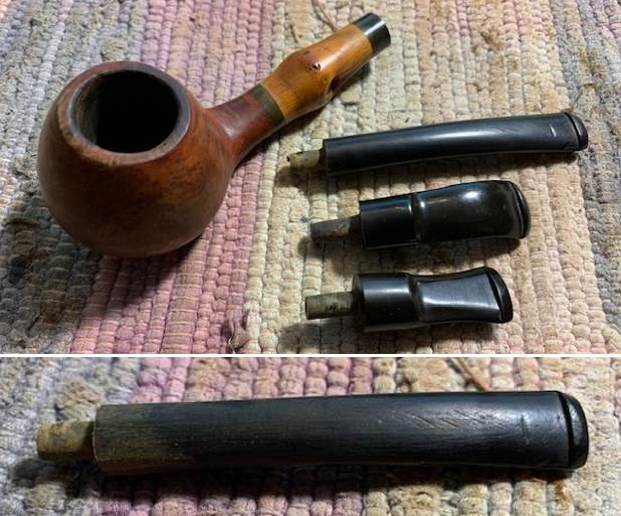
With that it was time to work on the pipe. I went through my cans of stems and found three possibilities. Two of them were short saddle stems and one was a longer taper stem. I tried all three of them and my daughters and I decided to use the tapered longer one. It is similar in shape to several of the ones I saw in the photos of the Pearl on Google.

I then turned to Pipedia for some history of the brand and also to see if there as information on the Pearl model (https://pipedia.org/wiki/Bari). I have included the history below. There was also a photo that was done by Smoking Pipes.com and had a copy right so I did not include it. It did help me determine the kind of stem to use on the pipe.

Bari Piber was founded by Viggo Nielsen in Kolding around the turn of 1950/51. Viggo’s sons Kai Nielsen and Jørgen Nielsen both grew into their father’s business from a very young age and worked there till 1975.

Bari had very successfully adapted the new Danish Design that had been started mainly by Stanwell for it’s own models. When Viggo Nielsen sold Bari in 1978 to Joh. Wilh. von Eicken GmbH in Hamburg Bari counted 33 employees.

From 1978 to 1993 Åge Bogelund and Helmer Thomsen headed Bari’s pipe production. Thomson bought the company in 1993 re-naming it to Bari Piber Helmer Thomsen. The workshop moved to more convenient buildings in Vejen. Bogelund, who created very respectable freehands of his own during the time at Bari got lost somehow after 1993.

Bari’s basic conception fundamentally stayed the same for decades: series pipes pre-worked by machines and carefully finished by hand. Thus no spectacular highgrades but solid, reliable every day’s companions.

The most famous series are the smooth “Classic Diamond” and the blasted “Wiking”.

I did a quick Google search for the Bari Pearl pipe and found that Smokingpipes.com had quite a few different shapes of the model. It was interesting that all of them had a single knuckle like the one that I was working on and that the bamboo had been shaped and tapered on the front toward the bowl and toward the shank end. All of them had a vulcanite space on both ends of the bamboo. They were pretty pipes.

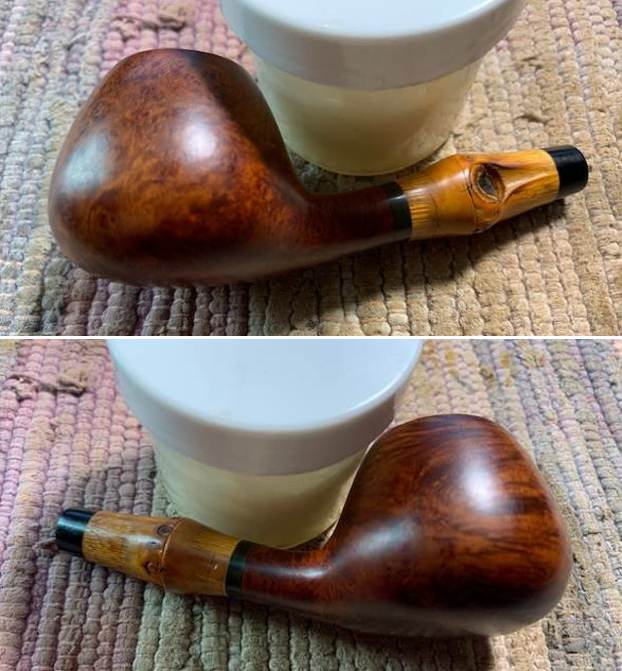
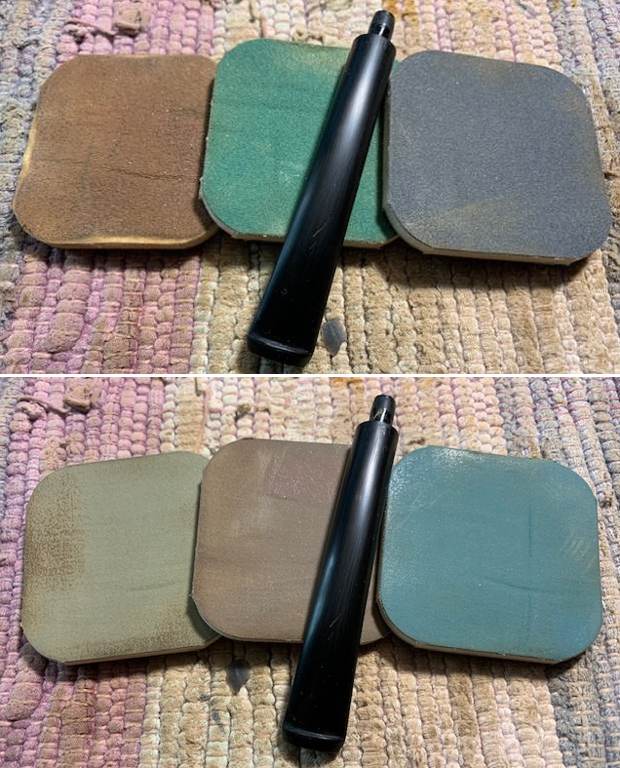
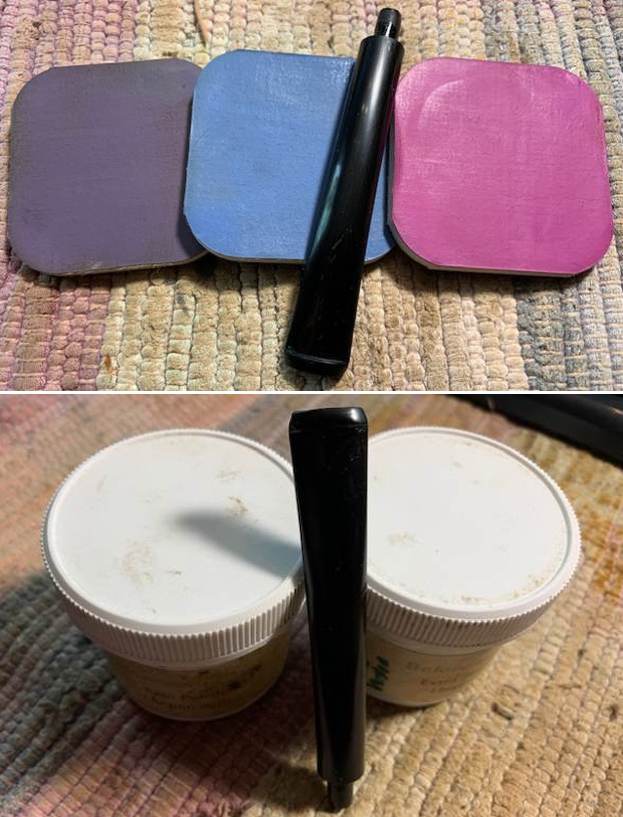
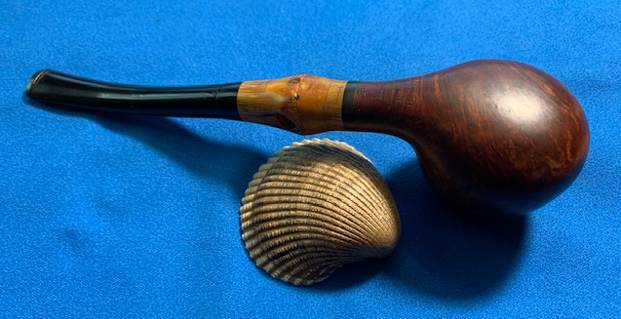
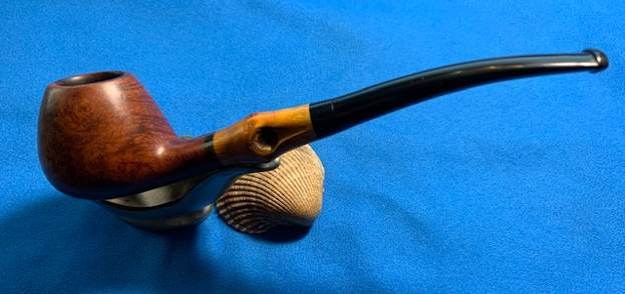
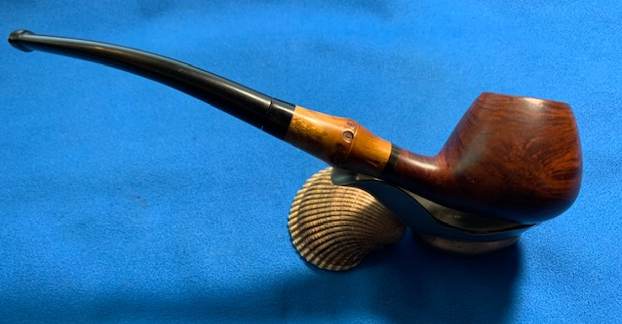
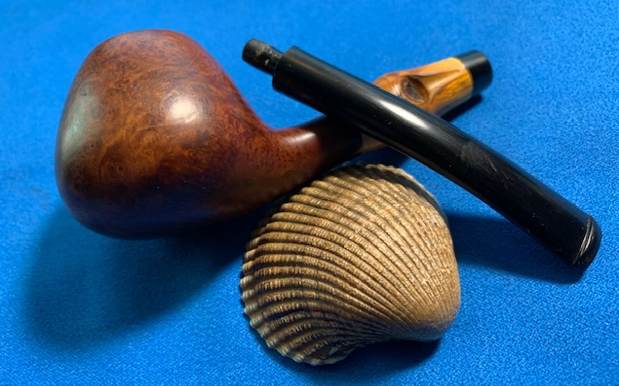
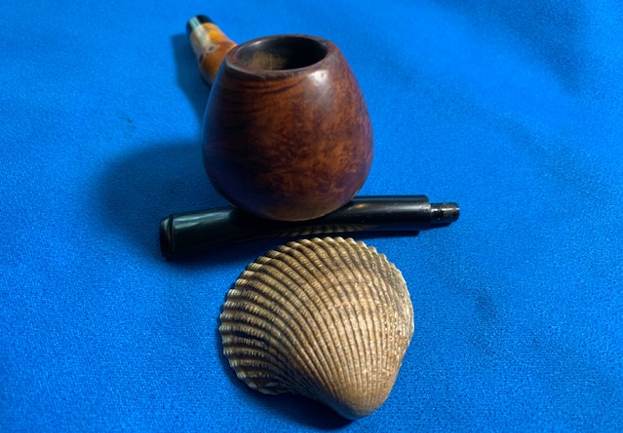
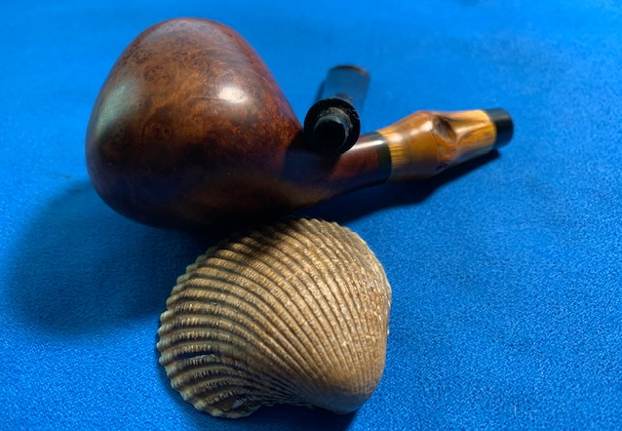
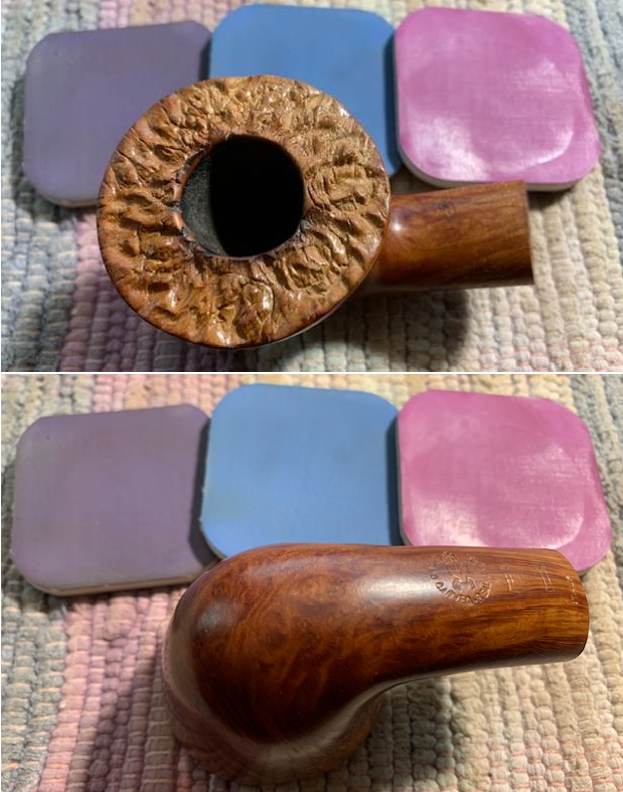
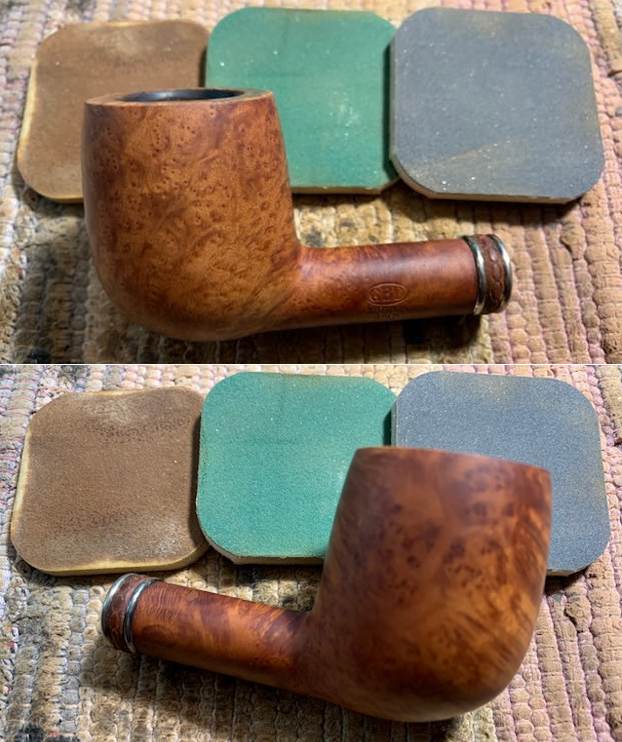
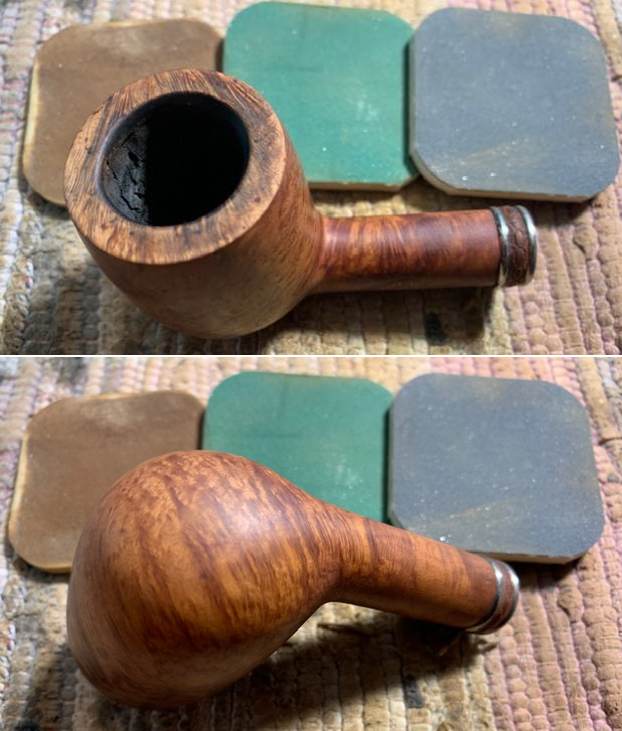
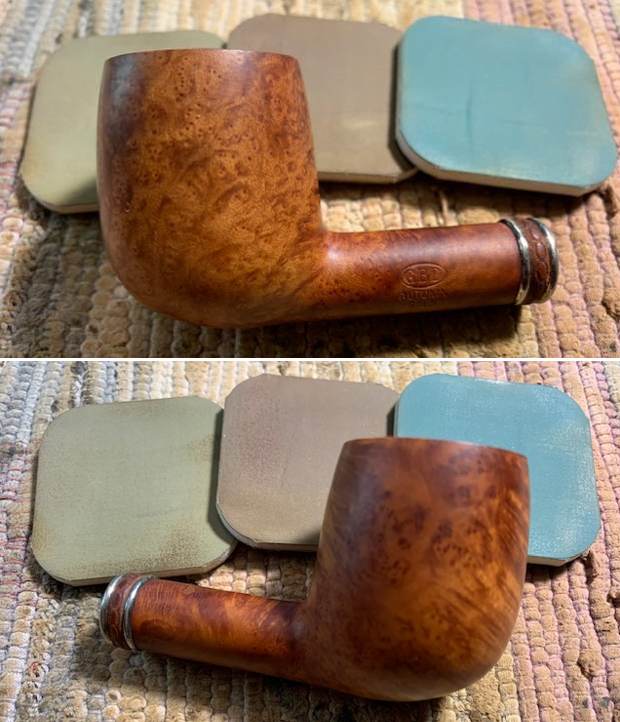
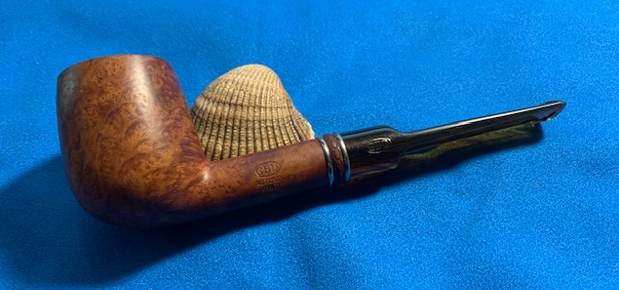
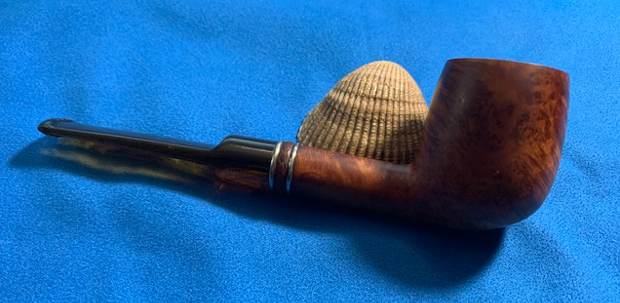
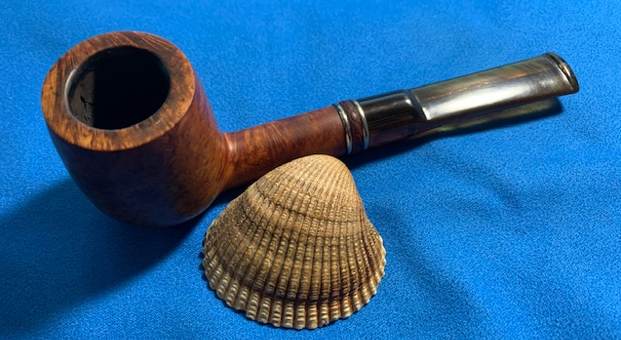
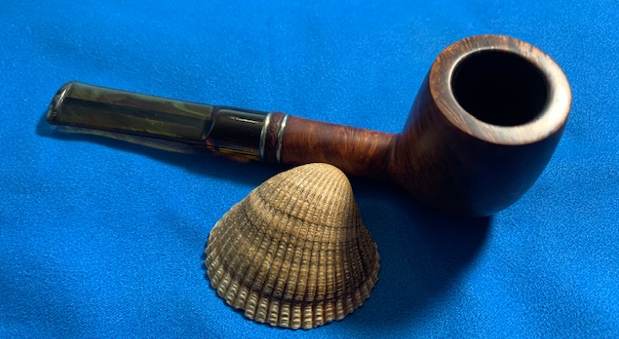
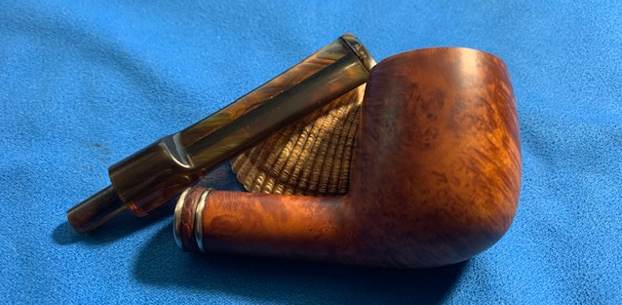
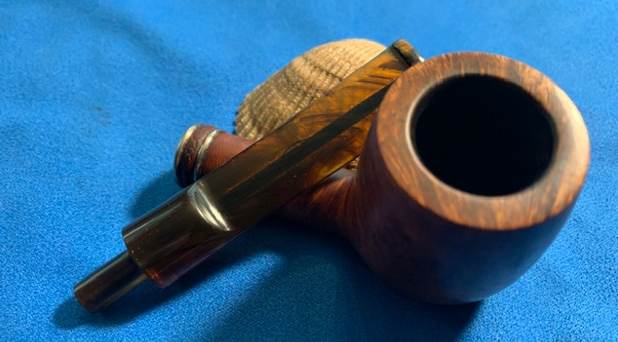
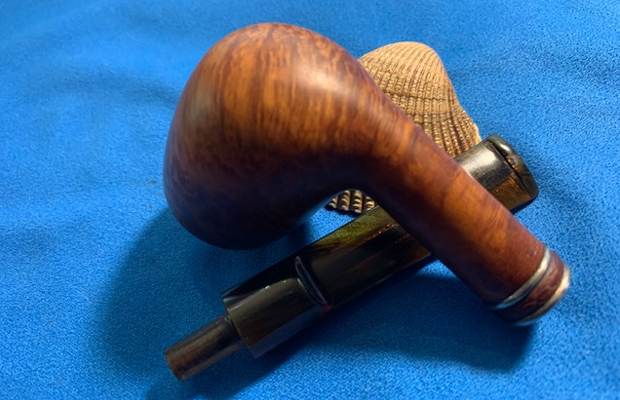
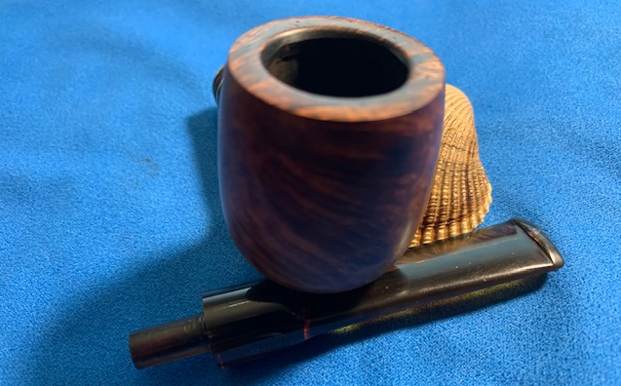
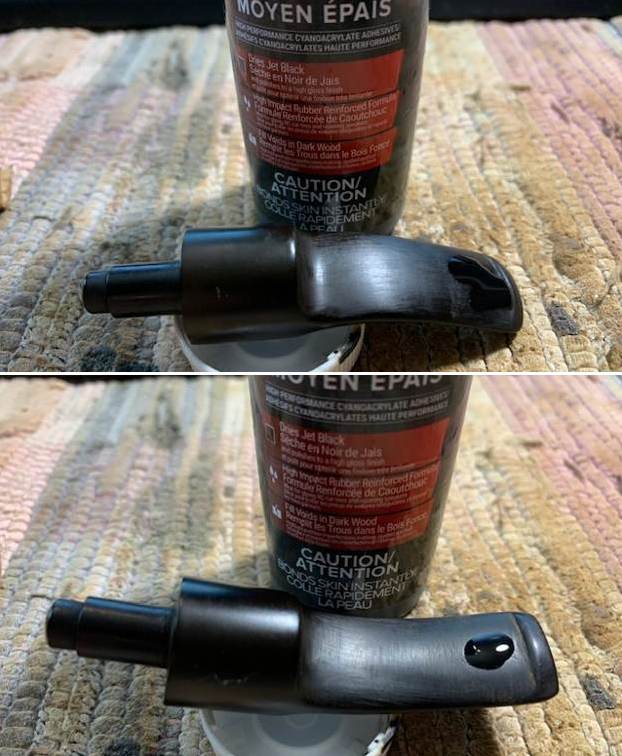
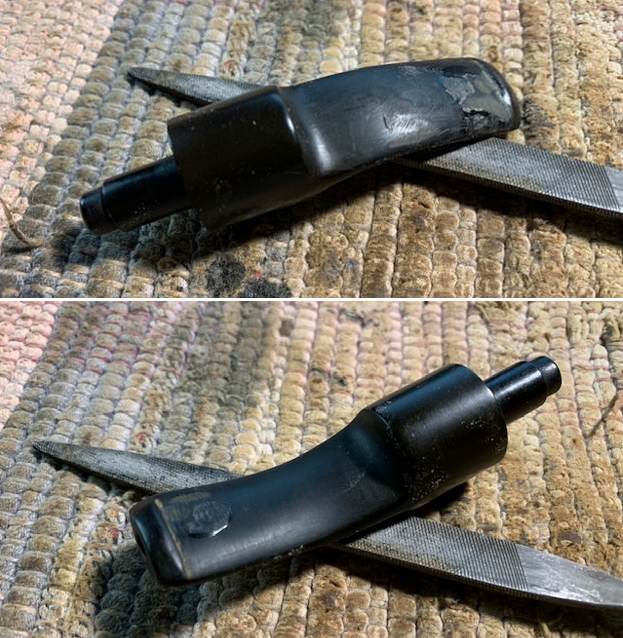
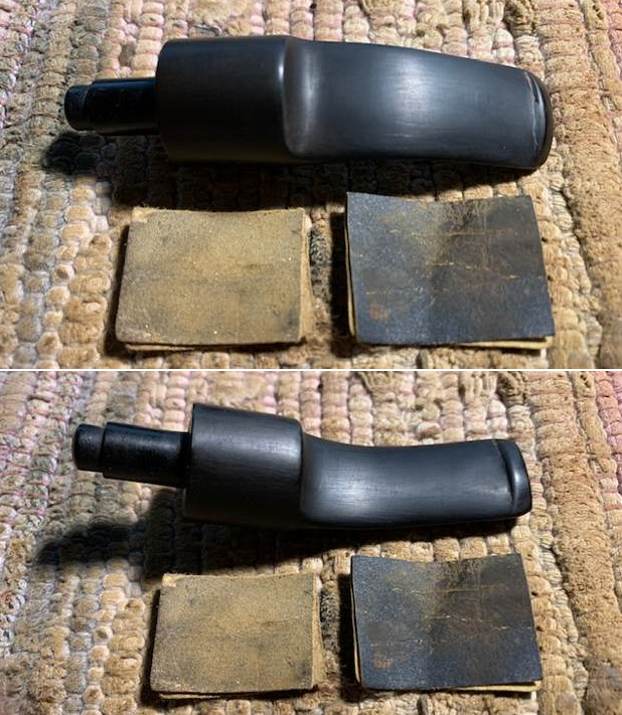
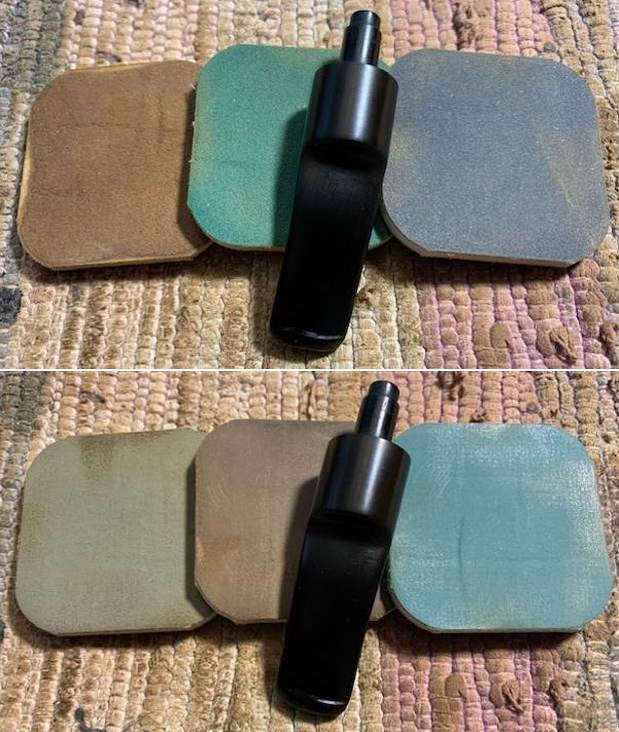
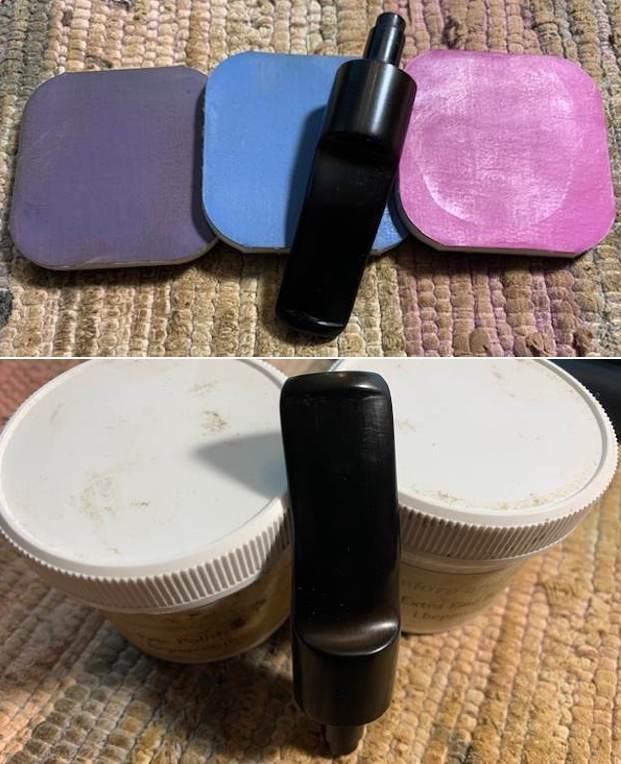
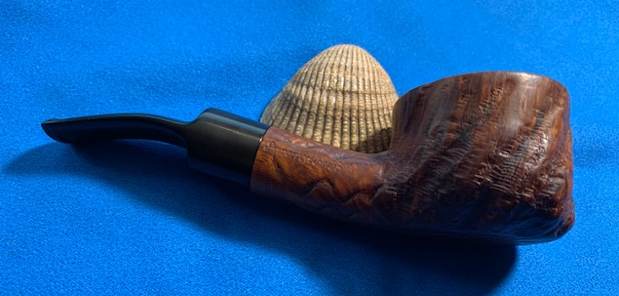
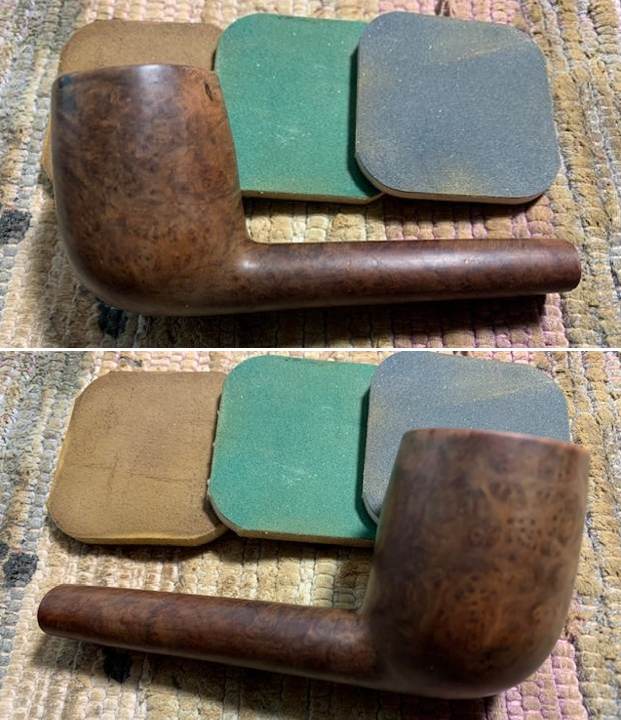
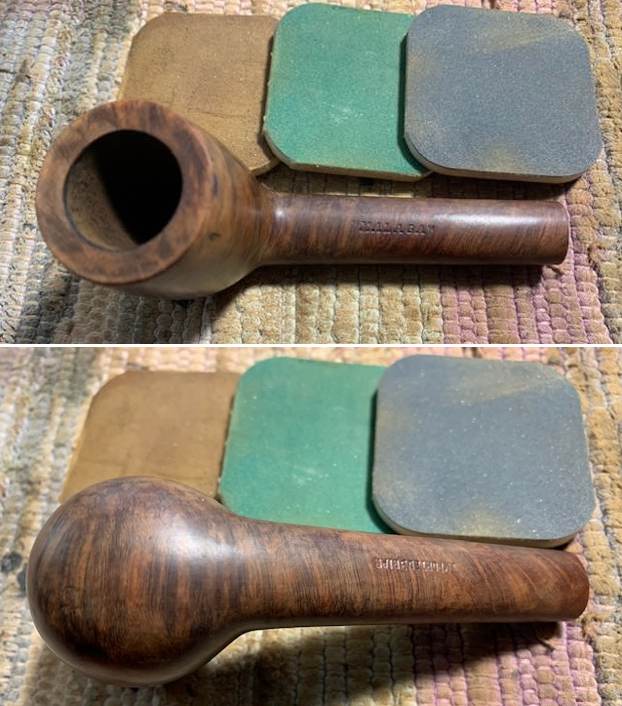
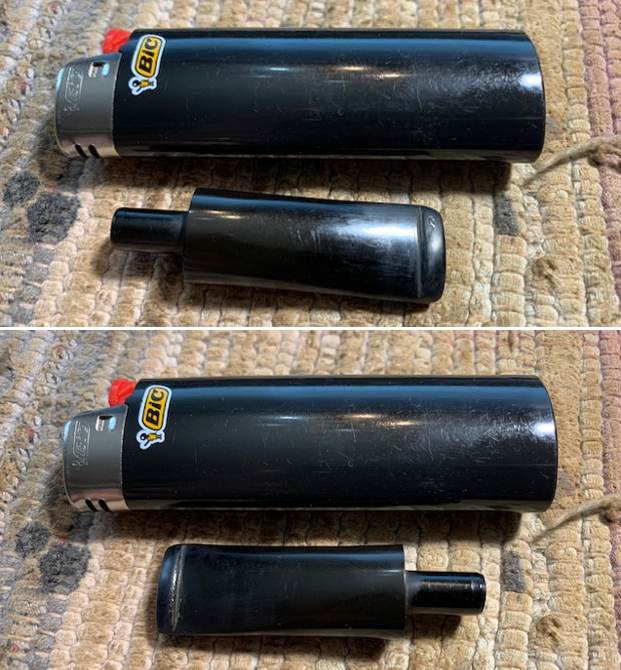
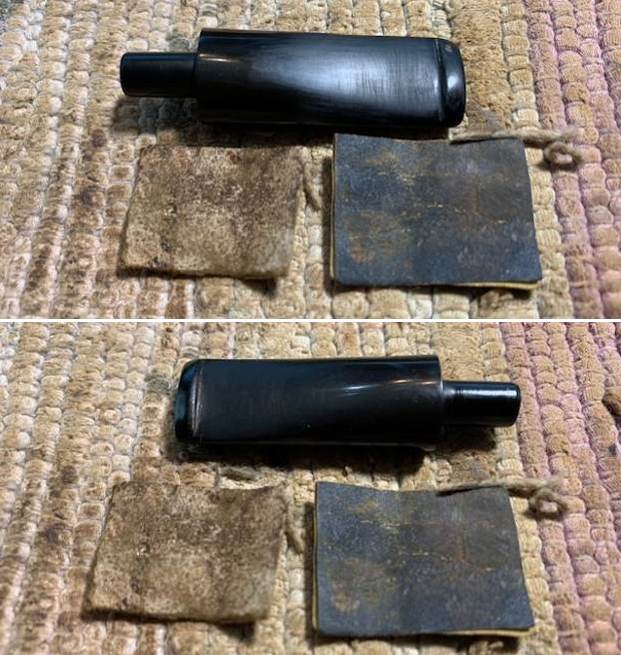
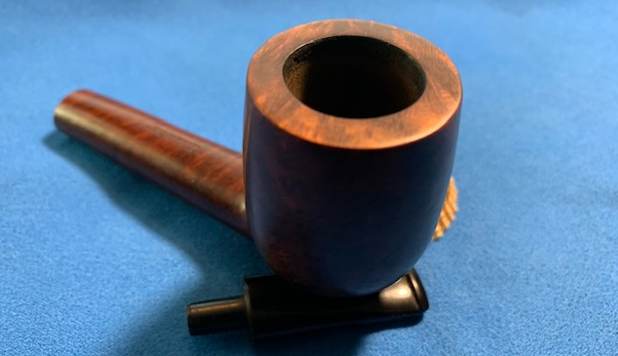
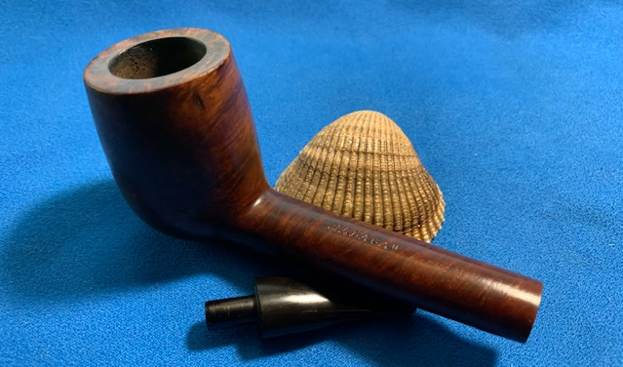
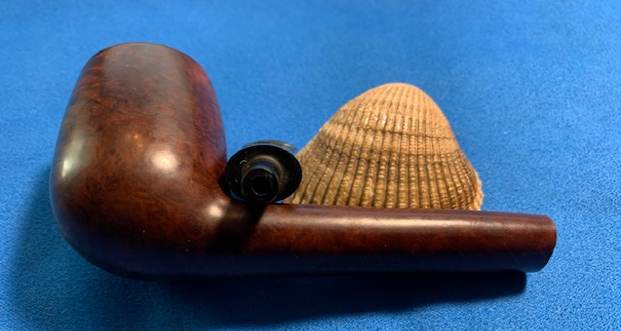
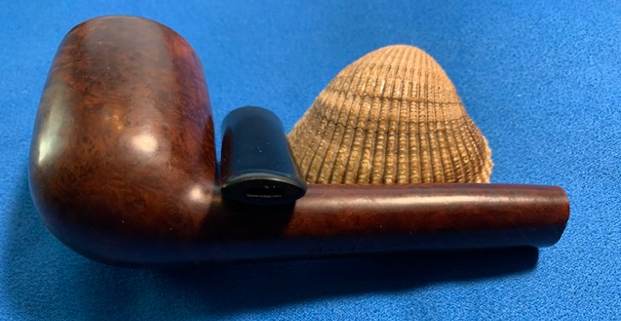
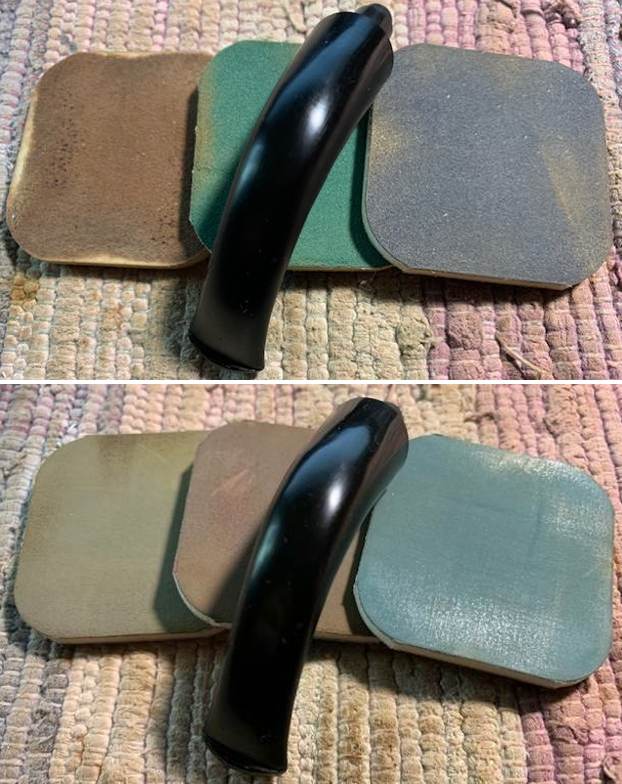
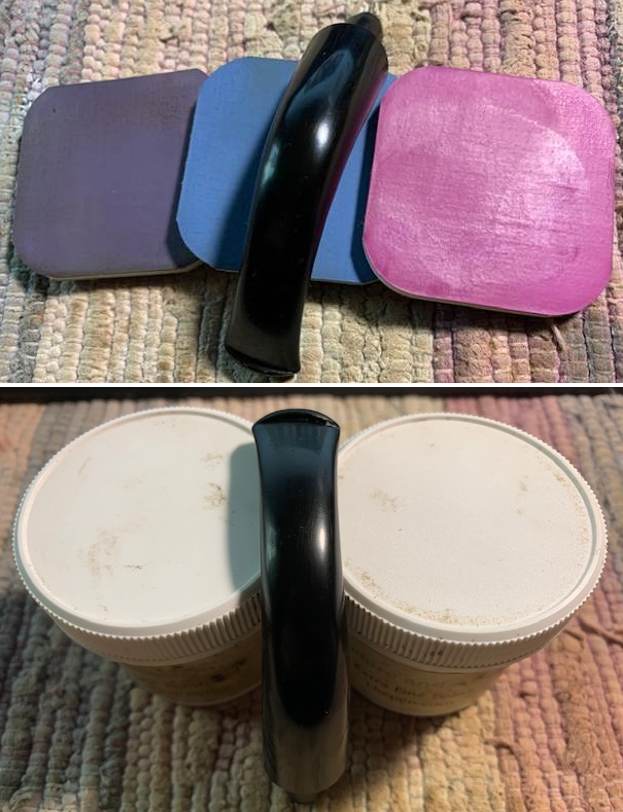
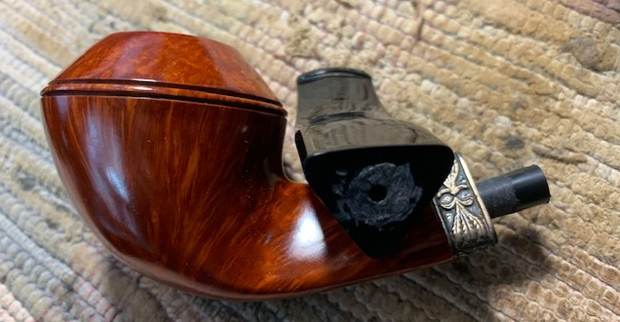
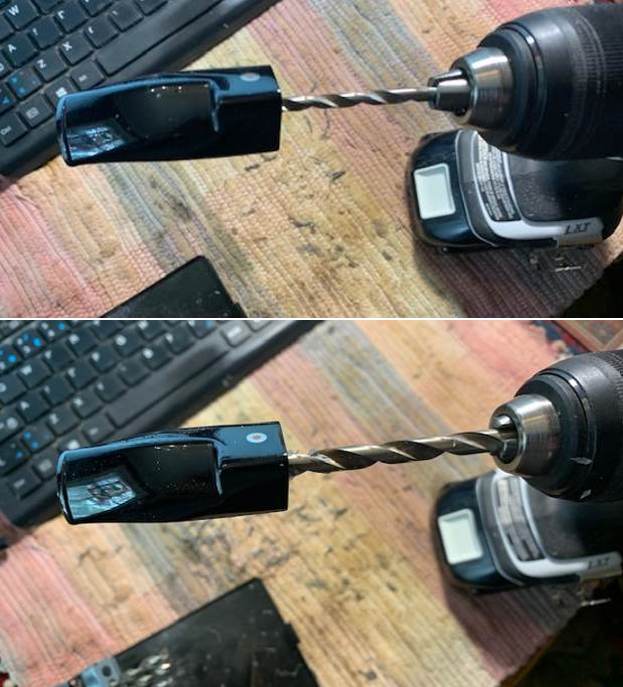
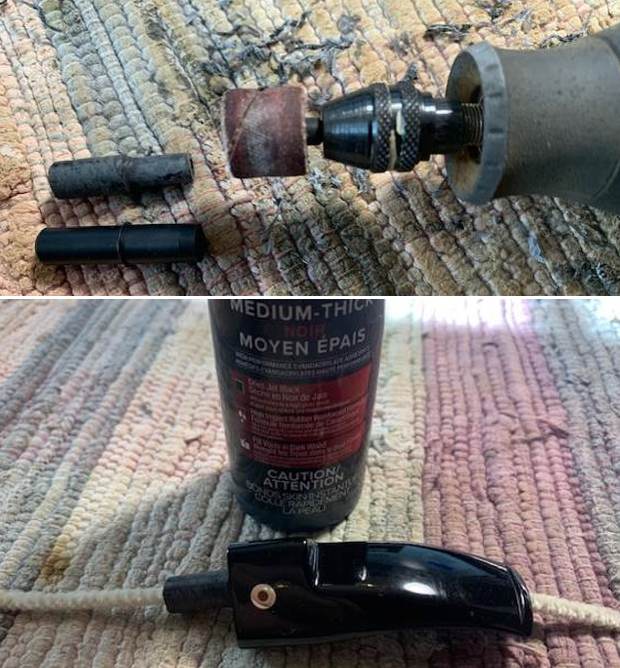
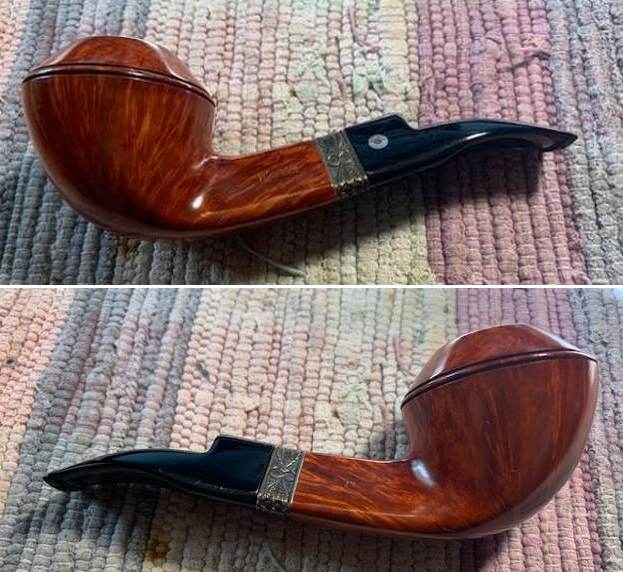
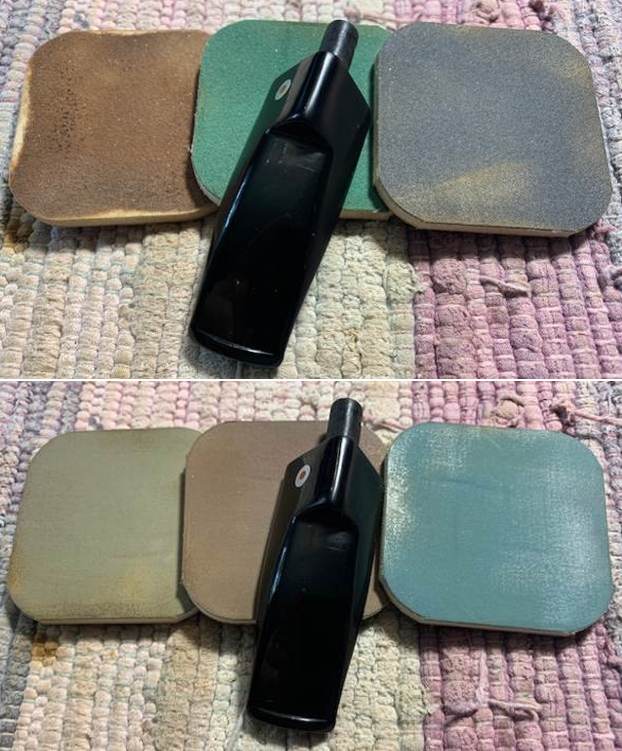
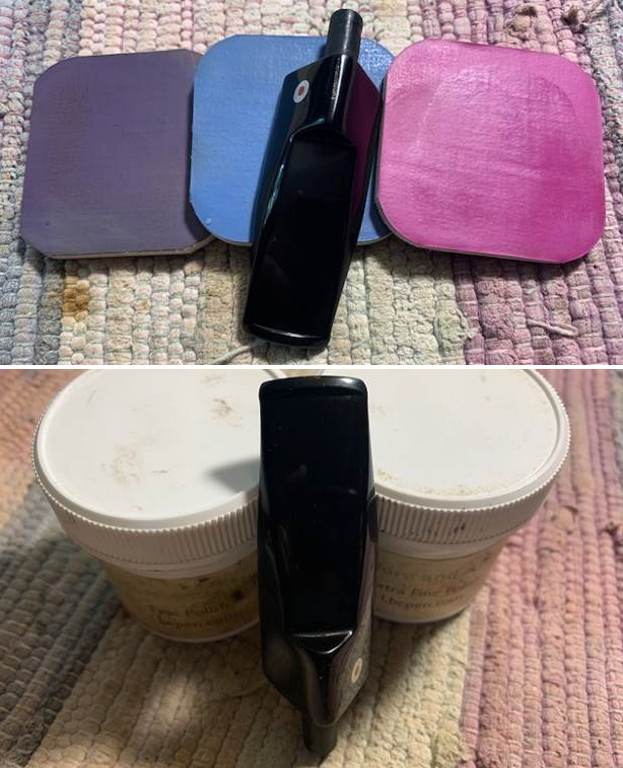
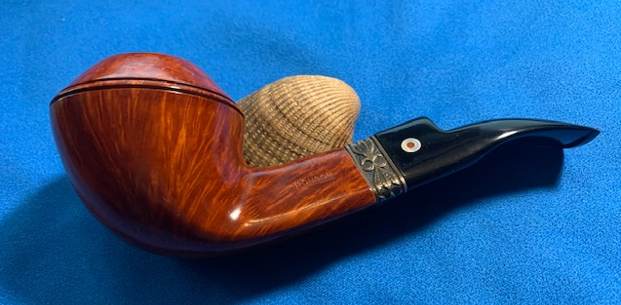
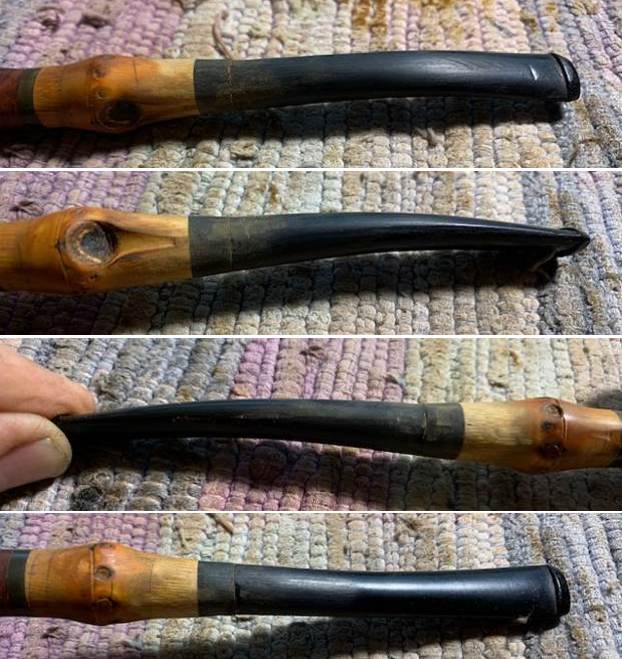
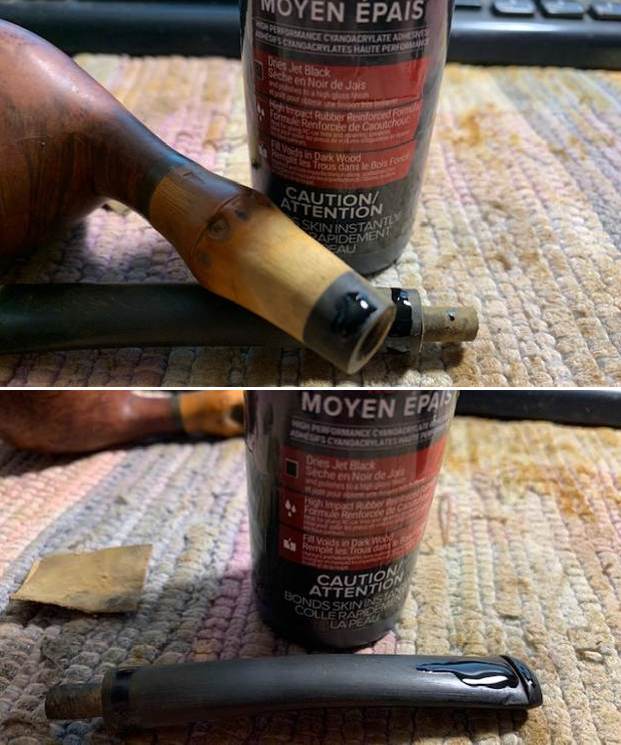
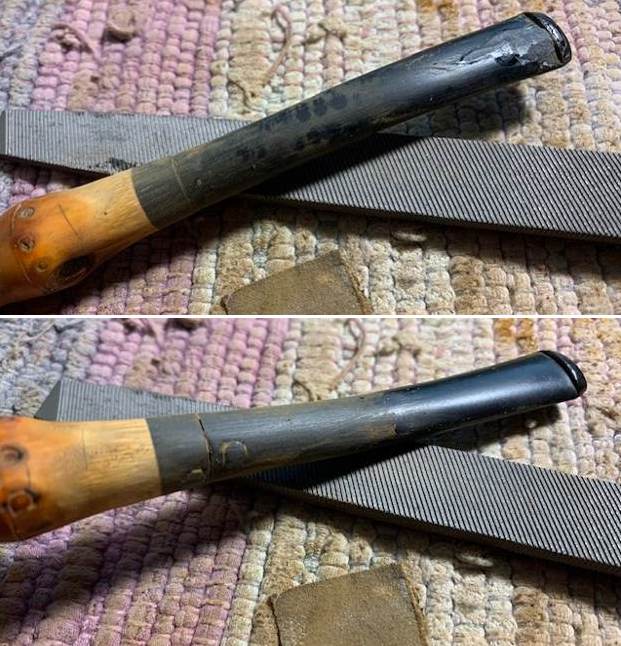
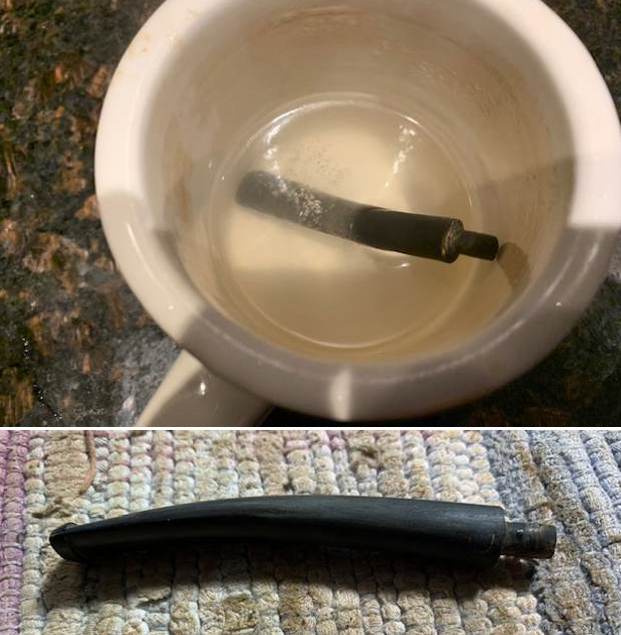
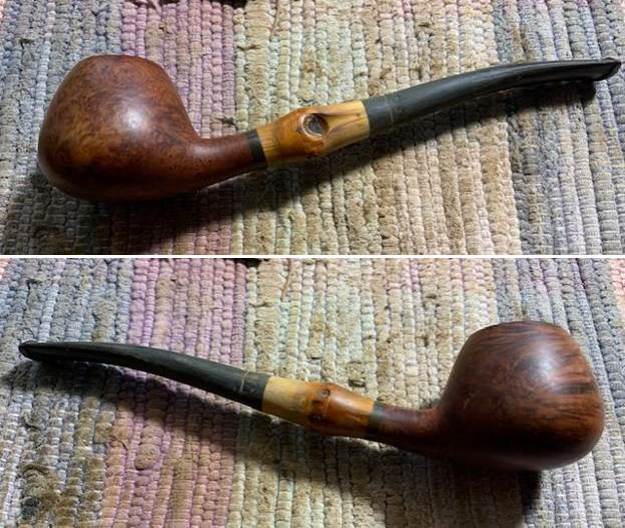
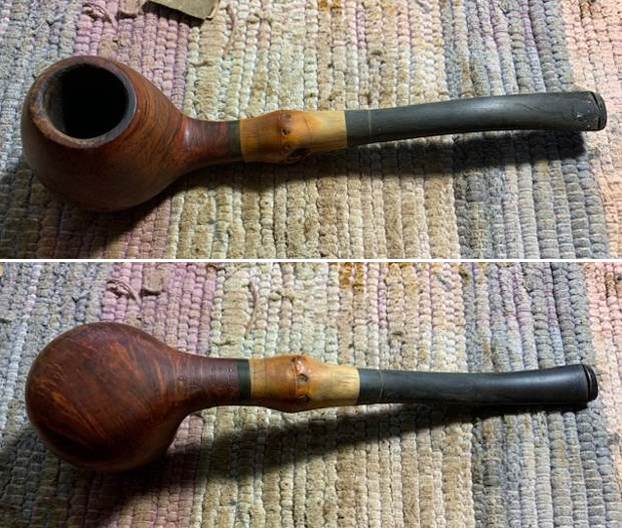
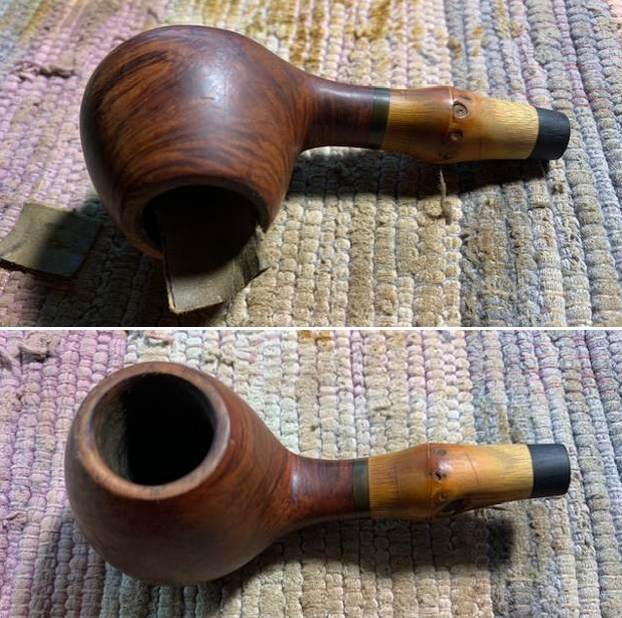
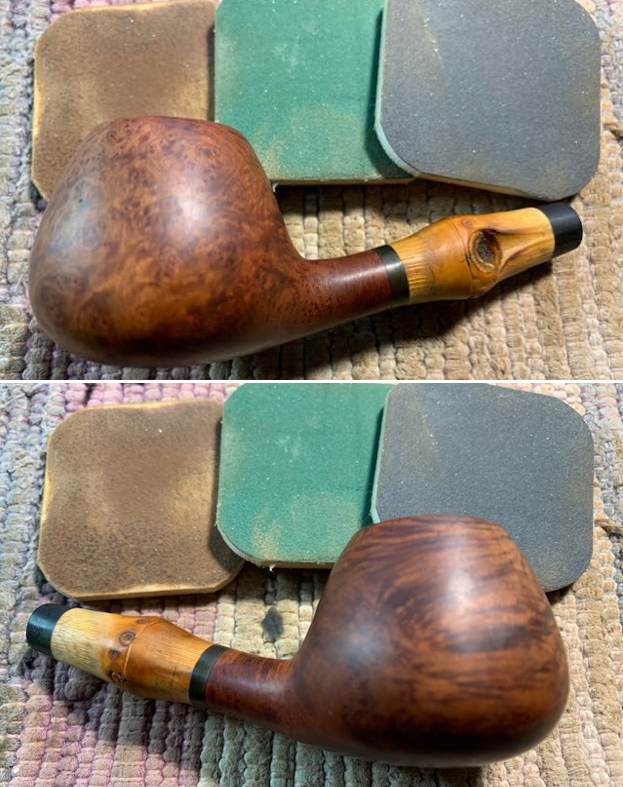
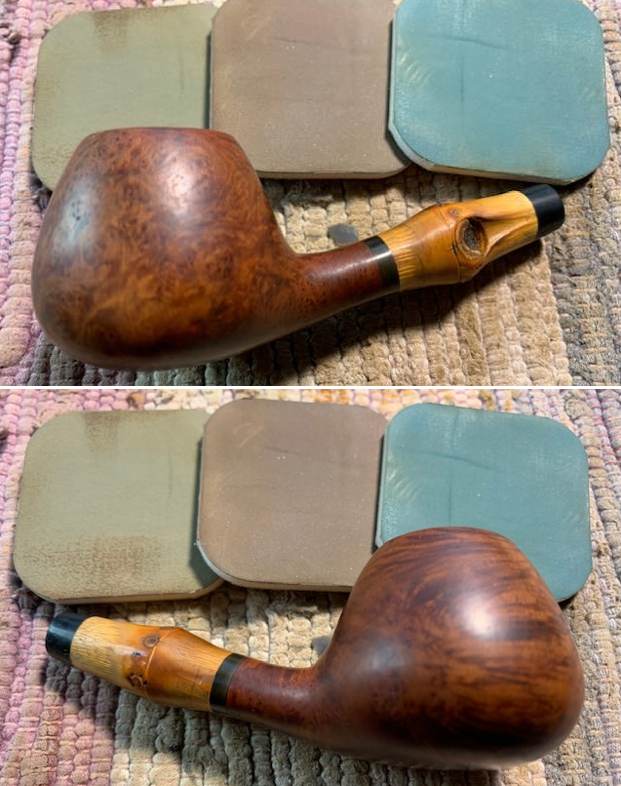
With that it was time to work on the pipe. I went through my cans of stems and found three possibilities. Two of them were short saddle stems and one was a longer taper stem. I tried all three of them and my daughters and I decided to use the tapered longer one. It is similar in shape to several of the ones I saw in the photos of the Pearl on Google. I lightly sanded the shank end of the stem and the tenon and fit it in the shank of the pipe. I took photos of it to give a sense of the look. The fit against the shank is very good. I reshaped the shank end to make the transition between the shank space and the stem smooth with my Dremel and a sanding drum. I need to fine tune the fit but the look is very good.I filled in some pits on the shank end and on the top of the stem surface ahead of the button using black super glue. I also filled in some damaged spots on the shank end of the stem with the glue. I flattened the repaired areas with a flat file to smooth them out and blend them into the surface. I started sanding the surface smooth with 220 grit sandpaper. I heated some water in a coffee mug and dipped the stem into the boiling water to soften it. Once it was pliable I gave it a slight bend to adjust the look of the shank and stem.I had some more sanding to do at the stem shank transition and the repaired area on the topside of the stem near the button but the fit and shape of the pipe and stem was starting to look very nice. I took photos of the pipe at this point in the process. I set the stem aside for awhile and turned my attention to the bowl. I worked over the rim top and edges of the bowl with 220 grit sandpaper. I smoothed out the nicks on the top and edges and reshaped the inner edge. The rim top and edges looked much better at this point.I polished the briar with micromesh sanding pads – dry sanding with 1500-12000 grit pads. After each pad I wiped the bowl down with a damp cloth to remove the sanding debris. It really took on a shine by the last three sanding pads. I rubbed the bowl down with Before & After Restoration Balm. I worked it into the surface of the briar where it works to clean, restore and preserve the briar. I let it do its magic for 15 minutes then buffed it off with a cotton cloth. The pipe looks incredibly good at this point in the process. With that the bowl had come a long way from when I started working on it. I set it aside and turned my attention to the stem. I sanded the stem surface with a folded piece of 220 grit sandpaper to finish removing the scratch a marks. I started the polishing with 400 grit wet dry sandpaper.I continued to polish the stem with micromesh sanding pads – wet sanding with 1500-12000 grit sanding pads. I wiped it down after each sanding pad with Obsidian Oil. I polished it with Before & After Pipe Stem Polish – both Fine and Extra Fine and wiped it down with Obsidian Oil one more time. I am excited to finish the restemming and restoration of this Bari Pearl 7075 Bamboo Shank Brandy. I put the pipe back together and buffed it with Blue Diamond on the buffing wheel. I gave the bowl and the stem multiple coats of carnauba wax. I hand buffed the pipe with a clean buffing pad to raise the shine. It is fun to see what the polished bowl looks like with beautiful mixed grain all around it. The polished grain on the pipe looks great with the black vulcanite stem. This smooth Bari Pearl Bamboo Shank Brandy is great looking and the pipe feels great in my hand. It is light and well balanced. Have a look at it with the photos below. The dimensions are Length: 7 inches, Height: 1 ½ inches, Outside diameter of the bowl: 1 inch, Chamber diameter: ¾ of an inch. The weight of the pipe is 46 grams/ 1.62 ounces. It turned out to be a beautiful pipe. I will be putting it on the rebornpipes store in the Danish Pipemakers Section soon. If you would like to add it to your collection let me know by email or message. Thanks for your time reading this blog and as Paresh says each time – Stay Safe.
Breathing New Life into a Brebbia Collection Hand Carved Pura


Blog by Steve Laug

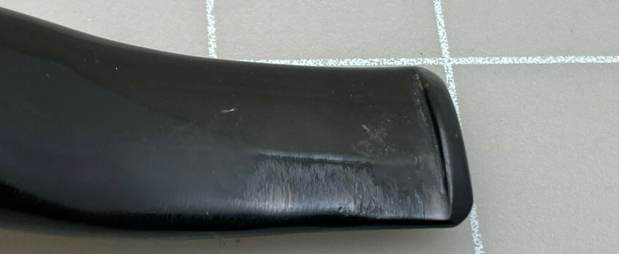
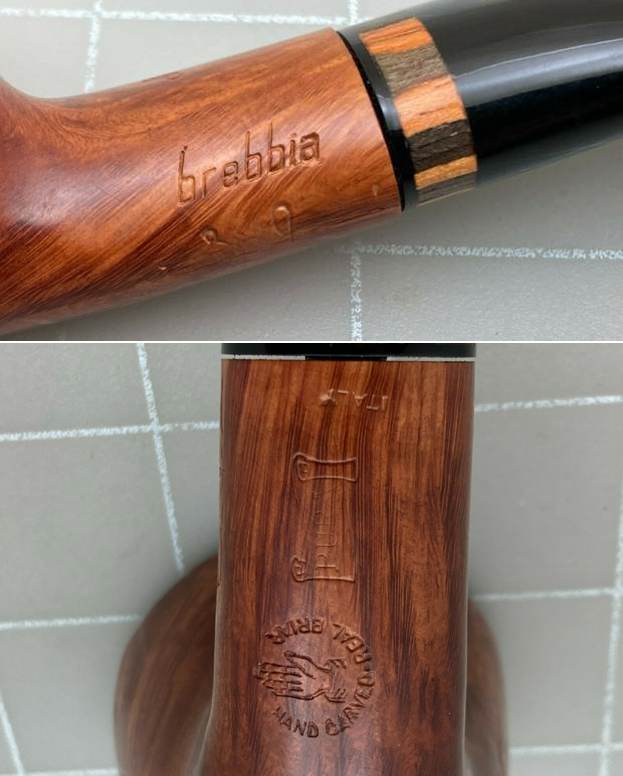
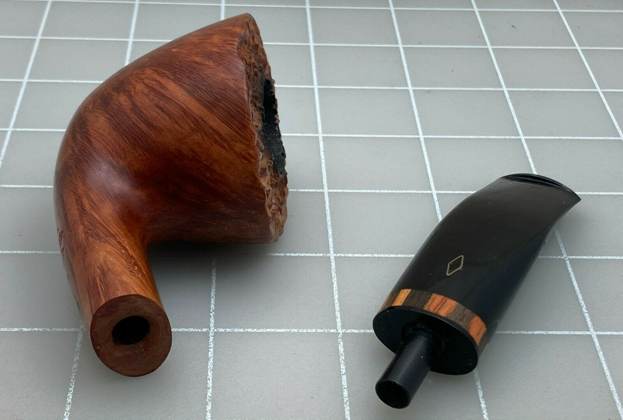
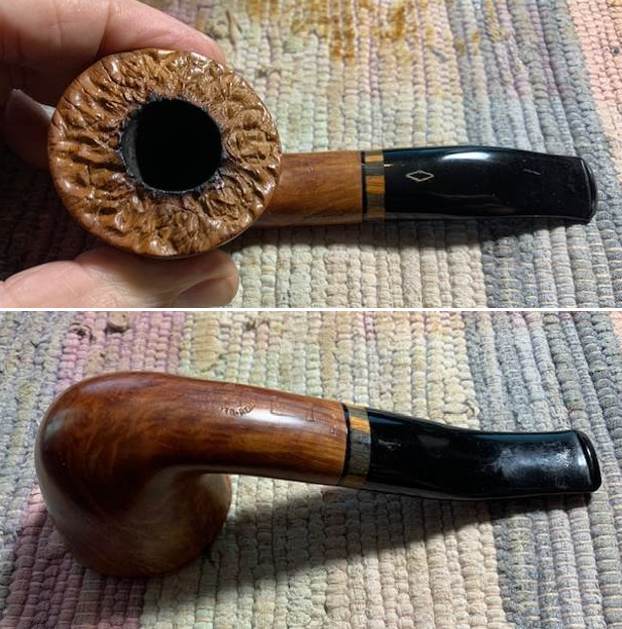
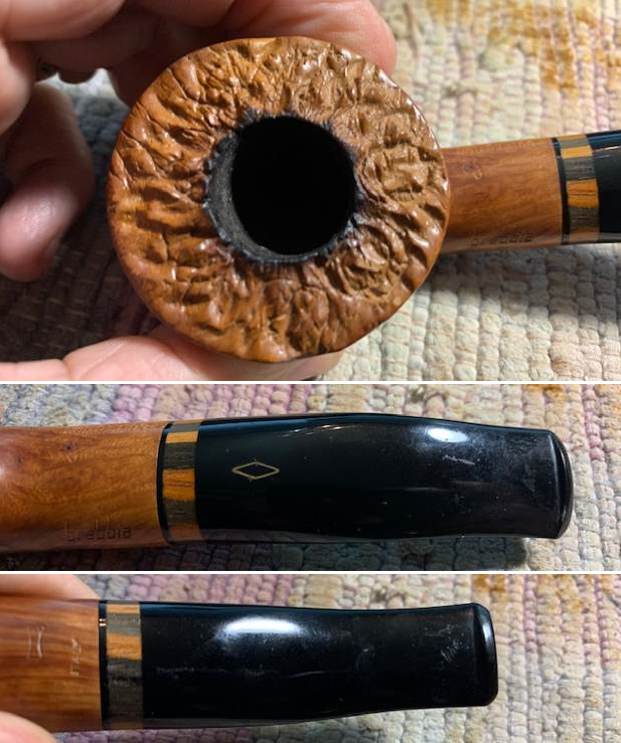
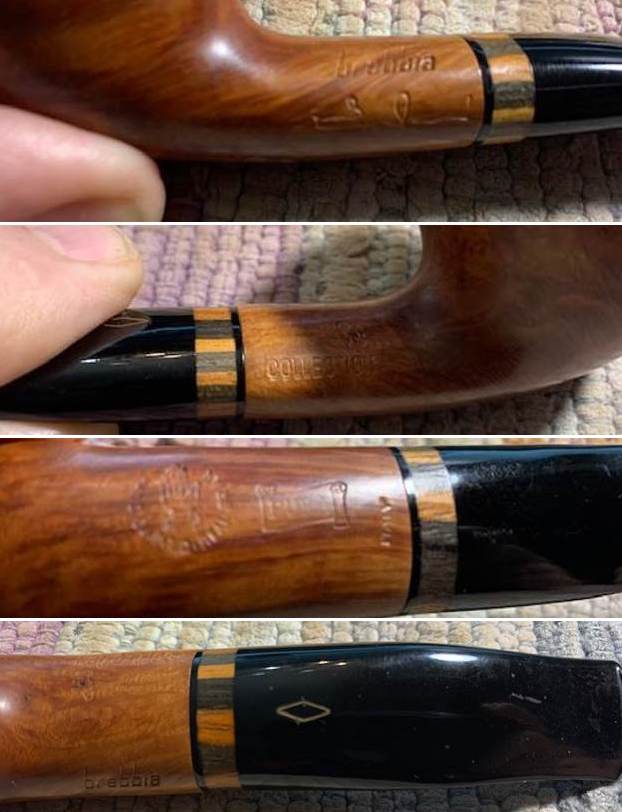
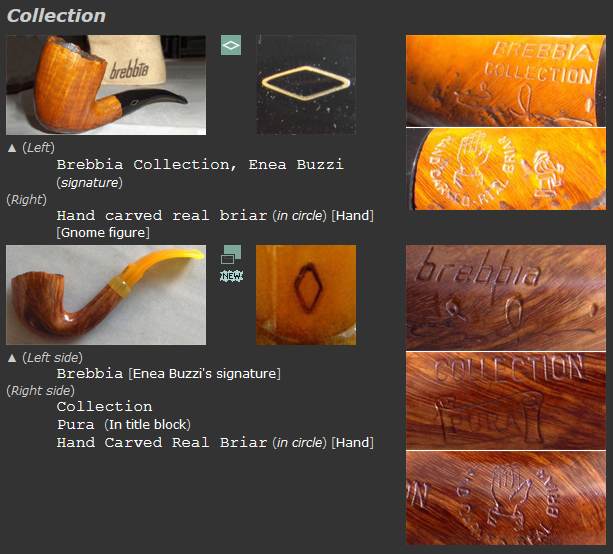
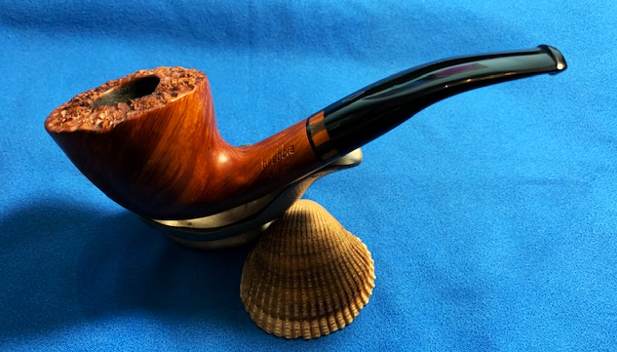
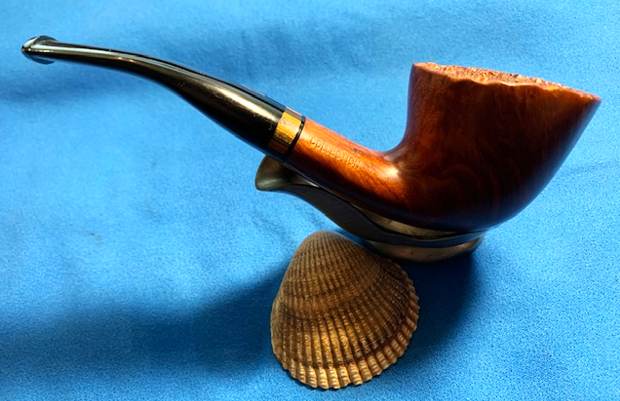
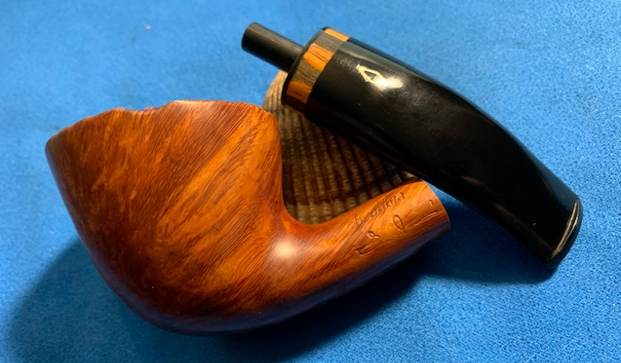
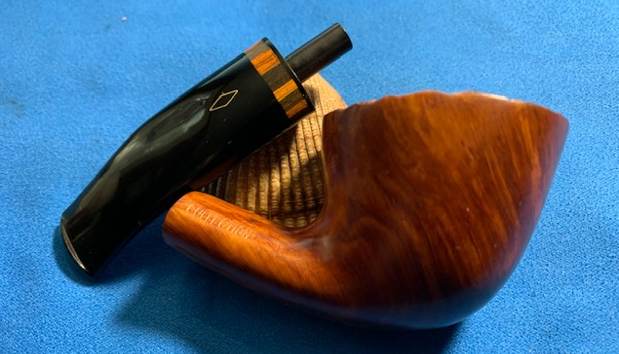
I have sold a few pipes to a fellow in Israel over the past year and he is great to work with. He has great taste in pipes and the ones he has purchased from me have been beautiful. Not long ago I received and email from him about another pipe he was interested in purchasing EBay. He sent me the link and wanted my opinion on it. It was a nice Brebbia Collection “Freehand” with a rim top carved to emulate plateau. I really liked the look and the flowing shape of the pipe and stem. The pipe appeared to be in decent condition. Not too many days after that he wrote me to say he had won it and he had it shipped to me rather than to him in Israel. We chatted back and forth about it via email and I would let him know when I received it. Here are the pictures that the seller included with the advertising.  The seller took a large photo of the rim top to show the condition. You can see the cake in the bowl and darkening on the inner edge. You can also see the faux plateau (carved briar to look like it is plateau when it is not). He also included a photo of the top and underside of the stem the light tooth marks, chatter and scratches. It also has a nice inlay of various woods as a band on the shank end of the stem. He also took photos of the stamping on the sides of the shank. It was readable and will be described once I have the pipe in hand and can examine it.He took the stem off the shank and took a picture of the mortise and the tenon to show the condition of those parts of the pipe. It looked solid.The pipe arrived this week in a well packed box from the seller. When I opened the box I examined the pipe carefully to assess both the condition of the pipe and what I needed to do with it. There was a moderate cake in the bowl with darkening on the inner edge of the rim. The rim top looked quite good. The pipe was stamped on the on the sides the shank and on the left side read Brebbia [over] the signature of Enea Buzzi. On the right side it was stamped Collection. On the underside it has the most stamping and read Hand Carved Real Briar in a circle around a Hand. To the right of that it is stamped PURA in a scroll and then ITALY at the stem shank junction. The finish was dirty but you could see some interesting grain underneath. The stem had the brass Brebbia diamond logo inlay on the top of the taper. The acrylic was dirty and there were tooth marks and chatter on the top and underside. It was going to take some work to clean up but I thought it would work out fairly well. I think the pipe would clean up amazingly well. I took some photos of the pipe before I started my work on it. I have included them below. I took a photo of the bowl and rim top to show the thickness of the cake in the bowl and the darkening on the inner edges of the bowl. The faux plateau looks quite good. I took photos of the stem surface to show the condition and tooth marks and chatter on both sides ahead of the button. I took photos of the stamping on the shank sides. It is readable as noted above and is very clear. I took a photo of the Brebbia brass diamond logo on the stem as well. It is in excellent condition.I removed the stem from the shank and took a photo of the pipe parts. It is really going to be quite a stunning piece.I wanted to know more about this particular model of the company – The Brebba Collection so I turned to Pipephil first for a summary of  information available (http://pipephil.eu/logos/en/logo-brebbia.html). I quote below and also have included a screen capture of the model that was pictured.

The Brebbia brand is named after the locality of Bosco Grosso di Brebbia (Prov. Varese, Reg. Lombardia). A first corporate was founded by Enea Buzzi and Achille Savinelli in 1947. They split in 1953. Buzzi ketp the factory and created the MPB brand (Maniffatura Pipe Brebbia). After 1968 the brand was shortly called “Brebbia”.

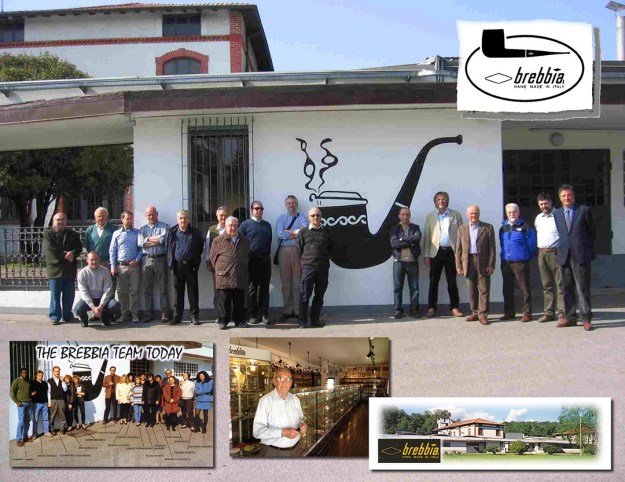
Luciano Buzzi son of Enea manages the company since the 1990s.I turned then to Pipedia for more detail (https://pipedia.org/wiki/Brebbia). I quote from the article on the site. There is some interesting history there. I also have included a photo of the company provided by Doug Valitchka

Pipe Brebbia Srl, or better the M.P.B. (Manifattura Pipe Brebbia) was born in 1953 from the denouement of the association between Achille Savinelli and Enea Buzzi in 1947, where the first was employed in the marketing and the second in manufacturing of pipes under the name of Savinelli. It was made in exclusive up to 1953 and extended without further rights up to 1956.

The production, which is always careful and perfect, has continued in a traditional way for 60 years, using old lathes for the first steps, but finishing every piece by hand.

The secret of their manufacture, if we may put it this way, is the respect for the traditions with the experience acquired in several years of successful work, which could be summed up in two words: high quality.

The factory is currently managed by Enea’s son, Luciano.

For the last few decades, many of Brebbia’s pipes have been made by a number of small, otherwise independent pipe manufacturers, being marketed under the trade name Brebbia. For the northern European market, 9mm filter pipes are being produced, some of which employ VAUEN‘s Konex system (which ensures a good seat of the filter).

Courtesy of Doug Valitchka

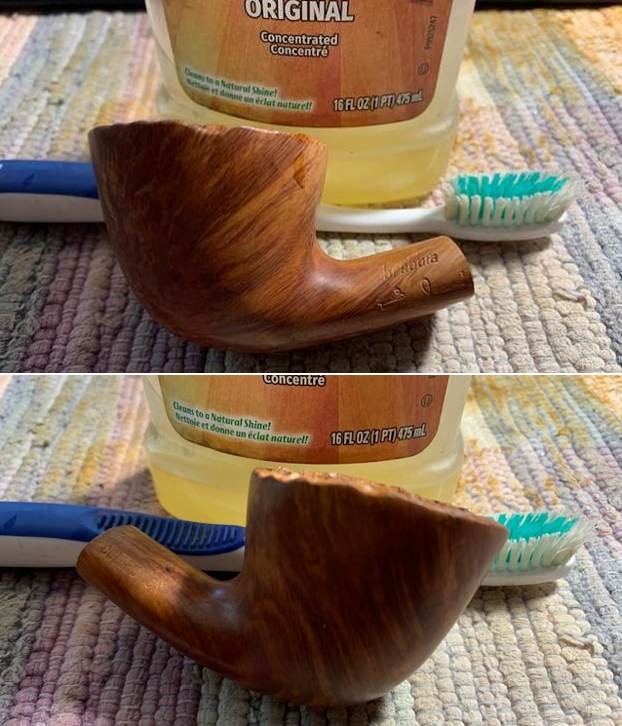
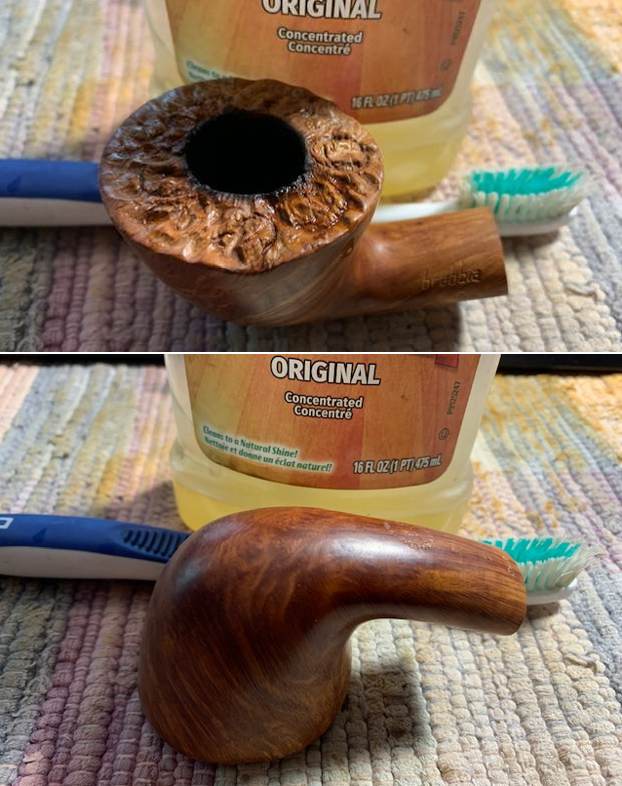
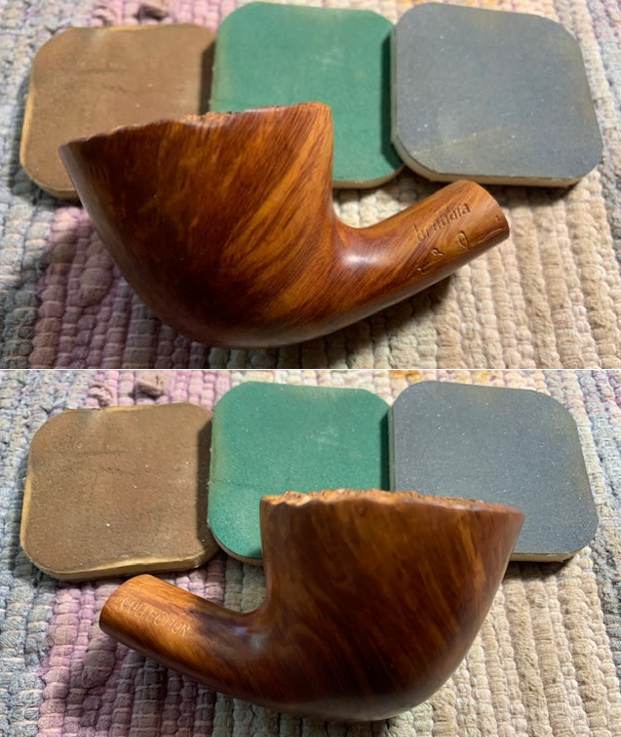
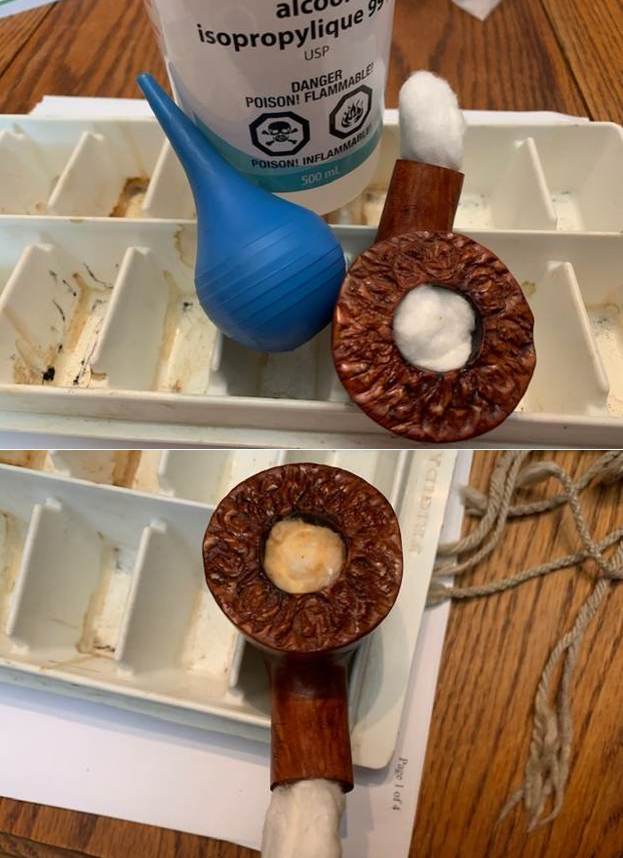
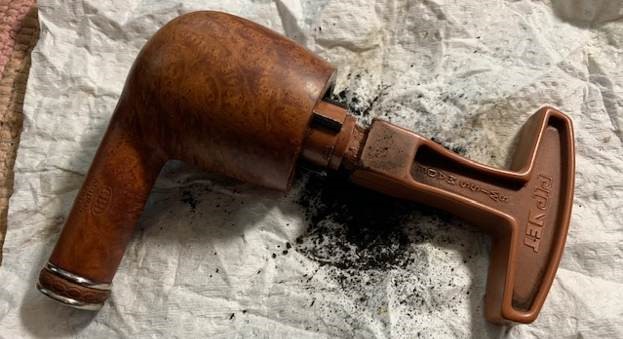
I reamed the bowl with a PipNet pipe reamer and took the cake back to bare walls. I cleaned up the reaming with a Savinelli Fitsall Pipe Knife. I sanded the bowl walls with 220 grit sandpaper wrapped around a piece of dowel. I examined the walls with a lens and they were solid and undamaged. I scraped out the tars and oils in the shank/mortise with a thin pen knife to get rid of the build up on the walls. I cleaned out the airway in the shank and the stem as well as the mortise with isopropyl alcohol, cotton swabs and pipe cleaners. It was quite dirty and now smells much better. I scrubbed the exterior of the bowl with Murphy’s Oil Soap and a tooth brush to remove the grime from the finish of the bowl and rim top. I rinsed off the bowl with warm water and then dried the bowl with a cotton cloth. The grain that came to the surface once it was clean is quite stunning. I worked over the darkening on the inside edge of the bowl and the rim top with a folded piece of 220 grit sandpaper. It began to look a lot better.I polished the briar with micromesh sanding pads – dry sanding with 1500-12000 grit pads. After each pad I wiped the bowl down with a damp cloth to remove the sanding debris. It really took on a shine by the last three sanding pads. To remove the heavy Latakia smell I stuffed the bowl with cotton bolls and filled it with 99% isopropyl alcohol. I put a cotton boll plug in the shank and set it aside to do its work. In the morning you can see that it had pull a lot of the oils out of the briar. I removed the plug and cleaned the shank one more time. The pipe smells fresh.I rubbed the bowl down with Before & After Restoration Balm. I worked it into the surface of the briar where it works to clean, restore and preserve the briar. I let it do its magic for 15 minutes then buffed it off with a cotton cloth. The pipe looks incredibly good at this point in the process. With that the bowl had come a long way from when I started working on it. I set it aside and turned my attention to the stem. I continued to polish the stem with micromesh sanding pads – wet sanding with 1500-12000 grit sanding pads. I wiped it down after each sanding pad with Obsidian Oil. I polished it with Before & After Pipe Stem Polish – both Fine and Extra Fine and wiped it down with Obsidian Oil one more time. I am excited to finish this Brebbia Enea Buzzi Collection Pura Freehand. I put the pipe back together and buffed it with Blue Diamond on the buffing wheel. I gave the bowl and the stem multiple coats of carnauba wax. I hand buffed the pipe with a clean buffing pad to raise the shine. It is fun to see what the polished bowl looks like with beautiful mixed grain all around it. The polished grain on the pipe looks great with the black vulcanite stem. This smooth Hand Carved Enea Buzzi Brebbia Collection is great looking and the pipe feels great in my hand. It is light and well balanced. Have a look at it with the photos below. The dimensions are Length: 5 ¾ inches, Height: 1 ¾ inches, Outside diameter of the bowl: 2 inches, Chamber diameter: ¾ of an inch. The weight of the pipe is 58 grams/2.05 ounces. It turned out to be a beautiful pipe. I will be packing it up and sending it to my friend in Israel. I think he will enjoy this beauty once it is in his hands. Thanks for your time reading this blog and as Paresh says each time – Stay Safe.
Breathing Life into a GBD Autumn Gold 1260 Billiard


Blog by Steve Laug

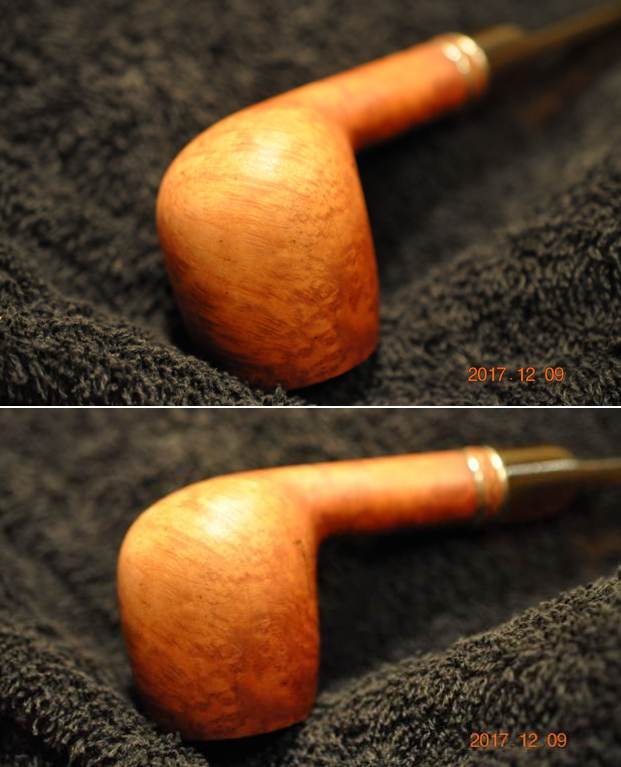
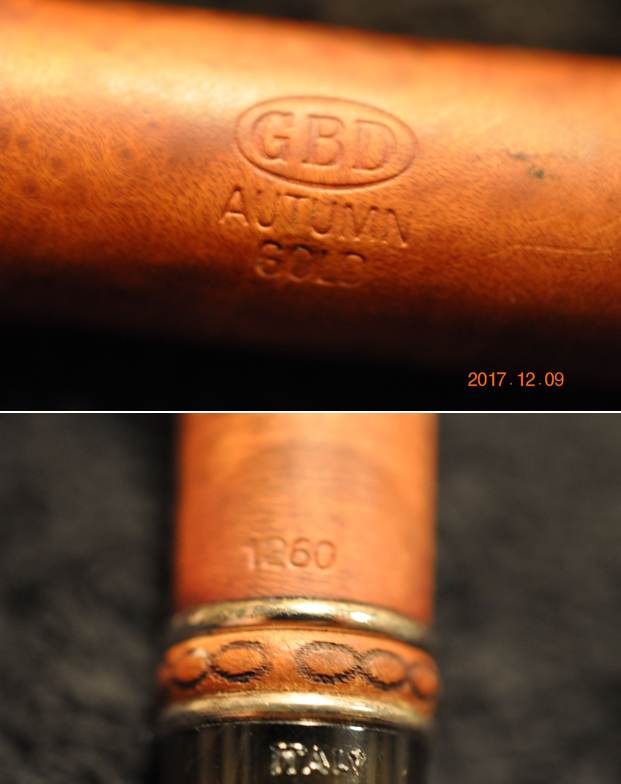
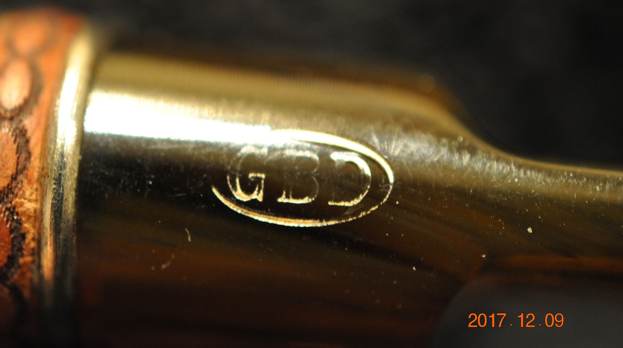
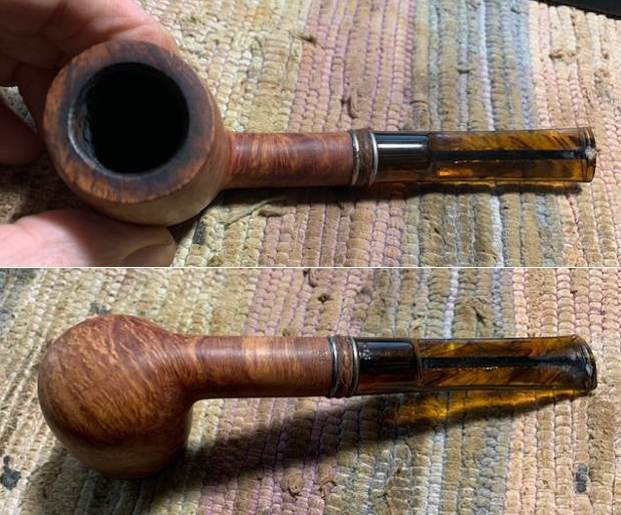
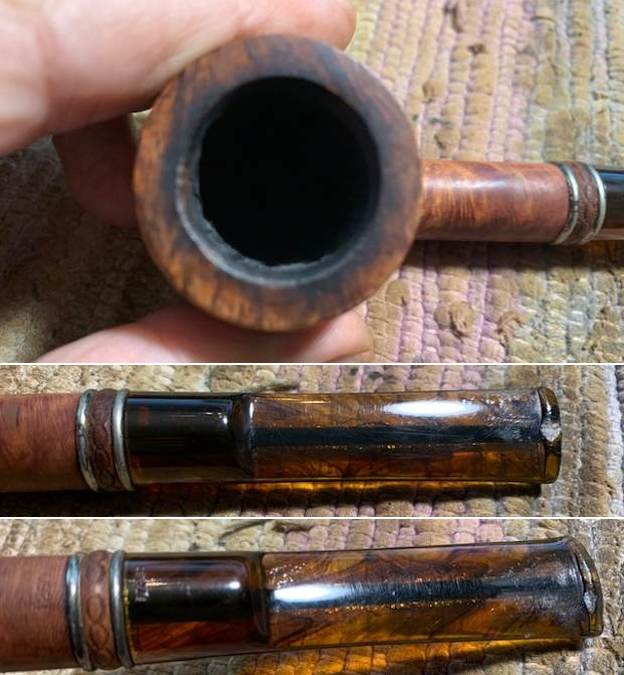
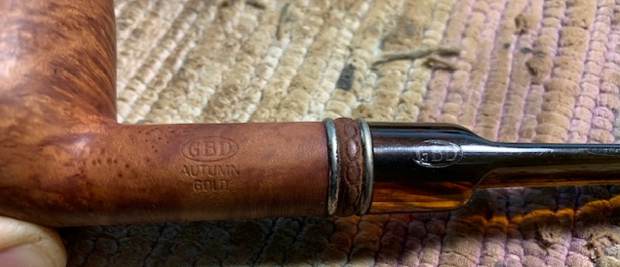
The next pipe on the work table came to us from EBay on 11/25/2017 from Omaha, Nebraska, USA. The pipe is a classic newer GBD Billiard shaped pipe with an intricate three layer band on the shank. It has a rope like carving in briar sandwiched between two brass bands. The pipe is stamped on the left side of the shank and reads GBD in an oval [over] Autumn [over] Gold. On the underside of the shank it is stamped with the shape number 1260. On the underside of the stem it is stamped Italy. There was a lot of grime ground into the finish on the briar. The bowl was heavily caked with a thick overflow of lava on smooth rim top and inner edge of the rim. The inside and outer edges looked to be in good condition. The saddle stem was amber acrylic and was dirty and the  stamped GBD logo was worn. It had tooth chatter and deep tooth marks on the top and underside near and on the button. It had promise but it was very dirty. Jeff took some photos of the pipe before he started his cleanup work. He took photos of the rim top and bowl to give a clear picture of the thickness of the cake and tobacco debris as well as the thick lava on the smooth rim top. He also took photos of the top and underside of the stem to show the heavy chatter and deep tooth marks. Jeff took photos of the sides and the heel of the bowl to give a sense of what the briar looked like. The finish quite light and under the obscuring dirtiness of the bowl you can see some nice grain peeking through.   The stamping on the left and underside of the shank is clear and readable as noted above.   I turned to Pipephil and there was nothing listed for the Autumn Gold model of GBD pipes. I was a little disappointed but have gotten used to that for some the newer GBDs. I have hit the wall in the search for information many times on these.

I turned then to Pipedia to see if I could find anything. On the main page there was a great summary of the history of the brand lots of information on the more known models. There was a short reference under the section labelled Current GBD Production that referred to the Autumn Gold Model (https://pipedia.org/wiki/GBD#Current_Production). I quote below:

Current GBD website. GBD is now made by Cadogan, who also make Comoy of London, Dr. Plumb’s Perfect Pipes, BBB, and Orlik Pipes. [3]. Since the merger in 1981 with Comoys, GBD pipes are not considered to be of the quality they were under the original companies. Metal rondelles were discontinued after the merger with Comoy. The brass rondell made a reappearance on new production GBD’s. The new lines are Autumn Gold, Bermuda, Facet, Pub and CW (Churchwarden).

At the bottom of the listing on Pipedia there was a link to a section on the various models so I clicked on the link (https://pipedia.org/wiki/GBD_Model_Information) and finally found something. At the bottom of the listing of models of GBD pipes there was a list of GBD seconds. I have included the first three models listed there below. The third model down in the list is the Autumn Gold. That was the extent of information that I could find.

List of GBD “Seconds”

The lines listed below are either 2nds or lines made for other makers/pipeshops. Please send me any corrections or additional information you might have on these.

  • Americana — Factory unknown: –
  • Arizona — Factory unknown: –
  • Autumn Gold — Factory unknown: –  …

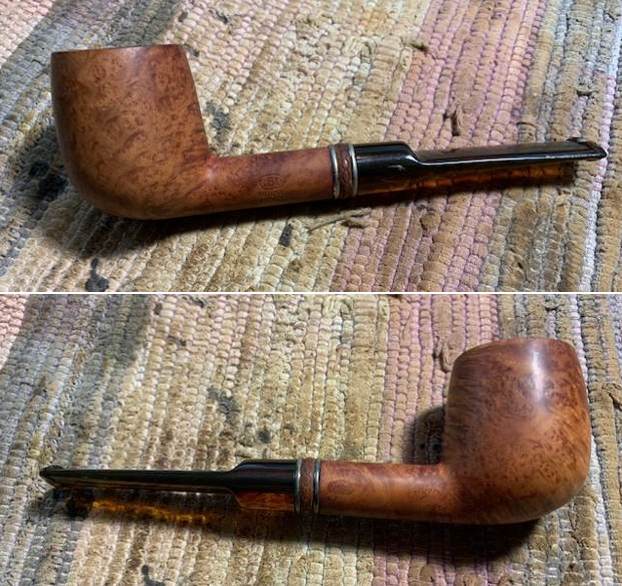
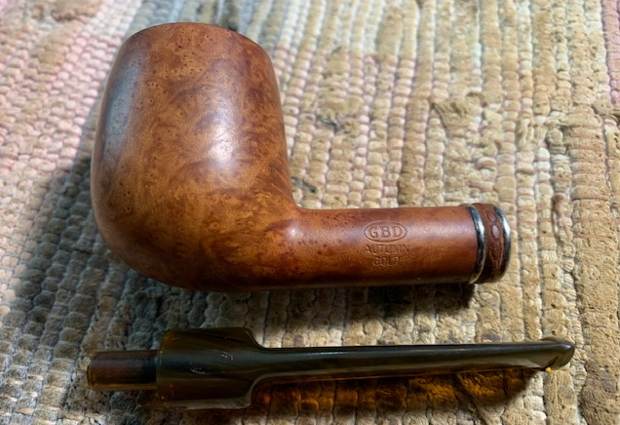
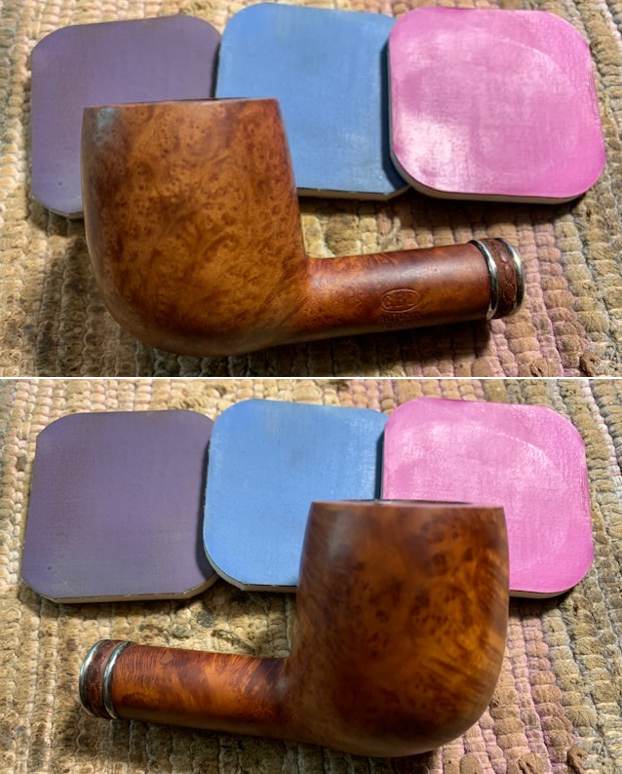
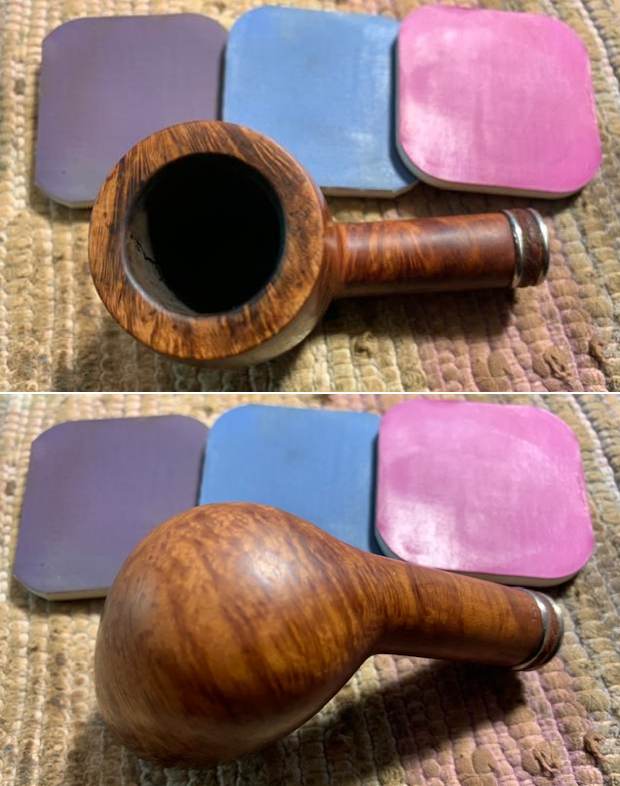
Armed with that information that I was working on a Cadogan era GBD pipe (made after 1981) I turned to work on the pipe itself.  Jeff had cleaned up the pipe with his usual penchant for thoroughness. He reamed the pipe with a PipNet pipe reamer and removed the rest of it with a Savinelli Fitsall Pipe Knife.  He scrubbed the bowl with undiluted Murphy’s Oil Soap with a tooth brush. He rinsed it under running warm water to remove the soap and grime. He cleaned out the inside of the shank and the airway in the stem with alcohol, cotton swabs and pipe cleaners. He scrubbed the stem with Soft Scrub and a tooth brush and rinsed it off with warm water. I took photos of the pipe before I started my part of the restoration work.   The rim top cleaned up quite well but there was a lot of darkening on the rim top and there was damage on the front inner edge of the bowl. There was some checking on the inner walls of the bowl that I would investigate further in the clean up process. The outer edge of the bowl looks good. The amber acrylic stem had some deep tooth marks on the button surface and on the stem ahead of the button as well. There was a lot of chatter on both sides near the button. The stamping on sides of the shank is clear and readable as noted above. I captured the stamping on the left side but forgot to take a photo of the shape number on the underside.   I removed the stem and took a photo of the pipe to give a sense of the whole. It is another proportionally pleasing pipe.I started my work on the pipe by addressing the the darkening on the rim top and inner edge with a folded piece of 220 grit sandpaper. Once I had finished it looked better.    I polished the smooth rim and shank top with micromesh sanding pads – dry sanding with 1500-12000 grit pads. I wiped the bowl down with a damp cloth after each pad to remove the debris.   I noticed that I had not addressed the checking on the bowl walls at this point and it shows up in the above photos quite clearly. I set aside the polishing for a bit and worked over the bowl walls. I used a PipNet Reamer to cut back the remaining cake in the bowl. I took it back to bare briar. I followed that with scraping out the remnants with a Savinelli Fitsall Pipe Knife. I sanded the inside of the bowl with a dowel wrapped in 220 grit sandpaper and was able to smooth out the damage. Though there were still some check spots the overall condition of the bowl was certainly much better than it looked prior to this. With the checking addressed and the little that remains cleaned up, I turned back to polishing the bowl with the last three micromesh sanding pads. The bowl had taken on a deep shine. The bowl and rim looked very good so I rubbed it down with Before & After Restoration Balm. I worked it into the surface of the bowl sides and shank with my fingertips to clean, enliven and protect the briar. I let the balm sit for about 10-15 minutes and buffed with a cotton cloth to raise the shine.    I set the bowl aside and turned to work on the stem. I filled them in with clear super glue and set the stem aside to let the repairs cure. Once they had cured I used a small file to flatten them and start blending them into the surface of the stem.  I sanded the repaired areas with 220 grit sandpaper to blend them into the surface of the vulcanite. I started polishing it with 400 grit wet dry sandpaper.     I polished the stem with micromesh sanding pads – 1500-12000 grit pads. I wiped it down with Obsidian Oil after each sanding pad. I used Before & After Pipe Polish – both Fine and Extra Fine to further polish the stem.   I touched up the faint GBD Oval stamp on the left side of the saddle stem with Rub’n Buff Antique Gold. I worked it into the remaining stamp with a tooth pick and buffed it off with a soft pad. It is better but still faint.This Cadogan Era GBD Autumn Gold 1260 Amber Acrylic Stem Billiard is a great looking pipe now that it has been restored. The golden stain on the briar highlights the grain around the bowl and shank. It works well with both the shape and the polished amber acrylic saddle stem. I put the stem back on the bowl and carefully buffed the pipe with Blue Diamond on the buffing wheel using a light touch on the briar. I gave the bowl and the stem multiple coats of carnauba wax on the buffing wheel and followed that by buffing the entire pipe with a clean buffing pad. I hand buffed the pipe with a microfiber cloth to deepen the shine. The finished GBD Autumn Gold Billiard is another pipe that fits nicely in the hand and feels great. Give the finished pipe a look in the photos below. The dimensions of the pipe are Length: 6 inches, Height: 1 ¾ inches, Outside diameter of the bowl: 1 ¼ inches, Chamber diameter: 7/8 of an inch. The weight of the pipe is 50 grams/1.76 ounces.  I will be putting it on the rebornpipes store in the British Pipemakers Section shortly. If you are interested in adding this pipe to your collection send me a message or an email. Thanks for reading this blog and my reflections on the pipe while I worked on it. There are many more to come!

Breathing Life into a Craftsman Custom-Made Imported Briar Bullmoose


Blog by Steve Laug

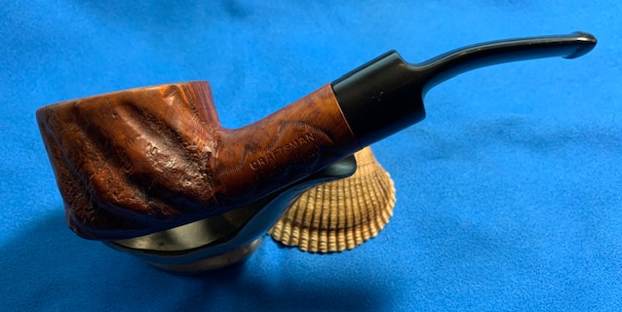
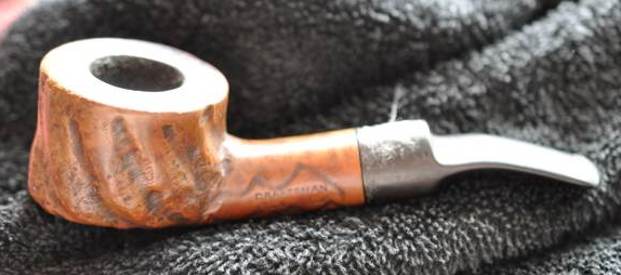
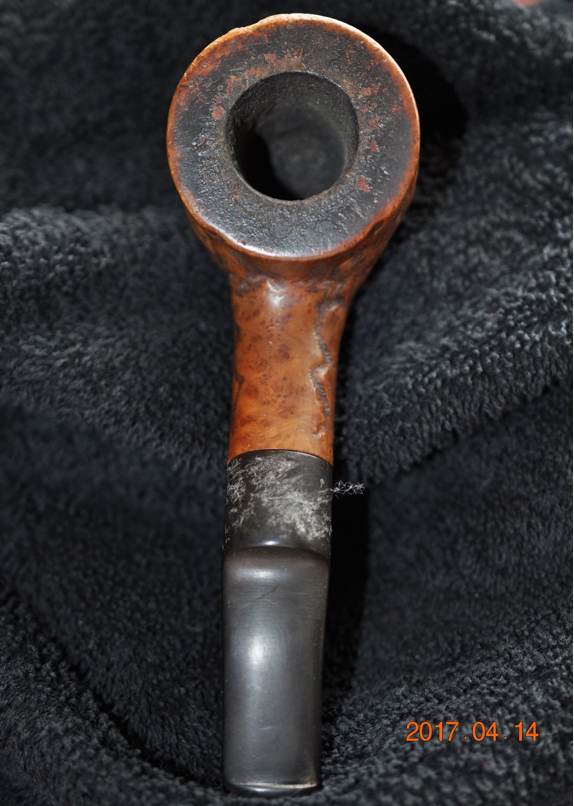
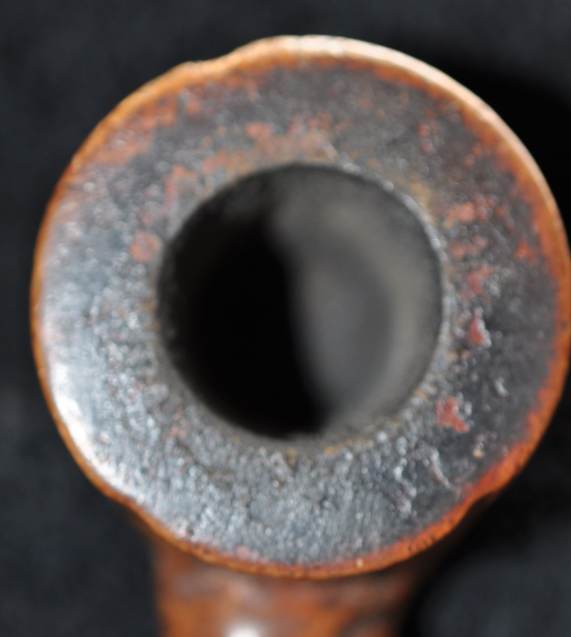
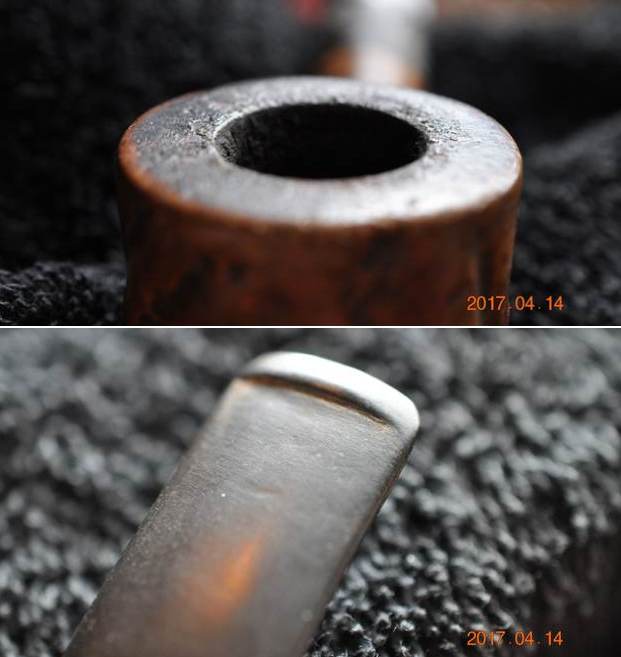
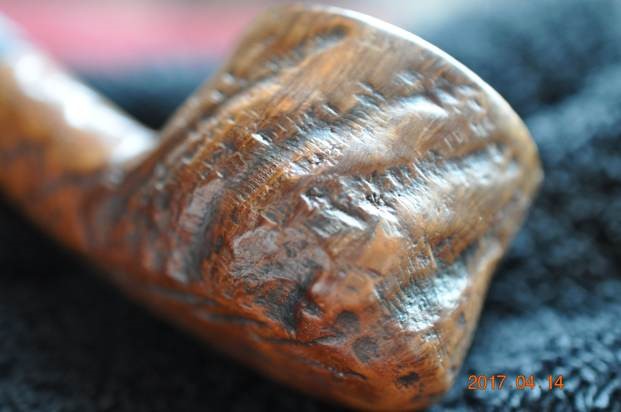
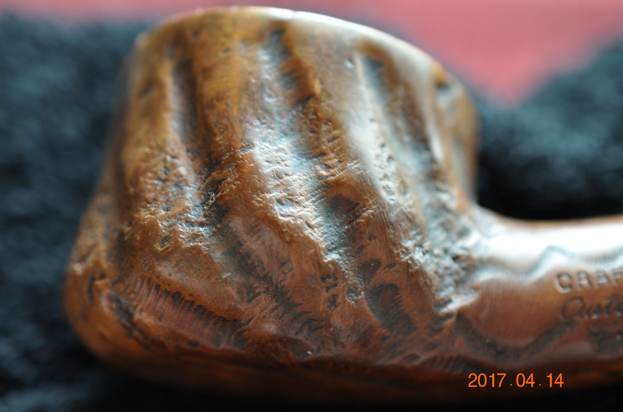
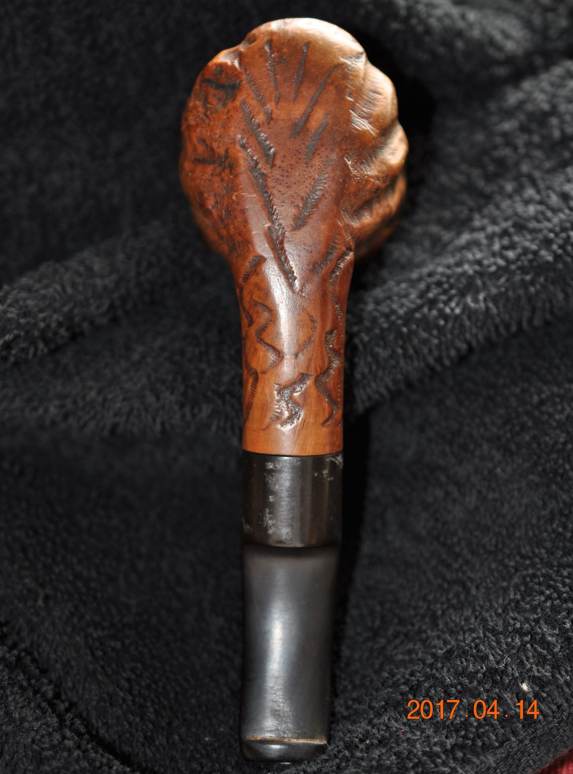
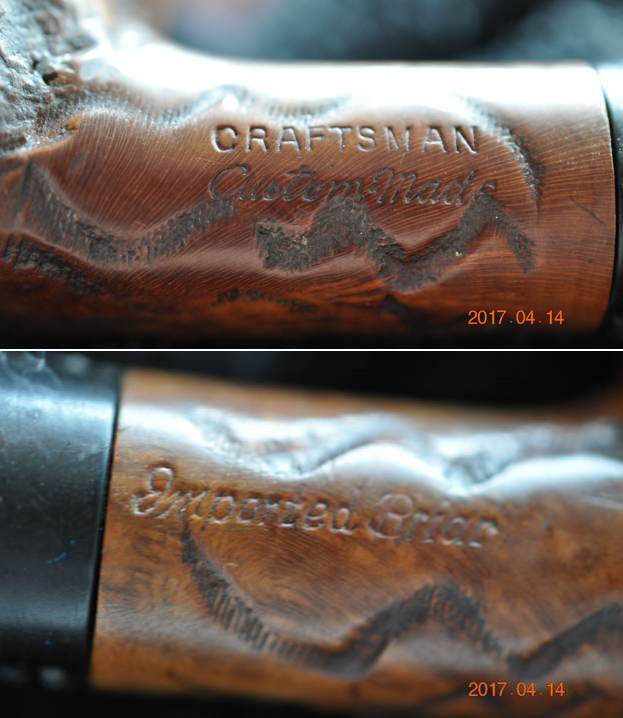
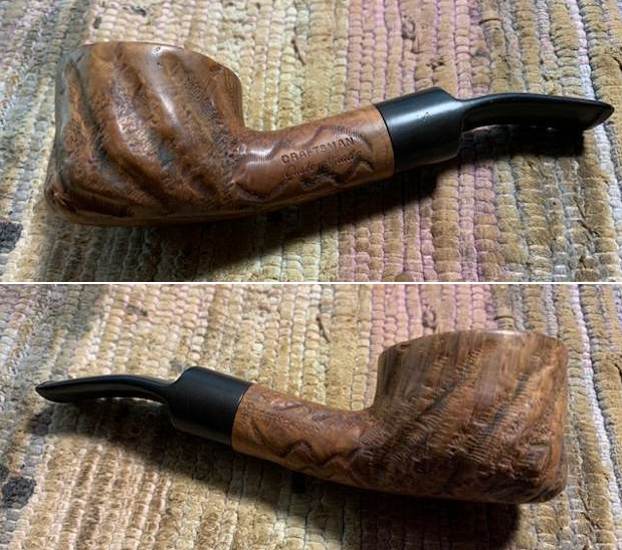
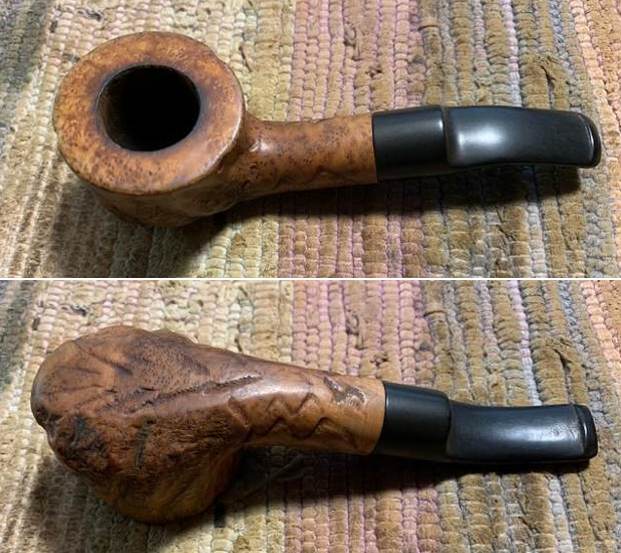
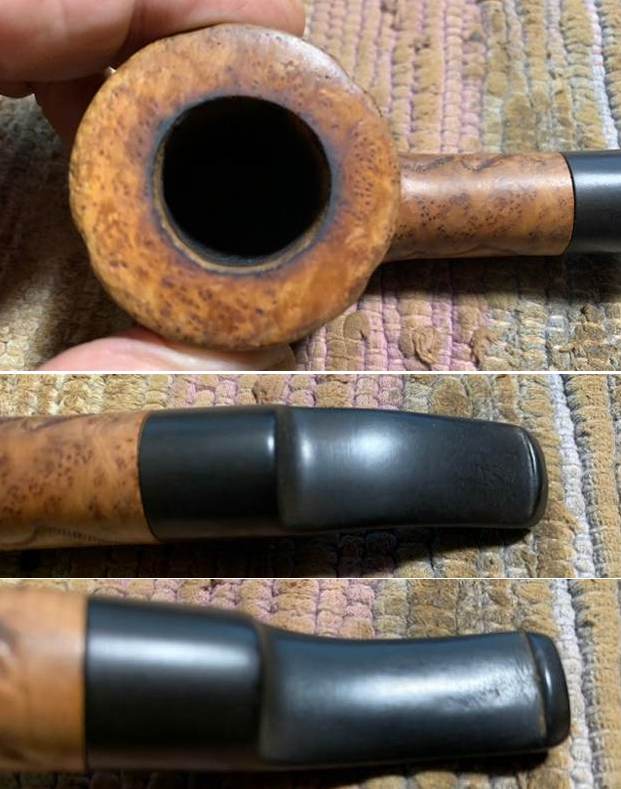
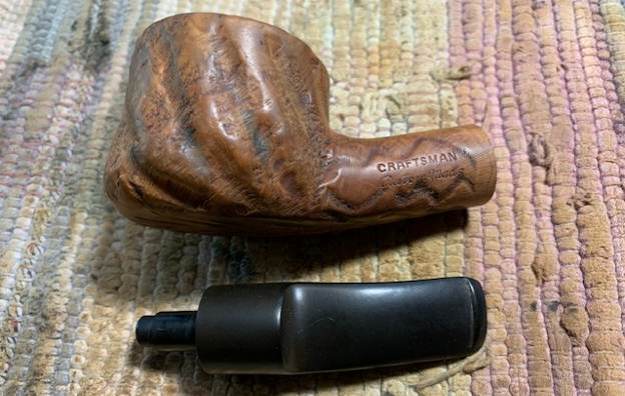
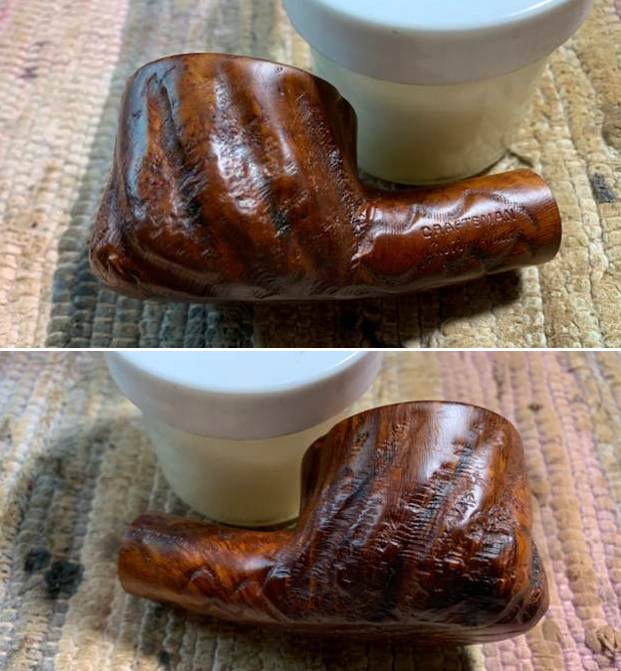
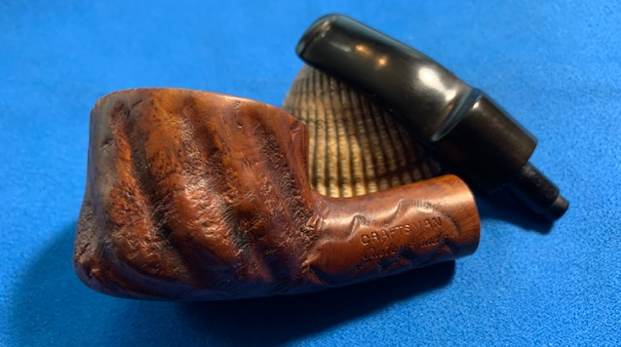
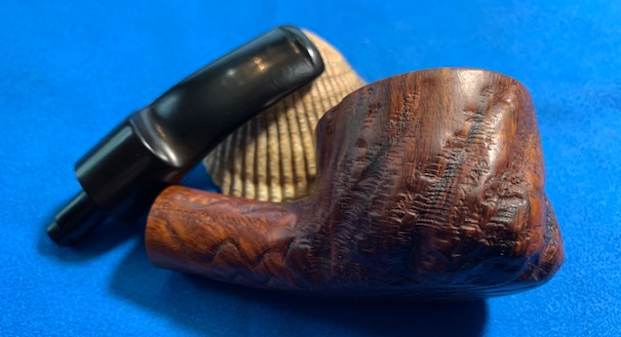
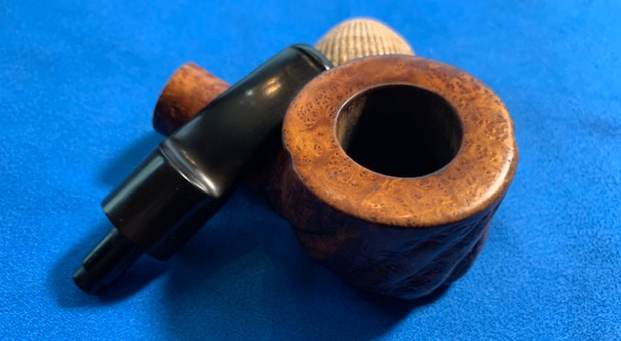
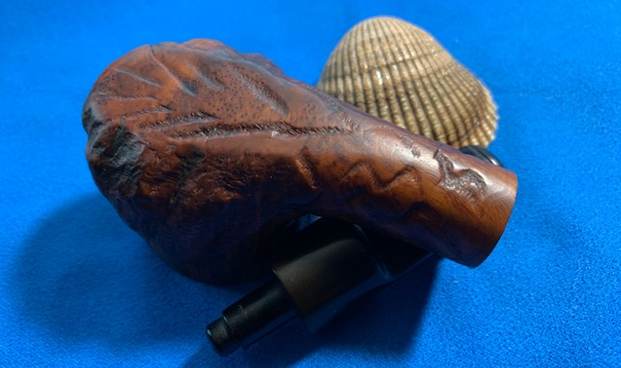
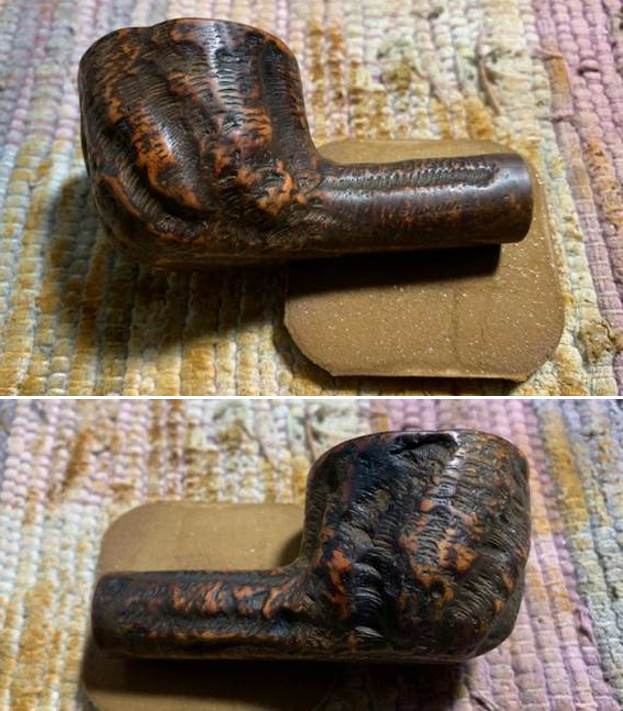
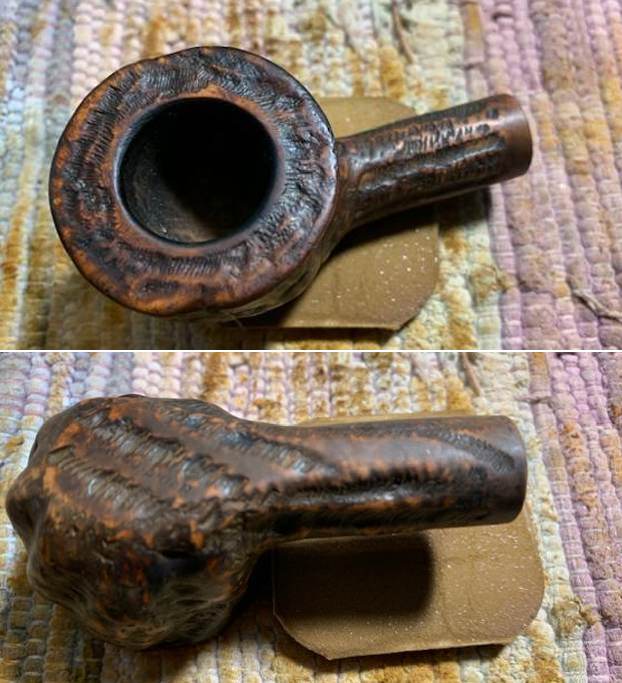
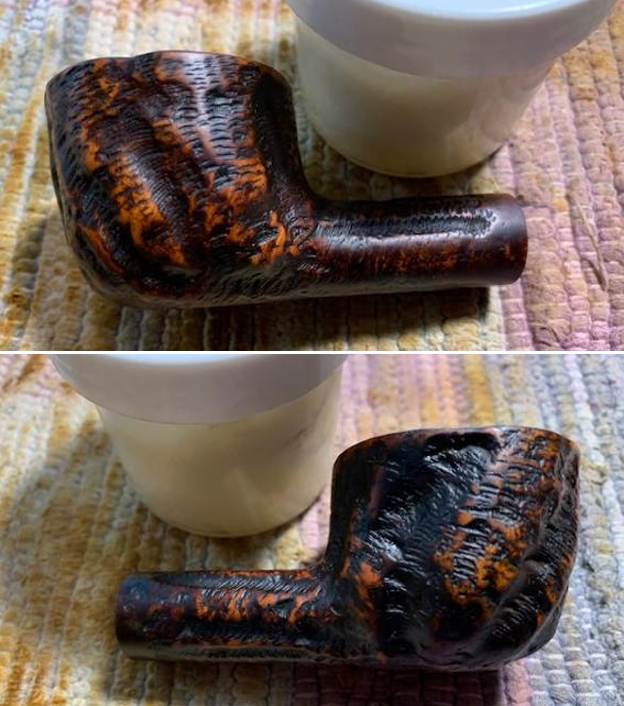
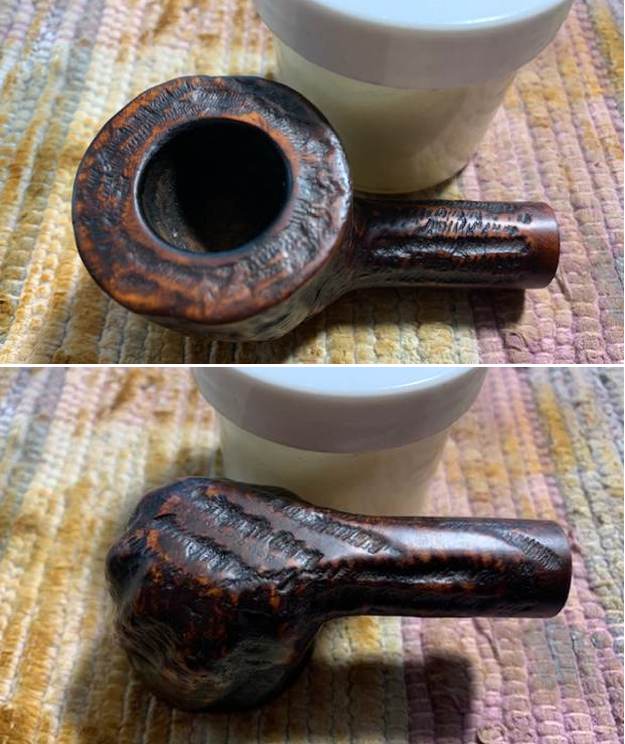
The next pipe on the work table came to us on 04/08/2017 from an antique shop in Stevensville, Montana, USA. The pipe is a classic Custom-Bilt look to it – a rusticated Bullmoose shaped pipe with some deep carving around the bowl. The pipe is stamped on the left side of the shank and reads Craftsman [over] Custom-Made. On the right side it is stamped Imported Briar. There was a lot of grime ground into the smooth and rusticated portions of the finish on the briar. The bowl was heavily caked with a heavy overflow of lava on smooth rim top and inner edge of the rim. The inside edges looked to be in good condition. The outer edge had some marks as well on the right front of the bowl. The stem was dirty and oxidized. There was a cotton fuzz on the saddle portion that was stuck to the vulcanite. It had tooth chatter and marks on the top and underside near the button. There was a remnant of a star shaped logo on the left side of the saddle stem. It had promise but it was very dirty. Jeff took some photos of the pipe before he started his cleanup work. He took photos of the rim top and bowl to give a clear picture of the thickness of the cake and tobacco debris as well as the thick lava on the smooth rim top. He also took photos of the top and underside of the stem to show the light oxidation and the chatter and tooth marks. Jeff took a photo of the sides and the heel of the bowl to give a sense of what the briar looked like. The rustication pattern around the bowl is similar to that done by Custom-Bilt. The stamping on the left and right side of the shank is clear and readable and read as noted above.   I turned to Pipephil and Pipedia for information and there was nothing listed for this brand on either site. I found a few of them listed on Smoking Pipes site but there was not any information on the maker of the pipe. So this one is a bit of a mystery.

Armed with that information I turned to work on the pipe itself.  Jeff had cleaned up the pipe with his usual penchant for thoroughness. He reamed the pipe with a PipNet pipe reamer and removed the rest of it with a Savinelli Fitsall Pipe Knife.  He scrubbed the bowl with undiluted Murphy’s Oil Soap with a tooth brush. He rinsed it under running warm water to remove the soap and grime. He cleaned out the inside of the shank and the airway in the stem with alcohol, cotton swabs and pipe cleaners. He scrubbed the stem with Soft Scrub and a tooth brush and rinsed it off with warm water. I took photos of the pipe before I started my part of the restoration work.   The rim top cleaned up really well. The inner edge had some darkening and wear that would need to be addressed. The outer edge of the bowl looks good. The stem surface looked good with a few small tooth marks and chatter on both sides near the button. The stamping on sides of the shank is clear and readable as noted above.    I removed the stem and took a photo of the pipe to give a sense of the whole. It is another proportionally pleasing pipe. I started my work on the pipe by addressing the the darkening on the rim top and inner edge and smoothing out the roughness on the outer edge on the right front with a folded piece of 220 grit sandpaper. Once I had finished it looked better.    I polished the smooth rim and shank top with micromesh sanding pads – dry sanding with 1500-12000 grit pads. I wiped the bowl down with a damp cloth after each pad to remove the debris.    The bowl and rim looked very good so I rubbed it down with Before & After Restoration Balm. I worked it into the surface of the bowl sides and shank with my fingertips and a horsehair shoe brush to clean, enliven and protect the briar. I let the balm sit for about 10-15 minutes and buffed with a cotton cloth to raise the shine.  I set the bowl aside and turned to work on the stem. I “painted” the stem surface with the flame of a Bic lighter. I was able to raise most of the marks but a few remained on both sides. I filled them in with black super glue and set the stem aside to let the repairs cure. Once they had cured I used a small file to flatten them and start blending them into the surface of the stem. I sanded the repaired areas with 220 grit sandpaper to blend them into the surface of the vulcanite. I started polishing it with 400 grit wet dry sandpaper.  I polished the vulcanite stem with micromesh sanding pads – 1500-12000 grit pads. I wiped it down with Obsidian Oil after each sanding pad. I used Before & After Pipe Polish – both Fine and Extra Fine to further polish the stem.    This Craftsman Custom-Made Bullmoose is a great looking pipe now that it has been restored. The style of rustication that is used around the bowl highlights the grain that pokes through on the smooth rim and shank. It works well with both the shape and the polished vulcanite saddle stem. I put the stem back on the bowl and carefully buffed the pipe with Blue Diamond on the buffing wheel using a light touch on the briar. I gave the bowl multiple coats of Conservator’s Wax and the stem multiple coats of carnauba wax on the buffing wheel and followed that by buffing the entire pipe with a clean buffing pad. I hand buffed the pipe with a microfiber cloth to deepen the shine. The finished Craftsman Custom-Made Bullmoose is another pipe that fits nicely in the hand and feels great. Give the finished pipe a look in the photos below. The dimensions of the pipe are Length: 5 ½ inches, Height: 1 ½ inches, Outside diameter of the bowl: 1 ¾ inches, Chamber diameter: 7/8 of an inch. The weight of the pipe is 47g/1.66oz.  I will be putting it on the rebornpipes store in the American Pipemakers Section shortly. If you are interested in adding this pipe to your collection send me a message or an email. Thanks for reading this blog and my reflections on the pipe while I worked on it. There are many more to come!

New Life for a Very English Looking “Malaga” Imported Briar Canadian


Blog by Steve Laug

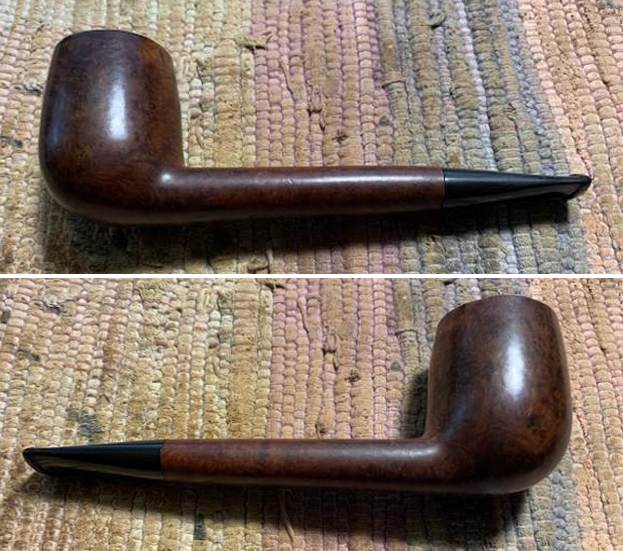
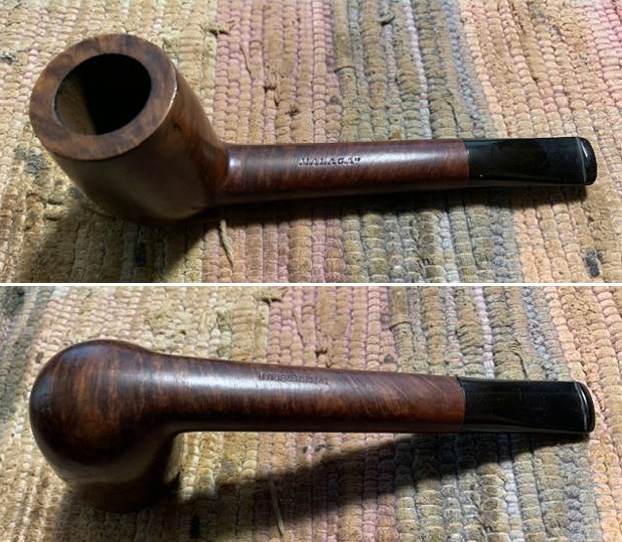
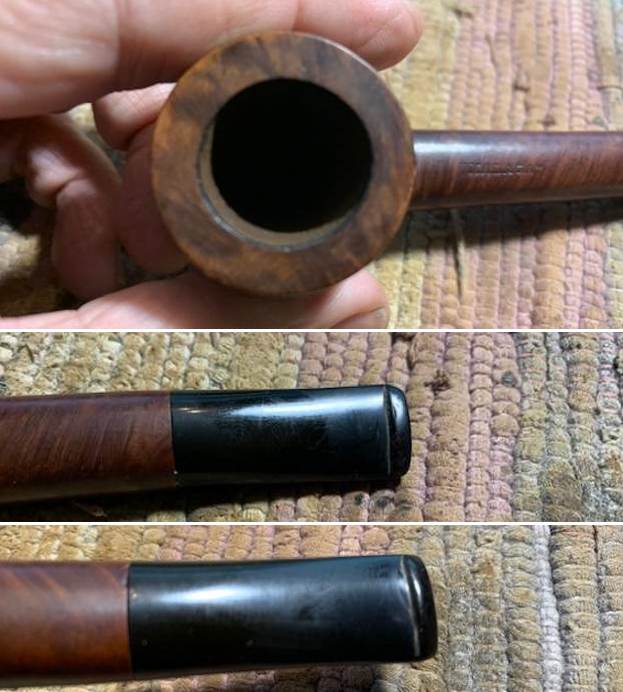
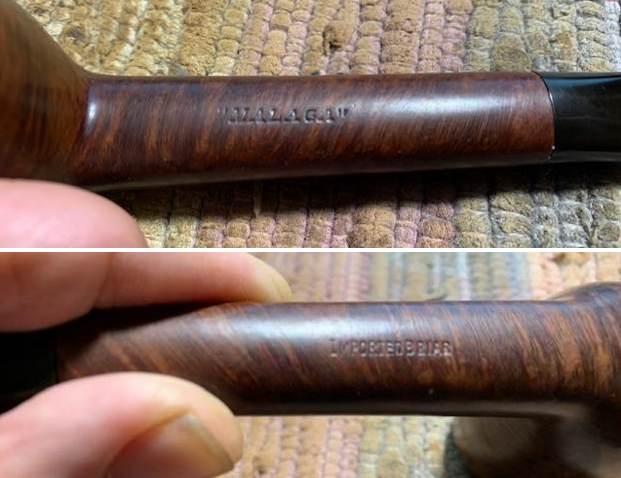
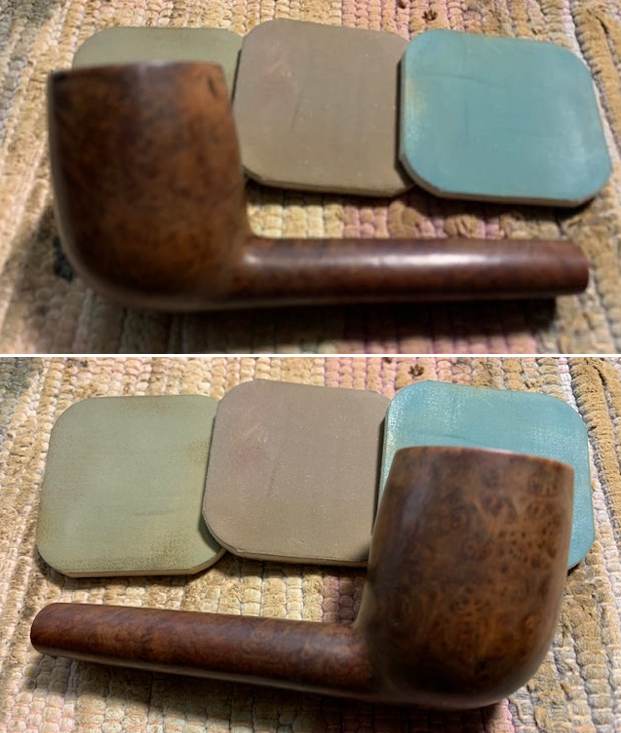
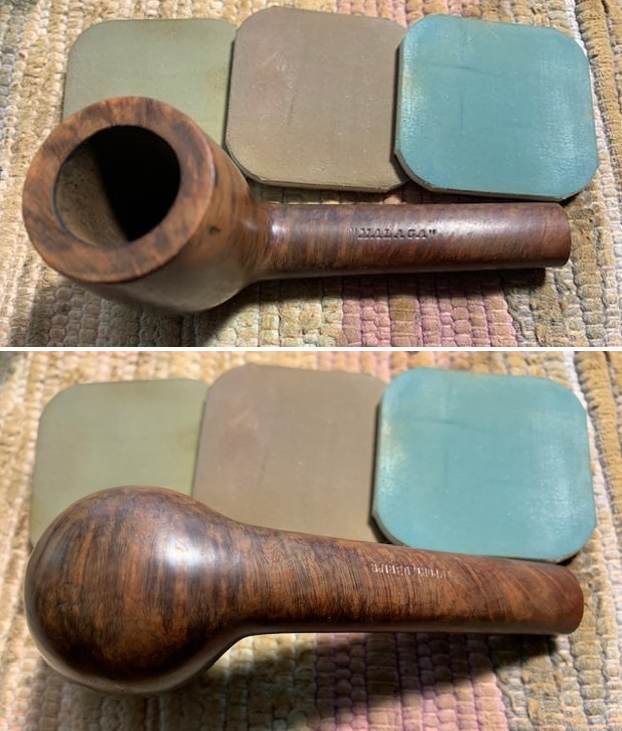
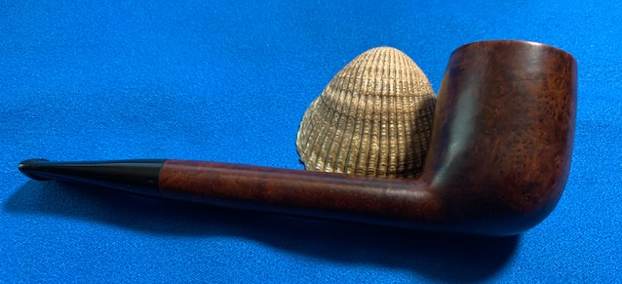
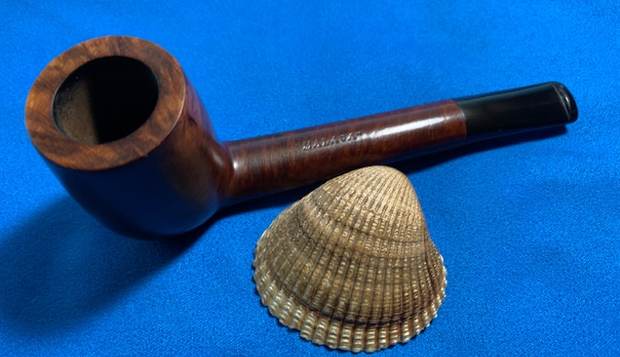
The next pipe in the queue is yet another Malaga pipe from boxes of pipes I have awaiting restoration in my every expanding queue. This “Malaga” Canadian has some interesting grain around the darker stained oil cured bowl and shank. The classic Canadian shape is carved to highlight the grain around the bowl. The pipe is stamped on the top side of the shank. It reads “MALAGA”. On the underside it is stamped IMPORTED BRIAR. The tapered stem is vulcanite and has no marking or stamping. It is a nice looking piece much like many of the other Malaga pipes I have worked on. Jeff had cleaned and reamed the pipe quite some time ago and it has been sitting here for a very long time. The briar is very clean and the shank and stem also clean. The bowl is clean and the rim top and edges are in perfect condition. The stem is clean and has some small tooth marks on both sides ahead of the button. I took the following photos to tell the story and give a glimpse of the pipe before I started the next part of the restoration work. I took a photo of the bowl and rim to capture the condition of the pipe. The bowl, rim top and edges all look very good. There is some roughness on the inner edge that should clean up quite easily. The stem had tooth marks on both sides ahead of the button.I also took a photo of top side of the shank to show the stamping. The stamping is readable in the photo below and is as noted above – “MALAGA”. The stamping on the underside reads IMPORTED BRIAR very visible in the second photo below.I took the stem off the shank and took a photo of the pipe to give a sense of the proportion. It is a great looking, very English style pipe.For those of you who are unfamiliar with the brand, I am also including the link to a blog that I wrote that gives some of the history of the Malaga brand and the Malaga Pipe Shop in Royal Oak, Michigan in the USA. Here is the link – https://rebornpipes.com/tag/malaga-pipes/. That blog also includes links to a catalogue and the history of the pipemaker George Khoubesser. If you are interested to learn more then I invite you to follow the link to get a feel for the brand and the pipemaker.

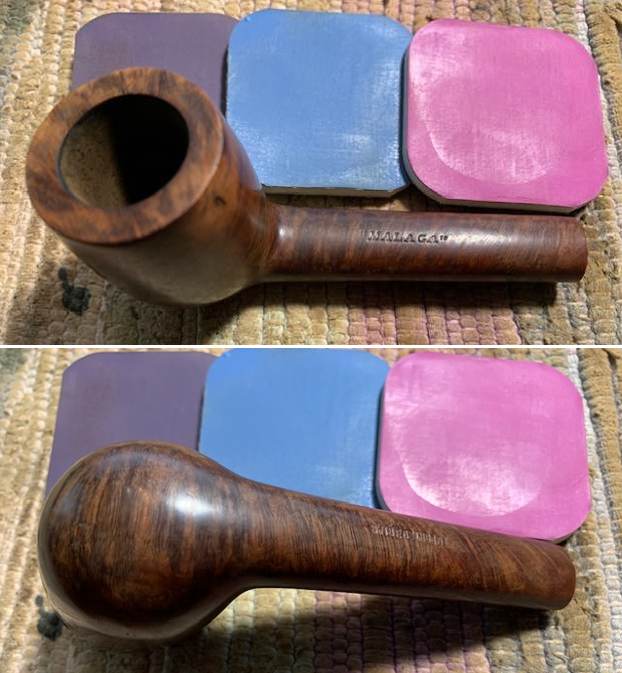
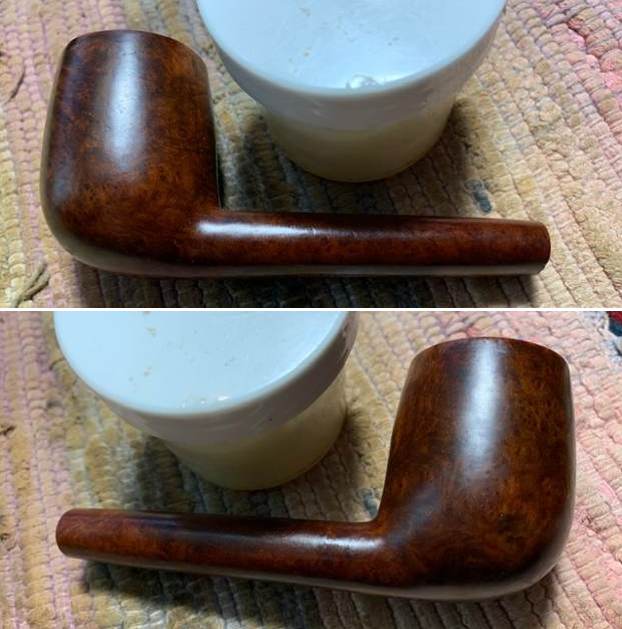
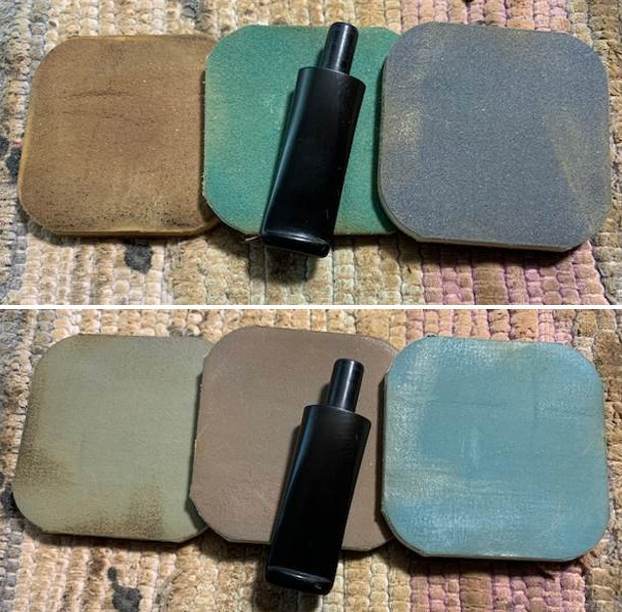
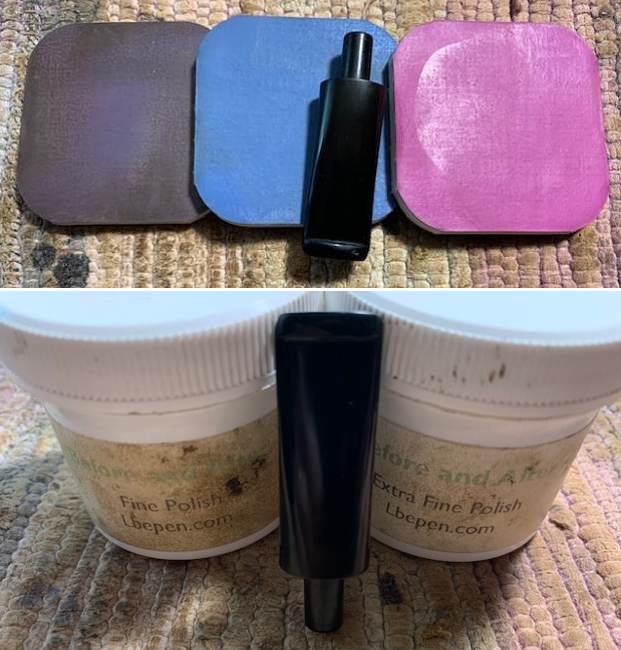
I decided to address the damage to the rim top and edges first. I topped the bowl on a topping board using 220 grit sandpaper to remove the damaged portions of the rim surface. I polished the rim and the outside of the bowl with micromesh sanding pads – wet sanding with 1500-12000 grit pads. I wiped the bowl down after each pad with a damp cloth to remove the sanding debris. I worked some Before & After Restoration Balm into the surface of the briar with my fingertips to clean, enliven and protect it. I let the balm sit for a 10-15 minutes and then buffed with a cotton cloth to raise the shine. With the bowl finished I set it aside and turned my attention to the stem. I “painted” the surface of the stem with the flame of a Bic lighter to lift the tooth marks. I was able to lift all of them.I sanded the stem surface with 220 grit sandpaper to blend tooth chatter into the surface of the stem. I am happy with the stem surface once that was done. I started the polishing of the surface with 400 grit wet dry sandpaper. I polished the stem with micromesh sanding pads – wet sanding it with 1500-12000 grit pads. I wiped the stem down with a damp cloth after each pad. I further polished it with Before & After Pipe Polish – both Fine and Extra Fine. I wiped it down with a coat of Obsidian Oil and set it aside to dry. I put the pipe back together and polished both the bowl and the stem with Blue Diamond polish on the buffing wheel. I gave the bowl and the stem multiple coats of carnauba wax. I buffed the pipe with a clean buffing pad to raise the shine. I hand buffed it with a microfiber cloth to deepen the shine. The pipe polished up pretty nicely. The oil cured finish and the grain came alive with the buffing. The grain really stands out against the dark finish providing a rich contrast. The two small fills on the bowl (one on the left top front and back toward the top) blended in quite well. The finish on the briar works well with the polished black vulcanite stem. The finished pipe is a well-proportioned, nicely grained Canadian. Have a look at it with the photos below. The dimensions are Length: 5 3/4 inches, Height: 2 inches, Outside diameter of the bowl: 1 3/8 inches, Chamber diameter: 3/4 of an inch. I will be putting this Malaga Canadian on the rebornpipes store in the American Pipemakers Section. Thanks for walking through the restoration with me on another Malaga. Remember we are but trustees of our pipes until the next pipe man or woman takes on the trust. Smoke in health!

Breathing Life into a Custom-Bilt Long Shank Pot


Blog by Steve Laug

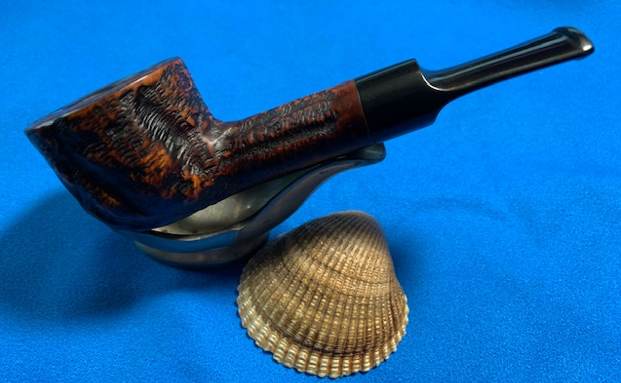
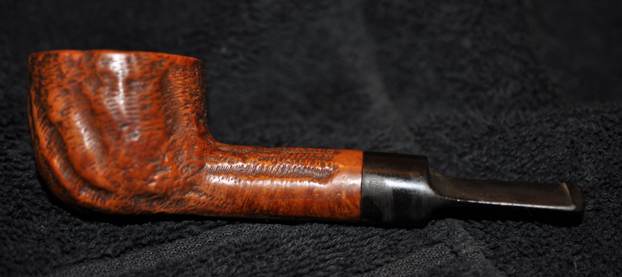
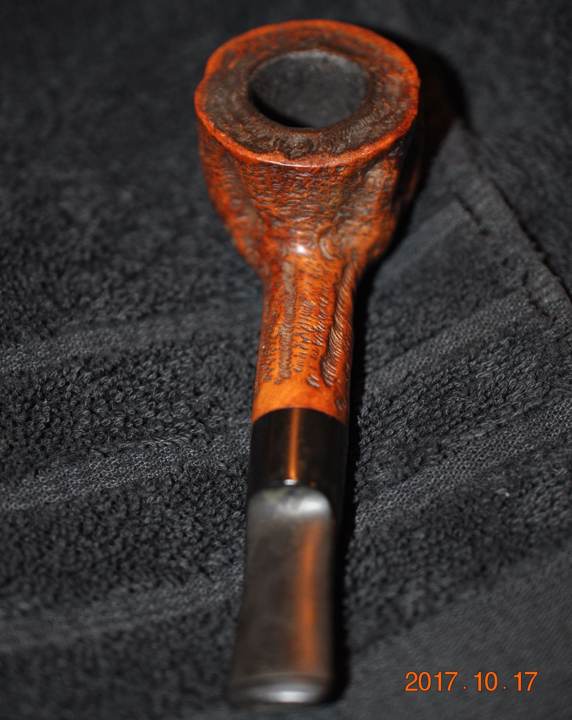
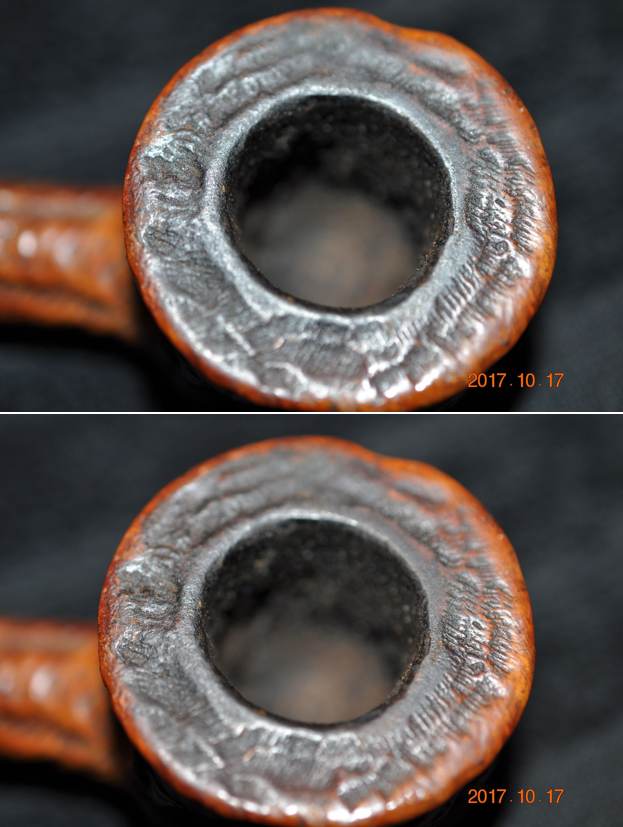
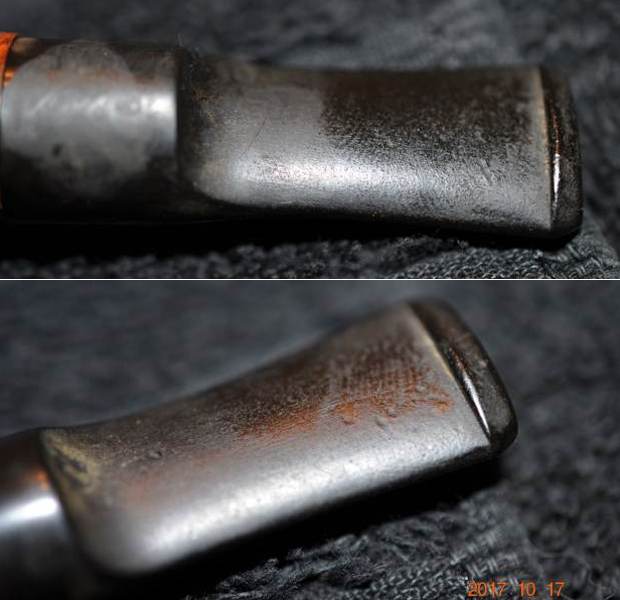
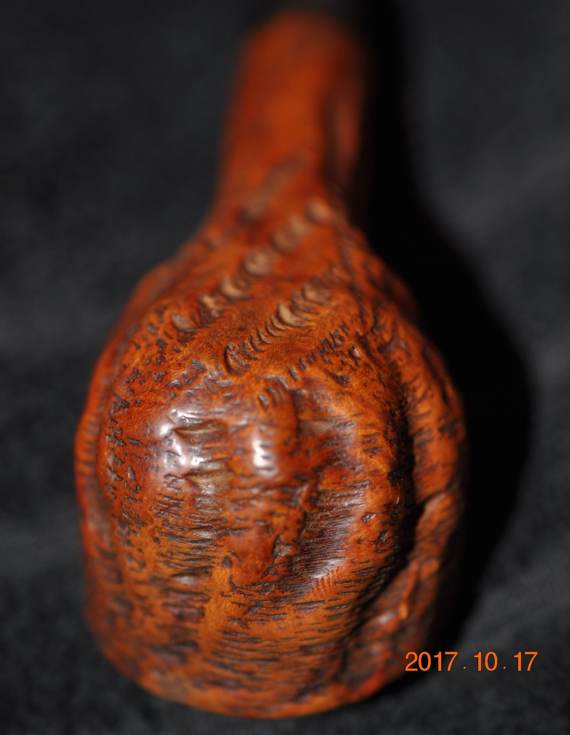
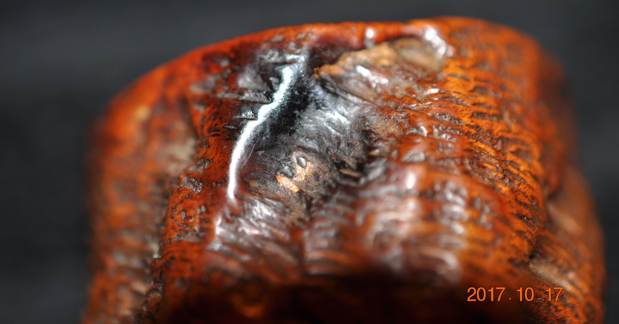
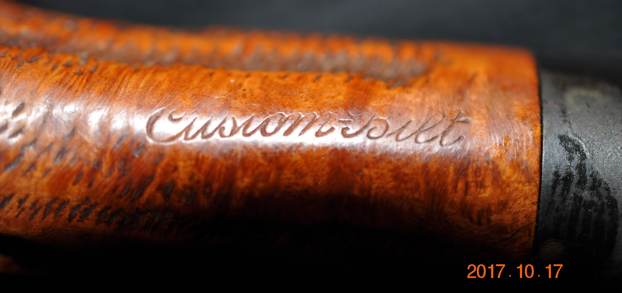
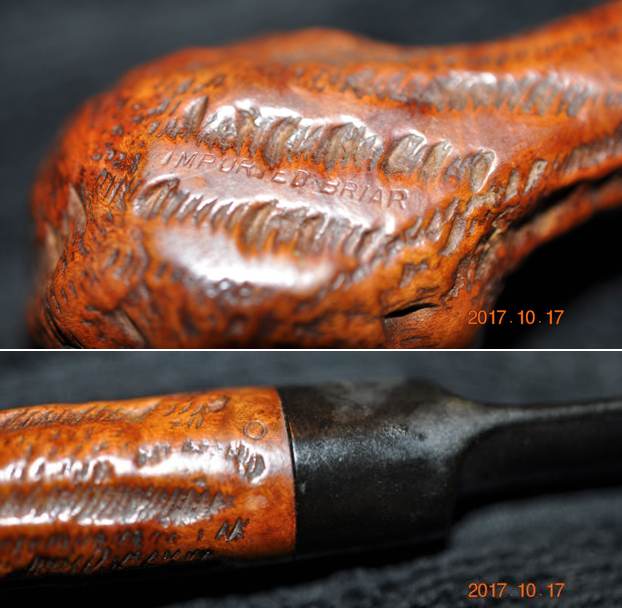
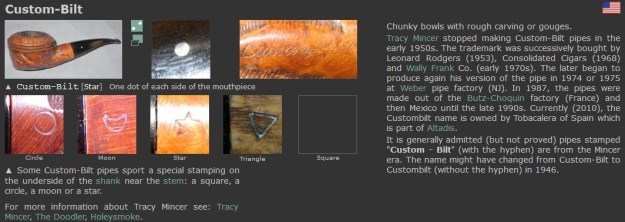
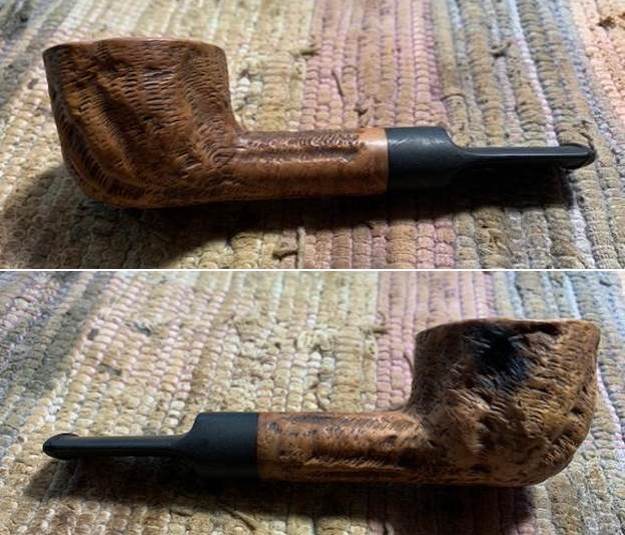
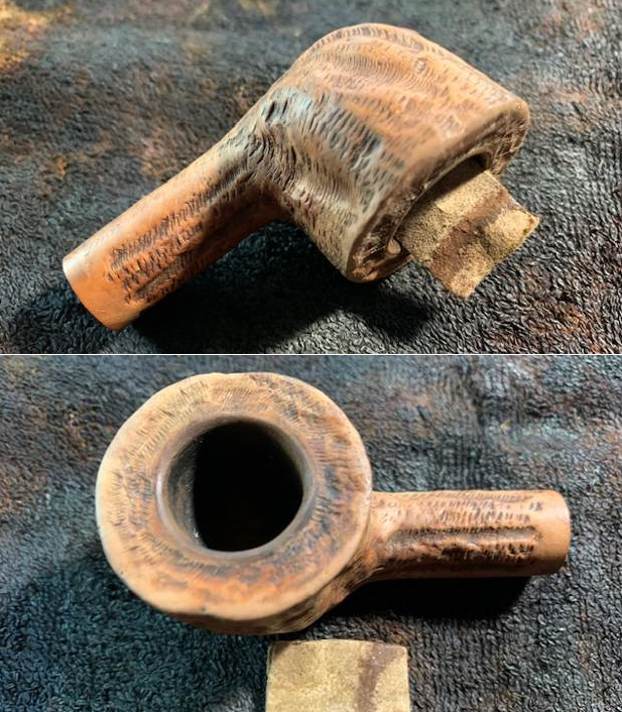
The next pipe on the work table came to us on 10/14/2017 from now closed antique shop in Pocatello, Idaho, USA. The pipe is a classic Custom-Bilt piece – a rusticated long shank Pot shaped pipe with some deep carving around the bowl. The pipe is stamped on the left side of the shank and reads Custom-Bilt. On the heel of the bowl it is stamped Imported Briar. On the right side of the shank there is an “O” stamped at the shank/stem junction. There was a lot of grime ground into the smooth and rusticated portions of the finish on the briar. The bowl was heavily caked with a heavy overflow of lava on the rusticated top and inner edge of the rim. The inside edges looked to be in good condition. The finish was dirty and there appeared to be a burn mark on the right side toward the top that looked like the pipe have been set in an ashtray with cigarettes and suffered the consequences. The stem was dirty and lightly oxidized. It had tooth chatter and marks on the top and underside near the button. There were no markings or a logo on the saddle stem. It had promise but it was very dirty. Jeff took some photos of the pipe before he started his cleanup work. He took photos of the rim top and bowl to give a clear picture of the thickness of the cake and tobacco debris as well as the lava on the rim top rustication. He also took photos of the top and underside of the stem to show the light oxidation and the chatter and tooth marks. Jeff took a photo of the heel of the bowl to give a picture of what the briar looked like. The rustication pattern around the bowl is instantly recognizable as done by Custom-Bilt.He took a photo of the burn mark on the right side of the bowl. The inside of the bowl is clear so it is not a burn through. It is an obvious burn from being laid in an ashtray.The stamping on the left side of the shank, the heel of the bowl and the right side at the shank/stem joint is clear and readable and read as noted above. I turned to Pipephil (http://www.pipephil.eu/logos/en/logo-c8.html) to get a quick view of the brand once again. I knew that I was working with one of the older pipes and probably made by Tracy Mincer himself. He stopped making the Custom-Bilt pipes in the early 1950s. The screen capture I included below shows a brief history of the brand. I turned to Pipedia (https://pipedia.org/wiki/File:CustomBilt_Stamp1.jpg) for a quick read. The majority of the information there included two book reviews of the “Custom-Bilt Story” by Bill Unger.

The one line I culled was the following: “Tracy Mincer started the original Custom-Bilt pipes it appears in 1934”.

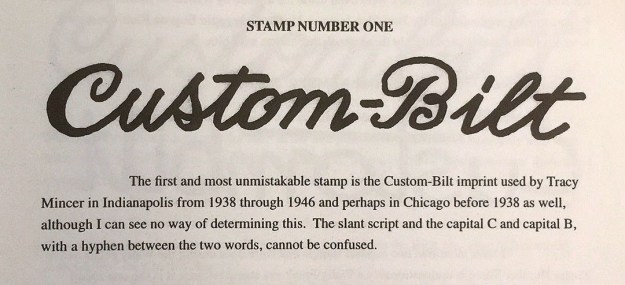
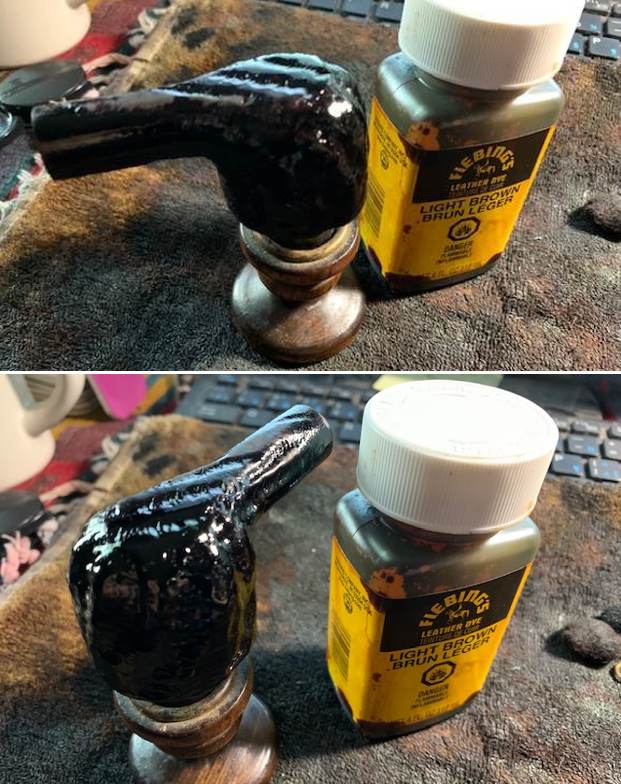
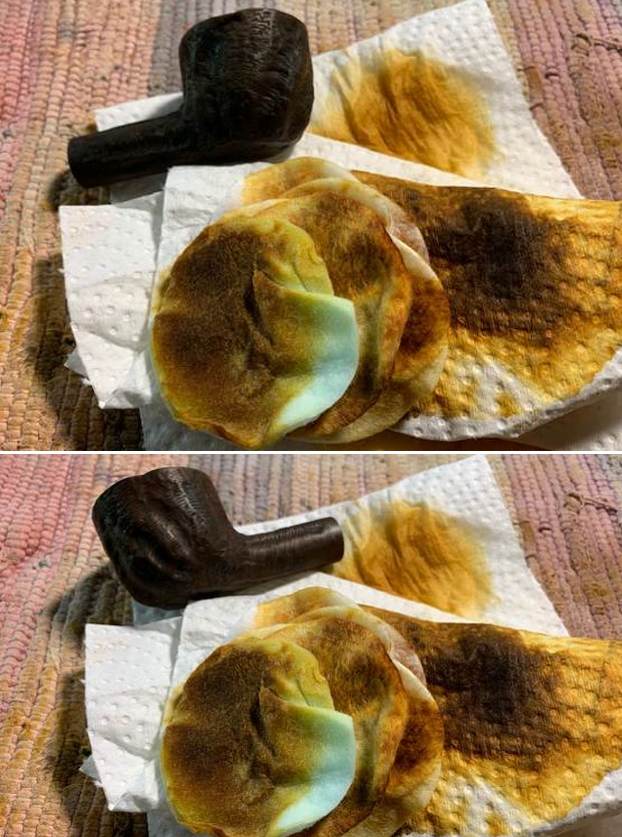
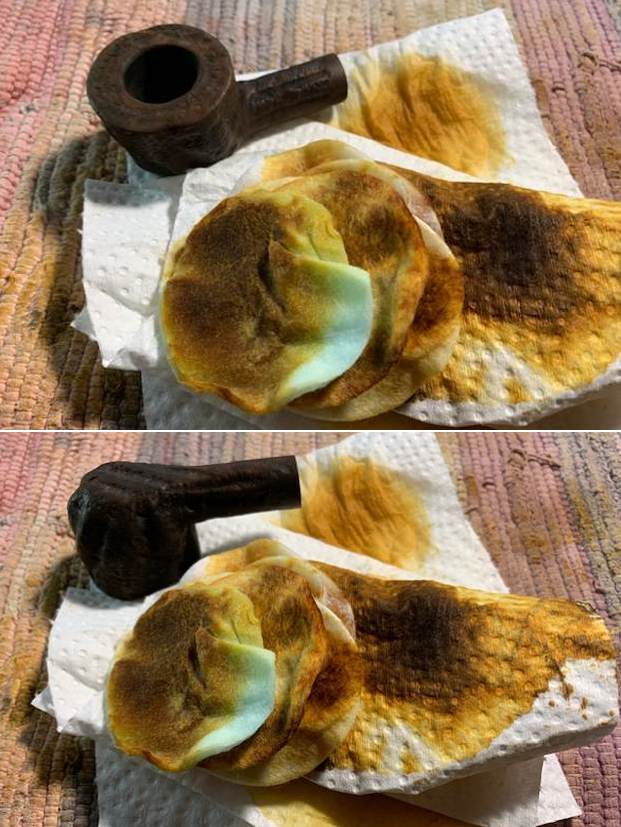
I did a screen capture of the stamping that matched the stamping on the pipe that I am working on. What I learned from that is that the stamp was used by Tracy Mincer in Indianapolis in the US from 1938-1946 and possibly in Chicago before 1938 as well. So now I had a possible date for this pipe. It was an old timer and it was well worth working on.Armed with that information I turned to work on the pipe itself. Jeff had cleaned up the pipe with his usual penchant for thoroughness. He reamed the pipe with a PipNet pipe reamer and removed the rest of it with a Savinelli Fitsall Pipe Knife. He scrubbed the bowl with undiluted Murphy’s Oil Soap with a tooth brush. He rinsed it under running warm water to remove the soap and grime. He cleaned out the inside of the shank and the airway in the stem with alcohol, cotton swabs and pipe cleaners. He scrubbed the stem with Soft Scrub and a tooth brush and rinsed it off with warm water. I took photos of the pipe before I started my part of the restoration work. The rim top cleaned up really well. The inner edge had some darkening and wear that would need to be addressed. The outer edge of the bowl look very good. The stem surface looked good with a few small tooth marks and chatter on both sides near the button. The stamping on left side of the shank is clear and readable. I failed to take photos of the stamping on the heel and right side but they to are clear. It is stamped as noted above.I removed the stem and took a photo of the pipe to give a sense of the whole. It is a proportionally pleasing pipe.I started my work on the pipe by addressing the dark burn mark on the right side of the bowl in the worm trail toward the back. I worked over the burn mark the darkening on the rim top with a brass bristle wire brush. I was able to clean it up nicely and it looked better. I scrubbed the bowl with Murphy’s Oil Soap and a tooth brush to remove the debris I had loosened with the wire brushes.   I filled in the burned spot on the right side with briar dust and super glue. Once the repair cured I worked over the area with the brass bristle wire brush to remove the excess. With that repair done the burned spot looked much better.    Next I worked on the damaged and darkened inner edge of the rim with a folded piece of 220 grit sandpaper. It looked much better.   With all the repairs and shaping finished I decided to stain the pipe to mask the darkening where the burn mark had been as well as on the rim top. I chose a light brown aniline stain, though once it was on the bowl it looked very dark to me. I would have to deal with that shortly.   To lighten the stain and make it more transparent I wiped the bowl down with alcohol on paper towels and cotton pads. I took a lot of the stain off the bowl but it still was too dark to my liking.  I sanded the high spots around the bowl with a 1200 grit micromesh pad to remove some more of the dark stain. I liked the overall effect of the new stain and the pattern the sanding created.    The bowl was in excellent condition so started by rubbing the bowl and shank down with Before & After Restoration Balm. I worked it into the surface of the bowl sides and shank with my fingertips and a horsehair shoe brush to clean, enliven and protect the briar. I let the balm sit for about 10-15 minutes and buffed with a cotton cloth to raise the shine.    I set the bowl aside and turned to work on the stem. I sanded out the tooth chatter and light tooth marks with 220 grit sandpaper to blend them into the surface of the vulcanite. I started polishing it with 400 grit wet dry sandpaper.  I polished the vulcanite stem with micromesh sanding pads – 1500-12000 grit pads. I wiped it down with Obsidian Oil after each sanding pad. I used Before & After Pipe Polish – both Fine and Extra Fine to further polish the stem. This Custom-Bilt Long Shank Pot is a great looking pipe now that it has been restored. The style of rustication that is used around the bowl is highlighted by the stain application and works well with both the shape and the polished vulcanite saddle stem. I put the stem back on the bowl and carefully buffed the pipe with Blue Diamond on the buffing wheel using a light touch on the briar. I gave the bowl multiple coats of Conservator’s Wax and the stem multiple coats of carnauba wax on the buffing wheel and followed that by buffing the entire pipe with a clean buffing pad. I hand buffed the pipe with a microfiber cloth to deepen the shine. The finished Custom-Bilt is another pipe that fits nicely in the hand and feels great. Give the finished pipe a look in the photos below. The dimensions of the pipe are Length: 5 inches, Height: 1 ½ inches, Outside diameter of the bowl: 1 ½ inches, Chamber diameter: 7/8 of an inch. The weight of the pipe is 39g/1.38oz.  I will be putting it on the rebornpipes store in the American Pipemakers Section shortly. If you are interested in adding this pipe to your collection send me a message or an email. Thanks for reading this blog and my reflections on the pipe while I worked on it. There are many more to come!

New Life for a Nicely Grained Imperial White Flame Giant Oom Paul


Blog by Steve Laug

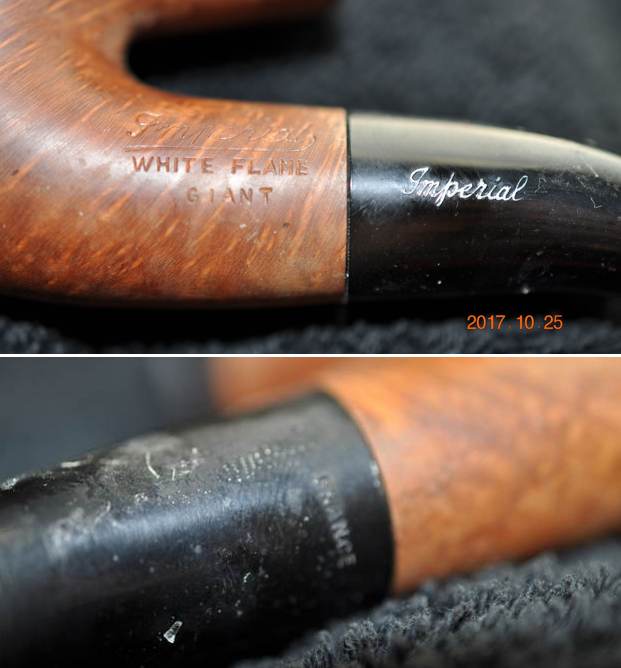
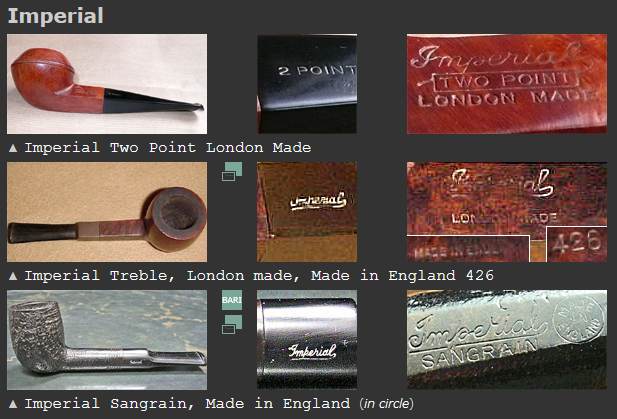
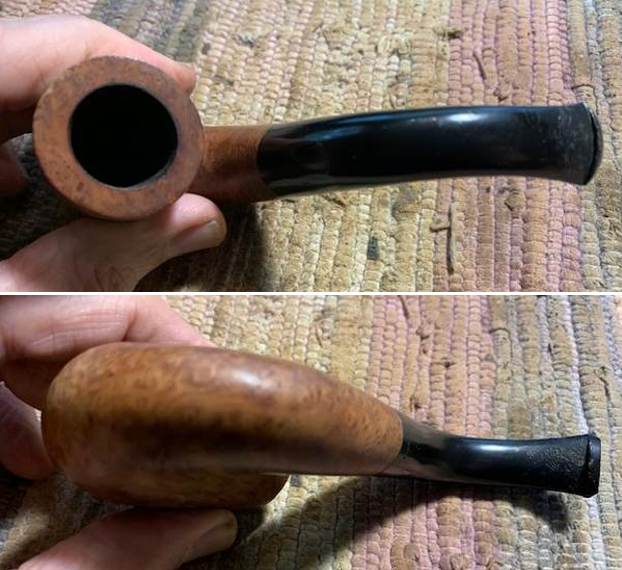
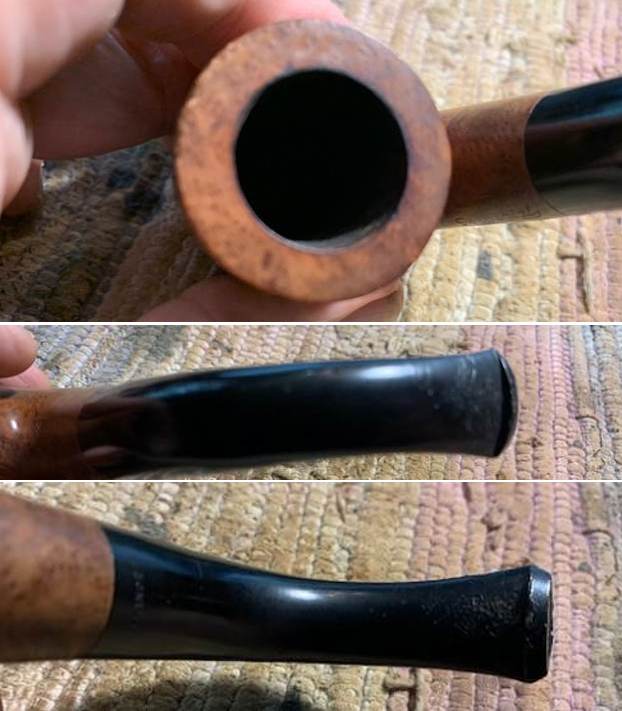
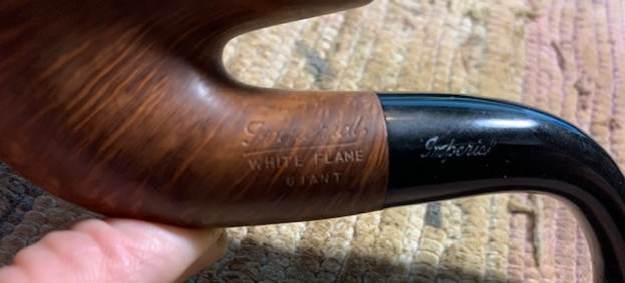
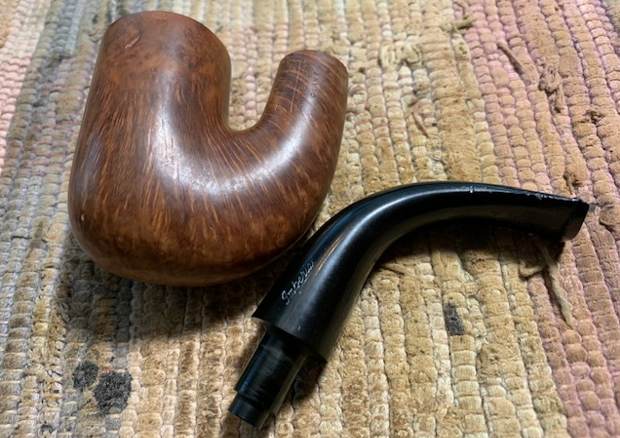
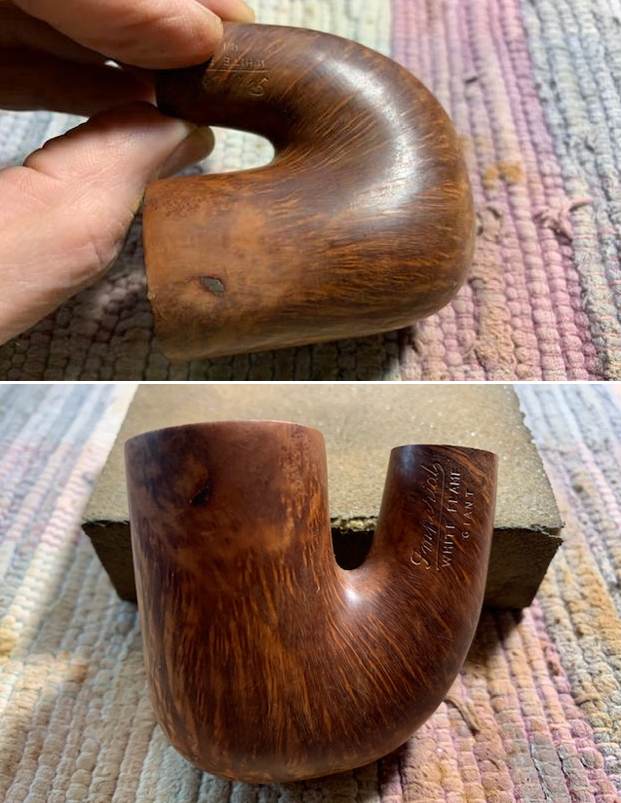
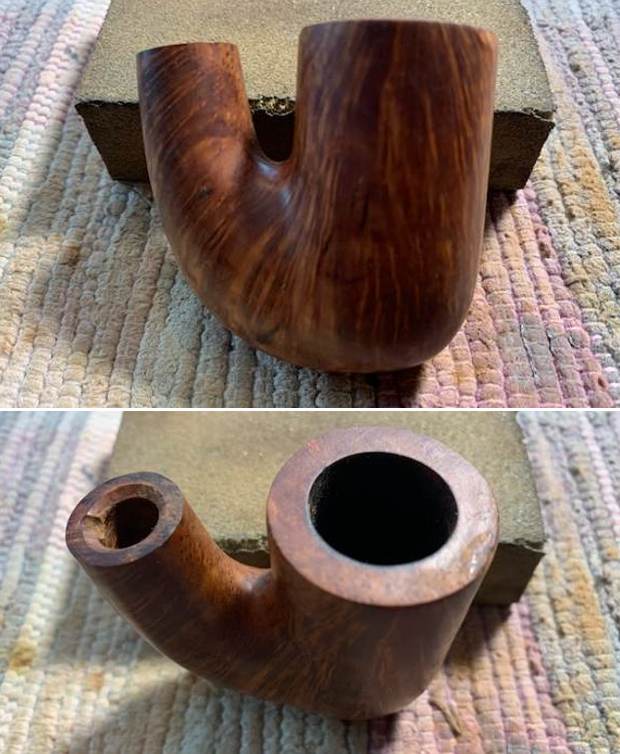
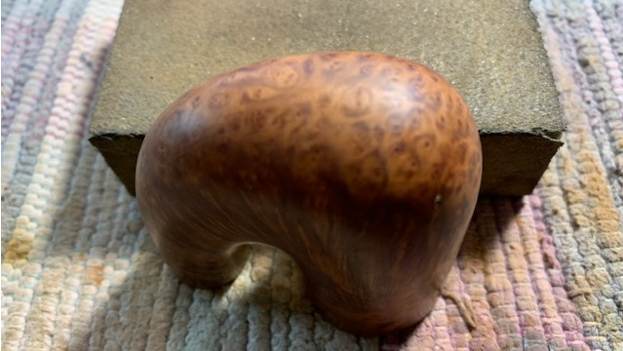
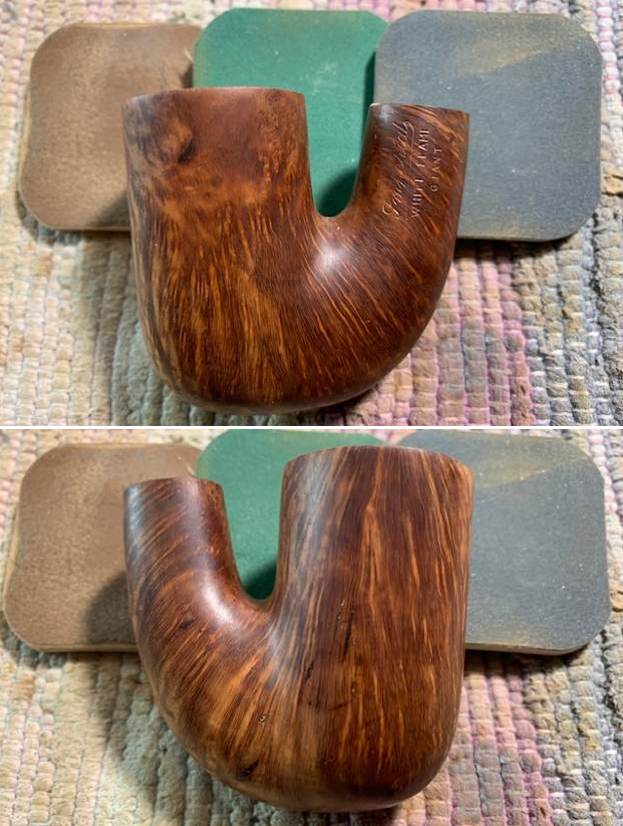
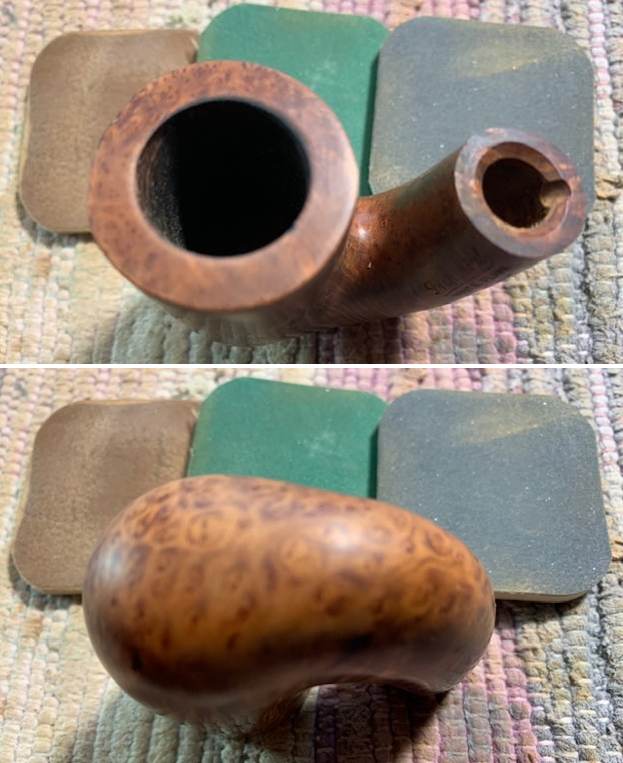
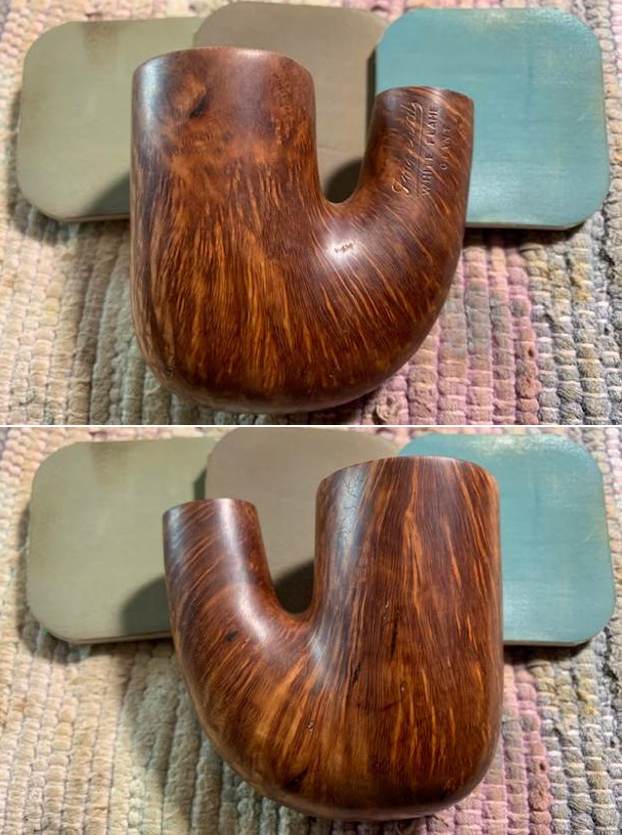
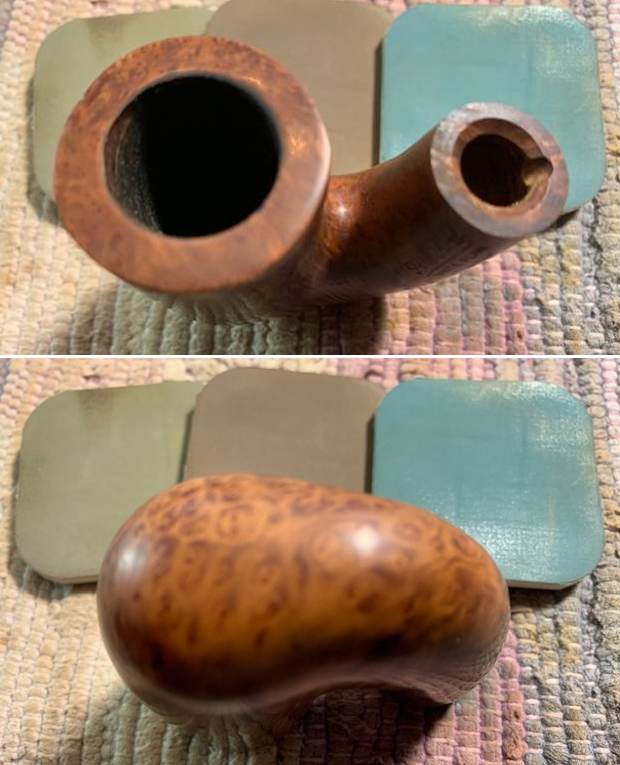
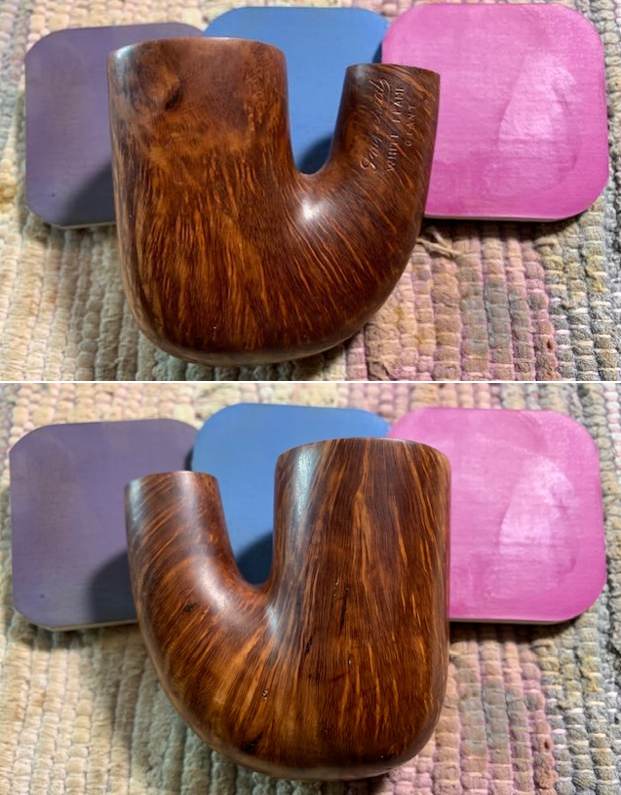
The next pipe on the work table is another pipe that has been here for almost 5 years. Sad that there are some that have sat this long or longer before I got to them. But on the other hand I get to look through my boxes and pick out what turns my crank at the moment. This one was a nice looking Oom Paul with nice grain patterns. We picked it up back in May, 2017 on EBay  from Lewisburg, Ohio, USA. It is stamped on the left side of the shank and reads Imperial in script [over] White Flame [over] Giant. On the stem it is also stamped Imperial on the left side and on the underside it is stamped FRANCE. It looks like an older pipe by the shape of the stem and button and the hard rubber stem itself. The smooth finish had some very nice grain but there were also a lot of fills some on the left near the top but more particularly on the right side of the bowl and shank. They were narrow and small so they were not too annoying. The pipe was dirty but is quite nice natural tones of the briar and the black hard rubber taper stem. The bowl was moderately caked with a lava overflow on the rim top, heavier toward the back. The inner edge looked quite good. The stem is lightly oxidized and had some tooth chatter and tooth marks on the top and underside ahead of the button. The pipe showed a lot of promise but it was a mess. Jeff took pictures of the pipe before he did his clean up work.He took photos of the rim top and bowl as well as the stem surfaces to show the condition of the well smoked pipe. You can see the cake in the bowl and the lava on the inner edge and rim top. There is also some roughening on the front outer edge. The stem was oxidized, calcified and had heavy tooth chatter and marks on both sides ahead of the button. Jeff took some photos of the heel of the bowl and the side to give a sense of the grain and the location of the fills around this pipe.He captured the stamping on the left side of the shank and stem. It is readable as noted above.I turned to Pipephil to get a quick overview of the background information on the Imperial brand (http://pipephil.eu/logos/en/logo-i.html). There was no background information on the site this time but the photos below are helpful in terms of the stamping on the shank and the stem.I turned to Pipedia for more information (https://pipedia.org/wiki/Imperial_Tobacco_Co.). I quote the article below.

From Pipes, Artisans and Trademarks, by Jose Manuel Lopés’

The Imperial Tobacco Co. (Imperial Tobacco Ltd.) was founded in 1901 through the merger of several British tobacco companies. In 1902 it went into partnership with the American Tobacco Company to found the British American Tobacco Company.

See also: Civic. Brands involved: Comoy’s, Bewlay, Nording, Ogden’s, Salmon & Gluckstein, and Steel’s

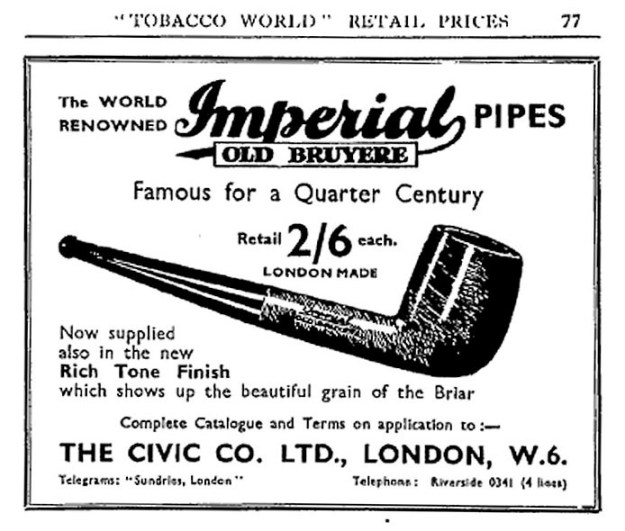
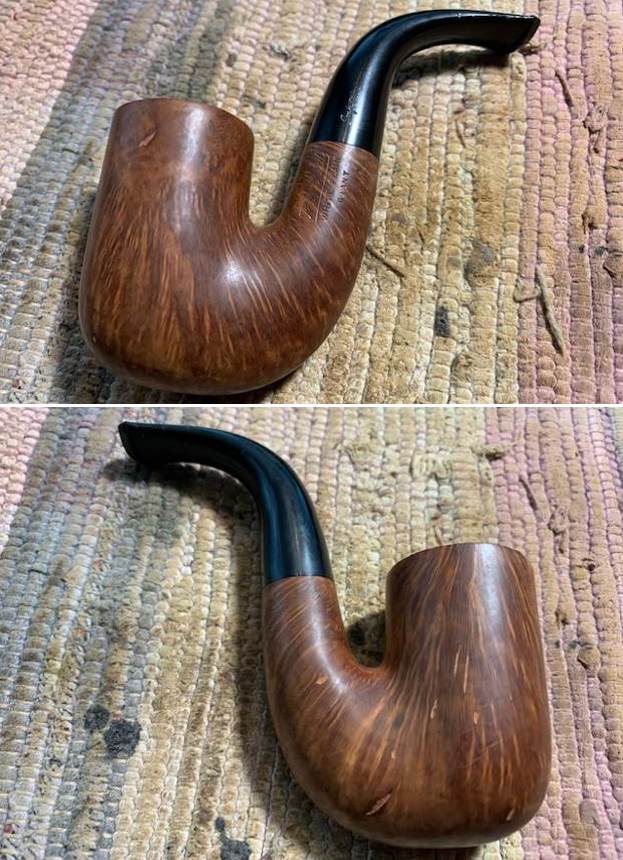
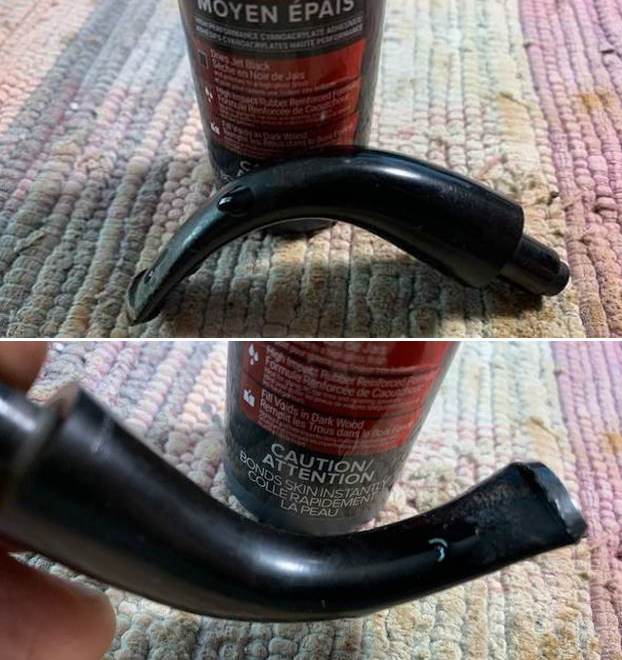
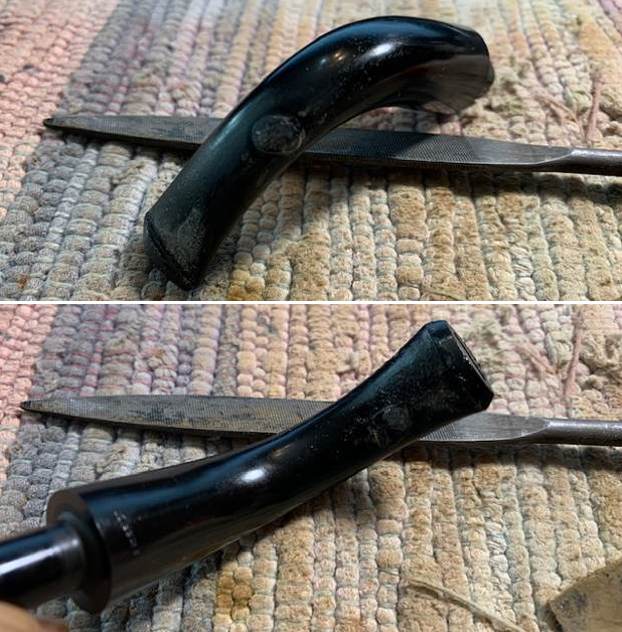
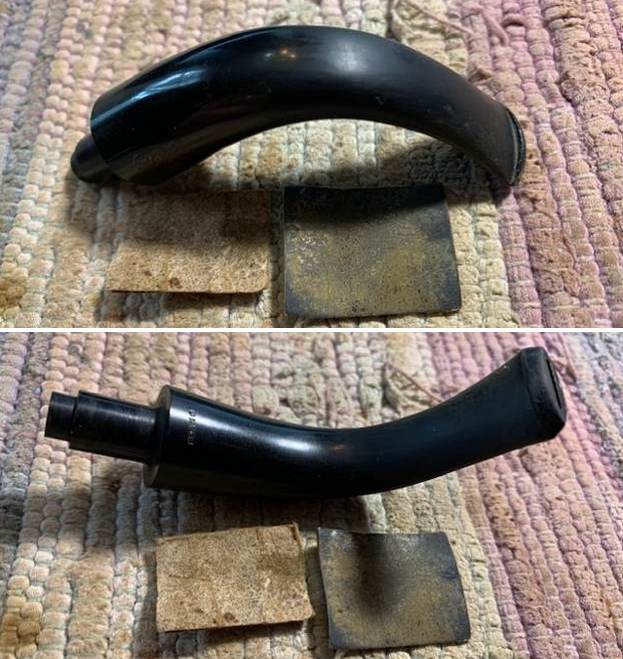
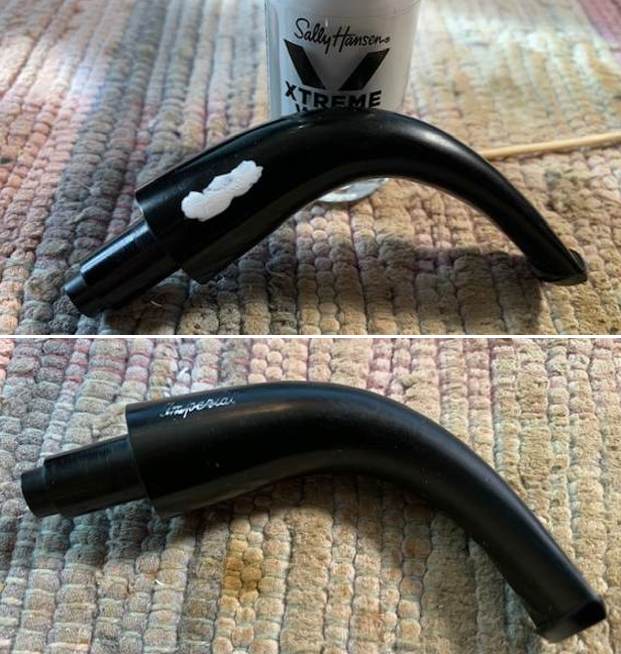
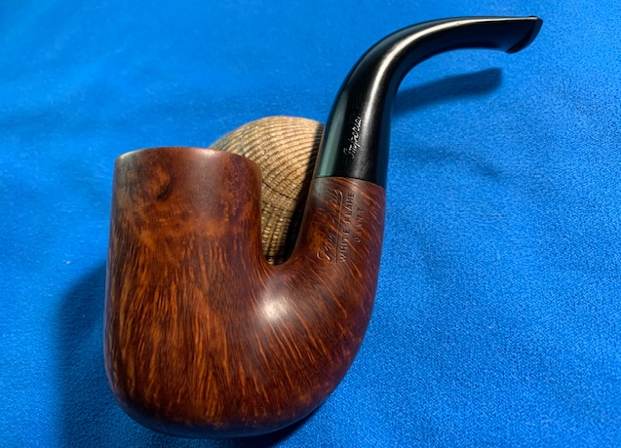
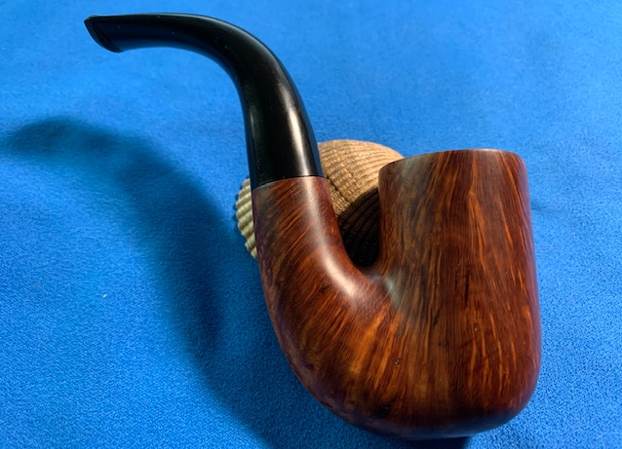
There was a great older advertizement on the link as well that highlighted the age of the brand. I have included that below.Now it was time to look at it up close and personal. Jeff had done an amazing job in removing all of the cake and the lava on the rim top. He had reamed the bowl with a PipNet Pipe Reamer and cleaned up the remnants with a Savinelli Fitsall Pipe Knife. He took the cake back to bare briar so we could check the walls for damage. He scrubbed the exterior of the bowl with Murphy’s Oil Soap and a tooth brush to remove the grime on the bowl and rim and was able to remove the lava and dirt. He cleaned out the interior of the bowl and shank with pipe cleaners, cotton swabs and alcohol until they came out clean. He cleaned the stem with Soft Scrub to remove the grime on the exterior. He cleaned out the airway with alcohol, cotton swabs and pipe cleaners. I took some photos of the pipe before I started my work on it today. I took a close up photo of the cleaned up rim top. The rim top and the inner edge look good. The damage on the outer edge of the bowl shows up on the front of the bowl. The bowl is clean and the walls are undamaged. The stem looks good with lots of tooth chatter and marks along the top and underside ahead of the button. The stem is hard rubber which makes the work more difficult on the tooth marks.I took a photo of the stamping on the shank side. It is clear and readable as noted above.I took the stem off the pipe and took a photo. The Oom Paul is an attractive looking pipe with nice lines. The taper stem shows damage on the sides of the stem.I took photos of the fills on the sides of the bowl. You can see from the photos that they are predominantly on the rights side of the bowl but there are some on the heel of the bowl and on the front and right side as well. I decided to start my work on the pipe by addressing all of the loose and damaged fills around the bowl and heel. I filled in the hole with some clear super glue and pressed some briar dust onto the glue repair. I repeated the process until the fills were solid. This took some time as there were many to work on as I turned the bowl. I went over the bowl a second time and topped up the fills with clear super glue as necessary. I sanded the repaired areas with a folded piece of 220 grit sandpaper to smooth them out and make them flush with the bowl surface. I then sanded the entire pipe with a medium and a fine grit sanding sponge to further smooth them out and blend them into the briar. It was beginning to look quite good. I polished the smooth rim top and areas on the bowl and shank with micromesh sanding pads – dry sanding with 1500-12000 grit pads. After each pad I wiped the bowl down with a damp cloth to remove the sanding debris. It really took on a shine and the fills were less noticeable by the last three sanding pads. I rubbed the bowl down with Before & After Restoration Balm. I worked it into the surface of the briar with my fingertips where it works to clean, restore and preserve the briar. I let it do its magic for 15 minutes then buffed it off with a cotton cloth. The pipe looks incredibly good at this point in the process. I set aside the bowl and turned my attention to the stem. I wiped down the stem with some alcohol to remove the dust from the pits and tooth marks. I filled them in with black super glue and set it aside to cure.Once the repairs cured I smoothed them out with a small file. I flattened them against the surface of the hard rubber. I sanded the repairs and the tooth chatter with 220 grit sandpaper and started polishing it with 400 grit wet dry sandpaper. Each step took it closer to the finished look. I touched up the stamping on the left side of the stem with white acrylic fingernail polish and worked it into the stamp with a tooth pick. Once the acrylic had cured I scraped off the excess acrylic with the tooth pick.I continued to polish the stem with micromesh sanding pads – wet sanding with 1500-12000 grit sanding pads. I wiped it down after each sanding pad with Obsidian Oil. I polished it further with Before & After Stem Polish – both Fine and Extra Fine. I gave it a final coat of Obsidian Oil and set it aside to cure. I am excited to finish this Imperial White Flame Giant Oom Paul. I put the pipe back together and buffed it with Blue Diamond on the buffing wheel. I gave the bowl and the stem multiple coats of carnauba wax. I buffed the pipe with a clean buffing pad to raise the shine and then by hand with a microfibre cloth to deepen it. It is fun to see what the polished bowl looks like with beautiful straight grain all around it. The polished grain on the pipe looks great with the black hard rubber stem. This Imperial Oom Paul is great looking and the pipe feels great in my hand. It is light and well balanced. Have a look at it with the photos below. The dimensions are Length: 4 ½ inches, Height: 2 ¼ inches, Outside diameter of the bowl: 1 ¼ inches, Chamber diameter: ¾ of an inch. The weight of the pipe is 65 grams/2.29 ounces. It turned out to be a beautiful pipe. I will soon be putting it on the rebornpipes store in the British Pipemakers Section. If you are interested in adding it to your collection let me know. Remember we are the next in a long line of pipe men and women who will carry on the trust of our pipes until we pass them on to the next trustee. Thanks for your time reading this blog.

Good to know I can fix my foul ups! Replacing a Broken Tenon on a Ronson Centenary Bulldog


Blog by Steve Laug

I went back and revisited the blog/review I wrote on this pipe back in 2013. I am including the link (https://rebornpipes.com/2013/02/15/review-of-a-ronson-centenary-bulldog/) and the first paragraph of the review below.

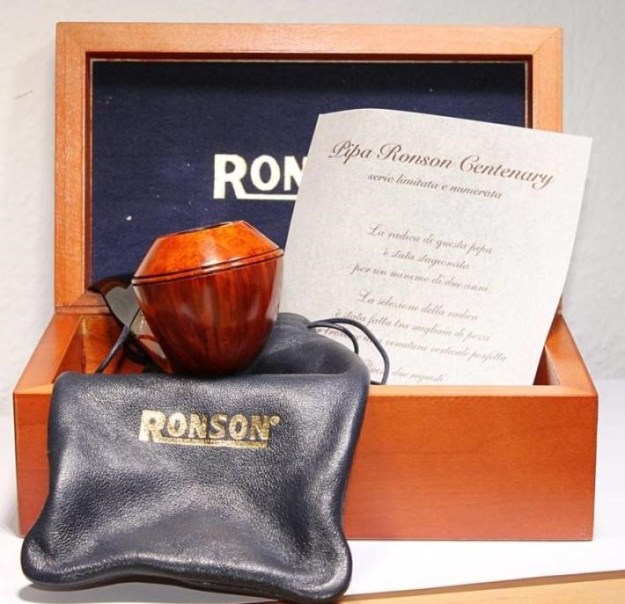
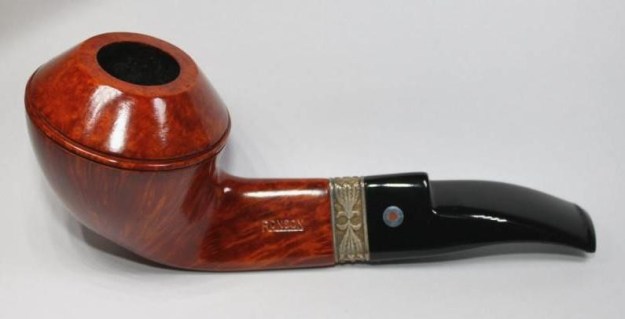
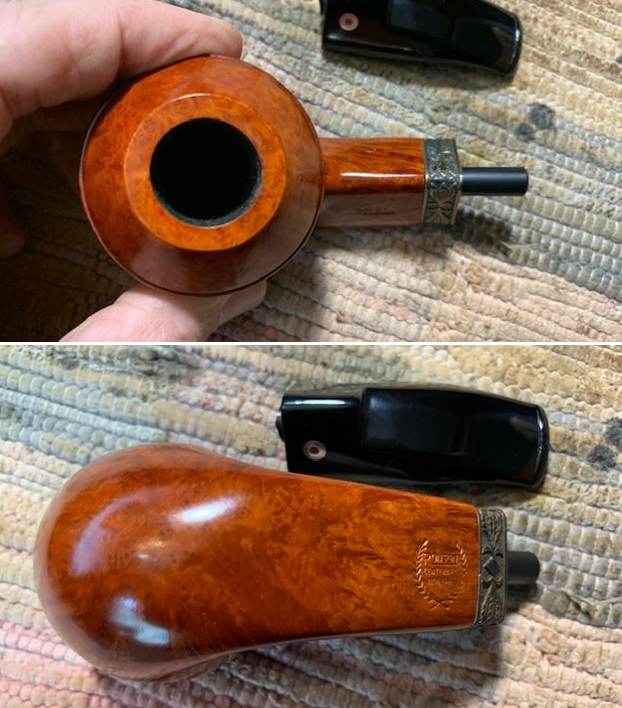
I picked this pipe up for a really cheap price on EBay. It came in a beautiful handmade wooden box lined with dark blue velvet on the inside of the box and the lid. The lid also has the golden Ronson logo. Ronson is famous for the lighters that they make but after receiving and smoking this beauty I would also say they make a fine pipe. The pipe came with a leather pipe sock and a certificate of authentication for the Centenary version of the pipe. The workmanship on this pipe is very nice. I have smoked it quite a bit since that time and it is a great smoke. Since I had the day off today I decided to also write a review on this one. The length of the pipe is 5.8 inches and the bowl height is 2 inches. The chamber diameter is .8 inches and depth is 1.8 inches. It is a large pipe but weighs 78 grams. It is a good fit in the hand. The overall shape is something like a bent bulldog. There is a sterling silver band on the shank with sheaves of laurels. The stamping is on the sides and the bottom of the triangular shank. It is stamped on the left side Ronson using the Ronson logo type and on the right side 47. On the underside of the shank it is stamped RONSON over CENTENARY over 1896-1996 and surrounded by Laurels. That dates the pipe to 1996. It came to me unsmoked.

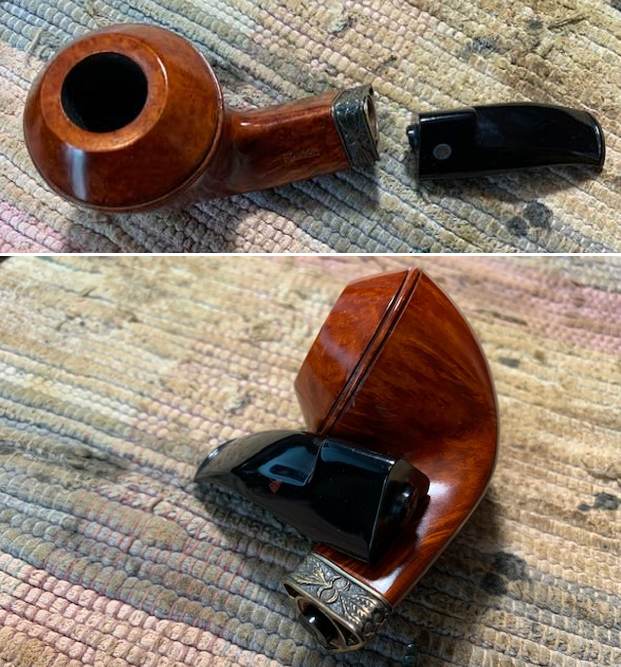
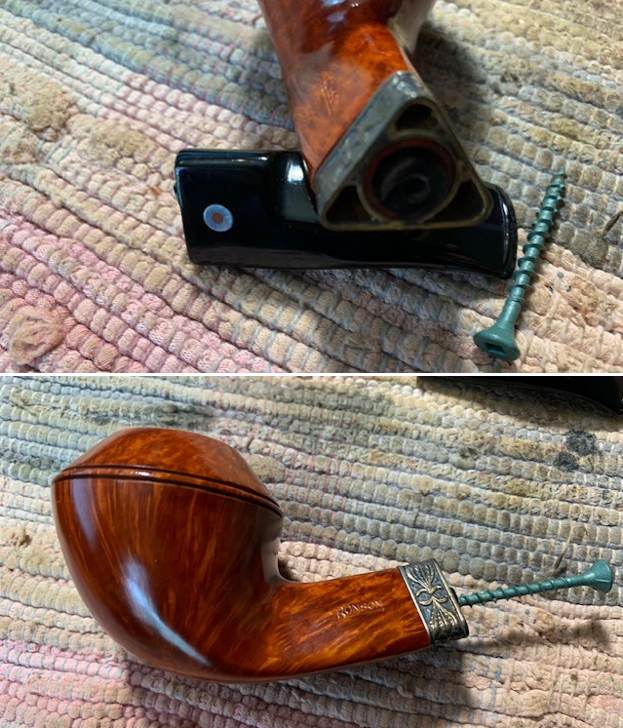
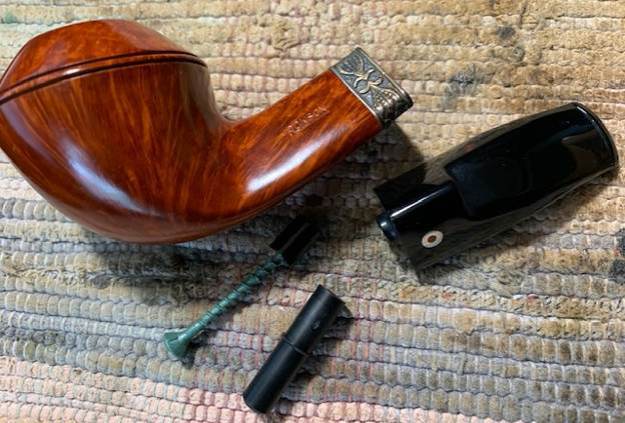
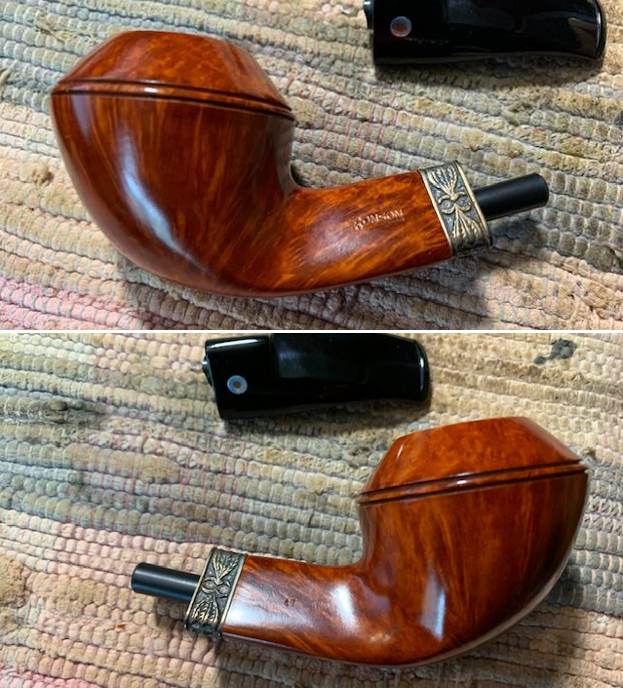
I am including several photos of the pipe from the review blog. The first is the pipe in its case with the certificate. The second shows what I saw when I took it out of the case. It really is a nice looking pipe. From the title of the blog you can surmise that the pipe and I had a mishap that left the acrylic tenon snapped off in the shank. You can probably imagine the sick feeling I had when I figured out that it had happened. It was resting safely in its box and bag so I figured all was fine. I went to move it when we had our basement flood two weeks ago and the box slipped out of my hands and hit the floor. I figured that the box and bag would have protected the pipe so I did not even check it. I retrieved it and carried it upstairs to my temporary work table in our dining room. I was oblivious to any issues at this point. I let it sit for about a week and then thought I might list it on the store as I just do not smoke it enough. I opened the box and the bag to inspect it. I remembered that I had cleaned it before putting it away and it was pristine. When I opened the bag the pipe came out in two parts in my hand. The tenon had snapped off in the shank with almost a clean break. I was sick to my stomach when I saw what I had done.I took out the handy drywall screw that I keep at my work table for just this kind of extraction work. I carefully turned the screw into the airway of the broken tenon in the shank and said a quick prayer and wiggled the tenon out of the shank! Whew! I was thankful that it was not stuck in the shank. Now the work could begin. I went through my can of Delrin tenons and found one that was a proper fit. I would need to adapt it to fit the stem but the fit in the shank was perfect. I took some photos with the tenon in the shank to show the fit. I used my Dremel and sanding drum to remove the ridge in the middle of the tenon and set it in the shank. I also flattened the broken tenon face on the stem. I was able to smooth it out so the first step in fitting the new tenon was complete. The shank portion was complete. Now I would need to drill out the airway in the stem to receive the new tenon and then reduce the diameter of the tenon to fit the newly drilled airway.I set up my cordless drill to open the airway. I started with a bit slightly larger than the existing airway and drilled it ½ inch into the stem. I did not want  to go too far and come out on the top of the stem. I worked through several bits, moving through them until I got to the largest that would safely work in this stem – 11/64 of an inch. Drilling a stem this way requires carefully moving forward so as not to angle the drill bit. I use the existing airway as the path and rigorously hold to that with each new bit.Once the path was open to the diameter I could safely drill in the stem I turned my attention to reducing the diameter of the portion of the new tenon that would fit in the airway. I used the Dremel and sanding drum to carefully take down the diameter. I took a photo of the shaped tenon with a new unshaped tenon so you can get a feel for what I had to do for the fit. I know it would be much cleaner if I had a lathe but I don’t so I use what I have. I cleaned up the shape with a small file and repeatedly checked it in the airway. I wanted to have a snug fit but I also needed to account for the addition of the glue. Once all was aligned I checked the fit of the stem against the shank end. I wanted to make sure that all was lined up. I marked the top of the tenon once I had the fit correct. I removed it from the stem and slid a pipe cleaner in the stem and tenon to make sure the glue did not seep into the airway. I painted the surface with black super glue and pushed it into the stem. I was careful to line my mark up on the top of the new tenon so the fit would be correct.I wiped excess glue off the stem end and checked the fit of the stem to the shank. I like the way it lined up. I took some photos of the fit and then removed the stem and set it aside to allow the glue to cure. I made a few minor adjustments to the tenon so the fit was better and then polished the saddle portion of the stem with micromesh sanding pads. I dry sanded it with 1500-12000 grit pads and wiped it down after each pad with an Obsidian Oil impregnated cloth. I gave it a deeper polish with Before & After stem polish – both Fine and Extra Fine. I gave it a final wipe down with Obsidian Oil and set it aside to dry. I was finished with the repair and put the pipe back together. It actually looked very good and the repair was a perfect fit against the shank. I was pleased with the fit. I buffed the stem with a microfiber cloth to give it a rich shine. I buffed the bowl the same way and took photos of the finished pipe that I have included below. The tenon repair went very well and the pipe is back to being fully functional. Thanks for walking through the tenon replacement with me.

Labour Intensive Restoration of a Peterson’s Sherlock Holmes Series Professor


The next blog is one that has been submitted by Clint Stacey. We “met” via email to have a look at a pipe he was working on. It was a real challenge and one that demanded a lot of labour intensive work. Give his blog a read. He did a remarkable job on the pipe. Welcome to rebornpipes Clint and I hope this is the first of many blogs that you send to us.

Blog by Clint Stacey

I grew up around all sorts of stuff- from furniture and brick-a-brac to collectables and oddities coming into the house in all states of disrepair and leaving having been restored and reborn. My dad had a good eye and a passion for salvaging lost treasures sometimes it was his job, sometimes it supplemented his job, often it helped put food on the table.

I have followed in his footsteps, in terms of picking up all sorts of bits and bobs sometimes keeping them, other times passing them on to make room for the next thing. I don’t exactly remember when I first started picking pipes up – possibly about twenty five years ago. At that time, old pipes were plentiful at car boot sales, flea markets and junk and charity shops. Whilst I have picked up one or two nice examples I dread to think of the gems I’ve missed…

Now a days finding old or estate pipes is much trickier. The internet has educated people and quite often I will pick up some over priced wreck and be given chapter and verse of what it is by the seller.

As I have learnt more about pipes and become more discerning my real interest is in Petersons. I now have about forty.

Over the years I have picked up enough know how to do basic cleaning / tidying but little beyond that. I was seriously impressed when I discovered, about eighteen months ago, ‘rebornpipes’ and I saw some of the restoration work that was being carried out.

It had been a long time aim of mine to put together the Sherlock Holmes series of Petersons. I’ve started with the first series and having picked up three I was delighted to see a ‘Professor’ going cheap on EBay. It looked a bit rough but I thought it would clean up okay. There wasn’t much bidding (perhaps others knew more than me.)

When it arrived, I saw the real extent of the damage. It looked like somebody had taken great umbrage with the pipe and had attacked it with a carving knife before setting fire to it. I put it to one side uncertain of what I intended to do with it.About eighteen months ago I had come across rebornpipes. Having an interest in both pipes and restoration I was clearly in my element. How I hadn’t come across this before I don’t know. I decided to email Steve in the hope he could give some guidance with the Peterson.

I wasn’t sure if I would get a reply – after all we’re all busy people – and I wasn’t sure what he would be able to suggest. I was more than surprised by an almost instant response asking for photos. I sent these and Steve informed me that the pipe had been the victim of a torch lighter hitting the same point.

I had already given the pipe a clean – actually it wasn’t too bad beyond the lighter damage. Either it had been previously cleaned or possibly not actually smoked that much. A few cotton buds/pipe cleaners with some alcohol gave it a basic clean and the stem I scrubbed with warm water.

Steve suggested topping out the pipe armed with 220 sandpaper, a board and patience. I took it slowly at first carefully checking at points that I was keeping the pipe level. Working on it off and on I soon began to see some progress. I continued to take it down to a point where I had something to work it and began seeing some sign of hope. I kept checking in with Steve who continued to advise working slowly and patiently and keeping the pipe flat to the board in order to keep the top level.Although at this point it was greatly improved there was still a degree of difference in the thickness of the original and the pipe is well out of round. Steve asked for some side pictures just to check the height and suggested I kept going a bit further.Eventually I reached a point where I felt I had gone down as far as possible. Whilst I was pleased with the improvement it still didn’t look quite right. Steve had suggested that once I had got it sanded down I then used the technique of a ball in sand paper. I wasn’t entirely sure what I was doing at first but as I started to use this technique I saw both a bevel and shape starting to appear. Heartened I began working on smoothing out the inside as well as the top edge using fine grade sand paper. Finally, I reached a point where I was happy and felt that I could do little better. It had reached the point of staining the pipe to get the sanded area back to match the original colour. Steve’s advised a medium brown aniline stain. I used Feibing’s leather dye and was really pleased with how well this matched in with the original.I gave the pipe two coats and allowed it to dry. I then gave it a good polish with a carnauba wax. The stem had some oxidization so I worked on this with a fine grade wet and dry paper and then finished it with some carnauba wax. This will need a couple of coats to create a nice sheen. Throughout the process of working on this pipe Steve has been on hand offering help and guidance and I am really appreciative of both his time and knowledge. Often you come across pipes that are in a poor state through being ‘well loved’. Unfortunately, this one had just been abused. From the Hallmark H design, it appears to have been issued only in 2018. I amazed at how a pipe of such little age, and one that would have been expensive to buy, ended up in such a state. I am really happy to have been able to restore it and save it!

I have really enjoyed working on this and armed now with some knowledge and know how I intend to tidy up a few of the other pipes that I own.

New Life for a Chunky Arlington Imported Briar Bent Rhodesian


Blog by Steve Laug

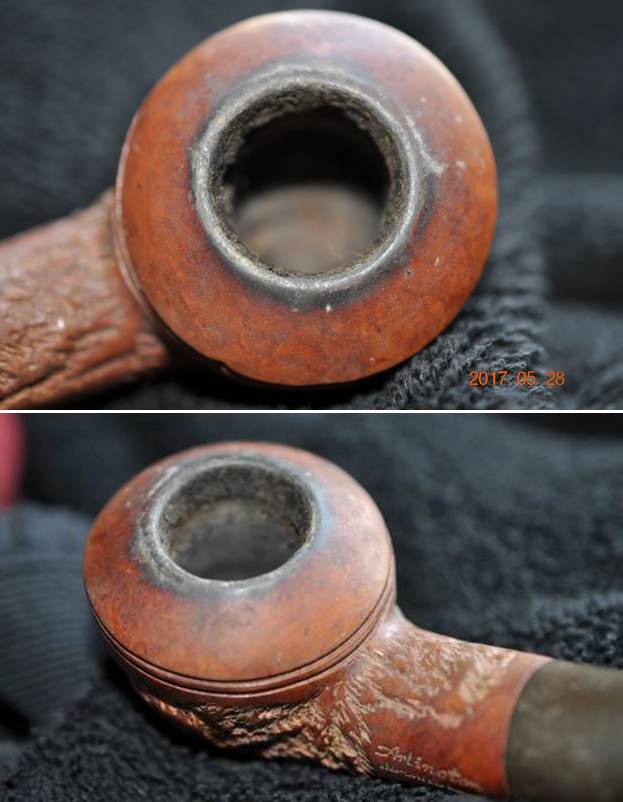
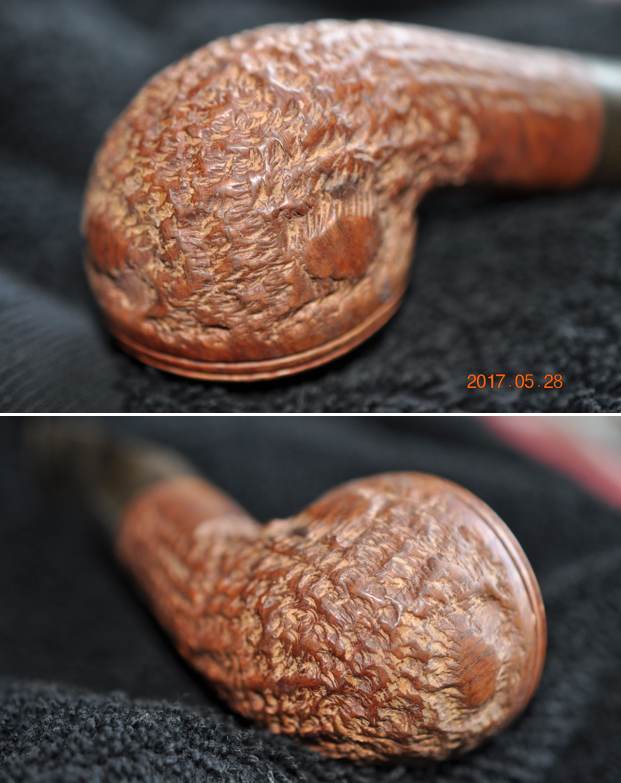
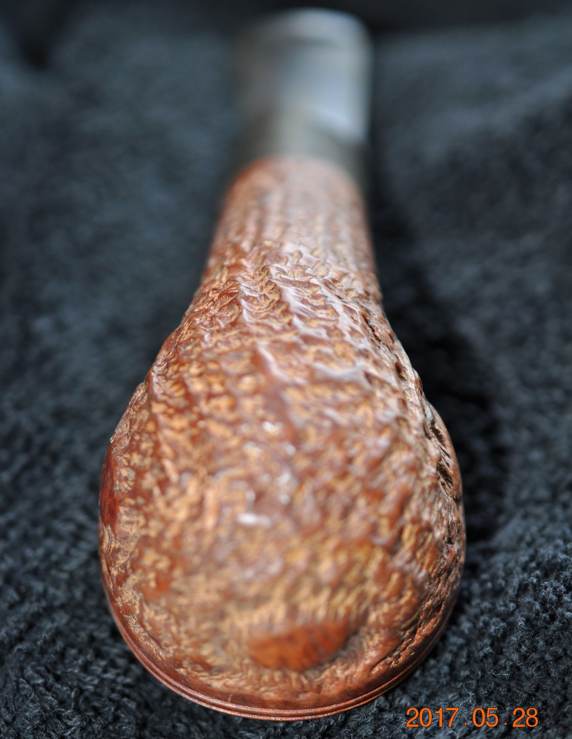
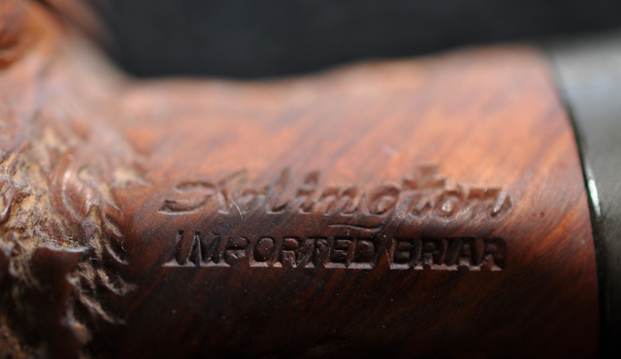
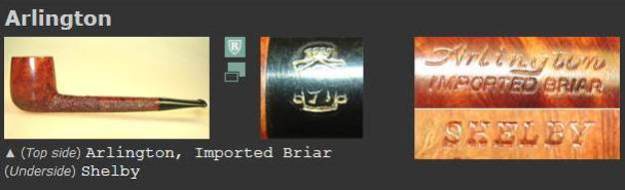
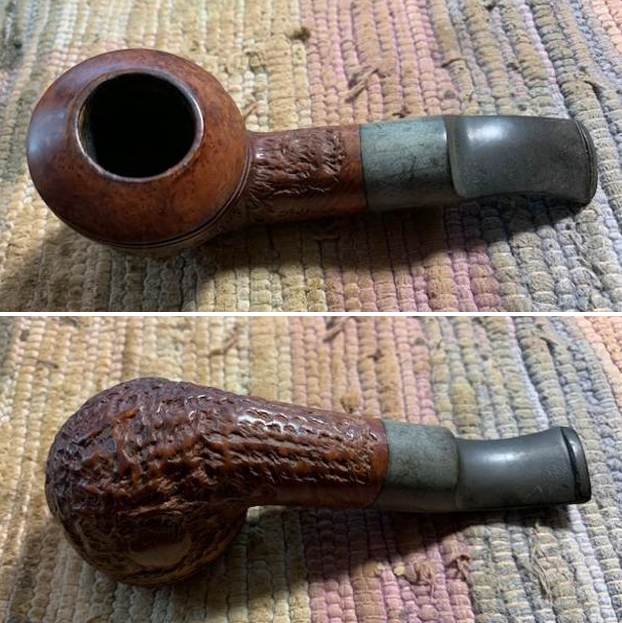
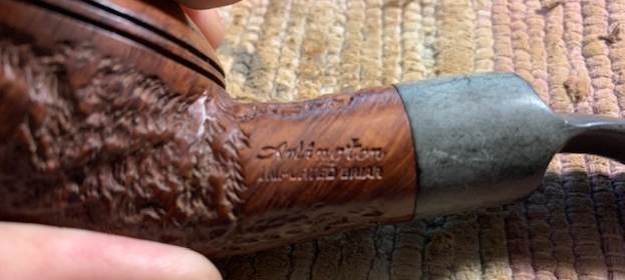
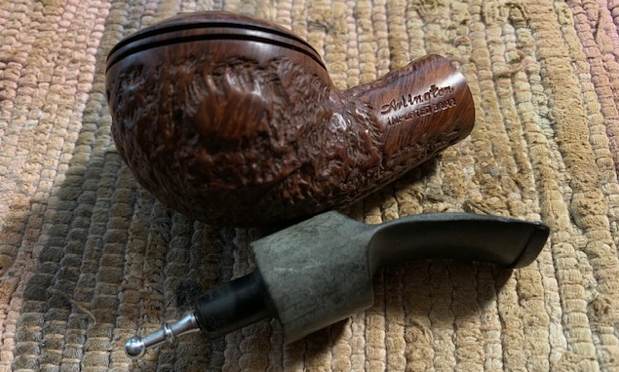
The next pipe on the work table is another pipe that has been here for over 5 years. Sad that there are some that have sat this long or longer before I got to them. But on the other hand I get to look through my boxes and pick out what turns my crank at the moment. This one was a nice looking bent Rhodesian with interesting rustication patterns. We picked it up back in May, 2017 off EBay from a seller in Lewisburg, Ohio, USA. It is stamped on the left side of the shank and reads Arlington in script [over] Imported Briar. The rustication is rugged but has a smooth spot on each side of the bowl, a panel on the front and each side of the shank and a smooth band around the shank end. It is dirty but is quite nice with the reds and browns of the briar and the black vulcanite stem. The pipe was another one that had obviously been someone’s favourite and must have been a grand smoker. The finish is very dirty with dust in the rustication. The bowl is heavily caked with a thick lava overflow on the rim top. The inner edge was also thickly caked with lava. The stem is lightly oxidized, calcified and had some tooth chatter on the top and underside ahead of the button. The pipe showed a lot of promise but it was a mess. Jeff took pictures of the pipe before he did his clean up work. He took photos of the rim top and bowl as well as the stem surfaces to show the condition of the well smoked pipe. You can see the thick cake in the bowl and the heavy lava on the inner edge and rim top. The stem was oxidized, calcified and had tooth chatter on both sides ahead of the button. He removed the stem from the shank and revealed a very tarry and dirty stinger apparatus that in the tenon.Jeff took some photos of the heel of the bowl and the side to give a sense of the rustication style around this pipe. He captured the stamping on the underside of the shank. It is readable as noted above. I turned to Pipephil to get a quick overview of the background information on the Arlington brand (http://pipephil.eu/logos/en/logo-a7.html). The side bar stated that it was a brand of the Arlington Briar Pipe Corp. I have included a screen capture of the pertinent information below.I turned to Pipedia for more information (https://pipedia.org/wiki/Arlington). I quote the article below.

Arlington Briar Pipes Corporation was founded in 1919 in Brooklyn, New York, and produced the Arlington, Briarlee, Firethorn, Kimberly, Krona and Olde London brands among dozens of others, primarily acting as a subcontractor making pipes to be sold under other brand names. Among others, in the 1950’s, Arlington turned pipes for the famed Wilke Pipe Shop in New York City. The corporation was dissolved by the State of New York as inactive on December 6, 1978. Arlington Briar Pipe Corporation, located at 200 Kosciusko Street, Brooklyn, New York, registered only a single brand trademark, the Arlington brand, the trademark for which was applied for on November 13, 1962 and granted on February 25, 1964. Jack Kaye, of Arlington Briar, was also granted a patent for a combined mirror and stand in 1967.

According to José Manuel Lopes, “North American brand that belonged to Arlington Briar Pipes Corp., Brooklyn, New York, founded in 1919. In the 1940s, Ludwig Rosenberger gave the company new life, and it continued until the 70s. His son, Mel Rosenberger, has recently launched the DiMonte brand. Jack Uhle was also linked to Arlington.” Arlington, as far as known, mainly operated as a sub-contractor for other brands. The Jobey pipes are said to be made by Arlington at an unknown point of time. Arlington’s own pipes are seldom seen.

The article also included the following photo from an RTDA catalog. It is a great addition to the information above.Now it was time to look at it up close and personal. Jeff had done an amazing job in removing all of the cake and the lava on the rim top. He had reamed the bowl with a PipNet Pipe Reamer and cleaned up the remnants with a Savinelli Fitsall Pipe Knife. He took the cake back to bare briar so we could check the walls for damage. He scrubbed the exterior of the bowl with Murphy’s Oil Soap and a tooth brush to remove the grime on the bowl and rim and was able to remove the lava and dirt. He cleaned out the interior of the bowl and shank with pipe cleaners, cotton swabs and alcohol until they came out clean. He cleaned the stem with Soft Scrub to remove the grime on the exterior. He cleaned out the airway with alcohol, cotton swabs and pipe cleaners. I took some photos of the pipe before I started my work on it today. I took a close up photo of the cleaned up rim top. The rim top and the inner edge look good. The bowl is clean and the walls are undamaged. The stem looks good with light tooth chatter along the top and underside ahead of the button.I took a photo of the stamping on the shank side. It is clear and readable as noted above.I took the stem off the pipe and took a photo. The Rhodesian is a chunky looking pipe with nice lines.I started my work on the pipe with a simple first step. I touched up the stain on the inner edge of the rim with an Oak Stain pen. It matched well and would work very well once I polished the rest of the rim top. I chose to do this at this stage as the polishing would served to blend it in and make it unnoticeable.I polished the smooth rim top and areas on the bowl and shank with micromesh sanding pads – dry sanding with 1500-12000 grit pads. After each pad I wiped the bowl down with a damp cloth to remove the sanding debris. It really took on a shine by the last three sanding pads. I rubbed the bowl down with Before & After Restoration Balm. I worked it into the surface of the briar with my fingertips where it works to clean, restore and preserve the briar. I let it do its magic for 15 minutes then buffed it off with a cotton cloth. The pipe looks incredibly good at this point in the process. I set aside the bowl and turned my attention to the stem. I heated the tenon with the flame of a lighter and was able to pull it out quite easily. I double checked the cleaning on it now that it was out of the tenon and found that it was very clean.I scrubbed the surface of the stem with Soft Scrub cleanser to remove the oxidation on the surface. Once I was finished it looked significantly better.I sanded the tooth chatter and remnants of oxidation on both sides with 220 grit sandpaper and started the polishing with 400 grit wet dry sandpaper. Each step took it closer to the finished look.I continued to polish the stem with micromesh sanding pads – wet sanding with 1500-12000 grit sanding pads. I wiped it down after each sanding pad with Obsidian Oil. I polished it further with Before & After Stem Polish – both Fine and Extra Fine. I gave it a final coat of Obsidian Oil and set it aside to cure. I am excited to finish this Arlington Imported Briar Rhodesian. I put the pipe back together and buffed it with Blue Diamond on the buffing wheel. I gave the bowl multiple coats of Conservator’s Wax and the stem multiple coats of carnauba wax. I buffed the pipe with a clean buffing pad to raise the shine and then by hand with a microfibre cloth to deepen it. It is fun to see what the polished bowl looks like with beautiful grain on the smooth portions and the rustication depths all around it. The polished grain on the pipe looks great with the black vulcanite stem. This Arlington Rhodesian is great looking and the pipe feels great in my hand. It is light and well balanced. Have a look at it with the photos below. The dimensions are Length: 5 inches, Height: 1 ½ inches, Outside diameter of the bowl: 1 ¾ inches, Chamber diameter: 7/8 of an inch. The weight of the pipe is 54 grams/1.90 ounces. It turned out to be a beautiful pipe. I will soon be putting it on the rebornpipes store in the American Pipemakers Section. If you are interested in adding it to your collection let me know. Remember we are the next in a long line of pipe men and women who will carry on the trust of our pipes until we pass them on to the next trustee. Thanks for your time reading this blog.