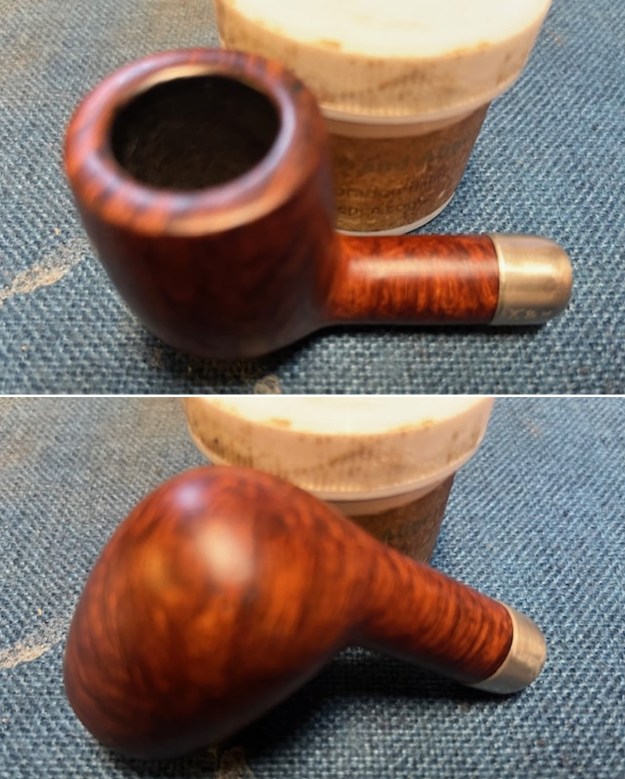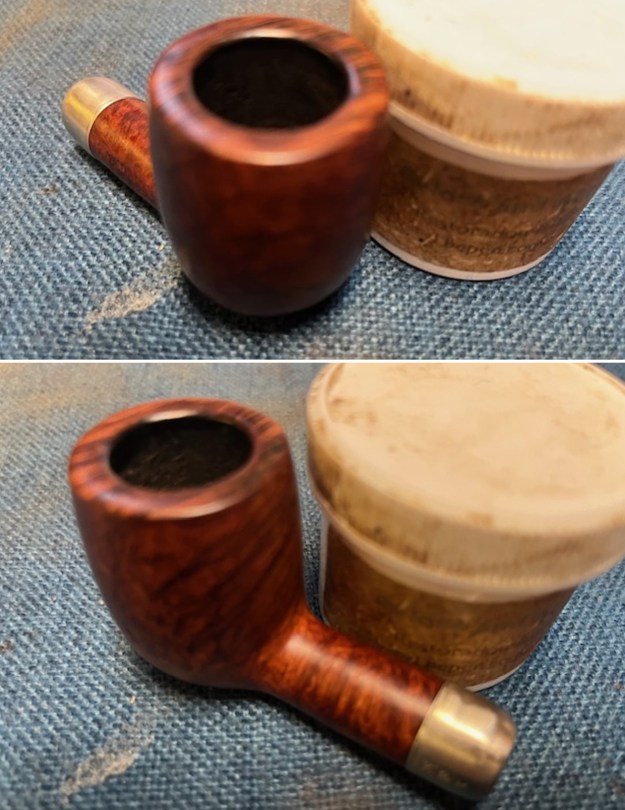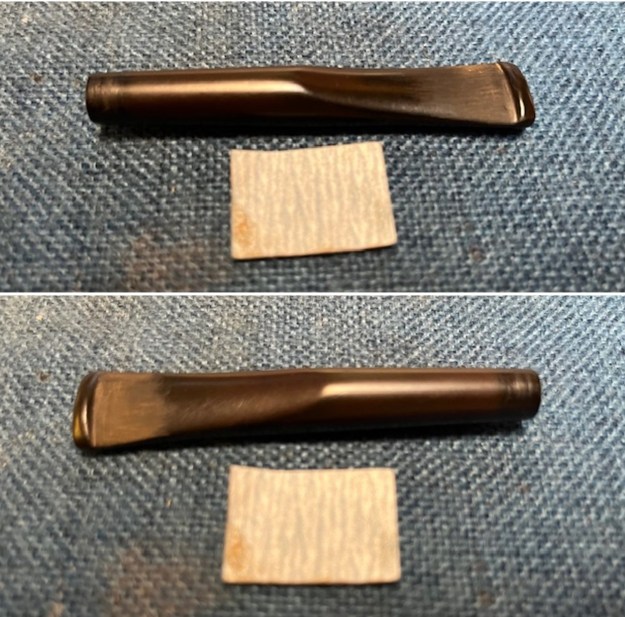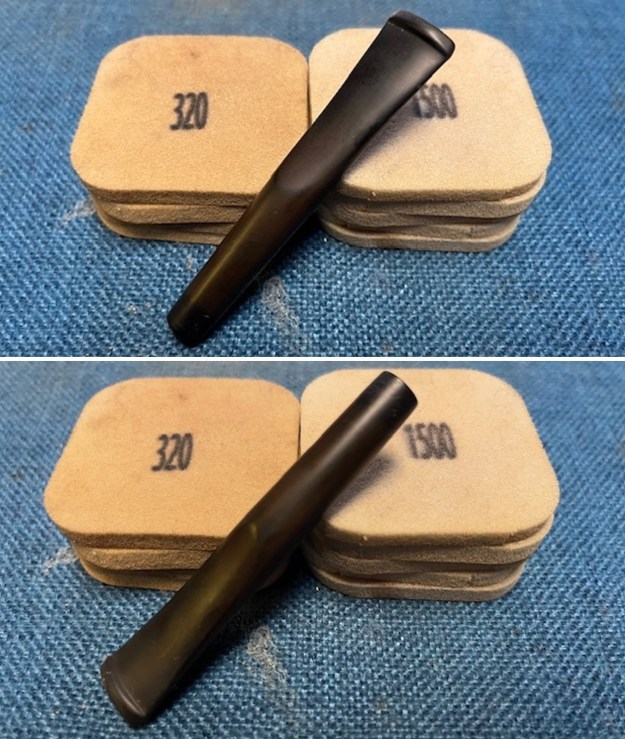
Tag Archives: Stem repairs

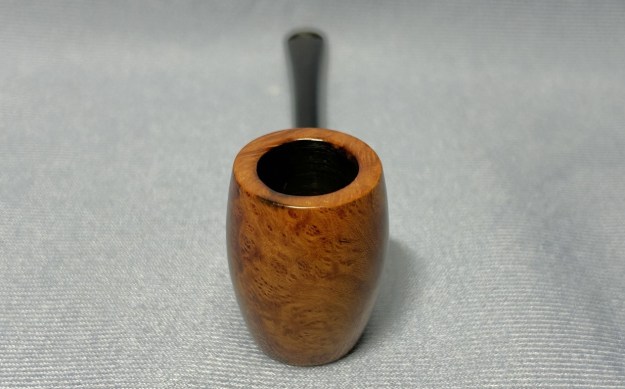
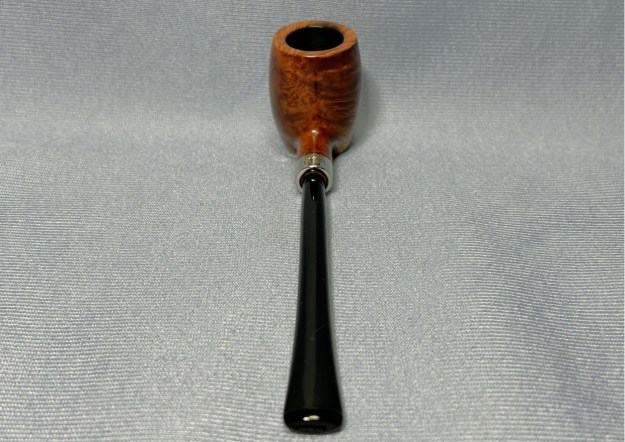
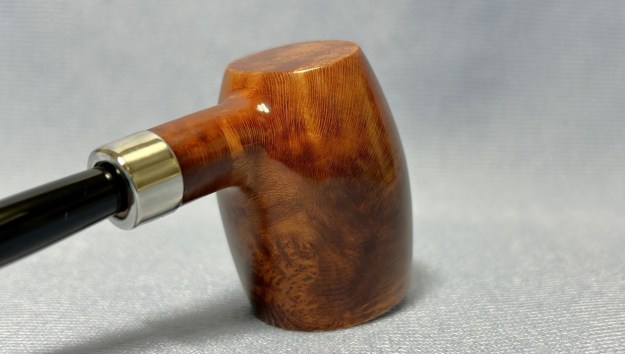
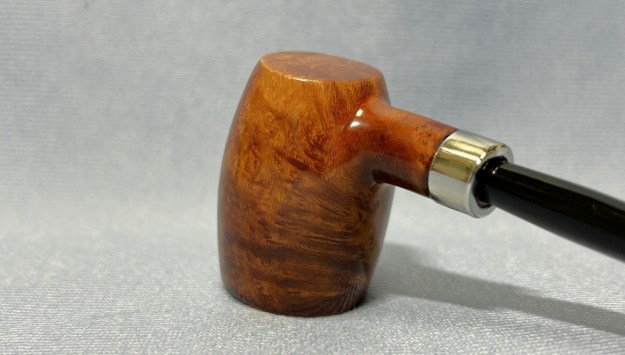
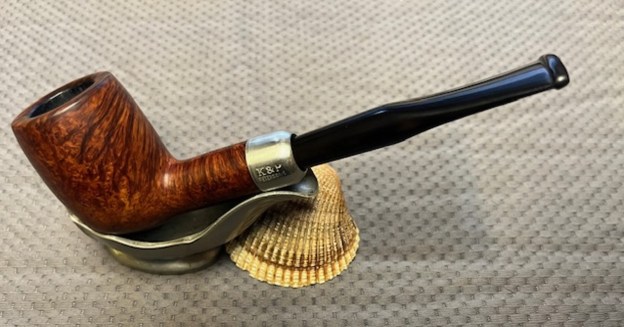
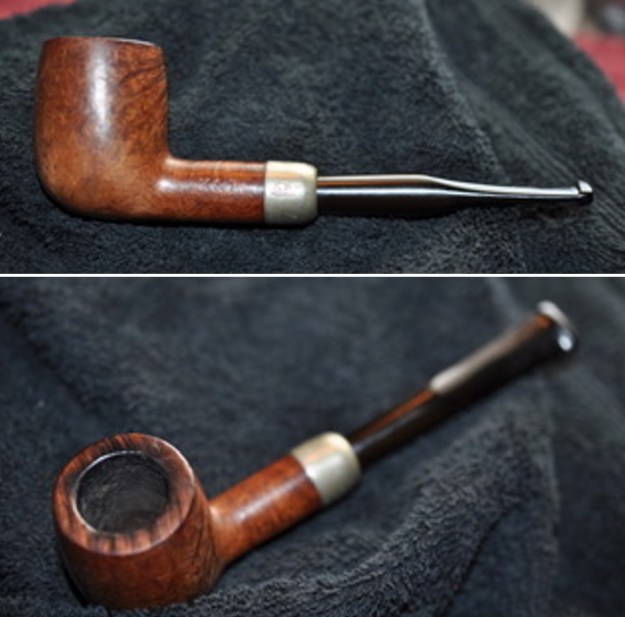
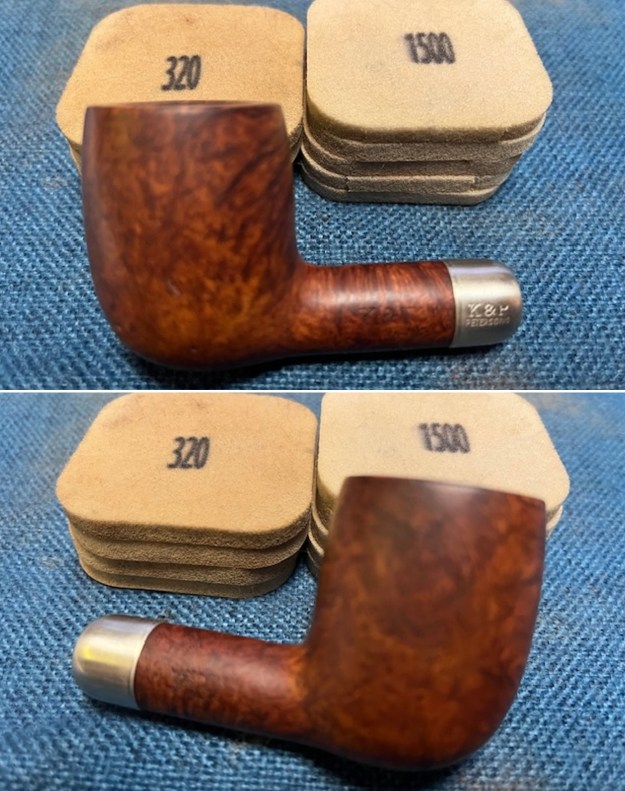
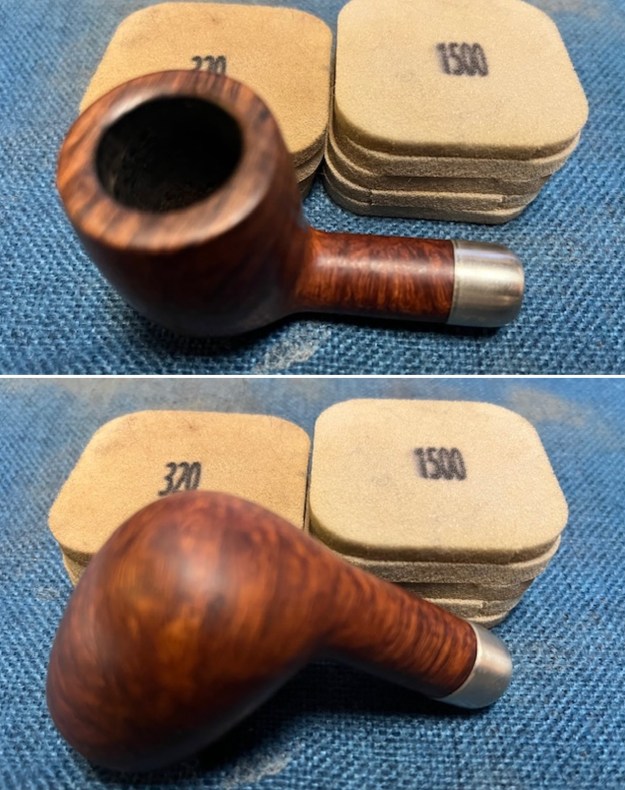
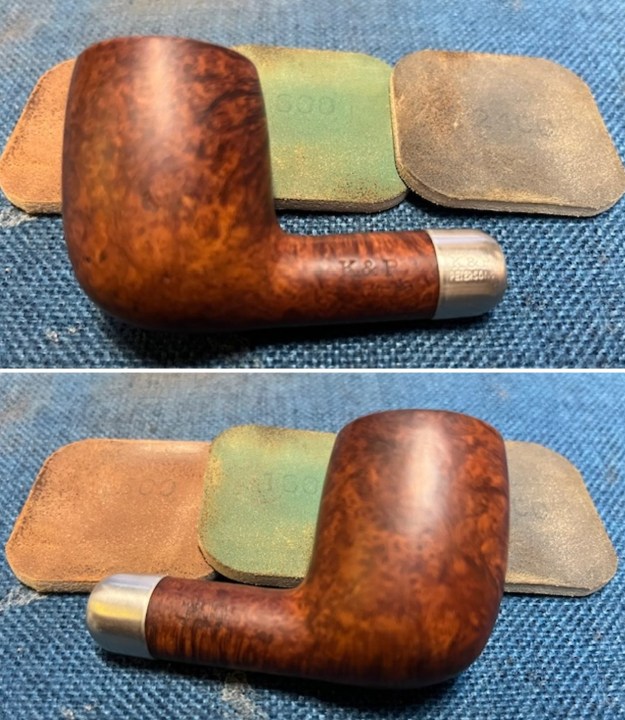
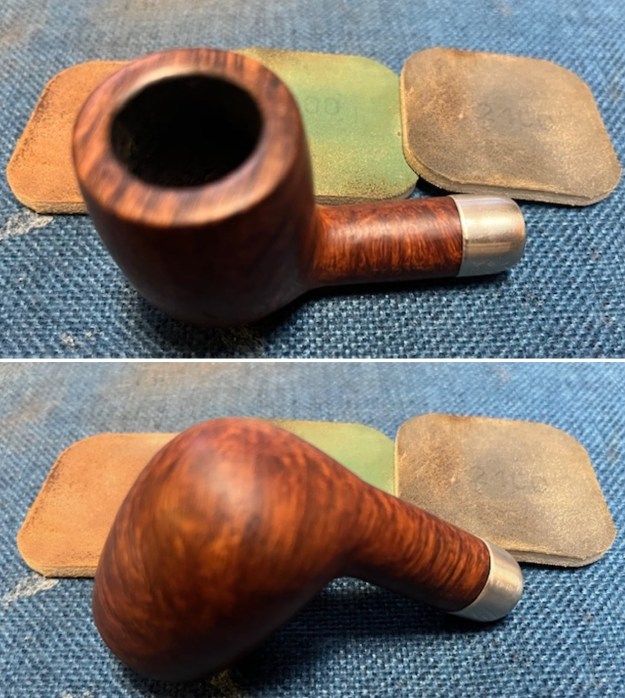
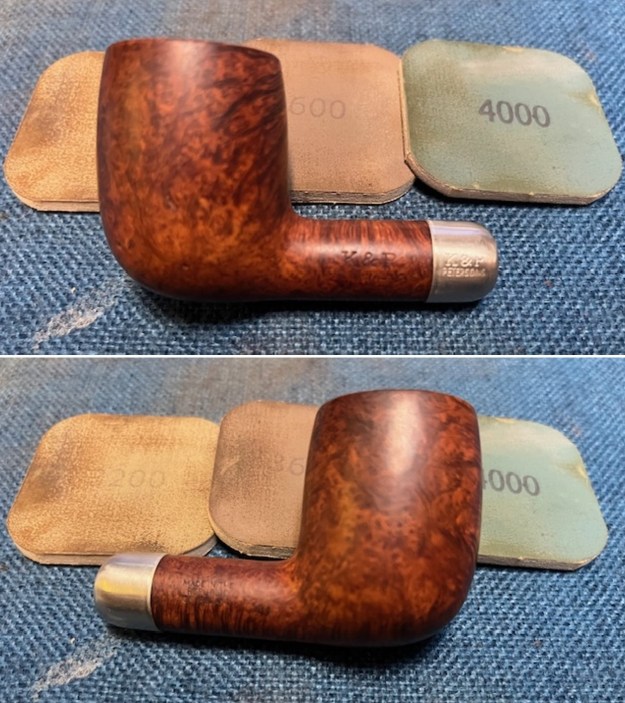
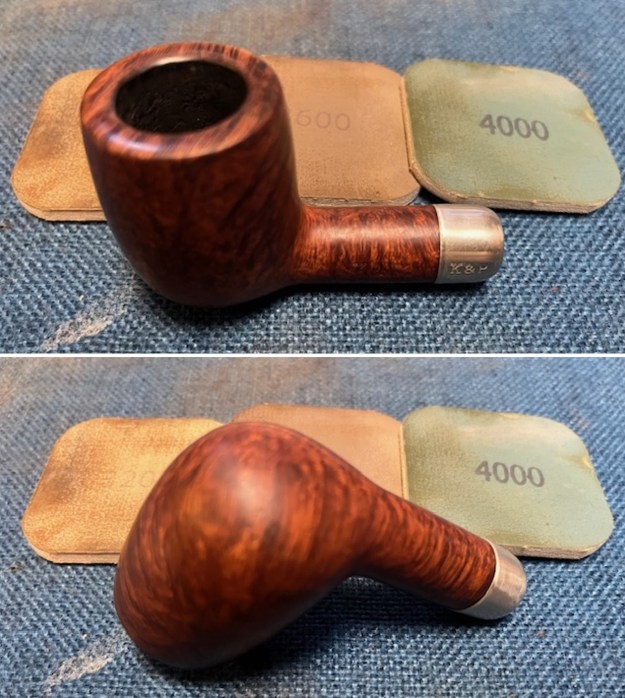
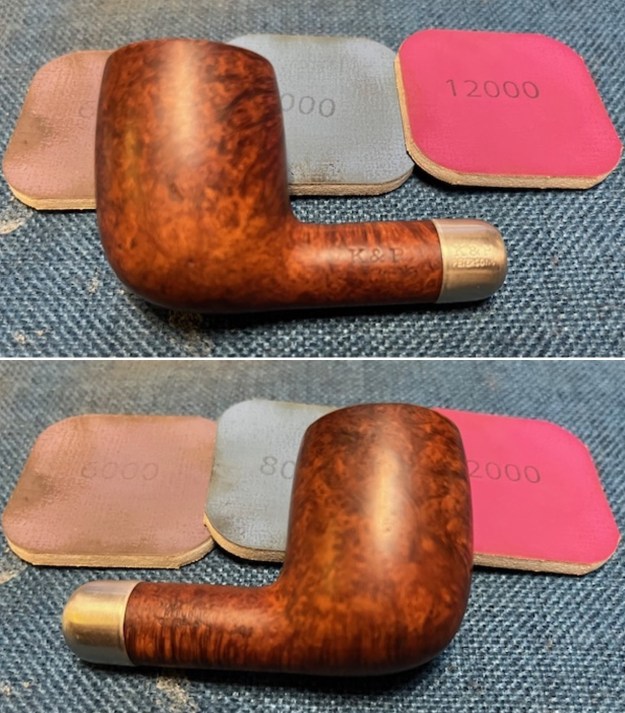
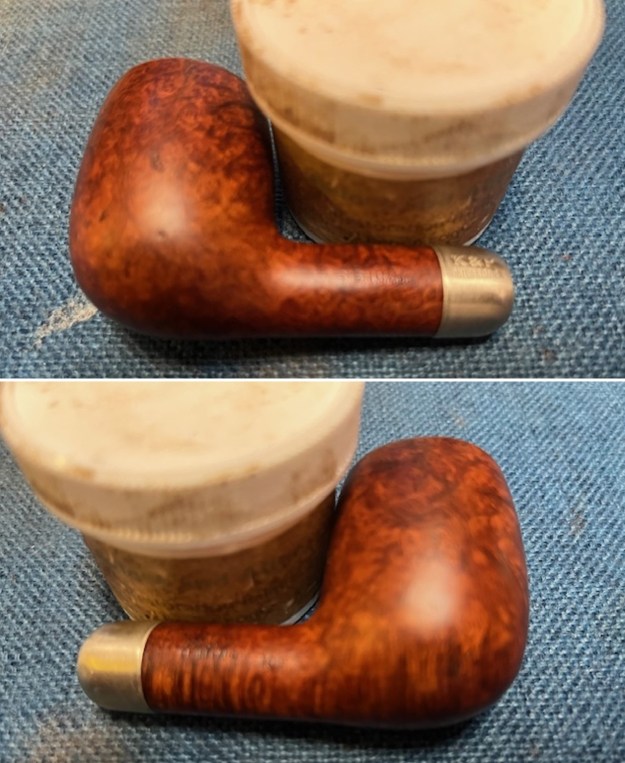
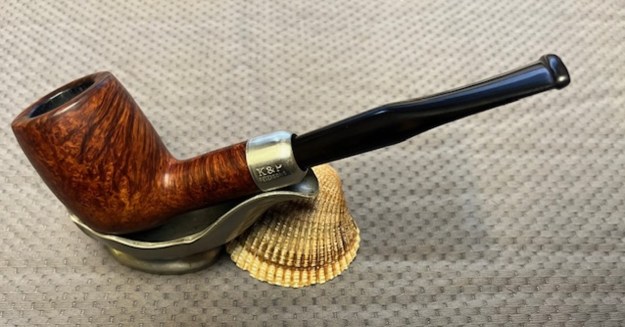
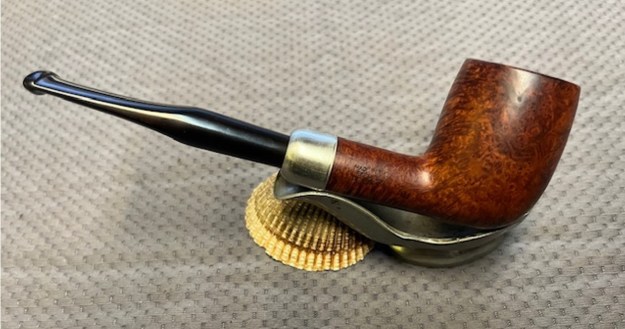
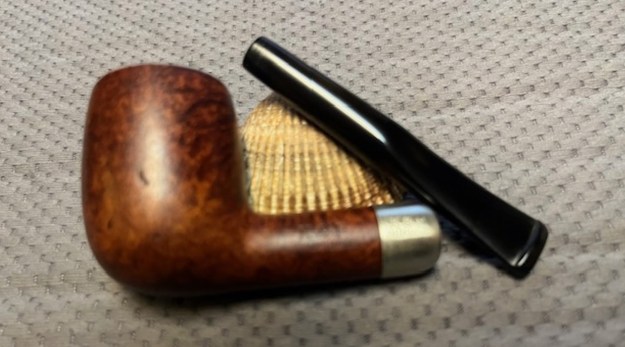
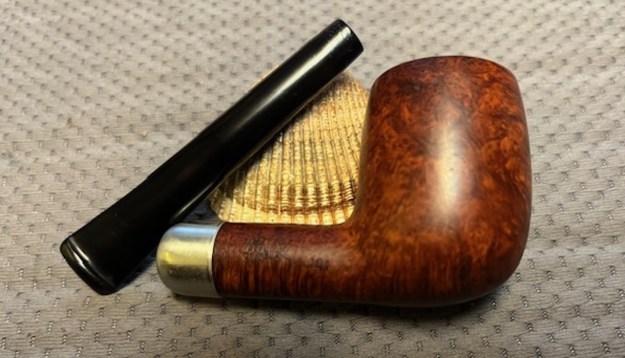
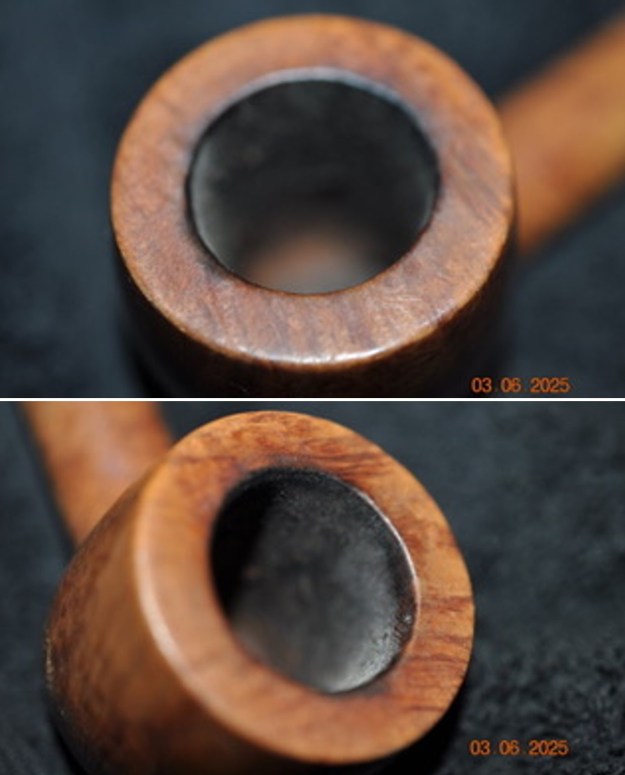
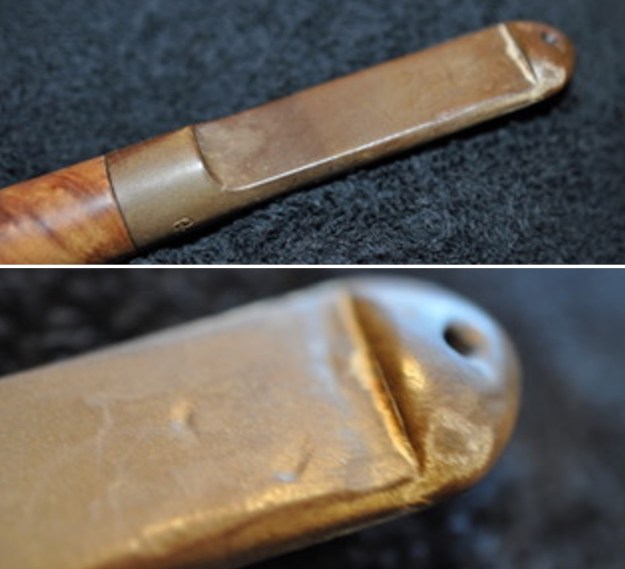
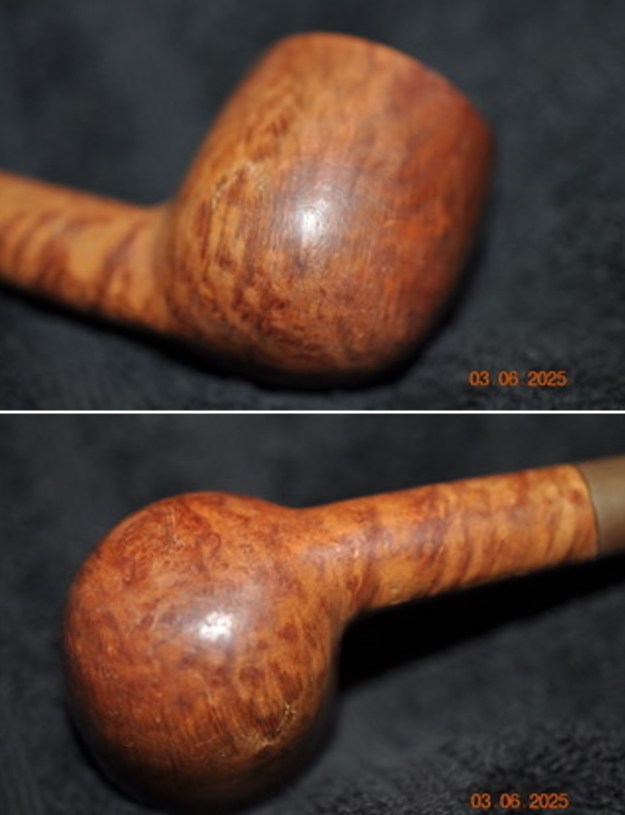
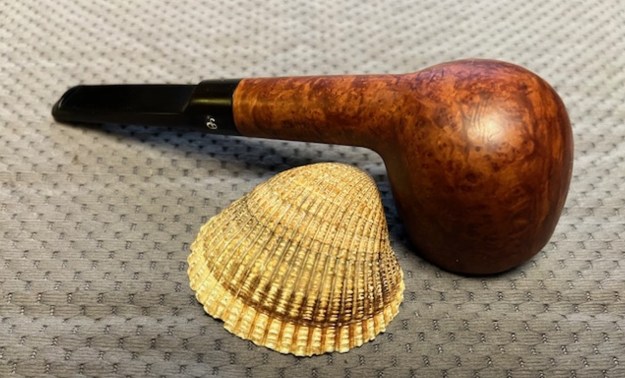
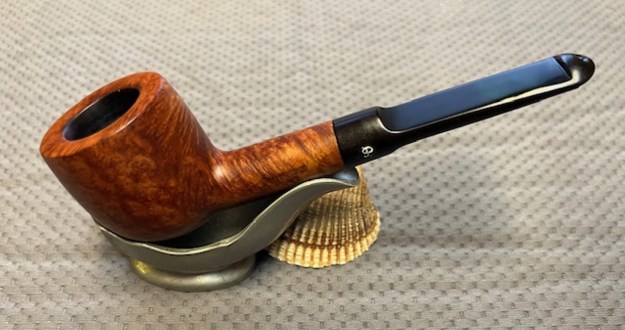
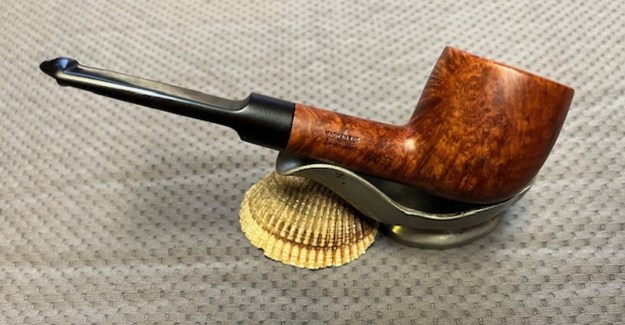
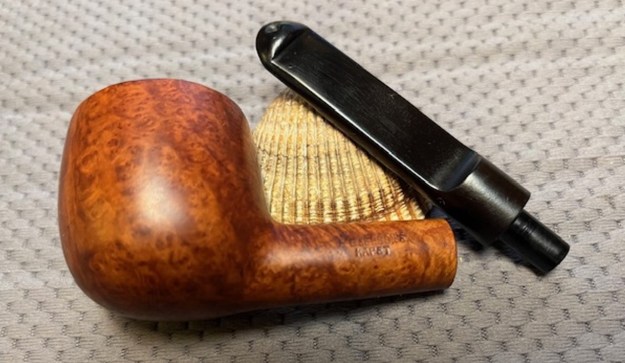
You Got to Love these Peterson’s Republic Era K&P Irish Made 101 Billiards

by Steve Laug

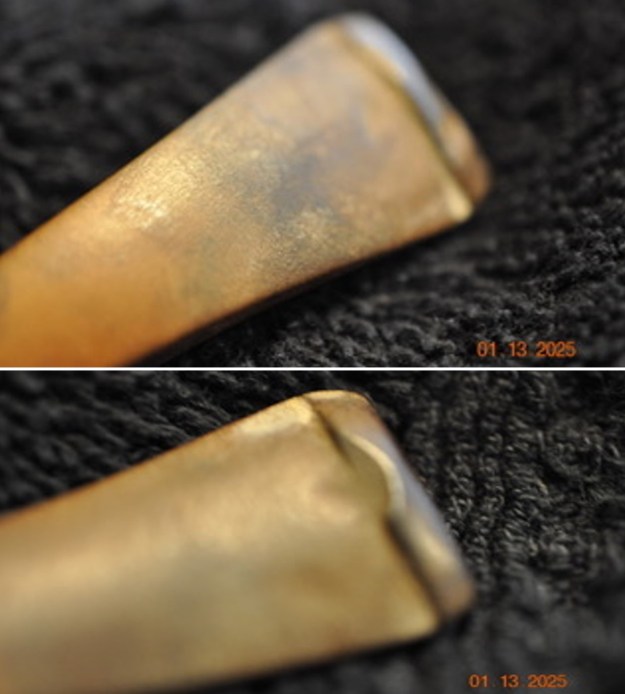
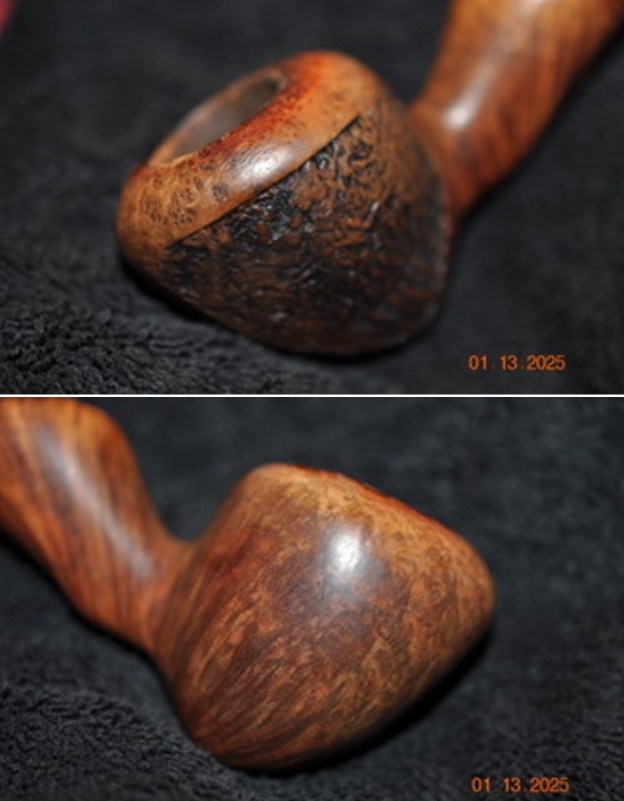
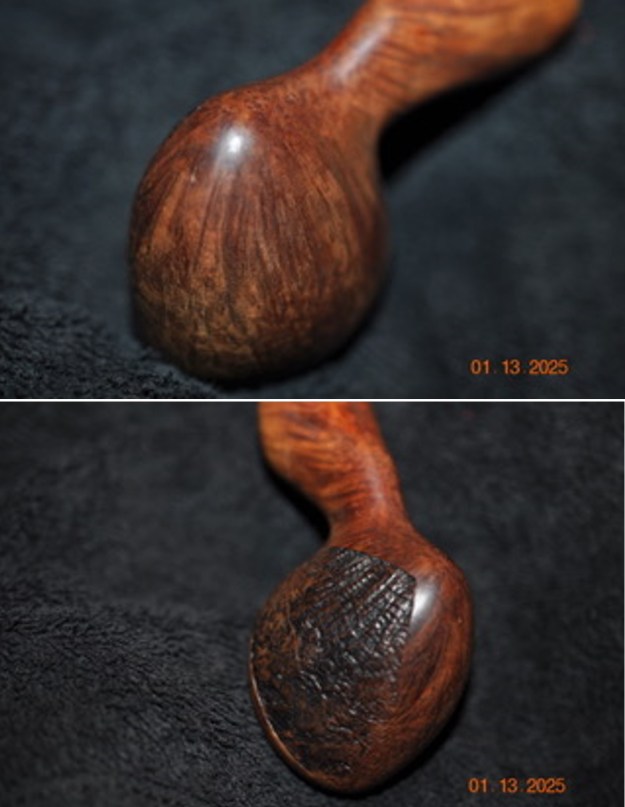
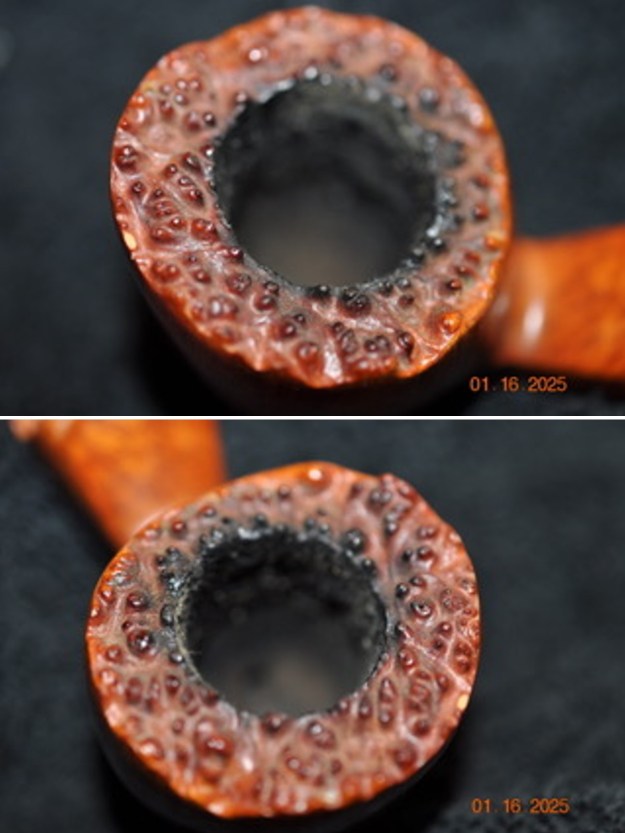
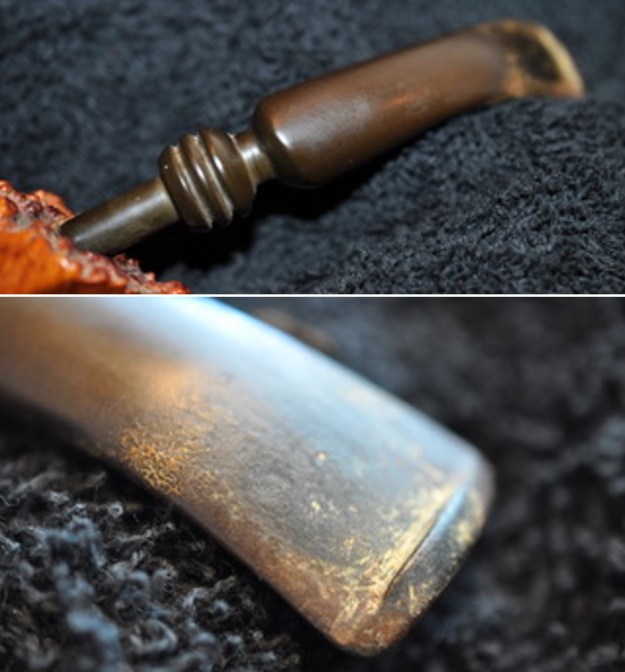
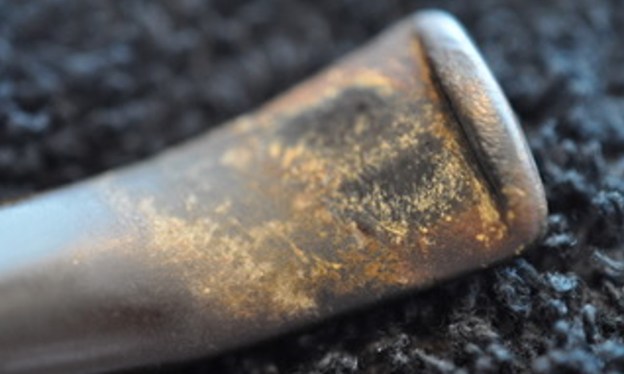
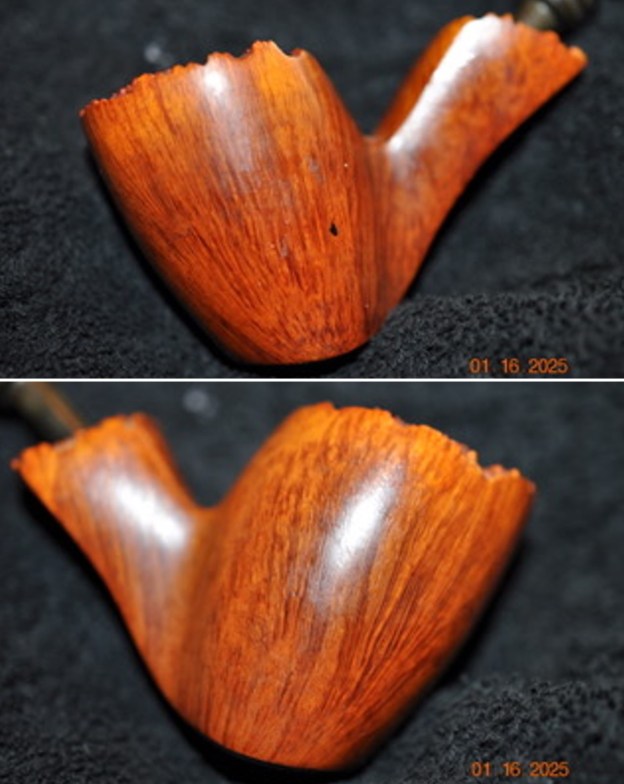
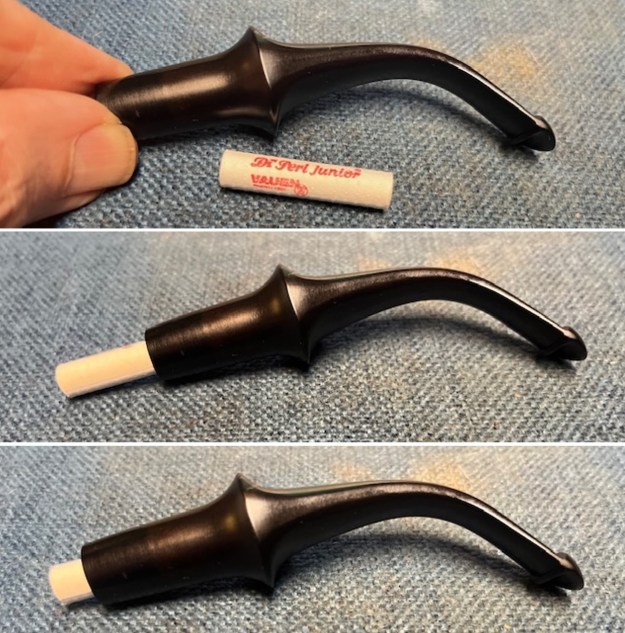
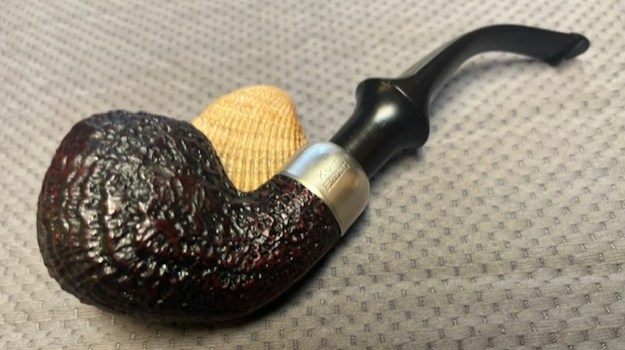
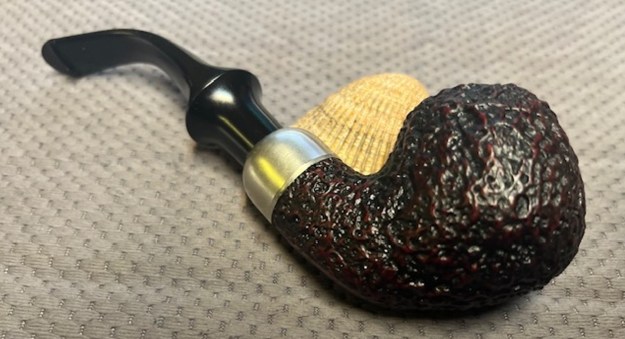
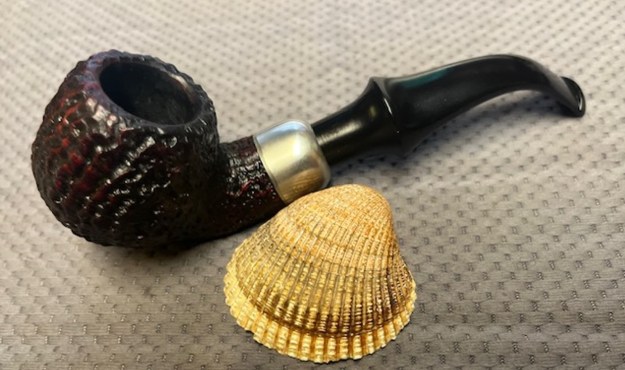
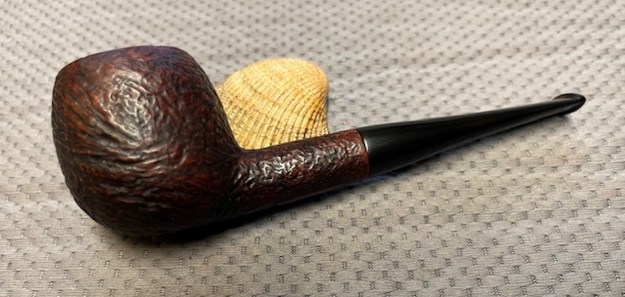
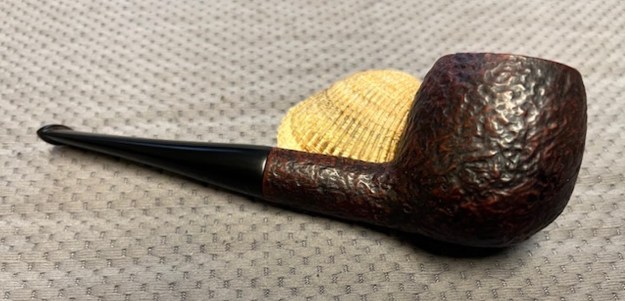
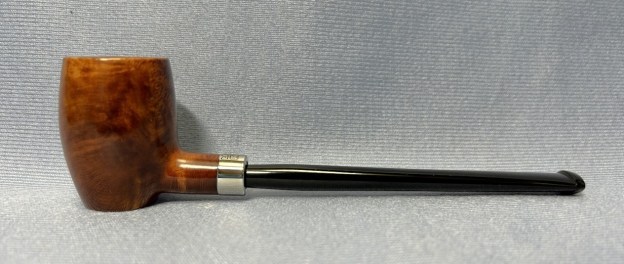
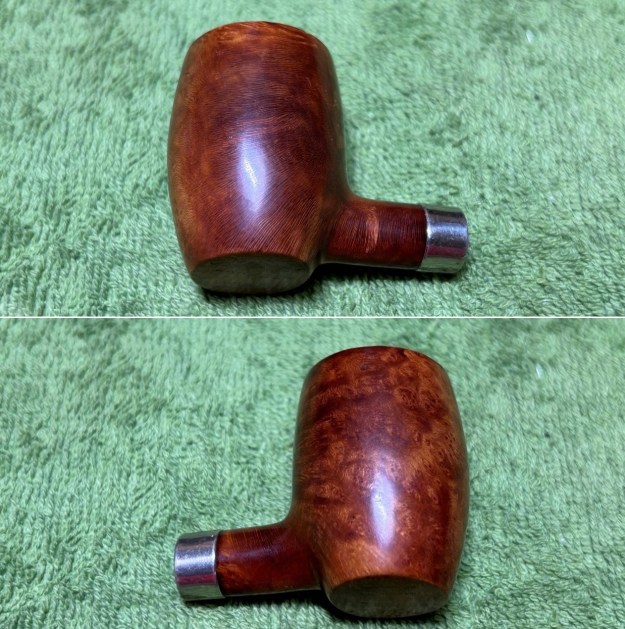
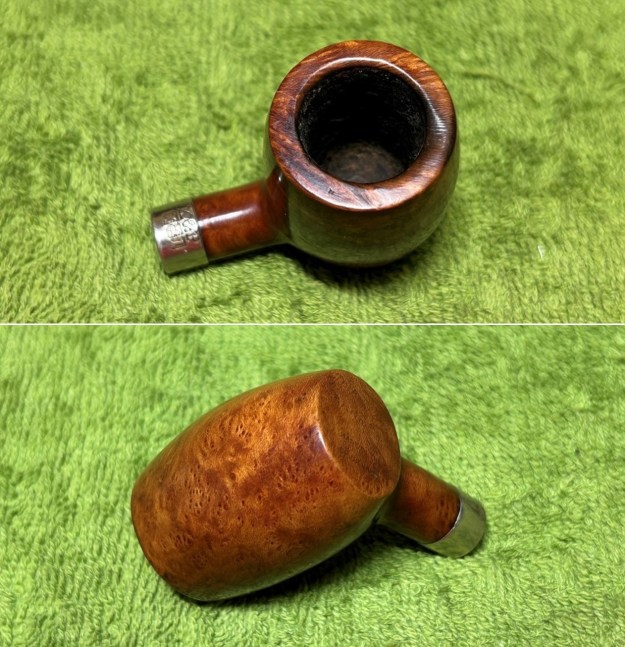
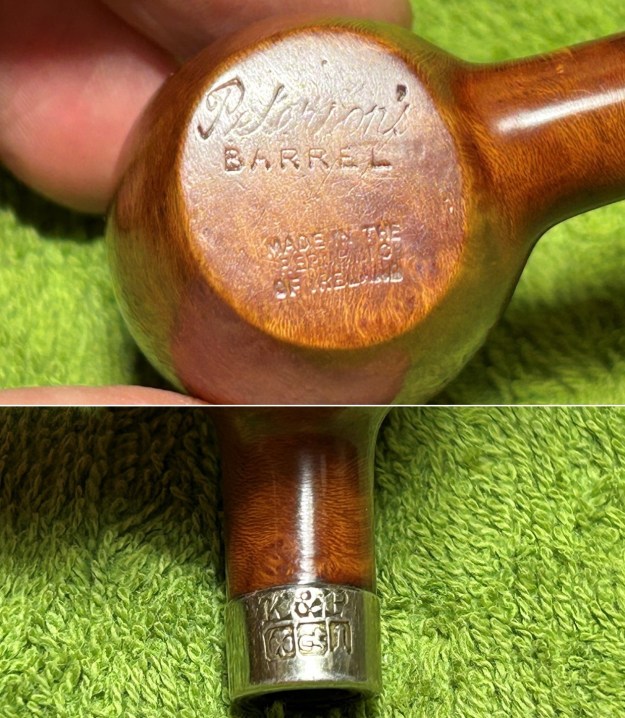
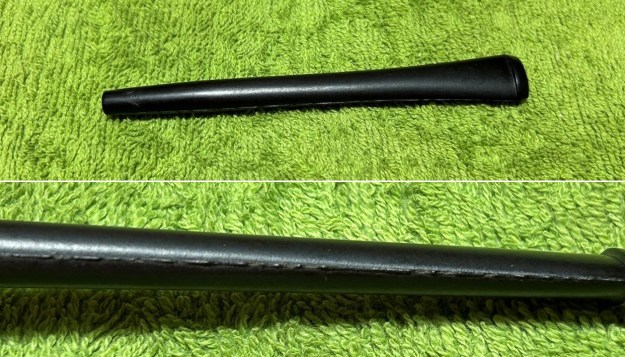
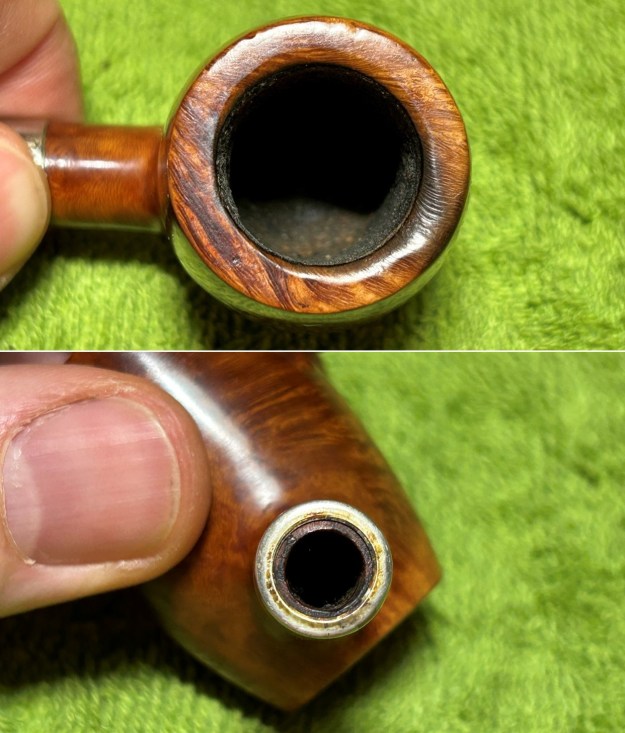
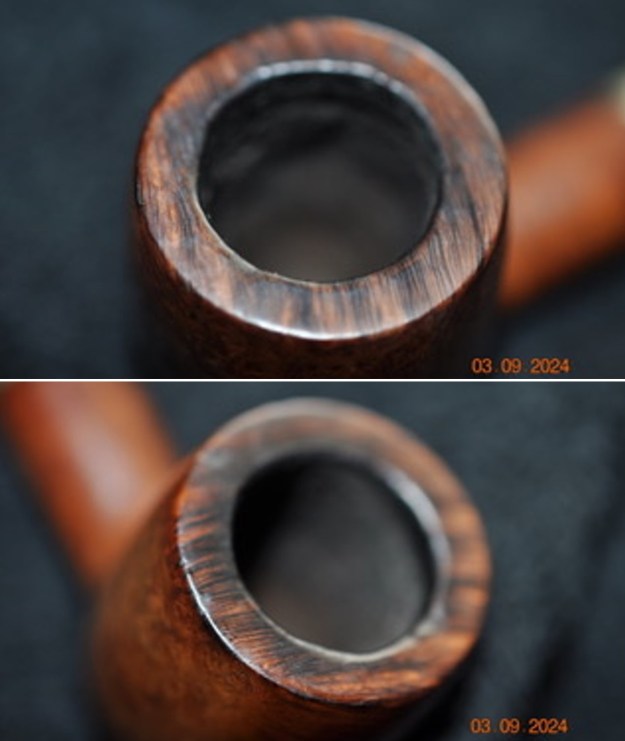
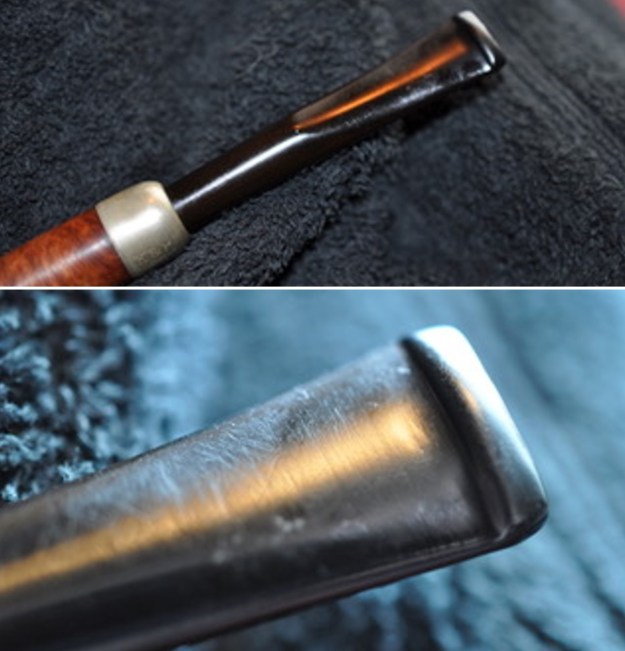
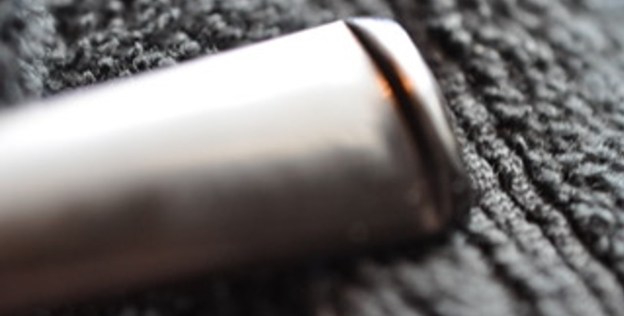
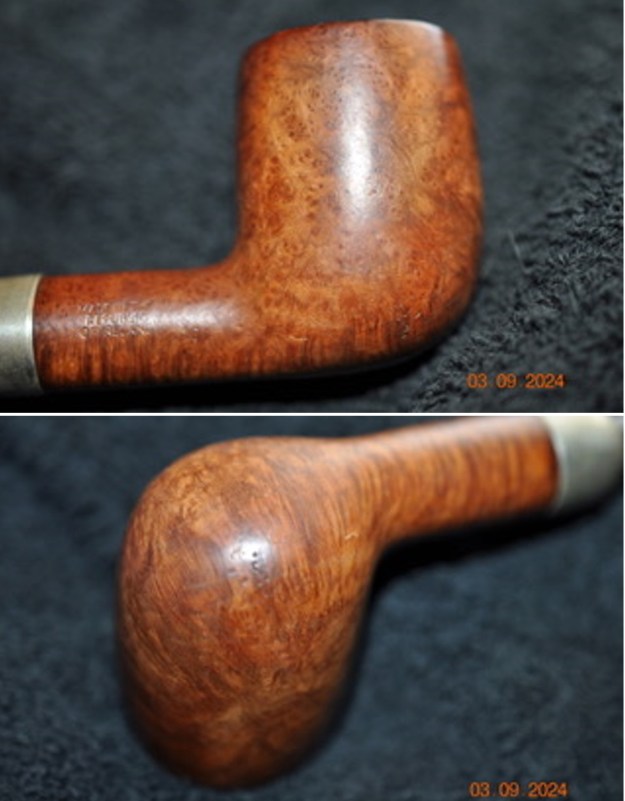
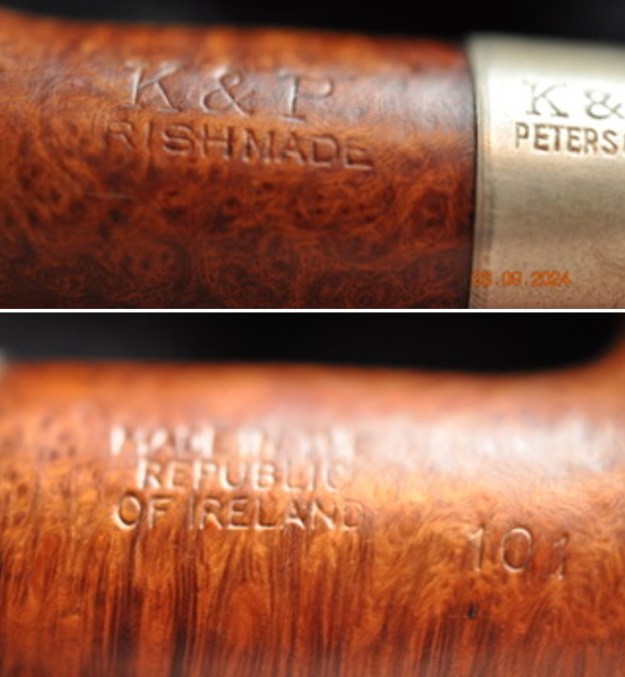
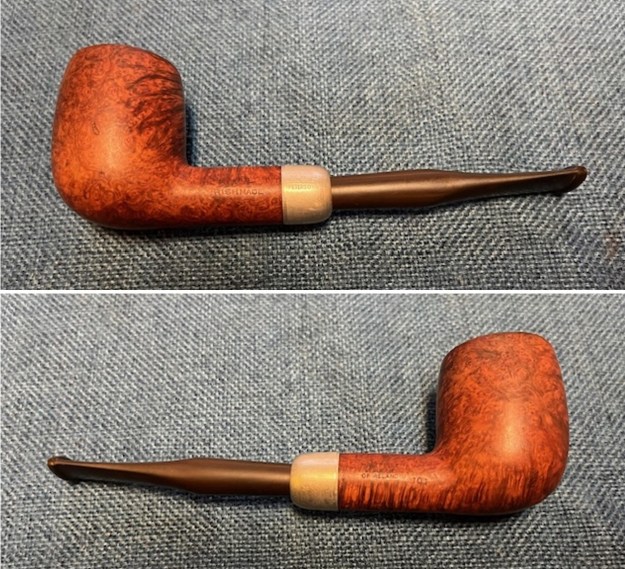
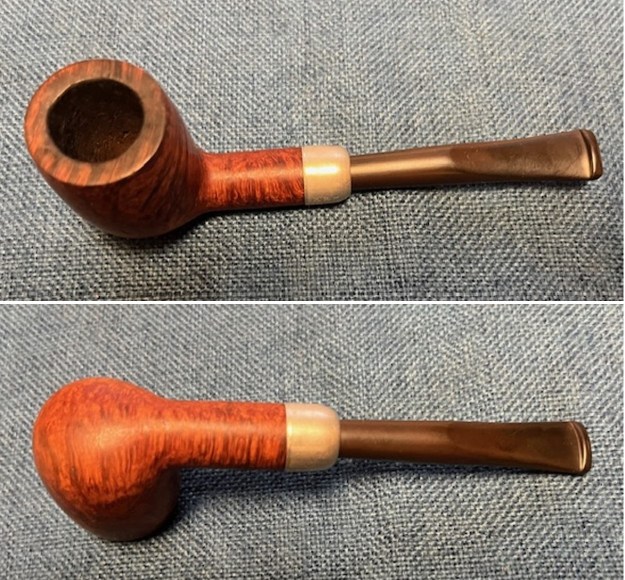
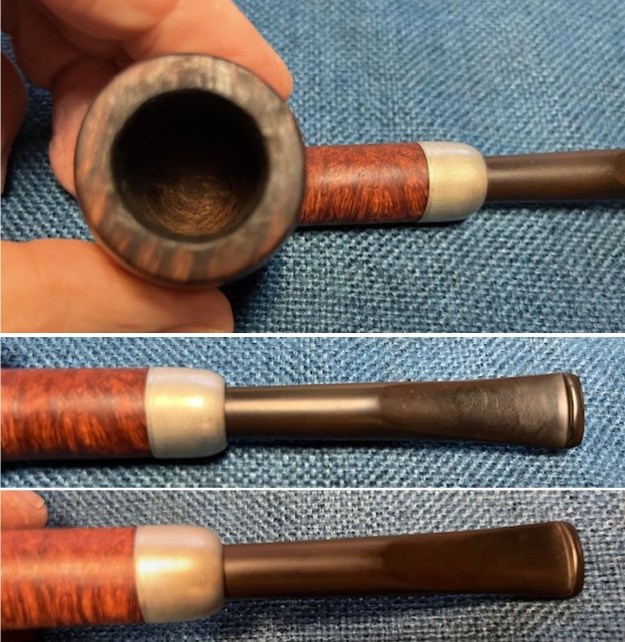
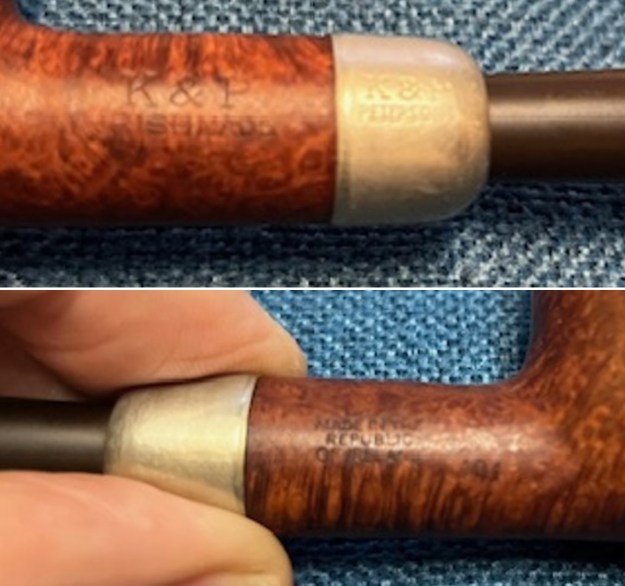
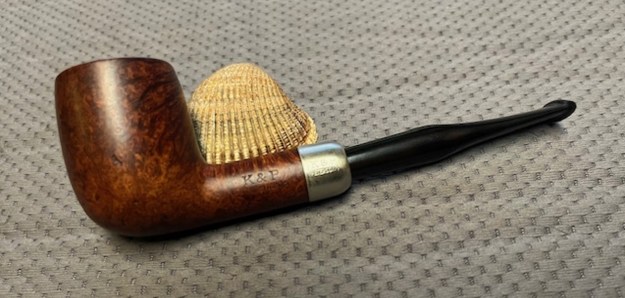
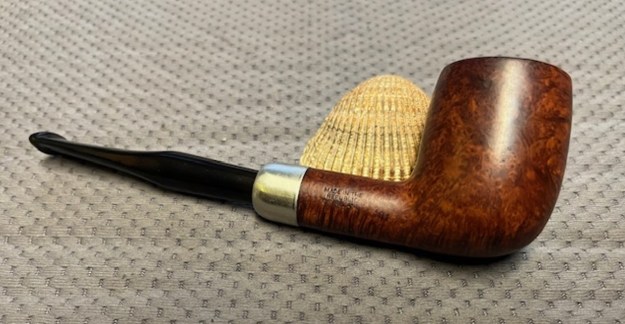
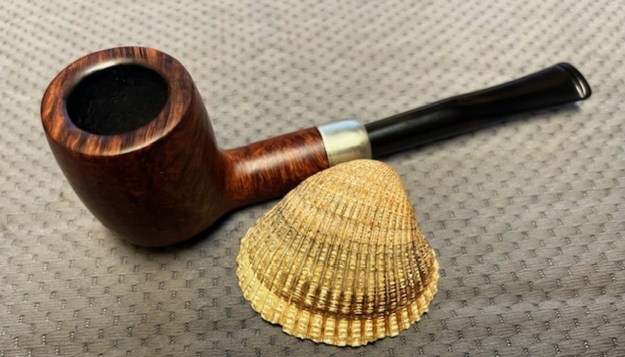
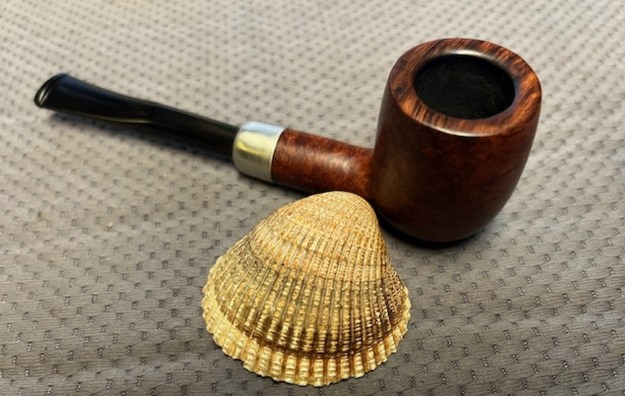
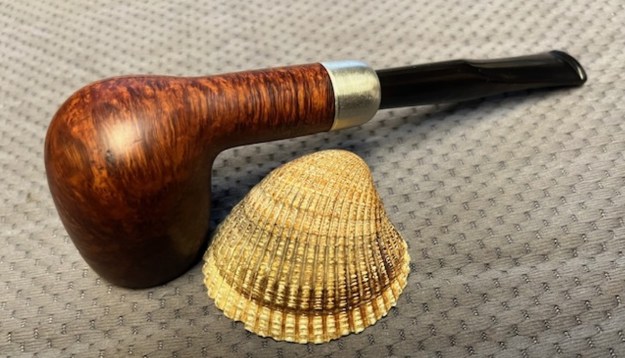
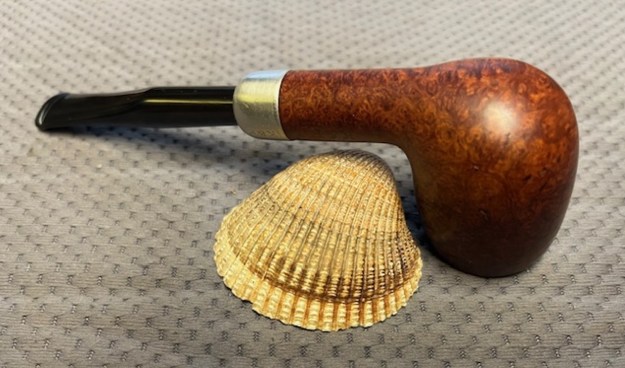
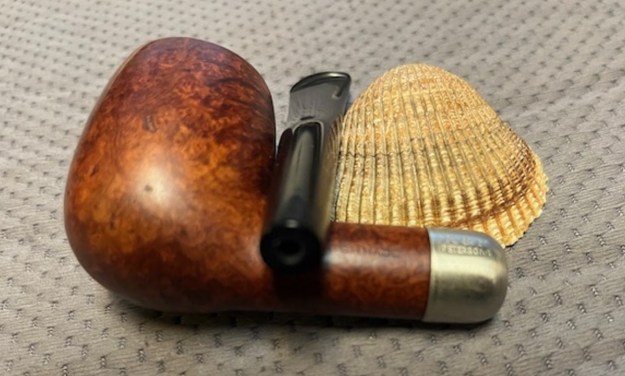
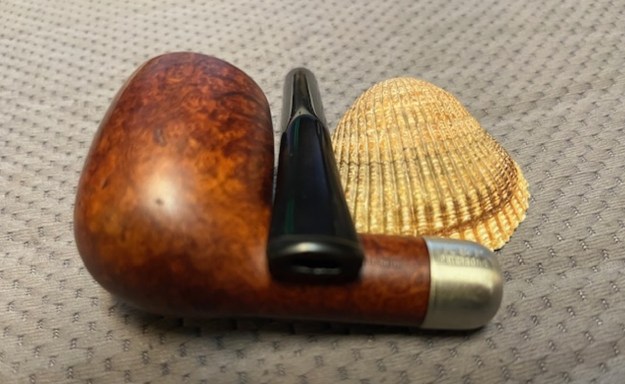
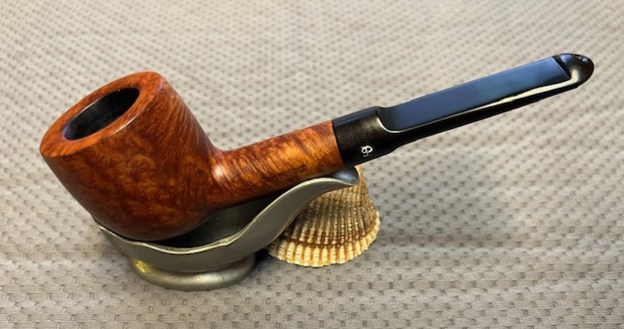
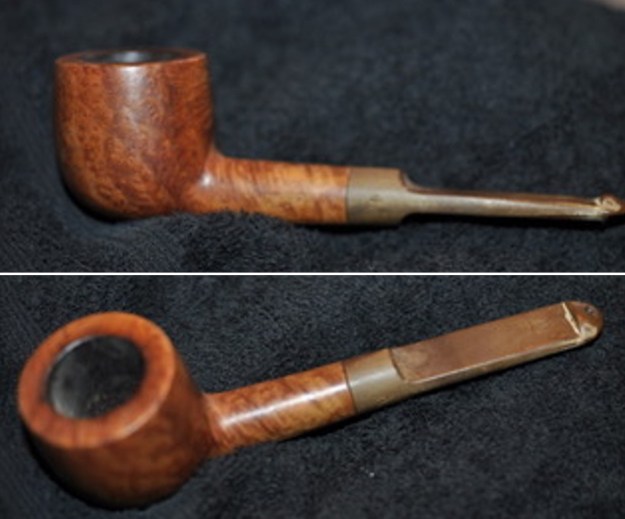
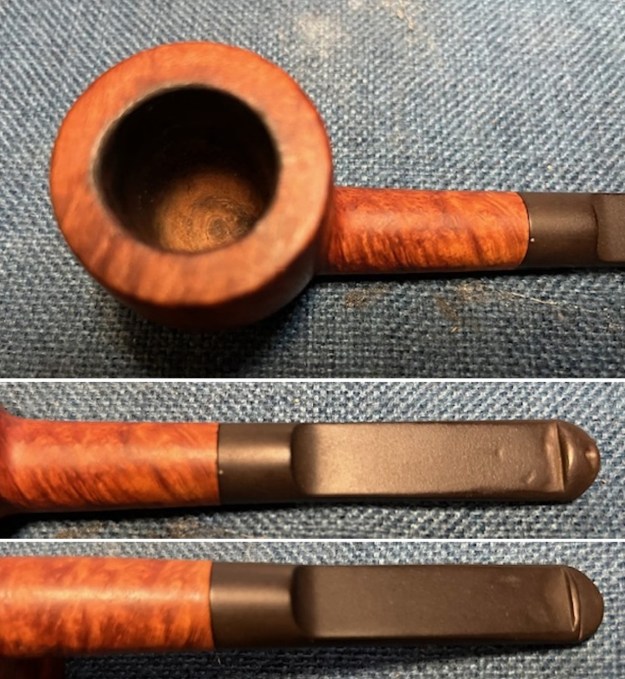
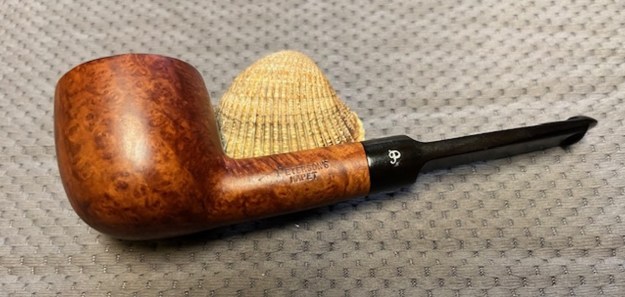
This great looking Billiard pipe was purchased on 04/11/2024 from our contact in Copenhagen, Denmark. It is stamped on the left side of the shank and clearly reads K&P [over] Irish Made. On the right side it is stamped Made in the Republic of Ireland [three lines]. The shape number 101 is stamped to the right of that next to the bowl/shank junction. The nickel ferrule is stamped K&P [over] Petersons. The bowl had a cake on the walls and fortunately little overflow of lava onto the rim top and edges. The inner edge had some damage and darkening. The smooth finish is dirty with debris and oils. The vulcanite taper, fishtail stem has no stamp or logo on it. It was lightly oxidized and had tooth marks and chatter on both sides near the button. It was a beautiful looking pipe even through the grime in the finish. Jeff took photos of the pipe before he started cleaning it up. Have a look.Jeff took close up photos of the bowl and rim top to show the condition of the bowl and the rim top. In the close up you can see the light lava on the rim top, inner edge and the cake in the bowl. The damage on the rim top and the inner edge is also visible. He also took close up photos of the stem to show its condition as mentioned above. He also took photos of the tooth marks and chatter on both sides of the stem. He took photos of the bowl sides and heel to show the grain around the bowl. The grain is quite nice even through the grime. He took photos of the stamping on the sides of the shank. The stamping is clear and readable as noted above. The stamping on the nickel ferrule is also clear.I did not have a lot of back story on the Irish Made pipes so I turned to Peterson’s website to see what I could find out about the line specifically(https://www.peterson.ie/pipes/classic/irish-made-army/moreinfo.cfm?pd_product_id=991). Turns out the Irish Made Army pipes were a series of pipes. The information was quite helpful and I have included it below.

About The Series

Since the 19th century, we’ve made army mounted pipes, defined by their inclusion of a sturdy mount reinforcing the shank and a push-style tenon that can be removed easily from the shank, without risking damage to the pipe. Our entry-level, Irish Made Army line is one of our oldest and most popular within that style, featuring nickel army mounts and reserved walnut finishes. Merging utilitarian design with practical grace, it’s available in a variety of classic, non-System shapes, including straight designs.

From there I turned to Mark Irwin’s Petersonpipenotes blog to see if he had specifically worked on or noted this line (https://petersonpipenotes.org/tag/peterson-kp-irish-army/). He had and I quote a short section below from the site.

The “K&P” in “K&P over IRISH MADE” is actually part of the line’s name, which most people don’t know, and understandably so. The non-System army-mount Peterson dates from the 1906 catalog and has been issued in several line names. It is currently enjoying a huge vogue, with Peterson releasing two or three new army-mount lines every season.

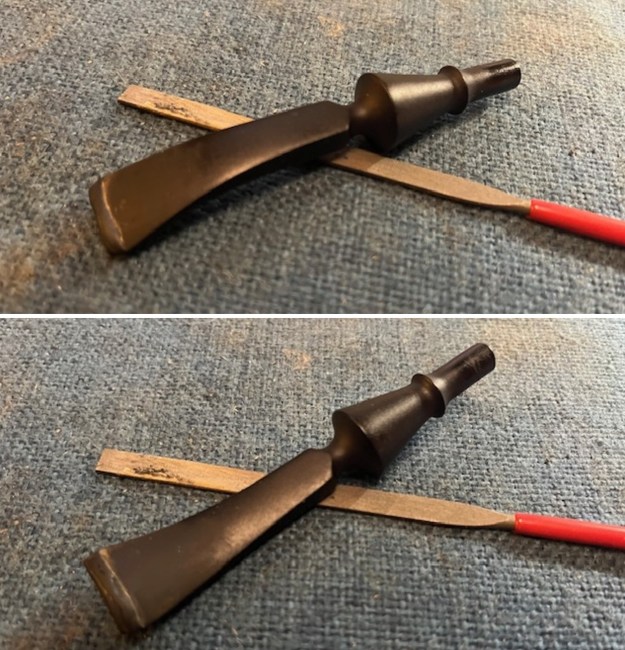
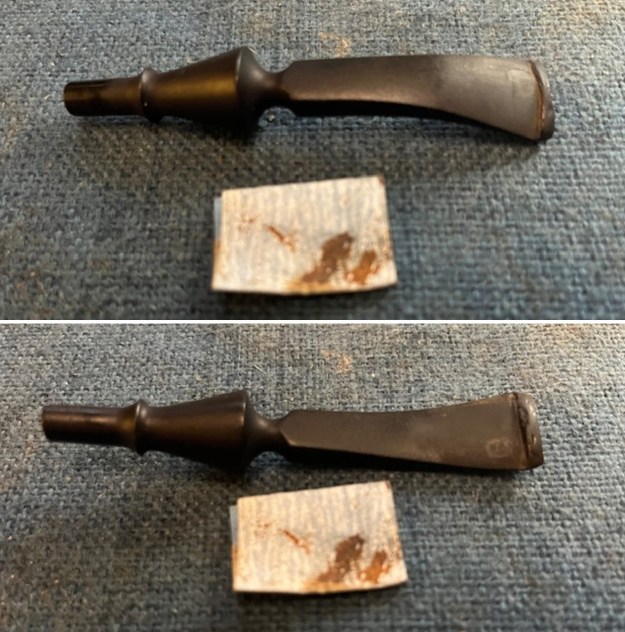
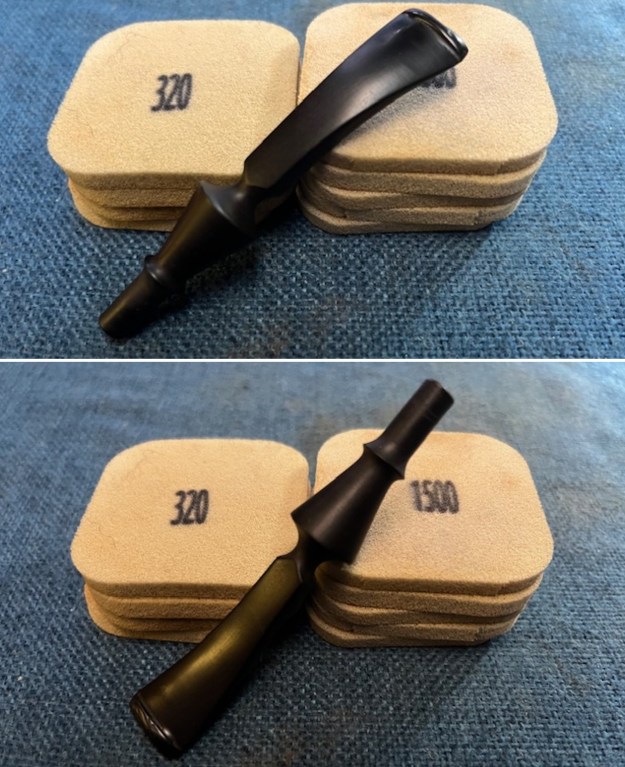
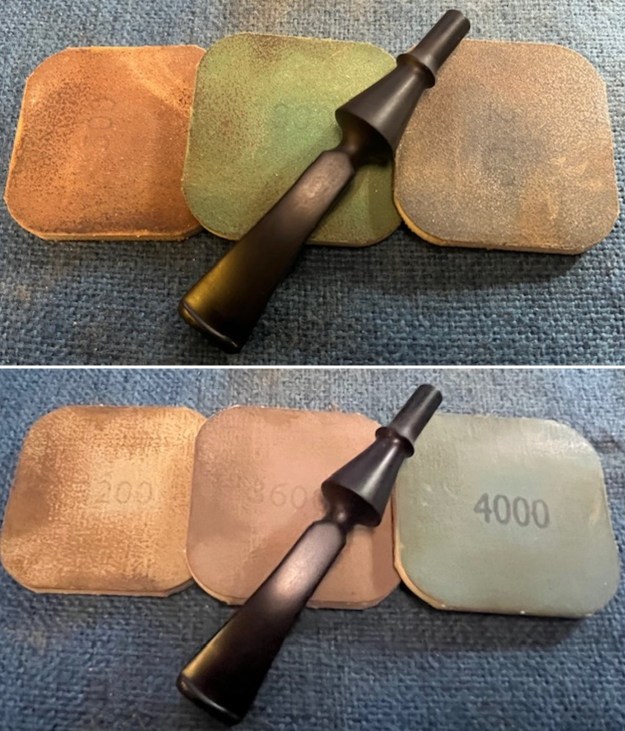
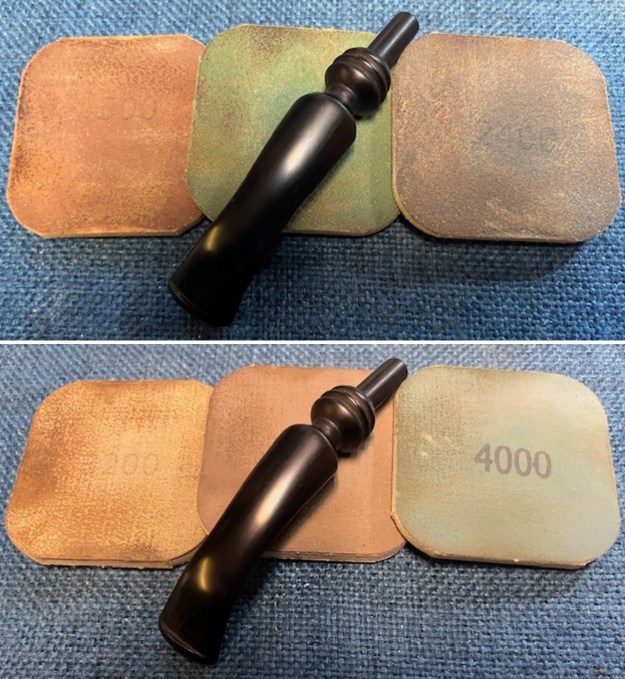
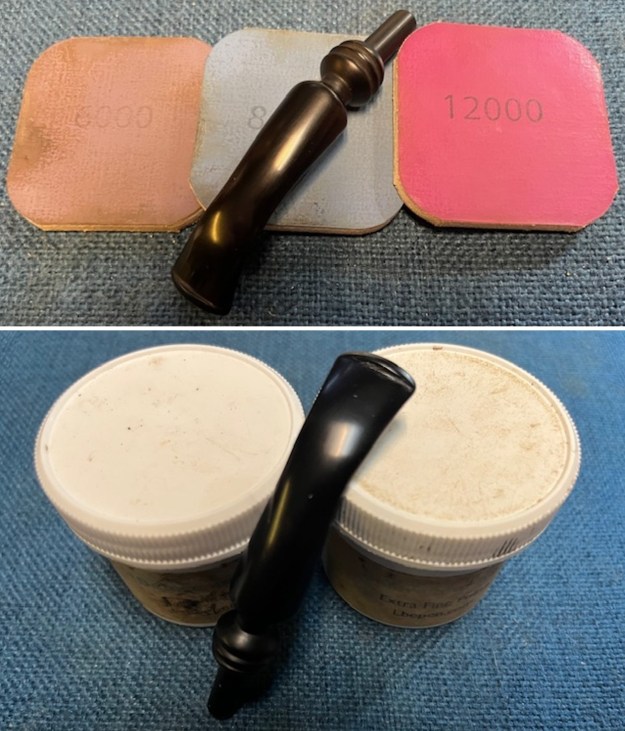
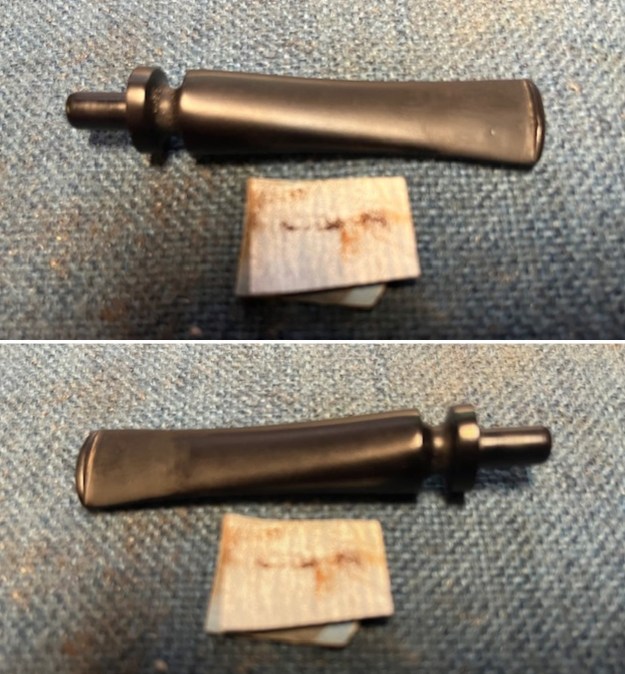
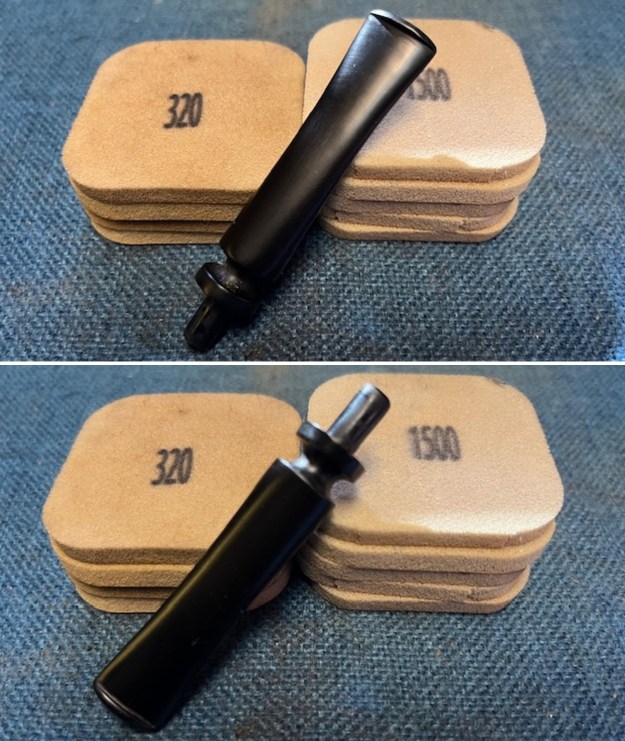
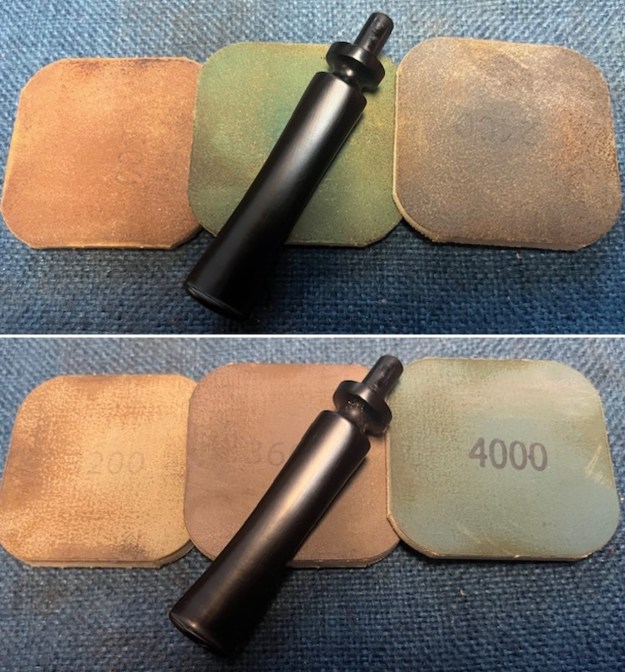
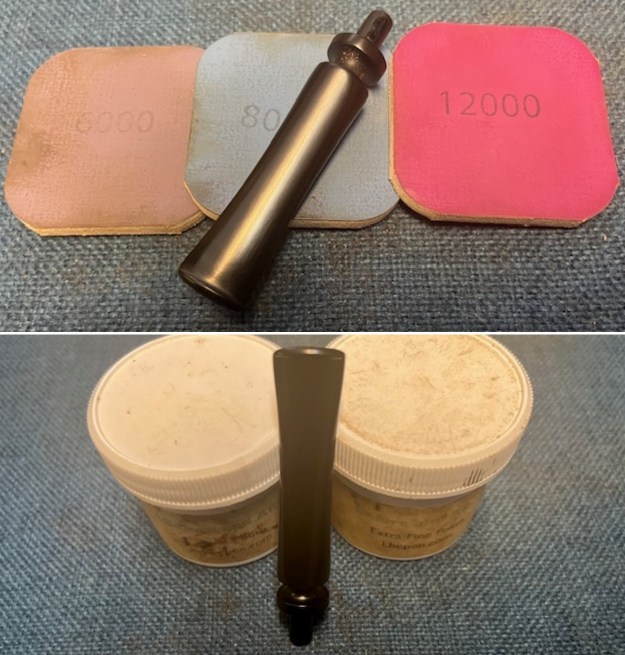
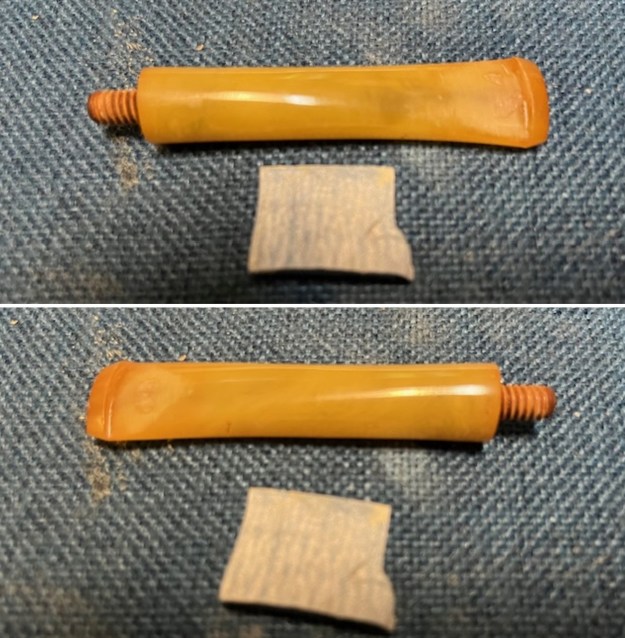
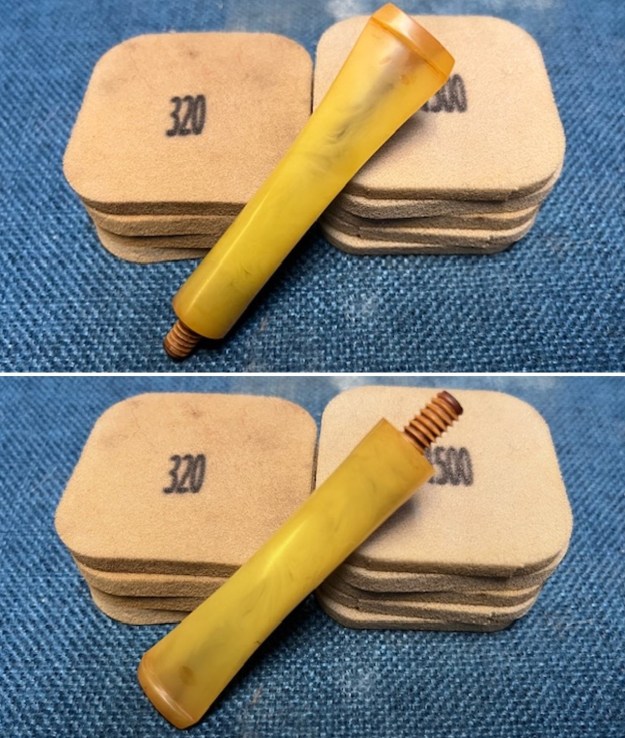
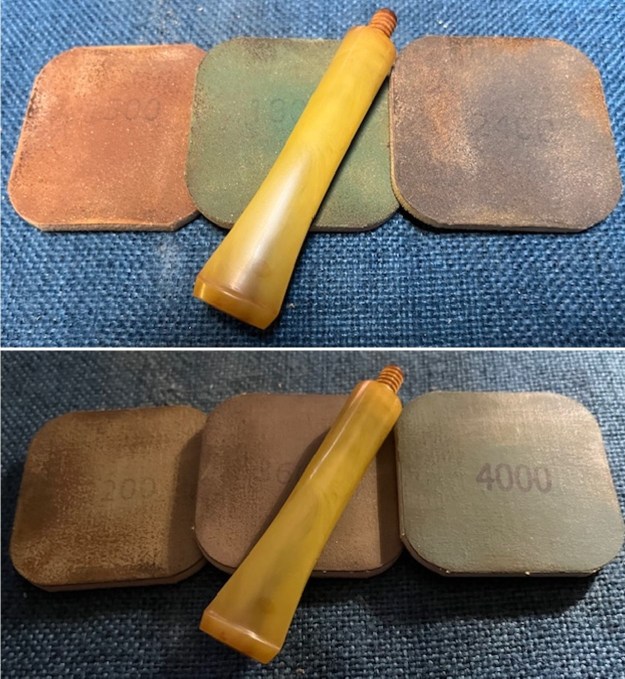
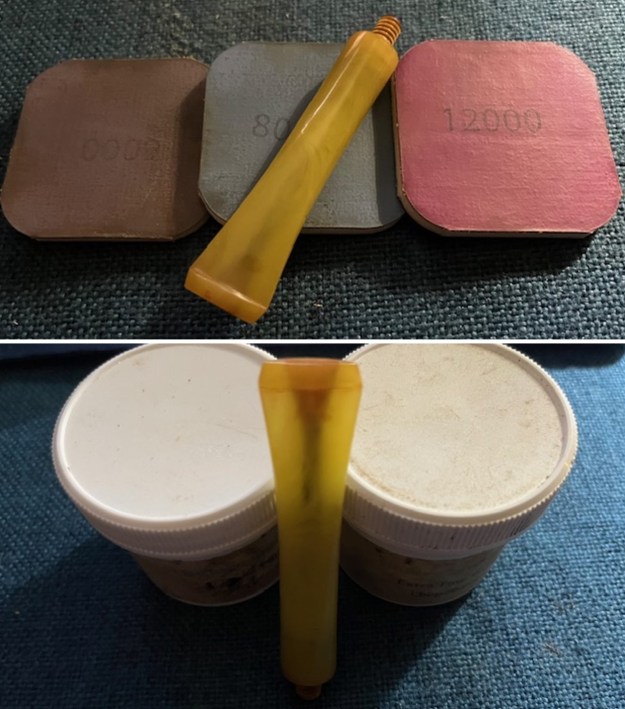
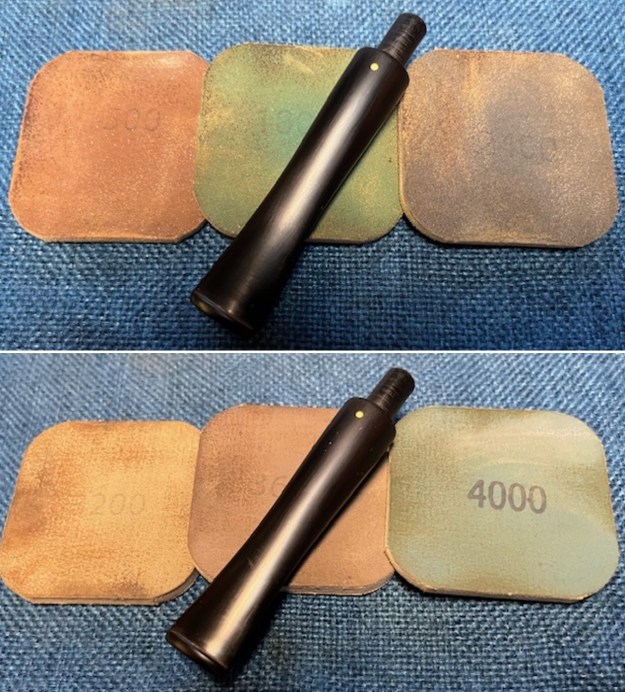
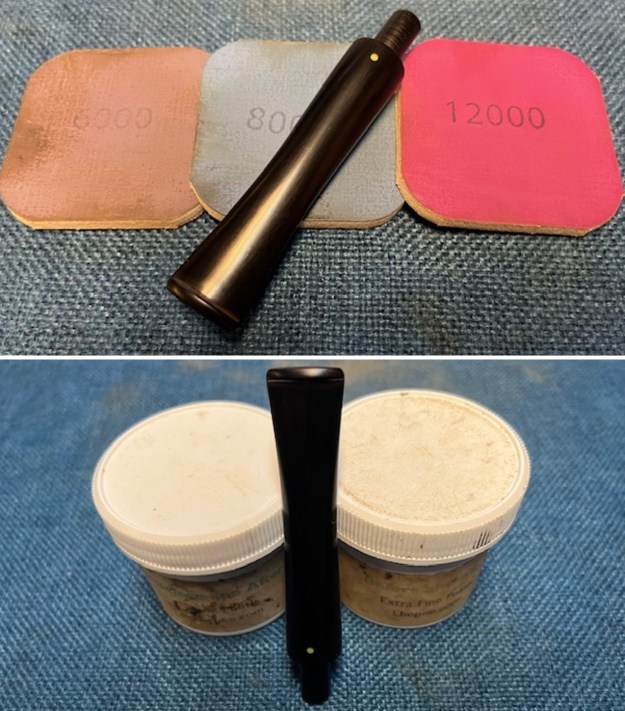
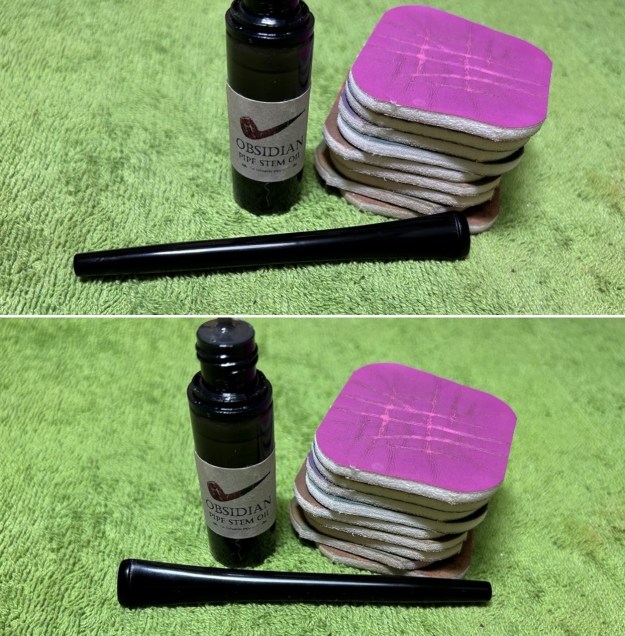
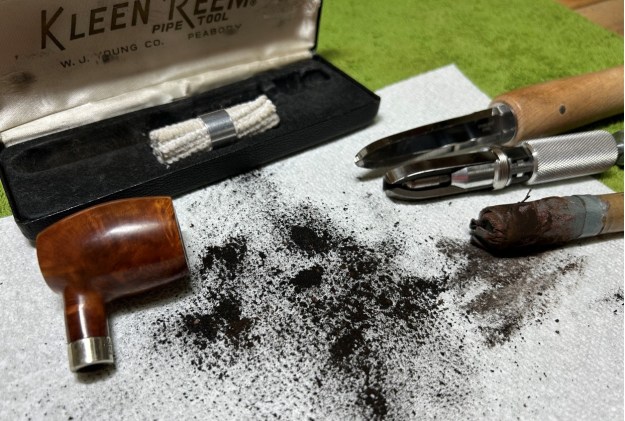
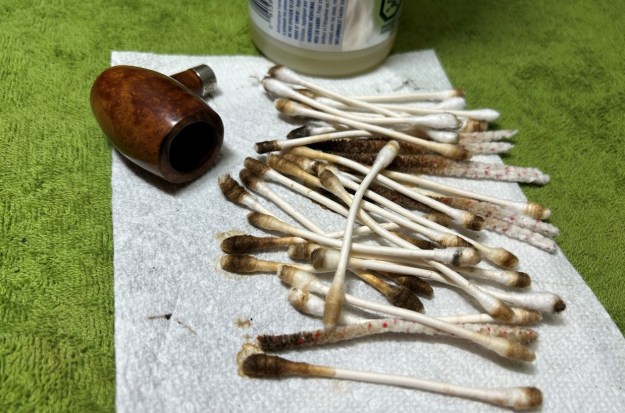
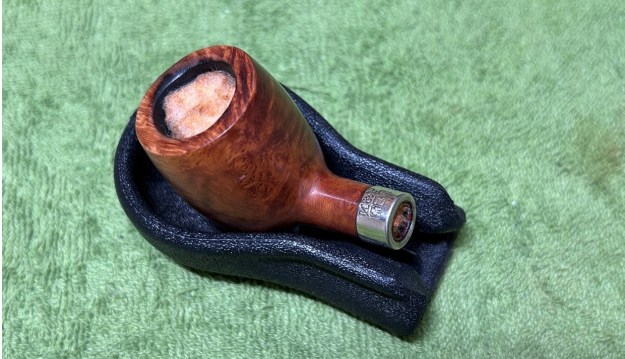
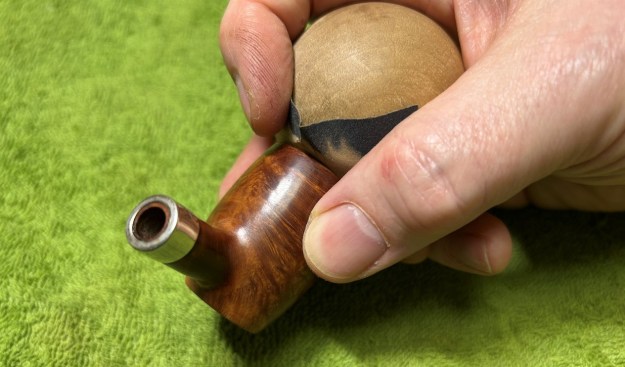
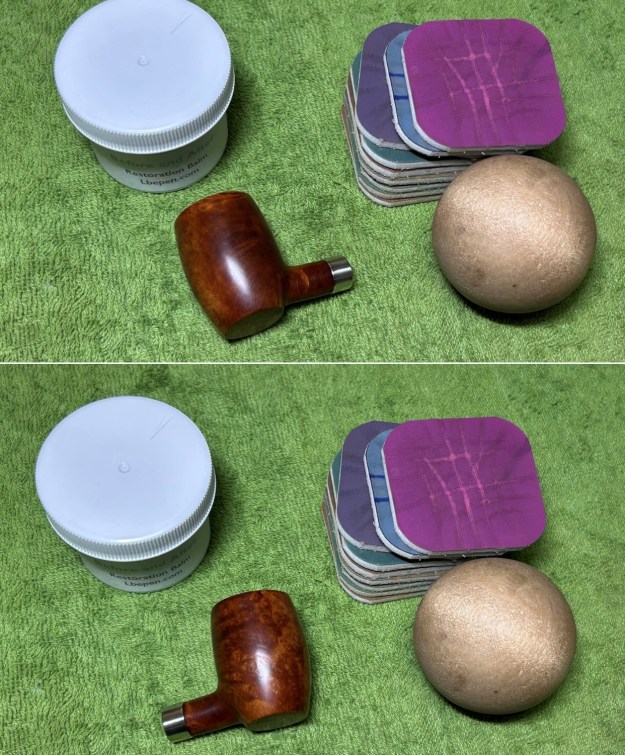
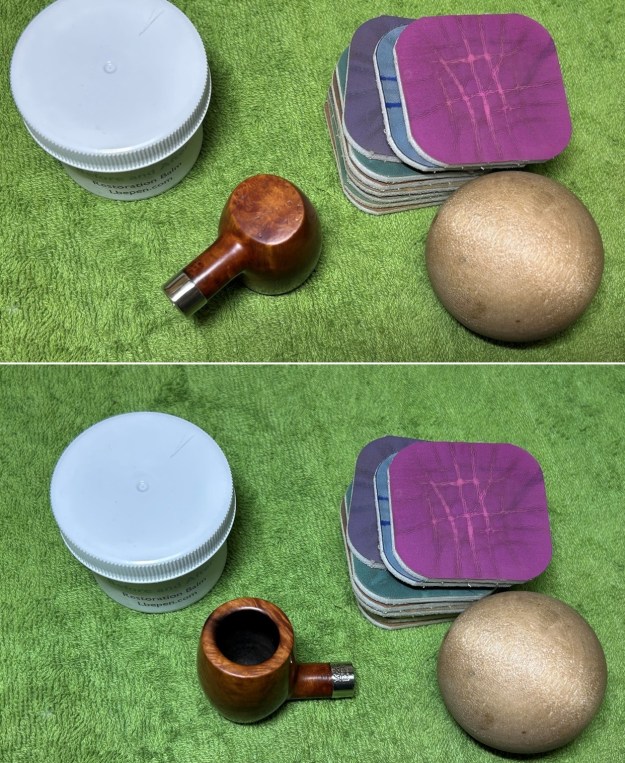
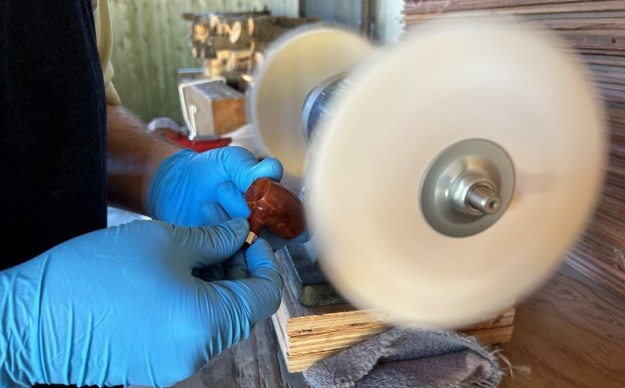
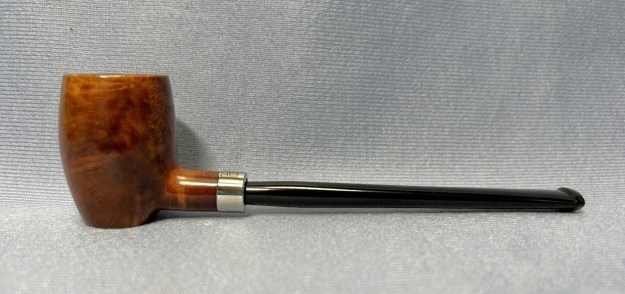
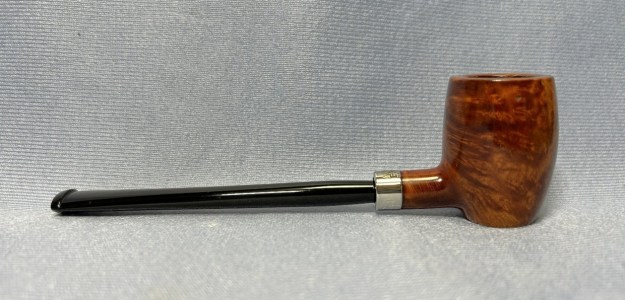
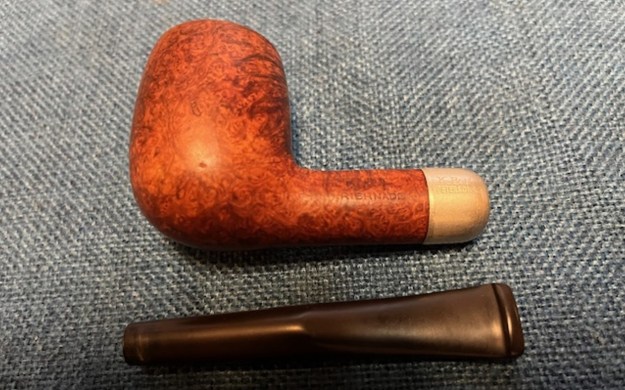
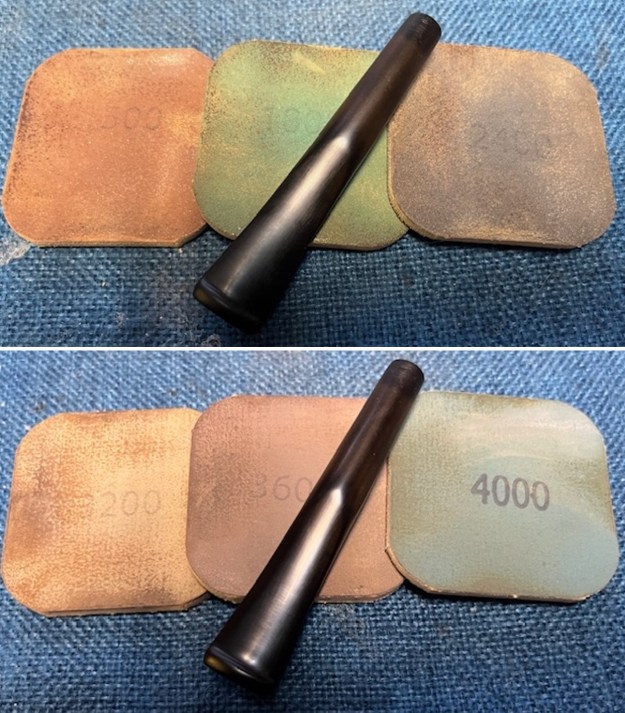
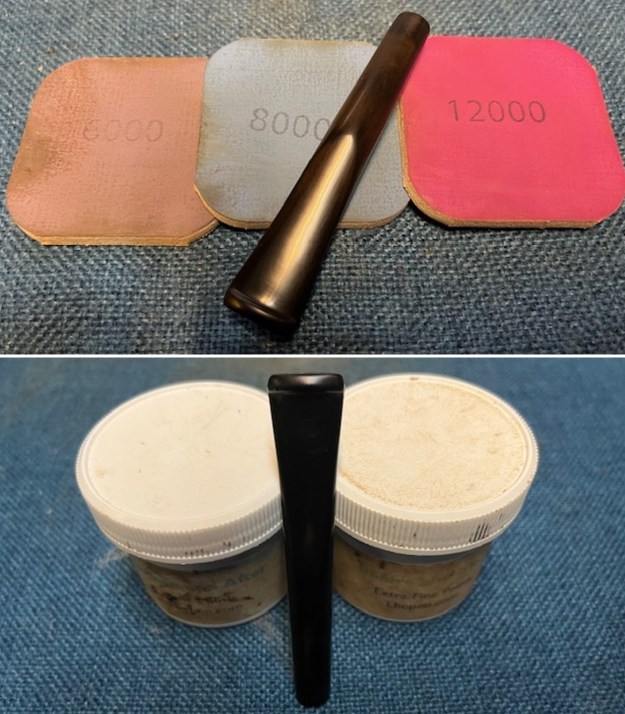
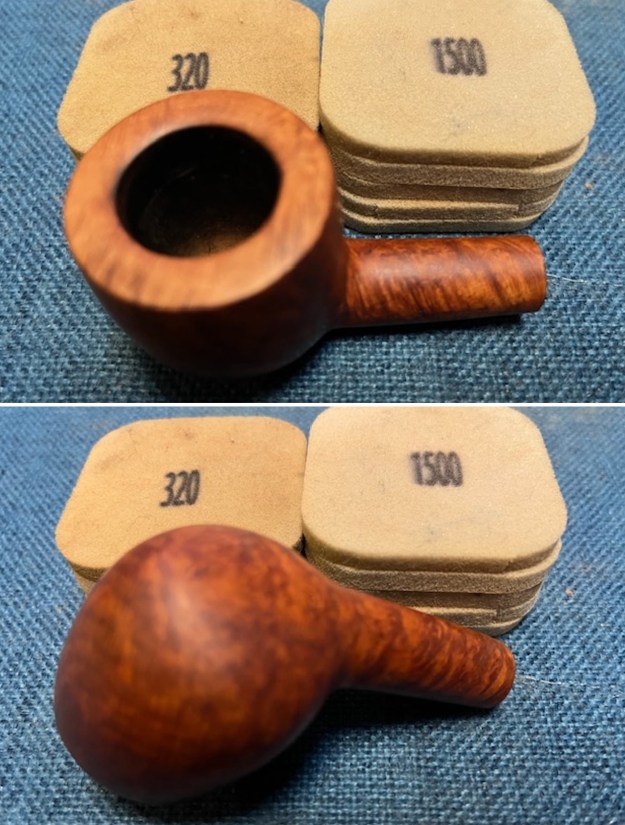
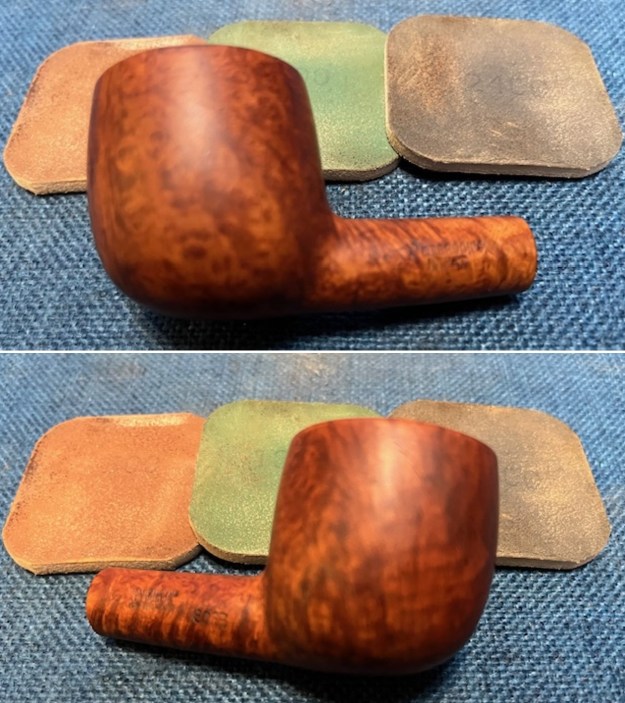
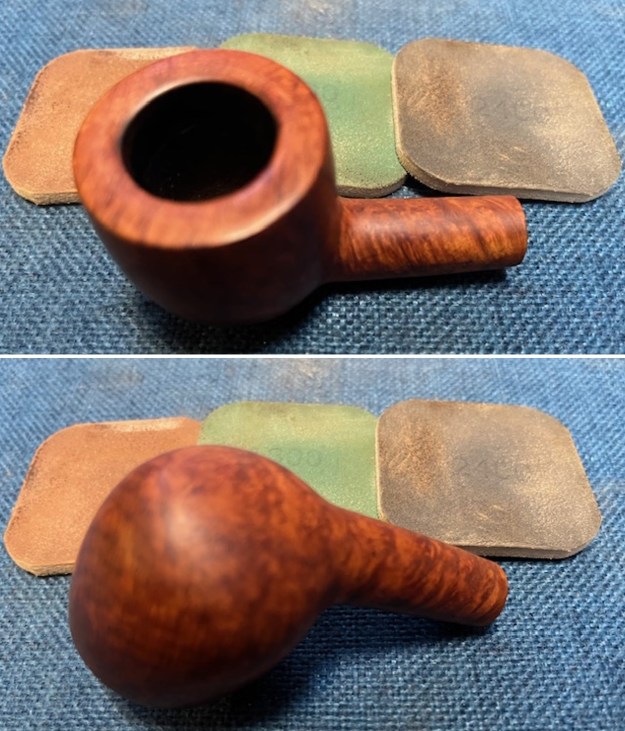
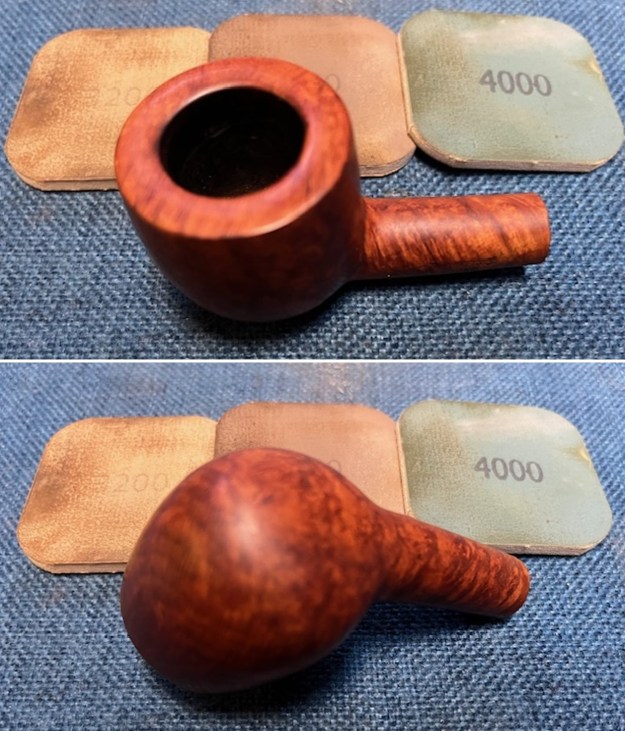
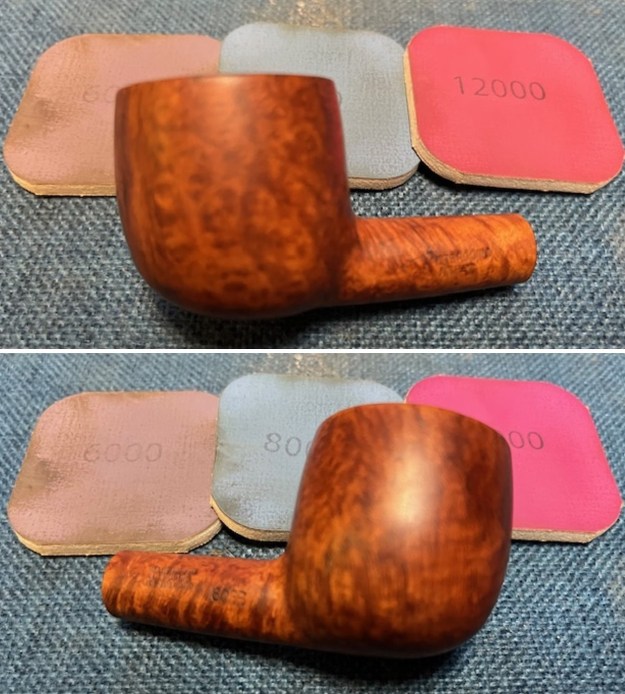
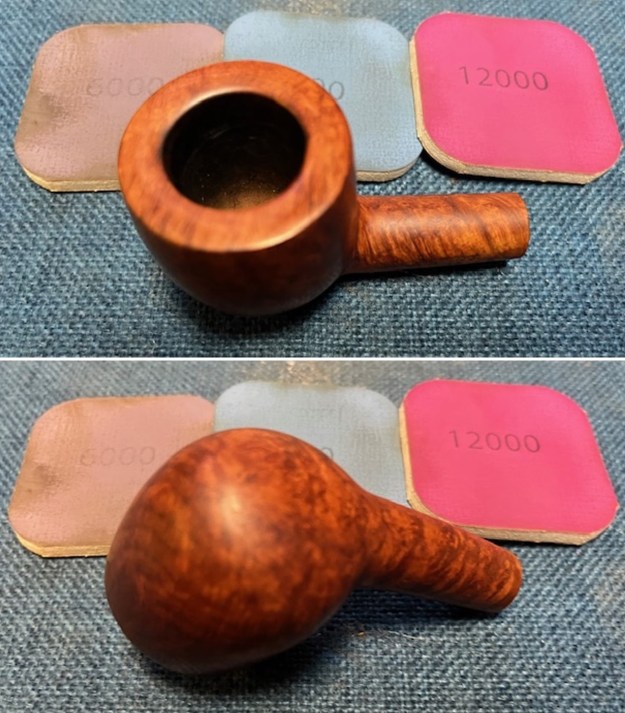
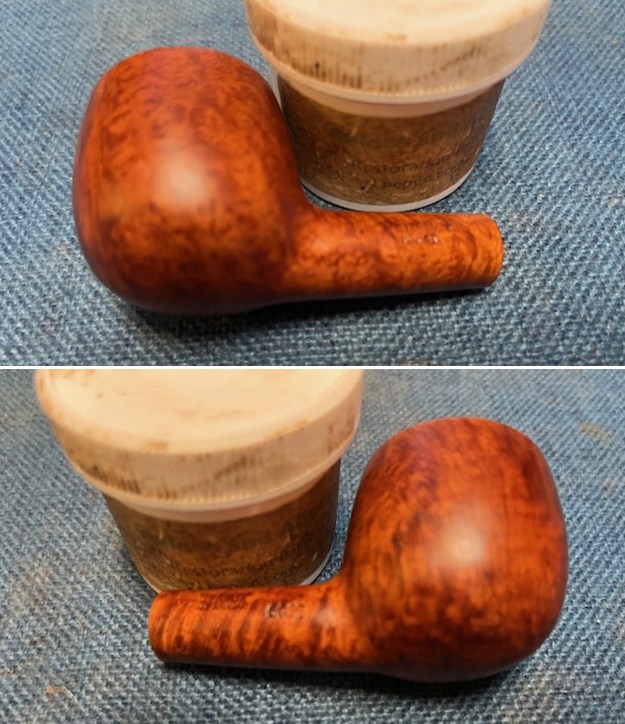
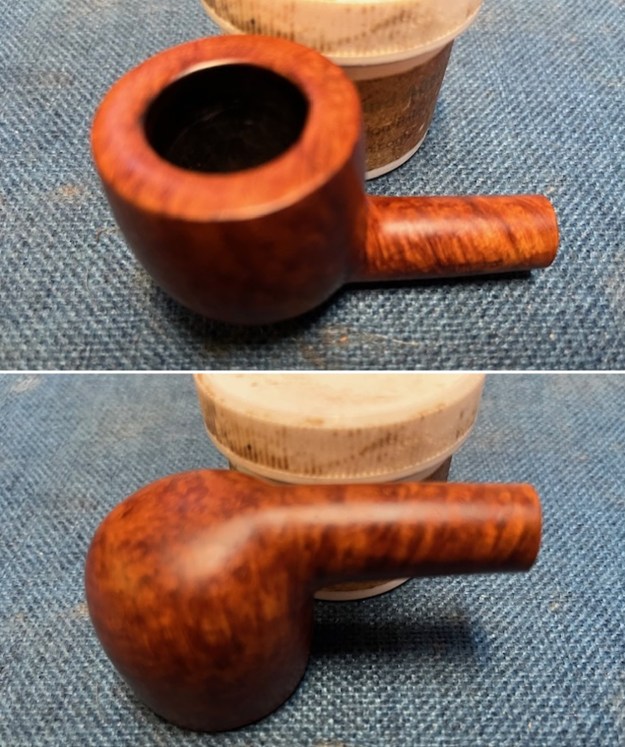
Armed with the information above, I turned my attention to the pipe itself. Jeff had cleaned the pipe with his usual penchant for thoroughness that I really appreciate. He reamed it with a PipNet pipe reamer and cleaned up the reaming with a Savinelli Fitsall Pipe Knife. He scrubbed out the internals with alcohol, pipe cleaners, shank brushes and cotton swabs until the pipe was clean. He scrubbed the exterior of the bowl with Murphy’s Oil Soap and a tooth brush to remove the grime and grit on the briar and the lava on the rim top. The finish looks very good with good looking grain around the bowl and shank. Jeff soaked the stem in Before & After Deoxidizer to remove the oxidation on the rubber. When the pipe arrived here in Vancouver for the second stop of its restoration tour it looked very good. I took photos before I started my part of the work. I took close up photos of the bowl, rim top and stem to show how clean the pipe was. The bowl was clean and the rim top and the inner edge clearly show the damage. The stem was clean and showed the light tooth marks and chatter.I took photos of the stamping on the sides of the shank. It is very clear and readable and read as noted above. I also removed the stem from the shank and took photos of the pipe to show the look of the parts. I started working on the damaged rim top and burn damaged areas on the inner edge of the rim first. I used 220 grit sandpaper and a wooden sphere to clean up the edge. It looked significantly better. I will sand it with sanding pads when I work on the bowl and shank.I sanded the bowl and shank with 320-3550 grit 2×2 inch sanding pads to smooth out the scratches on the rim top and sides of the bowl. I wiped the bowl down after each sanding pad with a damp cloth to remove the sanding debris. I sanded the exterior of the bowl with 1500-12000 grit micromesh sanding pads. I dry sanded it with each pad and wiped the briar down with a damp cloth to remove the sanding debris. I worked some Before & After Restoration Balm into the briar with my finger tips. I let it sit on the bowl and shank for 10 minutes and then buffed it off with a paper towel and soft cloth. The product is a great addition to the restoration work. It enlivens, enriches and protects the briar while giving it a deep glow. It is a product I use on every pipe I restore. I sanded out the tooth marks and chatter with 220 grit sandpaper and was able to remove all of them.I continued sanding the stem 320-3500 grit sanding pads – dry sanding with 2×2 inch sanding pads. I wiped the stem down with Obsidian Oil after each sanding pad. It began to take on a rich shine by the final pad. I polished the stem with micromesh sanding pads – dry sanding with 1500-12000 grit pads. Once again, I wiped it down between each pad with Obsidian Oil. I further polished it with Before and After Stem Polish – both Fine and Extra Fine. It looked very good. I am excited to finish this beautifully grained, Peterson’s Irish Made army 101 Billiard. I put the pipe back together and buffed it with Blue Diamond on the buffing wheel. I gave the bowl and the stem multiple coats of carnauba wax. I hand buffed the pipe with a clean buffing pad to raise the shine. It is fun to see what the polished bowl looks like with beautiful mixed grain all around it. The straight Pot looks great with the black vulcanite saddle stem. This smooth Classic Peterson’s Irish Made Army Billiard is great looking and the pipe feels great in my hand. It is light and well balanced. Have a look at it with the photos below. The dimensions are Length: 5 ¾ inches, Height: 1 ¾ inches, Outside diameter of the bowl: 1 ¼ inches, Chamber diameter: ¾ of an inch. The weight of the pipe is 39 grams/1.41 ounces. It turned out to be a beautiful pipe. I will be putting on the rebornpipes store in the Irish Pipe Makers Section. If you would like to add it to your collection let me know. It is a real beauty. Thanks for walking through the restoration as I brought the pipe back to life.

New Life for a Republic Era Peterson’s Kapet 606S Pot with a Saddle Stem

by Steve Laug

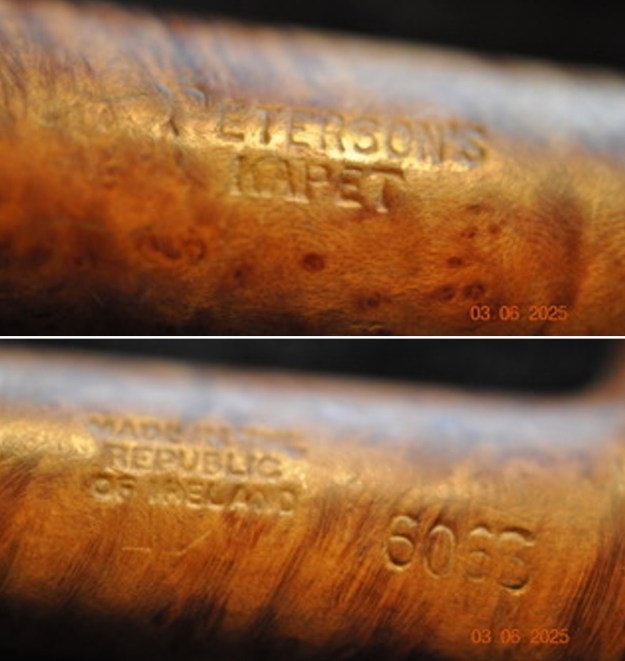
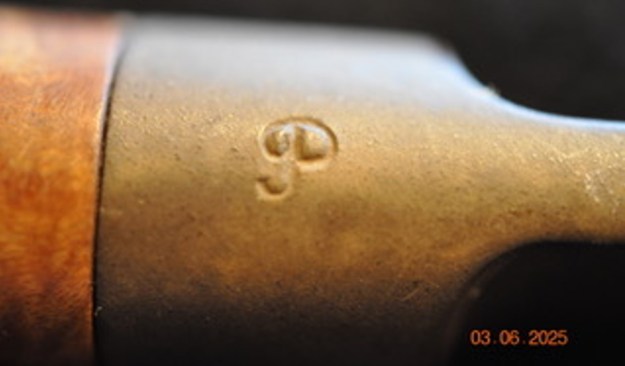
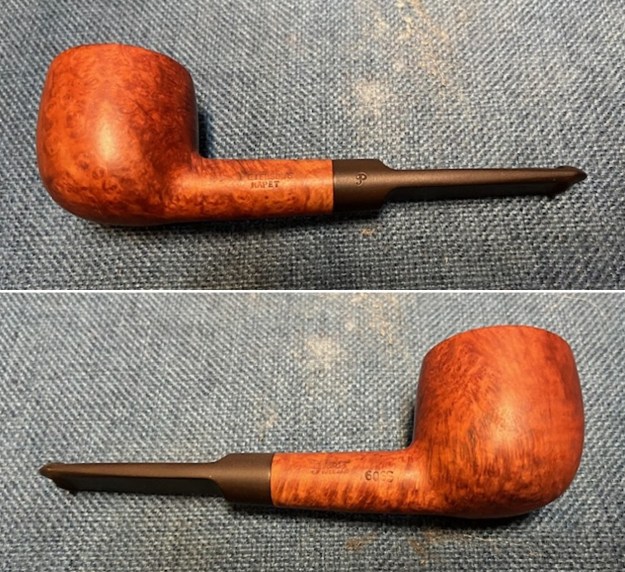
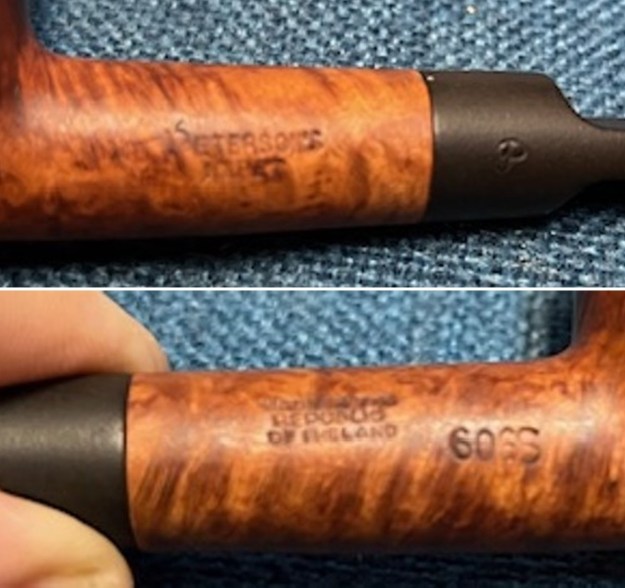
This beautifully grained briar pipe was purchased on 08/27/2024 from an auction on eBay from a seller in Memphis, Tennessee, USA. It is stamped on the left side of the shank and clearly reads Peterson’s [over] Kapet. On the right side it is stamped Made in the Republic of Ireland [three lines]. The shape number 606S is stamped to the right of that next to the bowl/shank junction. I believe the 606 is the shape number for a Pot and the S is for the saddle stem. The bowl had a thick cake on the walls and fortunately little overflow of lava onto the rim top and edges. The smooth finish is dirty with debris and oils. The vulcanite saddle stem has a “P” stamped on the left side of the saddle. It was oxidized, calcified and has tooth marks and chatter on both sides near the button. It was a beautiful looking pipe even through the grime in the finish. Jeff took photos of the pipe before he started cleaning it up. Have a look. Jeff took close up photos of the bowl and rim top to show the condition of the bowl and the rim top. You can also see the light lava on the rim top, inner edge and the cake in the bowl. He also took close up photos of the stem to show its condition as mentioned above. He also took photos of the tooth marks and chatter on both sides of the stem. He took photos of the bowl sides and heel to show the grain around the bowl. The grain is birdseye and mixed. Jeff also took photos of the stamping on the sides of the shank. It is faint in spots but readable as noted above. He also captured the condition of the P stamp on the stem side. I am including the link to the Pipedia’s article on Peterson pipes. It is a great read in terms of the history of the brand (https://pipedia.org/wiki/Peterson). There was a short note toward the bottom of the page about the series. It is definitely referring to the newer line that came out later. I quote:

I turned to Pipedia (https://pipedia.org/wiki/Peterson) to first pin down a date that the pipe was made. I knew that the Made in Ireland stamp would give me that. I quote:

As usual when trying to get accurate facts in regard to Peterson history, something will jump up and get in the way. They are missing many of their records. The following is the best that we can do for a guide to the myriad markings during the period 1922 – 1949. Prior to 1920 it was rare for a country of origin to be stamped on the pipe, just Peterson’s Dublin on the band. After 1921/22, if it is stamped “MADE IN IRELAND” and the “Made in” is stacked over “Ireland” or “MADE IN EIRE” or several other forms, it was made between 1922 and 1938. A considerable number of Peterson pipes were stamped “Irish Free State”. From about 1930 to 1949, most of the pipes (those which were stamped) were stamped “Made in Ireland”.” If the stamp reads “MADE IN IRELAND” in a circle, the pipe was made between 1939 and 1948. These are all “Pre-Republic” pipes. I can tell you that the mark “Irish Free State” was adopted in 1922; and replaced by “Eire” in 1937 and then by “Republic of Ireland” in 1949.

That gave me a date for the pipe – it was made after 1949 as can be proved by the Made in the Republic of Ireland stamp on the right side of the shank.

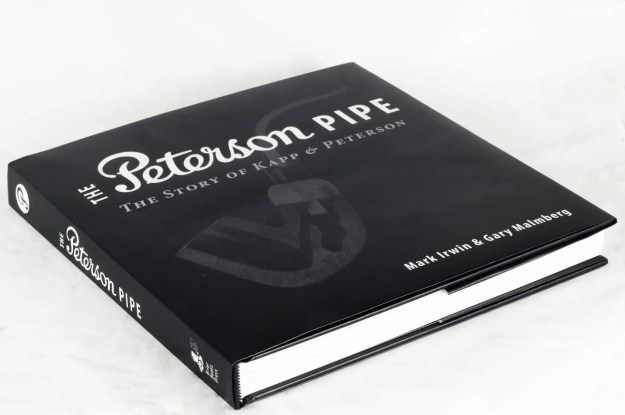
I turned to “The Peterson Pipe” by Mark Irwin and Gary Malmberg to get some background on the Peterson’s Kapet Line. On page 305 it had the following information.

Kapet (1925-87) Line first described in 1925 brochure and featured in occasional catalogs through 1987. Early specimens will be stamped IRISH over FREE STATE. Described in 1937 catalog as available in dark plum or natural finish. Featured an aluminum “inner tube” or stinger until 1945.  Mid-century specimens may be stamped Made In over Ireland. Specimens from 1970 on may have mounts with hallmarks.

Judging from the Made in the Republic of Ireland stamp, the pipe I am working on is probably made after 1945 when the stinger or inner tube was removed. Those dates work also for the Kapet information above. The stem has the original P stamp on the saddle side and no stinger.

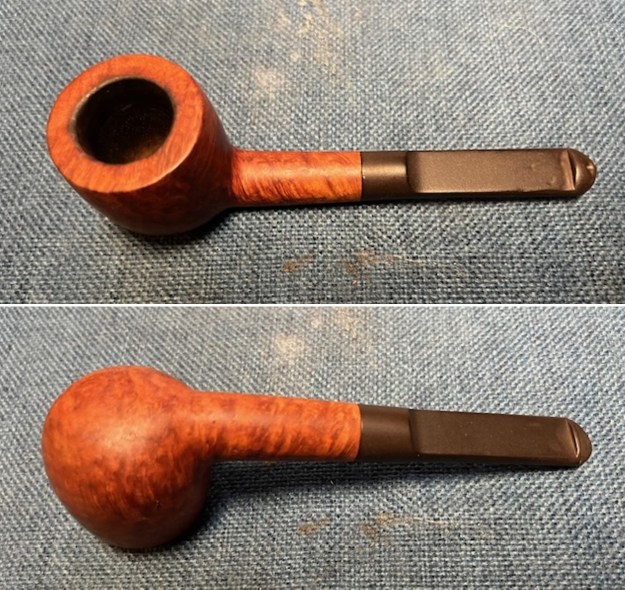
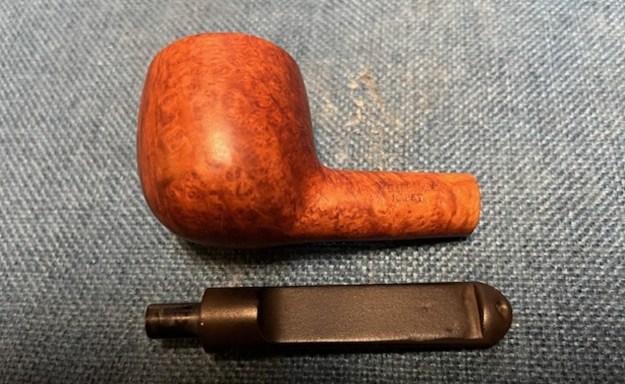
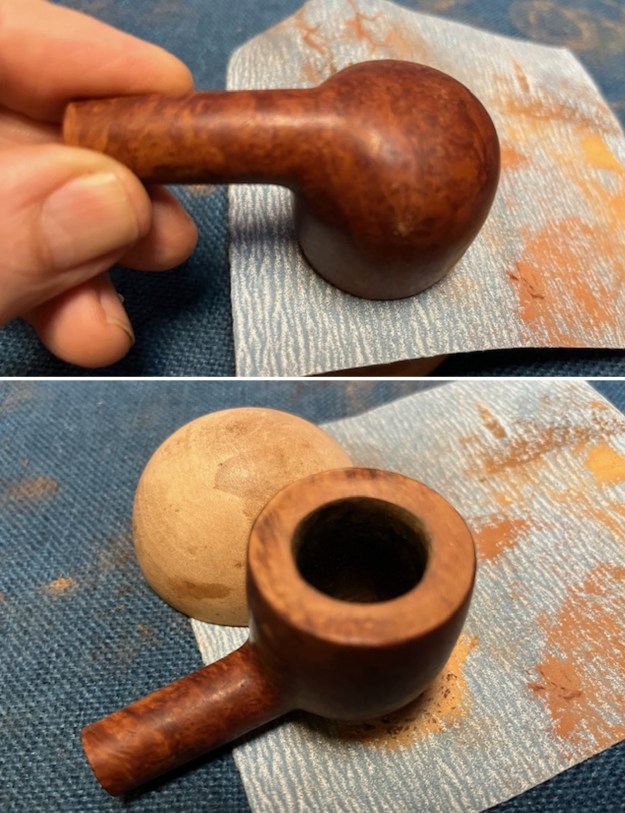
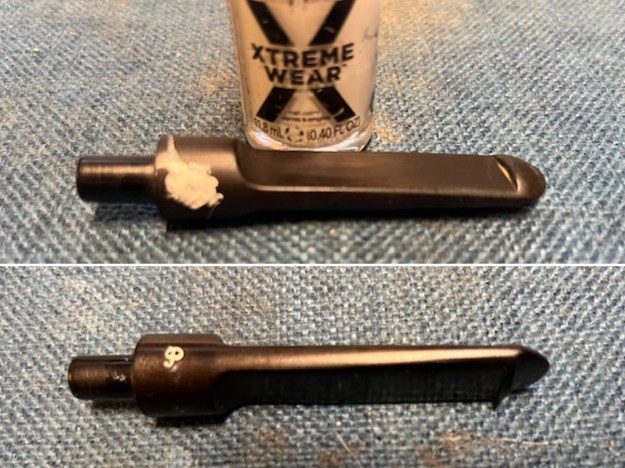
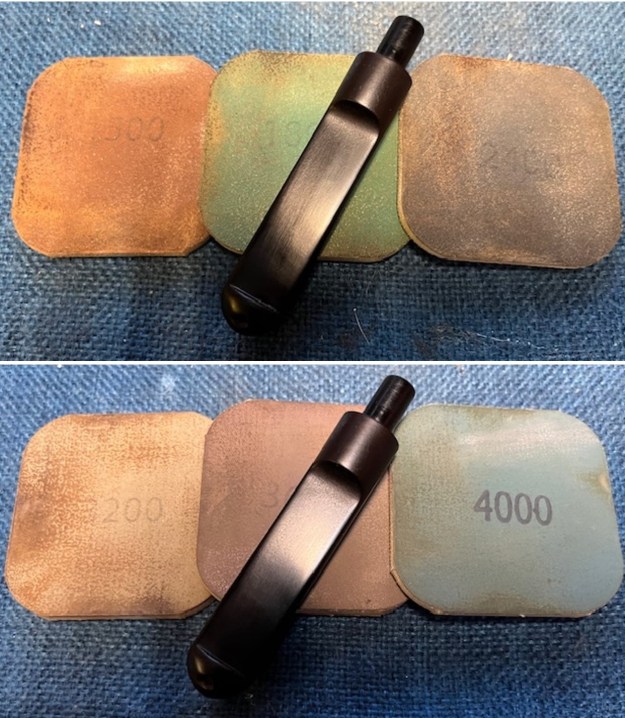
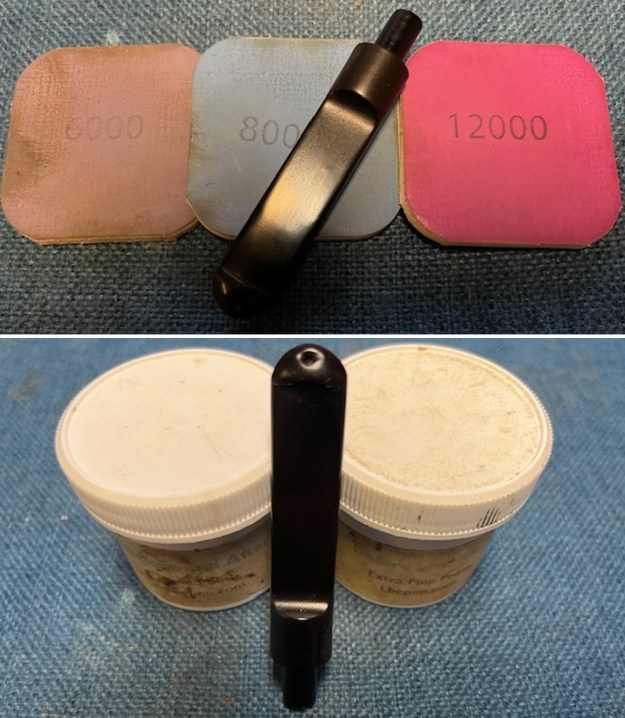
Armed with the information above, I turned my attention to the pipe itself. Jeff had cleaned the pipe with his usual penchant for thoroughness that I really appreciate. He reamed it with a PipNet pipe reamer and cleaned up the reaming with a Savinelli Fitsall Pipe Knife. He scrubbed out the internals with alcohol, pipe cleaners, shank brushes and cotton swabs until the pipe was clean. He scrubbed the exterior of the bowl with Murphy’s Oil Soap and a tooth brush to remove the grime and grit on the briar and the lava on the rim top. The finish looks very good with good looking grain around the bowl and shank. Jeff soaked the stem in Before & After Deoxidizer to remove the oxidation on the rubber. When the pipe arrived here in Vancouver for the second stop of its restoration tour it looked very good. I took photos before I started my part of the work. I took close up photos of the bowl, rim top and stem to show how clean the pipe was. The bowl was clean and the rim top and the inner edge look beautiful. The stem was clean and did not show either tooth marks or chatter.I took photos of the stamping on the sides of the shank. It is very clear and readable and read as noted above. I also removed the stem from the shank and took photos of the pipe to show the look of the parts. I started working on the damaged rim top and burn damaged areas on the inner edge of the rim first. I used 220 grit sandpaper and a wooden sphere to clean up the edge. It looked significantly better. I will sand it with sanding pads when I work on the bowl and shank.I sanded the bowl and shank with 320-3550 grit 2×2 inch sanding pads to smooth out the scratches on the rim top and sides of the bowl. I wiped the bowl down after each sanding pad with a damp cloth to remove the sanding debris. I sanded the exterior of the bowl with 1500-12000 grit micromesh sanding pads. I dry sanded it with each pad and wiped the briar down with a damp cloth to remove the sanding- debris. I worked some Before & After Restoration Balm into the briar with my finger tips. I let it sit on the bowl and shank for 10 minutes and then buffed it off with a paper towel and soft cloth. The product is a great addition to the restoration work. It enlivens, enriches and protects the briar while giving it a deep glow. It is a product I use on every pipe I restore. I set the bowl aside and turned my attention to the stem. I “painted” the surface with the flame of a lighter to try and lift the tooth marks. I was able to lift some of them but those that remained I filled in with black, rubberized CA glue. Once the repairs cured I used a small file to flatten them and start blending them into the surface. I finished the cleanup with 220 grit sandpaper. It looked smooth. I touched up the “P” stamp on the left side of the saddle with some white acrylic nail polish. I let it cure then scraped off the excess and sanded the remnant off with a 1500 grit sanding pad.I polished the stem with micromesh sanding pads – dry sanding with 1500-12000 grit pads. Once again, I wiped it down between each pad with Obsidian Oil. I further polished it with Before and After Stem Polish – both Fine and Extra Fine. It looked very good. I am excited to finish this beautifully grained, Peterson’s Kapet 606S Saddle Stem Pot. I put the pipe back together and buffed it with Blue Diamond on the buffing wheel. I gave the bowl and the stem multiple coats of carnauba wax. I hand buffed the pipe with a clean buffing pad to raise the shine. It is fun to see what the polished bowl looks like with beautiful mixed grain all around it. The straight Pot looks great with the black vulcanite saddle stem. This smooth Classic Peterson’s Kapet 606S Pot is great looking and the pipe feels great in my hand. It is light and well balanced. Have a look at it with the photos below. The dimensions are Length: 5 ½ inches, Height: 1 ½ inches, Outside diameter of the bowl: 1 ½ inches, Chamber diameter: ¾ of an inch. The weight of the pipe is 39 grams/1.34 ounces. It turned out to be a beautiful pipe. I will be putting on the rebornpipes store in the Irish Pipe Makers Section. If you would like to add it to your collection let me know. It is a real beauty. Thanks for walking through the restoration as I brought the pipe back to life.`

Restoring an SMS Meerschaum Flumed Bowl Billiard with a variegated Rose Acrylic Stem

by Steve Laug

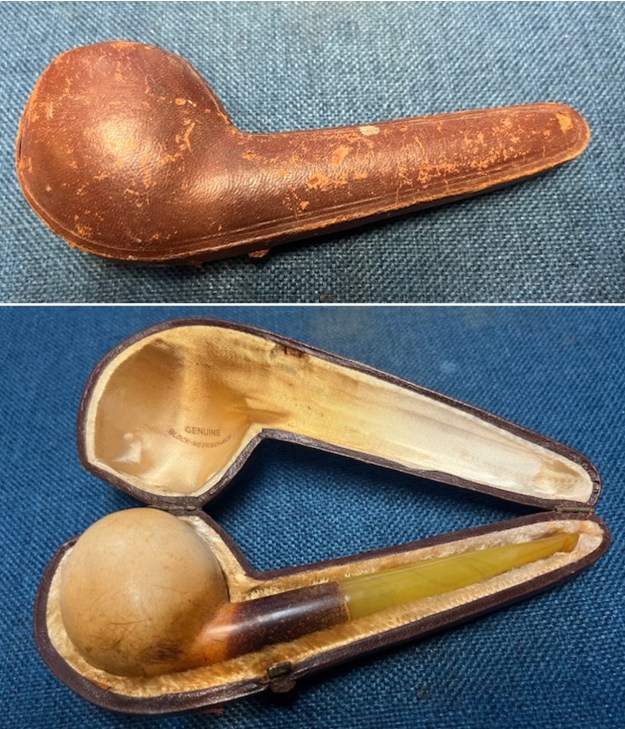
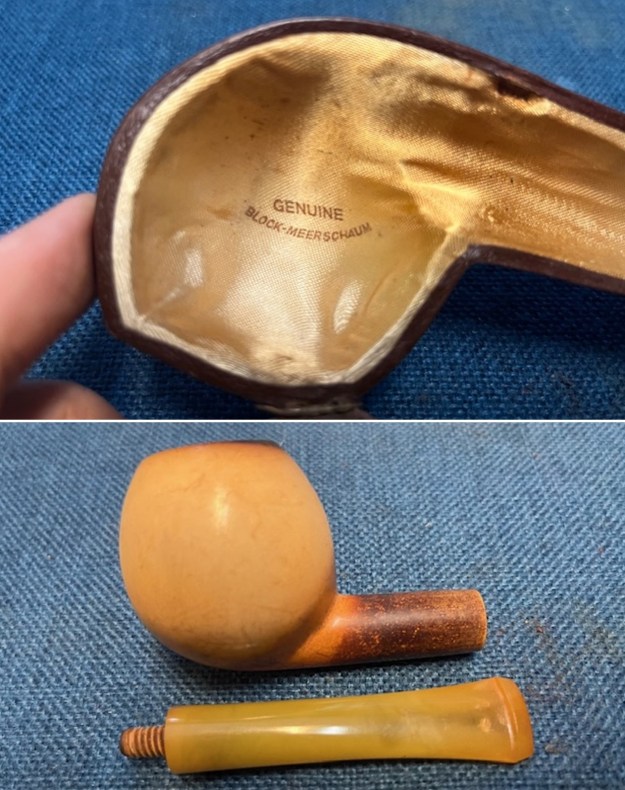
This afternoon I decided to work on another pipe that I no longer know where or when we purchase it. I have a large box of Meerschaum pipes that is sitting in my storage that I need to clean up and restore. I have honestly avoided them for years but now was the time to start my work on some of them. Today I chose another cased one. It is a black cased pipe and when opened it held a Billiard shaped meerschaum. The case is lined with golden soft fabric that protected the bowl. The case bears an SMS logo and there is no logo on the taper stem. It is a beautifully shaped Billiard shaped meer with a dark flumed top on the bowl and some scratches from its journey and some nice patina around the shank and sides. The meer is dirty from use with a thick cake in the bowl and a light overflow of lava on the inner edge and rim top, heavier on the back side. There is some chips or nicks on the back outer edge of the bowl. The variegated rose acrylic threaded tenon stem fit well against the shank end and was slightly dirty and had tooth marks and chatter on both sides ahead of the button. I took photos of the case and the pipe before I started my clean up work on it. I took photos of the rim top and the stem to show the condition of the pipe when I brought it to the worktable. You can see the cake in the bowl and the build up of lava and debris on the edge and top of the rim. It is another dirty pipe but still a charmer. The variegated rose acrylic stem has chatter and deep tooth marks on both sides near the button.I took a photo of the logo stamp on the inside of the case. It is clear and readable. The label in the case reads SMS in the centre and around the outside of the circle it read Handcarved Block Meerschaum Turkey. I removed the stem from the shank and took a photo of the parts. I had some faint recall of the make but could not remember his name so I turned to pipephil’s site (http://www.pipephil.eu/logos/en/logo-s9.html) for some help. I found a quick note on the founding of the SMS brand which was the USA import brand for pipes made by Samil Sermet and his wife Beth. There was also a link there to the company website.I clicked on the site link (http://www.smspipes.com/) to get a bigger picture of the brand and the makers. I quote the section of the site marked “About Us” and quote the following:

Welcome to SMS Pipes!!

We are proud to present a wide selection of premium smoking pipes. SMS Pipes features Turkish Block Meerschaum, supplied exclusively by SMS Meerschaums, and Italian Briar, supplied by Lorenzo of Italy. All the pipes offered by SMS Pipes meet or surpass our exacting “Standard of Excellence.”

Samil & Beth Sermet – SMS Pipes is family owned and operated extension of SMS Meerschaums, founded in 1980 by Samil Sermet and his wife, Beth. SMS Meerschaums is recognized nationwide as a trusted supplier by nearly 500 retail tobacconists. SMS Pipes promises to continue the philosophy embraced by SMS Meerschaums and provide premium smoking pipes that are:

Distinctive… each pipe is carefully selected for its uniqueness, quality and reliability.

Affordable… a wide range of prices makes owning a fine pipe possible for everyone.

Collectible… the timeless beauty of each pipe will be treasured for generations.

Key to the success of SMS Pipes is our dedicated staff. Based in the USA and Turkey, they maintain contact with our exceptionally talented pipe carvers and case makers and perform all the daily business activities described below:

 Samil Sermet, a native of Turkey, is the buyer for SMS Meerschaums. His hometown is Eskisehir, Turkey, where a majority of the meerschaum pipe carvers live and have their shops. Samil makes a buying trip to Turkey each year and has a close working relationship with all the carvers. He is responsible for sales analysis and placing the orders necessary to maintain adequate stock in the warehouse. (samil@smspipes.com)

Beth Sermet, office manager of SMS Meerschaums, processes all orders. Even though Beth was born in Iowa, she is fluent in Turkish after living in Turkey for several years and knows all the carvers. The owners of Lorenzo Briars work closely with Beth to assure ample supply of their premium pipes. Beth also personally selects and photographs all the pipes shown on SMS Pipes. (beth@smspipes.com)

Mert Sermet, son of Samil and Beth, manages the daily operations of SMS Pipes. He is in charge of processing and shipping all orders. Mert has in-depth knowledge of every aspect of pipe manufacturing both in Turkey and Italy. He will personally respond to any comments, questions or concerns you may have about SMS Pipes by e-mail. (mert@smspipes.com)

Emel Sagtekin, Samil’s sister, is responsible for quality control and shipments of pipes to SMS Meerschaums from Turkey. Since 1988, Emel has personally checked thousands of pipes. She evaluates each pipe based on strict criteria set by SMS Meerschaums and selects only the pipes that meet or surpass our high standards.

SMS Pipes provides a wide variety of services for our customers. Although the inventory on SMS Pipes is reserved for Internet sale only, it is possible to have a selection of similar pipes sent “On Approval” to any tobacconist listed on the site. Membership in the SMS Collectors Society provides additional amenities for those interested in collecting our pipes. Our Master Carvers can be commissioned to carve custom pipe designs by special arrangement. We also offer repair and re-waxing services for all SMS Pipes.”

We are happy to have the opportunity to serve you. We hope your time spent with SMS Pipes is enjoyable and worthwhile.

Now I had a clearer picture of the brand and the makers. I knew that pipe was made after 1980 when the company began. Now it was time to work on the pipe itself.

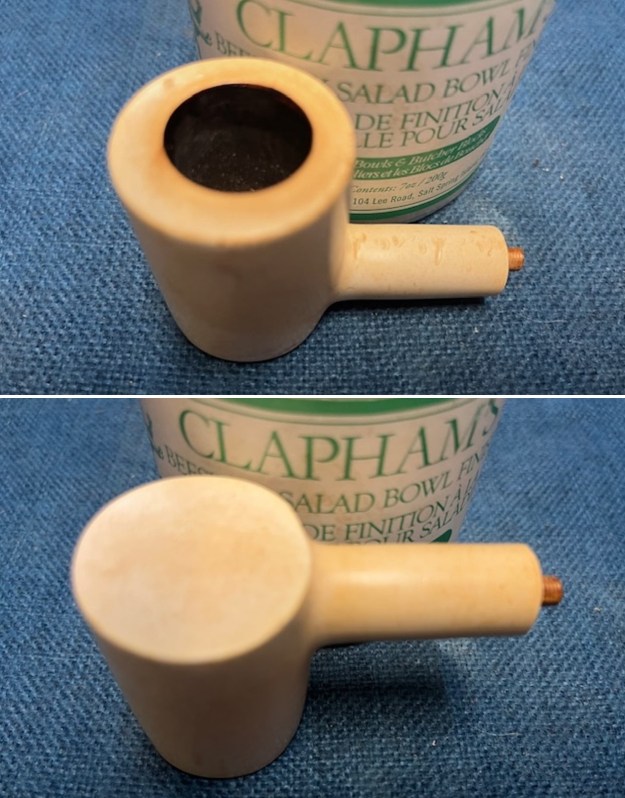
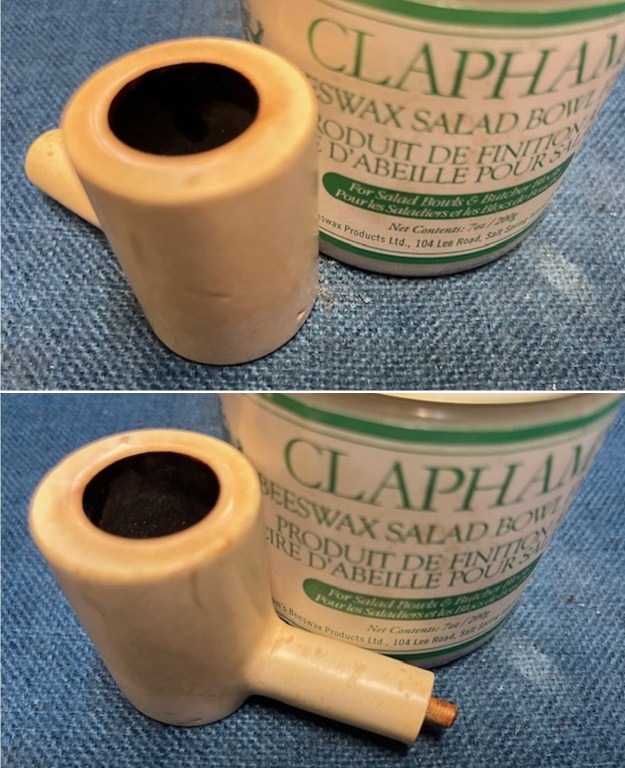
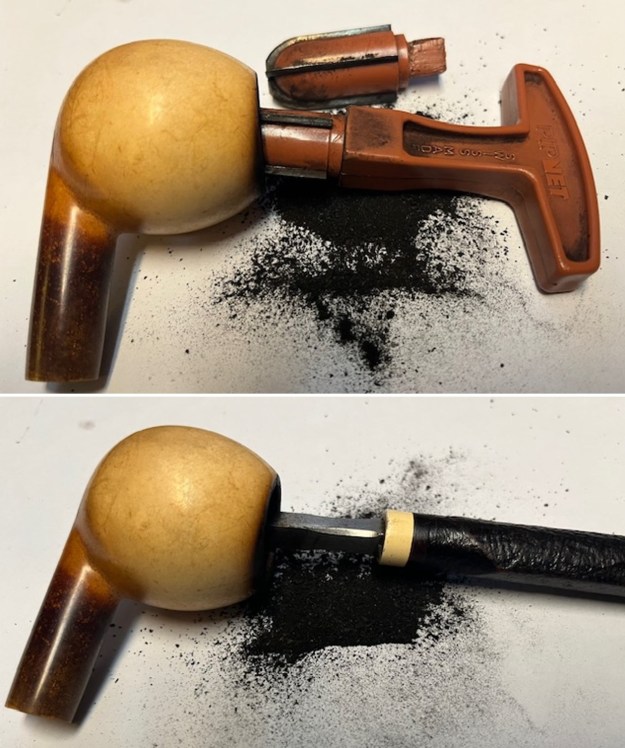
I started my work on the bowl by reaming the thick cake out of the bowl. I started with a PipNet reamer and the 2nd and 3rd cutting heads to take back the cake to the walls of the bowl. I cleaned up the reaming with a Savinelli Fitsall Pipe Knife. I sanded the bowl walls with a piece of dowel wrapped with 220 grit sandpaper. Once finished it looked very good. I scraped off some of the lava coat on the rim top. I used a 320 grit sanding pad to remove the build up on the rim top. It looked much better once I finished. I cleaned out the airway in the shank and mortise as well as in the new stem with pipe cleaners (both bristle and regular). It was much better.I scrubbed the bowl surface with a tooth brush and undiluted Murphy’s Oil Soap. I rinsed the bowl with warm running water to wash off the dirt and the soap. It looked much better at this point. The surface of the bowl was clean and the meerschaum was very shiny with the exception of the rough edge on the back of the bowl which was chipped and lost its colour. I used a black stain pen to touch up the chip on the rim top and the inner and outer edges of the bowl.I gave the bowl multiple coats of Clapham’s Beeswax/Carnuba Wax Polish which is a soft wax. I rubbed the wax on the bowl sides and the shank end with my finger tips and set it aside to dry. Once the wax cured I buffed the bowl with a microfibre cloth. The bowl has a rich glow. I set the bowl aside and turned my attention to the stem. There was a deep tooth mark on the underside of the stem ahead of the button. I filled it in with some clear CA glue and when it cured I flattened the repair with a small file. I sanded it with 220 grit sandpaper to smooth the chatter on topside and the repair on the underside of the stem surface. It looked much better when I finished sanding. I continued sanding the stem surface with 320-3500 grit 2×2 inch sanding pads. I wiped the stem down after each pad with a damp pad to remove the debris. By the end it was quite shiny and ready for polishing. I polished the stem with micromesh sanding pads – wet sanding it 1500-12000 pads. I wiped it down with a damp cloth after each pad to protect it and preserve it. it with Before After Pipe Polish – both Fine and Extra Fine. I polished the stem on the buffer with Blue Diamond. I put the pipe back together and gave it a buff on the wheel with Blue Diamond polish. I use a light touch on the acrylic as too heavy a touch can cause the heat to damage to acrylic. I gave the stem multiple coats of carnauba wax and buffed the pipe with a clean buffing pad to raise the shine. I hand buffed it with a soft cloth to deepen the shine. I put it back in the case and took a photo of the pipe in case.I took photos of the finished SMS Billiard with a variegated rose acrylic stem to show the shine and the patina around the bowl. The acrylic stem looks very good with the warm glow on the shank and the bowl. With time the contrast will grow richer and deeper to a thing of beauty. The finished SMS Billiard fits nicely in the hand and I think it will feel great as it heats up with a good tobacco. Give the finished pipe a look in the photos below. The dimensions of the pipe are Length: 6 inches, Height: 1 ¾ inches, Outside diameter of the bowl: 1 ¼ inches, Chamber diameter: ¾ of an inch. The weight of the pipe is 1.45 ounces/41 grams. If you are interested in carrying on the legacy of this pipe it will be going on the rebornpipes store shortly. It is listed in the Ceramic and Meerschaum Section. You can send me a message or an email to let know you are interested. Thanks for reading this blog and my reflections on the pipe while I worked on it. This is an interesting estate to bring back to life.

Restoring a I. Bekler Meerschaum Banded Billiard with a Cumberland Taper Stem

by Steve Laug

This afternoon I decided to work on another pipe that I no longer know where or when we purchased it. I have a large box of Meerschaum pipes that is sitting in my storage that I need to clean up and restore. I have honestly avoided them for years but now was the time to start my work on some of them. Today I chose another of the uncased meers. This one is a Billiard shape with a Cumberland Taper Stem and a Softee Bit on the end. My guess is that the Softee protected the stem for tooth marks. I will know for sure once I remove it. It is a beautifully shaped Billiard Meer that is filthy and covered with scratches from its journey. The bowl and shank have some nice patina particularly on the shank. There is also a signature stamp on the left side of the shank that reads I. Bekler. It is dirty from use with a thick cake in the bowl and a heavy overflow of lava on the inner edge and thin rim top, heavier on the back side. The shank has a silver band on the end that is quite oxidized. The Cumberland stem had a push tenon and the shank was fitted with a receiver mortise. It fit well against the shank end and was slightly dirty and had a dirty and well chewed Softee Bit on the end protecting the stem surface and button. I took photos of the pipe before I started my clean up work on it. I took photos of the rim top and the stem to show the condition of the pipe when I brought it to the worktable. You can see the cake in the bowl and the heavy build up of lava and debris on the edge and top of the rim. It is another dirty pipe but still a charmer. There is a silver band on the shank end that is very oxidized and almost black. The Cumberland Taper stem has a rubber Softee Bit on both sides near the button.I took a photo of the I. Bekler signature stamp on the left side of the Cumberland taper stem. It is clear and readable. I removed the stem from the shank and took a photo of the parts. I used a small knife to pry off the Softee Bit on the stem end. I took photos of the stem. There was some sludge on the stem where the bit had ended but there were not any tooth marks or chatter on the stem surface ahead of the button. The Softee Bit had done its job and the stem looked great.I wanted more background on the brand and on the carver Ismet Bekler. I turned first to Pipephil’s site (http://www.pipephil.eu/logos/en/logo-c2.html) and found a link between CAO meerschaum and Ismet Bekler. I have included a screen capture of the section on the brand and the connection between Ismet Bekler and CAO.The CAO company was founded in 1968 by Cano Ozgener. Scandinavian Tobacco Group acquired the corporate in 2010. Current President of CAO (2010): Tim Ozgener (son of Cano). CAO was the US distributor for Europeans pipe brands like Preben Holm (from 1985) or Joura (Karl Heinz)

I then visited pipedia.org and did a search for more information on the American Meerschaum pipe company, CAO and Ismet Bekler(https://pipedia.org/wiki/CAO).

It was revealed that Ismet Bekler was a pipe carver who had carved many meerschaum pipes for CAO. I have reproduced certain relevant snippets of information from that article on pipedia.org.

C.A.O International, Inc. is the producer of one of the country’s top lines of premium cigars, cigar accessories, Meerschaum pipes, and pipe tobaccos. CAO’s Meerschaum pipes are smoked by presidents, senators, actors and other dignitaries. CAO was founded in 1964 by Cano A. Ozgener. Using his initials as the company logo.

Cano Ozgener’s interest in tobacco began on the banks of the Bosporus. Born on January 19, 1937, Ozgener was raised in his birthplace of Istanbul, Turkey, by his Armenian parents. His father was a jeweller, his mother a homemaker. He studied at a Jesuit French grammar school before being accepted into the American-run Roberts College in Istanbul, from which he received a bachelor’s degree in mechanical engineering in 1960.

As a student in Turkey, Ozgener enjoyed smoking pipes, especially those made from meerschaum.

Graduating from Columbia in 1964 with a professional engineering degree, Ozgener was recruited by DuPont to work in the firm’s Kinston, North Carolina, plant. It was during his stint in the textile division at the age of 27 that he came across some imperfect Turkish meerschaum pipes. In his spare time, he decided to use his engineering abilities to improve the pipes.

As Cano and the tobacconists were not happy with the quality of Turkish meerschaum, he decided to take the meerschaums and change the stems, make modifications and work with the carvers to improve them,” One day a tobacconist from Wilmington, Delaware, asked him where had he found the meerschaum, that he had never seen such quality. Cano told him that he had modified them. The tobacconist then ordered a dozen or two. That was just the beginning.

Ozgener kept his engineering job as he built his company. He worked constantly; his vacations from DuPont were spent attending tobacco conventions, which left little time to relax with his wife and two young children. Finally, in 1977, he left his engineering position to devote more attention to his growing business and to spend more time with his family.

The preceding article is reprinted here with the permission (forth coming) of Bennington Tobacconist

Ismet Bekler carved many meerschaum pipes, which were signed by him and sold by CAO, beginning in 1977. CAO actually trademarked his last name for use in 2001. Other carvers also provided pipes to CAO, and at least one other, Kural, also signed pipes made for CAO.

I surfed the net to know more about the pipe carver Ismet Bekler. I chanced upon a website that had some beautiful pipes on sale and most prominently, had many un-smoked meerschaum pipes carved by Ismet Bekler. Here is the link to the website. I have also noted some information about Ismet Bekler which is given in the introduction on this website. https://www.therightpipe.com/meerschaum-pipes/ismet-bekler-c382.html

Ismet Bekler was a prolific and popular carver. He began carving in the early 1970’s. Bekler is known as one of the best carvers in the history of Turkish Meerschaum. Master carver Bekler passed away in 2018 at the age of 84.

In 1980, the CAO Meerschaum Company contracted with Bekler to sell all of his carvings to them. CAO wanted to make Bekler a more well-known carver in the US and it was at this time he began signing his pipes.

Thus, from the above, my guess would be that this pipe is from the period post 1980 but could be pre-2018 since it is signed with the first initial, I. and the last name. However the lack of CAO in brass logo on the stem makes matters murky. Any inputs on this would definitely help me and other readers to know more about this pipe maker whose demise has left a void in the pipe carver’s community.

I started my work on the bowl by reaming the thick cake out of the bowl. I started with a PipNet reamer and the 2nd and 3rd cutting heads to take back the cake to the walls of the bowl. I cleaned up the reaming with a Savinelli Fitsall Pipe Knife. I sanded the bowl walls with a piece of dowel wrapped with 220 grit sandpaper. Once finished it looked very good.I scraped off some of the lava coat on the rim top. I used a topping board and some worn 220 grit sandpaper to smooth out the damage on the rim top and remove the rest of the darkening on the meer. It looked much better once I finished.I used a sharp knife blade to clean out the build up in the shank end around the nylon/Delrin insert in the shank for a push tenon that was in the stem. The inset in the stem was also very dirty so I cleaned it up at the same time using the knife. Once clean it looked much better.I cleaned out the airway in the shank and mortise as well as in the new stem with pipe cleaners (both bristle and regular) and alcohol. It was much better.I scrubbed the bowl surface with a tooth brush and undiluted Murphy’s Oil Soap. I rinsed the bowl with warm running water to wash off the dirt and the soap. It looked much better at this point. I sanded the bowl to smooth out the scratches in the bowl sides and rim top with 320-2500 grit 2×2 inch sanding pads. I wiped the bowl down after each sanding pad to remove the debris. It seemed to minimize the scratches and bring out the beauty of the patina developing in the meer. I polished the meerschaum with micromesh sanding pads – dry sanding with 1500-12000 grit pads. I wiped the bowl down after each pad with a damp cotton cloth. The bowl took on a shine by the last pad. I gave the bowl multiple coats of Clapham’s Beeswax Polish which is a soft wax. I rubbed the wax on the bowl sides and the shank end with my finger tips and set it aside to dry. Once the wax cured I buffed the bowl with a clean buffing pad and then with a soft microfibre cloth. The bowl has a rich glow. I set the bowl aside and turned my attention to the stem. I sanded the stem surface with 320-3500 grit 2×2 inch sanding pads. I wiped the stem down after each pad with a damp pad to remove the debris. By the end it was quite shiny and ready for polishing.I polished the stem with micromesh sanding pads – wet sanding it 1500-12000 pads. I wiped it down with a damp cloth after each pad to protect it and preserve it. it with Before After Pipe Polish – both Fine and Extra Fine. I polished the stem on the buffer with Blue Diamond. I took photos of the finished I. Bekler Billiard with a Cumberland Taper Stem to show the shine and the patina around the bowl. The polished Cumberland stem looks very good with the deepening colour on the shank and the bottom of the bowl. With time the contrast will grow richer and deeper to a thing of beauty. The finished Bekler Billiard fits nicely in the hand and I think it will feel great as it heats up with a good tobacco. Give the finished pipe a look in the photos below. The dimensions of the pipe are Length: 6 inches, Height: 2 inches, Outside diameter of the bowl: 1 ¼ inches, Chamber diameter: ¾ of an inch. The weight of the pipe is 1.69 ounces/49 grams. If you are interested in carrying on the legacy of this pipe it will be going on the rebornpipes store shortly. It is listed in the Ceramic and Meerschaum Section. You can send me a message or an email to let know you are interested. Thanks for reading this blog and my reflections on the pipe while I worked on it. This is an interesting estate to bring back to life.

Restoring a SMS Meerschaum Skater with a Variegated Orange Acrylic Stem

by Steve Laug

This afternoon I decided to work on the pipe that I no longer know where or when we purchase it. I have a large box of Meerschaum pipes that is sitting in my storage that I need to clean up and restore. I have honestly avoided them for years but now was the time to start my work on some of them. Today I chose a cased one. It is a black cased pipe and when opened it held a Skater shaped meerschaum. The case is lined with golden soft fabric that protected the bowl. The case bears an SMS logo and the left side of the taper stem bears the same logo. It is a beautifully shaped Skater shaped meer with scratches from its journey and some nice patina around the shank and sides. The meer is dirty from use with a thick cake in the bowl and a light overflow of lava on the inner edge and thin rim top, heavier on the back side. The variegated orange acrylic stem fit well against the shank end and was slightly dirty and had tooth marks and chatter on both sides ahead of the button. I took photos of the case and the pipe before I started my clean up work on it. I took photos of the rim top and the stem to show the condition of the pipe when I brought it to the worktable. You can see the cake in the bowl and the build up of lava and debris on the edge and top of the rim. It is another dirty pipe but still a charmer. The variegated orange acrylic stem has chatter and deep tooth marks on both sides near the button.I took a photo of the logo stamp on the inside of the case and on the left side of the acrylic taper stem. It I s clear and readable. The label in the case reads SMS in the centre and around the outside of the circle it read Handcarved Block Meerschaum Turkey. I removed the stem from the shank and took a photo of the parts. I had some faint recall of the make but could not remember his name so I turned to pipephil’s site (http://www.pipephil.eu/logos/en/logo-s9.html) for some help. I found a quick note on the founding of the SMS brand which was the USA import brand for pipes made by Samil Sermet and his wife Beth. There was also a link there to the company website.I clicked on the site link (http://www.smspipes.com/) to get a bigger picture of the brand and the makers. I quote the section of the site marked “About Us” and quote the following:

Welcome to SMS Pipes!!

We are proud to present a wide selection of premium smoking pipes. SMS Pipes features Turkish Block Meerschaum, supplied exclusively by SMS Meerschaums, and Italian Briar, supplied by Lorenzo of Italy. All the pipes offered by SMS Pipes meet or surpass our exacting “Standard of Excellence.”

Samil & Beth Sermet – SMS Pipes is family owned and operated extension of SMS Meerschaums, founded in 1980 by Samil Sermet and his wife, Beth. SMS Meerschaums is recognized nationwide as a trusted supplier by nearly 500 retail tobacconists. SMS Pipes promises to continue the philosophy embraced by SMS Meerschaums and provide premium smoking pipes that are:

Distinctive… each pipe is carefully selected for its uniqueness, quality and reliability.

Affordable… a wide range of prices makes owning a fine pipe possible for everyone.

Collectable… the timeless beauty of each pipe will be treasured for generations.

Key to the success of SMS Pipes is our dedicated staff. Based in the USA and Turkey, they maintain contact with our exceptionally talented pipe carvers and case makers and perform all the daily business activities described below:

 Samil Sermet, a native of Turkey, is the buyer for SMS Meerschaums. His hometown is Eskisehir, Turkey, where a majority of the meerschaum pipe carvers live and have their shops. Samil makes a buying trip to Turkey each year and has a close working relationship with all the carvers. He is responsible for sales analysis and placing the orders necessary to maintain adequate stock in the warehouse. (samil@smspipes.com)

Beth Sermet, office manager of SMS Meerschaums, processes all orders. Even though Beth was born in Iowa, she is fluent in Turkish after living in Turkey for several years and knows all the carvers. The owners of Lorenzo Briars work closely with Beth to assure ample supply of their premium pipes. Beth also personally selects and photographs all the pipes shown on SMS Pipes. (beth@smspipes.com)

Mert Sermet, son of Samil and Beth, manages the daily operations of SMS Pipes. He is in charge of processing and shipping all orders. Mert has in-depth knowledge of every aspect of pipe manufacturing both in Turkey and Italy. He will personally respond to any comments, questions or concerns you may have about SMS Pipes by e-mail. (mert@smspipes.com)

Emel Sagtekin, Samil’s sister, is responsible for quality control and shipments of pipes to SMS Meerschaums from Turkey. Since 1988, Emel has personally checked thousands of pipes. She evaluates each pipe based on strict criteria set by SMS Meerschaums and selects only the pipes that meet or surpass our high standards.

SMS Pipes provides a wide variety of services for our customers. Although the inventory on SMS Pipes is reserved for Internet sale only, it is possible to have a selection of similar pipes sent “On Approval” to any tobacconist listed on the site. Membership in the SMS Collectors Society provides additional amenities for those interested in collecting our pipes. Our Master Carvers can be commissioned to carve custom pipe designs by special arrangement. We also offer repair and re-waxing services for all SMS Pipes.”

We are happy to have the opportunity to serve you. We hope your time spent with SMS Pipes is enjoyable and worthwhile.

Now I had a clearer picture of the brand and the makers. I knew that pipe was made after 1980 when the company began. Now it was time to work on the pipe itself.

I started my work on the bowl by reaming the thick cake out of the bowl. I started with a PipNet reamer and the 2nd and 3rd cutting heads to take back the cake to the walls of the bowl. I cleaned up the reaming with a Savinelli Fitsall Pipe Knife. I sanded the bowl walls with a piece of dowel wrapped with 220 grit sandpaper. Once finished the walls of the bowl looked very good. I scraped off some of the lava coat on the rim top. I used a topping board and some worn 220 grit sandpaper to smooth out the damage on the rim top and remove the rest of the darkening on the meer. It looked much better once I finished.I scrubbed the bowl surface with a tooth brush and undiluted Murphy’s Oil Soap. I rinsed the bowl with warm running water to wash off the dirt and the soap. It looked much better at this point. I cleaned out the airway in the shank and mortise as well as in the new stem with pipe cleaners (both bristle and regular). It was much better.I polished the meerschaum with micromesh sanding pads – dry sanding with 1500-12000 grit pads. I wiped the bowl down after each pad with a damp cotton cloth. The bowl took on a shine by the last pad. I gave the bowl multiple coats of Clapham’s Beeswax Polish which is a soft wax. I rubbed the wax on the bowl sides and the shank end with my finger tips and set it aside to dry. Once the wax cured I buffed the bowl with a clean buffing pad and then with a soft microfibre cloth. The bowl has a rich glow. I set the bowl aside and turned my attention to the stem. I sanded it with 220 grit sandpaper to smooth the tooth marks and chatter on the stem surface.I continued sanding the stem surface with 320-3500 grit 2×2 inch sanding pads. I wiped the stem down after each pad with a damp pad to remove the debris. By the end it was quite shiny and ready for polishing.I polished the stem with micromesh sanding pads – wet sanding it 1500-12000 pads. I wiped it down with a damp cloth after each pad to protect it and preserve it. it with Before After Pipe Polish – both Fine and Extra Fine. I polished the stem on the buffer with Blue Diamond. I put the pipe back together and gave it a buff on the wheel with Blue Diamond polish. I use a light touch on the acrylic as too heavy a touch can cause the heat to damage to acrylic. I gave the stem multiple coats of carnauba wax and buffed the pipe with a clean buffing pad to raise the shine. I hand buffed it with a soft cloth to deepen the shine. I put it back in the case and took a photo of the pipe in case.I took photos of the finished SMS Skater with a variegated orange acrylic stem to show the shine and the patina around the bowl. The acrylic stem looks very good with the deepening colour on the shank and the bottom of the bowl. With time the contrast will grow richer and deeper to a thing of beauty. The finished SMS Skater fits nicely in the hand and I think it will feel great as it heats up with a good tobacco. Give the finished pipe a look in the photos below. The dimensions of the pipe are Length: 6 inches, Height: 2 inches, Outside diameter of the bowl: 1 ½ inches, Chamber diameter: ¾ of an inch. The weight of the pipe is 1.13 ounces/32 grams. If you are interested in carrying on the legacy of this pipe it will be going on the rebornpipes store shortly. It is listed in the Ceramic and Meerschaum Section. You can send me a message or an email to let know you are interested. Thanks for reading this blog and my reflections on the pipe while I worked on it. This is an interesting estate to bring back to life.

Restemming and Restoring a Meerschaum Apple

by Steve Laug

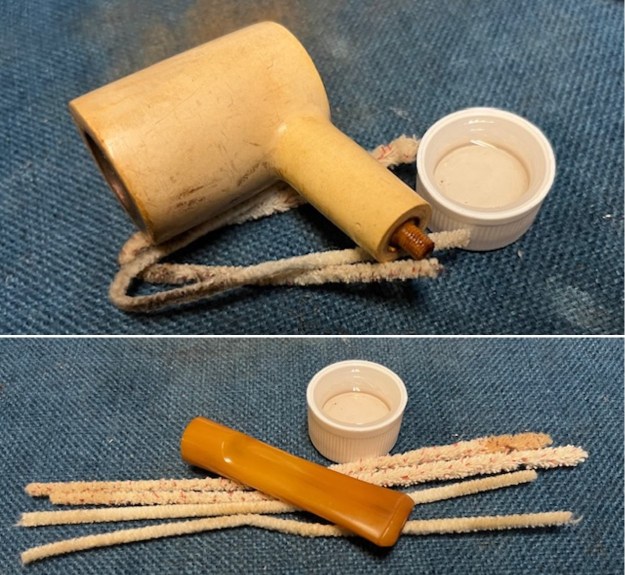
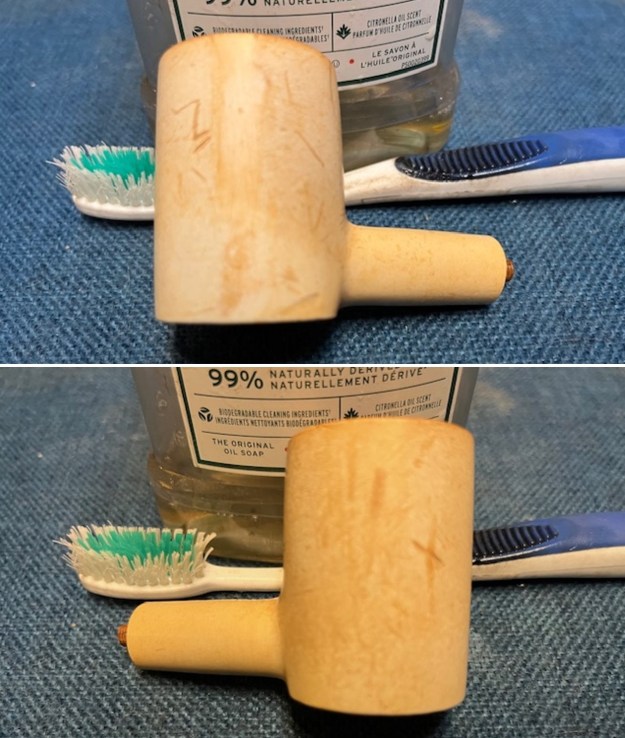
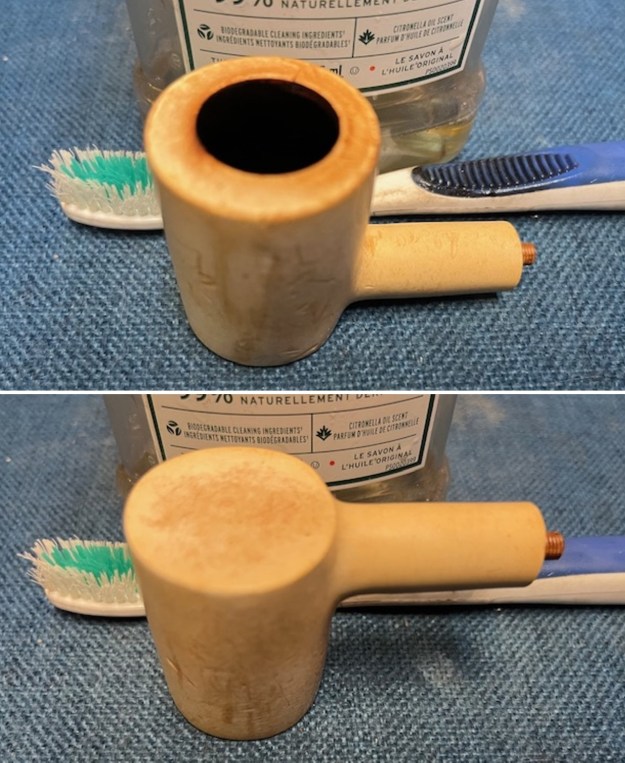
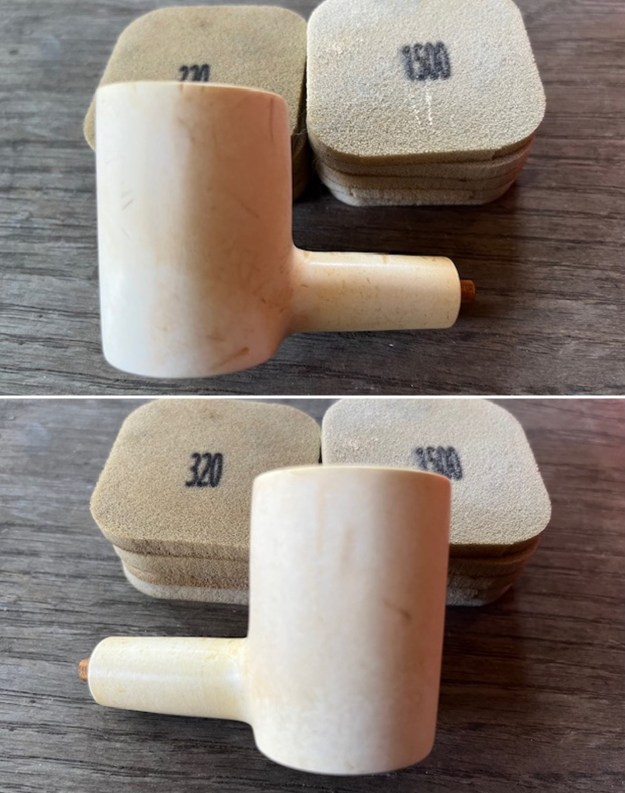
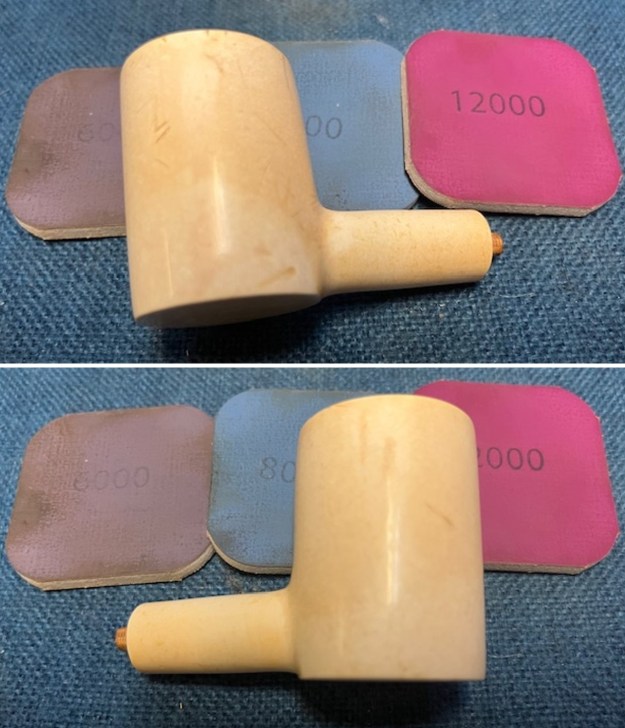
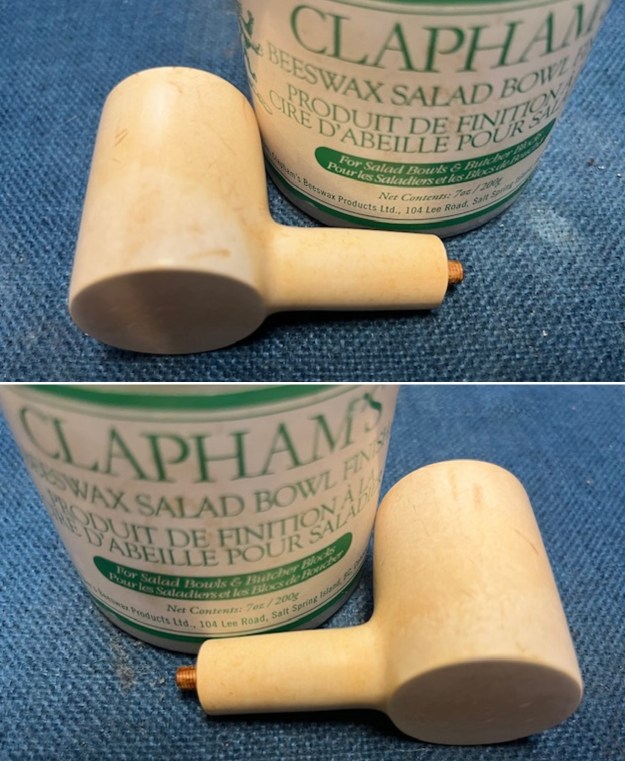
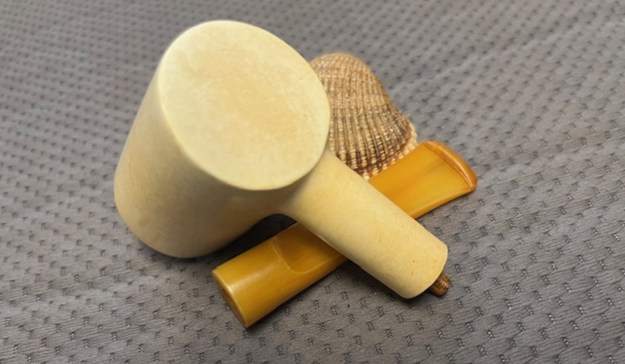
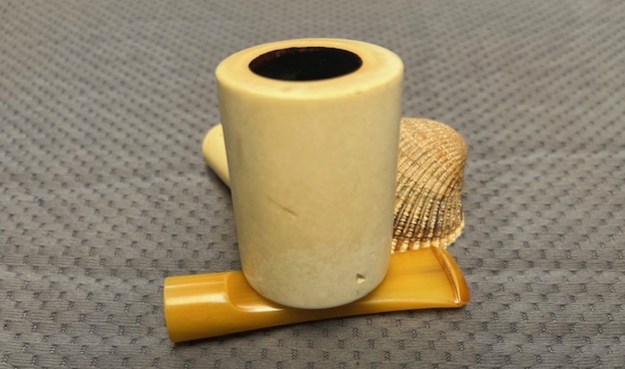
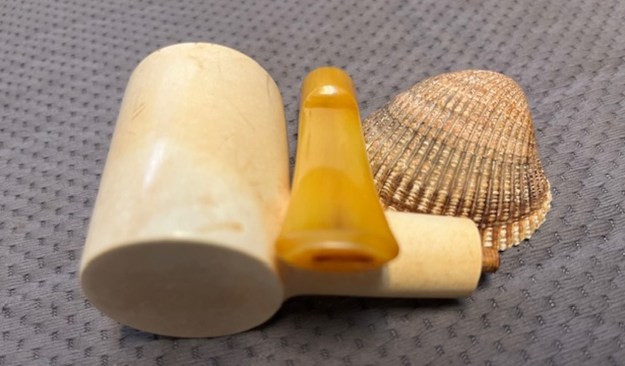
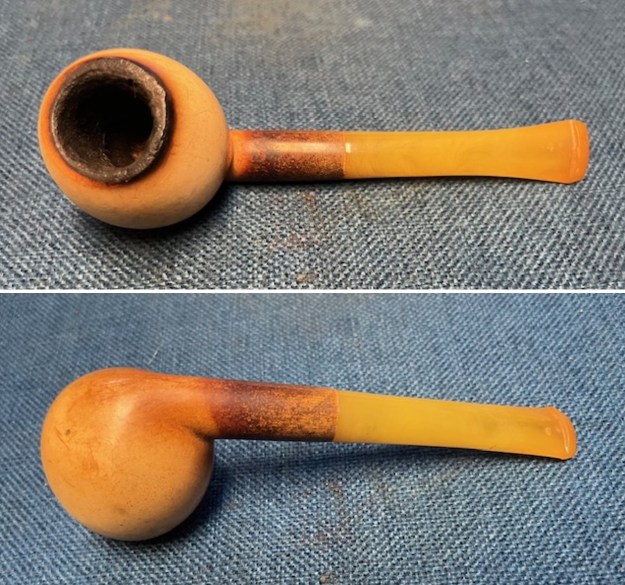
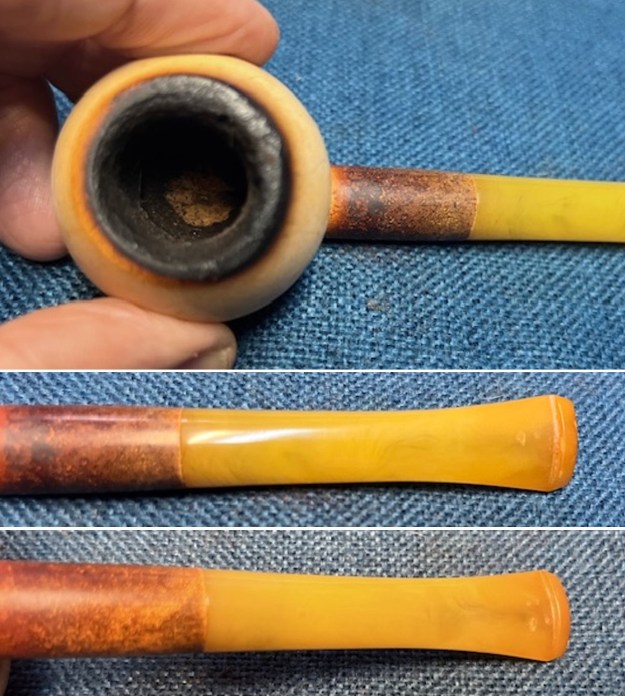
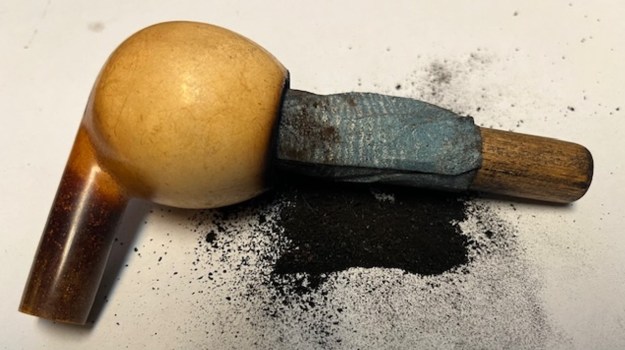
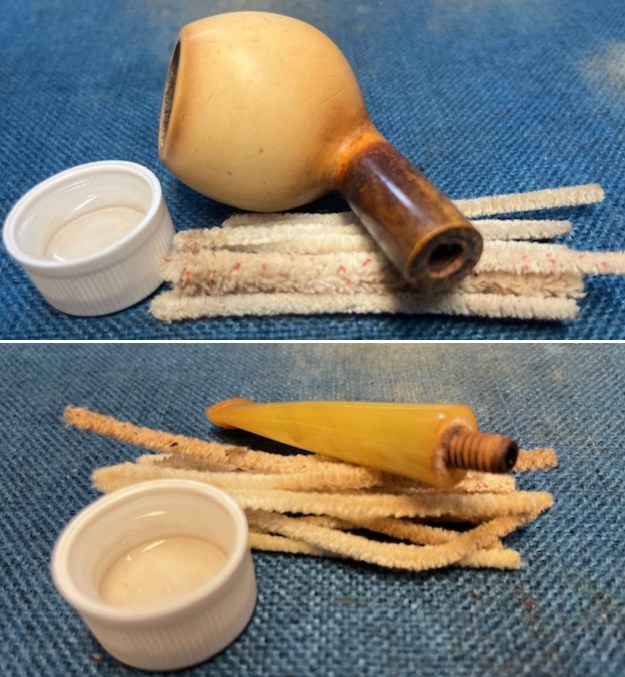
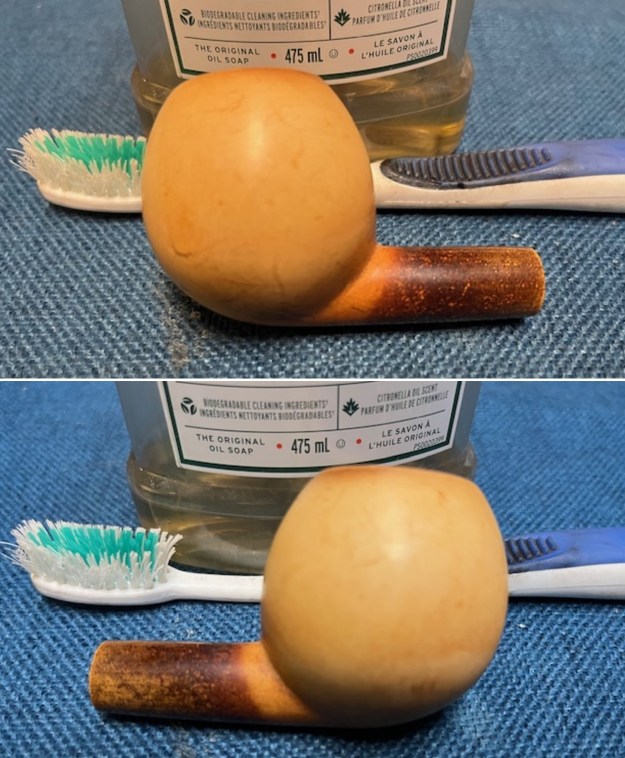
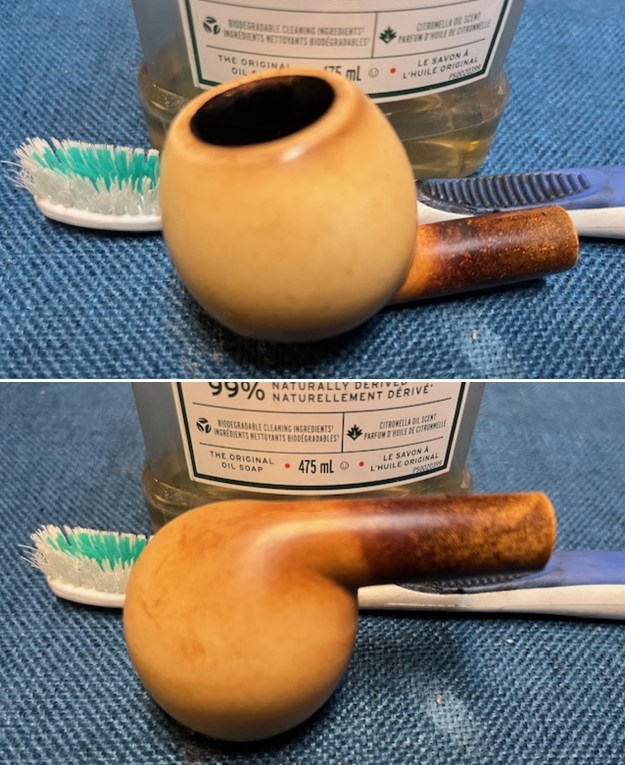
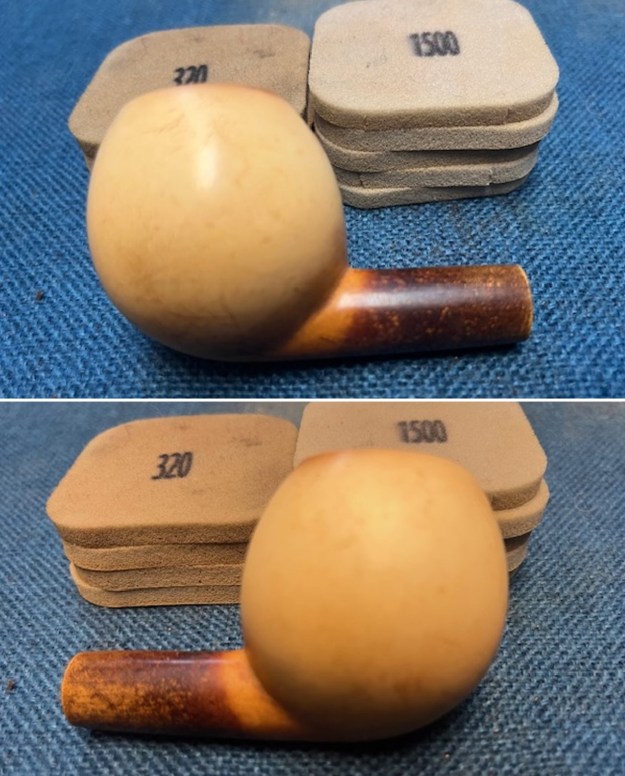
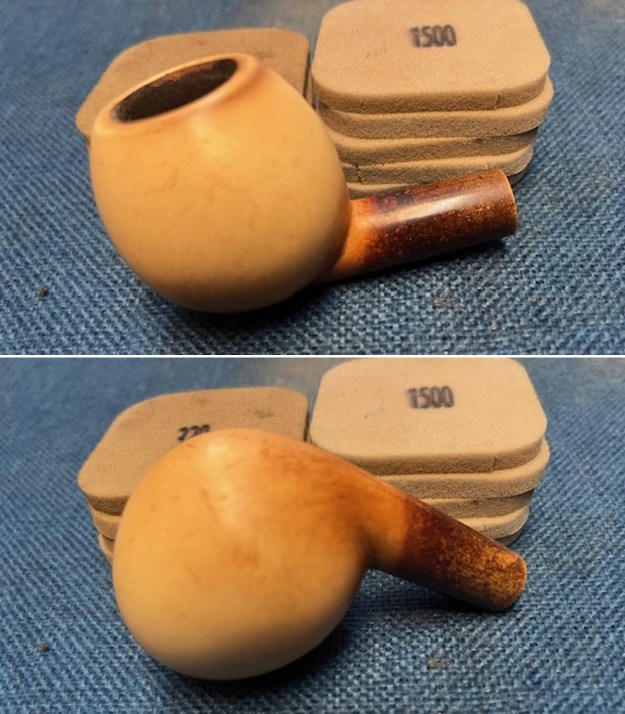
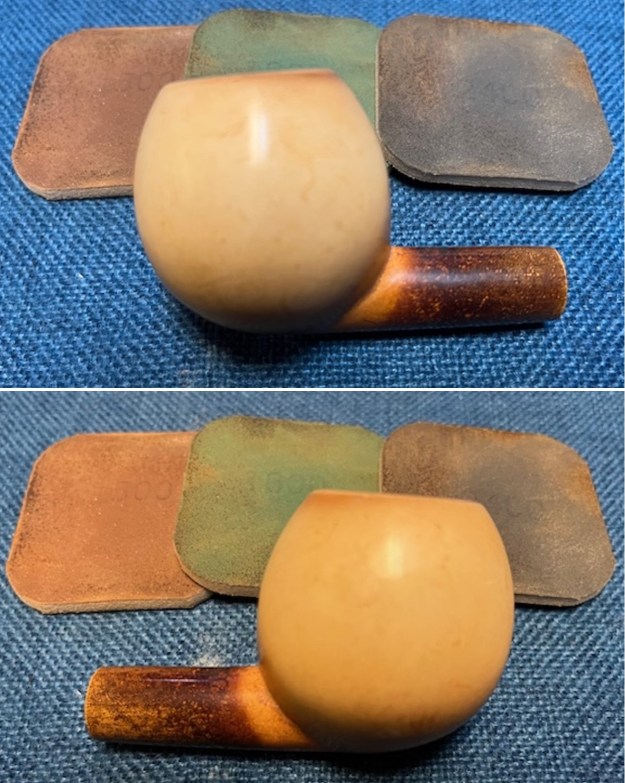
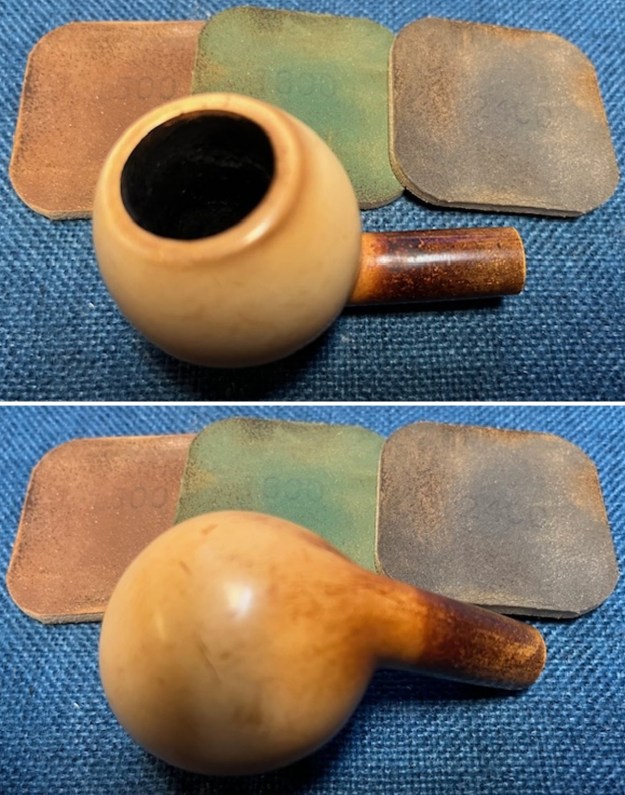
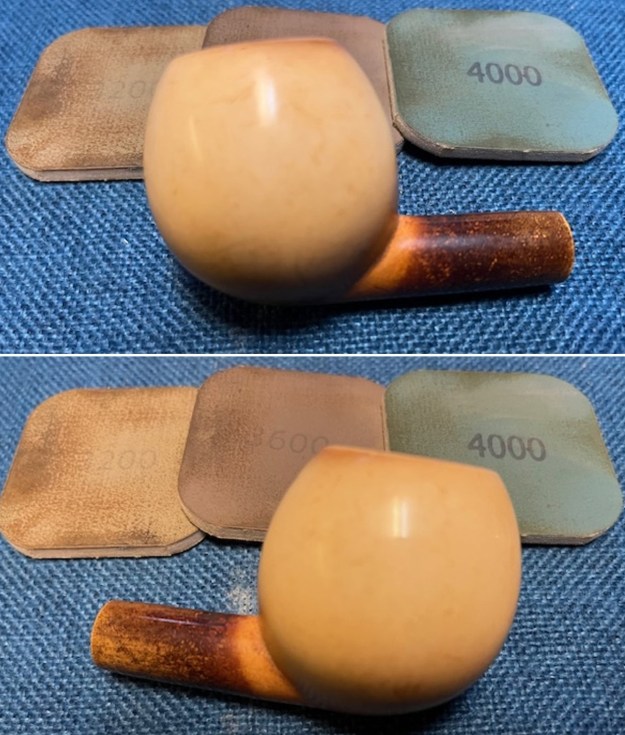
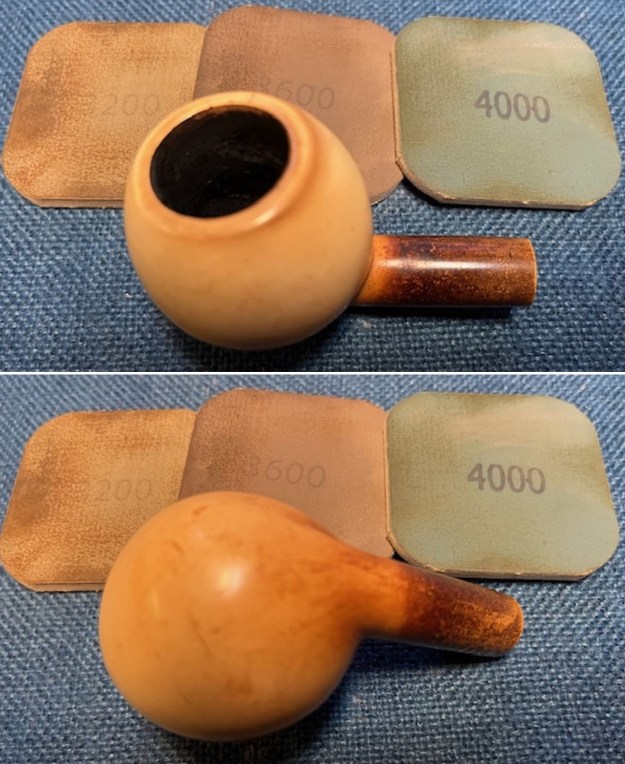
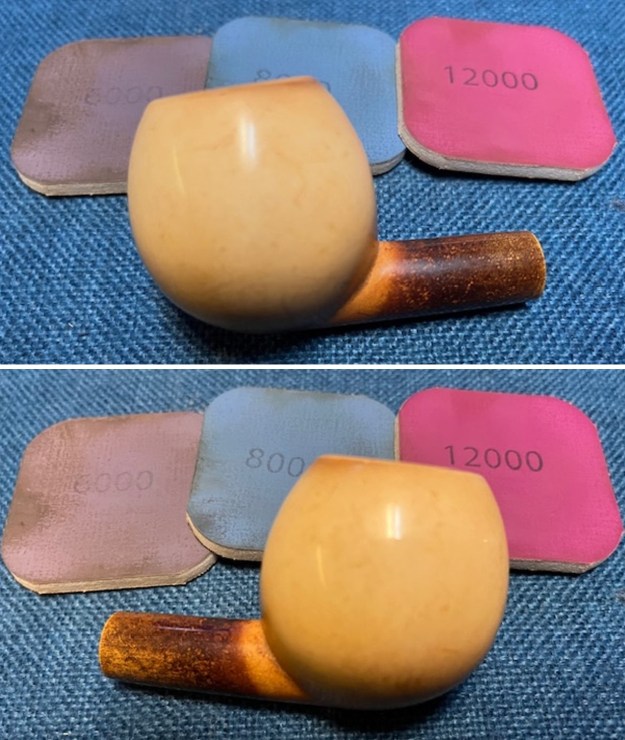
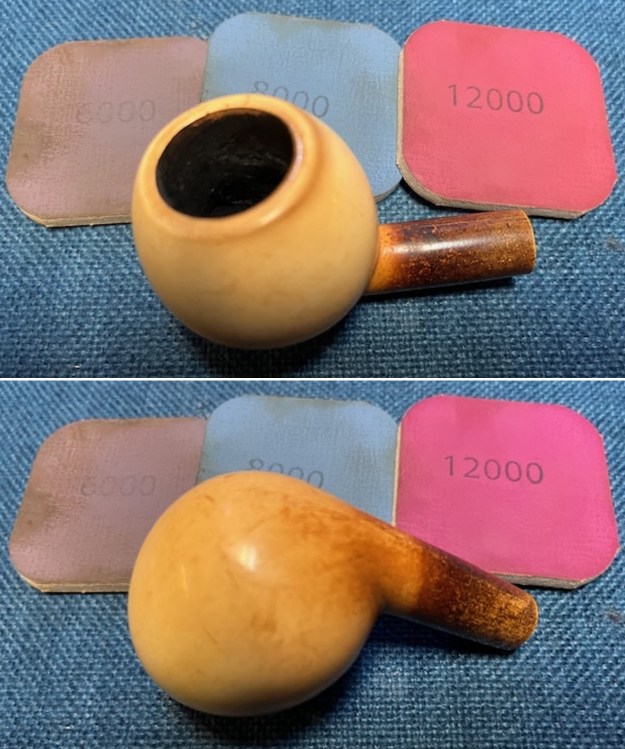
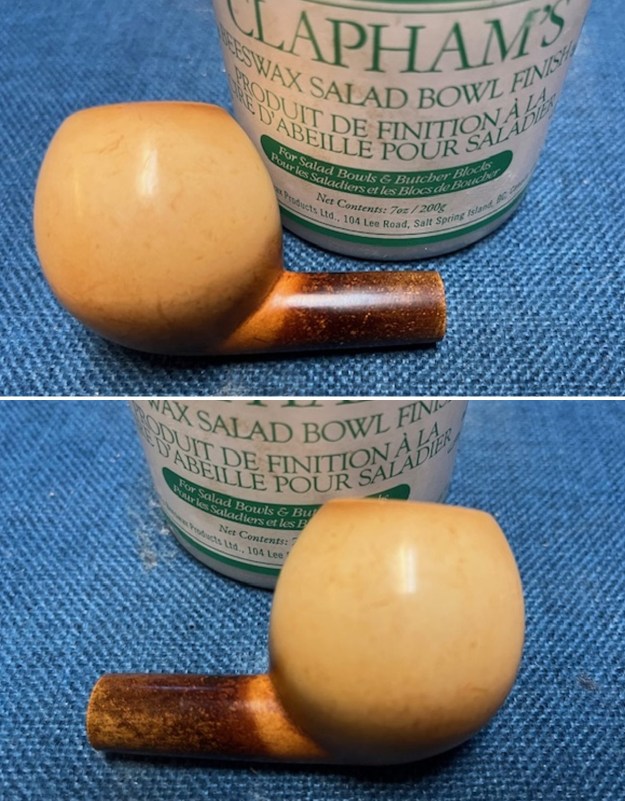
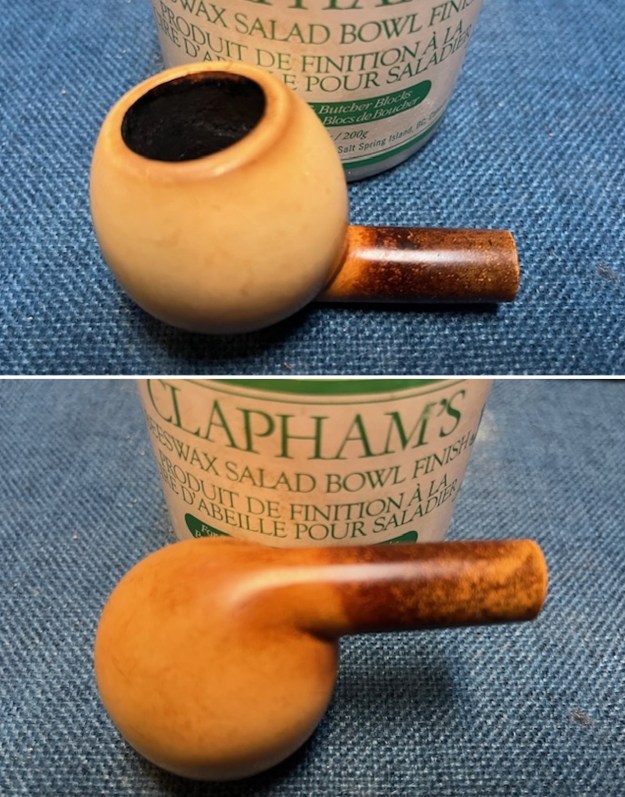
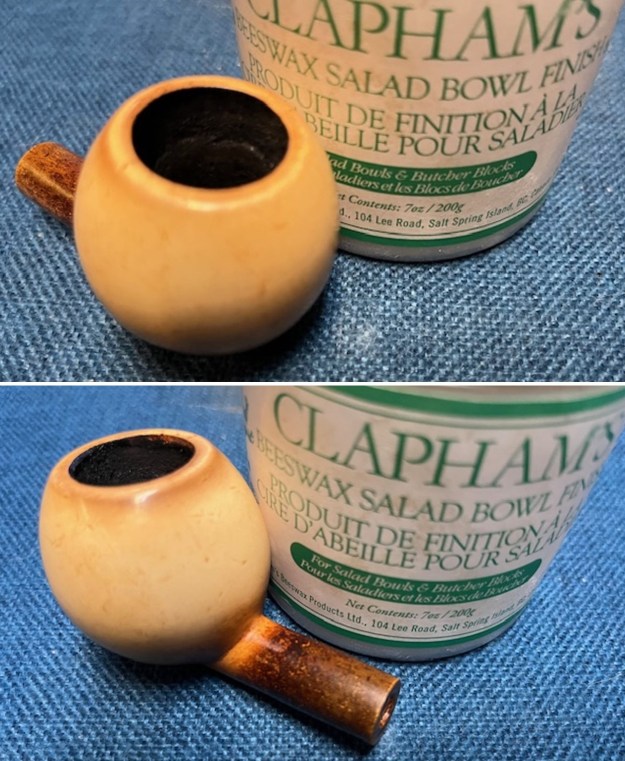
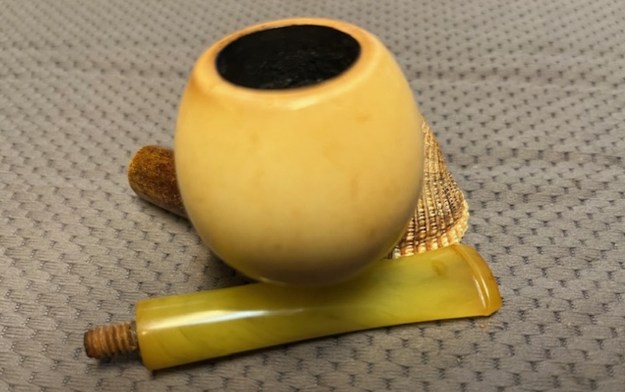
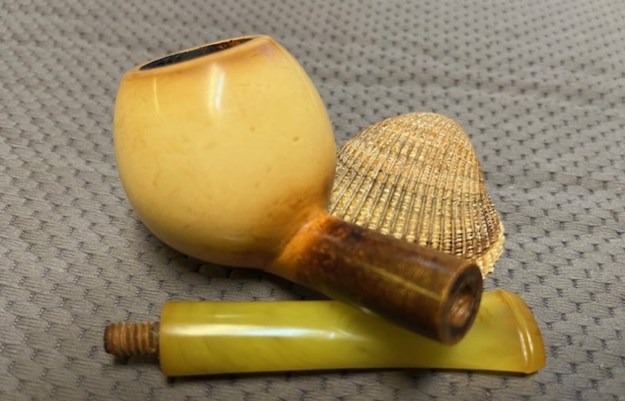
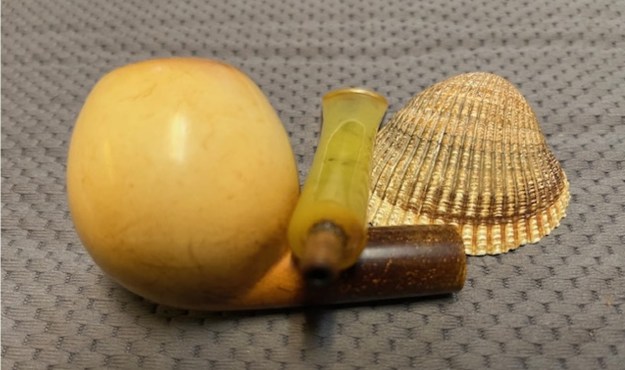
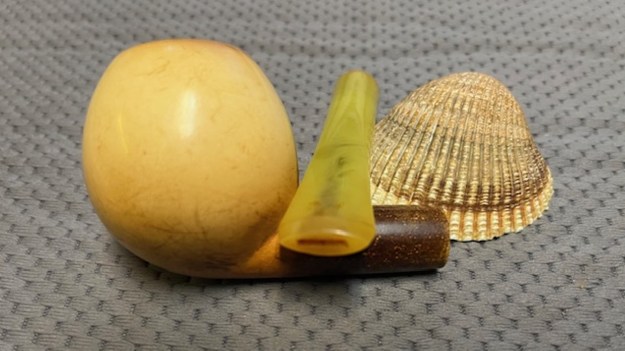
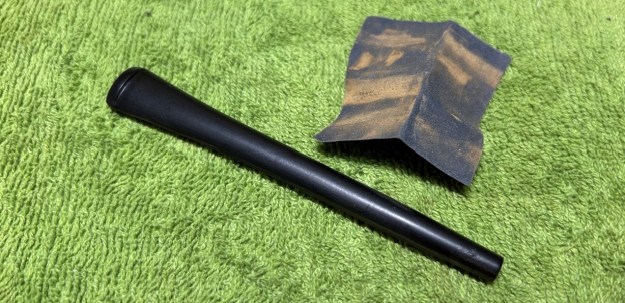
This afternoon I decided to work on the pipe that I no longer know where or when we purchase it. I have a large box of Meerschaum pipes that is sitting in my storage that I need to clean up and restore. I have honestly avoided them for years but now was the time to start my work on some of them. The first one I chose was definitely an older ball or apple shaped smooth meerschaum with a red acrylic shank extension. It is a beautifully shaped meer with scratches from its journey and some nice patina around the shank and sides. The meer is dirty from use with a thick cake in the bowl and a light overflow of lava on the inner edge and thin rim top. The acrylic shank extension was loose and would need to be cleaned. The stem fit well against the shank end however it was a Preben Holm vulcanite stem and it was too long. It would need to be replaced with a more fitting stem for the size of the pipe. There were no identifying logos on the bowl or shank. I took photos of the pipe before I started my clean up work on it. I took photos of the rim top and the stem to show the condition of the pipe when I brought it to the worktable. You can see the cake in the bowl and the build up of lava and debris on the edge and top of the thin rim top. It is another dirty pipe but still a charmer. The vulcanite stem has chatter and deep tooth marks on both sides near the button. It also has a Preben Holm crown on the top of the stem. It will be replaced so fortunately I will not need to deal with it.I removed the stem from the shank and took a photo of the parts. To me proportionally the stem is too long for this pipe. I went through my stems and found a stem that would work well. In the photos it looks the same length or longer but it is about an inch shorter and the blade is also wider and looks good. I took a photo of the pipe with the new stem. I shortened the tenon a bit to bring it closer to the shank extension. The second photo of the stem in the shank shows the new look. I reamed the thick cake out of the bowl. I started with a PipNet reamer and the 2nd and 3rd cutting heads to take back the cake to the walls of the bowl. I cleaned up the reaming with a Savinelli Fitsall Pipe Knife. I sanded the bowl walls with a piece of dowel wrapped with 220 grit sandpaper. Once finished it looked very good. I cleaned out the airway in the shank and mortise as well as in the new stem with pipe cleaners (both bristle and regular). It was much better.I cleaned up the rim top and edges of the bowl with a 320 grit sanding pad. I removed the darkening and damage and it looked better.The shank extension was held to the shank with a white Delrin tenon. The shank on the pipe was thread and the smooth end fit partially into the extension. When screwed into the shank it was a snug fit. I chose not to glue it but leave it unglued and removable.Now it was time to work on the bowl itself. I started my work by sanding with 320-3500 grit 2×2 inch sanding pads. It smoothed out the scratches and revealed more and more of the patina around the bowl and shank. It is a beautiful looking pipe. I polished the meerschaum with micromesh sanding pads – dry sanding with 1500-12000 grit pads. I wiped the bowl down after each pad with a damp cotton cloth. The bowl took on a shine by the last pads. I gave the bowl multiple coats of Clapham’s Wax that blends both carnauba and beeswax in a soft wax. I rubbed the wax on the bowl sides and the shank end with my fingers and set it aside to dry. Once the wax cured I buffed the bowl with a clean buffing pad and then with a soft microfibre cloth. The bowl has a rich glow. I set the bowl aside and turned my attention to the stem. I “painted” the surface of the stem with the flame of a lighter to lift the tooth marks on the surface. It lifted many of them. I filled in those that remained with some black, rubberized CA glue. When it cured I flattened out the repair with a small flat file and then sanded it with 220 grit sandpaper to smooth it out. I continued sanding the stem surface with 320-3500 grit 2×2 inch sanding pads. I wiped the stem down after each pad with a damp pad to remove the debris. By the end it was quite shiny and ready for polishing.I polished the stem with micromesh sanding pads – dry sanding it 1500-12000 pads. I wiped it down with a damp cloth after each pad to protect it and preserve it. I polished it with Before After Pipe Polish – both Fine and Extra Fine. I am really happy with the way that this Meerschaum Freehand Style Apple turned out. It really is a beautiful looking pipe with a unique shape and smooth meerschaum bowl. The acrylic shank extension and the fancy vulcanite saddle stem are really nice. The patina on the meerschaum came alive with waxing and buffing. The rich patina on the finish gave the pipe a sense of depth with the polishing and waxing. I put the stem back on the bowl and carefully buffed the pipe with Blue Diamond on the buffing wheel. I gave the bowl and the stem multiple coats of beeswax/carnauba wax and buffed the pipe with a clean buffing pad to raise the shine. I hand buffed the pipe with a microfiber cloth to deepen the shine. The finished Meerschaum style Freehand really is a beauty and feels great in the hand and looks very good. Give the finished pipe a look in the photos below. The dimensions of the pipe are Length: 6 inches, Height: 2 inches, Outside diameter of the bowl: 1 ¼ inches, Chamber diameter: 1 inch. The weight of the pipe is 66 grams/2.33 ounces. The pipe will be going on the rebornpipes store soon. It will be in the Ceramic and Meerschaum Pipes Section if you would like to add it to your collection. Thanks for reading this blog and my reflections on the pipe while I worked on it. It was a fun one to work on!

Life for a Bjarne Hand Made in Denmark rose variegated acrylic stem Freehand

by Steve Laug

This afternoon I decided to work on the pipe that Jeff picked up from a seller in Nampa, Idaho, USA on 11/09/2023. It is a beautifully grained Freehand with a Plateau rim and shank end. The right and left side of the bowl are panels with the left side fluted. The bottom is flattened and the pipe stands well on the heel. It has a fancy variegated rose coloured acrylic saddle stem. It is a beautiful grained piece of briar that I can appreciate why he chose it. The pipe is stamped on the underside of the shank and reads Bjarne [over] Handmade [over] In Denmark. The briar is dirty from use with a moderate cake in the bowl and a light overflow of lava on the bevelled inner edge and rim top filling in some of the plateau around the edge. The plateau shank end was dusty and dirty. The stem fit well against the shank end. The variegated rose coloured acrylic saddle stem had some tooth chatter and scratches on the top and underside of the stem ahead of the button. There was a Bjarne bj logo on the stem. Jeff took photos of the pipe before he started his clean up work on it. I have included them below. Jeff took photos of the rim top and the stem to show the condition of the pipe when we received it. You can see the cake in the bowl and the build up of lava and debris in the plateau of the rim top and shank end. I really is a dirty pipe. The variegated rose acrylic stem and has chatter and a few deep tooth marks on both sides near the button. He took photos of the sides of the bowl and the heel to give an idea of the shape and the condition of the briar around the bowl. It really is a nicely shaped pipe that has a great finish under the grime on the briar. The next photos Jeff took show the stamping on the underside of the shank. It is faint in spots but still readable as noted above. He also took a photo to show the stem logo. In a previous blog I had researched the brand quite a bit. I have included it in full below for information on this pipe (https://rebornpipes.com/2020/03/07/another-pipe-from-the-eastern-canada-lot-a-hand-carved-bjarne-freehand/). I quote:

I turned my favourite go to sites on background of brands. The first is Pipephil’s site (http://www.pipephil.eu/logos/en/logo-b5.html). There I looked up the Bjarne brand. I have copied the pertinent information below.

Bjarne Nielsen (1941 – † 2008) distributed his own “Bjarne” brand and pipes carved by Danish pipemakers (Mogens Johansen, Tonni Nielsen or Ph. Vigen). High grade pipes were stamped “Bjarne Nielsen” without any logo on the mouthpiece and graded A, B, C and D. Bjarne second brand: Viking.

I have included a screen capture of the section on the brand below. I turned to Pipedia and looked up the brand for a bit more information on the pipes that were stamped like the one that I am working on (https://pipedia.org/wiki/Bjarne). Toward the end of the article I found what I was looking for. I quote:

Among the pipemakers that worked for Bjarne were Johs (for the lower priced high volume pieces), and makers like Ph. Vigen, Ole Bandholm and Tonni Nielsen for high grade pieces. The cheaper line was stamped “Bjarne” while the highest grades were stamped “Bjarne Nielsen” (never with the pipemakers’ name) and graded, from highest to lowest, by the letters: AX, A, B, C, D, E, F, G, H, I, and J.

Now I knew that I was dealing with the cheaper line of pipe made by the company. It was stamped Bjarne while the higher grade pipes were stamped Bjarne Nielsen with a grade stamp.

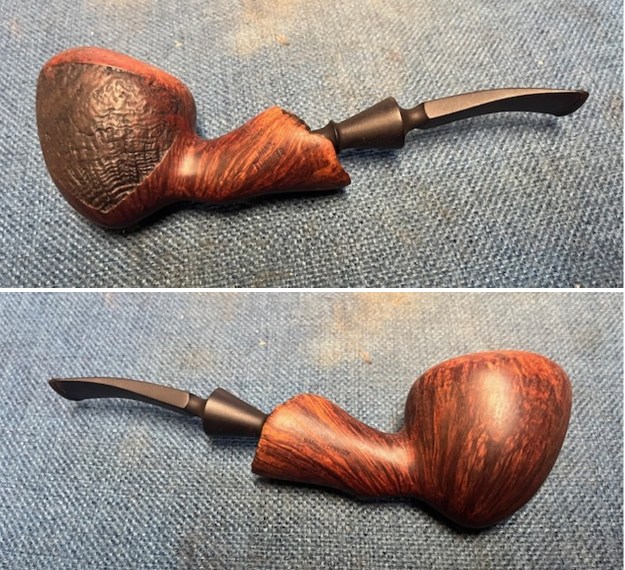
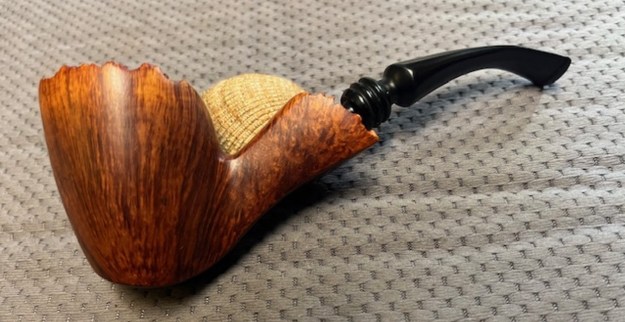
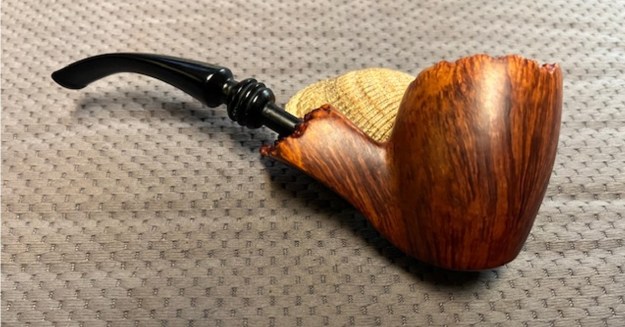
Jeff did a great job cleaning off the debris and grime on this old. He reamed it with a PipNet reamer and smoothed the walls of the bowl with a Savinelli Fitsall pipe knife. He scrubbed out the mortise and the airway in the shank and the stem with alcohol, cotton swabs and pipe cleaners. He scrubbed the exterior of the bowl, rim and shank with a tooth brush and Murphy’s Oil Soap to the oils and tars on the bowl, rim and shank. He rinsed it under running water. He dried it off with a soft cloth. Once the grime was removed the finish underneath was in stellar condition. There is a scratch on the right side toward the top that is visible. The rich patina of the older briar was a variegated finish of smooth and plateau looked great. He scrubbed the exterior of the stem with Soft Scrub then soaked it in a bath of Briarville’s Pipe Stem Deoxidizer. He rinsed off the deoxidizer with warm water and wiped the bowl and stem down with a light coat of olive oil to rehydrate both. The pipe really was quite stunning. I took photos of the pipe to show its condition before I started my work on it. I took close up photos of the stem and the rim top to show both how clean they were. The rim top and bowl were in good condition with some darkening on the inner bevel of the bowl edge and some lightening of the grooves of the plateau rim top. The stem looked better but the deep tooth marks and chatter were still present. I would need to remove those to bring the stem back.I took a photo of the stamping on the underside of the shank. You can see from the photo that it is readable. It is clearer on the top half of the stamp than the lower but it is still readable. I removed the stem from the bowl and took a photo of the parts to give a sense of the beauty of the pipe.I started my work on this pipe by addressing the darkening on the high spots on the rim top and the bevelled bowl edge. I sanded the edge bevel with a folded piece of 220 grit sandpaper to smooth out the edge and to smooth it and to reduce the darkening. I touched up the valleys in the plateau with a black Sharpie pen. It looked better when I had finished.As I examined the exterior of the bowl before polishing it I noticed some flaws or nicks (potential small cracks) in the briar on both side of the bowl where it joined the shank. I filled them in with clear CA glue. Once cured I sanded them smooth with 220 grit sandpaper to blend them into the surface. I touched up the sanded area with a Cherry stain pen. They came out looking very good. There was also a deep scratch on the right top edge that looked like a crack but on examination I affirmed it was a scratch. I polished the briar with micromesh sanding pads – dry sanding with 1500-12000 grit pads. I wiped the bowl down after each pad with a damp cotton cloth. The briar took on a shine by the last pads. I worked some Before & After Restoration Balm into the surface of the briar with my finger tips and a horse hair shoe brush to get into the crevices of the plateau rim top and shank end. The product is incredible and the way it brings the grain to the fore is unique. It works to clean, protect and invigorate the wood. I set the bowl aside and turned my attention to the stem. I sanded tooth chatter and marks smooth with 220 grit sandpaper to blend them into the surface of the acrylic. I continued sanding the stem surface with 320-3500 grit 2×2 inch sanding pads. I wiped the stem down after each pad with a damp pad to remove the debris. By the end it was quite shiny and ready for polishing.I polished the stem with micromesh sanding pads – wet sanding it 1500-12000 pads. I wiped it down with a damp cloth after each pad to protect it and preserve it. I polished it with Before After Pipe Polish – both Fine and Extra Fine. I am really happy with the way that this Bjarne Hand Carved Freehand turned out. It really is a beautiful looking pipe with a unique shape and smooth and plateau finishes. The fancy original acrylic saddle stem is really nice. The briar really came alive with the buffing. The rich brown and black stains of the finish gave the pipe a sense of depth with the polishing and waxing. I put the stem back on the bowl and carefully buffed the pipe with Blue Diamond on the buffing wheel using a light touch on the briar. I gave the bowl and the stem multiple coats of carnauba wax on the buffing wheel. I buffed the pipe with a clean buffing pad to raise the shine. I hand buffed the pipe with a microfiber cloth to deepen the shine. The finished Bjarne Freehand really is a beauty and feels great in the hand and looks very good. Give the finished pipe a look in the photos below. The dimensions of the pipe are Length: 6 inches, Height: 2 ½ inches, Outside diameter of the bowl: 1 ½ inches long x 1 ¾ inches wide, Chamber diameter: ¾ of an inch. The weight of the pipe is 57 grams/2.01 ounces. The pipe will be going on the rebornpipes store soon. It will be in the Danish Pipe Makers Section if you would like to add it to your collection. Thanks for reading this blog and my reflections on the pipe while I worked on it. It was a fun one to work on!

Cleaning up a Fatta a Mano Pesaro Mastro de Paja Lovat

by Steve Laug

This afternoon I decided to work on the pipe that Jeff picked up on Facebook Marketplace from a seller in Wellsville, Kansas, USA on 12/09/2024. It is a beautifully grained Lovat with an amber coloured acrylic saddle stem. It is a beautiful grained piece of briar that I can appreciate why he chose it. The pipe is stamped on the left side of the and reads Mastro de Paja [over] Fatta a Mano. On the right side of the shank it is stamped Pesaro [followed by] what looks like the Sun. On the underside of the shank it is stamped Media [followed by) 3A in a circle. The briar is dirty from use with a moderate cake in the bowl and a light overflow of lava on the rim top. The stem fit well against the shank end. The amber coloured acrylic saddle stem had some light tooth chatter and scratches on the top and underside of the stem ahead of the button. There was an inset gold circle logo in the top of the stem. Jeff took photos of the pipe before he started his clean up work on it. I have included them below. Jeff took some close up photos of the bowl and rim top. You can see the light lava coat in the plateau top. The inner edge of the rim looks good with a spot of darkening and damage on the left back side. There is a light cake in the bowl that seems to have been recently reamed. The photos of the stem show the scratching and tooth marks in the stem at the button. Jeff took photos of the sides of the bowl to show the interesting grain on the Lovat bowl and shank and how the shape chases it. He took photos of the stamping on the sides of the shank. It is clear and readable as noted above. Before I began to work on the pipe I wanted a refresher course on the maker and the stamping. I have not worked on too many Mastro de Paja pipes before so I figured to do a bit of education before I started my restoration.
I turned first to Pipedia to get a feel for the pipe (https://pipedia.org/wiki/Mastro_de_Paja). I quote in part from the article on that site.

In 1972 Giancarlo Guidi, after having spent some time as a hobbyist in producing pipes, decided to officially found a production workshop called “Mastro de Paja”. Mastro: obviously as a master craftsman, De Paja: it derives from the name with which he was affectionately called by friends “Pajetta” because of his curly hair and translated into a dialectal expression “de Paja”.

Spadoni Giannino joins him shortly after that, at the time he was a salesman and among the products he sold there were also pipes. A professional wedding that turned out to be perfect immediately, in no time the new company “MASTRO DE PAJA di Guidi e Spadoni” immediately became one of the most respected manufacturers of pipes in Italy for the quality of production and lines that for those times were innovative, fascinating and even if coarse they immediately met the consent of enthusiasts and collectors.

Unfortunately, the professional marriage between Guidi and Spadoni, due to disagreements and different views on strategies, stopped in 1981. Guidi left the company to found a personal one. In Mastro de Paja which in the meantime became a real company with a production staff remained with Spadoni. Unfortunately, after a very short time, due to economic and financial problems that put the possibility of continuing the business at risk, Spadoni is forced to ask for help and finds it with the intervention of the Pesaro-based entrepreneur Terenzio Cecchini who, despite being burdened by his multiple industrial activities, sees in Mastro de Paja a valid expression of high craftsmanship and takes over as majority shareholder and acquires the position of director.

Soon after even Spadoni decides to leave (and create his own new company), Cecchini then puts his eyes on a very smart young man which he considered capable of giving new glaze to the Mastro de Paja which, meanwhile, inevitably presented some productive and commercial problems. That young man is called Alberto Montini and he started in his thirties his beautiful adventure in the pipes world… He was contacted by the surveyor Terenzio Cecchini at the time the only owner of the Mastro, to take care of it in every aspect, first as an employee, then as an administrator and later as a partner of Mastro de Paja and afterwards with the passing of Mr. Cecchini he became the sole owner.

Currently the Mastro produces about 2 thousand pipes a year with strictly artisan procedure, at the Mastro currently reigns a warm harmony, is a group of friends who strives to get the best. This also stems from the fact that pipes for Mastro de Paja are not to be considered as any other object to be produced and sold following cold strategies common to everyone in the business world, it’s completely different, it is necessary to love it, it is a style of being, a philosophy of life that can only be appreciated by a noble soul and not noble by title but by principles.

I read further in the article and found the following information on the stamping and the circle 3A stamp. I quote:

Mastro de Paja “ELITE COLLECTION” It is the production of pipes made entirely by hand, even they are unique but of regular production. On all “Mastro de Paja” pipes you can see fire stamped all the information for tracing the value of each creation.

 0B: Rusticated

1B: Sandblasted

CA: Castanea

2D: Half rusticated

3A: Brown and orange stain

3B: Natural

3C: Perfect grain

It looks like the 3A is pretty high in the hierarchy of the Mastro pipes, with just the 3B Natural and the 3C Perfect Grain ahead of it. It is described as Brown and Orange Stain. That would describe what I hold in my hands today.

I turned to the Pipephil website (http://www.pipephil.eu/logos/en/logo-m3.html) and added the following screen capture and summary of information on the brand.Brand founded in 1972 by Giancarlo Guidi. He left it for Ser Jacopo in 1982. Alberto Montini became the owner of the brand in 1995. Production (2010): ~ 5000 pipes / year. Seconds: Calibano, Montini

Armed with that information and renewing my knowledge of the brand it was time to work on the pipe.

Jeff had reamed the bowl with a PipNet pipe reamer and followed up with a Savinelli Fitsall pipe knife to remove the remnants of cake. He scrubbed out the mortise and the airway in the shank and the stem with alcohol, cotton swabs, shank brushes and pipe cleaners. He scrubbed the exterior of the bowl, rim, shank and stem with a tooth brush and undiluted Murphy’s Oil Soap to remove the oils and tars on the rim and the grime on the finish of the bowl of the pipe. He rinsed it with running water. He dried it with a soft cloth. He was able to remove all of the debris in the briar leaving only the area with slight damage on the inner edge of the bowl on the left rear. I took photos of the pipe to show its condition before I started my work. I took a close up photo of the rim top to show the condition of the top and edges of the rim. The inner shows some burn damage on the left read of the bowl. The stem photos show the light tooth marks and scratching on the surface of the amber acrylic.I took photos of the stamping on the sides of the shank to capture the words if possible. It was clear and read as noted above. I removed the stem and took a photo of the parts of the pipe to give a sense of the proportion of the parts to the whole. It is a well designed and made pipe. I decided to begin by addressing the damage on the left rear of the inner edge. I carefully sanded the edge with a folded piece of worn 220 grit sandpaper to smooth out the damaged area and bring it back to round as much as possible.I polished the briar with micromesh sanding pads – dry sanding with 1500-12000 grit pads. I wiped the bowl down after each sanding pad to remove the sanding debris from the surface. It looked very good by the time I finished. I worked some Before & After Restoration Balm into the surface of the briar with my fingertips to clean, enliven and protect it. I let the balm sit for a little while and then buffed with a cotton cloth to raise the shine. The photos show the bowl at this point in the restoration process. With the bowl finished I set it aside and turned my attention to the stem. I sanded out the swirled scratches in the surface of the acrylic and the light tooth marks with 220 grit sandpaper. It did no take to long to remove them all. It looked better.I further sanded it with 320-3500 grit 2×2 inch sanding pads and smoothed out the sanding marks further. I wiped it down after each sanding pad with an Obsidian Oil cloth to remove the sanding debris. It was looking very good by the last pad.I polished the stem with micromesh sanding pads – dry sanding it with 1500-12000 grit pads. I wiped the stem down with Obsidian Oil after each pad. I polished it with some Before & After Pipe Polish – both Fine and Extra to deepen the shine. I wiped it down with a final coat of Obsidian Oil and set it aside to dry. This Mastro de Paja Fatta a Mano Lovat is a great looking pipe now that it has been restored. The brown stains really highlight the grain and the polished finish is stunning. I put the amber acrylic saddle stem back on the bowl and carefully buffed the pipe with Blue Diamond on the buffing wheel. I gave the bowl and the stem multiple coats of carnauba wax on the buffing wheel and followed that by buffing the entire pipe with a clean buffing pad. I hand buffed the pipe with a microfiber cloth to deepen the shine. The finished Mastro de Paja Lovat fits nicely in the hand and feels great. Give the finished pipe a look in the photos below. The dimensions of the pipe are Length: 5 ½ inches, Height: 2 inches, Outside diameter of the bowl: 1 ½ inches, Chamber diameter: ¾ of an inch. The weight of the pipe is 49 grams /1.73 ounces. It is a beautiful pipe. If you are interested in adding it to your rack let me know. It will be on the rebornpipes store in the Italian Pipe Makers Section. Thanks for reading this blog and my reflections on the pipe while I worked on it.

As always, I encourage your questions and comments as you read the blog. Thanks to each of you who are reading this blog. Remember we are not pipe owners; we are pipe men and women who hold our pipes in trust until they pass on into the trust of those who follow us.

Cleaning up an Italian Made Plateau Rim Top Amorelli One Star Hand Made Horn

by Steve Laug

This morning I decided to work on the pipe that Jeff picked up on Facebook Marketplace from a seller in Wellsville, Kansas, USA on 12/09/2024. It is a unique looking Horn with a plateau rim top. It is a beautiful grained piece of briar that I can appreciate why he chose it. The pipe is stamped on the left side of the and reads Amorelli [over]* On the right side of the shank it is stamped Hand Made [over] what looks like a clock stamp [over] Italy. The clock appears to read 7:05 or 20 minutes to 2. I have no idea what that means at this point in the process. The briar is dirty from use with a moderate cake in the bowl and a light overflow of lava on the rim top.  The stem fit well against the shank end. The black, acrylic saddle stem appeared to have some light tooth chatter on the top and underside of the stem ahead of the button. There was an inset gold bar logo in the top of the stem and the top of the shank.  On the shank there is a stamp next to the gold bar that reads 18Kt. The two parts line up for a straight fit to the shank. Jeff took photos of the pipe before he started his clean up work on it. I have included them below. Jeff took some close up photos of the bowl and rim top. You can see the light lava coat in the plateau top. The inner edge of the rim looks good. There is a light cake in the bowl that seems to have been recently reamed. The photos of the stem show the scratching, oxidation and tooth marks in the stem at the button. Jeff took photos of the sides of the bowl to show the interesting grain on the horn and how the shape chases it. He took photos of the stamping on the sides of the shank. It is clear and readable as noted above. I have worked on one other Amorelli recently but needed to refresh my memory about the brand. I turned first to Pipephil’s site for a short introduction to the brand and was not disappointed by what a I found (http://www.pipephil.eu/logos/en/logo-a5.html). I have included the screen capture below as well as the side bar information on the grading of the pipes.
Artisan: Salvatore Amorelli. Grading (ascending): 1 to 5 stars. 5 stars pipes may be differentiated by some golden stars: (* * * * * or * * * * *)

I turned to Pipedia to add more to what I had learned above on Pipephil about the Amorelli brand (https://pipedia.org/wiki/Amorelli). There was a short article full of information. I quote from it below.

An Amorelli pipe is recognized by an unmistakable logo: an 18k Gold bar, placed in the centre of the junction of the shank and mouthpiece, and which allows a perfect positioning. Projecting and making with a scrupulous rigour, Amorelli refers to the most exigent pipe connoisseur who will be able to recognize a very high smoking quality and prize a processing of the highest level, rich in refined details. It climaxes in a delicate process of finishing, where esteemed Brazilian bee waxes are used to feed and exalt the fibre of the wood, allowing the pipe to breathe.

25 years have passed since Totò Amorelli entered the scene with his creations, inimitable still today: busbee, frac, lyra, fish-tail, nayl, unicum, interpretaions of a new point of view and to realize a pipe. The 18k Gold logo, only Sicilian and selected briar, 5 years seasoned and interpreted piece by piece…

What will the near future hold? A new line of pipes for everyone: “La Siciliana”, together with Amorelli pipes, made from the best briar collected from Sicilian Mountains overlooking Taormina, cut, boiled and seasoned directly in the new workshop of Caltanissetta, everything overseen by Totò. 

The pipe I was working on was an Amorelli made of Sicilian Briar! It was a 1-star grade pipe which fits the great grain on this particular pipe. Now it was time to turn my attention to the pipe itself.

Jeff reamed the bowl with a PipNet pipe reamer and followed up with a Savinelli Fitsall pipe knife to remove the cake. He scrubbed out the mortise and the airway in the shank and the stem with alcohol, cotton swabs and pipe cleaners. He scrubbed the exterior of the bowl, rim, shank and stem with a tooth brush and Murphy’s Oil Soap to remove the oils and tars on the rim and the grime on the finish of the bowl of the pipe. He rinsed it off under running water. He dried it off with a soft cloth. He was able to remove most of the lava build up on the rim top of the pipe leaving a clean rim with some debris in the sandblast. I took photos of the pipe to show its condition before I started my work. I took a close up photo of the rim top to show the condition of the sandblast finish of the rim. The inner and outer edge of the bowl looks really good. The stem photos show the light tooth marks and pit on the top surface.I took photos of the stamping on the sides of the shank to capture the words if possible. It was clear and read as noted above. I removed the stem and took a photo of the parts of the pipe to give a sense of the proportion of the parts to the whole. It is a well designed and made pipe. I worked over the plateau rim top with a brass bristle wire brush to knock off the debris in the plateau valleys and clean it up.I polished the briar with micromesh sanding pads – dry sanding with 1500-12000 grit pads. I wiped the bowl down after each sanding pad to remove the sanding debris from the surface. It looked very good by the time I finished. I worked some Before & After Restoration Balm into the surface of the briar with my fingertips to clean, enliven and protect it. I let the balm sit for a little while and then buffed with a cotton cloth to raise the shine. The photos show the bowl at this point in the restoration process. With the bowl finished I set it aside and turned my attention to the stem. It was in great condition that I moved ahead and polished the stem with micromesh sanding pads – wet sanding it with 1500-2400 grit pads and dry sanding it with 3200-12000 grit pads. I wiped the stem down with Obsidian Oil after each pad. I polished it with some Before & After Pipe Polish – both Fine and Extra to deepen the shine. I wiped it down with a final coat of Obsidian Oil and set it aside to dry. This Amorelli * Hand Made Italy Horn with a Plateau Rim Top is a great looking pipe now that it has been restored. The brown stains really highlight the grain and the polished finish is stunning. The polished plateau rim top looked very good as well. I put the acrylic saddle stem back on the bowl and carefully buffed the pipe with Blue Diamond on the buffing wheel. I gave the bowl and the stem multiple coats of carnauba wax on the buffing wheel and followed that by buffing the entire pipe with a clean buffing pad. I hand buffed the pipe with a microfiber cloth to deepen the shine. The finished Amorelli * Hand Made Horn fits nicely in the hand and feels great. Give the finished pipe a look in the photos below. The dimensions of the pipe are Length: 5 ½ inches, Height: 2 ¼ inches, Outside diameter of the bowl: 1 ½ inches wide x 1 ¾ inches long, Chamber diameter: 7/8 of an inch. The weight of the pipe is 48 grams /1.66 ounces. It is a beautiful pipe. If you are interested in adding it to your rack let me know. It will be on the rebornpipes store in the Italian Pipe Makers Section. Thanks for reading this blog and my reflections on the pipe while I worked on it.

As always, I encourage your questions and comments as you read the blog. Thanks to each of you who are reading this blog. Remember we are not pipe owners; we are pipe men and women who hold our pipes in trust until they pass on into the trust of those who follow us.

Bringing Dad’s Two Pipes – Second Pipe the Medico Gold Crest Back to Life for his Daughter.

by Steve Laug

At the end of last week, I received an email from Terrica in Florida regarding some pipes that she wanted me to clean up for her. I have included her first email below:

I would like to send my deceased father’s old tobacco pipes for cleaning. I will not be using the pipes but would like to get them cleaned up so I can keep them on display.

I wrote back asking what the pipes looked like in terms of condition. I also wanted to know her general wishes on the clean up and how far she wanted me to go with it. She responded as follows and sent photos of the two pipes that I have included below.

Thank you very much for responding. As you can see, these are very inexpensive pipes. My deceased dad likely purchased them at a local drugstore. I have no doubt that they have never been cleaned.

I will never be using them, but I would at least like them presentable. Thank you very much, Terrica

I took a look at the photos and was able to discern that the top pipe was a Medico Gold Crest Pot shaped pipe that had a thick cake in the bowl and was very dirty with grime ground into the finish. The stem, other than being very dirty did not have deep tooth marks. There was tooth chatter and grime on the vulcanite filter stem that would need to be cleaned up and removed. The second pipe was stamped Venturi and was made out of a resin that was used in The Pipe, The Smoke and the Venturi. This was a bent Billiard. It was dirty and had a cake in the bowl. The stem was also very dirty and had some tooth chatter on the surface.I chose to work on the Medico Gold Crest next. The finish was dirty and there were nicks around the outer edge of the rim top. The inwardly bevelled rim top was very dirty with a thick lava build up and there was a thick cake in the bowl. The stamping on the left side of the shank was clear but had a lot of dust in the stamping. It read as noted above – Medico [over] Gold Crest [over] Imported Briar. On the right side of the shank it is stamped 149 (shape number). There is a 14K gold plated band on the shank that is stamped Medico [over] 1/30 14K RGP. The “1/30 14K RGP” likely refers to the gold content of the band, indicating it is a 14K gold rolled gold plate. The stem appears to be a Medico synthetic rather than rubber but I am not sure. There surface as dirty and had some build up ahead of the button on both sides. There was some tooth chatter on both sides ahead of the button edge. The pipe smelled of the tobacco that had obviously been smoked in it. The style of the build up/cake make me think of a drug store tobacco of the style of Prince Albert or Sir Walter Raleigh. I will certainly l know more once work on the second pipe. I took photos of the pipe before I started my work on it. I took photos of the rim top and the stem to show the condition. You can see the cake in the bowl and the thick overflow of lava on the rim top. The photos of the stem show the tooth marks and chatter on the top and the underside of the stem.I took a photo of the stamping on the left side of the shank to capture it. The left side read as noted above. I removed the stem and took a photo of the parts to give a sense of the look of the pipe. I paused in the restoration to gather backgound on the brand. I turned first to Pipephil’s site to see what I could learn (http://www.pipephil.eu/logos/en/logo-medico.html). I have included a screen capture of the section on the Gold Crest. The stamping shown in the capture below is identical to the one that I am working on.From there I turned to Pipedia to see if I could gather more information on the brand as a whole and specifically the Gold Crest Line (https://pipedia.org/wiki/Medico). I quote below:

Medico was created in 1933, and is still produced by S.M. Frank. The brand is famous for its pipe filters, which were launched in the same year. Since 1966, some models have been made in Brylon, a synthetic material, and others in briar. The brand was also sold by the English company Cadogan and Oppenheimer Pipe. Symbol: M inside a shield, although early pipes, like the example bellow, had a + sign, like a Medic would have on their sleeve.

I have also included some of the advertising flyers that were on the site as well. They give a sense of the pipe’s look and feel and the old descriptions are great to read. Now it was time to turn my attention to the pipe itself. I started my work on it by reaming the bowl with a PipNet reamer. I used the first cutting head and took the cake back to bare briar. I cleaned up the reaming with a Savinelli Fitsall Pipe Knife and removed all the remnants of the cake. I scraped the rim top with the flat edge of the blade at the same time and removed most of the thick lava build up. I sanded the walls of the bowl with a piece of dowel wrapped in 220 grit sandpaper. The walls look very good at his point in the process. I cleaned out the shank, the airway and the mortise as well as the airway in the stem with alcohol, cotton swabs, hard bristle and soft bristle pipe cleaners. It was a very dirty pipe which just meant that it had really been enjoyed by the previous pipe man.I scrubbed the exterior of the bowl and shank with a tooth brush and undiluted Murphy’s Oil Soap. I scrubbed the lava on the rim top and overflow on the outside of the bowl with the soap. I rinsed the briar with warm water to remove the grime and debris of the scrubbing. It looked significantly better after the scrubbing. Once I cleaned the bowl with the soap it looked much better. I wiped the bowl down with acetone on cotton pads to remove the spotty varnish coat on the bowl and to break up the darkening on the top of the rim. I worked over the darkening on the back topside and inner edge of the bowl with 220 grit sandpaper. It took a lot of elbow grease but it was getting better with each piece of sandpaper. I sanded the briar further with 320-3500 grit 2×2 inch sanding pads. I wiped the bowl down with a damp cloth after each sanding pad. It began to look very good. I polished the briar bowl with micromesh sanding pads – dry sanding with 1500-12000 grit pads. I wiped the bowl down after each sanding pad with an olive oil cloth. By the final sanding pad the bowl had taken on a significant shine. I rubbed the bowl and shank down with Before & After Restoration Balm to deep clean the finish on the briar bowl and shank. The product works to clean, enliven and protect the briar and gives the briar a rich shine. I worked it in with my fingers to get it into the surface. I let it sit for 10 minutes then I wiped it off and buffed it with a soft cloth. The bowl began to have a rich shine. I took some photos of the bowl at this point to mark the progress in the restoration. It is a beautiful bowl. I set the clean and polished bowl aside and turned my attention to the stem. I sanded the stem smooth with 220 grit sandpaper to clean up the marks and chatter. It was smooth and all that remained was to polish it.I wiped the stem down with olive oil and sanded the surface with the 2 x 2-inch sanding pads – 320-3500 grit pads to clean up the sanding marks on the stem surface. I wiped it down after each sanding pad and by the final 3500 grit pad the stem started to really shine.I touched up the faint M shield on the left side of the stem with Rub’n Buff Antique Gold. I worked it into the stamping with a tooth pick. I buffed it off with a paper towel and wiped the stem down with some Obsidian Oil. It is faint in spots but looks very good.I polished the stem with micromesh sanding pads – dry sanding with 1500-12000 grit pads. I wiped the stem down after each sanding pad with Obsidian Oil. I gave the stem a final polish with Before & After Pipe Stem Polish both Fine and Extra Fine. I rubbed the stem with them and then gave them a final coat of Obsidian Oil. I set it aside to dry. I fit the metal tenon with a new Medico Paper Filter. Even though the pipe probably would not be smoked I thought it was important to put it together the way it was originally.I am excited to finish this Medico Gold Crest Gold Banded Pot with a saddle stem. I put the pipe back together and buffed it with Blue Diamond on the buffing wheel. I gave the bowl and stem multiple coats of carnauba wax. I buffed the pipe with a clean buffing pad to raise the shine and then by hand with a microfibre cloth to deepen it. It is fun to see what the polished bowl looks like with the polished stem. This Medico Gold Crest Pot is great looking and the pipe feels great in my hand. It is light and well balanced. Have a look at it with the photos below. The dimensions are Length: 5 ½ inches, Height: 1 ½ inches, Outside diameter of the bowl: 1 ½ inches, Chamber diameter: 7/8 of an inch. The weight of the pipe is 43 grams/1.52 ounces. This second and last of Terrica’s Dad’s pipes is a real beauty. I will be packing the pair up and sending them back to her later this week. I look forward to hearing what she thinks of both of these resurrected beauties. Both should be great memories of her late Dad.
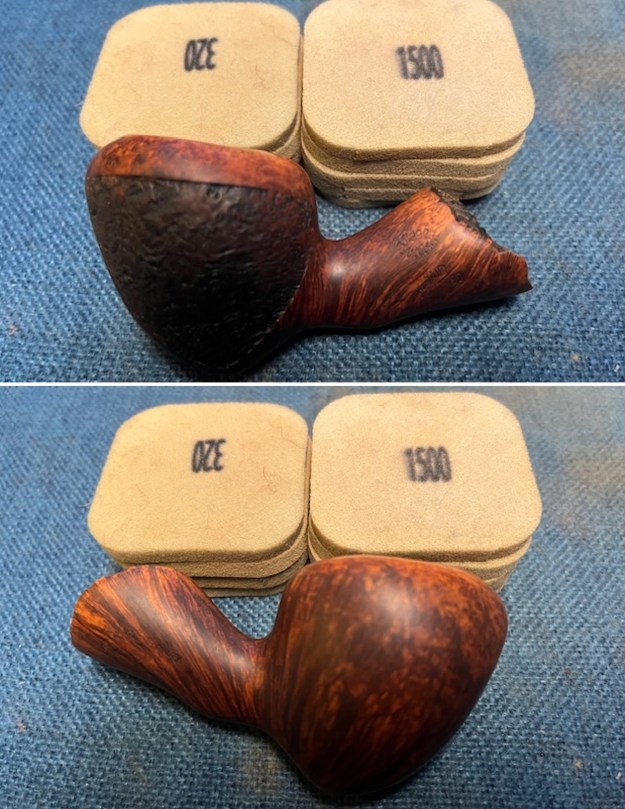
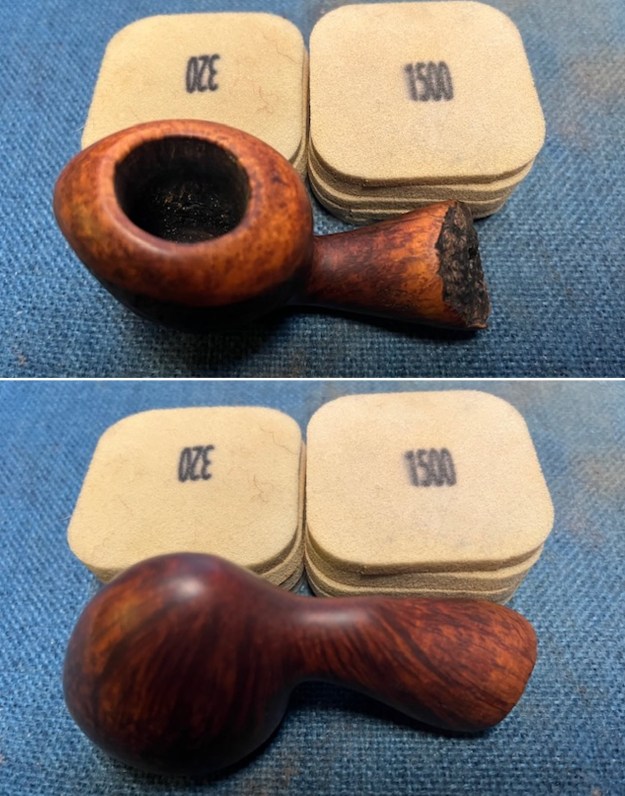
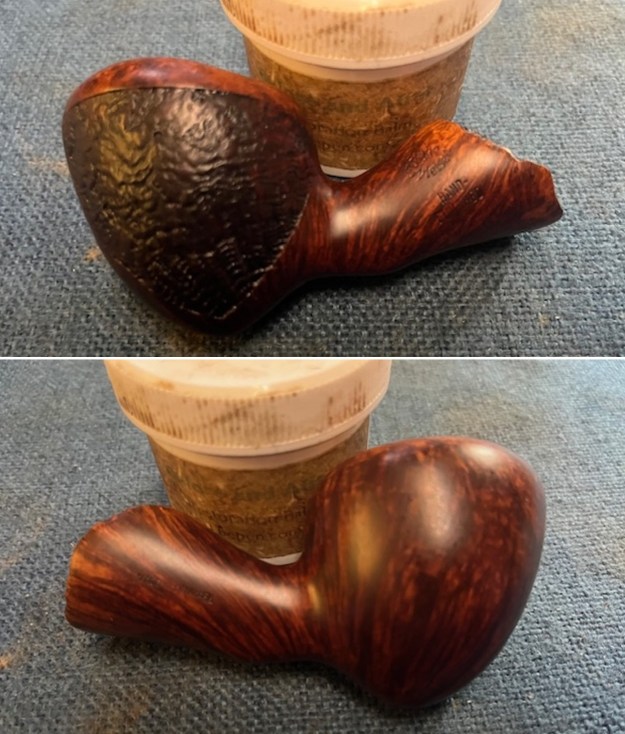
As always, I encourage your questions and comments as you read the blog. Thanks to each of you who are reading this blog. Remember we are not pipe owners; we are pipe men and women who hold our pipes in trust until they pass on into the trust of those who follow us.