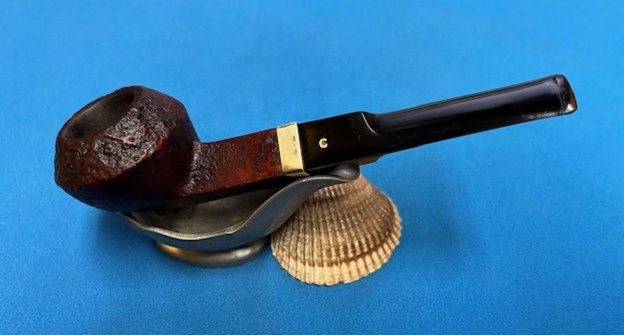
Tag Archives: staining

Thanks Bill for the chance to craft one of my own


Blog by Steve Laug

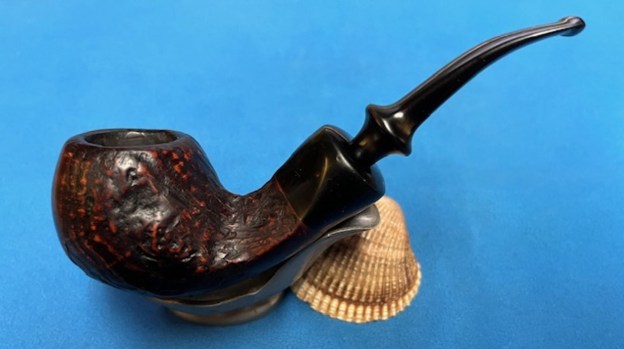
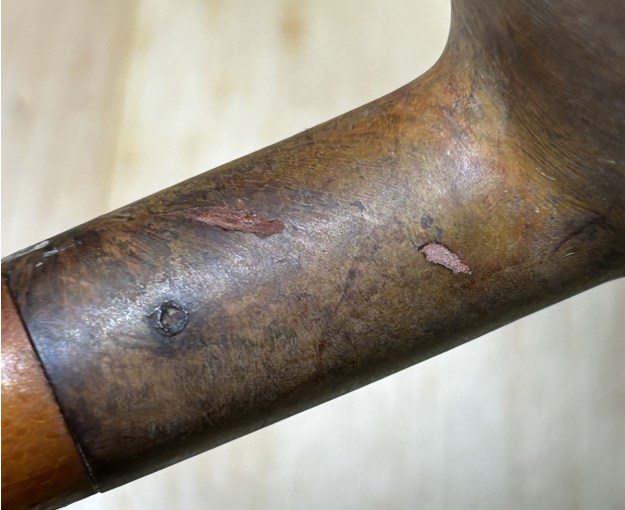
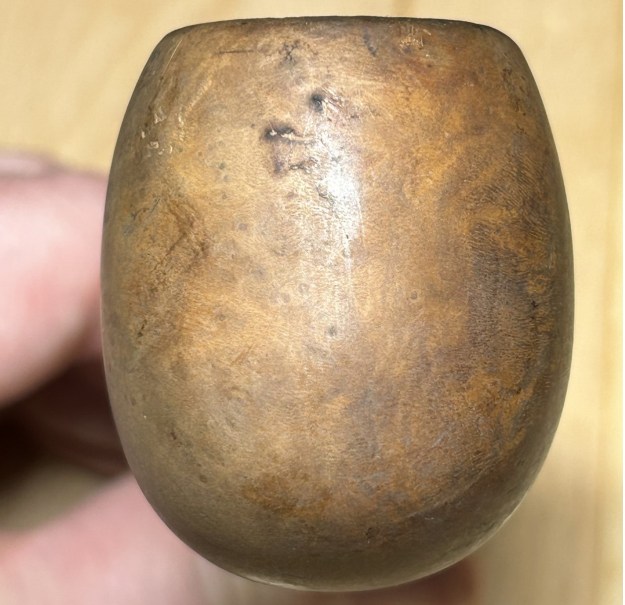
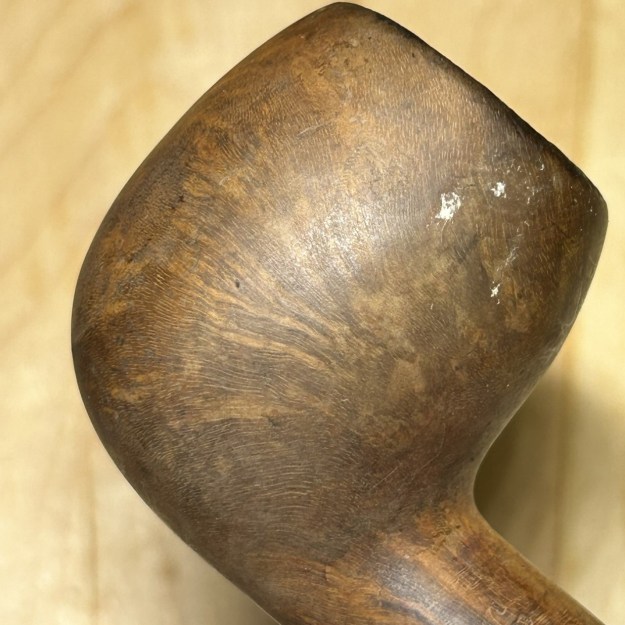
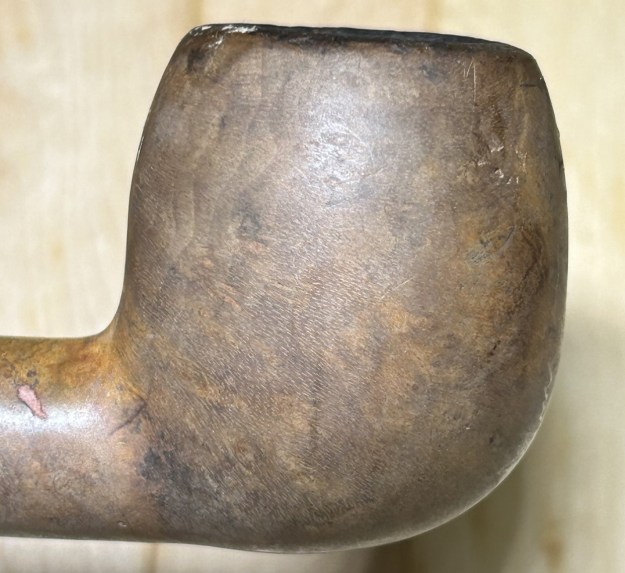
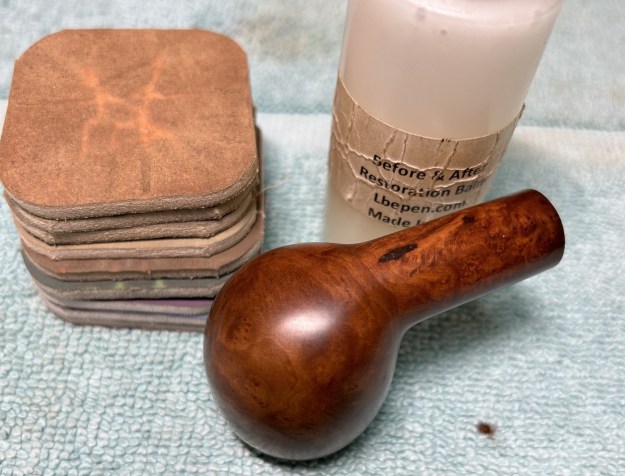
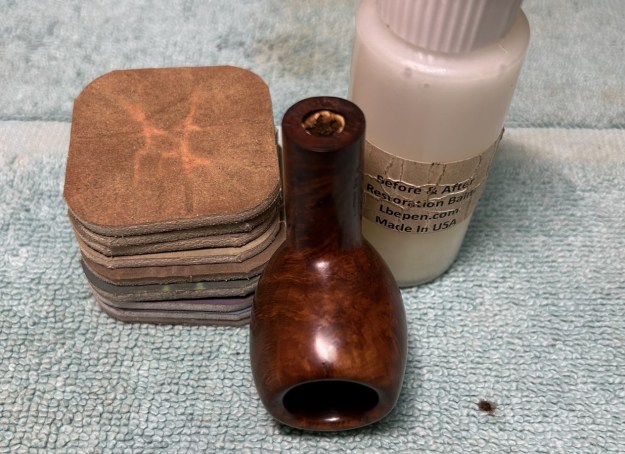
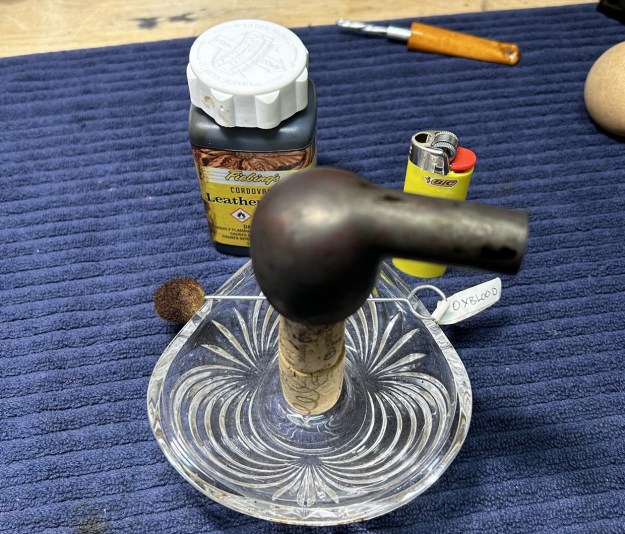
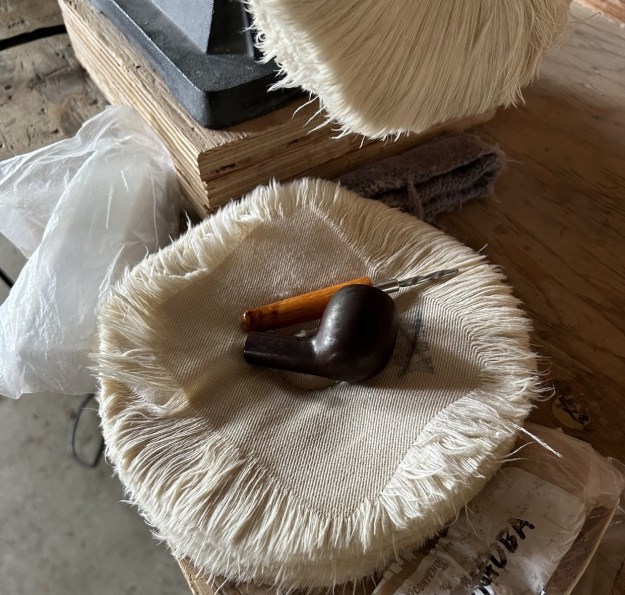
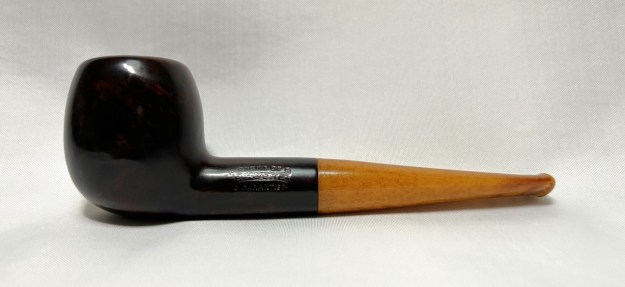
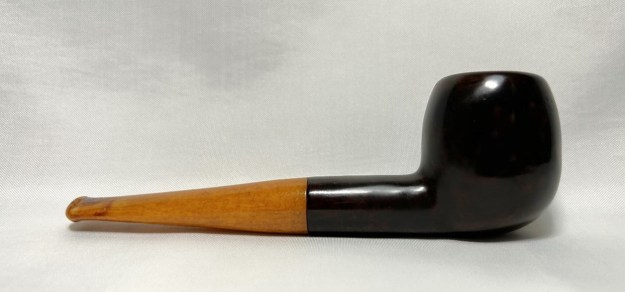
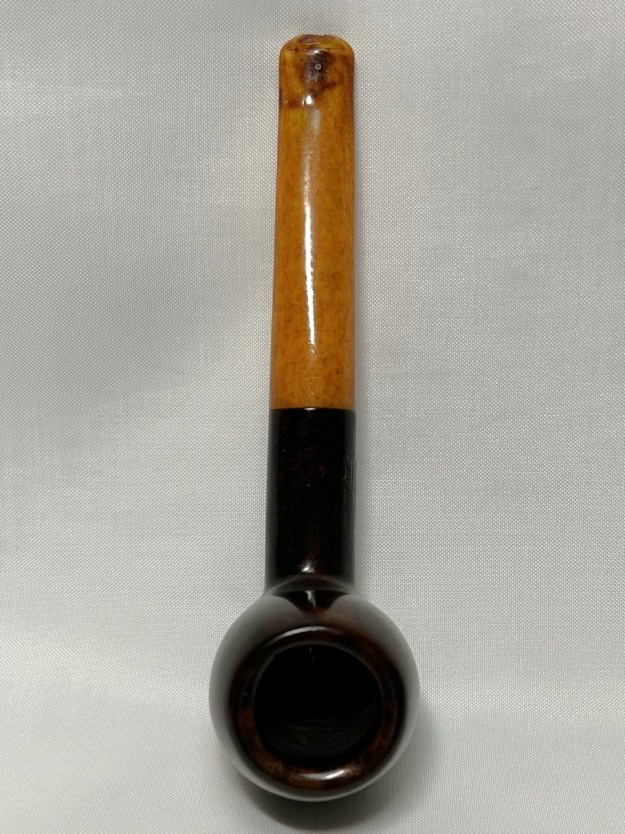
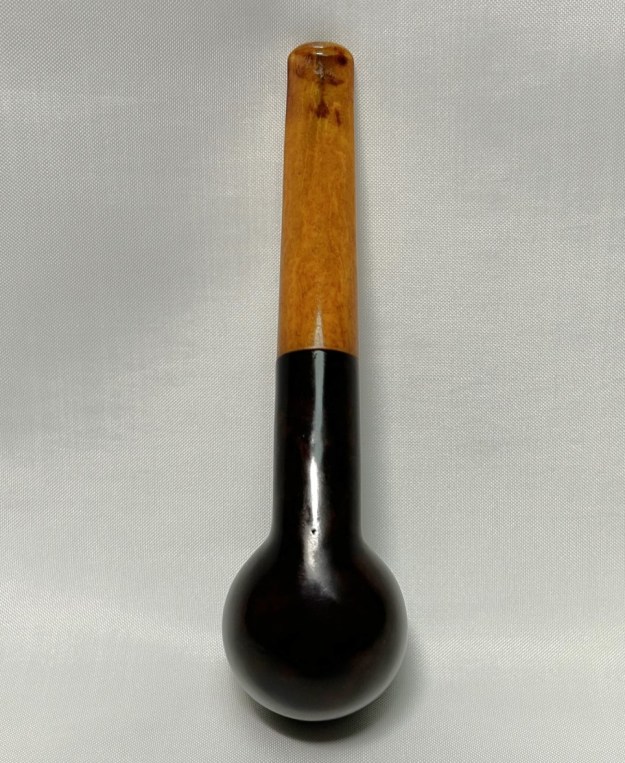
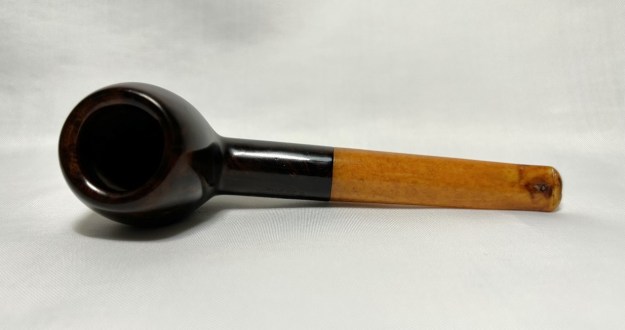
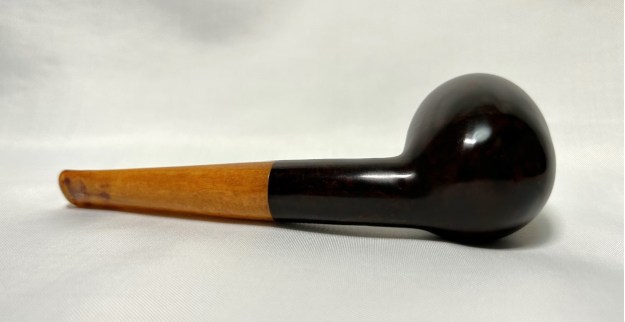
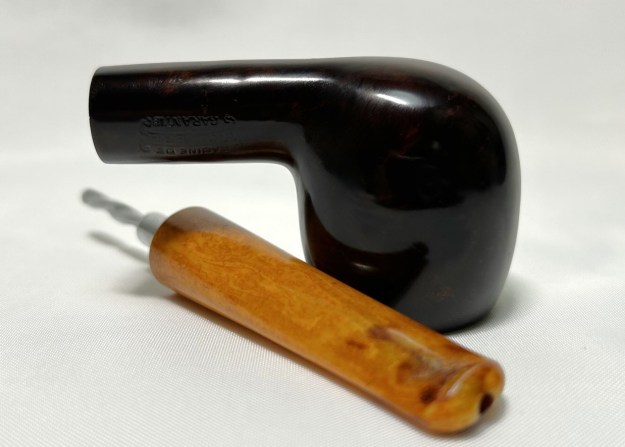
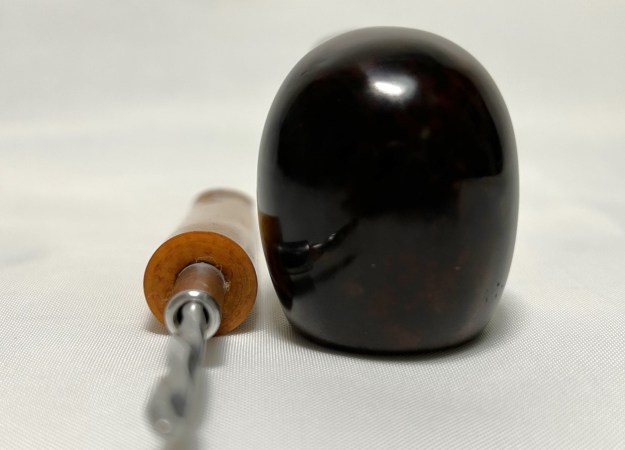
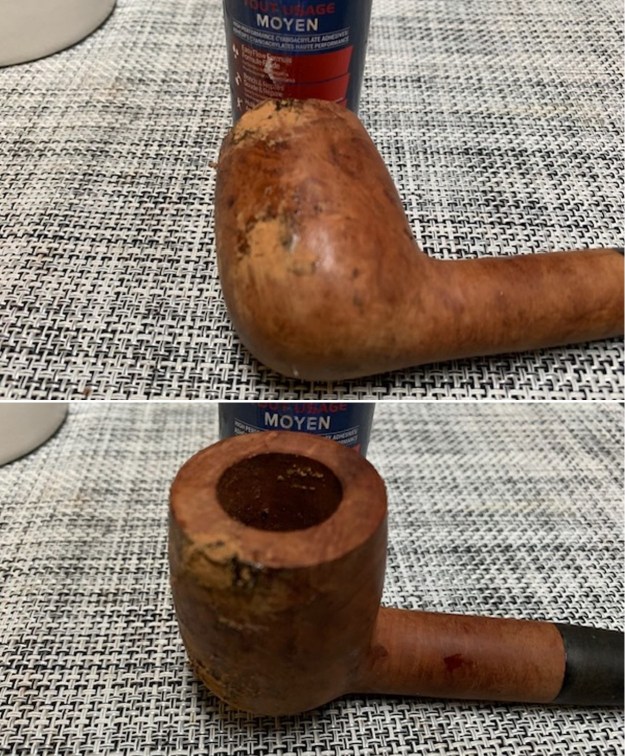
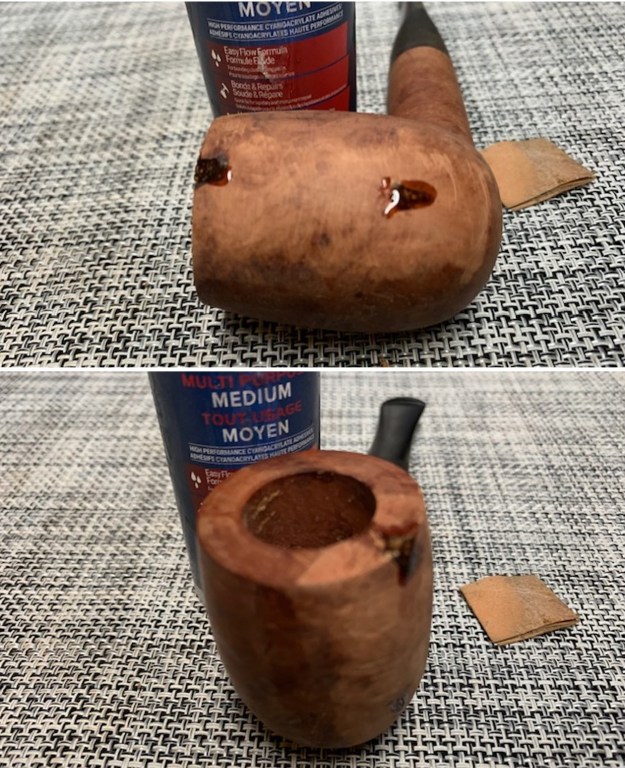
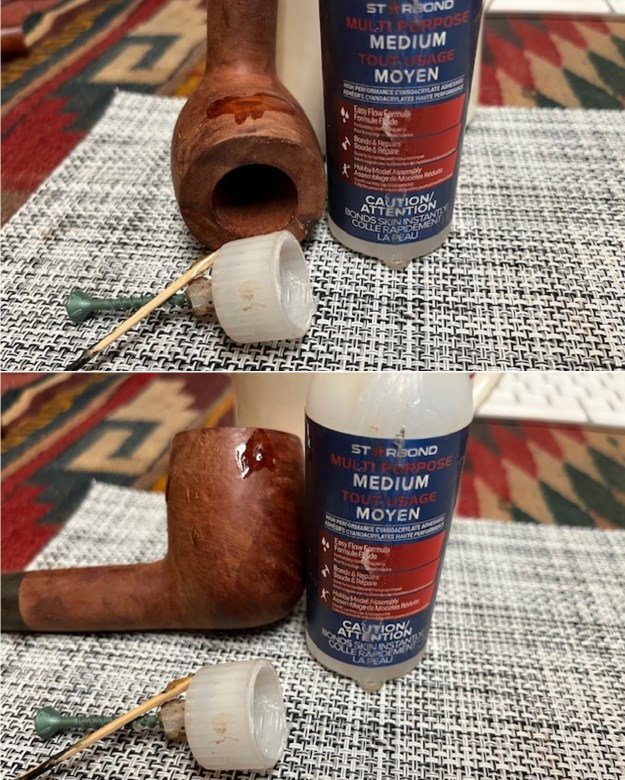
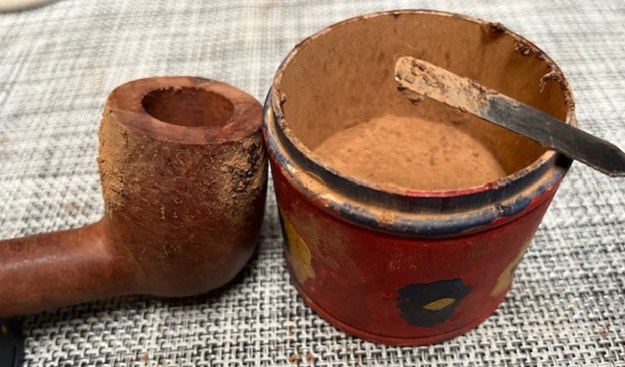
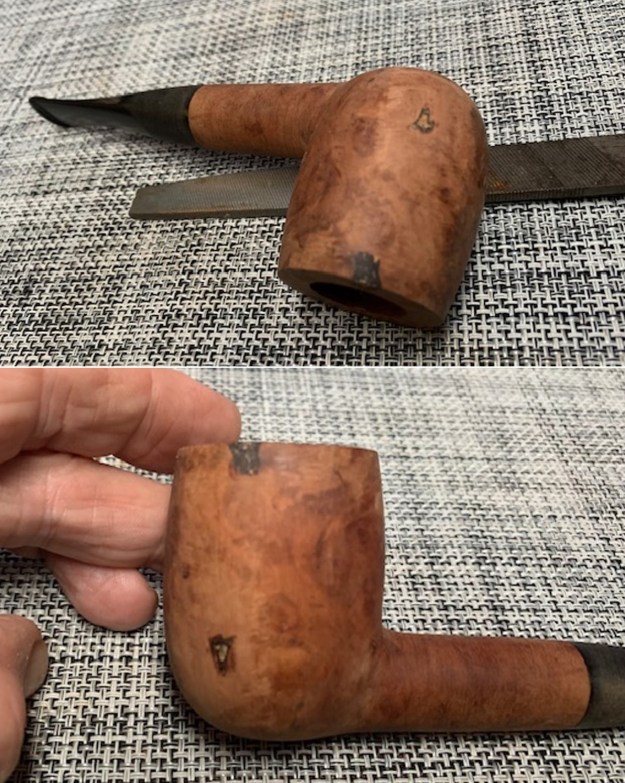
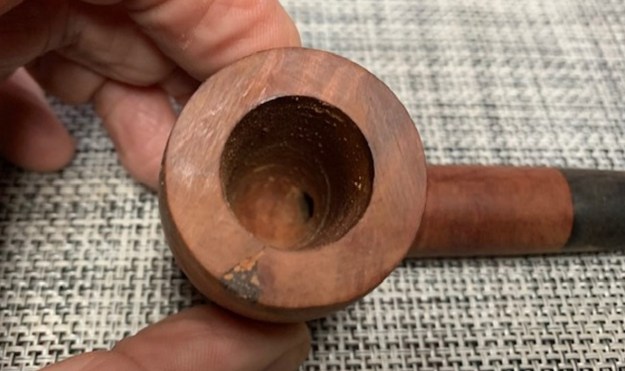
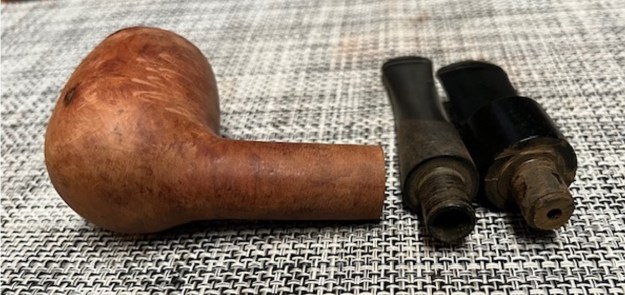
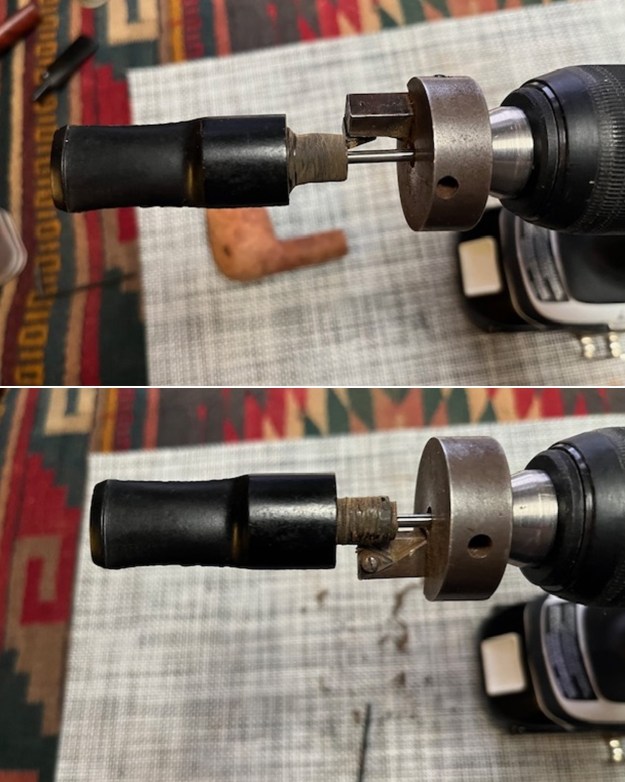
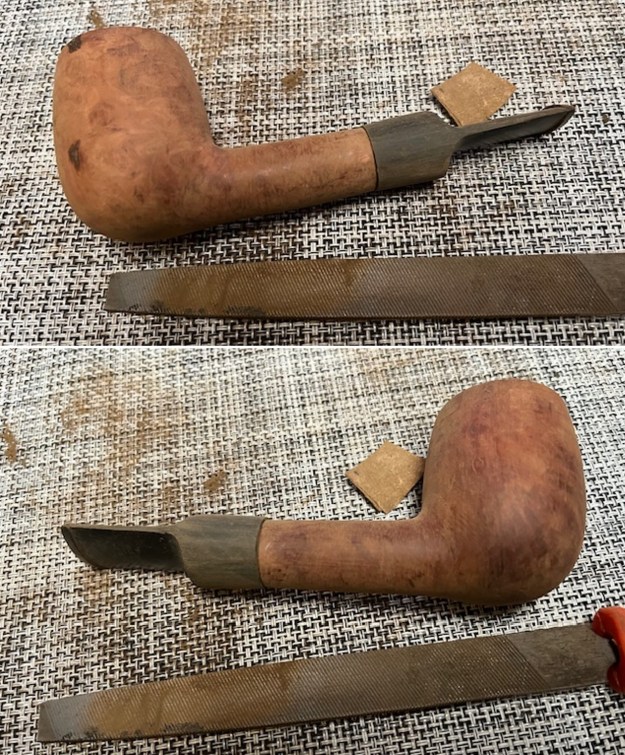
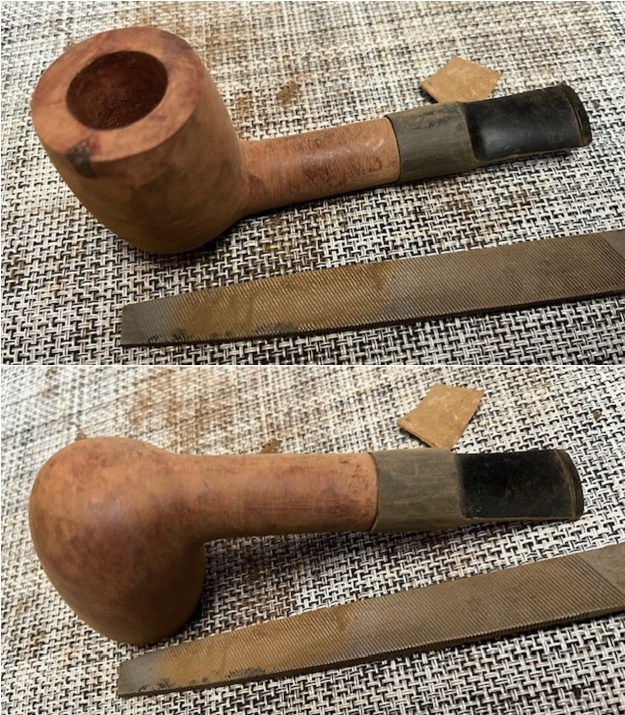
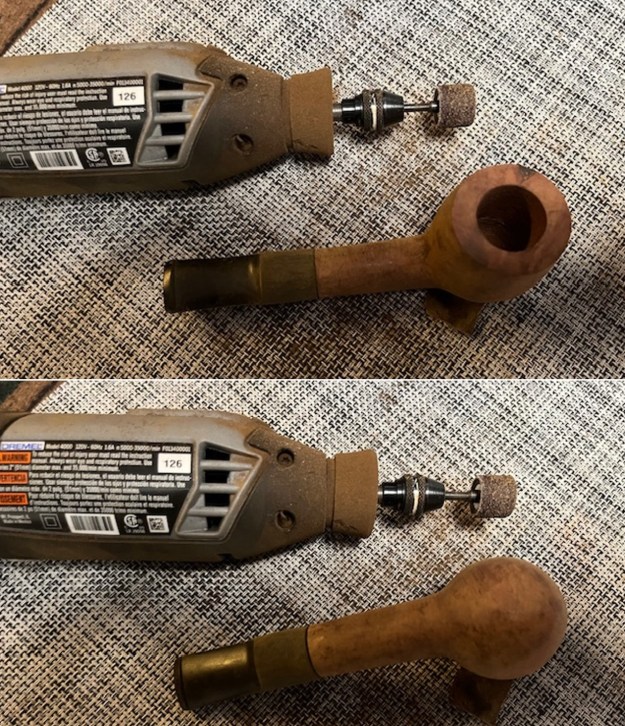
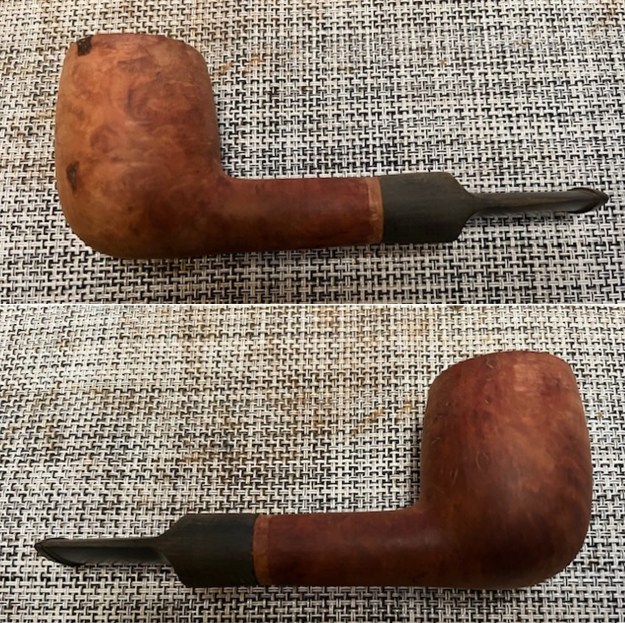
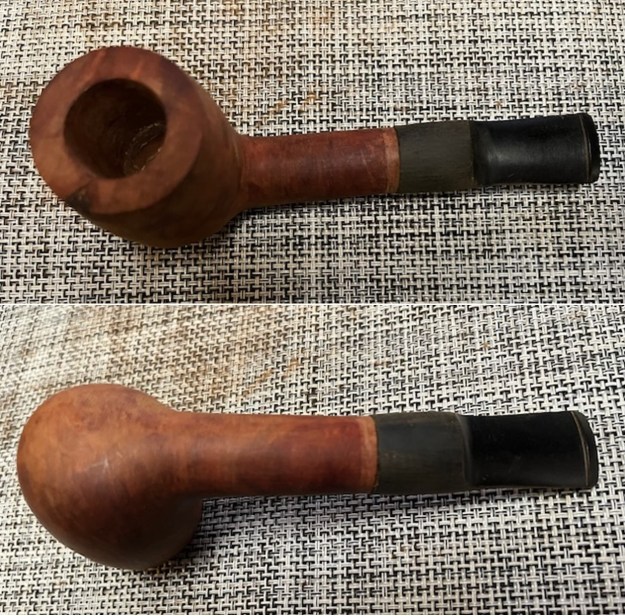
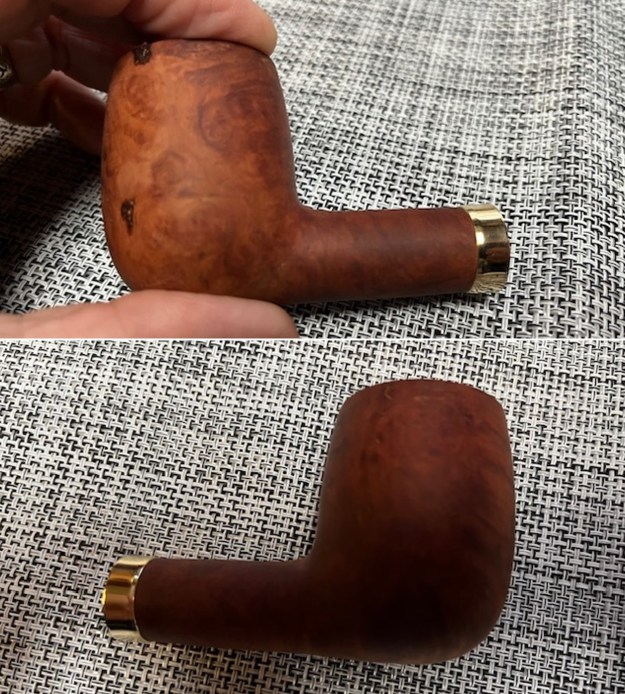
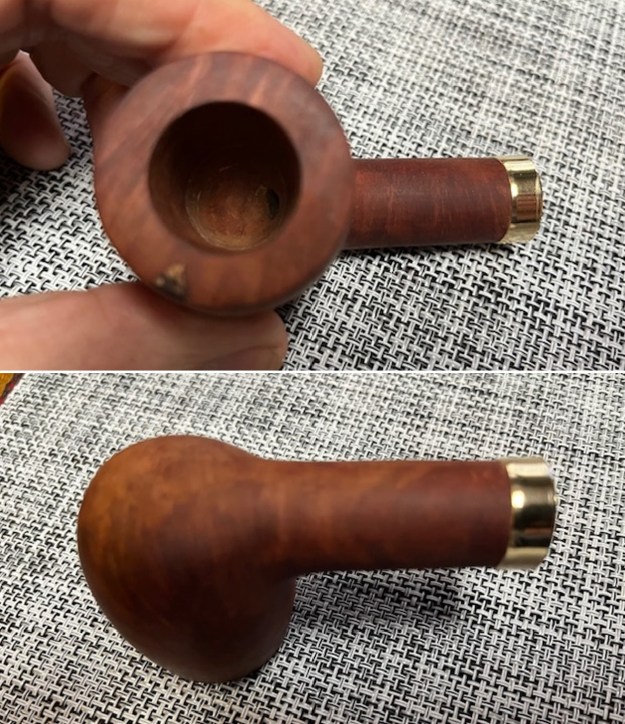
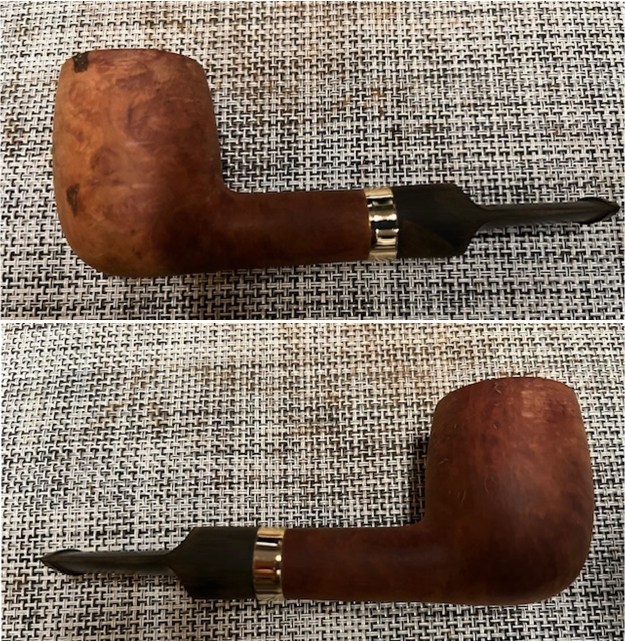
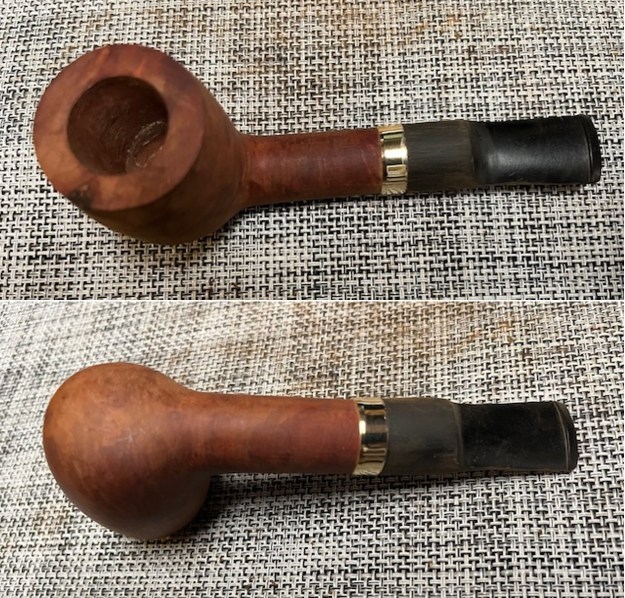
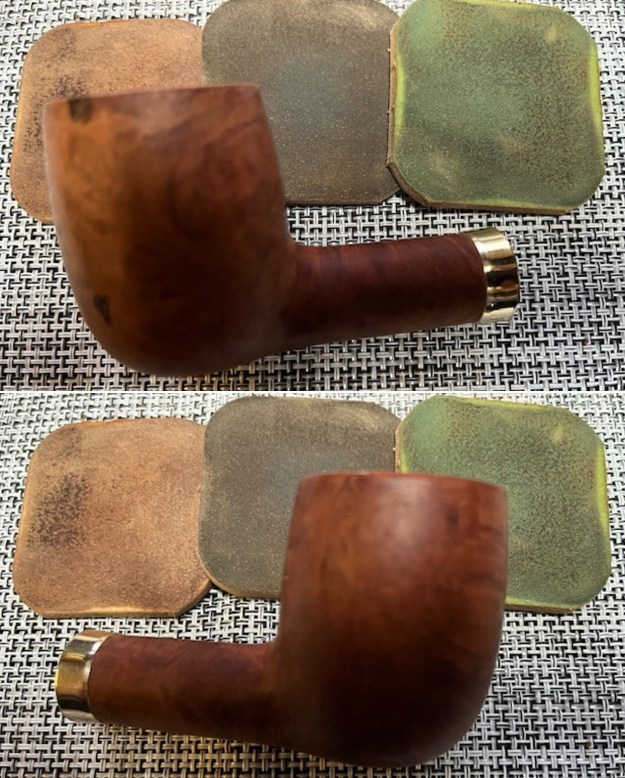
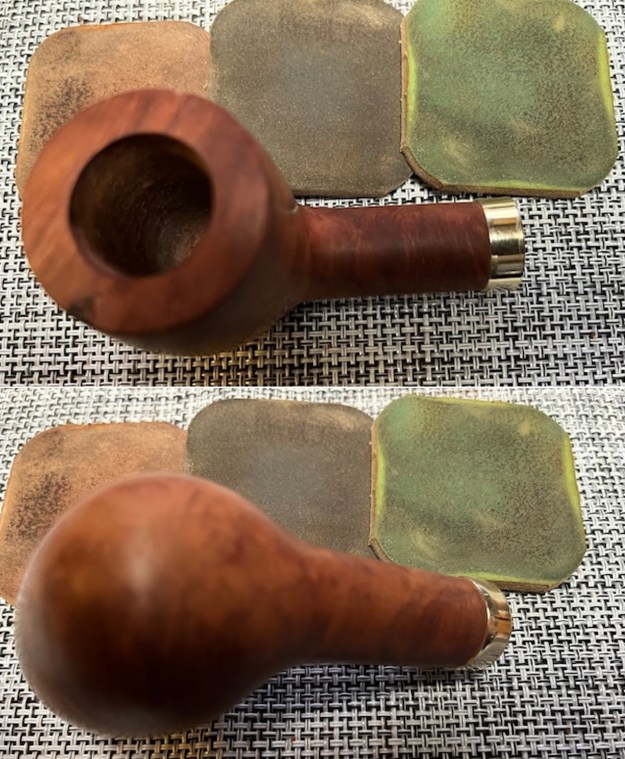
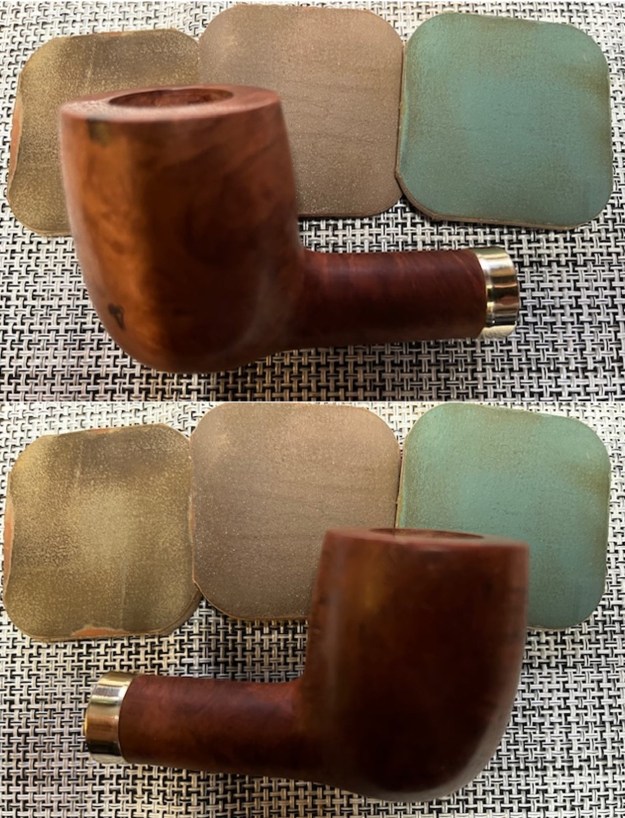
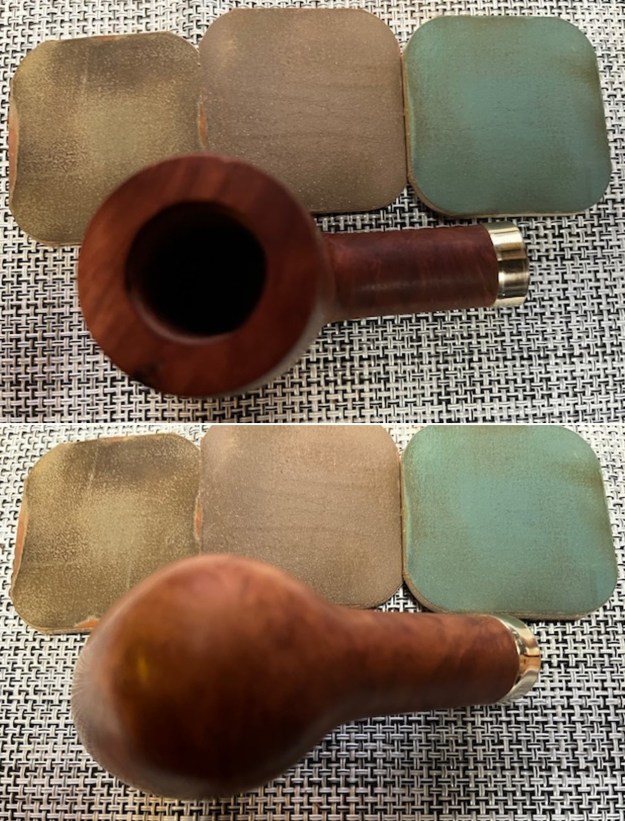
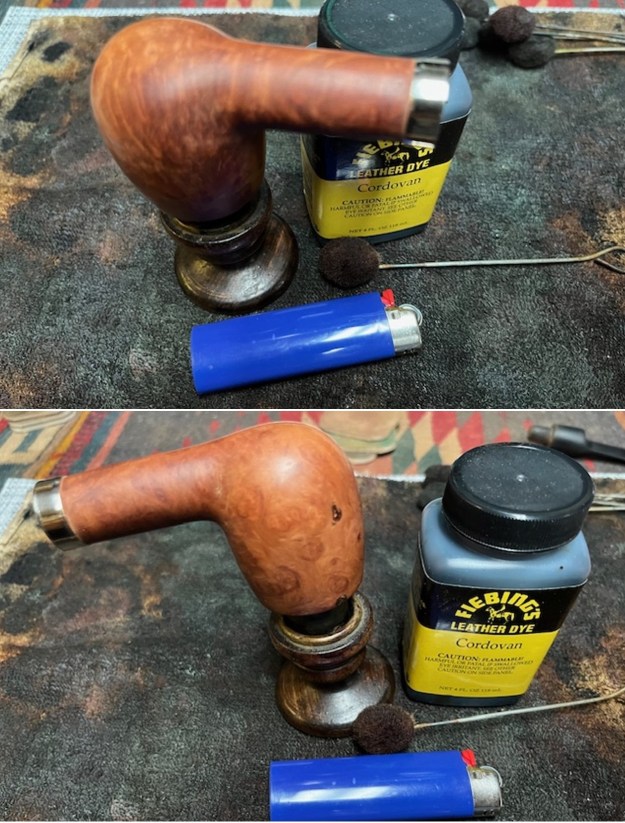
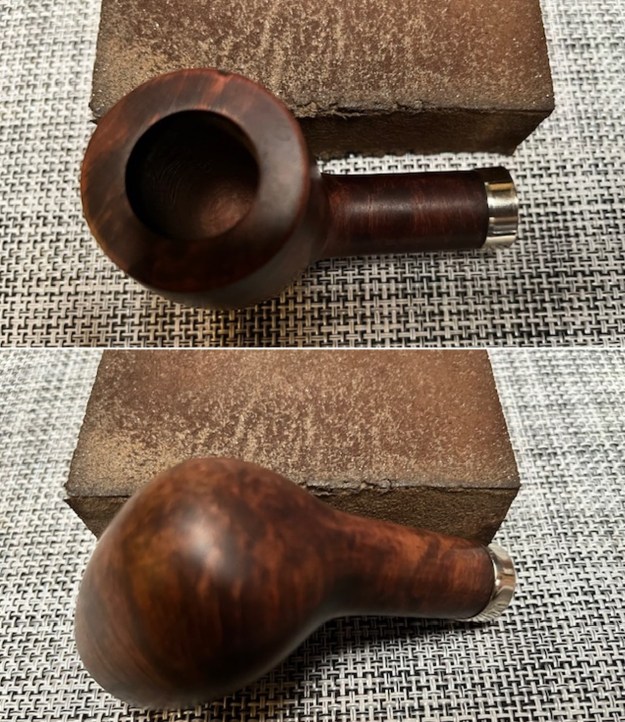
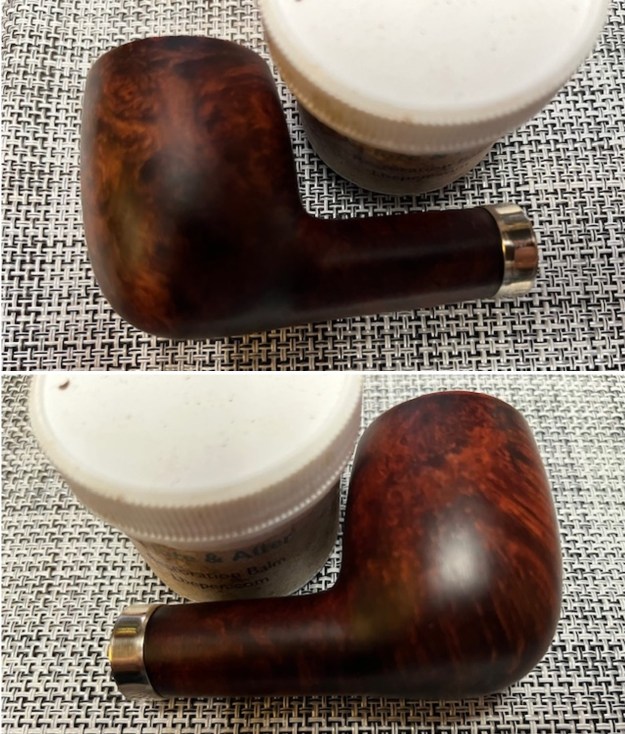
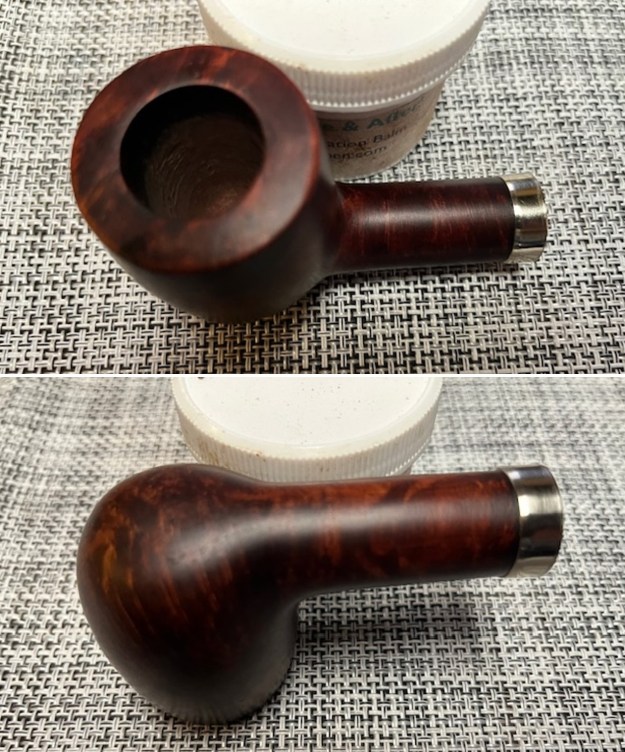
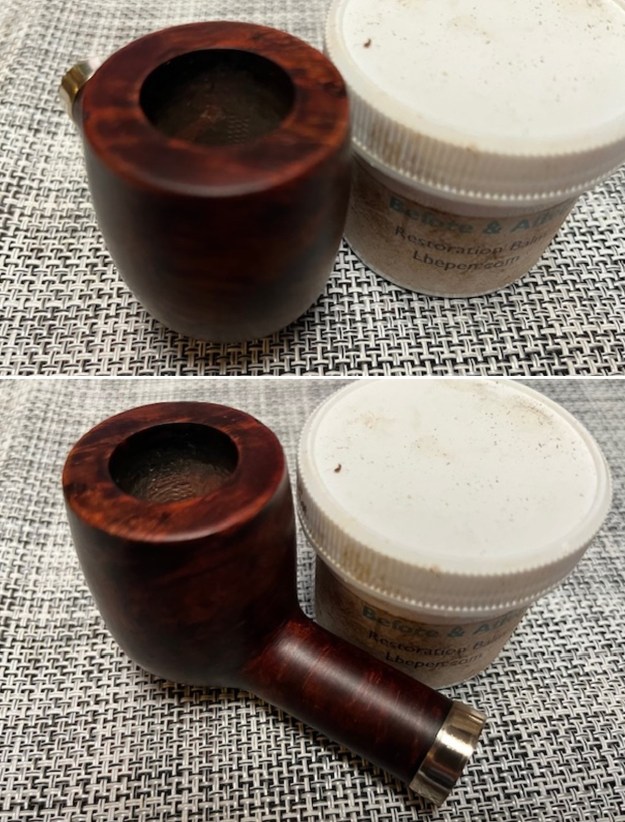
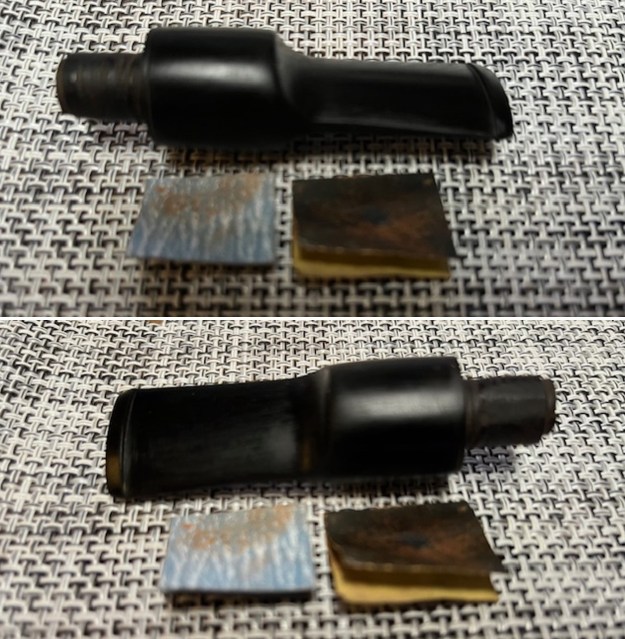
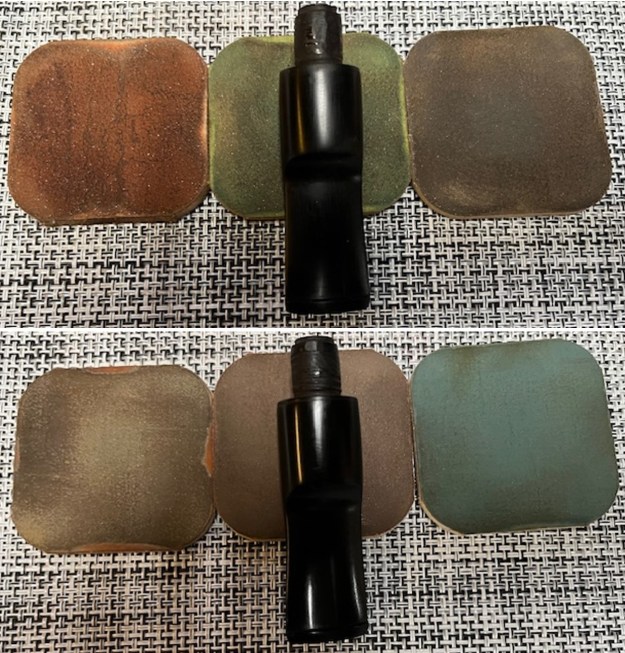
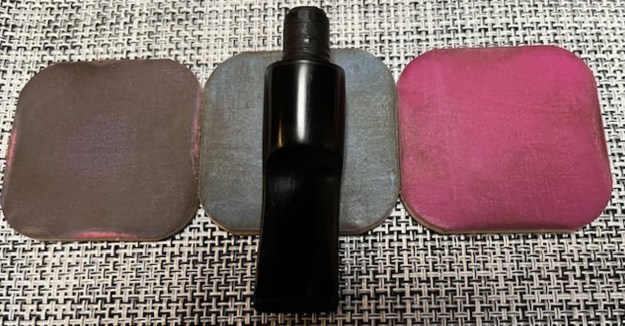
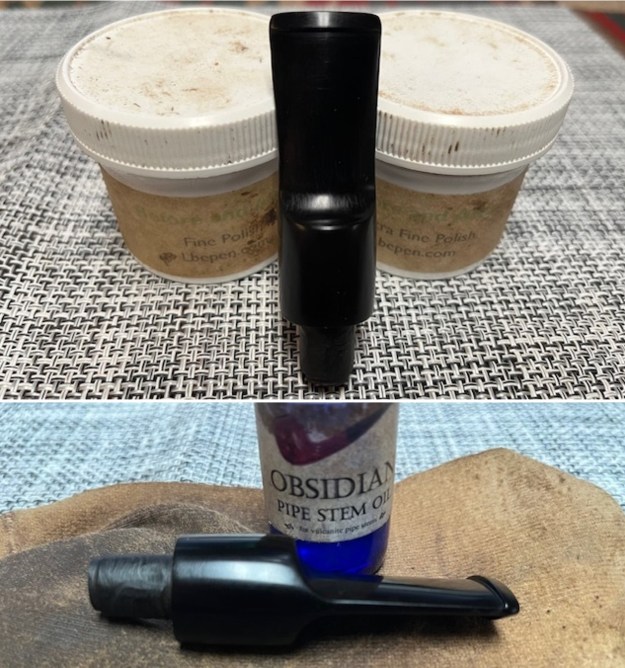
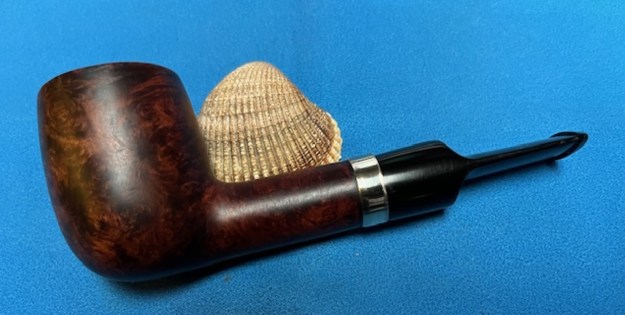
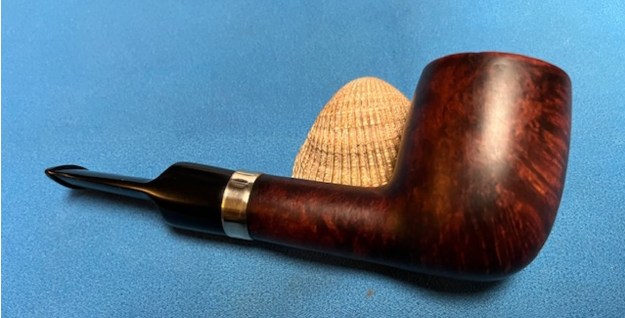
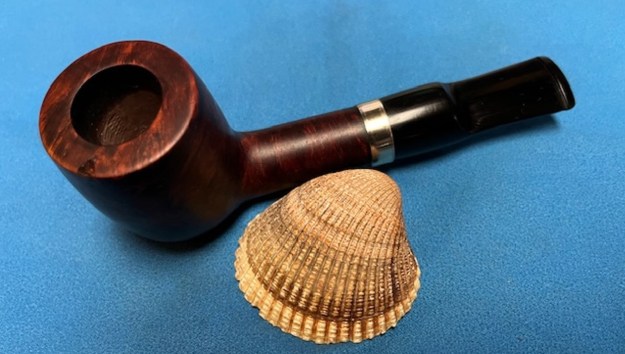
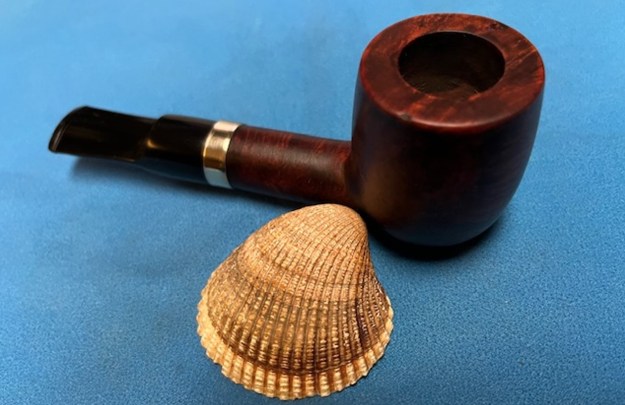
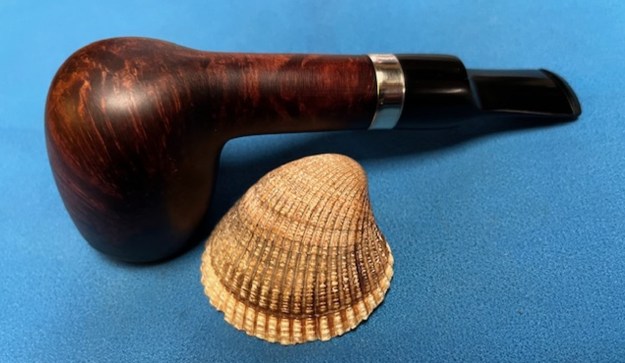
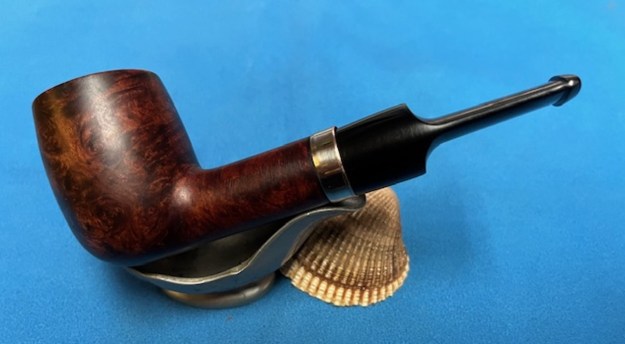
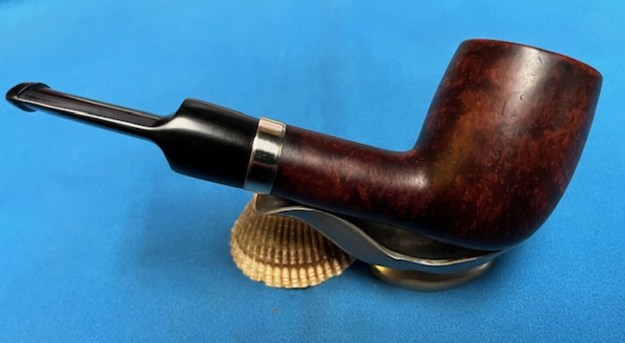
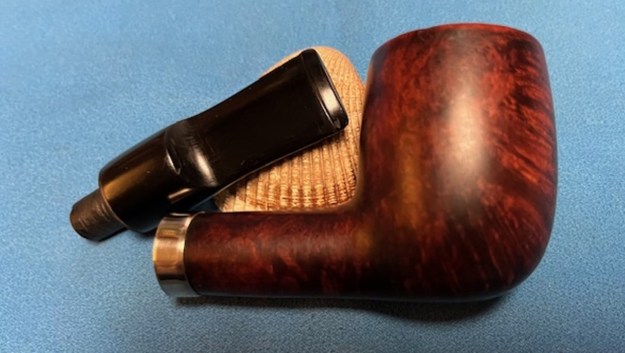
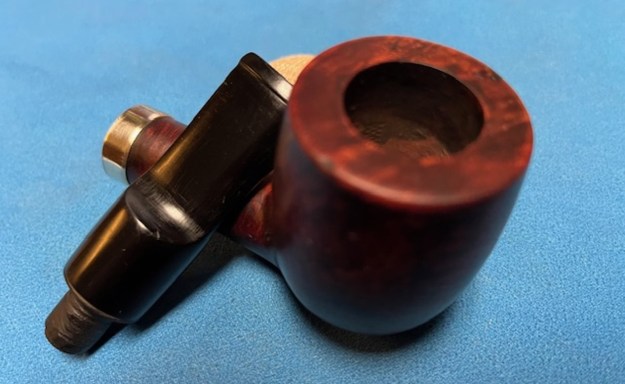
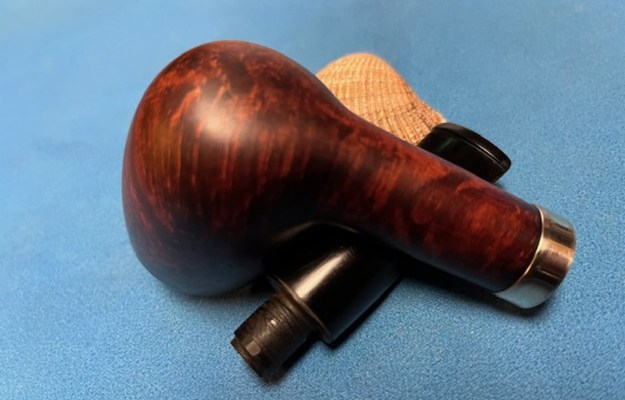
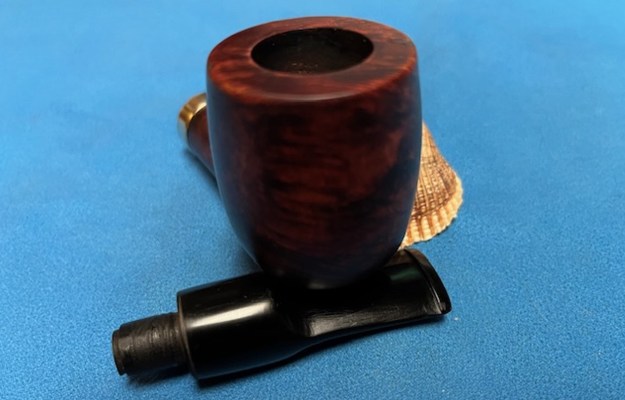
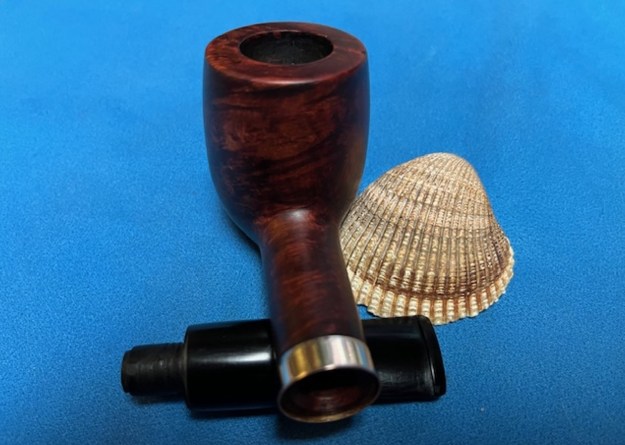
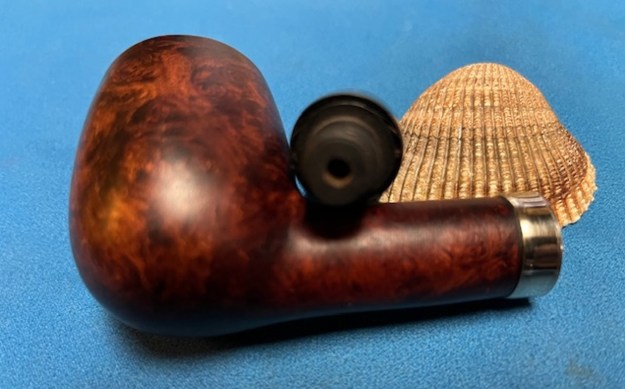
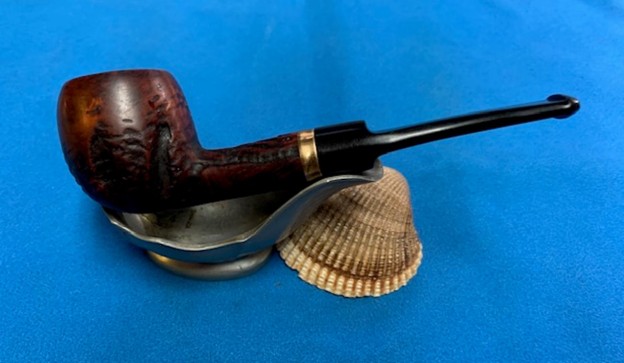
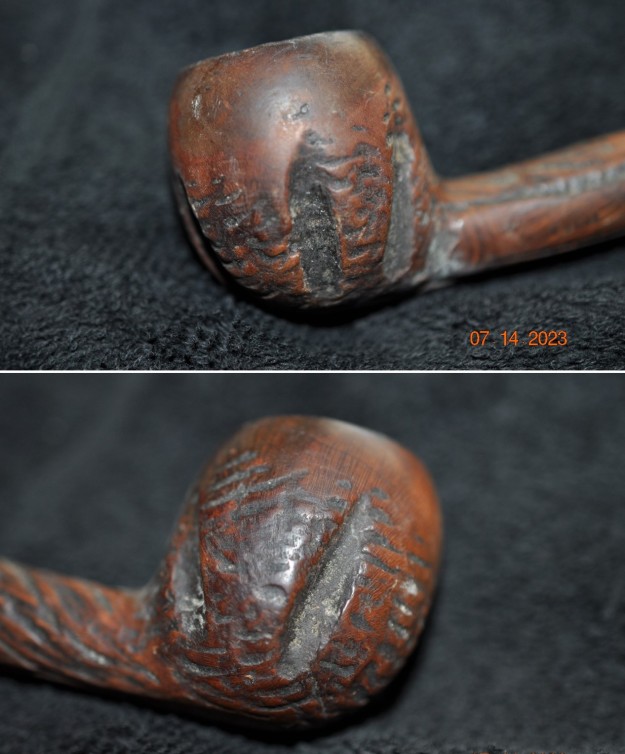
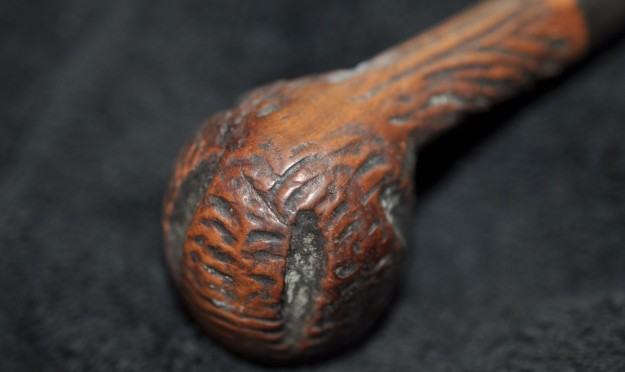
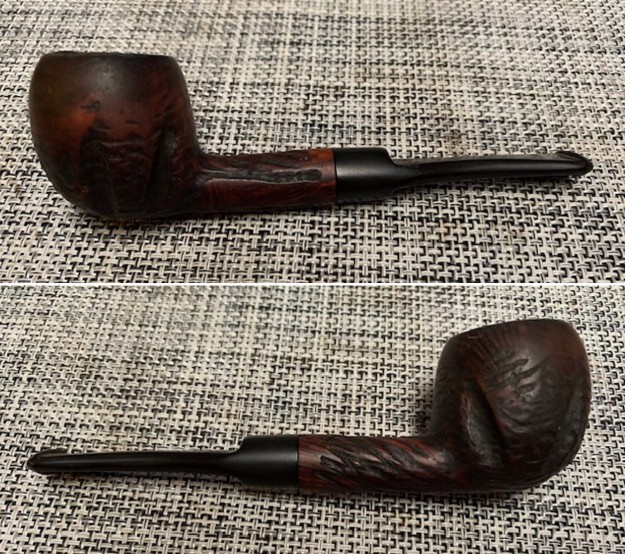
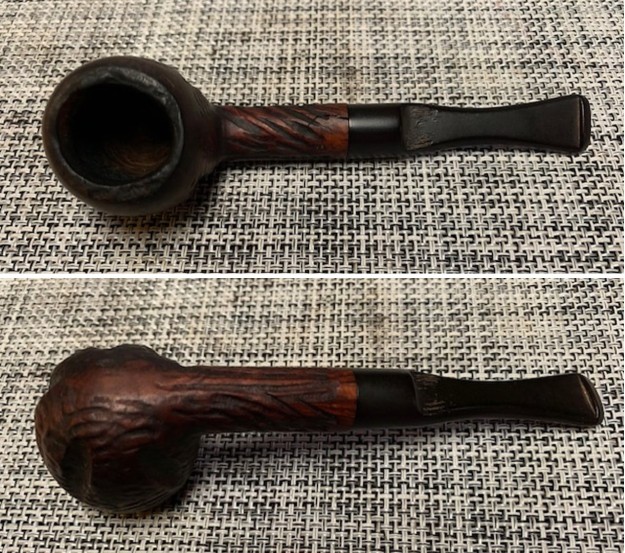
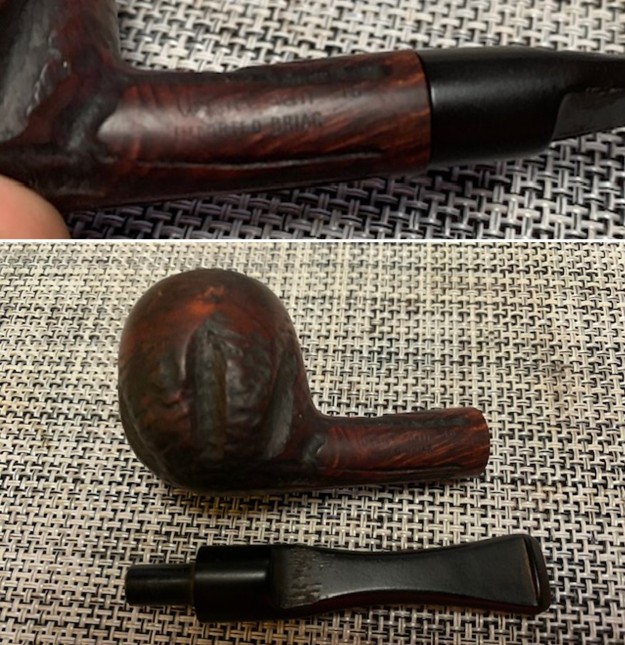
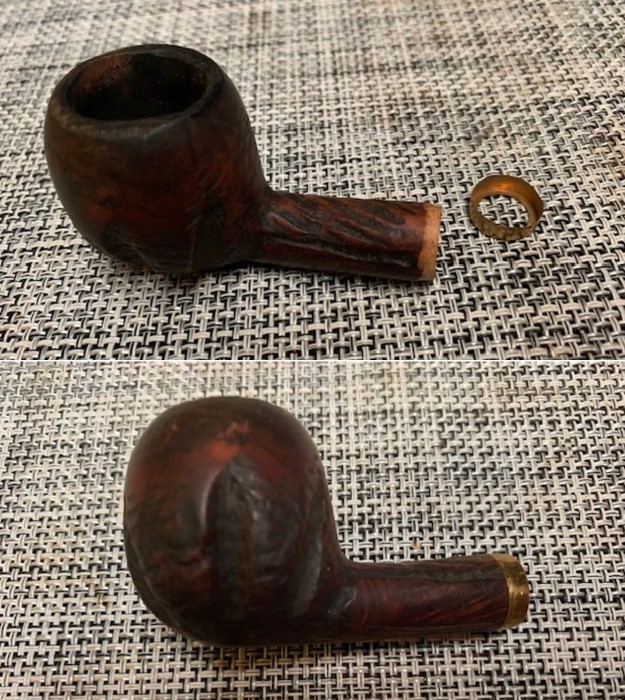
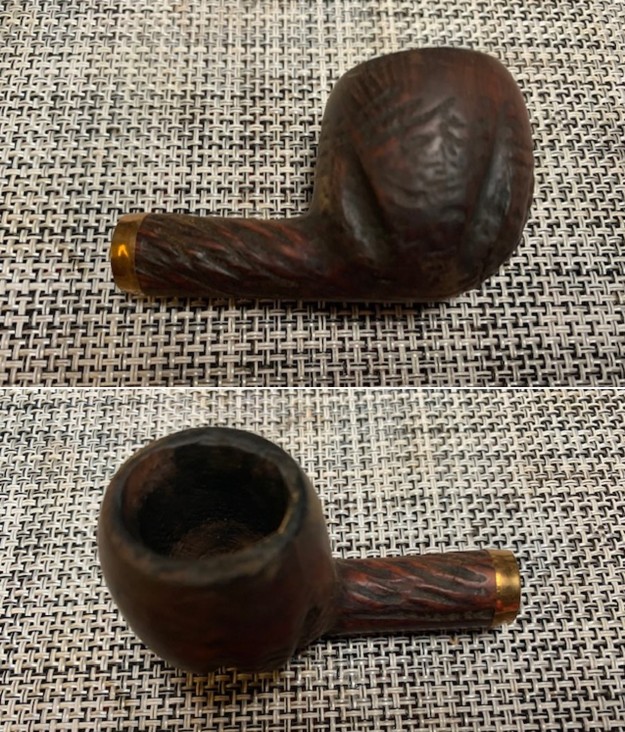
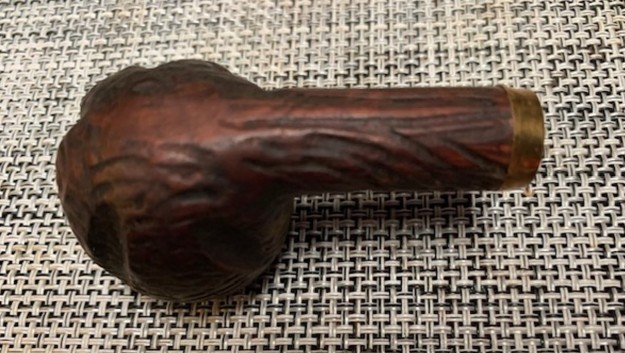
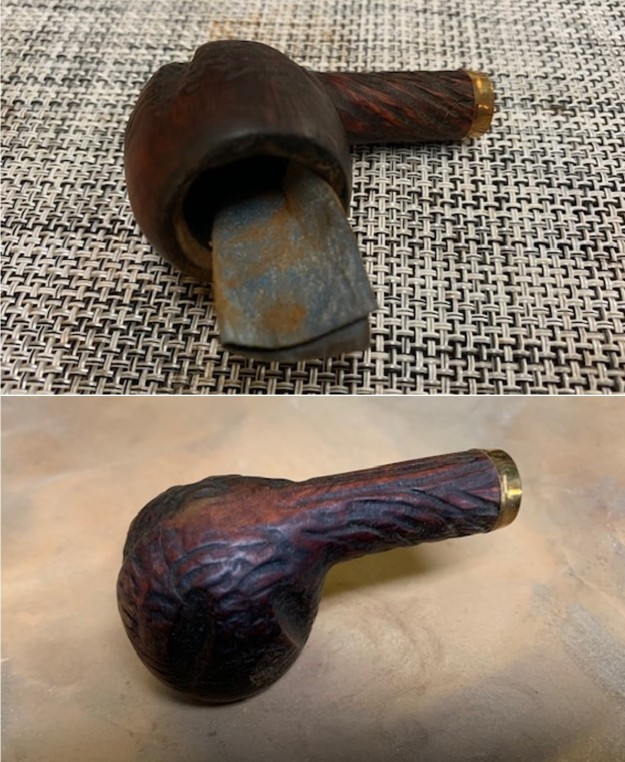
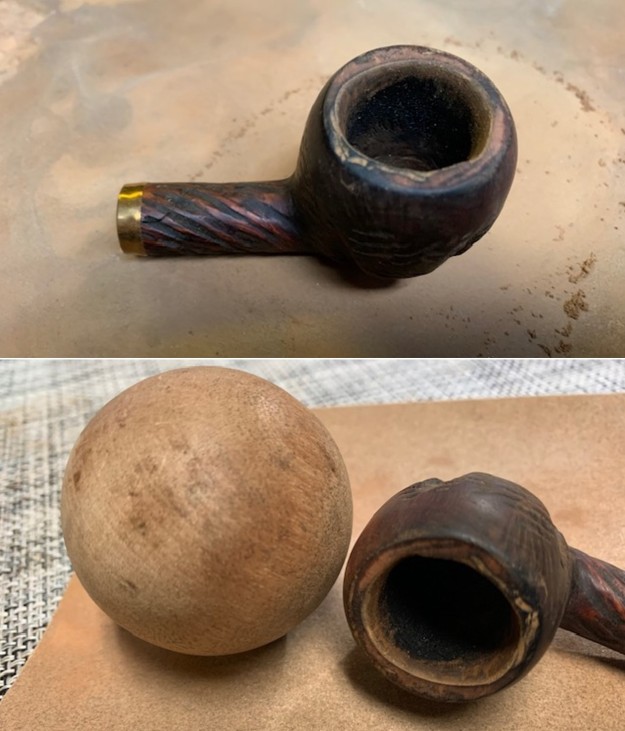
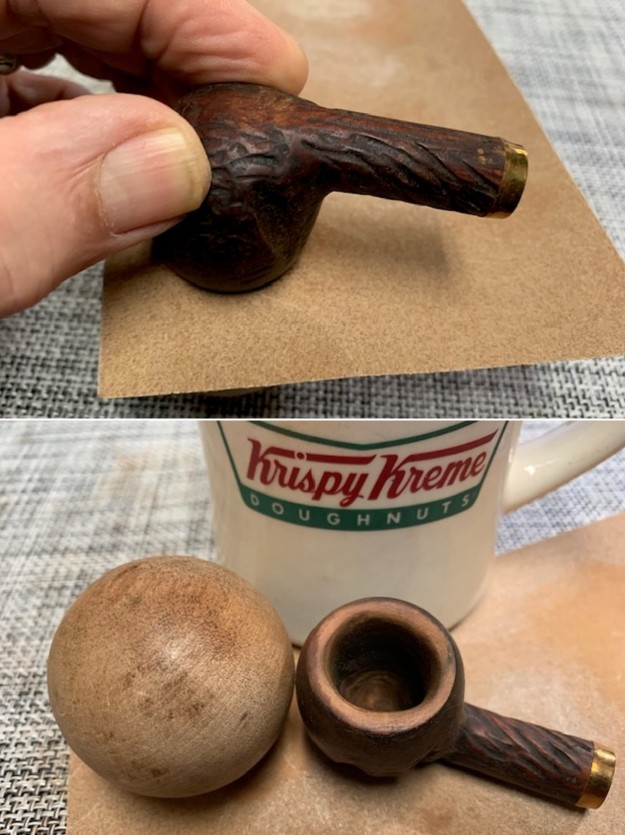
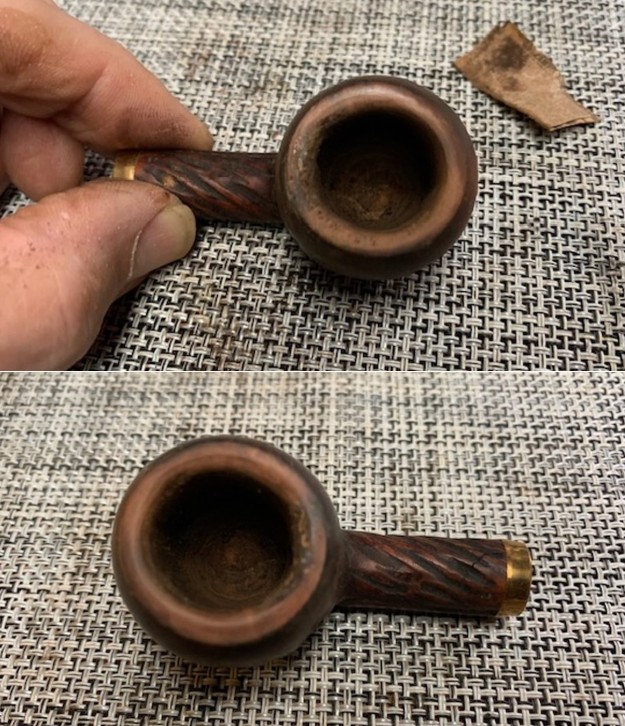
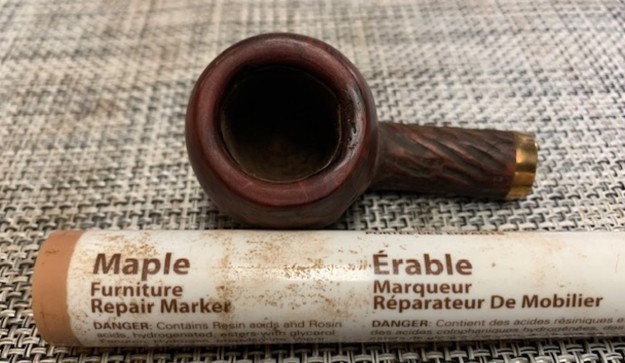
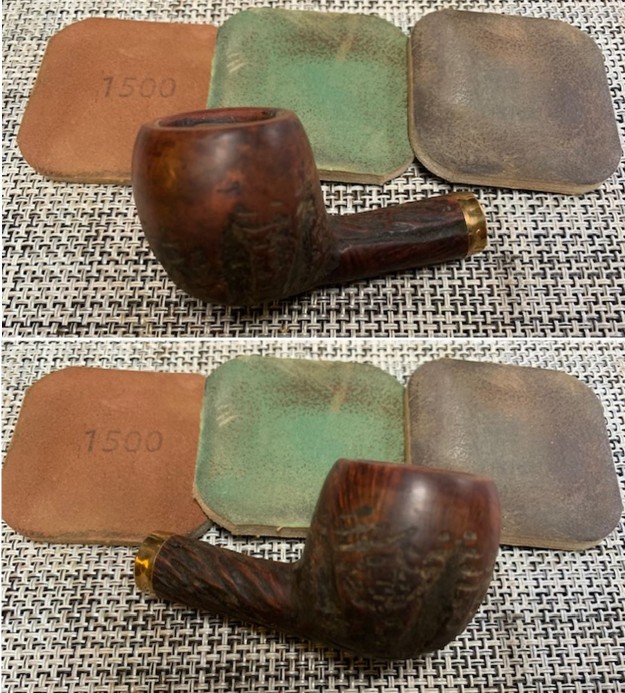
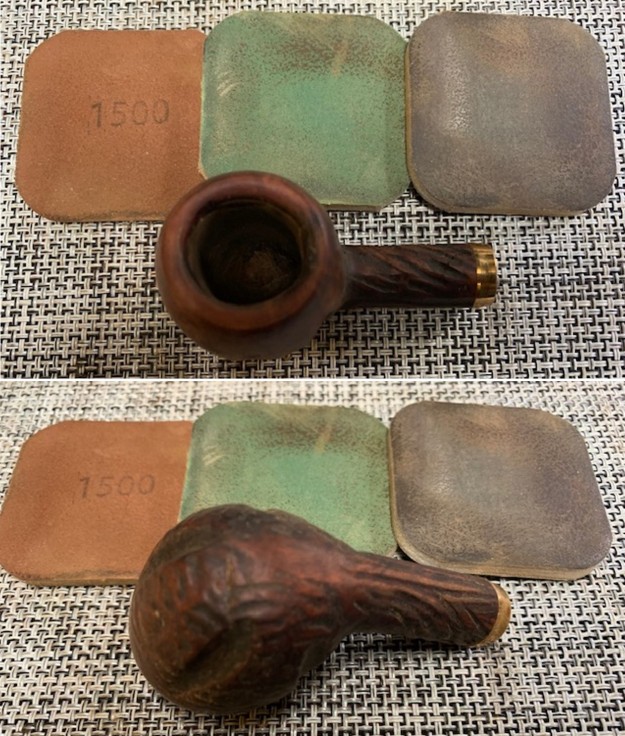
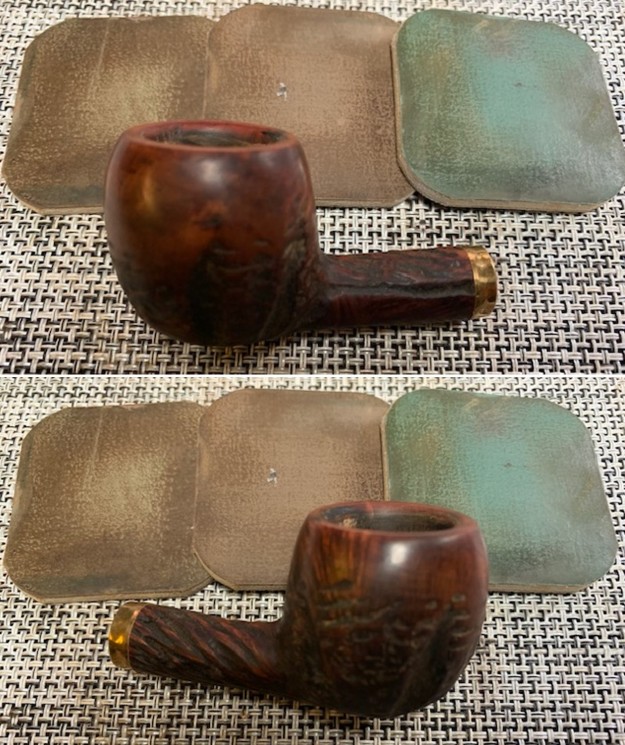
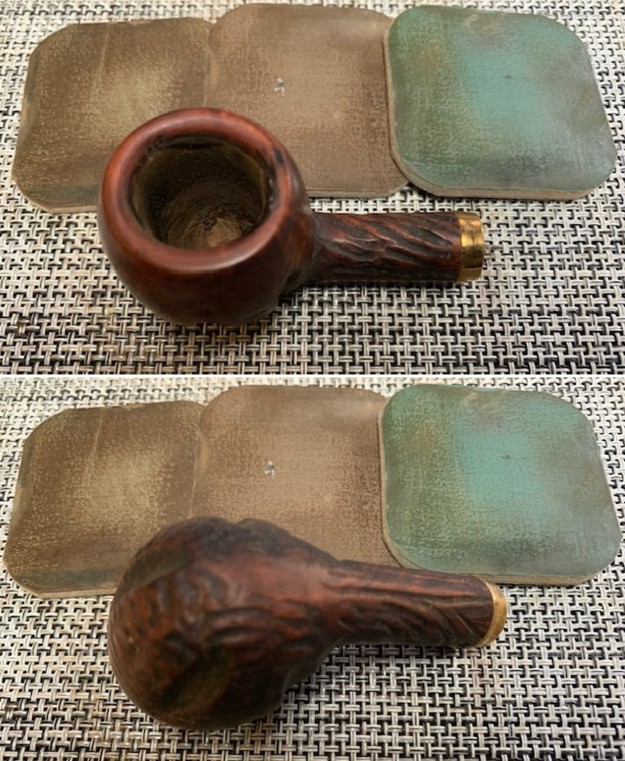
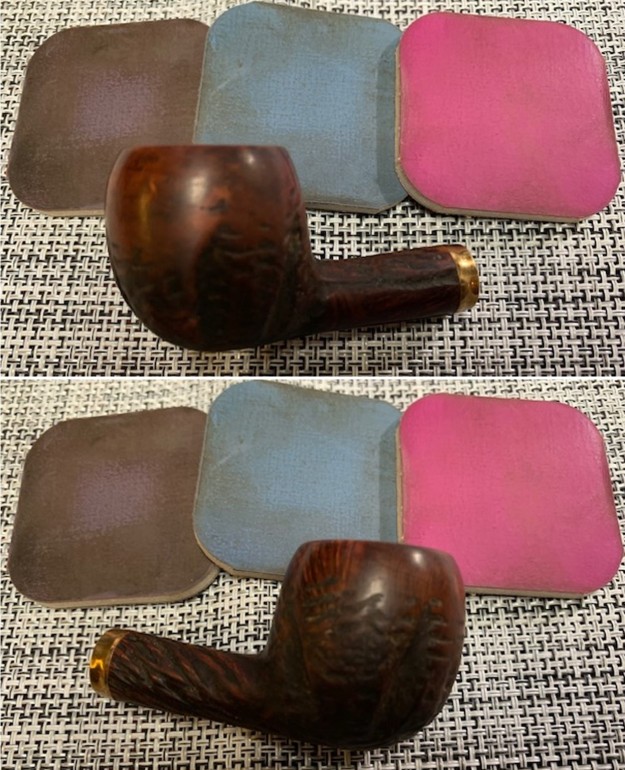
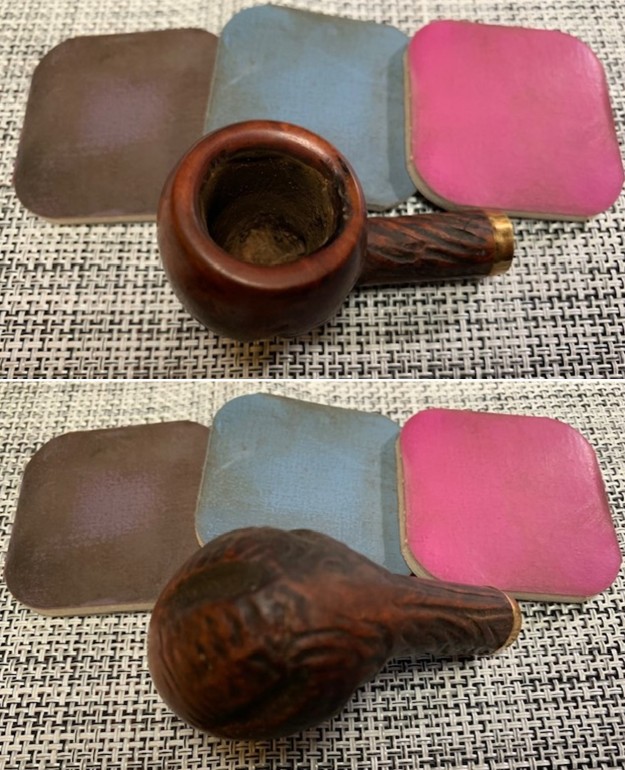
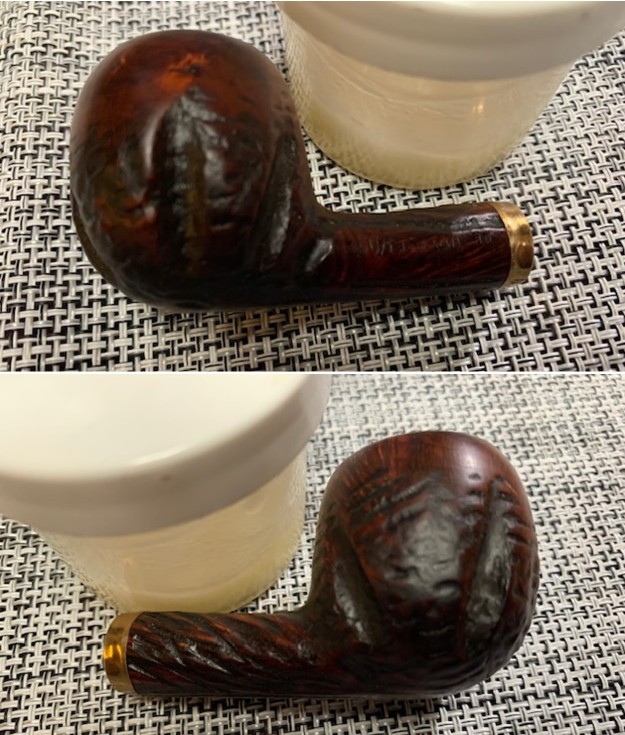
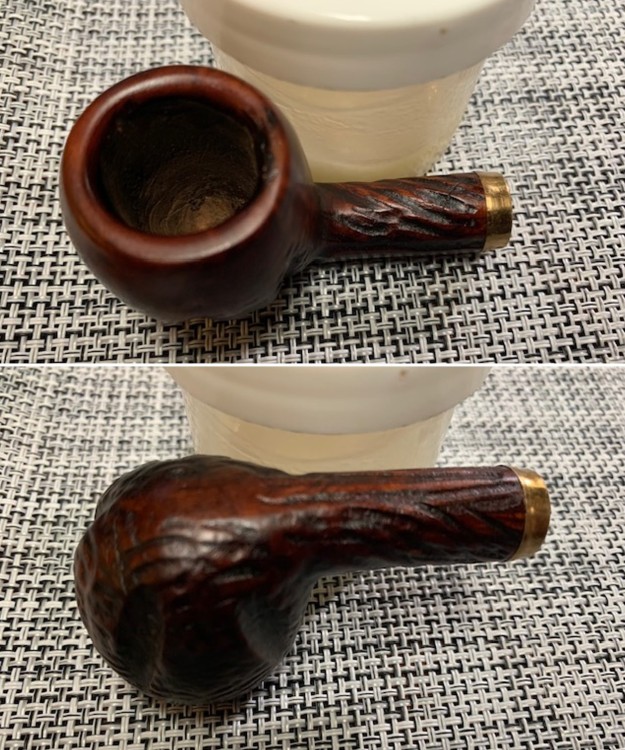
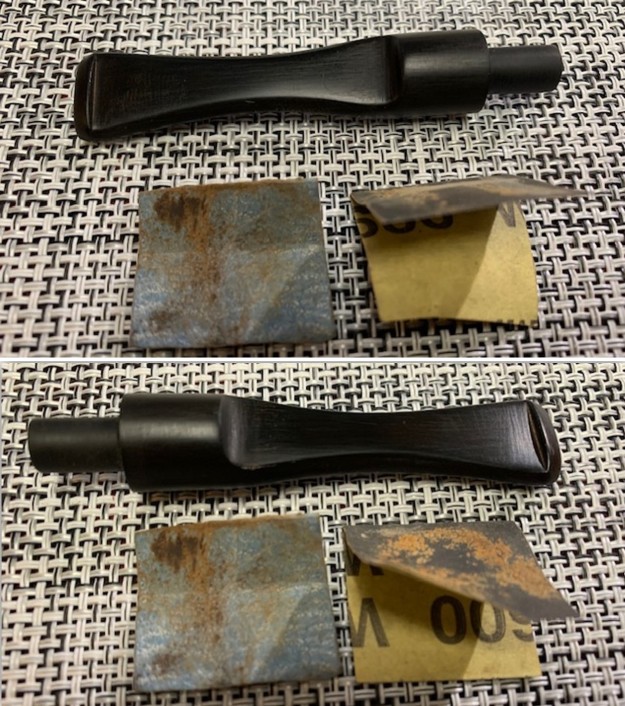
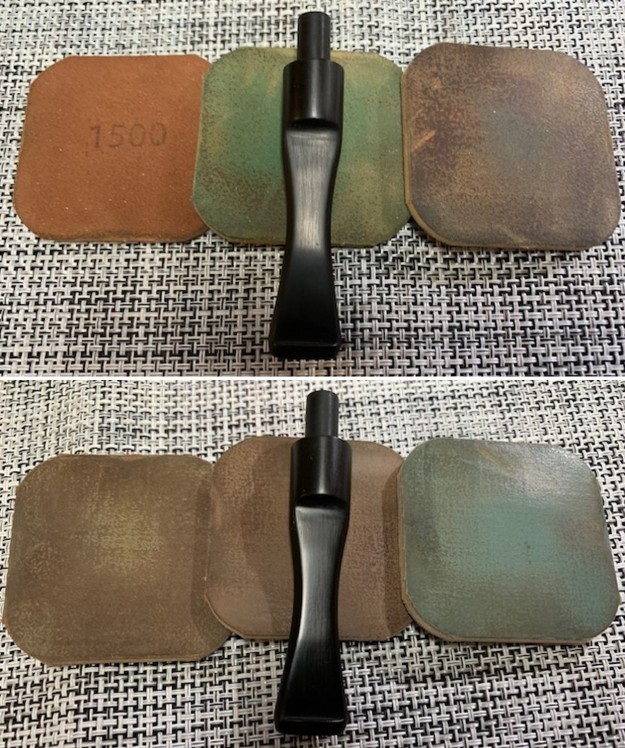
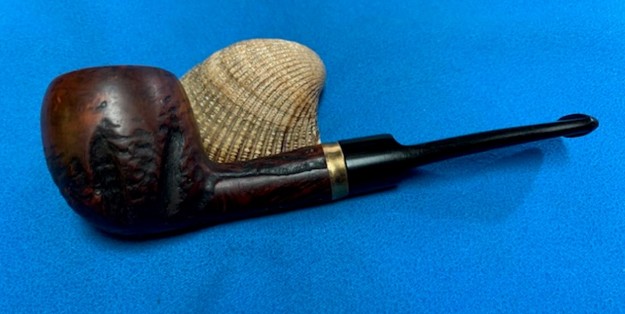
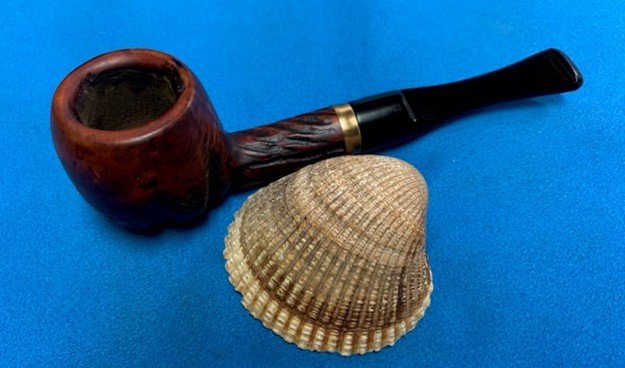
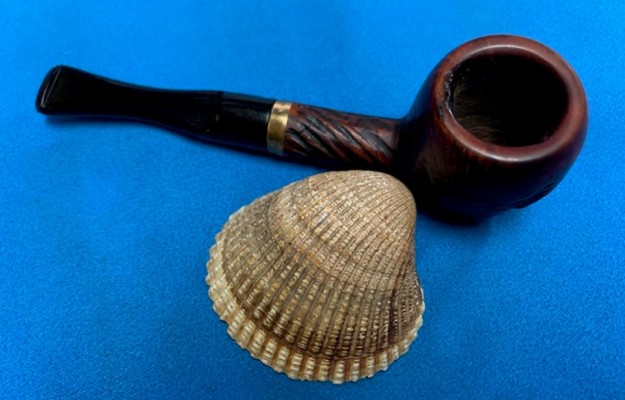
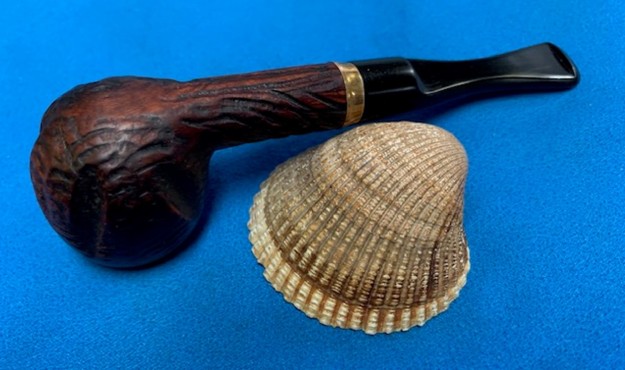
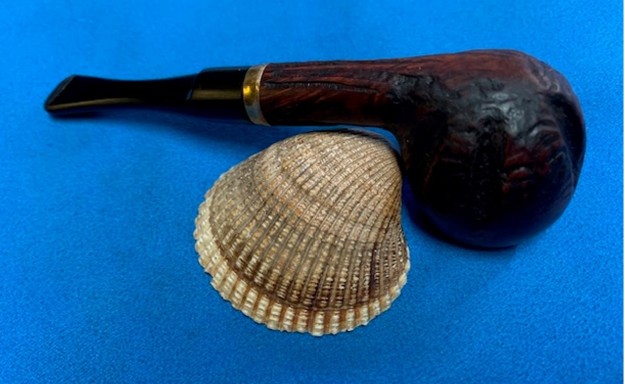
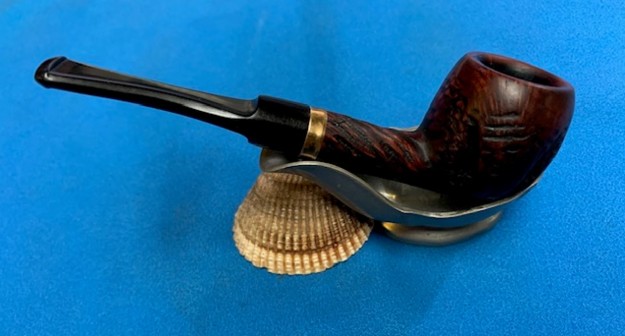
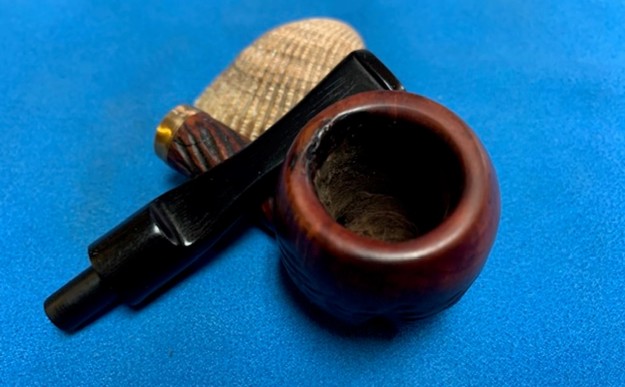
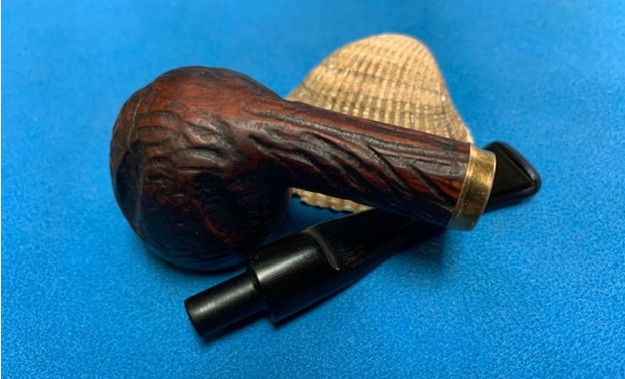
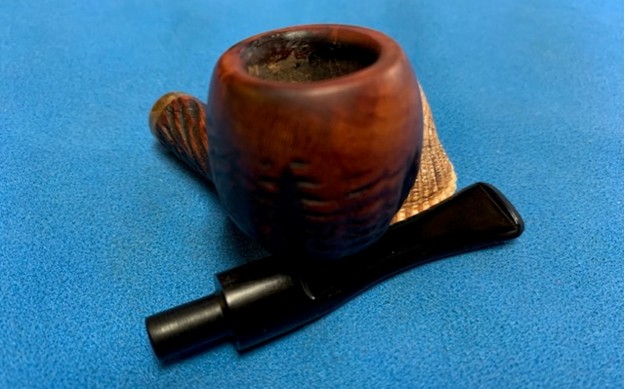
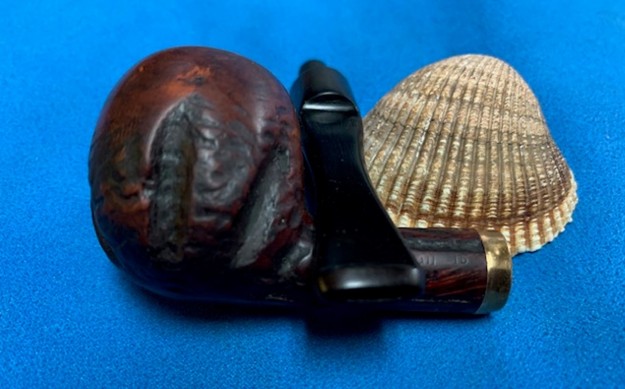
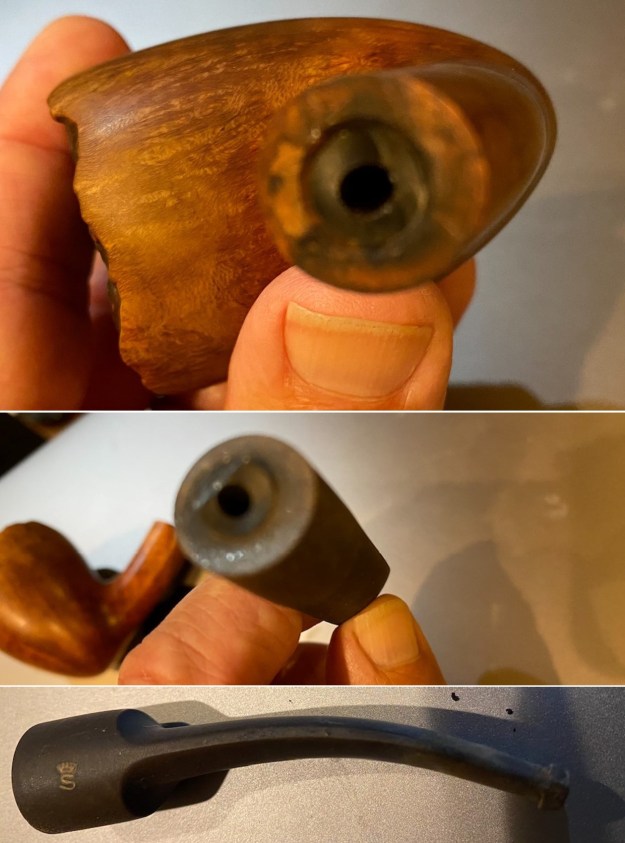
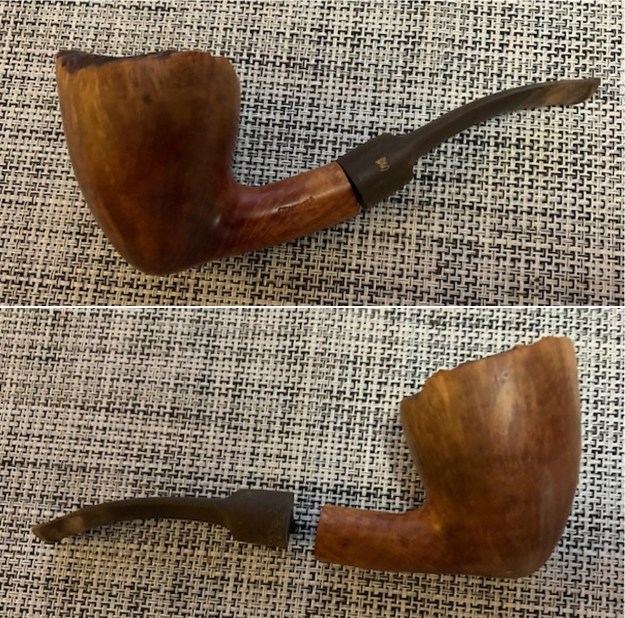
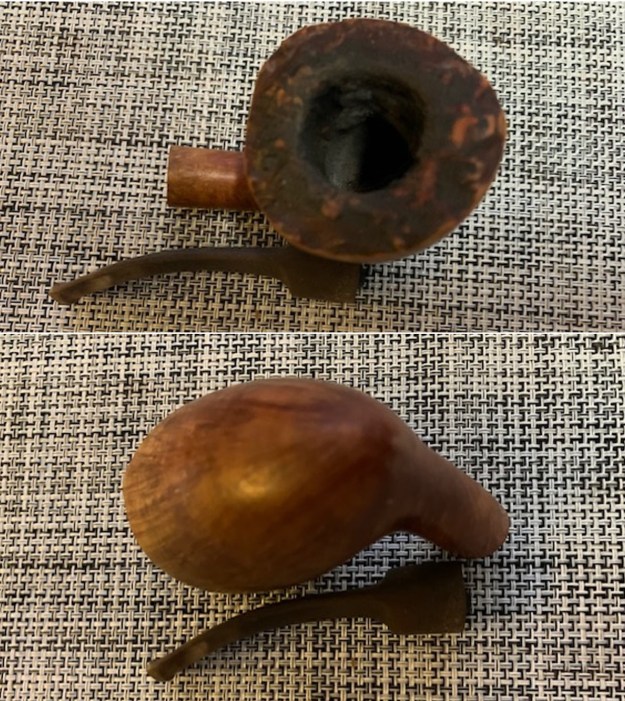
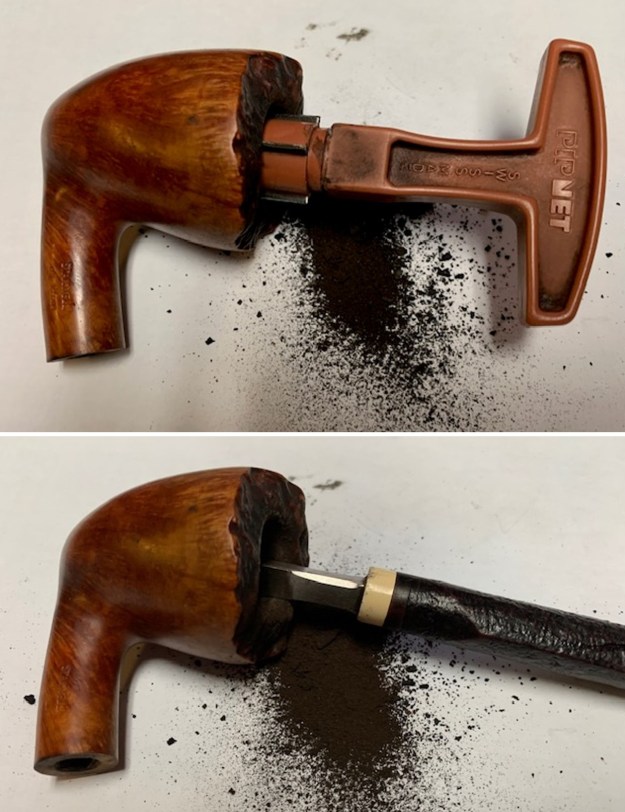
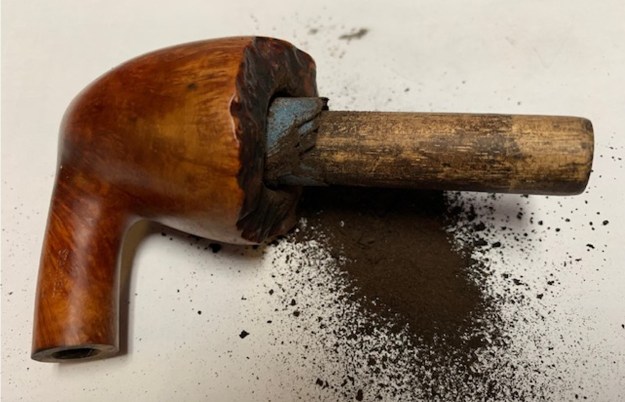
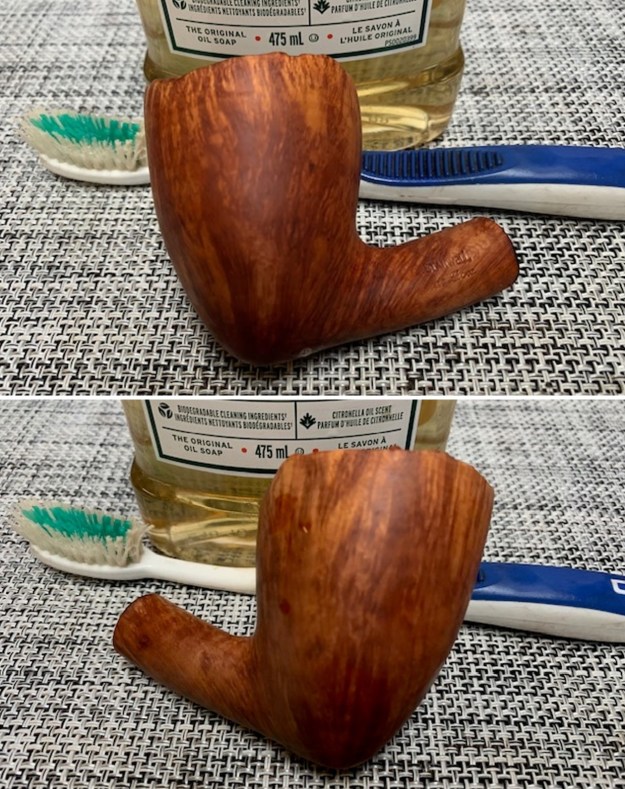
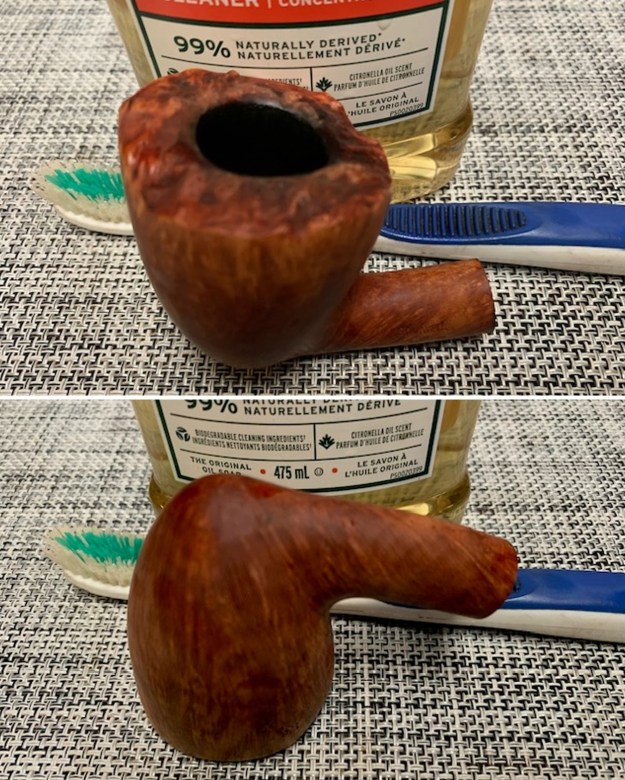
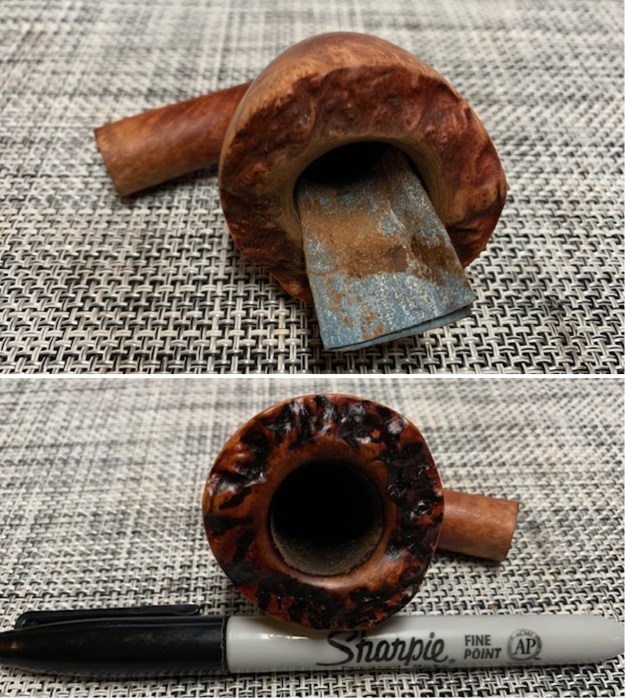
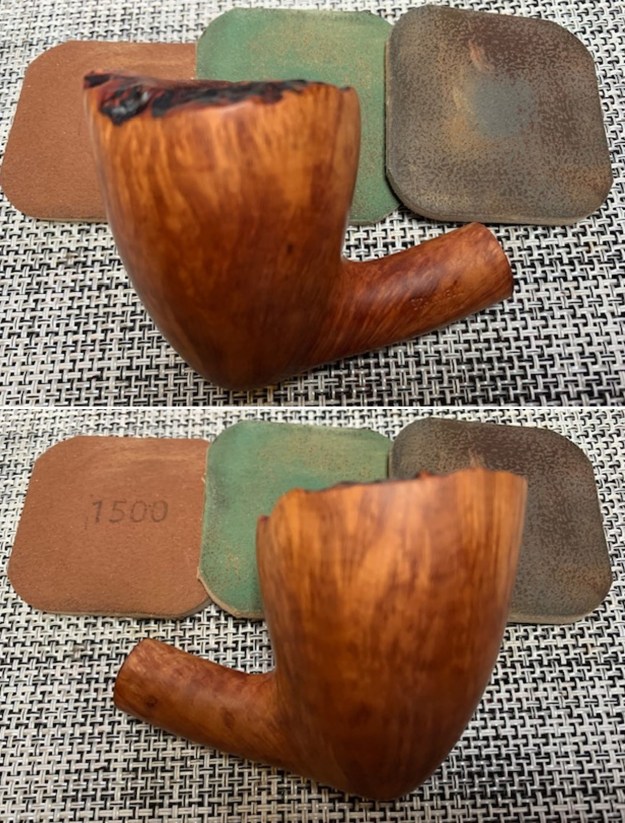
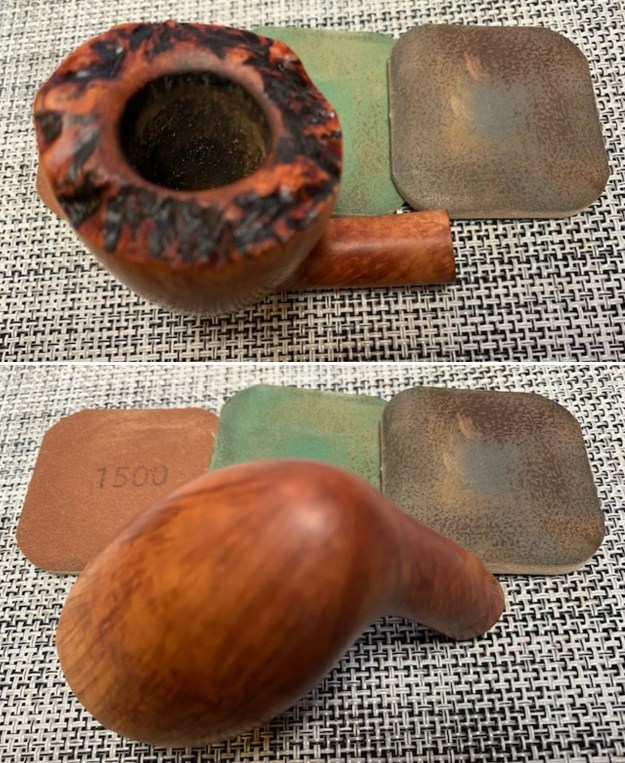
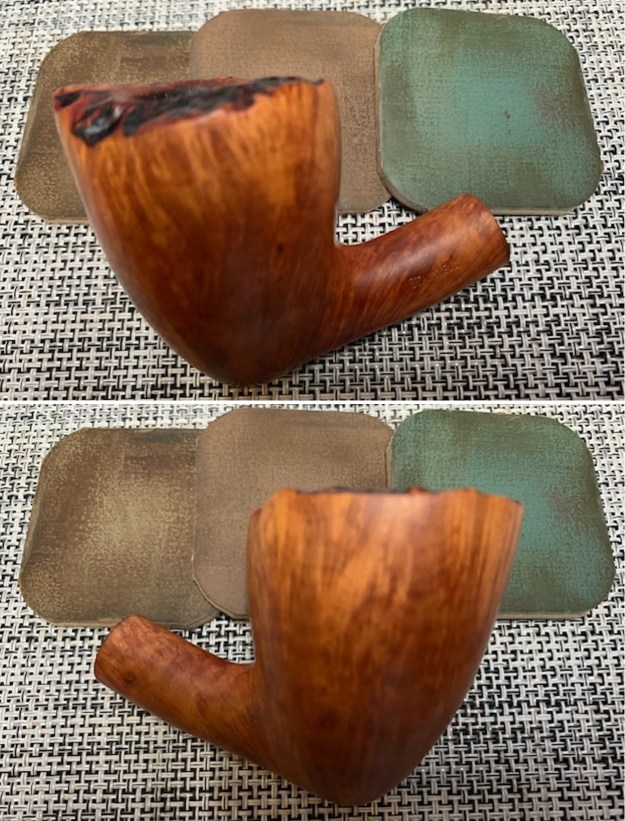
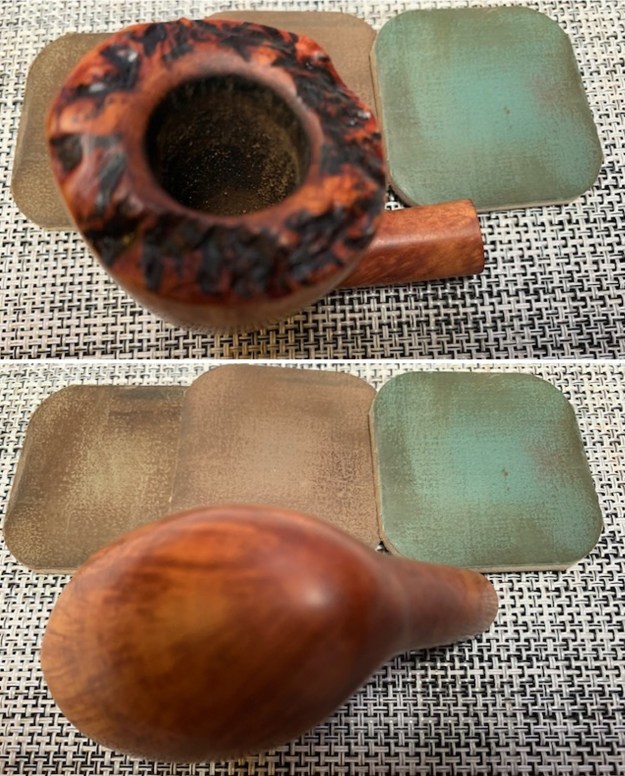
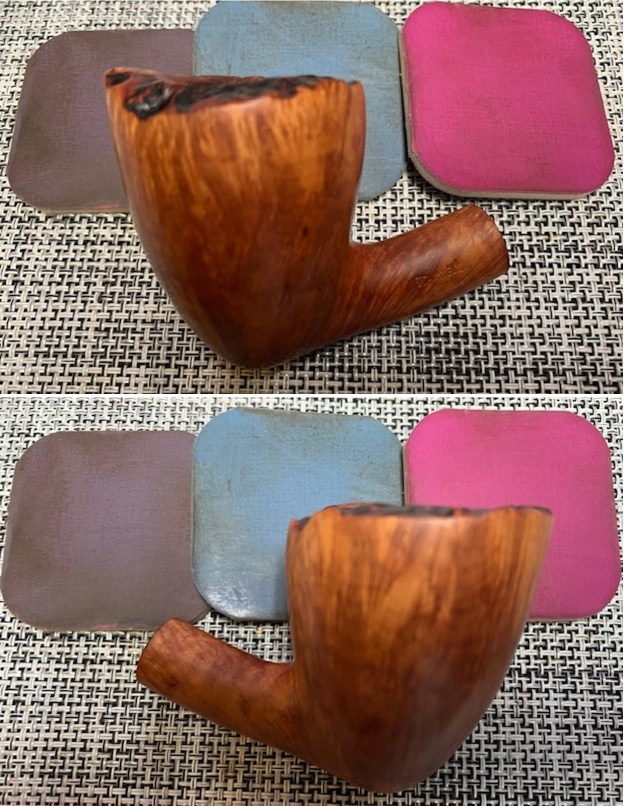
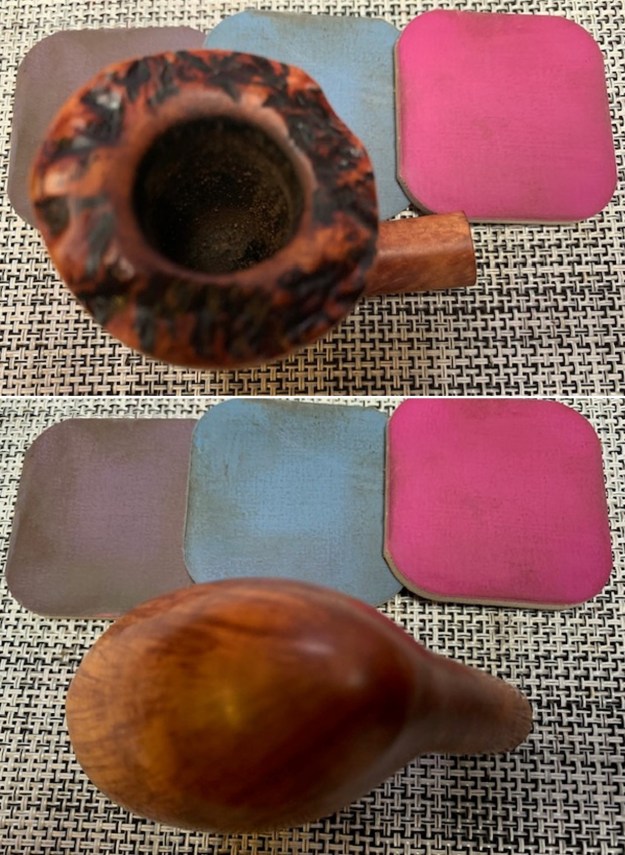
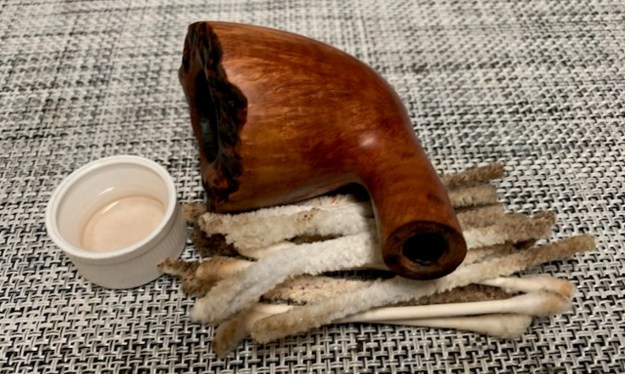
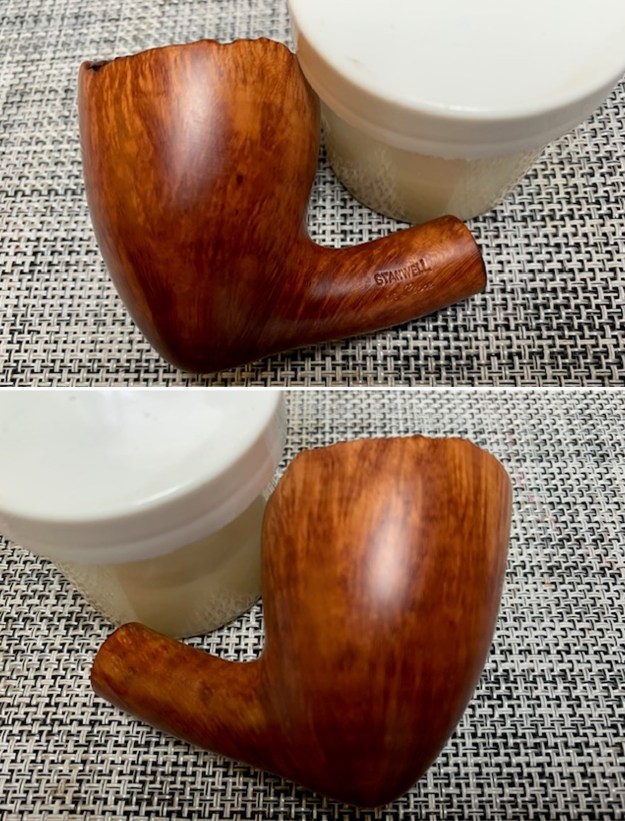
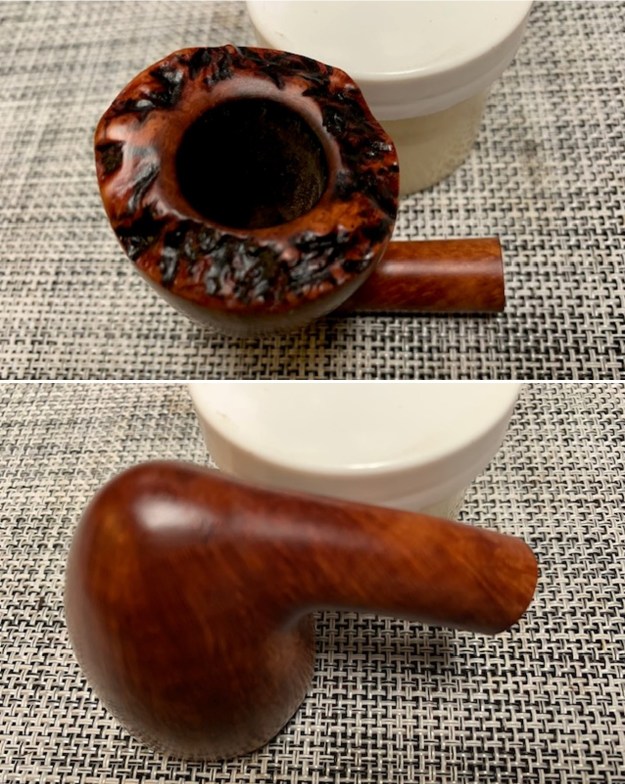
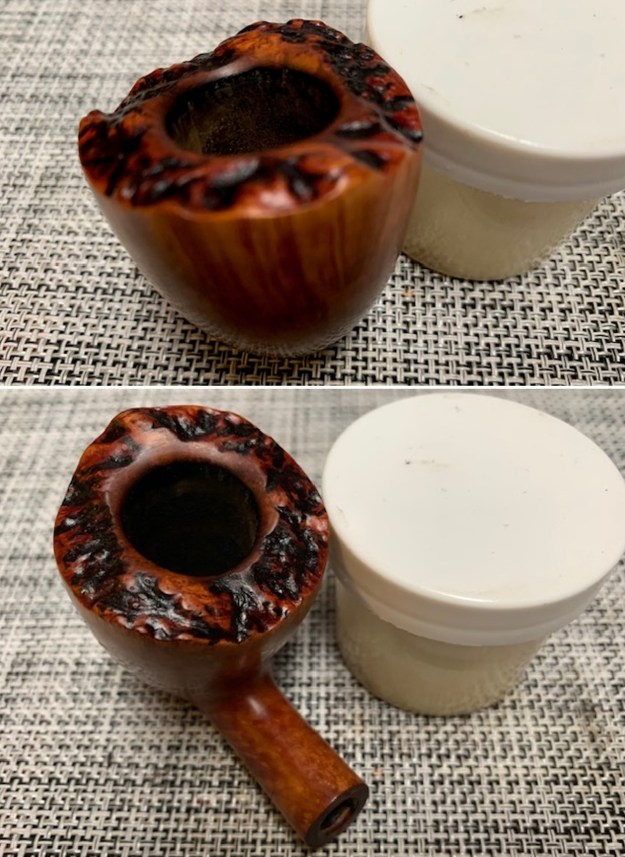
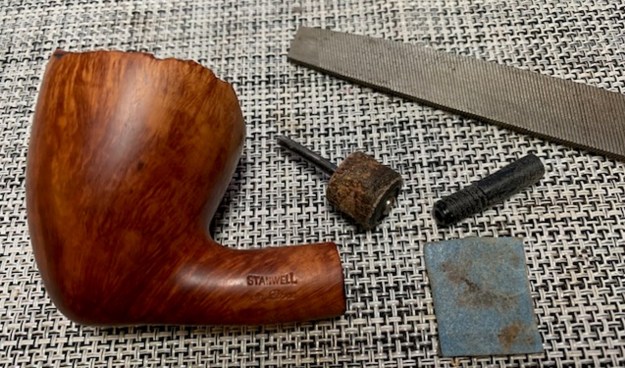
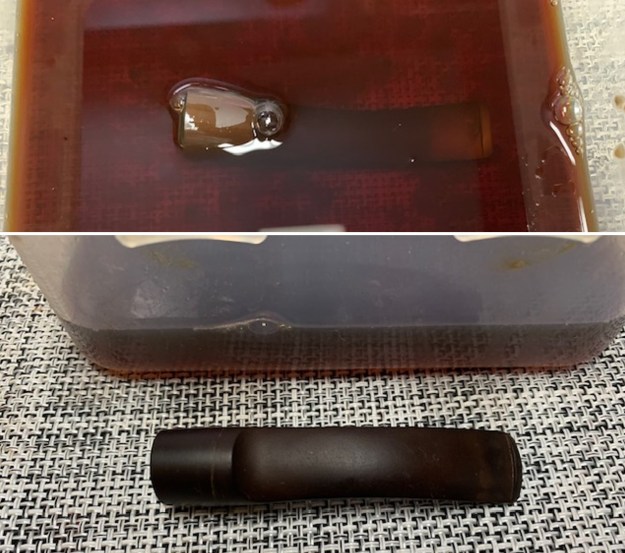
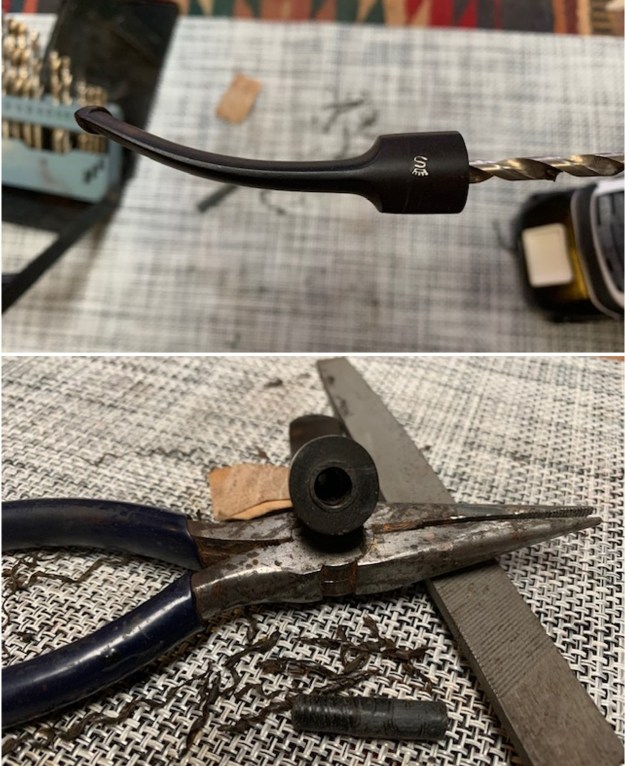
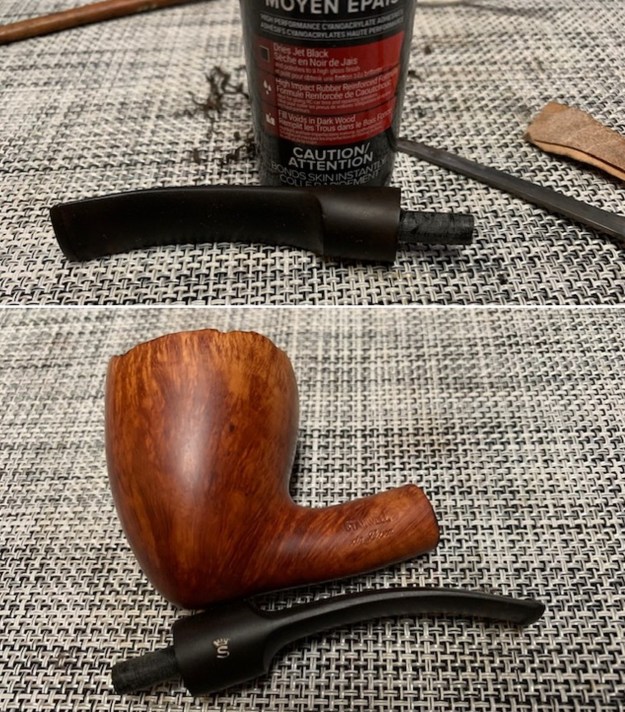
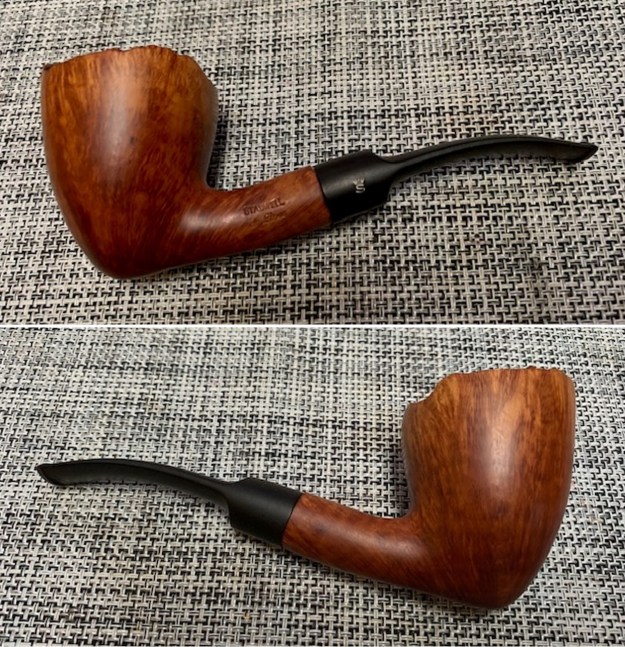
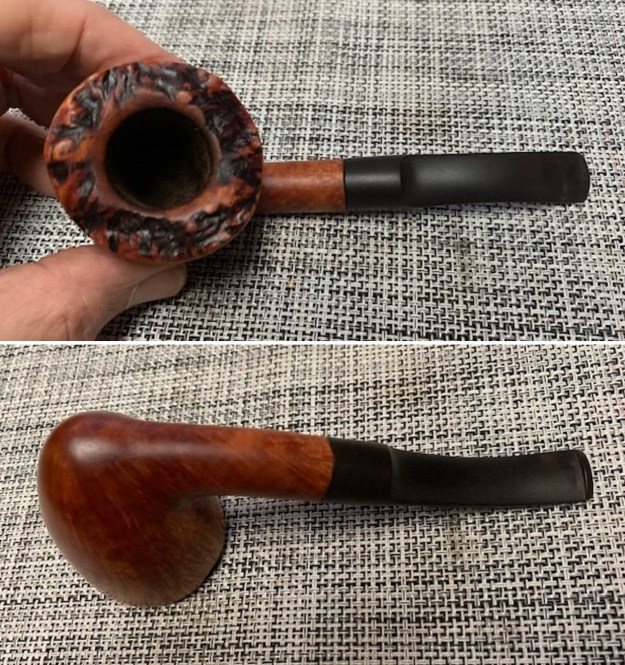
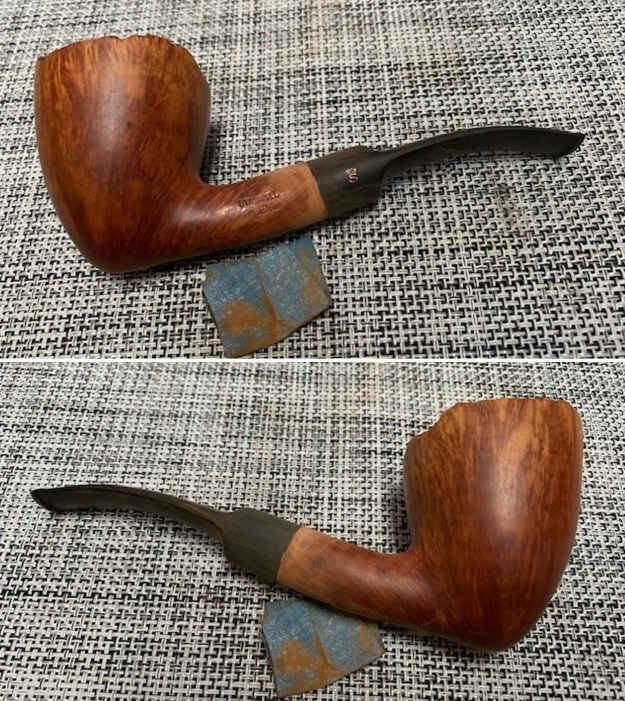
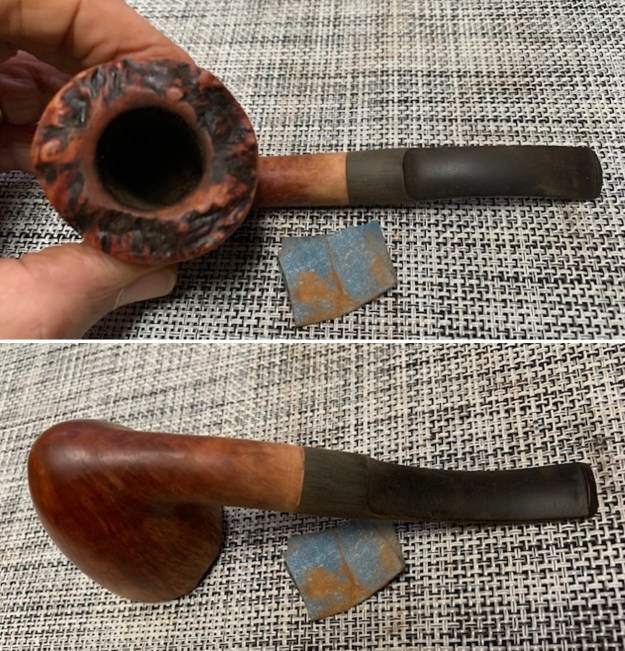
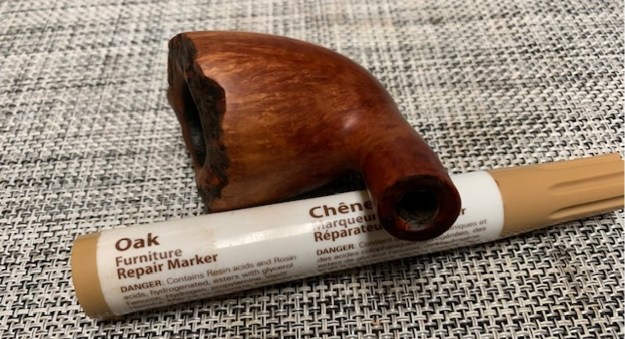
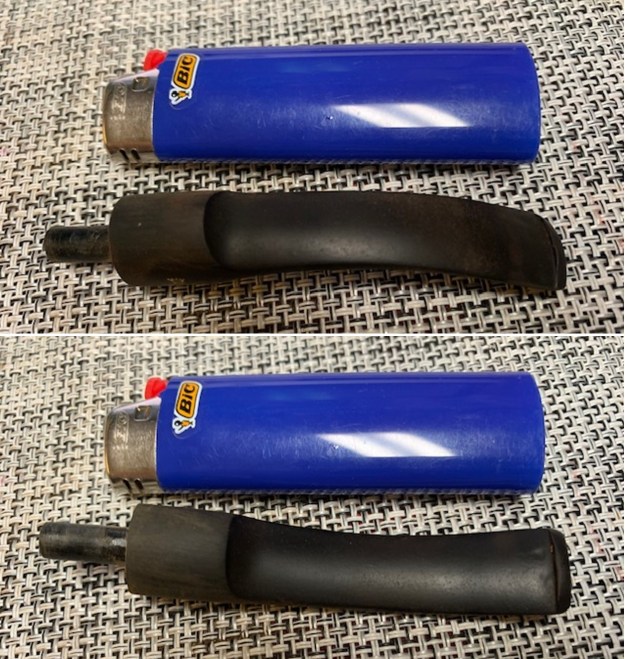
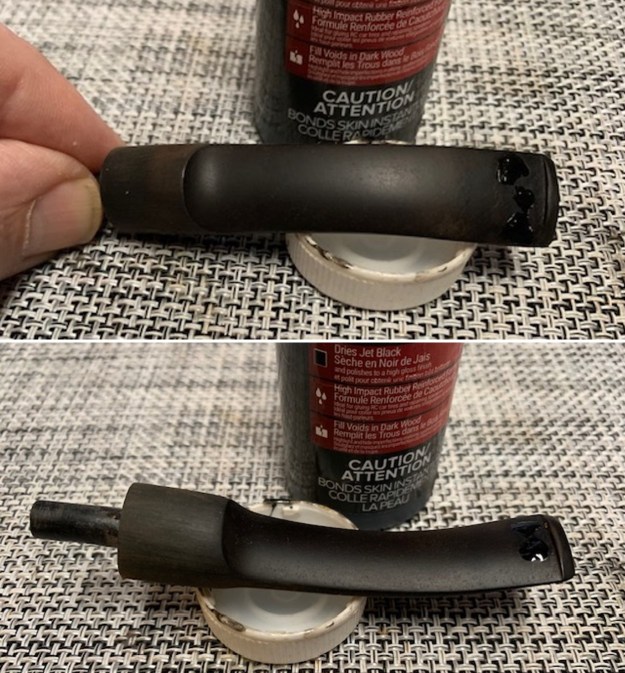
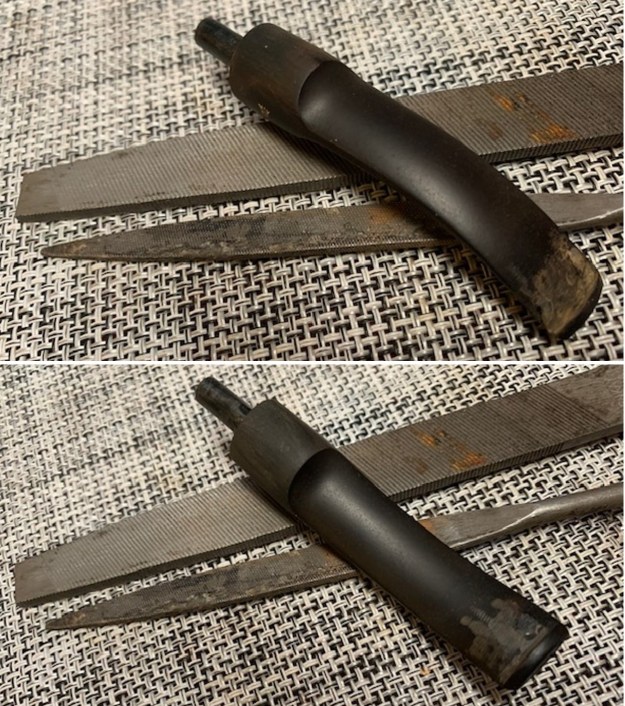
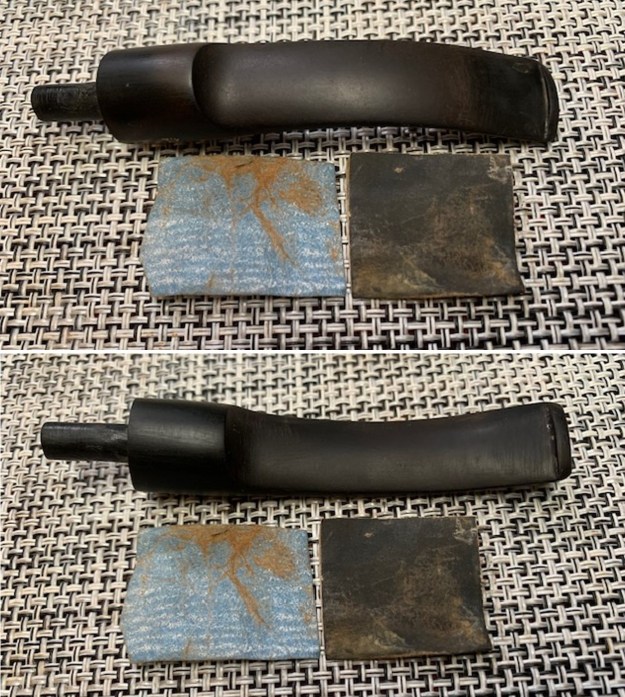
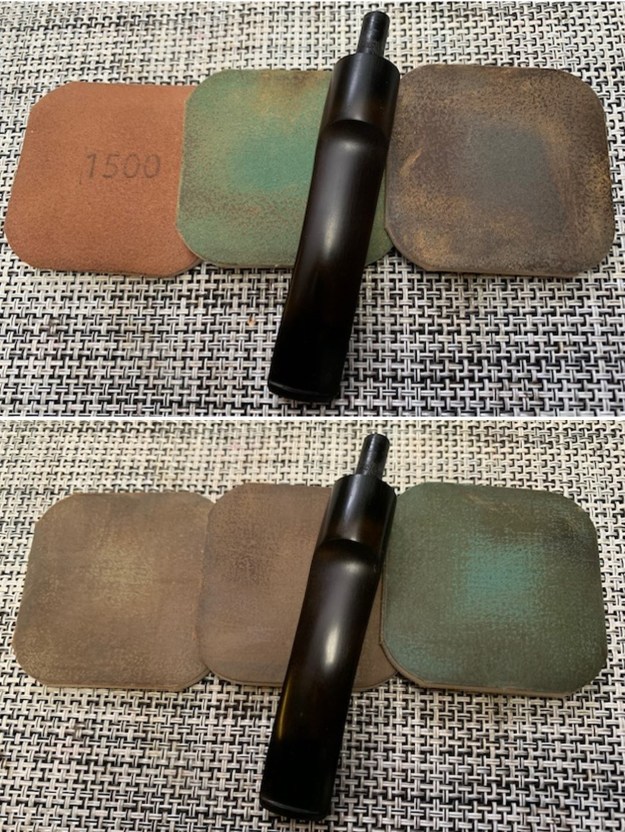
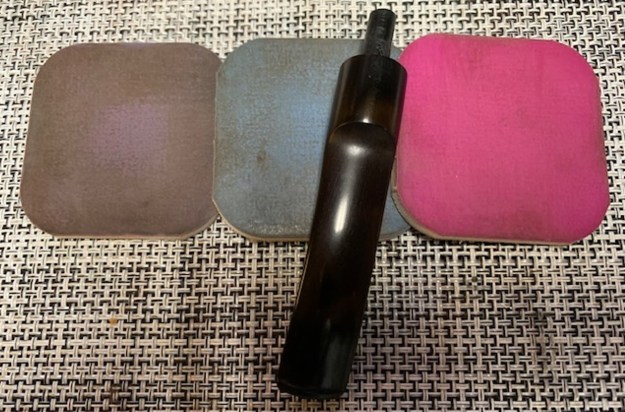
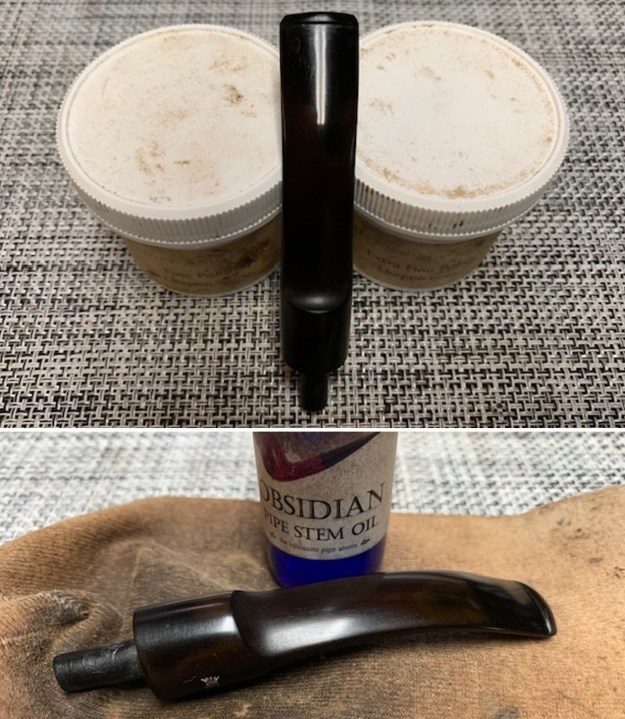
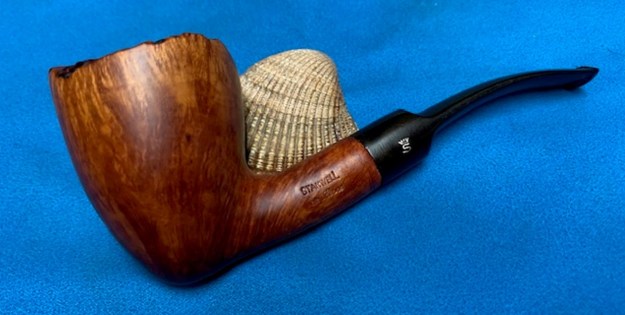
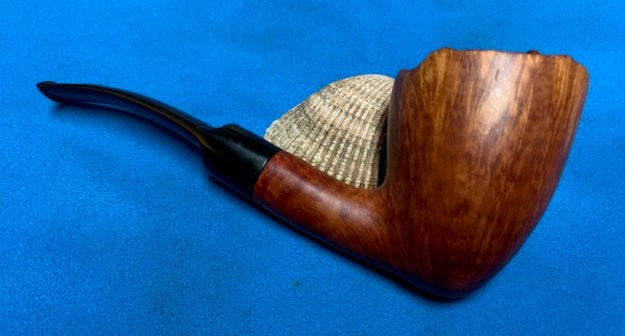
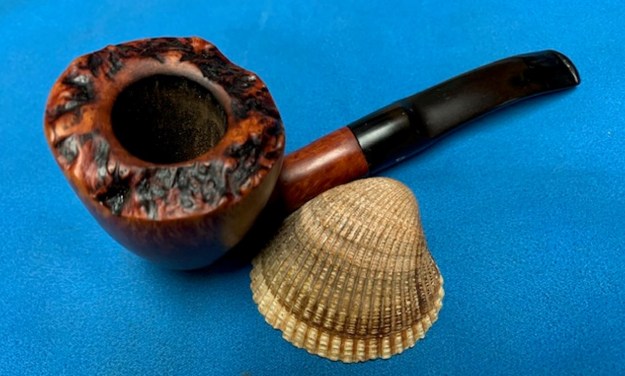
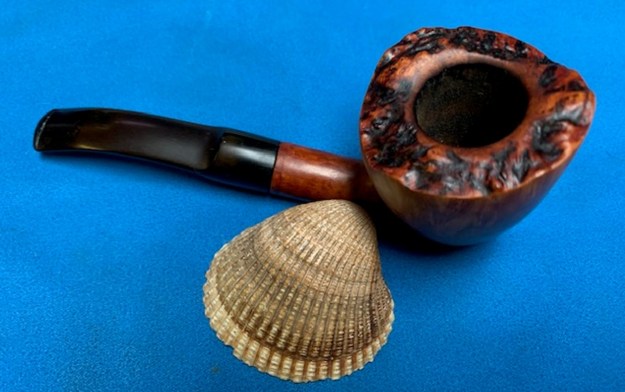
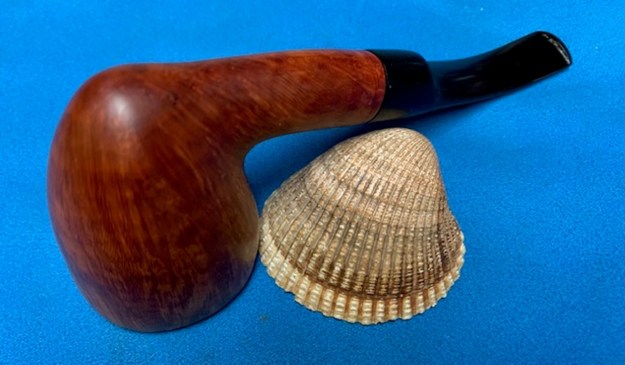
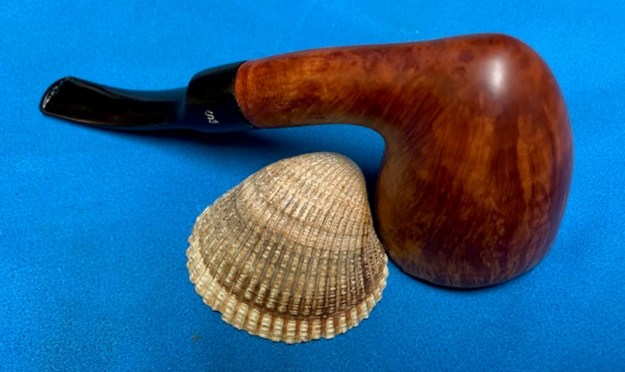
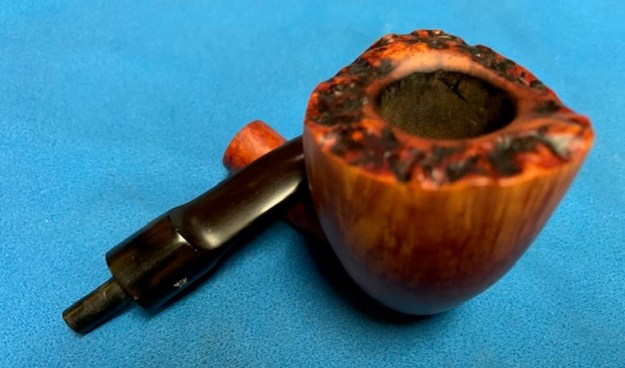
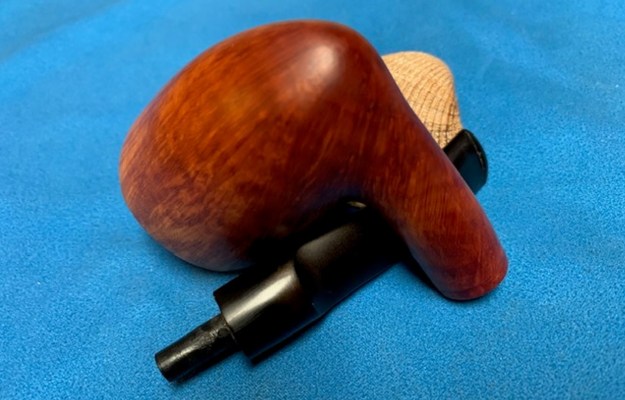
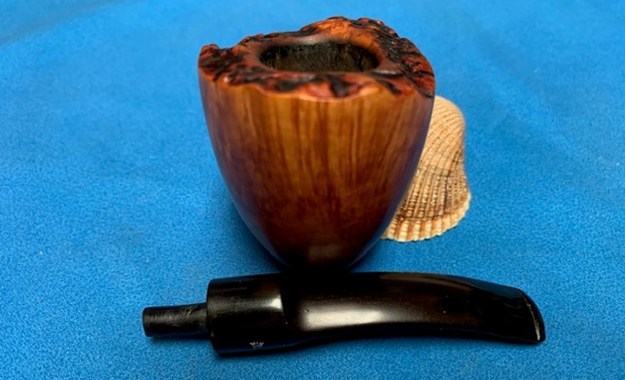
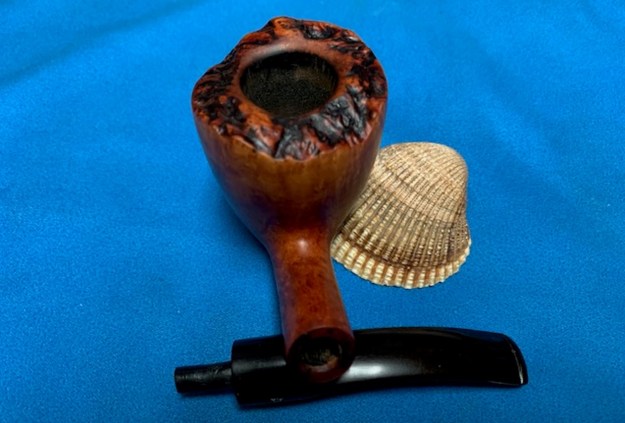
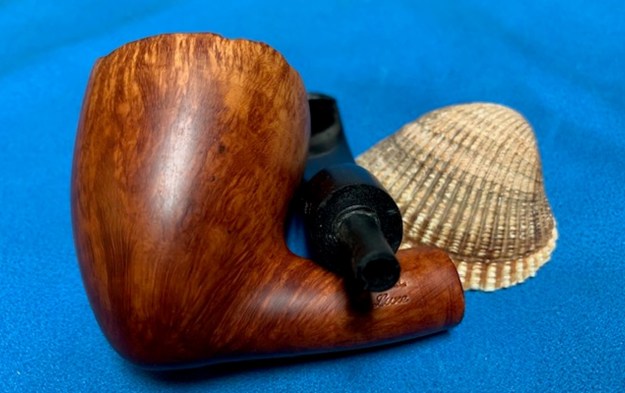
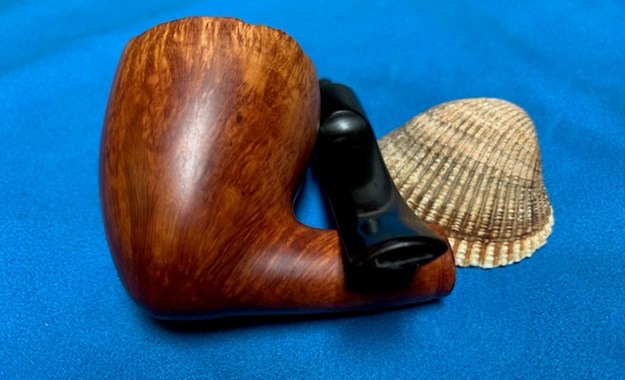
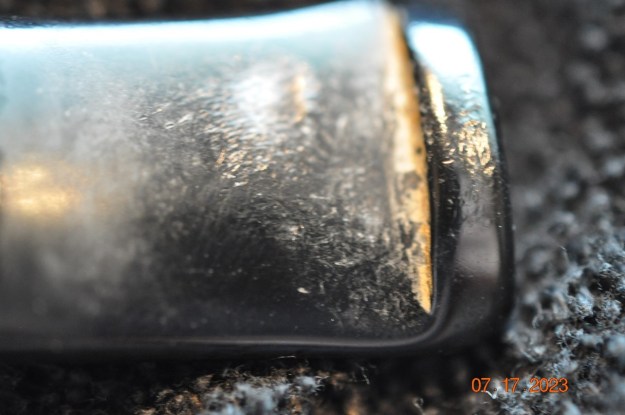
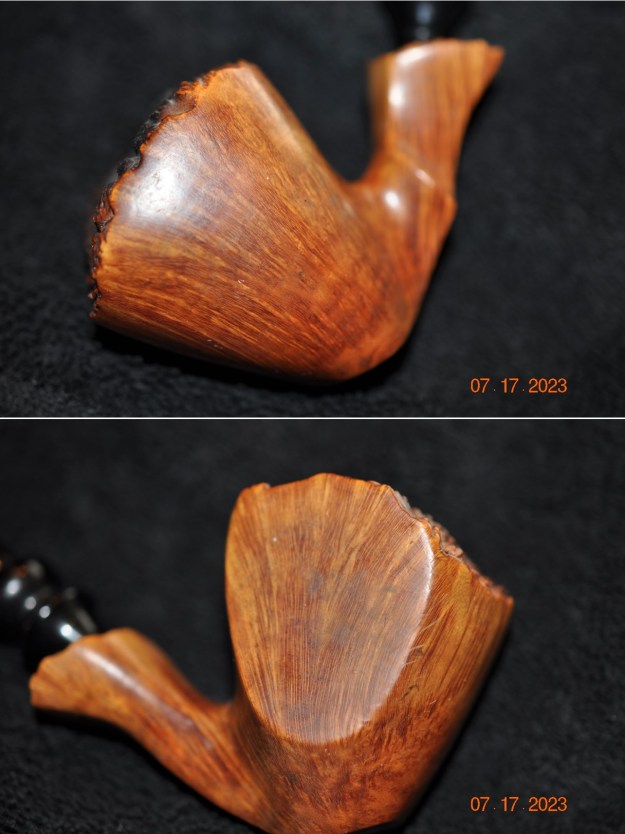
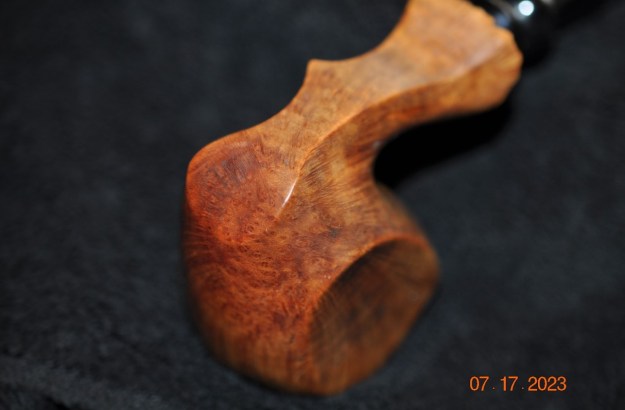
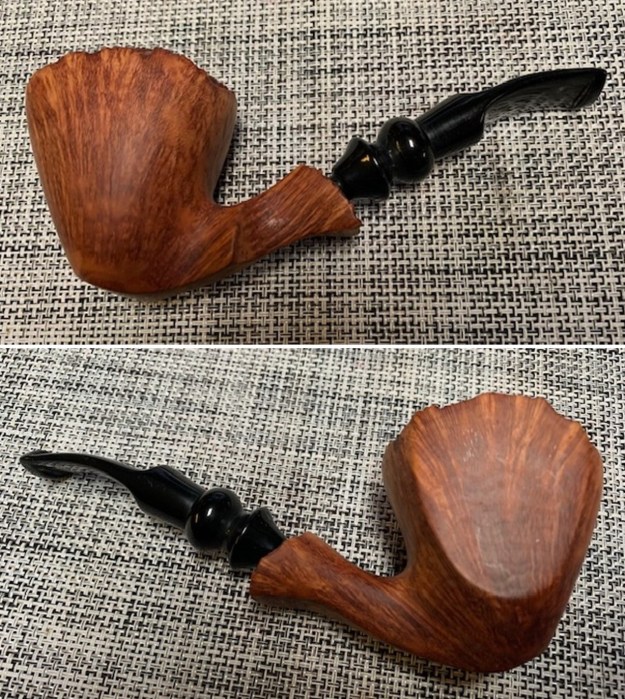
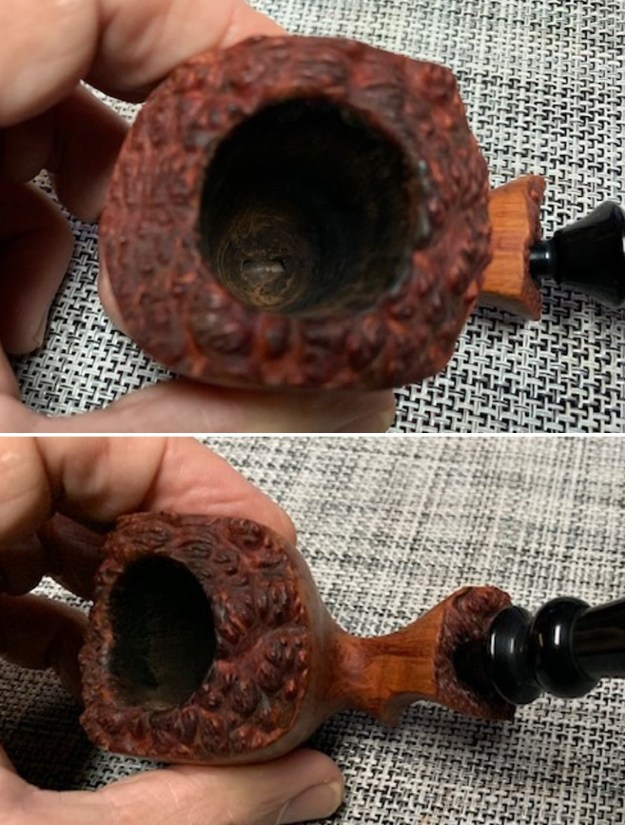
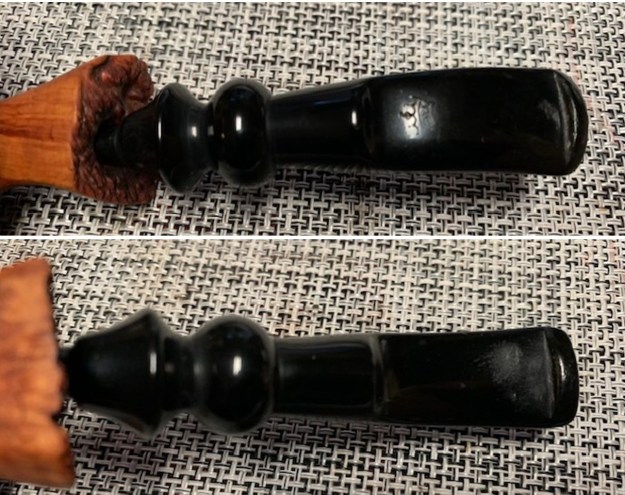
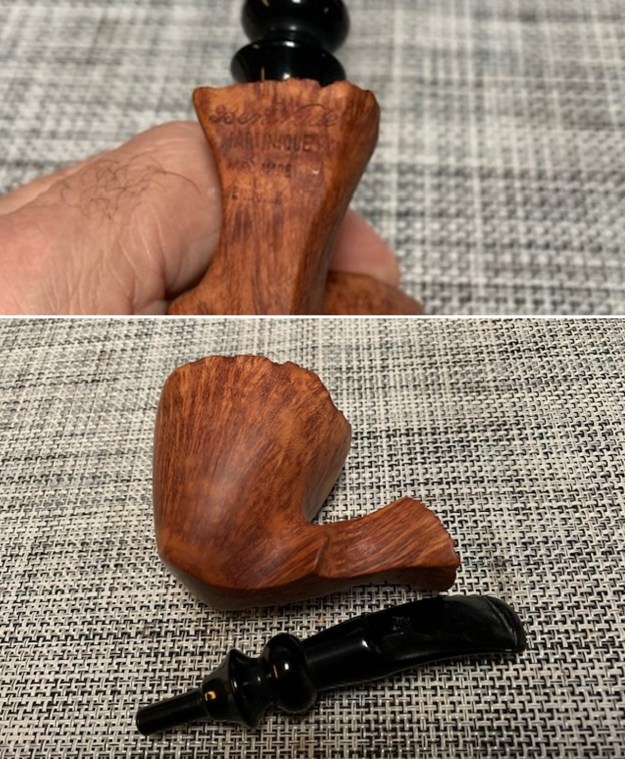
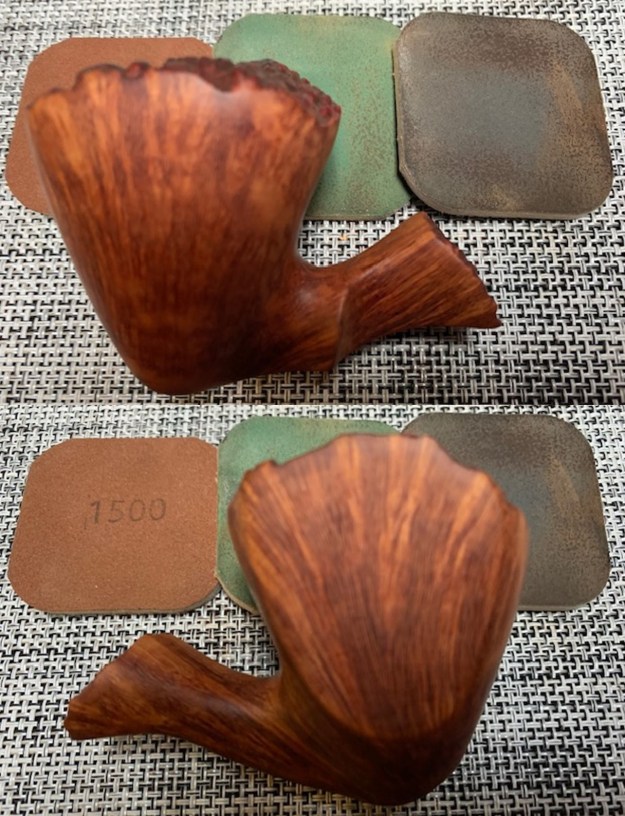
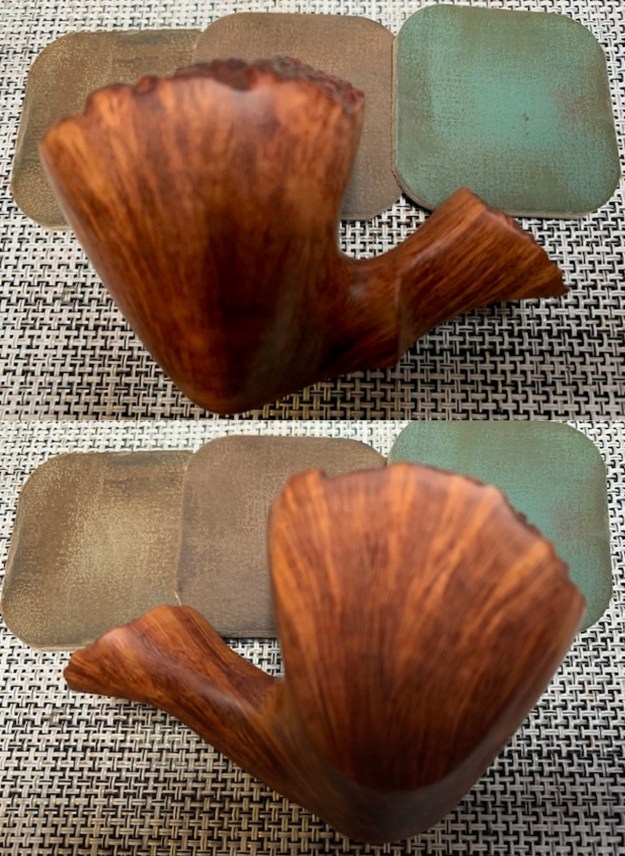
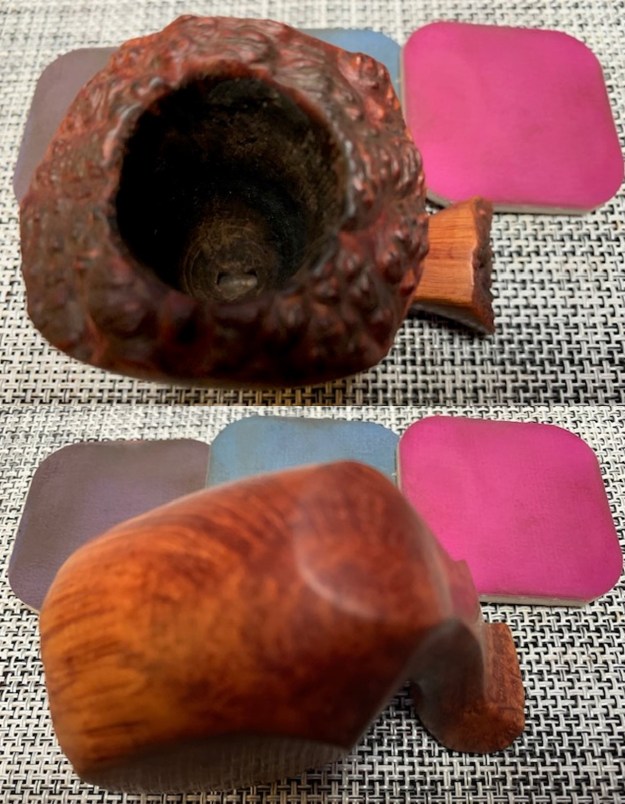
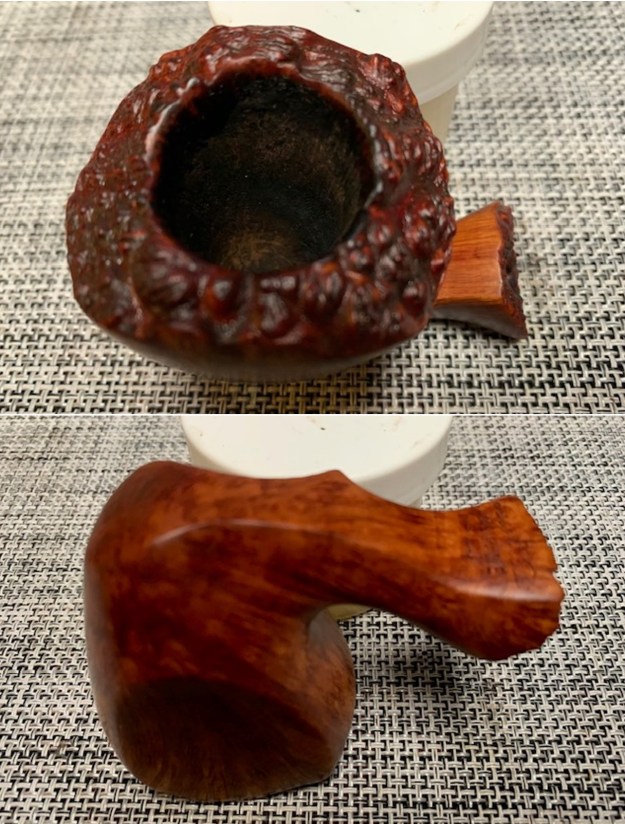
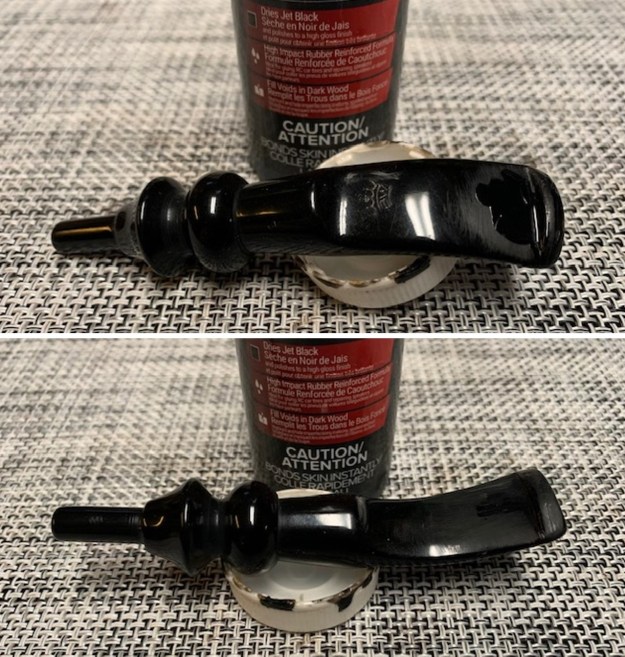
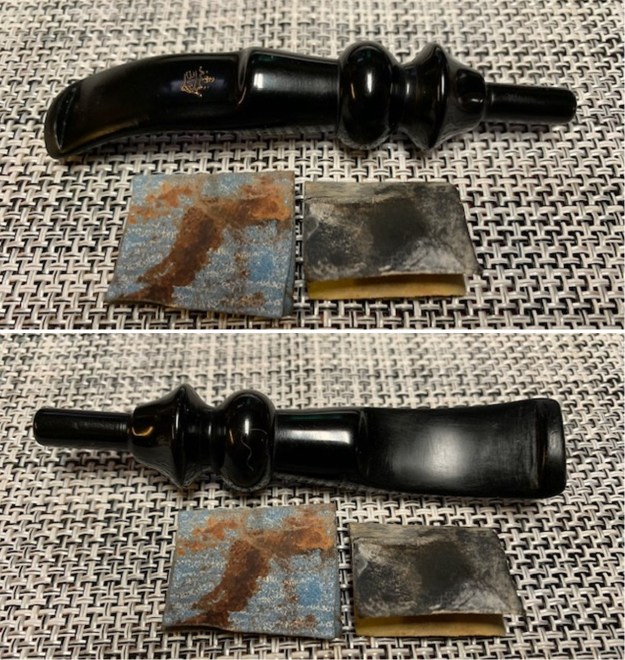
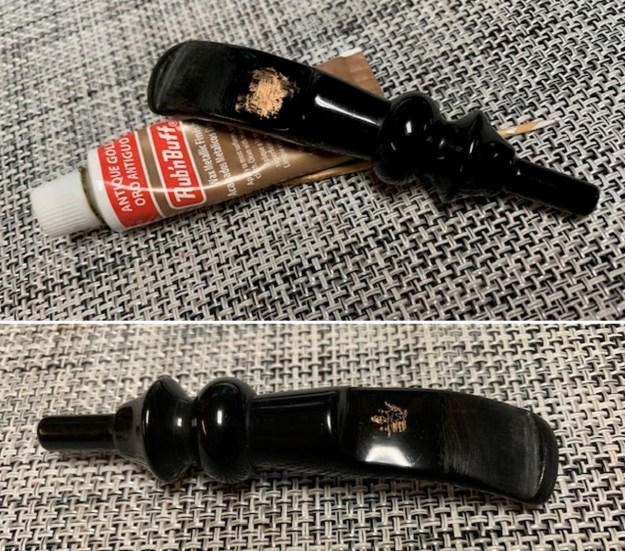
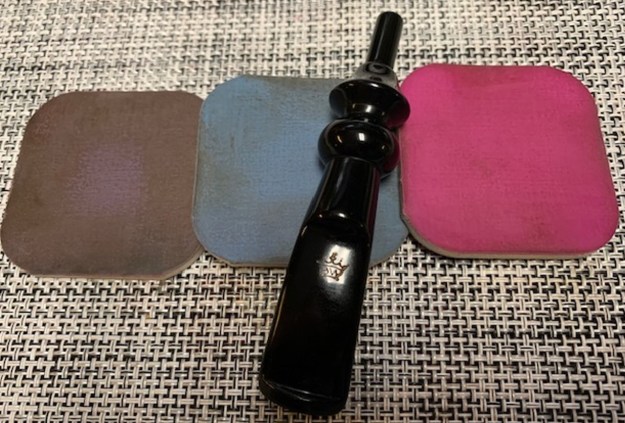
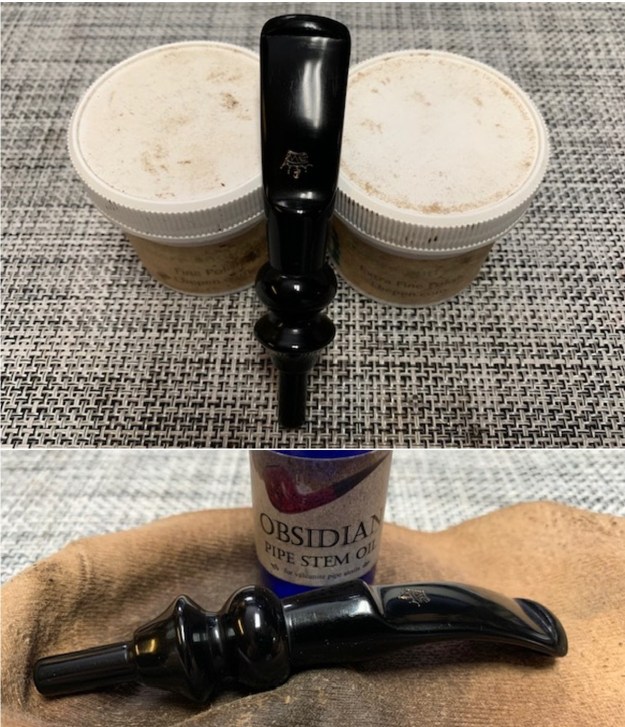
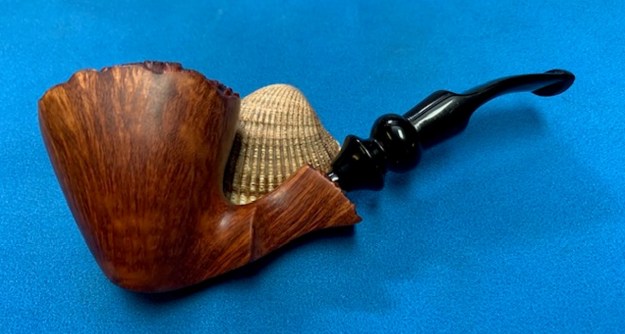
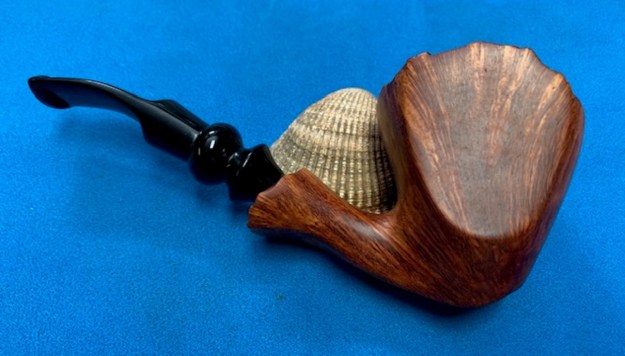
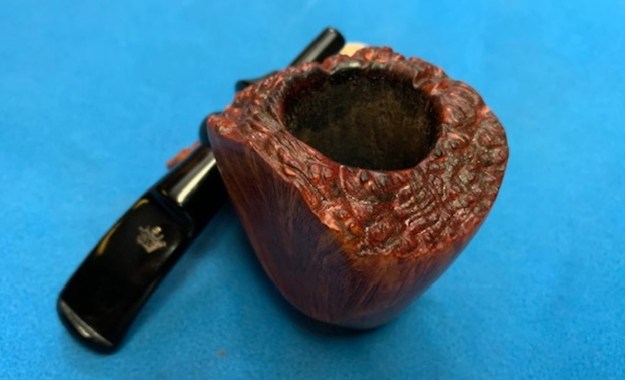
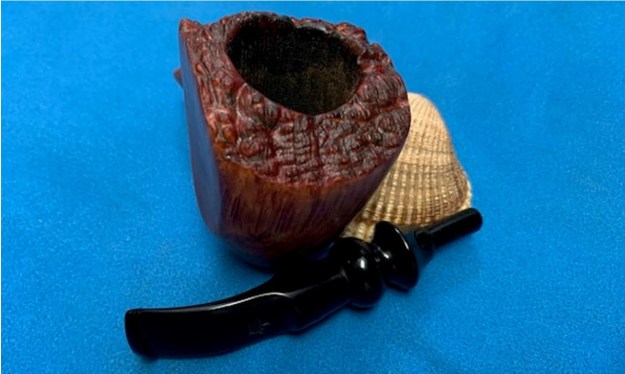
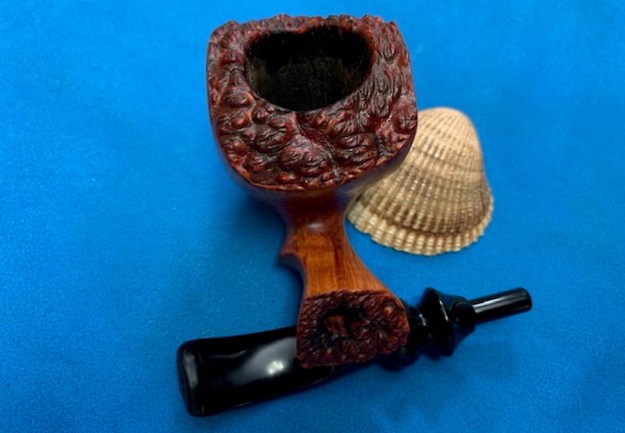
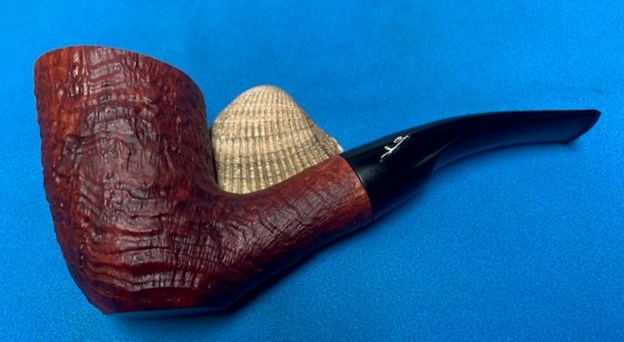
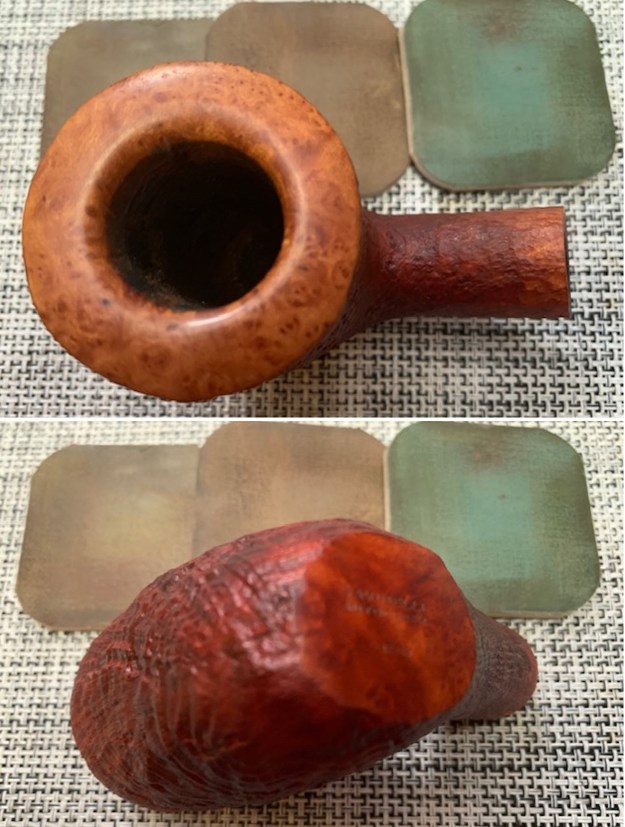
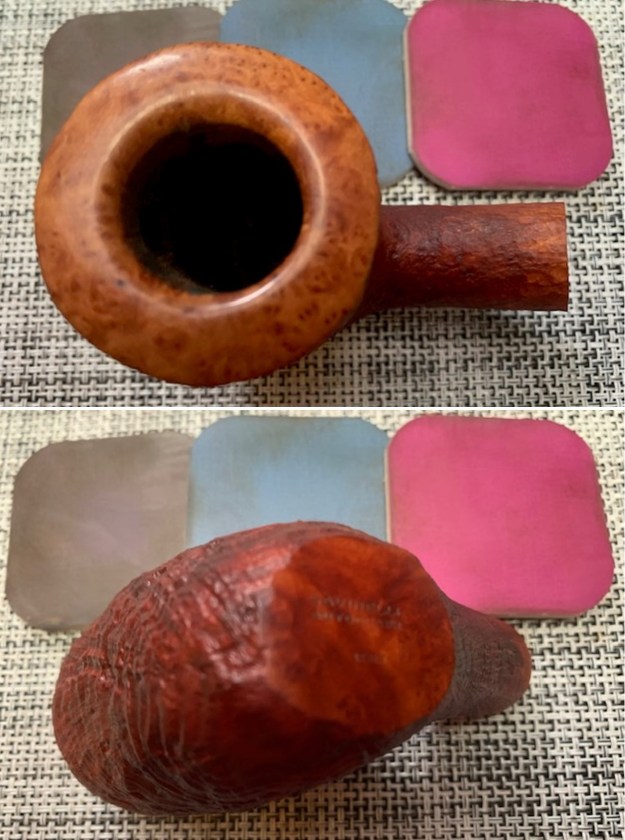
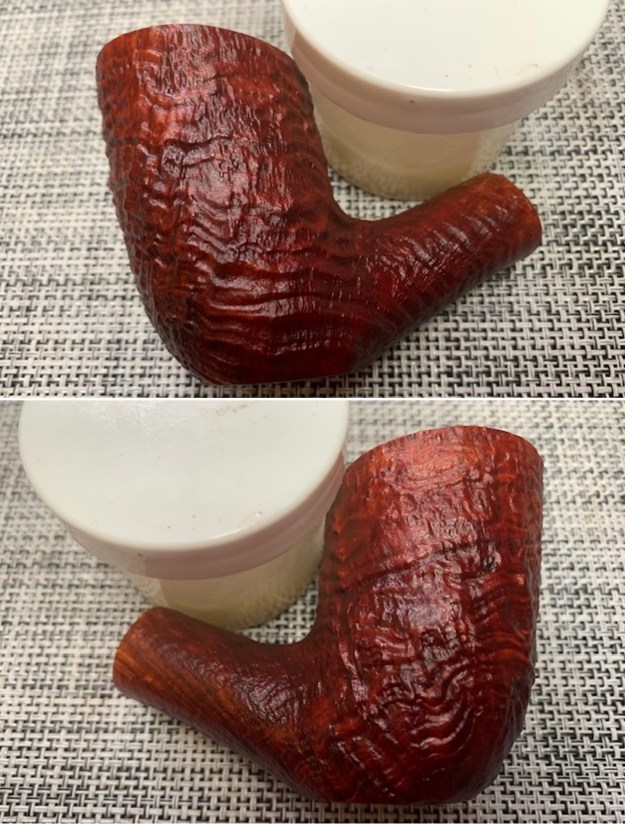
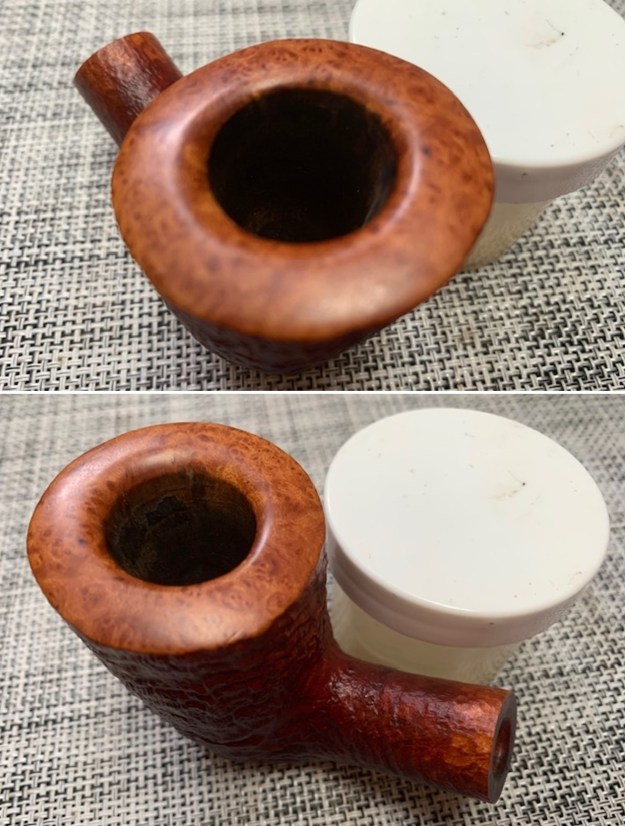
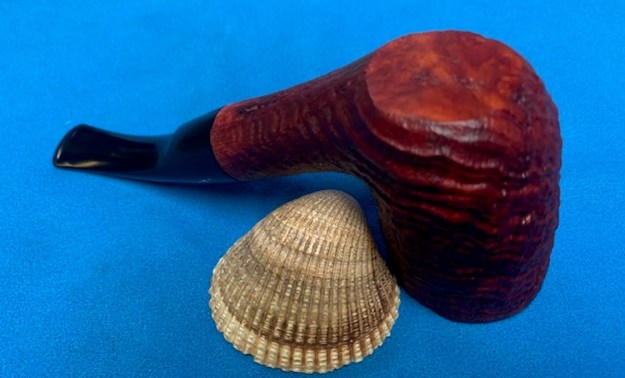
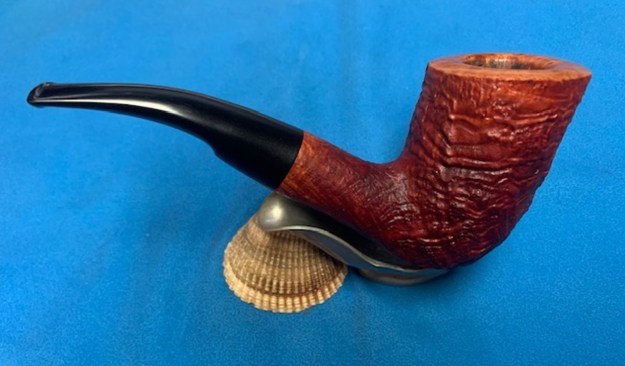
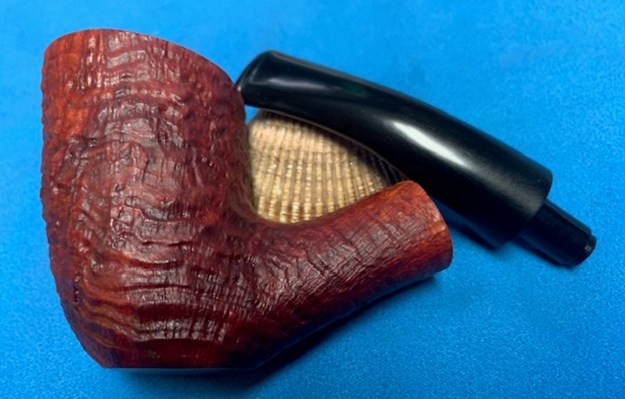
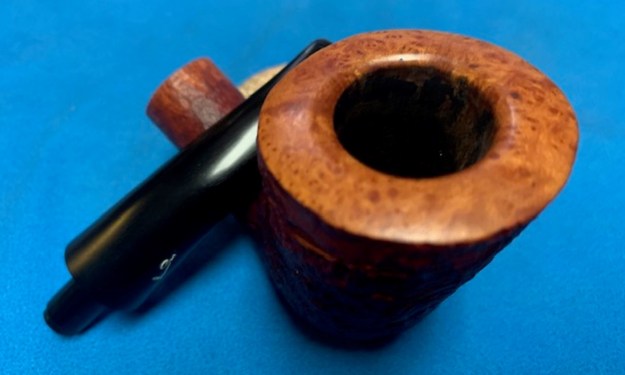
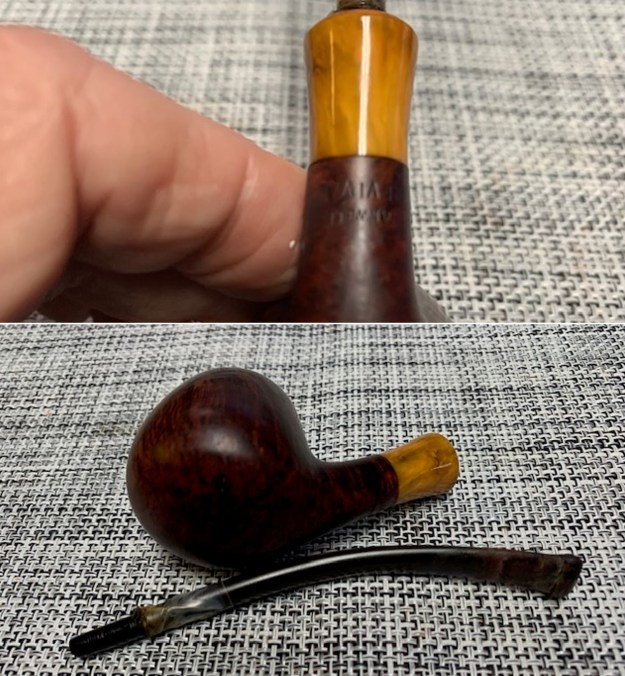
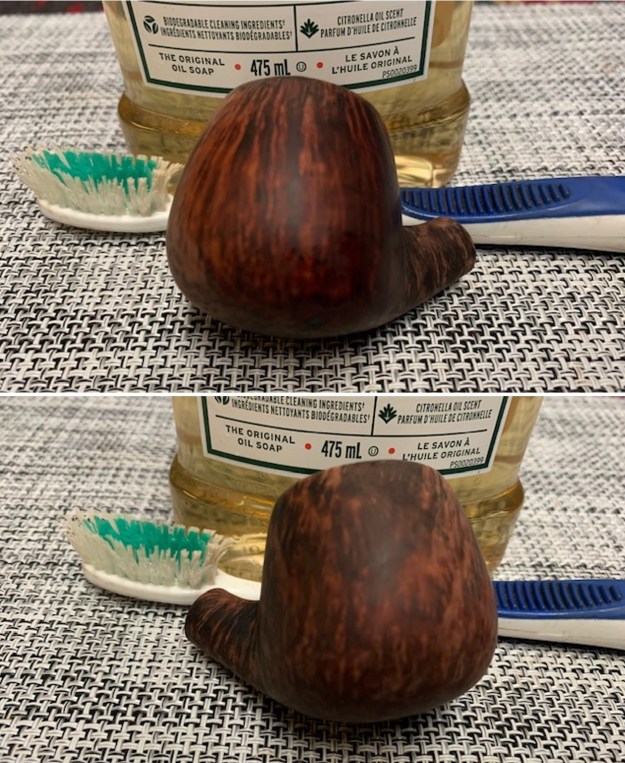
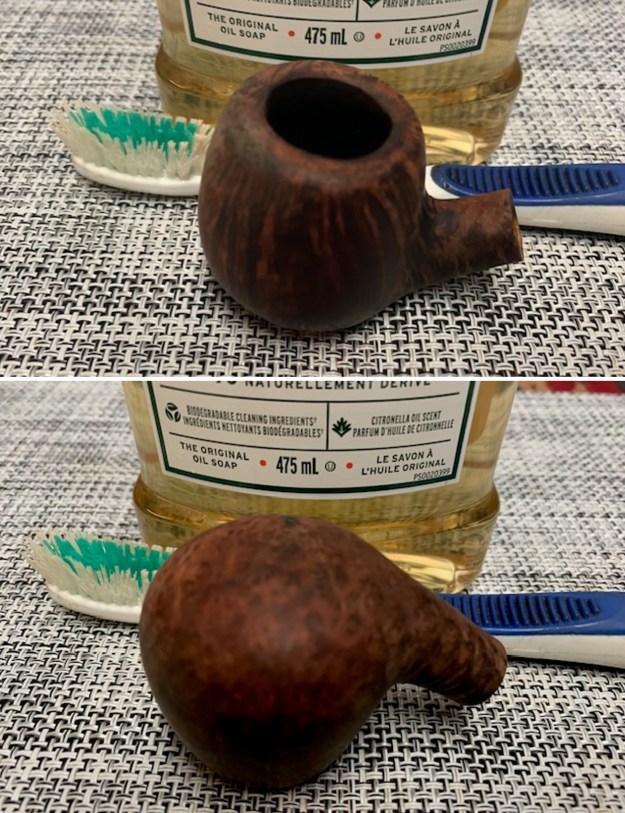
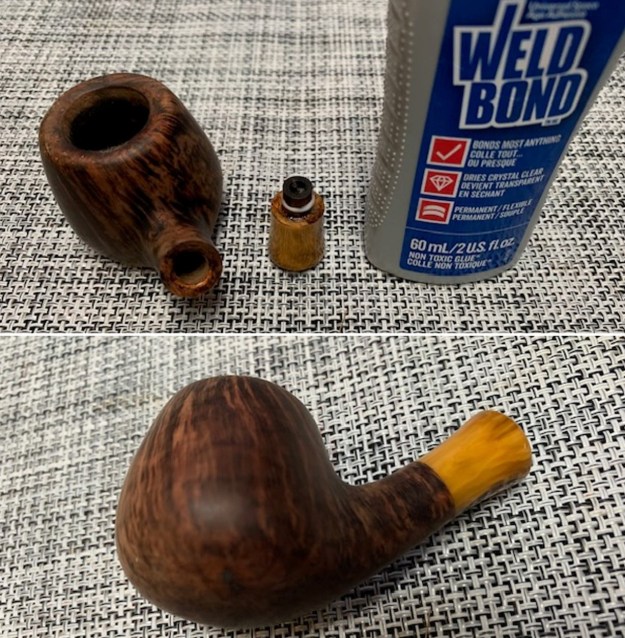
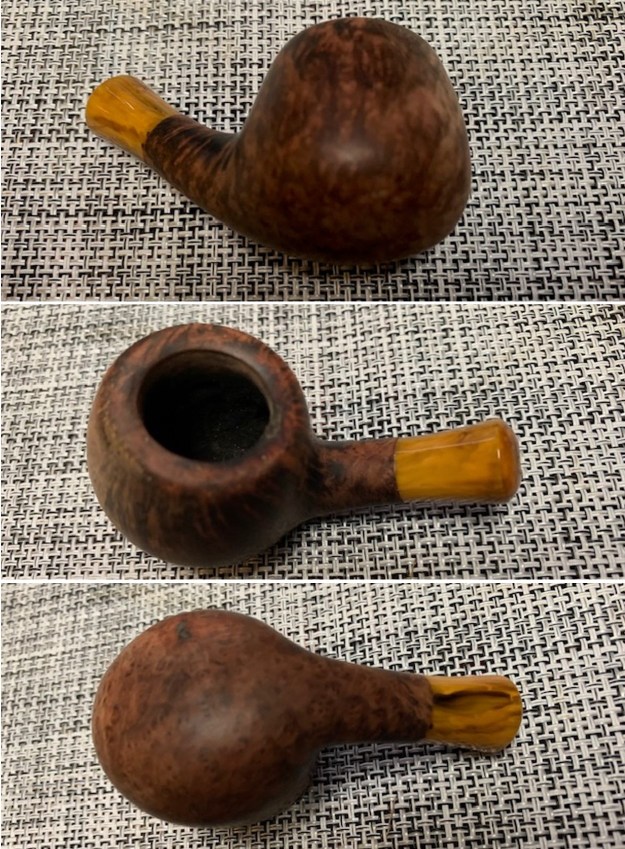
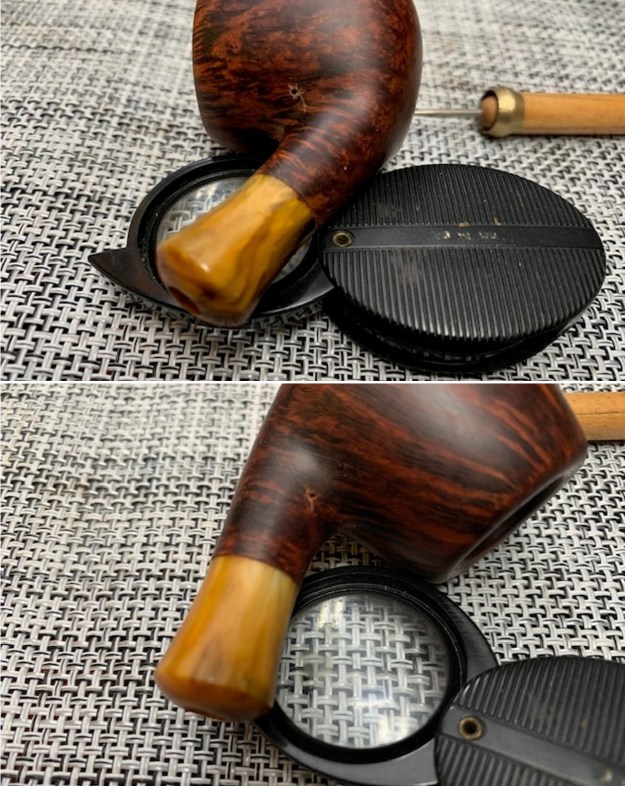
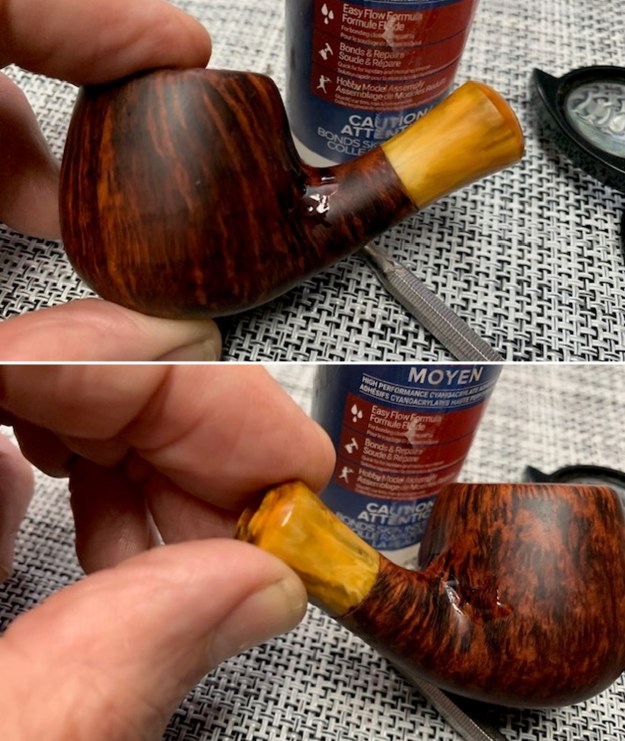
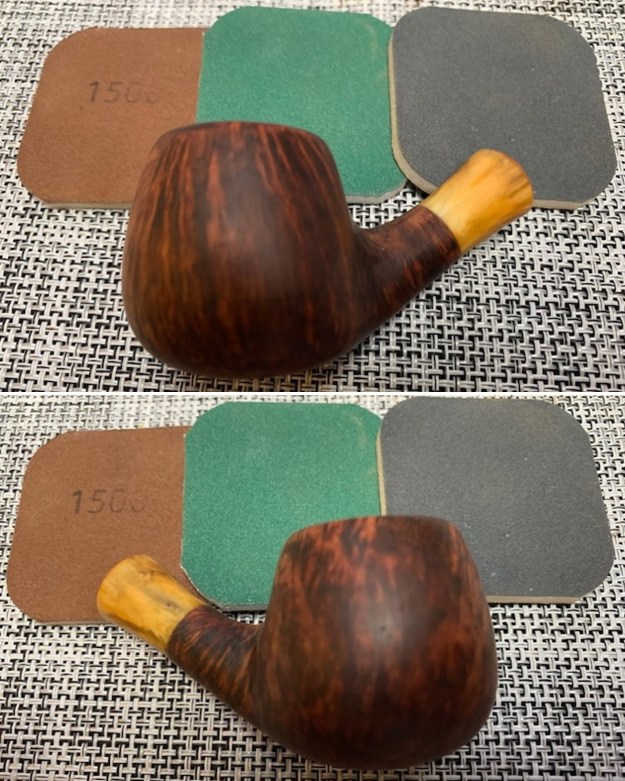
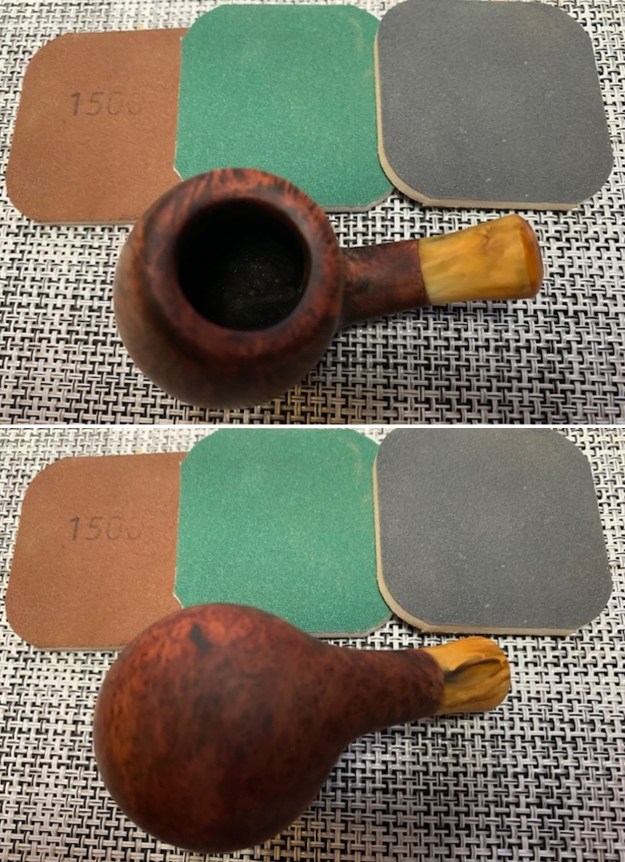
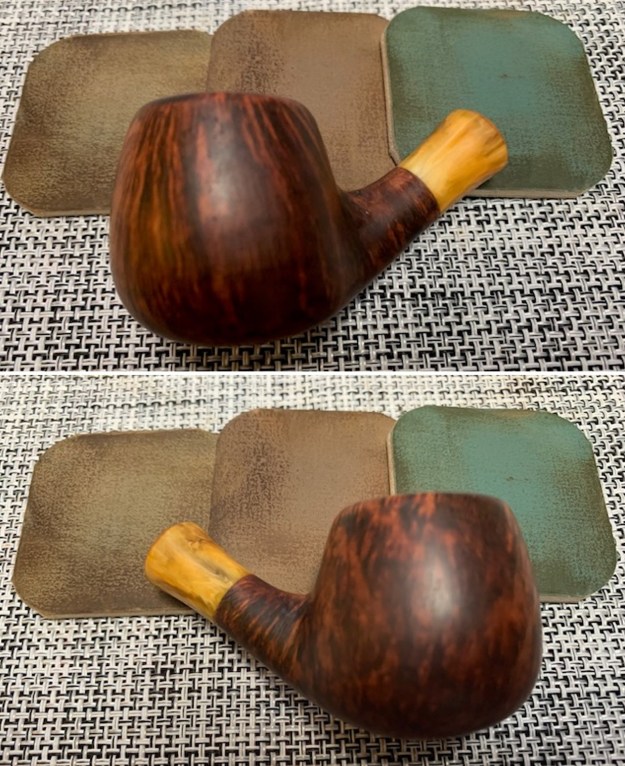
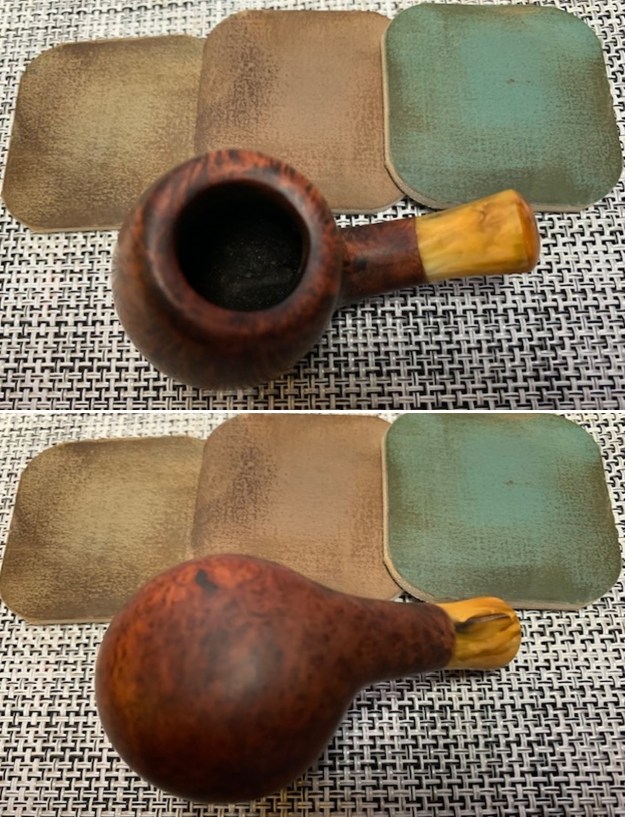
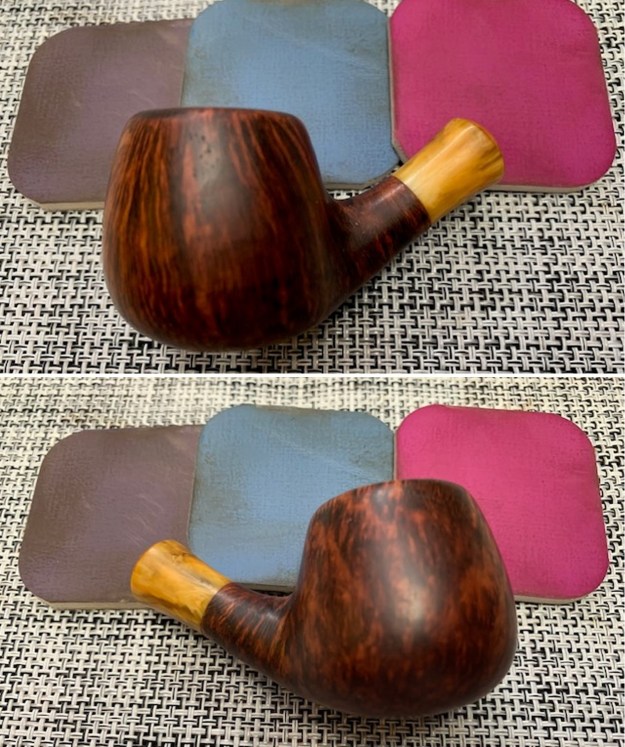
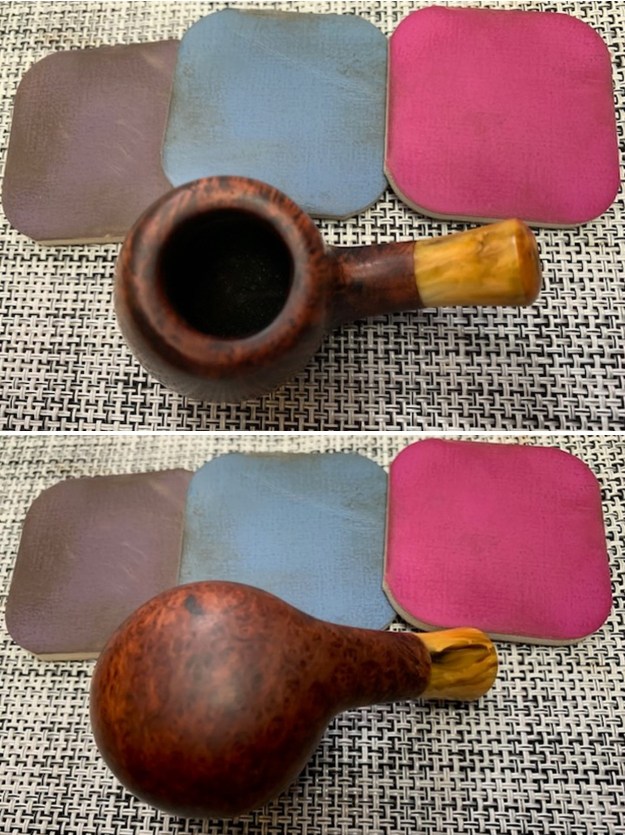
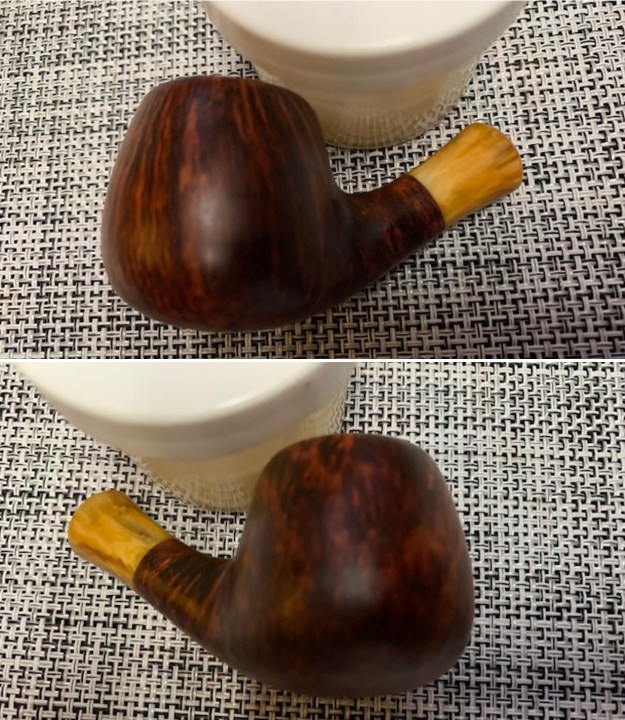
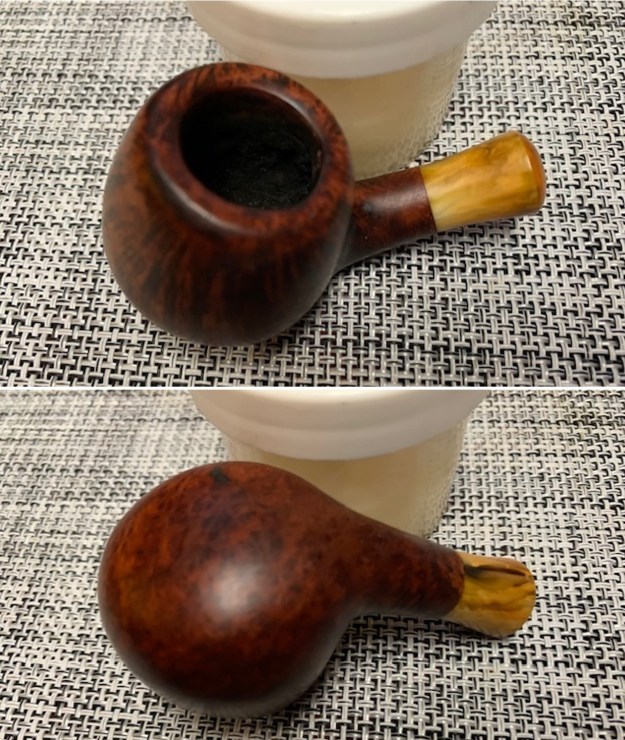
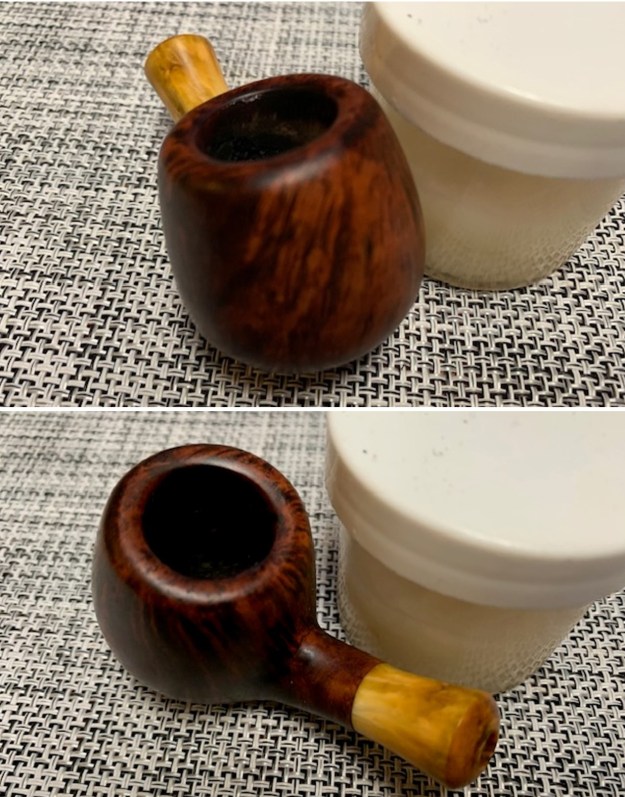
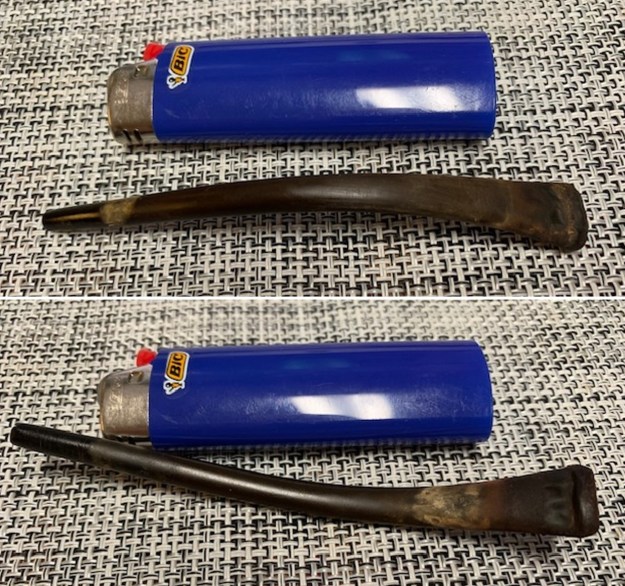
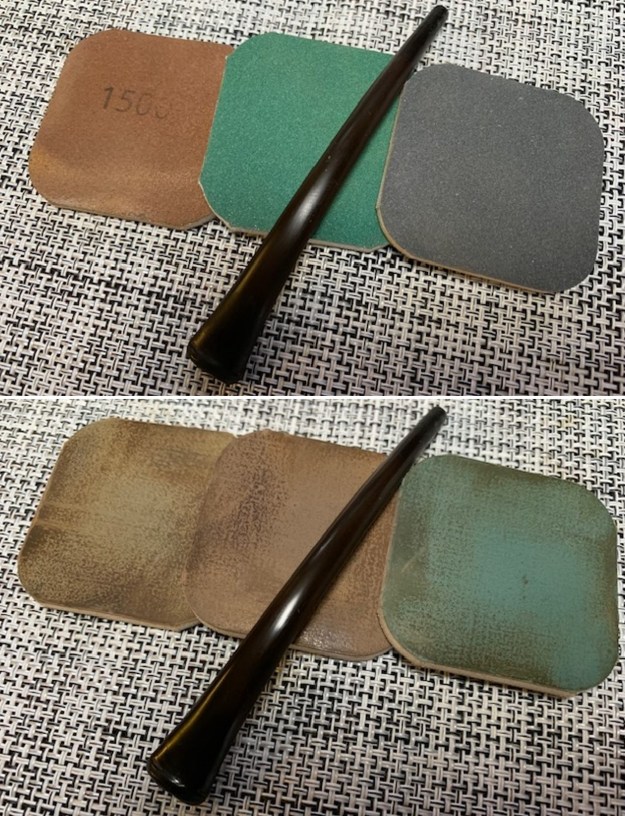
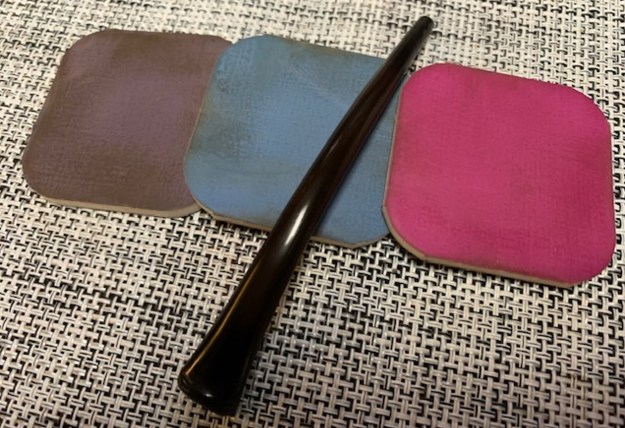
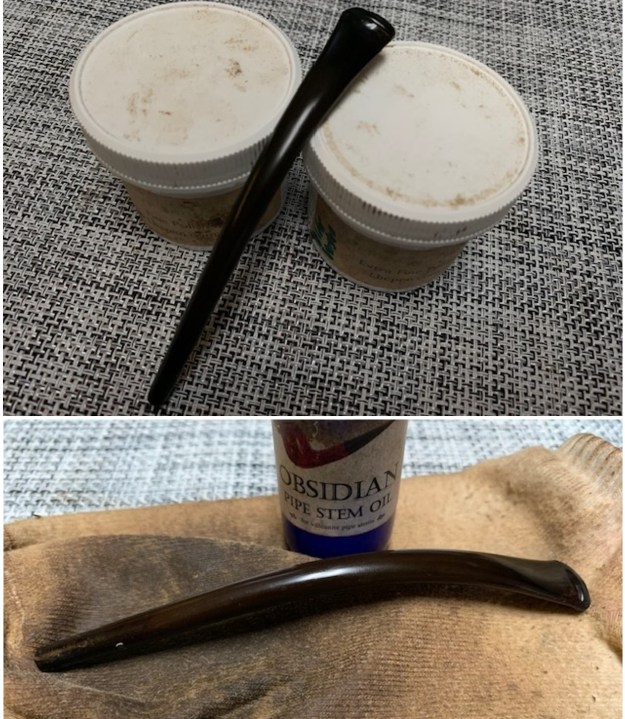
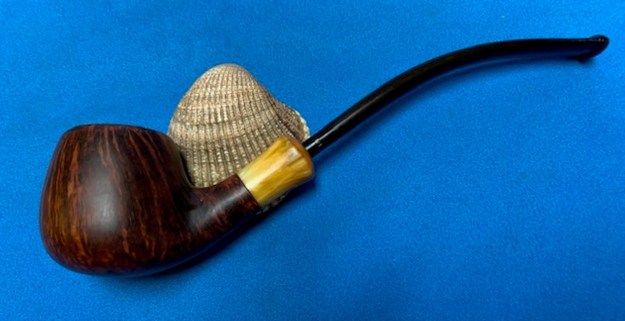
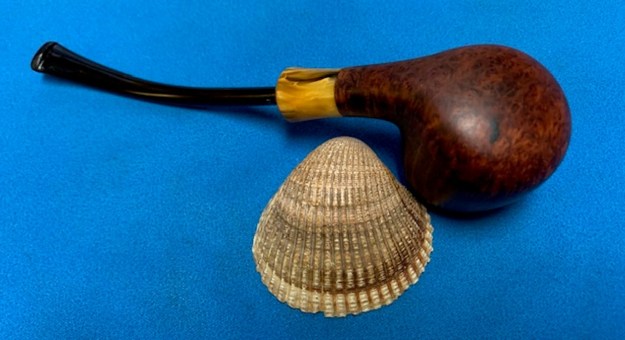
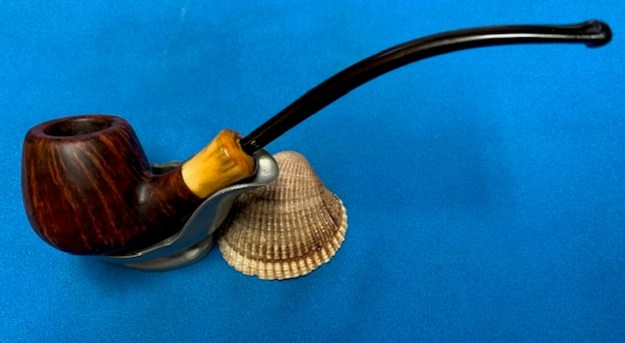
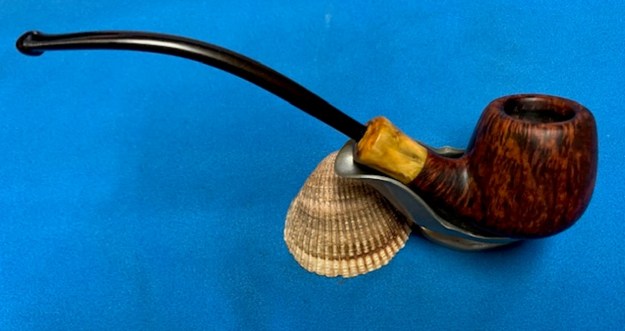
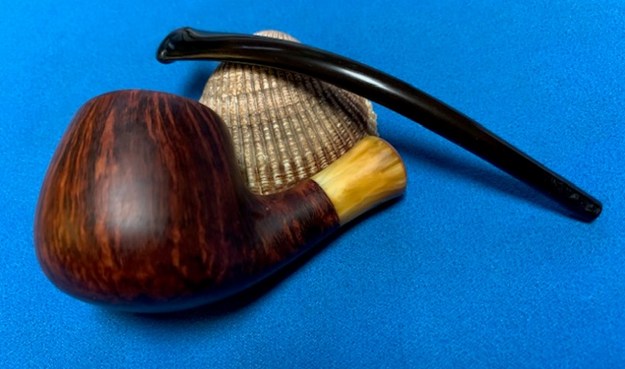
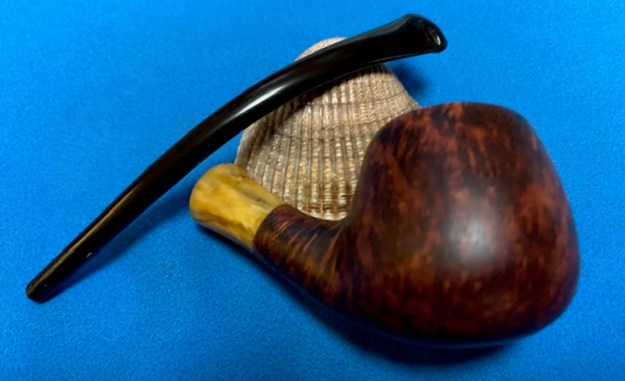
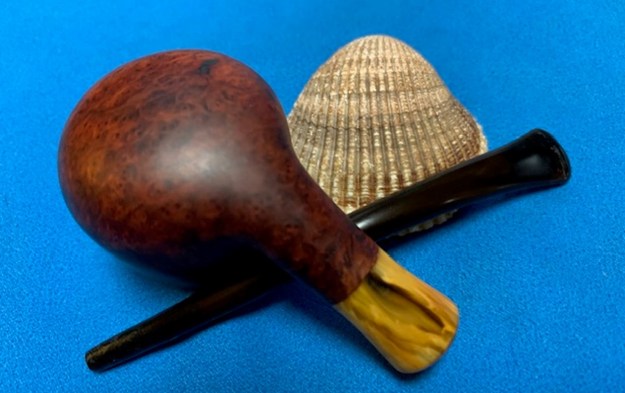
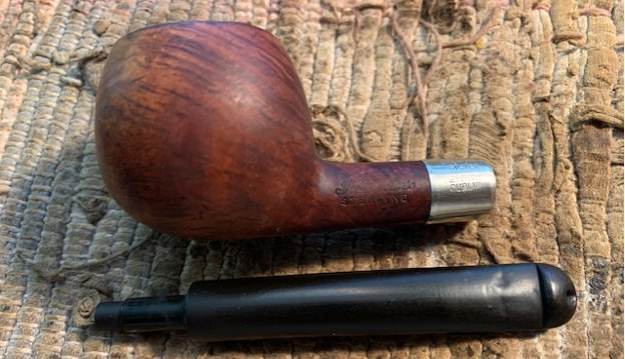
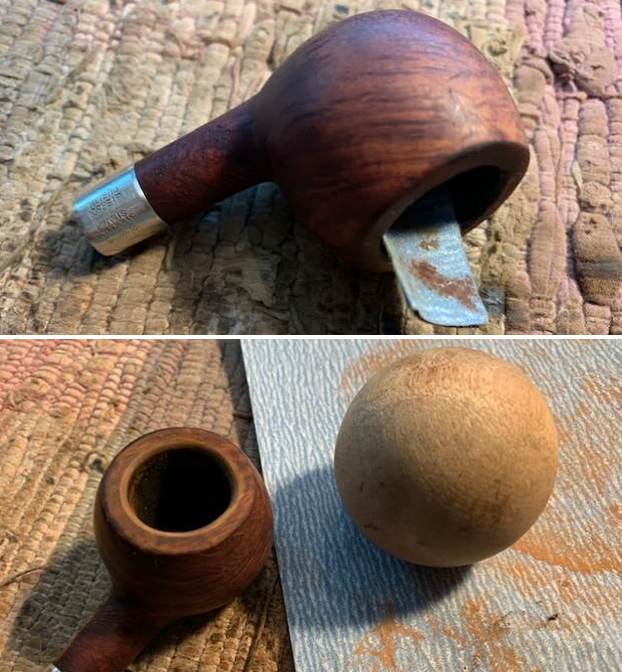
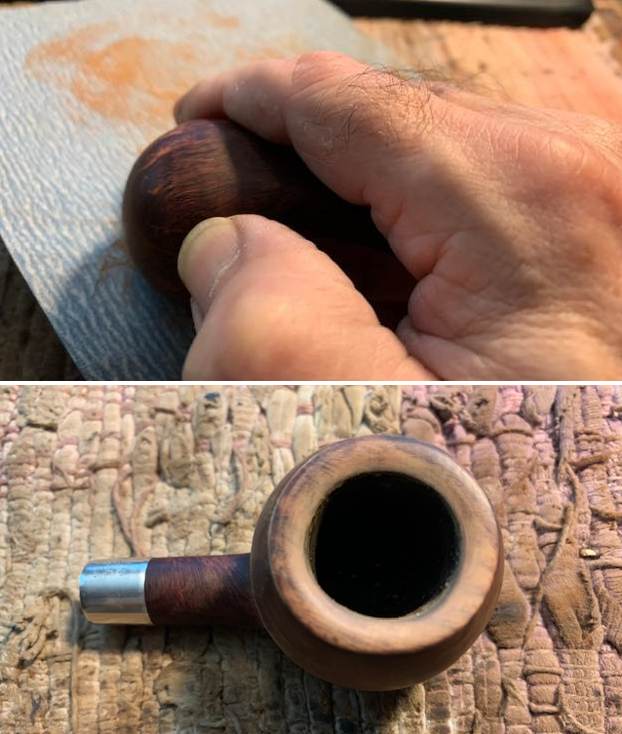
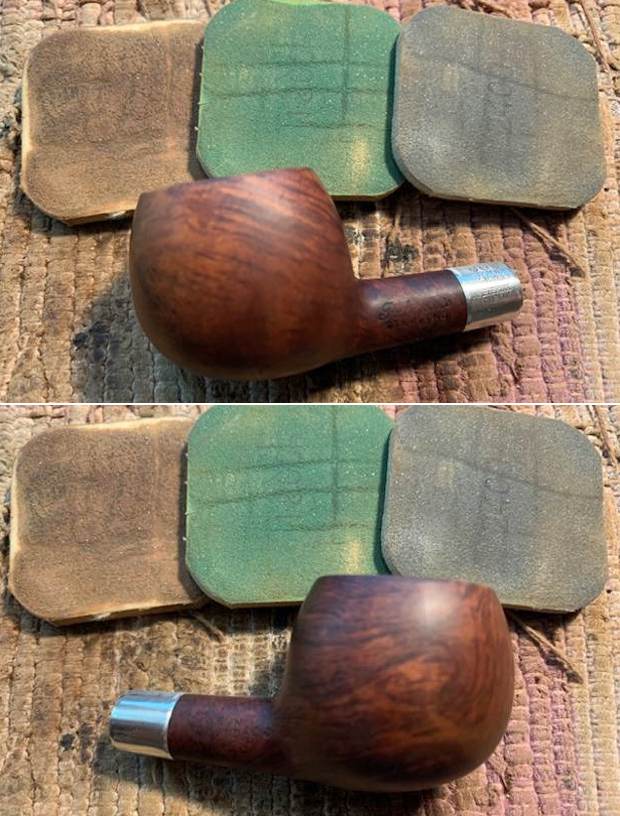
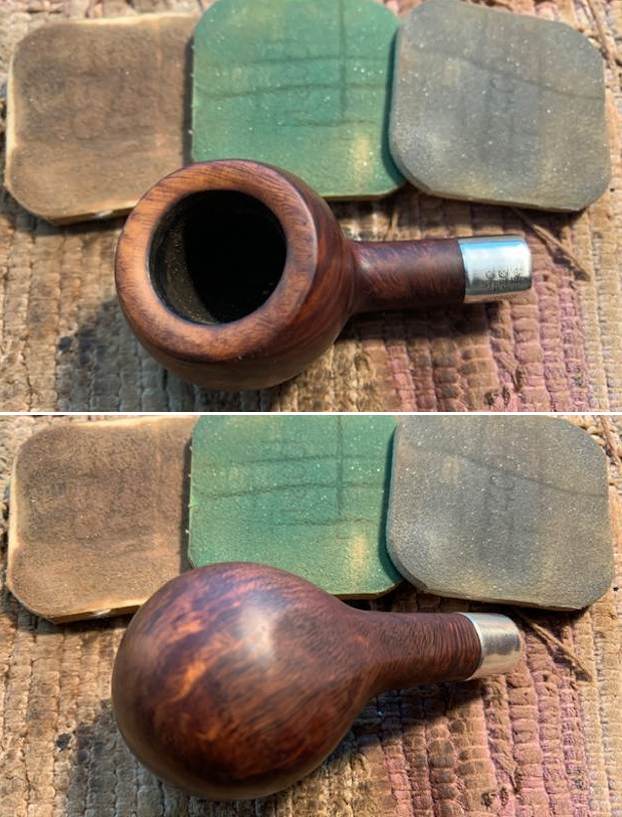
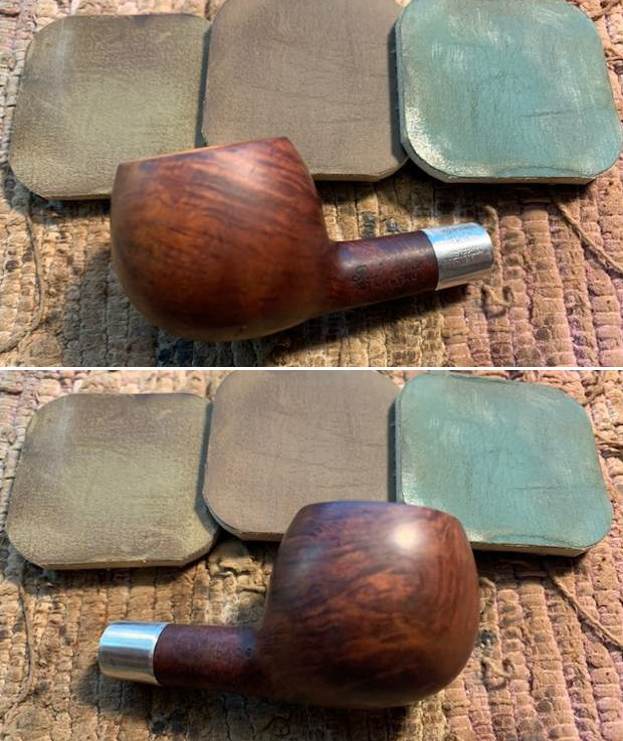
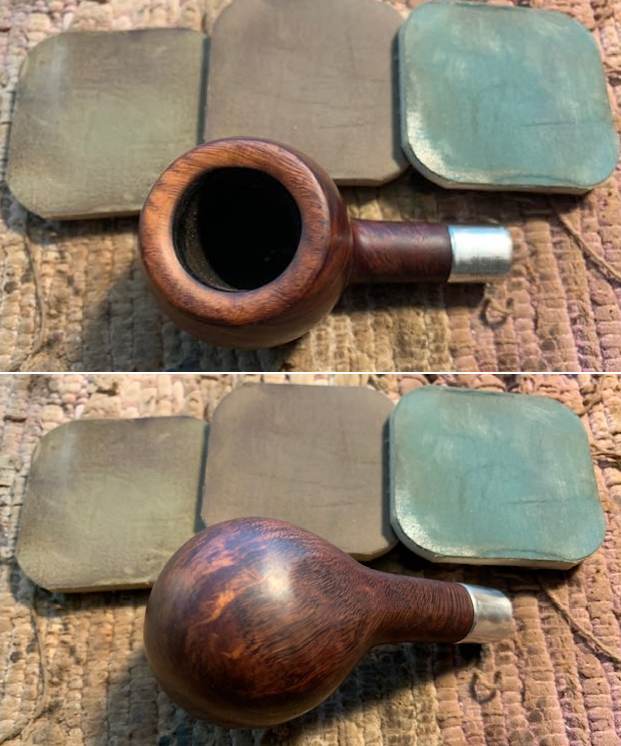
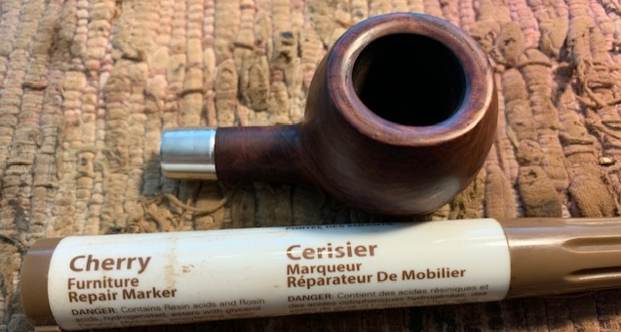
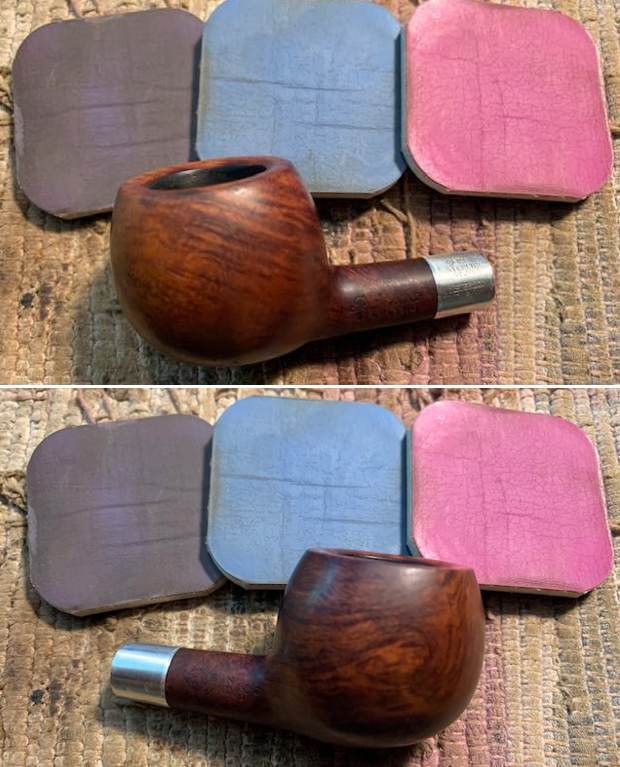
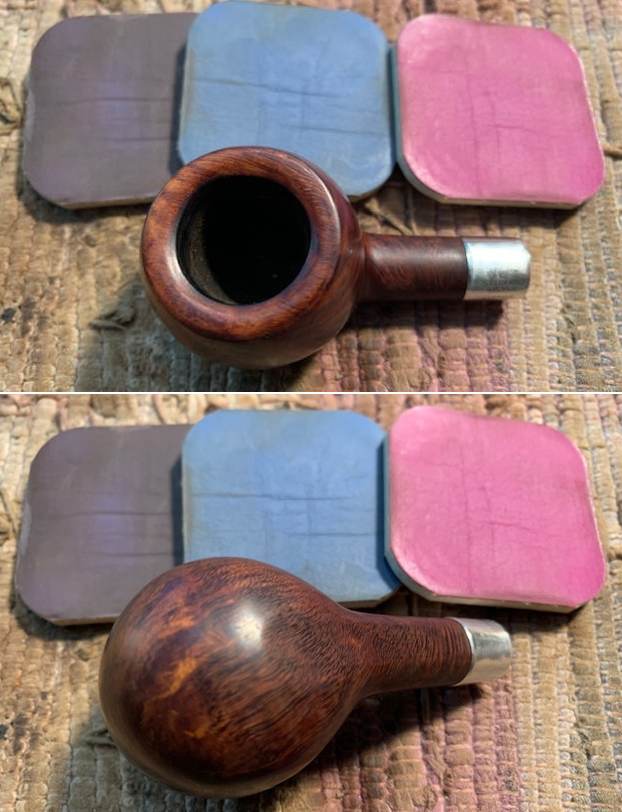
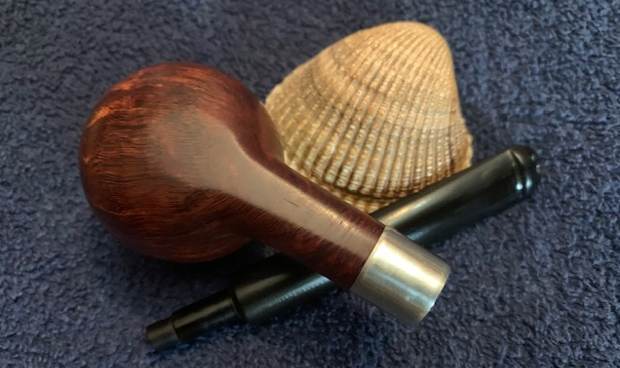
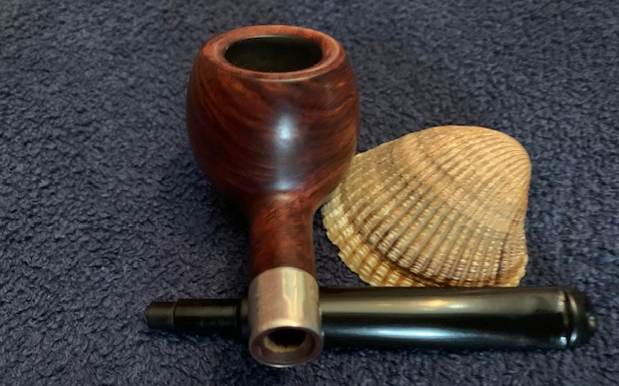
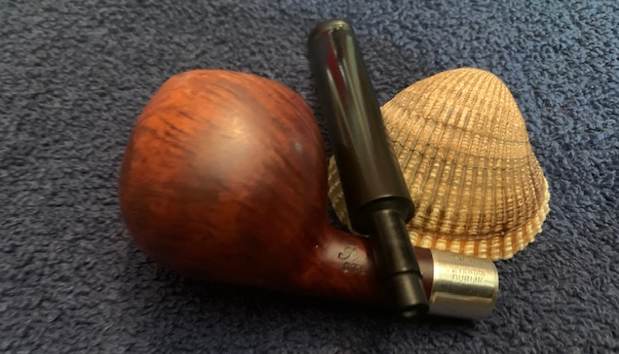
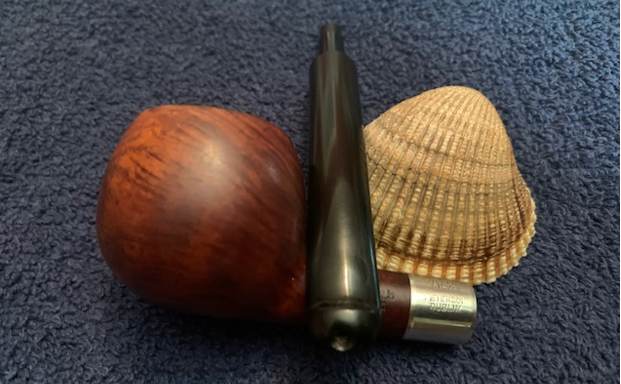
Earlier in the summer I received a package from a friend in Saskatchewan that included some nice pipes for me to enjoy that he had restored along with this partially finish Billiard. It had been shaped and drilled and had some large flaws on the left side of the bowl. The one mid-bowl was quite large and another toward the top of the bowl and onto the rim top. Both were deep and ragged looking and both would need work. I filled them both in with briar dust and clear CA glue and set it aside to cure. I was not too worried about it as in the shaping process much of the briar around the sides and rim would be removed. I took closer photos of the repairs to the flaws in the sides of the bowl. I layered in briar dust and clear CA glue to build up the flawed areas. I wanted to be able to start the process with a smooth surface on the bowl and shank. Once the repairs cured I flattened them out with files and then sanded them smooth with 220 grit sandpaper. I used a Dremel and a sanding drum to further blend them into the surface of the bowl. I removed the long taper billiard stem and “discovered” that it was a filter stem made for a 9mm filter. I decided to get rid of that stem and with the length of the thick shank that I would fit a new stem. I chose a stem that was about an inch shorter than the taper original. It was a thick looking saddle stem that I thought would look great and create a nice looking Lovat.I set up the PIMO tenon turning tool on my hand drill. I adjusted the settings to give me a very clean turn on the tenon. In the first photo you can see the misshaped tenon. I measured the tenon and then turned it once. I cleaned off the excess and turned it a second time to smooth out the roughness of the edges. I tried it in the shank and though the diameter of the stem was larger it looked very good. I used a flat rasp to remove excess material from the stem diameter. I continued to sand and file off the excess until it was close to the same diameter as the shank. I took photos of the fit of the stem to the shank on the pipe. I used a Dremel and sanding drum to bring it down further. I worked on the stem/shank fit with 220 grit sandpaper. It was looking very good at this point. It was getting very close to the shank fit. I fit the stem on the shank and took photos of the new look of the stem/shank fit. It still needed work but it looked very good at this point. I worked on the stem some more with 220 grit sandpaper to smooth out the transition between the stem and the shank. Once it was smooth I decided to see what the shank would look like with a band. I had a gold band that was perfect size for the shank. I put the band on the shank and took photos of the bowl with the shank. What do you think? To me it is exactly the touch I needed for this pipe to step up a bit. I like the look on the shank. I fit the stem to the shank to have a look at the flow of the pipe with the gold band and the saddle stem. Now I was even more convinced that the band was a great idea. It gives the pipe a classic Lovat look with a touch of bling. In preparation for staining the bowl I polished it with micromesh sanding pads 1500-400 grit pads to smooth out the repaired areas and the scratches on the surface of the bowl and rim top. It looked much better at this point in the process. I wiped the bowl down with a damp cloth to remove the sanding dust and then put a cork in the bowl and prepared the bowl for staining. I have had success in using a Cordovan stain when I am dealing with large repairs like this bowl had on the rear and left side of the bowl. It works to blend them in better than just a brown stain.I applied the stain with a dauber and then flamed it with a lighter it to set it in the grain. I repeated the process until I was happy with the coverage. You can see the darkness and coverage of the stain in the photos below.I like the stain to be more transparent to allow the grain to shine through but I want it opaque enough around the repairs to blend them into the surrounding briar. I sanded the bowl and shank with a medium and fine sanding sponge and I am really pleased with the coverage and the transparency of the colour. I rubbed the bowl and rim down with Before & After Restoration Balm. I worked it into the surface of the briar with my fingertips to clean, enliven and protect it. I let the balm sit for 10 minutes and then buffed with a cotton cloth to raise the shine. I really like watching the Balm do its magic and bring the briar alive. I sanded out the file marks and the scratches with 220 grit sandpaper and started the polishing with 600 grit wet dry sandpaper. It looked significantly better and was ready to polish it. I polished the stem with micromesh sanding pads – wet sanding with 1500-12000 grit pads. I wiped the stem down after each sanding pad with Obsidian Oil. I polished it with Before & After Pipe Stem Polish – both Fine and Extra Fine. I gave it a coat of Obsidian Pipe Stem Oil. It works to protect the stem from oxidizing. I set it aside to dry. I love it when I am carving or shaping a pipe to come to this point in the process. If always feels I am on the homestretch. I look forward to the final look when the Lovat I have carved is put back together, polished and waxed. I put the bowl and stem back together. I lightly polished the bowl and stem with Blue Diamond to polish out the scratches in the briar and the vulcanite. I gave the bowl and the stem multiple coats of carnauba wax. I buffed the pipe with a clean buffing pad to raise the shine. I hand buffed it with a microfiber cloth to deepen the shine. The pipe polished up pretty nicely. The depths of the rustication really pop with the wax and polish. The shiny black vulcanite stem is a beautiful contrast to the browns of the bowl and gold band on the thick shank. This Thick Shanked Lovat was a fun pipe to carve and to finish. It really is a quite stunning piece of briar whose shape follows the flow of the briar. The repaired fills blend well into the stain of the finish. The pipe feels great in the hand will be better when warmed up while smoking. The finished pipe is shown in the photos below. The dimensions of the pipe are Length: 5 ½  inches, Height: 2 inches, Outside diameter of the bowl: 1 3/8 inches, Chamber diameter: ¾ of an inch. The weight of the pipe is 2.15 ounces/61 grams. I am looking forward to loading a bowl and enjoying this pipe. Thanks again Bill for the gift and the joy I had in working on it.

As always, I encourage your questions and comments as you read the blog. Thanks to each of you who are reading this blog. Remember we are not pipe owners; we are pipe men and women who hold our pipes in trust until they pass on into the trust of those who follow us.

A Second Pipe from the Old Gentleman’s Estate – A Cracked Shank Whitehall 1B Rustic Apple


Blog by Steve Laug

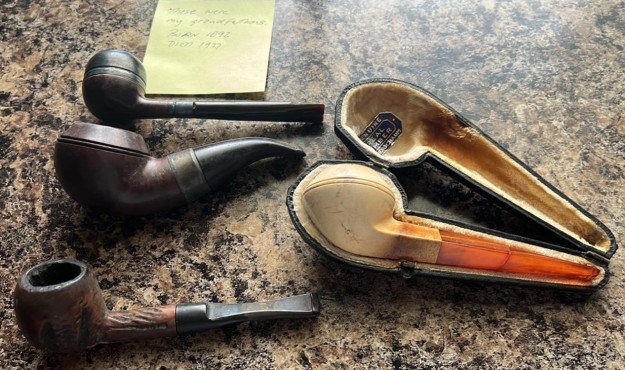
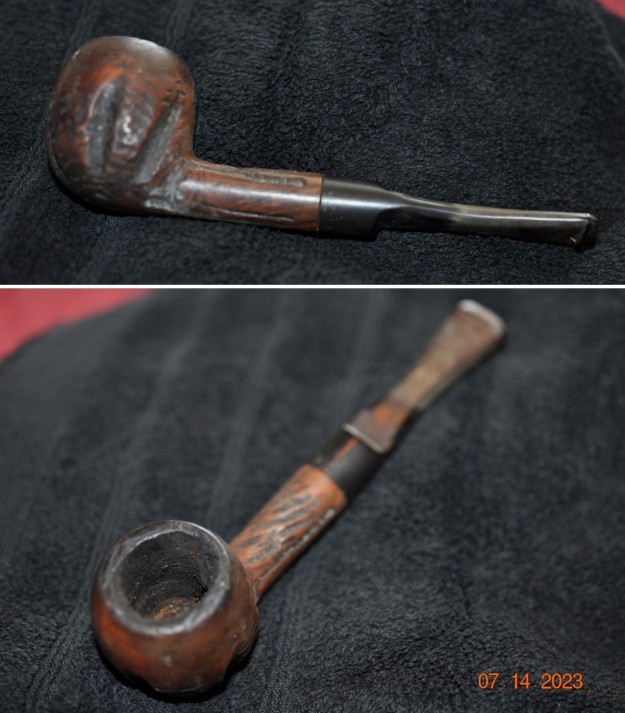
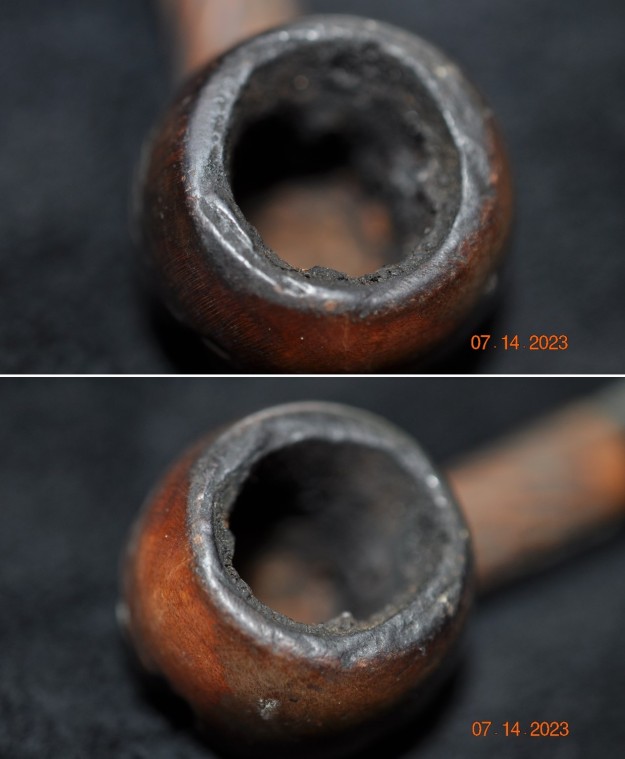
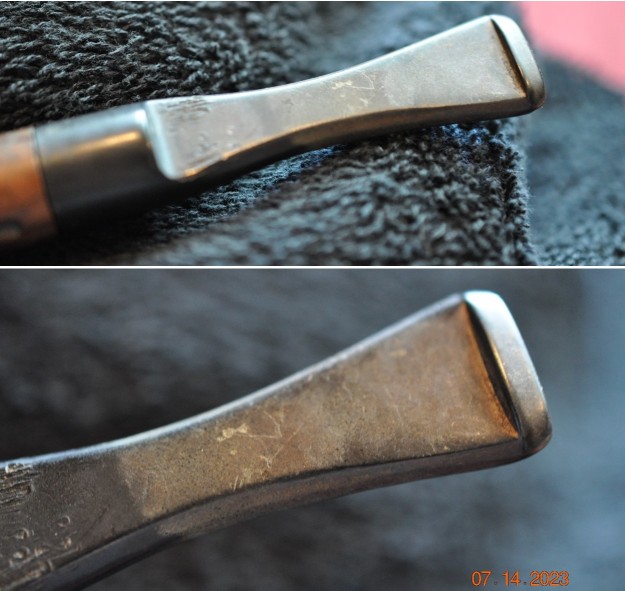
I decided I needed a change of pace in my restoration/clean up work. I went through my pipes waiting in the queue and chose pone from a group of four pipes that were given to us by a woman in Columbus, Ohio, USA. It had belonged to her Grandfather who lived from 1882 to 1977. There were four pipes that she sent us from his estate – the metal bowled apple, a cased meerschaum with a broken shank and an amber stem, a Whitehall rusticated apple and a BBB Glokar Fraternity Pipe.Even though I generally pass on Whitehall pipes I decided to work on this one because it came with a great back story. The older pipe man who had used it obviously had enjoyed it beyond measure. Since he passed away in 1977 I knew that the pipe was much earlier than that. It was well smoked, reamed with a knife. And it had continued to be smoked even after the shank crack. I am guessing from the marks on the stem that the crack happened when he tried to remove the stem with a pair of pliers. The stamp on the left side of the shank read Whitehall 1B [over] Imported Briar. The pipe was dirty and well used. The finish had deep grime ground into the rustication around the bowl. The bowl had tobacco debris in it and a very thick cake overflowing as lava onto the rim top. The rim top looked to be in rough condition with damage from reaming and burns particularly on the back side of the edge and top. The stem was vulcanite and fit the cracked shank well. It had oxidation, calcification and deep gouges from pliers just behind the saddle. There were light tooth marks and chatter on both sides ahead of the button. Jeff took photos of the pipe before he started his cleanup work.Jeff took photos of the rim top and bowl to show the condition. You can see the thick cake int eh bowl and the lava coat on the top of the rim. The inner edge of the bowl is a mess and very out of round. It was obviously her grandfather’s favourite pipe even though some of his others were nicer. The vulcanite saddle stem was oxidized, calcified and had deep nicks at the saddle end from what appeared to be pliers. It too was going to take some work. Jeff took photos of the cracked shank to show the condition of the crack. He also took photos of the damage to the stem surface just behind the saddle on both sides where it looks like the stem was twisted with pliers. Jeff took photos of the sides and heel of the bowl to show the composition of the pipe. The combination of smooth and rustication is quite nice. There are Custom-bilt like channels from top to bottom of the bowl and horizontal rustication around the bowl between the channels. The rim top and top half of the bowl are smooth. The shank has horizontal rustication all around leaving a smooth panel on the left side for the stamping. It is quite nice looking. He took a photo of the stamping on the smooth panel on the left side of the shank. You can see that it is readable as noted above.I knew that there was a connection between Block Brothers Tobacco and Whitehall as I have had pipe coupons in boxes of Kentucky Club tobacco but I wanted to verify that and get the details. I turned to the listing on Pipedia for Whitehall and read it (https://pipedia.org/wiki/Whitehall). I quote from the site below.

Whitehall pipes are frequently misunderstood to be a model rather than an actual pipe company, which has led collectors to mistakenly ascribe their manufacture to Civic and Ben Wade (Who Made That Pipe; Wilczak & Colwell, 1997).  In fact, Whitehall refers to the pipe company (not a model), which itself produced models such as the Hialeah, Jumbos, London Hall, and Thermofilter.  The history of the Whitehall Pipe Co., Inc. (Richmond Hill, NY), is a complicated one, involving several parent companies and subsidiaries including Whitehall Products, Inc. (Helmetta, NJ), The Bloch Bros. Tobacco Co. (Wheeling, WV), Helme Products, Inc., apparently all subsidiaries of Culbro Corp. (owner also of General Cigar).  The “Imported Briar” stamp on many of the pipes, and the unmistakable Whitehall logo bearing resemblance to the American-made tobaccos of that brand strongly suggest that these are products made for the Whitehall Pipe Co., Inc., an American company.  There is furthermore no evidence that Civic or Ben Wade outsourced any manufactory of pipes to Italy; nor did Ben Wade manufacture pipes with aluminum screw tenons, paper filter inserts and molded acrylic stems.  For irrefutable proof that the American company Whitehall Pipe Co., Ltd., was, in fact, responsible for these brands, one need only consult the University of California, San Francisco “Truth Tobacco Archives” which clearly links these brands to the company (see image below) [on the Pipedia site]…

When the pipe arrived in Vancouver it was very clean. The briar and stem were spotless. The vulcanite stem looked much better and you can see the gouges in the top and underside behind the saddle. The crack in the shank was also very clean and ready to repair. Jeff had reamed the bowl with a Pipenet Pipe Reamer and cleaned up the bowl walls with a Savinelli Fitsall Pipe Knife. He scrubbed the airway in the stem and shank with pipe cleaners, cotton swabs and alcohol. He scrubbed the exterior of the bowl and shank with Murphy’s Oil Soap (undiluted) and a tooth brush. He rinsed the exterior with warm running water and dried. He polished the briar and stem with a small drop of olive oil. The pipe really looked very good. It was going to be a fun one to work on for my part.  I took photos of the pipe when I brought it to the table for my work. This is what I saw. I took photos of the bowl and the rim top to show the condition. It is clean and the damage is quite extensive. The bowl is very clean and there were nicks, burn damage and cuts all around the inner edge and top. The bowl was out of round due to the damage. The crack on the top left of the shank is also visible in the photo below. The vulcanite stem is clean and the damage visible at the blade where it joins the saddle portion. The button and stem surface ahead of the button is clean and undamaged. I took a photo of the left shank side to capture the stamping on the briar. It is faint but it is still readable. I took a photo of the bowl and shank separated to show the condition of the pipe. It really is a great looking pipe.I started my work on the pipe by addressing the cracked shank. I smoothed out the end of the shank so that the band would fit smoothly and not be hampered by the rustication. I used the Dremel and a sanding drum to get it prepared for the band. I heated the band and pressed it onto the shank end. It fit well and bound the crack tightly together. With the shank repair complete I turned to address the issues with the rim top and edge. I started by smoothing out some of the damage with a folded piece of 220 grit sandpaper. I topped the bowl on a topping board with 220 grit sandpaper to flatten on the damage on the rim top. I used a wooden ball and a piece of sandpaper to give the rim edge an inward bevel and smooth out the top. It looked much better! I filled in the damaged back inner edge of the bowl with clear CA glue and briar dust. The edge was damaged but it did not go deeply into the bowl. I sanded out the inside of the edge with a piece of 220 sandpaper wrapped around a dowel. I smoothed out the rim top with a folded piece of 220 grit sandpaper and bevelled the rim a bit more with the sandpaper. I stained the rim top with a Maple Stain Pen to match the smooth portions of the bowl. It was looking good. I polished the briar with micromesh sanding pads – 1500-12000 grit pads. I dry sanded the briar and then progressively brought a shine to the pipe. It looked really amazing – the combination of rustic and smooth portions of the briar. It is a beauty! I rubbed the bowl down with Before & After Restoration Balm. I worked it into the finish with my fingertips and a shoe brush. The product works to clean, preserve and protect the briar. I let it sit and absorb for 10 minutes. I buffed it off with a soft cloth and then gave it a rigorous buff to raise the shine. It looks good at this point. I filled in the gouges in the stem surface on both sides by the saddle with black CA rubberized glue. Once it cured I sanded it smooth with 220 grit sandpaper and started polishing it with 600 grit wet dry sandpaper.I polished out the scratches left behind by the sandpaper on the stem surface with micromesh sanding pads – dry sanding with 1500-12000 grit sanding pads. I wiped it down with Obsidian Oil on a cloth after the sanding pads. I finished the hand polishing of the stem with Before & After Pipe Polish – both the Fine and Extra Fine polishes. I gave it a final coat of Obsidian oil and set it aside to dry. I am really happy with the way that this Whitehall Rusticated Imported Briar 1B Apple turned out. It really is a beautiful looking pipe with a great shape and smooth finished on the upper half of the bowl and rusticated on the lower portion of the bowl and shank. The vulcanite saddle stem turned out very nice. The polished stem works well with the briar both the smooth and rusticated finish. The briar really came alive with the buffing. The rich brown stains of the finish gave the pipe a sense of depth with the polishing and waxing. I put the stem back on the bowl and carefully buffed the pipe with Blue Diamond on the buffing wheel using a light touch on the briar. I gave the bowl multiple coats of Conservator’s Wax and the stem multiple coats of carnauba wax on the buffing wheel. I buffed the pipe with a clean buffing pad to raise the shine. I hand buffed the pipe with a microfiber cloth to deepen the shine. The finished Whitehall Rusticated Saddle Stem Apple really is a beauty and feels great in the hand and looks very good. Give the finished pipe a look in the photos below. The dimensions of the pipe are Length: 5 inches, Height: 1 ½ inches, Outside diameter of the bowl: 1 ¼ inches, Chamber diameter: ¾ of an inch. The weight of the pipe is 27 grams/ .95 ounces. I will be putting the pipe on the rebornpipes store in the American Pipemakers Section. If you would like to add it to your collection let me know. Thanks for reading this blog and my reflections on the pipe while I worked on it. It was a fun one to work on!

As always, I encourage your questions and comments as you read the blog. Thanks to each of you who are reading this blog. Remember we are not pipe owners; we are pipe men and women who hold our pipes in trust until they pass on into the trust of those who follow us.

Replacing a broken tenon and restoring a Stanwell de Luxe


Blog by Steve Laug

Earlier in July I received an email from Peter, a fellow in California regarding a pipe repair he needed. He wrote as follows.

Hi, I’m just wondering if you can repair a Stanwell pipe for me? The stem broke off inside the pipe. Thanks for your time, Peter.

I wrote him back asking for photos so I could have a look at it. I figured he meant that the tenon snapped off inside the shank but I wanted to be certain. He replied

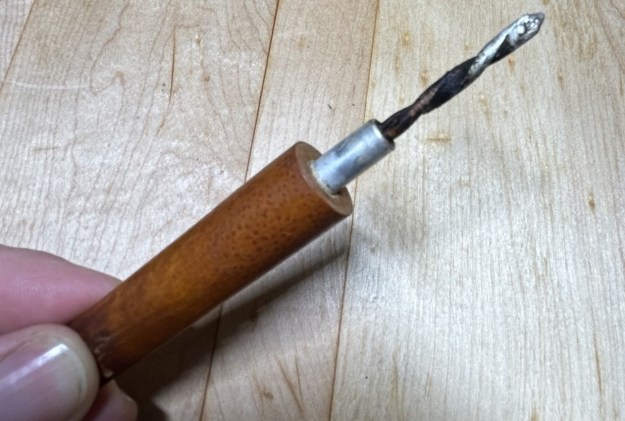
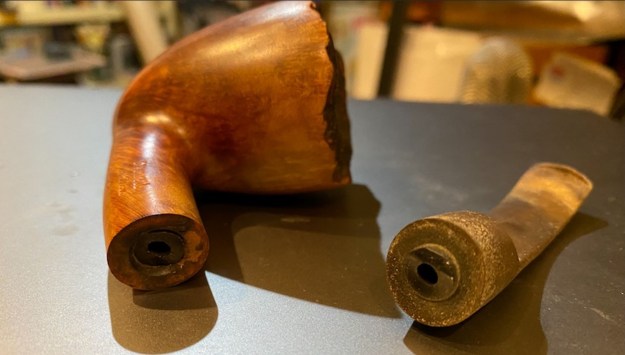
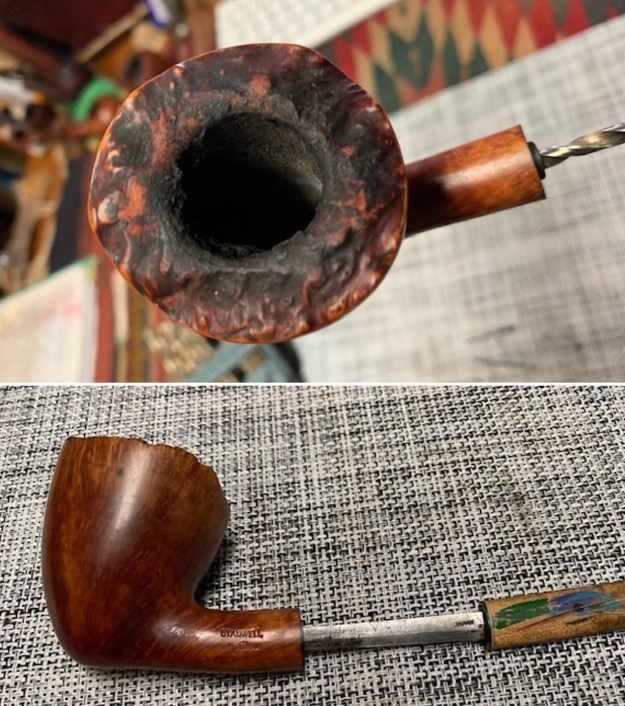
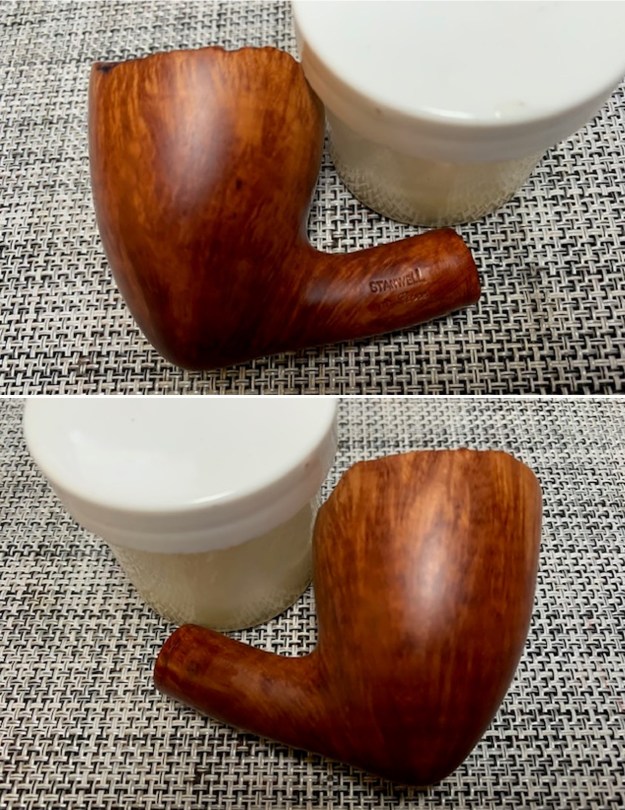
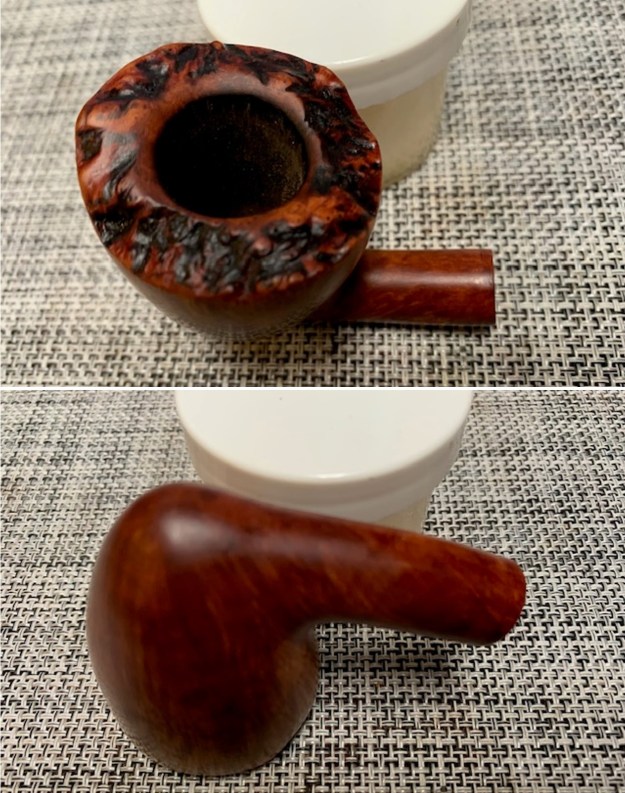
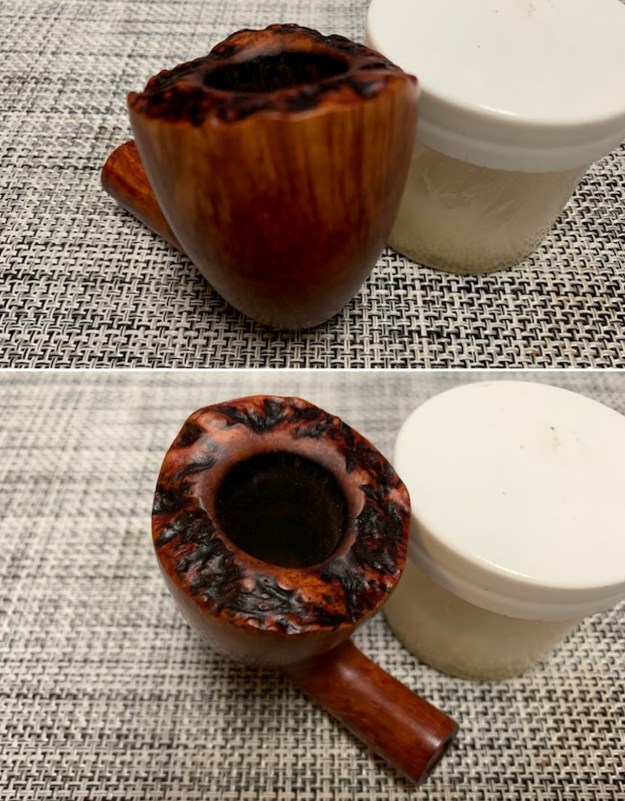
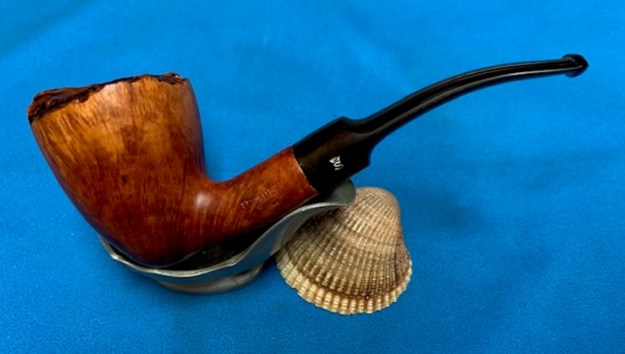
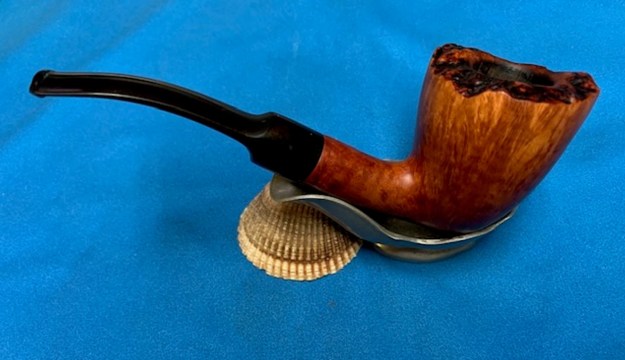
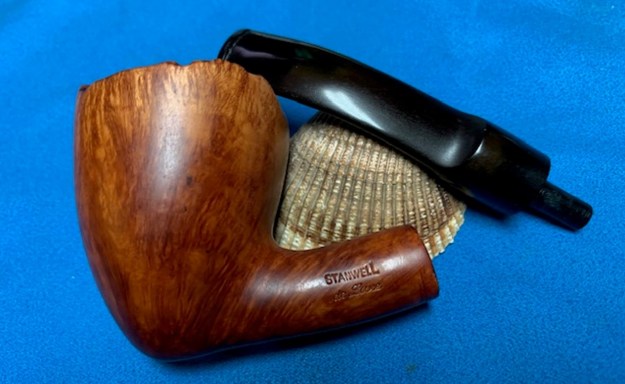
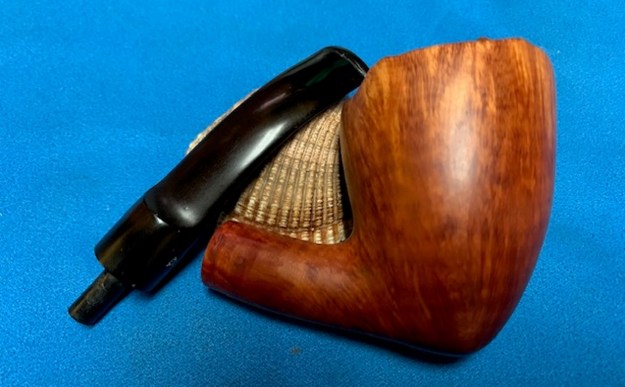
Thanks so much for your very fast response. Pictures are below. Best wishes, Peter We chatted back and forth a bit and Peter decided to send the pipe to me. I received it yesterday and here is what I saw once I unwrapped it. The photos tell the story but here is my review of it. The finish was dirty and worn. The bowl had a thick cake and there was lava buildup flowing along the inner edge and into the plateau on the rim top. The stem was snapped off leaving the tenon in the shank. Fortunately, there was no damage to the shank itself. It did not have any cracks in the sides. The shank end showed a lot of tar buildup. The tenon was still in the shank. The snap at the stem was fairly clean and would just need to be flattened. The stem itself showed a lot of oxidation, calcification and light tooth marks and chatter on both sides ahead of the button. The pipe was stamped on the left side and read Stanwell [over] de Luxe. I could not see any other stamping on the shank. There was a gold crown S on the left side of the saddle stem. This was going to be fun to bring back to life. I decided to begin working on the pipe by trying to pull the broken tenon with my usual methods. I put the bowl in the freezer for 30 minutes, then inserted a screw into the airway in the shank. I wiggled the screw and tried to break it free. It was no use. I used a qtip to dribble alcohol around the edges of the broken tenon in the shank. I repeated that several times and let it sit. I was still unable to remove the broken tenon in the shank. It was stuck and nothing seemed to loosen it. With the tenon being stuck in the shank I stepped up the process and drilled it out. I started with a drill bit slightly larger than the airway. I have had good success in drilling and in the process having the tenon come out on the drill bit. In this case I worked through four drill bits until I used one that was slightly small than the mortise. I then scraped out the remainder of the bits of vulcanite in the shank with a small pen knife until the walls were clear. I took a photo of the pipe at this point in the process – the tenon drilled out, a replacement tenon and the stem. Now it is ready for the next part of my work. I set the stem and tenon aside so that I could work on the bowl and shank. I reamed the bowl with a PipNet pipe reamer. I took the cake back to bare walls so I could check out the walls for damage or checking. It looked very good. I scraped out the remnants of the cake with a Savinelli Fitsall Pipe Knife and then sanded it with a piece of 220 grit sandpaper wrapped around a piece of dowel to smooth out the walls of the bowl. I worked on the buildup in the plateau surface of the rim top with a brass bristle wire brush. I was able to remove the heaviest part of the lava in the grooves of the plateau surface. It looked better but would need to be scrubbed. I scrubbed the exterior of the bowl with a tooth brush and undiluted Murphy’s Oil Soap. I scoured the surface of the briar and rinsed and repeated the process until the bowl was clean and the rim top looking very good. I cleaned up the darkening on the smooth bevelled portion of the inner rim edge next. I used a folded piece of 220 grit sandpaper to remove the damage and also smooth it out. I touched up the deep grooves in the plateau with a black Sharpie pen. The rim top and edge look very good.I polished the smooth rim top portions and the exterior of the pipe with micromesh sanding pads – dry sanding with 1500-12000 grit sanding pads. I wiped the bowl down after each sanding pad with a damp cloth to remove the sanding dust and debris. By the last pad it was looking very good with a shine in the briar that highlights the grain. I cleaned out the shank and mortise with alcohol, cotton swabs and pipe cleaners. I wanted to remove the oils and tars so that I would have a clean surface for the new tenon that I was fitting in the shank. It cleaned up and certainly smelled better once cleaned.I worked some Before & After Restoration Balm into the surface of the briar with my fingertips and a horsehair shoe brush to get into the plateau top. The product works to clean, preserve and protect the briar. I let it sit and work into the briar for 10 minutes then wiped it off with a cotton cloth. I buffed the briar with a clean cloth. The bowl is starting to look beautiful and there is a shine developing. At this point the bowl was finished until I finished with the new tenon insertion. I set the bowl aside and took a photo of the new tenon and the tools for reducing the diameter to fit in the shank. I used the Dremel and a sanding drum to reduce the diameter. I cleaned up the work with a file and then 220 grit sandpaper to get it to a point where the tenon fit in the shank.I put the stem in a bath of Briarville’s Pipe Stem Deoxidizer and set it aside while I worked on the tenon fit. I left it in the bath for three hours and then removed it and rubbed off the bath with a paper towel. The surface of the stem looked significantly better at this point. The oxidation was greatly reduced, the calcification was gone and the stem showed improvement. The tooth marks would still need to be worked on but there was progress.I cleaned out the airway in the stem with pipe cleaners and alcohol the drilled the airway to match the diameter of the new tenon insertion. I started with a drill bit the same size as the airway and gradually increased the bit size until it matched the outside diameter of the tenon. I took a photo of the newly drilled end of the stem. I cleaned up the airway once again in preparation for gluing the new tenon in place. I wiped the tenon end down with black CA glue and then aligned the tenon and the mortise. I pressed the tenon in place in the stem and set it aside to cure. Once it cured I took a photo of the stem and new tenon with the bowl before putting them back together. Once the glue cured I fit the stem in the shank. As seems to be very usual when I do this kind of thing the fit against the shank was not perfect. I would need to shape the stem and shank to make the fit and flow perfect. I took photos of the pipe at this point. The fit is not far off but just enough to be noticeable in the photos on the top and underside and slightly on the right and left sides. I sanded the shank and the stem to match and make the transition smooth all the way around the junction. I used 220 grit sandpaper and sanded it in place on the shank. I had to remove briar and vulcanite on the sides of the shank according to the transition. When finished it looked much better. I polished the sanded areas with micromesh sanding pads to make them smooth. I used an Oak stain pen to touch up the sanded areas and blend them into the rest of the bowl and shank. It blends in very well.I rubbed it down once again with Before & After Restoration Balm. I worked it into the surface of the briar and let it sit for 10 minutes then buffed it off with a soft cloth. I polished the bowl with a cotton cloth and set it aside. I set the bowl aside and turned my attention to finishing the work on the stem. I “painted” the stem surface with the flame of a lighter to lift the tooth marks. I was able to lift them significantly. I filled in what remained with black CA glue. Once the repair cured I used files to smooth out the surface of the repair. I sanded it with 220 grit sandpaper to blend them into the surface of the stem. I started the polishing of the stem with 600 grit wet dry sandpaper. I polished the stem with micromesh sanding pads – dry sanding with 1500-12000 grit pads. I wiped the stem down after each sanding pad with Obsidian Oil. I finished polishing the stem with Before & After Pipe Stem Polish – Fine and Extra Fine. I rubbed it into the surface of the stem and buffed it off with a cloth and buffed it to a shine. I am really happy with the way that this Stanwell Danish Made de Luxe Freehand turned out. It really is a beautiful looking pipe with a great shape and smooth finished bowl and plateau on the rim top. The original vulcanite saddle stem is cleaned up nicely. The polished black of the stem works well with the briar and the plateau portions. The briar really came alive with the buffing. The rich brown stains of the finish gave the pipe a sense of depth with the polishing and waxing. I put the stem back on the bowl and carefully buffed the pipe with Blue Diamond on the buffing wheel using a light touch on the briar. I gave the bowl and the stem multiple coats of carnauba wax on the buffing wheel. I buffed the pipe with a clean buffing pad to raise the shine. I hand buffed the pipe with a microfiber cloth to deepen the shine. The finished Stanwell de Luxe really is a beauty and feels great in the hand and looks very good. Give the finished pipe a look in the photos below. The dimensions of the pipe are Length: 6 inches, Height: 2 ¼ inches, Outside diameter of the bowl: 1 ¾ inches, Chamber diameter: ¾ of an inch. The weight of the pipe is 56 grams/1.98 oz. The pipe will be going back to Peter very soon. I look forward to hearing what he thinks about it. Thanks for reading this blog and my reflections on the pipe while I worked on it. It was a fun one to work on!

As always, I encourage your questions and comments as you read the blog. Thanks to each of you who are reading this blog. Remember we are not pipe owners; we are pipe men and women who hold our pipes in trust until they pass on into the trust of those who follow us.

Cleaning up the worst used of the lot a Ben Wade Martinique Made in Denmark Freehand


Blog by Steve Laug

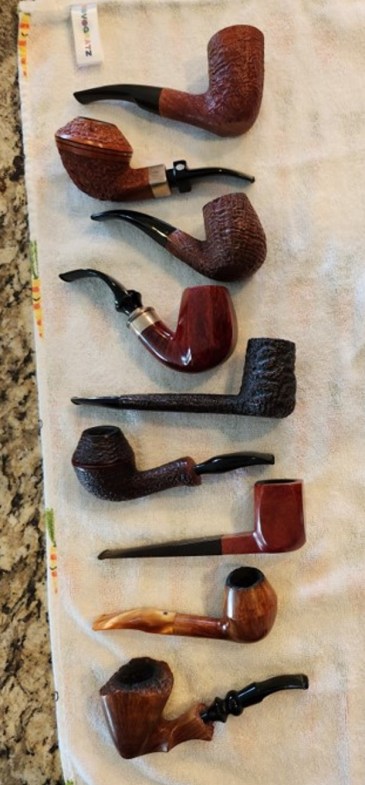
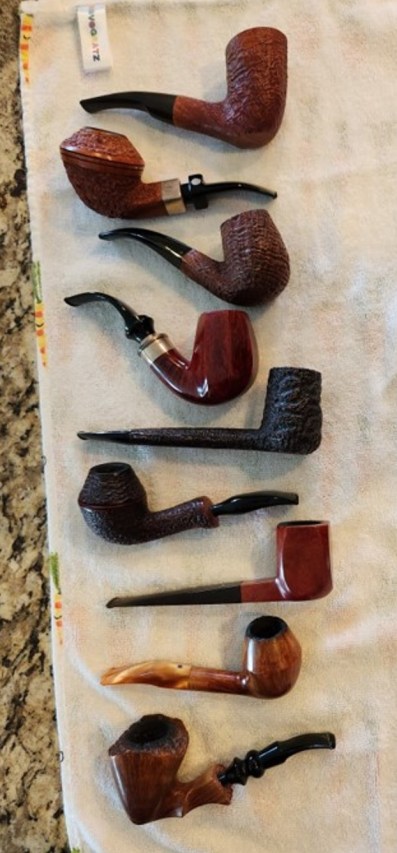
A few weeks ago I was contacted from a fellow in Montana who was selling his pipes as they had not been used for quite a few years. I asked him for a picture and he sent me the one to the left. It included the following brands (from the top to the bottom of the photo): Savinelli Autograph 5 Freehand, Mastro de Paja Ciocco 0C Bulldog, Mastro de Paja Media 1B Bent Billiard, Ser Jacopo Delecta Octagonal Bent Billiard, Caminetto Business KS 118 Canadian, Radici Rind Rhodesian, Dunhill Bruyere ODA 836 Panel Billiard, Barontini Straight Grain B3 Freehand and a Ben Wade Martinique Hand Made in Denmark Freehand.

Almost all of them were higher end pipes and all were hand made pipes. They were a mix of finishes – smooth, sandblast and also rusticated. They were a mix of shapes as well and the majority of them were Italian Made other than the Dunhill and the Ben Wade Martinique. They were beautiful pipes and after exchanging quite a few photos of the pipes from various angles to get a sense of what was there we struck a deal. We sent him the payment and the pipes arrived in Idaho a few days after I left for Vancouver. They were certainly more dirty than we were led to believe but that is not an issue.

Jeff cleaned them all and this week I received them in Vancouver. I am impressed with the way they cleaned up and the beauty of the brands. They truly are some beautiful pipes. I just need to put the final touches on each of them and address issues on the bowl tops, rims and stems and they should be good to go. I am really looking forward to working on each of them in the days ahead.

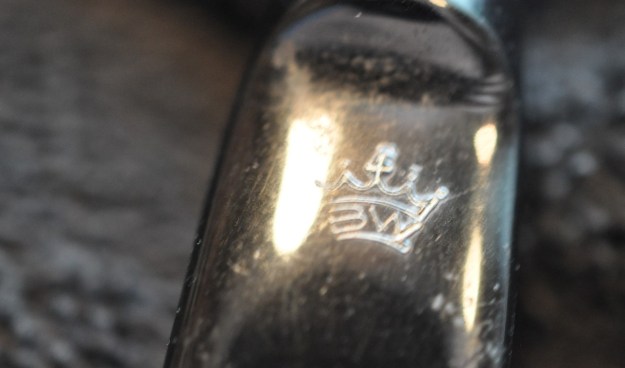
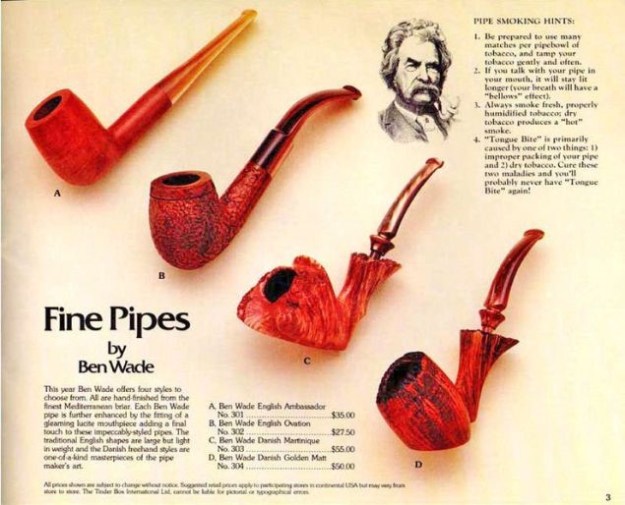
Today I am working on the last of the lot. It is another warm, late afternoon so after work I descended to the basement to continue working on the lot. The last pipe left to work on was the smooth Ben Wade Freehand. This one is a bit different than any of the other in this lot. It is very nice looking piece of briar and has fancy saddle stem. The pipe is stamped on the underside of the shank. It was clear and readable. It reads Ben Wade [over] Martinique [over] Hand Made in Denmark. The medium brown stained finish was very dirty with grime ground in the finish all over the whole bowl and shank. The plateau rim top and shank end are dirty with lava and darkening in the grooves of the plateau. The bowl had a thick cake and the rim top/inner edge had thick lava flowing up from the bowl. It was hard to know its full condition of the inner edge with certainty until it was cleaned. The acrylic saddle stem is was dirty and had deep tooth marks and chatter on both sides ahead of the button. There was a BW Crown logo on the top of the stem. Jeff took photos of the pipe before he started his clean up work on it. He took photos of the bowl and rim top to show the thickness of the cake and the darkening and lava overflow in the plateau rim top. The photos of the stem show the dirty condition of the stem and the tooth marks on both sides ahead of the button. The photos of the sides and heel of the bowl show the great grain on the pipe. It is a beauty under the grime and dust. The stamping on the underside of the shank is shown in the photos below. It is faint in spots but still readable. It read as noted and explained above. The third photo shows the Crown BW logo on the stem top. I remembered a bit of history on the brand that Preben Holm pipes were marketed under the Ben Wade label in the US and imported through Lane Ltd. I turned to Pipedia and read the listing on the brand to refresh my memory and flesh out the knowledge of the brand and would encourage you to do the same (https://pipedia.org/wiki/Ben_Wade). I have included a photo from that site that was taken from a Tinderbox advertisement. (Ben Wade Ad in a Tinder Box catalog, courtesy Doug Valitchka.)I quote the portion of the article that summarizes the Danish period of the history of the brand:

Young Copenhagen master pipemaker Preben Holm had made a meteoric career heading a pipe manufacture employing 45 people at the age of 22! But around the turn of 1970/71 he was in major financial difficulties. His US distributor, Snug Harbour Ltd. in New York City, left him in the lurch. Holm had three unpaid invoices on his desk and another large shipment was ready for the USA, when Snug Harbour’s manager told him on the phone that there was no money at all on the account to pay him.

So the Dane went to New York for an almost desperate search for a new distribution partner. He made contacts with Lane Ltd. and met Herman G. Lane in February 1971. Lane Ltd. had no interest in Holm’s serial pipes produced at that time but so much the more in the hand-carved freehands because the hype for Danish freehands and fancies in the States was still on its way to the climax then. The meeting resulted in an agreement to start a cooperation. Lane insisted to improve the quality considerably and in return he assured to be able to sell essentially larger quantities.

Holm went back home to work on new samples with all-new designs and altered finishes for Lane. Both, Lane and Holm, agreed that it would be unwise to sell the pipes under Preben Holm’s name as long as Snug Harbour had a considerable stock of Preben Holm pipes and might sell them pipes at very low prices just to bring in some money.

So on Mr. Lane’s proposal it was determined to use the name Ben Wade belonging to Lane Ltd. Lane spent considerable amounts of money for advertising the new brand in the big magazines– the centerpiece being whole-page ads showing a very exclusive Seven Day’s Set.

The cooperation with Lane Ltd. proved to be an eminent business success for both partners. Within a very short time Ben Wade Handmade Denmark sold in much larger quantities and at higher prices than they had ever dreamed of. And the hype these freehands and fancy pipes caused went on unbroken long after Herman G. Lane deceased. Preben Holm – obviously much more brilliant in pipe making than in pipe business – was in major troubles again in 1986 and had to sack most of his staff. The Ben Wade production was significantly lowered but continued until his untimely death in June of 1989.

Up to now Preben Holm made Ben Wade pipes are cult and highly sought for on the estate markets.

With that information my initial thoughts were confirmed. This pipe was a Preben Holm made Freehand distributed in the US by Lane Ltd under the name Ben Wade. The freehand rage occurred in the late 70s and the pipes were made until Preben’s death in 1989. My guess would be that this pipe was made sometime during that time period and potentially in the late 70s.

Jeff had cleaned up the pipe with his usual penchant for thoroughness. He reamed the pipe with a PipNet Pipe Reamer and cleaned up the remnants with a Savinelli Fitsall Pipe Knife.  He scrubbed the bowl with undiluted Murphy’s Oil Soap with a tooth brush. He rinsed it under running warm water to remove the soap and grime. He cleaned out the inside of the shank and the airway in the stem with alcohol, cotton swabs and pipe cleaners. He scrubbed the stem with Soft Scrub and cotton pads to remove the debris and oils on the stem. He rinsed it with warm water and dried it off. I took photos of the pipe once I received it.  I took a photo of the rim top. Jeff had been able to remove the thick lava coat from the plateau rim top and inner edge. It looks very good at this point. A work over with a brass bristle wire brush will remove the remaining darkening in the grooves. The plateau on the shank end is clean and looks very good. The stem is clean but has some the tooth marks on both side are deep and obvious. I took photos of the stamping on the underside of the shank. It is faint but still readable as noted above. I took a photo of the pipe with the stem removed to get a sense of what the pipe looked like.I started my work on the pipe by addressing the debris still in the plateau rim top. I used a brass bristle wire brush to clean up the plateau on the top and shank end. It worked very well and the plateau looked significantly better once finished.I polished the briar with micromesh sanding pads – dry sanding it with 1500-12000 grit pads. I wiped the bowl down after each sanding pad with a damp cloth to remove the dust and debris from the surface of the briar. I worked some Before & After Restoration Balm into the surface of the briar with my fingertips. The product works to clean, preserve and protect the briar. I let it sit and work into the briar for 10 minutes then wiped it off with a cotton cloth. I buffed the briar with a clean cloth. The bowl is starting to look beautiful and there is a shine developing. I set the bowl aside and turned my attention to the stem. I filled in the tooth marks on both sides of the stem ahead of the button with a black CA glue. Once the glue cured I sanded it smooth with 220 grit sandpaper and started polishing the stem with 600 grit wet dry sandpaper. I touched up the Crown BW logo on the top of the stem with Antique Gold Rub’n Buff. I worked it into the stamp with a tooth pick. I buffed it off with a soft cloth and rubbed the stem down with some Obsidian Oil.I polished the stem surface 1500-12000 grit micromesh sanding pads. I dry sanded the stem with each pad and then wiped the stem down with some Obsidian Oil. I finished the hand polishing of the stem with Before & After Pipe Polish – both the Fine and Extra Fine polishes. I gave it a final coat of oil and set it aside to dry.I am really happy with the way that this Preben Holm made Ben Wade Martinique Danish Made Freehand turned out. It really is a beautiful looking pipe with a great shape and smooth finished bowl and plateau on the rim top and shank end. The fancy original acrylic saddle stem is really nice. The polished black of the stem works well with the briar and the plateau portions. The briar really came alive with the buffing. The rich brown stains of the finish gave the pipe a sense of depth with the polishing and waxing. I put the stem back on the bowl and carefully buffed the pipe with Blue Diamond on the buffing wheel using a light touch on the briar. I gave the bowl and the stem multiple coats of carnauba wax on the buffing wheel. I buffed the pipe with a clean buffing pad to raise the shine. I hand buffed the pipe with a microfiber cloth to deepen the shine. The finished Ben Wade Martinique really is a beauty and feels great in the hand and looks very good. Give the finished pipe a look in the photos below. The dimensions of the pipe are Length: 6 inches, Height: 2 ½ inches, Outside diameter of the bowl: 2 inches long x 1 ¾ inches wide, Chamber diameter: 1 inch. The weight of the pipe is 6 grams/2.29 oz. The pipe will be going on the rebornpipes store soon. It will be in the section on Danish Pipe Makers Section if you would like to add it to your collection. Thanks for reading this blog and my reflections on the pipe while I worked on it. It was a fun one to work on!

As always, I encourage your questions and comments as you read the blog. Thanks to each of you who are reading this blog. Remember we are not pipe owners; we are pipe men and women who hold our pipes in trust until they pass on into the trust of those who follow us.

Restoring a large Savinelli Autograph 5 Freehand Sitter


Blog by Steve Laug

A few weeks ago I was contacted from a fellow in Montana who was selling his pipes as they had not been used for quite a few years. I asked him for a picture and he sent me the one to the left. It included the following brands (from the top to the bottom of the photo): Savinelli Autograph 5 Freehand, Mastro de Paja Ciocco 0C Bulldog, Mastro de Paja Media 1B Bent Billiard, Ser Jacopo Delecta Octagonal Bent Billiard, Caminetto Business KS 118 Canadian, Radici Rind Rhodesian, Dunhill Bruyere ODA 836 Panel Billiard, Barontini Straight Grain B3 Freehand and a Ben Wade Martinique Hand Made in Denmark Freehand.

Almost all of them were higher end pipes and all were hand made pipes. They were a mix of finishes – smooth, sandblast and also rusticated. They were a mix of shapes as well and the majority of them were Italian Made other than the Dunhill and the Ben Wade Martinique. They were beautiful pipes and after exchanging quite a few photos of the pipes from various angles to get a sense of what was there we struck a deal. We sent him the payment and the pipes arrived in Idaho a few days after I left for Vancouver.

Jeff cleaned them all and this week I received them in Vancouver. I am impressed with the way they cleaned up and the beauty of the brands. They truly are some beautiful pipes. I just need to put the final touches on each of them and address minor issues on the bowl rims and the stems and they should be good to go. I am really looking forward to working on each of them in the days ahead.

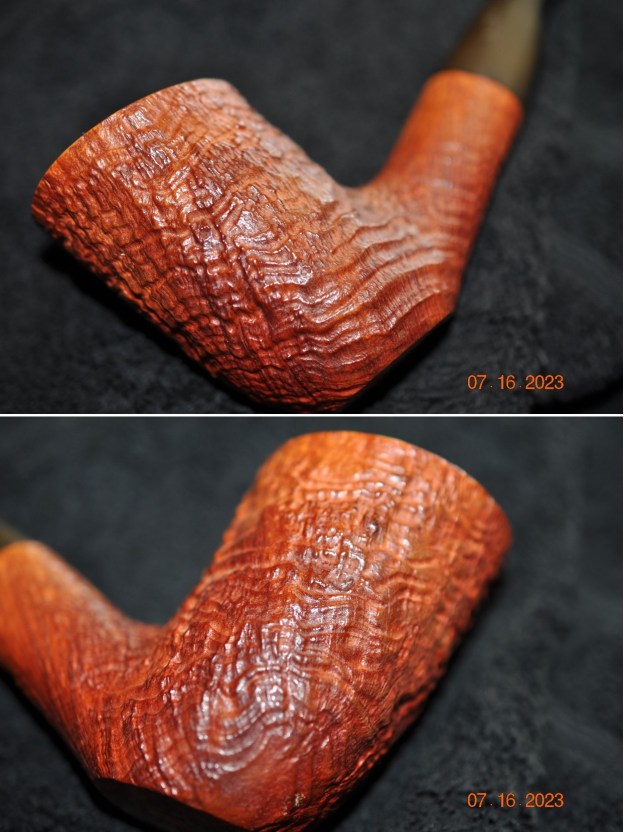
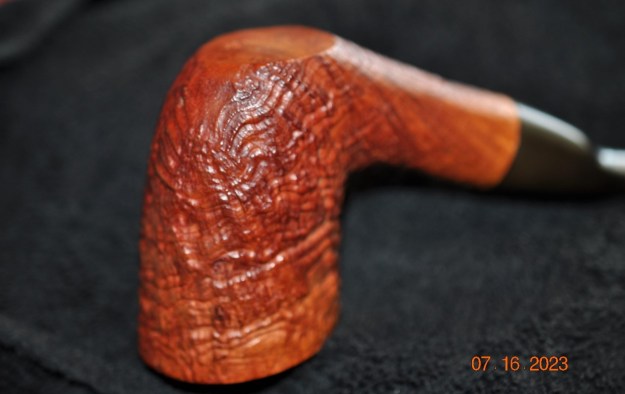
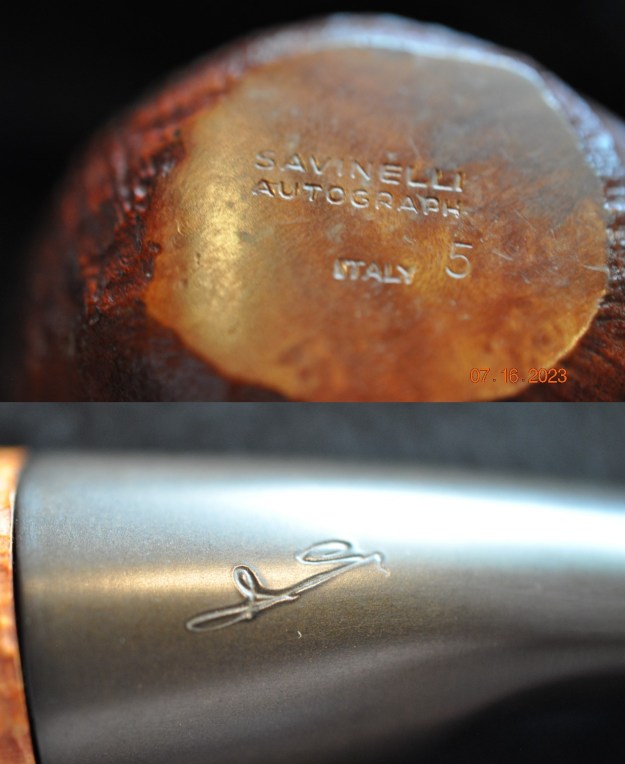
This afternoon after work I decided to continue working on the lot. I chose to work on the sandblast Savinelli Autograph Freehand. To me Savinelli Autographs have an easily recognizable look to them. This one had a great sandblast finish and a smooth rim top and bowl base so it functioned as a sitter. The pipe is stamped on heel of the bowl. It was clear and readable and says Savinelli [over] Autograph [over] 5. There is an autograph on the left side of the stem. The stamping is clear and readable. The medium brown stained finish was very dirty with grime ground into the valleys of the sandblast briar. The bowl had a thick cake and the rim top/inner edge had thick lava flowing up from the bowl. It was heavier on the back side of the bowl and rim than the rest. The inner edge of the bowl was covered enough with lava that it was hard to know its condition with certainty. The taper stem is black vulcanite and was dirty, oxidized and had tooth marks and chatter on both sides ahead of the button. Jeff took photos of the pipe before he started his clean up work on it. Jeff took photos of the bowl and rim top to show what they looked like before the clean up. You can see the thick cake in the bowl overflowing as lava on the inner edge and rim top. He also took some photos of the stem to show the condition of both sides. You can see the tooth marks and chatter on the top and underside next to the button. The photos of the sides and heel of the bowl show the beautiful sandblast finish around the bowl and shank. The stain adds depth finish on the pipe. Even under the grime it is a real beauty. The stamping on the heel of the bowl is shown in the photos below. It is clear and readable as noted above. The second photo shows the autograph on the side of the stem. I wanted to remind myself a bit about the Autograph line from Savinelli so I reread a blog I had written on a previous Autograph restoration (https://rebornpipes.com/2019/01/05/restoring-a-savinelli-autograph-3-rhodesian-dublin-long-shank/). I quote a portion of the blog now:

I turned first to the Pipephil website (http://www.pipephil.eu/logos/en/logo-savinelli1.html) to get a brief overview of the Autograph line. There I found out that the Autographs were hand made and unique. The Autograph Grading system is ascending: 3, 4, … 8, 0, 00, 000.

I turned then to Pipedia to get a more background on the Autograph line. I had the outline I needed from pipephil for the pipe but wanted more (https://pipedia.org/wiki/Savinelli). I quote in part from the article on that site.

While Savinelli’s serially produced pipes account for around 98% of annual production, the marque also creates a number of artisanal, handmade pieces as well. The Autographs, the Creativity line, and the Mr. A. line are all the result of Savinelli’s unique handmade process, with the Autographs reflecting the larger Freehand aesthetic, the Creativity line delving into more complex hand carving, and the Mr. A. line sidestepping the standard shape chart for remarkable and unusual pipes.

All of the briar for Savinelli’s Autographs and other freehand pipes is sourced specifically for those pieces. While the majority of the marque’s serial production is made from extra grade ebauchon blocks, Savinelli keeps a separate supply of Extra Extra plateau blocks for Freehands. This variety of briar is much larger, and of a higher quality, which explains why so many Autographs and Savinelli handmades are naturally larger designs.

These handmade pieces are shaped much like traditional Danish Freehands: they are shaped first and drilled second. Using this method, Savinelli’s team of artisans is able to showcase their own creativity, as it maximizes flexibility and facilitates a more grain-centric approach to shaping. The resulting Freehand designs are at once both a departure from the marque’s classical standard shapes, yet very much still “Savinelli” in their nature—i.e. proportioned so that the bowl is the visual focus when viewed from the profile, juxtaposed by the comparatively trim lines of the shank and stem. To provide a little more insight into the differences between Savinelli’s standard production and freehand lines, Luisa Bozzetti comments:

“When we choose to make Freehand pipes we must stop production on the standard shapes. The process for Freehands is much more involved and takes much more time. Finding the best people from the production line and pulling them to make Freehands is challenging since it’s not an assembly line, but rather a one or two man operation.

After the rough shaping of the stummel, we must get together and brainstorm which style of stem will be paired before the pipe can be finished since we do not use pre-shaped stems. All accents and stems for the Freehands are cut from rod here in the factory. A lot of care goes into the few pieces lucky enough to make the cut; to end up with a certain number of Autographs, for instance, means that many, many more will be made, and only the few will be selected.”

The quality control process for Savinelli handmades is even more rigorous than that employed in the standard lineup. Many blocks are started and later discarded because of pits or defects. While Savinelli’s briar sourcing is a constant process, working with some of Italy’s top cutters to ensure only the finest and most suitable blocks make their way to the factory, it’s impossible to source plateau briar that’s completely free from flaws. That’s just nature. Savinelli creates the standard for quality by working through the rough (a very high-quality rough, mind you) to find that shining diamond with the potential to become a Savinelli handmade.

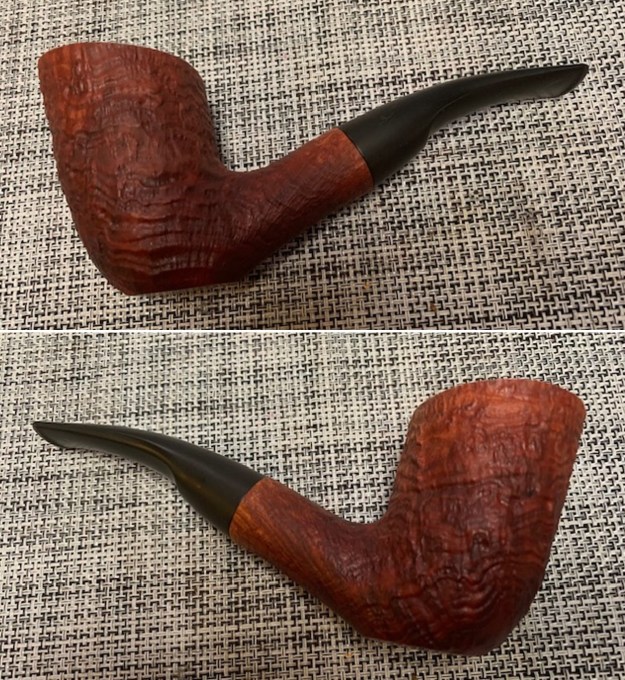
It looks like the Autograph 5 I am working is pretty high in the hierarchy of the line. Like other autographs I have worked on in the past this one has a signature on the left side of the vulcanite stem. Jeff once again did an amazing job cleaning the pipe. He reamed it with a PipNet pipe reamer and cleaned up the bowl walls with a Savinelli Fitsall Pipe Knife. He got rid of the cake so that we could see the walls of the bowl and assess for damage. He cleaned the internals of the shank and stem with alcohol, pipe cleaners and alcohol. He scrubbed the exterior with undiluted Murphy’s Oil Soap and a tooth brush to get into the grooves and valleys of the rustication. He rinsed the pipe under warm water. He dried it off with a cloth and then let it air dry. The stem was scrubbed with Soft Scrub and then soaked in Briarville’s Pipe Stem Deoxidizer. It came out looking pretty good with a light coat of oxidation still present. The finish on the bowl and the rim top cleaned up pretty good. I took pictures of the pipe to show how it looked when I unpacked it.    I took close up photos of both the rim top and the stem. Jeff had been able to get the grime and lava off of the rim top and it looked very clean. The stem looked very clean. The tooth marks and chatter were predominantly near the button. The stamping on the sides of the shank was readable as noted above. I took photos of the stamping on the heel of the bowl to show the condition and readability. I also took a photo of the autograph on the left side of the stem. I took a photo of the pipe with the stem removed to give an idea of the perspective and design of the pipe. I polished the smooth heel of the bowl and rim top with micromesh sanding pads using 1500-12000 grit sanding pads and wiping it down after each sanding pad with a damp cloth to remove the sanding dust and debris. I worked some Before & After Restoration Balm into the finish of the bowl and shank with my fingers and a horsehair shoe brush. I want the product to go deep into the finish because it works to clean, enliven and protect the briar. Once I was confident that it was deeply worked into the finish I wiped it off and buffed it with a soft cloth to polish it. The pipe really began to have a rich shine. I took some photos of the bowl at this point to mark the progress in the restoration. The grain really stands out on the pipe in the photos below. I set the bowl aside and turned to work on the stem. I painted the surface of the vulcanite with the flame of a lighter to lift the bite marks. I was able to lift them significantly. What remained I filled in with black CA glue. Once the repairs cured I flattened the repairs with a small file. I sanded the surface of the stem with 220 grit sandpaper and started the polishing with a folded piece of 600 grit wet dry sandpaper. I touched up the autograph stamp on the left side of the stem with white acrylic fingernail polish. I worked it into the stamp with a tooth pick and cleaned off the excess with a worn 1500 micromesh sanding pad.I polished the vulcanite stem with micromesh sanding pads – wet sanding it with 1500-12000 grit pads. I wiped it down with Obsidian Oil after each sanding pad. I polished it with Before & After Pipe Polish – both the Fine and Extra Fine polishes. I gave it a final coat of oil and set it aside to dry.I put the Savinelli Autograph 5 bowl and stem back together. I polished the smooth part of the bowl and stem with Blue Diamond to polish out the scratches in the briar and the vulcanite. I gave the sandblasted bowl and shank several coats of Conservator’s Wax and the stem multiple coats of carnauba wax. I buffed the pipe with a clean buffing pad to raise the shine. I hand buffed it with a microfiber cloth to deepen the shine. The pipe polished up pretty nicely. The medium brown stains and the smooth and sandblast finish worked amazingly well with the polished black vulcanite stem. The sandblast was deep and craggy on the bowl and shank and looks quite remarkable. This is truly a beautiful Freehand pipe. The finished pipe is shown in the photos below. The dimensions of the pipe are Length: 6 inches, Height: 2 ½ inches, Outside diameter of the bowl: 1 ¾ inches, Chamber diameter: 7/8 of an inch. The weight of the pipe is 2.89 ounces/82 grams. I have restored quite a few Autographs over the years and this estate is another rare beauty. I will be putting it on the rebornpipes store shortly in the Italian Pipemakers Section. Thanks for walking through the restoration with me. Cheers.

As always, I encourage your questions and comments as you read the blog. Thanks to each of you who are reading this blog. Remember we are not pipe owners; we are pipe men and women who hold our pipes in trust until they pass on into the trust of those who follow us.

Doing a Clean up and Restoration of a Stanwell Revival 105 Bent Apple


Blog by Steve Laug

The next pipe on the work table is one that a fellow just dropped by. He had written to me earlier this week about a Stanwell that he had that needed some work. Here is his first email.

Your name was passed to me by the folks at City Cigar. I was lamenting to them how my decade old Stanwell was not doing well, and they suggested I check in with you. I would love to hear your thoughts on it. — Mike

I replied to him as follows:

Thank you. Can you send me a photo of the pipe on your phone?

He did not waste anytime and sent me an email with the first three pictures below and also a description of what he knew was wrong with the pipe. He wrote as follows:

Thanks for getting back to me so quickly! In the photos you can see that there are stem problems, but also a little crack in the bowl. If I could save this piece, I would so grateful. I just love the shape, as well as the elegant mouthpiece. I haven’t really seen anything else like it. — Thanks, Mike

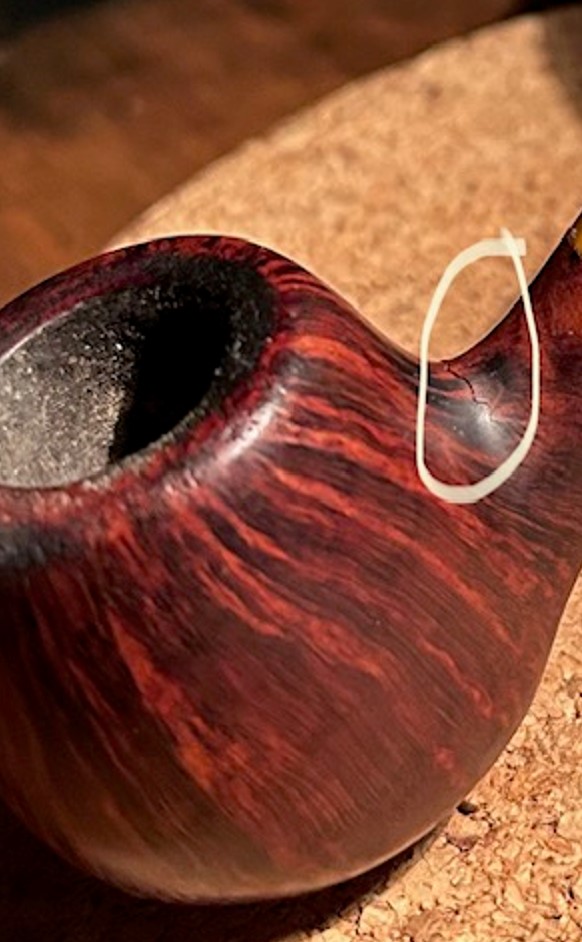
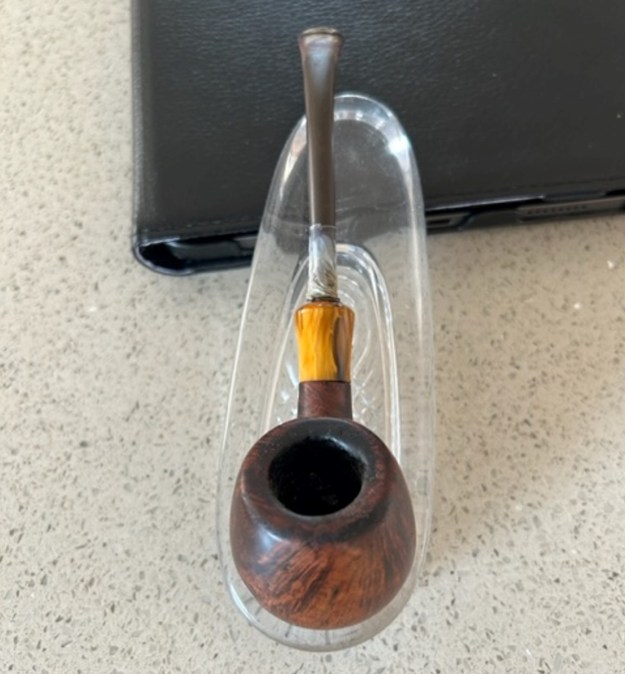
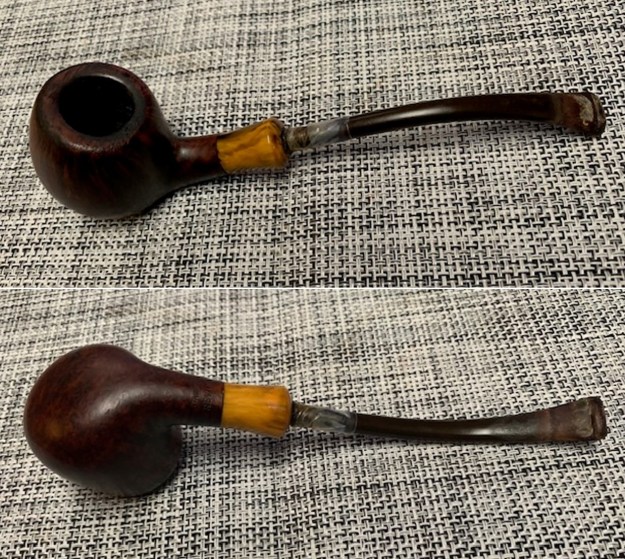
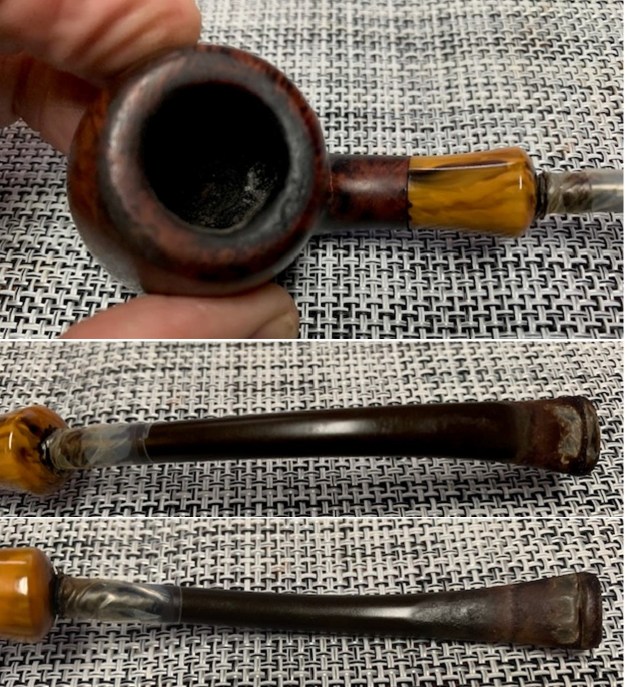
The pipe appeared to be very dirty in the photos that were included. He also circled the crack that was on the top of the shank at the bowl shank joint. The rim top was dirty and worn with some knock out marks on the top edge. The finish was grimy and tired looking. The inner edge of the bowl showed some damage and darkening around the bowl. The stem was wrapped with scotch tape around the end that fit in the shank. I speaking with Mike he stated that it was loose in the shank extension so he had wrapped it to give the stem more of a fit in shank. It was worn out and sticky but it had done the job keeping the stem from falling out of the bowl. After viewing the photos and talking with Mike about the pipe I asked him to drop it by the house so I could work on it. I took photos of the pipe once it was dropped off before I worked on it. My evaluation of the pipe confirmed all of the things that I noted above in my communication with Mike about his pipe. There was one other issue that became visible when it was here. The shank extension was loose in the shank. The glue that had held it in place had broken loose and it turned freely in the shank. It is a uniquely shaped pipe that I really like the looks of and I think that once it is cleaned up it will be a real beauty. I took photos of the bowl and rim top as well as the stem. The rim top shows the thick lava coat on the top and the inner edge of the bowl. It is heavier on the back side than the front. You can also see the tape around the stem diameter to attempt to tighten the fit in the shank extension. You can see the oxidation around the stem sides and the deep tooth marks and chatter on both sides ahead of the button.I took a photo of the stamping on the underside of the shank. It reads as noted above. It is clear and readable. The pipe is quite nice with the stem removed. You can see the flow of the design and the look of the parts.I turned to Pipedia and the section on the Stanwell Shape Numbers and Designers to see what I could find (https://pipedia.org/wiki/Stanwell_Shape_Numbers_and_Designers). I found the following information that I quote below:

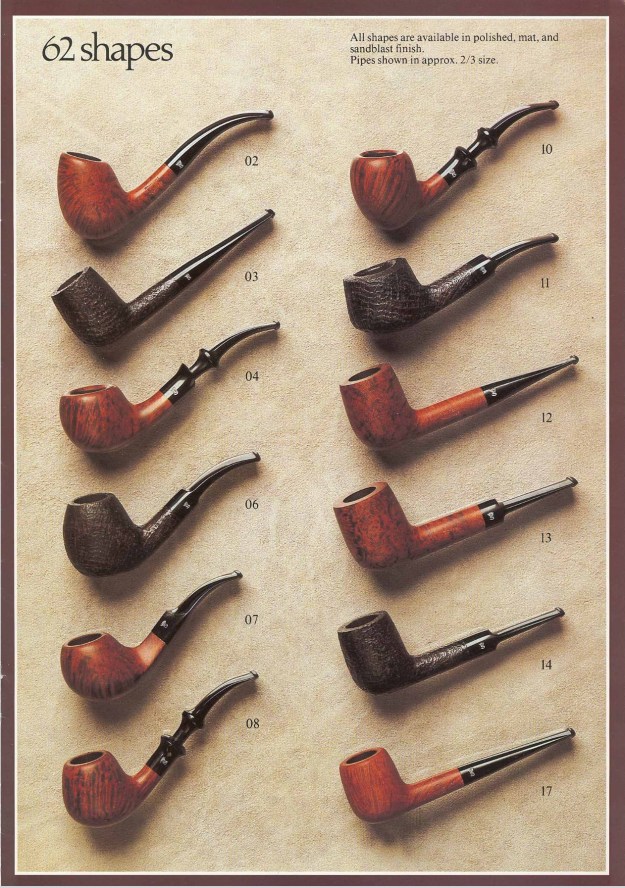
  1. ‘Elegance’; Bent apple with an acrylic mount and a long tapered stem. A reinterpretation of Sixten Ivarsson’s shape 08(b), by Sixten Ivarsson (1980s, see catalogue).

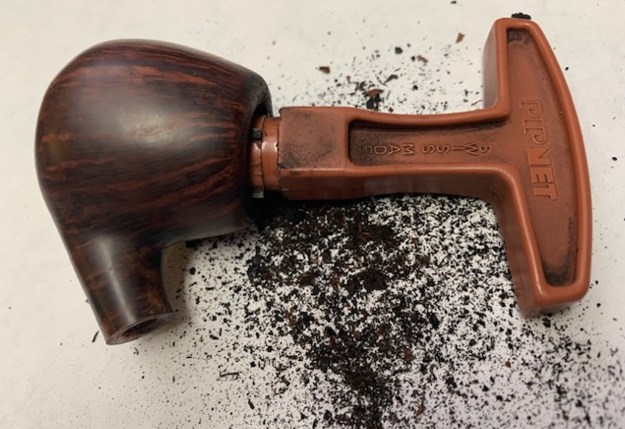
From that I can see that the pipe (105 shape) was a bent apple and was originally designed as a reinterpretation of the Sixten Ivarrson Shape 08b. I have included two pages from the 1980s catalogue below. The first show the 08 and the second page shows the 105. It is called an Elegance on that page rather than a Revival but it is a beauty. I started my work on this pipe by reaming the bowl. I started with a PipNet reamer to clean out the cake in the bowl. I cleaned up the remnants of the cake with a Savinelli Fitsall Pipe Knife. I finished by sanding the walls of the bowl with 220 grit sandpaper wrapped around a piece of dowel to smooth out the interior of the bowl. I cleaned out the internals of the bowl, shank extension and the airway in the stem with alcohol, cotton swabs and pipe cleaners until they were clean. I unwrapped the tape from the stem in order to clean and restore it. I scrubbed the exterior of the bowl with undiluted Murphy’s Oil Soap and a tooth brush. I worked on the bowl and rim top as well as the inner and outer edges of the bowl. It cleaned up really well. I rinsed it with warm water to remove the soap and the grime from the briar. I dried it off with a cotton towel. I took photos of the bowl at this point in the process. With the pipe cleaned up it was time to re-glue the shank extension to the end of the shank. I used some Weld Bond white all-purpose glue to reattach the extension to the shank end. I spread the glue around the tenon on the extension and pushed it in place. I adjusted the fit around the shank until it all aligned. I set it aside to cure. At this point in the process it was time to deal with the crack in the shank at the shank/bowl union. I used a small pinpoint to mark the ends of the crack on both sides of the shank. I drilled a hole in the small mark on each side of the crack end using a microdrill bit.I filled in the crack and the two drill holes in the shank sides with clear CA glue. I spread it into the crack and the holes with a dental spatula. Once it had cured I sanded the repairs smooth with 220 grit sandpaper and followed it up with micromesh as seen in the next photos.I polished the briar with micromesh sanding pads – dry sanding with 1500-12000 grit sanding pads. I wiped the bowl down after each sanding pad with a damp cloth to remove the sanding debris. The bowl began to take on a rich glow. I rubbed down the bowl and shank with Before & After Restoration Balm. It is a paste/balm that is rubbed into the surface of the briar. The product works to deep clean the finish, enliven and protect the briar. I worked it into the briar with my finger tips. I let it sit for 10 minutes then wiped it off with a soft cloth then buffed it with a cotton cloth. The briar really began to have a deep shine in the briar and the grain shines through. The photos I took of the bowl at this point mark the progress in the restoration. It is a gorgeous pipe.  I set the bowl aside and turned to the stem. It was in rough condition with the gummy tape on the end fitting into the shank and deep tooth marks. I painted the surface of the stem with the flame of a Bic lighter to try and lift them. I lifted them but they were still distinctly present. I filled in the marks with Black CA glue and set it aside to cure. Once cured I flattened the repair with a file and then followed that up with a piece of 220 grit sandpaper and started the polishing with 600 grit wet dry sandpaper. It looked much better. I built up the end of the stem with clear acrylic fingernail polish. I spread it around the stem with a dental spatula and set it aside to cure. Once it hardened I polished it with micromesh.I polished the stem with micromesh sanding pads – 1500-12000 grit sanding pads and water to wet sand the stem. I wiped it down after each sanding pad with Obsidian Oil on a cotton rag after each sanding pads. I know that many say Obsidian Oil does nothing for acrylic stems, but I find it does two things – first it gives some protection to the stem from buildup and second it give the sanding pads bite in the polishing process. Fine and Extra Fine stem polish as it seems to really remove the fine scratches in the vulcanite. I rub the Fine Polish on the stem and wipe it off with a paper towel and then repeat the process with the Extra Fine polish. I finish the polishing of the stem down with a final coat of Obsidian Oil and set the stem aside to let the oil absorb. This process gives the stem a shine and also a bit of protection.The final steps in my process involve using the buffer. I buffed the bowl and stem with Blue Diamond to polish out the light scratches in the briar and the vulcanite. I gave the bowl and the stem multiple coats of carnauba wax. I have found that I can get a deeper shine if I follow up the wax buff with a buff with a clean buffing pad. It works to raise the shine and then I hand buff with a microfiber cloth to deepen the shine. It is always fun for me to see what the polished bowl looks like with the polished stem. It really is a nice pipe. The smooth finish around the bowl sides and shank looks great. The oval vulcanite taper stem works well with the pipe. The Stanwell Revival 105 Bent Apple feels great in my hand. It is a well-balanced pipe. Have a look at it with the photos below. The dimensions are Length: 6 ½ inches, Height: 1 ½ inches, Outside diameter of the bowl: 1 ¼ inches, Chamber diameter: ¾ of an inch. The weight of the pipe is 1.31 ounces/38 grams. It is a beautiful pipe that I will soon be giving back to Mike who dropped it off for restoration. I am sure he will enjoy it and it will give many more years of service to him.

As always I encourage your questions and comments as you read the blog. Thanks to each of you who are reading this blog. Remember we are not pipe owners; we are pipe men and women who hold our pipes in trust until they pass on into the trust of those who follow us.

Sprucing up a Peterson’s Sterling Made in Ireland 406 Prince


Blog by Steve Laug

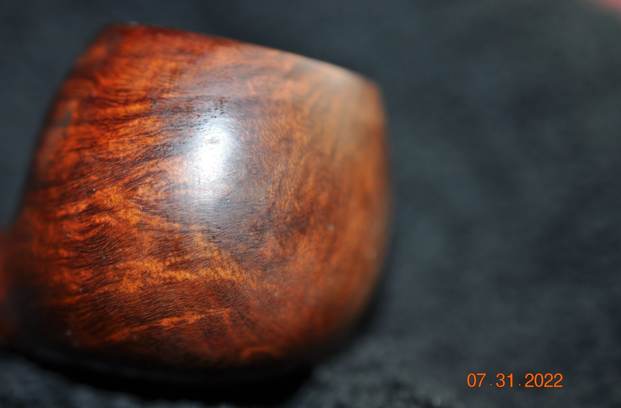
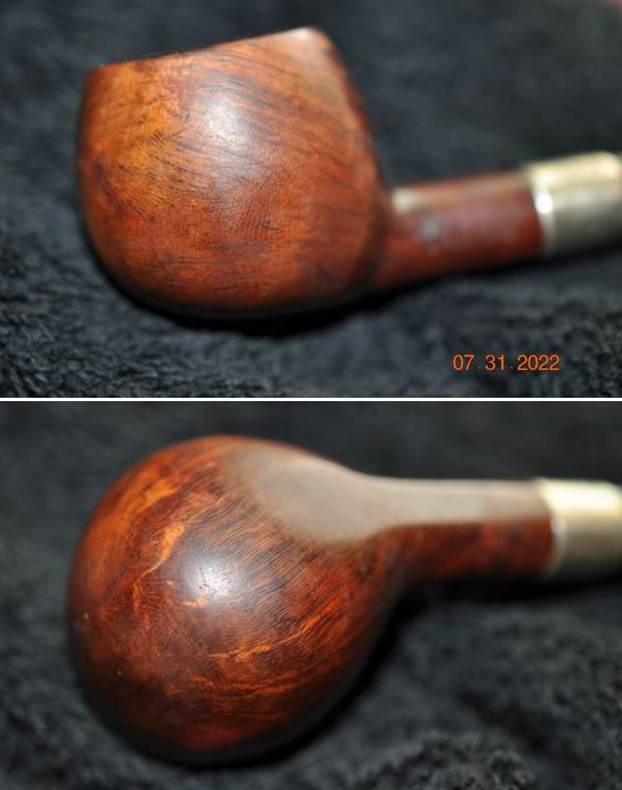
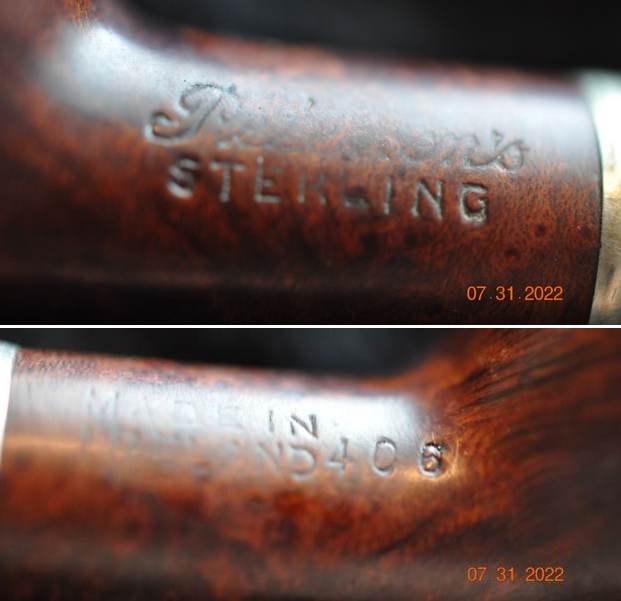
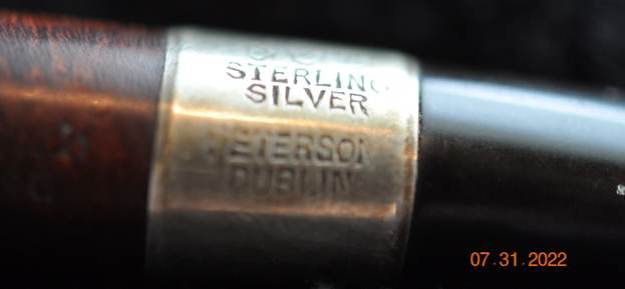
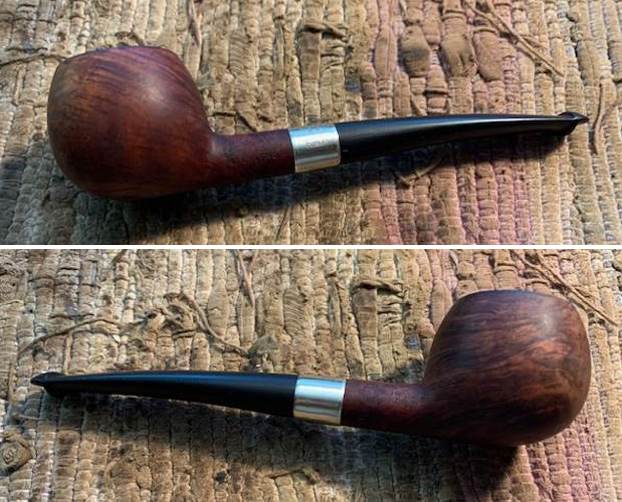
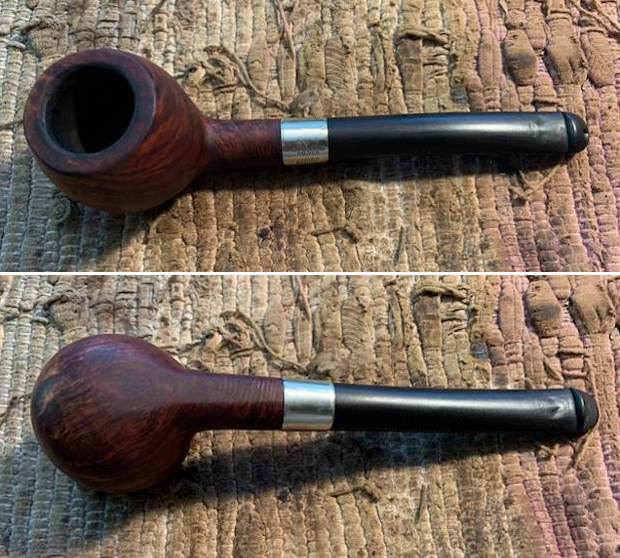
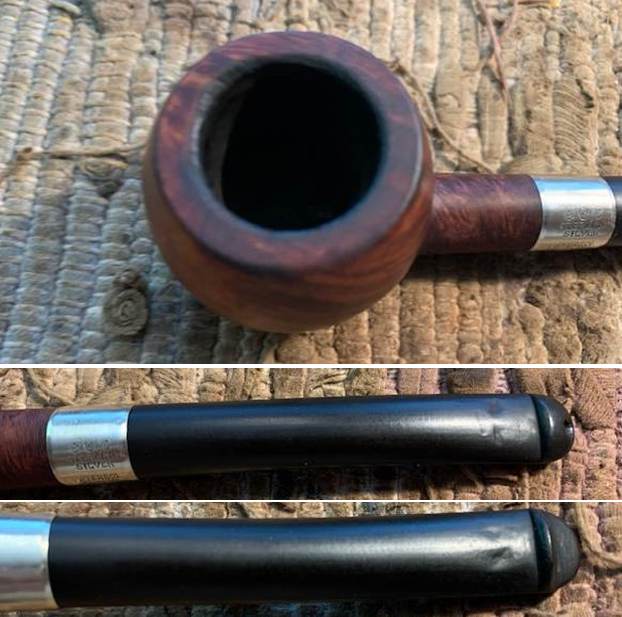
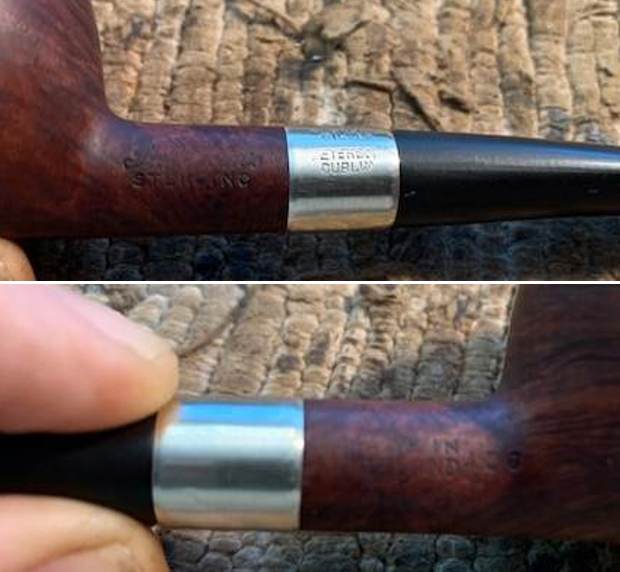
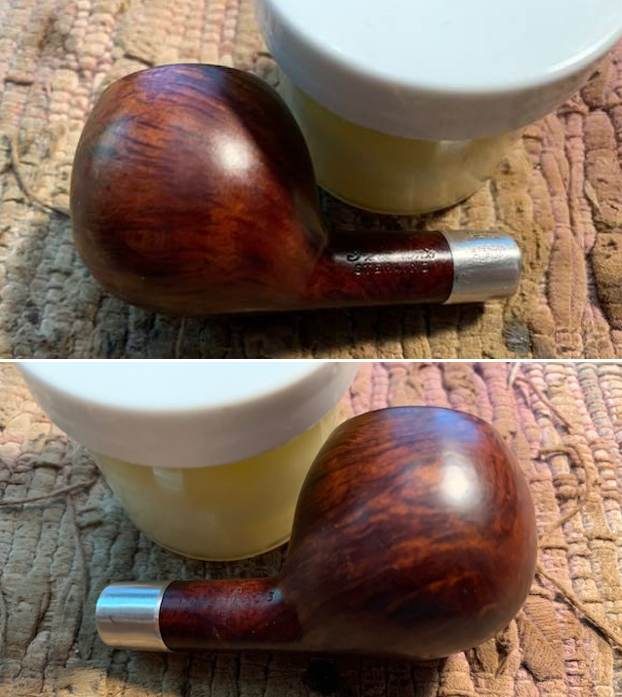
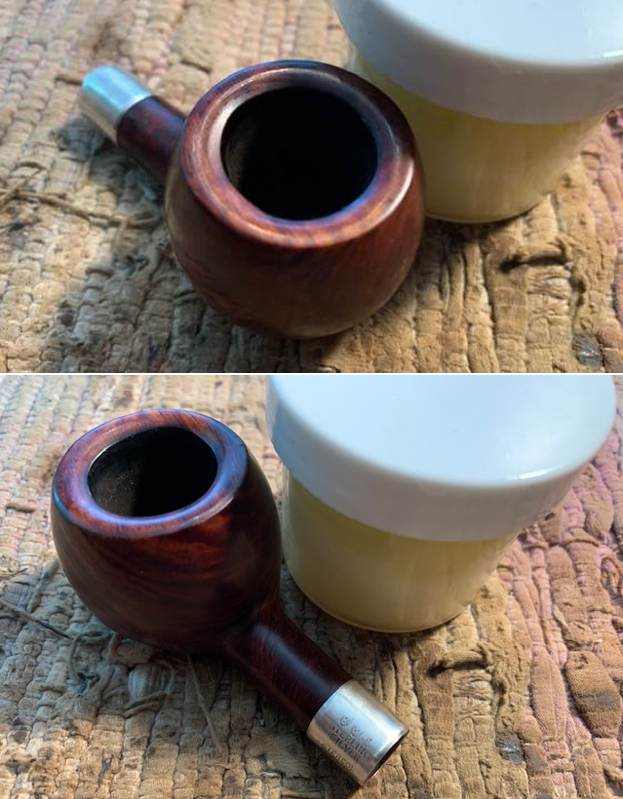
The next pipe I have chosen to work on is a Peterson’s Sterling Prince. The pipe was purchased on 06/24/22 from an online auction in Manorville, New York, USA. It has a Sterling Silver band around the shank that is tarnished and oxidized. The bowl heavily caked with a moderate lava overflow on the rim top. The inner edge of the bowl had some damage but also had cake on the edges. The outer edge looked to be in good condition. The finish on the bowl was filthy with grime ground into the surface but the mixed grain was quite nice. The stem was lightly oxidized, calcified and also has tooth marks and chatter on both sides ahead of the button. The pipe was stamped on the left side of the shank and read Peterson’s [over] Sterling. On the right side it is stamped with the Made in Ireland in two lines followed by the number 406 identifying the shape. It is an interesting pipe. That should clean up very well. Jeff took photos of the pipe before he started his clean up work. Jeff took photos of the rim top and stem to show the general condition of the pipe. The bowl is heavily caked and the rim top and edges have a thick lava overflow on the edges and top of the bowl. The stem is oxidized, calcified and has tooth marks and chatter on the top and underside near the button. Jeff took some photos of the bowl sides and heel to show the grain that was around this bowl. It is a nice looking pipe under the grime on the outside of the bowl.    He took photos of the sides of the shank to show the stamping. The stamping is readable in the photos below and is as noted above. He also took a photo of the band.   I checked on Pipephil’s website to see what I could learn about the stamping on the pipe. I found the following information that I quote:

The country of manufacture stamp changed from “Made in Eire” to “Made in Ireland” (In circle) about 1945. Later (1947-49) it became “MADE IN IRELAND” (block letters) stamped in one or two lines (http://www.pipephil.eu/logos/en/logo-peterson.html).

I turned to Pipedia’s article on Peterson pipes to see what I could garner from that information. It is a great read in terms of the history of the brand (https://pipedia.org/wiki/Peterson#1950_-_1989_The_Republic_Era). In a section on

Prior to 1920 it was rare for a country of origin to be stamped on the pipe, just Peterson’s Dublin on the band. After 1921/22 if it is stamped “MADE IN IRELAND” and the “Made in” is stacked over “Ireland” or “MADE IN EIRE” or several other forms, it was made between 1922 and 1938. A considerable number of Peterson pipes were stamped “Irish Free State”. From about 1930 to 1949, most of the pipes (those which were stamped) were stamped “Made in Ireland”.” If the stamp reads “MADE IN IRELAND” in a circle, the pipe was made between 1939 and 1948. These are all “prerepublic” pipes.
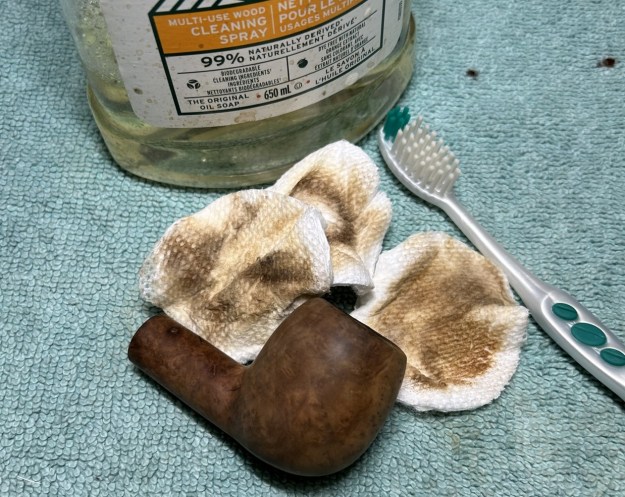
I then turned to the book I should have consulted first, The Peterson Pipe, by Mark Irwin and Gary Malmberg. On page 155 I found some information on the line.
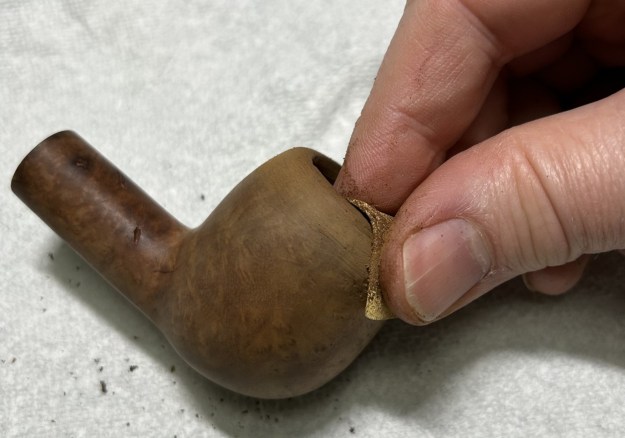
Peterson’s US distributor during the early Republic era was Rogers Imports, Inc., a New York firm whose catalogs offered all varieties of smoker’s products. Rogers was the exclusive wholesale dealer for several prominent European pipe manufacturers, they also marketed accessories under their own name. On behalf of Kapp & Peterson they registered the Killarney, Shamrock and Sterling trademarks with the US Patent Office in the 1950s, and their catalogs also featured the System, Premier Selection and Supreme.

On page 156-157 in the same book there is a catalogue page with the Sterling shown on it. It sold for $7.50 in 1953. It read:

As the name implies the Sterling quality of this fine pipe is distinguished in a careful selection of its fine Mediterranean Bruyere, its careful workmanship and sparkling finish. Banded with a Sterling Silver band – a Hallmark of quality – the pipe is available in a handsome natural or dark rich walnut finish. Patent P-lip stem. Individually boxed.

With that information in hand I knew what I was dealing with in terms of the stamping on the pipe. It is a late Pre-republic era or early Republic era pipe. The Made in Ireland in two lines stamp on the right side of the shank tells me it was made between 1922-1938.

Now, on to the restoration of this beautifully grained Peterson’s Sterling 406 Prince. Jeff had done a great job cleaning up the pipe as usual. He reamed the pipe with a PipNet reamer and cut back the cake back to the bare briar. He cleaned up the walls with a Savinelli Fitsall Pipe Knife. He scrubbed the interior of the bowl and shank with pipe cleaners, cotton swabs and alcohol to remove the tars and oils. He scrubbed the exterior of the pipe with Murphy’s Oil Soap and a tooth brush to remove the grime from the finish. He worked on the rim top lava and darkening with the soap and tooth brush. He scrubbed the inside of the stem with alcohol and pipe cleaners. He scrubbed the exterior with Soft Scrub and then soaked it in Before & After Deoxidizer. He washed it off with warm water to remove the Deoxidizer. The pipe looked far better when it  arrived. I took some close up photos of the rim top and also of the stem surface. I wanted to show how well it had cleaned up. The rim top looked good. There was some damage on the inner edge with burn damage and some darkening that was heavier on the front of the bowl. I also took close up photos of the stem to show the tooth marks and chatter on the surface near the button. I took photos of the stamping on sides of the shank. You can see that it is stamped as noted above and is clear and readable.  The stamping on the band is also visible. I took the pipe apart and took a photo of the pipe. It is a good looking pipe and has Nice mixed grain around the bowl. I decided to start the process by addressing the damage on the rim top and the inner edge of the bowl. I used a folded piece of 220 grit sandpaper to sand the top and to give the edge a slight bevel and clean up the darkening and the damage on the edge. When I finished there was still damage on the right front that needed a little more work. I used a wooden ball and 220 grit sandpaper to increase the angle of the bevel and to even out the edges. It is looking much better. I polished the briar with micromesh sanding pads – dry sanding it with 1500-12000 grit sanding pads. I wiped the bowl surface down with a damp cloth to remove the sanding dust. Once I finished the exterior of the briar looked much better and had taken on a shine.  I paused in the polishing at this point to touch up the stain on the rim top. I used a Cherry stain pen and was able to match the rest of the bowl. I then picked up the polishing again with the last three micromesh pads.I rubbed the bowl down with Before & After Restoration Balm. I worked it into the surface of the briar with my fingertips to clean, enliven and protect it. I let the balm sit for 15 minutes and then buffed with a cotton cloth to raise the shine. Mark Hoover’s Balm is a product that I have come to appreciate and one I use on every pipe I have been working on. I set the bowl aside and turned my attention to the stem. I “painted” the surface of the stem with the flame of a lighter to lift the tooth marks. I was able lift many of them. I filled in the remaining marks with clear CA glue. I set the stem aside to cure. Once it cured I flattened the repairs with 220 grit sandpaper. I polished the stem with micromesh sanding pads – wet sanding with 1500-12000 grit pads. I wiped the stem down after each sanding pad with Obsidian Oil. I polished it with Before & After Pipe Stem Polish – both Fine and Extra Fine. Once I had finished the polishing I gave it final coat of oil and set it aside to dry. As usual at this point in the restoration process I am excited to be on the homestretch. I look forward to the final look when it is put back together, polished and waxed. I put the Made In Ireland Peterson’s Sterling 406 Prince back together. I polished the bowl and stem with Blue Diamond to polish out the scratches in the briar and the vulcanite. I gave the bowl and the stem multiple coats of carnauba wax. I buffed the pipe with a clean buffing pad to raise the shine. I hand buffed it with a microfiber cloth to deepen the shine. I polished the silver with a jeweler’s cloth. The pipe polished up pretty nicely. The grain really pops with the wax and polish. The shiny black vulcanite stem is a beautiful contrast to the browns of the bowl. This Peterson’s Sterling Prince was a great pipe to spruce up. It is a very comfortable pipe to hold in the hand. The finished pipe is shown in the photos below. The dimensions of the pipe are Length: 5 ¾ inches, Height: 1 ½ inches, Outside diameter of the bowl: 1 ¼ inches, Chamber diameter: ¾ of an inch. The weight of the pipe is 37grams/1.31 ounces. This pipe will be going on the rebornpipes store in the Irish Pipe Makers Section if you would like to add it to your collection and be the first to smoke it. Thanks for reading this blog and my reflections on the pipe while I worked on it. This is an interesting estate to bring back to life.

The Poker Barrel


by Kenneth Lieblich

Next on the chopping block is this charming Chacom Champion. It comes from the estate of a man from Winnipeg, whose relatives live here in Vancouver. I purchased several of the late gentleman’s pipes, along with this one. I have a particular interest in French pipes and pipeworks, so this was the first pipe I grabbed from the lot for restoration. It is an attractive pipe and needed just a little help to come back to life.This pipe was made by the French giant, Chacom. They are known for making very nice pipes, many of which were designed by such names as Pierre Morel, Claude Robin, and Erwin van Handenhoven. The markings on the left-hand side of the shank read Chacom [over] Champion. On the underside of the shank, the marking reads 157, which is the shape number. Also, on the stem, there is the Chacom logo: CC, encircled in a silver-coloured oval.This is a poker-shaped pipe (a flat bottom) – and a really pretty one too. I always felt that it looked a bit like an old oak barrel, hence the title of this article: The Poker Barrel. It feels very comfortable in the hand. It was obvious from the start that this was a great pipe that just needed some attention and TLC.

Chacom is a company that dates back, in its earliest form, to 1825. The name is a portmanteau of Chapuis Comoy. For a large part of the twentieth century, Chapuis Comoy was the largest pipe company in the world. For more on their history, please have a look at their website: https://www.pipechacom.com/en/history.htm. In fact, the shape number I mentioned above, 157, is a Comoy shape number and is designated as a straight-stemmed, flat-bottomed, billiard. But I am still going to call it a Poker Barrel anyway.

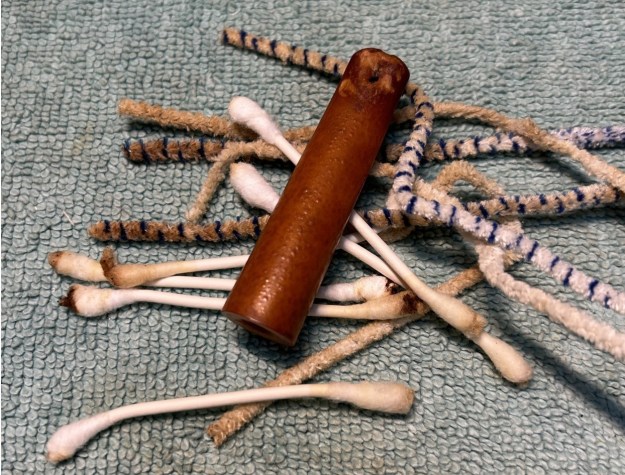
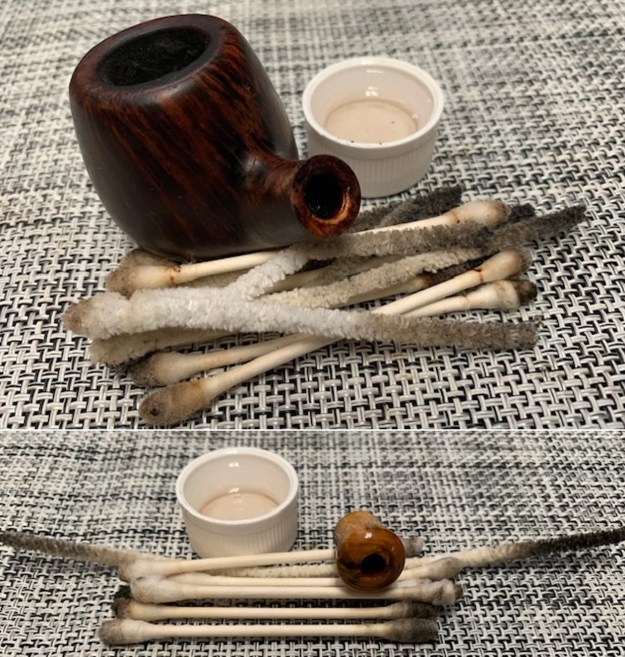
On to the pipe: it was in decent shape, but it had a few issues. The stem was mostly fine. There was a bit of oxidation, some tooth chatter and scratches, and that was about it. Meanwhile, the stummel had a few more issues. The outside of the bowl had some scratches and a couple of fills that needed to be redone. There was plenty of lava and debris on the rim and I suspected there would also be some burn marks. The inside was pretty dirty too – just how dirty it was became an event in itself.The stem was first on my list. I wiped down the outside of the stem with Murphy’s Oil Soap on some cotton pads. I also took a BIC lighter and ‘painted’ the stem with its flame in order to lift the bite marks and dents. This was not particularly successful in raising the damage. During this process, I noticed that the inside of the tenon on the stem was threaded. There was clearly a stinger here once upon a time. Thankfully, it is long gone.Then, I cleaned out the insides with pipe cleaners and isopropyl alcohol. Look at that! Lots of work to get this clean! Once this process was done, the stem went for an overnight soak in the Pipe Stem Oxidation Remover. The following day, I cleaned all of the de-oxidizing mess off with alcohol, pipe cleaners, et cetera. The oxidation had migrated to the surface and would be fairly straightforward to remove. I scrubbed with SoftScrub on some cotton pads to remove the leftover oxidation. I built up the dents on the stem with cyanoacrylate adhesive and let them fully cure. I then sanded the adhesive down with 220-, 400-, and 600-grit sandpapers to meld seamlessly into the stem. I did the same to the remaining tooth marks. I then used all nine Micromesh pads (1,500 through 12,000 grit) to bring out the lovely black lustre on the stem. I also used Obsidian Pipe Stem Oil in between each pad scrubbing. On to the stummel, and the usual cleaning procedures were in order for this pipe. This stummel was a bit of a mess inside, so I first decided to ream out the bowl. I used both the PipNet Reamer and the KleenReem to remove the built-up cake and followed that with 220-grit sandpaper to eliminate as much as I could. I took the bowl down to bare briar, as I wanted to ensure there were no hidden flaws in the walls of the bowl. Fortunately, there were none. I then proceeded to clean out the insides of the shank with Q-tips, pipe cleaners, and isopropyl alcohol. There was considerable filth inside this stummel and it took a lot of cotton to get it “clean”. I put the word clean in quotation marks for reasons that will be evident shortly. I used a small butter knife to gently chip away at the lava on the rim. I then used more Murphy’s with a scrub brush to remove any remainder. This actually worked quite well. I then moved on to cleaning the outside of the stummel with Murphy’s Oil Soap and some cotton pads. That removed any latent dirt that blighted the wood. A de-ghosting session also seemed in order, so I thrust cotton balls in the bowl and the shank, and saturated them with 99% isopropyl alcohol. I let the stummel sit overnight. This caused the oils, tars and smells to leech out into the cotton.In order to remove the remaining burns and nicks on the rim, I “topped” the pipe – that is to say, I gently and evenly sanded down the rim on a piece of 220-grit sandpaper. This effectively removed the damage, without altering the look of the pipe. Then, to further clean the inside of the pipe, I put the stem and stummel back together and used my pipe retort system. This system uses boiling isopropyl alcohol and a vacuum (a void, not the household appliance) to clean the interior of a pipe. As you can see by the brownish colour of the alcohol, the retort worked well. I managed to extract lots of otherwise inaccessible filth from inside the pipe. At this point, I had a hunch that I should run another Q-tip or two through the shank. What I discovered was shocking: it took a truck load of Q-tips and pipe cleaners to actually clean this frustrating pipe! Look at the pile I used! I then finished cleaning up the insides of the stummel with some dish soap and tube brushes. Extraordinary, but I did it and it is now clean.Having completed that, I was able to address the scratches and fills. I took out my steam iron and a damp cloth to try and raise the nicks. The hot and moist steam created can often cause the wood to swell slightly and return to shape. Fortunately, there was considerable movement – I was really pleased with the results. The repair was not perfect, but the remaining scratches would be improved by sanding.After that, a light application of Before & After Restoration Balm brought out the best in the stummel’s grain. There is some beautiful wood after all. It is a very handsome pipe. The same was true with the fills. I lined the two fills with cyanoacrylate adhesive and briar dust. After letting them cure, I sanded the fill repairs down with 200-, 400-, and 600-grit sandpaper. I then used all nine Micromesh pads (1,500 through 12,000 grit) on the stummel to finish it off. On to another problem: the colour. During the course of my vigorous cleaning, this pipe had lost some vibrancy of colour. So, in order to accentuate the external beauty of this pipe, I opted for aniline dye. I applied some of Fiebing’s Medium Brown Leather Dye. As usual, I applied flame from a BIC lighter in order to set the colour. What a difference that made! It looked so much better with a fresh coat of stain.   I applied some more Before & After Restoration Balm and then it was off for a trip to the buffer. A dose of White Diamond and a few coats of carnauba wax were just what this pipe needed. The lovely shine made the wood very attractive. This is a very handsome pipe and will provide many years of smoking pleasure.This Chacom Champion is back to its old glory and ready to be enjoyed again by the next owner. I am pleased to announce that this pipe is for sale! If you are interested in acquiring it for your collection, please have a look in the ‘French’ pipe section of the store here on Steve’s website. You can also email me directly at kenneth@knightsofthepipe.com. The approximate dimensions of the pipe are as follows: length 5 in. (130 mm); height 1⅝ in. (40 mm); bowl diameter 1¼ in. (30 mm); chamber diameter ¾ in. (20 mm). The weight of the pipe is 1 oz. (29 g). I hope you enjoyed reading the story of this pipe’s restoration as much I as I did restoring it. If you are interested in more of my work, please follow me here on Steve’s website or send me an email. Thank you very much for reading and, as always, I welcome and encourage your comments.

Restemming & Restoring a French Made GBD Sauvage 1345 Poker/Pot


Blog by Steve Laug

The next pipe I chose to work on was another bowl from my box of bowls to restem. It is a different looking bowl that combines both a Pot and a Poker shape. It has a inward beveled rim, flat bottom and worm trails curled around the bowl sides. When I examined the shank it had a small hairline crack on the right side that would need to be repaired but otherwise it was solid. It was unique enough I wanted to work on it. It is stamped on the left side of the shank and has a GBD oval logo next to the bowl/shank union followed by Sauvage. On the right side of the shank it is stamped FRANCE [over] the shape number 1345. The stamping was clear and readable with a lens. The bowl had been cleaned and reamed somewhere along the way by either Jeff or me. I honestly don’t remember when or where we got this bowl. It looked very good and I was looking forward to seeing the finished pipe. The stem was long gone so this would be a restemming job. I took some photos of the bowl to give a sense of the condition of bowl. The stamping was on both sides of the shank and it is clear and readable as noted above. I have also drawn a red rectangle around the area where the crack in the shank is located in the photo below.The next photo shows the rounded rim top and edges. It also shows the condition of the bowl and rim top/edges. It is clean and looks quite good. There is some burn damage on the inner edge of the bowl and on the beveled rim top at the front and the back of the bowl.Now it was time to begin my restemming work on this pipe. I went through my can of stems and chose a stem that would work. I would need to remove some the diameter of the tenon and the saddle portion to fit the thin almost pencil shank of the pipe. I used a flat file to remove the small amount of excess on the tenon. It was a close fit but I did not want to make the crack in the shank worse by a tenon that was not correct.When I had finished shaping the tenon I sanded it with a piece of 220 grit sandpaper and inserted it in the shank. It was looking pretty good. I would need to trim back some of the diameter of the saddle portion but I liked it! I generally use a Dremel and sanding drum to reduce the diameter of the stem. I do this with the stem in place on the shank so that I do not overdo it. It is a touchy exercise and one slip and I could easily damage the shank and make more work for myself. I move carefully and take it back as close as I can at this point. Once I band the shank I will need to do some more work on it but it is starting to look right. With the fit close enough it was time to band the shank. I generally do the final adjustments on the stem diameter after I have fit the band in place. I picked a band out that would fit when heated. I took a photo of the crack in the shank to show what I was working with. I sanded the shank end and gave it a slight bevel to facilitate pressing the band in place. Once it was ready I put the band on the shank. It was tight so I heated it with a lighter and when it had expanded I pressed it against the pad on my desk and pushed it all the way onto the shank. It covered the “e” on Sauvage slightly but the length of the crack defined what I needed to band it. I used some 220 grit sandpaper to once again take a little bit off the diameter of the tenon and the band compresses the crack and the diameter of the mortise changes. When I was finished I put the stem in the shank and took photos of the newly banded shank. It was going to look good once I finished shaping the stem diameter but it is very close at this point. What do you think of the new look? I finished adjusting the fit of stem diameter with 220 grit sandpaper and everything was aligned. I started the polishing with 400 grit wet dry sandpaper and the stem was looking very good at this point. Now I needed to deal with the tooth marks and chatter on the end of the stem. I “painted” them with the flame of a lighter to lift them as much as possible. I filled in the ones that remained with clear super glue. Once the glue cured I flattened out the repairs with a small flat file. I followed that by sanding the stem with 220 grit sandpaper to blend them into the surface. I started polishing the stem with 400 grit wet dry sandpaper. I polished the stem with micromesh sanding pads – wet sanding with 1500-12000 grit pads. I wiped the stem down after each sanding pad with Obsidian Oil. I polished the stem with Before & After Pipe Stem Polish – both Fine and Extra Fine and buffed it with a cotton cloth. Once I had finished the polishing I gave it final coat of Obsidian Oil and set it aside to dry. With the stem finished (other than to buff the pipe at the end)I set it aside and I turned my attention to the bowl. I used a wooden ball that Kenneth gave me with a piece of 220 grit sandpaper to clean up the bevel. I finished with a folded piece of 220 grit sandpaper to further minimize the burn damage. I touched up the stain with an Oak Stain pen to match the surrounding briar of the bowl. It looked much better at this point. I polished the briar with micromesh sanding pads – dry sanding with 1500-12000 grit pads. I wiped the bowl down after each pad with a damp cloth to remove the sanding debris left behind. I rubbed the bowl and shank down with Before & After Restoration Balm. I worked it into the surface of the smooth and worm trails on the bowl and shank with my fingertips to clean, enliven and protect the briar. I let the balm sit for a little while and then buffed with a cotton cloth to raise the shine. The Balm did its magic and the grain really took on dimension and colour. I am excited to be on the homestretch with this petite French Made GBD Sauvage 1345 Poker/Pot. This is the part I look forward to when it all comes back together, polished and waxed. I put the bowl and the new stem together and polished the stem and bowl with Blue Diamond to polish out the scratches in the vulcanite and give a light shine to the bowl. I gave the bowl and the stem multiple coats of carnauba wax. I buffed the pipe with a clean buffing pad to raise the shine. I hand buffed it with a microfiber cloth to deepen the shine. The pipe polished up pretty nicely. The worm trail carving on the bowl actually looks okay with the rest of the smooth finish. The banded shank and new polished black saddle vulcanite stem works well with this little sitter. This GBD Sauvage Poker/Pot was another fun pipe to work on and came out looking great. It is a comfortable sized pipe to hold in the hand. The finished pipe is shown in the photos below. The dimensions of the pipe are Length: 5 ¾ inches, Height: 1 ½ inches, Outside diameter of the bowl: 1 ½ inches, Chamber diameter: ¾ of an inch. The weight of the pipe is 33 grams/1.16 ounces. If you are interested in adding this pipe to your rack it will be on the rebornpipes store in the French Pipemakers Section soon. Thanks for reading this blog and my reflections on the pipe while I worked on it.

Five for the Price of One


Blog by Kenneth Lieblich

Next on the chopping block is a quintet of pipes. Word has been getting around! My barber’s boss approached me recently about restoring his late grandfather’s pipes. Of course, I was only too happy to oblige. The fellow told me that his grandfather did not have fancy pipes, but he just wanted them to look good. Interestingly, he also asked that I not clean the pipes too much – he wanted some of the olfactory memories to remain. When I got my hands on the pipes, I realized what I was up against. These five pipes were really a mess. Quite frankly, if I had these pipes for myself, I would have tossed some on the firewood pile. But my customer wanted these pipes restored as a nice remembrance of his grandfather – and I completely understand and respect that. Since I restored these pipes all together, I thought I would write up their story altogether too – with a tip of my hat to my customer’s late grandfather.

Well, what have we got here? (1) A cherrywood pipe from Missouri Meerschaum, missing its stem; (2) another cherrywood pipe from Missouri Meerschaum; (3) a briar bent pot, marked Château Bruyère 32; (4) a briar egg, marked Savoy 710, missing its stem; and (5) a Brigham Voyageur 126 bent Rhodesian. Missouri Meerschaum is, of course, most famous for being the largest corncob manufacturer in the world – although they do make hardwood pipes too. Herb Wilczak and Tom Colwell’s book, Who Made That Pipe? states that Château Bruyère (as its name suggests) is made in France by an unknown manufacturer. Pipedia tells us that Savoy is a brand of Oppenheimer Pipe/Comoy’s, which was also sold by M. Linkman & Co. Finally, Brigham is the famous Canadian pipe manufacturer. The markings suggest that this Brigham was made after the move of production to Italy.

Problems with these pipes? Wow – where to begin? Both cherrywoods needed new stems. After all, one was cracked beyond repair and the other was missing altogether. They had lava and burns all over, and plenty of cake in the bowl. Besides that, the stummels were just a bit grimy. The Château Bruyère was in really bad condition: tons of lava, cake, and serious burning; cracks galore on the rim; but at least the stem had only minor tooth marks and dents. The Savoy would, of course, also need a new stem, but its stummel was also a disaster: some fills; tons of lava and cake; and (worst of all) an enormous burn gouge on the rim. The Brigham was not too bad (compared with the others), but it still had the usual cake and lava. It also looked like the rim had been used to hammer nails! The stems were first on my list. Fortunately, Steve had a couple of new Missouri Meerschaum stems for me to use on the cherrywood pipes. That was the easiest part of this whole restoration! I also had to sculpt a new stem for the Savoy. Stupidly, I forgot to take photos of this procedure, but, suffice it to say, it was tricky getting the tenon to fit correctly and getting the edges of the new stem to match with the existing stummel. On the two pre-existing stems, I took a BIC lighter and ‘painted’ them with flame in order to lift the tooth marks. This was reasonably successful in raising the dents. Then, I cleaned out the insides of the stems with pipe cleaners and isopropyl alcohol. They were terribly dirty and I went through a large number of pipe cleaners in order to clean them up. Once this process was done, the stems went for an overnight soak in the Before & After Hard Rubber Deoxidizer. The following day, I cleaned all of the de-oxidizing sludge off with alcohol, pipe cleaners, et cetera. The oxidation had migrated to the surface and would be fairly straightforward to remove. I scrubbed vigorously with SoftScrub on cotton pads to remove the leftover oxidation. On the Brigham, the tenon had come loose from the stem and needed to be repaired. I used my cyanoacrylate adhesive to sort that problem out and let it set. I also built up the small dents on the Brigham and Château Bruyère stems with cyanoacrylate adhesive and let them fully cure. I then sanded the repairs down with 220-, 400-, and 600-grit sandpapers to meld the repair seamlessly into the stems. This ensured that they keep their shape and look like they should. I then used all nine Micromesh pads (1,500 through 12,000 grit) to bring out the lovely black lustre on the stems. I also used Obsidian Pipe Stem Oil in between each pad scrubbing. I should make quick mention of the stem I made for the Savoy. I had a blank and an old, spare stem to potentially use. I ended up using the blank because it fit better. Making a new stem is tricky and messy business, and Steve is far better (and more experienced) than I am at it. Basically, I used some 220-grit sandpaper to remove the excess material from the tenon (to ensure it fit into the stummel’s mortise) and from the tenon-end of the stem (to ensure that this end matches the shape and thickness of the shank). Once the basic shape is achieved, I use progressively finer sandpaper (and then the MicroMesh pads) to make the stem look just as it should. In this end, I was pleased with the results and I wish I had photos to show you of the process!All five stummels were a terrible mess: loaded with cake, filth, and an overall yucky feel. They had obviously been thoroughly smoked and enjoyed. Quite frankly, the grandfather must have smoked them until there was no more draw! Anyway, I first decided to ream out all of the bowls. I used both the PipNet Reamer and the KleenReem to remove most of the built-up cake – but not all. I didn’t take the cake down to bare briar, as my customer wanted some essence of his grandfather left in the bowls. The one exception to this was the Brigham, and I did ream it completely and brought it down to bare briar. My customer wanted only this pipe to be completely cleaned out. On all five, however, I did clean out the insides of the shanks with Q-tips, pipe cleaners, and isopropyl alcohol. There was a lot of nastiness inside the shanks and it took a lot of cotton to get them clean! I then moved on to cleaning the outside of the stummels with Murphy’s Oil Soap on some cotton pads and also used a tooth brush to get into the crevasses of the Brigham and the Château Bruyère. I actually soaked the rims in Murphy’s for a while, just to loosen up the lava. I followed that up by cleaning the insides of the Brigham with some dish soap and tube brushes. A de-ghosting session seemed in order for the Brigham. The de-ghosting consisted of thrusting cotton balls in the bowl and the shank, and saturating them with 99% isopropyl alcohol. I let the stummel sit for 24 hours. This caused the oils, tars and smells to leech out into the cotton. Finally, a relatively clean and fresh-smelling bowl emerged. There was a great deal of damage to the rims of all the stummels – and that also needed to be addressed. In order to remove the lingering bits of lava, fix any nicks, and tidy up the look, I “topped” the pipes – that is to say, I gently and evenly sanded down the rims on a piece of 220-grit sandpaper. This effectively removed the lava and the damage, without altering the look of the pipes. However, some needed more attention than others. The two cherrywood pipes were straightforward enough, but a fair amount of work was needed on the other three. The Château Bruyère, as you will have seen, had fairly horrific damage to the wood of the bowl. There were so many cracks and burns that I was not sure if anything meaningful could be done. I did top the bowl, but stopped before I took too much off. There was no getting around the fact that this pipe was not going to be like new. I was comforted by the fact that this pipe was simply being cleaned up and was not going to be smoked again. I sealed off the cracks with cyanoacrylate adhesive, let them cure, and then sanded them smooth. It made a huge difference.But the Château Bruyère still needed a bit more help: re-staining. In order to create some external beauty to this pipe, I opted for aniline dye. I applied my own mixture of some of Fiebing’s Medium Brown Leather Dye and some Fiebing’s Black Leather Dye. I then applied flame in order to set the colour. Worked like a charm! The pipe looked so much better after this.The Savoy had a large valley running along the rim of the bowl (not to mention some considerable burning). A combination of techniques was used to sort this out. I topped the stummel to start, but then I took a solid wooden sphere, wrapped sandpaper around it, and sanded it thoroughly. This was to achieve on the inner part of the rim the same thing that I achieved by “topping” on sandpaper. I then built up the remaining wound with a mixture of briar dust and cyanoacrylate adhesive. I was quite pleased with the results. Finally, I added a brass ferrule to the end of the shank and glued it in place. It gave the pipe a snazzy look. The Brigham was also tricky, but for a different reason. The Brigham had what I like to call a “broken nose”. The front edge was smashed in and would need to be built up. More than that, the repair would need to be rusticated so as to match the original rustication of the pipe. I am always worried about this sort of work because I dread the possibility of not getting the match right. In this case, I topped the Brigham first, but only slightly – just enough to make it neat and tidy. Then I built up the edge with a mixture of briar dust and cyanoacrylate adhesive. Then, I topped it a second time in order to even out the repair with the rim. Finally, I got out my Dremel and used that to rusticate the pipe’s “nose”. The results were quite good. Now, with the damage repaired on all five pipes, it was time to sand down the stummels. Just like the stems, I used all nine Micromesh pads (1,500 through 12,000 grit) to sand everything smooth on the three briar pipes (I did not sand the cherrywoods). A light application of Before & After Restoration Balm brought out the best in the stummels’ grain

Then it was off for a trip to the buffer. A dose of White Diamond and a few coats of carnauba wax were just what these pipes needed to shine (literally and figuratively). The polishing was the cherry on top of a long road of recovery for these five pipes. The pipes began in the hands of a man who clearly loved smoking them. His grandson, honouring his grandfather’s memory, wanted them to look good again – but not so new that the essence of his grandfather was lost. It was my job to make sure that his grandfather was still in those pipes. I know that my customer will enjoy looking at those pipes (and remembering) for many years to come. I hope you enjoyed reading the story of these pipes as much I as I did restoring them. If you are interested in more of my work, please follow me here on Steve’s website or email me directly at kenneth@knightsofthepipe.com. Thank you very much for reading and, as always, I welcome and encourage your comments.