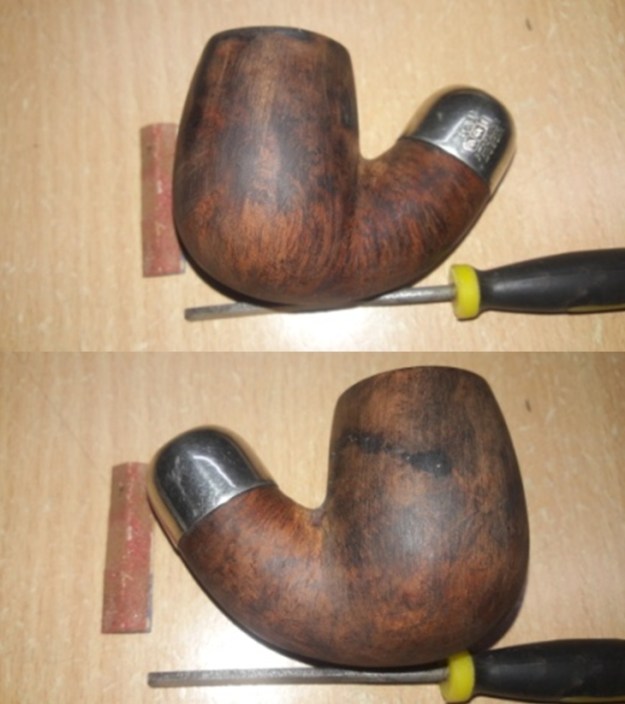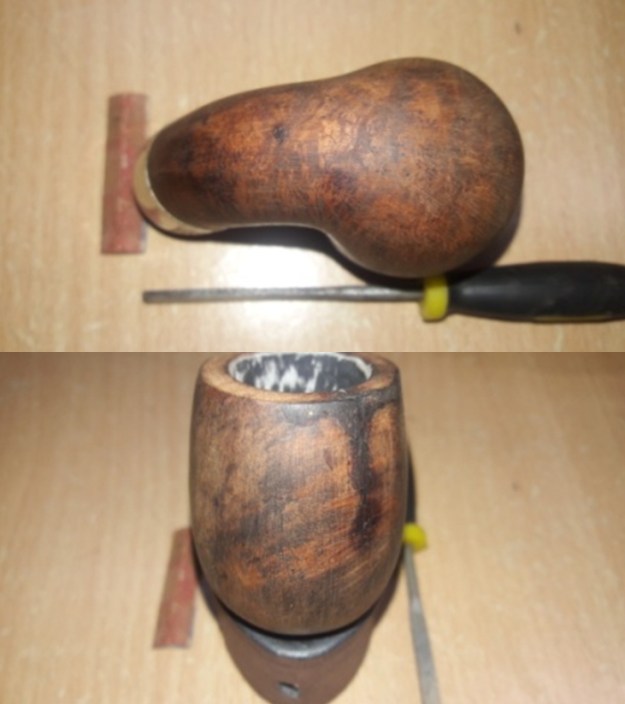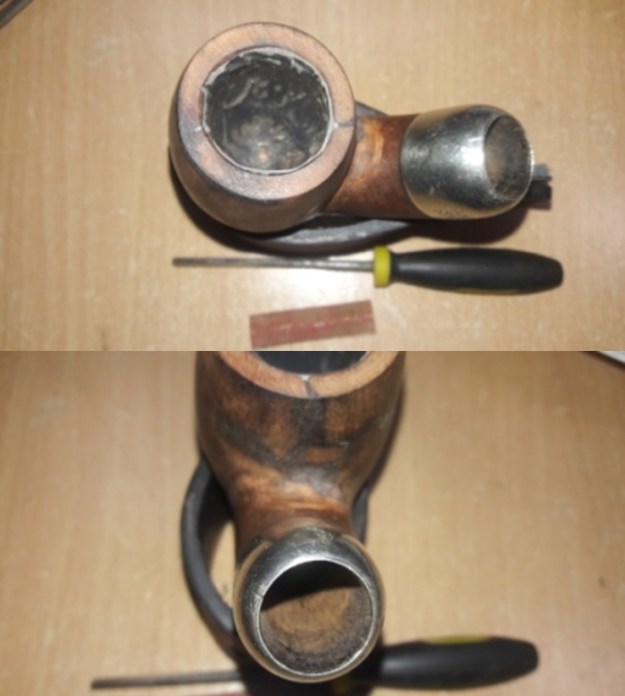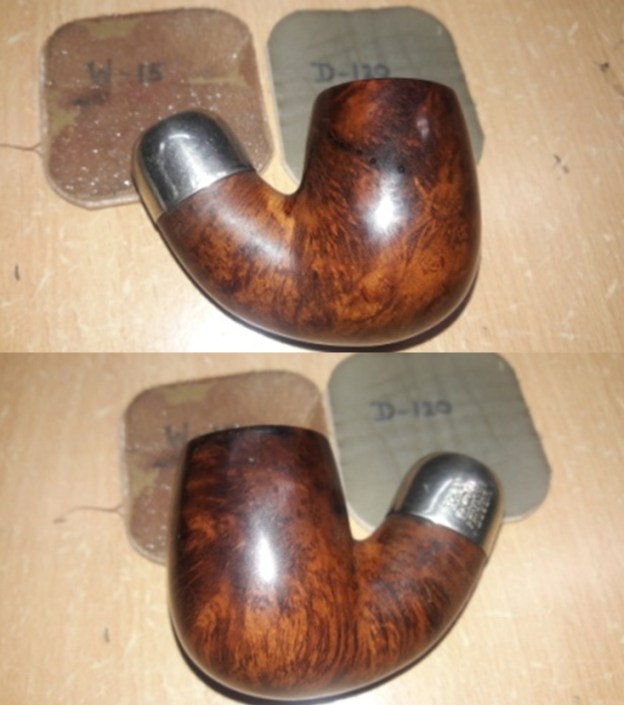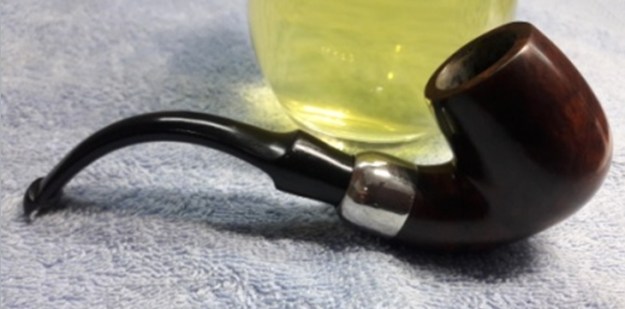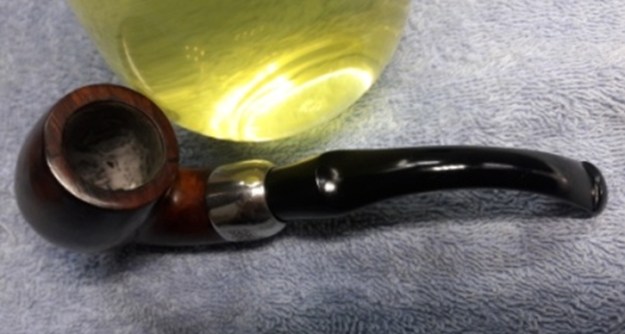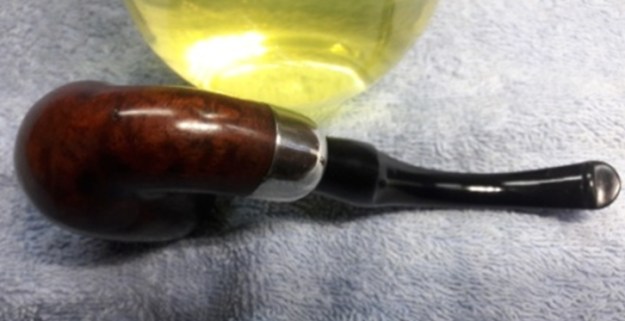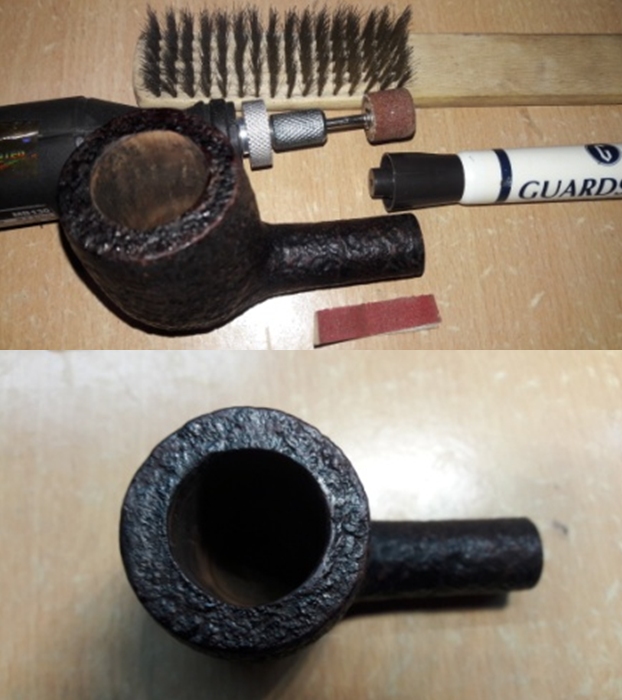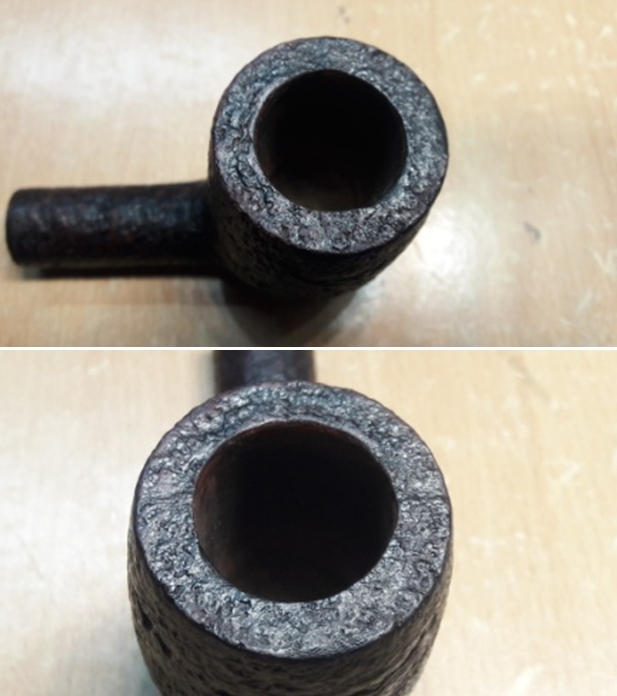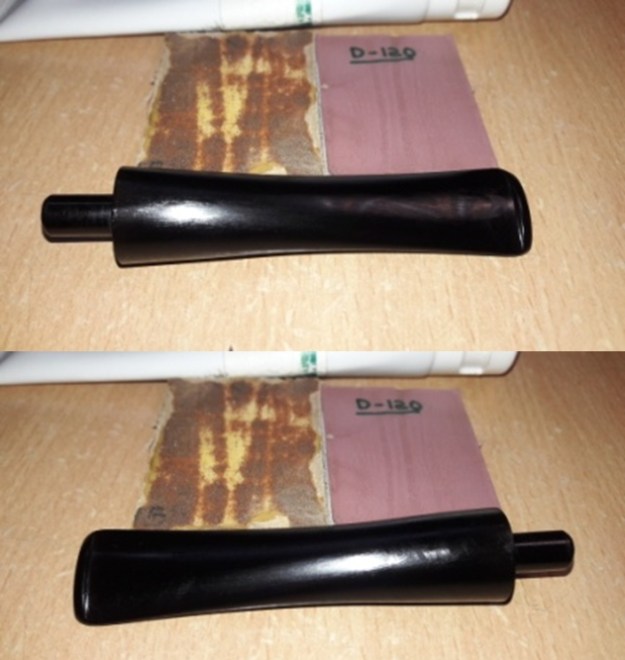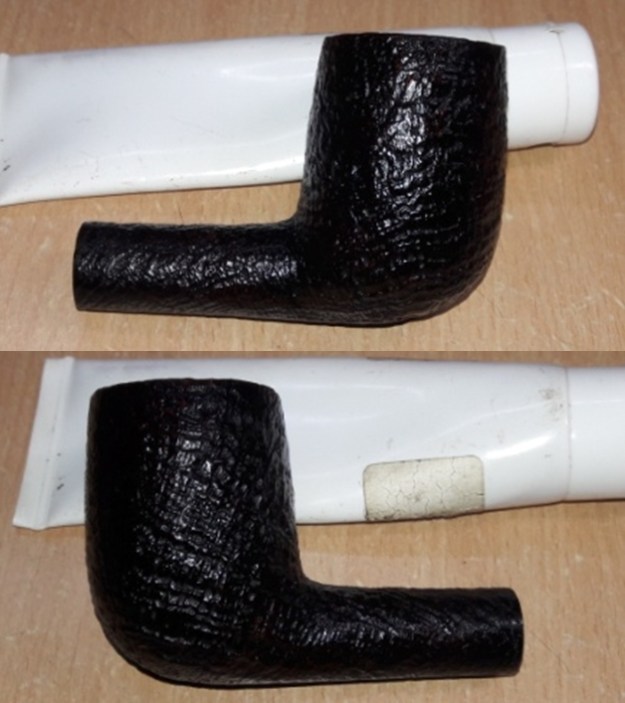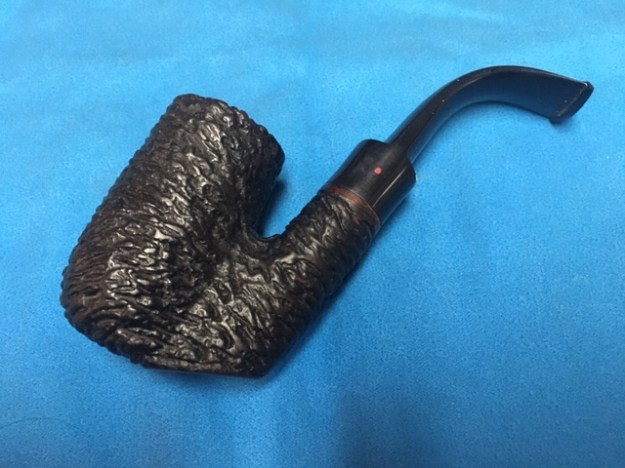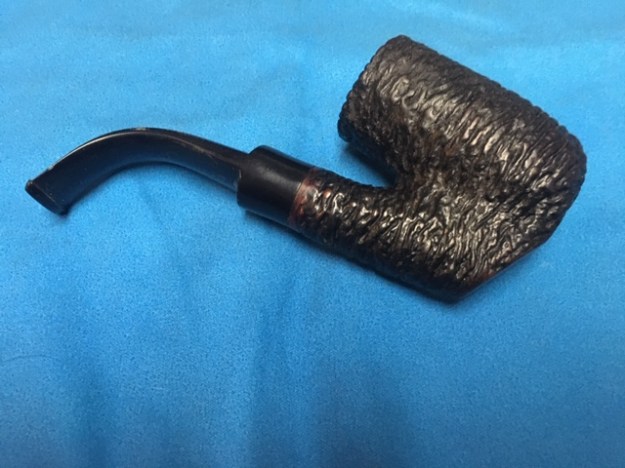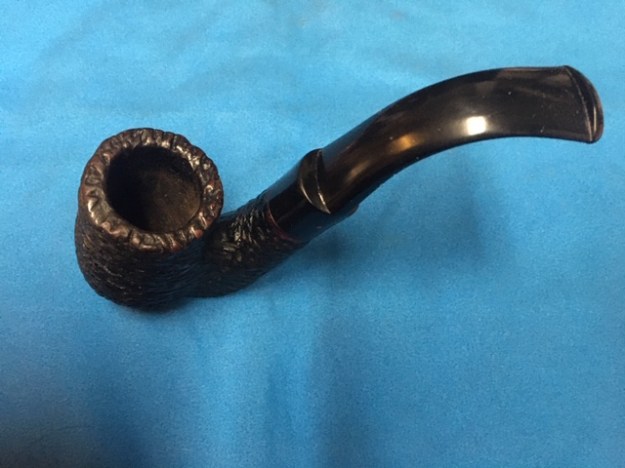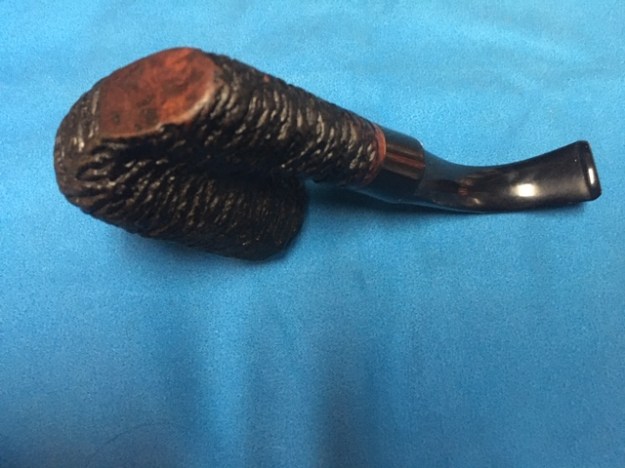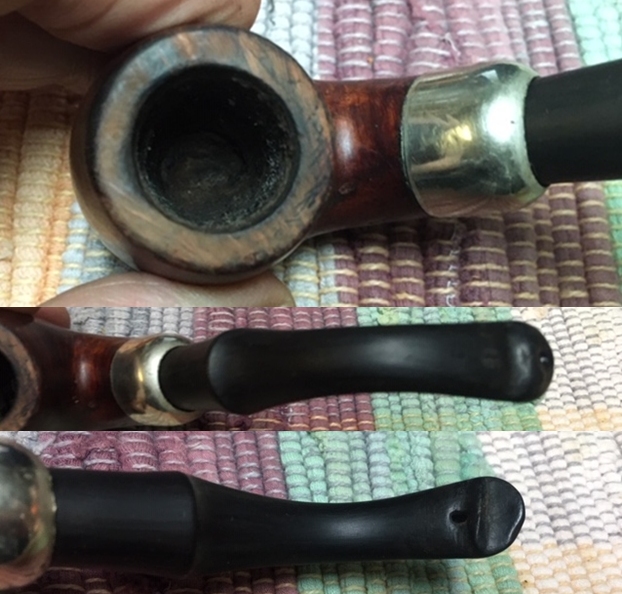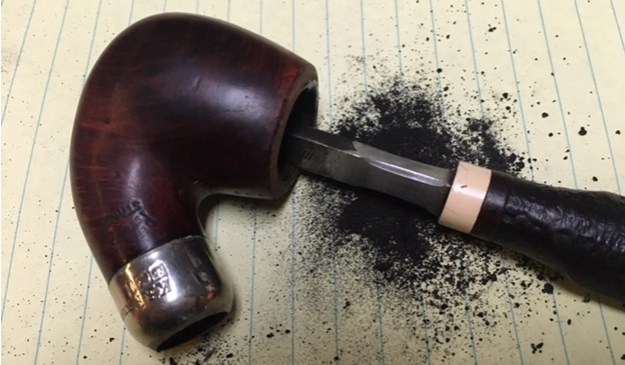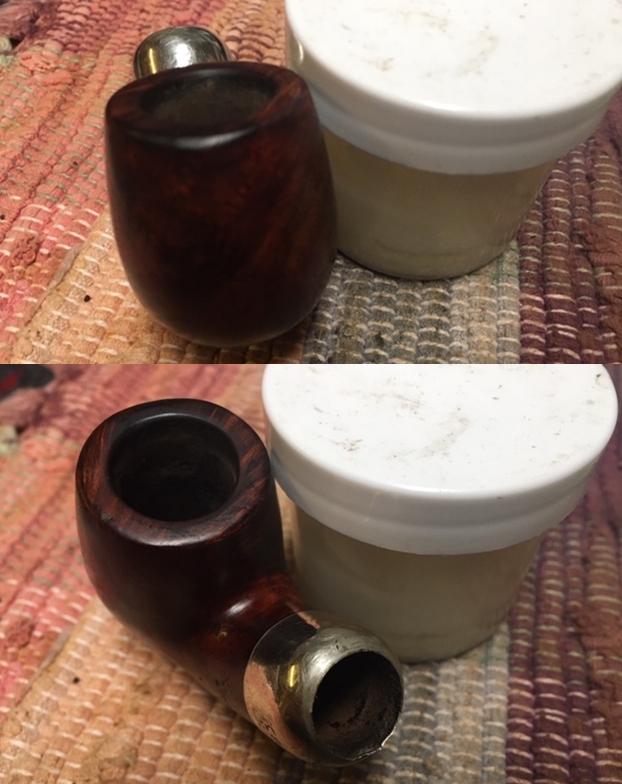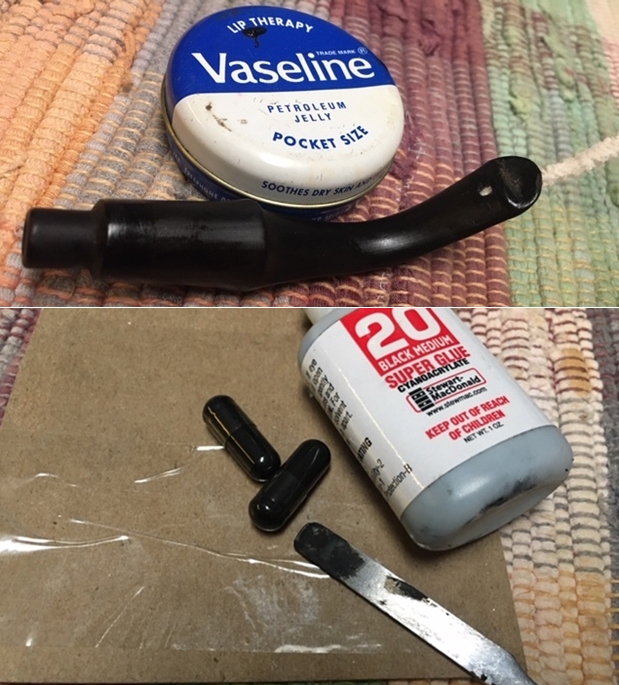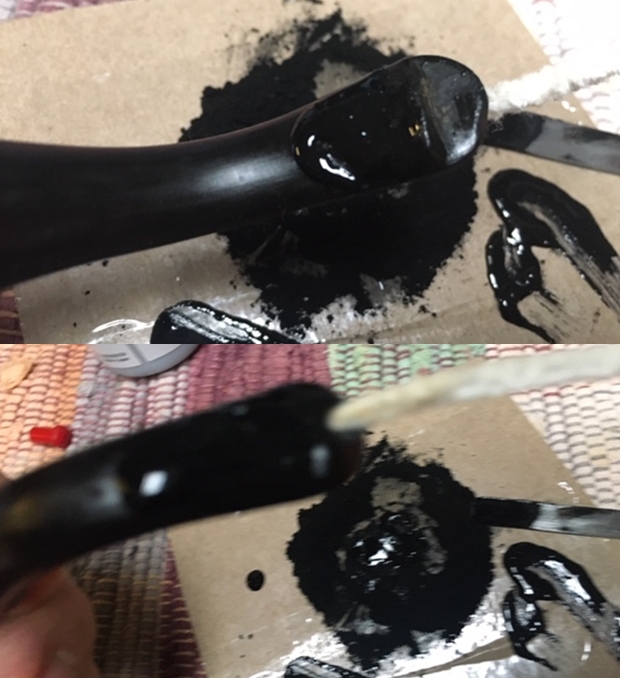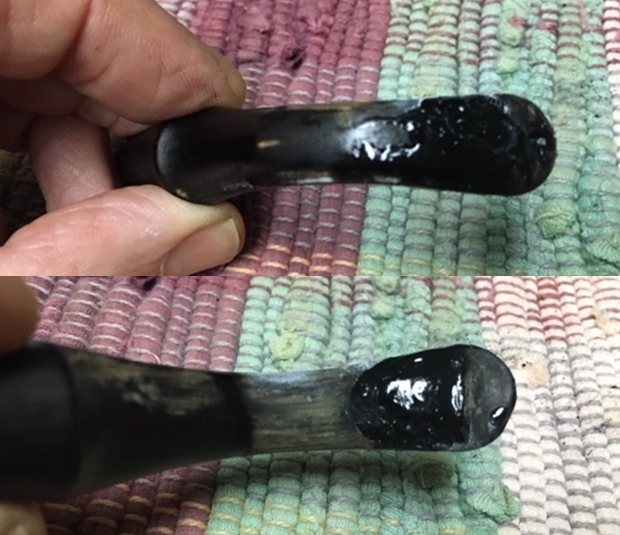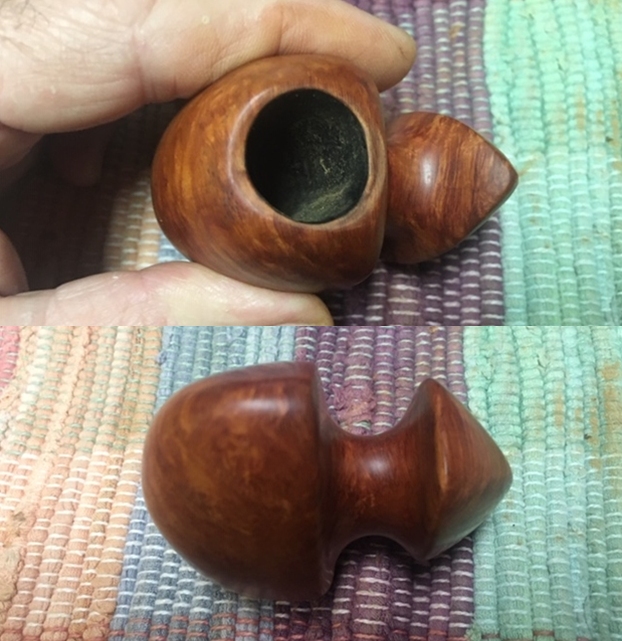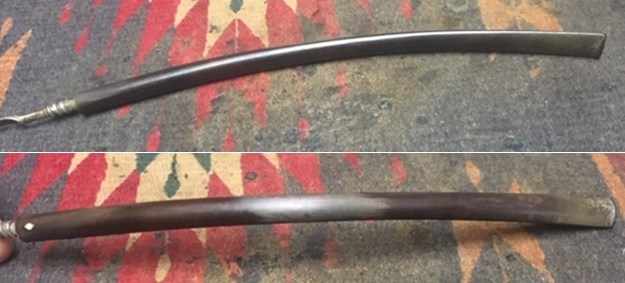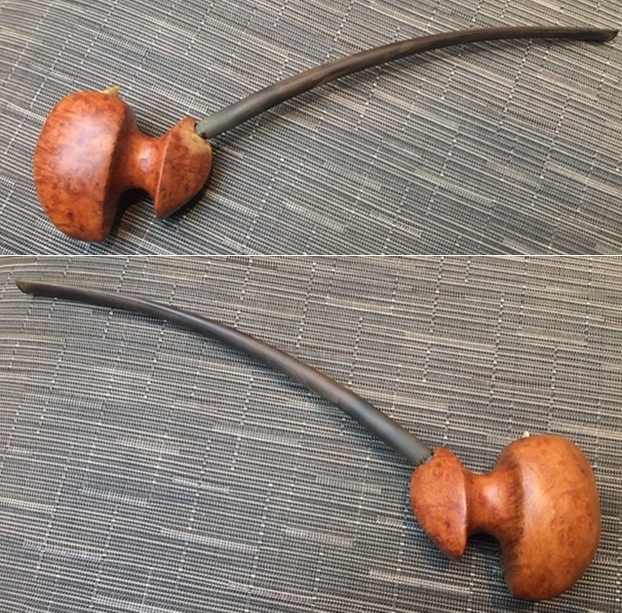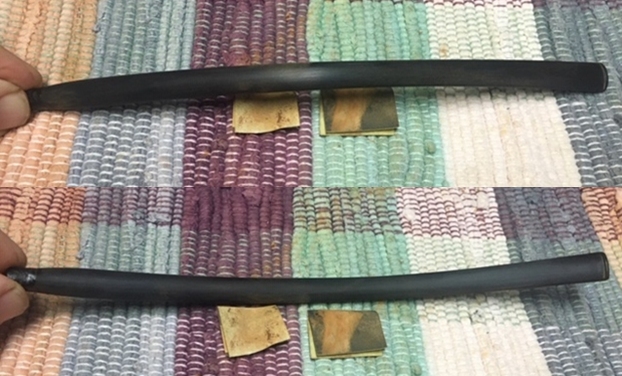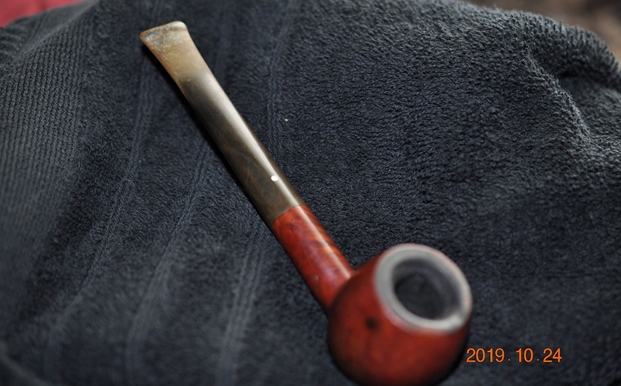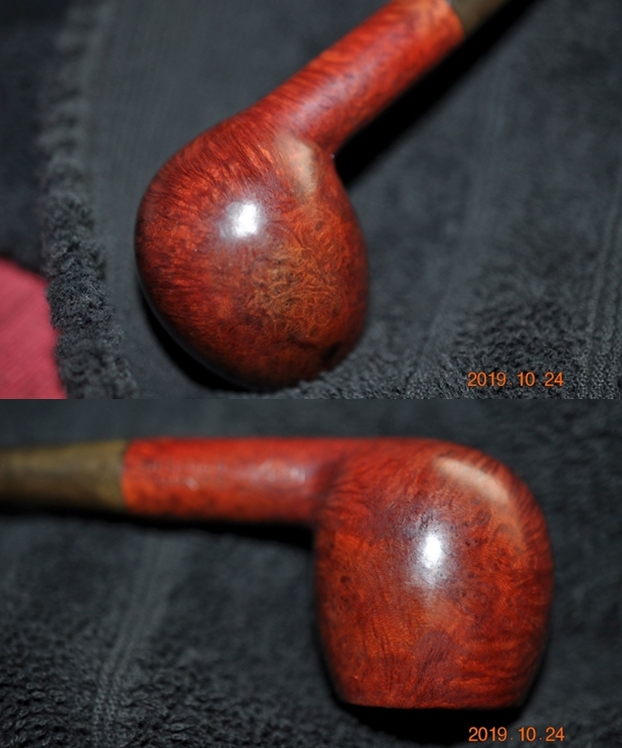
Tag Archives: shaping a stem

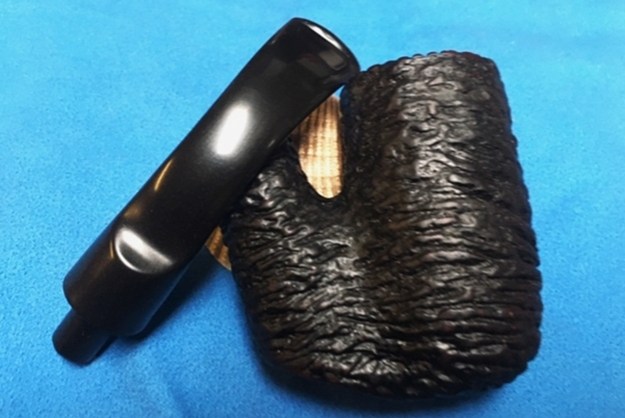
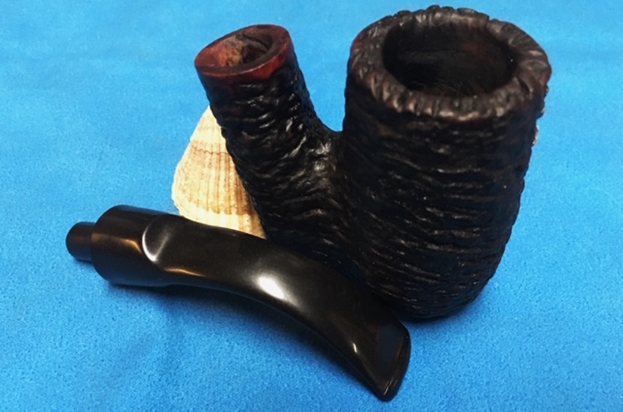
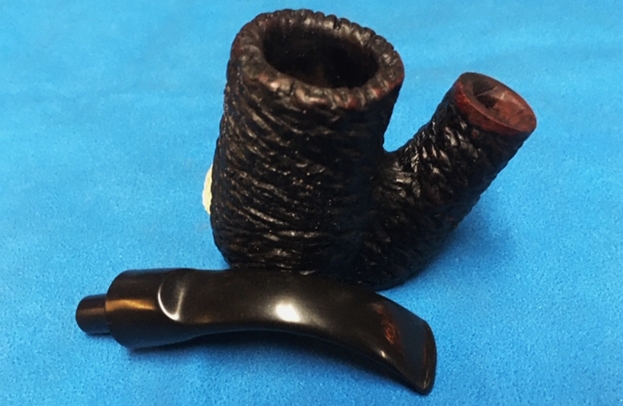
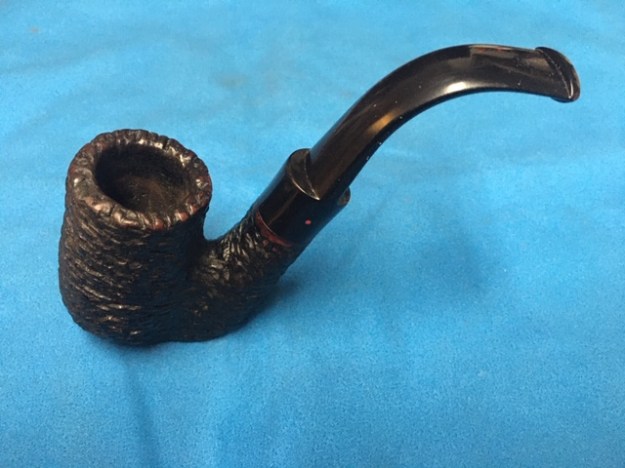
A Challenging Restoration of a Peterson’s System 3, Irish Free State Stamped Pipe


Blog by Paresh Deshpande

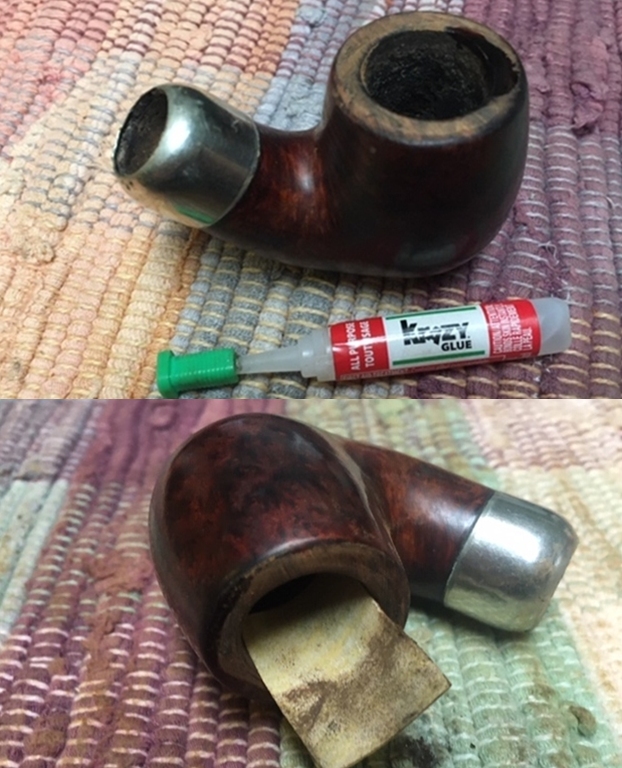
This pipe had been on my ‘to do list’ for long but since it came without a stem and as I did not have one, this project was kept pending since long. Now that I have received my large consignment of estate vulcanite and bone/ horn stems, including one Pete System P-lip stem, I couldn’t help but fish out the Pete stummel again to work on.

Most of my fellow pipe restorers would have turned away from this project that I had decided to work on next. To be honest, I would have led the pack in just consigning this pipe to history, but for the provenance of this Peterson’s System pipe. This pipe had once belonged to my grandfather and from the condition that it was in; it was apparently one of his favorite pipes!!

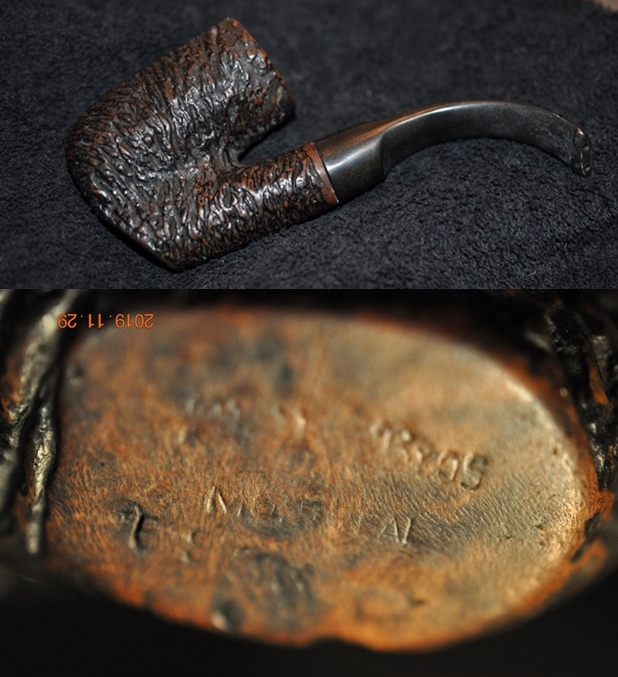
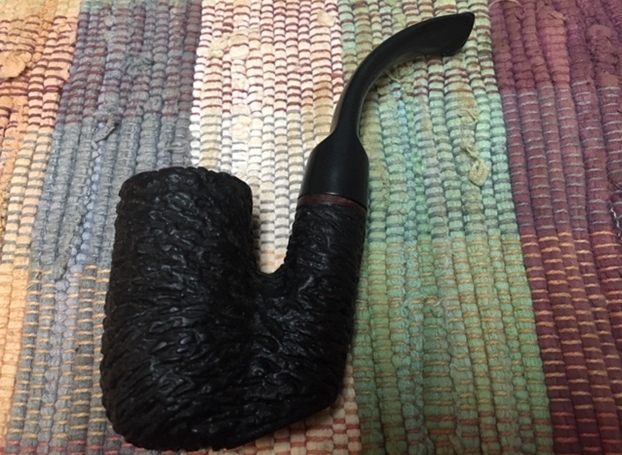
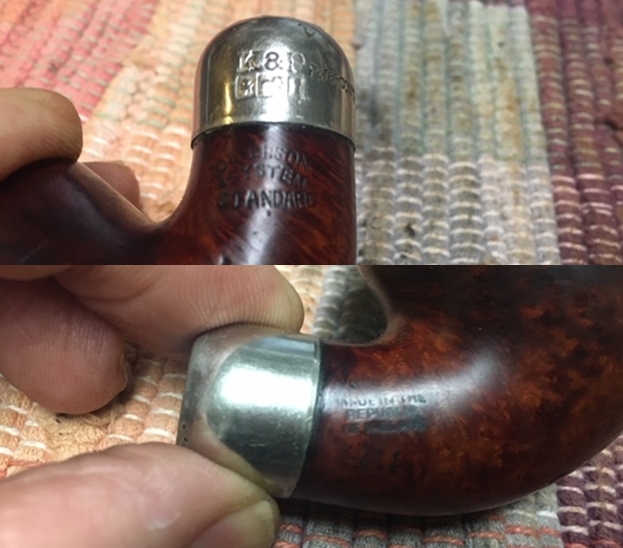
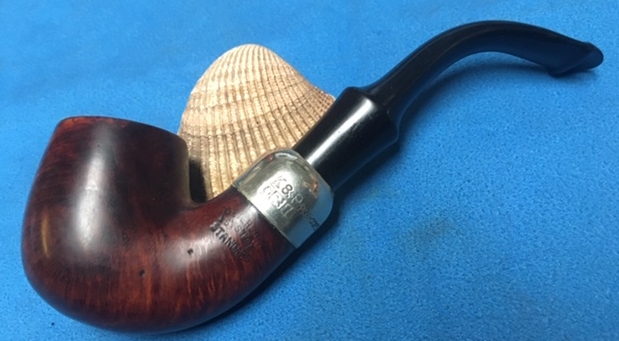
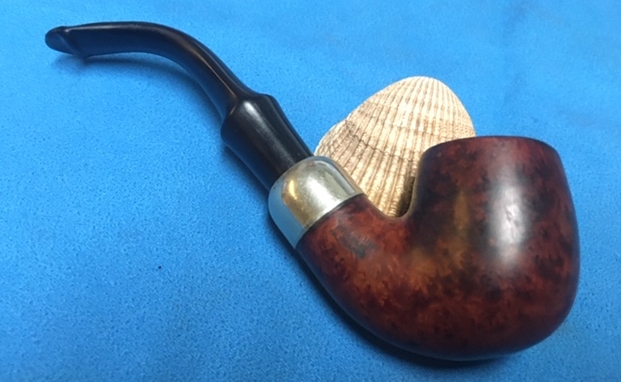
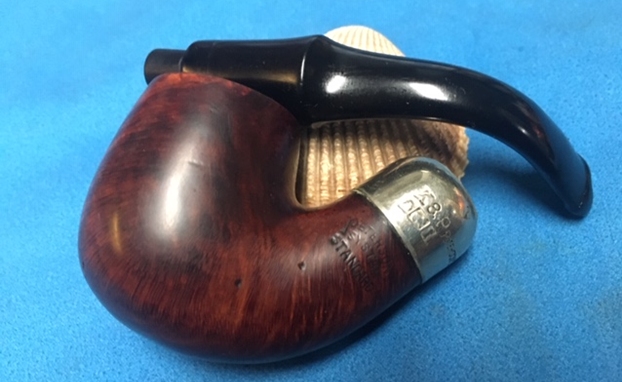
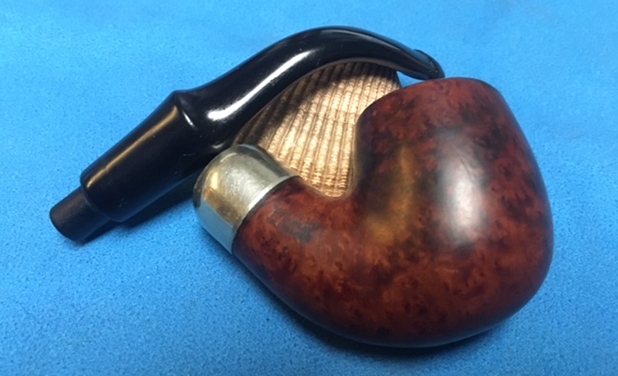
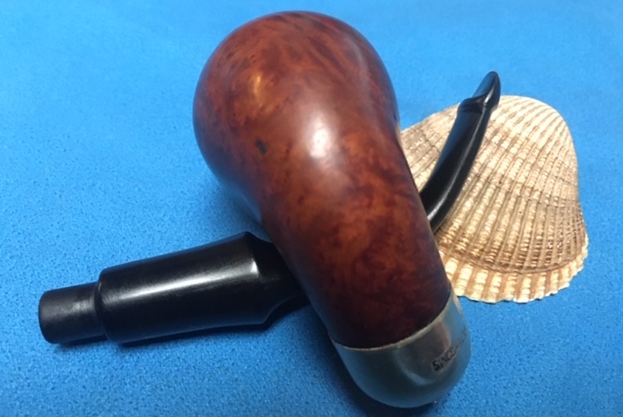
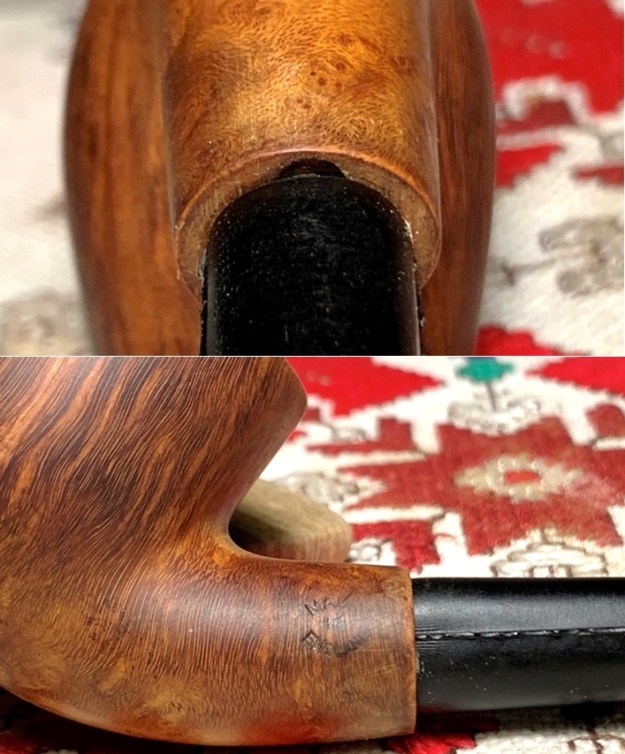
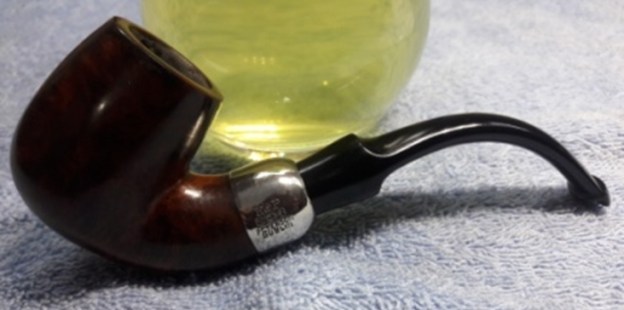
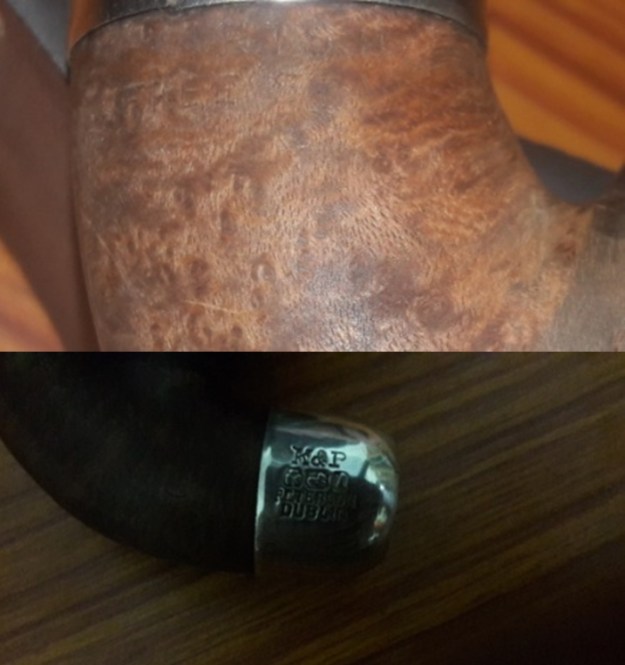
Well, the pipe that is now on my work table is in a pretty badly battered condition and came without a stem. There are ample signs of this pipe having been repaired earlier and extensively smoked thereafter. The stampings are all but worn out and can be seen under a bright light and under a magnifying glass. The left side of the shank bears the stamp “PETERSON’S” over “SYSTEM” over an encircled # 3. The pipe bears the COM stamp of “IRISH” over “FREE STATE” that is stamped perpendicular to the shank axis in two lines and very close to the shank end. The ferrule has the usual three cartouche with first having Shamrock, the second a Prone Fox and lastly a Stone Tower. Stamped above the cartouche are the letters “K & P” and is stamped below as “PETERSON’S” over “DUBLIN”. Having worked on quite a few old Peterson pipes from my inheritance and few from my Mumbai Bonanza, I was pretty sure that this pipe dates to 1920- 30 time period. To confirm this and also refresh my memory, I turned to my favorite site rebornpipes.com and to a write up “A Peterson Dating Guide; a Rule of Thumb” by Mike Leverette, here is the link (https://rebornpipes.com/2013/08/11/a-peterson-dating-guide-a-rule-of-thumb-mike-leverette/)
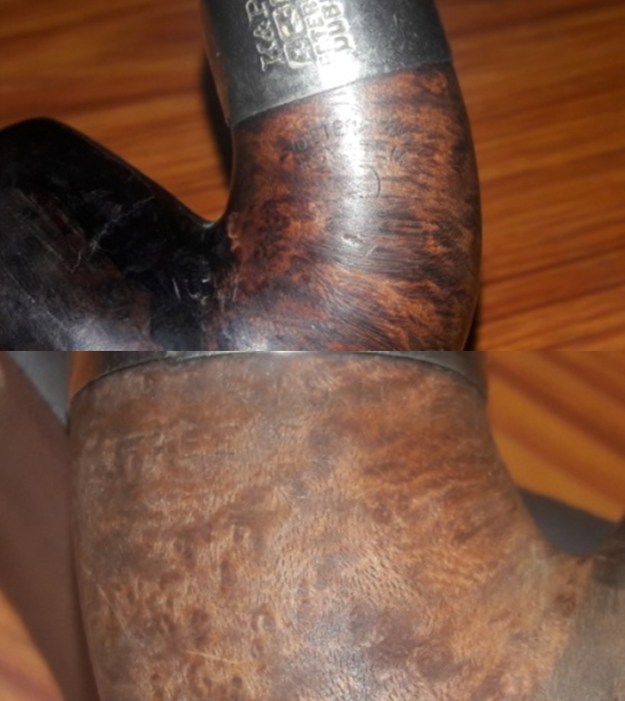
Here is what I have found and I reproduce it verbatim from the write up:-

The Irish Free State was formed on 15 January 1922. So the Free State Era will be from 1922 through 1937. Peterson followed with a COM stamp of “Irish Free State” in either one or two lines, either parallel or perpendicular to the shank axis and extremely close to the stem.

Thus, it is confirmed that this pipe is from the period 1922 to 1937 and this has to be one of the earliest Peterson’s pipes that was in my grandfather’s rotation and probably one that was his favorite.

INITIAL VISUAL INSPECTION
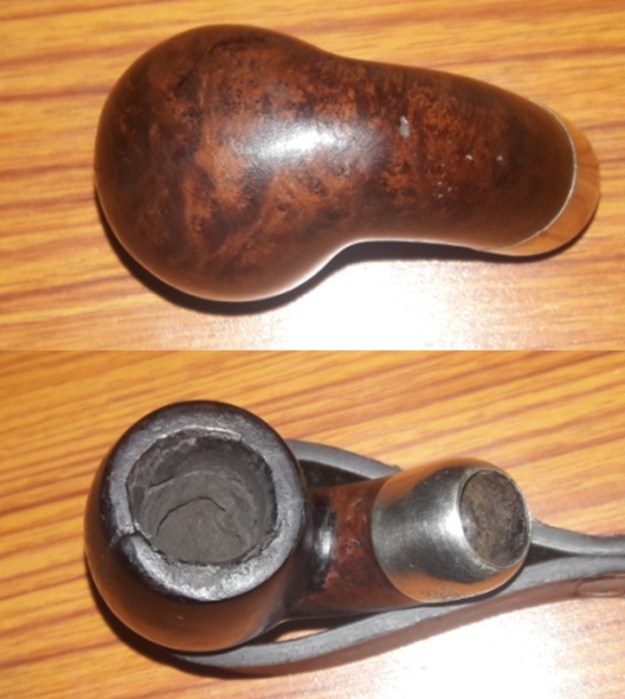
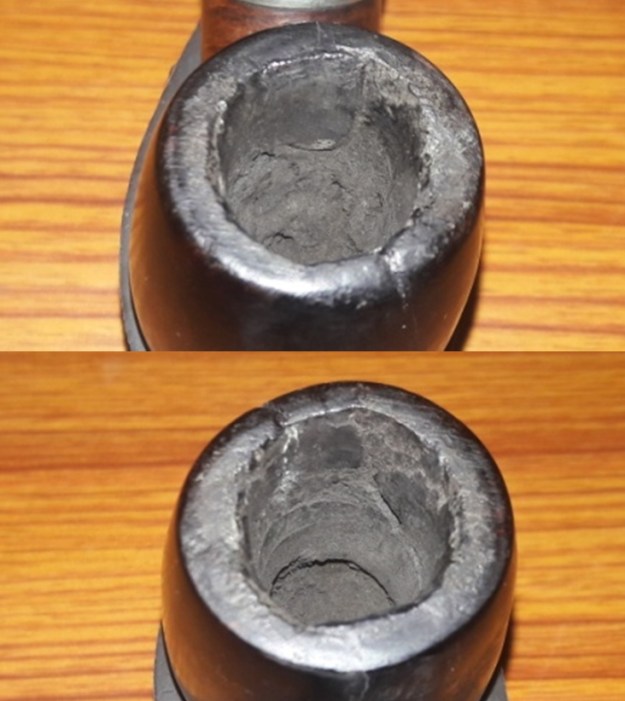
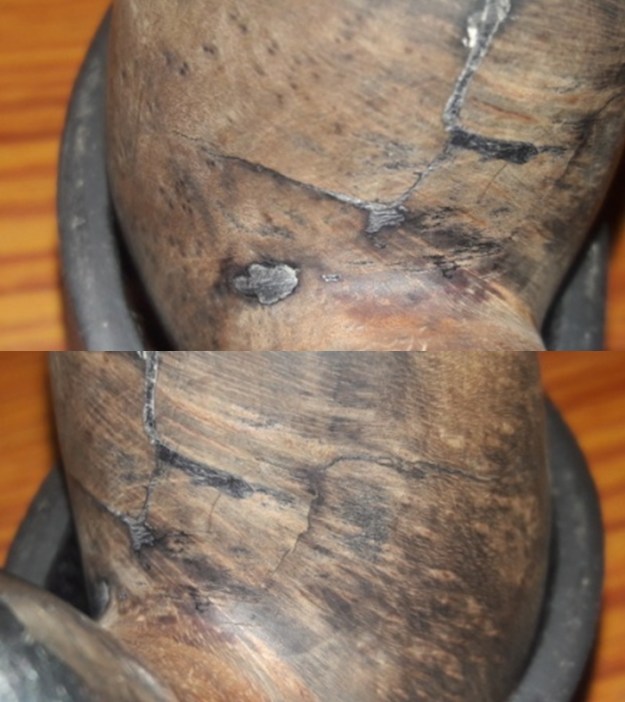
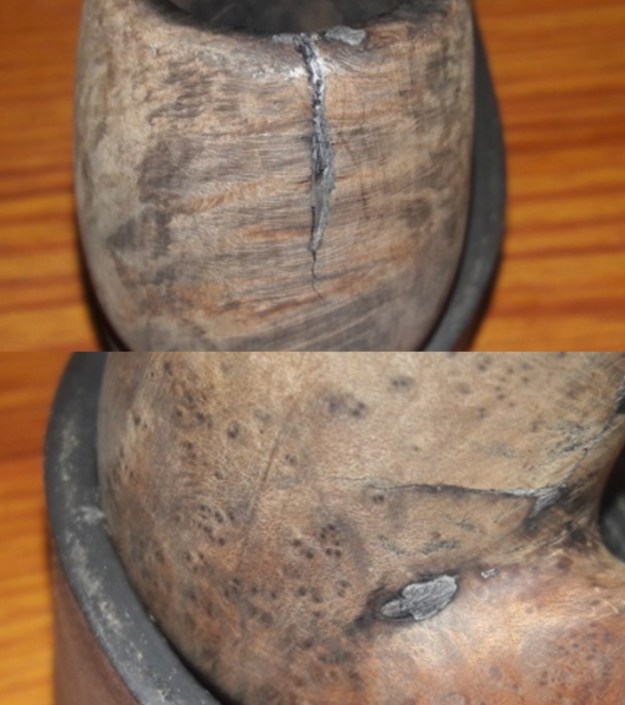
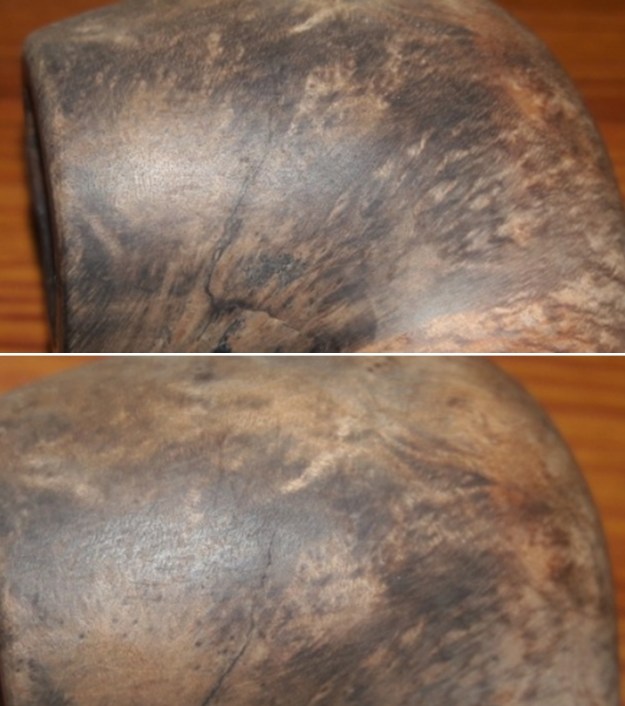
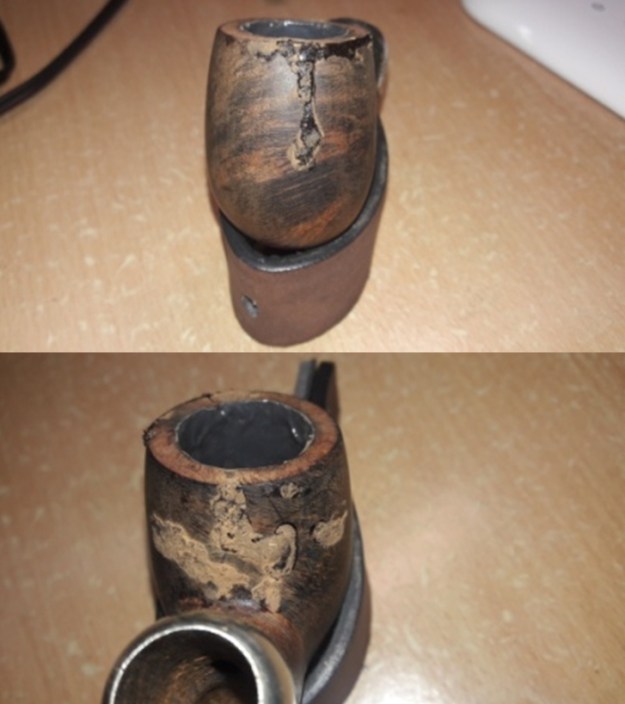
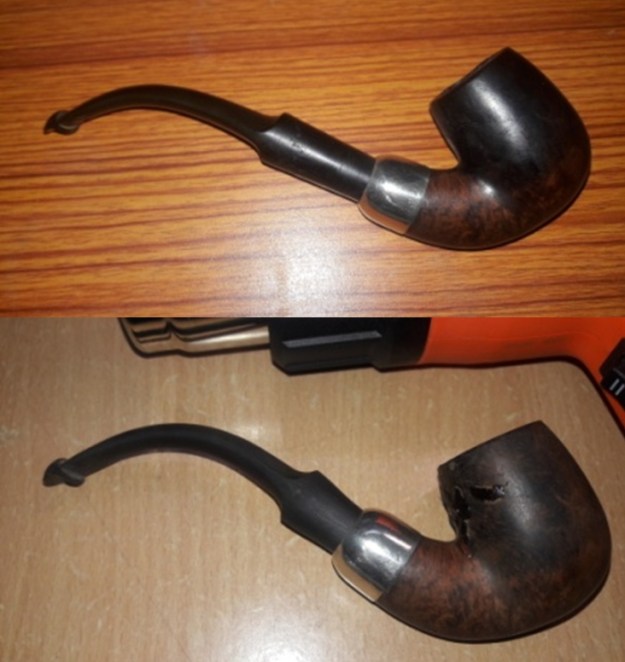
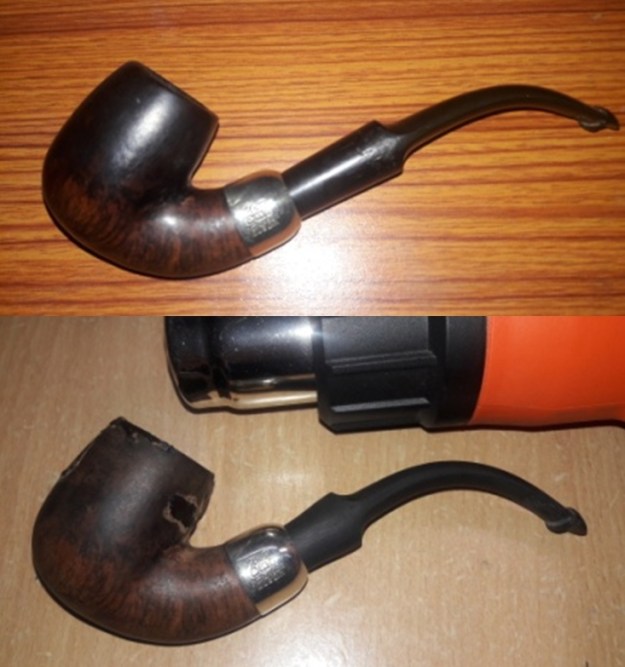
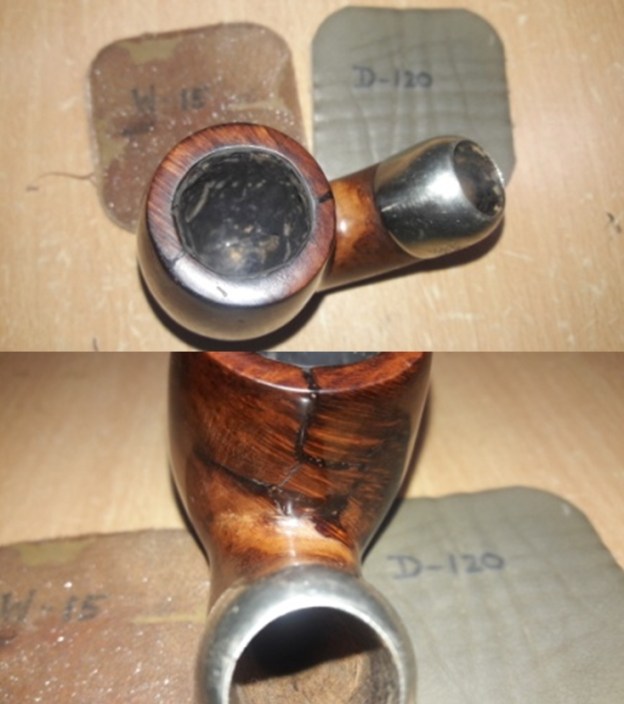
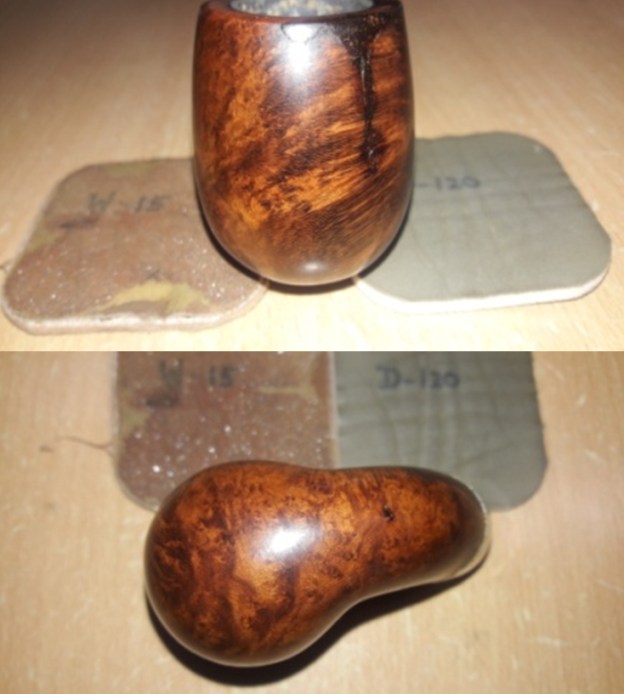
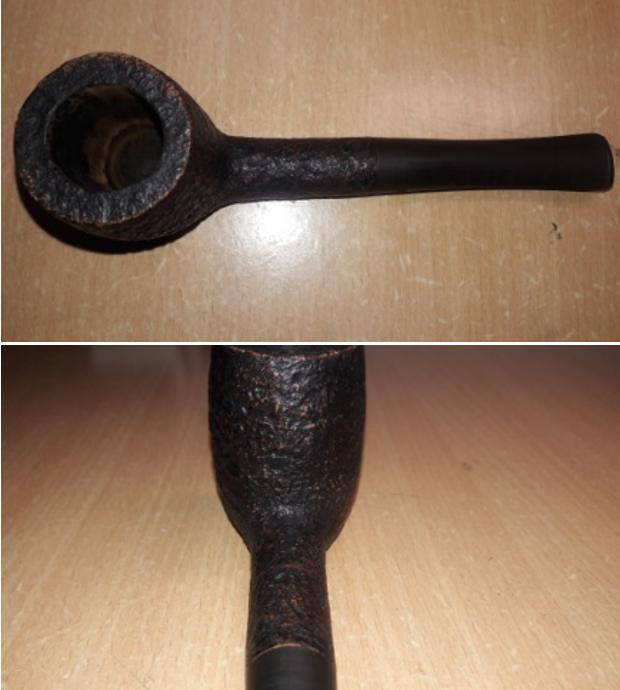
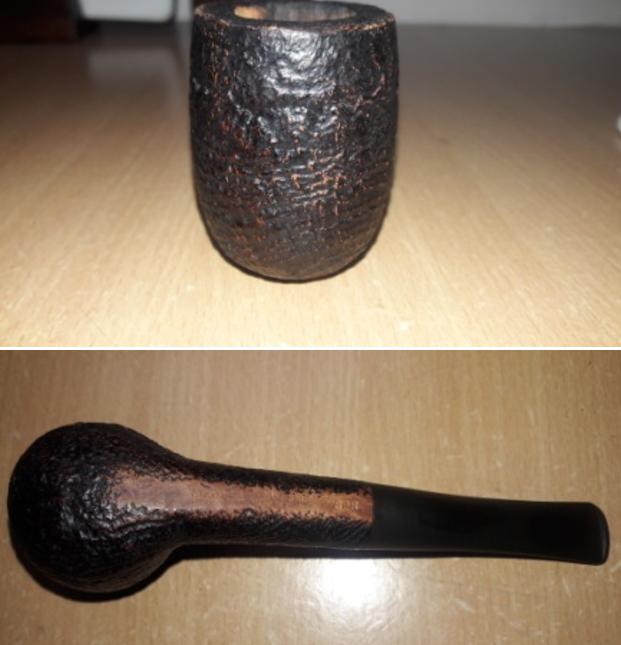
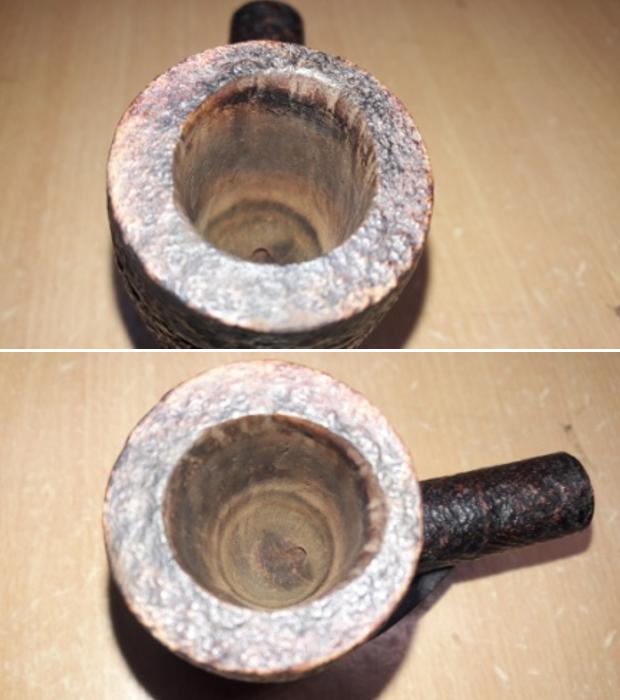
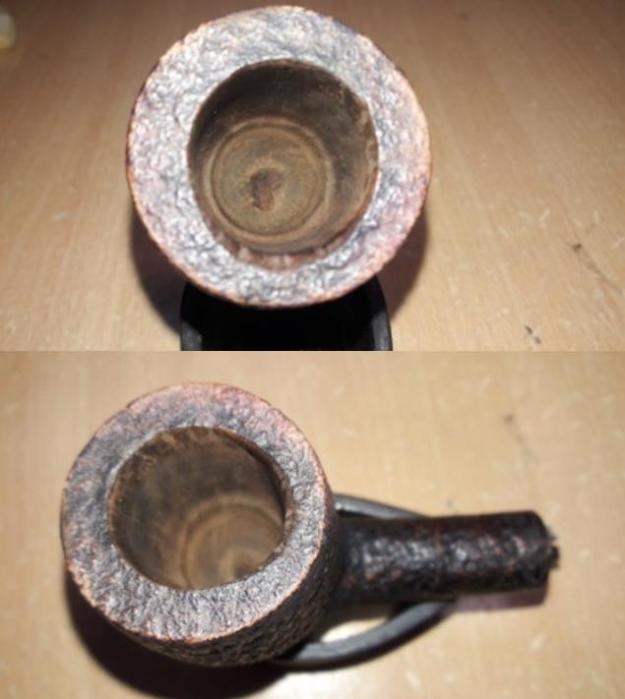
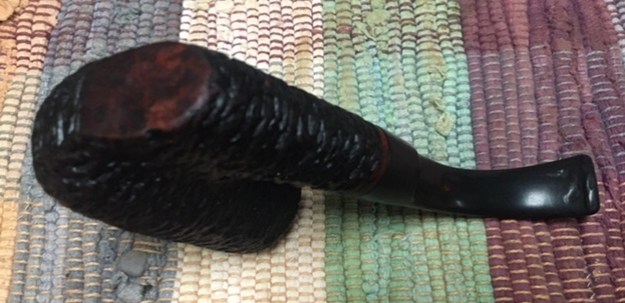
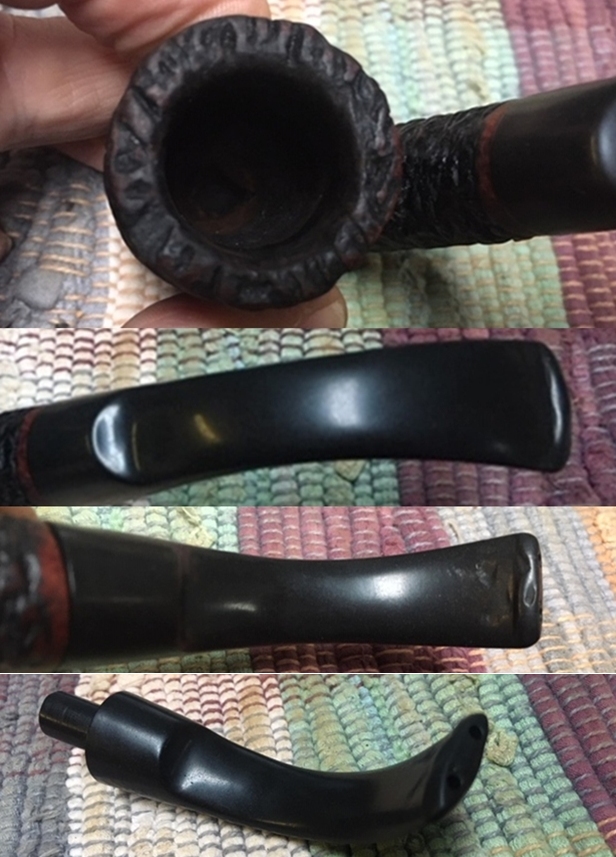
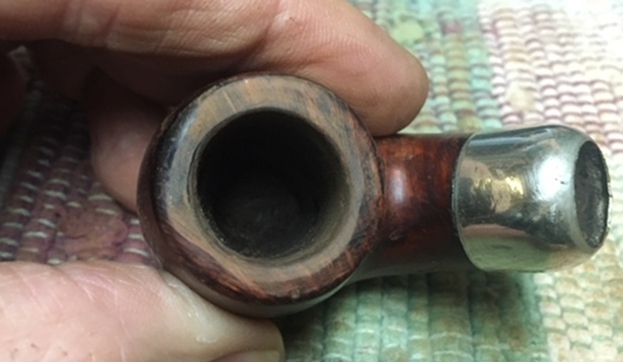
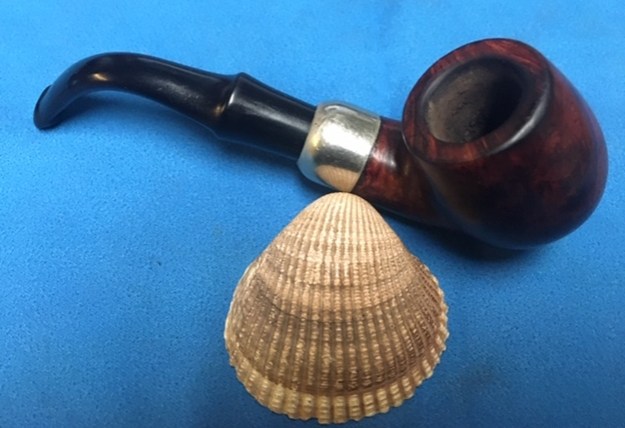
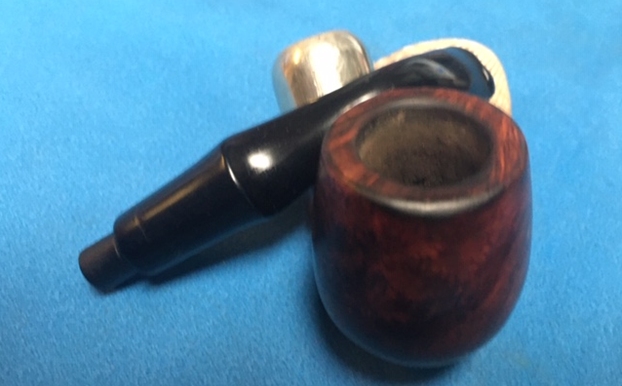
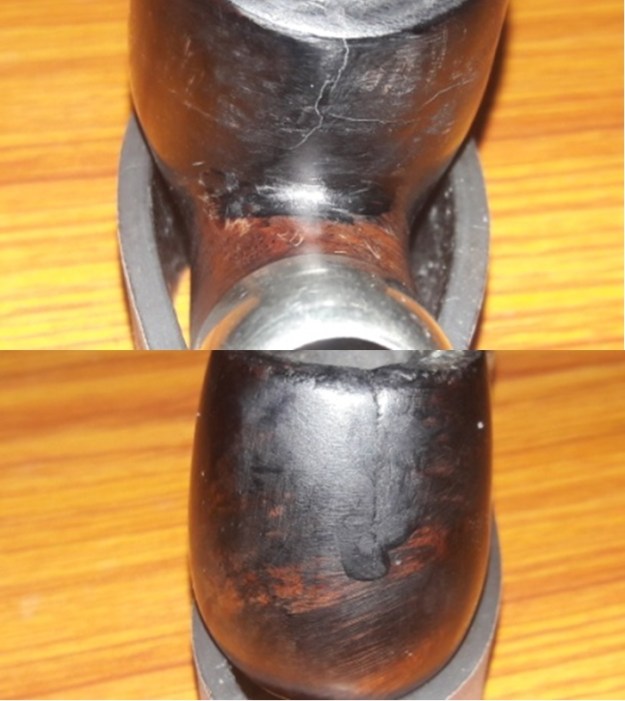
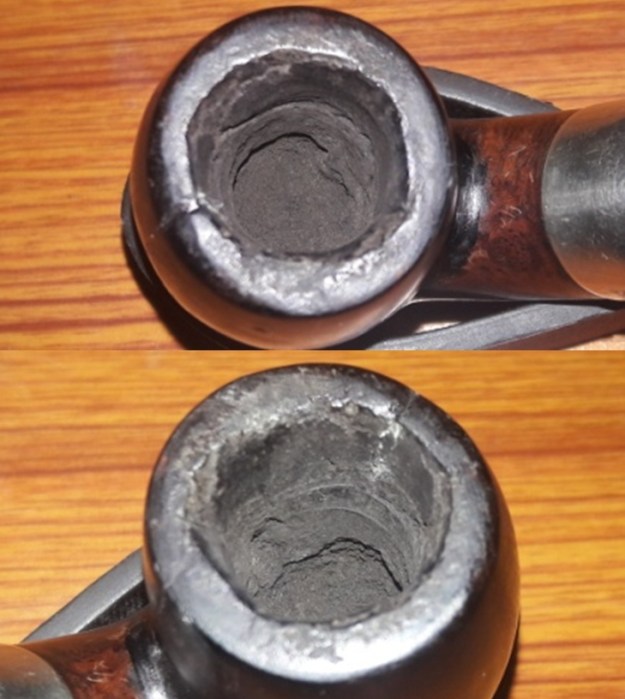
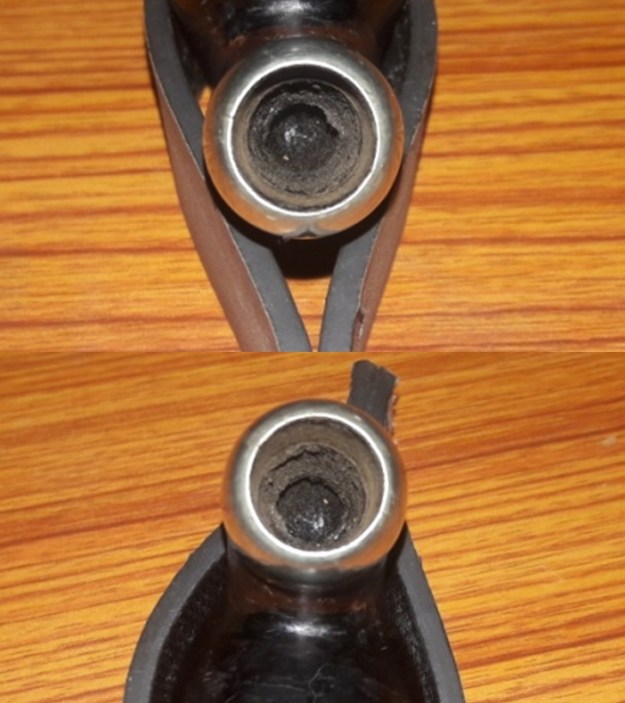
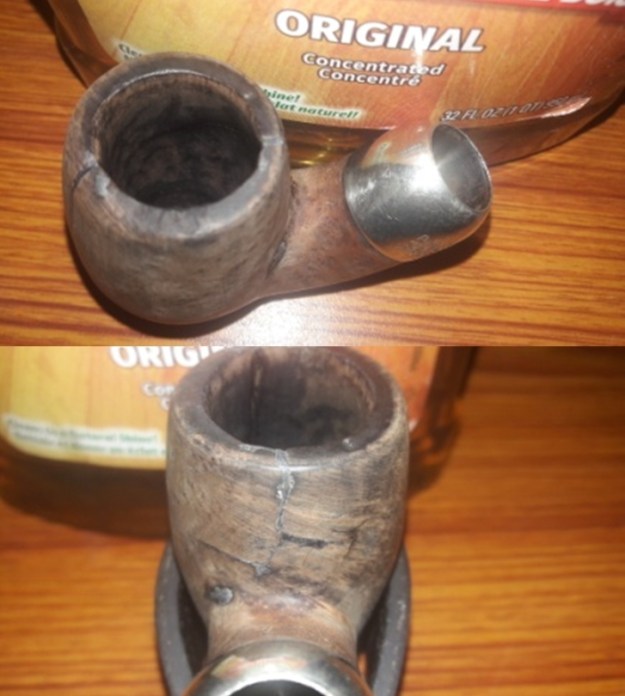
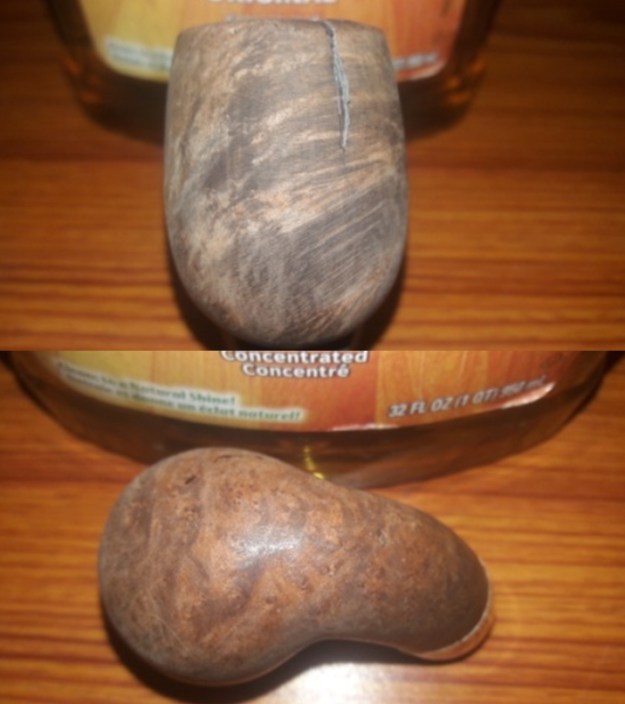
The stummel is covered in dirt and grime. All that catches your eyes is the dirty darkened upper portion of the stummel something like a flume, but not quite like it!!! Closer examination confirmed my worst fears….. CRACKS!! Yes, crack with an ‘s’. There are a couple of major cracks, one to the front of the stummel in 11 o’clock direction and the second major crack is at the back of the stummel. It is from the end of this big crack that three smaller and fine lined cracks emanate creating a web of cracks at the back and extending to the sides of the stummel. These cracks appear to have been repaired at some point in the past, definitely more than 40 years back, and these repairs have been camouflaged under a blotchy coat of black stain. The exact extent of damage can be assessed only after the external surface of the stummel had been completely cleaned and under magnification. The foot of the stummel has a number of dents and dings which needs to be addressed. In spite of all the cracks and its subsequent repairs, this pipe had been in continuous use as is evidenced by the thick layer of cake in the chamber. It seems that my grandfather even took the efforts to keep the thickness of the cake to a dime, not successfully though and so unlike him!! The rim top surface is completely out of round with the cracks extending over the rim top in to the chamber. The extent of these cracks in to the chamber and damage to the walls will be ascertained only after the chamber is cleaned off the complete cake. The rim top is covered in a thick layer of lava overflow. The ghost smells are ultra-strong, I say.The mortise, shank and especially the sump are chock-a-block with old oils, tars, grime and residual flecks of tobacco. The air flow through the draught hole is laborious and will require a thorough cleaning.There being no stem with this pipe, the biggest challenge will be to find one that fits. Nonetheless, this particular pipe, though I desire to restore and preserve, I am not sure what the real condition of the stummel would be under all the dirt and grime and even if it’s worth the efforts that would be needed.
THE PROCESS
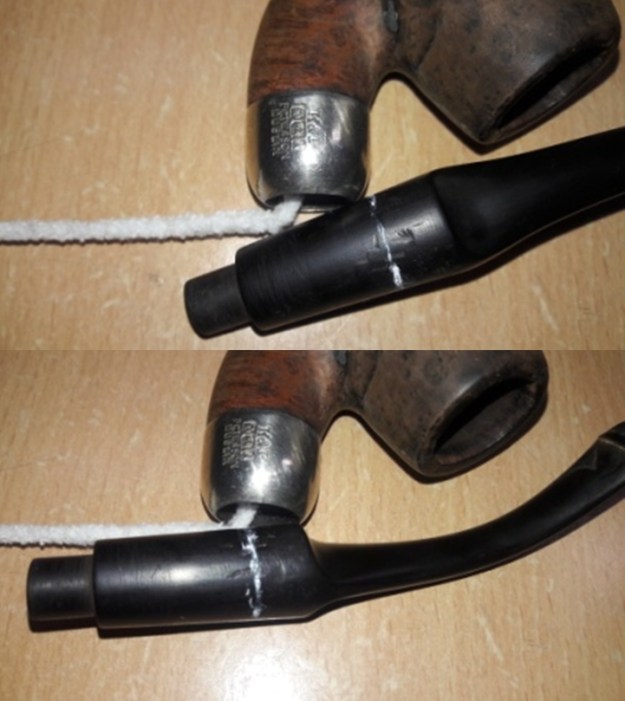
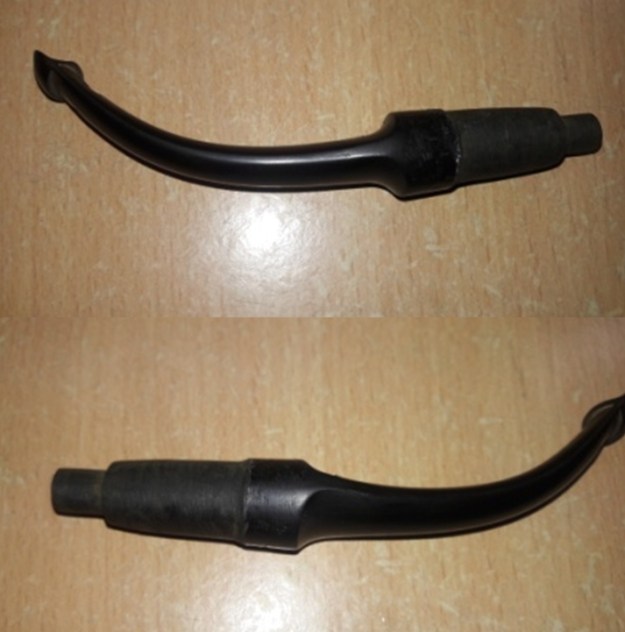
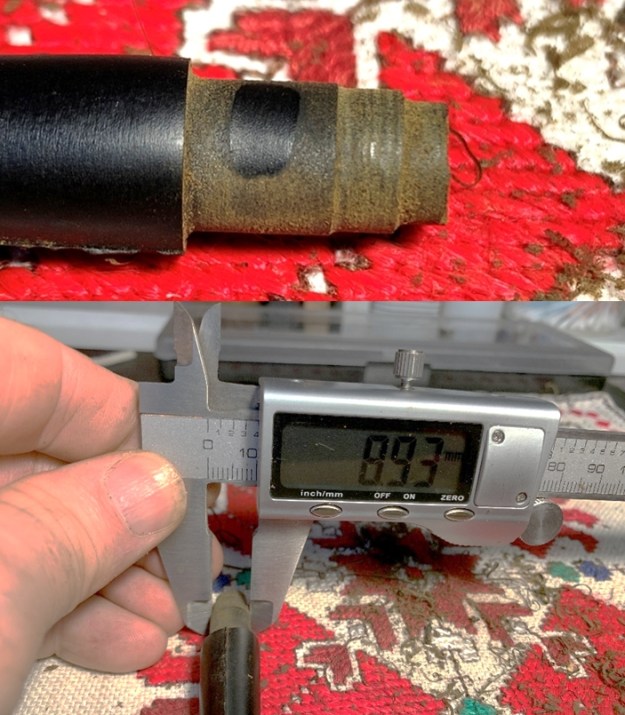
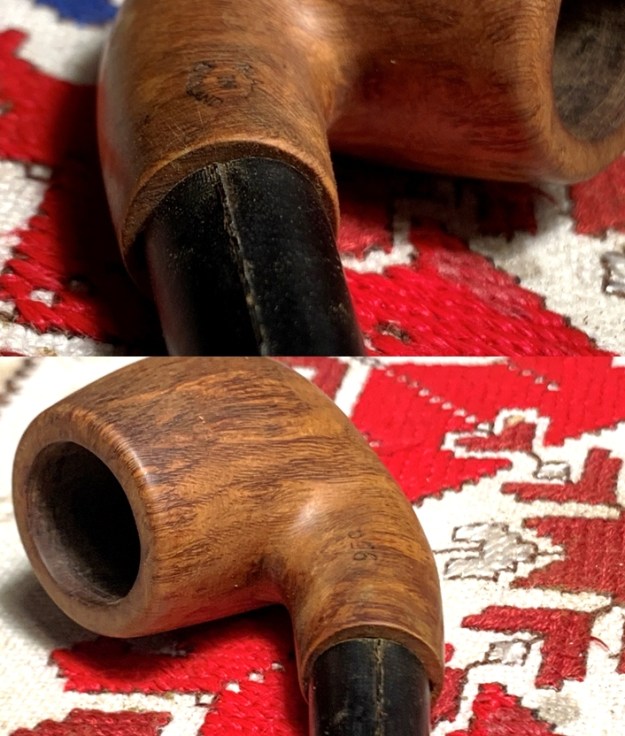
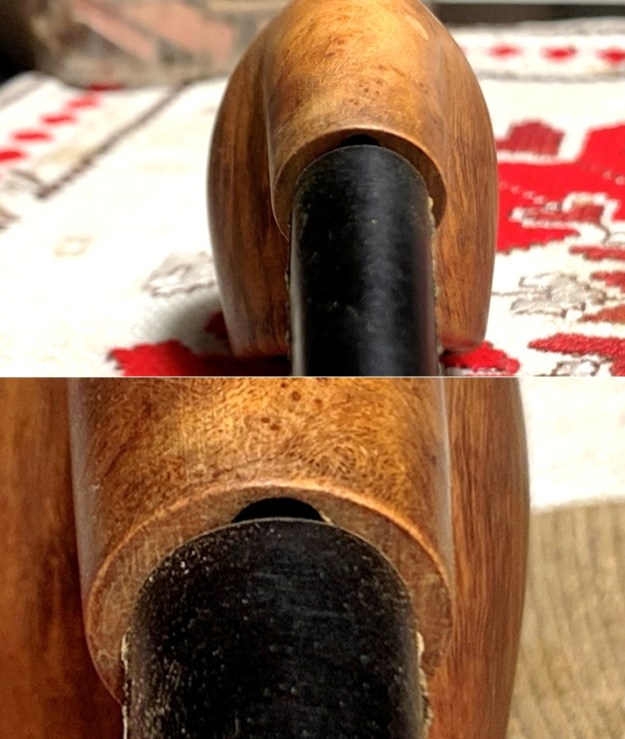
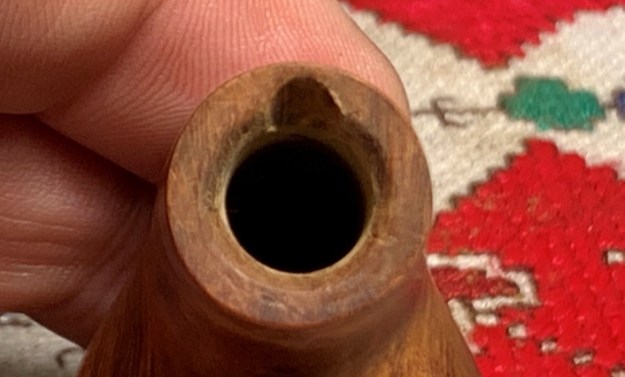
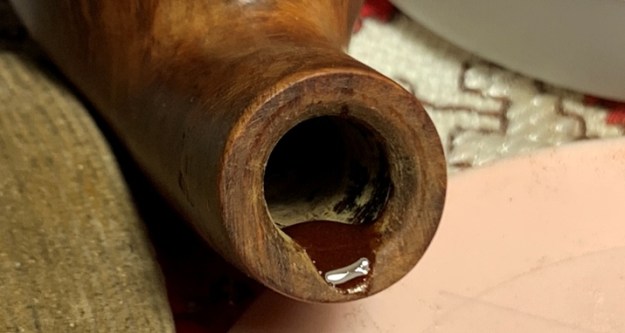
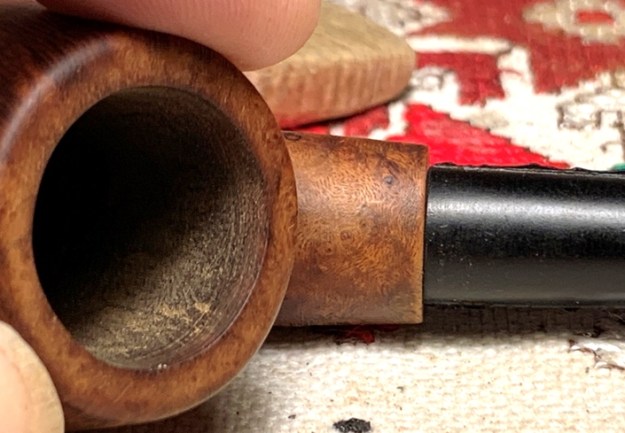
The first obvious issue that I wanted to address was to find a correct stem, preferably original P-lip stem, for the pipe. I rummaged through the parcel of estate pipe stems that had only recently reached me and I knew it contained a Pete System P-lip stem. I fished it out and tried the fit of the stem in to the mortise. Here is what I saw. Though the fit appears to be good in pictures, that is not so!! There are these following issues which are difficult to gauge from the pictures:
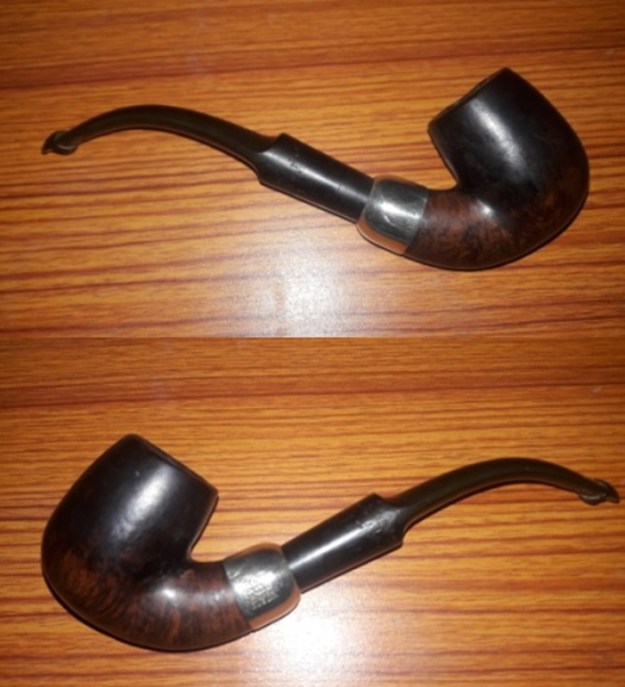
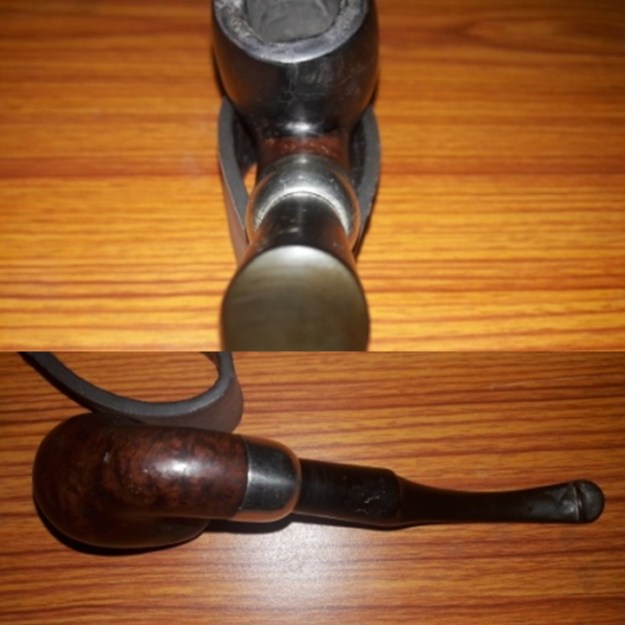
(a) The stem does not seat firmly into the mortise. There is a play between the tenon and the walls of the mortise; this, in spite of the rubber packing that the tenon came with. Or is this play a result of the rubber packing?

(b) The seating of the stem is too high. The tenon end does not reach anywhere near the draught hole, let alone reach slightly below it for the system to work.

(c) The stem, if pushed further in to the mortise would put additional pressure on the walls of the mortise, subsequently resulting in cracks at the shank end.

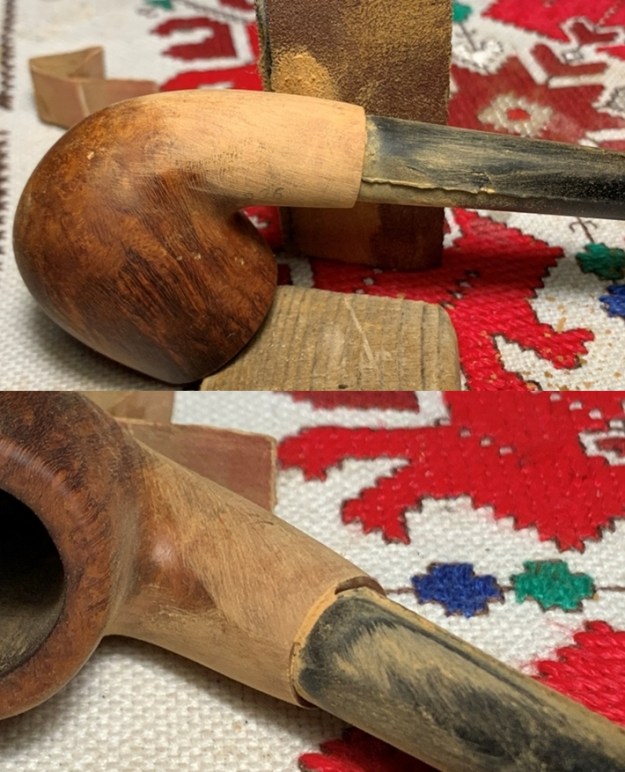
(d) The plane of the bowl and the bend of the stem are not aligned. The stem is too straight making for an awkward appearance.

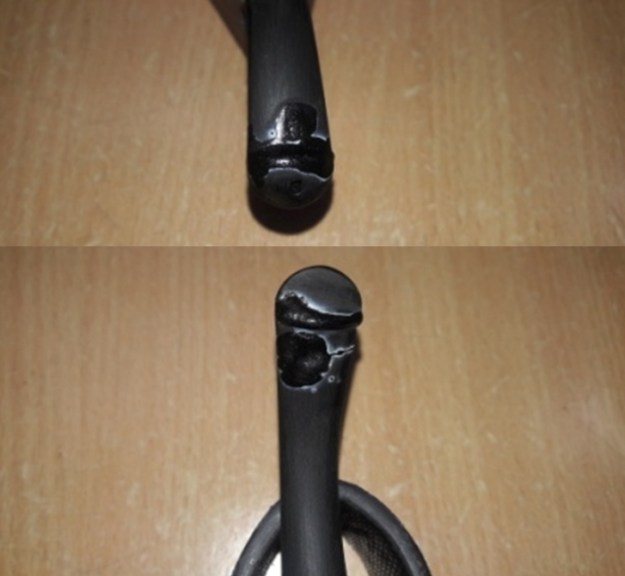
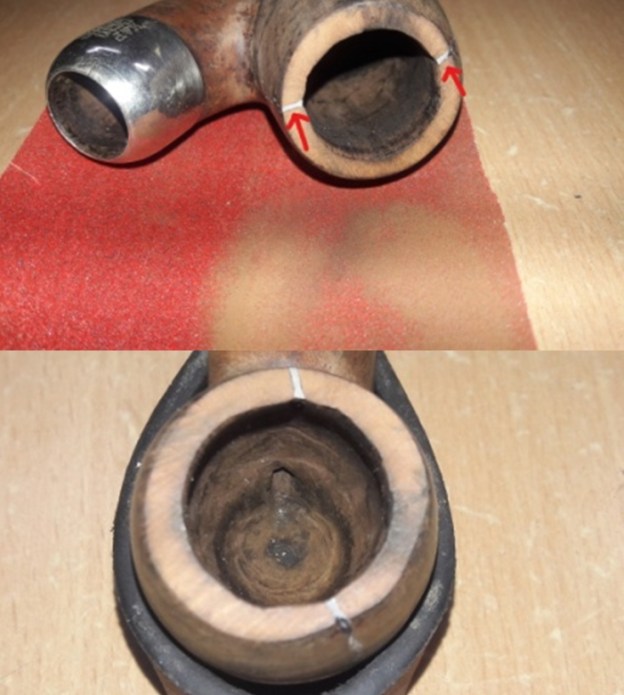
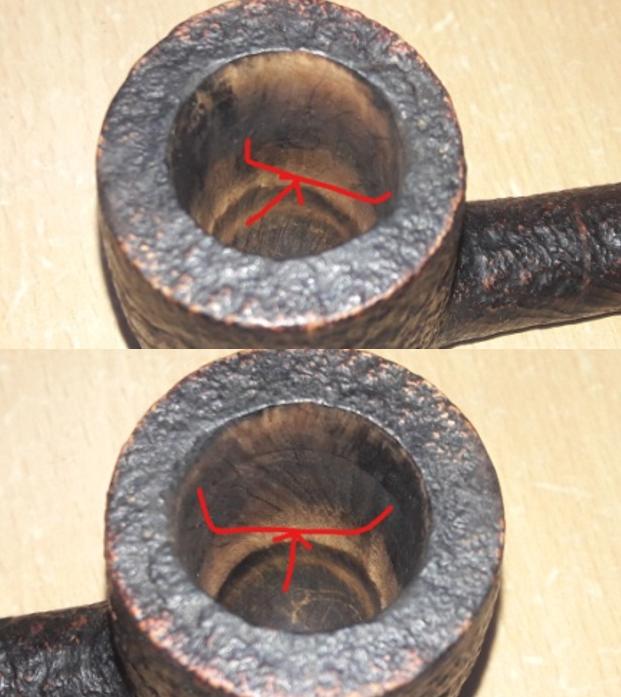
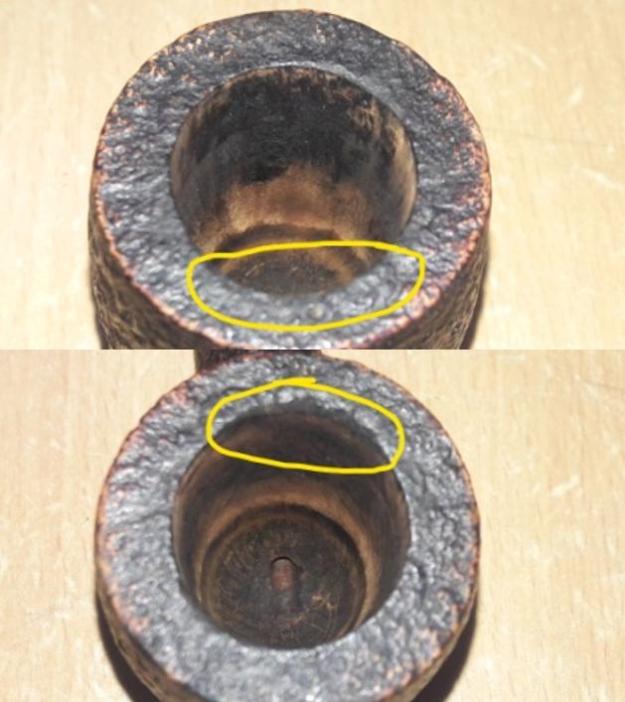
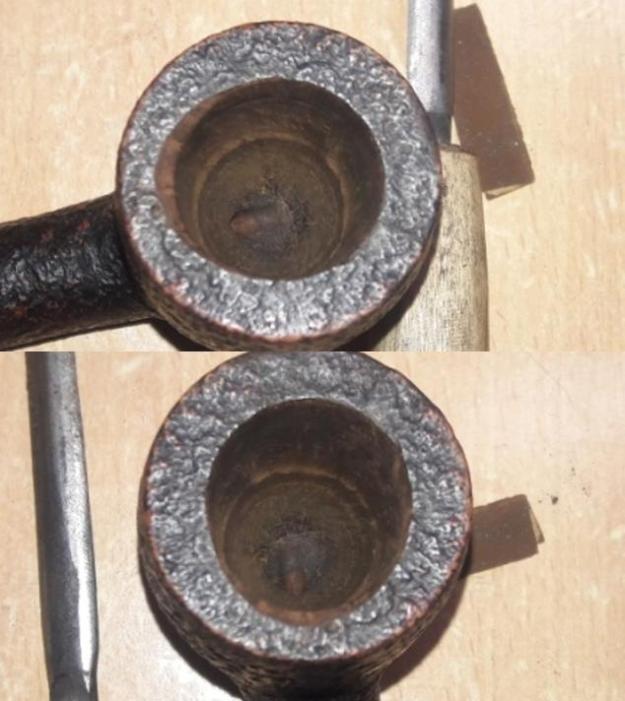
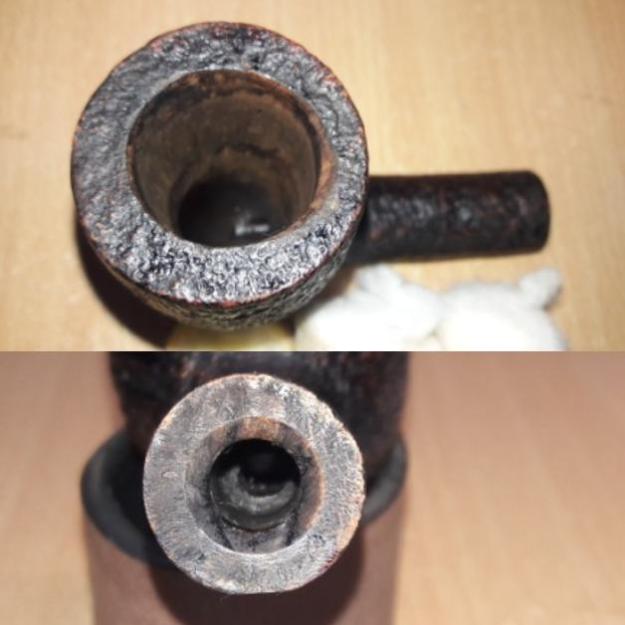
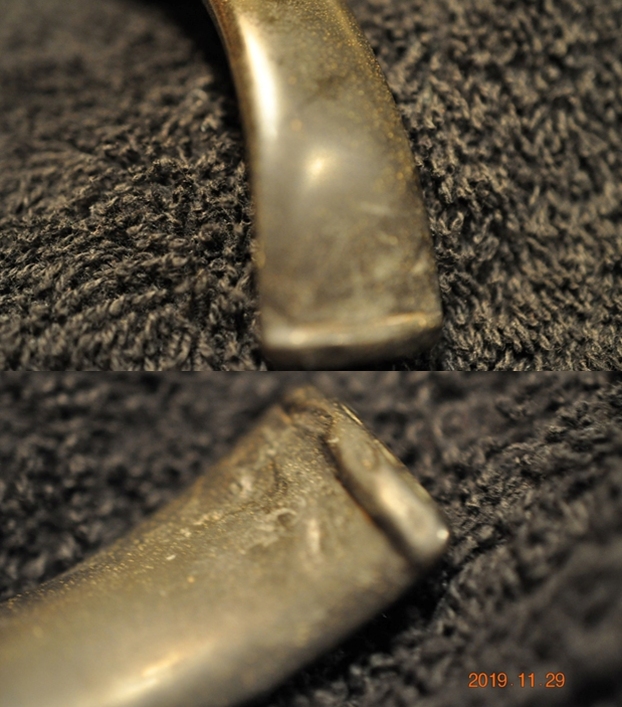
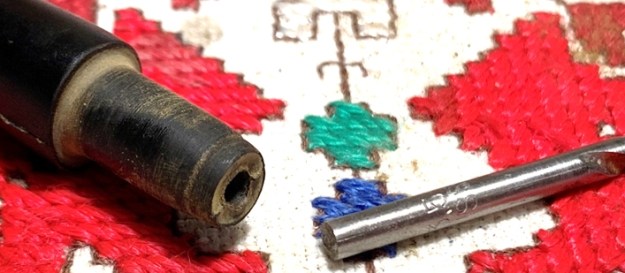
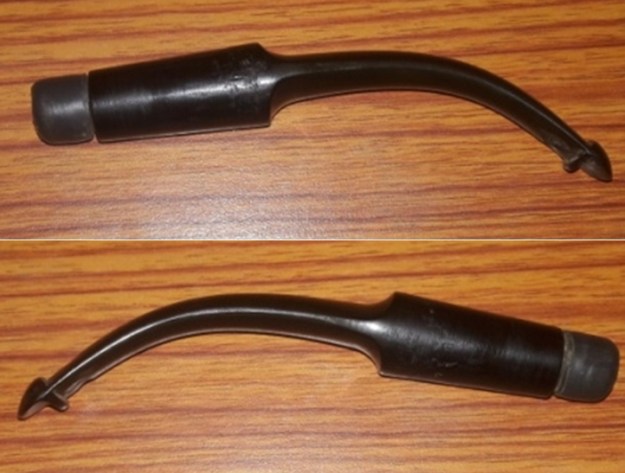
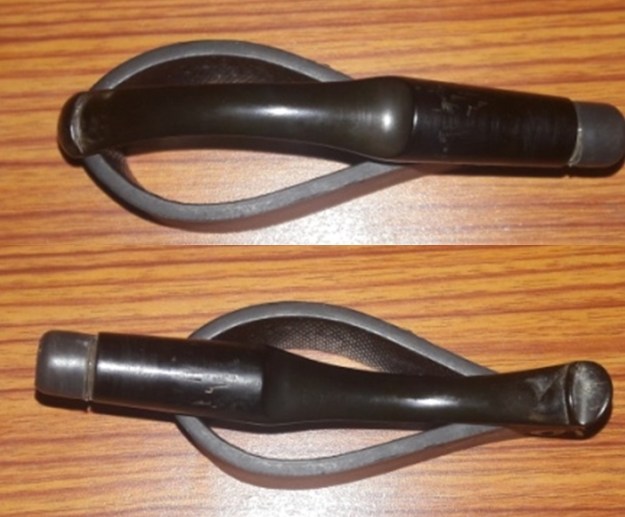
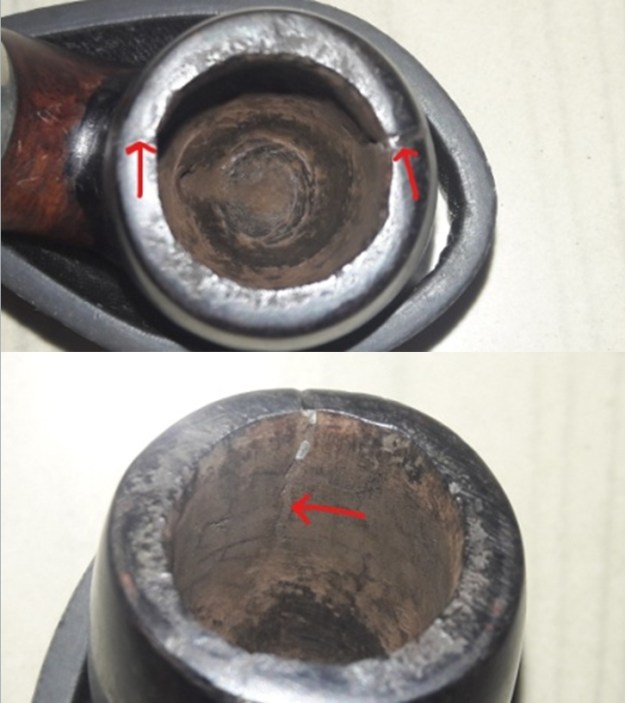
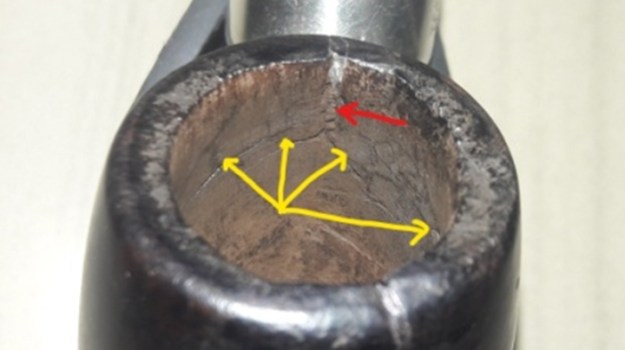
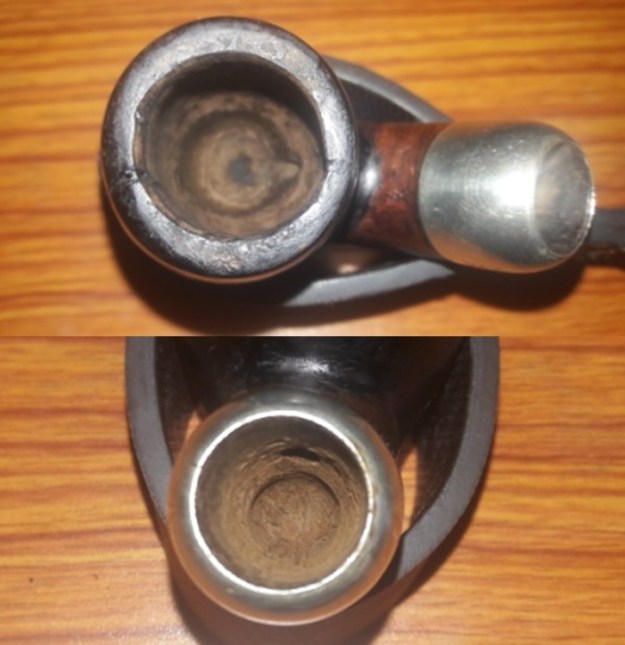
With certain modifications to the stem, I feel confident that I could make the stem work efficiently in a system pipe. The saddle is deeply gouged all around. The upper and lower surface of the stem has significantly deep tooth indentations in the bite zone. The button edges are badly deformed with deep bite marks. Following pictures show the condition of the stem as I received it. The tenon is clogged with heavy accumulation of oils and tars which is seen through the tenon opening. The rubber packing cap is also covered in dirt and grime.With a sharp knife, I removed the rubber cap by separating it from the tenon end, expecting to find a chipped or badly damaged tenon. However, the tenon is intact and apart from being clogged the stem is in decent condition. After I had removed the rubber cap, I rechecked the seating of the stem in to the mortise. The seating was still loose and too high!! Next I moved ahead and reamed the chamber with a Castleford reamer head size 2 followed by size 3. With my sharp fabricated knife, I removed the cake from the chamber where the reamer head could not reach and gently scrapped away the lava overflow from the rim top surface. Thereafter, using a folded piece of 180 grit sand paper, I sanded out the last traces of cake and exposed the walls of the chamber and wiped the chamber with a cotton pad dipped in isopropyl alcohol to remove the carbon dust left behind by all the reaming and sanding process. Even though there are no heat fissures/ lines along the chamber walls where the cracks do not extend (a big solace, I say!!), the stummel cracks are a different story which I shall come to subsequently. The chamber ghosting is still significantly strong which may further reduce once I clean the sump/ reservoir and the mortise. The two major cracks (marked in red arrows) that were observed in the external stummel surface extend well in to the chamber with the old repair fills in these cracks in plain view. Further sanding and close scrutiny of the walls confirmed my gut feeling that the minor cracks originating from the major cracks will also be seen as heat fissures in the chamber walls. These have been marked in yellow arrows. As I was contemplating my further course of action to address the chamber issues, I set the stummel aside and decided to work on the stem. I cleaned the internals of the stem using hard and normal bristled pipe cleaners and isopropyl alcohol. With a pointed dental tool, I scraped out the entire dried gunk from the tenon end.I decided that I would first undertake the cleaning, both internal and external, of the stummel before proceeding with further repairs. This cleaning will not only give me a clear picture of the extent of damage but also the efforts that would be needed are justified or otherwise.
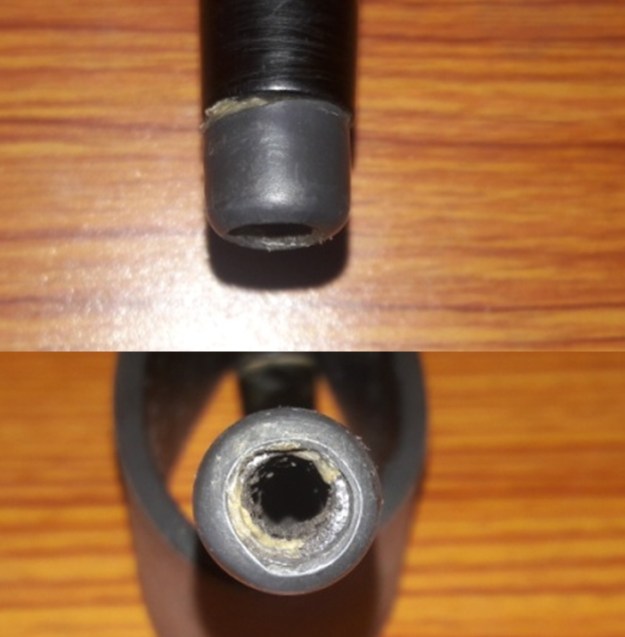
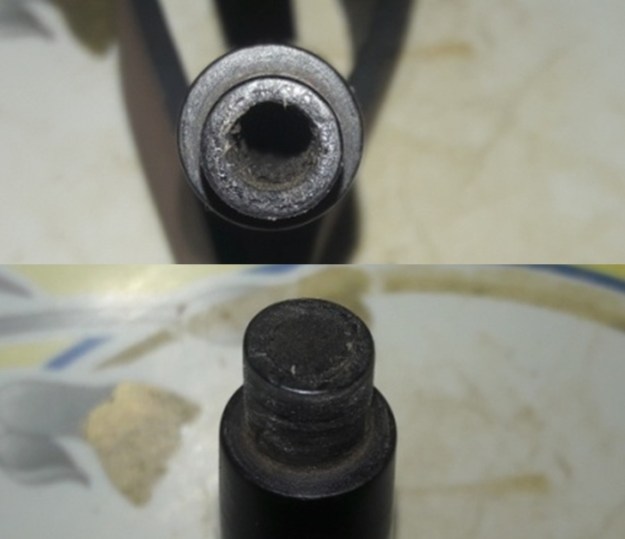
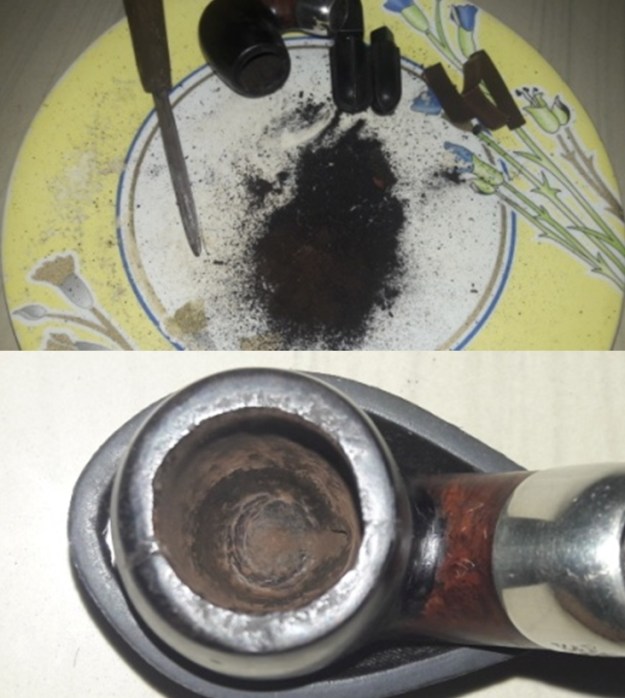
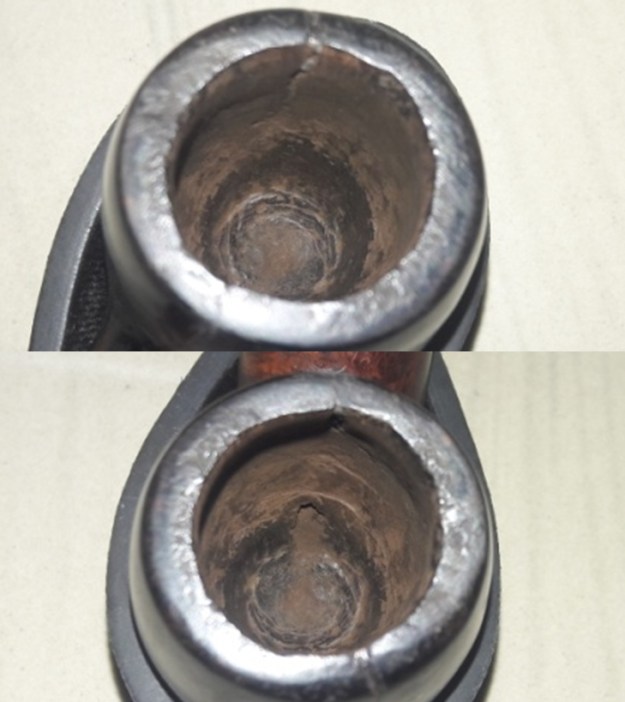
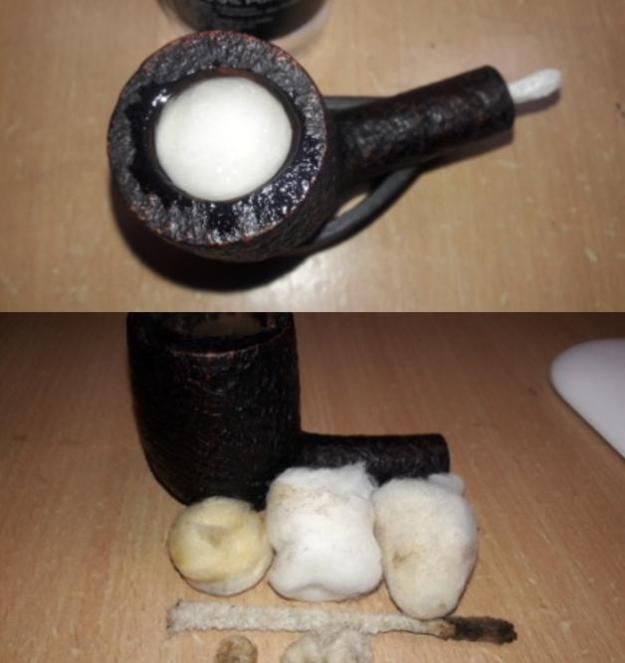
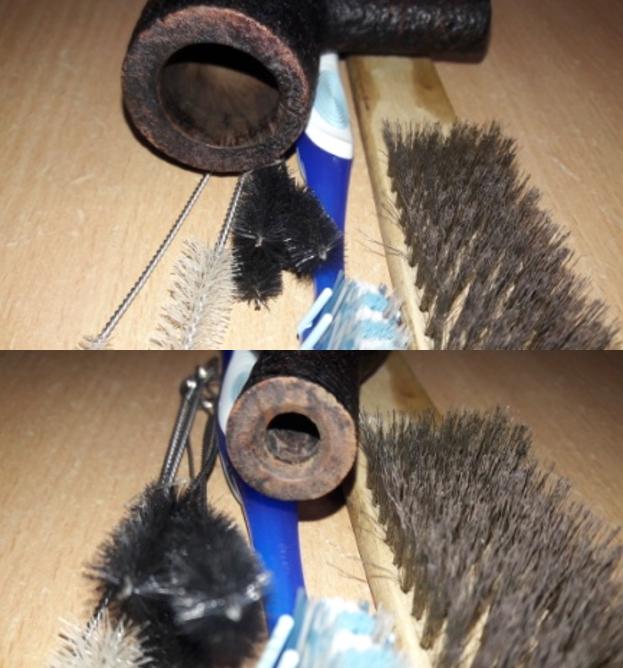
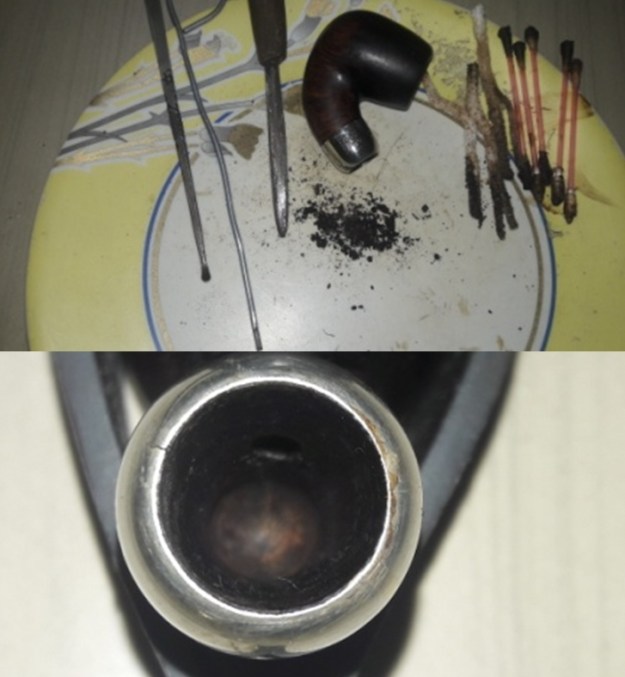
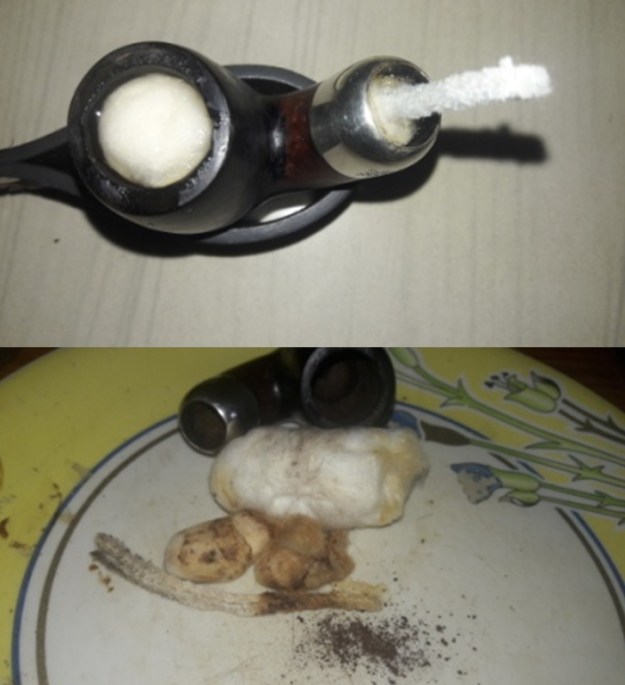
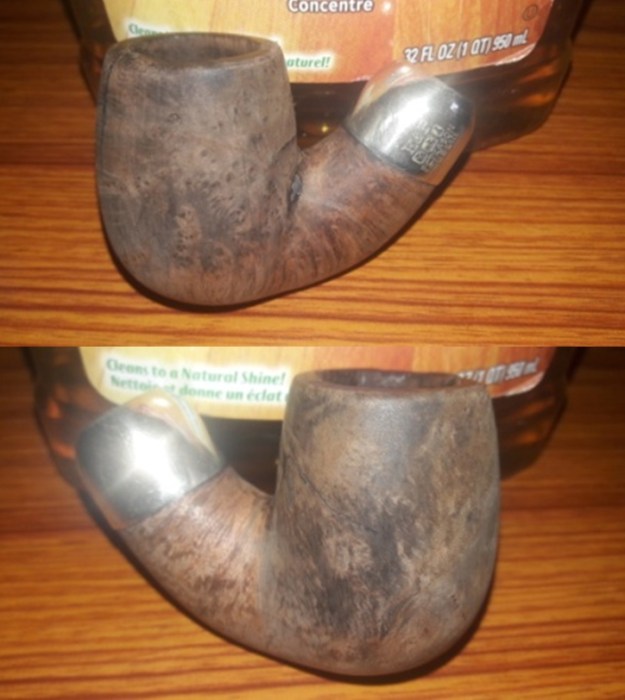
I cleaned out the internals of the shank and mortise. Using my dental tool, fabricated knife and specifically modified tool, I scraped out all the dried oils, tars and gunk that had accumulated in the draught hole, airway and sump. The amount of crud that was scrapped out and the condition of the pipe cleaners that were used leaves no surprise why the air flow through it was restricted. I finished the cleaning by running a few pipe cleaners dipped in isopropyl alcohol. I also wiped the sump with cotton buds and alcohol. I gave a final cleaning to the sump with a paper napkin moistened with isopropyl alcohol. This, however, did not address the issue of ghost smells in the stummel.I decided to address the issue of old odors in the chamber and shank by subjecting it to a cotton and alcohol bath. I wrapped some cotton around a folded pipe cleaner, keeping the tip of the pipe cleaner free of wrapped cotton as this would be inserted through the draught hole in to the chamber. This would form the wick for the shank. I tightly packed the chamber with cotton balls and filled it with 99% pure isopropyl alcohol using a syringe and set it aside. By next day, the cotton and alcohol had drawn out the all the old tars and oils from the chamber and max from the shank. With my dental tool, I further scrapped out the loosened gunk from the sump and mortise. I cleaned the external surface using a hard bristled toothbrush and Murphy’s Oil Soap. With a soft bristled brass wired brush, I removed the overflowing lava from the rim top surface and cleaned the internals of the shank with a shank brush and dish washing soap to remove what little crud remained in the shank. I rinsed it under running tap water and wiped the stummel dry with an absorbent soft cotton cloth. Fortunately for me, the blotchy coat of black stain that was applied to mask the repairs came off with use of Murphy’s Oil Soap and dish washing soap. Had this not worked, an alternative method of removing this coat would be to wipe the stummel with pure acetone and/or isopropyl alcohol on cotton swabs. With the stummel nice and clean, the damage is now all too apparent and it did not present an encouraging picture. The major cracks are quite deep and the secondary minor cracks emanating from the major crack are restricted at the back of the stummel. Here is what I saw. I shared these images with Steve and sought his opinion if this project was even worth the effort. A few minutes later, Steve responded in his characteristic manner. I reproduce the exact exchange that took place between us
Steve: What a mess

Me: What is the best way ahead? Worth the effort? Grandpa collection…

Steve: That was my question… is it worth it? With the Grandpa connection, I would probably work on it. I would thoroughly clean the inside and outside. Once that is done, I would line the bowl with J B Weld to completely bind the inside together. Once that is done, then fill and repair the outside with glue and briar dust.

Me: This is the condition of the shank and stummel joint…emotions dictate restoration while practical experience says it’s a gonner…

Steve: I have been there…go with emotions on this one…it will take time and be a real resurrection!!

Now that clarity has been established and hints for the way ahead have been spelt, I decided to complete this project.

I decided to address the stem issues first.

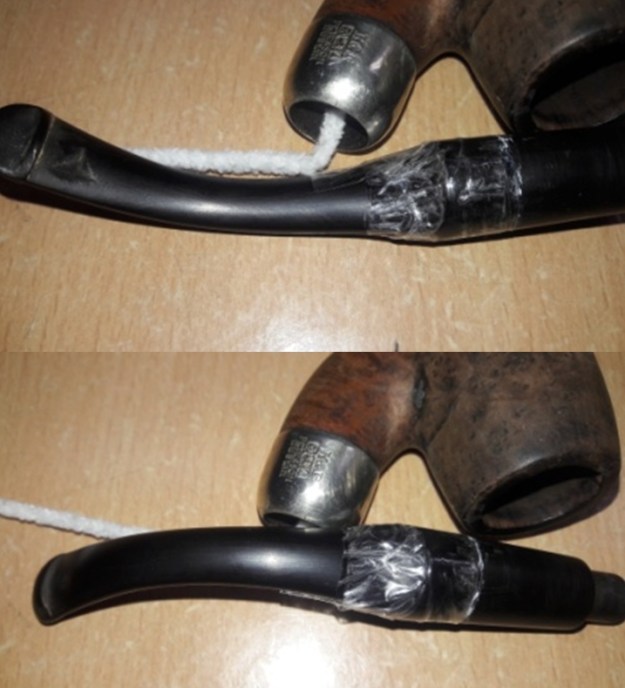
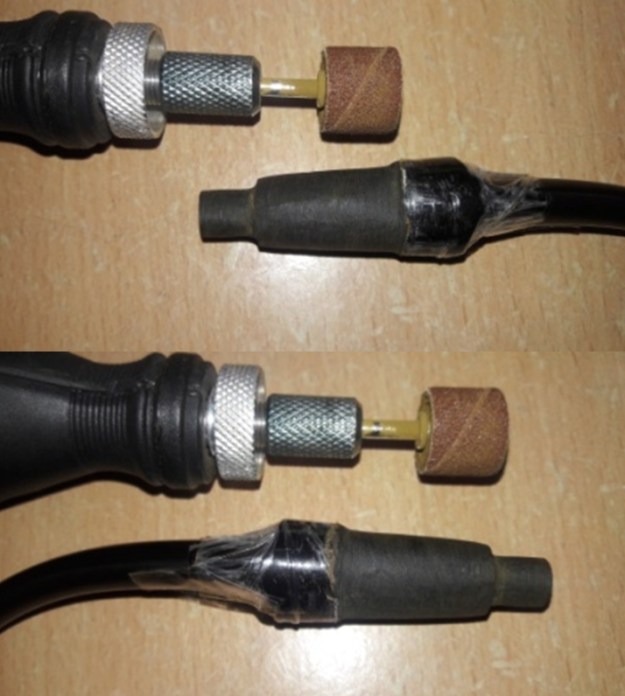
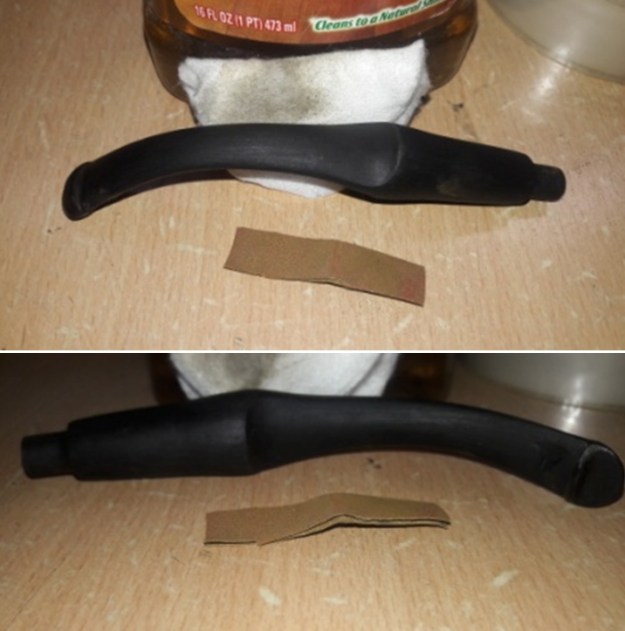
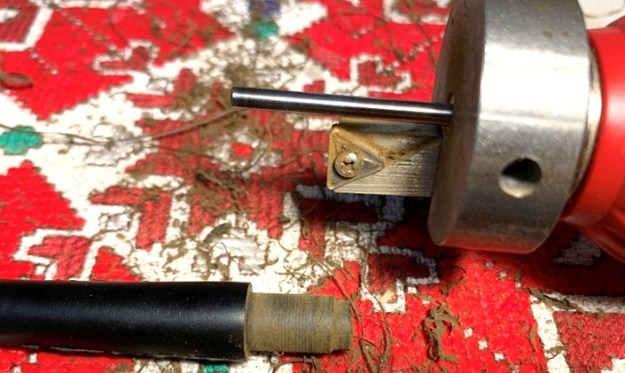
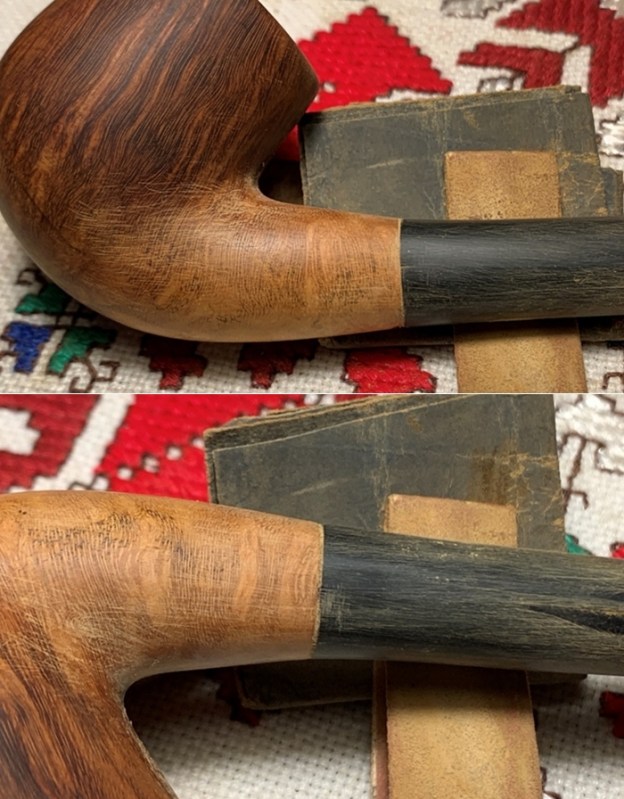
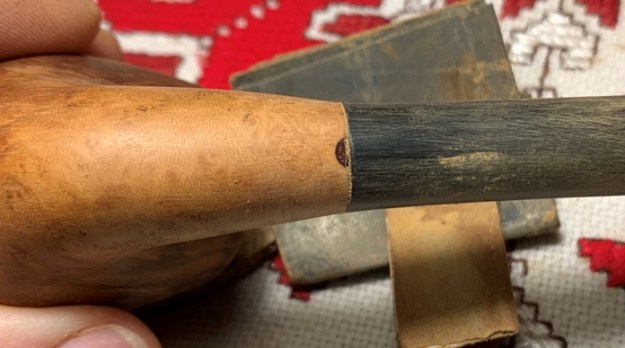
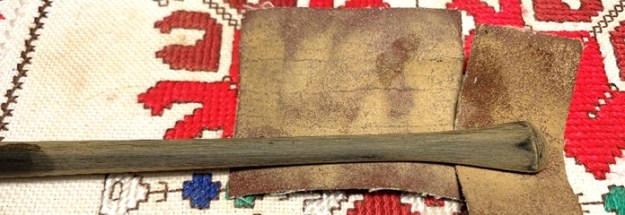
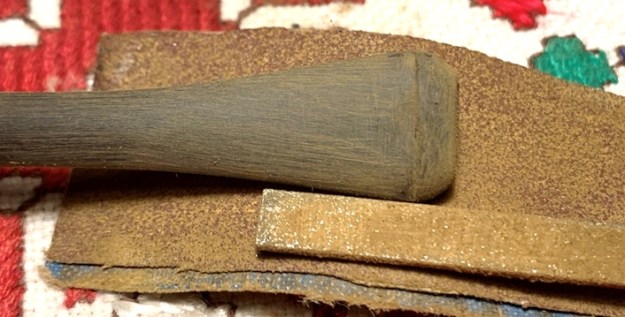
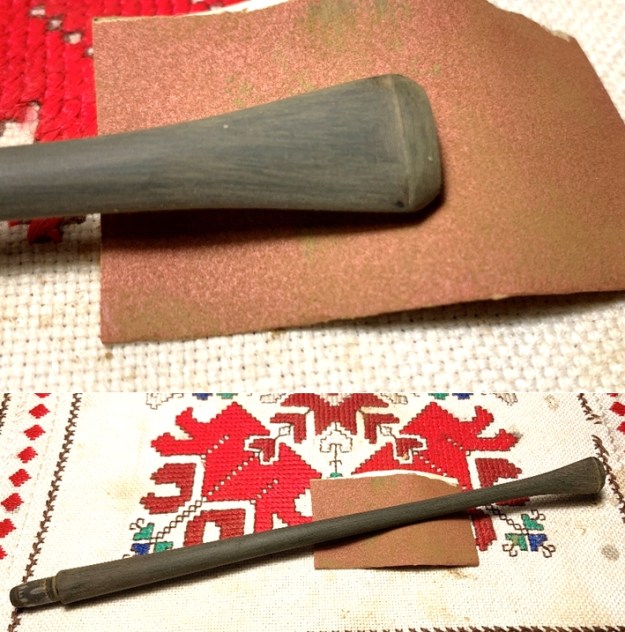
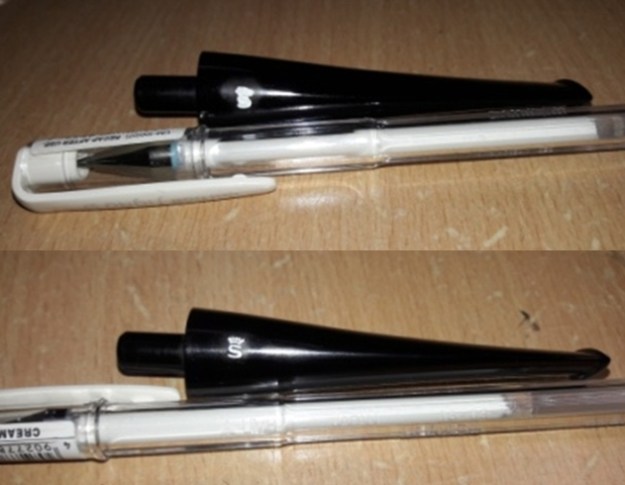
As noted earlier, the seating of the stem in to the mortise was loose and too high for the Pete’s famed system to work efficiently. I inserted a pipe cleaner in to the mortise and up to just below the draught hole, bending the pipe cleaner at this point to mark the depth that I desired. Next, I mark the same depth on to the saddle of the stem with a white correction pen. I wound a scotch tape along the marked white line extending towards the button end. This gave me a reference line beyond which sanding needs to be avoided. With this initial preparation completed, I next mount a 180 grit sanding drum on to my hand held rotary tool, set the speed at half of the full speed and proceeded to sand down the portion of the stem towards the tenon end. I frequently checked the fit of the stem in to the mortise to ensure a snug fit and avoid excessive sanding of the stem. Making steady progress, I was satisfied with the stem modifications at this stage. The tenon was just below the draught hole and there was no play in the seating of the stem in to the mortise. Next, using 150 grit sandpaper, I sanded the entire stem, especially being diligent around the saddle portion that was shaved off to achieve a snug fit of the stem into the mortise. Though I had to spend a considerable time, I was happy with the blending to a smooth transition at the edge which was sanded down. I wiped the stem with Murphy’s oil soap on a cotton swab to remove the sanding dust and oxidation. The stem looked good and should function as it is supposed to, making me very pleased with the fruits of my efforts at this stage.Just a word of caution here for all the first timers using the sanding drum and rotary tool; firstly, ensure that the rotary tool is set at 1/3 or ½ of the full rpm of the tool as too high a speed will fling the stem away from your grip and may result in excessive sanding of the stem surface. Secondly, keep the stem turning evenly at all times to achieve as evenly sanded surface as possible and avoid deep gouges. Thirdly, frequently check the progress being made and remember the mantra “LESS IS MORE”! Fine tuning is best achieved by eyeballing and working with hands and sandpapers.

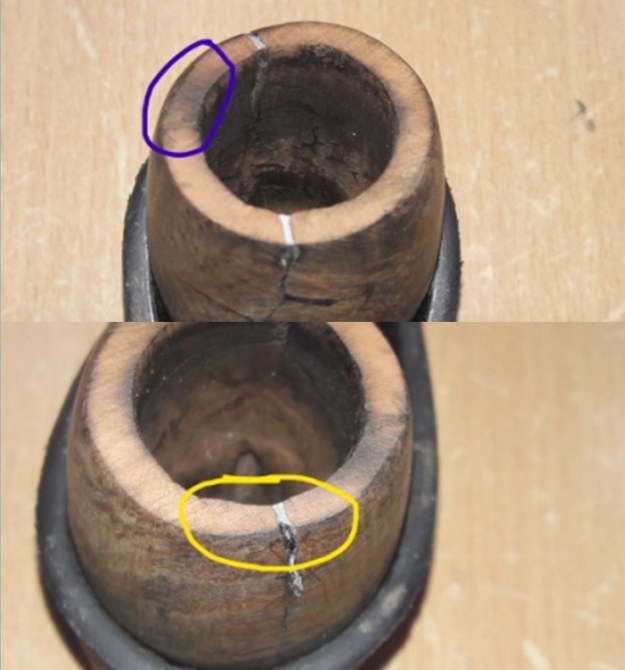
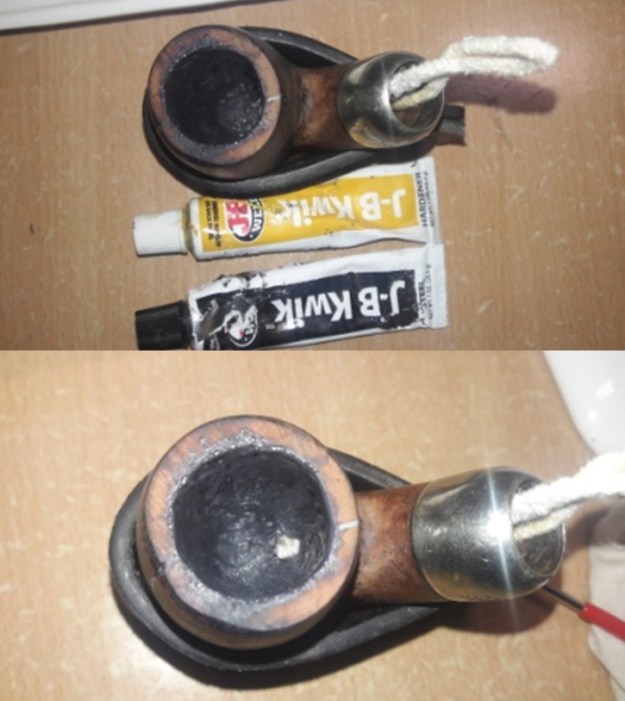
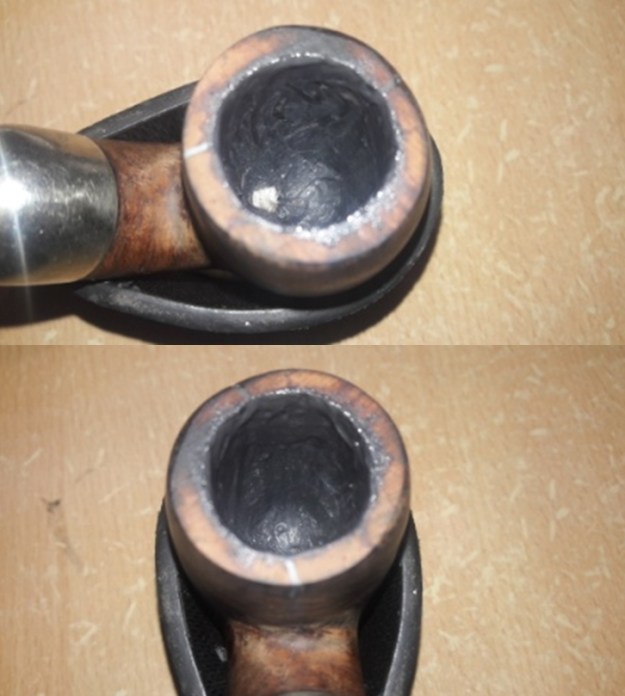
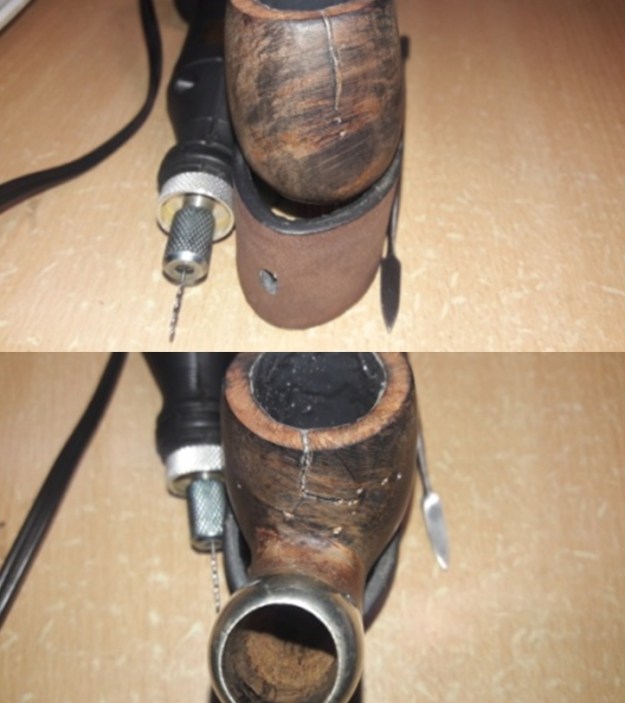
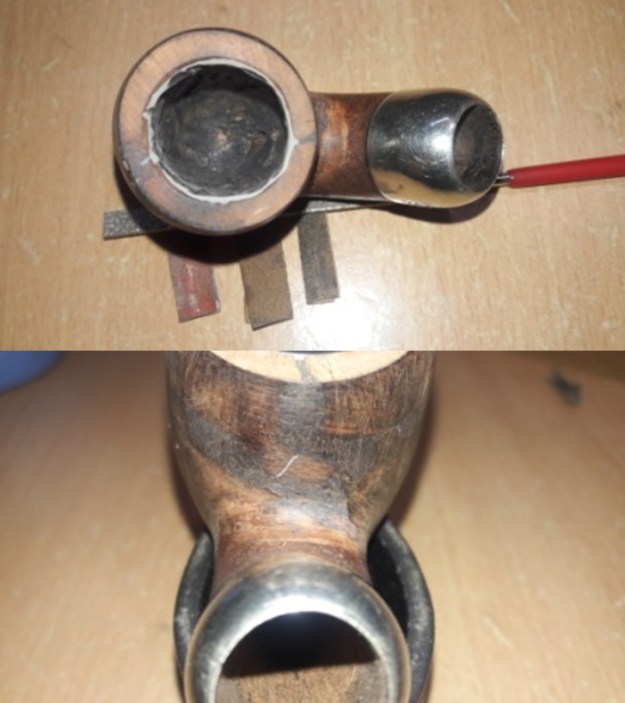
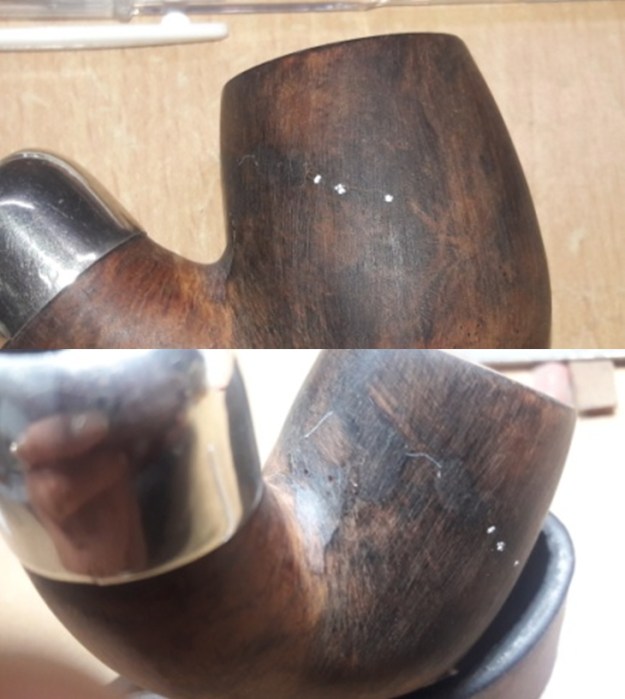
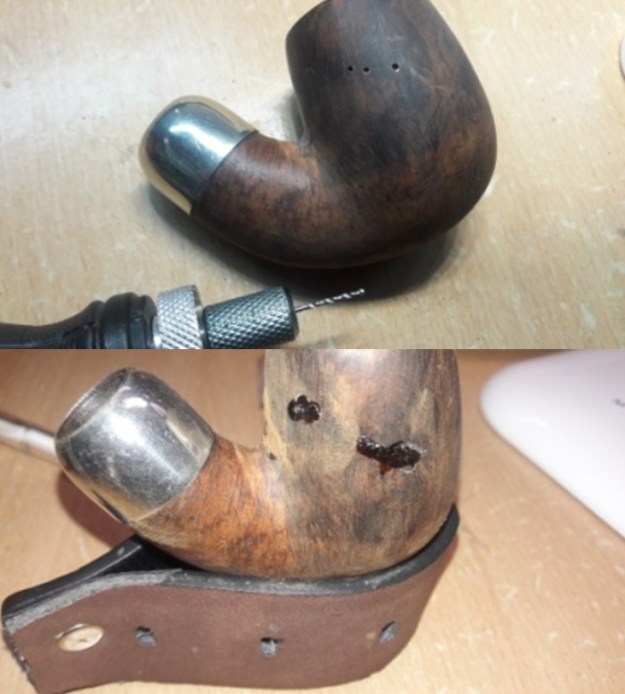
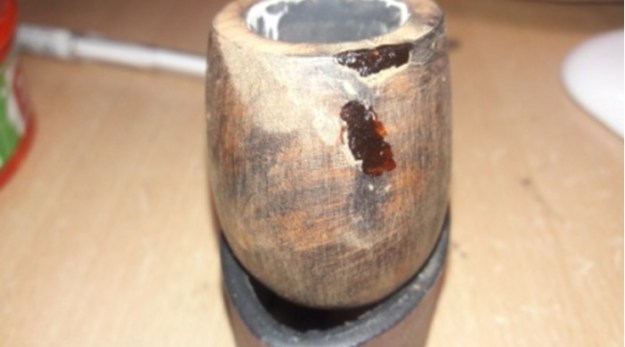
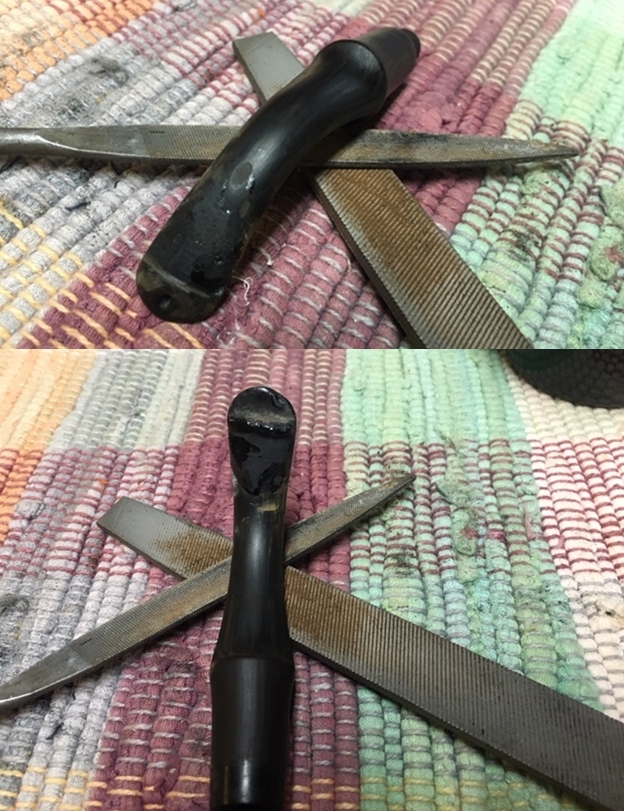
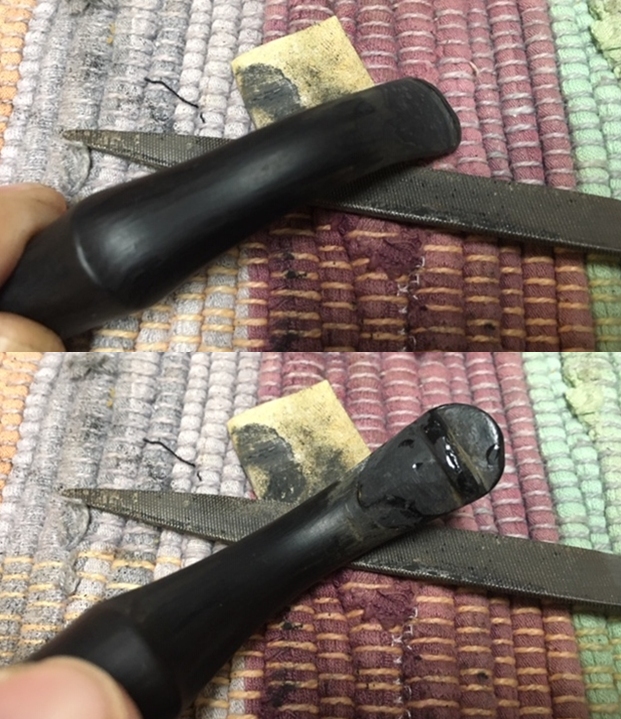
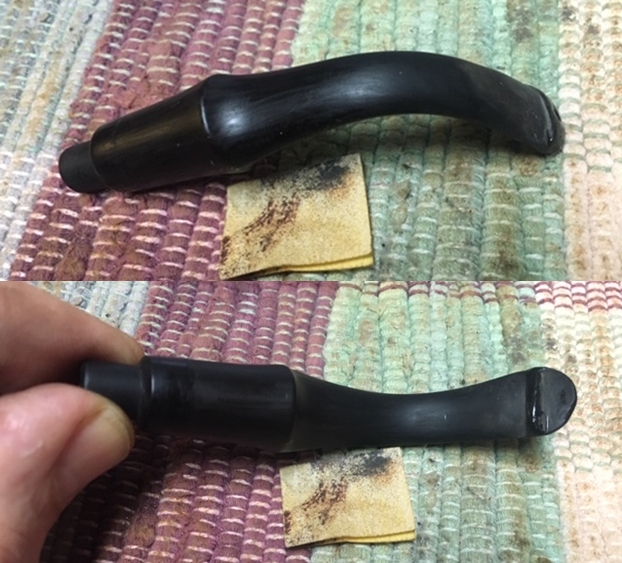
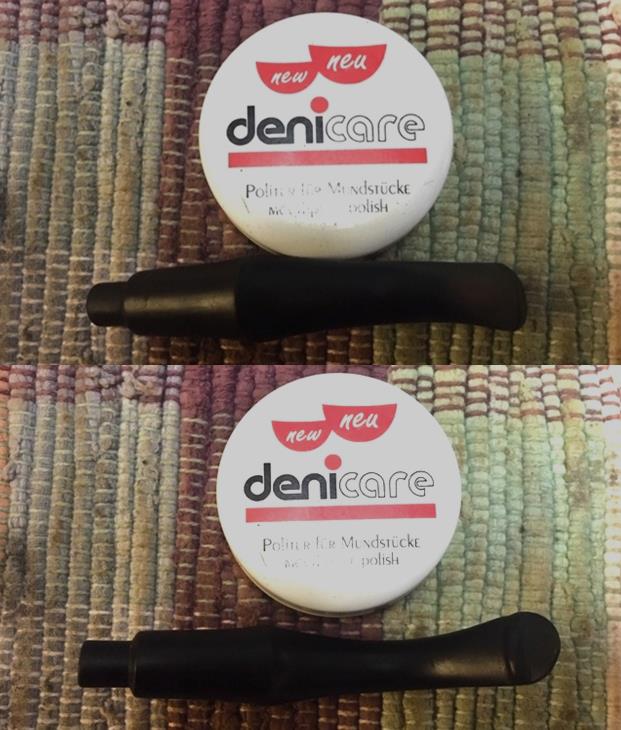
Staying with the stem repairs, I mixed CA superglue and activated charcoal, filled all the deep tooth chatter and indentations and also over the button edges and set the stem aside for the fills to cure. I shall blend these fills and also sharpen the button edges once the fill has hardened considerably.Now with the stem set aside for the fills to cure, it was time for me to work the stummel. I topped the rim on a piece of 220 grit sand paper to even out the rim surface dents and dings and also to reduce the charred rim surface. The repairs to the cracks, marked with red arrows, are all too apparent now as can be seen in the following pictures. The rim top surface is charred and thin in 10 o’clock direction which have been marked in blue circle. The rim top repair towards the front of the bowl has resulted in thinning of the rim top. This is marked in a yellow circle. This stummel has some serious issues that need to be addressed. I preceded the stummel repairs first by coating the walls of the chamber with a slightly thick layer of J B Weld. J B Weld is a two-part epoxy Cold Weld in two tubes; hardener and steel which are mixed in two equal parts (ratio of 1:1) with hardening time of 5-6 minutes and complete curing time of 6-8 hours. I poured the contents of the two tubes and mixed it well. I applied this mix, as evenly as possible, over the entire chamber wall surface. I worked fast to ensure an even coat over the chamber walls before the weld could harden. I set the stummel aside for the application to harden and cure overnight. By the next afternoon, the J B Weld had cured and hardened considerably and will now be able to hold the stummel together as I move along with drilling counter holes, refreshing the fills in the cracks and further sanding and polishing processes. I gouged out the old fills from the cracks. I was careful not to apply too much pressure or dig deeper than absolutely necessary to remove the old fills. Using a magnifying glass and a white correction pen, I marked the points for the counter holes at the start, the turning and the end points along the extent of all the cracks seen on the stummel, and mark my words all Readers, there were plenty and then some more!! After I was done with my markings, the stummel appeared more like a mosaic of white dots!! Next, I drilled counter holes with a 1mm drill bit mounted on to my hand held rotary tool deep enough to serve as a counter hole while taking care that I did not drill a through and through hole. These counter holes arrest and prevent the spread of the cracks further. The importance of these counter holes cannot be underestimated. In fact, this pipe had been repaired previously and the repairs were solid enough, though without counter holes, that the pipe was smoked by my grandfather for many years. However, in my scant experience in pipe restoration I have seen that the extensive spread of the cracks towards the back of the stummel is a result of lack of drilling a counter hole to arrest the spread!!

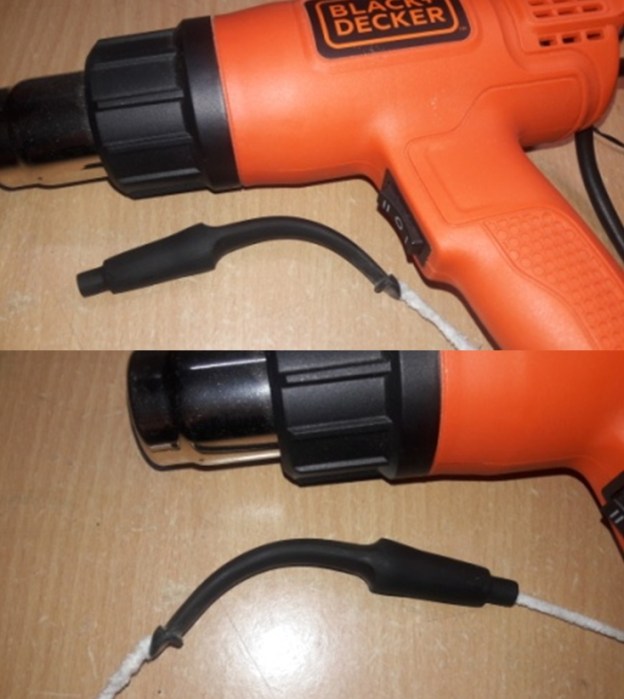
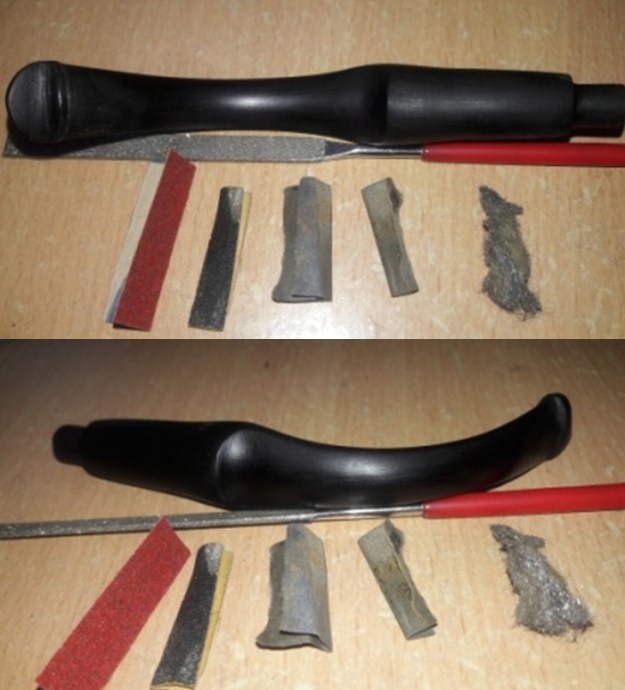
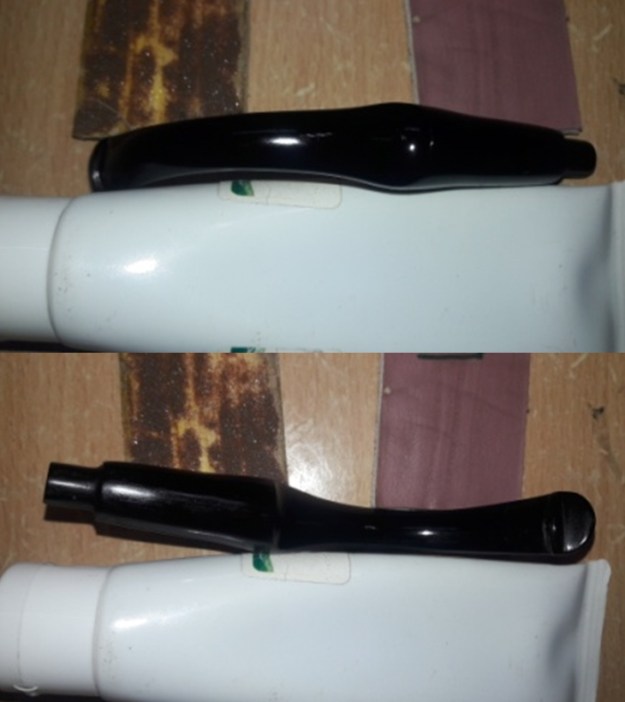
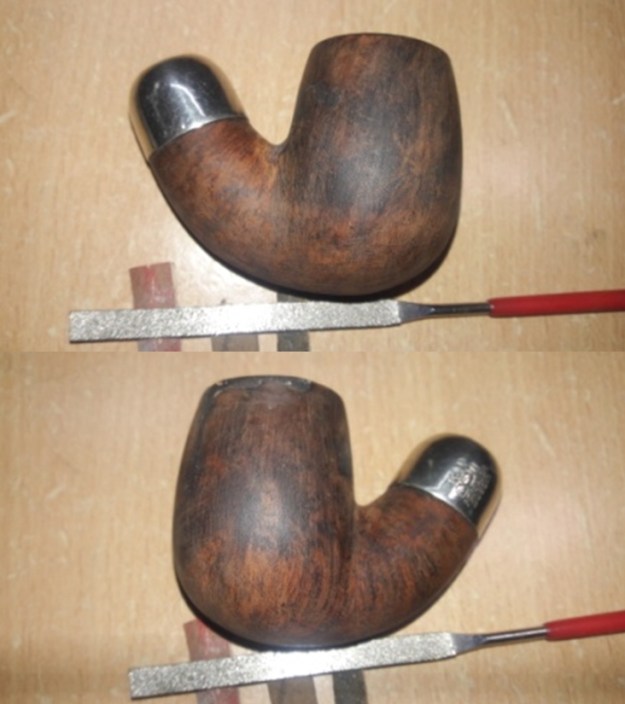
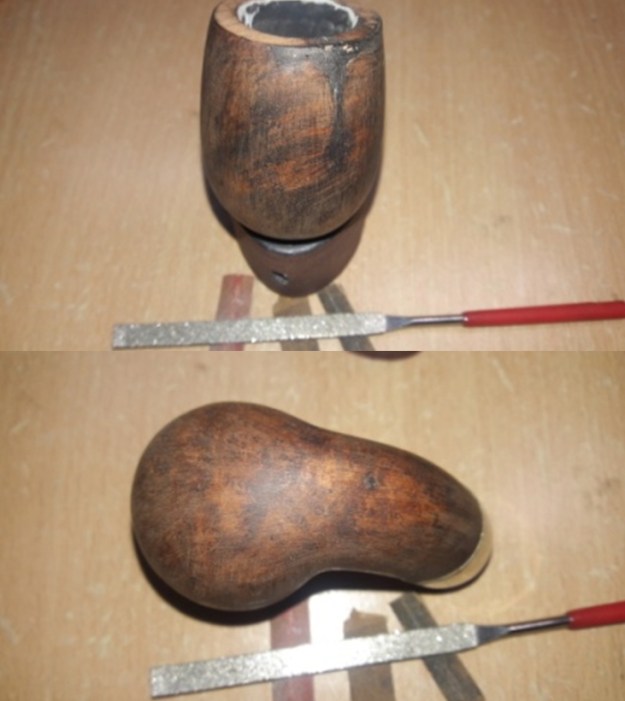
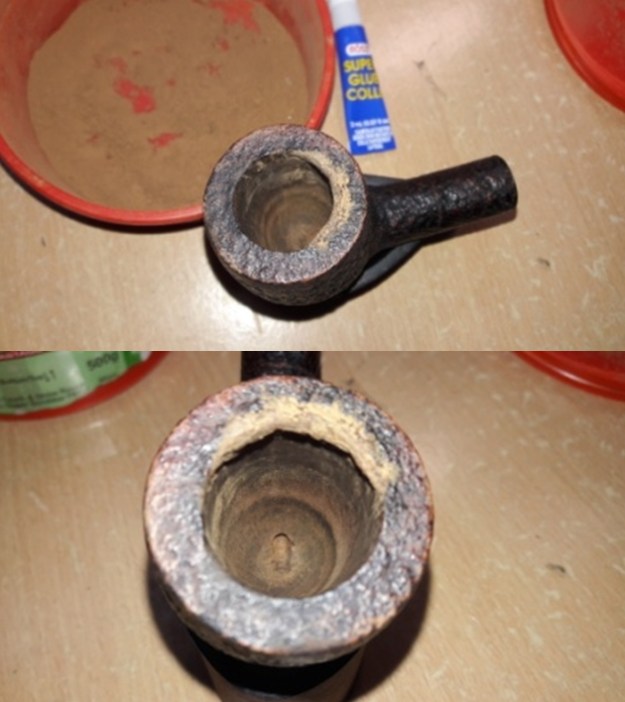
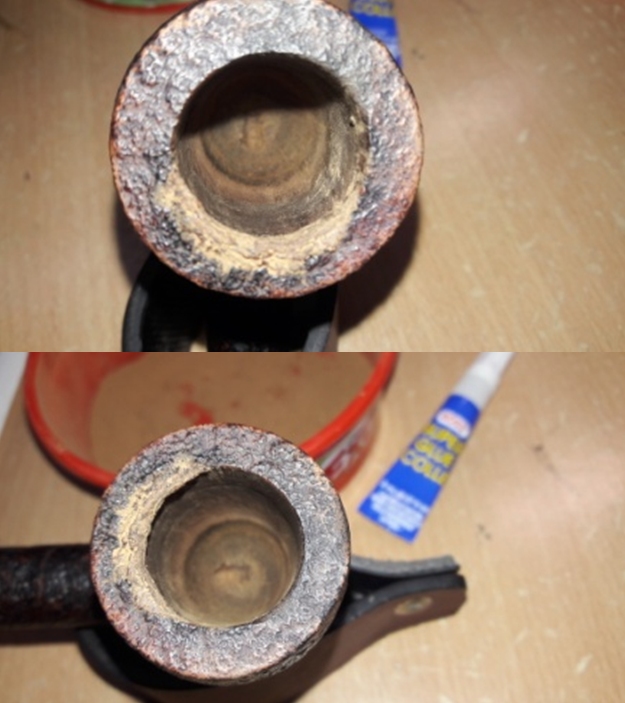
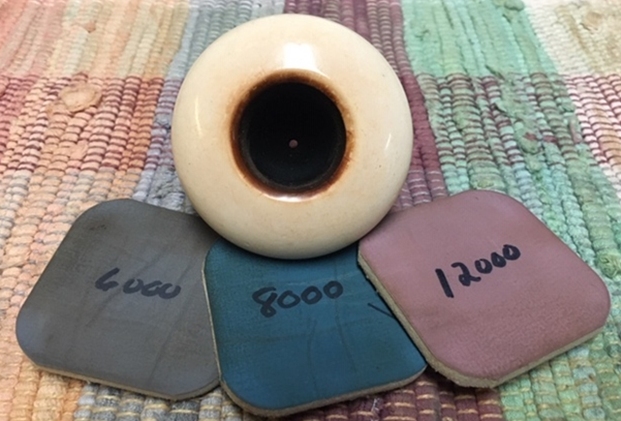
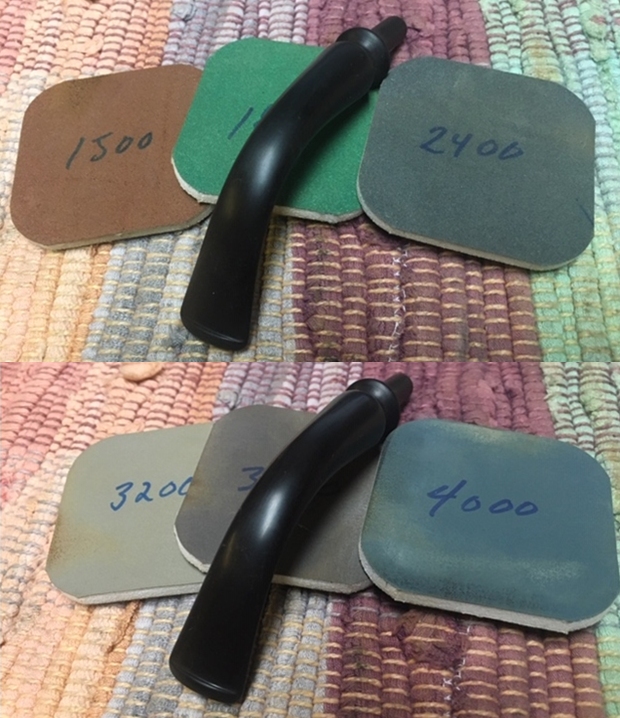
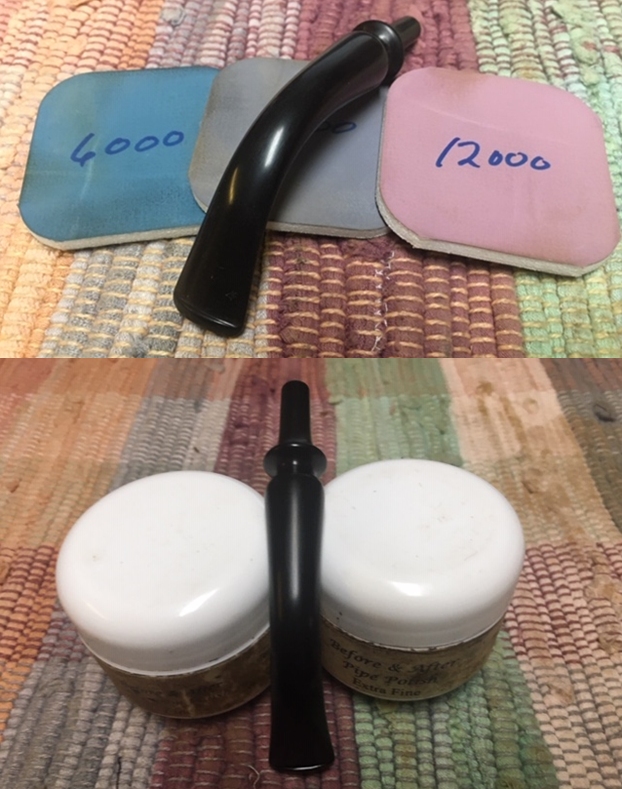
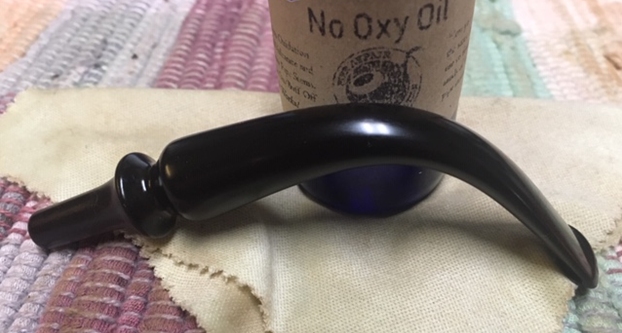
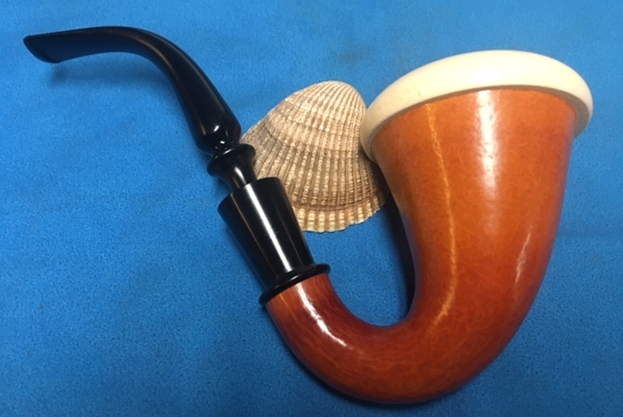
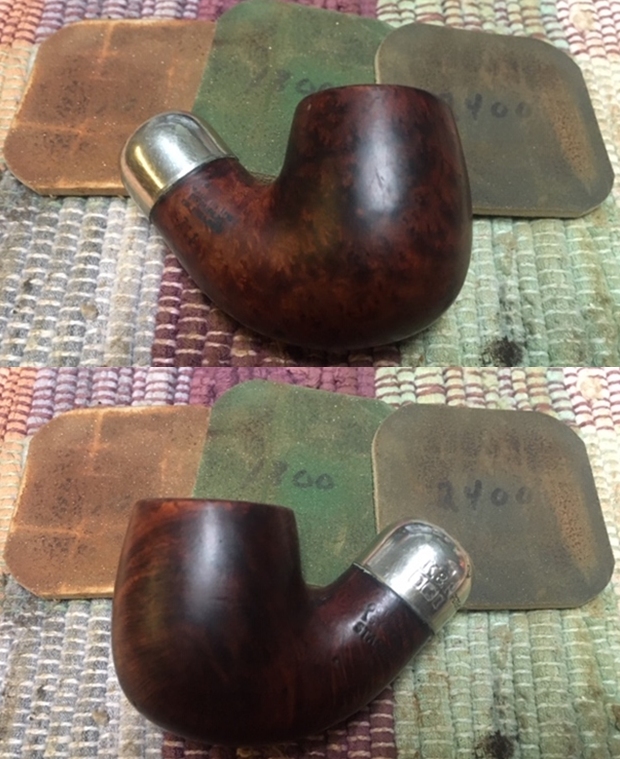
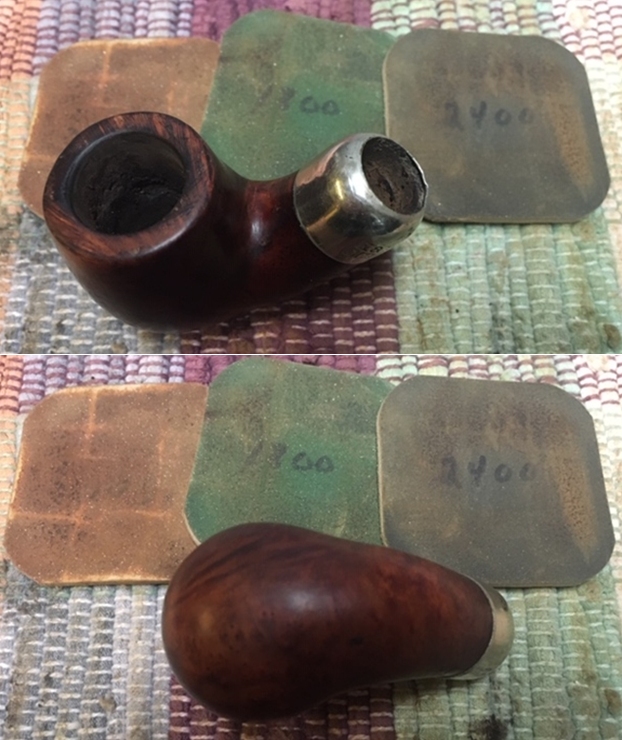
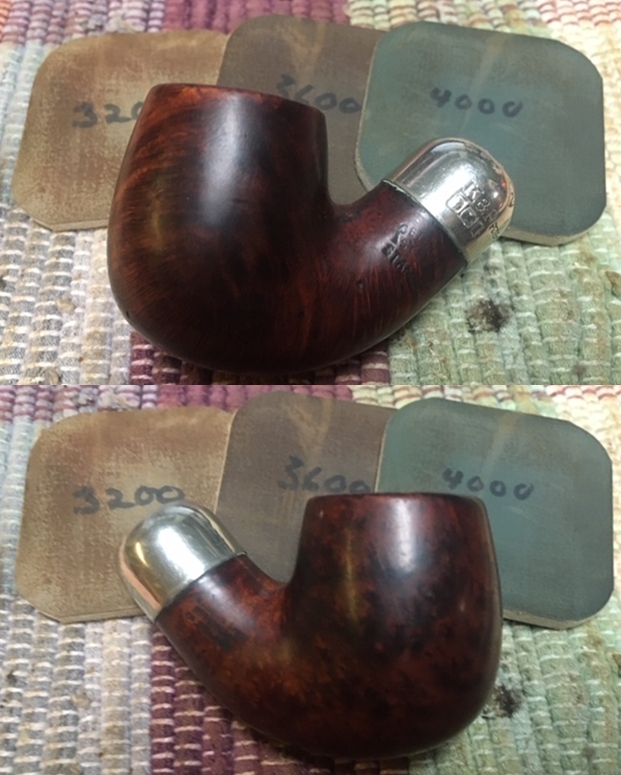
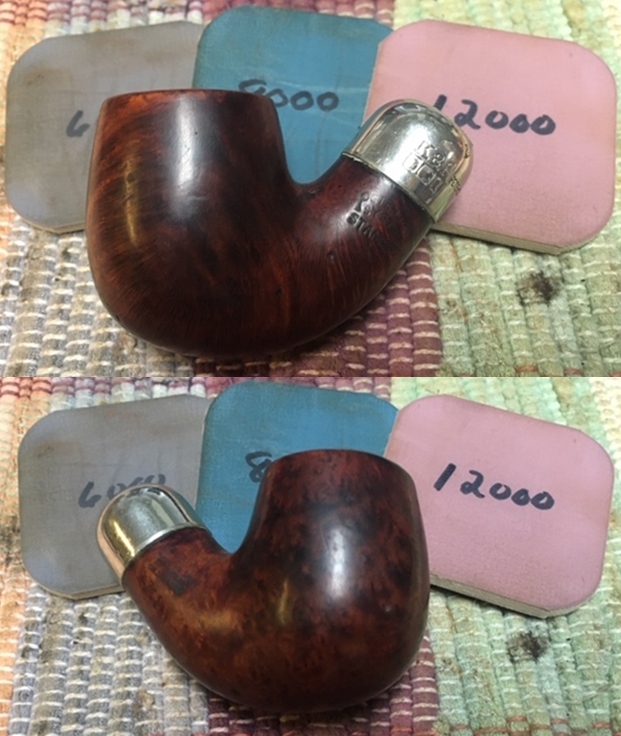
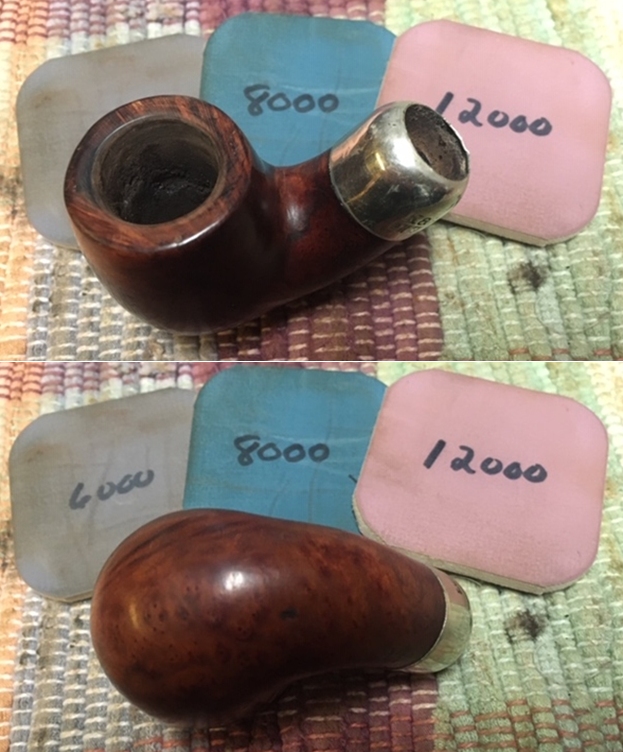
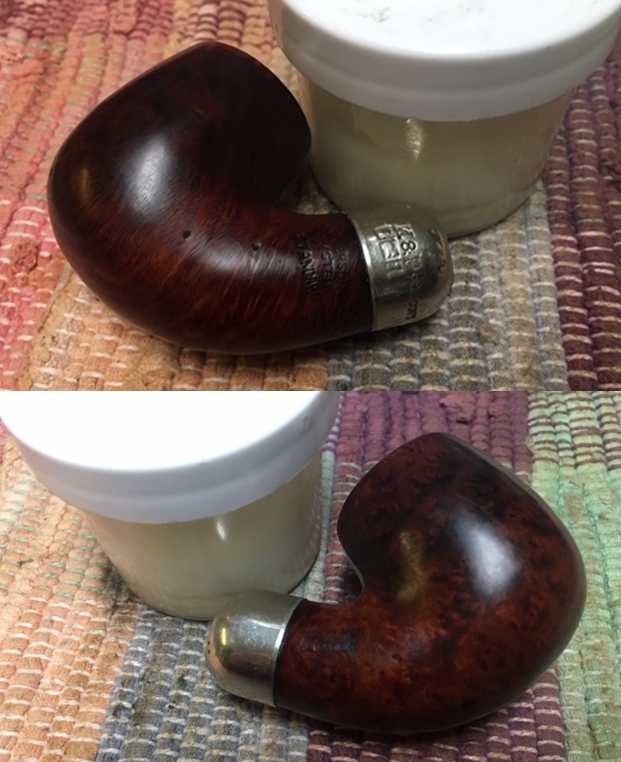
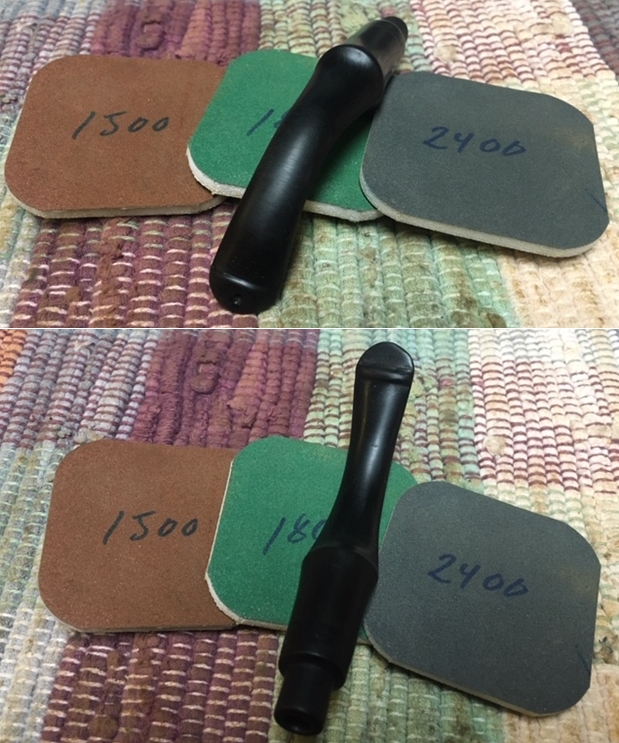
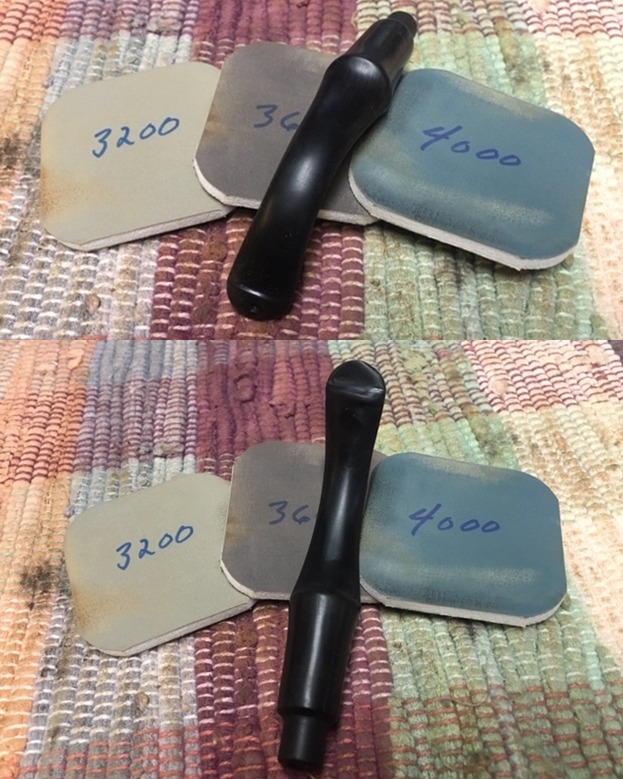
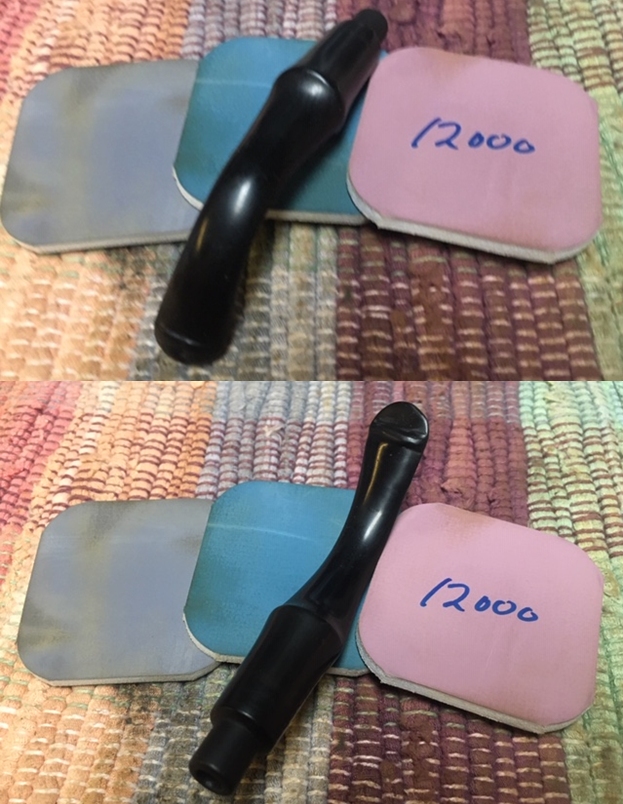
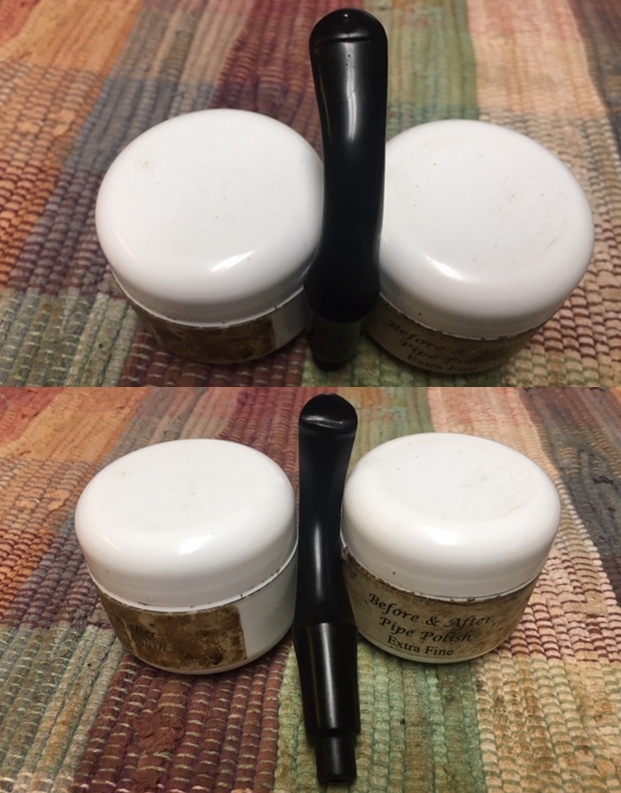
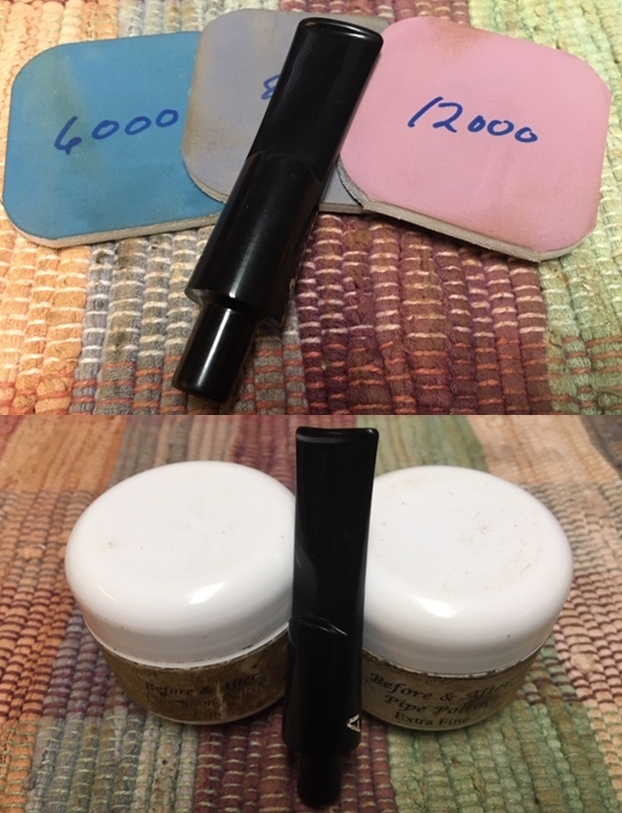
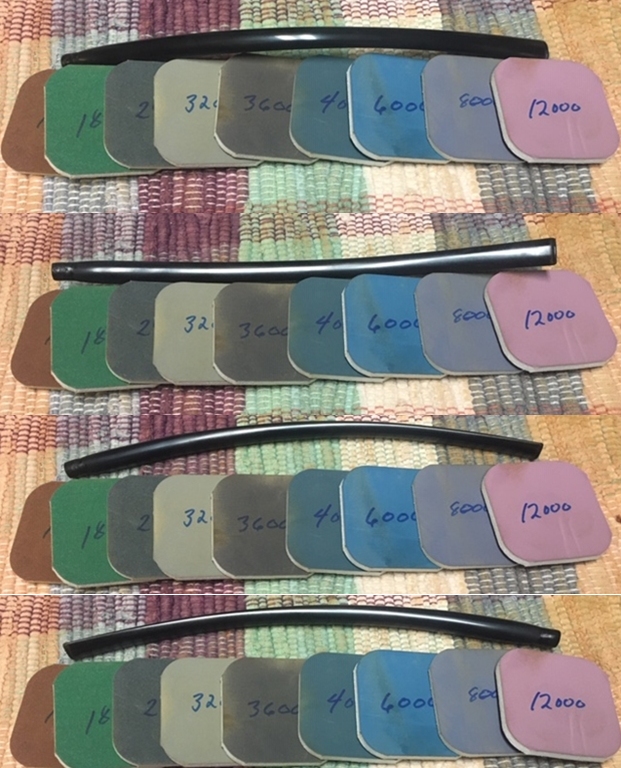
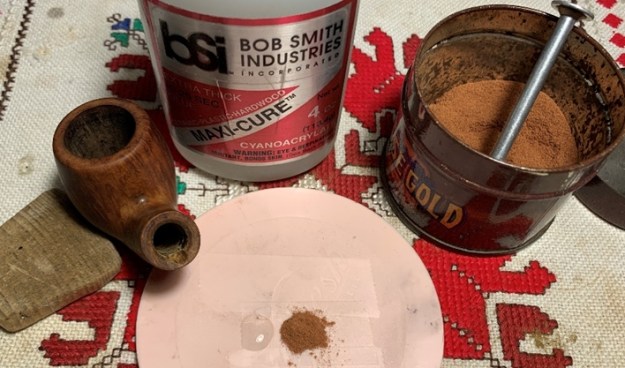
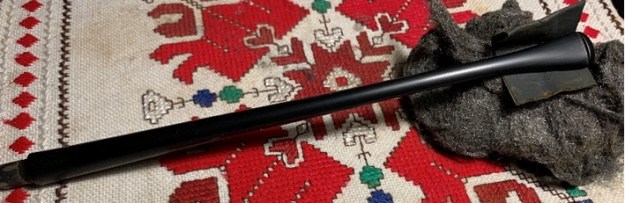
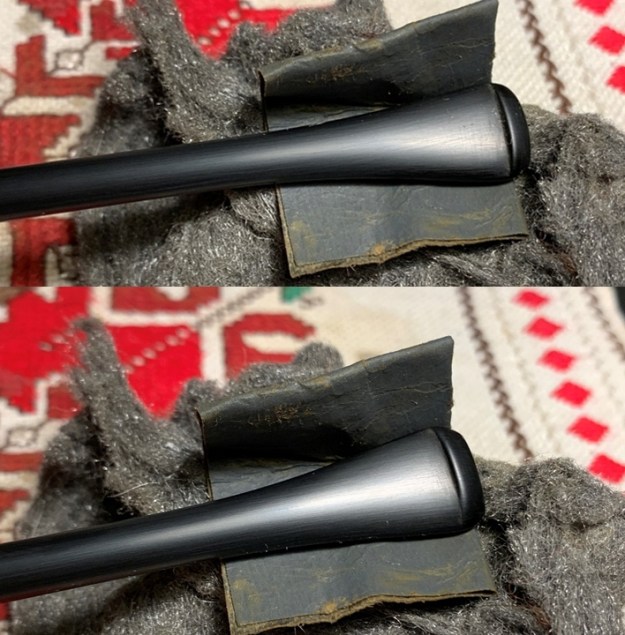
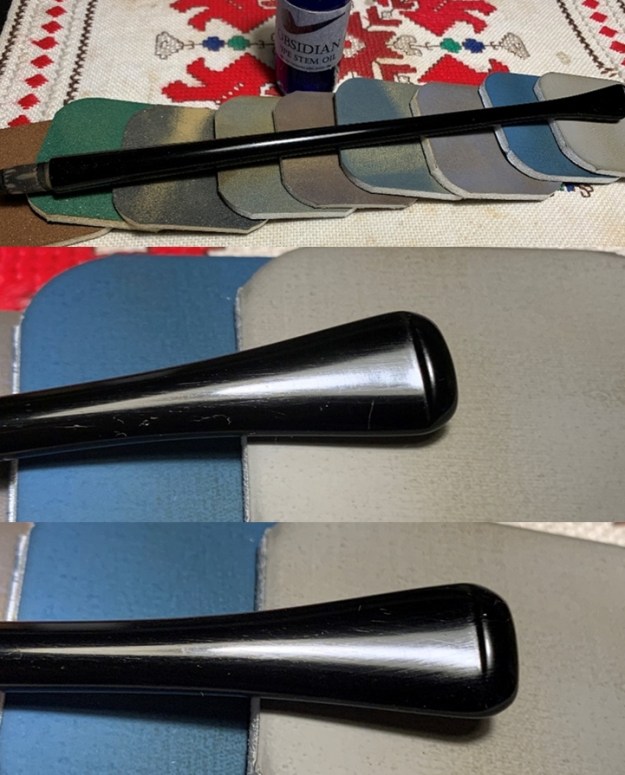
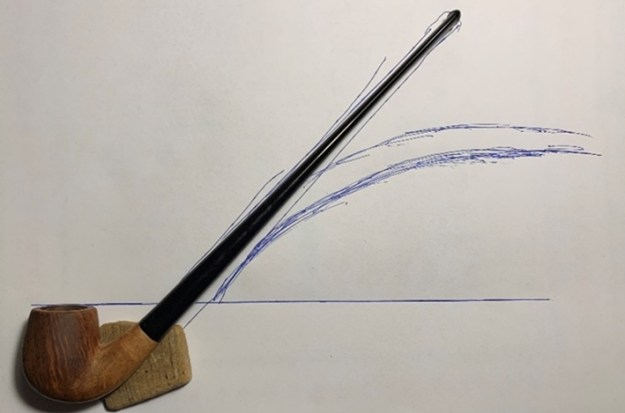
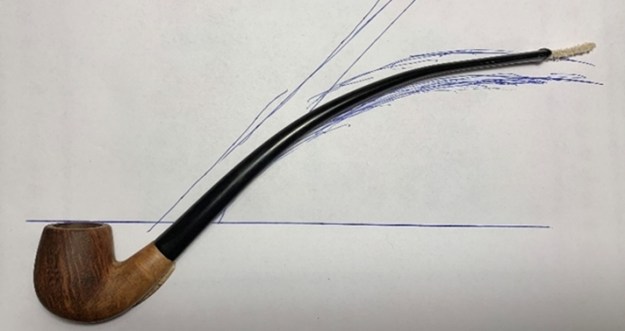
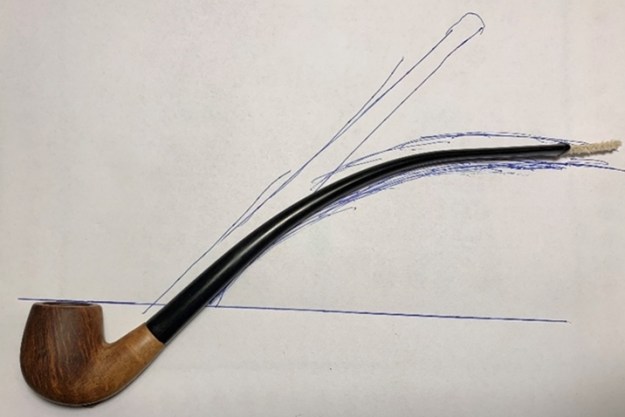
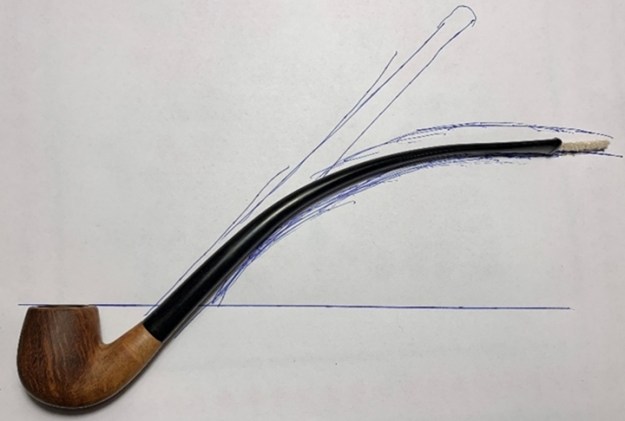
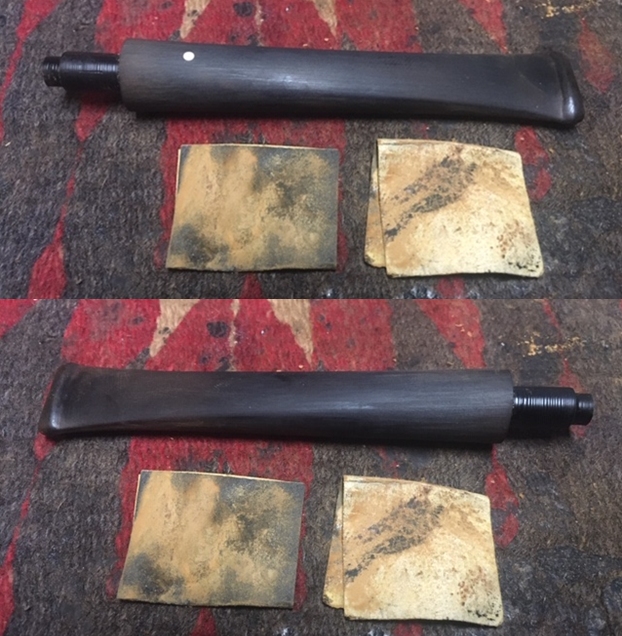
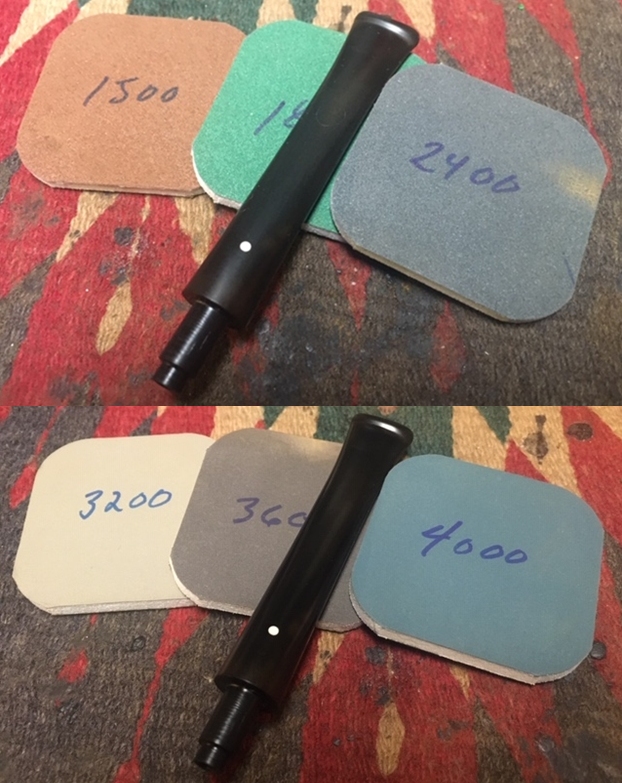
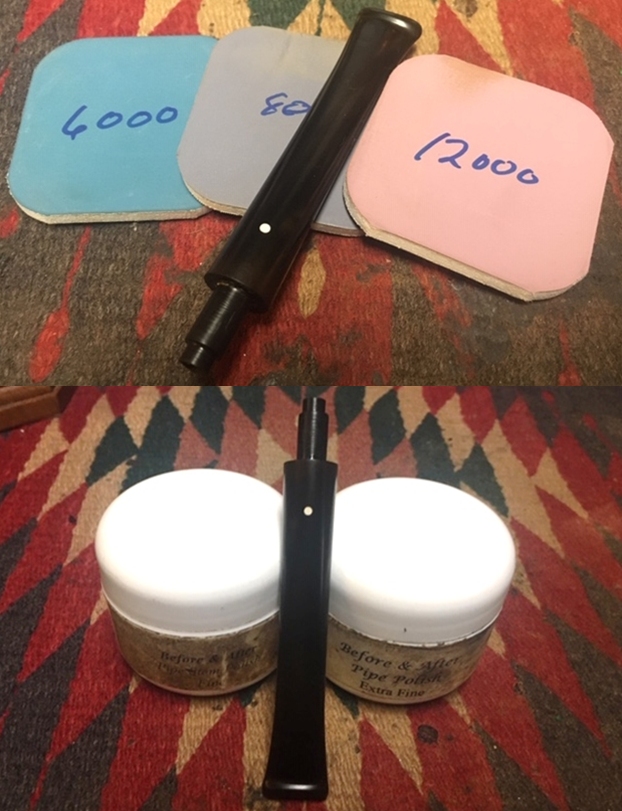
I filled these cracks and counter holes with a mix of briar dust and CA superglue using the layering method (layer of superglue followed by sprinkling of briar dust and repeated it till desired thickness of fill was achieved) and set it aside for the fills to cure. I ensured that I filled the thin outer edge of rim top surface that I will subsequently sand down to match with the rest of the rim surface.While the stummel was set aside for curing, I decided to correct the geometry of the stem in relation to the plane of the bowl. The stem was too straight and was awkward to clench. After inserting a pipe cleaner through the stem, I heated the stem with a heat gun till the vulcanite became a little pliable. Holding the tip of the pipe cleaner, I gave the stem a bend, eyeballing it to suit the bowl. Once I had achieved the desired bend, I held it in place under cold running water till the stem had cooled down sufficiently to retain the shape. The stem was now comfortable to clench. Here are the pictures of the stem before (on the left side) and after (on the right side) the bend. Now that the seating of the stem into the mortise and the bend to the stem had been sorted out, I proceeded to sand/ blend the fills and impart a nice black glossy shine to the stem. With a flat head needle file, I sanded these fills to achieve a rough match. I further fine tuned the match by sanding the filled area with a folded piece of 220 grit sand paper pinched between my thumb and forefinger. I followed it up by sanding the entire stem surface using 400, 600, 800 grit sand papers and finally with a piece of 0000 grade steel wool. This serves to remove the deep seated oxidation and also reduces the sanding marks of the more abrasive sand papers. I also sharpened the button edges while sanding. I wiped the stem with a cotton swab and alcohol to remove all the oxidation and sanding dust from the surface. I applied a little Extra Virgin Olive oil over the stem and set it aside to be absorbed by the vulcanite. The stem has turned out amazing and now I felt upbeat about completing this project.I wet sand the stem with 1500 to 12000 grit micromesh pads. Next I rubbed a small quantity of extra fine stem polish that I had got from Mark and set it aside to let the balm work its magic. After about 10 minutes, I hand buffed the stem with a microfiber cloth to a nice shine. I rubbed a small quantity of olive oil in to the stem surface to hydrate it and set it aside. The stem now had a nice deep black and glossy shine.With the stem completed, I turned my attention to the stummel. In the intervening time when I worked the stem, the stummel crack fills had hardened and cured well. Using a flat head needle file, I sanded these fills to achieve a rough match with the rest of the stummel surface. I further fine tuned the fills by sanding the entire stummel surface with folded pieces of 220, 400 and 600 grit sandpapers. The stummel was now clean and even. On close scrutiny of the cleaned stummel surface, I observed a small crack which I had missed out earlier. I will need to drill counter holes to arrest the spread and extending of these cracks. Under a magnifying glass and bright light, I marked the ends of the now observed cracks with a white correction pen. I mounted a 1mm drill bit on to my hand held rotary tool and drilled counter holes. I filled these counter holes and cracks with a mix of briar dust and superglue. I also took this opportunity to touch up and refill those areas which required further fills and set the stummel aside to cure. Once the fills had cured, I went through the complete cycle of sanding with a flat head needle file followed with 220 grits sandpaper. The fills are all solid and have naturally blended in quite nicely with the entire briar surface. The rim top surface is now evenly thick and with folded piece of 220 grit sandpaper, I created a slight bevel to inner and outer edges of the rim top. I am happy with the appearance of the stummel at this stage of restoration. I polished the stummel with micromesh pads, wet sanding with 1500 to 12000 pads. I polished the freshly topped rim surface and the newly created inner rim bevel. I wiped the surface with a soft cloth at the end of the micromesh cycle. The stummel looked amazing with a deep shine and beautiful grains popping over the stummel surface. I was surprised that the rim top surface has the same deep brown coloration as the rest of the stummel surface even though the repairs to the cracks were still sticking out like sore thumbs through the shining stummel surface, I was not overly perturbed having made peace with myself regarding the repairs showing, still I shall attempt to mask them by staining the stummel subsequently. I massaged a small quantity of “Before and After Restoration Balm” with my fingers into the briar. The immediate and incredible transformation that takes place is a worthy reward for all the efforts!! I let the balm sit on the surface to be absorbed in to the briar for about 20 minutes. The bowl now looked fresh and attractive with the grains popping out any which way you look at the briar. Even the repairs to the stummel are a lot less visible what with the briar taking up a deep dark and vibrant brown hues. I polished off the balm with a soft cloth to a lovely shine. Next, with a folded piece of 150 grit sandpaper, I sanded the coat of J B Weld from the internal walls of the chamber keeping just a thin layer of coat along the walls. The coat appeared uneven at this stage but once it was coated with pipe mud, the chamber walls would become even and smooth. I decided on giving the stummel a stain wash with a Feibing’s Dark Brown leather dye. I diluted the Feibing’s Dark Brown leather dye in 99.9% isopropyl alcohol in approximate ratio of 1:4 and with a cotton swab, I dabbed the diluted stain over the stummel surface, letting it set for a few moments and thereafter wiping it off with a dry clean cotton swab. I repeated the process till I had achieved the desired coloration. I was pleased with the color of the stummel which highlighted the grains while the stummel repairs were masked nicely. This time around, even the fills had absorbed the stain and blended in nicely with the rest of the stummel. In order to ensure that the stain wash sets in to the briar, I warmed the stummel with a heat gun while being careful that I did not overheat the crack repairs/ fills.Now on to the home stretch… To complete the restoration, I re-attached the stem with the stummel. I mounted a cotton cloth buffing wheel to my hand held rotary tool, set the speed at about half of the full power and applied Blue Diamond compound to the entire pipe to remove all the minor scratches that remained. I wiped/ buffed the pipe with a soft cotton cloth to clear it of any leftover compound dust. With a cotton buffing wheel earmarked for carnauba wax, I applied several coats of carnauba wax. I worked the complete pipe till the time all the wax was absorbed by the briar. The pipe now boasted of a beautiful and lustrous shine. I vigorously rubbed the pipe with a microfiber cloth to deepen the shine and also clean away any residual wax that had been left behind. I vigorously buffed the nickel ferrule with a jeweler’s cloth and brought it to a nice shine. I was very happy with the way this beauty had turned out. The following pictures speak of the transformation that the pipe has undergone. There was only one more issue that needed to be addressed and one that could not be ignored, being a functional issue. After I had lined the walls of the chamber with a thin coat of J. B. Weld, it was necessary to prevent the walls from coming in to direct contact with the burning tobacco. I addressed this issue by mixing activated charcoal and plain yogurt to a thicker consistency, just enough that it would spread easily and thereafter applied it evenly all along the chamber walls after inserting a folded pipe cleaner through the draught hole to keep it open. Once dry and set, this will not only protect the walls but also aid in faster buildup of cake.P.S.: This project was one with many challenging issues that needed to be addressed, the first and biggest being finding an original Peterson’s system P-lip pipe stem, ensuring a snug fit in to the mortise, modifying the stem to function as it is supposed to and finally addressing, fixing and masking all those cracks. But now that the project is completed and the pipe is definitely smoke-able and gorgeous looking, I cannot but thank Steve who goaded me in to working on this pipe in the first place and for all the input/ suggestions rendered during the process to help me preserve memories of ancestor.

I wish to thank each one for sparing their valuable time to read through this write up and sharing this journey with me while I enjoyed working on this treasured inheritance.


Back to Working on my Inheritance; a Large Stanwell # 82R Billiard with Regd No.


Blog by Paresh Deshpande

Having completed the Dunhill Bruyere that once was in the trust of Farida’s Dad; I wanted to work on something easy as I was to proceed on leave to my home in the next 15 days leaving behind my tools and paraphernalia that I use for restoring pipes. I rummaged through the pile of 50 odd pipes that Abha, my wife, had cleaned up and sent me and from that lot, I chose this inherited Stanwell as my next project on the premise that it would be a simple ‘refurbishing only’ task.

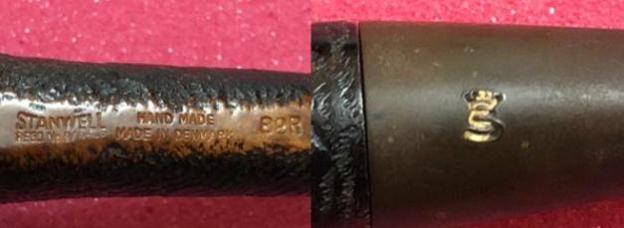
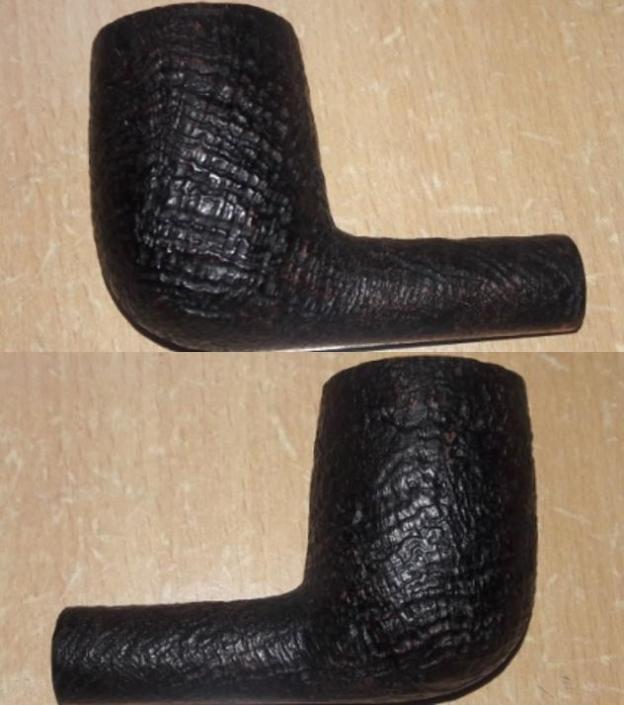
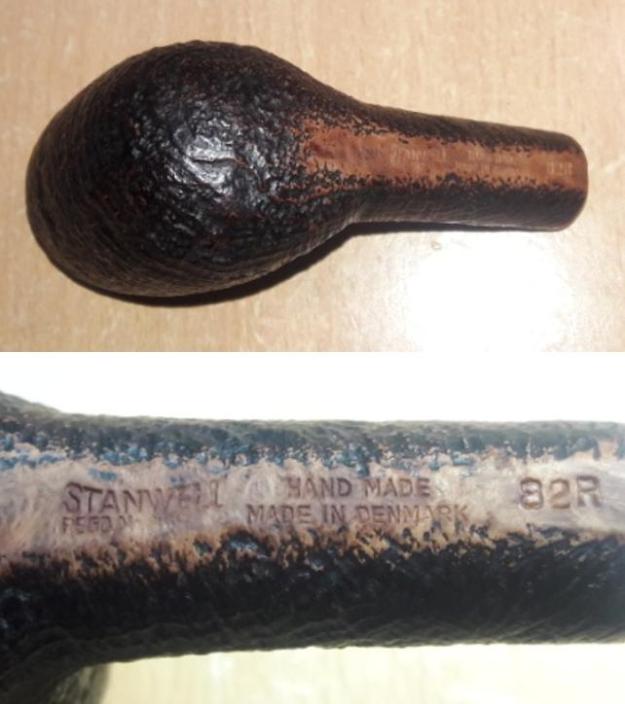
This large straight sandblasted Billiard pipe is stamped on the smooth underside of the shank from the foot towards the shank end as “STANWELL” in an arch over “REGD. No 969-48” followed on the right by “HAND MADE” over “MADE IN DENMARK” in block capital letters followed by shape code/ model number “82R” towards the shank end. The Silver Crowned S adorns the left side of the vulcanite stem.There is adequately detailed and informative material available on both pipedia.org and pipephil.eu on the brand; however, I was keener to know the exact dating and correlate the pipe details with the shape code. The late Basil Stevens was considered an authority on all things Stanwell and on surfing the net, I came across this site which gives out pointers to dating a Stanwell pipe; here is the link https://www.scribd.com/document/45022903/Stanwell-Dating-Pricing-Information-by-Basil-D-Stevens.

I reproduce the relevant pointers which help in dating the Stanwell on my work table:-

Dating Information:

1) Regd. No. stamping discontinued in late 1960s to very early 1970s. This is the Stanwell trade mark registration. The “48” indicates that the registration was made in 1948. (info rec’d from Jorgen Grundtvig, Managing Director, Stanwell A/S).

2) Up until the early 1960s only the top pipes, e.g. “Hand Cut” had the stem/mouth pieces stamped with the Stanwell logo of a crown over “S”.

Next I wanted to ascertain if I could pinpoint this particular shape and model numbered pipe in any catalogs and sure enough, pipedia.org, in one of its offsite links to the catalog from the period 1960-70 does have this same pipe on page 18 under STANWELL GIANTS, here is the link; http://files.homepagemodules.de/b169807/f122t2510p9193n1.pdf

The last bit of curiosity in my mind was to link the model number on my Stanwell to the description of the shape and designer, if possible. Again pipedia.org has a section on “Stanwell Shape Numbers and Designers” and sure enough, 82R finds a mention as large billiard, taper bit, but no mention of designer! (https://pipedia.org/wiki/Stanwell_Shape_Numbers_and_Designers).

Thus from the above, it is amply evident that the pipe now on my work table is from the 1960s and is from the “GIANT” line offering from Stanwell!!

Now on to restoring this Stanwell Giant billiard with a taper bit……..

INITIAL VISUAL INSPECTION
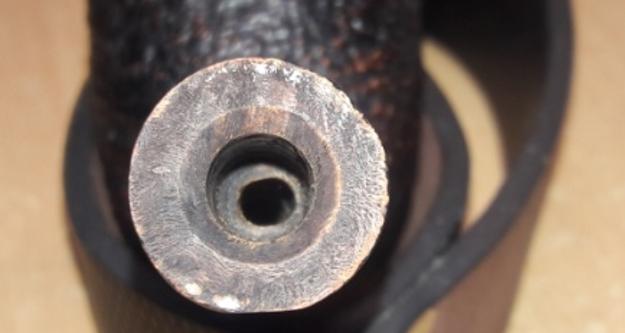
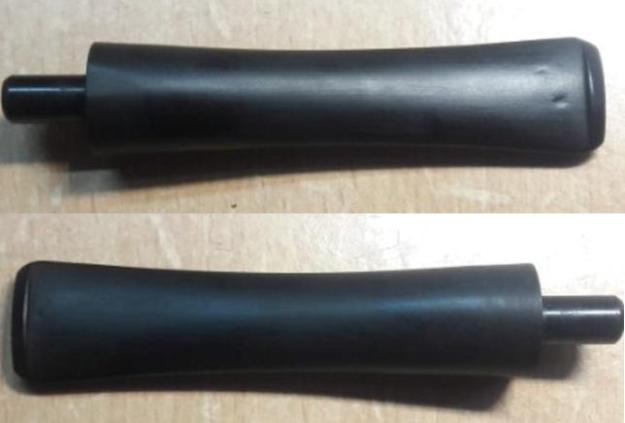
This large sandblasted billiard pipe has a nice heft and nicely fills the hand and like most of the pipes from my inheritance; this too has a thick layer of cake in the chamber with overflow of lava on the rim top. The inner rim edge appears sans any damage and would be confirmed once the chamber has been reamed. The condition of the walls of the chamber can be commented upon once the cake has been taken down to the bare briar. However, the external surface of the stummel feels and looks solid and hence I do not foresee any major issues surprising me later. The ghost smells are very strong in the chamber.As is commonly seen on sandblasted pipes with some serious age on them, the crevices are always filled with dust, dirt, oils, tars and grime from all the years of smoking and storage. This one is no exception to this observation. The grooves of the sandblast are filled with dust while the small smooth bottom of the shank which bears the stamping is covered in dust and grime. The fact that the textured patterns of the rustications are dusty and filled with dirt is accentuated more due to the contrast of dark and medium brown stains on the stummel and the shank. The briar looks lifeless and bone dry and has taken on black dull hues. The mortise is full of oils, tars and gunk and air flow is restricted. The stem is heavily oxidized with a couple of deep tooth indentations on both the upper and lower stem surface in the bite zone. The lip edges on either surface are without any serious damage. The stem logo of the letter ‘S’ with a crown on top is crisp and deep.INITIAL CLEANING BY ABHA…
The initial cleaning on this pipe was done by Abha, my wife (she has cleaned up around 40-50 pipes and this is one of the lot that had reached me for further restoration). She reamed out the complete cake and further smoothed out the chamber walls with a folded piece of 220 grit sand paper. She further cleaned out the internals of the shank with pipe cleaners, alcohol and cotton buds. She followed the internal cleaning of the shank with external cleaning of the stummel using Murphy’s Oil soap and hard bristled tooth brush and dried it with paper napkins and cotton cloth.

Next she cleaned out the internals of the stem air way and immersed it in “Before and After Deoxidizer” solution along with the stem of other pipes in line for restoration. Once the stem had soaked overnight, she cleaned the stem under running warm water and scrubbed the raised oxidation from the stem surface using Scotch Brite pad. She further removed the oxidation by scrubbing the stem with 0000 grade steel wool and applied a little olive oil to rehydrate the stem.

ONCE THE PIPE IS ON MY WORK TABLE…
The cleaned up pipe presents a very clear picture of what needs to be done to restore this pipe to a decent and smoke worthy condition. I really cannot thank my wife, Abha, enough for all the help and support that she extends me in my pursuance of this hobby. I proceed to carry out my appreciation of the work that needs to be done on this pipe to restore it.

As with all the cleaned pipes that Abha packs, there was a note in the zip lock pouch with issues that she had observed in the pipe. The first point was that she was not happy with the way the stummel had cleaned up and that the inner rim edge appears to be charred in the 6 o’clock direction. She also mentioned about heat fissures along the walls of the chamber. Here are the pictures of the pipe as I had received. To be honest, the pipe had cleaned up nicely. The sandblasted rim top surface does show some accumulation of hardened overflowed lava which should be easy to dislodge with the use of brass wired brush and Murphy’s Oil soap.

The second point was that the chamber has developed heat fissures (marked in red arrows). Close scrutiny of the chamber walls made me realize that there is still a very thin layer of cake in the chamber and it is my experience that this gives an appearance of heat fissures! Only after the cake has been completely removed will I be able to confirm presence of heat fissures or otherwise. The outer rim edge is in good condition. I concur with Abha’s assessment of a likely charred inner edge in the 6 o’clock direction (marked in yellow circle). The ghost smells are still all pervasive. This would necessitate a more invasive internal cleaning of the shank and the chamber. The draught hole is dead center and at the bottom of the heel and leads me to believe that this pipe should be a fantastic smoke. The stummel surface has cleaned up nicely with the intricate sandblast patterns on full display. While Jeff and Steve had been to my place, the importance of preserving stampings on a pipe was discussed in detail and Abha diligently works to preserve the same on all the pipes that she cleans up. This pipe is no exception with stampings clear and crisply preserved. The dark brown hues intermingled with black lends this pipe an attractive appearance which will be further enhanced after a nice polish. The mortise is nice and clean with the airway completely cleaned out and with a full and smooth draw.Now that Abha had rid the stem of all oxidation, the damage to the stem was all too apparent, not severe in this case. A couple of deep tooth marks could be seen on upper stem surface while minor bite marks are seen on the lower surface. The button edge on either surface is in decent condition with a clean airway and horizontal slot opening! These should be easy to address.THE PROCESS
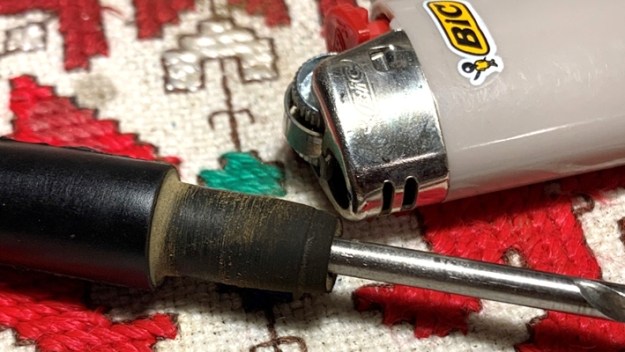
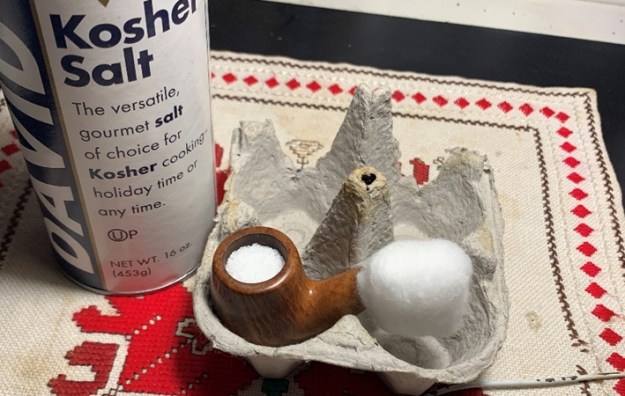
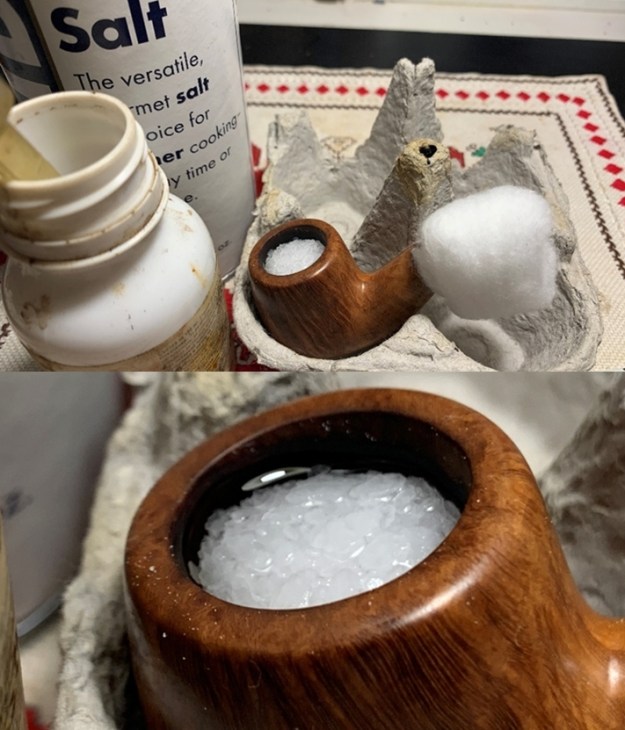
Firstly, I heat the surface of the stem with the flame of a lighter to raise the tooth indentations to the surface and follow it up with a sanding with a piece of folded 220 grit sand paper. This helps to even out the raised surface, address minor tooth chatter and also remove the deep seated oxidation. I wiped the stem with a cotton swab and alcohol to remove the raised oxidation and the resulting sanding dust. The tooth indentations, though greatly reduced, are still prominent. I need to address this issue. Next I spot fill in these tooth indentations with clear superglue and set the stem aside to cure.While the stem fills were curing, I moved ahead with addressing the issue of heat fissures to the chamber walls. With my fabricated small knife, I scrap the walls and removed all the remaining cake from the chamber and followed it up by sanding the walls with a folded piece of 180 grade sandpaper. Once I had reached the bare briar wood, I wiped the chamber walls with a cotton swab and alcohol to remove all the residual carbon dust. I was pleased that the chamber walls are sans any heat lines/ fissures.I gently scraped away the charred briar from the rim inner edge till I reached solid briar. Even though the rim deformation is not as pronounced as seen on Farida’s Dad’s Dunhill, it is still a eyesore. I need to address this issue.Prior to moving ahead with the rim repairs, I decided to address the strong ghost smells from the chamber. To eliminate the ghost smells from the pipe, I decided to treat it with salt and alcohol. I do not use Kosher salt as it is not readily available here and if available, it’s very expensive. I use cotton balls which is an at par substitute as I have realized over the last year or so. I draw out a wick from the cotton and along with a folded regular pipe cleaner; insert it in to the mortise and through the draught hole in the chamber. Thereafter, I pack the chamber with cotton balls to about quarter of an inch below the rim inner edge. I soak the cotton balls with isopropyl alcohol up to the brim. About half an hour later, the level of alcohol has gone down, having being absorbed by the cotton. I top it up once again and set it aside overnight. By next afternoon, the cotton and alcohol has drawn out all the remaining oils and tars from the chamber and mortise and the cotton and alcohol had fulfilled its intended task. I removed the cotton balls and ran pipe cleaners through the mortise to clean out all the loosened tars and gunk. The chamber now smells clean and fresh. I set the stummel to dry out naturally. With the internals of the stummel now clean, I cleaned the external surface using a hard bristled toothbrush and Murphy’s Oil Soap. I diligently scrubbed the stummel to remove all the dust and dirt that was embedded in the crevices of the sandblast. With a soft bristled brass wired brush, I removed the overflowing lava from the rim top surface and cleaned the internals of the shank with a shank brush and dish washing soap to remove what little crud remained in the shank. I rinsed it under running tap water and wiped the stummel dry with an absorbent soft cotton cloth. With the rim top cleaned of all the overflowing lava, the extent of damage can now be clearly appreciated. I had reached that point in restoration where I had to decide on the way ahead for rim repairs. I could either just let it be as topping would eliminate the sandblast patterns from the rim top (would be very tedious to replicate) or I could go for a complete rebuild. I decided on the latter as topping would significantly increase my work. Using a worn out piece of 150 grit sand paper, I completely remove the charred briar from the outer and inner rim edges in preparation for rebuilding the rim top. Using the layering technique (layer of glue followed by briar dust pressed on to this layer and repeating till the fill is over and above the intact rim surface), I completely rebuild the rim top and set the stummel aside for the fills to harden. Once the rim top surface fill had hardened, I mounted a coarse 150 grit sanding drum on to my hand held rotary tool and setting a speed at half, I carefully sanded off the excess fill from the rim top surface and the rim inner edge till I had achieved a rough match with the intact portion of the rim top and inner edge. With a folded piece of 220 grit sand paper, I worked the inner rim to a crisp and perfectly rounded edge. I gently scrubbed the rim top surface with a brass bristled brush to clean the surface as well as create patterns on the rim top. I further stained the rim repairs with a dark brown stain pen. I was very pleased with the rim surface rebuild at this stage in restoration. I set the stummel aside and worked the stem. The stem fills had cured nicely and using a flat head needle file, I sanded the fill to achieve a rough match with the surrounding stem surface. I further sanded the stem surface with a folded piece of 220 and 320 grit sand papers to further blend in the repairs and followed it with wet sanding the entire stem with 1500 to 12000 grade micromesh pads. I wiped the stem with a moist cloth to remove the dust and monitored the progress being made after every three grit pads. The stem polished up nicely and had a rich deep black shine to it. I applied a little Extra Virgin Olive oil to rehydrate the vulcanite and set the stem aside.Next, I rubbed a small quantity of “Before and After Restoration Balm” in to the briar with my finger tips, working it deep in to the sandblasts and let it rest for a few minutes. The balm almost immediately works its magic and the briar now has a nice vibrant appearance with the beautiful sandblast patterns on full display. The contrast of the dark browns of the raised sandblast with the dark black of the rest of the stummel added an interesting dimension to the appearance of the stummel. I further buffed it with a horse hair brush. The last picture is of the rim top that had the refreshed fill and even the most discerning reader will be hard pressed to accurately pin point the fill. I refreshed the stem stamping with a white correction pen. The end result shows a perfectly refreshed stem logo.To complete the restoration, I mounted a cotton cloth buffing wheel on to my hand held rotary tool and applied several coats of carnauba wax. I finished the restoration by giving the entire pipe a rigorous hand buffing using a microfiber cloth to raise the shine further and remove any residual wax from in between the sandblasts. The finished pipe looks amazingly beautiful and is now ready for its long second innings with me. I only wish it could share with me its life story of the past years while I enjoy smoking my favorite Virginia blend in it or maybe an English blend!! P.S. There was only one more issue that needed to be addressed and one that could not be ignored, being a functional issue. After I had rebuild the small portion of the rim inner edge, it was necessary to prevent this part (though very unlikely being too high on the rim edge) from coming in to contact with the burning tobacco. I addressed this by mixing activated charcoal and plain yogurt to a thicker consistency, just enough that it would spread easily and applied it evenly all along the chamber walls after inserting a folded pipe cleaner through the draught hole to keep it open. Once dry and set, this will not only protect the walls but also aid in faster build up of cake.I wish to thank each one for sparing their valuable time to read through this write up.
 

A Fun Restore from Bob Kerr’s Estate – A Blatter Brothers of Montreal Oom Paul


Blog by Steve Laug

After brief foray into restoring a couple of other pipes I am back to Bob Kerr’s estate (his photo is to the left). If you have not “met” the man and would like to read a bit of the history of the pipeman, his daughter has written a great tribute that is worth a read. Because I have included it in over 60 restorations to date I thought that I would leave it out this time. Be sure to check out some of the recent Dunhill restoration blog (https://rebornpipes.com/2020/01/01/restoring-the-last-of-bob-kerrs-dunhills-a-1962-dunhill-bruyere-656-f-t-bent-billiard/).

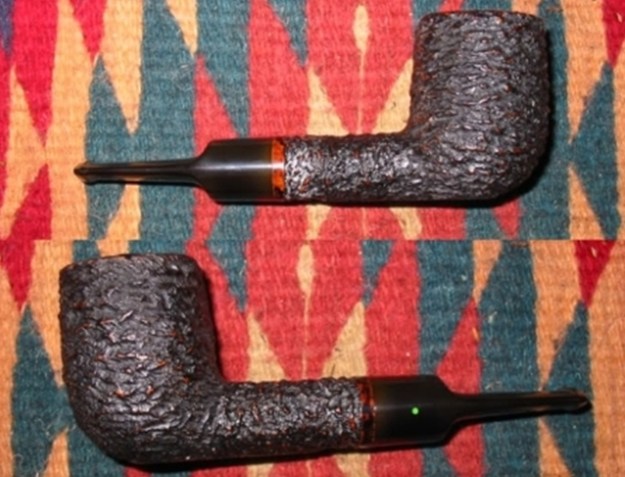
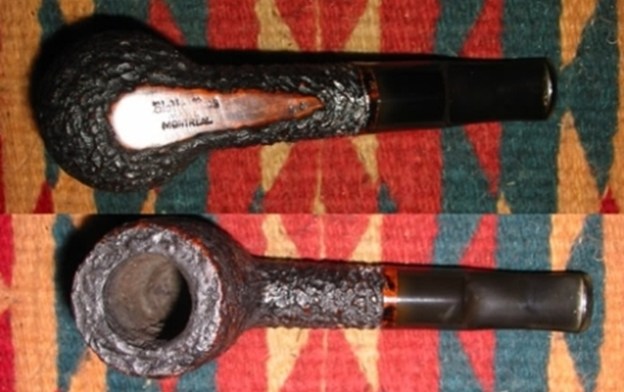
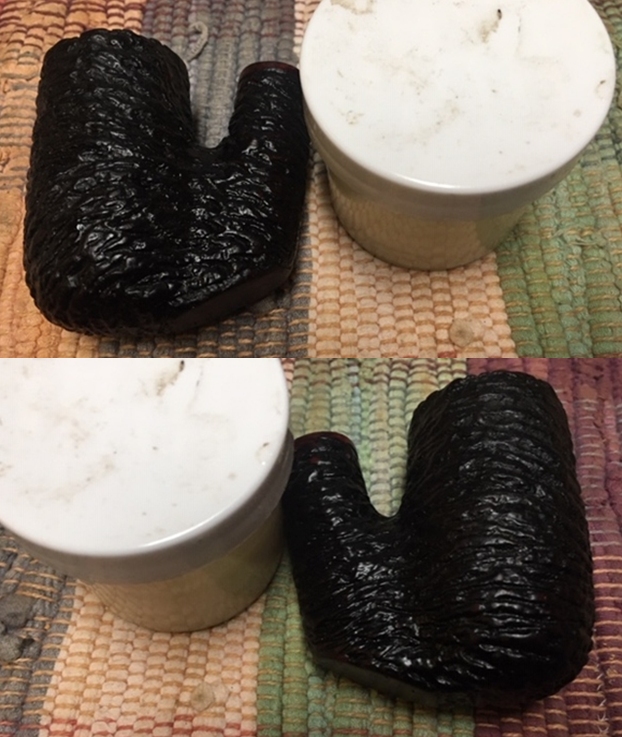
I enjoy collecting Canadian pipes and have a good representation of many of the carvers in my collection. John Calich, Micheal Parks, Stephen Downie, Paradis Brothers (SLC) and older Brigham pipes are a few of those that are in cupboard alongside of two older Blatter and Blatter pipes. When I was cataloging Bob Kerr’s Estate and came across a pipe that looked like a Blatter made pipe I was definitely interested. I examined it with a light and lens and at first I could not read the stamping on the heel of the bowl. The heel was dirty and the stamping damaged but the more I studied it the more I was sure it read Blatter Bros. Montreal. Bob’s pipe was an Oom Paul with the same style of rustication and stamping that was on a large Blatter Bros. Lovat that I have in my collection. I have included some pictures of the pipe in my collection along with photos of Bob’s pipe that Jeff took before his cleanup for comparison sake. Look at the rustication on both mine and Bob’s and I think you will see the similarity. Check out the stamping on the heel of each pipe and I think that you will agree that they came from the same hand at the Blatter shop in Montreal.Jeff took the previous three photos and more to show the general condition of the pipe before he started his work on the pipe. The finish on the pipe was very dirty – grime and grit from years of use and sitting fill the crevices in the rustication. The rim top was covered with a coat of thick lava that overflowed the bowl. It was primarily on the backside of the bowl. The rustication on the rim was also dirty. The bowl itself had a thick cake with flecks of tobacco stuck in the cake on the sides. Jeff took photos of the sides of the bowl to give a better feel for the rustication on the bowl. Hopefully you can see the similarity to the Lovat included above. The stem was dirty and very oxidized. The stem appeared to be a replacement and was a Twin Bore or Bite Proof one. But even that had stopped Bob from leaving his characteristic chomp marks on the stem and button edges.To help establish the connection with my Lovat further I quote from the blog I wrote in May of 2013 to connect this new pipe I am working on to the previous Lovat.

I called and talked with Robert Blatter who asked about the colour of the dot on the stem and the stamping. He was pretty certain that the pipe was old and made by his grandfather. I cannot remember the dates at this time but it was at least three generations back as the shop was currently managed by him and his sons were working with him. He was keen to see the pipe as it was a piece of his family history (https://rebornpipes.com/2013/05/19/two-of-my-older-blatter-and-blatter-pipes-of-montreal/).

From that I information on the previous Lovat restoration and Robert’s response I would say that this pipe is also one that was made by his Grandfather. Unfortunately the Oom Paul I am working on has a replacement stem that does not have the Blatter dot on it but I would guess that it was originally a green dot like my Lovat.

I turned to their website which has a great summary of the history of the brand in both English and French (http://www.blatterpipes.com/English.html). I quote a portion of the history of the brand from that succinct summary.

In the late 1890’s Frederic Blatter owned and operated a pipe factory in London, England, home of some of the great pipemakers and smokers of the time. After a fire destroyed the Blatter pipe factory, the family made a decision to move to Cape Town, South Africa with the prestigious mandate to make pipes for certain French Generals. After opening a factory and several retail stores in the cities of Cape Town and Durban, the family was once again on the move. This time Montreal, Canada.

Ernest Blatter and family moved from South Africa to Montreal in 1907. Once again the brothers opened a pipemaking factory on St-Hubert street and a retail store at 190 St. Catherine street West. Cigars and pipes were very popular in the 1930’s and the Blatters operated five stores. The St. Catherine street location operated for sixty three years until  it moved to 365 President Kennedy avenue, in 1970.   Mr. Peter Blatter began working with his father, Henri-Georges, in 1964. Mr. Henri-Georges Blatter passed away in 1967. Mr. Robert Blatter, Peter’s brother,  joined the firm in 1968 and took over the pipemaking duties.

Today, the family business specializes in the finest briar pipes, which are all handmade on the premises, and the finest quality cigars from Cuba and around the world. In 1982 Pierre and Robert Blatter were inducted in the prestigious “Confrérie des Maîtres-Pipiers de Saint-Claude”.   After major renovations to their store, they have recreated that much sought after ambiance of their original location.

In the summer of 2000,  Patrick,  son of Pierre Blatter joins the family business and slowly learns the careful art of pipmaking under the watchful eye of his uncle Robert.   In 2013, Patrick is invited to Saint-Claude and finally is honored and inducted, just like his father and Uncle, into the prestigious Confrérie des Maîtres-Pipiers de Saint-Claude!…

I would recommend that you visit their site and see some of beautiful pipes they make and some of the great smoking blends from their shop on 375 President Kennedy Avenue, Montreal, Quebec. They are a pleasure to do business with and are well worth a visit should you find yourself in Montreal.

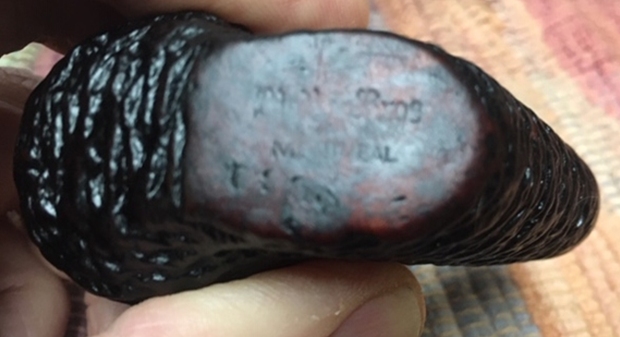
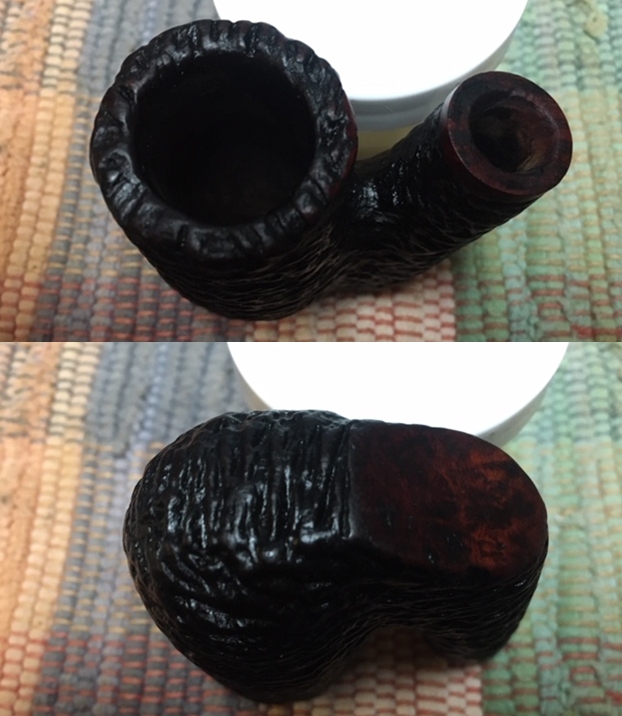
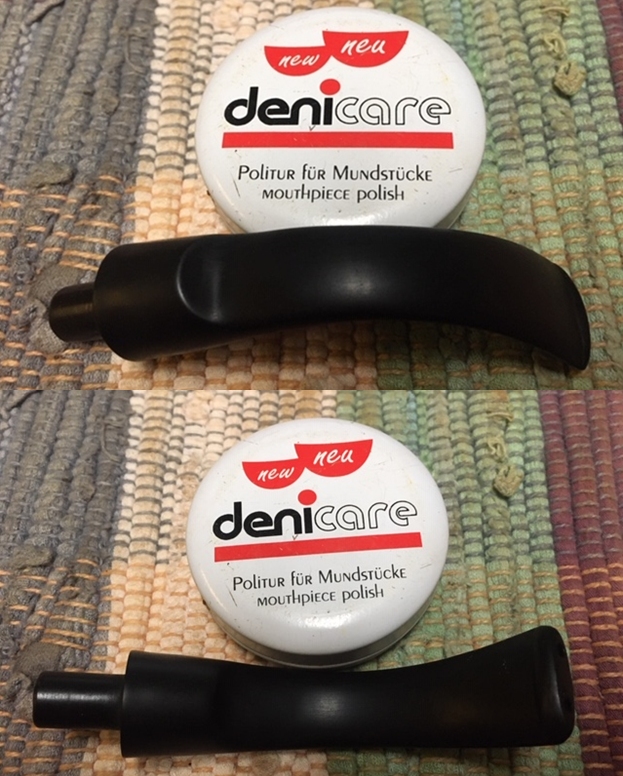
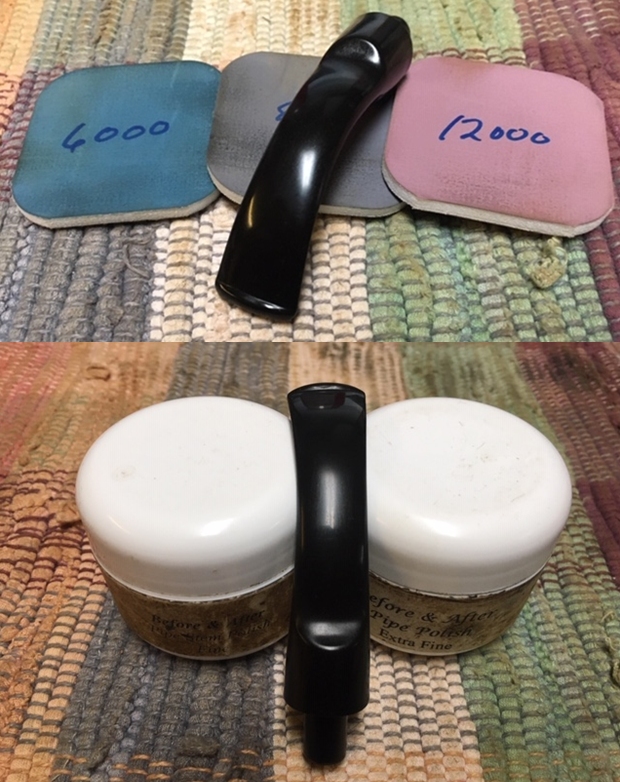
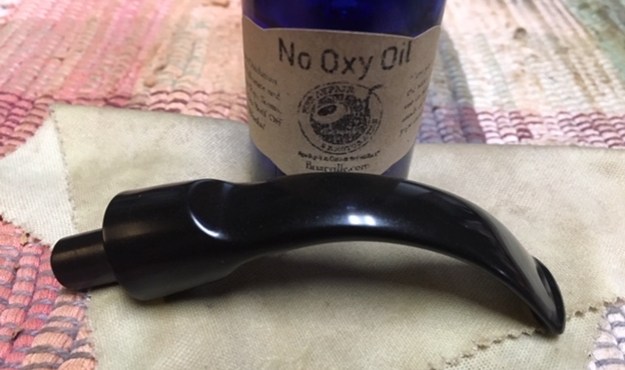
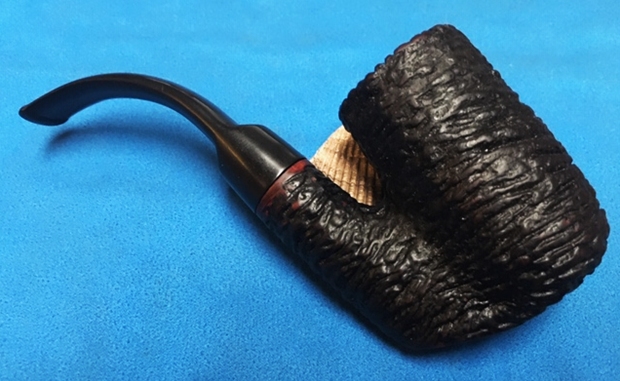
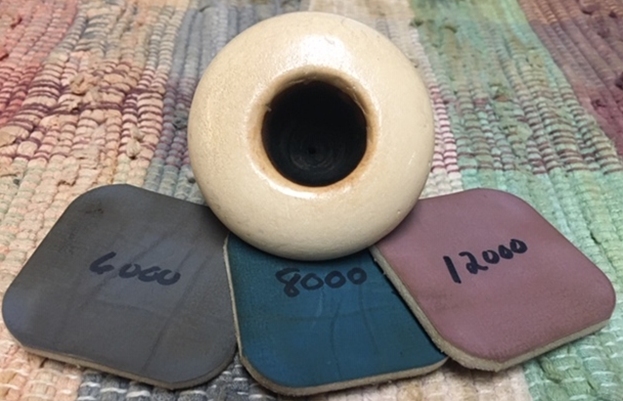
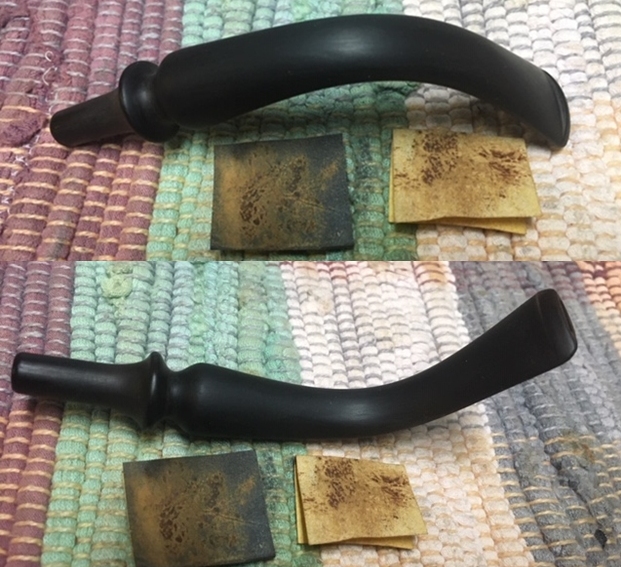
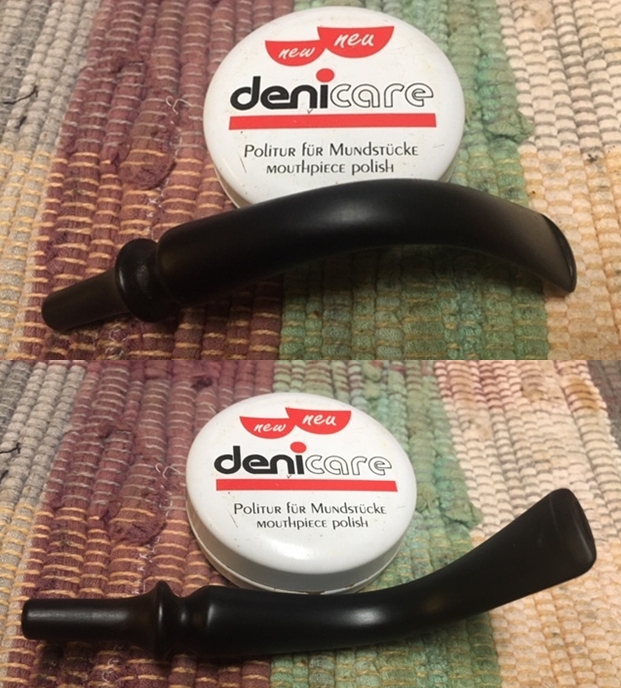
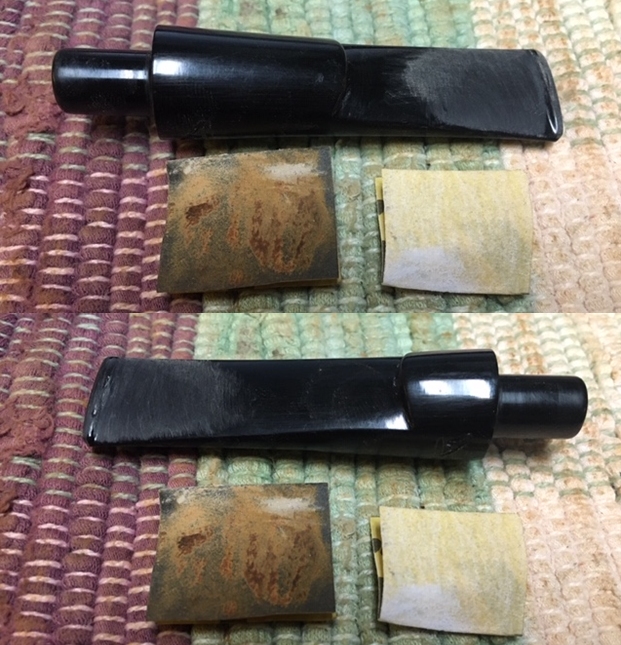
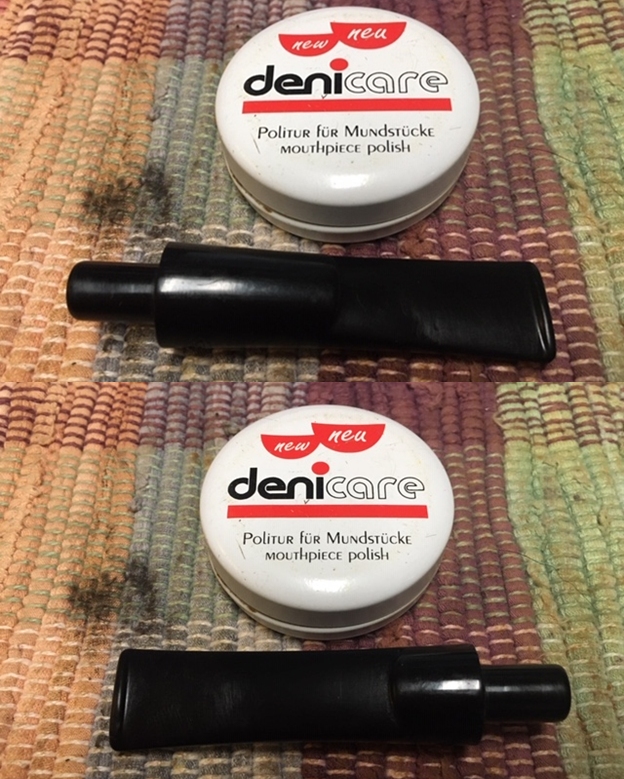
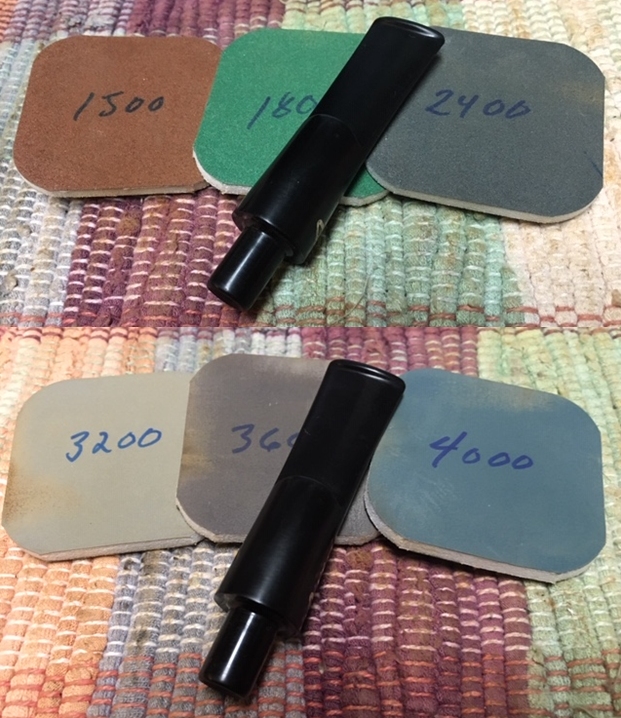
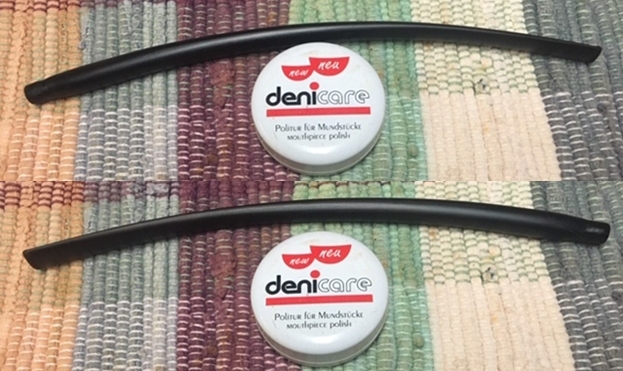
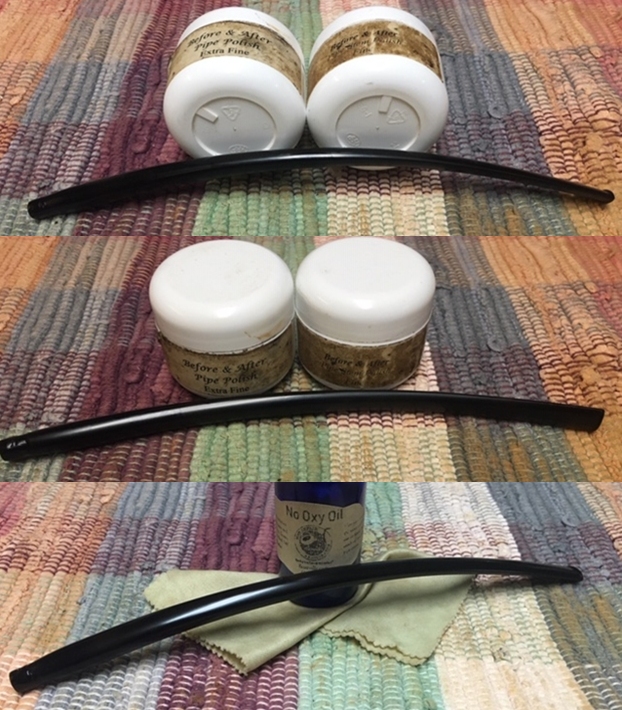
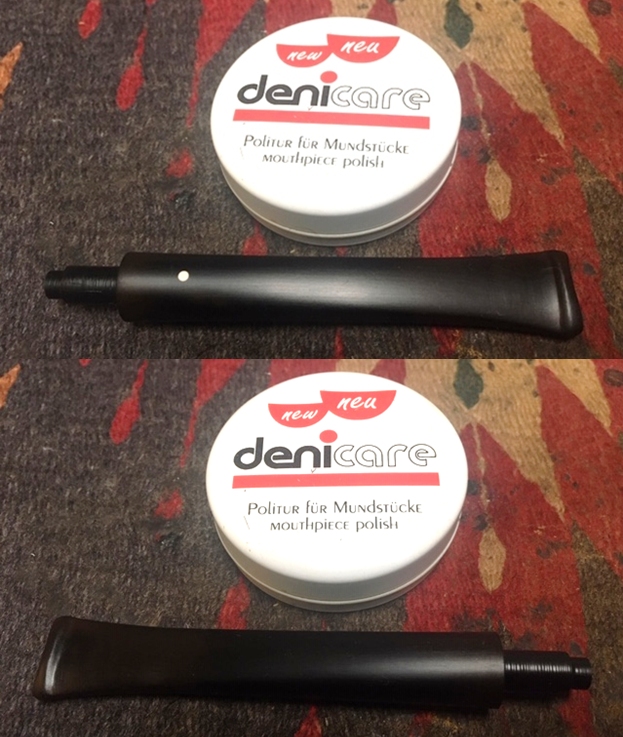
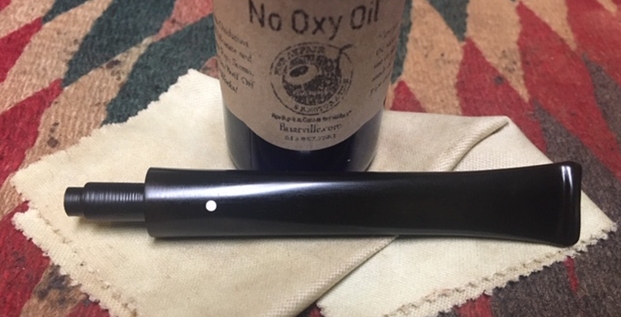
Turning now to the restoration of this beautiful rusticated Blatter Bros. Montreal Oom Paul. Jeff cleaned this filthy pipe with his usual penchant for thoroughness that I really appreciate. This one was a real mess and I was looking forward to seeing what he had done with this one when I took it out of his box. It looked amazing and CLEAN and other than the stem work needing very little effort on my part. He reamed it with a PipNet pipe reamer and cleaned up the reaming with a Savinelli Fitsall Pipe Knife. He scrubbed out the internals with alcohol, pipe cleaners and cotton swabs until the pipe was clean. He scrubbed the exterior of the bowl with Murphy’s Oil Soap and a tooth brush to remove the grime and grit on the briar and the lava on the rim top. The finish looks good with great looking grain around the bowl and shank. The rim top and front of the bowl was severely damaged with burns. The condition of the inner and outer edges was rough. The stem looked a lot better but damage was evident on the button. Jeff soaked the stem in Before & After Deoxidizer to remove the oxidation on the rubber. The pipe was ready for me to carry on the next part of the process.  I took some close up photos of the rim top and also of the stem surface. I wanted to show how well it had cleaned up. The rim top was clean and undamaged.  Both the inner and the outer edges looked good.  I also took close up photos of the stem to show the tooth marks on the stem and the button surface.  The last photo shows the twin bore stem with the twin airways coming out in the button.I took a photo of the stamping on the underside of the bowl. You can make out that it says Blatter Bros. over Montreal. There appears to be a shape number under that but I cannot make it out clearly.I decided to start my restoration work on this one by dealing with the bowl. There was not much that needed to be done with since it was in excellent condition after Jeff’s cleanup job. I worked some Before & After Restoration Balm into the surface of the briar with my fingertips and a horsehair shoe brush to get it deep in the rustication. The product works to clean, enliven and protect the briar. I let the balm sit for a little while and then buffed with a cotton cloth to raise the shine. The photos show the bowl at this point in the restoration process. With that done the bowl was finished other than the final buffing. I set it aside and turned my attention to the stem. I “painted” the surface of the stem with the flame of a lighter to see if I could raise the deep tooth marks at all. The effort with the lighter was unsuccessful. The dents were deep and they had sharp edges so they did not lift. I wiped off the damaged areas with a cotton swab and isopropyl alcohol to remove debris and dust and filled in the tooth damage on the button and the stem surface with clear Krazy Glue. I use both the black super glue and this Krazy Glue for the same thing. For me the deciding factor is the time constraint. I wanted to keep working on this stem rather than letting it cure for 6-8 hours.Once the repair had hardened I reshaped the button edges and stem surface with a needle file to smooth out the repairs. I still need to do some more sanding but the stem is shaping up to be quite nice.I sanded out the repaired with 220 grit sand paper to blend them into the rest of the stem surface. I started to polish it with a folded piece of 400 wet dry sandpaper. Once it was finished it had begun to shine.I polished the stem with Denicare Mouthpiece Polish from a tin of it I have in the drawer here. It is a gritty red paste that I rub on with my finger tips and work into the surface of the stem and button and buff off with a cotton pad. It gives me a bit of a head start on the polishing work.I polished the stem with micromesh sanding pads – wet sanding with 1500-12000 grit sanding pads. I wiped it down after each sanding pad with Obsidian Oil. I polished it with Before & After Pipe Stem Polish – both Fine and Extra Fine. I am continuing to experiment with Briarville Pipe Repairs new product, No Oxy Oil so I rubbed the stem down with the oil on the cloth that was provided with it. Because of my love for Blatter & Blatter or Blatter Bros. pipes this was another interesting pipe to work on. It is a well-shaped Uncle Paul or Oom Paul. It has a Bite Proof, or Twin Bore saddle vulcanite stem that I am pretty certain is a replacement stem. The rustication is very nice and the shape has a great look and feel in the hand. The finish is very tactile and I figure as it heats up while smoking it will be amazing. I polished stem and the bowl with Blue Diamond polish on the buffing wheel. I gave the bowl multiple coats of Conservators Wax and the stem multiple coats of carnauba wax. I buffed the pipe with a clean buffing pad to raise the shine. I hand buffed it with a microfiber cloth to deepen the shine. The pipe polished up pretty nicely. The deeply rusticated briar took on life with the buffing. The rich dark brown and black colour of the briar works well with the polished vulcanite stem. The finished pipe has a rich look that is quite catching. Have a look at it with the photos below. The shape, finish and flow of the Oom Paul are very well done. The dimensions are Length: 6 inches, Height: 2 ¾ inches, Outside diameter of the bowl: 1 3/8 inches, Chamber diameter: 7/8 of an inch. It is a beautiful pipe and one I am debating keeping as I only have one Oom Paul and this one is a match to my Lovat. I will see if Blatter & Blatter can restemm it for me with an original stem if I keep it. Thanks for walking through the restoration with me as I worked over this pipe. 

UPDATE on the pipe: I emailed Robert Blatter in Montreal to ask for his help in dating this pipe and helping me with the stamping on the heel of the bowl. (I am intending to send it to Robert to have him restem it with a proper Blatter Stem.) Here is his response.

Dear sir, when I see the pipe it I will confirm, but it looks kike 78-05
witch means made in 1978, 5th pipe in that year. Made by me. Boy, that was a
long time ago! –R. Blatter

I sent the finished pipe off to Robert in Montreal to have him make a stem like the one that was on the pipe when it was sold. I received it in the mail today 01/28/20. It is amazing and it is perfectly balanced as a sitter. Here are some photos.


Back to Bob Kerr’s Estate – the second of two “Hopeless” Looking Gourd Calabash Pipes


Blog by Steve Laug

After brief foray into restoring a couple of other pipes I am back to Bob Kerr’s estate (his photo is to the left). If you have not “met” the man and would like to read a bit of the history of the pipeman, his daughter has written a great tribute that is worth a read. Because I have included it in over 60 restorations to date I thought that I would leave it out this time. Be sure to check out some of the recent Dunhill restoration blog (https://rebornpipes.com/2020/01/01/restoring-the-last-of-bob-kerrs-dunhills-a-1962-dunhill-bruyere-656-f-t-bent-billiard/)

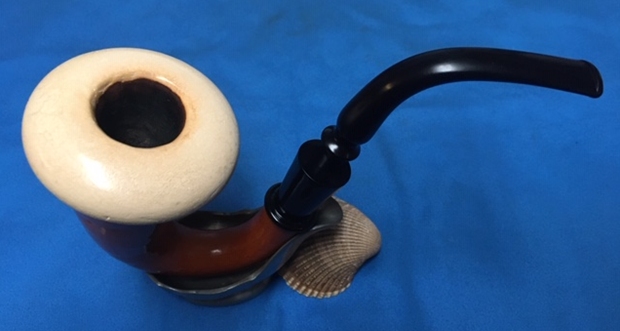
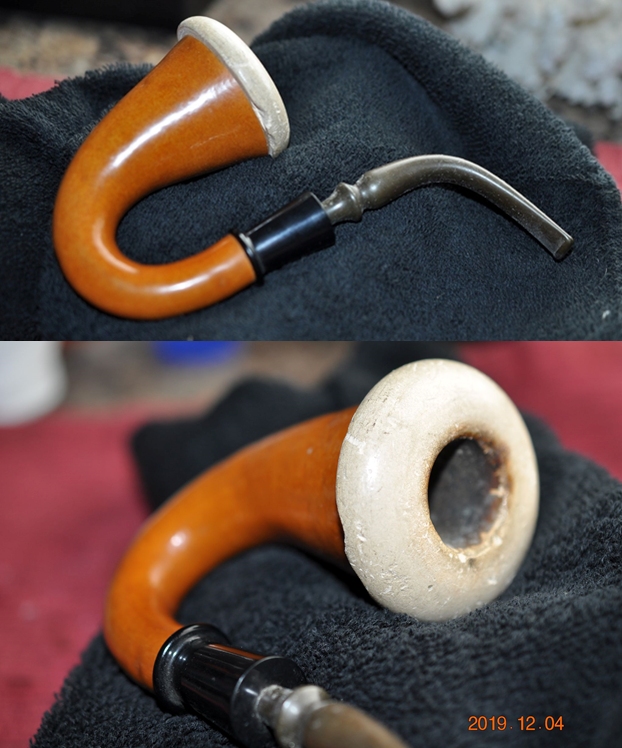
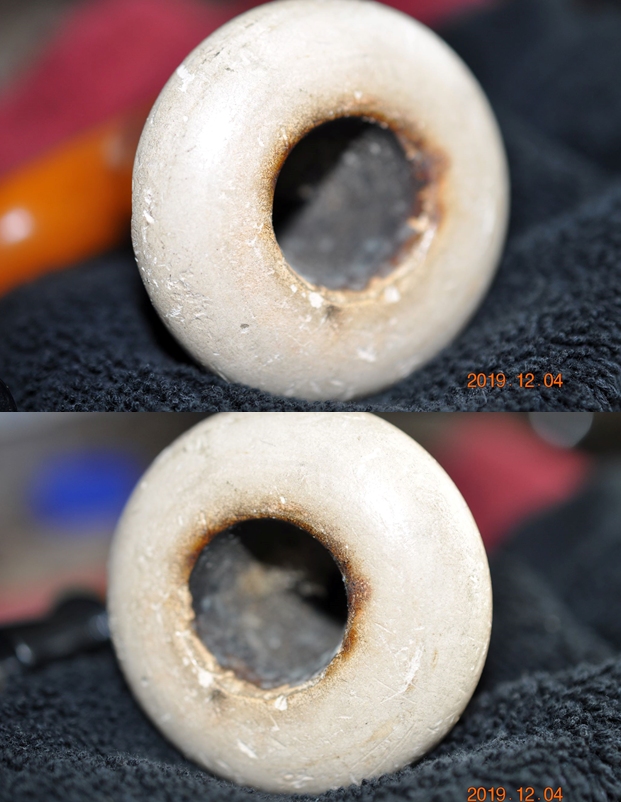
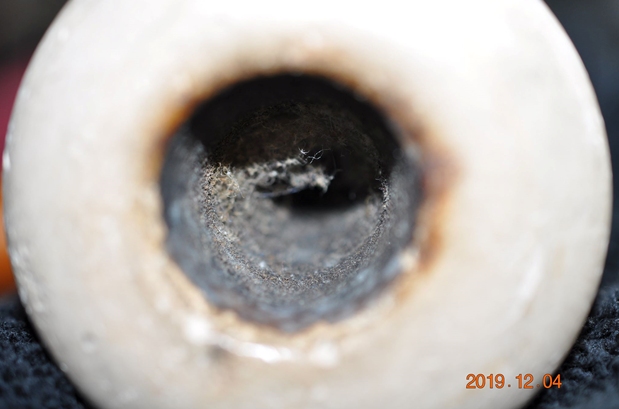
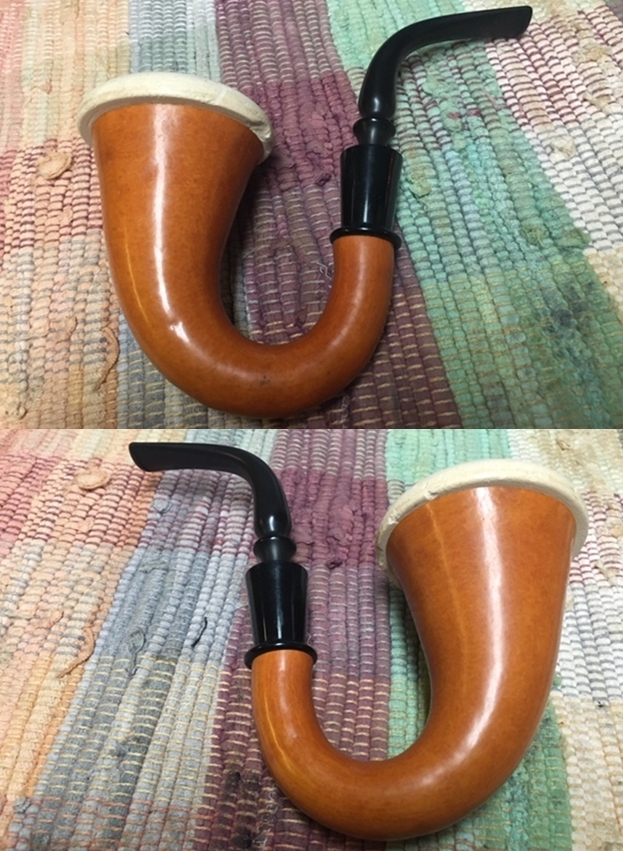
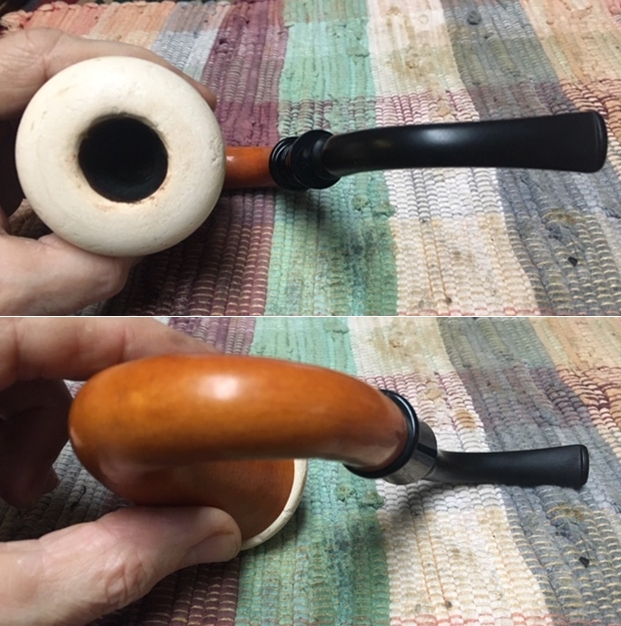
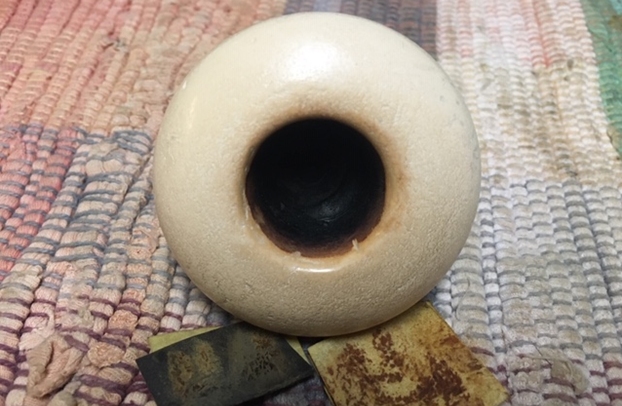
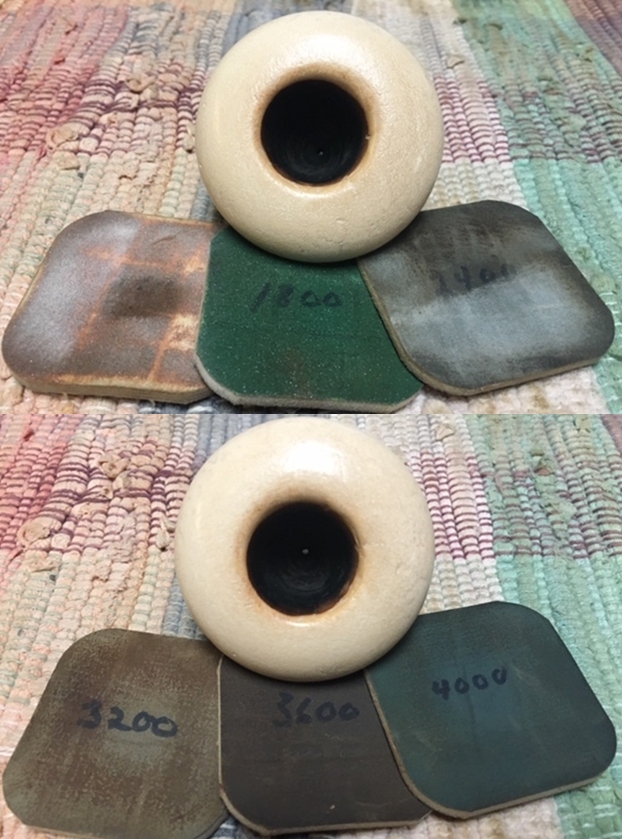
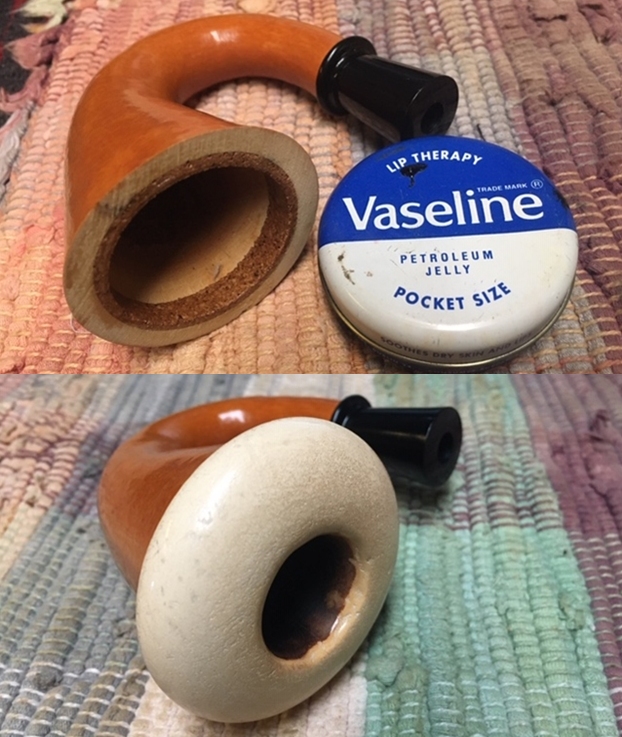
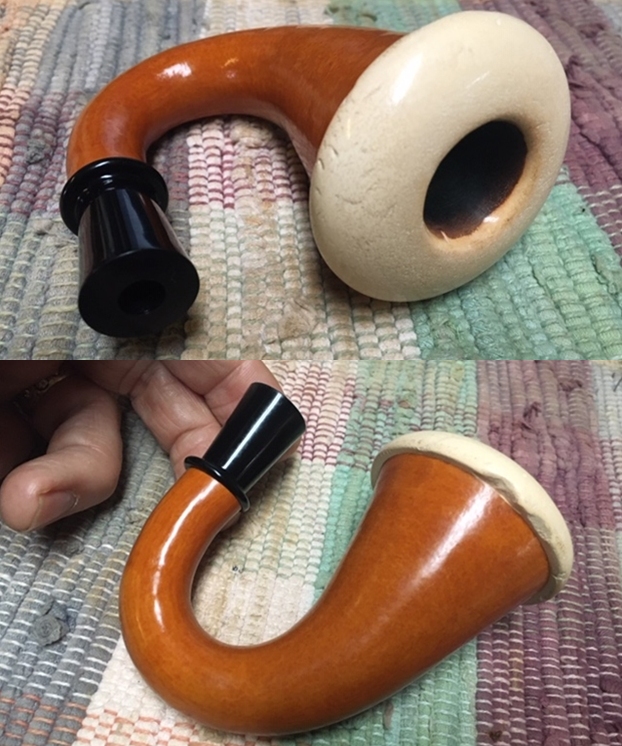
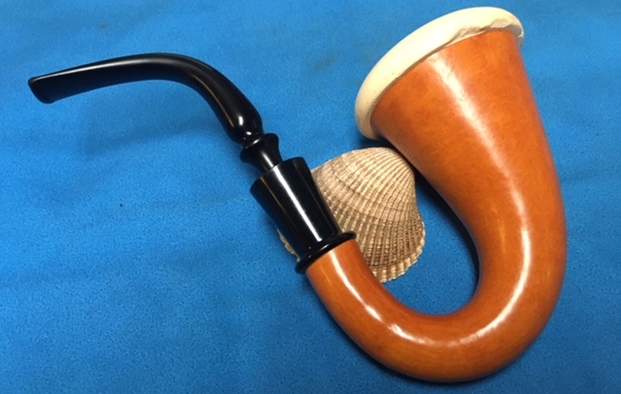
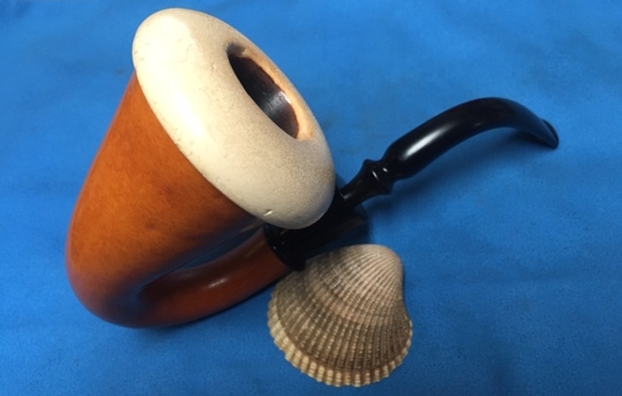
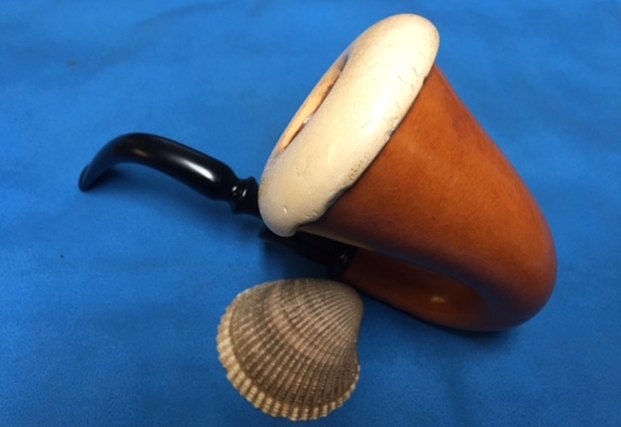
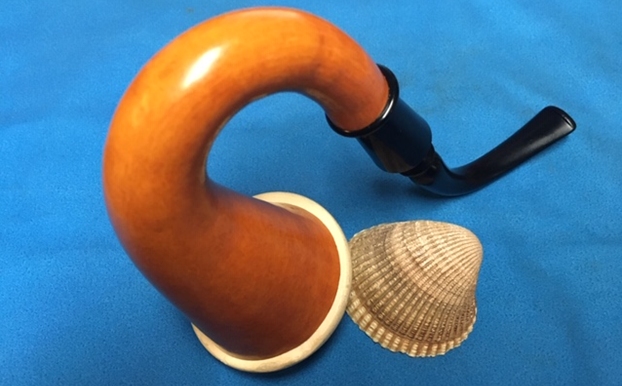
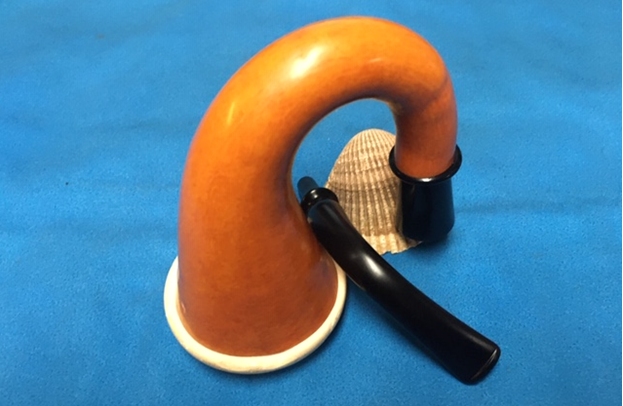
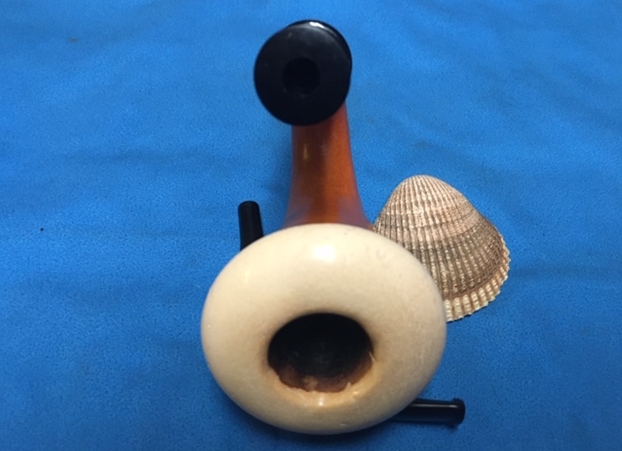
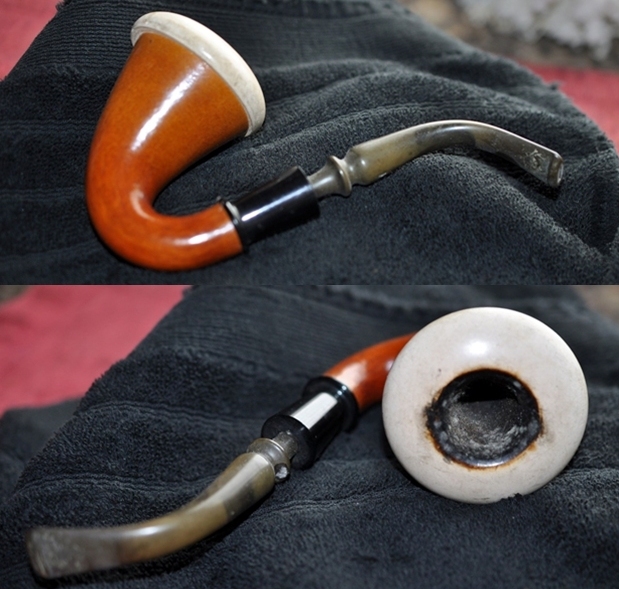
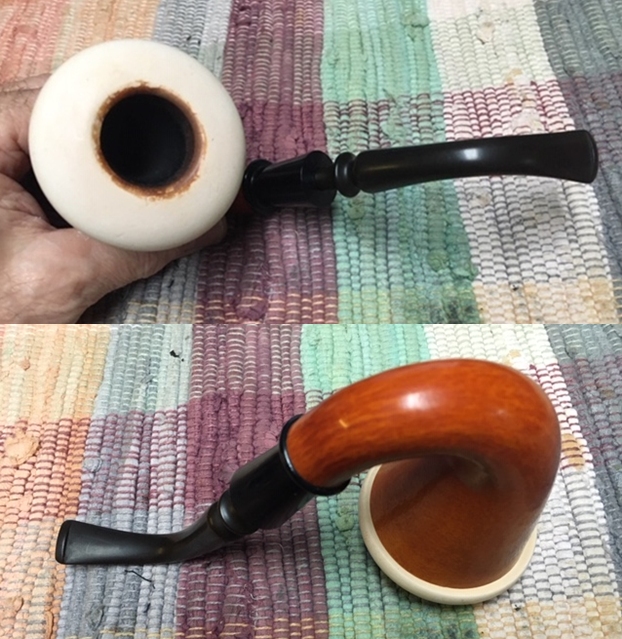
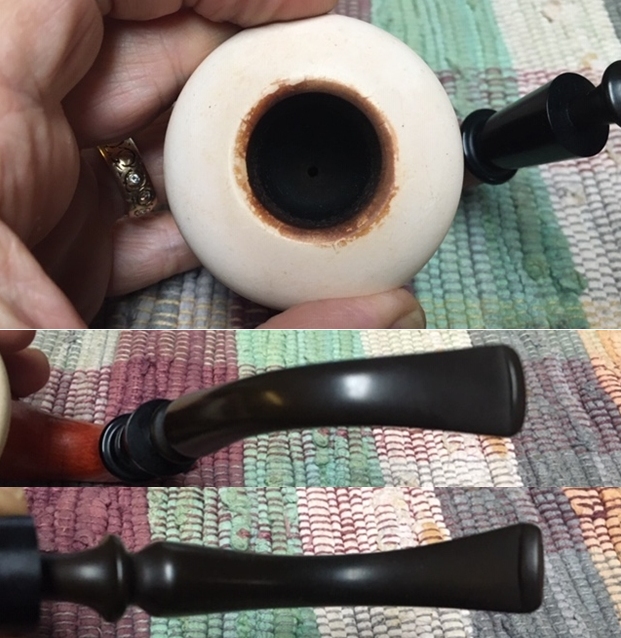
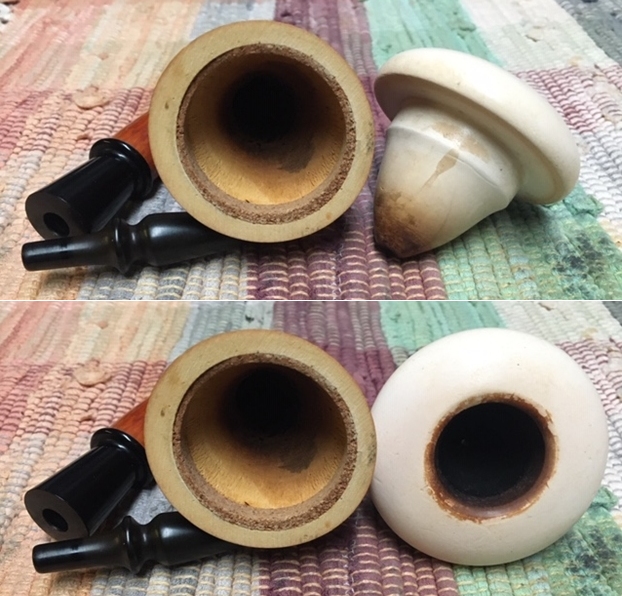
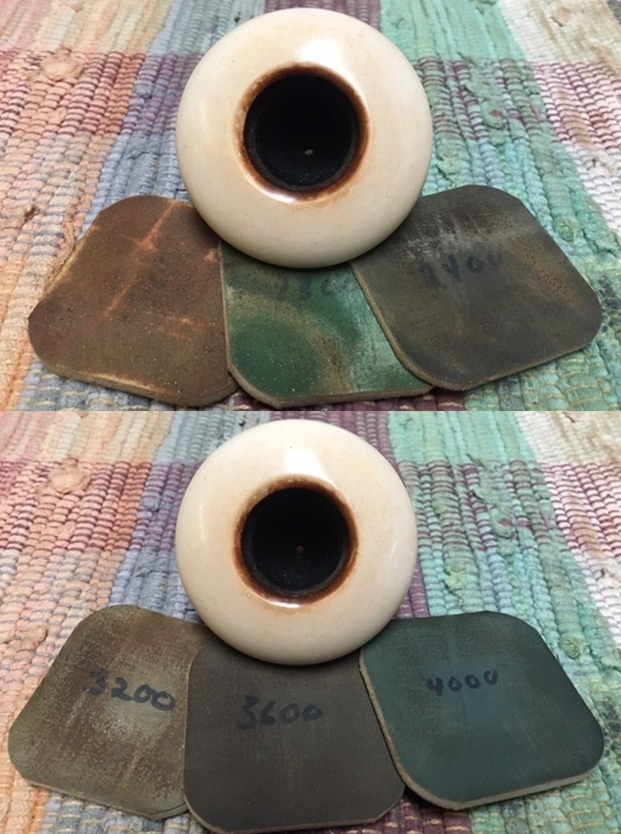
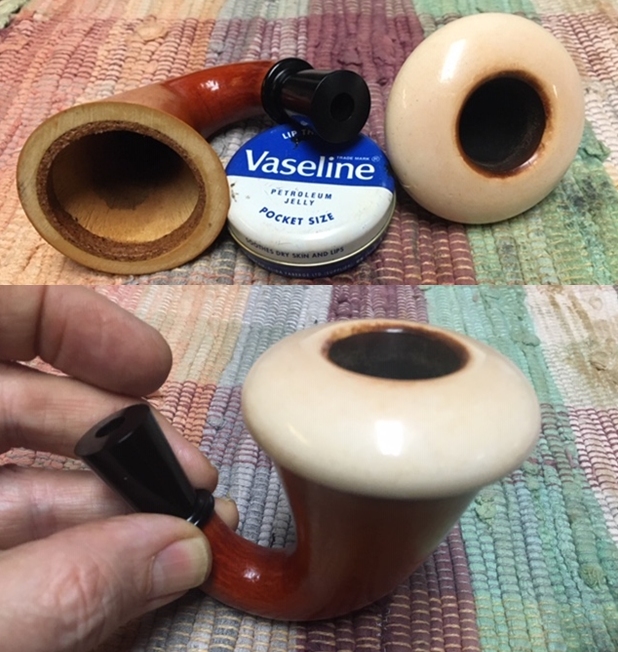
This is the second of the two Gourd Calabash pipes that he had that were rough looking. The pictures below show what they looked like when I shipped them to Jeff to do his cleanup magic with them. If the first pipe was in rough shape this one was beyond rough. It was horrible. The stem was oxidized. Once again the black plastic/acrylic ferrule was probably the cleanest part of the pipe. The meer cup was absolutely gross. There was a coat of dust, maybe even mold on the thick cake in the bowl. The pipe smelled horrid. The inner edges of the rim were badly chipped and dirty. The outer edges had chips and chunks of meerschaum that were missing. The top of the meer cup was pitted with nicks and scratches. It looked rough. With the cup removed the calabash gourd interior was black with scum and tars and looked horrible. It reeked just like the previous pipe. The smell of old tobacco tars surrounded the pipe akin to the smell of an ashtray overflowing on a pub table… some of you will certainly remember those! The gourd exterior was dirty but surprisingly undamaged. The stem was oxidized and covered with tooth chatter but none of the deep tooth marks I have come to expect from Bob’s pipes. Jeff took the following photos to document the mess!Jeff took some close up photos of the bowl cup to show the condition. Once again the photos capture the visual well but actually the other senses are not even brought into the equation. It was really nasty. The thick cake was growing things! Jeff took several photos of the under edge of the cup and the gourd sides to show the condition of the cup and the gourd. You can clearly see the chips in the meerschaum. The stem once again was surprisingly good for this estate. There were not any deep tooth marks in the vulcanite. We only had to deal with the oxidation and calcification. There no deep pits in the surface of the rubber. The third photo shows it in comparison to the ferrule so you can see how far from black it gone. I don’t think I would have been done with over 60 of Bob’s pipes without Jeff’s help on cleaning them. It was a mammoth task to say the least and they were all extremely dirty and had been sitting since the early 90s in boxes. He does cleaning job and leaves the rest to me. This one was no different. He thoroughly cleaned this filthy pipe in all of it parts. This one was a real mess and I was looking forward to seeing what he had done with this one when I took it out of his box. It looked amazing and CLEAN. He carefully reamed the meerschaum cup with a Savinelli Fitsall Pipe Knife. He scrubbed out the internals of the gourd and the shank with alcohol, pipe cleaners and cotton swabs until the pipe was clean. He scrubbed the exterior of the gourd with Murphy’s Oil Soap and a tooth brush to remove the grime and grit. The gourd and meer cup look really good. The stem looked a lot better. Jeff soaked the stem in Before & After Deoxidizer to remove the oxidation on the rubber. The pipe was ready for me to carry on the next part of the process. I took some close up photos of the meerschaum cup and also of the stem surface. I will tell you what; I am absolutely amazed at how good this pipe looks. I wanted to show how well it had cleaned up and what needed to be done. The cup was still in pretty rough condition but it was clean! The surface was pitted and nicked. The inner edges of the cup looked like someone had reamed it with a pocket knife sometime in its history. The bevel was worn and nicked with cuts but there was no darkening. Otherwise it was beautiful. The stem actually looks very good in the photos. There was no chatter or toot marks on the stem surface.  But it too was amazing… the whole pipe is a surprise to me. Looks good, smells good and should smoke well!I took photos of the chips on the underside of the cup on the backside. I took a photo from both sides to show the extent of the damage.I popped the meerschaum cup out of the gourd to check out the interior. It was stunningly clean. The cork gasket was dry but whole. The underside of the cup was stained but it too was very clean.I worked on the rim edge with 220 and 400 grit sandpaper to minimize the damage to the inner bevel. I could not total remove the damage but it certainly looks better than when I started.I polished the meerschaum bowl with micromesh sanding pads. I wet sanded the edges and surface with 1500-12000 grit sanding pads and wiped the surface down after each pad. The meerschaum really became smooth and took on a deep shine. The pits in the top surface are still present but significantly softer and less noticeable. The inner edge of the bowl looked much better and was smooth. I set the cup aside and rubbed down the gourd with Before & After Restoration Balm. While it was designed for enlivening and protecting briar it works wonders with a piece of dried gourd calabash. I worked it into the surface of the gourd with my finger tips and let it sit for about 10 minutes. I buffed it off with a soft cotton cloth. With the gourd cleaned and polished and the meerschaum cup cleaned and polished it was time to put that part of the pipe back together. I like to rub the cork gasket down with some Vaseline Petroleum Jelly to put some life and elasticity back in the cork. I rub it down with my finger tip and let it sit for about five minute so that the cork absorbs the jelly. Once that is done I can easily insert the cup without fear of damaging the cork. I took photos of the cup in place. You can see the surface of the rim top – lightly pitted but smooth and the chips on the underside in the last photo. This will be a great for someone looking for a deal! With the bowl done it was time to address the stem. It was in pretty decent condition and the oxidation was gone on this one. I started the process by rubbing the stem down with Denicare Mouthpiece Polish. I have found it is a great pre-polish for my use as it shows me areas that I need to work on with the micromesh sanding pads.I polished the stem with micromesh sanding pads – wet sanding with 1500-12000 grit sanding pads. I wiped it down after each pad with a damp cloth to remove the sanding dust. I polished it further with Before & After Pipe Polish – both Fine and Extra Fine. I finished by rubbing the stem down with some “No Oxy Oil” to protect the vulcanite. I am continuing to experiment with the product from Briarville and tracking how it works so I can write a review of it. I am so glad to be finished with the second and last of these Gourd Calabash pipes. When I received them I was not sure we could get any life out of them at all. This second one also proved me wrong. It came out really nicely and looks really good. It will make a good, inexpensive entry pipe for someone wanting to try out a Gourd Calabash pipe. The look of it makes me think is a Pioneer but no way to be sure of that. It would fit the 1960s and 70s. Like each of the pipes in Bob’s estate I really look forward to this point in the process when it is put back together, polished and waxed. I put the bowl and stem back together. I carefully gave the bowl and the stem multiple coats of carnauba wax. I buffed the pipe with a clean buffing pad to raise the shine. I hand buffed it with a microfiber cloth to deepen the shine. The pipe polished up pretty nicely. The gourd has character and a deep shine that really came alive with the wax and polish. The meerschaum cup looks good on it and the black of the fancy vulcanite stem is a beautiful contrast to the golden gourd and white meerschaum. This turned out to be a lot of fun to work on thanks to Jeff’s cleanup work. The pipe is comfortable pipe to hold in the hand. The finished pipe is shown in the photos below. The dimensions of the pipe are Length: 6 ½ inches, Height: 3 ¾ inches, Outside diameter of the bowl: 2 ½ inches, Chamber diameter: 7/8 of an inch. This beautifully shaped Calabash is a great introduction to the world of Calabash pipes. It is a beauty that should last for many more years. It is one that will be on the rebornpipes store very soon. If you are interested let me know. I have a lot more of Bob’s estate to work on of various brands. Perhaps one of those will catch your attention. Thanks for reading this blog and my reflections on the pipe while I worked on it. This is an interesting estate to bring back to life.

Back to Bob Kerr’s Estate – the first of two “Hopeless” Looking Gourd Calabash Pipes


Blog by Steve Laug

After brief foray into restoring a couple of other pipes I am back to Bob Kerr’s estate (his photo is to the left). If you have not “met” the man and would like to read a bit of the history of the pipeman, his daughter has written a great tribute that is worth a read. Because I have included it in over 60 restorations to date I thought that I would leave it out this time. Be sure to check out some of the recent Dunhill restoration blog (https://rebornpipes.com/2020/01/01/restoring-the-last-of-bob-kerrs-dunhills-a-1962-dunhill-bruyere-656-f-t-bent-billiard/)

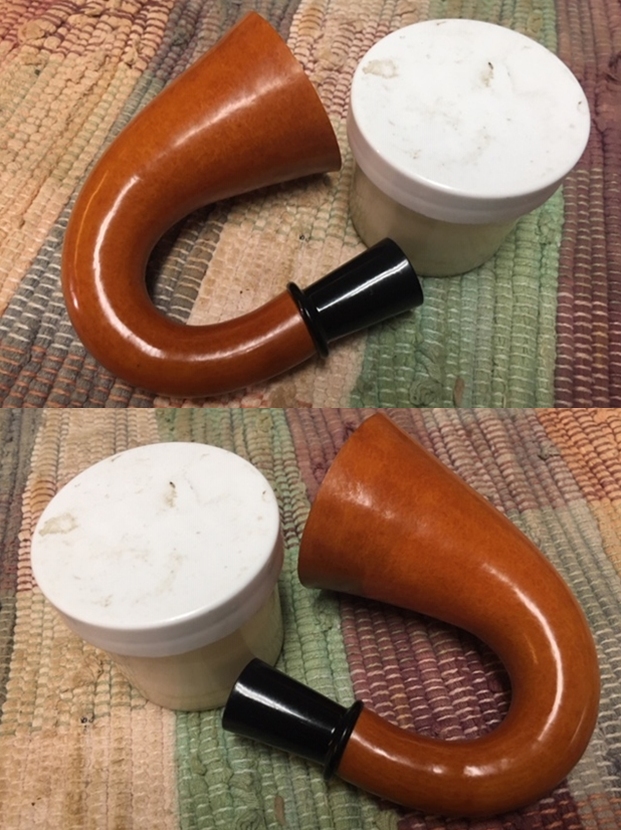
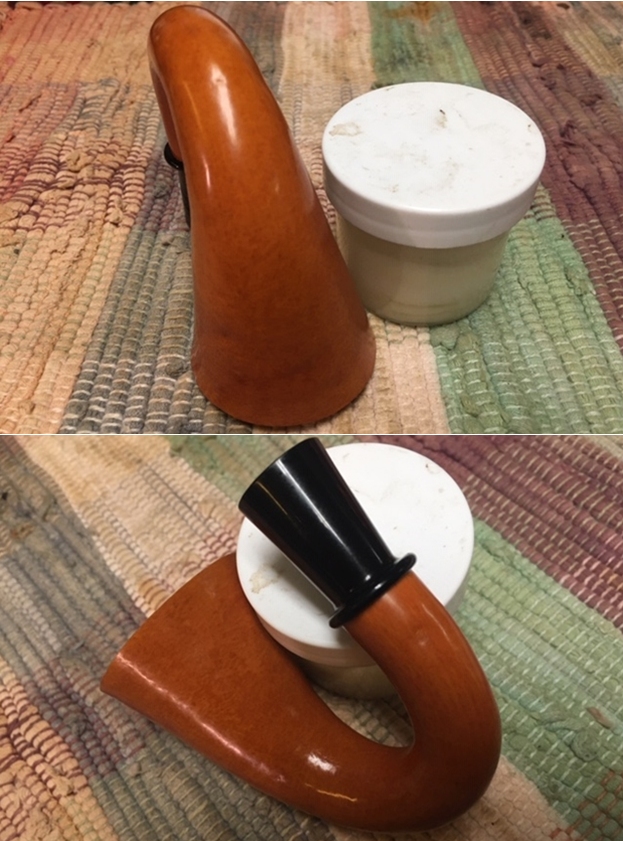
This is one of two Gourd Calabash pipes that he had that were rough looking. The pictures below show what they looked like when I shipped them to Jeff to do his cleanup magic with them. This was a rough looking pipe. The stem was oxidized and in the second picture what looks like a hole in the stem near the turned portion was a thick bead of “goop”. The black plastic/acrylic ferrule was probably the cleanest part of the pipe. The meer cup was absolutely gross. There was a coat of dust, maybe even mold on the thick cake in the bowl. The pipe smelled horrid. The rim edges of the bowl looked bad; the inner one had potential damage to the beveled edge under the grime. With the cup removed the calabash gourd interior was black with scum and tars and looked horrible. It reeked of old tobacco tars akin to the smell of an ashtray overflowing on a pub table… some of you remember those! The gourd exterior was dirty but surprisingly undamaged. The stem was oxidized and covered with tooth chatter but none of the deep tooth marks I have come to expect from Bob’s pipes. Jeff took the following photos to document the mess!Jeff took some close up photos of the bowl cup to show the condition. The photos capture the visual well but actually the other senses are not even brought into the equation. It was really nasty. The thick cake was growing things! A redeeming photo had to be included after those to give a bit of encouragement and hope. This is a shot of the gourd calabash from the underside. The striations in the gourd and the shine on the bottom are quite stunning.The stem actually was surprisingly good for this estate. There were not any deep tooth marks in the vulcanite. We only had to deal with the oxidation and calcification. There no deep pits in the surface of the rubber. The third photo shows it in comparison to the ferrule so you can see how far from black it gone.I can’t begin tell you how great it feels to have Jeff’s help on cleaning up the pipes from Bob’s estate as the 125+ pipes were taking me a long time to do alone. In fact I doubt if I would have as many finished as I do now. Together we have cleaned all of the pipes and have restored over 60. He does cleaning job and leaves the rest to me. This one was no different. He cleaned this filthy pipe with his usual penchant for thoroughness that I really appreciate. This one was a real mess and I was looking forward to seeing what he had done with this one when I took it out of his box. It looked amazing and CLEAN. He carefully reamed the meerschaum cup with a Savinelli Fitsall Pipe Knife. He scrubbed out the internals of the gourd and the shank with alcohol, pipe cleaners and cotton swabs until the pipe was clean. He scrubbed the exterior of the gourd with Murphy’s Oil Soap and a tooth brush to remove the grime and grit. The gourd and meer cup look really good. The stem looked a lot better. Jeff soaked the stem in Before & After Deoxidizer to remove the oxidation on the rubber. The pipe was ready for me to carry on the next part of the process. I took some close up photos of the meerschaum cup and also of the stem surface. I will tell you what; I am absolutely amazed at how good this pipe looks. I wanted to show how well it had cleaned up and what needed to be done. The cup was in remarkable condition. The surface was in decent condition. The inner edges of the cup were darkened and there was some debris on the edges of the bevel. Otherwise it was beautiful. The stem actually looks very good in the photos. There was no chatter or toot marks on the stem surface.  There was a little bit of oxidation that I needed to work on in the curves of the stem and turned area. But it too was amazing… the whole pipe is a surprise to me. Looks good, smells good and should smoke well!I popped the meerschaum cup out of the gourd to check out the interior. It was stunningly clean. The cork gasket was dry but whole. The underside of the cup was stained but it too was very clean.I worked on the rim and top of the meerschaum bowl with micromesh sanding pads. I wet sanded the edges and surface with 1500-12000 grit sanding pads and wiped the surface down after each pad. The meerschaum really became smooth and took on a deep shine. The inner edge of the bowl kept a bit of colour but was also very smooth. I set the cup aside and rubbed down the gourd with Before & After Restoration Balm. While it was designed for enlivening and protecting briar it works wonders with a piece of dried gourd calabash. I worked it into the surface of the gourd with my finger tips and let it sit for about 10 minutes. I buffed it off with a soft cotton cloth. With the gourd cleaned and polished and the meerschaum cup cleaned and polished it was time to put that part of the pipe back together. I like to rub the cork gasket down with some Vaseline Petroleum Jelly to put some life and elasticity back in the cork. I rub it down with my finger tip and let it sit for about five minute so that the cork absorbs the jelly. Once that is done I can easily insert the cup without fear of damaging the cork. With the bowl done it was time to address the stem. It was in pretty decent condition other than a little residual oxidation in the curves of the turned area and on the tenon area. I sanded the surface of the stem with 220 grit sandpaper to remove the remaining oxidation in the stem surface and the remaining oxidation in the vulcanite. I polished it with 400 grit wet dry sand paper.I rubbed the stem down with Denicare Mouthpiece Polish. I have found it is a great pre-polish for my use as it shows me areas that I need to work on with the micromesh sanding pads.I polished the stem with micromesh sanding pads – wet sanding with 1500-12000 grit sanding pads. I wiped it down after each pad with a damp cloth to remove the sanding dust. I polished it further with Before & After Pipe Polish – both Fine and Extra Fine. I finished by rubbing the stem down with some “No Oxy Oil” to protect the vulcanite. I am continuing to experiment with the product from Briarville and tracking how it works so I can write a review of it.

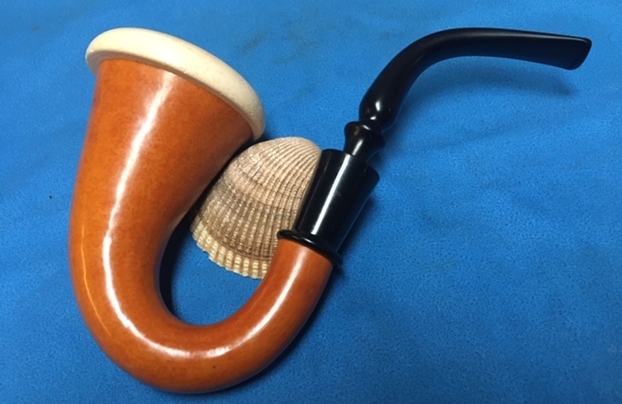
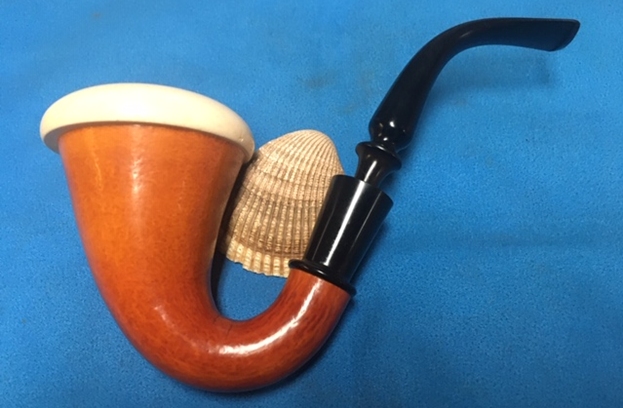
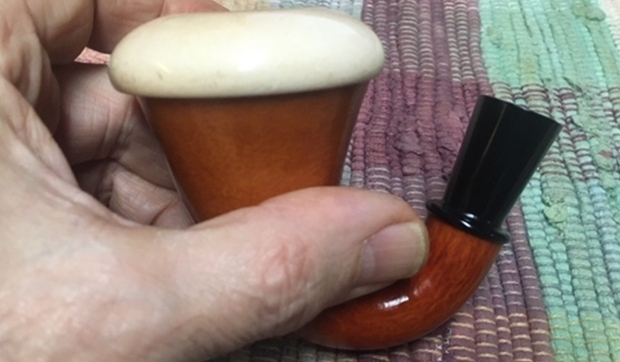
I am so glad to be finished with the first of these Gourd Calabash pipes. When I received them I was not sure we could get any life out of them at all. This one proved me wrong. It came out really nicely and looks really good. What came out is a beautiful golden Gourd Calabash. The look of it makes me think is a Pioneer but no way to be sure of that. It would fit the 1960s and 70s. Like each of the pipes in Bob’s estate I really look forward to this point in the process when it is put back together, polished and waxed. I put the bowl and stem back together. I carefully gave the bowl and the stem multiple coats of carnauba wax. I buffed the pipe with a clean buffing pad to raise the shine. I hand buffed it with a microfiber cloth to deepen the shine. The pipe polished up pretty nicely. The gourd has character and a deep shine that really came alive with the wax and polish. The meerschaum cup looks good on it and the black of the fancy vulcanite stem is a beautiful contrast to the golden gourd and white meerschaum. This turned out to be a lot of fun to work on thanks to Jeff’s cleanup work. The pipe is comfortable pipe to hold in the hand. The finished pipe is shown in the photos below. The dimensions of the pipe are Length: 7 inches, Height: 3 inches, Outside diameter of the bowl: 2 ½ inches, Chamber diameter: 7/8 of an inch. This beautifully shaped Calabash is a beauty should last for many more years. It is one that will be on the rebornpipes store very soon. If you are interested let me know. I have a lot more of Bob’s estate to work on of various brands. Perhaps one of those will catch your attention. Thanks for reading this blog and my reflections on the pipe while I worked on it. This is an interesting estate to bring back to life.

A Facelift and Stem Repair for a Republic Era Peterson’s 311 System Standard


Blog by Steve Laug

The second pipe I have chosen to work on in 2020 is a Republic Era Peterson’s System Standard 311. It was in rough condition when it came to me but it was clear that it was stamped Peterson’s System Standard vertically on the left side of the shank next to the band. The right side of the shank was stamped Made in the Republic of Ireland over the shape number 311. It has some stunning grain around the bowl and shank that can be seen under the thick grime. The bowl had been reamed recently so there were just remnants of cake on the walls that were uneven giving the bowl a pitted appearance. The rim top was cleaned and appeared to have been sanded. There were sanding marks in the briar. The inner and outer edges of the rim had damage. The bowl was out of round and there was some burn damage on the front inner and outer edge. The exterior of the bowl is dirty and has some pits and marks that are a part of its story. The nickel ferrule on the shank end was oxidized and was rough at the opening to the mortise. It is stamped on the left side K&P over three hallmarks. That is followed by Petersons. It is not dented or damaged. The stem was the biggest issue with this pipe. Someone had carved a groove in the top side of the stem in front of the p-lip almost trying to make it a dental bit. The underside of the stem had a tooth mark that had punctured the surface leaving a hole in a tooth crater. I took photos of the pipe before I started my cleanup work on it.   I took close up photos of the bowl and rim top to show the inside of the bowl and the damages on the rim top and edges of the bowl. You can see where someone had taken sand paper to the top and removed the lava and left sanding marks. You can also see the burned areas on the inner and outer front edges of the bowl.  The photos of the stem also clearly show the issues that need to be addressed.   I took photos of the stamping on the left side of the bowl and shank. The vertical stamping on the left side was readable as you can see from the photos. It read Peterson’s System Standard. The stamp on the right side of the shank read Made in the Republic of Ireland with the shape number 311 underneath. The nickel ferrule on the shank end is stamped on the left side K&P over three hallmarks – a Shamrock, a shape that looks like a reclining lion and a tower. Typically these hallmarks are not like those in silver that help to date a pipe but are rather marks that make it clear that the pipe was made in Ireland.  Following the hallmarks it is stamped Petersons.   I am including some information from Pipedia’s article on Peterson pipes. It is a great read in terms of the history of the brand (https://pipedia.org/wiki/Peterson). I have included a bit of the pertinent history on the Republic Era below.
1950 – 1989 The Republic Era  – From 1950 to the present time, the stamp for this era is “Made in the Republic of Ireland” in a block format generally in three lines but two lines have been used with or without Republic being abbreviated.

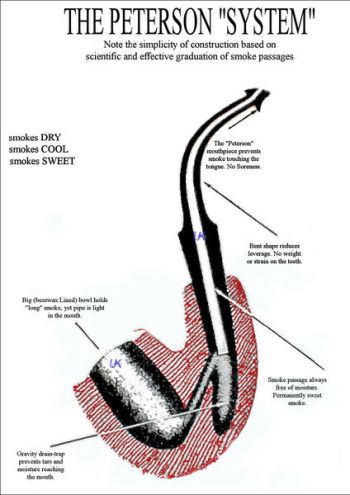
Pipedia also included a section of information on the System pipes including a cutaway diagram of the interior of the system pipe (https://pipedia.org/wiki/Peterson#Republic_Era_Pipes). I quote a section of the article in part and include a link to another article on Pipedia on the System pipe.

The Peterson System pipes are the standard bearers of the Peterson pipe family, famous for the excellent smoking pleasure they provide. Often imitated but never equaled, the Peterson System smokes dry, cool and sweet, thanks to the scientific effectiveness of the original design. The heart of the System is the unique graduated bore in the mouthpiece. This makes the suction applied by the smoker 15 times weaker by the time it reaches the tobacco chamber. The result is that all the moisture flows into the reservoir and, thus cannot reach the smoker’s mouth. The Peterson Lip further enhances the effectiveness of the graduated bore by directing the flow of smoke upwards and away from the tongue. This achieves a uniquely even distribution of smoke and virtually eliminates any chance of tongue bite or bitterness. Furthermore, the shape is contoured so that the tongue rests comfortably in the depression under the opening. Each “PLip” mouthpiece is made from Vulcanite. For the Peterson System pipes to work properly, the stem/tenon has to have an extension, the tip of which will pass by the draft hole from the bowl and into the sump. Upon the smoker drawing in smoke, this extension then directs the smoke down and around the sump to dispense a lot of the moisture before the smoke enters the extension and stem. On the System Standards and other less expensive systems, this extension with be made of Vulcanite turned integrally with the stem. On the more expensive System pipes this extension will be made of metal which screws into the Vulcanite stem. This extension on the earlier pipes will be of brass and the newer pipes will be of aluminium. Most smokers not knowing this function of the metal extension, assumes that it is a condenser/stinger and will remove it as they do with the metal condensers of Kaywoodie, etc. Should you have a System pipe with this metal extension, do not remove it for it will make the System function properly and give you a dryer smoke (https://pipedia.org/wiki/A_closer_look_at_the_famous_Peterson_Standard_System_Pipe).

With that information in hand I knew what I was dealing with in terms of the stamping and the age of this pipe. I knew from the information that the pipe was made during the Republic Era between 1950 and 1989. It was an antique mall find so I was happy with the age and condition. Now it was time to work on the pipe.

This is one that I have to do the cleanup work on and not have Jeff’s help. Doing the work I am really glad that Jeff is willing to take on cleaning the pipes that we purchase as estates of hunting finds – but enough of that. I have to clean this one! The pipe appeared to have been reamed somewhat recently in its life. However there was some pitting in the cake on the walls of the pipe so I cleaned up the reaming with a Savinelli Fitsall Pipe Knife. I decided to start the process by dealing with the damage to the inner edge and top of the rim. I wiped it down with alcohol on a cotton pad and filled in the damaged edge and rim top with clear Krazy Glue. Once the repair cured I used a folded piece of 220 grit sandpaper to clean up the repair on the rim top and to give the inner edge a very light bevel. Between the repair and the bevel it took care of the damage on the inner edge. The third photo shows the rim top after the shaping. I polished the entire bowl and rim top with micromesh sanding pads – wet sanding it with 1500-12000 grit pads and I wiped the bowl down after each sanding pad with a damp cloth. The bowl began to take on a finished shine. (I carefully avoided the stamping in the process of polishing the bowl and shank.) I rubbed the bowl and rim down with Before & After Restoration Balm. I worked it into the surface of the briar with my fingertips to clean, enliven and protect it. I let the balm sit for a little while and then buffed with a cotton cloth to raise the shine. I really like watching the Balm do its magic and bring the briar alive.   I set the bowl aside and turned my attention to the stem. The stem was a mess of issues. The first ones that I decided to address were the deep groove on the top side and the bite through on the underside. In preparation for the repair I cleaned out the airway in the stem with cotton swabs, pipe cleaners and alcohol. I greased a pipe cleaner with Vaseline Petroleum Jelly and slid it in the airway from the button end. I had bent it before putting it in the stem so that it would fit tightly against the bite through. I gathered the components of the repair together. I put a piece of packing tape on a cardboard square that I use for mixing a putty mixture of charcoal powder and black super glue. The tape buys me more time to mix up the putty without it reacting to the cardboard. I took out two charcoal capsules, the super glue and a dental spatula. Now I was ready to do the patching.I mixed the putty with the dental spatula and when I had a thick mixture I applied it to the stem surface with the spatula. I pressed it into the trough on the top side and the bite through on the underside. I don’t worry to much about a clean patch at this point I really want to make sure it is covered. Once it cures I can reshape it with a file and sandpaper.I sprayed the repair with an accelerator that hardens the surface of the repair and allows me to pull the pipe cleaner from the airway. I took photos of the repair at this point in the process. It is truly ugly but it has accomplished what I wanted. The groove and bite through were gone. Now all that was left was a lot of shaping and sanding. Oh, by the way I always blow air through the stem to make sure that I have not sealed it with the repair!!  I set the stem aside for the evening and enjoyed some time with the family.In the morning I tackled shaping the stem. I use a needle file and a rasp to take down the excess and to shape the button edge on the stem. It is tedious work that requires patience that Paresh in India has far more of than me but I finished the rough shape with the files.  Once I had the rough shape done I continued to use a combination of the needle file and 220 grit sandpaper to remove the excess material of the repair and shape the stem surface. The photos show the progress in the process. The shape is beginning to show clearly! The trough on the top side is gone and the bit mark on the underside it also repaired.I continued to shape the stem with the 220 and 400 grit sandpaper. I had to fill in some air pockets in the repair with clear Krazy Glue and I built up the curve of the button on the top and the ledge on the backside.    When I got the stem to the point I was happy with the repair and shape it was time to begin polishing it. I rubbed the stem down with Denicare Mouthpiece Polish. It does a pretty good job polishing the stem.   I polished the stem with micromesh sanding pads – wet sanding with 1500-12000 grit pads. I wiped the stem down after each sanding pad with Obsidian Oil. I polished it with Before & After Pipe Stem Polish – both Fine and Extra Fine. Once I had finished the polishing I gave it a coat of a new product I am experimenting with from Briarville Pipe Repair. It is called “No Oxy Oil” and it is made to protect the stem from oxidizing. I set it aside to dry. I am excited to be on the homestretch with this old Republic Era Peterson System Standard. I look forward to the final look when it is put back together, polished and waxed. I put the bowl and stem back together. I polished the bowl and stem with Blue Diamond to polish out the scratches in the briar and the vulcanite. I gave the bowl and the stem multiple coats of carnauba wax. I buffed the pipe with a clean buffing pad to raise the shine. I hand buffed it with a microfiber cloth to deepen the shine. The pipe polished up pretty nicely. The grain is quite stunning and really pops with the wax and polish. The repaired black vulcanite stem actually looks quite nice and is a great contrast to the browns of the bowl and thick shank. This Peterson’s System Standard 311 Bent Billiard was another fun pipe to work on even though I did the entire process here. The polished nickel Ferrule works as a contrast between the stem and the briar and binds it all together. It really is a nice piece of briar whose nicks and marks testify to the travels of this old pipe. The pipe is comfortable pipe to hold in the hand. The finished pipe is shown in the photos below. The dimensions of the pipe are Length: 5 ½ inches, Height: 1 ¾ inches, Outside diameter of the bowl: 1 ¼ inches, Chamber diameter: ¾ of an inch. This old pipe will be going back to a fellow referred to me by City Cigar in Vancouver. Even though I am not adding new work at the moment I have a commitment with them that I will repair pipes for their customers. Thanks for reading this blog and my reflections on the pipe while I worked on it. This is an interesting estate to bring back to life.

The 1st Restoration of 2020 – An Ascorti Business KS Hand Made Billiard


Blog by Steve Laug

On December 30th my family and I went to Bellingham – ostensibly to do a bit of Christmas shopping at the mall there, visit Trader Joe’s and a few other stops. I also wanted to get in one last pipe hunt for 2019. We ate breakfast at the Old Town Café on Holly Street in Old Bellingham. They have great food and a great atmosphere. Check it out.After breakfast the girls and I visited a few of my favourite antique malls in the area. One was closed but two were open and we were early customers. I went through the first one with care covering every shelf, display cabinet and nook and cranny and no pipes were to be found. That happens sometimes and I was wondering if the pipe hunt would end up being a bust. I rarely come away empty handed but there is always one of those days. We entered the second shop and after going through three aisles of display cases and coming up empty handed I entered the last aisle. There is a display case in that aisle that generally has a few pipes in it and potentially one of two of interest to me. It is the last part of the store I stop at and this day was no different. I came to the case and looked through the glass case at the lighters, knives, cheap meerschaums and corn cobs. I was beginning to wonder if it was going to be a bust. Then low and behold, underneath the stems of a cob and meerschaum I saw what looked like a briar.

I went to the counter to get the clerk to open the case for me so I could have a better look at the hidden pipe that I had seen. She left me to my hunting and I carefully moved the pipes that had been hiding the briar. It was a larger billiard with a rusticated finish and a smooth rim. I lifted it out of the case and turned it over in my hands. The pipe was dirty with a thick cake in the bowl and some darkening on the smooth rim top. But on the smooth panels on the shank I saw the stamping the were readable. The left side read Ascorti Business KS and the right side read Hand Made Italy. The stem had the characteristic Ascorti A logo and their unique saddle cut. I did not even look at the price. I closed the case and carried my find up to the counter to seal the deal. We negotiated the price and when we came to an agreement the bill was paid and the pipe was mine! When I got to the car I took some photos o fthe pipe as it looked when I picked it up. I sent a copy of the photos to Jeff to show him my find. I took a close up photo of the rim top so Jeff could see its condition. There was a thick cake in the bowl – thicker from mid bowl to the bottom. The top of the bowl seems to have been reamed with a knife. There is some darkening and light lava on the smooth rim top. The acrylic stem photos show the tooth marks on both sides. Overall the tooth marks are light and should be able to be sanded smooth. There is one on the top side that is a little deeper and may need to be repaired. There is also some damage on the edge of the button that will need to be addressed.I took a photo of the stamping on the left side of the shank and the saddle portion of the stem. The stamping is clear and reads Ascorti with the tail of the T forming a pipe. Underneath it is stamped Business followed by KS. The stamp on the stem is a classic Ascorti “A”. Most of the white that would have filled it in is worn off.Once I finished the last of Bob Kerr’s Dunhill pipes last evening I set this pipe aside as the pipe I would work on New Year’s Day. This morning I started by reaming the pipe. It had a rock had cake. I had to start the reaming with the smallest cutting head on the PipNet reamer and worked my way through three of the four cutting heads. That reamer usually does the job with a light cleanup from a pipe knife. But not this time! I used a KleenReem to take more of the cake back from the walls of the bowl and smooth out the hard spots. This was a tough cake. I finished with that and turned to the Savinelli Fitsall Pipe Knife to clean up the remaining ridges and bumps in the walls around the airway at the bottom of the bowl. I sanded the walls of the bowl with a piece of dowel wrapped in 220 grit sandpaper. Finally I was able to remove the cake from the walls and leave them smooth. I took a photo of the reamed bowl and you can see how much cake was removed. It is a large bowl. You can also see the darkening and light lava coat on the inner edge and bevel of the bowl.I scrubbed the bowl and rim with Murphy’s Oil Soap and a tooth brush. I was able to remove much of the grime from the rim top and the grooves and valleys of the sandblast finish. I rinsed it under warm running water to flush away the grime and dust in the soap. The following photos show the cleaned rim and bowl sides. I worked on the remaining debris and darkening on the rim top with 220 and 400 grit sandpaper. I was able to remove all of it and leave behind a clean rim top.I polished the rim top with micromesh sanding pads to bring out the shine in the smooth briar. I wet sanded it with 1500-12000 grit pads and wiped off the dust after each pad. I paused and took a photo of each side of the shank to show the stamping. The first photo shows the left side and the second shows the right side.I rubbed the bowl and rim down with Before & After Restoration Balm. I worked it into the surface of the rim top and rusticated briar with my fingertips and with a horsehair shoebrush to clean, enliven and protect it. I let the balm sit for a little while and then buffed the pipe with a cotton cloth to raise the shine. I really like watching the Balm do its magic and bring the briar alive.  I was in a rush to see what the rim and the finish looked like and almost overlooked cleaning out the inside of the pipe. Never to late to go back though! I cleaned out the mortise and airway in the shank and stem with cotton swabs, pipe cleaners and alcohol.With the bowl done it was time to address the stem. The dents in the top and underside were not too deep. I would be able to sand out most of them and whatever remained give a light fill. I would also need to repaint the A logo on the left side of the saddle. I could not heat the stem with a lighter as acrylic does not have the “memory” of vulcanite so It does not work. I took photos of the stem as a reminder.I sanded the stem surface with a folded piece of 220 grit sandpaper and was able to remove the majority of the dents in the stem surface. There was a deeper pit on the top side ahead of the button and on the right side of the button edge. I wiped down the areas that I was going to fill with a cotton swab and alcohol to remove the dust and debris. I filled them in with clear Krazy glue. I built up the damaged edge of the button on the underside as well.Once the repair had cured I sanded the surface of the stem and the button edges with 220 grit sandpaper to blend in the repairs. I started my polishing of the stem with 400 grit wet dry sand paper.  I rubbed the stem down with Denicare Mouthpiece Polish. I have found it is a great pre-polish for my use as it shows me areas that I need to work on with the micromesh sanding pads. I decided to touch up the A on the left side of the stem before polishing the stem further. I used Paper Mate Liquid Paper and fill it into the deep grooves of the stamping with a tooth pick. Once it has dried I scrape off the excess with the tooth pick and polish it with micromesh sanding pads.I polished the stem with micromesh sanding pads – wet sanding with 1500-12000 grit sanding pads. I wiped it down after each pad with a damp cloth to remove the sanding dust. I polished it further with Before & After Pipe Polish – both Fine and Extra Fine. I buffed it with a soft cloth to raise a shine. I put the bowl and stem back together again and buffed it lightly with Blue Diamond on the buffing wheel to raise the shine on the briar and the acrylic stem. The buffing also removes minute scratches in the two materials and adds depth to the shine. I gave the stem several coats of carnauba wax and the bowl multiple coats of Conservator’s Wax. I buffed the pipe with a clean buffing wheel and then by hand with a microfibre cloth to deepen the shine. The pipe was alive now and look great to me. It has a great feel in the hand that is very tactile and should really pop when smoked. The bowl will also develop a deeper colour with smoking. The finished pipe is shown in the photos below. The dimensions of the pipe are Length: 6 inches, Height: 2 ¼ inches, Outside diameter of the bowl: 1 ½ inches, Chamber diameter: 7/8 of an inch. This rusticated Ascorti Business KS Italian Hand Made is a beauty should make someone a great pipe. It is one that will be on the rebornpipes store very soon. If you are interested let me know. Thanks for reading this blog and my reflections on the pipe while I worked on it. This was an interesting pipe hunt find to bring back to life. Here’s to a year ahead of pipe restoration!

Finally Getting to Finish a Churchwarden Stem for a Chimera Bowl that Alex gave me.


Blog by Steve Laug

Over a year ago Alex gave me a second bowl by Tedd Weitzman that needed a stem. I recall that when he passed it to me that he said that Tedd had given the bowl to him to finish some time. It was one of Tedd’s early pipes and one that he had never finished. Now the bowl had made its way with Alex from Atlanta, Georgia to Vancouver, BC he moved here. As we spoke about it over the past months Alex thought that maybe it would make a good churchwarden. I figured that it would but I did not have a stem that would work for that at the moment so it went in the box of pipes that I have to work on for Alex.

Sunday evening I took the bowl out of the bowl and had a look at it. I turned it over in my hands several times and studied it. It is an interesting bowl and not a shape that I have a ready name for. Alex has said that it was made around the same time as the Chimera pipe that I had worked on for him previously (https://rebornpipes.com/2018/07/06/adding-some-length-to-a-chimara-blowfish/). Tedd Weitzman commented on the previous pipe and remembered it well. The Blowfish pipe that I wrote about in the above blog was stamped Chimera while this one bore no stamping. It was an unmarked bowl so I was going with Alex’s memory about it. The way that the pipe was designed it worked as a sitter without a stem. Hopefully it would do the same with the new stem I was going to fashion for it. There was some rim darkening on the back side of the rim top and a small nick on the front edge. The mortise was drilled in the peak of the shank end that was almost a tortoise shell shape. Describing it is a bit of a challenge but this might work. If you can imagine a tortoise of turtle shell – the mortise came out where the head and neck would have extended. There was some damage around the thin edges of the shank end and some wear there as well. Here are some photos of the bowl. Tedd and I had another common friend besides Alex – John Offerdahl. I could not immediately get a hold of Alex this morning so I sent a quick message to John. For the life of me I could not remember Tedd’s name or the brand of the pipe that I had done previously. When it was finished Alex had me send it to John who passed it back to Tedd… the circle closes. John responded promptly this morning that the pipe was definitely on that was made by Tedd. It was made during the time that he and Tedd had made pipes under the Chimera name around 2010.

I remembered that the Chimera was a creature from Greek mythology that was often depicted as a creature that was a hybrid. It often was shown as having the head of a lion and a got and a snake’s head at the end of the tail. Throughout time it has been used to mean any fictional creature composed of multiple different animals. Knowing John’s love of literature I was pretty sure that this is what was in his mind when he came up with the brand name for the pipes.

One of the reasons for me taking the pipe out of the box on Sunday evening was that I had received a stem that my brother Jeff had picked up at an auction on Friday. It was an older KBB stem probably from a Yello-Bole. The threads on the screw in tenon were worn and thus the tenon was really not usable. There was a worn and damaged propeller logo on the stem top that was off centre. I think that the stem was a replacement and that the logo was an afterthought. Here is what the stem looked like after I had wiped off the sticky spots and spilled glue that was on the surface. There were some tooth marks and chatter on the button end and the airway and slot were filled with debris and tars. The curve of the stem was perfect and the straight button end worked far better for me than a flared or fishtail end.I heated the metal tenon with the flame of a lighter and softened the glue holding it in the stem. I unscrewed it from the stem with a pair of pliers and wiped down the end of the stem. I faced the stem end on a topping board to make it smooth and square and used my Dremel and sanding drum to give the end a slight taper so that it would fit in the mortise of the bowl. I took a few photos of the stem in place – very roughly with more work to do but you can see the direction I was heading with this one. Yesterday I took my wife and two of my daughters down to Bellingham, Washington to do a bit of shopping with their Christmas money. The mall is great because it has a large circular waiting area that is comfortable and well lit so I planned ahead for my wait. I took the stem and bowl with me along with several folded pieces of 220 grit sandpaper. The girls had a great time shopping and I had a nice coffee and worked on the fit of the stem to the shank. We both had a great day. In the photos that follow you can see the conical shape of the tenon end of the shank. It fits snugly in the shank. This morning I worked on polishing out the remaining oxidation with 220 grit and 400 grit wet dry sandpaper. I like the overall look of the stem. I took photos of the stem after sanding it.I rubbed the stem down with Denicare Mouthpiece Polish. I have a few tins of this laying around so I am trying to use them up. I have found it is a great pre-polish for my use as it shows me areas that I need to work on with the micromesh sanding pads.  I polished the stem with micromesh sanding pads – wet sanding with 1500-12000 grit sanding pads. I wiped it down after each pad with a damp cloth to remove the sanding dust. I polished it further with Before & After Pipe Polish – both Fine and Extra Fine. I finished by rubbing the stem down with some “No Oxy Oil” to protect the vulcanite. I am experimenting with the product from Briarville and tracking how it works so I can write a review of it. I cleaned up the darkening on the back side of the rim top and the nick on the front edge with 220 grit and 400 grit wet dry sandpaper. I also worked over the areas around the mortise that had nicks and damaged spots with the sandpaper. I was able to smooth them out using the same papers. I polished the rim top and shank end with micromesh sanding pads – wet sanding with 1500-12000 grit pads and wiping it down with a damp cloth after each pad. I restained the sanded areas with an Oak stain pen to blend it into the rest of the finish.I rubbed the bowl and rim down with Before & After Restoration Balm. I worked it into the surface of the briar with my fingertips to clean, enliven and protect it. I let the balm sit for a little while and then buffed the pipe with a cotton cloth to raise the shine. I really like watching the Balm do its magic and bring the briar alive. This interestingly shaped Chimera Bowl has some really beautiful grain all around the bowl and shank. The grain really is quite stunning. The bowl while uniquely shaped is very symmetrical. The placement of the mortise at the peak of the shank would have made fitting a stem difficult. I can see why it was left stemless and unmarked. I decided to go with a military style mount that would fit well without changing the shape of the shank end. The long, bent Churchwarden vulcanite stem is high quality and shined up well. I buffed the bowl and the stem with Blue Diamond polish to raise the shine on the briar and the vulcanite. I gave the bowl and stem multiple coats of carnauba wax. I buffed the entire pipe with a clean buffing pad to raise the shine. I hand buffed it with a microfiber cloth to deepen the shine. The finished pipe is shown in the photos below. The dimensions of the pipe are: Length: 11 inches, Height: 2 ¾ inches, Outside Diameter: 1 ½ inches, Diameter of the chamber: ¾ inch. This uniquely shaped briar bowl and long stem work together to make a Churchwarden that feels great in the hand. Its length makes it a perfect pipe for sitting and reading a good book or watching a movie. It is light in weight which also adds to the charm. It was a pleasant one to work on and a definite change of pace from Bob Kerr’s estate. Thanks for walking through the restoration and restemming of this pipe with me.

Fashioning a Second Churchwarden, “Made in England” for a Special Christmas Gift


Blog by Dal Stanton

I completed the first Christmas CW project by repurposing an Italian Permofilter rusticated bowl and mounting it on a Warden stem.  It is to be a gift for my son, Josiah, who came to Bulgaria from St. Louis to celebrate Christmas in Sofia, Bulgaria, with Mom and Dad!  Josiah’s Churchwarden came out well!Our daughter, Johanna, also has come to Bulgaria for Christmas.  She and her husband, Niko, arrived first and so my work fashioning a CW as a Christmas gift for Niko is a bit clandestine trying to keep it a secret until Christmas Day!  Niko hasn’t been easy to figure out for a pipe gift!  I was first going to give him a sculpted Meerschaum because I knew he had one before – a cheaper one that disintegrated in his hand while smoking it.  Yet, after he arrived, he saw that I was working on a Churchwarden for ‘someone’ who had commissioned one (actually, it was Josiah’s Churchwarden that I had commissioned myself!) and he wanted a Churchwarden, which was also on his priority list to add to his collection.  When I fished around regarding which he would rather have – trying not to spill the beans that I was gifting him a pipe, he said that a Churchwarden was higher on the list.  So, the Sculpted Meerschaum goes back into the inventory benefiting the Daughters of Bulgaria – our work helping women and girls who have been trafficked and sexually exploited!The bowl I’m repurposing is from an unbranded petite bent Billiard that is marked only with the nomenclature, ‘Made in England’ on the left shank side and a shape number on the right, ‘950’.  I acquired this pipe in the ‘Lot of 66’ and it has been waiting for someone to commission him in the For “Pipe Dreamers” Only! collection. It is an attractive pipe and the grain shows much potential.  I did a quick search of the main shape number charts of English pipe names such as BBB and GBD but found no reference to a shape 950 that helped me with identifying the origins of this pipe.Now with the stummel on the worktable to transform it into a Churchwarden, I take more pictures to take a closer look.  The chamber has light to moderate cake build up and the lava flow over the rim is thick.  The rim width is also imbalanced with a thinning of the rim on the front left.  Undoubtedly, the point where the former steward drew down the flame to light the blend.The rim also has its share of nicks, cuts and chips.  The stummel also has several dents and pits here and there which need addressing.  As expected, the grime is thick on the darkened stummel.  Yet, the grain underneath shows great potential. The grain is primarily vertically oriented around the stummel. The stummel has the feel of having some age.  By the shape and looks of it, I would guess that it is from the 1960s or earlier.  The plan is to transform the petite bent Billiard into a Churchwarden by mounting it to a precast Warden stem that measures 8 5/8 inches in length.  I acquire Warden stems from Tim West at www.jhlowe.comI begin this CW Christmas project for Niko with the cleaning of the stummel.  First, after spreading paper towel to aid in cleaning, I use the Pipnet Reaming Kit to address the cake build up in the chamber.  I again take a close-up picture of the chamber showing the light cake build up to mark the start.  I use only the smallest of the 4 blade heads available in the Pipnet Kit.  Transitioning to the Savinelli Fitsall Tool, I scrape the chamber walls further and follow by sanding the chamber wall with 240 grade paper wrapped around a Sharpie Pen.  The left-over carbon dust is then removed with a cotton pad wetted with isopropyl 95% and after an inspection of the walls, I find no problems with heating. Moving now to the cleaning of the external surface, the surface is scrubbed using a cotton pad wetted with undiluted Murphy’s Oil Soap.A brass wire brush is also helpful in scrubbing the rim top addressing the lava caked on it.  I also utilize my Winchester pocketknife to scrape the rim.  To rinse the soap, the stummel is transferred to the kitchen sink where the stummel is rinsed with warm water.  Using different sized shank brushes with anti-oil dish soap, the mortise and airway are cleaned. Finally, after rinsing and back at the worktable, a picture records the results of the cleaning.  The old worn finish is all but gone revealing the briar beneath. The scratches and imperfections are very evident mingling with the distinctive grain patterns. Next, using cotton buds and pipe cleaners wetted with isopropyl 95%, cleaning the internals is addressed. As the picture below shows in stark visual imagery, the internals were a bear to clean!  Using a small dental spoon, I also excavate a lot of tars and oils scraped off the mortise walls.  From what I am able to see and feel down the mortise with the probe, the internal design has a trap and the angled airway is drilled over the top of the trap angling toward the draft hole entering the chamber.  The trap has done the job of collecting the gunk, but the steward did not seem to know that frequent cleaning of the trap would keep this guy in better shape!  Finally, after many expended pipe cleaners and buds, they began to emerge lighter. Later, the internal cleaning will continue with an alcohol and kosher salt soak further to clean and refresh the internals.Now looking at the stummel, I know that the shank will be undergoing a good amount of sanding to shape the shank during the stem fitting process.  Therefore, the restoration work that I now do on the stummel external surface will not progress beyond the shank sanding at this point.  I start at the top looking at the rim’s condition.  It’s in bad shape with nicks and chips around the rim’s edge and the scorching damage resulting in the thinning on the left front quadrant.  I use the topping board to begin addressing these issues. With 240 paper on top of the chopping board that serves as the topping board, I rotate the inverted stummel several times on the board. After a few rotations, I stop to look. With this first picture, the contours of the rim thinning are clearer.  I continue to rotate on the topping board.These next pictures show the progression of the topping a step at a time. I stop with the 240 topping even though edge damage remains.  I will rectify this with beveling instead of removing more rim real estate.  I switch the paper to 600 grade and smooth the rim top further with this finer grade sanding paper.  After several rotations on the board, I’m satisfied with the topping board results.  Nice looking bird’s eye grains are peeking through the rim surface.Addressing the edge problems, 120 grade paper is used first to cut an outer edge bevel to remove the remaining cuts and chips on the edge.  Following the 120 paper 240 grade paper is used to smooth out the bevel.Again to freshen the rim lines after the beveling, I do a very quick topping again with 240 and 600 grade paper.I finish the rim repair by sanding the bevel on the outside and inside rim edges with 600 grade paper.  It looks good.  I move on.Continuing now to address the stummel proper, I will do what I can to spare the remnant nomenclature on the shank sides as I sand out the problems on the stummel.  I use sanding sponges to address the cuts and dents on the stummel surface.  First, using a coarse sponge to sand, I follow with a medium grade and a light grade sponge.  Wow!  This block of briar is impressive with vertical flame grain running around the bowl and as you would expect, bird’s eye grain populating both the heel and rim.  Very nice.  I’ve progressed all I can now with the stummel until the stem sizing and placement is completed.  The first step in this process is to size and fit the Warden precast stem’s tenon into the mortise.  As with the first Churchwarden gift project for my son, Josiah, Niko’s Churchwarden Made in England bowl’s mortise is measured to establish the ideal target measurement for the tenon.  This measurement is 8.61mm. 40mm is added to this ‘target size’ to establish the ‘fat size’ target.  This is a conservative sizing of the rough tenon in order to patiently and more slowly sand the tenon to the target size.  This allows for customizing the tenon as well as avoiding the danger of cutting too much with the Pimo Tenon Turning Tool.  The ‘fat size’ is right at 9mm.Next, to establish a starting measurement sizing of the rough tenon of the precast Warden stem, the PIMO tool is used. To do this, the first step is to drill the airway with a drill bit provided by the PIMO kit to allow the PIMO tool’s guide pin to fit the airway. After mounting the drill bit on the hand drill, the airway is easily enlarged with the bit.  Next, after mounting the PIMO tool on the hand drill, using the Allen wrenches provided by the PIMO kit, I adjust the carbide cutter arm to be just a bit smaller than the rough tenon size.  This is simply to cut a uniform starting measurement size. I accomplish the initial cut and take a measurement of 9.46.  The difference between this measurement and the fat target of 9mm is .46mm. Again, I adjust the carbide cutter arm to close this gap.  After adjusting, I do a test cut by only cutting a little of the tenon and then measure.    The reason for doing the initial test cut is that if you over cut and the tenon is too small… well, you have a very loose fit!  My test cut was too much – 7.63mm! The target size, actual mortise measurement is 8.61mm.    After widening the cutting arm, I make another test cut and measure – 8.93mm.  This is good enough for achieving the fat target. I complete the tenon cut at 8.93mm.  I take the cut all the way to the stem facing – making sure that there is a square cut and no shouldering on the stem facing.Transitioning now to sanding, I first use a coarse 120 grade paper to do the heavy lifting.  As I sand, I test periodically to see the progress of the tenon’s entry movement into the mortise.  I grip the paper around the tenon and then with my other hand rotate the stem to create the sanding movement.  This keeps the tenon round as well. The pictures show the progress. When the tenon is close to fitting, I switch to 240 grade paper.  The stem finally seats into the mortise.When I eyeballed the shank size and the stem next to it, I knew that the shank was a bit larger than the stem and I would need to sand the shank some to taper the shank toward the stem size.  When the stem was seated, I saw how much of an overhang there was – it’s not a little.This angle however, revealed another issue that I did not foresee. On the lower shank, just below the stem is the hollow caused by the angled drilling of the airway.  I take a close-up of this cavity and then remove the stem to show the inverted mortise and drilling. Oh my. This creates some challenges. As if to add insult to injury, I discover another issue.  The tenon has a slight rock or wiggle when it’s fully engaged.  What this means is that the front of the tenon was sanded down too much and is not in contact with the mortise wall.  The tenon closer to the stem facing is making contact.  When I pivot the stem vertically, it rocks a little.  Not good. I decide to address the lose tenon first and think about the rest. To expand the tenon, I use a drill bit to insert into the airway.  I choose a drill bit which is the next size larger than what will fit into the airway.  I then use a Bic lighter to heat the tenon to warm the vulcanite.  When the vulcanite is warm enough, it softens and then I push the bit in the airway which expands the tenon.  After heating and inserting the bit, I take it to the kitchen sink and run cold water on the tenon to set the expanded vulcanite.  With the aid of a pair of pliers, the bit is retracted and again the tenon is inserted into the mortise.  The procedure worked well – the tenon tightened and there is now no rocking.  Moving on. After giving some thought to the conundrum of the shank and Warden stem placement, I recognize that I will not be able to save the bowl’s scant nomenclature.  To taper the shank in a balanced way, will require the sanding to start further up the shank.  I also decide that I will fill the drilling channel with briar dust putty to remove the hollow and make this area solid.  Finally, I decide to fit the shank with a band to mask the hollow as well as to give the emerging Churchwarden an added bit of class. First, to fill the drilling channel, I mix a small amount of briar dust and thick CA glue.  I use a plastic disk as a mixing pallet and to help with cleanup I put scotch tape down to mix on.  After putting a small amount of briar dust on the pallet, thick CA glue is placed next to it.  Using a toothpick, the briar dust is pulled into the CA glue and is mixed with the toothpick.  When the mixture thickens, I use the toothpick to trowel the putty into the drilling channel in the mortise.  I then set the stummel aside allowing the putty to cure through the night – lights out!The next morning, the putty has cured, and I go to work filing the fill to match the curvature of the mortise. A half-circle tapered needle file does the job well. The next pictures show the patch material now filling the hollow of the airway drilling and as well the necessary sanding to remove the excess overhang of the shank facing over the stem. To begin the sanding to remove the excess over the stem facing and to taper the shank, a coarse 120 grade paper makes the work more efficient.  The sanding includes the entire shank to provide a more gradual tapering toward the stem.  Without this, a ‘stuffed pants’ appearance is left.  The stem remains engaged in the mortise throughout the sanding process.After a good bit of sanding, the alignment is looking good.  As usual, on the sides where the precast stem seams are, the sanding is more directed.  The pictures show the alignment at this point using 120 grade paper alone.  The tapering of the shank looks good. I mark the upper side of the stem with a piece of scotch tape so that I later refit the stem with the correct orientation.  The next thing I want to see it how a band or shank cap will work.  Some months ago, the word went out about a pipe man on French eBay selling bags with a variety of copper rings, bands, caps, and spacers at a very decent price.  I don’t know who started the rumor – Steve, Paresh, Victor?, but several of us were able to order a supply for our work desks. The package containing the supply had a card, Pipe Estate at www.pipes-estate.com.  I have been waiting for an opportunity to utilize this addition to my inventory.After dumping the multitude of copper fitments on my worktable, it was fun taking a closer look at all the available sizes and shapes.  But the question always is, will there be one in all these that will work??As if I were holding the Holy Grail, I found a few that looked hopeful, but one was perfect.  A copper shank cap that fit the shank perfectly and reaches over the end of the shank to provide a spacer.  Perfect!Remounting the stem, I oohed and awed at the beauty and wonder of this addition to the creation of this Churchwarden going to Niko for Christmas!  There was a sacrifice in having to sand away the ‘Made in England’ marking on the shank which bums me out in a huge way, but I’m pleased with the shank tapering and the contribution of the copper shank cap to the ensemble. The rest of the Warden stem is awaiting sanding, but for the time, I continue sanding to smooth and finish the stummel.  Following the coarse 120 paper that did the main work on the tapering, 240 and 600 grade papers continue the process of smoothing the shank surface. Next, I put the stummel aside and continue sanding the remainder of the Warden stem with 120 sanding paper. I also use a flat needle file to shape the raw, precast button. Following the filing and 120 grade paper, 240 grade continues the smoothing process by erasing the scratches left behind by the coarser filing and sanding. Following the 240 paper, wet sanding with 600 grade paper erases the scratches of the 240 sanding and then applying 000 grade steel wool completes this phase of the sanding process.  One picture of the entire stem is taken followed by closeups of the upper and lower bit. The full regiment of micromesh pads is applied next by wet sanding with pads 1500 to 2400 then dry sanding with pads 3200 to 4000 and 6000 to 12000.  Between each set of 3 pads, Obsidian Oil is applied to vitalize the vulcanite stem.  Again, I take one picture of the entire stem from the orbital shot and two closeups of the upper and lower bit after the final 3 micromesh pads.With the micromesh process completed, it is time to bend the Warden stem.  I like to draw a template of a bend so that I’m not simply eyeballing the process.  The general goal is to have the mouthpiece of the Warden stem on a parallel trajectory with the plane of the rim.  On the diagram below, I draw a horizontal line representing the plane of the rim.  I also rough sketch the current disposition of the unbent stem.  Then I rough in a bend starting about 1/3 the distance from the shank and complete the sketch parallel with the rim plane.  This is the guide template.The hot air gun focuses on the area about 1/3 up the stem for the first bend attempt.  I bend the fat part of the stem first to have a more even and sweeping bend as it takes longer for the fat part to become supple than the thin part.  As the stem is rotated over the hot air, gentle pressure is applied and when the stem starts to bend, I know it’s reaching the state of shaping.  As the bottom third becomes supple, I move the heating up the stem a bit now to warm the middle.  All the while rotating back and forth and around.After the stem heats enough using the hot air gun, I place the pipe on the template and hold it in place until it holds its position.  I’ve found that even though it takes longer this way, I’ve lost the shape I want if I transition the pipe to the kitchen to run the stem under cool water to quicken the cooling.  The first attempt is good.  There’s a nice flowing bend but the final trajectory is a little wide.The second attempt is very close to what I want, but it’s still a hair wide.One more time heating does the trick.  This time I take the stem to the sink and run it under cool water to cool the vulcanite and hold the bend that has been created.With the Warden stem completed until the final polishing phases, I turn again to the stummel.  Using the full regiment of micromesh pads, with pads 1500 to 2400 I wet sand, followed by dry sanding with pads 3200 to 4000 and 6000 to 12000.  The bowl’s grain emerges through the process and I like what I’m seeing.  The bowl is fully wrapped with a vertical flame grain with bird’s eye grain populating the heel and rim – as you would expect being the cross-view perspective of the flame grain. With the hour growing late, I continue the internal cleaning and refreshing process using a kosher salt and alcohol soak. The first step is to fashion a ‘wick’ from pulling and stretching a cotton ball.  The wick serves to draw tars and oils out from the mortise cavity. Using a stiff wire, the wick is guided down the mortise. Then the bowl is filled with kosher salt which doesn’t leave an aftertaste as the iodized version.  The stummel is then placed in an egg carton for stability.Using a large eyedropper, isopropyl 95% fills the bowl until it surfaces over the salt.  After a few minutes the alcohol is absorbed, and I top off the alcohol one more time and set the stummel aside to soak through the night.The next morning, the soiling of the salt and wick evidences the processes active through the night.  The tars and oils were drawn from the internal briar surface.  I toss the expended salt and wipe the bowl with a paper towel.  I also blow through the mortise to loosen and remove any remaining salt crystals.To make sure all is cleaned, one cotton bud and one pipe cleaner dipped in isopropyl 95% were all that was needed to verify the results of the internal cleaning – cleaned!  I move on.Next, using Before & After Restoration Balm, the external briar is freshened and enlivened.  Mark Hoover’s Restoration Balm (www.ibepen.com) works very well to bring out the natural hues and to deepen them.  I place some of the Balm on my fingers and work it into the briar surface.  Afterwards, I place it the stummel aside for about 20 minutes to allow the Balm to do its thing.  Then the excess Balm is wiped/buffed off with a micromesh cloth.  The results are as hoped – a beautiful piece of briar is now more beautiful. Before moving on to the fine polishing and waxing phase, the copper shank cap/band needs to be attached to the shank. I test fit the cap over the shank and insert the stem.  The fit still looks good.  Next, with great caution, I place a drop of thick CA glue on the end of a toothpick and this apply the glue to the inside of the ring/cap.  Using the end of the toothpick, I run the glue around the entire underside and then slip it over the shank and press it into place.  I do this without excess glue seeping out from around the edges – relief!  I do not reengage the stem for a few minutes to allow the CA glue to cure – I don’t risk getting glue on the stem! On the home stretch!  With a cotton cloth buffing wheel mounted to the Dremel with the speed set at about 40% full power, I apply Blue Diamond compound to the stem and stummel avoiding the copper band.  When completed, I use a felt cloth to buff the pipe to remove compound dust before applying the wax.  Next, changing to another cotton cloth buffing wheel maintaining the same speed, carnauba wax is applied as well to the stem and stummel followed by a rigorous hand buffing with a microfiber cloth to raise the shine.

Wow!  The grain on this stummel catches the eye with the flame grain circling the bowl.  This bowl works well as a Churchwarden.  The size is perfect, and the shank pitch puts the long flowing Warden stem at a nice trajectory.  The addition of the copper band/shank cap is classy and works very well to transition the bowl and the stem.  I believe my son-in-law, Niko, will enjoy this Churchwarden which will be wrapped and waiting for him under the tree!  Thanks for joining me!

Restoring a 1969 Dunhill Bruyere 112 F/T Apple from Bob Kerr’s Estate


Blog by Steve Laug

As I continue to work through the pipes in Bob Kerr’s Estate I am enjoying choosing different brands that he had to focus on for a bit. I had eight more from his Dunhill collection that I decided to go back to and finish working my way through that sub collection of the estate. Out of the 8 pipes six were Bruyere finished pipes, one was a Made in London (turns out it is also a Bruyere finished pipe), and one was a Root Briar. What follows is a list of what I saw when I examined the 8 pipes. As I finish the pipes I will include the link to the blog on that particular pipe for easy reference. I have already restored 16 pipes from this subgroup so you can do a quick search to read about the work on the Shell Briars and Tanshell Briars that were in that part of the collection.
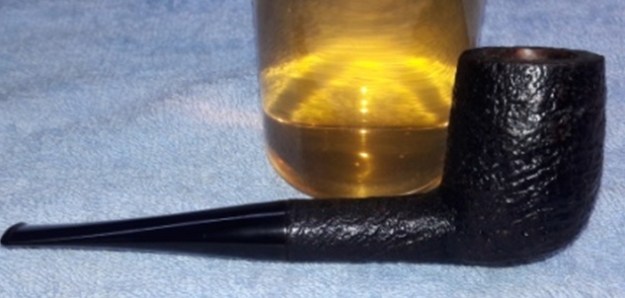
  1. Bruyere 656 F/T Made in England 2 Circle 4A – Group 4 size Bruyere made in 1962. Stem is oxidized, tooth marks and chatter near the button, some calcification with damage to the button. Finish is dirty, bowl caked and lava overflow on the rim top. Bowl is out of round, damaged edge.
  2. Bruyere 112 F/T Made in England 9/11 Circle 2A – Group 2 size Bruyere made in 1969 and sold in 1971. Stem is oxidized, tooth marks and chatter near the button, some calcification with damage to the button. Finish is dirty, bowl caked and lava overflow on the rim top. Bowl is out of round, damaged edge.
  3. Bruyere 0333 Made in England 16 made in 1976. Stem is oxidized, tooth marks and chatter near the button, some calcification with damage to the button. Finish is dirty, bowl caked and lava overflow on the rim top. Bowl is out of round, damaged edge.
  4. Bruyere 41061 Made in England 18 made in 1978. Stem is oxidized, tooth marks and chatter near the button, some calcification with damage to the button. Finish is dirty, bowl caked and lava overflow on the rim top. Bowl is out of round, damaged edge. I finished the restoration on it. Here is the link to the blog – (https://rebornpipes.com/2019/12/24/restoring-a-1978-dunhill-bruyere-41061-from-bob-kerrs-estate/).
  5. Bruyere 142 F/T Made in England 7/9/11 Circle 4A – Group for size Bruyere made in 1967 and sent out in 1969 or 1971. Stem is oxidized, tooth marks and chatter near the button, some calcification with damage to the button. Finish is dirty, bowl caked and lava overflow on the rim top. Bowl is out of round, damaged edge. I finished the restoration on it. Here is the link to the blog – https://rebornpipes.com/2019/12/27/restoring-a-1967-dunhill-bruyere-142-f-t-billiard-from-bob-kerrs-estate/
  6. (A) Dunill London Inner Tube PAT N°5861/12 Shape 34. Stem is oxidized, tooth marks and chatter near the button, some calcification with damage to the button. Finish is dirty, bowl caked and lava overflow on the rim top. Bowl is out of round, damaged edge. I finished the restoration on it. Here is the link to the blog – (https://rebornpipes.com/2019/12/26/restoring-a-1913-a-dunhill-london-34-billiard-from-bob-kerrs-estate/).
  7. (Ao) Dunhill London 113 Made in England 5 PAT N°158709/14. Stem is oxidized, tooth marks and chatter near the button, some calcification with damage to the button. Finish is dirty, bowl caked and lava overflow on the rim top. Bowl is out of round, damaged rim edges. I finished the restoration on it. Here is the link to the blog – (https://rebornpipes.com/2019/12/25/restoring-a-1925-ao-dunhill-london-113-billiard-from-bob-kerrs-estate/).
  8. Root Briar 31032 Made in England 18 – made in 1978. Stem is oxidized, tooth marks and chatter near the button, some calcification with damage to the button. Finish is dirty, bowl caked and lava overflow on the rim top. Bowl is out of round, damaged edge. I finished the restoration on it. Here is the link to the blog – (https://rebornpipes.com/2019/12/23/restoring-a-1978-dunhill-root-briar-31032-billiard-from-bob-kerrs-estate/).

I finished work on #4, #5, #6, #7 & #8 and turned my attention to #2, another heavily used pipe but this time an Apple shaped pipe with a tapered stem. The pipe was stamped on the left side of the shank with the shape number 112 F/T next to the bowl/shank junction. That is followed by Dunhill over Bruyere. On the right side of the shank it is stamped Made in England 9 with a slightly superscript 11 with a Circle 2A. It appears that the pipe stamped as this one is was made in 1969 and shipped or sold in 1971. The 112 F/T is an Apple with a fish tail (F/T) tapered stem. The 2A stamp gives the Group or size number which in this case is a 2. The A stamp denotes a Bruyere pipe. Working on this is a change after the group of billiards I have worked on so far.

I am once again including Chuck Stanion’s eloquent description of the Bruyere on the smokingpipes.com site as follows (https://www.smokingpipes.com/pipes/new/dunhill/moreinfo.cfm?product_id=346421):

The Bruyere was Alfred Dunhill’s original finish upon launching his brand of premium pipes and smoking accessories and was the only Dunhill finish from 1910 until 1917. Even after the addition of other finishes, the Bruyere maintained a high level of popularity, becoming synonymous with what is thought of, even today, as the quintessential pipe. To achieve the iconic, ruby hue and saturation, a skilled craftsman painstakingly layers particular stains in a precise manner, then meticulously polishes the pipe to a high luster. The final result is, simply put, timeless.

Like Bob’s other Dunhill pipe this one also had a thick cake in the bowl with remnants of tobacco stuck on the walls. There was a lava overflow on the rim so it was hard to know what kind of damage lay beneath the thick covering. Once it was cleaned I would have a better idea of the condition of the rim top. I could see however that there was definitely damage to the front inner edge of the bowl. The grain that is poking through the grime and oils appears to be quite beautiful – birdseye grain on the bowl sides and cross grain on the front and back as well as the heel of the bowl. The stem was oxidized and calcified toward the end with some tooth chatter. There were also some tooth marks on both sides of the stem ahead of the button and on the button itself. There was the classic White Spot on the top of the stem. Jeff took photos of the pipe before he started his cleanup work on it.  Jeff took photos of the bowl and rim top to show the thick, hard cake in the bowl with remnants of tobacco stuck on the walls of the bowl. There was a lava build up on the smooth rim top and the edges of the bowl. The rim top looked pretty good but it was hard to know for sure. It appeared that there was damage on the inner edge. The outer edges looked to be okay other than a few small nicks on the sides.  There was a burn mark on the right side of the bowl from where the pipe had been laid down in an ashtray. It was not deep but it was permanent.Jeff took photos of the sides and heel of the bowl to show the condition of the finish. You can see the beautiful grain patterns around the sides of the bowl and shank. Even under the dirt and debris of the years it looked very good.   The stamping is very readable. On the left side of the shank you can see 112 F/T which is the shape number followed by the F/T for a Fish tail stem. Next to that it is stamped Dunhill over Bruyere. On the right side it reads Made in England 9/11 followed by Circle 2A. Jeff included a pic of the White Spot on the stem.  Jeff took photos of the top and underside of the stem showing the tooth chatter, scratching, calcification and oxidation on the stem surface and wear on the edges of the button.    I can’t begin tell you how great it feels to have Jeff’s help on cleaning up the pipes from Bob’s estate as the 125+ pipes were taking me a long time to do alone. He cleaned this filthy pipe with his usual penchant for thoroughness that I really appreciate. This one was a real mess and I was looking forward to seeing what he had done with this one when I took it out of his box. It looked amazing and CLEAN. He reamed it with a PipNet pipe reamer and cleaned up the reaming with a Savinelli Fitsall Pipe Knife. He scrubbed out the internals with alcohol, pipe cleaners and cotton swabs until the pipe was clean. He scrubbed the exterior of the bowl with Murphy’s Oil Soap and a tooth brush to remove the grime and grit on the briar and the lava on the rim top. The finish looks good with great looking grain around the bowl and shank. The rim top looked better on this pipe. The condition of the inner and outer edges was not too bad. The stem looked a lot better. Jeff soaked the stem in Before & After Deoxidizer to remove the oxidation on the rubber. The pipe was ready for me to carry on the next part of the process. I took some close up photos of the rim top and also of the stem surface. I wanted to show how well it had cleaned up and what needed to be done. The rim top had a worn and burned area on the left front of the inner edge. There was darkening and nicks all around the top of the bowl and on the inner edge. The outer edge looked good.  I also took close up photos of the stem to show the tooth marks and chatter on the stem surface.  I also took a close up photo of the burn mark on the right side of the bowl. The stamping appeared to be as clear as it was before the cleanup work. This is just one of the things I appreciate about Jeff’s cleanup is that he works to protect and preserve the nomenclature on the shank of the pipes that he works on. I took some photos to show the stamping. Bob loved his Dunhill pipes and it was obvious that he enjoyed smoking them. Some appeared to be daily smokes while others he seemed to reserve for special occasions. Some seemed like they must have hung in his mouth while he did his carving while others were smoked in his chair. Having worked on over 60 of his pipes so far I am getting a feel for them. This one is in rough condition and I suppose it might well have been before Bob took up the trust. I suppose I won’t ever know for sure but it certainly has a long and interesting story if it could only tell it.
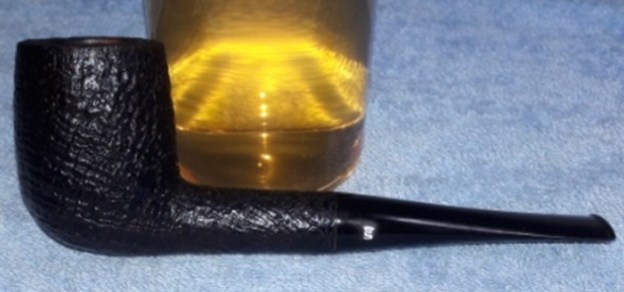
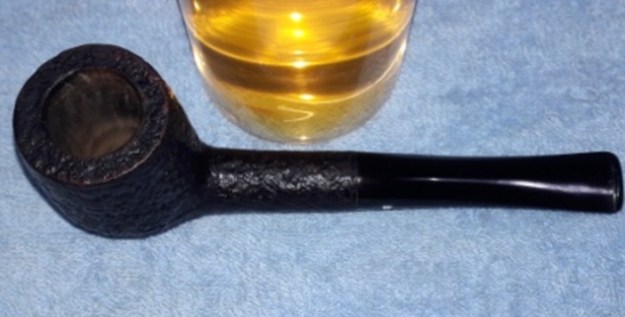
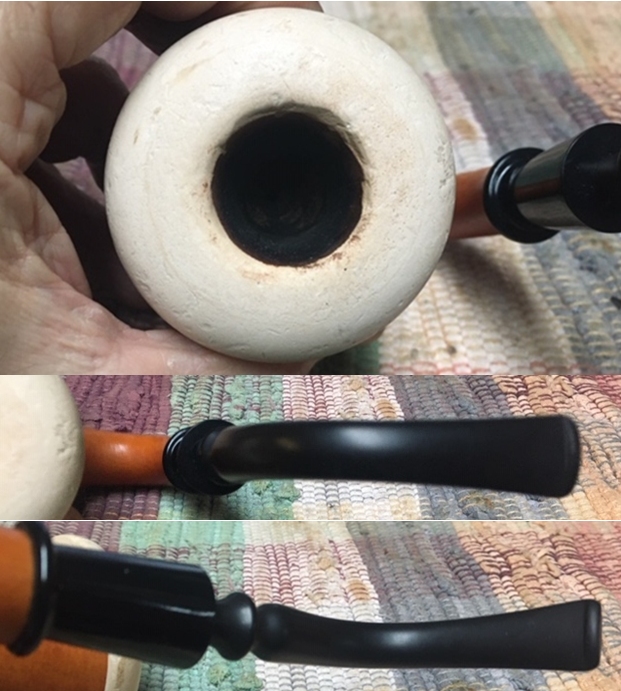
I am sure that many of you have read at least some of the other restoration work that I have done on previous pipes. You have also read what I have included about Bob Kerr, the pipeman who held these pipes in trust before I came to work on them (see photo to the left). Also, if you have followed the blog for long you will already know that I like to include background information on the pipeman whose pipes I am restoring. For me, when I am working on an estate I really like to have a sense of the person who held the pipes in trust before I worked on them. It gives me another dimension of the restoration work. Bob’s daughter wrote a short tribute to her father. I thank you Brian and tell your wife thank you as well.

I am delighted to pass on these beloved pipes of my father’s. I hope each user gets many hours of contemplative pleasure as he did. I remember the aroma of tobacco in the rec room, as he put up his feet on his lazy boy. He’d be first at the paper then, no one could touch it before him. Maybe there would be a movie on with an actor smoking a pipe. He would have very definite opinions on whether the performer was a ‘real’ smoker or not, a distinction which I could never see but it would be very clear to him. He worked by day as a sales manager of a paper products company, a job he hated. What he longed for was the life of an artist, so on the weekends and sometimes mid-week evenings he would journey to his workshop and come out with wood sculptures, all of which he declared as crap but every one of them treasured by my sister and myself. Enjoy the pipes, and maybe a little of his creative spirit will enter you!
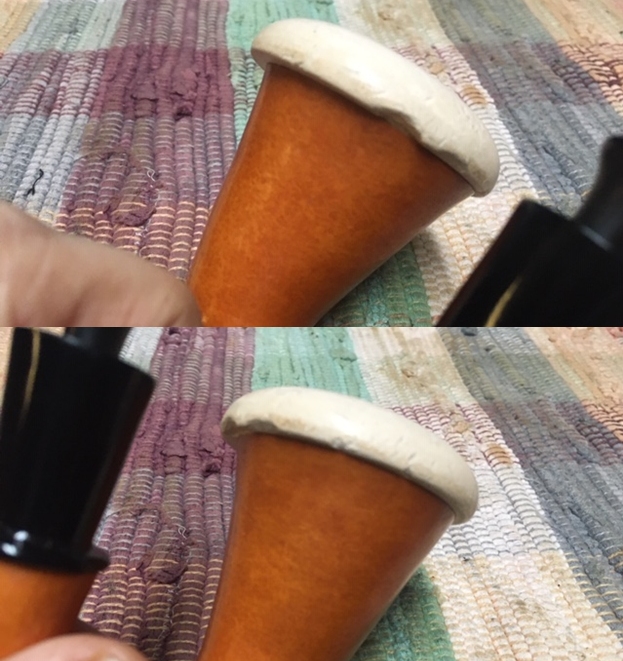
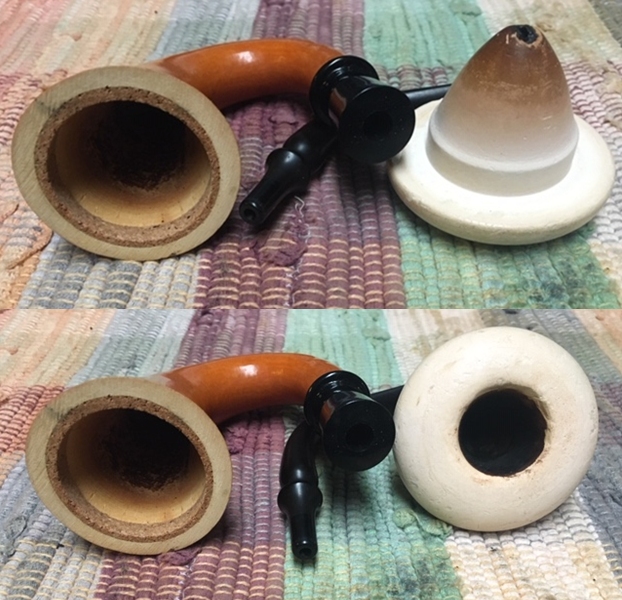
It was time to get on with the restoration of this Dunhill Bruyere 112F/T Apple. It was a bit of a change of pace from the last bunch of billiards that I had worked on. I really need to send a shout out to Jeff for the hard cleanup work that Jeff does on each of these pipes. They were a real mess when I sent them to Jeff and I have to tell you it was great that I can start my part of the process with a clean pipe. I decided to start the process by dealing with the the damage to the inner edge of the bowl. I wanted to minimize the intrusiveness of the work on the rim and focus just on the rim edge. I carefully worked on the inner edge with a folded piece of 220 grit sandpaper and gave it a very slight bevel. I was able to remove much of the darkening and damage. The first photo shows the damaged inner edges of the bowl and the darkening around the full bowl. The second photo below shows the process I used with the folded sandpaper. The third photo shows the rim top and edges after my work on them…though not perfect I think it is an improvement. I polished the briar on the rim top and bowl with worn micromesh sanding pads – wet sanding it with 1500-12000 grit micromesh sanding pads. I wiped it down after each pad with a damp cloth. I find that the worn pads do a great job polishing and still retain the original patina of the pipe. I rubbed the bowl and rim down with Before & After Restoration Balm. I worked it into the surface of the briar with my fingertips to clean, enliven and protect it. I let the balm sit for a little while and then buffed the pipe with a cotton cloth to raise the shine. I really like watching the Balm do its magic and bring the briar alive. With the bowl done it was time to address the stem. The dents in the top and underside were the right depth for me to lift them. I sanded the surface of the stem with 220 grit sandpaper to remove the remaining oxidation in the vulcanite. I polished it with 400 grit wet dry sand paper.  I rubbed the stem down with Denicare Mouthpiece Polish. I have a few tins of this laying around so I am trying to use them up. It does a pretty good job polishing the stem.  I polished the stem with micromesh sanding pads – wet sanding with 1500-12000 grit sanding pads. I wiped it down after each pad with a damp cloth to remove the sanding dust. I polished it further with Before & After Pipe Polish – both Fine and Extra Fine. I finished by rubbing the stem down with some “No Oxy Oil” to protect the vulcanite. I am experimenting with the product from Briarville and tracking how it works so I can write a review of it.   Once again at this point in the restoration process I am excited to be on the homestretch. This is the sixth of the Dunhill smooth pipes in Bob’s estate that I am working on. It is a beautiful Dunhill Bruyere 112 F/T Apple made in 1969 and shipped or sold in 1971. Like each of the pipes in Bob’s estate I really look forward to this point in the process when it is put back together, polished and waxed. I put the bowl and stem back together. I polished the bowl and stem with Blue Diamond to polish out the scratches in the briar and the vulcanite. The nicks on the right outer rim edge and the small burn mark look better – minimized a bit. I gave the bowl and the stem multiple coats of carnauba wax. I buffed the pipe with a clean buffing pad to raise the shine. I hand buffed it with a microfiber cloth to deepen the shine. The pipe polished up pretty nicely. The grain around the bowl and shank really came alive with the wax and polish. The black of the tapered vulcanite White Spot stem is a beautiful contrast to the reds and browns of the finished bowl and shank. This was another Dunhill that was a lot of fun to work on thanks to Jeff’s cleanup work. The pipe is comfortable pipe to hold in the hand. The finished pipe is shown in the photos below. The dimensions of the pipe are Length: 5 ¾ inches, Height: 1 ½ inches, Outside diameter of the bowl: 1 ¼ inches, Chamber diameter: ¾ of an inch. This 1969 Bruyere Apple is a beauty should last for many more years. It is one that will be on the rebornpipes store very soon. If you are interested let me know. I have a lot more of Bob’s estate to work on of various brands. Perhaps one of those will catch your attention. Thanks for reading this blog and my reflections on the pipe while I worked on it. This is an interesting estate to bring back to life.