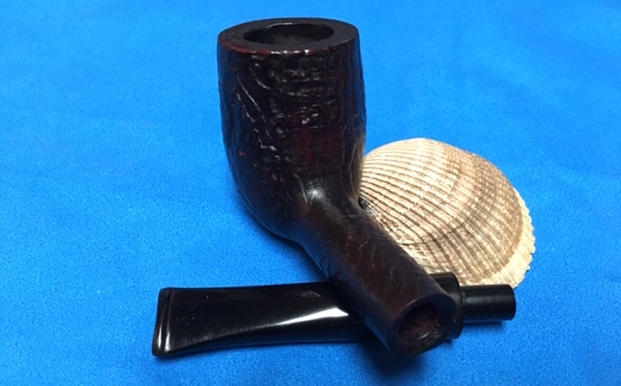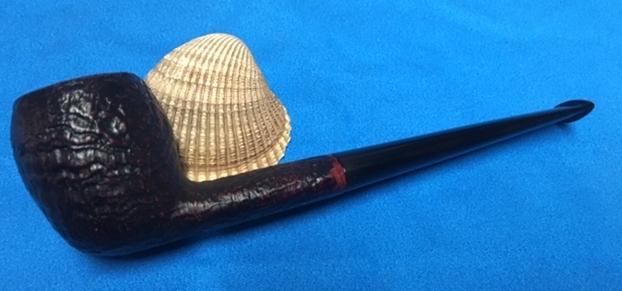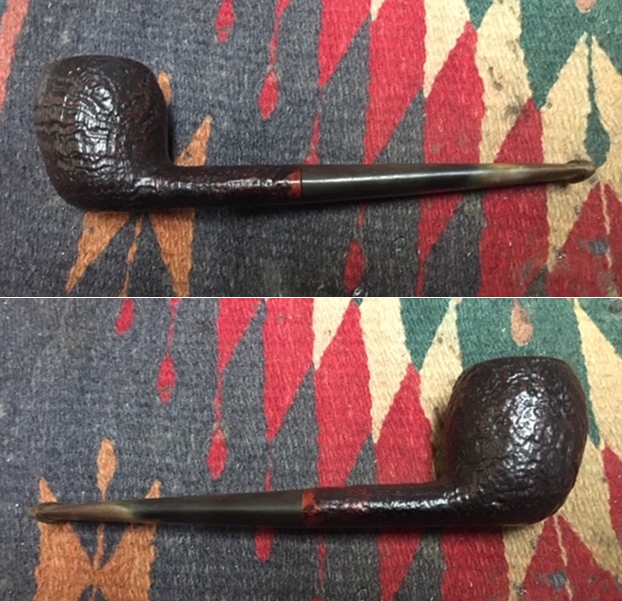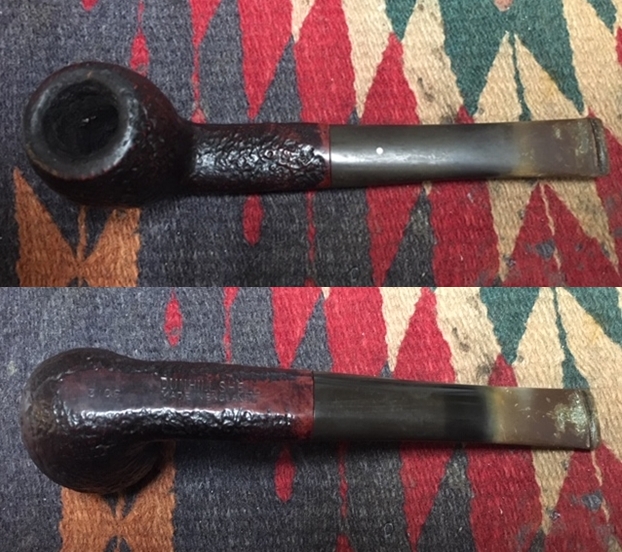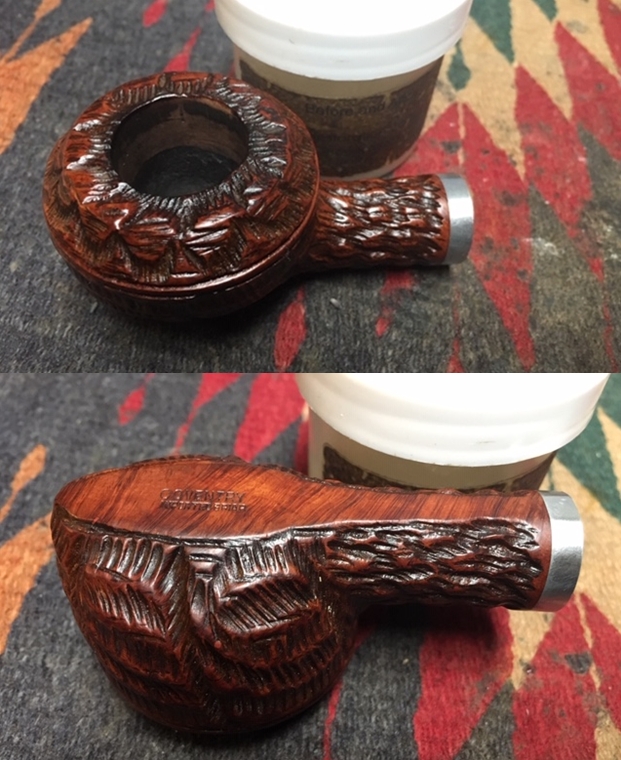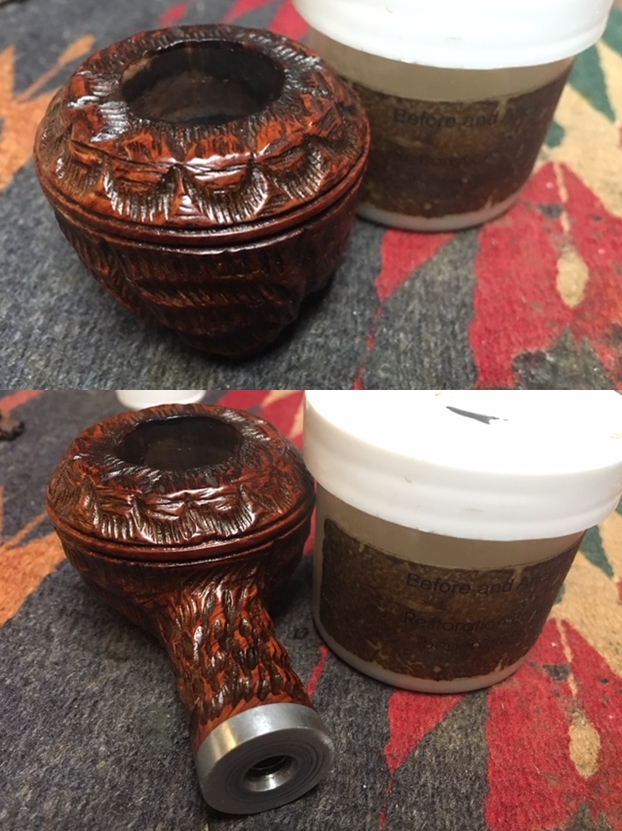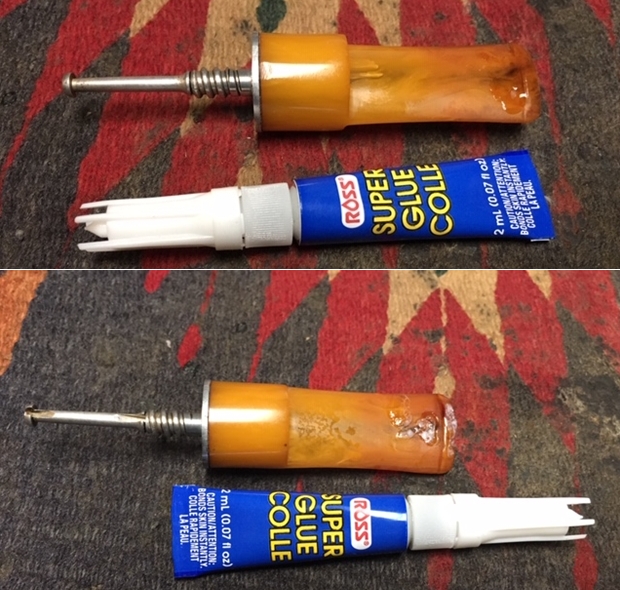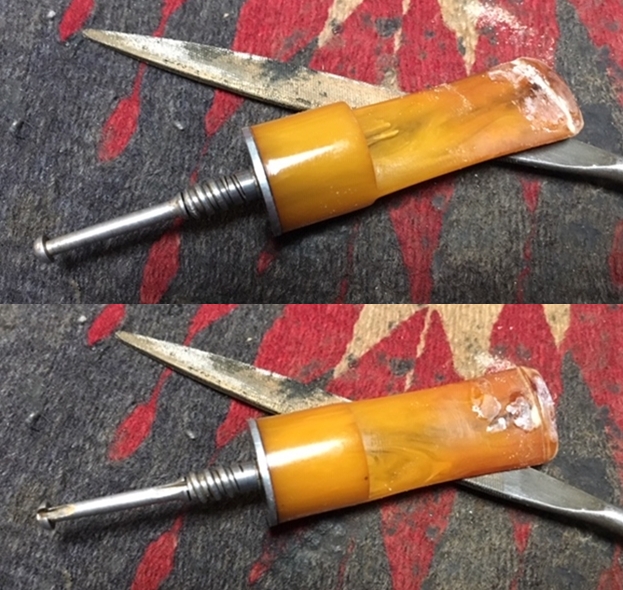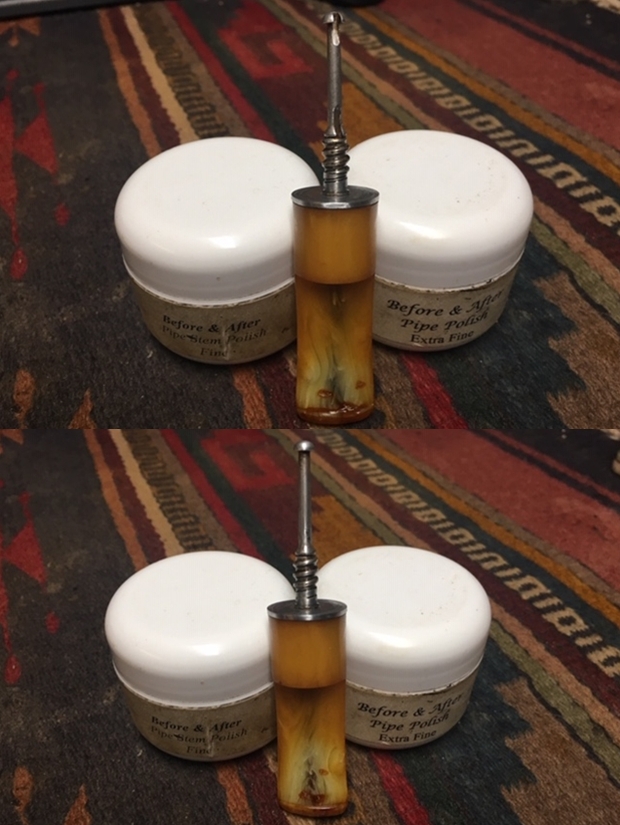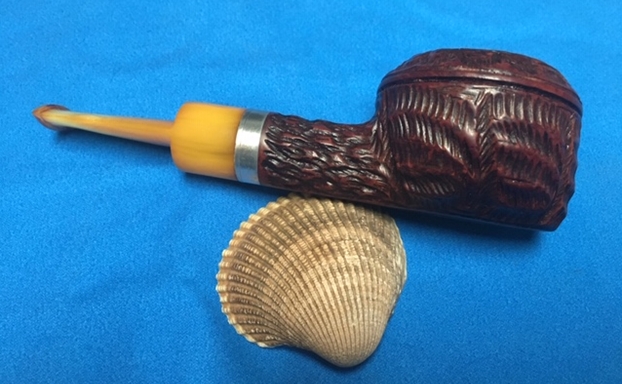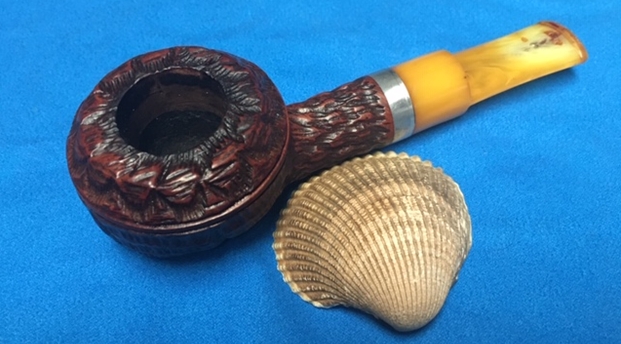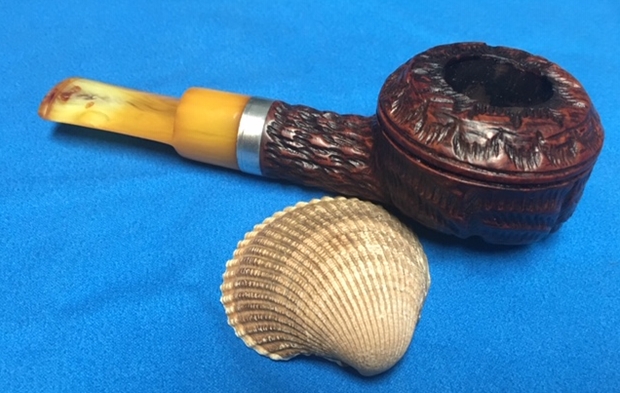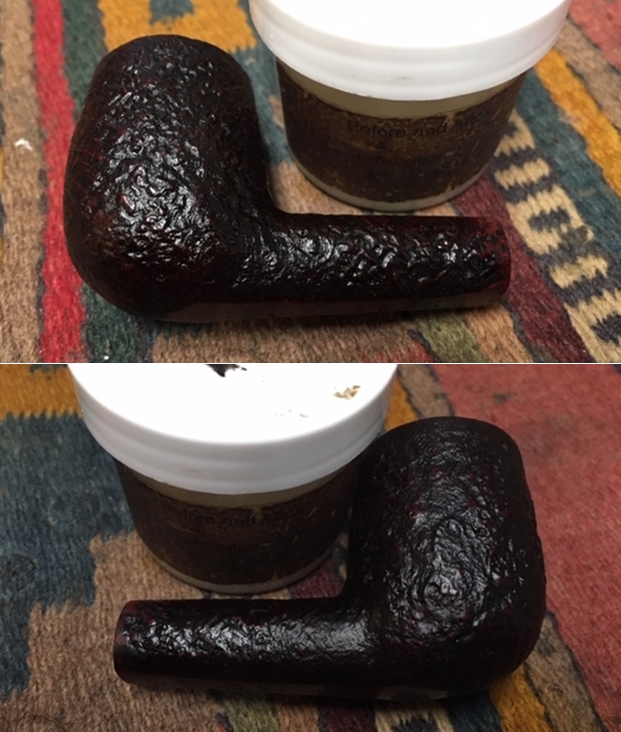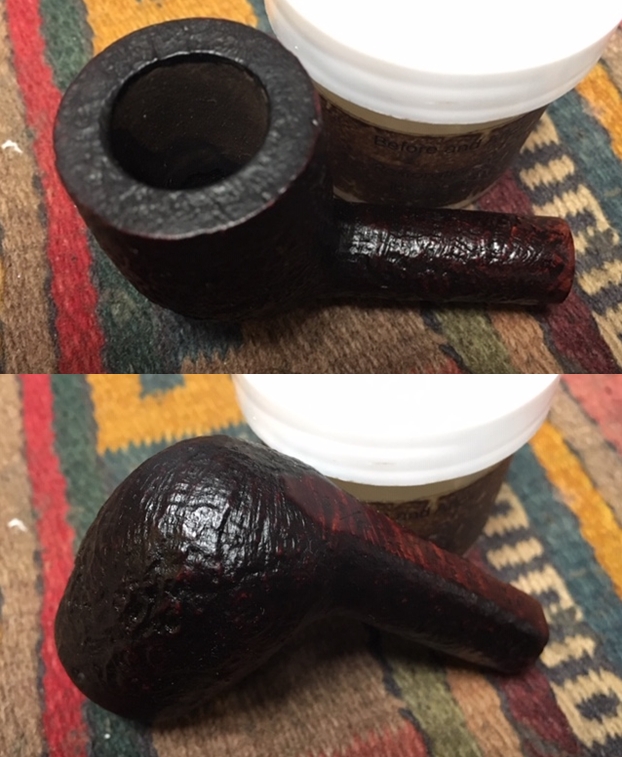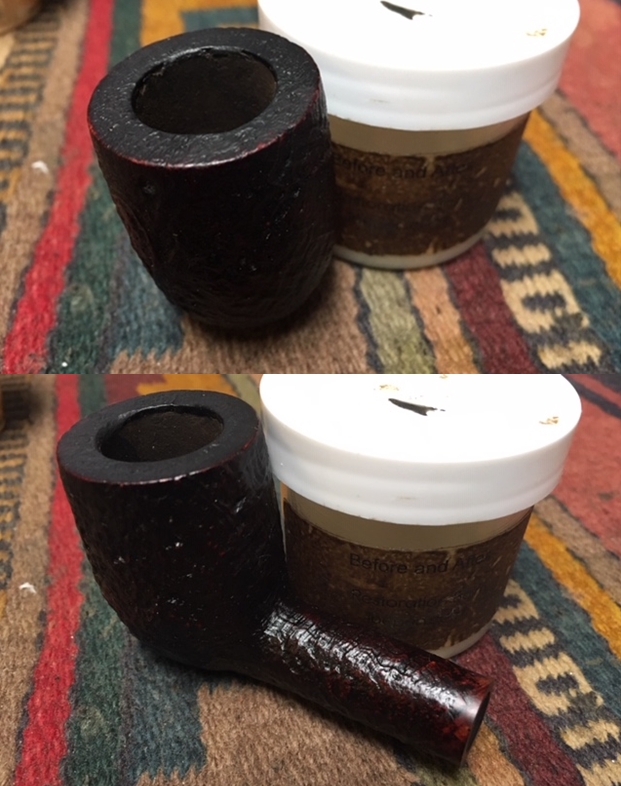
Tag Archives: sanding a stem

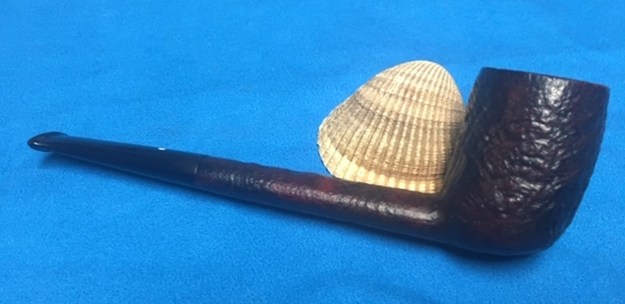
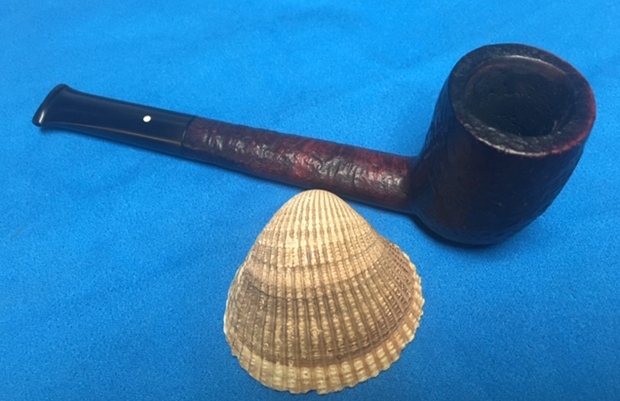
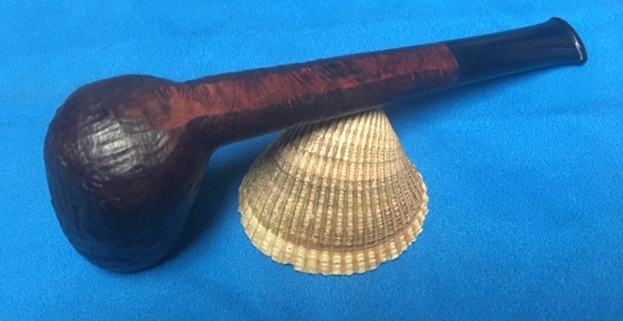
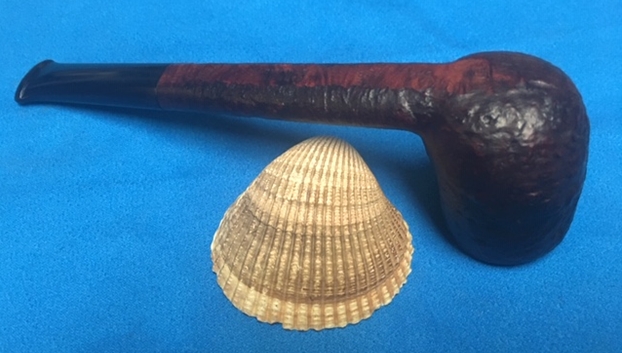
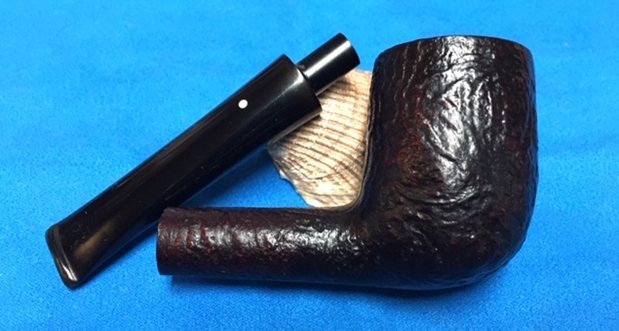
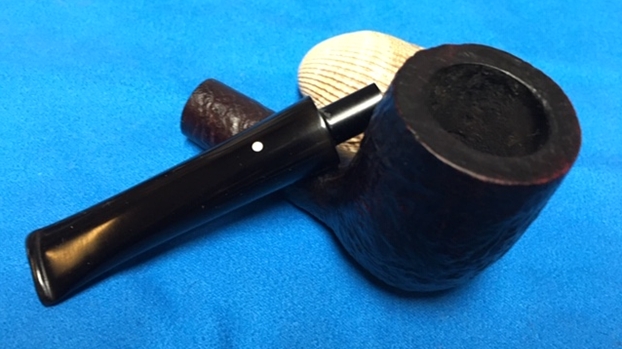
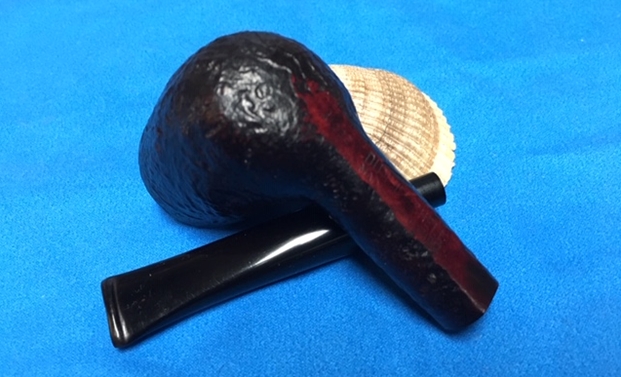
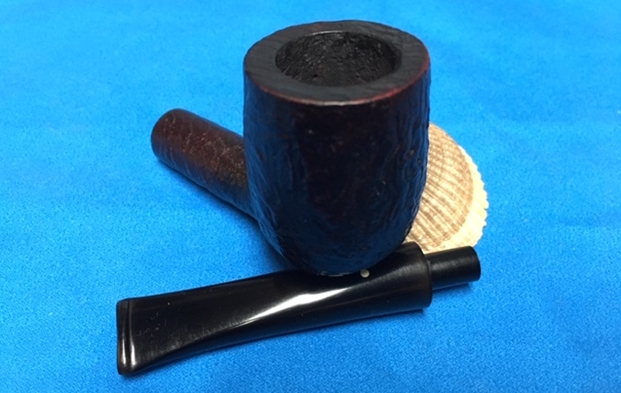
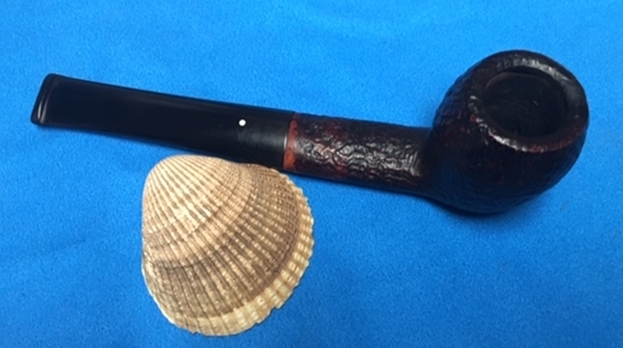
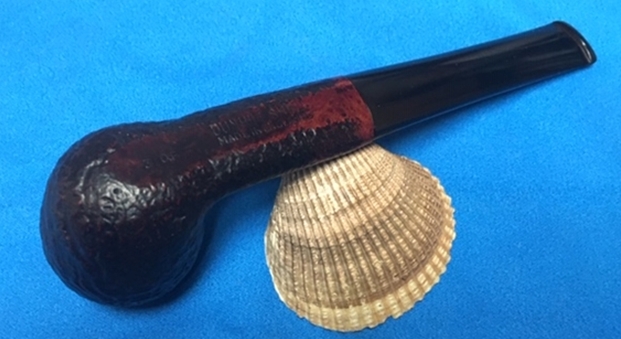
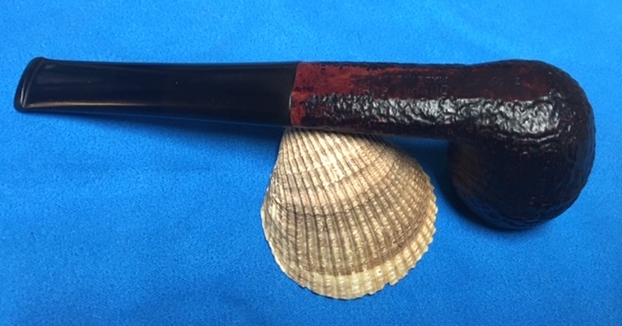
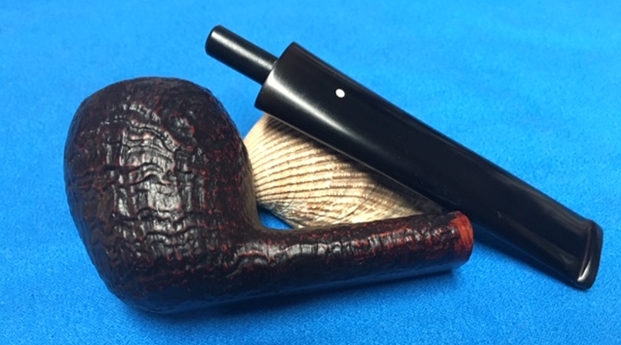
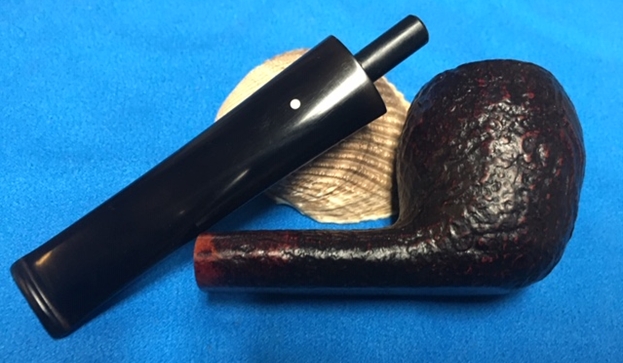
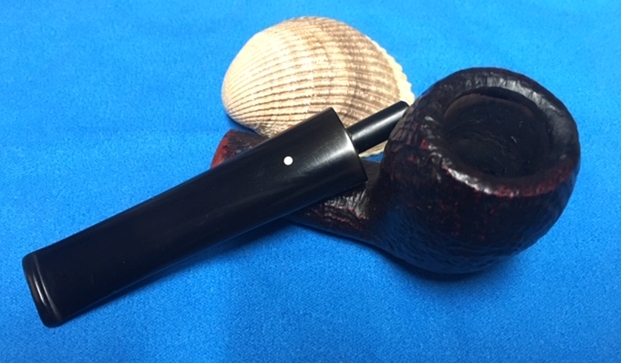
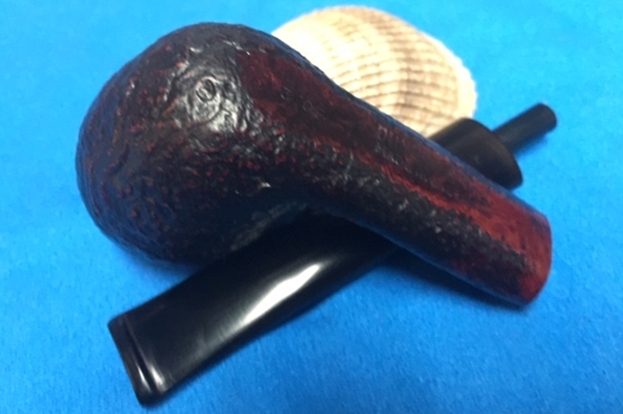
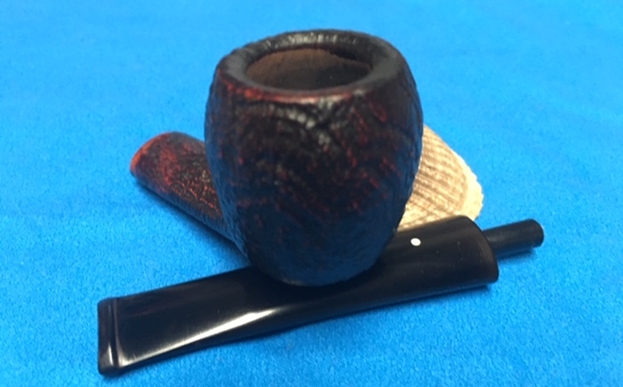
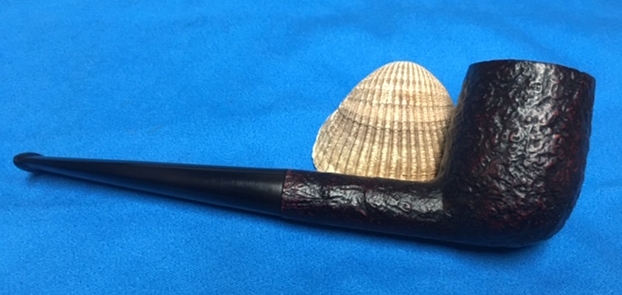
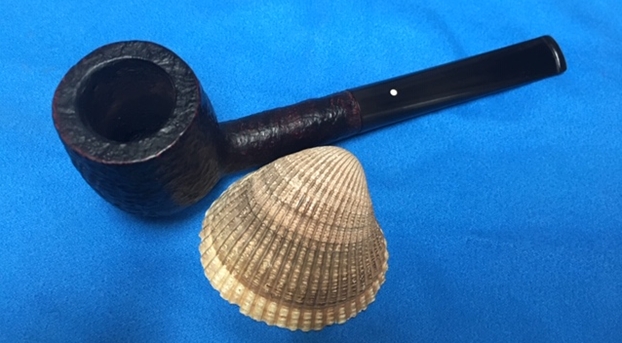
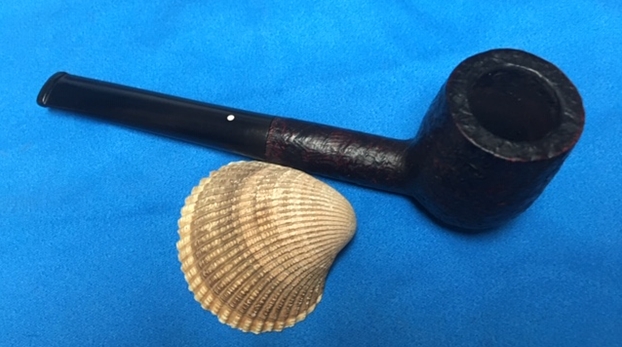
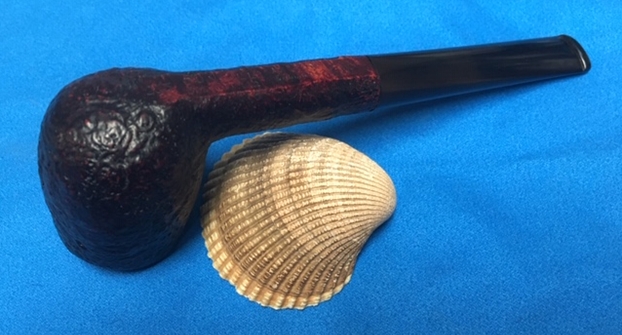
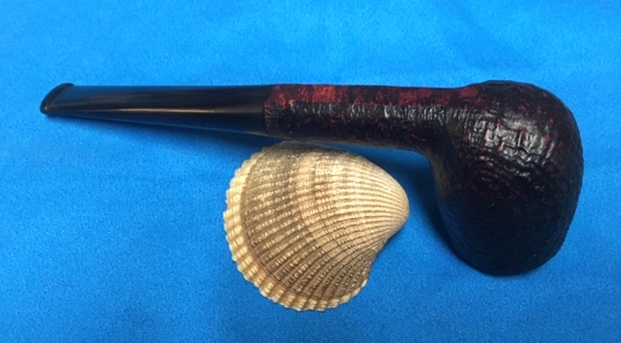
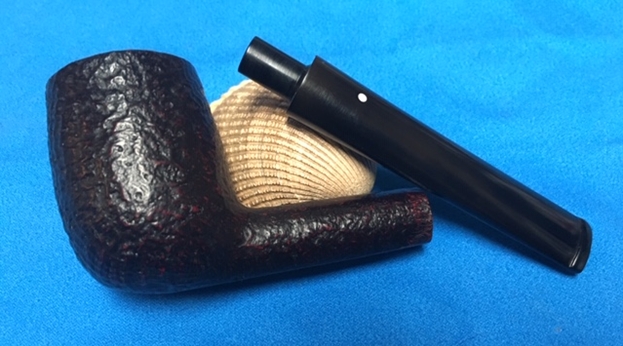
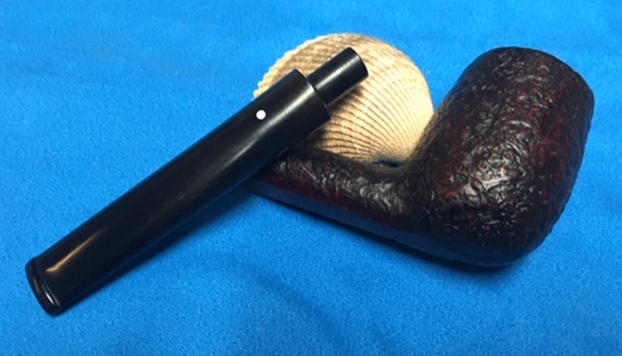
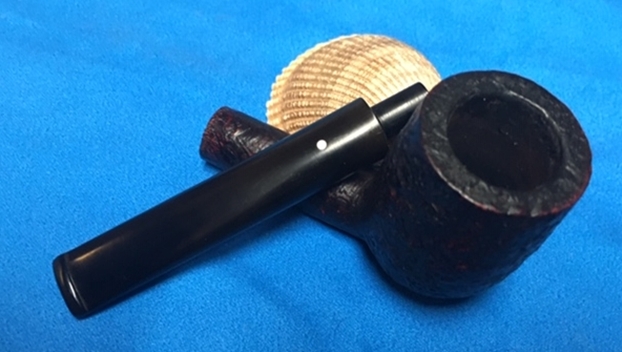
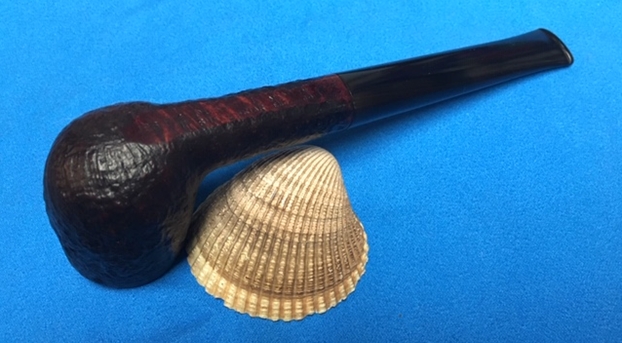
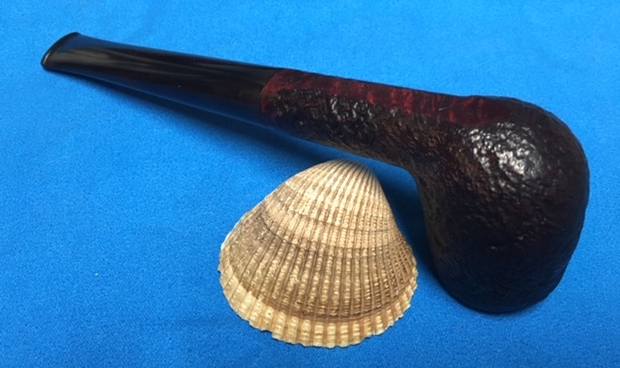
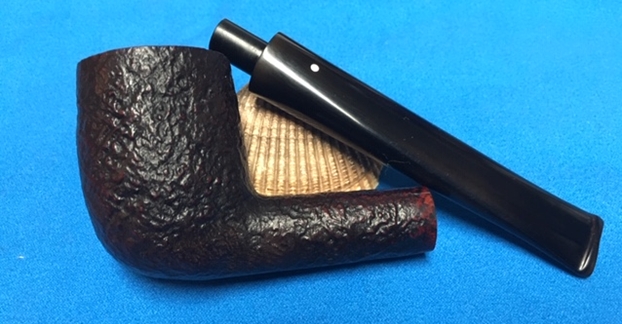
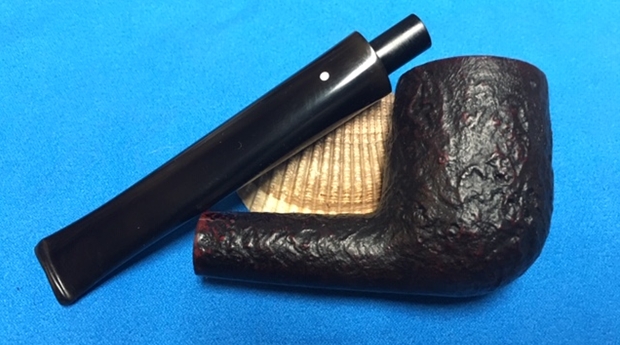
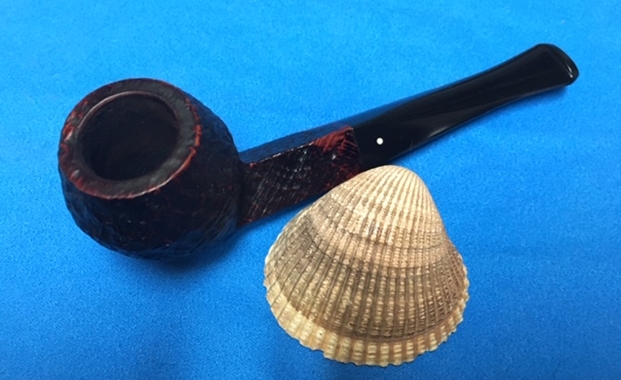
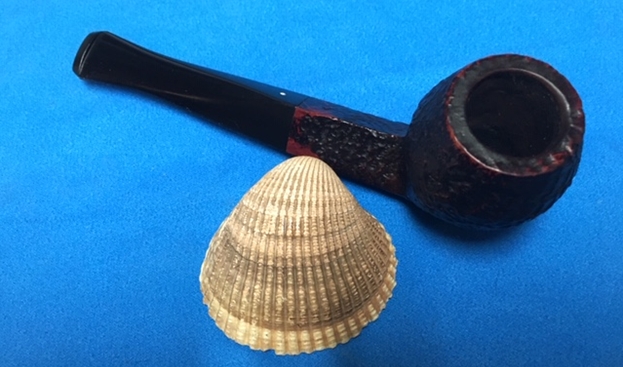
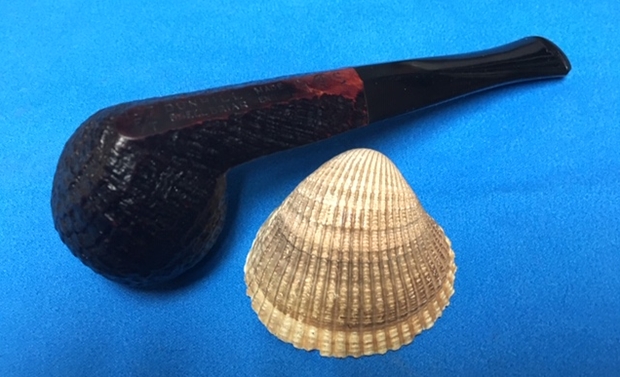
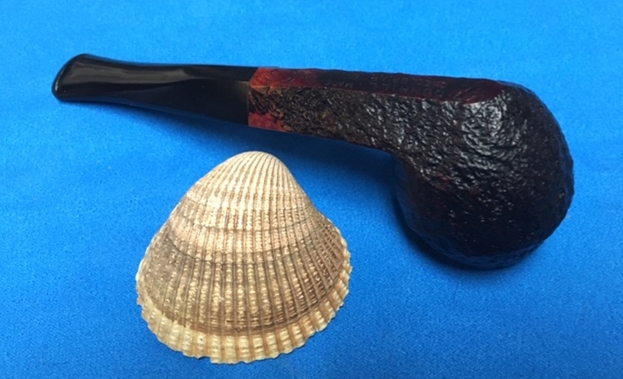
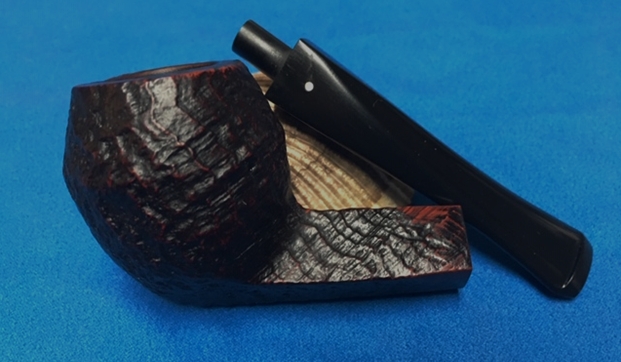
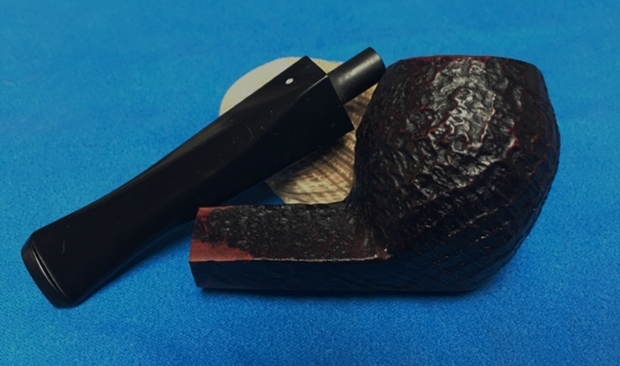
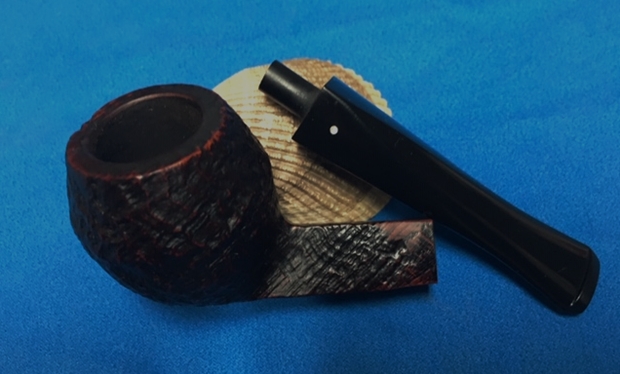
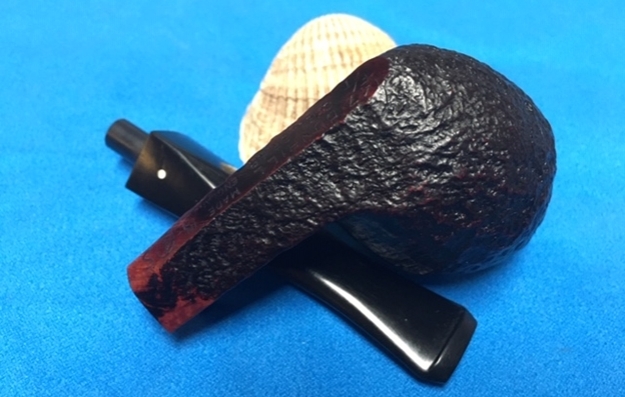
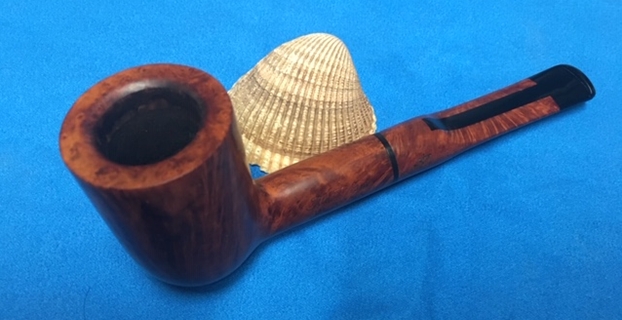
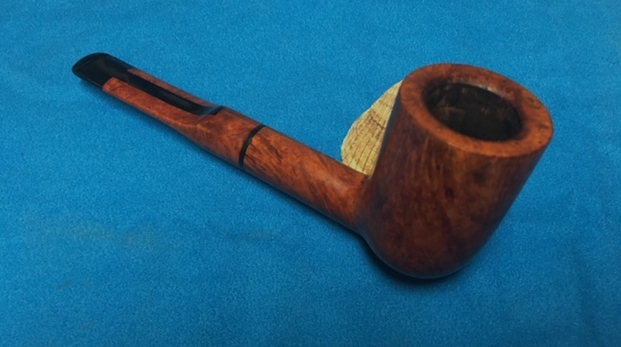
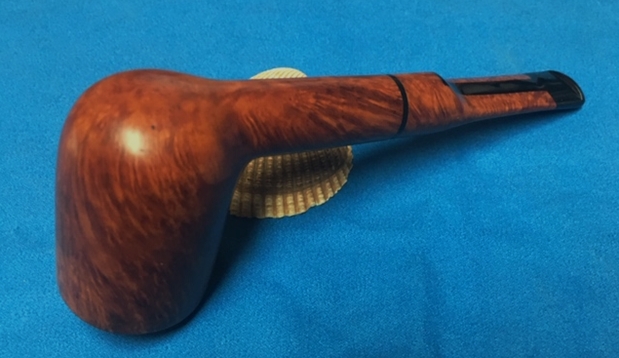
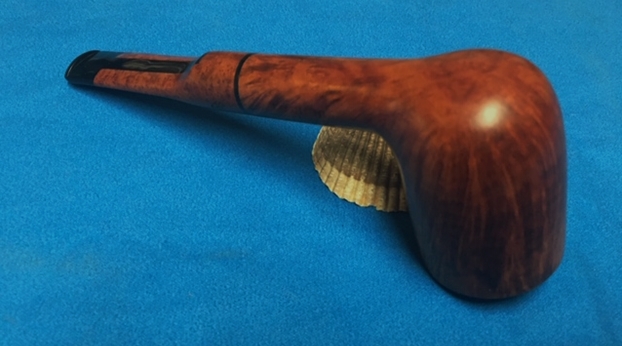
About a Super Grain Kaywoodie Medium Dublin #08 Almost as Old as My Dad


Blog by Robert M. Boughton

Copyright © Reborn Pipes and the Author except as cited
https://www.roadrunnerpipes2k.com/
https://www.facebook.com/roadrunnerpipes/

FOR MY DAD
E. MICHEAL BOUGHTON
2/23/1933-10-16-2018

my father moved through dooms of love
through sames of am through haves of give,
singing each morning out of each night
my father moved through depths of height 
— e.e. cummings, “my father moved through dooms of love,” from 50 Poems, 1940

INTRODUCTION
I was going to start with the dedication and for once leave out the opening quote.  Then the last stanza of Dylan Thomas’ “Do not go gentle into that good night” came to me.  I even had it typed in a few seconds.  Upon reflection, however, the idea of Thomas’ great, impassioned cry to his father, there on the sad height, seemed a little too close to my own feelings and therefore by definition selfish.  Any notion of beginning with words from Thomas, albeit brilliant and stirring, was belayed by the sudden and vivid recollection of my dad and me having a rare pleasant conversation.  The Cold War was raging hotter than ever at the time, and that was more or less what our normal interactions resembled

Out of nowhere, it seemed, the pleasant remembrance filled my mind, from lifetimes ago when I was 16 or so and reading books almost every spare moment I had.  I used books back then the way I later turned to alcohol more than I already had, to escape reality, except the books were good for me.  I could see the two of us, my dad and me, standing in the entryway to the house, golden-orange beams of late afternoon sunlight filtering through the windows.  My knapsack was stuffed, as tight as an overfilled laundry machine, with schoolbooks and other implements of learning, while cradled in my arms were about five diverse and serious reads I had bought for my own pleasure.  As my tastes were then and remain now rather eclectic, but with several main themes at the time, there was probably one each classic, sci-fi, fantasy, quirky crime fiction like Elmore Leonard’s Mr. Majestyk or anything having to do with spies by The Master, John le Carré, and of course someone’s, anyone’s, biography.

My dad made a point of coming out of his room and stopping me to talk, the subject of which I’m sure now didn’t make any difference to him.  He saw the load of new books I was holding and asked what I was reading those days.  I just handed them to him so that he could see for himself.  He was impressed, but what he said really struck me in a good way, as I had been thinking more or less the same thing.  He asked if I read any poetry.

All that came to mind back then were two poems, starkly different in style, that now seem to me interesting examples of poetry to compare and contrast.  But worry not, I won’t try it here!  They were Thomas’ perhaps best-remembered work that, years later, I compared to my dad in an essay I wrote for the English Comp AP course I took at NMSU in Las Cruces, and Alfred, Lord Tennyson’s “Tears, Idle Tears.”  While the former was and remains a favorite example of the artform I consider the highest to which any writer can aspire, I used to make my friends laugh with my lachrymose recitations of the latter.  I didn’t even consider the obvious, that my memorization of both and occasional sensitive spoken interpretations of Thomas’ masterpiece yet crass and venomous performances of Tennyson’s work of equal value were reflections of the mirror I gazed into every time I spoke his beautiful, insightful words in immature lampoonery.

My dad is the person who turned me on to e.e. cummings, and to him I now owe the fact I remembered the lines from the opening quote.  In fact I owe so much more to the man, parts of it good and others not so.  But all things considered, I turned out okay.  Now I miss him more than ever and feel his irrecoverable absence like a horrible sting.

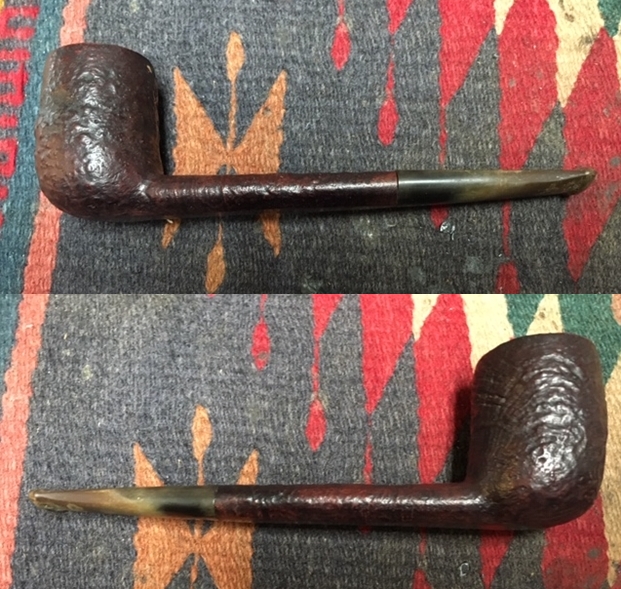
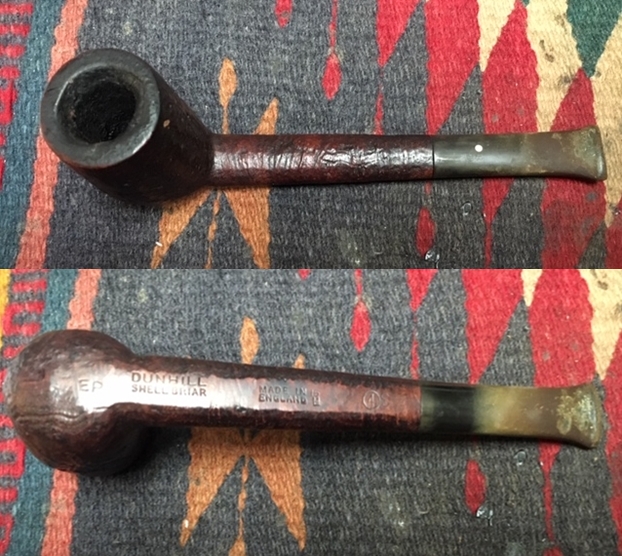
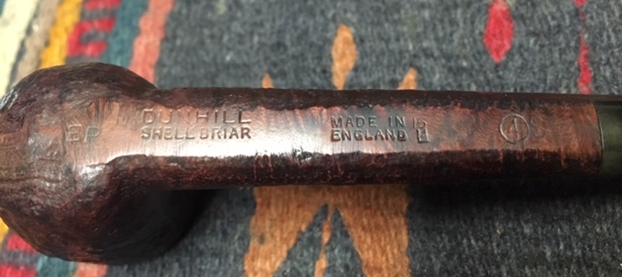
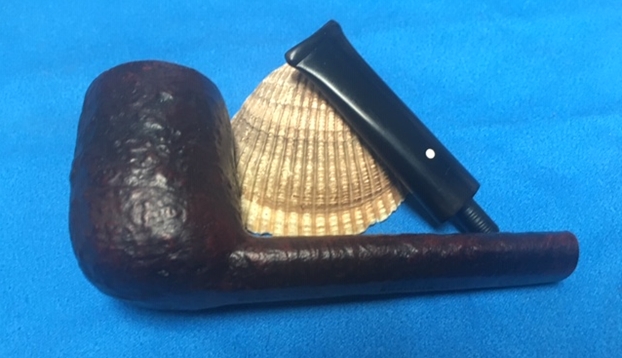
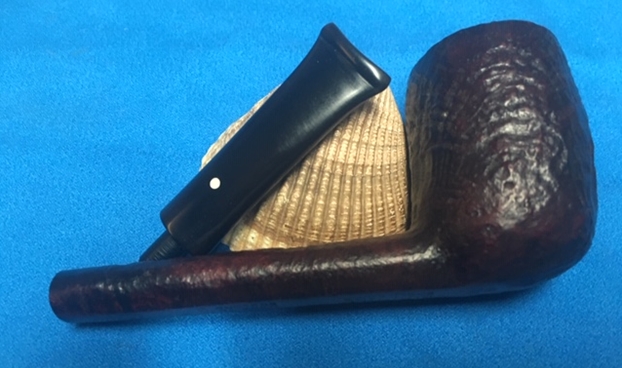
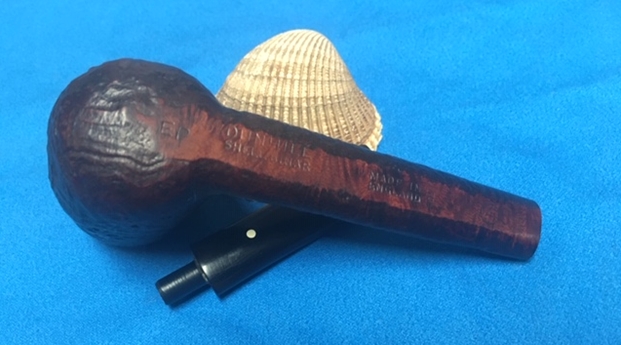
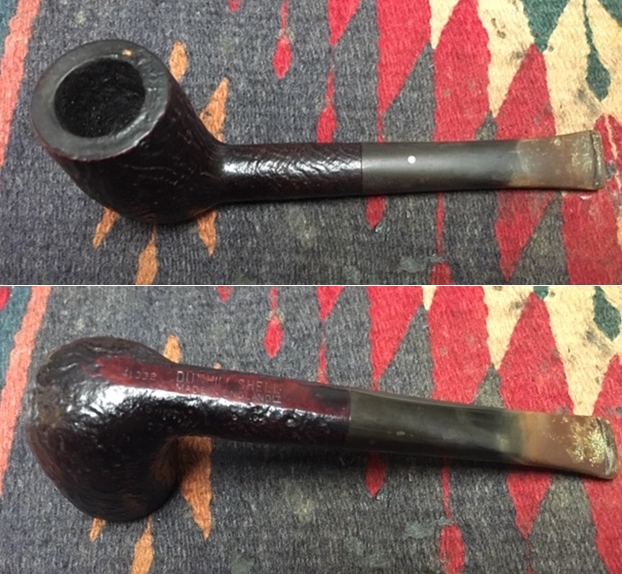
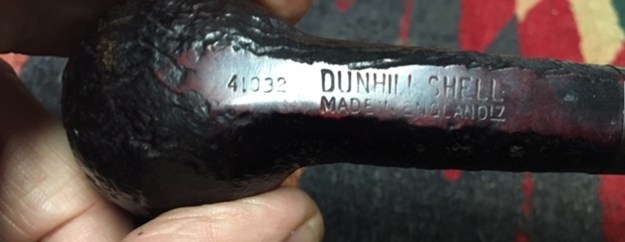
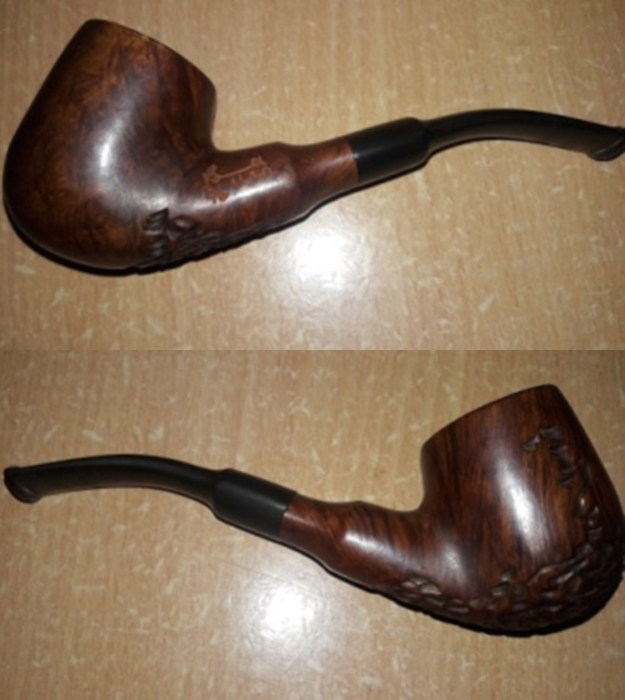
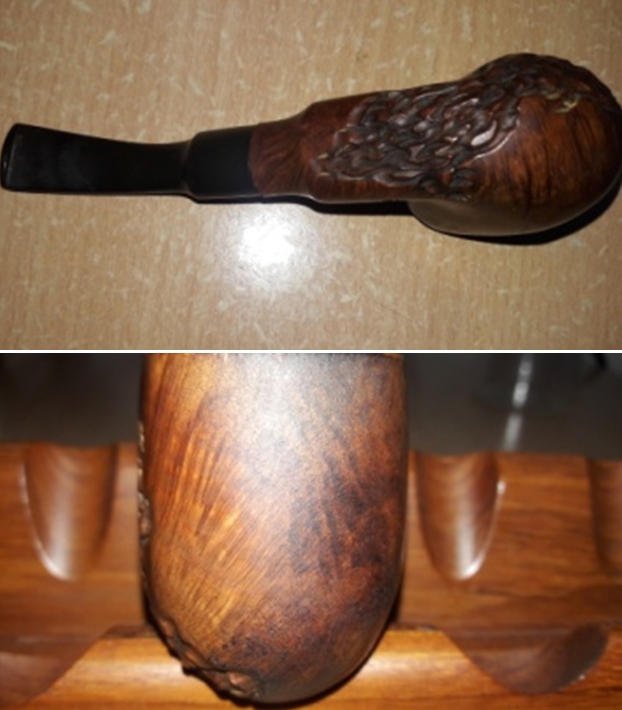
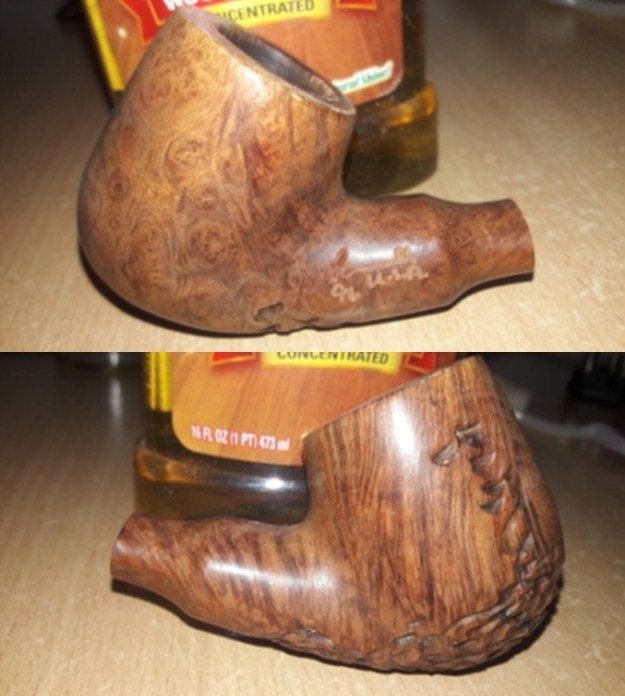
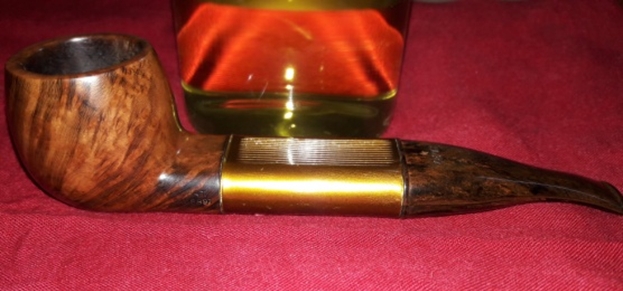
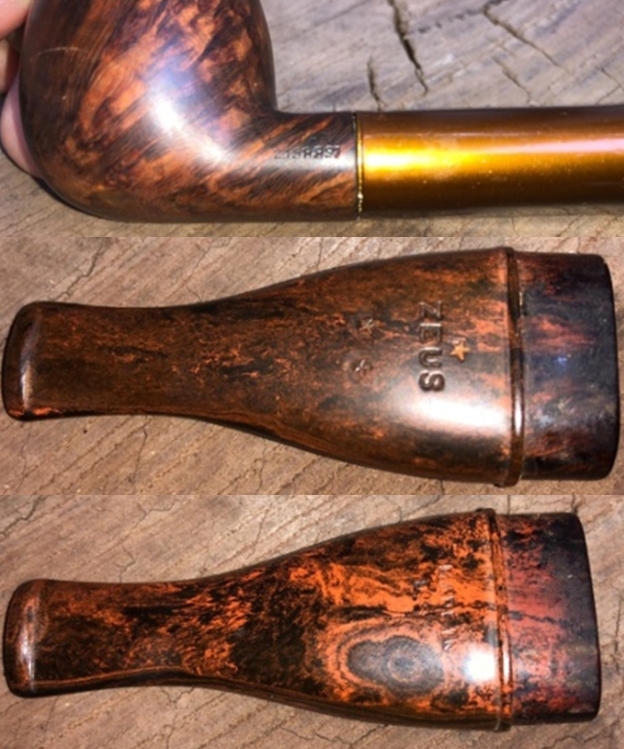
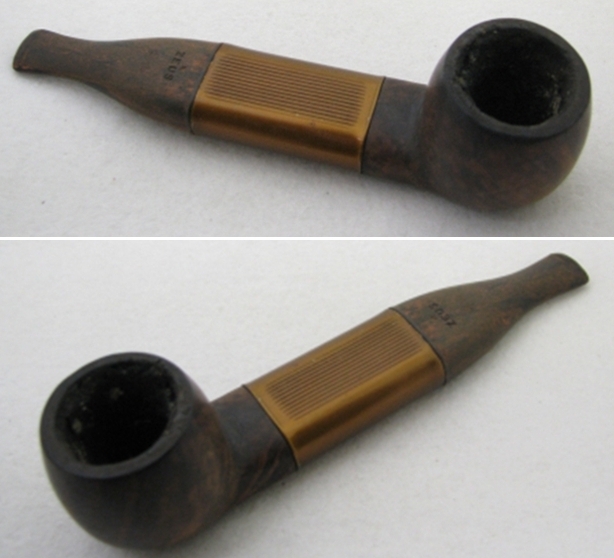
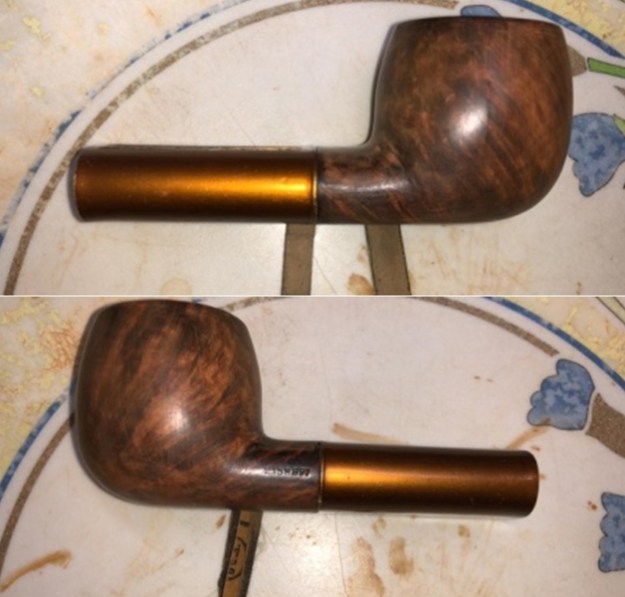
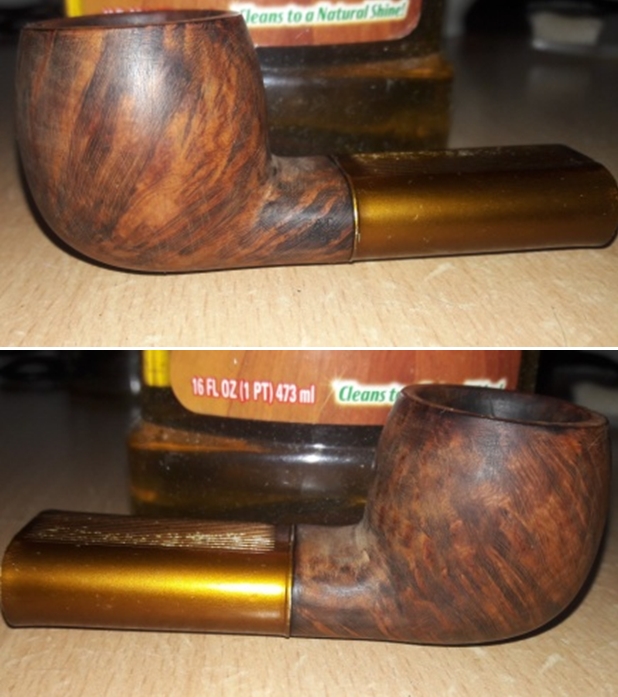
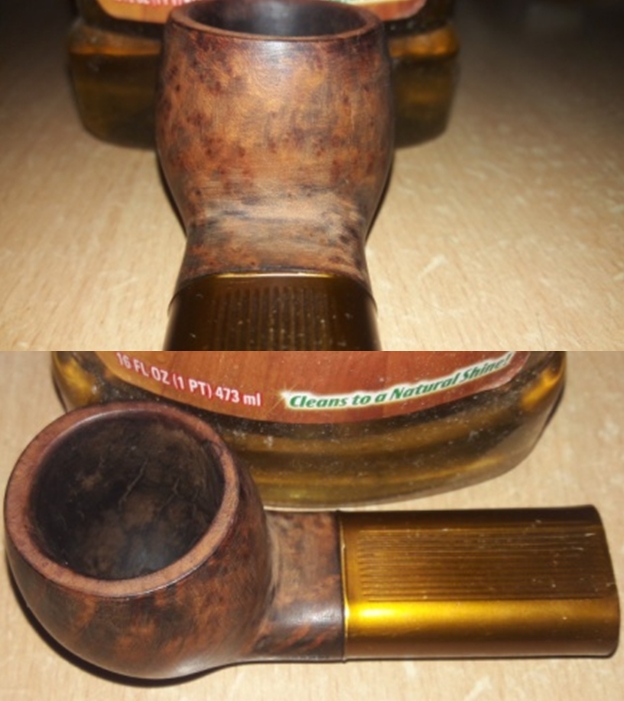
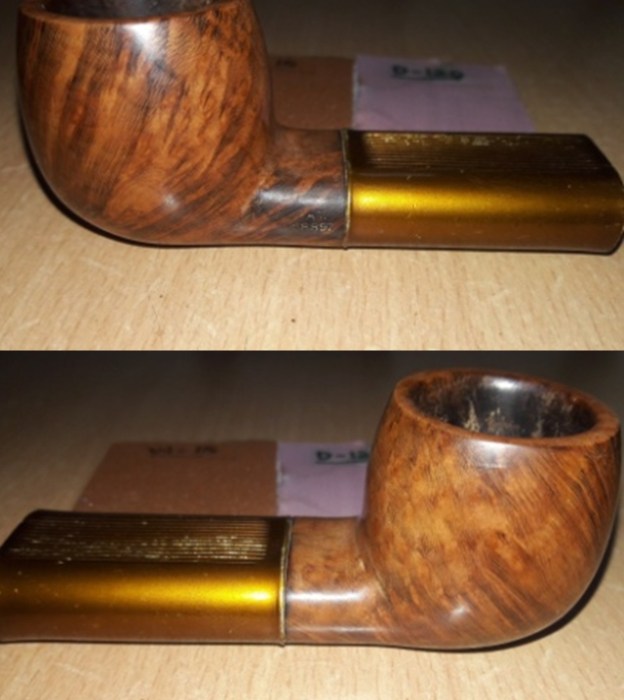
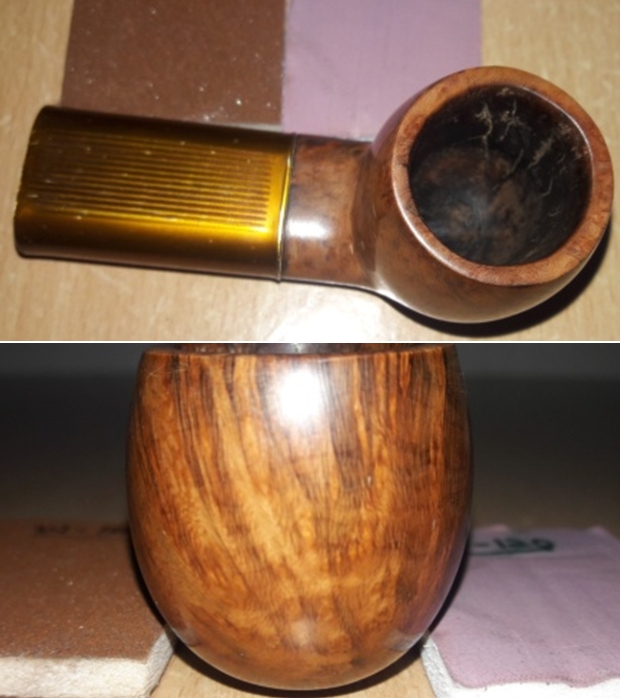
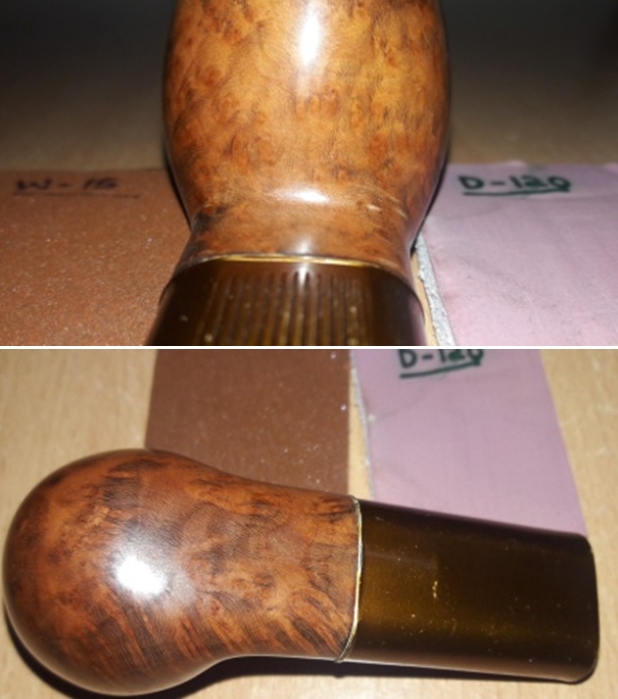
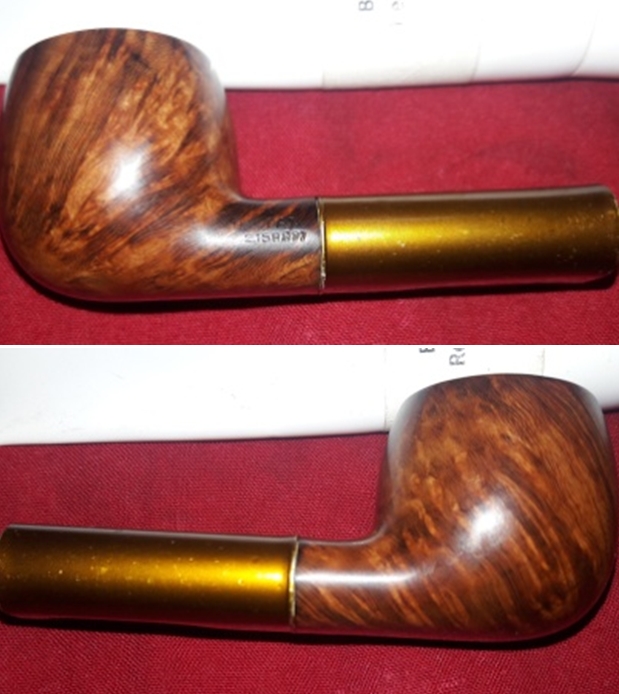
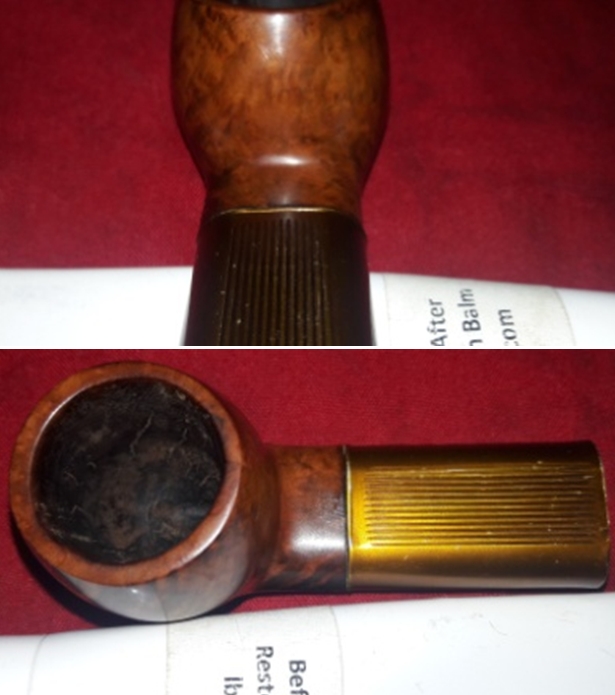
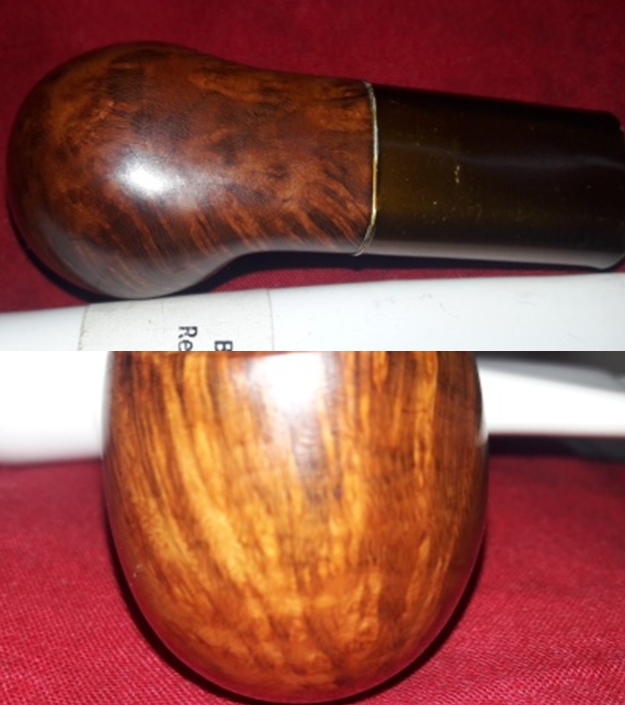
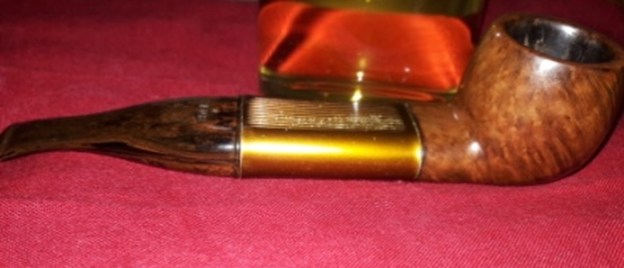
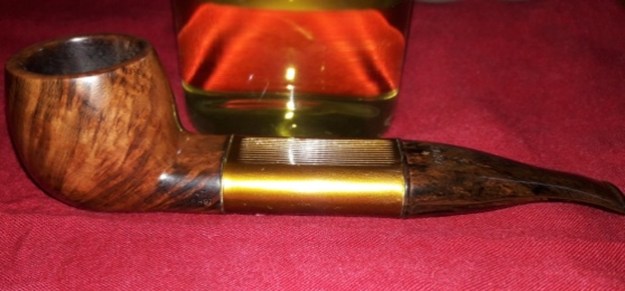
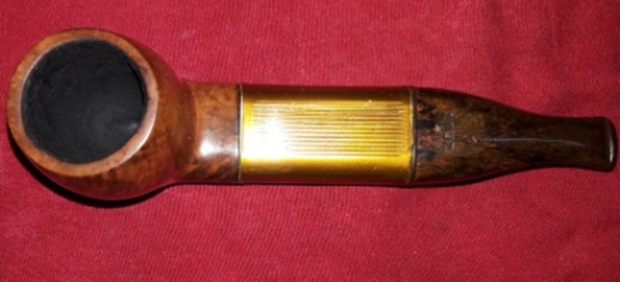
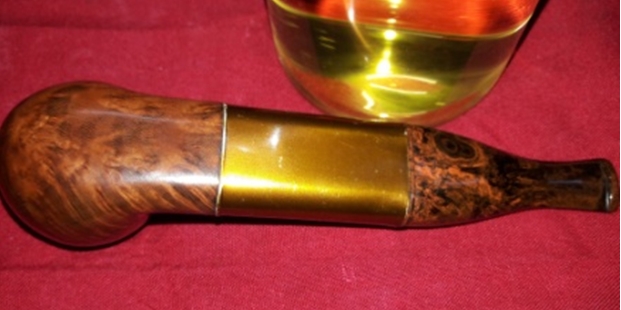
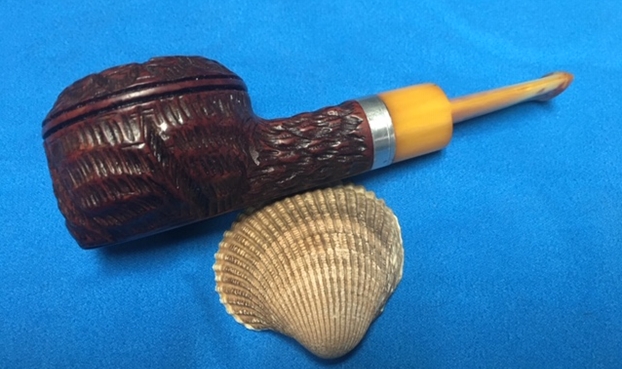
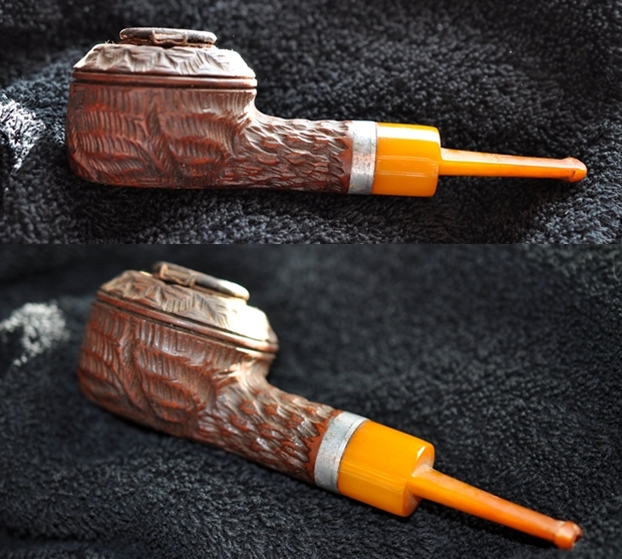
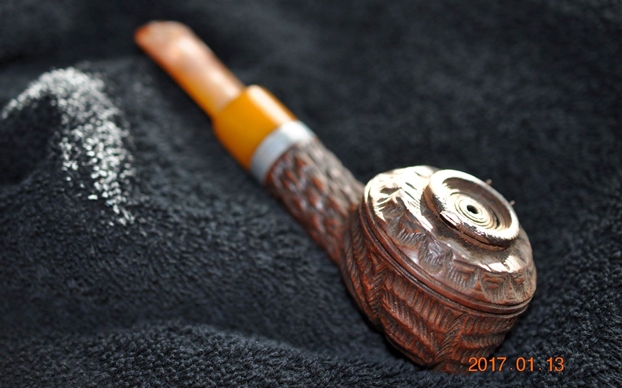
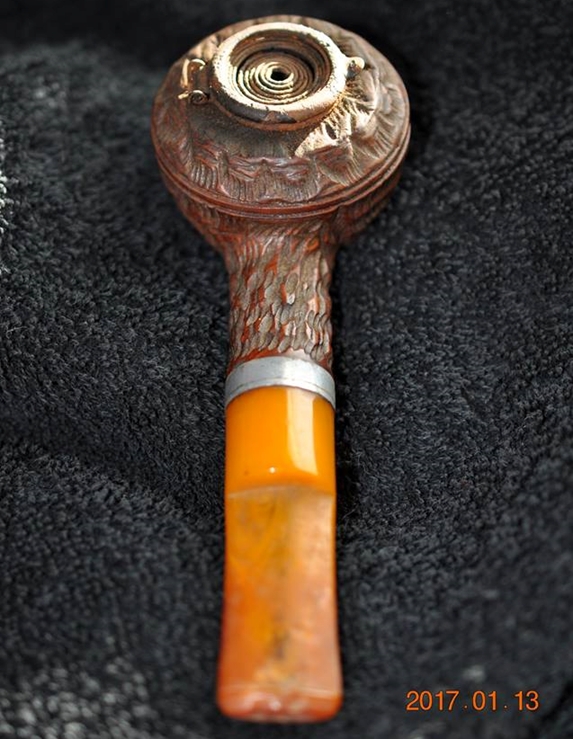
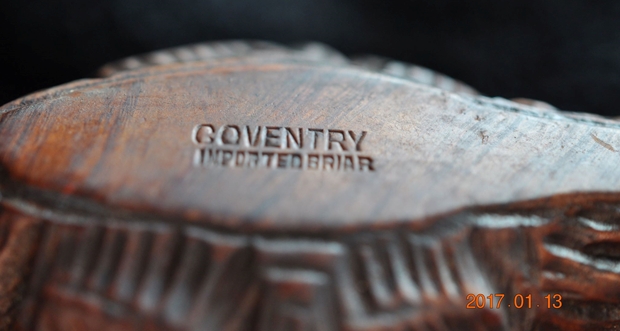
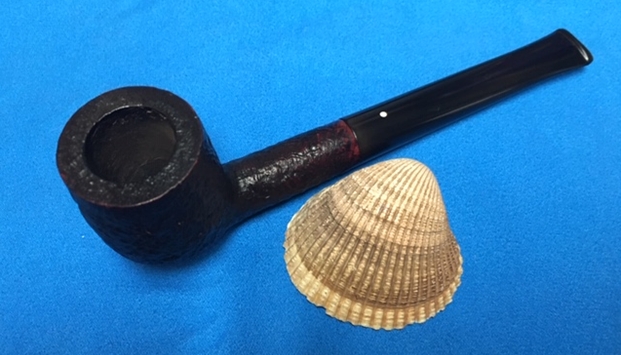
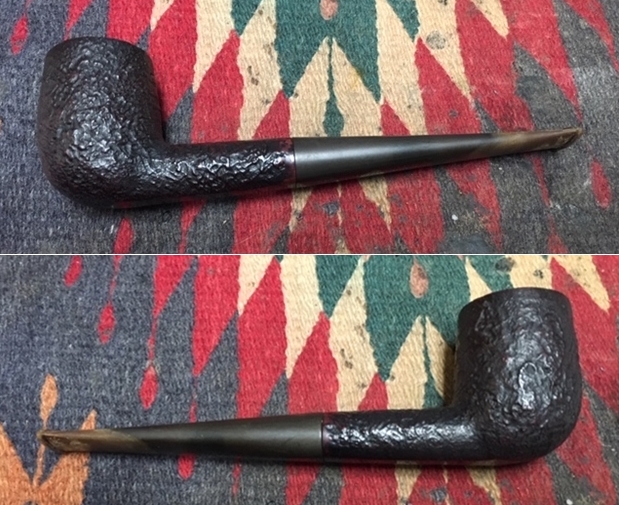
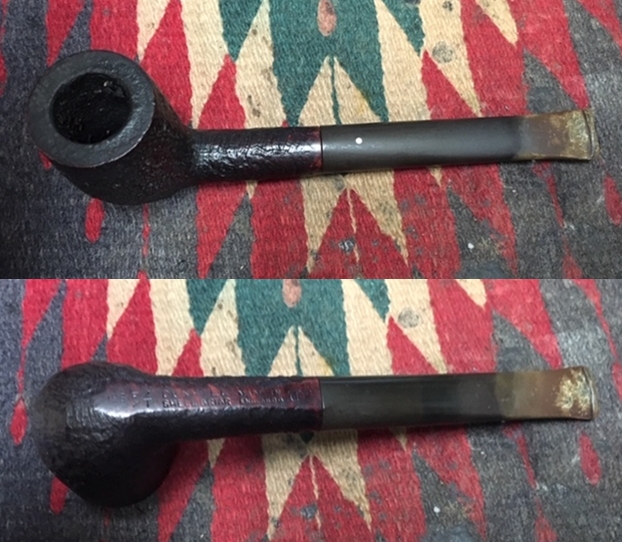
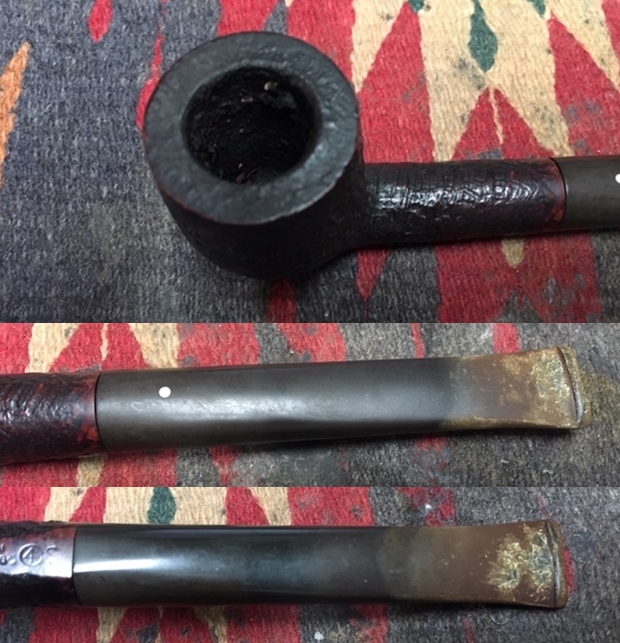
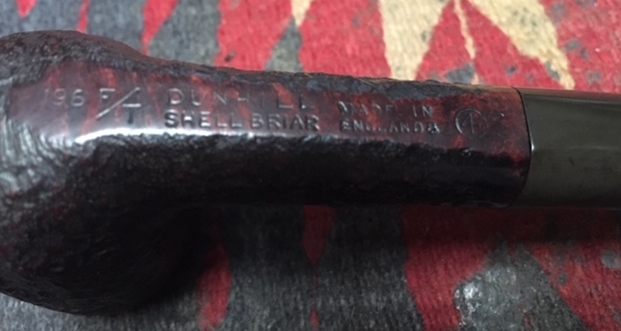
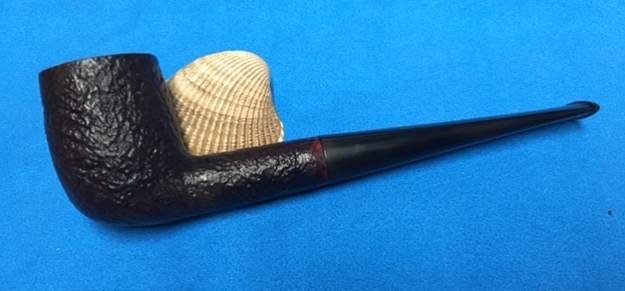
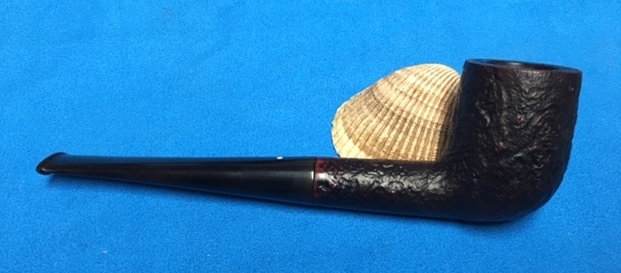
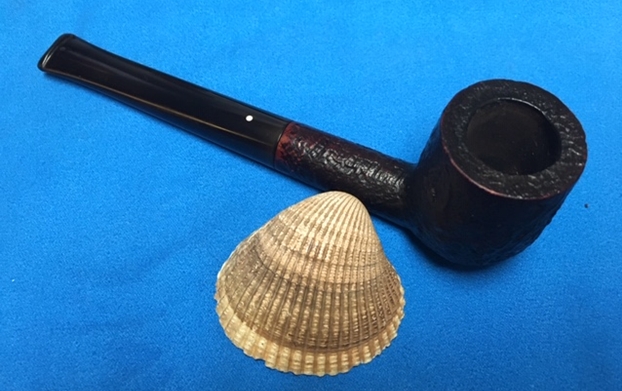
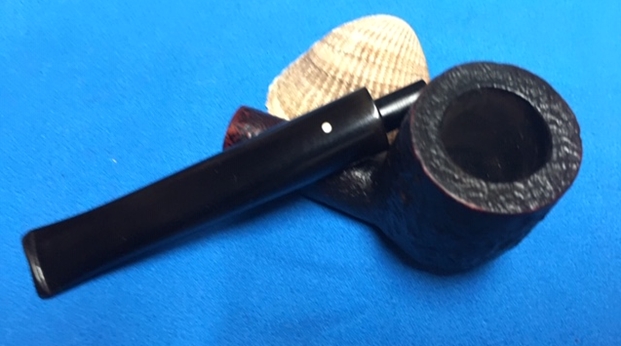
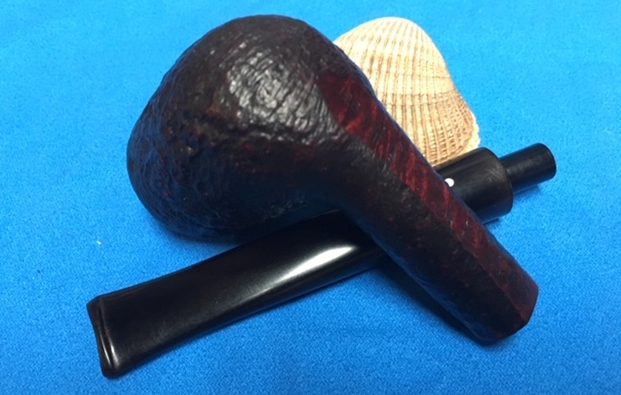
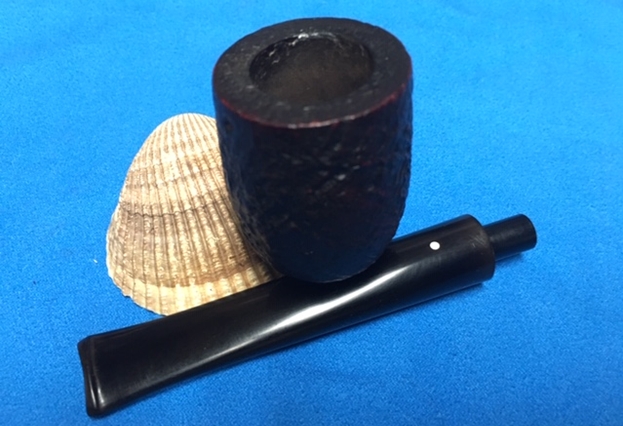
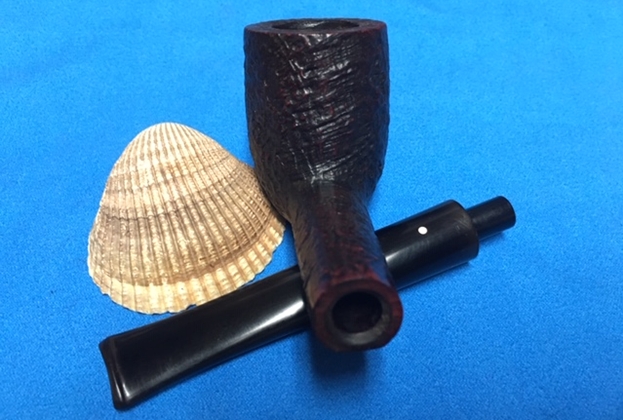
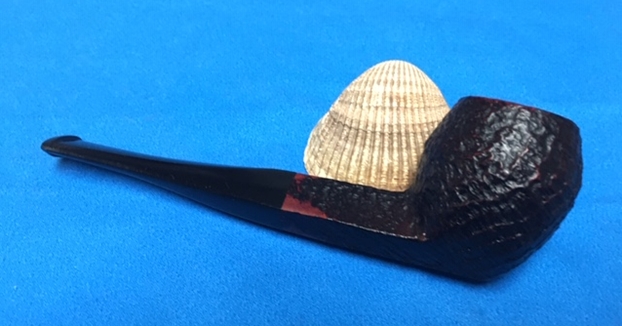
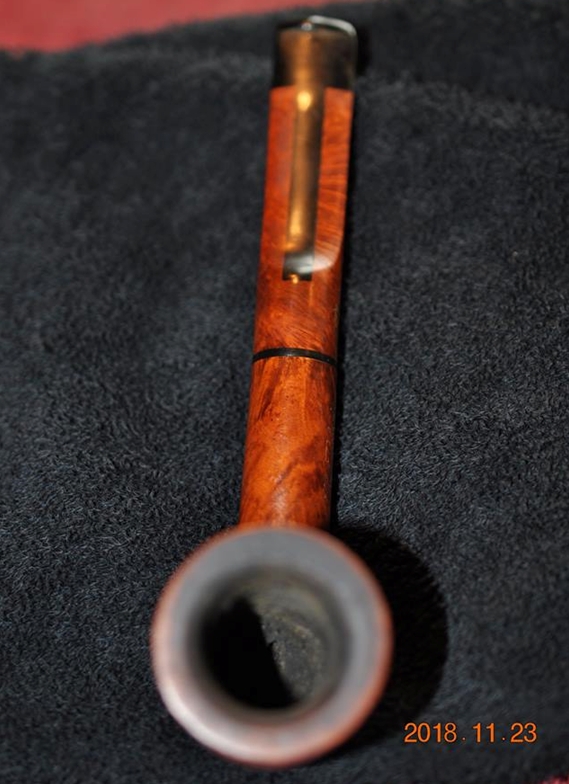
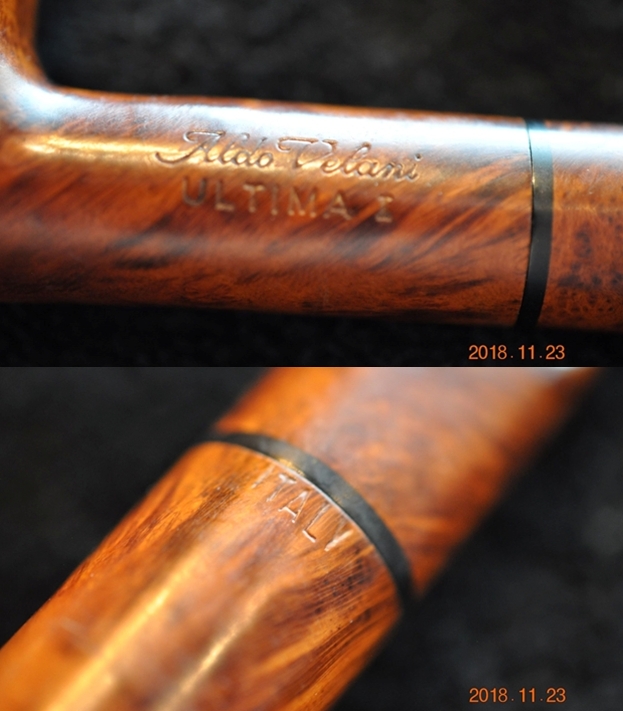
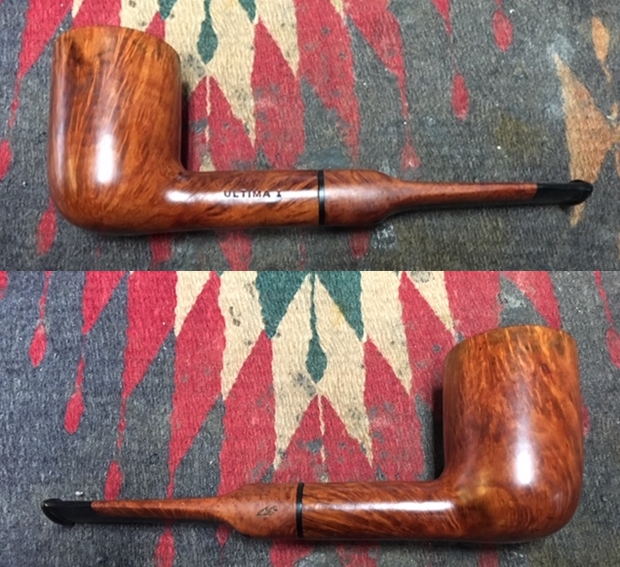
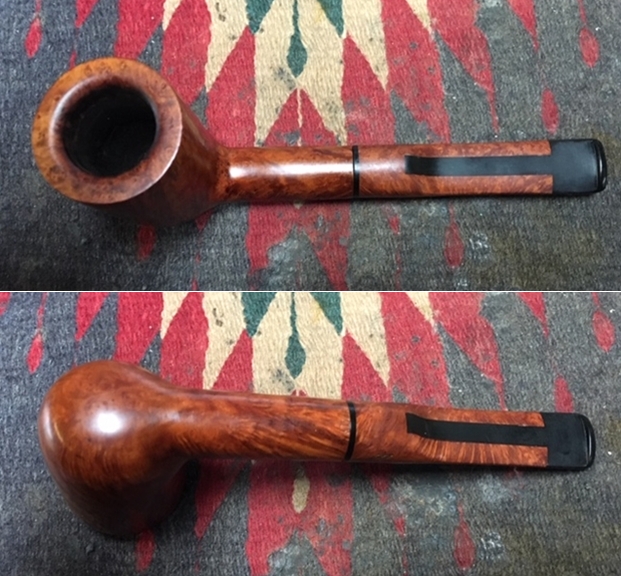
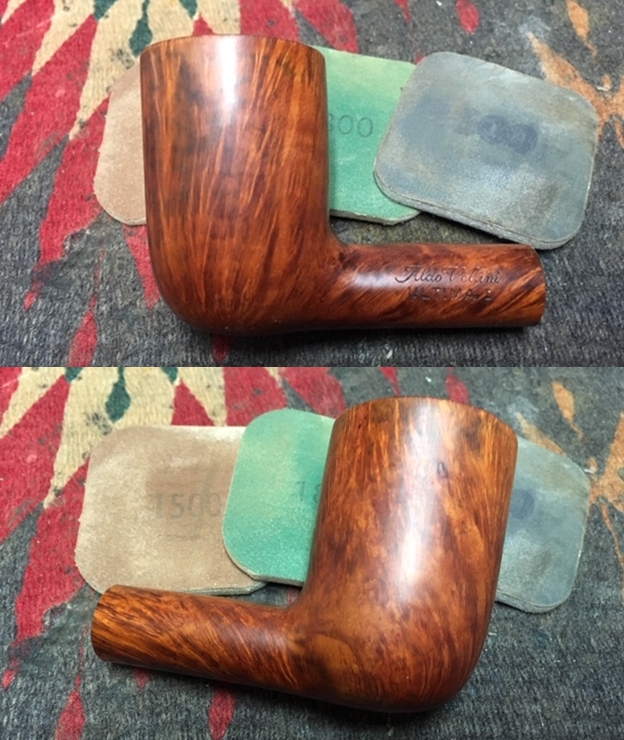
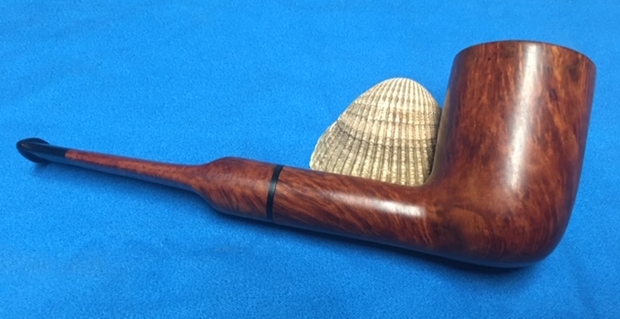
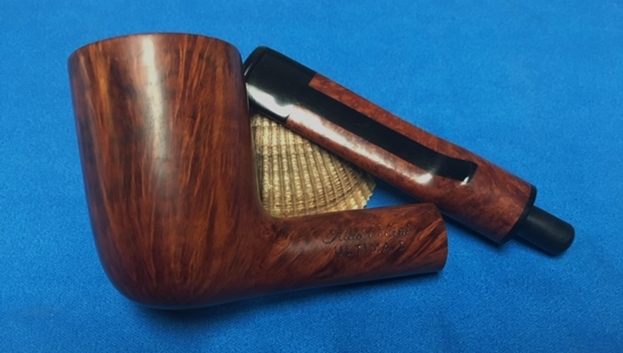
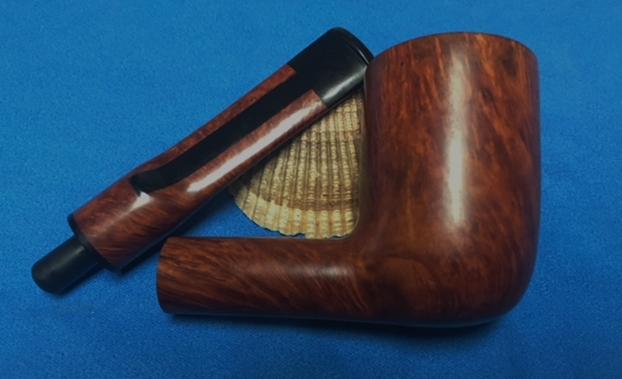
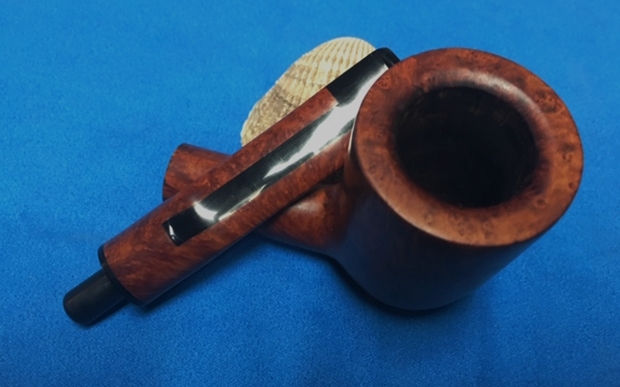
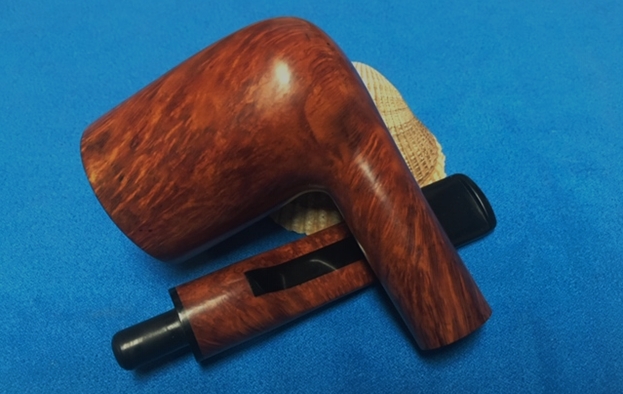
At any rate, this blog is about a Kaywoodie Super Grain Dublin #08 that is almost as old as my dad was.  The left shank nomenclature approximates its age to the 1930s with the placement of SUPER GRAIN above KAYWOODIE, and the right shank imprints of IMPORTED BRIAR and 08 narrow the timeline to 1935-1938.  Every part of this beautiful pipe is original, including the stem and patented Drinkless stinger with the word etched into it.  If this pipe was around in 1936, its price would have been $5.  But more than the absence of the usual four-digit shape number connected with Kaywoodie pipes from this period, I’m having trouble imagining my dad no bigger than a boy of five.

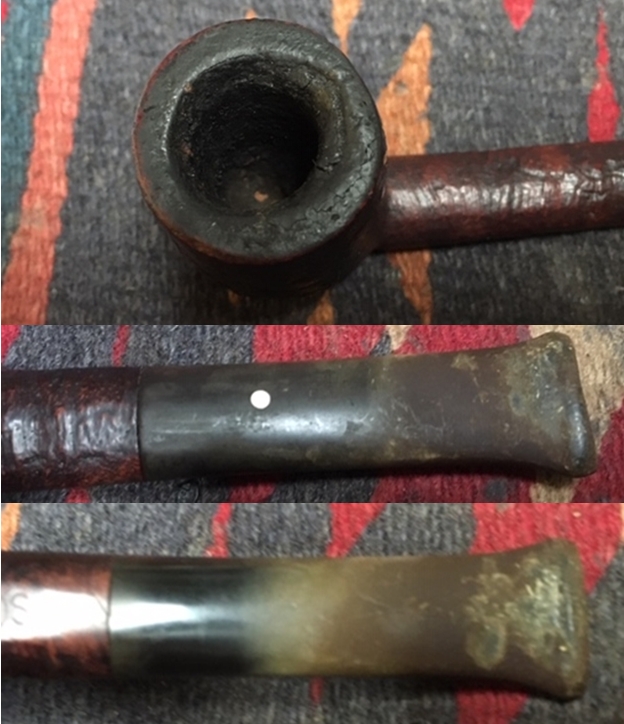
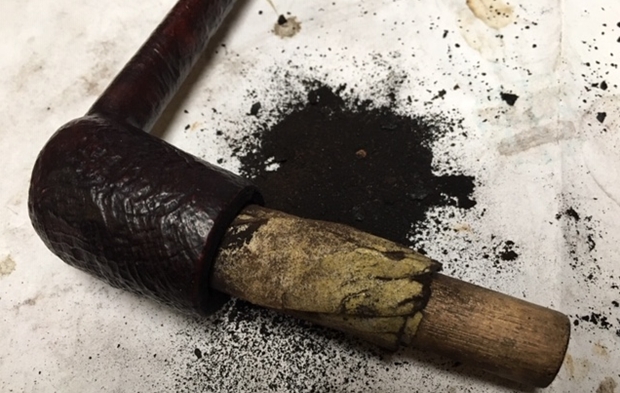
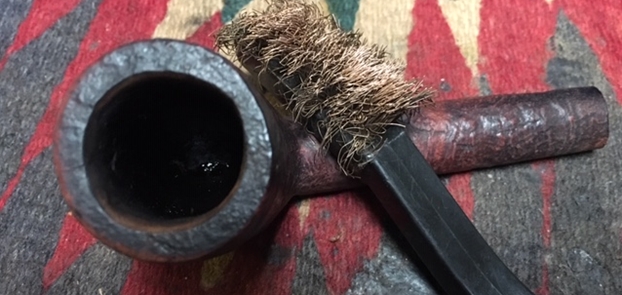
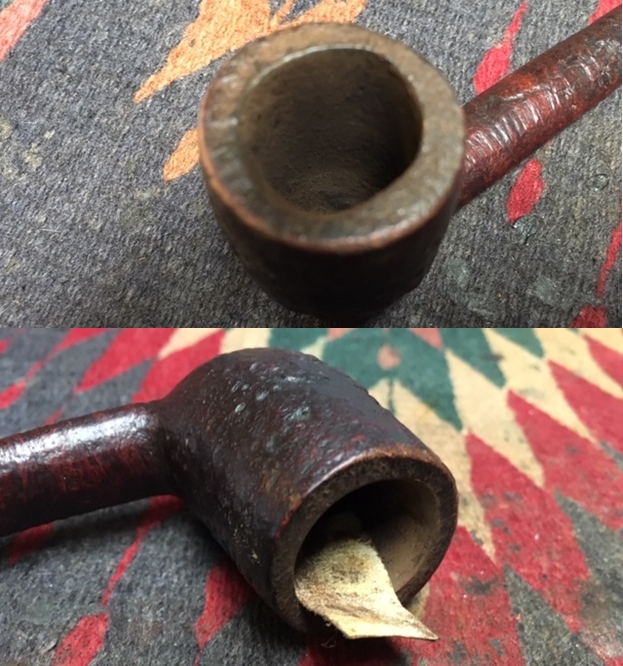
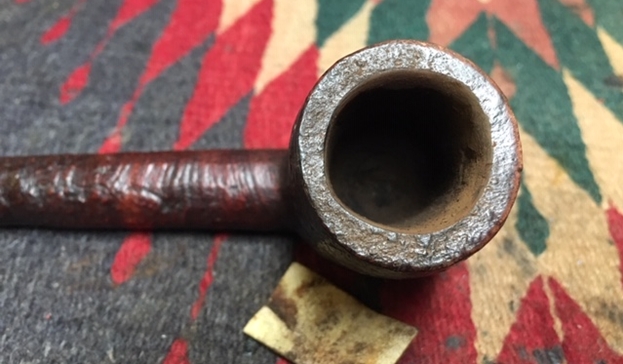
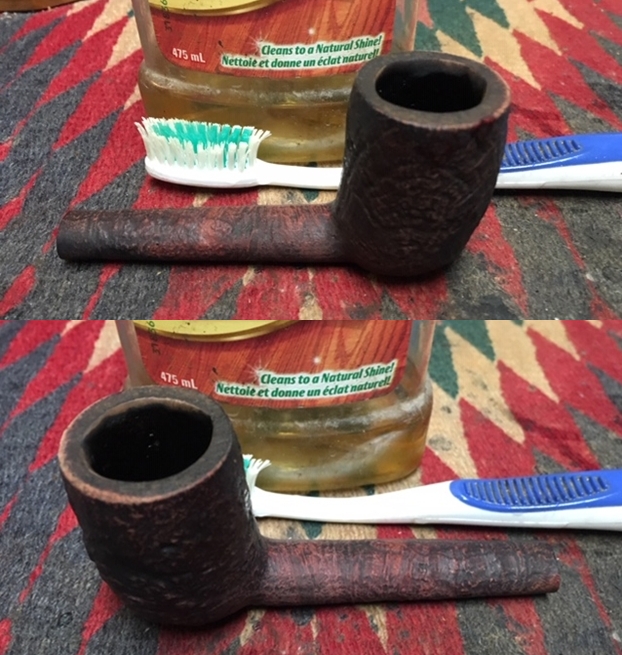
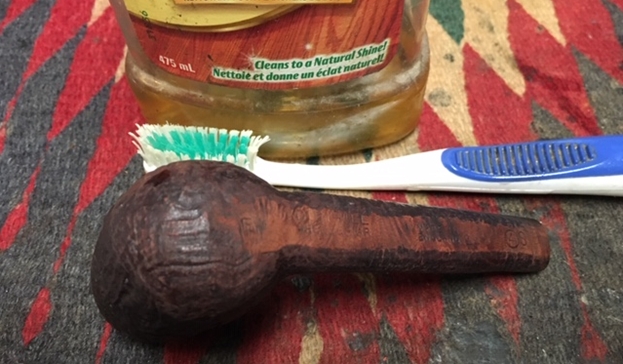
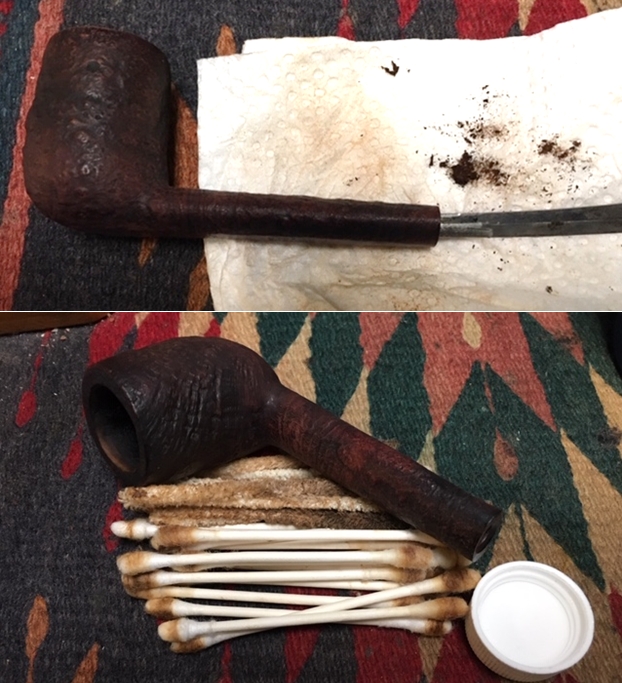
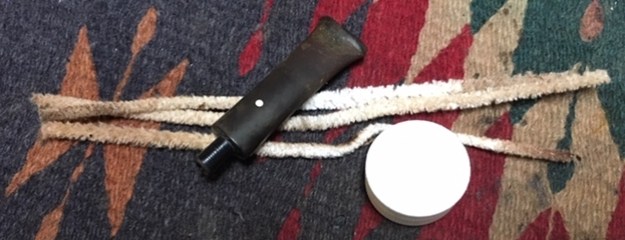
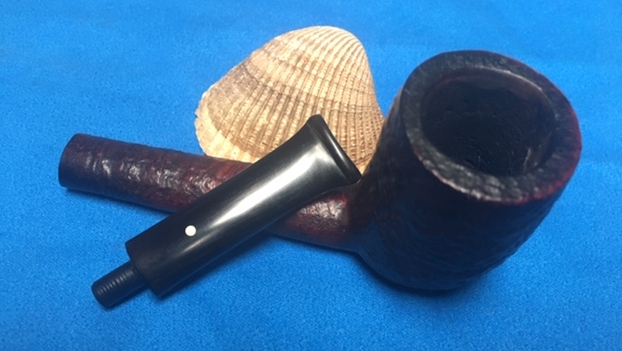
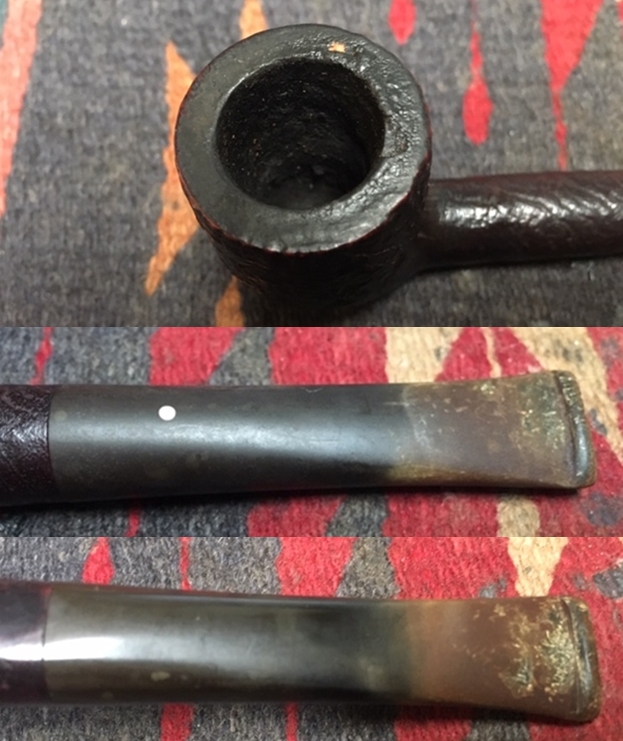
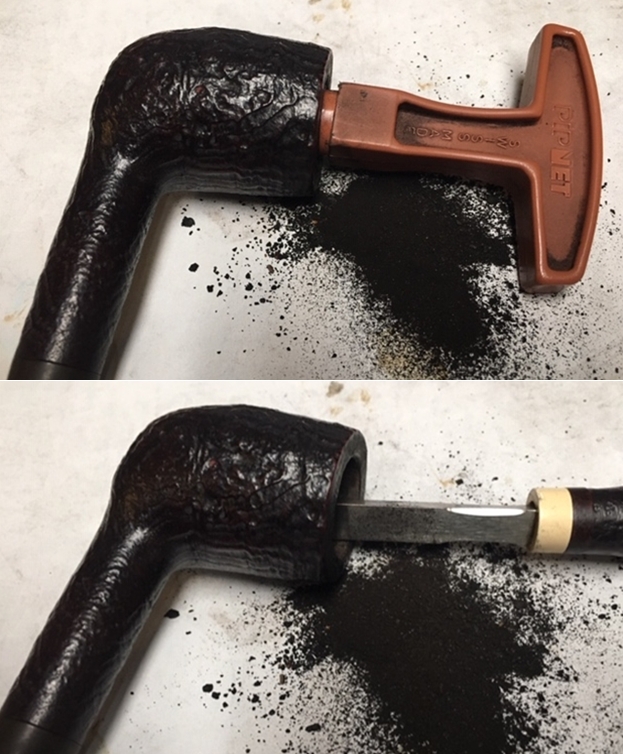
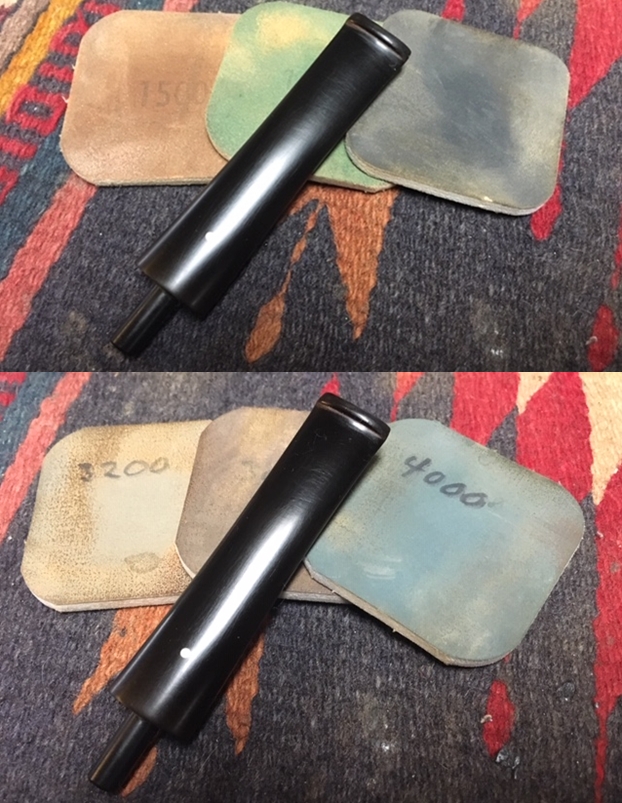
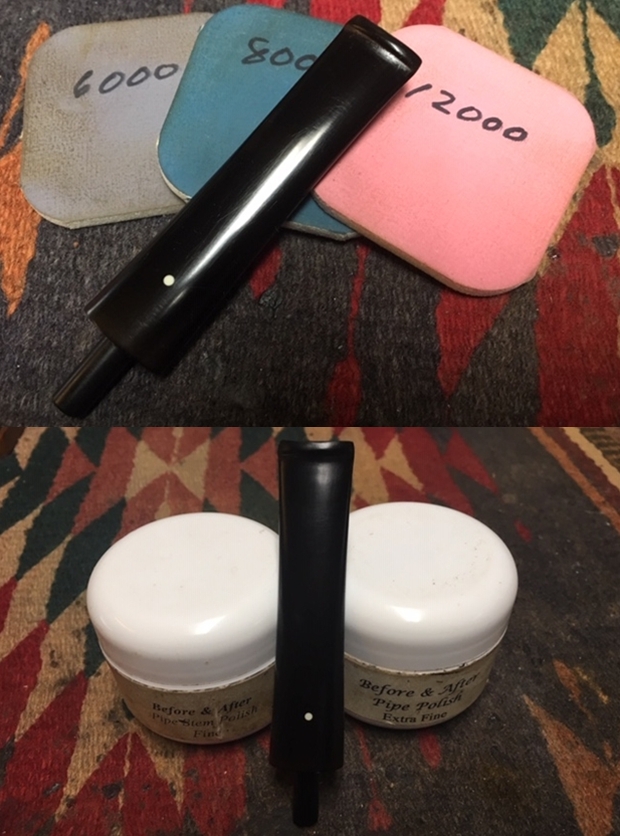
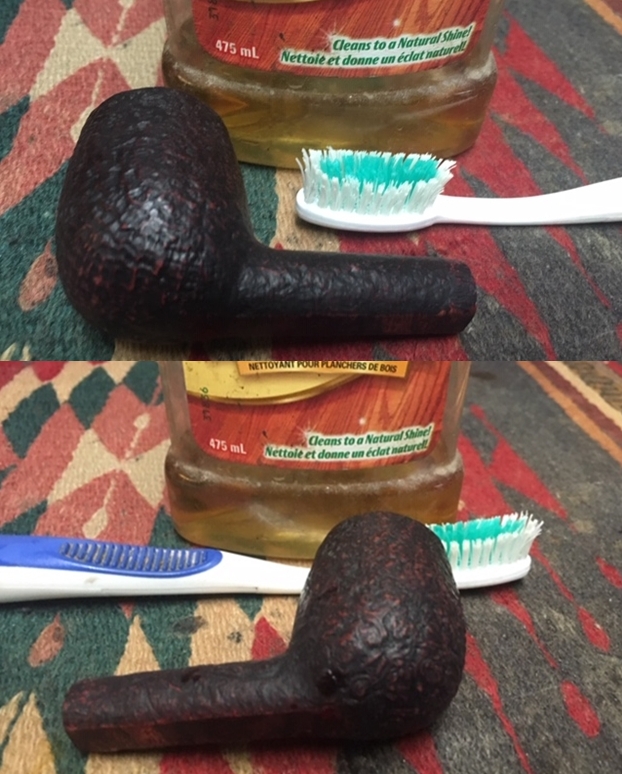
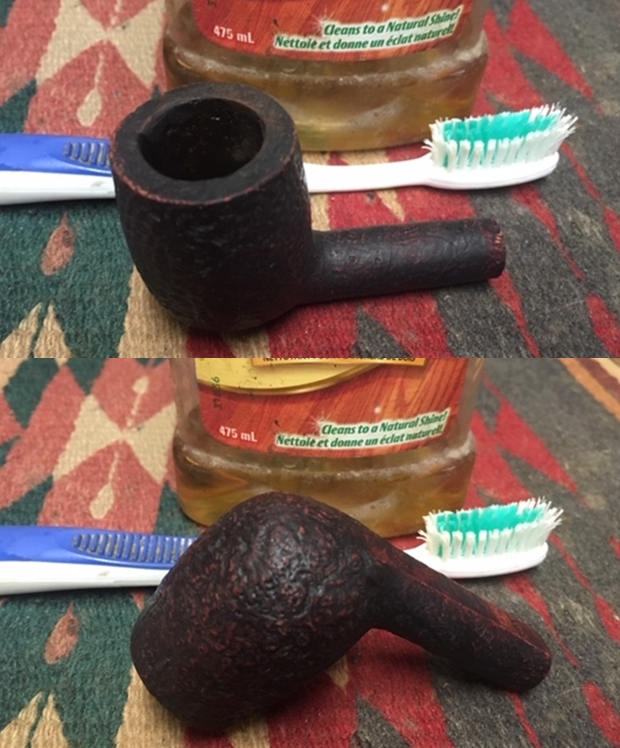
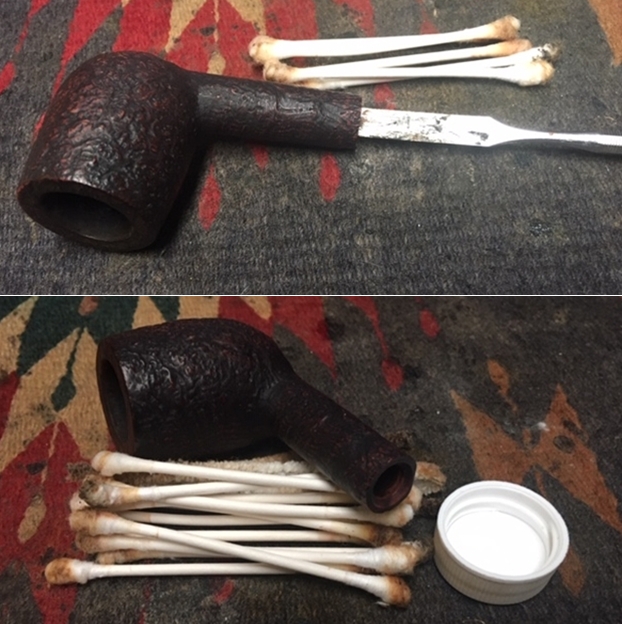
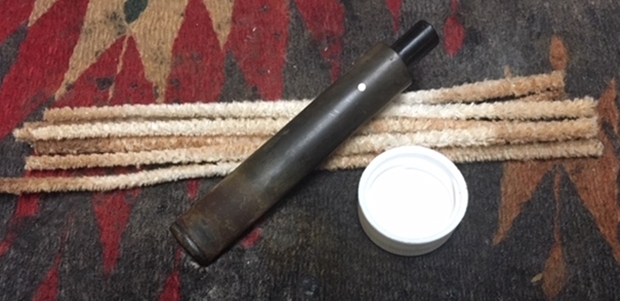
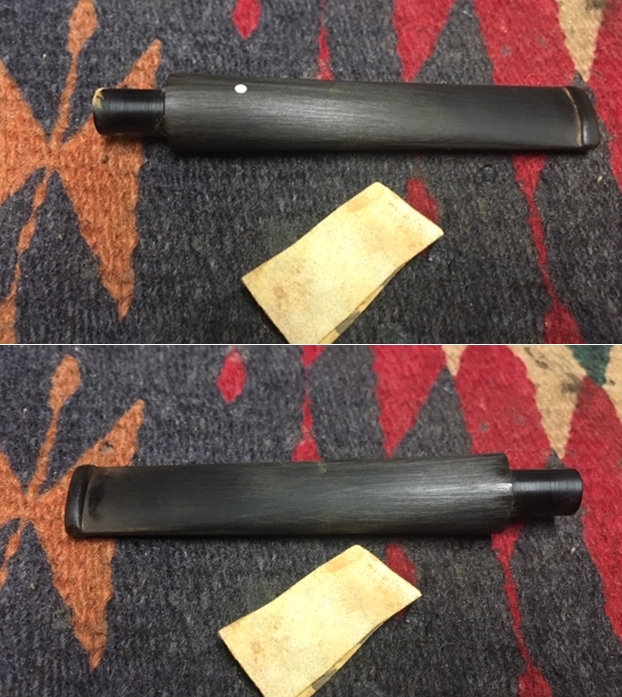
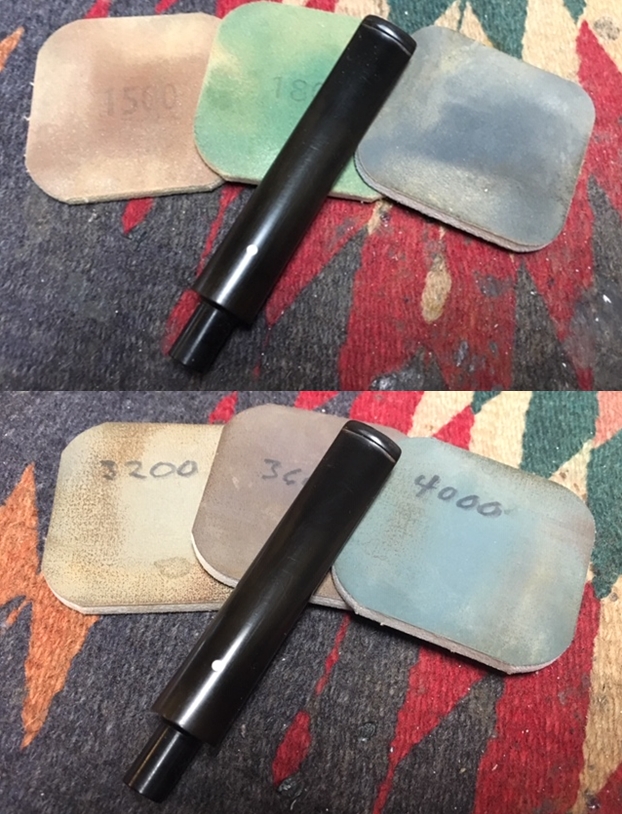
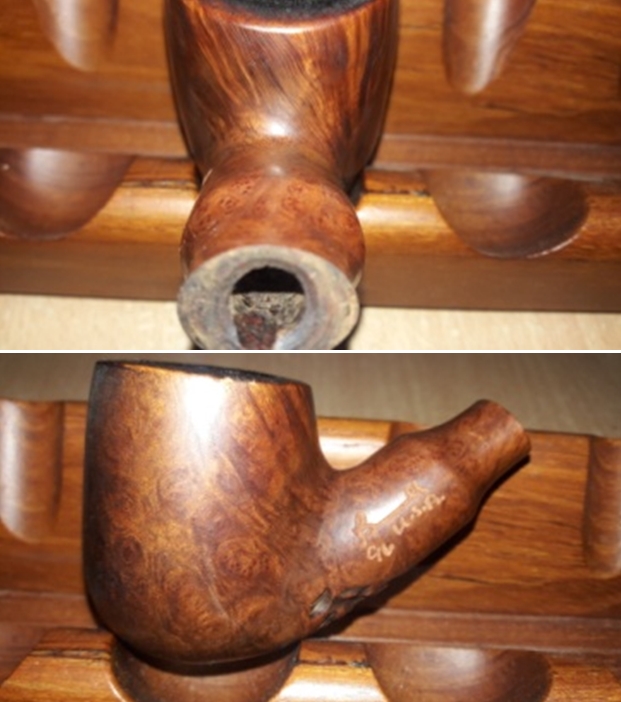
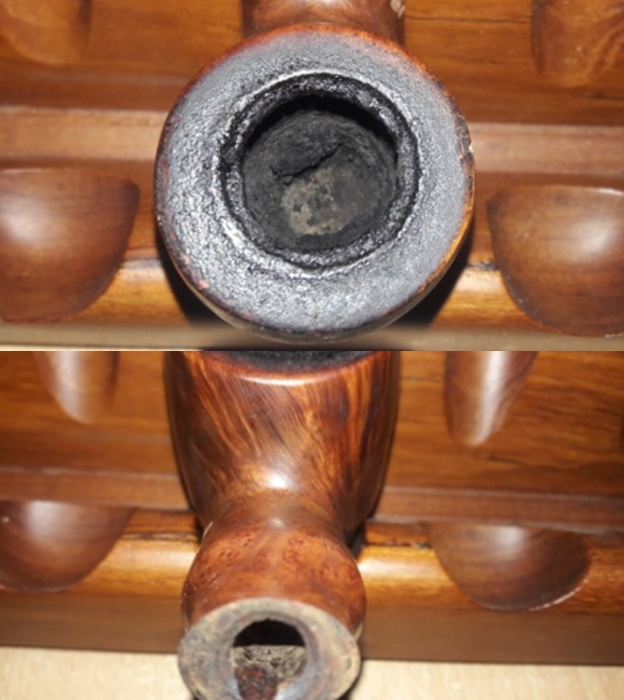
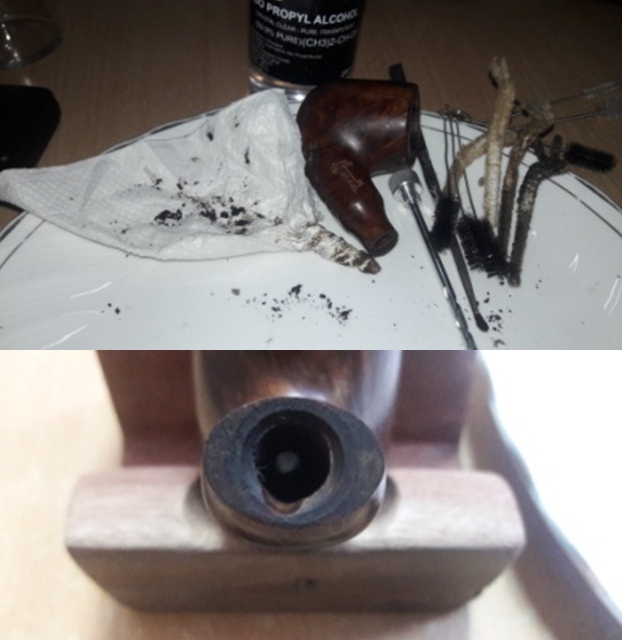
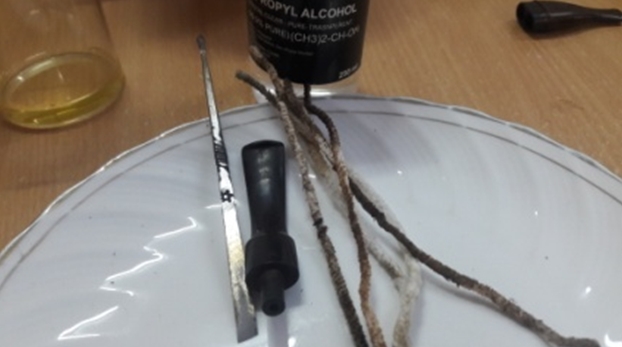
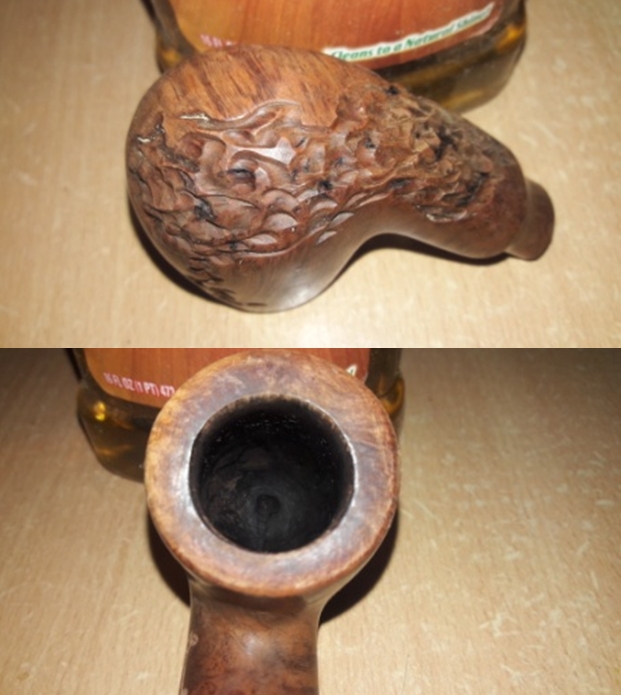
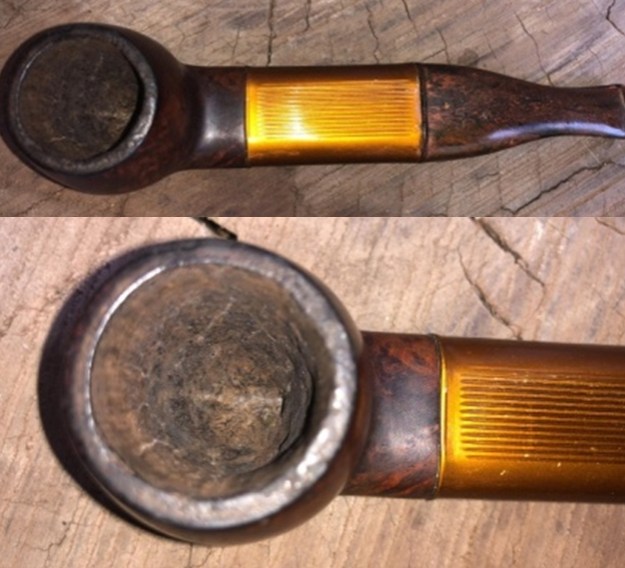
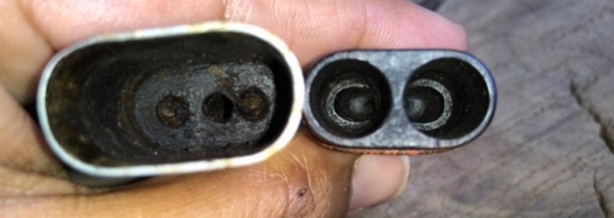
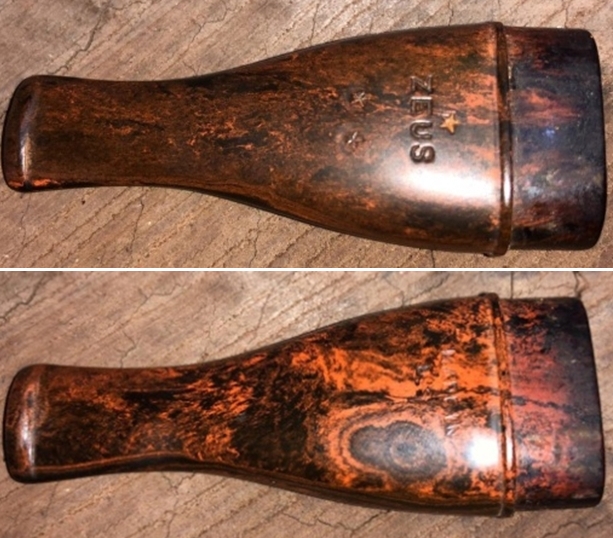
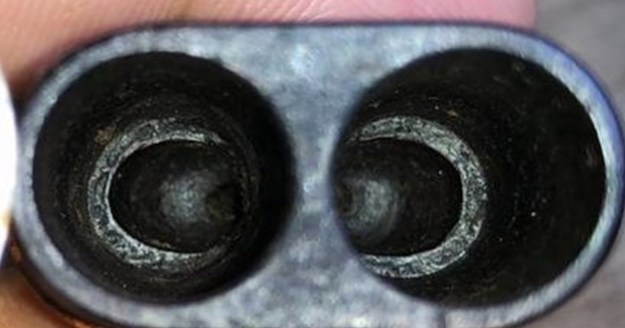
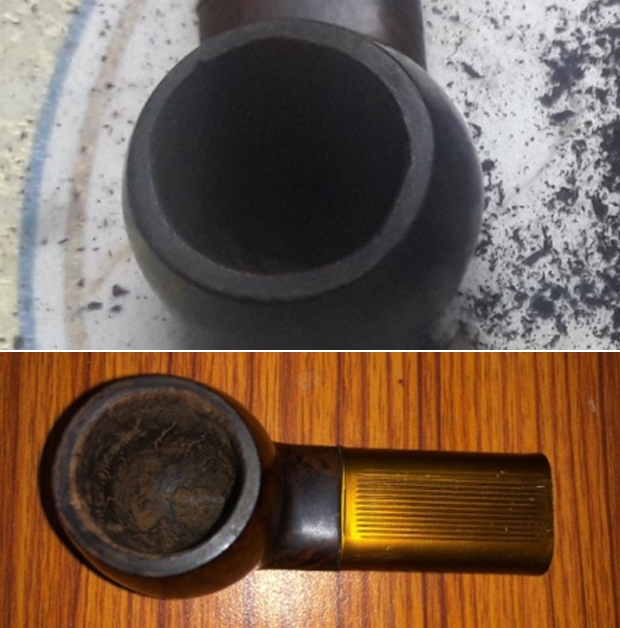
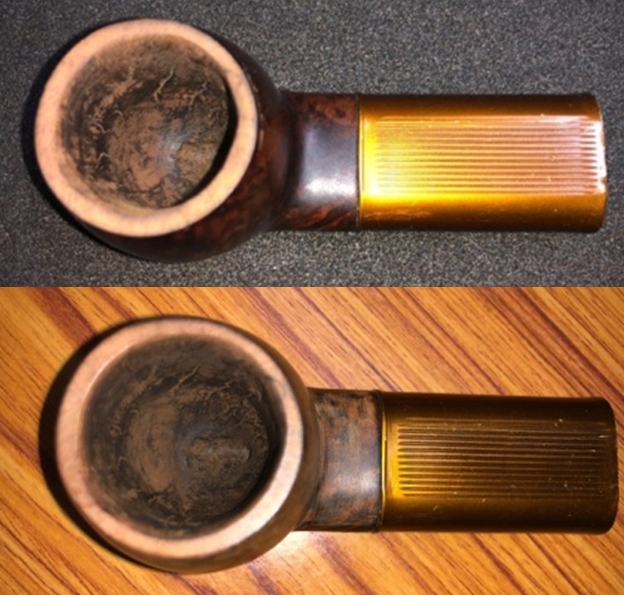
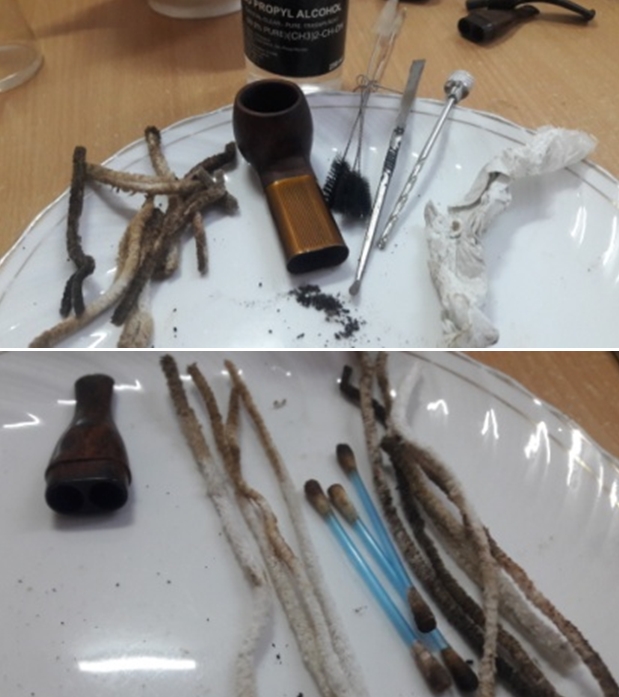
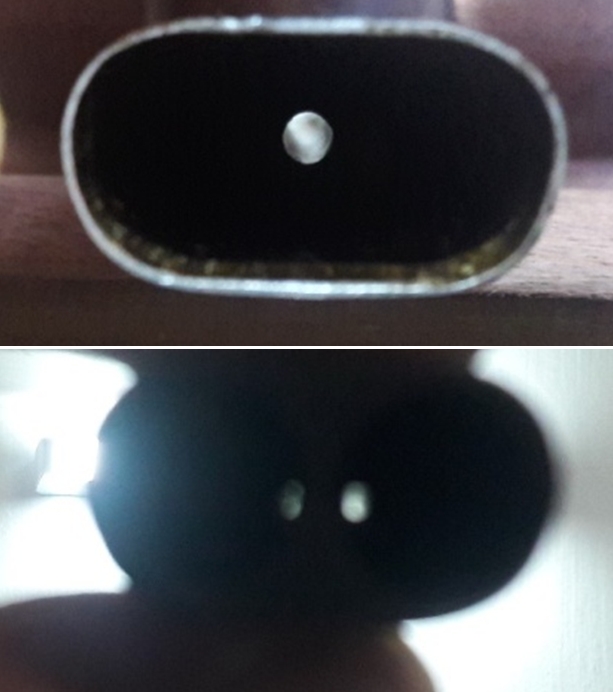
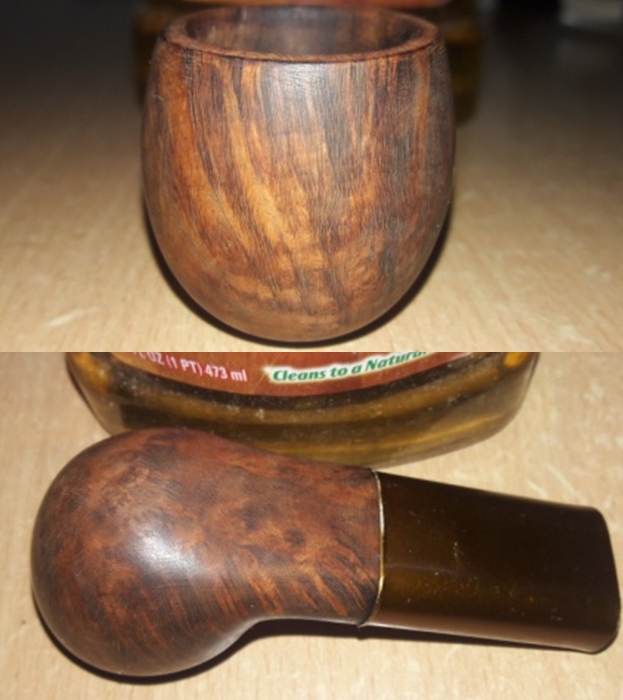
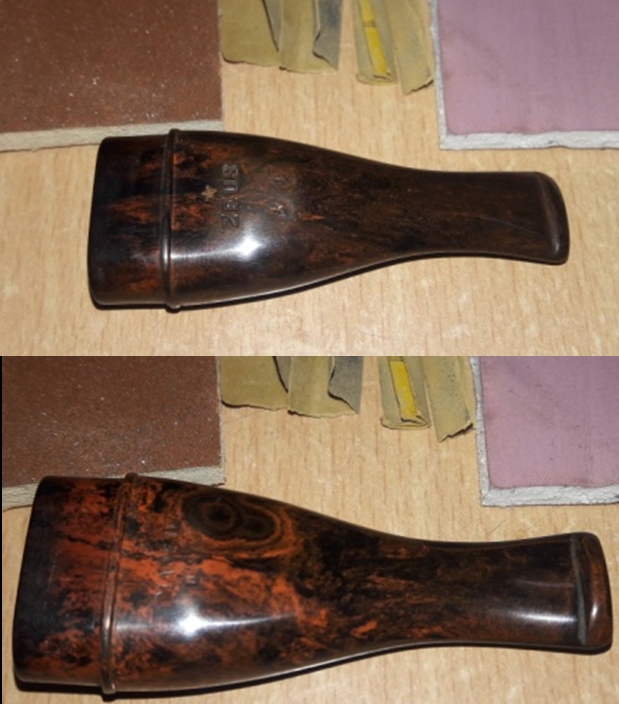
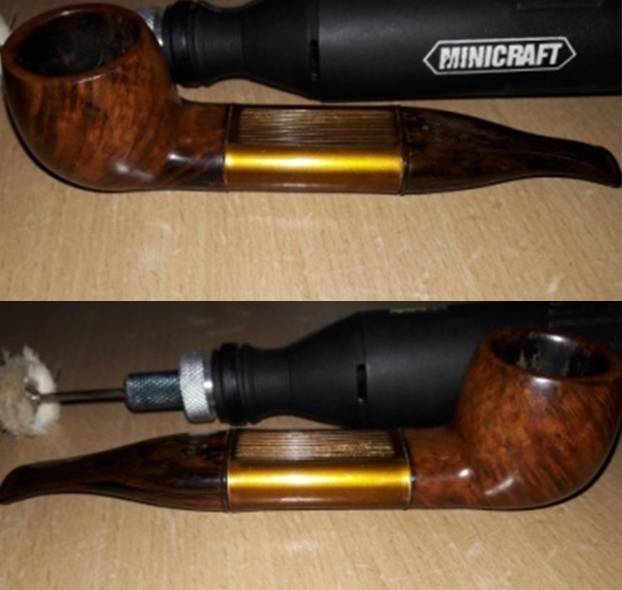
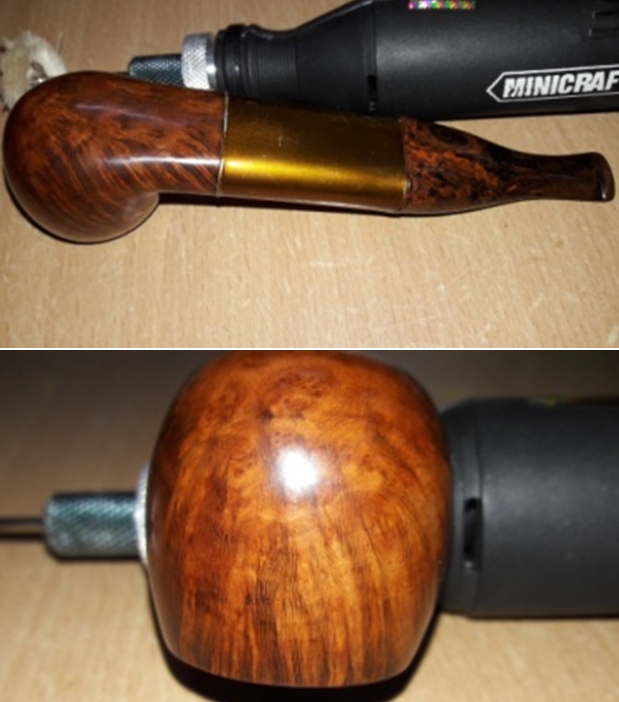
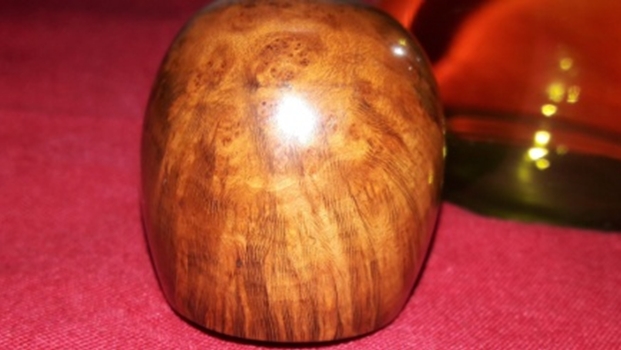
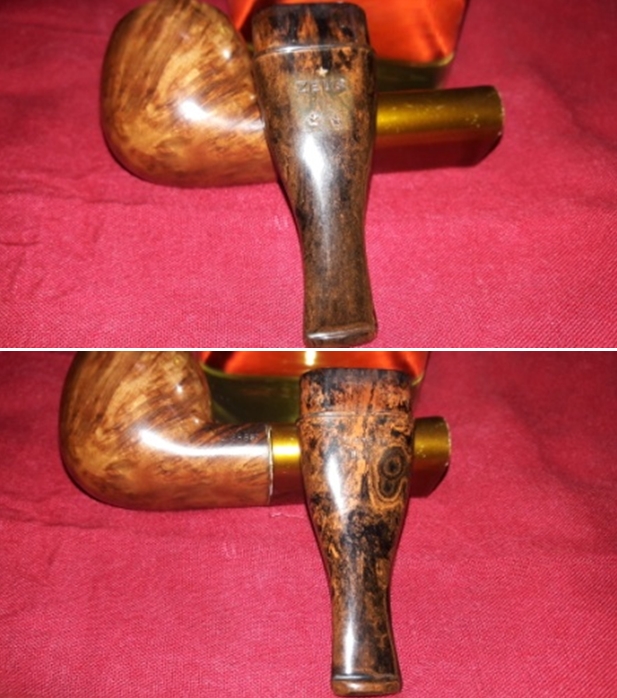
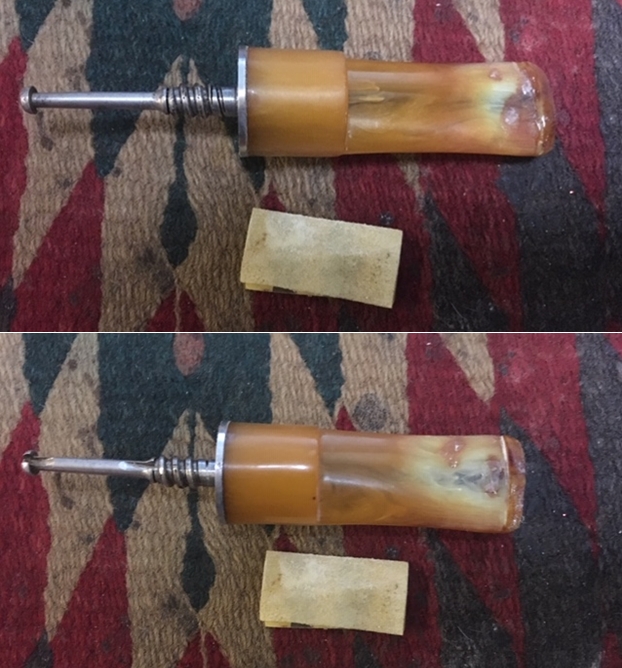
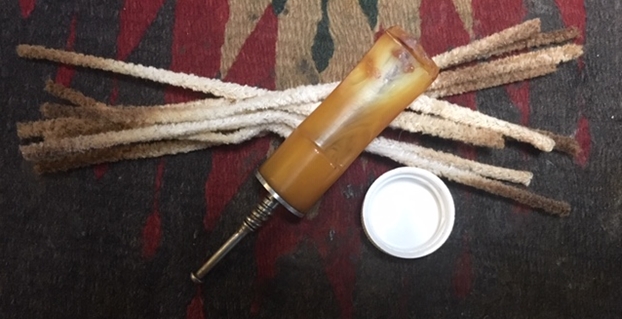
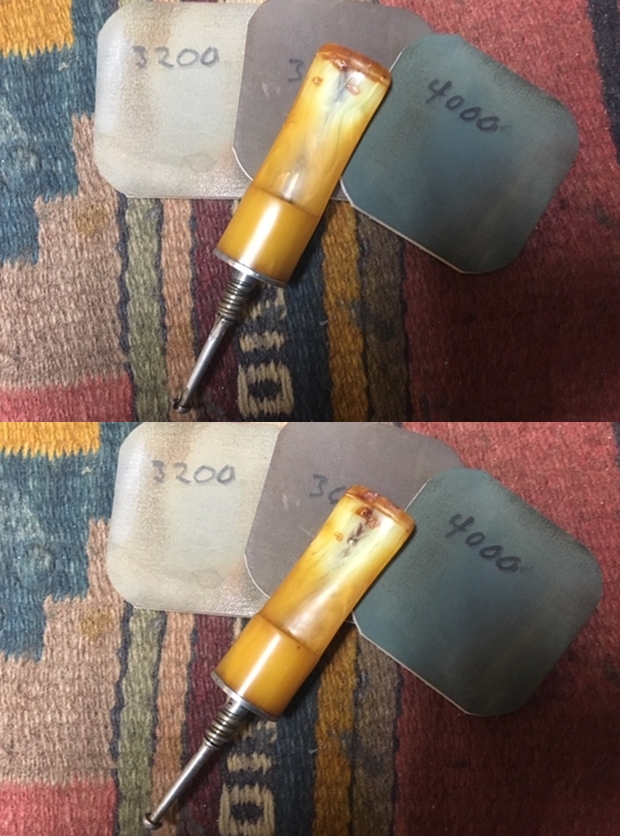
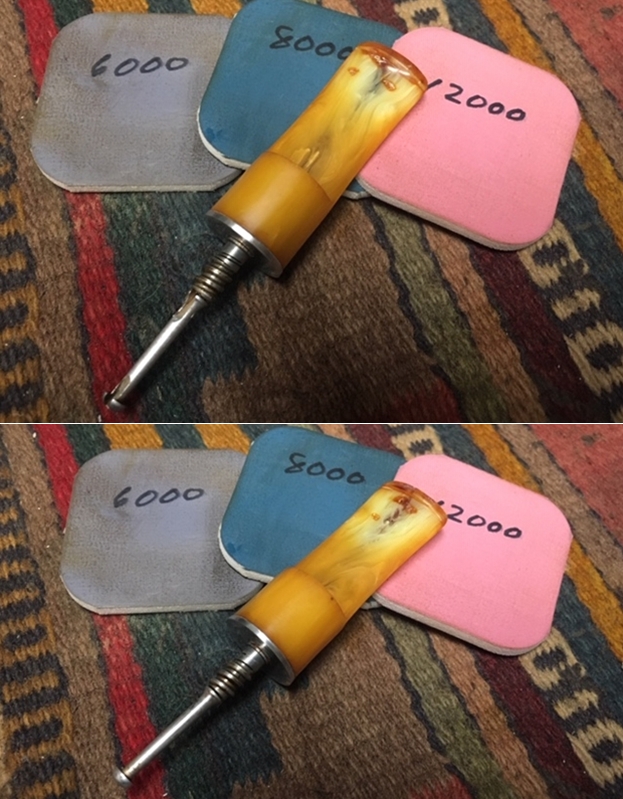
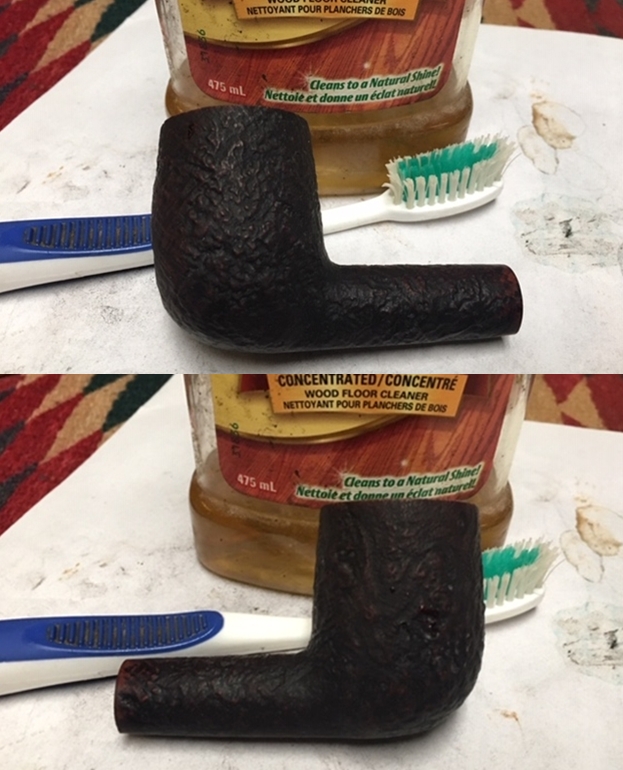
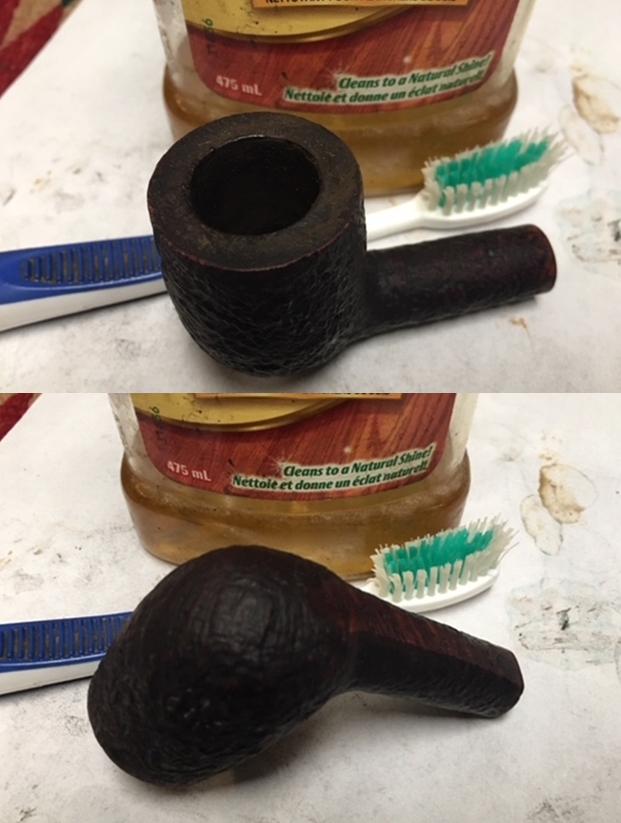
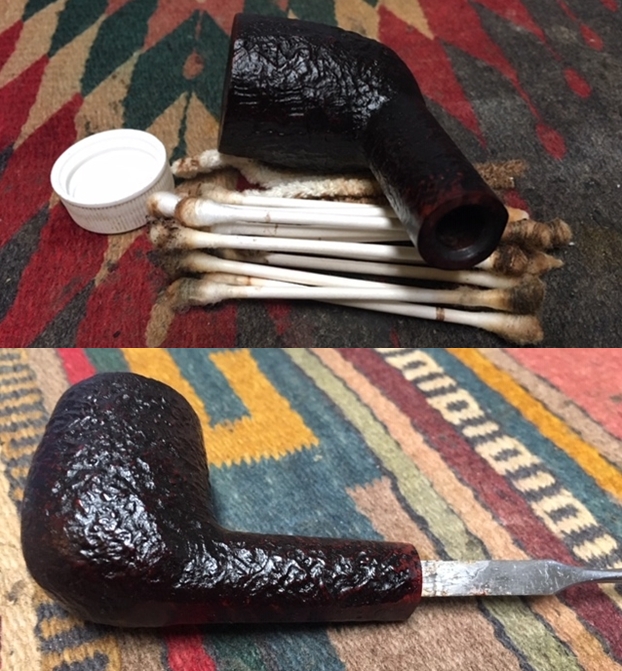
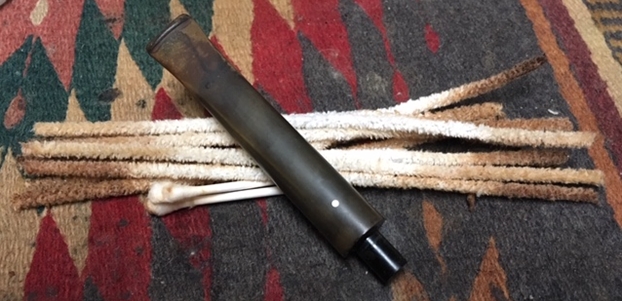
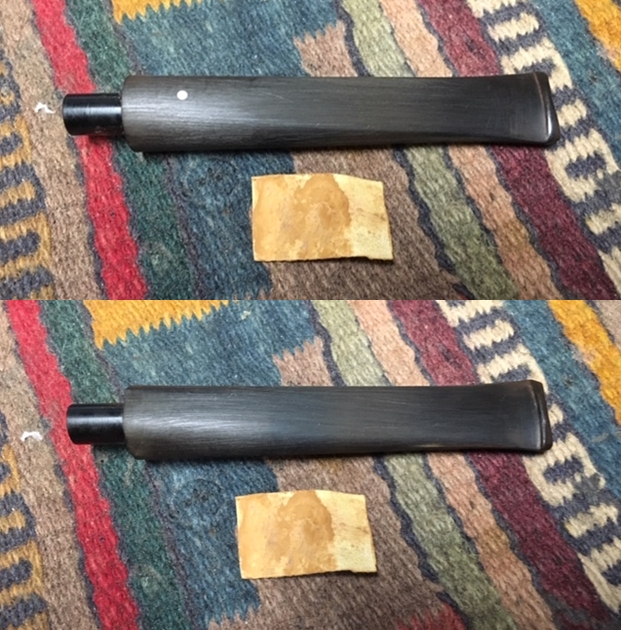
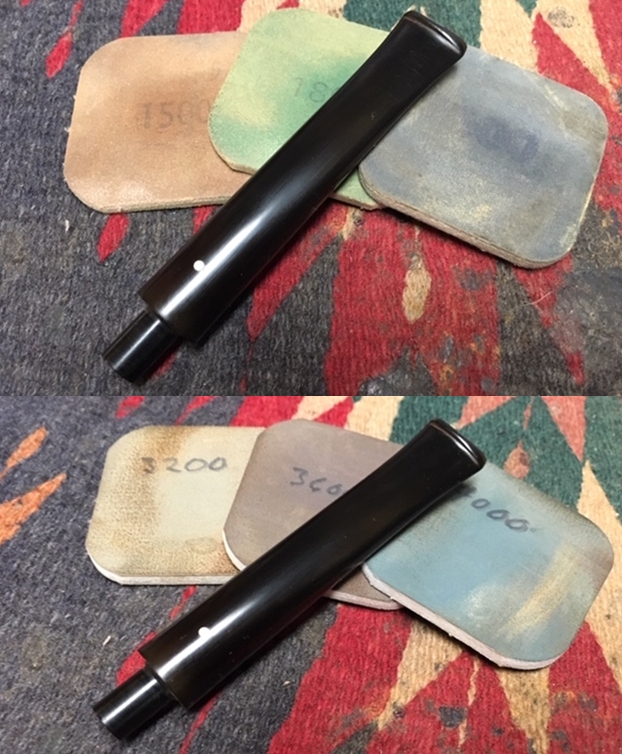
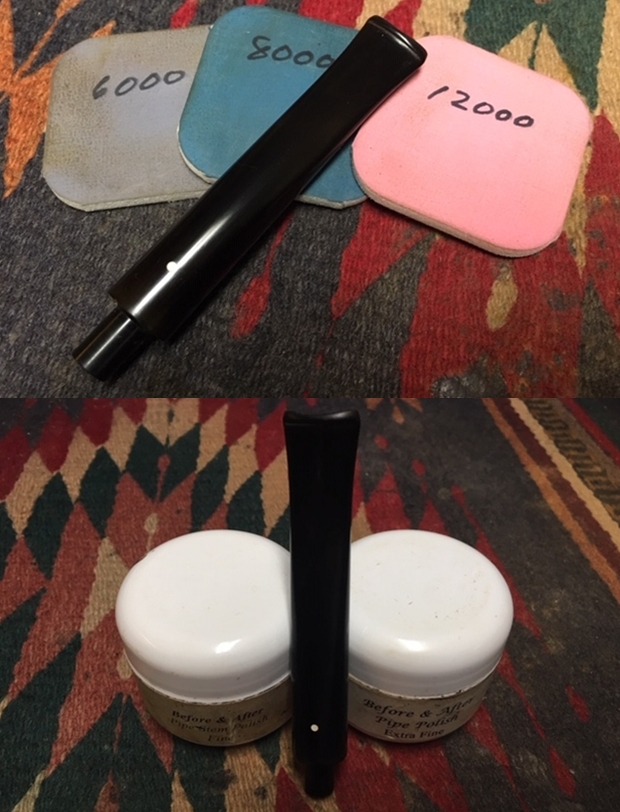
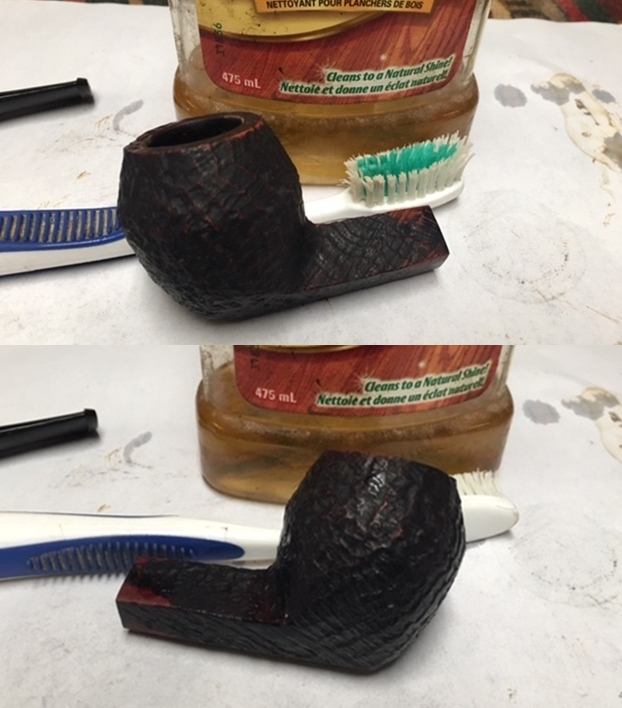
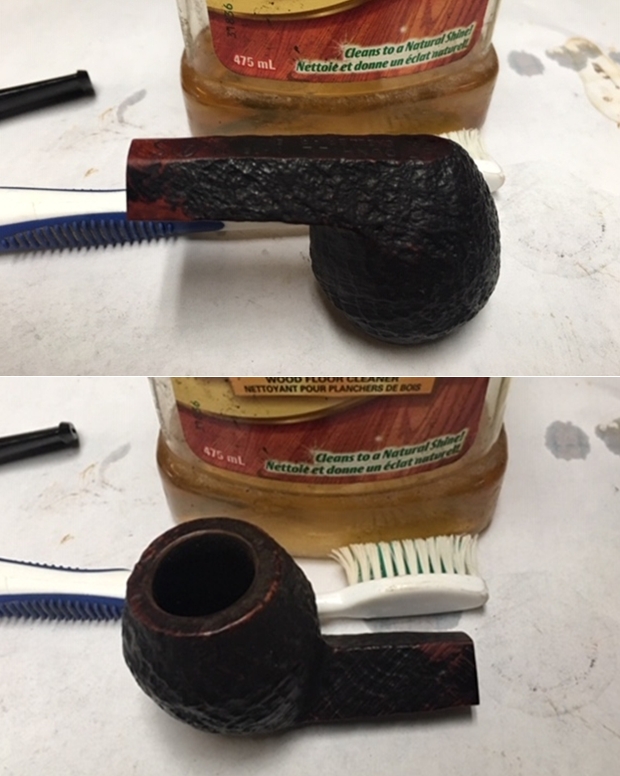
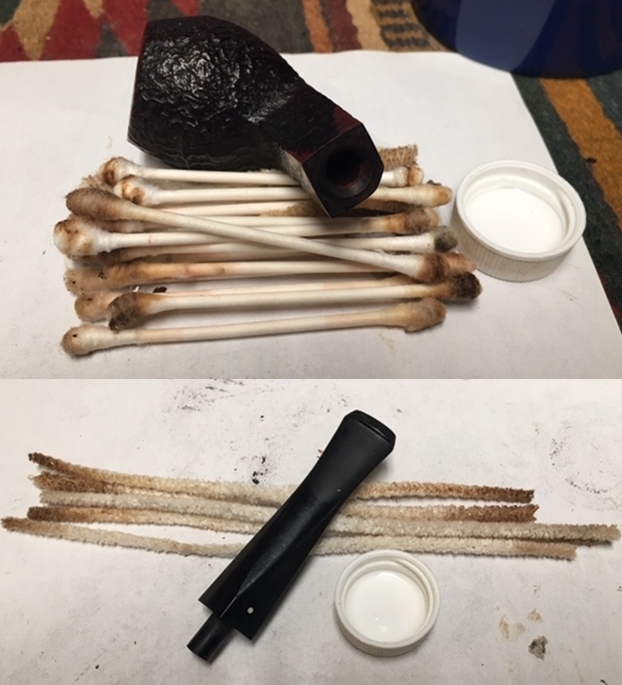
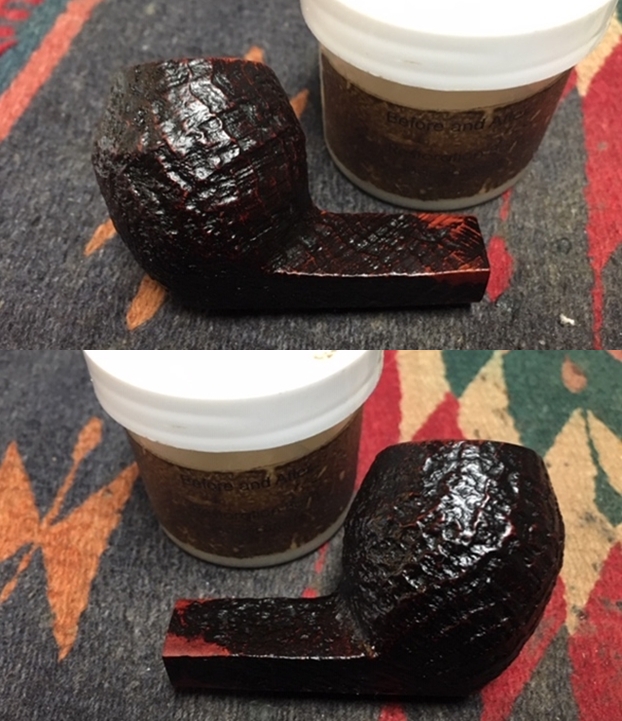
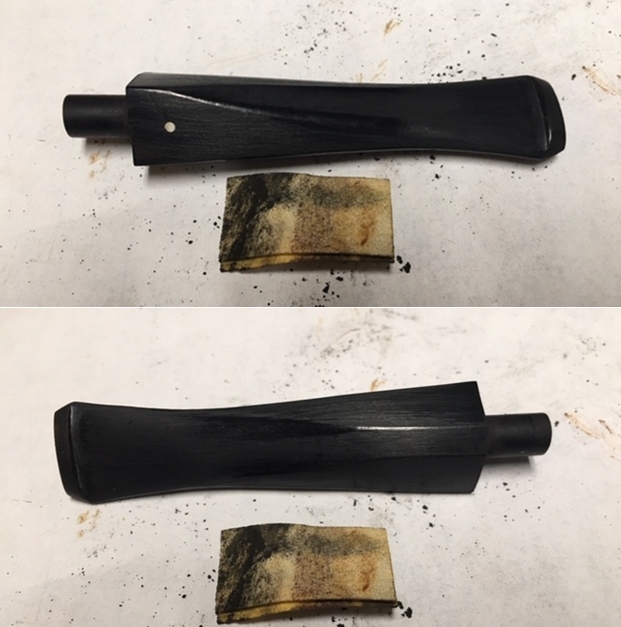
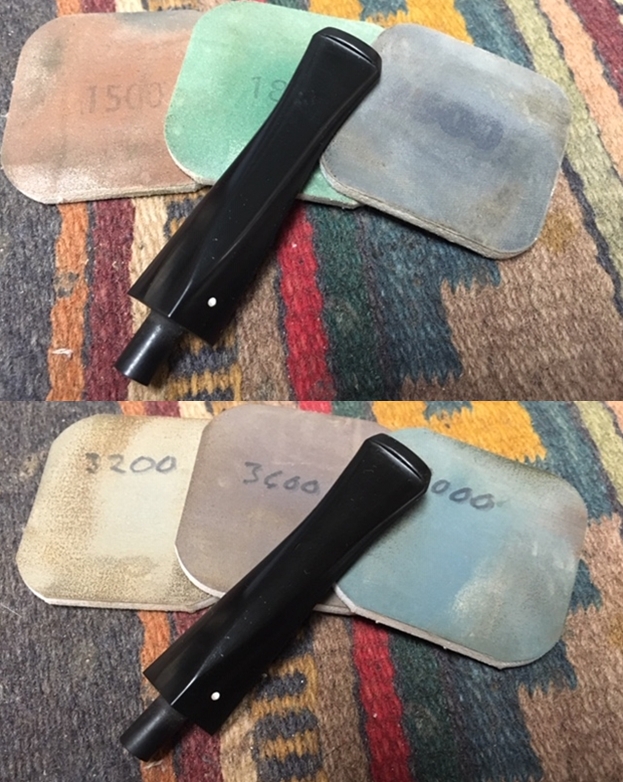
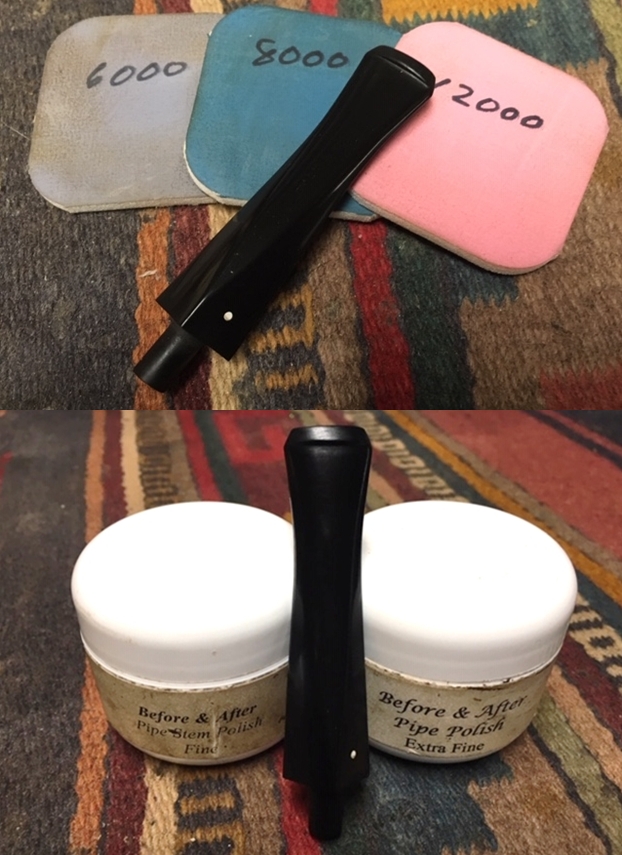
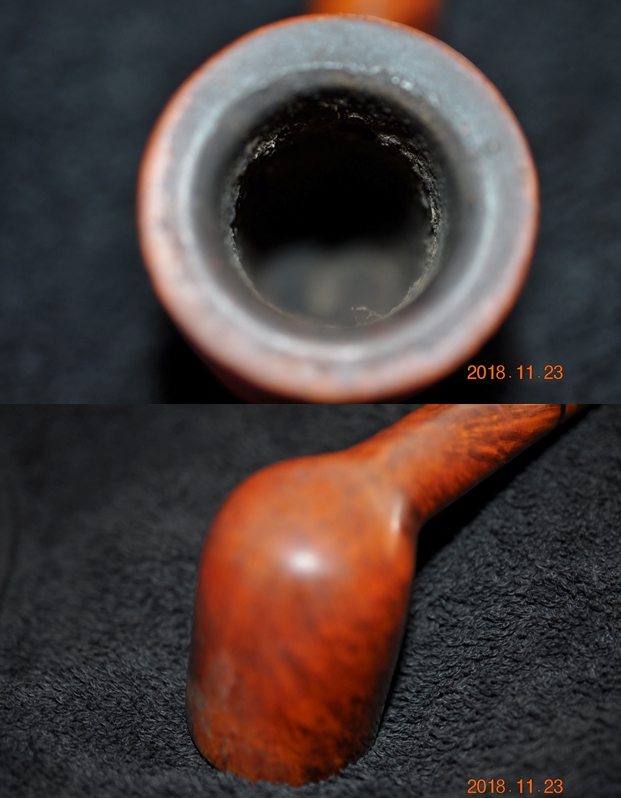
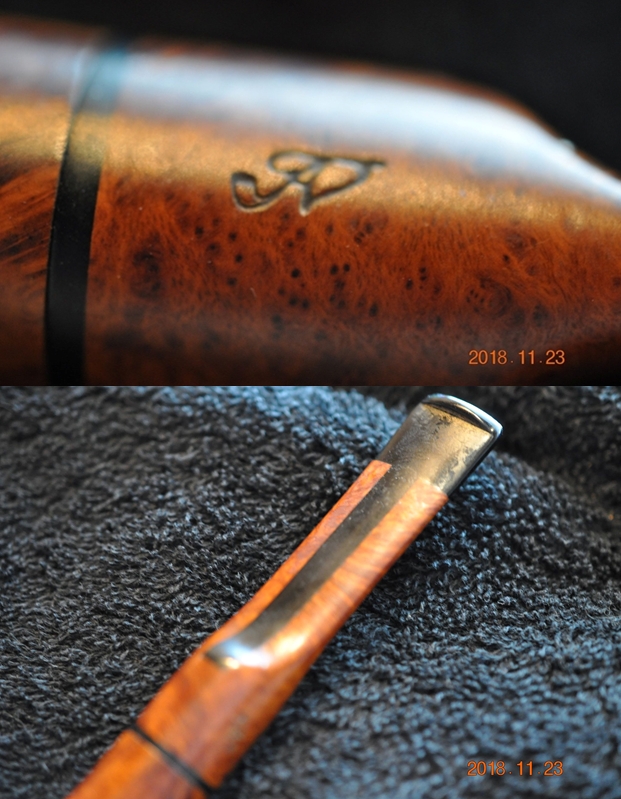
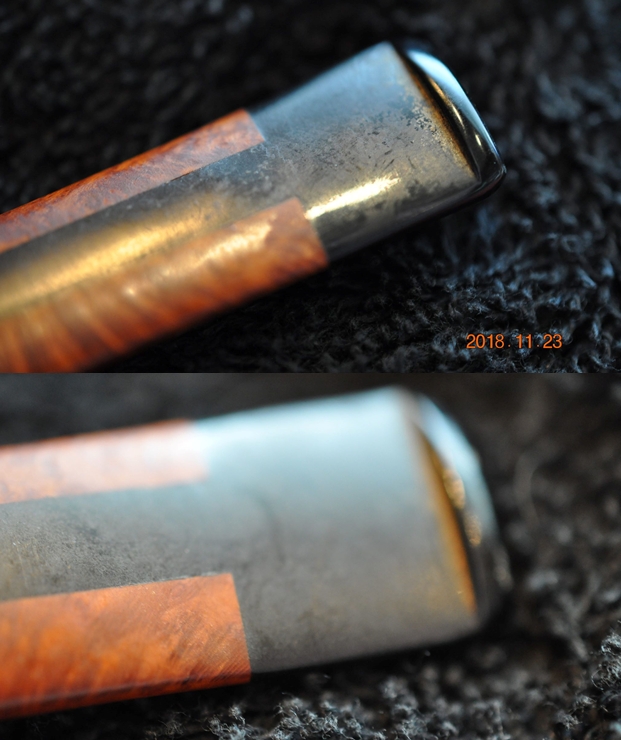
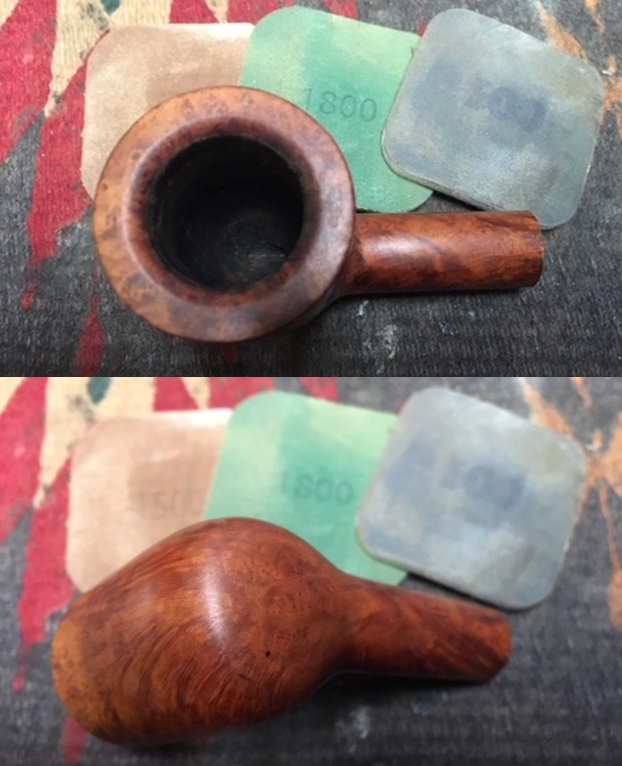
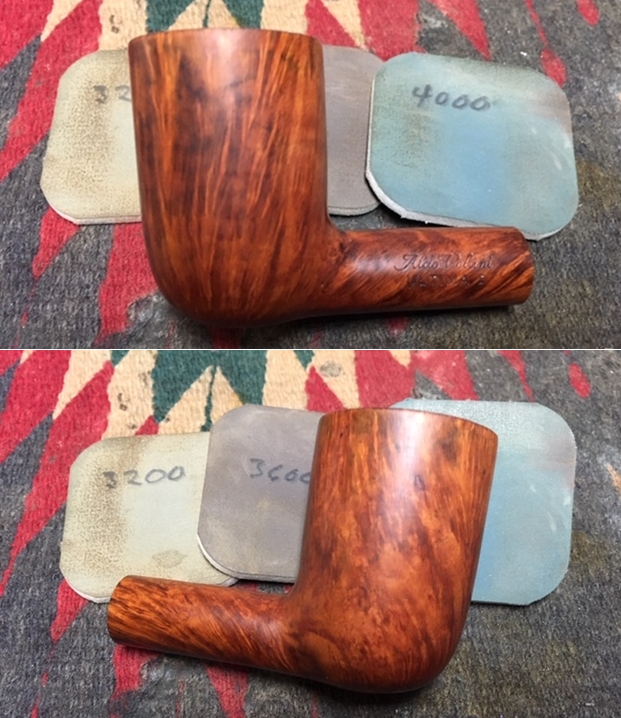
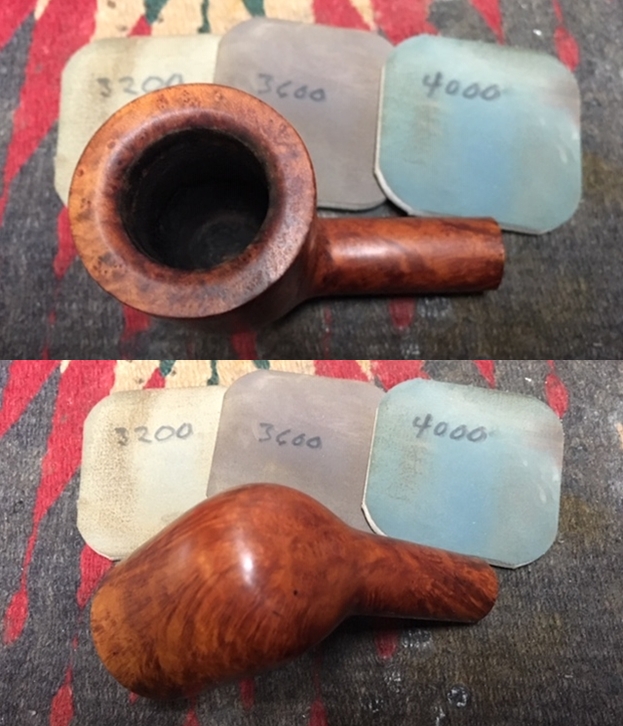
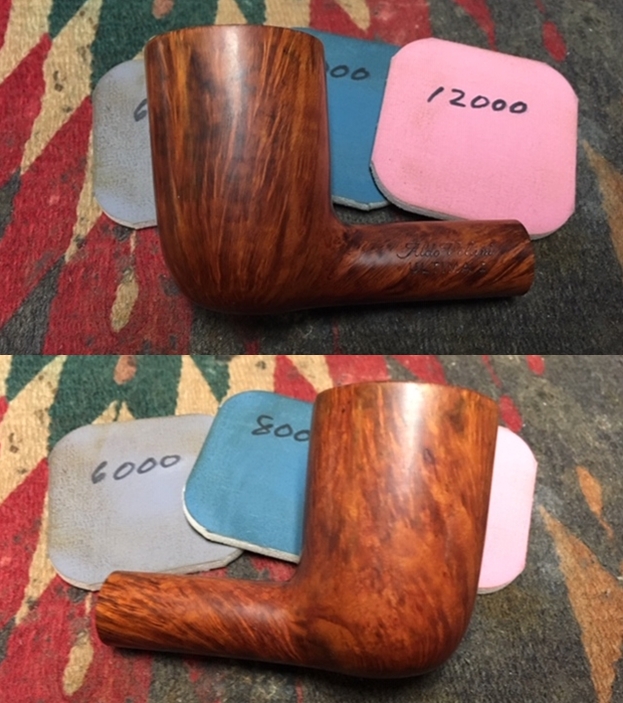
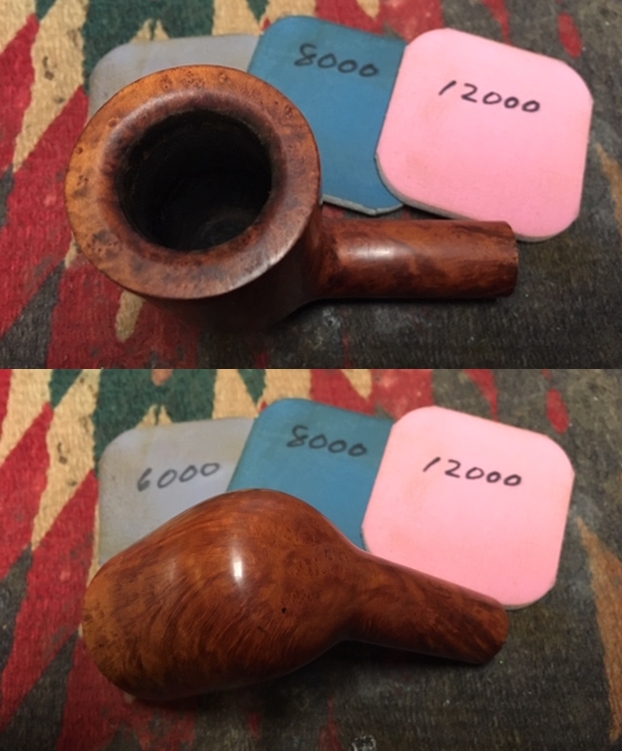
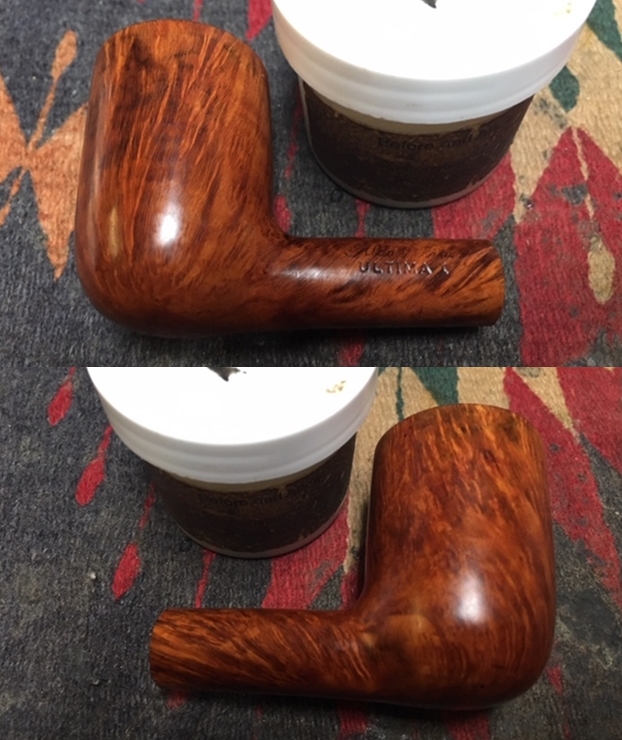
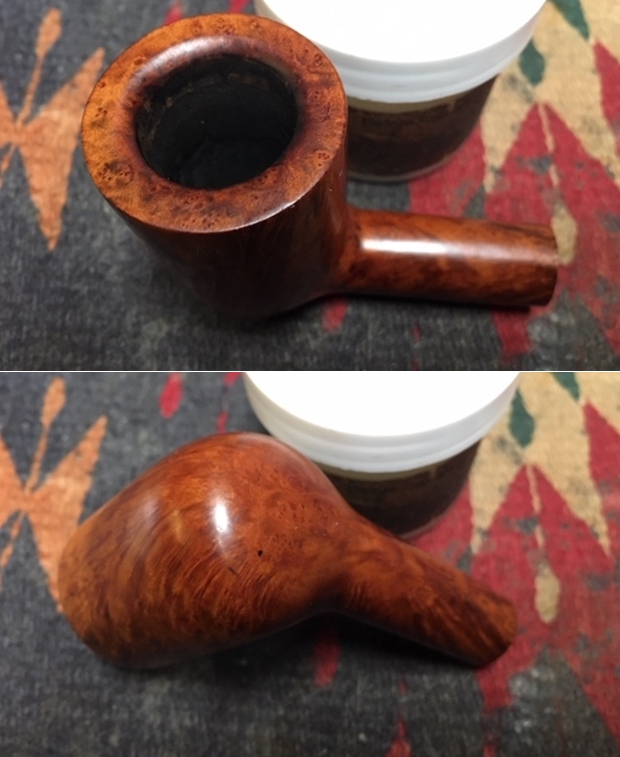
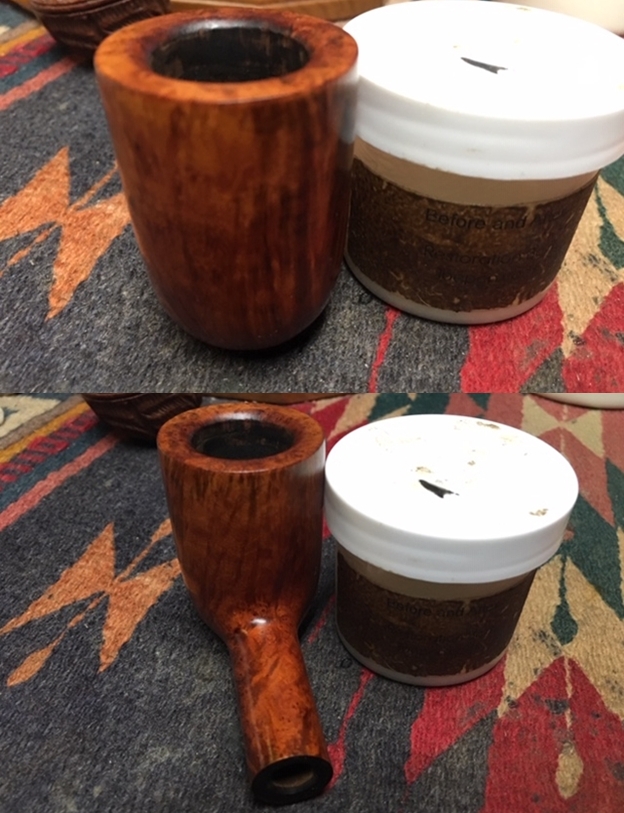
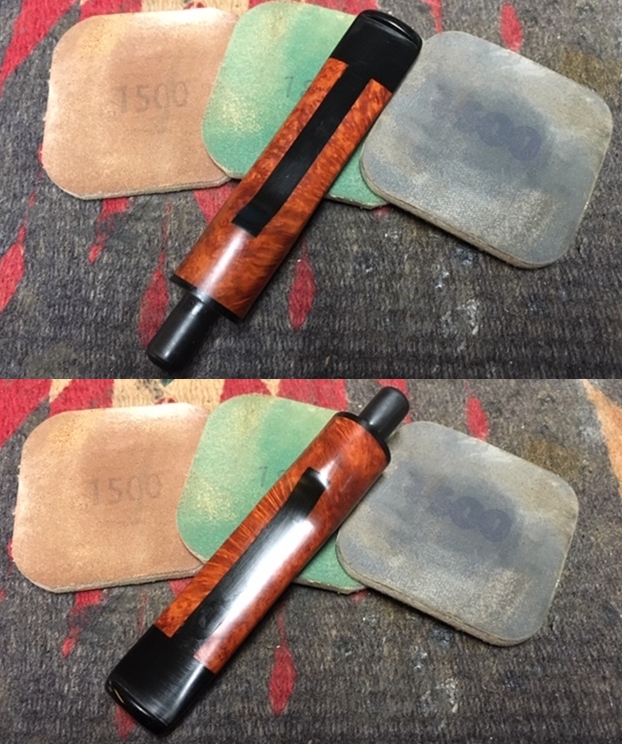
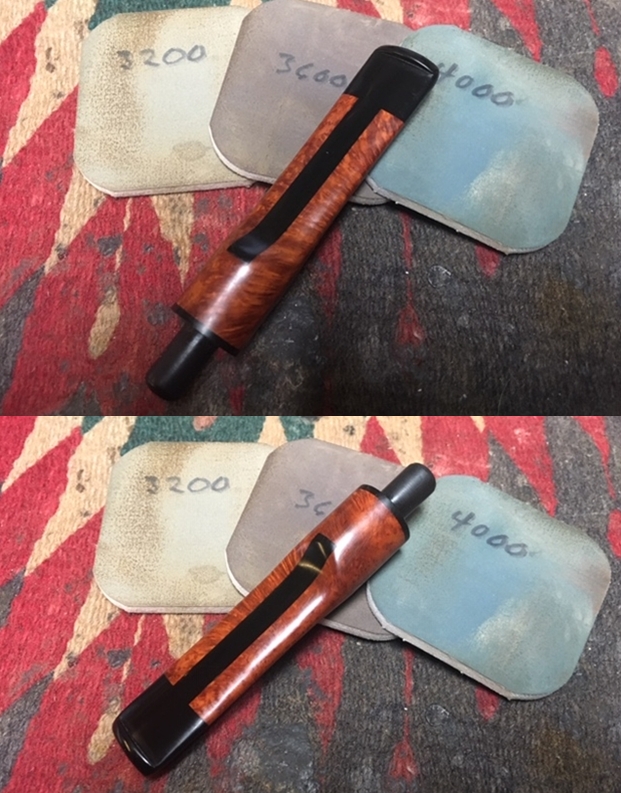
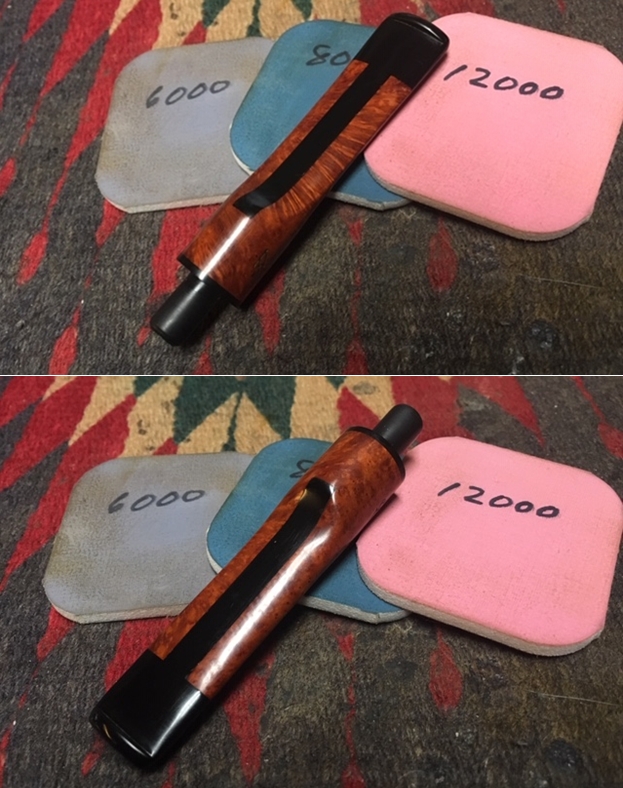
RESTORATION This Super Grain was in amazing condition for a pipe well into its 80s!  The only problems presenting were normal rim char, well-maintained cake buildup and the almost mandatory, for Kaywoodies, mis-clocked stem.  Something told me that might more or less fix itself before the project was complete.I dunked the stem in an OxiClean bath and planned on letting it stay there longer than usual, given that the old Vulcanite was almost solid yellow-green, whatever that color is called.  I also had errands to run.  When I returned home a couple of hours later, I removed the stem from the nasty, dark bathwater, ran a pipe cleaner through the airhole, rinsed and scrubbed it with my thumbs and fingers and dried it off.  A little piece of 320-grit paper made it solid black again.  [I restored this pipe not long ago, but as I noted in my last blog, I had not yet learned how effective going straight to 1000-grit paper can be.  That’s where I’ll start from now on.  This time I lucked out.]I continued work on the stem and started on the rim burn with a soft green Brillo pad that brought out a soft shine on the stem, which may very well be the first one I’ve come across with no scratches that needed removing, much less tooth chatter or even a chink in the lip, top or bottom.  For the rim, the Brillo was a beginning.Finishing the stem with 400-, 600- and 1000-grit papers followed by a full run of micro mesh from 1500-12000, I turned to a piece of super fine “0000” steel wool for the remainder of black on the rim.Again, not being aware of how great a job 1000-grit paper does, I continued work on the rim with 320-grit.  Everything worked out in the end, but really, I had no idea how much extra work I’ve been doing!  In fact, I understand now how bad was the habit into which I had fallen.Smoothing the rim with 400- to 1000-grit papers, and in the process returning the grain to normal since I didn’t use the least abrasive grade in the first place, I finished that stage in anticipation of a spot stain there after micro meshing.  In the meantime, I reamed the chamber and sanded with 150- and 220-grit papers.  That was supposed to be just the start, but the mature and venerable Dublin was so loved and respected by its previous (and, I think, only other) owner that the chamber wall was baby smooth to the touch.I had forgotten the wonderful quality of briar and other woods to reacquire their original hue after being sanded down to a lighter shade and then worked back up with finer and finer grades of paper.  Therefore I was surprised but happy to see the lovely, mottled, somewhat leopard-like spots and blotches on the rim, and the natural shiny dark brown color that matched the whole surface, with the following full micro mesh of the stummel.  The thought occurred to me that when the pipe was first crafted, no stain might have been applied.The only thing left to do was retort the pipe.  This step further revealed that whoever was the guardian of this magnificent specimen of pipehood was also good enough to enjoy it quite often.  Four test tubes full of alcohol had to be boiled through the inner passageways from the lip of the stem to the top of the chamber before it was almost clear.Don’t take this as bragging because I know I had nothing to do with the skill and care that went into the very vintage Kaywoodie’s genesis – all I did was make it show again – but the color and shine of the wood were perfect as-is at that point and, as far as I could see, needed no further help.  And so, I didn’t even buff it on the wheel for the first time in my experience with pipes.  But to return the stem to the same sheen, I buffed it on the electric wheel with White and Red Tripoli. Oh, and I just remembered the other two aspects of the pipe I noted earlier but almost forgot to address, because, as with some other aspects of the restoration, I forgot to snap a shot of one and deleted the other considering its apparent superfluousness.  The stinger that was misaligned at first indeed did correct itself, with a small nudge, or firm but careful twist, rather, from me. And then there was my mention of the almost incredible fact that the Drinkless stem, with its four-holed ball at the end to be inserted into the shank – which ball, by the way, resembles an antique naval mine with its detonator legs removed, or is it just me? – was etched with the word DRINKLESS.   The shot above, enhanced by photo editing software with which I am at last becoming more adept, illustrates both the screwed-up (pun intended) aspect of the stinger and the etching.  Worth mentioning, to me at least, are Pipephil’s details that include such tidbits as these: the original Drinkless patent (No. 213598) had a push-in design that was used from 1924-1931; the updated version with the same patent number became the longer screw-in and is stated as being used from 1929 until as recently as the 1960s, and in 1932 the SynchroStem patent was granted in favor of the Drinkless.  The newer Drinkless stingers also had the words “REG. NO. 213598 etched under the Drinkless designation, although I didn’t look closely enough or take a good enough photo to show it.But – and here is where all the confusion reaches its zenith – Kaywoodie decided to move toward a three-hole stinger at an “indeterminate date.”

Ah, the joys of dating a pipe!  The Super Grain in this blog, however, is a definite match for the period 1935-1938.  I’m beginning to think pipes, like some people, should only be enjoyed, never dated. 😊

CONCLUSION
My dad was an avid pipe smoker until my mother, sister and two step-sisters put an end to that.  I say they did it, but the sad truth I still regret to this day is that I let them drag me into the brouhaha: the incessant reminding him, every time he sat down to relax and light up, of what the ninth U.S. Surgeon General, a well-meaning and for the most part dead-on man by the name of Luther L. Terry, MD, had reported two years after I was born, to wit, that smoking tobacco tends to have “an adverse impact…[on] health worldwide,” and the steady buildup to more snide comments such as the amount of time every use of tobacco deprived people of life (not counting the comments about second-hand smoke).  By the end, the unwarranted and downright cruel attacks on my dad by all of us had escalated to all-out war.  In the end, my dad surrendered and vowed to stop smoking his impressive collection of the beautiful briar works of art and implements of deep contemplation.

In my defense, this was all going down around 1968, when I was a mere lad of six.  But I can still picture the vast assortment of mostly smooth, easy bent billiards he favored, though there were some that were sandblasted also, and even more interesting, longer, straight ones I now understand were Canadians or others of that family.  In my mind I can see them now with such clarity that, given the experience I have had in some of the intervening years, I am positive they were all created by the greatest English makers of those times and these.

In other words, my dad was not keen on American brands the likes of Kaywoodie.  But he was a man whose tastes changed, like most of us, and I suspect that had we left him alone to his peaceful enjoyment of his pipes, his collection would have evolved.  If only we had not badgered him into submission, if only he had stood his ground and just said no, if only we had not grown apart – I might very well have given him this pipe for his last birthday.  And I’m sure he would have lived just as long as the 85 years he lasted before dementia and other non-smoking-related problems took him.

In a letter, Dylan Thomas described his approach to writing this way: “I make one image—though ‘make’ is not the right word; I let, perhaps, an image be ‘made’ emotionally in me and then apply to it what intellectual & critical forces I possess—let it breed another, let that image contradict the first, make, of the third image bred out of the other two together, a fourth contradictory image, and let them all, within my imposed formal limits, conflict.”

That’s my dad, to a tee.  Still, I love him and miss him more now than I did the long years he decided not to communicate with me anymore.  So now, as still another great poet wrote, I sound my barbaric yawp.

He wasn’t big on crying, so I’m going to have to stop here.

SOURCES
https://www.poets.org/poetsorg/poem/my-father-moved-through-dooms-love-0
https://genius.com/Dylan-thomas-do-not-go-gentle-into-that-good-night-annotated
https://www.poetryfoundation.org/poems/45384/the-princess-tears-idle-tears
http://www.pipephil.eu/logos/en/logo-kaywoodie-2.html
https://pipedia.org/wiki/Kaywoodie_Shape_Numbers
https://pipedia.org/index.php?title=Collector%27s_Guide_to_Kaywoodie_Pipes&mobileaction=toggle_view_mobile#1936_Kaywoodie_Shape_Numbers_and_Descriptions
http://www.pipephil.eu/logos/en/infos/kaywoodie-drink.html
http://www.pipephil.eu/logos/en/infos/kaywoodie-synchro.html
http://www.pipephil.eu/logos/en/infos/kaywoodie-3stinger.html

Recommissioning a Hefty Ben Wade Bent Billiard Made in London England


Blog by Dal Stanton

I saw this large Ben Wade Bent Billiard on the eBay auction block a few years ago and secured it with the winning bid.  This was the first time I had acquired a Ben Wade, so my initial thought was to add it to my own collection.  I noticed that Ben Wade stamped pipes usually attracted more than usual bidding attention and so I was looking forward to restoring it and learning more about the name.  In the end, I put him in the For ‘Pipe Dreamers’ Only! section on the Pipe Steward site and this is where Paresh saw it and commissioned it to add to his collection and this benefits the Daughters of Bulgaria.  The Ben Wade, without question, fits the profile of being a ‘hefty’ pipe fitting well in the hand.  Here are some of the pictures that got Paresh’s attention: I take some additional pictures on my work table in Sofia, Bulgaria, looking at the stamping.  On the left shank is ‘Ben Wade’ in cursive script over MADE IN [over] LONDON ENGLAND.  The right shank side has 79 stamped – I’m assuming a shape number. The stem also has a BEN WADE stamp. Pipedia’s article on Ben Wade is interesting and very helpful in explaining the history.  The ‘Family Era” (1860 to 1962) is described as the ‘hay day’ of the British pipe maker:

The company was founded by Benjamin Wade in 1860 in Leeds, Yorkshire, where it was located for over a century. Ben Wade started as a pipe trader, but yet in the 1860’s he established a workshop to produce briar pipes. The pipes were made in very many standard shapes – always extensively classic and “very British”. Many models tended to be of smaller dimensions. Ben Wade offered a very high standard of craftsmanship and quality without any fills. Thus, the pipes were considered to be high grade and a major competitor to other famous English brands.

Along with most pipe manufacturers, the Second World War was a difficult time for Ben Wade.  German air raids destroyed the factory in Leeds, but the Ben Wade Co., quickly rebuilt after the war.  The Pipedia article gives several examples of the Ben Wade based in Leeds nomenclature during the Family Era (courtesy of Doug Valitchka):The ’Family Era’ ended when the business was sold in 1962:

…the owner family decided to leave pipe business and sell off the firm. The family went into negotiations with Herman G. Lane, president of Lane Ltd. in New York at about the same time as the Charatan family. Lane Ltd. bought both firms in 1962. Herman G. Lane had been Charatan’s US sole distributor since 1955 and Charatan always remained his pet child. But Ben Wade was treated in another way by its new owner. The fabrication of pipes was reduced and the factory in Leeds was closed in 1965 finally.  So this was the end of Ben Wade pipes stamped “Made in Leeds, England”.

The ‘Lane Era’ is described as a time when the historic quality of Ben Wade declined to a ‘second’ with reference to the production of standard shapes:

Alas the “new” Ben Wades were quite usual series pipes, copies of well-known standard shapes. The pipes often showed hardly masqued fillings and were processed quite coarsely with hardly polished pre-moulded Ebonite stems. Therewith Ben Wade degenerated definitively to a second brand.

According to the Pipedia article, after the death of Herman G. Lane, the business was sold to Dunhill Pipes Limited in 1978 and the new owner had no need to produce ‘seconds’ coming from the acquisition.  The Ben Wade Bent Billiard on my work table comes from the ‘Lane Era’ produced between 1965 and 1978 matching the nomenclature during this period.  “Made in London England” or just “London” replaced “Leeds” with the characteristic cursive script and ‘Ben Wade’ stem stamp (again courtesy of Doug Valitchka):I had one other question regarding the name ‘Ben Wade’ – the Danish connection? In 1971, the young, Danish pipe maker, Preben Holm, came to Lane with financial difficulties and in need of a new US distributer of his pipes made in Denmark.   The new partnership put the Ben Wade name on the Freehand production coming from the Danish factory into the burgeoning US ‘Freehand’ market with a commitment to quality rather than quantity.  The market grew through the 70s until 1985, when the market for these pipes fell resulting in the downsizing of the factory in 1986 but the production of Danish Ben Wade pipes came to an end in 1989 after the death of Preben Holm.  The Pipedia article concludes by describing the status of the Ben Wade name.  Duncan Briars purchased rights to the Ben Wade name from Dunhill Pipes in 1998 and continues to produce pipes at the same factory where Dunhill pipes are made:

The bowls are carved at the world famous 32 St. Andrews Road, Walthamstowe pipe factory, in London, England. The same factory where Dunhills are made. Every pipe is drilled spot on and exhibits a good blast and all have high quality German Vulcanite mouthpieces. Every pipe is stamped “Ben Wade, Made in London, England”. The craftsmanship and smokability have always been superb.

With a greater appreciation for the Ben Wade name, I take another look at the Ben Wade Bent Billiard on my worktable.  Even though the Pipedia article gave more of a negative view of traditional shapes of Ben Wades produced in the Lane Era, the pipe I’m looking at doesn’t reflect this.  The grain is beautiful, and I see no fills on the surface.  The chamber appears to have been cleaned and the briar surface is clean as well showing normal nicks and scratches.  The stem does have some minor oxidation and tooth dents on the button.  I also detect that there is a gap between the shank and stem – I’ll see if cleaning might correct this.  I take some close ups of these issues. To begin the cleanup of the Ben Wade, I run a pipe cleaner dipped in isopropyl 95% through the stem.  Then, along with other pipes in the queue, I put the stem in a soak of Before & After Deoxidizer to remove the oxidation.  After a few hours, I remove the stem and wipe off the raised oxidation using cotton pads and light paraffin oil – mineral oil.  I also run another pipe cleaner through the airway to remove Deoxidizer. Turning to the stummel, I remove the very light cake in the chamber. With the chamber so large, I jump to the largest blade head from the Pipnet Reaming kit.  I follow this by using the Savinelli Fitsall Pipe Tool and scraping the chamber walls further.  I finish by sanding the chamber wall using 240 grit paper wrapped around a Sharpie Pen.  To remove the carbon dust residue, I wipe the chamber with a cotton pad wetted with isopropyl 95%.  The pictures show the progress. One of the purposes of removing the old cake to bring the chamber down to the briar, is not only for a fresh start.  When the carbon is removed the chamber can be inspected for problems usually pertaining to heat fissures and potential burn throughs.  Inspecting the Ben Wade, I detect on the forward part of the chamber a sloping indentation that is a little to pronounced to ignore.  Using the Savinelli Fitsall Tool again, I scrape carbon out of the indentation to make sure I’m getting down to the briar.  This reveals the full extent of the abnormal burning.  I take pictures to show what I see, but the picture doesn’t do too well.  Changing the aperture, the picture is lightened, and I outline the perimeter of the indentation in the final picture below.  I need to address this budding burn through later after cleaning the stummel.  Next, I clean the external stummel surface using undiluted Murphy’s Oil Soap and a cotton pad.  The stummel cleans up well but reveals a tired, lackluster, thin finish. I then clean the internals of the stummel using cotton buds and pipe cleaners dipped in isopropyl 95%.  The grunge is thick, so I also employ a dental spatula to scrape the mortise walls as well as a drill bit to hand turn down the airway to excavate the old tars and oils.  To save on pipe cleaners I also utilize a long shank brush to scrub the airway.  Eventually, the tide begins to turn, and the buds and pipe cleaners are emerging less soiled.   I take a picture of the tools I use.To continue cleaning the internals, I use a kosher salt and alcohol soak.  I like to do this additional step in cleaning to further clean the tars and oils out of the internal briar and to freshen the pipe.  I use kosher salt because it doesn’t leave an aftertaste.  I stretch and twist a cotton ball to form a wick that I then insert down the mortise and airway pushing it with a straight, stiff wire.  I then fill the bowl with kosher salt and place the stummel in an egg crate to keep it stable.  With a large eyedropper, I fill the bowl with isopropyl 95% until it surfaces over the salt.  I put the stummel aside to soak for several hours.Again, I look closely at the stem that had already soaked in the Before & After Deoxidizer and I see that there remains deeper oxidation.  Instead of going directly to sanding out the oxidation, I decide to put the stem in the OxiClean bath to let it soak overnight – to see if more oxidation would be raised.  I put a small bit of petroleum jelly over the Ben Wade stem stamping and I put the stem in the OxiClean and turned out the lights.  Another day is finished.The next morning the soak had done the job. After tossing the expended salt in the waste, I wipe the chamber with paper towel and blow through the mortise to clear any residual salt crystals. I also use a long shank brush down the mortise.  To make sure the internals are clean, I finish by using a cotton bud and pipe cleaner dipped in isopropyl 95% down the mortise and airway.  They come out clean.Next, I fish the stem out of the OxiClean where it has been soaking through the night.  More oxidation has surfaced.  I begin sanding the entire stem using 240 grit paper careful to protect the Ben Wade stamping and shouldering the stem.  I focus on the bit area removing the minor tooth chatter.  Using a flat needle file, I freshen the button edges.  I follow by wet sanding with 600 grit paper and then 0000 steel wool.  The oxidation appears to be removed for the larger part except for some around the Ben Wade stamping which I won’t sand for the sake of preserving the stamp. Taking it one step further, using Before & After Fine and Extra Fine Polish, I rub each into the vulcanite in succession.  Putting some on my finger, I work the polishes into the vulcanite and let the stem sit for a time to absorb the polish.  The polishes are advertised not only to revitalize vulcanite but also to continue to remove the oxidation.  After each polish is absorbed, I then wipe the stem down with a cotton pad.  The pictures show the progress.Putting the stem aside for now, I work on the budding burn through in the chamber.  Previously, I dug out any remaining charring in the indentation.  To make sure the area is fully clear, I sand the area again and wiped the chamber with a cotton pad wetted with isopropyl 95% to clean the chamber.  As far as chamber burn throughs go, this one is minimal.  It has not progressed far and the size and the thickness of the bowl means that there was never any imminent danger.  Yet, for the long-term view and use of this beautiful Ben Wade Bent Billiard, I repair the problem where it is before it grows and becomes a worse problem.  I mix a small batch of J-B Kwik Weld on an index card.  After combining the two components, ‘Steel’ and ‘Hardener’, I have about 4 minutes to apply the mixture before it starts setting. I use a flat dental spatula as a trowel and apply the J-B Weld to the indentation in the chamber.  I put the stummel aside to allow the J-B Weld to thoroughly cure. After it cures, I use a sanding drum mounted on the Dremel to sand the excess.  I follow this using the Sharpie Pen wrapped with 240 grit paper to leave the chamber smooth and shaped. I’m pleased with the results and glad I went the extra mile to arrest the potential burn through.  Later, I’ll apply a coat of activated charcoal and sour cream mixture to the chamber wall to improve the aesthetics and to aid formation of a new protective cake. Before continuing, I reunite the stem and stummel to examine the shank junction.  Earlier I saw a gap between the shank and the stem.  Often, after cleaning these problems are resolved.  I find that this indeed was the case as the stem is now seated as it should be.  Pictures are before and after.With the stem now properly seating, I turn again to the stem and using micromesh pads 1500 to 2400 I wet sand the stem.  Following this, I dry sand using pads 3200 to 4000 and 6000 to 12000.  Following each set of three pads, I apply a coat of Obsidian Oil to revitalize the stem.  I love the glassy pop of a micromeshed stem! Turning now to the external surface of the stummel, I take a closer look at the condition of the briar.  I identify some very small fills which are solid except for one, which is pitted.  Along with normal dents and scratches from wear, there is a small skin mark on the forward outer lip of the rim.  For the pitted fill, I dig out more of the old fill with a sharp dental probe.  Since I will put clear CA glue on the pitted fill, I color the fill with a walnut dye stick to aid in blending.  I then spot drop CA glue on the area and set the stummel aside allowing the glue to cure. After a full work day, the CA glue patch I applied this morning is fully cured.  I remove the CA glue mound starting with a flat needle file.  The key is to stay on the mound and gradually bring it down close to the briar surface.  I don’t want to impact any surrounding briar.  I follow the filing by using a tightly rolled piece of 240 grit paper to bring the glue down until it’s flush with the briar surface.  My rule of thumb is to sand until I can feel no roughness.  The patch looks good – blending well with the briar.To address the rim nicks, I decide to give the rim a very light topping.  Using a chopping board as my topping board, I place a sheet of 240 grade paper on the board.  Inverting the stummel, I rotate the stummel a few times on the board to freshen the rim lines and remove the nicks.  I follow with a few rotations on 600 grade paper.  The pictures show the progress. Next, to address the briar surface, I use in succession rough, medium and light grade sanding sponges to work out the cuts and nicks in preparation for the micromesh pads.  I find that using sanding sponges on smooth briars helps clean the surface of the old, tired finish without being greatly invasive.  The sponges also smooth and soften the rim lines after the topping.  I enjoy watching the grain begin to take center stage through the process.Next, using micromesh pads 1500 to 2400 I wet sand the stummel.  I follow by dry sanding with pads 3200 to 4000 and 6000 to 12000.  I forgot to take a picture of the first set of 3 pads.  The grain is coming through nicely. Rejoining stem and stummel, I mount a 1-inch cotton cloth buffing wheel to the Dremel set at about 40% full power and apply Blue Diamond compound to the entire pipe.Before applying carnauba wax to the stem and stummel, I need to touch up the Ben Wade stem stamping with the hope there’s enough tread left in the ‘Wade’ portion of the stamp to hold the paint.  Using white acrylic paint, I apply paint over the stamping and sponge off the excess while still wet and allow the paint to dry. After dry, I gently scrape the excess with the flat edge of a toothpick.  I’m less than satisfied.  I try reapplying more paint and wiping while still wet.  After working with it for some time, I’ve come to the best I can do.  The ‘Wade’ part of the stamping simply does not have enough depth left to fully hold paint.  The picture shows my less than hoped for results. One more project to finish before the final waxing.  After completing the chamber repair using J-B Weld and sanding, to aid the aesthetics and to provide a starter layer for developing a protective cake, I mix together sour cream or natural yogurt with activated charcoal to form an application to cover the walls of the chamber.  When I first heard about this mixture from Steve on rebornpipes, I was a bit doubtful then, but no longer.  I have used this application many times and after applying and drying, the result is a very sturdy layer.  After the pipe goes into service, the only caution is when cleaning out the bowl after use do not scrape the chamber with a pipe tool.  I simply use a folded bristled pipe cleaner to scrape the wall after dumping the ash.  This has worked well for me.  I place a pipe cleaner in the draft hole to keep the airway open.  Here in Bulgaria, yogurt is very plentiful, so I scoop some natural yogurt in a small bowl and add some activated charcoal powder and mix it.  After it mixes and thickens enough so it won’t be runny, I trowel the mixture into the chamber with a pipe nail tool and spread it evenly.  After it’s distributed well, I set the stummel aside for a time to allow the charcoal/yogurt mixture to cure. After the Charcoal/Yogurt coating sets, I reunite stem and stummel.  Using the Dremel, I mount another cotton cloth wheel, leaving the speed at about 40% and apply carnauba wax.  After a few coats of wax, I give the pipe a rigorous hand buffing with a microfiber cloth to raise the shine.

This hefty Ben Wade Made in London England Bent Billiard turned out very well.  The horizontal grain on the huge stummel flows in a striking picture and is joined by large bird’s eye pools. The bowl rests very nicely in the palm and will provide its new steward with much enjoyment. Paresh commissioned this Ben Wade and will have the first opportunity to acquire it from The Pipe Steward Store.  This pipe benefits the Daughters of Bulgaria – helping women and girls who have been trafficked and sexually exploited.  Thanks for joining me!


Love at First Sight for a Comoy’s Claridge Easy-Bent Billiard


Blog by Robert M. Boughton

Copyright © Reborn Pipes and the Author except as cited
https://www.roadrunnerpipes2k.com/
https://www.facebook.com/roadrunnerpipes/

Something in the way she moves
Attracts me like no other lover
Something in the way she woos me
I don’t want to leave her now
You know I believe and how

— “Something,” by George Harrison, The Beatles, 1969

INTRODUCTION
Mark Oberman is one of the best men I’ve ever known, a man of true faith who walks the way he talks, in a calm, quiet search for his own meaning and place in the world.  He works as a private psychologist in the community and for the local police department’s crisis intervention unit, meaning he puts his life on the line to help desperate folks avoid doing things that might harm themselves or others, but he never talks about that unless there’s a need.  I only found out not long ago, eight years after we met, when someone I know well had been a subject of what police call constant involvement for violent psychological behavior during the previous year and was upgraded to an official investigation.  Mark has helped me under far less serious scenarios, and I consider him to be a good friend.  I’ll have to tell him that sometime.

Mark signaled me, near the end of our monthly pipe club meeting last week, that he wanted a word in private.  Curious, I stepped aside with him, and noticed he appeared uncertain how to get to the point.  I could sense his mind grasping for the right words, and it made me nervous.  At last, he spoke.

“Do you do stem work?” he asked.  I have to say, it was the last thing I expected, and my face might have betrayed me, or maybe my initial silence.  “Could you clean up a few stems and pipes?”

I smiled, knowing full well he didn’t need to ask and not yet understanding where he was going.

“I could do that,” I said.

I think Mark’s hands must have been behind his back, because I was almost startled by the suddenness with which he produced three pipe sleeves that weren’t empty.  Really, he could have been a magician.  We were already whispering when his voice dropped another notch, lest someone else hear his plan.

“I have these three pipes I’d like to donate for the next raffle,” Mark continued before making an inexplicable return to his original question, still avoiding whatever was on his mind.  “Could you clean up the stems, the pipes?”

I knew he wasn’t asking whatever question was most important to him and didn’t get it, and so I responded with my same original answer that, when repeated with a slight twist of emphasis, became ambiguous.

“I could definitely do that.”

This is getting bizarre, I thought, and felt the sudden need to retrieve a Brigham sandblasted pot sitter (#118) as corroboration.  I had restored the stummel and inappropriate three-dot stem with which it came.  The stem should have had only one dot, corresponding with the 100 series of the shape, and also appeared to have been pummeled and lacerated until the top lip was weak and the bottom masticated into nothingness. A hole on the bottom gave poignant testimony to its treatment.  I handed the whole thing to Mark, who couldn’t tell where the stem hole and weak lips once were, and it was shiny black again.  [I’m still looking to trade it for a one-dot, BTW.]

Mark just looked at me, his eyes piercing.  It was as though he beamed the thought to me, and I grokked him.

“I’ll be happy to do it,” I said with a grin.  “To give something back to the club for everything it’s done.”

Mark took a deep breath and smiled in relief.  I guess there was something he didn’t know about me, also.

In that night’s raffle, for example, for three tickets at a dollar a piece, I won a nice corncob and a 100-gram bag of some leafy stuff called Spilman Mixture by the E. Hoffman Company.  Mark donated both of them and more.

And that was when I had my first sight of a smooth easy-bent billiard that grabbed my heart on the spot, even though I didn’t yet know it.  I recognized at a glance its obvious British pedigree but was still surprised by the clean, crisp Comoy’s nomenclature on either side of the shank.

Claridge, I learned when I was home with the three pipes and could examine them in good light, is sometimes listed as a Comoy’s second.  I’m not so sure.  After all, parent companies don’t tend to stamp their own names on their children’s pipes, and when they do, it’s more in the way of introducing a special line, as in Bing’s and Clark’s Favorites, each a “Savinelli Product,” but not considered a second.

The Claridge easy-bent billiard #1452 that wooed me as I worked out its small kinks with slow, gentle rubbing and left it radiant and refreshed again has the following nomenclature: on the left shank, COMOY’S above CLARIDGE; on the right, a small F (for fishtail, indicating that was the original stem type) followed by the much larger, famous round mark with MADE over the top, IN snug in the middle, LONDON completing the circle and ENGLAND straight below it, then 1452.

As a final note on the pipe and its line designation, this billiard was named for two people, a man and woman, husband and wife: William and Marianne Claridge of Mayfair, London, who owned a small hotel there in the mid-19th century.  Wishing to expand, they did so in style, buying the five adjacent properties in 1854 and, two years later, opening Claridge’s London.  In a short time, the hotel became “London’s hotel,” according to the first issue of Baedeker Guide.  Today it is still sometimes called the “annex to Buckingham Palace” because of the frequency of royal visits.

RESTORATION Other than the need for minor cleaning, I didn’t notice anything wrong with the Claridge until I took it home and examined it close-up in good light.  That’s when I spotted the small but insidious furrow starting at the top outer right edge of the rim and extending down the side of the bowl. My heart leapt at the sight of the blemish.  I considered ignoring the relative trifle.  After all, I reasoned, Mark only asked me to clean the pipes and stems!  I had made three previous attempts at repairing uneven rims, all of them very grave cases, and two with what I’d call success.  The other was the best I could do under the circumstances.  All of them involved filing to begin, and I knew I would never subject this beauty to such an invasive procedure.  While I pondered the problem I suppose is obvious I couldn’t help tackling, I put the stem in an OxiClean bath.Hoping to get rid of the dent and make the rim more uniform by sanding, I started slow, patient brushing, front to back, left to right and crosswise, using a 150-/180-grit pad.That part took about an hour, but at the end of it I was surprised and pleased with the results thus far.  The chamber needed to be cleared of carbon buildup and smoothed, so I commenced that stage with my Senior Reamer.  I thought it might help equalize the rim diameter a little more, also, and it did.Then I turned to 150-git paper before 220.  Sometimes that will be enough, but this pipe needed to progress almost all the way up from there: 320-, 400-, 600- and 1000-grit papers.  All of that done, I soaked a small piece of paper cloth in alcohol and cleaned the remaining soot and wood powder from the chamber.Seeing what looked like a single scratch on the left side of the bowl, I was afraid I might have to put some paper to it for a spot-sand, and I really wanted to do this job in as minimalist a way as possible.  After all of that gripping and turning of the beautiful piece of bird’s-eye briar in dirty hands, I washed mine in the sink and used a little purified water on a paper towel to clean the outer stummel.I can only assume that what I saw and felt as a scratch was in fact only a tiny piece of detritus transferred to the wood from my hands that had become somewhat grubbier than usual.

At this point, I started going back and forth between the stem and stummel.  Removing the stem from its bath, I rinsed it, stuck a pipe cleaner through the airhole and let it dry.  Thanks to some lessons from my friend Don Gillmore (dba Don Warren, or dwpipes) concerning how to refinish a pipe in dress black, after five years working on pipes the idea occurred to me to see if 1000-grit paper would clear away the leftover white coat of whatever residual substance remains.  And indeed it did.  If anyone can tell me what that stuff is, by the way, please do so! Then I prepped the shank with alcohol-soaked pipe cleaners and a nylon brush before retorting the pipe. Back to the stem, I did a full wet micro mesh progression with my old pads followed by a full dry run with my newer kit.  The difference can be seen even with these cell phone pics.After only about an hour and a half of concerted effort, I was ready to take the stem and stummel to the electric buffer wheels.  For the ebonite, I used red and white Tripoli, and for the briar I chose White Diamond and carnauba. CONCLUSION
As soon as I finished the Claridge, I emailed Mark the photos of the finished pipe and confessed my predicament, that I’d fallen for the lovely, graceful billiard.  The half of my mind that could reason knew Mark and therefore assured me he would accept my plea to sell me the pipe and allow me to donate one of my own to the raffle in its place.  The other half, alas, was louder, and so for the two days before Mark replied all I could do was look at and sometimes hold in my hands and covet the pretty thing.

When at last Mark replied, all he wrote was, “Absolutely it is yours.”  Of course I was more than happy and relieved, and I dashed off a reminder to him to think of a price before the 1st of November, when I would pay him.  I knew it would be a good deal but never expected his answer.

“Here is a fair price: $0.00.  I expect it at the next meeting. 😊”

Now, that’s an offer I can’t refuse.  But I’m still going to donate a pipe to next month’s raffle – and it’s going to be a good one.  I’m also going to keep my eye out for a Claridge fishtail stem with one of these logos, courtesy of Pipephil.


SOURCES
http://www.pipephil.eu/logos/en/logo-comoy.html
https://www.worthpoint.com/worthopedia/savinelli-clarks-favorite-semi-churchwarden-brand
http://www.pipephil.eu/logos/en/logo-savinelli1.html
https://pipedia.org/wiki/Comoy%27s_Shape_Number_Chart
https://www.claridges.co.uk/about-the-hotel/history-heritage/

Breathing New Life into a Spanish Made Seville Brandy


Blog by Steve Laug

This is yet another pipe that I don’t remember where Jeff picked it up. It has a shape and finish that I like to work on. The cratered, almost moon surface type of finish on the shank and bowl are unique and I have only seen them on these Spanish made pipes. Other than being dirty and dusty in all of the craters on the finish the pipe was in decent condition. The rim top had a little bit of lava and darkening but nothing serious. There was a light cake in the bowl that would come out fairly easy. The stem was oxidized with light tooth chatter near the button on both sides. The pipe was stamped on the topside of the oval shank in a smooth panel. It was in great condition and I could read Seville Select over Spain. Jeff took photos of the pipe before he started his cleanup process to show the condition it was in when he found it. He took photos of the pipe from various angles to show the rustication pattern. It really is a unique rustication that has an easily identifiable look to it that says “Spanish” when I see one. The next photo shows the clear and readable stamping on the top of the shank.The stem photos show a lightly oxidized stem with little damage other than light tooth chatter on both the top and undersides.Jeff had scrubbed the exterior of the bowl with a tooth brush Murphy’s Oil soap to work into the rustication pattern and remove all of the dust and grime that had accumulated in the moon crater style rustication. The finish looked dry and tired but the rustication was in very good condition once it had been scrubbed. The rim top looked very good with some minor darkening remaining on the back inner edge of the bowl. He reamed the bowl with a PipNet reamer and cleaned it up with a Savinelli Fitsall Pipe Knife. He cleaned the interior of the mortise and the airway in the shank and the stem with alcohol, cotton swabs and pipe cleaners. The pipe came to me clean and ready to do the restoration. The cleaning had raised more oxidation on the stem. I took some photos of the pipe to show the condition at this point in the process. I took some photos of the rim top to show what it looked like when it arrived. It was almost pristine with little darkening on the beveled edge of the rim. I also took close up photos of the stem to show the oxidation. The stem had some light tooth chatter and marks on the surface near the button. I did not know much about the brand so I did a bit of research on the internet to see if I could ferret out any information. The first spot I turned was the pipephil logos and stampings website (http://www.pipephil.eu/logos/en/logo-s5.html). There I learned to my surprise that the brand was a line of Mastercraft pipes. The stamping on the shank in the photo above  looks similar to the second and third stamping photo below.I turned to the next site I generally turn to for information – Pipedia to see if there was additional information (https://pipedia.org/wiki/Mastercraft).

It doesn’t appear it was ever a manufacturer and bought pipes from multiple factories — mostly French and English. It survived briefly the post war recovery and then was acquired by Grabow…

United States Tobacco (UST) (Skoal and Copenhagen) bought Grabow in 69′ from the Lavietes family. In 74′ they bought M/C from Bernard Hochstein and moved it into the EXACT facility Grabow occupied. I was named “operations manager” and we were in the basement of a 4 story building in Sparta, NC…

M/C was STRICTLY an importer of pipes and pipe related merchandise. In 74′ when M/C moved from NYC to NC the inventory of finished goods was stored in a facility in Winston Salem, NC. Lentz Moving and Storage. Stacked 10 feet high the inventory covered 180,000 square feet….FINISHED…

I’ll just list a few Manufacturers/names of their inventory. England…Parker/Hardcastle (Dunhll), Orlik. France…Jeantet, Jima, Cherrywoods. Italy…GIGI pipe, Radici, Rossi, Federico Rovera, Santambrogio, Brebbia. Meerschaums from Austria….Strambach. Lighters from Japan….Pouches and accessories from Hong Kong…and the Israeli pipes from Mr. Hochstein’s sons. Trust me…This is only a small sample of the things M/C had, and bought into inventory.

Now the connection. Since M/C and Grabow shared a building, and I was an employee of Grabow we compared notes. Grabow copied a BUNCH of M/C items fully with my help and some skills I had developed…

Now the other way. Grabow to Mastercraft. M/C never really had a source of continuing supply. The foreign manufacturers would make a line for a while and then quit. Never do it again, no matter how well it sold, no matter the demands we put on em’. Grabow gave M/C a source of stability, and a nice profit for both companies. A lot of these you will not have heard of, but maybe….Seville, for M/C all smooth, for Grabow all rustic Hillcrest…. Freehand, For M/C Andersen and (a few Mastersen), for Grabow, Freehand with a DRB tampon. New finishes…New shapes, New bits…..Mastercraft showed Grabow how to use LUCITE for stems… Royalton. Again these are just examples.

I back sourced the above information to the Dr. Grabow group on Tapatalk where Ted who contributed the above information to Pipedia answered a question about the Seville Line of pipes (https://www.tapatalk.com/groups/drgrabows/is-seville-grabow-t5171.html).

Ted is the expert on this…because of the fact that Seville pipes were distributed by Mastercraft during Ted’s tenure there. Mastercraft shared the same building with Grabow in Sparta…and Ted has about a million very interesting stories and recollections from his days there.

Quoting Ted from an earlier post: “Mastercraft started importing Seville from GIGI PIPE in Varese in the late 70’s or early 80’s. The Seville became one of the most popular pipes M/C sold. They came in several versions, Regular, Filter, Convertible, and Lucite. They were so popular that Grabow started making some for M/C. This gave M/C a steady source of supply, and allowed Grabow to make some fancier shapes for their regular lines. I think Grabow was making most all of them by the mid 80’s.”

I believe the Sparta-made Sevilles would NOT say ‘Italy’ on them…as those stamped Italy would have been made by GIGI.  Ted can verify that. Ted has also confirmed that a few of the Seville shapes were added to the Hillcrest line. A couple are very close, and 2 or 3 are identical, from what I’ve seen.

I have learned from my internet excursion that the pipe was most likely made in Spain by a pipe maker there. The brand later became a sub-brand or line from the Grabow factory. It is interesting to note in all of the above there is no identification of the pipe maker in Spain and no mention of the brand being made in Spain… ah well yet another mystery of pipe repair and refurbishing.

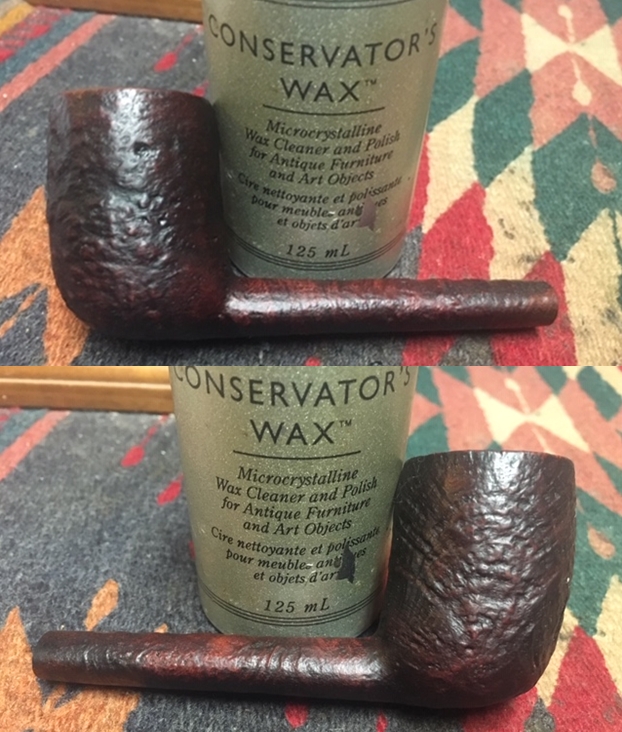
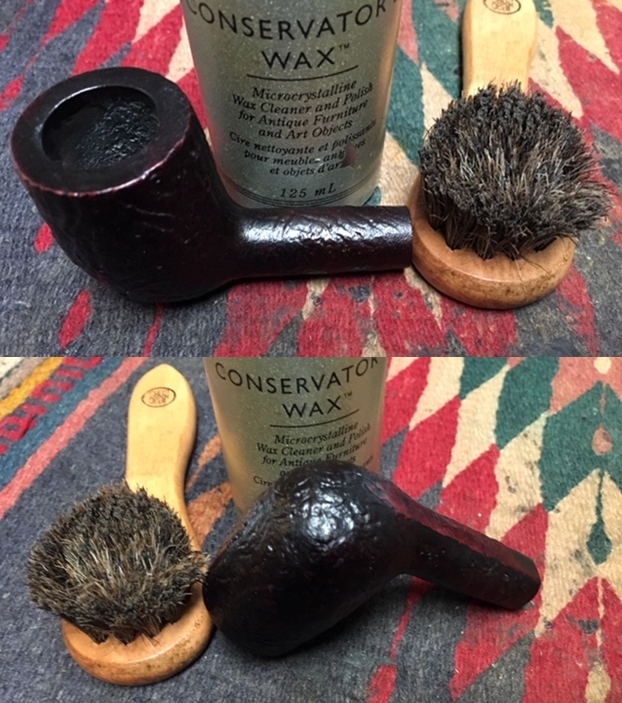
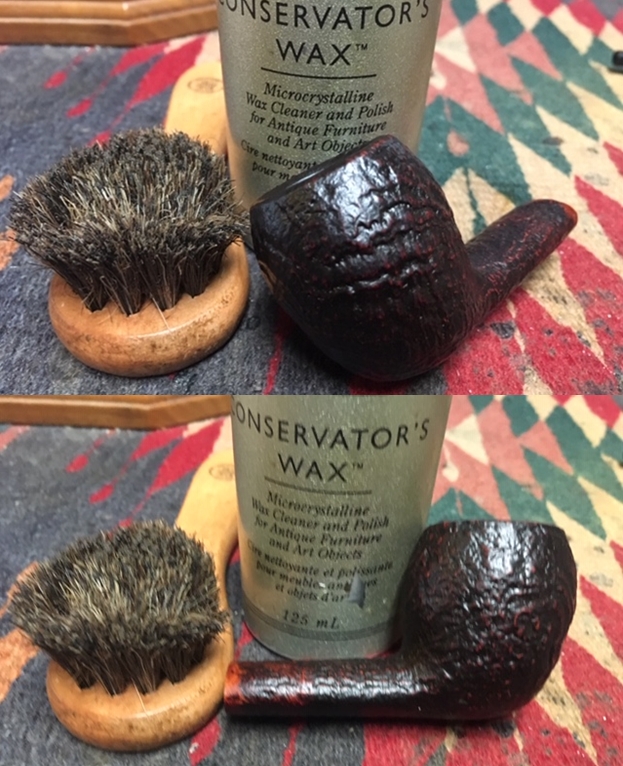
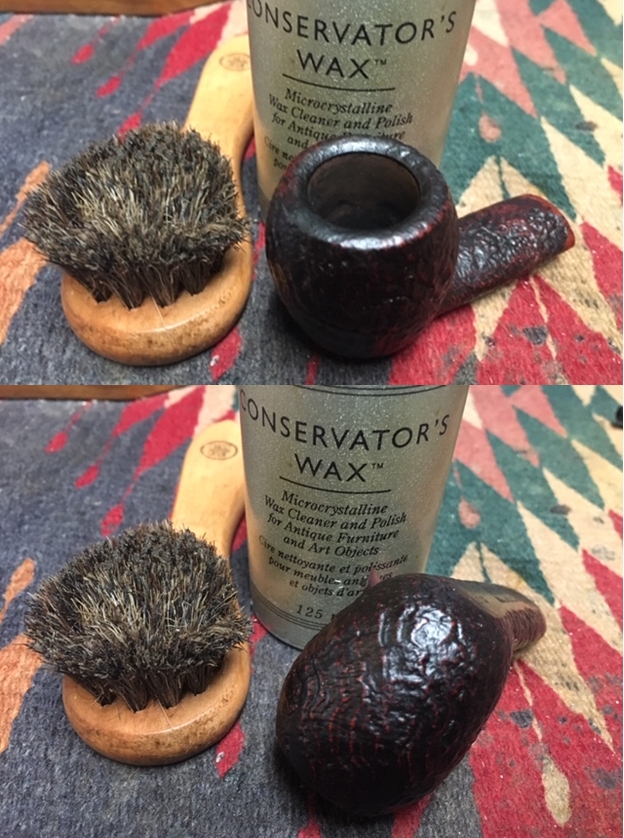
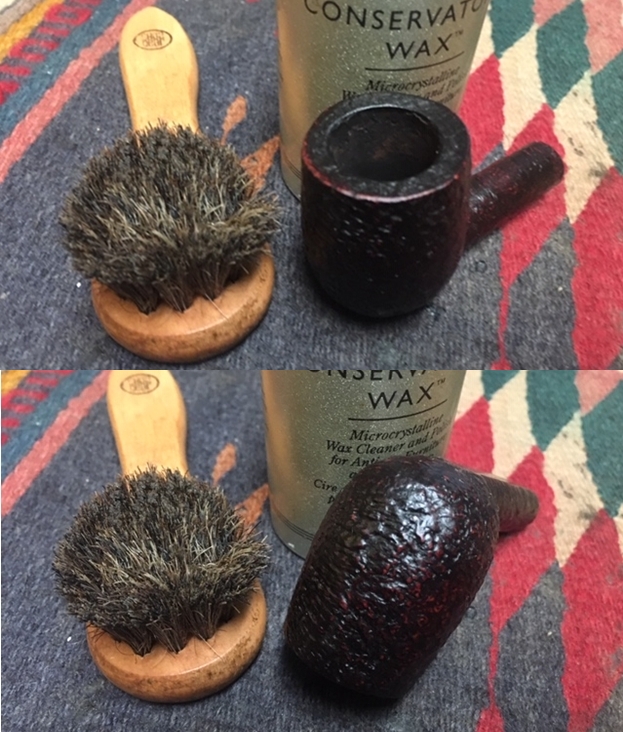
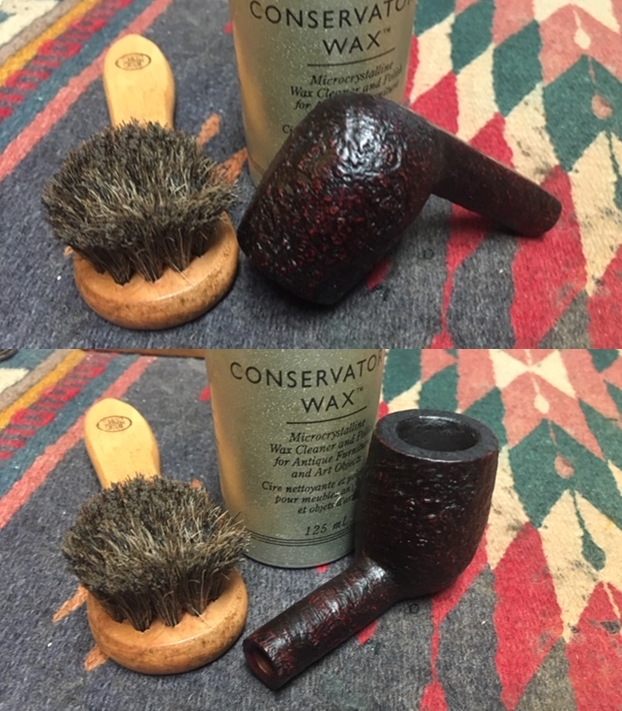
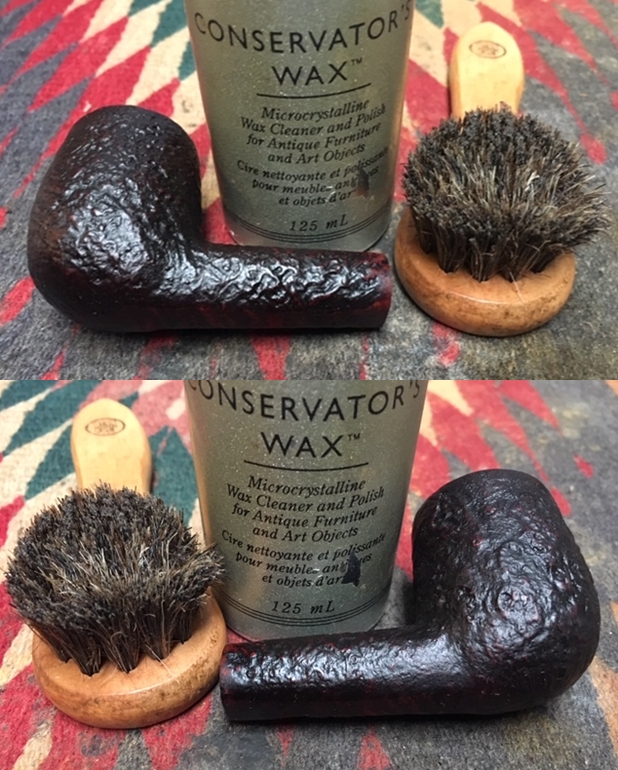
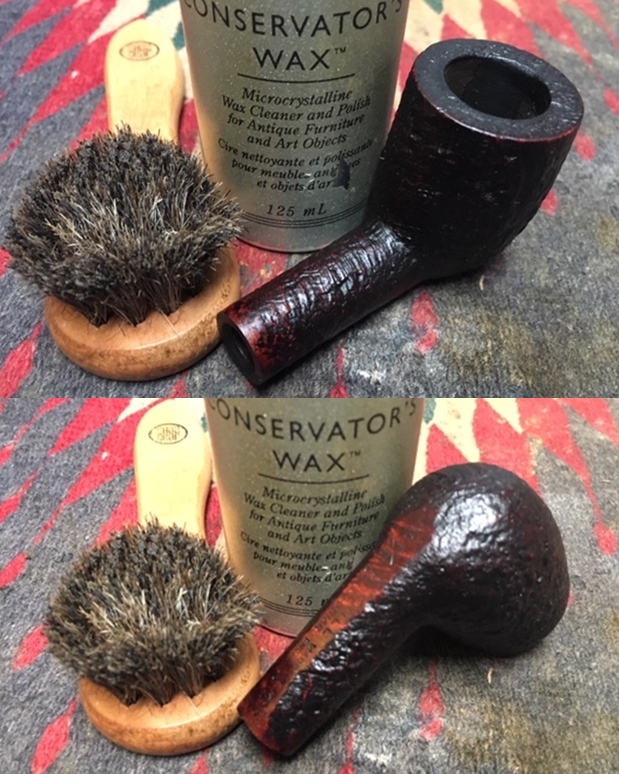
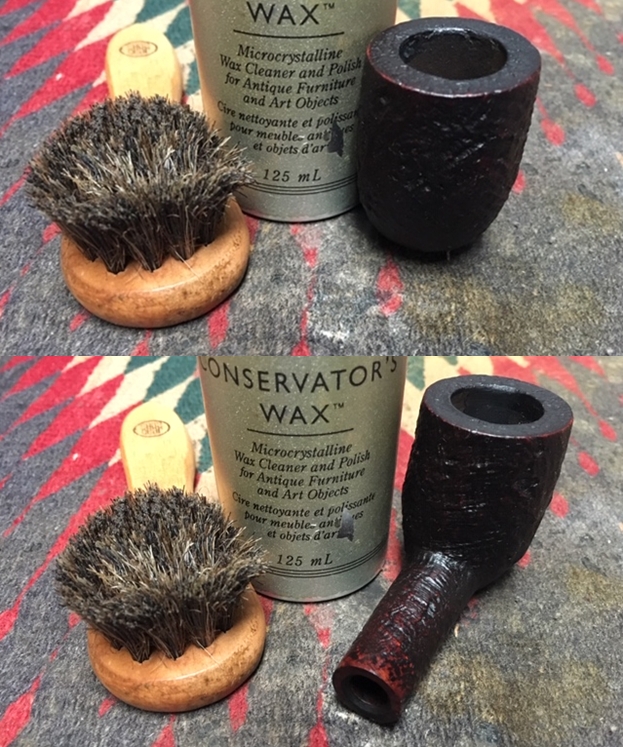
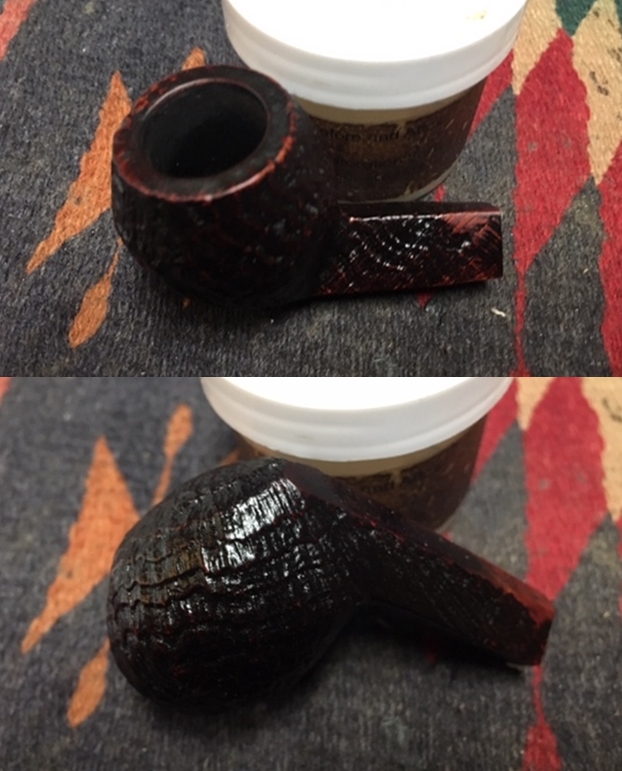
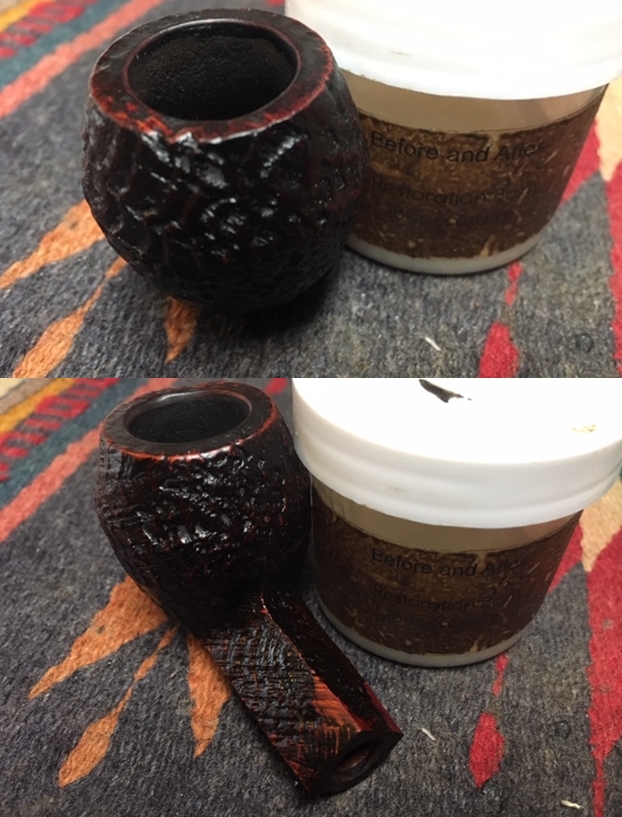
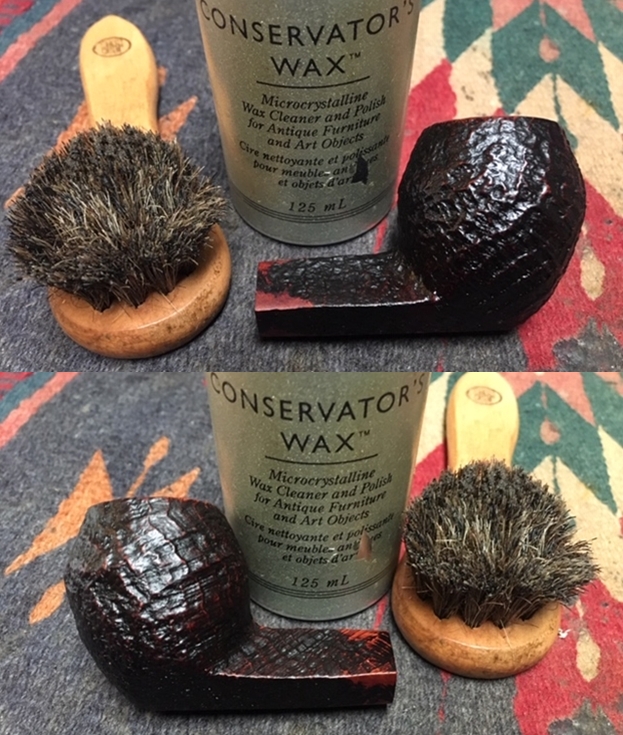
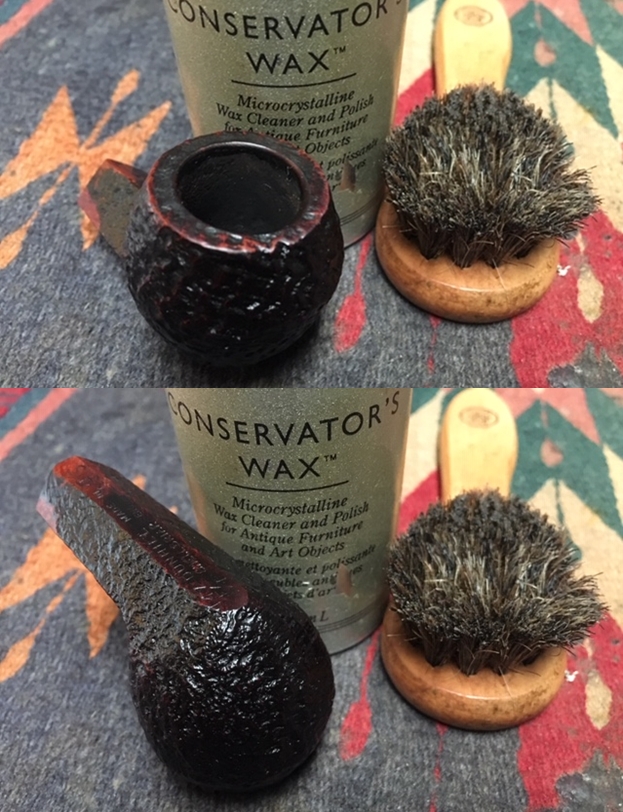
I started my restoration of this pipe by rubbing the bowl down with Before & After Restoration Balm to deep clean the briar bowl and the rim top as well as the briar shank. The product works to clean, enliven and protect the briar. I hand rubbed it with my fingers, working it into the exterior of the pipe. I worked it into the rusticated surface of the briar with a horsehair shoe brush. After it had been sitting for a little while, I buffed it with a soft cloth to polish it. The pipe really began to have a rich shine. I took some photos of the bowl at this point to mark the progress in the restoration. I applied some Conservator’s Wax and worked it into the surface of the rustication with my fingertips. I worked it over with a horsehair shoebrush to further get it into the pits and buff it to a shine. I buffed it with a microfibre cloth to deepen the shine. I had removed the stem when I was working on other pipes and put it, along with two other stems to soak in a Before & After Deoxidizer bath. I left them in the bath for about 4 hours to soak and break through the oxidation. I took the stems out of the bath and rinsed them under running water and scrubbed them dry with a coarse piece of cloth. I took photos of the three stems before I continued my work. I broke up the residual oxidation on the stem surface with 220 grit sandpaper. I worked on it until all the oxidation and the light tooth chatter was removed.I polished the stem with micromesh sanding pads – wet sanding with 1500-2400 grit pads and dry sanding with 3200-12000 grit sanding pads. I wiped the stem down with Obsidian Oil after each pad. I polished it with Before & After Pipe Polish – both Fine and Extra Fine and gave it a final coat of Obsidian Oil. I set the stem aside to dry. I polished stem and the bowl with Blue Diamond polish on the buffing wheel. I gave the bowl multiple coats of Conservator’s Wax and the stem multiple coats of carnauba wax. I buffed the pipe with a clean buffing pad to raise the shine. I hand buffed it with a microfiber cloth to deepen the shine. The pipe polished up pretty nicely. The rustication came alive with the buffing and worked well with the polished black vulcanite stem. Together the pipe looks much better than when I began and has a rich look. The finished pipe is shown in the photos below. The shape, finish and flow of this Spanish Made pipe and stem are very well done. The dimensions are Length: 5 1/4 inches, Height: 1 3/4 inches, Outside diameter of the bowl: 1 3/16 inches, Chamber diameter: 3/4 of an inch. I will be adding this interesting Seville Select Spanish made pipe to the rebornpipes store shortly if you are interested in adding it to your collection and carrying on the trust. Thanks for walking through the restoration with me as I worked over yet another unique and interesting old pipe. I really like the look and feel of this finish.


New Life for a Savinelli Capri Bruna 310 Cherrywood


Blog by Steve Laug

I don’t remember where Jeff picked up this old pipe but it is a shape that I like to work on. It was a mess with lava overflowing a thickly caked bowl and filling in rusticated rim top. The rusticated finish was very dirty and had darkened around the bowl where the hand had held it and where the flame of the lighter had touched the rim in the lighting process. The pipe had a classic Capri Sea Rock style rustication that was very dirty. The stem was a mess with oxidation, calcification near the button and tooth chatter and marks ahead of the button on both sides. The stem was stuck in the oxidized vulcanite shank extension due to the buildup of tars and oils. The pipe was stamped on the underside of the bowl and shank and under a bright light with magnification I could read Savinelli over Capri Bruna on the bottom of the bowl. On the shank it was stamped with the Savinelli S shield and next to that 10 (shape number) over Italy. The pipe was a oldtimer and had seen a lot of use. It was obvious to me that this pipe was some pipeman’s favourite smoker. Jeff took photos of the pipe before he started his cleanup process to show the condition it was in when he found it. The next photos show the stamping on the heel of the bowl and the shank.Jeff had scrubbed the exterior of the bowl with Murphy’s Oil soap and removed the dust and grime that had accumulated in the sea rock style rustication. The finish looked dry and tired but the rustication was in very good condition once it had been scrubbed. He had been able to remove the grime and oils from the sides of the bowl leaving it clean and evenly coloured. The rim top looked much better though some darkening remained in the grooves along the inner edge of the bowl and rim top toward the back. He reamed the bowl with a PipNet reamer and cleaned it up with a Savinelli Fitsall Pipe Knife. He cleaned the interior of the mortise and the airway in the shank and the stem with alcohol, cotton swabs and pipe cleaners. The pipe came to me clean and ready to do the restoration. The stem and shank extension were heavily oxidized. I took some photos of the pipe to show the condition at this point in the process. I took some photos of the rim top to show the darkening to the surface of the rim that I would need to spend some time on. There seemed to be some deeply ground in tars and oils almost filling in the grooves of the rustication on the top surface toward the back of the bowl. I also took close up photos of the stem and vulcanite shank extension to show the oxidation of those areas. The stem had some tooth chatter and marks on the surface near the button. There were some tooth marks in the surface of the top and underside of the button edge.I began my clean up work with the rim top. I scrubbed at the surface of the rim with a brass bristle wire brush and was able to remove much of the lava build up in the rustication. It was still darkened but looked much better.I sanded the oxidation on the shank extension with a folded piece of 220 grit sandpaper to break it down and reveal the black vulcanite underneath the surface. In handling the bowl the briar began to darken from the oils of my hands. The pipe was beginning to show some promise. I polished the vulcanite shank extension with micromesh sanding pads – wet sanding with 1500-2400 grit pads and dry sanding with 3200-12000 grit pads. I wiped the extension down after each pad with Obsidian Oil to enliven the rubber. I polished the vulcanite shank extension with Before & After Pipe Polish – both Fine and Extra Fine to give a deeper shine to the rubber. As I photographed the bowl for the above photos I could see that the rim top needed more attention. I scrubbed the top of the bowl with the brass bristle brush to remove move of the lava on the rim top. The photo shows the cleaner top surface. There is still some darkening on the right side inner edge and the back inner edge of the bowl.I rubbed the bowl down with Before & After Restoration Balm to deep clean the briar bowl and the rim top as well as the briar shank. The product works to clean, enliven and protect the briar. I hand rubbed it with my fingers, working it into the exterior of the pipe. I worked it into the rusticated surface of the briar with a horsehair shoe brush. After it had been sitting for a little while, I buffed it with a soft cloth to polish it. The pipe really began to have a rich shine. I took some photos of the bowl at this point to mark the progress in the restoration. I had removed the stem when I was working on other pipes and put it, along with two other stems to soak in a Before & After Deoxidizer bath. I left them in the bath for about 4 hours to soak and break through the oxidation. I took the stems out of the bath and rinsed them under running water and scrubbed them dry with a coarse piece of cloth. I took photos of the three stems before I continued my work. The military style bit was much cleaner and the oxidation had broken down. I flamed the surface of the vulcanite to minimize the tooth marks. It worked very well. I used some black super glue to build up the top and underside of the button and fill in the remaining tooth mark on the underside of the stem near the button. Once it had cured I filed the edge of the button with a needle file to clean that up and smooth out the sharp edge. There was some residual oxidation on the stem surface so I sanded it out with 220 grit sandpaper. I worked on it until all the oxidation and the light tooth chatter was removed.I polished the stem with micromesh sanding pads – wet sanding with 1500-2400 grit pads and dry sanding with 3200-12000 grit sanding pads. I wiped the stem down with Obsidian Oil after each pad. I polished it with Before & After Pipe Polish – both Fine and Extra Fine and gave it a final coat of Obsidian Oil. I set the stem aside to dry. I polished stem and the bowl with Blue Diamond polish on the buffing wheel. I gave the bowl multiple coats of Conservator’s Wax and the stem multiple coats of carnauba wax. I buffed the pipe with a clean buffing pad to raise the shine. I hand buffed it with a microfiber cloth to deepen the shine. The pipe polished up pretty nicely. The rustication and the vulcanite shank extension came alive with the buffing and work well with the polished black vulcanite stem. Together the pipe looks much better than when I began and has a rich look. The finished pipe is shown in the photos below. The shape, finish and flow of the pipe and stem are very well done. The dimensions are Length: 6 inches, Height: 2 inches, Outside diameter of the bowl: 1 3/8 inches, Chamber diameter: 3/4 of an inch. I will be adding this beautiful Capri Bruna Cherrywood Sitter to the rebornpipes store shortly if you are interested in adding it to your collection and carrying on the trust. Thanks for walking through the restoration with me as I worked over another Savinelli Capri. I really like the look and feel of this finish.

Restoring a Nording “Pick Axe” Freehand Pipe


Blog by Paresh Deshpande

I had just finished restoring a 1940s-1960s Kaywoodie Bent Billiard with a 4 holed stinger, also from my grandfather’s collection. I am always fascinated by “Free Hand” pipes. I feel these freehand shapes let the creativity and imaginations of a carver run riot without the bindings of the exacting demands of a classical shapes and finish.

Over a period of time, I have collected a number of freehand pipes during my not-so-long journey in to the pipe world and have realized that these freehand pipes invariably have a nice hand fit, sitting snugly in to the hands of the smoker with a nice heft to them. The most fascinating aspect of a freehand, I feel, is the carver’s desire to highlight the grains in the briar block and shape the pipe accordingly to highlight these grains.

I was fortunate to come across four estate freehand pipes, one Soren, one Ben Wade Spiral, one Nording #4 and one Nording Pick Axe shaped pipe. I discussed with my mentor and guide, Mr. Steve Laug, and after his approval on the aspects of collectability and the price point at which they were available, I purchased them about a year back!!!! Since then, these were waiting for me to work on and now that I feel slightly more confident in doing justice to these lovely pipes, I decided to work on them. The first of these pipes that is now on my work table is the Nording Pick Axe shaped freehand.

This beautiful pipe has the classical pick-axe shape with a plateau rim top. The stummel has a smooth surface with densely flame grains extending from the mid way on right side and extending mid way on left side while the remaining surface on the stummel has beautiful rustication. The smooth portions extend to the sides such that when held in the palm, all the fingers are holding the stummel along the smooth surface and one can admire the fine delicate rustications on the back while sipping your favorite tobacco. Blissful!!!!!!!!! Similarly, the top surface of the shank is rusticated extending half way through on either side while the bottom is smooth with straight grains extending from the tip of the axe towards the end of the shank.  The only stamping, “NORDING” in block capital letters, is seen on the smooth portion of the shank. The stamping is clear, crisp and easily readable. The fancy stem has a slight bent towards the lip and helps the pipe to balance straight on a table. There is the letter “N” in block capital letter, stamped on the top surface. But it is faint and hidden under the heavy oxidation.I searched the internet for detailed information on Nording pipes and this pipe shape in particular shape. Though I did not find anything particularly about this pipe, it was interesting to read how young Mr. Nording got in to the business of pipe making. It makes for a very interesting read. We must not forget to thank one Mr. Skovbo, who had a major contribution in introducing Mr. Nording in to this business!!!!!!  I have a couple of SON pipes in my grandfather’s collection which I will restore at a later date since I now know about the historical importance of these pipes!!!!!!!!!!! Here is the link for easy reference of those interested: https://pipedia.org/wiki/Nørding 

INITIAL VISUAL INSPECTION
The stummel is covered in dust, oils and grime giving a dull and lackluster appearance to the bowl. The rustications on the back of the stummel are, likewise, filled with dust, dirt and grime. This will need to be thoroughly cleaned. On close scrutiny, I saw some minor superficial dents and dings on the smooth surface. Will I address it or keep it as it is as a characteristic feature of this pipe’s past life? Hell yes, I will address it!!!!! I want it to be as perfect as I can make it for its next innings with me!!!!!! The chamber is clean with a very uneven and thin layer of cake. The plateau rim top is covered with overflow of lava. The inner rim edge is crisp, even and intact. The chamber is odorless and dry to the touch. The inner wall condition of the chamber will be ascertained once the chamber has been completely reamed. However, I foresee no issues at all as the bowl feels solid to the touch.The fancy stem is heavily oxidized with tooth chatter and bite marks on both surfaces and some calcification can be seen towards the lip. There is a significant damage to the lip end in the form of a bite through hole on the upper surface and some deep bite marks on both upper and lower surface of the stem. The airway in the stem is slightly blocked. These issues will have to be addressed. On close observation, the upper surface of the stem bears the stamp “N” in block capital letter. However, this stamp is very faint and covered in thick layer of oxidation. I will attempt to restore and save this stamp.The shank, mortise and the airway is relatively clean and will only need to be sanitized.THE PROCESS
The first step that I usually follow is the reaming of the bowl. However, in this project, since the only significant damage appreciated is to the stem and would be a time consuming process to repair, I started this restoration by addressing the stem first by sanding the stem surface with a 220 grit sand paper followed by 1500 grit micromesh pad. This serves two purposes. Firstly, it evens out the surface for a fresh fill during stem repairs and secondly, I have experienced that any fill in a stem repair turns distinctly brown after micromesh sanding if the oxidation from the stem surface was not removed prior to the application of the fill. Once I was through with the sanding, I wiped the stem clean with cotton pad dipped in isopropyl alcohol. This was followed by flaming both the surfaces of the stem with a Bic lighter, concentrating more around the hole on the upper surface and the deeper bite marks on the lower surface. This helps in raising all the tooth chatter and dents to the surface.I inserted a pipe cleaner coated with Vaseline in to the stem airway before applying the fill. This helps in preventing the fill from entering and blocking the airway. I prepared a mixture of superglue and activated charcoal and applied it as evenly as possible over the hole and deep bite marks and set it aside to cure for 48 hours since the climate here is very wet and humid. While the glue was curing, I worked on the stummel, reaming out the cake with a Kleen Reem reamer, followed by a pipe reaming knife that I had fabricated. I brought the cake down to the bare briar. To further remove any traces of old cake and smooth the inner walls of the chamber, I sanded the inner wall surface with a 220 grit sand paper. As observed during initial visual inspection, I had decided to remove all the dents and dings in the stummel. I cleaned the stummel with Murphy’s oil soap, paying special attention to the plateau rim which was scrubbed with 000 grade steel wool to remove all the overflow of lava. Thereafter I sanded the smooth surfaces of the bowl with a 220 grit sand paper. Once all the dings and dents were evened out and the surface made smooth, this was followed by micromesh polishing pads, wet sanding with 1500 to 2400 grit pads. Again, I wiped the bowl with a moist cotton cloth after each pad. Thankfully there were no fills in the stummel. Once I was through with the wet sanding pads, I used the 3200 to 12000 grit pads to dry sand the stummel to a nice shine. I set the stummel aside to let it dry out naturally. I rubbed some “Before and After Restoration” balm deeply in to the stummel with my fingers. This balm helps in rejuvenating and protecting the briar wood. The immediate and incredible transformation that takes place is a worthy reward for all the efforts!!! The mixed grain can now be clearly appreciated. I let the balm be absorbed by the briar for about 15-20 minutes and then polished it with a soft cotton cloth. The bowl now looks fresh and attractive with the grains popping out any which way you look at the briar. Turning my attention to the stem, using a flat head needle file I sanded out all the fills to match the surface of the stem. I further matched the fills by sanding it with a 220 grit sand paper. I had to spot fill clear superglue into small fills which were exposed during the sanding and repeat the entire process twice. To finish the stem I went through the complete set of micromesh pads, wet sanding with 1500 to 2400 pads and dry sanding with 3200 to 12000 grit pads. I wiped the stem with a cotton swab dipped in alcohol after each pad and rubbed olive oil into the stem after every three pads. The stem looks crisp, shiny and like new. Having addressed the “appearance” aspects of this beauty, I turned my attention to the “performance” aspects to ensure that this beauty smokes as well as it looks. I thoroughly cleaned the shank internals using shank brush, pipe cleaners, qtips and isopropyl alcohol. The stem airway was cleaned using regular pipe cleaners and also bristled ones dipped in alcohol. The airway is now clean and the draw is full and open.To complete the restoration, I rubbed a minute quantity of PARAGON WAX on the smooth stummel and the stem and HALCYON WAX II on the rusticated surface. After a few seconds, using muscle power and a microfiber cloth, I polished the entire pipe to a lovely shine. The finished pipe is shown below. This one shall soon find a place in my rotation. Thank you for your valuable time spent in reading this chronicle of my journey.

Restoring a Nording # 4 Freehand


Blog by Paresh Deshpande

I had purchased four freehand pipes about a year back, and now after having worked on 30 plus pipes, and restored them to acceptable standards, I feel confident of tackling restoration of these pipes. Along the way, I learned a few techniques and honed and practiced my skills in these processes, made a few good friends and acquaintances and most importantly, have been able to preserve and restore memories of my Grand Old Man, which I cherish the most.

This Nording #4 now on my table is a large pipe with beautiful straight grains extending from the base of the bowl to the rim top on left 1/3 portion of the stummel and the rest 2/3 is sandblasted. The rim top curves upwards in 11 ‘O’ clock and 5 ‘O’ clock direction and forms plateau on the rim top. There is a smooth ring of briar on the bowl just below the rim top. The ring is asymmetrical and follows the shape of the rim top. The square shank is rusticated on three sides and smooth on the left side. This smooth surface bears the stamp “NORDING” over “MADE IN DENMARK” followed by a prominent number “4”. The fancy stem bears the stamp “N” in a fancy decorative and cursive hand.I was surfing the net for some additional information on this particular Nording and found that this piece closely resembles the NORDING’S RUSTIC pipe. Here is the link to Nording shapes and finishes on Tobacco Pipes. (https://www.tobaccopipes.com/nording-history/)  

INITIAL VISUAL INSPECTION
The plateau on the rim was dirty with dust and tars in the grooves of the plateau. The grooves of the sandblast were also dusty and dirty. The inside of the bowl appeared to be in good condition under the thin cake. There is an uneven build up of cake with bottom half having more cake as compared to the upper half of the bowl.The rustications on the shank and stummel is also dusty and filled with dirt and grime. The smooth portion of the stummel appears dull and lackluster due to dust and grime coating the stummel. The plateau shank end was also dirty with tars and dirt. Air does not flow freely through the shank and the mortise appears to be clogged. The stem does not seat completely in to the mortise. This will have to be cleaned.The stem is vulcanite and was oxidized and had some calcification on each side of the stem for the first inch ahead of the button. Apparently at some point in its life, it had a rubber Softee bit on the stem to protect it from tooth marks and chatter. It had done its job and there were no tooth marks or chatter on the surface of the stem. The stamping on the stem, though faded and covered under heavy oxidation, is visible and it will be my attempt to restore and highlight it to the extent possible.All in all, this appears to be a simple and straight forward clean up and polishing project, unless some gremlins and demons are unearthed during the process!!!!

THE PROCESS
I reamed the bowl with a Kleen Reem pipe reamer to take the cake back to bare briar. I cleaned up the remnants of cake in the bowl with my fabricated knife. I was careful not to be over zealous using the knife in order to prevent the walls from being gouged. I finished the cleaning of the inside of the bowl with 220 grit sandpaper wrapped around my finger. I turned it in the bowl until the bowl was smooth and clean.I scrubbed the exterior of the bowl with a tooth brush and Murphy’s Oil Soap. I scrubbed the plateau rim top with a brass bristle brush to remove the tars and oil in the grooves. I rinsed the bowl with water in the sink while scrubbing the finish with the tooth brush to remove the dust and grime. I scrubbed out the mortise with a dental spatula. I cleaned the airway in the shank and stem with pipe cleaners, cotton swabs dipped in alcohol. Once the grime was removed the pipe smelled good and looked good.I rubbed some Before & After Restoration Balm into the surface of the briar to enliven, clean and preserve it. I rubbed it in with my fingertips working it into the briar. I worked it into the plateau rim, shank end, smooth portion of the stummel and the sandblast on the sides of the shank and the bowl. I buffed it into the finish with a horsehair shoe brush. I set it aside for a little while to let the balm do its work. I buffed it off with a cotton cloth and a shoe brush. I set the bowl aside and turned my attention to the stem. I flamed the surfaces of the stem with a Bic lighter to raise very minor tooth chatter to the surface as well loosen the oxidation from the stem surface. This was followed by sanding the oxidation and the calcification on the stem with 220 grit sandpaper. I was able to remove the oxidation and the calcification.

I polished the stem using micromesh sanding pads – wet sanding with 1500-2400 grit pads and then dry sanded the stem with 3200-12000 grit pads to further polish it. After each pad I wiped it down with Extra Virgin Olive Oil to protect and enliven the stem. When I finished with the final pad I gave it the stem another coat of oil and set it aside to dry. These fancy stems, though looks fabulous and helps in accentuating overall look and shape of a freehand, are a pain to clean up and remove all the oxidation!!!! I finished this restoration by applying a small quantity of PARAGON Wax on the stem and smooth briar surface and HALCYON II wax on the rusticated surface. I let it set for a few seconds and thereafter polished it with a soft cotton cloth. The finished pipe looks nice and with the shiny black fancy vulcanite stem, the red and dark hues of the pipe are further accentuated. The finished pipe is shown below.

Kathy’s Dad’s Pipes – Beautiful Grained Malaga Bent Billiard


Blog by Steve Laug

The next pipe on the work table is also from George Koch’s estate. It is a Malaga Semi Rusticated Bent Billiard. It has some great grain on the smooth portions and an interesting rustication pattern of spots around the bowl and shank. The rim top was beveled inward and looked very good.  The pipe was another one of many that came to my brother and me in several shipments of pipes from George’s daughter Kathy. When Jeff got each box the pipes were well wrapped and packed. Jeff unwrapped them and took the following photo to give an idea of the volume of the pipes that we purchased. The Malaga came in mixed in a box of pipes much like the one pictured below.In each of the previous blogs that I have written on the restoration of George’s pipes I have told his story. To me it is important to keep the story attached to the pipes that came from his collection. Each pipe I work on I remind myself of the man and in the work give a remembrance to the pipeman who owned these pipes. Having held a large number of his pipes in my hand and having a pretty good feel for the shapes, colour and stems that he liked, I can almost imagine George picking out each pipe in his collection at the Malaga shop in Michigan. He loved Malagas and the majority of his collection was Malaga pipes of various shapes, sizes and finishes. I am including Kathy’s brief bio of her father and a photo of her Dad enjoying his “Malagas”. Here is George’s bio written by his daughter.
Dad was born in 1926 and lived almost all his life in Springfield, Illinois. He was the youngest son of German immigrants and started grade school knowing no English. His father was a coal miner who died when Dad was about seven and his sixteen year old brother quit school to go to work to support the family. There was not much money, but that doesn’t ruin a good childhood, and dad had a good one, working many odd jobs, as a newspaper carrier, at a dairy, and at the newspaper printing press among others.

He learned to fly even before he got his automobile driver’s license and carried his love of flying with him through life, recertifying his license in retirement and getting his instrumental license in his seventies and flying until he was grounded by the FAA in his early eighties due to their strict health requirements. (He was never happy with them about that.) He was in the Army Air Corps during World War II, trained to be a bomber, but the war ended before he was sent overseas. He ended service with them as a photographer and then earned his engineering degree from University of Illinois. He worked for Allis Chalmers manufacturing in Springfield until the early sixties, when he took a job at Massey Ferguson in Detroit, Michigan.

We lived in Livonia, and that’s where his love for Malaga pipes began. After a few years he returned to Allis Chalmers and we moved back to Springfield. I remember that when we went back to Michigan to visit friends, Dad had to go to the Malaga store and acquire a few new pipes. Many a year I wrote to Malaga and they picked out a pipe for me to purchase that I could give Dad for a Christmas or birthday present. He was always pleased. His favorites were the straight stemmed medium sized bowl pipes, but he liked them all. 

He had some other pipes, but the Malagas were his favorites. I remember him smoking them sitting in his easy chair after work, with feet up on the ledge by the fire burning in the fireplace.  Growing up it was my job to clean them and he liked the inner bowl and stem coated with Watkins vanilla, leaving a little of that liquid in the bowl to soak in when I put them back on the rack. Dad quit smoking later in life and so they’ve sat on the racks for many years unattended, a part of his area by his easy chair and fireplace. Dad passed when he was 89 years old and it finally is time for the pipes to move on. I’m very happy they are being restored by you and your brother and hope they find homes who enjoy them as much as Dad did. Thank-you for your care and interest. — Kathy, the oldest daughter

Once again, I want to thank Kathy for providing this beautiful tribute to her Dad. Jeff and I appreciate your trust in allowing us to clean and restore these pipes. We are also trusting that those of you who are reading this might carry on the legacy of her Dad’s pipes as they will be added to the rebornpipes store once they are finished.

The next the pipe is a nicely shaped bent Billiard with a vulcanite stem. It has beautiful grain all around the bowl – birdseye on the sides of the bowl and cross grain on front and the back. The rusticated spots on the sides of the bowl and shank are black and have a tight rustication pattern. The rim top is beveled inward and has rich cross grain in the briar.  The reddish brown stain really looks good with the black spots around the bowl. There was a light cake in the bowl and some lava on the beveled rim top. The stamping on the top side of the shank read MALAGA with a line under it. The black vulcanite stem was deeply oxidized but here were no tooth dents and chatter on the top and the underside near the button. Jeff took these photos before he started the cleanup work on the pipe. Jeff took some photos of the bowl sides and rim to show the condition of the pipe and finish. The bowl really was in good condition other than general dirtiness.The rim top shows some lava build up on the rim toward the front of the bowl. The inside of the bowl has a light cake and shreds of tobacco on the walls of the bowl. The inside of the bowl was dirty.The left side of the shank is clearly stamped with an underlined MALAGA.The stem was oxidized, had some paint spots on it and tooth chatter and worn edges on the button. There were no deep spots so it was clean other thank oxidized. Jeff has picked up quite pipes of this brand over the past year along with the ones from Kathy’s Dad’s estate. All of the pipes were made by the Malaga Pipe Shop in Royal Oak, Michigan in the USA. The more I work on the brand the more I am impressed by the quality of the craftsmanship and beauty of the pipes that came from the shop. I have written an earlier blog to give a little history of the Malaga Brand if you are interested: https://rebornpipes.com/tag/malaga-pipes/. That blog also includes links to a catalogue and the history of the pipemaker George Khoubesser). Follow the link to get a feel for the brand and the pipemaker.
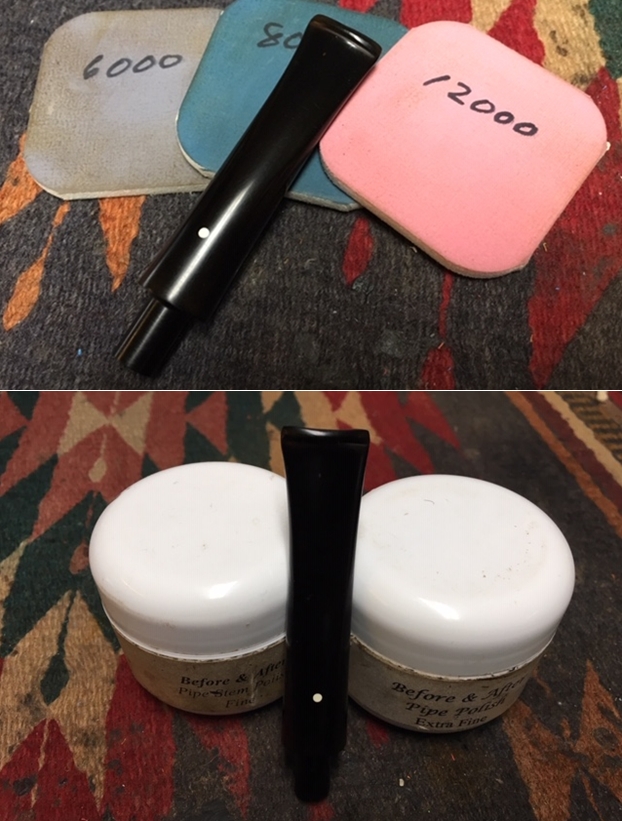
Jeff had reamed the bowl with a PipNet pipe reamer and followed up with a Savinelli Fitsall pipe knife to remove the cake. He scrubbed out the mortise and the airway in the shank and the stem with alcohol, cotton swabs and pipe cleaners. He scrubbed the exterior of the bowl, rim, shank and stem with a tooth brush and Murphy’s Oil Soap to remove the oils and tars on the rim and the grime on the finish of the bowl. He rinsed it under running water. He dried it off with a soft cloth. The rim was thoroughly cleaned and looked virtually undamaged. Without the grime the finish looked really good. The bowl looked very clean and also was unchecked or damaged. The tapered vulcanite stem would need to be worked on but I really like the profile it cast. I took photos of the pipe to show its condition before I started my work on it.  I took a close up photo of the bowl and rim top along with both sides of the stem to show the condition of the pipe after Jeff cleaned it up.I removed the stem and put it, along with two other stems to soak in a Before & After Deoxidizer bath. I left them in the bath for about 4 hours to soak and break through the oxidation. I took the stems out of the bath and rinsed them under running water and scrubbed them dry with a coarse piece of cloth. I took photos of the three stems before I continued my work. There was some residual oxidation on the stem surface so I sanded it out with 220 grit sandpaper. I worked on it until all the oxidation and the light tooth chatter was removed.I polished the stem with micromesh sanding pads – wet sanding with 1500-2400 grit pads and dry sanding with 3200-12000 grit sanding pads. I wiped the stem down with Obsidian Oil after each pad. I polished it with Before & After Pipe Polish – both Fine and Extra Fine and gave it a final coat of Obsidian Oil. I set the stem aside to dry. I rubbed down the briar with Before & After Restoration Balm. I worked it into the smooth surface and the rusticated patches on the briar with my fingertips to clean, enliven and protect it. I let the balm sit for a little while and then buffed with a cotton cloth to raise the shine. The following photos show the bowl at this point in the restoration process. I polished stem and the bowl with Blue Diamond polish on the buffing wheel. I gave the bowl and the stem multiple coats of carnauba wax. I buffed the pipe with a clean buffing pad to raise the shine. I hand buffed it with a microfiber cloth to deepen the shine. The pipe polished up pretty nicely. The grain really came alive in both the rusticated portions and the smooth panels with the buffing and works well with the polished black vulcanite stem. Together the pipe looks much better than when I began and has a rich look. The finished pipe is shown in the photos below. The shape, finish and flow of the pipe and stem are very well done. The dimensions are Length: 5 ¼ inches, Height: 2 1/8 inches, Outside diameter of the bowl: 1 ¼ inches, Chamber diameter: 3/4 of an inch. I will be putting this newly finished Malaga pipe on the rebornpipes store shortly if you are interested in adding it to your collection and carrying on the trust. Thanks for walking through the restoration with me as I worked over another one of Kathy’s Dad’s Pipes.
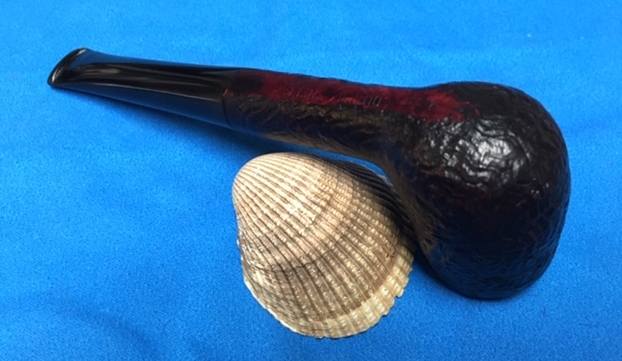
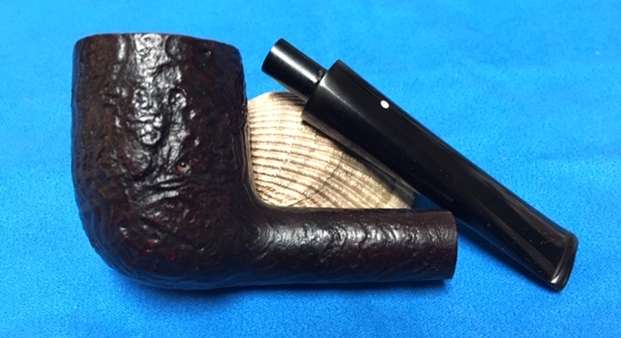
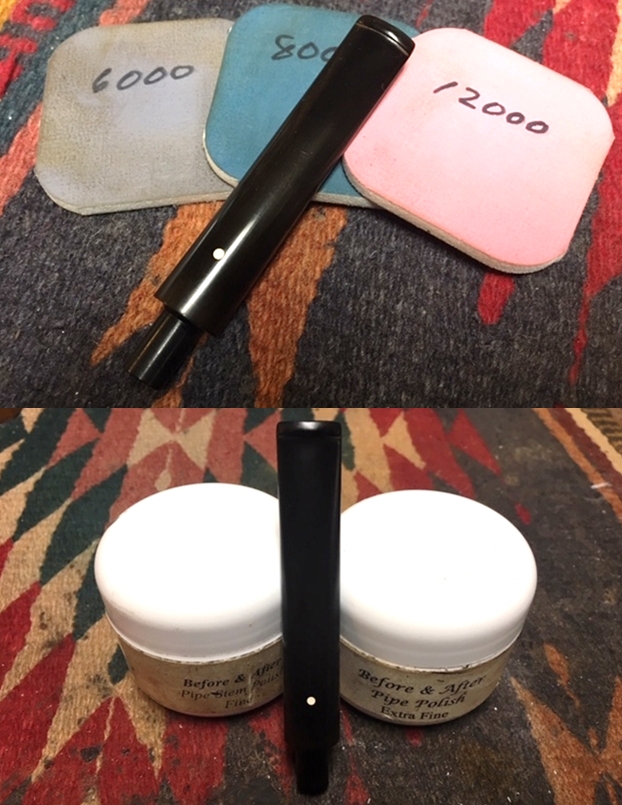
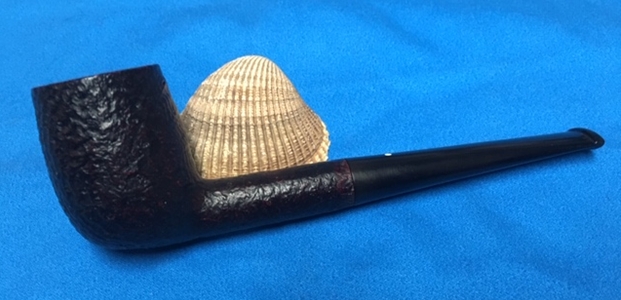
New Life for a Jandrew Free Hand Sitter


Blog by Steve Laug

I don’t remember where this old pipe came from. It was a mess with lava overflowing the large caked bowl and filling in most of the carved plateau rim top. The rusticated finish was very dirty and hard to differentiate the smooth portions from the rustication. It appears that the bowl had been rusticated then a wire wheel had been used to striate the rustication. There were three smooth panels on the sides and front of the bowl and a smooth shank and heel of the bowl. The stem was a mess with oxidation, tooth chatter, deep tooth marks and calcification built up for over an inch of the length of the stem. The stem did not seat well in the shank due to the buildup of tars and oils. It also appeared that the tenon was slightly bent making the stem crooked (bent to the right). The pipe was stamped on the underside of the shank and under a bright light with magnification I could read Jandrew over 2-86. My assumption was that the pipe I was dealing with was a Jandrew (I have worked on other pipes made by this maker) and that it was made in February of 1086. The pipe was at least 32 years old and had seen a lot of use. It was obviously some pipeman’s favourite smoker. There was something about the pipe that captured my attention and made me want to work on it. I took some photos of the pipe before I started my cleanup work. I took some close up photos of the rim top and stem to show the condition they were in before I started. The rim top is heavily caked with lava flowing out of the thick cake in the bowl. It fills in much of the carved rim top leaving me unsure what lies underneath. I have no idea what the inner edge of the rim looks like at this point but it seems likely that it is darkened or maybe burned on the back edge. The stem has tooth marks on the top and underside near the button and on the button surface as well. There is some serious oxidation/calcification on the first inch or more of the stem. The stem fit against the shank is off as you can see from the photos and the tenon appears to be bent making the stem curve to the right side.I took a photo of the stamping to capture it and help identify the pipe. It reads Jandrew over 2-86. It is readable but faint in the middle of the stamp where the slight curve in the shank is located.I looked up the brand on Pipedia and found the following: Jandrew pipes are (or were?) made by J. Andrew Kovacs. He lived in Jerome and Cottonwood, Arizona and is said to have moved to Milwaukee, Wisconsin. https://pipedia.org/wiki/Jandrew

I turned to Pipephil’s site to see if I could gain a bit more information. There was no additional info but there was a photo of a pipe with the same signature and a similar date stamp on the shank. I have included that below for comparison(http://www.pipephil.eu/logos/en/logo-j1.html).I turned to the pipe to begin the cleanup. I dry scrubbed the rim top with a brass bristle brush to break the lava buildup from the crevices. This technique works wonders and the brass is soft enough not to scratch the plateau. I do not use it on smooth rims (not daring enough to give it a try as I am pretty certain it will cause scratching and make more work for myself). The photo below shows the cleaned rim top after the scrubbing.With the top cleaned it was time to ream the bowl. I reamed it with a PipNet pipe reamer using the largest cutting head. The cake was thick and hard. I carefully worked the bowl clean using the reamer. I followed that by scraping out the remaining cake in the bottom of the bowl and along the edges with a Savinelli Fitsall Pipe Knife and took the cake back to bare briar. I wrapped a piece of dowel with 220 grit sandpaper and sanded the inside walls of the bowl to smooth out the walls. With the bowl reamed it was time to scrub the exterior of the bowl. I scrubbed it with Murphy’s Oil Soap, working it into the crevices and nooks and crannies of the rustication with a tooth brush. I rinsed it under running water to remove the soap and the grime. I took photos of the pipe at this point to show the condition after cleaning.I worked some Before & After Restoration Balm into the smooth and rusticated parts of the briar on the bowl and shank with my fingertips to clean, enliven and protect the wood. I worked the balm into the nooks and crannies of the rustication and the carved rim top with a horsehair shoe brush. I let the bowl sit for about 20 minutes and buffed it off with a soft cotton cloth. I took photos of the bowl at this point in the process. The photos show the condition of the bowl at this point in the process. It was looking quite good at this point with some beautiful grain showing through on both the smooth and rusticated portions of the bowl. I scraped the tars and oils from the walls of the mortise with a pen knife. I cleaned the mortise and the airway in the shank with pipe cleaners, cotton swabs and alcohol.During the cleanup of the bowl I had noticed two small hairline cracks in the shank. There was one next to the stamping on the underside about a ½ inch long (first photo) and one on the top side of the shank from the rustication running toward the shank end for ¼ of an inch (second photo). I used a microdrill bit to drill pin holes at each end of the crack to stop it from spreading further on the shank. I was glad to see that under a bright light that the crack did not extend to the end of the shank. The repair would be straightforward.I cleaned out the crack on the top and underside with a dental pick. I filled in the drill holes and the crack on both with clear super glue and set the pipe aside to cure. Once it was cured I sanded it with 220 grit sandpaper and blended it into the finish of the shank. I touched up the stain on the shank with an Oak stain pen to blend it into the rest of the briar.I worked some Conservator’s Wax into the finish of the briar making sure it went deep into the crevices of the carved finish. I let it dry and then buffed it with a shoe brush and with a clean buffing pad. The photos below show the pipe at this point. I set the bowl aside and turned my attention to the stem. I sanded the stem with 220 grit sandpaper to remove the oxidation and the calcification build up. I worked on the tooth chatter and marks to reduce them.I cleaned the surface of the stem with alcohol and dried it off. I filled in the deep tooth marks with clear super glue and set the stem aside to let the glue cure.I sanded out the tooth chatter and marks with 220 grit sandpaper. I wiped down the stem with Obsidian Oil and cleaned out the inside of the airway to get rid of the dust and debris from the sanding. I polished the stem with micromesh sanding pads – wet sanding it with 1500-2400 grit pads and dry sanding with 3200-12000 grit pads. I wiped the stem down with Obsidian Oil after each pad. I polished the bowl with Before & After Pipe Polish – Fine and Extra Fine. I gave it a final coat of Obsidian Oil and set it aside to dry. I polished stem and the bowl with Blue Diamond polish on the buffing wheel. I gave the bowl multiple coats of Conservator’s Wax and the stem multiple coats of carnauba wax. I buffed the pipe with a clean buffing pad to raise the shine. I hand buffed it with a microfiber cloth to deepen the shine. The pipe polished up pretty nicely. The grain really came alive in both the rusticated portions and the smooth panels with the buffing and works well with the polished black vulcanite stem. Together the pipe looks much better than when I began and has a rich look. The finished pipe is shown in the photos below. The shape, finish and flow of the pipe and stem are very well done. The dimensions are Length: 6 inches, Height: 2 1/4 inches, Outside diameter of the bowl: 1 7/8 inches, Chamber diameter: 7/8 of an inch. I will be putting this freehand style pipe on the rebornpipes store shortly if you are interested in adding it to your collection. Thanks for walking through the restoration with me as I worked over this unique Handmade Jandrew pipe.

Revitalizing a GBD Colossus International London Made 1759 London England


Blog by Dal Stanton

This is the second pipe I’ve restored that was commissioned by Paresh.  Like the first, a Tom Howard Jumbo Rustified Squat Tomato, this is a large pipe and the name reflects this – a GBD Colossus International.  It truly is a ‘Colossus’ with a huge stylish stummel that is cut with angles that makes one think of a ‘dinner’ pipe.  With the clear, acrylic stem and canted, sharp angled stummel – and his sheer size, sets this pipe on an upper shelf.  Paresh commissioned the GBD from the For‘Pipe Dreamers’ Only! section and this pipe, along with the Tom Howard, benefit the Daughters of Bulgaria.  Here are the pictures that got Paresh’s attention.The left side of the stummel encases the nomenclature, Colossus (in cursive script) [over] GBD (in oval) [over] INTERNATIONAL [over] LONDON MADE.  A classic brass GBD rondel is embedded in the acrylic stem, placing the dating of the pipe as pre-Cadogan.  On the right shank side is stamped LONDON ENGLAND [over] 1759, the GBD shape number.  I also see a ‘D’ stamped on the lower side of the shank which I have no information on!

Based upon the straight COM LONDON ENGLAND and the brass rondel, this GBD is dated pre-Cadogan which is 1981 and earlier.  In the GBD Pipedia article, this reference places the pipe in the 60s or 70s naming the lines that GBD had during that time.  ‘International’ is nestled in the middle of the list.

The following list comprises the better grades in descending order:

Pedigree, Pedigree I, Pedigree II, Straight Grain, Prodigy, Bronze Velvet, Virgin, Varichrome, Prestige, Jubilee, New Era, Prehistoric, International, Universe, Speciale Standard, Ebony, Tapestry, New Standard, Granitan, Sauvage, Sierra, Penthouse, Legacy, Concorde.

This is confirmed by information sent to me from Al Jones, who knows more than most about GBD pipes.  Al sent me a PDF of Jerry Hannah’s finish guide and one reference for an ‘International’ comes from the 1976 catalog. Unfortunately, I found no listing for a shape number of 1759, but the shape is most definitely at least a 3/4 bent – not sure I would call it a Billiard but the sharp canted stummel reminds one of a Dublin! Looking more at the pipe’s condition, it bears normal scratches and nicks from normal use.  The rim is darkened with some lava flow.  There are a few light fills on the side of the stummel that need to be examined.  The acrylic stem has tooth chatter that needs addressing.  The amber colored airway should clean nicely.  I take some additional shots to show the issues. Starting with the basic cleaning, I ream the chamber of the light cake using the Pipnet Reaming kit revealing fresh briar.  The depth of the chamber becomes evident at almost 2 1/2 inches (2 7/16 to be exact) as it swallows the 3 blade heads I use to clean the carbon cake!  This chamber will pack a good bit of tobacco!  Following the Pipnet blades, I use the Savinelli Fitsall Pipe Tool to fine tune and clean the chamber further reaching the depths.  Finally, I sand the chamber by wrapping 240 grit paper around a Sharpie Pen.  I finish the clean up of the chamber by wiping out the carbon dust using a cotton cloth wetted with isopropyl 95% and inspection of the chamber shows no problems.  The pictures show the progress. To clean the externals, I use undiluted Murphy’s Oil Soap and a cotton pad to scrub the briar and darkened rim. I also use a brass wire brush to work on the rim.  Pictures show before and after.Continuing with the stummel cleaning, I work on the internals with pipe cleaners and cotton buds dipped in isopropyl 95%. I also utilize a shank brush to work through the draft hole as well as a dental spatula to scrape the mortise wall.  The pipe cleaners and cotton buds start coming clean, but later, at the close of my work day, I’ll also utilize a kosher salt and alcohol soak to clean and freshen the internals further.Now, looking at the acrylic stem, it’s difficult to see with the pictures I’ve taken, but the button has some compression dents and the bit is clouded from tooth chatter.   The pictures show the starting point.   I first run a bristled pipe cleaner dipped with isopropyl 95% to clean the airway.Then, using a flat needle file and 240 grit paper I sand the bit and button to work out the tooth marks and compression dents on the button lip.  Following this, to erase the scratches of the filing and 240 grit paper, I sand using 600 grade paper and 0000 grade steel wool. Moving from the steel wool, I wet sand the stem using micromesh pads 1500 to 2400 and dry sand from 3200 to 12000 to bring out the glassy shine of the acrylic stem. I then mount a cotton cloth buffing wheel onto the Dremel with speed set at about 40% and apply Tripoli compound to the entire stem.  I follow this using another buffing wheel, same speed, and apply White Diamond compound.  To remove the compound dust, I buff the stem with a felt cloth.  Acrylic stems love to be buffed up and this GBD Colossus International’s stem is looking great!  The acrylic is like glass. Looking now at the stummel, to address the dents and scratches on the surface, I wet sand using micromesh pads 1500 to 2400 followed by dry sanding with the remaining pads, 3200 to 4000 and 6000 to 12000. I enjoy watching the grain emerge during the micromesh cycles.  This GBD stummel has a lot of briar real estate and the grain is beautifully showcased.  The pictures show the emerging grain. With my work day closing, I continue the cleaning of the internals of the stummel using a kosher salt and alcohol soak.  To do this I create a wick by pulling and twisting a cotton ball and stuffing it down the mortise and airway as far as I can manage with a rigid straight wire.  I then place the stummel in an egg crate for stability and fill the huge chamber with kosher salt which leave no after taste as its iodized cousin.  I give the stummel a shake capping the bowl and then fill the chamber with isopropyl 95% until it surfaces over the salt.  After a few minutes and the alcohol has been absorbed, I top off the chamber again.  Then, I set it aside until the morning.  The following morning the salt has discolored and the wick has an ink-like color on the top – not sure what that is.  I clear out the expended salt and use paper towel to clean the chamber.  I also blow through the mortise to dislodge used salt.  I then use a pipe cleaner and cotton bud dipped in isopropyl 95% to make sure all was clean, and it was. With the sanding of the GBD stummel with micromesh pads, the briar grain naturally darkens and deepens through the process.  I look again at the fills I identified earlier which are solid but they had lightened.  I want to darken and blend these fills at this point in the process.  I use a maple dye stick and gently color the fills.  To blend, I feather wipe the fills with a cotton pad wetted with a bit of alcohol.  The result looks good. Before proceeding to apply compound to the stummel surface, I apply Before & After Restoration Balm to deepen and enrich the briar.  I apply some Balm to my finger and work the Balm in to the briar.  As I’ve noted on previous restorations, the Balm begins with a light oil texture and thickens as it is applied.  I like the Balm because it treats the natural briar hue and deepens and enriches the look.  I take a picture after applying the Balm and before wipe/buffing it off after a few minutes standing. I now mount a cotton cloth buffing wheel to the Dremel, with speed set at approximately 40% full power and apply Blue Diamond compound to the briar surface.  After this is completed, I reunite the GBD Colossus International acrylic stem with the stummel and apply coats of carnauba wax.  I do this after changing cotton cloth buffing wheels on the Dremel – at the same speed.  I finish the restoration by giving the pipe a rigorous hand buffing with a microfiber cloth.This GBD Colossus International lives up to its name.  The stummel is huge and the grain showcased is a beautiful labyrinth of swirls.  Completing the ensemble is the glass-like acrylic stem with an amber vein dissecting the 3/4 bent orientation.  Paresh commissioned the GBD Colossus International from For ‘Pipe Dreamers’ Only! and will have the first opportunity to acquire the GBD in the The Pipe Steward Store.  This pipe benefits the Daughters of Bulgaria – women and girls who have been trafficked and sexually exploited.  Thanks for joining me!