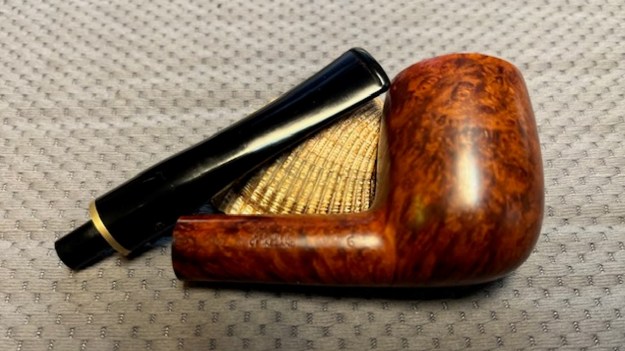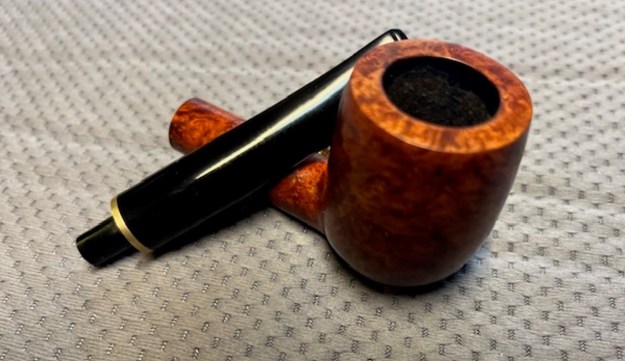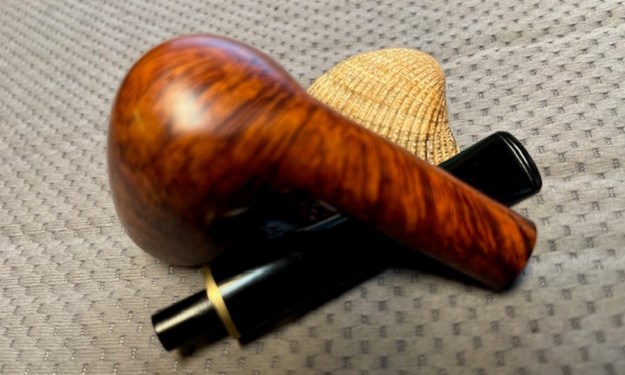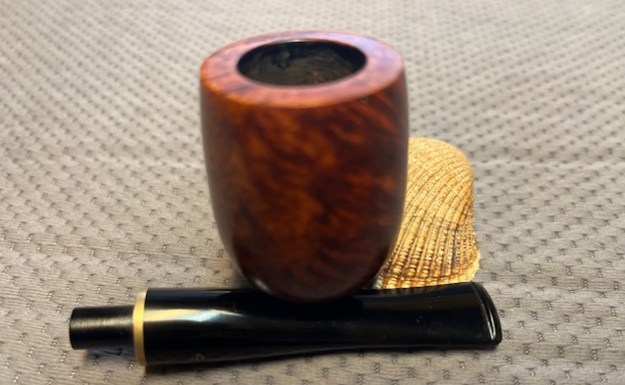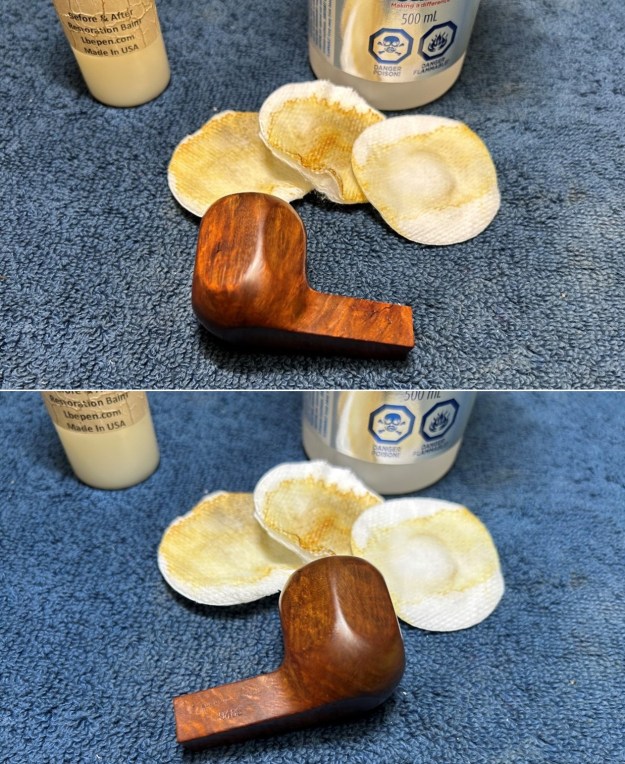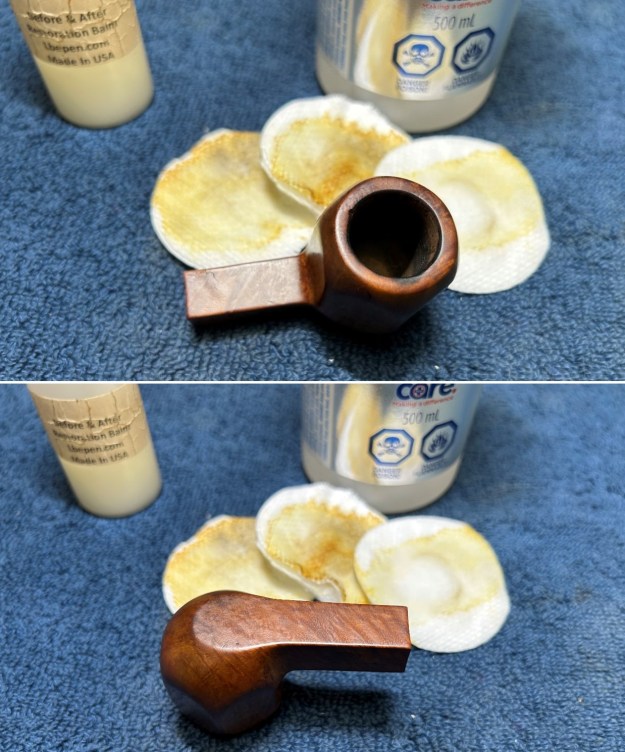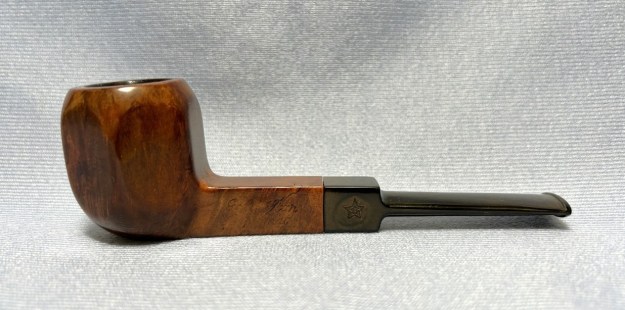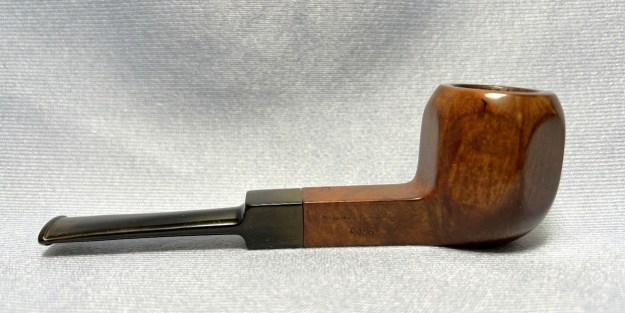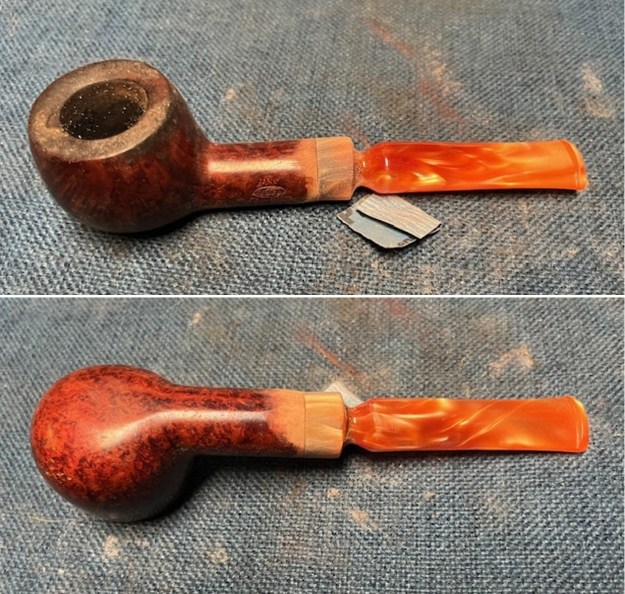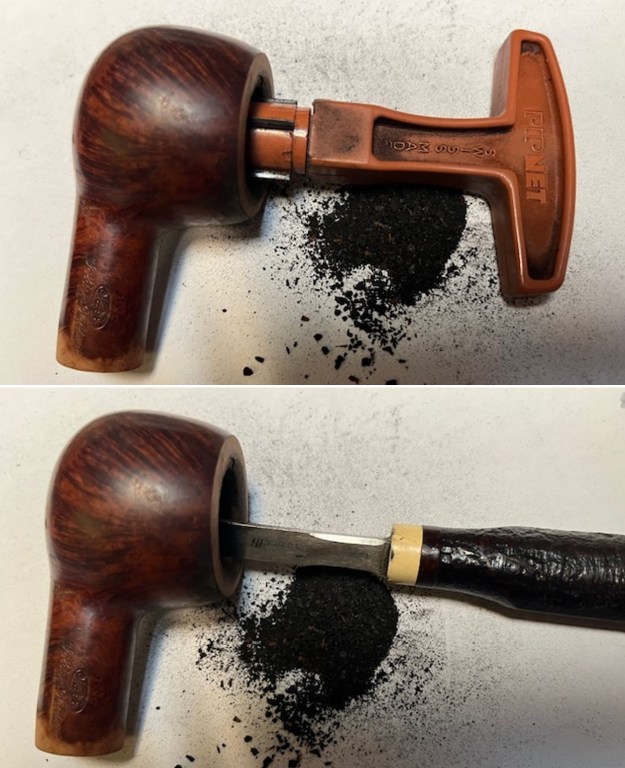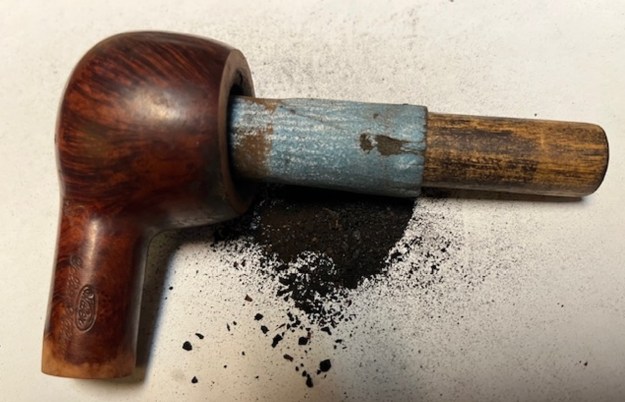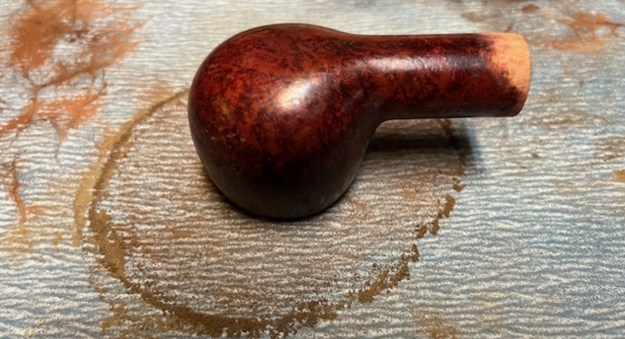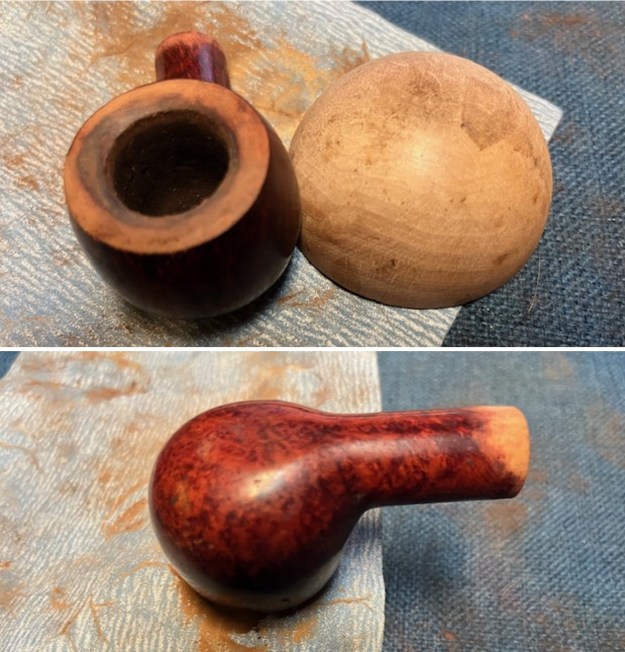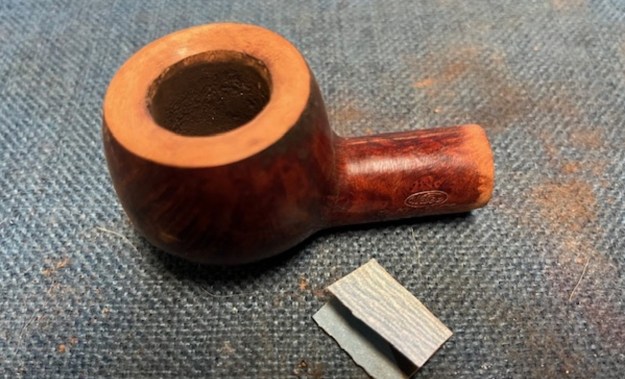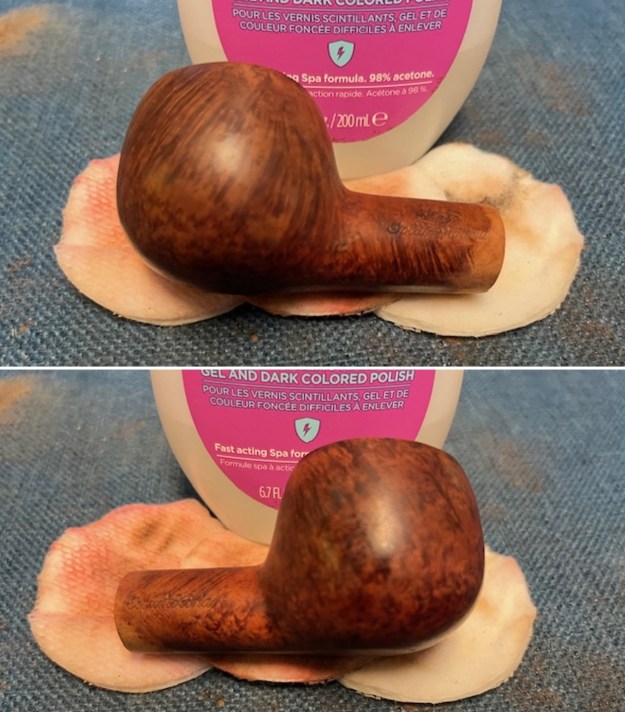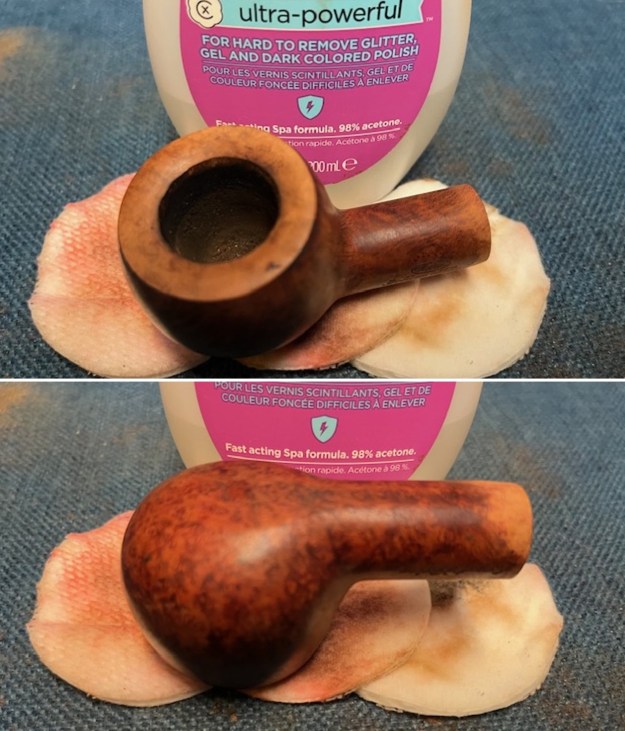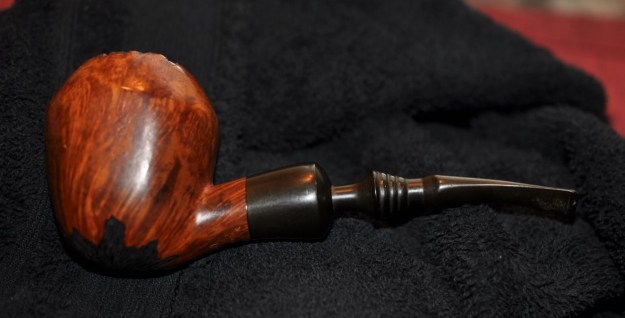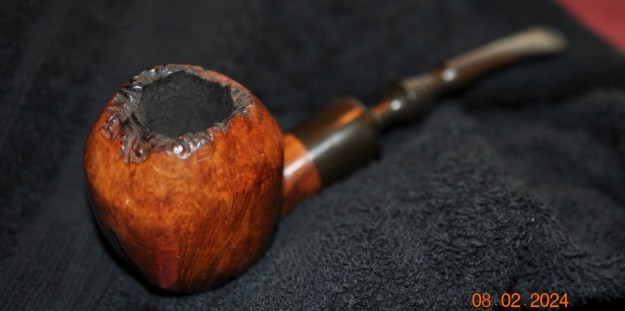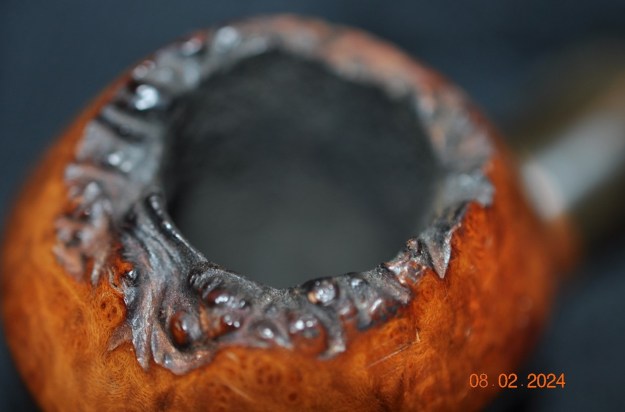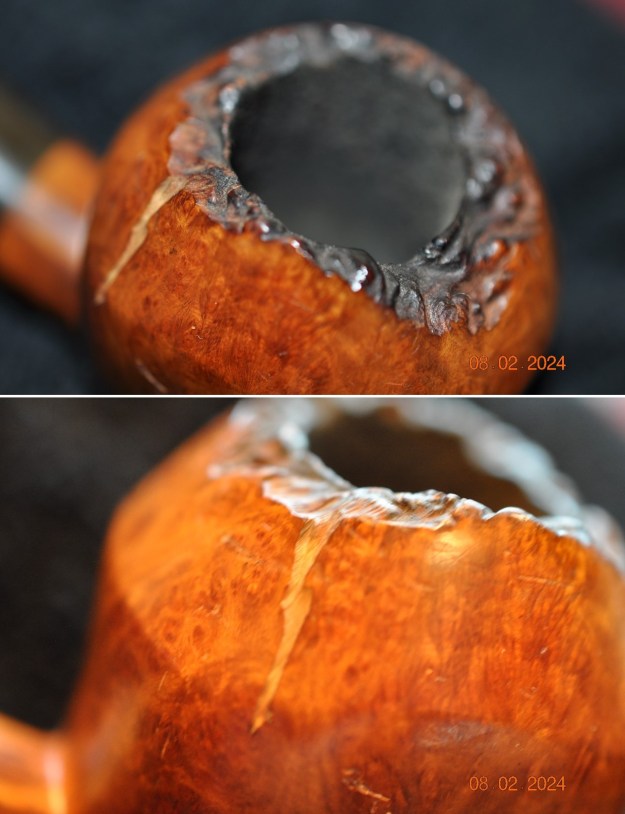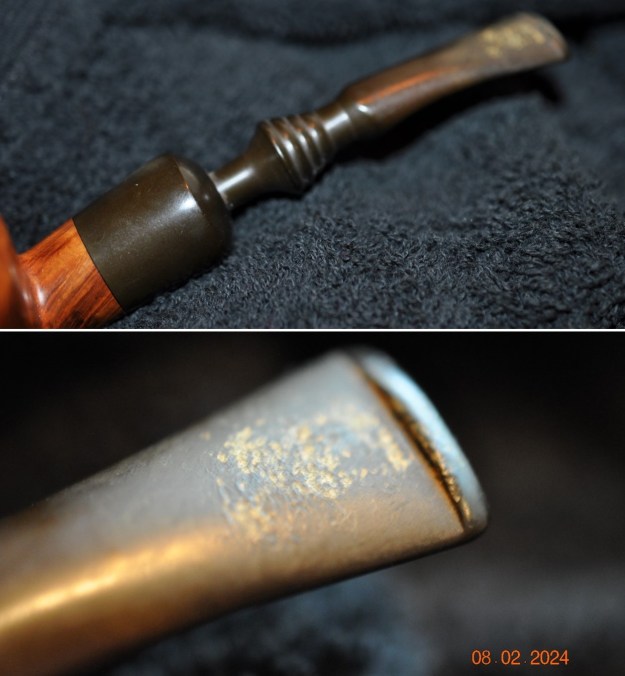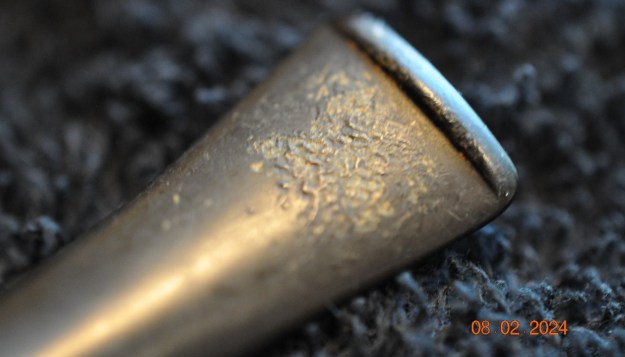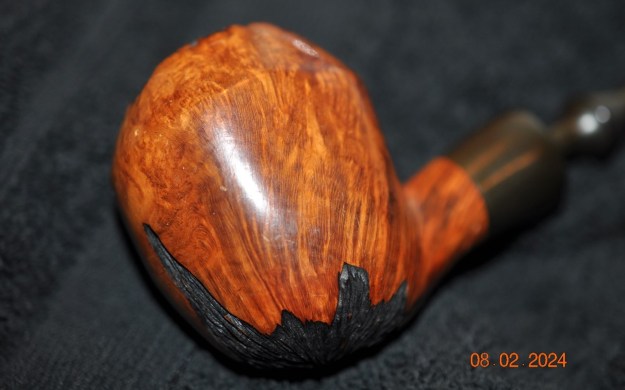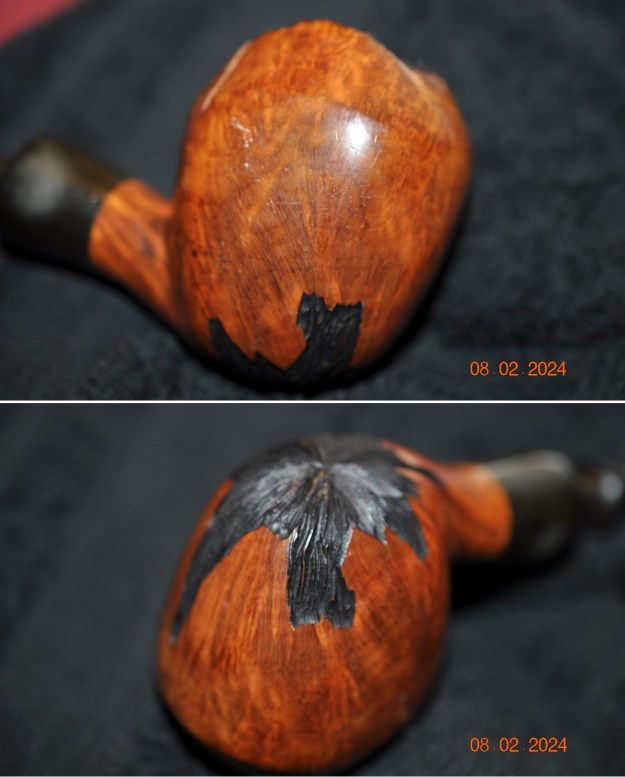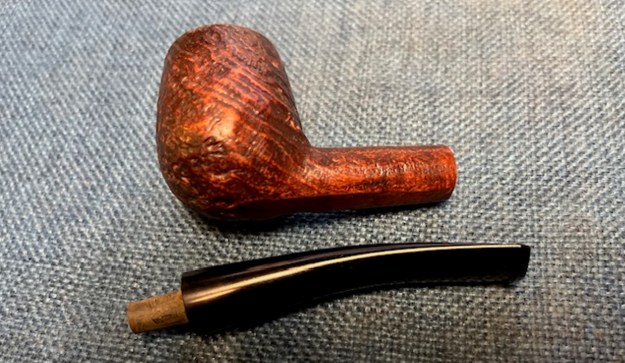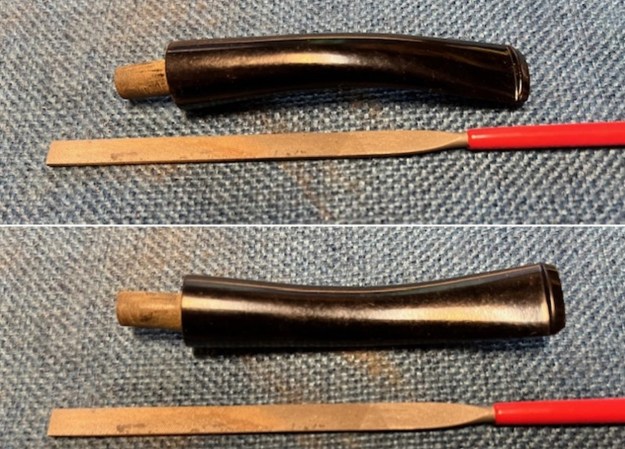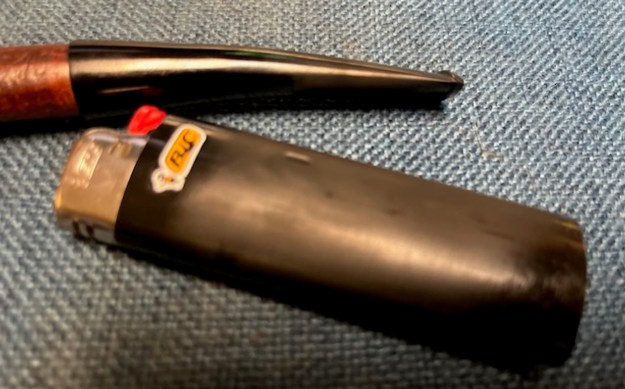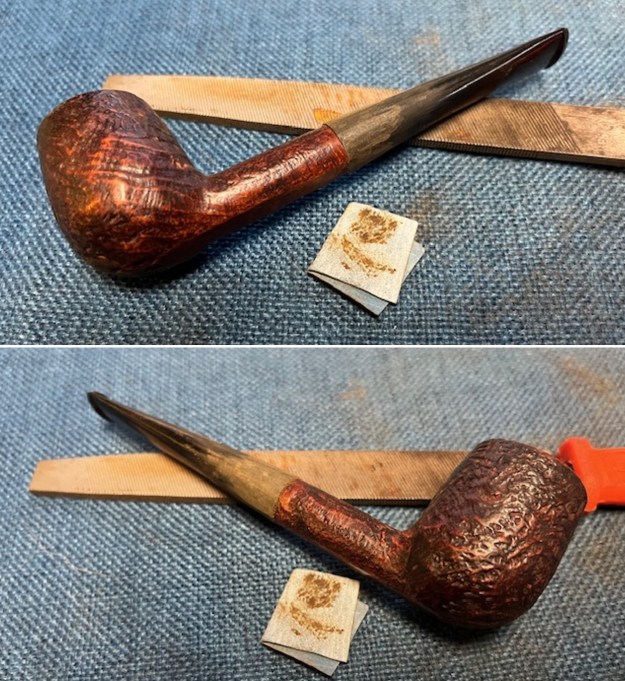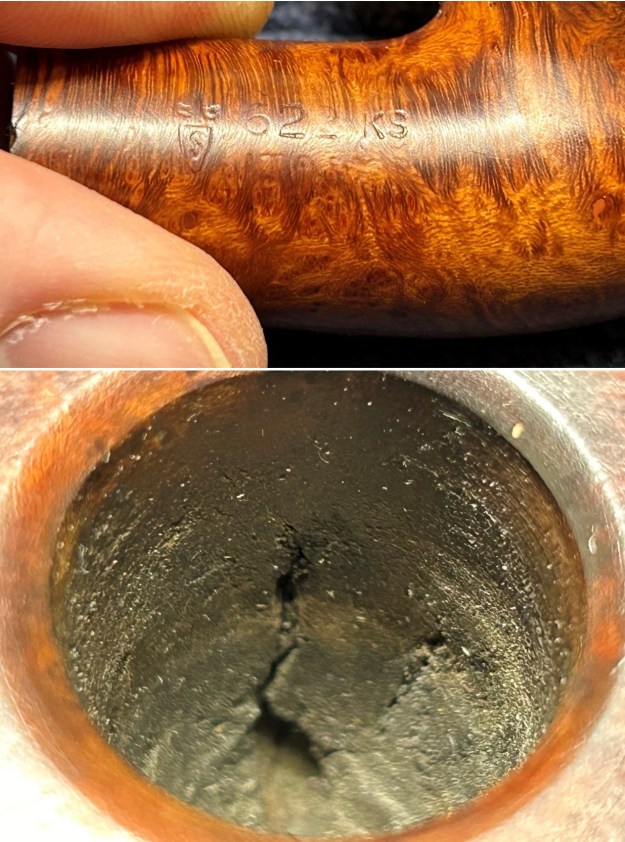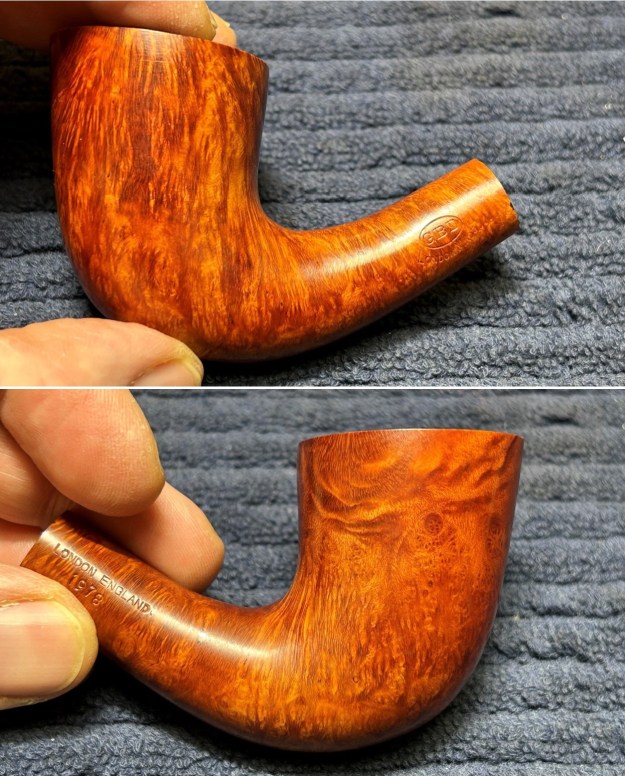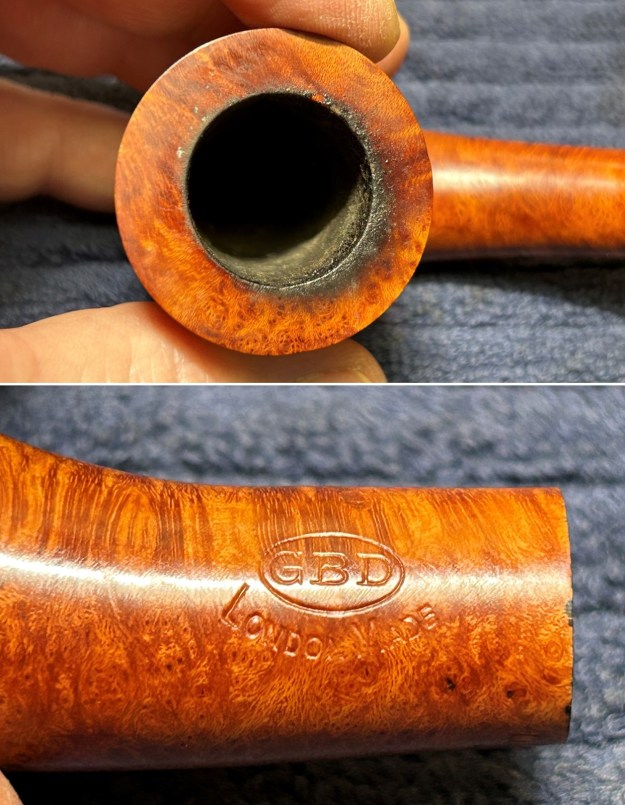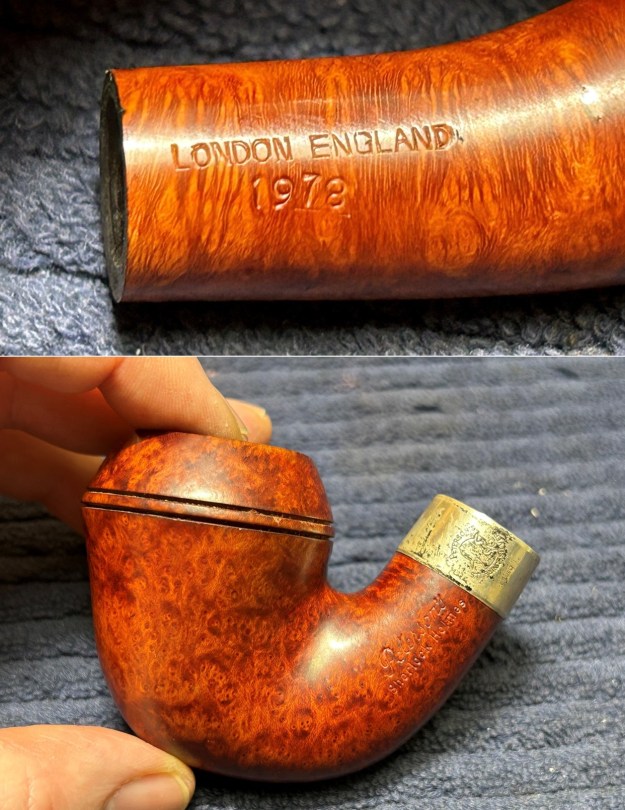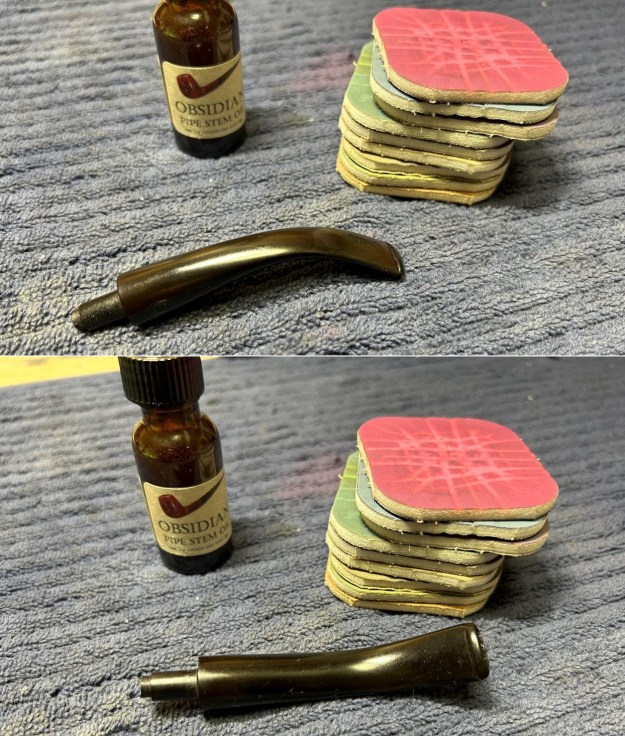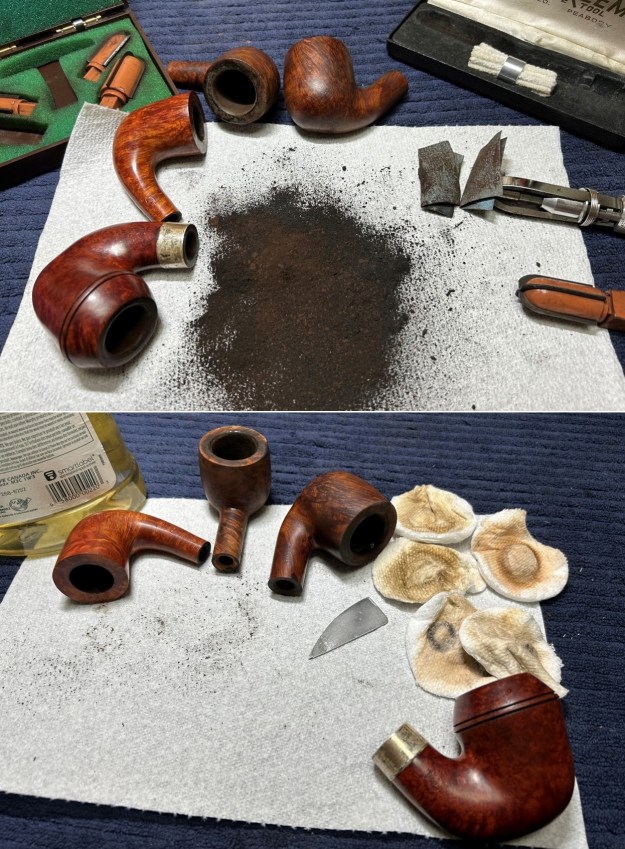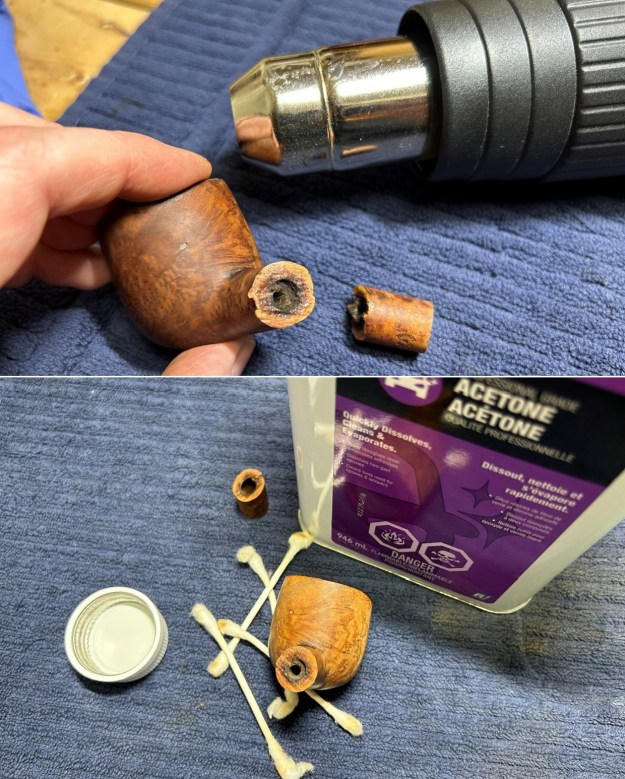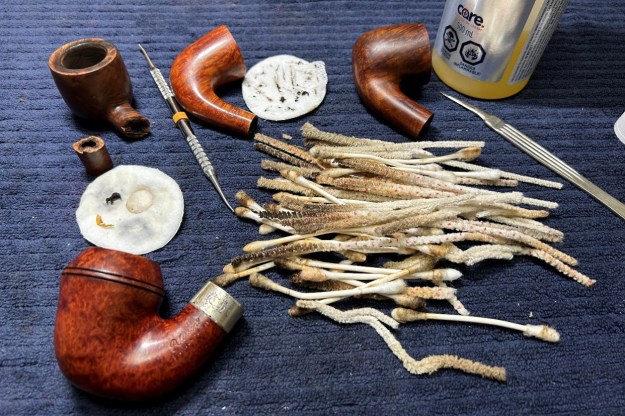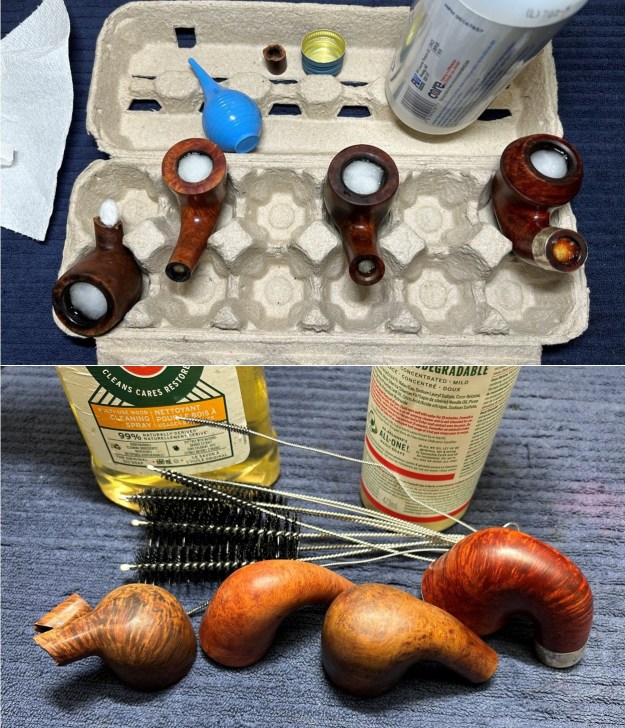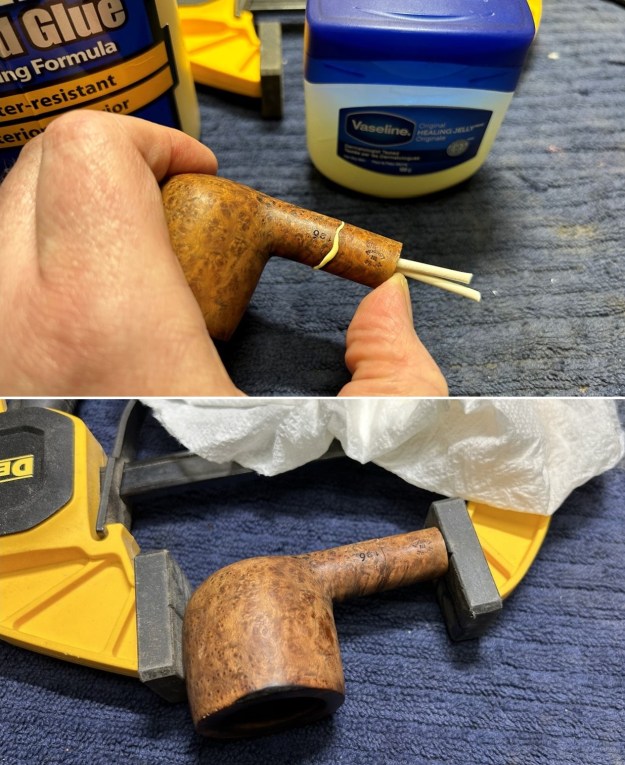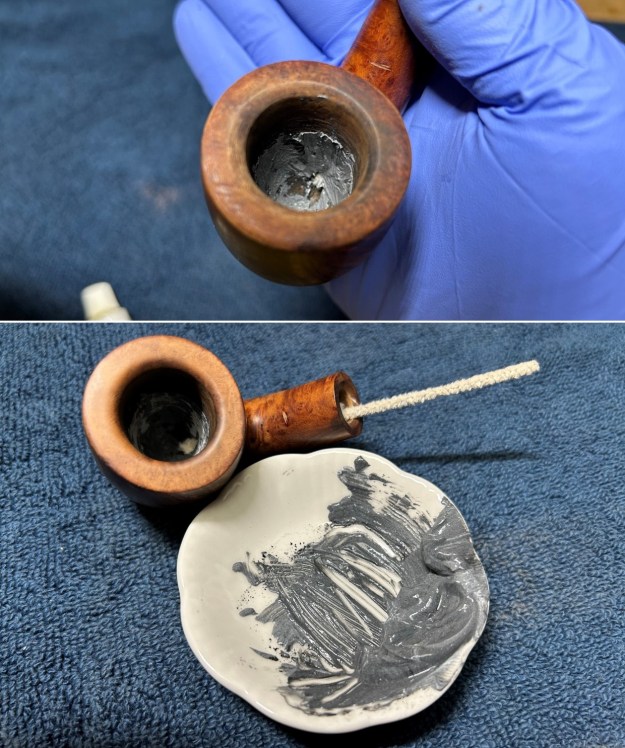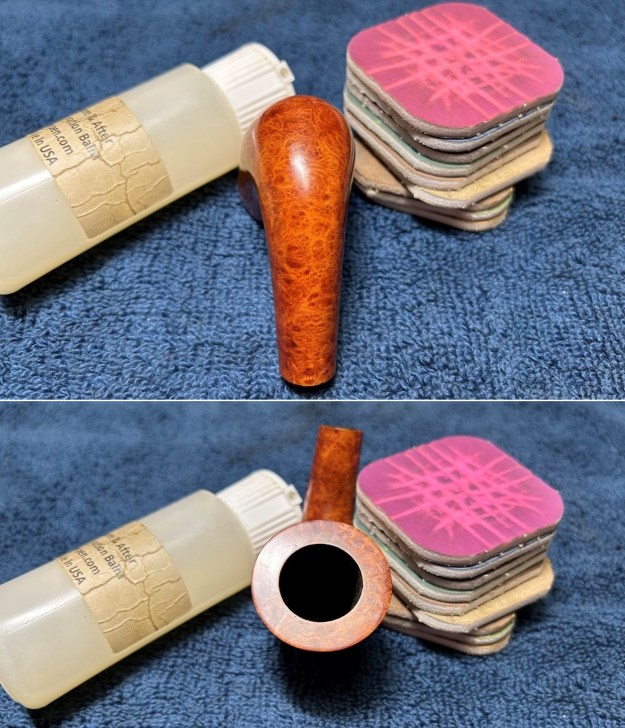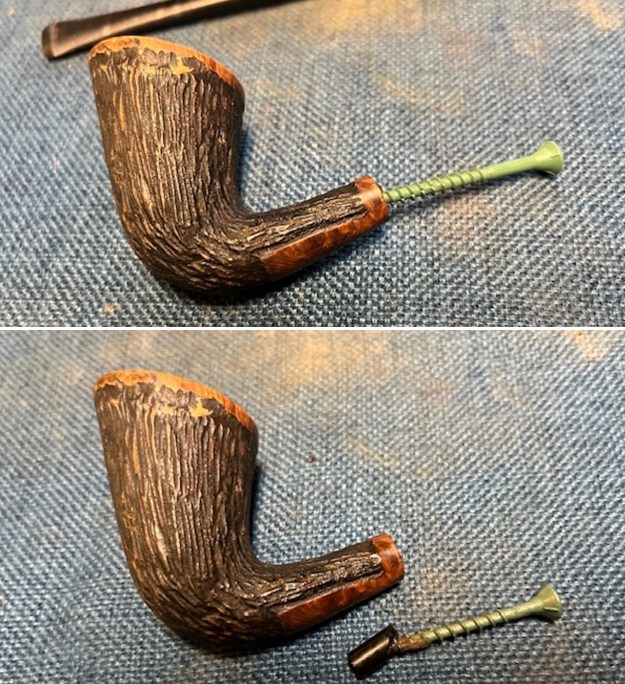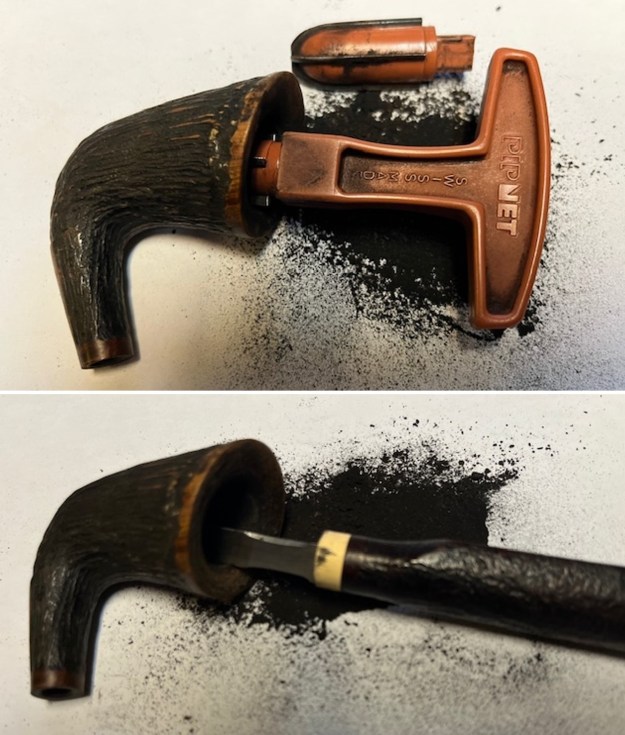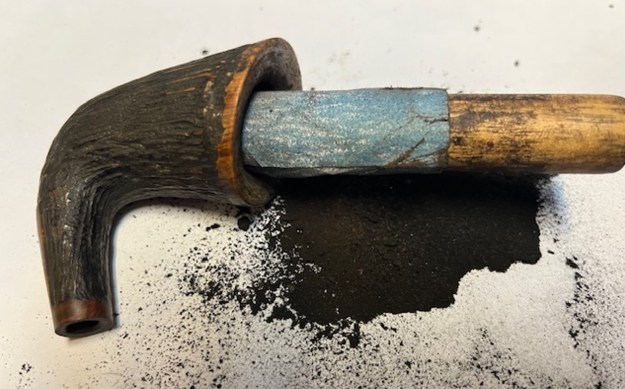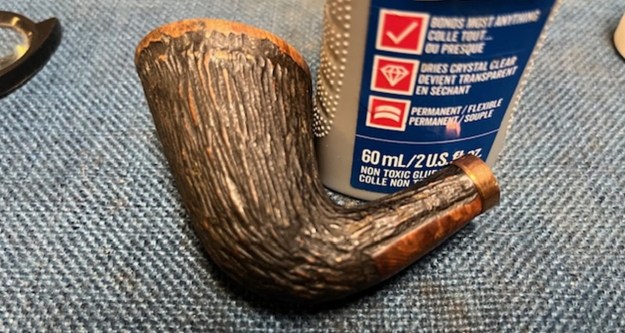
Tag Archives: restaining

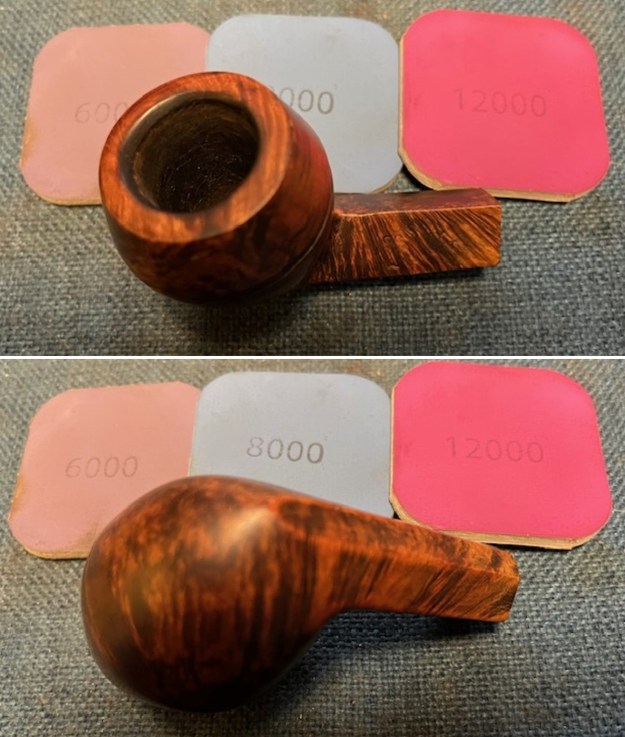
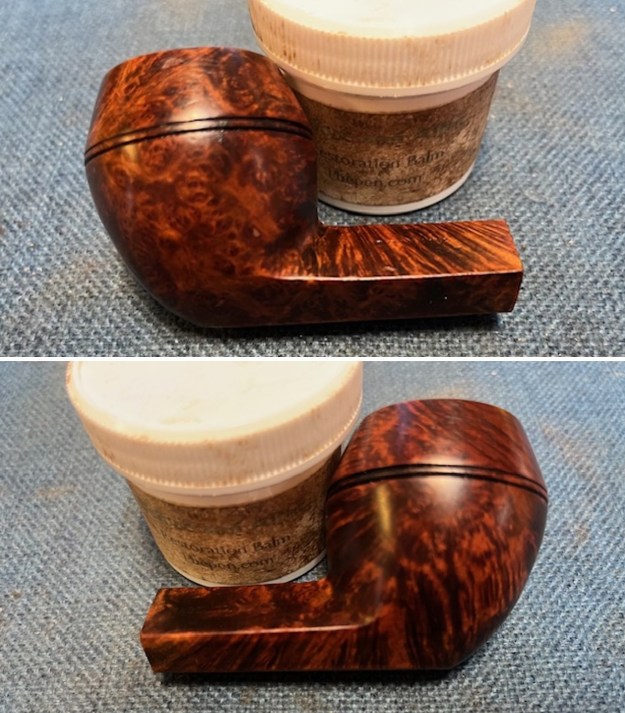
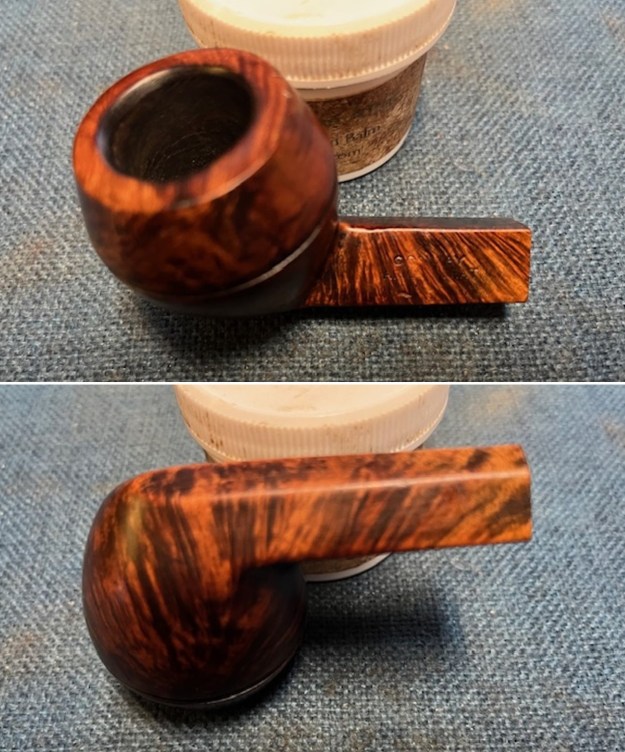
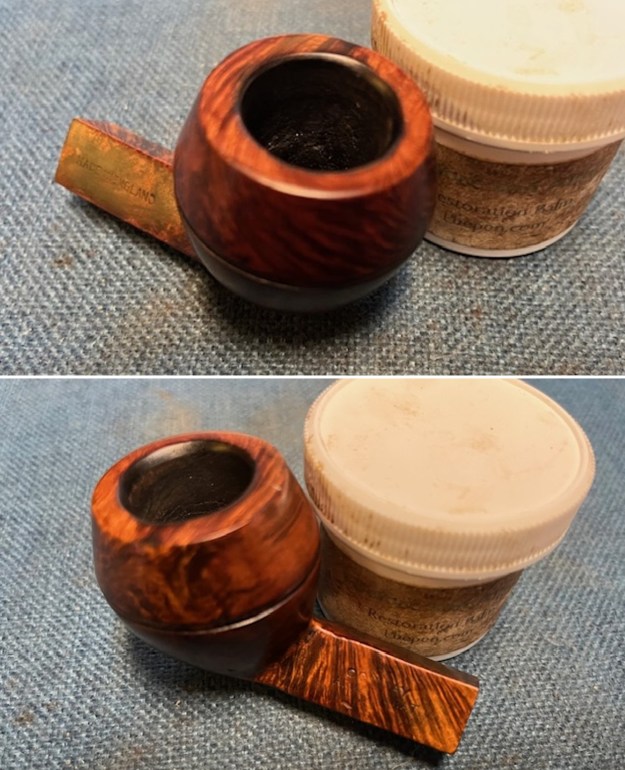
Cleaning up and Adjusting a Dr. Grabow Supreme 9437 Straight Bulldog


by Steve Laug

I have been working lately replacing tenons on bowls in my own work box. After 6 of them I am ready for something different. While I was in Florence, Italy I had received and email from Jack regarding some pipes that he had that needed some work. Here is his email.

I have a Dunhill from unknown era, a Hardcastle, and possibly a third pipe that could use your workmanship. If you’d like, I can send you pictures of the pipes so you know what condition they’re in. Please let me know the necessary details! — Jack

We chatted about that and I suggested he email me when I returned to Canada. He wrote back and asked me to work on not three but four pipes. He listed what he had and I thought these would be an interesting diversion from tenon replacement work.

Are you still willing to entertain restoring/refurbishing a few pipes? I have four in various stages of need, and I’ve attached pictures of each for your evaluation. I would be very grateful for anything that you could and would be willing to do.

  • 1992 (?) Dunhill
  • Bertram 80
  • Hardcastle – This pipe looks very clean except for some pitting? fissures? in the chamber.
  • Dr. Grabow Supreme – This poor pipe… well, it’s a doozy.

Thank you very much! – Jack

I agreed and asked that he send them to me. Interestingly they arrived the day I finished the last of the tenon replacements. I unpacked them and they were indeed as interesting as his email had led me to believe. I decided to work on the last of the foursome – the Poor Dr. Grabow Supreme doozy. Here are the photos he sent to me of that pipe. I will give my evaluation of the work that will need to be done on the pipe as I walk through the photos with you.

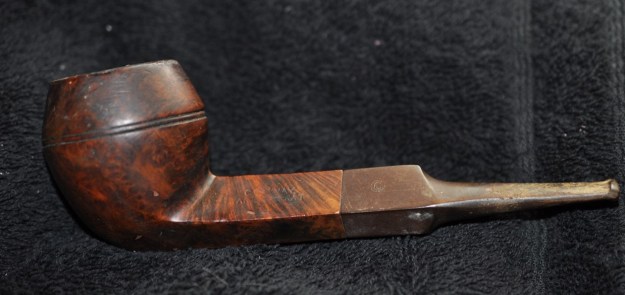
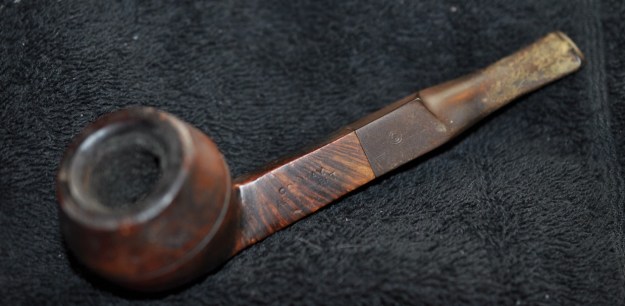
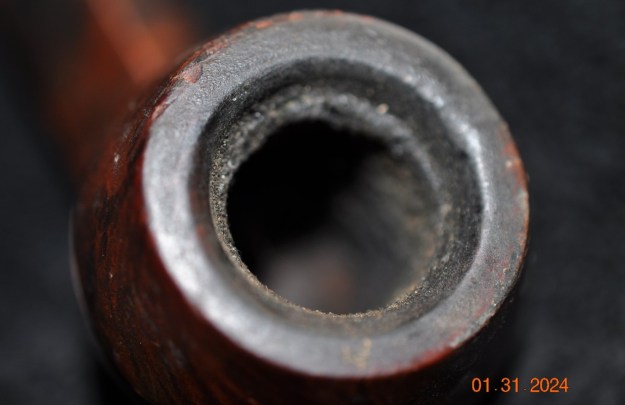
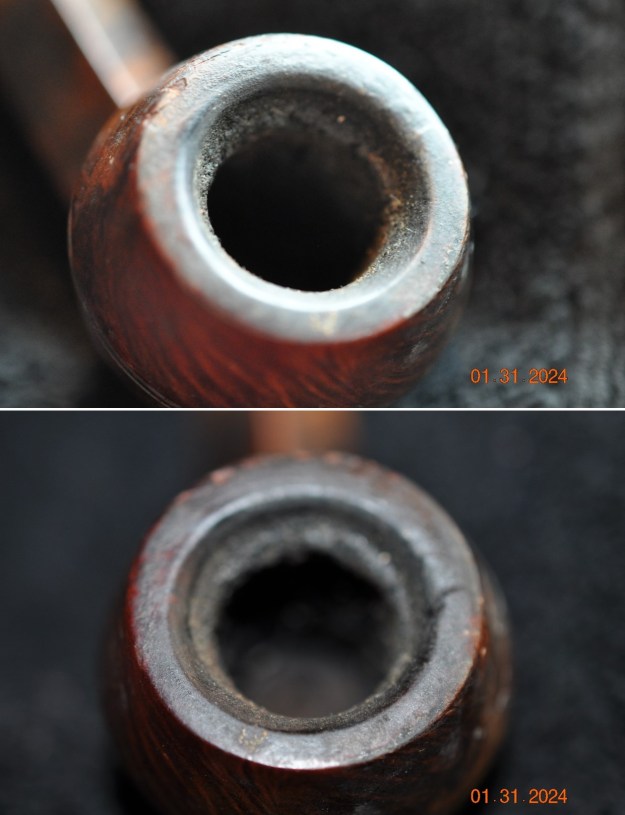
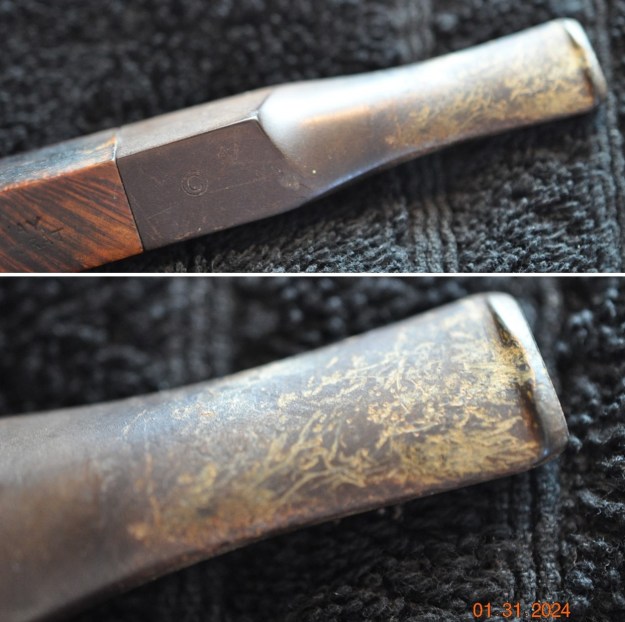
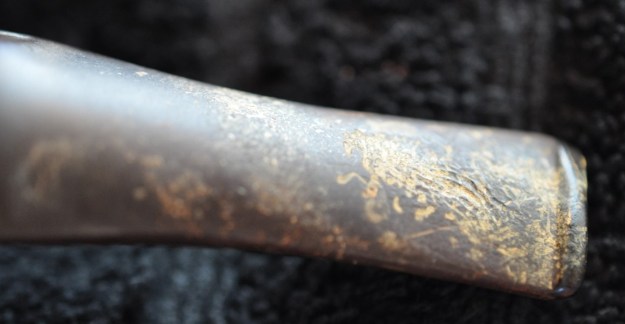
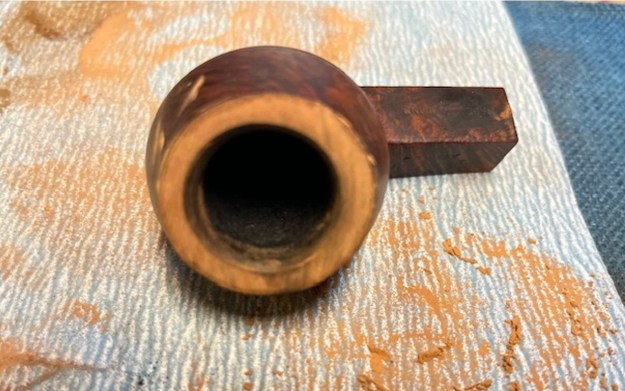
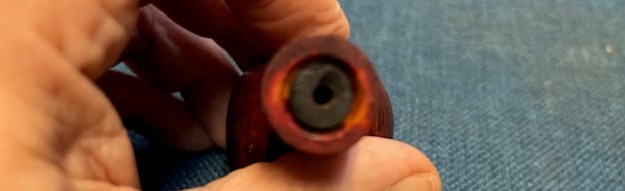
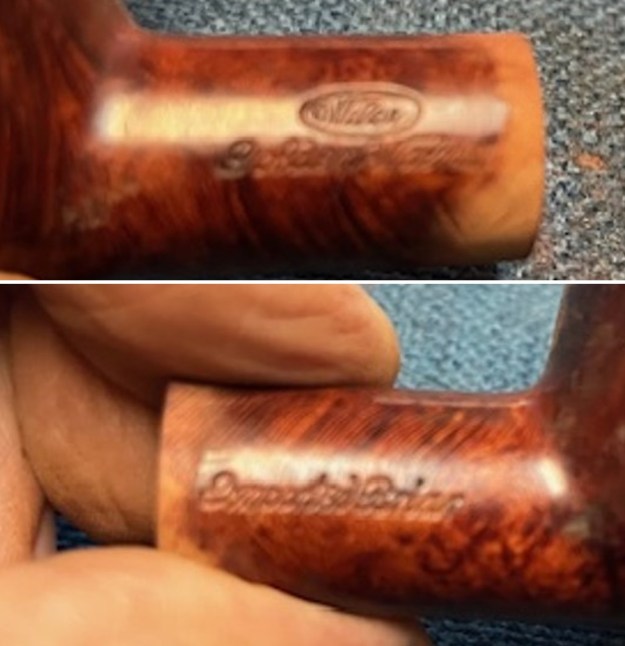
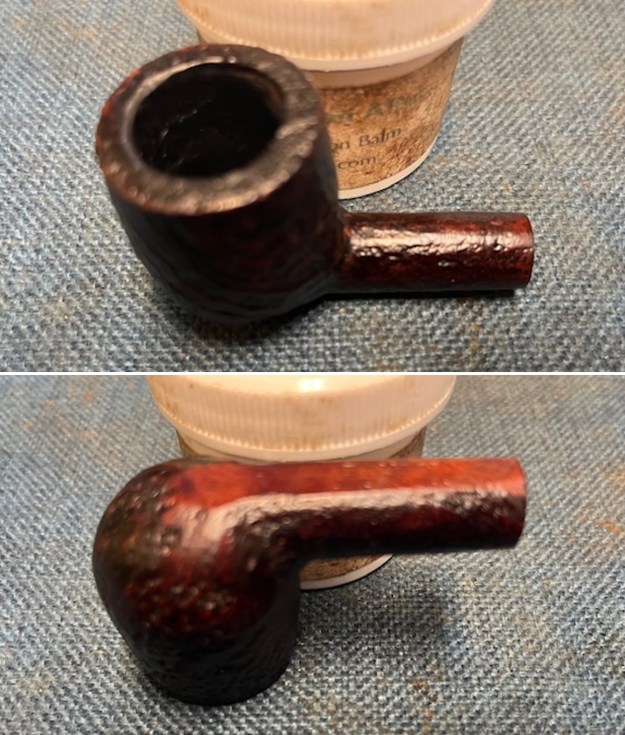
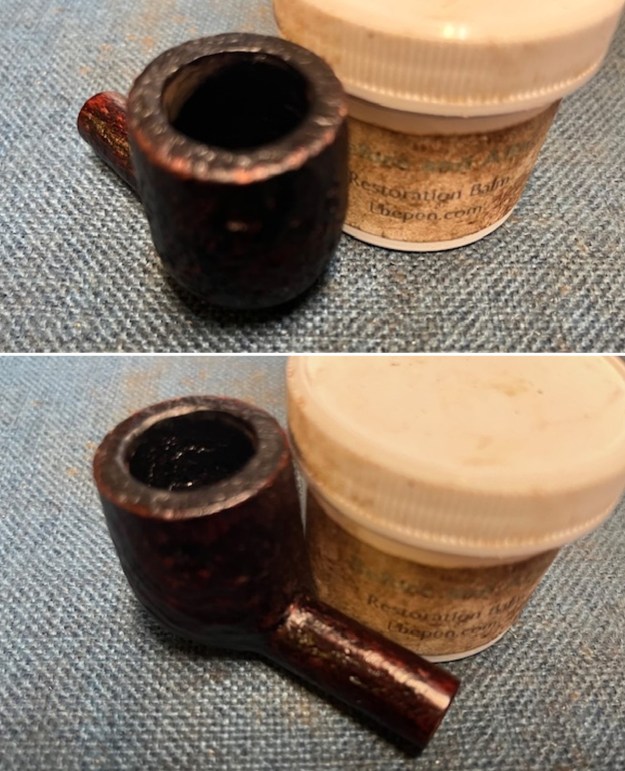
The first two photos that Jack sent show the overall condition of the pipe. You can see from these photos that the rim top had a thick coat of lava on the rim and inner edge of the bowl. There is a thick cake with all the potential for damage on a thin walled bulldog on the bottom half of the bowl. The finish is very dirty but does not look to damaged with scratches or nicks in the photos. The stem is overclocked (or underclocked depending on your perspective😊). It is also oxidized, calcified and had tooth marks on the top and the underside. The stamping on the left side of the shank appears to be faint toward the bowl but the shape stamp on the right side looks good.The next two photos affirm my evaluation of the thick cake in the bowl and overflow of lava on the rim top. Fortunately, there do not appear to be any cracks on the rim top or sides of the bull cap.The final photo that Jack send showed the Grabow “spoon” stinger/tenon apparatus. It is intact which is good news as many have been snipped off that I have worked on. The stinger is coated with a tar and oil coat and the aluminum is oxidized but it is in decent condition. The insert in the shank end also appears to be in good condition other than being dirty. I unpacked the pipes when they arrived on Thursday and went over each one. As I examined this one my observations based on the photos were confirmed. The one thing that was better was that the finish actually looked better in person than in the photos. There was some nice grain around the bowl. The cake and the lava were as expected. They were both thick but did not appear to be hard as is often the case. The stamping on the shank was clear and readable. The left side stamp was faint on the bowl side of the stamping. It read Dr. Grabow [over] Supreme [over] Imported Briar. On the right side of the shank it is stamped with the shape number 9437. The stem looked as noted and you can see that it is overturned in the photos below. It was oxidized, calcified and had tooth chatter and marks as noted. The Grabow Spade logo is white and is horizontal on the top left side of the saddle. Have a look at the photos below. I took close up photos of the bowl and rim top to show the condition of both the bowl and the rim top. You can see the lava and build up on the rim top and the lava flowing over the inner edge of the bowl. It is hard to know if there is damage or if the lava protected it. The bowl has a thick cake that lining the walls and overflowing into lava. The stem is oxidized, calcified and has tooth marks and chatter on both sides ahead of the button. The metal “spoon” stinger and tenon were dirty but in good condition.I tried to capture the stamping on the shank sides to show their condition before my work. They are readable as noted above and faint in spots. I removed the stem from the bowl and took a photo of the parts to give a sense of the symmetry of the pipe. It is a beauty beneath all grime. I looked up information on the Dr. Grabow Supreme 9437 Bulldog on Pipedia to see what I could learn about the pipe. There was specific article on the Grabow Models available and turned to it (https://pipedia.org/wiki/Dr._Grabow_Models_(Series,Line)_Names_Through_the_Years) to see what I could find. Here is what I learned:

To make it much easier to locate a certain pipe name in this section, I have placed them in simple alphabetical order with a little information about each line or series. Information with more detail about the grade of briar used, the ranking of the pipes in quality from say, best to least, will be added later in a different area.

Furthermore, I have split these pipe names into two groupings of my own definition, “OLD” and “NEW”. Roughly that equates to pipes made in Chicago and pipes made in Sparta, North Carolina area after the sale and “move”. In a very grey area in between is an era I call the “transition period” when strange things were happening with production and the like, and where, possibly, pipes were being made at both locations at the same time, or may have even been contracted out to yet another place. This is a separate subject in and of itself and one we may never really resolve, but it IS a very interesting time in Dr. Grabow history, even if we affectionately call some of the pipes we suspect from that time, “Dr. Crapos”.

“OLD” Pipe Names and First Two-Digit Codes and Symbols:

  • COURTLEIGH begins with 91 Series 82 = “The Antique Courtleigh” with an Antique Grain Finish c1937. (Not really a Dr. Grabow) Series 91 = Natural Select Grain Finish, c1937.
  • DE LUXE begins with 92, 97, 98 – Two Dots, Circle or Shield on shank sometimes. Series 92 = Very dark reddish wine, solid looking finish, yet undefined, possibly from 1938 or slightly later era. Series 97 = Natural Variegated Grain Finish, c1937. Series 98 = yet undefined, Dark Brown appearance? Series 99 = Dark Walnut Finish, c1937.
  • DOLLAR DR. GRABOW — See “SPECIAL” below.
  • DR. GRABOW (C1930 to 1932?) had no series number as in the begining, this WAS the only pipe name for this new Linkman’s line of pipes. Most examples have MLC in an ocal stamp and just a TWO-digit shape number.
  • FIFTY GRAND begins with 15, c1937? or later. (Not really a Grabow)
  • HOLLYCOURT begins with 88, c1938 or later. (Not really a Grabow)
  • RINGMASTER begins with 50, c1955+?
  • SELECT GRAIN begins with 84 – Sideways Spade pointed to bowl
  • SUNSET GRAIN begins with 96, c1955? or later.
  • SPECIAL (or Special Italian Briar) post-1937, begins with 43, 49, maybe no number at all; DOLLAR DR. GRABOW 1937 or previous, may not be marked as such, begins with 43, 44, 49 Series 43 = Natural Finish (DG), c1937. Series 44 = Dark Finish (DG), c1937. Series 49 = Walnut Finish (DG), c1937.
  • STANDARD begins with 44 (early Linkman’s?) or has no number at all, may be replacement for Special. Linkman’s were push stems, HL&T’s were Ajusto.
  • SUPREME begins with 94, 95 Series 95 = one example has lighter reddish stain, yellow stem, c1950?
  • TRU-GRAIN begins with 60, 62
  • VENTILATOR begins with 63, 64, 65 Series 63 = Natural Finish, c1937. Series 64 = Dark Finish, c1937. Series 65 = Walnut Finish, c1937.

Thus, I knew that the pipe was made before the move from Chicago in what the writer of the article calls the old pipes. I marked the Supreme in the list above. It states that the four digit shape number with 94, 95 came out around 1950.

I did some more digging on Pipedia and found the following information that also helped pin down the date (https://pipedia.org/wiki/Dr._Grabow).

The production of the pipes started in 1930/31. In 1937 Linkman began calling his pipes “Pre-Smoked”. An ad dating from 1946 celebrates it as “America’s Most Wanted Pipes” and the text announced that each Dr. Grabow was broken in on the Linkman’s Automatic Smoking Machine with fine Edgeworth tobacco, reducing the need for the new owner to spend time breaking in his pipe. In 1949 the official name read Dr. Grabow Pipe Company Inc. with seat at W. Fullerton Avenue 1150, Chicago 14, Illinois. (Thus the Linkman factory.) Series: Special, De Luxe, Supreme, Tru’ Grain, Select Grain.

That helped to pin down the line to the manufacture at the Linkman Factory. It is listed as one of the series. I have highlighted the SUPREME in red. Now it was time to work on the pipe itself.

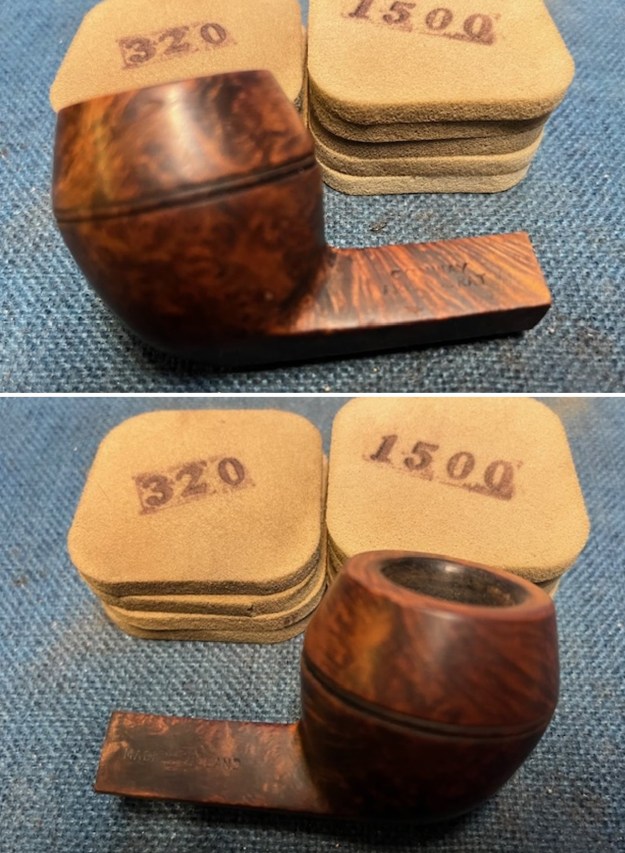
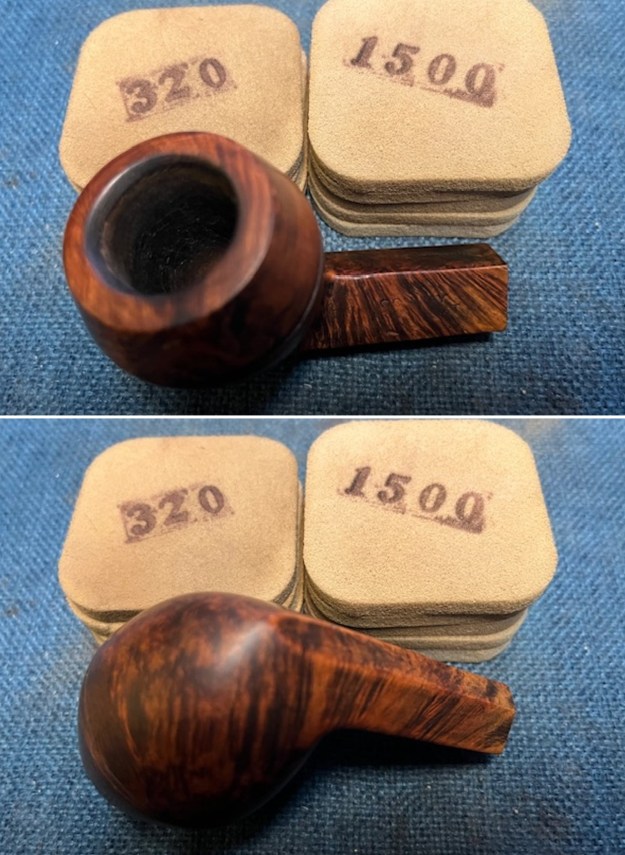
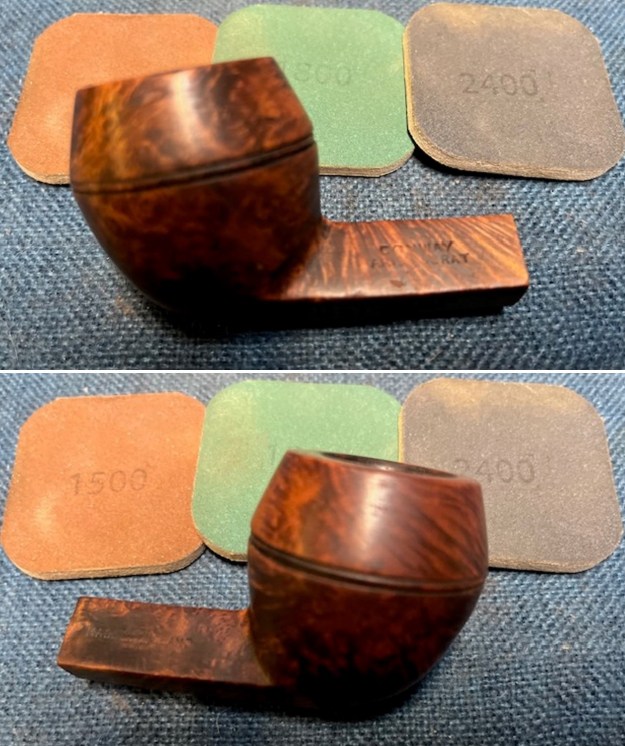
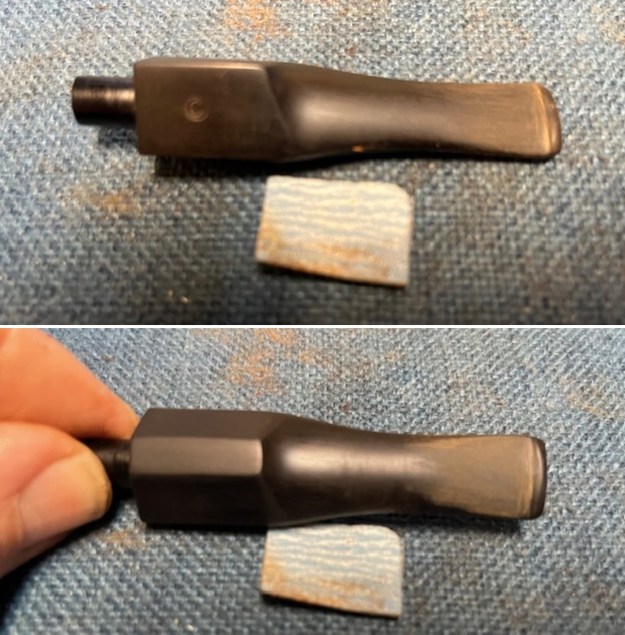
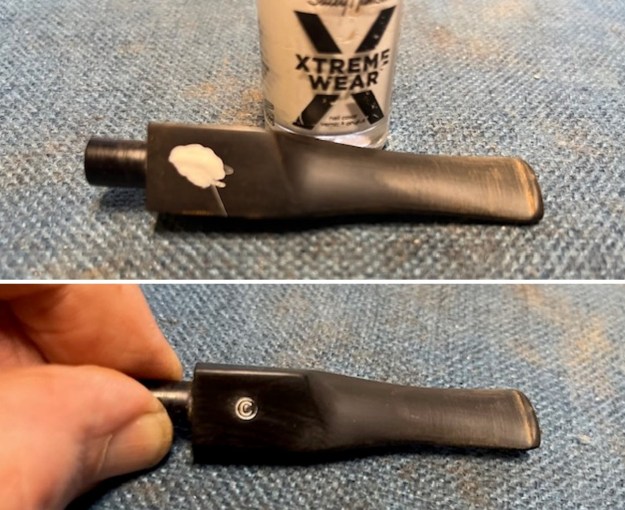
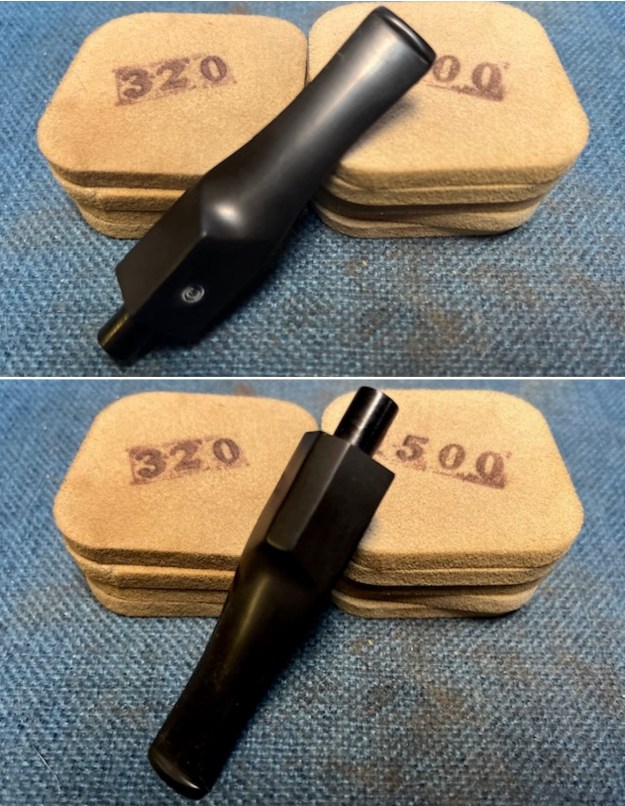
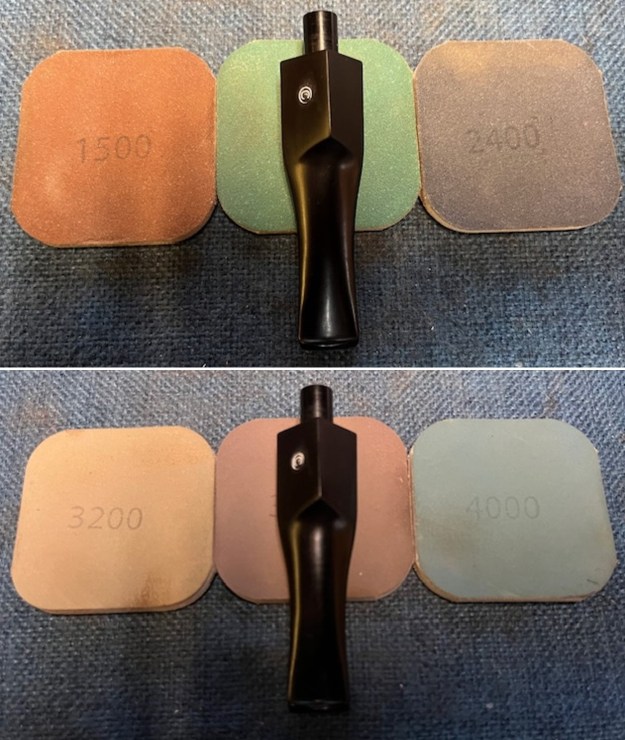
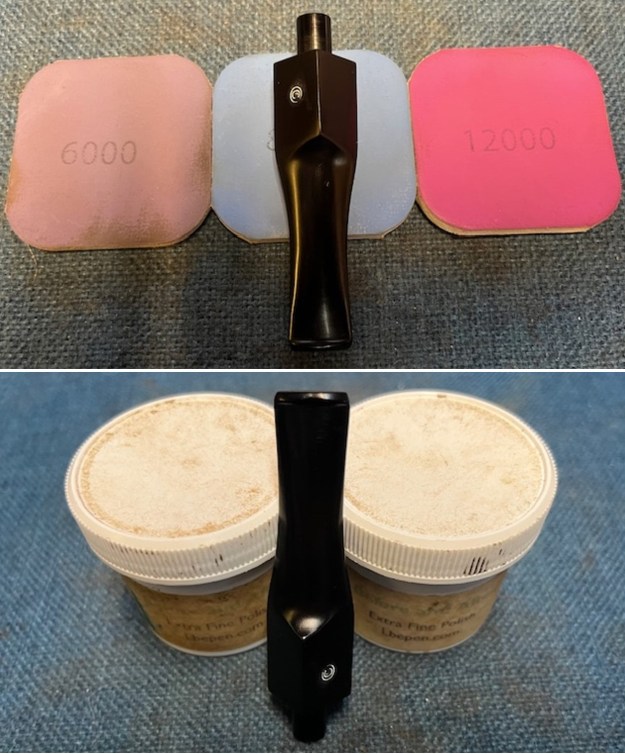
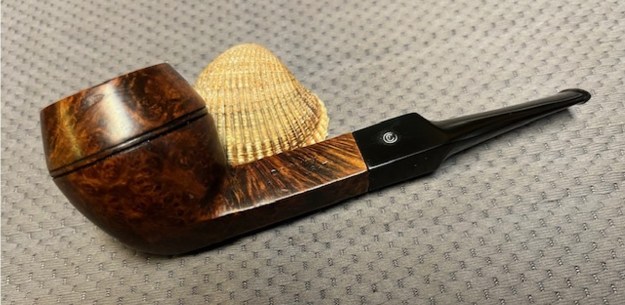
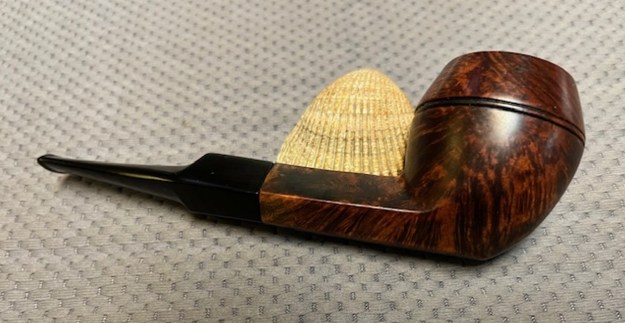
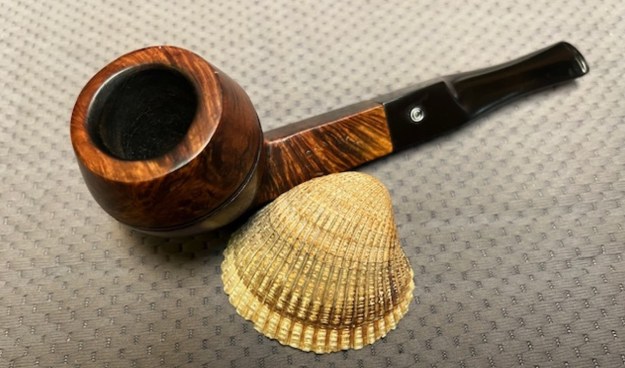
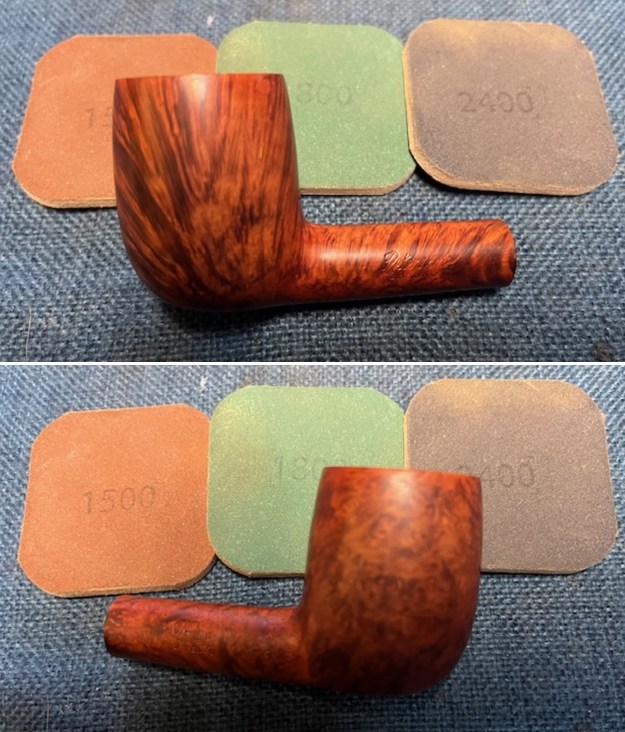
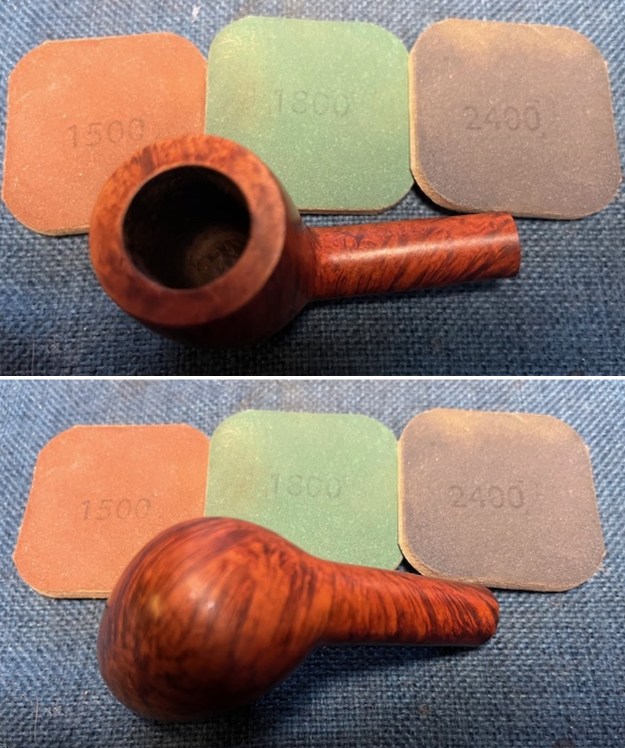
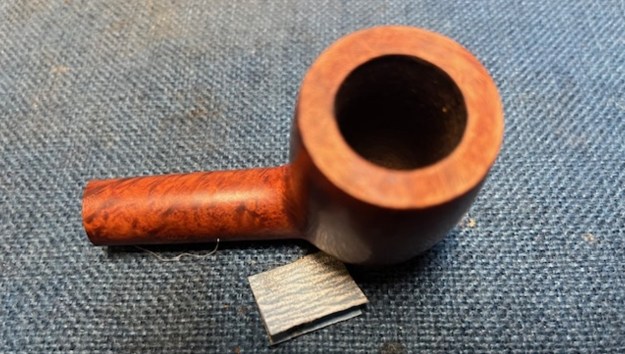
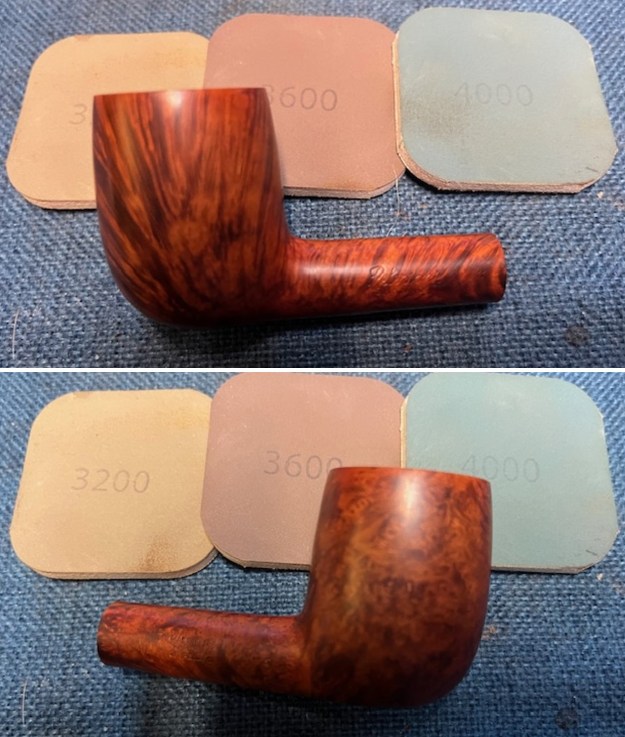
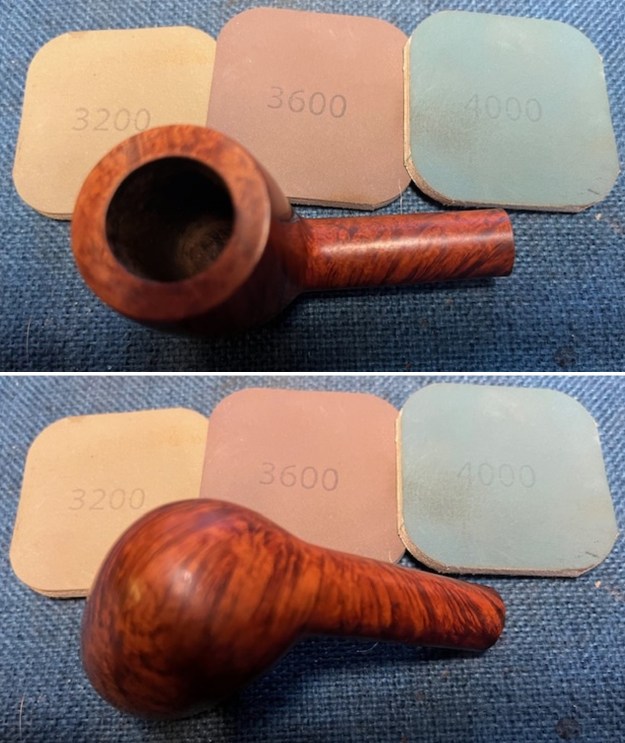
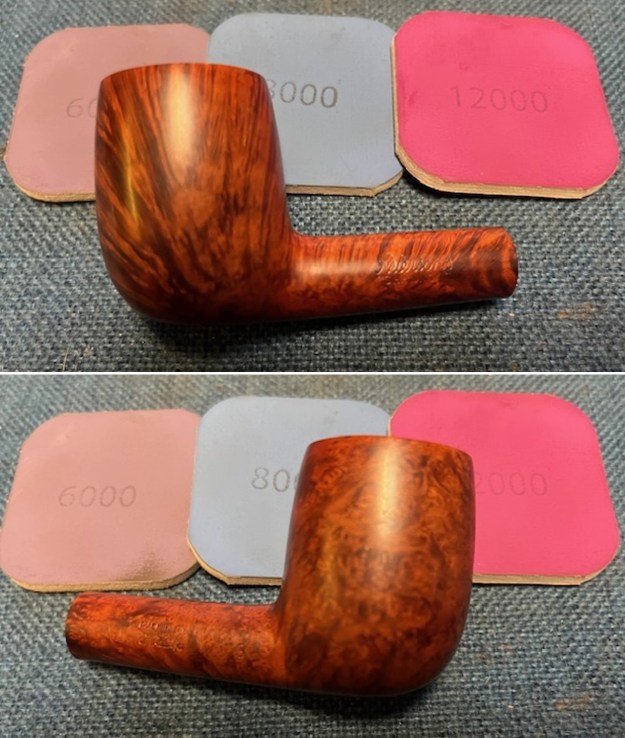
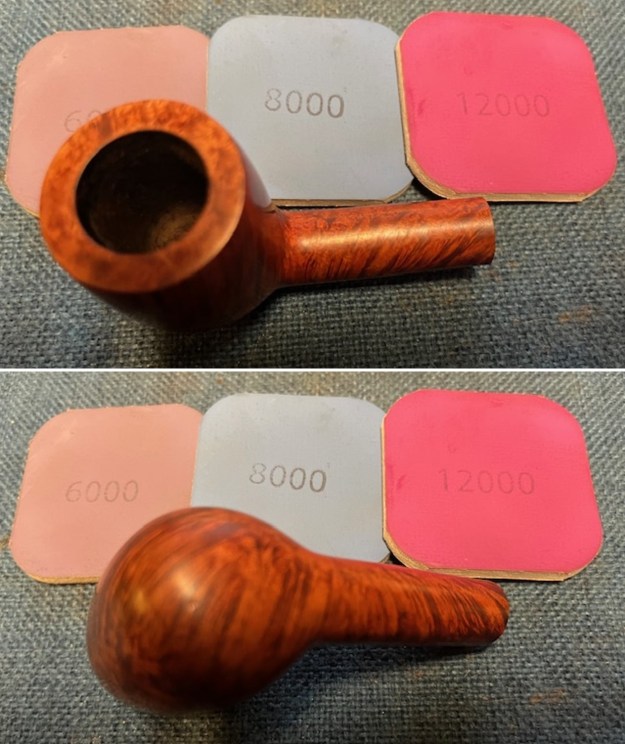
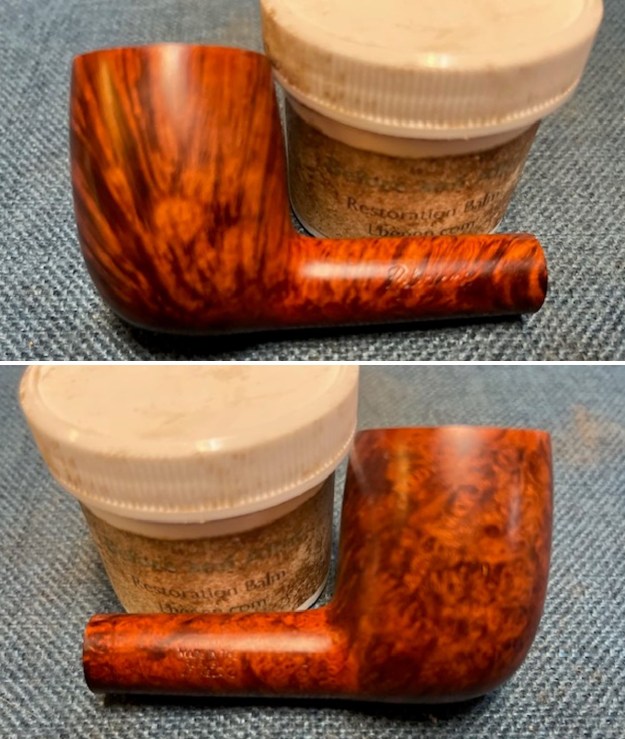
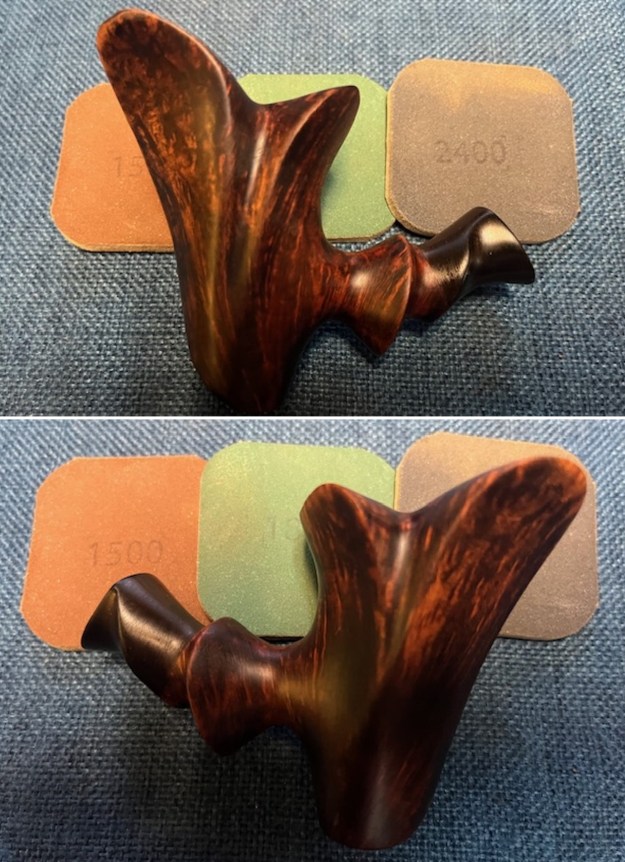
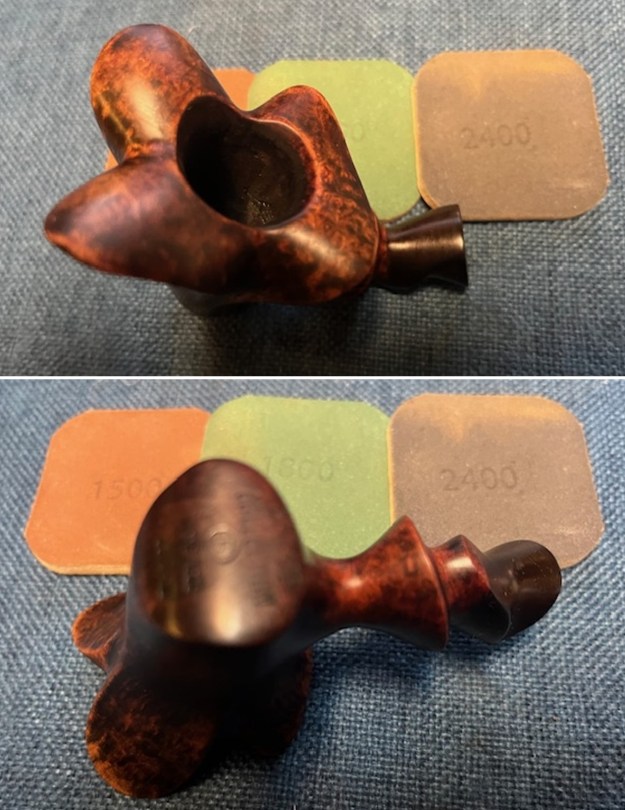
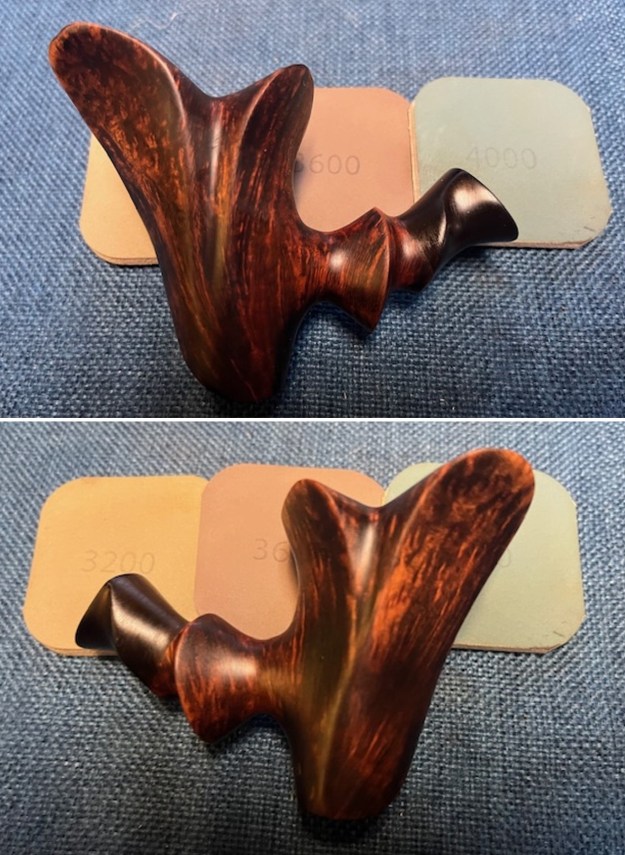
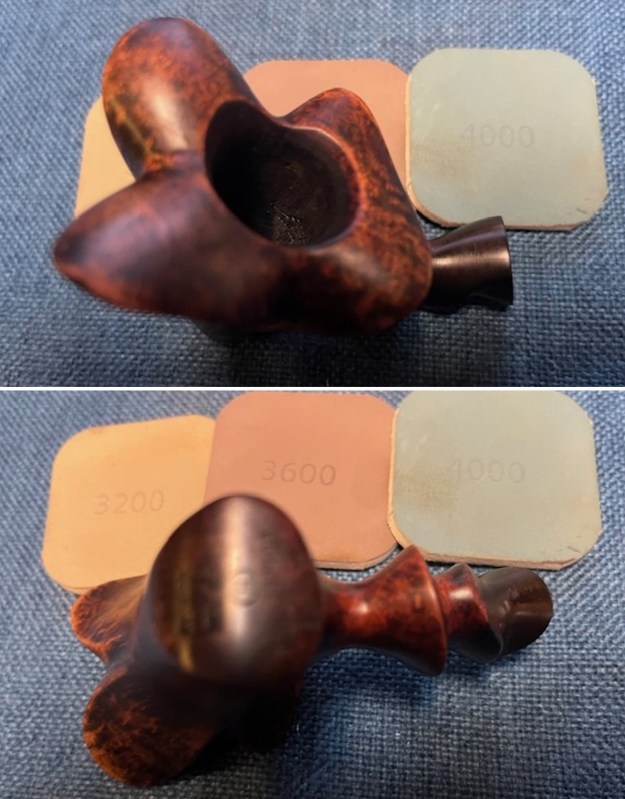
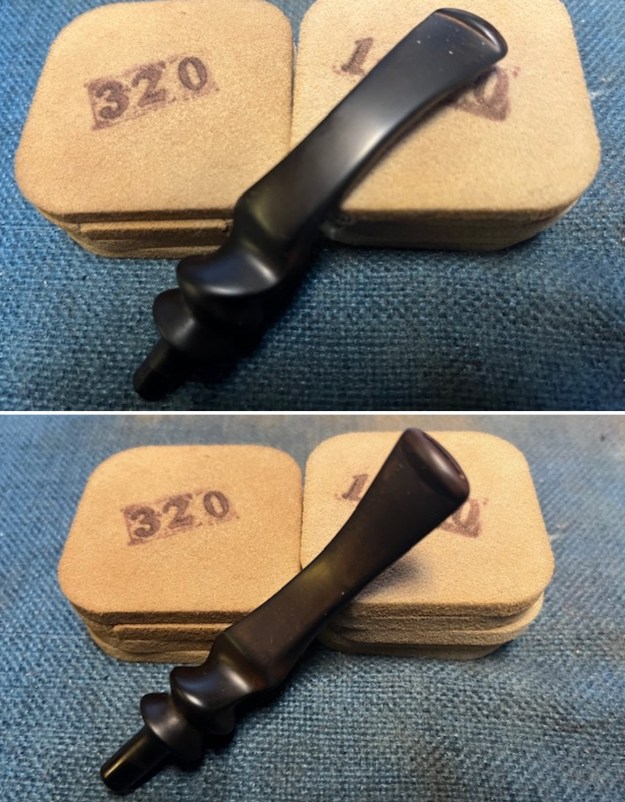
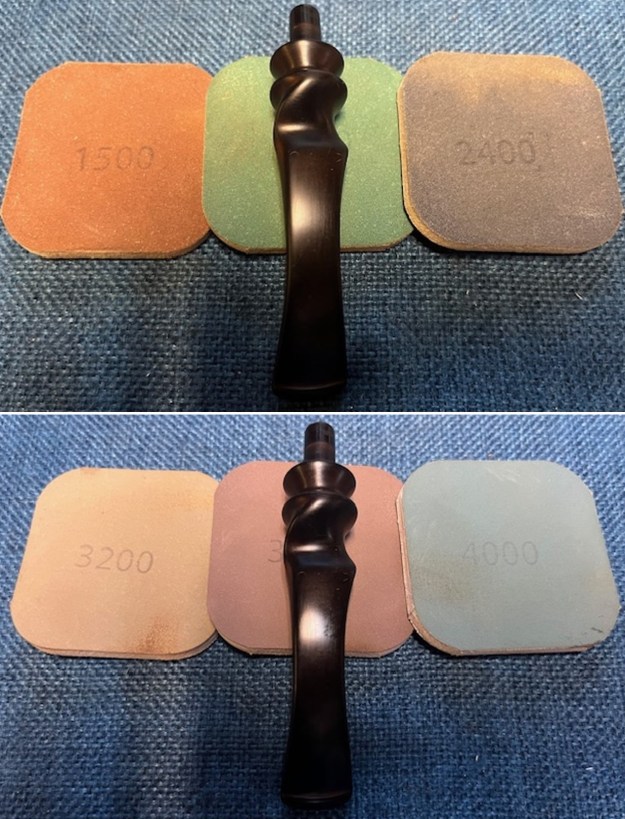
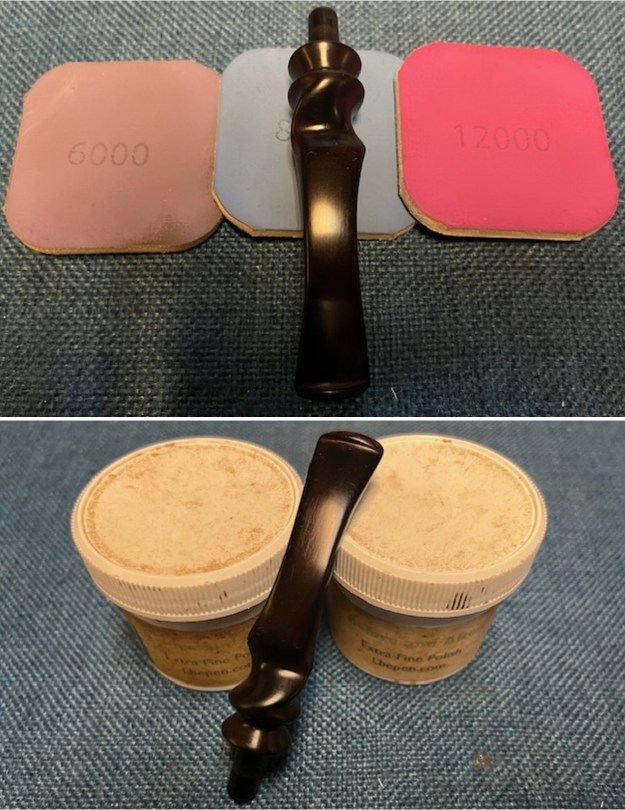
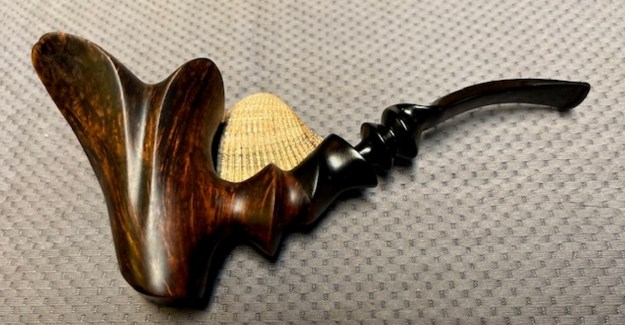
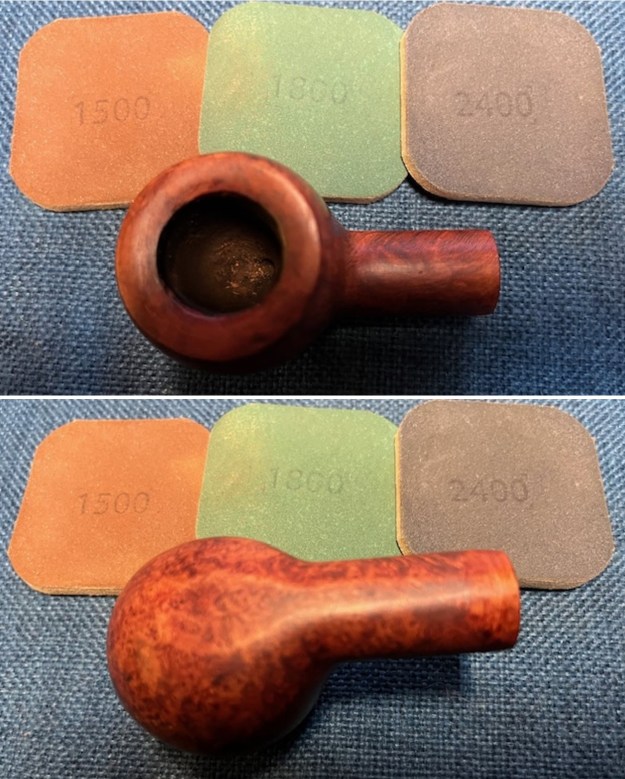
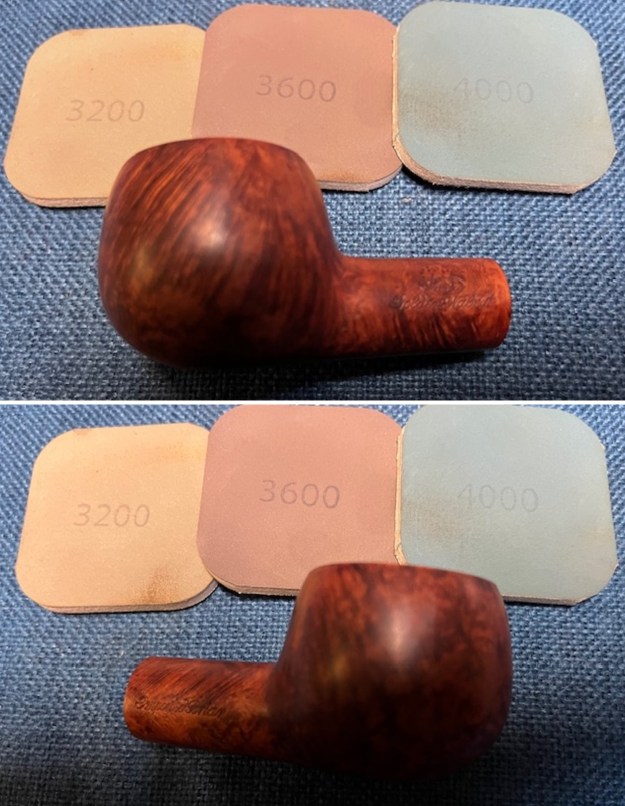
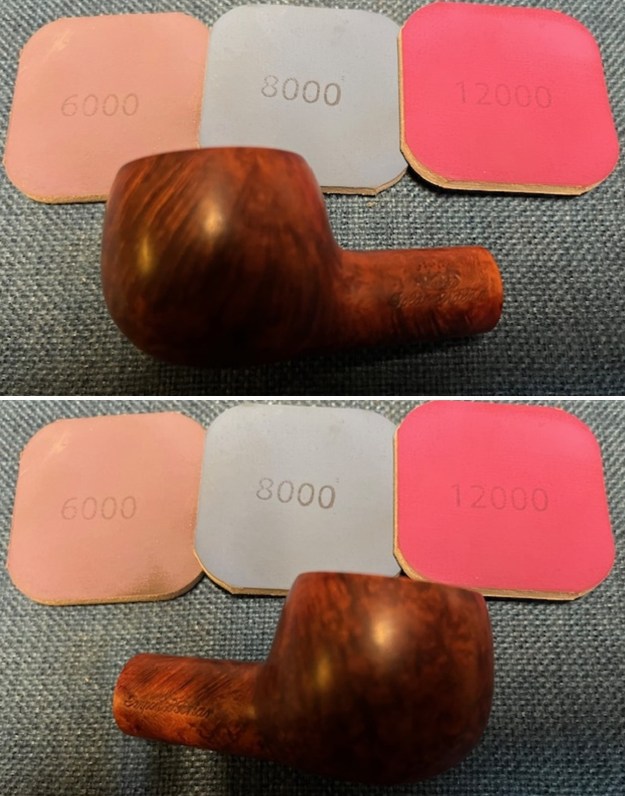
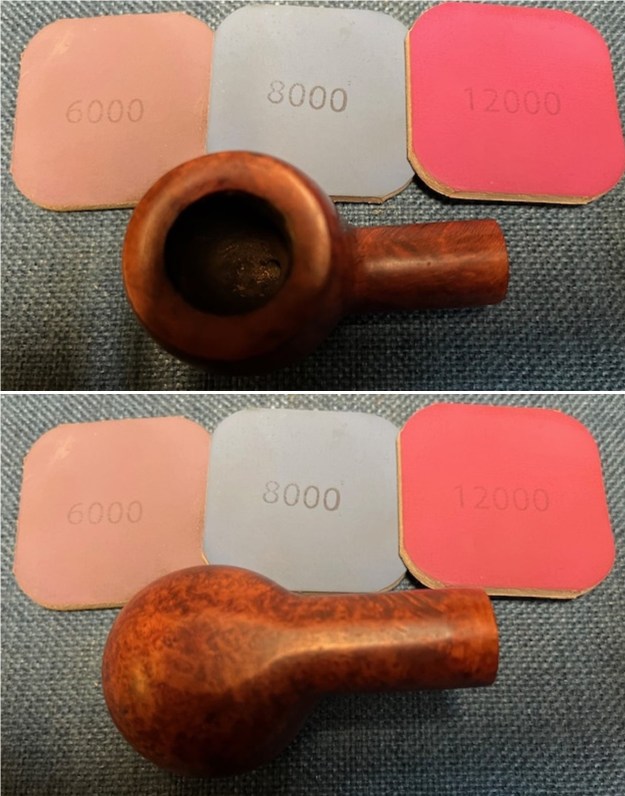
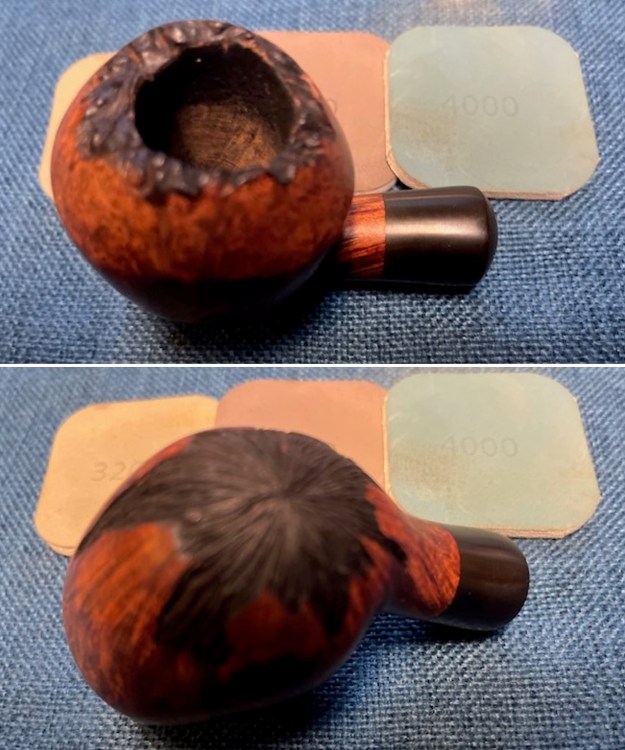
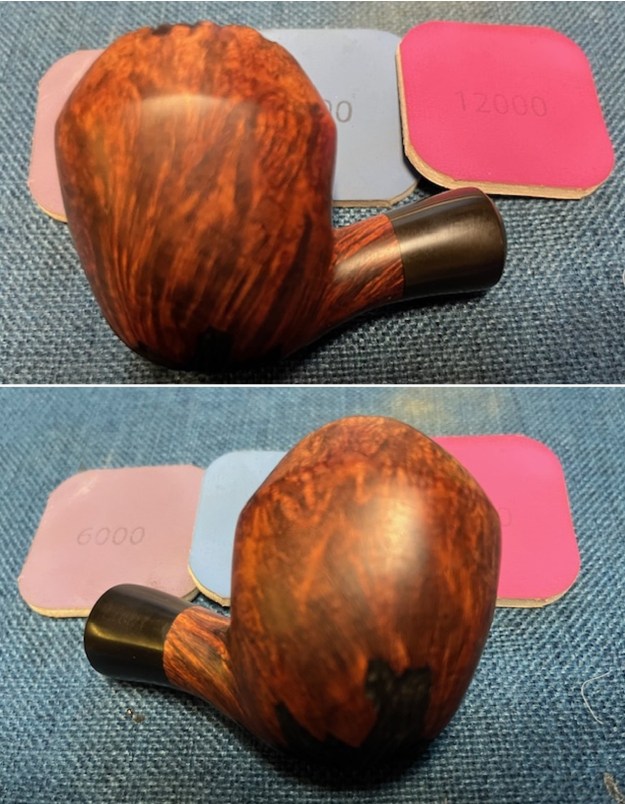
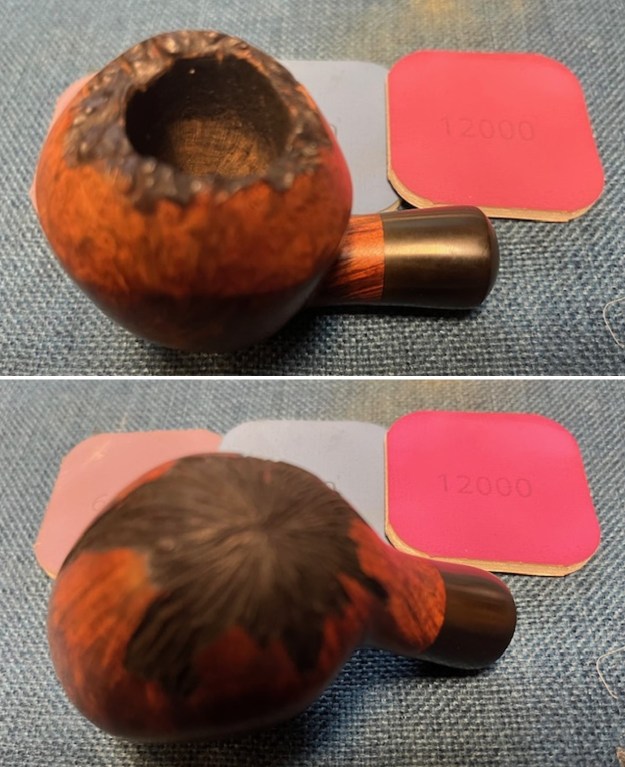
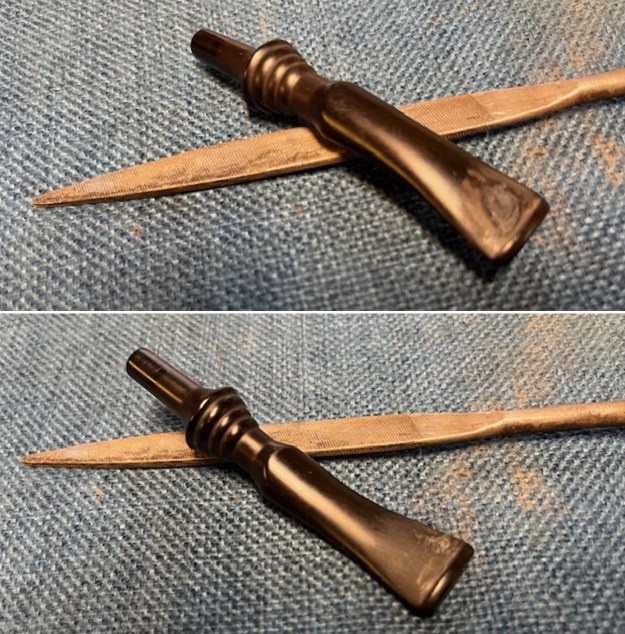
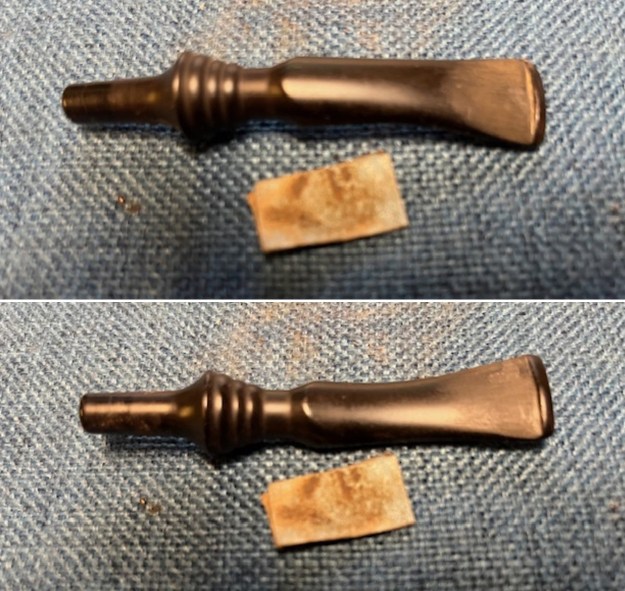
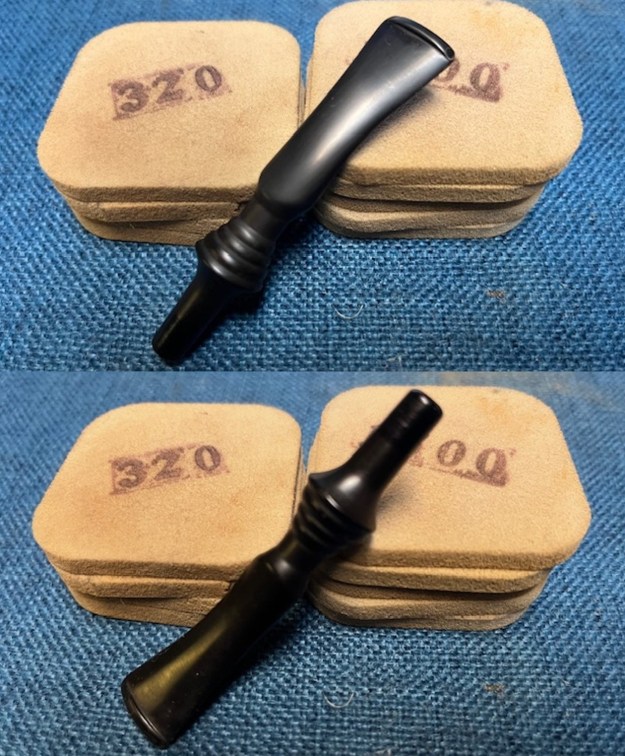
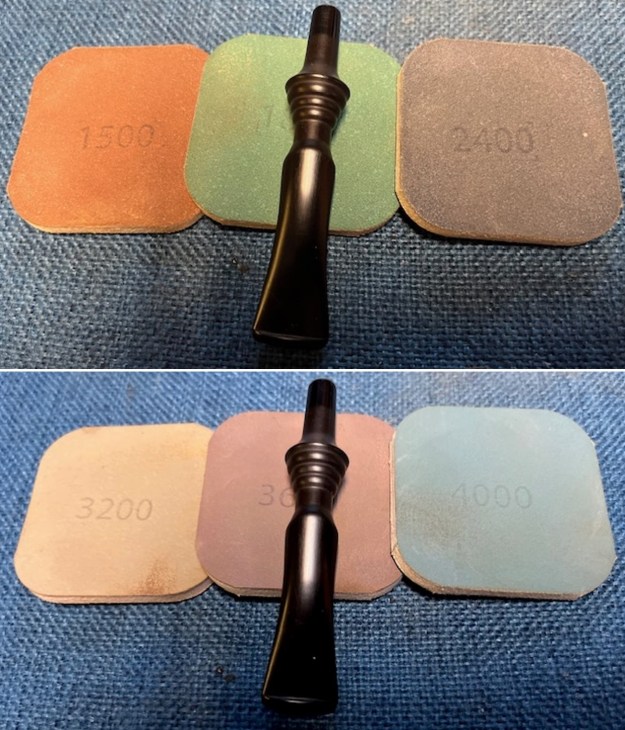
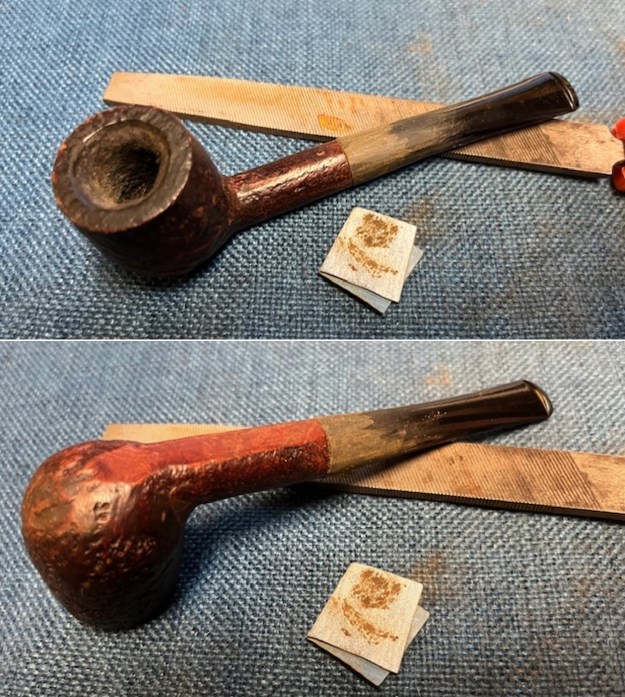
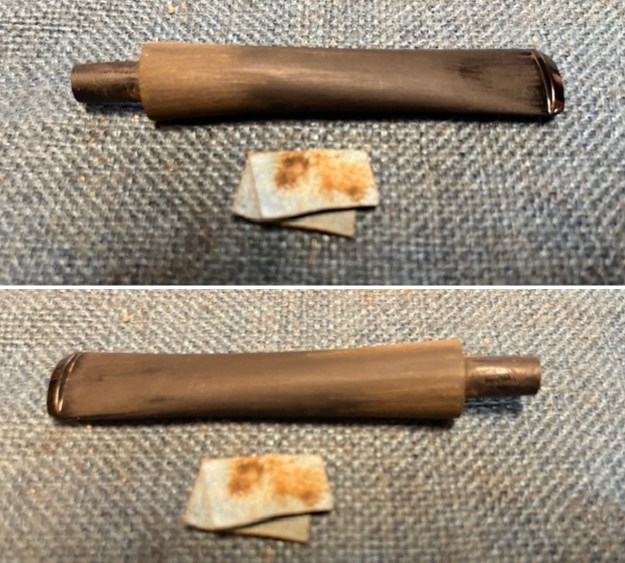
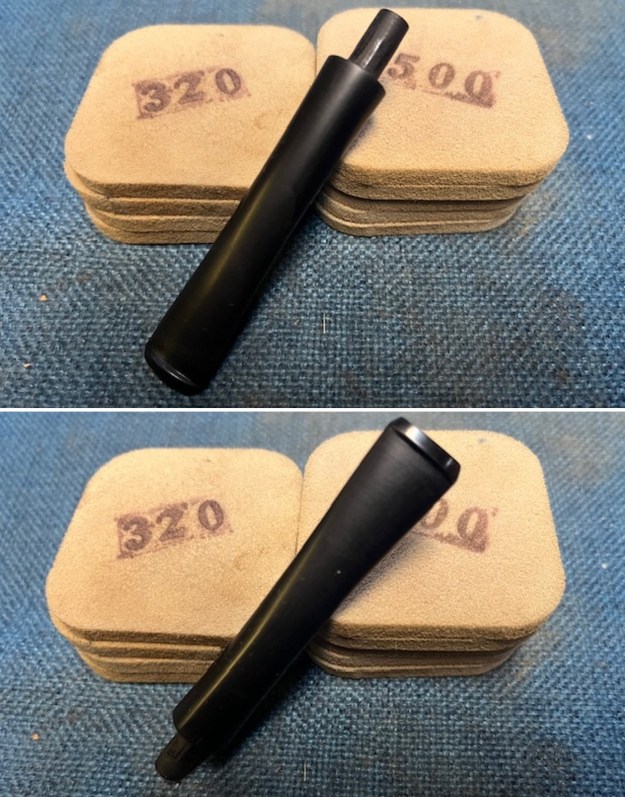
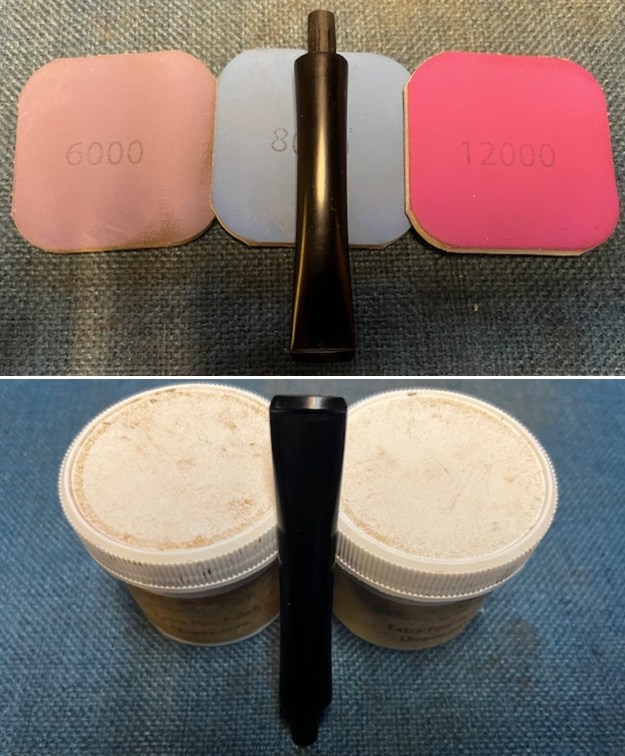
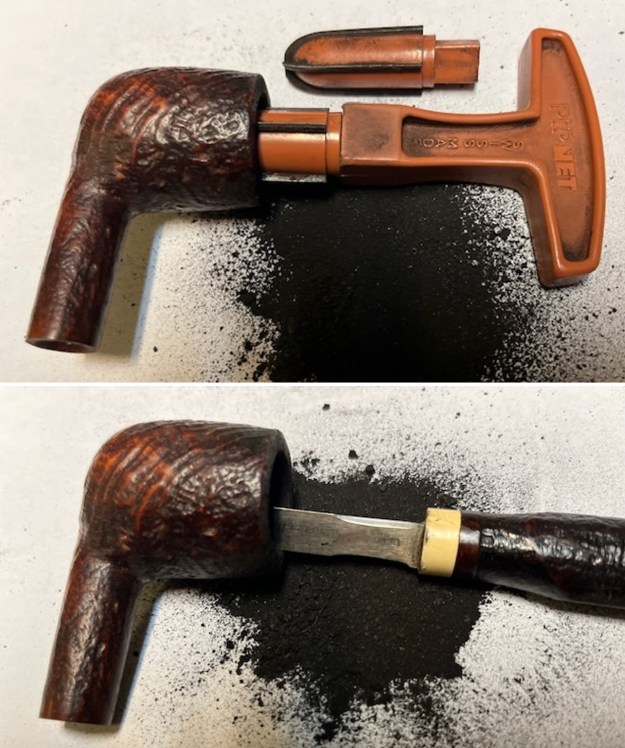
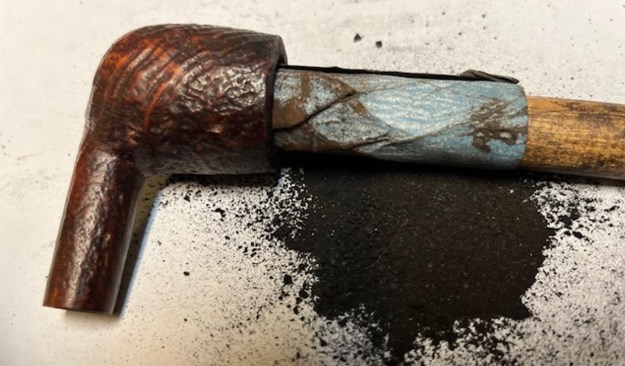
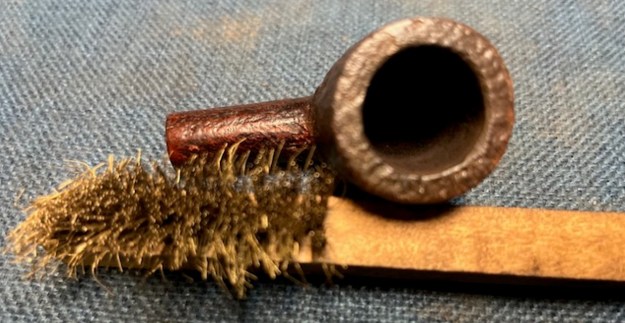
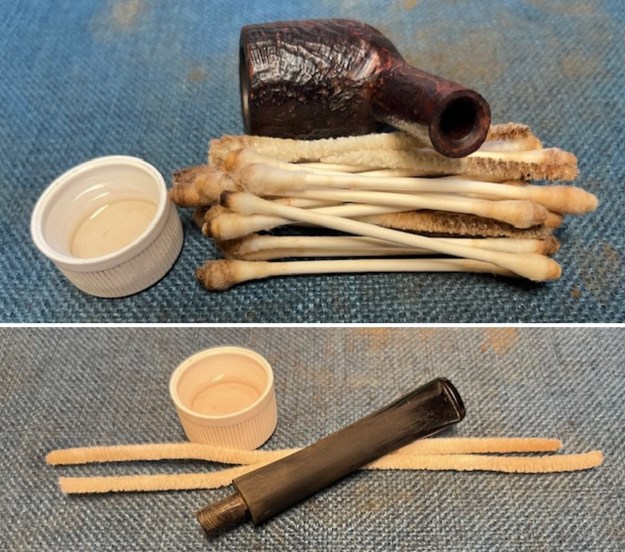
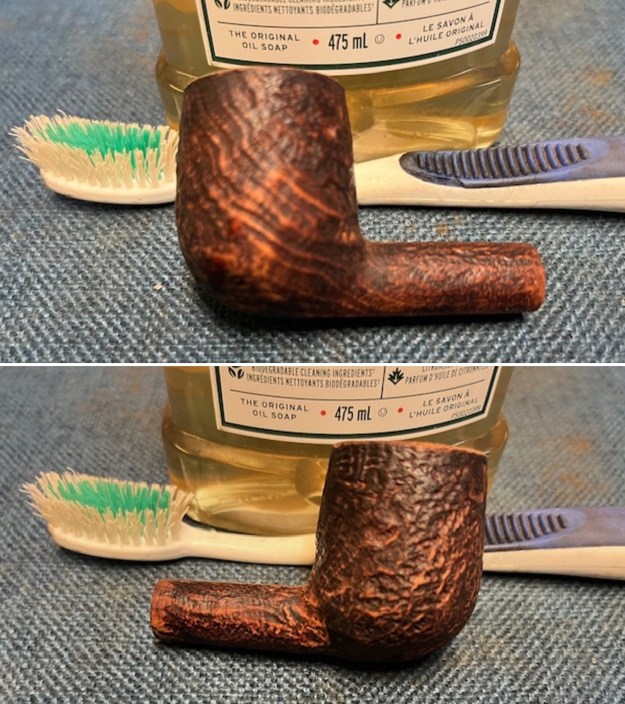
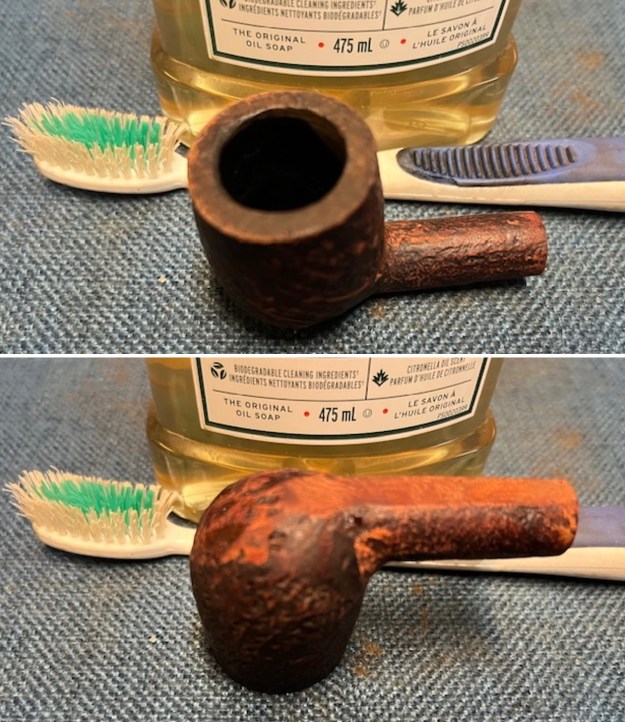
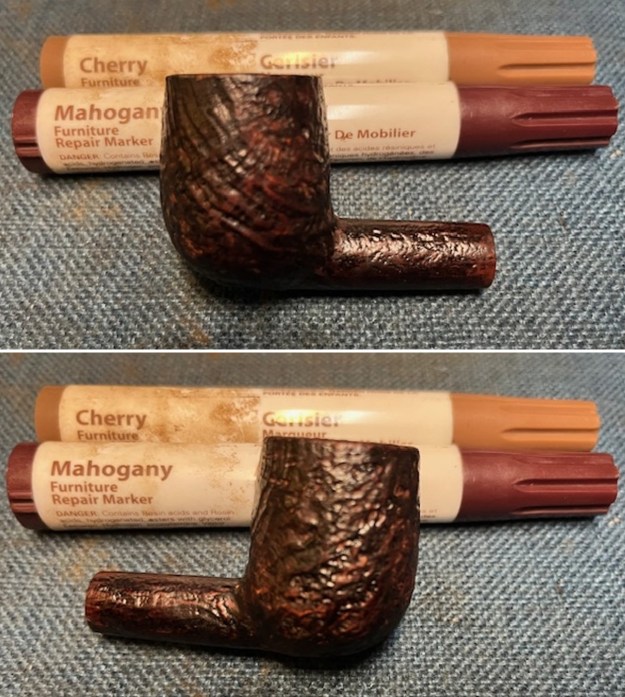
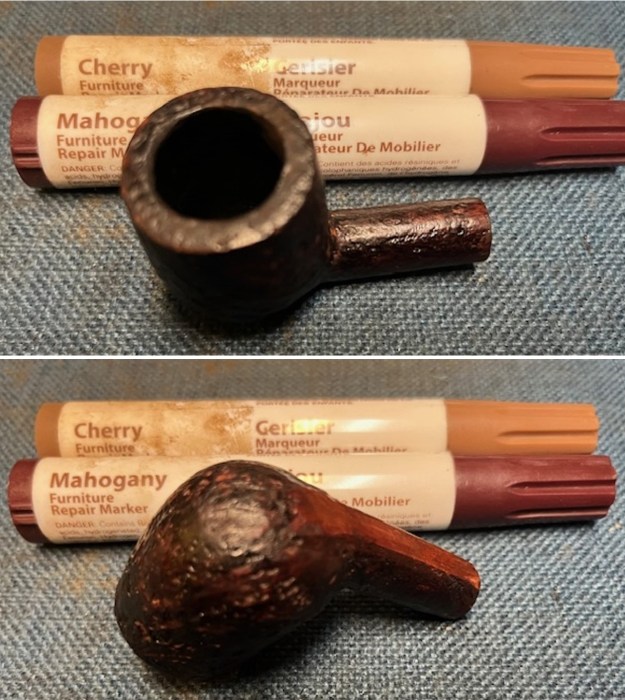
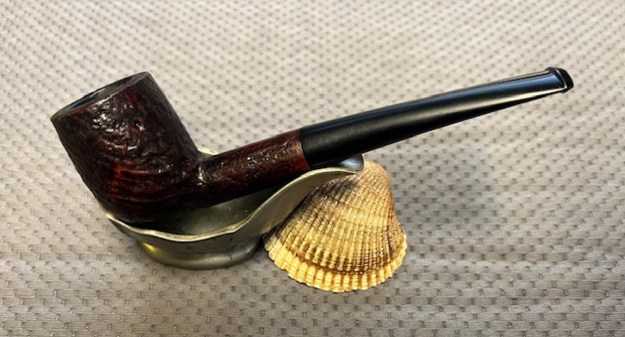
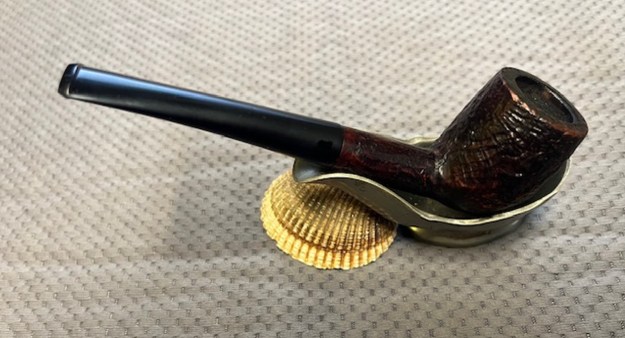
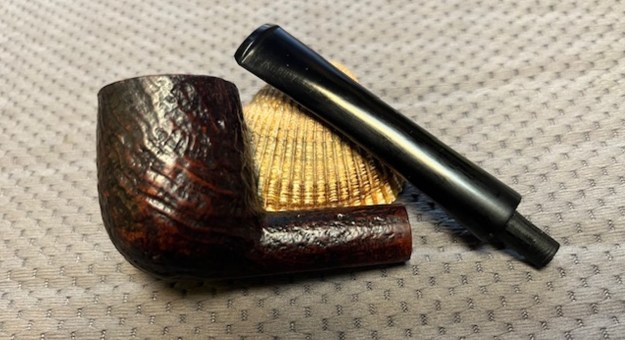
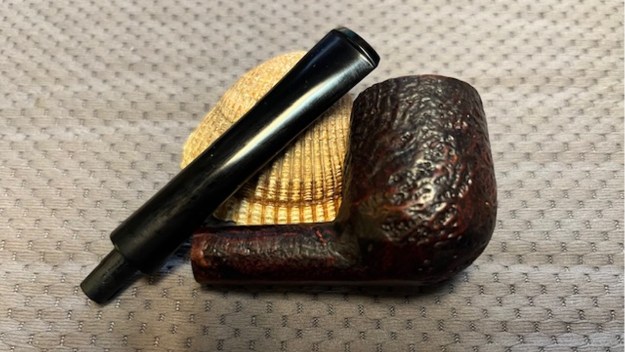
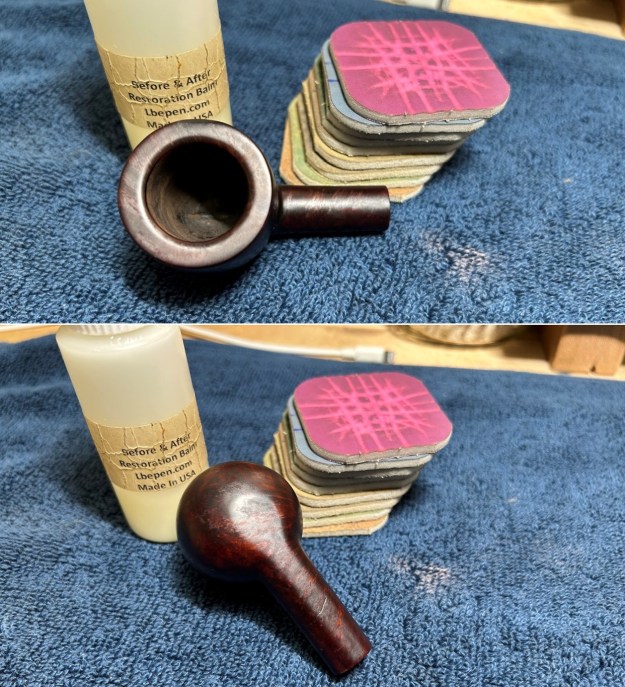
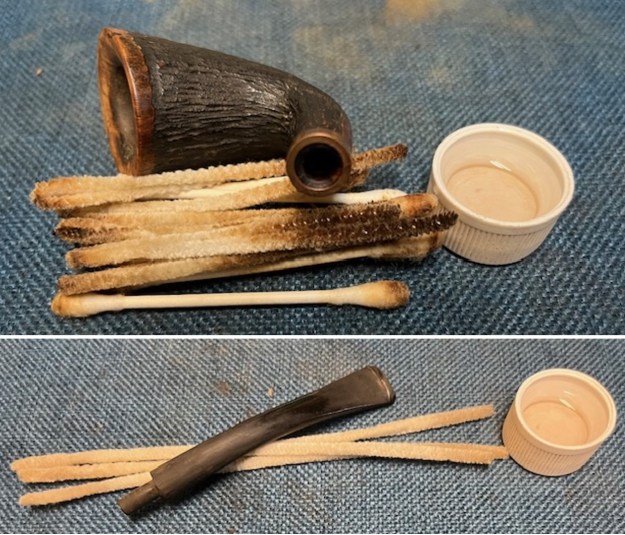
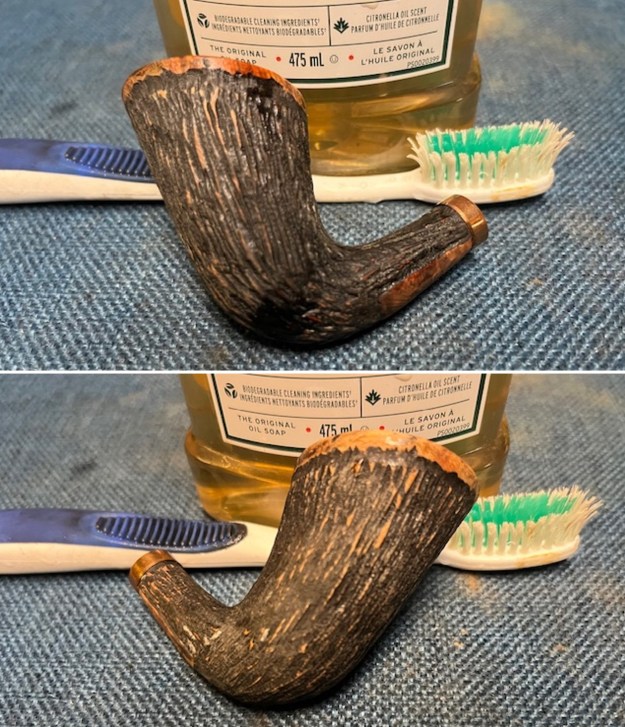
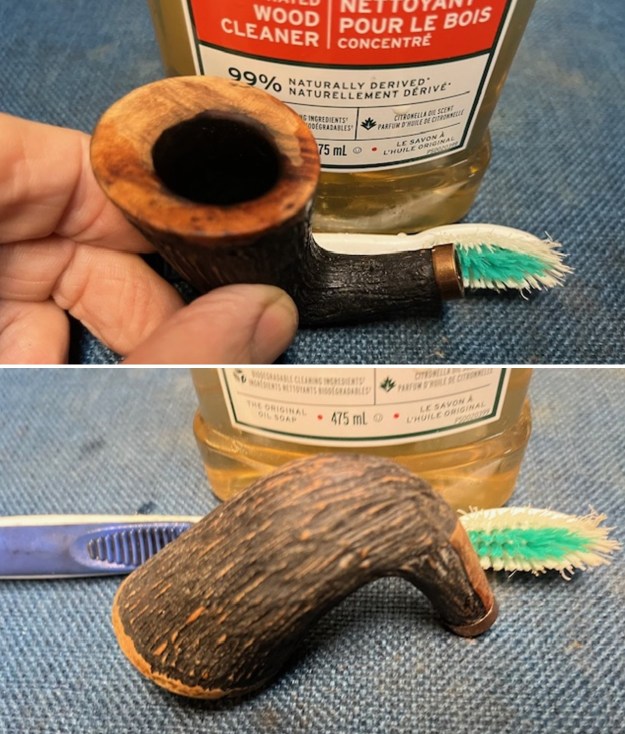
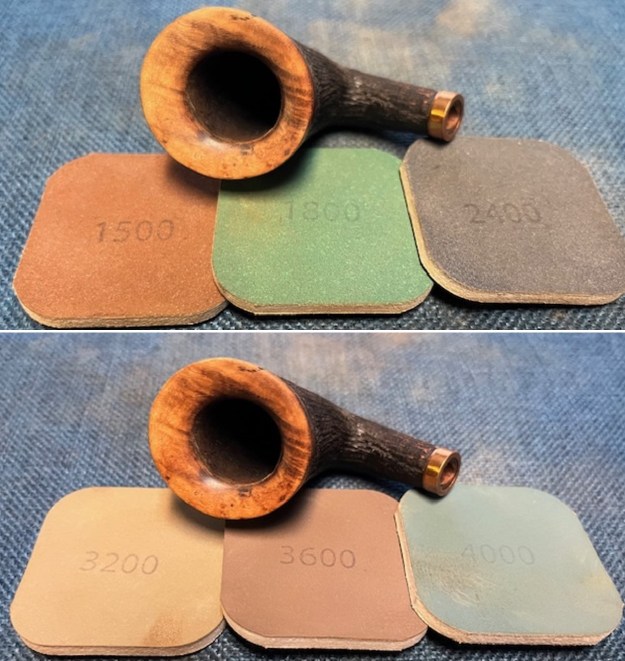
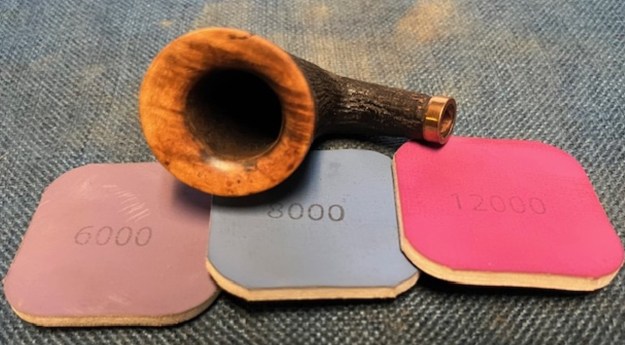
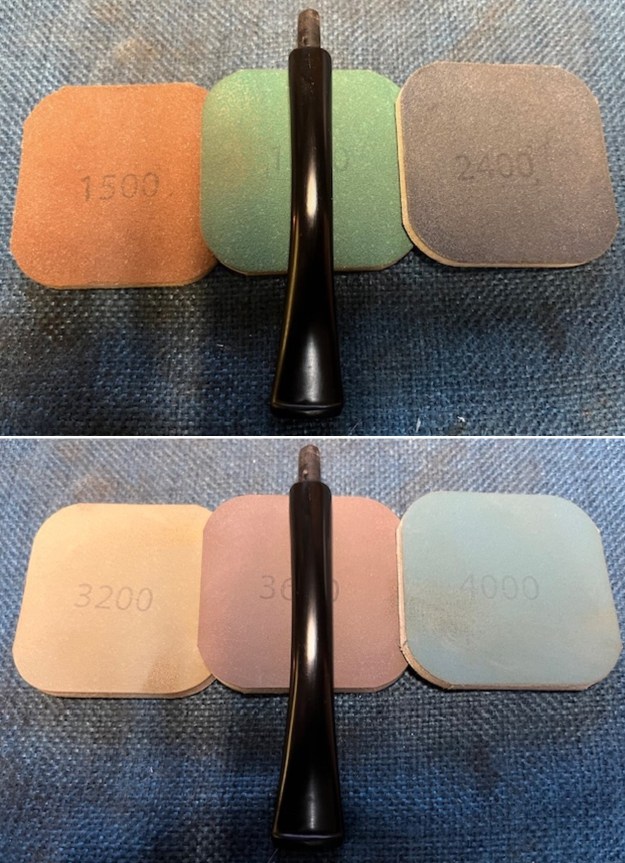
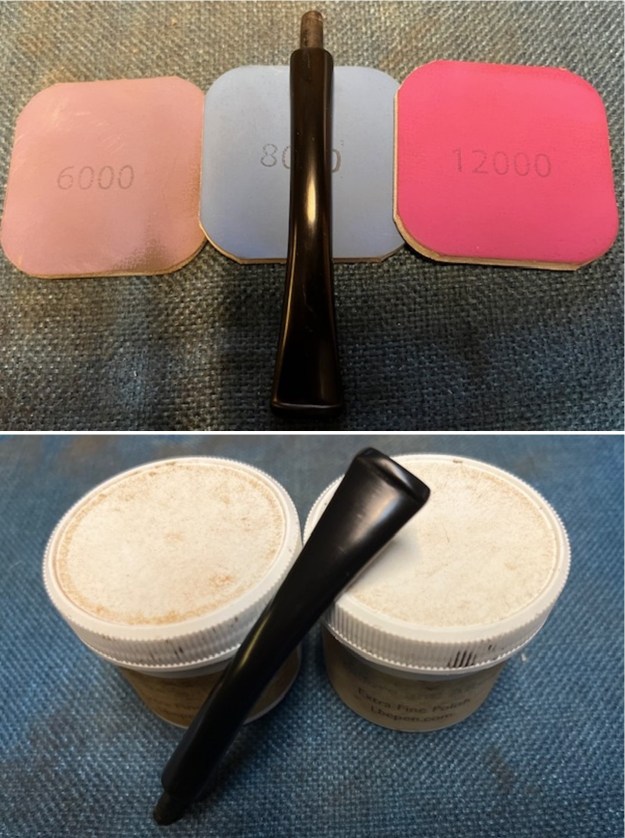
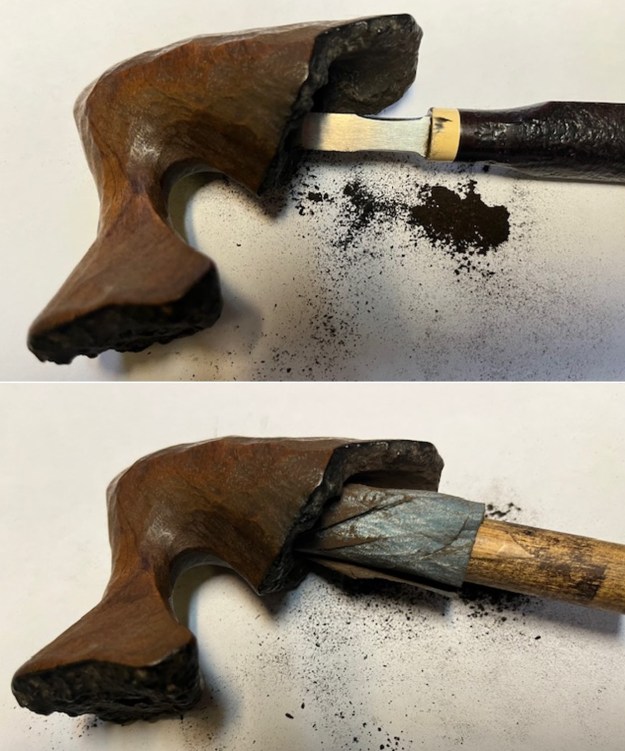
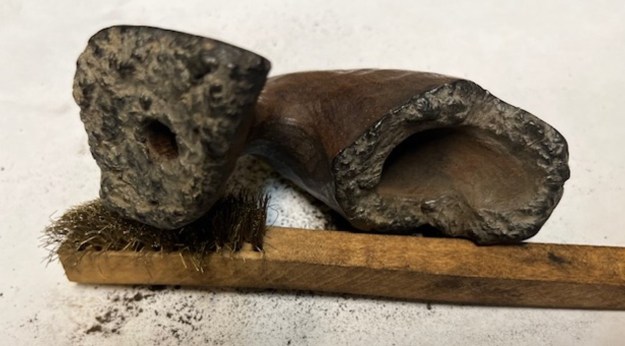
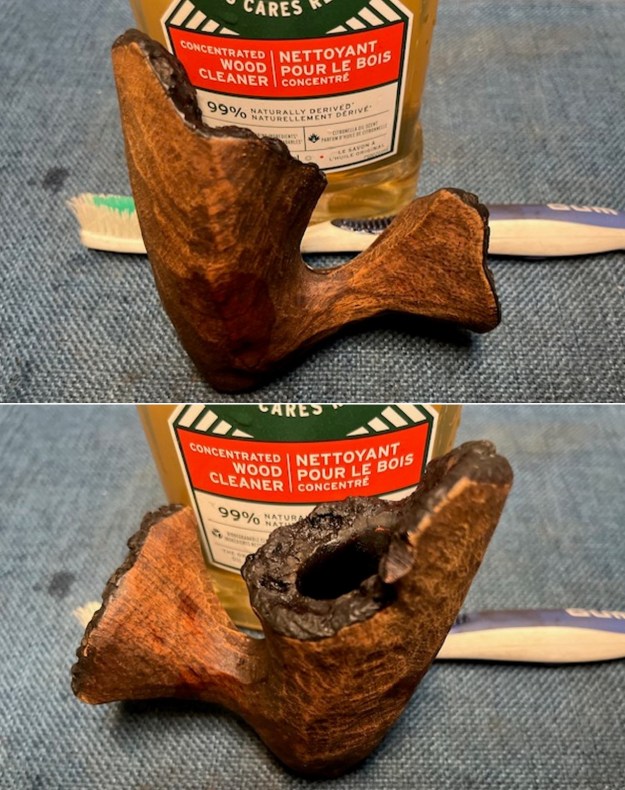
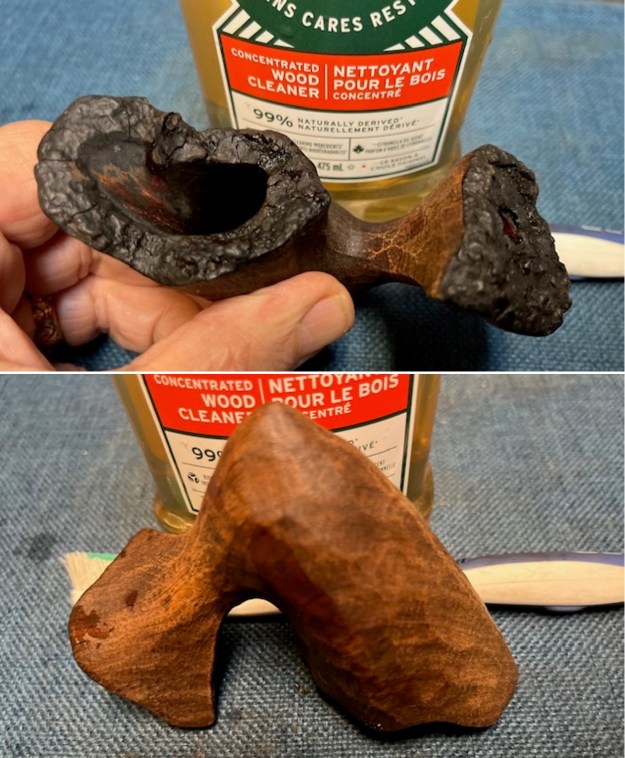
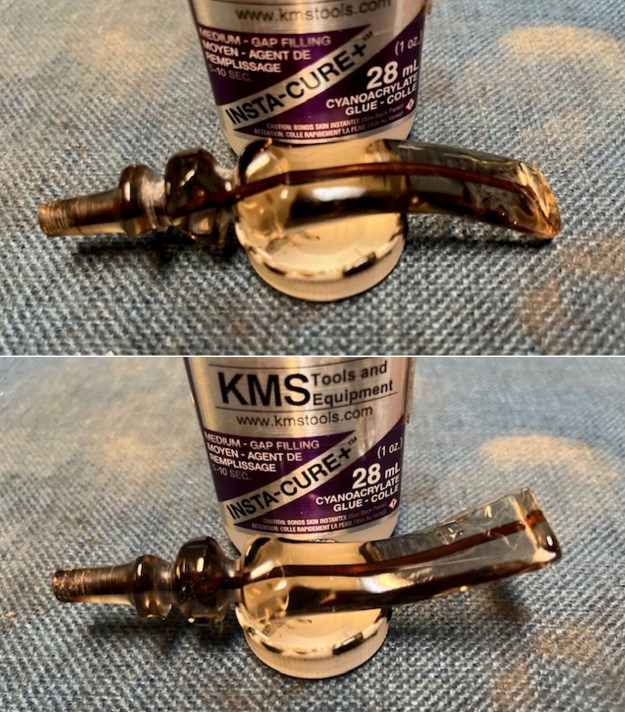
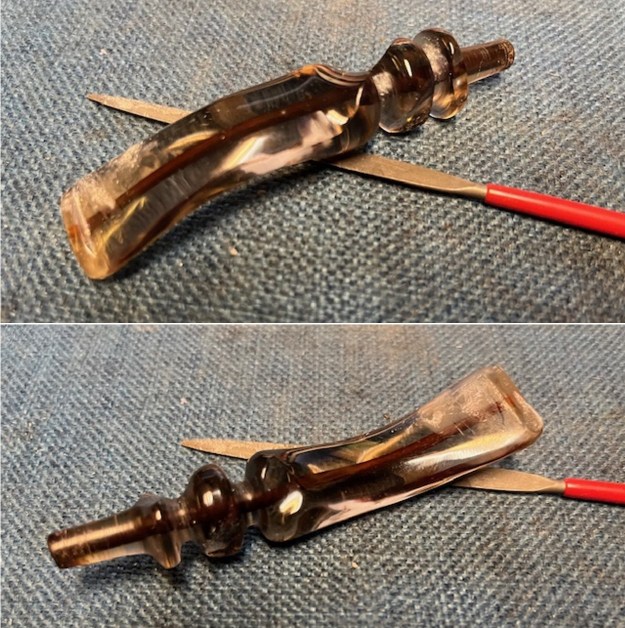
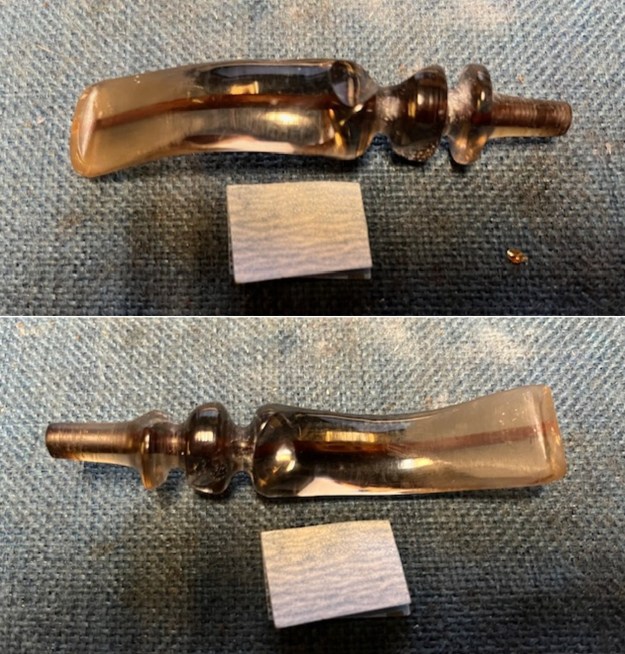
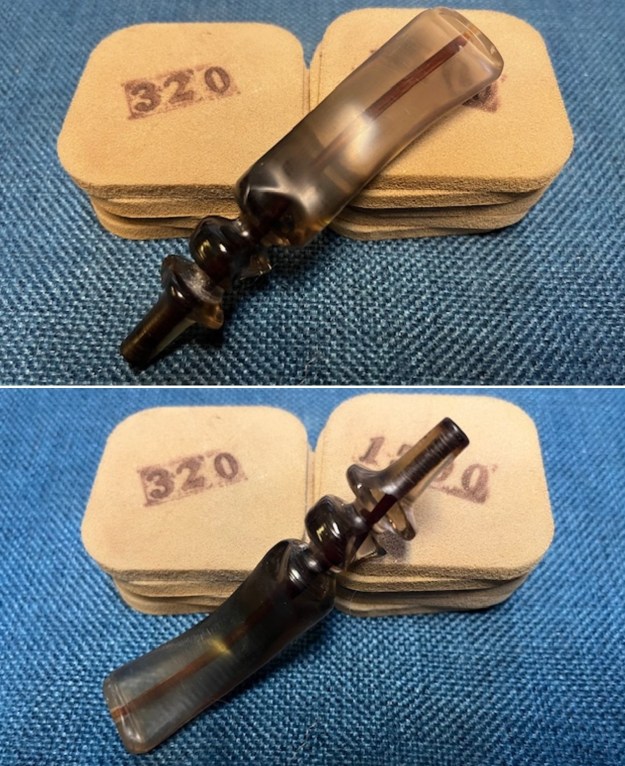
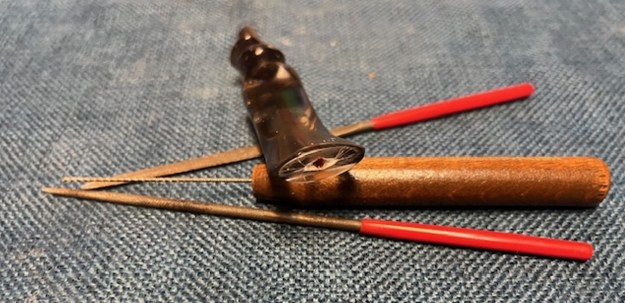
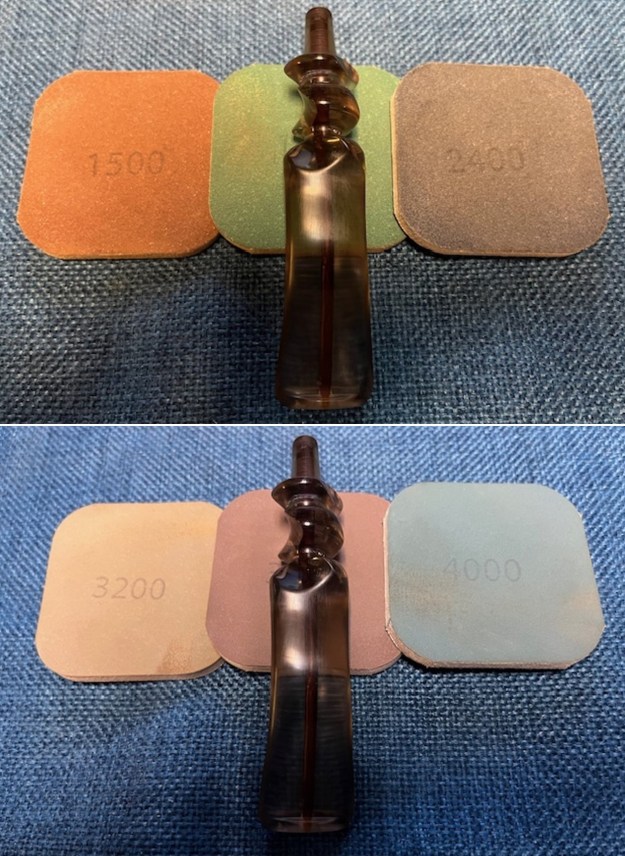
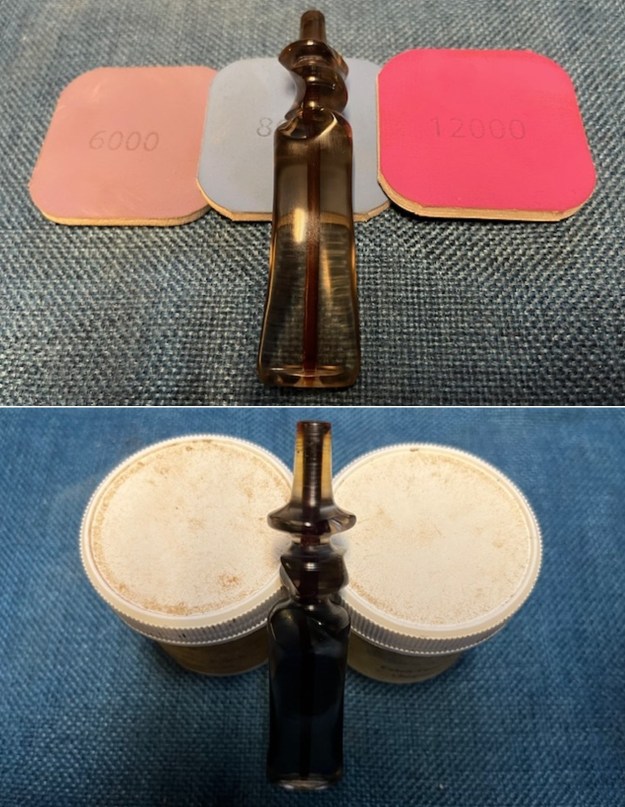
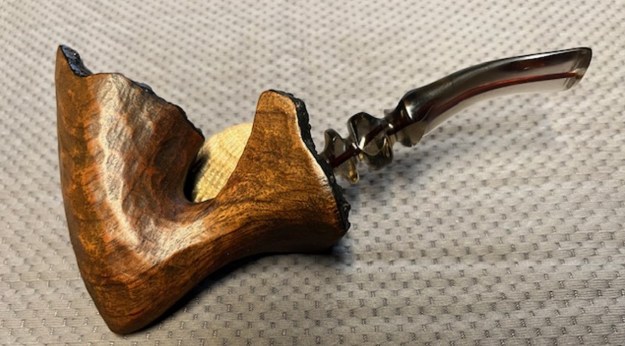
I decided to ream the bowl and do some internal clean up work before further polishing the briar. I reamed the bowl with a PipNet pipe reamer using the 2nd and 3rd cutting heads to remove the cake in the bowl. I cleaned up the reaming with a Savinelli Fitsall Pipe Knife and finally sanded the bowl with 220 grit sandpaper wrapped around a piece of dowel to clean up the walls of the bowl. The walls appeared to be in good condition. I scrubbed out the internals with pipe cleaners (normal & bristle), cotton swabs and alcohol to remove the tars and oils in the shank between the mortise and the entrance of the airway into the bowl. It was quite dirty.I scrubbed the aluminum “spoon” stinger and threaded tenon with a brass bristle wire brush to remove the debris and start the polishing. I scrubbed the bowl and rim top with undiluted Murphy’s Oil Soap and a tooth brush to remove the grime. I rinsed it with warm water and dried it off with a cotton towel. There were still some shiny spots on the briar where the varnish had stuck to the finish. I wiped the bowl and shank down with acetone to remove the shiny spots. It worked well and the bowl looked great once it dried off. I sanded the bowl and shank with sanding pads – 320-3500 grit pads. I wiped the bowl down after each sanding pad to remove grime and check the progress. It was looking very good by the time I finished with the final pad. I polished the rim top and bowl with micromesh sanding pads – dry sanding with 1500-12000 grit sanding pads. I wiped it down with a damp cloth after each sanding pad to remove the dust and debris. The grain stood out more with each set of pads. I worked some Before & After Restoration Balm into the finish of the bowl, rim top and shank with my fingertips to clean, enliven and protect it. I find that the balm really makes the briar come alive again. I let the balm sit for 15 minutes and then buffed with a cotton cloth to raise the shine. The bowl really looks good at this point. I set the bowl aside and turned my attention to the stem. I cleaned off the surface of the stem with alcohol on cotton swabs. I filled in the deep tooth marks on the top and underside ahead of the button. I set it aside and let the repairs cure.I flattened the repairs with a small file to start the process of blending them into the surface of the vulcanite. I sanded the stem with 220 grit sandpaper to smooth out the repairs and remove the stubborn oxidation in the grooves and against the button edge. I sanded the stem with 320-3500 grit sanding pads and wiped the stem down after each pad with an Obsidian Oil saturated cloth to remove the grime and protect the stem. I polished the stem with micromesh sanding pads – dry sanding it with 1500-12000 grit pads. I polished it further with Before & After Pipe Stem Polish – both fine and extra fine. This once wreck of a pipe turned out to be a beautiful Dr. Grabow Supreme 9437 Straight Bulldog with a black vulcanite saddle stem. It has a great look and feel. The shape fits well in the hand with the curve of the bowl and shank junction a perfect fit for the thumb around the bowl when held. I polished stem and the bowl with Blue Diamond polish on the buffing wheel. I gave the bowl and the stem multiple coats of carnauba wax. I buffed the pipe with a clean buffing pad to raise the shine. I hand buffed it with a microfiber cloth to deepen the shine. The pipe polished up pretty nicely. The rich combination of browns in the smooth finish took on life with the buffing. The rich colour of the briar works well with the polished stem. I like the grain and finished look of this Dr. Grabow Supreme 9437 Straight Bulldog. Have a look at it with the photos below. The shape, finish and flow of the pipe and stem are very well done. The dimensions are Length: 5 ½ inches, Height: 1 ½ inches, Outside diameter of the bowl: 1 inch, Chamber diameter: ¾ of an inch. The weight of the pipe is 1.20 ounces/35 grams. This older American Made Bulldog is a real beauty. Thanks for walking through the restoration with me as I worked over another beautiful pipe. I will set it aside and once I finish the other three pipes that Jack sent to me I will send the lot back to him. Thanks for your time.

Repairing a Broken Tenon and Restoring a Wreck of a Ben Wade Deluxe Freehand


by Steve Laug

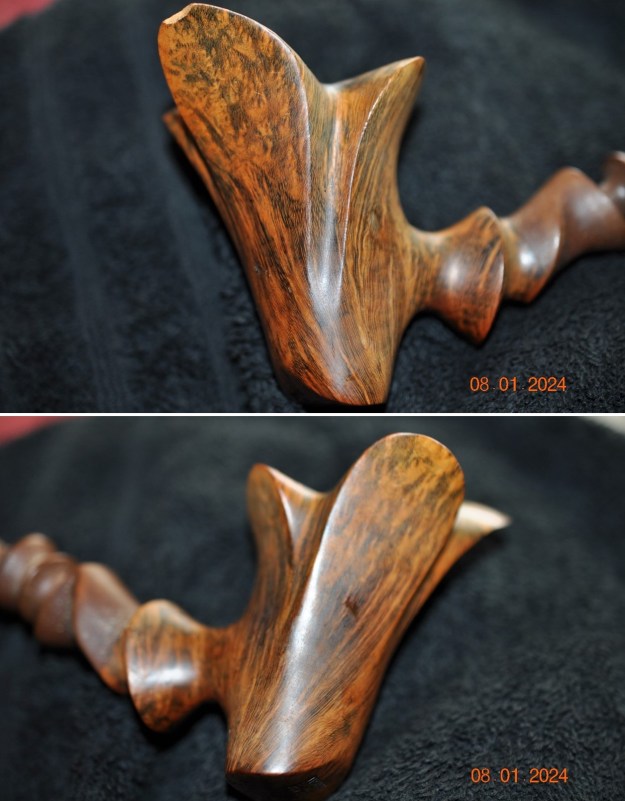
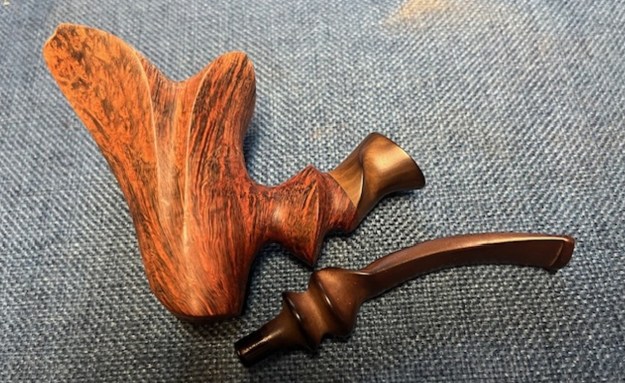
There is something almost electric about handling and working on a pipe designed and carved by Preben Holm. I can’t describe adequately the feeling I have when I turn the bowl and stem over in my hands even before I start working on the pipe. There is an energy that flows through the way he carved and shaped the pipes of his making. It calls me to clean up and restore even the worst wrecks of his pipes that come across my table. This filthy Ben Wade Deluxe was in the box of bowls with snapped tenons that I have here. It is number 6 of the recent rash of tenon replacements I have been doing.

In the title I call the pipe a wreck because of some serious issues that stood out on the pipe. It had some visible repairs on the shank at the bowl and on the plateau on the shank end. The shank had been broken off somewhere along its journey. It had been well repaired with a stainless tube inside the shank. The repairer left a lot of glue all around the repaired crack – I say around because it went well beyond just the crack. It was a mess. The shank end plateau had what looked like a crack but surprisingly turned out to be a repaired chunk of briar that had been expertly fit and rusticated on the top right side along the mortise. The vulcanite stem had a snapped tenon and was oxidized, calcified and had tooth marks ahead of the button on both sides.

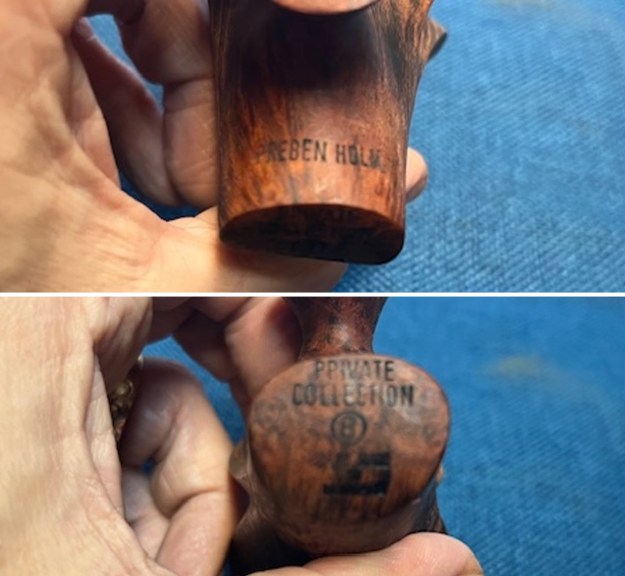
The grain on the bowl was present but almost a ghost. Preben Holm always chased the grain so it must be there under the dirt, messy glue and heavy oils on the surface. The plateau on the rim top was worn and heavily filled in with lava and debris on both the top. The shank end plateau was dry and spotty looking from the grime. While the pipe was a wreck all of the repairs pointed to the fact that it was well loved. It had continued to be smoked until the tenon snapped in the shank. The thick cake in the bowl and the lava on the rim top point to the fact that it was always in use. The cake is quite sticky and stinky and makes me wonder what was smoked in the pipe. Was it a heavily cased aromatic or something more nefarious? I am not sure, maybe both! I took these photos before I started my work. I took close up photos of the bowl and rim top to show the condition of both the bowl and plateau finish. You can see the lava and build up on the rim top and the lava flowing over the inner edge of the bowl. It is hard to know if there is damage or if the lava protected it. The bowl has a thick cake that lining the walls and overflowing into lava. The plateau surface is duty and also has some lava overflow in the valleys and crannies of the surface. The stem is oxidized, calcified and has tooth marks and chatter on both sides ahead of the button. Add to the mix the snapped tenon and you have a mess!I took a photo of the shank end to show the snapped tenon in the shank. It is snapped off quite smooth so it should be a relatively easy fix.I took a photo of the stamping on the underside of the shank, It is clear and readable. It reads Ben Wade [over] Deluxe [over] Hand Made [over] In [over] Denmark.I remembered a bit of history on the brand that included the thought that the Preben Holm pipes were marketed under the Ben Wade label in the US and imported through Lane Ltd. I turned to Pipedia and read the listing on the brand to refresh my memory and flesh out the knowledge of the brand (https://pipedia.org/wiki/Ben_Wade). I have included a photo from that site that was taken from a Tinderbox advertisement.Ben Wade Ad in a Tinder Box catalog, courtesy Doug Valitchka 

I quote the portion of the article that summarizes the history of the brand.

Advertisement

Young Copenhagen master pipemaker Preben Holm had made a meteoric career heading a pipe manufacture employing 45 people at the age of 22! But around the turn of 1970/71 he was in major financial difficulties. His US distributor, Snug Harbour Ltd. in New York City, left him in the lurch. Holm had three unpaid invoices on his desk and another large shipment was ready for the USA, when Snug Harbour’s manager told him on the phone that there was no money at all on the account to pay him.

So the Dane went to New York for an almost desperate search for a new distribution partner. He made contacts with Lane Ltd. and met Herman G. Lane in February 1971. Lane Ltd. had no interest in Holm’s serial pipes produced at that time but so much the more in the hand-carved freehands because the hype for Danish freehands and fancies in the States was still on its way to the climax then. The meeting resulted in an agreement to start a cooperation. Lane insisted to improve the quality considerably and in return he assured to be able to sell essentially larger quantities.

Holm went back home to work on new samples with all-new designs and altered finishes for Lane. Both, Lane and Holm, agreed that it would be unwise to sell the pipes under Preben Holm’s name as long as Snug Harbour had a considerable stock of Preben Holm pipes and might sell them pipes at very low prices just to bring in some money.

So on Mr. Lane’s proposal it was determined to use the name Ben Wade belonging to Lane Ltd. Lane spent considerable amounts of money for advertising the new brand in the big magazines– the centerpiece being whole-page ads showing a very exclusive Seven Day’s Set.

The cooperation with Lane Ltd. proved to be an eminent business success for both partners. Within a very short time Ben Wade Handmade Denmark sold in much larger quantities and at higher prices than they had ever dreamed of. And the hype these freehands and fancy pipes caused went on unbroken long after Herman G. Lane deceased. Preben Holm – obviously much more brilliant in pipe making than in pipe business – was in major troubles again in 1986 and had to sack most of his staff. The Ben Wade production was significantly lowered but continued until his untimely death in June of 1989.

Up to now Preben Holm made Ben Wade pipes are cult and highly sought for on the estate markets.

With that information I knew that this pipe was a Preben Holm made Freehand for distribution in the US by Lane Ltd under the name Ben Wade. The freehand rage occurred in the late 70s and the pipes were made until Preben’s death in 1989. My guess would be that this pipe was made sometime during that time period and potentially in the late 70s.

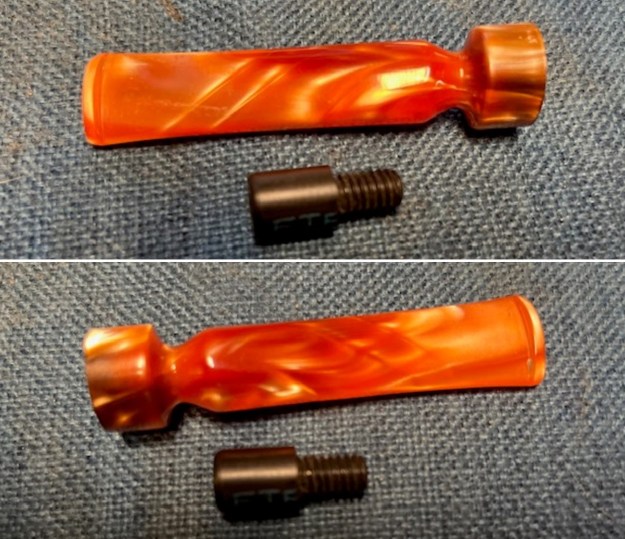
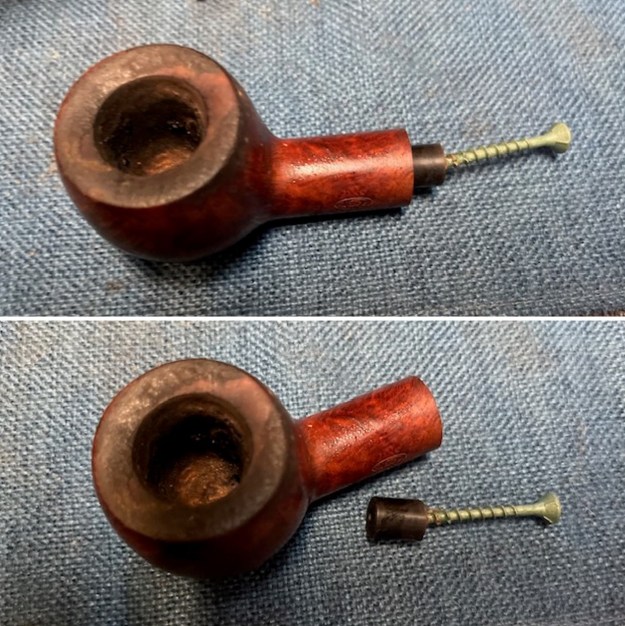
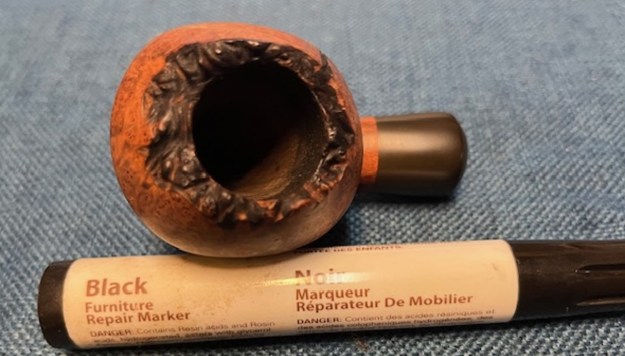
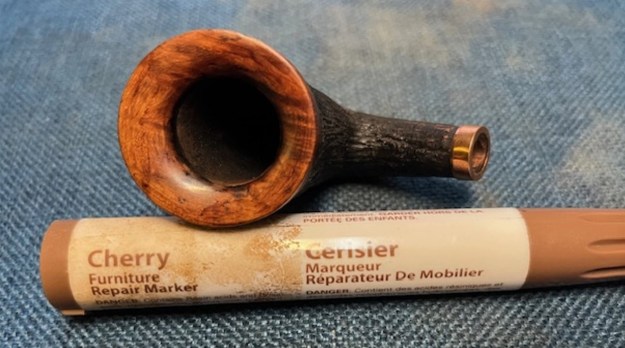
I started my work on the pipe by pulling the broken tenon from the shank. I used a dry wall screw turned into the airway in the broken tenon. I wiggled the tenon until it came free. It was tight so it took a bit of fiddling to get it to pop free.I took photos of the repaired crack on the shank. It had a heavy coat of glue all around the shank. It was smeared around the crack and also on the curved where the shank joined the bowl. It was messy but it was a strong bond. I sanded the area around the repair and the surrounding briar with a folded piece of 220 grit sandpaper. I was able to smooth out the repair and remove all of the glue spread around the briar. I decided to ream the bowl and do some internal clean up work before further polishing the briar. I reamed the bowl with a PipNet pipe reamer using the 2nd and 3rd cutting heads to remove the cake in the bowl. I cleaned up the reaming with a Savinelli Fitsall Pipe Knife and finally sanded the bowl with 220 grit sandpaper wrapped around a piece of dowel to clean up the walls of the bowl. The walls appeared to be in good condition. It still needed a lot of cleaning as the sticky debris was still on the walls. I cleaned out the shank and airway into the bowl and the stem with pipe cleaners, cotton swabs and alcohol to remove the tars and oils. I cleaned out the airway in the stem at the same time. I scrubbed the bowl and rim top with undiluted Murphy’s Oil Soap and a tooth brush to remove the grime. I rinsed it with warm water and dried it off with a cotton towel. I drew a box around the repair on the shank end. There was a square plug of briar that had been glued into the shank end and rusticated to look like plateau. I stained the shank end and the rim top with a black stain pen to blend the surfaces together. I used a brass bristle wire brush to work over the plateau on the top and shank end. I used a sanding pad to remove the black stain from the high spots on the plateau and it looked better. There was a strong stink of the previous tobacco (?) in the pipe so I stuffed the bowl with cotton bolls and filled it with alcohol using an ear syringe. I rolled a cotton boll and plugged the shank with it. I set it aside to draw out the tars and oils for the afternoon.While the cotton and alcohol were doing there work deghosting the bowl I turned my attention to working on the new tenon. I flattened out the tenon end of the stem with a Dremel and sanding drum and cleaned up the area on a topping board with 220 grit sandpaper.I drilled the home for the new tenon using airway in the stem as a guide. I drilled it several times with increasingly larger drill bits until I had the opening the same size as the threaded portion of the new tenon.I fit the tenon in the stem to make sure it was straight everything aligned straight. At this point the stem and new tenon looked very good. I took a break at this point and went out on the porch and enjoyed a few bowls in my new Castello. I came in late afternoon once it got cooler and checked on the deghosting of the bowl. I could not do any more work fitting the stem until I had removed the cotton bolls and cleaned out the shank and bowl once more. The cotton had darkened and once I removed it the bowl smelled much better. I cleaned up the bowl and shank with alcohol cotton swabs and pipe cleaners a second time. It smelled much cleaner and looked that way too. Now I could fit the new tenon to the mortise. I took a photo of the repair to the shank. There is a stainless steel tube in the shank that gives it more strength. It is a well done and solid repair. [The photo is from an earlier moment before I stained the shank end.]
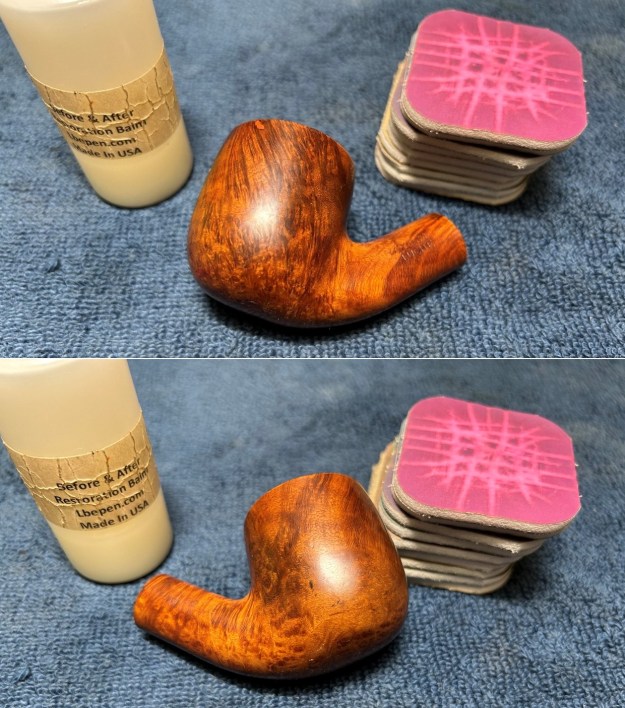
I used the Dremel and sanding drum to reduce the diameter of the new tenon to fit in the mortise. I fit it in the shank to make sure it would work well. I put it in the stem to show the fit as well. I put the tenon in the shank and slipped the stem over it to see what the pipe looked like with the stem fit in place. I liked what I saw and new that it would clean up very well and polish up nicely. Now that everything fit well I glued the tenon in the stem with black CA glue. I set the stem aside to let the glue cure. I sanded the bowl and shank with sanding pads – 320-3500 grit pads. I wiped the bowl down after each sanding pad to remove grime and check the progress. It was looking very good by the time I finished with the final pad. I polished the rim top and bowl with micromesh sanding pads – dry sanding with 1500-12000 grit sanding pads. I wiped it down with a damp cloth after each sanding pad to remove the dust and debris. The grain stood out more with each set of pads. I worked some Before & After Restoration Balm into the finish of the bowl, rim top and shank with my fingertips to clean, enliven and protect it. I find that the balm really makes the briar come alive again. I let the balm sit for 15 minutes and then buffed with a cotton cloth to raise the shine. The bowl really looks good at this point. I set the bowl aside and turned my attention back to the stem. I rubbed the stem down with Soft Scrub and cotton pads to remove the oxidation in the grooves. It looked much better once I had removed the oxidation.I sanded the stem with 220 grit sandpaper to smooth out the tooth marks and remove the stubborn oxidation in the grooves and against the button edge. Once finished it began to look better.I sanded the stem with 320-3500 grit sanding pads and wiped the stem down after each pad with an Obsidian Oil saturated cloth to remove the grime and protect the stem.I polished the stem with micromesh sanding pads – dry sanding it with 1500-12000 grit pads. I polished it further with Before & After Pipe Stem Polish – both fine and extra fine. This once wreck of a pipe turned out to be a beautiful Preben Holm made Ben Wade Deluxe with a fancy, turned, black vulcanite stem. It has a great look and feel. The shape fits well in the hand with the curve of the bowl and shank junction a perfect fit for the thumb around the bowl when held. I polished stem and the bowl with Blue Diamond polish on the buffing wheel. I gave the plateau on the rim top and shank end multiple coats of Conservator’s Wax. I gave the bowl and the stem multiple coats of carnauba wax. I buffed the pipe with a clean buffing pad to raise the shine. I hand buffed it with a microfiber cloth to deepen the shine. The pipe polished up pretty nicely. The rich combination of browns and black in the smooth and plateau finishes took on life with the buffing. The rich colour of the briar works well with the polished stem. I like the grain and finished look of this Preben Holm Ben Wade Deluxe Freehand. Have a look at it with the photos below. The shape, finish and flow of the pipe and stem are very well done. The dimensions are Length: 6 inches, Height: 2 ½ inches, Outside diameter of the bowl: 1 ¾, Chamber diameter: 7/8 of an inch. The weight of the pipe is 2.12 ounces/60 grams.This Danish Freehand is a real beauty. Thanks for walking through the restoration with me as I worked over another beautiful pipe. I will be putting it on the rebornpipes store in the Danish Pipe Makers Section shortly if you would like to add it to your collection. Thanks for your time.

Restoring a Peterson’s “Shannon” 80S Bulldog with a Fishtail Stem


by Steve Laug

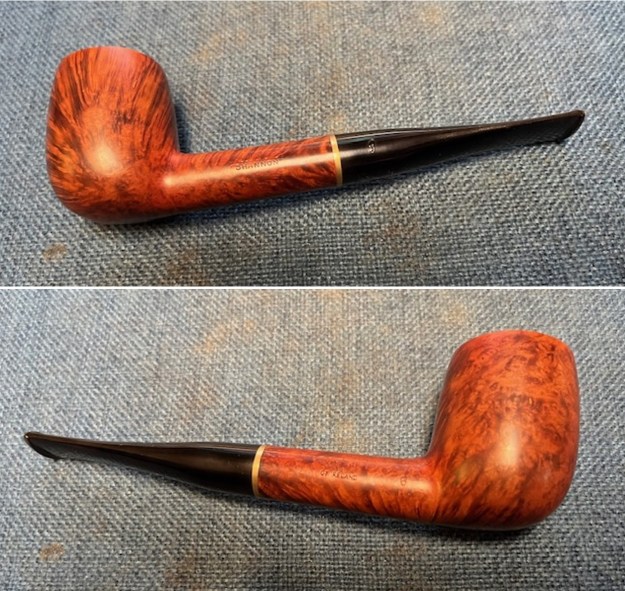
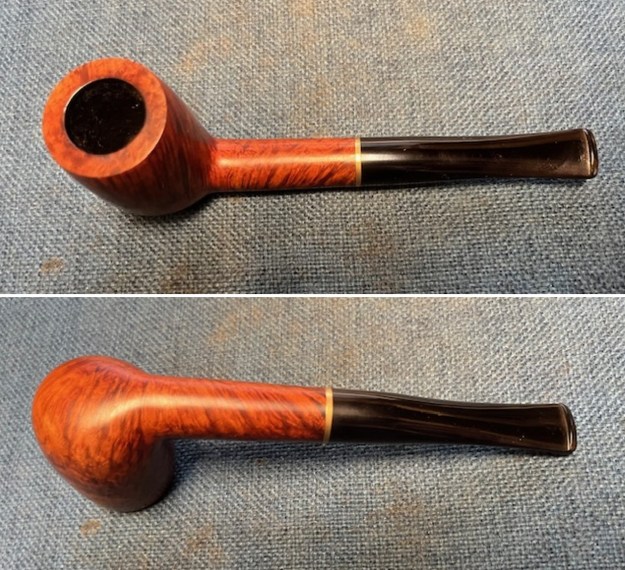
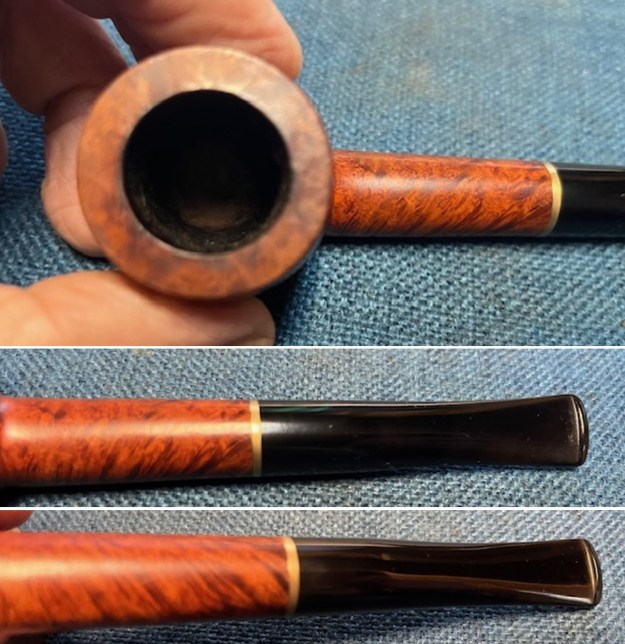
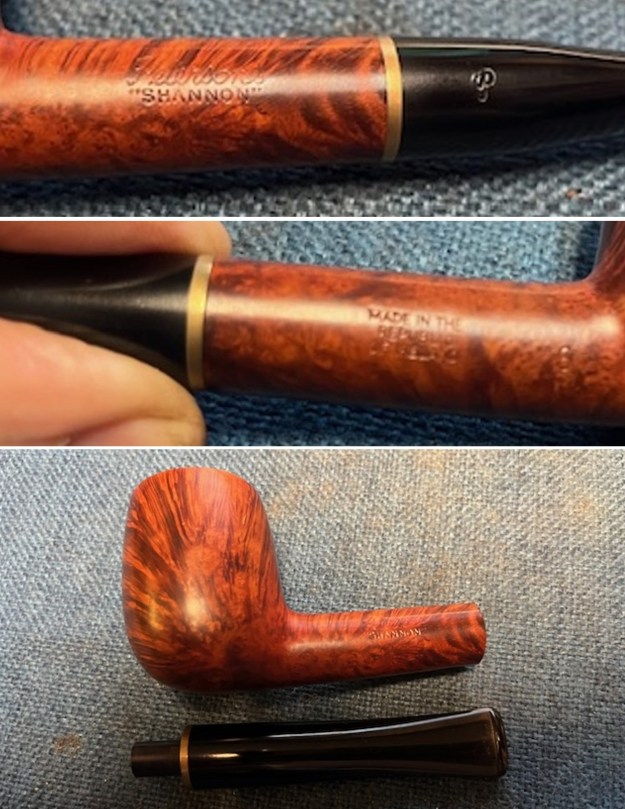
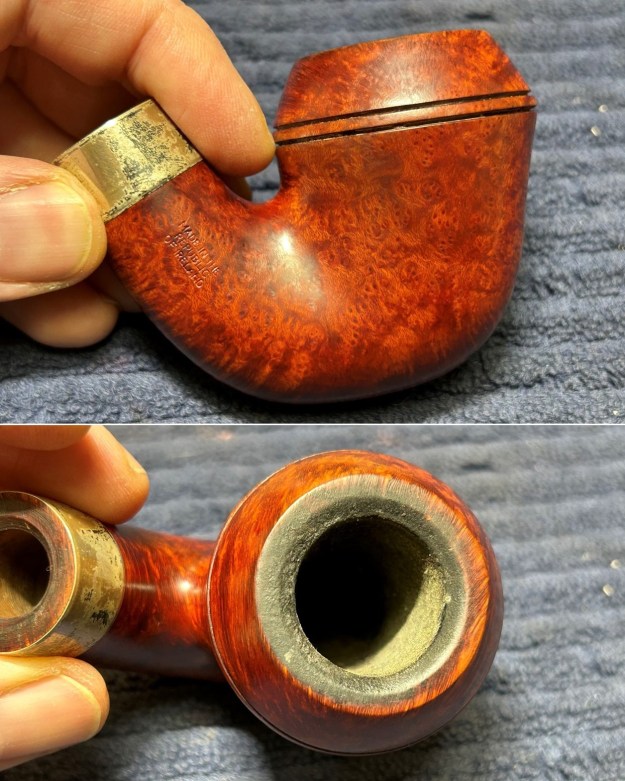
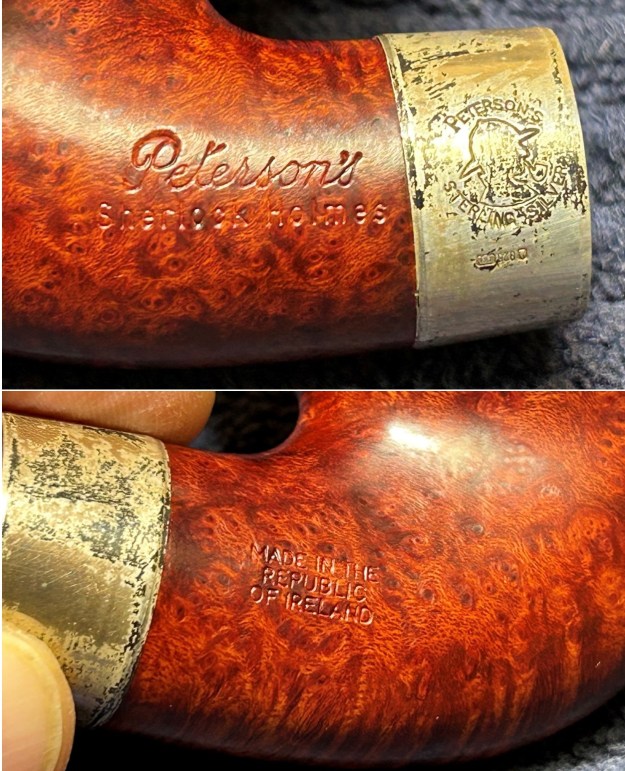
The next pipe on the work table is Peterson’s Bent Bulldog pipe that we purchased from and our connection in Denmark on 04/11/2024. It was stamped Peterson’s [over] “Shannon” on the left side of the shank. On the right it is stamped with Made in the Republic of Ireland (in three lines) over the shape number 80S. It is a classic Peterson’s Bent Bulldog shape that has a smooth finish with great grain around the bowl and shank that is covered with a lot of oils, debris and grime. There was a thick cake in the bowl with remnants of tobacco stuck on the walls. There was a heavy lava overflow on the inner edge of the bowl. The top and edges of the rim looked surprisingly good. There was a very beautiful pipe underneath all of the buildup of years of use. The stem was a Peterson’s fishtail stem with the P logo in faint white on the left side of the saddle. It was oxidized and calcified toward the end with some tooth marks and chatter on both sides ahead of the button. Jeff took photos of the pipe before he started his cleanup work on it. Jeff took photos of the bowl and rim top to show the thick, hard cake in the bowl with remnants of tobacco stuck on the walls of the bowl. There was a light lava build up on the top of the rim and some on the bevelled inner edge of the bowl. The rim top and edges looked pretty good but it was hard to know for sure if there was damage under the thick lava. Only clean up would tell the full story. Jeff took photos of the top and underside of the stem showing the deep tooth marks, chatter, scratching, calcification and oxidation on the stem surface. Jeff took photos of the sides and heel of the bowl to show the condition of the finish. You can see the grime around the sides of the bowl and shank. Even under the dirt and debris of the years it looked very good. Jeff took photos of the stamping on the sides of the shank and stem. The stamping was readable as you can see from the photos. It read as noted above. Before I started working on the pipe I turned to “The Peterson’s Pipe” by Mark Irwin and Gary Malmberg to see what it had to say on the “Kildare” line. On page 313 it says:

Shannon (19695-c.1987) First offered as entry-grade walnut or black sandblast, P-lip mouthpiece and a nickel band. In 1969-c.1970 offered through Iwan Ries as Shannon Meerschaum lined, middle grade black sandblast and higher-grade brown sandblast finish, P-lip mouthpiece. From 2005 as polished tan and black stain, unmounted, P-lip or fishtail mouthpiece with stamped gold P on the vulcanite mouthpiece.

I believe that the pipe I am working on is from the 2005 line. It has a polished tan and black stain and a fishtail mouthpiece. It has a classic shape and the information would make the pipe one issued after 2005. It has a bit of age on it and it is in excellent condition.

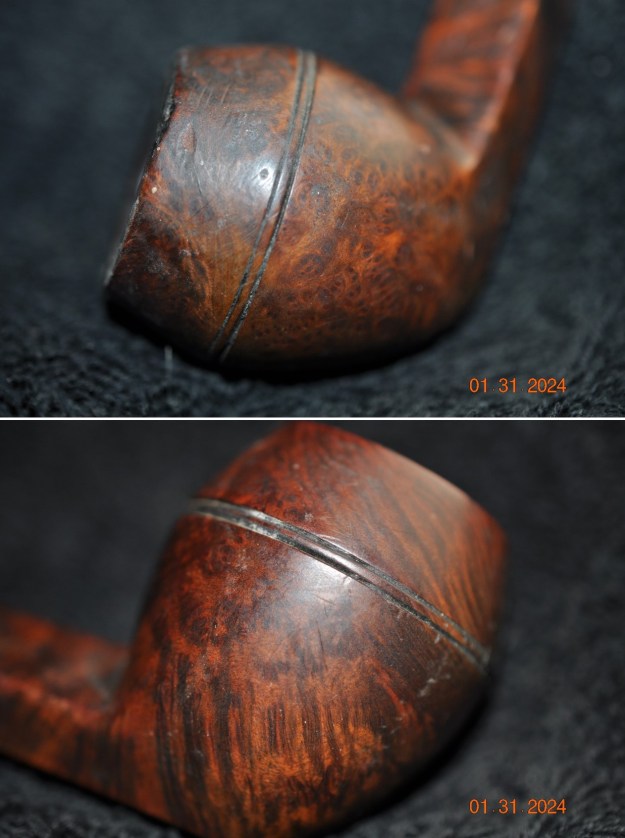
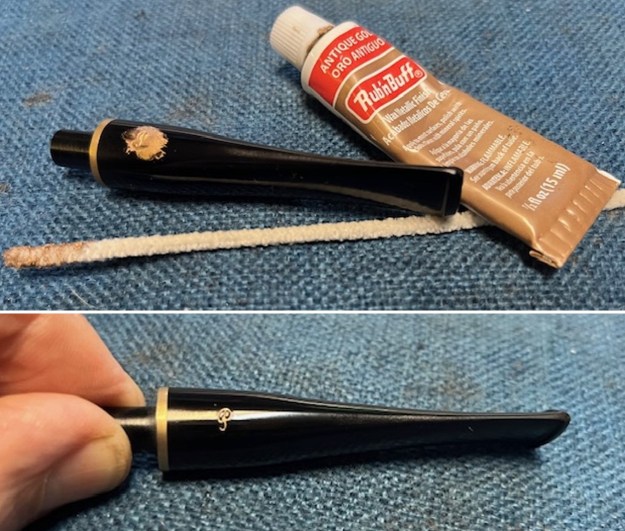
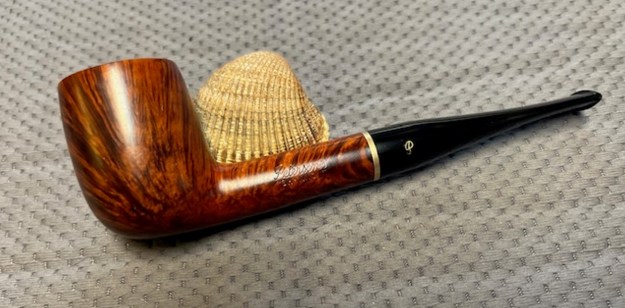
Jeff had cleaned it thoroughly. He had reamed it with a PipNet reamer and cleaned that up with a Savinelli Fitsall Pipe Knife. He had scrubbed the exterior of the briar with undiluted Murphy’s Oil Soap. He cleaned out the interior of the shank, sump and airway in the shank and stem with alcohol, pipe cleaners, shank brushes and cotton swabs. He scrubbed the stem with Soft Scrub to remove the oxidation and calcification on the surface. He soaked it in Briarville’s Pipe Stem Deoxidizer to remove the oxidation. He removed it from the Deoxidizer and rinsed it off with warm water. I took some photos of the pipe before I started my part of the work. I took some close up photos of the rim top and the stem surface. I wanted to show what an amazing job Jeff did in the cleanup of the rim top. The rim top and inner edge looked very good. I took close up photos of the stem to show the condition of the vulcanite. It was quite clean and there were some deep tooth marks and chatter barely visible in the photos.One of the things I appreciate about Jeff’s cleanup is that he works to protect and preserve the nomenclature on the shank of the pipes that he works on. He was able to preserve and maintain its condition in the process. I took some photos to show the clarity of the stamping. I have noticed that many restorers are not careful to protect the stamping in their cleaning process and often by the end of the restoration the nomenclature is almost destroyed. I would like to encourage all of us to be careful in our work to preserve this as it is a critical piece of pipe restoration! I took the stem off the shank and took a photo of the pipe. I decided to start my work on the pipe by cleaning up the damage to the inner edge on the front left side of the bowl. I worked over the edge with a folded piece of 220 grit sandpaper. Once finished the edge looked very good.I polished the briar with micromesh sanding pads – dry sanding it with 1500-12000 grit sanding pads. I wiped it down with a damp cloth after each sanding pad to remove the dust. The rim top, edges and bowl were really shining by the final pad. I rubbed the bowl and rim down with Before & After Restoration Balm. I worked it into the surface of the briar with my fingertips and into the twin rings around the cap with a shoe brush to clean, enliven and protect it. I let the balm sit for 10 minutes and then buffed with a cotton cloth to raise the shine. I really like watching the Balm do its magic and bring the briar alive. I set the bowl aside and turned my attention to the stem. I set the bowl aside and turned my attention to the stem. I “painted” the vulcanite surface with the flame of a lighter – constantly moving the flame over the tooth marks and was able to lift many of them. I filled in the deeper centre tooth marks that remained with black rubberized CA glue. Once it cured I flattened the repairs with needle files. I sanded the stem with 220 grit sandpaper to blend the repairs into the surface. I sanded the stem with the 2 inch square 320-3500 grit sanding pads. I wiped down the stem after each sanding pad with Obsidian Oil. I polished out the scratch marks left behind by the sandpaper. The stem looked very good.The stem was in such good condition that I decided to just do some preliminary work on it before polishing it. I touched up the “P” logo on the left side of the stem with Rub’n Buff Antique Gold. I let it dry then polished off the excess with a worn 1500 grit micromesh sanding pad. Once the excess was removed the stamp looked much better. There were some weak spots on the curve of the “P” stamp but overall it looked very good. I polished the stem with micromesh sanding pads – dry sanding with 1500-12000 grit pads. I wiped the stem down after each sanding pad with Obsidian Oil. I polished it further with Before & After Pipe Stem Polish – both Fine and Extra Fine, I rubbed it on with my finger and buffed it off with a cloth. I gave the stem a final coat of Obsidian Oil and set it aside to let the oil be absorbed. Once again at this point in the restoration process I am excited to be on the homestretch. I look forward to the final look when the Peterson’s “Shannon” 80S Bent Bulldog with a saddle, fishtail stem is put back together, polished and waxed. I put the bowl and stem back together. I lightly polished the bowl and stem with Blue Diamond to polish out the scratches in the briar and the vulcanite. I gave the bowl and the stem multiple coats of carnauba wax. I buffed the pipe with a clean buffing pad to raise the shine. I hand buffed it with a microfiber cloth to deepen the shine. The pipe polished up pretty nicely and the beautiful grain really popped with the wax and polish. The shiny black vulcanite stem is a beautiful contrast to the browns of the bowl and thick shank. This Republic Era Peterson’s “Shannon” 80S Bent Bulldog was another fun pipe to work on. It really is a quite stunning piece of briar whose shape follows the flow of the briar. The pipe feels great in the hand will be better when warmed up while smoking. The finished pipe is shown in the photos below. The dimensions of the pipe are Length: 5 ½ inches, Height: 1 ½ inches, Outside diameter of the bowl: 1 ¼ inches, Chamber diameter: ¾ of an inch. The weight of the pipe is 1.48 ounces/43 grams. I will be putting it on the rebornpipes store in the Irish Pipemakers Section if you would like to add it to your rack and carry on the previous pipeman’s legacy. This is an interesting estate to bring back to life.

As always, I encourage your questions and comments as you read the blog. Thanks to each of you who are reading this blog. Remember we are not pipe owners; we are pipe men and women who hold our pipes in trust until they pass on into the trust of those who follow us.


Fresh Life for a Peterson’s “Kildare” 999 Rhodesian


by Steve Laug

The next pipe on the work table is Peterson’s 999 Rhodesian pipe that we purchased from and our connection in Los Angeles, California, USA on 04/11/2023. It was stamped Peterson’s [over] “Kildare” on the left side of the shank. On the right it is stamped with Made in the Republic of Ireland (in three lines) followed by the shape number 999. It is a classic Peterson’s Rhodesian shape that has a smooth finish with great grain around the bowl and shank that is covered with a lot of oils, debris and grime. There was a thick cake in the bowl with remnants of tobacco stuck on the walls. There was a heavy lava overflow on the rim top and edges. The top and edges of the rim were well hidden under the tars and lava but I was hoping they were protected. There was a very beautiful pipe underneath all of the buildup of years of use. The stem was a Peterson’s P-lip stem with the P logo in white on the left side of the taper. It was oxidized and calcified toward the end with some tooth marks and chatter on both sides ahead of the button. Jeff took photos of the pipe before he started his cleanup work on it. Jeff took photos of the bowl and rim top to show the thick, hard cake in the bowl with remnants of tobacco stuck on the walls of the bowl. There was a lava build up on the top of the rim and the edges of the bowl. The rim top looked pretty good but it was hard to know for sure if there was damage under the thick lava. Only clean up would tell the full story. Jeff took photos of the top and underside of the stem showing the tooth marks, chatter, scratching, calcification and oxidation on the stem surface. Jeff took photos of the sides and heel of the bowl to show the condition of the finish. You can see the grime around the sides of the bowl and shank. Even under the dirt and debris of the years it looked very good. Jeff took photos of the stamping on the sides of the shank. The stamping was readable as you can see from the photos. It read as noted above. Before I started working on the pipe I turned to “The Peterson’s Pipe” by Mark Irwin and Gary Malmberg to see what it had to say on the “Kildare” line. On page 306 it says:

Kildare (1965-) First issue of the line with matte-finish in Classic Range shapes. P-lip and fishtail mouthpiece. Second issue c.1979 as Kildare Patch, with rusticated patches on the pipe surface. Third issue 2010, matte brown, P-lip or fishtail mouthpiece, no band. Fourth issue 2011-burgundy sandblast finish, nickel army mount, fishtail mouthpiece, exclusive to Smokingpipes.com.

I believe that the pipe I am working on is a First Issue of the line. It has a Matte-finish in a Classic shape and a P-lip mouthpiece. That would make the pipe one issued between 1965 and 1978. It has a bit of age on it and it is in excellent condition.

Jeff had cleaned it thoroughly. He had reamed it with a PipNet reamer and cleaned that up with a Savinelli Fitsall Pipe Knife. He had scrubbed the exterior of the briar with undiluted Murphy’s Oil Soap. He cleaned out the interior of the shank, sump and airway in the shank and stem with alcohol, pipe cleaners, shank brushes and cotton swabs. He scrubbed the stem with Soft Scrub to remove the oxidation and calcification on the surface. He soaked it in Briarville’s Pipe Stem Deoxidizer to remove the oxidation. He removed it from the Deoxidizer and rinsed it off with warm water. I took some photos of the pipe before I started my part of the work. I took some close up photos of the rim top and the stem surface. I wanted to show what an amazing job Jeff did in the cleanup of the rim top. The rim top and inner edge looked very good. There was some light damage to the inner edge on the front left side of the bowl. I took close up photos of the stem to show the condition of the vulcanite. It was quite clean and there were light tooth marks and chatter barely visible in the photos.One of the things I appreciate about Jeff’s cleanup is that he works to protect and preserve the nomenclature on the shank of the pipes that he works on. He was able to preserve and maintain its condition in the process. I took some photos to show the clarity of the stamping. I have noticed that many restorers are not careful to protect the stamping in their cleaning process and often by the end of the restoration the nomenclature is almost destroyed. I would like to encourage all of us to be careful in our work to preserve this as it is a critical piece of pipe restoration! I took the stem off the shank and took a photo of the pipe. I decided to start my work on the pipe by cleaning up the damage to the inner edge on the front left side of the bowl. I worked over the edge with a folded piece of 220 grit sandpaper. Once finished the edge looked very good.I polished the briar with micromesh sanding pads – dry sanding it with 1500-12000 grit sanding pads. I wiped it down with a damp cloth after each sanding pad to remove the dust. The rim top, edges and bowl were really shining by the final pad. I rubbed the bowl and rim down with Before & After Restoration Balm. I worked it into the surface of the briar with my fingertips and into the twin rings around the cap with a shoe brush to clean, enliven and protect it. I let the balm sit for 10 minutes and then buffed with a cotton cloth to raise the shine. I really like watching the Balm do its magic and bring the briar alive. I set the bowl aside and turned my attention to the stem. The stem was in such good condition that I decided to just do some preliminary work on it before polishing it. I touched up the “P” logo on the left side of the stem with white acrylic fingernail polish. I let it dry then polished off the excess with a worn 1500 grit micromesh sanding pad. Once the excess was removed the stamp looked much better. There were some weak spots on the curve of the “P” stamp but overall it looked very good.I polished the stem with micromesh sanding pads – dry sanding with 1500-12000 grit pads. I wiped the stem down after each sanding pad with Obsidian Oil. I polished it further with Before & After Pipe Stem Polish – both Fine and Extra Fine, I rubbed it on with my finger and buffed it off with a cloth. I gave the stem a final coat of Obsidian Oil and set it aside to let the oil be absorbed. Once again at this point in the restoration process I am excited to be on the homestretch. I look forward to the final look when the Peterson’s “Kildare” 999 Rhodesian with a taper stem is put back together, polished and waxed. I put the bowl and stem back together. I lightly polished the bowl and stem with Blue Diamond to polish out the scratches in the briar and the vulcanite. I gave the bowl and the stem multiple coats of carnauba wax. I buffed the pipe with a clean buffing pad to raise the shine. I hand buffed it with a microfiber cloth to deepen the shine. The pipe polished up pretty nicely and the beautiful grain really popped with the wax and polish. The shiny black vulcanite stem is a beautiful contrast to the browns of the bowl and thick shank. This Republic Era Peterson’s “Kildare” 999 Rhodesian was another fun pipe to work on. It really is a quite stunning piece of briar whose shape follows the flow of the briar. The pipe feels great in the hand will be better when warmed up while smoking. The finished pipe is shown in the photos below. The dimensions of the pipe are Length: 5 ½ inches, Height: 1 ½ inches, Outside diameter of the bowl: 1 ¼ inches, Chamber diameter: ¾ of an inch. The weight of the pipe is 1.76 ounces/50 grams. I will be putting it on the rebornpipes store in the Irish Pipemakers Section if you would like to add it to your rack and carry on the previous pipeman’s legacy. This is an interesting estate to bring back to life.

As always, I encourage your questions and comments as you read the blog. Thanks to each of you who are reading this blog. Remember we are not pipe owners; we are pipe men and women who hold our pipes in trust until they pass on into the trust of those who follow us.

Restoring a Peterson’s Dublin Meerschaum System Pipe


by Steve Laug

The next pipe on the work table is a white Peterson’s style smooth meerschaum pipe. We purchased it from our contact in Denmark on 04/11/2023. It is a classic Peterson’s 312 shaped bowl and probably made like all their meerschaum by Laxey Pipes Ltd, on the Isle of Man. It has a light patina making it almost golden with a black flume around the bowl and rim top. It is a smooth bowl. The bowl is dirty for sure with grime in the meerschaum. There is a cake in the bowl and a lava overflow in the rustication on the rim top and edges. The pipe has a Sterling Silver ferrule that is stamped Peterson’s [over] Dublin, followed by Sterling [over] Silver, followed by three hallmarks – Hibernia seated for the country of origin (Ireland), Crowned Harp designating the Silver Quality and a Celtic T for the year of manufacture which in this case is 1984. That is followed by the etching Paris 23-7-84. The ferrule has some oxidation and is dull but otherwise undamaged. The stem is lightly oxidized and has tooth chatter and marks on both sides ahead of the P-lip button. Jeff took photos of the pipe before he started his cleanup. Jeff took photos of the rim top and stem to show the general condition of the pipe. The bowl is heavily caked and the rim top and edges have lava overflowing on to them. The stem is oxidized and has tooth chatter and tooth marks on the top and underside near the button. Jeff took photos of the bowl sides and heel to show the condition of the finish around this bowl. It is a nice looking pipe. He took a series of photos of the Sterling Silver ferrule to show the stamping around it. You can see that it reads as noted above. I took some time to remind myself of the provenance of Peterson’s Dublin Meerschaum pipes. I am pretty sure the pipe was made by the Laxey Pipe Ltd. on the Isle of Man for Peterson’s in Ireland (https://pipedia.org/wiki/Laxey_Pipes_Ltd). I quote from the Pipedia article in full:

Laxey Pipe Ltd. resided in a historical 19th century four-storey Man stone building at The Quay, Old Laxey, Isle of Man, which thankfully has been preserved. The company specialized in the production of Meerschaum Pipes using the Meerschaum mined by the Tanganyika Meerschaum Corporation in the Amboseli basin in Tanganyika (since 1964 part of the United Republic of Tanzania). Please note: you may often find names like “Manx Pipes Ltd.”, “Man Pipe Co.” and others more, but there is no indication of another Isle of Man pipe producer other than Laxey Pipe Ltd. at any time!

Laxey Pipe Ltd. marketed own brands like “Manxpipe”, “Manxman”, “Manxland” e.c. Names like “John Bull”, “White Knight” (unwaxed), “Domino” (black, or lined) indicated some shapes / colours of Laxey’s own series. The stems either showed the astronomical sign for “male” or “man” (circle + arrow), or the crest of the Isle of Man, the 3-legged X in a circle. Manxpipes and Laxey’s other brands were available through pipe retailers in general, but also were sold (mainly) to tourists through their own shop in Laxey.

Furthermore Laxey Pipe Ltd. manufactured the meer bowls for Peterson, Barling, Nørding and others from the later 1960’s until 2001. Man Pipe e.g. was a brand distributed by Comoy’s. The bowls usually showed no nomenclature indicating the orderer. “Genuine Block Meerschaum” was engraved frequently. Often, just the stems were different, while bowls were the same.

Supply of meer from East Africa ran out (Kenya / Tanzania exhausted, Somalia inaccessible), and thus the last Laxey meers were supplied to trade in May, 2001. Laxey Pipe Ltd. tried to survive continuing with briar pipes – mainly in the Danish style, but to no success. It closed down business in July, 2002.

I know that the pipe was made on the Isle of Man by Laxey Pipe Ltd. out of African Meerschaum. It was made for export for Peterson’s of Dublin. The flumed top on the bowl and the smooth finish around the bowl and shank fit the 1984 date indicated by both the silver hallmarks and the Paris 23-7-84 engraving on the band.

Jeff had done a great job cleaning up the pipe as usual. He reamed the pipe with a PipNet reamer and cut back the cake back to the bare meerschaum. He cleaned up the walls with a Savinelli Fitsall Pipe Knife. He scrubbed the interior of the bowl and shank with pipe cleaners, cotton swabs and alcohol to remove the tars and oils. He scrubbed the exterior of the pipe with Murphy’s Oil Soap and a tooth brush to remove the grime from the finish. He worked on the rim top lava and darkening with the soap and tooth brush. He cleaned up the tarnish on the nickel ferrule. He scrubbed the inside of the stem with alcohol and pipe cleaners. He scrubbed the exterior with Soft Scrub and then soaked it in Before & After Pipe Stem Deoxidizer. He washed it off with warm water to remove the Deoxidizer. The pipe looked very good when it arrived. I took some close up photos of the rim top and also of the stem surface. I wanted to show how well it had cleaned up. The rim top and edges looked very good. There was still some lava marks on the rim top that would need to be removed. The stem showed some light tooth marks and chatter on the surface near the button.I took a series of photos of the stamping on the Silver ferrule. You can see that once the tarnish was removed it is stamped as noted above. It is clear and readable. I also removed the stem from the shank and took a photo to show the proportions of the pipe. The shank is lined with a Delrin insert. I cleaned up the debris in the rim top with a worn 1500 grit micromesh sanding pads and was able to remove it all. I touched up the rim top and edges with a Black Sharpie Pen. Once it was finished it looked very good.I rubbed the meerschaum down with Clapham’s Beeswax/Carnauba mix. I worked it into the surface of the meerschaum with my fingertips to protect it. I let the wax sit for 15 minutes and then buffed with a cotton cloth to raise the shine. Once the wax had dried on the meer I buffed the bowl on my wheel with a clean buffing pad. It raised the shine and the surface really glowed.I polished the Sterling Silver ferrule with a jeweller’s cloth to raise the shine and slow down the process of oxidation. The ferrule really looks good. I set the bowl aside and turned to work on the stem. I sanded out the chatter and tooth marks with 320-3500 grit sanding pads. I wiped it down after each pad with an Obsidian Oil impregnated cloth. It really began to take on a shine.I polished the stem with micromesh sanding pads – wet sanding with 1500-12000 grit sanding pads. I wiped it down after each sanding pad with Obsidian Oil. I polished it with Before & After Pipe Stem Polish – both Fine and Extra Fine. I enjoy working on these Peterson’s Meerschaum pipes and it is always exciting to be on the homestretch. I put the bowl and stem of this Peterson’s Meerschaum back together. I polished the bowl and stem with Blue Diamond to polish out the scratches in the meerschaum and the vulcanite. I gave the bowl multiple coats of Clapham’s Wax and the stem multiple coats of carnauba wax. I buffed the pipe with a clean buffing pad to raise the shine. I hand buffed it with a microfiber cloth to deepen the shine. The pipe polished up pretty nicely. The meerschaum has a rich glow with the wax and polish. The shiny black vulcanite stem is a beautiful contrast to the rich developing patina of the bowl and the polished Silver ferrule. It really is a stunning pipe whose shape and finish make it stand out. The thick/chubby shank makes it a very comfortable pipe to hold in the hand. The finished pipe is shown in the photos below. The dimensions are Length: 5 inches, Height: 1 ¾ inches, Outside diameter of the bowl: 1 1/8 inches, Chamber diameter: ¾ of an inch. The weight of the pipe is 49 grams/1.73 ounces. It is a beautiful pipe and one that will be on the Irish Pipe Makers Section of the rebornpipes store. If you are interested in adding it to your collection let me know. Thanks for walking through the restoration with me as I worked over this pipe.

Restoring a Rare & Lovely James Upshall P L2 95 Long Canadian


by Steve Laug

Earlier this month a friend, Ilan wrote about a pipe. He was looking for an Upshall and wanted to know if I had one to sell. Unfortunately, I did not have one at that time. A few days later he wrote back about one that he had a line on. It was one that was recommended to him by a fellow, Pete Siegel on one of the forums who used to work for Upshall. He said he loved the look of it and wanted to know what I thought about it. His main question was if it was restorable. He sent me the link from eBay. I went to the link and carefully looked over the photos. It was a huge Upshall Canadian with great grain. The bowl had a moderate to thick cake with lava overflow on the rim top. To me the bowl was still in round and it looked like the edges were undamaged under the lava. The finish was dirty with a small burn mark on the outer edge on the left front. Otherwise it was undamaged under the grime. The stem was quite heavily oxidized and the logo was faded but looked to be deep enough to recolour. Overall, I felt that the pipe was a good buy and one that would clean up quite well. I wrote Ilan and let him know. Below is his response.

Perfect. I’ve bought it, and sent it to you. Happy to work with you again. I attaching the correspondence with the guy from Upshall. The pipe world is just outstanding!!! All the best. 

I went on the eBay link and saved the photos before the seller removed them after the sale. I wanted to have before photos for comparison sake. I was amazed at the volume of photos included and, in some ways, the odd angles they captured. I have included key photos below from the seller. They give a good picture of the condition of the pipe.I included some of the photos of the bowl and rim to show the cake and the lava build up on the top and inner edge of the bowl. It looks okay but one cleaned up I will know for sure. The lava could hide some darkening on the top but I will soon know. The stem photos show the stem from a variety of angles. You can see the tooth chatter and marks along with the heavy oxidation. I have also included shots of the sides and heel of the bowl to show the interesting grain patterns hidden under the grime. It is a pretty pipe. The seller included several photos of the stamping on both sides of the shank. It is very clear and readable from his photos. The stamping on the topside of the shank reads JAMES UPSHALL in an oval and there is a JU in an oval on the top of the taper stem. On the underside it reads L2 95 (Shape Number) followed by Tilshead [over] England [over] Made by Hand. Ilan also included a screen capture of his conversation on PipesMagazine.com with Peter Siegel for me to have a look at. I am including it as well because of the pertinent information that it gives regarding this particular pipe.Pete described what he saw as he looked at the pipe from the seller’s photos. He notes the inside edge of the rim on the right side appearing to be slightly out of round. That was certainly a possibility in the photos but I was not certain of it due to the build up around the inner edge. It would become very clear once the pipe was cleaned and reamed. He also notes the build up on the rim top as I pointed out above as well as the oxidation on the stem. Overall there were not too many issues that he noted that I have not mentioned above.

The rest of the post is perhaps the most important to me at this point in my process. The pipe is an L series which Pete says was his concept to make long shank pipes (mostly Canadians) free from flaws but focused on the shape rather than trying to force the grain. He believes that the pipe was one of the earliest L series pipes of a few dozen made in 1986. The stamping for length was L2 to the longest L4. The 95 indicates 9.5-centimetre shank (3 ¾ inches). They were marked P as Ken refused to grade them G or E as Pete felt they deserved because they were not straight grains.

He goes on to say that this pipe is beautifully shaped, (fff = Free from flaws) and a nearly perfect size to smoke. He also notes that he remembers this pipe in particular because of Ken’s brilliant cutting getting the cross grain perpendicular to and running the length of the shank. He states that these were some of the finest Upshall pipes ever made and are very rare. I found it interesting that he ends his post with a not on the L stamp which he says was an homage to Barling’s LF & LLF long shank Canadians.

Ilan also included an email that Pete wrote with the explanation that Pete was the US distributor for Upshall pipes. He asked if I wanted to be included in the correspondence. I answered unequivocally YES.  Have included that below:

Here’s what Pete wrote regarding the pipe. He was the US distributor. Do you want me to include you in our correspondence? — Ilan

Hi Ilan,

Nice to meet you. I was afraid that someone might buy the pipe out from under you. $160 is a great price. I think your pipe may be 1985 rather than 86 (as I wrote earlier) but it’s right there. To correct what I wrote, Ken wouldn’t grade the L series higher (at least at the beginning) because they weren’t straight grains so they were all (initially) P grade with a surcharge for the L series.  Iirc, the P was $125, P L2 $175, L3 $200 and L4 $225.  The longer shanks may have been impressive but they weren’t as symmetrical or beautifully (classic English) shaped as the L2.  

Upshall “Canadian” (really a large Liverpool)The pipe above is selling for ~$450.  Large and long, not an “L” series.  Looks a little buffed and rounded.  Nice but imho your Canadian is a better pipe to smoke and it should be more valuable.  

I used to get Steve’s blog and he seems to be an exacting craftsman.  

Looking forward to seeing pictures of the pipe 🙂

Pete

The Upshall arrived in Vancouver, Canada yesterday afternoon. I was excited to see what it looked like so I carefully unwrapped the package that it came in. I went over it carefully to check my initial observations and see if there was anything further to note. Thankfully, there were no surprises or issues that came up in this initial assessment. I took photos of the pipe when it arrived to document its condition before I started my clean up. I took photos of the rim top to show the cake in the bowl and the thick lava coat and debris in the finish. There was darkening all around the bowl edge and on the inner edge. I took photos of the stem to show the oxidation and tooth chatter and light marks on both sides of the stem ahead of the button.I captured the stamping as best as possible on the top and underside of the shank. It reads as noted above. I took the stem off the shank and took a photo of the parts to show the proportions of this long shank Canadian. It really is a beauty.Now it was time to work on the stunning 1985 Upshall P L2 95 Canadian. I started by reaming the bowl with a PipNet reamer and took the cake back to bare briar. I cleaned up the reaming with a Savinelli Fitsall Pipe Knife and then sanded the walls smooth with a piece of 220 grit sandpaper wrapped around a dowel. I do this thorough stripping of the cake so that I can check out the condition of the walls under the cake. I know others don’t do this but it is necessary in my opinion for a thorough look at the pipes condition. In this case the walls looked very good. I also carefully scraped the lava on the rim top with the Savinelli Fitsall Pipe Knife. I did an initial scrubbing of the briar with Mark Hoover’s Before & After Briar Cleaner to try to break through the darkening on the rim top. I applied it by hand, scrubbed with a tooth brush and wiped it off with a cotton pad. While it looked better it still needed more work. It did a good job of cutting through the grime around the bowl sides. I scrubbed out the internals of the shank and stem with 99% isopropyl alcohol, cotton swabs, smooth and bristle pipe cleaners to remove the tars and oils that were on the walls of the mortise and shank and in the airway on the shank and stem. It came out looking and smelling much cleaner than when I started.I decided to further scrub the rim top and finish with undiluted Murphy’s Oil Soap to see if I could remove more of the darkening on the edges and top of the bowl. I scrubbed it with a tooth brush and rinsed it with warm water. I certainly did look better but I wanted a bit more removed! I took a photo of the rim top at this point to show where I was in cleaning it off. It still needed more to remove the darkening. I mixed up a batch of Oxalic Acid and wiped the rim top down with that on a cotton pad. I removed even more of the issue. I gently cleaned up the inner edge of the bowl with a folded piece of 220 grit sandpaper to smooth out the damage to the edge. I wiped it off with a damp cloth. I stained the rim top and edges with an Oak stain pen which matched the stain around the rest of the bowl. Once it was buffed it would be perfect.I polished the bowl and rim top with micromesh sanding pads – wet sanding with 1500-12000 grit sanding pads. I wiped down the briar after each pad with a damp cloth to remove the dust and debris from the surface. The briar began to take on a shine. I worked some Before & After Restoration Balm into the surface of the briar with my finger tips. The product is incredible and the way it brings the grain to the fore is unique. It works to clean, protect and invigorate the wood. I set the bowl aside and turned my attention to the stem. I wiped the stem down with a cotton pad and some Soft Scrub cleanser to remove the oxidation on the surface and the area around the stamping in preparation recolouring it.I “painted” the stem surface with the flame of a lighter to lift the tooth marks and chatter out of the surface. It worked very well and lifted all of them. I sanded out what small marks that remained with a folded piece of 220 grit sandpaper. I was able to remove the damage and the stem looked much better. I touched up the faint stamp on the top of the stem with Rub’n Buff Antique Gold. I rubbed the product into the stamping and buffed it off with a soft cloth. It looks much better.I sanded the stem with 320-3500 grit sanding pads. Between the pads I wiped the stem down with Obsidian Oil. It is starting to look very good.I polished the stem with micromesh sanding pads – wet sanding it 1500-12000 pads. I wiped it down with Obsidian Oil after each pad to enliven and protect the vulcanite. I polished it with Before After Pipe Polish – both Fine and Extra Fine. I rubbed the stem down with Obsidian Oil and set it aside to dry. I am excited to be on the homestretch with this beautiful James Upshall P-Grade Made by Hand L2 95 Canadian. I look forward to when it all comes back together, polished and waxed. I put the bowl and stem back together. I polished the bowl and stem with Blue Diamond to polish out the tiny remnants of scratches in the briar and the vulcanite. I gave the bowl and the stem multiple coats of carnauba wax. I buffed the pipe with a clean buffing pad to raise the shine. I hand buffed it with a microfiber cloth to deepen the shine. The pipe polished up pretty nicely. The beautifully grained finish looks really good with the interesting grain patterns standing out on the shape. The long, well grained shank and the polished black vulcanite taper stem went really well together. This James Upshall Long Canadian L2 95 was another fun pipe to work on. It really has that classic English look that catches the eye. The rich colour of the polished briar really makes the pipe look attractive. It is a large but comfortable pipe to hold in the hand. The finished pipe is shown in the photos below. The dimensions of the pipe are Length: 7 ½ inches, Height: 2 inches, Outside diameter of the bowl: 1 ¼ inches, Chamber diameter: ¾ of an inch. The weight of the pipe is 52 grams/1.87 ounces. This is an Upshall that catches my eye. I will soon be packing it up and sending it back to Ilan. I look forward to hearing from Ilan what he thinks of this beauty. Thanks for reading this blog and my reflections on the pipe while I worked on it. This is an interesting estate to bring back to life.

Restoring and Replacing a Tenon on a Hand Cut B Olive Stack


by Steve Laug

The next pipe on the table was one that we purchased from our contact in Denmark who has provided us with some great pipes. We bought it on 02/16/2023. It caught my eye because of the brass “O” on the stem which I have come to associate with Julius Vesz Hand Made pipes. The stamping on the shank is a bit odd, but uses some of the words that I have come to associate with Vesz pipes.  On the underside of the shank it reads hand cut (lower case script) with B on top of the “cut” portion of the stamp making it unclear. Below that the stamp reads Olive and I don’t think it refers to the wood but perhaps the finish on the pipe. I have never seen a Vesz stamped with that nomenclature. The wood is definitely briar and not Olive wood. I really like the fact that the pipe is the top of the line of Vesz Hand Cut pipes. The bowl had a thick cake with an overflow of lava on the top and the inner edge of the bowl. There were also some burn marks and darkening on the inner edge of the rim. These would need to be dealt with in the clean up and restoration. The finish was dirty with grime and grit ground into the briar. The Ebionite stem was oxidized and had some tooth marks on both sides ahead of the button. Jeff took some photos of the pipe before he started his clean up work. Jeff took some great photos of the rim top that show the thick cake in the bowl and the lava on the rim top. There was also some burn damage on the front inner edge of the bowl and some darkening around the edges. He also captured the condition of the stem showing the oxidation and the tooth damage on both sides. Jeff took a photo of the damage to the filter tenon. It had a major crack on the top half. I expected it to break free during the cleanup process.He captured the grain around the sides and heel of the bowl well in these photos. It was amazing grain and the stain was a rich walnut that made the grain really pop around the bowl and shank. Jeff took a photo of the stamping on the underside of the shank. It was clear and readable as noted above. You can see the “B” stamped on top of the Hand Cut stamp. The second photo shows the brass “O” on the left side of the taper stem and the oxidation around it on the side of the taper stem.Before I started working my part of the restoration I spent some time trying to place the hand cut line in the Vesz hierarchy. I turned to rebornpipes to have a look at some of the pieces I had written previously on the brand. The first was a catalogue I had picked up on Vesz pipes from a friend. It was an older catalogue from the time period that the brand was called Craft Pipes (https://rebornpipes.com/2016/09/13/an-older-julius-vesz-catalogue/). In going through the catalogue there was nothing that referred to the newer lines of the Vesz pipes that showed up in other places.

A piece I wrote on a Vesz Zulu gave a lot of historical backgroundon the brand so I reread that (https://rebornpipes.com/2014/10/04/a-review-a-julius-vesz-shape-76-zulu/). I quoted from Pipedia in the piece and have included that and the link below.

Pipedia gives good background information on Vesz. The picture and the material is taken from this link http://pipedia.org/wiki/Vesz_Pipes

“Born and raised in Hungary, Julius Vesz was first exposed to pipe making through his grandfather. Although his grandfather died when Julius was only 9 years old, he can still picture his grandfather making pipes. It made a lasting impression that matured years later.

After immigrating to Canada at age 23, Vesz worked as a mechanical draftsman, but ever since a child had wanted to do something on his own. Remembering his grandfather’s pipe making and repairing, he thought perhaps he should try his hand at that also. He sought out Charlie Dollack, who had a repair shop in downtown Toronto, but while Charlie encouraged the young Vesz, he did not offer any help or instruction.

Julius continued on his own, setting up a modest shop in his own home, and was soon fixing and making pipes for several department stores, as well as United Cigar, which later turned into his main source of work. He discovered he had a unique skill, which he practiced and nurtured on his own. Like his grandfather, Vesz is motivated by a desire to create pipes that approach perfection.”

Over the years I have followed Julius Vesz’ pipes and kept an eye out for one that caught my eye. Julius Vesz is a Canadian pipe maker who has been controversial in his claim to use dead root briar. Many have argued about his choice of terms regarding the briar that he uses. But regardless of your take on that issue he makes beautiful pipes that smoke exceptionally well. His unique raindrop shaped pipes may be how many people know him. He has a shop in the Royal York Hotel, 100 Front Street West in Toronto.

His Hand Cut pipes are crafted from his oldest and finest blocks of aged briar. They come in a variety of shapes and styles and no two are the same. The grading of the Hand Cut is ascending from 3 – 9, then switches to A – D. The pipe I am working on is a B grade so it is getting close to the top of the grading scale which I would expect from the grain on the briar. The Hand Cut pipes were often personalized with bone, silver and gold ornamentation.

His early pipes bore the Craft Briar stamp, and though his company still is registered as Craft Briar his pipes are now stamped Julius Vesz. He carved every pipe that bears his name and though they may bear similarities to others that he has carved each one is one of a kind. His site says that “Every pipe is meticulously crafted from his personal supply of aged briar that he has been accumulating since the 1960s. The extremely old briar gives each pipe the exceptional smoking characteristics found only in a world famous Julius Vesz pipe.”

Now I knew that the Hand Cut pipe I had was the top line of Vesz Pipes and that it was Graded a B which is close to the top of the line which tops out at Grade D. It is a beauty and it is now time to work on it!

Jeff had thoroughly cleaned up the pipe. He had reamed the pipe with a PipNet pipe reamer back to bare briar and removed the remnants of the cake with a Savinelli Fitsall Pipe Knife. He scrubbed the bowl with undiluted Murphy’s Oil Soap and a tooth brush. He rinsed it under running warm water to remove the soap and grime. He cleaned out the inside of the shank and the airway in the stem with alcohol, cotton swabs, pipe cleaners and shank brushes. He soaked the stem in Briarville’s Pipe Stem Deoxidizer and rinsed it off with warm water. The filter tenon, shown cracked above, fell apart in the clean up. You can see pieces of the broken tenon below. I took photos of the pipe before I started my part of the restoration work.

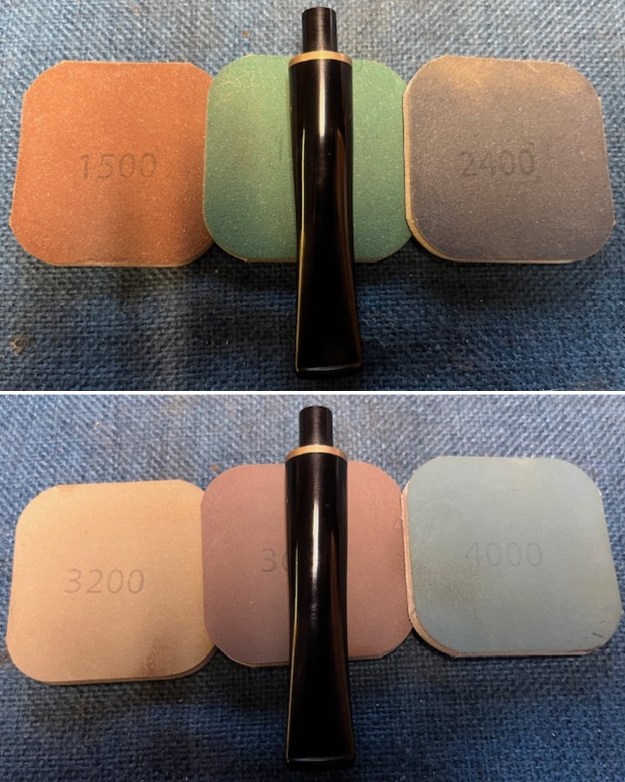
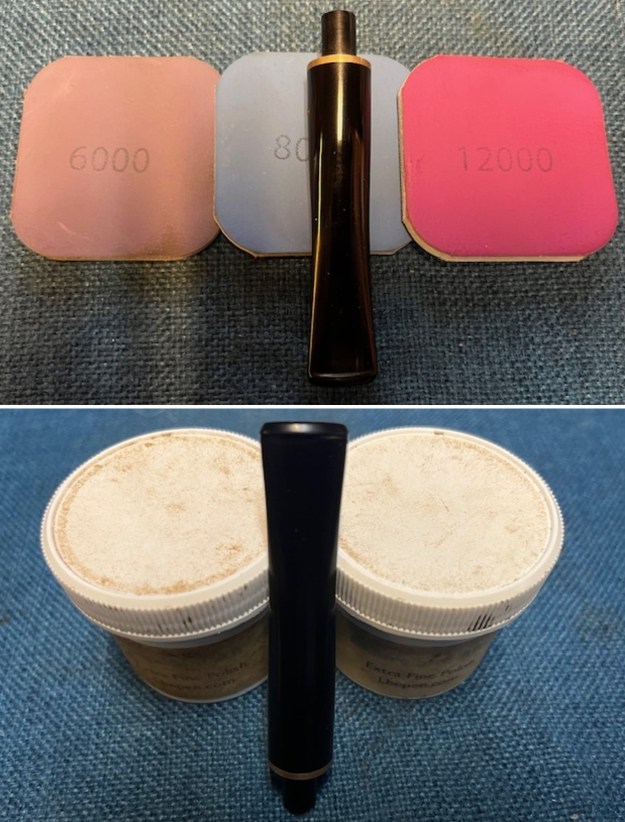
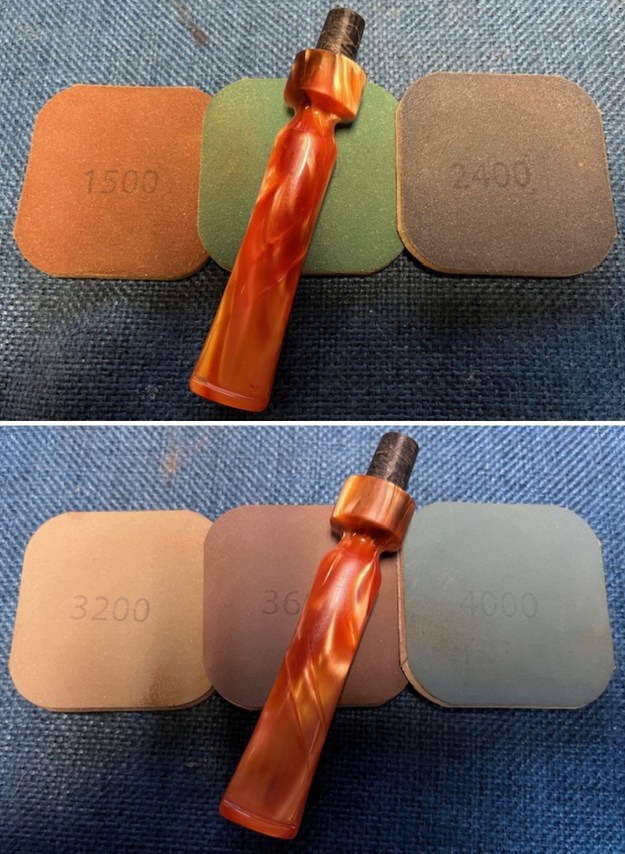
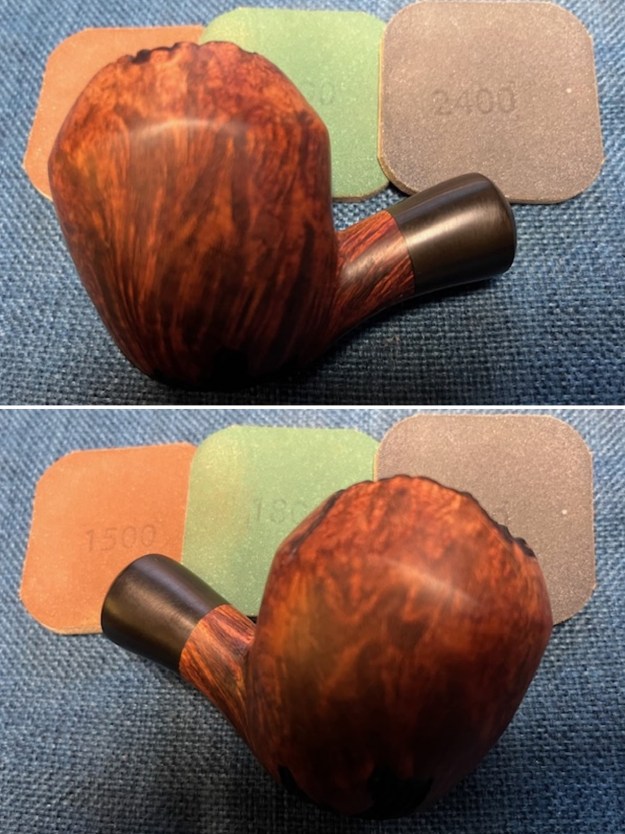
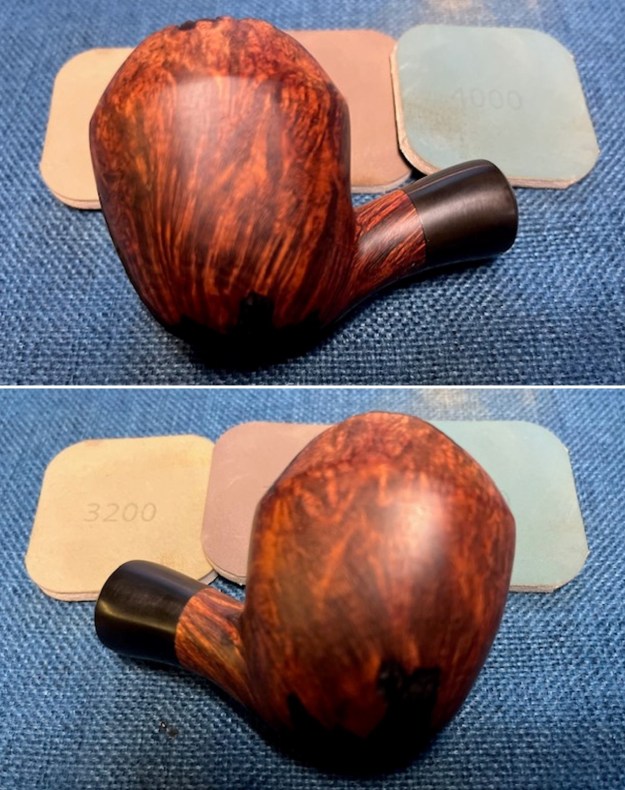
I took photos of the bowl and rim top to show the clean condition. The burn damage on the inner edge of the bowl is clear on the front of the bowl. The rim top has some scratches and marks as well. The bowl walls look very good. The thick vulcanite stem looks very clean and the tooth marks are evident next to the button on both sides.I took the stem off the bowl and took photos of the broken tenon and parts. It will definitely need to be replaced. The beauty of this is that I can replace it with a regular tenon instead of the filter tenon. To me that is good news.I decided to replace the tenon first. I knew that fitting it would require adjustments to the stem and shank so I wanted to do that before I put a lot of work into polishing the bowl. I used a Dremel to flatten out the broken tenon end. The photo below shows it in process to the flattening out. Once it is flat and the face of the stem is smooth then it will be time to put a new tenon in place. With flattened I used a Delrin tenon – the largest that I had to fit into the airway in the stem. I coated the threaded end of the tenon with clear CA glue and inserted it in the end of the stem.I set the stem aside to let the glue cure on the new tenon. Once it had hardened it was time to reduce the diameter of the new tenon to properly fit in shank. I used a file and a Dremel with a sanding drum to bring it to the right diameter.When I had the tenon shaped correctly, diameter and fit correct I put the stem in the shank and took the following photos. You can see that the fit is very good. It is snug and looks good against the shank end. The alignment to the shank end is quite good but I will need to sand the right side of the stem a little to make the transition smooth. I will need to do the same on the right, top and bottom sides – adjusting either the stem or the shank for smooth transition between the stem and shank. I have to say it is a really beautiful pipe! I sanded the transition smooth all the way around the shank and stem joint. I was careful on the underside to not damage the stamping. Once it was smooth I polished the sanded areas with 1200-3200 grit micromesh pads. I used a Walnut stain pen to blend in the adjusted areas to the rest of the briar. That transition looked and felt very good.I set the stem aside for now and turned to the bowl. I used a folded piece of 220 grit sandpaper to smooth out the damage on the front inner edge and to give it a slight bevel to bring it back to round and deal with the darkening in that area of the rim edge. It definitely looks better. I smoothed it out with micromesh sanding pads. There were some gouges in the rim top on the front and I did not want to top the bowl. I used a tooth pick and clear CA glue to fill in the gouges. Once it cured I smoothed them out with 220 grit sandpaper and smoothed it with some 1500 grit micromesh. I restained the top and the inner edge with a Walnut stain pen. I polished the briar with micromesh sanding pads – dry sanding with 1500-12000 grit sanding pads. I wiped the bowl down with a damp cloth after each pad. I take photos of the three groups of pads for my own viewing primarily as I am looking for progress in polishing. Once again, by the end of the process it looked quite good. I rubbed the bowl and shank down with Before & After Restoration Balm. I worked it into the surface of the bowl sides and shank with my fingertips. It works to clean, enliven and protect the briar. I let the balm sit for 15 minutes and buffed with a cotton cloth to raise the shine. The grain came alive. I set the bowl aside and turned my attention to the stem. The scratches, tooth chatter and marks easily were addressed by dry sanding the stem with 320-3500 grit sanding pads. I wiped it down after each pad with Obsidian Oil. It looked very good at this point in the process.I polished the vulcanite stem with micromesh sanding pads – 1500-12000 grit pads to further remove the remaining scratches. I wiped the stem down with Obsidian Oil after each sanding pad. I used Before & After Pipe Polish – both Fine and Extra Fine to further polish the stem. I rubbed it down with a final coat of Obsidian Oil and let it dry. This Julius Vesz Hand Cut Grade B Olive Stack is a great looking pipe with great grain around the sides of the bowl. The replaced broken filter tenon with a Delrin one worked very well and now it is a nonfilter pipe. I put the stem back on the bowl and carefully buffed the pipe with Blue Diamond on the buffing wheel using a light touch on the briar. I gave the bowl and the stem multiple coats of carnauba wax on the wheel and followed by buffing the pipe with a clean buffing pad. I hand buffed the pipe with a microfiber cloth to deepen the shine. The finished Vesz Hand Cut B Grade Olive fits nicely in the hand and feels great. Give the finished pipe a look in the photos below. The dimensions of the pipe are Length: 5 ½ inches, Height: 2 ½ inches, Outside diameter of the bowl: 1 ¼ inches, Chamber diameter: 7/8 of an inch. The weight of the pipe is 52 grams/1.80 ounces. This one will be with me for awhile so I can enjoy the beauty of this high grade Julius Vesz Hand Cut Stack. I think I will enjoy it for a while before I make up my mind once and for all… at least for now. Thanks for reading this blog and my reflections on the pipe while I worked on it. As always, I appreciate your comments and questions. Thanks for your support and time!

Restoring a Carey Magic Inch Pat. No. 3267941 Mediterranean Briar Israel Calabash


by Steve Laug

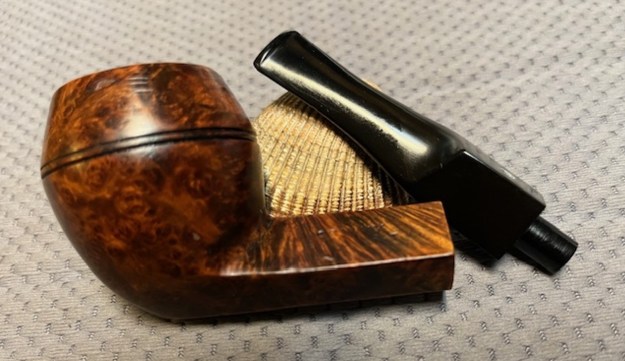
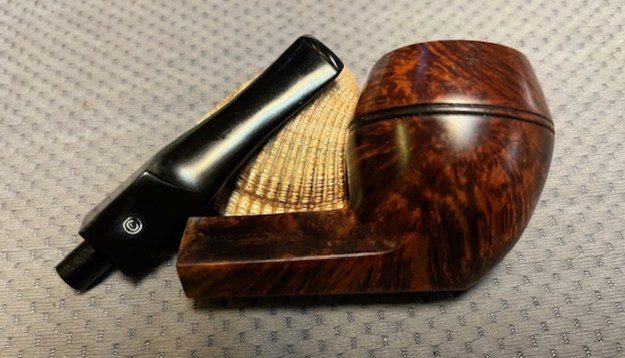
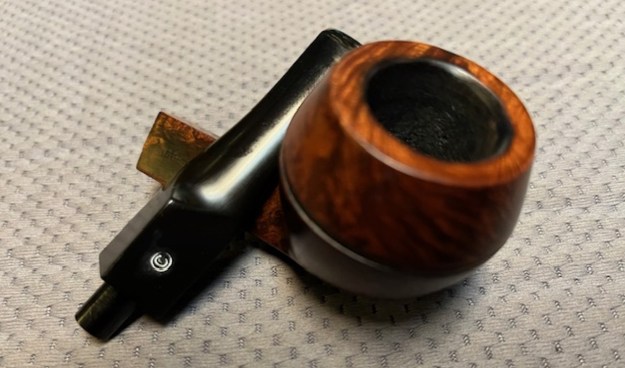
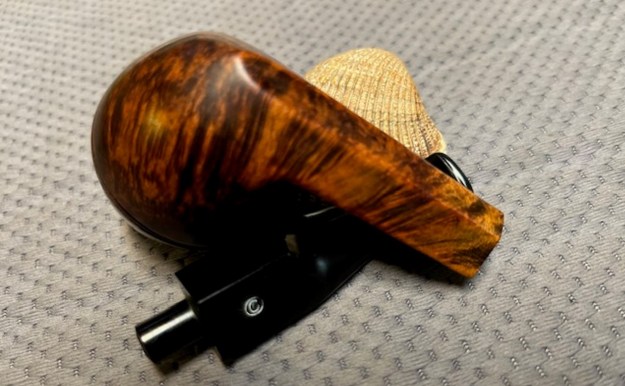
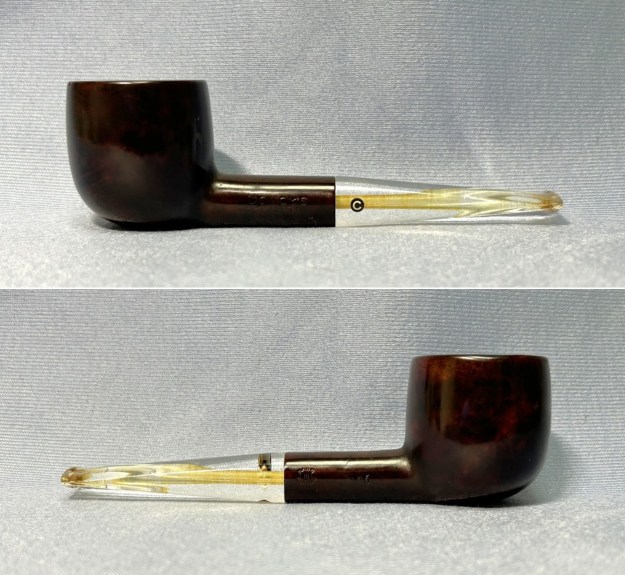
The next pipe on the table is an interesting looking Carey Magic Inch Calabash pipe. It is unique for several reasons. The first is that it comes with a flat piece of briar that is shaped to the base of the pipe. It has some great grain on the base and plateau on the edges. The second is that the left side and back of the bowl and shank are smooth and the right side and part of the front of the bowl is sandblast. The pipe is stamped on the left side and reads Carey [over] Magic Inch [over] Pat. No. 3267941. The stamping on the right side reads Mediterranean [over] Briar Israel. The stem has the Carey Logo “C” in a box on the topside. We purchased the Carey from an estate sale in Idaho Falls, Idaho, USA on 08/05/2018. The finish on the pipe was dirty with grime and oils ground into the briar. There was a thick cake in the bowl that overflowed on to the rim top and inner beveled edge. They both have a coat of lava on them. There is a vulcanite shank extension on the shank end that is quite polished. The stem is a Carey Magic Inch stem that tells me that the pipe has the Carey filtration system in the shank. A slim tube or Papyrite slips over the tube and filters out the oils. The stem has three slots in the top to aid airflow. The stem is the typical Carey special mix of vulcanite and plastic of some sort and in this case, I am thankful that it is not chewed. Jeff took photos of the pipe before he started his work on it. He took photos of the rim top to show the moderate cake in the bowl and the thick lava coat and debris on the rim top and inner edge. He took photos of the stem to show the tooth chatter and marks on the surface. None are too deep and I am thankful for that. He captured the finish and grain on the sides of the bowl. The left side shows the sandblast and the others show the smooth nicely grained finish. It is a beauty. He captured the stamping on the sides of the shank and it is clear and readable. The stamping reads as noted above. The Patent Number is interesting.The stamping gives me pause. I know that Carey Magic Inch pipes were typically made in the USA and for a short time in Great Britain. This one is stamped Mediterranean Briar Israel which I had not seen before. I am also pretty sure it is made by the Shalom Pipe Factory for Carey. But now to do a bit of study on the brand.

I first did a quick Google search of the brand and Israel to see what I could learn of the connection. There I found a discussion on Pipesmagazine forum. In the last line of the section I am quoting from the poster, Briar Lee I found what I was looking for. I have highlighted it in red in the text below for ease. I quote the entire section and have attached the link as well (https://pipesmagazine.com/forums/threads/e-a-carey-pipes-for-new-pipe-smokers.102325/).

A Carey Magic Inch pipe uses a paper sleeve on a ventilated tube in the stem. When smoking a tiny bit of air is metered into the smoke stream.

This air doesn’t materially change the flavor but it significantly cuts back on mouth burn and tongue bite and somehow prevents prevent gurgling and soggy pipes, how I’ve not ever been able to quite figure out. But the system works.

After you become an old leather tongued pipe addict and want the full blast of the smoke stream, use a piece of plastic drinking straw to replace the paper tube.

Carey pipes have been made all over the world through the years, and I have them from the USA, London, Italy, Greece, and Israel.

From there I turned to Pipephil’s site (http://pipephil.eu/logos/en/logo-c2.html). And found a listing for Carey. It gave me a pipe with the same patent information but it was made in England so that did not help much. I have included a screen capture below.I turned next to Pipedia (https://pipedia.org/wiki/Carey_Magic_Inch). The site had a short article that gave a basic description of the Magic Inch system. It also provided a link to the EA Carey Website which I would look at next. I quote from the Pipedia article below as it is a simple description of the system and the pipe.

The “Magic Inch” System has been a Carey’s tradition for over 50 years, with over 1,000,000 sold. The “Magic Inch” is an air chamber inserted between the imported briar bowl and the vented mouthpiece which allows cool outside air to enter and mix with the warm tobacco smoke inside the “Magic Inch” chamber. Tobacco tars, oils and moisture, are squeezed out of the smoke. The residue drops to the bottom of the chamber and is absorbed by the Papyrate sleeve. From its rich tradition and thousands of satisfied customers, this pipe is sure to be your smoking favorite for life. Carey Magic Inch pipes can be readily identified by a boxed letter C on the stem, along with a distinctive series of three vent slits and the Carey Magic Inch name stamped into the side of the bowl.

That lead me to the Carey Site as noted above (https://www.eacarey.com/magicinchinfo.html). I did a screen capture of the page defining the Magic Inch system. The diagram is helpful to capture the mechanics of the pipe.The site also had testimonials from satisfied customers about the system and hidden in the bottom of one of the sidebars was the Patent info. I have included that screen capture below as it is very interesting (https://www.eacarey.com/careyclassics.html).Now I knew that the pipes were made in many countries and that Israel was on the list. There was no direct link to the Shalom Pipe Company but I am still confident they made this pipe and Carey added the plumbing.

I was ready to start working on this pipe. As usual, Jeff had thoroughly cleaned up the pipe. I probably don’t say enough about how much I appreciate him doing the hard clean up work before I even get the pipes. He does an amazing job. He had reamed the pipe with a PipNet pipe reamer back to bare briar and removed the remnants of the cake with a Savinelli Fitsall Pipe Knife. He used a small blade to pick out the thick lava on the rim top. He scrubbed the bowl with undiluted Murphy’s Oil Soap and a tooth brush. He rinsed it under running warm water to remove the soap and grime. He cleaned out the inside of the shank and the airway in the stem with alcohol, cotton swabs, pipe cleaners and shank brushes. He soaked the stem in Briarville’s Pipe Stem Deoxidizer and rinsed it off with warm water. I took photos of the pipe and the stem that came with it before I started my part of the restoration work. I took photos of the bowl and rim top to show the clean condition. The bowl walls look very good. The rim top had some remnants of what looked like varnish – almost rings or swirls on the top. The stem looks very clean and when I run my fingers along the edges it still has the casting marks on it.
I tried to capture the stamping on the shank underside. It is readable and clear as noted above. I took a photo of the pipe with the stem removed. I started by working on the rim top. I wiped the bow and rim top down with acetone to remove the varnish run marks on the rim top. Once it was wiped down the marks still remained on the top and turned out to be marks from when the bowl was finished (poorly finished on the top). I sanded the rim top with 320-3500 grit sanding pads and wiped it down between pads with a damp cloth to check the progress. It looked much better and was smooth. The scratches were sanded out and feel the way it should feel. I restained the sanded rim top and edges with an Oak stain pen to blend it into the surround colour of the briar. The match was perfect and once the pipe was polished more it would be a great match.I polished the smooth portions of the briar and the vulcanite shank extension with micromesh sanding pads – dry sanding with 1500-12000 grit sanding pads. I wiped the bowl down with a damp cloth after each pad. I wiped the shank extension down with Obsidian Oil. I take photos of the three groups of pads for my own viewing primarily as I am looking for progress in polishing. Once again, by the end of the process it looked quite good. I rubbed the bowl and shank down with Before & After Restoration Balm. I worked it into the surface of the bowl sides and shank with my fingertips. I worked it into the sandblast portions of the finish with a shoe brush. It works to clean, enliven and protect the briar. I let the balm sit for 15 minutes and buffed with a cotton cloth to raise the shine. The grain came alive.  With the bowl finished I decided to put a Papyrate filter on the apparatus at the end of the shank. I took one from the box and carefully slid it in place. The fit is snug and the look is perfect. Now I turned to the stem. I love watching the shine develop on the mixed Carey vulcanite as I polish it with micromesh sanding pads – dry sanding with 1500-12000 grit pads. I wiped it down after each pad with Obsidian Oil. I finished this part of the polishing by using Marks Hoover’s Before & After Pipe Stem Polish – both Fine and Extra Fine. I wiped it off with a soft cloth and gave the stem another coat of Obsidian Oil. This Carey Magic Inch Pat. No. 3267941 Bent Calabash is a great looking pipe with some interesting sand blast on the front and right side of the bowl and vulcanite shank extension. The fact that it is stamped Israel fits as I have worked on Alpha Pipes of similar shape and style. The beautiful grain around the smooth portions and sandblast on the other portions of the bowl is quite stunning and works well with both the shape and the polished vulcanite shank extension and the polished Carey Magic Inch style stem. I put the stem back on the bowl and carefully buffed the pipe with Blue Diamond on the buffing wheel using a light touch on the briar. I gave the bowl and the stem multiple coats of carnauba wax on the wheel and followed by buffing the pipe with a clean buffing pad. I hand buffed the pipe with a microfiber cloth to deepen the shine. The finished Carey Magic Inch Calabash fits nicely in the hand and feels great. Give the finished pipe a look in the photos below. The dimensions of the pipe are Length: 6 ½ inches, Height: 2 ½ inches, Outside diameter of the bowl: 1 ¾ inches, Chamber diameter: 1 inch. The weight of the pipe is 63 grams/2.22 ounces. I will be putting the pipe and the briar pipe rest on the rebornpipes store in the Pipes From Various Makers Section shortly. If you wish to add this interesting pipe to your rack it is a great addition. Send me a message or an email. Thanks for reading this blog and my reflections on the pipe while I worked on it. I appreciate your support and time!

Restoring an older MLC Redmanol French Briar Crosby Style Pipe with a Redmanol Stem


by Steve Laug

This older MLC billiard (almost a Bing Crosby shape though certainly a predecessor) is early 20th century pipe. It came to us from Mark in Missoula, Montana, USA and was a pipe from his Grandfather’s collection. He sent us a cigar box of pipes from that collection that included a lot of interesting pipes for us to work through. Mark also included a biographical sketch on his Grandfather, W.B. Bollen (written by Mark’s Father). His Grandfather, WB Bollen was quite involved in the state of Oregon and the Pacific Northwest of the USA in the field of agriculture through Oregon State University in Corvallis, Oregon. The sketch is called Recollections of W.B. Bollen and I am in the midst of reading it while I work on the first of these pipes – the MLC Billiard. According to Pipedia, (https://pipedia.org/wiki/M._Linkman_%26_Co) the initials MLC stand for M. Linkman Company which was thought to mean Mary Linkman Company. They were a Chicago based company that produced both briars and meerschaums. The company was named for the mother of the same Linkman who branded pipes under that same name and then eventually became the Dr. Grabow pipe manufacturer with which we are familiar. Pipephil’s site gave a little more information at this link (http://www.pipephil.eu/logos/en/logo-l4.html). M. Linkman and Co. was established by Louis B. Linkman and August Fisher in 1898. The company closed down in the 1950s and the Dr Grabow branch was sold to Henry Leonard and Thomas Inc.(HLT), There was also a note that early Linkman’s pipes were stamped MLC in an oval.

I have written a bit more about the MLC brand on several early blogs (https://rebornpipes.com/2016/11/12/an-interesting-the-nuvo-mlc-italian-briar-hidden-in-a-wdc-case/ https://rebornpipes.com/2017/08/17/restoring-a-sad-old-mlc-bent-billiard/). The second link included this older photo of the Linkmans that is really fascinating. I am including it below.If you have followed this blog for a while you have come to know that I love really old pipes and this one fits into that category of pipes. It is stamped MLC in an oval over Redmanol over French Briar on the left side of the shank. The stamping is faint but readable with a light and lens. There are no other stampings on the briar. The band is Sterling Silver and is dented and worn but also bears the MLC oval logo stamped on the topside. It is a pencil shank billiard with a thin “unbreakable” tube lined Redmanol stem. The bowl exterior was absolutely filthy. There was darkening and oils ground into the briar. The thick cake in the bowl and the lava coat on the edges and rim top made it hard to know what the condition of the rim edges. There also appeared to be a thin hairline crack on the backside of the bowl from the rim edge about 2/3 of the way down to the shank. There was also a large silver “O” on the front of the bowl which I believe refers to Oregon Agricultural College (which later became Oregon State University). As with other schools in the 1920s pipes were made honouring the institution and were available to graduates and students. This fits the time frame for this pipe. W.B. Bollen received his BS in Horticulture in 1921 and an MS in Soil Bacteriology in 1922, both from Oregon Agricultural Colledge. I am fairly certain that this dates the pipe that I am working on. The Redmanol Stem was in good condition with the usual chips, nicks and tooth marks of a pipe that is over 100 years old. Jeff took the photos that follow before started the cleanup. You can see from the photos the condition of the pipe.He took photos of the rim top and bowl to show the condition of the pipe. You can see the thick cake, the lava on the rim top, an out of round inner edge and a potential crack on the rim top at the back of the bowl. He also took photos of the Redmanol stem to show its condition as noted above. He took photos of the sides of the bowl to show the grain underneath the dirt and grime ground into the finish. You can also see the nicks in the briar and the oxidized silver O that is on the front of the bowl. There is a lot of beauty underneath the grime. While he was unable to capture the stamping on the shank side he was able to capture the stamping on the silver band. Underneath the oxidation and scratches, it is still clear and reads MLC in an oval over Sterling.Now that I knew a bit of the history of the pipe both in terms of the maker and the pipeman who enjoyed it, I turned to work on the pipe itself. Jeff had thoroughly cleaned up the pipe. He had reamed the pipe with a PipNet pipe reamer back to bare briar and removed the remnants of the cake with a Savinelli Fitsall Pipe Knife. He scrubbed the bowl with undiluted Murphy’s Oil Soap and a tooth brush. He rinsed it under running warm water to remove the soap and grime. He cleaned out the inside of the shank and the airway in the stem with alcohol, cotton swabs, pipe cleaners and shank brushes. He soaked the stem in Briarville’s Pipe Stem Deoxidizer and rinsed it off with warm water. I took photos of the pipe before I started my part of the restoration work.  I took photos of the bowl and rim top to show the clean condition. The damage on the inner edge of the bowl is evident as is the crack on the rim top above the crack on the back of the bowl. The crack extends across the rim top and just slightly into the bowl. That is to be expected. The bowl walls look very good. The Redmanol Stem looks very clean and the chips and nicks are visible the length of the stem. The silver band looks far better.I tried to capture the stamping on the shank side and band in the photos below. They are faint and very hard to capture. It is there but hard to see with out a lens. I removed the stem from the shank and took a photo of the parts of the pipe. It is a beautiful pencil shank pipe. I also took a photo of the Silver “O” on the bowl front. It is nicely done and the tarnish is gone. I decided to address the out of round inner edge of the bowl first. I used a folded piece of 220 grit sandpaper to smooth out the damage on the edge and to give it a slight bevel to bring it back to round. I sanded out the damage on the rim top to smooth it as well. It definitely looks better.I turned to deal with the crack in the back of the bowl that I mentioned above. The first photo sows the crack. It is hairline and starts on the rim top as shown above and extends down the bowl about 2/3 of the distance to the shank. It is a single crack so I used a small micro Drill bit on my Dremel and put a small hole at the bottom of the crack to stop it from going further. You will notice some small nicks in the surface of the briar where the drill hit as I guided it to the crack end.I wiped the back of the bowl down with alcohol on a cotton pad to clean up any debris from the drilling and any that might be in the fine crack. I ran a thin bead of clear CA glue down the crack and in the drill hole and nicks. I used a dental spatula to press fine briar dust into the crack through the glue. Once it cured I sanded the repaired area with a folded piece of 220 grit sandpaper to smooth out the repair. I polished it with a 400 grit sanding pad and then stained the area with a Cherry stain pen to match the rest of the surrounding briar. I polished the briar with micromesh sanding pads – dry sanding with 1500-12000 grit sanding pads. I wiped the bowl down with a damp cloth after each pad. I take photos of the three groups of pads for my own viewing primarily as I am looking for progress in polishing. Once again, by the end of the process it looked quite good. I rubbed the bowl and shank down with Before & After Restoration Balm. I worked it into the surface of the bowl sides and shank with my fingertips. It works to clean, enliven and protect the briar. I let the balm sit for 15 minutes and buffed with a cotton cloth to raise the shine. The grain came alive. I set the bowl aside and turned my attention to the stem. The scratches, tooth chatter and marks easily were addressed by dry sanding the stem with 320-3500 grit sanding pads. I wiped it down after each pad with Obsidian Oil. It looked very good at this point in the process.I polished the Redmanol stem with micromesh sanding pads – 1500-12000 grit pads to further remove the remaining scratches. I wiped the stem down with Obsidian Oil after each sanding pad. I used Before & After Pipe Polish – both Fine and Extra Fine to further polish the stem. I rubbed it down with a final coat of Obsidian Oil and let it dry. This 1920s MLC Redmanol French Briar Pencil Shank Billiard with a Redmanol stem is a great looking pipe with some interesting scalloping around the sides of the bowl. An added bonus if you are an Oregon Agricultural College Fan there is a silver “O” on the front of the bowl. The beautiful grain around the bowl is quite stunning and works well with both the shape and the polished silver band and “O” and the Redmanol taper stem. I put the stem back on the bowl and carefully buffed the pipe with Blue Diamond on the buffing wheel using a light touch on the briar. I gave the bowl and the stem multiple coats of carnauba wax on the wheel and followed by buffing the pipe with a clean buffing pad. I hand buffed the pipe with a microfiber cloth to deepen the shine. The finished MLC Redmanol French Briar Billiard fits nicely in the hand and feels great. Give the finished pipe a look in the photos below. The dimensions of the pipe are Length: 6 ¾ inches, Height: 1 ½ inches, Outside diameter of the bowl: 1 ¼ inches, Chamber diameter: 7/8 of an inch. The weight of the pipe is 24 grams/.85 ounces. I will be putting it on the rebornpipes store in the American Pipemakers Section shortly. If you are an avid Oregon fan or know one then this is the piece of history for you. Send me a message or an email. Thanks for reading this blog and my reflections on the pipe while I worked on it. I appreciate your support and time!
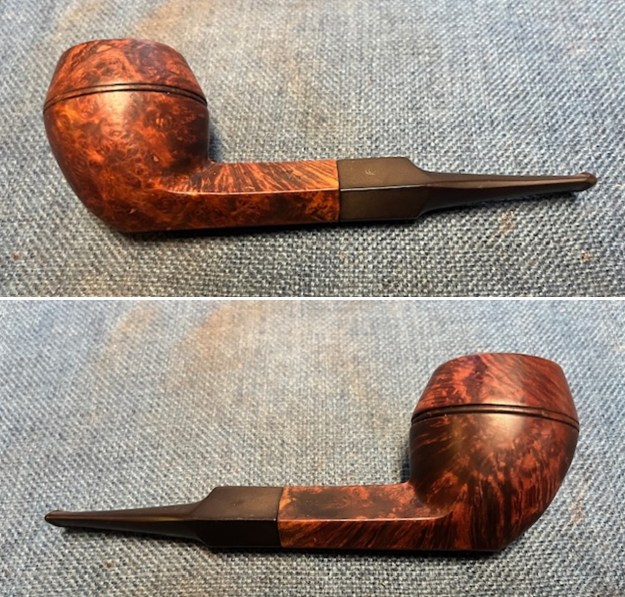
 

Is this what you would call an English Walnut Shape on this House of Robertson Pipe?


By Steve Laug

The next pipe on the work table is a unique House of Robertson pipe we picked up. It was purchased from a seller on eBay from Long Beach, California, USA on 07/13/2024. It is a Billiard or maybe an Egg with a rusticated finish that makes it look like the shell on an English Walnut. The name House of Robertson is roughly hand-etched with an engraving tool on the underside of the shank on a smooth panel. This pipe is shaped somewhere between and Egg and a Billiard but really does capture the shape of a Walnut. As you look at the following photos you will see why I am not sure what to call it. The pipe has a unique rustication on the sides of the bowl and shank. The bowl is thickly caked with some lava overflow on the rim top. The outer and inner edges of the rim look to be in good condition. There is some darkening and nicks on the inner edge but nothing horrible. The pipe was dirty but underneath all of the grime it appears to be in excellent condition. It had an oxidized silver band on the shank that is stamped Sterling but I am certain it is cosmetic as there are no cracks showing on the shank end. It is definitely an interesting pipe and should clean up very well. The fit of the stem to the shank was good. The vulcanite taper stem was oxidized and calcified. There are light tooth marks and chatter on both sides near the button. Jeff took photos of the pipe before he started the cleanup. Jeff took photos show the condition of the bowl and the stem. The photos of the bowl and rim show the cake in the bowl and the lava overflowing onto the rim top. The rustication on the top of the bowl and the inner and outer edge of the rim are pretty well covered in lava. It was hard to know what the inner edge and top really looked like until we cleaned it. The silver cosmetic band was heavily oxidized and almost black. The taper stem was oxidized, calcified and had tooth chatter and marks on both sides of the stem near the button. The photos of the sides and heel of the bowl show some stunning and unique rustication all around the pipe. The finish makes the bowl and shank have an almost walnut texture. The next photo shows the etched or engraved with a name on the underside of shank. It reads House of Robertson. The silver band has a faint Sterling Silver stamping on it.I am including the information that I found when I received my first of the House of Robertson Pipes. I found a link on Pipedia that gave me the only information I could find on the brand. I include that in total as it is interesting to read.
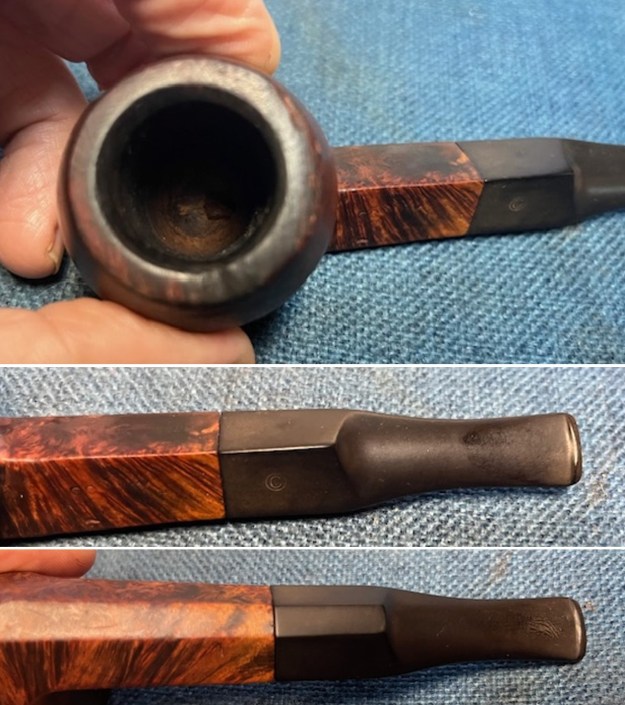
“House of Robertson” was in business for many years, but alas, closed their doors in 1999. They were located in Boise, Idaho. They are noted for making rather large and interesting pipes. Thayne Robertson was a Master Mason, AF & AM, and started the shop about 1947 and his son Jon started working there in 1970 when he finished college, along with Thayne’s daughter. Thayne and his son started making the big pipes at that time, and made them together until 1987 when Thayne passed away. Jon kept the store and his sister moved on to other things. The House of Robertson appears to have closed around 1999 (https://pipedia.org/wiki/Robertson).

Since then I have worked on a lot of House of Robertson pipes and have been able to track down more information. I am including a link to a Catalogue that I picked up on eBay. Click on the link and have a look at this interesting book of information on the brand and the pipe maker himself (https://rebornpipes.com/2022/12/11/a-house-of-robertson-catalogue-filled-with-great-examples-of-thayne-robertsons-work/).

I am also including a biography of Thayne Robertson that I found on Facebook from a fellow in Boise, Idaho. It is an interesting read into the mind of the pipe maker. Make sure to take time to read it (https://rebornpipes.com/2021/10/31/house-of-robertson-pipes-boise-pipe-carver-thayne-robertson/).

Now it was time to work on the pipe itself. When it gets to Vancouver it my turn to contribute to its restoration. Jeff did a great job cleaning the pipe on the inside and outside. He reamed the bowl with a PipNet pipe reamer and cleaned up the remnants with the Savinelli Fitsall Pipe Knife. He scrubbed out the mortise and the airway in the shank and stem with alcohol, cotton swabs and pipe cleaners. He scrubbed the exterior of the bowl with a tooth brush and Murphy’s Oil Soap to remove the dust in the rustication on the bowl and shank as well as the smooth portions. He rinsed it under running water. He dried it off with a soft cloth. Once the dust and debris were removed the finish was dull but appeared to be in excellent condition. He soaked the stem in Briarville’s Pipe Stem Deoxidizer and rinsed it under warm water to remove the deoxidizer gel solution. I took photos of the pipe to show its condition before I started my work on it. I took a photo of the bowl and rim top to show how well it had cleaned up. There is some rim darkening but you can see the rustication on the top of the bowl. The stem tooth marks and chatter are very light.I took a photo of the engraving on the underside of the shank. It is clear and reads as noted above. I also took the stem off the pipe and took a photo of the parts to give a sense of the proportions of the pipe. It is a beauty.I started my work on the pipe by dealing with the darkening on the inner edge of the rim and the darkening on the rim top with a folded piece of 220 grit sandpaper. It looked much better when finished. However, there was still some darkening in the rustication on the back of the rim top. I scrubbed it with Mark Hoover’s Before & After Briar Cleaner and was able to remove a lot more of the darkening. I put it on the area with my finger tips and worked it into the surface with a tooth brush. I worked over the area with a brass bristle wire brush and then rinsed it off with warm water. The end result is far better than when I started though there is still a bit of darkening. I used an Oak stain pen to touch up the rim top and the cleaned area and the finish look good. I worked Before & After Restoration Balm deep into the smooth finish to clean, enliven and protect the briar. I hand rubbed it with my fingers and a shoe brush to work it into the finish then set it aside to dry for 10-15 minutes. I wiped it off with a soft cloth. I buffed the bowl with a cotton cloth to polish it. It really began to have a deep shine in the briar. The rim top is looking much better. I took some photos of the bowl at this point to mark the progress in the restoration. The rustication on the bowl stands out with interesting lines moving across the sides of the bowl and the shank. I set the bowl aside and turned my attention to the stem. I “painted” the vulcanite surface with the flame of a lighter – constantly moving the flame over the tooth marks and was able to lift many of them. I filled in those that remained with black rubberized CA glue. Once it cured I flattened the repairs with needle files. I sanded the stem with 220 grit sandpaper to blend the repairs into the surface. I sanded the stem with the 2 inch square 320-3500 grit sanding pads. I wiped down the stem after each sanding pad with Obsidian Oil. I polished out the scratch marks left behind by the sandpaper. The stem looked very good.I polished the vulcanite stem with micromesh sanding pads – dry sanding it with 1500-12000 grit pads. I wiped the stem down after each sanding pad with Obsidian Oil and set it aside to dry. I polished it further with Before & After Pipe Polish – using both the Fine and Extra Fine Polishes. I gave it a rubdown with Obsidian Oil one last time and set it aside. I put the House of Robertson Rusticated Walnut with a taper stem back together and worked the pipe over on the buffing wheel using Blue Diamond to lightly polish the stem. I buffed the bowl and stem to raise the gloss on the briar and the vulcanite. I gave the pipe multiple coats of carnauba wax. I buffed the entire pipe with a clean buffing pad to raise the shine. I hand buffed it with a microfiber cloth to deepen the shine. The finished the House of Robertson Walnut is shown in the photos below. The medium brown stains on the rusticated walnut shaped bowl works well with the rich black of the vulcanite stem. The dimensions of the pipe are: Length: 6 inches, Height: 2 inches, Outside Diameter: 1 ½ inches, Diameter of the chamber: ¾ inches. The weight of the pipe is 42 grams/1.45 ounces. This is an interesting piece of briar with a rustication that looks like a walnut shell on the bowl and shank. I really like how the briar and the vulcanite work well together. This one will soon be on the rebornpipes store. If you are interested in adding a House of Robertson to your collection this may well be the one for you. Thanks for walking with me through the restoration process.