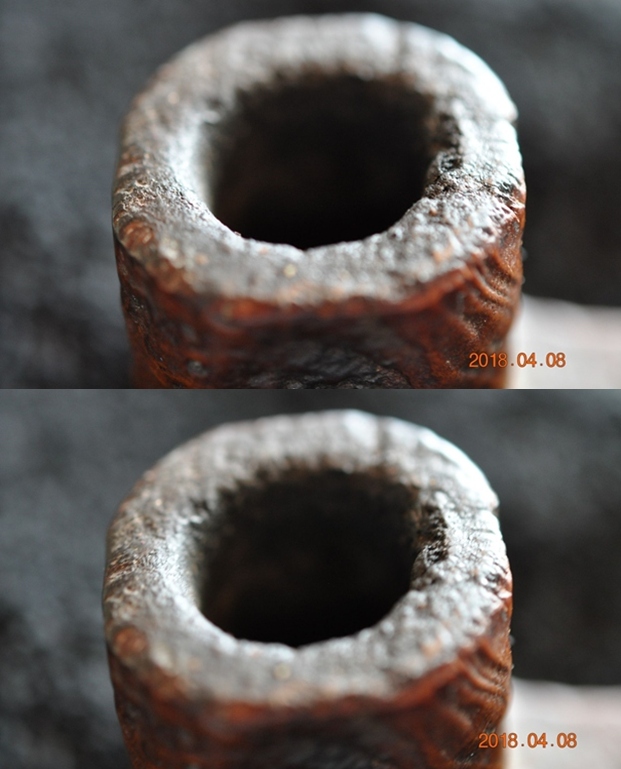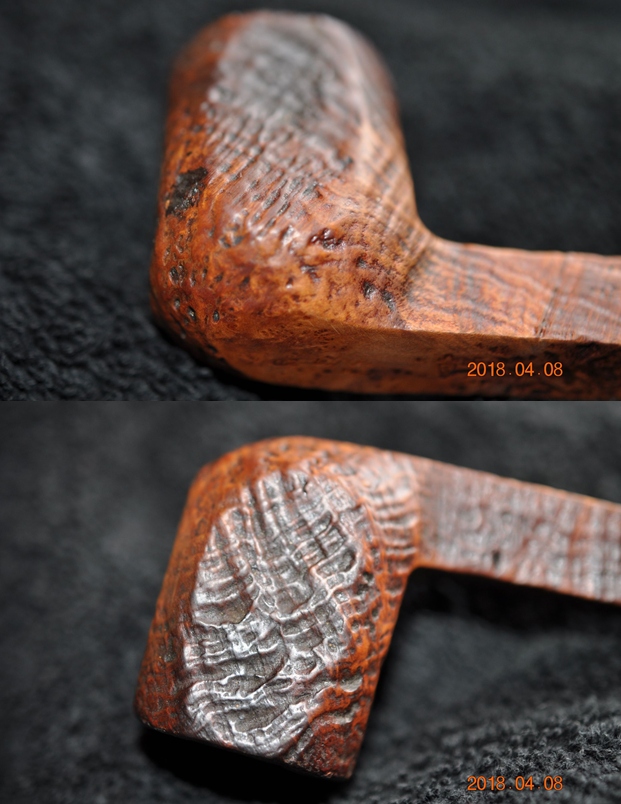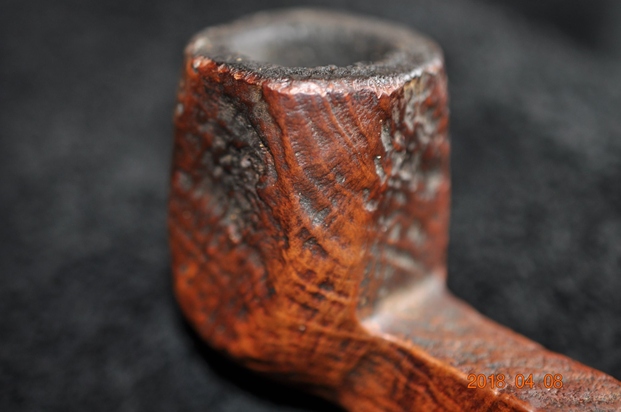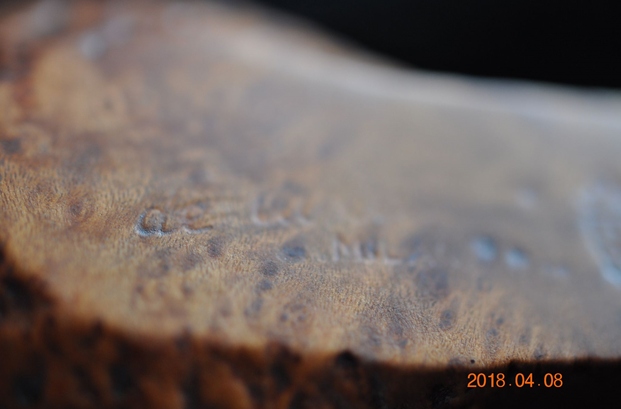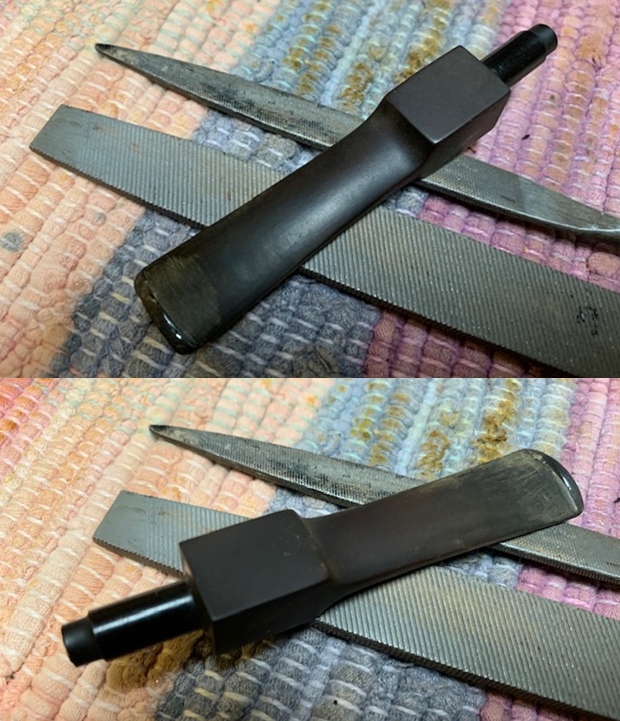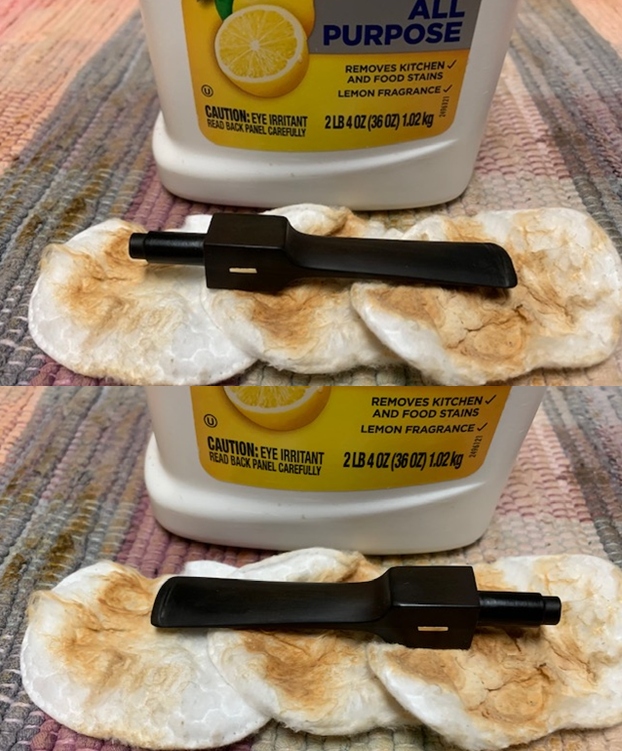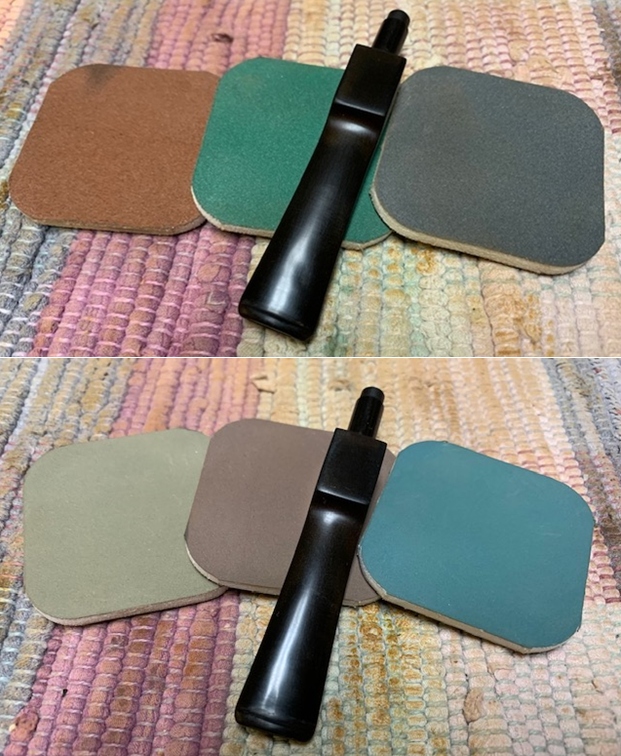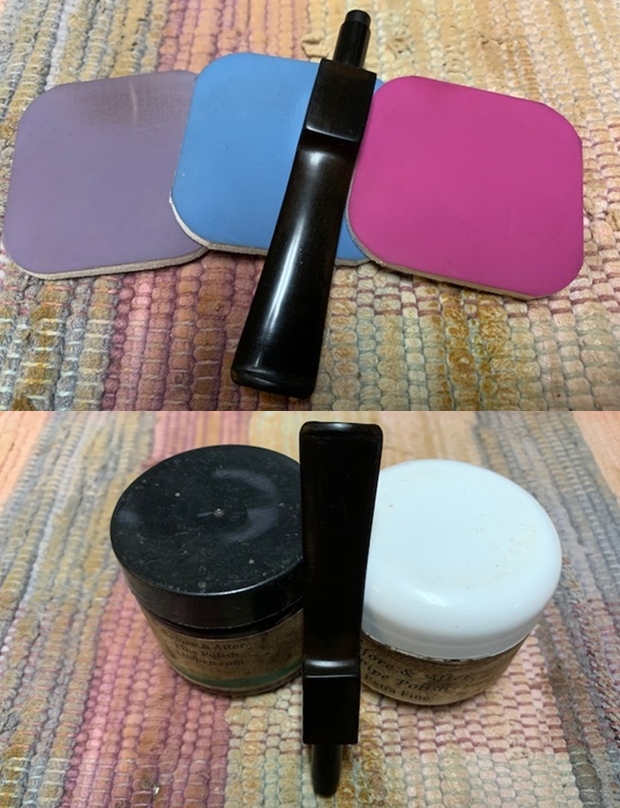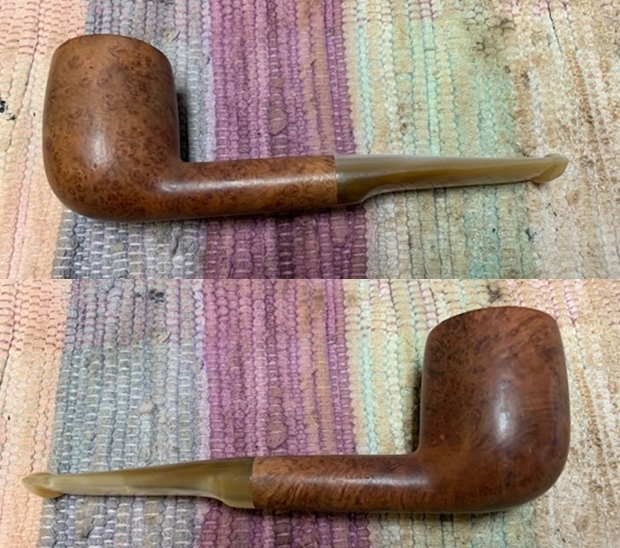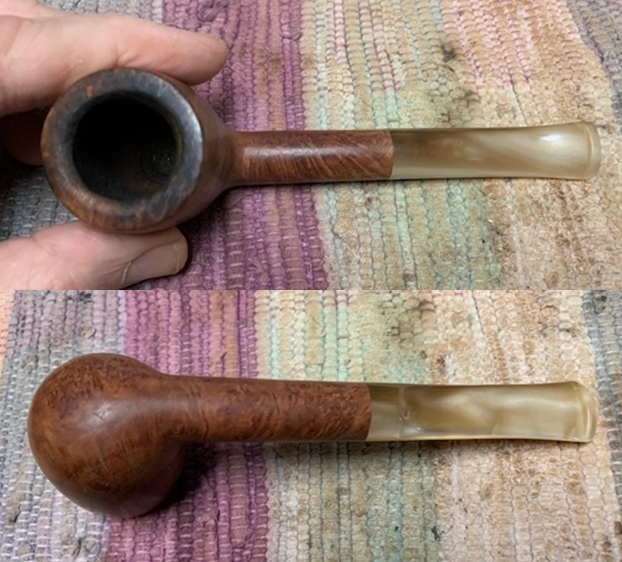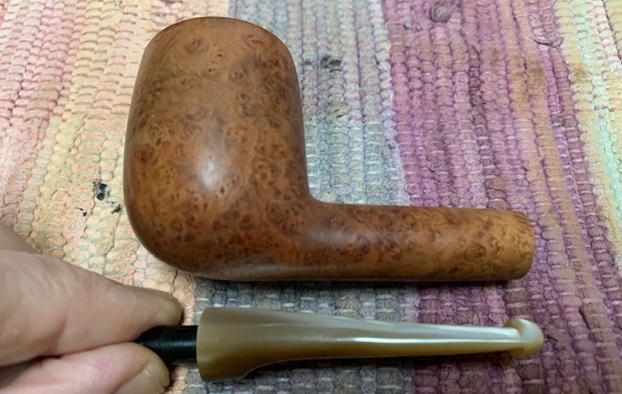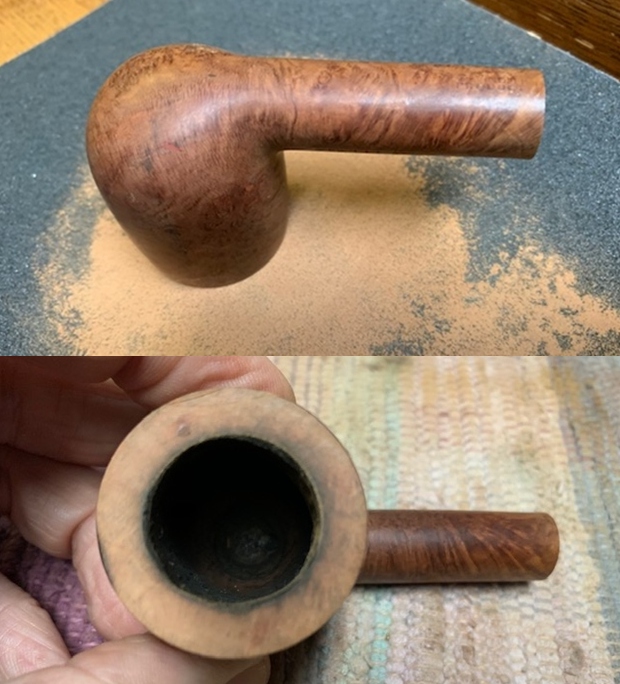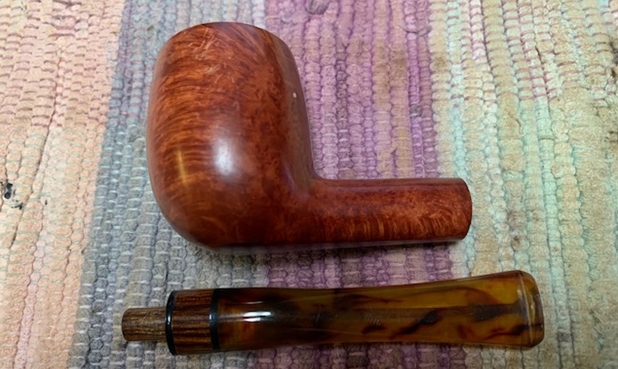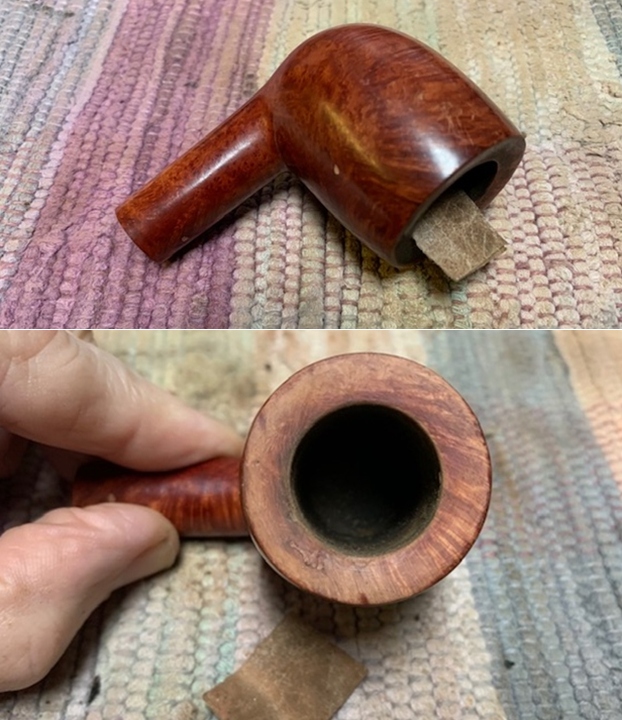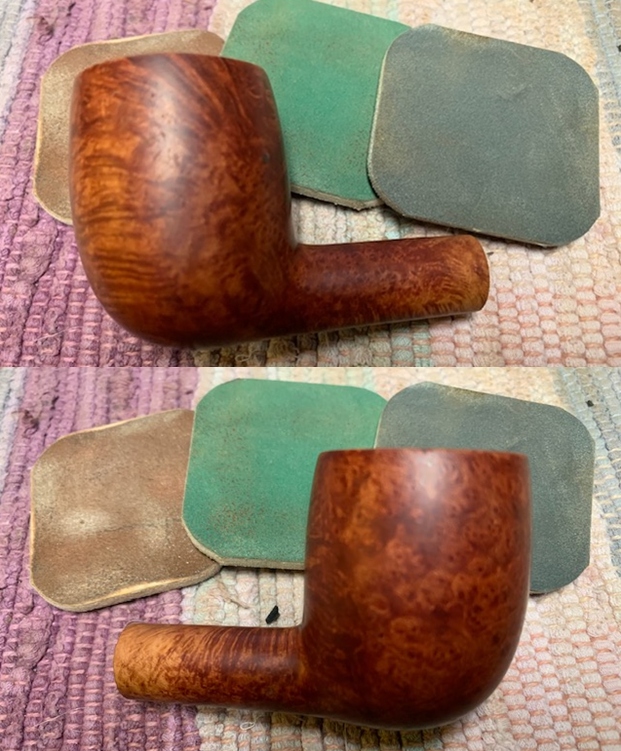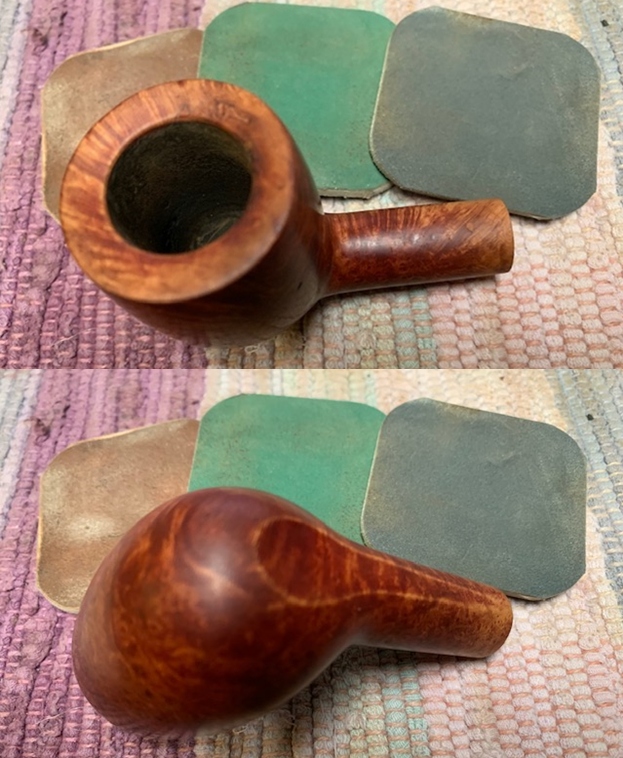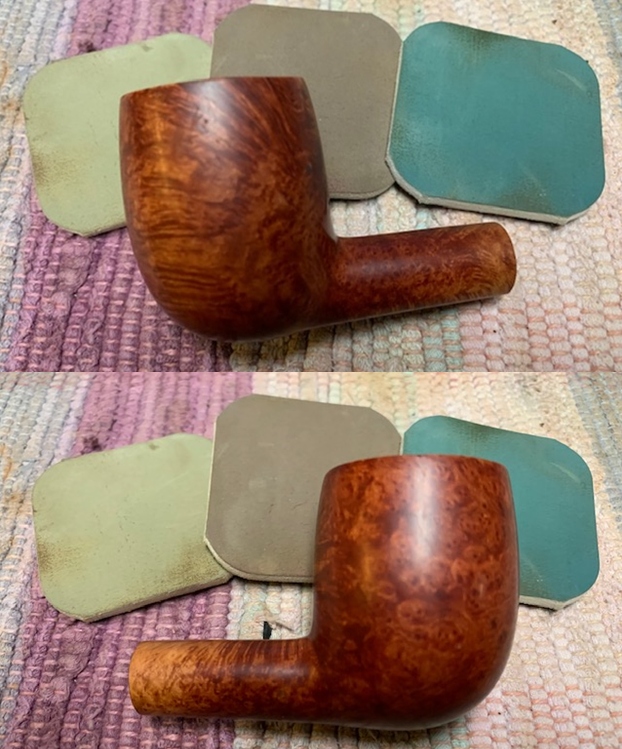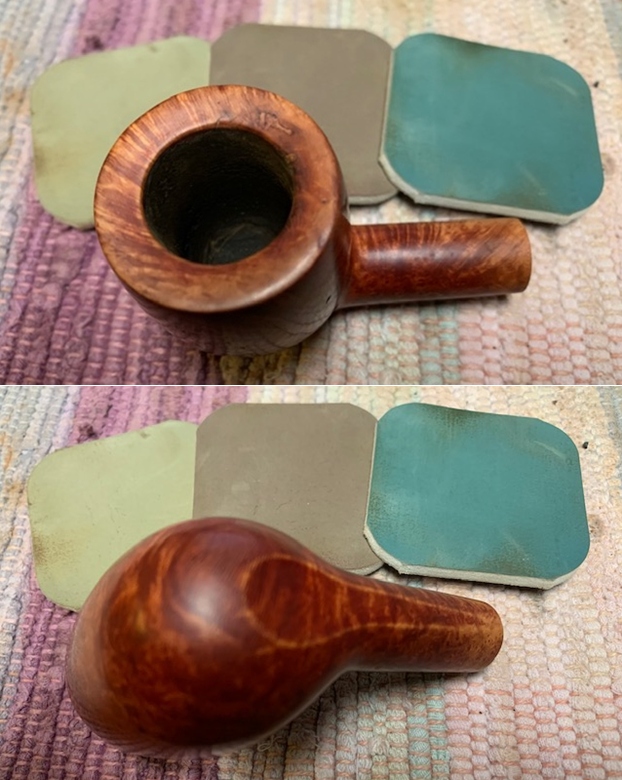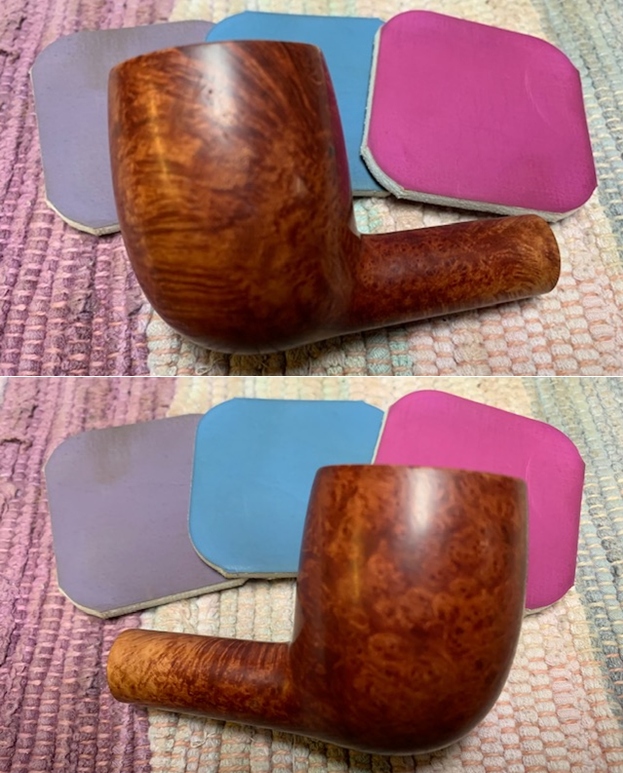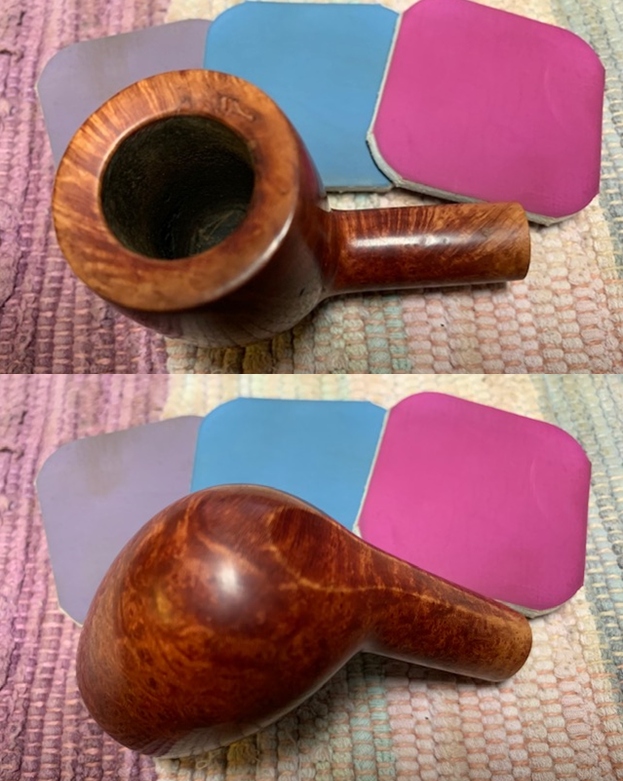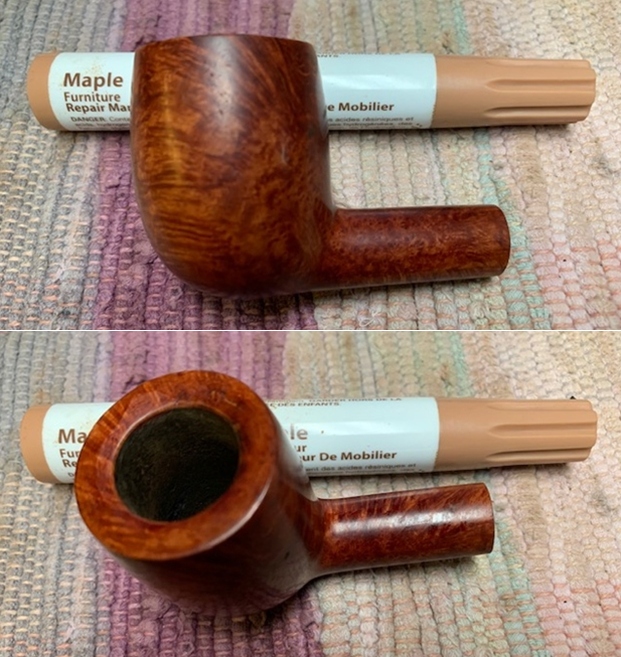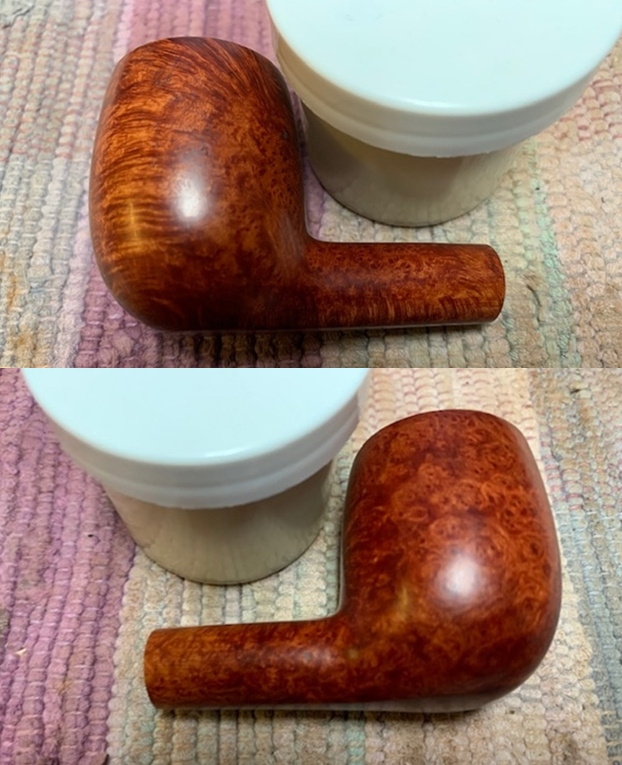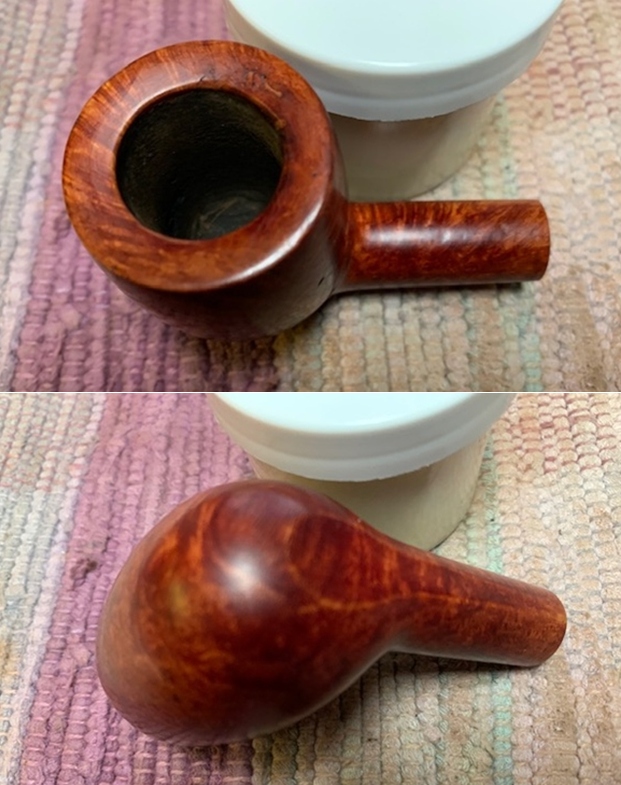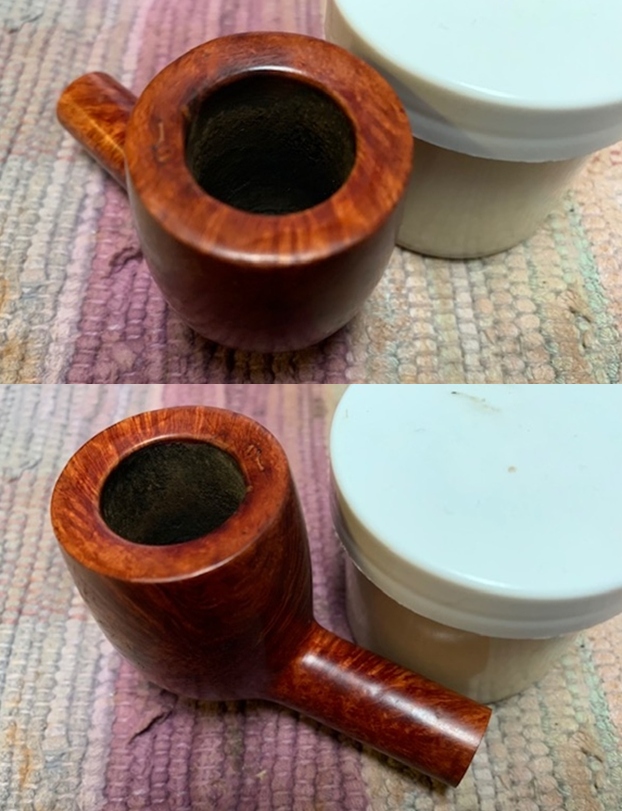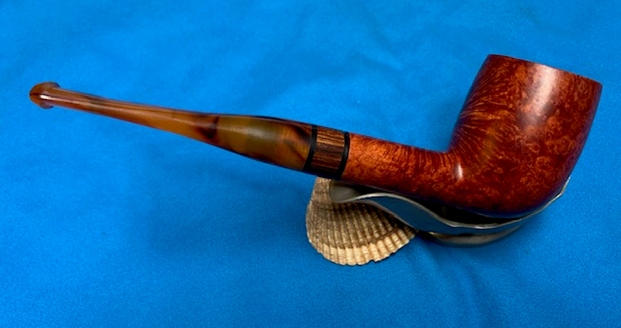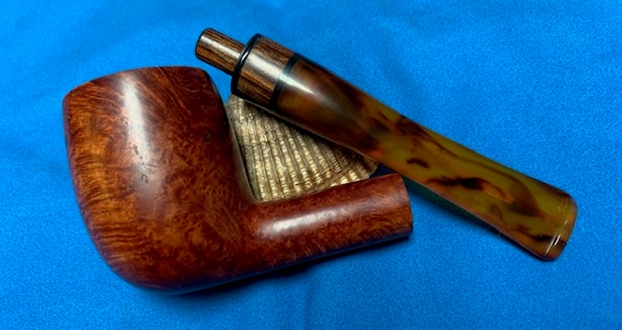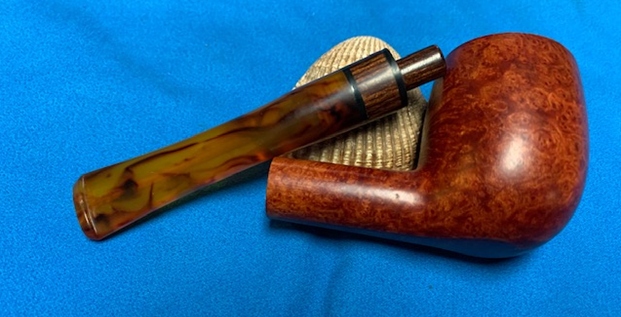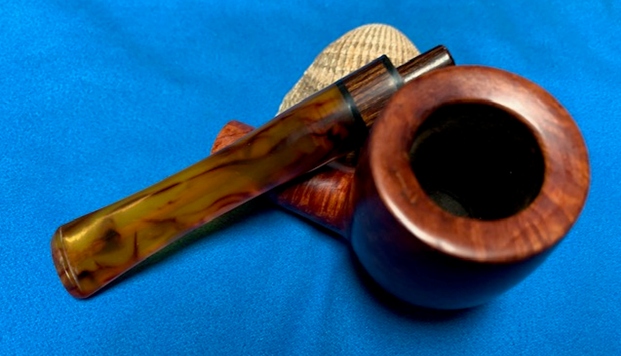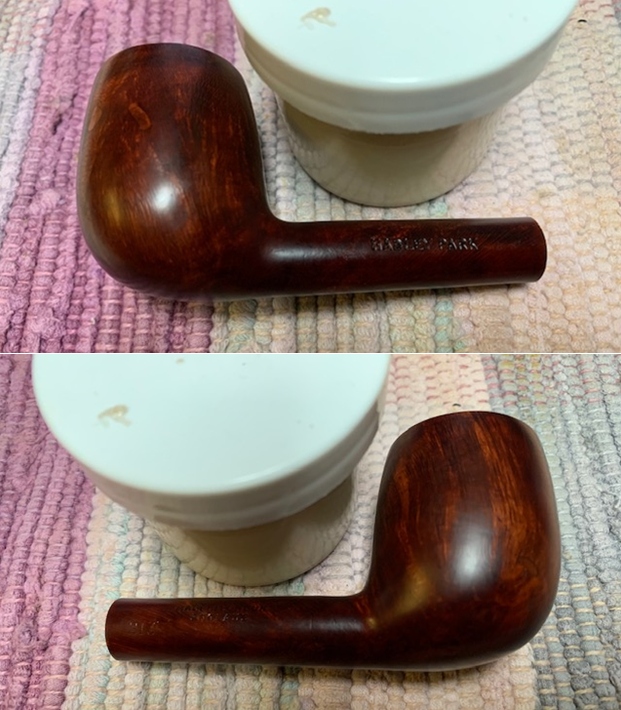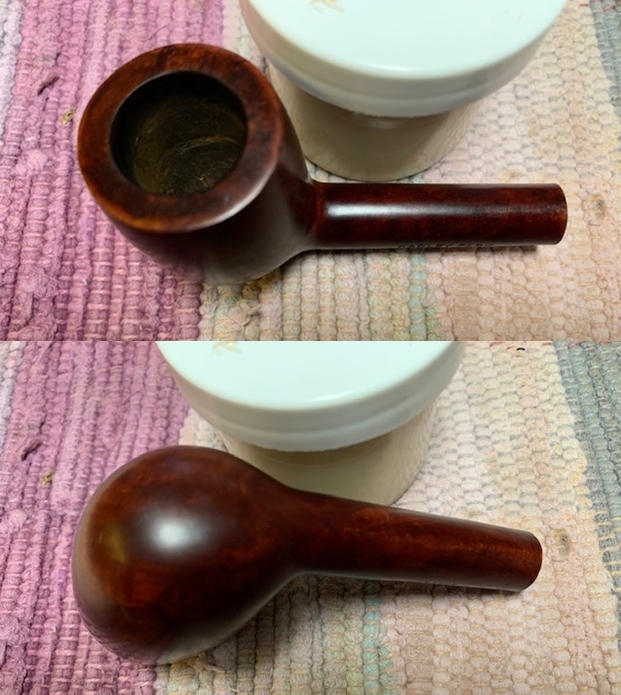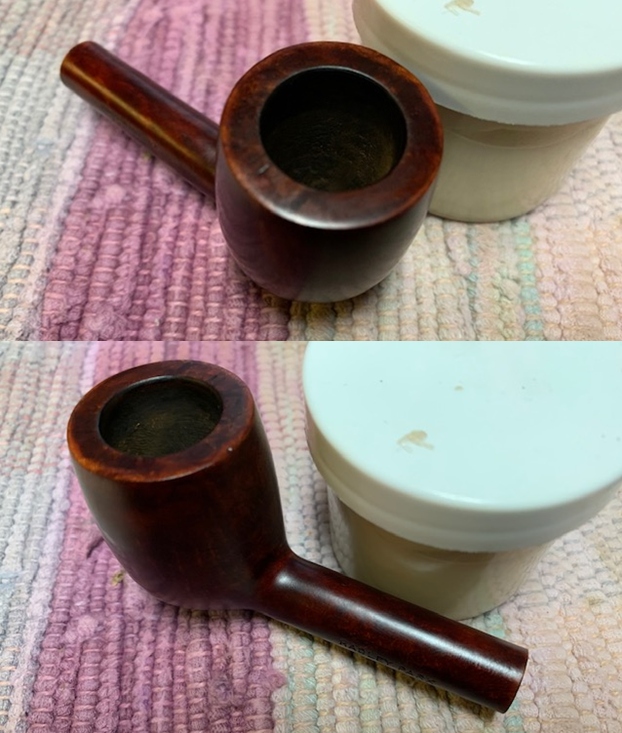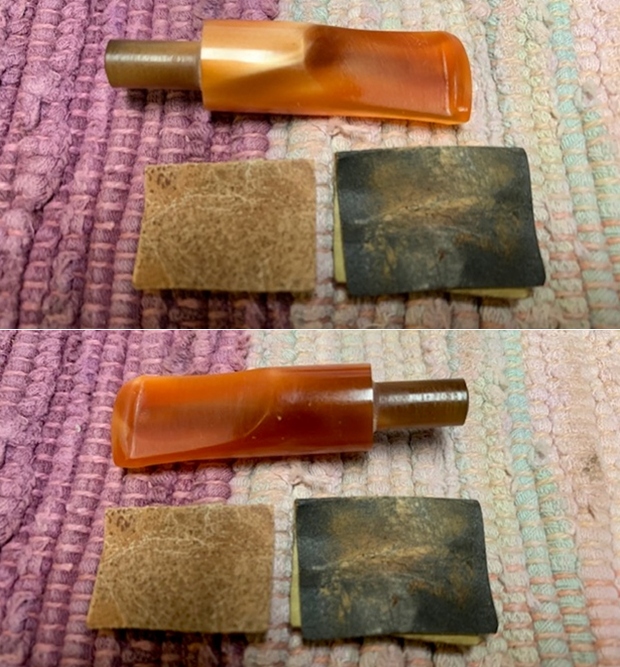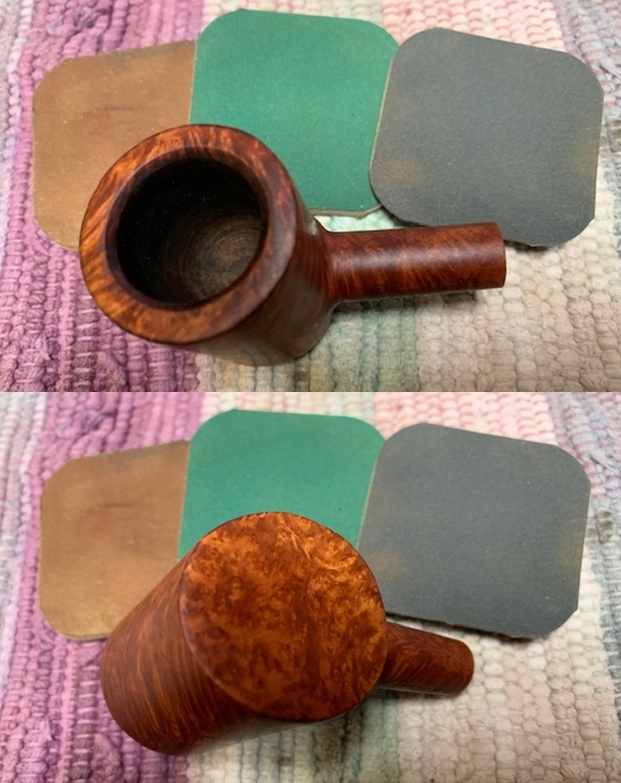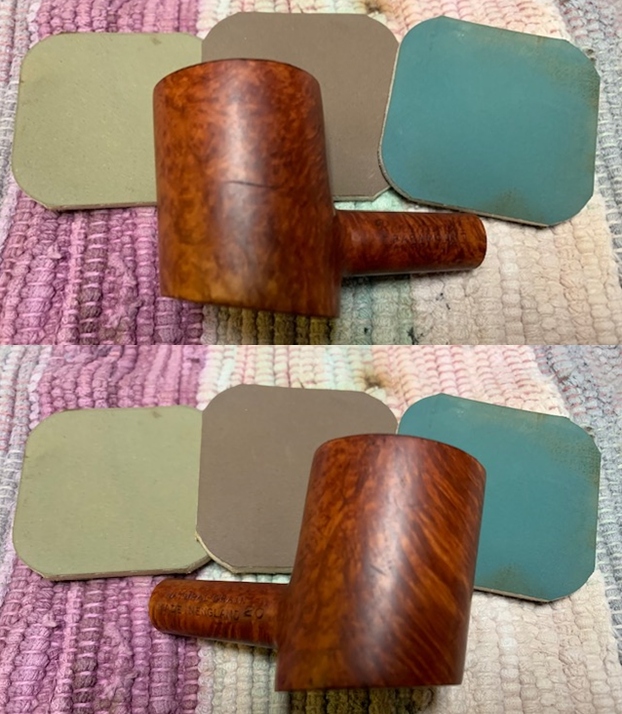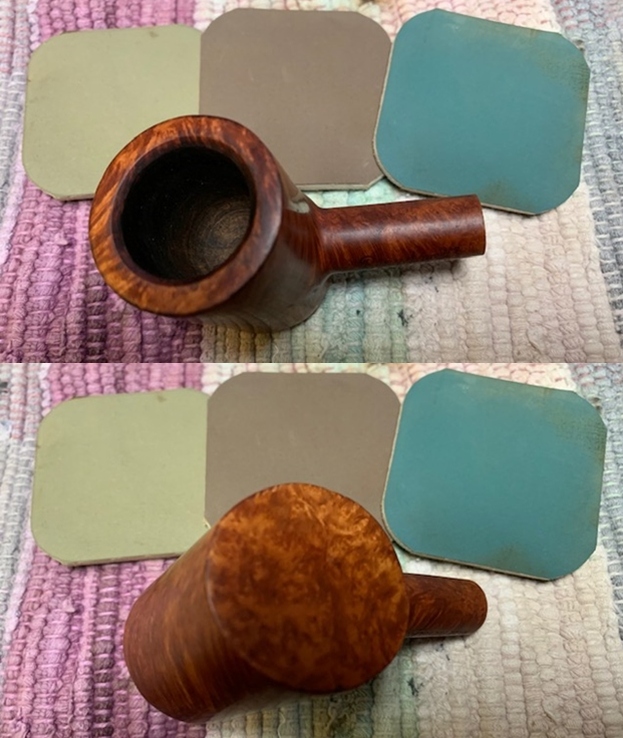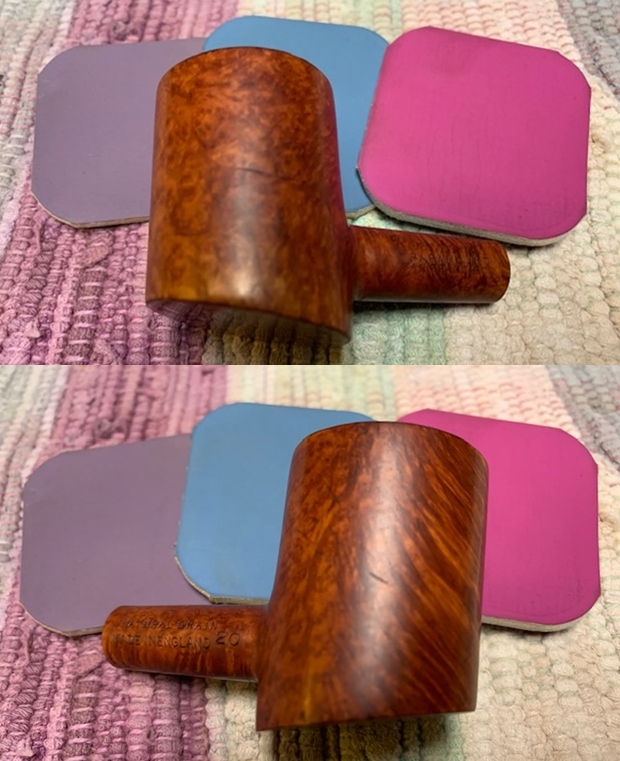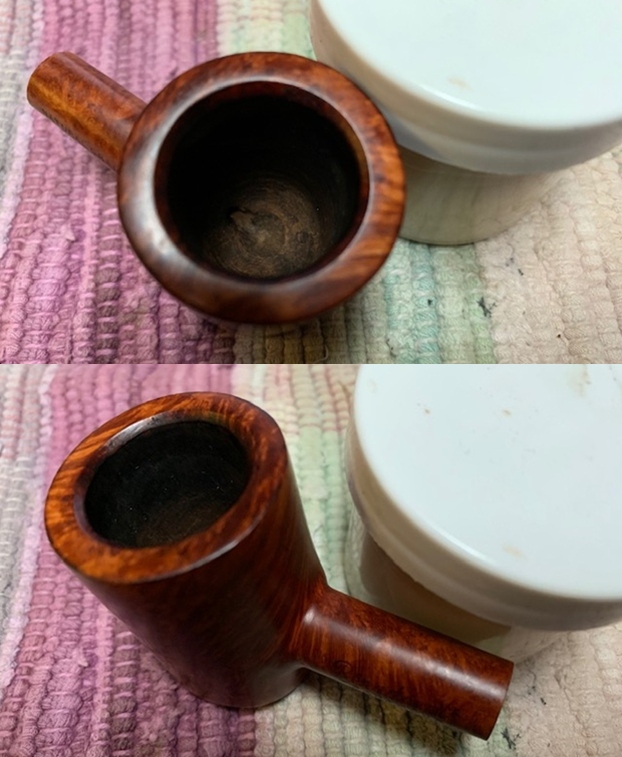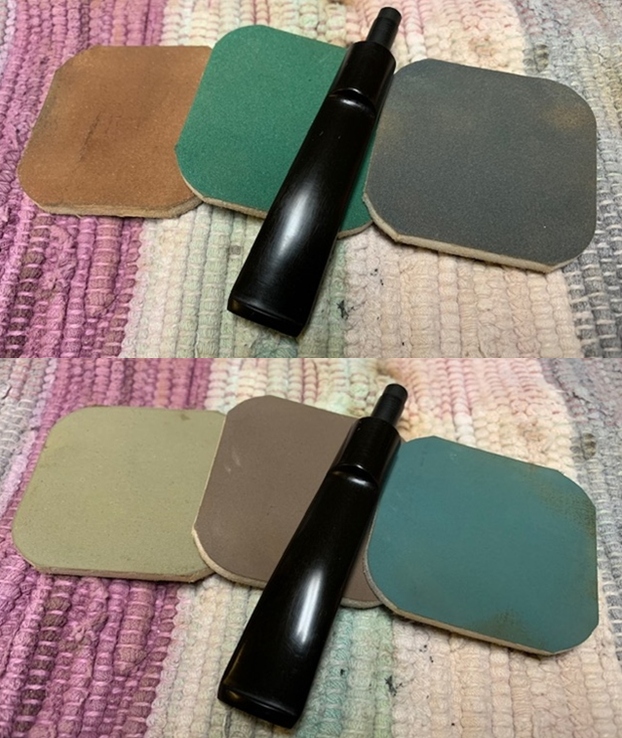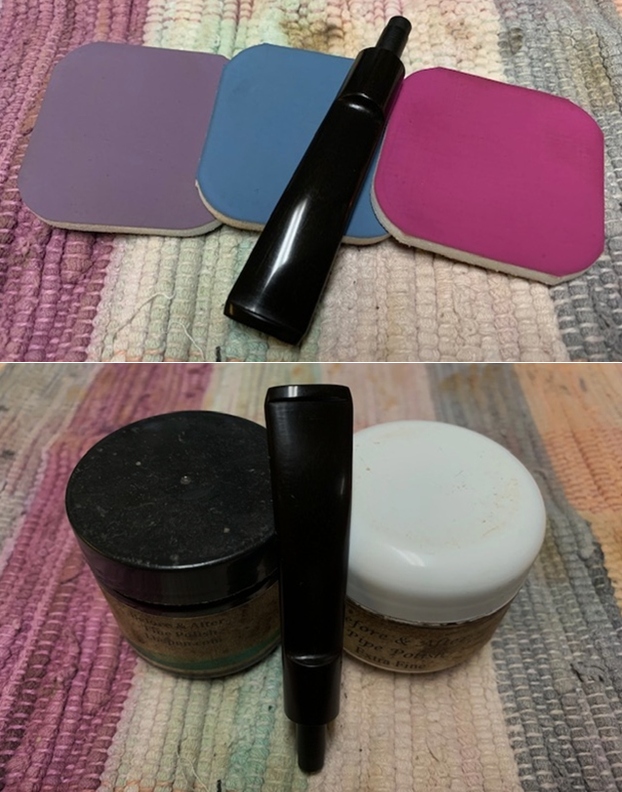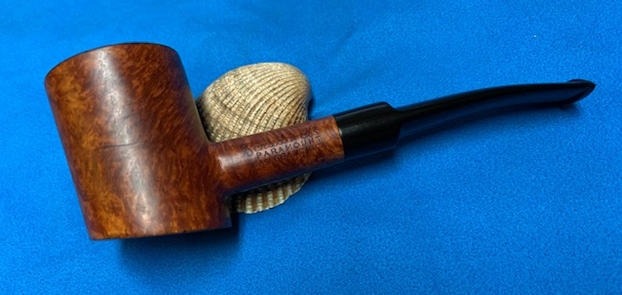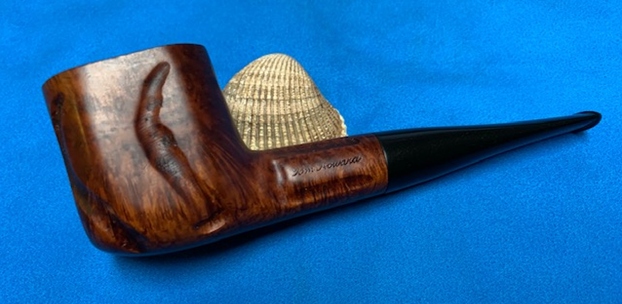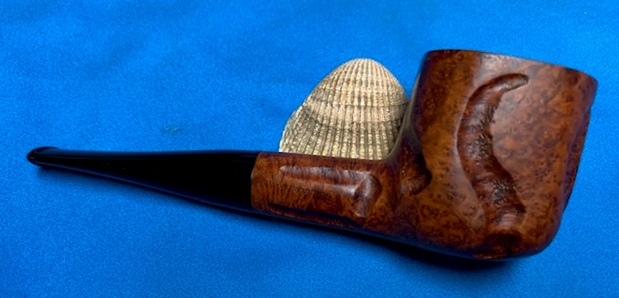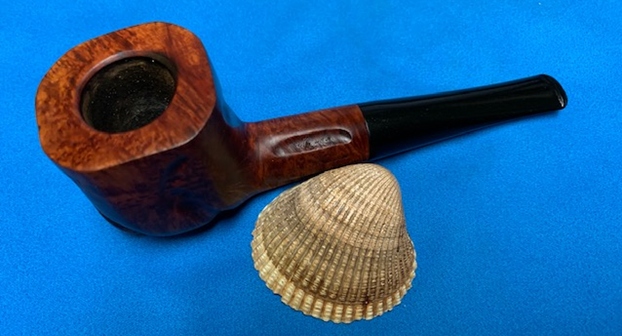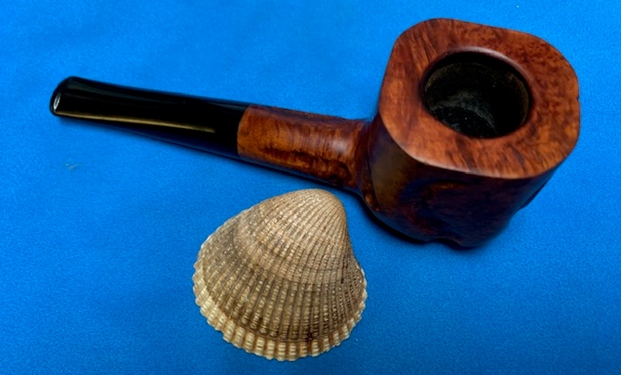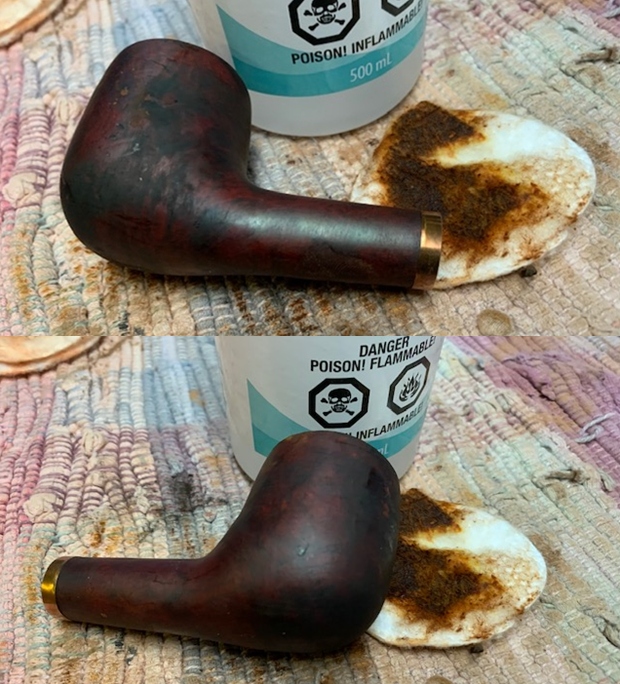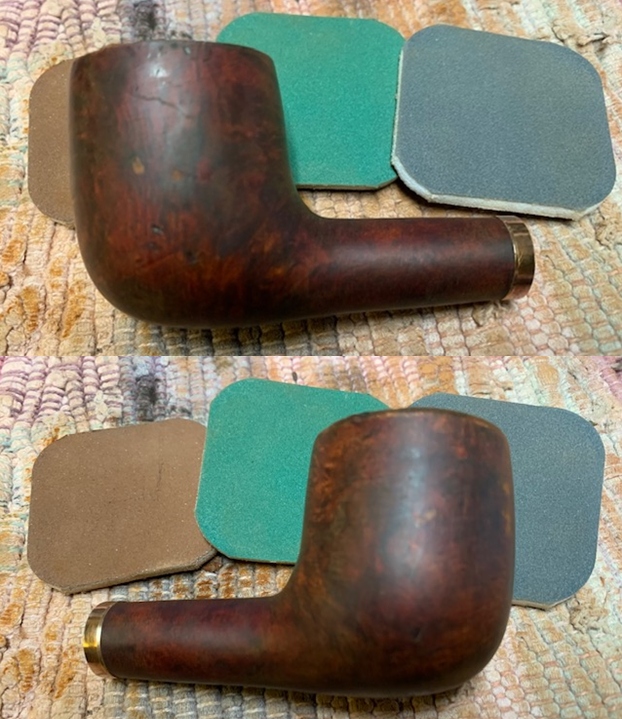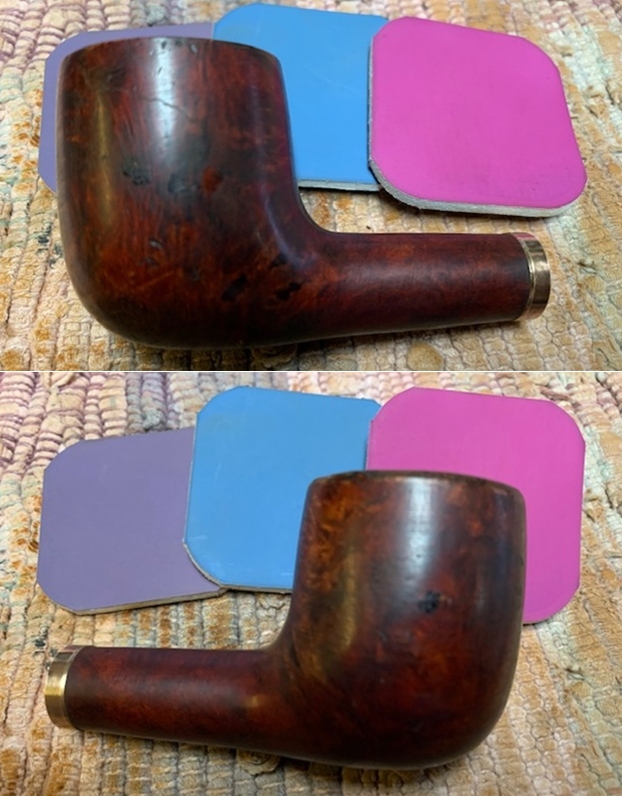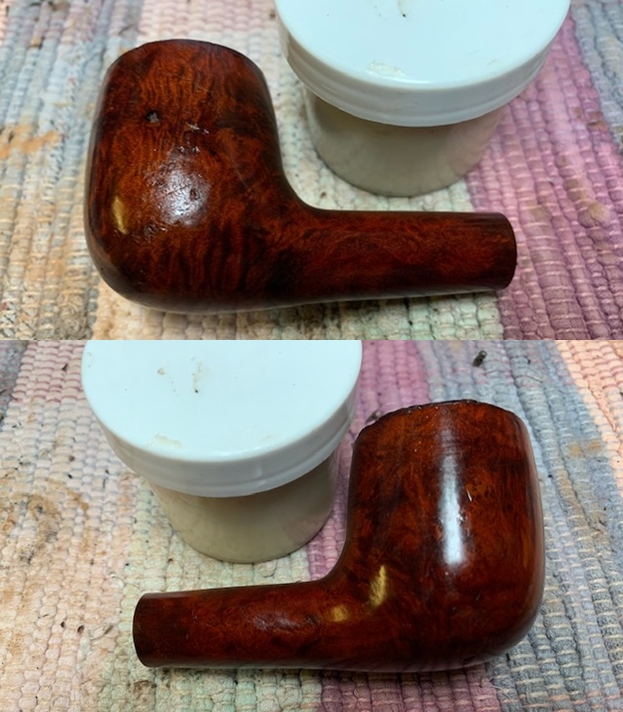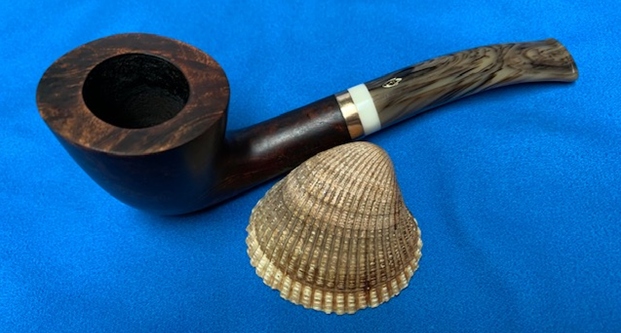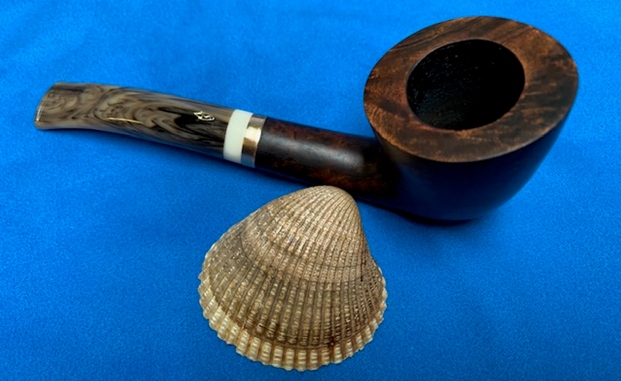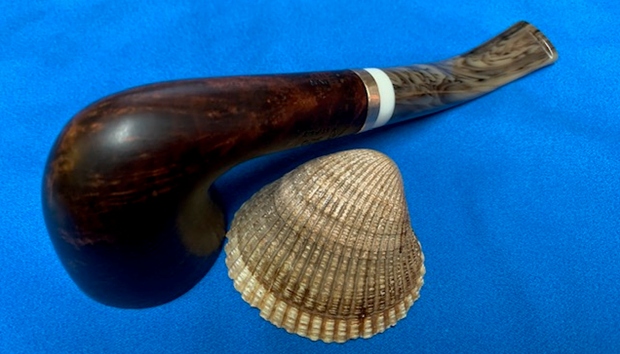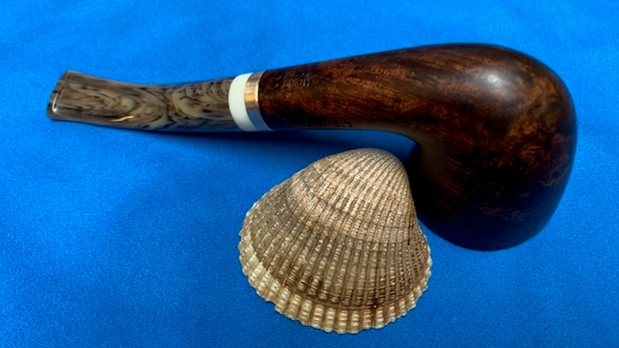
Tag Archives: restaining a bowl and rim

Repairing a broken shank on a Savinelli Liquirizia 920KS Dublin


Blog by Steve Laug

On Tuesday this week I received the following email from a fellow here in Vancouver regarding repairing a couple of pipes for him. He wrote as follows:

Hi Steve… You were recommended to me by our good friends at City Cigar (Vancouver).  I have 2 pipes I’d love to have rescued – if possible!  Please let me know if you could be of service.  I’ve attached a few photos.

One is a Peterson 2018 Pipe of the Year, Smooth Fishtail.  Pipe is great – except there is an unsolvable (for myself) blockage in the stem.  I think the filter is damaged.

The other is an unfortunate Savinelli; the actual wood is broken, right at the connection between pipe body and stem.

Let me know your thoughts!  I’d love to regain these to a workable state if possible; they are lovely pipes.

Thanks kindly and best regards, Zak

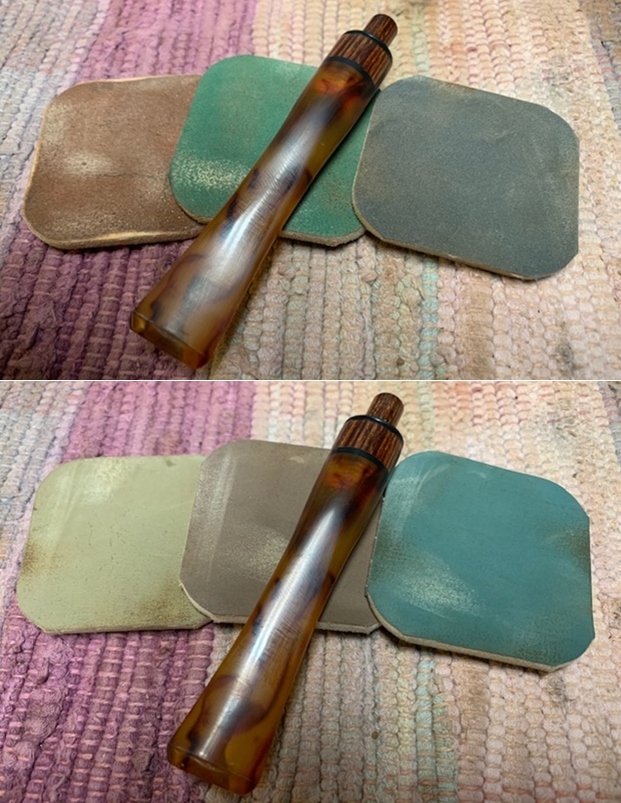
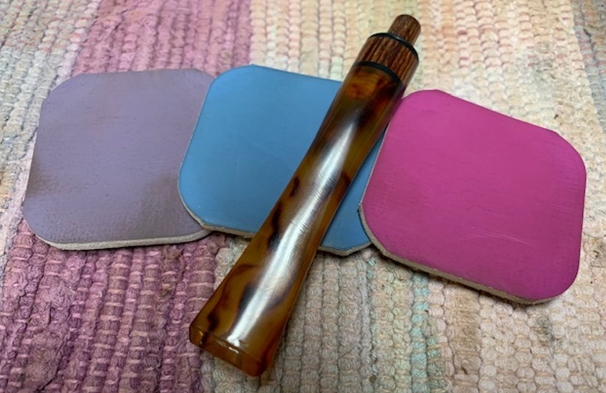
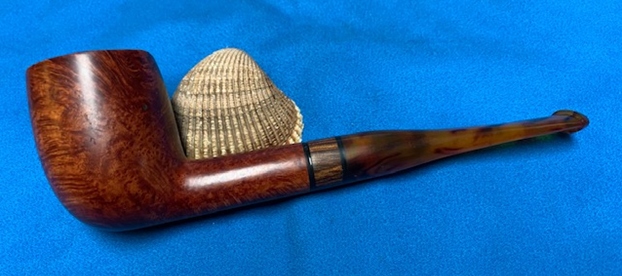
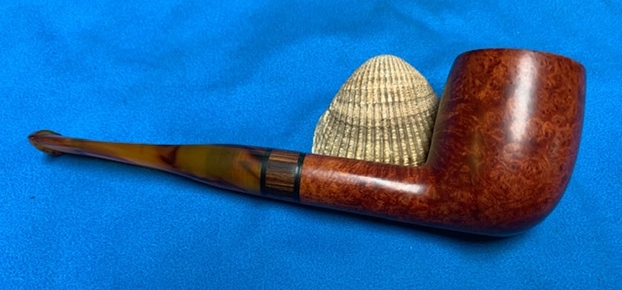
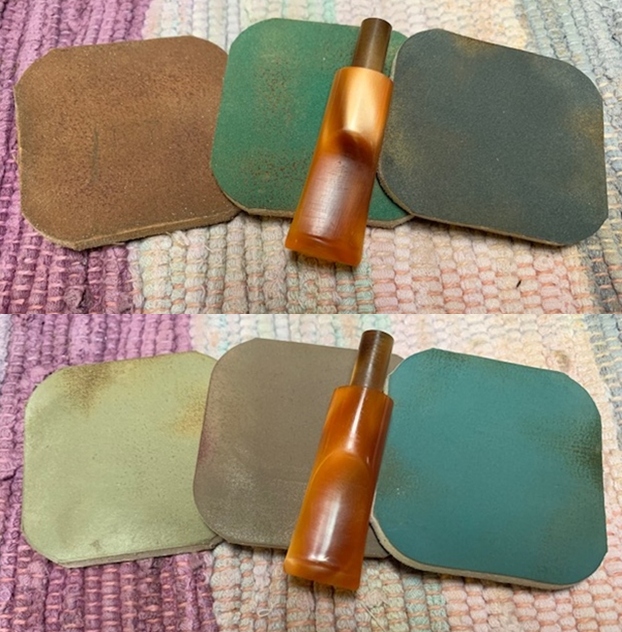
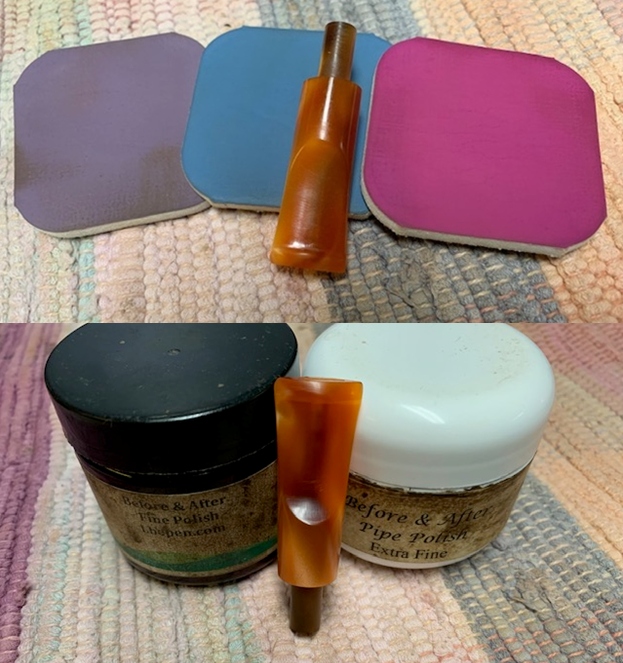
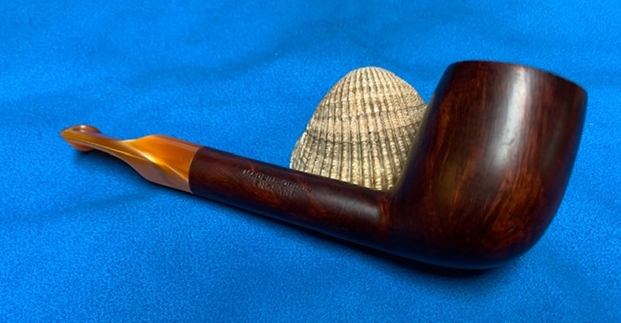
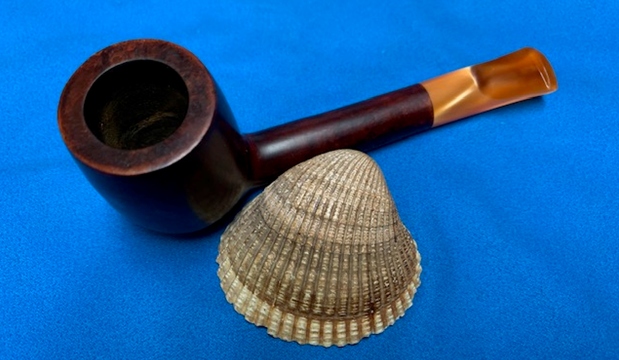
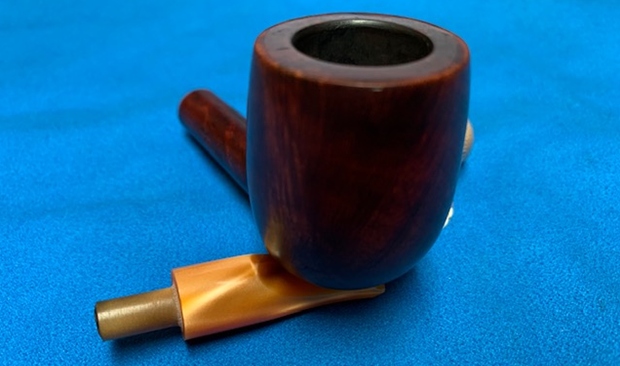
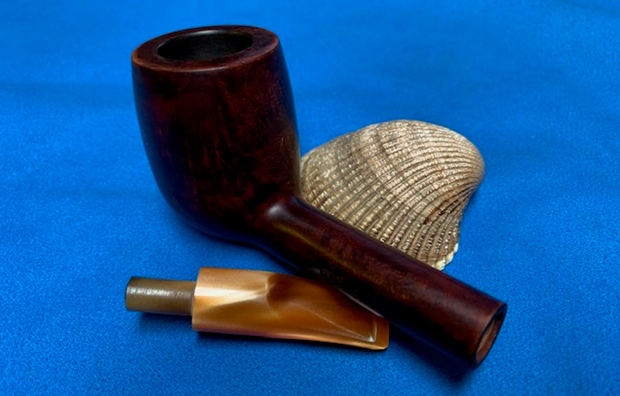
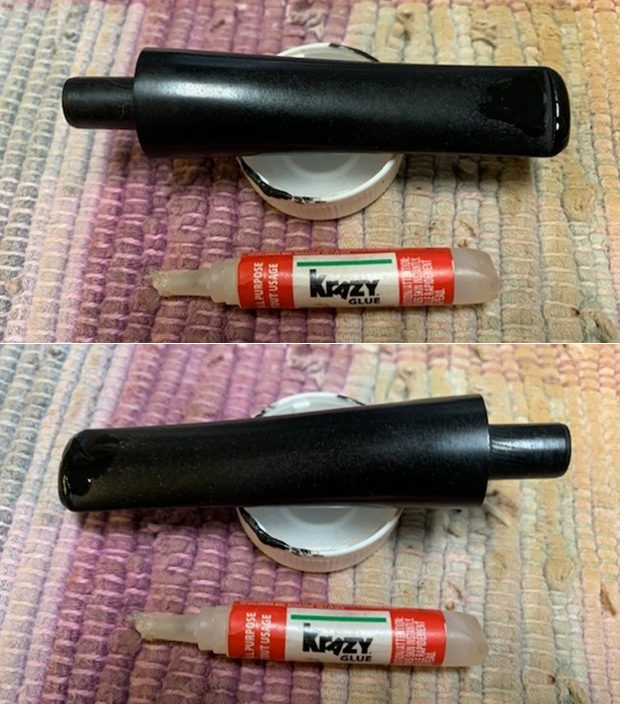
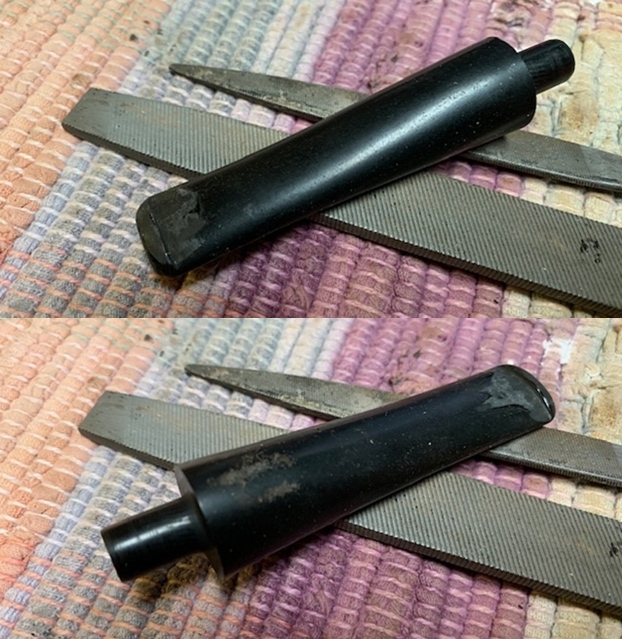
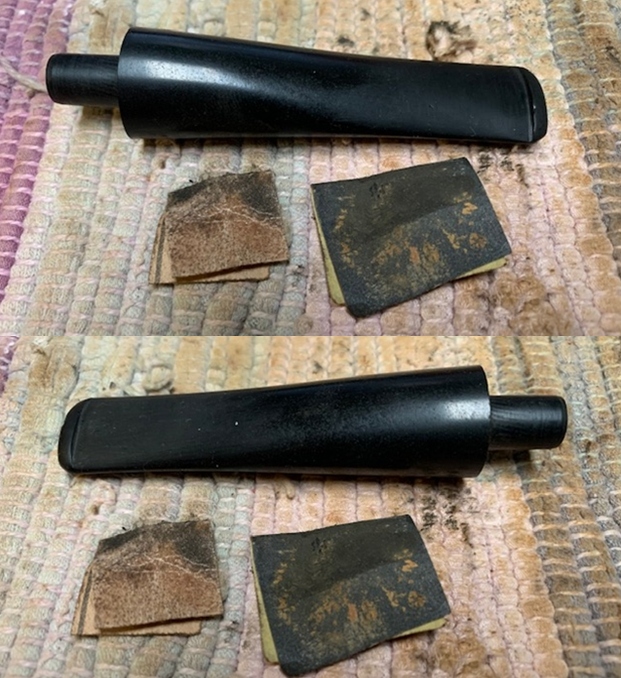
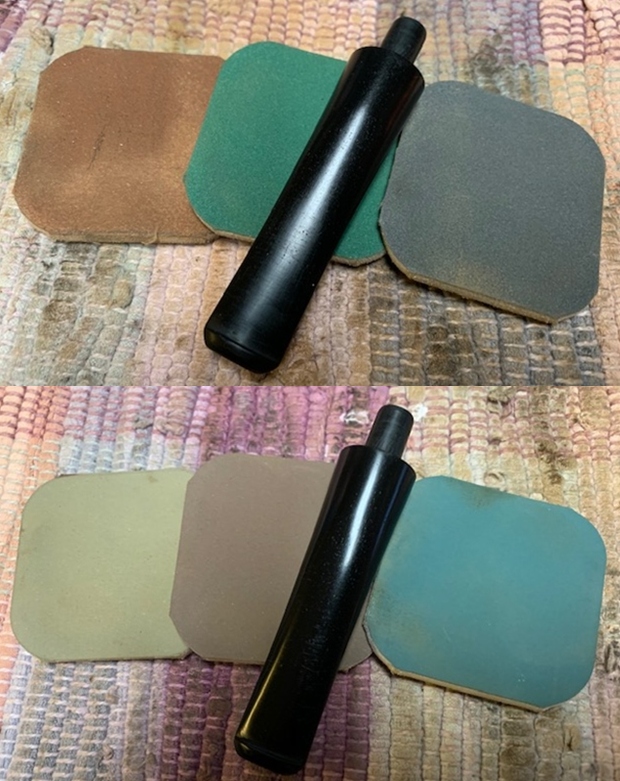
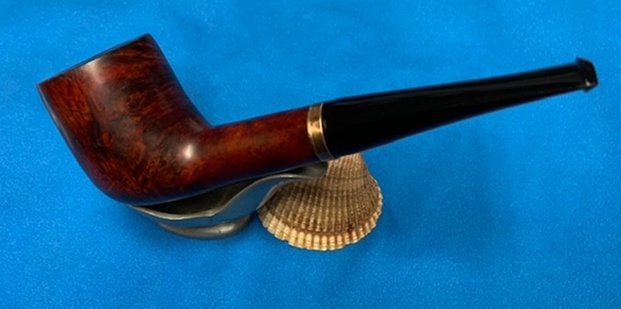
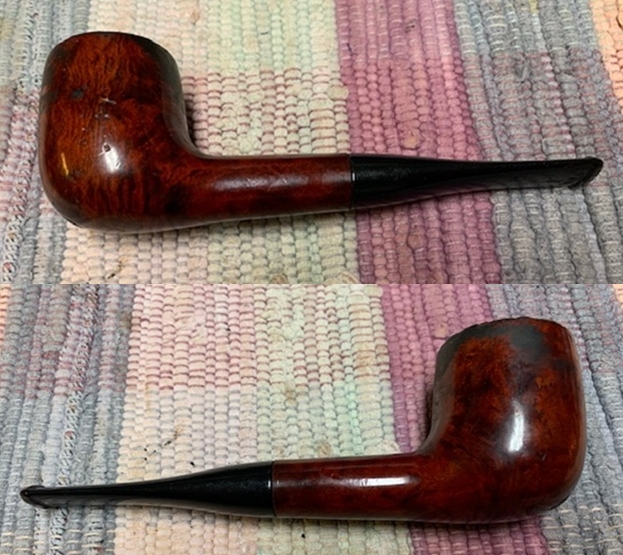
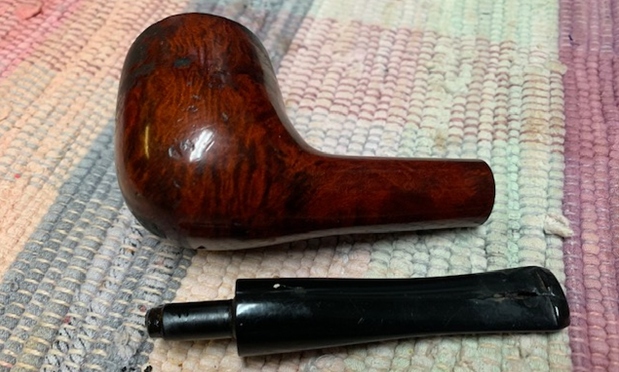
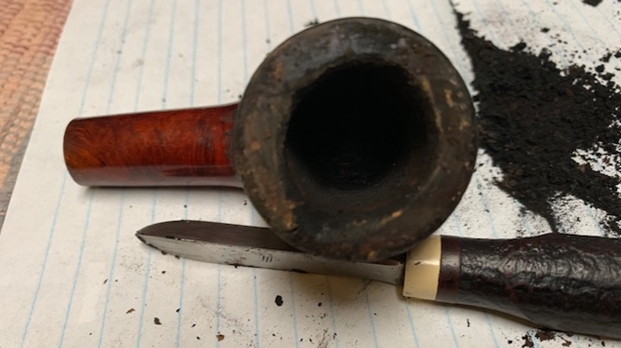
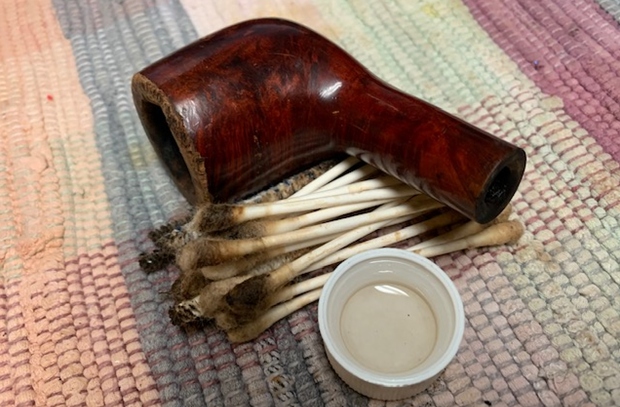
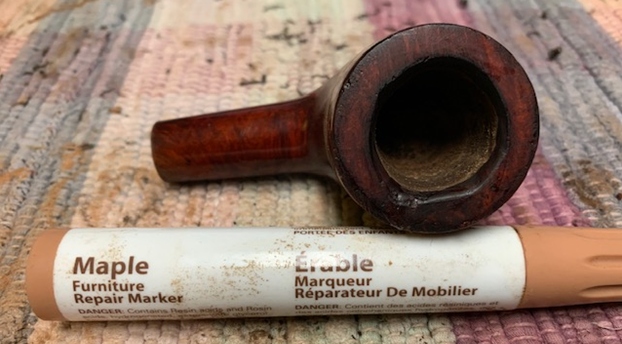
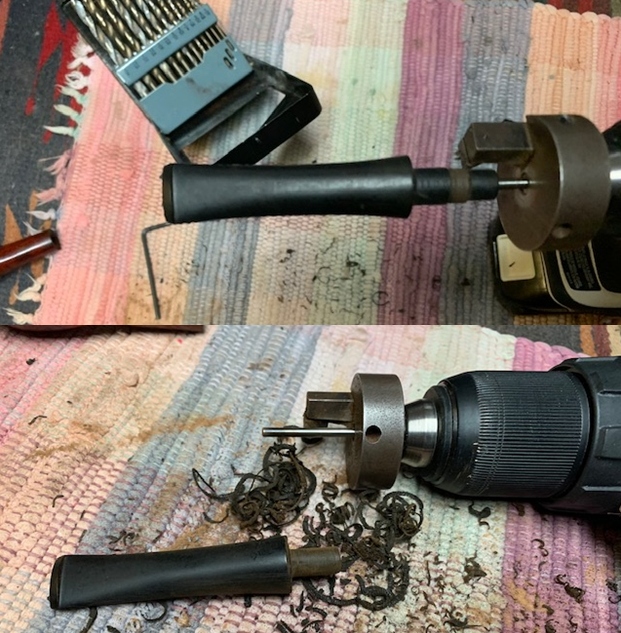
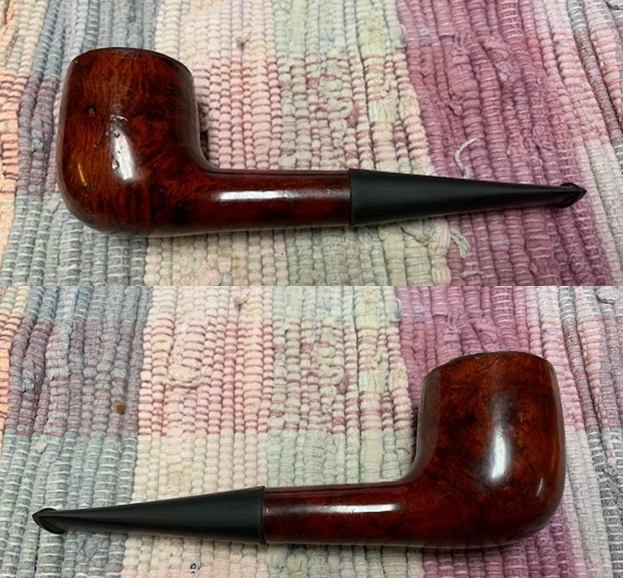
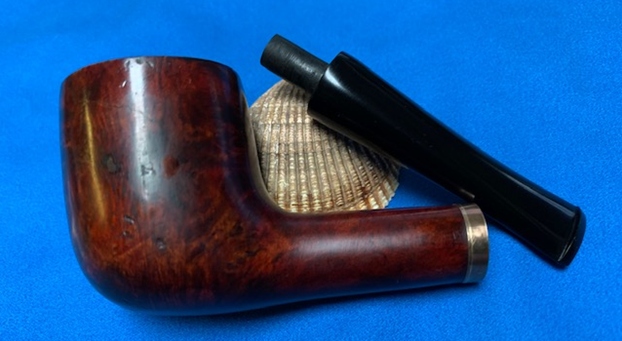
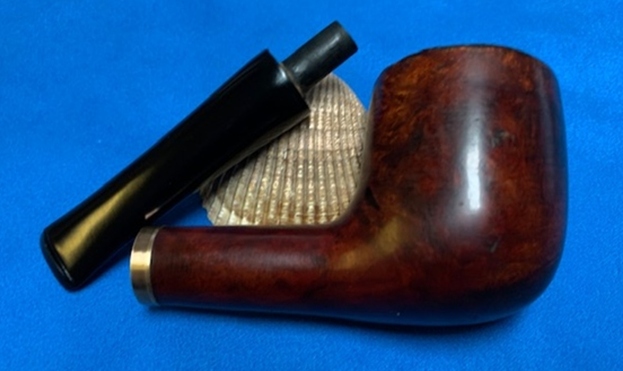
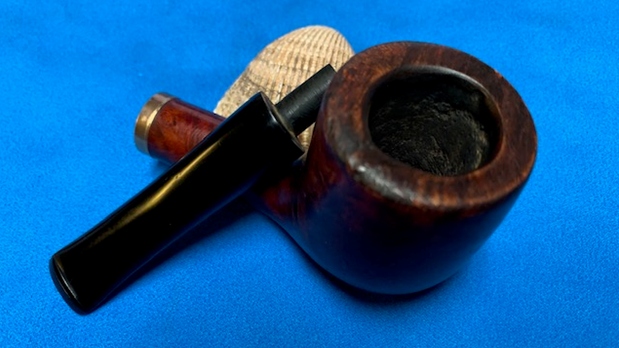
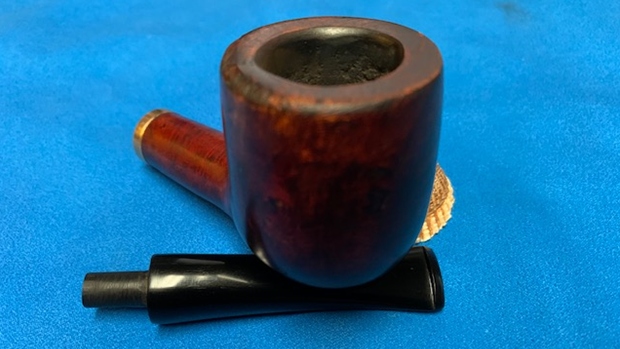
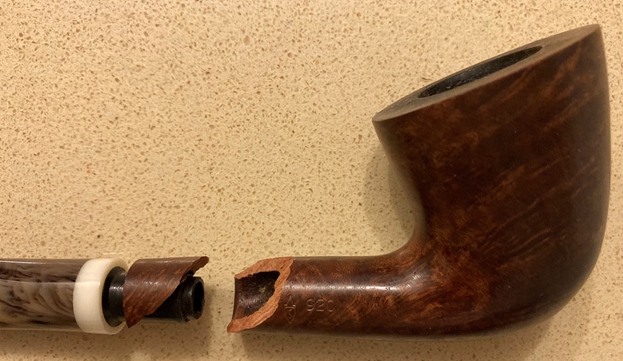
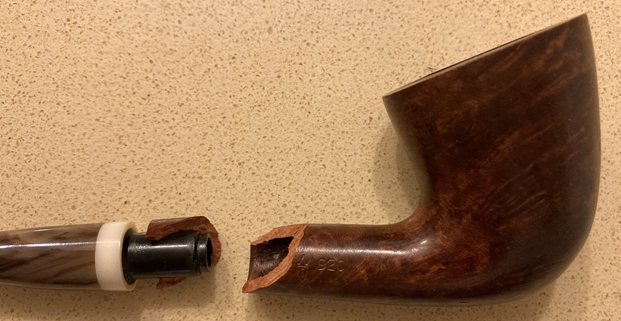
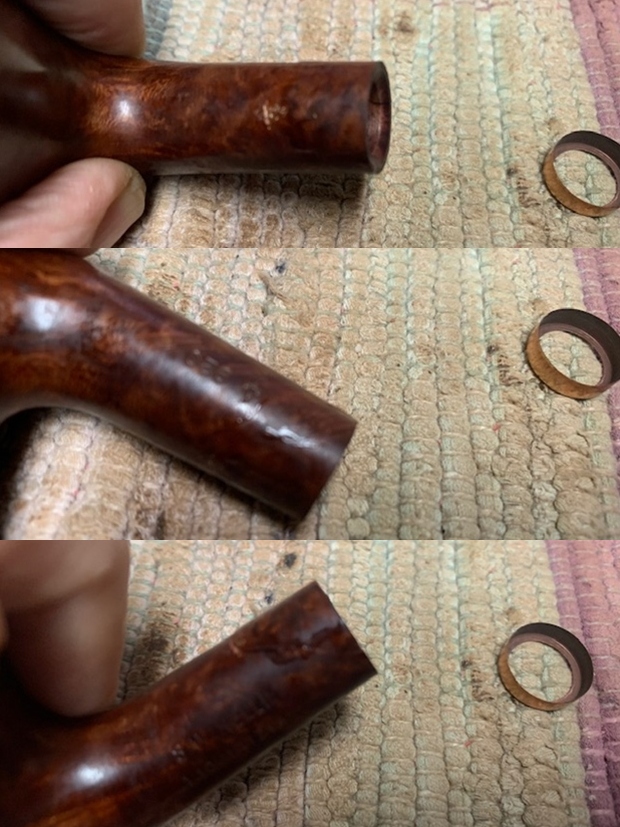
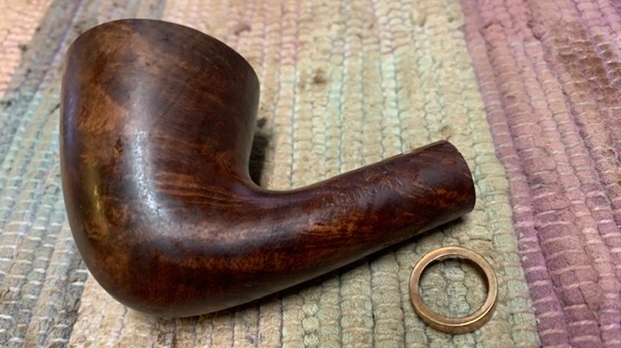
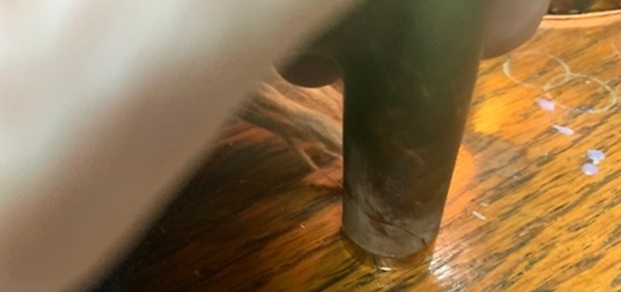
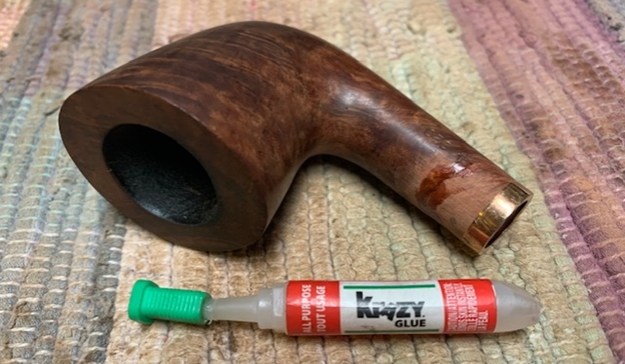
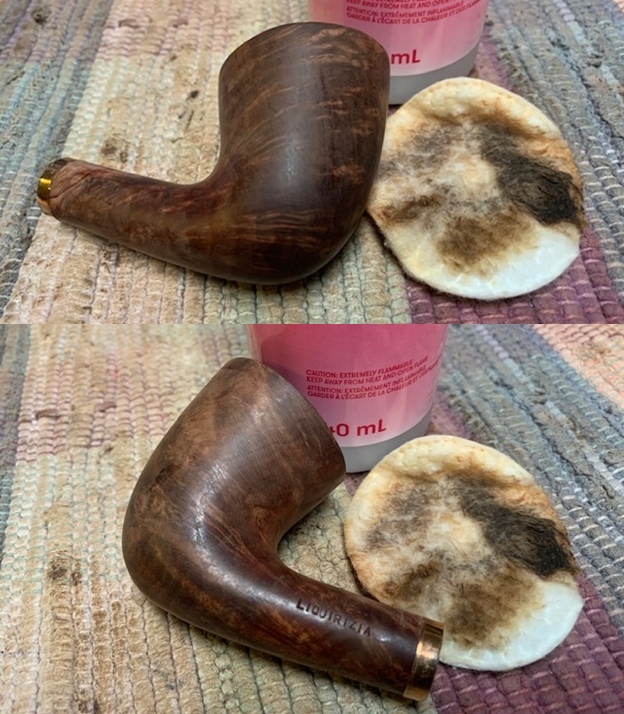
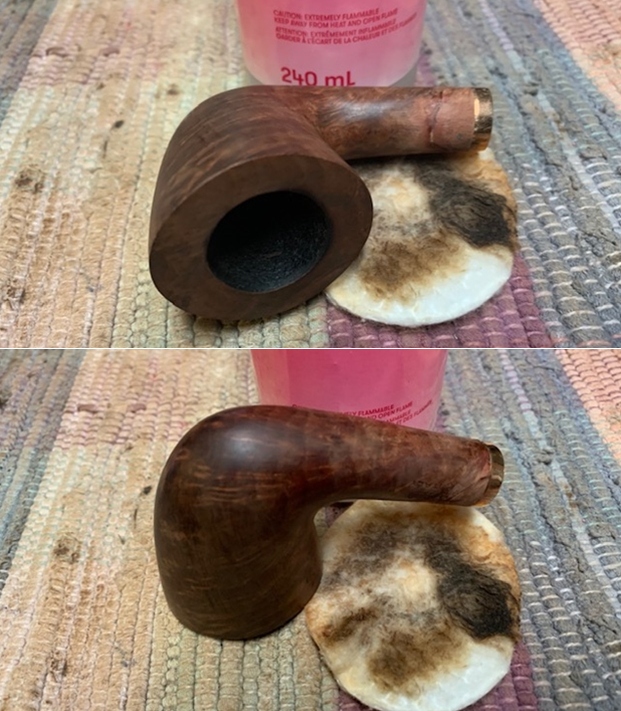
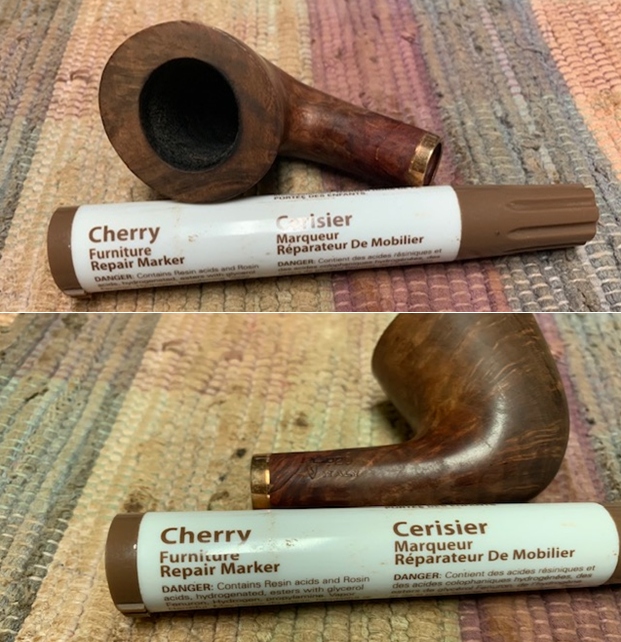
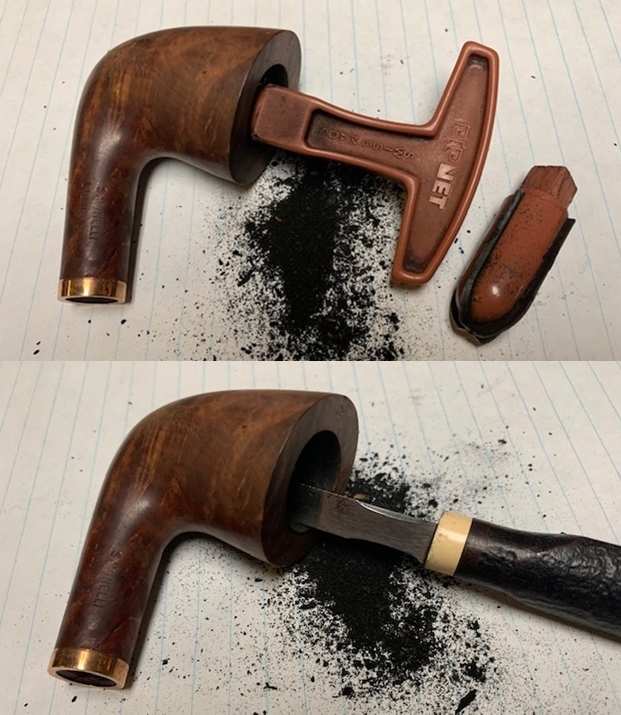
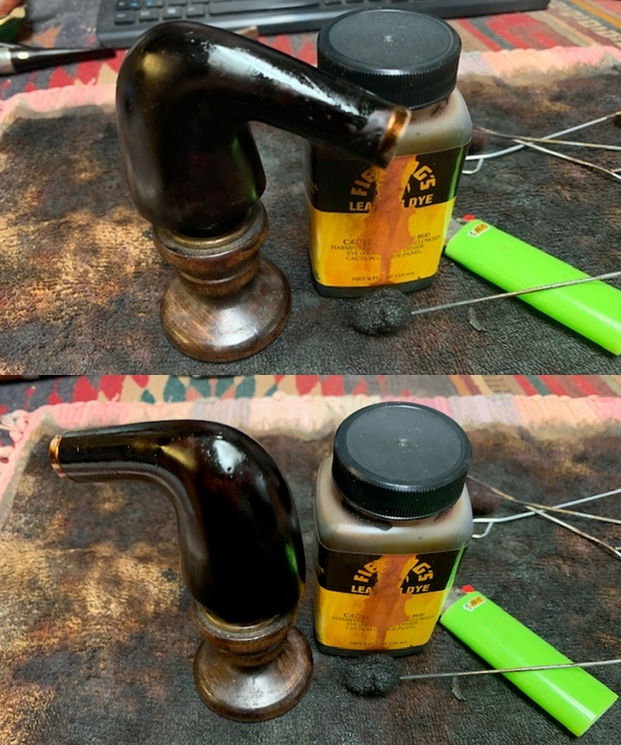
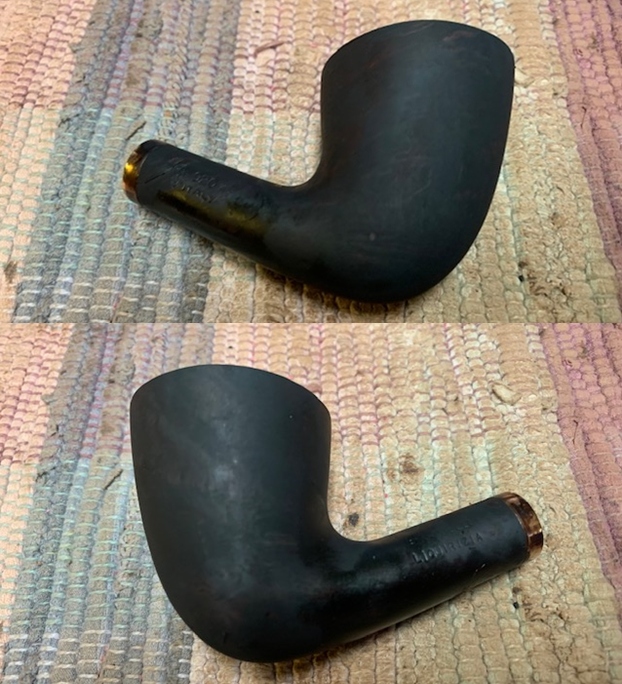
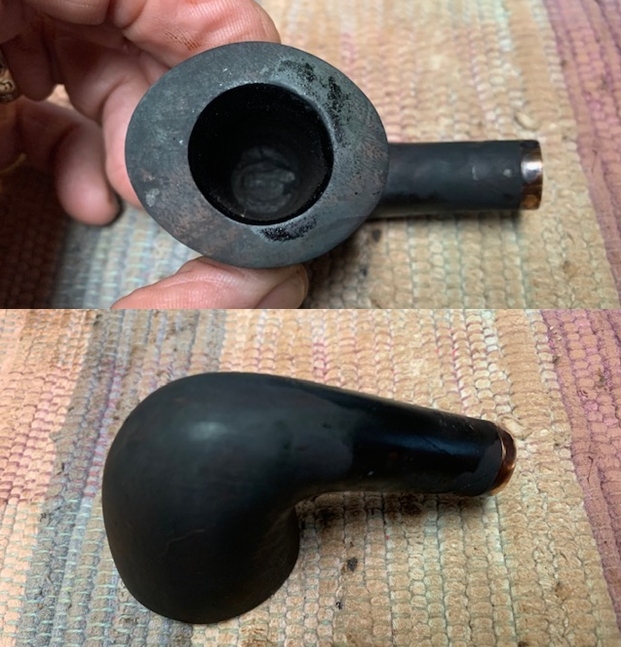
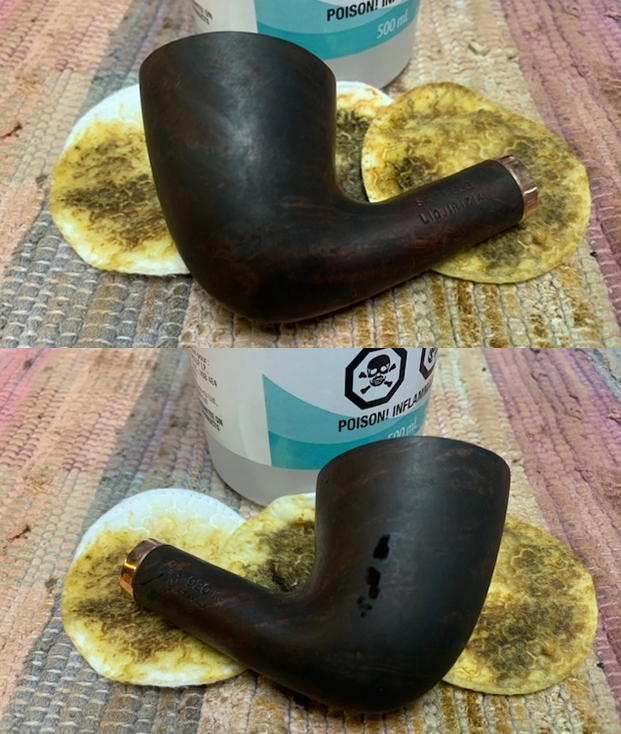
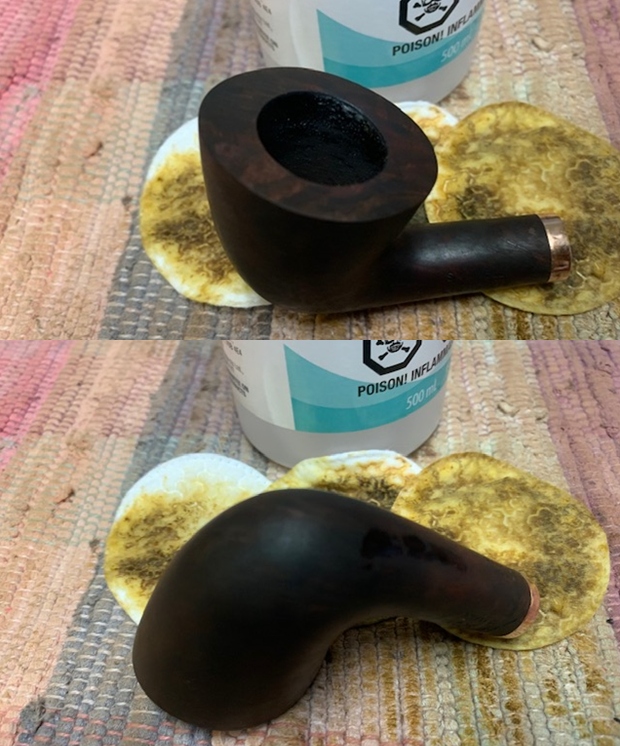
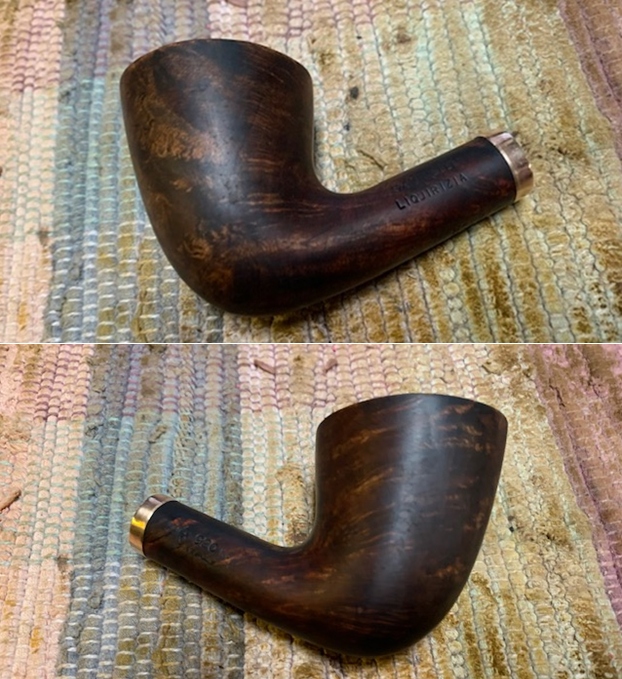
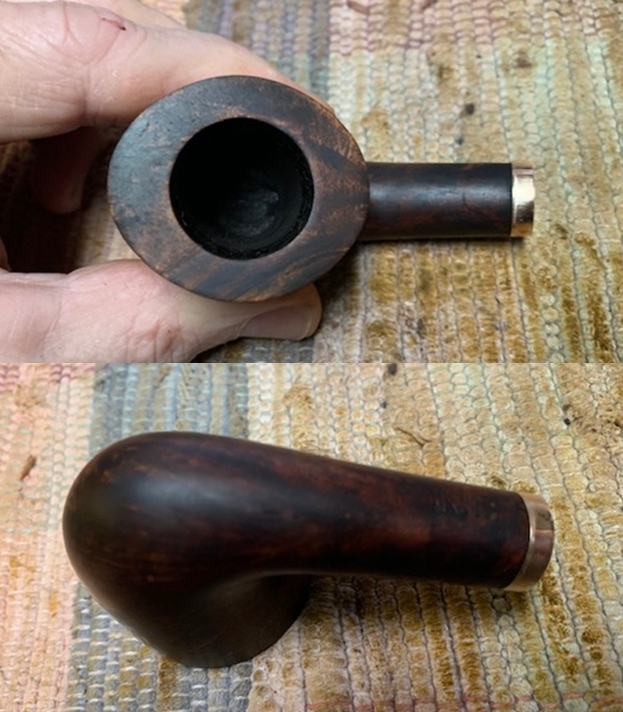
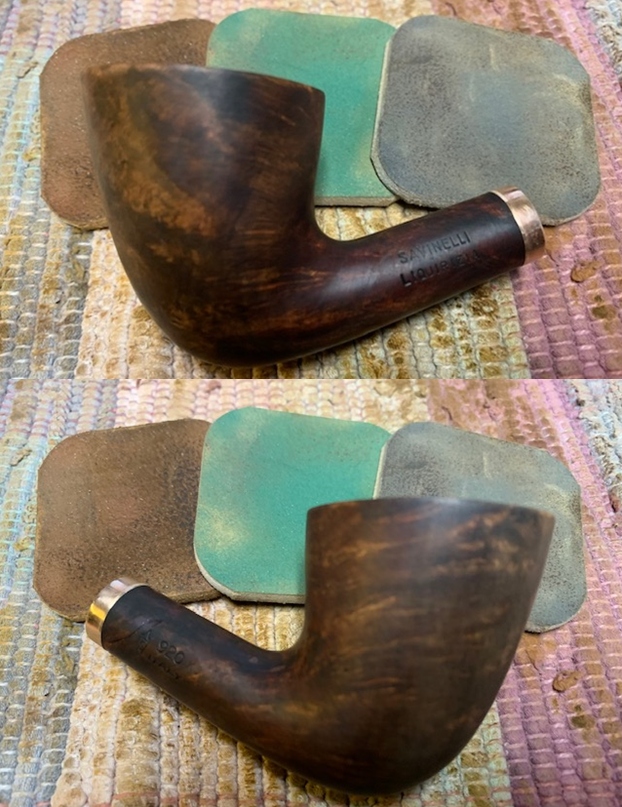
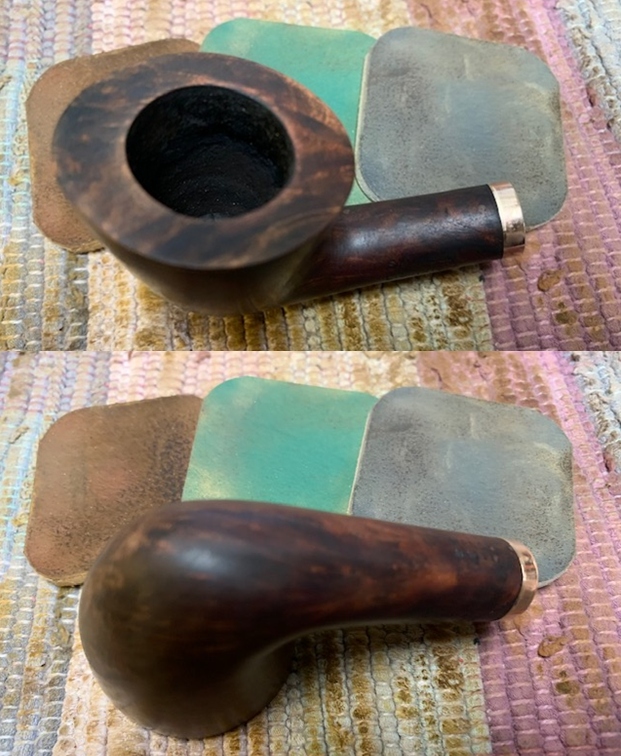
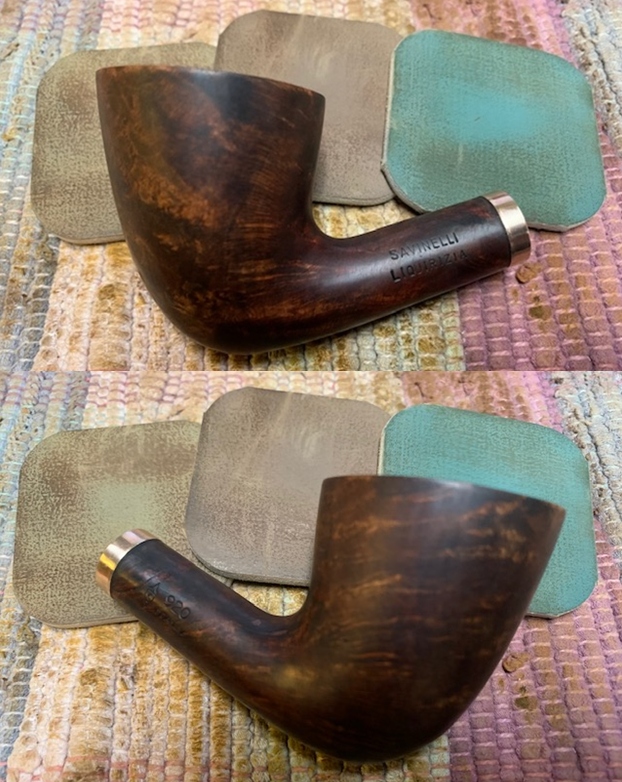
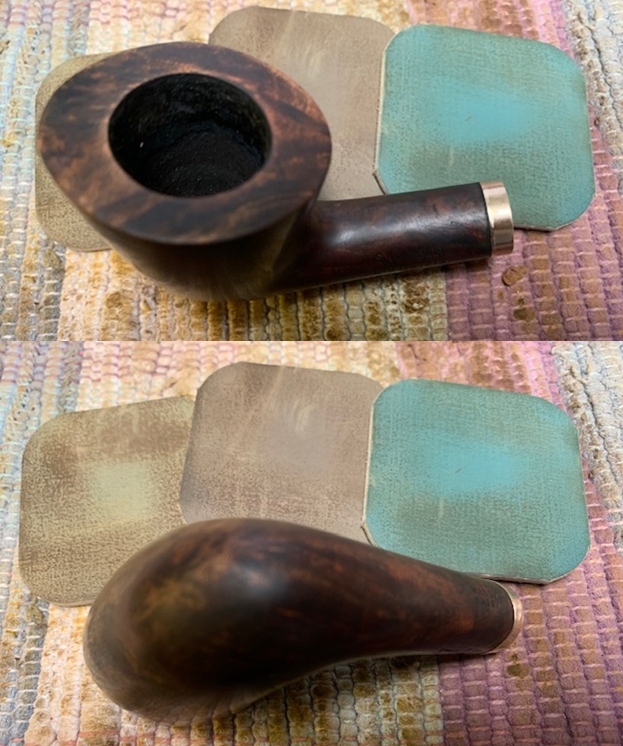
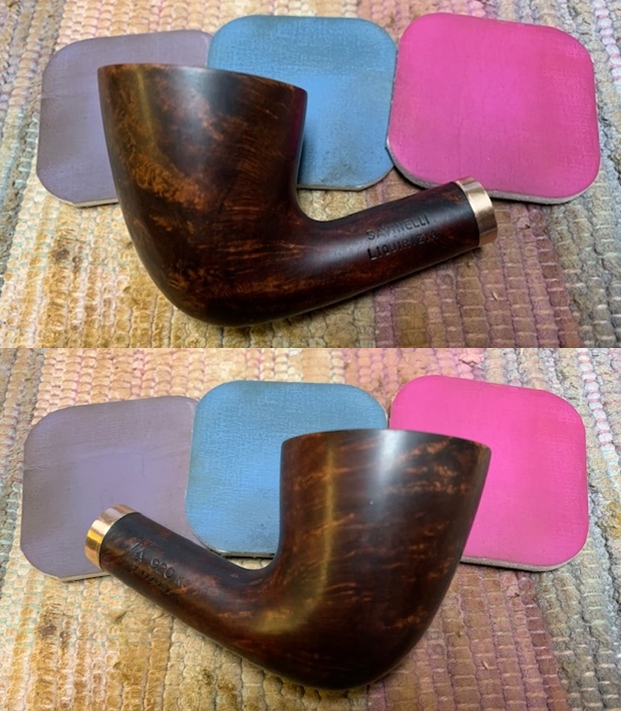
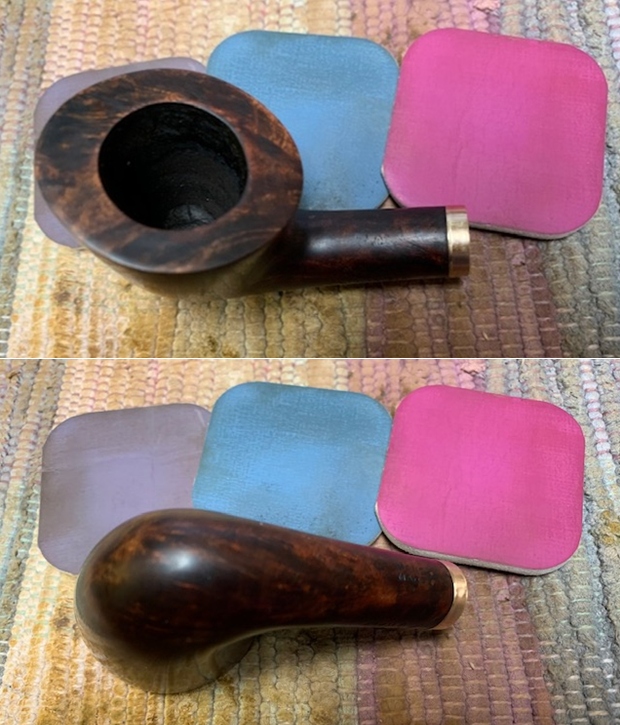
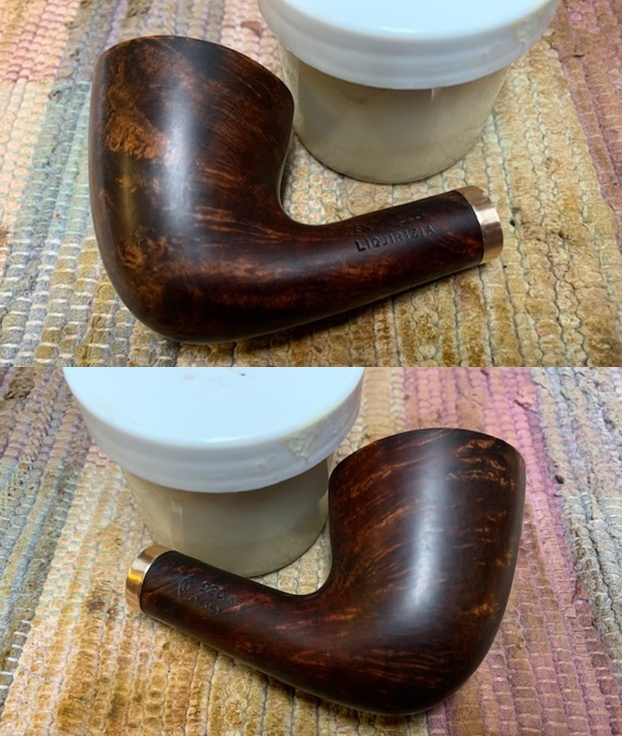
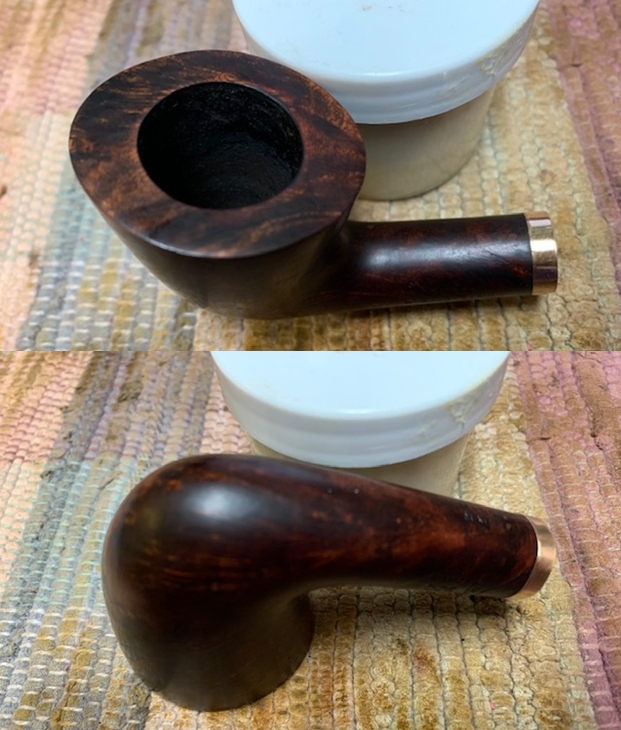
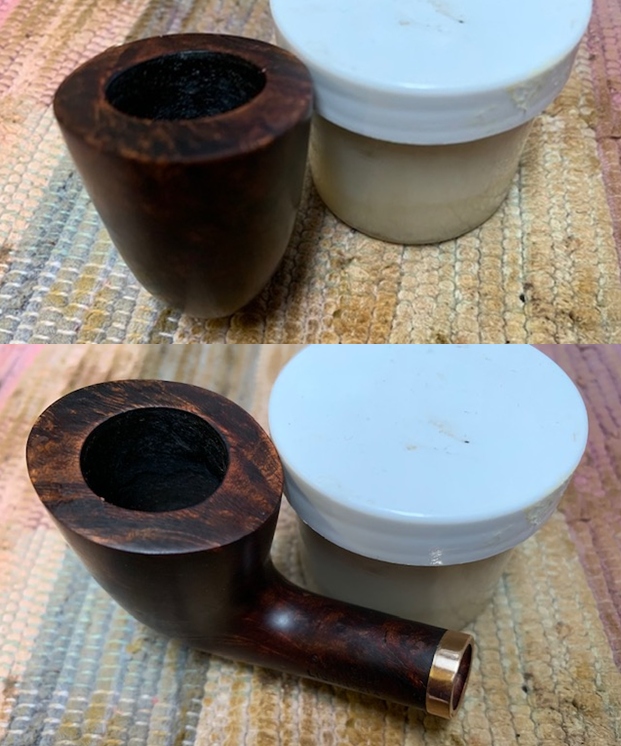
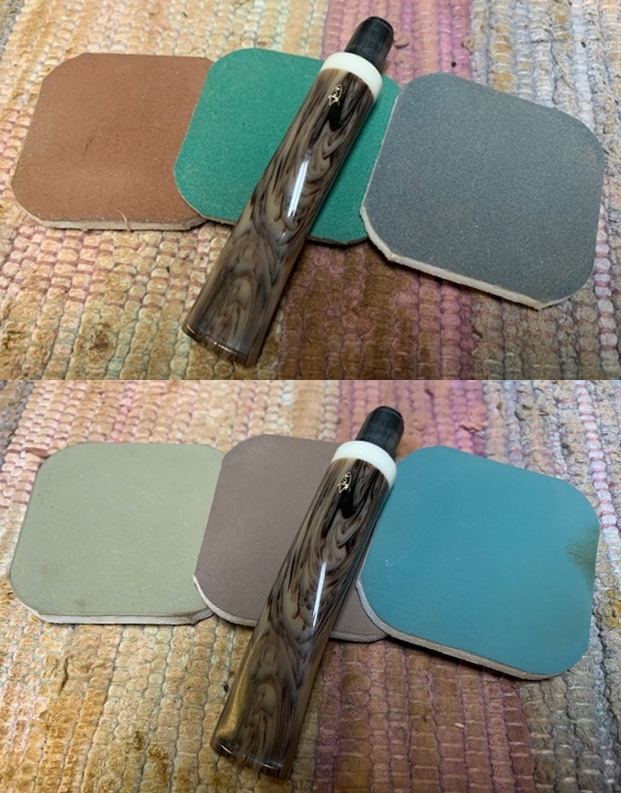
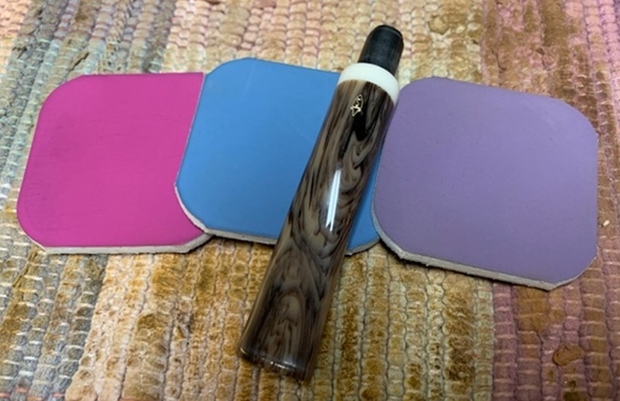
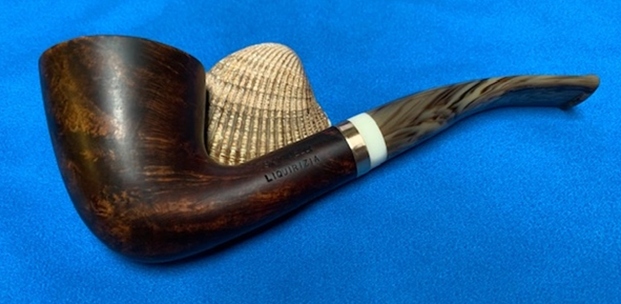
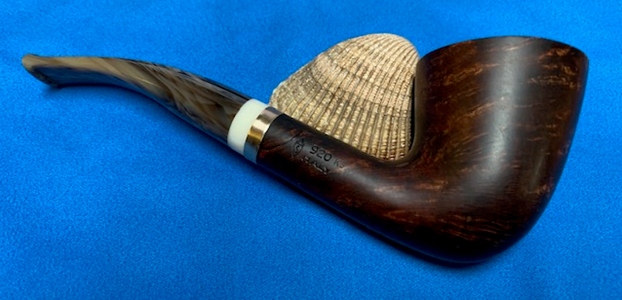
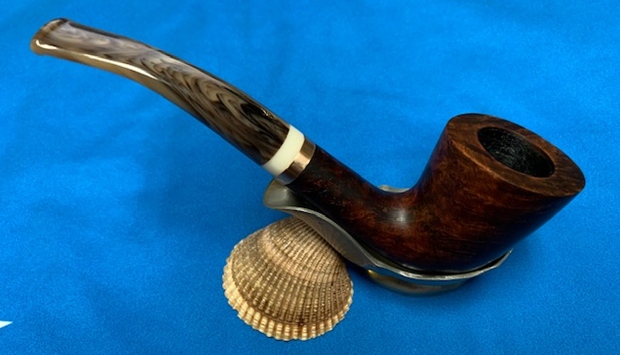
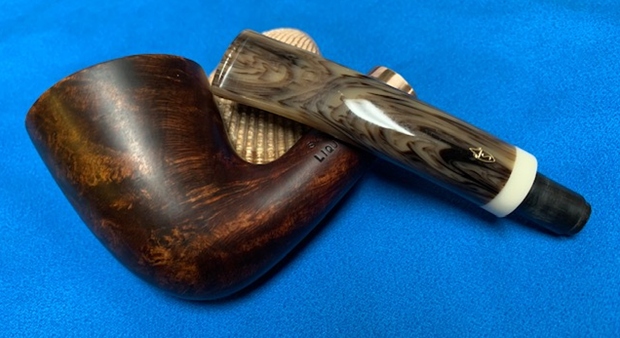
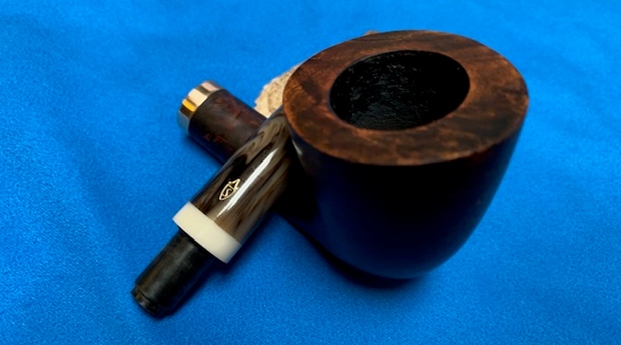
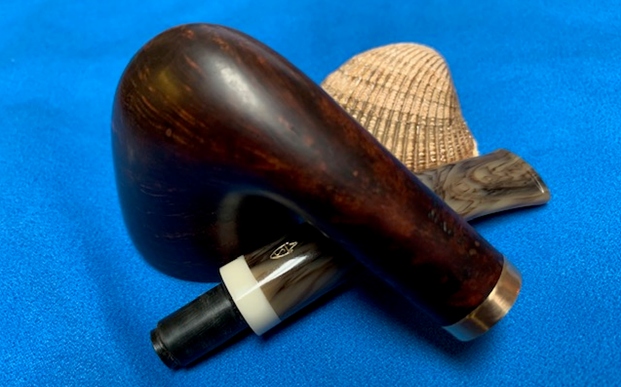
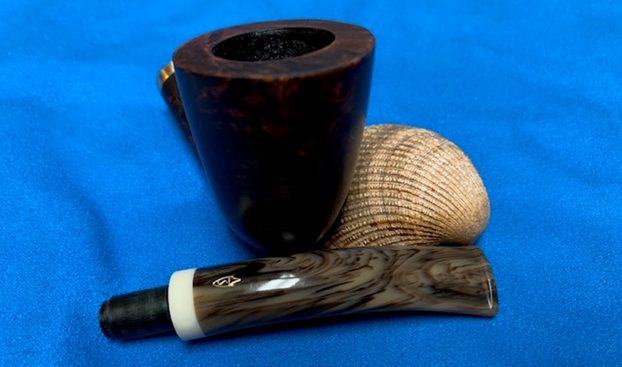
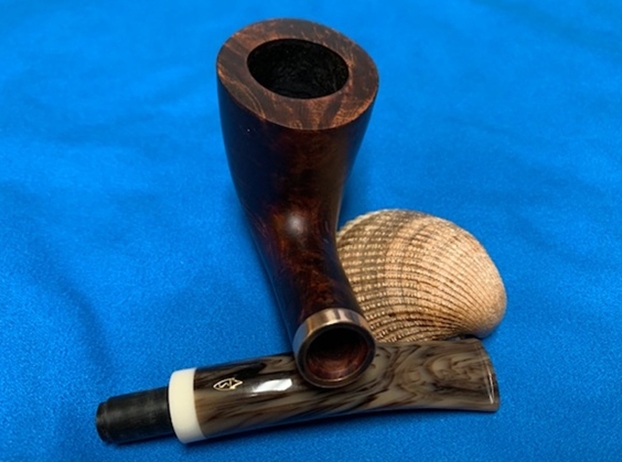
He included pictures of both pipe for me. I decided to tackle the Savinelli first. Here are the photos that Zak included with his email. As you can see the shank is snapped with a clean break about ½ inch up the shank. Zak fortunately had the pieces of the broken pipe and delivered them to me. The break had not damaged the stamping on the pipe. It read on the left side Savinelli [over] Liquirizia. On the right side it had the Savinelli Shield S logo followed by the shape number 920KS [over] Italy. On the underside of the shank it is stamped Hand Made. The pipe had a beautiful acrylic stem with a white band on the end. The tenon was Delrin and had been drilled out for a Savinelli 6mm filter or a Balsa filter. The bowl had a moderate cake and some lava on the rim top. The stem and shank had tar and oils. I cleaned out the shank and the areas of the break and glued the broken piece back in place on the shank using clear CA (super glue). The photos below show the glued shank piece.  When I repair this kind of break in a shank gluing and clamping it is not sufficient to hold. As the stem is put back in place the break will happen again due to the pressure from the tenon on the walls. I have learned that a simple band will bind it together and add strength. I have some brass bands that I picked up online that are quite thin but have and end cap that works really well to bind it all together and strengthen the joint. I went through the bag of bands I have and found the one that fit the best.I sanded the repaired area smooth with 220 grit sandpaper to blend the repair into the surface of the briar. Once the repair was smooth heated the band with a lighter and pressed it onto the shank end against my topping board to press it in place. The band added stability to the repair.I filled in a few spots with clear CA glue and resanded them with 220 grit sandpaper. Once the repairs cured I wiped the bowl down with acetone to remove the spotty varnish coat that was on the rest of the bowl. I touched up the repaired areas with a Cherry stain pen to blend it in and prepare it for a further stain coat a little later.I reamed out the uneven cake in the bowl with a PipNet reamer and cut it back to bare briar so I could inspect the interior walls. I cleaned up the remnants of the cake with a Savinelli Fitsall Pipe Knife. The walls of the bowl looked very good with no heat damage or fissures.I put a cork in the bowl and stained it with a dark brown stain. I flamed the stain to set in the briar and then repeated the process until I was happy with the coverage on the bowl. It did a great job blending the repaired area into the briar.   I set the bowl aside so the stain coat would cure overnight. Here is what it looked like in the morning when I brought it to the table.   I wiped the bowl down with isopropyl alcohol to make the finish more transparent. I began to see the grain stand out.  I continued to wipe it down until I had the variation in colour I was looking for. The grain really stood out now and the brass band was a great contrast.   I polished the briar with micromesh sanding pads – wet sanding with 1500-12000 grit pads and wiping the bowl down between each pad with a damp cloth. The contrasting colours really came alive.  I rubbed the bowl and shank down with Before & After Restoration Balm. I worked it into the surface of the bowl sides and shank with my fingertips to clean, enliven and protect the briar. I let the balm sit for a little while and then buffed with a cotton cloth to raise the shine. The Balm did its magic and the grain stood out.    I polished the acrylic stem with micromesh sanding pads – 1500-12000 grit pads. I wiped it down with a damp cloth after each sanding pad. The photo below shows the polished stem.  This nicely grained Savinelli Liquirizia 920KS Bent Dublin with a thin brass repair band and a swirled acrylic stem is a great looking pipe. The briar around the bowl is clean and really came alive. The rich brown stains gave the grain a sense of depth with the polishing and waxing. The grain really popped. The brass band binds the cracked shank repair and gives it a bit of bling. I put the acrylic stem back on the bowl and carefully buffed the pipe with Blue Diamond on the buffing wheel using a light touch on the briar. I gave the bowl and the stem multiple coats of carnauba wax on the buffing wheel. I buffed the pipe with a clean buffing pad to raise the shine. I hand buffed the pipe with a microfiber cloth to deepen the shine. The finished Savinelli Liquirizia Bent Dublin is a beauty and feels great in the hand and looks very good. Give the finished pipe a look in the photos below. The dimensions of the pipe are Length: 5 ½ inches, Height: 2 inches, Outside diameter of the bowl: 1 ½ inch, Chamber diameter: ¾ of an inch. The weight of the pipe is 44grams/1.55oz. The pipe will be going back to Zak as soon as finish the second one. He will soon, so he can enjoy it again. Thanks for reading this blog and my reflections on the pipe while I worked on it.

Reworking and Restoring a Kuhl Record Briar/Bakelite Dublin System


Blog by Steve Laug

The next pipe on the work table came to us from an antique dealer on the Oregon Coast, USA back in 2019. It has been sitting here for a year. Jeff took photos in in February of this year. Now I am finally getting a chance to work on it. The pipe is a system pipe with a Briar Bowl, a Bakelite base and a vulcanite stem. The pipe was an absolute mess. On the backside of the briar bowl it is stamped with Bruyere [over] Garantie. The Bakelite base is embossed and reads Kuhl Record across the front of the base. The mix of stains were worn and spotty around the bowl but still showed the original orange and brown look even with the grime ground into the finish. It was very dirty with dust and debris ground into the finish. There was a thick cake in the bowl and an overflow of lava on the rim top. The inner edge looks good but we will know for certain once the bowl is reamed and cleaned. The stem was oxidized, calcified and there were light tooth marks and chatter on both sides near the button. Jeff took photos of the pipe before he started working on it. I include those below. Jeff took photos of the bowl and rim top to show the cake in the bowl and the condition of both. It was heavily caked with a lava overflow on the rim top. He took photos of the top and underside of the stem showing the calcification, oxidation and tooth marks on the stem surface and button. He took photos of the sides and heel to show the fit of the bowl to the Bakelite Base as well as the condition of the pipe under the grime.  There were some large fills around the bowl sides that are visible in the photos below. Jeff took two photos to capture the stamping on the backside of the bowl and the front of the Bakelite base. It is clear and readable as noted above.    He removed the stem from the shank and the bowl from the base and took photos of the parts of the pipe. The shank is lined with cork that needs to be rejuvenated but is in good condition. The brand was not listed on either Pipephil’s site or Pipedia. So I googled the name on the web and also found no links.
I turned to the Smoking Metal.co website as I have found it to be very helpful on these mixed material pipes (http://www.smokingmetal.co.uk/pipe.php?page=509). I checked the index page and found the Kuhl Record listed. It gave the following description as well as some photos of the pipe. I have included that below.

KUHL Record Bakelite shank, vulcanite stem, briar bowl. Length: 5 5/8″ height 1 3/4″ diameter of bowl 1 5/8″

This pipe was a bit of a mess like many of the pipes we work on. I was curious to see what it would look like when I unpacked it. I was surprised at how good it looked. Jeff reamed it with a PipNet pipe reamer and cleaned up the reaming with a Savinelli Fitsall Pipe Knife. He scrubbed out the internals of the shank and stem with alcohol, pipe cleaners and cotton swabs until the pipe was clean. He scrubbed the exterior of the bowl with Murphy’s Oil Soap and a tooth brush to remove the grime and grit on the briar and the lava on the rim top. The finish on the bowl looked really good when I got it. The rim top looked better. The inner edge showed damage at the back side of the bowl. He soaked the stem in Before & After Deoxidizer bath to remove the oxidation. The stem looked better other than the light oxidation that remained and some light tooth marks and chatter on the surface. When the pipe arrived here in Vancouver for the second stop of its restoration tour it looked much better than when he found it. I took photos of the pipe before I started my work on it.  I took photos of the condition of the rim top and stem before I started working. The rim top looks better but the burn damage is very evident at the back of the bowl. The stem has light oxidation remaining and some tooth chatter and marks on both sides near the button.   I took a photo of the stamping on the front underside of the Bakelite base and on the back of the briar bowl. They read as noted above.   I took the bowl and stem apart and took a photo of the pipe to show the look of the pipe. The threads on the right side of the Bakelite base are chipped but they do not affect the fit of the bowl to the base.I started my work on the pipe but addressing the cracking varnish finish on the briar bowl. I wiped it down with acetone and was able break down much of it.   I filled in the damaged fills with super glue and sanded the surface smooth with 220 grit sandpaper to smooth out the repair. I sanded the rest of the bowl at the same time and evened out the finish. I forgot to take photos of the bowl before I stained it but that is the process. Once it was smoothed out I stained it with a dark brown aniline stain and flamed it to set it in the briar.  Once the stain had set in the briar I polished the bowl with micromesh sanding pads – dry sanding with 1500-12000 grit pads to make the stain more transparent an to raise a shine on the briar. I wiped it down with a damp cloth  after each pad.  I worked some Before & After Restoration Balm into the finish of the bowl, rim top and shank with my fingertips to clean, enliven and protect it. I find that the balm really makes the briar come alive again. The contrasts in the layers of stain and the separate finishes really made the grain stand out. I let the balm sit for 15 minutes and then buffed with a cotton cloth to raise the shine. The bowl really looks good at this point. I set aside the bowl and turned my attention to the Bakelite Base. I greased the cork in the shank with Vaseline Petroleum Jelly to enliven and give it back its flexibility.  I rubbed the Bakelite down with Before and After Restoration Balm to rejuvenate it as well as clean and protect it. I put the base aside with the bowl and turned my attention to the stem. I built up the damage to the stem surface with clear super glue. Once the repairs cured I smoothed them out with 220 sandpaper to blend them in and started polishing with 400 grit wet dry sandpaper.    I polished the stem with micromesh sanding pads – wet sanding it with 1500-12000 grit pads. I polished it further with Before & After Pipe Stem Polish – both fine and extra fine.   Once again I am the part of the restoration that I always look forward to – the moment when all the pieces are put back together. I put the pipe back together and carefully buffed it with Blue Diamond. I gave the bowl and the stem multiple coats of carnauba wax. I buffed the pipe with a clean buffing pad to raise the shine. I hand buffed it with a microfiber cloth to deepen the shine. It is fun to see what the polished bowl, Bakelite base and vulcanite stem look like with the wax and buff. This richly stained Kuhl Record Bruyere Garantie is light weight and ready for you to load up a tobacco of preference and enjoy it. Have a look at it in the photos below. The dimensions are Length: 6 ¼ inches, Height: 2 inches, Outside diameter of the bowl: 1 ½ inches, Chamber diameter: 1 inch. The weight of the pipe is 46 grams/1.62 oz. This is one that will go on the rebornpipes online store shortly. Thanks to each of you who are reading this blog. Remember we are not pipe owners; we are pipemen and women who hold our pipes in trust until they pass on into the trust of the next generation.

Reworking and Restoring a Jura Scoop Made for The Tinder Box


Blog by Steve Laug

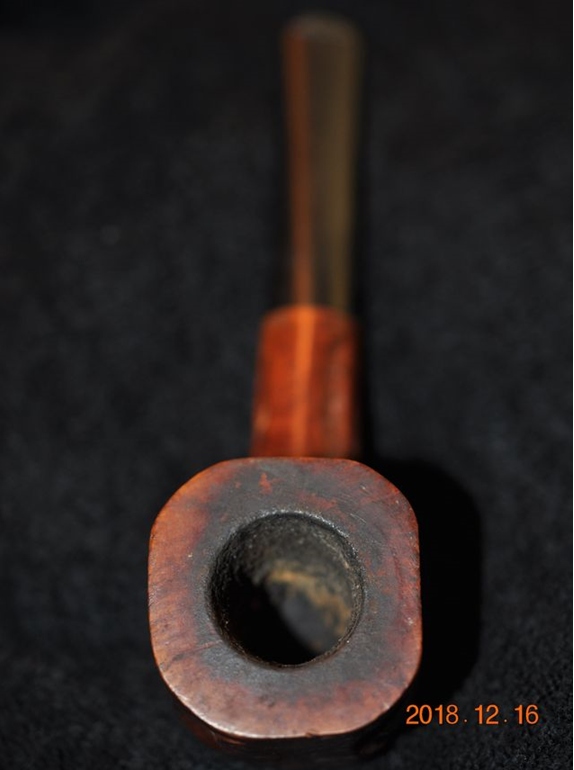
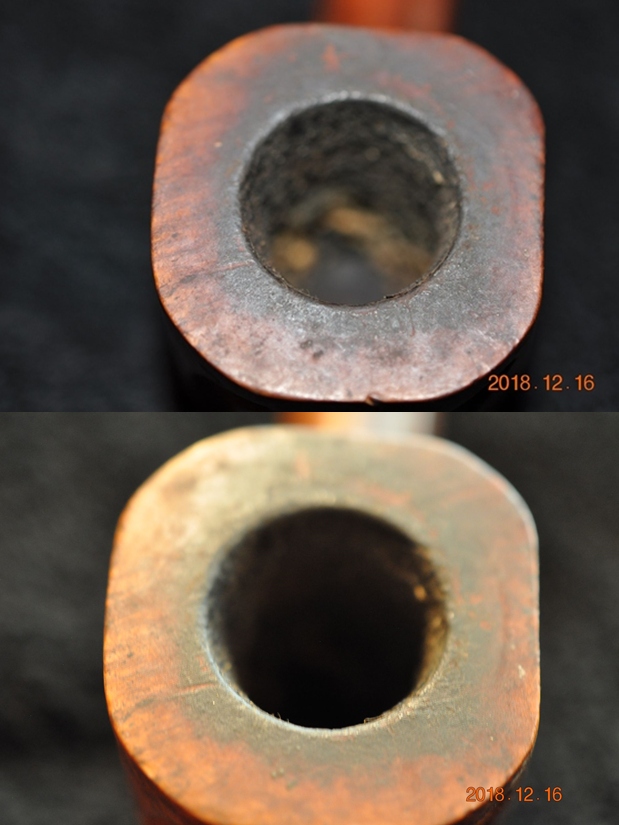
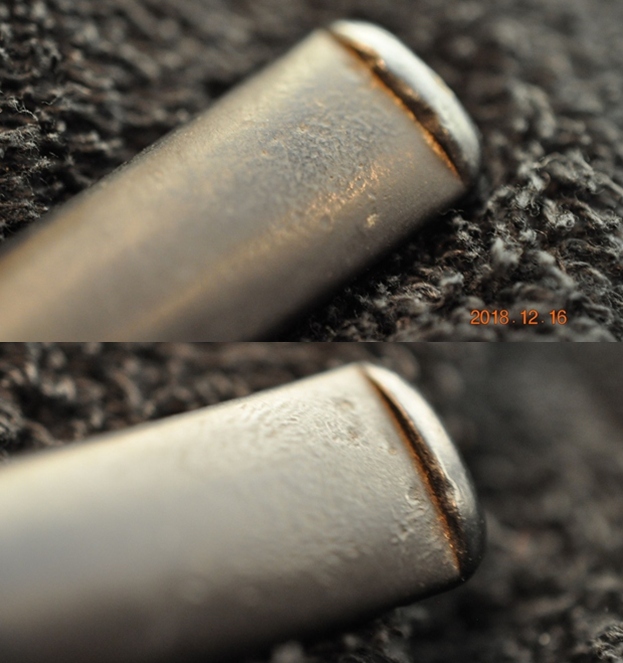
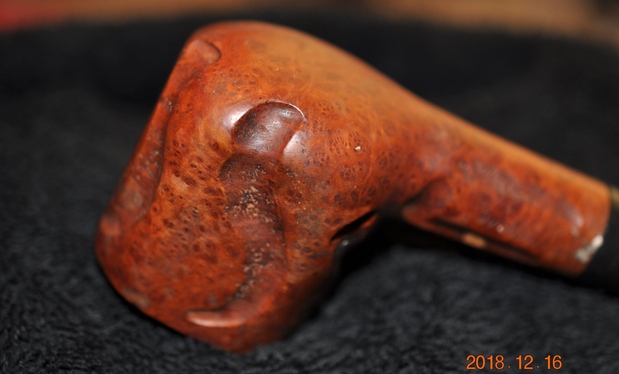
The next pipe on the work table came to us from an antique dealer in Pocatello, Idaho, USA back in 2018. It has been sitting here for 2 years. Jeff took photos in December of that year. Now I am finally getting a chance to work on it. The pipe is an interesting scoop shaped pipe with worm trail rustication lightly carved around the bowl. The shank had a repair band that was damaged and poorly fit on the shank and had been hammer on the shank end. Because of the damage to the band the stem did not seat correctly against the shank. The pipe was an absolute mess. On the underside of the shank it is stamped with the The Tinder Box [arched over] Jura. The mix of stains had faded around the bowl but still showed the original orange brown look even with the grime ground into the finish. It was very dirty with dust and debris in the valleys of the rustication. There was a thick cake in the bowl and an overflow of lava on the rim top that is heavier on the back of the bowl. The inner edge appears to have some burn damage on the back side but we will know for certain once the bowl is reamed and cleaned. The stem was oxidized, calcified and there were light tooth marks and chatter on both sides near the button. Jeff took photos of the pipe before he started working on it. I include those below. Jeff took photos of the bowl and rim top to show the cake in the bowl and the condition of both. It was heavily caked with a lava overflow on the rim top. You can see that there appears to be some burn damage on the back inner edge of the bowl. He took photos of the top and underside of the stem showing the calcification, oxidation and tooth marks on the stem surface and button.  In person the tooth marks are far deeper than they look in the photos.  He took photos of the sides and heel to show the worm trail style rustication around bowl. There appears to be some nice grain under the grime.  Jeff took two photos to capture the stamping on the underside of the shank. It is clear and readable as noted above.   The repair band covered a portion of the stamping and you can see the damage on the outer edge of the band.I turned to Pipephil’s site (http://www.pipephil.eu/logos/en/logo-t6.html) to see if I could find a listing for a Jura pipe made for The Tinder Box. There was nothing specifically listed for Jura on the site so I turned to the section on Tinder Box pipes. It appears that The Tinder Box had many different pipe makers craft pipes for them. The section did not include the Jura. I have included the screen capture of that section below. Pipedia gives a short history of the brand (https://pipedia.org/wiki/Jura) that is well worth reading.

Jura, was the name of the region of France where St. Claude is located, is a name that has graced many pipes by many makers, including Alpha, who made a Jura line for The Tinder Box, and Chacom, who still makes a Jura line of pipes. The brand Jura, however, was made by André Lançon, who built a factory in 1926 later acquired by Ropp.

That got me a little closer on the nomenclature of this pipe and lists several other makers that turned out pipes for The Tinderbox. I wonder if this shape was made for Tinder Box by Alpha.

This pipe was a bit of a mess like many of the pipes we work on. I was curious to see what it would look like when I unpacked it. I was surprised at how good it looked. Jeff reamed it with a PipNet pipe reamer and cleaned up the reaming with a Savinelli Fitsall Pipe Knife. He scrubbed out the internals of the shank and stem with alcohol, pipe cleaners and cotton swabs until the pipe was clean. He scrubbed the exterior of the bowl with Murphy’s Oil Soap and a tooth brush to remove the grime and grit on the briar and the lava on the rim top. The finish on the bowl looked really good when I got it. The rim top looked better. The inner edge showed damage at the back side of the bowl. He soaked the stem in Before & After Deoxidizer bath to remove the oxidation. The stem looked better other than the light oxidation that remained and some light tooth marks and chatter on the surface. When the pipe arrived here in Vancouver for the second stop of its restoration tour it looked much better than when he found it. I took photos of the pipe before I started my work on it.  I took photos of the condition of the rim top and stem before I started working. The rim top looks better but the burn damage is very evident at the back of the bowl. The stem has light oxidation remaining and some tooth chatter and marks on both sides near the button.     I took a photo of the stamping on the underside of the shank. The Jura stamp is readable and the arched The Tinderbox is faint but readable.I took the bowl and stem apart and took a photo of the pipe to show the look of the pipe. The band was damaged and with some effort I was able to remove it from the shank. There was a hairline crack on the right side of the shank that did not go to far up the shank. I cleaned up the shank end with acetone and fit a new thin brass band on the shank end. Another feature of the thin band is that it did not cover The Tinder Box stamping as the other one had.  I sanded around the shank end to clean up the darkening using a folded piece of 220 grit sandpaper. Once I finished that I used a black Sharpie pen to colour in the worm trails around the bowl. They are dark in the following photos but will blend in better when I have completed the pipe. I wiped the bowl down with alcohol on a cotton pad and then topped the bowl to remove the damage to the rim top. I used a piece of 220 grit sandpaper on a board to give me a smooth hard surface to work on. I polished the briar with micromesh sanding pads – dry sanding with 1500-12000 grit pads to raise a shine on the briar. I wiped it down with a damp cloth  after each pad. I used a Maple Stain pen to touch up the faded areas around the sides and rim top of the bowl. The colour was a perfect match to the rest of the briar and the pipe was beginning to look very good.   I worked some Before & After Restoration Balm into the finish of the bowl, rim top and shank with my fingertips to clean, enliven and protect it. I find that the balm really makes the briar come alive again. The contrasts in the layers of stain and the separate finishes really made the grain stand out. I let the balm sit for 15 minutes and then buffed with a cotton cloth to raise the shine. The bowl really looks good at this point. I set it aside and worked on the stem. I set aside the bowl and turned my attention to the stem. I built up the damage to the button surface with clear super glue. Once the repairs cured I smoothed them out with 220 sandpaper to blend them in and started polishing with 400 grit wet dry sandpaper.   I polished the stem with micromesh sanding pads – wet sanding it with 1500-12000 grit pads. I polished it further with Before & After Pipe Stem Polish – both fine and extra fine.   Once again I am the part of the restoration that I always look forward to – the moment when all the pieces are put back together. I put the pipe back together and lightly buffed the bowl with Blue Diamond. I buffed the stem with a heavier touch with Blue Diamond on the buffing wheel. I gave the bowl and the stem multiple coats of carnauba wax. I buffed the pipe with a clean buffing pad to raise the shine. I hand buffed it with a microfiber cloth to deepen the shine. It is fun to see what the polished bowl looks like with the smooth finish and the black vulcanite stem. This richly stained The Tinder Box Jura Scoop is light weight and ready for you to load up a tobacco of preference and enjoy it. Have a look at it in the photos below. The dimensions are Length: 5 ½ inches, Height: 2 inches, Outside diameter of the bowl: 1 ¼ inches, Chamber diameter: ¾ of an inch. The weight of the pipe is 39 grams/1.38 oz. This is one that will go on the rebornpipes online store shortly. Thanks to each of you who are reading this blog. Remember we are not pipe owners; we are pipemen and women who hold our pipes in trust until they pass on into the trust of the next generation.

Restoring a Beautiful Sandblasted Bari Squash 7930 Pot


Blog by Steve Laug

The next pipe on the work table came to us from an antique mall in Bozeman, MT, USA back in 2018. It has been sitting here for 2 years. Jeff took photos in December of that year. Now I am finally getting a chance to work on it. The pipe is a classic pot shaped sandblast pipe with almost a Dunhill Shell Briar Brown and Black finish with highlights of red. The pipe was an absolute mess which probably accounted for how we ended up purchasing it for a fair price. On the underside of the heel and shank it is stamped with the Bari [over] Squash followed by Made In Denmark followed by 7930. The mix of stains makes the sandblast look multidimensional even with the grime ground into the finish. It was very dirty with dust and debris in the valleys of the sandblast. There was a thick cake in the bowl and an overflow of lava on the rim top that is heavier on the back of the bowl. The edges look to be in good condition as far as we can tell until we clean up the pipe. The stem was oxidized, calcified and there were deep tooth marks and chatter on both sides near the button. The stem had a damage white Bari stamp on the left side of the saddle. Jeff took photos of the pipe before he started working on it. I include those below. Jeff took photos of the bowl and rim top to show the cake in the bowl and the condition of both. It was heavily caked with a lava overflow on the rim top. You can see that it is heavier on the back inner edge that the rest of the bowl. The inner and outer edges look very good. He took photos of the top and underside of the stem showing the oxidation and tooth marks on the stem surface and button.  In person the tooth marks are far deeper than they look in the photos.  Jeff took two photos to capture the stamping on the underside of the shank. It is clear and readable as noted above.  I turned to Pipephil’s site (http://www.pipephil.eu/logos/en/logo-b1.html) to see if I could find a listing for the Bari Squash with this four digit number. There was nothing specifically listed for this line of Bari pipes. There was also good info on the brand as a whole and that it was founded by Viggo Nielsen in 1950 and he ran it until 1978 when Age Bogelund managed the production for them. In 1993 it was sold to Helmer Thomsen. Pipedia gives a great history of the brand (https://pipedia.org/wiki/Bari) that is well worth reading. There were also examples of the Bari pipes showing their stamping.

This pipe was a bit of a mess like many of the pipes we work on. I was curious to see what it would look like when I unpacked it. I was surprised at how good it looked. Jeff reamed it with a PipNet pipe reamer and cleaned up the reaming with a Savinelli Fitsall Pipe Knife. He scrubbed out the internals of the shank and stem with alcohol, pipe cleaners and cotton swabs until the pipe was clean. He scrubbed the exterior of the bowl with Murphy’s Oil Soap and a tooth brush to remove the grime and grit on the briar and the lava on the rim top. The finish on the bowl looked really good when I got it. The rim top looked very good. He soaked the stem in Before & After Deoxidizer bath to remove the oxidation. The stem looked better other than the light oxidation that remained and the deep tooth marks and chatter on the surface. When the pipe arrived here in Vancouver for the second stop of its restoration tour it looked much better than when he found it. I took photos of the pipe before I started my work on it.  I took photos of the condition of the rim top and stem before I started working. The rim top looks very good and the bowl is spotless. The stem has light oxidation remaining and some tooth chatter and marks on both sides near the button.   I took a photo of the stamping on the underside of the shank. The BARI SQUASH stamp is faint but readable but the rest of the stamp is very clear. I took the bowl and stem apart and took a photo of the pipe to show the look of the pipe. The cleaning had left behind some light spots that needed to be blended into the rest of the bowl. I used a combination of Black and Walnut Stain Pens to touch up the finish on the bowl and rim top.I worked some Before & After Restoration Balm into the finish of the bowl, rim top and shank with my fingertips and a horsehair shoe brush to clean, enliven and protect it. I find that the balm really makes the briar come alive again. The contrasts in the layers of stain and the separate finishes really made the grain stand out. I let the balm sit for 15 minutes and then buffed with a cotton cloth to raise the shine. The bowl really looks good at this point. I set it aside and worked on the stem.  I set aside the bowl and turned my attention to the stem. I “painted” the tooth marks on the surface of the stem and was able to lift them significantly. I filled in the remaining spots with black super glue. Once the repairs cured I flattened them out with a file/rasp to bend them into the surface. I further smoothed them out with 220 sandpaper to blend and started polishing with 400 grit wet dry sandpaper. I scrubbed the remaining oxidation with Soft Scrub cleanser an was able to remove most of it. I polished the stem with micromesh sanding pads – wet sanding it with 1500-12000 grit pads. I polished it further with Before & After Pipe Stem Polish – both fine and extra fine.    Once again I am the part of the restoration that I always look forward to – the moment when all the pieces are put back together. I put the pipe back together and lightly buffed the bowl with Blue Diamond. I buffed the stem with a heavier touch with Blue Diamond on the buffing wheel. I gave the bowl multiple coats of Conservator’s Wax and the stem multiple coats of carnauba wax. I buffed the pipe with a clean buffing pad to raise the shine. I hand buffed it with a microfiber cloth to deepen the shine. It is fun to see what the polished bowl looks like with the smooth finish and the black vulcanite stem. This richly stained Bari Squash Sandblast 7930 Pot is light weight and ready for you to load up a tobacco of preference and enjoy breaking it in for yourself. Have a look at it in the photos below. The dimensions are Length: 5 ¼ inches, Height: 1 ¾ inches, Outside diameter of the bowl: 1 ½ inches, Chamber diameter: ¾ of an inch. The weight of the pipe is 45grams/1.59oz. This is one that will go on the Danish Pipemakers section of the rebornpipes online store shortly. Thanks to each of you who are reading this blog. Remember we are not pipe owners; we are pipemen and women who hold our pipes in trust until they pass on into the trust of the next generation.

A Farewell to my Work Buddy Spencer – A Comoy’s Extraordinaire 804 Rusticated Bent Billiard


Blog by Steve Laug

The pipe on the work table now came to us from one of Jeff’s pipe hunts on the Oregon Coast back in 2018. It turns out that it is the last pipe that I will have worked on with my Supervising Buddy Spencer, my Black and Tan Cocker Spaniel. While I was working on the rim top this morning he slipped over the rainbow bridge curled at my feet in his usual place. I will miss his presence and his wet nose nudging me for a treat…

This is a big pipe at 9 ½ inches long and 2 ½ inches tall. It is stamped on the heel of the bowl and reads Comoy’s [over] Extraordinaire followed by the shape number 804. It is a handful that is for sure. The deeply rusticated finish has a beauty of its own. It is a dirty pipe with a lot of dust and debris deep in the rusticated grooves of the rustication. The rim top is covered in a coat of lava overflowing from the thick cake in the bowl. When you realize how big the bowl is and then see that the cake fills in over half of the bowl you can see how thick it is. The cake is rock hard and will be a bear to ream out. It is hard to know the condition of the inner edge but the front outer edge has some damage from being knocked hard on something to remove the dottle from the bowl. The stem is probably a replacement and does not have an inset C on the side or topside. It is an old one in that it has the same feel as the Solid Rubber stems. It is oxidized, calcified and has deep tooth marks on the underside near the button and chatter on the top side. It will be an interesting looking pipe once it is cleaned up. Jeff took these photos before he started his cleanup work.The next photo Jeff took gives a clear picture of the thickness of the cake and the lava on the rim top. It is one well-loved pipe and the previous pipeman must have smoked it all the time. It is a good sign that it is a great smoker. He also took photos of the stem to show the oxidation and the toot marks on the surface. The top side is in better condition than the underside.  He took photos of the sides and heel of the pipe to show the overall condition of the finish on the bowl. It is a deep swirling rustication. The next photo shows the stamping on the heel of the bowl. It reads as noted above. The stamping is readable but the Extraordinaire and shape number 804 are faint.I turned to Pipephil (http://www.pipephil.eu/logos/en/logo-comoy.html) to look up the Extraordinaire line. I did a screen capture of the second on the line and have included it below. The sidebar on the left of the picture below reads: The “Extraordinaire” designation was given to either oversized pipes or to unusual pipes. This pipe fits both designations – it is large and it is unusual.I turned to Pipedia’s section on Comoy’s (https://pipedia.org/wiki/Comoy%27s). It gives a great history of the brand and toward the bottom of the page it had the picture below. It shows a contrast between the Extraordinaire 804 and a Group 4 sized Dunhill 120 for comparison. The caption below the photo says that this pipe is a 1930’s Comoy’s pipe.

1930’s Comoy’s 804 Extraordinaire shown with a 1965 Group 4 sized Dunhill 120 (which is the equivalent of a Group 5 size today) for size comparison – Courtesy of Mike Ahmadi.

Jeff had cleaned up the pipe with his usual penchant for thoroughness. He reamed the pipe with a PipNet Pipe Reamer and cleaned up the remnants with a Savinelli Fitsall Pipe Knife.  He scrubbed the bowl with undiluted Murphy’s Oil Soap with a tooth brush. He rinsed it under running warm water to remove the soap and grime. He cleaned out the inside of the shank and the airway in the stem with alcohol, cotton swabs and pipe cleaners. He soaked the stem in Before & After Deoxidizer and rinsed it off with warm water. I took photos of the pipe once I received it. The rim top had some slight darkening on the back of the bowl and some damage to the inner edge on the back. The outer edge is rough on the front and the right side from knocking the pipe against something hard. It is hard to know if the rim top was rusticated or smooth from the damage on it. The back rim top looks like it may have been rusticated. The stem surface had deep tooth marks and chatter on both sides near the button.   I took a photo of the stamping on the heel of the bowl. It reads as noted above. I removed the stem and took a photo of the pipe to give a sense of the whole. The stem is tapered. I started my work on the pipe by cleaning up the inner edge and the rim top with 220 grit sandpaper. I was able to minimize the damage.  I topped the bowl on a topping board with 220 grit sandpaper to remove the damage to the rim top and outer edges of  the bowl. I used some clear super glue and briar dust to rebuild the front outer edge and the right side edge and then retopped the bowl. With the top and rim edge cleaned up I used my Dremel and the burrs shown in the photo below to rusticate the rim and try to approximate what was visible in the photos above. I finished the rustication with the wire brush on the Dremel as well. When I had it way I wanted I stained it with three stain pens mixed together to give the stain depth – Black, Walnut and Maple. The second photo below shows the rim top. What do you think? I rubbed the bowl and shank down with Before & After Restoration Balm. I worked it into the surface of the rim top, bowl sides and shank with my fingertips and a horsehair shoe brush to clean, enliven and protect the briar. I let the balm sit for 15 minutes and then buffed with a cotton cloth to raise the shine.     I set the bowl aside and turned to work on the stem. I filled in the deep tooth marks on the top and underside with black super glue and set the stem aside to let the repairs cure. Once the repair cured I used a rasp and a small file to flatten the repairs and recut the button edge on both sides. I sanded the stem smooth with a folded piece of 220 grit sandpaper to further blend them into the surrounding vulcanite. I started polishing with 400 grit wet dray sand paper. It was in very good condition so I polished the vulcanite stem with micromesh sanding pads – 1500-12000 grit pads. I wiped it down with a damp cloth after each sanding pad. I used Before & After Pipe Polish – both Fine and Extra Fine to further polish the stem. This restoration is for you Spencer, my fellow curmudgeon and friend… I already miss you greatly and find myself looking over where you used to lay and reaching for a treat and a rub behind your ears… The pipe is a big one with a big personality just like yours buddy. It is a Comoy’s Extraordinaire 804 Bent Billiard with a vulcanite taper stem. It is a great looking pipe now that it has been restored. I put the stem back on the bowl and lightly buffed the pipe with Blue Diamond on the buffing wheel. I gave the bowl multiple coats of Conservator’s Wax and the stem multiple coats of carnauba wax on the buffing wheel and followed that by buffing the entire pipe with a clean buffing pad. I hand buffed the pipe with a microfiber cloth to deepen the shine. The finished Comoy’s Extraordinaire is a real handful and feels great. Give the finished pipe a look in the photos below. The dimensions of the pipe are Length: 9 ½ inches, Height: 2 ½ inches, Outside diameter of the bowl: 1 ½ inches, Chamber diameter: ¾ of an inch. The weight of this pipe is 43g/1.52oz. This is one is a keeper and will go in my rack in memory of my old boy… Thanks for reading this blog and my reflections on the pipe while I worked on it.

Restoring a MALAGA Second  Octagonal Panel, Square Shank Billiard


Blog by Steve Laug

The next pipe on the table is a “Malaga” Second pipe that Jeff picked up from an online auction early in 2019 from Columbus, Michigan, USA. It is an interesting looking octagonal Panel Billiard with a square shank.  It has the classic Malaga oil cured finish and some great looking grain around the bowl and shank. The pipe is stamped on underside of the shank and reads MALAGA. Second. From what I can see the large flaw on the underside of the shank near the stamping is the only thing that made it a second. The carver did a great job of carving the pipe to capture the grain around the bowl and shank. The bowl had a heavy cake with an overflow of lava on the rim top with heavier overflow on the back side of the rim top. The sides of the bowl and shank are very dirty with grime and oils ground into the finish from prolonged use. The vulcanite stem was heavily oxidized and calcified. It had tooth dents and chatter on the top and the underside of the stem. Jeff took photos of the pipe before he started the cleanup work. With some work it will be a real beauty. I looked forward to seeing it in person.    Jeff took a close up photo of the bowl and rim to capture the condition of the pipe before he started the cleanup work. The bowl has a thick cake and the uneven overflow of lava on the rim top is quite thick all the way around but slightly heavier toward the back. The inside edge of the rim could be damaged but it quite hidden under the lava coat. The stem is deeply oxidized, calcified and dirty and there is tooth chatter and marks on both sides of the stem ahead of the button.  He took a photo of the stamping on the underside of the shank. It read as noted above. You can also see the large flaw in the shank under the stamp.Jeff took photos of the sides and heel of the bowl to give a picture of what the briar looked like. There is some nice grain around the sides. You can also see the damage to the rim edges and the heel of the bowl in the photos below.    I am including the link to a blog that I wrote that gives some of the history of the Malaga brand and the Malaga Pipe Shop in Royal Oak, Michigan in the USA. I have written an earlier blog to give a little history of the Malaga Brand and the pipemaker, George Khoubesser. Here is the link – https://rebornpipes.com/tag/malaga-pipes/.That blog also includes links to a catalogue and the history of the pipemaker George Khoubesser. Follow the link to get a feel for the brand and the pipemaker.

Jeff had cleaned up the pipe with his usual penchant for thoroughness. He reamed the pipe with a PipNet pipe reamer and removed the rest of it with a Savinelli Fitsall Pipe Knife.  He scrubbed the bowl with undiluted Murphy’s Oil Soap with a tooth brush. He rinsed it under running warm water to remove the soap and grime. He cleaned out the inside of the shank and the airway in the stem with alcohol, cotton swabs and pipe cleaners. He soaked the stem in Before & After Deoxidizer and rinsed it off with warm water. I took photos of the pipe once I received it.    The rim top cleaned up really well. The rim top and outer edge of the bowl show some darkening over most of the surface. There is damage to the inner edge of the bowl and bowl is out of round.  The stem surface looked very good with tooth marks and chatter on the top side and the underside near the button. The stamping on the underside of the shank is clear and readable. It reads as noted above. You can also see the flaw in the briar on the underside of the shank.  I removed the saddle stem and took a photo of the pipe to give a sense of the whole.  I started my work on the pipe by cleaning the inner edge of the bowl with a folded piece of 220 grit sandpaper. Once I had it cleaned up I topped the bowl on a topping board to remove the damage to the rim top. It also helped to minimize some of the damage to the inner edge.   I filled in the flaw on the underside of the shank with briar dust and clear super glue. Once the repair cured I carefully sanded it smooth with 220 grit sandpaper and blended it into the surrounding briar. I used a Walnut Stain Pen to touch up the sanded area of the repair on the underside of the shank.   I combined a Cherry and a Walnut stain pen to blend the topped rim to match the rest of the bowl and shank.  I took a photo of the shank end to show the relative thinness of the right side of the shank. I wonder if this was not also a reason the pipe was a second.I polished the briar with micromesh sanding pads – wet sanding with 1500-12000 grit pads and wiping it down after each pad with a damp cloth.     I rubbed the bowl and shank down with Before & After Restoration Balm. I worked it into the surface of the bowl sides and shank with my fingertips to clean, enliven and protect the briar. I let the balm sit for 10-15 minutes and then buffed with a cotton cloth to raise the shine. The grain came alive and the finish looked rich.   I set aside the bowl and turned my attention to the stem. I “painted” the surface of the stem with the flame of a Bic lighter to lift them as much as possible. I filled in the remaining tooth dents and marks with Clear Super Glue and set it aside for the repairs to cure. Once they cured I flattened them with a file. I cleaned up the repaired areas with 220 sandpaper to blend the repairs into the surface of the stem. I started polishing it with 400 grit wet dry sandpaper.  I polished the vulcanite stem with micromesh sanding pads – 1500-12000 grit pads. I wiped it down with Obsidian Oil after each sanding pad. I used Before & After Pipe Polish – both Fine and Extra Fine to further polish the stem.     This Malaga Second Octagonal Panel Square Shank Billiard with a vulcanite saddle stem turned out to be a real beauty. The carver really maximized the grain with the shape of the pipe. I polished stem and the bowl with Blue Diamond polish on the buffing wheel and the finish just popped and came alive. I gave the bowl and the stem multiple coats of carnauba wax. I buffed the pipe with a clean buffing pad to raise the shine. I hand buffed it with a microfiber cloth to deepen the shine. The pipe polished up pretty nicely. The pipe took on life with the buffing. The rich oil cured colour works well with the polished black vulcanite stem. The finished Malaga Second has a rich look that is quite catching. Have a look at it with the photos below. The shape, finish and flow of the pipe and stem are very well done. The dimensions are Length: 5 ¼ inches, Height: 1 ½ inches, Outside diameter of the bowl: 1 ¼ inches, Chamber diameter: ¾ of an inch. The weight of the pipe was 27g/.95oz. I will be putting it on the rebornpipes store shortly. Thanks for reading this blog and my reflections on the pipe while I worked on it. There are many more to come!    
Breathing Life into a BBB Natural Grain 01 Zulu


Blog by Steve Laug

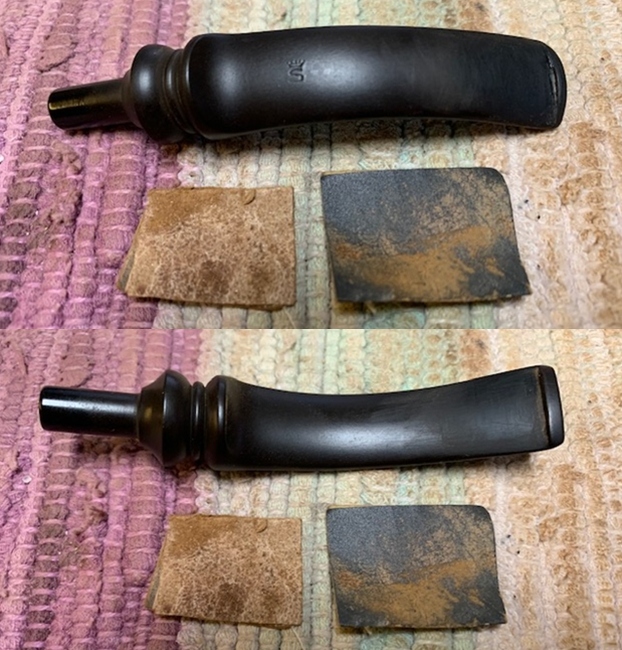
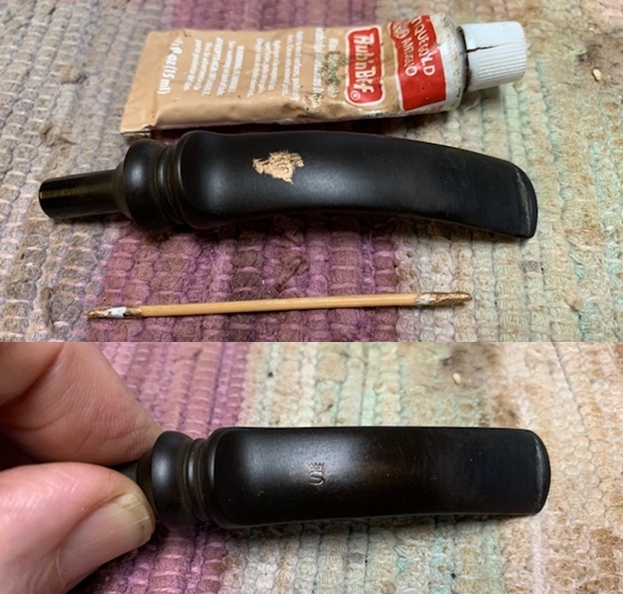
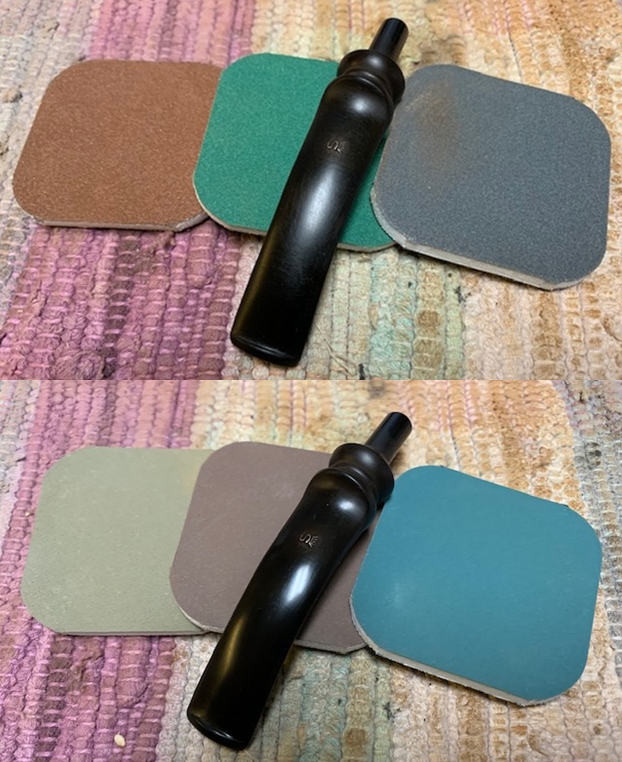
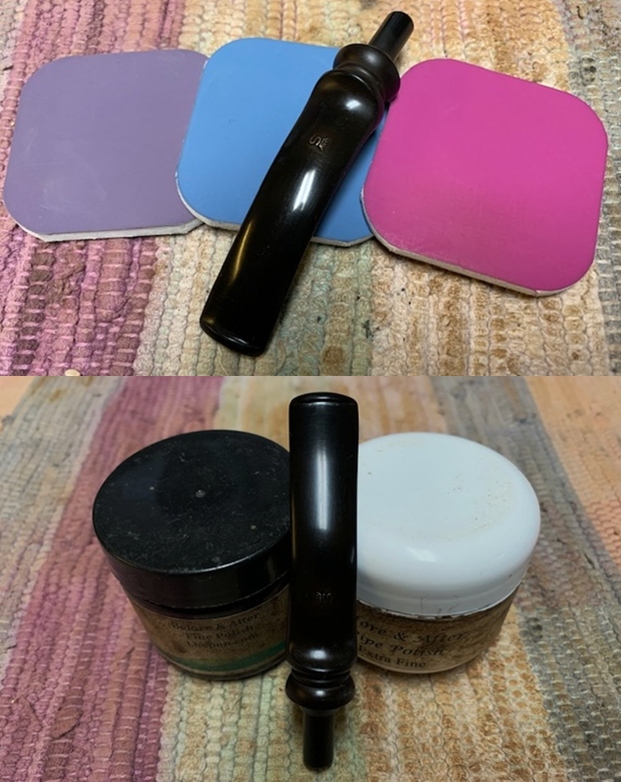
The next pipe on the work table came to us from a pipe hunt that Jeff and his wife recently did in Utah, USA.  The pipe is a classic Zulu shape pipe. The pipe was an absolute mess which probably accounted for how it ended up where it was at a fair price. On the top of the shank it is stamped with the BBB Diamond Logo [over] Silver Grain. On the right side of the shank it is stamped with the shape number 01. The stain is a mix of browns that makes me wonder about the Natural Grain stamping on the pipe. The finish was very dirty making it hard to see beyond that to the grain that pokes through underneath. There was a thick cake in the bowl and a thick overflow of lava onto the rim top and edges. It was hard to know at this point the condition of the rim edges. The stem was oxidized and there were deep tooth marks and chatter on both sides just ahead of the button and on the button surface itself. The stem had a stamped BBB Diamond logo on the topside of the taper. Jeff took photos of the pipe before he started working on it. I include those below.   Jeff took photos of the bowl and rim top to show the cake in the bowl and the condition of both. It was thick and hard cake with an unbelievably thick lava overflow on the rim top and edges. Hopefully it had protected the rim and edges from damage. He took photos of the top and underside of the stem showing the scratching, oxidation and tooth marks on the stem surface and button. The tooth marks are quite deep on both sides of the stem.     Jeff took a photo of the sides and heel of the bowl to show the condition of the finish – the grime and grit all over the sides and bottom of the bowl. The finish so dirty it is hard to see the grain but it is present nonetheless.  Jeff took photos of the stamping on the top and right side of the shank. It is very clear and readable as noted above.    This pipe was a real mess like many of the pipes we work on. I was curious to see what it would look like when I unpacked it. I was surprised at how good it looked. Jeff reamed it with a PipNet pipe reamer and cleaned up the reaming with a Savinelli Fitsall Pipe Knife. He scrubbed out the internals of the shank and stem with alcohol, pipe cleaners and cotton swabs until the pipe was clean. He scrubbed the exterior of the bowl with Murphy’s Oil Soap and a tooth brush to remove the grime and grit on the briar and the lava on the rim top. The finish on the bowl looked really good when I got it. The rim top looked much better but had some darkening that I would need to deal with. The inner edge showed some significant damage and outer edges looked good. He soaked the stem in Before & After Deoxidizer bath to remove the oxidation. The stem looked better other than some light oxidation and the tooth marks and chatter in the surface. When the pipe arrived here in Vancouver for the second stop of its restoration tour it looked much better than when he found it. I took photos of the pipe before I started my work on it.  I took photos of the condition of the rim top and stem before I started working. The rim top looks better than before and the damage is very obvious to the rim top and the inner edge. The bowl is spotless. The stem has some deep tooth marks on both sides and the button itself. I took photos of the stamping on the sides of the shank. It is clear and readable as noted above.  I took the bowl and stem apart and took a photo of the pipe to show the look of the pipe. I was surprised to see a rather large stinger. I would be removing that and not putting it back. If the new owner wants it I will include it in the package with the pipe.I started my work on the pipe by cleaning the inner edge of the bowl with a folded piece of 220 grit sandpaper. Once I had it cleaned up I topped the bowl on a topping board to remove the damage to the rim top. It also helped to minimize some of the damage to the inner edge. I polished the briar with micromesh sanding pads. I dry sanded the bowl and rim top with 1500-12000 grit pads and wiped the bowl down with a damp cloth after each pad. The briar really took on a shine by the final pads.   I touched up the rim top with a Maple stain pen to match the rest of the briar around the bowl. Buffing and polishing would blend it in further.I worked some Before & After Restoration Balm into the finish of the bowl, rim top and shank with my fingertips to clean, enliven and protect it. I find that the balm really makes the briar come alive again. The contrasts in the layers of stain and the separate finishes really made the grain stand out. I let the balm sit for 10-15 minutes and then buffed with a cotton cloth to raise the shine. The bowl really looks good at this point. I set it aside and worked on the stem. I set aside the bowl and turned my attention to the stem. I started by heating the stinger with a lighter and carefully turning it out of the tenon. It was pressure fit so the heat loosened the tars that held it fast and I was able to remove it. I “painted” the surface of the stem with the flame of a Bic lighter to lift them as much as possible. I filled in the remaining tooth dents and marks with Black Super Glue and set it aside for the repairs to cure. Once they cured I flattened them with a file. I cleaned up the repaired areas with 220 sandpaper to blend the repairs into the surface of the stem. I started polishing it with 400 grit wet dry sandpaper.  I polished the stem with micromesh sanding pads – wet sanding it with 1500-12000 grit pads. I polished it further with Before & After Pipe Stem Polish – both fine and extra fine.   I used some Rub’n Buff Antique Gold to touch up the brass/gold colour in the BBB Diamond logo on the topside of the stem. I rubbed it in and rubbed it off leaving the gold behind in the stamp.   Once again I am the part of the restoration that I always look forward to – the moment when all the pieces are put back together. I put the pipe back together and lightly buffed the bowl with Blue Diamond. I buffed the stem with a heavier touch with Blue Diamond on the buffing wheel. I gave the bowl and the stem multiple coats of carnauba wax. I buffed the pipe with a clean buffing pad to raise the shine. I hand buffed it with a microfiber cloth to deepen the shine. It is fun to see what the polished bowl looks like with the smooth finish and the black vulcanite stem. This richly stained BBB Natural Grain 01 Zulu must have been a fine smoking pipe judging from the condition it was when we received it. Have a look at it in the photos below. The dimensions are Length: 5 ½ inches, Height: 1 ½ inches, Outside diameter of the bowl: 1 ¼ inches, Chamber diameter: ¾ of an inch. The weight of the pipe is 25grams/.88oz. This is one that will go on the British Pipemakers section of the rebornpipes online store shortly. Thanks to each of you who are reading this blog. Remember we are not pipe owners; we are pipemen and women who hold our pipes in trust until they pass on into the trust of the next generation.


Reworking one of my Early Restorations – a GBD New Standard 91327 Lovat


Blog by Steve Laug

I restored this older GBD New Standard Lovat probably 15-20 years ago. I had not been working on pipes for too long – maybe a year or two. I really had no idea about staining or reshaping a stem or how to make the grain on the pipe like it must have when the pipe first came out. I was going through a box of pipes that I was getting rid of and came across this one in the bottom of the box. Looking at it closely I decided to take it on again and rework it. The finish was worn, the outer edge of the rim was in rough condition with chips out of it and the rim top had been topped but I had not even bothered to polish out the scratches from the sandpaper. The bowl was out of round and the inner edges were worn and had some nicks and gouges. The shank end was lighter in colour than the rest of the bowl. I had not even bothered to match the colours… good to see that I have still been learning. The bowl and shank were very clean so at least I had done that well back then. The stem still had some oxidation around the button. It had a lot of potential and I really wanted to see if I could bring it out with a bit more work. Time would tell!

The petite pipe is stamped GBD in an oval [over] New Standard on the left side of the shank and on the right side of the shank it reads London England [over] 91327 (shape number). I found that the New Standard was made in  England. It originally had a smooth finish with brown staining in what was called a “tobacco brown” finish. The shape number is one that I cannot find listed anywhere so I am not sure what to make of that but it is a neat little pipe. I have often found shape numbers on GBD pipes that are not on the list of known shape I did a quick look on Pipedia and found the flyer to the left that described the New Standard London Made Pipe (https://pipedia.org/images/b/b8/GBD_1961Flyer_NewStandard_Shape9447.jpg)

I took photos of the pipe when I took it out of the box before I started reworking it. You can see the overall look of the pipe at this point in the process. As you look at the photos of the pipe pay attention to the flaws in the previous restoration of this pipe. What do you see? As I work over the pipe let me know if I caught the things that you saw. Thanks for reading through this chronicle of a reworked restoration.

I took photos of the rim top and bowl to give a clear picture of the damage to the rim top and edges of the bowl that I had not dealt with before. There were large nicks out the inner edge on the front and the rear of the bowl. There was also a chip out of the outer edge on the right rear of the bowl. You cannot see it from these photos but the rim top is not smooth and has a lot of sanding scratches that I did not bother removing. I took photos of the top and underside of the stem to show the remaining oxidation on the topside and underside near the button and at the saddle.  The stamping on both sides was faint but readable. It read as noted above.I removed the stem from the shank and took a photo of the pipe.I reworked and reshaped the edges of the bowl with a folded piece of 220 grit sandpaper to remove the damage and to bring it back to round. I gave it a slight bevel that will become obvious in the photos of the polishing process. (I forgot to take a photo of the rim top before I started the process of polishing it.)To even the stain colour around the bowl and make the grain stand out more clearly I polished the briar with micromesh sanding pads – dry sanding with 1500-12000. I wiped the bowl down with a damp cloth after each pad. Note the rim top and you can see the change to the inner edge worked above. I used a Cherry stain pen to touch up the sanded edges and top of the rim and blend them into the rest of the bowl.I rubbed the bowl and shank down with Before & After Restoration Balm. I worked it into the surface of the bowl sides and shank with my fingertips to clean, enliven and protect the briar. I let the balm sit for ten minutes and then buffed it with a cotton cloth to raise the shine. The grain came alive and the finish looked rich. I polished the vulcanite stem with micromesh sanding pads – 1500-12000 grit pads. I wiped it down with Obsidian Oil after each sanding pad. I used Before & After Pipe Polish – both Fine and Extra Fine to further polish the stem.  I am pretty happy with the upgrade to this GBD New Standard 91327 Lovat. The rim top looks far better and the finish is now uniform and reveals the grain really well. The stem is clean and no longer has residual oxidation in the crease at the button or the saddle.  I put the stem back on the bowl and carefully buffed the pipe with Blue Diamond on the buffing wheel using a light touch on the briar. I gave the bowl and the stem multiple coats of carnauba wax on the buffing wheel and followed that by buffing the entire pipe with a clean buffing pad. I hand buffed the pipe with a microfiber cloth to deepen the shine. The finished small GBD Lovat fits nicely in the hand and feels great. Give the finished pipe a look in the photos below. The dimensions of the pipe are Length: 5 inches, Height: 1 ½ inches, Outside diameter of the bowl: 1 ¼ inches, Chamber diameter: ¾ of an inch. The weight of the pipe was 29g/1.02oz. I will be putting it on the rebornpipes store shortly. Thanks for reading this blog and my reflections on the pipe while I worked on it. There are many more to come!  

Cleaning up a new brand to me – a Mullins & Westley Covent Garden 45 Bent Billiard


Blog by Steve Laug

The next pipe on the work table came to us from an online auction from Ancram, New York, USA.  It is a bent Billiard that is stamped on the left side of the shank and read Mullins and Westley LTD. [arched over] Covent Garden [over] London. On the right side it is stamped Westleys [over] Covent Brand. On the underside of the shank the shape number 45 was stamped near the shank end. The finish was very shiny and the varnish was nicked and scratched on the sides and heel of the bowl. The varnish on the rim top was peeling on the inner edge of the bowl. The bowl was heavily caked and there was a light and spotty lava overflow on the rim top. The inner and outer edges of the rim appeared to have no damage. The taper stem had a W stamped on the left side. It had light tooth chatter and marks on the top and underside near the button. It had promise but it was very dirty. Jeff took some photos of the pipe before he started his cleanup work.   He took photos of the rim top and bowl to give a clear picture of the thickness of the cake and tobacco debris as well as the spotty lava coat on the top. He also took photos of the top and underside of the stem to show the oxidation and the chatter and tooth marks on the topside and underside near the button.  Jeff took a photo of the heel of the bowl to give a picture of the condition of the finish on the pipe. You can seep the nicks and spots where the varnish is damaged. There is some nice grain under the varnish coat.The stamping on the sides of the shank is clear and readable and read as noted above. Since I had never heard of the Mullins & Westley Brand or as the right side of the shank read the Westleys Covent Brand I turned to Pipephil’s site to see if I could garner any helpful information on the company and the maker. I found a listing for the brand and actually learned that it was a tobacco shop in Covent Garden, London (http://www.pipephil.eu/logos/en/logo-m8.html). I have included a screen capture of the section the brand. I quote a note that appeared in the sidebar.

Brand of the Covent Garden tobacconist who also blends its own pipe tobacco. Address: 27A The Piazza, Covent Garden, London WC2E 8RDI turned to Pipedia (https://pipedia.org/wiki/British_Pipe_Brands_%26_Makers_M_-_Q) and found the listing for the brand. There was not an article but it did confirm the information on PipePhil’s site. I quote:

Mullins & Westley Tobacconists; 27A The Piazza, Covent Garden, London. Today probably most famous for their snuff tobaccos. Private label pipes made by various European brands.

I googled the shop and found that it had a website that no longer worked. There were photos of the shop that others had collected. I saved one from Flicker that captured the essence of the small shop. It reminds me of some of the shops that I visited in York, Bath and Cambridge on a trip to England. Here is the link to the photo and the photo as well (https://c1.staticflickr.com/7/6181/6056846779_698d27c9f9_b.jpg).Jeff had cleaned up the pipe with his usual penchant for thoroughness. He reamed the pipe with a PipNet pipe reamer and removed the rest of it with a Savinelli Fitsall Pipe Knife.  He scrubbed the bowl with undiluted Murphy’s Oil Soap with a tooth brush. He rinsed it under running warm water to remove the soap and grime. He cleaned out the inside of the shank and the airway in the stem with alcohol, cotton swabs and pipe cleaners. He soaked the stem in Before & After Deoxidizer and rinsed it off with warm water. I took photos of the pipe once I received it.   The rim top cleaned up really well. The rim top and edges of the bowl show the peeling varnish coat. It is hard to see in the photos above but the entire bowl has the same issue. The stem surface looked very good with very light tooth marks and chatter on the top and the underside near the button. The stamping on the left side of the shank is clear and readable. It reads as noted above. I would need to touch up the W stamp on the stem side.   I removed the taper stem and took a photo of the pipe to give a sense of the whole. There was an aluminum stinger in the tenon that I would need to remove.Now it was time to work on the pipe. When I have to deal with removing a peeling varnish coat I always move forward with a bit of fear and trepidation as I have learned the hard way that you never know what will be underneath the varnish. A shiny coat often hides a multitude of surprises. I went ahead and scrubbed the bowl with acetone on cotton pads to remove the finish. It took some work but it came off pretty well. I was surprised that actually there were only a few small fills in the briar. I breathed a sigh of relief!  Once I had the coat of varnish removed I wiped the bowl down with a clean pad and some more acetone to remove the debris of varnish that was left behind on the briar. I took photos of the briar to show that the pipe was actually quite nice under the varnish coat. I decided to stain the bowl with a Cordovan aniline stain. I applied the stain with a dauber and flamed it with a lighter to set the stain in the briar. I repeated the process until the coverage was what I wanted. I set the bowl aside to let the stain cure.I wiped the briar down with alcohol on cotton pads to remove the excess and to begin the process of bringing the grain to the surface so it is more visible.  I buffed the pipe with red Tripoli on the buffing wheel and removed some more of the top coat of stain on the bowl. The grain is starting to really come alive. I wanted the stain to be a bit more transparent and make the grain pop. I polished the briar with micromesh sanding pads – sanding with 1500-12000 grit pads and wiping it down after each pad with a damp cloth. There is a fill on the lower left side and the upper right side that stood out a bit but that was the extent of the visible fills.      I rubbed the bowl and shank down with Before & After Restoration Balm. I worked it into the surface of the bowl sides and shank with my fingertips to clean, enliven and protect the briar. I let the balm sit for ten minutes and then buffed it with a cotton cloth to raise the shine. The grain came alive and the finish looked rich. I set the bowl aside and turned to work on the stem. I touched up the W stamp on the left side of the stem with Liquid Paper. I scraped off the excess material with my fingernail and buffed around the stamp with cotton pad.I polished the vulcanite stem with micromesh sanding pads – 1500-12000 grit pads. I wiped it down with Obsidian Oil after each sanding pad. I used Before & After Pipe Polish – both Fine and Extra Fine to further polish the stem.  This Mullins & Westley Ltd Covent Garden 45 Bent Billiard is a great looking pipe now that it has been stripped and refinished. The smooth finish around the bowl is quite beautiful and highlights the grain and works well with the polished vulcanite taper stem. The fills on the sides of the bowl are less visible after polishing. I put the stem back on the bowl and carefully buffed the pipe with Blue Diamond on the buffing wheel using a light touch on the briar. I gave the bowl and the stem multiple coats of carnauba wax on the buffing wheel and followed that by buffing the entire pipe with a clean buffing pad. I hand buffed the pipe with a microfiber cloth to deepen the shine. The finished Westley Covent Garden Bent Billiard fits nicely in the hand and feels great. Give the finished pipe a look in the photos below. The dimensions of the pipe are Length: 5 ½ inches, Height: 2 inches, Outside diameter of the bowl: 1 ¼ inches, Chamber diameter: ¾ of an inch. The weight of the pipe was 47g/1.66oz. I will be putting it on the rebornpipes store shortly. Thanks for reading this blog and my reflections on the pipe while I worked on it. There are many more to come!  
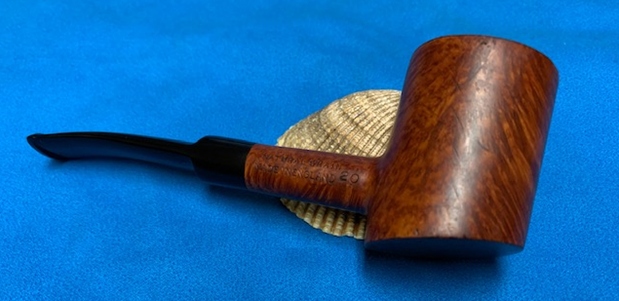
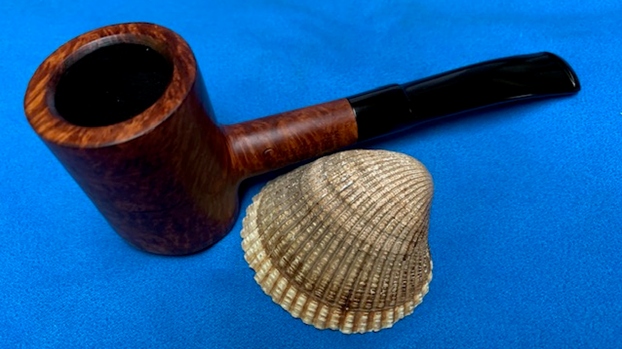
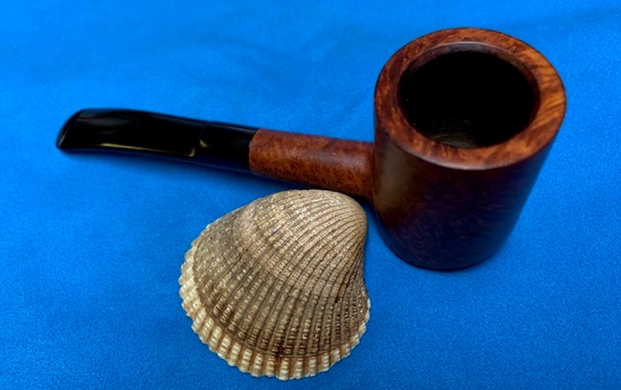
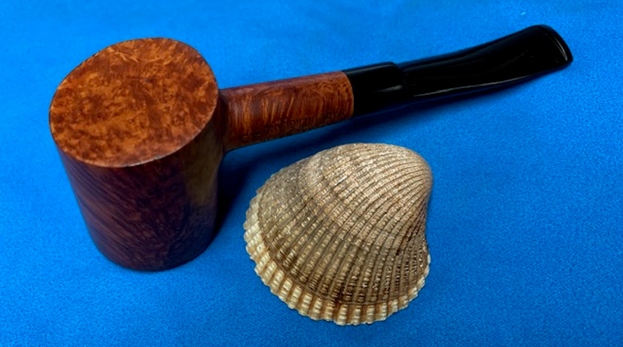
Restoring a Wally Frank Pipe of the Month Drunken Poker


Blog by Steve Laug

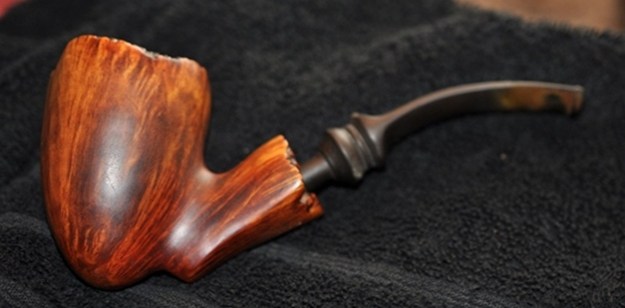
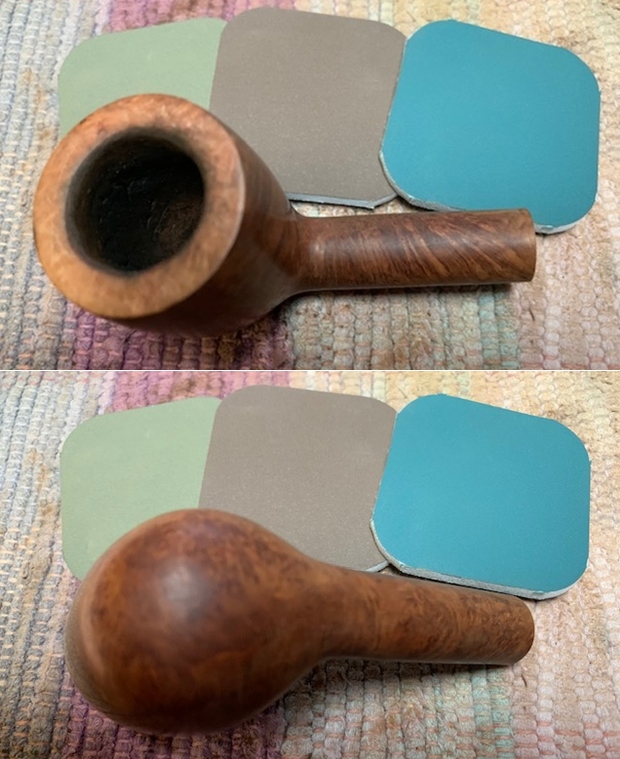
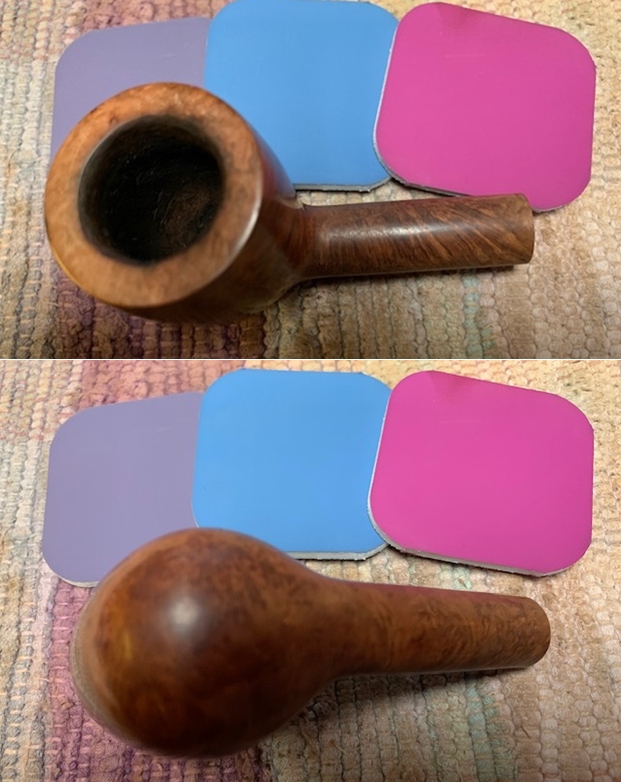
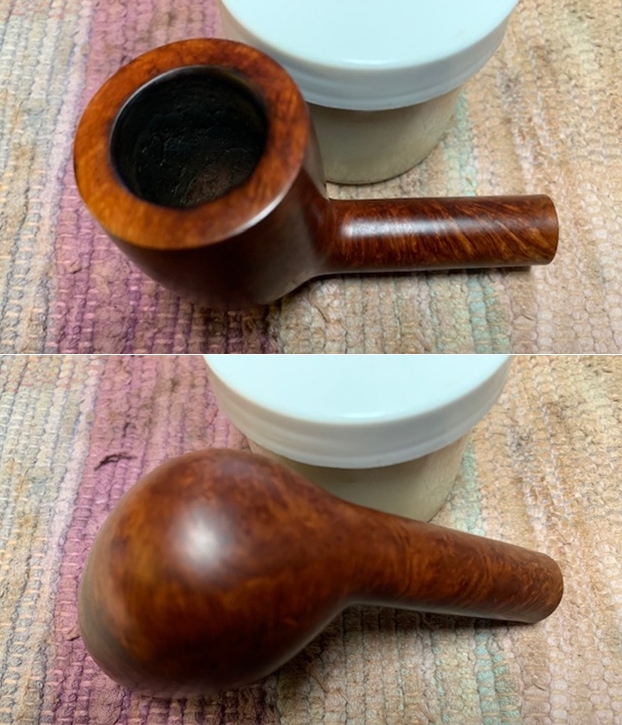
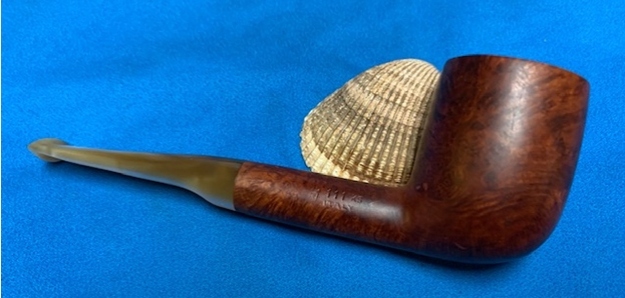
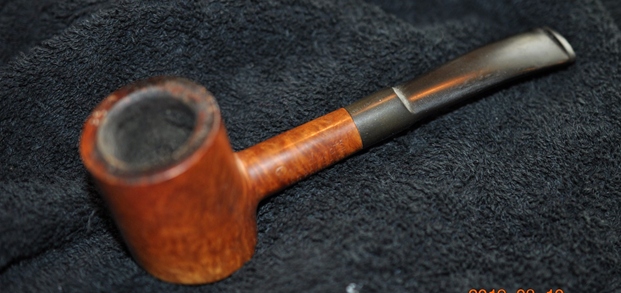
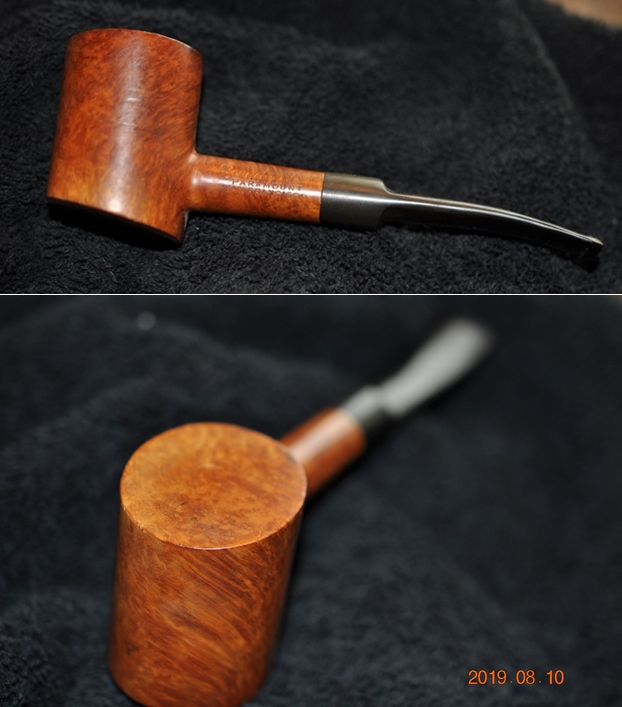
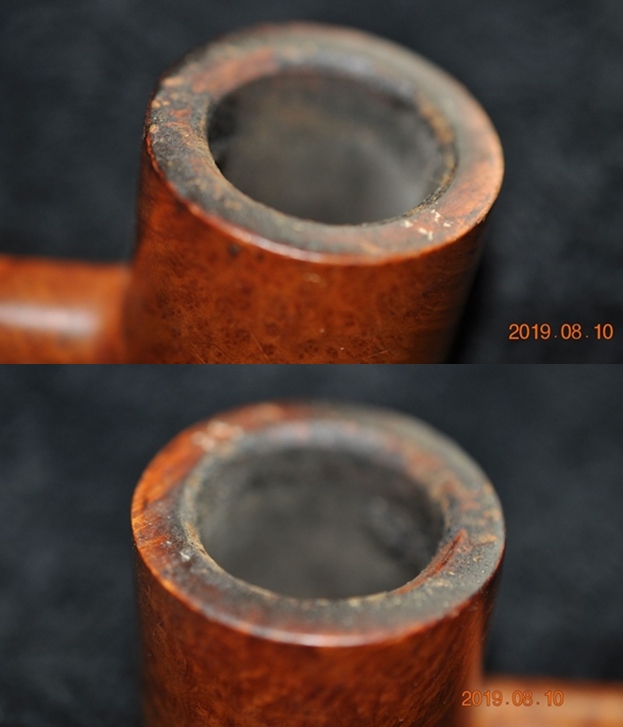
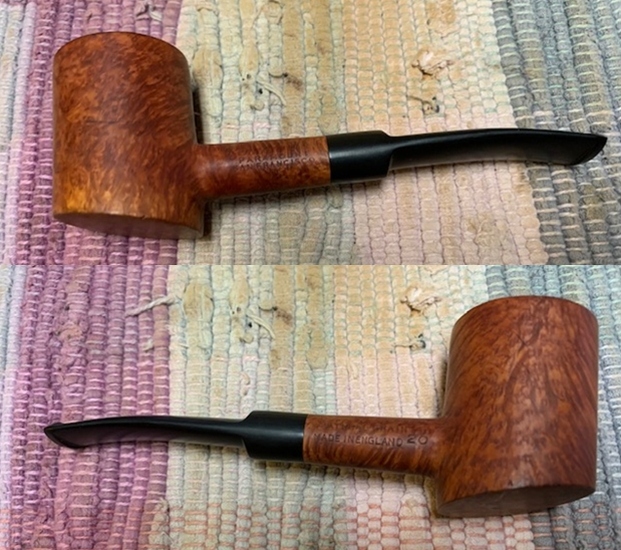
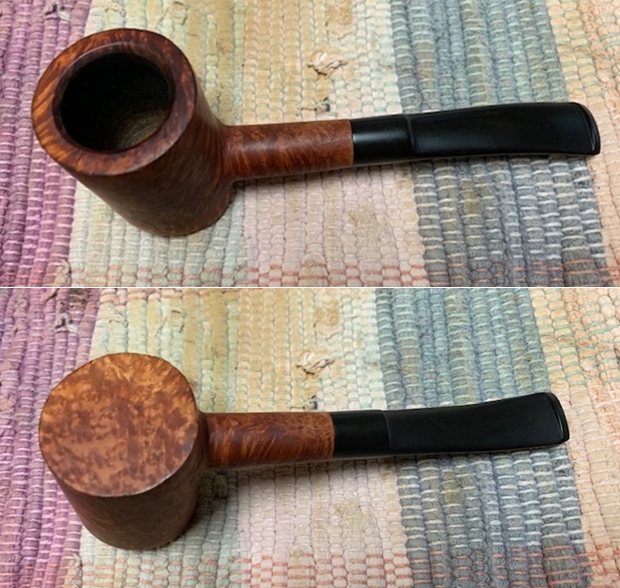
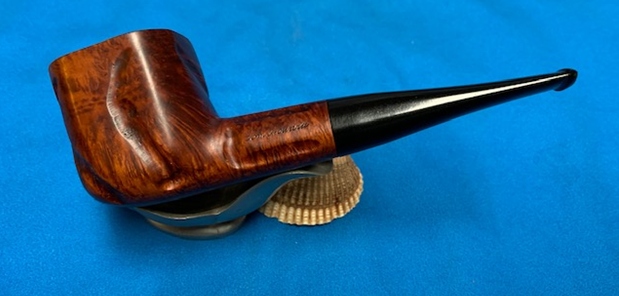
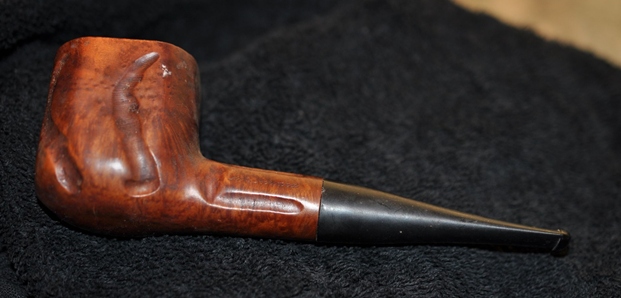
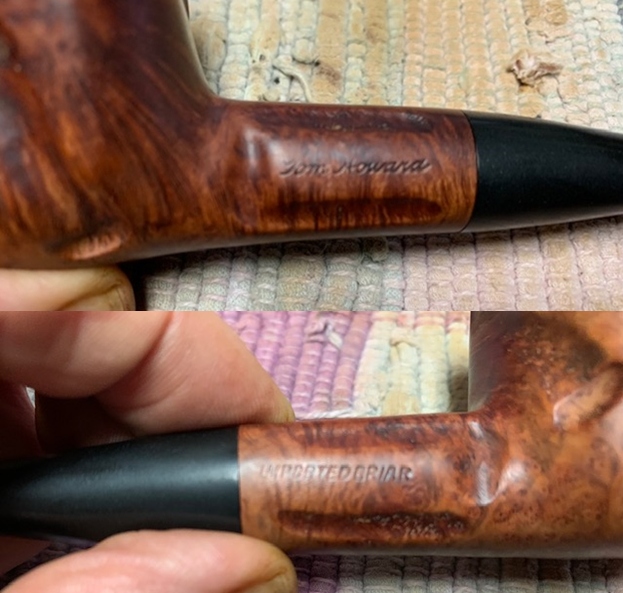
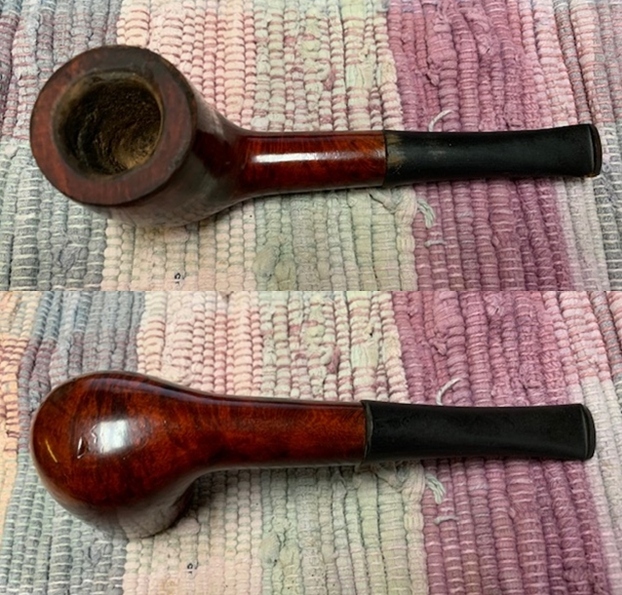
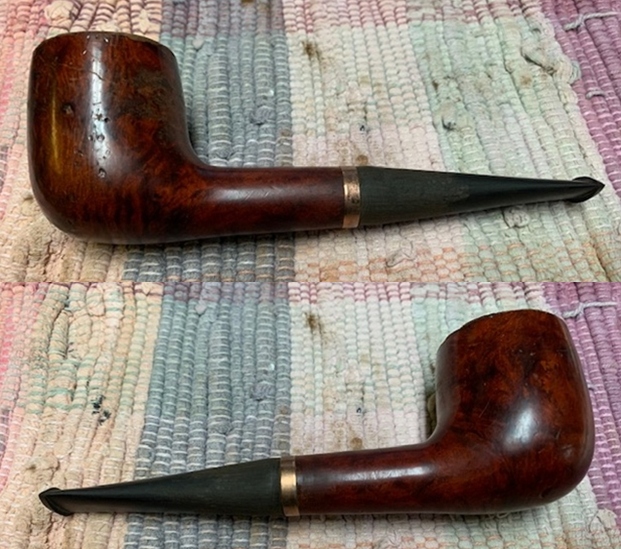
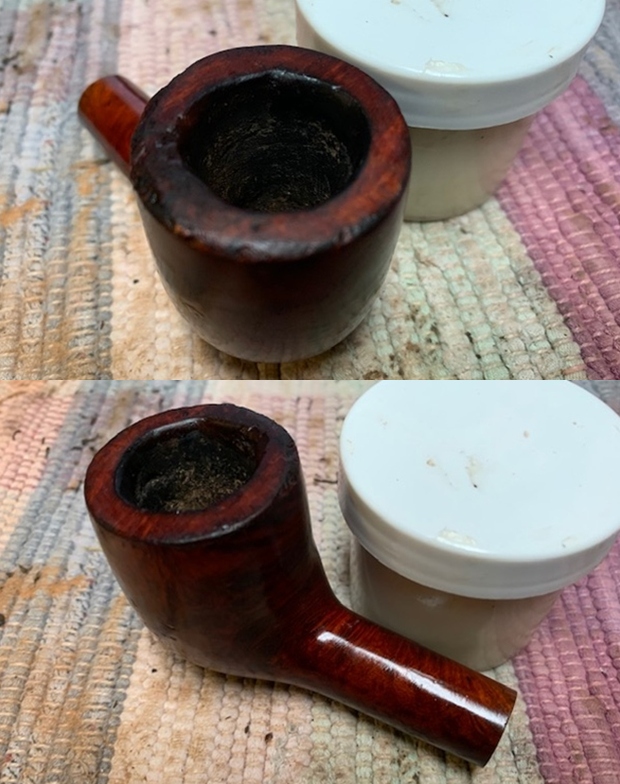
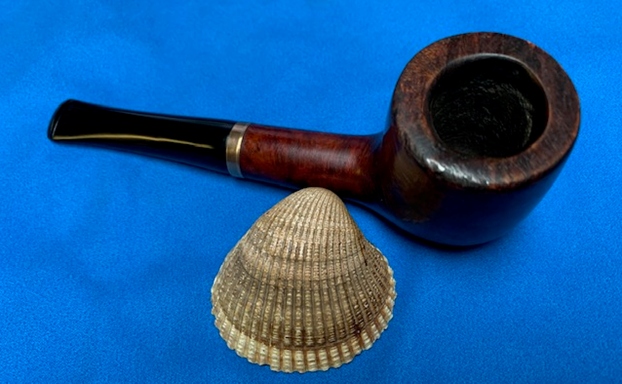
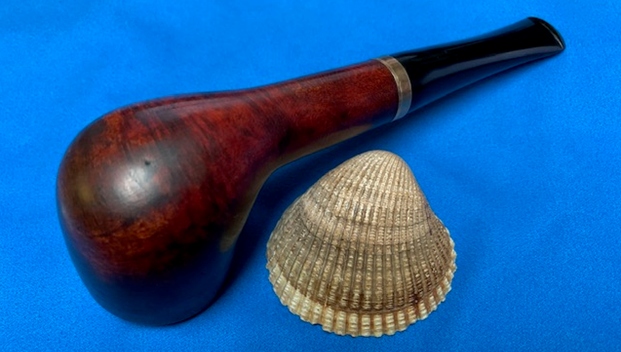
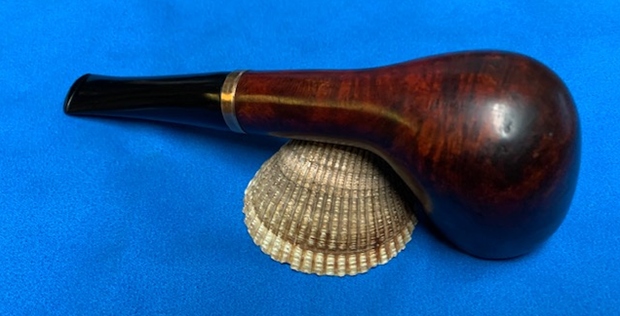
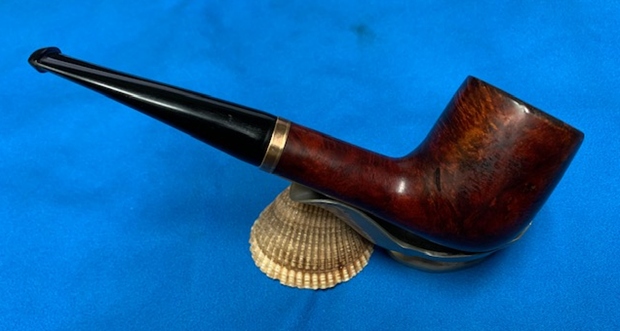
Jeff and I cannot remember where we picked up the next pipe and have no idea where we found it or what the condition was when we found it. I know that Jeff cleaned it before it ended up here but we cannot put a finger on the pre-cleanup photos or even where we got it. So I decided to just write about it as it looks today before I start the cleanup work and describe the work that I did on the pipe. It is stamped on the left side of the shank and reads Pipe of the Month in script. On the underside of the shank it reads Imported Briar while on the right it reads Wally Frank LTD. The pipe is uniquely shaped and I was tempted to call it a drunken poker (in fact I did in the title of the blog). It must have been a good smoking pipe from the condition of the cleaned bowl. The rim top and edges of the bowl are all damaged. It looked like the pipe had been knocked out on hard surfaces and reamed with a knife. The stem was in good condition once I received it with light tooth marks and chatter on both sides. The majority of my work would be done in reshaping and reworking the rim top.

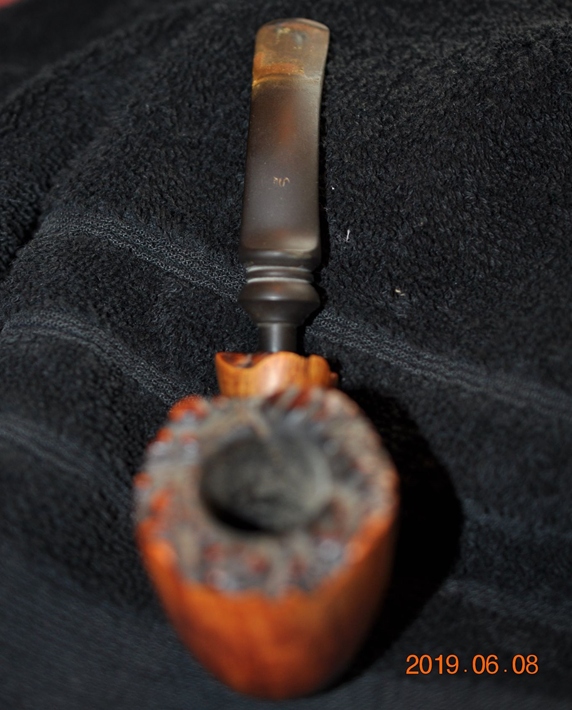
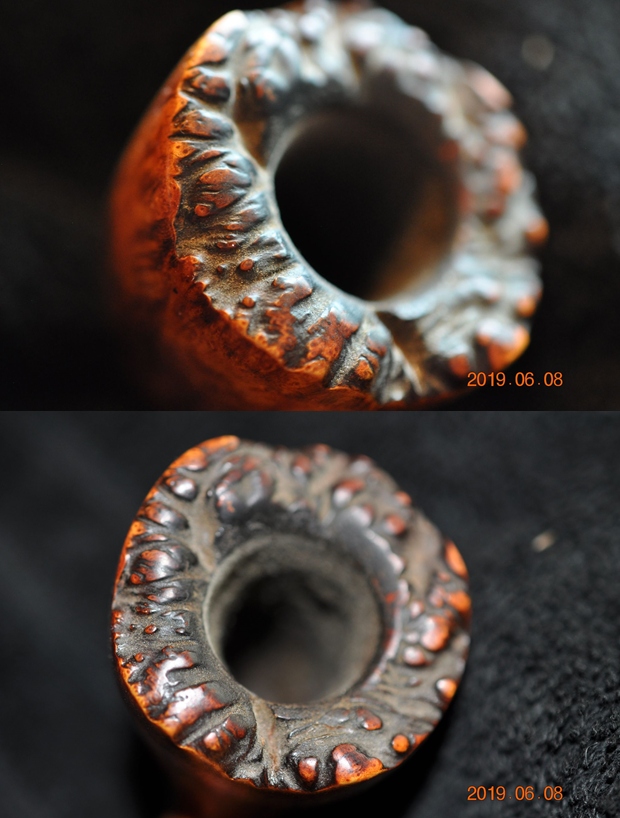
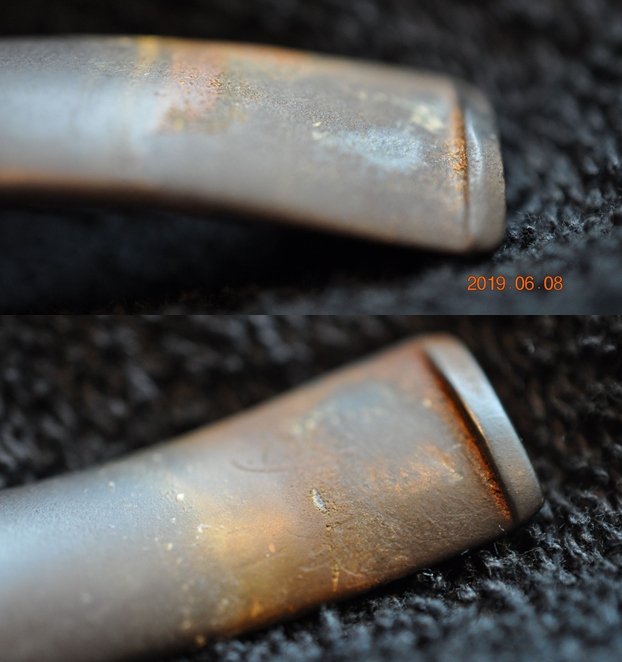
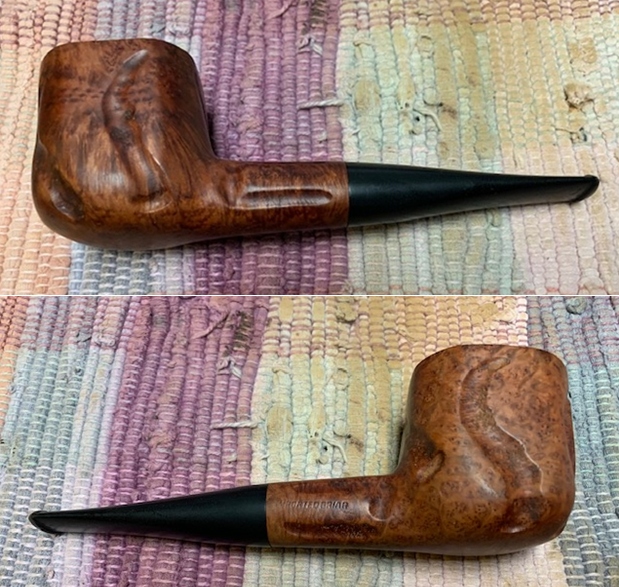
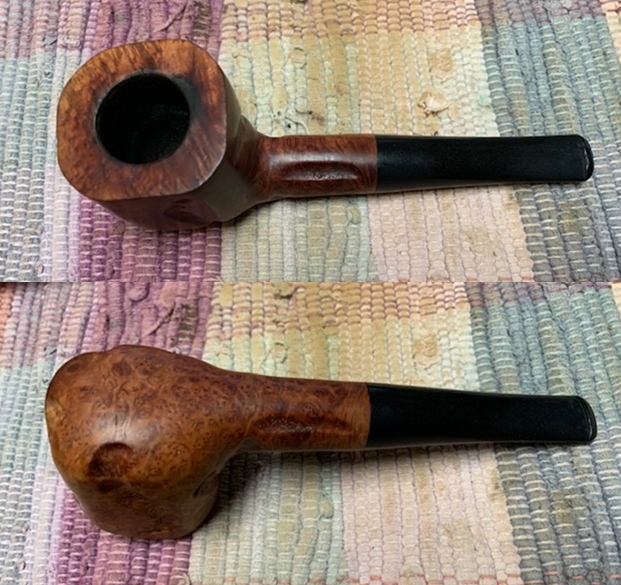
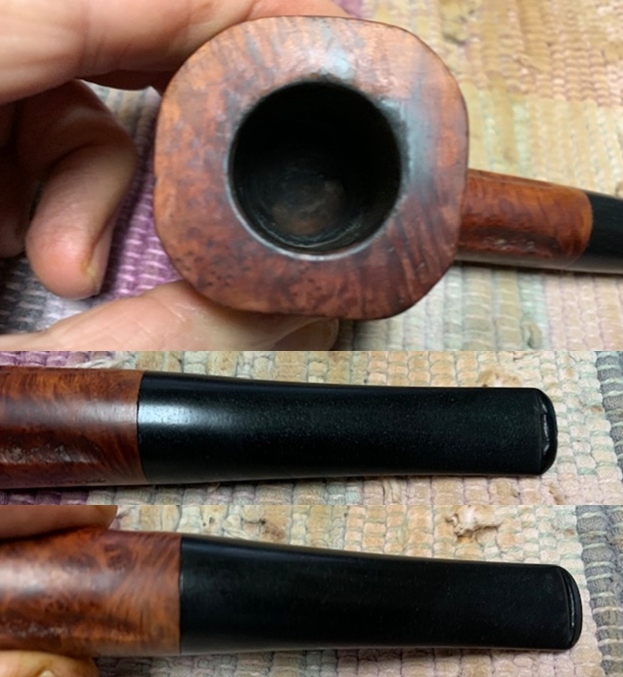
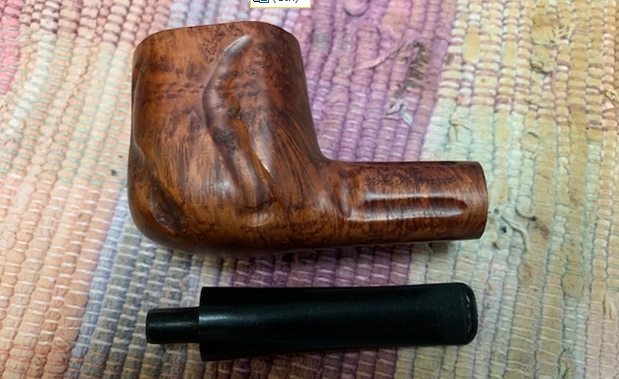
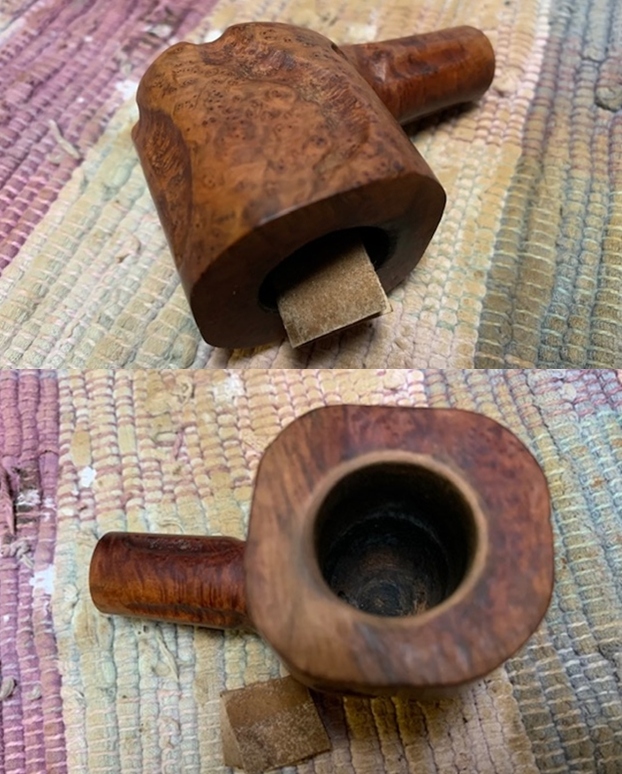
Jeff had cleaned up the pipe with his usual penchant for thoroughness. He reamed the pipe with a PipNet Pipe Reamer and cleaned up the remnants with a Savinelli Fitsall Pipe Knife.  He scrubbed the bowl with undiluted Murphy’s Oil Soap with a tooth brush. He rinsed it under running warm water to remove the soap and grime. He cleaned out the inside of the shank and the airway in the stem with alcohol, cotton swabs and pipe cleaners. He soaked the stem in Before & After Deoxidizer and rinsed it off with warm water. I took photos of the pipe before I started my work.  The rim top and edges of the rim looked rough with damage all around. The outer edge was rough and the inner edge was notched with what looked like knife marks. The rim top was also nicked and dented. The stem surface looked very good with some remaining oxidation and tooth marks and chatter on both sides near the button.  I took photos of the stamping on the sides of the shank. It is clear and readable as noted above. I removed the stem and took a photo of the pipe to give a sense of the whole. The bowl has a definitely tilt to it and the heel is rounded. The saddle stem is tapered with a slight bend that follows the flow of the pipe. I turned to Pipephil’s site (http://www.pipephil.eu/logos/en/logo-w1.html) and looked up the section on Wally Frank Pipes. I have included a screen capture of the section on The Pipe of the Month.Each member of Wally Frank’s “The Pipe of the Month Club” received a brand new pipe in the mail once a month.

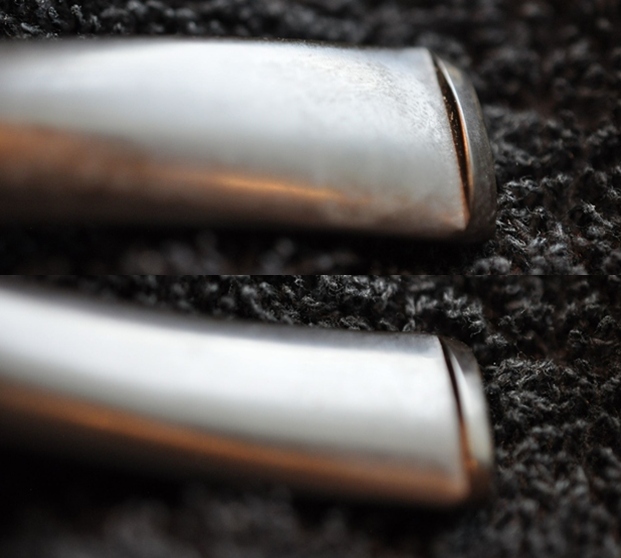
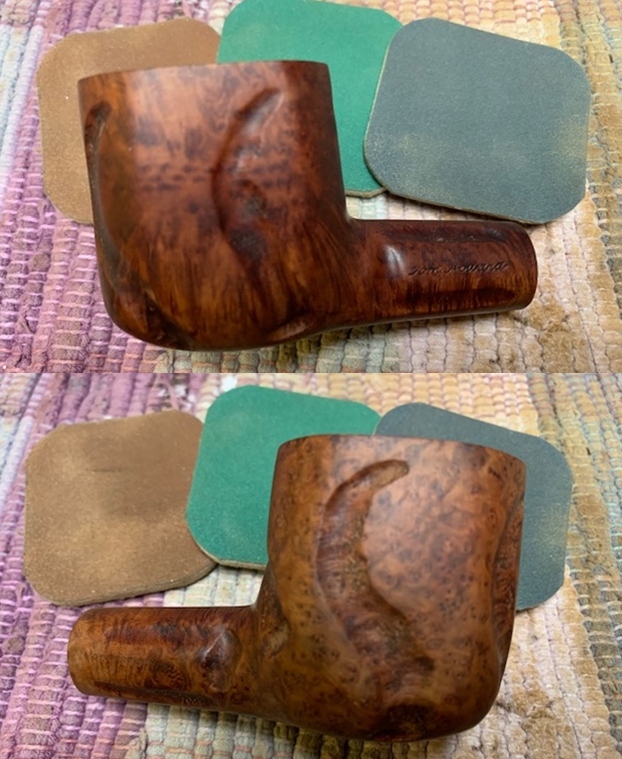
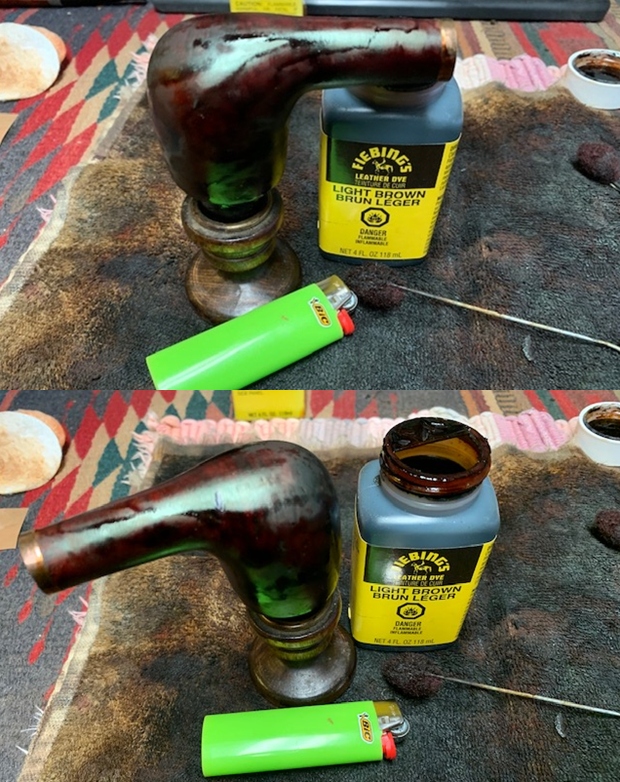
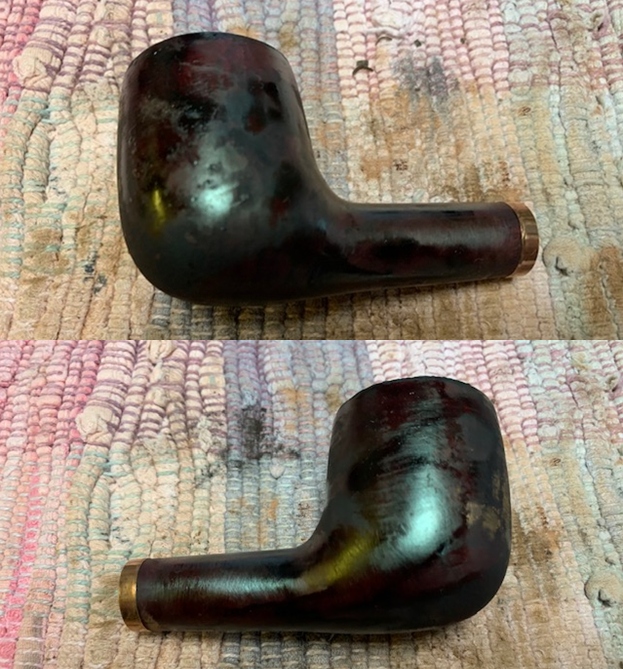
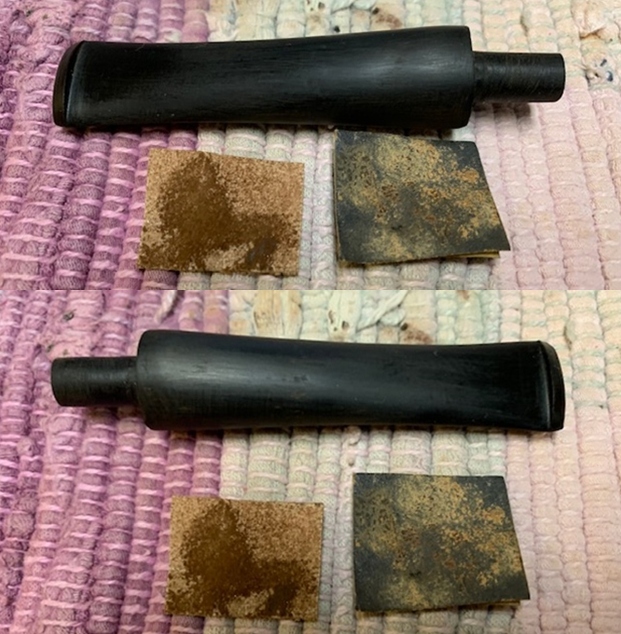
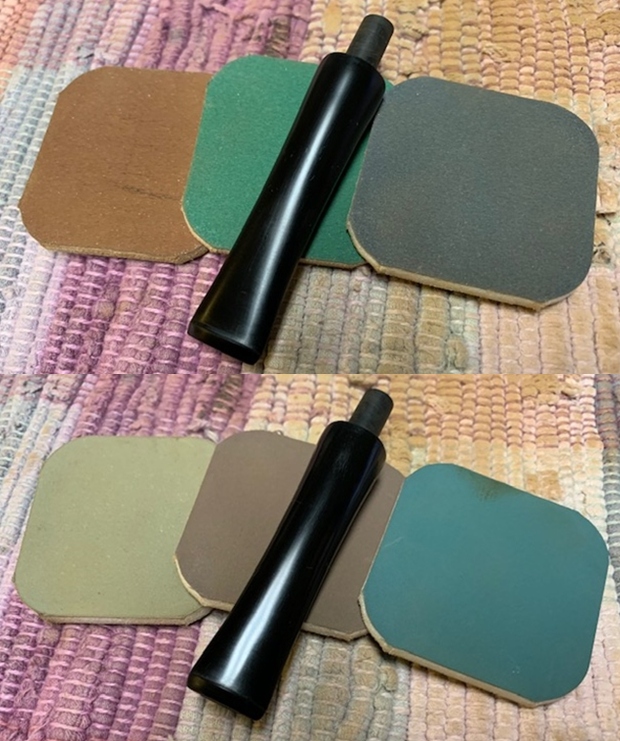
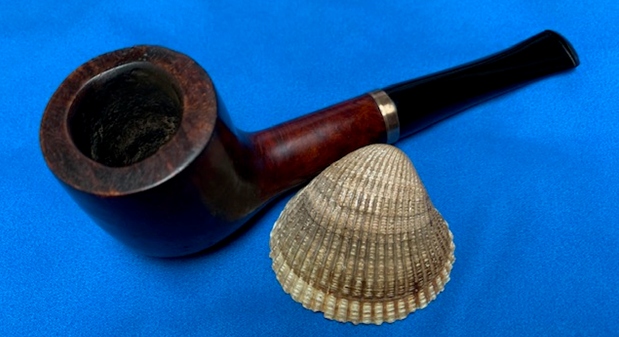
There was also a link to the Pipe of the Month Order form that was on the site. I have included that below for your viewing.Now it was time to work on the pipe. To take care of the significant damage to the rim top and edges I started my work by gently topping the bowl to minimize the damaged areas. I gave the inner edge of the bowl a bevel to reduce the burned areas. I also sanded the outer edge and smoothed out the damage. I wiped the bowl down with acetone to remove the spotty varnish coat and to get the bowl free of the shininess so I could blend in the rim top more carefully. There was some nice looking grain under the varnish. Removing varnish always gives me pause because it can often reveal things I would have rather left hidden. However in this case it was not true. I polished the briar with micromesh sanding pads – wet sanding with 1500-12000 grit pads. I wiped the bowl down after each pad with a damp cloth to remove the sanding dust. The bowl really began to take on a shine. The rim top was slightly lighter than the rest of the bowl so I touched it up with an Oak stain pen to match the rest of the pipe.With the rim cleaned up the bowl was in good condition. I rubbed it down with Before & After Restoration Balm. I worked it into the surface of the bowl sides and shank with my fingertips. The product works to clean, enliven and protect the briar. I let the balm sit for a little while and then buffed with a cotton cloth to raise the shine.  I set the bowl aside and turned to work on the stem. I “painted” the stem with the flame of a lighter to lift the tooth marks. The majority of them disappeared with the heat of the flame. Those that remained I filled in with clear super glue. Once the repairs had cured I sanded them smooth with 220 grit sandpaper. I started polishing the stem with 400 grit wet dry sandpaper.  I polished the vulcanite stem with micromesh sanding pads – 1500-12000 grit pads. I wiped it down with Obsidian Oil after each sanding pad. I used Before & After Pipe Polish – both Fine and Extra Fine to further polish the stem.  Before I put the stem back on the shank I checked out the shank end and the edges. I was surprised when I saw a small crack on the top of the shank toward the right that was obviously there before but only now after polishing could I see it. I circled the cracked area in red in the two photos below. I glued the crack with a dribble of super glue and then pressed a thin brass band on the shank end. I really like these thin bands as they do not cover the stamping on the shank – which in this case was on three sides. I like the finished look of the pipe with the band.This Wally Frank Pipe of the Month Drunken Poker with a vulcanite saddle stem is a great looking pipe now that it has been restored. The smooth finish and unique grain look and feel great in the hand and should only feel better as the pipe is smoked. I put the stem back on the bowl and carefully buffed the pipe with Blue Diamond on the buffing wheel to give a shine. I gave the bowl and the stem multiple coats of carnauba wax on the buffing wheel and followed that by buffing the entire pipe with a clean buffing pad. I hand buffed the pipe with a microfiber cloth to deepen the shine. The finished Drunken Poker fits nicely in the hand and feels great. Give the finished pipe a look in the photos below. The dimensions of the pipe are Length: 5 ¼ inches, Height: 1 ½ inches, Outside diameter of the bowl: 1 ¼ inches, Chamber diameter: ¾ of an inch. The weight of the pipe is 25gr/.88oz. If you are interested in adding this pipe to your collection send me a message or an email. Thanks for reading this blog and my reflections on the pipe while I worked on it. There are many more to come!