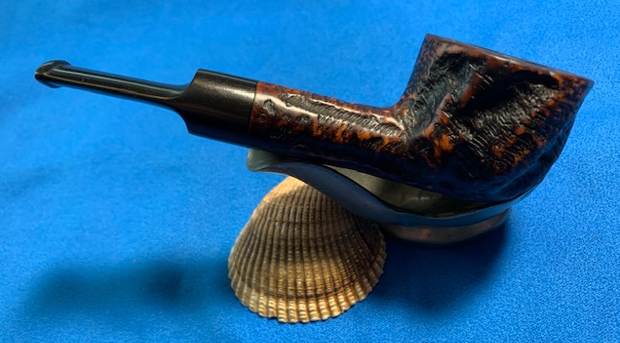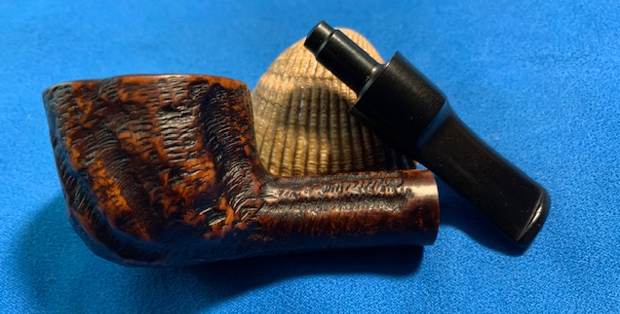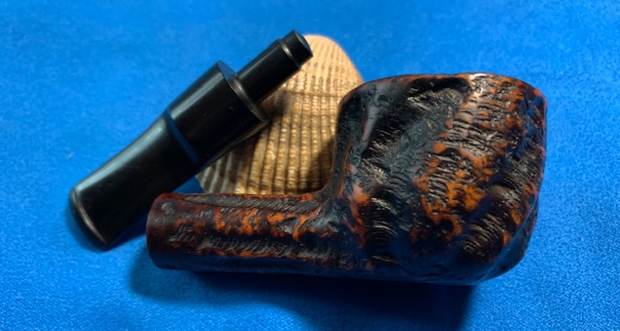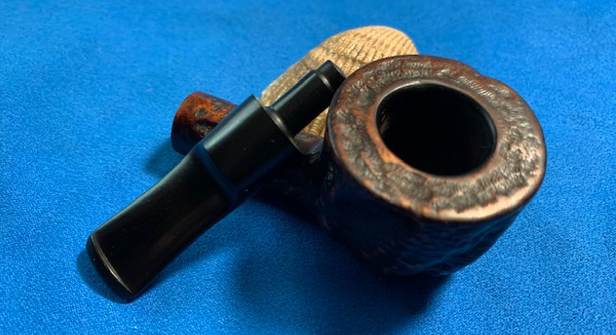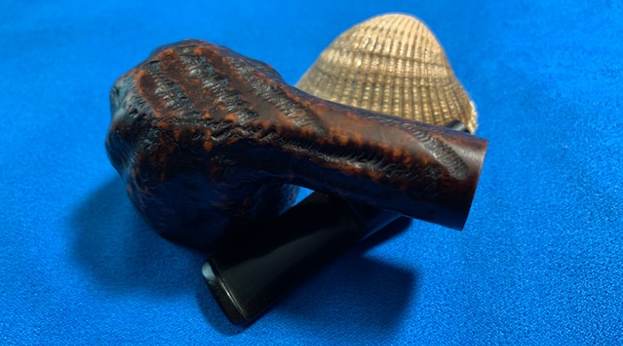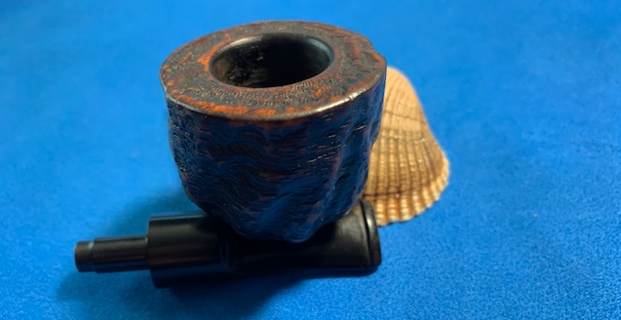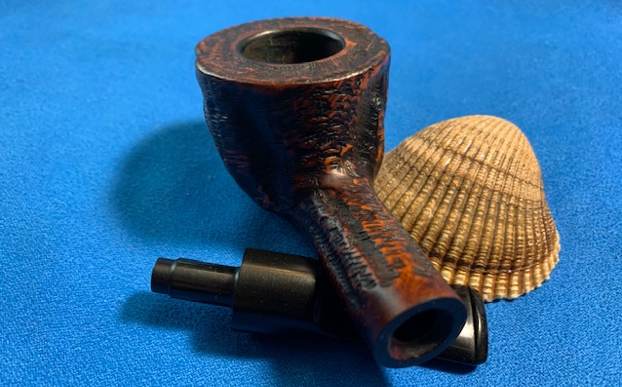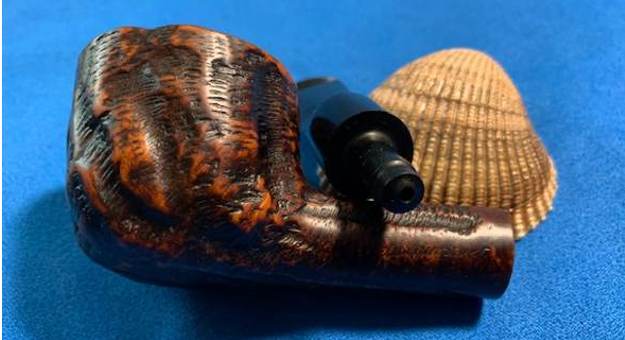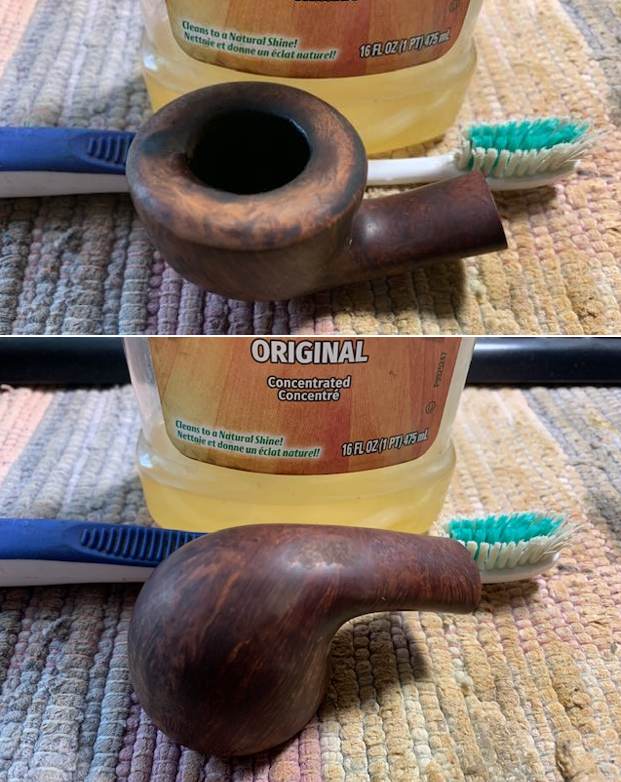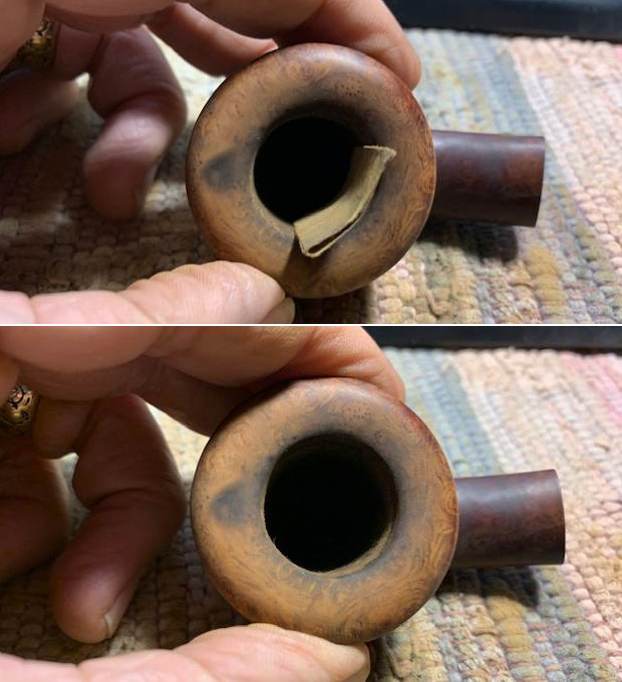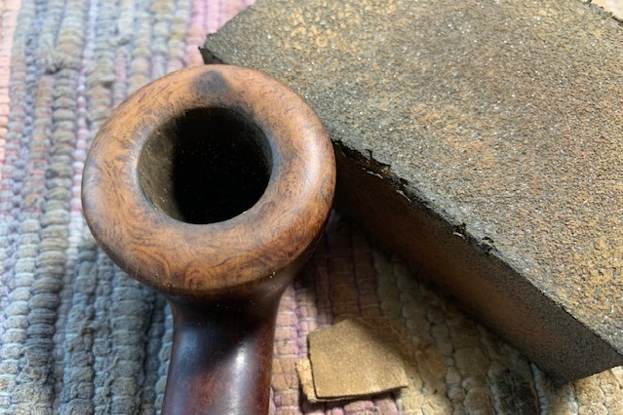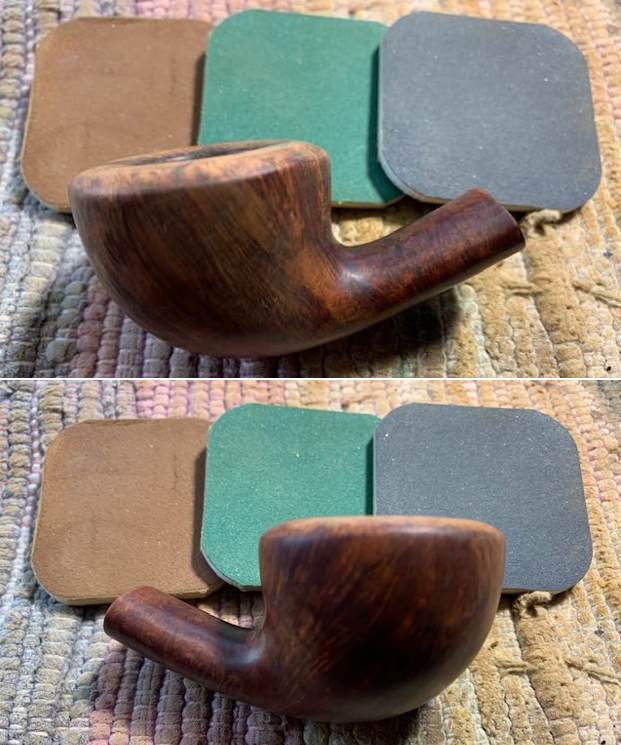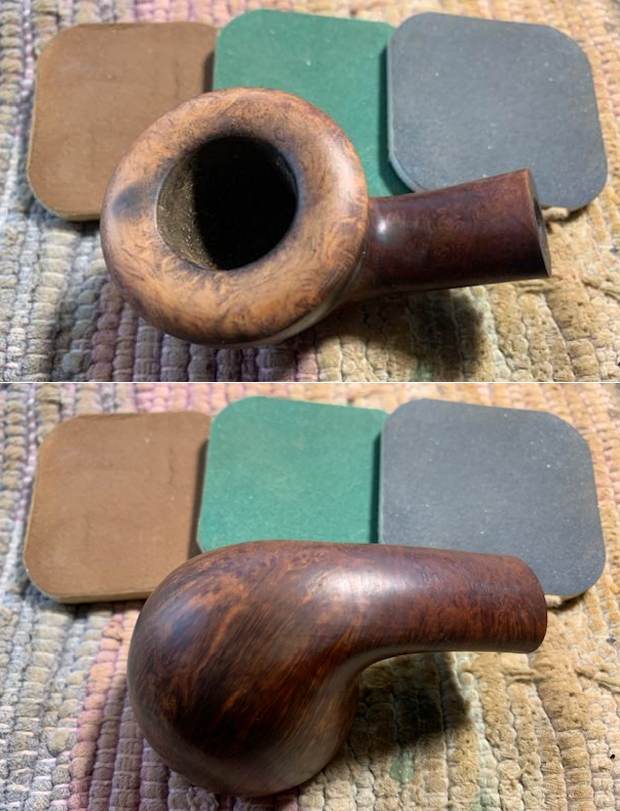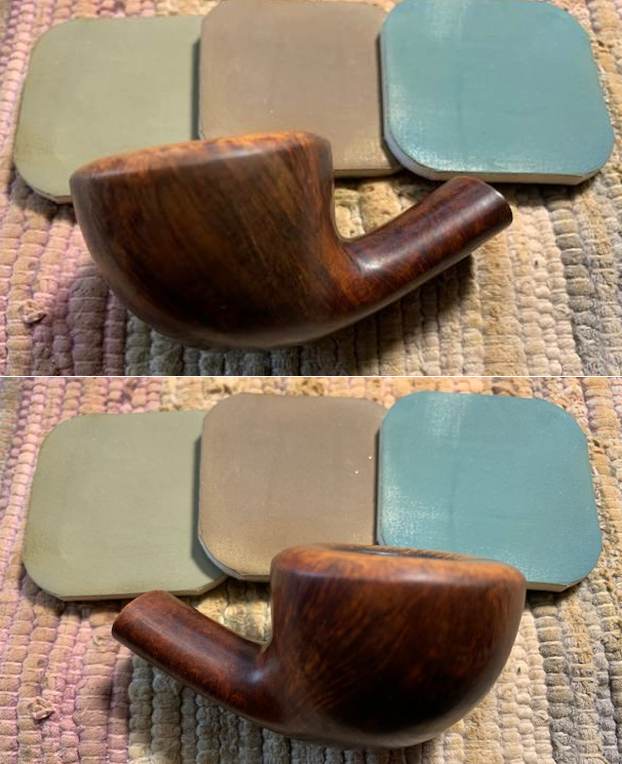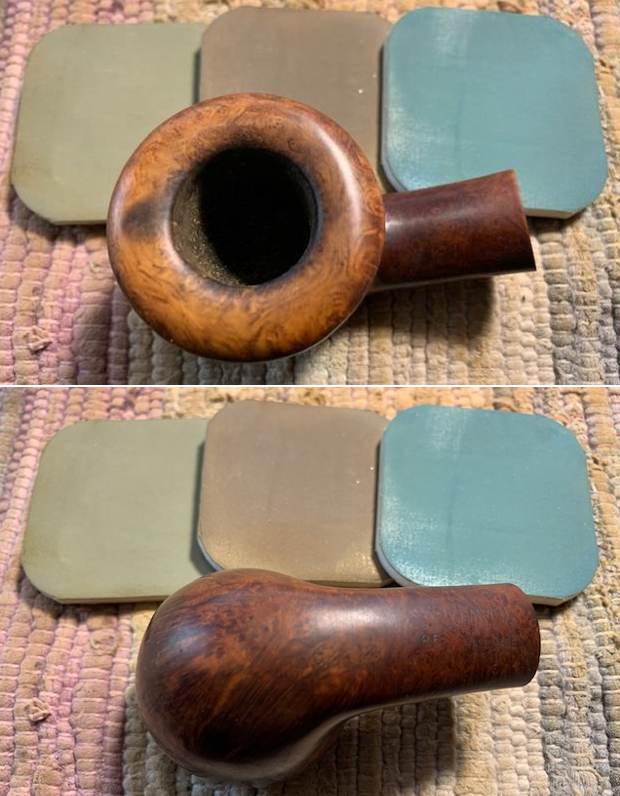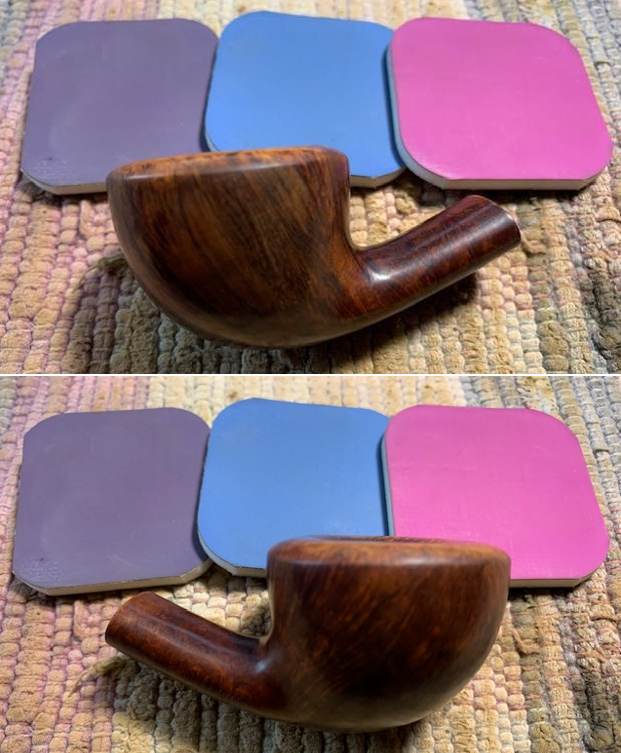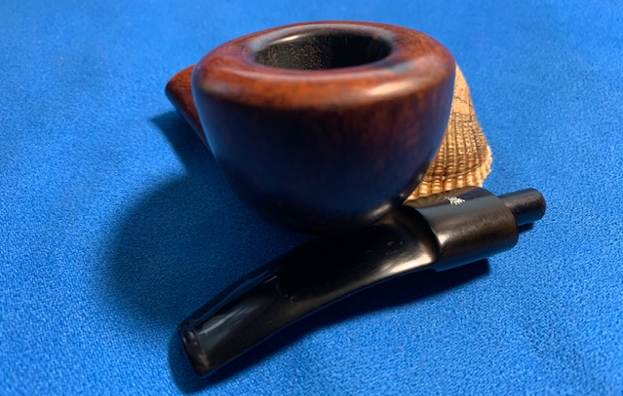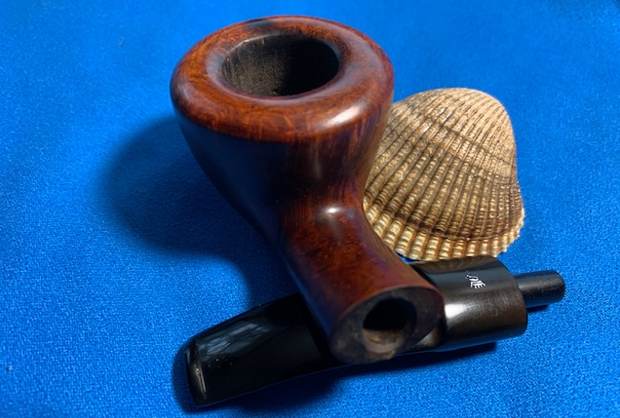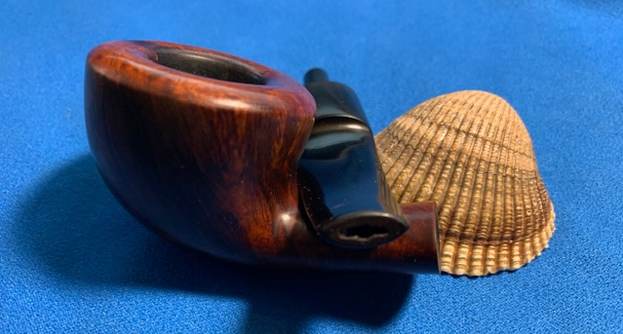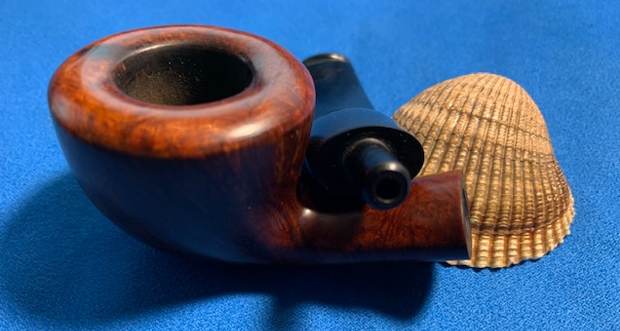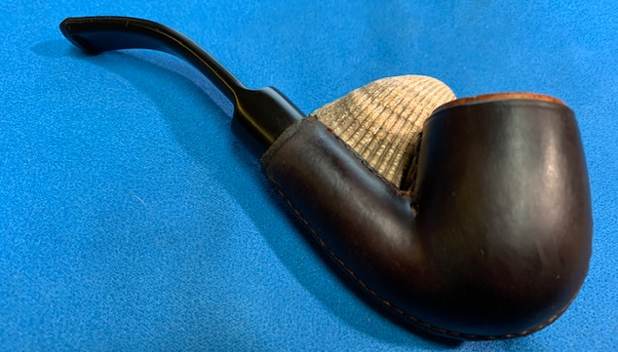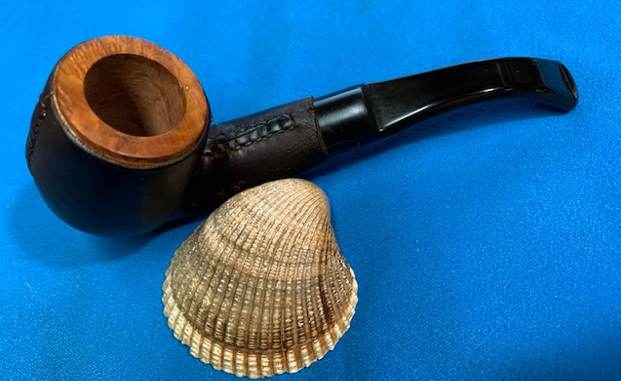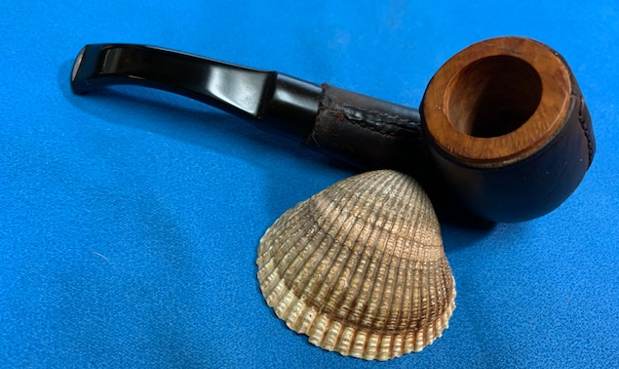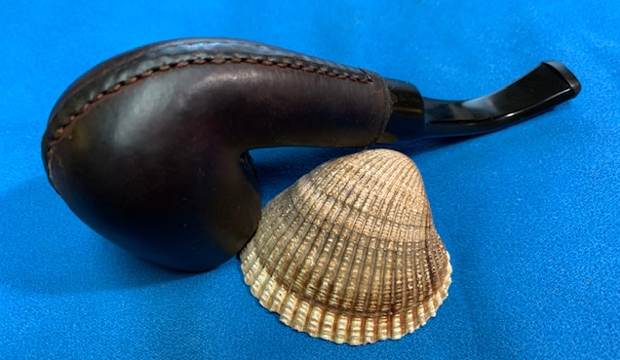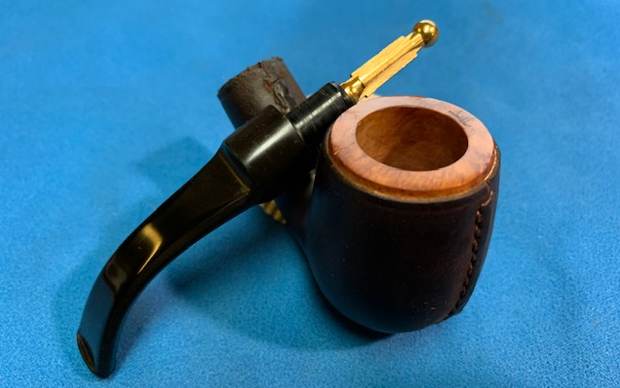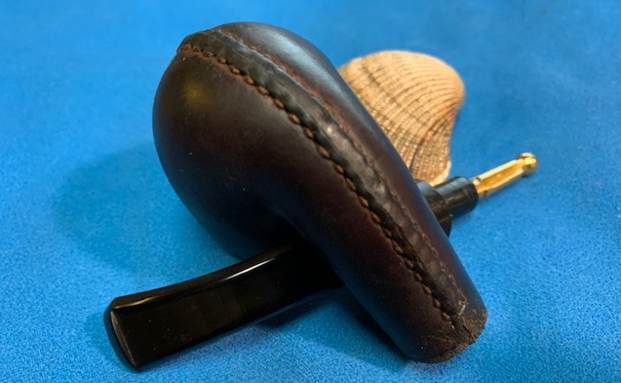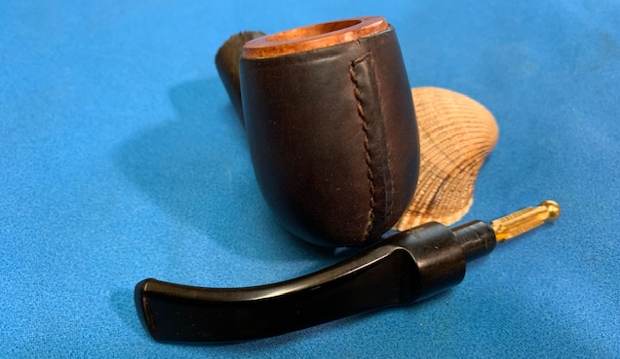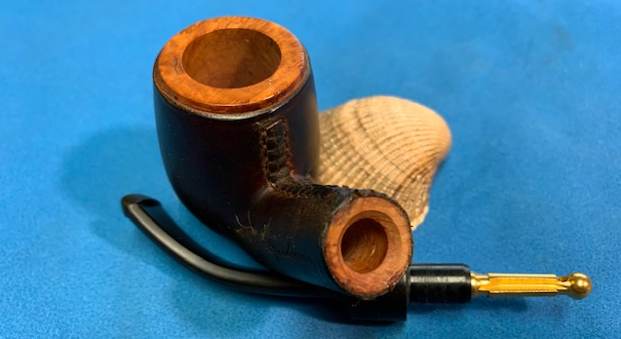
Tag Archives: restaining a bowl and rim

A Decorated Veteran


Blog by Kenneth Lieblich

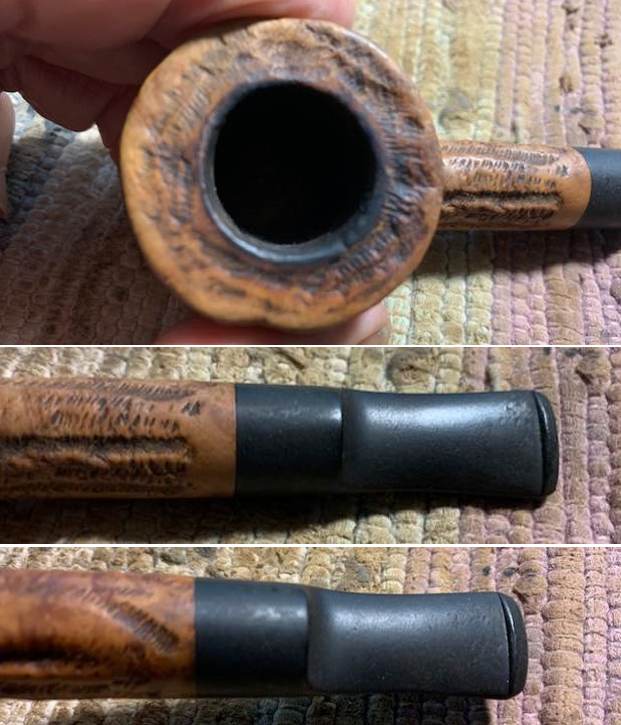
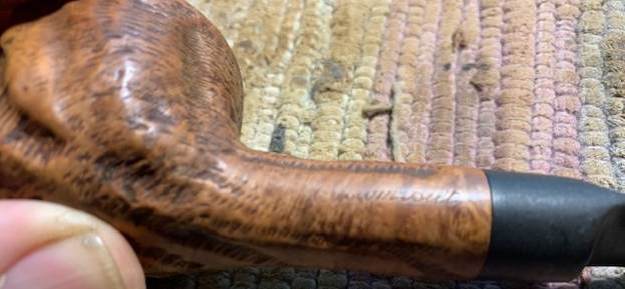
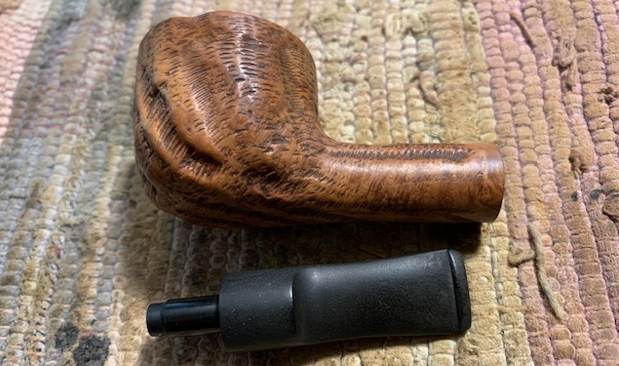
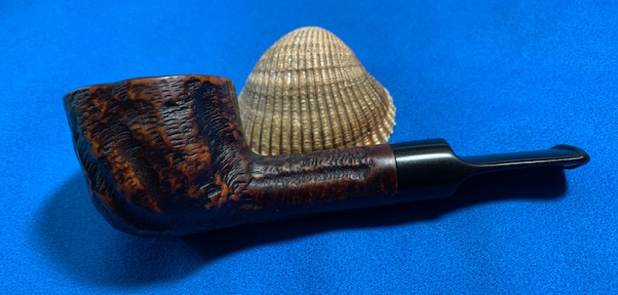
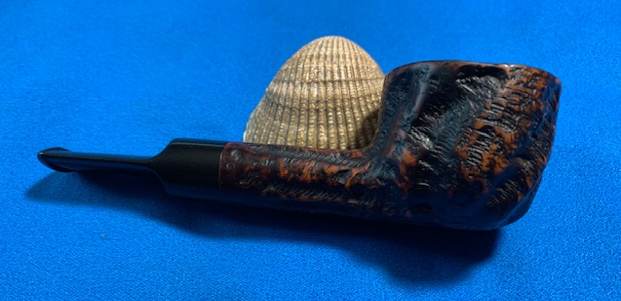
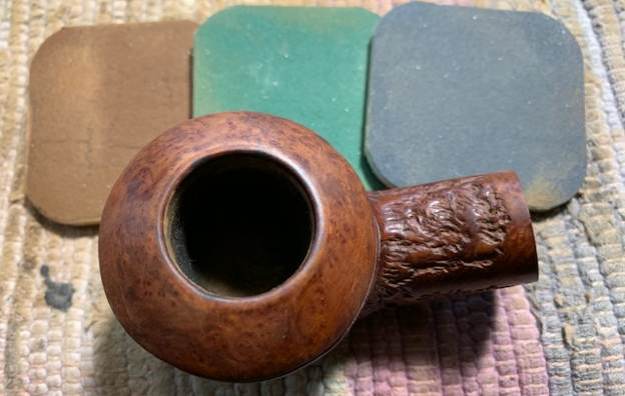
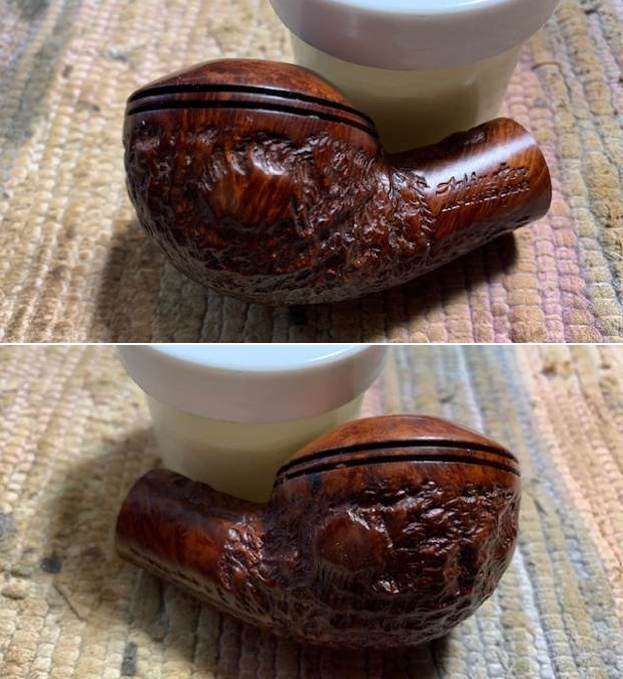
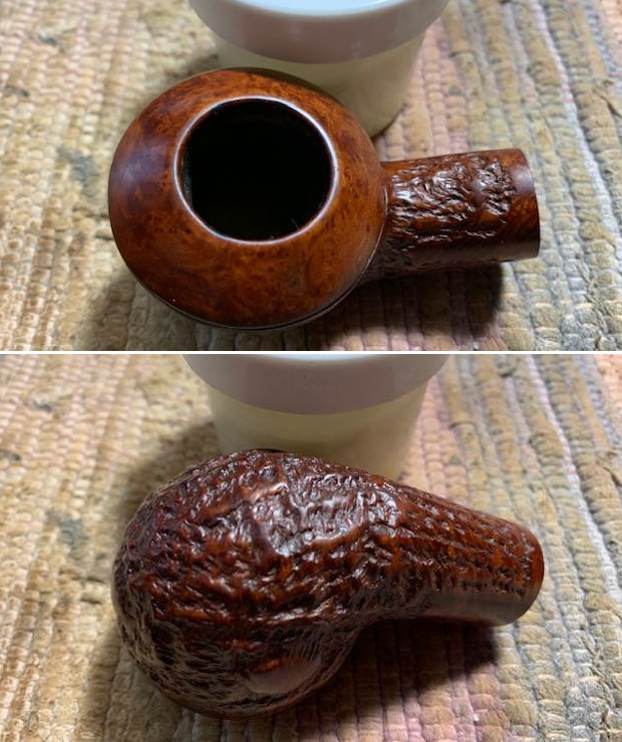
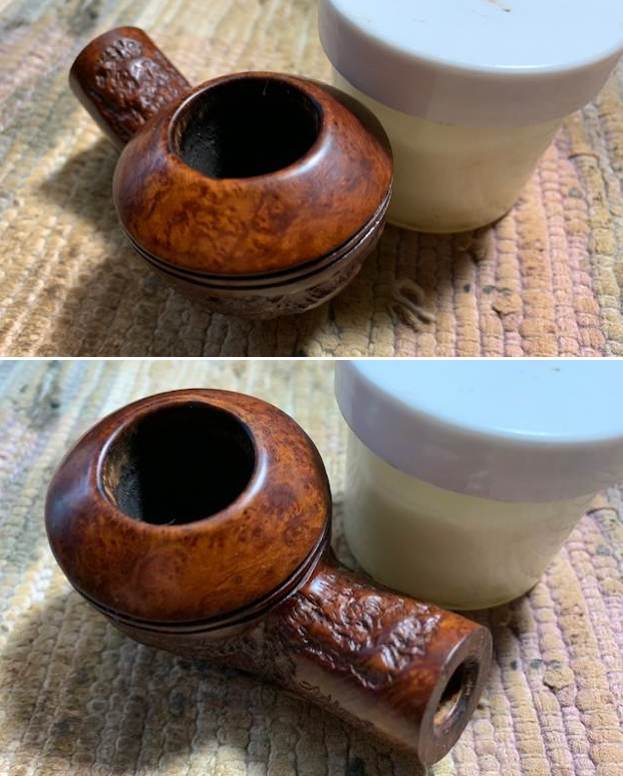
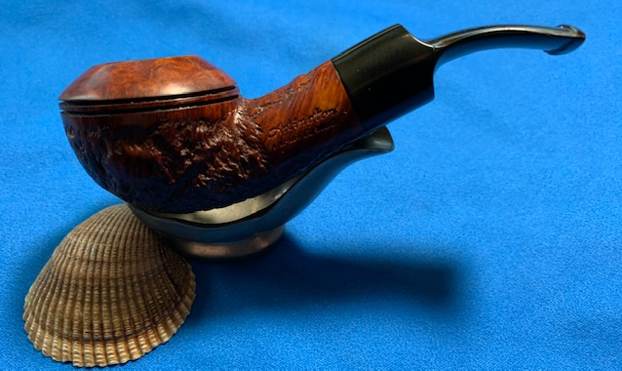
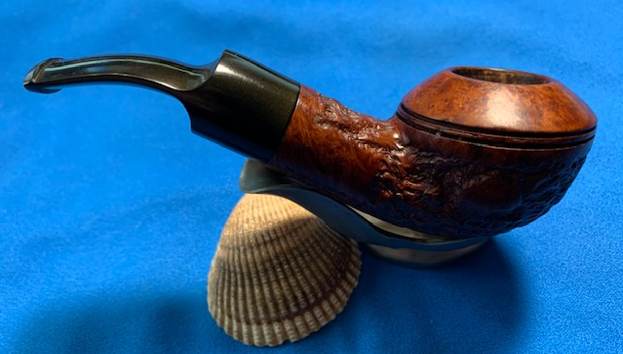
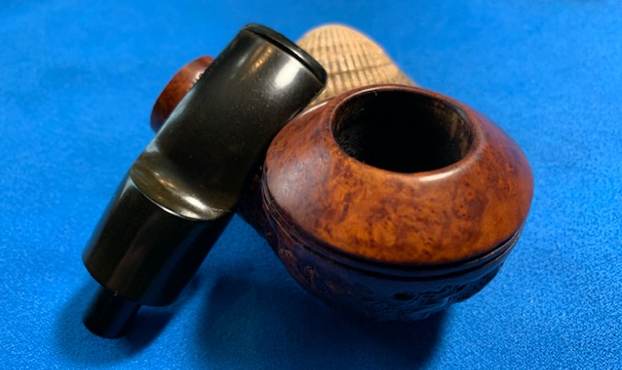
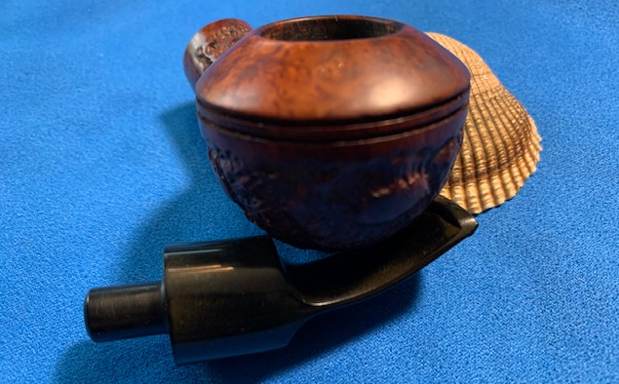
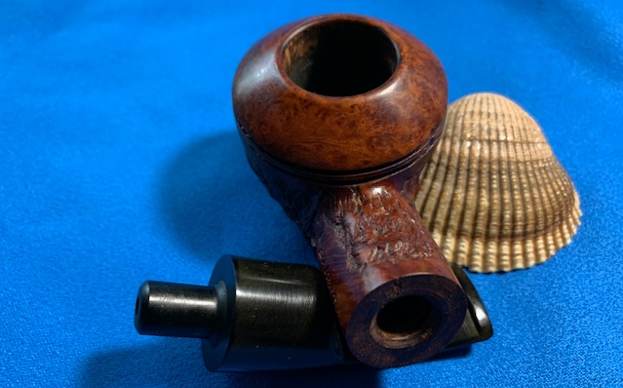
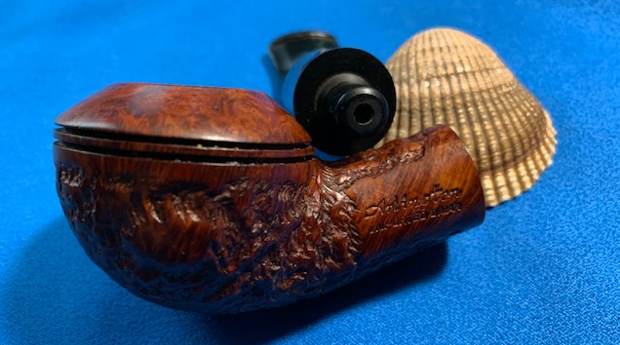
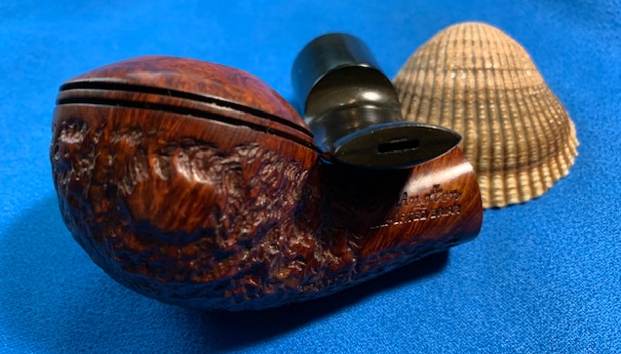
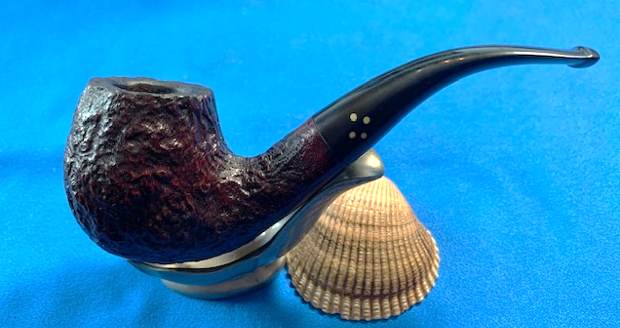
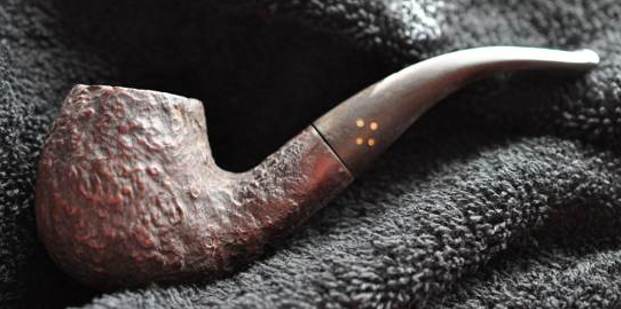
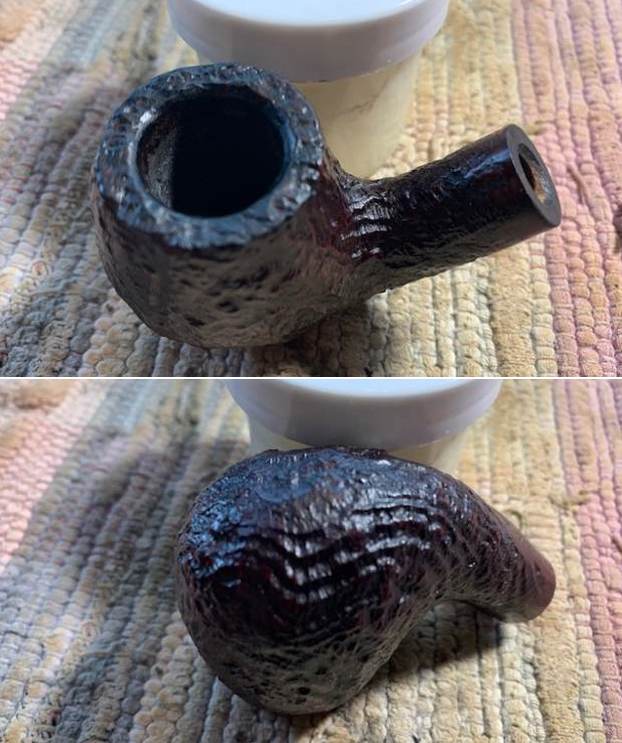
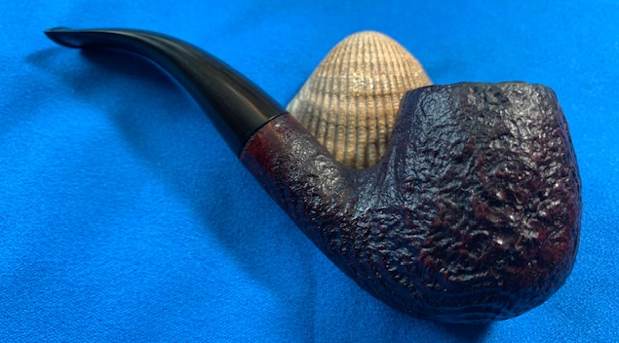
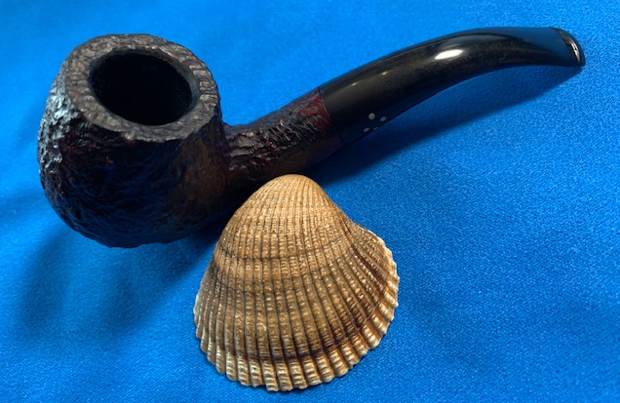
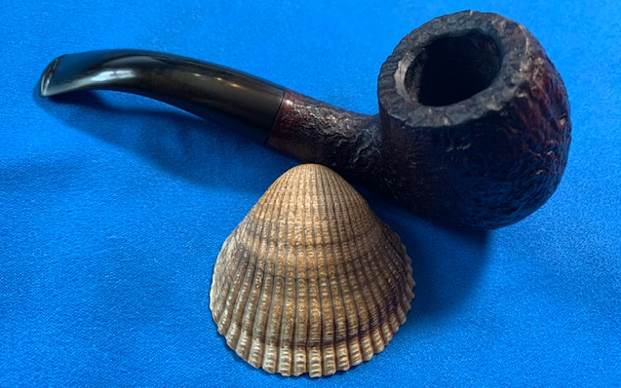
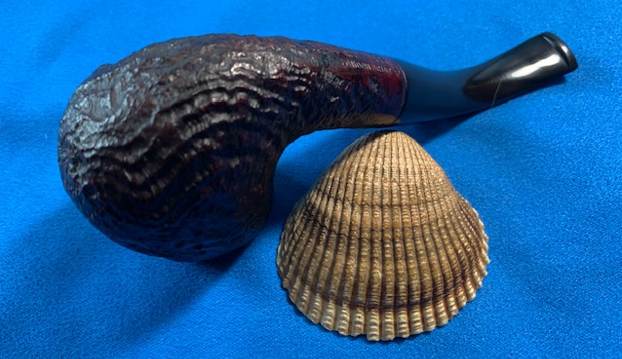
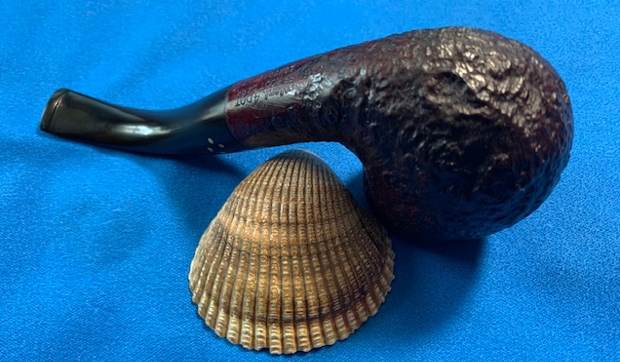
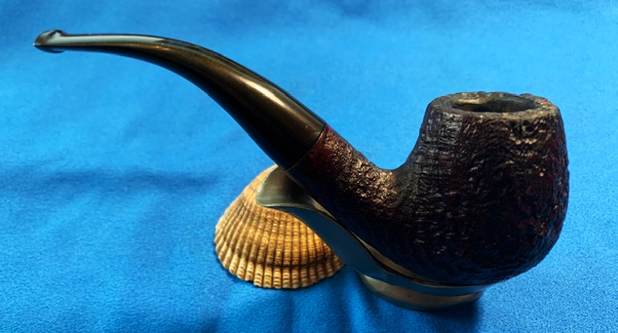
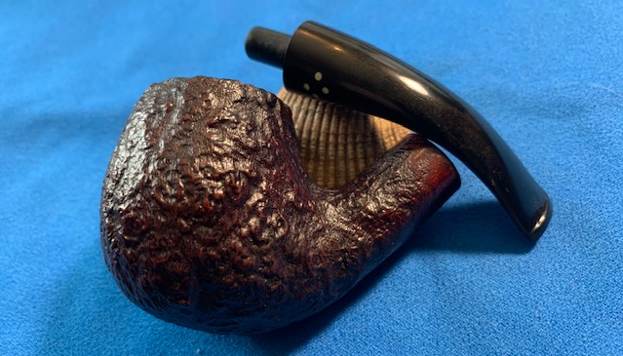
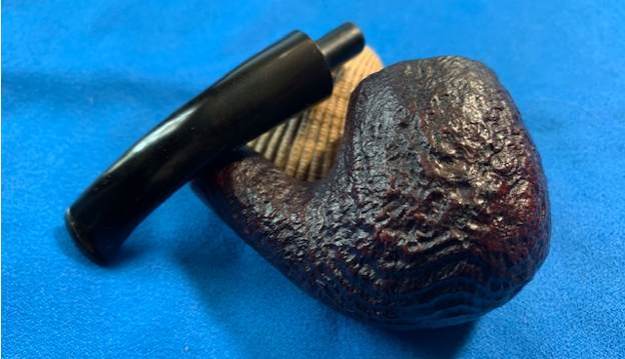
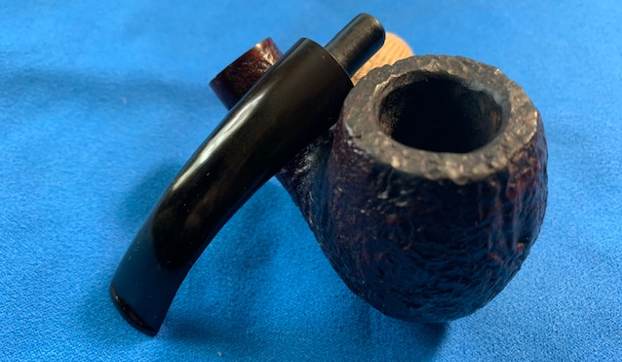
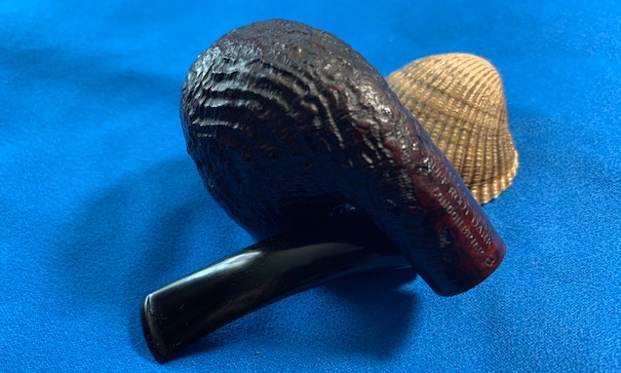
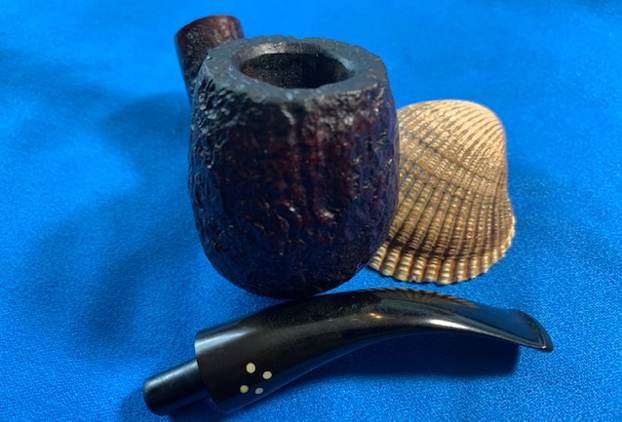
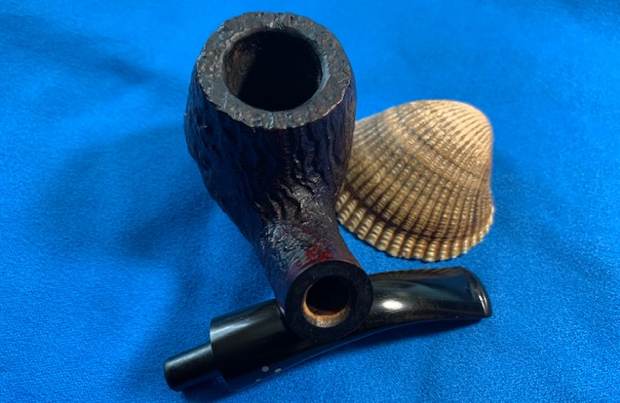
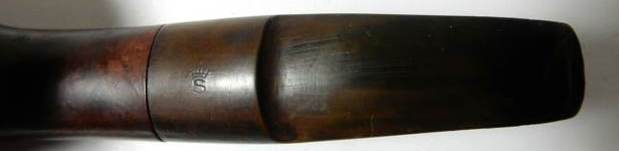
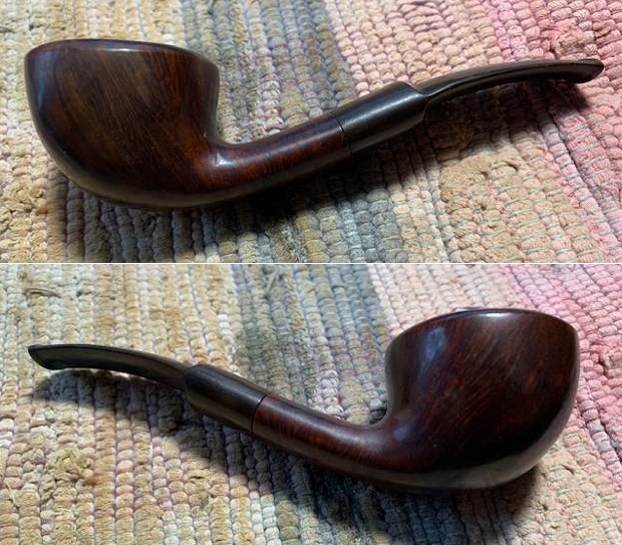
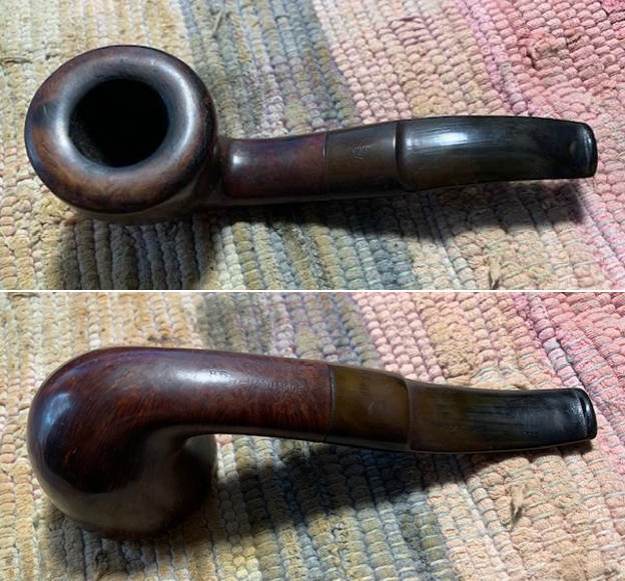
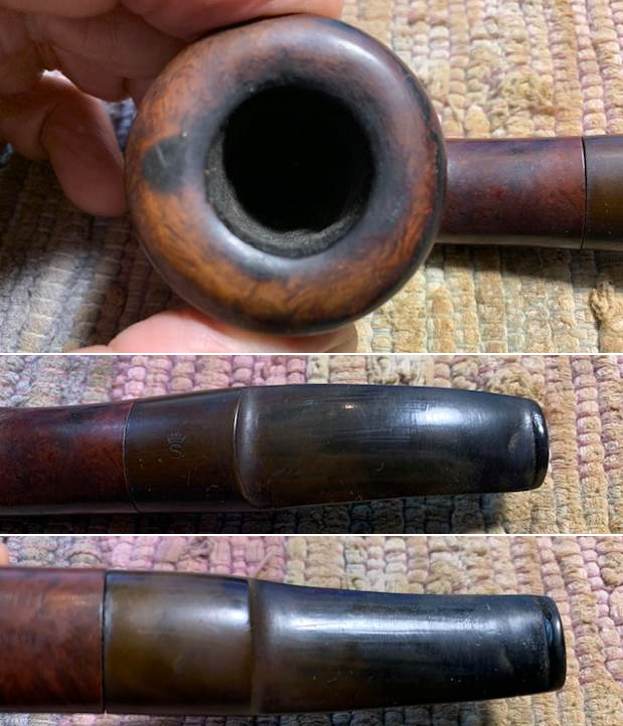
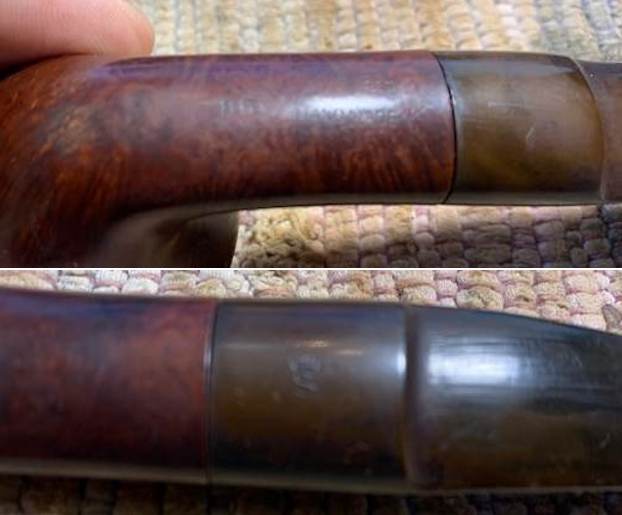
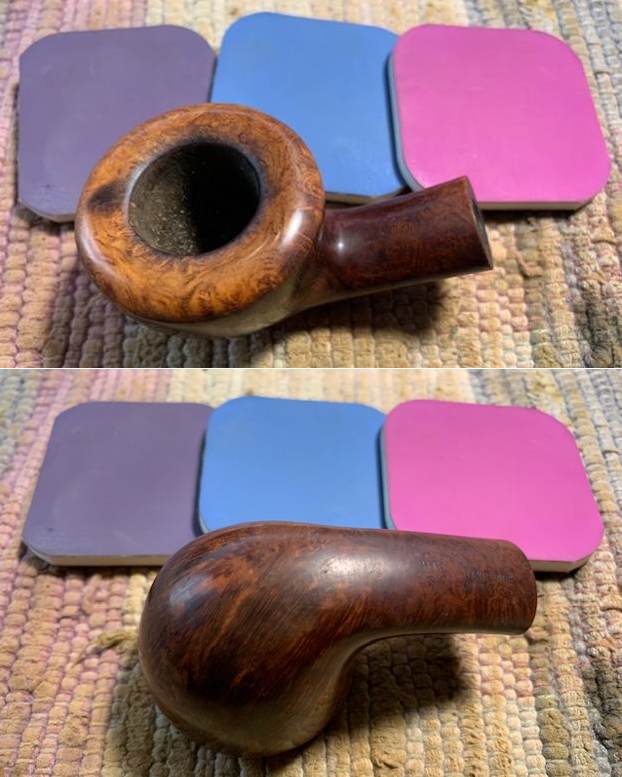
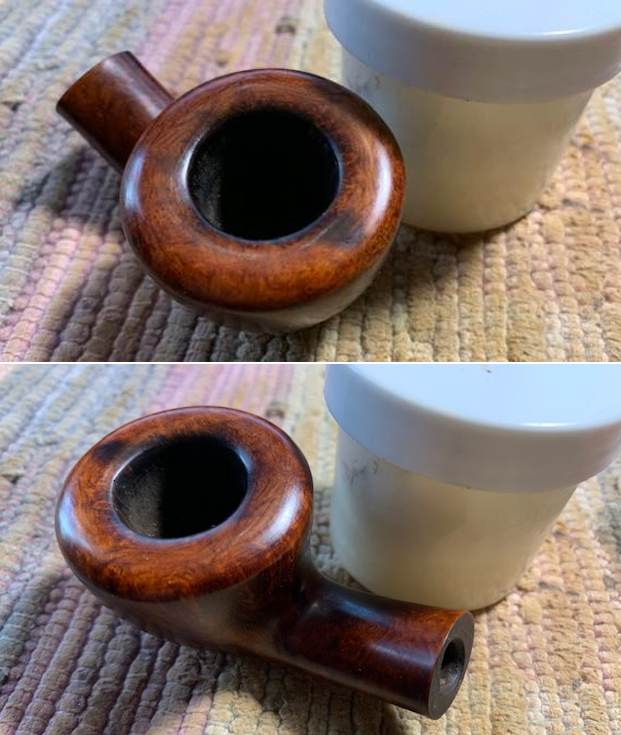
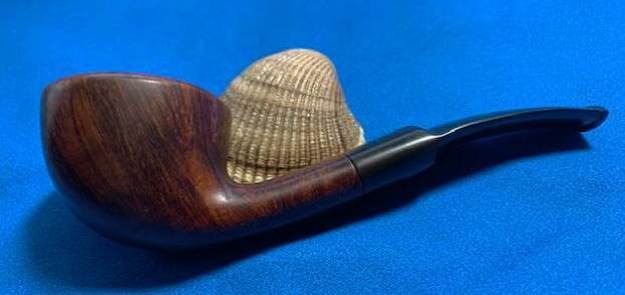
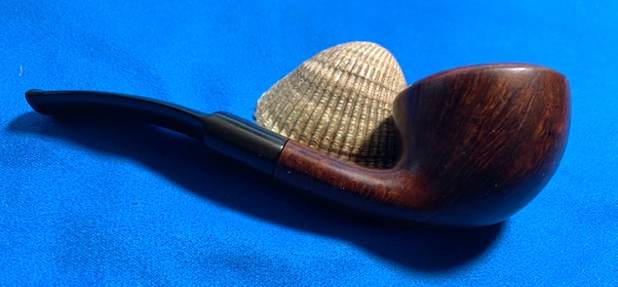
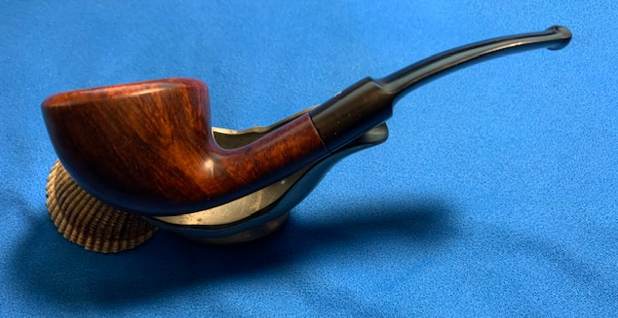
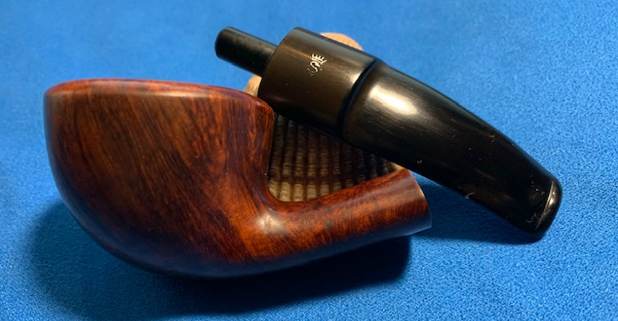
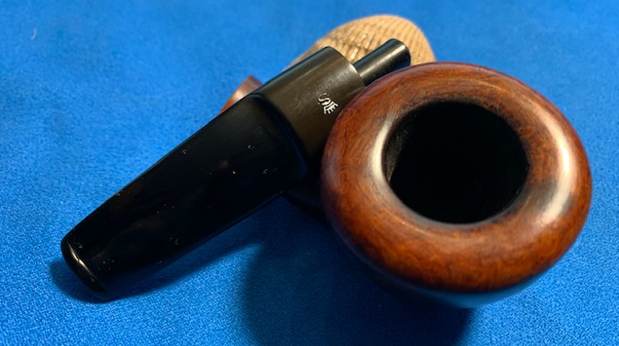
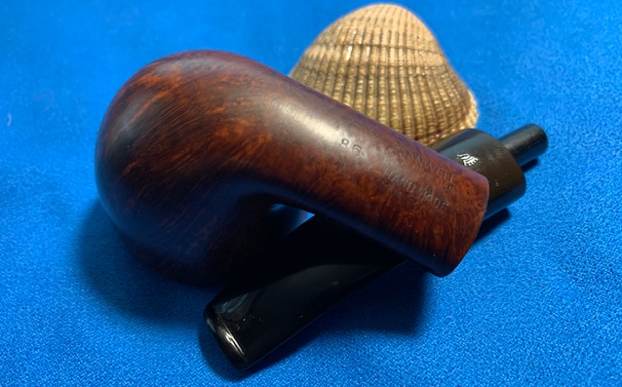
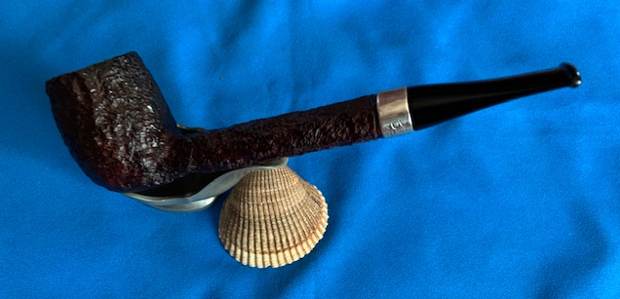
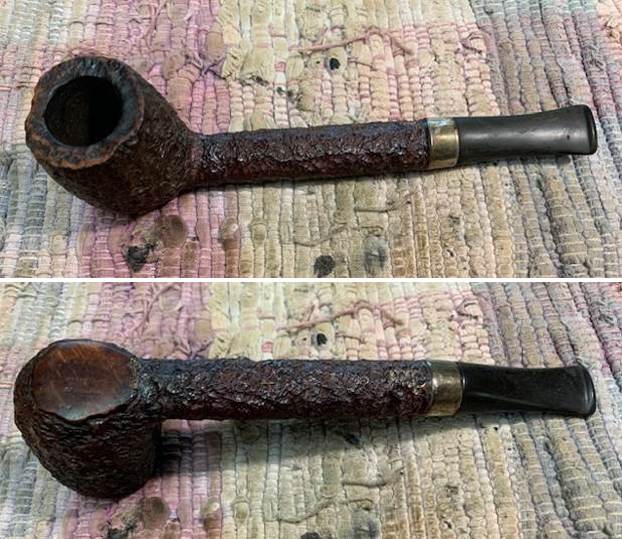
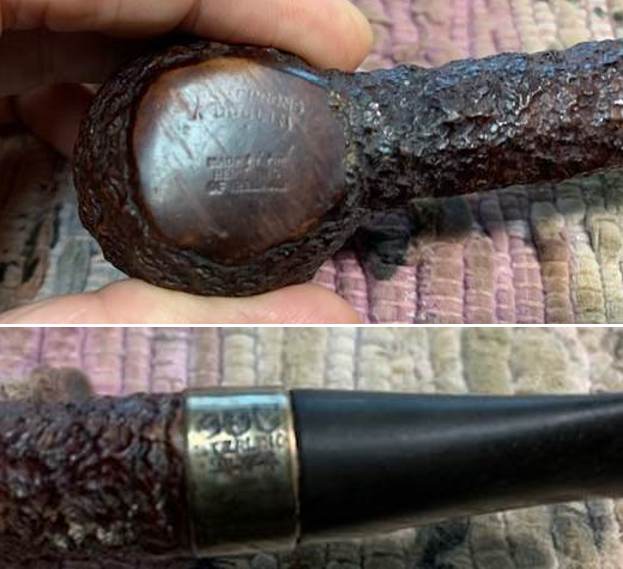
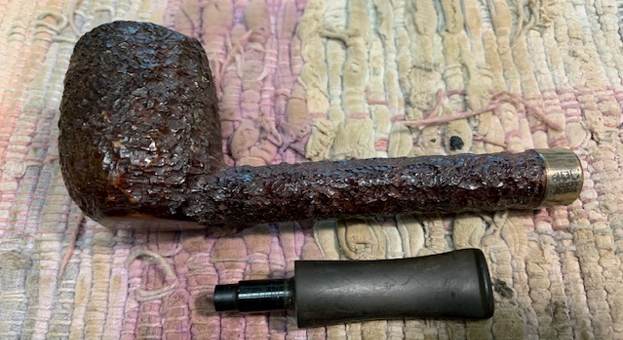
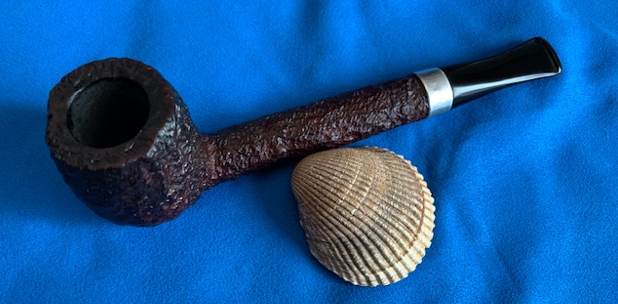
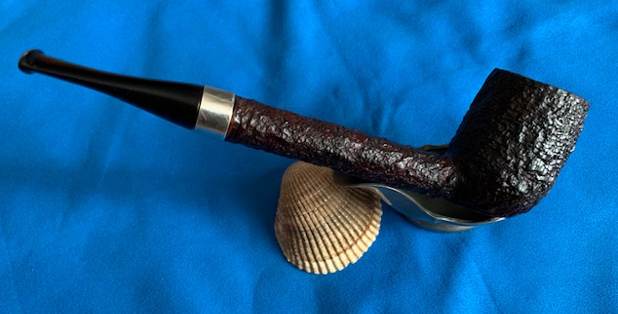
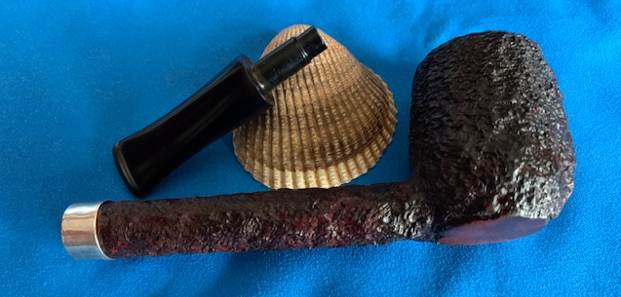
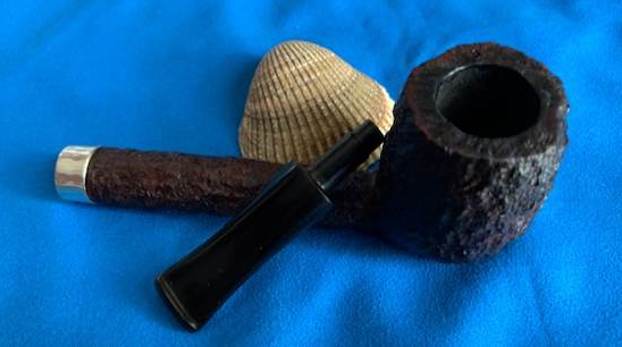
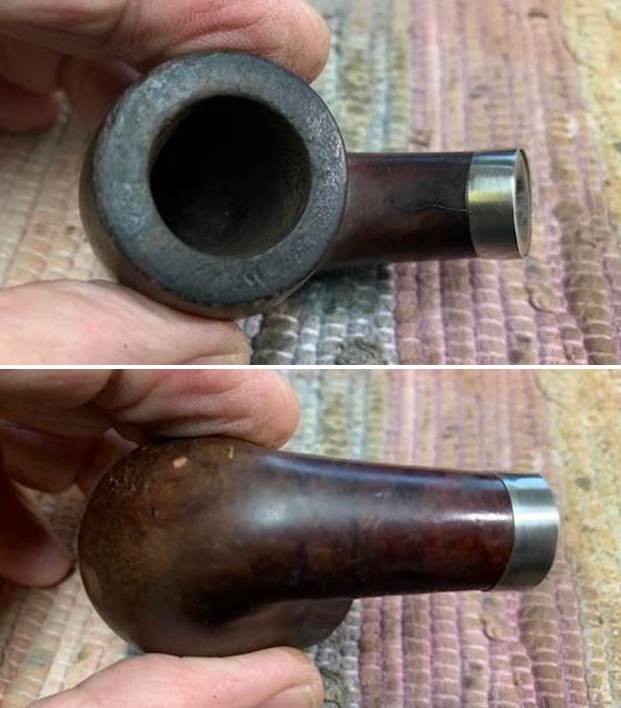
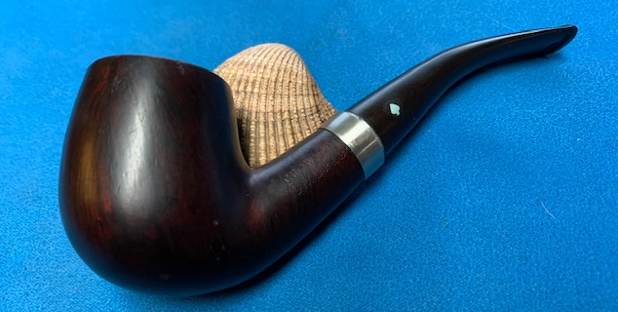
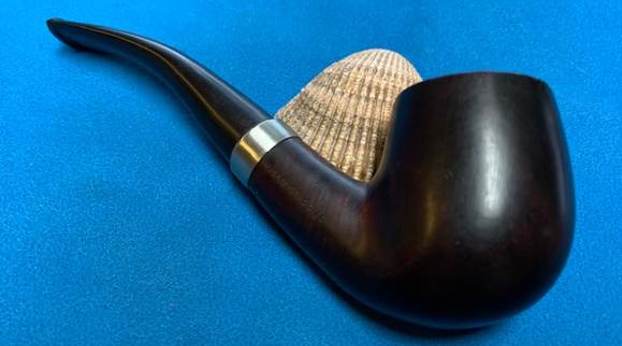
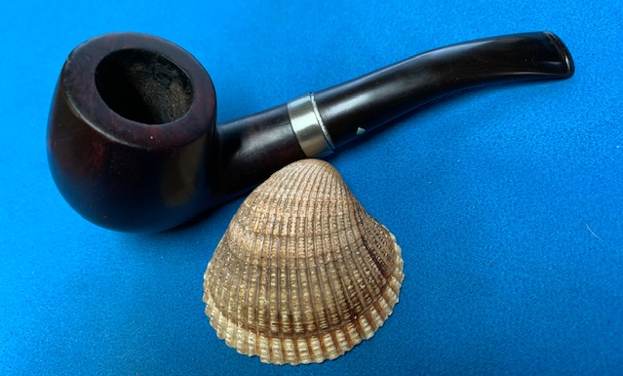
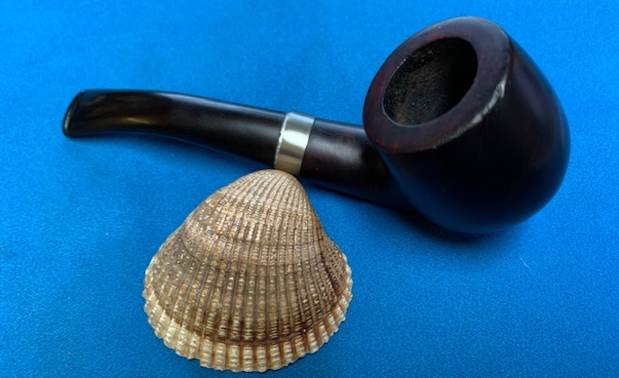
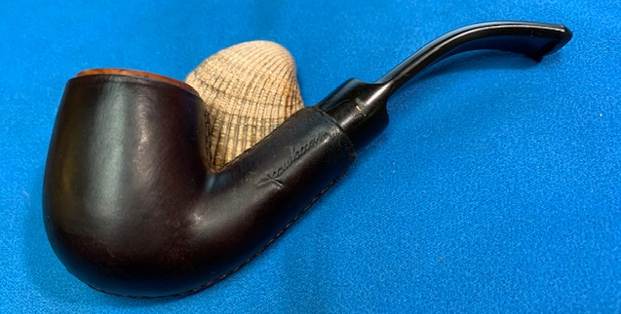
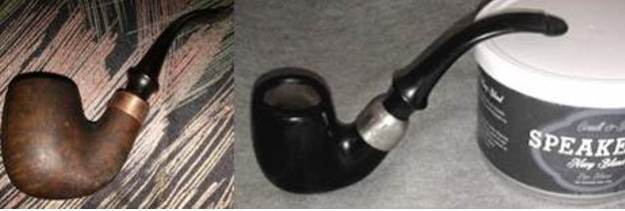
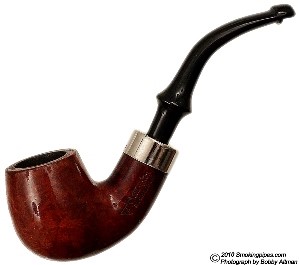
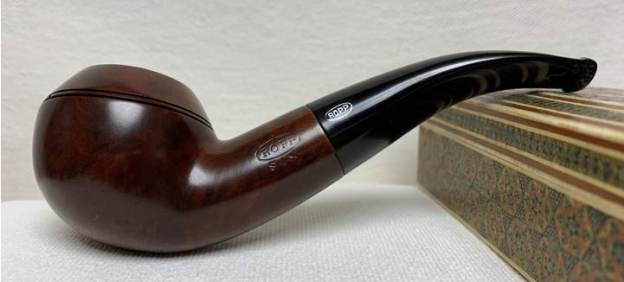
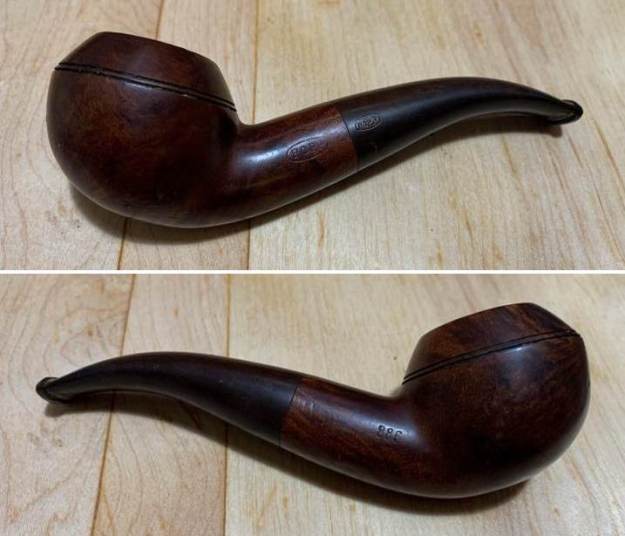
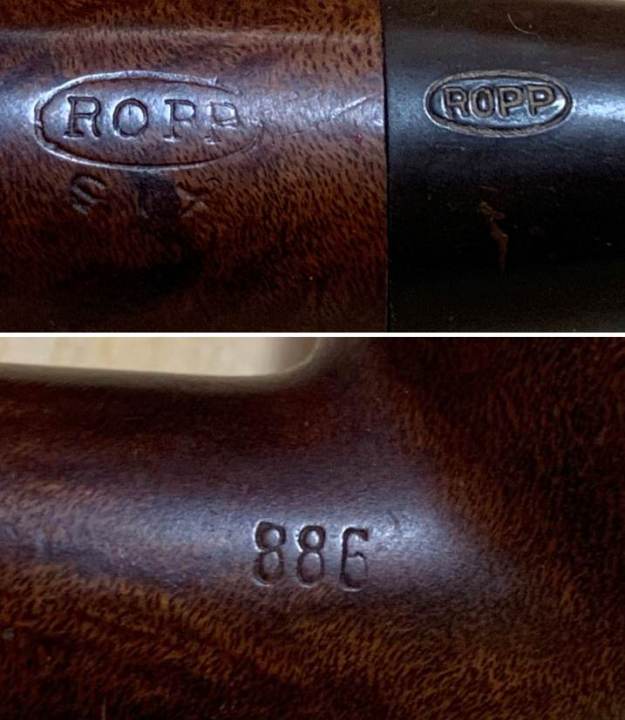
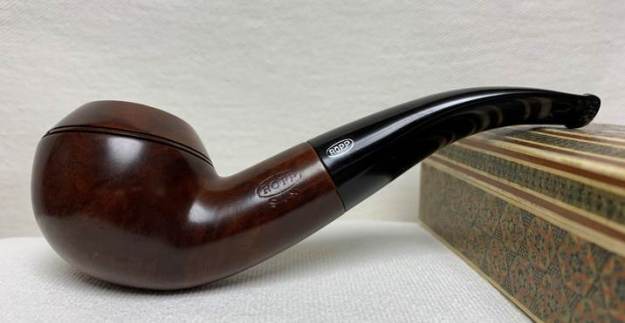
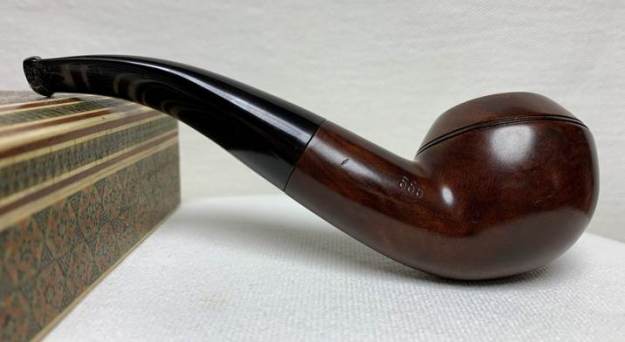
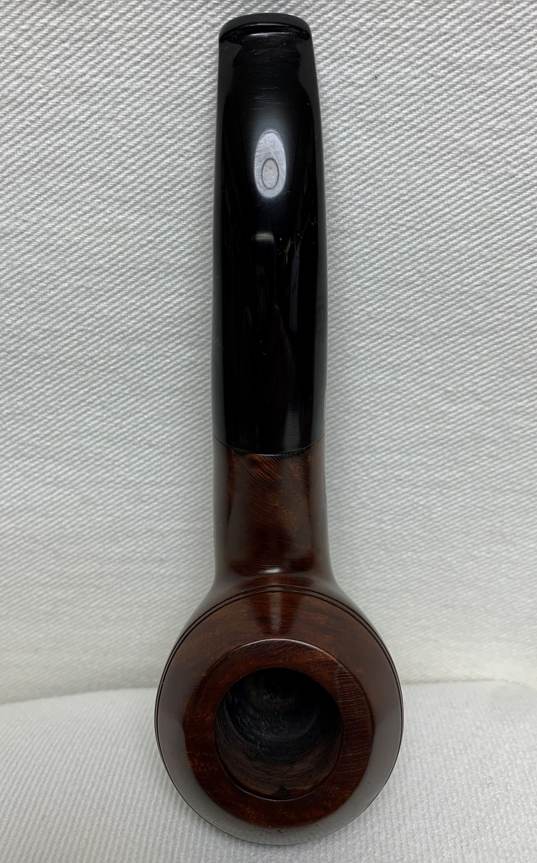
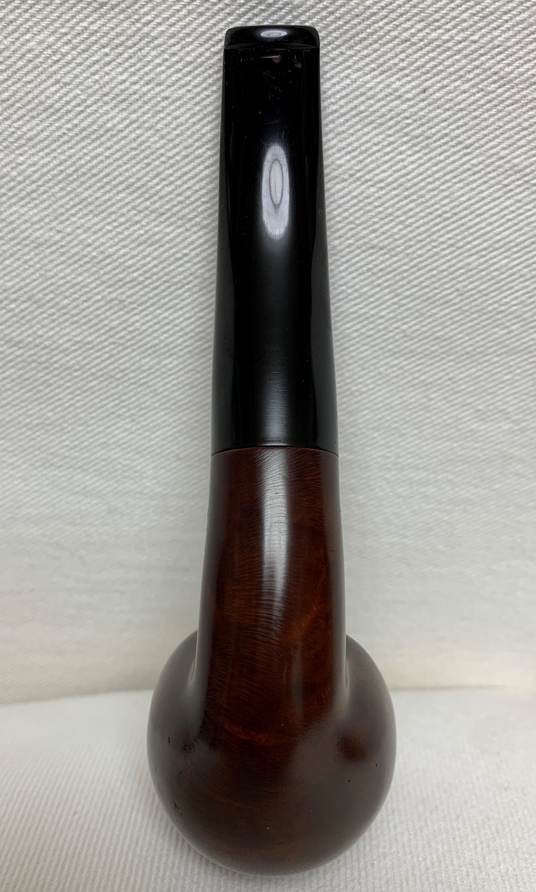
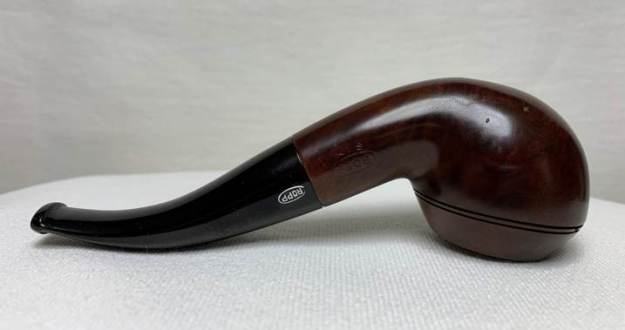
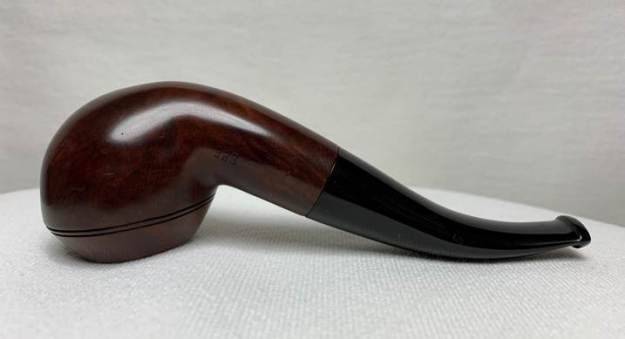
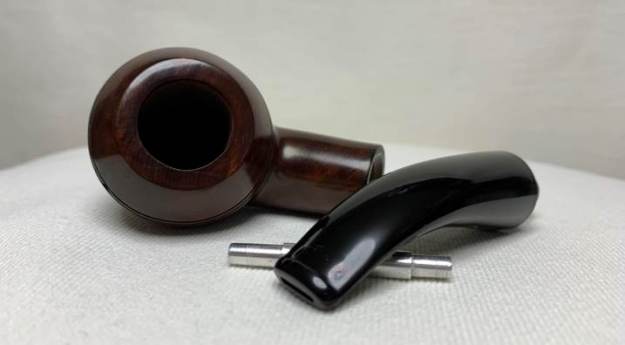
Next on the chopping block is this superb Ropp Six. It comes from a group of pipes I purchased from France. I love this pipe. I have a particular interest in French pipes and pipeworks, and I grabbed this one to restore for my collection. This is an old, old pipe with a few wounds (i.e. a veteran pipe with decorations) and needs just a little help to come back to life. This pipe was made by the venerable French pipe company, Ropp. Ropp has been around for a long time and their early pipes are really quite wonderful (the less said about their modern pipes, the better). The markings on the left-hand side of the shank read Ropp [over] Six. The right-hand side of the shank reads 886, presumably the shape number. Also, on the stem, there is the Ropp logo: Ropp, encircled in an oval.This pipe shape is a Rhodesian – a variation of the classic Bulldog. A Rhodesian will have a cylindrical shaped shank, not a diamond shank like the Bulldog. This is a really pretty pipe and feels very comfortable in the hand.

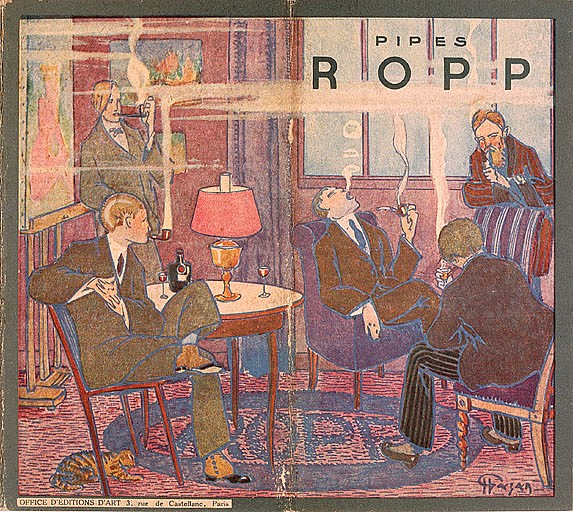
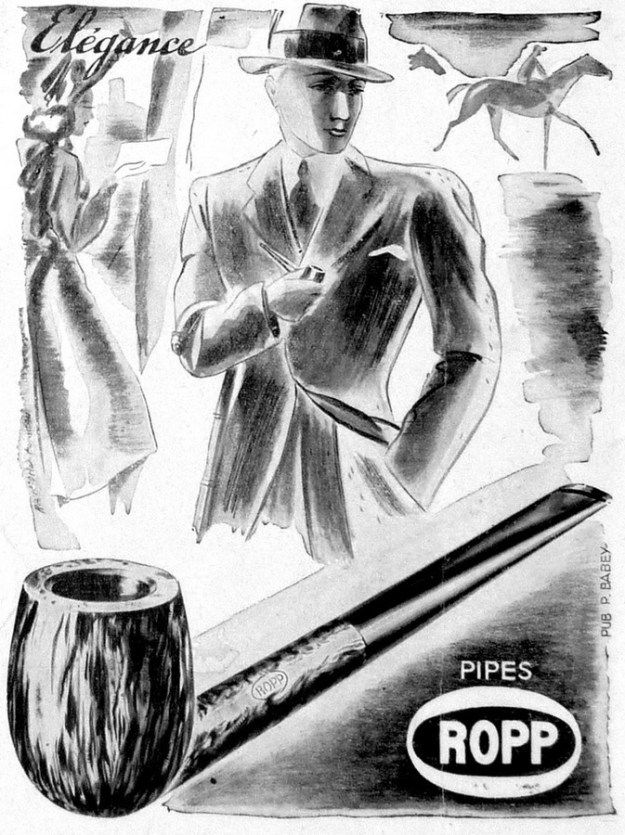
From Pipedia, here is a very brief history of the Ropp company:

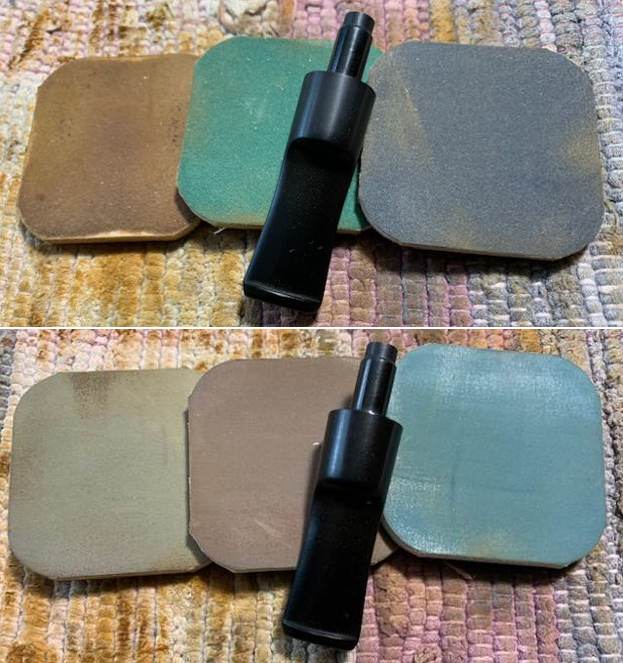
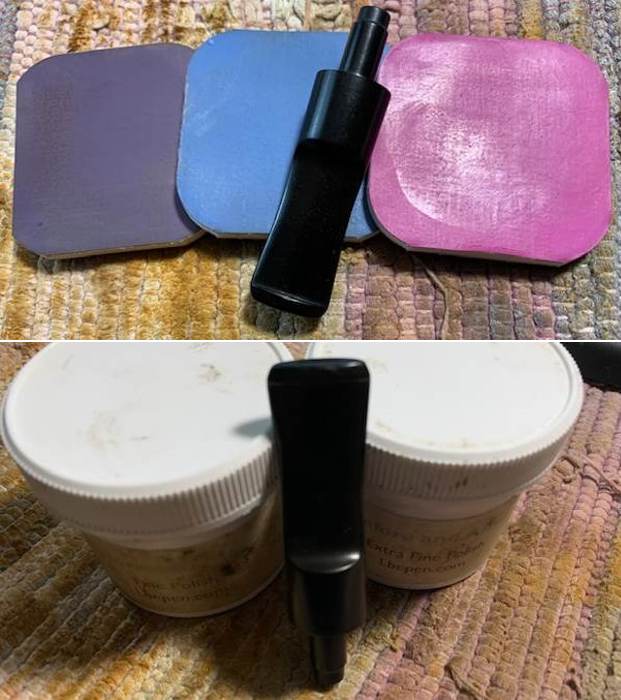
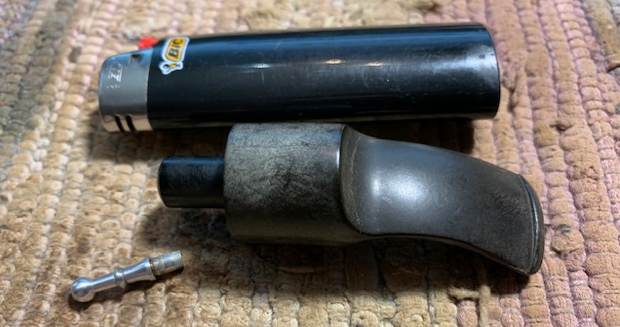
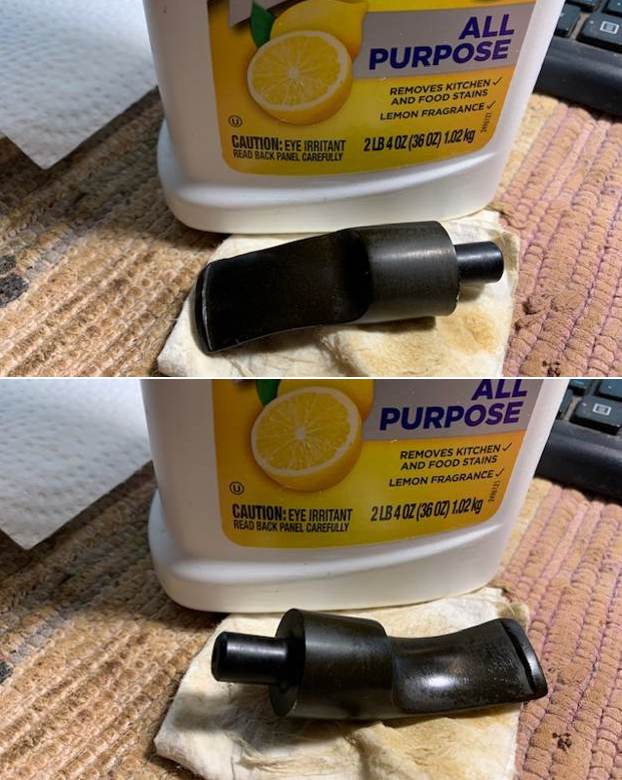
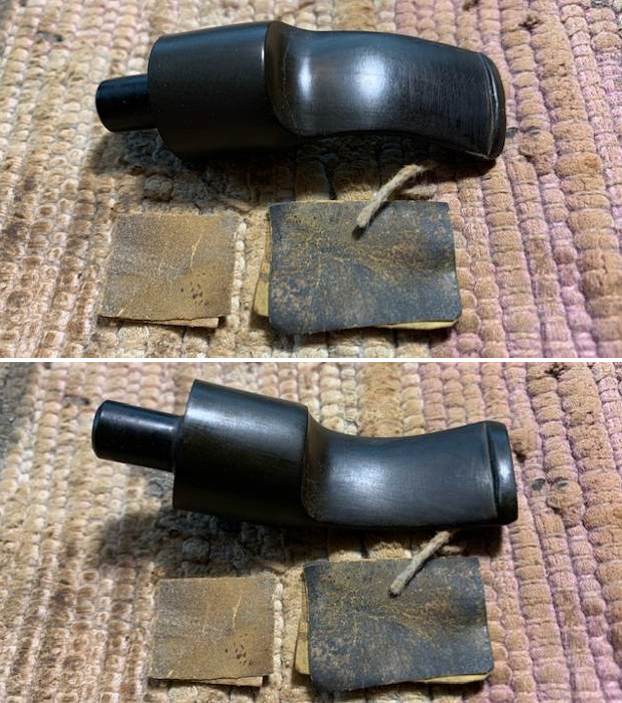
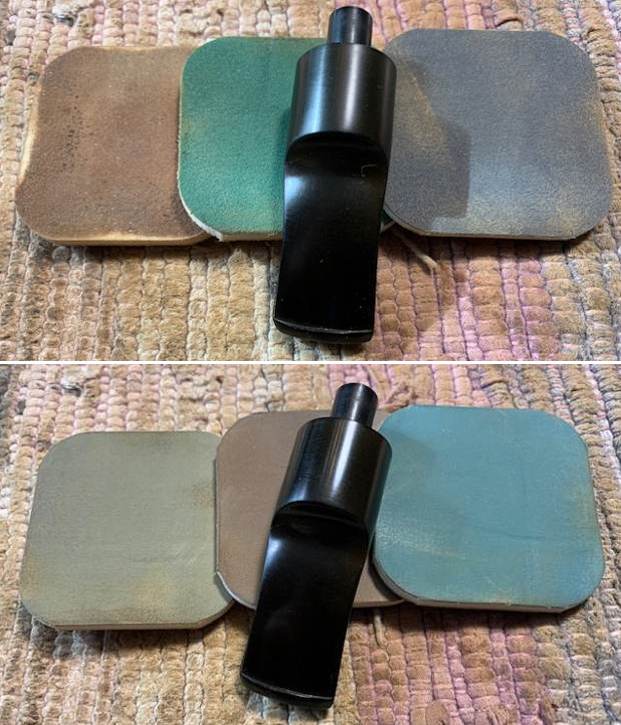
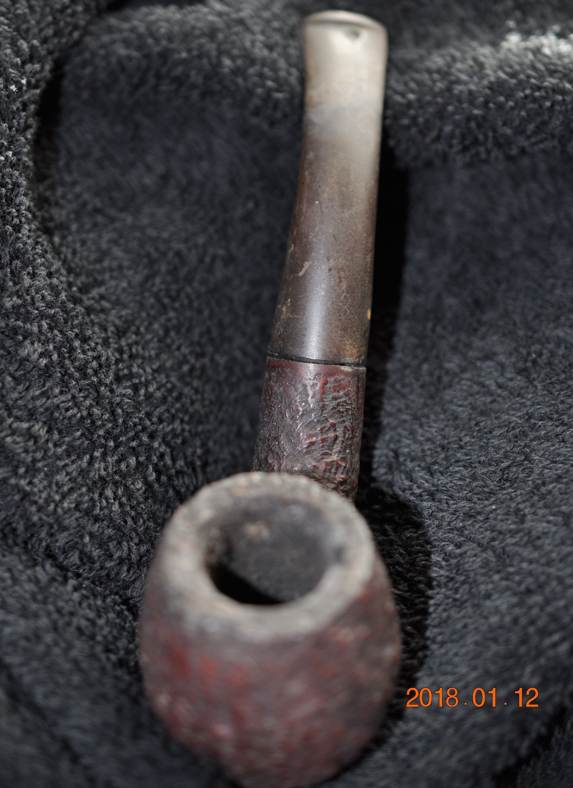
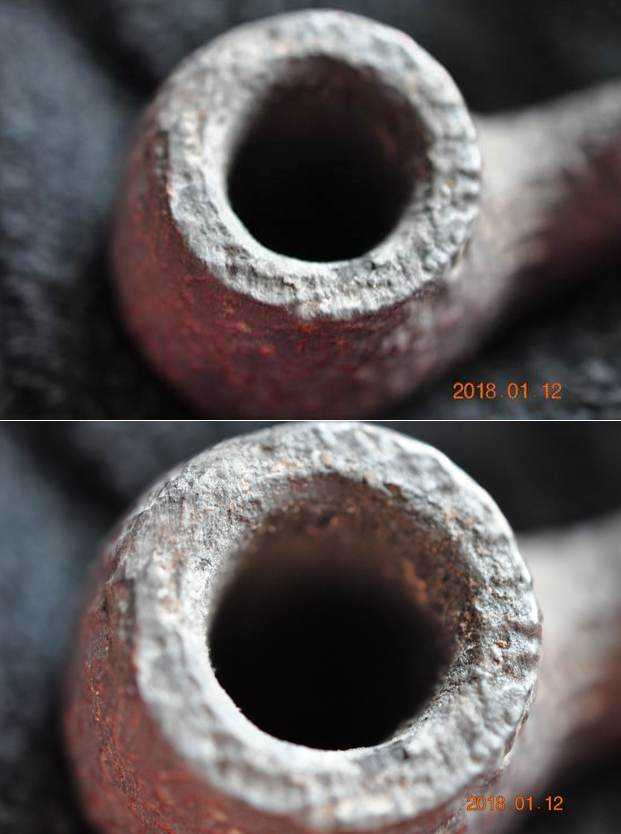
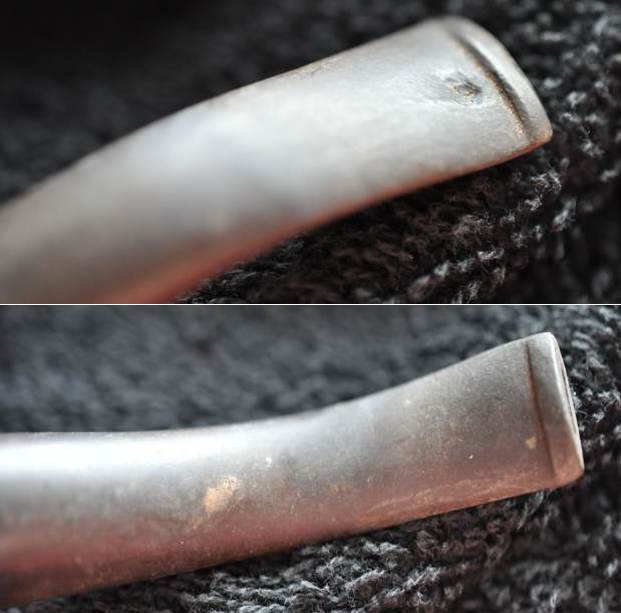
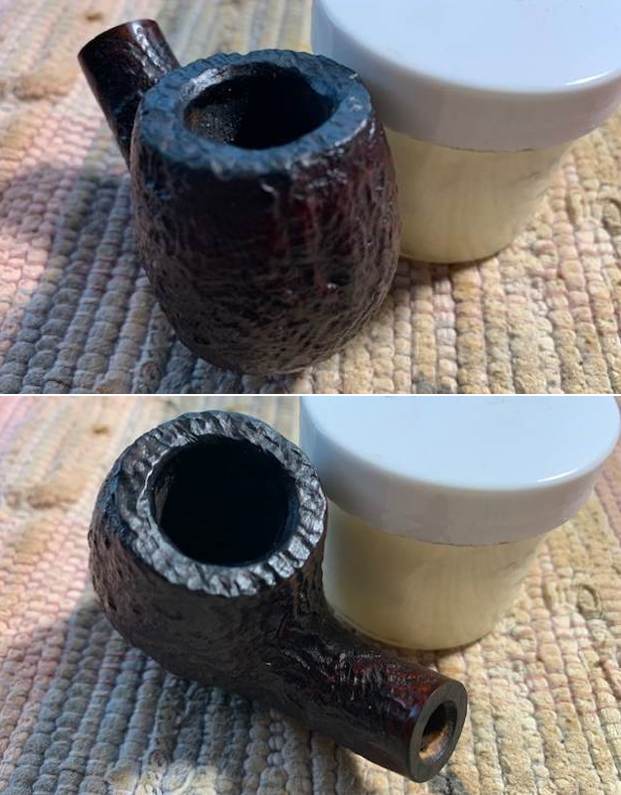
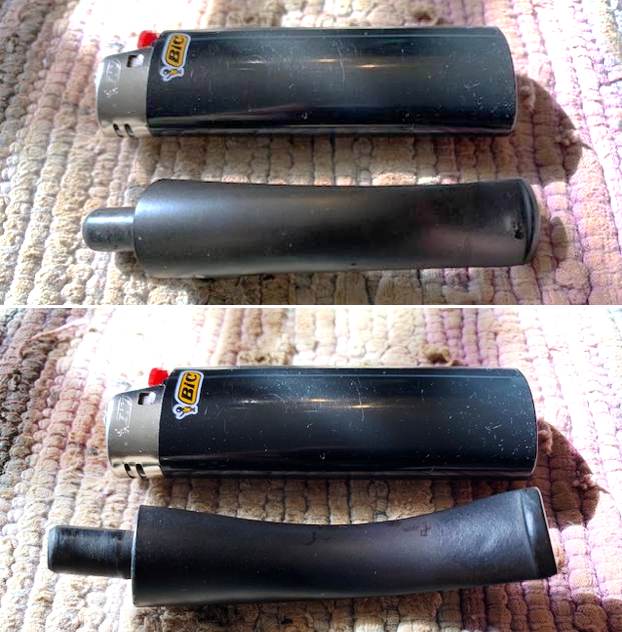
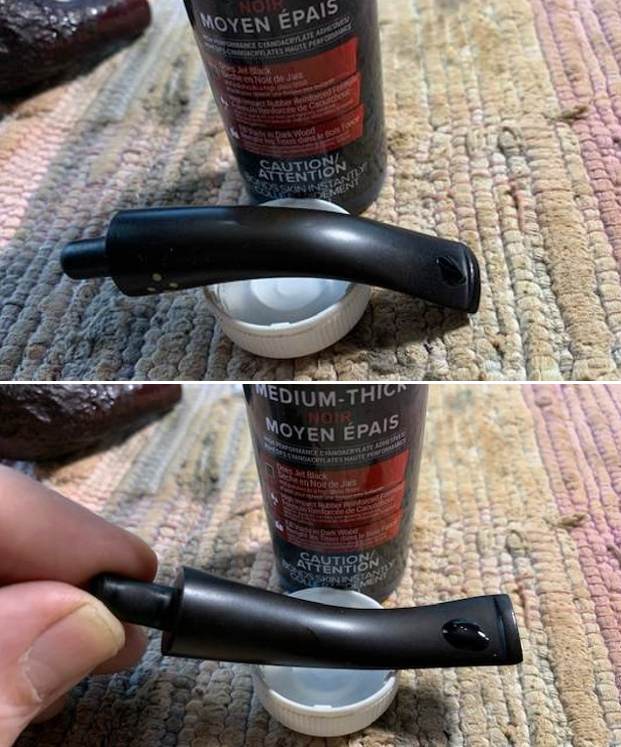
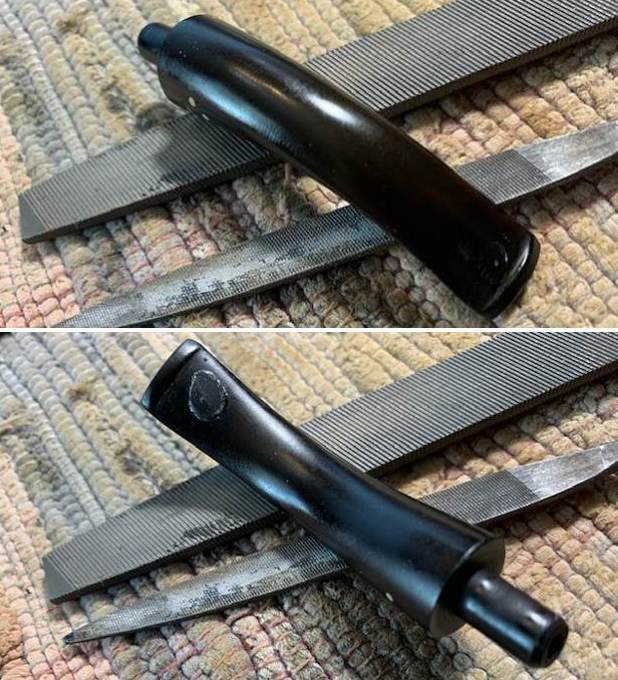
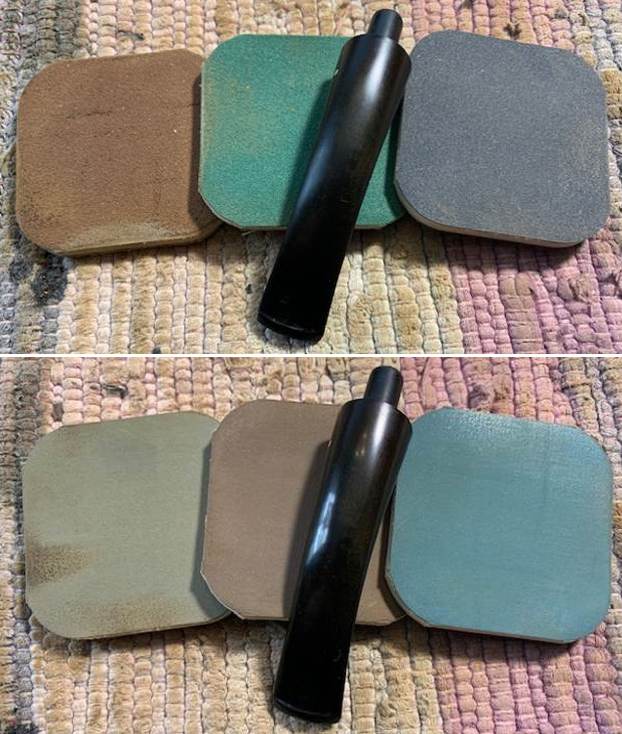
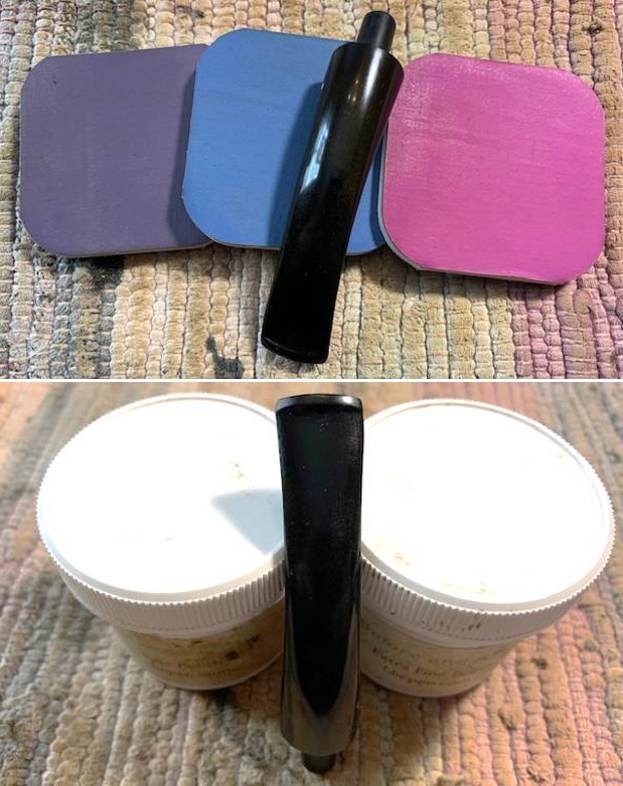
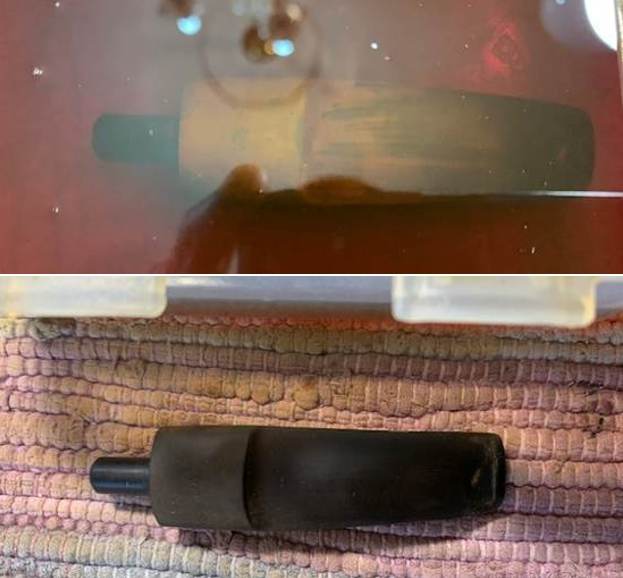
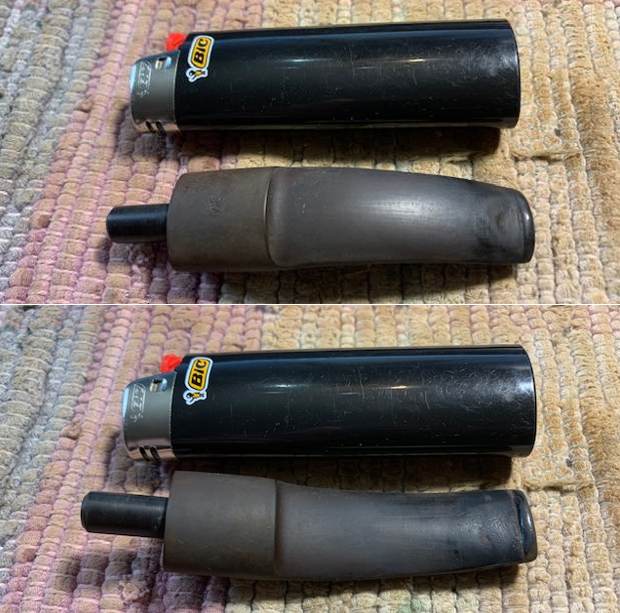
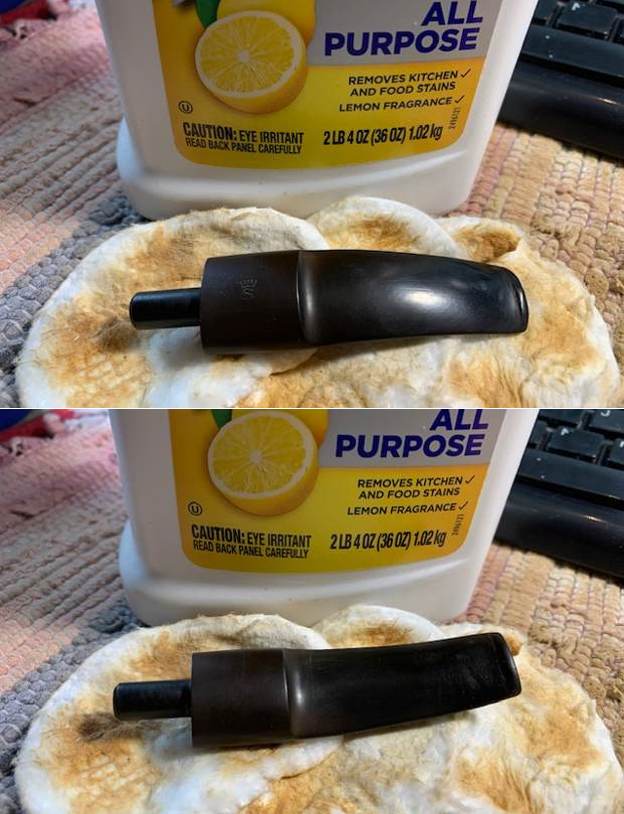
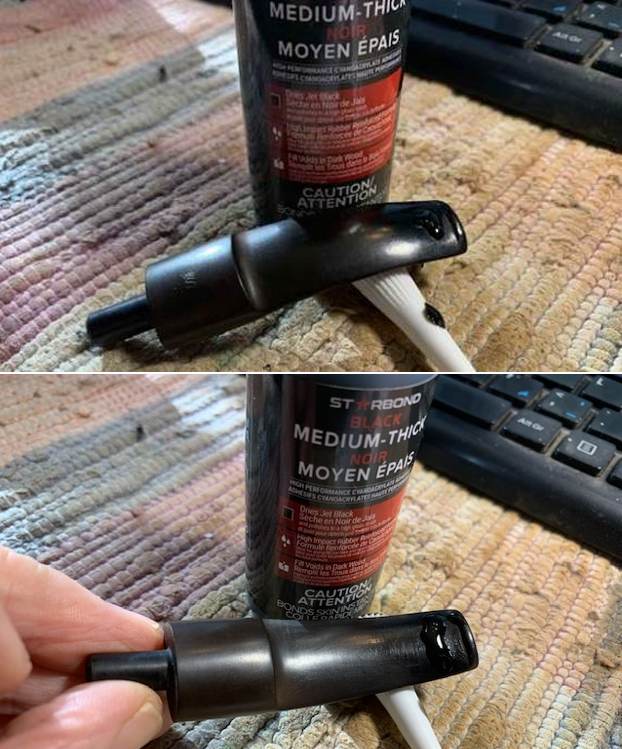
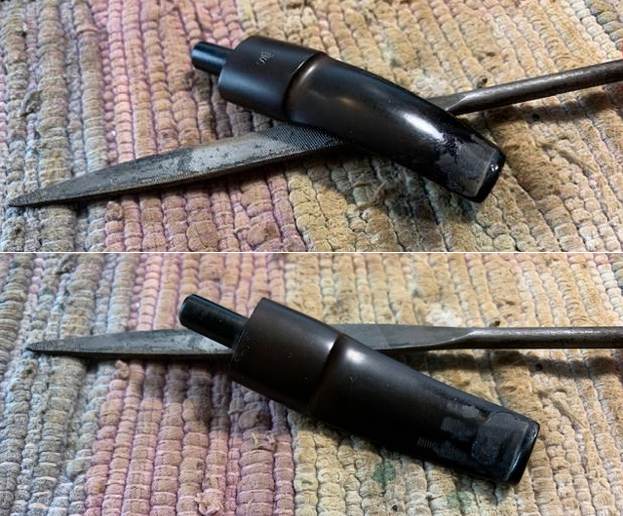
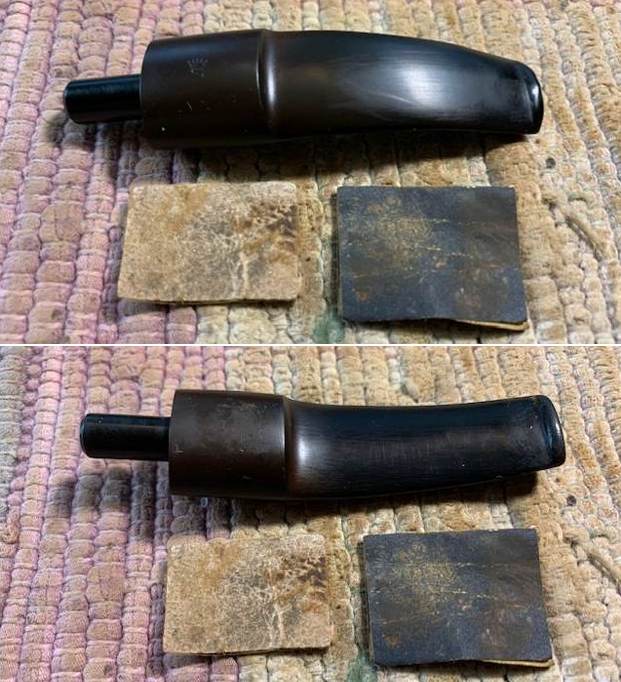
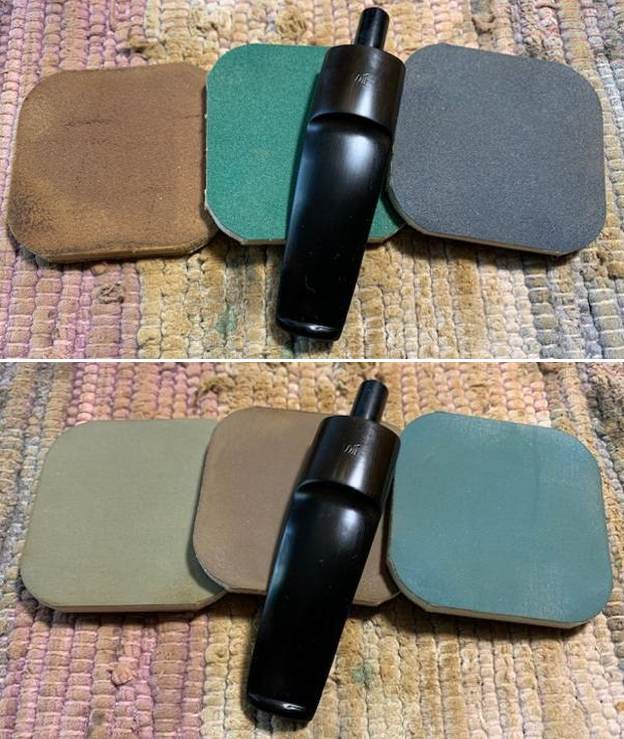
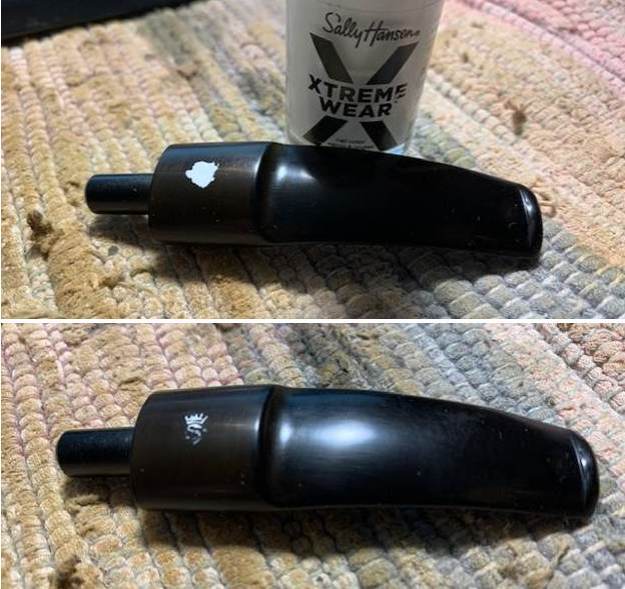
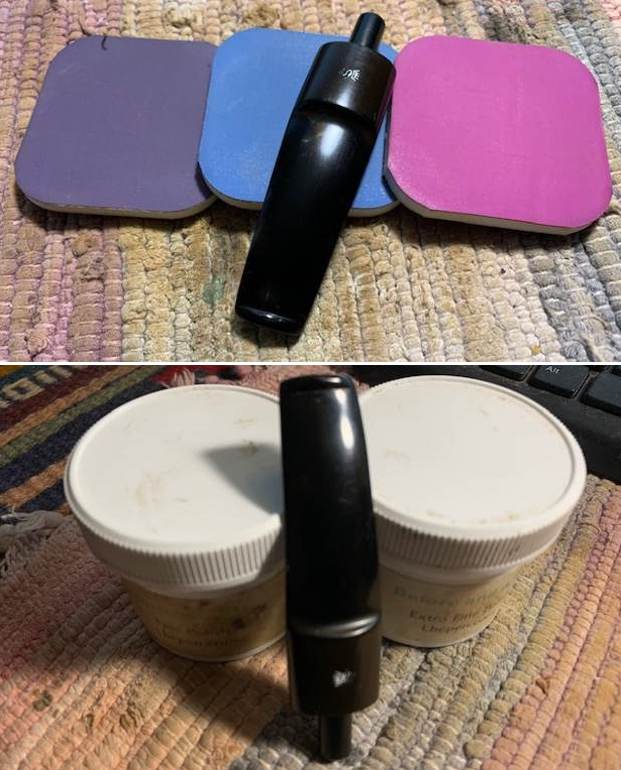
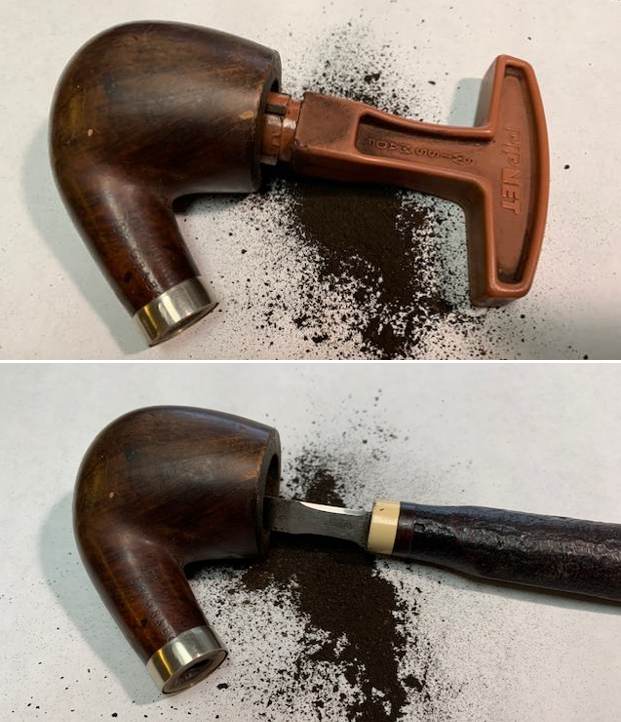
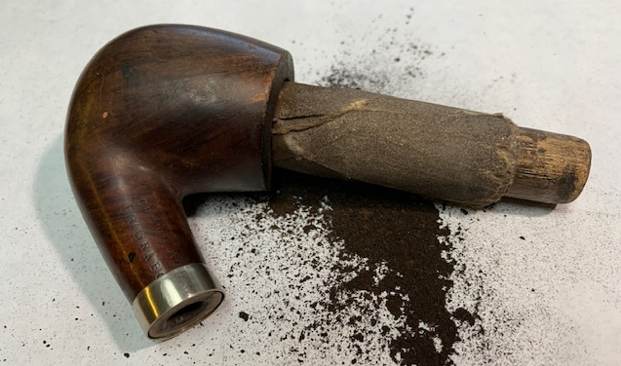
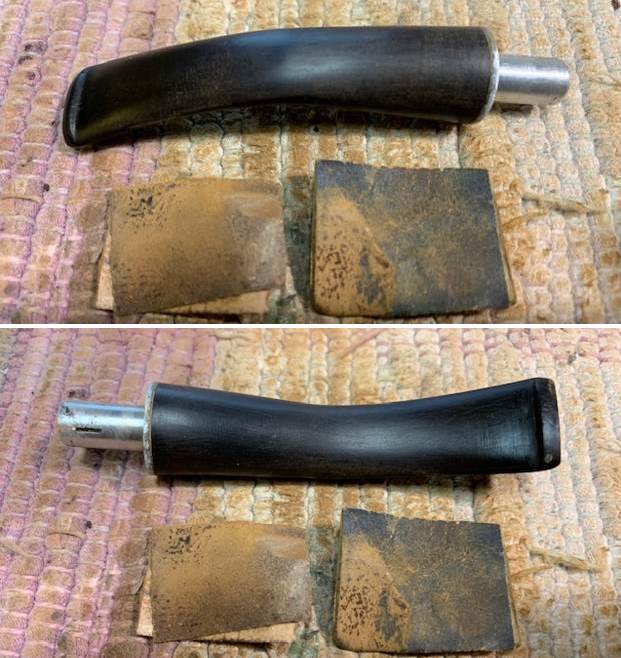
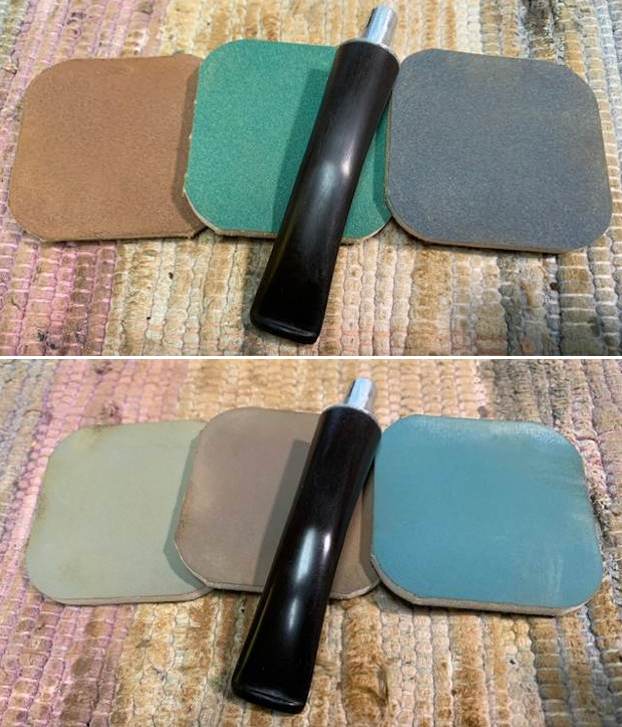
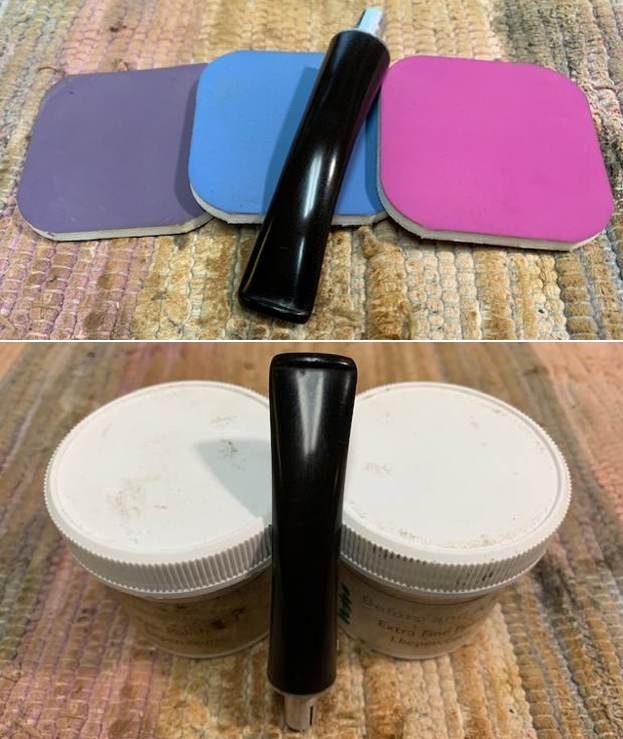
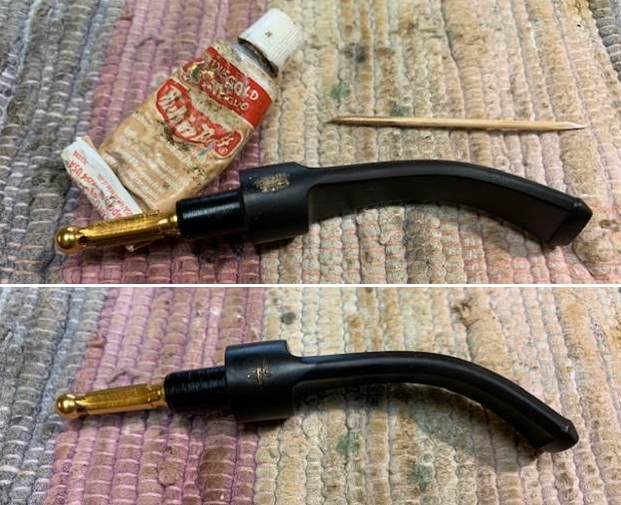
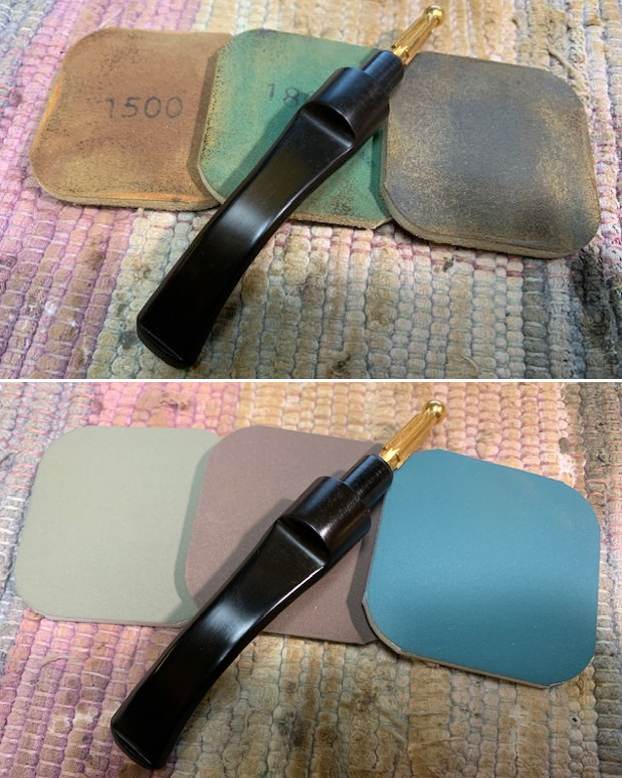
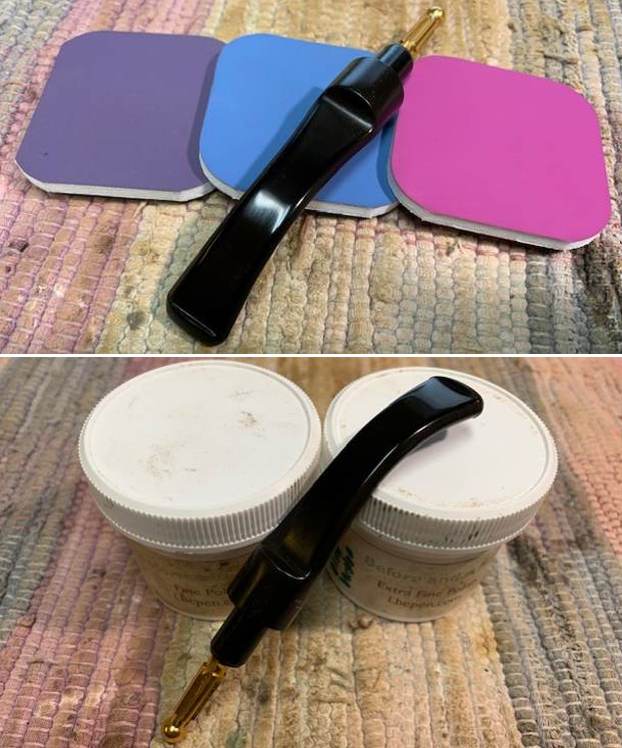
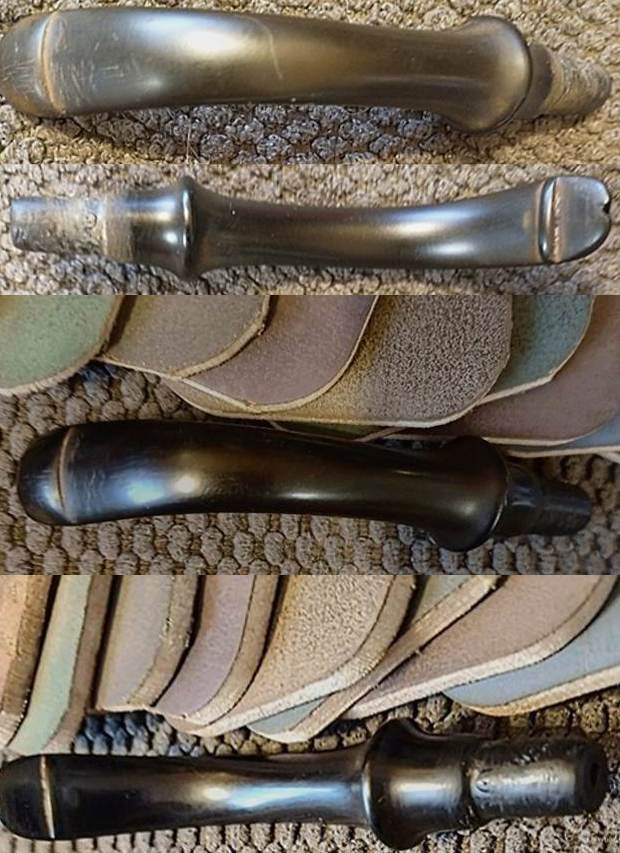
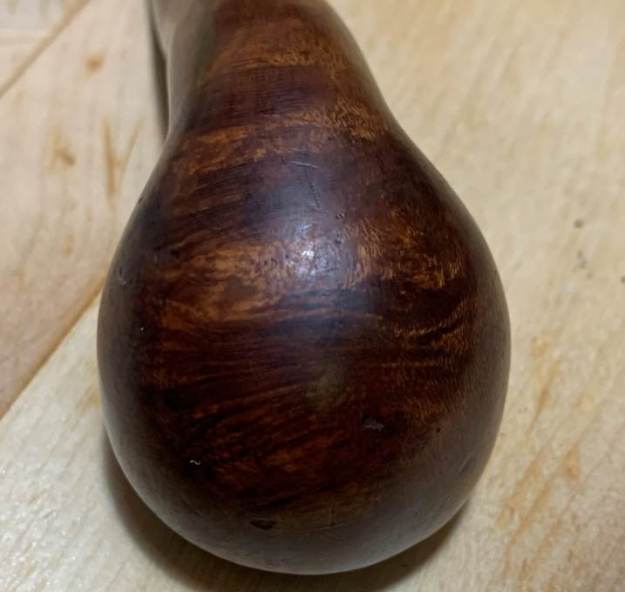
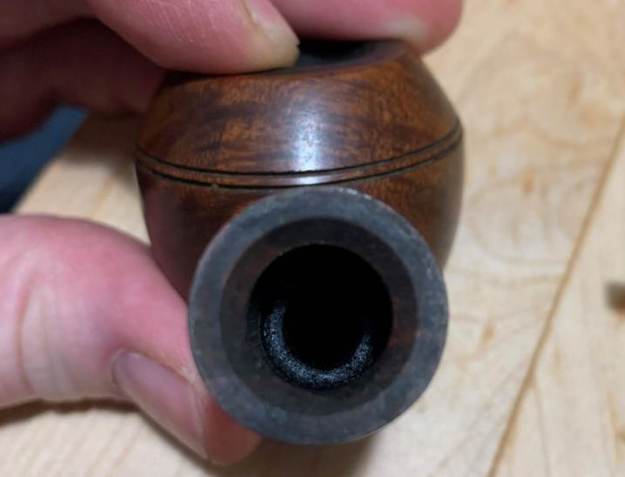
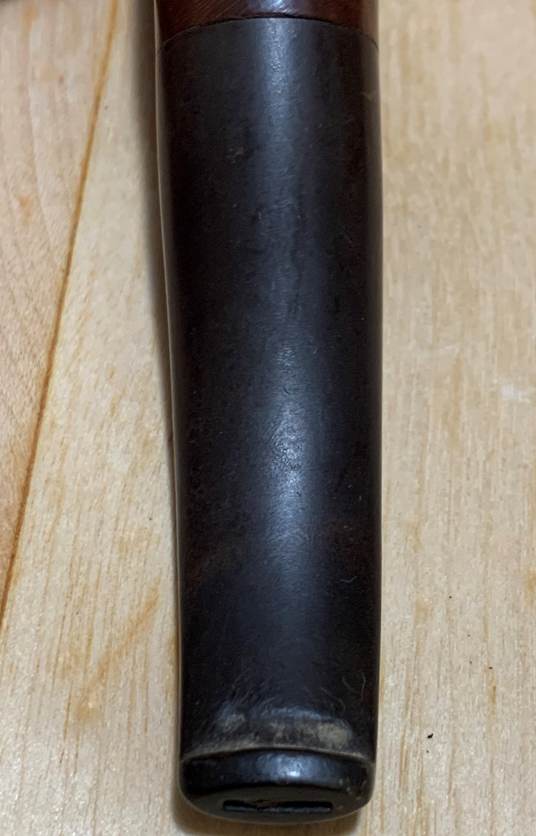
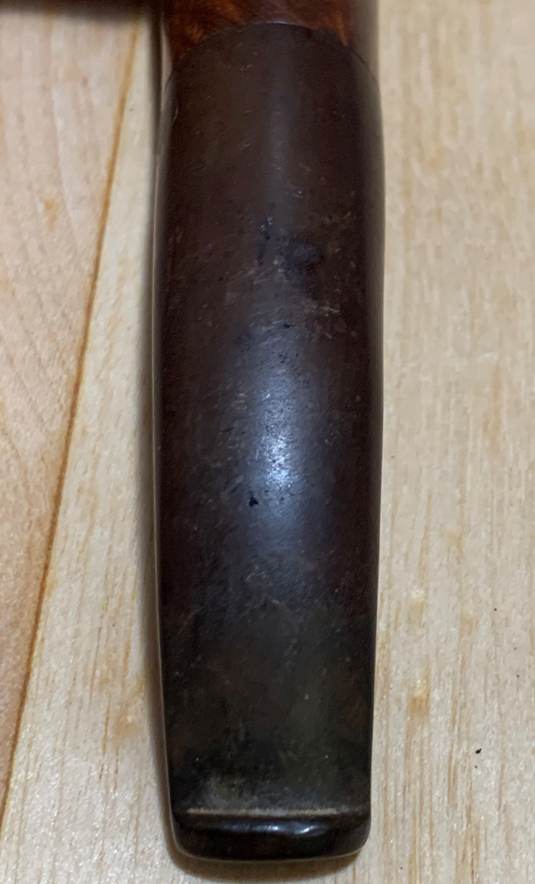
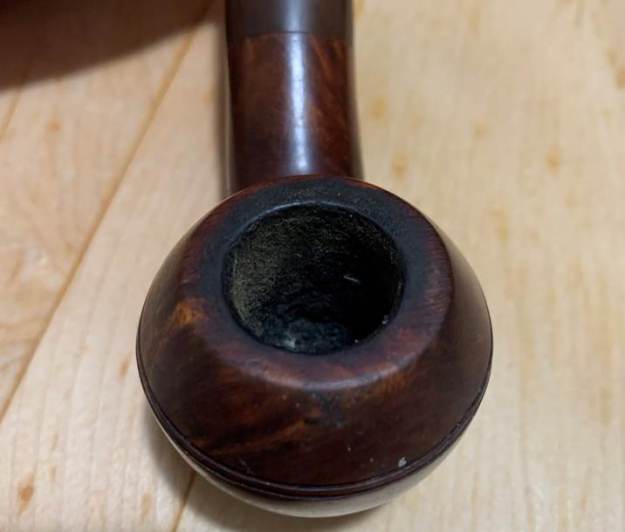
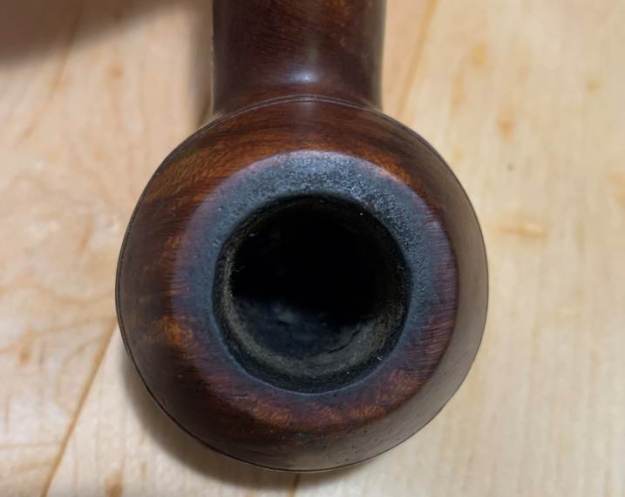
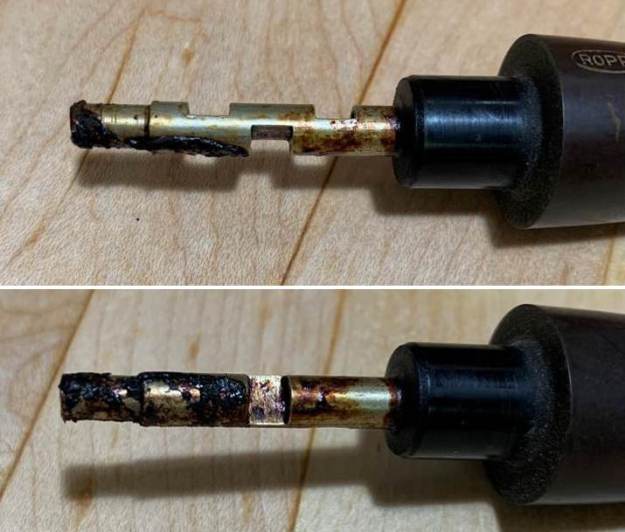
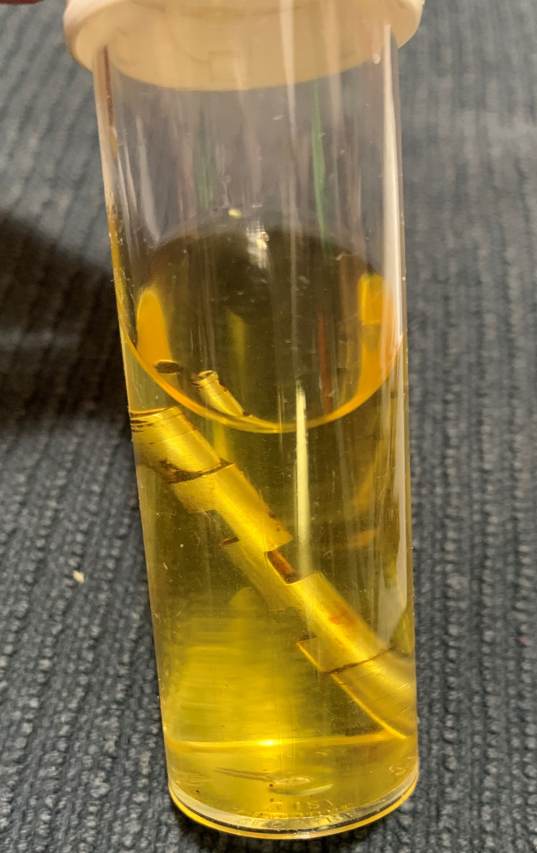
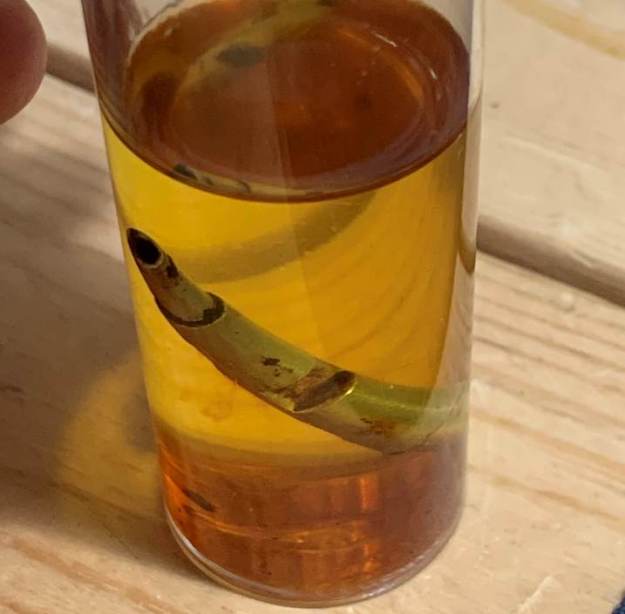
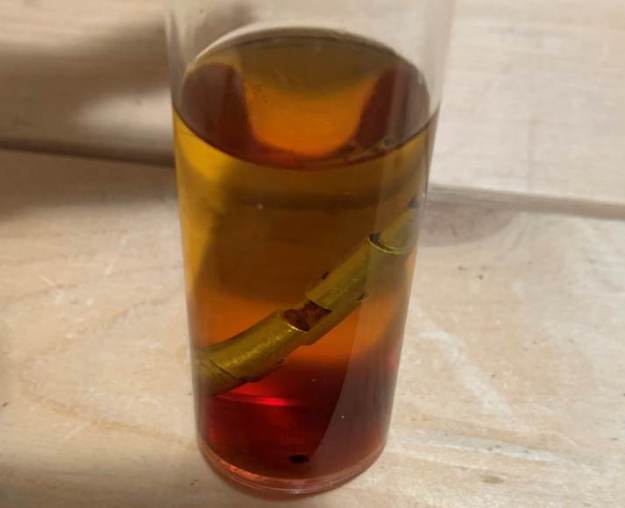
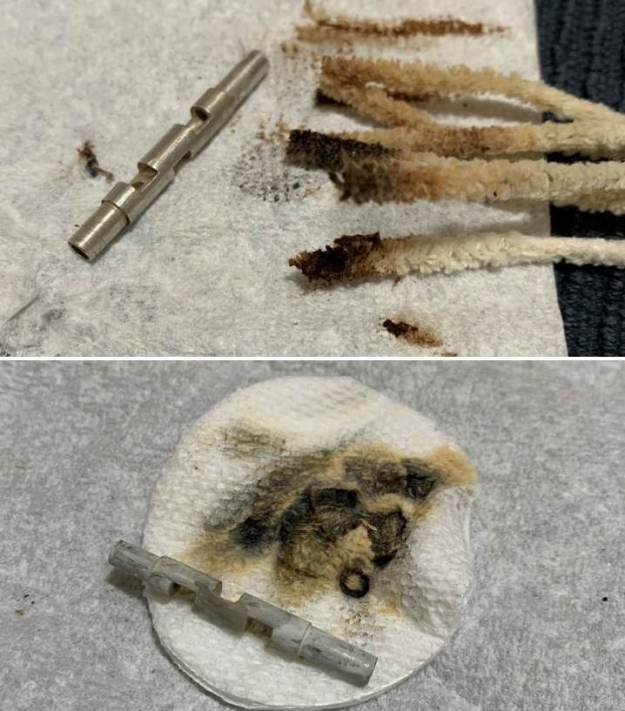
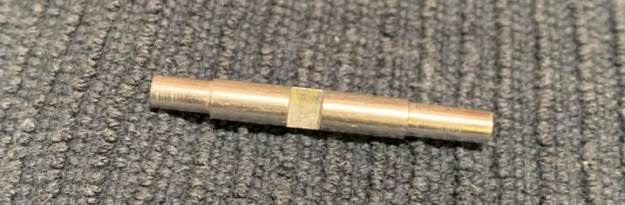
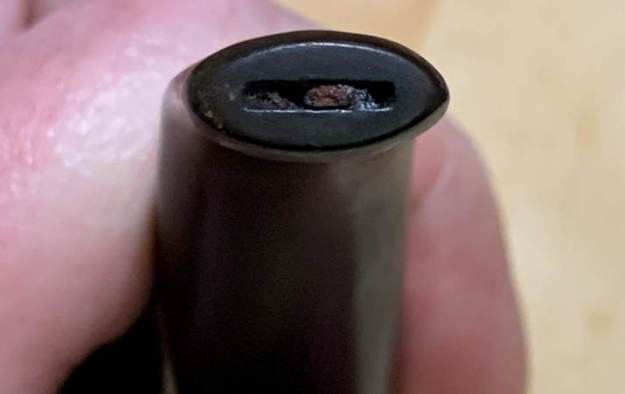
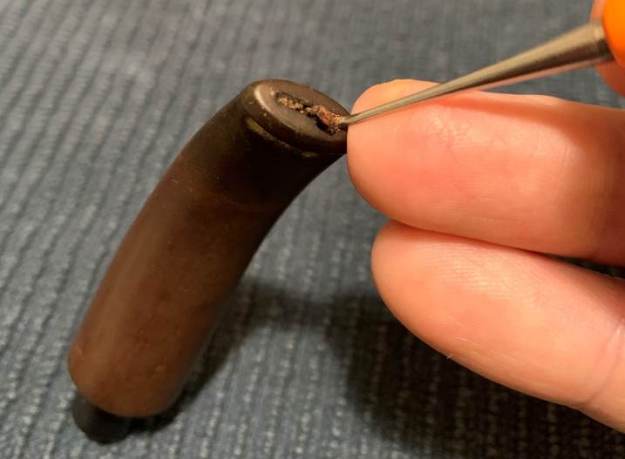
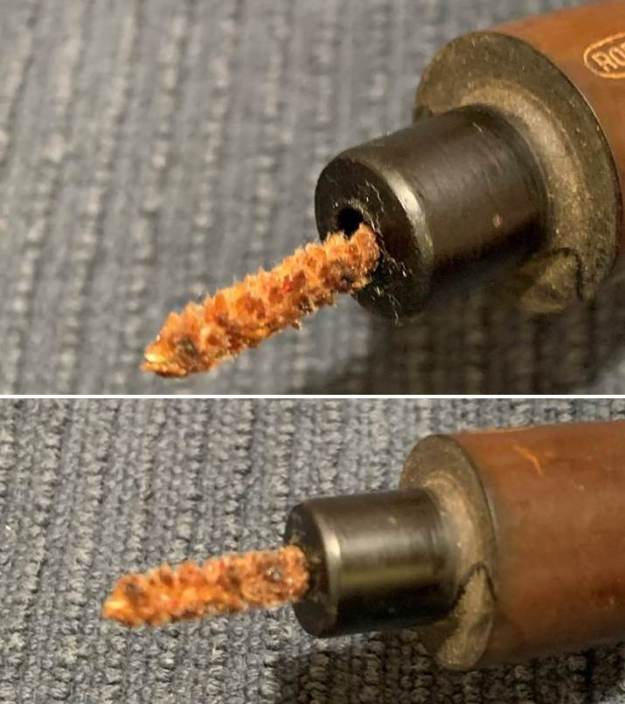
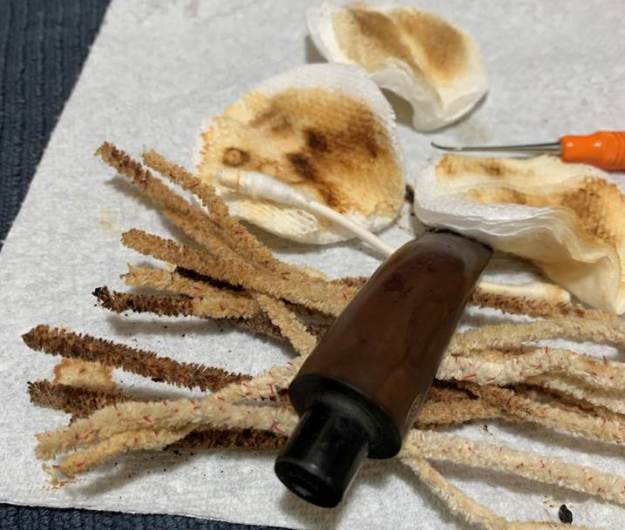
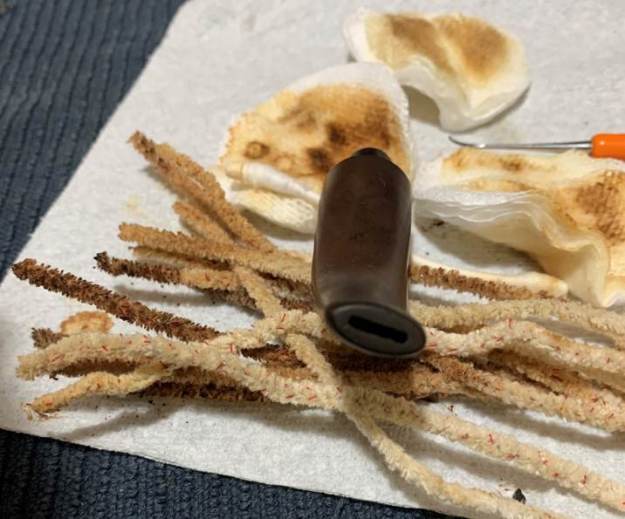
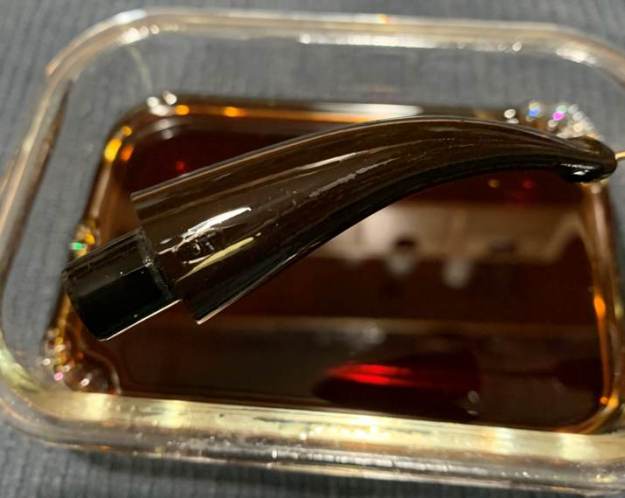
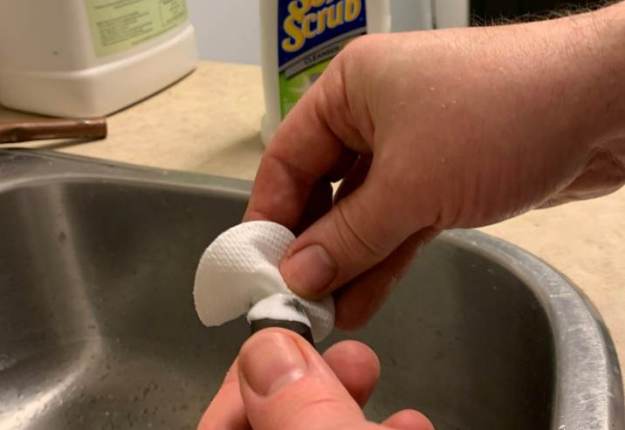
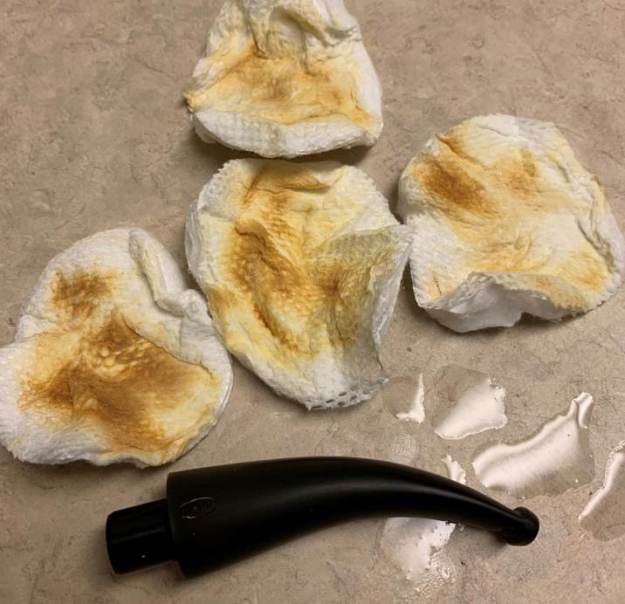
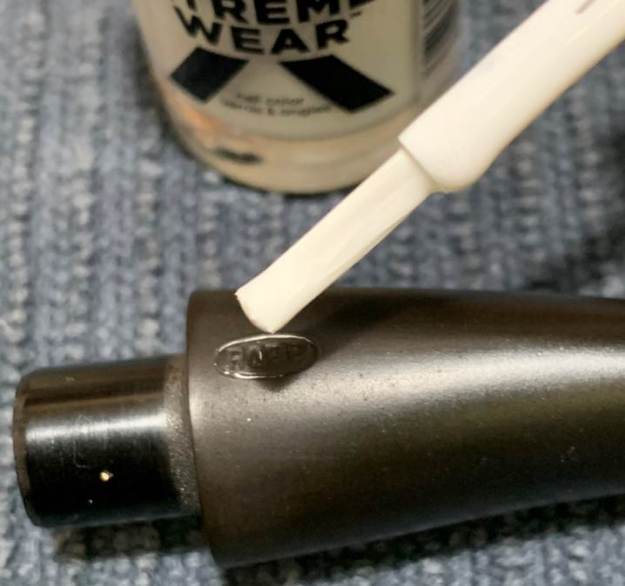
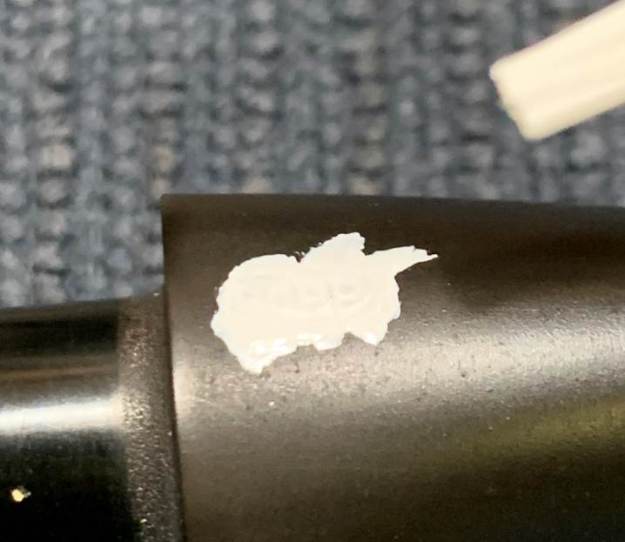
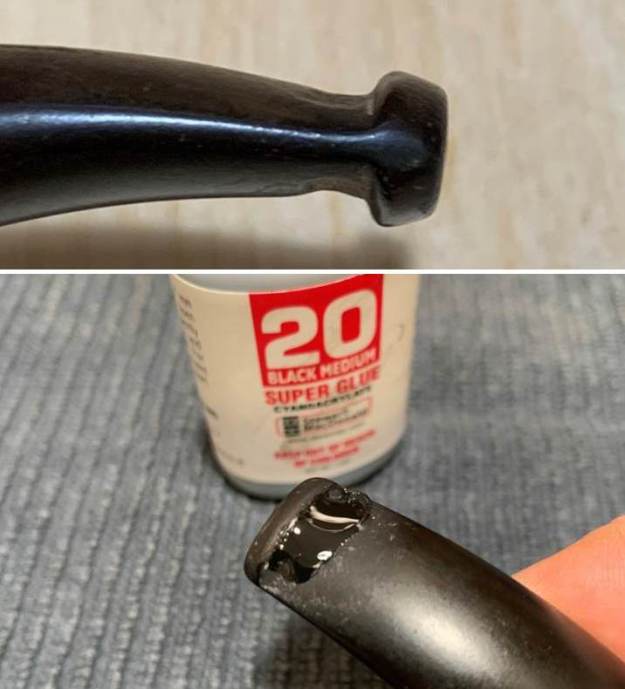
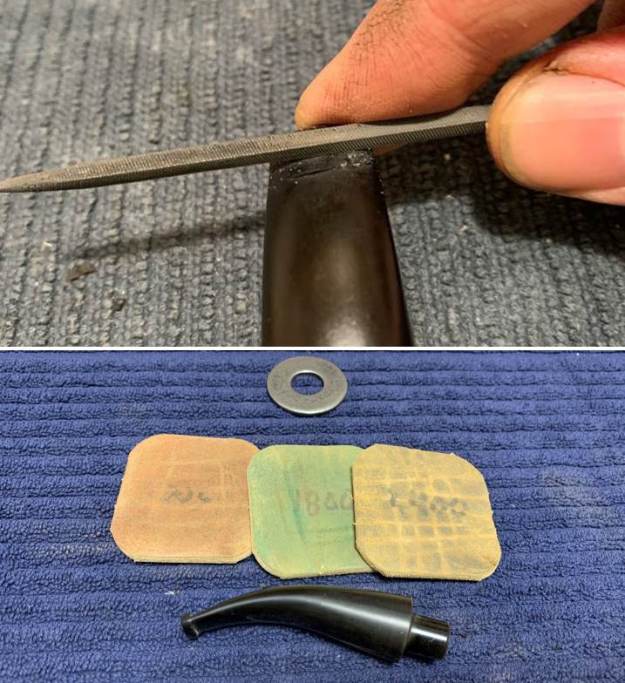
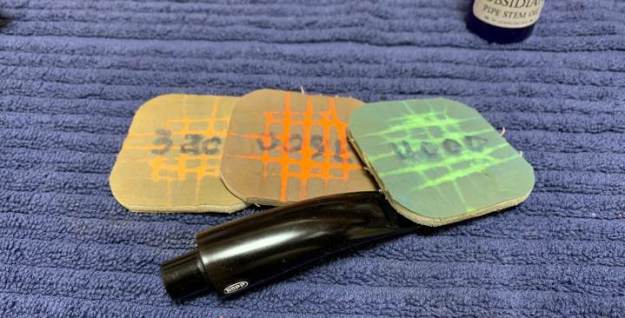
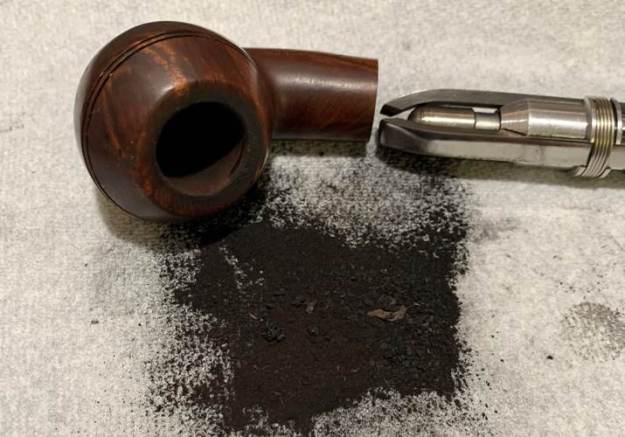
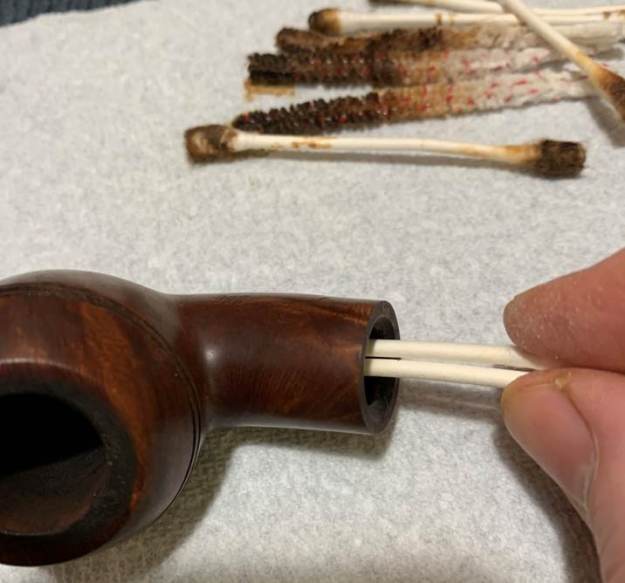
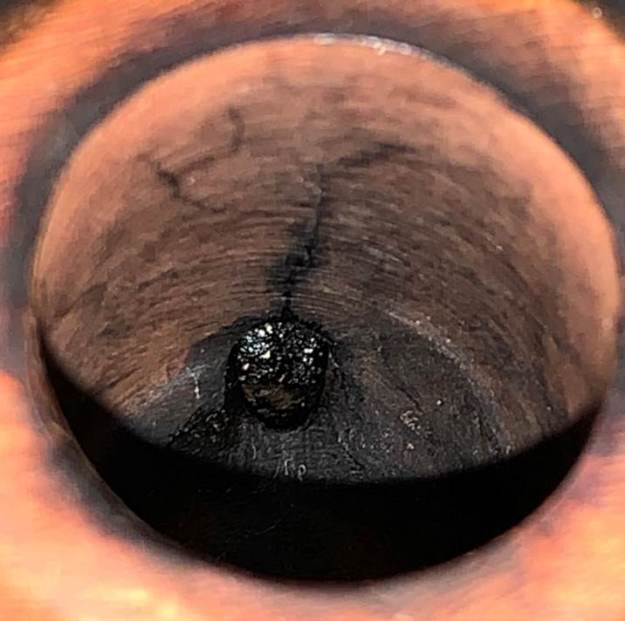
Eugène-Léon Ropp (1830–1907) acquired a patent for the cherrywood pipe in 1869. In 1870, he established a workshop to manufacture such pipes in Bussang, in the Vosges mountains. Around 1893, his business moved into the former mill of Sicard (part of the community of Baume-les-Dames in Upper Burgundy. The pipes were a big success in export as well. Shortly before 1914, Ropp designated A. Frankau & Co. (BBB) to be the exclusive distributor in the UK and its colonies. Probably in 1917, a workshop in Saint-Claude in the rue du Plan du Moulin was acquired to start the fabrication of briar pipes. In 1923, another small building in Saint-Claude, serving as a workshop for polishing, was added. Cherrywood pipes were the mainstay of Ropp until the company finally closed down in September 1991. The company was taken over by Cuty-Fort Entreprises in 1994. On to the pipe: it was in decent shape, but it had a few issues. The stem had a bit of oxidation and calcification, but – mostly notably – it had substantial bite marks, top and bottom. The stummel also had a few issues. The outside of the bowl had some scratches and a couple of fills that needed to be addressed. These are the “decorations” I referred to in the title of this article. There was lava and debris on the rim, and a few burn marks too. The inside was pretty dirty too – it would need a thorough cleaning. The stem was first on my list. This stem has a stinger in it – and it was being quite stubborn about coming out of the tenon! I opted to warm the stem and stinger with my heat gun and this provided just enough softening of the internal goo to allow me to pull it out. The stinger then went for a soak in some lemon-infused isopropyl alcohol. I let it set for several hours and then cleaned it off and it looked much improved. I then finished it with some metal polish and moved on. I wiped down the outside of the stem with Murphy’s Oil Soap on some cotton pads. I also took a BIC lighter and ‘painted’ the stem with its flame in order to lift the bite marks and dents. This was not successful at all in raising the damage. More work would need to be done. Then, I cleaned out the insides with pipe cleaners and isopropyl alcohol. Even the bore was clogged with debris! It took an awful lot of work to get this clean! Once this process was done, the stem went for an overnight soak in the Pipe Stem Oxidation Remover. The following day, I cleaned all of the de-oxidizing mess off with alcohol, pipe cleaners, et cetera. The oxidation had migrated to the surface and would be fairly straightforward to remove. I scrubbed with SoftScrub on some cotton pads to remove the leftover oxidation. After this, I used some nail polish to restore the Ropp logo on the stem. I painted the area carefully and let it fully set before proceeding. I built up the dents on the stem with cyanoacrylate adhesive and let them fully cure. On this occasion, I actually built up several layers of the glue over a few days. I must admit, it was an annoying and frustrating process because, at this stage, it never looked quite right. I then sanded the adhesive down – first with a small file – then with 220-, 400-, and 600-grit sandpapers to meld seamlessly into the stem. I then used all nine Micromesh pads (1,500 through 12,000 grit) to bring out the lovely black lustre on the stem. I also used Obsidian Pipe Stem Oil in between each pad scrubbing. On to the stummel, and the usual cleaning procedures were in order for this pipe. This stummel was a bit of a mess inside, so I first decided to ream out the bowl. I used both the PipNet Reamer and the KleenReem to remove the built-up cake and followed that with 220-grit sandpaper to eliminate as much as I could. I took the bowl down to bare briar, as I wanted to ensure there were no hidden flaws in the walls of the bowl. There were some very thin craze lines inside the bowl, but they were small enough that I elected to leave them as they were. I then proceeded to clean out the insides of the shank with Q-tips, pipe cleaners, and isopropyl alcohol. There was considerable filth inside this stummel and it took a lot of cotton to get it clean. I followed that up by cleaning the insides with some dish soap and tube brushes.

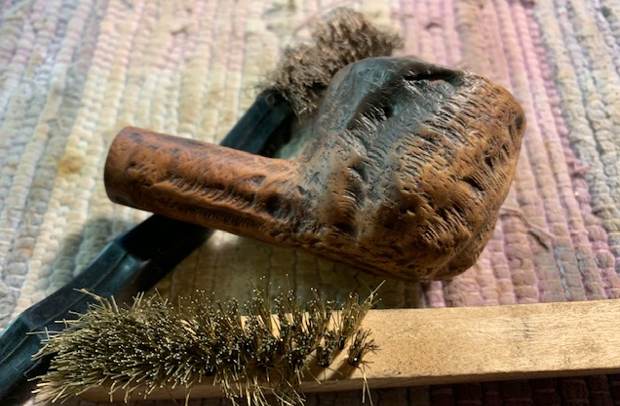
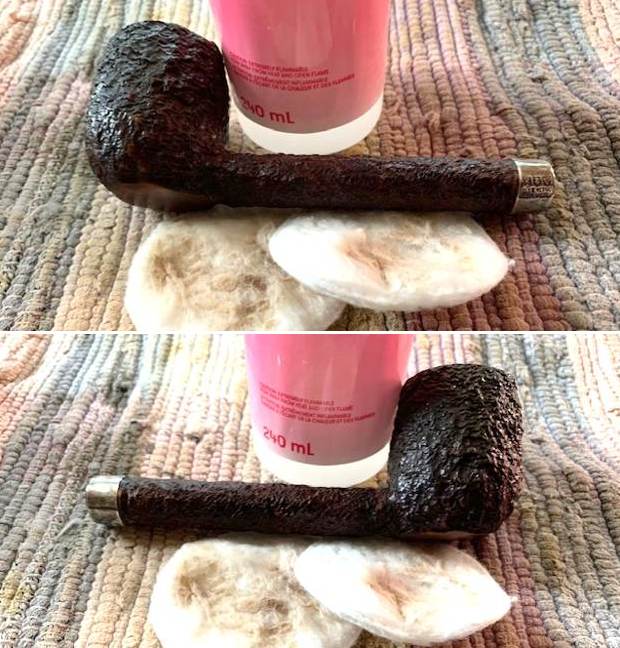
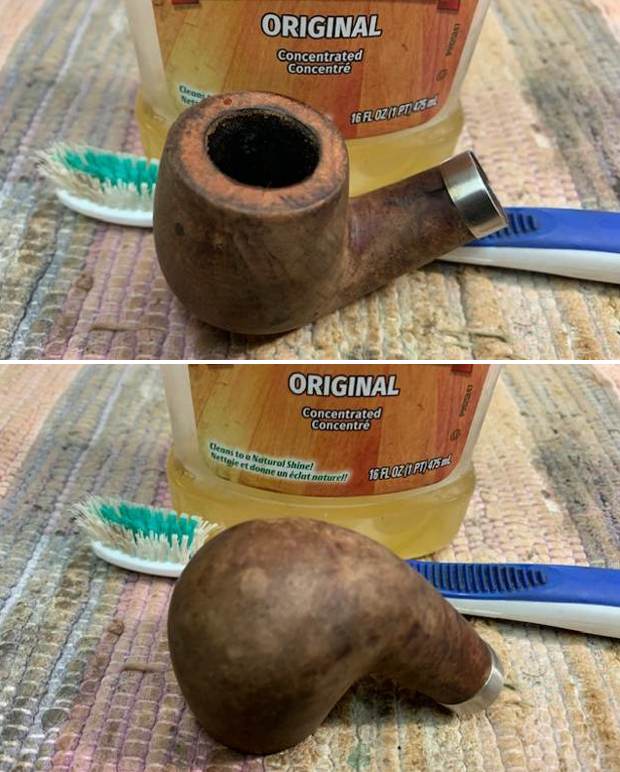
I used a small butter knife to gently chip away at the lava on the rim. I then used more Murphy’s with a scrub brush to remove any remainder. This actually worked quite well. I then moved on to cleaning the outside of the stummel with Murphy’s Oil Soap and some cotton pads. That removed any latent dirt that blighted the wood.

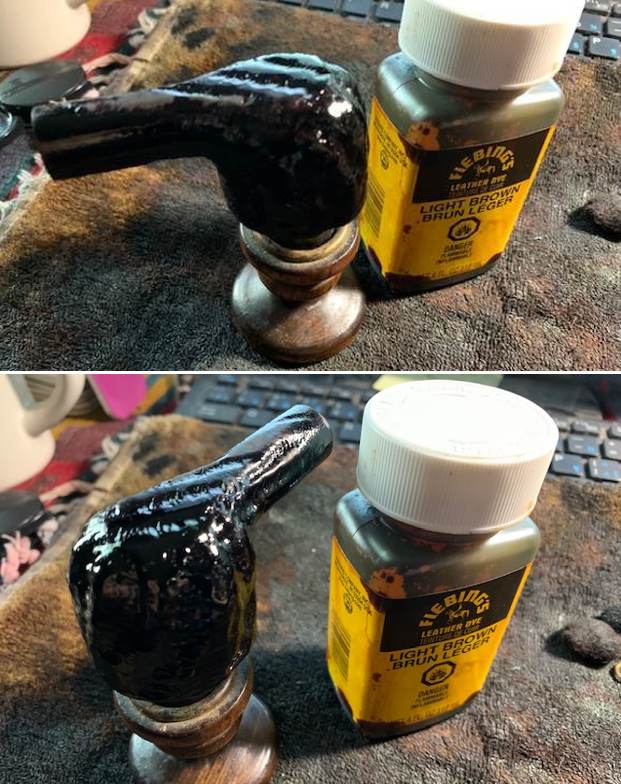
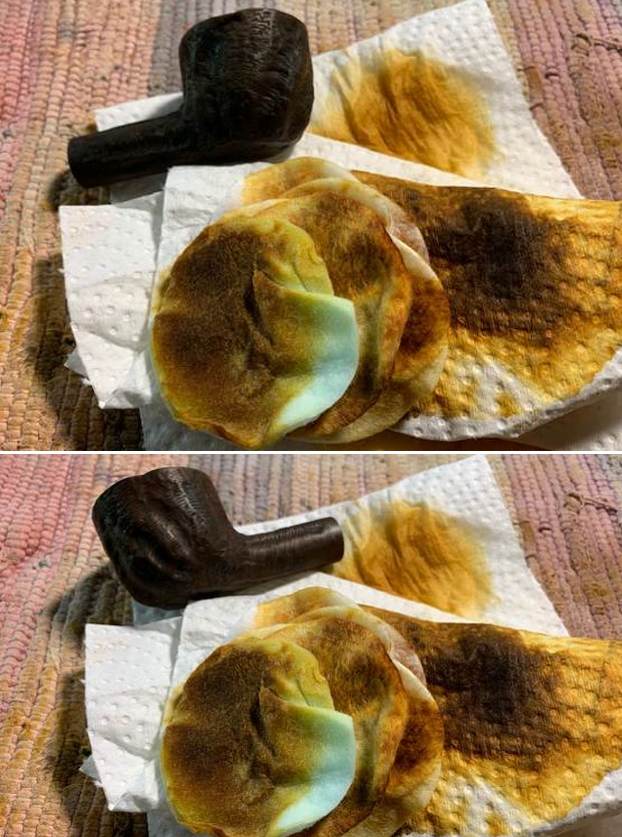
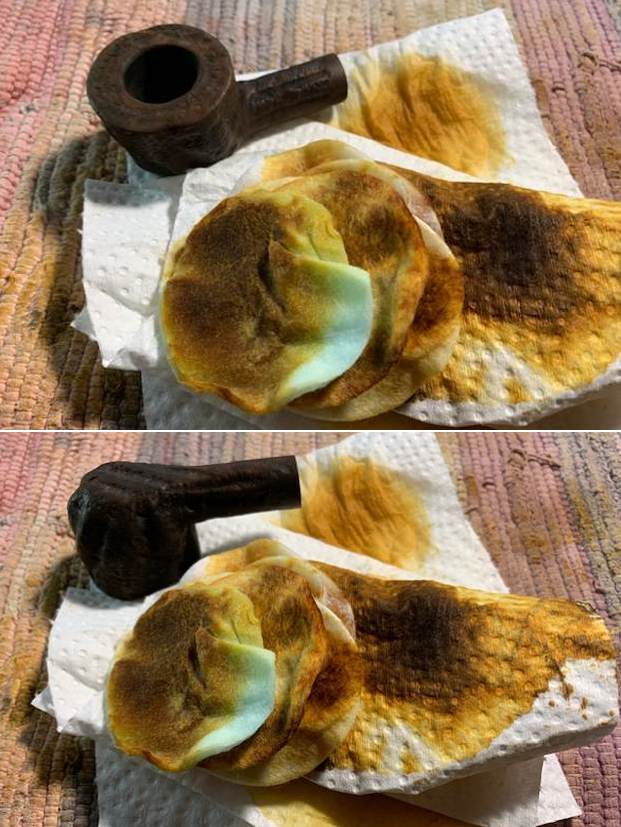
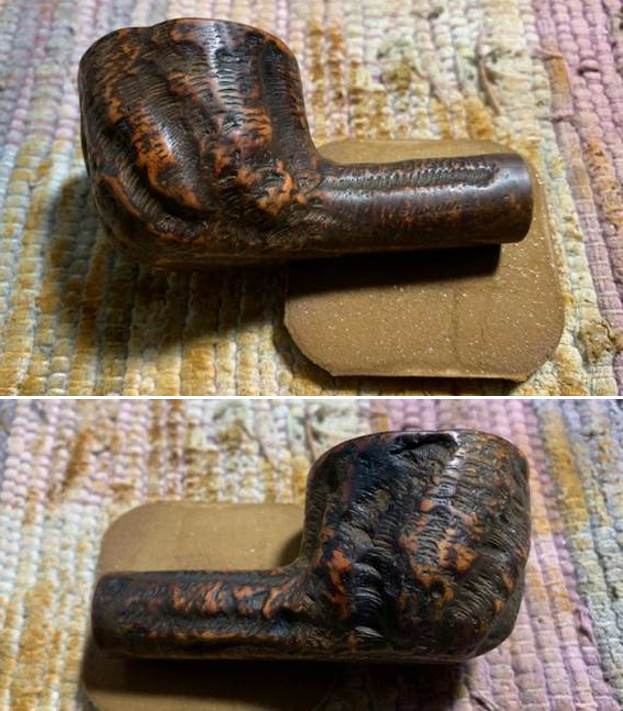
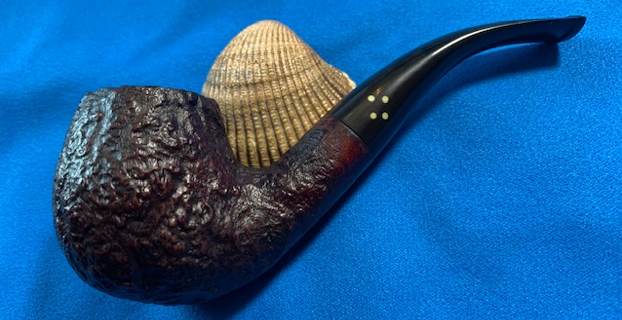
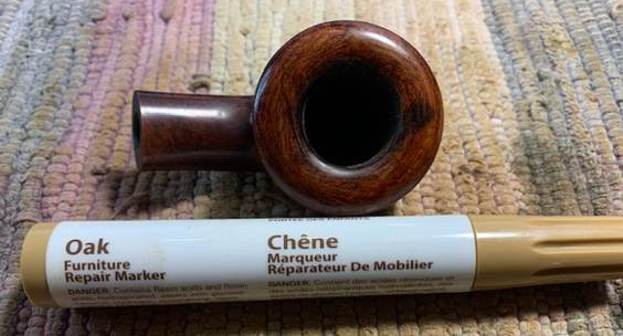
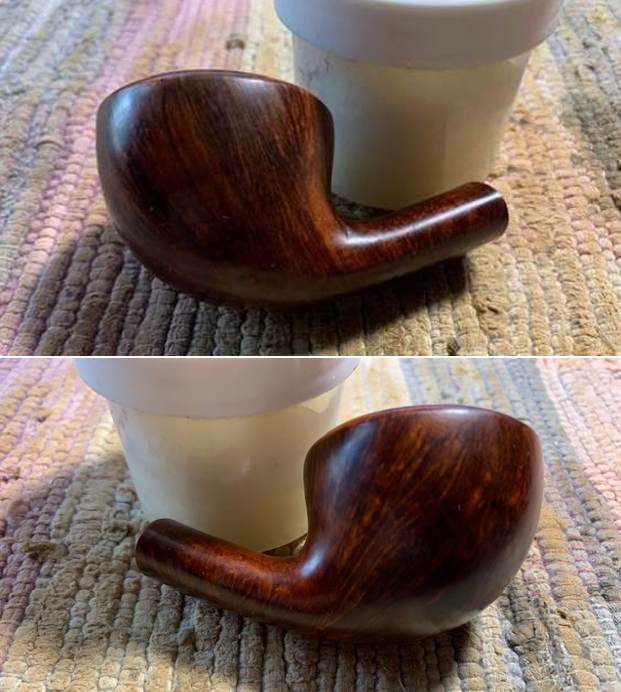
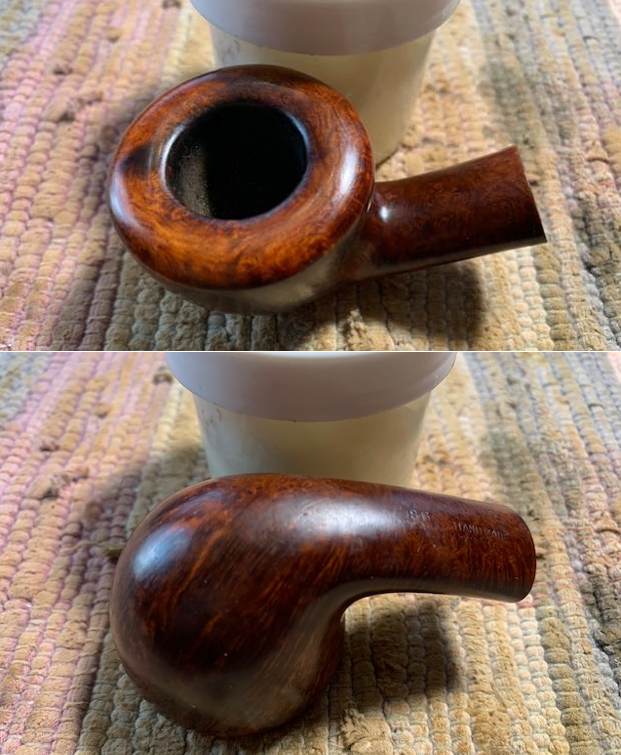
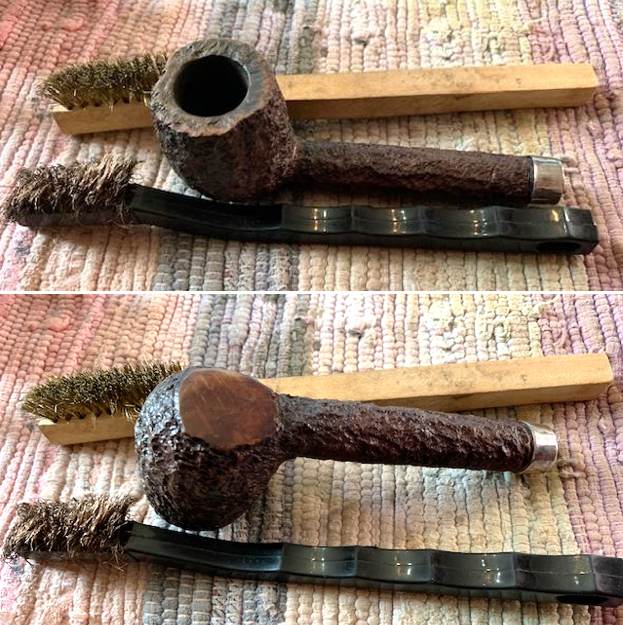
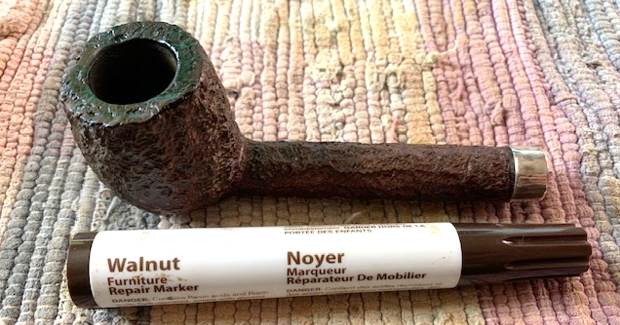
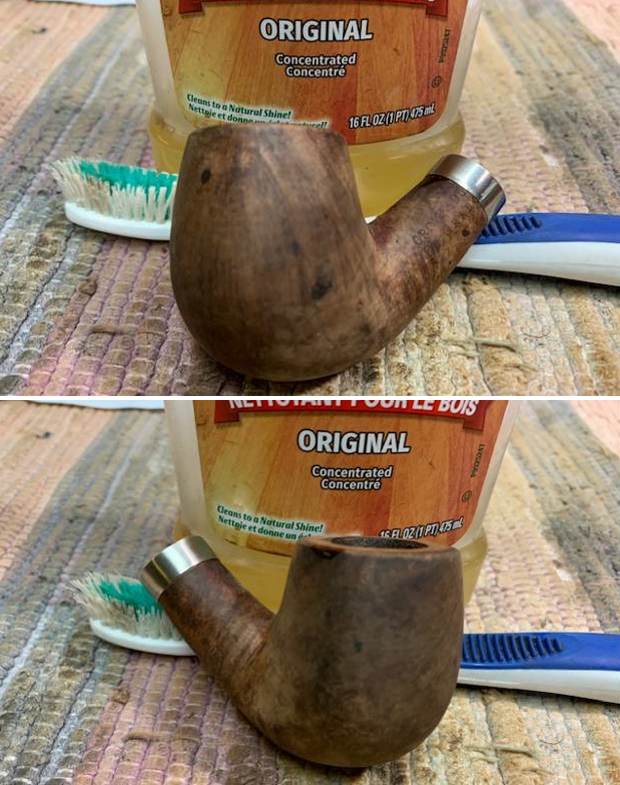
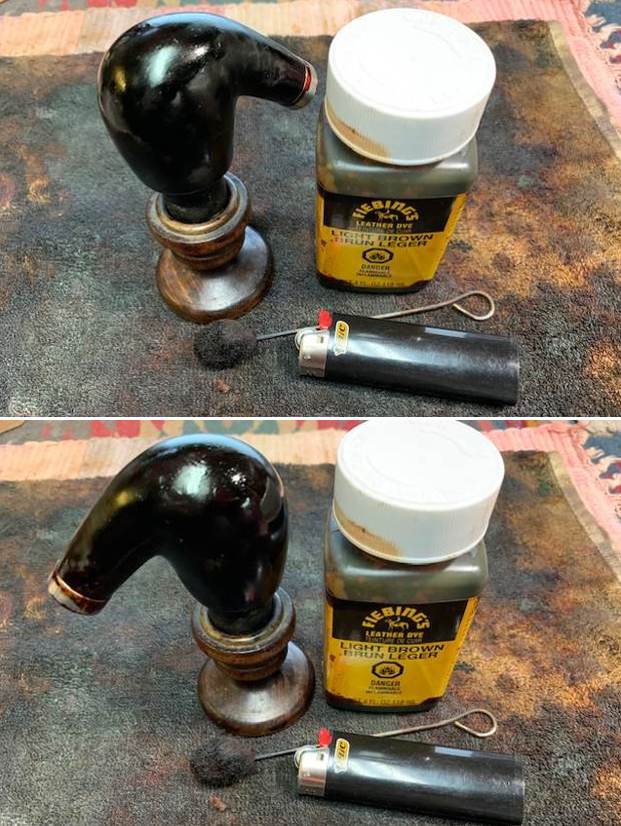
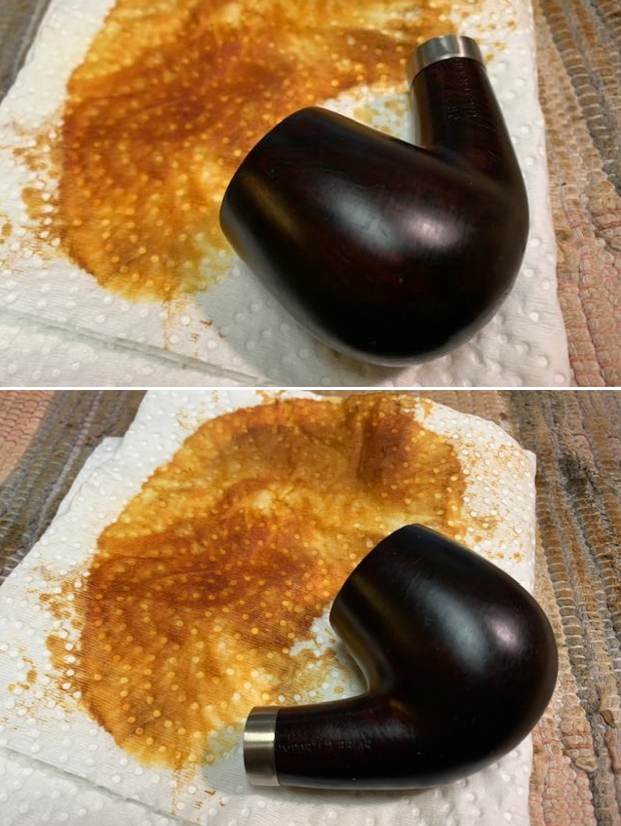
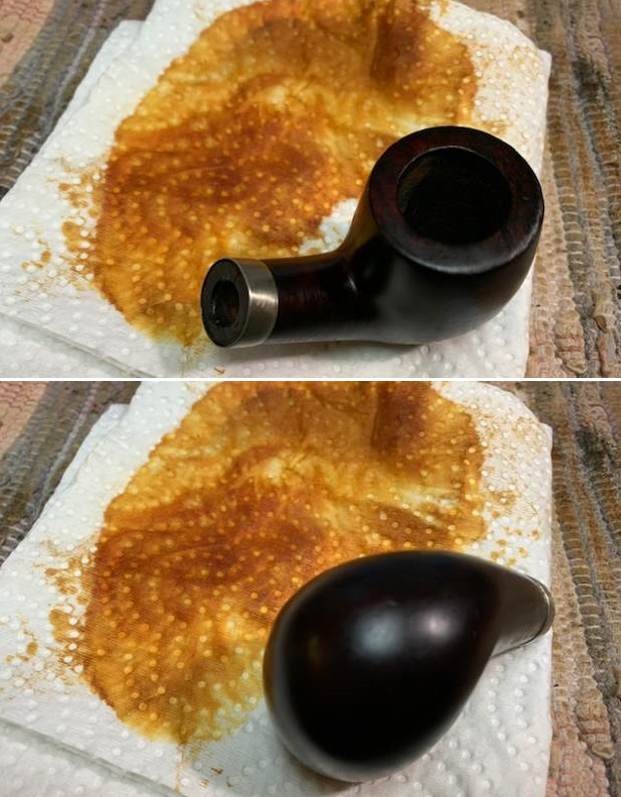
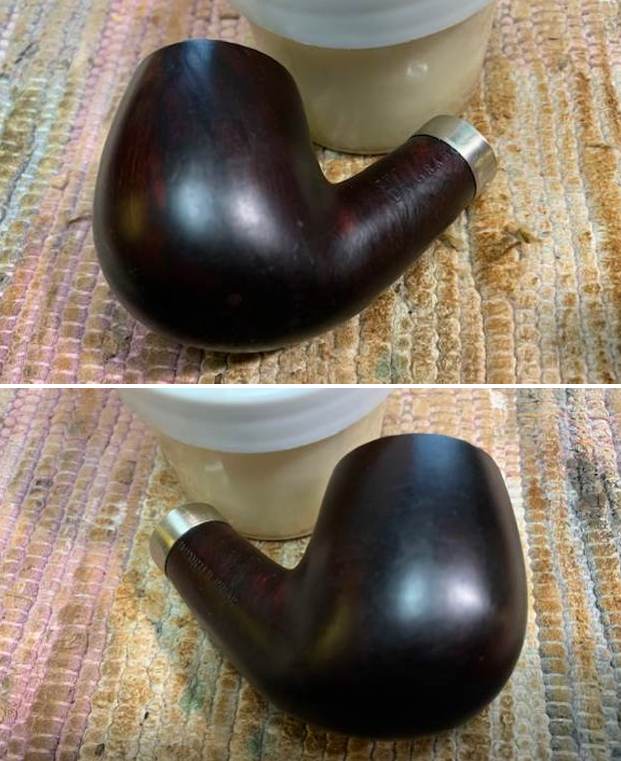
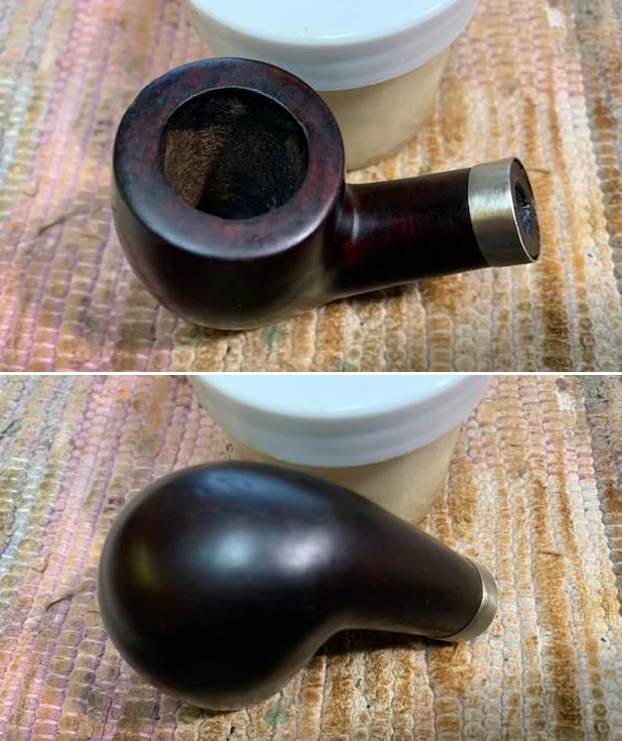
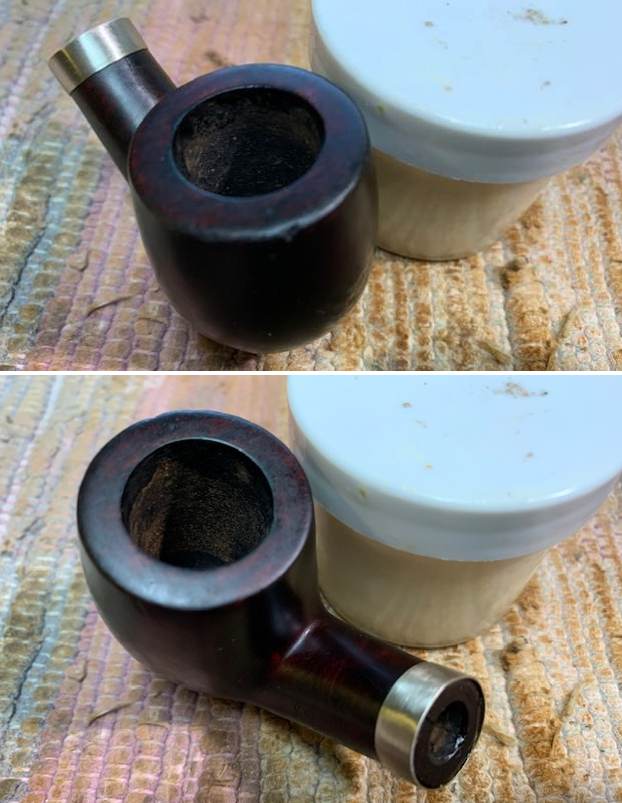
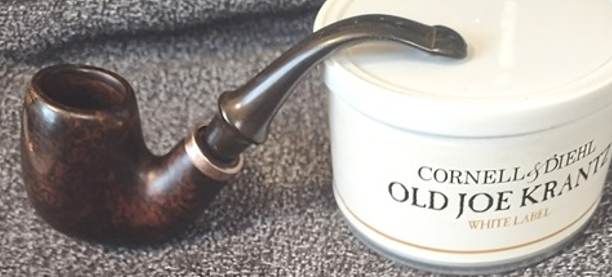
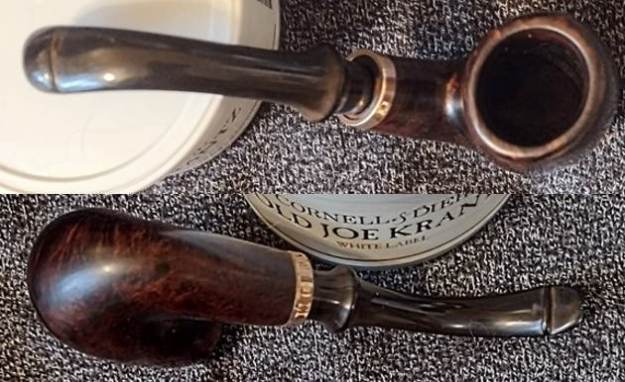
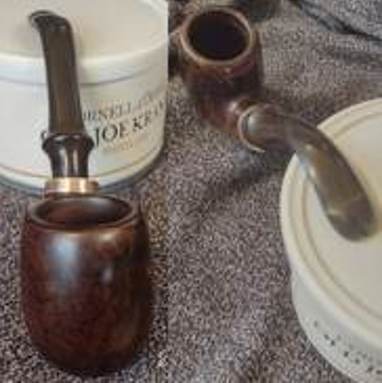
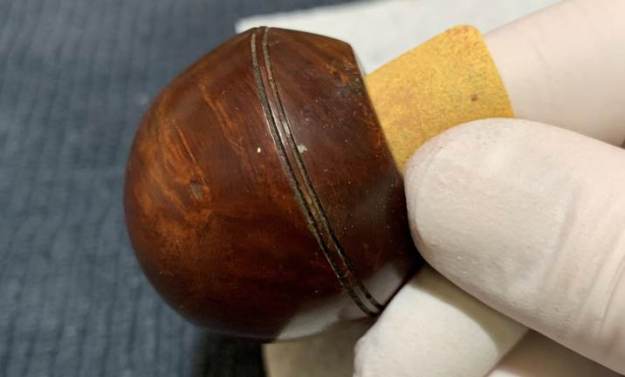
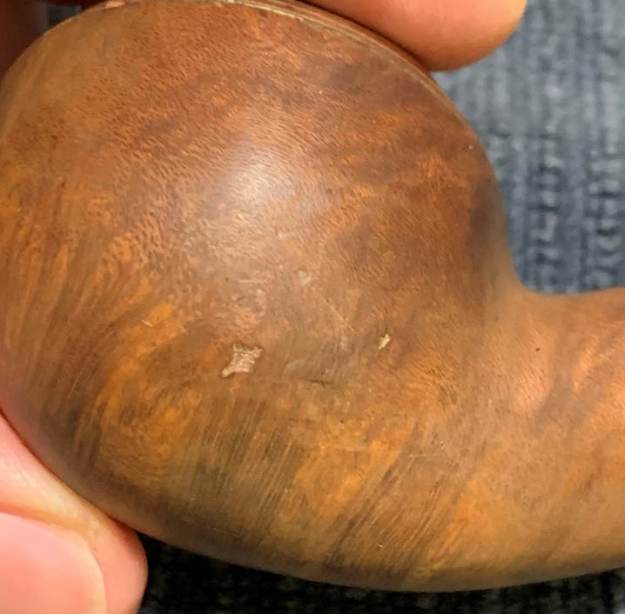
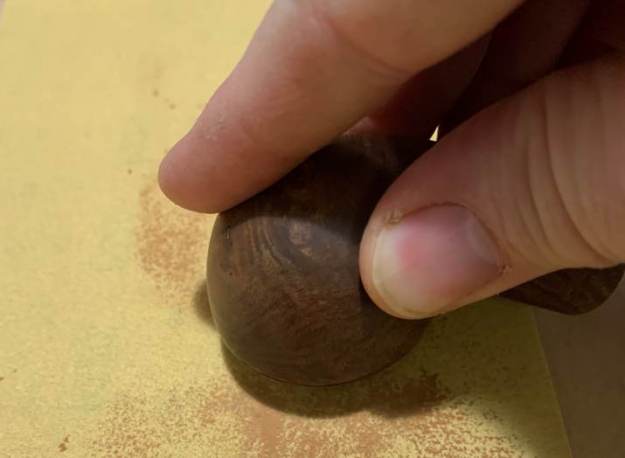
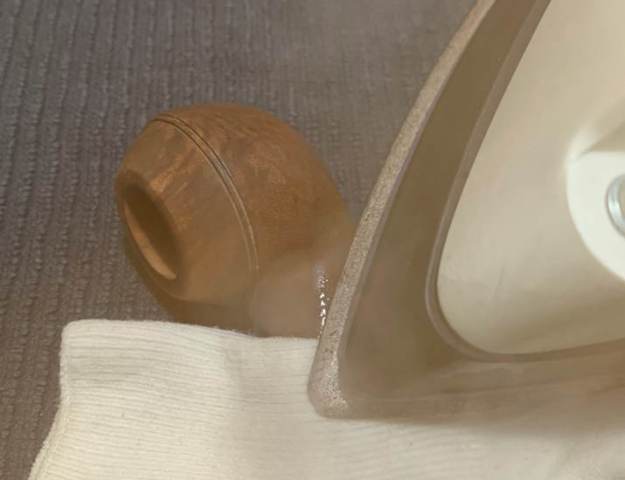
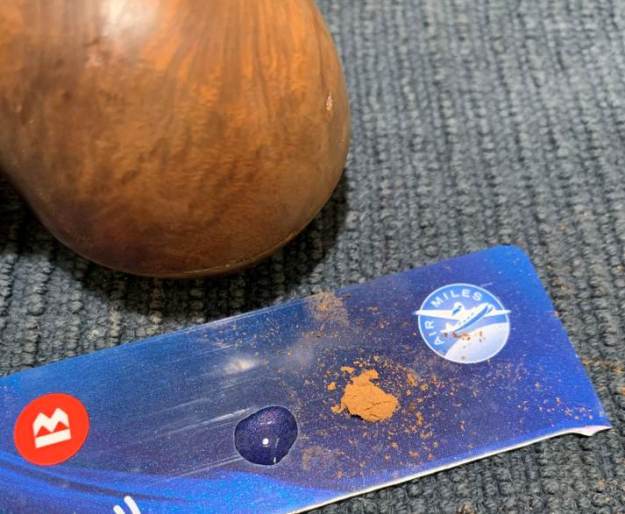
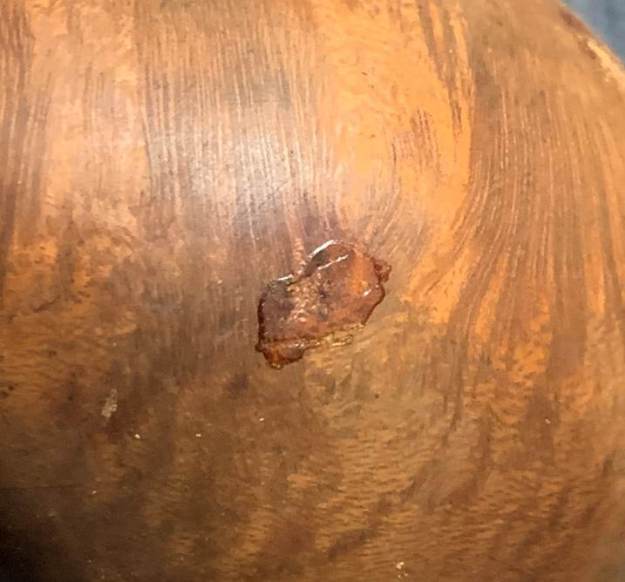
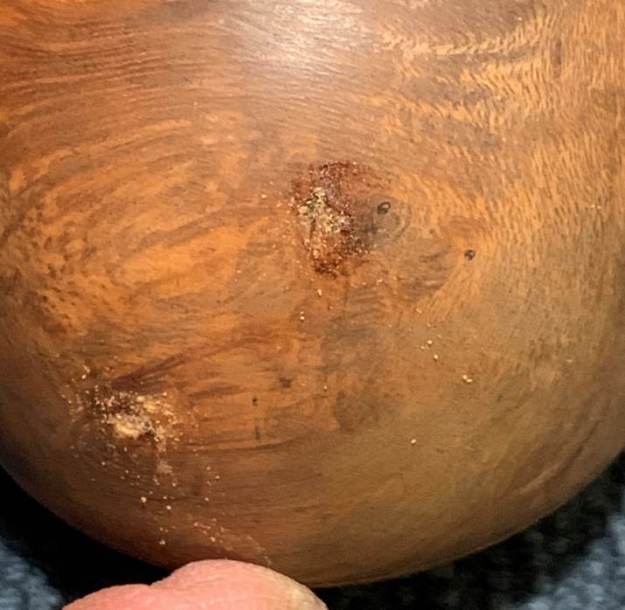
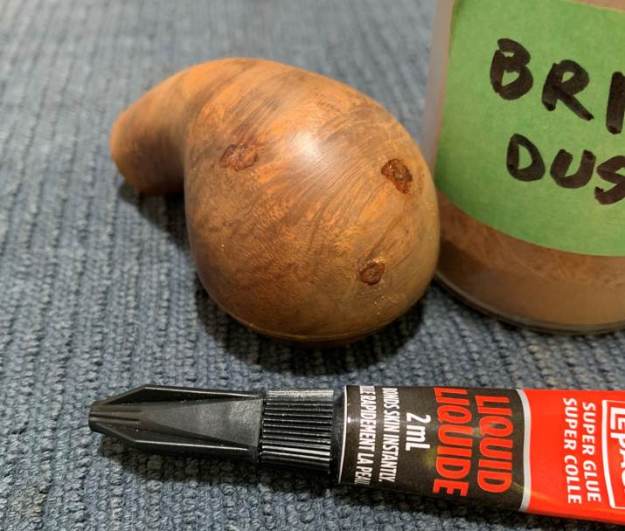
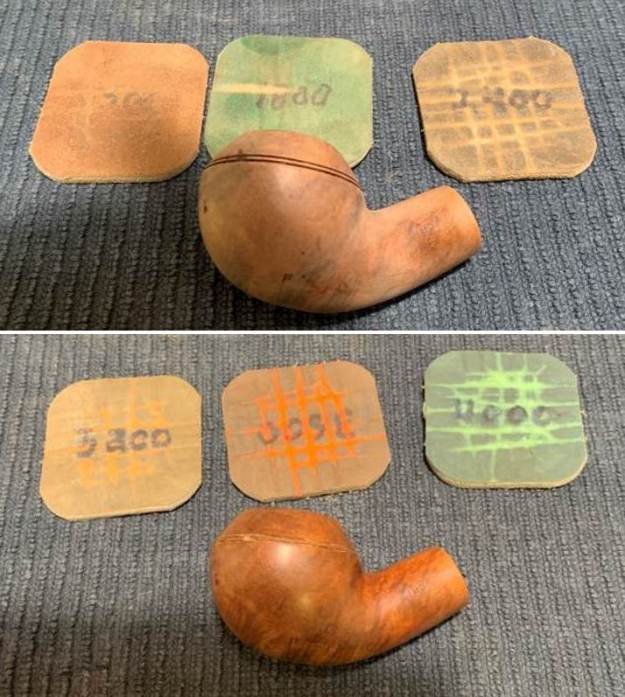
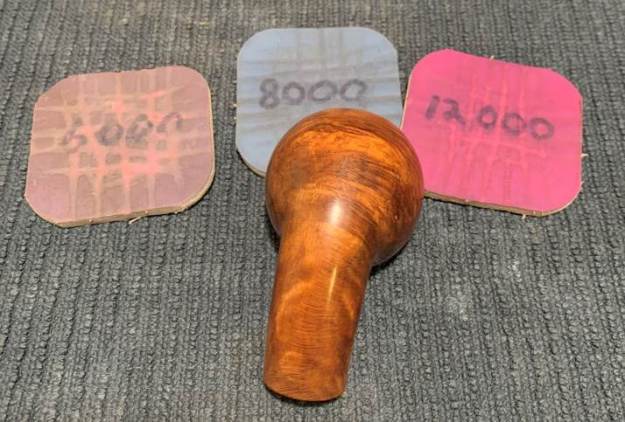
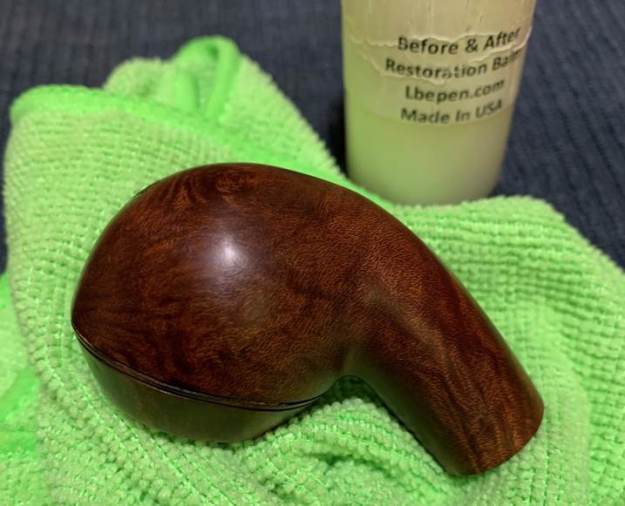
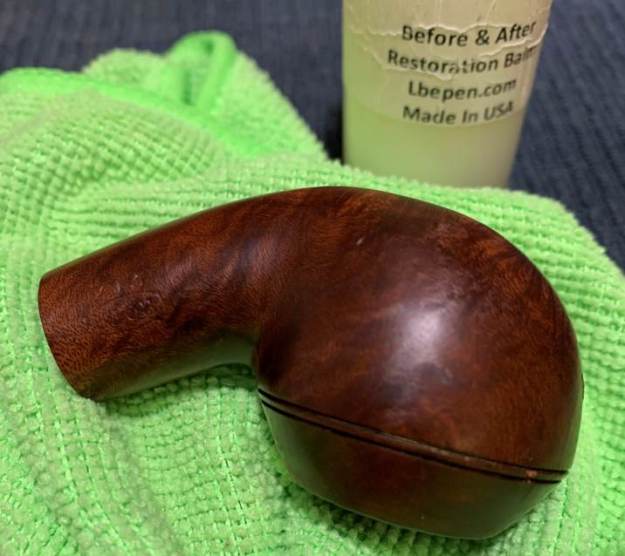
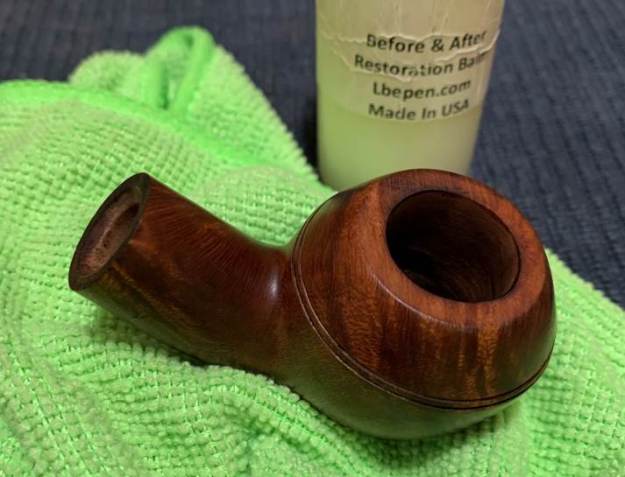
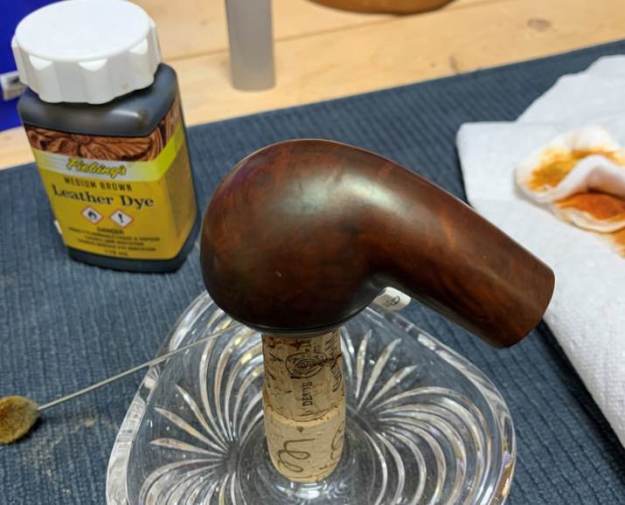
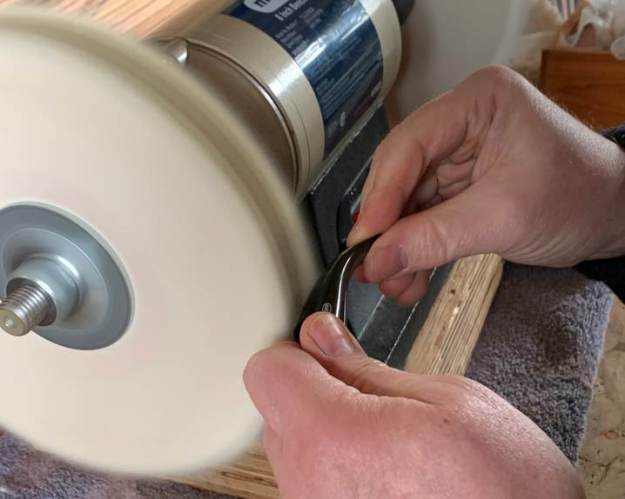
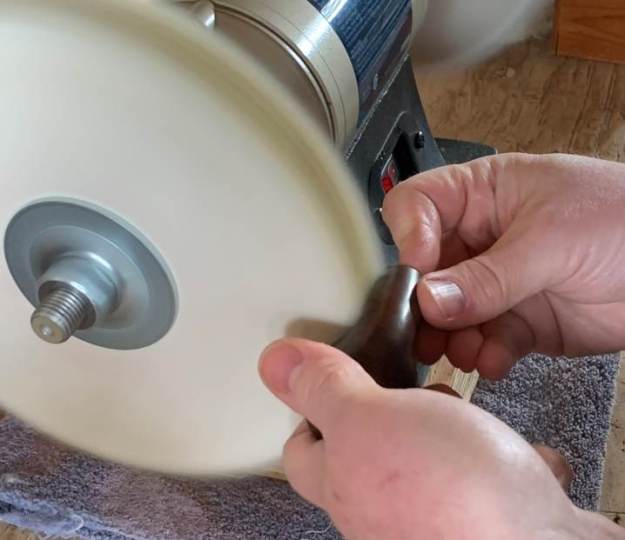
In order to remove the remaining burns and nicks on the rim, I “topped” the pipe – that is to say, I gently and evenly sanded down the rim on a piece of 220-grit sandpaper. This effectively removed the damage, without altering the look of the pipe.Having completed that, I was able to address the small nicks on the stummel. I dug out my iron and a damp cloth to try and raise the nicks. The hot and moist steam can often cause the wood to swell slightly and return to shape. There was some movement – not a lot, but it was better than doing nothing. The repair was not perfect, but the remaining scratches would be improved by sanding.I lined the fills with cyanoacrylate adhesive and briar dust. After letting them cure, I sanded the fill repairs down with 200-, 400-, and 600-grit sandpaper. I then used all nine Micromesh pads (1,500 through 12,000 grit) on the stummel to finish it off. After that, a light application of Before & After Restoration Balm brought out the best in the stummel’s grain. There is some beautiful wood after all. It is a very handsome, decorated veteran. In order to accentuate the external beauty of this pipe, I opted for aniline dye. I applied some of Fiebing’s Medium Brown Leather Dye. As usual, I applied flame from a BIC lighter in order to set the colour. I then added a second coat – just to make sure. What a difference that made! It looked so much better with a fresh coat of stain. I applied some more Before & After Restoration Balm and then it was off for a trip to the buffer. A dose of White Diamond and a few coats of carnauba wax were just what this pipe needed. The lovely shine made the wood very attractive. This is a very handsome pipe and will provide many years of smoking pleasure. This is a wonderfully crafted pipe and has a very elegant feel to it. It took some work, but I am proud of it and the final product suits me to a T. It retains some wounds from battle, but, as Steve would say, they are part of this pipe’s story. This is one pipe that I am keeping for myself and adding to my collection. I am sure that I will be enjoying this one for many years to come. I hope you enjoyed reading the story of this pipe as much I as I did restoring it. If you are interested in more of my work, please follow me here on Steve’s website or email me directly at kenneth@knightsofthepipe.com. Thank you very much for reading and, as always, I welcome and encourage your comments.

A Hardcastle Filter Pipe Well-Smoked


Blog by Robert M. Boughton
https://www.facebook.com/roadrunnerpipes

After some time he felt for his pipe.  It was not broken, and that was something.  Then he felt for his pouch, and there was some tobacco in it, and that was something more.  Then he felt for matches and he could not find any at all, and that shattered his hopes completely..

— J.R.R. Tolkien, The Hobbit, or There and Back Again

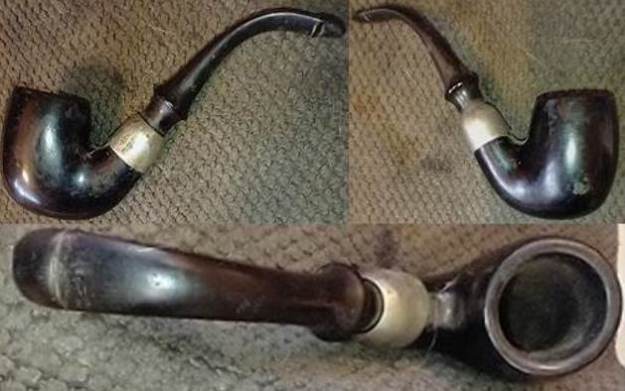
I had no idea where this pipe came from.  It seemed to appear out of thin air on the little stand that serves as a sort of waiting room for my next six appointments needing various degrees of rejuvenation.  The diminutive bent billiard – once a black dress pipe, I could tell – bore such wear and accumulated gunk that it looked more like something washed up on shore after a catastrophic oil spill.  The thought occurred to me that perhaps I should wear latex gloves for the initial inspection, which suggested the pipe was not broken, and that was something, and there were no apparent cracks or burnouts, and that was something more.  The rim of the bowl was wrecked, and that would not have been encouraging were it not for the apparition of the last five letters of an old friend’s name on the left shank.  The classy H on the stem confirmed a Hardcastle shrouded by the grime.  For a chronology of Hardcastle’s transition from its beginning in 1903 to the final stage of its evolution as a Dunhill second, follow the Pipephil link in Sources.

Only after the first two steps of the restoration did I discern that the billiard was a Filter Pipe model.  I was creating a new sub-folder in my restored Hardcastles when a warning appeared on the monitor asking if I wanted to replace the existing Filter Pipe folder with the new one.  This very pipe came to me a few years back with clear nomenclature but a rim that was more abused than most.  At the time, it was the perfect candidate for my experiments in giving pipes a dress finish.  My roommate, a Hardcastle devotee, bought it.  That explained the poor thing’s further decline.

First, the before pics of the dress version.  I never blogged it because I was not happy with the rim work.  I’ve blogged one or two of my failures as cautionary tales, but not this one.Now for the carnage my roommate dumped on me.  This may be the most tortured pipe I have ever encountered.  CAUTION: The following images may be unsuitable for children or squeamish pipe smokers.In most cases, I soak the stummel in Isopropyl alcohol, but this time I chose Everclear to strip the homemade shellac I made for the dress process and the black leather dye beneath it – although not much of either appeared to remain.  I gave the stem a bath in generic stain remover. The stem came out in great shape, but the stummel less so. I used super fine 0000 steel wool to take off the residue from the Everclear soak.  This is when I could discern Filter Pipe.A full micro meshing sharpened the nomenclature and revealed the wood’s rich brown, if erratic, grain. I would like to know just how someone would go about inflicting such damage on a rim, but I couldn’t very well ask my roommate.  In the past, I have been somewhat successful with reversing mangled rims.  In one of the prior cases, for example, I resorted to a rasp.  Here are the before, during and after shots of that pipe, a P&K Everyman.I learned the importance of sanding, filing or grinding in the right direction. To narrow a rim, I move whatever tool I use with, or in the same general direction as the rim’s wall; to widen the rim, I move the tool against the rim, from the chamber outward. Try as I did to avoid resorting to extreme measures to make the Hardcastle rim right again, the time came to use my electric grinder. My main concern with making the misshapen rim at least more even and round again by putting it to an electric sanding wheel was the potential for irreversible damage in a heartbeat. Not being one to avoid a challenge, I went for it. I dare anyone reading this not to laugh at the last photo below. Believe it or not, the wheel sander did what I needed: it made the rim almost level.  I knew I could fix that problem a little later.

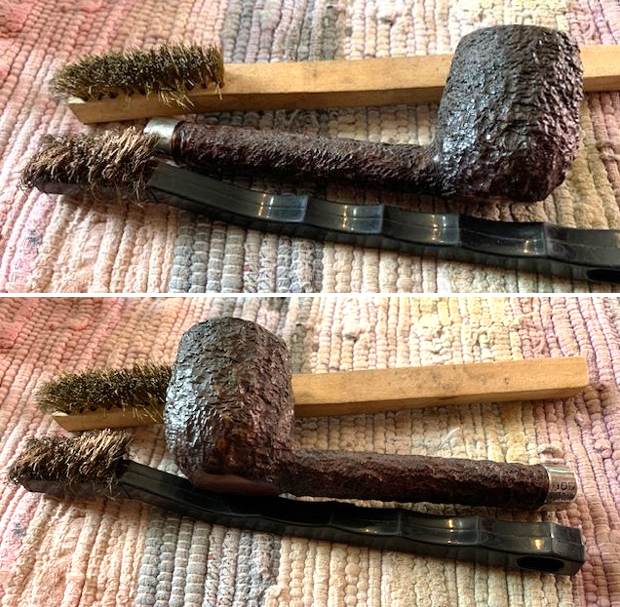
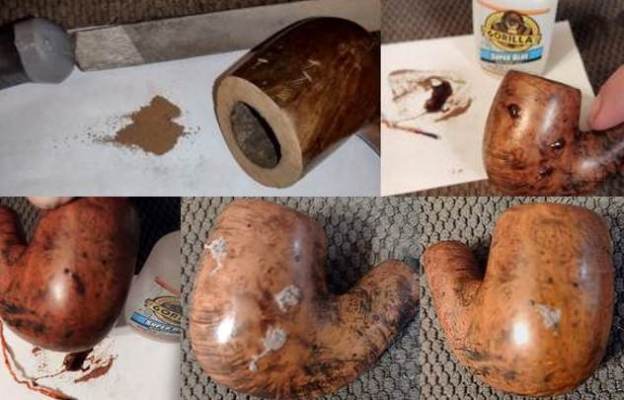
The pre-retort cleaning of the stummel and stem required more regular cleaners and a brass-handled brush with wire bristles, similar to the one below, both dipped in Everclear.  At least my roommate enjoyed the pipe while beating it.  The retort needed three test tubes of alcohol to come out clear.Notwithstanding the relative roundness of the rim, I knew I had to fill the preexisting indentation in the upper corner of the inner wall as shown in the post-electric sander pic.  I did something similar once, but again, I found the solution in one of Steve’s blogs on correcting an off-round rim. I filed off briar shavings from a hopeless pipe and mixed them with Super Glue, then applied the goop to the problem area inside the chamber.  It isn’t pretty, but it worked. Several hours later, I sanded down the remaining hard mess with 60-grit paper followed by a 120/180 pad. Several more hours later, I had reached the point where I knew I could not do better and sanded and micro meshed the stummel in preparation for staining.  I used British tan on the rim and moccasin brown on the rest, then micro meshed off the char with 1500, 8000 and 12000 pads.  That’s a good combination for a subtle contrast.I buffed the stummel with Red Tripoli and carnauba and was finished. SOURCES
https://www.worthpoint.com/worthopedia/hardcastle-filter-pipe-164105369
http://www.pipephil.eu/logos/en/logo-hardcastle.html
https://rebornpipes.com/2017/07/20/another-piece-pipe-history-a-lovely-cpf-french-briar-bent-billiard/

The English Calabash That Wanted to Be a Charatan


Blog by Robert M. Boughton

https://www.facebook.com/roadrunnerpipes

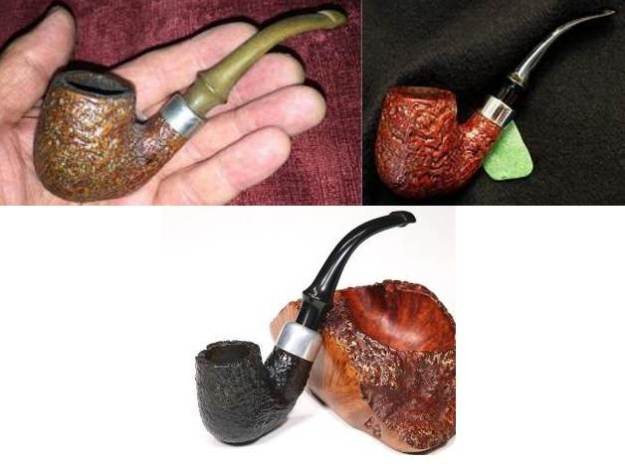
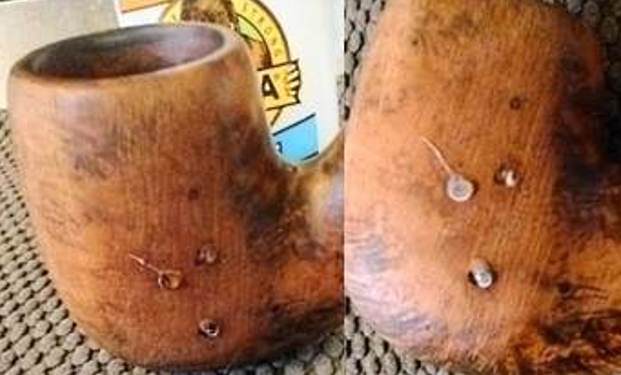
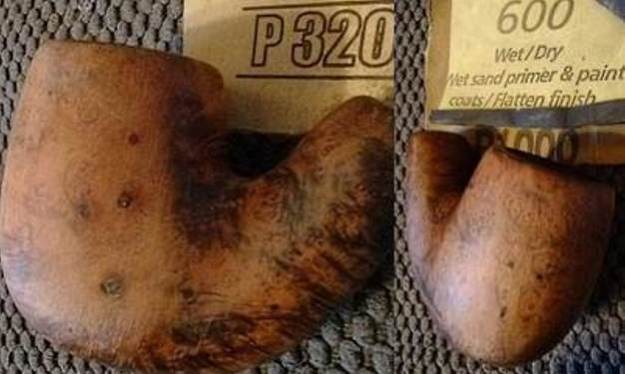
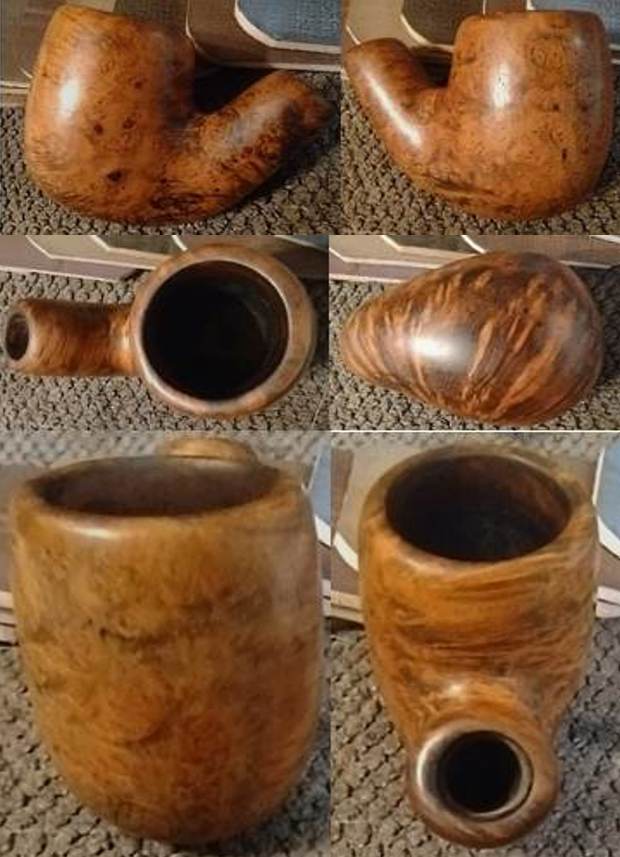
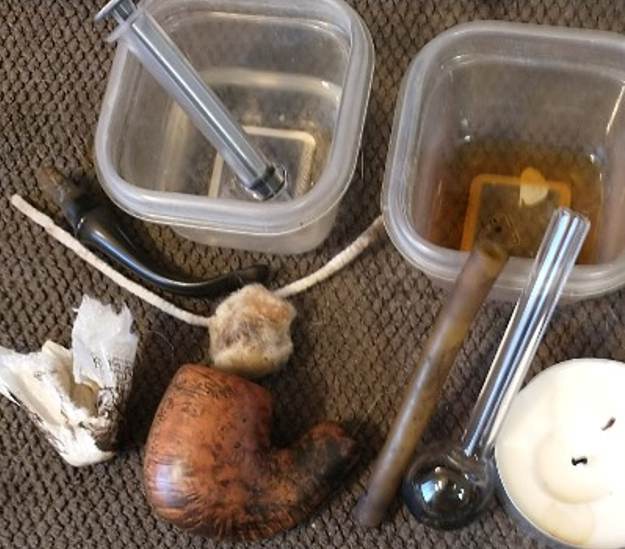
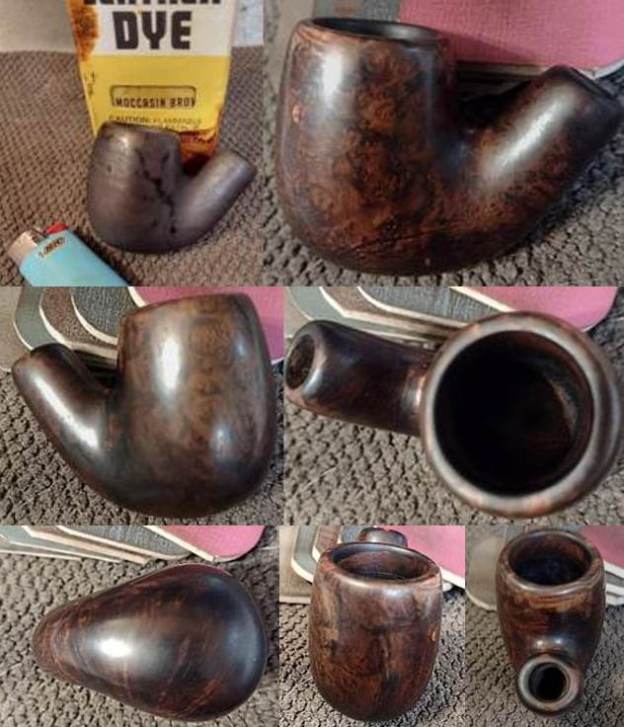
Not even once in a blue moon does a pipe with an uncommon feature – but having no nomenclature other than the county where it was made – find its way into my hands.  The two most recent examples show MADE IN over LONDON ENGLAND on the right shank and did not meet their makers’ exacting standards.  The previous was a Ben Wade celebrating the poker shape with capacious panache, but other than replacing the stem with a smaller, lighter, inappropriate one, there was no way to counter the off-center of gravity and force the poker sitter to sit.  This time it’s a Charatan that looks more akin to a beanpot to me but was called a calabash by the maker.  Had not Steve seen my “beanpot” for what it is, I might have concluded that both pipes began their lives as Ben Wades.  Although Charatan pipes do not include MADE IN, I concluded that the two words were added when the pipe was rejected, maybe to differentiate the rejected from the approved.  Here are two models of Charatan’s Make calabashes from Worthpoint.Based on the seller’s detailed description of the smooth finish calabash, at the first link below, I believe Charatan made these pipes while Dunhill owned the brand (1978-1988). The grain of my pipe is not very good and required a few fills, but I don’t see why it could not have been modified to a sandblasted or relief finish as shown above. Here is mine as I received it. Sanding with 220- and 320-grit paper cleaned it up pretty well. Using 400-, 600- and 1000-grit paper, I was able to give it a first glow. After retorting the pipe, I turned my attention to the stem, which, other than being dirty, looked much better than most. I’ve started giving stems a bath in generic viscous stain remover. So far, I haven’t tried it on a specimen with oxidation, and I doubt it will do more than remove the grime that often goes with estate pipe stems. But I will report back on that.An hour later, I took the stem out of the goop, rinsed it and ran a pipe cleaner through.  Micro meshing it made two small teeth marks stand out.What I should have done was flick my Bic on the annoying little marks, but that didn’t come to me until after I reached the point of no return with another method that’s great on real divots.  Anyway, mixing Super Glue and vulcanite shavings from an old stem that’s perfect for the task was good practice.This method for removing bite marks makes a mess. Cleaning it up took a couple of days of sanding and buffing before the final shots after one more progression of 60-1000-grit sandpaper and all nine micro mesh pads – but the practice and results were worth it.Time to stain.At this point, I would have had only the final wheel buff left.  In fact, that’s what I did.  But the pic I took of the nomenclature revealed a hairline crack just below LONDON, ENGLAND.To mitigate the potential for the crack to spread, I used a touch of Super Glue and let it sit overnight. At least the foul spot was not all the way through the shank. A 120/180 sanding pad followed by a full micro meshing took off the excess dried glue.  I re-stained the effected area with Moccasin Brown and buffed the char off with 8000-12000 micro mesh. I decided to make the rim lighter with 8000-12000 micro mesh, also.Quick wheel buffing of the stem and stummel with Red Tripoli and carnauba on the buffer wheel completed the Charatan’s Make Calabash reject. The best part of this restoration is how close I came with my sweet reject to the stain of a third Charatan’s Make Perfection Calabash I found online.And I didn’t even know it until I copied and pasted the pic from Pipehub.com.  I look forward to finding a loving home for my poor disadvantaged friend here.

SOURCES
https://www.worthpoint.com/worthopedia/charatans-make-london-england-special-495600609
https://www.worthpoint.com/worthopedia/lane-era-charatans-make-relief-grain-412563595
http://www.pipephil.eu/logos/en/logo-charatan.html
http://www.pipephil.eu/logos/en/logo-benwade.html

The Poker Barrel


by Kenneth Lieblich

Next on the chopping block is this charming Chacom Champion. It comes from the estate of a man from Winnipeg, whose relatives live here in Vancouver. I purchased several of the late gentleman’s pipes, along with this one. I have a particular interest in French pipes and pipeworks, so this was the first pipe I grabbed from the lot for restoration. It is an attractive pipe and needed just a little help to come back to life.This pipe was made by the French giant, Chacom. They are known for making very nice pipes, many of which were designed by such names as Pierre Morel, Claude Robin, and Erwin van Handenhoven. The markings on the left-hand side of the shank read Chacom [over] Champion. On the underside of the shank, the marking reads 157, which is the shape number. Also, on the stem, there is the Chacom logo: CC, encircled in a silver-coloured oval.This is a poker-shaped pipe (a flat bottom) – and a really pretty one too. I always felt that it looked a bit like an old oak barrel, hence the title of this article: The Poker Barrel. It feels very comfortable in the hand. It was obvious from the start that this was a great pipe that just needed some attention and TLC.

Chacom is a company that dates back, in its earliest form, to 1825. The name is a portmanteau of Chapuis Comoy. For a large part of the twentieth century, Chapuis Comoy was the largest pipe company in the world. For more on their history, please have a look at their website: https://www.pipechacom.com/en/history.htm. In fact, the shape number I mentioned above, 157, is a Comoy shape number and is designated as a straight-stemmed, flat-bottomed, billiard. But I am still going to call it a Poker Barrel anyway.

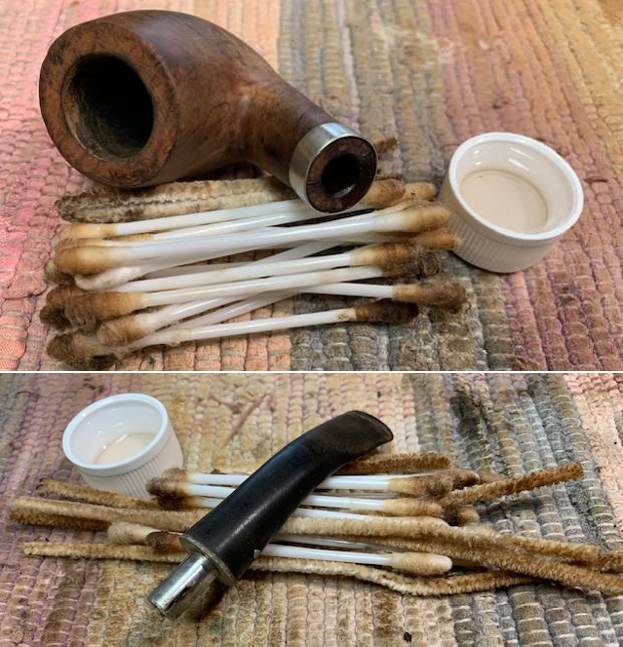
On to the pipe: it was in decent shape, but it had a few issues. The stem was mostly fine. There was a bit of oxidation, some tooth chatter and scratches, and that was about it. Meanwhile, the stummel had a few more issues. The outside of the bowl had some scratches and a couple of fills that needed to be redone. There was plenty of lava and debris on the rim and I suspected there would also be some burn marks. The inside was pretty dirty too – just how dirty it was became an event in itself.The stem was first on my list. I wiped down the outside of the stem with Murphy’s Oil Soap on some cotton pads. I also took a BIC lighter and ‘painted’ the stem with its flame in order to lift the bite marks and dents. This was not particularly successful in raising the damage. During this process, I noticed that the inside of the tenon on the stem was threaded. There was clearly a stinger here once upon a time. Thankfully, it is long gone.Then, I cleaned out the insides with pipe cleaners and isopropyl alcohol. Look at that! Lots of work to get this clean! Once this process was done, the stem went for an overnight soak in the Pipe Stem Oxidation Remover. The following day, I cleaned all of the de-oxidizing mess off with alcohol, pipe cleaners, et cetera. The oxidation had migrated to the surface and would be fairly straightforward to remove. I scrubbed with SoftScrub on some cotton pads to remove the leftover oxidation. I built up the dents on the stem with cyanoacrylate adhesive and let them fully cure. I then sanded the adhesive down with 220-, 400-, and 600-grit sandpapers to meld seamlessly into the stem. I did the same to the remaining tooth marks. I then used all nine Micromesh pads (1,500 through 12,000 grit) to bring out the lovely black lustre on the stem. I also used Obsidian Pipe Stem Oil in between each pad scrubbing. On to the stummel, and the usual cleaning procedures were in order for this pipe. This stummel was a bit of a mess inside, so I first decided to ream out the bowl. I used both the PipNet Reamer and the KleenReem to remove the built-up cake and followed that with 220-grit sandpaper to eliminate as much as I could. I took the bowl down to bare briar, as I wanted to ensure there were no hidden flaws in the walls of the bowl. Fortunately, there were none. I then proceeded to clean out the insides of the shank with Q-tips, pipe cleaners, and isopropyl alcohol. There was considerable filth inside this stummel and it took a lot of cotton to get it “clean”. I put the word clean in quotation marks for reasons that will be evident shortly. I used a small butter knife to gently chip away at the lava on the rim. I then used more Murphy’s with a scrub brush to remove any remainder. This actually worked quite well. I then moved on to cleaning the outside of the stummel with Murphy’s Oil Soap and some cotton pads. That removed any latent dirt that blighted the wood. A de-ghosting session also seemed in order, so I thrust cotton balls in the bowl and the shank, and saturated them with 99% isopropyl alcohol. I let the stummel sit overnight. This caused the oils, tars and smells to leech out into the cotton.In order to remove the remaining burns and nicks on the rim, I “topped” the pipe – that is to say, I gently and evenly sanded down the rim on a piece of 220-grit sandpaper. This effectively removed the damage, without altering the look of the pipe. Then, to further clean the inside of the pipe, I put the stem and stummel back together and used my pipe retort system. This system uses boiling isopropyl alcohol and a vacuum (a void, not the household appliance) to clean the interior of a pipe. As you can see by the brownish colour of the alcohol, the retort worked well. I managed to extract lots of otherwise inaccessible filth from inside the pipe. At this point, I had a hunch that I should run another Q-tip or two through the shank. What I discovered was shocking: it took a truck load of Q-tips and pipe cleaners to actually clean this frustrating pipe! Look at the pile I used! I then finished cleaning up the insides of the stummel with some dish soap and tube brushes. Extraordinary, but I did it and it is now clean.Having completed that, I was able to address the scratches and fills. I took out my steam iron and a damp cloth to try and raise the nicks. The hot and moist steam created can often cause the wood to swell slightly and return to shape. Fortunately, there was considerable movement – I was really pleased with the results. The repair was not perfect, but the remaining scratches would be improved by sanding.After that, a light application of Before & After Restoration Balm brought out the best in the stummel’s grain. There is some beautiful wood after all. It is a very handsome pipe. The same was true with the fills. I lined the two fills with cyanoacrylate adhesive and briar dust. After letting them cure, I sanded the fill repairs down with 200-, 400-, and 600-grit sandpaper. I then used all nine Micromesh pads (1,500 through 12,000 grit) on the stummel to finish it off. On to another problem: the colour. During the course of my vigorous cleaning, this pipe had lost some vibrancy of colour. So, in order to accentuate the external beauty of this pipe, I opted for aniline dye. I applied some of Fiebing’s Medium Brown Leather Dye. As usual, I applied flame from a BIC lighter in order to set the colour. What a difference that made! It looked so much better with a fresh coat of stain.   I applied some more Before & After Restoration Balm and then it was off for a trip to the buffer. A dose of White Diamond and a few coats of carnauba wax were just what this pipe needed. The lovely shine made the wood very attractive. This is a very handsome pipe and will provide many years of smoking pleasure.This Chacom Champion is back to its old glory and ready to be enjoyed again by the next owner. I am pleased to announce that this pipe is for sale! If you are interested in acquiring it for your collection, please have a look in the ‘French’ pipe section of the store here on Steve’s website. You can also email me directly at kenneth@knightsofthepipe.com. The approximate dimensions of the pipe are as follows: length 5 in. (130 mm); height 1⅝ in. (40 mm); bowl diameter 1¼ in. (30 mm); chamber diameter ¾ in. (20 mm). The weight of the pipe is 1 oz. (29 g). I hope you enjoyed reading the story of this pipe’s restoration as much I as I did restoring it. If you are interested in more of my work, please follow me here on Steve’s website or send me an email. Thank you very much for reading and, as always, I welcome and encourage your comments.

Cleaning up a GBD Prehistoric 133 Medium Billiard


Blog by Mike Belarde

Hello, I hope everyone is doing well.  I finally had a nice low-key weekend and was able to work on another pipe. I have had this GBD Prehistoric Billiard for a while and have been looking for a chance to work on it.  The pipe itself is a nice jaunty saddle stemmed Billiard with GBDs Prehistoric sandblast finish.

When I received the pipe, it was in a very dirty condition.  The surface of the stummel was caked with grime. The rim of the bowl had a good amount of carbon overflow, and the chamber was heavily caked.   The stem was in pretty fair condition.  It had light oxidation and took chatter, but the button was buffed down from years of use. The stamping was still legible on this pipe, and read GBD in an oval with the Prehistoric stamp and a 133-shape number. Below is an advertisement found on Pipedia describing the Prehistoric line. Even in its grimy condition, the pipe had an attractive rugged look, and I hoped that it turned out to be a fun workhorse pipe that I could take with me on a fishing trip or some other outdoor adventure. A link to the Pipedia web page has been provided below. Now to work on the pipe.  https://pipedia.org/wiki/GBD_Model_InformationThe first step in the process is to address the internals of both the briar and stem, and then clean up the grime on the stummel, and the carbon build up on the rim.   I started by reaming the chamber and then lightly sanding it with a piece of 220 grit sandpaper.  I took bristled pipe cleaners dipped in alcohol to clean the shank.  As you can see from the pictures this pipe was loved and used often.  Cleaning the internals of this pipe took a long time. Once I had that completed, I moved on to addressing the dirt and grime on the exterior of the stummel. I scrubbed the stummel with Murphy’s Oil Soap and an old toothbrush, rinsed it under warm water. I then scrubbed the rim with an old green scouring pad and some more Murphy’s Oil Soap. During this process a large amount of dirt lifted from the surface of the pipe and exposed some really great surface texture. The rim and the chamber cleaned up well and appeared to be in good condition.  I took the rest of the charring or darkening on the rim and inner rim with a folded piece of 320 grit sandpaper. The stummel seemed to be fairly clean but I decided to de-ghost the piped further.  I inserted two folded fluffy pipe cleaners through the shank and down into the chamber to act as a wick.  I have found that using fluffy pipe cleaners is easier for me than trying to fish an elongated cotton ball down the shank.  I then placed a cotton ball in the chamber and saturated it with isopropyl alcohol.While the stummel was de-ghosting. I placed the stem in a small Tupperware container to soak in Briarville’s Oxidation Remover solution.  I left both the stummel and stem to soak overnight.

Both the alcohol and the Briarville solution further cleaned the pipe.  I took the stem out of the solution and rinsed it and then ran some alcohol dipped pipe cleaners through it.  I then scrubbed the stem with Soft Scrub and the scouring pad to clean it up further.

After this was done I filled the tooth chatter in with super glue. Once the clue was dry I sanded down the patch with a piece of folded 220 grit sandpaper.Once I had the patch sanded down flush to the surface of the stem, I turned to the micromesh pads. I took the stem through the progression of micromesh pads (1500-12000). I polished the stem with each pad and wiped the stem down with a cotton pad soaked in Obsidian Oil in between the use of each pad. In the last step, I polished the stem with Before and After’s Extra Fine Polish. Satisfied with the progress on the stem, I turned my attention to the stummel. I polished the briar with the progression of micromesh pads (1500-12000) wiping it i with a damp paper towel.   Once this step was done, I mixed some dye up to touch up the stain. I’m not sure if the cleaning process removed some of the old stain, but I liked the highlights that had been exposed on the ridges of the sandblast.  I decided to heighten this effect.

I mixed a one-to-3 ratio of Light Brown and Russet leather dye with alcohol to thin the dye down.  I like to apply the stain with a small hobby brush. I find that the brush helps me to coat the stummel evenly. Once the stain was applied, I used a small tea candle to fire the briar and set the dye.  I let the stummel sit for a couple of hours and then removed some of the excess stain with a cotton pad soaked in acetone. After removing some of the excess stain with acetone I began to polish the stummel with the micromesh pad series (1500-12000). I wiped the briar down with a damp paper towel between each pad. Once I was finished with the micro pads, I worked some Before and After Restoration Balm into the stummel. The pipe was really looking nice at this point!  I let the balm sit for about 10 minutes and then buffed the stummel with a cotton cloth. In the last step of the process, I buffed both the stummel and stem with Red Tripoli and Blue Diamond.  I then gave both several coats of Carnauba wax and buffed them with a cotton cloth.

I’m really happy how this pipe turned out, and am looking forward to loading it up and relaxing with it in the backyard. Thanks for taking the time to read this post!

The Mystery of a Sterling Imported Briar Continues


by Robert M. Boughton

https://www.facebook.com/roadrunnerpipes

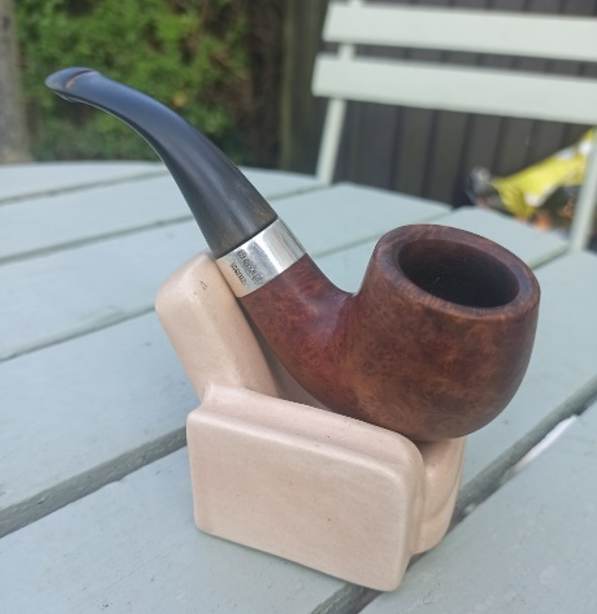
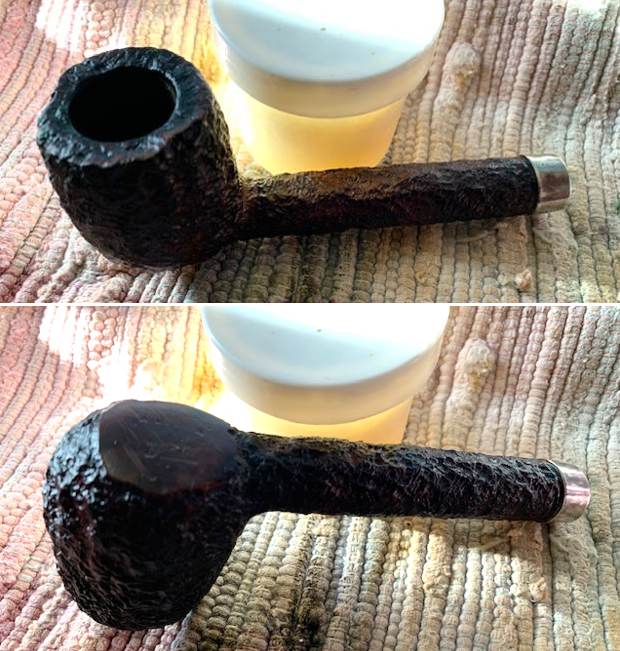
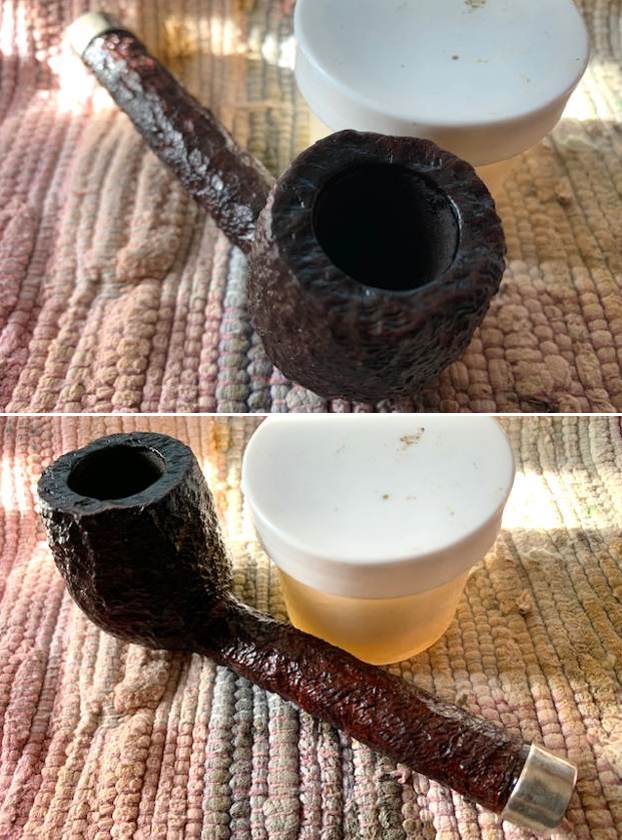
In my online quest for any information whatsoever concerning a Sterling Imported Briar pipe – brand, model or even a whisper in a smoker’s forum – I went full tilt boogie.  In the end, I added “rebornpipes” to the Google search.  If it weren’t for Steve’s blog about a Sterling Imported Briar author a while back, I would have come up empty handed.  Steve’s research was much more meticulous and imaginative.  Nevertheless, his only definite conclusion was that his pipe was a US import, but “How it came to have a British Hallmarked Silver band on the shank is shrouded in mystery and I will probably never figure out the connection.”

RESTORATION
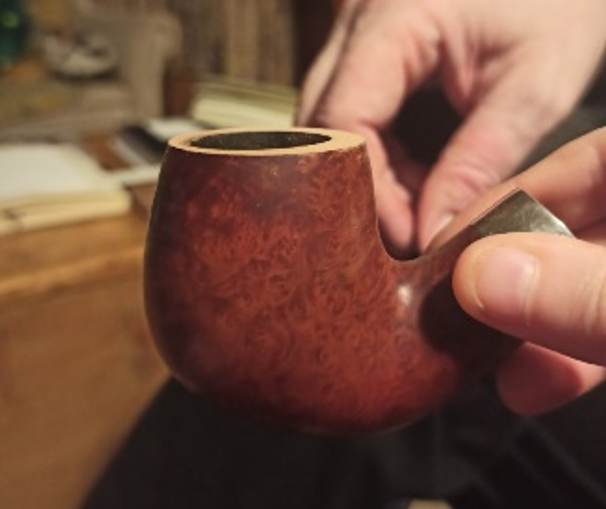
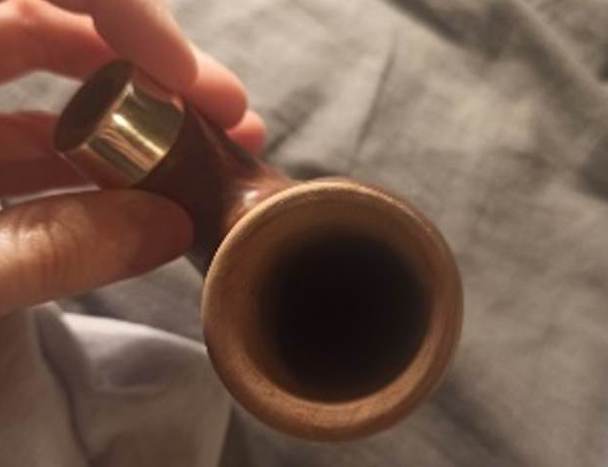
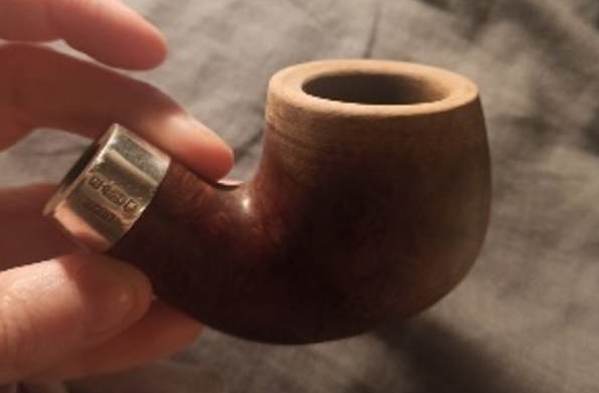
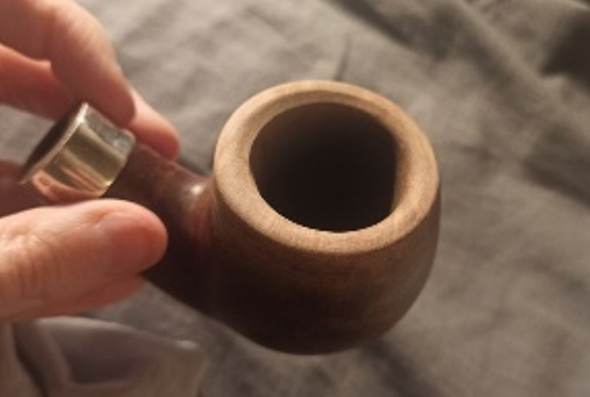
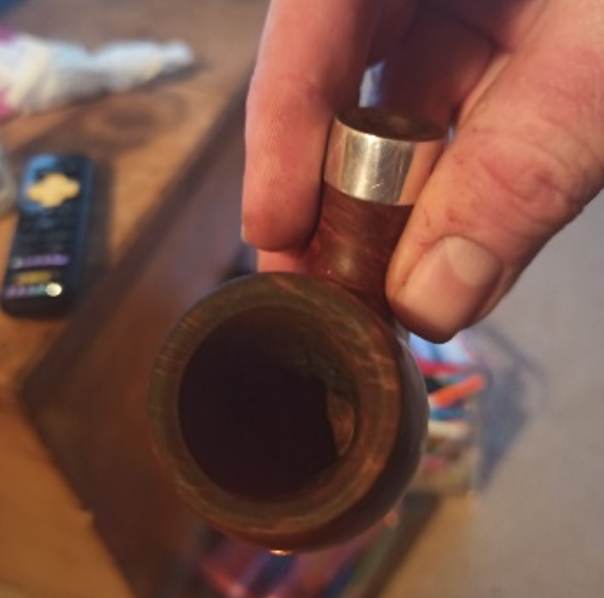
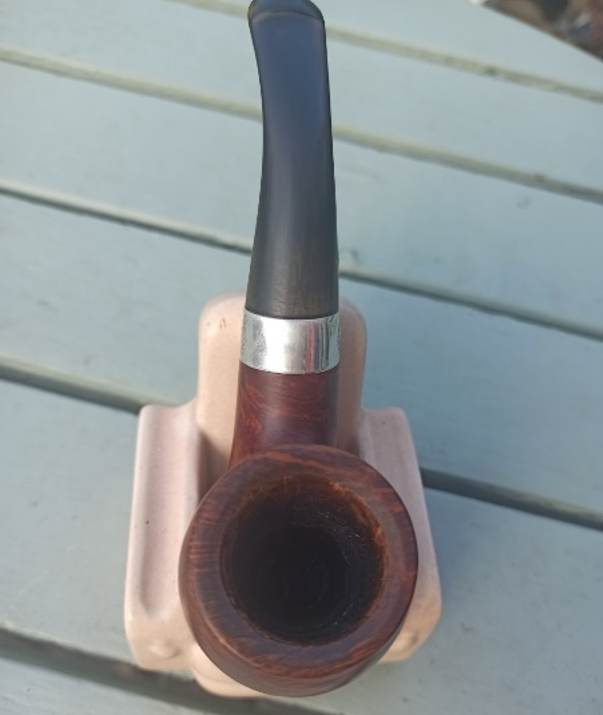
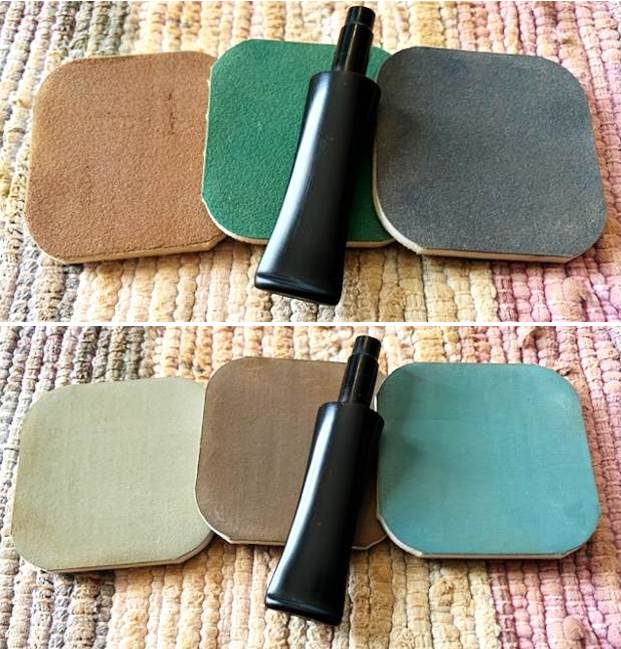
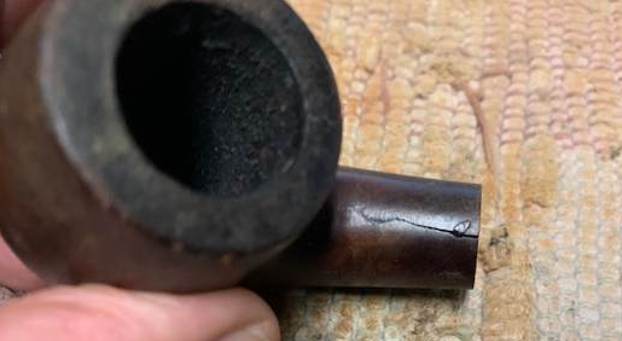
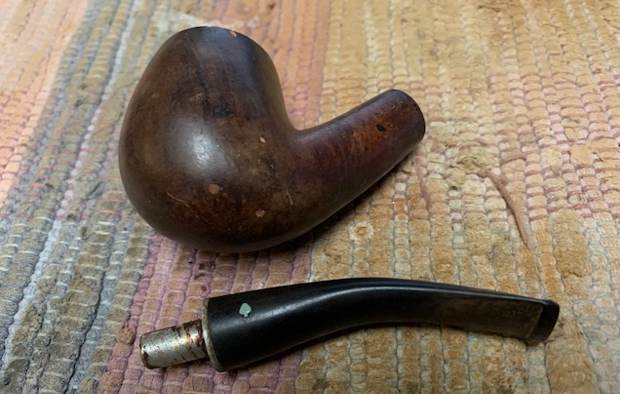
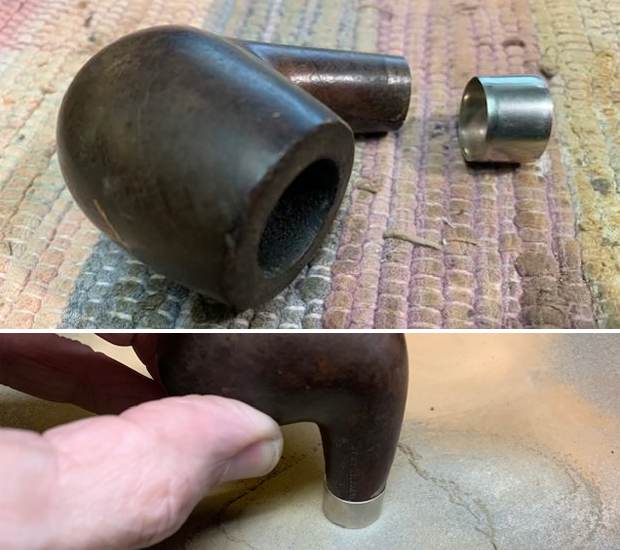
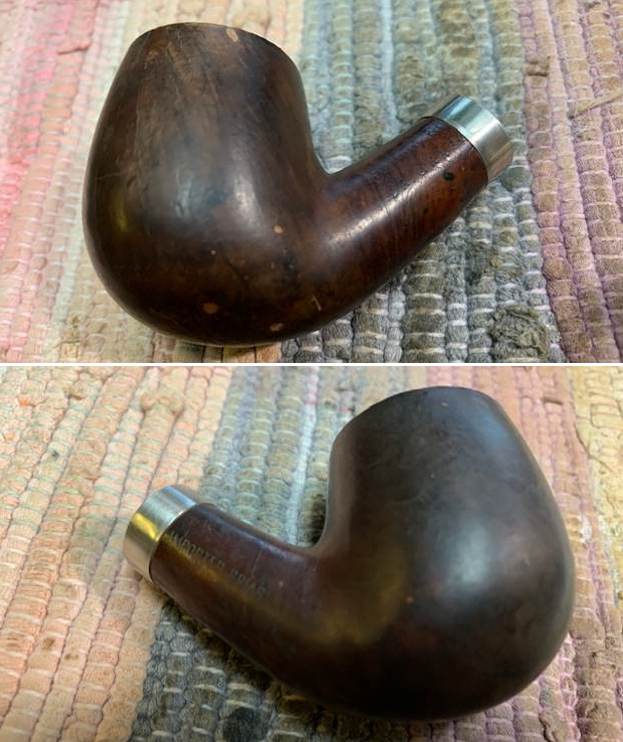
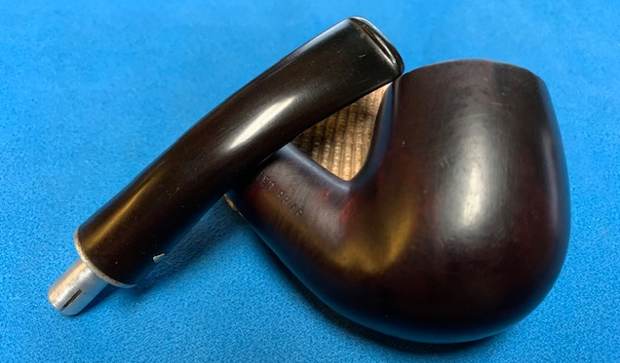
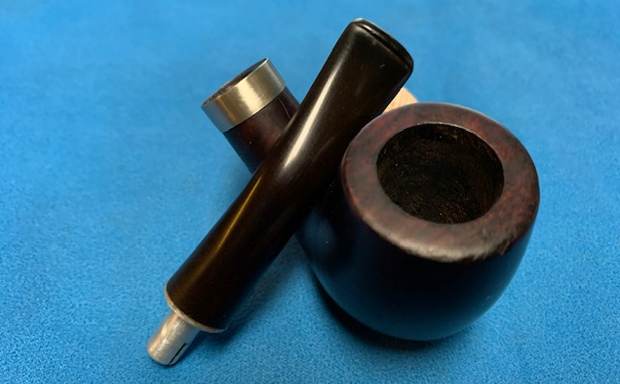
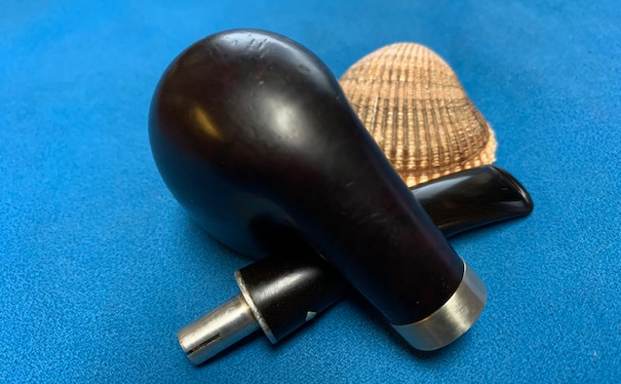
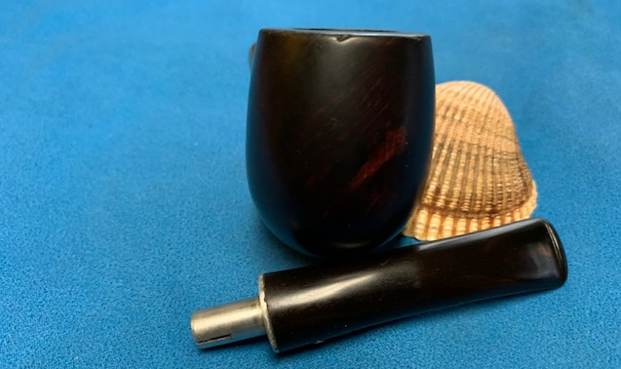
The briar was a little dirty and dinged, and there were some imperfections such as small fills.  Serious work was needed on the chamber and rim.  With the usual care, the stem would be fine.  A little stinger in the tenon was not special enough to keep.  For whatever reason, including the possibility that the stem was a replacement, the tenon was too big for the shank.  Despite the words sterling silver on the band and the name of the billiard, the metal was something less than sterling and would have to go – another indication that prior fiddling was done.  The band ended up being the last problem I fixed. The band slid off before the alcohol soak of the stummel.I gave the stem an OxiClean bath. Sanding with 400, 600 and 1000 paper followed by micro meshing made the stem much better.  I took the tenon diameter enough to fit all the way in the shank.Here is the stummel after the alcohol soak. I reamed and sanded the chamber with 60-grit paper. I used the same coarse paper on the rim before smoothing it with 220 and 320.I discovered a slight problem when the 14.5mm real sterling silver band I ordered arrived, due to my error, of course, not Vermont Freehand’s. I needed 15mm instead of the exact diameter of the stem opening.Careful not to ruin the crisp nomenclature, I took off 0.5mm with 60-grit and smoothed it with everything up to 400.  The exposure on the first shot below is way off.  I retorted the pipe, stained the stummel with Fiebing’s Moccasin Brown leather dye and buffed with micro mesh from 3600-12000. It was time to Super Glue the new band on.

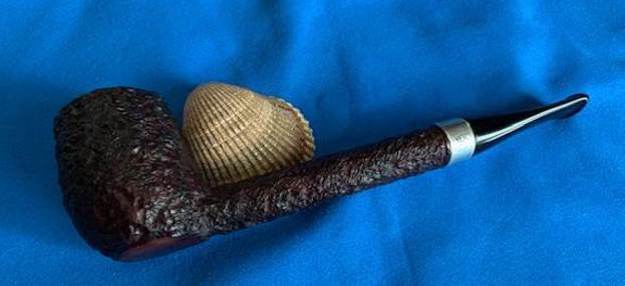
All that was left were buffing the stem and stummel with Red Tripoli and carnauba and polishing the band with Wright’s Silver Cream. SOURCE
https://rebornpipes.com/tag/sterling-imported-briar-pipes/

A Ropp De Luxe Cherrywood and My Mojo Reborn


by Robert M. Boughton

https://www.facebook.com/roadrunnerpipes

Ever tried.  Ever failed.  No matter.  Try again.  Fail again.  Fail better.
— Samuel Beckett

Try not.  Do, or do not.  There is no try.
— Yoda

A series of unfortunate events during the past two years led me to an unaccustomed crisis of confidence.  There was the COVID-19 stay at home order from the governor here, followed by the temporary suspension of my pipe sales, as I now choose to think of it.  A brief time later, five thugs surrounded me outside of a convenience store on my way home from a friend’s, and a fight ensued.  Although I fended off four of them, the boss punk got in multiple blows with a steel-balled sap to my head and the rest of my body before I could retreat to my car and point the gun that I should have kept on me through the window at the young man with the sap.  He and his followers fled, and I drove to the university hospital ER.

Eleven hours later, the doctor told me I had suffered a coup-contrecoup concussion, and there was blood on my brain.  I had passed the night in the waiting room except for the MRI and CT scans, the latter with and without contrast, and never even saw him before then.  After that, unable to do the things that made me happiest – and I had always taken for granted – I gave up pipe restoring, my website, blogging and more or less everything else.  The worst part was that I could not even smoke my pipes because of the exponential sharpening the nicotine added to the already crushing, blinding, paralyzing headaches the good ER doctor told me I could expect, but that there was nothing he could give me to alleviate my misery other than Gabapentin and the max dose of Ibuprofen.

I had fallen off the grid and into a hell of my own inner space.  As Austin Powers said, “Crikey!  I’ve lost my mojo!!”  Little white tablets zap the chronic migraines I have suffered since early childhood.  The only cure for the more recent variety of explosive agony was time for my traumatized brainpan to begin healing, as it continues to do.  I am fortunate that my skull turned out to be as thick as my dad always said it was.

Pipes had piled up, waiting to be reborn.  I saw them now and then when I pawed through the mess on a worktable for something else.  As the excruciation ebbed and made clearer thinking possible, more and more I pondered what could be done with them.  The best plan seemed to be giving them to someone like Steve who could make them whole again.  Just the thought made me feel awful.  (No offense, Steve!) Taking another look, the synapses fired in my brain and provided a memory of both of the quotes I cited at the beginning, which I heard in the pilot to Criminal Minds.  There were six pipes in the eBay lot below, the other two being the Ropp in this blog and an Imported Sterling Briar that’s finished also and coming up next.  Below, top to bottom: no-name, Made in London, England; no-name; King, and a stemless GBD New Standard #1451.  I’m quite sure the GBD was the only reason I bought the lot.

There are more from my roommate, who is trying to cut back on his tobacco bonging (from 12000 grams per month!)  and gave me some of his pipes to do with as I wish, and a few of my own that need work.

What follows is the old college try.

RESTORATION
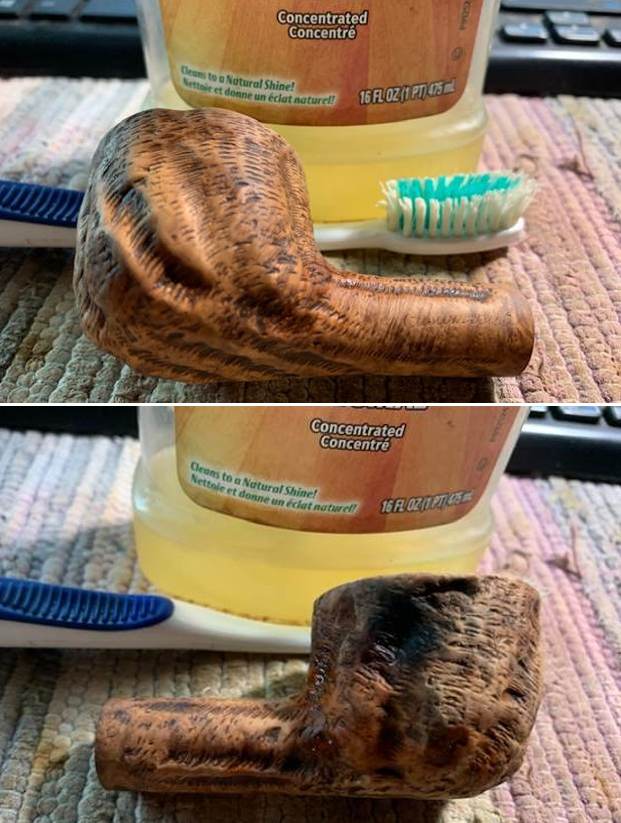
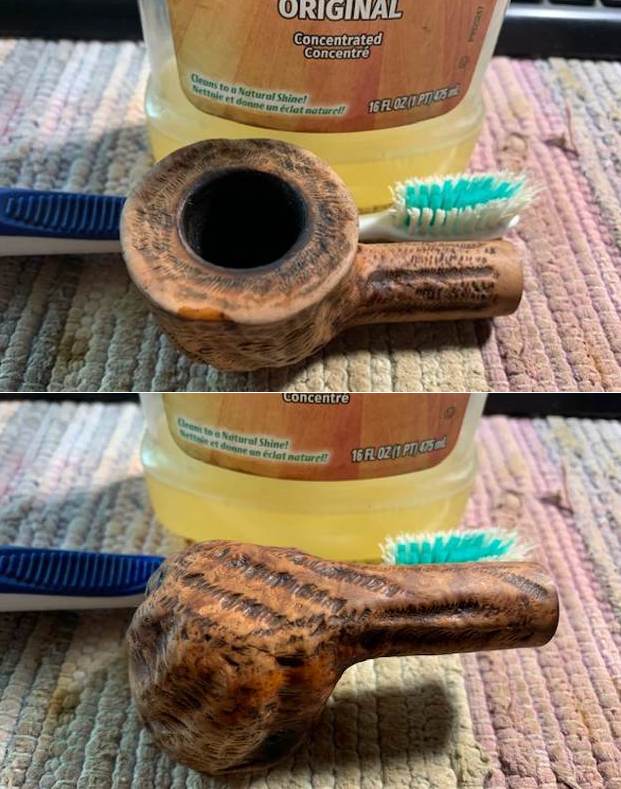
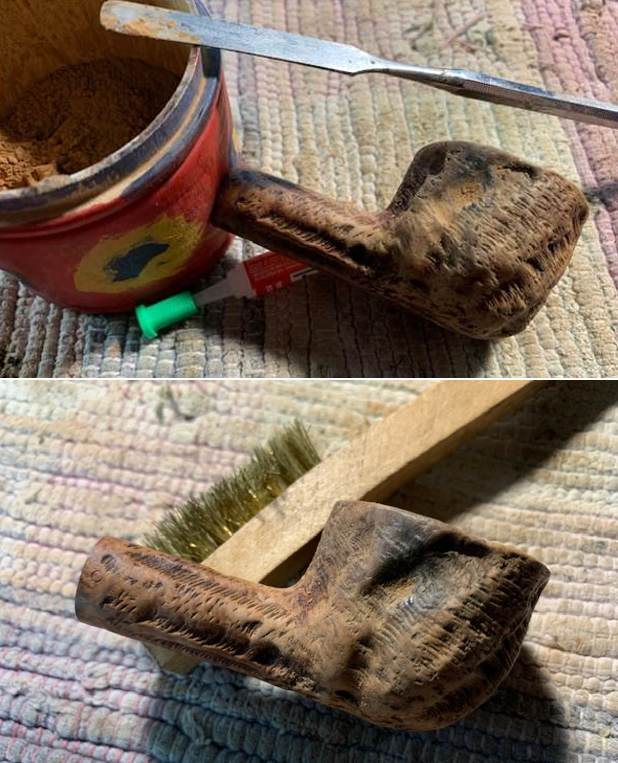
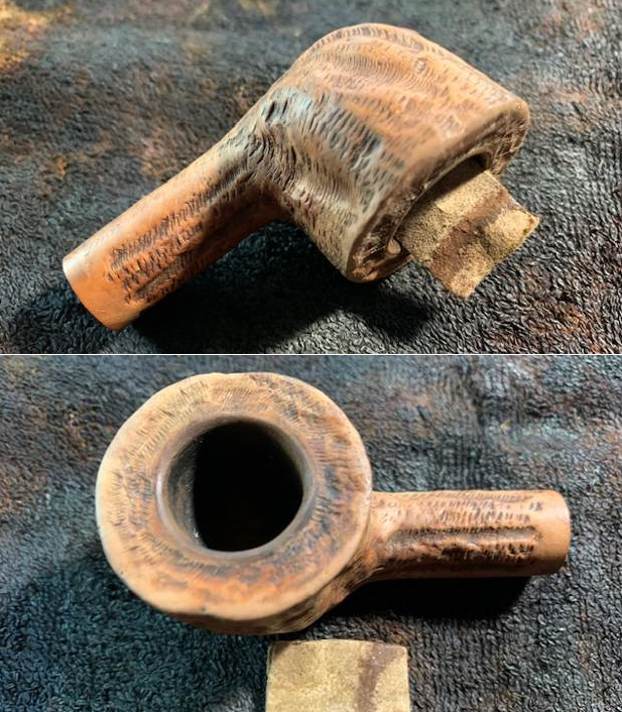
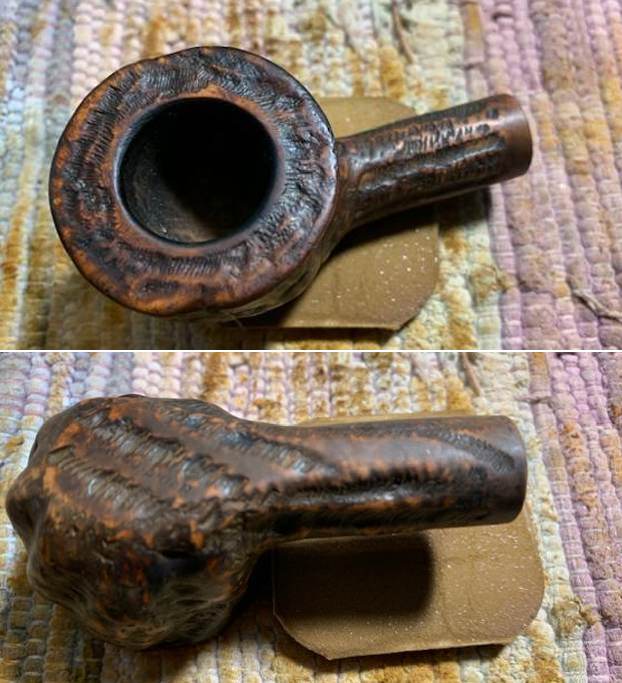
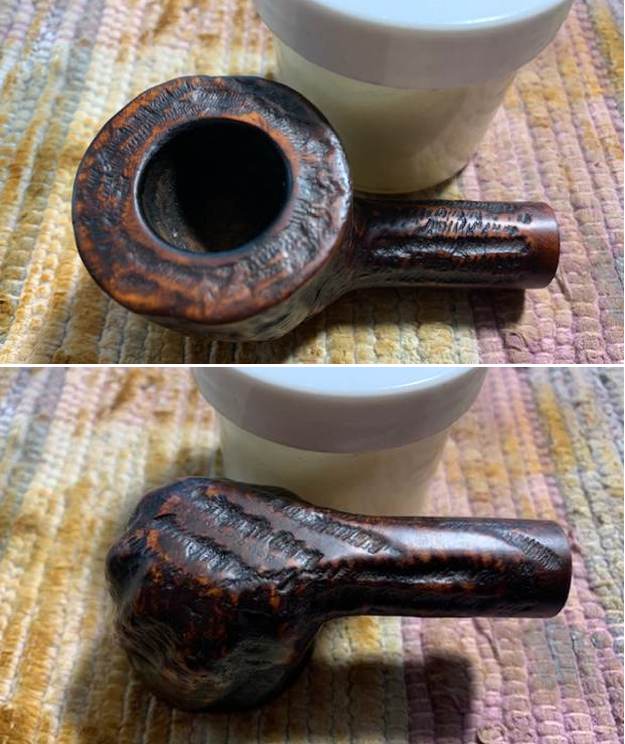
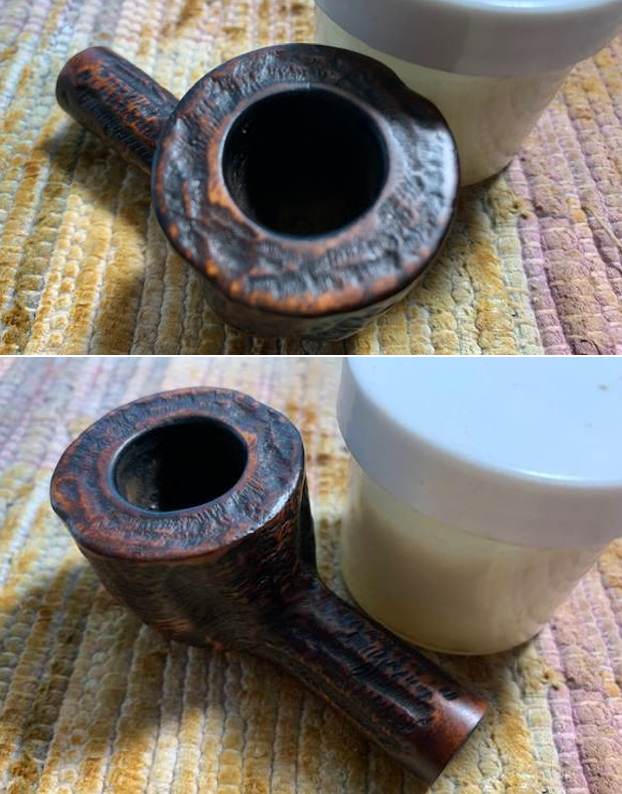
The cherrywood wasn’t in bad shape except for the nomenclature on the bottom, which was fuzzy from wear and tear and a rough area just below the rim that I attribute to shoddy work by Ropp. I gave the stummel an alcohol soak and the stem, which is a permanent part of the shank, an OxiClean bath. The chamber was tiny enough without the accumulated cake, so I cleaned it up with my Senior Reamer and Peterson scraper and gave the pipe a retort. By definition, a cherrywood natural is supposed to be rough, but this was a little much. I used 320, 400 and 600 paper. It needed more work, such as smoothing and staining the area under the rim with Feibing’s brown leather dye, and micro meshing the whole thing.  I seem to have lost track of that part as far as pictures go.

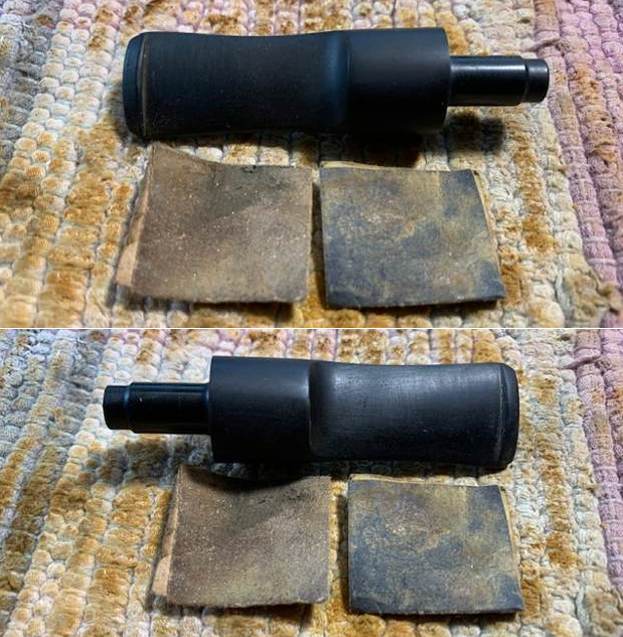
The stem was easy, needing only 400 and 600 paper and dry and wet micro mesh.Decatur Pipe Polish is great for sandblasted, carved and natural finishes, so that’s what I did.All that was left was a spin on the wheels with red Tripoli and carnauba for the stem. The best thing about this project was that I did it – and got my mojo back!  After that, I really enjoyed bringing back the clarity of the nomenclature. It went from illegible to clear enough that I had to correct the folder name in my PC to reflect the actual shape number.


Restemming & Restoring a French Made GBD Sauvage 1345 Poker/Pot


Blog by Steve Laug

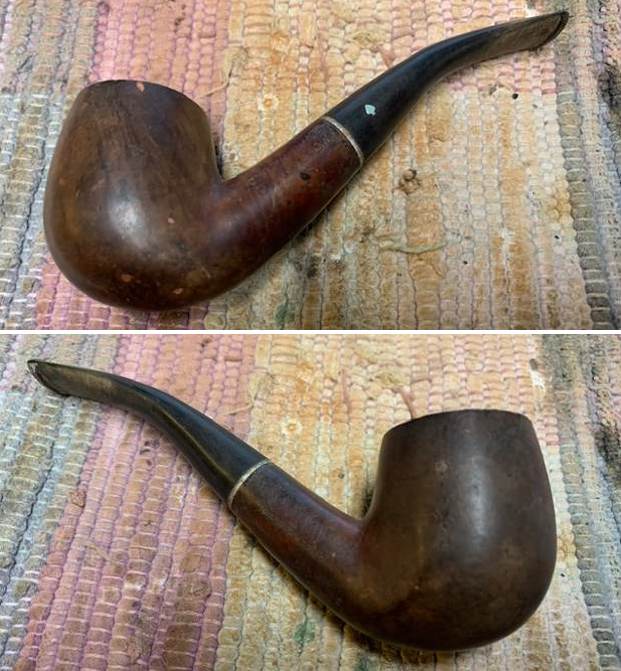
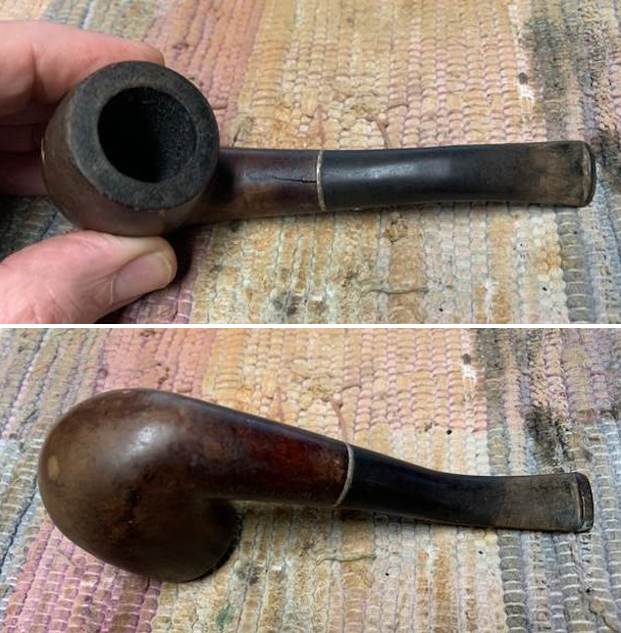
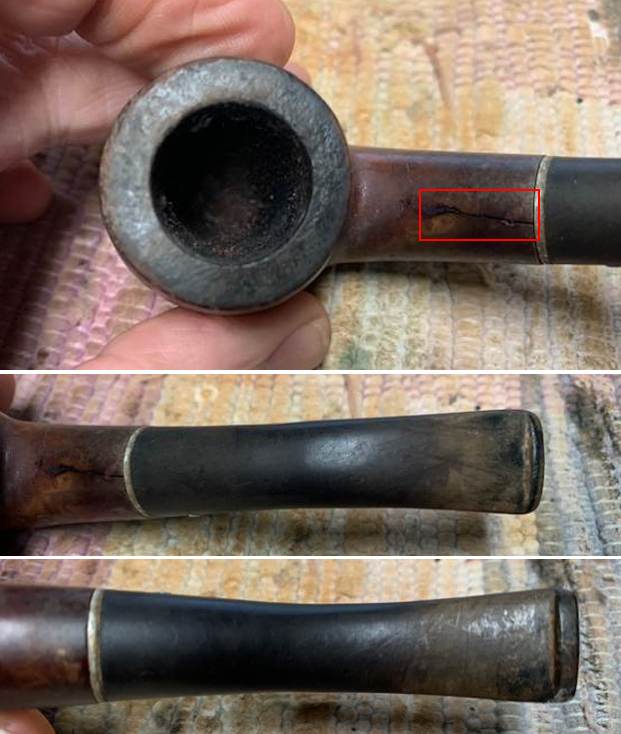
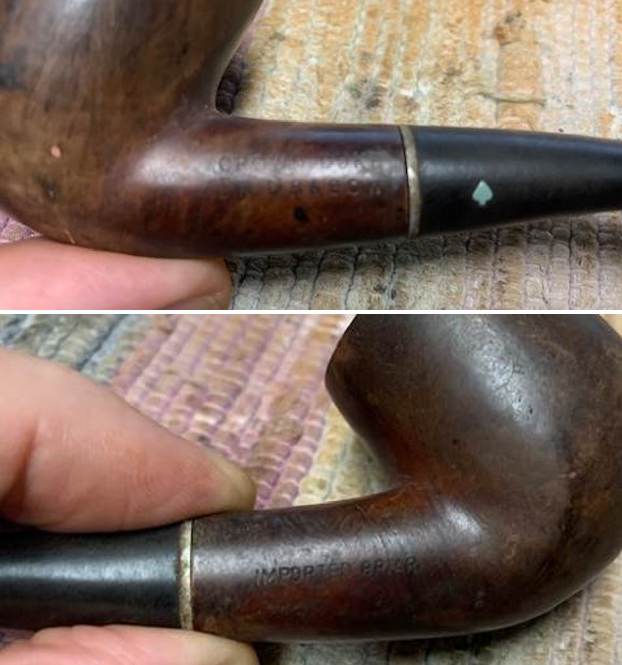
The next pipe I chose to work on was another bowl from my box of bowls to restem. It is a different looking bowl that combines both a Pot and a Poker shape. It has a inward beveled rim, flat bottom and worm trails curled around the bowl sides. When I examined the shank it had a small hairline crack on the right side that would need to be repaired but otherwise it was solid. It was unique enough I wanted to work on it. It is stamped on the left side of the shank and has a GBD oval logo next to the bowl/shank union followed by Sauvage. On the right side of the shank it is stamped FRANCE [over] the shape number 1345. The stamping was clear and readable with a lens. The bowl had been cleaned and reamed somewhere along the way by either Jeff or me. I honestly don’t remember when or where we got this bowl. It looked very good and I was looking forward to seeing the finished pipe. The stem was long gone so this would be a restemming job. I took some photos of the bowl to give a sense of the condition of bowl. The stamping was on both sides of the shank and it is clear and readable as noted above. I have also drawn a red rectangle around the area where the crack in the shank is located in the photo below.The next photo shows the rounded rim top and edges. It also shows the condition of the bowl and rim top/edges. It is clean and looks quite good. There is some burn damage on the inner edge of the bowl and on the beveled rim top at the front and the back of the bowl.Now it was time to begin my restemming work on this pipe. I went through my can of stems and chose a stem that would work. I would need to remove some the diameter of the tenon and the saddle portion to fit the thin almost pencil shank of the pipe. I used a flat file to remove the small amount of excess on the tenon. It was a close fit but I did not want to make the crack in the shank worse by a tenon that was not correct.When I had finished shaping the tenon I sanded it with a piece of 220 grit sandpaper and inserted it in the shank. It was looking pretty good. I would need to trim back some of the diameter of the saddle portion but I liked it! I generally use a Dremel and sanding drum to reduce the diameter of the stem. I do this with the stem in place on the shank so that I do not overdo it. It is a touchy exercise and one slip and I could easily damage the shank and make more work for myself. I move carefully and take it back as close as I can at this point. Once I band the shank I will need to do some more work on it but it is starting to look right. With the fit close enough it was time to band the shank. I generally do the final adjustments on the stem diameter after I have fit the band in place. I picked a band out that would fit when heated. I took a photo of the crack in the shank to show what I was working with. I sanded the shank end and gave it a slight bevel to facilitate pressing the band in place. Once it was ready I put the band on the shank. It was tight so I heated it with a lighter and when it had expanded I pressed it against the pad on my desk and pushed it all the way onto the shank. It covered the “e” on Sauvage slightly but the length of the crack defined what I needed to band it. I used some 220 grit sandpaper to once again take a little bit off the diameter of the tenon and the band compresses the crack and the diameter of the mortise changes. When I was finished I put the stem in the shank and took photos of the newly banded shank. It was going to look good once I finished shaping the stem diameter but it is very close at this point. What do you think of the new look? I finished adjusting the fit of stem diameter with 220 grit sandpaper and everything was aligned. I started the polishing with 400 grit wet dry sandpaper and the stem was looking very good at this point. Now I needed to deal with the tooth marks and chatter on the end of the stem. I “painted” them with the flame of a lighter to lift them as much as possible. I filled in the ones that remained with clear super glue. Once the glue cured I flattened out the repairs with a small flat file. I followed that by sanding the stem with 220 grit sandpaper to blend them into the surface. I started polishing the stem with 400 grit wet dry sandpaper. I polished the stem with micromesh sanding pads – wet sanding with 1500-12000 grit pads. I wiped the stem down after each sanding pad with Obsidian Oil. I polished the stem with Before & After Pipe Stem Polish – both Fine and Extra Fine and buffed it with a cotton cloth. Once I had finished the polishing I gave it final coat of Obsidian Oil and set it aside to dry. With the stem finished (other than to buff the pipe at the end)I set it aside and I turned my attention to the bowl. I used a wooden ball that Kenneth gave me with a piece of 220 grit sandpaper to clean up the bevel. I finished with a folded piece of 220 grit sandpaper to further minimize the burn damage. I touched up the stain with an Oak Stain pen to match the surrounding briar of the bowl. It looked much better at this point. I polished the briar with micromesh sanding pads – dry sanding with 1500-12000 grit pads. I wiped the bowl down after each pad with a damp cloth to remove the sanding debris left behind. I rubbed the bowl and shank down with Before & After Restoration Balm. I worked it into the surface of the smooth and worm trails on the bowl and shank with my fingertips to clean, enliven and protect the briar. I let the balm sit for a little while and then buffed with a cotton cloth to raise the shine. The Balm did its magic and the grain really took on dimension and colour. I am excited to be on the homestretch with this petite French Made GBD Sauvage 1345 Poker/Pot. This is the part I look forward to when it all comes back together, polished and waxed. I put the bowl and the new stem together and polished the stem and bowl with Blue Diamond to polish out the scratches in the vulcanite and give a light shine to the bowl. I gave the bowl and the stem multiple coats of carnauba wax. I buffed the pipe with a clean buffing pad to raise the shine. I hand buffed it with a microfiber cloth to deepen the shine. The pipe polished up pretty nicely. The worm trail carving on the bowl actually looks okay with the rest of the smooth finish. The banded shank and new polished black saddle vulcanite stem works well with this little sitter. This GBD Sauvage Poker/Pot was another fun pipe to work on and came out looking great. It is a comfortable sized pipe to hold in the hand. The finished pipe is shown in the photos below. The dimensions of the pipe are Length: 5 ¾ inches, Height: 1 ½ inches, Outside diameter of the bowl: 1 ½ inches, Chamber diameter: ¾ of an inch. The weight of the pipe is 33 grams/1.16 ounces. If you are interested in adding this pipe to your rack it will be on the rebornpipes store in the French Pipemakers Section soon. Thanks for reading this blog and my reflections on the pipe while I worked on it.
Restemming and Breathing New Life into a Flumed Genuine Block Meerschaum Author


Blog by Steve Laug

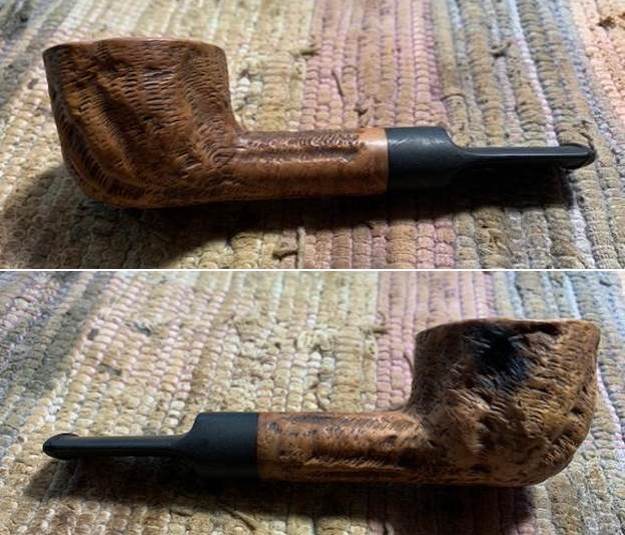
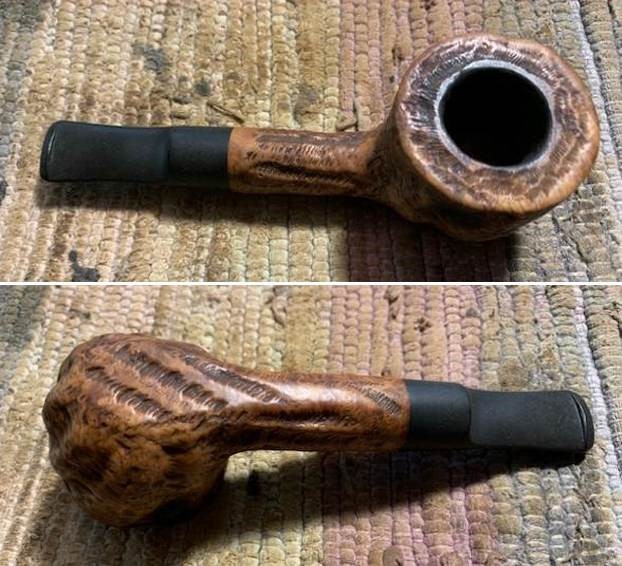
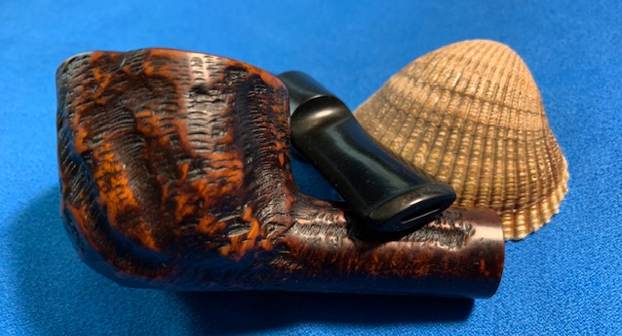
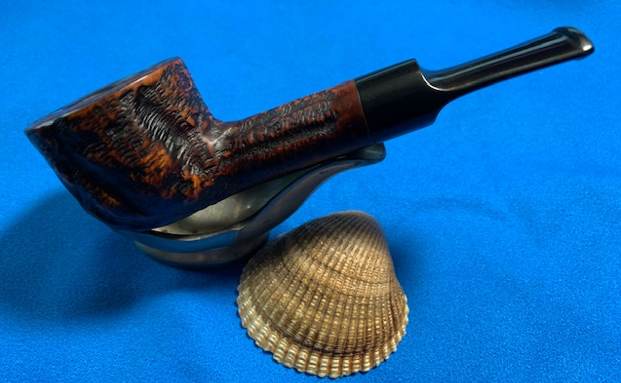
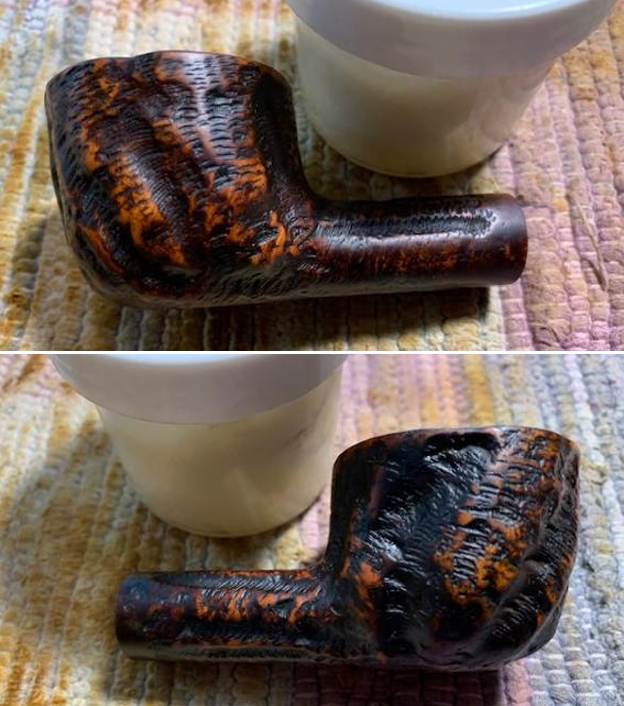
The next pipe I chose to work on was another bowl from my box to restem. This one is an interesting looking meerschaum with a rugged rustication on the bowl and shank. It has a flumed black rim top with the colour going down a short distance on the bowl sides. It is stamped on the underside of the shank and reads Genuine Block [over] Meerschaum. Arched around the end at the shank stem it is stamped GT. Britain. The stamping was faint but readable and to me it looks like an African Meerschaum pipe made by Manx pipes on the Isle of Man. It had been cleaned and reamed somewhere along the way by either Jeff or me. I honestly don’t remember when or where we got this bowl. It was tired looking but showed a lot of promise. The stem was long gone so this would be a restemming job. I took some photos of the bowl to give a since of the condition of this nice little Author. I took some photos of the stamping on the sides of the shank. The stamping is clear and readable as noted above. There was a smooth panel on the underside of the shank. It is stamped/carved Genuine Block Meerschaum. It is faint but still readable.The next photo shows the flumed rim top and edges. It also shows the condition of the bowl and rim top/edges. It is clean but there is still a bit of lava on the rim top that will need to be addressed.Jeff had picked up some great unused stems of all sorts and sizes. In the bag I received from him yesterday was the kind of stem I had been looking for for this pipe. It is an oval saddle stem whose thickness is correct but the width will need to be adjusted. The tenon will need to be turned to fit the shank and will also need to be shortened for a proper depth. Now it was time to work on the pipe itself. I started with fitting the stem to the shank. I used the PIMO Tenon Turning Tool to reduce the diameter of the tenon and smooth out the face of the stem. I drilled the airway to hold the guiding pin and adjusted the cutting head for the first and then the second turn that removed the excess diameter of the tenon. I always love the swirls of vulcanite that peel off while the turner does its work. I cleaned up the casting remnants on the face of the stem with a file for a proper fit against the shank. I constantly checked the fit in the shank while I worked on it. I shortened the length of the tenon a topping board with 220 grit sandpaper. When it was finished I fit it in the shank and took photos of the pipe and its new stem. I still had a lot of work to do but there was progress. Now it was time to adjust the width by reshaping the sides of the new stem. I would also need to do some adjustments to the fit against the shank face. I took some photos of the top and underside to show the excess material on the stem that would need to be removed.I used my Dremel and a sanding drum to do the rough work on the stem. I worked on it carefully to remove as much excess as I could from the sides and reshape the look of the stem to match the stem. The only way I know how to do this is with the new stem in place in the shank and then carefully move the sanding drum up and around the stem surface to get a close/rough fit. It was getting much closer but there was a lot more work to do hand shaping it with sandpaper and files. I decided to enjoy a bowl of Friedman & Pease Fool’s Cap in a Nachwalter I cleaned and restored a while ago. I find that slowly puffing a bowl relieves some of the tedium of shaping and sanding a newly fit stem to get all the angles just right.I took photos of the pipe after I had fit the stem to the shank. The look and fit of the stem looked like it was original. I was pleased with the look and read to move on to polishing it. I polished the stem with micromesh sanding pads – dry sanding with 1500-12000 grit pads. I wiped the stem down after each sanding pad with Obsidian Oil. With the shaping and polishing finished on the straight stem it was time to bend the stem to match the angles of the shank. I used a heat gun to soften the vulcanite and then gave it a slight downward bend. I left the stem in the shank and touched up the polishing of the stem with Before & After Pipe Stem Polish – both Fine and Extra Fine and buffed it with a cotton cloth. Once I had finished the polishing I gave it final coat of Obsidian Oil and set it aside to dry. With the stem finished (all but the final buff) I turned my attention to the bowl. I used a brass bristle wire brush to clean up the debris still in the rusticated, flumed rim top of the bowl. It looked better when I finished.  I scrubbed the rusticated surface of the bowl and rim with a tooth brush and undiluted Murphy’s Oil Soap. I rinsed the bowl off with warm water to remove the debris and clean the brush. The finish looked much better. I used a black stain pen to touch up the flumed rim top and edges. I applied it carefully around outer edge of the bowl as well following the pattern of the previous flume.I am excited to be on the homestretch with interesting British Made Flumed Rusticated Meerschaum Author. This is the part I look forward to when it all comes back together, polished and waxed. I put the bowl and the new stem together and polished the stem and bowl with Blue Diamond to polish out the scratches in the vulcanite and give a light shine to the bowl. I gave the stem multiple coats of carnauba wax. I buffed the pipe with a clean buffing pad to raise the shine. I hand buffed it with a microfiber cloth to deepen the shine. The pipe polished up pretty nicely. The rugged rusticated finish looks really good with the deep nooks and crannied of the rustication and the porous spots showing the “grain” in the meerschaum. The restored bowl goes really well with the new polished black saddle vulcanite stem. This Rusticated Flumed Author was another fun pipe to work on and came out looking great. It is a comfortable sized pipe to hold in the hand. The finished pipe is shown in the photos below. The dimensions of the pipe are Length: 5 inches, Height: 1 ¼ inches, Outside diameter of the bowl: 1 ¼ inches, Chamber diameter: ¾ of an inch. The weight of the pipe is 51 grams/1.80 ounces. If you are interested in adding this pipe to your rack it will be on the rebornpipes store in the Ceramic and Meerschaum Pipe Section soon. Thanks for reading this blog and my reflections on the pipe while I worked on it.

Cleaning up a Television Imported Briar Italian Made Churchwarden


Blog by Steve Laug

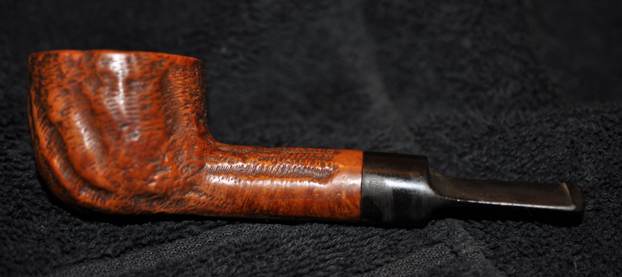
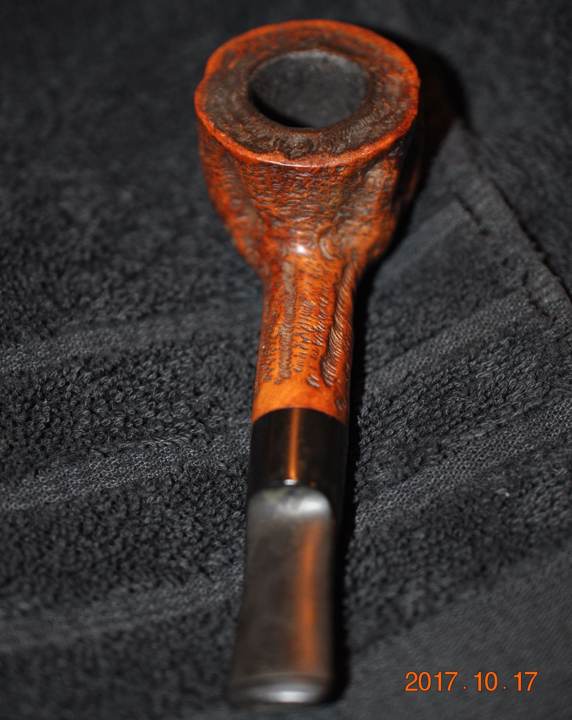
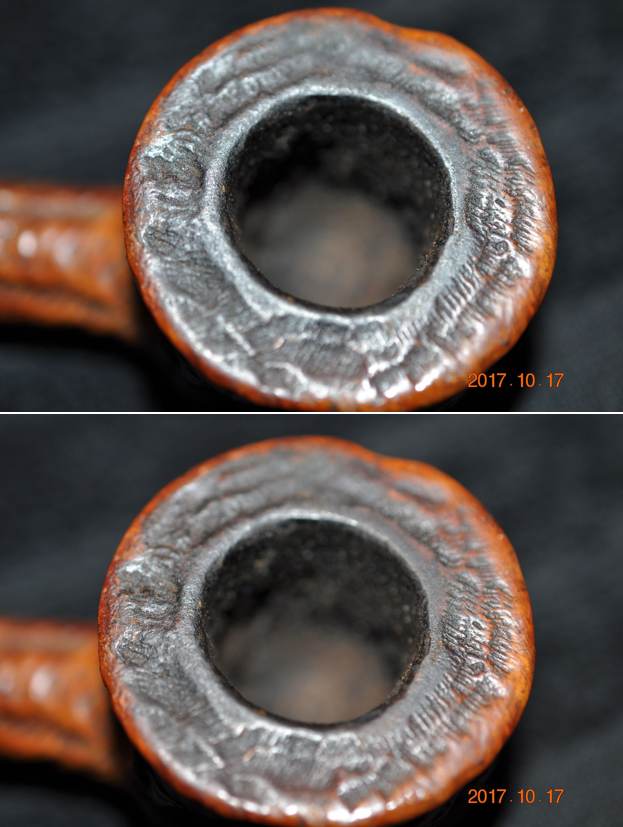
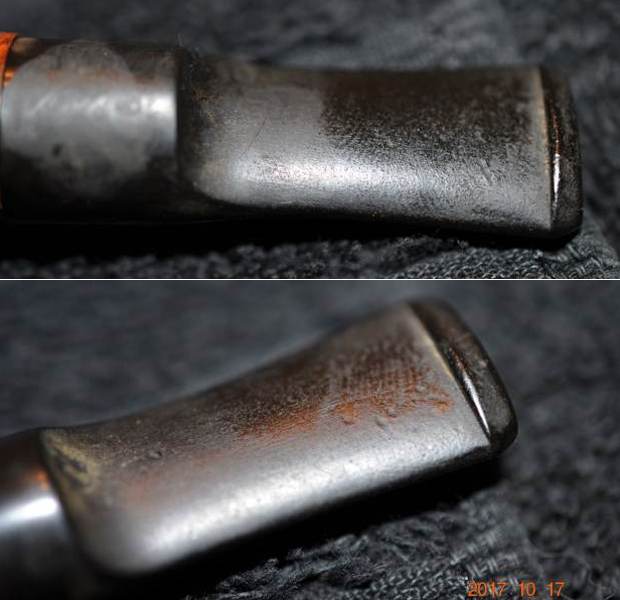
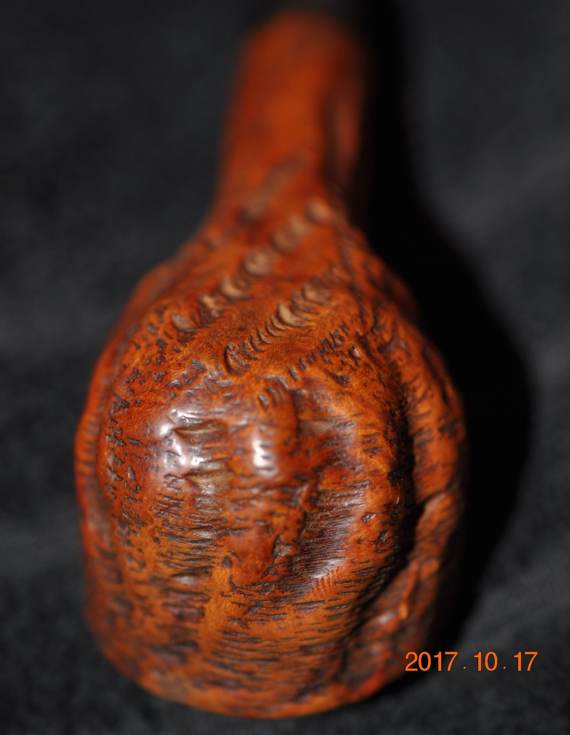
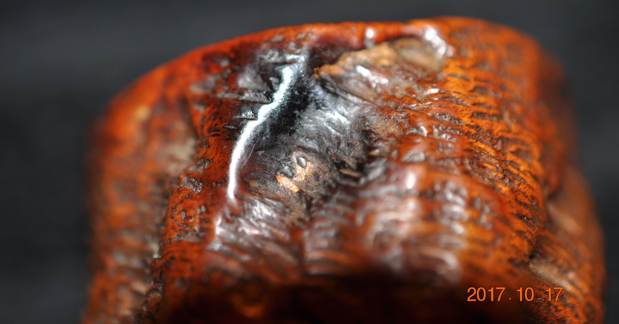
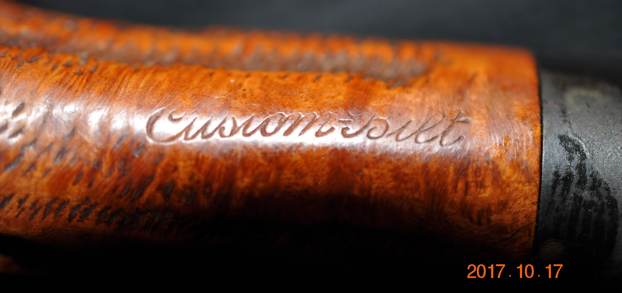
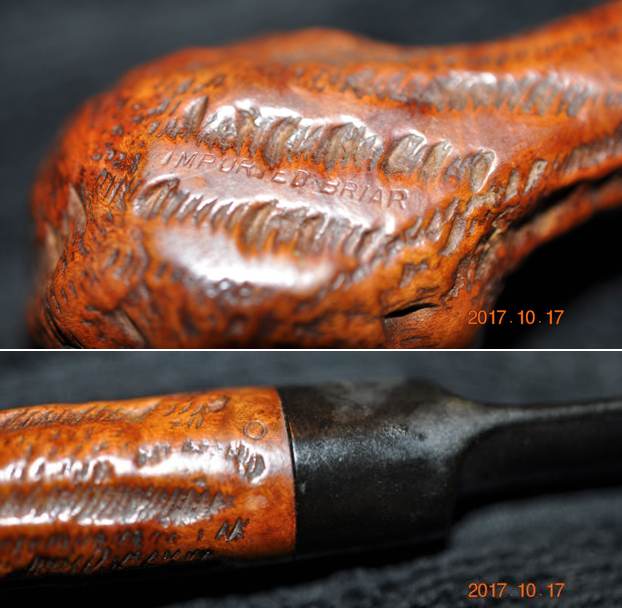
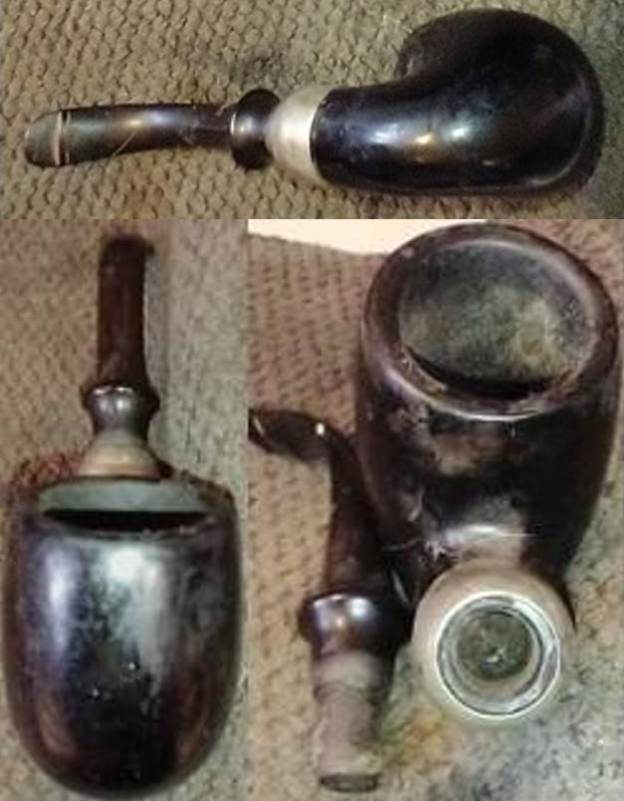
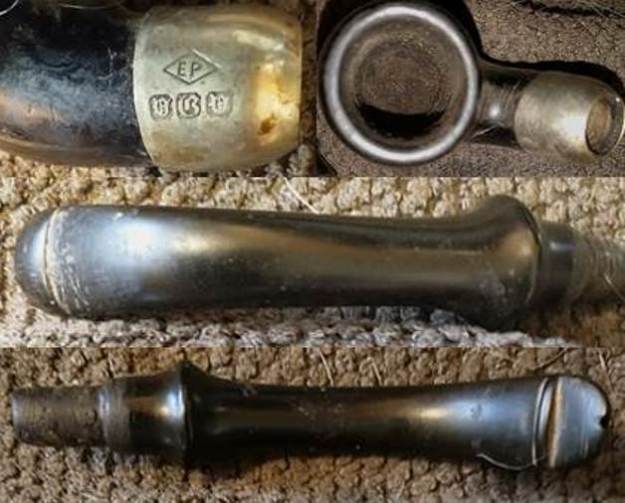
The next pipe on the table was purchased from an antique store on 10/14/17 in Pocatello, Idaho, USA. It is a nice looking Rusticated Billiard Churchwarden with a long straight stem. It is stamped on the left side of the shank and reads TELEVISION [over] Imported Briar [over] Italy. The stamping is very clear and readable. The rusticated finish had a spotty coat of varnish around the rusticated rim, sides and shank but it was primarily on the high spots with little of it going into the depths of the rough rustication. The bowl had a thin cake and dust and debris in the rustication on the rim top and the rest of the bowl and shank. The stem was acrylic and in decent condition with some ripples in the underside from when it had been heated to bend it. It had some tooth chatter and marks on both sides near the button. Jeff took photos of the pipe when he unpacked it and before he started his clean up work. It is a great looking piece of briar. Jeff took photos of the bowl and rim top to show the cake in the light cake bowl and the debris in the rustication. He also took photos of the stem to show the wrinkles in the middle of the underside as well as the light tooth marks and chatter on the acrylic stem. He took photos of the bowl and heel to show the condition of the finish. Though the photos show the deep rustication around the bowl sides and heel. It is a rugged, tactile looking pipe with a nickel band on the shank. The stamping is on a smooth portion of the shank. You can also see the spotty finish on the bowl and shank. Jeff took photos of the stamping on the left side of the shank. It read as noted above and was readable. It took two photos to capture the full stamp on the shank. You can also see the crackle in he varnish coat on the shank. Jeff also took photos of the shank band. The photos show that it had an EP in a diamond stamped on it and underneath were some faux hallmarks.I have worked on quite a few Television Pipes over the years – old timers, billiards and at least one Churchwarden pipe. I checked all the usual sites for information and I could find nothing about the brand. I decided to leave the hunt behind and just work on the pipe.

I took some photos of the pipe as I took it out of the box. Here is what I saw. I slid it out of the wrapper around it. I could see that Jeff had cleaned it well. The bowl had been reamed with a PipNet reamer and Savinelli Fitsall Pipe Knife. He had scrubbed the exterior with undiluted Murphy’s Oil Soap. He rinsed it with warm water. He cleaned out the internals with alcohol, cotton swabs and pipe cleaners. The stem was twisted and tweaked to the right as can be seen in the photos of the top and underside of the pipe. The grain on the bowl is quite nice with just a few small fills that are solid and well blended in with the surrounding briar. I took photos of the pipe before I started my work on it. The rim top had cleaned up very well and the rim top and edges looked very good. The stem was in decent condition other than light tooth chatter on both sides at the button. The stem also has some casting marks on the sides and a wrinkle on the underside from when it was heated and bent originally. I was surprised to see that the stem was acrylic rather than vulcanite. It really does shine. I took a photo of the stamping on the smooth panel on the left side of the shank. It is clear and readable as noted above.I removed the stem and took a photo of the pipe to show the proportion of the stem to the bowl. It is a nice looking pipe.I decided to start work on this pipe by addressing the spotty varnish coat on the bowl. It was a bit odd in that it was on the high spots not in the crevices of the rustication as much. I scrubbed it with a brass bristle wire brush and acetone to try and break it down. Once finished it did look better. I would at least be able to stain the valleys and crevices! I stained the bowl with a dauber and a light brown aniline stain. I put the stain on quite heavy to let it get down in the crevices. I flamed it with a lighter to set the stain in the grain and repeated the process until I was happy with the coverage.When the stain dried I buffed the finish with a clean buffing pad and a horsehair shoe brush to raise the shine. I also polished the Electro Plated band with a jewelers cloth to bring out the shine. It is quite nice looking at this point. I set the bowl aside and turned my attention to the stem. I sanded out the casting marks along both sides of the stem as well as the wrinkle in the stem with 220 grit sandpaper. I also smoothed out the tooth chatter on both sides. It became exceptionally clear that I was working with an acrylic stem. The sanding dust was almost blue looking and plastic feeling dust. I started polishing the stem with 400 grit wet dry sandpaper. I polished the stem with micromesh sanding pads – 1500-12000 grit pads. I wiped it down with Obsidian Oil after each sanding pad. I used Before & After Pipe Polish – both Fine and Extra Fine to further polish the stem. I gave it a final coat of Obsidian Oil and set it aside to dry. Once I finished working on the stem, this Television Imported Briar Italy Churchwarden was another beautiful pipe. The rusticated briar around the bowl is clean and really tactile. The rim top and edges are in great condition. The rich brown stains gave the grain a sense of depth with the polishing and waxing. The depth of the rustication really stood out. I put the acrylic stem back on the bowl and carefully buffed the pipe with a clean buffing pad to raise the shine. I hand buffed the pipe with a microfiber cloth to deepen the shine. The finished Television Italian Churchwarden is a beauty and feels great in the hand and looks very good. Give the finished pipe a look in the photos below. The dimensions of the pipe are Length: 11 inches, Height: 1 ¾ inches, Outside diameter of the bowl: 1 ¼ inches, Chamber diameter: ¾ of an inch. The weight of pipe is 1.38 ounces /40 grams. It is another one that is much more beautiful in person than these photos can capture. I will be putting it on the rebornpipes store soon. Look for it in the Italian Pipe Makers section. If you would like to add it to your collection let me know. Thanks for walking through the restoration with me.