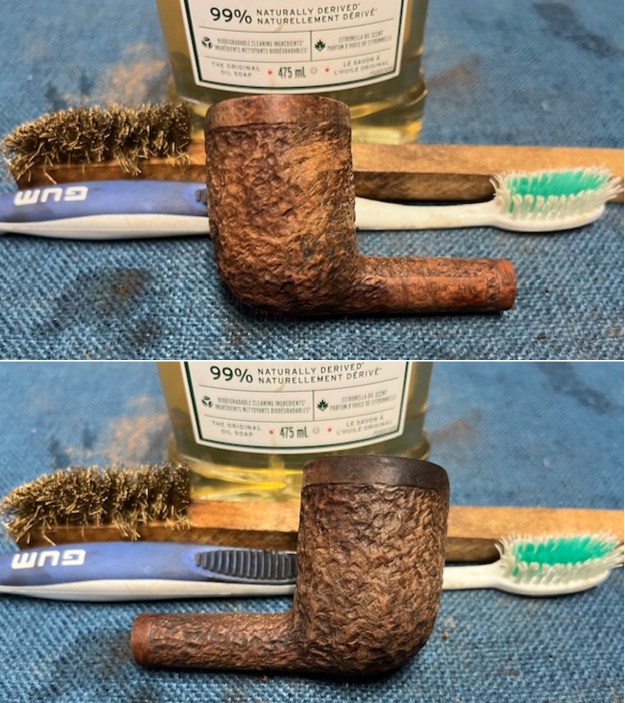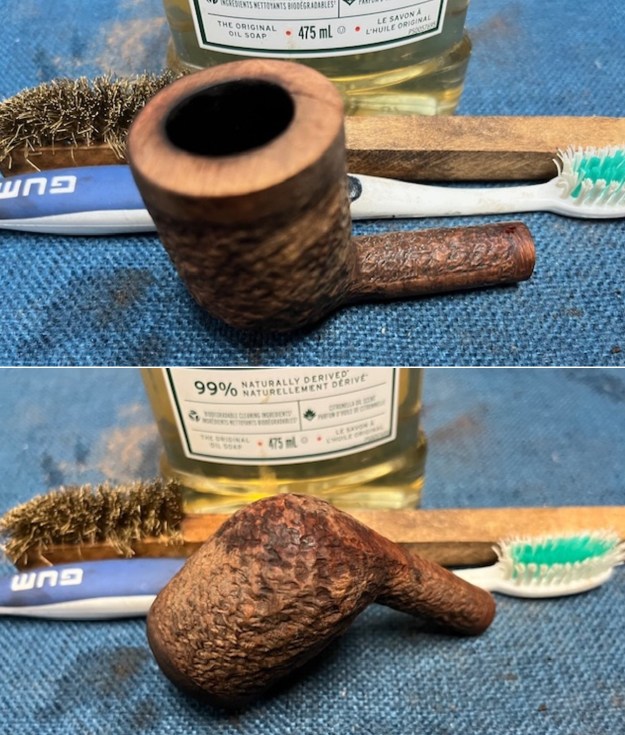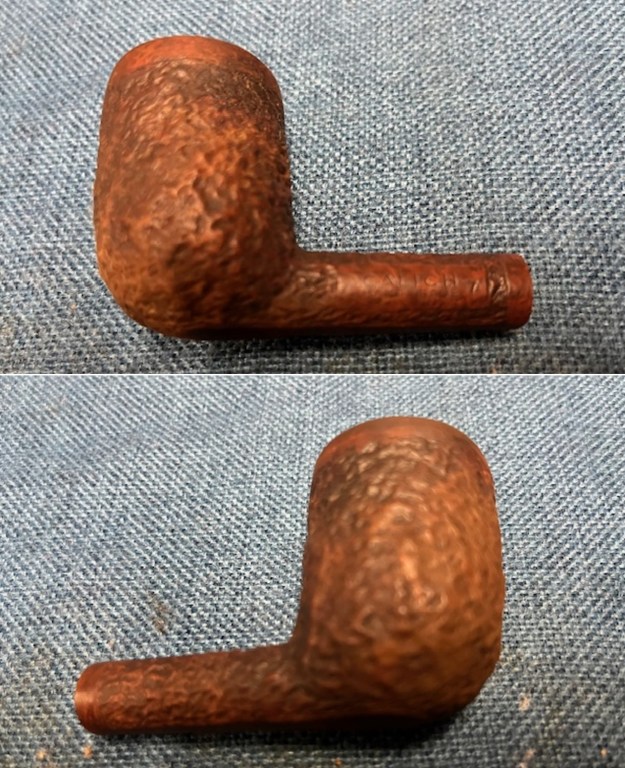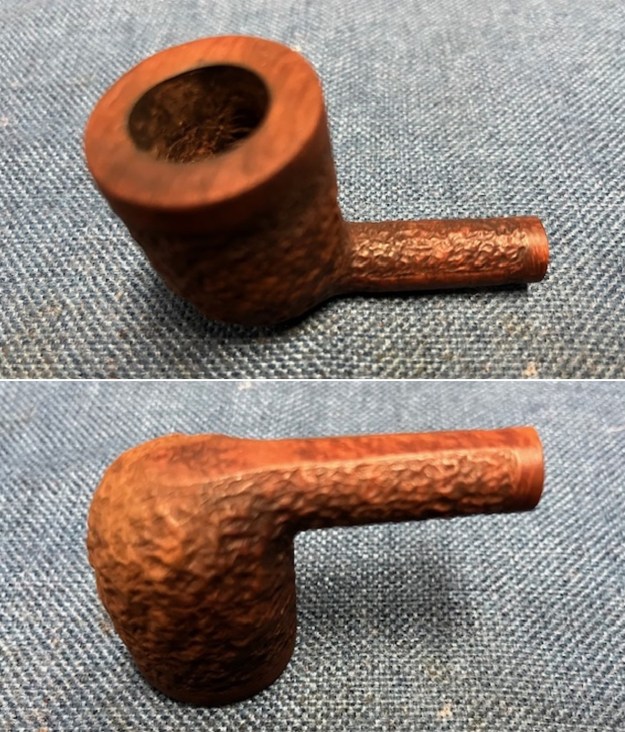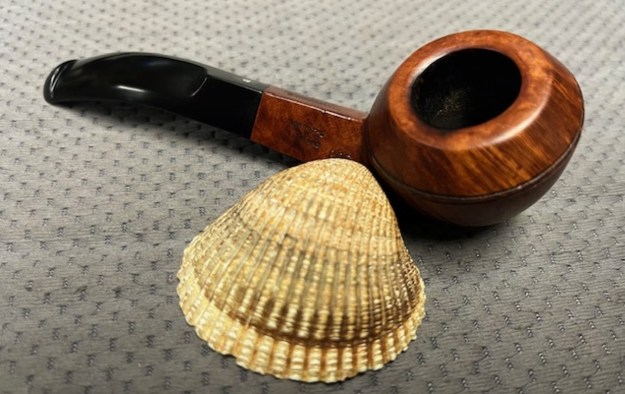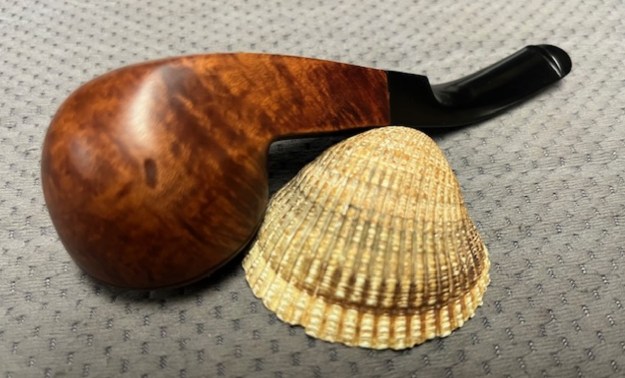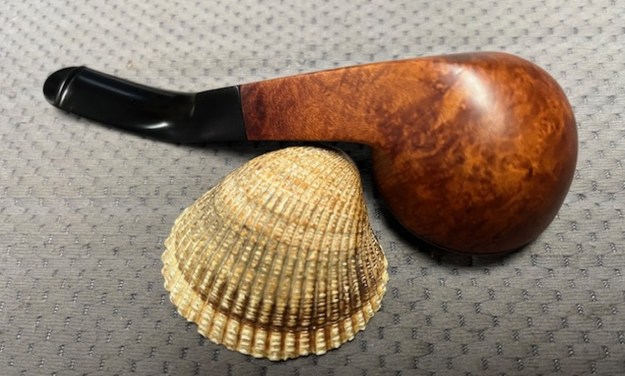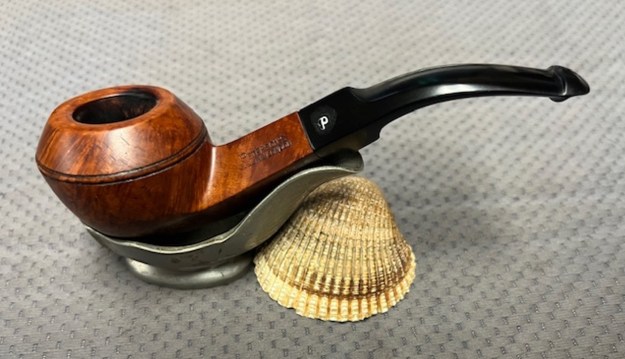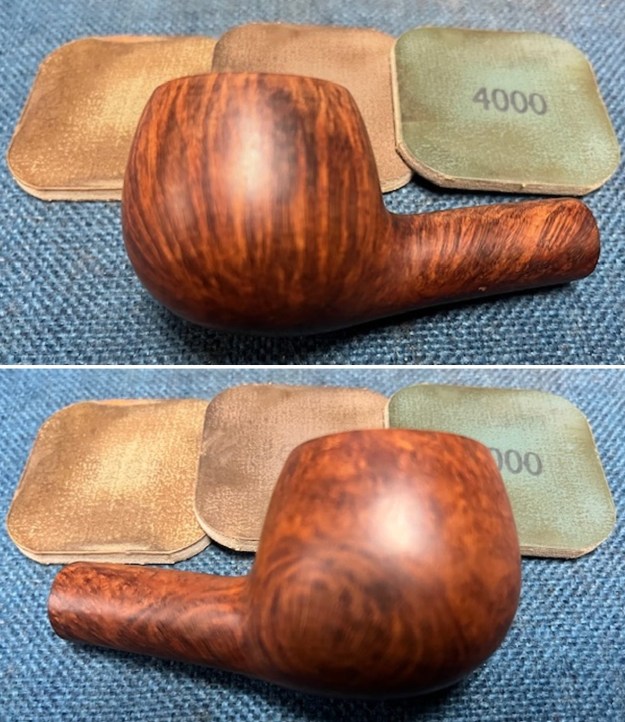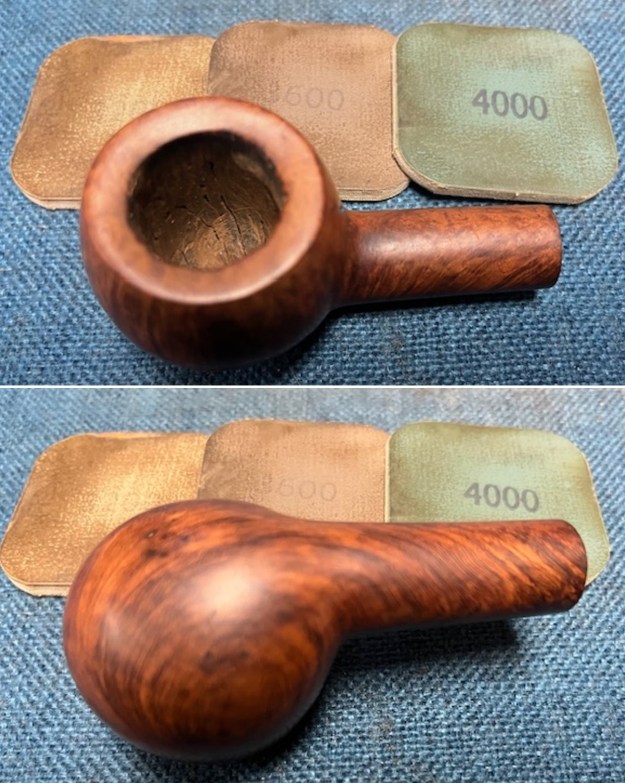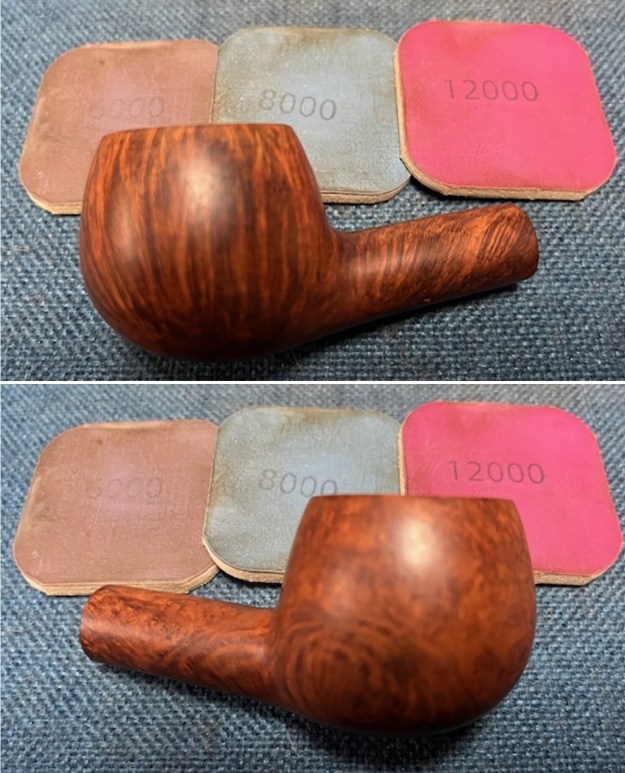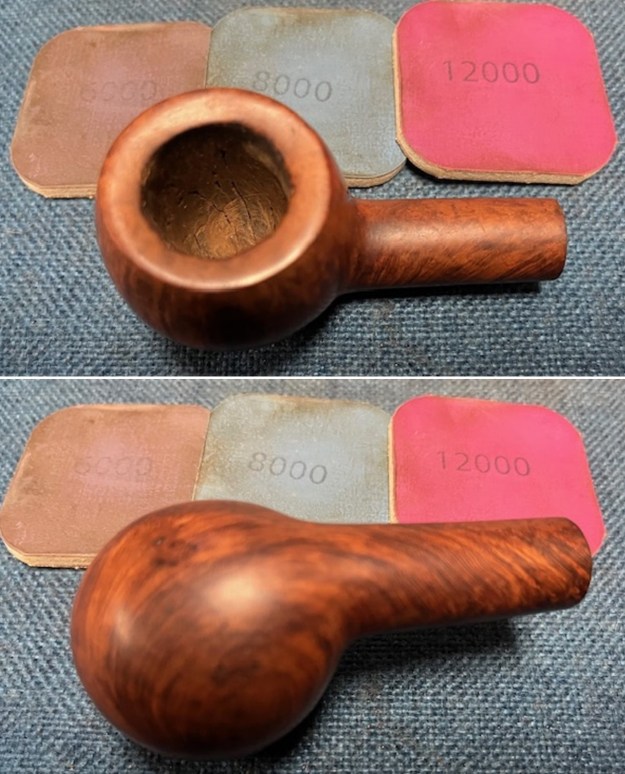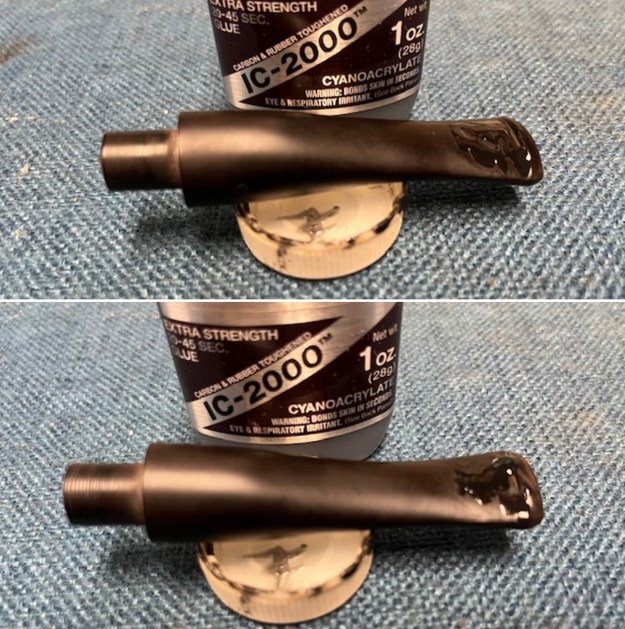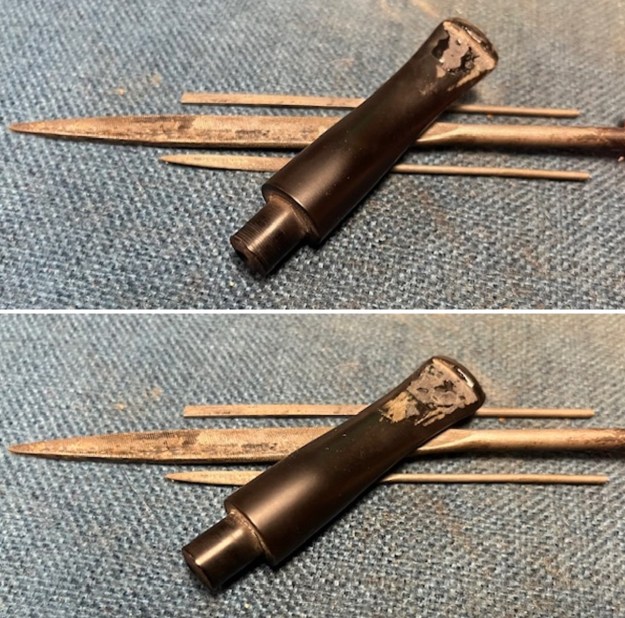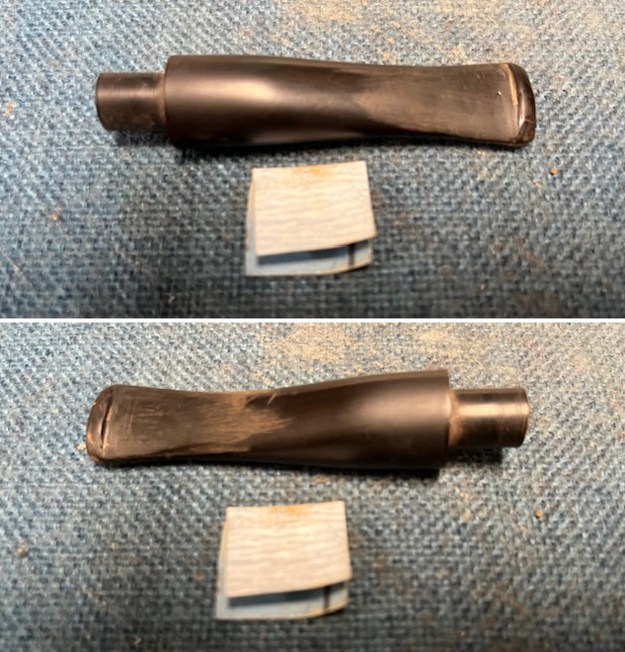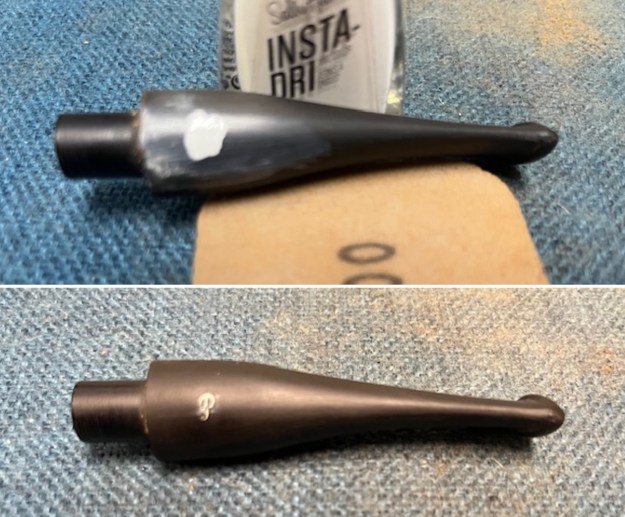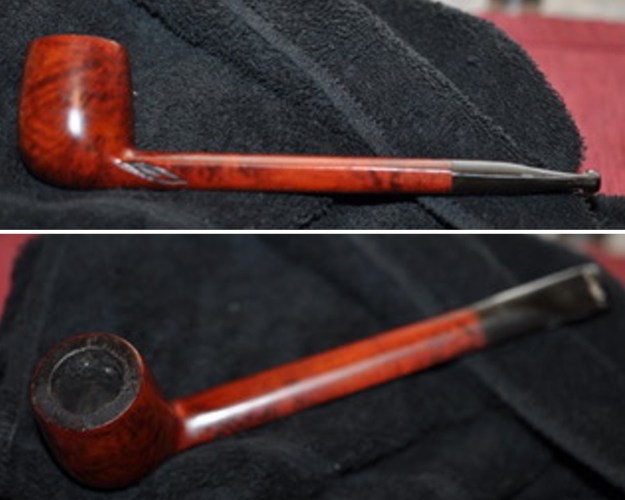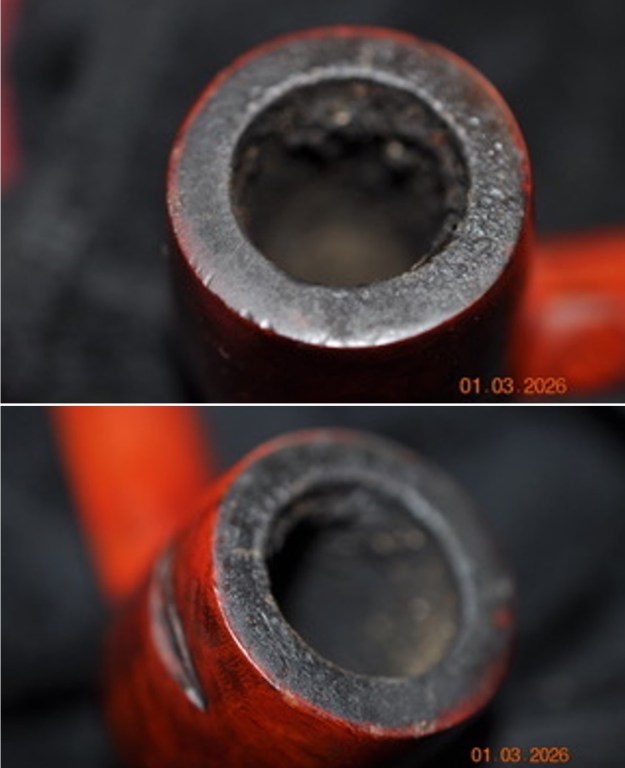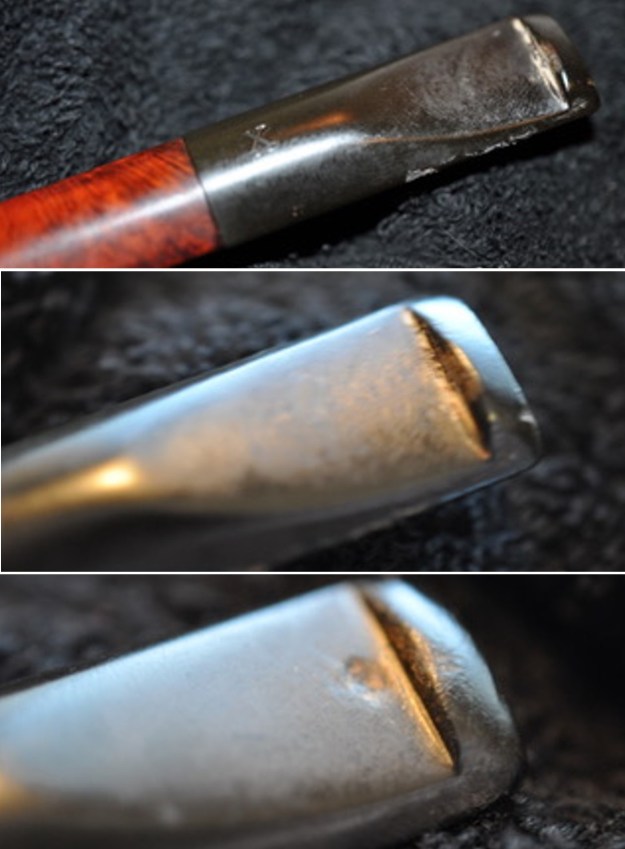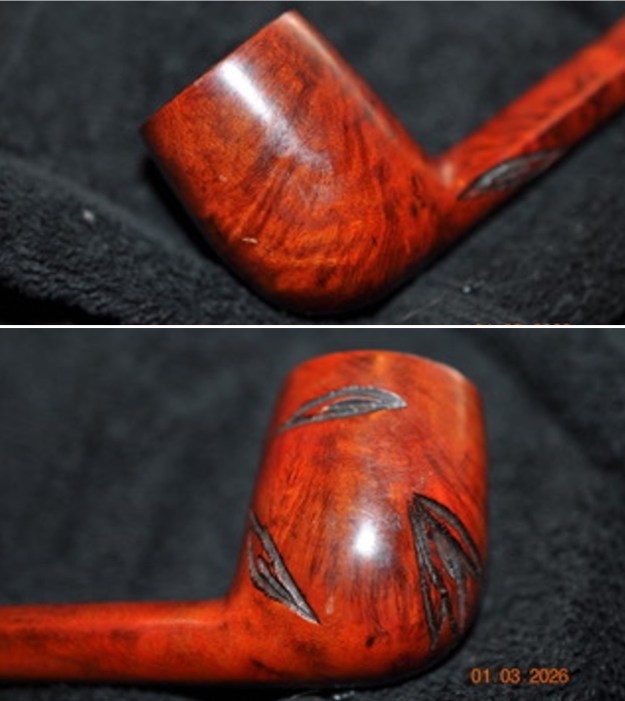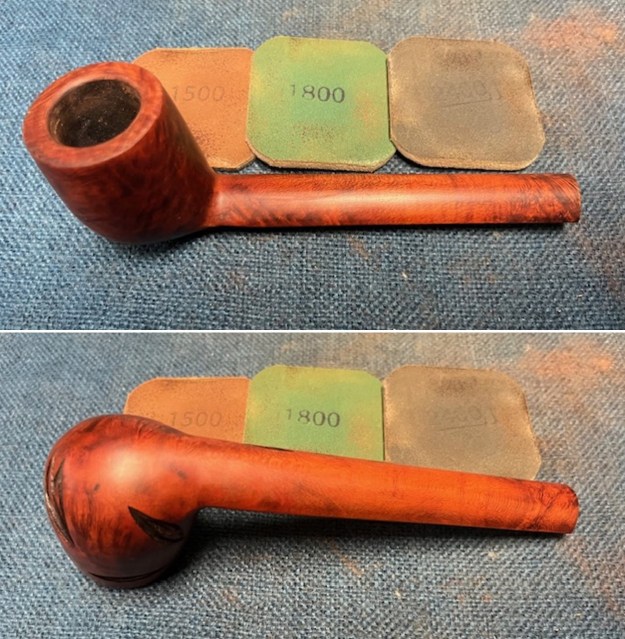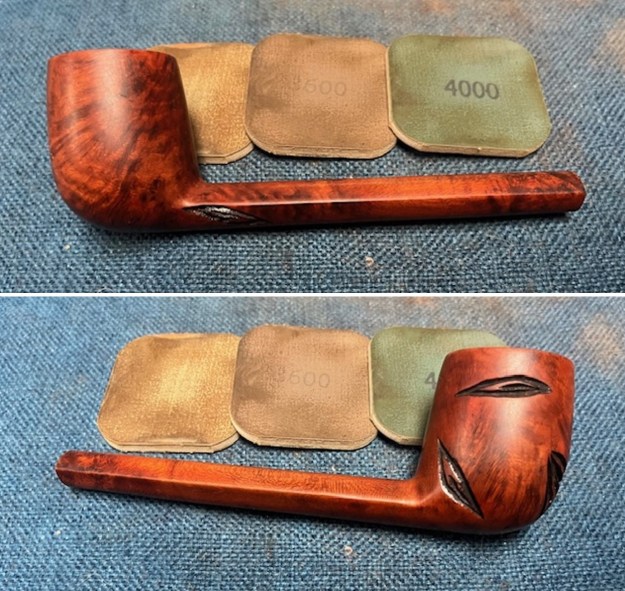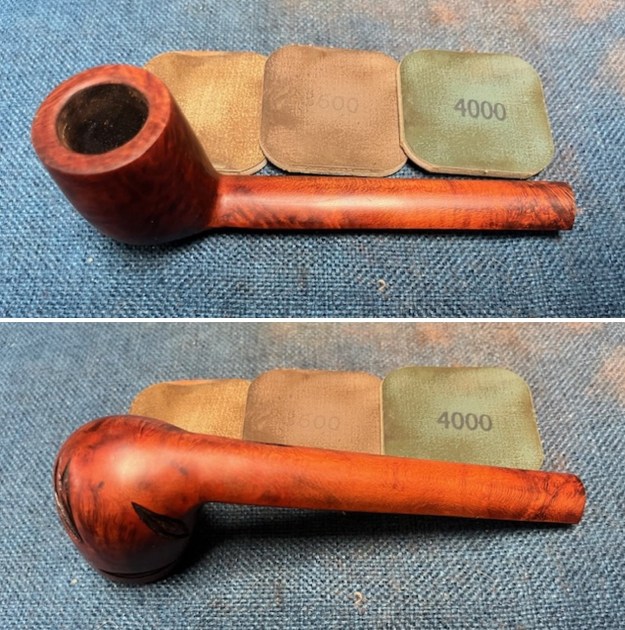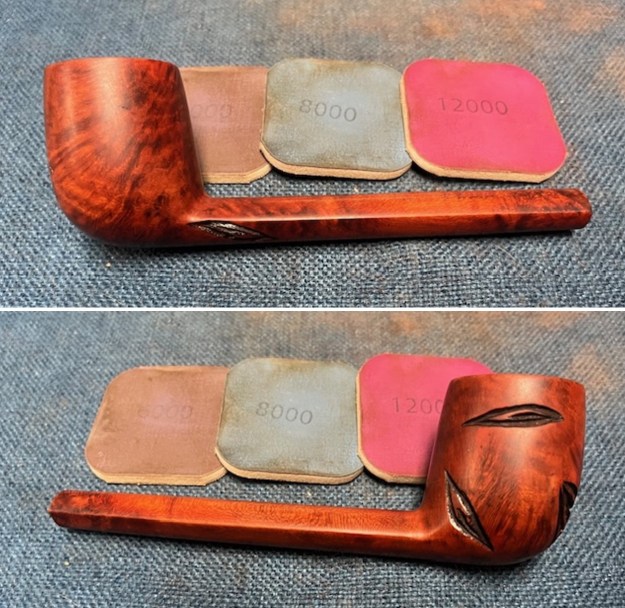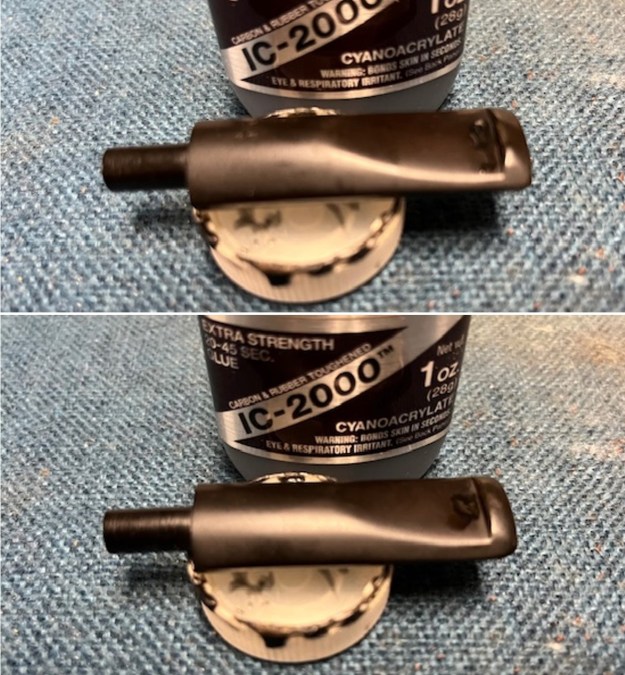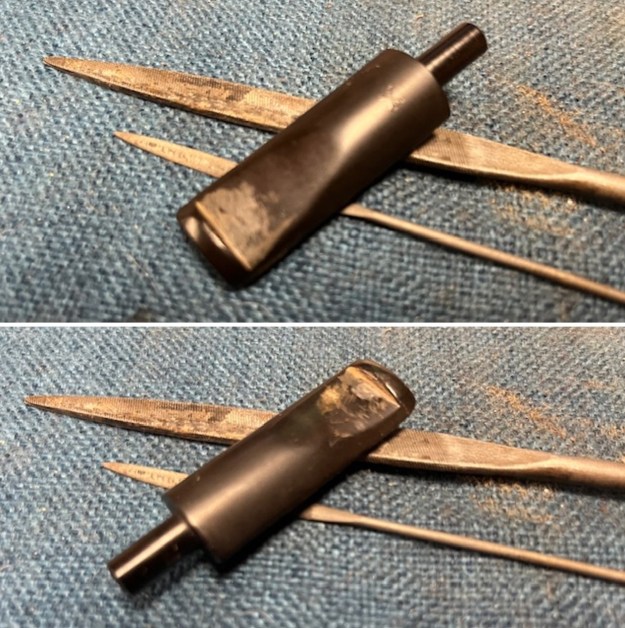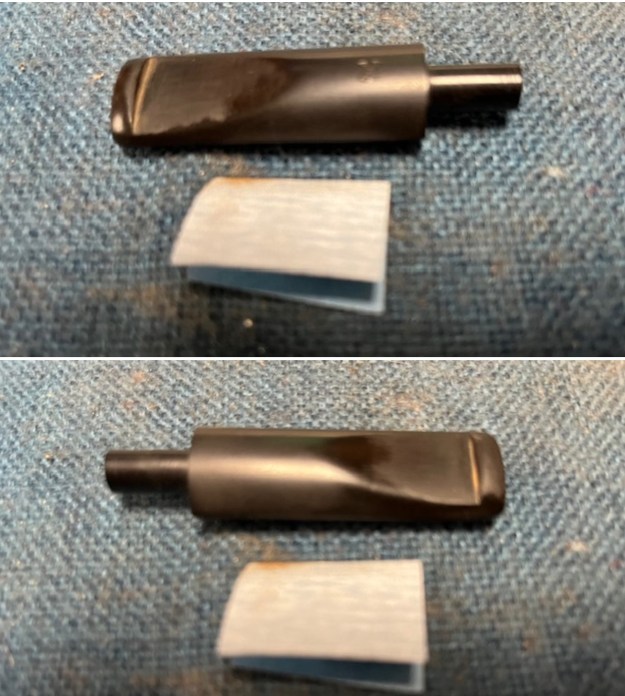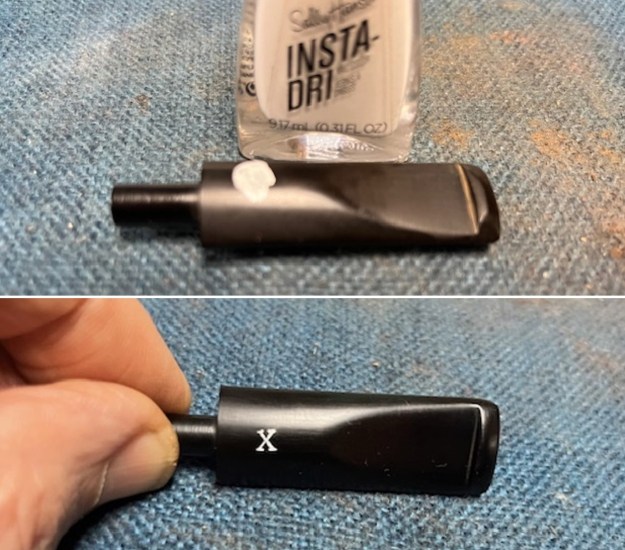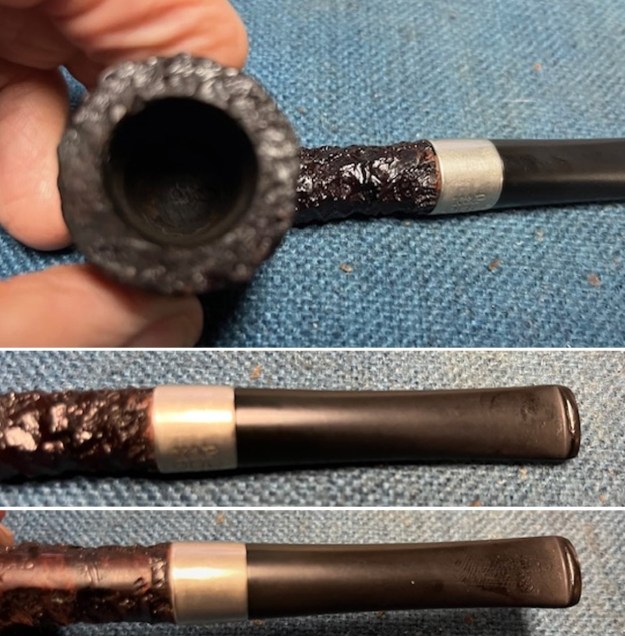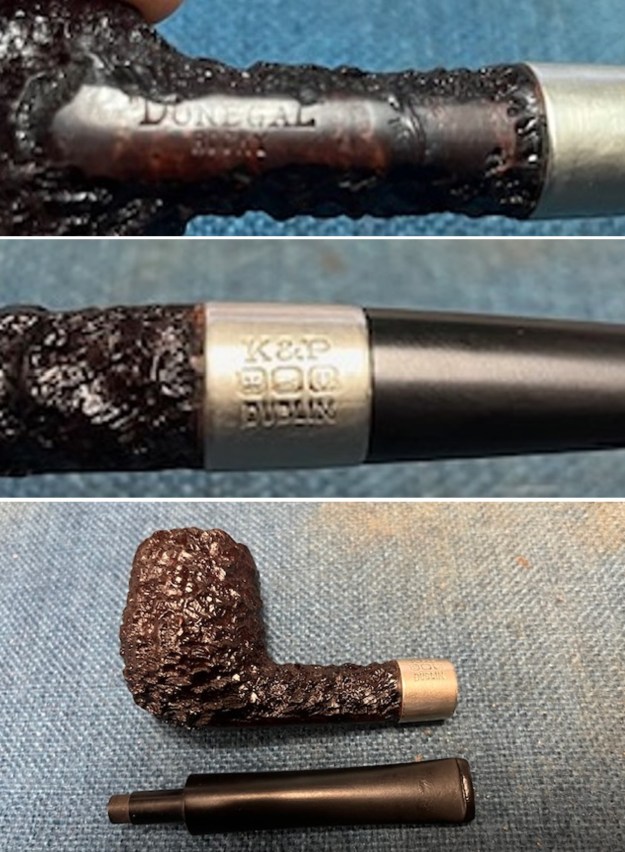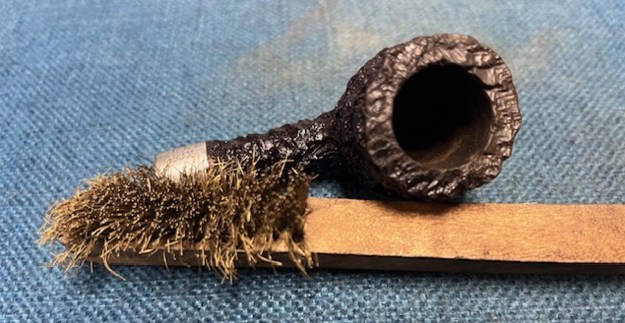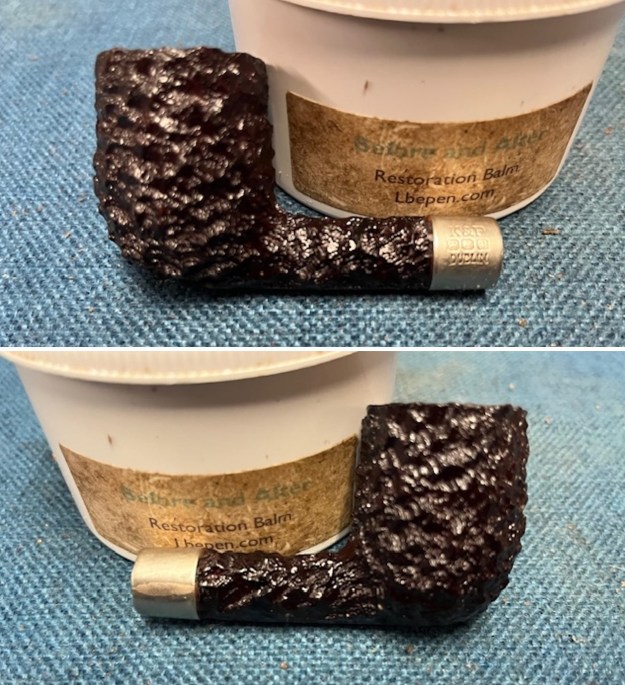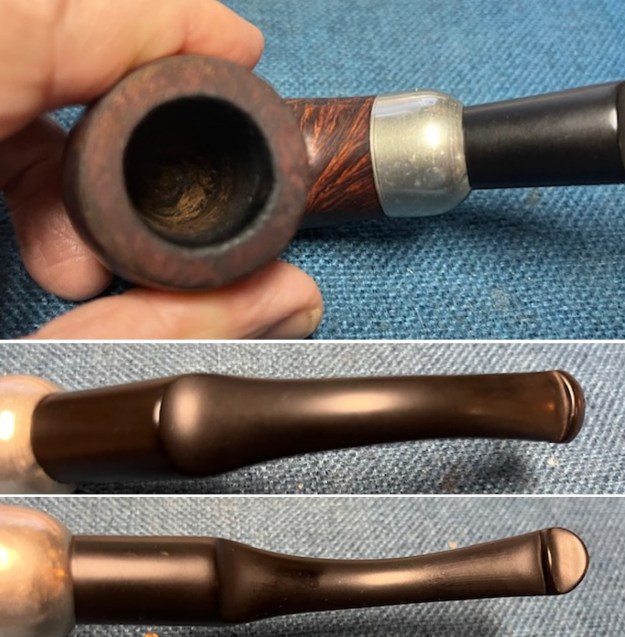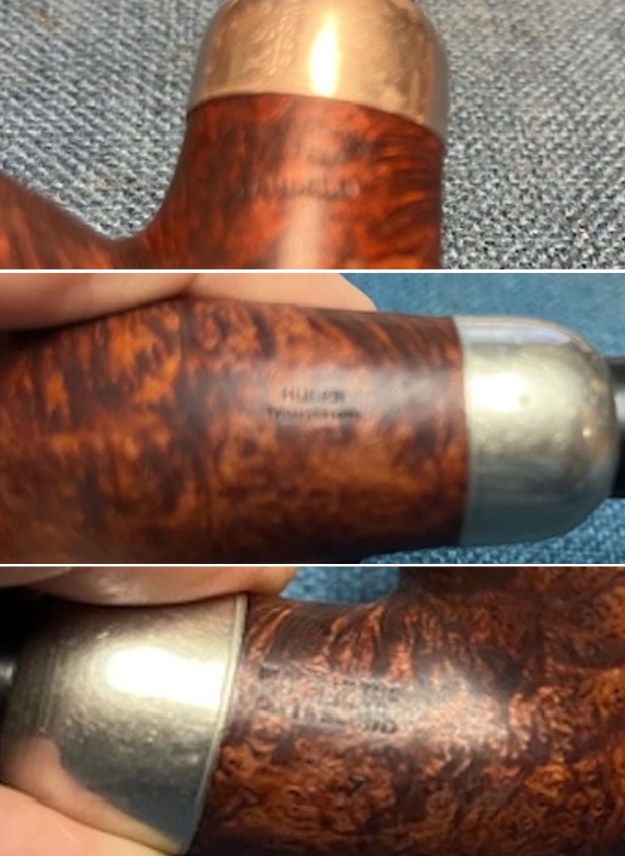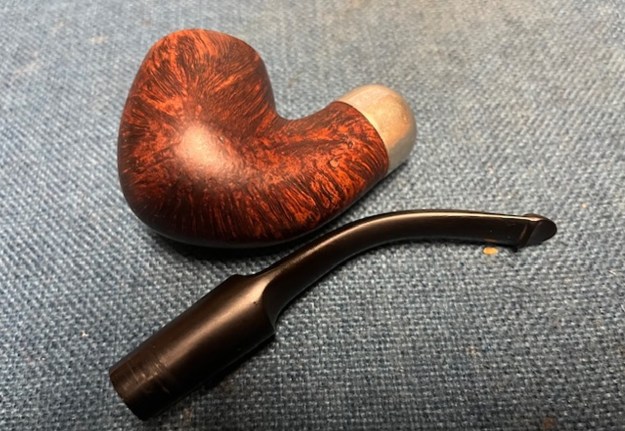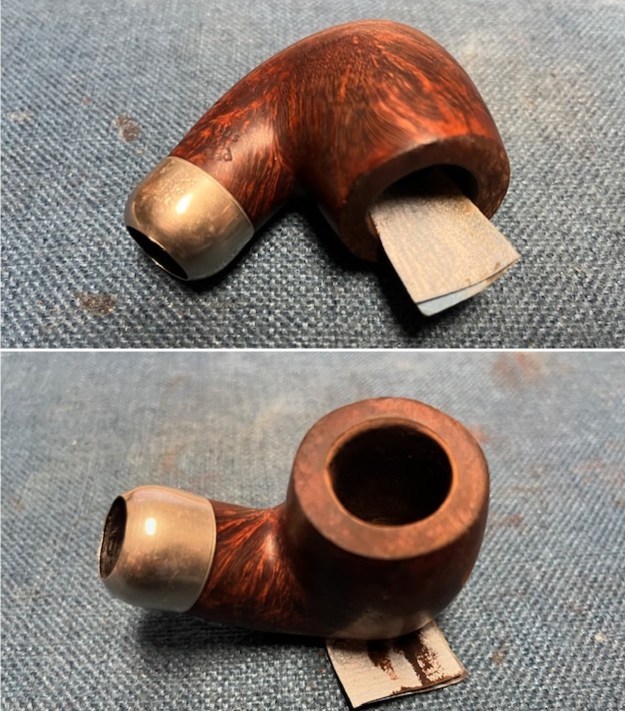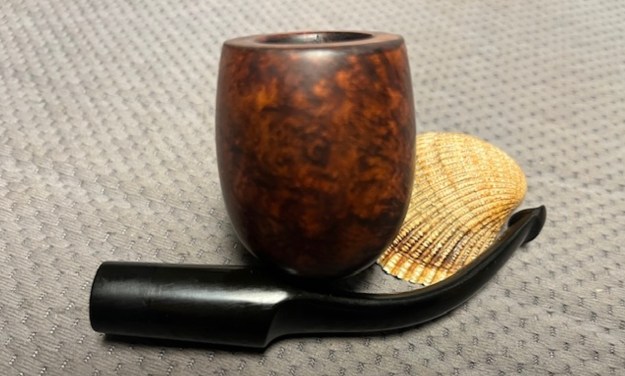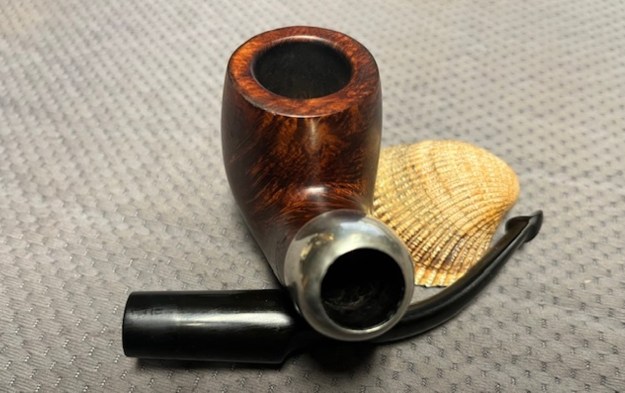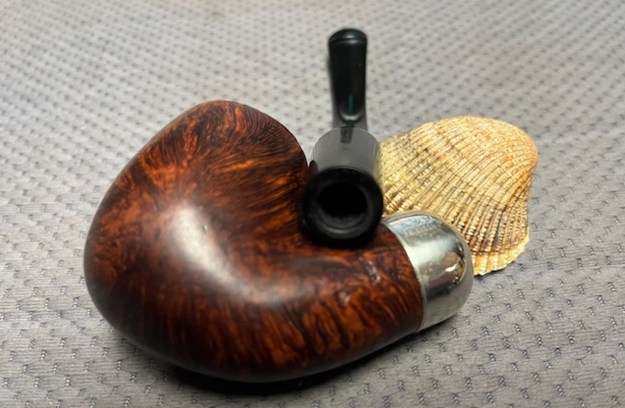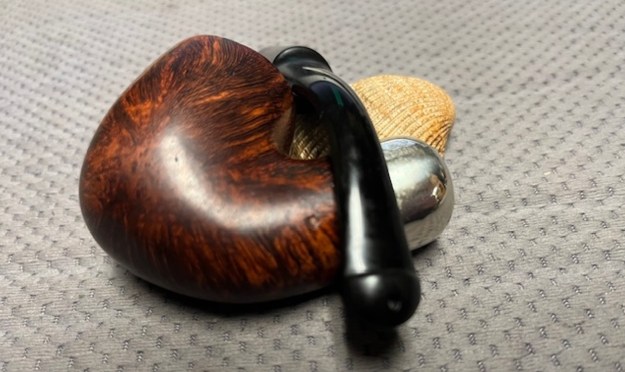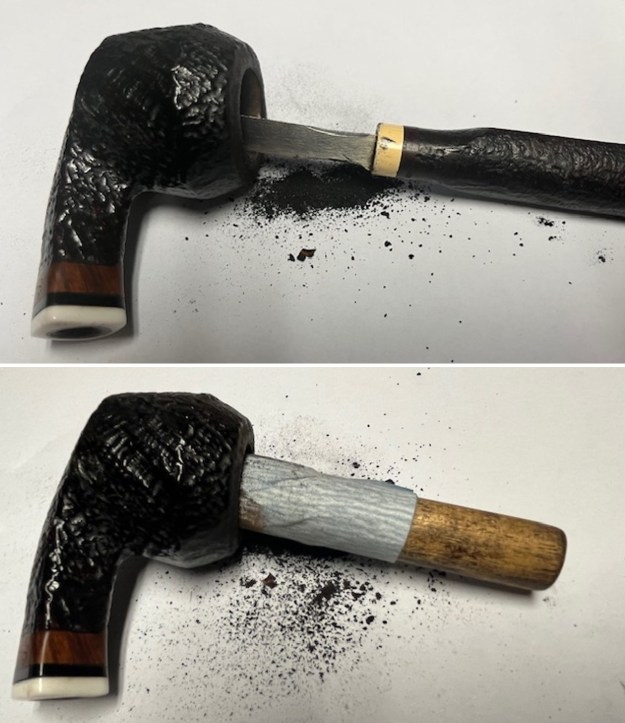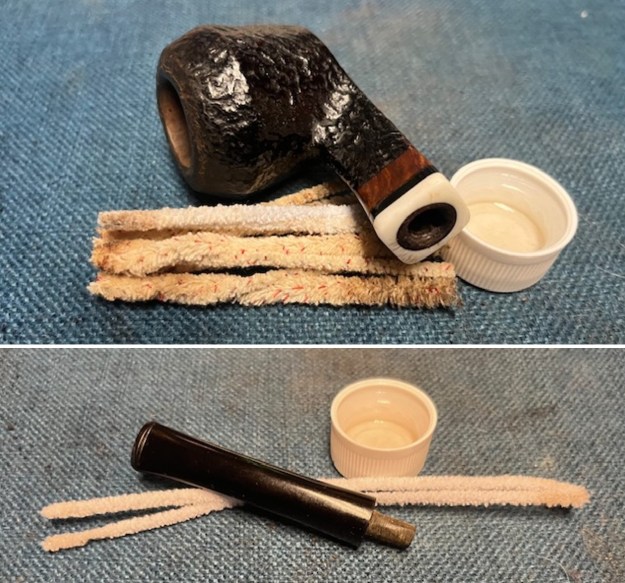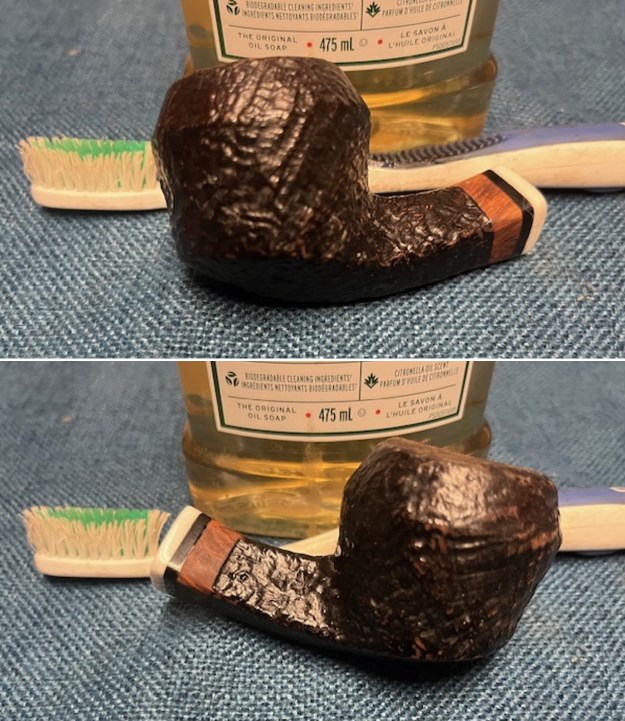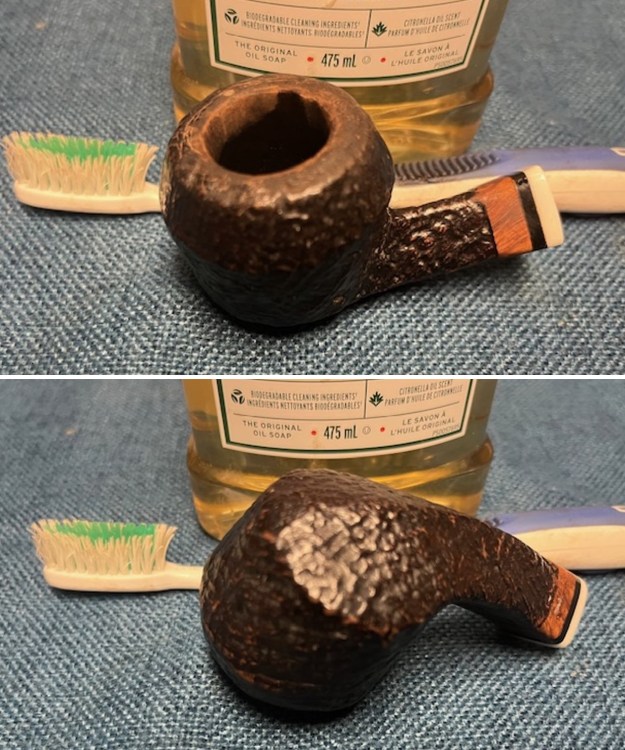

Tag Archives: restaining

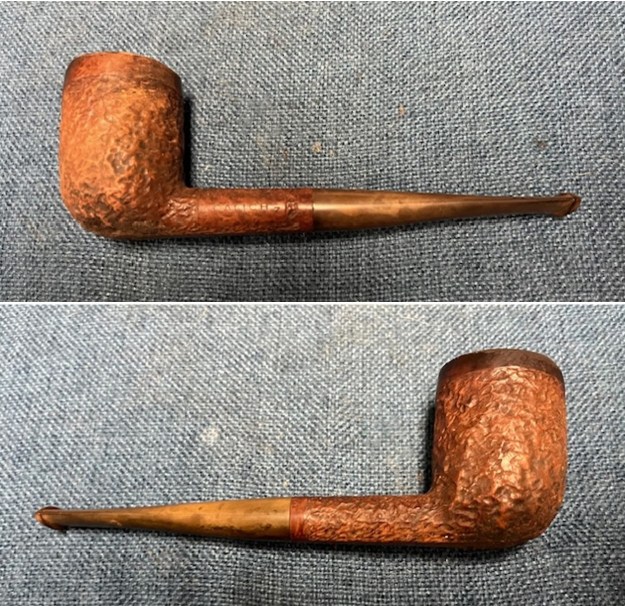
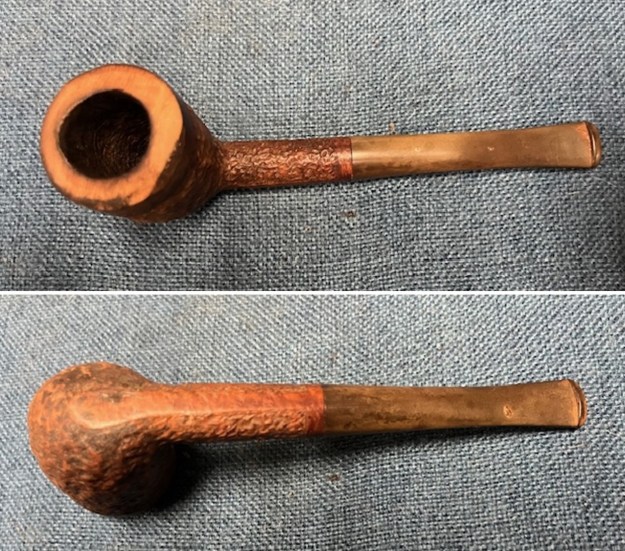
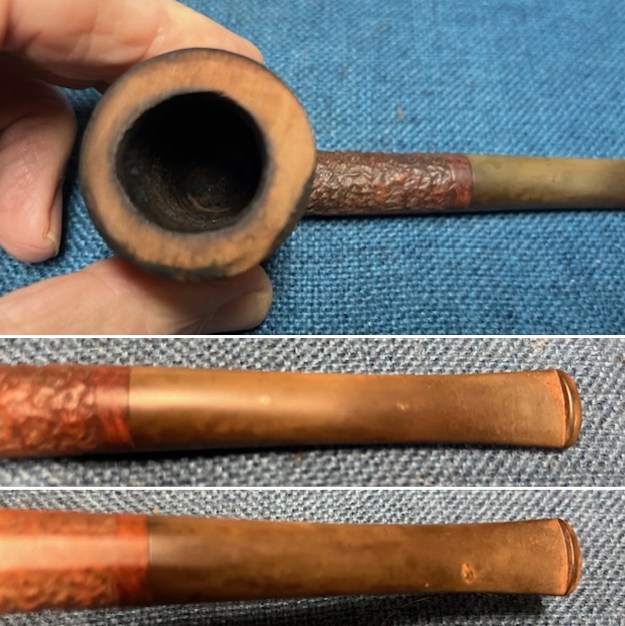
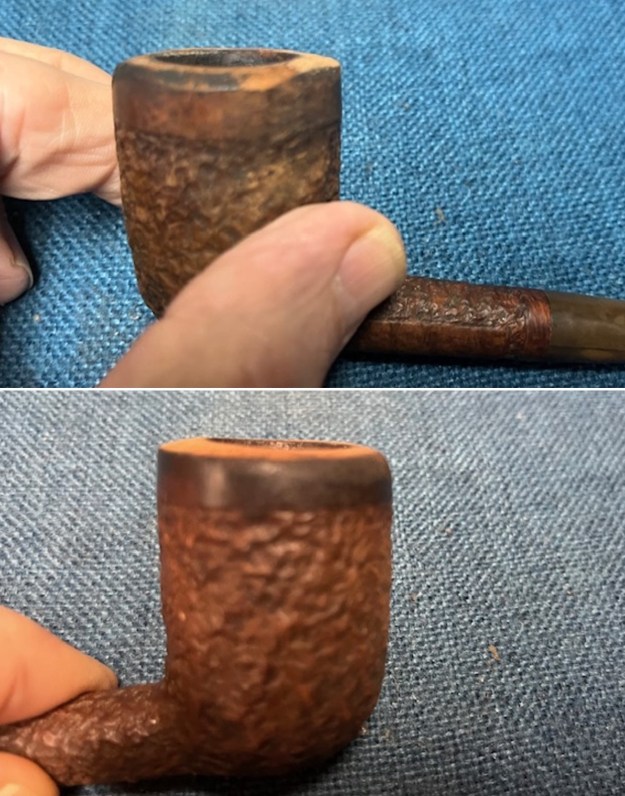
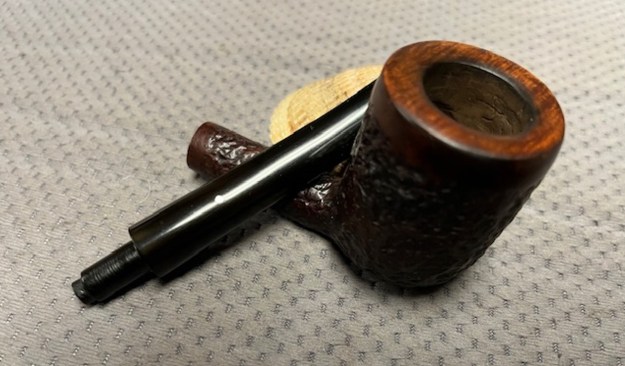
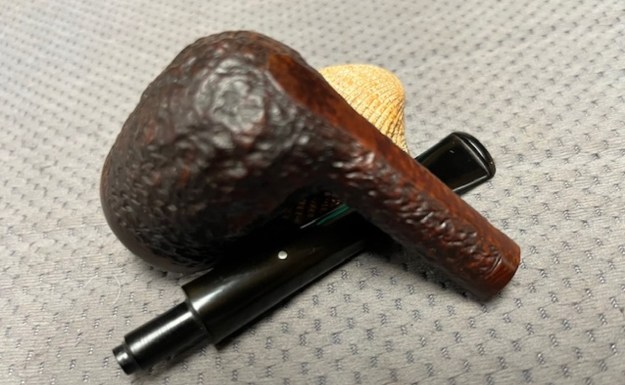
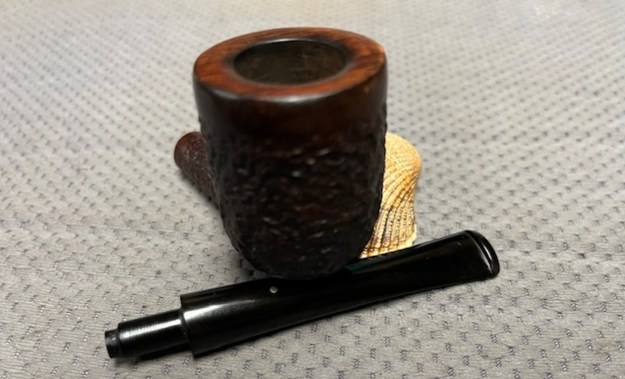
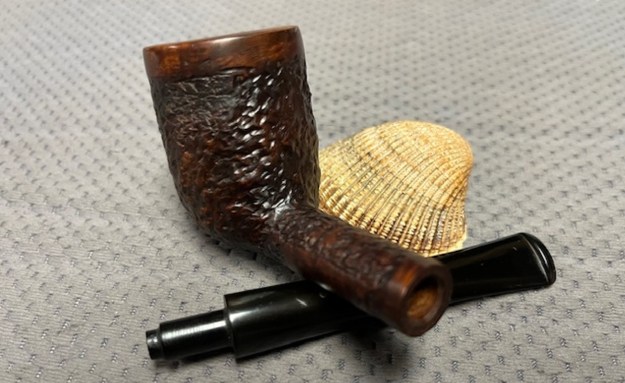
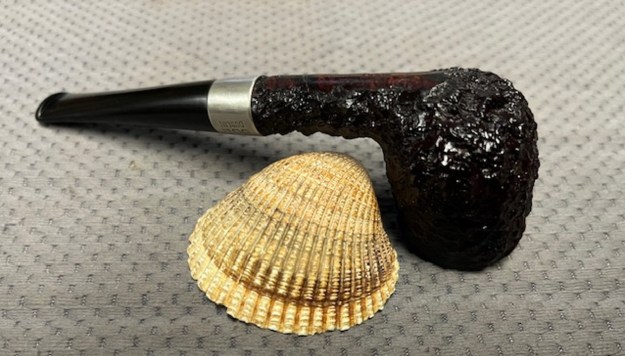
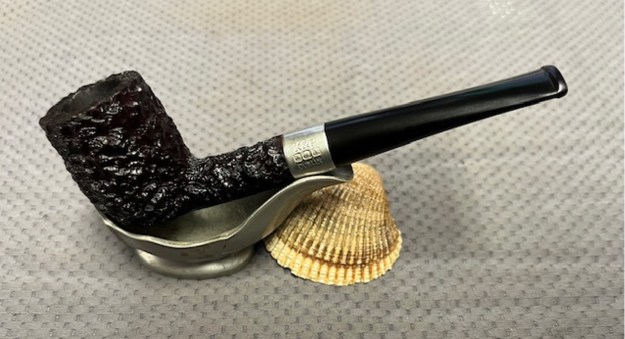
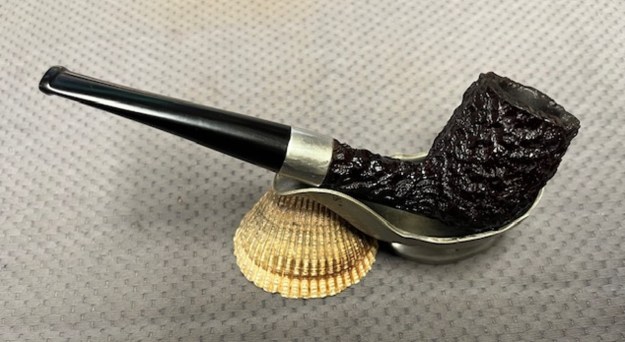
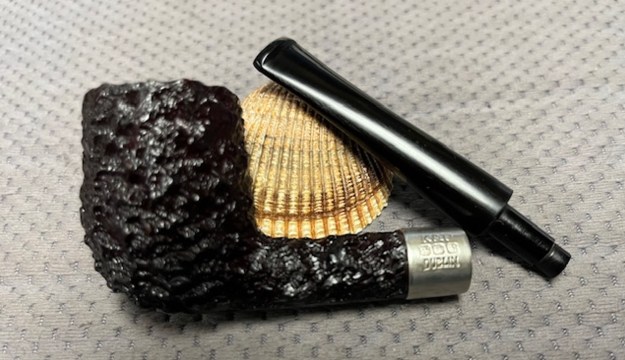
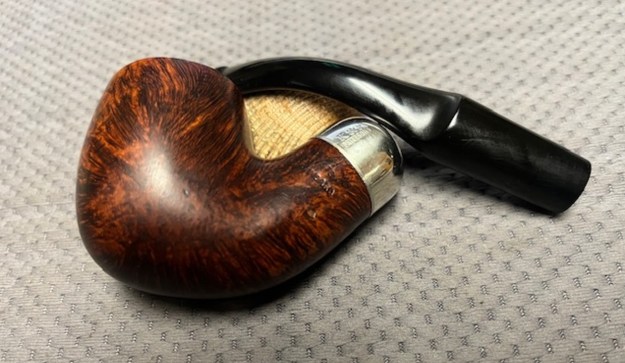
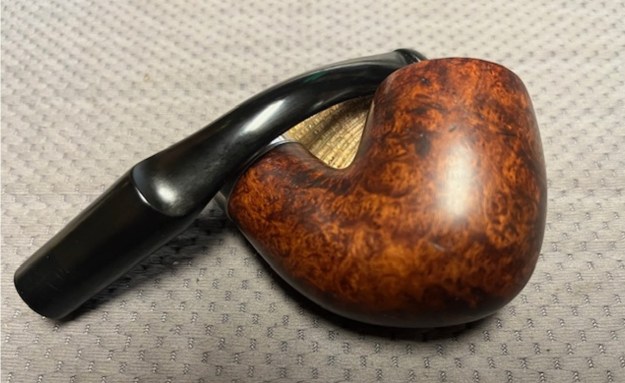
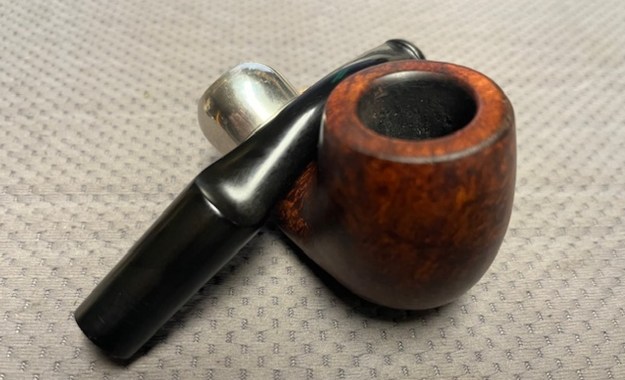
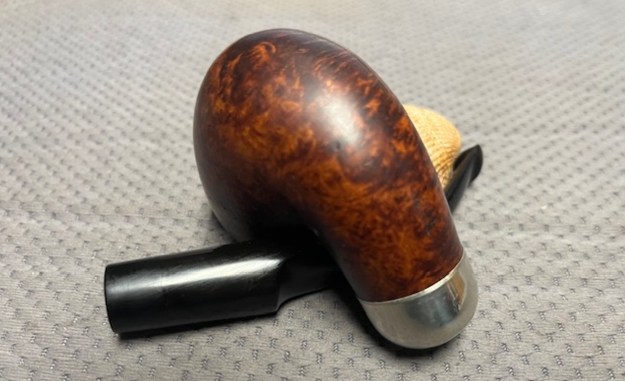
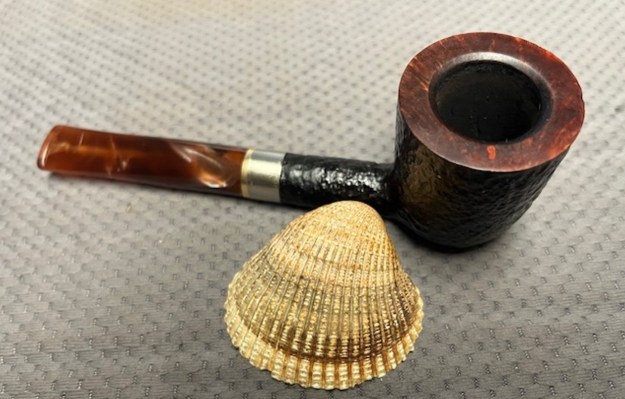
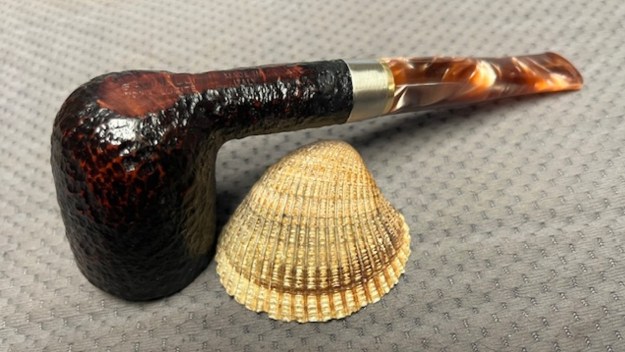
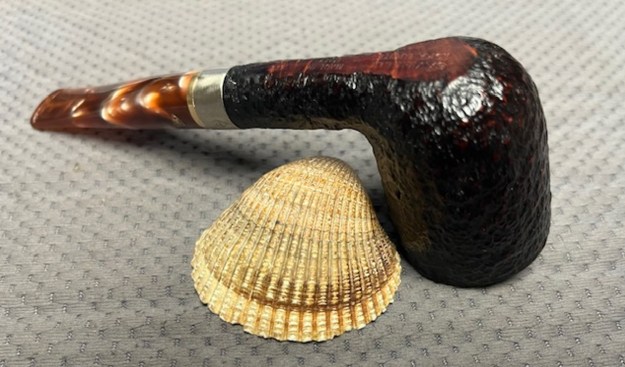
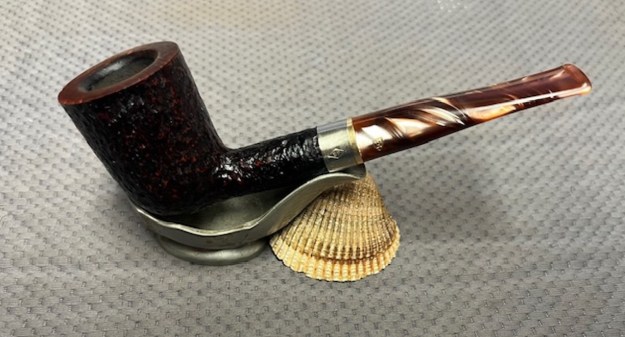
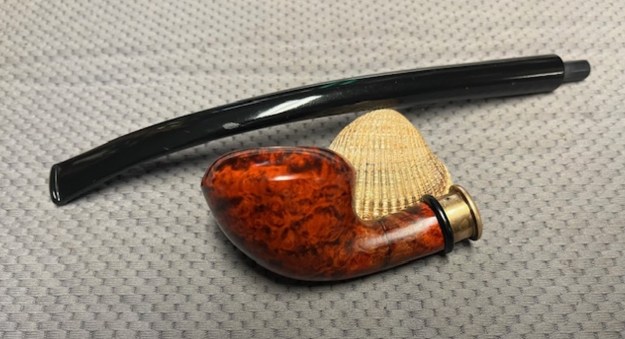
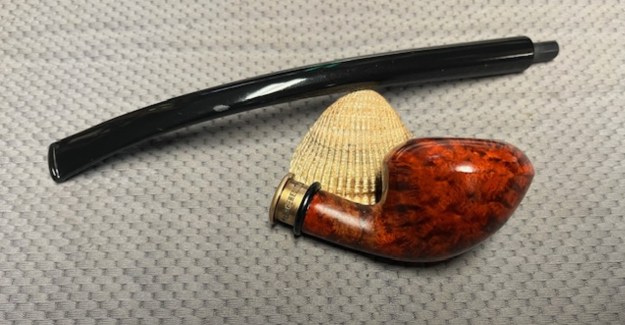
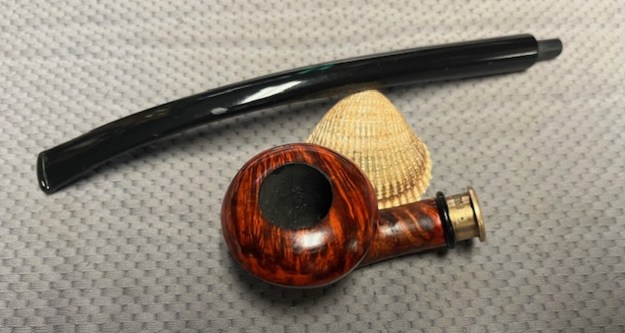
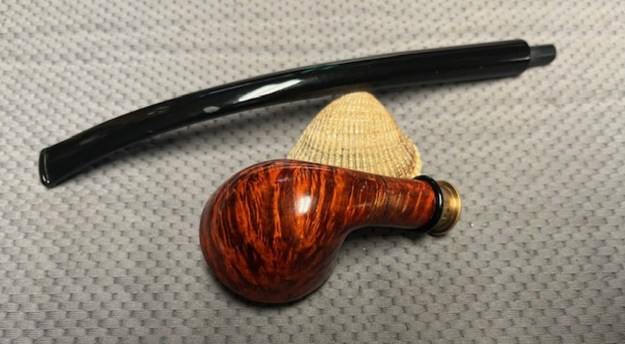
New Life for a Castello Old Antiquari KK 32 Hand Made Canadian


by Steve LaugView post

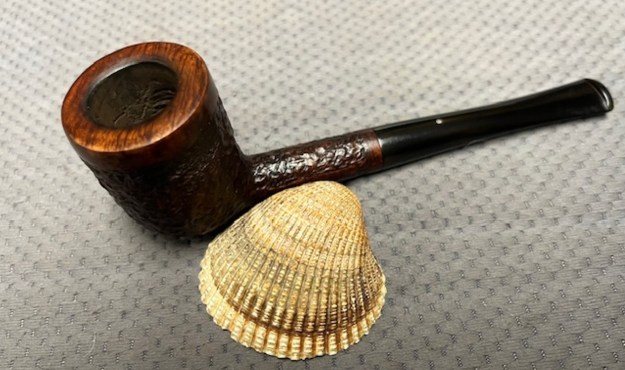
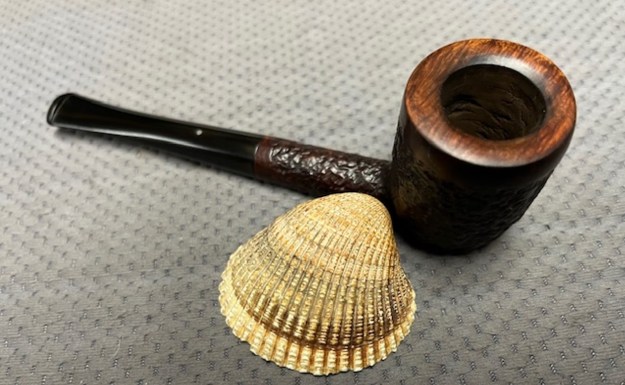
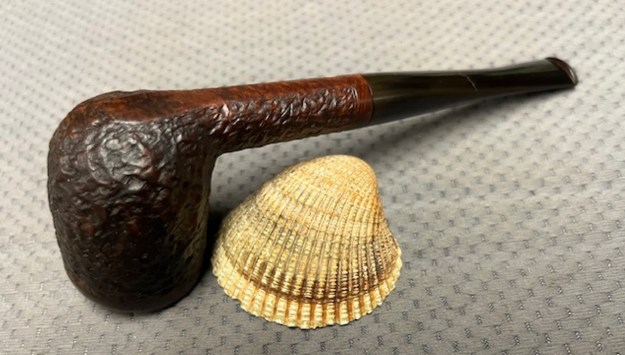
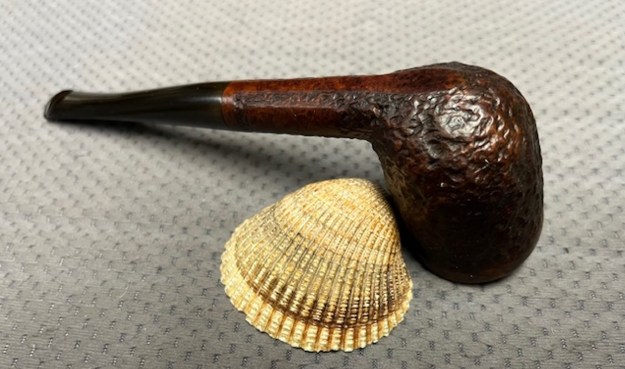
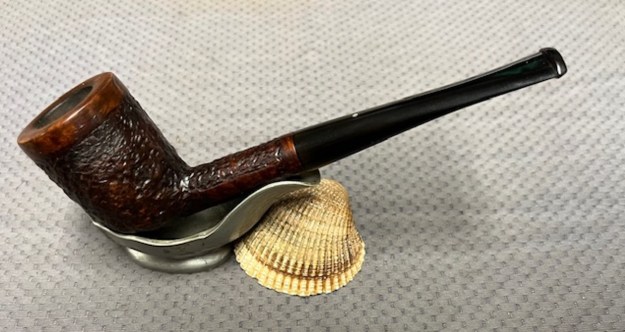
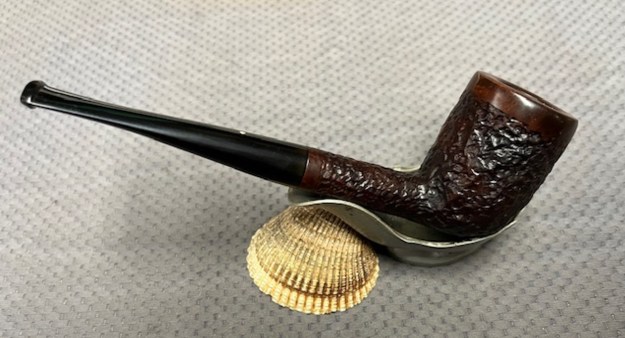
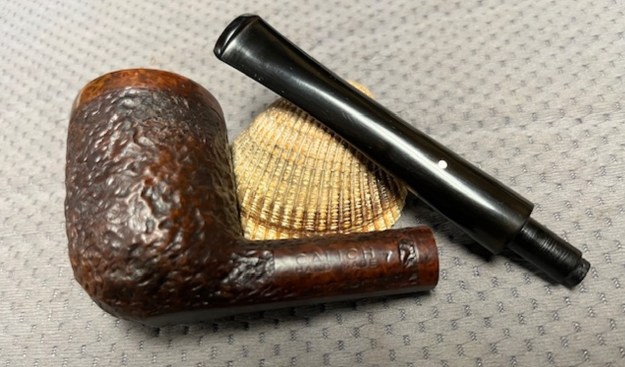
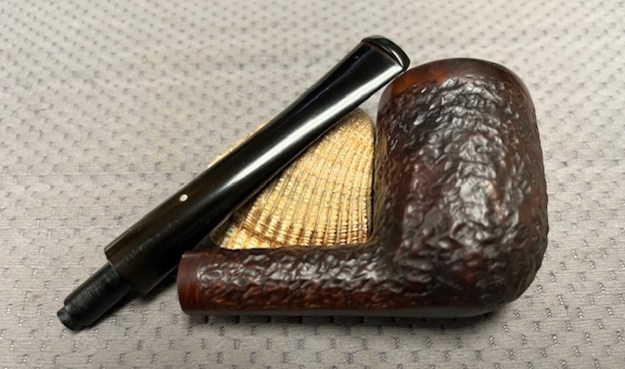
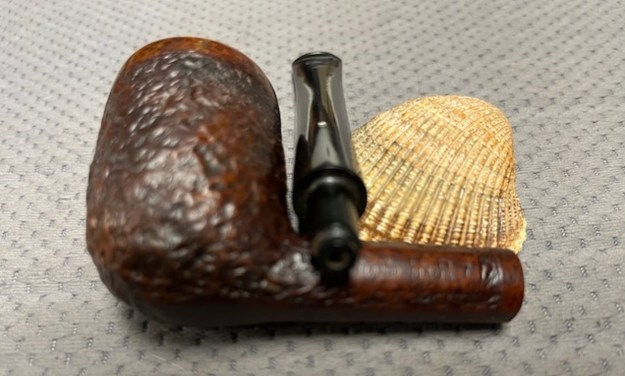
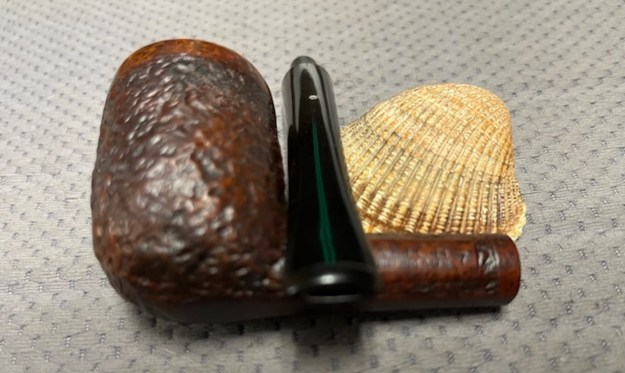
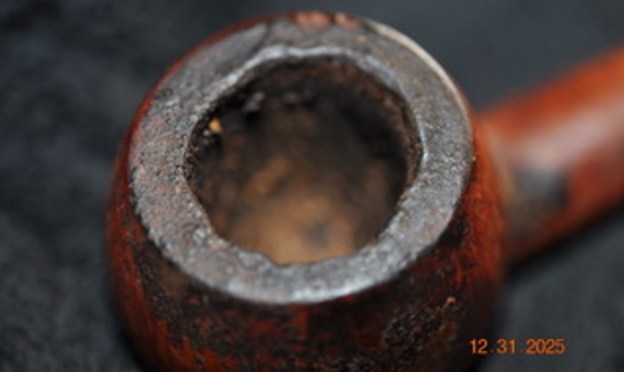
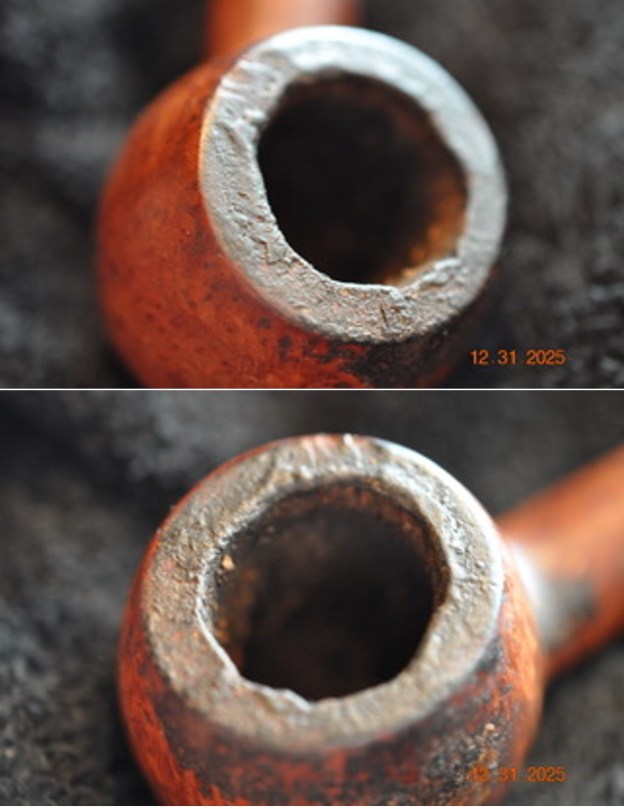
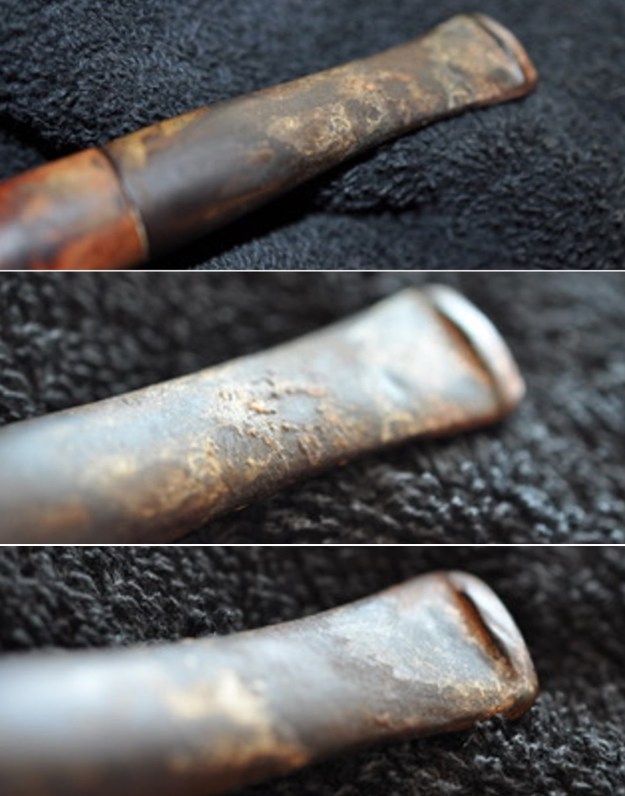
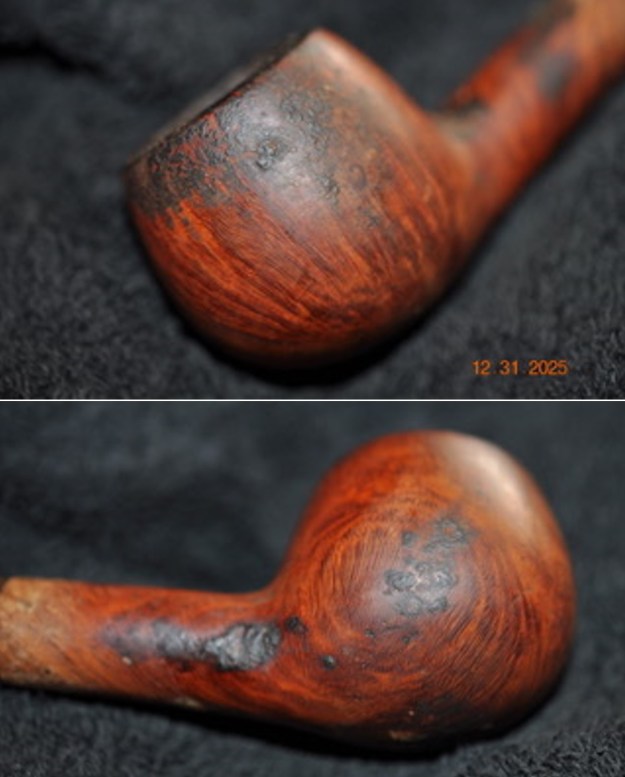
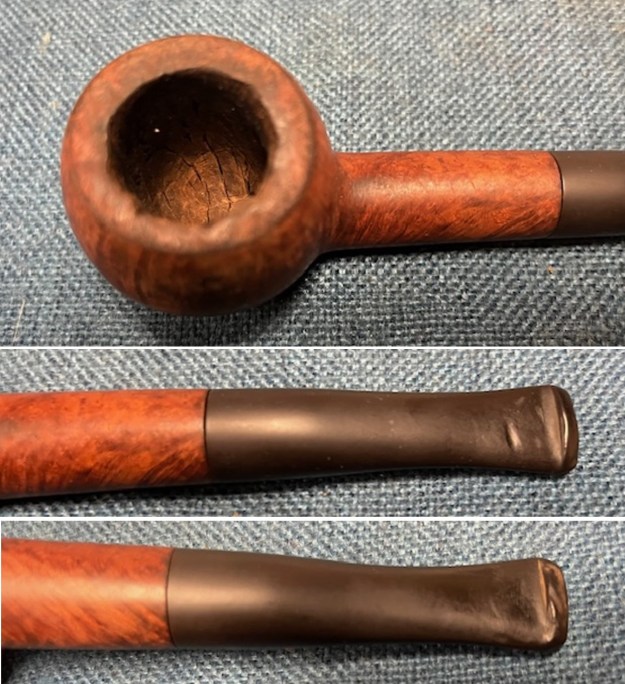
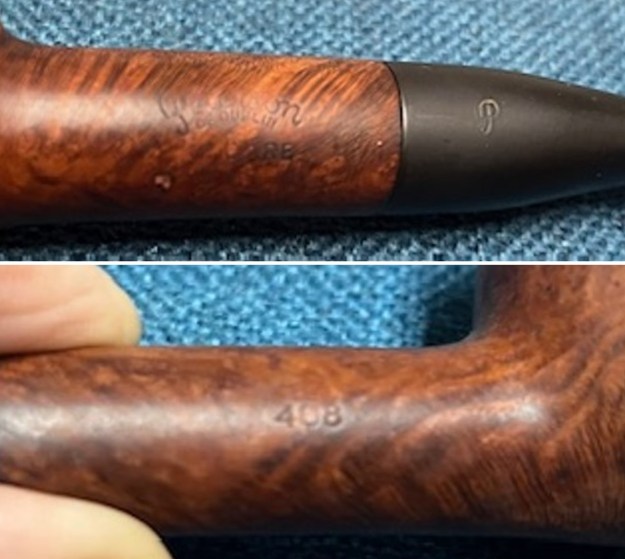
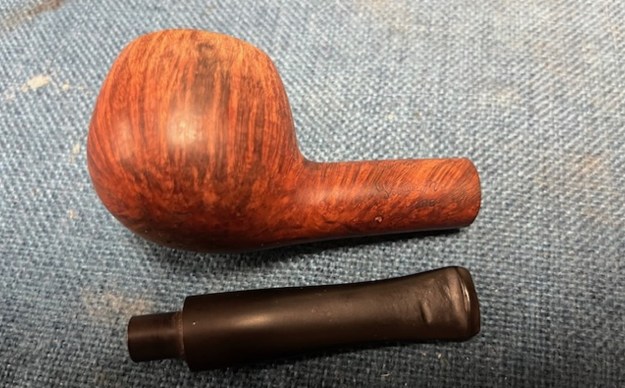
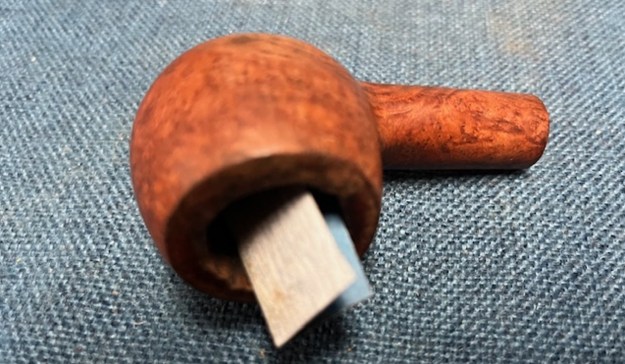
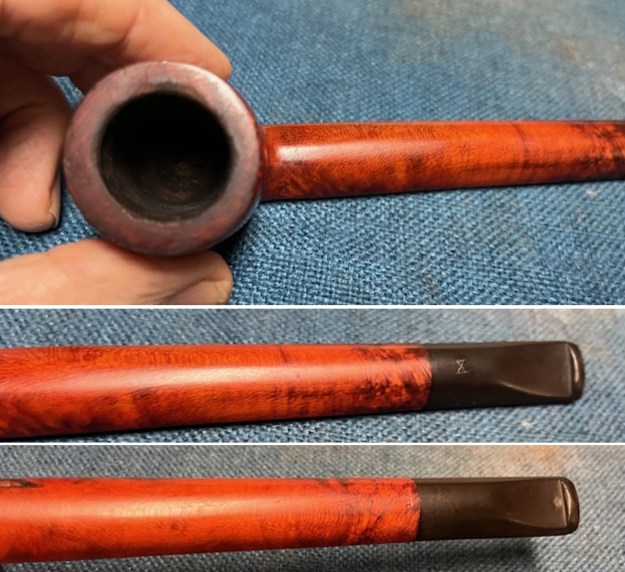
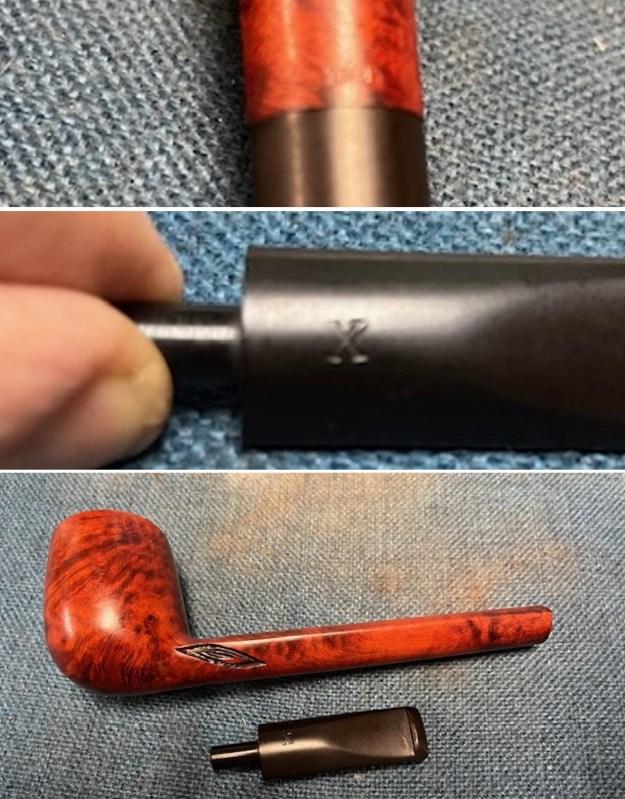
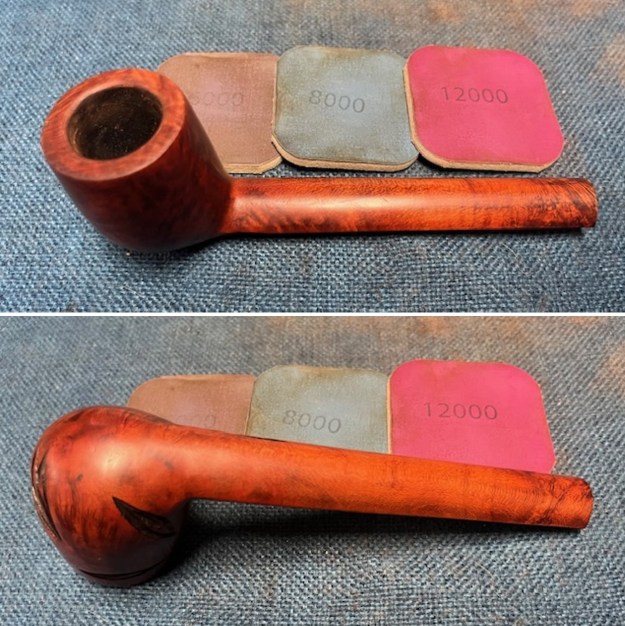
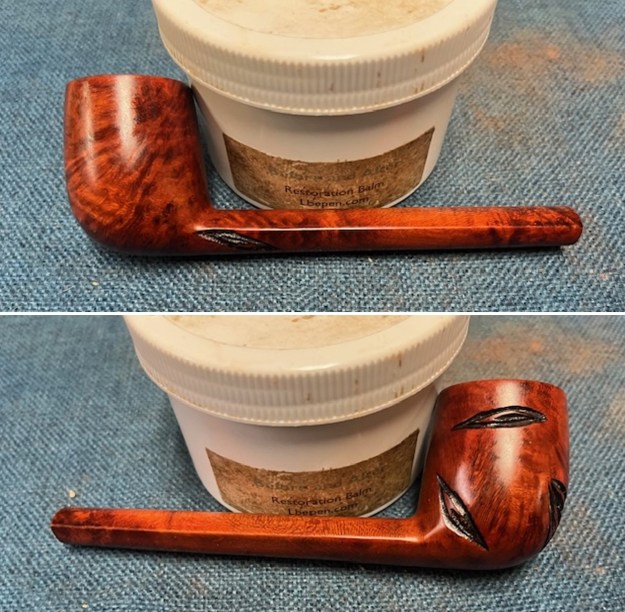
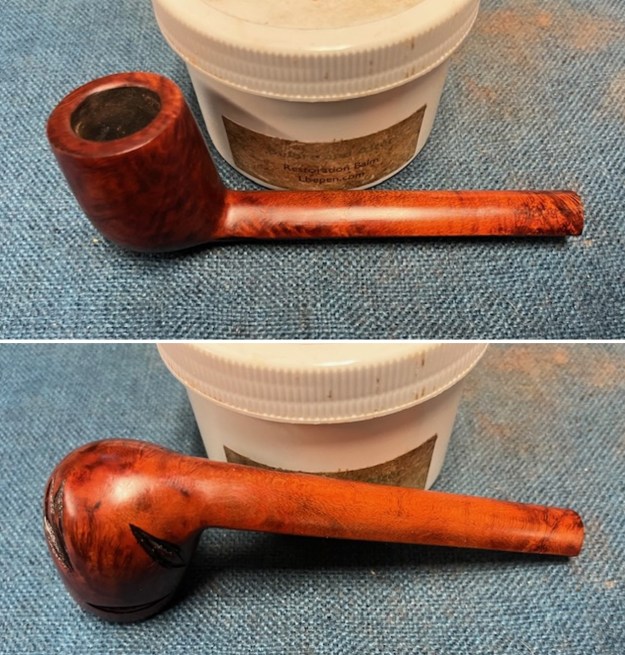
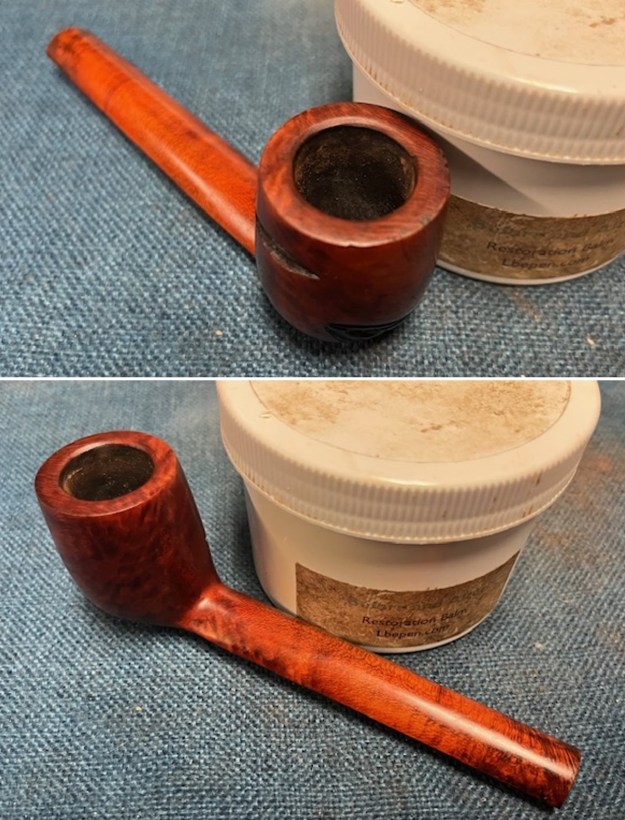
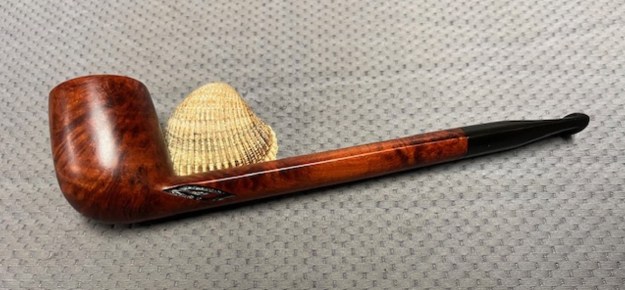
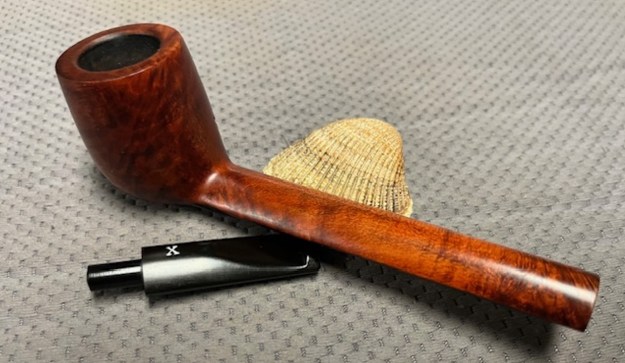
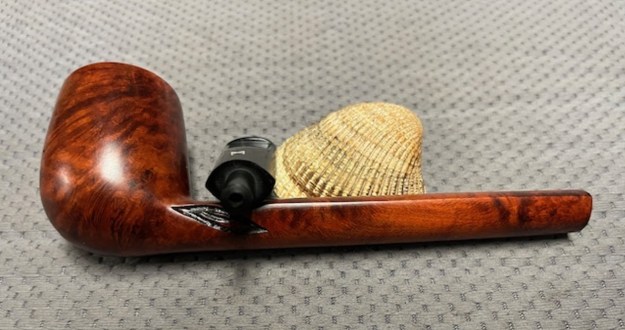
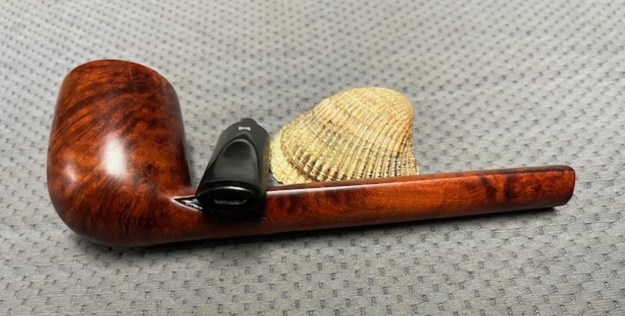
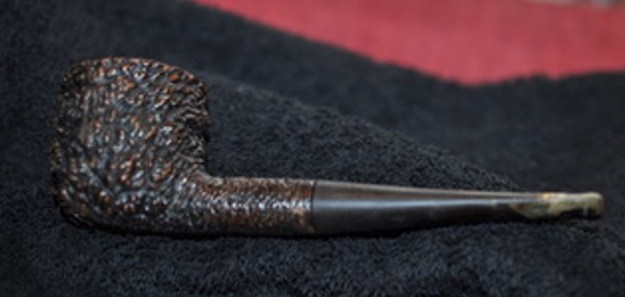
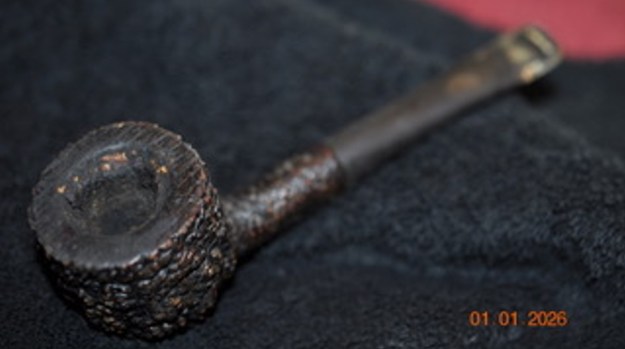
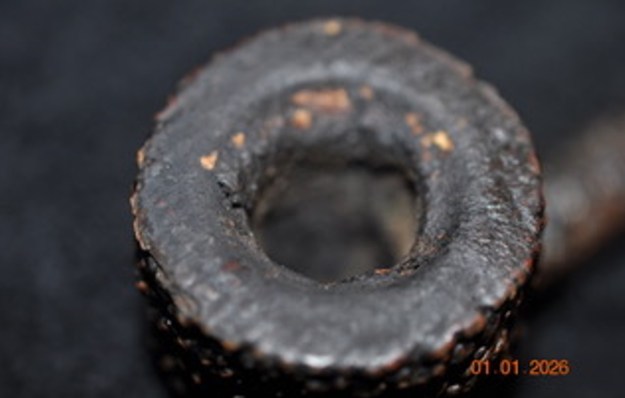
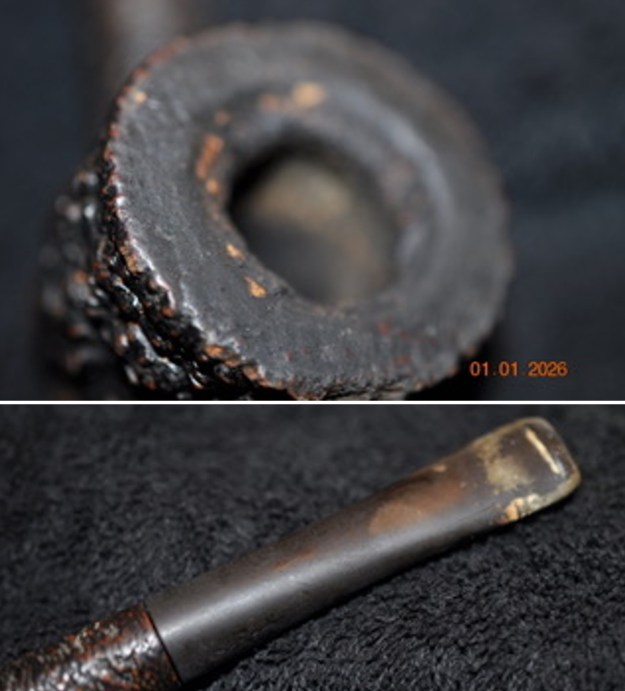
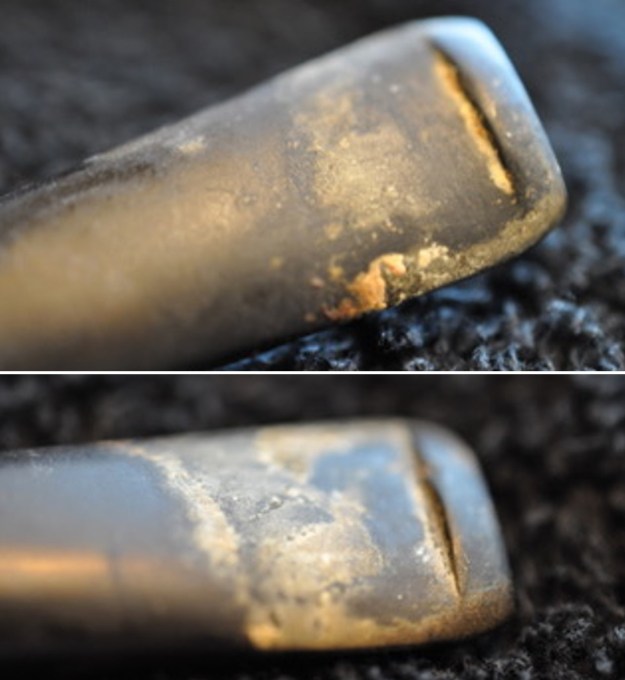
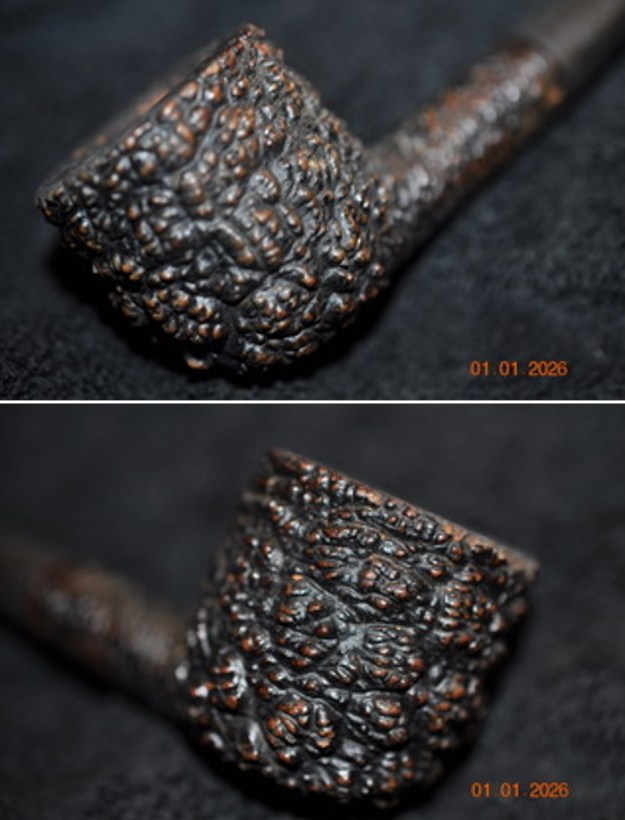
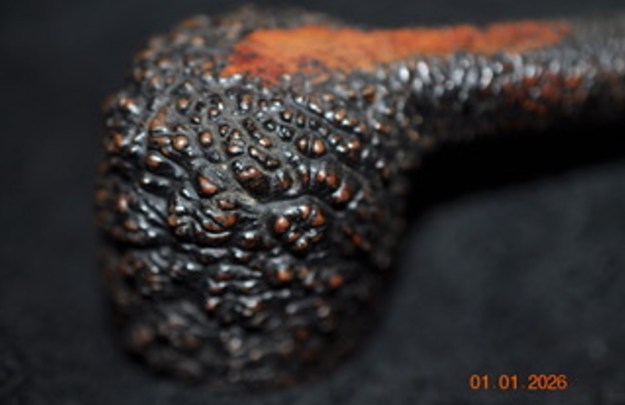
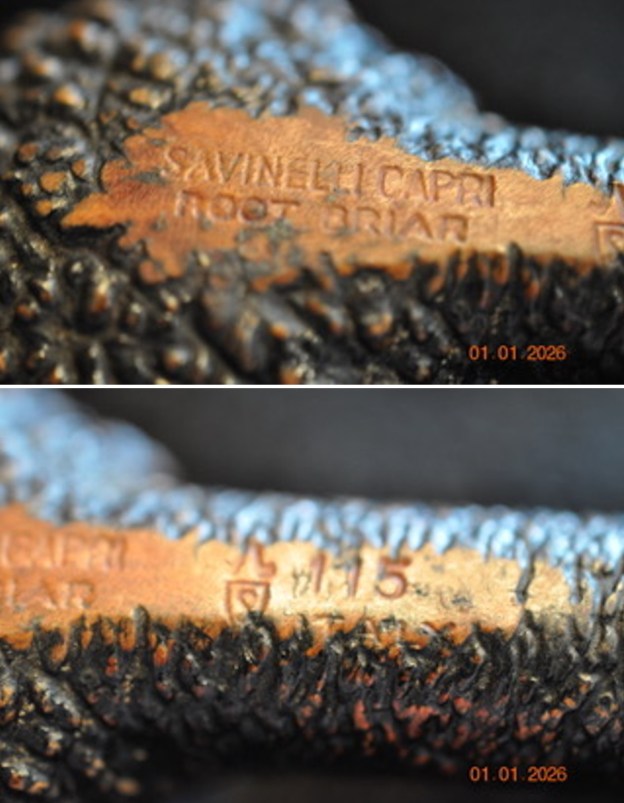
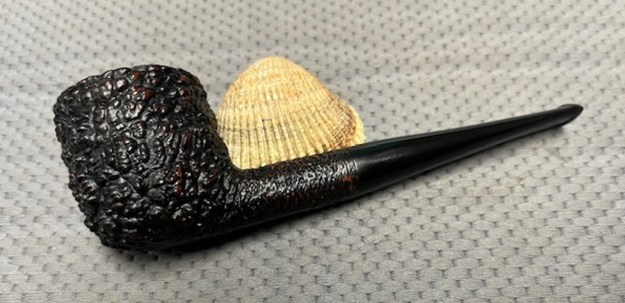
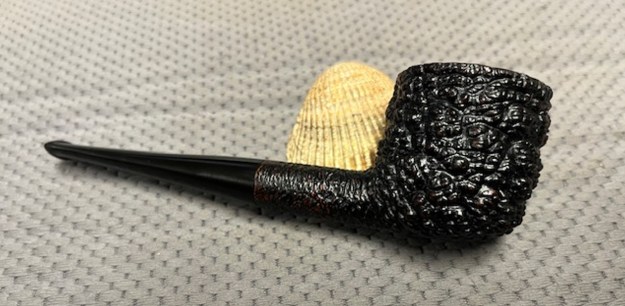
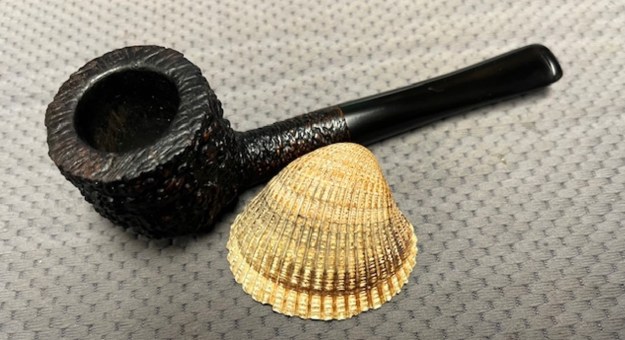
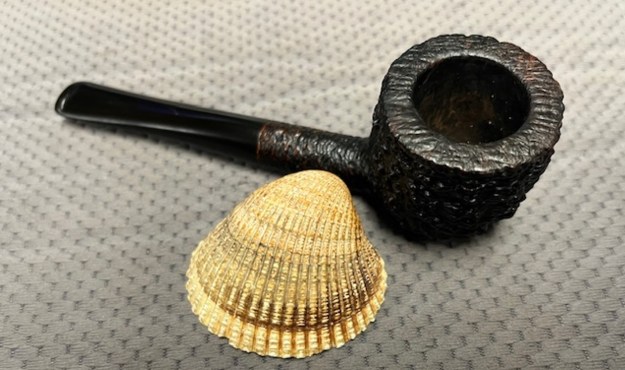
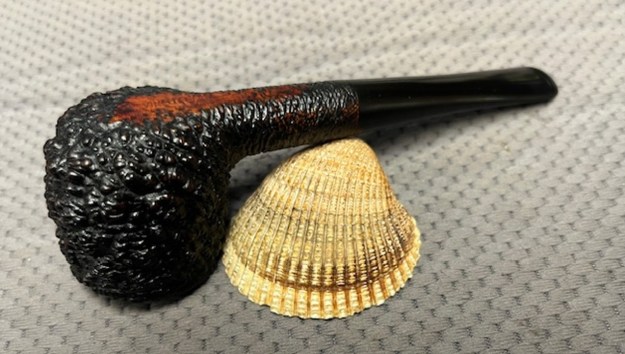
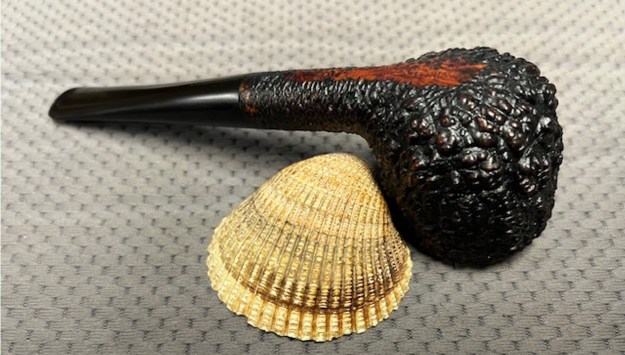
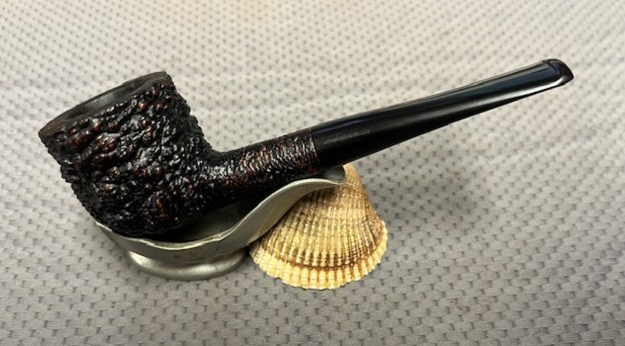
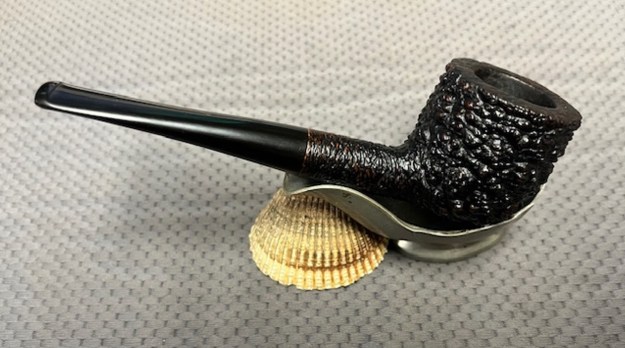
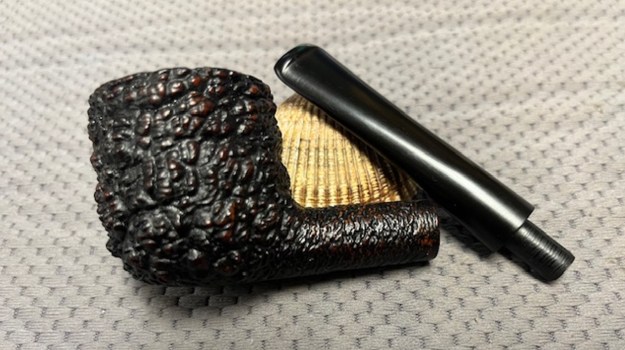
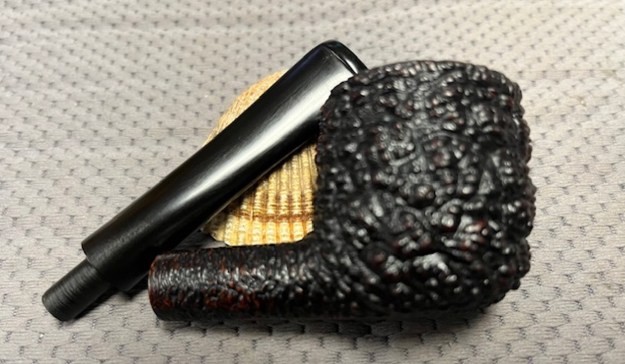
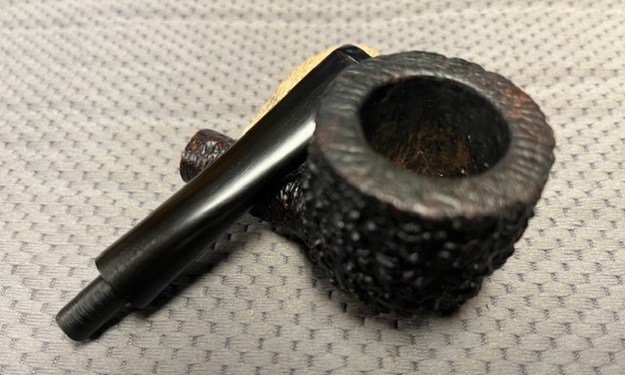
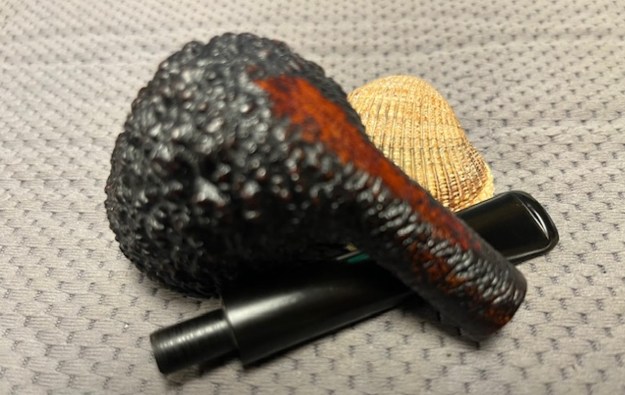
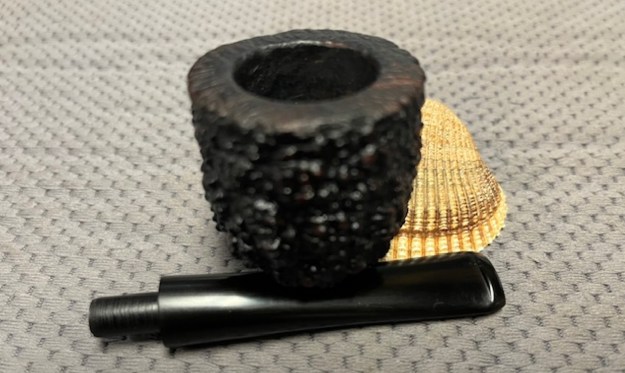
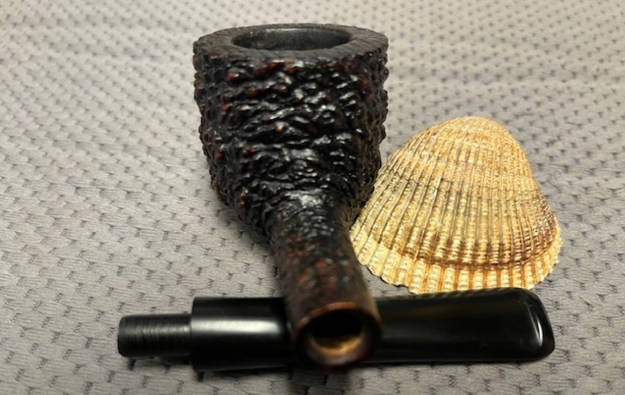
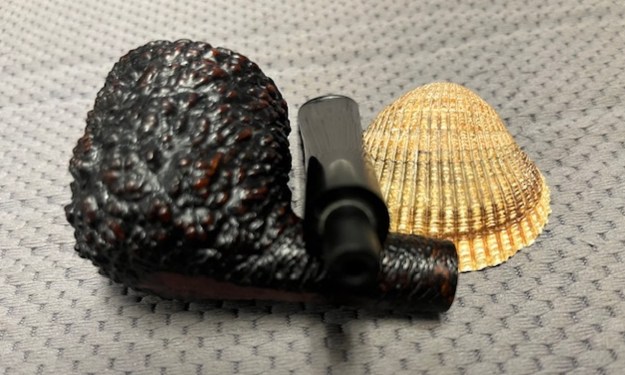
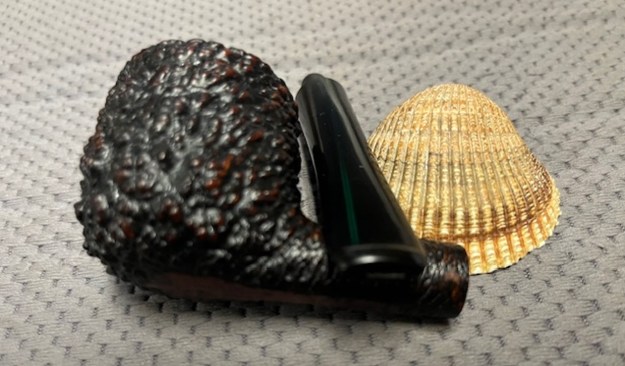
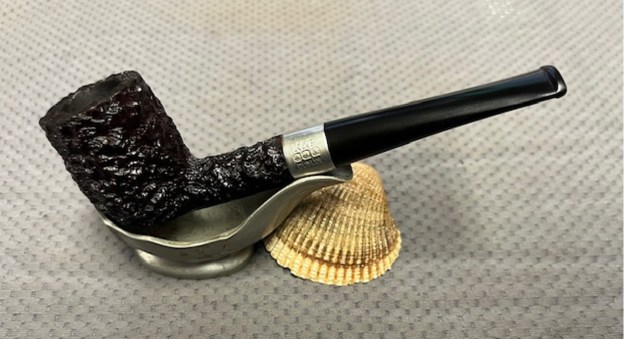
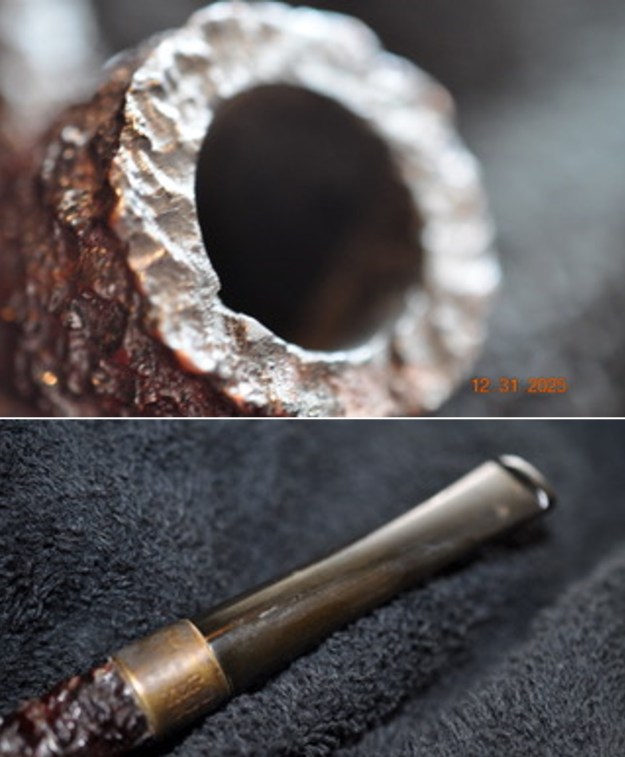
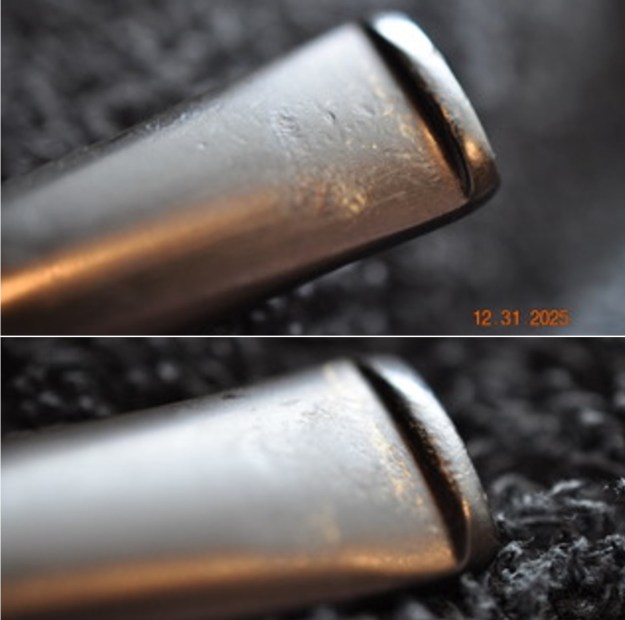
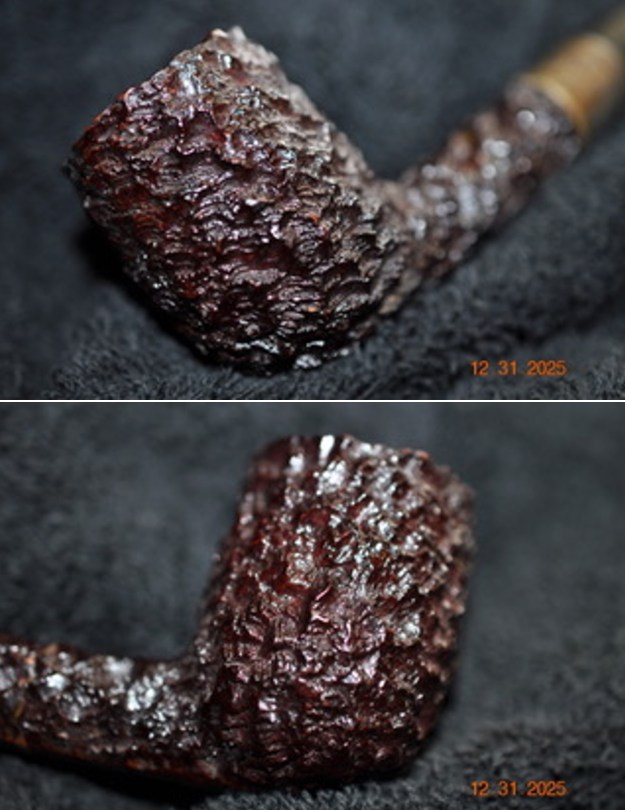
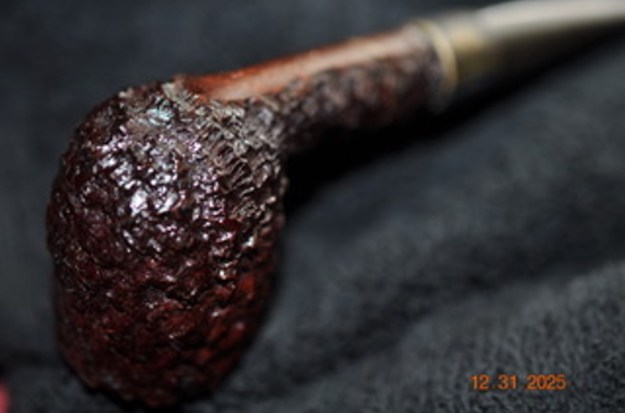
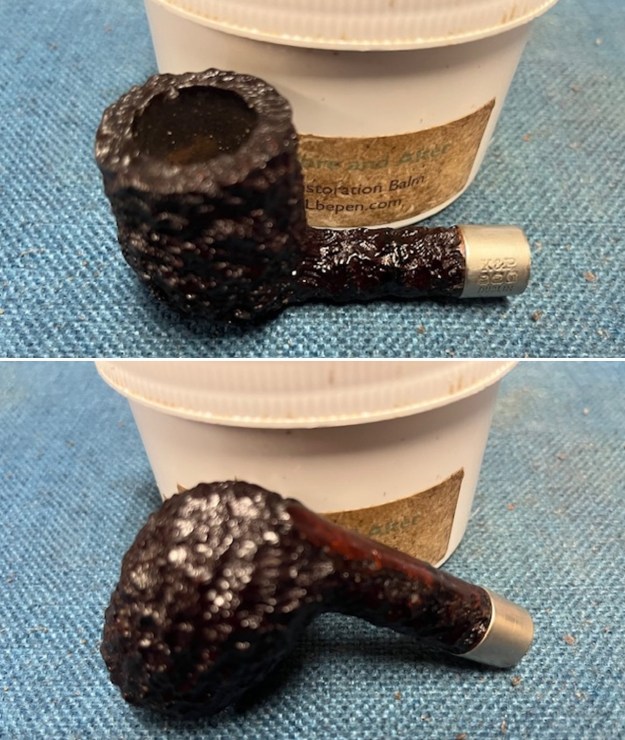
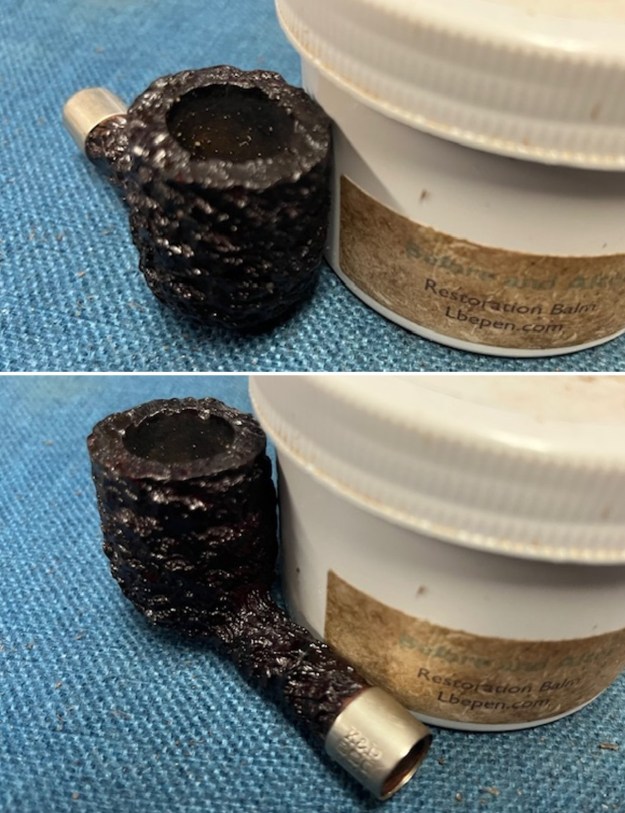
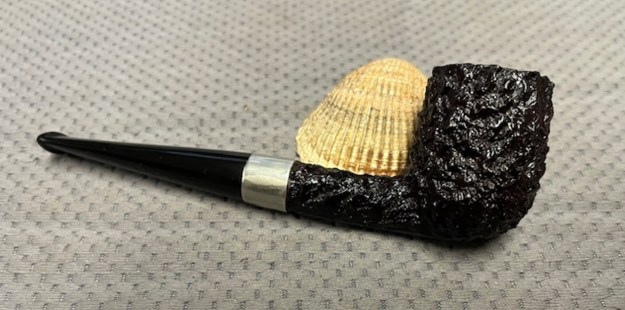
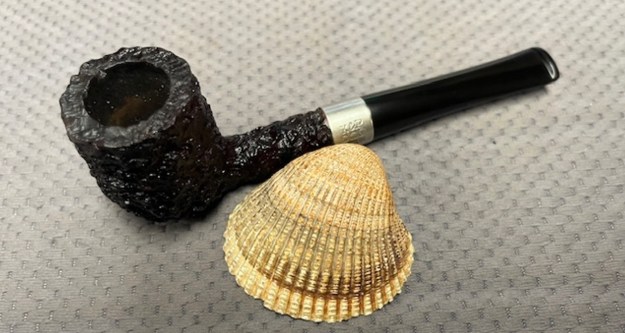
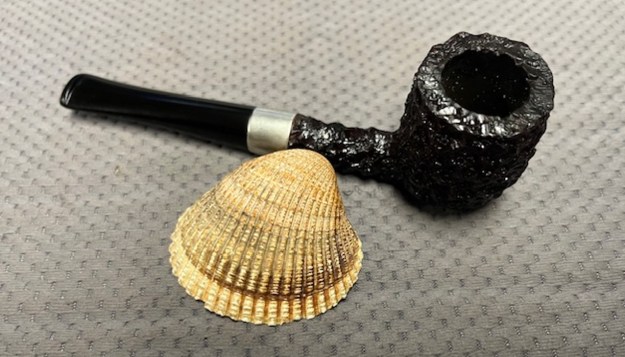
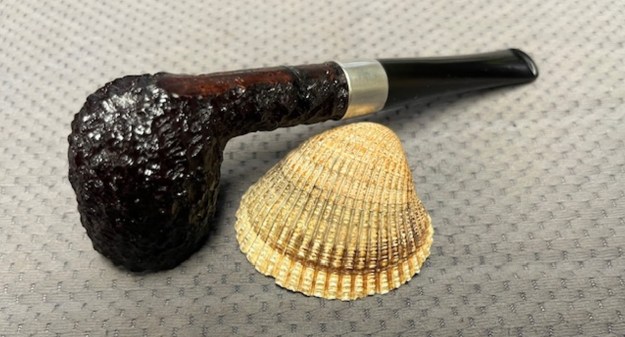
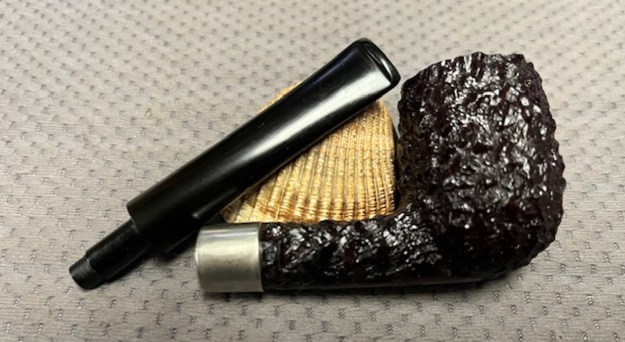
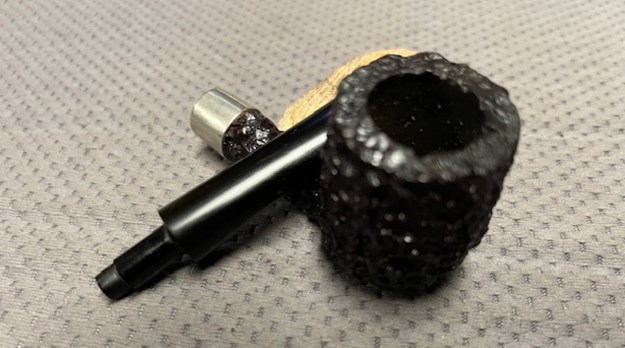
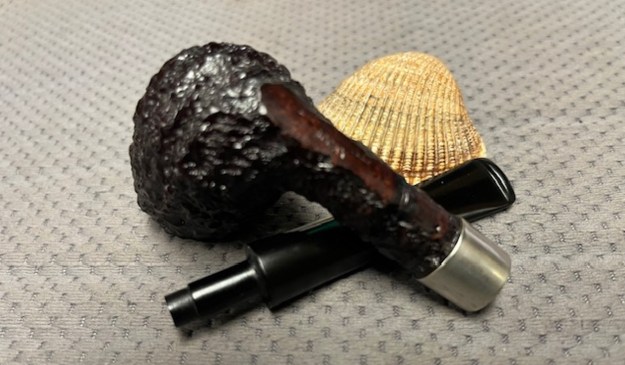
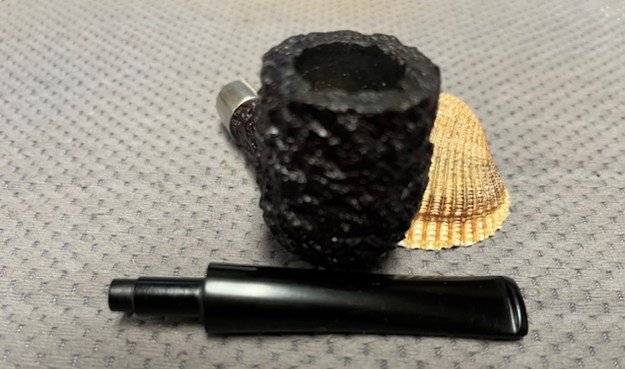
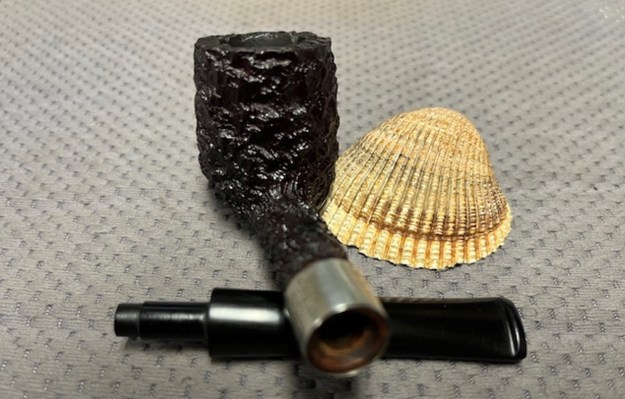
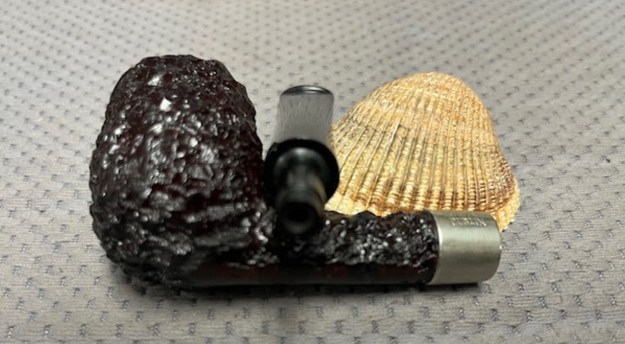
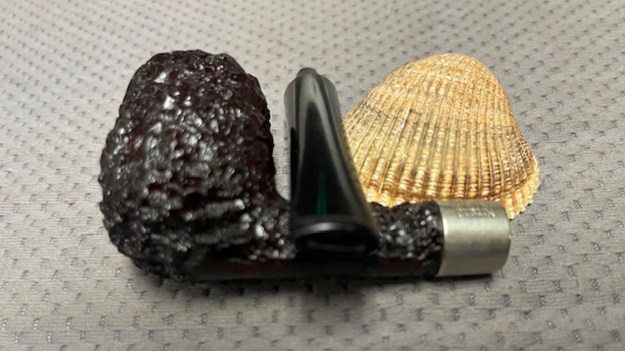
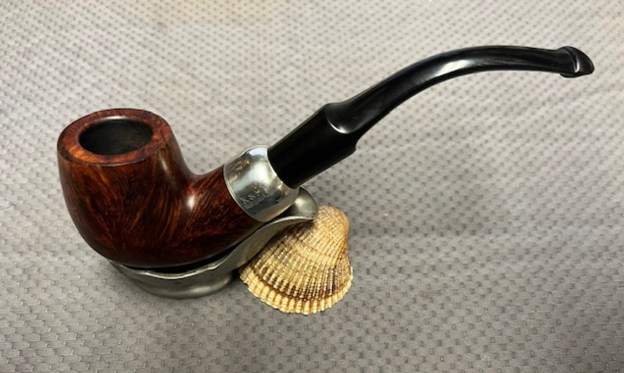
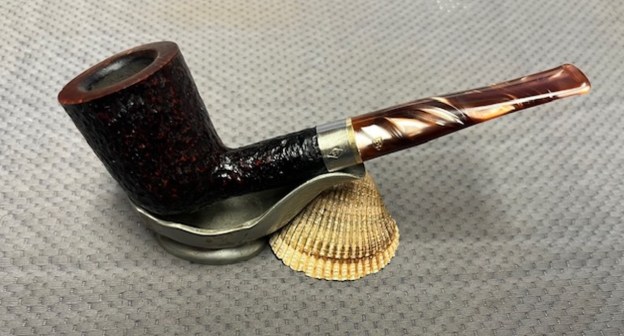
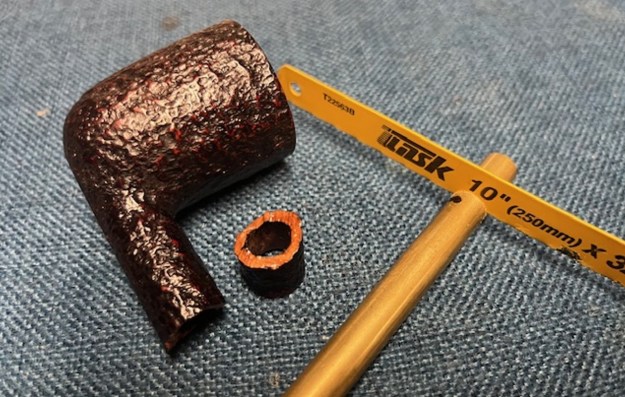
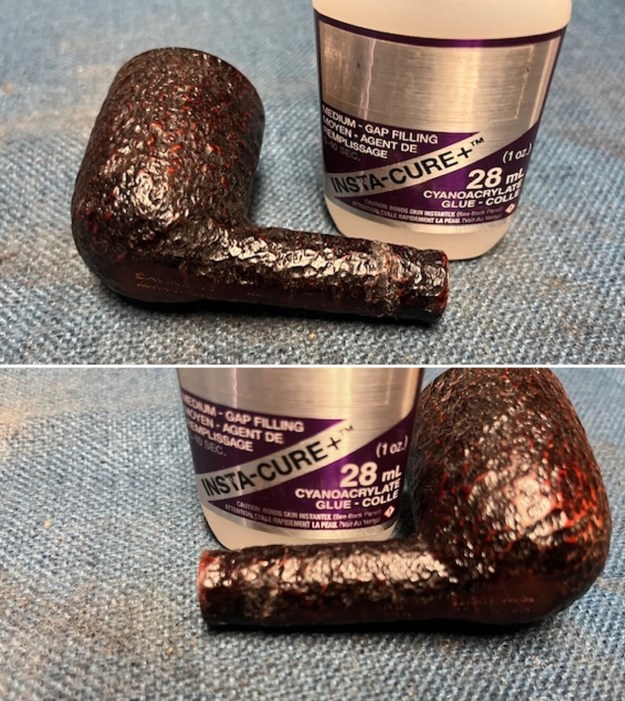
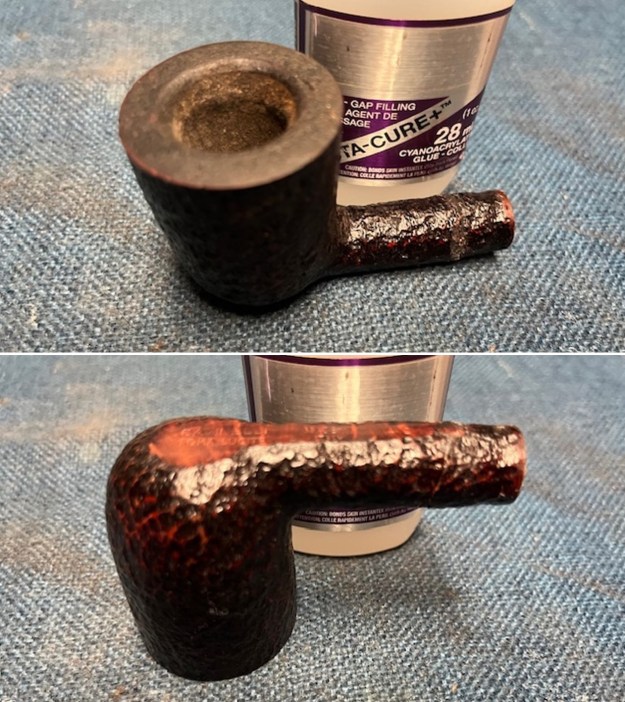
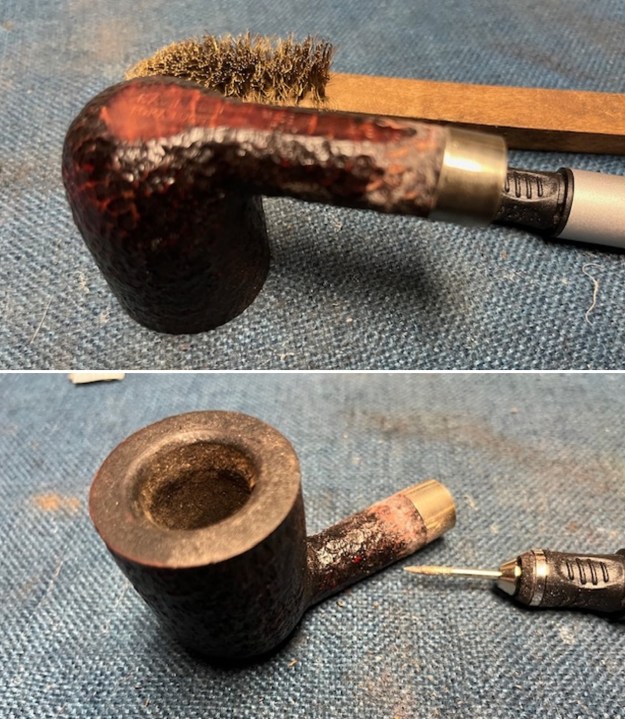
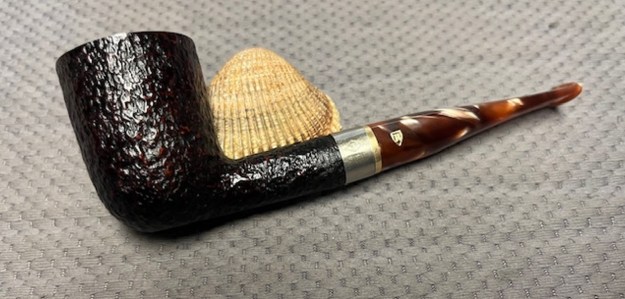
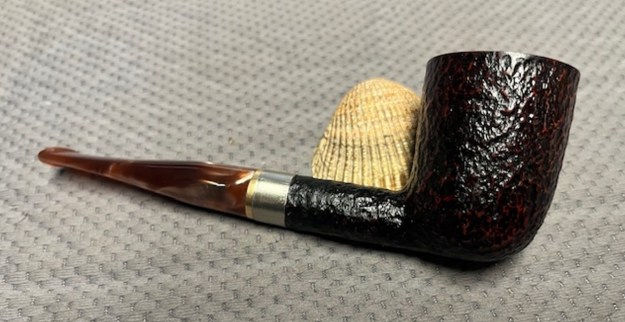
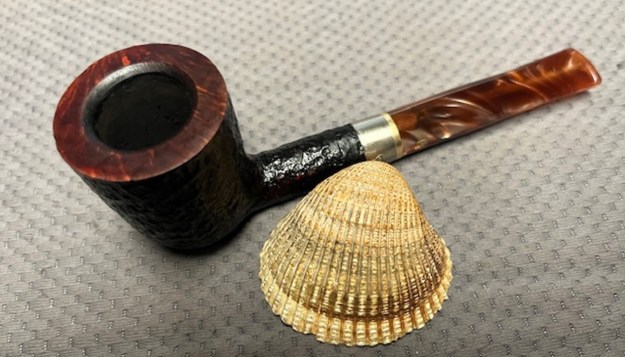
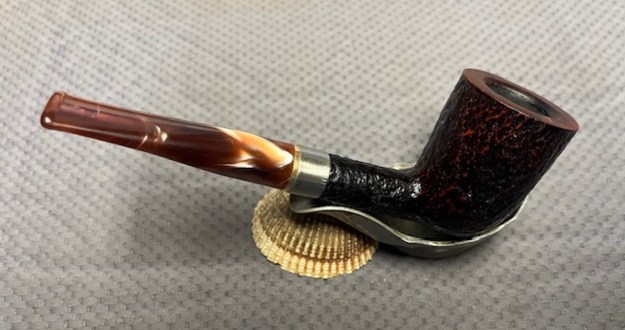
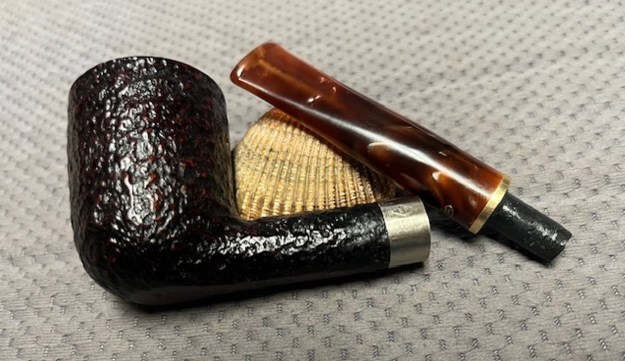
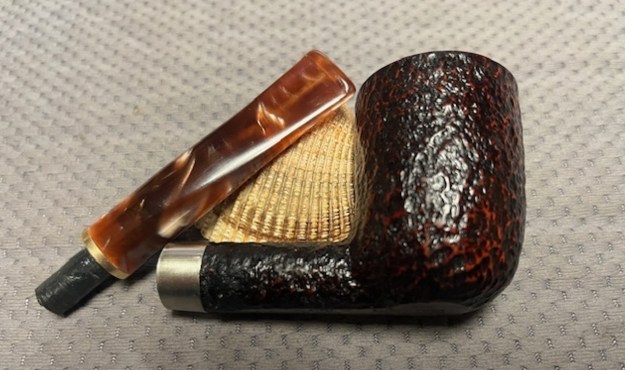
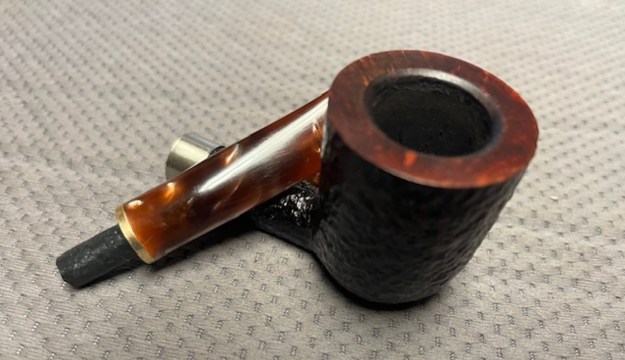
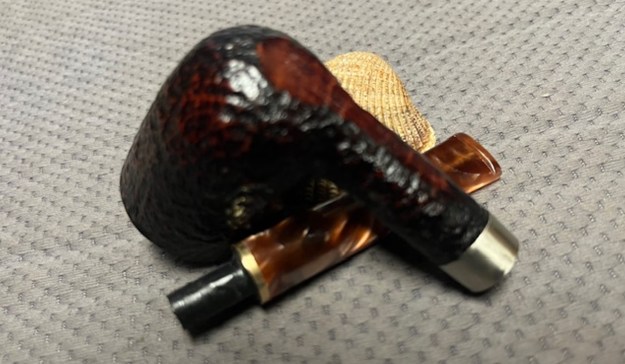
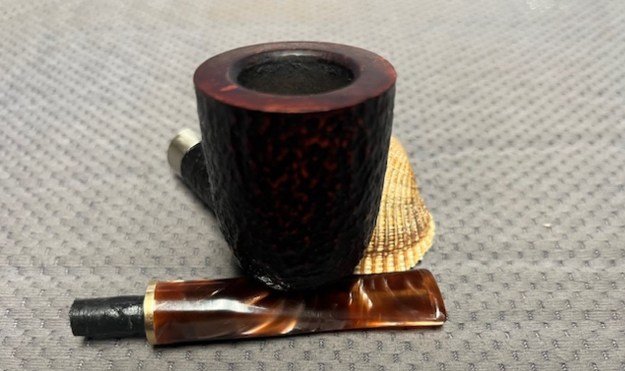
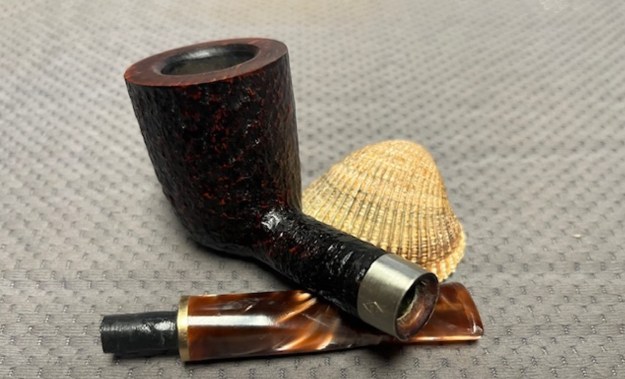
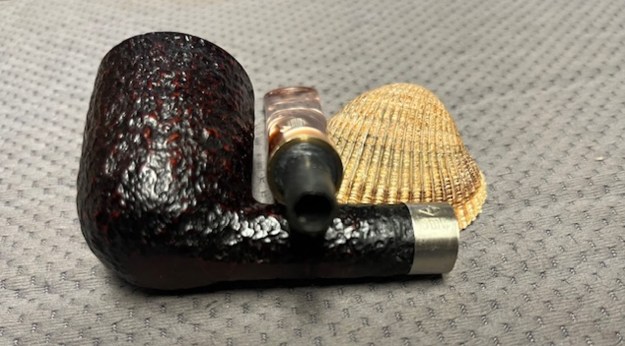
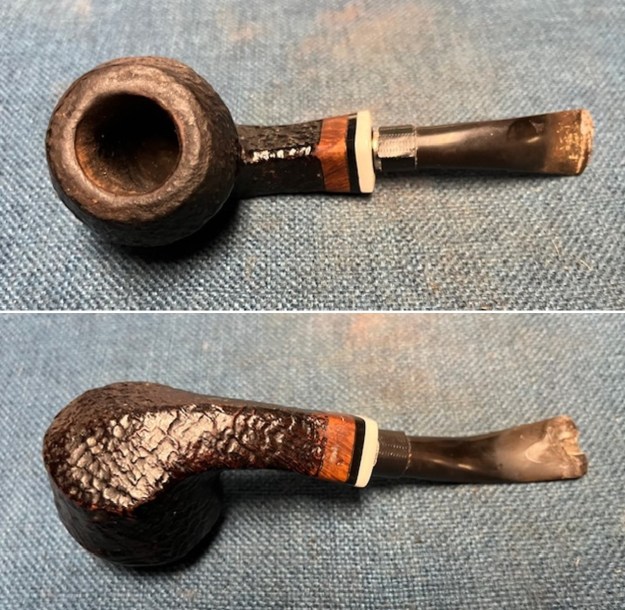
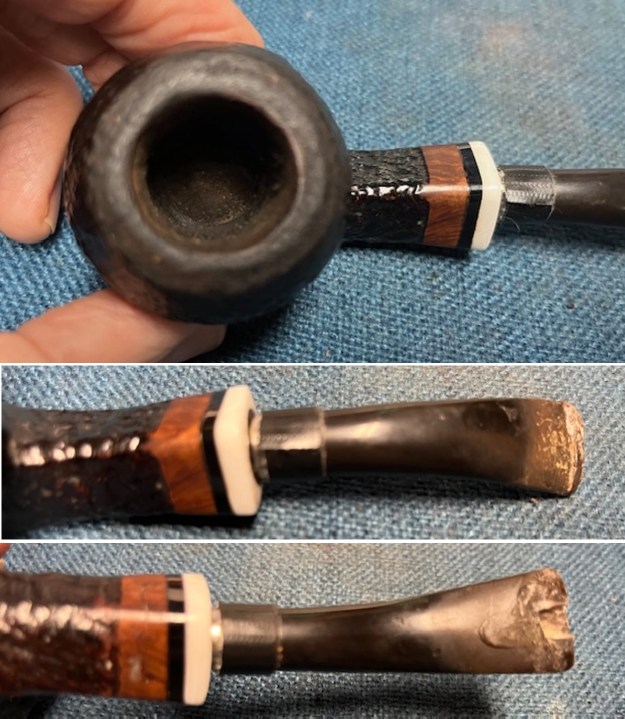
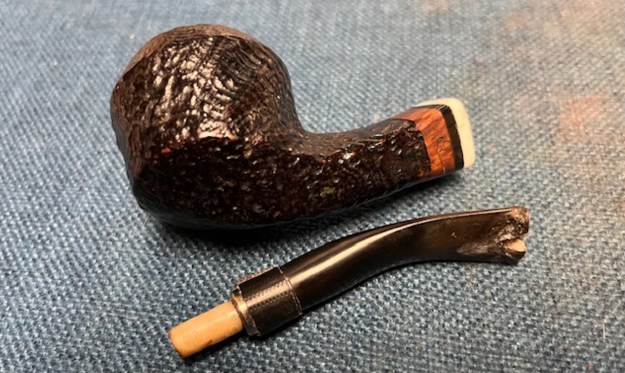
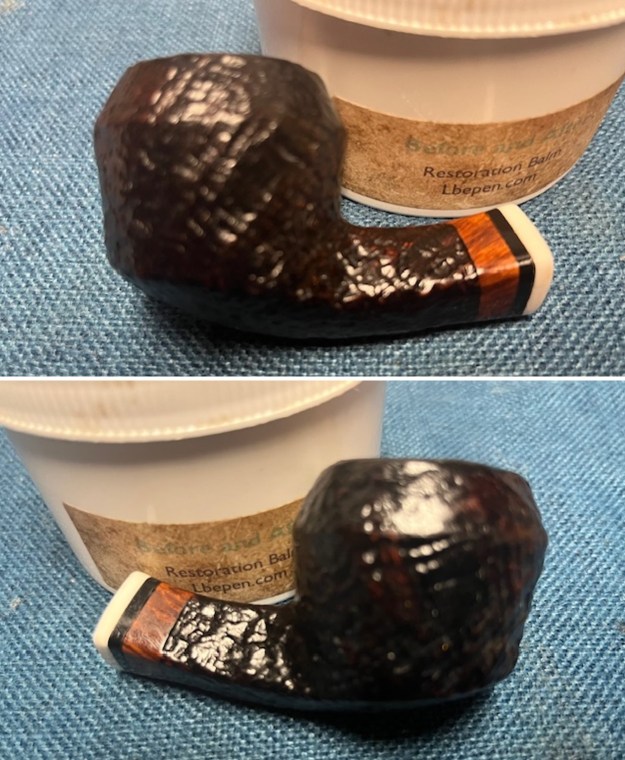
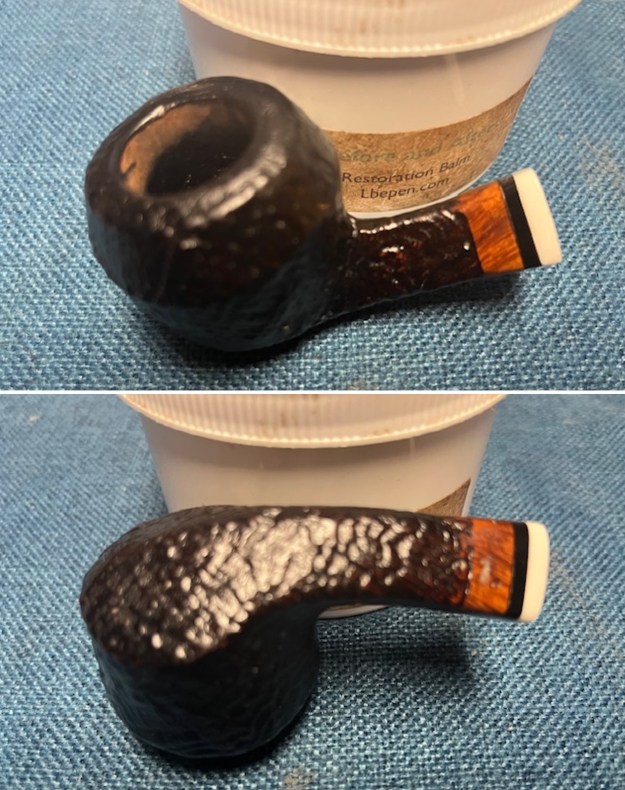
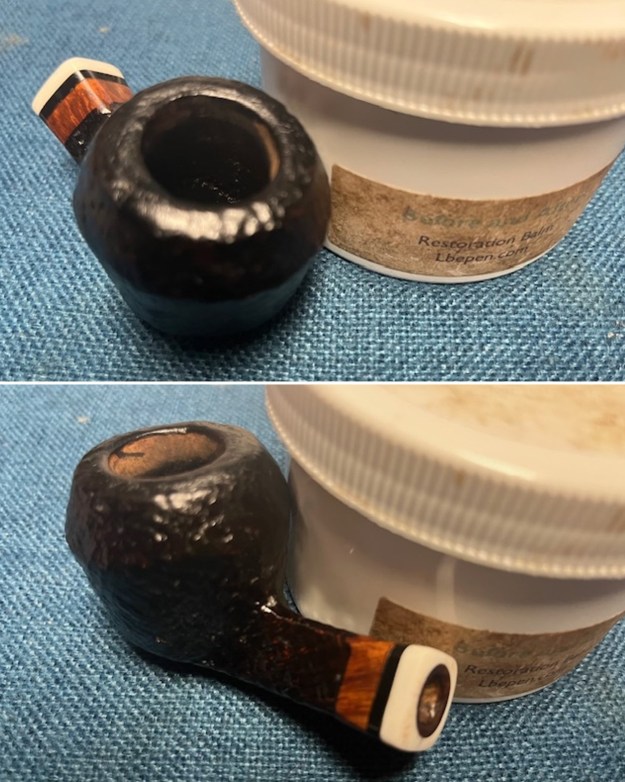
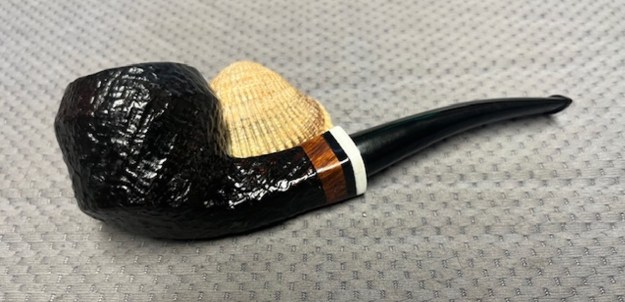
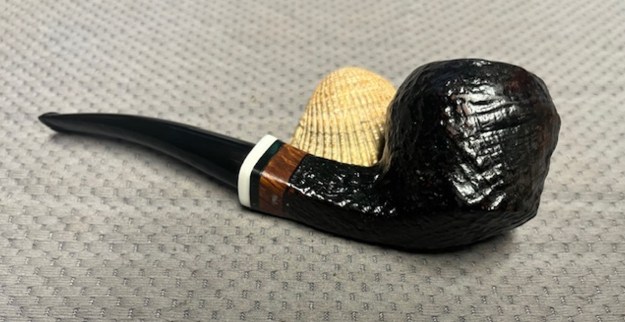
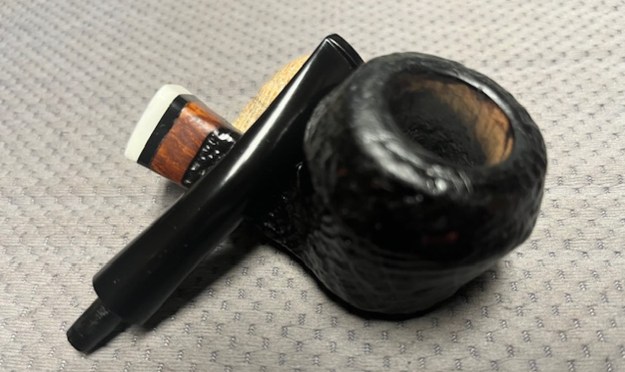
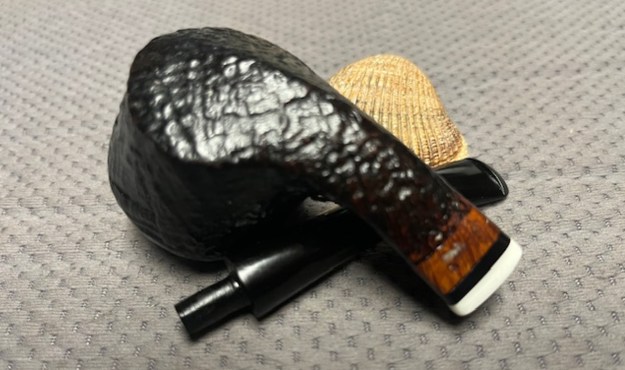
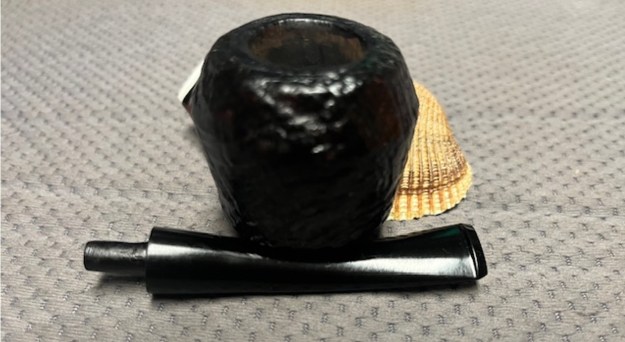
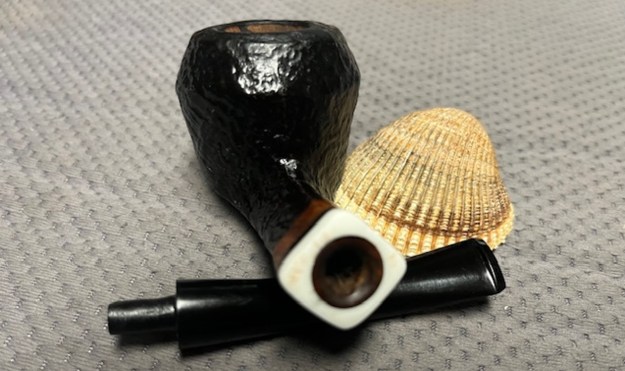
The next pipe on the table is another one that came to us from the seller in Caldwell, Idaho, USA on 07/12/2025. It is a Castello Rusticated Canadian with an acrylic taper stem with the faux diamond on the left side of the stem. It is in dirty but in good condition as can be seen in the photos below. It is stamped on a smooth panel on the underside of the shank and reads Castello [over] Old Antiquari [followed by] KK 32 [followed by] Hand Made [followed by] Made in Cantu [over] Italy [followed by] Carlo arched over Scotti in an oval. The stamping is clear and readable. The pipe has rich Tan and Brown stains on a deep rusticated finish and a dark stain flume around the rim top and down the bowl sides about ¼ inch. The finish was dusty and lightly dirty with grime in the nooks and crannies of the rugged, deep sandblast. The bowl had a moderate cake and there was tobacco debris in the bowl. The rim top had a thick lava coat in the sandblast rim top and edges. The original taper stem is dirty and oxidized. It has the crumpled diamond look to the logo. I took photos of the pipe before I started working on it. I took photos of the bowl and rim top to show the thickness of the cake and the lava coat on the rim top. There was some tobacco debris in the bottom of the bowl. The stem photos show the condition of the taper stem ahead of the button. The stamping on the heel of the bowl is clear and readable as noted above. I took a photo of the pipe with the stem removed to give a sense of the proportions of the pipe. It is a real beauty. Interestingly, there was a clean foil inner tube in the tenon.

As usual I cannot seem to retain the details on Castello pipes in my head for long for some reason. The stamping on this one – Castello and the Carlo Scotti stamp left me with some questions that I need to answer before I began to work on the pipe. I turned first to the Pipephil site (http://www.pipephil.eu/logos/en/logo-castello.html) because of the general quick summary of information I get there along with a screen capture.Castello PIPA CASTELLO di Carlo Scotti & C. was founded in 1947 by Carlo Scotti († 1988). Franco Coppo (AKA “Kino”) who married Carlo Scotti’s daughter Savina, manages (2012) the corporate since 1985.

The site also gave a good summary of the grading and sizes of the pipes. I quote that in full.

Sizes (ascending):

1K to 4K, G (Giant) and GG (Extra large)

Rusticated grading: SEA ROCK, OLD SEA ROCK, NATURAL VERGIN,

Sandblasted grading: ANTIQUARI, OLD ANTIQUARI

Smooth grading (ascending): TRADEMARK, CASTELLO, COLLECTION

Other stampings: Great Line (Non-standard or freestyle) Fiammata (Straight grain)

Production (2012): ~4000 pipes / year

I also found a note on the page that the Rhinestone logo was originally on pipes for the US market. It is occasionally used now.

I turned then to Pipedia for more information on the brand (https://pipedia.org/wiki/Castello). The majority of the information was what was already quoted above in abbreviated form.

…All carved Castello pipes are graded by the number of K’s that are stamped on each piece and are K-graded by SIZE.  1K is the smallest and fairly rare, 2K is small to medium, with 3K or 4K being the most common and ranges from medium to medium large. Large pieces are stamped “G” for giant and extra-large pieces are stamped “GG” for double giant.  In addition to the number of K’s on a carved Sea Rock piece the shape number is almost always added. As a rule a Sea Rock Castello is stained Black, although recently there have been quite a few coming in stained deep brown and still stamped “Sea Rock”. American Logo’d Sea Rocks are all priced the same to the consumer, although most are 2 or 3 K’ed models. G/GG models are charged at a higher price on American pieces and are basically the same as their European counterparts.

The Castello Old Antiquari Briar KK 32 I was working on was definitely one made for the American Market with the Rhinestone in the stem. It had a brown or tan finish with a black flume around the top and the outer edge of the bowl. The Castello Old Antiquari in my hands was 2K graded. That told me that it is a mid-sized pipe. The number 32 makes it a short Canadian shape.

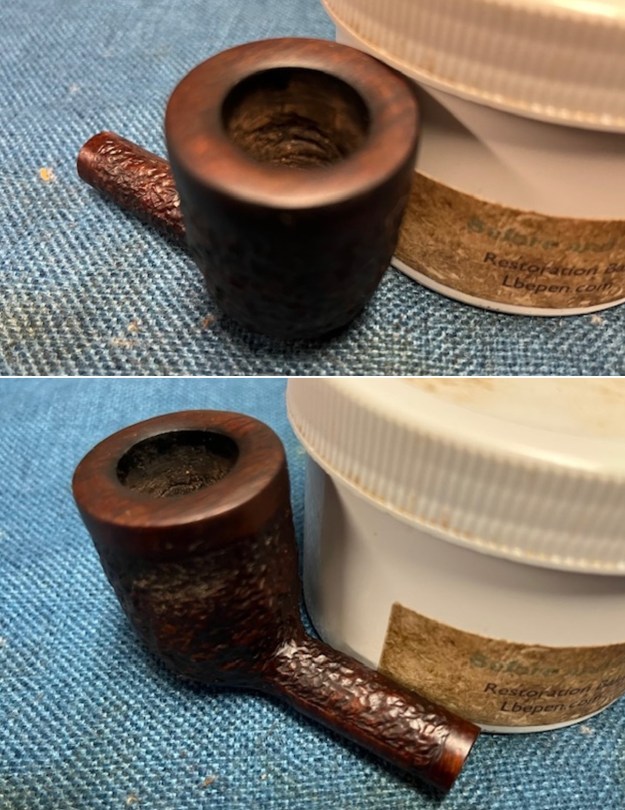
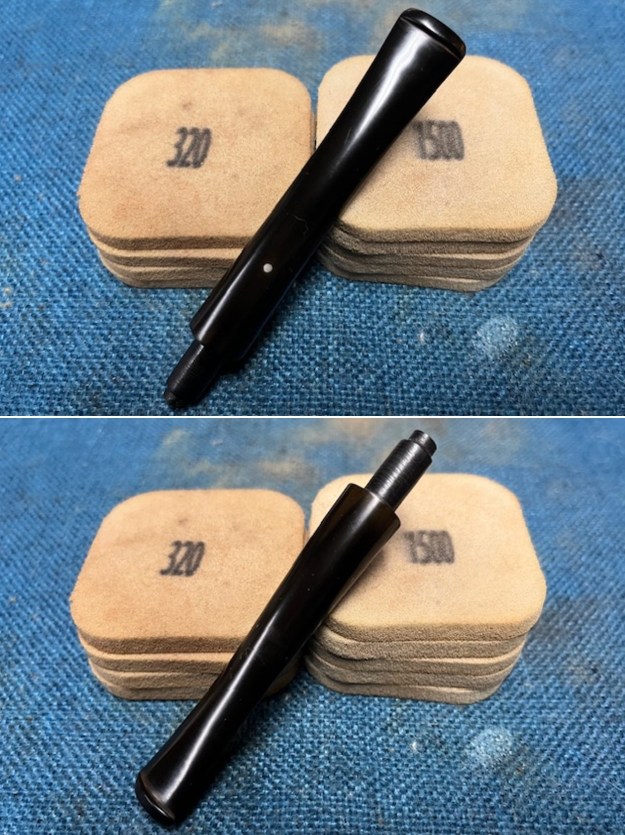
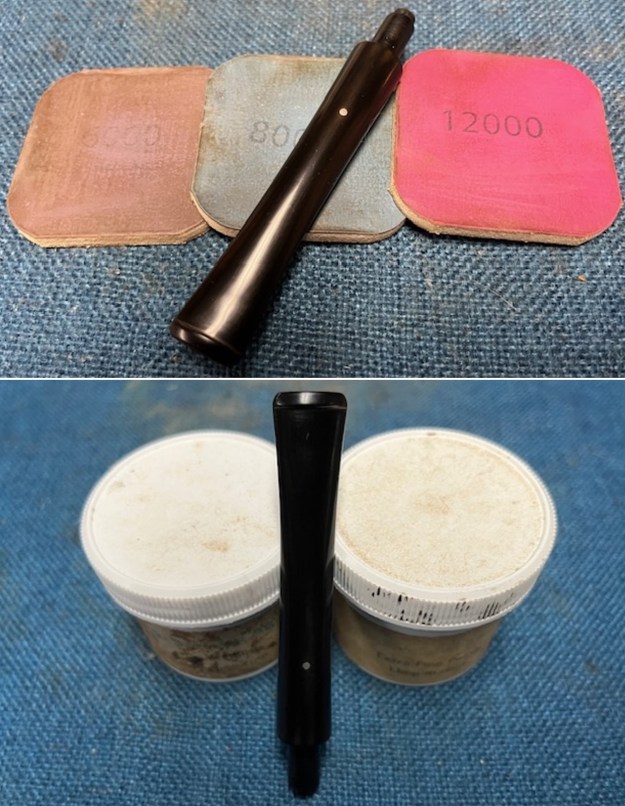
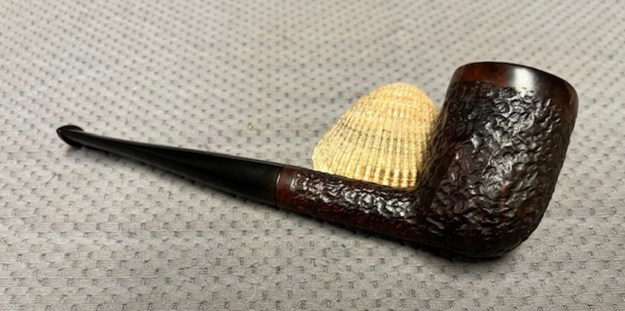
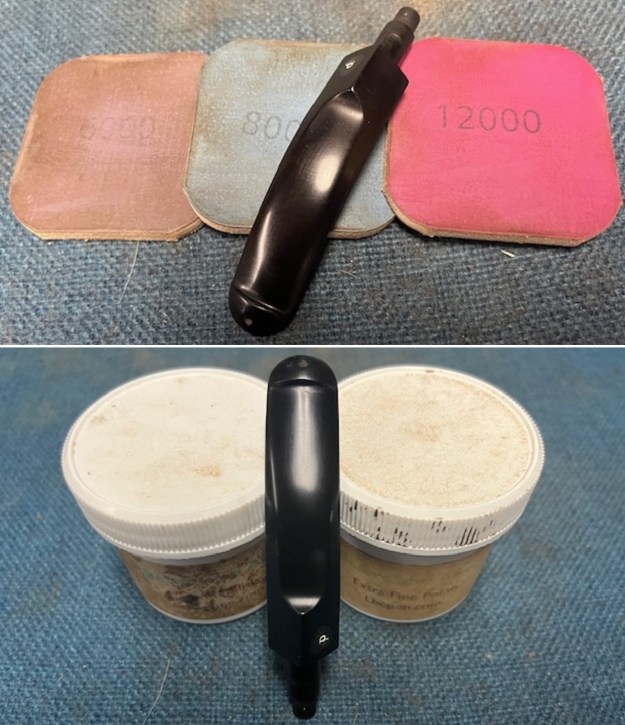
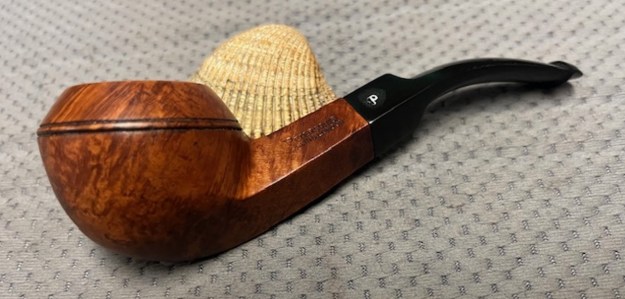
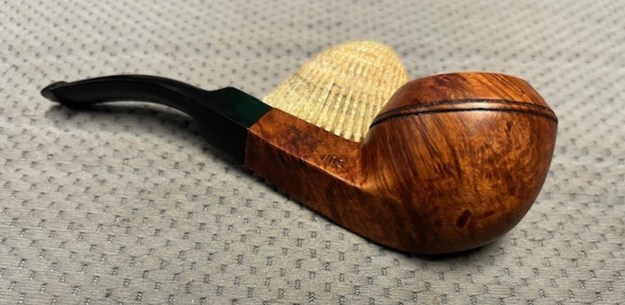
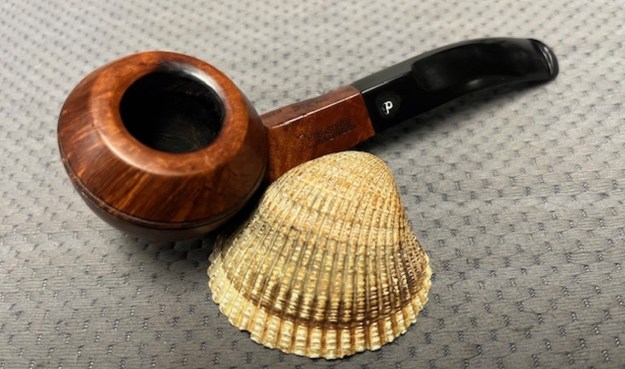
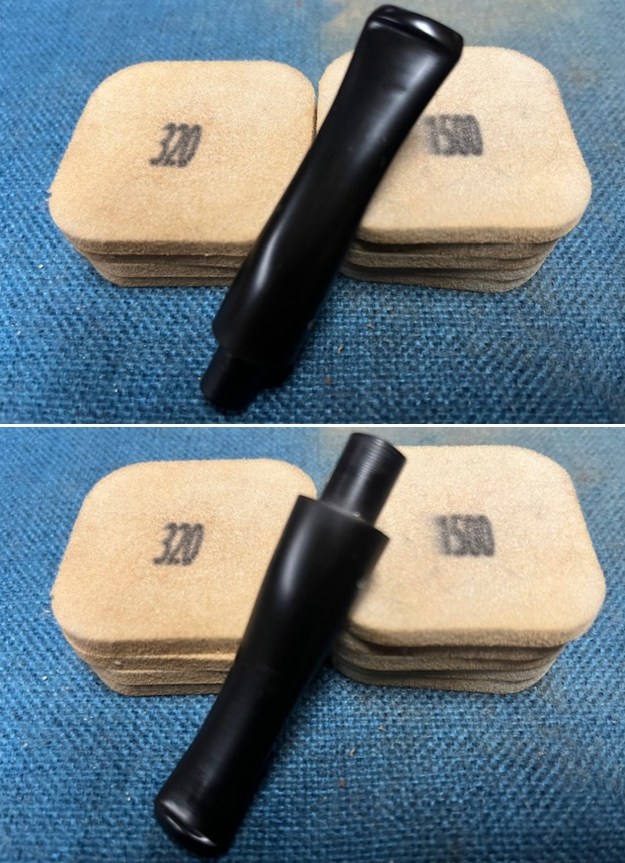
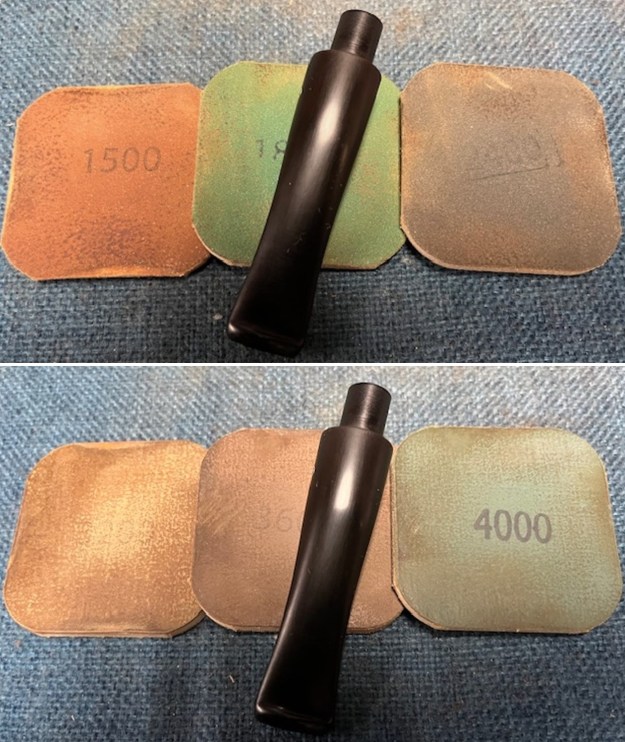
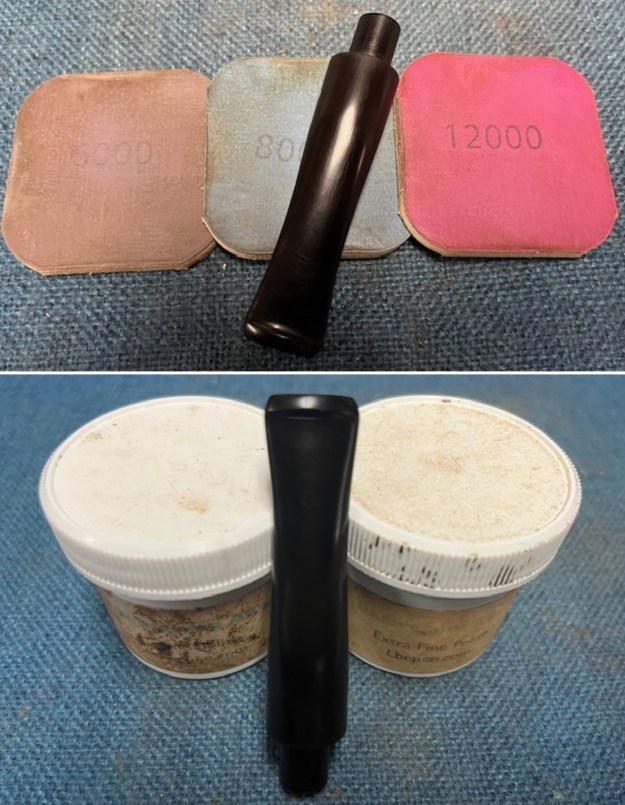
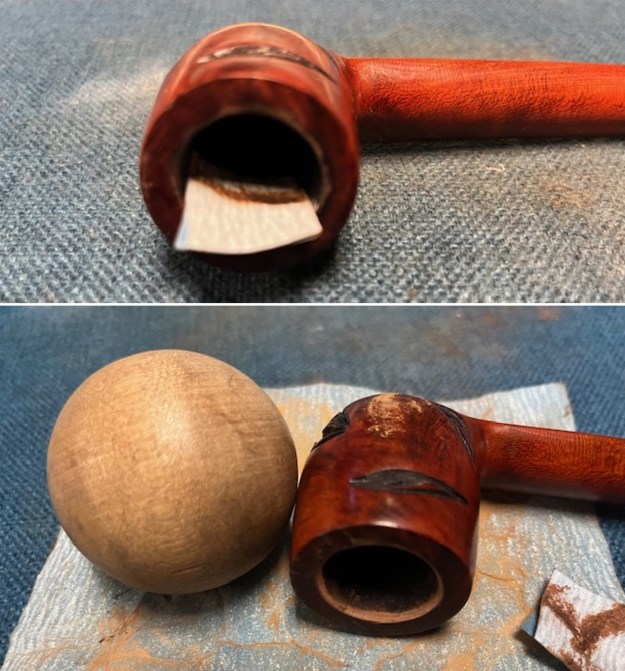
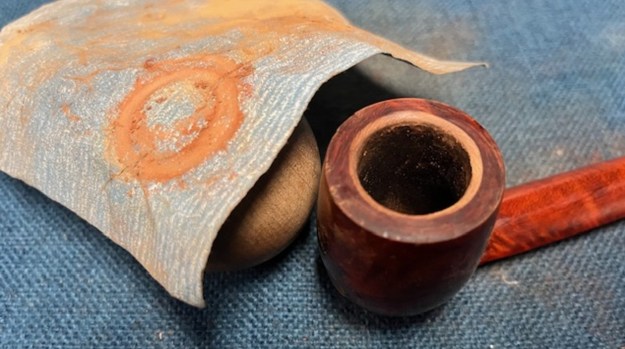
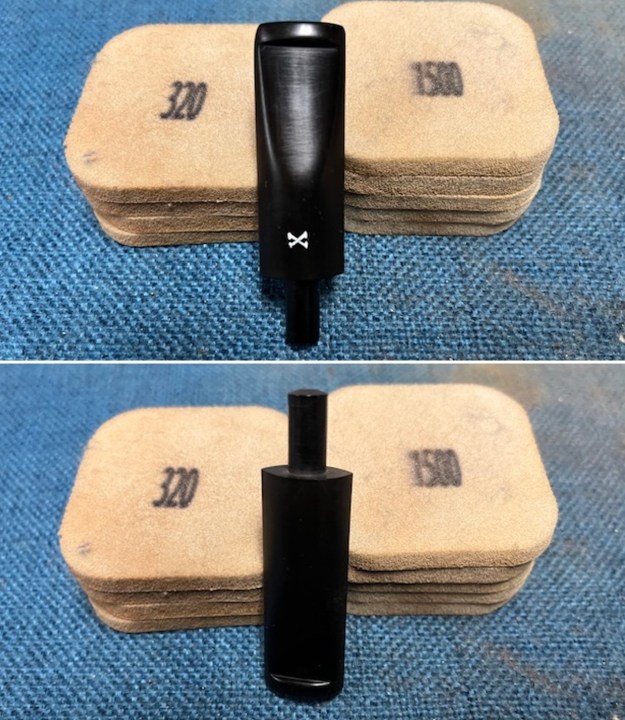
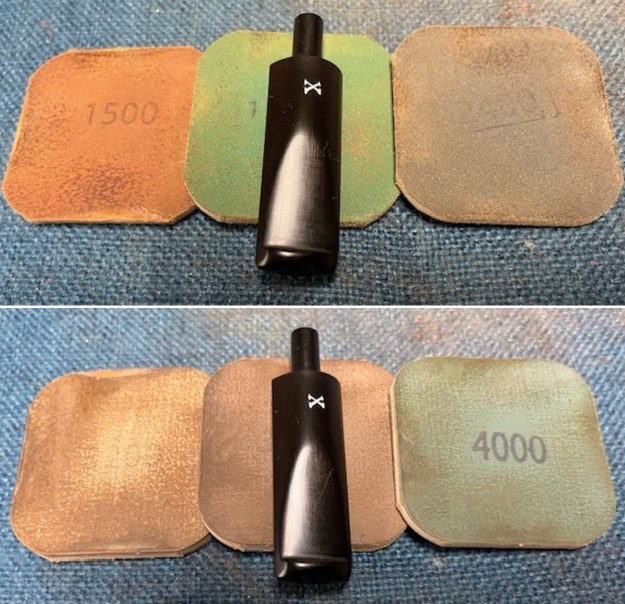
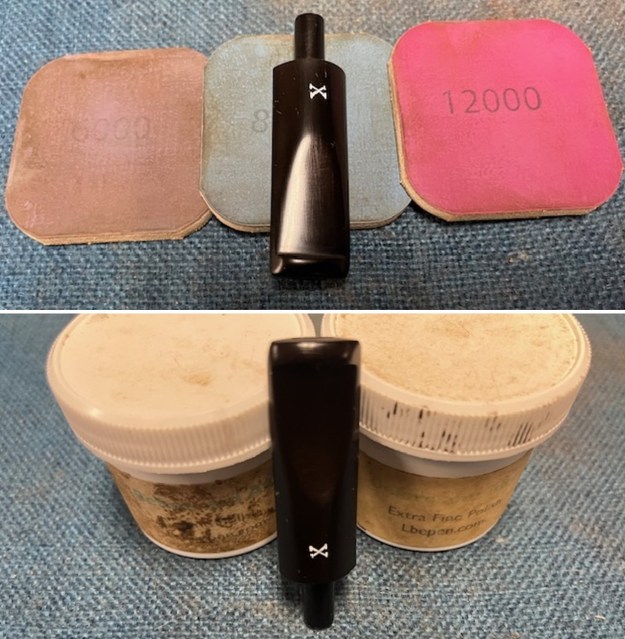
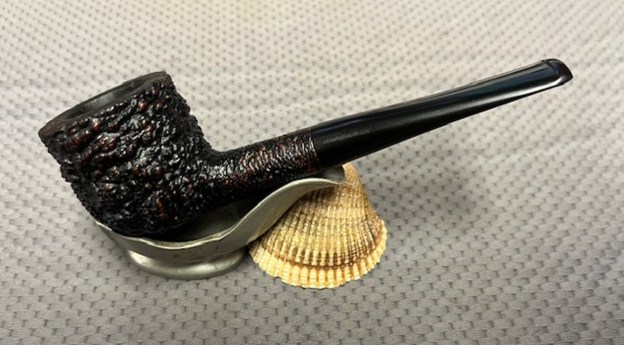
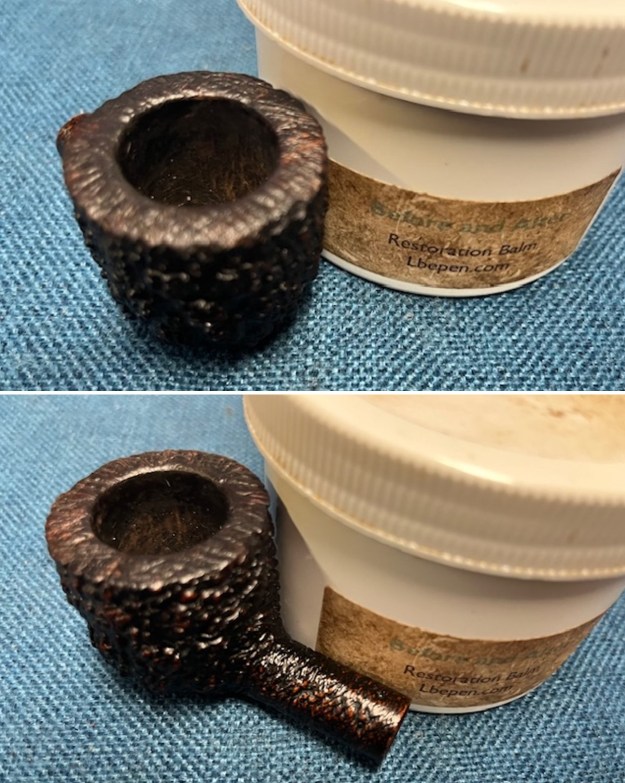
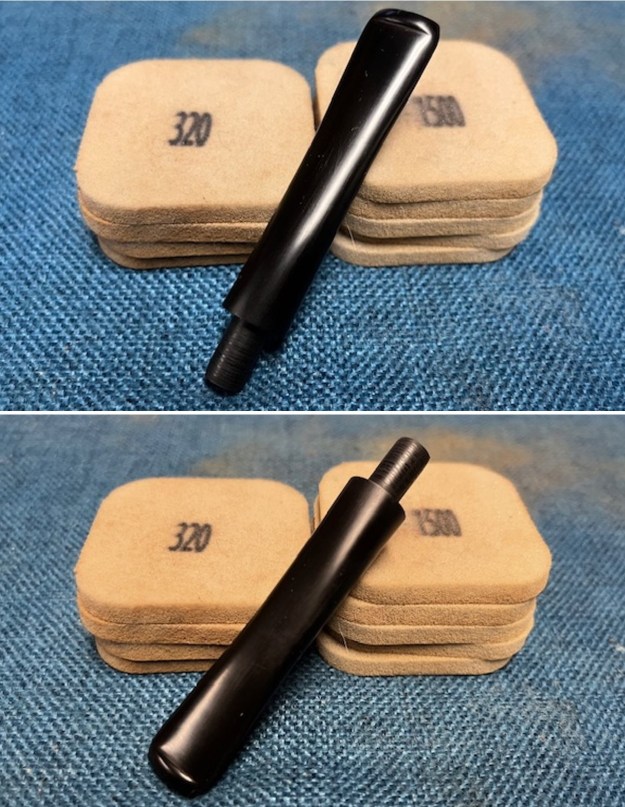
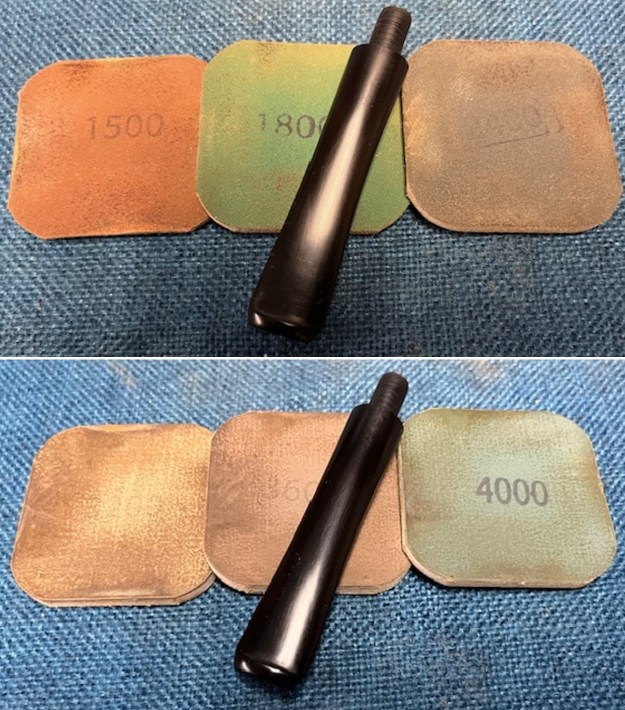
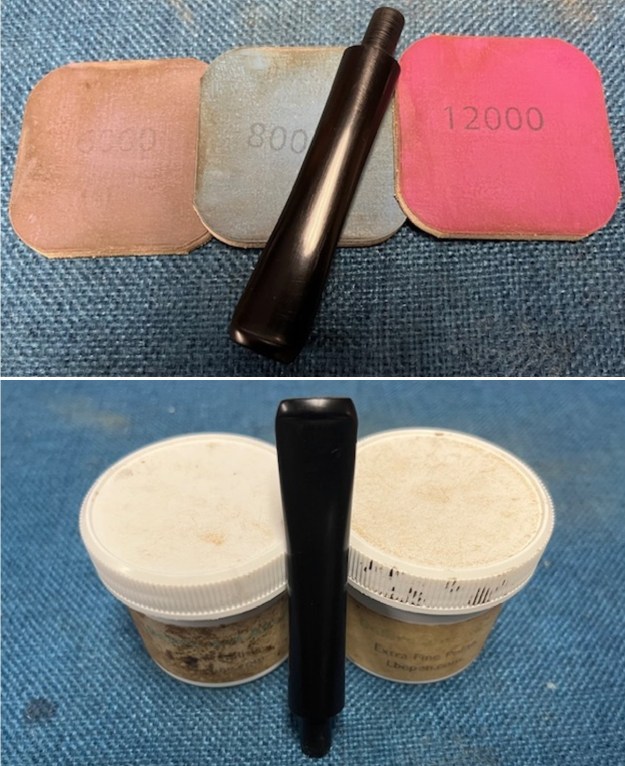
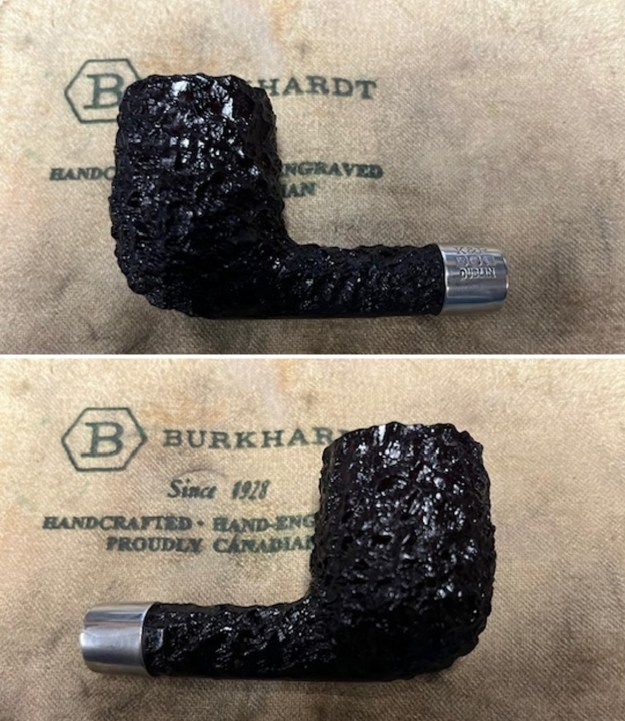
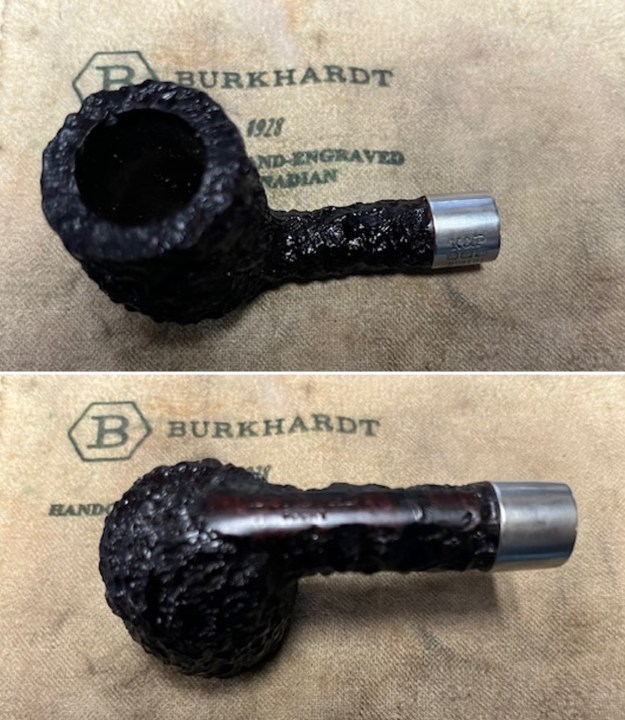
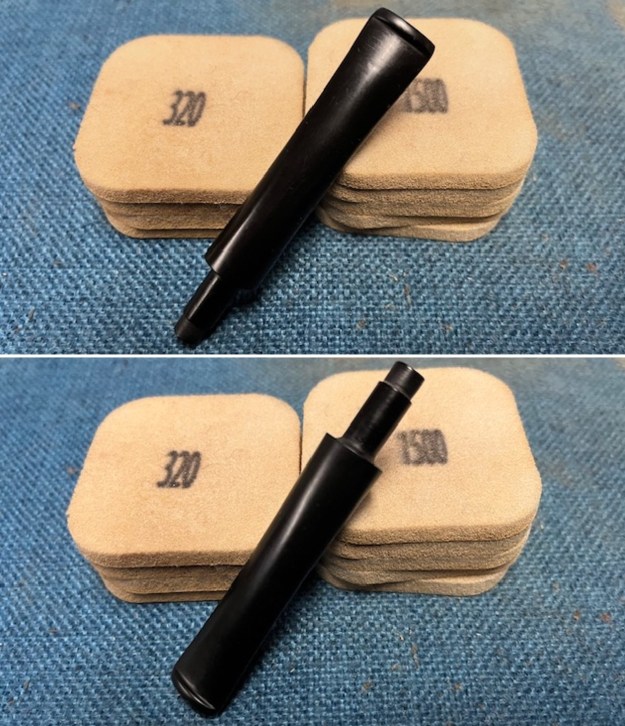
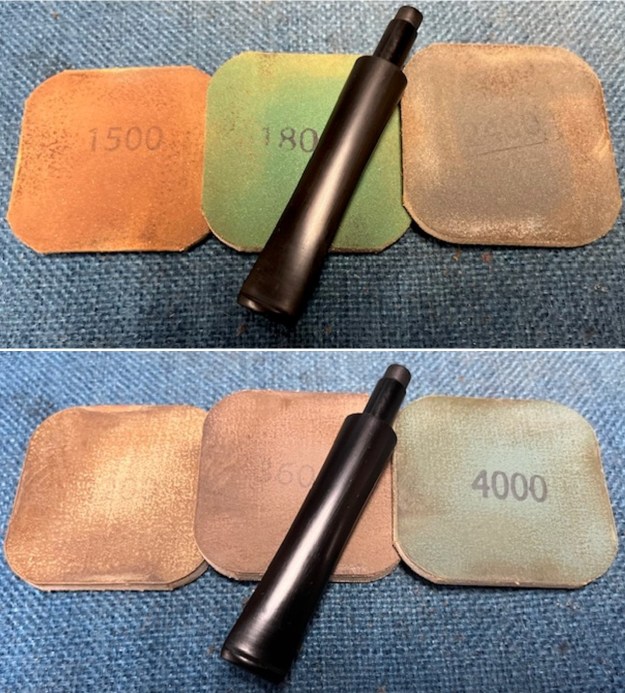
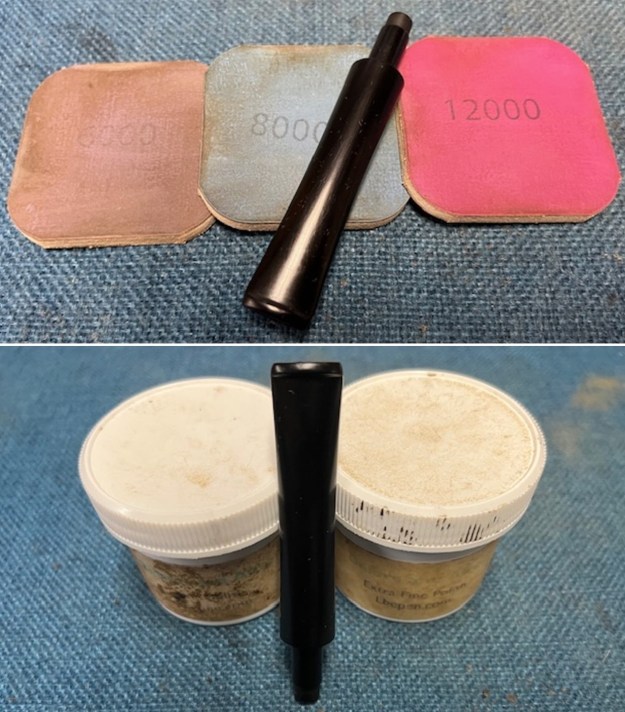
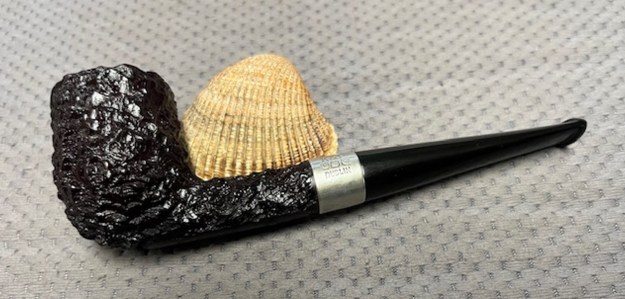
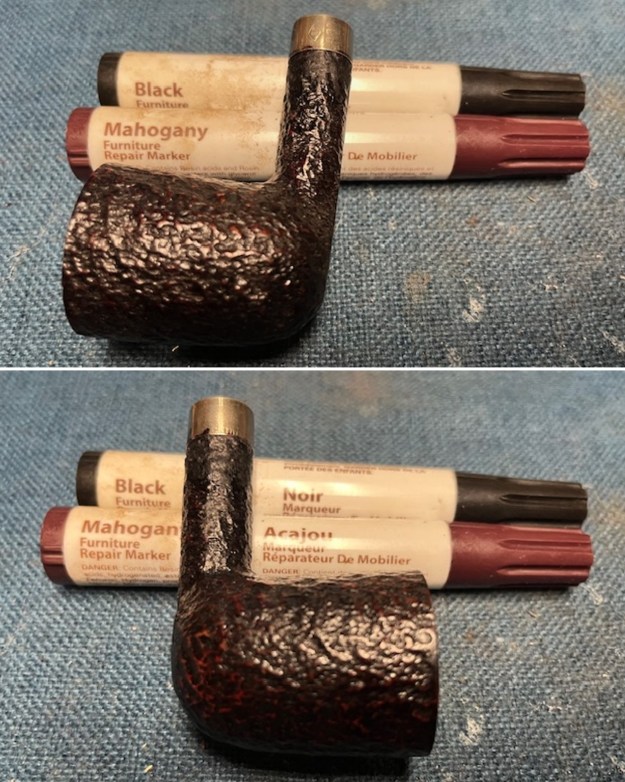
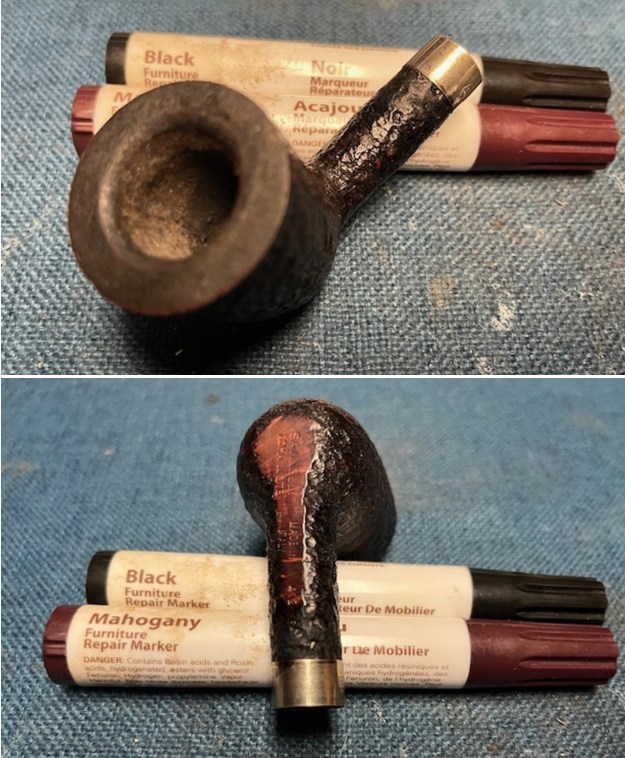
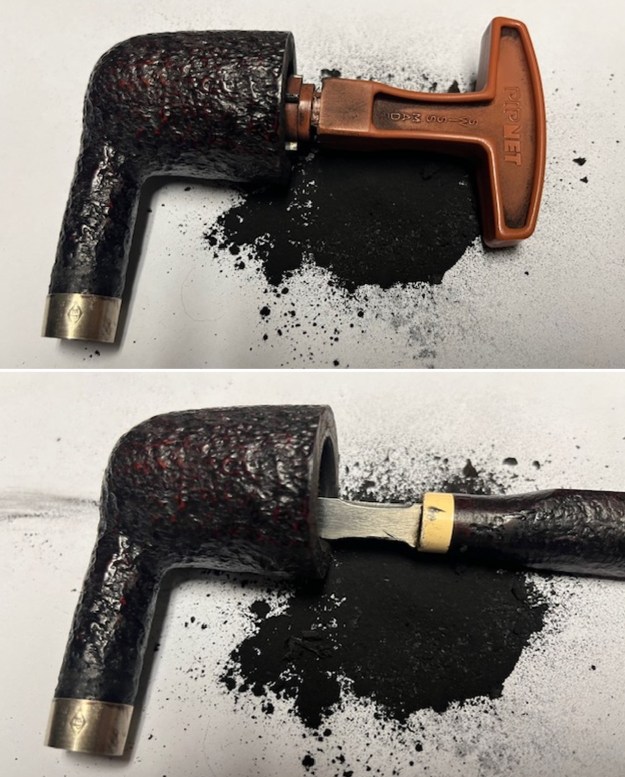
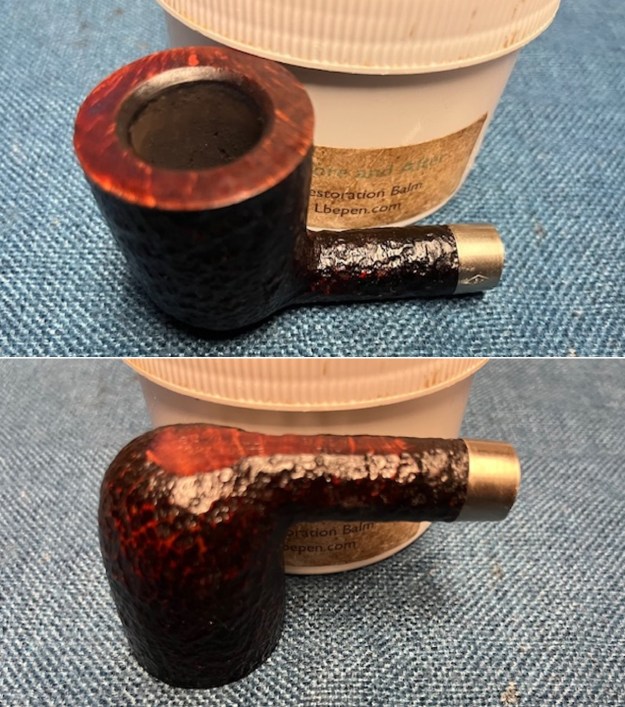
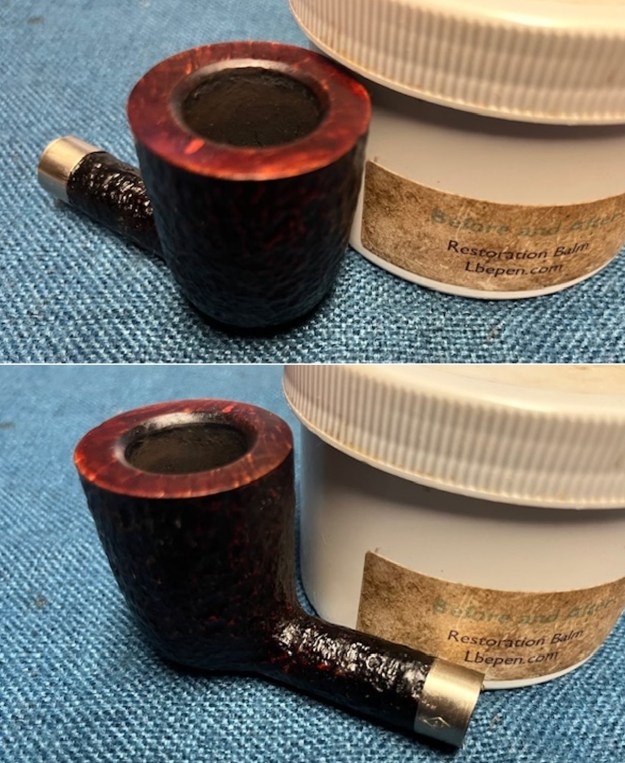
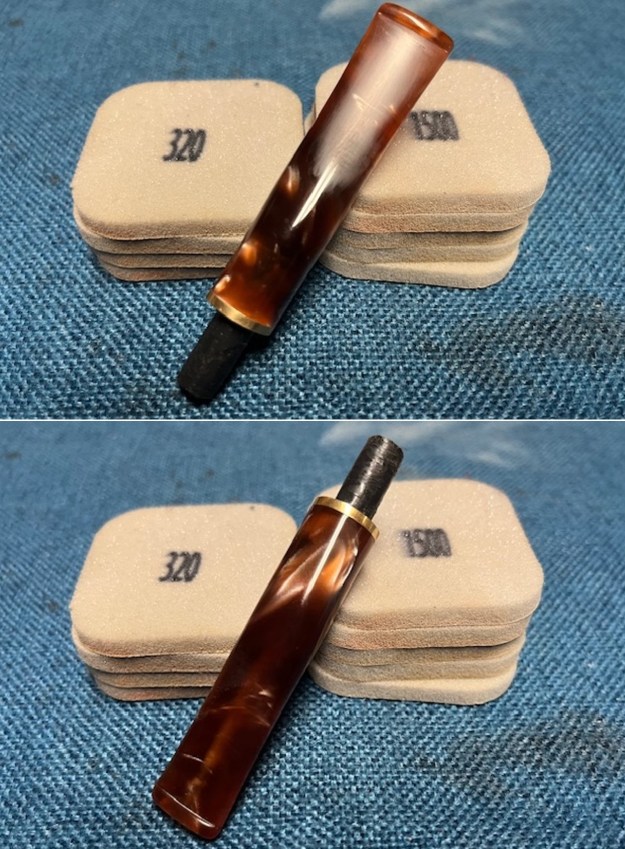
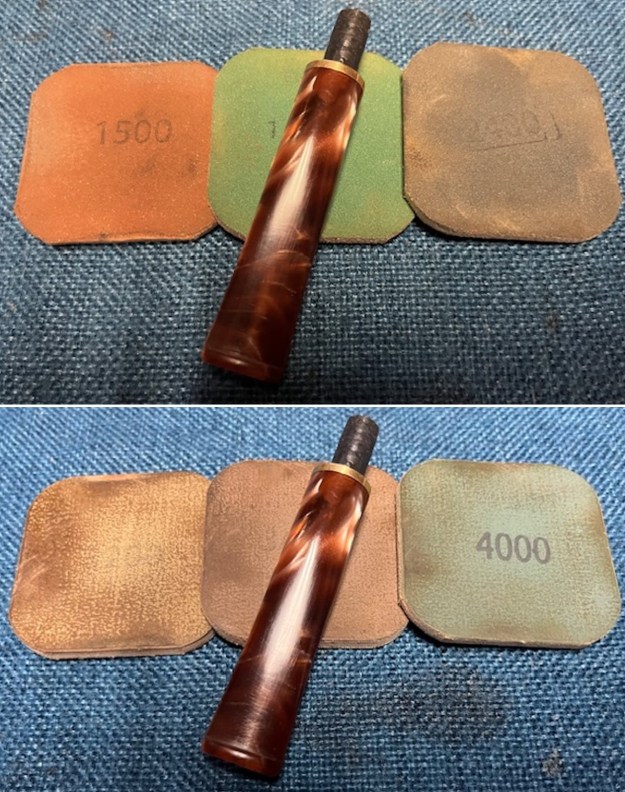
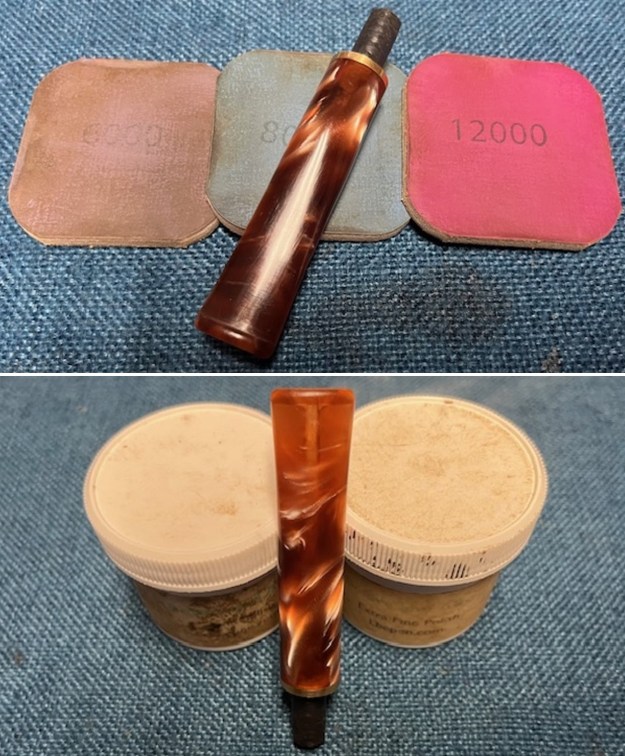
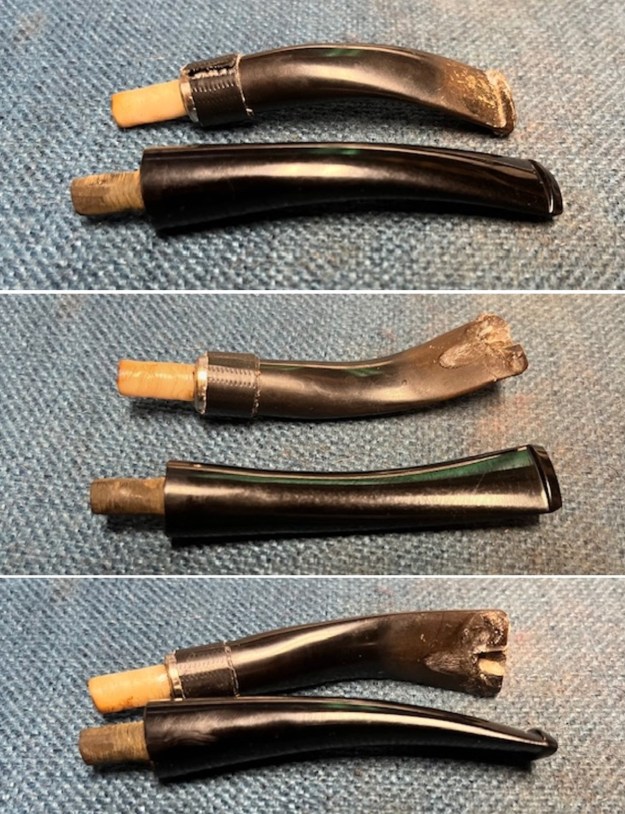
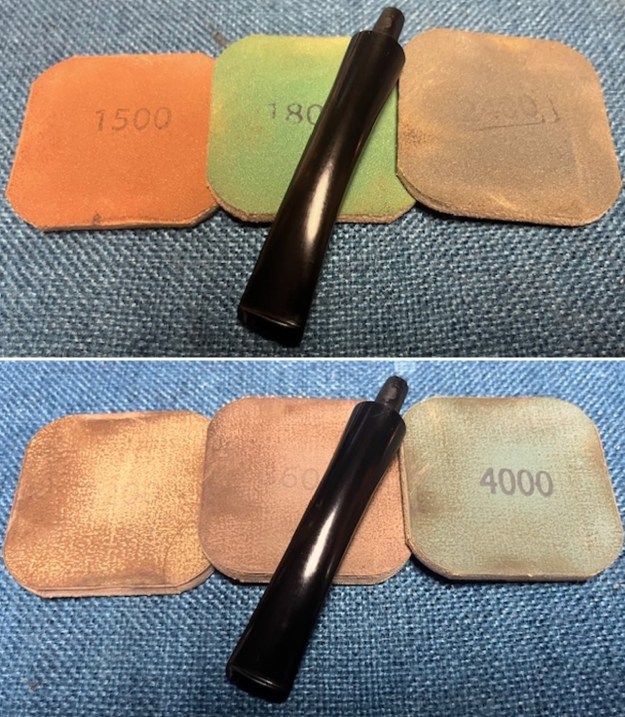
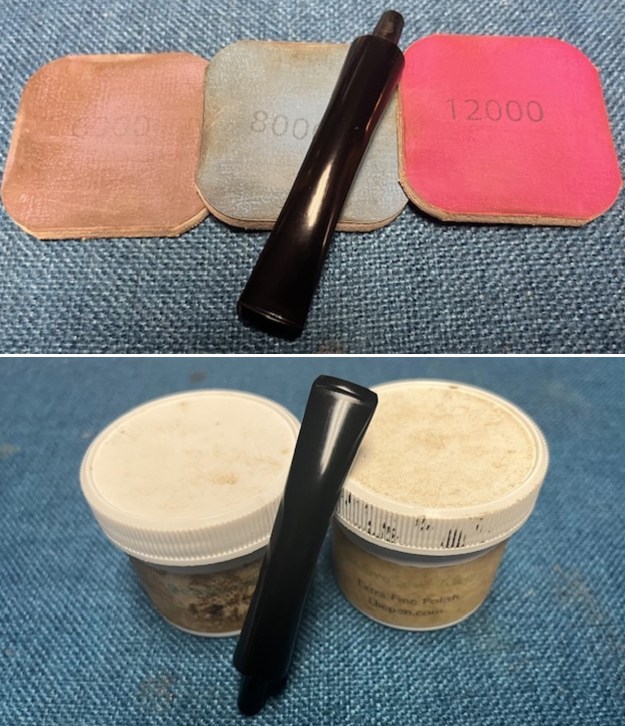
Now it was time to work on the pipe. I started my work by reaming the pipe. I scraped out the light cake with a Savinelli Fitsall Pipe Knife. I took the cake back to bare briar. I sanded the walls smooth with 220 grit sandpaper wrapped around a piece of dowel. The bowl walls looked very good with no burn damage or checking on the walls. I worked over the rugged rustication on the rim top to remove the tars and lava on the rim top with a brass bristle wire brush.I cleaned out the inside of the shank and the airway in the stem with alcohol, cotton swabs and both bristle and regular pipe cleaners. I scrubbed the bowl and shank with a tooth brush and some undiluted Murphy’s Oil Soap. I rinsed it off with warm water to remove the dust and soap from the finish. I dried it off with a soft cloth. The rim top was still darkened in the grooves of the sandblast. I touched up the black of the flume finish on the rim top and outer edge of the bowl with a black stain pen. It looked much better at this point with the finish cleaned of the dust and debris in the finish. It is a rich and rugged rustication.I rubbed the briar down with Before & After Restoration Balm. I worked it into the briar with my fingertips and a horsehair shoe brush to work it into the nooks and crannies of the sandblast finish. The product works to clean, enliven and preserve the briar. I let it sit for 10 minutes then I buffed it with a cotton cloth to deepen the shine. The briar really comes alive with the balm. I set the bowl aside and worked on the stem. The stem was stamped on the underside and read TRADE MARK [over] CASTELLO [over] 7. I sanded the oxidation and the tooth marks and chatter with 220 grit sandpaper. I was able to remove all of the light tooth damage on the stem and the majority of the oxidation. I sanded the stem and tenon surface with 320-3500 grit 2×2 inch pads. I wiped the stem down with an Obsidian Oil cloth after each sanding pad.I polished the vulcanite with micromesh sanding pads – 1500-12000 grit pads. I wiped it down with Obsidian Oil after each sanding pad. I used Before & After Pipe Polish – both Fine and Extra Fine to further polish the stem. This beautiful Castello Old Antiquari Rusticated Flumed Top KK 32 Short Canadian with a taper acrylic stem looks amazing after the work on it. The briar is clean and the deep rustication really came alive. The rich brown stains gave the finish a sense of depth with the polishing and waxing. The flumed black rim top and edges were a great contrast. The finish really popped. I put the stem back on the bowl and buffed the pipe with Blue Diamond on the buffing wheel using a light touch on the briar. I gave the bowl and the stem multiple coats of carnauba wax on the buffing wheel. I buffed the pipe with a clean buffing pad to raise the shine. I hand buffed the pipe with a microfiber cloth to deepen the shine. The finished Castello Old Antiquari Rusticated KK 32 Canadian really is a beauty and feels great in the hand and looks very good. Give the finished pipe a look in the photos below. The dimensions of the pipe are Length: 6 inches, Height: 2 inches, Outside diameter of the bowl: 1 1/2 inches, Chamber diameter: 7/8 of an inch. The weight of the pipe is 47 grams/1.66 ounces. I will soon be putting this pipe on the rebornpipes store in the Italian Pipe Makers section. It should make a great smoker that the next steward will enjoy. Thanks for reading this blog and my reflections on the pipe while I worked on it. It was a fun one to work on.

New Life for a Republic Era Peterson’s “Donegal” Rocky 15 Rusticated Billiard


by Steve Laug

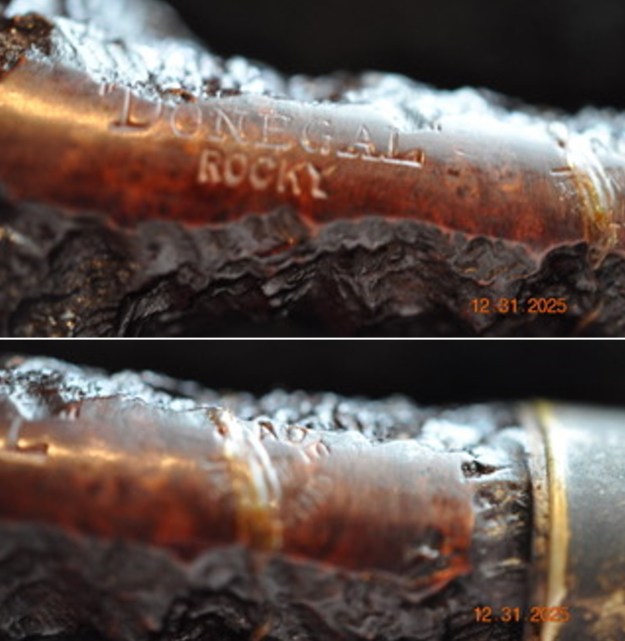
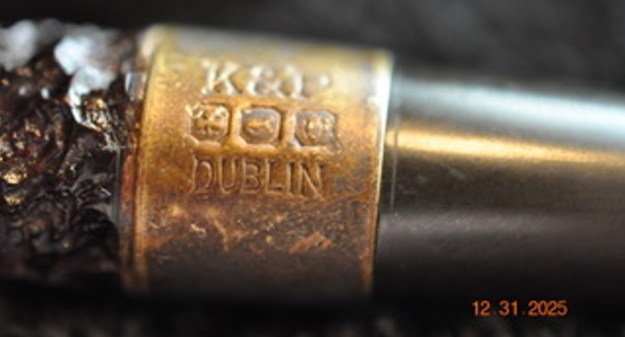
The next pipe on the work table is a sandblast Peterson’s Rusitcated Billiard shaped pipe that we purchased from our contact in Copenhagen, Denmark on 11/21/2023. It was stamped on the underside of the bowl and shank and on the heel, it was stamped Peterson’s [over] “Donegal” Rocky [over] the shape number 15. Following that it read, Made in the Republic of Ireland (in three lines). There is a band on the shank that is stamped on the left side and reads K&P in shields [over] Sterling Silver. Under those stamps there are three hallmarks – Hibernia seated, Crowned Harp for country of manufacture and a date letter in this case that was not readable. It has a rusticated finish around the bowl and shank that has a lot of oils, debris and grime in the finish. The pipe had been recently reamed and there was a light cake in the bowl and a lava overflow in the rustication on the rim top. The inner edge of the bowl looks to be in good condition. There was a very beautiful pipe underneath all of the buildup of years of use. The stem was a Peterson’s style P-Lip Taper Stem. It had light chatter on both sides ahead of the button. Jeff took photos of the pipe before he started his cleanup work on it. Jeff took photos of the bowl and rim top to show the thin cake in the bowl and the light lava build up on the rusticated rim top and the edges of the bowl. The rim top and edges looked good. Jeff took photos of the top and underside of the stem showing the tooth chatter on an otherwise good looking stem. More would be visible once Jeff cleaned it up. Jeff took photos of the sides and heel of the bowl to show the condition of the finish. You can see the dust and grime around the sides of the bowl and shank in the rusticated finish. Jeff took photos of the stamping on the underside of the bowl and shank. The stamping was faint but readable as you can see from the photos. It read as noted above. The Sterling Silver ferrule is actually clearly stamped and readable. The hallmarks are worn and hardly readable.I am including the information from Pipedia’s article on Peterson pipes. It is a great read in terms of the history of the brand (https://pipedia.org/wiki/Peterson). I have included a bit of the pertinent history here.

1950 – 1989 The Republic Era – From 1950 to the present time, the stamp for this era is “Made in the Republic of Ireland” in a block format generally in three lines but two lines have been used with or without Republic being abbreviated.

During the 1950’s and 60’s the Kapp & Peterson Company was still in the ownership of the Kapp family. However 1964 saw the retiral of the company Managing Director Frederick Henry(Harry) Kapp.

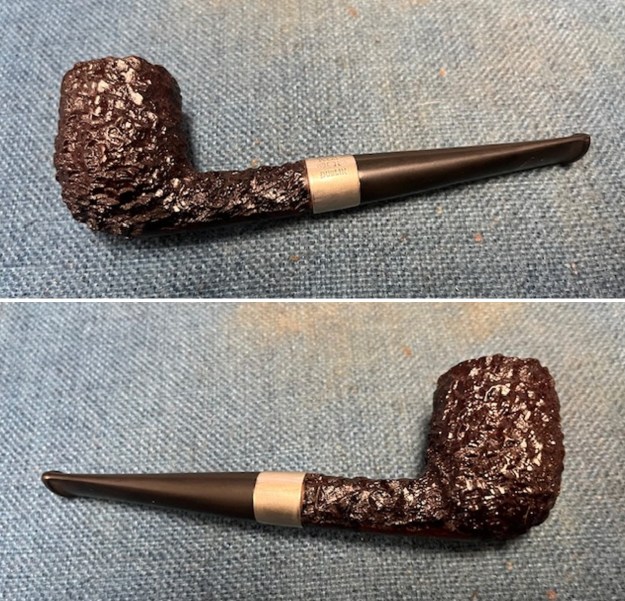
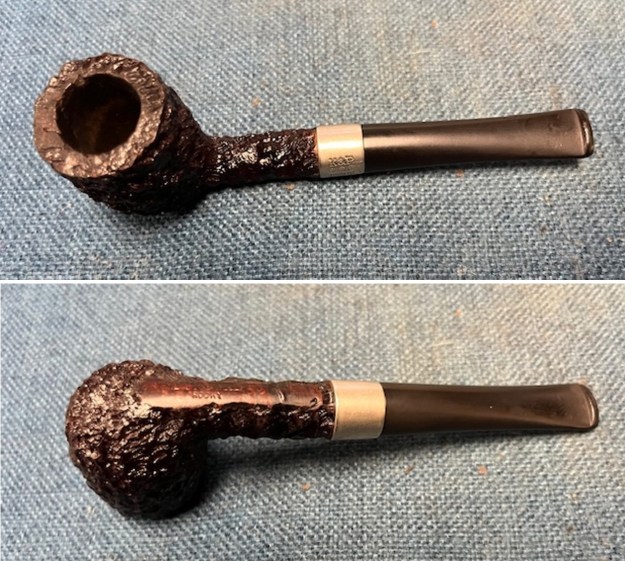
Jeff had done a great job cleaning up the pipe as usual. He reamed the pipe with a PipNet reamer and cut back the cake back to the bare briar. He cleaned up the walls with a Savinelli Fitsall Pipe Knife. He scrubbed the interior of the bowl and shank with pipe cleaners, cotton swabs and alcohol to remove the tars and oils. He scrubbed the exterior of the pipe with undiluted Murphy’s Oil Soap and a tooth brush to remove the grime from the finish. He worked on the rim top lava and darkening with the soap and tooth brush. He scrubbed the inside of the stem with alcohol and pipe cleaners. He scrubbed the exterior of the stem with Soft Scrub and then soaked it in Briarville’s Pipe Stem Deoxidizer. He rinsed it off with warm water to remove the Deoxidizer. The pipe looked far better when it arrived. The silver tarnished once again and would need to be polished because it had been sitting here for awhile. I took some close up photos of the rim top and also of the stem surface. I wanted to show how well it had cleaned up. The rim top and edges look quite good. I also took close up photos of the stem to show the light tooth marks on the surface near the button.I took a photo of the stamping on the underside of the shank and the band. You can see that it is stamped as noted above. It is faint but still readable. I took the pipe apart and took a photo of the pipe. It is a good-looking pipe and has a rugged rustication around the bowl. I worked some Before & After Restoration Balm into the surface of the briar with my fingertips and a horsehair shoe brush to clean, enliven and protect the briar. I let the balm sit for 10 minutes and then buffed with a cotton cloth to raise the shine. The photos show the bowl at this point in the restoration process. I polished the Sterling Silver band on the shank with a jeweller’s cloth to remove the tarnish and polish it. I touch up the P stamp on the left side of the saddle stem with some white acrylic fingernail polish. I pressed it into the stamp with a toothpick and scraped off the excess with the pick and then lightly sanded it with a worn 1200 grit sanding pad. I polished the stem with micromesh sanding pads – wet sanding with 1500-12000 grit sanding pads. I wiped it down after each sanding pad with Obsidian Oil. I polished it with Before & After Pipe Stem Polish – both Fine and Extra Fine. I gave it a coat of Obsidian Pipe Stem Oil. It works to protect the stem from oxidizing. I set it aside to dry. I am excited to finish this Republic Era Peterson’s “Donegal” Rocky 15 Billiard. I put the pipe back together and buffed it with Blue Diamond on the buffing wheel. I gave the bowl multiple coats of Conservator’s Wax and the stem multiple coats of carnauba wax. I hand buffed the pipe with a clean buffing pad to raise the shine. It is fun to see what the polished bowl looks like with the rugged rustication all around it. Added to that the polished Sterling Silver band and the black vulcanite stem was beautiful. This rusticated Classic Peterson’s “Donegal” Rocky Billiard is nice looking and the pipe feels great in my hand. It is light and well balanced. Have a look at it with the photos below. The dimensions are Length: 5 ½ inches, Height: 1 ½ inches, Outside diameter of the bowl: 1 ¼ inches, Chamber diameter: 7/8 of an inch. The weight of the pipe is 29 grams/1.06 ounces. It is a beautiful pipe and one that will be on the Irish Pipe Makers Section of the rebornpipes store soon. If you are interested in adding it to your collection let me know. Thanks for walking through the restoration with me as I worked over this pipe. Thanks to each of you who are reading this blog.

As always, I encourage your questions and comments as you read the blog. Thanks to each of you who are reading this blog. Remember we are not pipe owners; we are pipe men and women who hold our pipes in trust until they pass on into the trust of those who follow us.

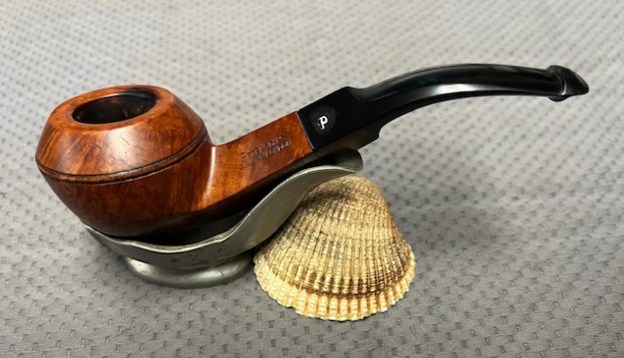
Irish Seconds Made in the Republic of Ireland Rusticated Bent Billiard loose stem


by Steve Laug

The next pipe on the work table came to us from a seller in Brazil, Indiana, USA on 11/12/2020. It is a nicely rusticated Irish Second Bent Billiard with a tapered vulcanite stem. The pipe is stamped on the underside of the shank and reads IRISH SECONDS [over] Made in the Republic of Ireland. Irish Seconds were a Peterson’s Second Line that usually did not make the grade because of flaws in the briar or sandpits. The rusticated finish hid any of those and there was a lot of grime ground into grooves on the bowl and shank. The bowl was heavily caked and there was lava on the rim top and the inner edge of the rim. The edges looked okay but we would know more after the cleanup. The stem was oxidized, calcified and had tooth chatter and deep tooth marks on the top and underside ahead of an on the button. There were not markings or a logo on the taper stem. The pipe showed promise but it was very dirty. Jeff took photos of the pipe before he started his cleanup work. He took photos of the rim top and bowl to give a clear picture of the thickness of the cake and the condition of the rim top and edges. He also took photos of the top and underside of the stem to show the oxidation, calcification and chatter and tooth marks. Jeff took photos of the sides and heel of the bowl to give a picture of what the briar around the pipe looked like. There is a great rustication under the grime. He took photos of the stamping on the shank. It reads as noted above and is clear and readable.I am including the information from Pipedia’s article on Peterson pipes. It is a great read in terms of the history of the brand (https://pipedia.org/wiki/Peterson). I have included a bit of the pertinent history here.

1950 – 1989 The Republic Era – From 1950 to the present time, the stamp for this era is “Made in the Republic of Ireland” in a block format generally in three lines but two lines have been used with or without Republic being abbreviated.

I knew that I was dealing with a Republic Era pipe made between 1950-1989. It was a Rusticated Bent Billiard with an interesting pattern. The finish was stained with a combination of brown and black stains. Now it was time to work on the pipe.

Jeff had cleaned up the pipe with his usual penchant for thoroughness. He reamed the pipe with a PipNet Pipe Reamer and cleaned up the remnants with a Savinelli Fitsall Pipe Knife. He scrubbed the bowl with undiluted Murphy’s Oil Soap with a tooth brush. He rinsed it under running warm water to remove the soap and grime. He cleaned out the inside of the shank and the airway in the stem with alcohol, cotton swabs, shank brushes and pipe cleaners. He soaked the stem in Briaville’s Pipe Stem Deoxidizer and rinsed it off with warm water. I took photos of the pipe once I received it. The fit of the stem to the shank was off and shank end had some damage from scuffing and some sanding it looked like. Because of that the stem did not seat against the shank end in a clean way. I decided to clean up the shank end by fitting it with a thin brass band that would provide a straight edge for the stem surface to sit against and also give the rusticated bowl a bit of bling. There were no cracks in the shank so it was purely a cosmetic fix. I chose the band from my bands and pressed it on the shank end to have a look at the pipe with the band. I liked what I saw so I removed the band and coated the inside with a layer of white glue and pressed in place on the shank. I fit the stem on the shank and took photos of the pipe with stem and band in place. I turned my attention to the damage on the inner edge of the rim. The bowl was quite out of round with burn damage on the front right and the back left. I used a folded piece of 220 grit sandpaper to smooth out the edge and remove the roughness. I was able to make it look better even thought it is still not perfect. You can also see the burn damage on the right front rim top where the rustication is quite smooth.I used a Philips Screwdriver that I had converted into a four-prong rustication tool to rework the smooth portion of the rim top. It looked better when I had finished. I touch up the stain on that portion of the rim top with a black stain pen to blend the work into the surface. I was happy with the progress. Though it did not change the damage on the rim edge it did hide it a bit and make it less visible.I rubbed the bowl and rim down with Before & After Restoration Balm. I worked it into the surface of the briar with my fingertips and with a shoe brush to get into the grooves. The product works to clean, enliven and protect it. I let the balm sit for 10 minutes and then buffed with a cotton cloth to raise the shine. I really like watching the Balm do its magic and bring the briar alive. I set the bowl aside and turned my attention to the stem. I filled in the deep grooves on the surface of the stem with black rubberized CA glue. Once it cured I flattened the repairs and recut the button edge with small needle files. I sanded the repaired areas further to blend them in with 220 grit sandpaper. It really began to look quite good. I sanded the stem with 320-3500 grit 2×2 inch sanding pads. I wiped the stem down after each sanding pad with Obsidian Oil. I blended in the tooth marks and chatter in the surface and after the final pad a deep shine began to develops.I polished the stem with 1500-12000 grit micromesh sanding pads. I wiped the stem down after each sanding pad with Obsidian Oil. I polished it with Before & After Pipe Stem Polish – both Fine and Extra Fine. I gave it a coat of Obsidian Pipe Stem Oil. It works to protect the stem from oxidizing. I set it aside to dry. Once again at this point in the restoration process I am excited to be on the homestretch. I look forward to the final look when the Republic Era Peterson’s Irish Seconds Bent Billiard is put back together, polished and waxed. I put the bowl and stem back together. I lightly polished the bowl and stem with Blue Diamond to polish out the scratches in the briar and the vulcanite. I gave the bowl and the stem multiple coats of carnauba wax. I buffed the pipe with a clean buffing pad to raise the shine. I hand buffed it with a microfiber cloth to deepen the shine. The pipe polished up nicely. The depths of the rustication really pop along with the thin brass band after the wax and polish. The shiny black vulcanite stem is a beautiful contrast to the browns of the bowl and thick shank. This Republic Era Peterson’s Irish Second Bent Billiard was another fun pipe to work on. The pipe feels great in the hand will be better when warmed up while smoking. The finished pipe is shown in the photos below. The dimensions of the pipe are Length: 6 inches, Height: 2 inches, Outside diameter of the bowl: 1 ¼ inches, Chamber diameter: ¾ of an inch. The weight of the pipe is 2.36 ounces/67 grams. I will be putting it on the rebornpipes store in the Irish Pipemakers Section if you would like to add it to your rack and carry on the previous pipeman’s legacy. This is an interesting estate to bring back to life.

As always, I encourage your questions and comments as you read the blog. Thanks to each of you who are reading this blog. Remember we are not pipe owners; we are pipe men and women who hold our pipes in trust until they pass on into the trust of those who follow us.

Rejuvenating a Peterson’s Republic Era System Standard 307 Huber Munchen


by Steve Laug

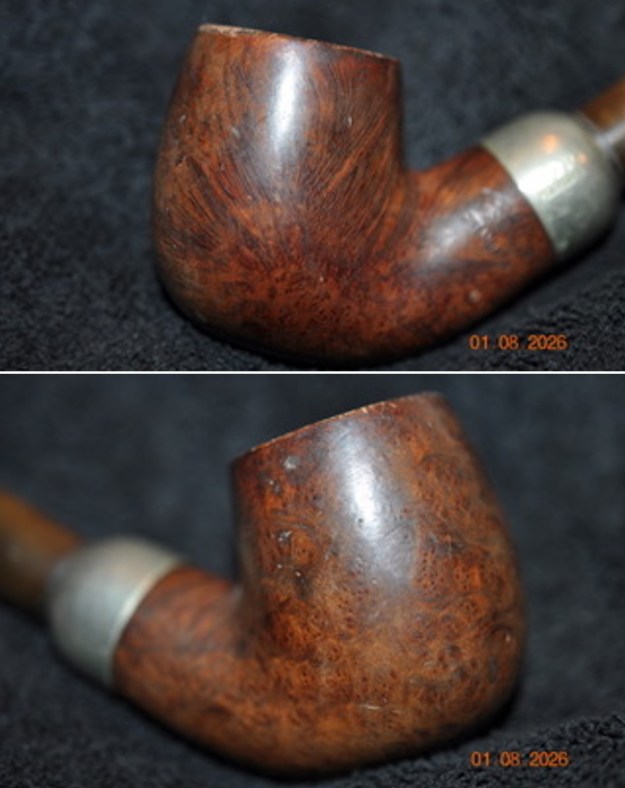
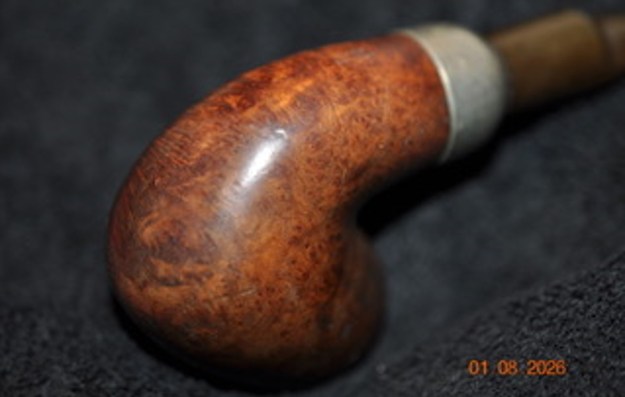
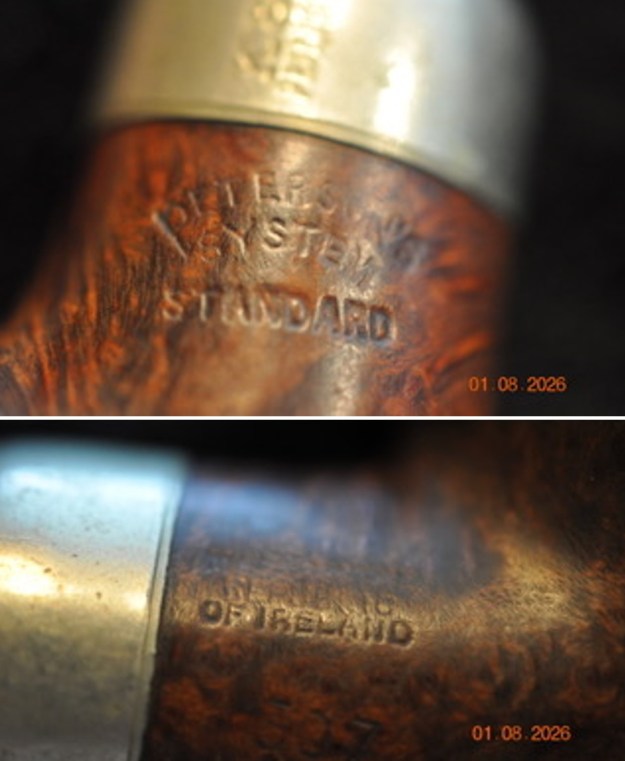
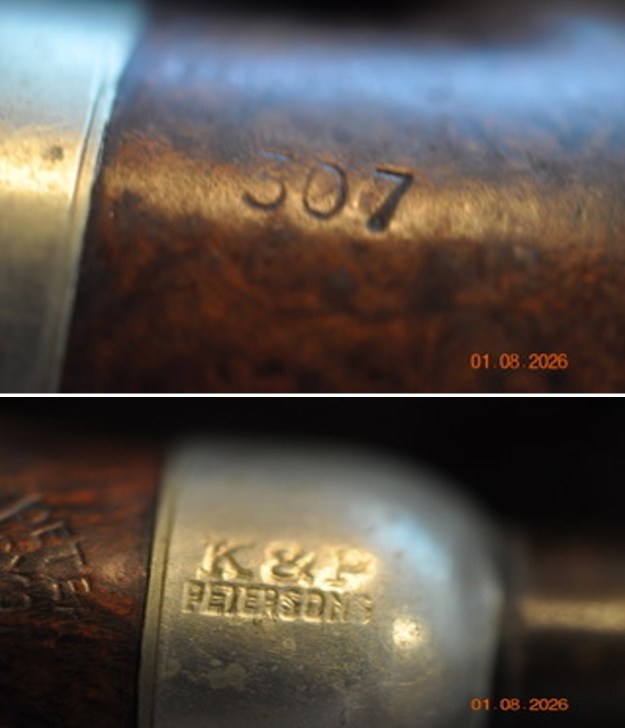
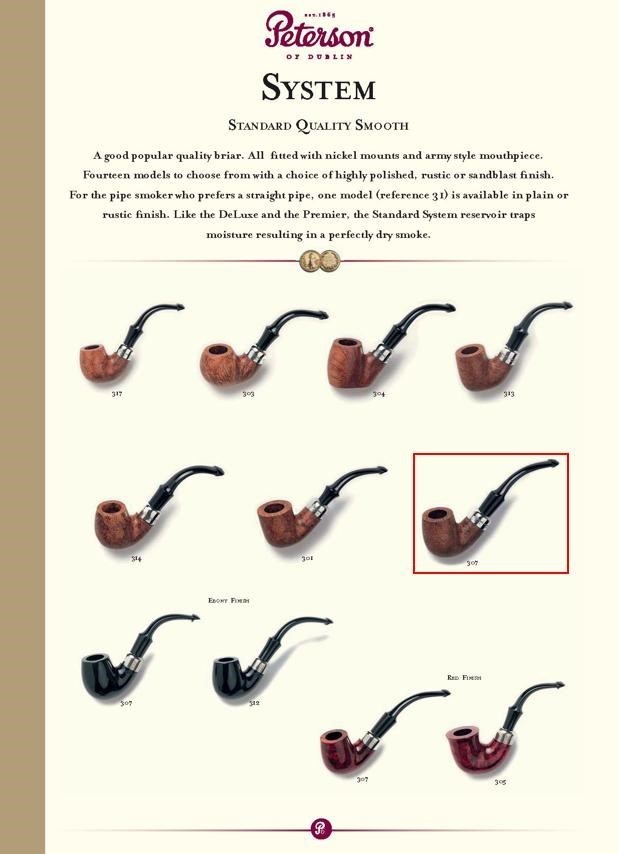
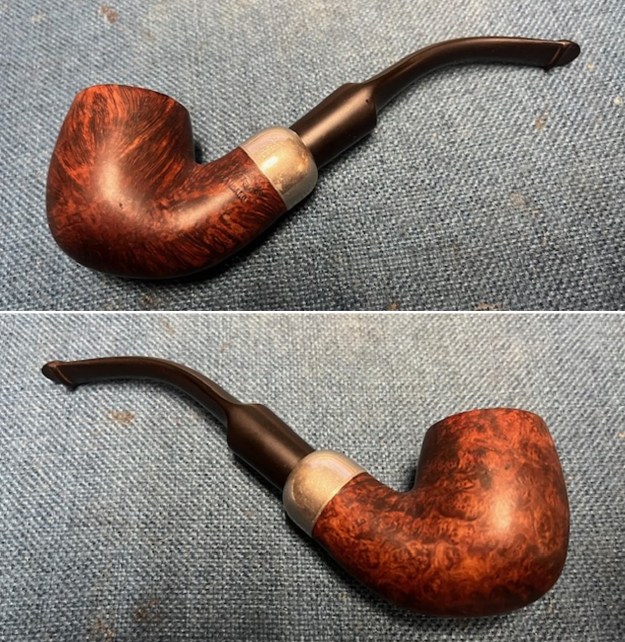
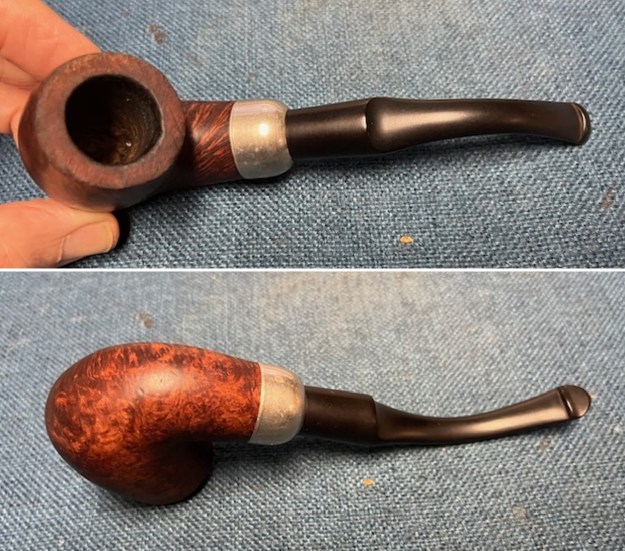
The next pipe on the work table is Peterson’s System pipe that we purchased from our contact in Copenhagen, Denmark on 04/11/2023. It was stamped Peterson’s [over] System [over] Standard on the left side of the shank vertically below the nickel ferrule. On the right it is stamped Made in the Republic of Ireland (in three lines) [over] the shape number 307. The underside of the shank was stamped Huber [over] Munchen. It has a smooth finish around the bowl and shank have oils, debris and grime ground into the finish. There was a thick cake in the bowl and a lava overflow on the rim top that was heavier toward the back side. The top and edges of the rim were well hidden under the tars and lava. There was a very beautiful pipe underneath the buildup of years of use. The ferrule on the shank end was oxidized and is stamped on the top and left side K & P [over] Peterson. The stem was a Peterson’s style P-Lip. It was oxidized and calcified toward the end with some tooth marks and chatter. There were tooth marks on the button itself as well. Jeff took photos of the pipe before he started his cleanup work on it. Jeff took photos of the bowl and rim top to show the thick, hard cake in the bowl and lava build up on the top of the rim and the edges of the bowl. The front outer edge has some damage from being knocked against a hard surface. Only clean up would tell the full story. Jeff took photos of the top and underside of the stem showing the tooth chatter, scratching, calcification and oxidation on the stem surface and wear on the edges of the button. Jeff took photos of the sides and heel of the bowl to show the condition of the finish. You can see the grime around the sides of the bowl and shank. Even under the dirt and debris of the years it looked very good. Jeff took photos of the stamping on the underside of the bowl and shank. The stamping was faint but readable as you can see from the photos. It read as noted above. The nickel Ferrule is clearly stamped and readable. I have included the information on the shape number on this pipe that I picked up on researching the previous pipes. I have included a page from a Petersons Catalogue that I have on rebornpipes (https://rebornpipes.com/tag/peterson-hallmark-chart/). I have put a red box around the 307 shown in the catalogue page shown below. That should give a clear picture of the size and shape of the pipe. I am also including the information from Pipedia’s article on Peterson pipes. It is a great read in terms of the history of the brand (https://pipedia.org/wiki/Peterson). I have included a bit of the pertinent history here.

1950 – 1989 The Republic Era – From 1950 to the present time, the stamp for this era is “Made in the Republic of Ireland” in a block format generally in three lines but two lines have been used with or without Republic being abbreviated.

During the 1950’s and 60’s the Kapp & Peterson company was still in the ownership of the Kapp family. However, 1964 saw the retiral of the company Managing Director Frederick Henry (Harry) Kapp.

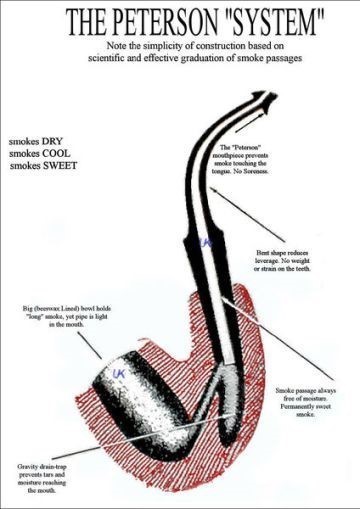
Pipedia also included a section of information on the System pipes including a diagram of the systems look (https://pipedia.org/wiki/Peterson#Republic_Era_Pipes). I quote a section of the article in part and include a link to another article on Pipedia on the System pipe.

The Peterson System pipes are the standard bearers of the Peterson pipe family, famous for the excellent smoking pleasure they provide. Often imitated but never equalled, the Peterson System smokes dry, cool and sweet, thanks to the scientific effectiveness of the original design. The heart of the System is the unique graduated bore in the mouthpiece. This makes the suction applied by the smoker 15 times weaker by the time it reaches the tobacco chamber. The result is that all the moisture flows into the reservoir and, thus cannot reach the smoker’s mouth. The Peterson Lip further enhances the effectiveness of the graduated bore by directing the flow of smoke upwards and away from the tongue. This achieves a uniquely even distribution of smoke and virtually eliminates any chance of tonguebite or bitterness. Furthermore, the shape is contoured so that the tongue rests comfortably in the depression under the opening. Each “PLip” mouthpiece is made from Vulcanite. For the Peterson System pipes to work properly, the stem/tenon has to have an extension, the tip of which will pass by the draft hole from the bowl and into the sump. Upon the smoker drawing in smoke, this extension then directs the smoke down and around the sump to dispense a lot of the moisture before the smoke enters the extension and stem. On the System Standards and other less expensive systems, this extension with be made of Vulcanite turned integrally with the stem. On the more expensive System pipes this extension will be made of metal which screws into the Vulcanite stem. This extension on the earlier pipes will be of brass and the newer pipes will be of aluminium. Most smokers not knowing this function of the metal extension, assumes that it is a condenser/stinger and will remove it as they do with the metal condensers of Kaywoodie, etc. Should you have a System pipe with this metal extension, do not remove it for it will make the System function properly and give you a dryer smoke (https://pipedia.org/wiki/A_closer_look_at_the_famous_Peterson_Standard_System_Pipe).

Finally, on the underside of the shank it is stamped Huber [over] Munchen. From a past restoration I did a lot of work on the stamping (https://rebornpipes.com/2023/10/14/petersons-kildare-special-hg-republic-of-ireland-10-canadian/). Have a look if you are interested.

To learn more about the Huber Munchen stamp I turned to page 300 of “The Peterson’s Pipe” by Mark Irwin and Gary Malmberg as noted by him in the previous blog and found a great paragraph on the stamping. I quote in full.

GH Retailer’s Monogram (c. 1960s) George Huber of Munich, Germany, a Peterson distributor and retailer for decades, stamped their monogram on pipes sold in their store, G overlaid on H. Peterson shared in the 1988 commemoration of Huber’s 125th year in business by producing a special pipe with a sterling rim cap, stamped HUBER over CELEBRATION.

The pipe I have is one that does not bear that monogram and does not appear to have ever had the sterling rim cap and was not stamped HUBER over CELEBRATION. It was however, stamped Huber [over] Munchen – the city where the shop was located. With that information I turned my attention to working on the pipe.

Jeff cleaned this filthy pipe with his usual clean up process. He reamed it with a PipNet pipe reamer and cleaned up the reaming with a Savinelli Fitsall Pipe Knife. He scrubbed out the internals with alcohol, pipe cleaners and cotton swabs until the pipe was clean. He scrubbed the exterior of the bowl with Murphy’s Oil Soap and a tooth brush to remove the grime and grit on the briar and the lava on the rim top. The finish looks very good with great looking grain around the bowl and shank. Jeff soaked the stem in Briarville’s Pipe Stem Deoxidizer to remove the oxidation on the vulcanite. When the pipe arrived here in Vancouver for the second stop of its restoration tour I was amazed it looked so good. I took some close up photos of the rim top and also of the stem surface. I wanted to show what an amazing job Jeff did in the cleanup of the rim top. The rim top and inner edge were in good condition. There was some darkening and slight damage to the inner edge. The rim top also had some roughening on the front edge. I also took close up photos of the stem to show the condition of the vulcanite. It was quite clean and the tooth marks on the button and on the stem ahead of the button were very visible in the photos.One of the things I appreciate about Jeff’s cleanup is that he works to protect and preserve the nomenclature on the shank of the pipes that he works on. The stamping on this one was faint in spots to start with so I was worried that it would disappear altogether with the cleanup. He was able to preserve and maintain its condition in the process. It did not become worse but the photos give an accurate picture of the stamping. I have noticed that many restorers are not careful to protect the stamping in their cleaning process and often by the end of the restoration the nomenclature is almost destroyed. I would like to encourage all of us to be careful in our work to preserve this as it is a critical piece of pipe restoration! I took the stem off the shank and took a photo of the pipe. I decided to start my work on the pipe by cleaning up the rim top and inner edge of the bowl with a folded piece of 220 grit sandpaper. I removed the damage on the inner edge and the nicks on the rim top. I worked on the damage on the rim front – not removing it but minimizing it. The rim looked significantly better. I wiped the bowl and shank down with cotton pads and alcohol to further remove some of the darkening in the bowl and to better blend the stain that was present on the bowl. I sanded the bowl and shank with 320-3500 grit 2 x2 inch sanding pad. I wiped the bowl down after each sanding pad with a damp cloth. The grain can be seen through the finish. I polished the briar with micromesh sanding pads – dry sanding it with 1500-12000 grit sanding pads. I wiped it down with a damp cloth after each sanding pad to remove the dust. The briar was really shining by the final pad. I rubbed the bowl and rim down with Before & After Restoration Balm. I worked it into the surface of the briar with my fingertips to clean, enliven and protect it. I let the balm sit for 10 minutes and then buffed with a cotton cloth to raise the shine. I really like watching the Balm do its magic and bring the briar alive. I sanded the stem with 320-3500 grit 2×2 inch sanding pads. I wiped the stem down after each sanding pad with Obsidian Oil. I blended in the tooth marks and chatter in the surface and after the final pad a deep shine began to develop.I polished the stem with 1500-12000 grit micromesh sanding pads. I wiped the stem down after each sanding pad with Obsidian Oil. I polished it with Before & After Pipe Stem Polish – both Fine and Extra Fine. I gave it a coat of Obsidian Pipe Stem Oil. It works to protect the stem from oxidizing. I set it aside to dry. Once again at this point in the restoration process I am excited to be on the homestretch. I look forward to the final look when the Huber Munchen Peterson’s System Standard 307 is put back together, polished and waxed. I put the bowl and stem back together. I lightly polished the bowl and stem with Blue Diamond to polish out the scratches in the briar and the vulcanite. I gave the bowl and the stem multiple coats of carnauba wax. I buffed the pipe with a clean buffing pad to raise the shine. I hand buffed it with a microfiber cloth to deepen the shine. The pipe polished up nicely. The depths of the grain really pop with the wax and polish. The shiny black vulcanite stem is a beautiful contrast to the browns of the bowl and thick shank and polished nickel ferrule. This Republic Era Peterson’s System Standard 307 Bent Billiard was another fun pipe to work on. The pipe feels great in the hand will be better when warmed up while smoking. The finished pipe is shown in the photos below. The dimensions of the pipe are Length: 6 ½ inches, Height: 2 inches, Outside diameter of the bowl: 1 ¼ inches, Chamber diameter: ¾ of an inch. The weight of the pipe is 2.43 ounces/69 grams. I will be putting it on the rebornpipes store in the Irish Pipemakers Section if you would like to add it to your rack and carry on the previous pipeman’s legacy. This is an interesting estate to bring back to life.

As always, I encourage your questions and comments as you read the blog. Thanks to each of you who are reading this blog. Remember we are not pipe owners; we are pipe men and women who hold our pipes in trust until they pass on into the trust of those who follow us.

New Life for a Beautiful Ben Wade Royal Grain Freehand Hand Made in Denmark


by Steve Laug

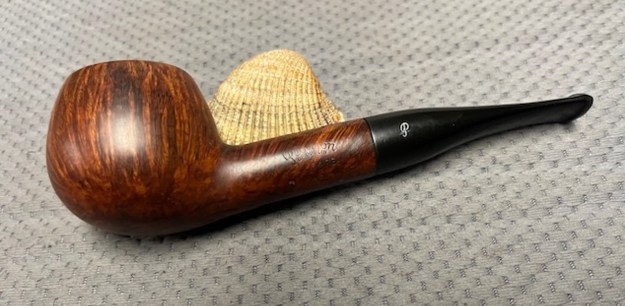
The next pipe on the table is another pipe that was a beautiful freehand briar pipe. It came to us on 05/08/2024 from a seller in Santa Cruz, California, USA. The briar is a piece of smooth briar with a spot of plateau on the shank end. The rim top is smooth and the shank end included both smooth and plateau on the end of the shank. The pipe was stamped on the underside of the shank and read Ben Wade in script [over] Royal Grain [over] Hand Made [over] in [over] Denmark. The smooth finish was very dirty and had oils and grime ground into the briar. There was a thick cake in the bowl and lava on the rim top and inner edge of the bowl. The stem was oxidized and had deep teeth marks on the top and the bottom of the stem near the button edge. Jeff took photos to below show what the pipe looked like when he received it. Jeff took photos of the bowl, rim top and the stem to show the condition of the pipe when we received it. You can see the cake in the bowl and the lava on the rim top and inner edge of the bowl. The stem was dirty and had chatter and tooth marks on both sides near the button. He took photos of the sides of the bowl and the heel to give an idea of the shape and the condition of the briar around the bowl. It really is a nicely shaped pipe that has the classic look of a Freehand carved by Preben Holm. The next photo Jeff took shows the stamping on the underside of the shank. The stamping is clear and readable as noted above.I turned to PipePhil’s site and went through the listings under Preben Holm and Ben Wade. There was nothing in either section that had information on the Royal Grain stamping. So the mystery remained. I turned to Pipedia to see if there was anything listed with the Royal Grain stamp (https://pipedia.org/wiki/Ben_Wade#Ben_Wade_turns_Danish). There was nothing listed on the stamping in the text of the article. However, I did find a photo of the shank stamp and one of a freehand pipe with that stamping. It is a beautiful smooth freehand and like the one I am working on. Now it was time to work on the pipe. Jeff had cleaned up the pipe following his normal cleaning process. In short, he reamed the bowl with a PipNet pipe reamer and then cleaned up the reaming with a Savinelli Fitsall Pipe Knife. He scrubbed the exterior of the bowl with undiluted Murphy’s Oil Soap with a tooth brush. He worked over the lava and debris on the plateau rim top and shank end and was able to remove it. He rinsed it under running warm water to remove the soap and grime. He cleaned out the inside of the shank and the airway in the stem with alcohol, cotton swabs, shank brushes and pipe cleaners. He scrubbed the stem with Soft Scrub and cotton pads to remove the debris and oils on the stem. He soaked it in Briarville’s Pipe Stem Deoxidizer to remove the remaining oxidation. He rinsed it with warm water and dried it off. I took photos of the pipe once I received it. It looked much better at this point. I took close up photos of the stem and the rim top to show both how clean they were and what needed to be addressed with both. The rim top and bowl look good. The stem looked better and the tooth marks and chatter were still present. I would need to remove those to bring the stem back.I took a photo of the stamping on the underside of the shank. It is clear and readable as noted above. I removed the stem from the bowl and took a photo of the parts to give a sense of the beauty of the pipe. I started my work on the pipe by sanding the bowl and shank with 320-3500 grit 2 x2 inch sanding pad. I wiped the bowl down after each sanding pad with a damp cloth. The grain began to show through the finish. I polished the bowl and shank with 1500-12000 grit micromesh sanding pads. I wiped the bowl down after each sanding pad with a damp cloth. The pipe is beginning to look very good. I worked some Before & After Restoration Balm into the surface of the briar with my finger tips and a horse hair shoe brush to get into the crevices of the plateau portions. The product is incredible and the way it brings the grain to the fore is unique. It works to clean, protect and invigorate the wood. I worked some Before & After Restoration Balm into the surface of the briar with my finger tips and a horse hair shoe brush to get into the crevices of the plateau portions. The product is incredible and the way it brings the grain to the fore is unique. It works to clean, protect and invigorate the wood. I set the bowl aside and started working on the stem. I “painted” the tooth marks with the flame of a lighter to lift them. It worked well and what was left I filled in with black, rubberized CA glue. Once it cured, I used some small flat files to flatten out the repairs. I cleaned up the flattened spots with a folded piece of 220 grit sandpaper to finish blending it into the surface of the stem. I sanded the stem with 320-3500 grit 2×2-inch sanding pads. I wiped the stem down after each sanding pad with an Obsidian Oil cloth. I polished the stem with micromesh sanding pads – dry sanding it 1500-12000 pads. I wiped it down with Obsidian after each pad to remove the dust and polishing debris. I polished it with Before After Pipe Polish – both Fine and Extra Fine. I gave it another coat of Obsidian Oil. I am happy with the way that this Preben Holm made Ben Wade Royal Grain Hand Made Freehand turned out. It really is a beautiful looking pipe with a great shape and mix of smooth and plateau on the rim top and shank end. The rugged plateau on the rim top and shank end are beautiful. The fancy original vulcanite saddle stem works well with the black and brown of the stained mystery wood. The pipe really came alive with the buffing. The rich stains of the finish gave the pipe a sense of depth with the polishing and waxing. I put the stem back on the bowl and carefully buffed the pipe with Blue Diamond on the buffing wheel using a light touch on the briar. I gave the bowl and the stem multiple coats of carnauba wax on the buffing wheel. I buffed the pipe with a clean buffing pad to raise the shine. I hand buffed the pipe with a microfiber cloth to deepen the shine. The finished Ben Wade Royal Grain Hand Made in Denmark Freehand really is a beauty and feels great in the hand and looks very good. Give the finished pipe a look in the photos below. The dimensions of the pipe are Length: 7 ½ inches, Height: 2 inches, Outside diameter of the bowl: 2 inches wide x 2 ½ inches long, Chamber diameter: 1 inch. The weight of the pipe is 67 grams/2.33 ounces. The pipe will be going on the rebornpipes store in the Danish Pipe Makers Section if you would like to add it to your collection. Thanks for reading this blog and my reflections on the pipe while I worked on it. It was a fun one to work on!
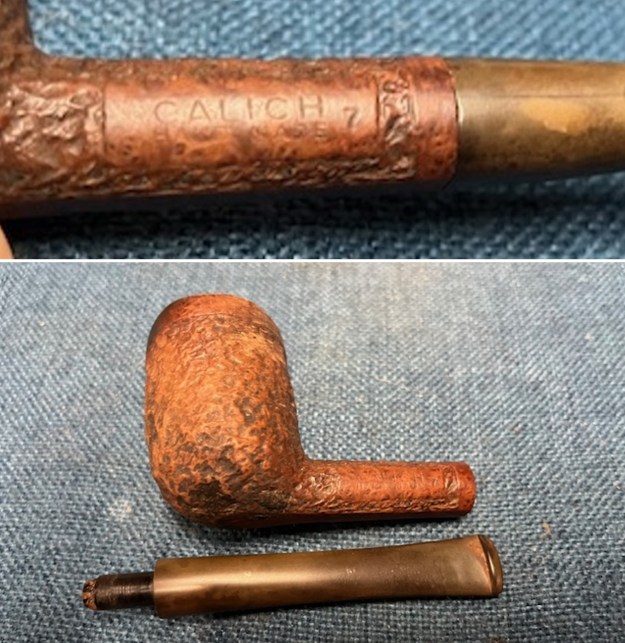
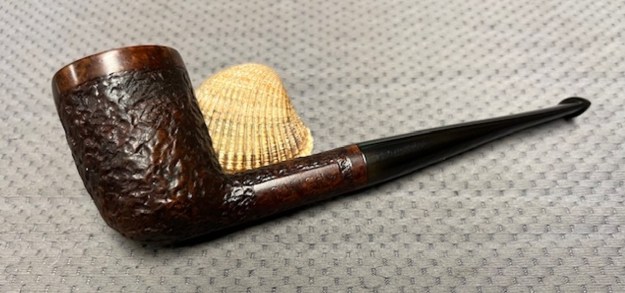
New Life for a Preben Holm Hand Cut Circle 2 Freehand Copenhagen Denmark


by Steve Laug

This particular Freehand pipe was purchased from a seller in Santa Cruz, California, USA on 05/28/2024. It really is a very Preben Holm style Freehand pipe that is Dublin like in its shape. It is carved in a way that chases the grain and a rounded shank extension. It is stamped on the underside of the shank and reads Preben Holm [over] Hand Cut [over] Hand Made [over]In [over] Denmark. On the left side of the shank it is stamped near the bowl with a 2 enclosed in a circle. The smooth Dublinish shaped pipe is dirty but the grime does not hide the beautiful looking combination around the bowl and shank. The stain is a black understain that brings out the grain highlighted by a top coat of walnut stain. The pipe had a thick cake in the bowl and a thick lava overflow on the plateau rim top and inner edge of the bowl. There was grime ground into the smooth finish. The shape of the rim is a narrow rectangle that is concave/bevelled into the bowl. It is smooth around the inner edge and plateau on the rest. The fancy vulcanite saddle stem is oxidized. Added to that the stem surface was also calcified and had light tooth marks and chatter on both sides near the button. The pipe must have been a great smoker judging from the condition it came it. Jeff took photos of the pipe before he started his work on it. Jeff took photos of the plateau rim top and the stem to show the condition of the pipe when we received it. You can see the thick cake in the bowl and the lava on the plateau rim top and inner edge of the bowl. The turned vulcanite stem was dirty and had light chatter and tooth marks on both sides near the button. He took photos of the sides of the bowl and the heel to give an idea of the shape and the condition of the briar around the bowl. It really is a nicely shaped pipe that has the classic look of a Freehand carved by Preben Holm. The next photos Jeff took shows the stamping on the underside of the shank. It is clear and readable as noted above. He did not get a photo of the circle 2 stamp on the left shank side.There is some great historical information on Pipedia regarding the Preben Holm carved pipes and the history of the brand and the maker (https://pipedia.org/wiki/Holm,_Preben). Take some time to give the article a read. There was nothing specific on the Hand Cut line like this one was stamped. But it is a great read. I took close up photos of the stem and the rim top to show both how clean they were and what needed to be addressed with both. The rim top and bowl looked great and the valleys in the plateau were faded and washed out. The stem looked better and the tooth marks and chatter though light were still present. I would need to remove those to bring the stem back.I took photos of the stamping on the underside of the shank and the left side ahead of the bowl. You can see from the photos that it is clear and readable. I removed the stem from the bowl and took a photo of the parts to give a sense of the beauty of the pipe. I started my restoration work on this pipe by retaining the valleys and low spots on the plateau rim top with a black Sharpie pen. It really looked good.I sanded the smooth finish on the rim top and the sides of the bowl and shank with 320-3500 grit sanding pads. I also sanded the rounded shank end at the same time. It worked very well. I wiped the bowl down with a damp cloth after each pad to get a sense of the progress in the process. I sanded the smooth briar with micromesh sanding pads – dry sanding with 1500-12000 grit pads. I wiped it down after each pad with a damp cloth. It really began to take on a rich shine. I rubbed down the briar Before & After Restoration Balm. I worked it into the surface with my fingertips and into the plateau rim top with a shoe brush. The product works to clean, enliven and preserve the briar. I let it sit for 15 minutes then I buffed it with a cotton cloth to deepen the shine. The briar really comes alive with the balm. I set the finished bowl aside and turned my attention to the stem. I filled in the few deeper tooth marks that showed on the stem with black CA glue. Once it cured I used a small flat file to recut the button edge and flatten the repairs. I sanded the repairs further with a folded piece of 220 grit sandpaper. I wiped the stem down with Obsidian Oil and took the following photos of the stem. I sanded out the scratches in the vulcanite with 320-3500 grit sanding pads. I wiped the stem down after each sanding pad with a cloth impregnated with Obsidian Oil. It started to take on a deep shine.I polished the stem with micromesh sanding pads – 1500-12000 grit pads to remove them. I wiped the stem down with Obsidian Oil after each sanding pad. I used Before & After Pipe Polish – both Fine and Extra Fine to further polish the stem. I rubbed it down with a final coat of Obsidian Oil and let it dry. I am really happy with the way that this Preben Holm Hand Cut Circle 2 Hand Made in Denmark Freehand turned out. It really is a beautiful looking pipe with a great shape and smooth finished bowl and smooth spots in the plateau of the rim top. The fancy original acrylic saddle stem is really nice. The black vulcanite colour of the stem works well with the briar. The briar really came alive with the buffing. The rich black and brown stains of the finish gave the pipe a sense of depth with the polishing and waxing. I gave the bowl and the stem multiple coats of carnauba wax on the buffing wheel. I buffed the pipe with a clean buffing pad to raise the shine. I hand buffed the pipe with a microfiber cloth to deepen the shine. The finished Preben Holm Hand Cut Circle 2 Freehand really is a beauty and feels great in the hand and looks very good. Give the finished pipe a look in the photos below. The dimensions of the pipe are Length: 6 inches, Height: 2 ½ inches, Outside diameter of the bowl: 2 inches long x 1 ½ inches wide, Chamber diameter: 7/8 of an inch. The weight of the pipe is 54 grams/1.90 ounces. I will be adding it to the rebornpipes store in the Danish Pipe Makers Section if you would like to add it to your collection. Thanks for reading this blog and my reflections on the pipe while I worked on it. It was a fun one to work on!

Restemming and Restoring a Sandblast Benaderet’s Coral 135 Billiard


by Steve Laug

The next pipe on the table was a bowl sans stem that I have had in my box of bowls to be restemmed. It is stamped on the underside of the shank and reads Benaderet’s [over] Coral followed by London Made [over] the shape number 135. The sandblast highlights great grain around the sides of the pipe. The shape number said I was dealing with a GBD made pipe. It had been reamed and cleaned by my brother Jeff many years ago. The rim and the inner edge were clean and with some light areas on the front right of the bevelled rim top and inner edge. The finish had been scrubbed and was very clean. I took photos of the bowl before I worked on it. I found an acrylic taper stem in my can of stems that would work with some adjustments. The tenon would need to be reduced in diameter and the diameter of the shank end would also need to be reduced. The size and shape of the stem were perfect to start with. I took photos of the stamping on the underside of the shank. It is clear and readable as noted above. With the new stem in place it is going to be a beautiful pipe once it is completed.From the shape number on the shank I was pretty certain I was dealing with a GBD pipe. The stamping Benaderet’s Coral was a dead end but the shape number hit the mark. I turned to Pipedia’s shape number listing and found it (https://pipedia.org/wiki/GBD_Shapes/Numbers). I have included a screen capture of the listing below.

I did some more digging on the net and found that Benaderet’s was a pipe shop in San Francisco that closed in the 70’s. Their house pipes were made by Comoys or Sasieni although smokingpipes had one listed that was made by GBD once.

The other link was to a blog (http://theothersideofthelizard.blogspot.com/2018/11/benaderets-pipe-shop.html). That blog gave the original address of the shop in San Francisco and the names of the owners of the shop.

Benaderet’s Cigarette, Pipe and Tobacco Shop215 Sutter Street [Formerly at 566 California Street], San Francisco.

Owners: Robert and Edith Rashaw (Robert Rashaw: born 1916. Edith Edna Rashaw: born 1916.) Store still extant in the late seventies. No longer there by the eighties. At one point, they had Egyptian cigarettes made for them. Their house pipes were usually by Comoys. There are also Benaderet’s Sasienis. More research required.

Quote: “Benaderet’s Inc., was California’s oldest pipe and tobacco store when it went out of business in 1980. Sam Benaderet was a tobacconist from New York City who came to San Francisco in 1915 to work at the Panama Pacific International Exposition. An immigrant to the United States from Turkey, Mr. Benaderet decided that he liked the West Coast’s Mediterranean like climate. After the Exposition closed, he stayed to open his own tobacco business. This new firm produced custom private-label cigarettes for men’s clubs. A lavish retail store was opened in the late 1920’s that quickly became a mecca for tobacco connoisseurs.”

So what I could find out about the pipe is that it is a pipe made by GBD (Shape number confirms this). It turns out that the pipe was a GBD pipe made for Benaderet’s Cigarette, Pipe and Tobacco Shop in San Francisco, California. Since the shop went out of business in 1980 I now knew that the pipe was made before that time. Now it was time to work on the pipe.

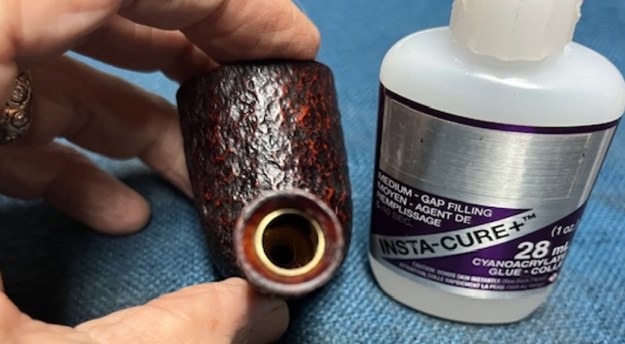
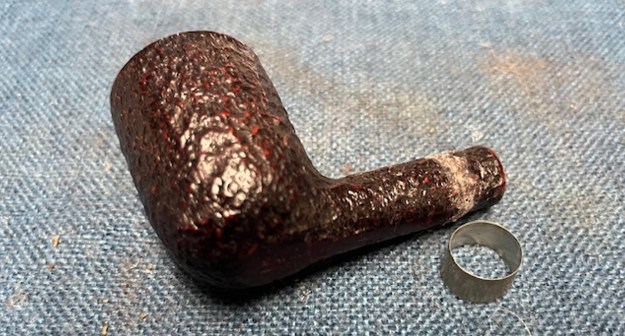
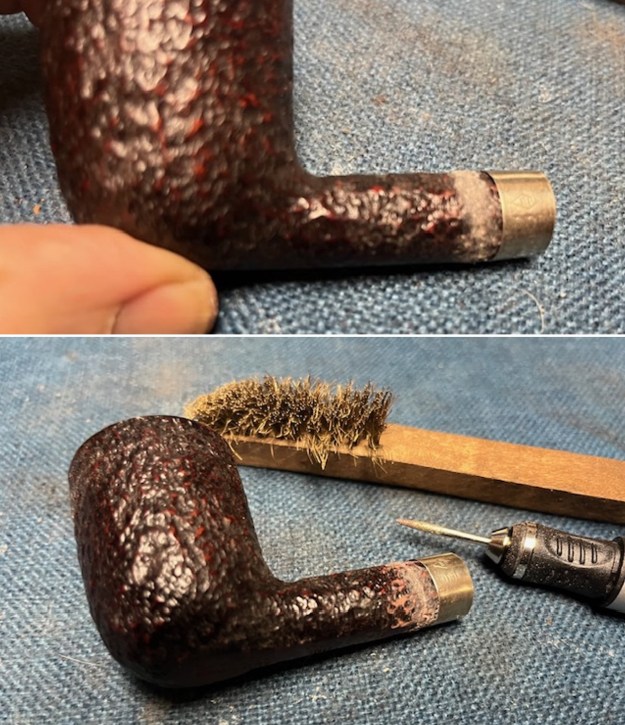
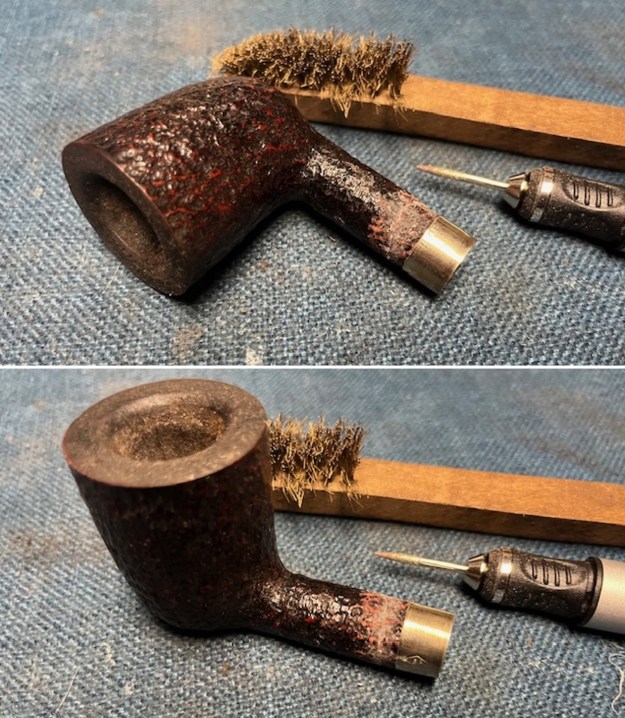
I decided to fit the shank with a thin polished brass band. The shank end was tapered slight and was no long round. It appeared to have been sanded for a stem somewhere in its journey. The thin band would smooth out the transition and square it off. It would also set off the briar and the new stem. I pressed it onto the shank and it was firmly in place. I stained the rim edges and top with a Walnut stain pen to match the rest of the bowl and shank colour. It looked very good. I worked some Before and After Restoration Balm into the finish of the briar with my finger tips. The product works to clean, enrich and restore the briar. The photos show the beauty that pipe really had at this point. I set the bowl aside and turned my attention to the stem. I used the Dremel and sanding drum to reduce the diameter of the stem as much as I safely could do and then used a flat file to take it further. I cleaned up the diameter fit with a smaller flat needle file. It worked well to remove the excess acrylic to match diameter of the shank. It was getting there.I used a small hole saw and small round, oval and flat files to shape the round hole in the button into a slot with an oval. It looked much better once I finished it.I sanded out the files marks on the stem surface with a folded piece of 220 grit sandpaper. I becamse smooth to the touch and was ready to be sanded further with sanding pads.I moved on to sand the stem with 320-3500 grit 2×2 inch sanding pads. I wiped it down with an Obsidian Oil cloth after each sanding pad to remove the sanding debris. The stem began to look much better.I polished the stem with micromesh sanding pads – wet sanding with 1500-12000 grit sanding pads. I wiped it down after each sanding pad with some Obsidian Oil. I finished polishing it with Before & After Pipe Stem Polish – both Fine and Extra Fine and buffed it off with a cotton cloth. I wiped it down with Obsidian Oil to protect the stem and slow down the oxidation. Once again, I am at the part of the restoration that I always look forward to – the moment when all the pieces are put back together. I put the Benaderet’s Coral 135 Billiard and new acrylic stem back together and buffed the bowl with Blue Diamond. I buffed the stem with a heavier touch with Blue Diamond on the buffing wheel. I gave the bowl and the stem multiple coats of carnauba wax. I buffed the pipe with a clean buffing pad to raise the shine. I hand buffed it with a microfiber cloth to deepen the shine. It is fun to see what the polished bowl looks like with the polished sandblast finish and thin brass band. The black acrylic stem stands out as a shiny black contrast to the colours of the bowl. The reddish brown stain on the Benaderet’s Coral Billiard looks absolutely great. It is nice to know that it has a west coast tie to the San Francisco area and a long-gone pipe shop. It must have been a fine smoking pipe judging from the condition it was when we received it. Have a look at it in the photos below. The dimensions are Length: 6 ½ inches, Height: 2 inches, Outside diameter of the bowl: 1 ¼ inches, Chamber diameter: ¾ of an inch. The weight of the pipe is 1.41 ounces/41 grams. This is one that will go on the British Pipemakers section of the rebornpipes online store shortly. Thanks to each of you who are reading this blog. Remember we are not pipe owners; we are pipemen and women who hold our pipes in trust until they pass on into the trust of the next generation.
Restoring an interesting Hjerte-Brier Denmark Freehand


by Steve Laug

This next Freehand is a bit of an interesting one. I see a lot of similarities to a Soren carved pipes. We picked it from a seller in Saint Cloud, Florida, USA on 04/12/2024. It is stamped on the underside of the shank and reads Hjerte-Brier [over] Denmark. It is clear and readable.This particular pipe has a pedestal on the heel of the bowl and has some leaves carved around the bowl and shank. It has plateau on the rim top and the shank end. The combination of dark and medium stains highlights grain that runs like flames across both sides of the bowl culminating at the flat pedestal heel of the bowl. This is another well-loved pipe as you can see from the thick cake in the bowl and the lava on the plateau rim top. It is hard to know the condition of the inner edge of the bowl due to the lava on the edges. The outside of the bowl and plateau portions are dirty and dusty but the grain pops through. The vulcanite stem was oxidized, dirty and dusty with tooth marks on the blade just ahead of the button on both sides. Jeff took these photos before he started his part of the restoration. He took close up photos of the bowl and rim top from different angles to show the condition of the plateau finish. The bowl has a thick cake that lining the walls and overflowing into lava. There was lava and build up on the rim top and flowing over the inner edge of the bowl onto the plateau. It is hard to know if there is damage or if the lava protected it. He also took photos of the stem to show the surface of the top and underside of the vulcanite stem. You can see the tooth marks and damage both sides ahead of the button. He took photos of the sides and heel of the bowl to show the lay of the grain and the leaves carved around the pipe. It is a beautiful piece of briar. The top of the bowl and shank end are craggy and rugged looking. Jeff took several photos of the stamping on the underside of the shank to capture all of the stamping. It was clear and read as noted above. I had never heard of this particular brand of pipes from Denmark so I turned to Pipephil to see if there was any information (http://www.pipephil.eu/logos/en/logo-h3.html). I did a screen capture of the information that was on the brand. The stamping on the one I am working on is slightly different as it is missing the Kobenhavn Denmark stamp. It is a great looking pipe.I turned to Pipedia then for more information (https://pipedia.org/wiki/Hjerte-Brier). I have copied the limited information from the site. I have included that information below.

Hjerte-Brier (Heart-Briar) pipes were made in Copenhagen, Denmark. They were stamped Kobenhavn instead of Copenhagen, suggesting they were not made for export. Little else is known about these pipes.

With that information my initial thoughts were confirmed. Hjerte-Brier translated Heart-Briar and the pipe was not made for export but for the Danish market. The freehand rage occurred in the late 70s and I am pretty sure it was made sometime during that time period.

Jeff had done a great job cleaning up the pipe as usual. He reamed the pipe with a PipNet reamer and cut back the cake back to the bare briar. He cleaned up the walls with a Savinelli Fitsall Pipe Knife. He scrubbed the interior of the bowl and shank with pipe cleaners, shank brushes, cotton swabs and alcohol to remove the tars and oils. He scrubbed the exterior of the pipe with undiluted Murphy’s Oil Soap and a tooth brush to remove the grime from the finish. He worked on the rim top lava and darkening with the soap and tooth brush. He scrubbed the inside of the stem with alcohol and shank brushes, pipe cleaners. He scrubbed the exterior with Soft Scrub and then soaked it in Briarville’s Pipe Stem Deoxidizer. He washed it off with warm water to remove the Deoxidizer. The pipe looked far better when it arrived. I took some photos of the rim top and stem to show the condition of them both when it arrived. It looked good. There is some darkening and damage to the inner edge of the bowl. The stem had some deep tooth marks ahead of the button and on the button surface on both sides.I took a photo of the stamping on the underside of the shank to capture it. There were faint in spots but readable as noted above. I removed the stem and took a photo of the parts to give a sense of the look of the pipe.To begin my part of the restoration work I polished the bowl with micromesh sanding pads – dry sanding with 1500-12000 grit pads. I wiped the briar down after each pad with a damp cloth. The bowl is starting to look very good. I restained the valleys in the plateau top and shank end with a Black Sharpie Pen. It is amazing how good the plateau looks once it is cleaned and stained.I worked some Before & After Restoration Balm into the surface of the briar with my fingertips and into the plateau rim top and shank end with a horsehair shoe brush to clean, enliven and protect it. I let the balm sit for a little while and then buffed with a cotton cloth to raise the shine. The photos show the bowl at this point in the restoration process. I set the bowl aside and turned my attention to the stem. The stem was very clean so I filled in the tooth marks with clear super glue and set it aside to cure. Once it had cured I flattened out the repairs and sharpened the edge of the button with a needle file. I sanded out the tooth chatter with 220 grit sandpaper. I sanded the stem with 320-3500 grit 2×2 inch sanding pads. I wiped the briar down after each pad with a damp cloth to remove the sanding dust and debris. I wiped it down with an Obsidian Oil cloth. It began to look very good. I polished the stem with micromesh sanding pads – dry sanding with 1500-12000 grit sanding pads. I wiped it down after each sanding pad with some Obsidian Oil. I finished polishing it with Before & After Pipe Stem Polish – both Fine and Extra Fine and buffed it off with a cotton cloth. I wiped it down with Obsidian Oil to protect the stem and slow down the oxidation. This is a beautiful Hjerte-Brier Pedestal Freehand with a fancy, turned, black vulcanite stem. It has a great look and feel. The shape fits well in the hand with the curve of the bowl and shank junction a perfect fit for the thumb around the bowl when held. I polished stem and the bowl with Blue Diamond polish on the buffing wheel. I gave the bowl and the stem multiple coats of carnauba wax. I buffed the pipe with a clean buffing pad to raise the shine. I hand buffed it with a microfiber cloth to deepen the shine. The pipe polished up pretty nicely. The rich combination of browns and black in the smooth finish with carved leaves and the plateau areas took on life with the buffing. The rich colour of the briar works well with the polished vulcanite stem. I like the grain and finished look of this Hjerte-Brier Freehand pipe. Have a look at it with the photos below. The dimensions are Length: 6 ¾ inches, Height: 2 ½ inches, Outside diameter of the bowl: 1 ¾ inches, Chamber diameter: 1 inch. The weight of the pipe is 2.86 ounces/ 81 grams. This Danish Freehand is a real beauty. Thanks for walking through the restoration with me as I worked over another beautiful pipe. This one will be going on the rebornpipes store in the Danish Pipemakers Section shortly if you would like to add it to your collection. Thanks for your time.

Breathing New Life into a Ben Wade Golden Walnut Hand Made in Denmark Freehand


by Steve Laug

To me there is always something electric about handling and working on a pipe designed and carved by Preben Holm. I can’t describe adequately the feeling I have when I turn the bowl and stem over in my hands even before I start working on the pipe. There is an energy that flows through the way he carved and shaped the pipes of his making. This Ben Wade pipe was no exception. We picked it from an Antique Shop in Ogden, Utah, USA on 09/16/2019. It has a smooth finish with a carved groove on the right side of the bowl. It has plateau on the rim top and the shank end. The shank is almost rectangular. The combination of dark and medium stains highlights grain that runs like flames across both sides of the bowl culminating at the flat heel of the bowl. This is another well-loved pipe as you can see from the thick cake in the bowl and the lava on the rim top. It is hard to know the condition of the inner edge of the bowl due to the lava on the edges. The outside of the bowl and plateau portions are dirty and dusty but the grain pops through. The vulcanite stem was oxidized, dirty and dusty with tooth marks on the blade just ahead of the button on both sides. Jeff took these photos before he started his part of the restoration. He took close up photos of the bowl and rim top from different angles to show the condition of the plateau finish. The bowl has a thick cake that lining the walls and overflowing into lava. There was lava and build up on the rim top and flowing over the inner edge of the bowl onto the plateau. It is hard to know if there is damage or if the lava protected it. He also took photos of the stem to show the surface of the top and underside of the vulcanite stem. You can see the tooth marks and damage both sides ahead of the button. He took photos of the sides and heel of the bowl to show the lay of the grain around the pipe. It is a beautiful piece of briar. The top of the bowl is craggy and rugged looking. Unique! The shank end is also a unique mix of plateau and smooth. Jeff took several photos of the stamping on the underside of the shank to capture all of the stamping. It was clear and read Ben Wade in script at the top. Under that it read Golden Walnut. Under that was stamped Hand Made in Denmark. I turned to Pipephill’s site (http://www.pipephil.eu/logos/en/logo-benwade.html) and did some looking at the section on Ben Wade Pipes. The second photo in the screen capture below is a Golden Walnut Pipe.  The finish and overall look is the similar. The stem I have is not stamped, or at least it is worn from buffing. The stamping on the shank is identical.I am including the background history that I included on the previous blog. It includes the idea that the Preben Holm pipes were marketed under the Ben Wade label in the US and imported through Lane Ltd. I quote below:

I turned to Pipedia and read the listing on the brand to refresh my memory and flesh out the knowledge of the brand (https://pipedia.org/wiki/Ben_Wade). I have included a photo from that site that was taken from a Tinderbox advertisement.

Ben Wade Ad in a Tinder Box catalog, courtesy Doug Valitchka

I quote the portion of the article that summarizes the history of the brand.

Young Copenhagen master pipemaker Preben Holm had made a meteoric career heading a pipe manufacture employing 45 people at the age of 22! But around the turn of 1970/71 he was in major financial difficulties. His US distributor, Snug Harbour Ltd. in New York City, left him in the lurch. Holm had three unpaid invoices on his desk and another large shipment was ready for the USA, when Snug Harbour’s manager told him on the phone that there was no money at all on the account to pay him.

So the Dane went to New York for an almost desperate search for a new distribution partner. He made contacts with Lane Ltd. and met Herman G. Lane in February 1971. Lane Ltd. had no interest in Holm’s serial pipes produced at that time but so much the more in the hand-carved freehands because the hype for Danish freehands and fancies in the States was still on its way to the climax then. The meeting resulted in an agreement to start a cooperation. Lane insisted to improve the quality considerably and in return he assured to be able to sell essentially larger quantities.
Holm went back home to work on new samples with all-new designs and altered finishes for Lane. Both, Lane and Holm, agreed that it would be unwise to sell the pipes under Preben Holm’s name as long as Snug Harbour had a considerable stock of Preben Holm pipes and might sell them pipes at very low prices just to bring in some money.

So, on Mr. Lane’s proposal it was determined to use the name Ben Wade belonging to Lane Ltd. Lane spent considerable amounts of money for advertising the new brand in the big magazines– the centerpiece being whole-page ads showing a very exclusive Seven Day’s Set.

The cooperation with Lane Ltd. proved to be an eminent business success for both partners. Within a very short time Ben Wade Handmade Denmark sold in much larger quantities and at higher prices than they had ever dreamed of. And the hype these freehands and fancy pipes caused went on unbroken long after Herman G. Lane deceased. Preben Holm – obviously much more brilliant in pipe making than in pipe business – was in major troubles again in 1986 and had to sack most of his staff. The Ben Wade production was significantly lowered but continued until his untimely death in June of 1989.

Up to now Preben Holm made Ben Wade pipes are cult and highly sought for on the estate markets.

With that information my initial thoughts were confirmed. This pipe was another Preben Holm made Freehand distributed in the US by Lane Ltd under the name Ben Wade. The freehand rage occurred in the late 70s and the pipes were made until Preben’s death in 1989. My guess would be that this pipe was made sometime during that time period and potentially in the late 70s.

Jeff had done a great job cleaning up the pipe as usual. He reamed the pipe with a PipNet reamer and cut back the cake back to the bare briar. He cleaned up the walls with a Savinelli Fitsall Pipe Knife. He scrubbed the interior of the bowl and shank with pipe cleaners, shank brushes, cotton swabs and alcohol to remove the tars and oils. He scrubbed the exterior of the pipe with undiluted Murphy’s Oil Soap and a tooth brush to remove the grime from the finish. He worked on the rim top lava and darkening with the soap and tooth brush. He scrubbed the inside of the stem with alcohol and shank brushes, pipe cleaners. He scrubbed the exterior with Soft Scrub and then soaked it in Briarville’s Pipe Stem Deoxidizer. He washed it off with warm water to remove the Deoxidizer. The pipe looked far better when it arrived. I took some photos of the rim top and stem to show the condition of them both when it arrived. It looked good. There is some darkening and damage to the inner edge of the bowl. The stem had some deep tooth marks ahead of the button and on the button surface on both sides.I took photos of the stamping on the sides of the shank to capture it. The was faint in spots but readable as noted above. I removed the stem and took a photo of the parts to give a sense of the look of the pipe.To begin my part of the restoration work I restained the plateau top and shank end with a Black Sharpie Pen. It is amazing how good the plateau looks once it is cleaned and stained.I polished the bowl with micromesh sanding pads – wet sanding with 1500-12000 grit pads. I wiped the briar down after each pad with a damp cloth. The bowl is starting to look very good. I worked some Before & After Restoration Balm into the surface of the briar with my fingertips and into the plateau rim top and shank end with a horsehair shoe brush to clean, enliven and protect it. I let the balm sit for a little while and then buffed with a cotton cloth to raise the shine. The photos show the bowl at this point in the restoration process. I set the bowl aside and turned my attention to the stem. The stem was very clean so I filled in the tooth marks with clear super glue and set it aside to cure. Once it had cured I flattened out the repairs and sharpened the edge of the button with a needle file. I sanded out the tooth chatter with 220 grit sandpaper. I sanded the stem with 320-3500 grit 2×2 inch sanding pads. I wiped the briar down after each pad with a damp cloth to remove the sanding dust and debris. I wiped it down with an Obsidian Oil cloth. It began to look very good.I polished the stem with micromesh sanding pads – wet sanding with 1500-12000 grit sanding pads. I wiped it down after each sanding pad with some Obsidian Oil. I finished polishing it with Before & After Pipe Stem Polish – both Fine and Extra Fine and buffed it off with a cotton cloth. I wiped it down with Briarville’s No Oxy Oil to protect the stem and slow down the oxidation. This is a beautiful Preben Holm made Ben Wade Golden Walnut with a fancy, turned, black vulcanite stem. It has a great look and feel. The shape fits well in the hand with the curve of the bowl and shank junction a perfect fit for the thumb around the bowl when held. I polished stem and the bowl with Blue Diamond polish on the buffing wheel. I gave the bowl and the stem multiple coats of carnauba wax. I buffed the pipe with a clean buffing pad to raise the shine. I hand buffed it with a microfiber cloth to deepen the shine. The pipe polished up pretty nicely. The rich combination of browns and black in the smooth finish and the plateau areas took on life with the buffing. The rich colour of the briar works well with the polished vulcanite stem. I like the grain and finished look of this Preben Holm Ben Wade Golden Walnut pipe. Have a look at it with the photos below. The dimensions are Length: 7 inches, Height: 2 ½ inches, Outside diameter of the bowl: 1 ½ inches wide x 2 inches long, Chamber diameter: 1 inch. The weight of the pipe is 2.40 ounces/ 69 grams. This Danish Freehand is a real beauty. Thanks for walking through the restoration with me as I worked over another beautiful pipe. This one will be going on the rebornpipes store in the Danish Pipemakers Section shortly if you would like to add it to your collection. Thanks for your time.

Breathing Fresh Life into a Sasieni Four-Dot Rustic “Buckingham” England Rusticated Billiard


by Steve Laug

The next pipe I have chosen to work on was purchased on 08/24/2024 from a seller in Wheeler, Oregon, USA. It is a nice looking rusticated Billiard with 4 light blue or white dots on the left side of the taper stem. It was stamped on the underside of the shank and read Sasieni in script with the tail of the “i” short and tight. Underneath that it was stamped FOUR DOT RUSTIC in block letters [over] “Buckingham”. Next to the bowl shank junction it was stamped Made in England shaped like a football vertically. The rusticated finish was very dirty with dust and debris in the grooves of the rustication. The bowl had a thick cake in it with lava overflow into the rustication on the rim top. It was an incredibly dirty pipe. The stem was oxidized and had tooth marks and chatter on both sides of the stem ahead of the button The 4 light blue/white dots on the left side of the taper stem were in good condition and very light in colour. Jeff took these photos of the pipe before he started the clean up work on it. Jeff took close up photos so that I could have a clearer picture of the condition of the bowl and rim edges and top. The rim top photos confirm my assessment above. The cake in the bowl is quite thick and the rim top has a coat of lava and debris on it that will need to come off. You can also see the lava on the inner edge of the rim. You can also see the condition of the inner and outer edges of the rim and down the outside of the bowl. This is what I look for when assessing a pipe. The bowl appears to be still round. His photos of the stem surface confirmed and heightened my assessment of the condition. You can see the oxidation, calcification and tooth chatter and marks on both sides ahead of the button. From the photos you can see the light blue four dot diamond the top of the taper stem they are in good condition. He took photos of the sides and heel of the bowl to show the rustication patterns in the briar. It is a unique finish and in places the grain can be seen through the finish. He took a photo of the stamping on the smooth panel on the underside of the shank to capture what was stamped there. It is faint in spots but readable as noted above. I decided to do some work on the stamping of this pipe to get an idea of the time period it was carved. I turned first to Pipephil’s site to see what I could learn (http://pipephil.eu/logos/en/logo-sasieni.html). I found a pipe that was stamped the same way as the one I am working on. I is stamped on the underside of the shank like the one in the screen capture photo below. Mine is stamped the same way Sasieni in script without the fish tail. Underneath it is stamped FOUR DOT [over] “Buckingham”. To the left it is stamped with a football shaped Made in England stamp. I included the side bar notes below the picture. Pre-transition, 1946 – 1979. Four Dot Rustic: Name for a rusticated finish. One star near “Four”.

I then turned to Pipedia for more detailed information (https://pipedia.org/wiki/Sasieni). I quote a section of that article below. The underlined portion below is particular pertinent to this pipe.

To begin with, there are three main elements to dating the Sasieni pipe, the patent number, the style of the name “Sasieni” as it appears on the shank, and the Dots themselves. Naturally, there are exceptions to these rules (this hobby would be boring without them), but for the most part these guidelines apply better than 95% of the time. All Sasieni One, Four, and Eight Dot pipes made before W.W.II and destined for the U. S. market carried a patent number on the shank which usually started with the numbers “15″, with 150221/20 and 1513428 being representative of the group. Also, the name “Sasieni” was stamped on the shank in a very florid manner, with the tail of the last “i” sweeping underneath the name forming a shape which has been compared to a fish by more than one collector. This script was discontinued by Alfred almost immediately after he took over the company, so this alone tells you your pipe is pre W.W.II. Underneath in block lettering are the words “London Made”, with the patent number making the third line.

The dots will help you narrow this down further. As we mentioned, the short lived U. S. market One Dot was introduced around 1920, and was replaced by the early to mid 1920’s by the Four Dot. The 1920’s Four Dot is distinguishable by the florid Sasieni script, a patent number, and four blue dots, which are quite small compared to the pipes of post war years. Furthermore, by 1935 Sasieni began stamping pipes, based on the shape, with their own names, which were usually, but not always, English towns. For example, apples were stamped “Hurlingham”, bulldogs were “Grosvenor” or “Danzey”, and panels were “Lincoln”. One rare and interesting variation of this was the large bent, dubbed “Viscount Lascelles”. Even in this soft Sasieni market, these pipes regularly sell for $150 in their rare appearances in mailers…

In reading the history of the brand on the page I also read through the various photos and brochures that were included in the article. I found a photo of a page from a catalogue describing the rustic briar that I have included below. The rustication pattern is very similar to that on the pipe one that I have here. It is interesting to read the descriptions on the page both of the rustication and the patent. The pipe on the table has the stinger apparatus, or Patented Extension, shown in the second paragraph and photo in the flyer belowNow that I knew the approximate dating of the pipe that I had in hand it was time to work on it.

Now that I was reminded of the history and background of the Sasieni Four Dot “Rustic” it was time to work on the pipe on my end. When I received it, Jeff had once again done an amazing job cleaning the pipe. He reamed it with a PipNet pipe reamer and got rid of the cake. He cleaned up the reaming with a Savinelli Fitsall Pipe Knife so that we could see the walls of the bowl and assess for damage. He cleaned the internals of the shank and stem with alcohol, pipe cleaners, cotton swabs, shank brushes and alcohol. He scrubbed the exterior with undiluted Murphy’s Oil Soap and a tooth brush. He rinsed the pipe under warm water. He dried it off with a cloth and then let it air dry. The stem was scrubbed with Soft Scrub and soaked in Before & After Deoxidizer. It came out looking very good. The finish on the bowl and the rim top cleaned up nicely. I took pictures of the pipe to show how it looked when I unpacked it. I took photos of the rim top and the top and underside of the stem. You can see the clean bowl and rim top. The stem has light tooth chatter and marks on both sides ahead of the button. It is dirty but otherwise great. It is a nice looking pipe.The next photo shows the stamping on a smooth panel on the underside of the shank. It is faint in places but is still readable as noted above. I also took a photo of the four dots on the side of the stem. They appear white in the photo but may have a faint tinge of blue. I removed the stem from the shank and took a photo of the parts to give a sense of the overall look of the pipe. It is really a nicely looking pipe that will look great once it is cleaned up.I used a brass bristle wire brush to clean up the rim top. The rustication patterns on the surface came back to life with the brushing. The bevelled inner edge looked surprisingly good. I touched up the nicks and light spots on the top and the edges of the bowl with a walnut stain pen. The match was perfect and looked great with the other parts of the rusticated finish.I rubbed the bowl down with Before & After Restoration Balm to deep clean the nooks and crannies of the rusticated finish, enliven and protect the briar. I hand rubbed it with my fingers and worked it into the deep rustication with a horsehair shoe brush. I let it sit for 15 minutes to let it do its work. I wiped it off with a soft cloth. I buffed the bowl with a cotton cloth. It really began to have a deep shine in the briar. I took some photos of the bowl at this point to mark the progress in the restoration. I set the bowl aside and turned my attention to the stem. I sanded the stem surface ahead of the button with 220 grit sandpaper to remove all of the tooth marks and chatter and smooth out the surface.I sanded the stem surface with 320-3500 grit 2 x 2 inch sanding pads. After each pad I wiped the stem down with an Obsidian Oil cloth to remove the debris. It was looking very good.To polish the stem and repairs I use micromesh sanding pads and water to dry sand the stem with 1500-12000 grit sanding pads. I wiped it down after each sanding pad with Obsidian Oil on a cotton rag after each sanding pad as I find it does two things – first it protects the vulcanite and second it give the sanding pads bite in the polishing process. After finishing with the micromesh pads I rub the stem down with Before & After Fine and Extra Fine stem polish as it seems to really remove the fine scratches in the vulcanite. I rub the Fine Polish on the stem and wipe it off with a paper towel and then repeat the process with the extra fine polish. I finish the polishing of the stem down with a final coat of Obsidian Oil and set the stem aside to let the oil absorb. This process gives the stem a shine and also a bit of protection from oxidizing quickly. This is another pipe I am excited to finish. It is a Sasieni Four Dot Rustic “Buckingham” Billiard. I put the pipe back together and buffed it lightly with Blue Diamond on the buffing wheel. I gave the bowl multiple coats of Conservator’s Wax and the stem multiple coats of carnauba wax. I buffed the pipe with a clean buffing pad to raise the shine and hand buffed it with microfiber cloth to deepen the shine. It is fun to see what the polished bowl looks like with the polished vulcanite stem. It really was a beautiful pipe. The rusticated surface is quite unique and there is grain shining through the rich browns/black stain on the finish of this Sasieni Four Dot Rustic Billiard. It is nice looking and the pipe feels great in my hand. It is light and well balanced. Have a look at it with the photos below. The dimensions are Length: 6 inches, Height: 2 inches, Outside diameter of the bowl: 1 ¼ inches, Chamber diameter: ¾ of an inch. The weight of the pipe is 1.73 ounces/49 grams. It is a beautiful pipe and one that will be going on the rebornpipes store in the British Pipe Makers Section. Thanks for walking through the cleanup with me as I worked over this pipe. Thanks to each of you who are reading this blog. Remember we are not pipe owners; we are pipemen and women who hold our pipes in trust until they pass on into the trust of those who follow us.