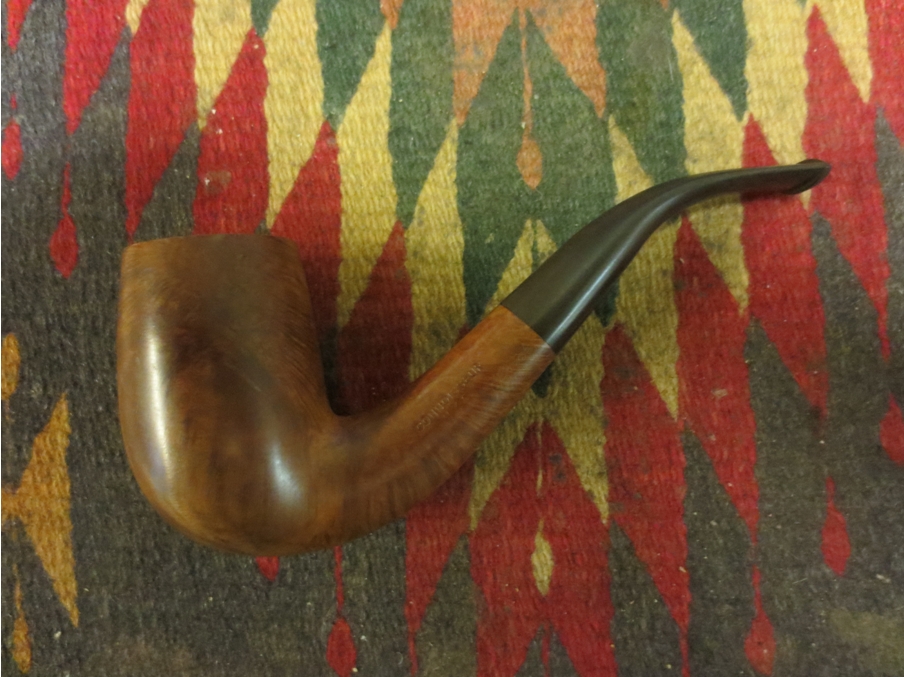
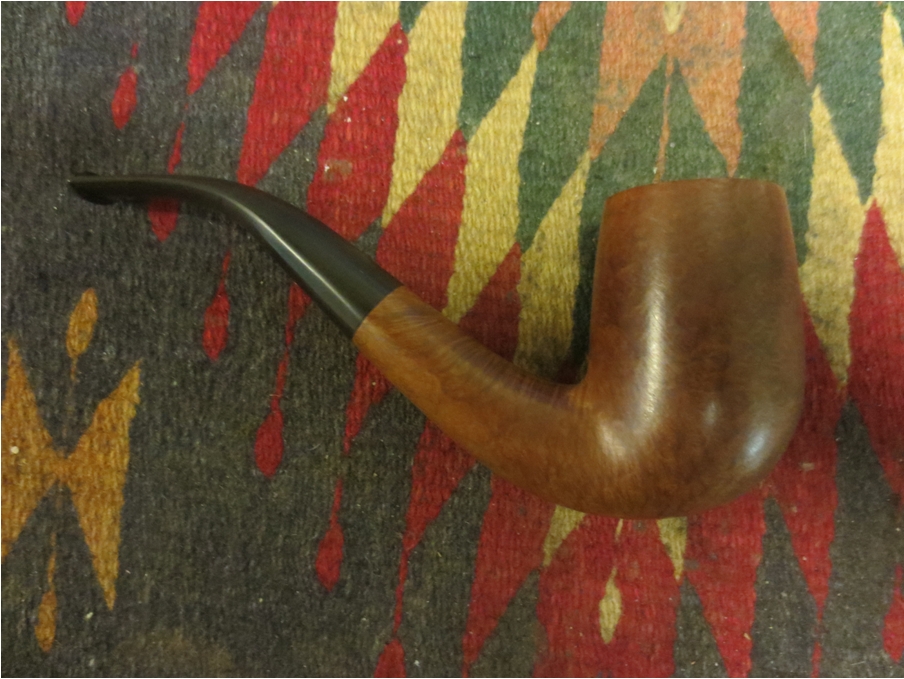
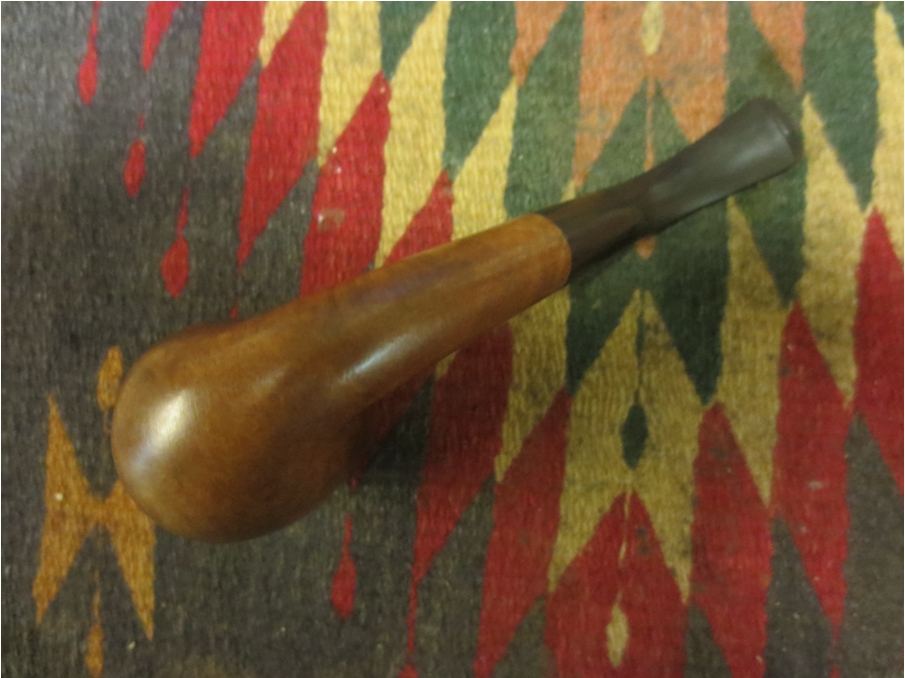
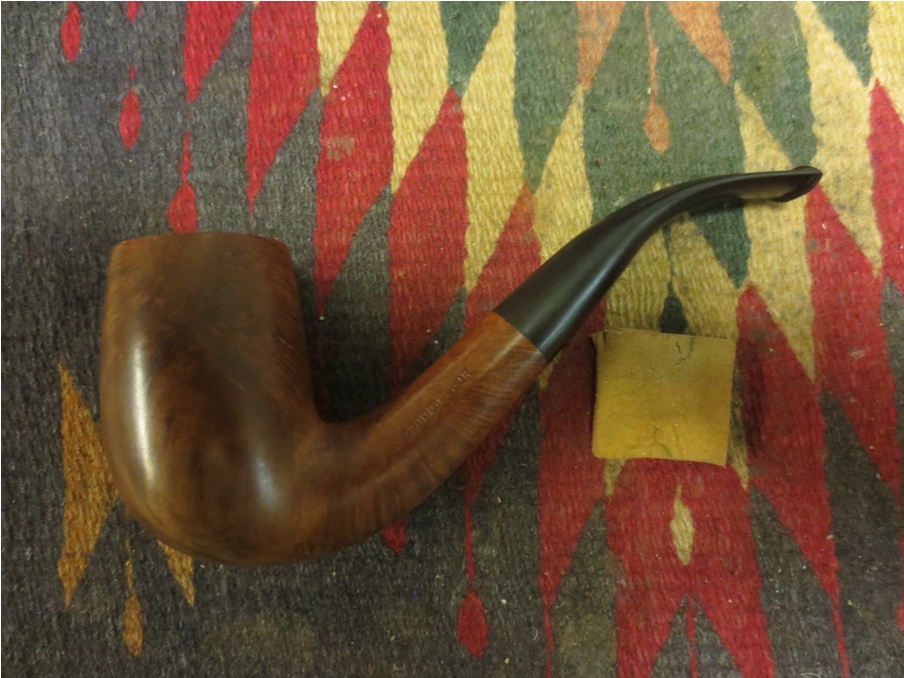
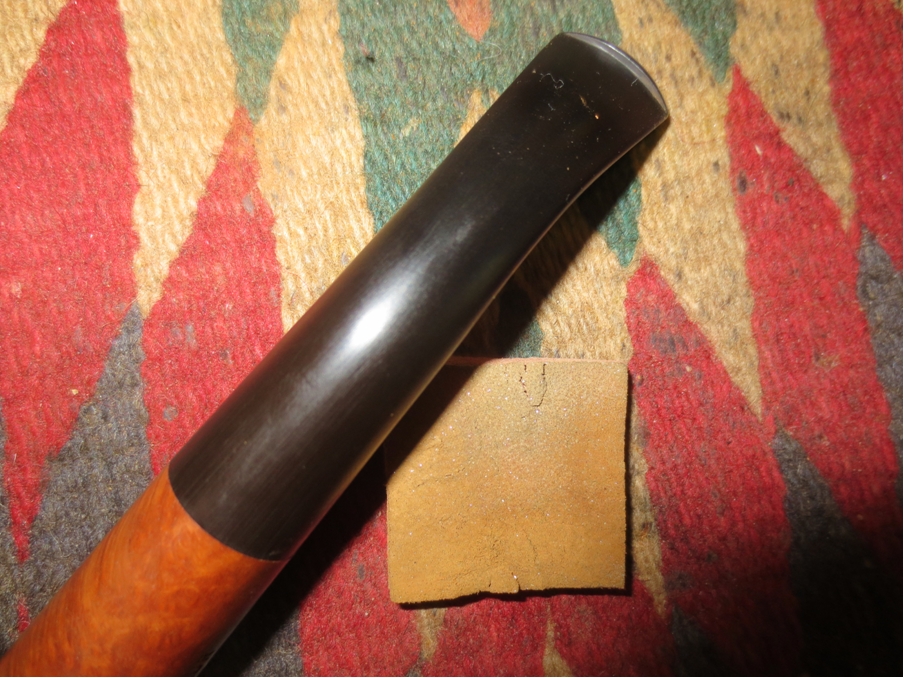
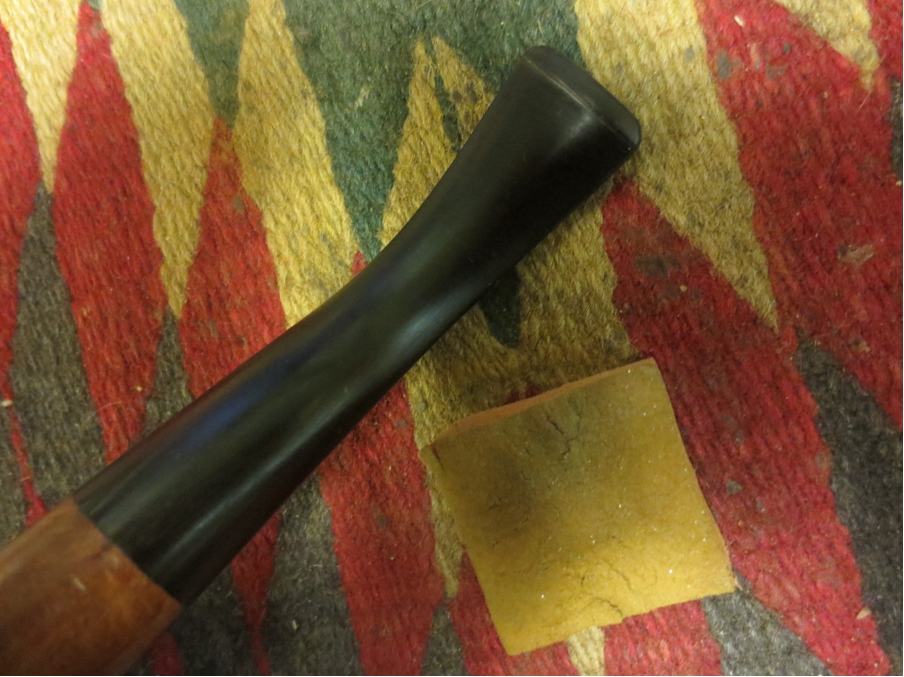
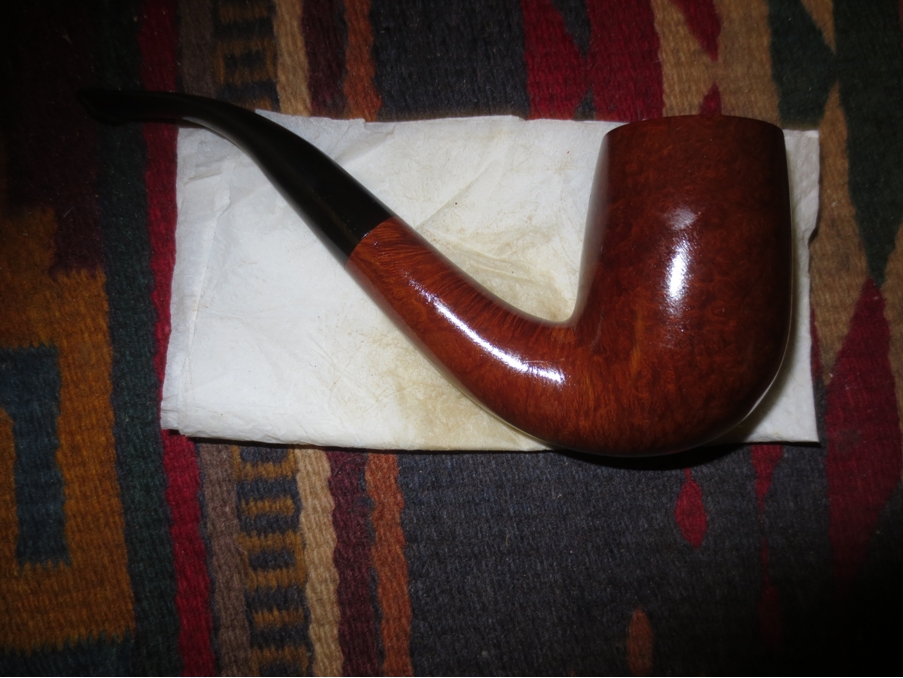
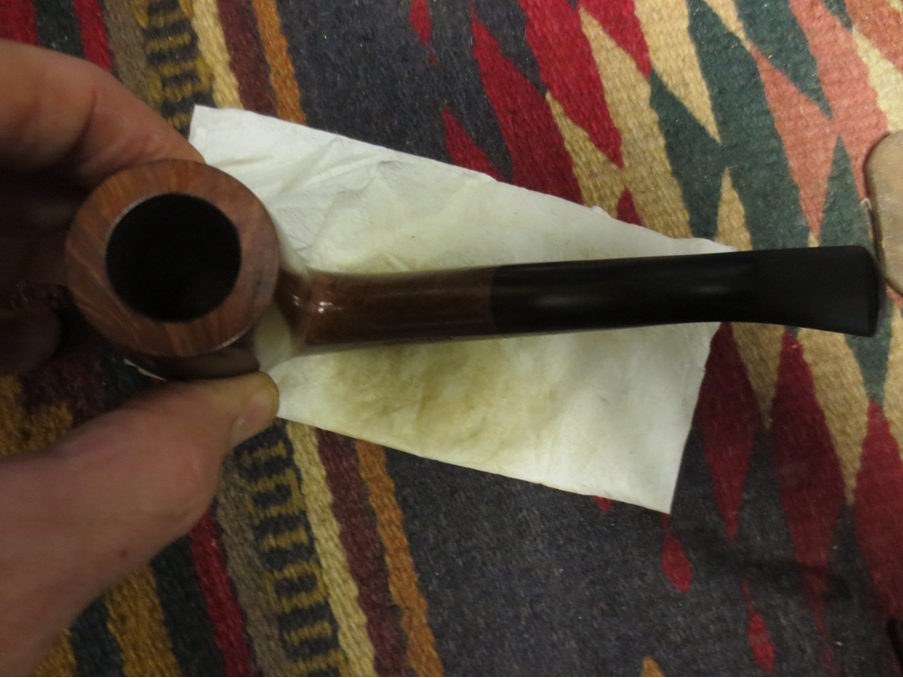
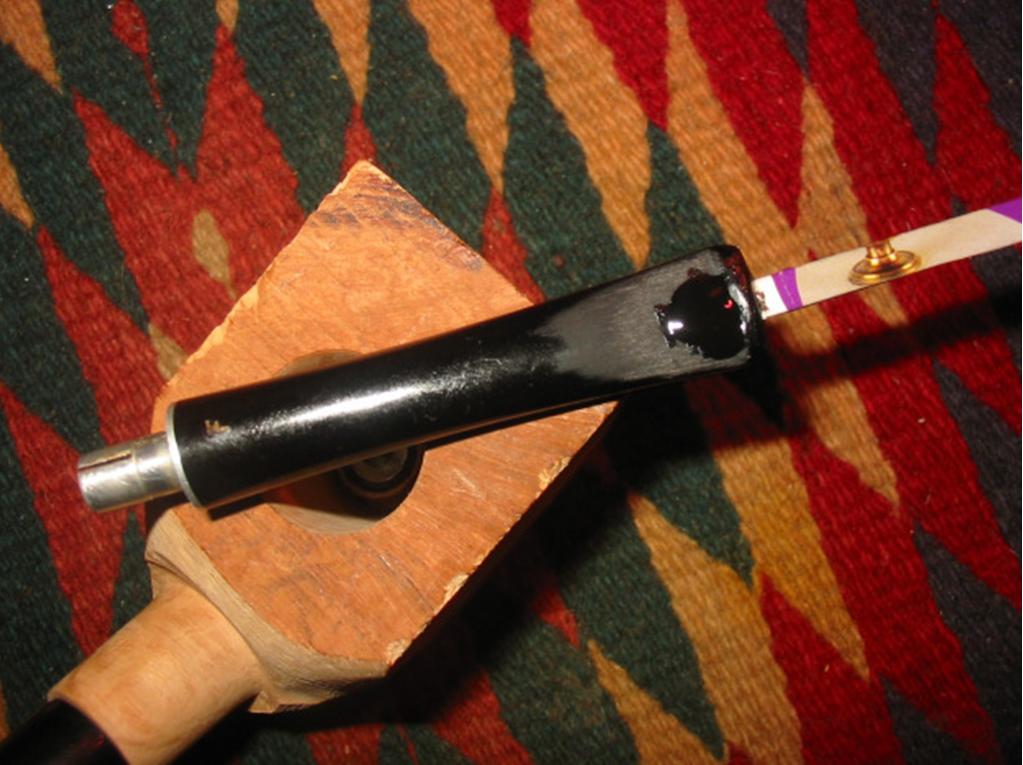
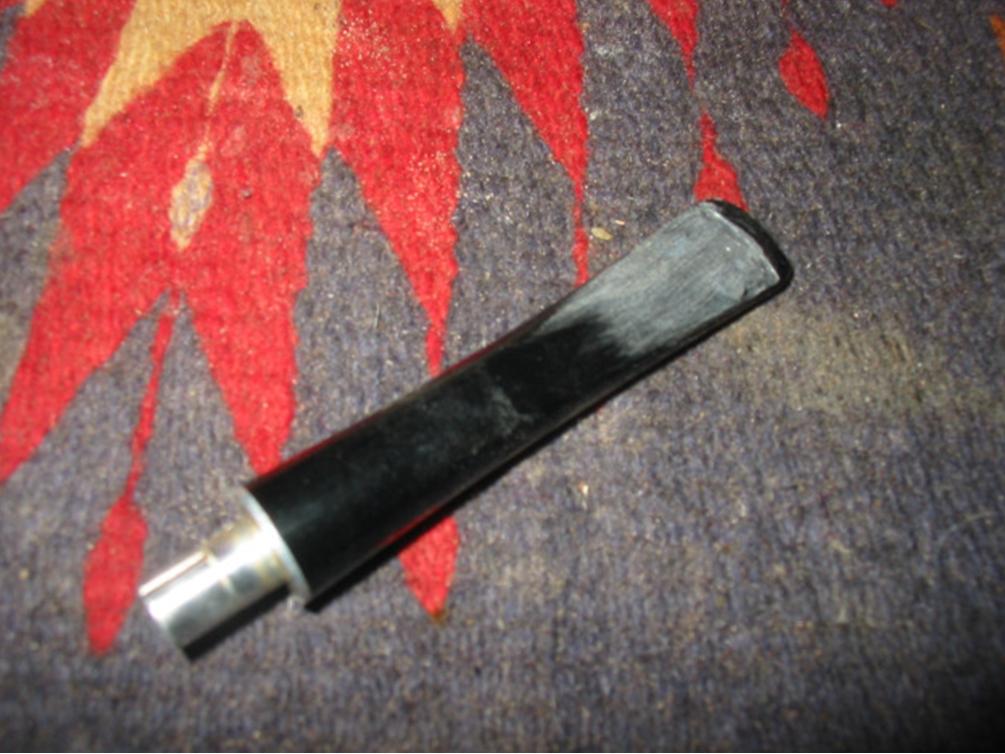
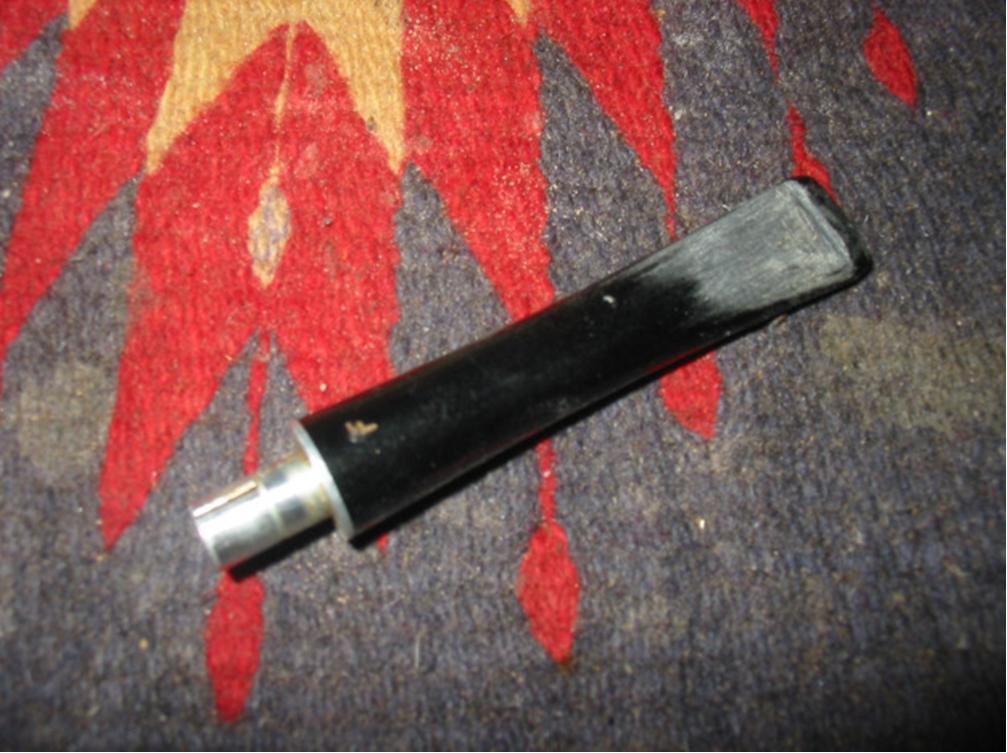
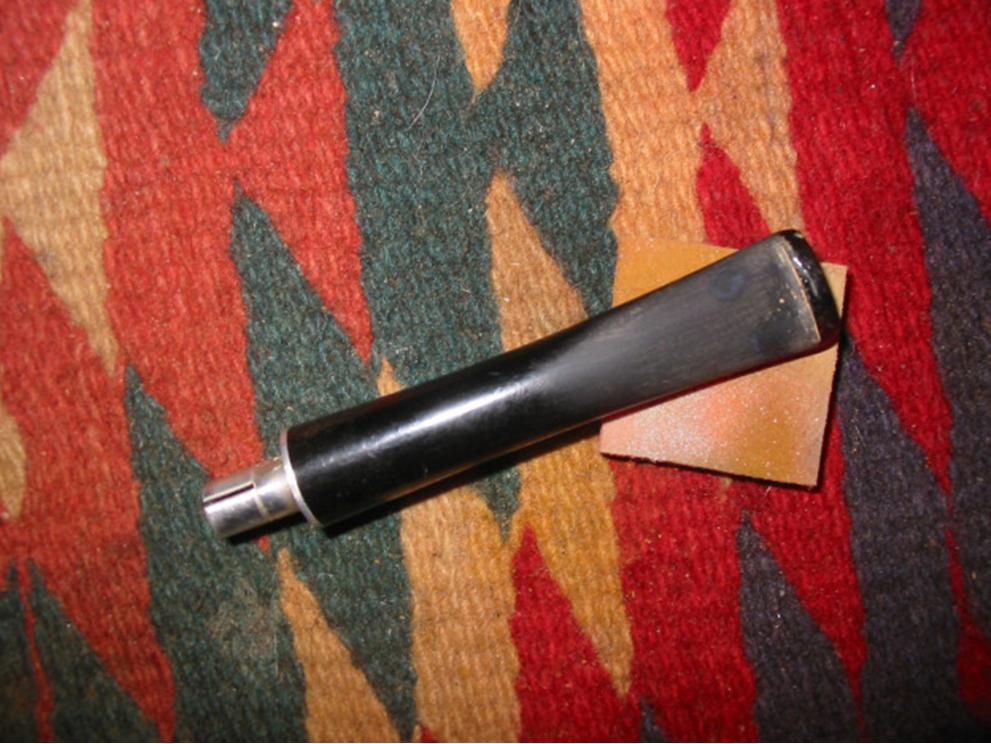
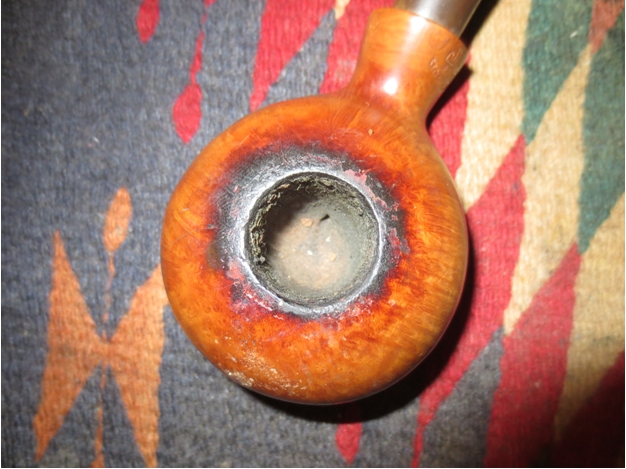
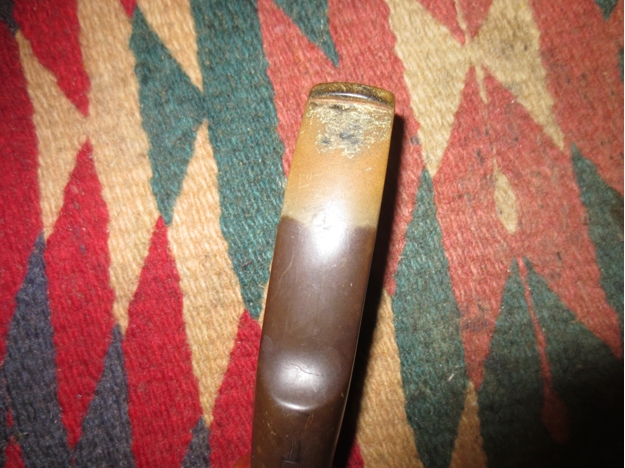
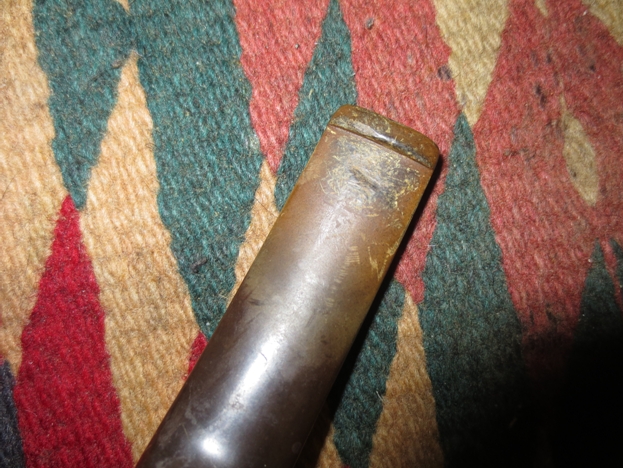
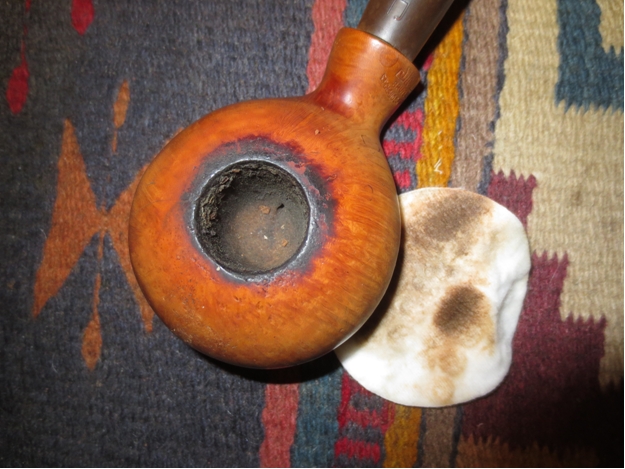
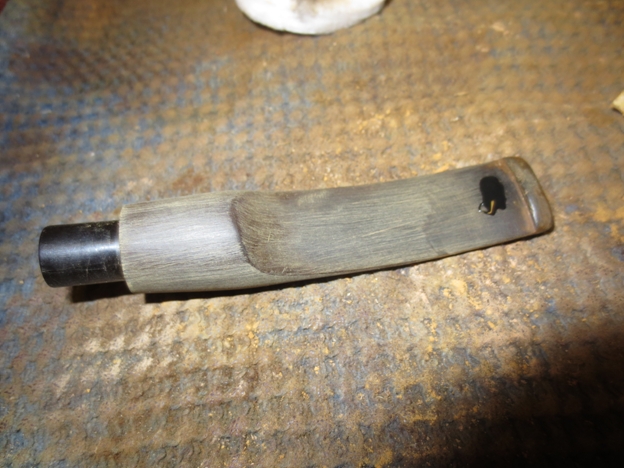
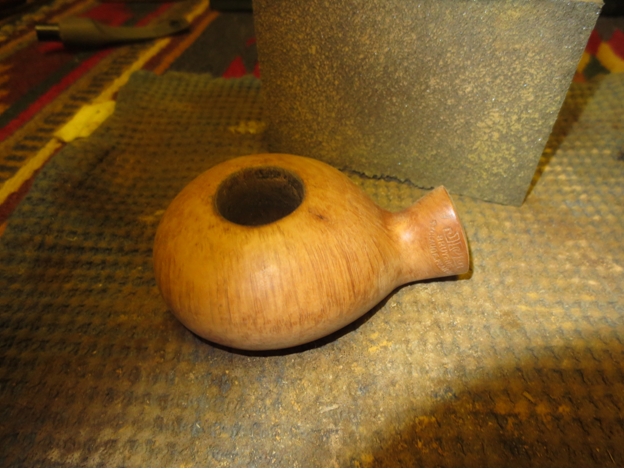
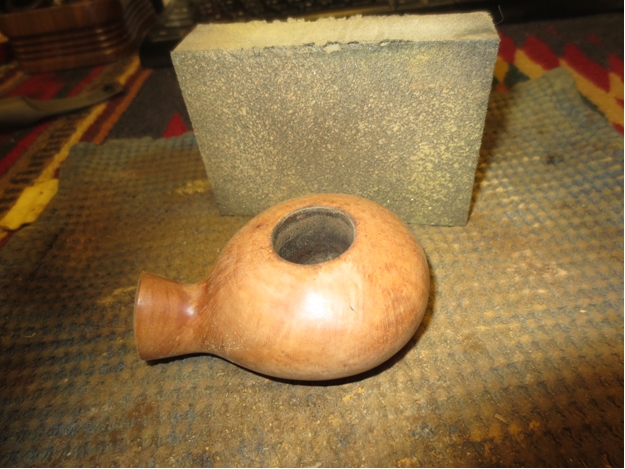
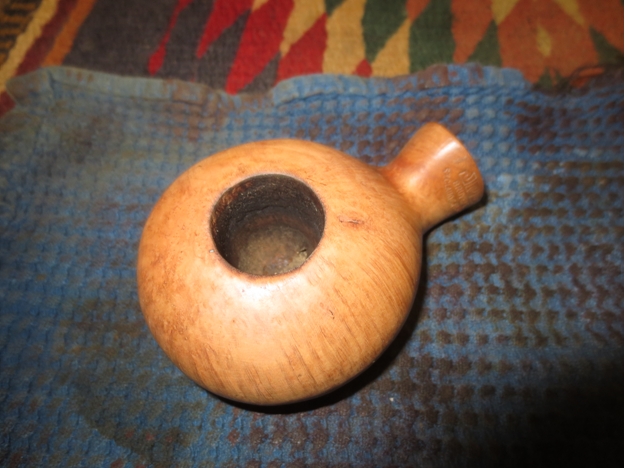
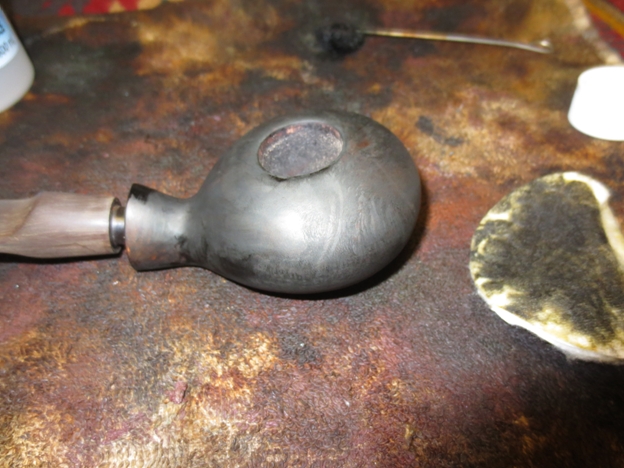
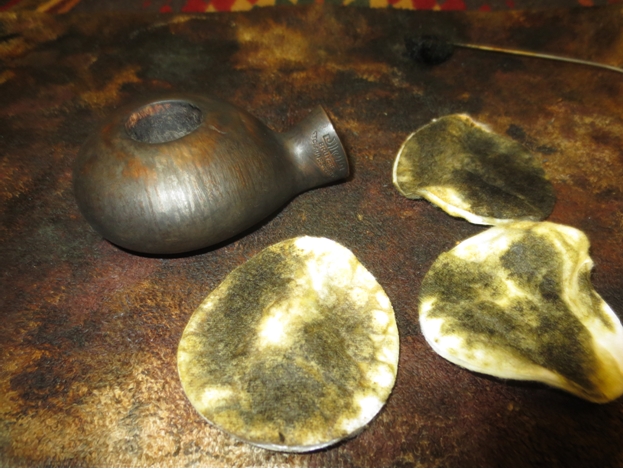
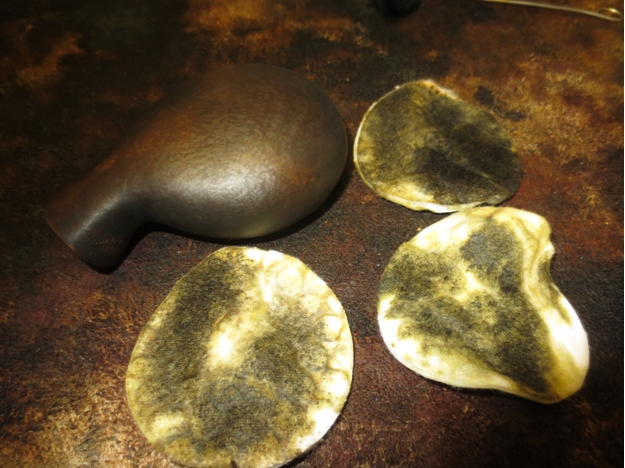
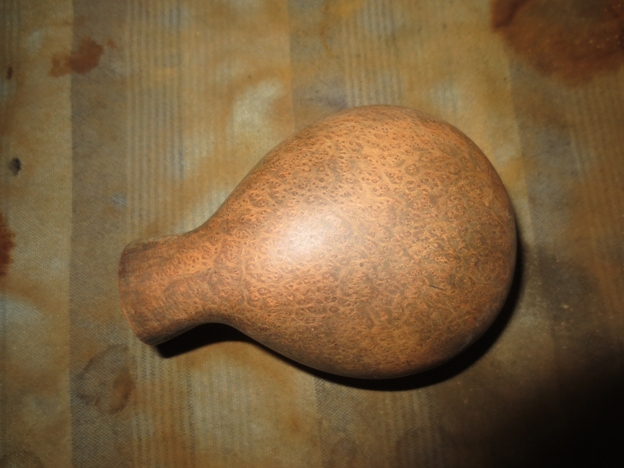
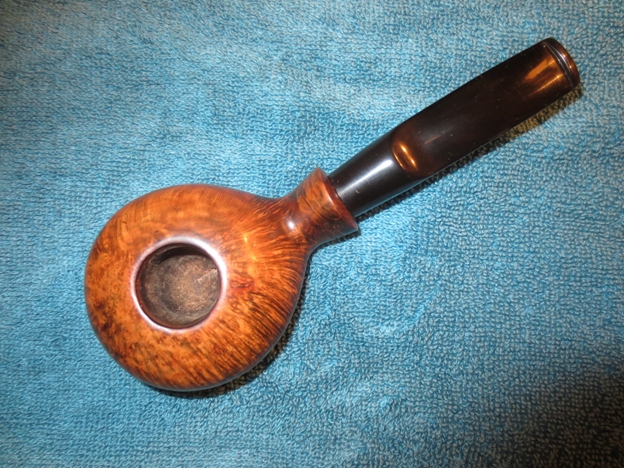
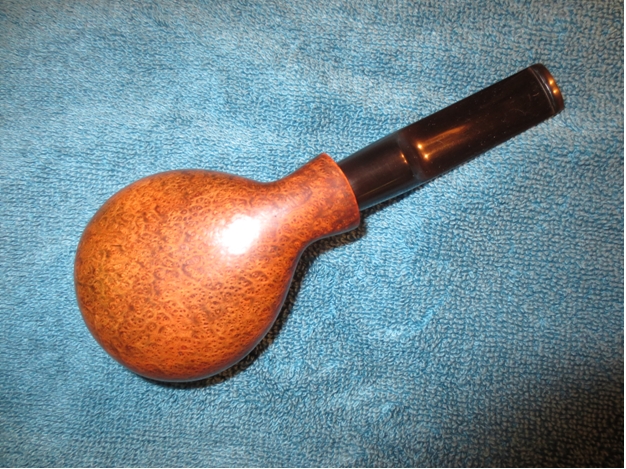
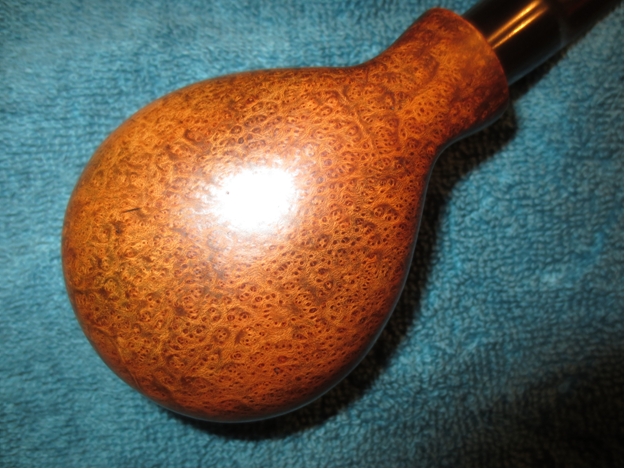
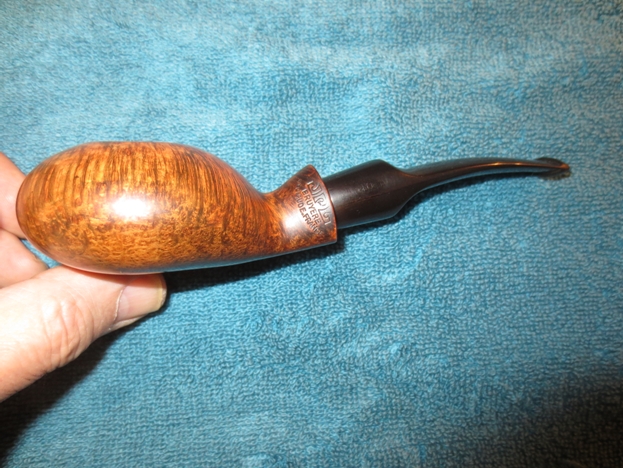
Tag Archives: removing tooth marks

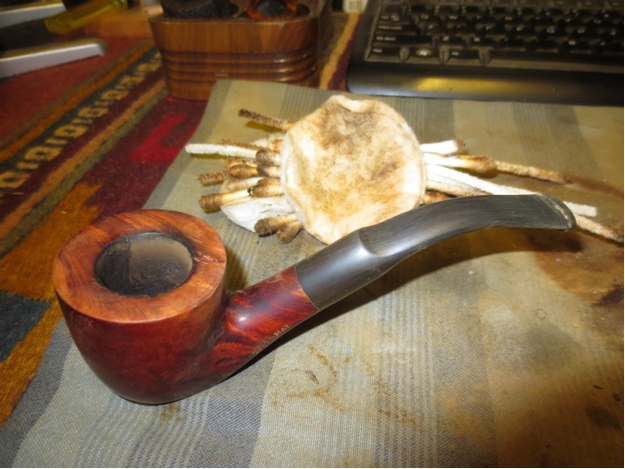
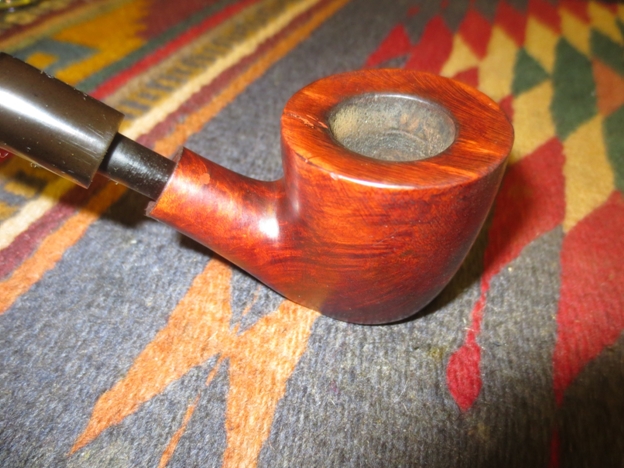
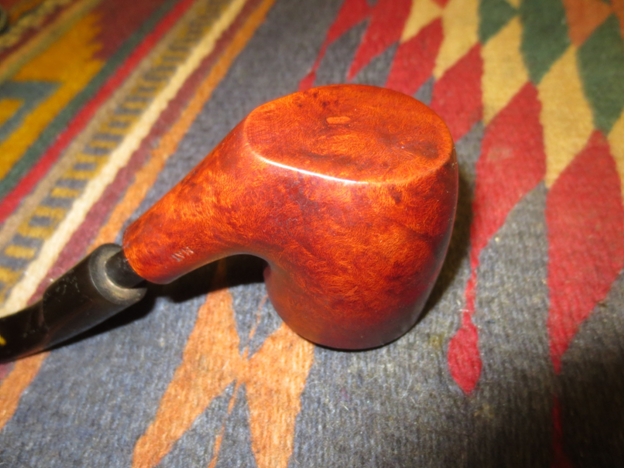
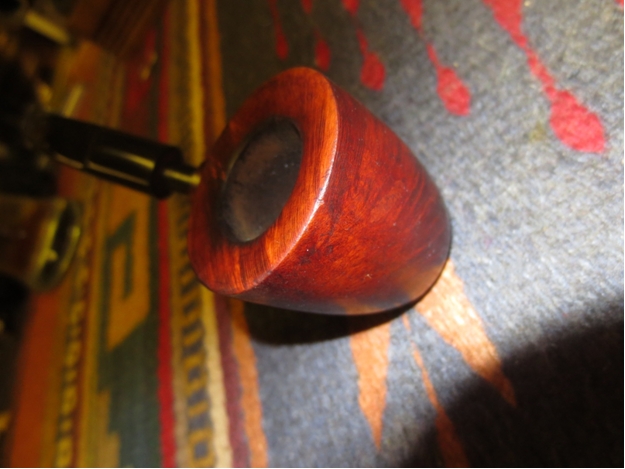
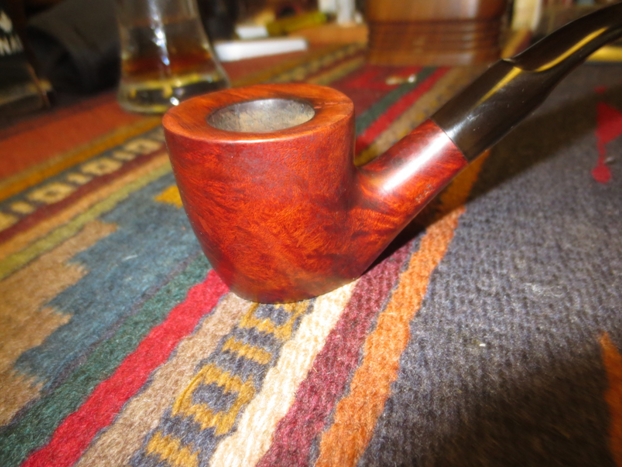
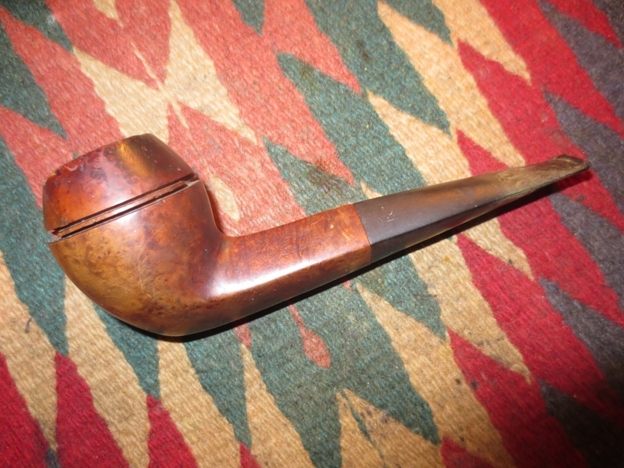
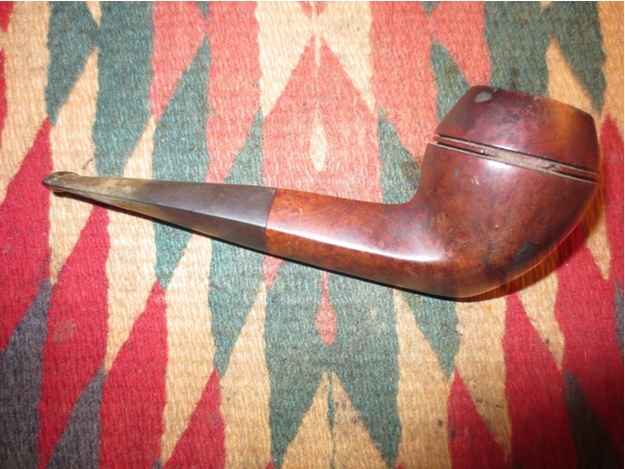
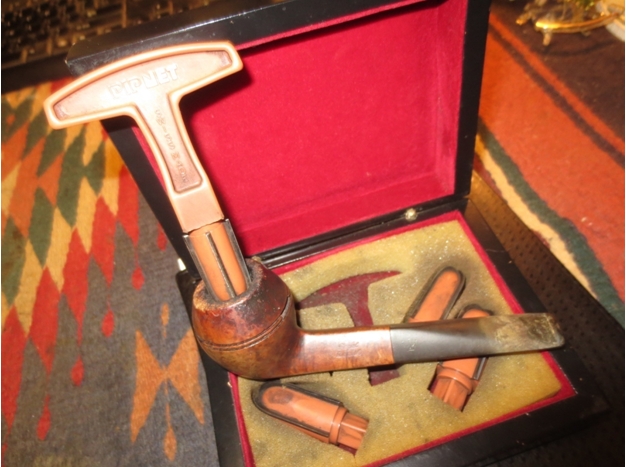
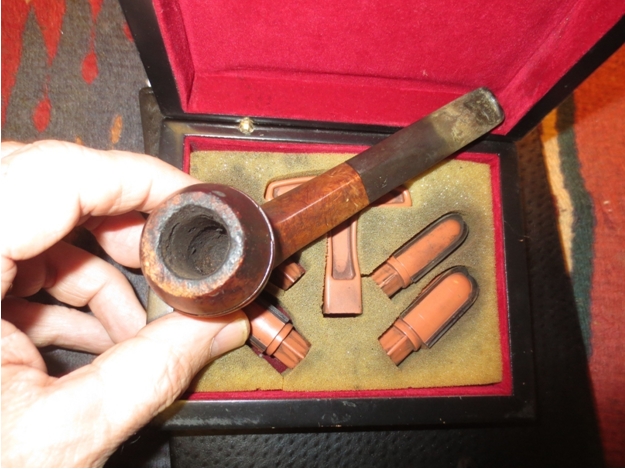
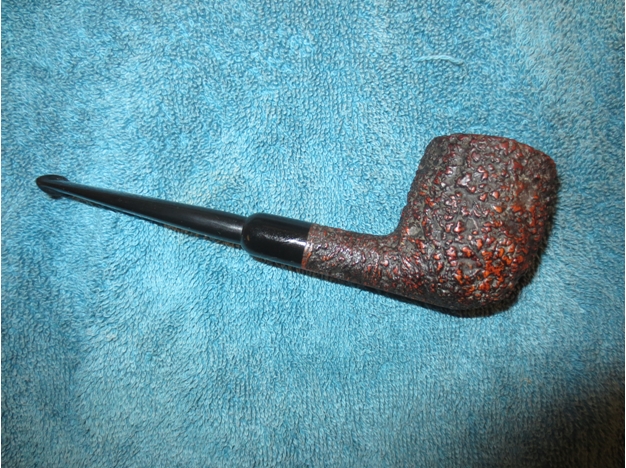
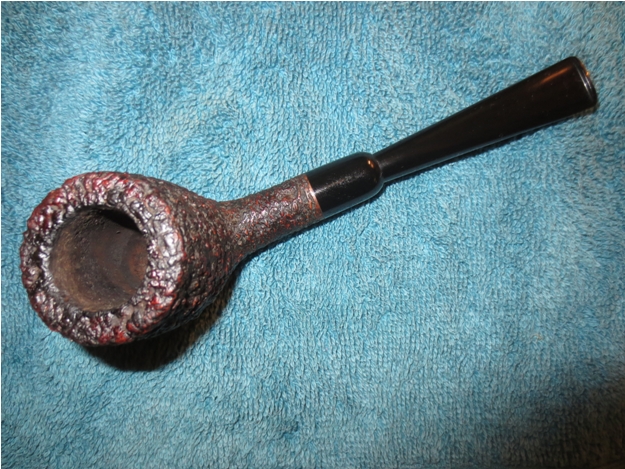
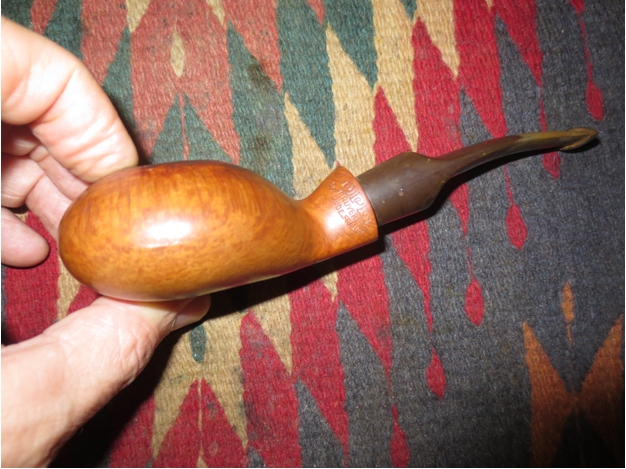
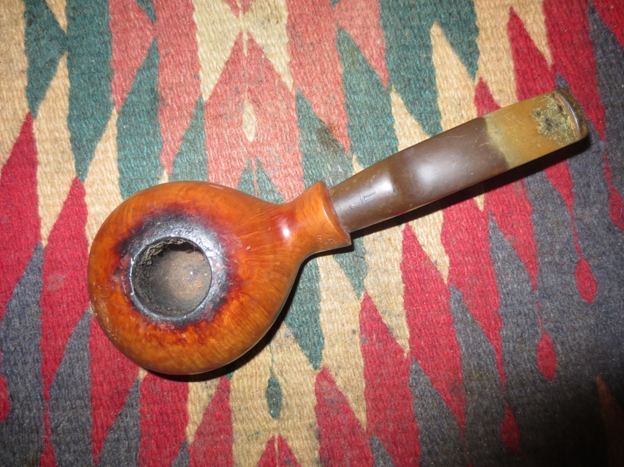
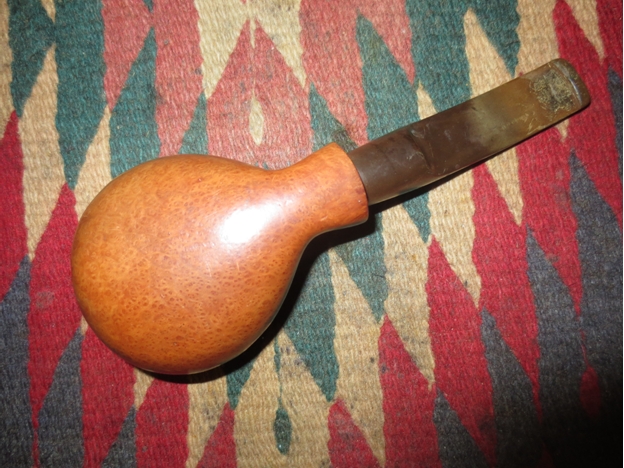
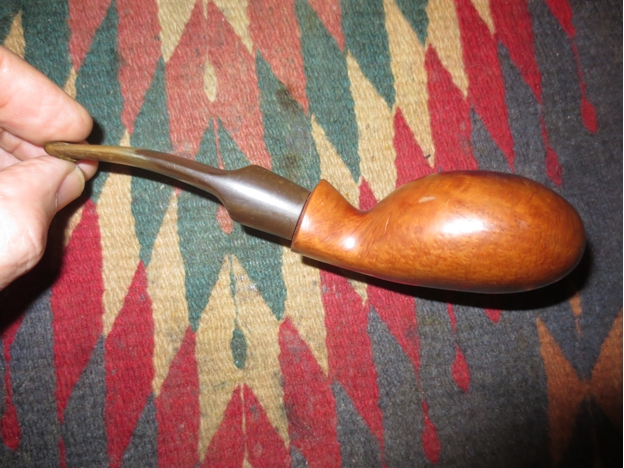
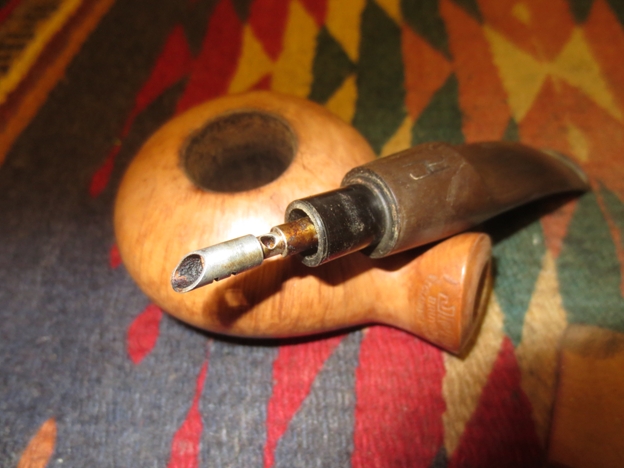
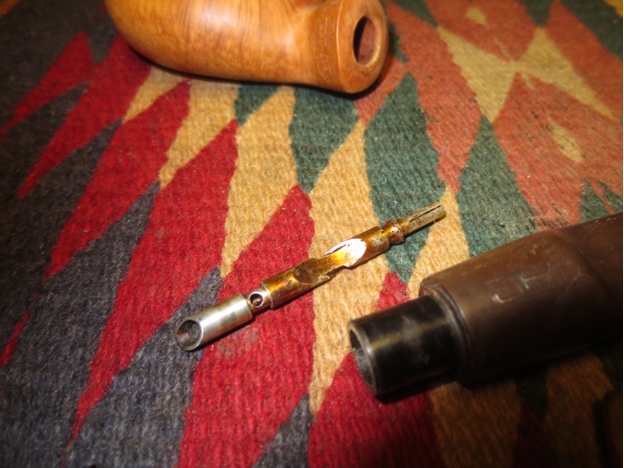
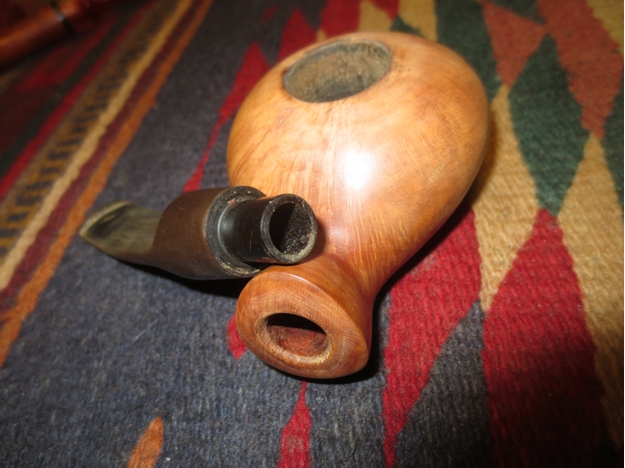
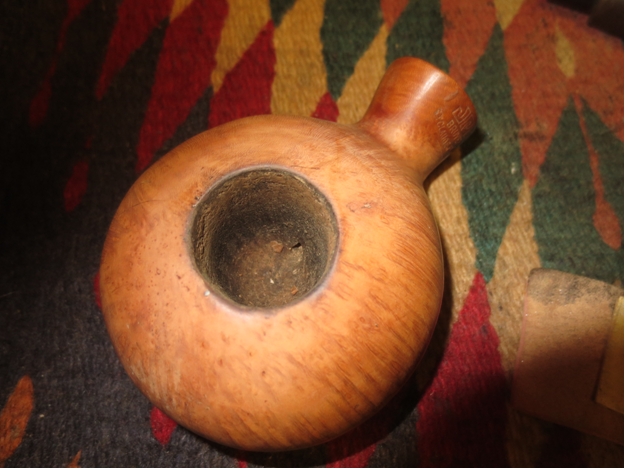
A Restorfurb of a Doc Watson SR Billiard


Blog by Troy Wilburn

I have read about some of Troy’s refurbs on Pipe Smokers Unlimited and on the Dr. Grabow Collector’s Forum so when I saw his work on this old Doc Watson and the unique stamping it had I wrote and asked him if he would be willing to post it on rebornpipes. It is a pleasure to have some of Troy’s work here. He did an amazing job on this particular old timer with the distinct purpose of trying to keep the original finish as much as possible as he worked on it. Thanks Troy for taking the time to send me this blog. I am glad you were willing to post it here. Welcome to rebornpipes as one of the contributors. It is great to have you here. You have shared not only a great restorfurb but some tricks that I will have to use in the future. We would love to read about and look at more of your work. Thank you. – Steve

Hi everyone, my name is Troy Wilburn and I live in rural Virginia near Roanoke. I have been a dedicated pipe smoker for a little over a year now and refurbishing my own pipes for about 8 months. I mostly hang out on the Dr. Grabow Collectors Forum. My collection is mostly American made pipes. My favorite shapes are pokers, billiards and Canadians. Pokers are my most favorite with nearly 40 of them last count. I have kind of a tight budget to work with on my pipe smoking, pipe purchasing and pipe refurbishing. That’s why I got into refurbishing my own pipes. I’m always trying to find a bargain on pre 50s pipes as they are my favorite. Linkmans and Yello Boles are my most common pre 50s pipes with three Marxman’s thrown in. I do have a hard to find Marxman poker that is one of the prides of my pipe collection and is 100 % original finish.

I have browsed Reborn pipes for information and refurbishing info for a while.

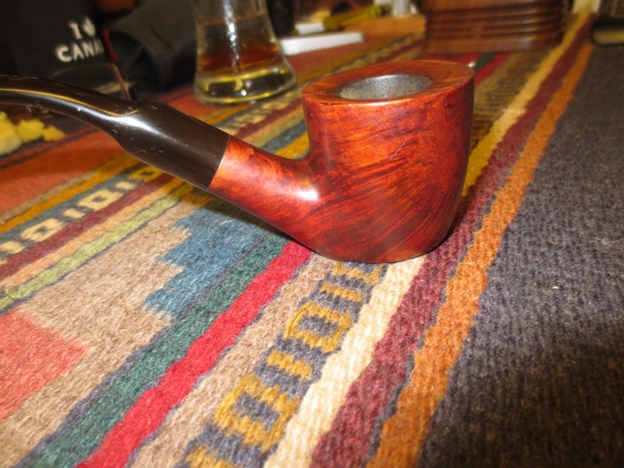
This is my latest one and the pipe that got me here. It’s a Doc Watson pipe shape #51. I know from researching this pipe that Steve had restored a couple so I thought he might know some info on the odd stamping’s mine has. He invited me here to post my work on this pipe.

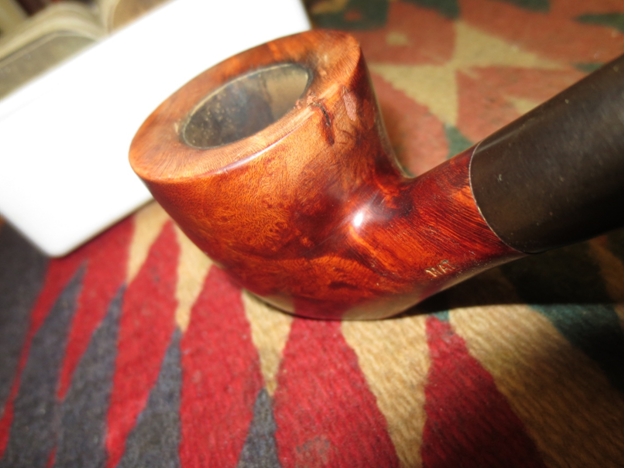
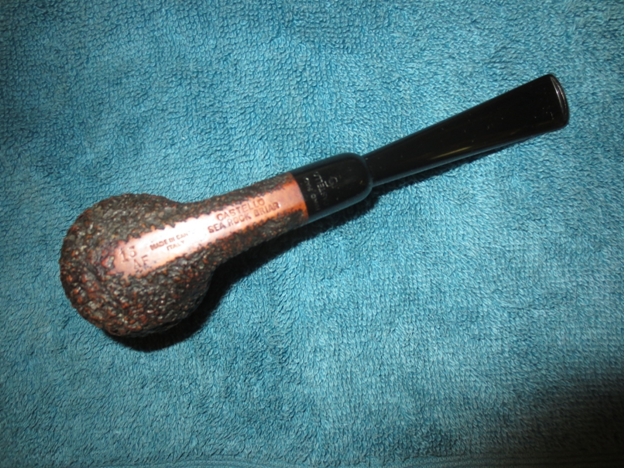
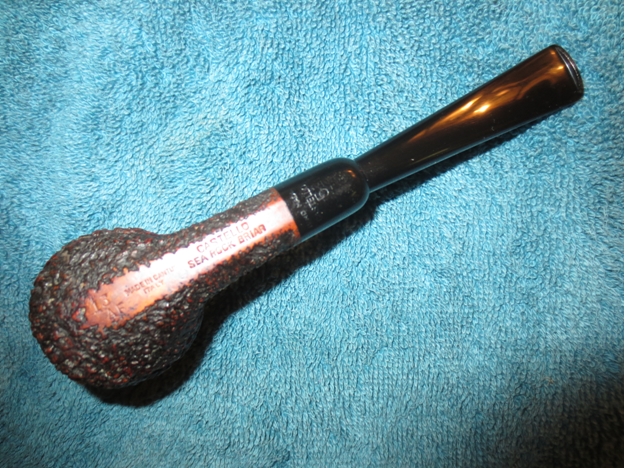
I got this one and an early Yello Bole apple from a woman who got them at the same estate sale. They both came from the same owner. The Doc Watson’s were made by KBB and though I have seen a few, mine has odd stamping of a P in a shield and mine has the name SR applied. The others I’ve seen are stamped just plain Doc Watson and with the KKB in a cloverleaf.Troy1 I know this is a KBB as it has the same shape number as KBB, YB and KW charts. The stem has the same logo as the KBBs. KBB stamped Watson’s are all marked Italian Bruyere not Algerian like this one is. I’m guessing this pipe is dated between 1936-1940 as it has the Bruyere stamp but lacks the four digit code.

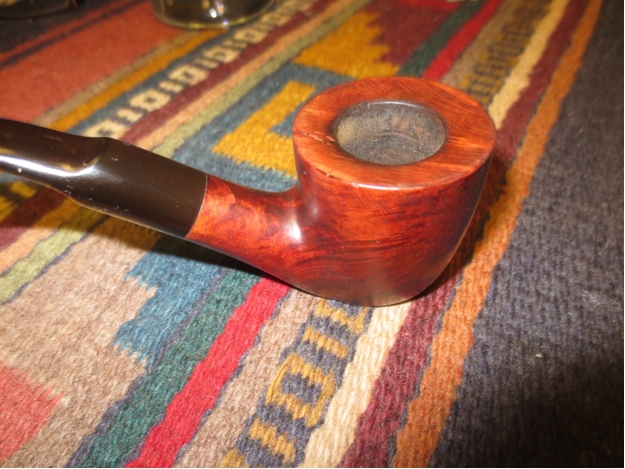
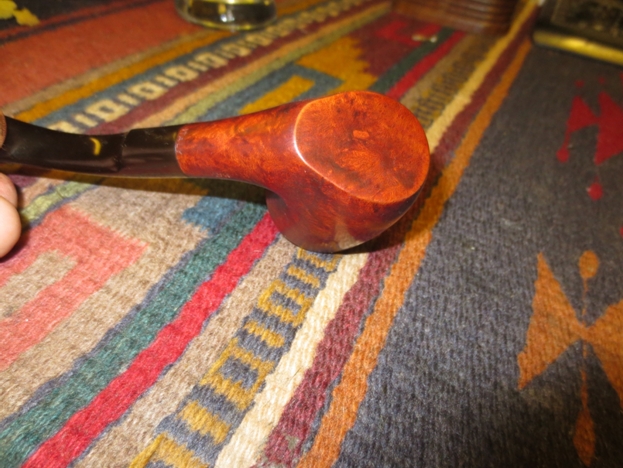
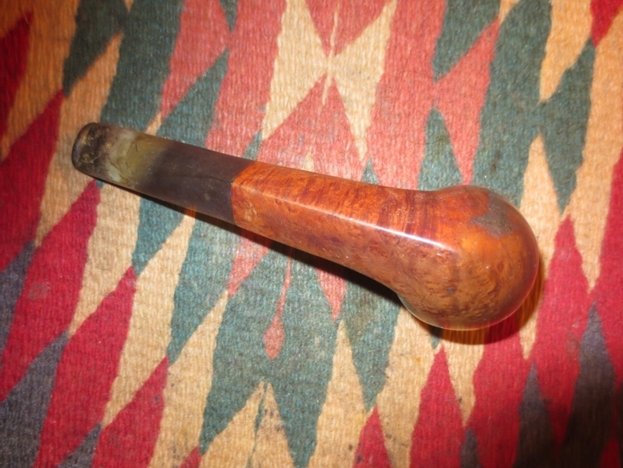
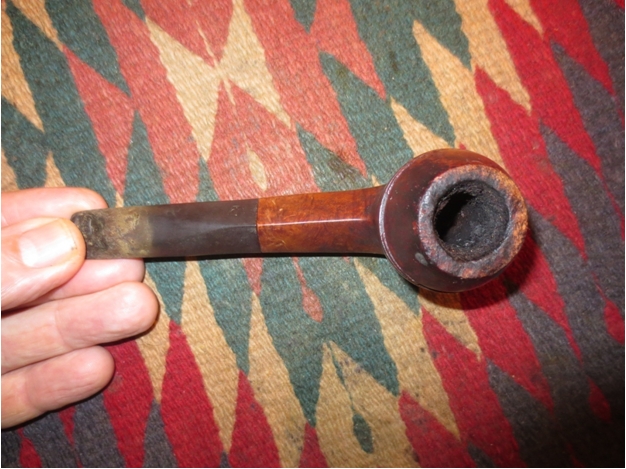
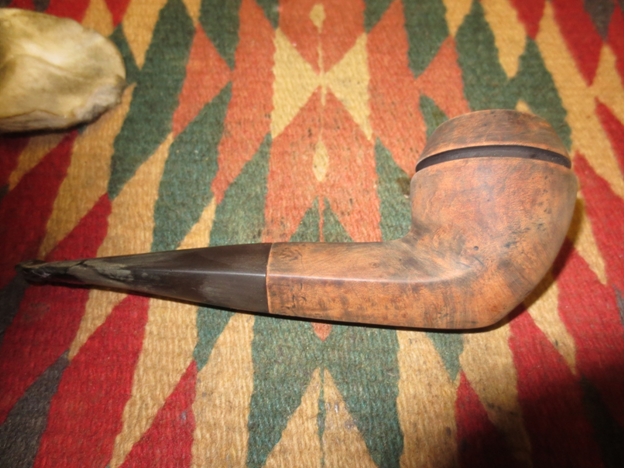
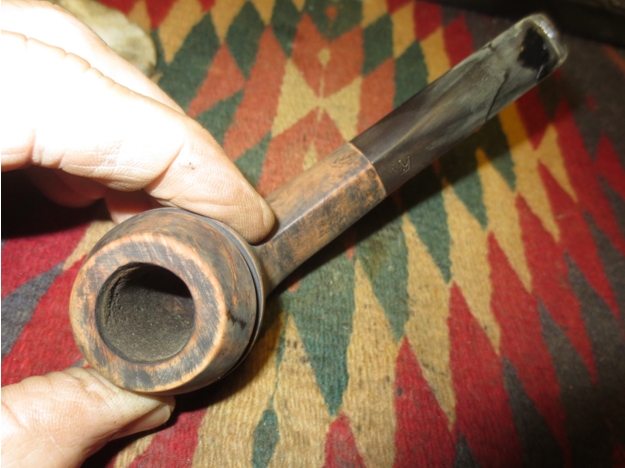
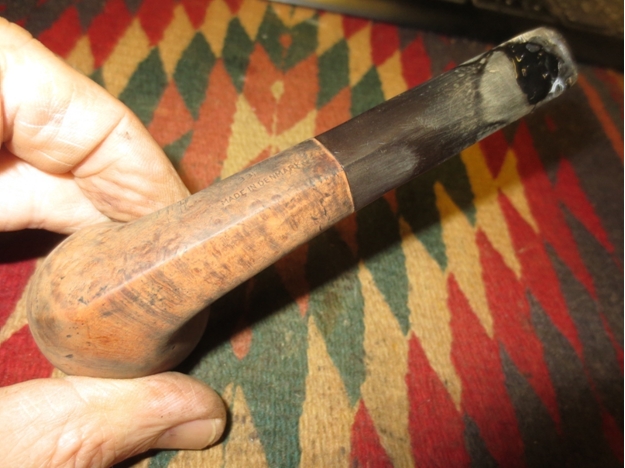
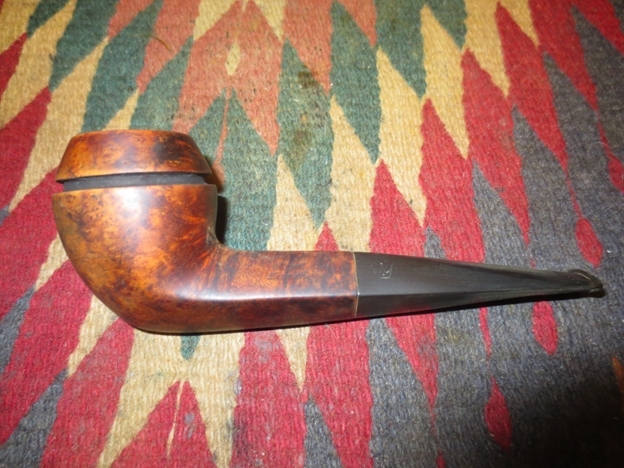
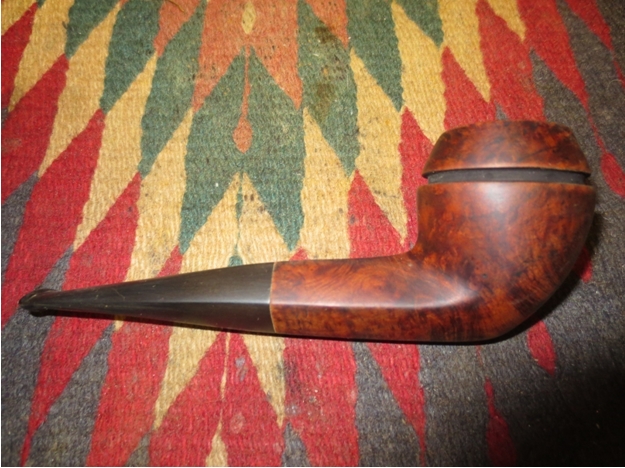
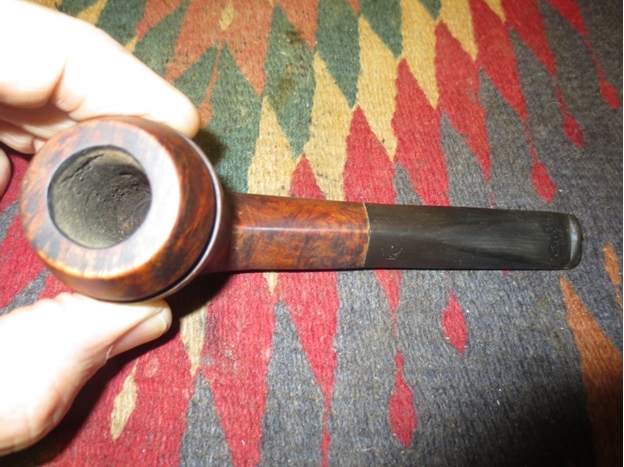
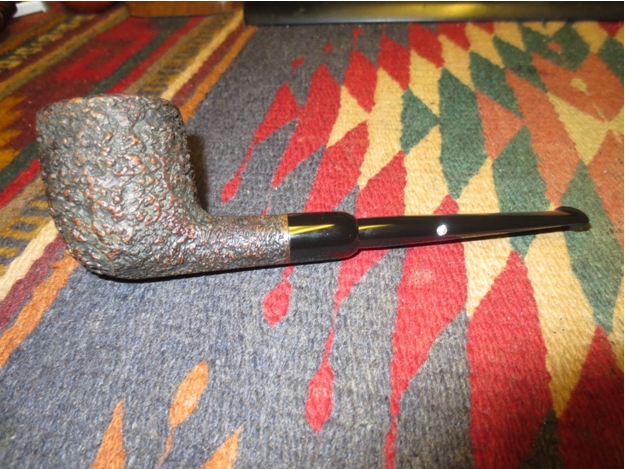
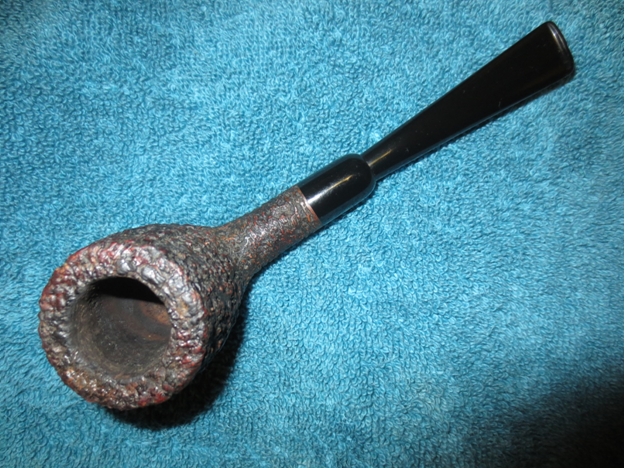
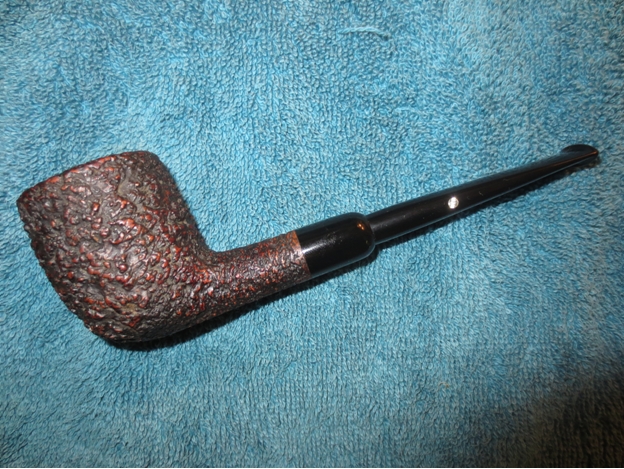
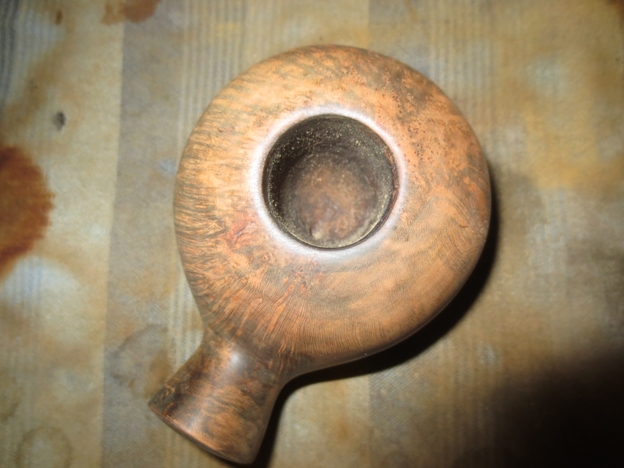
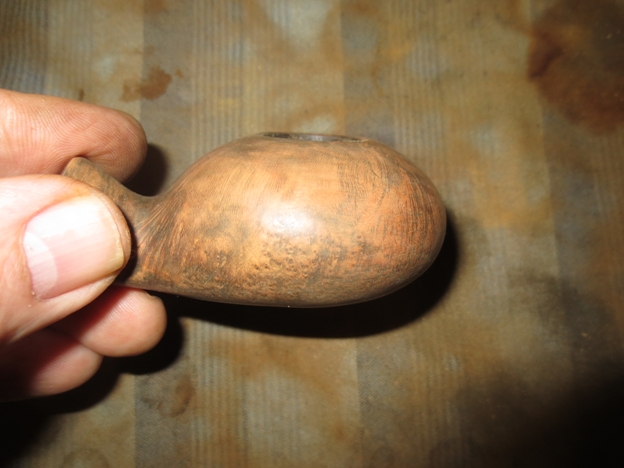
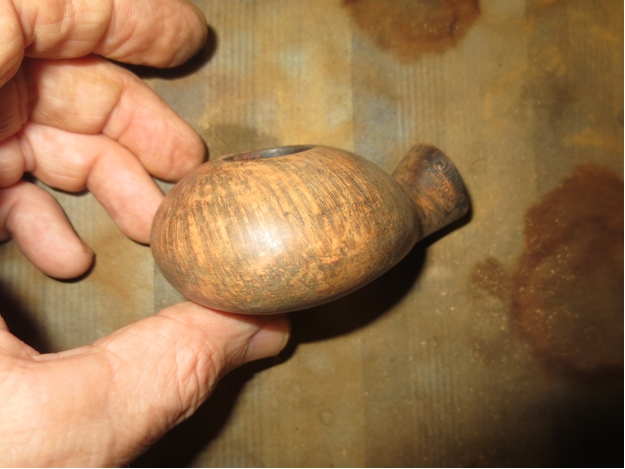
Pipe as I got it… Troy2

Troy3

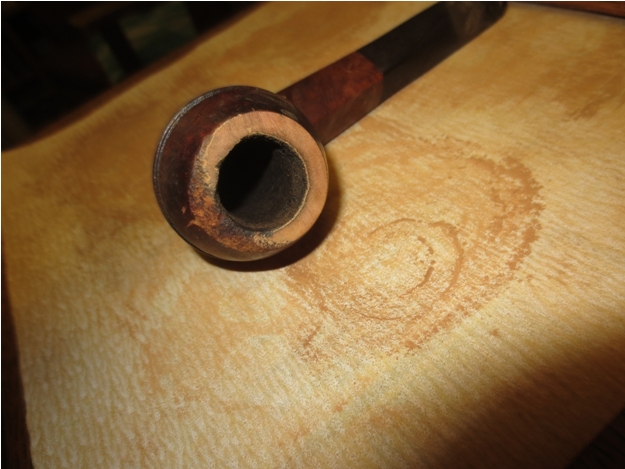
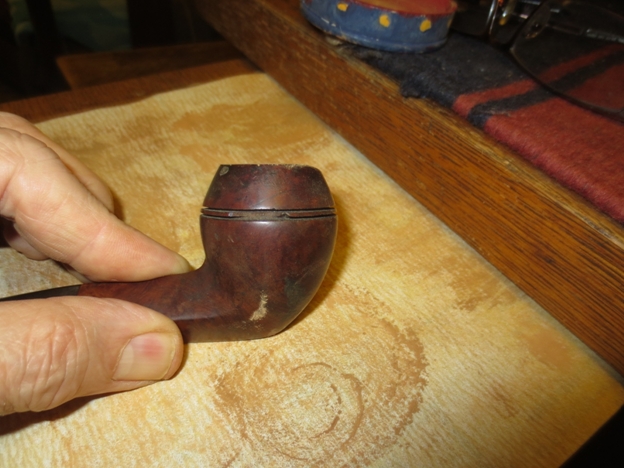
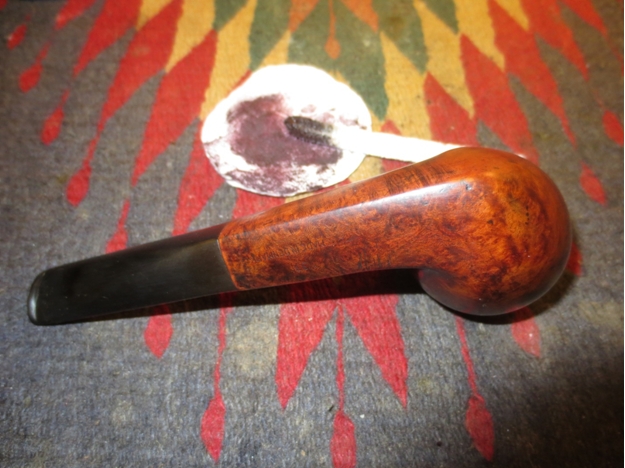
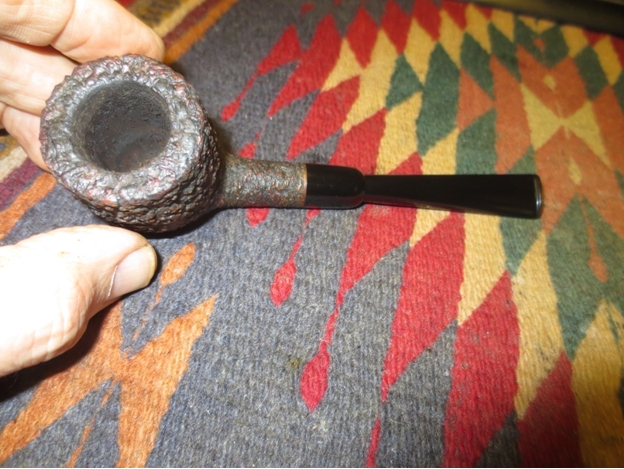
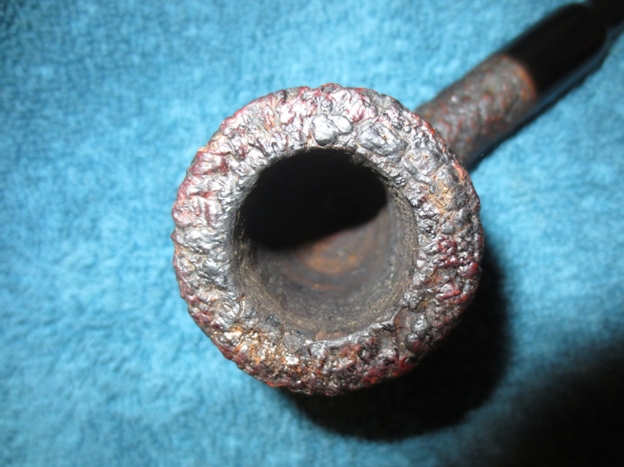
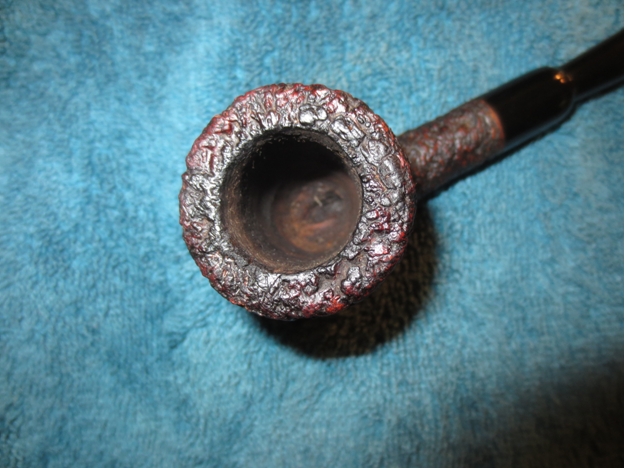
Troy4 After a reaming and a good cleaning I noticed that it had some discoloration spots from heat and the finish was all but gone on these spots. Also there were lots of scratches on the surface and some were deeper. So instead of stripping the whole thing I decided to try and blend in the spots with the original finish, to keep it as original as possible.

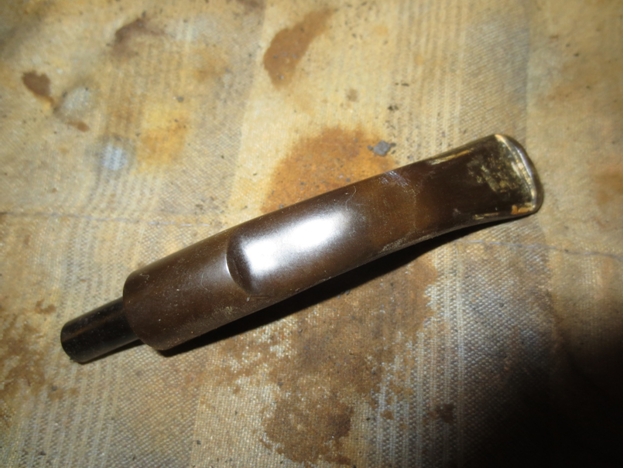
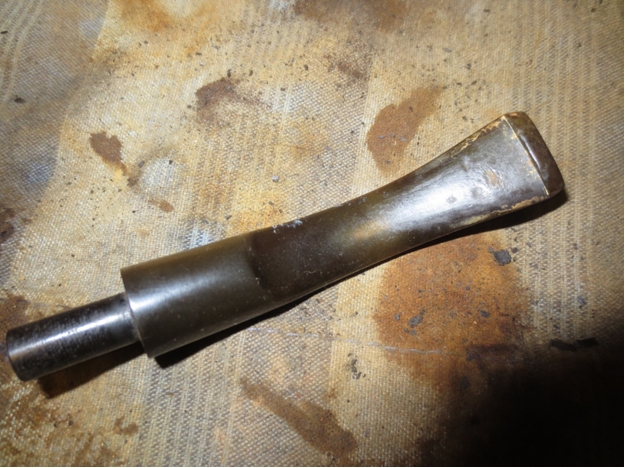
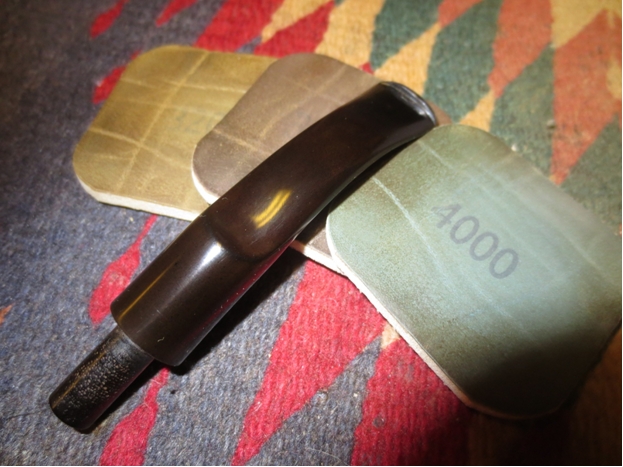
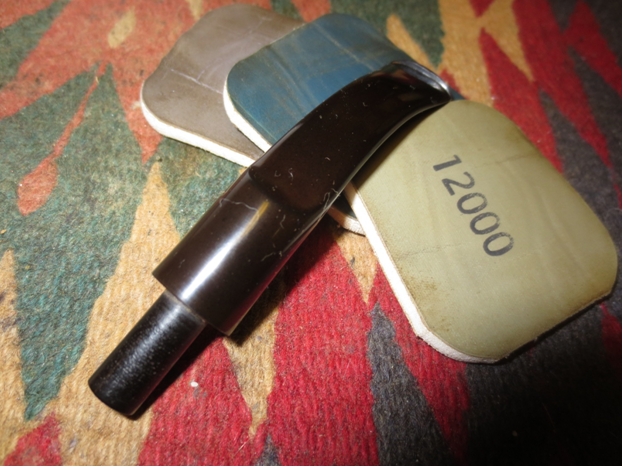
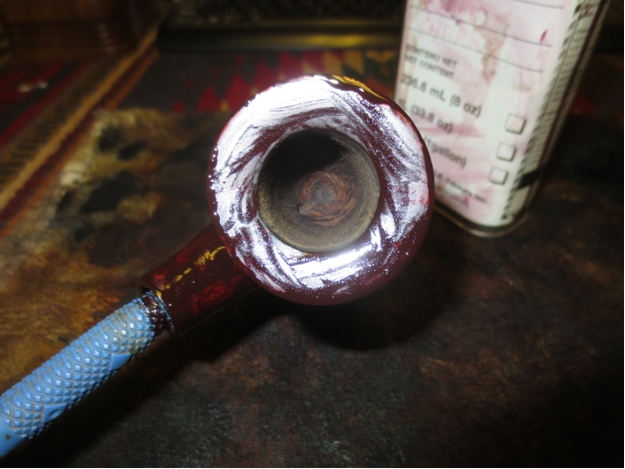
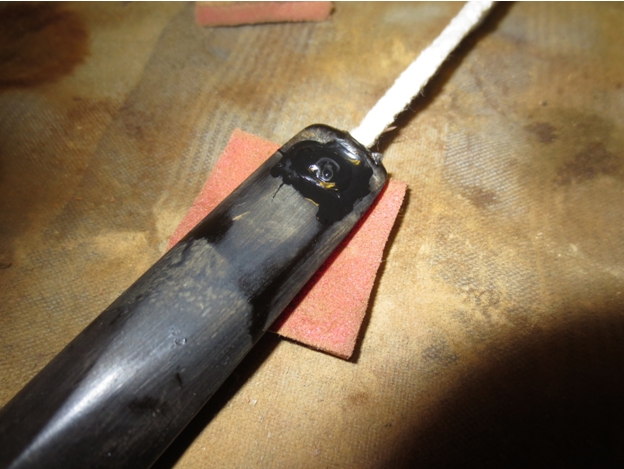
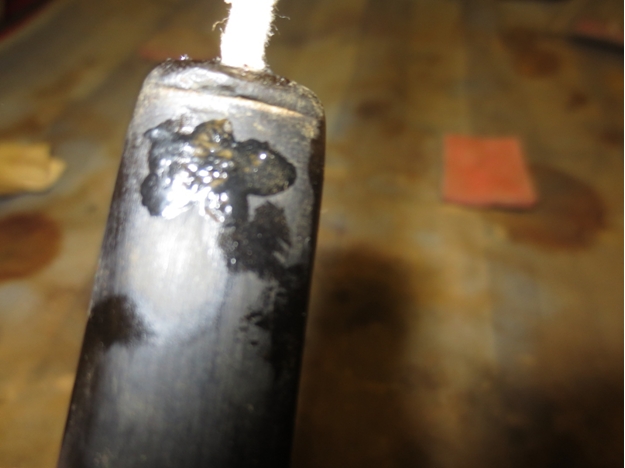
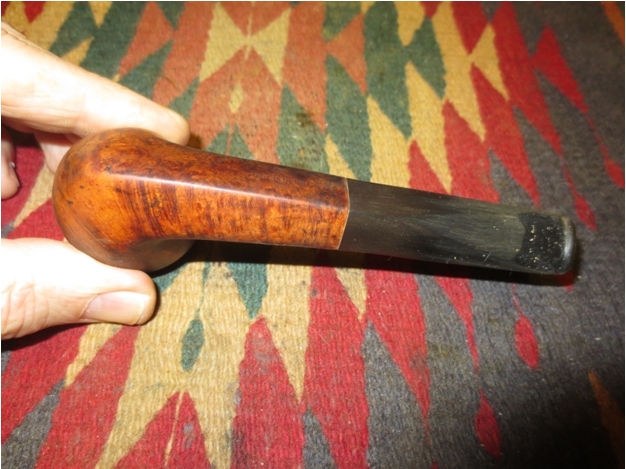
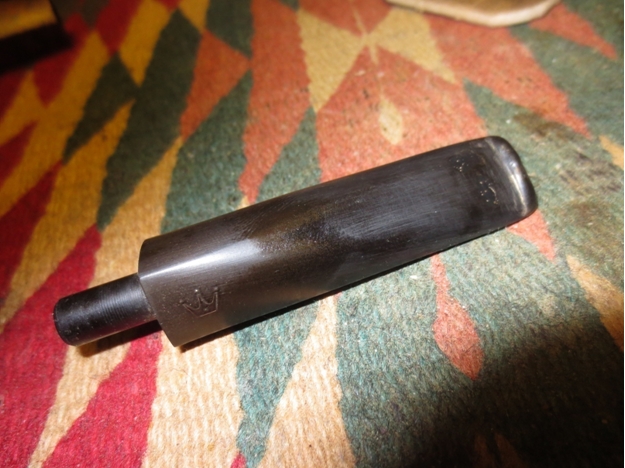
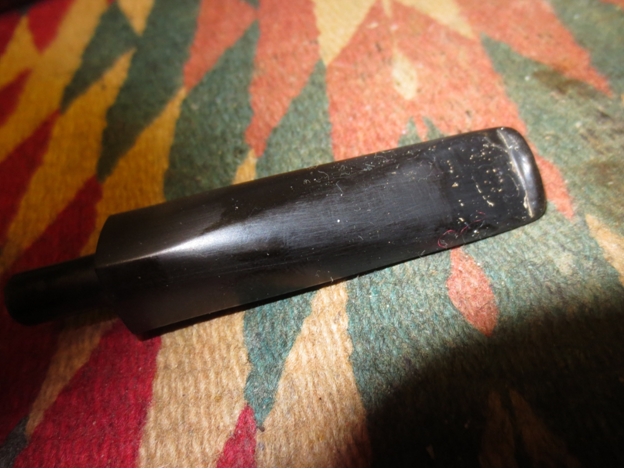
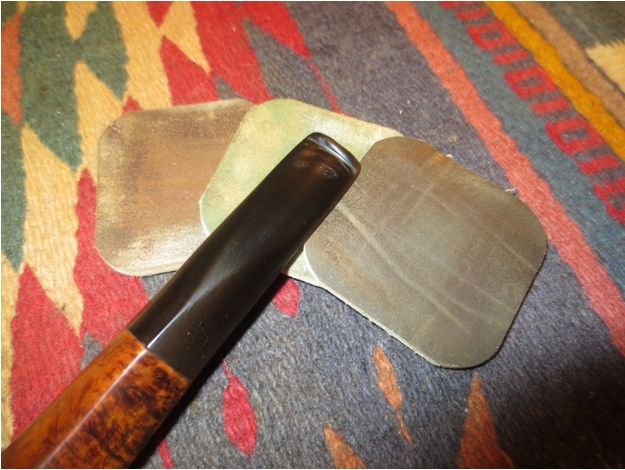
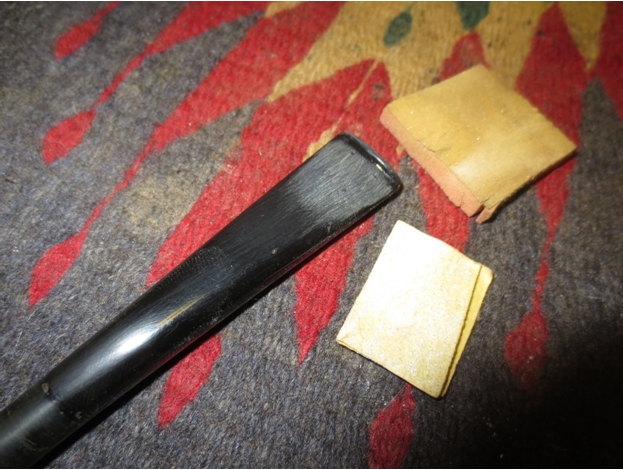
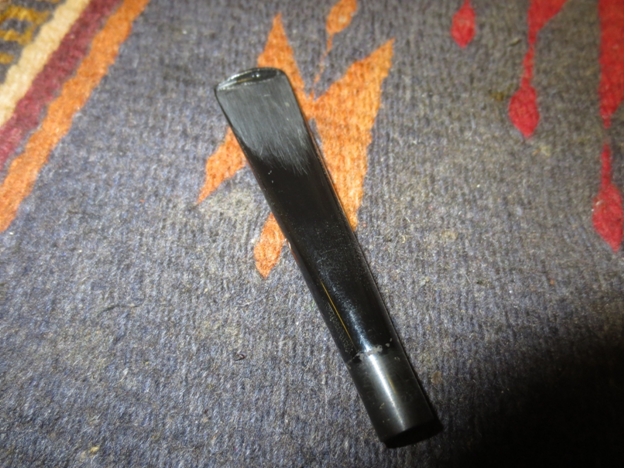
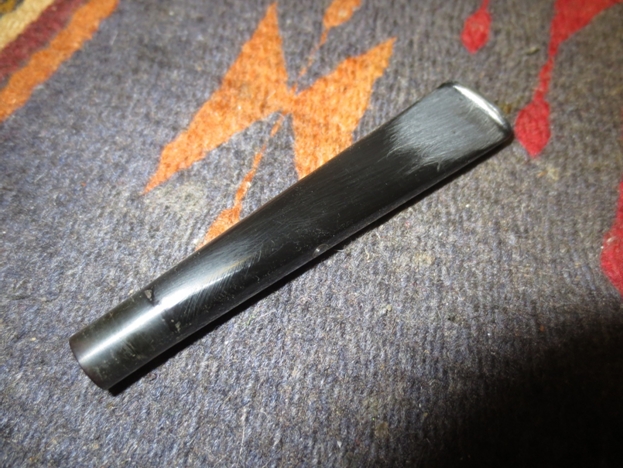
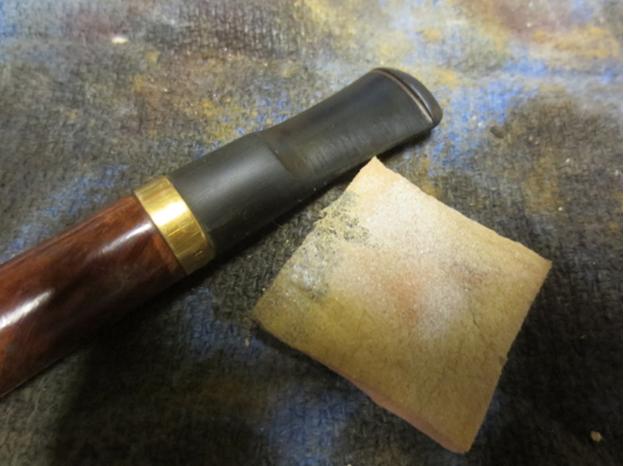
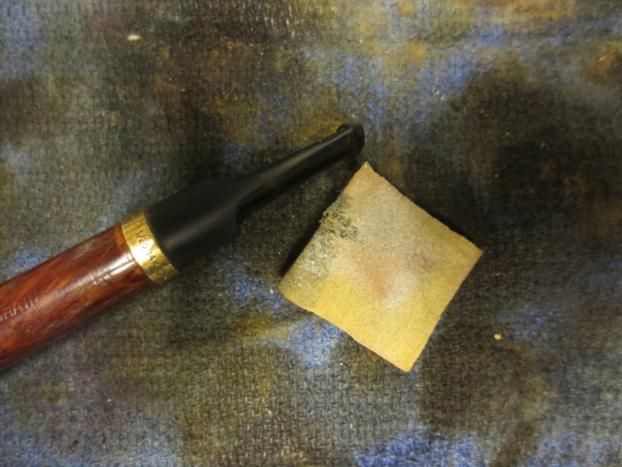
So after sanding the bowl down with some 600 grit sandpaper very lightly, being careful of the stampings and the stem with 1000 grit, I applied a matching dye that I mixed up to the spots.Troy5 The dye pretty much only stuck to the bare finish parts and the excess rubbed off after I wiped it with a rag. After three coats I applied some mineral oil. I had to file out some tooth marks on the stem and button and then wet sanded the stem.

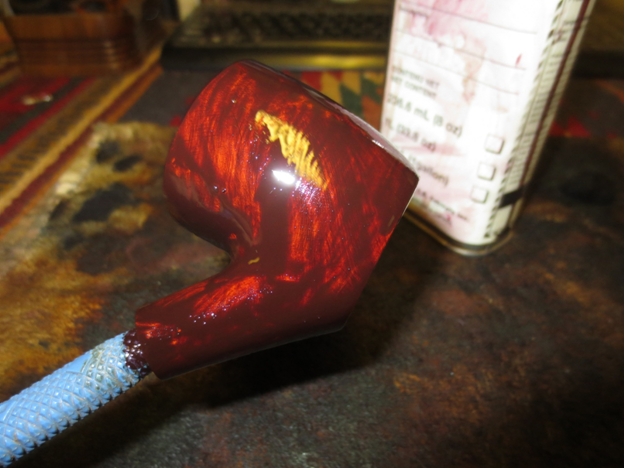
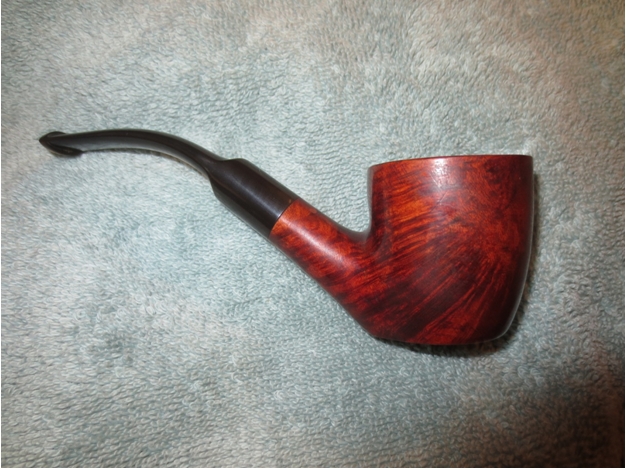
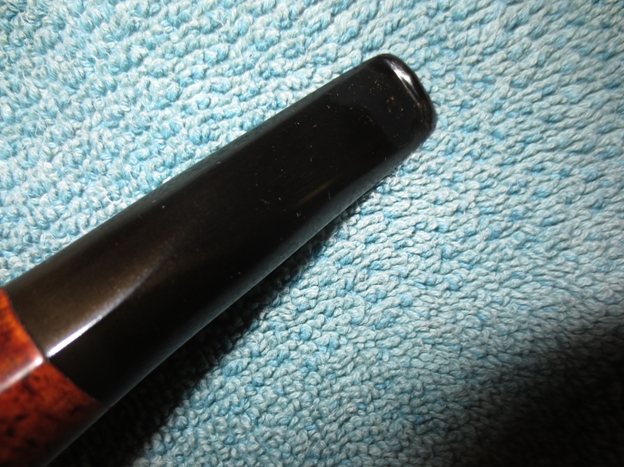
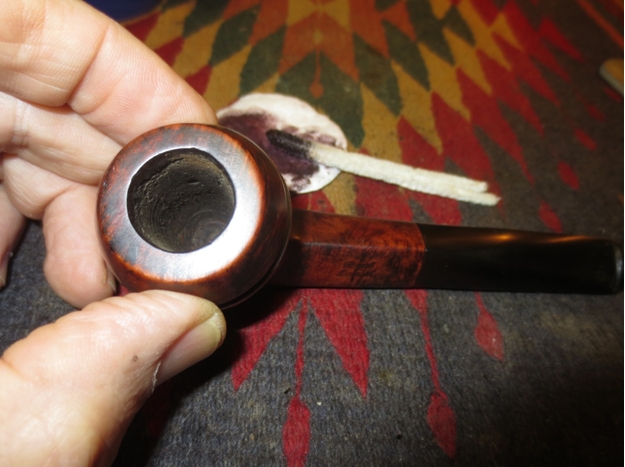
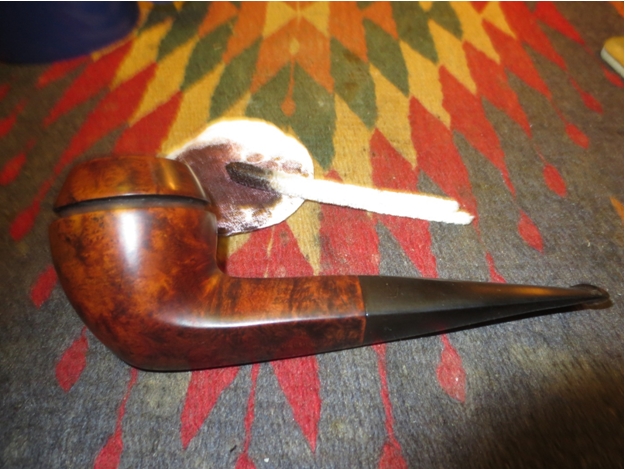
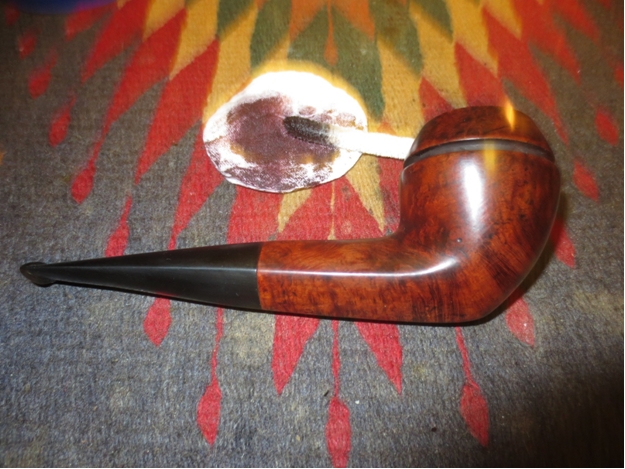
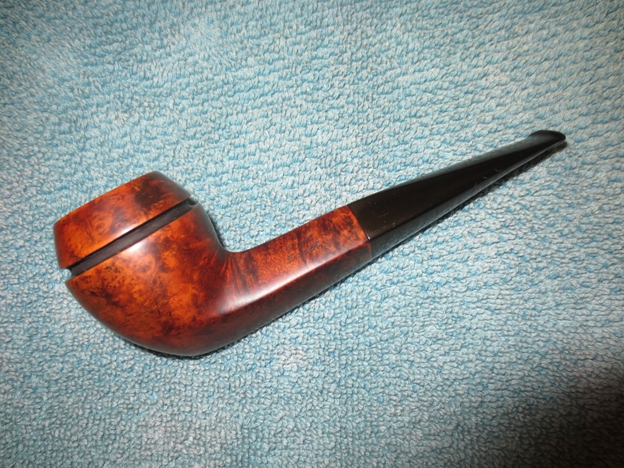
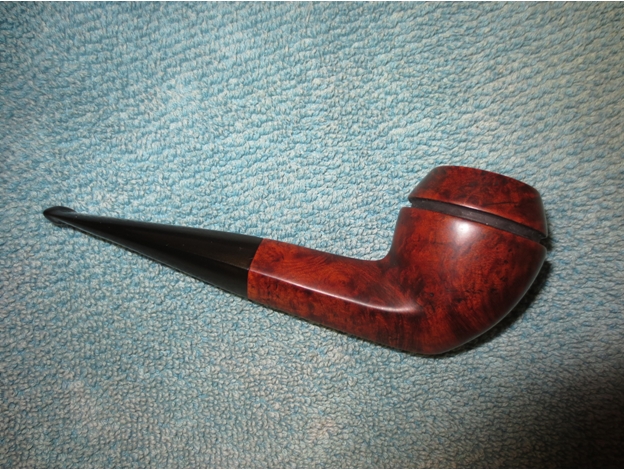
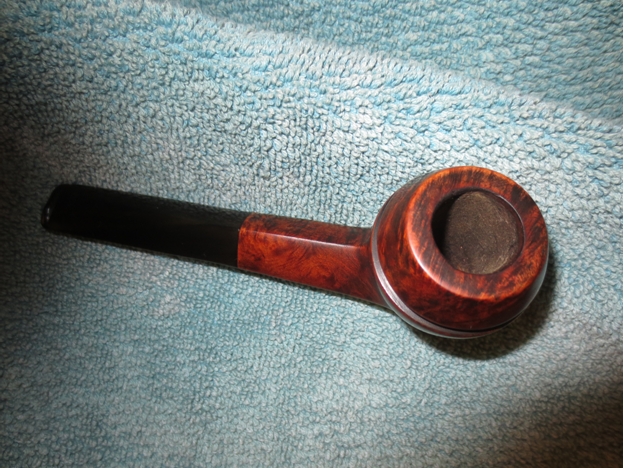
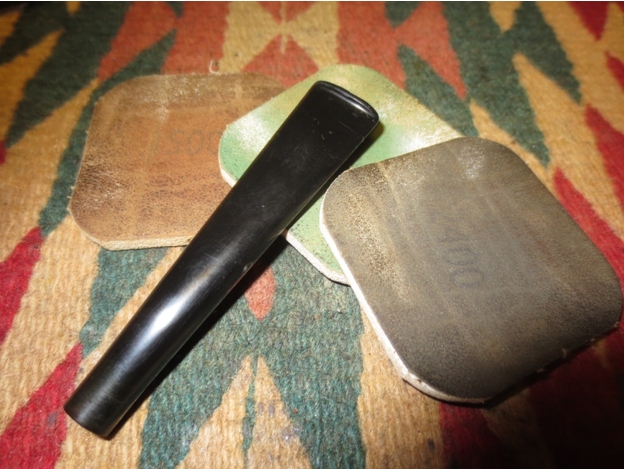
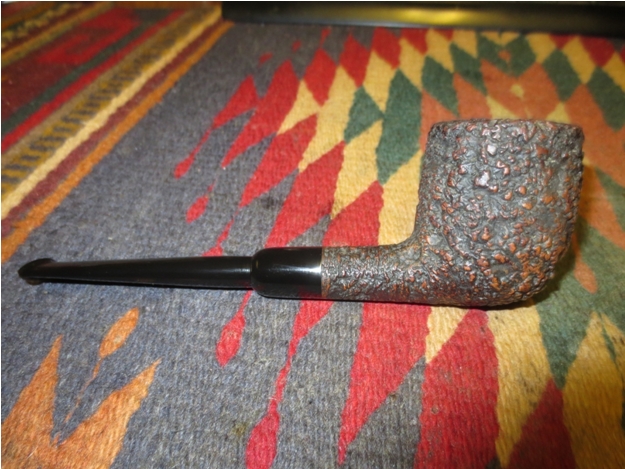
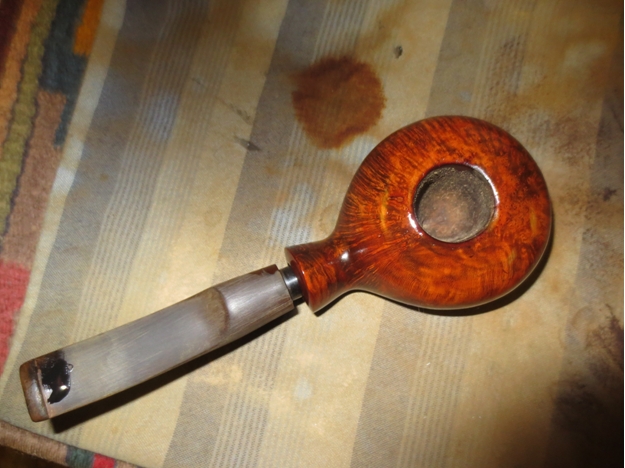
Below is a picture of the bowl and stem back together and ready for some base wax.Troy6 After waxing the pipe late last night I saw some file marks still visible and the spots were not quite as well blended in as I would have liked. It was more visible in person that it is in the pic shown here.Troy7 So I decided to back up and punt. After some sleep, morning caffeine and some Vitamin N from some Haunted Bookshop I was ready to go at it again. I sanded the whole pipe and stem with mineral oil and 1000, 1400 and 2000 grit sandpaper. Then I applied a thin coat of red sharpie as toner and buffed off the excess with a loose pad. It left just a red tint and helped blend the dye with the original finish.Troy8 I lightly waxed the bowl to seal it in. The pipe is about 70-75 percent original finish with some slight blending and tone work. It still has some minor dings around the stampings but I didn’t want to damage them or buff them out any more than I could help. I guess you would call it a Restorfurb.

After several more coats and buffing…Troy9

Troy10

Troy11

Troy12

Troy13

Troy14

Troy15

Troy16

Troy17

Troy18 Sadly the stinger is missing on this one. The Doc Watson pipes have a pretty near stinger. Here is a pic of one that I got off the web.Troy19 I’ll try to find one for it but it may be difficult as these are not that common of a pipe and they were only made for a short time.

Restoring a Horn Stem Terminus Apple – An Early Version of a Reverse Calabash


Blog by Steve Laug

Terminusa I was gifted a beautiful rusticated Terminus apple from Anthony Cook. At least it has the potential to be a beautiful pipe to my eye. I have kept an eye out one of these old system pipes for a long time. They are like an early reverse calabash design. From my reading and observation it is both similar and different from the Keyser Hygienic pipes that I have written about before on the blog. It is similar in that it has an aluminum condensing contraption in the mortise of the shank with a centre tube that extends about ¼ inch beyond the end of the shank and rests in a larger tube in the military mount stem. This is the similarity – tubes, condensing contraption and the military mount stem. The dissimilarity is that at the end of the mortise where the flat base of the condensing unit sits there are two airway entries toward the top on either side of the centre tube. In the bowl there are also two airways at the bottom of the bowl. I found an online photo of the apparatus in the mortise and also how the stem and shank fit together. The Terminus I have is older than the one in the photo but the design is the same.Terminusb Terminus was a St. Claude, Francepipe maker. This is one of the early models, dating from the beginning of the 20thCentury.The patent was for an inner tube in the shank with two draw holes either side and a smaller inner tube in the stem, thus keeping “gunk” to a minimum.A straight apple with cow horn saddle bit.5.25 inches (13.5cms) long. Bowl height 1.75 inches (4.5cms). Looking up the name on Pipephil Logo and Stampings website I found the following information.Terminus4 On the screen capture from the site above you will note the phrase patented anti gunk system by Jean Masson. I clicked on that and was taken to the following information.Terminus4a There are several differences that I can see between this diagram (pictured below) and the pipe I have in hand. The first difference is that the back end of the condensing chamber is flat and does not have an extension or well on the bottom side of the chamber. The entire chamber extends the length of the mortise up to the two airways. The second difference is that the condensing chamber actually continues in the stem and there is a larger draw tube that the smaller tube in the mortise rests in. The third difference is that the stem is military mount and fits into the mortise around the smaller tube in the mortise. The tube seems to extend as far up the airway in the stem as I can see with a flash light.Otherwise the diagram gives an approximate idea of how the system fits together.Terminus5 Anthony sent me several pictures of the Terminus Pipe he was sending to give me a feel for what was coming. Overall it looked to be very workable. There was nothing in the pictures that gave me pause in terms of what it would take to clean it up. It appeared that the finish was basically gone – or it may have been a natural finish it was hard to tell. The horn stem looked interesting. It looked to be quite large and the taper on it was unique to the horn stems that I have worked on and kept in my collection. The tars on the rim did not seem to hide damage to the inner or outer edge of the bowl. The twin draught holes in the bottom of the bowl seemed to be hidden in the cake on the sides of the bowl. The condensation chamber in the mortise had a thick build-up of tars and oils that would be a challenge to get out.Terminus1

Terminus2

Terminus3 When the package arrived I quickly unwrapped it and took out the pipe. I really like the look and feel of it. It was comfortable in the hand and showed a lot of potential under the worn finish and dirt. It is stamped on a smooth rectangle on the left side of the shank with Serie No. 8349 in an arch over Terminus over Pipe. Under that it is stamped Brevete S.G.D.G. in a reverse arch. On the right side of the shank is a matching rectangle that is stamped 3036 over GP.The first four photos below show the pipe as it appeared to me fresh out of the box. The finish was slightly worn but underneath the tight rusticated pattern (almost a blast) was some beautiful ring grain that shone through the rustication. The bowl appeared to be unstained natural briar and would clean up very nicely. The stem was horn and had some tooth chatter on the top and bottom sides and also a deep tooth mark on both. The colour of the horn varied from a cream colour to a dark brown and seemed to move in waves that ran the length of the stem. When polished this stem would be beautiful.Terminus8

Terminus9

Terminus10

Terminus11 The next two photos are close-ups of the top and bottom of the stem and show the tooth chatter and the deep bit mark on both sides.Terminus12

Terminus13 I decided to address the chatter and bite marks on the stem first. I sanded the stem with 220 grit sandpaper to smooth out the tooth chatter and the wear around the button. I also wanted the surface of the stem smooth before I repaired the bite marks. I sanded the stem with a medium and a fine grit sanding sponge to smooth out the surface then wiped it down with a damp cloth to remove the sanding dust. I used a drop of clear super glue to fill the holes on the top and bottom. And set it aside for ½ hour for the glue to cure.Terminus14

Terminus15 When the glue had cured I sanded the two patches with 220 grit sandpaper to blend them into the surface of the stem. The two photos below show the patches after sanding and before I worked over the stem with the medium and fine grit sanding sponge.Terminus16

Terminus17 I sanded the stem with medium and fine grit sanding sponges to further blend in the repairs and smooth out the nicks in the surface of the horn.Terminus18

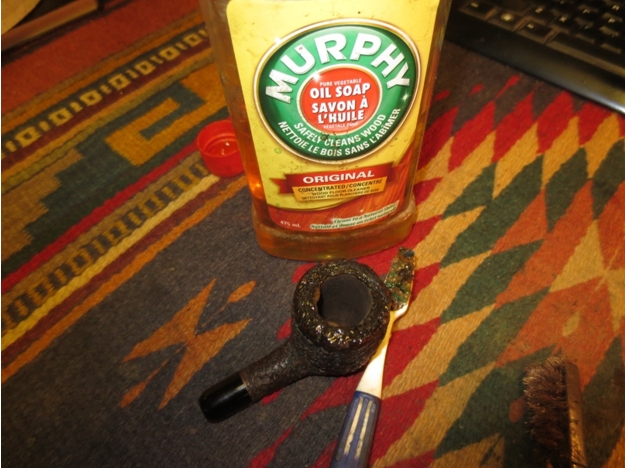
Terminus19 I cleaned out the shank, condensing chamber in the shank and stem and the airway in the stem and two airways in the end of the shank using alcohol, cotton swabs and pipe cleaners. I did not use the retort on this one as I am not clear on how the boiling alcohol would affect the horn stem. It took a lot of soaking and scrubbing before the aluminum chamber in the mortise and the chamber in the stem were clean and shiny once more I reamed the pipe back to bare wood and the used a dental pick to clean out the debris from the twin airways in the bottom of the bowl.Terminus20 I scrubbed the surface of the bowl with Murphy’s Oil Soap and a tooth brush and then rinsed it off with running water. I dried it off then wiped the bowl down with acetone on cotton pads to further clean the dirt and wax from the bowl surface. I scrubbed the aluminum shank band with silver polish and then lightly sanded it with the 1500 grit micromesh sanding pad.Terminus21

Terminus22 I worked on the tars and oils on the rim with saliva on a cotton pad and then used acetone on a cotton pad and was able to remove all of the build up. The grain really stood out on the rim and was a nice contrast to the rusticated pattern of the bowl.Terminus23 With the mortise and airways cleaned out I decided to use the cotton ball and alcohol treatment on the bowl to remove the heavy aromatic tobacco smell that still hung onto the pipe. I stuffed the bowl with cotton balls and used and ear syringe to fill it with isopropyl alcohol. I let it sit all day while I was at work. When I returned in the evening the oils had wicked out of the briar into the cotton. Once I removed the cotton and the bowl dried out the smell was gone and the bowl was fresh.Terminus24 I sanded the stem with micromesh sanding pads – wet sanding with 1500-2400 grit pads and dry sanding with 3200-12,000 grit pads. I rubbed the horn down with Obsidian Oil in between the sanding and while the oil was drying continued to sand with the pads. I find that the oil gives the micromesh the kind of bite on the horn stem that really raises the shine and removes the scratches and marks left behind from age.Terminus25

Terminus26

Terminus27

Terminus28

Terminus29

Terminus30 After polishing with the micromesh I buffed the stem with White Diamond and then gave it several coats of carnauba wax to protect it. I decided to rub down the bowl with some olive oil on a paper towel. I rubbed over the surface of the bowl so that oil went down into the grooves and soaked in. Once the oil had penetrated the briar I wiped it off with a soft cotton cloth and hand buffed it with a shoe brush.Terminus31 This morning I gently buffed the pipe and stem a final time and gave it a light coat of carnauba wax. I finished by buffing it with a soft flannel buff to give it a shine and make the horn material glow. To me there is nothing more beautiful on these old pipes that the warm luminescence of polished horn. In this case the variations in colours from cream to dark brown and everything in between gave the stem an almost three dimensional look. The oil enlivened the old briar without muting the ring grain that shone through the rustication. To me this old pipe just glows with deep inner warmth that will make it a pleasure to smoke. I am looking forward to the interesting smoke that the twin airway in the bowl and the condensing chamber in the pipe and stem will provide. The draught on the pipe is quite open so it should smoke well. My guess is that it will deliver a cool smoke. The horn stem provides a unique feel in the teeth and mouth that nothing quite rivals. The finished pipe is shown below.Terminus32

Terminus33

Terminus34

Terminus35 The final photos give a close up view of the parts of the pipe beginning with the cleaned and polished rim and walking you through the condensation chamber and a photo of how the two tubes intersect when the stem is in place.Terminus36

Terminus37

Terminus38

Terminus39

Breathing New Life into a Mastercraft De Luxe


Blog by Steve Laug

MC1Another one of the gift pipes that caught my eye was one stamped on the left side of the shank Mastercraft De Luxe in the shield like the one on the left. On the right side it is stamped Century Old Mediterranean Briar Israel. I have worked on quite a few Mastercraft pipes and know that the company never made pipes itself but had makers in Italy and other places make the pipes for them. I have written another blog on the lines within the Mastercraft hierarchy and know that the De Luxe was pretty high up the list of their pipes. Here is the link to the hierarchy blog https://rebornpipes.com/2014/06/23/a-mastercraft-pipe-lines-hierarchy/

When I took the pipe to the worktable my first impressions were that it was in pretty decent shape. But as I looked more closely I could see the issues that were there. The bowl had some fills in the surface on the front, left side and the underside of the shank that had shrunk and were pitted pink putty. The right side of the bowl had a deep scratch in the briar at a diagonal to the bowl that cut through the finish. The varnish coat that was on these older MC pipes was flaking around the damaged rim and around the pitted fills. The rim had some charring and darkening that would need to be addressed. When I took out the stem a previous owner had coated the entire tenon with very soft waxy substance that had gone rancid. It was all over the mortise and inside and outside of the tenon. It was thick and not easily removed. The stem was oxidized and the stamping on the side had been put on at an angle which meant that the whitening only was on one side of the MC oval. The aluminum band on the stem that fit against the end of the shank had marks on it like it had been turned with a pair pliers. It was more of a mess than first met the eye.MC2

MC3

MC4

MC5 The next photo is a close-up of the rim to show some of the damage to the outer edge and the beveled top that would need to be addressed. This would be slightly more complicated than just topping the bowl and resurfacing things. I would have to hand sand the bevel and the edges to minimize the charring and the dents on the back outer edge. I would also need to work on the inner edge of the rim to bring it back into round condition.MC6 To facilitate the clean up on the rim I reamed the bowl back with the third cutting head of my PipNet reamer. The bowl is quite large with a diameter of 7/8 inches. I took the cake completely out of the bowl and took it back to bare wood in order to work on the inner edge of the rim.MC7 The next photo shows how the reaming with the cutting head smoothed out the surface of the inner rim considerably and made my work simpler.MC8 I decided to try to whiten the stamping on the stem (for a bit of a break from working on the bowl). I wanted to see if I could gain anything from the lighter stamping on the one side of the oval. I used a liquid white-out to fill the stamping and when it dried rubbed off the excess. It looked good initially but the stamping on the topside and the left leg and top of the M was too shallow to hold much of the whitener.MC9 I scrubbed out some of the mortise and airway in the stem with alcohol, cotton swabs and pipe cleaners to remove the rancid smelling waxy substance (the more I worked with the more it smelled and worked like lard). It took quite a bit of scrubbing to remove the thick coat of this substance. I then used a retort on the bowl and stem and boiled it out three times before I was greeted with clean alcohol. The first boil the alcohol came out black, the second time it came out amber and finally the third time it came out clean. I scrubbed out the airway and the shank a final time with the pipe cleaners and cotton swabs and the shank and stem were finally clean.MC10

MC11

MC12

MC13

MC14

MC15

MC16 With the interior cleaned out it was time to work on the exterior of the bowl. I scrubbed the surface of the bowl with acetone on cotton pads to remove the varnish topcoat and the grime from the finish. Then I picked out the pink putty fills and replaced them with briar dust and super glue. I put a drop of glue in the pit, tamped in dust and then a bubble of glue on top of the patch. The next two photos show the patches after they had dried and before I sanded them.MC17

MC18 I sanded the patches with 220 grit sandpaper and followed that with a medium and fine grit sanding sponge to blend it into the surface and remove the scratches. Strangely the briar dust and super glue patch did not turn black this time as I was counting on. It was almost tan coloured. I would have to use a black permanent marker to etch in lines to match the grain around the repair and then sand them lightly to blend them in. I also sanded the horizontal scratch on the right side of the bowl until it was smooth. When I had finished sanding I scrubbed the bowl another time with acetone on the cotton pads.MC19

MC20

MC21

MC22 I sanded the bevel on the rim and the inner and outer edges of the rim with a folded piece of 220 grit sandpaper and then with the sanding sponges to minimize the damage and bring the bowl back into round. I wiped down the rim with the acetone to clean up the dust.MC23 I decided to stain the pipe with a dark brown aniline stain thinned 3:1 (3 parts stain to 1 part alcohol). I wanted the stain opaque enough to cover the fills and mask them so that they did not stand out but also did not totally hide the bird’s eye and cross cut grain on the shank and bowl. This mixture of stain worked well.MC24

MC25

MC26

MC27

MC28 After I had flamed the stain to set it I rubbed the bowl and shank down with a coarse cotton cloth to blend the finish and hand buff it. I wanted to remove some of the opaqueness on the sides of the bowl and lighten the finish slightly. Once it was done I set the bowl on a cork to dry while I worked on the stem.MC29 I lightly sanded the stem with 220 grit sandpaper to remove the tooth chatter and some of the oxidation. I used the lighter to paint the flame across the surface of the stem to burn off the oxidation and also heat the tooth marks to lift them. I was able to raise all of the tooth marks using this method. The key is to keep the flame moving across the surface and to not stop in any one place too long. Once I had flamed the stem I wiped it down and sanded it with the medium and fine grit sanding sponges. I also sanded the aluminum ring to smooth out the damage on its surface and prepare it for polishing.MC30

MC31 With the oxidation removed I sanded the stem with micromesh sanding pads – wet sanding with 1500-2400 grit pads and dry sanding with 3200-12,000 grit pads. In between each set of three pads I rubbed the stem down with Obsidian Oil before moving on to the next set of pads. When I finished sanding with the 12,000 grit pad I rubbed it down a final time with the oil and when it dried put the stem on the pipe and took it to the buffer.MC32

MC33

MC34 I buffed the pipe with White Diamond and gently buffed around the stamping on the shank and the stem. I gave it multiple coats of carnauba wax and buffed it with a soft flannel buff to raise the shine. The finished pipe is shown in the photos below. The last two photos below show a close-up of the rim to show how the beveling and shaping worked to restore the look of the top of the pipe. It is ready to re-enter a life of usefulness for its next companion. It should be a great smoking pipe for whoever takes on the trust next.MC35

MC36

MC37

MC38

MC39

MC40

Bringing a Herbert Love of Edinburgh The Queensferry Billiard 422 back to life


Blog by Steve Laug

I received a gift box of pipes from a friend on Smokers Forums this week and it contained 23 pipes that presented a variety of challenges for repairs. Looking them over, I found that there were quite a few pipes with stampings that I was unfamiliar with. There were brands and sub-brands that were new to me. I chose to work on one of those I knew nothing about first. I had never heard of the Herbert Love Shop of Edinburgh. The stamping intrigued me. On the left side of the shank it was stamped Herbert Love of Edinburgh and on the right side it was stamped The Queensferry. On the underside of the shank it was stamped horizontally along the shank with the shape number 422. On the left side of the saddle portion of the stem it had a faint HL stamping.

I did my normal search on Pipedia and Pipephil’s site to see if I could find the stampings or the cursive HL on the saddle of the stem. There was nothing to be found. I posted a request for information on Pipe Smoker’s Unlimited Forums specifically asking several of the members there that are from Edinburgh to see if they had any information. I received a response from a collector of English pipes that included the photo and article on another Herbert Love Tobacco Shop in Glasgow. I also received a response from one of the Edinburgh folks, Chris with this information: … it closed down many years ago. It was on Queensferry St. (the road to the old ferry across the Forth before the rail and road bridges were constructed) at the West End, handily situated next to the iconic ‘Old Man’s Pub’, “Mather’s Bar”. At that time there were three pipe shops in Edinburgh (HL’s, one on George 1V Bridge and another in Leith); now only the latter exists… All I remember about the shop itself, apart from it being very old-fashioned, was that they used some interesting old scales for weighing out the loose tobaccos.

Here is the link to the article that I received about the closure of the Glasgow shop. http://www.heraldscotland.com/last-smokers-paradise-closes-1.828258 Sadly I could find no photos or information online regarding the now close Edinburgh shop to include in this post. If anyone reading has information be sure to let us know in the comments section below. Thank you.

When I brought the pipe to the worktable it is in pretty rough shape. The finish was damaged and spotty. The rim had a burn spot on the inner edge and the top at the front of the bowl. This damage also made a dip in the surface of the top of the rim. The bowl was filled with a crumbling cake that was uneven. The stem was oxidized and looked greenish yellow in colour. There were bite marks and tooth chatter on the top and bottom sides of the stem next to the button. The internals of the stem and shank were not too dirty and would clean up quite easily. There was no sweet smell of aromatics or the smoky smell of Latakia in the bowl so ghosting would not be an issue. Love1

Love2 I took close-up photos of the shank on both sides to show the stamping. The left side bore the Herbert Love of Edinburgh and the right side the Queensferry. From my queries I had learned that the Queensferry was actually the street the shop was located on. Herbert Love Tobacconists seemed to be quite widespread in Scotland – I found them in Aberdeen, Glasgow, Aylesbury, and Edinburgh. There were also hints of it being found in other locations as well.Love3

Love4 I scraped some of the oxidation away on the left side of the saddle stem and found that underneath was some faint stamping that read HL in script. I checked the right side and top and bottom for further marks and found none.Love5

Love6

Love7

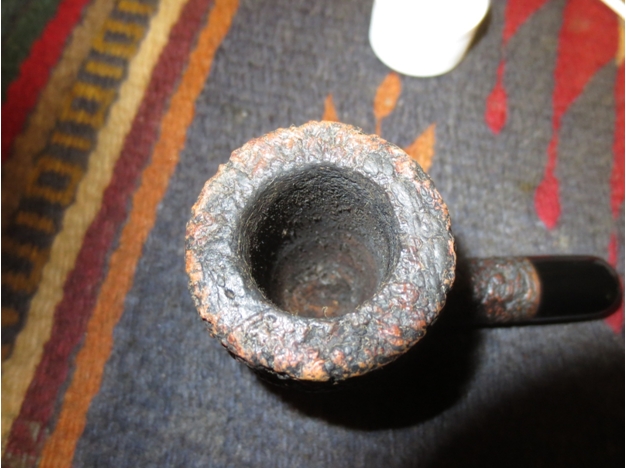
Love8 I took a close up photo of the rim and bowl to show the damage from the burn on the surface. You can see that it is deeper than the surface of the rim and extends from the inner edge to the outer edge of the rim.Love10 I reamed the bowl with a PipNet reamer using the cutting head that fit the bowl properly. I took the cake back to bare wood on all sides of the bowl so that I could address the rim damage on an even and hard surface.Love11 The next photo shows the cleaned up bowl and further shows the damage to the inner edge and top of the rim.Love12 The first step in addressing this kind of rim damage is to top the bowl to even out the dip from the burn. I wanted the top surface to be smooth so that I could then chamfer the inner edge of the rim with a slight bevel to deal with the burned front edge. I used a flat board and a piece of 220 grit sandpaper to top the bowl. I sanded until the top of the rim sat flat against the board. As usual I collected the briar dust in my box for repurposing on fills and repairs.Love13 The next photo shows the top of the bowl after sanding and smoothing out the rim. It really shows the extent of the damage on the rim.Love14 I decided to keep topping the bowl until I had evened out the rim and removed as much of the top damage as possible without dramatically changing the profile of the bowl. The next photo shows the bowl rim after I had finished topping it with the 220 grit sandpaper. It still would be sanded with 400 grit wet dry and fine grit sanding sponges before the surface was finished. While I worked on the bowl the stem was soaking in a bath of OxyClean to soften the oxidation.Love15 With the top of the rim smoothed out I worked on the inner edge with a folded piece of 220 grit sandpaper. I chamfered or beveled the inner edge to minimize the damage and to give the entire inner edge a similar look.Love16 The next photo shows the beveled inner rim and how that process served to minimize the effect of the burn mark.Love17 With the repair to the rim finished I wiped down the bowl with acetone on cotton pads to remove the finish and facilitate matching the restain on the rim with the colour of the rest of the bowl. It also removed the damage and spotty finish that covered the bowl. It appeared to have a thin varnish coat over the stain that came off quite easily with the acetone.Love18

Love19

Love20

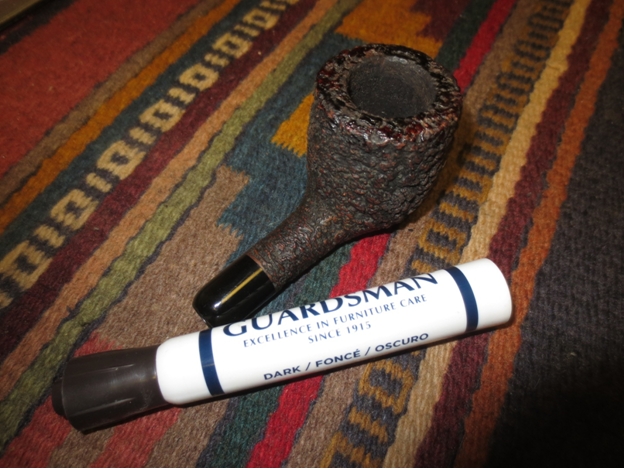
Love21 I used the Guardsman stain touch up pens to stain the rim. I chose the lightest coloured stain to get a proper match for the first coat of stain. When it dried I would then stain the entire pipe with a medium walnut aniline stain. The stain pen was the first step in matching the colours of the bowl.Love22 I cleaned out the shank with pipe cleaners, cotton swabs and isopropyl alcohol to remove the tars and oils in the shank. It was an easy clean up so I decided not to use a retort on this one. It took very few swabs and pipe cleaners before the mortise and airway was clean.Love23 With the bowl at this point in the process I set it aside and took the stem out of the OxyClean bath. It had been soaking for several hours while I had worked on the bowl. The bath had done its magic and when I rubbed it down to dry it much of the surface oxidation came off and the deeper oxidation would easily be removed with a light sanding.Love24 I put the dried stem back on the bowl so that I could finish staining the bowl. I used a medium walnut aniline stain, applied it and flamed it. I lightly buffed the bowl with White Diamond to even out the stain coat. I took some photos to show the progress. Note in the first photo the HL cursive stamp that is on the surface of the stem.Love25

Love26

Love27

Love28 I decided to use the Bic lighter trick that I have written about in other articles on the blog and painted the stem with the flame of the lighter to burn off more of the oxidation. It also helped to raise the tooth dents on the top and bottom of the stem next to the button.Love29 I put the plastic washer on the tenon between the stem and shank so that I could sand the stem and not damage the shoulders of either shank or stem. I lightly sanded the stem with 220 grit sandpaper and then with a medium and a fine grit sanding sponge to remove the remaining oxidation and tooth chatter.Love30

Love31

Love32 I sanded the stem with my usual micromesh sanding pads – wet sanding with 1500-2400 grit pads and dry sanding with 3200-12,000 grit pads. I rubbed the stem down with Obsidian Oil between each set of three pads. When I finished sanding with the 12,000 grit pad I rubbed it down one last time with the oil.Love33

Love34

Love35 I buffed the pipe with White Diamond and then gave it multiple coats of carnauba wax and buffed it with a soft flannel buffing pad to raise the shine. The stamping on the stem was very faint to begin with and when I removed the oxidation it is still present but is not deep enough to repaint.Love36

Love37

Love38

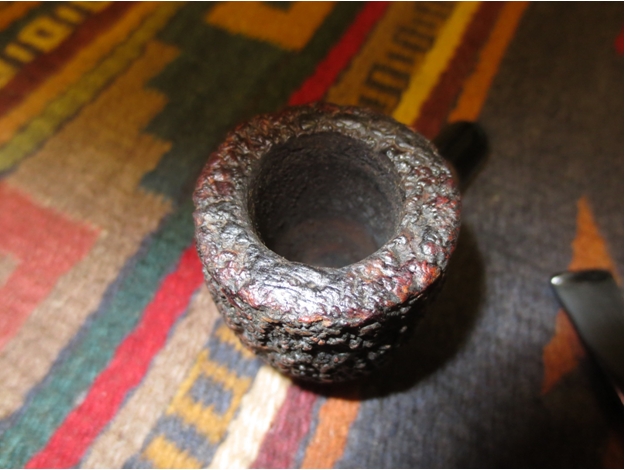
Love39 The last three photos give a closer picture of the top of the pipe – showing the rim edges and surface more closely. In comparison with where I started with this pipe the new look is dramatically better. The burn mark is much less visible and the grain on the rim looks sharp. The outer and inner edge are clean and crisp.Love40

Love41

Turbulence: Rusticating a Medico Jet Stream


Blog by Anthony Cook

I recently completed work on another pipe in the batch that was sent to me by an online friend. This time, it was a Medico Jet Stream. These were produced by Medico from sometime around 1965 until 1971. There were a couple of shapes in the line and each was quite a departure from the classic forms. This one is by far my favorite. I think it has a nice, streamlined flow to it. The pipe is right at six inches long with a small bowl that is barely more than inch tall. Mechanically it was sound but it was obvious that it had let itself go cosmetically in its 44 years (at minimum) of existence.

There were no deep dents or scratches in the stummel, but it did have some light charring and a few nicks around the rim. It was coated with a thick layer of deeply tinted lacquer that had been worn to bare wood in spots. It looked like there might be some interesting grain under there, but the fills… Oh, Jeeze! The fills!!! It was so riddled with them that it looked like it had the pox. The nylon stem was in predictable shape for a pipe of this age with jagged chatter and tooth dents on both sides. You can see the condition of the pipe when it arrived in the following photos.Jet1

Jet2

Jet3

Jet4 I began by cleaning the internals of the pipe. The cake in the bowl was light and reamed out easily enough. I think removing the old cake really helps to eliminate any ghosting issues that a pipe may have. So, I took it down to bare wood. I made a surprising and disappointing discovery at that point. The fills did not stop on the outside of the bowl. There were at least two fills in the inside of the chamber. Oh, Medico, say it ain’t so!

I took the opportunity to sand out a few of the nicks on the inner rim while I was working in the area, and then moved on to the rest of the pipe. There turned out to be quite a bit of residue inside the shank and stem. I took care of that by running a variety of alcohol soaked pipe cleaners, cotton swabs, and shank brushes through until they came out clean.Jet5 When I was satisfied that the internals were clean, I gave the stummel an acetone wipe-down to get rid of the spotty lacquer coat, and then dropped it into an alcohol bath to remove the remaining of the finish. Usually, there’s a satisfying Ker-Plink! when I do this and the stummel goes right to the bottom. Not this time. This one actually floated belly-up like a dead fish. I had to put tweezers in to hold it down to make sure the entire thing was submerged. I’m guessing that it was the fault of the fills, but it’s a good thing that we weren’t in Salem, Massachusetts. If we were, I would have had to get out the pitchfork and call the Witch Finder General.Jet6 While the stummel enjoyed a pleasant soak, I went to work on the nylon stem. The first step was to clean the surface with citrus cleaner and cubes cut from a Magic Eraser. There really wasn’t very much filth to remove and it cleaned up quickly. The photo below shows the stem after the surface cleaning.Jet7 Next, I set out to remove the dents and chatter around the button. I began by roughing up the area around the dent with the point of needle file to give the patch a better surface to cling to, and then filled the dents with a drop of black CA glue (seen in the first picture below). When the glue had dried, I sanded it back with 220-grit paper and refilled the area with glue. I did this on both sides of the stem until the dents were filled and level with the rest of the stem surface. I then sanded out the high spots of the chatter with 320-grit paper (seen in the second picture below) and followed that with 400-grit, then 600-grit to give the area a completely smooth surface.Jet8

Jet9 With the dents filled and the chatter removed, I lightly sanded the entire stem with 1200-grit paper to even out the surface. Then, I used the full complement of micromesh sanding pads 1500-12,000 to polish the stem. You can see the results of the finished stem in the photo below.Jet10 The stem work was all wrapped up. So, I pulled the stummel out of the alcohol bath to see what I had to work with. The bath had done an excellent job of removing the old finish and exposing the briar wood. Unfortunately, it has also done an excellent job of exposing all of the fills. I counted fifteen of them in all and that’s not counting the ones in the chamber.Jet11 After using a pick set to remove all of the pink fill material on the outside stummel surface, it looked like a block of Swiss cheese. At that point, I had to admit that I didn’t see any way that I could fill all of those pits and hope to have them blend them into the final pipe without the benefit of the tinted lacquer to cover them.Jet12 Rustication seemed like my best way forward, but I really didn’t want to go that way. I felt that it would really break up the great flow of the shape and stop the movement. I know when I’m whipped, though, and with all of the pits it appeared to be partially rusticated already.

I decided to leave the rim, the shank end, and the area around the stamping smooth. That meant that I would have at least one pit on the rim to fill. I packed it with briar dust that I have gathered from work on other pipes, and then dripped a small dab of clear CA glue into the dust. When the glue was dry, I sanded it level with the surface. With that out of the way, I prepared to rusticate the surface.

I have a variety of tools that I use to carve into the briar. Some of them are handmade and others are off-the-shelf tools, but my favorite is an old Craftsman T-handle tap wrench. It has a chuck on the end that will accommodate any ¼”–½” bit. It makes it very easy to switch out any of the several bits of various sizes and shapes that I have modified for carving different textures. The chuck provides a tight grip without any of the “wobble” that I’ve encountered when using a bit in a standard driver.

For this project, I began by using modified Phillips bits similar to what Steve has previously detailed here. First, I taped off the end of the shank with painter’s tape to make sure that I didn’t carve into that area. Then, I used a #2 bit to carve around the stummel, twisting and turning as I went. I wanted a deep, craggy texture to give some good contrast with the smooth areas. I switched to a smaller #1 bit for a little more control while I edged up to the smooth areas. The photo below shows the tool and the stummel after I had just started carving.Jet13 After carving with the bits, I used a wire brush to remove any loose material in the texture. Then, I had the idea that I might be able to restore some of the movement in the shape by carving a few deep “waves” into the rustication. I used a Sharpie pen to sketch some curved lines onto the texture to test out my idea and to give me something to follow should I choose to go that way. I liked it well enough and decided to go ahead. I never pass up an opportunity to break out my trusty Dremel (it really is an addictive tool). So, I fitted it with a #107 engraving bit and etched in the lines that you see in the following photo.Jet14 I then used a smaller #108 engraving bit to etch a few divergent “cracks” off of the curved lines. This was followed up with some more work with hand carving tools to give it a more natural, less machined, look. I went over it again with the wire brush, and then used 400-grit paper to slightly smooth the peaks for a better tactile feel. You can see the final rustication texture in the photo below (the dark spots are the remains of my Sharpie lines).Jet15 Then it was time to stain. I used isopropyl alcohol to thin some black Fiebing’s leather dye 3 to 1, applied it to rusticated area with a cotton swab, and flamed it. Then, I heated the wood with a heat gun until it was very warm to the touch and used a 20/0 liner brush to paint the dye across the grain in the smooth areas.Jet16 After allowing the stain to set, I lightly sanded the entire stummel with 600-grit paper. This included sanding the surface of the rusticated areas to give it some highlights to accent the darker crevices. I then gave the entire stummel two coats of dark brown stain thinned with alcohol, and flamed it between each one.Jet17 The stummel was hand-buffed with a cotton cloth. The smooth areas were then lightly sanded with 1200-grit. I also lightly and strategically sanded a few of peaks in the rustication around the smooth areas to allow one texture to fade into the other a bit. I then used micromesh pads 1500-2400 in the same manner.

Another couple of stain coats were then applied to the stummel using the same mix and technique that I had used earlier. This time, it was an ox blood stain to add some brightness. Then, I continued with the remaining grits of the micromesh pads. When done with the pads, I gave the stummel a couple of coats of Halcyon wax to wrap up the work.

I think the rustication worked out fairly well and it has a great feel in the hand. You can judge for yourself from the photos of the completed pipe below. I’ll always wonder what could have been if I had left it smooth, though. I guess I’m on the hunt for another Jet Stream so that I can find out!Jet18

Jet19

Jet20

Jet21

Jet22

Jet23

Repairing a Bite Through on a Vulcanite Stem with Black Super Glue


Blog by Steve Laug

I recently posted about an old BBB 701 Rhodesian that I restored. It was quite a mess and needed a lot of attention to both the bowl and the stem. In the process I took some photos of the stem repair I did and thought I would write a blog on the process. The first three photos below show the state of the stem when I started. The top and bottom sides of the stem at the button had significant tooth chatter. The top of the stem had the bite through at the button and a much worn edge on the button. The underside of the stem had deep bit marks next to the button and small chatter up the stem about 1 inch. There was oxidation on the stem as well. In the photo there appears to be a crack from the bite through hole into the button and to the edge. That mark is more tooth marks but the stem material is not cracked in that way. The red arrow in the first two photos highlights the apparent crack. In the third photo the arrow points to the tooth marks on the surface of the stem.Stem1

Stem2

Stem3 The first step in preparing to patch the hole in the stem is to clean up the surface and remove any loose or damaged portions of the stem. I use a dental pick to pick at the edges of the hole and the cracks and broken spots on the stem. I also probe other potential thin spots on the top and the bottom of the stem. I particularly probed the tooth marks on the underside to see how thin the vulcanite was in those areas. Once I had picked away the damage I wiped down the areas with a cotton pad and alcohol. The surface needs to be free of wax or dirt before the patch is applied because these will cause the patch to not bind to the surface of the stem.

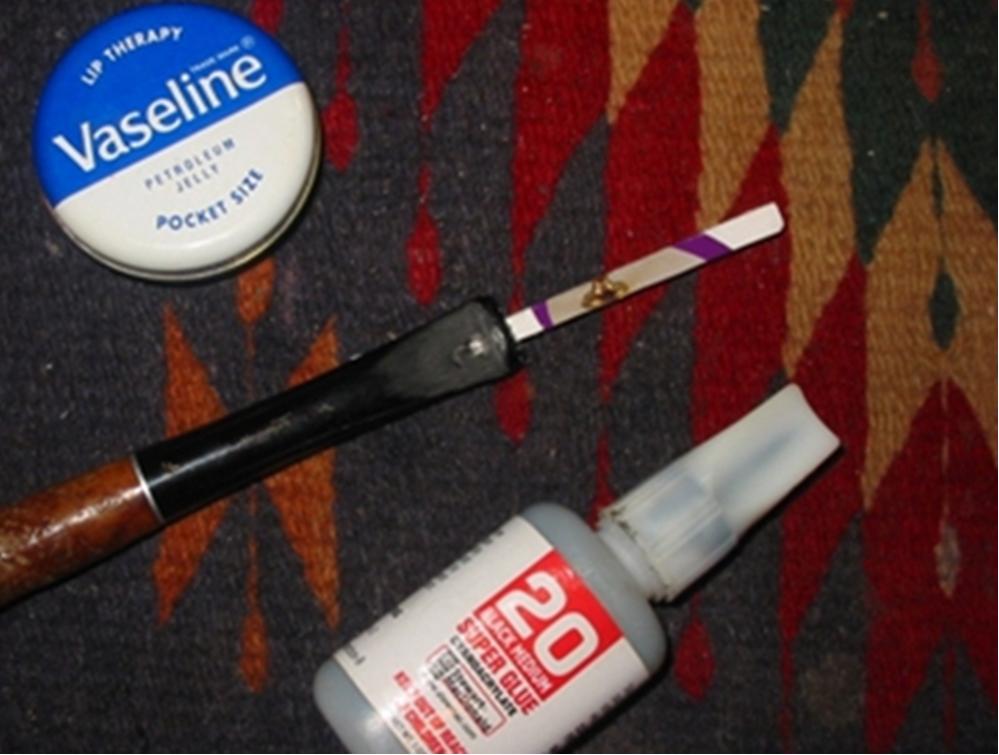
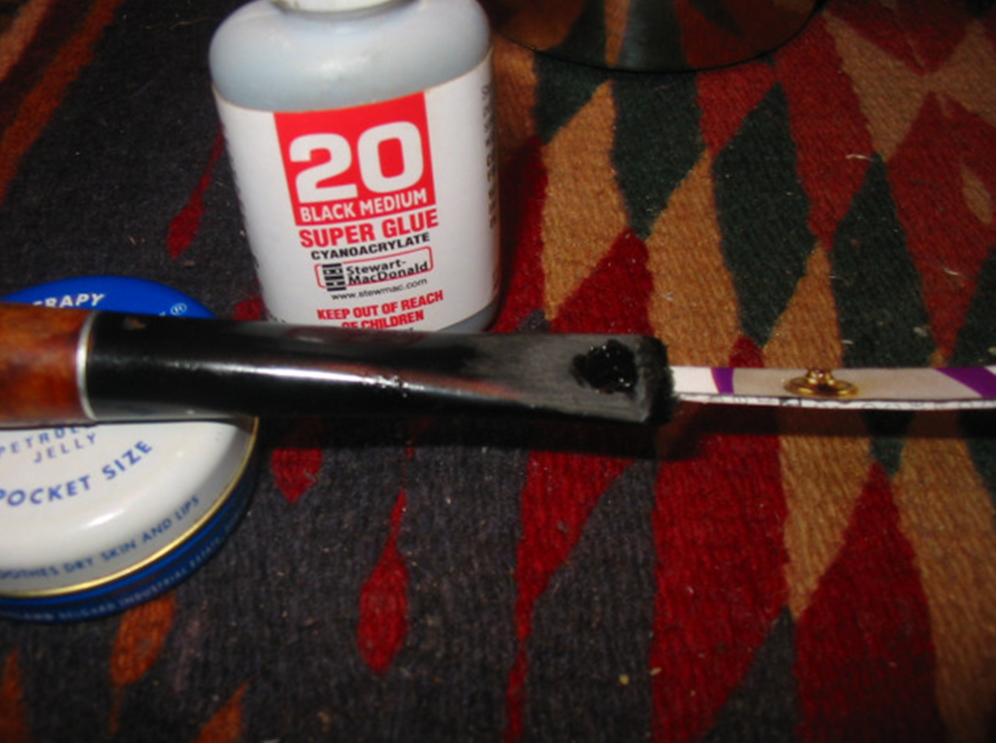
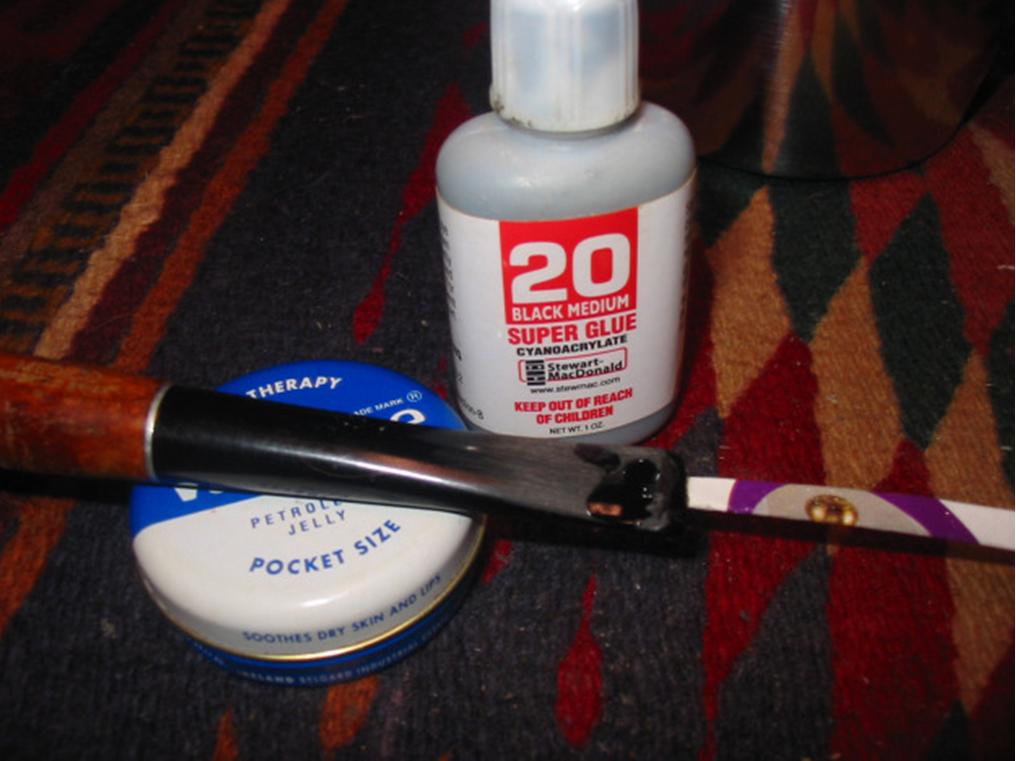
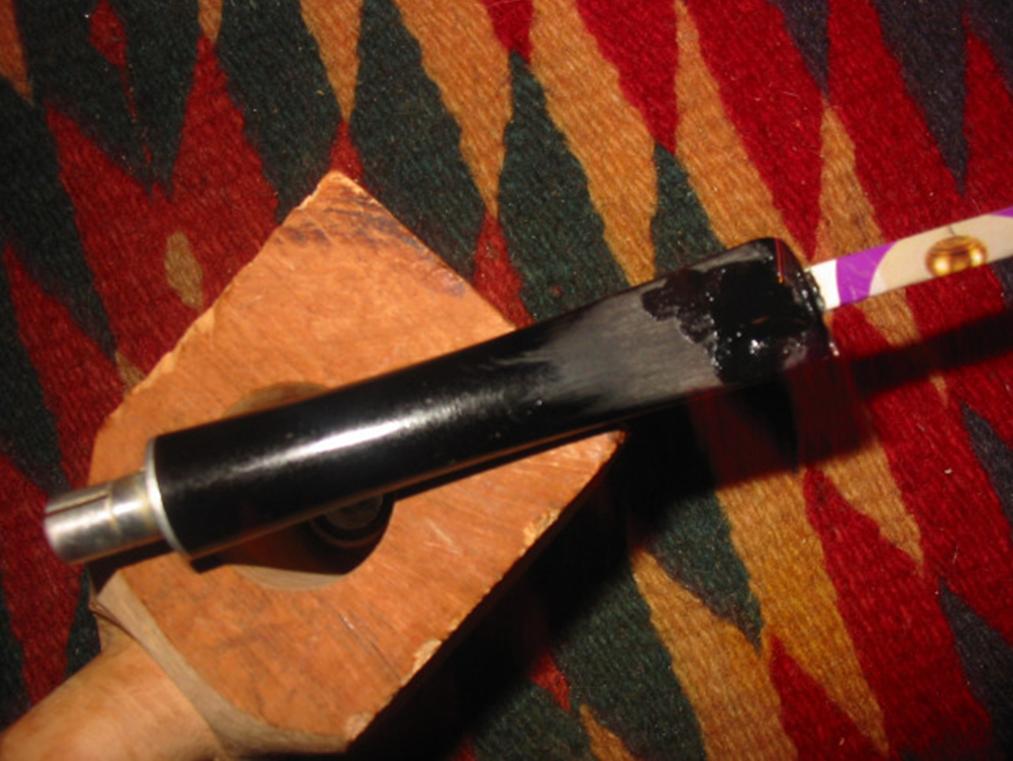
I have a nail file that I “stole” from my daughters that is a perfect fit in the slot of most pipe stems that I work on. It is tapered and pointed so that it fits deep into the airway underneath the hole in the stem. I want a hard surface under the patch for the glue to puddle against. In order to not glue the file into the stem permanently I apply a thick coat of Vaseline petroleum jelly to the end of the file before I insert it. I only put enough of the jelly on the file that it does not squeeze out of the hole and soil the repair area. This took time to get the hang of. Too much jelly makes a mess of the repair area and too little makes the super glued file the next problem you will need to address in repairing the stem. It takes practice to get it just right – don’t get frustrated and remember too much jelly is better than too little!

With the file inserted in the airway it is time to start the patch. I drip black super glue around the edges of the hole first to solidify the broken edges and provide a live edge to build on when I fill the hole. I let that first coat of glue dry hard to touch before adding the next layer of glue. I have used an accelerator in the past to quick dry the patch. This time I decided to do it the long way and let the patch cure between coats. In the photo below you can see the ring around the bubble of the patch that is that first layer of the repair. The arrow in the picture points to the cured edge of the repair that surrounds the bubble in the centre. I apply several more coats to the edge to build it out toward the middle. The final coat I purposely overfill because as the glue cures it shrinks. It is a bit more work to sand out the excess material but in the end it makes for a thicker and stronger patch. I also filled the tooth marks on the underside of the stem next to the button with the superglue. These took two coats to build it up enough to reshape the button with files and sandpaper. I set the stem aside overnight to give the glue patch time to cure and harden.Stem4 The next morning, when the glue had hardened I sanded the patch with a folded piece of 180 grit sandpaper followed by more sanding with 220 grit sandpaper. I work to blend the edges of the repair into the surface of the stem and feather out the surface of the repair to match the surface of the surrounding stem material. In the photo below the arrow points to the patch. It is a slightly different colour of black to the rest of the stem at this point in the process. More sanding and working on the patch will change that.Stem5 On the underside of the stem I sanded the patches until they were smooth as well. On this particular repair there were two small air bubbles that showed up when I sanded the patch. They are shown by the arrows. I refilled these small holes with a drop of black super glue and let it cure until hard then resanded the patched areas.Stem6 When repairing the surface of the stem I always check the profile of the stem to make sure that I am not creating bulges in the surface of the stem. I want to maintain the flow and lines of the stem and not change the profile. When I sand the repairs I repeatedly look at the profile and often take pictures to make sure the flow and lines are smooth. The photo below shows the smooth profile of the stem after the repairs and initial sanding.Stem7 I sanded the stem with 400 grit wet dry sandpaper with a spot of water on the stem. I sanded to remove the oxidation and to blend the patch into the surface of the stem on both the top and the bottom sides. As can be seen in the photos below the patch on the top side is smooth and blended into the stem. It is still a slightly different black colour but more sanding will remedy that. The patch on the underside is well blended. More work needed to be done with the two air bubble repairs to blend them further.Stem8

Stem9 I sanded the stem further with a medium and a fine grit sanding sponge. 3M makes this product and it is very flexible. I find that it allows me to follow the curves of the stem and the sharp edges of the button with little effort. The top and bottom of the stem are shown after sanding in the next two photos. The patches are now little more than small spots on the stem that will further disappear after sanding with micromesh sanding pads.Stem10

Stem11 I wet sanded the stem with 1500-2400 grit micromesh pads to smooth out the repair and further blend the patches. In the photo below you can see that the patch has all but disappeared on the top side of the stem. The one on the underside looks similar at this point in the process.Stem12 I dry sanded the stem with 3200-12,000 grit pads. The surface of the stem began to shine and have a rich glow in the surface. Each successive grit of pad deepened the shine and the richness of the black stem.Stem13

Stem14 I buffed the stem with White Diamond and gave it multiple coats of carnauba wax. I buffed it with a soft flannel buff to raise the shine. The final two photos show the top and underside of the stem the shine is rich enough that the flash is shown reflected in the surface of the stem. The hole is solidly repaired and the tooth marks on the underside of the stem no longer show. The edge of the button has been sharpened as well to distinguish between the stem surface and the button. The finished stem looks as if it was never damaged though under a bright light the spots are slightly visible if you know what you are looking for. The stem is now ready to be put into service. The proof of the durability of the patch will be seen over time as the pipe is smoked and used. On other stem repairs like this I have never had a problem with durability and I am hoping for the same with this stem.Stem15

Stem16

New Life for an Old and Tired BBB Own Make 701 Rhodesian


Blog by Steve Laug

I saw a foursome on Ebay and the one pipe in the lot that caught my eye was of course this older Rhodesian. At first glance I figured it was a GBD 9348. Then I looked more closely at the photos and could see that it was not a GBD at all. It was clearly a BBB with the brass inset on the top of the stem. I bid and won the lot. While the other three pipes are probably fine in terms of additions to the pipes for sale this one was the one I wanted for my collection. It had two things going for it that caught me – it was Rhodesian and it was a BBB. Both fit the one of the focuses of my collection.Foursome2 Needless to say but the one in the roughest shape was the BBB. In the photo below you can see the hole in the stem and the roughening around the inner edge of the rim on the left side of the bowl. It was going to take a bit of work to bring this one back from the brink and keep the original stem.Foursome7

Foursome8 When the package arrived I took out the BBB and unwrapped it from the bubble wrap. The stem was stuck in the shank and the damage to the bowl was quite extensive. The stamping on the left side of the shank read BBB in a Diamond and under that was Own Make. On the right side it read London England in a straight line over the shape number 701. On the right side of the bowl and on several spots on the shank it had dark stains from sitting in water or juice. It had discoloured the briar and damaged the finish. There were also some dents and dings under the dark discolouration from the bowl having been dropped on concrete or something that left the side of the bowl dimpled with dents and marks. The stem was quite gnawed on – the hole on the top was solid around the edges and the button was chewed and worn on the top side. The underside of the stem had bite marks and was worn from clenching.BBB1

BBB2

BBB3

BBB4 I put the pipe in the freezer for 30 minutes and when I took it out I was able to easily remove the stem. I cleaned the edges around the hole in the top of the stem with alcohol and a dental pick to remove the buildup and the detritus that was caught in the edges. The good thing was the edges were solid and not crumbling.BBB5 I put Vaseline on a nail file that I have here and use for more wide repairs on the stem and inserted it into the slot. It provided a solid base for me to drip superglue onto the hole. I built up the edges and worked my way to the centre of the stem bite. You will note that I grossly over filled the hole with the superglue. I have been having trouble with the accelerant that I am using. It tends to dry out the surface of the patch and the centre never sets correctly. I decided to set the stem aside overnight and let the patch cure overnight.BBB6 I dropped the badly stained bowl into my alcohol bath and called it a night. The bowl soaked for over 12 hours and the stem cured while I slept soundly.BBB7 In the morning I took a look at the stem and saw that it was pretty hard. I removed the bowl from the alcohol bath and dried it off. You can see the dark stains on the right side of the bowl and on other spots on the bowl. It was almost black in colour and the alcohol had not lightened it at all.BBB8

BBB9

BBB10 The top view of the bowl below shows the extent of the damage to the bowl. It was out of round and the gouge out of the left inner edge was rough.BBB11 I wiped the bowl down with acetone on cotton pads to remove the finish and see if it would lighten the stains on the bowl. While it indeed lightened them it did not remove them. It was encouraging to see the grain through the stains however, so I knew that sanding the damaged areas would remove much of the darkening.BBB12

BBB13

BBB14

BBB15 I lightly topped the bowl on my topping board to remove some of the damage to the rim surface.BBB16

BBB17 I reamed the bowl with a PipNet reamer and took the cake back to bare wood. I wanted to remove as much as possible and see if I could also clean up the inner edge of the rim.BBB18 I used a retort as has become a habit lately and boiled alcohol through the stem and shank to remove the tars and build up. After the retort I cleaned out the shank and the stem with pipe cleaners, cotton swabs and isopropyl alcohol.

I worked on the stem using needle files to recut the button and clean up the sharp edge. I sanded with 180 grit sandpaper to smooth out the repair to the topside and underside of the stem. I followed that by sanding with 220 grit sandpaper to smooth out some of the scratches left behind by the lower grit paper.BBB19

BBB20

BBB21 While I had the 220 grit sandpaper out I sanded the bowl as well to remove the stains on the sides of the bowl and the cap. I also used a folded piece of sandpaper to work on the inner edge of the rim and give it a slight bevel to minimize the damage there.BBB22 I wiped the bowl down with alcohol and then sanded it with a medium grit and a fine grit sanding sponge followed by 400 grit wet dry sandpaper. In the photos below you can see how it worked to remove the majority of the stain on the bowl. I very carefully sanded around the stamping on the right shank as I did not want to damage the stamping.BBB23

BBB24

BBB25

BBB26 I used a hot knife and wet cloth to steam out the dents on the bowl sides, cap and rim. When I had lifted them as much as possible I sanded the bowl further with the 400 grit wet dry paper and also with the fine grit sanding sponge. I wanted to clean up the damaged areas on the sides and top as well as the stem repairs.BBB27

BBB28

BBB29

BBB30 After the steaming and sanding I spent some more time on the inner edge of the rim. I wanted the bevel to smooth out the damaged side of the rim and also wanted to bring the bowl back into round. It took quite a bit of time to handwork the rim damage but I am happy with the end result. When finished I rubbed the bowl down with a soft paper towel and olive oil. I rubbed the oil into the bowl, paying special attention to the areas that were previously damaged with the stain and the dents. Again, I set the bowl aside for the night to let the oil soak in and be absorbed into the briar.BBB31

BBB32

BBB33

BBB34 The next morning I worked on the stem with fine grit sanding sponges and then with micromesh sanding pads. I wet sanded with 1500-2400 grit pads and dry sanded with 3200-12,000 grit pads. The higher grit pads allowed me to blend in the repair as much as possible and though still visible it looks very good. The patch is hard and solid with no give when pressed on.BBB35

BBB36

BBB37 I rubbed the stem down with Obsidian Oil and when it had dried I buffed it on the wheel with White Diamond. I gave the bowl and stem multiple coats of carnauba wax and then finished by buffing it with a soft flannel buffing pad to raise the shine. The finished pipe is shown below. It is ready for loading up and enjoying a good smoke. It should serve me well for a long time.BBB38

BBB39

BBB40

BBB41

BBB42

BBB43

Refreshing an Older Heritage Antique #13 Dublin Pipe


Blog by Steve Laug

The Heritage brand was on I had no familiarity with until Andrew wrote up this blog for us https://rebornpipes.com/2014/12/23/refurbishing-a-heritage-heirloom/ He gave background, history, line information and the classic brochure from the company. I want to give a brief summary of what he found in the next two short paragraphs to set the stage for the one that I found once he highlighted the brand for me.

Heritage pipes were Kaywoodie’s answer to Dunhill. According to one of their brochures, Heritage pipes were made from “briar burls seasoned and cured for up to 8 months,” with only “one briar bowl in over 300 selected to bear the Heritage name.” “Heritage stems are custom fitted with the finest hand finished Para Rubber stems. Mouthpieces are wafer thin and concave.”

The Heritage line began in the early 1960’s, with the trademark issued in 1964. The line was started at the request of Stephen Ogdon, (who worked for Kaywoodie in 1962). Mr. Ogdon had previous experience working for Dunhill, either running the New York store or working for Dunhill North America. Mr. Ogden was made President of Heritage Pipes, Inc., Kaywoodie Tobacco Co.,Inc. and Kaywoodie Products Inc. as well as a Vice President of S.M. Frank & Co. Heritage Pipes were produced from 1964 until 1970 (Source Kaywoodie.myfreeforum.org).

I found one online on Ebay that was stamped Heritage Antique 13. I scanned the brochure that Andrew provided and found this regarding the Antique Line: The Heritage Antique line is characterized by “Rustic Grain stands out in rugged relief.” “This pipe is so bold-looking, yet so light and smooth-smoking. A special sandblasting process exposes a greater surface area on the bowl, giving a cooler, more satisfying smoke. Centuries-old Heritage Antique is strikingly masculine in appearance.”The number 13 is the shape number for the Dublin shape. It can be seen in the first coloumn second pipe down on the left side of the brochure page below.heritage4_zpsdc6295ef The seller of the pipe I picked up on EBay included some basic information on the pipe. The said the stamping was Heritage Antique with a 13 on the bottom of the shank. The stem has an inlaid double white diamond on the left side. It is out of a Kansas City estate. It measures:
5-1/2 inches Long
1-3/4 Inches High Bowl
1-1/4 inches Bowl Width
3/4 inch of a Bowl Bore
3 inch long stem

The next eight photos were included with the EBay advert and give a pretty good idea of the type of blast on the briar as well as a good picture of the state of the stem. The pictures show the colour of the pipe in a more red hue than it actually appeared when it arrived. In reality the stain is a brown tone similar to that of the Dunhill Shell Briar.Heritage1

Heritage2

Heritage3

Heritage4

Heritage5

Heritage6

Heritage7

Heritage8 When the pipe arrived in Canada I was very pleased when I opened the box. The briar was in good but dirty condition and it appeared that the finish was in great shape under the grime and tars. The blast was amazing and craggy – very much like that on my older Shell Briars. The rim had some buildup on it that was flaking off but the bowl was in round and there was no damage to the edges of the rim.Heritage9

Heritage10

Heritage11

Heritage12 The stem was thin and quite clean. It was oxidized and had some waxy substance on the top side. There were two tooth marks – almost pin prick marks, on the underside of the stem visible in the first photo below. The second photo shows the waxy buildup on the surface of the stem and the oxidation.Heritage13

Heritage14 The rim of the pipe, shown in the photo below had a thick buildup of tars that were flaking off the surface of the rim. I picked at it with a dental pick and could see that the sandblast surface was undamaged underneath. The bowl was in need of a reaming to smooth out the uneven cake on the sides and bottom of the bowl.Heritage15 The stem was frozen in the shank so a short time in the freezer and the stem was easily removed from the shank. The step down tenon was in great shape and showed no damage and the tenon itself was not tarry.Heritage16 I reamed the bowl with a PipNet Reamer beginning with the first cutting head and finishing with the size 2 cutting head. I reamed it back to bare wood to restart the cake build up.Heritage17

Heritage18 I picked the flaky buildup on the rim with a dental pick and the scrubbed it with a soft bristle brass tire brush to remove all the grit and take it back to the surface of the rim. I have used this method over years as the bristles remove the tars without damaging the sandblasted surface.Heritage19 Once I had the surface brushed clean with the wire brush I scrubbed the entire bowl and shank with undiluted Murphy’s Oil Soap and a tooth brush to get the grime out of the crevices of the blast and remove the oils from the previous owners hands. Once I had scrubbed it I put my thumb in the bowl and rinsed it off with cool water and dried with a cotton cloth.Heritage20 I put the stem back in place and set up the retort. I filled the test tube half full of 99% isopropyl alcohol and heated the alcohol over a tea candle. The alcohol boiled through the pipe and cleaned out the tars and oils in the stem and shank. The alcohol also rinsed the inside of the bowl which was plugged with a cotton ball.Heritage21

Heritage22

Heritage23

Heritage24 With the inside of the pipe cleaned and the exterior of the briar scrubbed it was time to address the oxidation and the marks on the stem. I put a plastic washer between the stem and shank so that I could sand the stem right up to the shank without worrying about rounding the shoulders of the stem. I sanded it lightly with 220 grit sandpaper to remove the waxy buildup on the stem (turns out it was a varnish) and also loosen the surface oxidation. I followed that by sanding with a medium and fine grit sanding sponge to remove scratching and oxidation.Heritage25

Heritage26

Heritage27 Once the stem was sanded, I wiped it down with a cotton pad and alcohol in preparation for repairing the two tooth marks. I filled these with black super glue and set aside the stem to let the glue cure.Heritage28 When the glue had dried I sanded the two spots with 220 grit sandpaper and the two sanding sponges to smooth out the patches and blend them into the vulcanite. I then sanded the stem with micromesh sanding pads – wet sanding with 1500-2400 grit pads and dry sanding with 3200-12,000 grit pads. I rubbed the stem down with Obsidian Oil between each set of three pads and also at the end of the sanding process.Heritage29

Heritage31

Heritage32 I buffed the stem with White Diamond and gave it multiple coats of carnauba wax. I rubbed two coats of Halcyon II Wax on the sandblast of the bowl and then gave the pipe and stem a light buff with a soft flannel buff to raise the shine. The next photos give a clear picture of the finished pipe. Heritage33

Heritage34

Heritage35

Heritage36 I end with three close-up photos of the bowl to give a good idea of the quality of the sandblast on this piece of briar. It is a stunning pipe with a blast that rivals that found on the Dunhill Shells that are in my collection. I intend to fire up this old pipe and enjoy its trust for many years to come.Heritage37

Heritage38

Heritage39

Restoring a Four-Digit Kaywoodie Canadian


Blog by Andew Selking

I have a weakness for Kaywoodies, especially those from the 1940’s or earlier; the briar is just amazing. I read somewhere that Kaywoodie was the largest pipe maker prior to WWII and used 100-year-old briar. I don’t know if that’s true or not, but this pipe was one of their mid-range pipes, yet it doesn’t have a single fill. Additionally, it weighs exactly the same as my Heritage Heirloom with the same shape number. (As an aside, the Heritage pipes were made in the 1960’s to compete with Dunhill. According to their brochures, only one pipe out of 300 made the cut.)
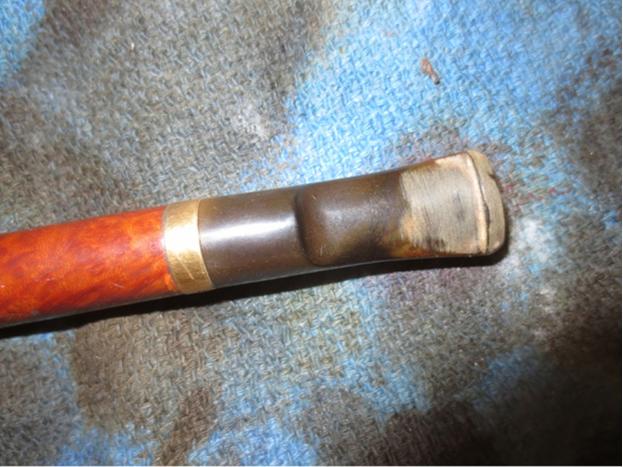
Here is a picture of the pipe when I received it. It had some heavy cake, tar build up on the rim, and a few dents in the stem. Cake doesn’t scare me, my reamer makes quick work of it, and tar build up often protects the rim from damage. The only problem from a collector’s standpoint was the stinger had been cut. I think pipes smoke better without the stinger, so that wasn’t a huge issue for me.KW1 One of the things that I do to make reaming heavy cake easier is soak the bowl in alcohol. Here’s the bowl getting dropped into the bath.KW2 After a good long soak, it was time to remove the cake.KW3 My Castleford reamer effortlessly removed the cake.KW4 I like to multi-task, so while the bowl was working, I soaked the stem in Oxyclean. I used a fuzzy stick and Oxyclean solution to get the worst of the gunk out of the stem. Here is the first pass.KW5 Although I usually retort the shank and stem separately, the screw in stem prevented that. I ended up retorting the whole pipe.KW6 The inside of the shank and stem were nasty.KW7 Next I turned my attention to the rim. It had some scars that necessitated topping.KW8

KW9 I used 150 grit sandpaper on a piece of glass to remove the damaged section.KW10 To fix the dents in the stem, I used a three-pronged approach. First I used steam to raise the dents as much as possible. I have an old kitchen knife that I heated with my heat gun. I placed a wet cloth over the area and pressed the hot knife blade onto the stem. It raised it a little bit.KW11 This is after the application of steam.KW12 Next I used 400 grit sand paper.KW13 The underside of the button was kind of messed up, so I dressed it with a file.KW14 I still had a small dent, so I filled it with clear super glue and applied a drop of accelerator. The accelerator comes in a spray bottle, which I find makes a mess. My solution is to take the sprayer out and use the end as an applicator. I also use a thumb tack to apply a small amount of glue. I’m not very neat when using glue straight from the bottle and using a thumb tack gives me more control (it also means less material to sand after the glue dries).KW15 Once I had the stem sorted out, I used 400 grit wet/dry with water followed by 1500-2400 grit micro mesh with water.KW16 I used a progression of 1500-12000 micro mesh on the bowl. Next I used Pimo Pipe Supply medium walnut stain, cut with 50% de-natured alcohol, to make the rim match the bowl.

After an uneventful spin on the buffer (anyone who ever used a buffer to shine pipes understands the drama that can occur when the pipe gets away from you) this is the result.KW17

KW18

KW19

KW20

KW21

The Christmastime Joy of Refurbishing an Old Peterson


Guest Blog by Robert M. Boughton
Member, North American Society of Pipe Collectors
http://www.naspc.org
http://www.roadrunnerpipes.com
http://about.me/boughtonrobert

Photos © the Author

“Smoke your pipe and be silent; there’s only wind and smoke in the world.” – Irish Proverb

INTRODUCTION
Many of the pipe lots I purchased during the past few months were to spruce up and sell at my online restored pipe site, although I admit to liberating a few of the choicer finds here and there for my own collection. However,this fine example of a vintage classic Peterson and a number of other brands I bought as singles in more recent weeks were intended with lust a forethought for my own ultimate and lifelong use. As far as the Pete I just received is concerned, my decision to keep it was not based on the Peterson brand name, 22 of which I already owned.

In fact, I expected to add one of the Pete’s I ordered near the end of November to the trove, which seems to increase at an exponential rate and counts 23 now of this brand alone.I chose instead to list the fine pipe for sale for disparate reasons even I find difficult to explain. My penchant for anything Peterson is so well known that my announcement on the Smokers Forums of my plan to sell the K&P System Standard brought a humorous reply: “I thought you’d never say ‘Enough Petersons.’ ”

My decision to sell the basic K&P System Standard full bent which, when I at last held it in my hands, was similar to some I already have, was based in part on that factor but, more to the point, it somehow lacked the certain element of instant overwhelming attraction which is too complicated to describe in this forum, and besides, I am sure anyone who reads this already knows the butterfly effect all too well. I am also adding higher-end pipes to my site and concluded a shiny new-looking Peterson would provide a nice incentive to someone out there in Cyberland who possess the essential sense of captivation to give it the loving home it deserves and not enjoy it once or twice only to put it in the rack and almost never again give it a serious thought.

Robert1And I should add how any potential rarity or value of the engaging pipe shown here pre-restored is irrelevant to my sentiments for it. No, I reserved the Peterson Dublin Republic Era straight billiard for my own caring use even despite its mixed grain because it, well, possesses the right stuff as defined by my personal sensibilities. Who knows? Maybe the System Standard full bent is an extraordinary find. I just don’t have eyes for every pipe that comes my way as I do for the subject of this blog.Robert2

Robert3

Robert4

Robert5

Robert6

Robert7

Perhaps the strongest tug at the curious side of me was the stem, which is perfect except for one tell-tale sign that it is not the original for this Made in the Republic of Ireland Peterson. Clear as day on the left side is the symbol that identifies it as a Peterson stem made for a pipe manufactured in France: Robert8

Now that’s one kind of oddity that always endears a pipe to me on first sight.

REFURBISH
First, as the word refurbish suggests, this was, for the most part, not a difficult task. The only actual problem was removing the cake buildup from the chamber, where I started.

For the most part, in my experience at least, even cake this bad comes free without a fight and leaves the chamber relatively smooth. The third photo above does not do service to the way the cake tapered downward from more to less. This turned out to be one of the ordeal varieties, not a piece of cake at all. (I know, and tender my apology now.) I started with the 19mm reamer since most of the carbon mess was at the top, and it fit about halfway down with snugness. Several laborious full turns later, applying just enough force to see the reamer moving a bit lower, I paused to dump the carbon dust. Seeing the huge amount that fell out, I took another close look into the chamber and was amazed to see not only that the upper bowl needed much more work, but that the bottom was unfazed.

And so I switched to the 21mm reamer that was barely able to clear the inner diameter and gave the entire area a go with several more intense turns, using pressure again to reach the real bottom. Another massive amount of carbon fled the chamber as I turned it upside-down over a proper receptacle. Then, sticking with the bigger reamer, I engaged the entire enemy for the first time. The biggest load of carbon so far emptied out, and after I blew through the shank, a thick dark cloud of dust flew through the air, reminiscent of Victorian Era London skies as described by Charles Dickens with much greater skill.

I soaked a couple of small squares of cotton cloth with Everclear and folded them around my middle finger to insert into the chamber and scrub away much of the residual grime. I did this with both sides of the cloths. Waste not, want not and all that. Of course the wet cotton came out soaked solid black along with part of my finger, but I allowed the alcohol to dry a little as I halfway cleaned my begrimed digit before sticking my clean index finger all the way in and feeling the walls. They were pocked all over.

Reattaching the 19mm blades, I angled them first against the upper half of the chamber before adjusting them to favor the lower half. Much more carbon was loosened, and more alcohol-soaked cotton cloths wiped away the excess. Again I inserted a clean finger and used it to dig out little chunks of carbon. The chamber was better but still needed work.

I turned to a small piece of 200-grit sandpaper long enough to reach the bottom of the chamber with a little above the rim and wide enough to cover half of the wall. With whatever finger fit inside the chamber leaving enough room to press down against the paper and turn it with roughness 360 degrees a few times, I heard that old familiar fingers-on-chalkboard screech the entire time. But I felt the wall smoothing. The paper came out black, and I wiped it over a rag to remove the dust. Still again, a small mountain of carbon fell from the inverted chamber. Feeling the wall with a bare finger, I knew I had to get rough at last.

A perfect old piece of 150-grit paper presented itself for my use, and I went at the chamber again with real gusto. The fact that another pile of carbon was removed dismayed and discouraged me. I repeated the process several times, cleaned the chamber with cotton cloths and Everclear, and believe it or not, got the reward I had awaited with a clean, smooth finger inspection. So that’s my page and a half on fixing the dang chamber.

Next up on my itinerary was beginning the cleaning process of the shank. After about ten minutes of running a wire-handled bristle cleaner dipped in alcohol over and over through the inner shank, I saw it was having an effect and stopped to prepare for the retort.

At this point I remembered the small stem was Lucite, which can be warped and ruined by alcohol. However, finding the task of attaching the rubber tube of the retort kit directly over the wide shank opening, and also locating no suitable temporary stem, I saw no choice but to take a chance. And so I connected the rubber over the lip of the stem and commenced the retort process.

Several test tubes of Everclear later, the shank at last came clean. Removing the stem as fast as I could and inserting a stem cleaner into it, where I let it stay long enough to dry, I found that it was intact. I completed the retort by removing the cotton balls from the chamber and using more cotton cloth to scour the chamber clean and dry and doing the same to the shank with a soft cleaner.

The stem, as nice as it was, still had a couple of minor bite marks and other blemishes I might have ignored with a pipe I was keeping, but I couldn’t do it.Robert9The ease of removing the bitemarks and other marks with 400-grit paper came as a happy surprise. While the sandpaper was handy, I cleaned the shank opening, as you will see below. After that all I needed to do was micromesh the bowl and shank with 1500, 2400 and 3200.

I was more reluctant than ever before to remove any of the original stain, but had no choice with the rim, which was blackened beyond the help of purified water, steel wool or micromesh. I chose 400-grit paper, which eliminated the blackening, before a three-step micromesh using 1500, 2400 and 3200. That done, I considered which of my modern day stains would best approximate the original, and decided to go with the medium brown. I flamed it and set it aside to cool. After a few minutes, I took out my 2400 micromesh pad and gently rubbed away the ash, followed by a quick wipe with a soft rag.
I’d have to say the greatest surprise with this old pipe was the flawless condition of the bowl and shank, with the exception of the rim as described. Based on the general design, the less familiar shade of brown and the grain that is not as uniform as pipe enjoyers today expect, I estimate that this pipe dates to the 1940s or 1950s. At first I believed the pipe was never waxed until I gave it a good wash with purified water and cotton cloth and was able to make out a couple of thin, shiny streaks on the top of the shank, where it appears its long-time previous owner seldom if ever touched the faithful companion.
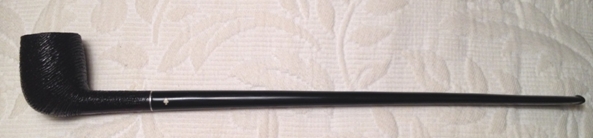
Still, to assure its readiness for a smooth buffing, I prepared the wood with micromesh progressing from 1500 to 2400 to 3200 and at last 4000.Robert10

Robert11

Robert12

Robert13

Robert14 Eager to try out this wondrous pipe that, as I noted, was created before I was, I found myself filled with more excitement than usual as the moment to buff the beauty with waxes arrived. Leaving the stem behind, having waxed it with red and white Tripoli followed by White Diamond while the new rim stain dried, I carried the smooth piece of old briar into my workroom. Wanting to bring out as much of the varied grain as possible, I decided to use the whole ball of wax. (I know, I know! Again, I apologize.) Starting with the red Tripoli wheel, I coated it with an easy, light touch before moving to the white Tripoli, followed by White Diamond, and to finish it off, carnauba.Robert15

Robert16

Robert17

Robert18

Robert19 CONCLUSION
I could never describe what it is about a pipe that attracts me to it. My tastes are too eclectic. But when I see it, it is always like love at first sight. I mean that in the literal sense, as with two or three times in my life when I took one look at someone and was instantly light-headed with my stomach full of butterflies and found myself tongue-twisted. Alas, none of those relationships worked out in the end. With pipes, at least, love is forever – and perhaps a bit lecherously, I have quite the stable of mistresses.

The author enjoying the pipe.

The author enjoying the pipe.