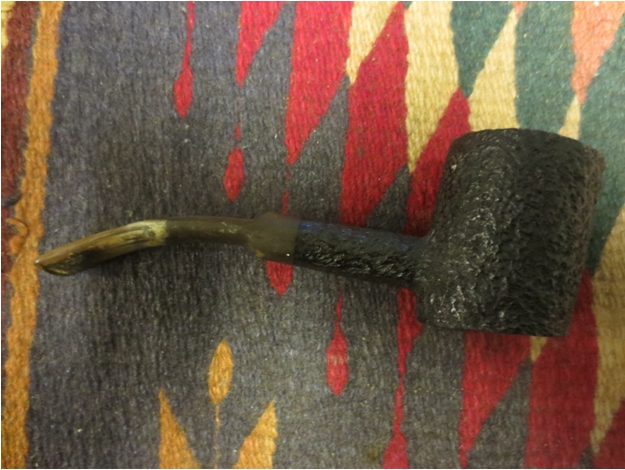
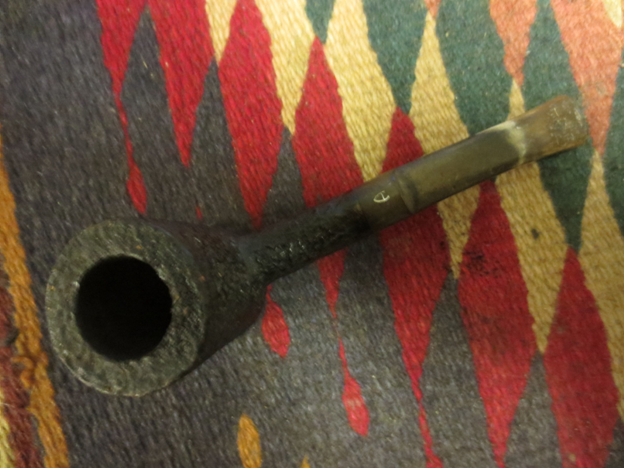
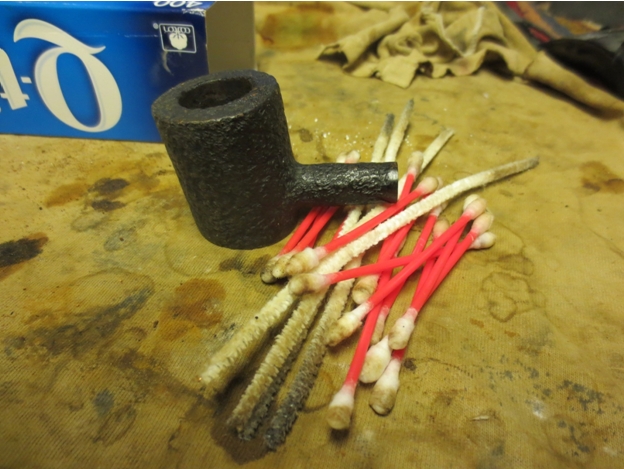
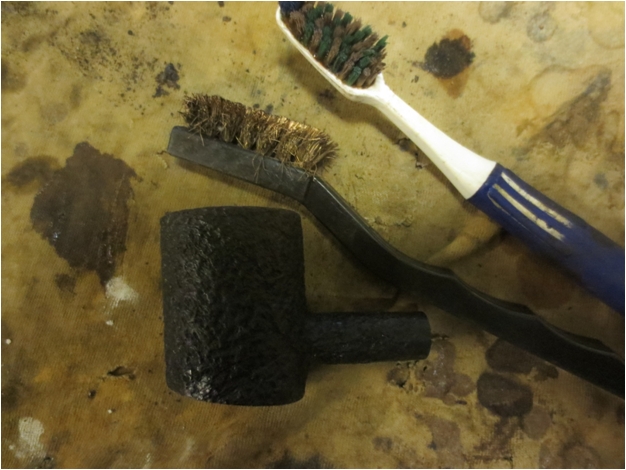
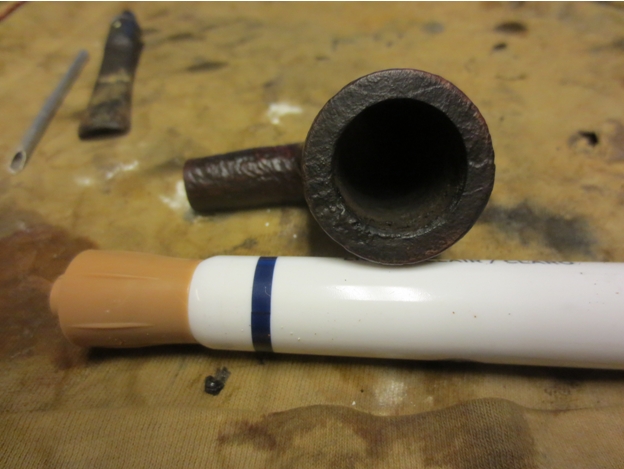
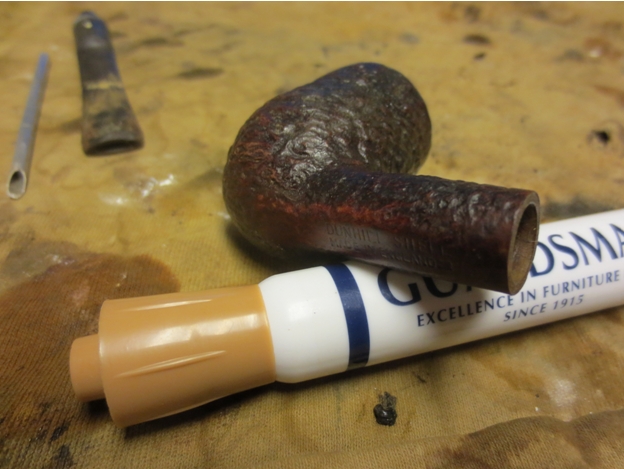
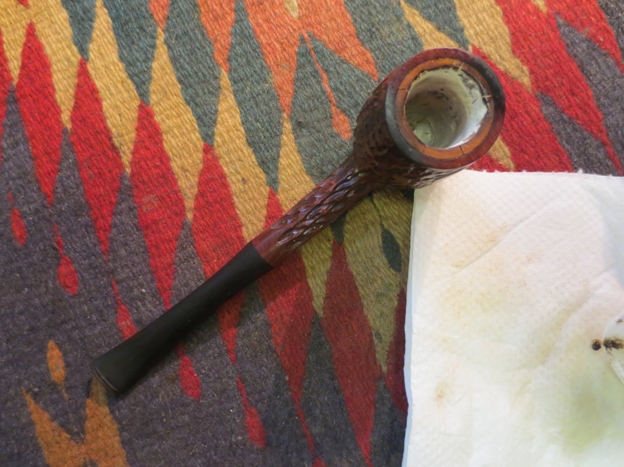
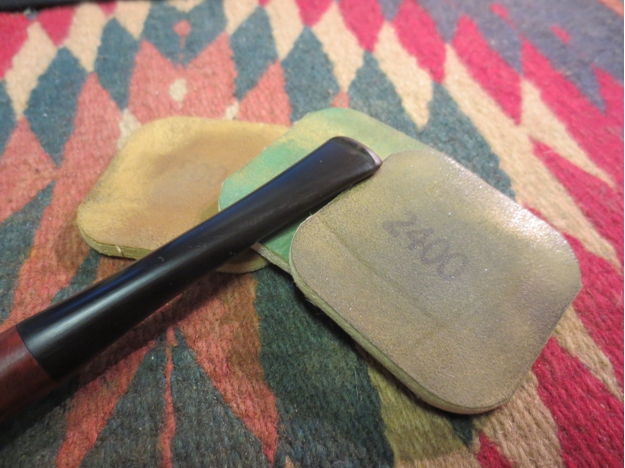
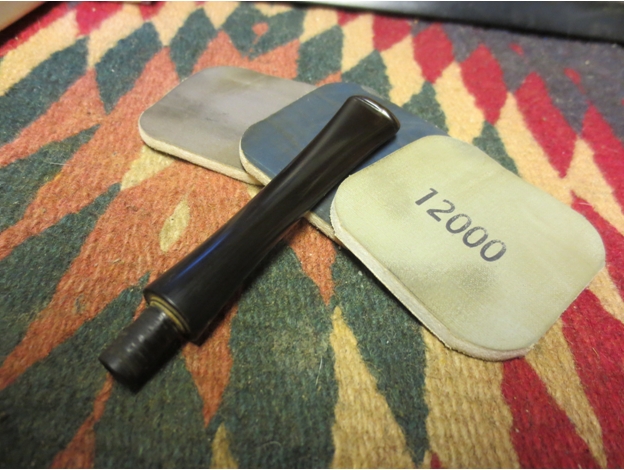
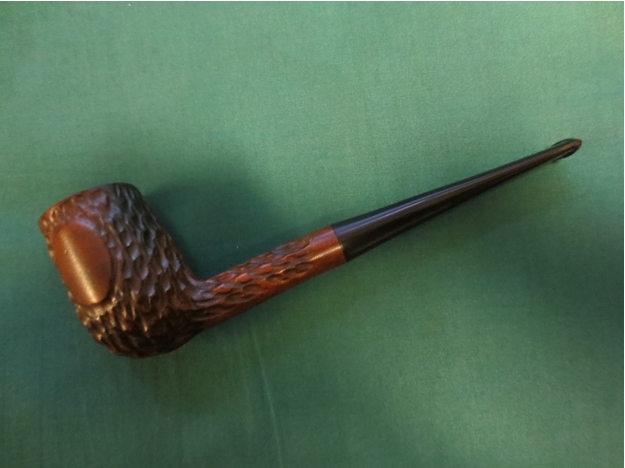
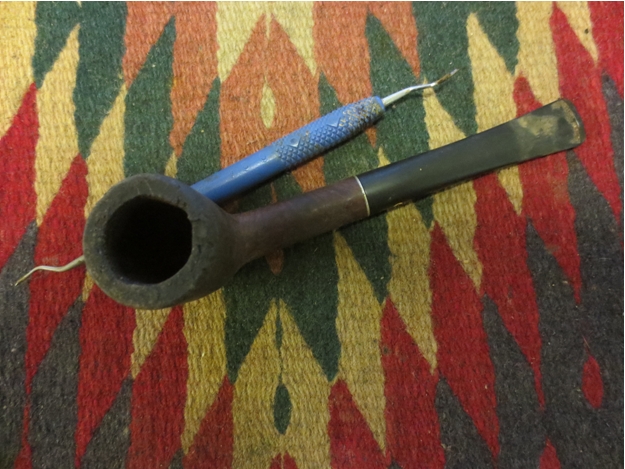
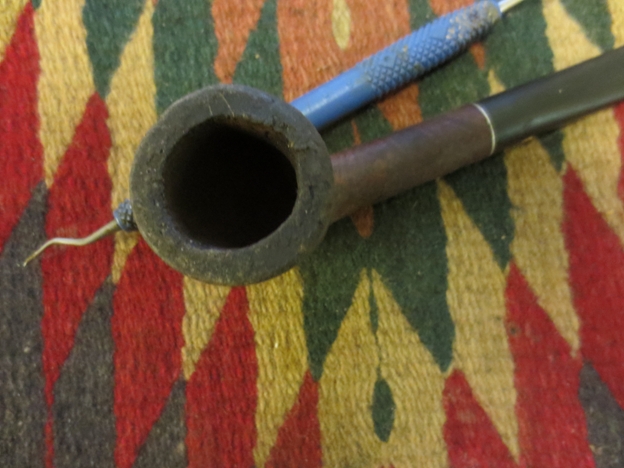
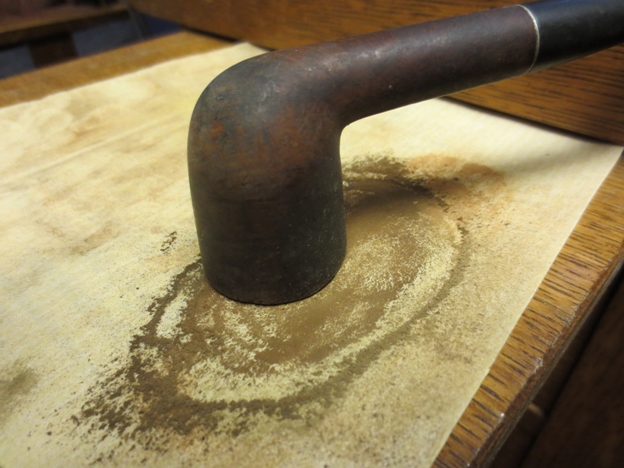
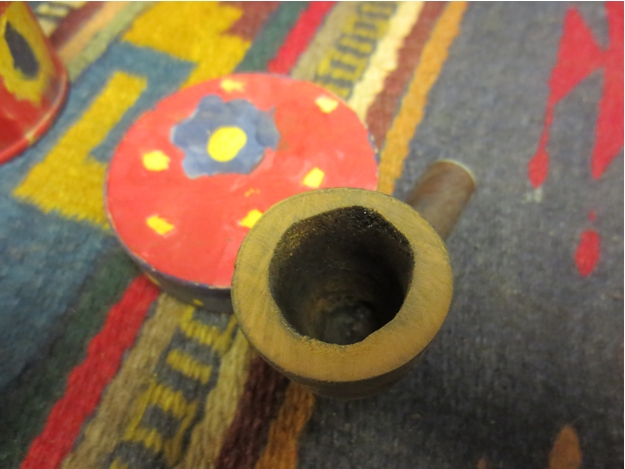
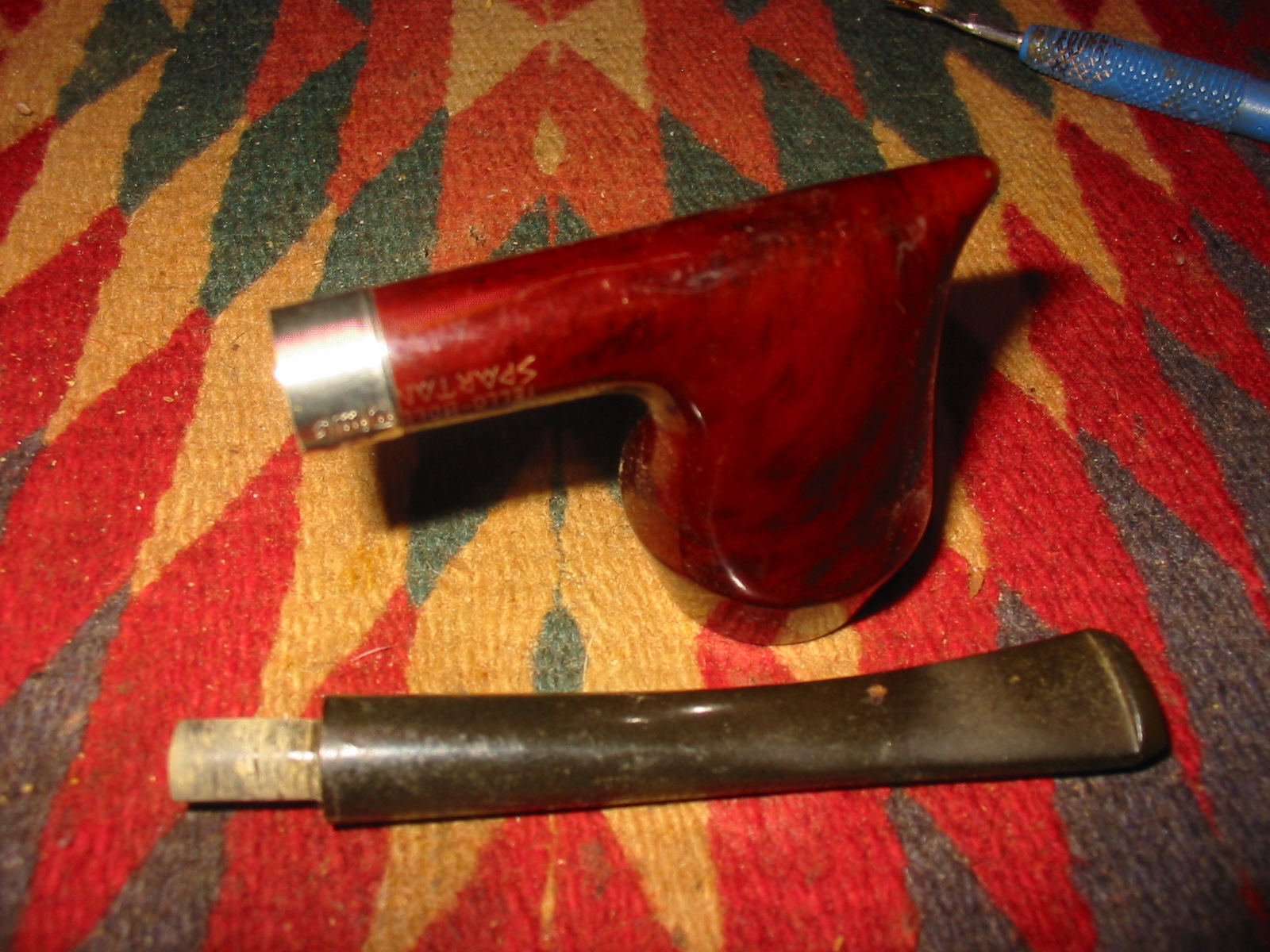
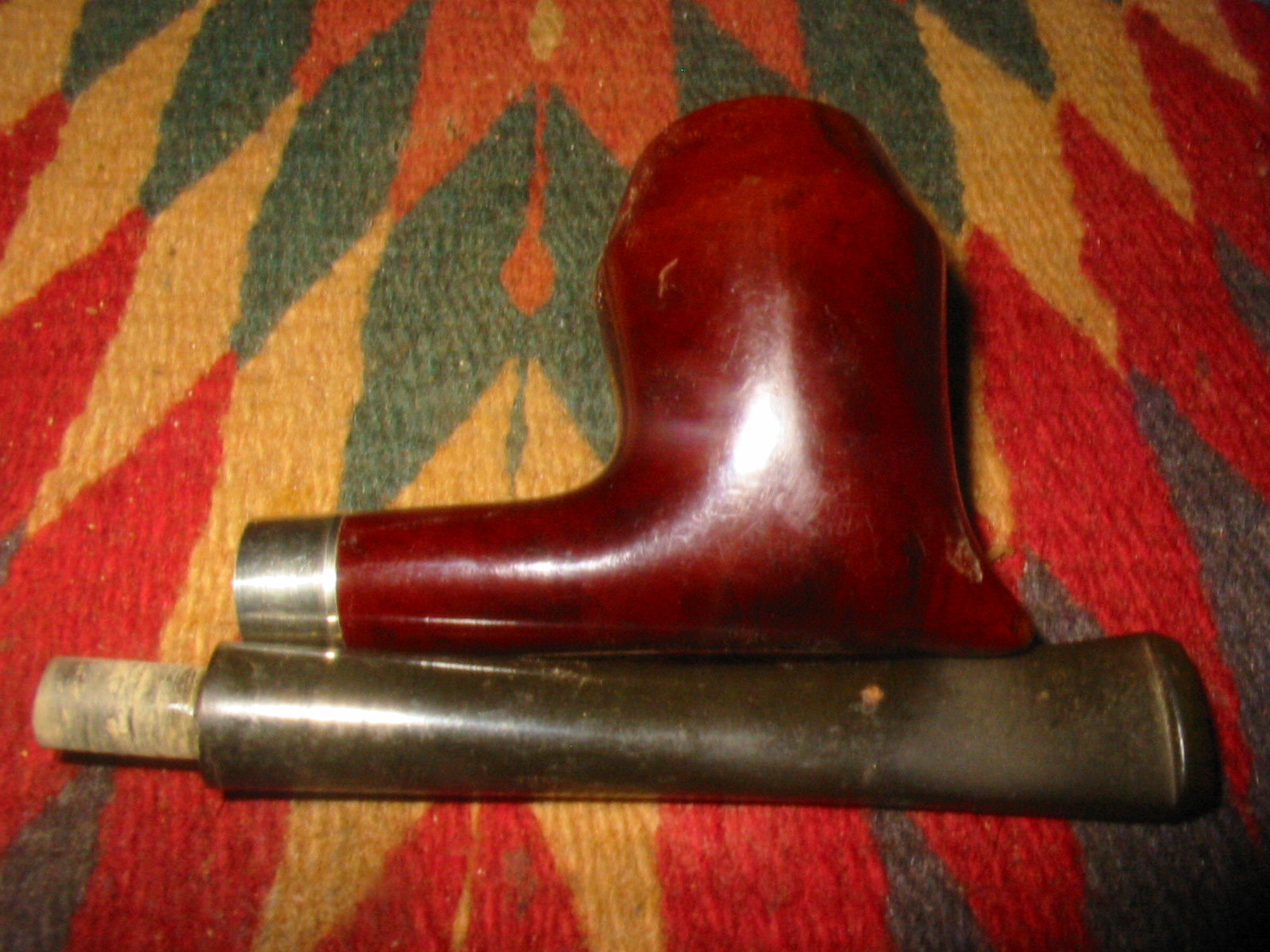
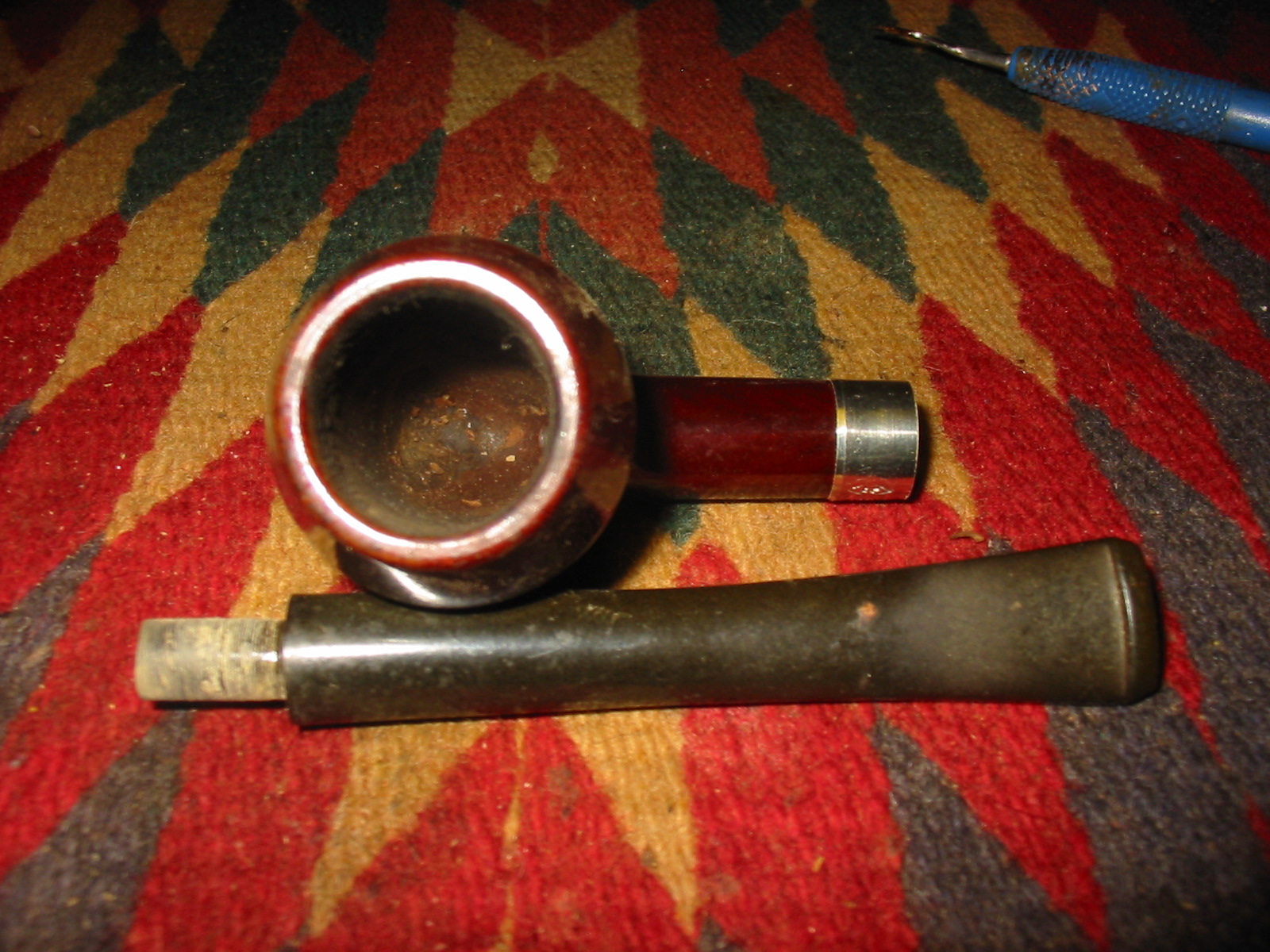
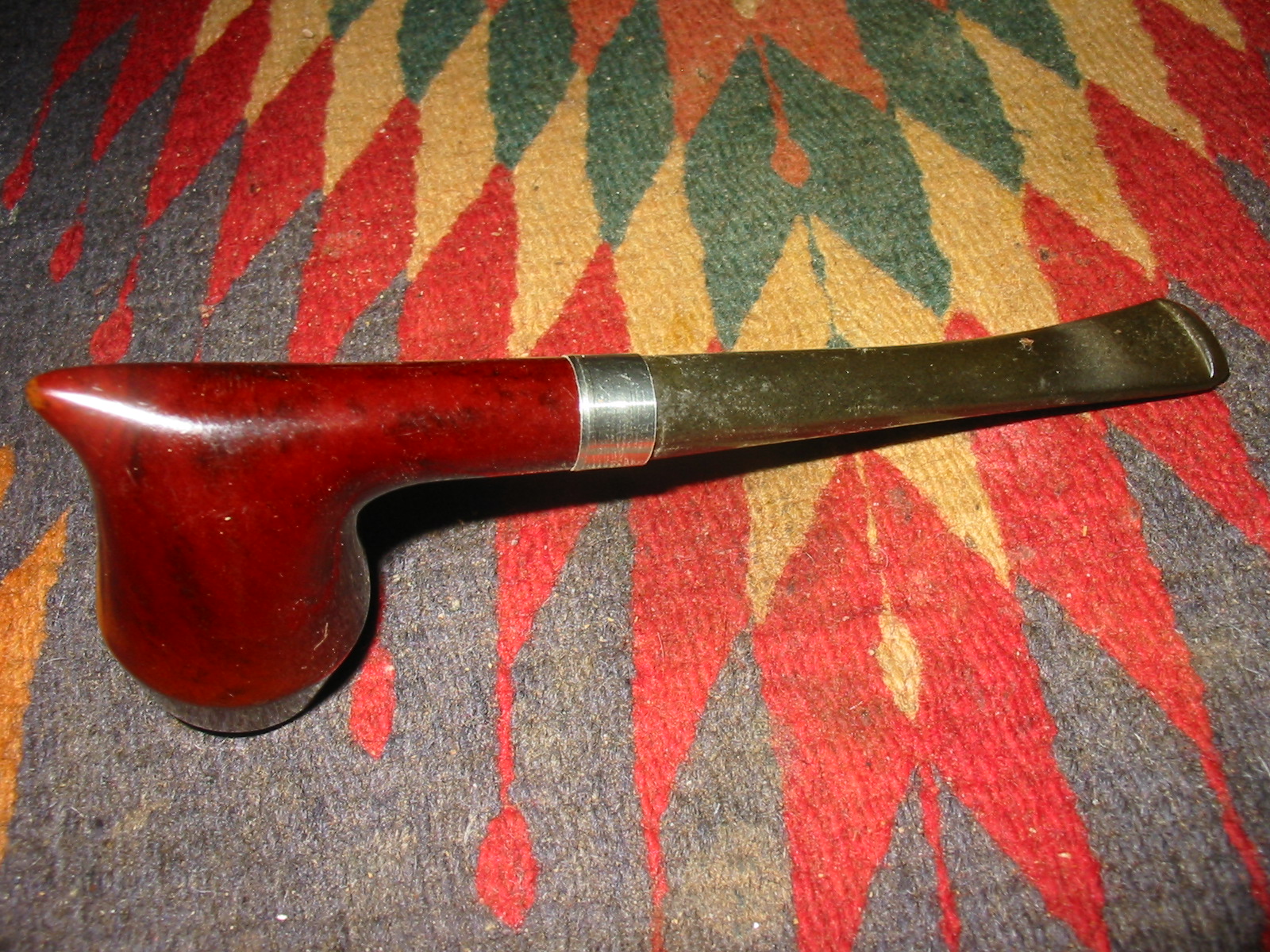
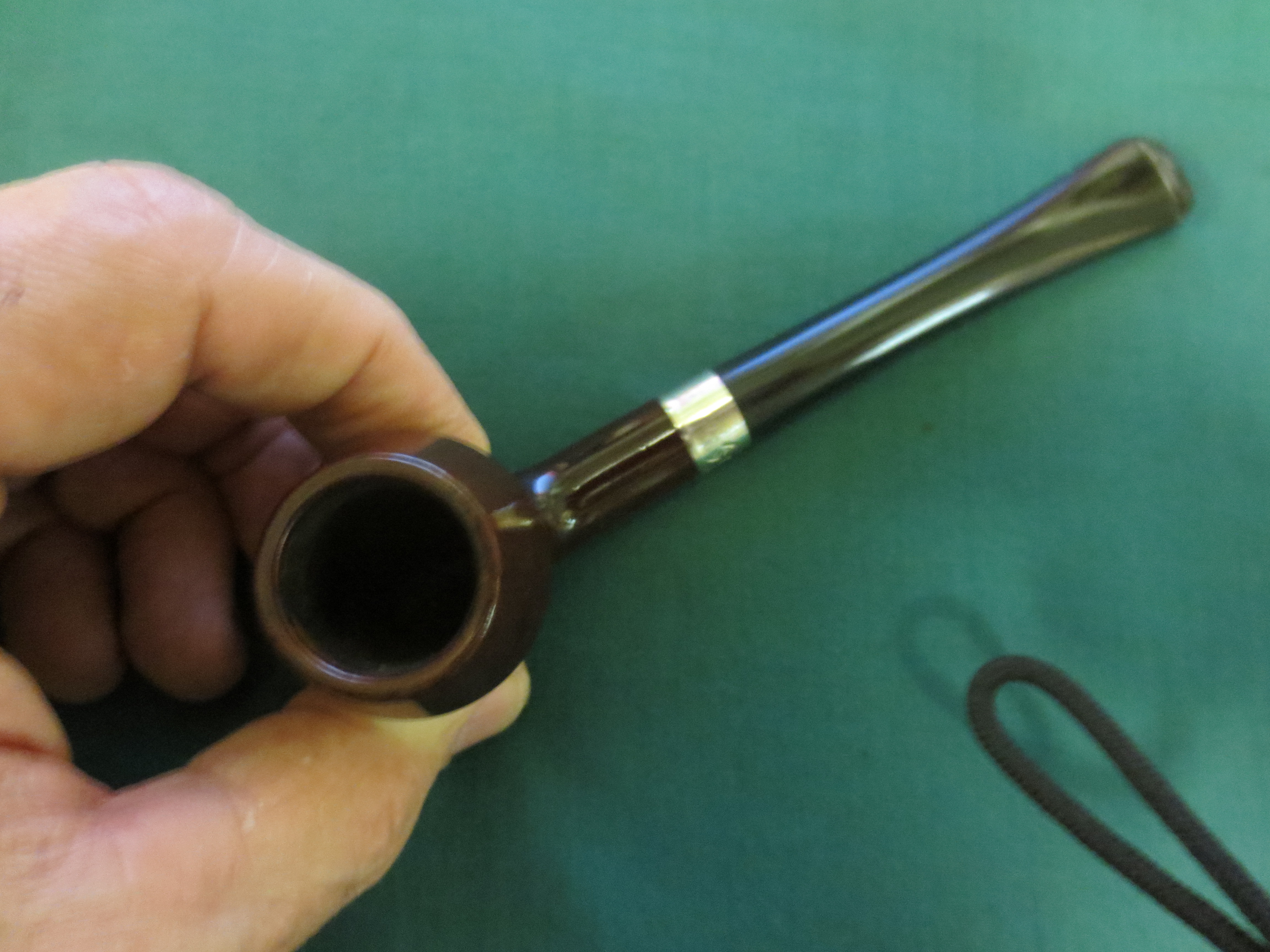
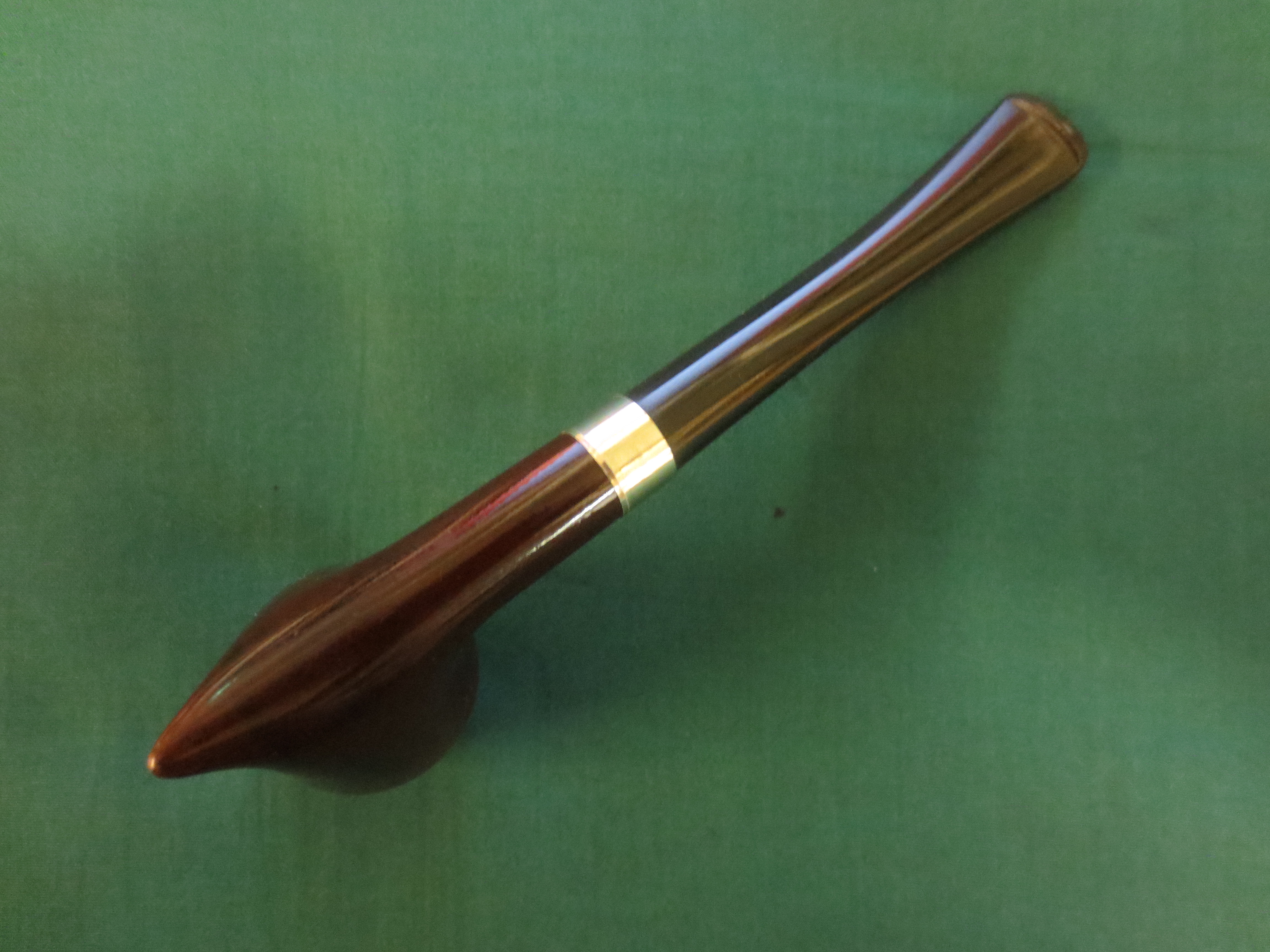
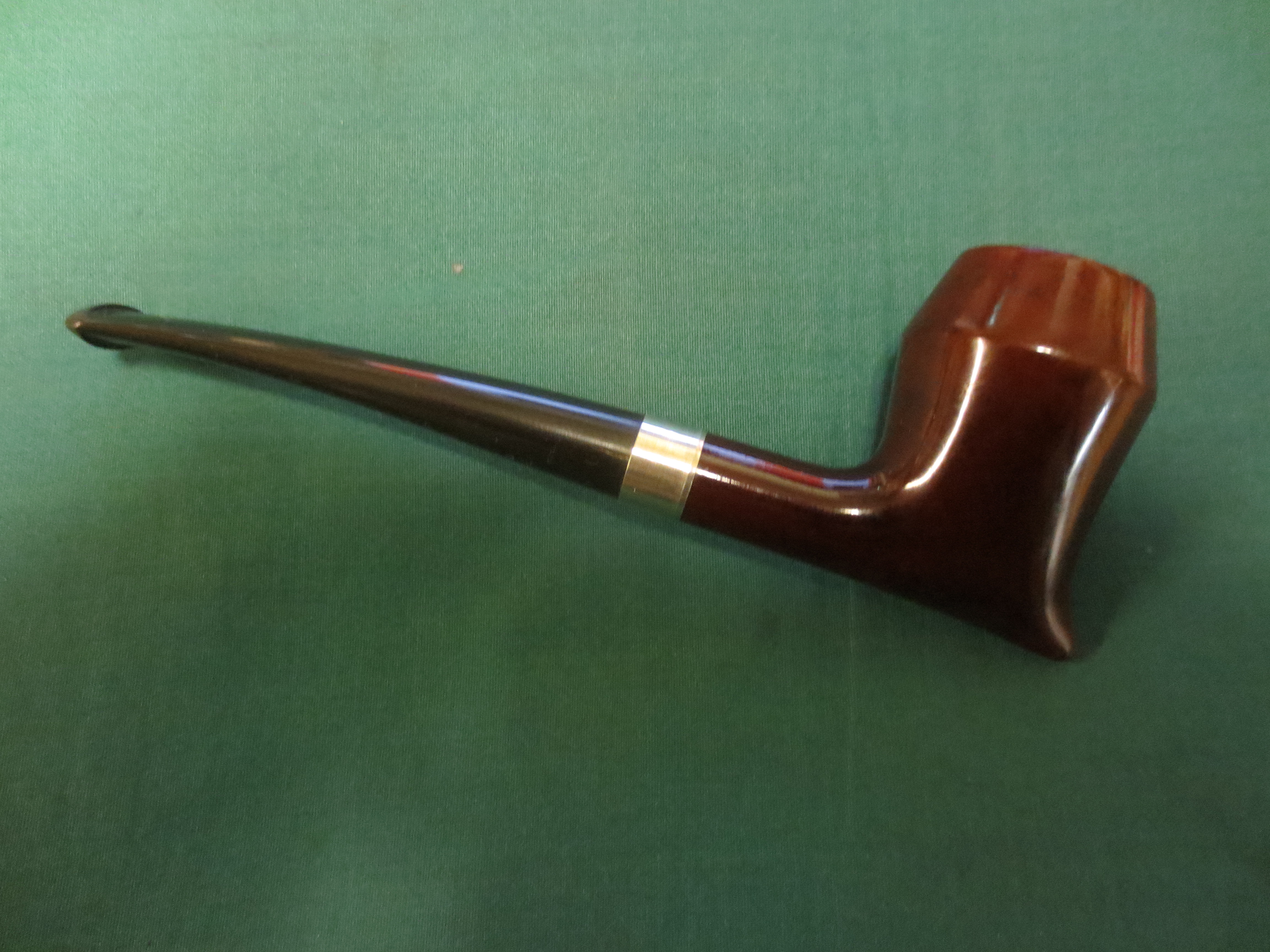
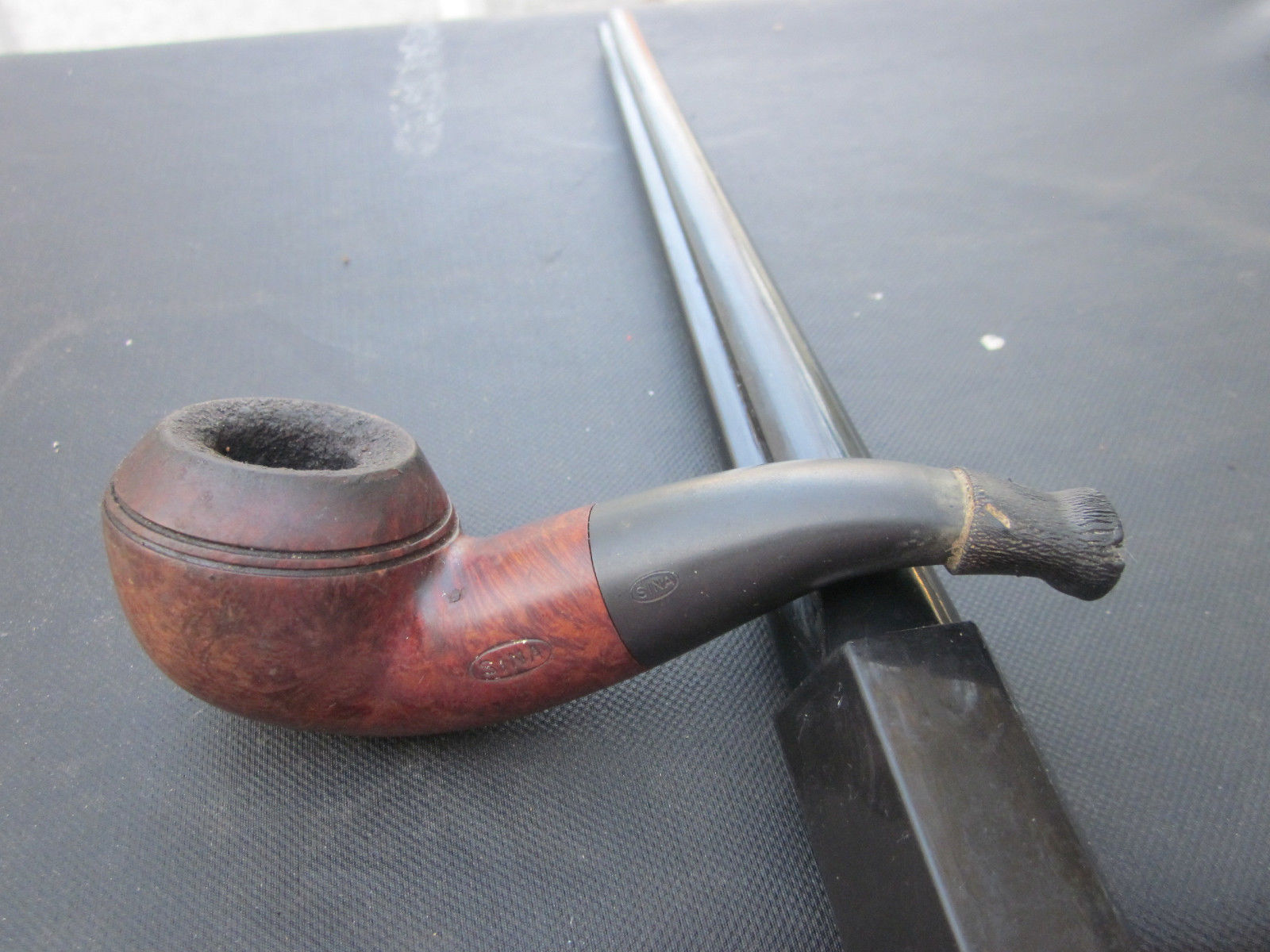
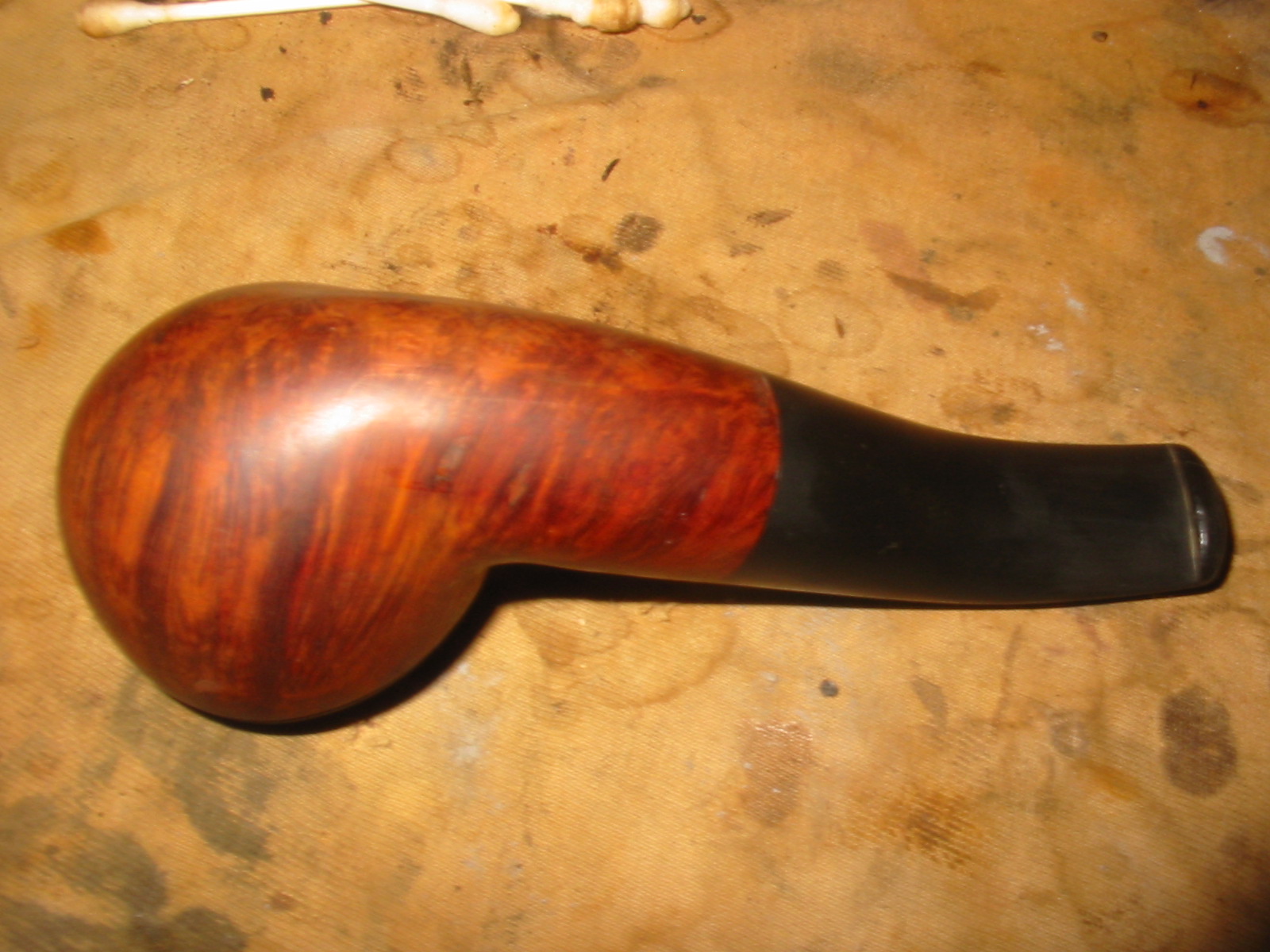
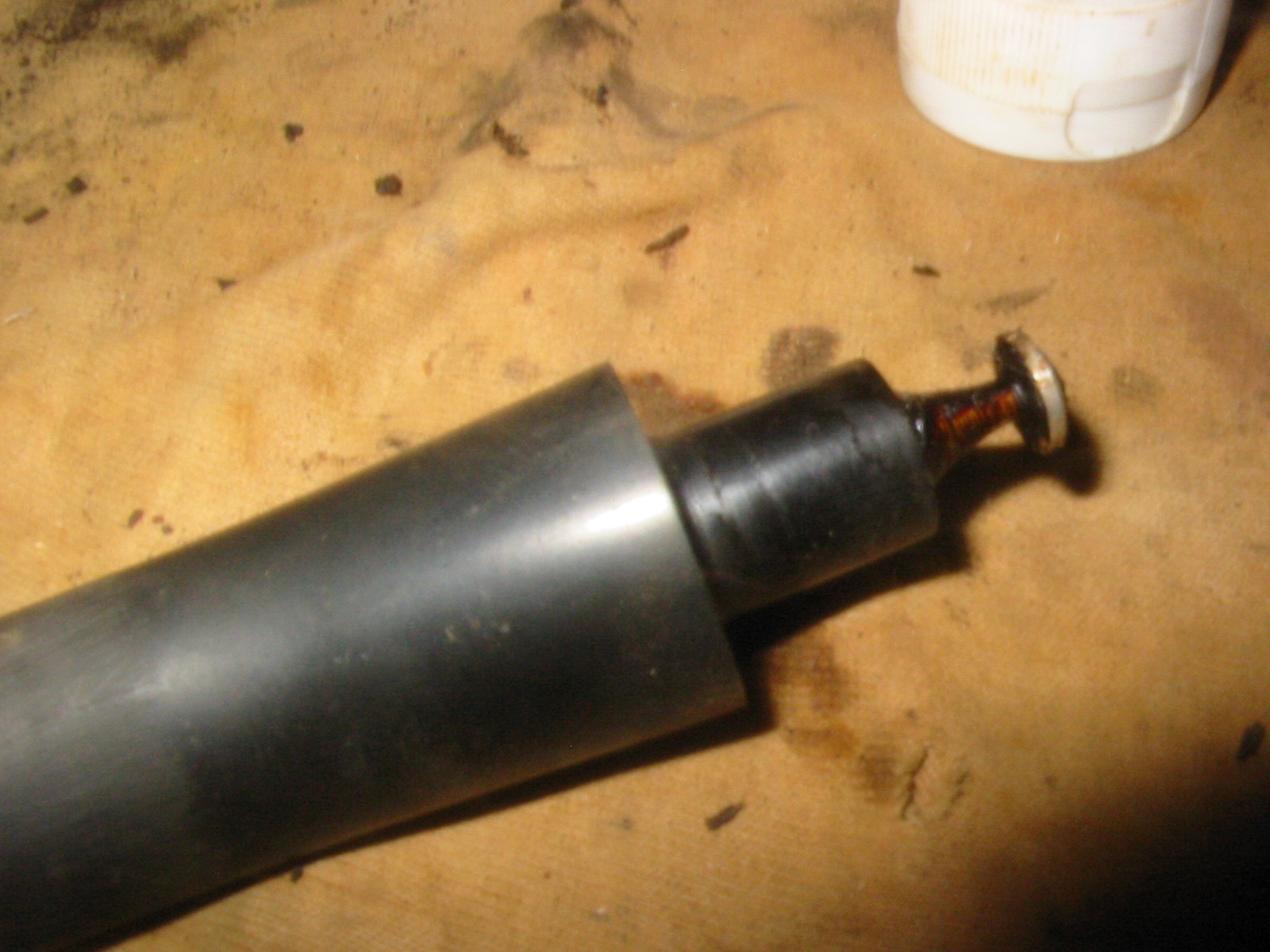
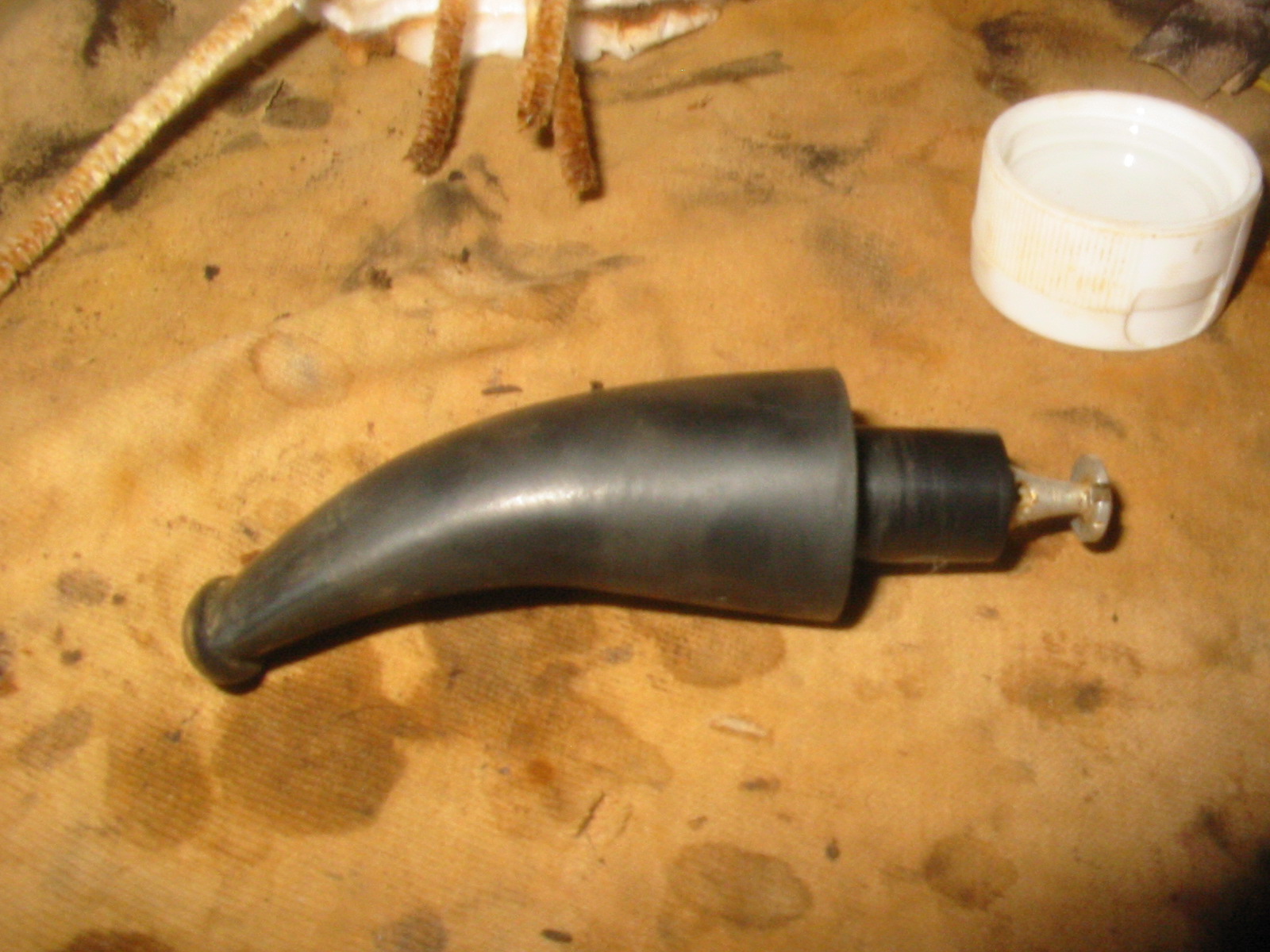
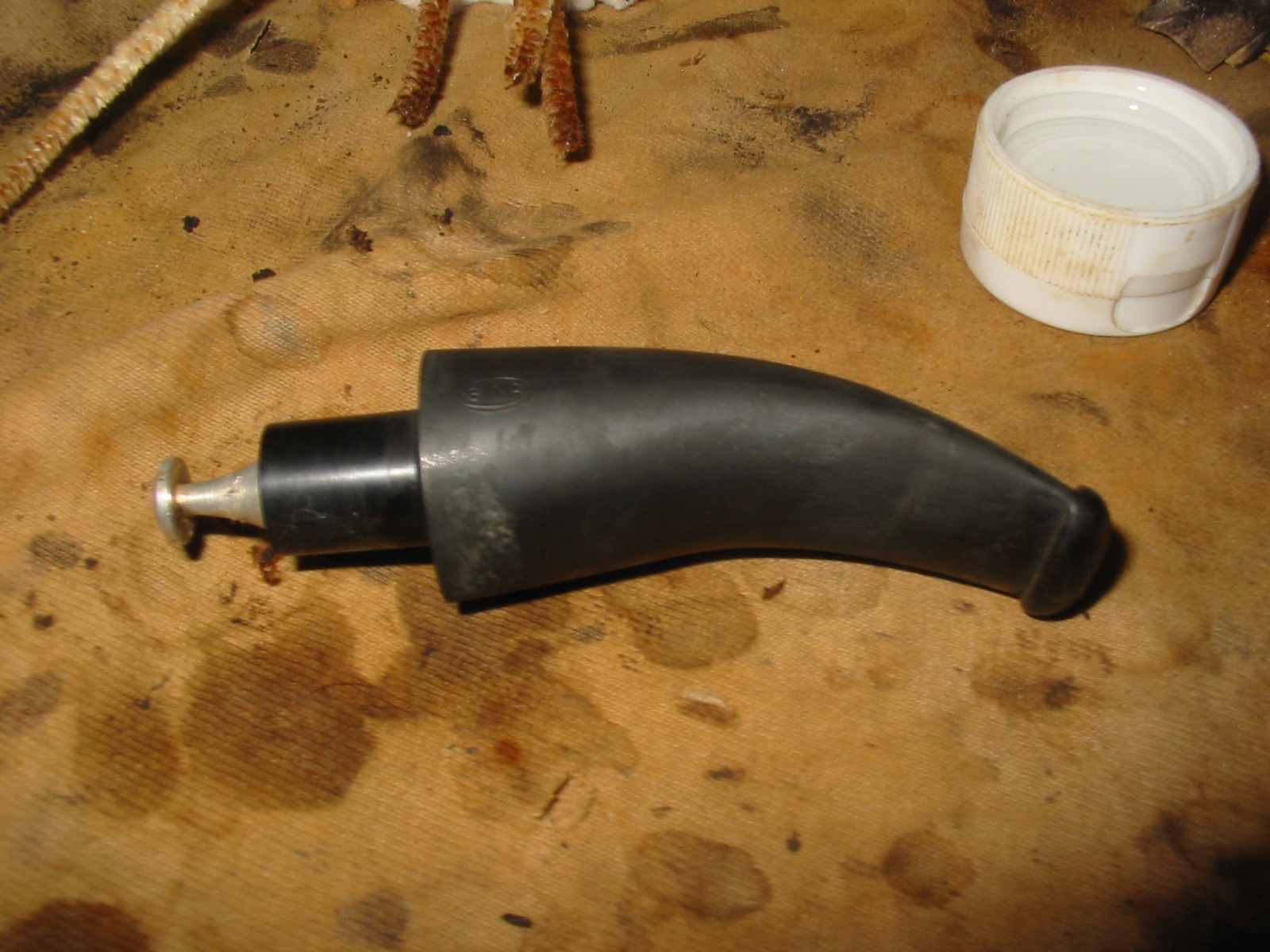
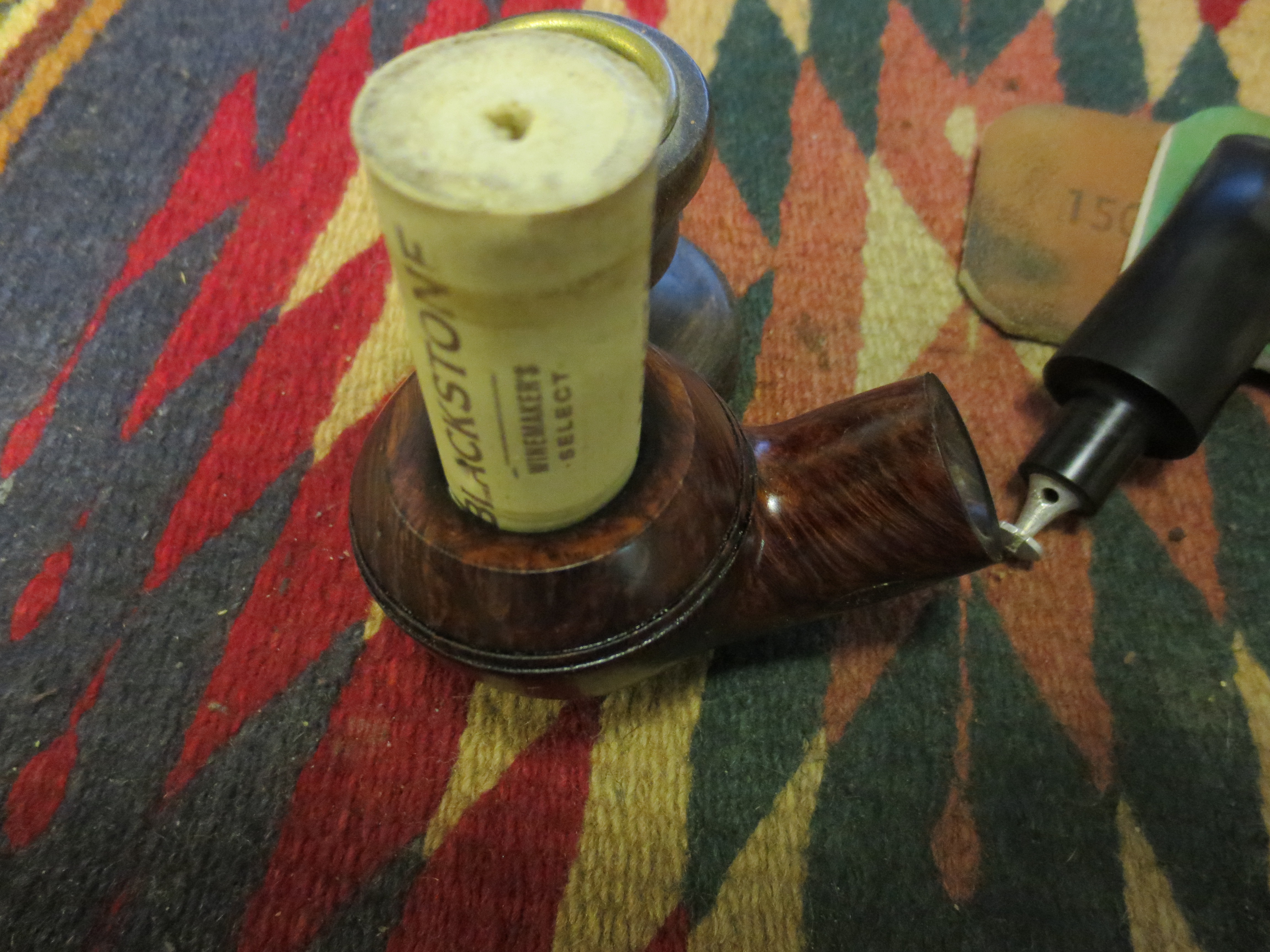
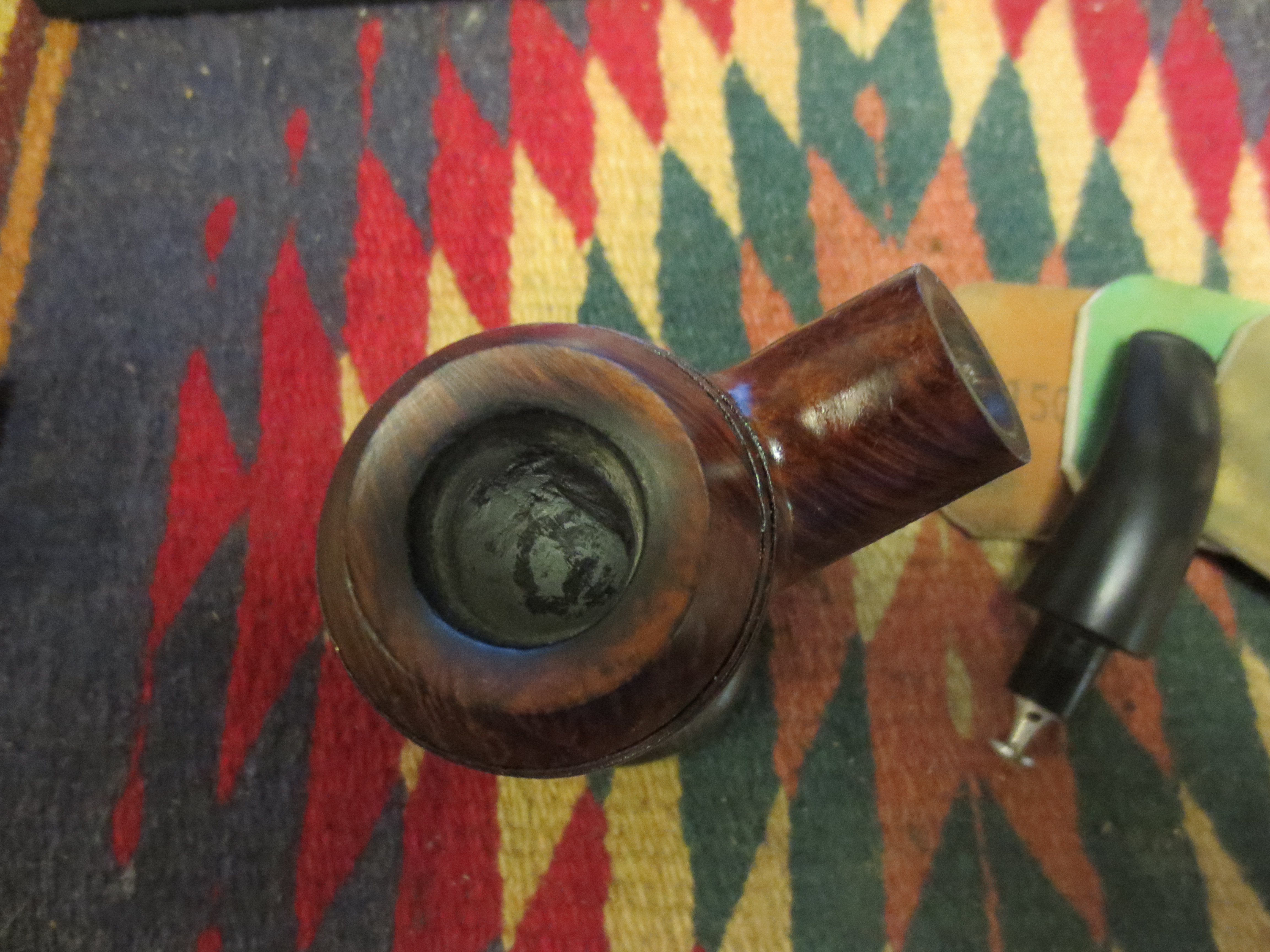
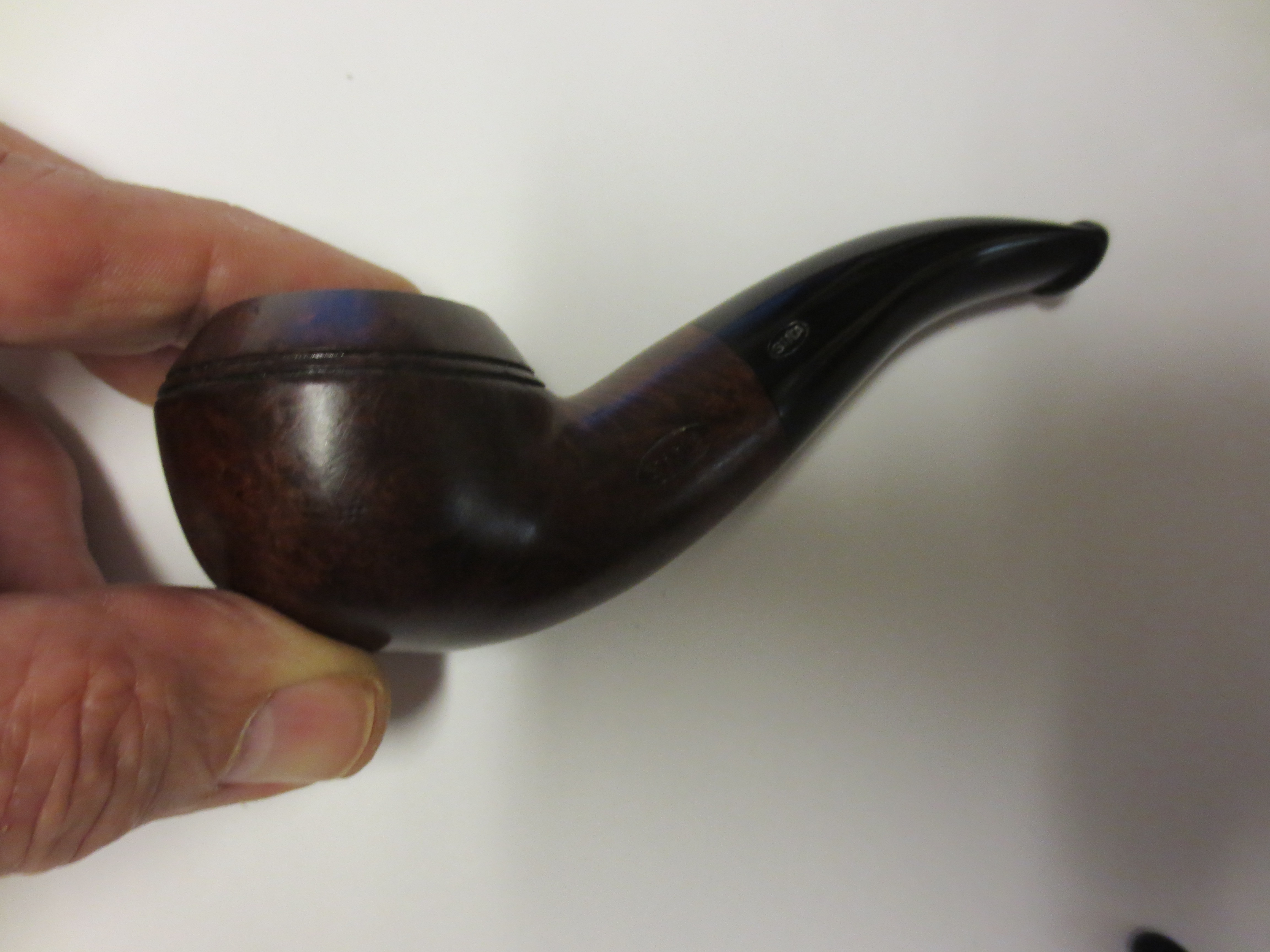
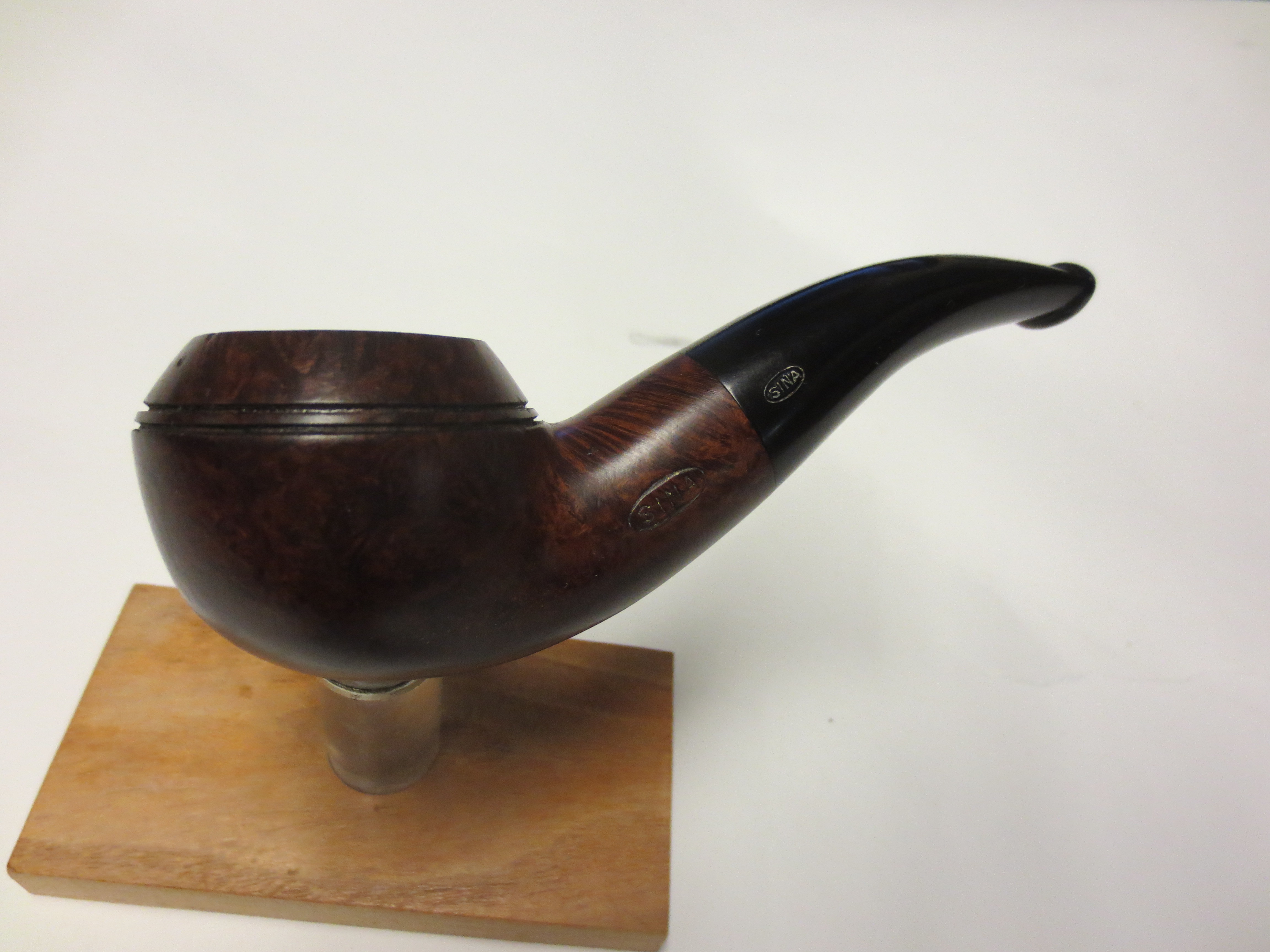
Tag Archives: removing oxidation

Refurbishing a Brentwood Supreme 335 Apple – (GBD 2nd)


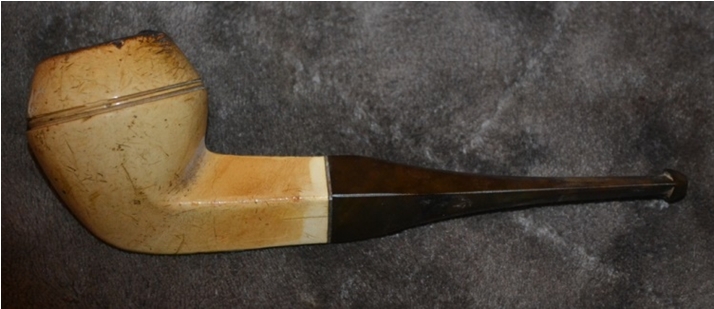
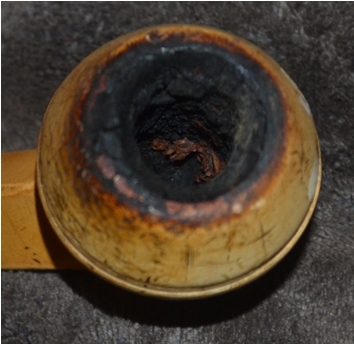
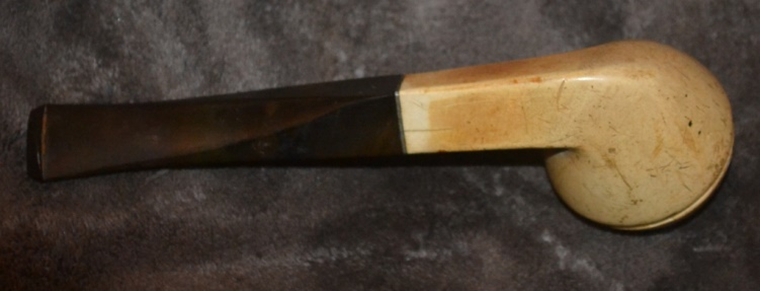
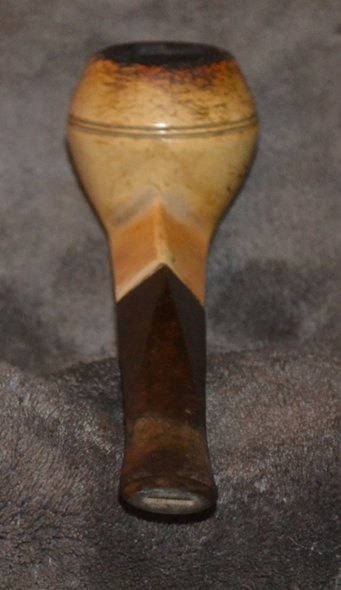
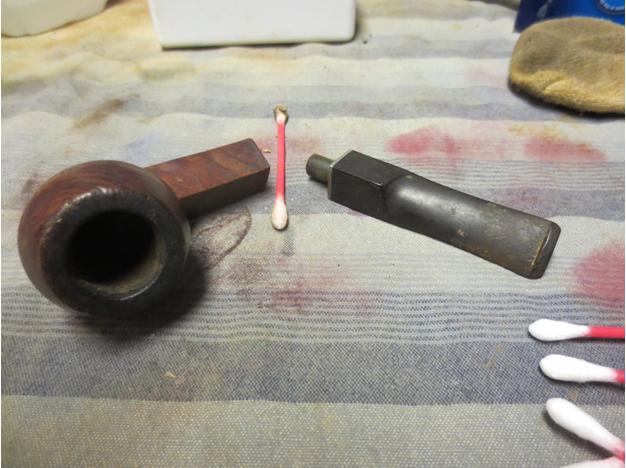
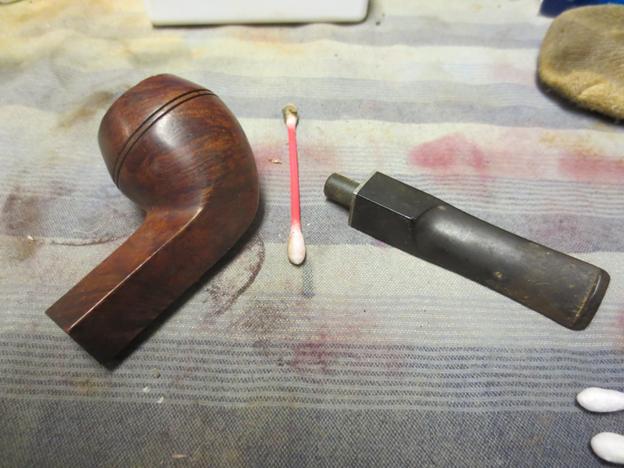
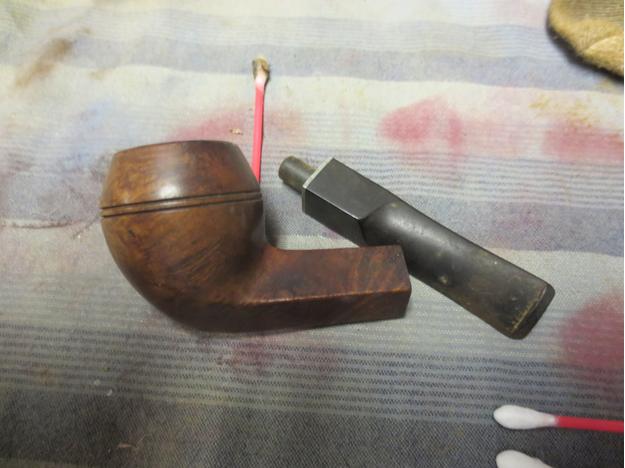
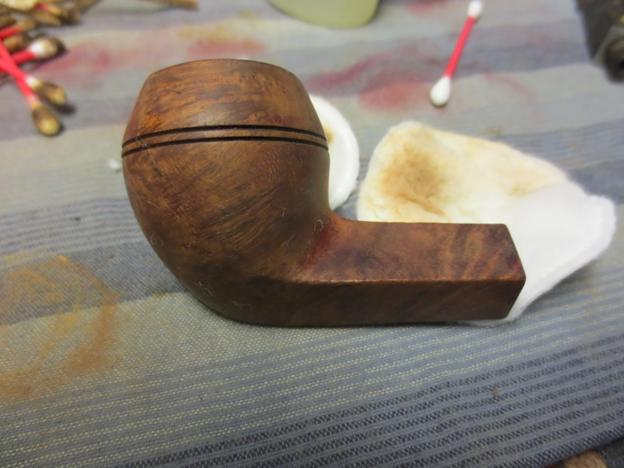
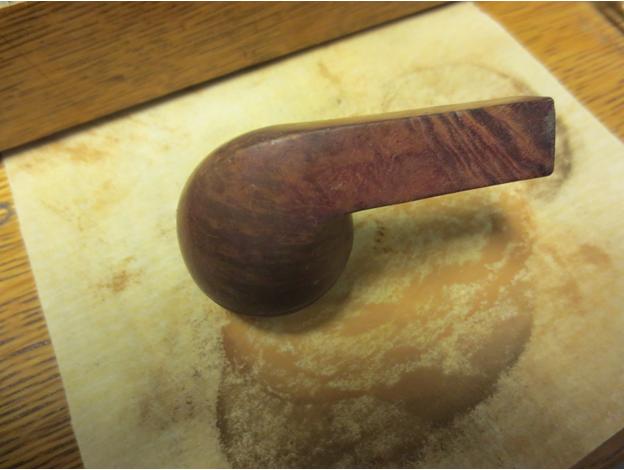
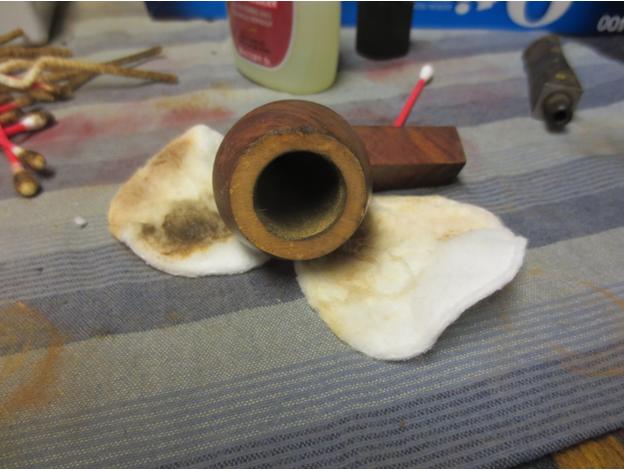
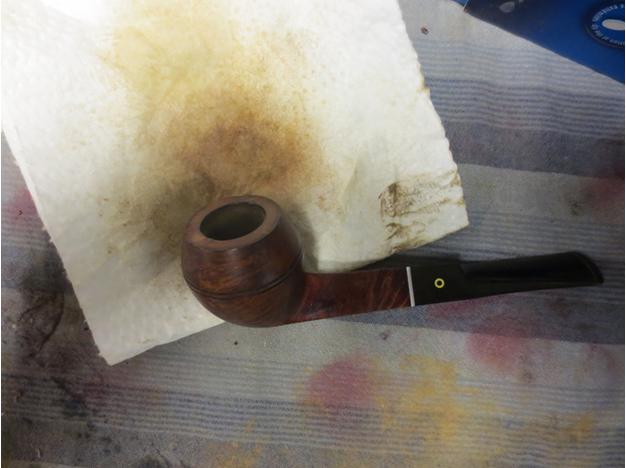
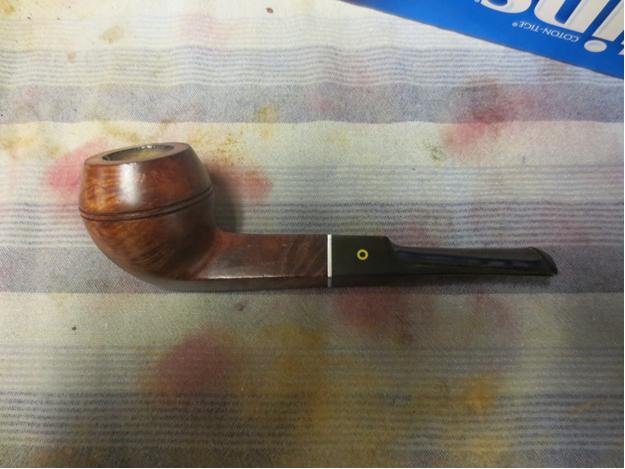
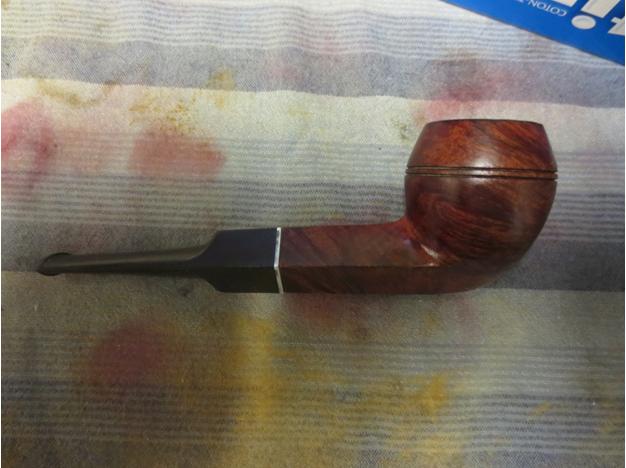
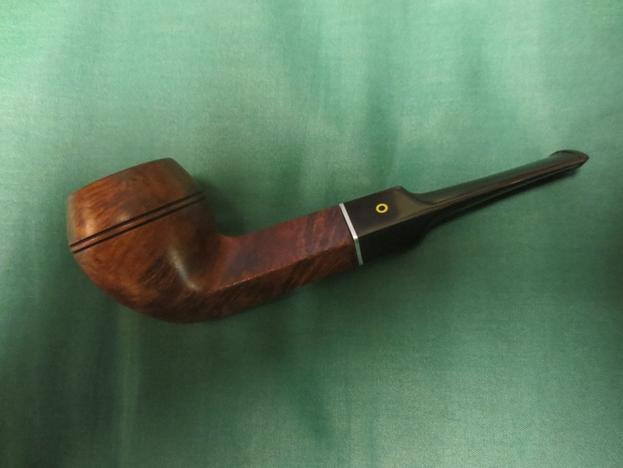
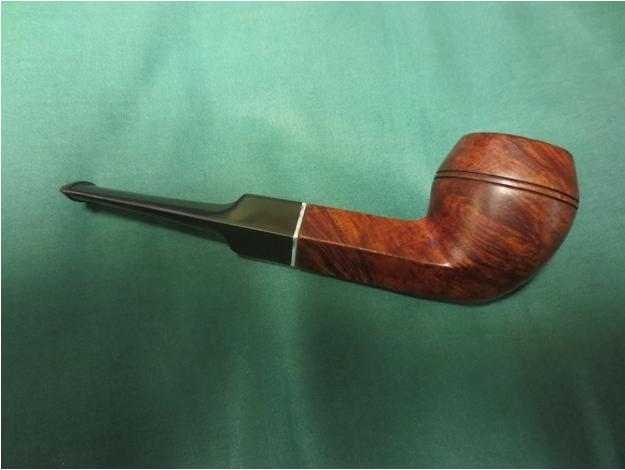
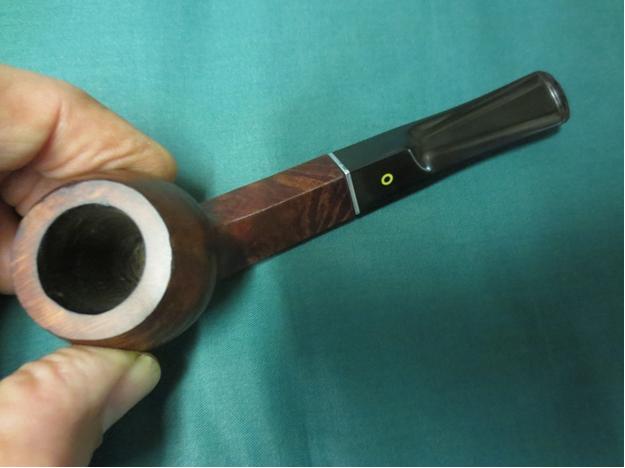
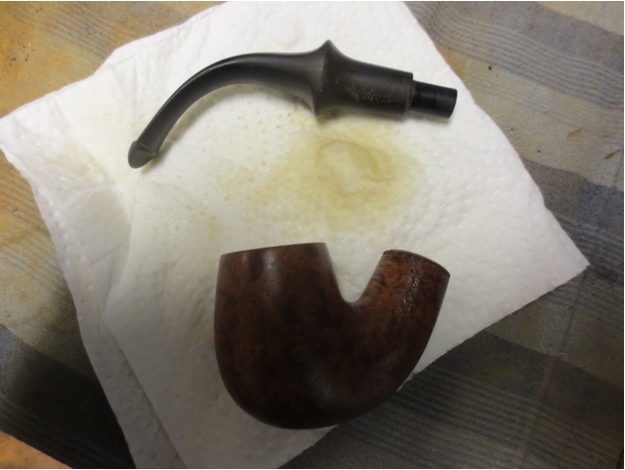
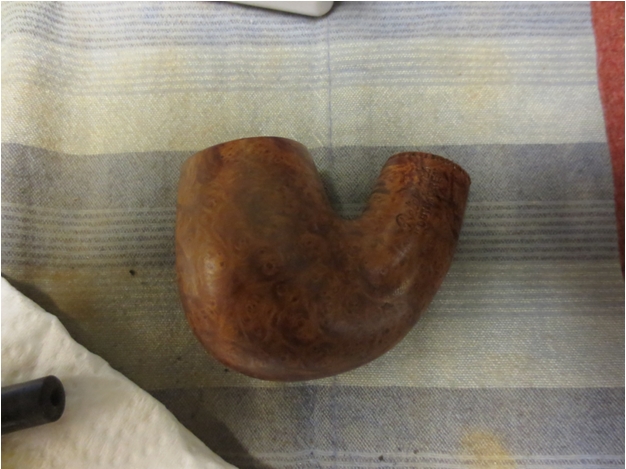
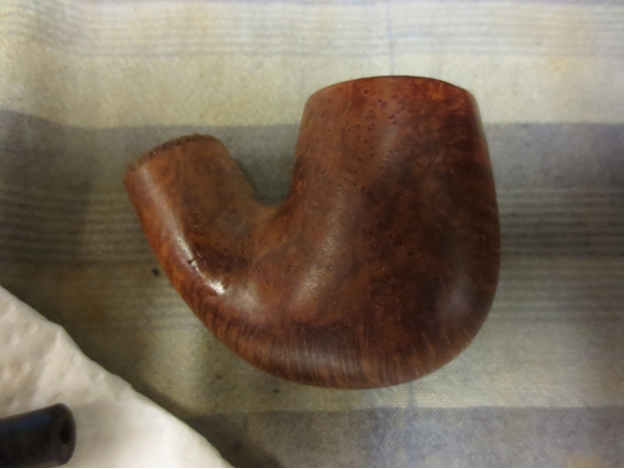
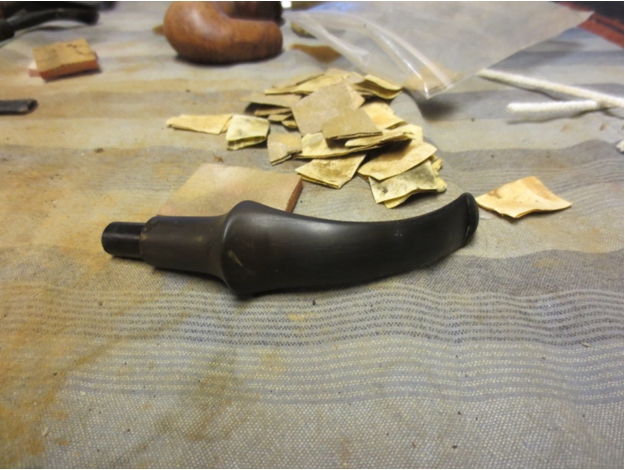
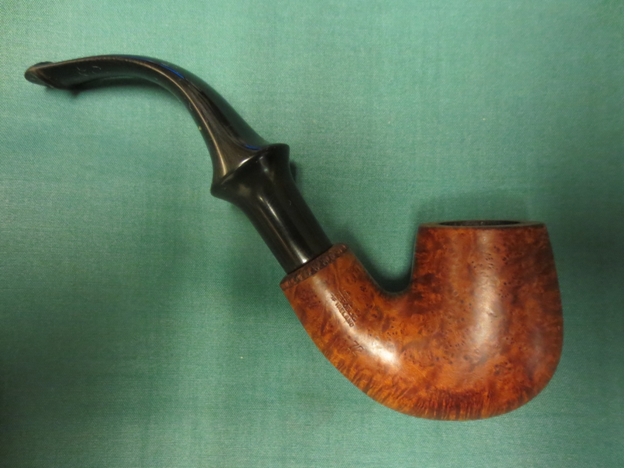
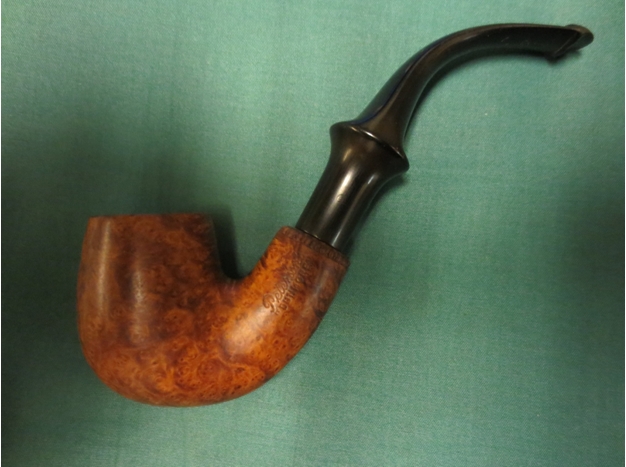
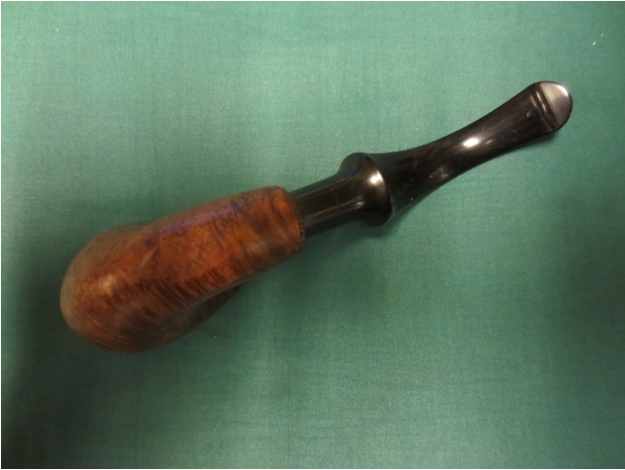
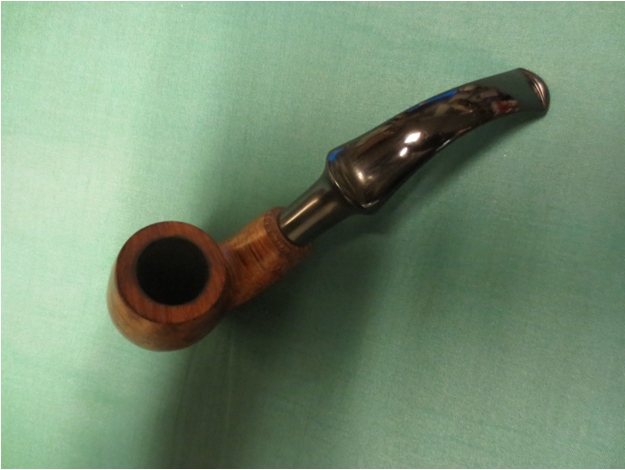
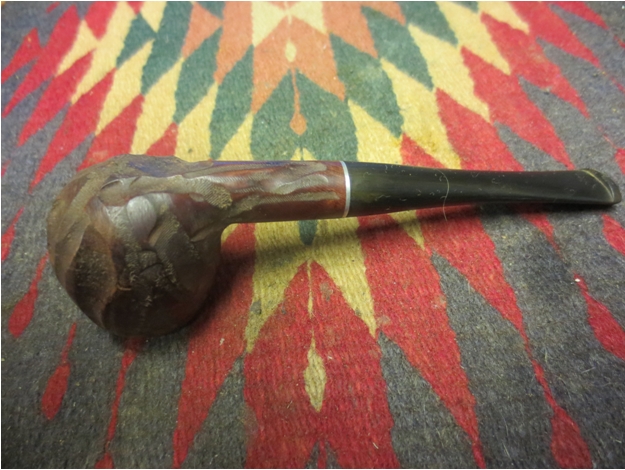
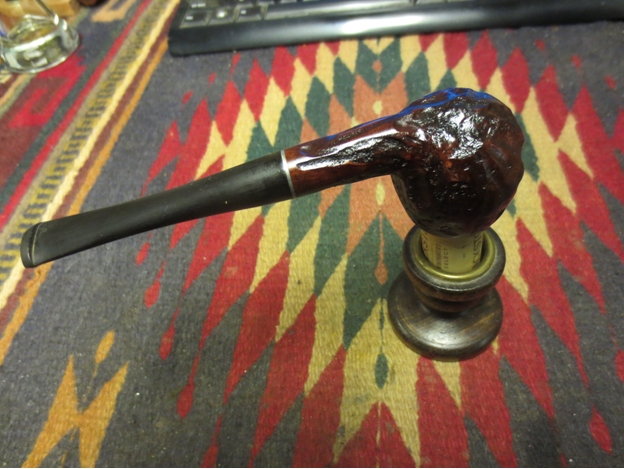
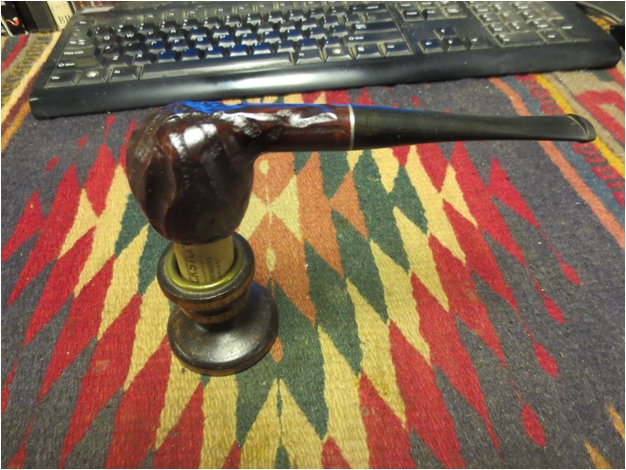
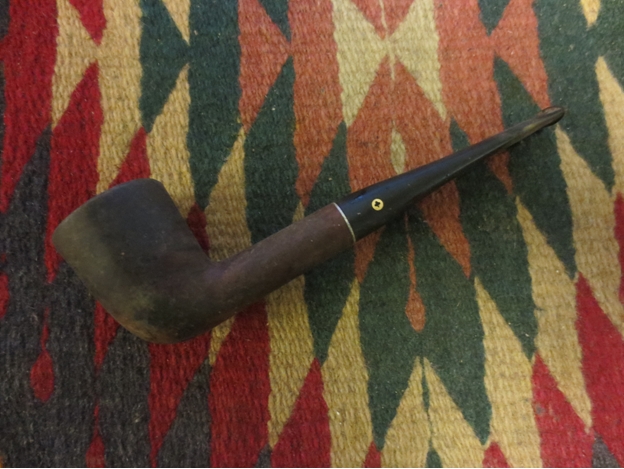
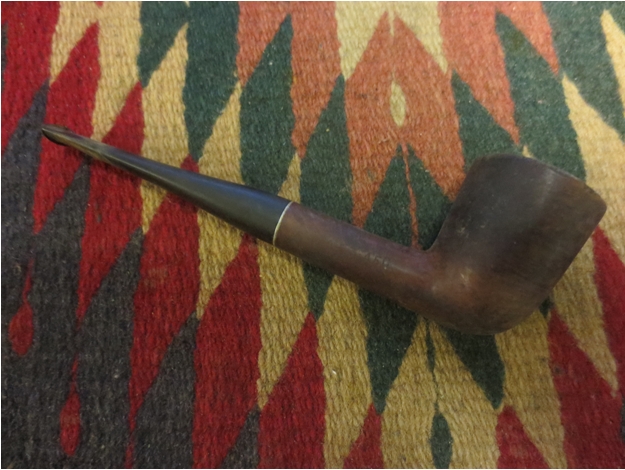
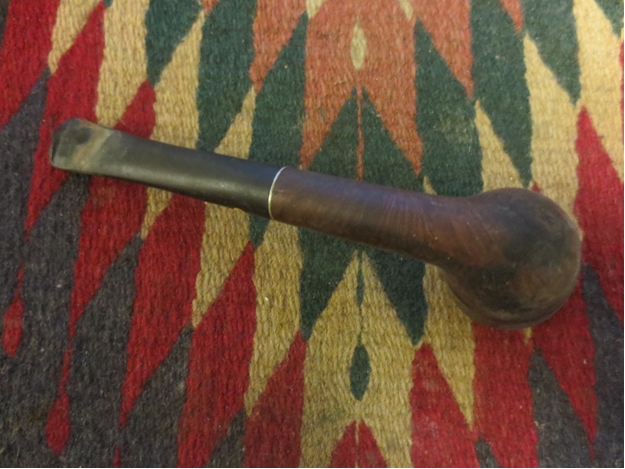
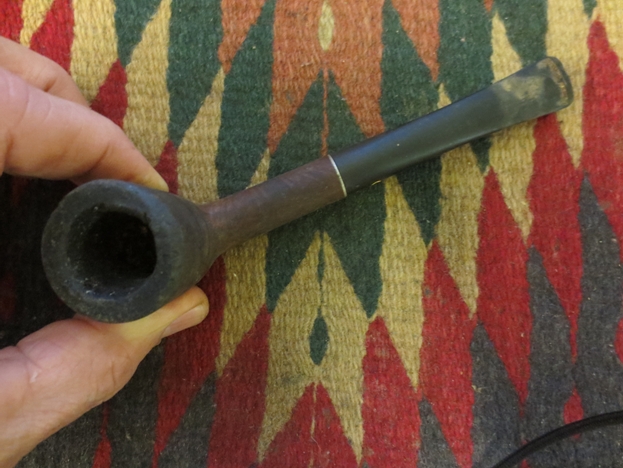
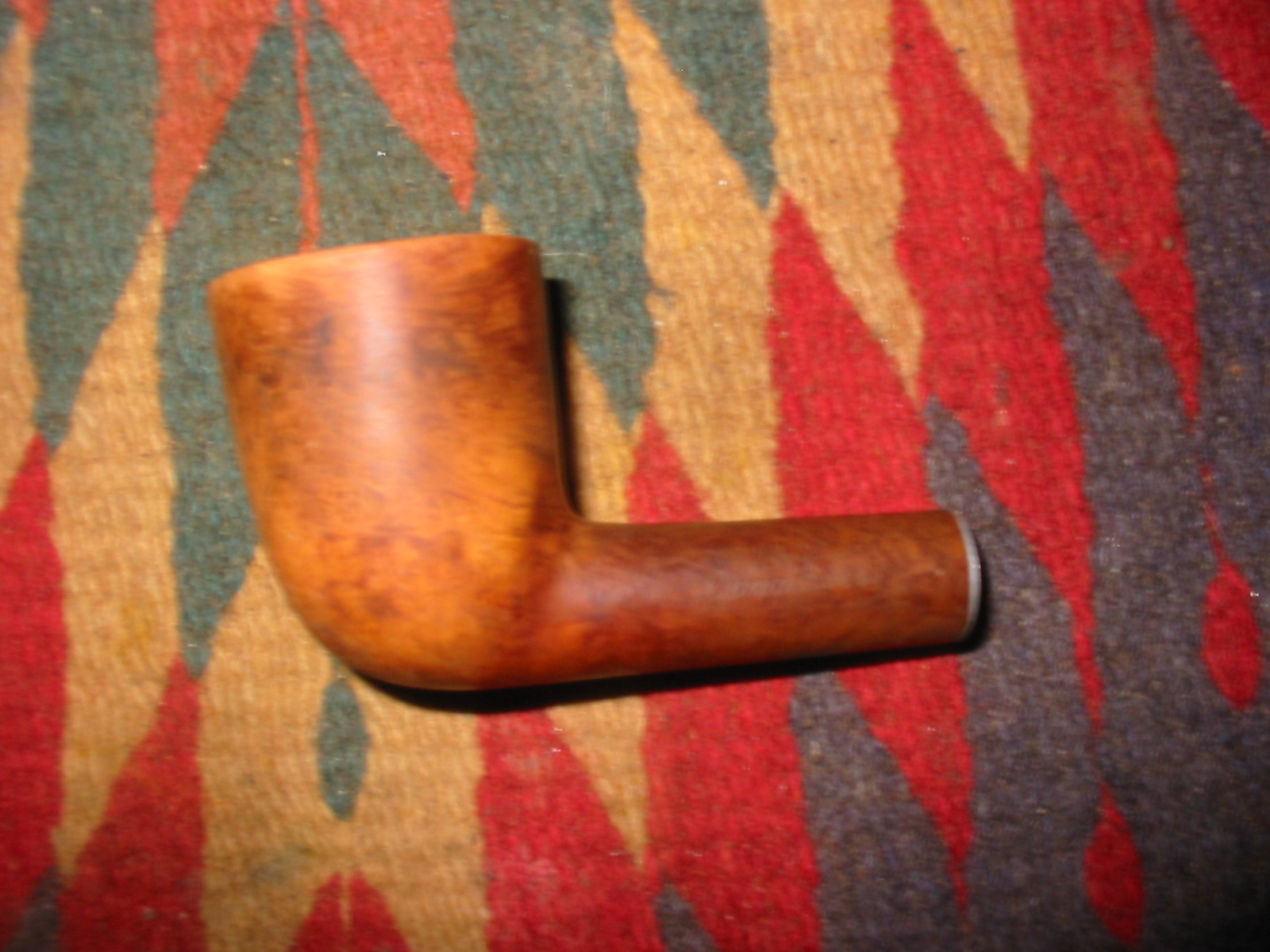
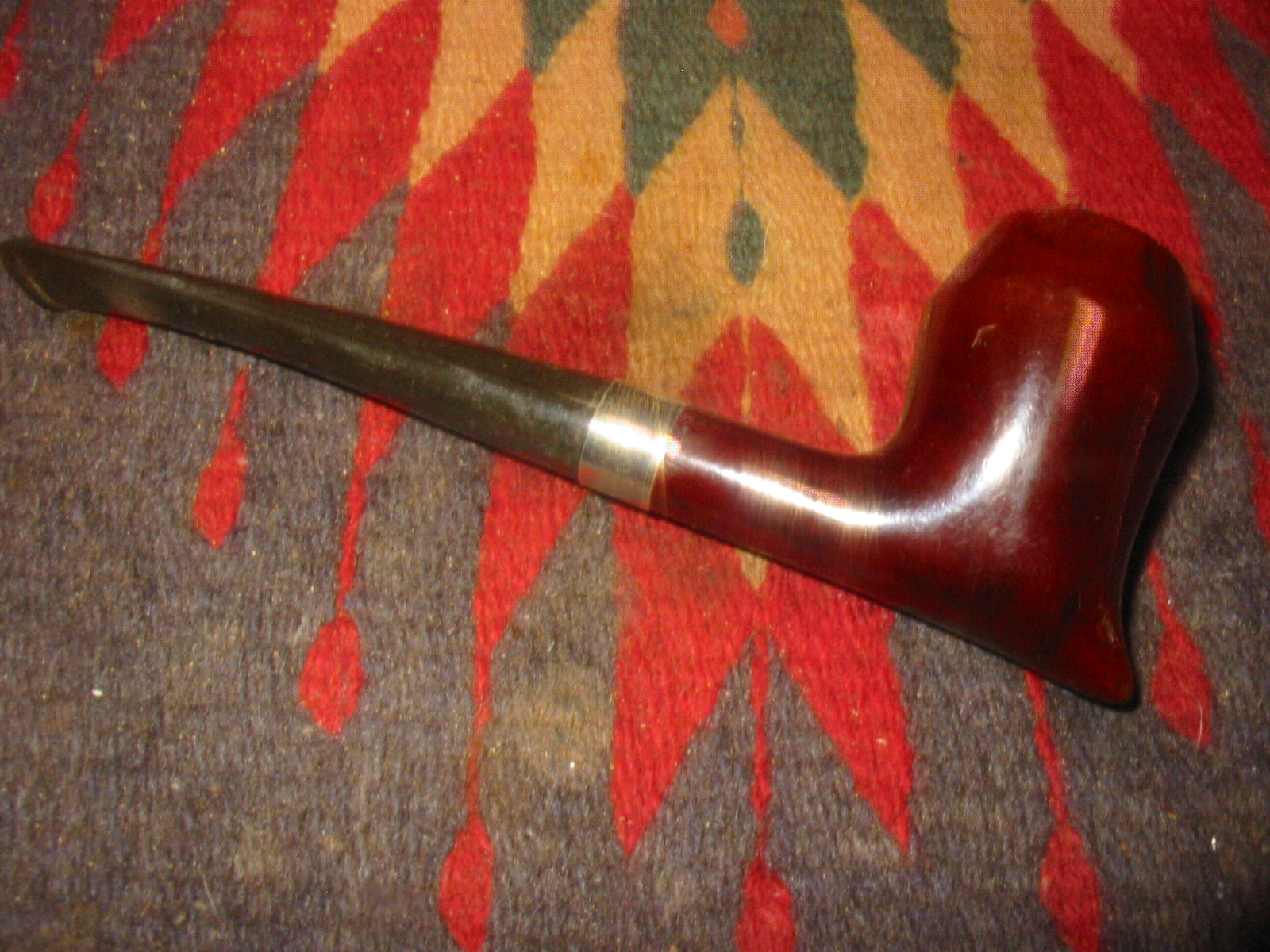
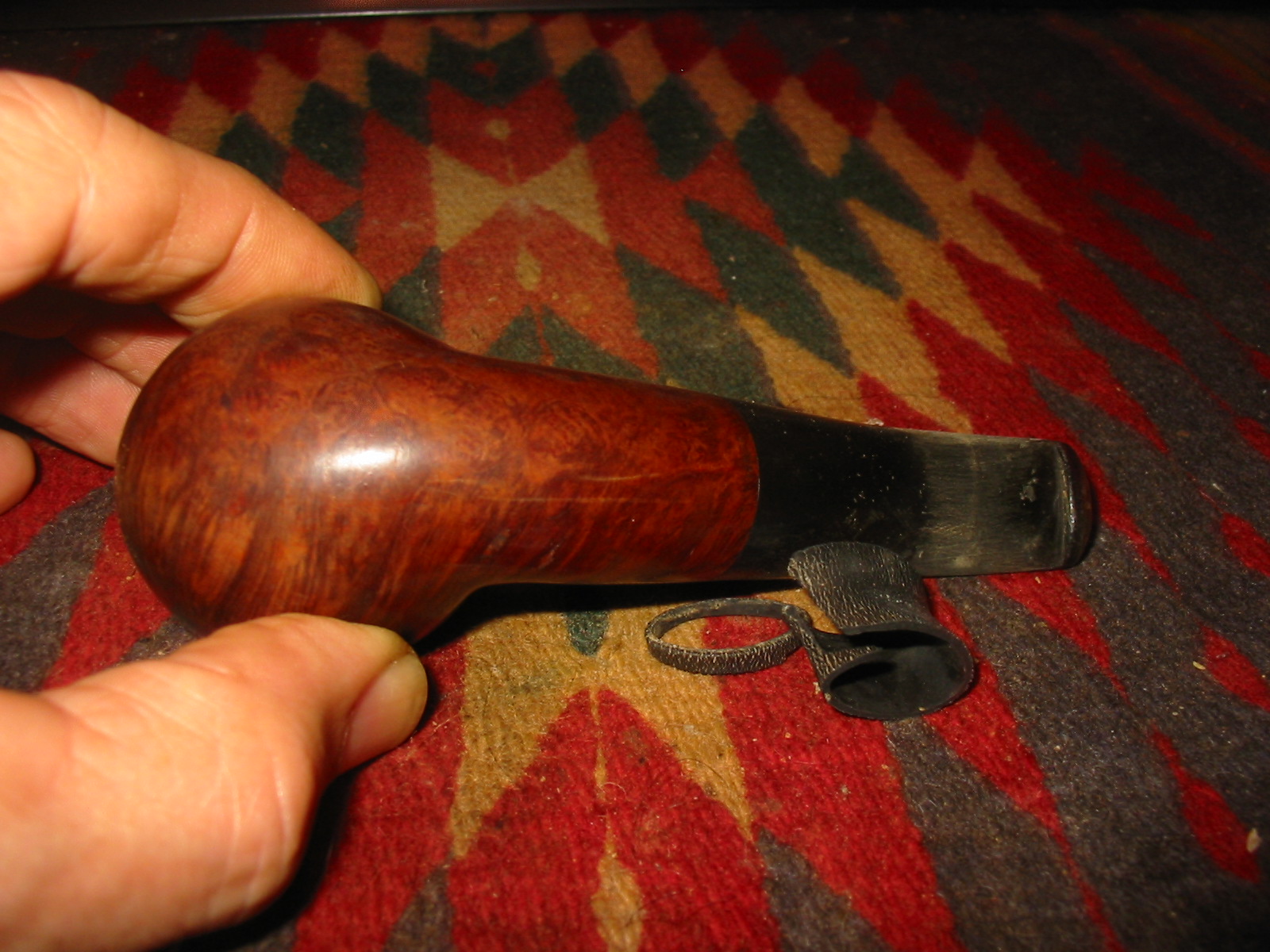
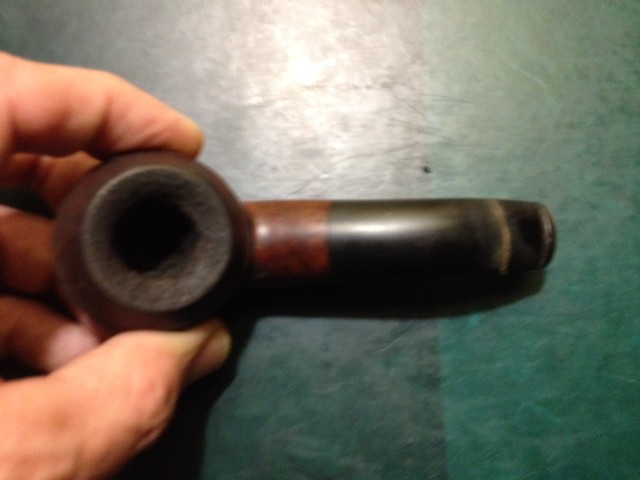
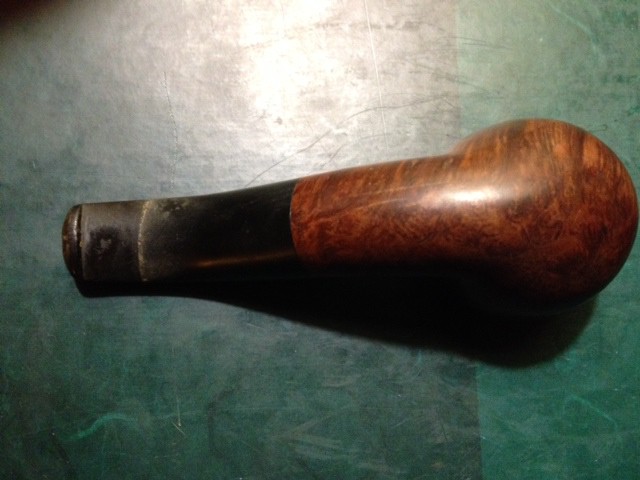
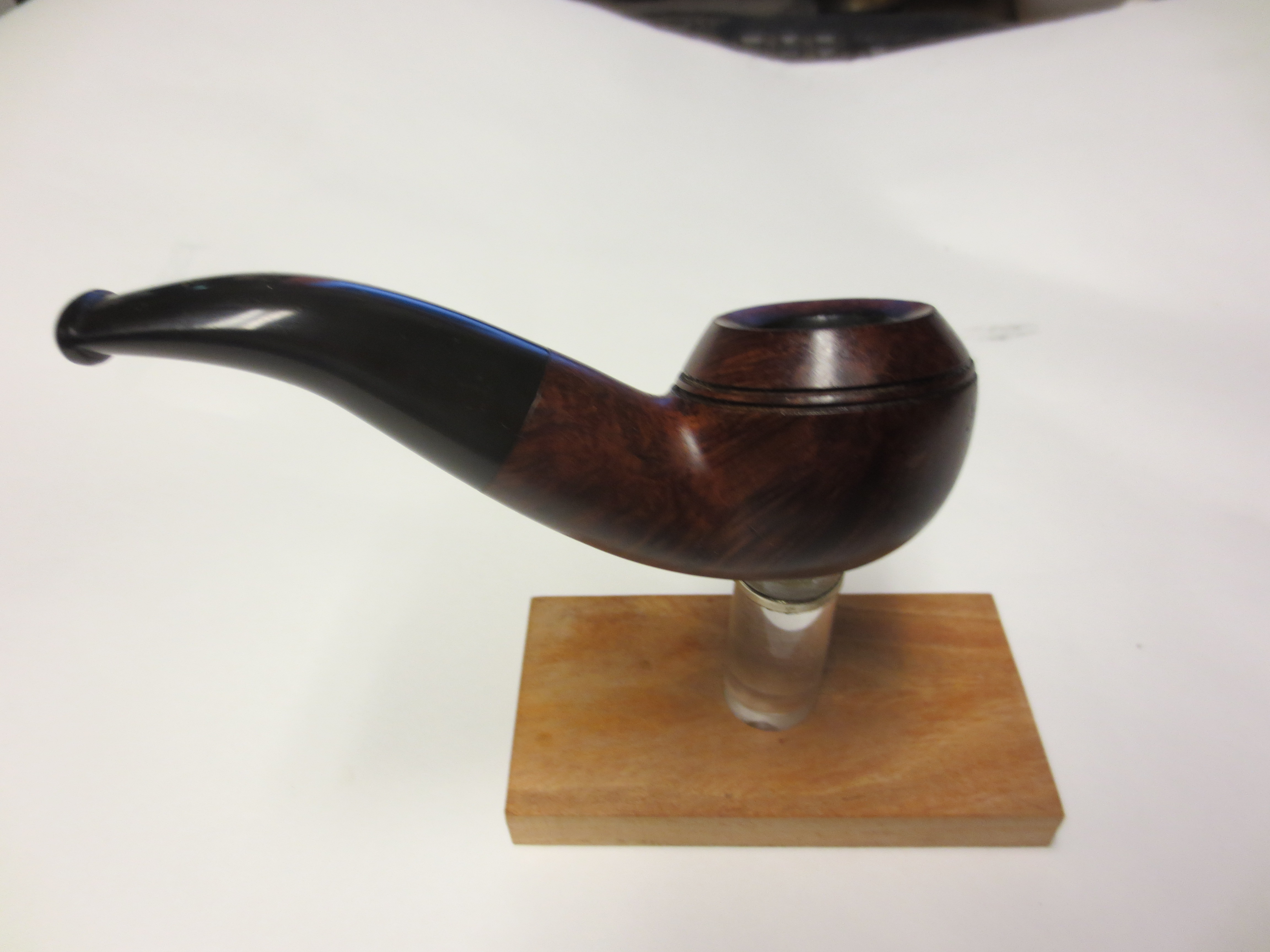
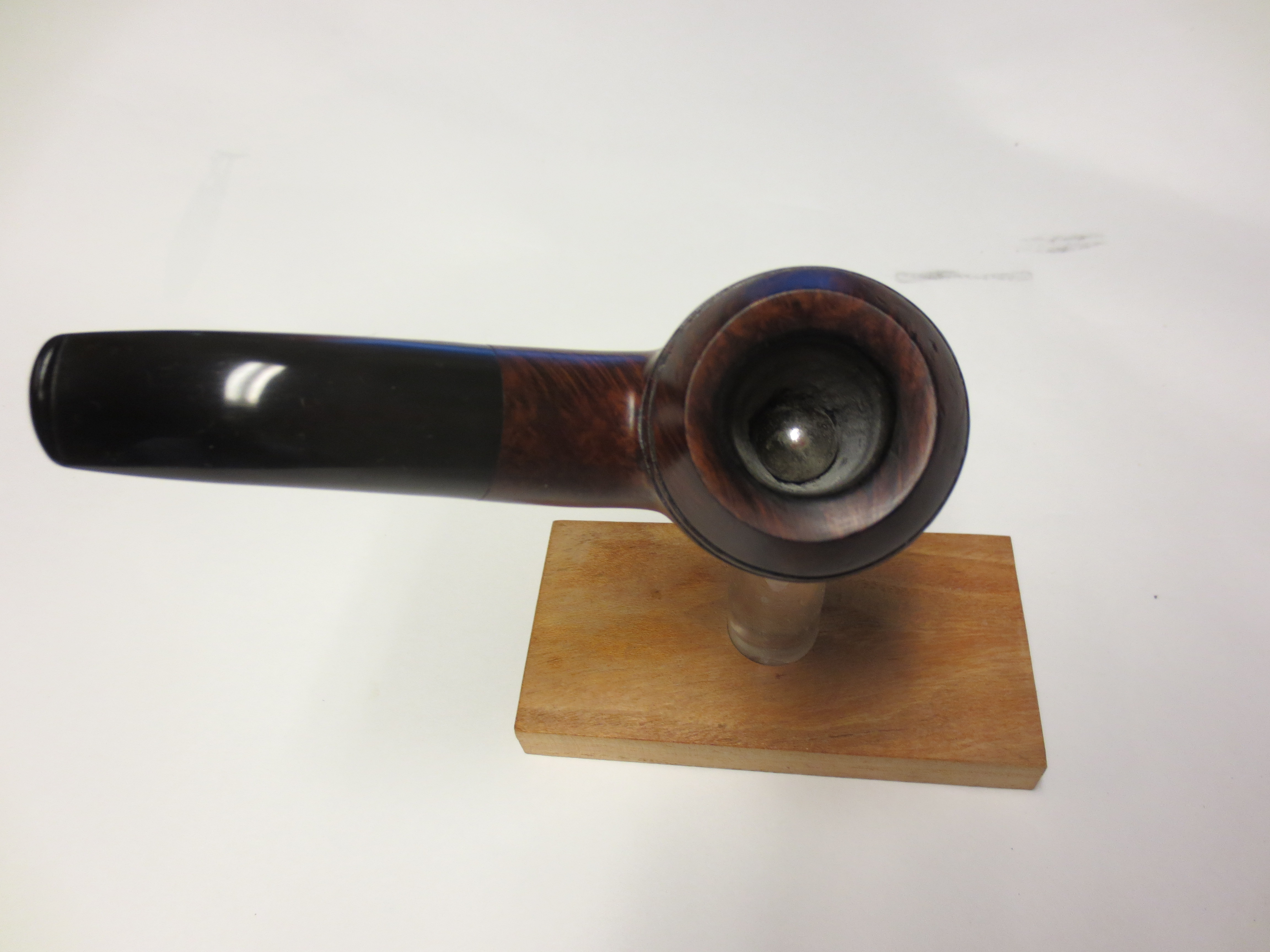
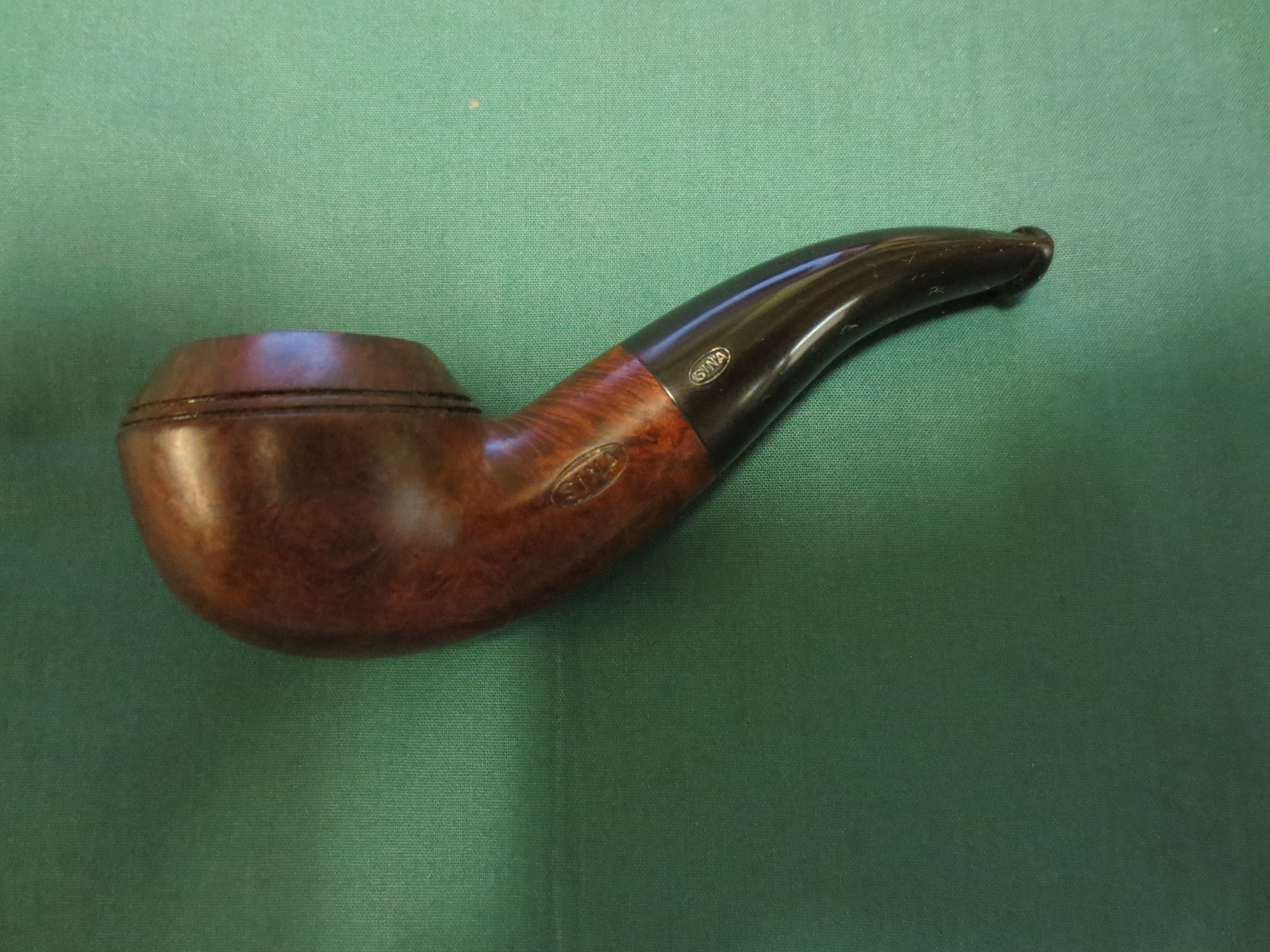
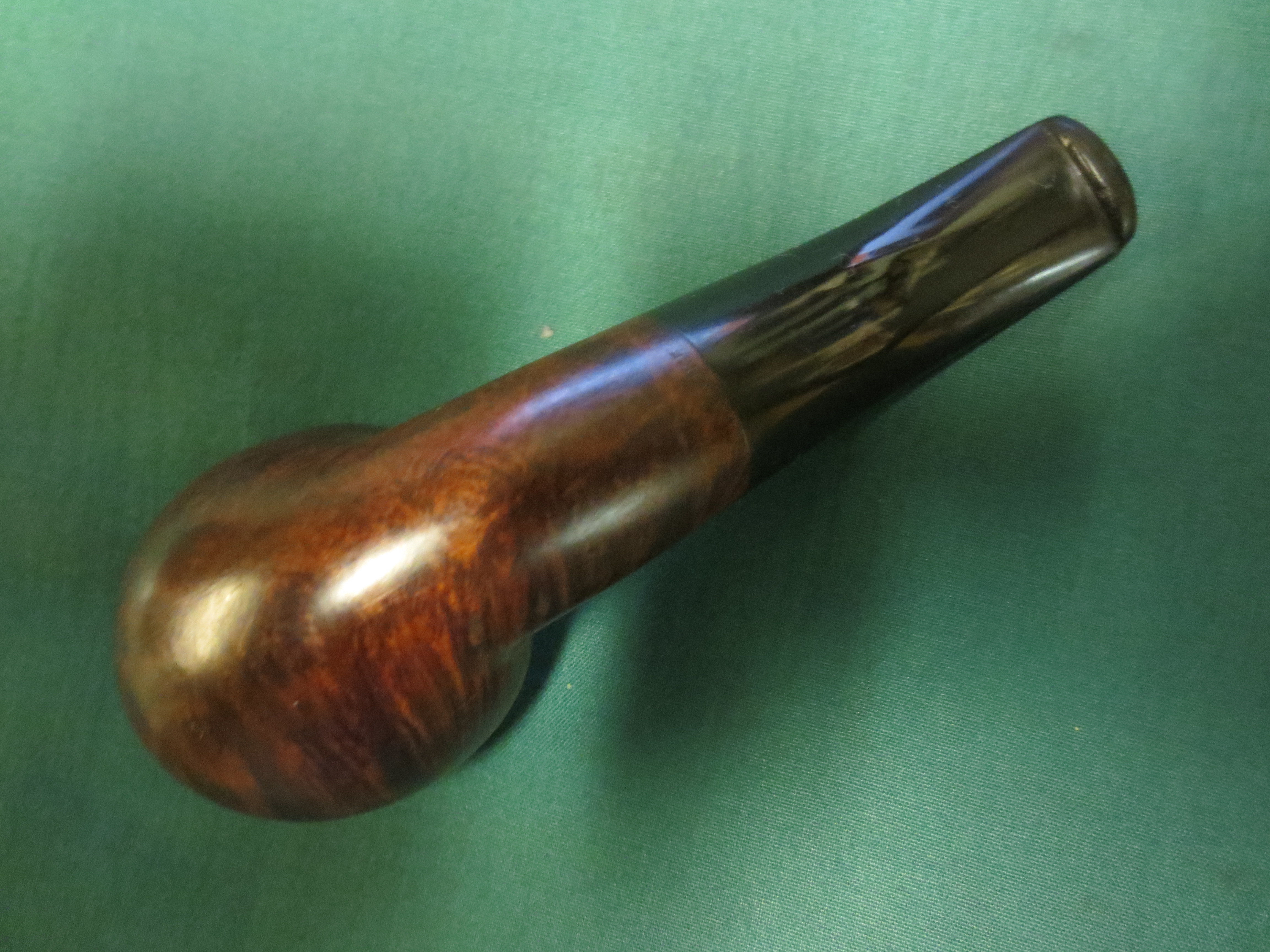
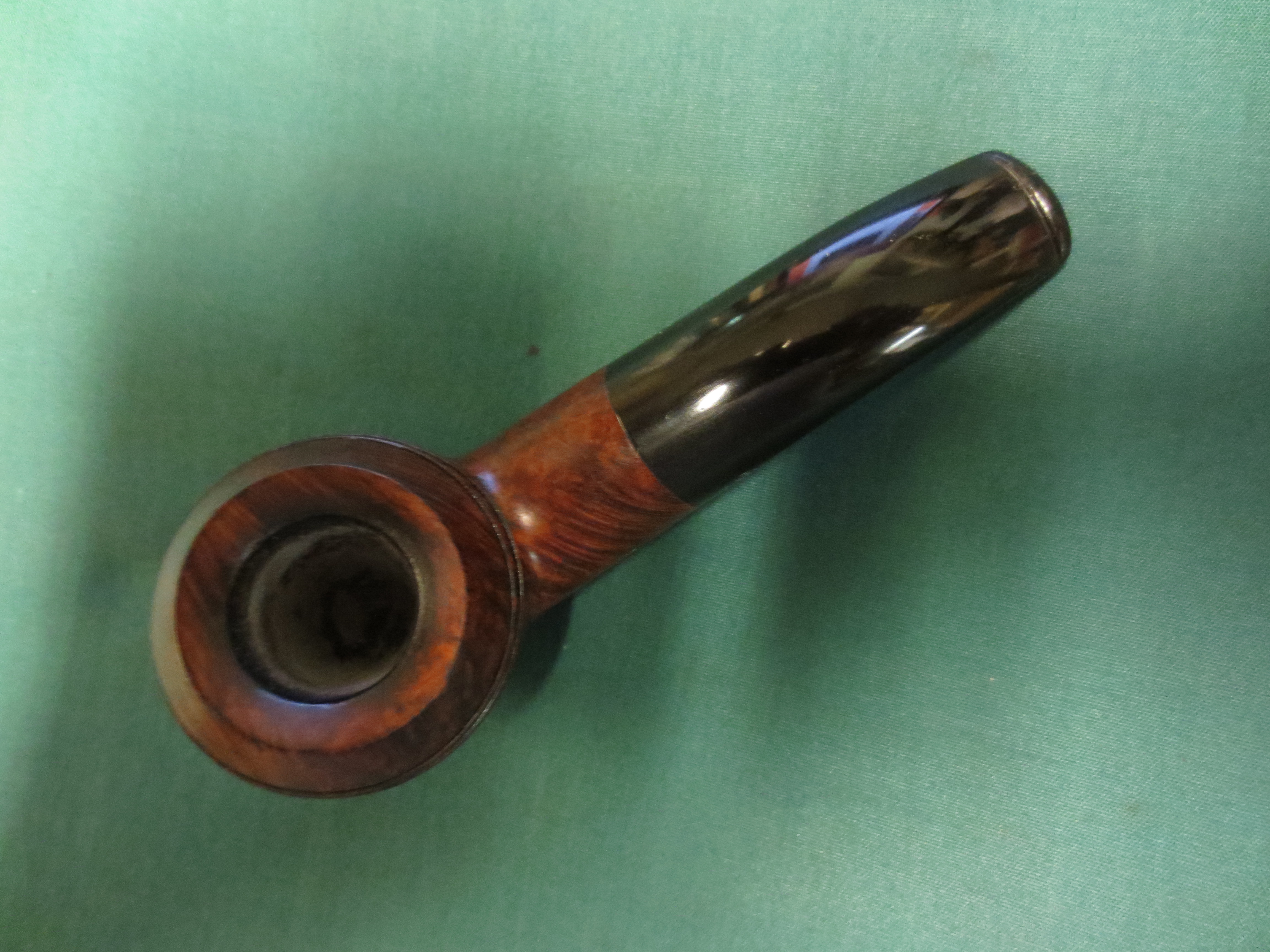
The last of the lot of six pipes I picked up in Washington was an apple shaped pipe. It was stamped Brentwood in script over SUPREME on the left side of the shank and London over England over 335 on the right side of the shank. The stem had a cursive letter ‘B’ on the left side. The finish was in good condition with a few small dings and dents in the briar. It had a thick coat of grime and grease on the briar. The rim was clean with no dents. It had a build up tars but was quite clean underneath. The stem was oxidized but there were no bite marks or dents. The stamping of the ‘B’ on the stem was in great condition and appears to have a gold colour stamped into the vulcanite. The overall look of the pipe looked familiar to me. I was not sure of the maker of the pipe but there was something about it that I remembered. Because of the sense that I had seen it before I decided to take it home, clean it up and see if I could dig up any information on the brand. I paid the $10 that the antique dealer had put on the pipe.
IMG_6925

IMG_6926
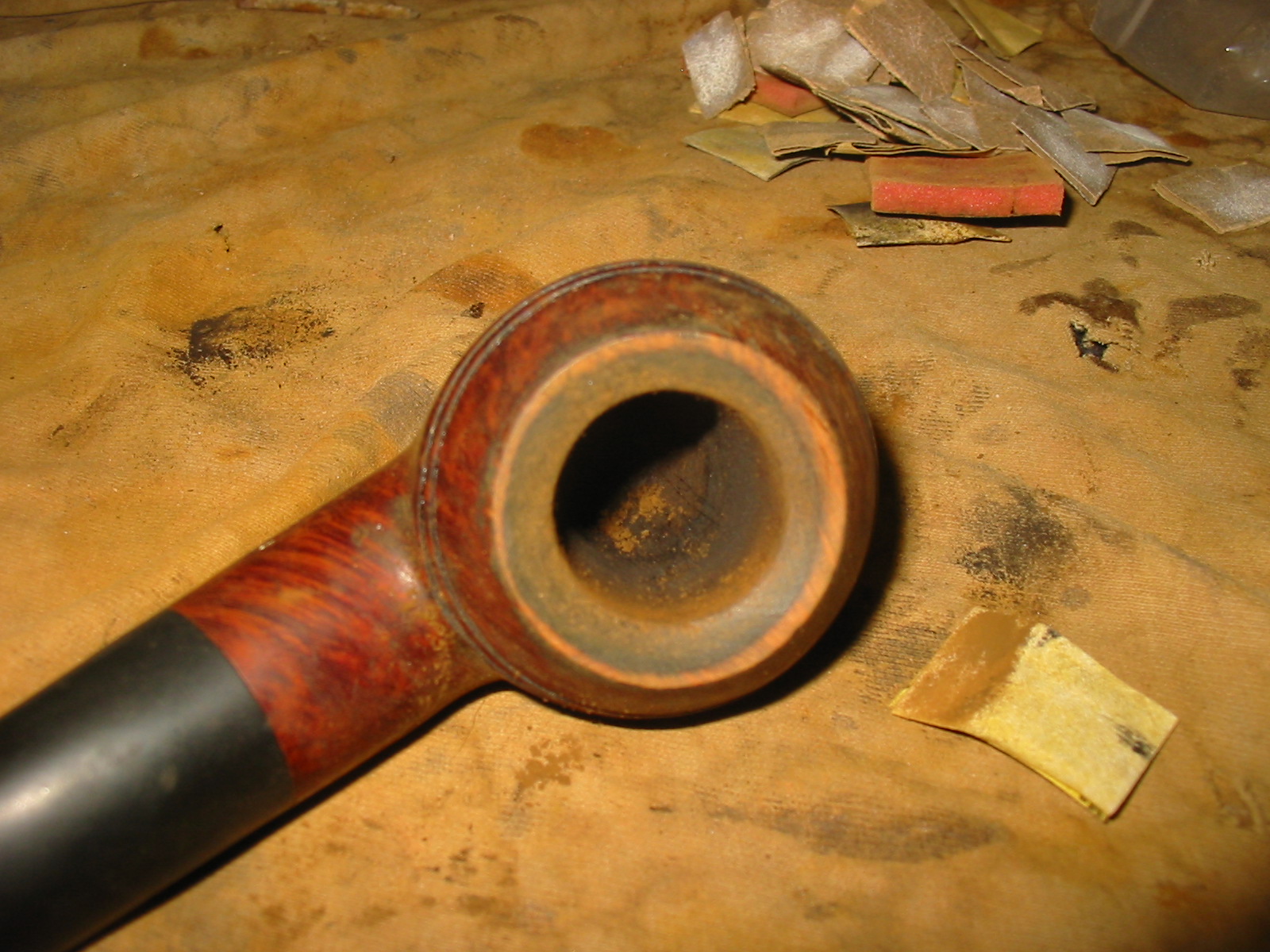
I examined the pipe and catalogued in my head what needed to be done to clean it up. I always do that to get some idea of what lies ahead for me. The bowl inside had an uneven cake on it. There were remnants of tobacco in the bowl. When I removed the stem the inside of the shank/mortise was clean and had some of the reddish brown stain inside from the bowl. There was no tar or build up in the shank. The inside of the stem had some tars and buildup that came out with the pipe cleaners and alcohol. I am not sure how that is possible that the shank was clean with the buildup and tobacco remnants in the bowl and the tars in the stem but that is the way it was. I may never know what the pipe went through.
IMG_6923

IMG_6927
I compared the pipe to an older GBD apple that I have here at home. It had the same shape number stamp on it. Both were stamped 335. Both were apple shaped pipes. Both were stamped on the right side of the shank – LONDON, ENGLAND. The parallels made me go to the internet to see if I could find any information on the brand. I looked at Pipephil’s stamping and logo website (http://www.pipephil.eu/logos/en/logo-b7.html) and found the Brentwood stamping. The second pipe shown in the photo on the site had the same shape number as the one I had found. I have included the photo below as well as three other photos of the stamping on the briar and on the stem. The stamping shown in the second photo is the same on the left side of the pipe – the cursive Brentwood stamping. It is missing the Supreme stamping. The stamping on the other side of the shank – ‘MADE IN ENGLAND’ is different from mine but both the shape number and the position of that stamping is the same. The stamping on the pipe in the third photo shows the same stamping as the pipe I have – ‘LONDON, ENGLAND. The fourth photo shows the cursive ‘B’ on the side of the stem as the pipe I found.
brentwood2ybrentwood2bbrentwood1bbrentwood1a

Underneath the photo of the stamping on the Pipephil site read as follows: “Brentwood seems to be a GBD second for following reasons:
– 335 is a GBD shape number for an apple shape like the pipe above.
– 9518 (first pipe (not shown)) is a four digit shape number as used by GBD (ie: 9534, 9553, 9557, 9567…)”

The pipe I have that is a GBD with the same shape number and overall look, the same style saddle bit, the LONDON, ENGLAND stamping confirm the fact that the Brentwood pipe that I found is indeed a GDB second.

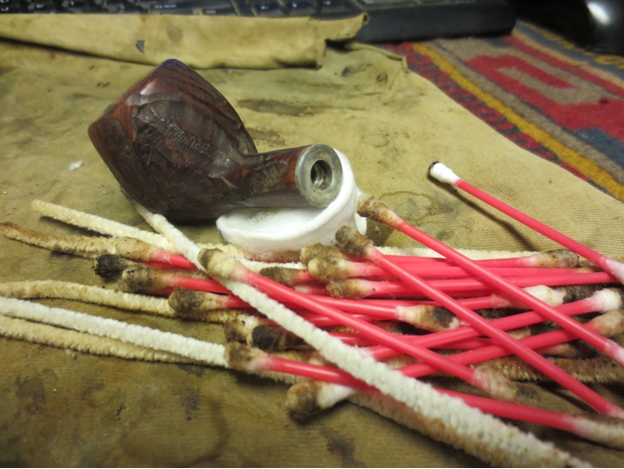
Armed with that information I went to work on the pipe to clean it up and refurbish it. The apple shape is one of my favourites so this was going to be a pipe that I would enjoy. I worked on the inside of the bowl and shank. The first photo below shows the condition of the bowl interior before reaming. The second photo shows the reaming process with a PipNet reamer. Once I reamed the bowl I scrubbed out the stain in the shank and the leftovers in the bowl with pipe cleaners, cotton swabs and isopropyl alcohol.
IMG_6924

IMG_6928
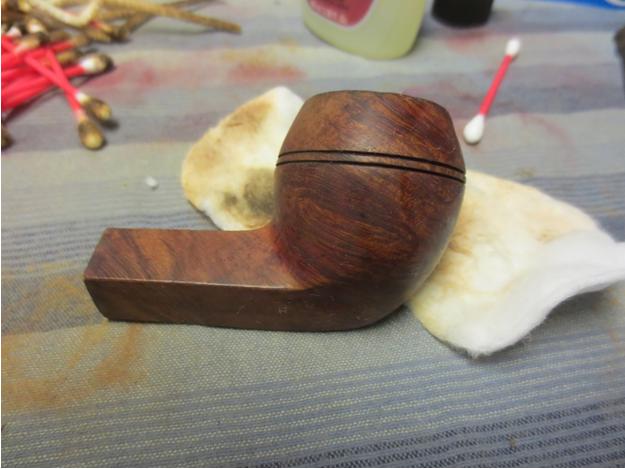
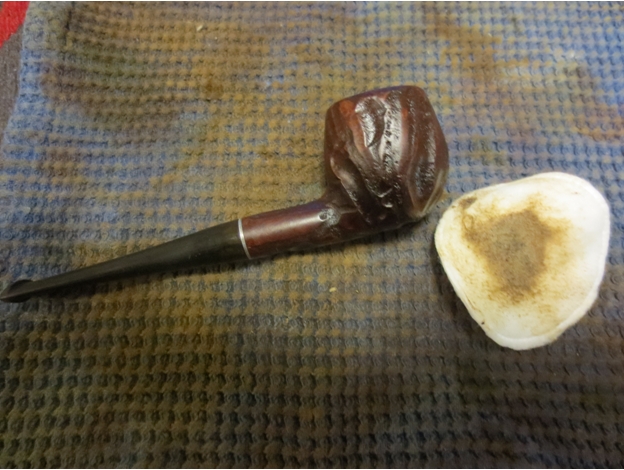
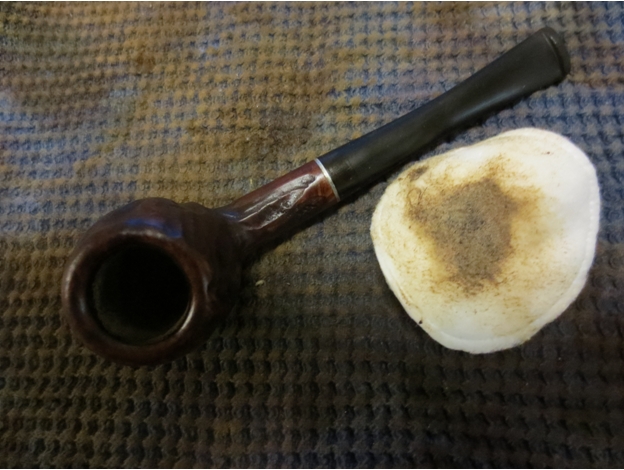
I scrubbed the exterior of the bowl and shank with Murphy’s Oil Soap on cotton pads. I wiped off the soap and residue and hand dried the bowl. The soap removed the grime and grease that was thick on the bowl. I always scrub with undiluted soap as I have found that it leaves the finish more intact than using the soap mixed with water.
IMG_6929

IMG_6930
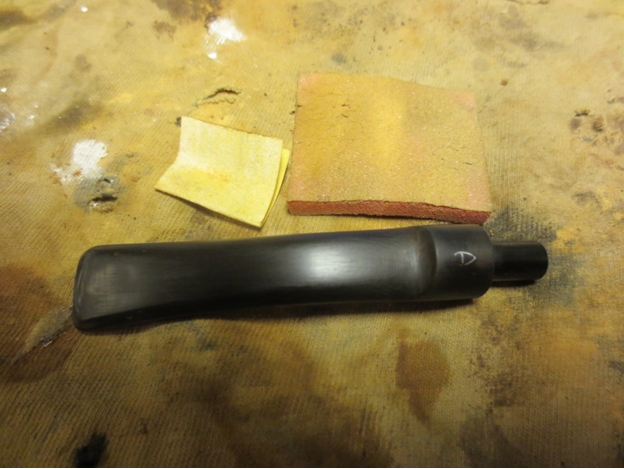
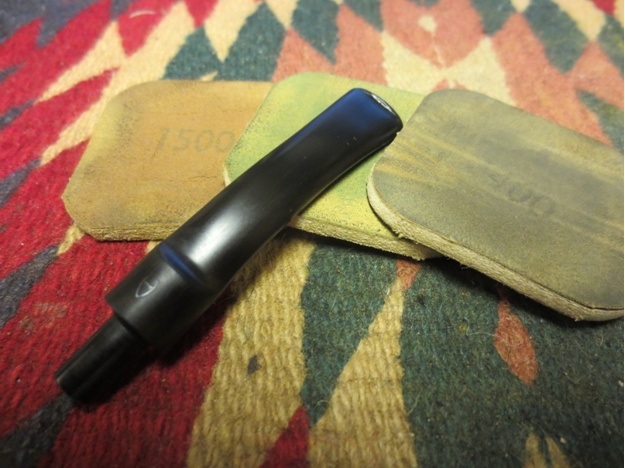
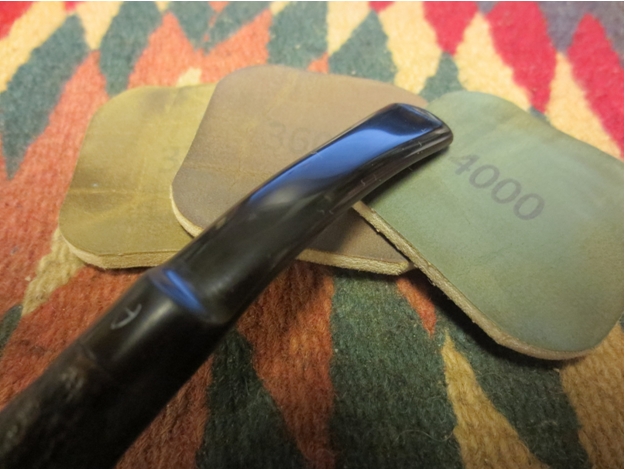
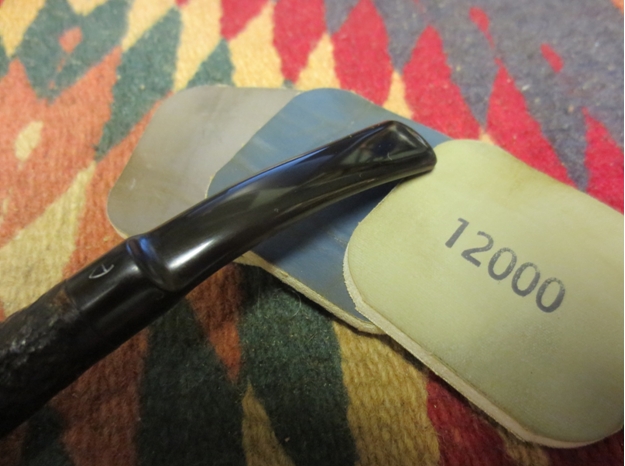
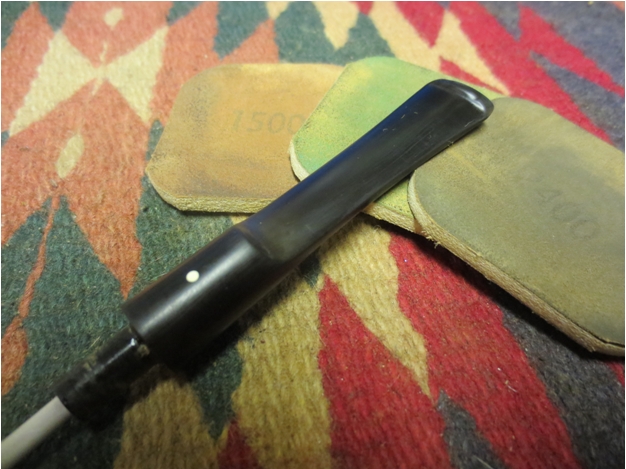
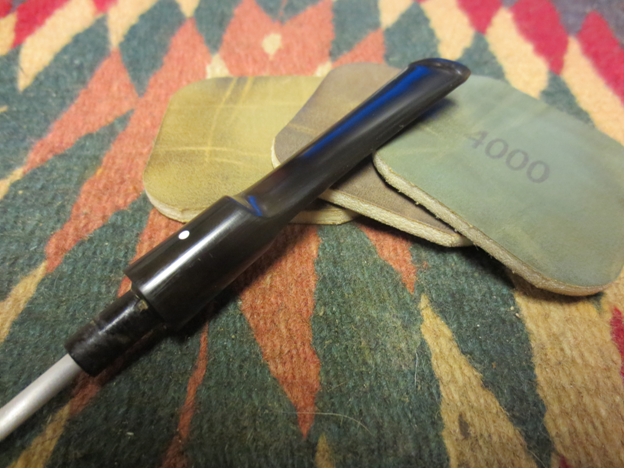
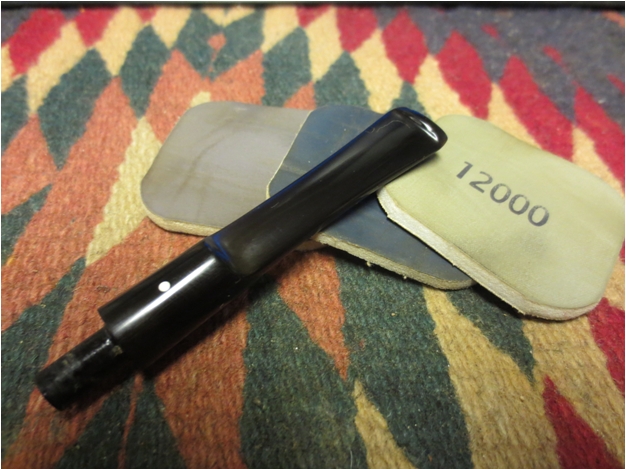
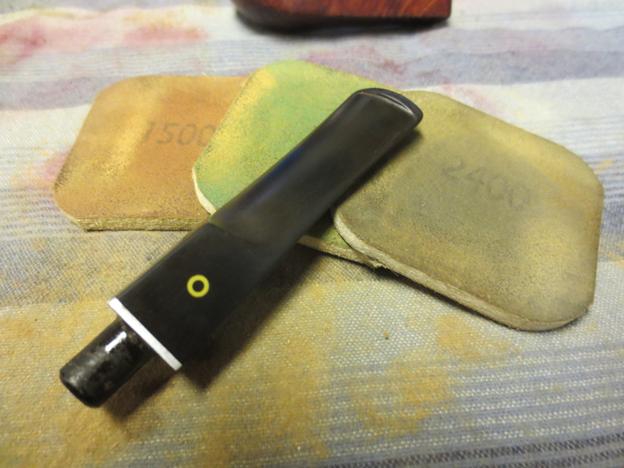
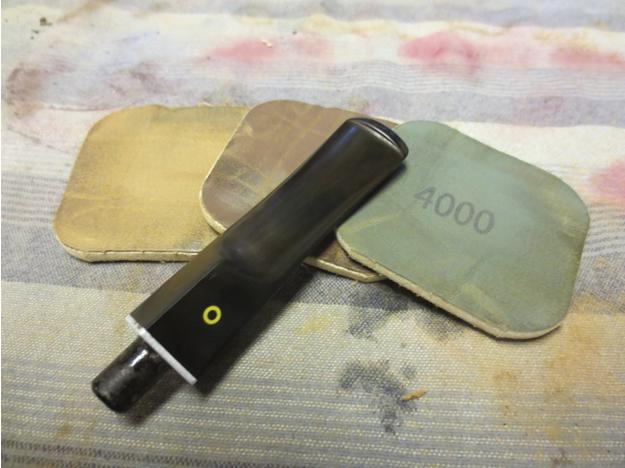
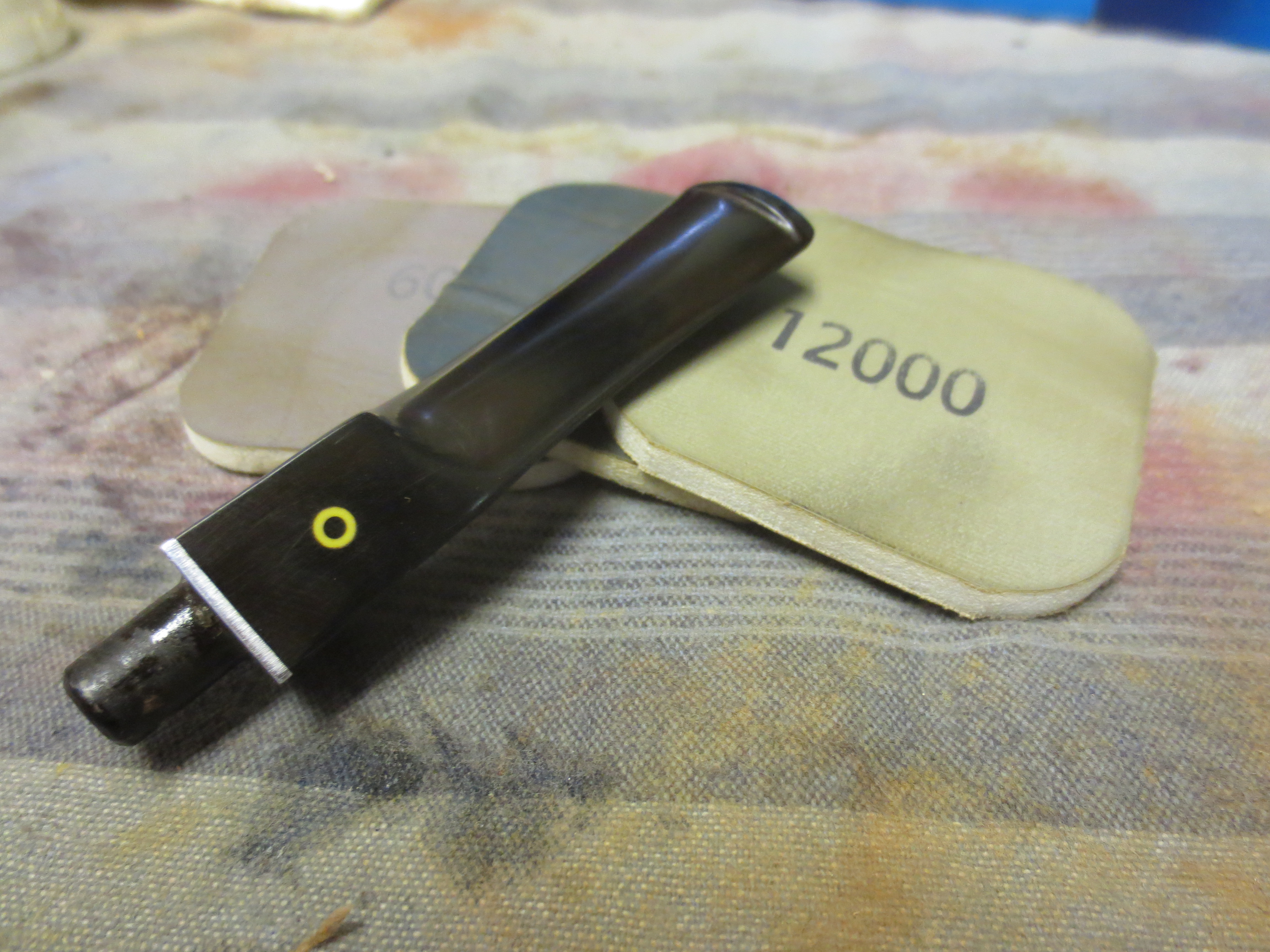
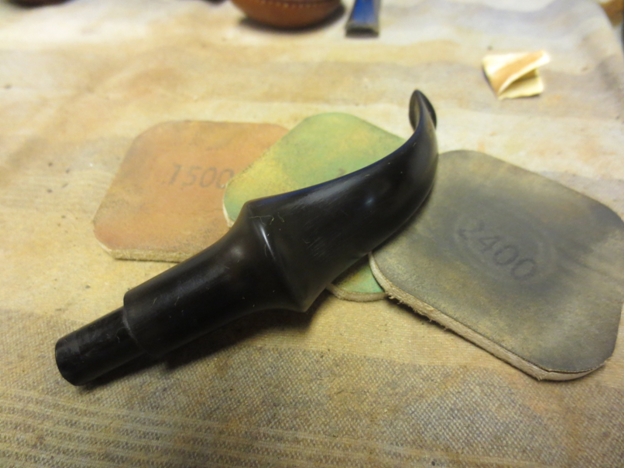
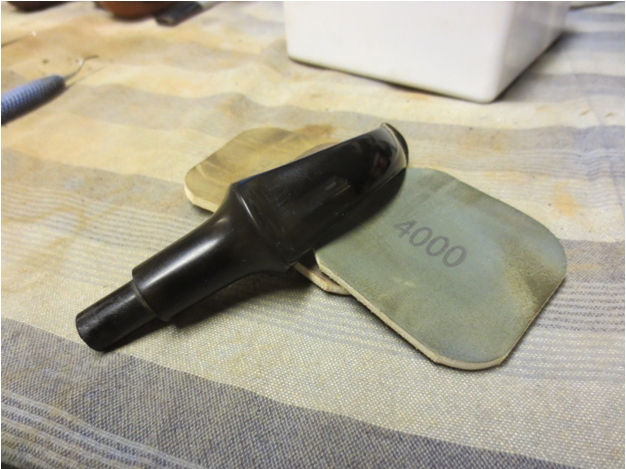
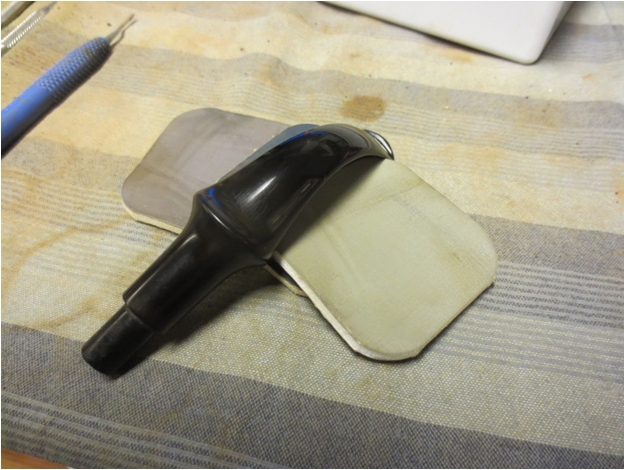
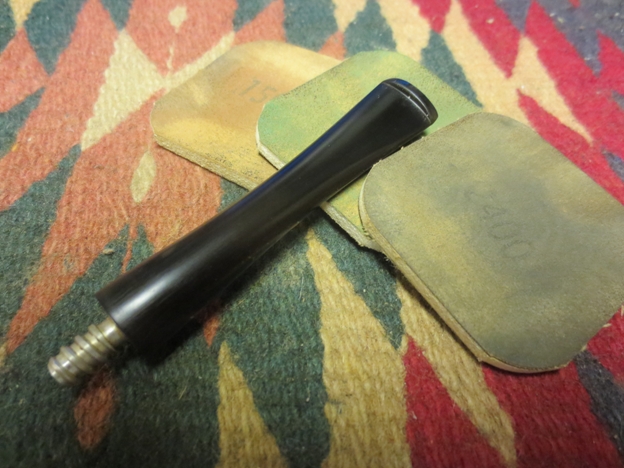
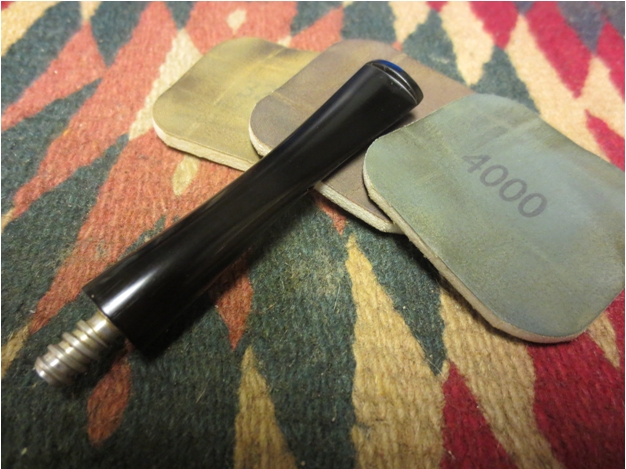
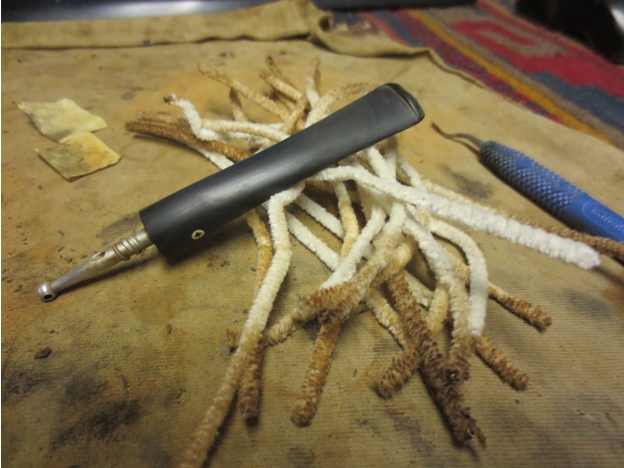
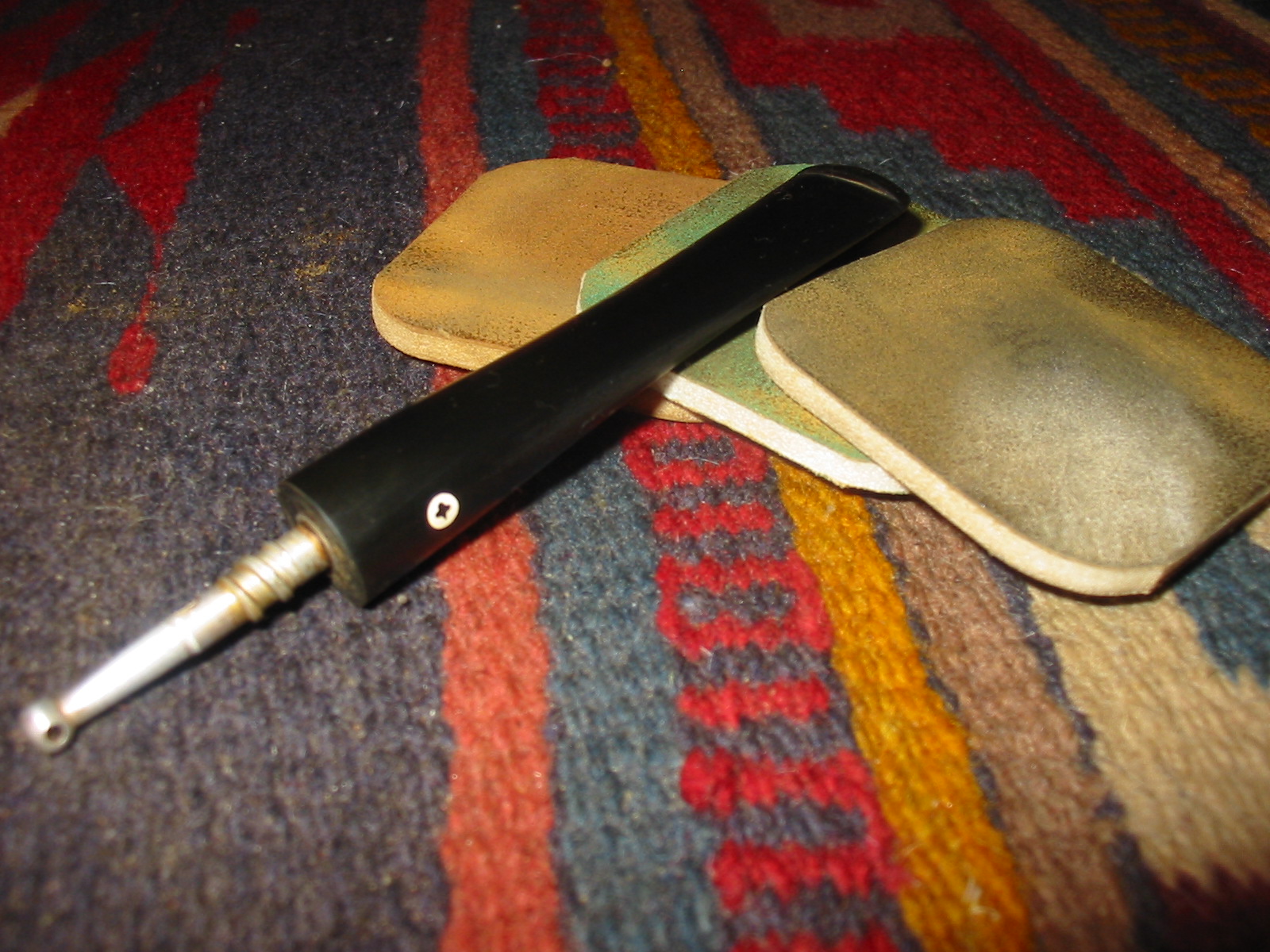
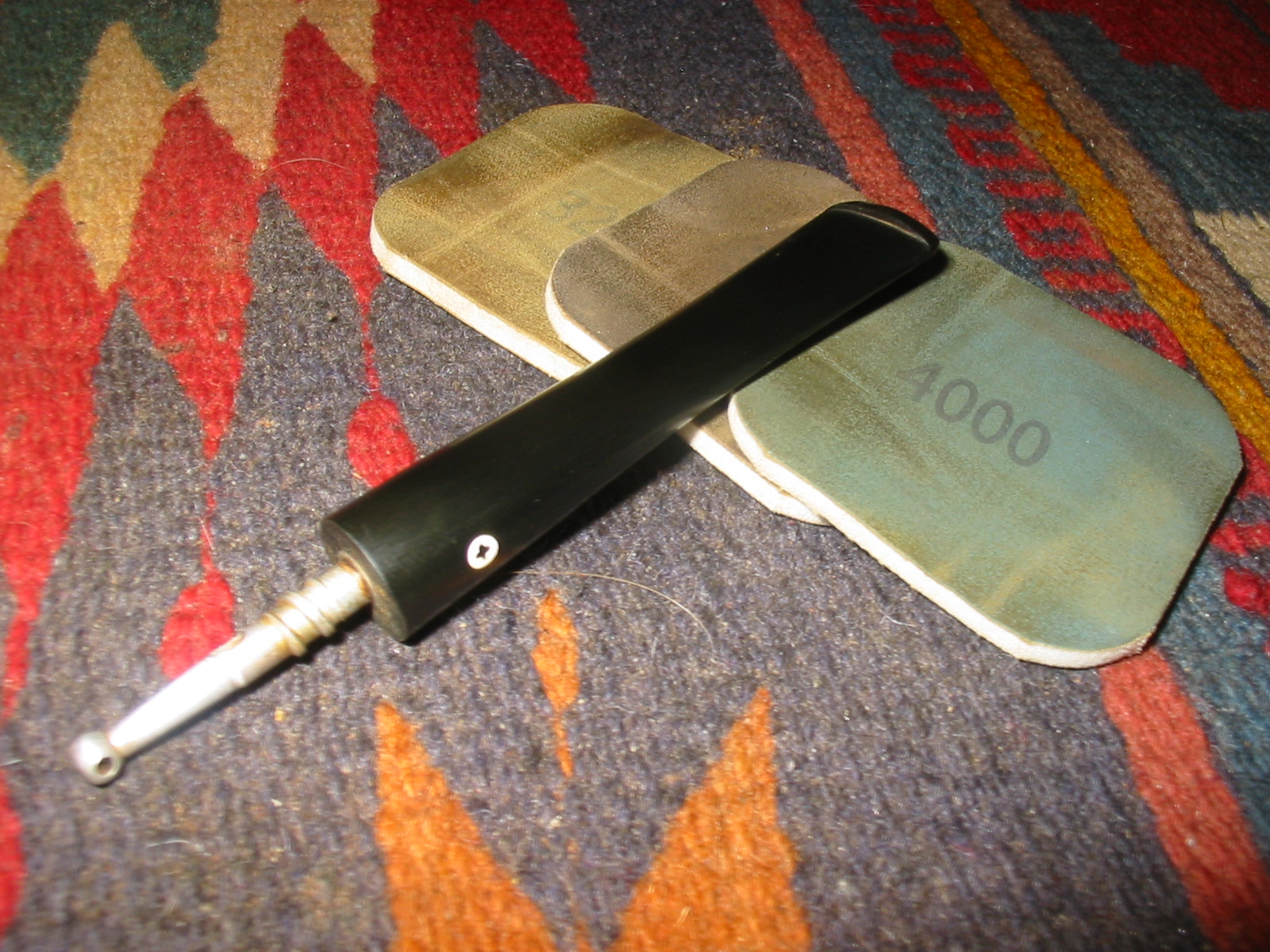
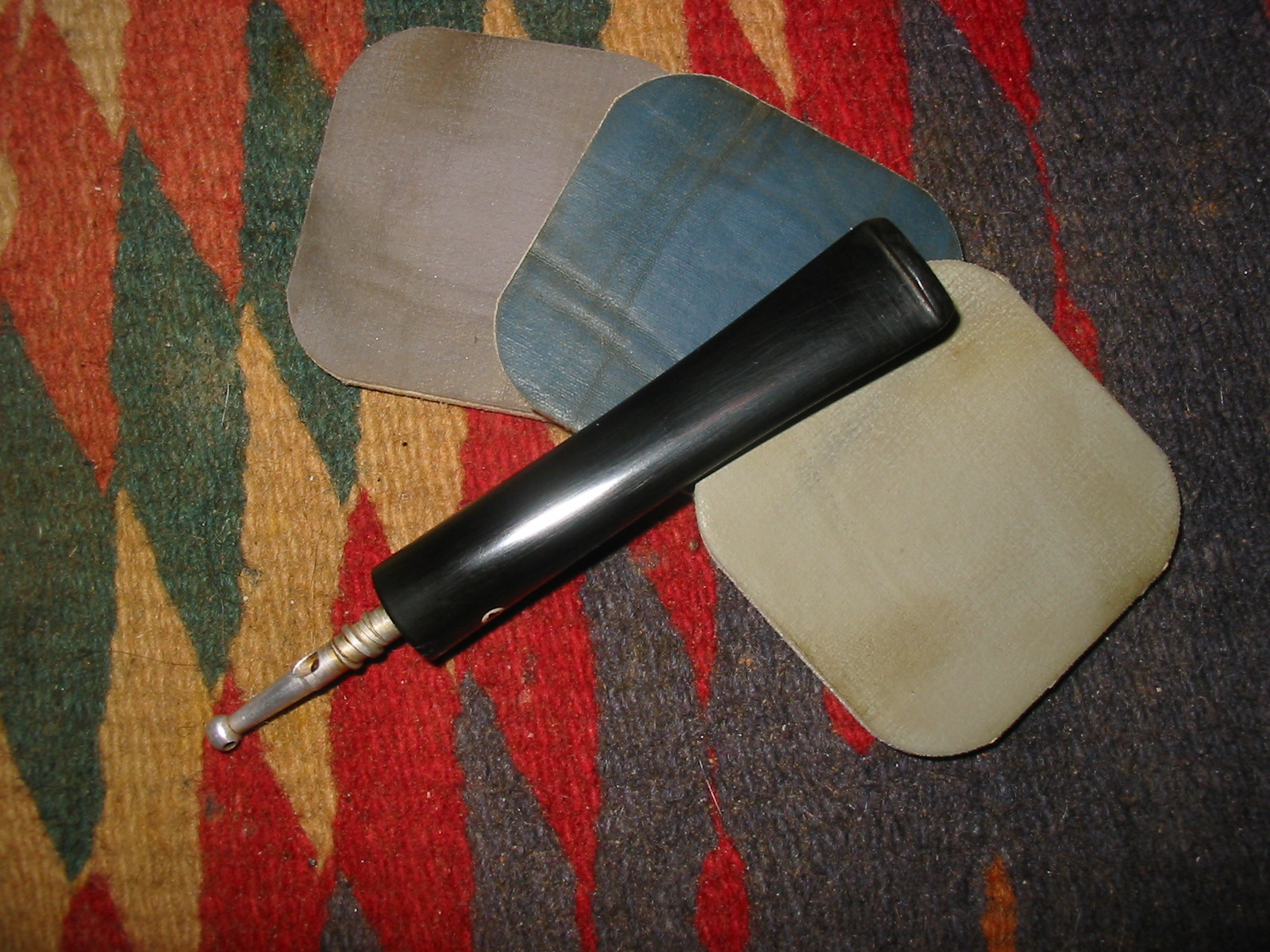
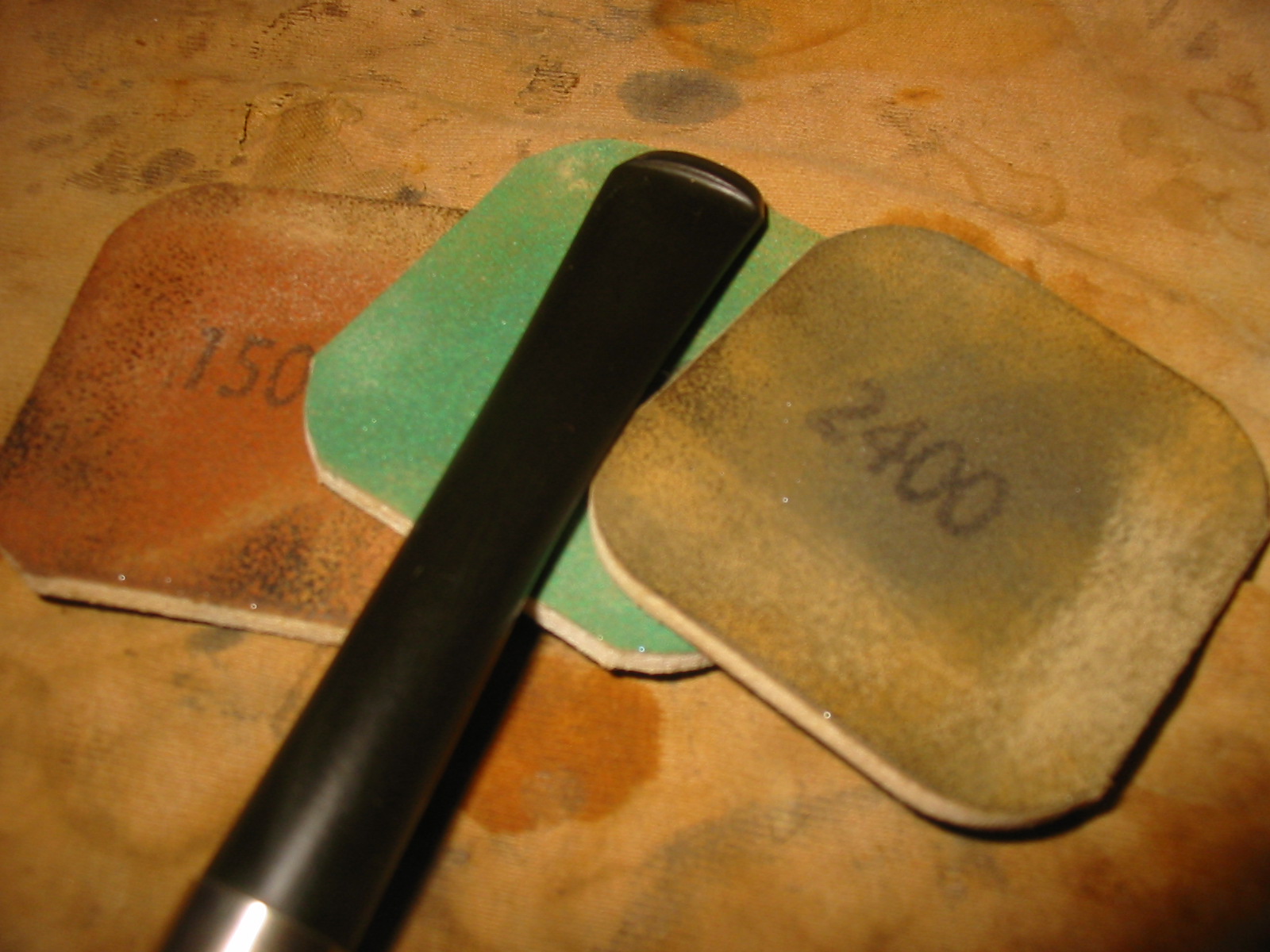
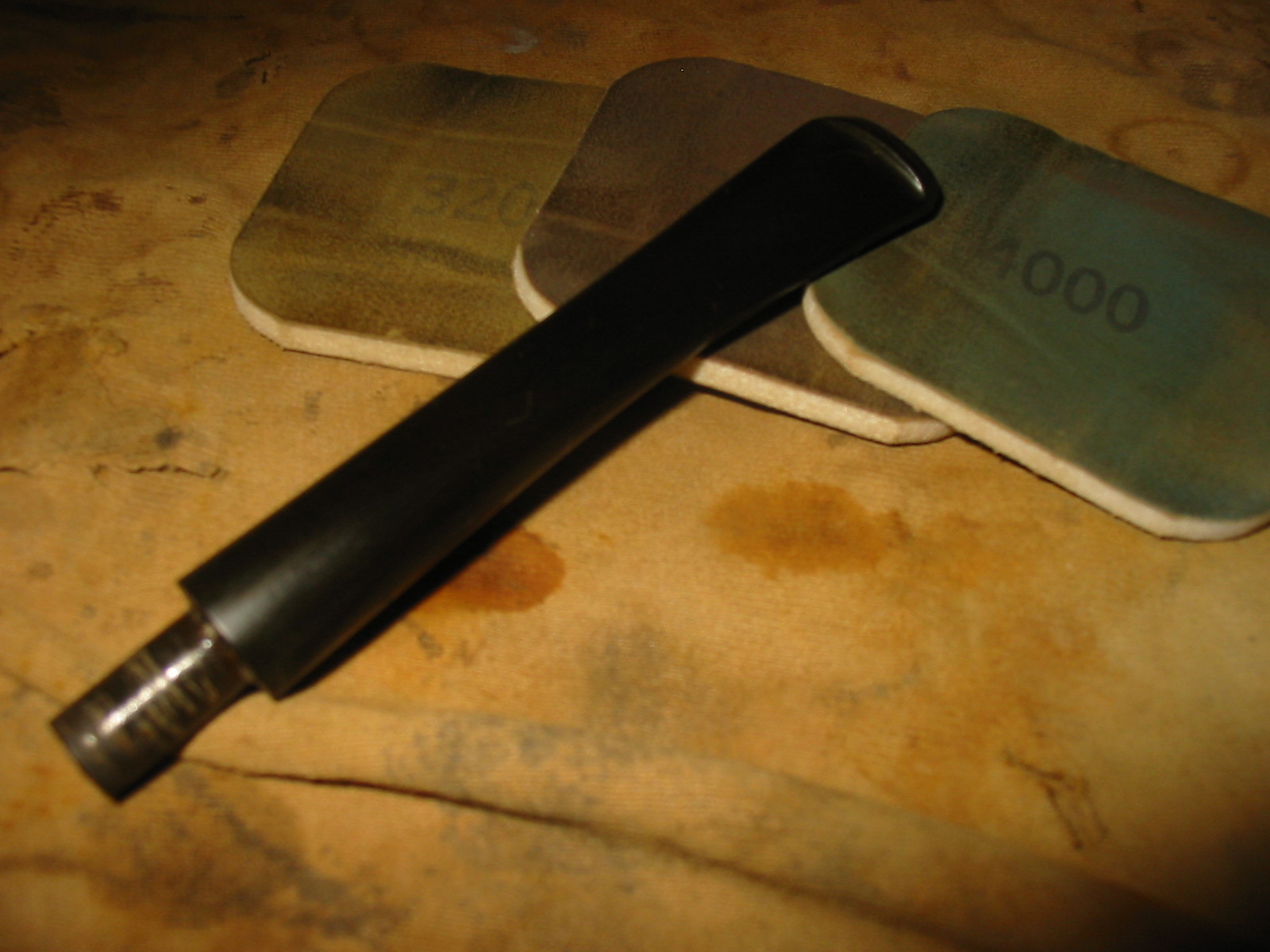
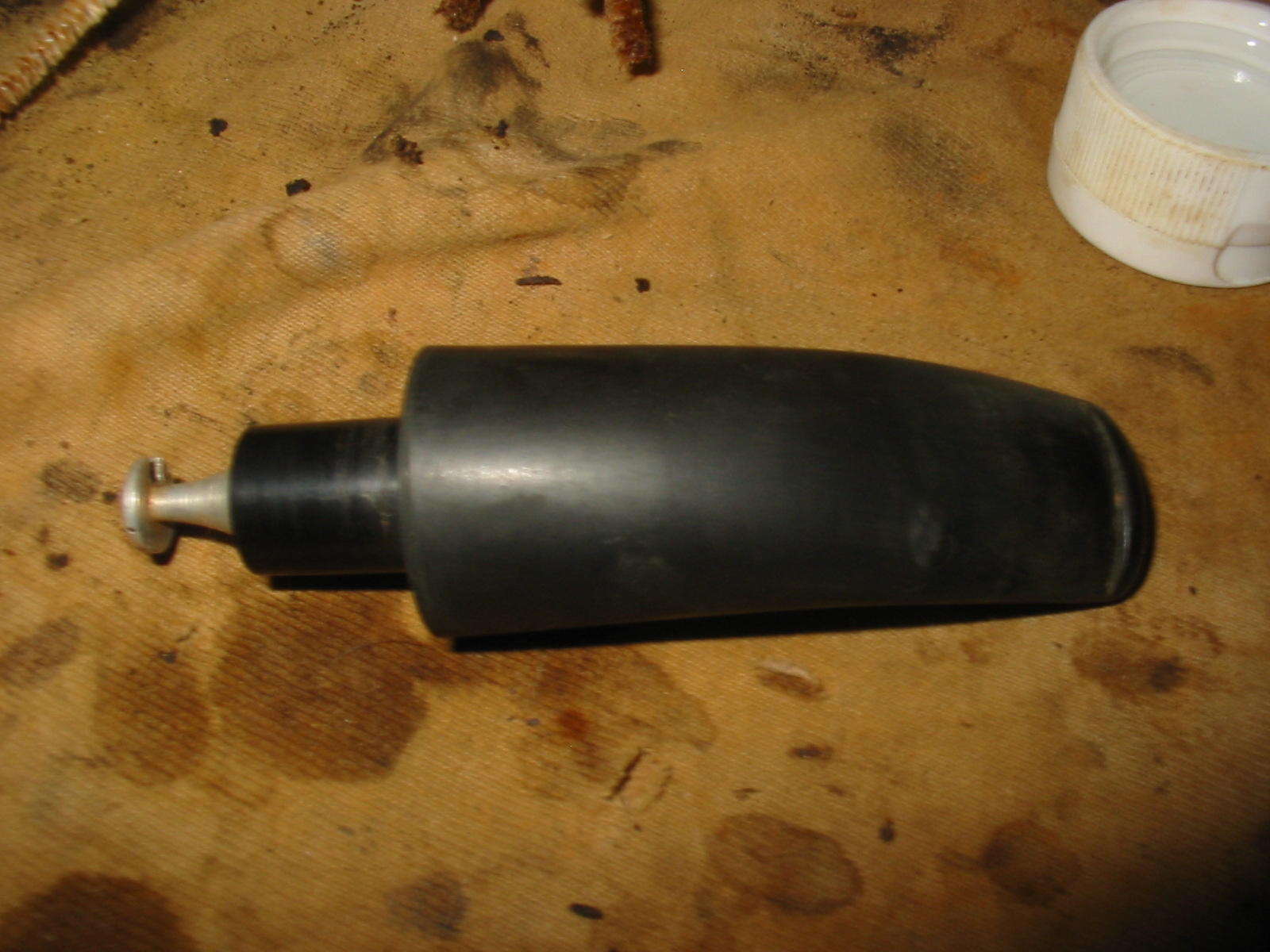
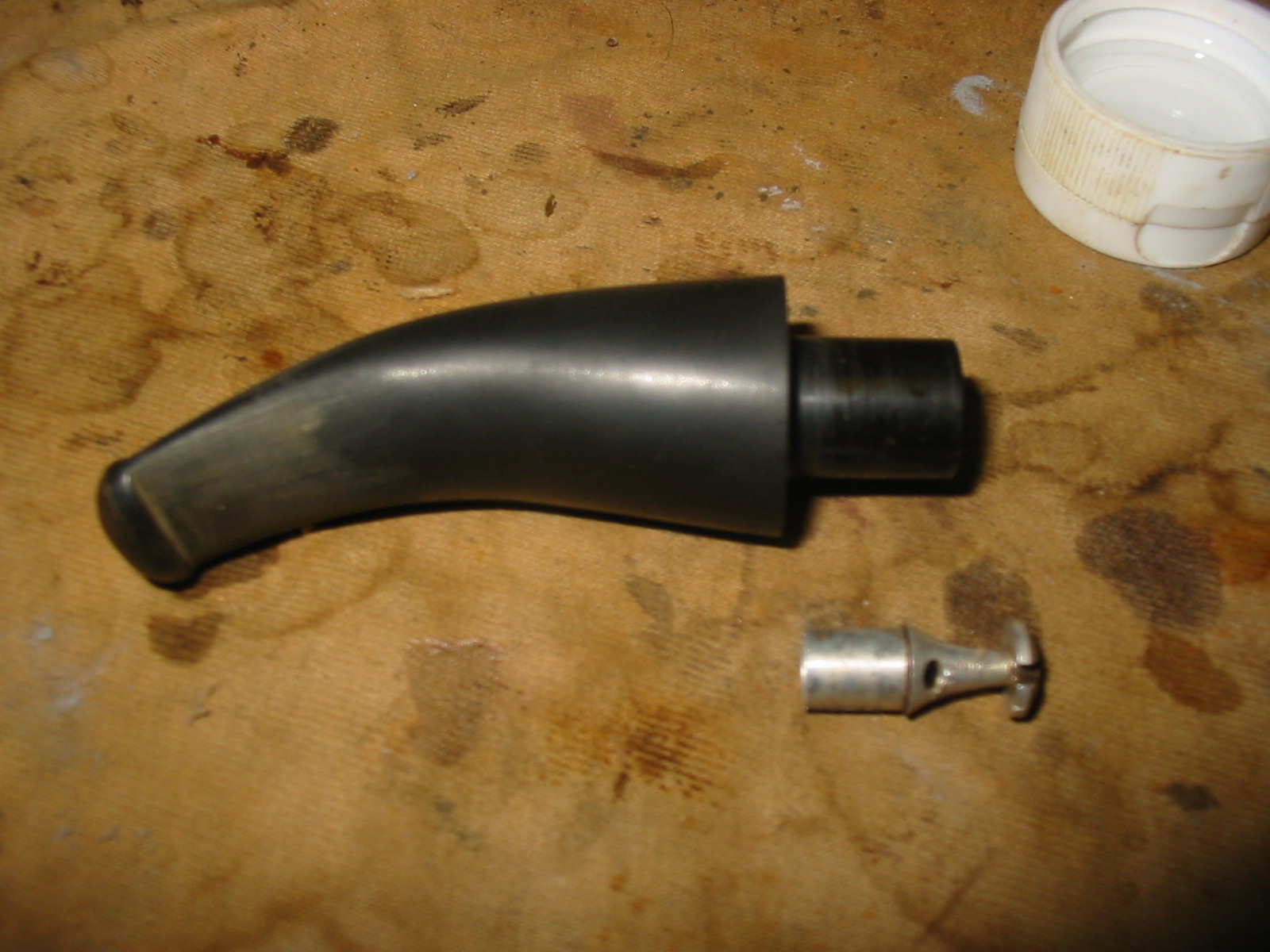
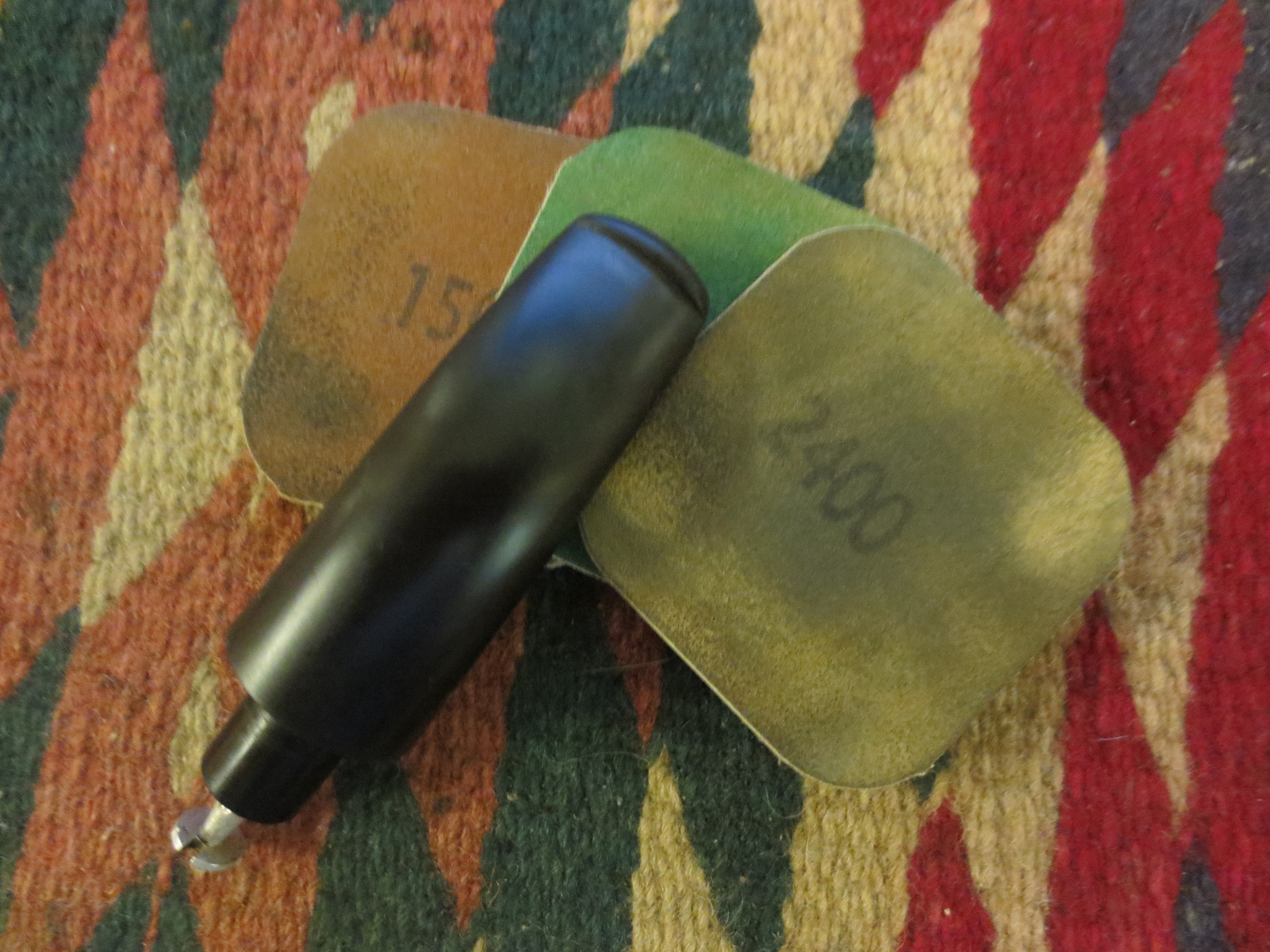
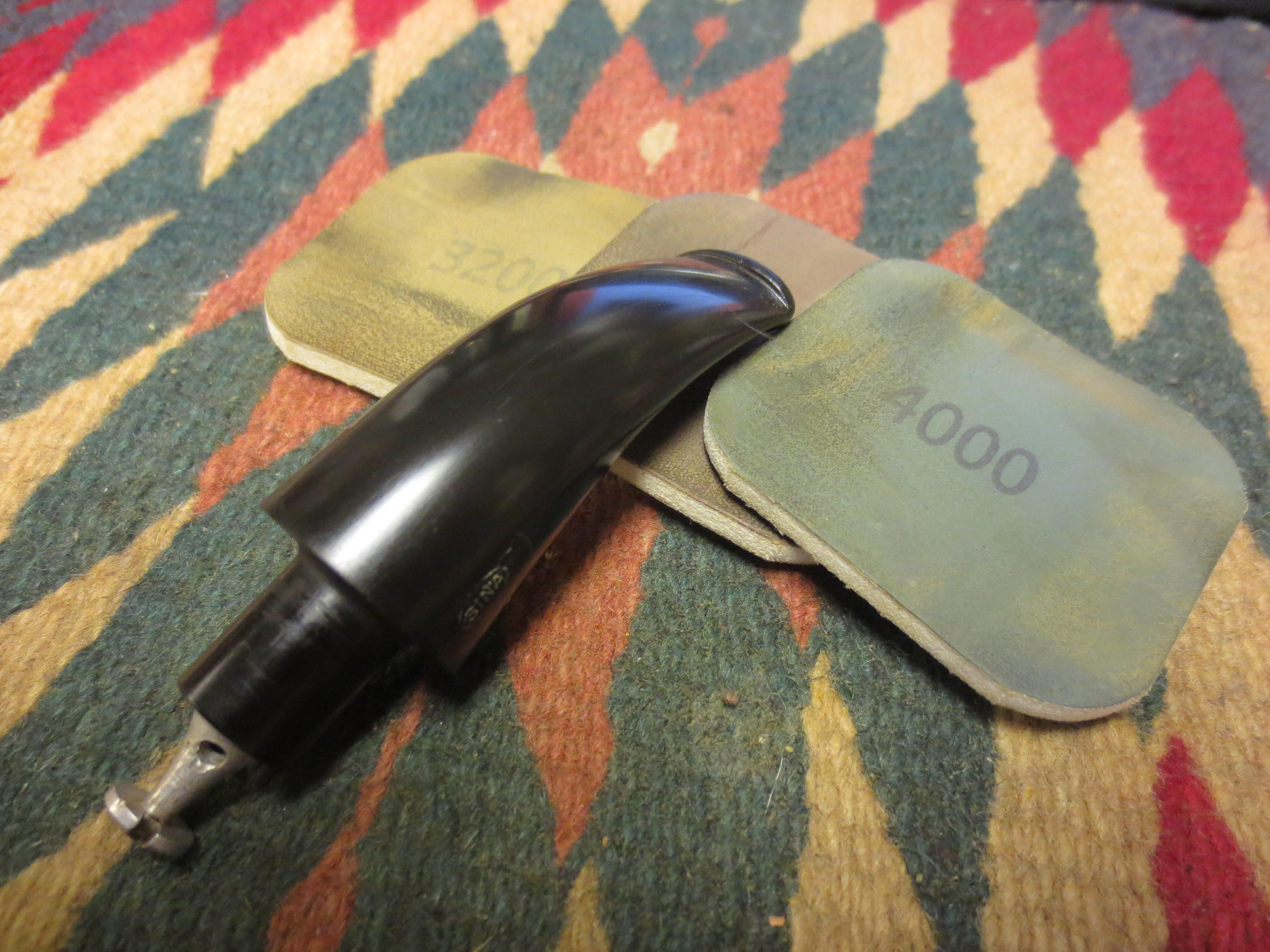
I sanded the stem with 220 grit sandpaper and medium and fine grit sanding sponges to remove some the buildup and slight oxidation on the stem. I then sanded the stem with micromesh sanding pads. I wet sanded with 1500-2400 grit pads and dry sanded with 3200-12000 grit pads. I rubbed the stem down with Obsidian Oil and when it had dried I buffed the stem with White Diamond.
IMG_6931

IMG_6933

IMG_6934

IMG_6935
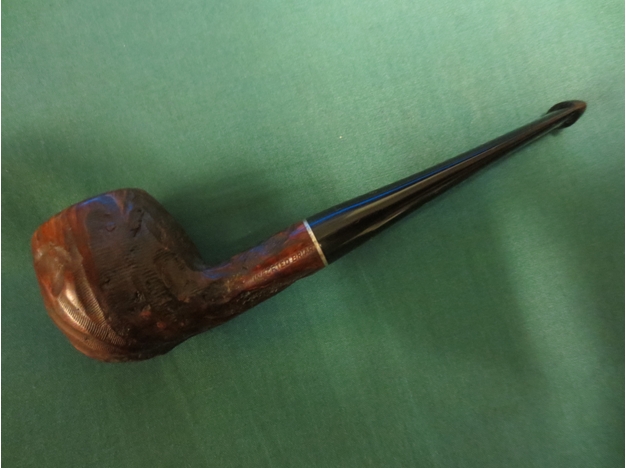
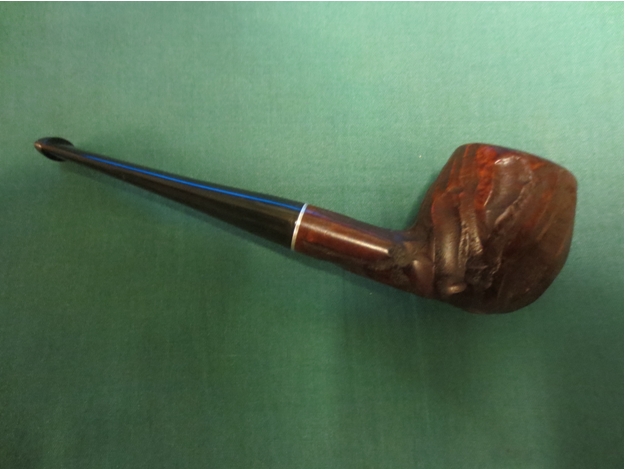
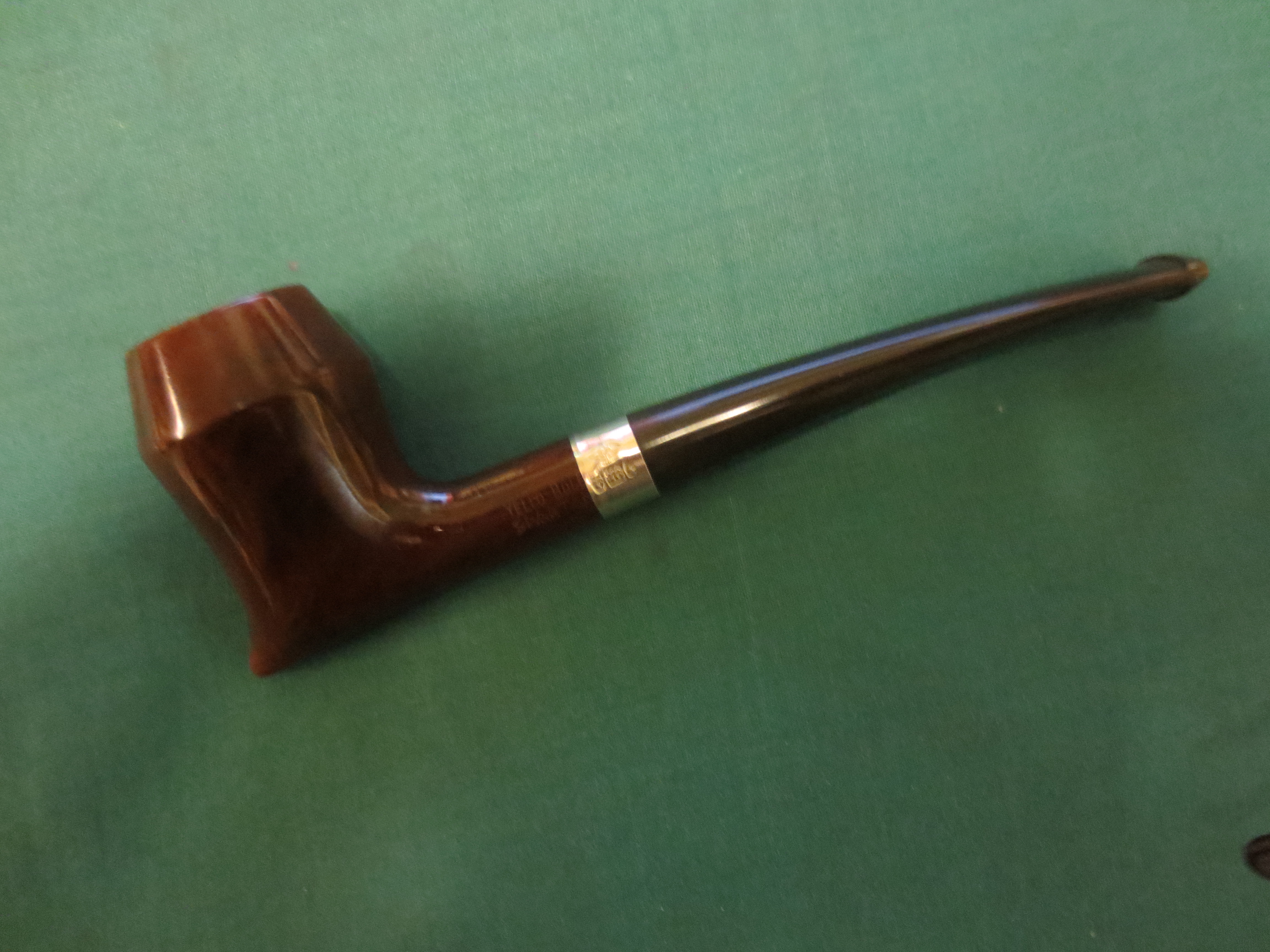
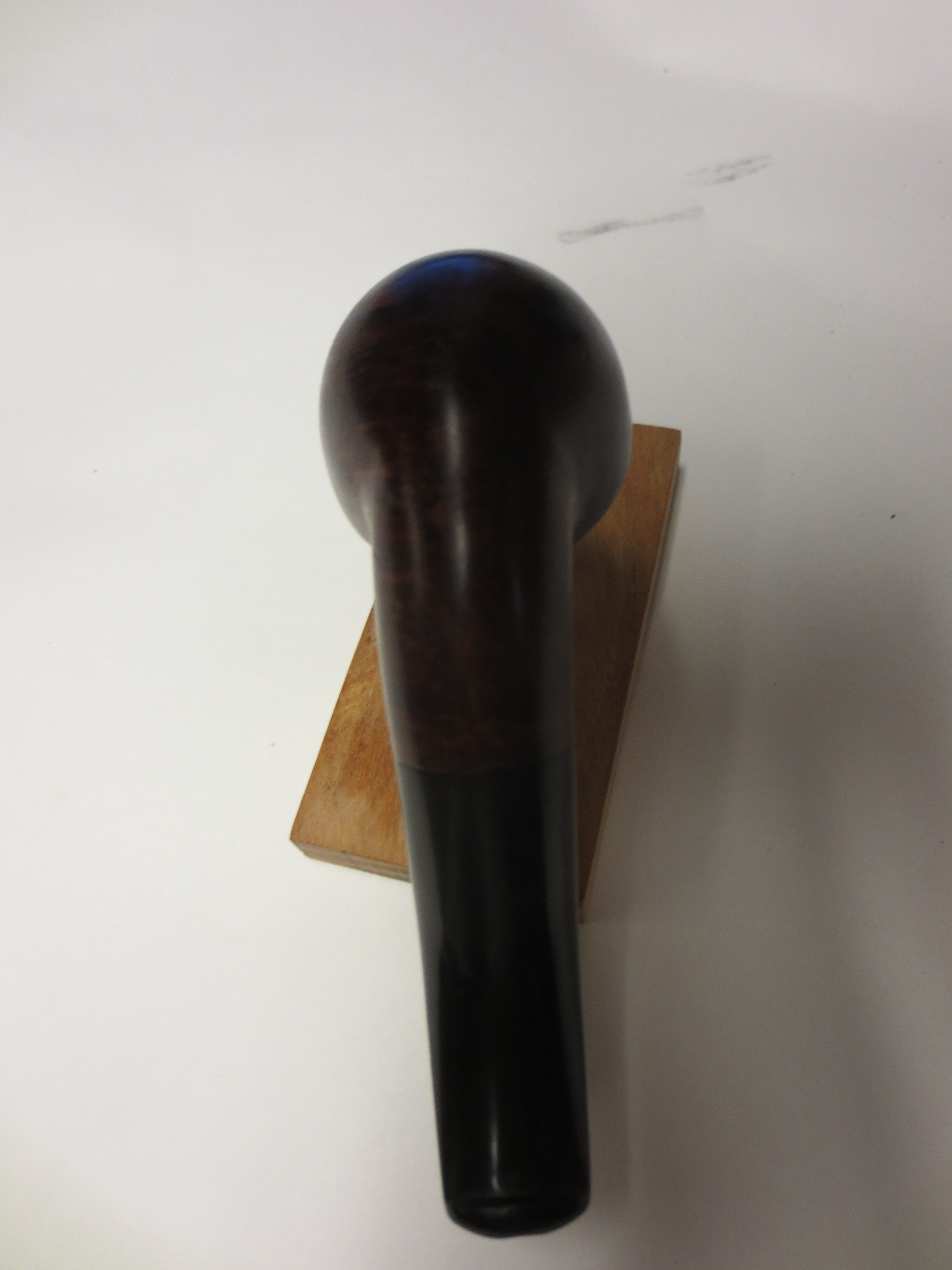
I buffed the stem and bowl with White Diamond and then gave it multiple coats of carnauba wax and buffed it with a soft flannel buffing pad. The finished pipe is shown below. The interesting grain is highlighted by the stain and the finish of the pipe. All that is left to do is to choose a tobacco to smoke in it for its inaugural smoke.
IMG_6936

IMG_6937

IMG_6938

IMG_6939

Black Superglue Patches (ring around the collar) – by Joyal Taylor aka holymolar


Blog by Joyal Taylor

This is the third article by Joyal (known online as holymolar). Again it is with pleasure that I put this on the blog. Joyal had emailed me that he was working on this piece for the blog. I was looking forward to reading his thoughts on this. Others have mentioned the problem to me when they used the black super glue. Joyal has done some good experimenting and I am pretty certain he has gotten to the root of the problem. Thanks Joyal for taking time to write-up your experience and tips on this patching process. This is a what rebornpipes is all about – taking ideas and experimenting and improving them. Without further introduction have a read on what Joyal has learned.

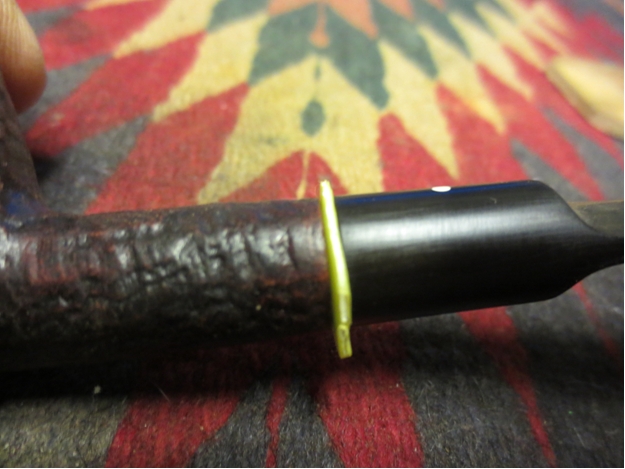
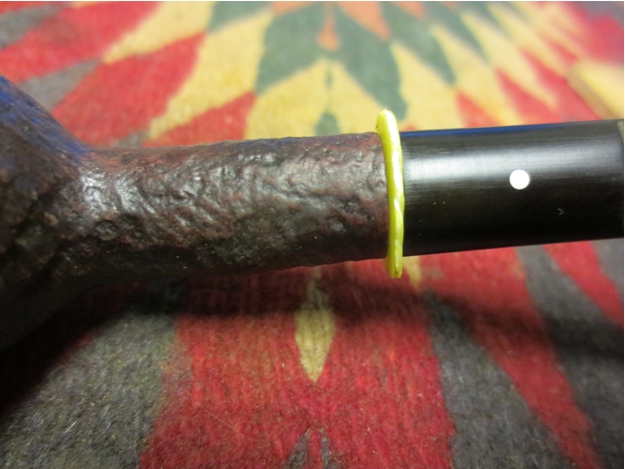
The first few times that I patched stem holes and deep tooth marks with black superglue, I ended up with white margins like these: (very evident when a flashlight is shined on the patch at an angle).
Photo #1

Photo #2
At first, I thought that I must have contaminated it by sanding before the glue had totally set. But now, I’m convinced it was because I didn’t remove all of the oxidation beforehand. I’ve learned a few tricks with black superglue patching.

Here’s the before photos of a Dr Grabow stem that I recently patched. It’s not a high quality vulcanite but a relatively soft rubber.
Photo #3

Photo #4
Tip #1 – Absolutely ALL oxidation and oils must be removed before patching. There are many ways to remove oxidation but, for this, I prefer the most aggressive method that I know – A bleach bath for an hour or more. Then a 1 hour alcohol bath to remove the bleach smell and taste. The bleach causes surface pitting but, in my mind, that means it has removed the deepest oxidation. (Sometimes I’ll follow with a Oxyclean bath as well). After the bleach and alcohol, lots and lots of sanding is necessary to smooth down the pitting. I use 220-800 grit with water.
Photo #5

Photo #6
Tip #2 – Clean out the hole with a small round burr in a Dremel. Remove all oxidation and discolorations from inside the hole. “Feather” the edge which makes for better blending of the glue/stem junction and it also removes any microscopic particles of oxidation that may be hiding in the ragged edges.
Photo #7

Photo #8
Tip #3 – Now use 1000 grit sandpaper on the edges to smooth it out some more. Remove any dust or oils with an alcohol wipe.
Photo #9

Photo #10
I sand down the overfill (220-2500 grit) until it’s even with the surface. (If necessary, I’ll freshen up the bit with needle files). Then micro mesh (4000 -12000), carnauba, and buff.

Here’s the after photos on that Dr Grabow stem before final polishing/waxing – .so it can be seen better without the glare of the camera flash on fully polished stems. No more “ring around the collar”.
Photo #11

Photo #12
Sometimes, on good quality vulcanite, I have difficulty seeing where the patches were.
Photo #13

Photo #14

Restoring a Second set of Twins – English Made Tinder Box Liverpools


In a recent pipe hunt I picked up this second set of twin pipes. They came from the same collection as the pair of Royal Coachman bent billiards. These are stamped The Tinder Box over Meerschaum Lined on the left side of the shank and Imported Briar on the right side of the shank. I stated in the title that they are English-made and I came to that conclusion by the shape, size, staining and overall look of the pipe. Though I cannot definitively prove that, they are very similar to an older Orlik pipe of the same shape that I repaired and restored. The staining and finish were in very good shape. There were relatively few dents and dings in the bowl and shank though both were very grimy and greasy. The rims were clean other than the slight tar build up on the meer portion. The briar outer rim was in great shape with no nicks of dents. The stems were oxidized and had calcium build up all over the surface. There were also sticky places on the stem that looked like the residue from a sales label. Since they did not have a label when I bought them I am thinking this maybe the original labels on the pipe stems. Inside the bowl was slightly caked and had tobacco residue stuck to the walls. The inside of the shank and stem were very dirty with tarry buildup. The slot on both mouthpieces had narrowed with the tars.
meer1meer2meer3meer5The meerschaum lining on the two was in great shape except for the bottom of the bowl. The lining on the bowl of the top pipe above and below shows the break through on the lining. It was worn all the way through to the briar. The size of the hole was about the size and shape of a pencil. The lining on the bottom pipe was not as worn but was significantly below the airway and showed damage. It was very thin if my measurements were correct. Both of these bowls would need to be addressed in a restoration.
meer4I cleaned out the inside of the bowl and the shank to prepare for patching the bottom of each bowl. I used cotton swabs, isopropyl alcohol and pipe cleaners to remove the tars and grime from the inside of both. I also used a fine sanding sponge to remove the tars from the top of the rim and the meer lining. All of this was done to prepare for the repairs I was planning for the inside of the bowl.
meer6I scrubbed the outside of the bowl and shank with Murphy’s Oil Soap on cotton pads to remove the grime and sticky substances on them both. I also rubbed down the stem with the oil soap.
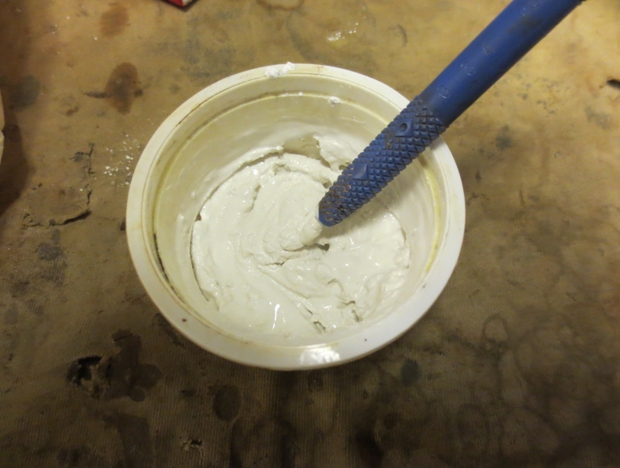
meer7I mixed a small batch of Plaster of Paris in a plastic bowl that I use for mixing and cleaning pipes. I generally pour in the dry powder and then use an ear syringe to add water slowly to the mix to get the right consistency for a patch. I learned the hard way to do this. I used to pour in the powder and then pour in water. I had to keep adding back and forth to get the mix right and always ended up with excess material. This way I can actually mix it in very minute batches, and add water as needed to keep it workable.
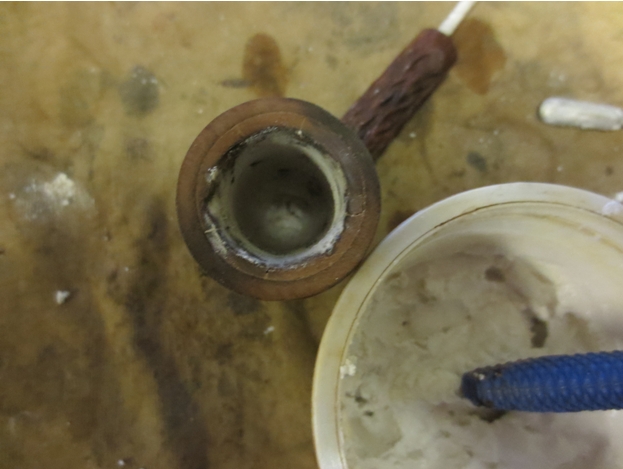
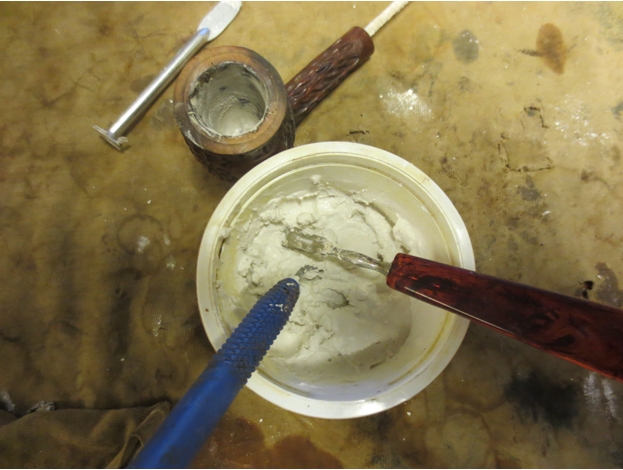
meer9I inserted a pipe cleaner into the airway and into the bottom of the bowl to keep the airway from clogging with the mixture. I then pressed the mixture into the bottom of each bowl with the spoon end of a pipe nail and a dental pick. The trick is to push into the bottom and use the dental pick to push it into the holes. Once it is tightly packed by the pick I use the spoon to smooth it out on the walls of the bowl and the flat head to press the bottom of the bowl. In this case the bowl was somewhat conical so I used the spoon the entire time.
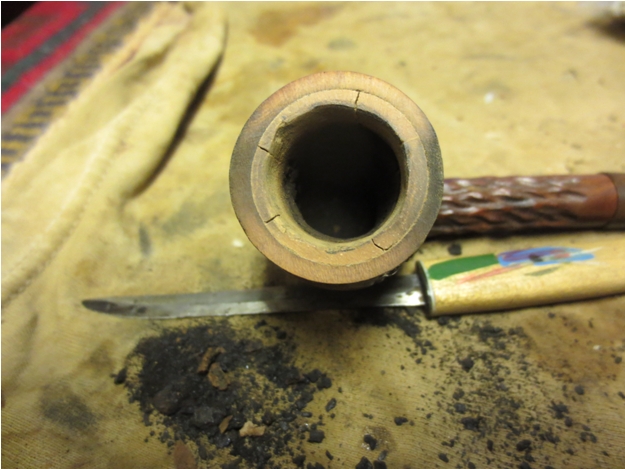
meer10I cleaned up the bowl and smoothed out the surface of the repair with my finger. I wet the end of it with water and then rubbed it against the walls and bottom. I do this to knock down the ridges left behind by the spoon. I cannot get it absolutely smooth but it is smooth enough that after a few smokes it matches the surface of the meer lining. In the photo below the top pipe shows that it took the largest amount of patching. It was the bowl that was worn through at the bottom. The crack at the airway is actually not a crack but a pipe cleaner end pushed into the bowl. The bottom bowl took far less of the mixture to patch. I set them aside to cure overnight. The last photo of the bowls shown below shows the bowls after the plaster had cured. They were hard and slightly rough to the touch. I wet my finger again and rubbed down the ridges on the sides and bottom of the bowl until the surface was smoother. I sanded the patch with 220 grit sandpaper and with a medium and fine grit sanding sponge. I wiped down the inside of the bowl with a wet cotton swab to remove the dust from the sanding.
meer12IMG_6899I sanded the stems with 220 grit sandpaper and then a medium and a fine grit sanding sponge. I buffed the stems with red Tripoli and then took them back to the work table. I sanded them both with my usual micromesh sanding pads. I wet sanded with 1500-2400 grit pads and then dry sanded with 3200-12,000 grit pads. I had to stop several times and go back to the sandpaper and sponges to get the deep oxidation. I repeated the sanding with the micromesh pads. I wiped the stems down with Obsidian Oil. When it had dried I buffed the stems and bowls with White Diamond and then gave the pipes a buff with carnauba wax. I finished by buffing with a soft flannel buffing pad to polish. The photos below show the finished pipe. I will let them cure for a few days longer before loading them and giving them a first smoke. I have found that as the plaster heats when smoking it becomes harder and even more cured. It makes a durable and lasting repair.
IMG_6895IMG_6896IMG_6897IMG_6898

Restoring a Savinelli De Luxe 132EX Pot


Blog by Flatticus

It is with pleasure that I introduce you to Flatticus. Flatticus is the designer and fabricator of the rustication tool that I wrote about a few posts back. We met via Smokers Forums and also through the blog. We exchanged quite a few messages and emails back and forth over the past months on refurbishing pipes and in building the rusticator. Flatticus has been reading the blog for quite a while now and I have asked him to feel free to write-up some of his work for us to read. Flatticus is a great communicator and does some excellent work in his refurbishing. Without further ado I will let Flatticus introduce himself and this pipe that he has restored.

Hi all, Flatticus here, an amateur to this wonderful hobby. This blog has taught me everything I know about restoration (but far from everything Steve knows, yet) and I’m excited to have a chance to share some of my recent efforts, all with methods learned right here at Reborn Pipes. I recently came across a large lot of pipes with some hidden gems, including this enormous Savinelli De Luxe 132 EX Pot. Even through the grime, it was clear at the outset that this was a beautiful piece of briar. I was a bit hesitant from the outset, though, because I’ve never meddled with a pipe this nice. Still, there’s only one way to learn!
Chris1As you can see, the oxidation was extremely heavy, enough to hide the significant tooth damage to the button and bite zone. The pipe itself was grimy in the extreme, and while a touch of murphy’s oil soap took enough grime off to assure me this wasn’t heat damage, it wouldn’t touch the majority of the blackening on the pipe. First step, then, was to put the pipe in my alcohol bath, a technique I first read about in Steve’s post here. So I reamed the excess cake, and dropped it in the bath. The stem got a quick scrub with some pipe cleaners, and was already pretty clean, so into the Oxyclean it went for 2.5 hours.
Chris2Chris3After the soak and a little scrubbing on with the Magic Eraser pads, actually bought as melamine foam on the cheap off eBay, but it’s the identical product, the stem looked great! At least unless you’ve read the recent post by Joyal Taylor here. Luckily, I had, so I knew to grab my trusty flashlight.
Chris4Oxidation was everywhere, and under an angled flashlight I could see it through the length of the stem. Ok, then I knew I had to sand. But first to address the bite marks. Step one was to try the heat gun, as I learned first here.
Chris5Unfortunately the marks were too deep to come out completely from the heat, so I filled them with black superglue, a technique I found an in-depth explanation of, among other places on the site, here. In the meantime I turned to the stummel itself while the glue was drying.
Chris6The bowl top was scratched pretty badly, and had some definite darkening to contend with. I knew I’d have to top it like Steve showed me in many posts like this one. I grabbed my topping board, actually a granite surface plate I bought from woodcraft years ago for lapping wood plane soles, and now use almost exclusively for pipes.
Chris7At 320 grit, my preferred poison for this procedure, the rim cleaned up quickly, but I soon enough decided that to eliminate all of the darkening I’d have to top the bowl lower than I liked. I came close, but left some of the color rather than lose the original shape. As you can see, the bowl was also a bit out of round (and still is, to a degree), which I went after with folder sandpaper to smooth out the curve without reshaping the bowl. The pipe had 2-3 fills, but I was confident they’d blend into the stain.
Chris8After this was done I gave the bowl one coat, applied twice with flame, of a medium brown Fiebing’s Dye, diluted to about 75/25 with isopropyl alcohol and set it to dry while I turned back to the stem.

Unfortunately after a quick bit of sanding it was clear the stem needed more glue to be built back up, so I added some and tried to be patient while it dried.
Chris9Once it had, I began sanding at 320 again, at this level with an eye towards shaping more than polishing. This is definitely a weak spot for me, so I’m glad for the practice, but I need more!
Chris10After a lot of trial and error (mostly error) I finally had the stem shaped properly and sanded through 320, 600, 800, 1000 grit in sandpaper and the full range of micromesh pads from 1500 to 12000. It was looking nice and shiny, so I gave it a thick rubbing with obsidian oil and set it out to dry for about a half hour.
Chris11At this point it was time to hit the buffing wheels. As you can see, I buff on the lathe, with a three wheel mandrel not made by Beall but suspiciously similar, and with tripoli, white diamond, and carnauba wax. One thing I’ll point out is that odd tool in the foreground, which is a wheel rake. You can get the job done with a hacksaw blade, but if you want clean buffing wheels, these are hard to beat.
Chris12After the three-part buffing, I chucked a 4” flannel wheel into my cordless drill for a final polish by hand. For a rank amateur, I must say myself, this turned out to be a very beautiful pipe.

Some pictures of the finished product:
Chris13Chris14Chris15
Looking back, I still have an awful lot to learn, that much is clear. For one thing, that rim fill didn’t blend quite as well as I was confident it would. All in all, though, I’m pleased as punch at having learned how to do any of this, and I have Steve and the great contributors to this site to thank for it.

A Set of Twins – Bent Royal Coachman Billiards by Comoys


On a recent adventure I found a pair of bent billiards that had the Made in London England circle stamp on the right side of the shank and the Germanic script stamping, Royal Coachman on the left side of the shank. They were also stamped with a shape number 215. I did a bit of research to see if I could identify the maker. From the markings I was pretty confident that I was dealing with a Comoy’s seconds line but wanted to make certain I was right. The circle stamp on the right side of the shank was a giveaway to that identification. The shape number looked very familiar to me and the overall look said Comoys. So I looked in two the places that I always go to when beginning a hunt for info. The first is a website set up by Pipephil called Logos and Stampings. There I found that the Royal Coachman was indeed a Comoys brand. The site showed that the pipes were made by Chapuis-Comoys. The second site I looked at was Chris’ pipe pages http://pipepages.com/64com19s.htm . Chris has collected old catalogues and documents that give shape charts and many historical materials that cannot be found in other places. I have copied a page from the shape chart below and you can see that the 215 shape number matches not only the Comoys number but also the shape.
64com19
When I brought the pipes home from the antique shop they looked like the photos below. There were actually in pretty good shape for their age. The dealer said that he bought these along with 20 other pipes from a widow who was selling off her late husband’s estate. He had some interesting old pipes and I was able to pick through them and brought six of them home with me. These are the first pair of the bunch. The bowls were lightly smoked with a bare minimum of cake. The top pipe in the picture below was less smoked than the bottom one. Both pipes were grimy on the outside of the bowl and had some oxidation on the stems. There were no tooth marks on the top pipe and only a little tooth chatter on the underside of the bottom pipe. The top pipe has three small fills that are visible in the first photo below and a slight nick in the shank on the right side near the stem. The second pipe has a few fills as well with the largest of them visible low on the left side of the bowl in the photo below. The rims on both were clean and undamaged and showed no tar build up. On the right side of the bowl of both pipes there was a small spot of white paint.
IMG_6852

IMG_6853

IMG_6854

IMG_6855
I reamed the bowls with a PipNet reamer to remove the slight cake build up and clean out the bowl. I wiped down the exterior of the bowl with Murphy’s Oil Soap to remove the grime and grease build up. It also took off the paint spots on the right side of the bowl. I use the soap undiluted as I find it does not remove the finish on the bowl as much as when it is diluted with water. I rubbed it on and scrubbed it with cotton pads and wiped it off with the same pads.
IMG_6856

IMG_6860
I cleaned out the inside of the shank on both pipe using cotton swabs and isopropyl alcohol. Both had a slight reservoir in the shank with the drilling being quite high in the shank to accommodate the bend in the shank to bowl junction. I cleaned out the airway with pipe cleaners and then the inside of the bowl with folded pipe cleaners and cotton swabs.
IMG_6861

IMG_6862
I wiped down the stems with isopropyl alcohol on a cotton pad and then cleaned out the inside with pipe cleaners. The opening/airway on the end of the tenon was very small so I had to work to push the pipe cleaner into place. I had not seen an airway this constricted in a long time. The draw on the pipe was very tight; it was like pulling air through a coffee stirrer. When I pulled the pipe cleaner out a small ring came out with it. It is visible in the photo of the pipe cleaner below. The stem on the left is the one that the ring came out of and the stem on the right still has the ring. It appears to be made of brass and is a thin ring that constricts the airway for about 1/16th of an inch. With the ring removed the draw was very open. I continued to clean out the stem and airway until it was spotless and the pipe cleaners came out clean. I cleaned the end of the tenon with cotton swabs and isopropyl alcohol.
IMG_6863
I then used some Meguiar’s Scratch X2.0 on the stems to scrub the scratches and polish the stems. I applied it with a cotton pad and scrubbed and rubbed it off. The photos below show the stems after the polishing. There was some deep seated oxidation that came to the surface of the stems. There was more oxidation on the top of the stems than on the underside.
IMG_6866

IMG_6867

IMG_6868

IMG_6869
I buffed the stems with red Tripoli on my buffer to remove more of the oxidation. I followed that up with White Diamond polish on the buffer as well. I also buffed the bowl with White Diamond. The shine really came out.
IMG_6870

IMG_6871
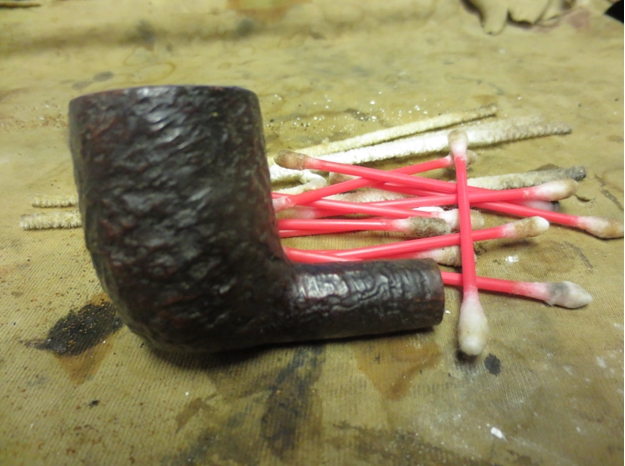
There was still oxidation that came up on the stems. I sanded it with a medium and a fine grit sanding sponge and then wet sanded with 400 and 600 grit sandpaper. This removed the remaining oxidation in the stem. I then wet sanded them with 1500-2400 grit pads. I dry sanded them with 3200-12,000 grit pads. I rubbed the stems down with Obsidian Oil and when it had dried I buffed them with White Diamond and then gave both the bowls and stems multiple coats of carnauba wax and buffed them with a soft flannel buff on the buffer. The finished pipes are shown below. They are ready to enter the next phase of their lives.
IMG_6877

IMG_6878

IMG_6879

IMG_6881

Oxidation – Warning. You’ll Wish You Hadn’t Seen This – by Joyal Taylor (aka holymolar)


Blog by Joyal Taylor

This is the second article by Joyal (known online as holymolar). It is with pleasure that I put this on the blog. Joyal does some great work in restoration and in his own words “You’ve probably realized already that I particularly like restoring stems”. Thanks Joyal for your take on the process of cleaning up deeply oxidized stems. I look forward to more articles on your work. Without further introduction here is Joyal.

Check out the stems on these 3 restored estate pipes. They look OK, don’t they? Polished, shiny, no obvious oxidation.
001
Let’s look closer.

The upper stem seems OK.
002
On the middle stem, is that oxidation near the shank end and also in the bit crease?
003
On the lower stem, how did I miss that oxidation toward the bit end?
004
Let’s turn out the lights and shine a flashlight (at an angle) onto the stems.
005

006

007
HOLEY MOLEY, BATMAN!

Where did all of that oxidation come from?

I’ve got to start all over on these stems.

That deep oxidation can be removed – if you’re willing to spend a lot of time sanding, especially with the coarser grits. Start with a 2 hour Oxyclean bath to soften the oxidation. Then 220 grit wet/dry sandpaper with water. Then follow with 400, 600, maybe 800 and 1000 grit. Finally micro mesh pads (1500-12000), then final polish and buff.

Is it worth it to go after that deep oxidation? Maybe, maybe not. That’s up to you.

Followup on removing the oxidation on the stems.
Since I had already used Oxyclean on these stems, I got more aggressive the second time around. I put the stems in a bleach bath (50% diluted with water) for 1 hour. One of the stems wasn’t done so it went back in the bleach (at full strength) for 2 additional hours. Then I soaked the stems in an alcohol bath for 1 hour to neutralize the bleach smell and taste. Then I spent about 1 hour, on each stem, wet sanding (220, 400, 600, 800 grit) and micromesh (1500-12000). The following photos were taken before carnauba wax polishing/buffing. It was a lot of work but time well spent because the stems feel as smooth as satin to my lips and tongue.
Photo #1

Photo #2

Photo #3

Cleaning/Polishing the Stem Crease Area by Joyal Taylor


Blog by Joyal Taylor

It is a pleasure to be able to introduce this first blog post by Joyal here on rebornpipes. I read with interest several of Joyal’s posts on Pipe Smokers Unlimited online forum. His love of refurbishing and his abilities were something that I immediately resonated with. When I read the post he made about the use of the sanding sticks and micromesh sanding sticks to clean up the crease on a stem I was hooked. I thanked him for the research and creativity that lead to these new to me tools of the trade. I asked if he would mind writing this up for the blog and this afternoon I received the post. Thanks Joyal. I look forward to reading many more of your posts here and on the forums. Without further introduction here is Joyal’s post.

I’ve smoked pipes for about 30 years. A few years ago, I semi-retired and started looking for hobbies. Fishing is great but not for an everyday activity, at least for me. One day I looked at some of my pipes and realized that they were looking beat up and abused. I tried restoring one but quickly realized that I didn’t know what I was doing. So I began researching pipe restoration and tried again and again. Soon I was fully into it with various tools and dyes. It has become an everyday activity that gives me things to do with all of my semi-retired free time.

I find that the most frustrating area to clean up, on an oxidized stem, is the 1-2 mm in front of the bit. Sometimes oxidation and dirt gets in that area and it’s difficult to get it out. I’m always trying to find better, quicker, and easier ways to do various aspects of pipe restorations. If you don’t need to use needle files and dead edge files to reshape the bit, here’s an alternative to cleaning up the crease area in front of the stem bit, without really altering it.

Before photo of a stem that needs a little cleaning/polishing in front of the bit. There are more dramatic examples but this is the only one I had at this time.
Photo #1
I found some small thin sanding sticks that fit nicely into the area (100,180,240,320,400 grit) http://www.billingboatsusa.com/803-flx0101-mini-hobby-and-craft-sanding-sticks.html
Photo #2
Here’s what the area looks like after using all of the sticks – gently.
Photo #3
Next I polished the area with micro mesh sticks (1,500-12,000). I find that these are easier to use in this small area than the micro mesh pads. http://www.woodcraft.com/Product/2080764/29708/Micro-Mesh-12-x-5-34-Colored-Sanding-Sticks.aspx
Photo #4
These final two photos were taken before wheel polishing/buffing because the shine doesn’t allow for a good photo.
Photo #5

Photo #6
This entire cleaning/polishing doesn’t take as long as it may seem – probably less than 10 minutes.

Restoring a GBD New Standard 4/271 London Made Straight Bulldog


Blog by Steve Laug

When I was at the antique mall in Edmonton a few weeks ago I found this GBD straight bulldog. It is stamped GBD in an oval over New Standard on the left side of the shank and 4/271 London Made on the right side of the shank. The stem had the brass GBD roundel on the side of the saddle. The pipe was badly cake with a thick carbon build up. The rim had build up and was also damaged. There was darkening, whether burn or tar build up flowing down the crown of the bowl at the top all the way around the rim. The finish was worn and there was a black ink stain on the left side of the bowl down low toward the bottom. It looked like a hot spot when I first saw the pipe so I almost left it in the shop. I examined it under a bright light and could see that it was not a burn but a spot of what looked like India Ink. The stem was oxidized and there was tooth chatter on the top near the button and a tooth mark on the underside along with the chatter there. The button is different from most of my other GBD’s in that it is concave rather than convex. It is shaped like this “(“ looking at it from above.
IMG_6390

IMG_6391

IMG_6392

IMG_6393
The photo below shows the stain on the bowl. I used a flash to highlight the nature of the stain. It was not solid but rather slightly opaque so that the grain could be seen through it. I thought it was worth a try to see if I could remove the ink from the briar.
IMG_6394
I reamed the bowl back to bare briar with a PipNet reamer starting with the smallest head and working up to the next head that fit the bowl.
IMG_6395
I dropped the bowl in an alcohol bath to soak for several hours and dropped the stem in a bath of Oxyclean.
IMG_6397
I left the stem in the Oxyclean while I worked on the bowl. I removed it from the bath and dried it off with a piece of cloth.
IMG_6398
I wiped it down with acetone on cotton pads to remove the finish that remained and scrubbed the ink stain. I sanded the bowl with a medium and a fine grit sanding sponge to finish removing the finish and also the ink stain. I lightly topped the bowl with 220 grit sandpaper to remove the damage to the outer edge of the rim.
IMG_6399
I used a piece of folded 220 grit sandpaper to work on the beveled inner edge of the rim. I wanted to repair the burn damage and take away the ridge left behind by the light topping of the bowl.
IMG_6400
I sanded the bowl where the stain was and with sanding and scrubbing with isopropyl alcohol I was able to remove the ink stain from the briar. The photo below shows the area that had previously been stained.
IMG_6401
I wiped the bowl down with isopropyl alcohol a final time to remove the sanding dust and grit from the twin rings on the bowl.
IMG_6402

IMG_6403

IMG_6404

IMG_6405

IMG_6406
I cleaned out the shank of the pipe with isopropyl and cotton swabs and when it was clean I took out the stem and dried it off. I cleaned out the inside of the stem with pipe cleaners and alcohol. I scrubbed the stem with Mequiar’s Scratch X2.0. I rubbed it onto the stem surface with my finger and scrubbed it off with cotton pads. The photos below show the stem after one application of the polish after about 2 hours of soaking in Oxyclean.
IMG_6407

IMG_6409

IMG_6410

IMG_6411
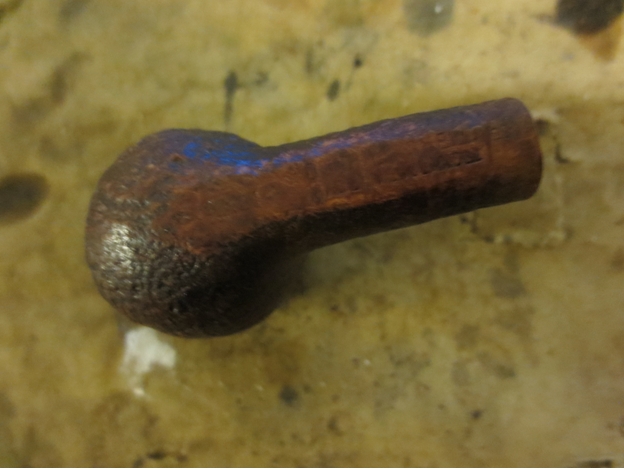
I continued to scrub down the stem with the Meguair’s until the oxidation was gone. I sanded the areas where there was tooth chatter with 220 grit sandpaper and then with a medium and a fine grit sanding sponge. I put the stem on the pipe and took the photos below. I could not believe how easily the oxidation had come off the stem. There was still more polishing to do but the overall effect of the Oxyclean and the Meguiar’s was amazing to me
IMG_6413

IMG_6414

IMG_6415

IMG_6416
Though there was still oxidation to work on I decided to stain the bowl. I used a dark brown aniline stain. I applied it, flamed it and repeated the process until the coverage was even.
IMG_6417

IMG_6418

IMG_6419
I wiped the bowl down with isopropyl to thin the stain down and make it more transparent. I repeated the wash until the stain was the colour I was aiming for. Then I scrubbed the stem some more with the Meguiar’s and was able to get the rest of the oxidation of the stem.
IMG_6420

IMG_6421

IMG_6423

IMG_6424
I buffed the pipe with White Diamond – both bowl and stem being careful around the stamping so as not to damage it. I rubbed the stem down with Obsidian Oil and then gave the bowl and stem multiple coats of carnauba wax to protect and shine. I buffed it a final time with a soft flannel buffing wheel. The finished pipe is pictured below. The colour on the green background appears redder than the pipe actually is. The wax and buffing did bring out the red highlights in the briar. It is more brown than red but the contrast is quite nice. The grain is visible through the stain. I am pleased with the finished look to the pipe. It is cleaned and restored and ready for the next chapter of the trust with me.
IMG_6425

IMG_6426

IMG_6427

IMG_6428

I Had Heard of Royalton but not of the Smoke-Control Deluxe


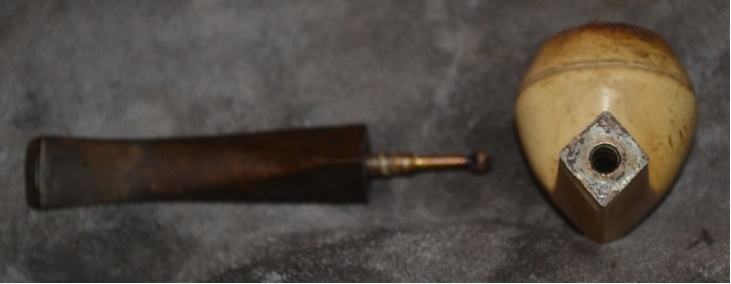
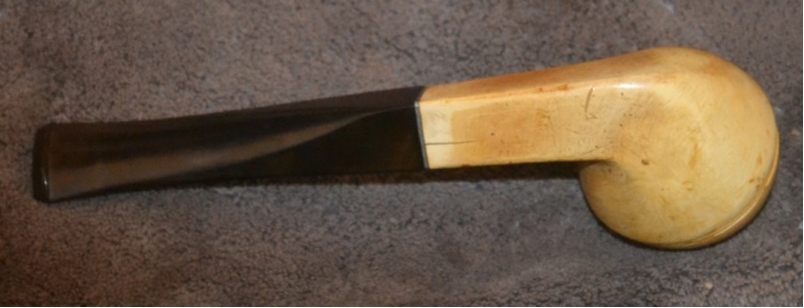
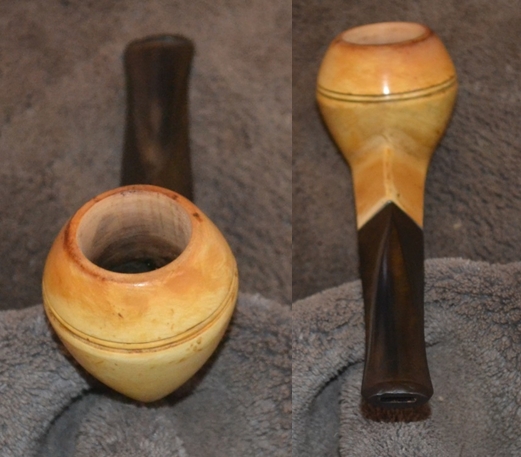
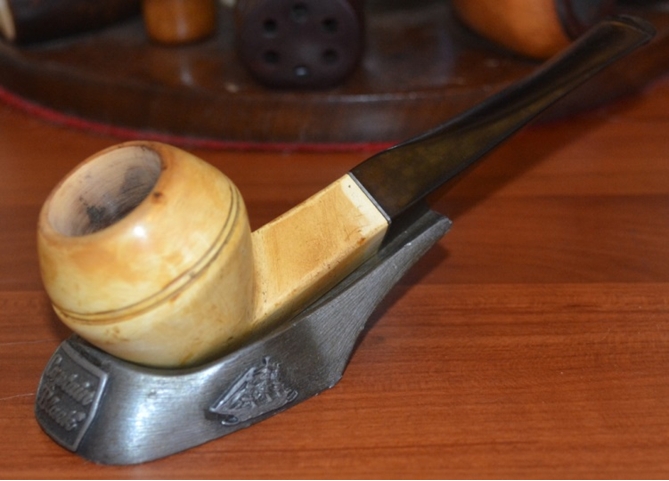
In my antique mall grab bag was the bowl that is pictured below. It is stamped on the left side of the shank, Royalton over Smoke-Control over Deluxe and on the right side of the shank, Selected Briar over Pat. No.2326658. I had heard of Royalton pipes and have cleaned up a few of them in the years that have gone by. But I had never heard of the Smoke-Control or the Smoke-Control Deluxe. Obviously it was a system pipe of sorts, one of those creative ideas that lasted about as long as its maker. It never seemed to have caught on because in all the years I have been hunting and refurbishing pipes I have never come across one even to walk by in my prowls of thrift, junk or rummage shops. It was a brand unknown to me.

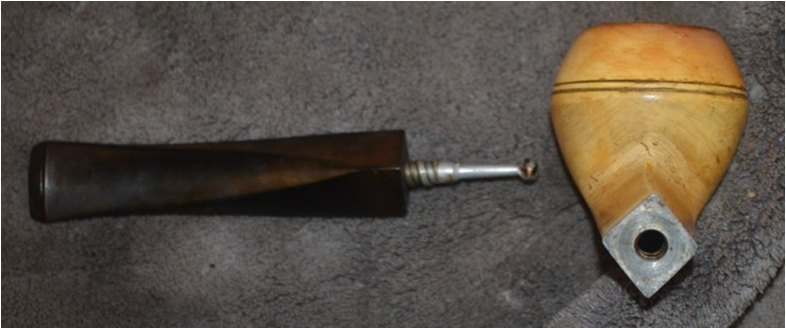
The bowl was in excellent shape and had not even been smoked to the bottom of the bowl. The bottom half of the bowl was bare briar. The top half was darkened but not carbonized at all. It was for all intents and purposes a new pipe. The shank was clean and contained a strange metal apparatus that filled the mortise and then stepped down to fill the airway all the way to the smoke hole in the bottom of the bowl. It was aluminum, the first ¼ inch was smooth and then it had threads that went to the bottom of the mortise. The airway was smooth. The finish on the bowl was non-existent. Whatever stain or coating had been on the bowl was no long present. The stamping was crisp and readable. There were no fills in the briar but there was a nice swirling mix of grain all around the bowl. The rim was clean and showed no burn or dent marks. The pipe was missing the stem. Judging from the mortise the stinger apparatus on this stem must have been a unique looking piece of hardware.
IMG_6315

IMG_6316

IMG_6318

IMG_6319
Since I had no idea what I was working on I decided to do a bit of digging on the internest and see if I could find out about the brand and kind of stem and stinger apparatus that it had. I wanted to know what the patent on the shank covered so that once I had a clear picture in mind I could hunt down a stem or work on one that would fit the shank in the meantime. I found out that Royalton pipes were manufactured by Henry Leonard & Thomas, Inc. (HLT) of Ozone Park, New York. HLT manufactured other brands as well including Dr.Grabow, Bruce Peters, Broadcaster and Vox Pop. I found on Pipephil’s logos page the two photos below that showed the stamping on the stem and the shank. The stamping on the bowl I had was a Smoke-Control with a hyphen rather than the one picture below and also was a Deluxe rather than a Supreme.
royalton1a

royalton1bMine was also stamped Selected Briar instead of Imported Briar. I could see that the stem had an aluminum faux band that sat between the stem and shank.
So far I had learned the manufacturer and the stamping on the stem and the faux band. I had not seen the stem. I did a bit more digging and found several advertisements that showed more of the stem. The first is from Popular Mechanics and it gave a clear description of the purpose of the pipe as well as the meaning of the Smoke-Control feature. The pipe had an adjustable valve that regulated the daft on the smoke to match personal taste and preference.
Smoke Control Advert
This advertisement spoke of both the Supreme Grade and the Deluxe grade of the pipe. The stinger that is shown in the picture could have been similar to the one in the bowl that I had found but it was not quite the same in terms of the sketched in lines on the shank of the top pipe in the picture. My bowl’s interior was different from the one in the picture so the stinger apparatus too must have been slightly different in the one I found. I went to the US Patent web site and did some more research and found the Patent Number of the pipe that I had. There was a description and a diagram of the pipe. The patent was taken out on August 10. 1943 by Arthur Koenigsamen of Jamaica, New York, assigner to Henry Leonard & Thomas Inc. of Ozone Park, New York. Reading the patent data, I am struck by the familiar hunt to develop a better smoking pipe to deliver a dry and cool smoker to the mouth of the pipe smoker and to make pipe smoking more appealing to those who might not try it otherwise. Have a look at the details of the patent and pay attention to each part of the apparatus in the shank and on the end of the stem. There are some unique features that are not visible in the pipe that is shown in the advertisement from Popular Mechanics.
Smoke Control Patent Page 1

Smoke Control Patent page 2

Smoke Control Patent photo
The stem in the above drawing in Fig. 2 shows the tenon that would fit in the mortise in the bowl I have. It is threaded about mid-tenon with three bands. Before and after the threaded portion the tenon is smooth. The apparatus goes into the stem as well, Fig. 3, in a way that was not shown in the advertisement above. It appears that there is a cooling reservoir in the stem that traps moisture and delivers a cool smoke out the wide slot in the end of the stem. The mortise in the bowl I have looks exactly like the one in Fig. 5 and screwed onto the tenon in Fig. 4. The shank on the bowl that I have is set up precisely like the nipple unit in Fig. 5. It is aluminum and set in the shank. I have included the photo below showing and end view of the shank to show what the insert looks like. You can see the flat area, the step up to the threaded portion and then the step up to the airway just as is shown in Fig. 5 above.
IMG_6322
My problem was that the bowl did not come with the unique stem unit that fit the shank. I tried several older Dr. Grabow stems and a Kaywoodie stem that I had here and the threads did not match those found in the shank. I had a choice to make, save the bowl until I found a stem someday by chance or to try to work on a stem and jerry-rig it to fit the shank system. I figured I had nothing to lose so I chose to work on a stem. I had just the right stem in my can of stems. It was a chubby stem from an Orlik pipe and the tenon was already shaped partially for a shank like this. The end of the tenon was slightly smaller in diameter than the portion of the tenon next to the stem itself.
IMG_6323
I slowly turned the vulcanite stem into the metal mortise, being careful to hold the stem straight as I turned it in place. I figured that by doing so I could score the vulcanite with the metal threads of the mortise and in so doing tap thread the tenon on the vulcanite. Low and behold it worked. The stem fit tightly against the face of the shank. The diameter of the stem would need to be adjusted but otherwise the fit was good.
IMG_6325

IMG_6326

IMG_6327

IMG_6328
I carefully sanded the stem and the shank avoiding the stamping. I did not want to damage the stamping on either side of the shank. I sanded with 220 grit sandpaper and a medium and fine grit sanding sponge. I sanded the rest of the bowl and the rim as well. When I finished the fit of the stem at the shank was smooth.
IMG_6329

IMG_6330

IMG_6331

IMG_6332
I wiped the bowl down with acetone on cotton pads to remove any remnants of the original finish on the bowl and to remove the sanding dust.
IMG_6333

IMG_6334

IMG_6335

IMG_6336
At this point in the process things were going too well! Everything was working without a hitch and the pipe was looking really good. This is when things inevitably take a turn for the worse and they certainly did in this case. I unscrewed the stem from the shank in preparation for staining the bowl. I wanted to clean out any briar dust that was trapped between the stem and the shank. I cleaned out the dust and blew air through the mortise. I then slowly and carefully screwed the stem back in place in the shank. They no longer lined up! The fit of the stem against the face of the shank was not tight. The smooth transition between the shank and stem was no longer there. The fit was not right. I took the stem off and examined the mortise and tenon. I could see that the insert in the shank had definitely been pushed deeper into the mortise. When I started it was even with the face of the end of the shank and now it was sunk in and the mortise bevel showed as it probably should have from the start. Arggghhh. Now the fit was off and the diameter of the stem would have to be corrected again. The big problem was that the way the stem fit against the end of the shank was no longer perfect. There was a gap that I could not correct no matter what I did in adjusting the insert or the stem.

I decided that I would have to band the shank, not as a repair on a bad shank but as a cosmetic measure to clean up the fit of the stem and the shank end. This irritates me to no end in that as you could tell from the above photos it was perfect! Ah well so goes the life of the pipe refurbisher who is restemming old pipes with replacement stems. I adjusted the diameter of the shank to fit the flow of the shank without the band. Once again it was round and smooth. If there had not been a gap at the bottom of the shank/stem union a band would not have been necessary. I looked through my box of bands and found a band that would fit and not go to deeply up the shank as to cover the stamping. I found just the right band. I put all purpose white glue on the shank and pressed the band in place. Once the glue had set I screwed the stem on to the shank and lined everything up. The fit and finish of the stem and shank looked good. I actually liked the band on the shank as it broke the line between the shank and the stem and added a bit of bling to look of the old bowl. I guess I can live with the look of the pipe after all. It is not what I wanted when I started but it would do.
IMG_6337

IMG_6338

IMG_6340

IMG_6341
I wiped down the bowl with isopropyl alcohol on a cotton pad to remove any excess glue that had seeped out around the band and removed grime from my finger prints on the bowl. I gave the bowl a first coat of dark brown aniline stain thinned 1:1 with alcohol. I flamed the stain and then wiped it down with an alcohol pad. I buffed it with White Diamond to see what the finish looked like with the brown stain. While I liked the look, the mottled look of the grain seemed to need some more colour and contrast to make it look right. I was not sure what I would use for a top coat so I set it aside and worked on the stem.
IMG_6343

IMG_6344

IMG_6345
I sanded the stem with 220 grit sandpaper to remove the oxidation that remained after cleaning and then sanded it with a medium and a fine grit sanding sponge. Once I had finished this I wet sanded it with 1500-2400 grit pads. Several times mid stream I went back and sanded with the sanding sponges and started over with the pads to clean up places where the scratching still showed or where the oxidation was stubborn. When I finished with the first three pads I rubbed down the stem with Obsidian Oil and screwed it back on the bowl.
IMG_6346
Now most of you probably would have just finished sanding the stem with the remaining micromesh pads but not me. I got distracted with the stem back on the bowl and decided to give it the second coat of stain. I took it to the buffer and buffed the bowl and the stem with Tripoli and White Diamond before going back to the work table to give it a second coat of stain. For the second coat of stain I decided to use an aniline based oxblood stain. The rich read colour would go well with the mottled grain of the bowl. I applied the stain, flamed it, applied it again and flamed it again as often as necessary to get an even finish. Once it was dry I wiped it down with an alcohol wet pad to remove the excess stain and make it more transparent. I buffed it with White Diamond. This stain coat had the desired effect and I liked the finished look of the bowl.
IMG_6348

IMG_6351

IMG_6354

IMG_6356
I took the photo below to show the threads that were cut into the vulcanite tenon to give an idea of what the finished tenon looked like after all was said and done. The fit in the mortise is snug and the stem screws into the mortise easily.
IMG_6367
I went back to sanding the stem with the remaining grits of micromesh pads. I dry sanded with 3200-12000 grit pads and once again had to go back and sand with the sanding sponges near the button to deal with the stubborn oxidation. This involved having to start over with wet sanding with 1500-2400 grit pads but once I had finished the oxidation was gone. I rubbed the stem down with Obsidian Oil again and when it was absorbed into the vulcanite I buffed the stem and bowl with White Diamond.
IMG_6368

IMG_6369
I polished the nickel band with silver polish and gave the bowl and stem multiple coats of carnauba wax to protect and give it a shine. When finished I buffed it with a soft flannel buffing pad and brought it back to the work table for the final photos. The old Smoke-Control Deluxe is back in action. The bowl looks great; the stem works even though it is not original. The band gives just the pipe an air of elegance that I had not expected. I look forward to breaking it in and enjoying a smoke in what for all intents and purposes is a new old stock bowl.
IMG_6370

IMG_6374

IMG_6375

IMG_6376

Refurbishing another Old Pal – this time a Long Oval Shank Billiard


Blog by Steve Laug

I just finished cleaning up another of the old pipes I picked up in my antique mall grab bag. It is a dainty pipe with an oval shank. When it came out of the grab bag it had a cracked shank and did not have a stem in the shank so I assumed it was a Canadian. When I went over the stems in the bag I found that one of them was stamped Old Pal. It fit the shank well and the look was quite unique. The stem was broken at the button with a large chunk on one side missing. The overall length is 5 ¾ inches and the weight is negligible. It is stamped on top of the shank in arc – Old Pal, over an Eagle with spread wings and then underneath Made in France.

opOn the underside of the shank it is stamped 396 which I assume is the shape number. The shape number appears to be a GBD number but it is not included in the list on the Perdua shape number website. The stamping is faint but still readable. I wrote about the history of the brand in a previous post (https://rebornpipes.wordpress.com/2014/04/19/restemming-and-refurbishing-a-planter-opera-pipe/) But will summarize it again here for those who may not go back and read it.

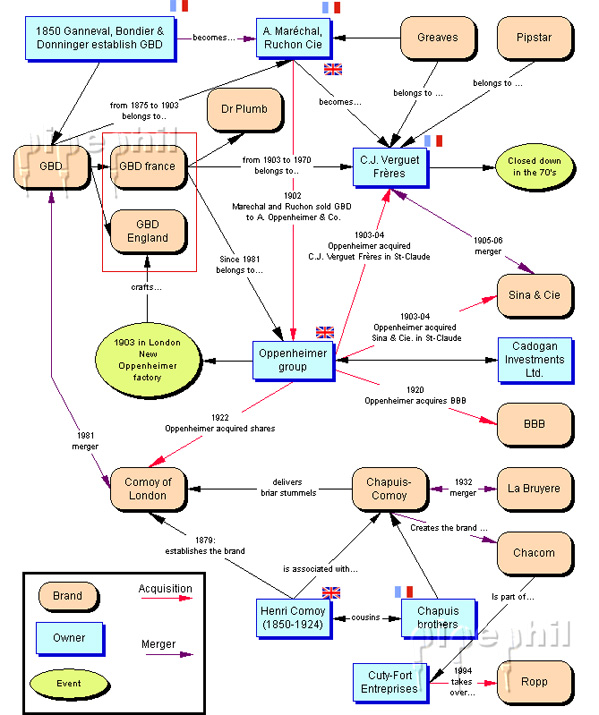
“Who Made That Pipe” states that there were two French makers for Old Pal. The first of those is Marechal Ruchon and Cie. (Incidentally it is the company that owned the GBD brand). The second maker listed is Rubinovich & Haskell Ltd. The bird emblem is probably the key, but I can find no reference to it. My own thinking is that the brand was made by Marechal Ruchon & Cie. I was able to dig up this brief summary of the MR&C brand. Ganeval, Bondier and Donninger began making pipes in 1850 and rapidly gained prominence in briar pipe making. Of the three, Bondier survived the others by 30 years, but new partners took their places. The name of the company changed to Bondier Ulrich & Cie, then Bine Marechal & Cie and finally to A Marechal, Ruchon & Cie. August Marechal and Ferdinand Ruchon saw the firm into the 20th century, their names being used for the company for well over 50 years.

Prior to 1899, Marechal, Ruchon & Co. became A. Oppenhiemer’s sole agent for cigarette papers but still remained in the pipe making business. Then in 1902, Marechal, Ruchon & Co., owners of GBD and referred to as French pipe makers, merged with A. Oppenhiemer. In the 1915 London Directory of briar pipe makers one will find: “”Marechal, Ruchon & Co. – 38 Finsbury Sq. E.C.; London works, 15 & 16 Featherstone St. E.C. and Oppenhiemer, A. & Co. – 38 Finsbury Sq. E.C. listed separately.

As before with that background information remembered I worked on this old pipe to clean it up and restore it. When I picked it up the bowl was badly caked. The rim was dirty and the outer edge had been knocked about pretty hard to remove the dottle of the past. The inner bevel was tarred but still in pretty good shape. The right side of the pipe had no fills or real damage. It was a nice birdseye under the grime. The left side had two fills of pink putty in the midst of some very nice grain. The grain on the rest of the bowl was a mix of cross grain and swirling grain. The finish was worn with some paint marks on the top of the shank. The stem was oxidized and had been broken with a large chunk missing at the button on the right side. The shank was cracked but the joint with the stem was smooth and tight. The tenon fit snug in the mortise with no gap in the junction. The shank and airway were dirty and tarry.
IMG_6262

IMG_6263

IMG_6265

IMG_6266
I have included the photo below as it clearly shows the crack in the shank, the broken stem and the stamping on the shank of the pipe.
IMG_6267
I debated whether to cut off the stem or to just restem the pipe with a Canadian stem. I looked at it with a small stem and then with this stem and decided to cut off the stem. I used a Dremel and a sanding drum to remove the broken part of the stem and even out the line of the end of the stem.
IMG_6268

IMG_6269

IMG_6270
I took it back to the work table and reamed the bowl with a PipNet reamer. I reamed the cake back to bare briar so that I could work on the damage to the inner edge of the rim.
IMG_6271
I took out my box of assorted nickel bands and found one that was the correct diameter and squeezed it until it was an oval. I dripped super glue into the open crack and pressed it together to dry. Then I heated the band with a heat gun and pressed it on to the cracked shank.
IMG_6272

IMG_6273
I used a folded piece of sandpaper to sand the tenon slightly so that it fit snugly in the shank. The fit of the stem to the band and shank looked good so that part of the job was finished.
IMG_6274

IMG_6275

IMG_6276

IMG_6277
I set up the topping board and the 220 grit sandpaper and topped the bowl to remove the damaged rim. I used a folded piece of sandpaper to bevel the inner edge of the rim inward like it had been originally.
IMG_6278

IMG_6279

IMG_6280
I wiped the bowl down with acetone to remove the finish and the spots of white paint that were on the top of the shank. I repeated the wash until the finish was clean and then wiped it down again with isopropyl alcohol.
IMG_6281

IMG_6282

IMG_6283

IMG_6284
With work on the bowl at a good stopping point I decided to do some work on the stem. I had to cut a new button and taper the stem toward the new button. There would have to be shaping done as well opening the slot on the end of the stem. I used a rasp to cut the edge on the lip of the button and to sand down the taper of the stem. I used a series of needle files to further shape the button and the taper.
IMG_6285

IMG_6286

IMG_6287

IMG_6288
I cleaned up the taper and the button with a sanding board that I picked up at a beauty supply house. It makes the edge clean and works well to even the taper on the stem.
IMG_6289

IMG_6290
The hole in the end of the new button was elongated and oval but needed to be opened more and made into a “Y” shaped slot whose inner edges tapered toward the airway and the slot shaped like an eye – open enough to take a pipe cleaner without any difficulty. I used three different needle files to open the slot. The first was a round file, followed by an oval file and ending with a flat oval that worked well to cut the edges of the slot.
IMG_6291

IMG_6292

IMG_6293
I sanded the stem with a medium and a fine grit sanding sponge to smooth out the surface on the stem and also to bevel the edge of the button toward the slot.
IMG_6294

IMG_6295
With the interesting grain pattern and the fills on the side of the bowl I decided to use a dark brown aniline stain. I applied it with a dauber and then flamed it. I applied it and flamed it a second time to make sure the coverage was even.
IMG_6297
When the stain was dry I wiped down the bowl and shank with isopropyl alcohol on cotton pads to remove the top coats of the stain and make it more transparent.
IMG_6299
I sanded the bowl with a fine grit sanding sponge and then wiped it again with the alcohol to clean off the dust. I gave it a second coat of a medium walnut stain as a top coat.
IMG_6300
I buffed the top coat of stain with White Diamond and then brought it back to the work table and took the following pictures. The angles on the stem are looking good. The shape of the button and the taper of the stem worked well with the pipe.
IMG_6301

IMG_6302

IMG_6303

IMG_6304
I sanded the stem with medium and fine grit sanding pads and then applied some liquid white out to the stamping on the stem to try to make it stand out more clearly. I sanded the stem with my usual array of micromesh sanding pads – wet sanding with 1500-2400 and dry sanding with 3200-12000 grit pads.
IMG_6306

IMG_6307

IMG_6308
I rubbed the stem down with Obsidian Oil and when it was dry buffed the stem and bowl with White Diamond and gave it multiple coats of carnauba wax to protect and preserve it. I finished by buffing it with a soft, flannel buff. The finished pipe is shown in the photos below. The newly shaped stem came out fairly well. I like the overall look of the finish and the band on the pipe. It is ready to join the other Old Pal in the rack.
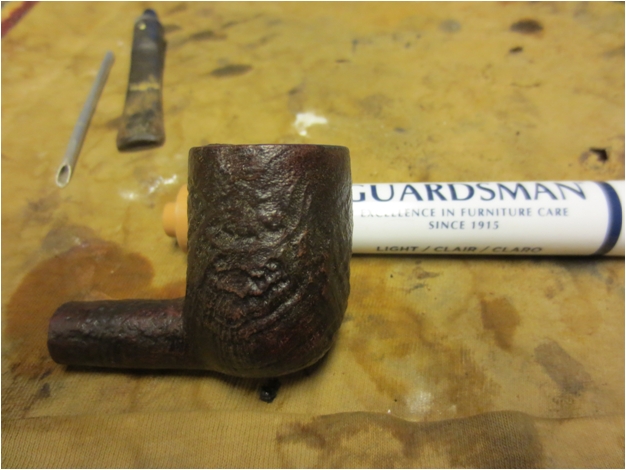
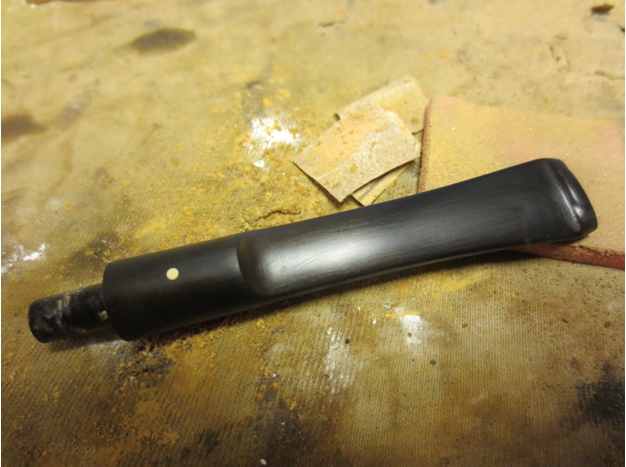
IMG_6310

IMG_6311

IMG_6313

IMG_6314