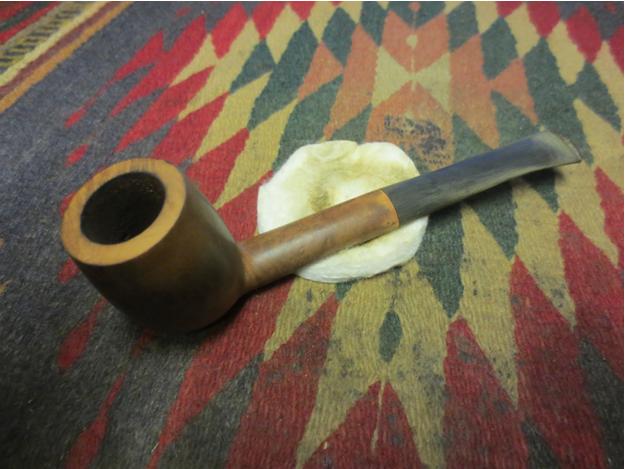
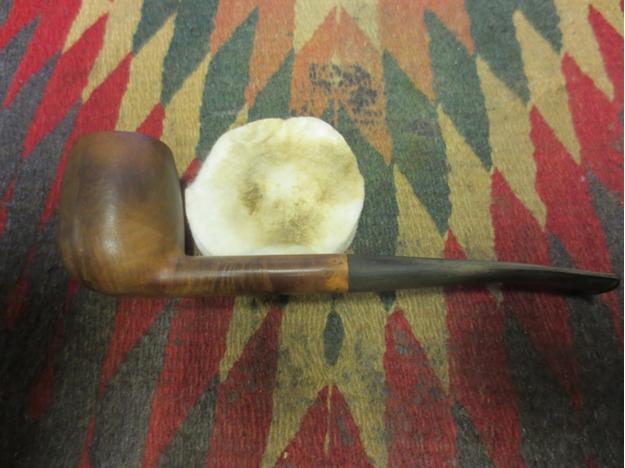
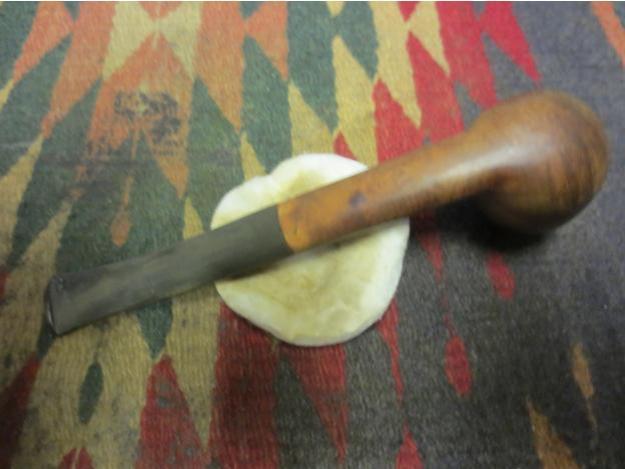
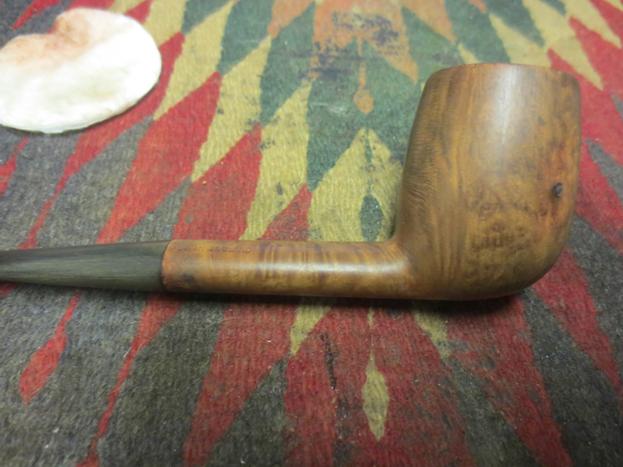
Tag Archives: removing oxidation

Fitting a Stem to an Old Ceramic/Porcelain Pipe Bowl


Blog by Steve Laug

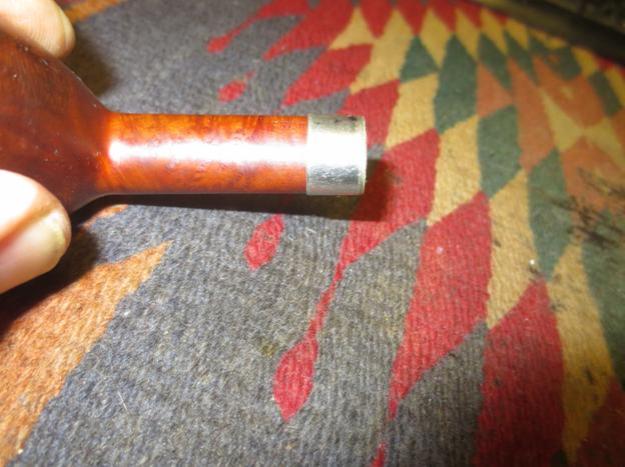
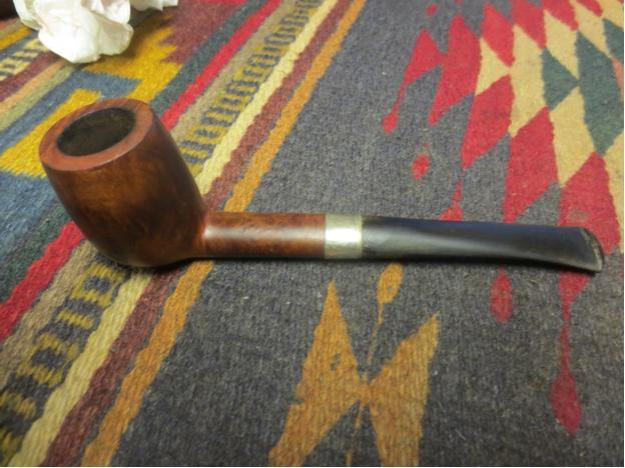
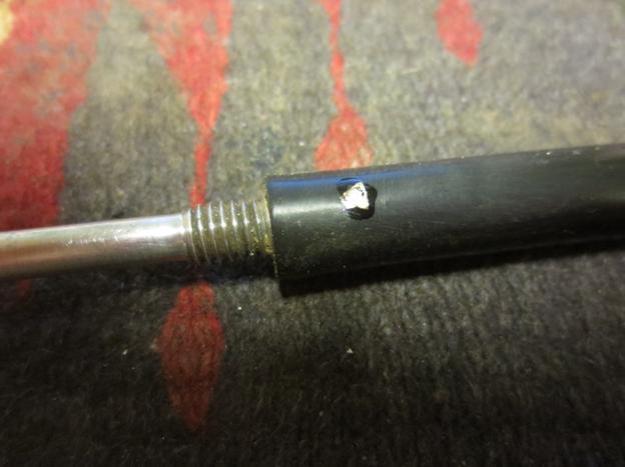
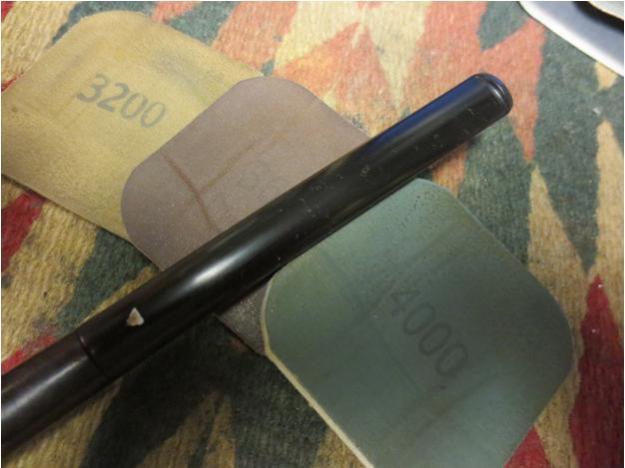
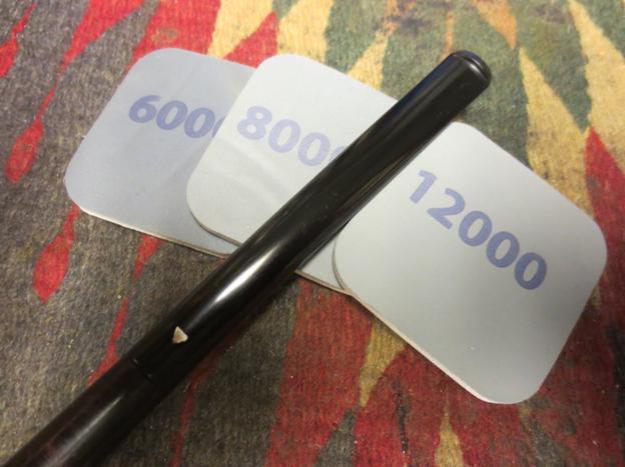
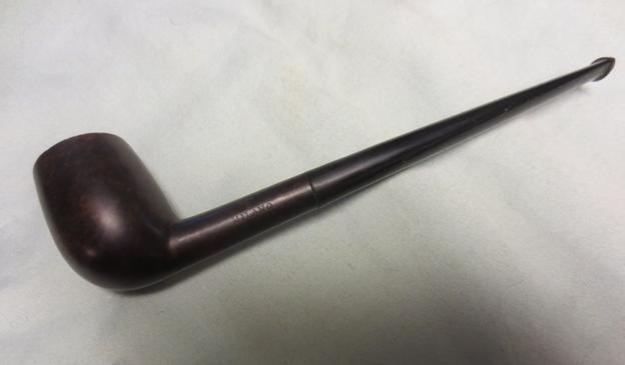
In a box of pipe parts I was given was a hexagonal shaped ceramic/porcelain pipe bowl with a thin pencil shank. It was cut off mid-shank at a slight angle. Looking at it I decided that it would be an interesting looking pipe to restem. The finished pipe would be unique and well worth the work to restem. I am guessing that the pipe originally had been longer and possibly had a bit on the end. There was a tiny chip cracked in the end of the shank. I reglued that and held it in place until it dried. Since the shank had been cut at an angle, I used a topping board to flatten the edge and square the end of the shank as much as possible. I then used a nickel band that I had in my box of bands and heated it and pressed it in place on the shank. I left a small portion of the band extending beyond the end of the shank to help square the fit of the stem to the shank. I went through my can of stems and found one that was the perfect diameter for a match to the shank. The tenon would need to be made smaller to fit in the shank and the mortise would need to be opened further with needle files for the stem to fit well.ceramic1 I scrubbed the bowl with Murphy’s Oil Soap and polished it with a microfibre cloth. There was a small hairline crack on the left side of the bowl coming from the rim downward about one half-inch. It was sealed so it was not currently a problem that I would need to deal with. I took some photos of the newly banded stem and the polished bowl to show the new look of the pipe. The bowl is quite thin so it will be a hot one to hold. It will need to be smoked slowly to keep it cool.ceramic2

ceramic3

ceramic4

ceramic5

ceramic6 I used a coarse needle file to open up the mortise in the shank to accommodate the tenon. I used a Dremel with a sanding drum to reduce the tenon as much as possible. I worked on the mortise to file down the inside of the shank. It took some careful file work to keep the mortise round so that once the opening was sufficient the tenon would not be loose inside.ceramic7

ceramic8 The next photo shows the finished mortise. The files worked well and the newly shaped tenon fit the shank perfectly.ceramic9 I put the stem in place on the bowl and took some photos to get a better look at the new pipe. The newly stemmed pipe actually looked very good. I loved the delicate look of it. The slight bend in the stem worked well with the bowl and allows the pipe to sit upright on a flat surface.ceramic10

ceramic11

ceramic12

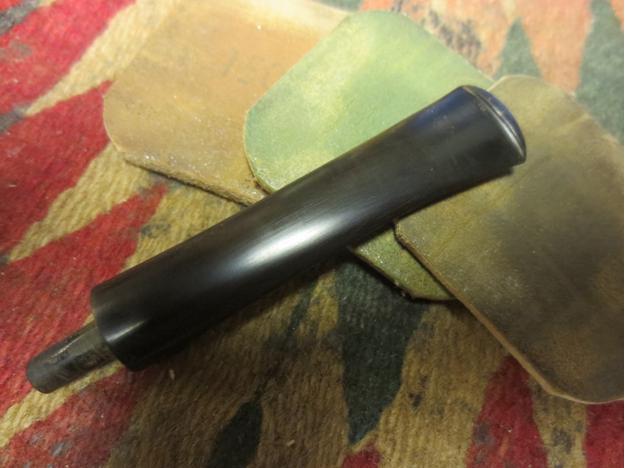
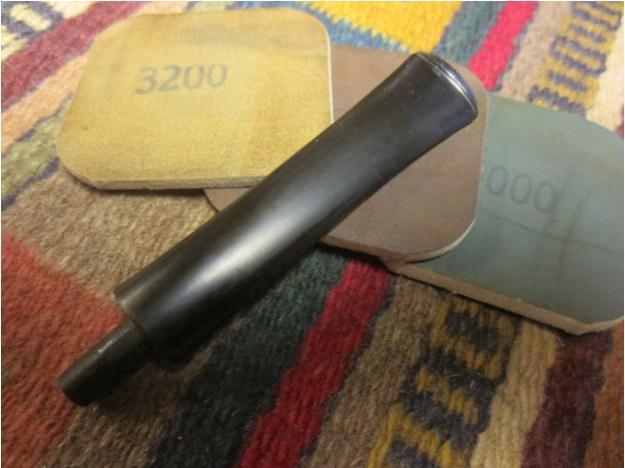
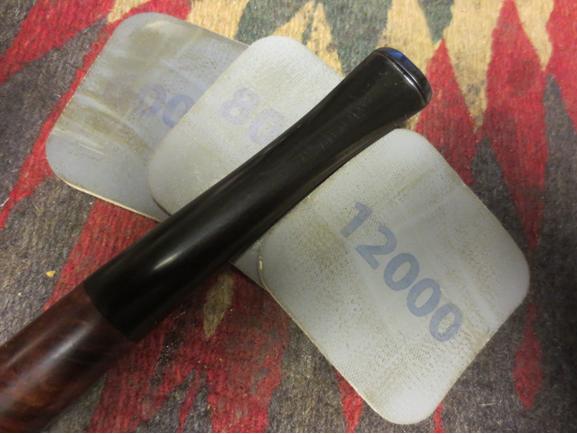
ceramic13 The stem was rough and lightly oxidized. I sanded it with 220 grit sandpaper to loosen the oxidation and then used a medium and a fine grit sanding sponge to smooth out the scratches on the stem. I then wet sanded the stem with 1500-2400 grit micromesh sanding pads and rubbed the stem with Obsidian Oil. I dry sanded it with 3200-4000 grit pads, gave it another coat of oil and then finished sanding with 6000-12000 grit pads. I gave the stem a final coat of Obsidian Oil and let it dry.ceramic14

ceramic15

ceramic16 I buffed the stem and bowl lightly with Blue Diamond polish on the wheels and then gave the stem and bowl multiple coats of carnauba wax. I polished it with a clean flannel buff on the wheel making sure to hold the bowl tightly. To have the buffer grab this one and throw it would be a disaster that the pipe would not survive. Once I finished the buffing on the wheel I hand buffed it with a microfibre cloth to raise the final shine. The finished pipe is shown in the photos below. There is some slight coloring forming on the sides of the bowl midway down from the top. I am wondering if the rest of the bowl will also colour with use. The pipe looks really good with the new stem and band. It will fit well in my collection of unique older pieces.

Thanks for looking.ceramic17

ceramic18

ceramic19

ceramic20

ceramic21

ceramic22

ceramic23

ceramic24

Cleaning up a London Made Charleston Banker


Blog by Steve Laug

When I saw this pipe on Ebay I decided to bid on it. I had bought from this English sell a few times in the past and he generally has some great older pipes. He had listed this one as a Criterion London Made pipe. I had looked and found that Criterion was made by Comoy’s. He described it as a 1/8th bent sandblasted prince. To me it is almost a Banker shape. The bowl is quite large and the oval shank ends with a saddle bit. It is 5 inches (12.75cms) long and the bowl height is 1.5 inches (3.75cms). He described it as lightly smoked, and in very good condition and as usual his description was perfect. He said that the markings on the bottom of shank were very faint and read Criterion over London Made. When the pipe arrived I looked at the faint stamping with a lens and a bright light and it actually reads: Charleston in script over block script LONDON MADE. I had not heard of Charleston pipes before so I did a bit of research and found the brand listed in Who Made That Pipe. It was listed as being made by Sydney Charleston Ltd. London, England. The first two photos are the ones provided by the seller on Ebay.Charleston1 When the pipe arrived I took it to the work table and took a few photos of the state of the pipe before I began to work on it. It was in pretty decent shape. The finish was dirty and the rim had dirt on it. The bowl had a cake build up. The stem was oxidized with a few small tooth marks on the top and bottom of the stem near the button. The slot was virtually plugged so I could not get a pipe cleaner through it to clean the inside.Charleston2

Charleston3

Charleston4

Charleston5 I took the pipe apart and put the bowl in an alcohol bath to soften the hard cake and the stem into an Oxyclean bath to soften the oxidation on the stem. I left them to soak overnight.Charleston6 When I took the bowl out in the morning I scrubbed it with a brass bristle whitewall tire brush to clean out the grooves in the blast on the bowl and the rim. I was able to remove all of the build up and grime from the ridges and grooves.Charleston7

Charleston8 I wiped out the bowl with a cotton swab and then reamed it with a PipNet reamer to remove the cake. The bath had softened the cake so it came out very easily.Charleston9 I took the stem out of the Oxyclean bath and the oxidation had all come to the surface. It was soft and would be easier to remove.Charleston10 I used a dental pick to clean out the slot and then a pipe cleaner to make sure the edges of the Y were wide open to further clean it.Charleston11 I scrubbed down the bowl and stem with a Mr. Clean Magic Eraser and gave the bowl a light rub down with olive oil. I took the following photos. There was progress to be seen.Charleston12

Charleston13 The cleaning and oil seemed to make the stamping more legible. In the photo below you can see the Charleston with a curled line under it and the London Made stamping underneath the line.Charleston14 I cleaned out the bowl, shank and stem with pipe cleaners, cotton swabs and alcohol. It was incredibly dirty. I would need to use the retort to really clean it.Charleston15
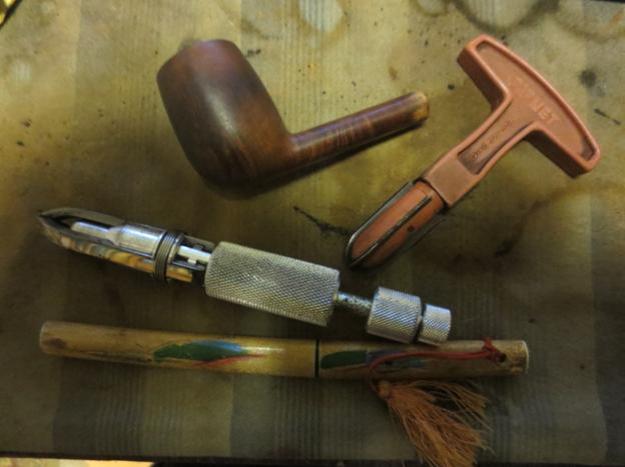
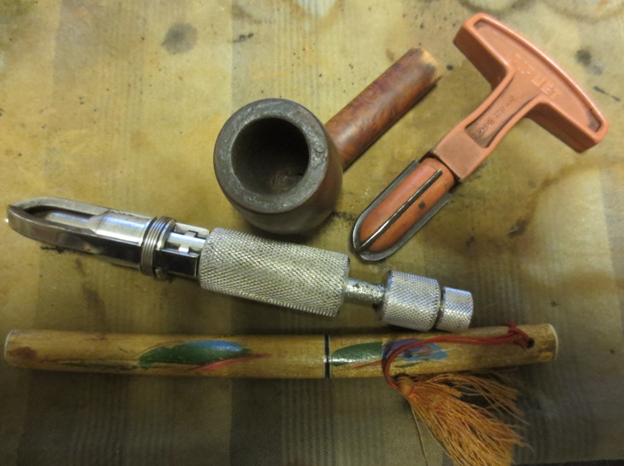
Charleston16 I sanded the stem with 220 grit sandpaper and worked out the tooth marks on the top and underside near the button.Charleston17 I set up the retort and held the tube over the flame to boil the alcohol through the stem and bowl. I ran three test tubes of alcohol through the pipe before it came out clean. The fourth bowl came through with clear.Charleston18

Charleston19 I took the cotton ball out of the bowl, wiped out the bowl with a cotton swab and ran pipe cleaners through the stem and shank to remove any moisture and final debris. The pipe smelled fresh and clean and the interior was clear.Charleston20

Charleston21 I worked on the stem with a medium and a fine grit sanding sponge and then wet sanded with 1500-2400 grit micromesh sanding pads. I rubbed the stem down with Obsidian Oil before dry sanding with 3200-4000 grit pads. I gave it another rub down with oil and then finished sanding with 6000-12000 grit pads. I gave it a final rub down of Obsidian Oil and let it dry.Charleston22

Charleston23 I buffed the pipe with White Diamond and Blue Diamond on the buffing wheel and then gave it multiple coats of carnauba wax. I then buffed it with a clean flannel buff and a final hand buff with a microfibre cloth. The finished pipe is shown in the photos below. It is fresh and ready to smoke. I intend to fire up a bowl today!

Thanks for looking.Charleston24

Charleston25

Charleston26

A Simple Elegance: Cleaning, Restemming and Restoring a Diplomat Billiard


Blog by Steve Laug

On my recent Lethbridge trip I found the Diplomat pipe at an Antique Fair. It is a nice sandblast billiard with a dark undercoat and a brown over stain. The bowl was in decent shape. The sandblast was deep and quite beautiful to look at. The nooks and crannies caused in the process made for an interesting feel in the hand as well. The stain had worn off in spots on the sides of the bowl and along the outer edges of the rim. The finish was also generally dull and lifeless. The surface of the rim was dirty with tars and oils. The inner edge was slightly damaged and would need to be worked on. There was a thick cake around the middle of the bowl and light at bottom and on top. The stem was one that somebody had Gerry-rigged to fit. It was smaller in diameter and the tenon was too small. The previous owner had wrapped the tenon with thread and then with aluminum foil and pressed it into the shank. The stem had also been hacked up to repair a damaged button and grooves had been carved on the top and bottom sides of the stem to make it a dental bit.Dip1

Dip2

Dip3

Dip4

Dip5 I took close-up photos of the top of the bowl and the underside of the shank to give a clear picture of the state of the inner edge of the rim and the stamping on the pipe.Dip6

Dip7 The next two photos show the stem that came with the pipe and the “fancy” work that had been down to make it fit the shank and create grooves on the top and underside that would allow the pipe to be held in the mouth behind dentures.Dip8

Dip9 My first task was to go through my stem can and see if I could find a better stem for this pipe. I did not have a tapered stem that would readily fit but I did have a saddle stem that would look good after shaping and fitting it to the shank.Dip10 I lightly sanded the tenon to get a snug fit in the shank and pushed the new stem home to have a look at the fit. The stem would need to be sanded to bring the diameter at the stem/shank union down to match the shank. I took a few photos to see what the pipe looked like with this new stem.Dip10

Dip11

Dip12

Dip13 I used a Dremel with a sanding drum to carefully reduce the diameter of the saddle portion of the stem. I have found that I can roughly shape the stem to fit better and then finish by hand sanding it (photo 1). Once I had the rough shape I sanded it with a coarse emery paper to remove the gouges and scratches left behind by the sanding drum (photo 2). I slipped a plastic washer on the tenon and put the stem back in place. I sanded it with 180 and 220 grit sandpaper to further shape it and remove the scratches (photo 3).Dip15

Dip16

Dip17 With the basic fit correct and only needing to fine tune it and polish the stem I decided to ream the bowl. I used a PipNet reamer and took the cake back to bare wood.Dip18

Dip19 I cleaned out the inside of the shank and stem with pipe cleaners, cotton swabs and alcohol. Once it was clean I worked on the inner edge of the rim. I sanded it and reshaped it to make it smooth and round once again using a folded piece of 220 grit sandpaper.Dip20

Dip21

Dip22 I sanded the stem some more with 220 grit sandpaper and flattened the bottom side to match the flat bottom of the shank. The next set of three photos show the fit and shape of the stem at this point.Dip23

Dip24

Dip25 The button was quite thin and I decided to build it up with black superglue. I also could see a repair that had been done on the stem before I used it so I worked on that to further blend it into the stem surface.Dip26 When the glue dried I sanded it with 220 grit sandpaper to feather it into the surface of the rest of the stem and also worked on shaping the button. In the second photo below you can see the end view of the built-up and reshaped button.Dip27

Dip28 I sanded the stem and button with a medium and a fine grit sanding sponge to remove the scratches and blend in the patches. I then wet sanded the stem with 1500-2400 grit micromesh sanding pads and then rubbed the stem down with Obsidian Oil. I dry sanded with 3200-4000 grit pads and rubbed it down again with oil. I finished by sanding it with 6000-12000 grit pads and gave the stem a final coat of Obsidian Oil. I set it aside until the oil was dry.Dip29

Dip30

Dip31

Dip32 I touched up the worn spots on the finish of the bowl with a dark brown stain pen and a black permanent marker and then buffed the bowl and stem with White Diamond on the wheel. I buffed it again with Blue Diamond and then gave the pipe multiple coats of carnauba wax. I polished it with a clean flannel buff and then hand buff with a microfibre cloth. The finished pipe is shown in the photos below. I like the looks of the saddle stem and the deep sandblast finish. The pipe has an understated elegance about it that I like.

Thanks for looking.Dip33

Dip34

Dip35

Dip36

Dip37

Refreshing a Delicate Comoy’s Made Sunrise Amber Grain Bent Billiard


Blog by Steve Laug

The last pipe that came to me in the Smokers Forum Donation Sale was a beautifully shaped little Sunrise Amber Grain Bent Billiard. The shape and the feel of this little pipe are very delicate. It is almost a bent pencil shank – in fact I am not sure how much thinner it would have to be to actually be called a pencil shank. The pipe is 5.5 inches long, 1.75 inches tall with a small bowl with a chamber diameter of .75 inches. It is stamped Sunrise over Amber Grain on the left side of the shank. On the right it is stamped Vintage Briar and shaped number 13. On the underside of the shank next to the stem junction it is stamped France. The Sunrise line was made by Comoy’s as is identified also by the shape number. As it was made in France it does not have the familiar Com stamp that appears on British made Comoy’s.

This pipe was in decent shape in terms of the exterior finish. There were no dents or dings in the surface of the bowl or shank. The stamping was light on the right side of the shank and the Sunrise stamp was lighter than the Amber Grain stamp. I would have to be careful in the clean up not to damage these already light stamps. The stem was oxidized and there was a small bite through with a crack going toward the button on the underside of the stem.Comoy1

Comoy2

Comoy3

Comoy4 The rim was in great shape with some light scratching. The inner bevel was still present and darkened but there was no damage to it. The bowl was still in round. There was a rough cake in the bowl that was uneven and would need to be removed.Comoy5 I reamed the bowl with the PipNet reamer to take the cake back to the bare wood.Comoy6

Comoy7

Comoy8 I cleaned out the shank with pipe cleaners, cotton swabs and alcohol. It was amazingly clean. I am guessing that the previous owner cleaned this one up before setting it aside.Comoy9 I cleaned out the bowl and lightly sanded the bevel on the inner edge of the rim to remove the light build-up that was present there.Comoy10 I wiped the bowl down with a cotton pad and some alcohol and then gave it a light coat of olive oil. I buffed it on the buffer to give it a shine. It has some great grain on the bottom of the bowl and the left side. The grain on the front of the bowl and the right side is mixed with a few bald areas. The sides of the shank are full of birdseye grain and the top and bottom are cross grained.Comoy11

Comoy12

Comoy13

Comoy14 The stem was oxidized and the underside bite through and small crack needed to be addressed.Comoy15

Comoy16

Comoy17 I picked the debris out of the crack and bite through and examined it with a lens. It was clear that the bite through was very small and that the crack ended at the bite through and went back to the button. The bite through effectively stopped the crack from spreading forward along the stem. I wiped the stem down with acetone on a cotton pad to clean it up. I then spread some black super glue on the crack and bite through with the tip of a dental pick. I set the stem aside to cure for about an hour.Comoy18

Comoy19 Once the super glue had cured I sanded the repair and the rest of the stem with 220 grit sandpaper to both remove the oxidation and to blend the patch into the surface of the stem. I sanded with a medium and fine grit sanding sponge to further remove the scratches and oxidation.Comoy20 I wet sanded the stem with 1500-2400 grit micromesh pads and rubbed stem down with Obsidian Oil. I dry sanded with 3200-4000 grit pads and then buffed it with White Diamond on the buffing wheel. I gave it another coat of oil and then sanded with 6000-12000 grit pads. I gave it a final coat of Obsidian Oil and let it dry.Comoy20

Comoy21

Comoy22

Comoy23 I buffed the pipe with Blue Diamond polish on the wheel and then gave the bowl and stem multiple coats of carnauba wax. I polished it with a clean flannel buff and then hand buffed it with a microfibre cloth. The finished pipe is shown in the photos below. Thanks for looking.Comoy24

Comoy25

Comoy26

Comoy27

Comoy28

A Peterson 301 System Pipe Reborn


Blog by Steve Laug

I have this pipe and one other left to clean up of the donated pipes for the benefit of Smokers Forums. This one is a Peterson’s System Standard Bent Pot. It is stamped Peterson’s System Standard on the left side and on the right side it is stamped Made in the Republic of Ireland over 301 which is the shape number. The finish was shot, worn and stained with most of the colour faded out. The nickel ferrule was oxidized and dull. The rim was dirty and nicked on the top surface but undamaged on the inner or outer edge. There were some deep scratches on the underside of the bowl that went across the surface of the briar. They were ragged and I knew that steaming them would not raise them. There was also some road rash on the right side of the bowl where it looked as if the bowl was dropped on concrete. The bowl had a thick cake that was soft and crumbly. The stem was oxidized and dirty with some tooth chatter on the top side and the underside near the p-lip. The interior was also dirty with grit. The inside of the shank/mortise was surprisingly clean with dust and tobacco residue but little tar and oil. The inside of the stem was also dirty. The hole in the end of the button was in great shape.Pete1

Pete2 I took a close up of the rim and bowl to show the thickness of the cake. I reamed the bowl with a PipNet reamer and took the soft cake back to bare briar so that a new hard cake could be developed by the new owner of the pipe.Pete3

Pete4 I sanded out the bowl to remove the ridge that appears in the photo below. You can also see the dents and nicks in the surface of the rim.Pete5 I lightly topped the bowl with a topping board to take out the damaged surface of the rim and clean up the top.Pete6 I wiped down the bowl with acetone on cotton pads to remove the finish and the grime in the grain of the briar.Pete7

Pete8 I filled the deep scratches in the bottom of the bowl with clear super glue and also filled the road rash nicks on the right side of the bowl. I sanded them smooth with 220 grit sandpaper and then sanded them with a medium and a fine grit sanding sponge. I also sanded them with 1500-2400 grit micromesh sanding pads to smooth out the scratches. I stained the bowl with a dark brown aniline stain that I thinned with 3 parts alcohol to 1 part stain. I flamed the stain to set it deep in the grain.Pete9 To make the stain more translucent I scrubbed down the surface with alcohol to lighten the stain and make it more transparent.Pete10 I put a light coat of wax on the bowl to protect it while I cleaned the inside of the pipe. I used pipe cleaners, cotton swabs and alcohol to clean out the shank and mortise area. I polished the nickel ferrule with a silver polishing cloth and was able to remove the oxidation.Pete11

Pete12

Pete13 I let the stem soak in Oxyclean for several hours while I worked on the bowl and then gave it a vigorous rubdown with coarse cloth to remove the loose oxidation. I then sanded it with 220 grit sandpaper and a medium and a fine grit sanding sponge to further remove the oxidation. Once it was gone I buffed it with red Tripoli and then moved on to sand it with the micromesh sanding pads – wet sanding with 1500-2400 grit pads, rubbing it down with Obsidian Oil and then dry sanding with 3200-4000 grit pads and giving it another rub down. I buffed it with White Diamond and then finished with 6000-12000 grit pads before giving it a final coat of oil and letting it absorb into the stem.Pete14

Pete15

Pete16 I finished by buffing the pipe with Blue Diamond on the wheel and then giving the bowl and stem multiple coats of carnauba wax. I buffed it with a clean flannel buff and then hand buffed with microfibre cloth. The finished pipe is shown below.Pete17

Pete18

Pete19

Pete20

Rejuvenating a Peterson’s System Premier 307


Blog by Steve Laug

The next pipe that is on my desk came to me from a friend on Smokers Forums who wants me to clean and sell them for the support of the forums. It is a nice Peterson’s Premier System Pipe in the 307 shape. It is stamped on the underside of the shank Peterson’s System Premier 307. The silver ferrule is stamped as normal with Petersons of Dublin on one side. Underneath it is stamped Sterling Silver and there are hallmarks that give the date of the pipe. The stamping of the hallmarks was as follows: Hibernia, Lion (denoting that the silver is .925) and the letter “b” which denotes that the pipe was made in 1969. I have included the Peterson’s Hallmark chart below as it is a very helpful tool that I have used repeatedly to date my Peterson pipes.Peterson Hallmarks The pipe was dirty and the silver was oxidized enough that the stamping was hard to see. The rim was darkened by in pretty decent shape. The sandblast finish had a lot of grime in the grooves and there was some white paint of dried wax in the grooves. There was a light cake in the bowl that was thicker toward the middle of the bowl than it was at the top or the bottom. The stem had a rough finish from the oxidation and there were some small tooth marks on the top and the bottom edge of the stem near the P lip. The airway on the button was in excellent shape and the crease was still well defined.Pete1

Pete2

Pete3

Pete4 I took a close up of the bowl to show the cake that was in the bowl. There was a small nick on one side of the inner edge of the bowl on the right side but it looked like it would clean up very nicely.Pete5 I reamed the bowl with a PipNet reamer and took the cake back to the bare wood. I wanted a good even base so that the new owner could build a solid hard cake evenly in the bowl. I used a folded piece of sandpaper to smooth out the nick on the right side.Pete6

Pete7 I took the stem out of the shank and removed the Bakelite/wood extension that screws into the tenon on Peterson Premier pipes. The photo below shows the pipe taken apart.Pete8 I took the next series of photos to show the grime and white wax in the grooves of the sandblast.Pete9

Pete10

Pete11

Pete12

Pete13 I scrubbed the bowl with a tooth brush and Murphy’s Oil Soap to clean out the grooves of the blast. I worked on it until I was able to remove the grit. I followed up with a light scrub of the rim and the grooves with a brass bristle tire brush to finish the cleaning.Pete14 I rinsed the bowl under running water to remove the soap and the loosened dirt. I dried it off with a soft cloth and then took the next set of photos.Pete15

Pete16

Pete17

Pete18 I polished the sterling silver ferrule with a jeweler’s polishing cloth and was able to remove the tarnish. The silver began to shine and the stamping became very clear as I cleaned it.Pete19

Pete20

Pete21 I rubbed some microcrystalline Conservator’s Wax on to the bowl surface with my fingers and then buffed it with a shoe brush. The result was a warm shine on the bowl. I don’t like to use a buffer on deep blasts as it tends to flatten the blast and wear it down. Hand buffing it with a shoe brush preserves the blast.Pete22

Pete23 I cleaned the interior of the stem and shank with pipe cleaners, cotton swabs and alcohol. I was surprised at how clean the shank and the stem were. It took very few cleaners to clean up the interior of the pipe.Pete24 I soaked the stem in Oxyclean for about 30 minutes and then dried it off and sanded the oxidation with 220 grit sandpaper and also a medium and a fine grit sanding sponge to remove the loosened oxidation.Pete25 I wet sanded the stem with 1500-2400 grit micromesh sanding pads and then rubbed it down with Obsidian Oil. I dry sanded it with 3200-4000 grit micromesh and gave it another coat of oil. In each of these steps I did not let the oil absorb but rather used it to give traction to the micromesh pads. I buffed the stem with Red Tripoli and with White Diamond on the wheel to remove the stubborn oxidation that remained. I finished by sanding the stem with 6000-12000 grit sanding pads. I gave the stem a final coat of Obsidian Oil and let it absorb into the vulcanite.Pete26

Pete27

Pete28 I buffed the stem with Blue Diamond and gave it multiple coats of carnauba wax to protect and give it a shine. I then buffed it with a soft flannel buff and then by hand with a microfibre cloth. The finished pipe is shown in the photos below. It is a beautiful sandblast system pipe that will make someone a great addition to their rack. If you are interested in this pipe contact me via Facebook of comment on the blog. All proceeds will go toward supporting Smokers Forums.Pete29

Pete30

Pete31

Pete32

Pete33

Pete34

Pete35

A West German Mystery: Refurbishing a Merkur 2000 720


Blog by Anthony Cook

A friend from the Pipe Smoker Unlimited forums recently picked up a volcano-shaped Merkur 2000 pipe as a birthday gift to himself (we all know that those are the best gifts). He was drawn to the shape and the bit of nice grain that he could make out beneath the grime and dark stain. He mentioned in a comment that it was going to need a little cleaning up. So, I offered to take care of that for him and he accepted.

I gave the pipe a good look over when the pipe arrived some time later. I was immediately impressed by how light it was for its size. It appeared to be in good, clean condition too. The stem had barely any tooth chatter, but it had some reddish oxidation that almost matched the stummel stain and there were strange bands of raised vulcanite in some areas. My best guess is that something had lain across the stem for a very long time to cause the warping. The stummel appeared to have a few scratches, including one on the rim that was the most pronounced, but they were small and looked shallow. So, I was confident that they could be easily removed.

Here’s the pipe as it was on arrival:Merk1 In the photo below, I don’t know what that is in the chamber. It’s best not to think about it too much.Merk2

Merk3

Merk4 The actual manufacturer of this pipe is a bit of a mystery to me. It’s stamped “MERKUR 2000” along the left shank, “REAL BRIAR” along the right, “WEST-GERMANY” and “720” along the bottom, and there is a slanted “H” logo on the stem. Pipephil has a listing for a Blackwood pipe with a matching stem logo and “2000” in the same location and typeface. It’s my guess that neither Merkur nor Blackwood is a manufacturer brand name, but rather they are either model names or shop-branded names. Whatever the case may be, the “WEST-GERMANY” stamping is a clear indication of the country of origin and that the pipe was made sometime before the 1990 German reunification.

Here are a few detail photos of the stamping in question and also the Blackwoods pipe from pipephil:Merk5

Merk6 When I asked my friend what he wanted done with the pipe, he said that he would like me to lighten the color a bit and make the grain “pop.” So, to begin, I wiped the stummel down with acetone and cotton pads to remove the grime and lift some of the old stain.Merk7 I think a good, internal cleaning is the foundation of any estate pipe work. So, I scrubbed out the stem and stummel with a few pipe cleaners, cotton swabs, and a shank brush. Next, I set up the retort for some deep cleaning (kind of like steam cleaning the carpet). I flushed the stem and shank 10-12 times with the boiling alcohol, let the pipe rest for about 10 minutes, and the flushed it 10-12 times again with fresh alcohol. After the second retort the alcohol in the vial was almost as clear as when it was fresh (the debris seen in the photo is bits of carbon build-up on the outside of vial from the candle flame). So, I gave the pipe a final scrub to remove anything left behind from the retort.Merk8 The stem was dropped into a bath of Oxyclean and warm water for about an hour, and then I removed the softened oxidation by scrubbing with cubes cut from a Magic Eraser pad. I sanded down the tooth chatter and warped bands on the stem with a progression of 220, 320, and 400-grit paper and the entire stem was lightly sanded with 600-grit paper to get rid of the pitting and smooth the surface.

I already knew that I couldn’t completely restore the stem logo; the upper-right portion of the “H” was almost entirely worn away. I thought that it would look better with something there though. So, I painted over the logo with a grout pen, let the paint dry, and then very carefully sanded away the excess with 1200-grit paper to reveal the partially restored logo. Then, I sanded the rest of the stem with 1200-grit and polished with the full range of Micro-Mesh pads to wrap up the stem work.Merk9 The scratch on the rim didn’t seem too deep. I thought that I would be able to remove it with just a light topping. It didn’t take much sanding with 220-grit before I noticed that the “scratch” was widening and realized that it wasn’t a scratch at all, but a small pit. I thought that it might still be shallow enough that I could sand it out, but when the pit was still there after a bit more sanding I decided to cut my losses and patch it with a briar dust and CA glue patch. Then, I topped the bowl with 320-grit to even everything out.

Unfortunately, that pit wasn’t the last one that I encountered while working on this pipe. At least two more revealed themselves along the rim and a few more on the rest of the stummel.Merk10 Now, before I tell you about how I did the rest of the stummel I have to issue an apology. I failed to take any more photos before finishing up the pipe. I’ll lay the blame on the previously mentioned pits that kept cropping up, which caused me to backtrack at almost every stage and redo sections of the work. However, I’m sure that you can follow along with no problems. I won’t detail any of the pits, since they were all addressed in the same way as the one above.

In order to honor the request to make the grain “pop,” I heated the stummel with a heat gun to open the grain and applied a dark brown stain thinned to one part stain to three parts isopropyl alcohol. After flaming the stain to set it into the grain, I hand-buffed with a soft rag to remove the excess, and then sanded the stummel with 400-grit. This removed most of the light scratches as well as much of the surface stain, which gave the grain some nice contrast.

I heated the stummel again before applying a medium brown stain thinned the same as before. I flamed and hand-buffed again before lightly sanding with 600-grit and 1200-grit papers. I also began polishing with Micro-Mesh 1800-grit to 2400-grit.

Next, I applied a light brown stain, flamed, hand-buffed, and reattached the stem to give the stummel a Tripoli buff on the buffing wheel. I don’t buff the stem with Tripoli, but it’s good to have it in place to prevent the buffer from rounding the shoulders of the stem and shank faces. I use a rubber tourniquet tightly wrapped around the end of the stem to protect it from the wheel.

I polished the stummel with 3200-grit through 4000-grit paper before giving it one final stain of British tan thinned by eye until it was just weak wash. Then, I polished with the remaining Micro-Mesh grits before buffing the entire pipe with White Diamond and applying several coats of carnauba wax to finish up the pipe.

The final results are pictured below.Merk11

Merk12

Merk13

Merk14 I think the pipe will now be a proud addition to my friend’s collection and I’m sure that it will serve him well for many more birthdays to come. Thanks for looking.
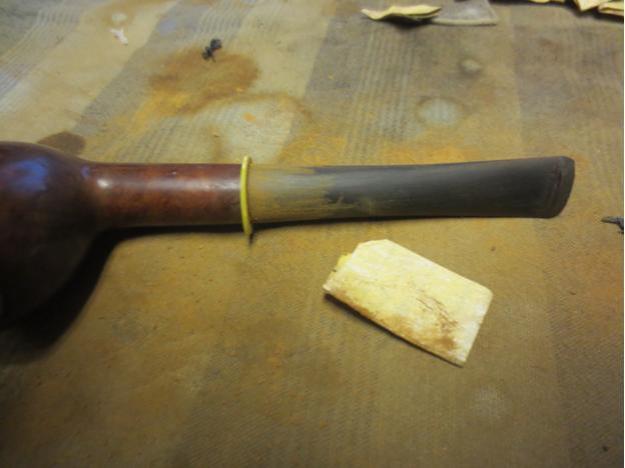
Restoring a Savinelli Hercules Billiard


Blog by Steve Laug

This pipe came to me as a fund raising donation for Smokers Forums. The donor wanted this and other pipes he sent cleaned up and restored then sold for the support of Smokers Forums. This pipe is a large Hercules Billiard made by Savinelli. It is stamped Hercules on the left side of the shank and on the right it read 111EX over Italy. This big pipe had some stunning grain. It would clean up very well. The finish is dull and dirty with grime but the briar is in excellent condition with no dents or flaws. There was a thick and uneven cake in the bowl and the overflow of lava on the rim was also heavy. In my experience the thick lava on the rim generally protected the rim from damage. The inner bevel on the rim and the edge was also undamaged. The stem was oxidized. The stamping on the stem shows well in the photo below but it was actually very light and faint. It would be virtually impossible to save it once it soaked and was cleaned up. It was almost like a decal applied to the stem rather than stamping.Herc1

Herc2

Herc3

Herc4 I reamed the bowl back to bare wood to remove the crumbling and uneven cake with a PipNet reamer. I started with the smallest cutting head and worked my way up to the diameter of the bowl.Herc5

Herc6

Herc7 I worked on the buildup on the rim with 0000 steel wool. Working it around the rim I was able to remove all of the tar and lava without damaging the finish.Herc8 I scrubbed the exterior of the bowl with acetone on cotton pads to remove the grime and the wax buildup. I believe these pipes had an oil finish originally and were not stained. The grime came off easily and the grain just popped!Herc9

Herc10

Herc11

Herc12 I cleaned out the interior of the bowl and the shank with pipe cleaners, cotton swabs and alcohol until they came out spotless. I also folded each pipe cleaner and swabbed out the inside of the bowl to remove the dust and particles left behind by the reaming.Herc13

Herc14 I gave the stem a light sanding with 220 grit sandpaper and then with a medium and fine grit sanding sponge to remove the oxidation. I worked carefully around the stamping to see if I could preserve it. So far so good on that point.Herc15

Herc16

Herc17

Herc18 I worked on the stem with micromesh sanding pads to remove the rest of the oxidation and to polish the stem. The first 1500 grit micromesh literally obliterated the stamping. That kind of thing bugs me but I can’t go back and change it. The decal/stamping was gone. I wet sanded the stem with 1500-2400 grit micromesh pads and then rubbed the stem down with Obsidian Oil. I dry sanded with 3200-4000 grit pads and gave it another coat of oil. I finished with 6000-12000 grit pads and gave the stem a final coat of oil and let the oil dry before taking it to the buffer.Herc19
Herc20

Herc21 I gave the bowl a light coat of olive oil and rubbed it in. I let it absorb over night. In the morning I buffed the bowl and stem with Blue Diamond and then gave both multiple coats of carnauba wax to protect. I buffed it with a clean flannel buffing pad to raise the shine then finished by hand buffing with a microfibre cloth. The only flaw in the process was the removal of the stamp/decal on the stem. For that I apologize. Otherwise the pipe is a stunning piece of craftsmanship. The finished pipe is shown in the photos below. I think this pipe will be a great smoker for whoever decides to add it to their rack.Herc22

Herc23

Herc24

Herc25

Herc26

Herc27

Herc28

Herc29

Herc30

Herc31

Cleaning up my Budapest Pipe Find – A Parker of London Earl 576 Bent Dublin


Blog by Steve Laug

On my recent trip to Budapest I visited several of the pipe shops that I found when I was there five years ago. The experience was sad in that much has changed and the pipe and tobacco selection has greatly diminished. I was in the Gallwitz Shop and looked at their estate pipes. I turned several over in my hands before leaving and not buying any. I walked about a block before I got to thinking that this would probably be the last time I was in that shop and if the downward turn of pipeshops in Budapest continued it might not last. I turned around and went back to the shop and purchased a small bent Dublin that is stamped on the left side of the shank, Parker of London. On the right it is stamped Earl and on the underside it bears the shape number 576. I have included a photo I took on my phone of the pipe and some of my other finds that day.Find1 The pipe was in decent shape. It had quite a few fills on the right side of the bowl and a long narrow fill on the underside of the shank that had shrunk and left a groove. The rim had a lot of grooves and damage that had been waxed over. The bowl was out of round but was clean. The inside of the shank and stem were still pretty dirty. The original stem was loose but relatively clean with no tooth marks and the faint diamond P logo on the top of the saddle. There was some minor oxidation in the crease at the button and the surface of the stem had some scratches that had not polished out. On the underside of the stem there were some bits of metal that were in the mix of the rubber stem. I know that in the war years the rubber used for stems was recycled so I am thinking that this one may come from that era. When I got home from Budapest I took the following photos of the pipe to show what it looked like when I began.Parker1

Parker2

Parker3

Parker4 I also took a few close-up photos of the rim and the stamping on the shank. To me there is a quiet elegance to this shape. You can see the rim damage and the inner edge damage in the first photo below.Parker5

Parker6

Parker7 I worked on the inner edge of the rim with a folded piece of 220 grit sandpaper. I wanted to even out the inner edge and minimize the out of round look. I gave it a slight bevel to get rid of the damage. In doing so I did not particularly care that I scratched the surface of the rim because I planned on topping it lightly to remove the damage.Parker8

Parker9 I topped the bowl on a topping board to remove the deep scratches and damaged areas on the surface of the rim.Parker10

Parker11 I sanded the rim with a medium and a fine grit sanding sponge. I then sanded it with 1500-2400 micromesh sanding pads to polish the rim. I then stained it with the staining pens – starting with the lightest colour and gradually working my way up to the darkest colour. I worked to blend it into the same colour as the bowl and shank.Parker12 The long worm shaped fill on the bottom of the bowl needed to be refilled. I decided to use clear super glue and no briar dust as the groove was not very deep. I filled it and let it dry. I sanded the repair with micromesh sanding pads until it blended into the surface of the briar. It is smooth to the touch now and is better blended into the surface of the briar.Parker13

Parker14

Parker15 I rubbed down the bowl and shank with a light coat of olive oil and then buffed it with a microfibre cloth to raise a bit of a shine.Parker16

Parker17

Parker18 I worked on the oxidation on the stem in the crease with micromesh sanding pads. I wet sanded with 1500-2400 grit pads. I scraped the groove in the crease with a dental pick and then sanded it until it was smooth. I rubbed it down with Obsidian Oil and then dry sanded with 3200-4000 grit pads, reoiled it and then finished sanding with 6000-12000 grit pads. I gave it a final coat of Obsidian Oil and then let it sit until the oil had been absorbed into the vulcanite.Parker19

Parker20

Parker21 I buffed the pipe with Blue Diamond and then gave it multiple coats of carnauba wax. I buffed it with a clean flannel buff to raise the shine. I took it back to the work table and buffed it by hand with a microfibre cloth. The finished pipe is shown below. It is cleaned and ready to use. It should give many years of good service now that it is clean. Every time I pick it up I will think of the Gallwitz shop and the changes that it went through from the first time I visited until this past time. The sad changes will go through my mind for a long time.Parker22

Parker23

Parker24

Parker25

Parker26

Parker27

Finally with Al’s help I picked up a PETERSON’S KAPRUF 9BC


Blog by Steve Laug

The other day Al Jones sent me a quick message about a pipe that he knew I was looking for. It was a pipe shape that I have been looking for since Mark Irwin wrote up his blog on the Peterson 9B shape. Al had found one from a Russian seller that was stamped PETERSON’S KAPRUF 9BC over LONDON MADE ENGLAND on the underside of the shank. The seller described it as follows on the EBay sale: Used pipe, smoked. Chamber reamed slightly, moderate heat crackling. Refurbished top of the bowl. Air passage opening is well centered and bottomed in the chamber. P-lip stem is clean and buffed, faint occasional oxidation, light traces of removed toothmarks. Markings on the pipe are buffed but visible: “PETERSON’S “KAPRUF” LONDON MADE ENGLAND 9BC” on the bottom of the shank. Stem has no markings or logos. It had a nice sandblast finish. The only deviation from online photos of the sandblast version of the pipe that I had seen was the smooth rim on the bowl. The seller’s comment above in bold – “Refurbished top of the bowl” makes me wonder if he had not topped the bowl in his clean up of the pipe. I am not certain if he had topped the bowl or not but if he had done so, he had done it very well. The light stain on the rim matched the light portions on the pipe as a whole at the shank and on the high points in the blast.

Included in the description was information that in the past I seemed to ignore and had paid for by the surprise of a larger or smaller than expected pipe. This time I read it and it fit my general expectations and current collecting habits.
Dimensions (approximate):
Length 4-15/16″ (125 mm)
Height 1-7/8″ (47 mm)
Bowl depth 1-3/8″ (35 mm)
Bowl width (top) 1-5/8″ (33 mm)
Chamber opening 3/4″ (19 mm)
Weight 2.05 oz (58 grams)
Peterson 9B1

Peterson 9B2

Peterson 9B3

Peterson 9B4

Peterson 9B5

Peterson 9B6

Peterson 9B7

Peterson 9B8

Peterson 9B9 The pipe arrived while I was traveling and Al had included some generous samples of tobaccos to try out in this “new to me” pipe. It came clean and ready to smoke. The condition of the pipe is superb. The finish is in excellent shape. The blast is rugged and the stain contrasts highlight the depth of the cragginess. The rim and the smooth bottom of the shank match well in terms of colour of the stain. The stampings were faint, caused either by the age of the pipe and the years of buffing that had occurred. It also could have been over buffed by the seller, but I am inclined to think otherwise due to the care with which he worked over the rest of the pipe. The stem is in great shape with no tooth marks and a deep gloss other than the slight oxidation of the stem where it meets the shank. There is no P stamp on the stem but I am pretty sure that the stem is the original. The internals are spotless and the bowl has a slight smell of tobacco. The fit of the stem to the shank is impeccable with no gap. The bend in the stem is perfect – with age it had neither straightened nor become over bent. It was precisely as had been advertized. I can’t tell you how surprised I was to find that it matched the description. Too often these days I purchase an estate pipe that has been “refurbished” only to find that the pipe was filthy on the inside.

I took a few pictures of the pipe with the stem removed to illustrate the condition of the pipe. I literally had nothing to do in terms of cleaning up the pipe. I would need to work on the oxidation on stem but other than that it was flawless.Peterson 9B10

Peterson 9B11

Peterson 9B12 Since the only thing that remained for me to do on this beautiful pipe was the oxidation on the stem I decided to tackle it immediately. I sanded it with a medium and a fine grit sanding sponge to remove the oxidation. I then wet sanded the stem with 1500-2400 grit micromesh sanding pads and then rubbed the stem down with Obsidian Oil. I dry sanded with 3200-4000 grit pads and gave it another coat of oil and then finished sanding with 6000-12000 grit pads and gave it a final coat of Obsidian Oil.Peterson 9B13

Peterson 9B14

Peterson 9B15 I buffed the stem with Blue Diamond on the wheel and then gave the stem several coats of carnauba wax to seal and protect it. I buffed it with a clean flannel buff and then hand buffed it with a microfibre cloth. The finished pipe is shown below. The oxidation is far better. The pipe looks good to my eye. The blast is stellar. Now all that remains is to fire this one up with one of the blends Al sent.Peterson 9B16

Peterson 9B17

Peterson 9B18

Peterson 9B20