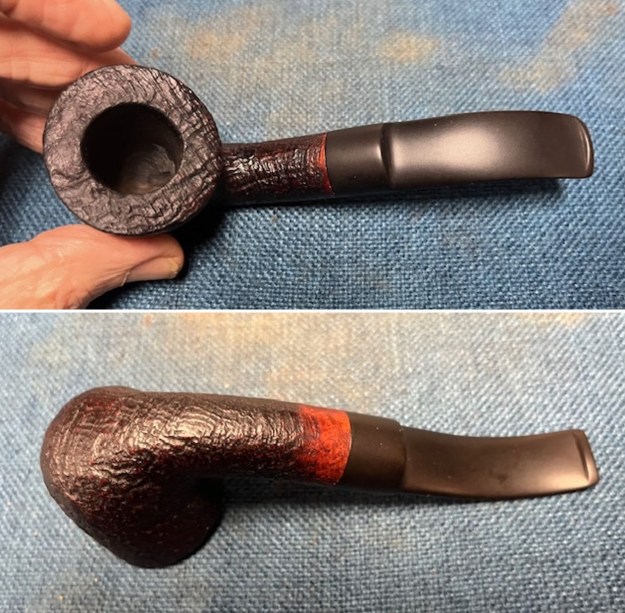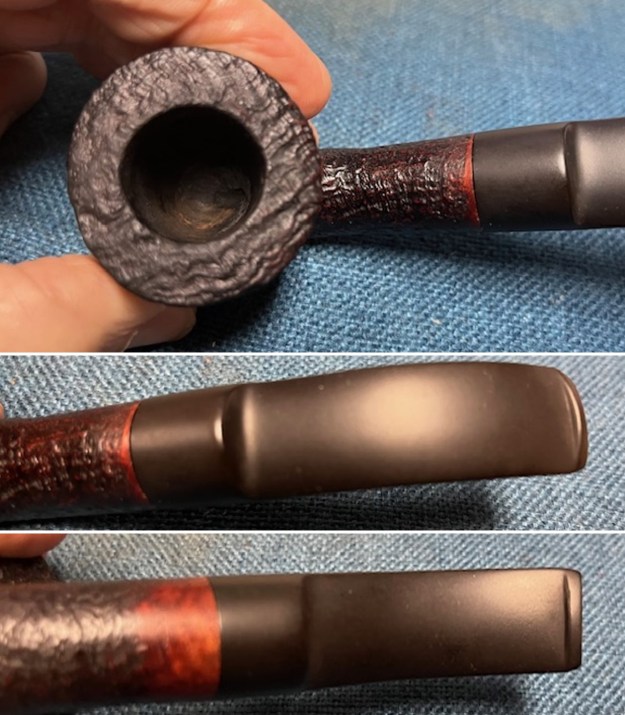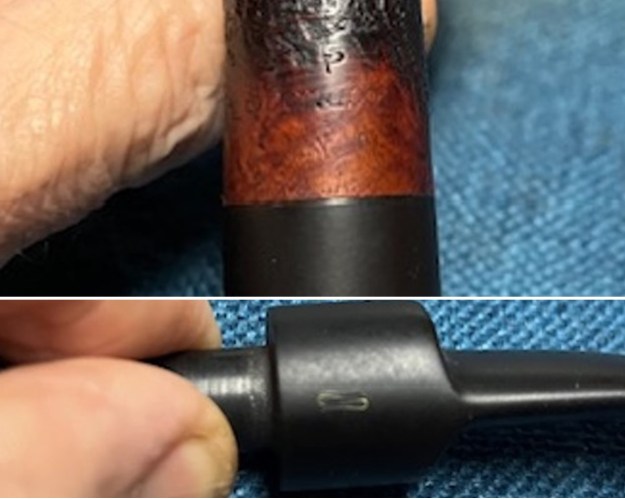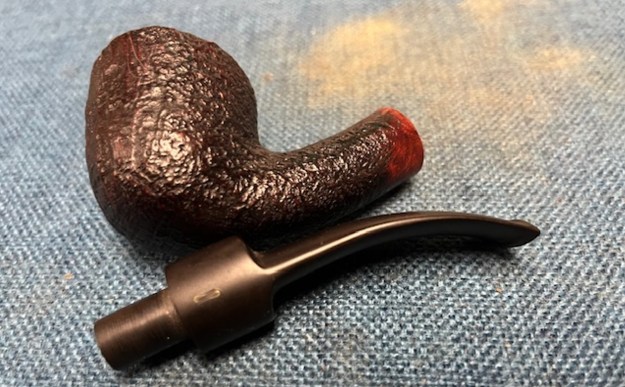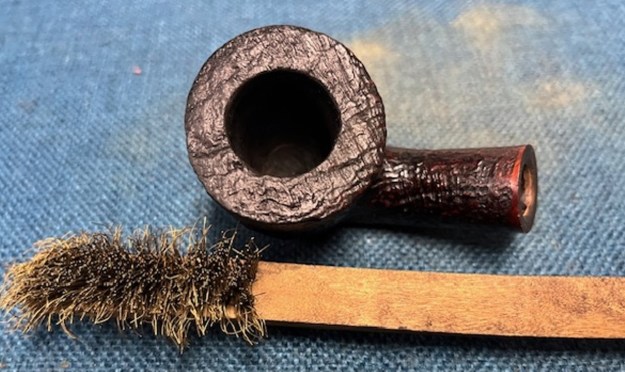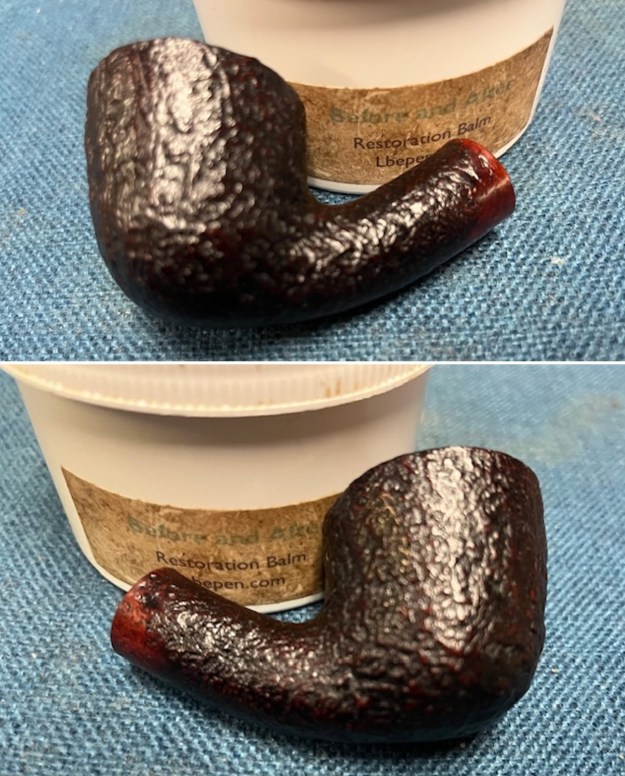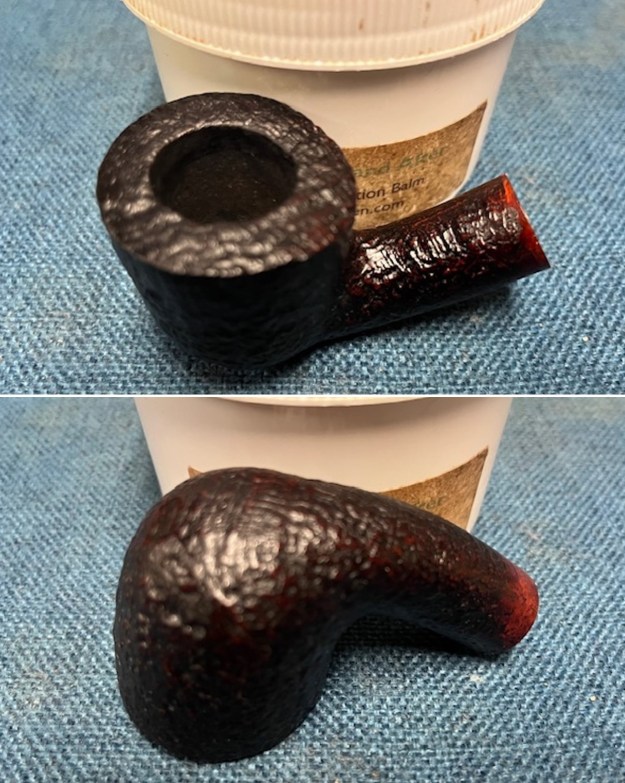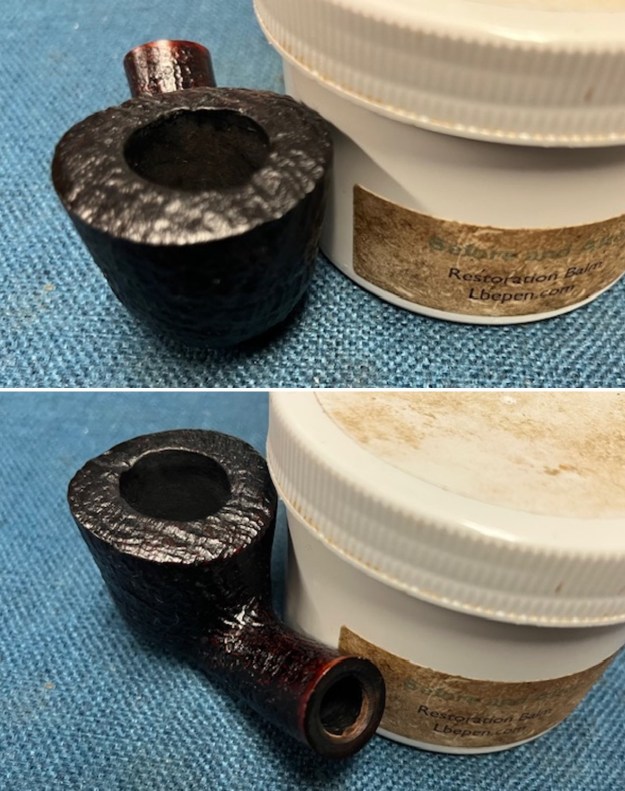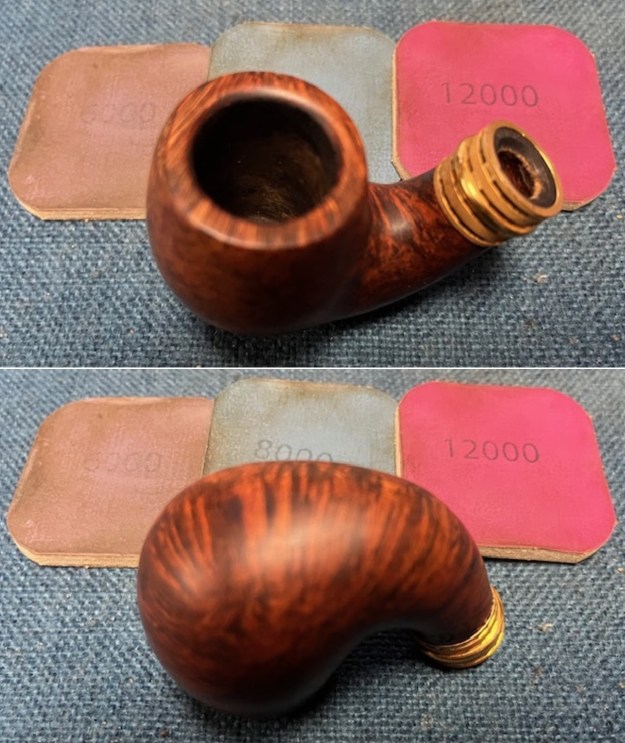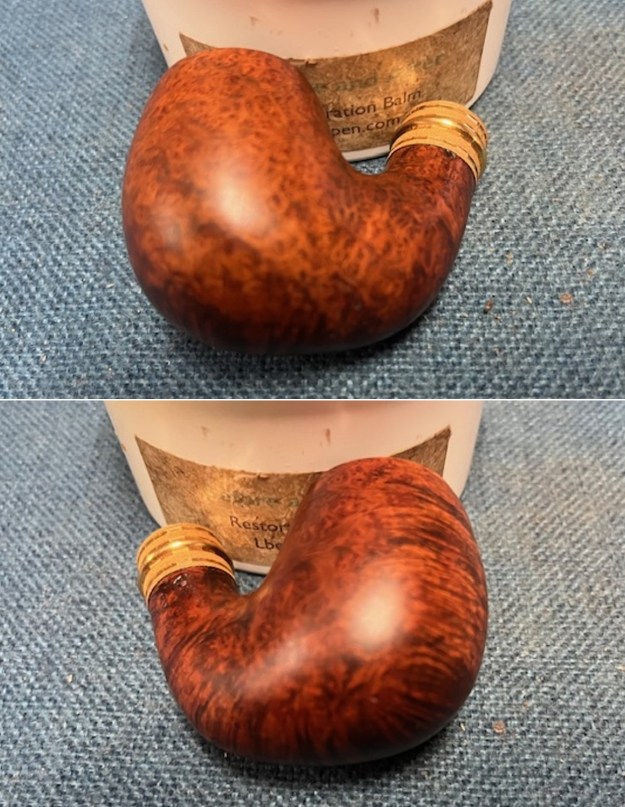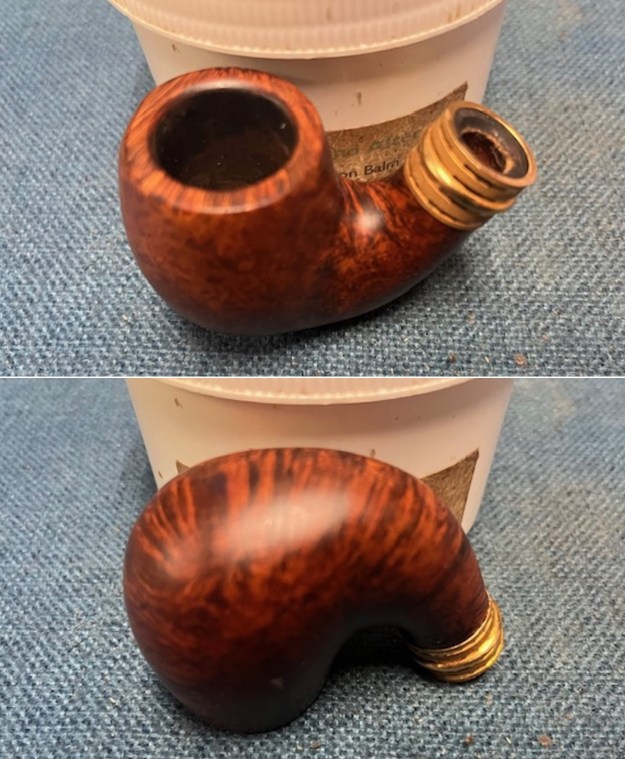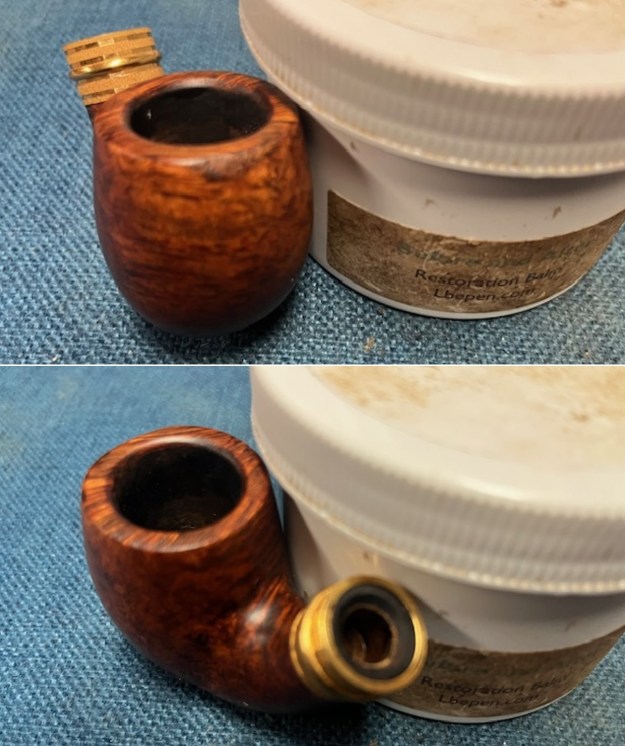
Tag Archives: removing oxidation

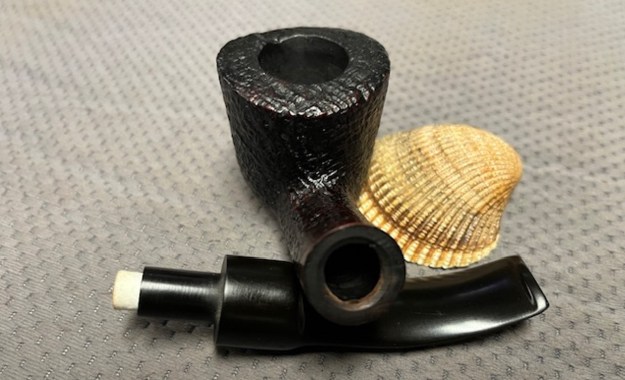
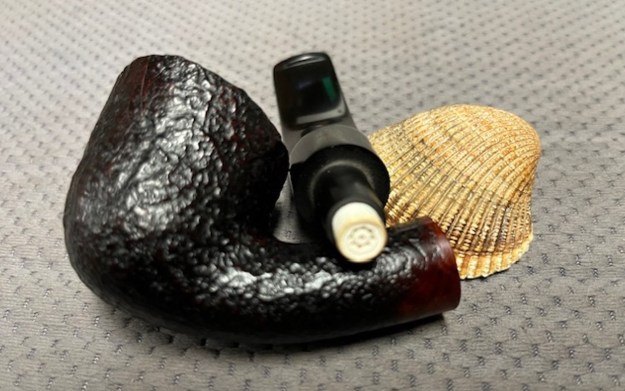
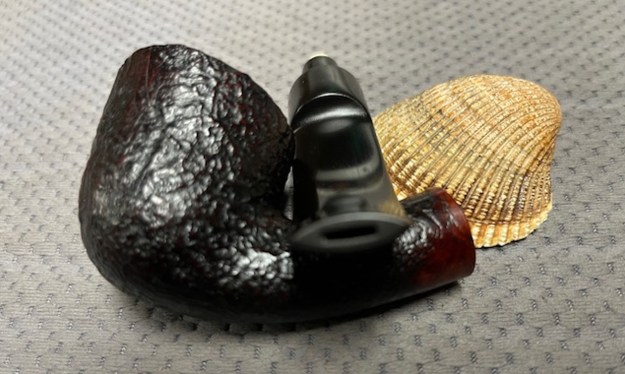
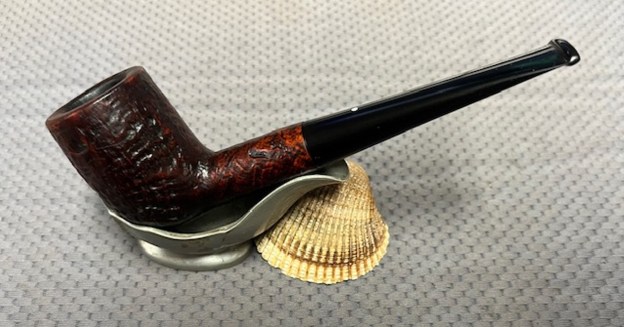
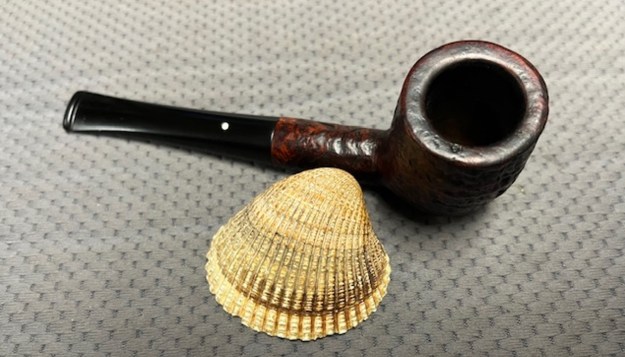
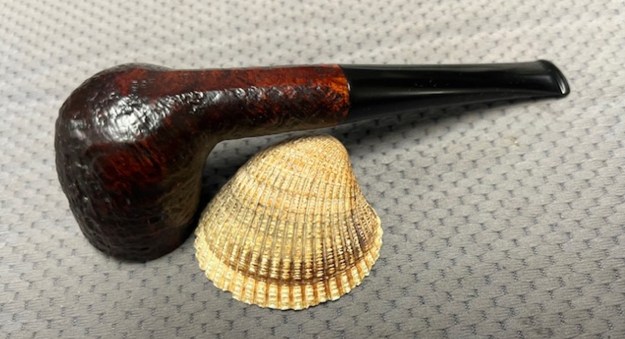
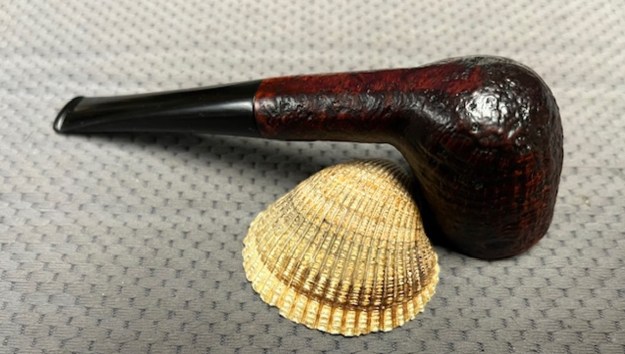
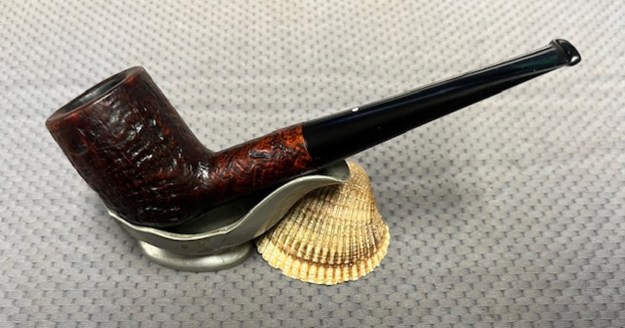
New Life for an Israel Made Long Canadian


by Steve Laug

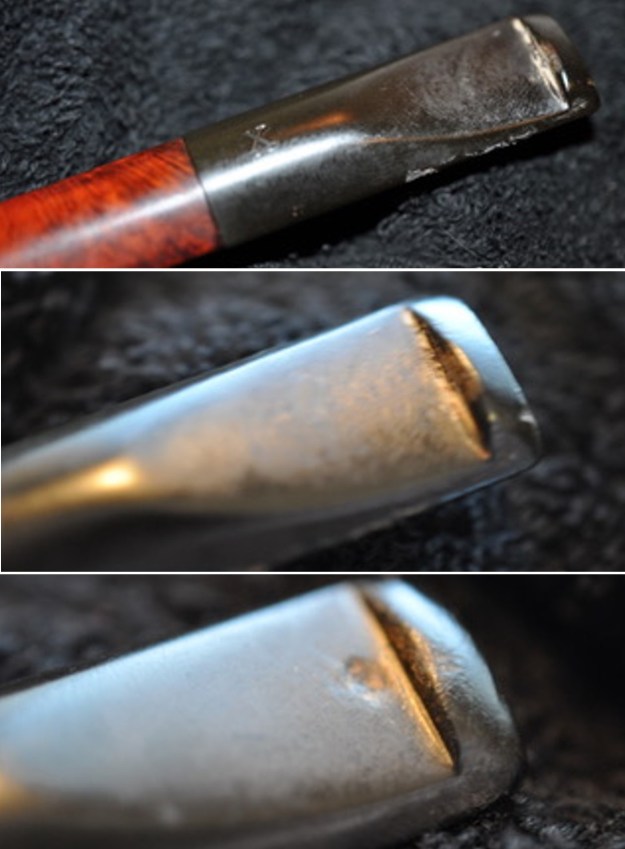
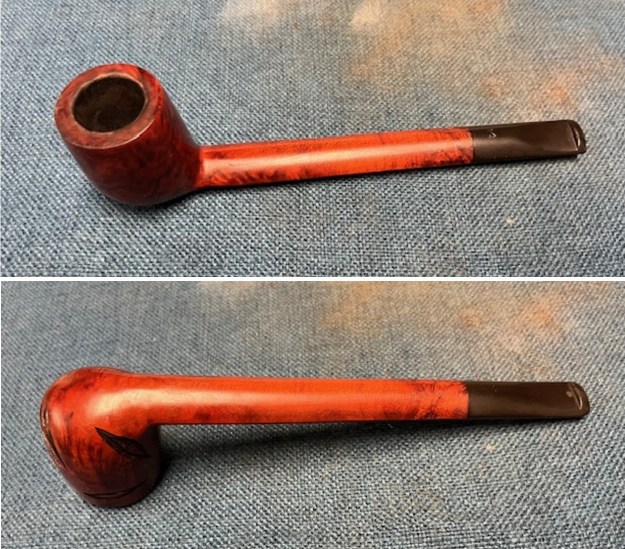
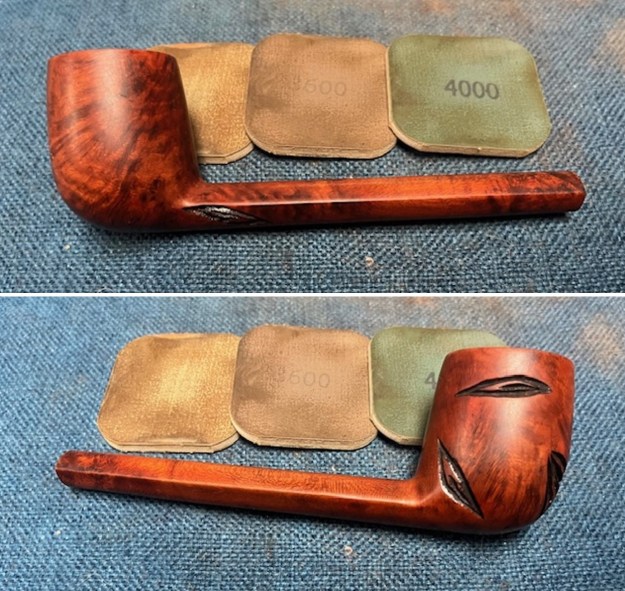
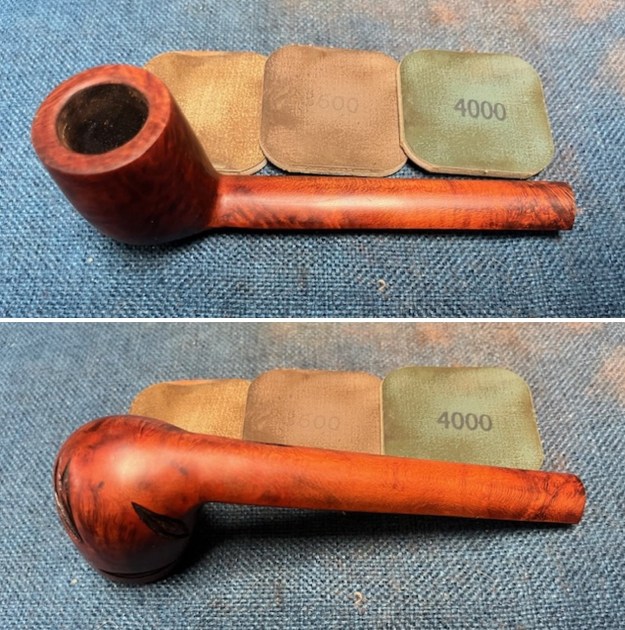
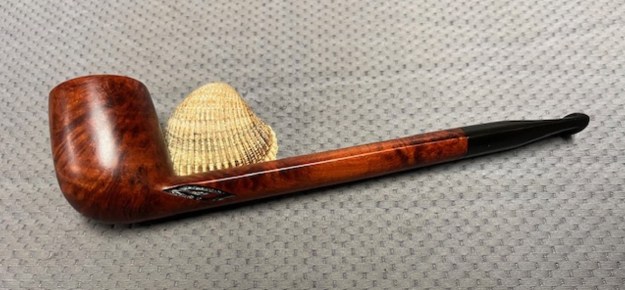
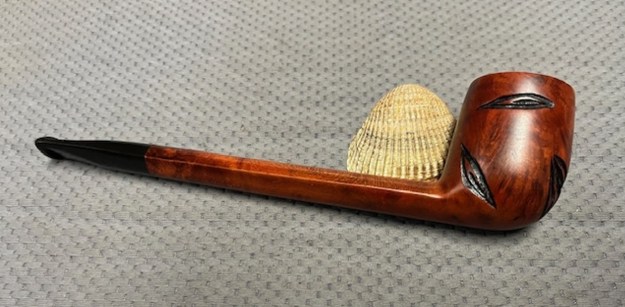
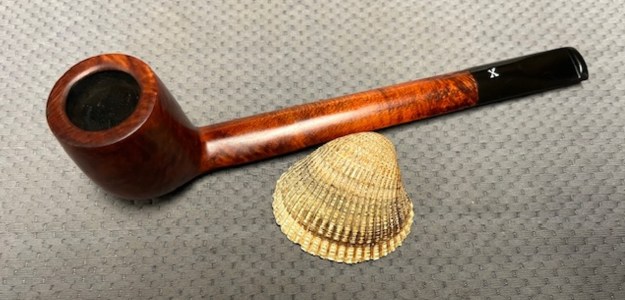
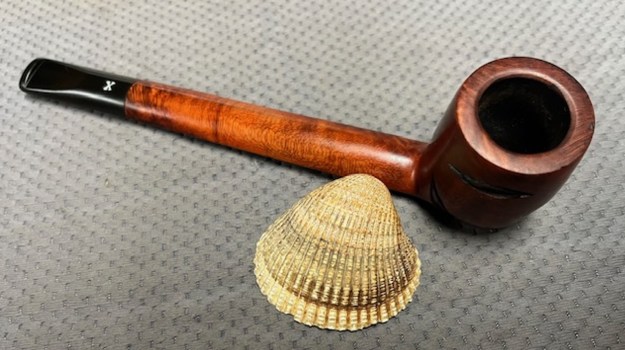
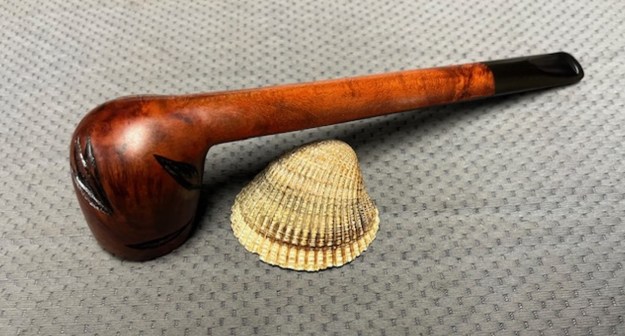
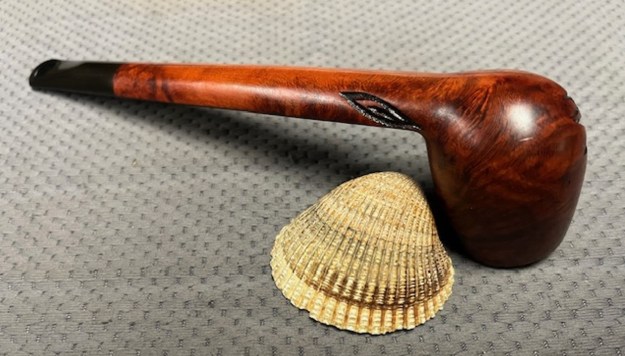
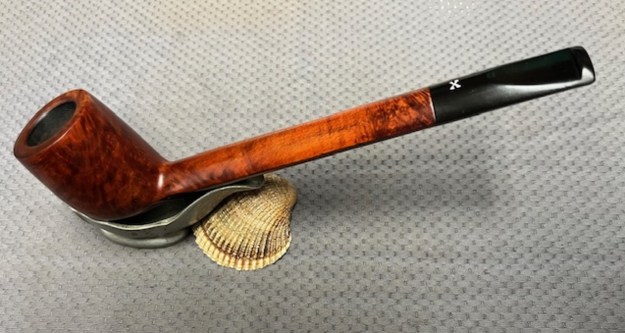
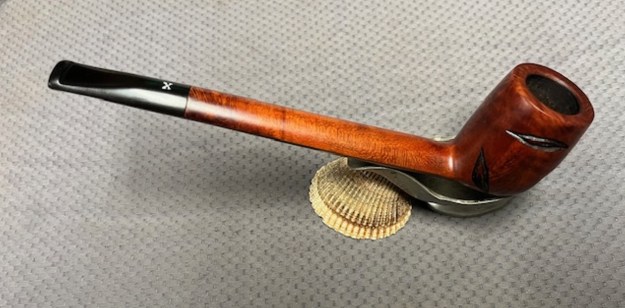
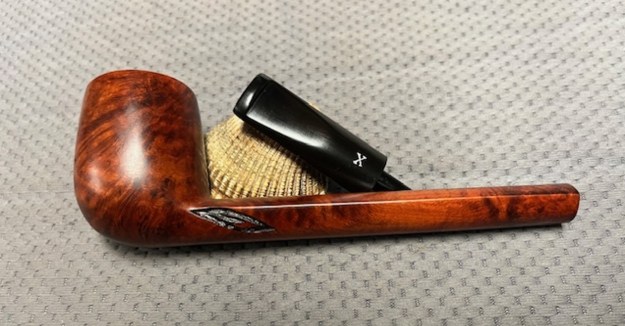
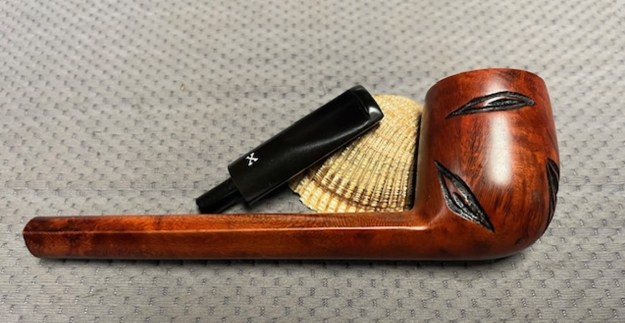
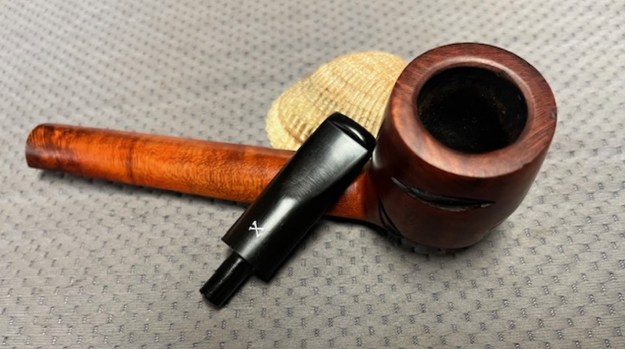
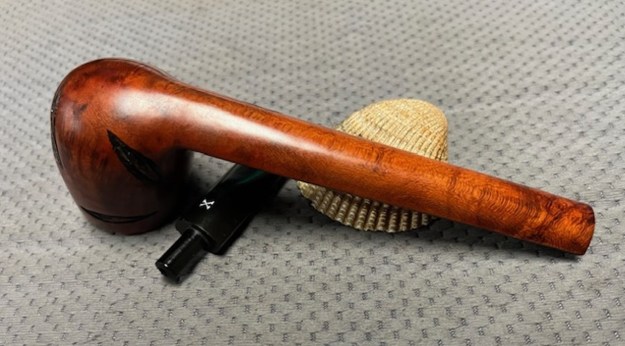
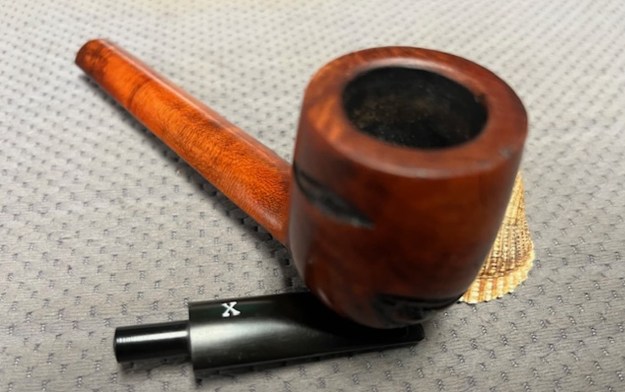
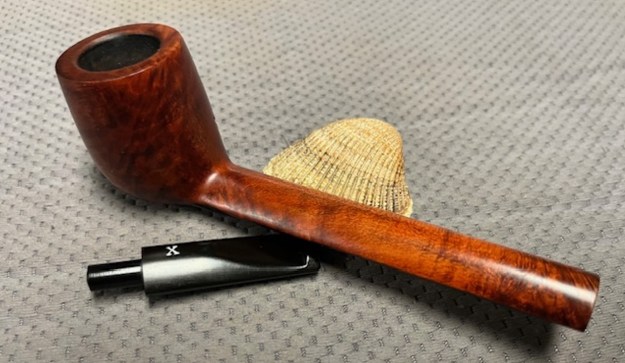
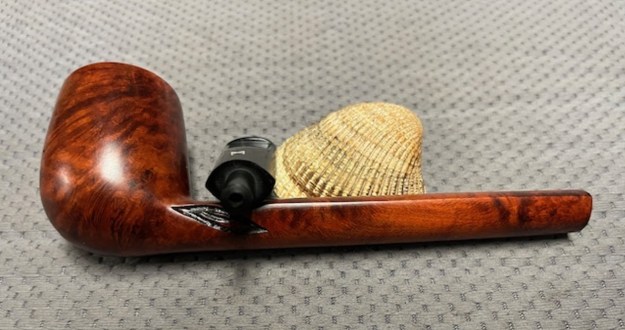
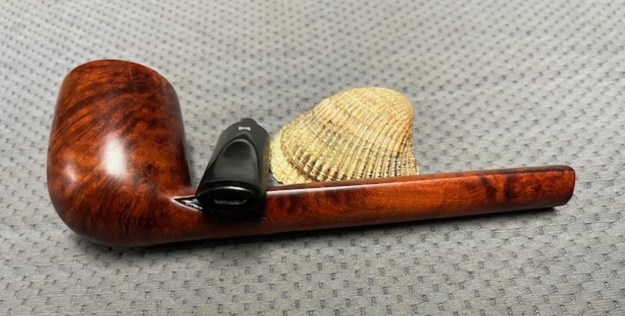
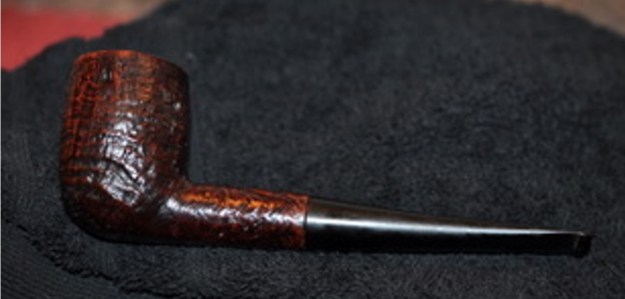
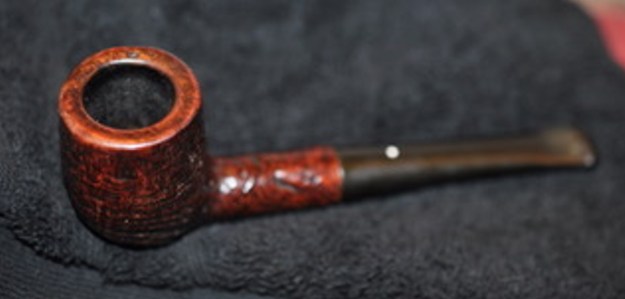
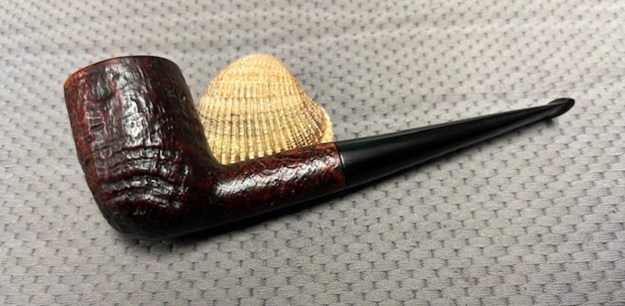
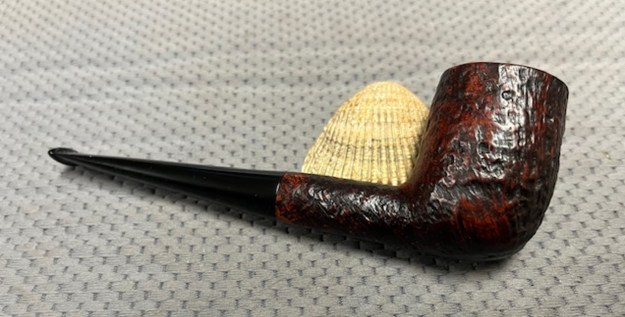
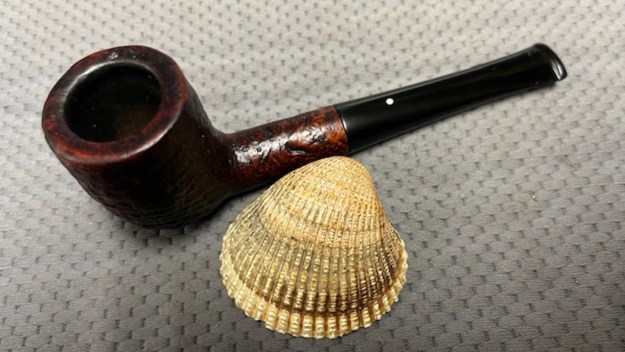
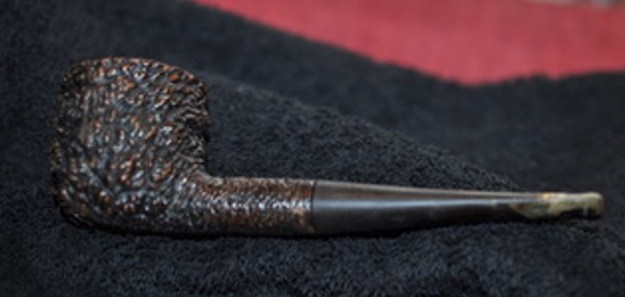
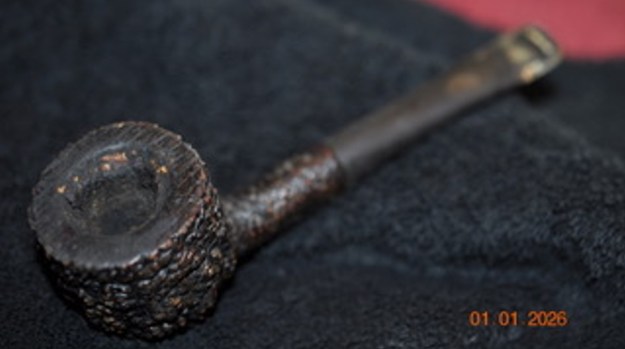
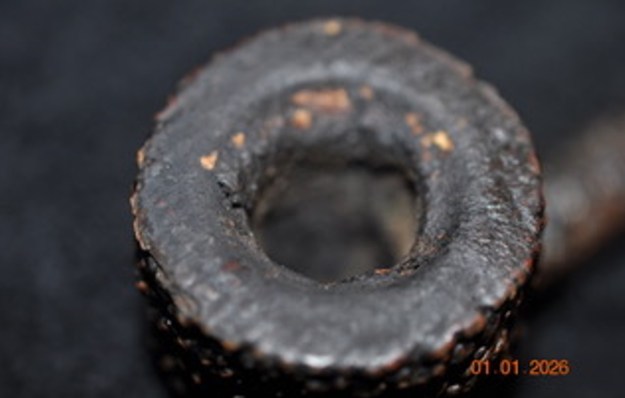
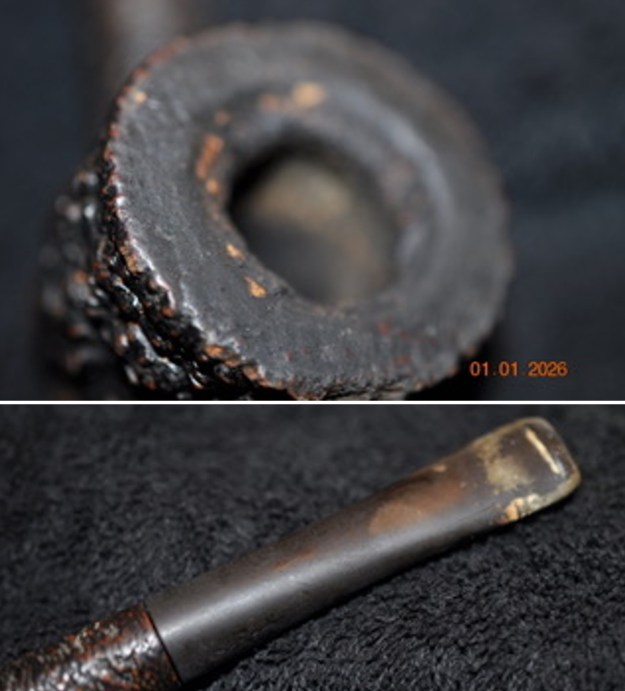
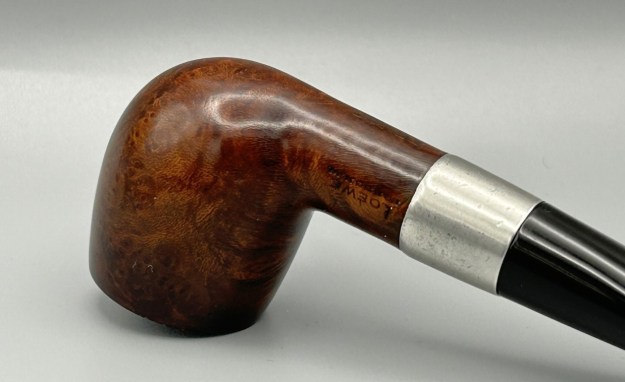
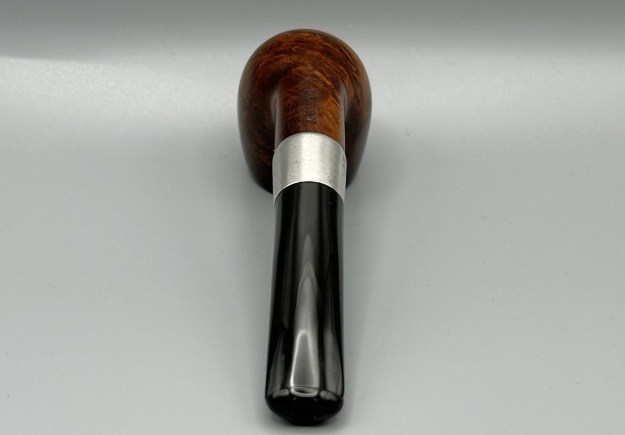
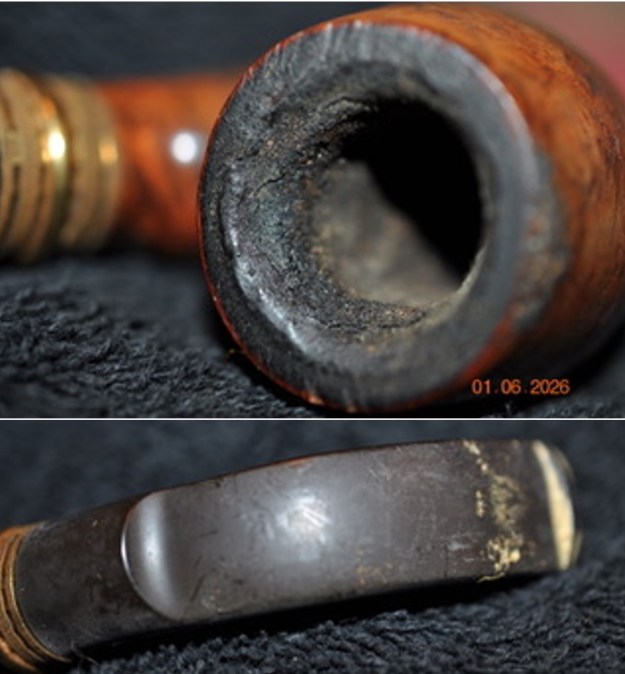
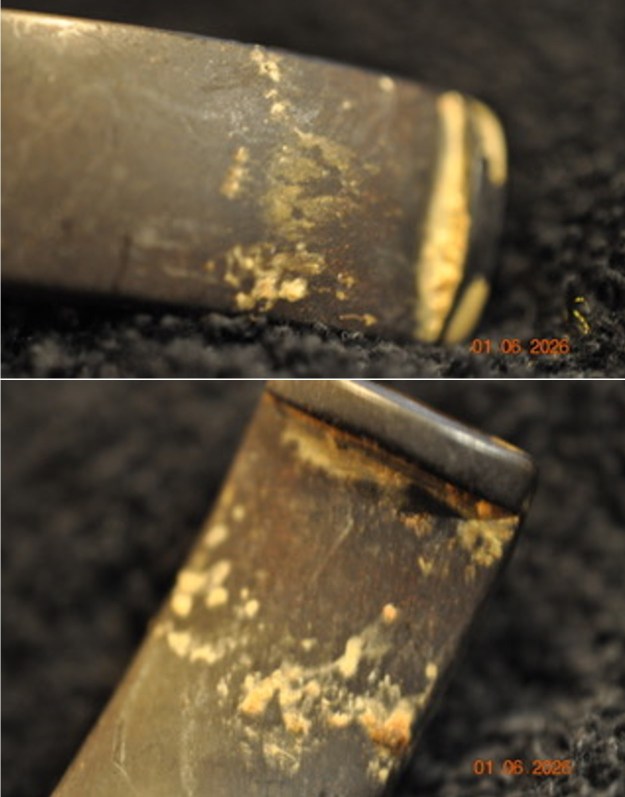
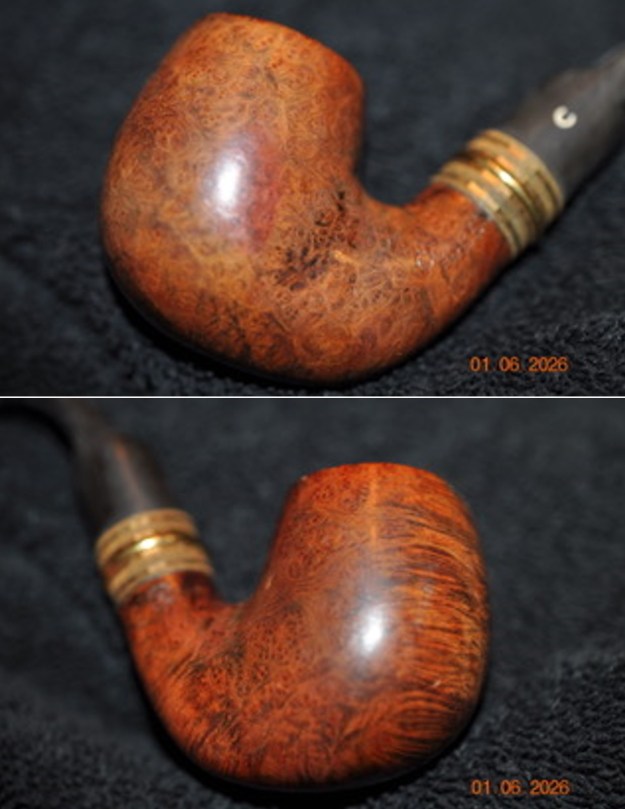
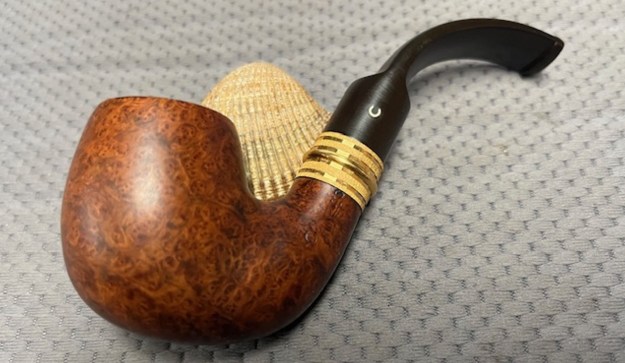
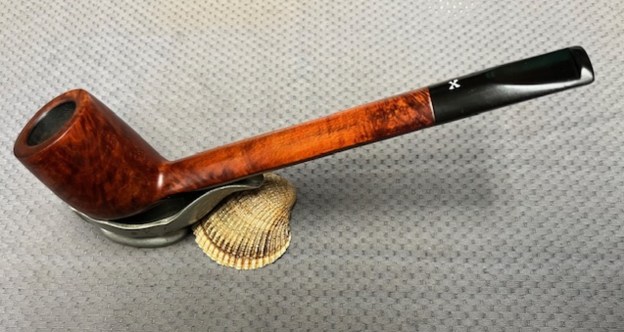
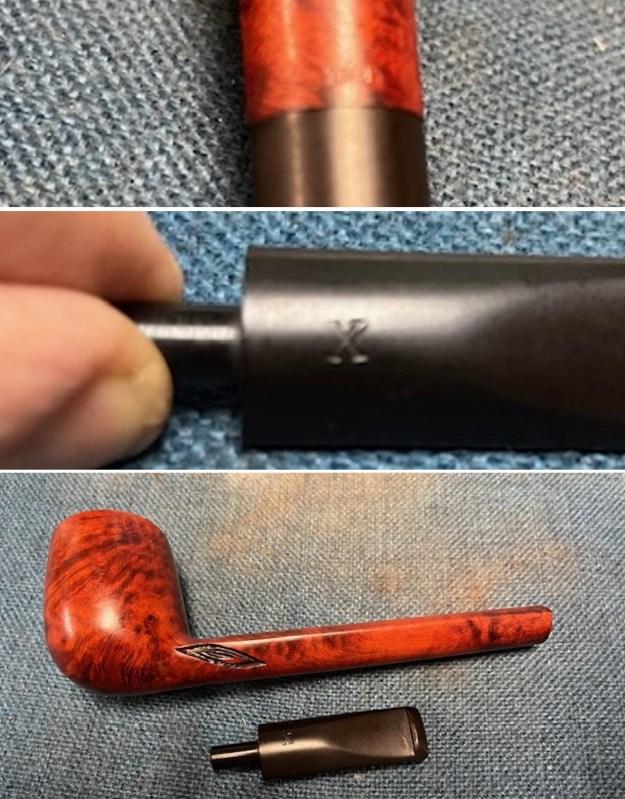
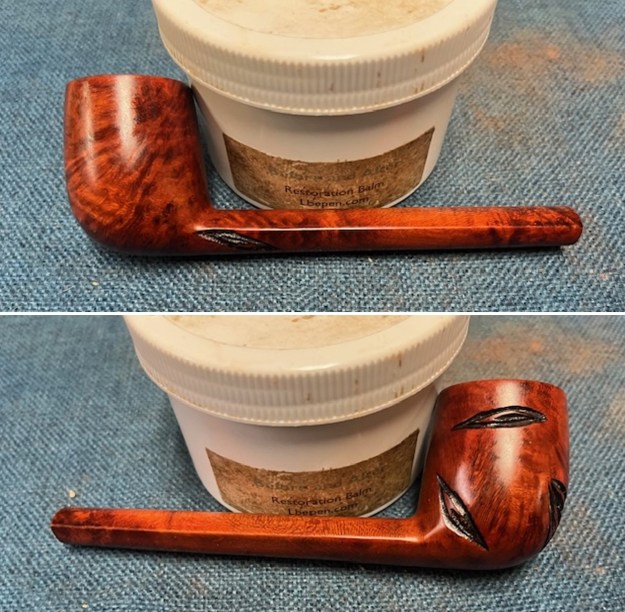
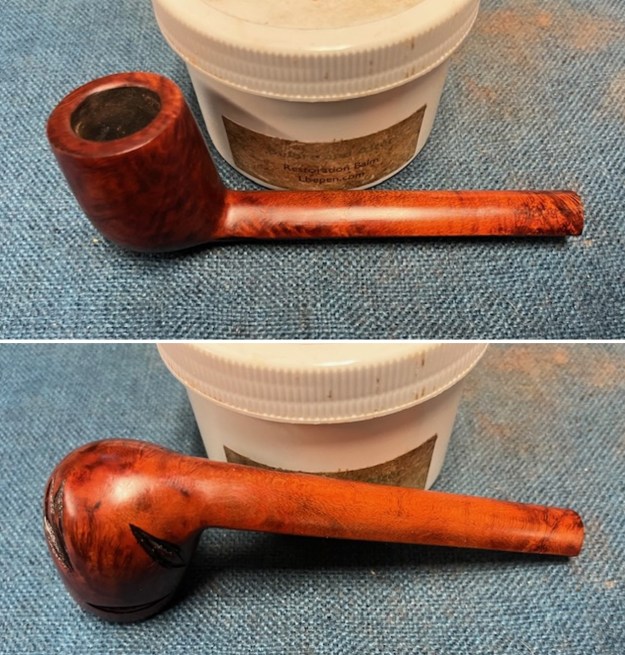
The next pipe on the table is a great looking long Canadian that Jeff picked up on 12/17/2020 from an auction in Cramerton, North Carolina, USA. The finish is smooth around the bowl and shank with some leaves carved into the finish. There is one on the left side of the shank and there are three on the right side with one of them on bottom right and front. The bowl had been coated with a varnish coat that was spotty in places and would need to be removed. It is a great looking pipe. It is stamped on the underside at the shank/stem junction it reads Israel. The finish was dirty and had a lot of grime and grit ground into the rustication and the smooth portions. The rim top and inner edge of the bowl is dirty with a heavy lava flow on the edge and the top. There is a thick cake in the bowl. The taper stem has an X logo on the top. It is lightly oxidized and there were tooth marks and chatter on the surface. Jeff took photos of the pipe before he started his clean up work. It showed a lot of promise.He took close up photos of the bowl and rim top from different angles to show the condition of the bowl and the rim top. You can see the lava on the rim top and on the inner edge of a caked bowl flowing onto the top. He took photos surface of the vulcanite stem which is lightly oxidized and dirty. It has tooth marks on both sides as well as chatter. He took photos of the sides and heel of the bowl to show the rich reddish finish and the carved leaves around the right side and shank. There is great grain peeking through the grime on the shank and the sides of the bowl. Jeff took photos of the stamping on the underside of the shank to capture it. It was clear and readable as noted above. He also took a photo of the X logo on the stem top. I turned to both Pipephil and Pipedia to see if I could find any information on the stamping on the pipe. There was nothing stamped with both Israel on the shank and X on the stem top. I am pretty convinced that the pipe was made by the Shalom Pipe Company in Israel and the makers of Alpha pipes. The shape and the conformation of the pipe remind me of other Shalom pipes. While I will never know the maker for certain I am fairly confident it as noted above. It is a neat looking pipe.
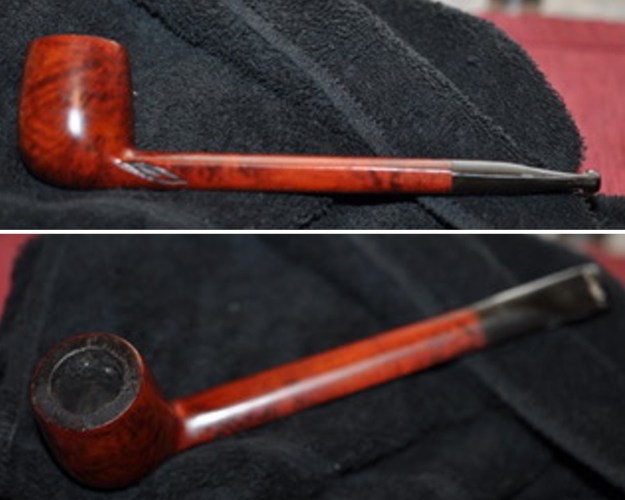
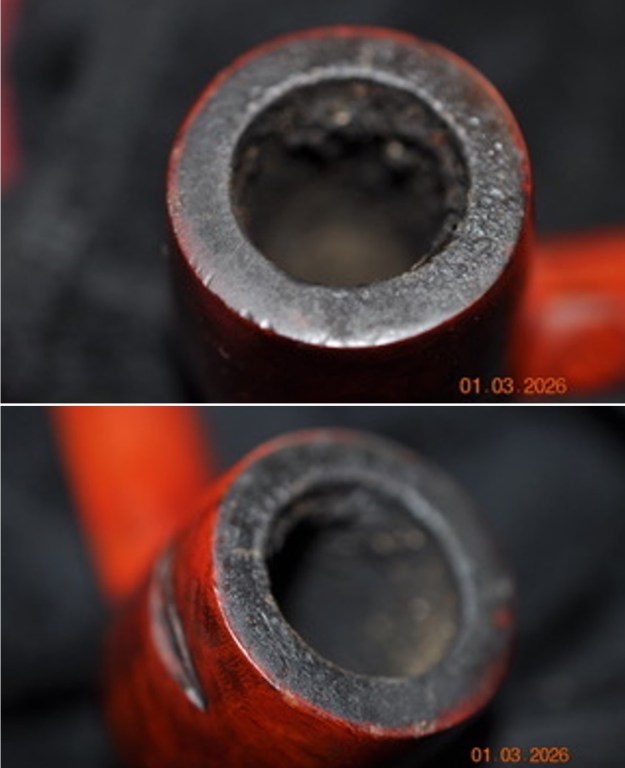
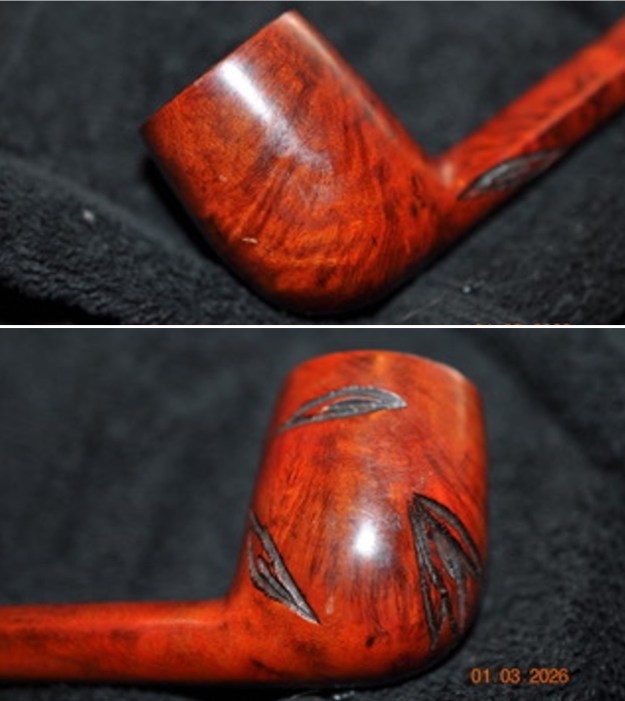
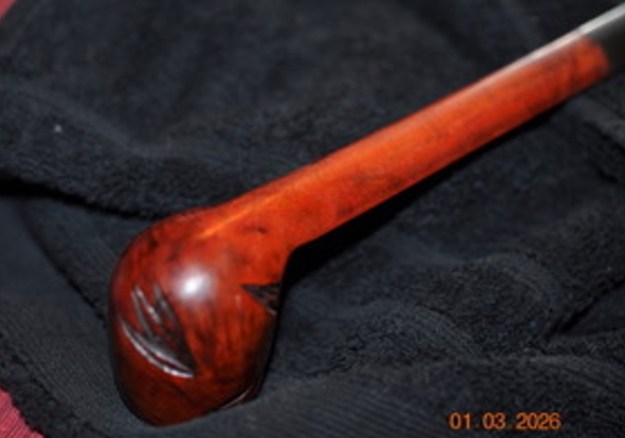
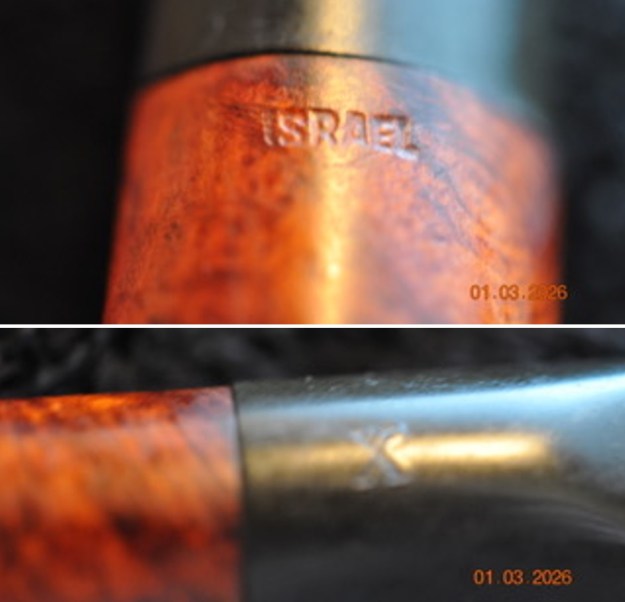
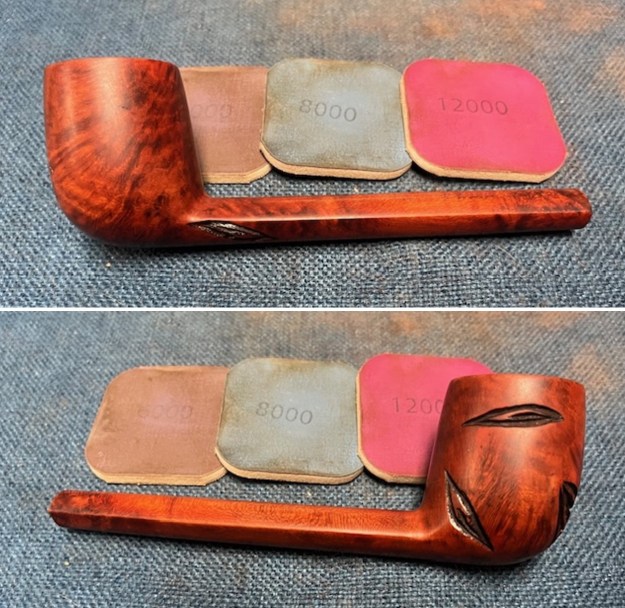
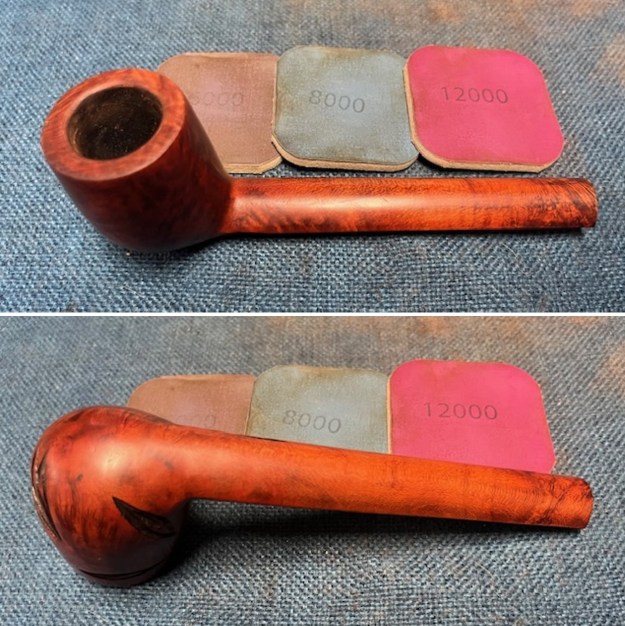
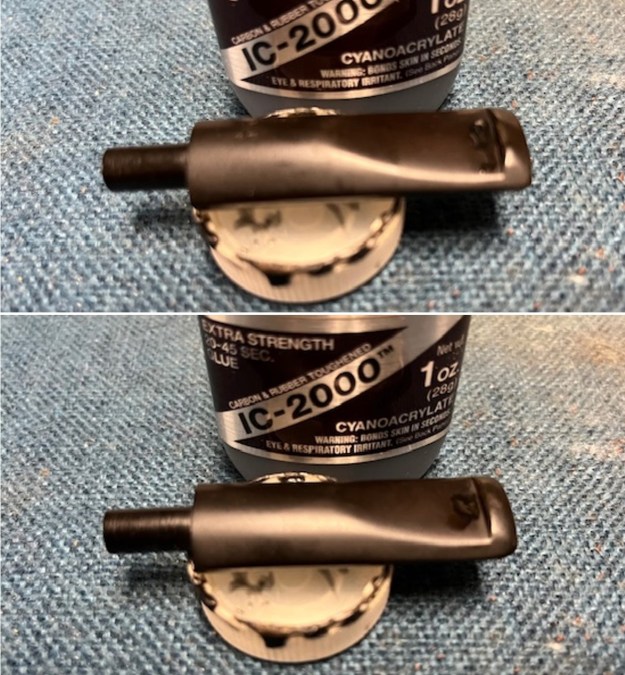
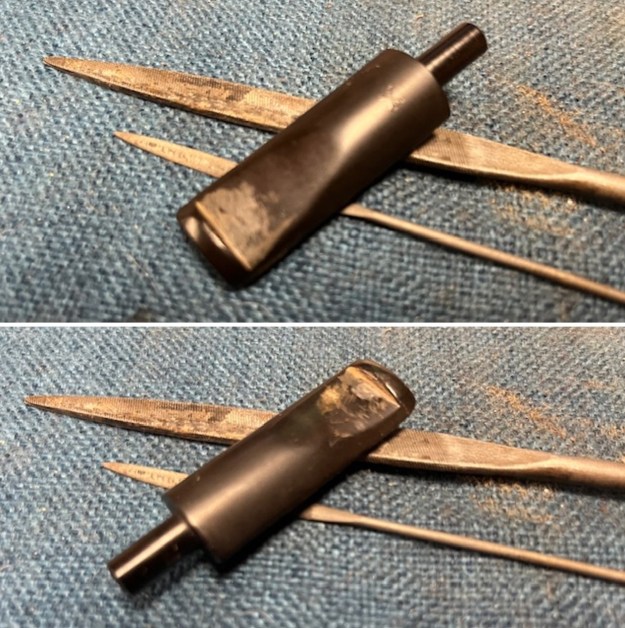
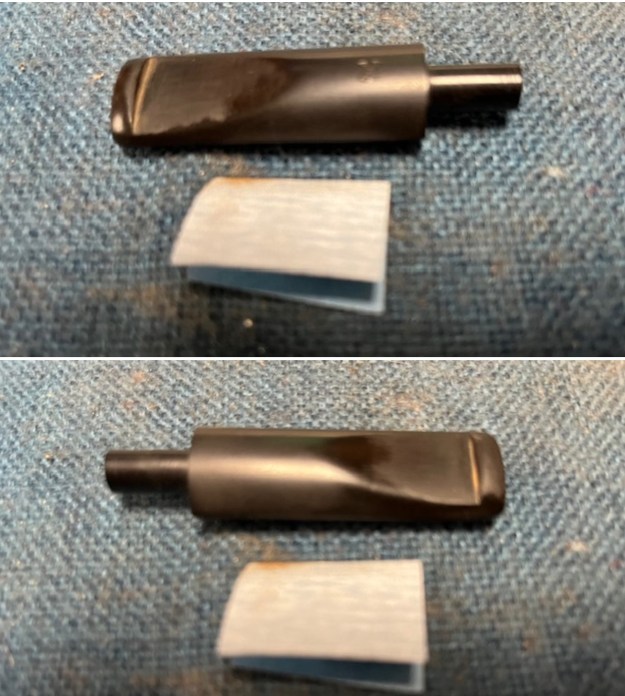
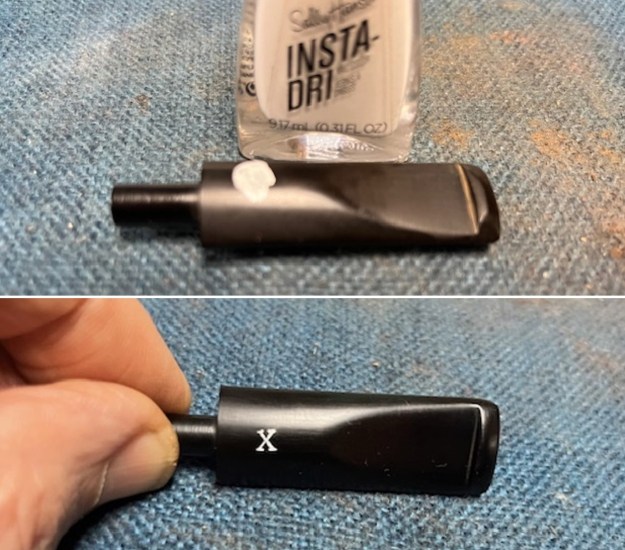
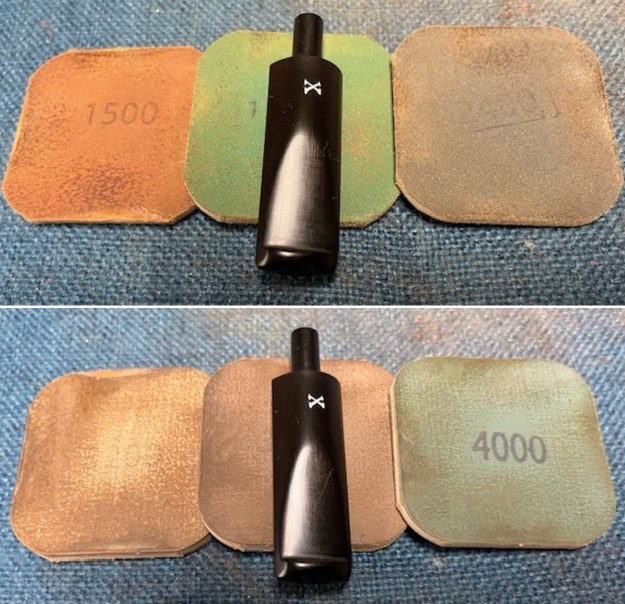
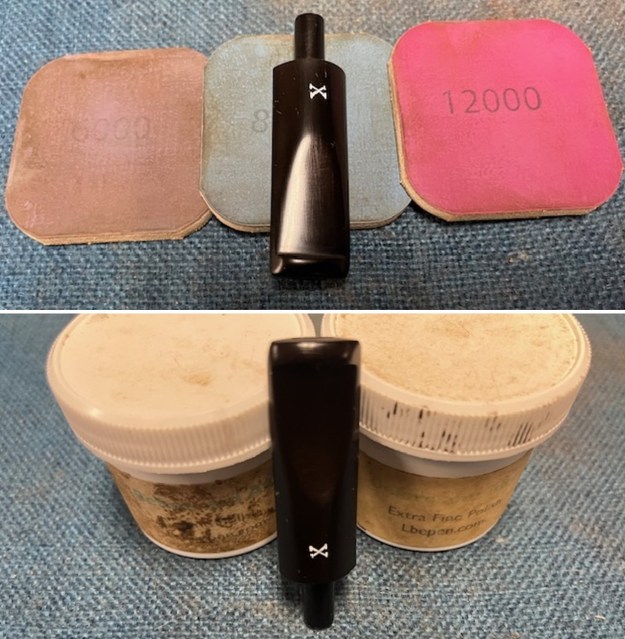
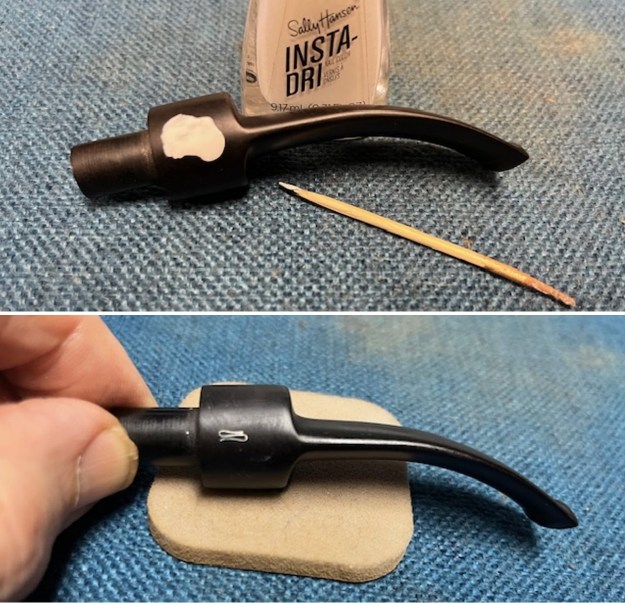
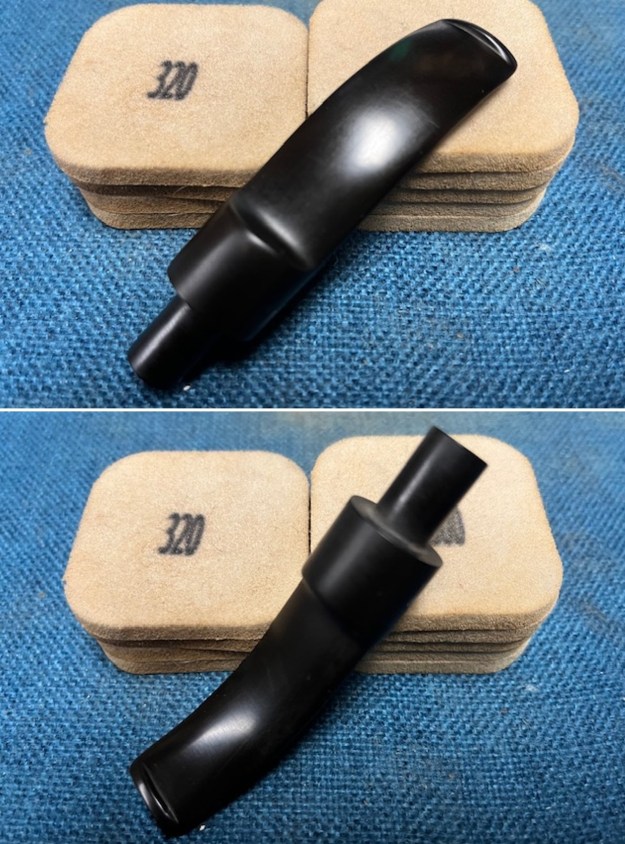
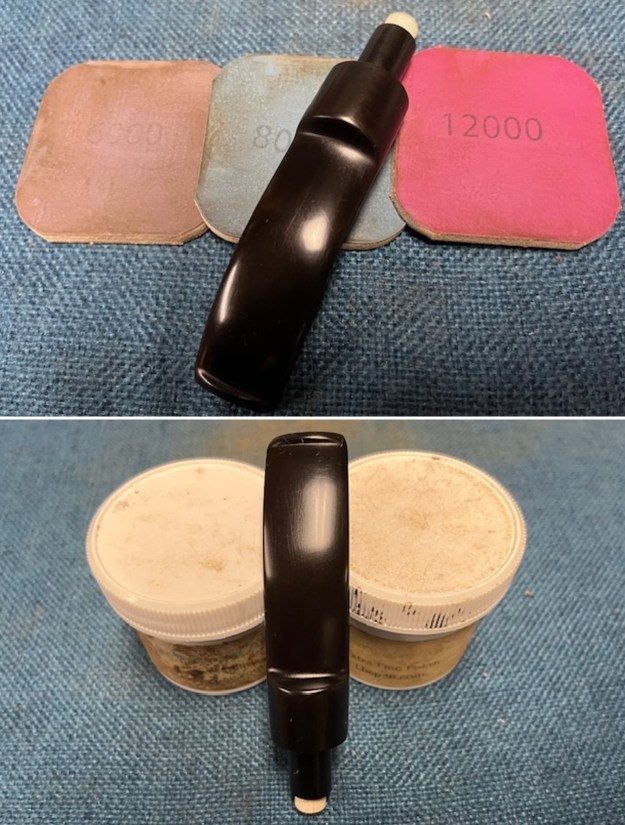
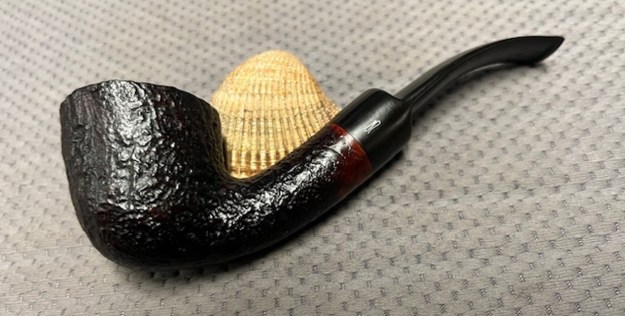
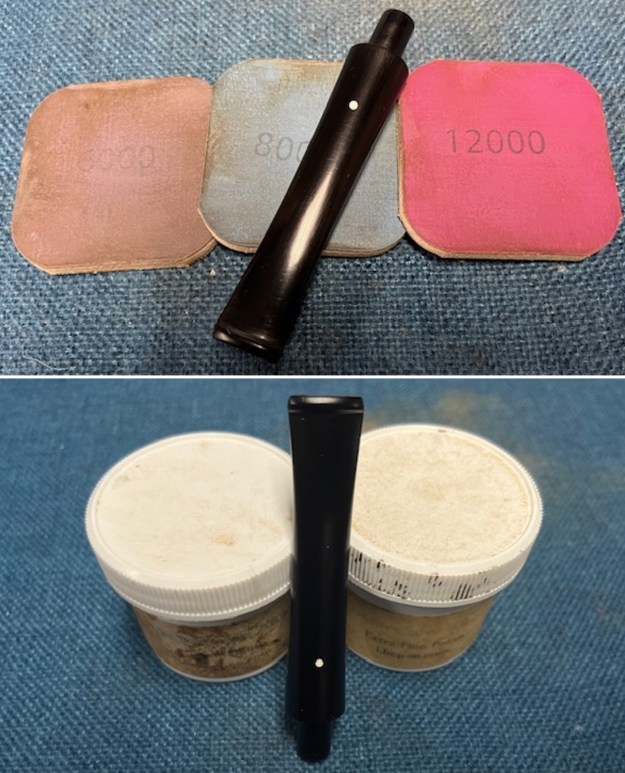
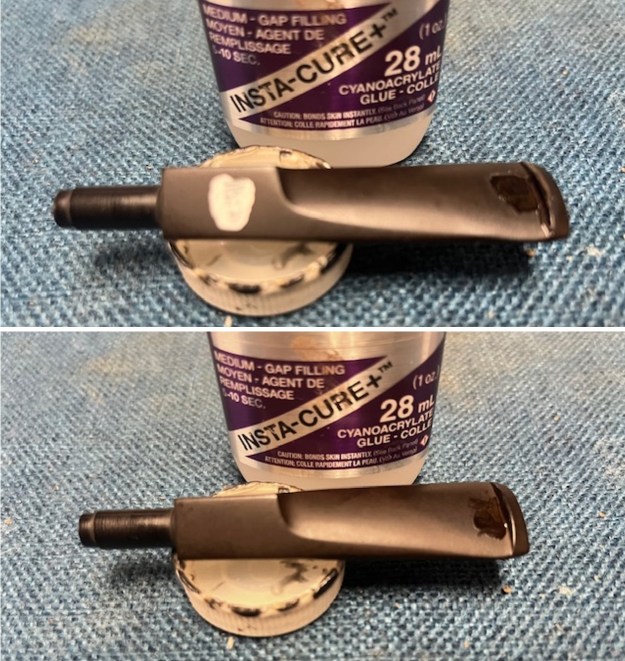
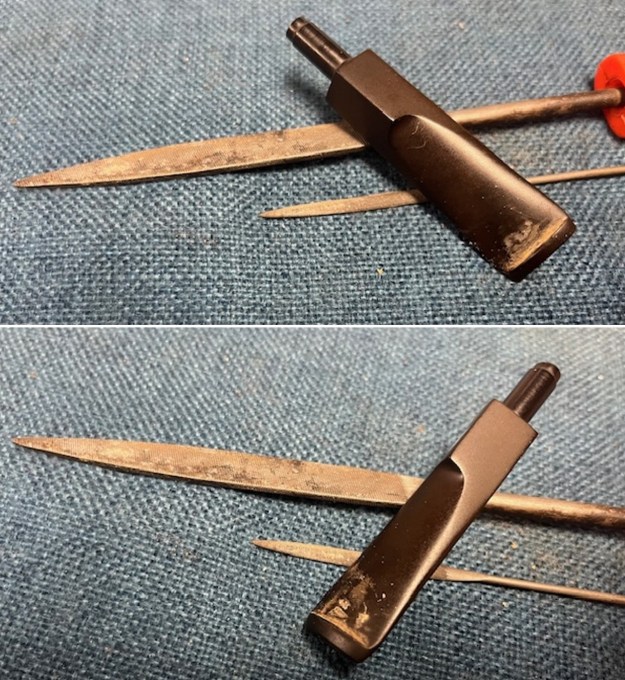
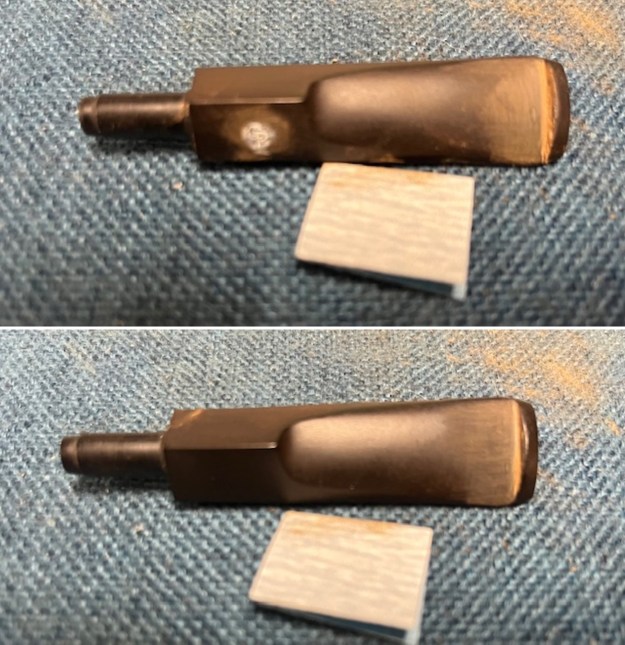
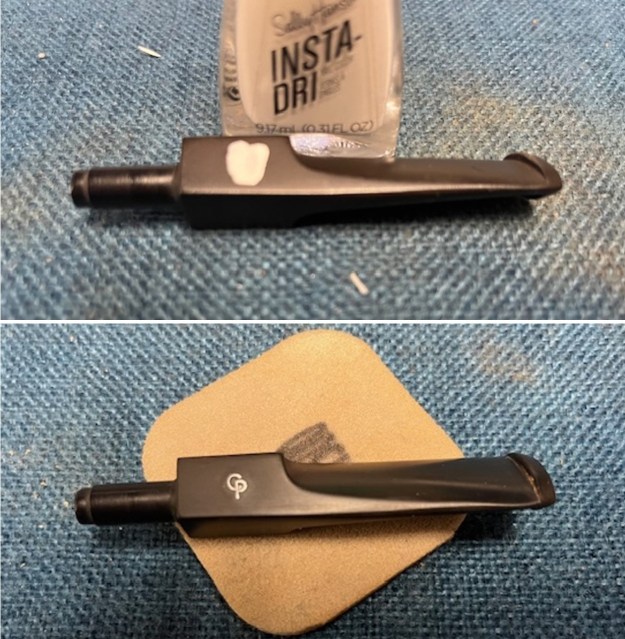
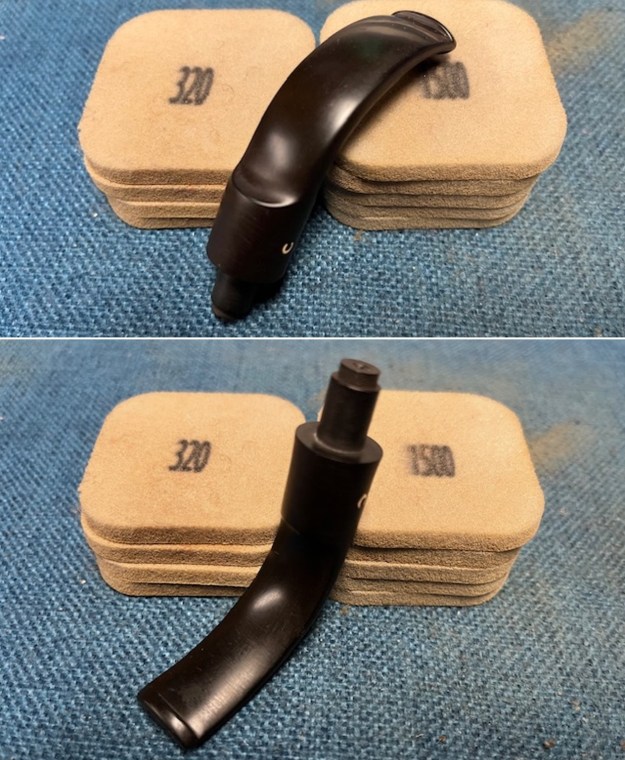
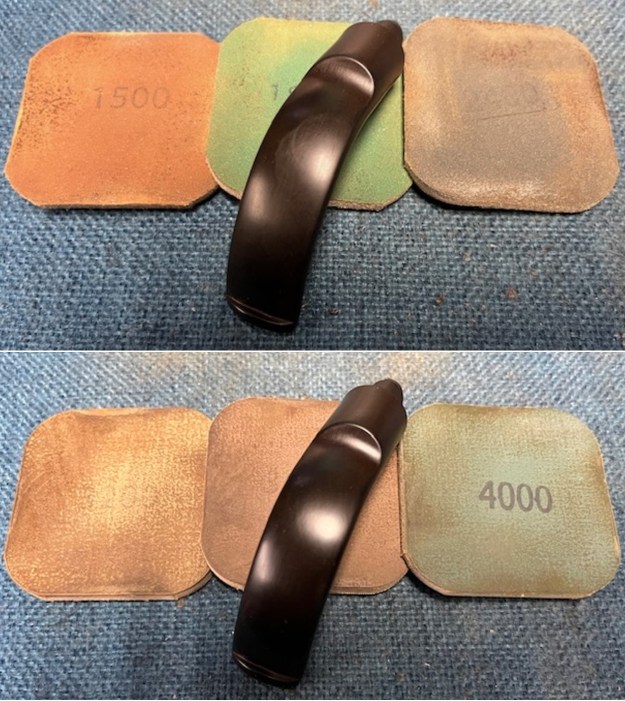
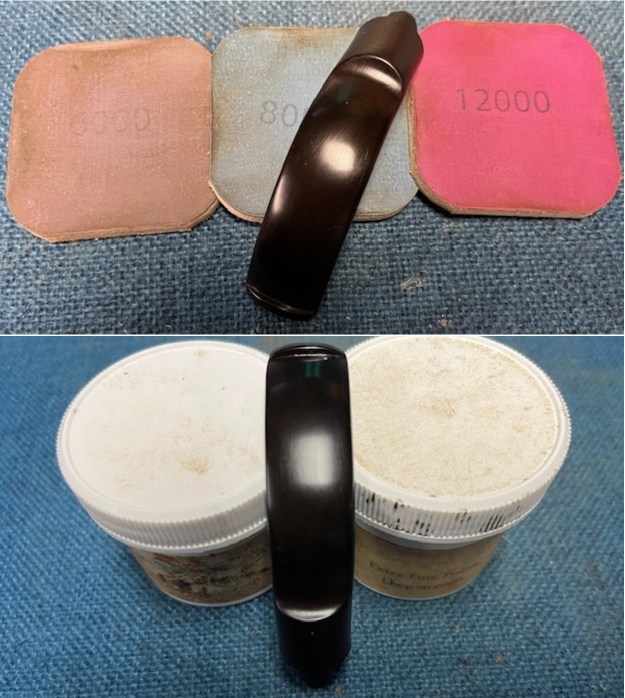
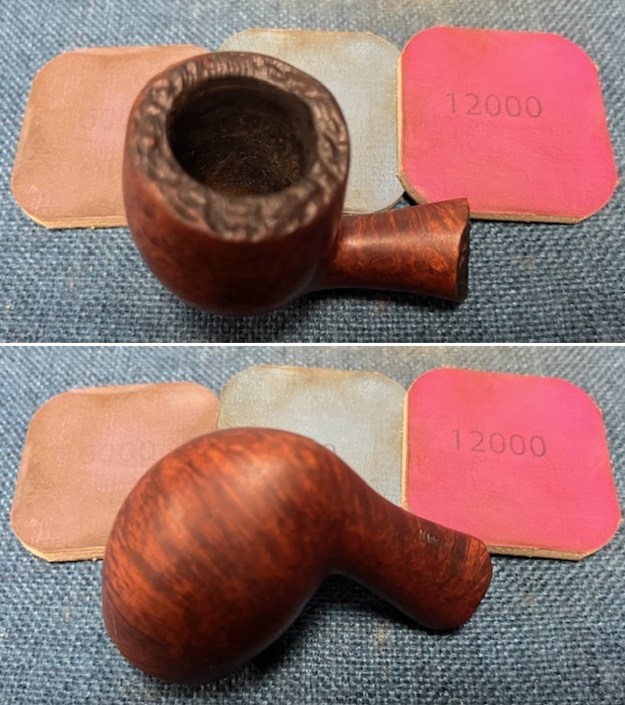
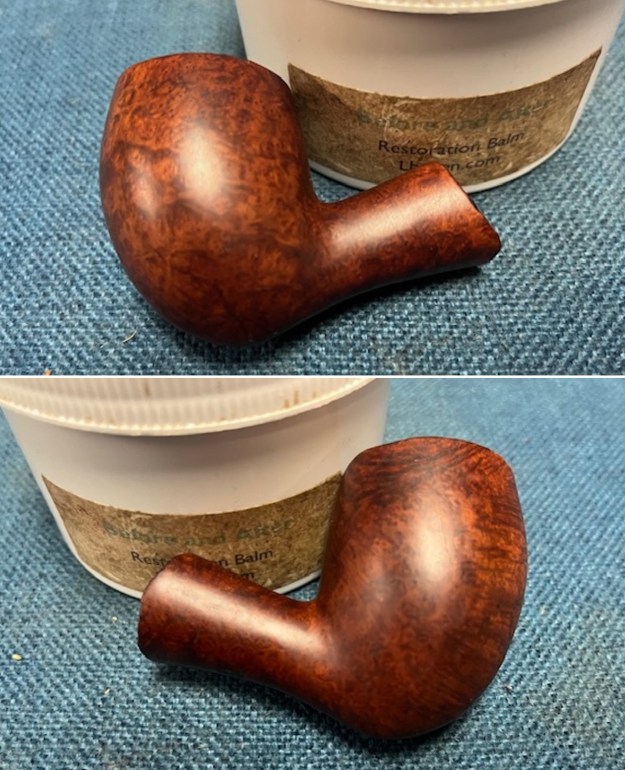
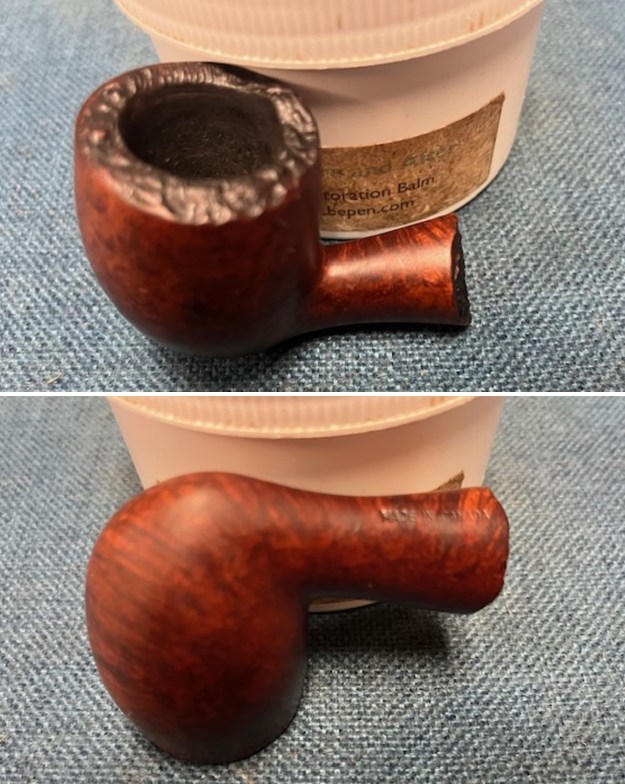
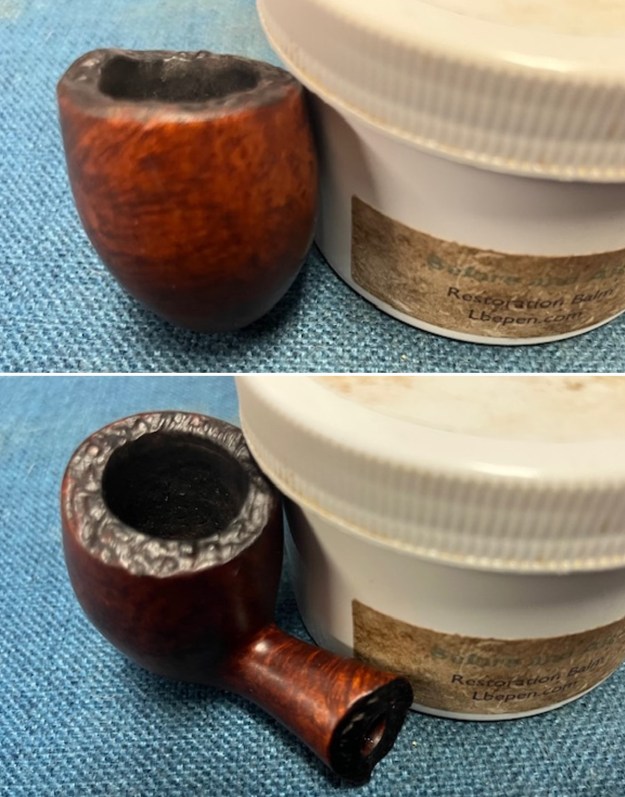
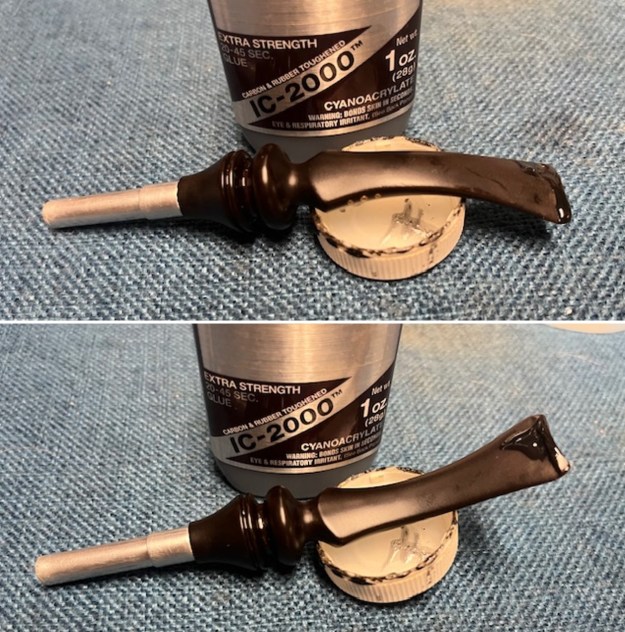
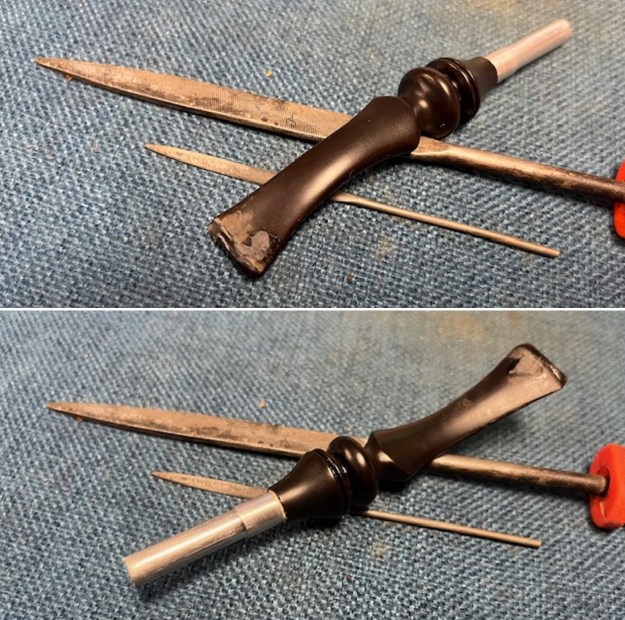
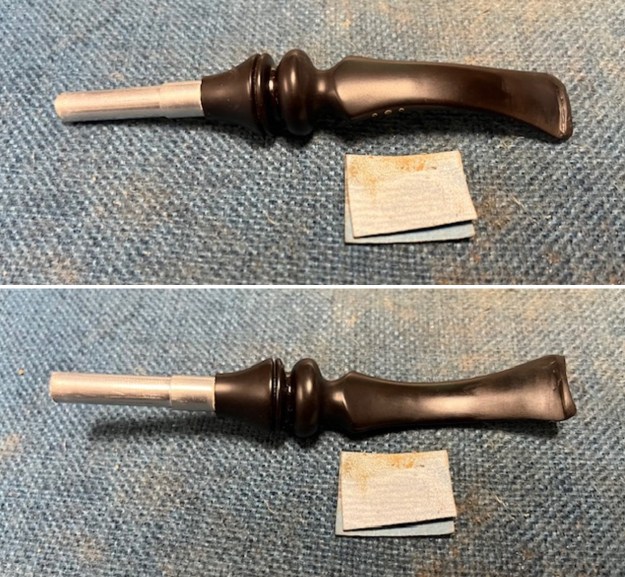
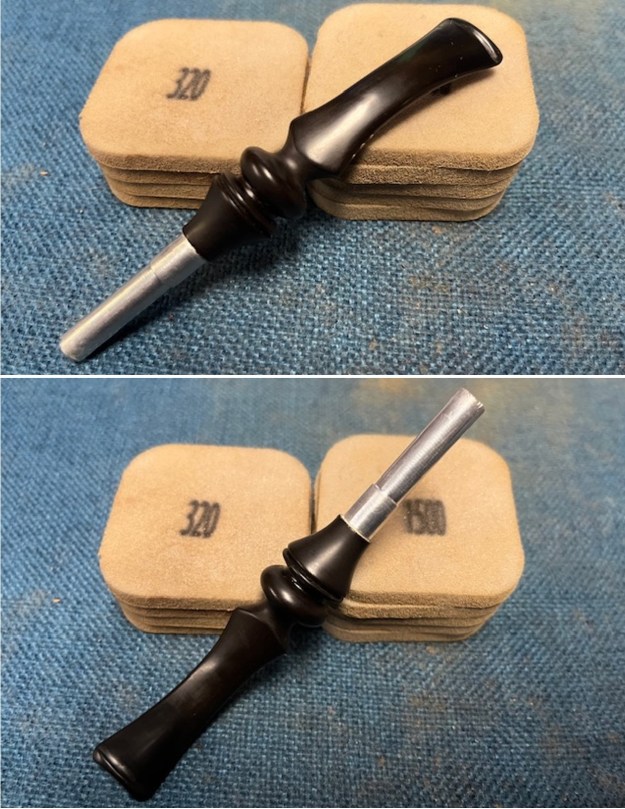
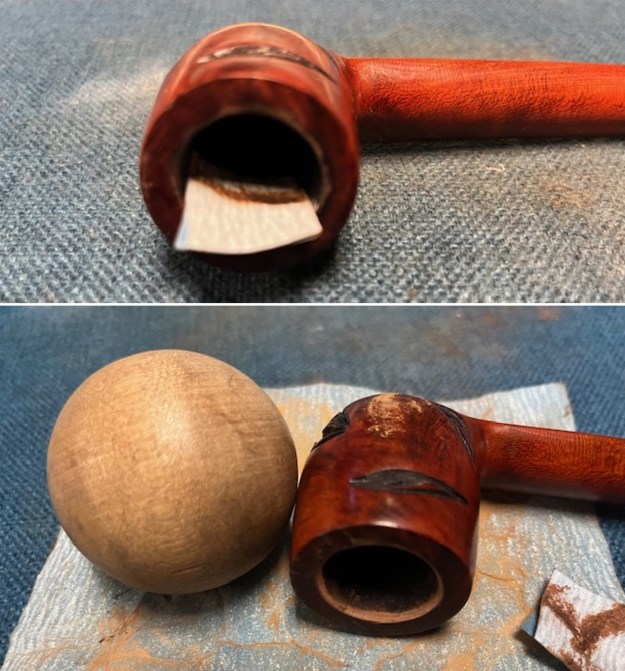
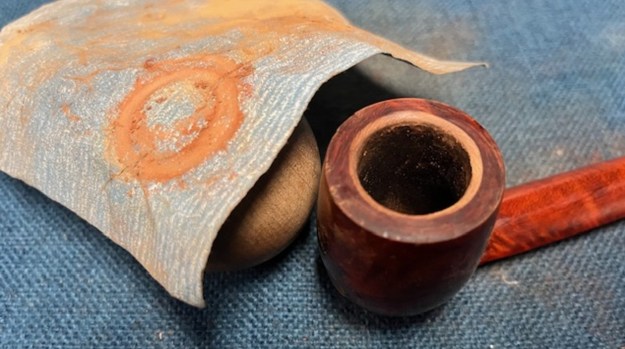
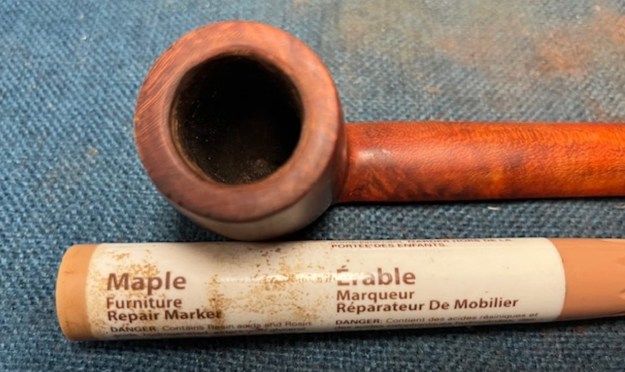
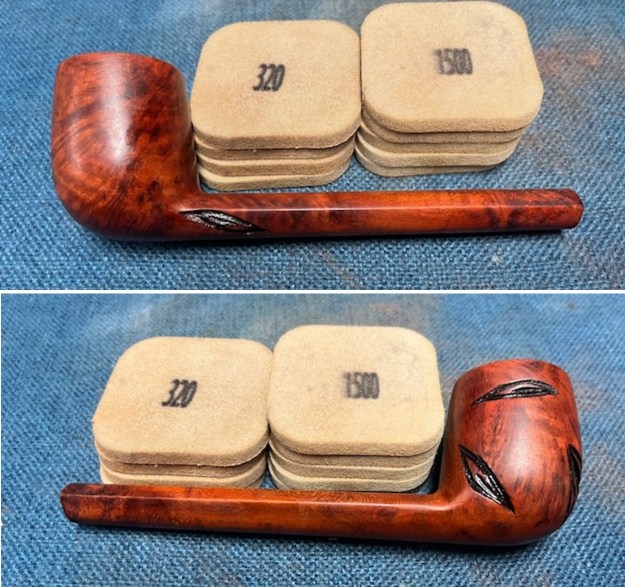
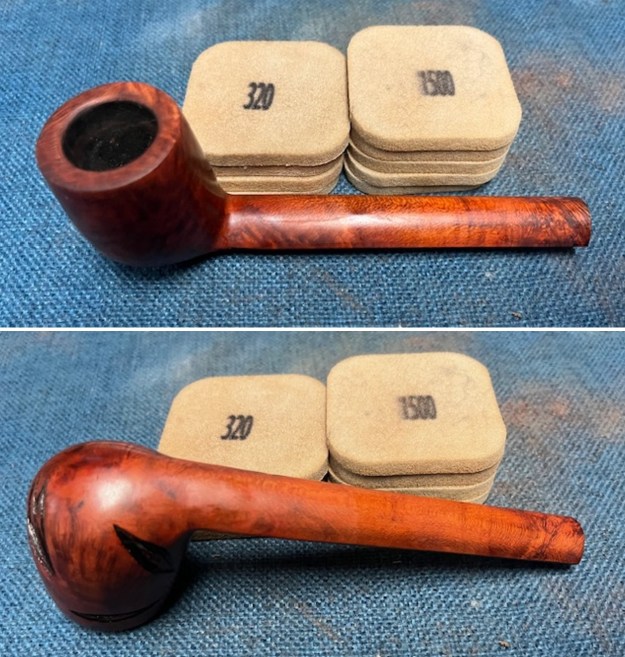
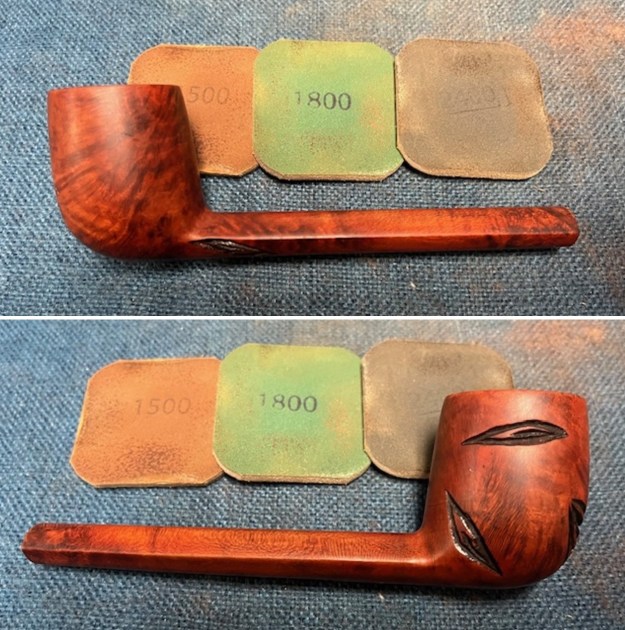
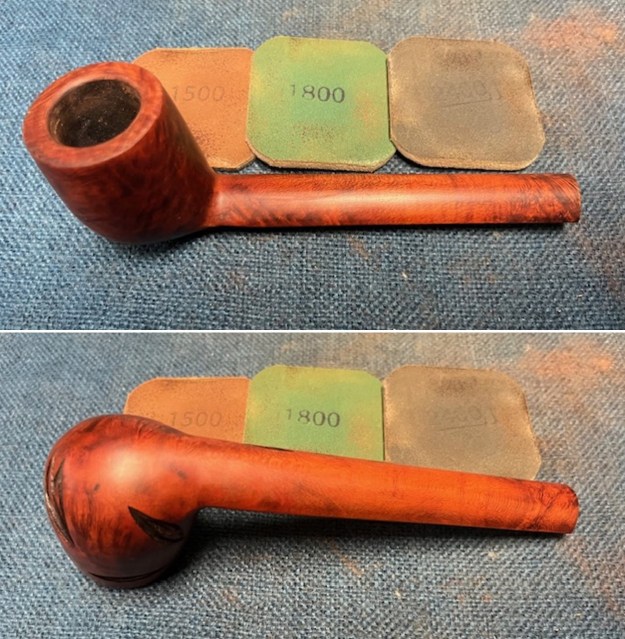
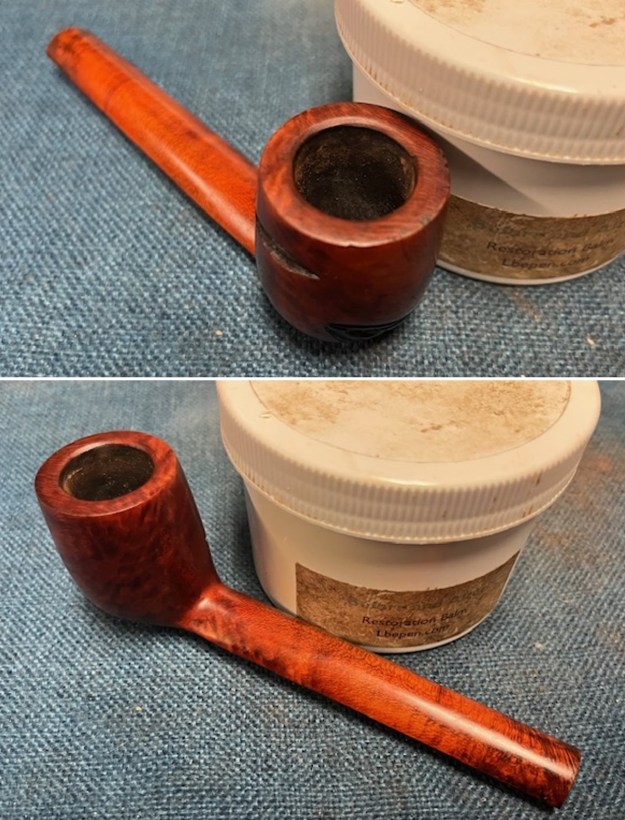
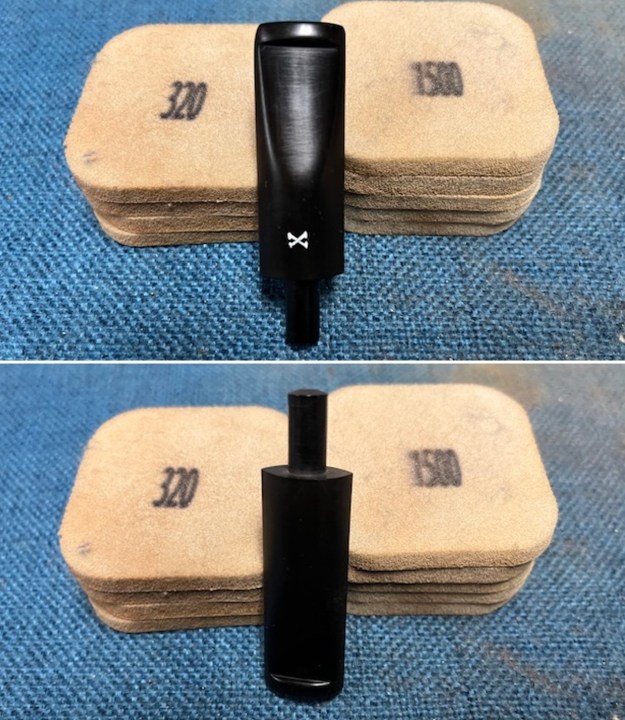
When I received it from Jeff it did not look like the same pipe. It was clean and the finish had life. He reamed it with a PipNet pipe reamer and got rid of the cake. He cleaned up the reaming with a Savinelli Fitsall Pipe Knife so that we could see the walls of the bowl and assess for damage. It was in good condition. He cleaned the internals of the shank and stem with cotton swabs, pipe cleaners and alcohol. He scrubbed the exterior with undiluted Murphy’s Oil Soap and a tooth brush. He rinsed the pipe under warm water. He dried it off with a cloth and then let it air dry. He scrubbed the stem with Soft Scrub and soaked it in Briarville’s Stem Deoxidizer. He rinsed it with warm water and dried it off with a soft cloth. It came out looking very good. The finish on the bowl and the rim top cleaned up nicely. I took pictures of the pipe to show how it looked when I unpacked it.  I took some photos of the rim top and stem to show the condition of them both when the pipe arrived. Overall it looked good. There is some damage and darkening to the inner edge of the bowl. The stem looked good even with the tooth marks on the top and underside ahead of the button.I took a photo of the stamping on the underside of the shank and reads Israel. It is clear and readable and in great condition. The X stamp on the topside of the stem is faded but readable. I removed the stem from the shank and took a photo of the pipe to show the look of the pipe.I cleaned up the inner edge of the bowl with a folded piece of 220 grit sandpaper. To remove the damage on the inner bevelled edge I used a wooden sphere and 220 grit sandpaper. It looked much better. I touched up the stain on the rim top and inner edge of the bowl with a Maple stain pen to match the rest of the briar.I sanded the sides of the rim top and bowl with 320-3500 grit 2×2 inch sanding pads to remove the varnish coat. I wiped it down after each pad with a damp cloth. It really began to have a more natural shine. I polished the bowl and the high points on the plateau with micromesh sanding pads – wet sanding with 1500-12000 grit pads. I wiped the briar down after each pad with a damp cloth. The bowl is starting to look very good. I worked some Before & After Restoration Balm into the surface of the briar with my fingertips and into leaf patterns with a horsehair shoe brush to clean, enliven and protect it. I let the balm sit for a little while and then buffed with a cotton cloth to raise the shine. The photos show the bowl at this point in the restoration process. I set the bowl aside and turned my attention to the stem. I filled in the deep tooth marks on the top and underside of the stem ahead of the button with a rubberized/carbon extra strength Black CA glue. Once it cured I used some small flat files to blend the repairs into the surface of the vulcanite. I sanded it with 220 grit sandpaper to finish blending it into the stem surface. I touched up the X stamp on the topside of the stem with some white acrylic fingernail polish. I let it harden and then scraped off the excess and went over it with a 1000 grit sanding pad. It looked very good at this point.I set the bowl aside and turned my attention to the stem. I sanded the stem with 2 x 2 inch sanding pads – dry sanding with 320-3500 grit pads and wiping it down after each pad with an Obsidian Oil cloth.I polished the stem with micromesh sanding pads – wet sanding with 1500-12000 grit sanding pads. I wiped it down after each sanding pad with some Obsidian Oil. I finished polishing it with Before & After Pipe Stem Polish – both Fine and Extra Fine and buffed it off with a cotton cloth. This beautiful mixed finish Israel Long Shank Canadian with carved leaves, probably made by the Shalom Pipe Company with a slightly bent vulcanite stem has a great look and feel. I polished the stem and the bowl with Blue Diamond polish on the buffing wheel. I gave the bowl and the stem multiple coats of carnauba wax. I buffed the pipe with a clean buffing pad to raise the shine. I hand buffed it with a microfiber cloth to deepen the shine. The pipe polished up pretty nicely. The rich combination of browns and blacks in the smooth and carved leaves took on life with the buffing. The rich colour of the briar works well with the polished vulcanite stem. I like the grain and finished look of this Israel Long Shank Canadian. Have a look at it in the photos below. The shape, finish and flow of the pipe and stem are very well done. The dimensions are Length: 7 ½ inches, Height: 2 inches, Outside diameter of the bowl: 1 ¼ inches, Chamber diameter: ¾ of an inch. The weight of the pipe is 52 grams/ 1.83 ounces. This Israel Long Canadian is a real beauty. Thanks for walking through the restoration with me as I worked over another beautiful pipe. This one will be going on the rebornpipes store in the Pipes from Various Makers Section shortly if you would like to add it to your collection. Thanks for your time.
New Life for a Svendborg Danish Hand Carved Sand Blast Bent Dublin with a 9MM filter saddle stem


by Steve Laug

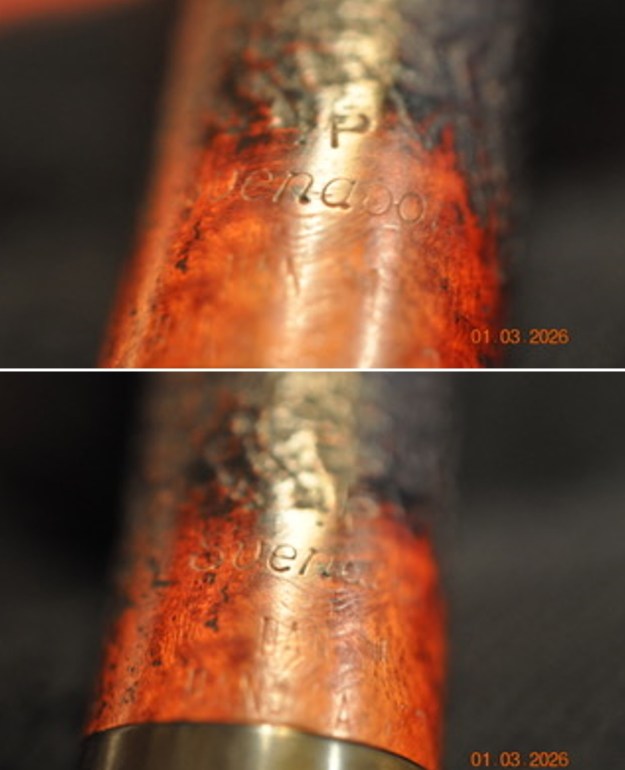
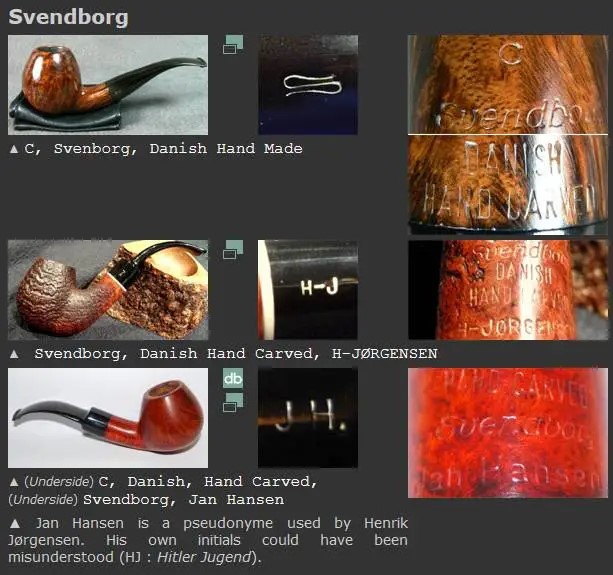
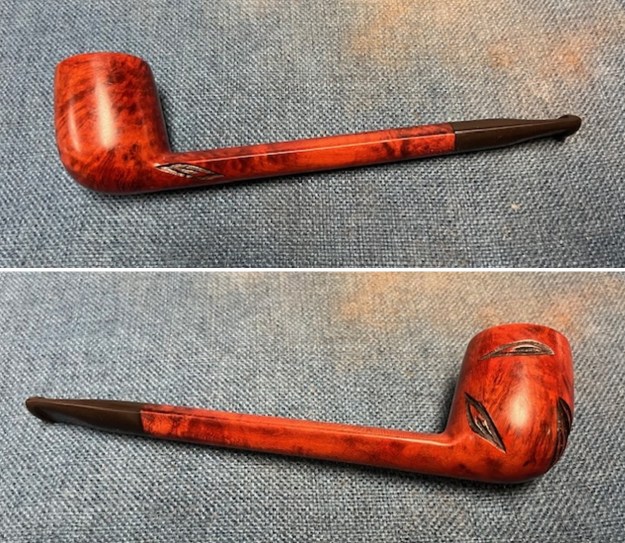
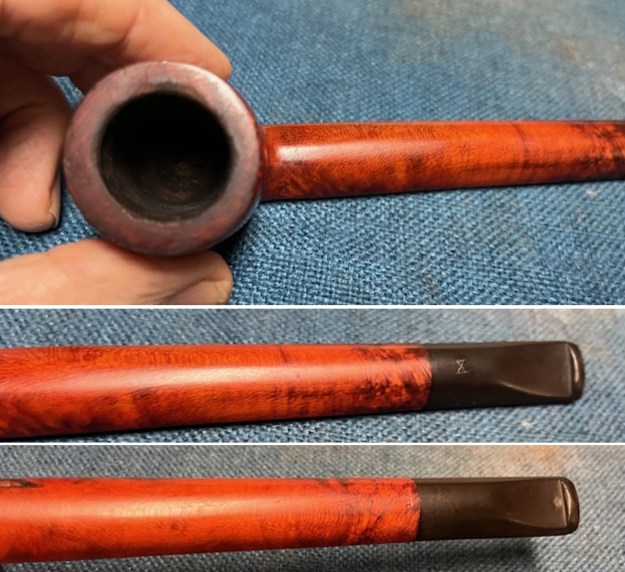
The next pipe on the table is one that has travelled much in its life. It went from Denmark to the Philippines and then to the US and now here in Canada. We picked it up in a batch of pipes we purchased from John Mags, a pipemaker in Lapaz, Philippines on 04/24/2025. The sandblast finish around a fluid Danish style Dublin works well to make this a great looking pipe. The pipe was stamped on a smooth panel on the underside of the shank and read P [over] Svendborg [over] Danish [over] Hand Carved. The rich dark brown/black stain on the sandblast finish looked very good. It had a lot of dust and debris in the valleys of the sandblast. The bowl had a moderate cake in it and it overflowed as light lava into the sandblast rim top. It was dirty but very interesting looking. The stem was quite oxidized but still had the Svendborg infinity looking logo on the left side of the saddle. It is a 9MM filter stem. There were light tooth marks on both sides ahead of the button. Jeff took photos of the bowl before his clean up work to give a sense of its beauty even with the grime in the finish. He took photos of the rim top and bowl to show clearly the cake in the bowl and the overflow of lava in the sandblast rim top. The condition of the stem is also visible as noted above. The next photos capture the sandblast in the briar on the sides and heel of the bowl. It is a beautiful blast that shows the grain around bowl sides and the heel of a well shaped Dublin. He captured the stamping on the underside of the shank and the shape of the stem in the next photos. The stamping is faint in spots but still readable and reads as is noted above. Before I started working on the pipe I did a bit of research on the brand to remind myself of what I knew of the maker. I turned to Pipephil’s site first (http://www.pipephil.eu/logos/en/logo-s14.html). I did a screen capture of the information on the site. I did a screen capture of the pertinent information and have included it below.I copied and pasted the side bar information below:

Brand founded in 1970s by Henrik Jørgensen, Poul Ilsted and Tao Nielsen. They bought an old factory (Nordisc Pibefabriker) in Svendborg on Funen Island. Poul and Tao gradually bow out from machine manufactured pipes (1982) and Henrik Jørgensen manages the brand until its takeover by Design Berlin (D) in the late 90ies. Kaj C. Rasmussen jointed the firm for several years. 17 employees worked for this brand under Henrik Jørgensen direction.

That link gave me a bit of information on the brand – a joint venture of Henrik Jorgensen, Poul Ilsted and Tao Nielsen. I could see from the information that usually the carvers stamped their names on the shank of the pipe. In the case of the one I have there is no name stamp. I wonder if the P stamp above the name would point to possibly Poul Ilsted as the carver. If so it would put the date of the carving before 1982 when Ilsted and Nielsen left. It is stamped Hand Carved which also points to a pre-1982 date.

I then turned to Pipedia and found that an article on the brand that was helpful and interesting to read (https://pipedia.org/wiki/Svendborg). I have included the first part of the article below.

Jens Tao Nielsen and Poul Ilsted Bech met each other when working together for Erik Nørding and soon became close friends. Both felt a bit tired to make nothing but bizarre fancy shapes and agreed they wanted to produce pipes of more style and more classicism. They decided to establish their own brand “Tao & Ilsted” – But how to do it?

A good fortune brought them in contact with Henrik Jørgensen, a passionate pipe lover and a wealthy Copenhagen banker who was willing to retire from bank business and change his career to become a pipemaker. The trio joined in 1969 and decided to start a new pipe brand together. Nielsen and Ilsted started to search for a suitable workshop while Jørgensen took care of the finances. In early 1970 the partners found an old, closed down pipe factory in Svendborg on Funen, and bought it shortly after for a mere 16.500 Danish Kroner. It was the earlier Nordic Pipe Factory – Nordisc Pibefabriker – maybe the oldest Danish pipe factory. And now it became the home of Svendborg Piber.

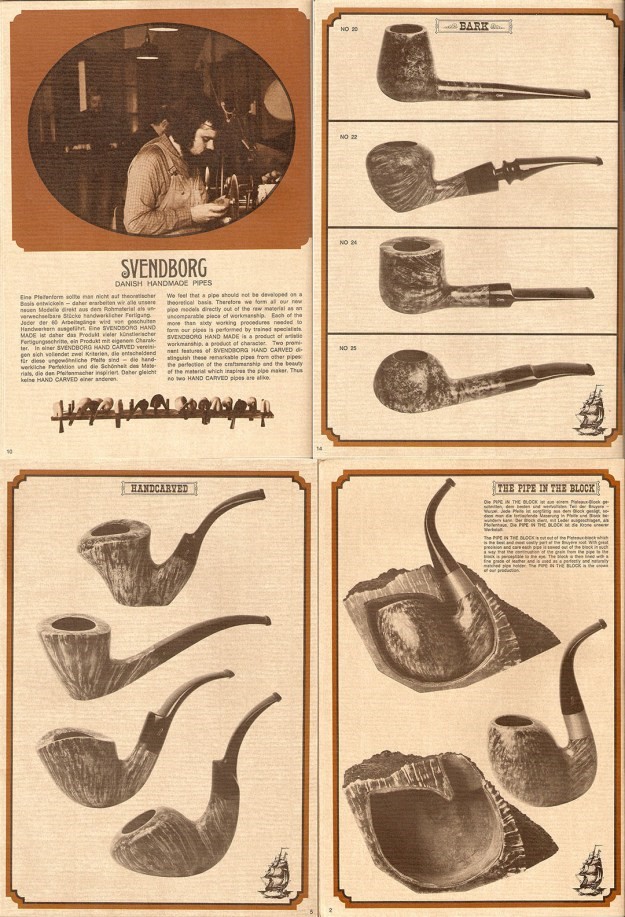
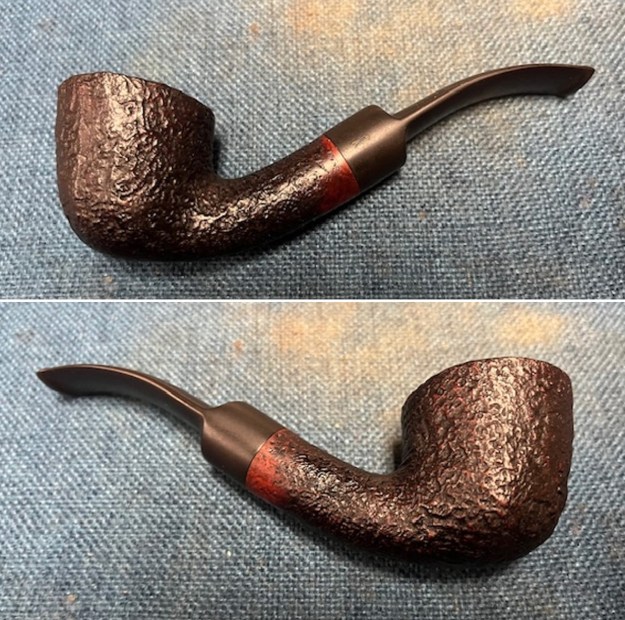
The article also included this set of pages from a catalogue that were interesting. The philosophy that drove the brand is also there to read. It is well worth the time to pause and read about that passion.Now it was my turn to work on the pipe. Jeff had done an amazing cleanup of the pipe. He reamed the light cake with a PipNet reamer and cleaned up that with a Savinelli Fitsall Pipe Knife. He scrubbed the internals of the bowl and stem with alcohol, cotton swabs and pipe cleaners. He scrubbed the externals with undiluted Murphy’s Oil Soap and rinsed the bowl off with running water. He soaked the stem in Briarville’s Pipe stem Deoxidizer and once it had soaked rinsed it off with warm water to remove the residual solution. He dried it off and rubbed it down to remove any oxidation that was still on the stem. The pipe looked very good when I received it. I took photos of the bowl and the rim top as well as both sides of the stem to show the condition of the pipe before I started my work. The rim top looked remarkably good. The next photos show the condition of the stem and how clean it came out.I took a photo of the stamping on the underside of the shank and the left side of the saddle stem. The photo of the stamping is faint but still readable. I also removed the stem and took a photo of the parts of the pipe.I went over the rim top with a brass bristle wire brush to knock off any debris in the shallow blast. Some came out and it looks quite good.I rubbed the briar down with Before & After Restoration Balm. I worked it into the briar with my fingertips and a horsehair shoe brush. The product works to clean, enliven and preserve the briar. I let it sit for 10 minutes then I buffed it with a cotton cloth to deepen the shine. The briar really comes alive with the balm. I touched up the infinity style Svendborg logo stamp on the left side of the saddle stem with white acrylic fingernail polish. I worked it into the stamp with a tooth pick. Once it dried I sanded the excess off with a worn 1000 grit sanding pad. It looks significantly better.I sanded the surface of the stem with 320-3500 grit sanding pads to smooth the tooth chatter out and remove remnants of oxidation. When finished the stem looked much better.I fit the tenon with a 9MM filter. The fit was perfect as expected and the airflow was unrestricted.I polished the vulcanite with micromesh sanding pads – 1500-12000 grit pads. I wiped it down with Obsidian Oil after each sanding pad. I used Before & After Pipe Polish – both Fine and Extra Fine to further polish the stem. This Svendborg Danish Hand Carved Dublin P with its fancy, vulcanite 9MM saddle stem is a beautiful sandblast pipe with a flowing shape that looks great. The rich browns and blacks of the contrasting stain makes the grain come alive with the polishing and waxing. I put the stem back on the bowl and carefully buffed the pipe with Blue Diamond on the buffing wheel using a light touch on the briar. I gave the bowl and the stem multiple coats of carnauba wax on the buffing wheel and followed that by buffing the entire pipe with a clean buffing pad. I hand buffed the pipe with a microfiber cloth to deepen the shine. The finished Svendborg Danish Hand Carved Dublin really is a beauty and fits nicely in the hand and looks very good. Give the finished pipe a look in the photos below. The dimensions of the pipe are Length: 5 ½ inches, Height: 1 ¾ inches, Outside diameter of the bowl: 1 ½ inches, Chamber diameter: ¾ of an inch. The weight of the pipe is 1.76 ounces/50 grams. This pipe will soon be on the Danish Pipe Makers Section of the rebornpipes store if you would like to add it to your collection. Thanks for reading this blog and my reflections on the pipe while I worked on it.

Restoring a 1969 Dunhill Shell Briar 59 F/T Billiard


by Steve Laug

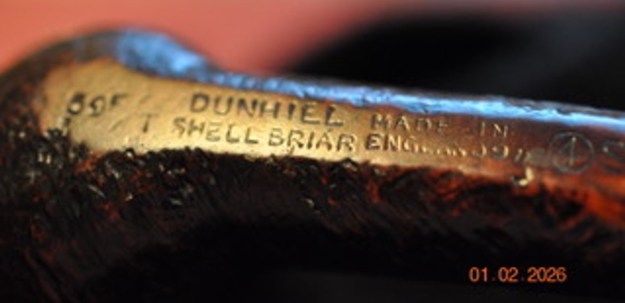
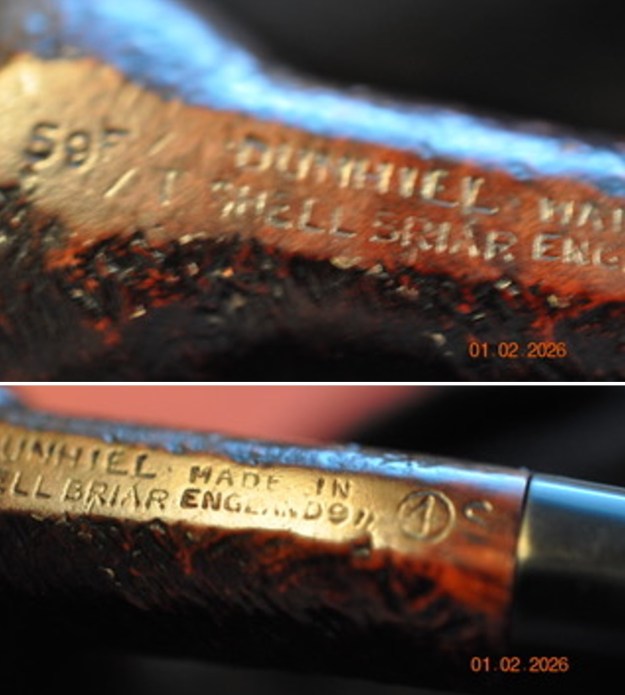
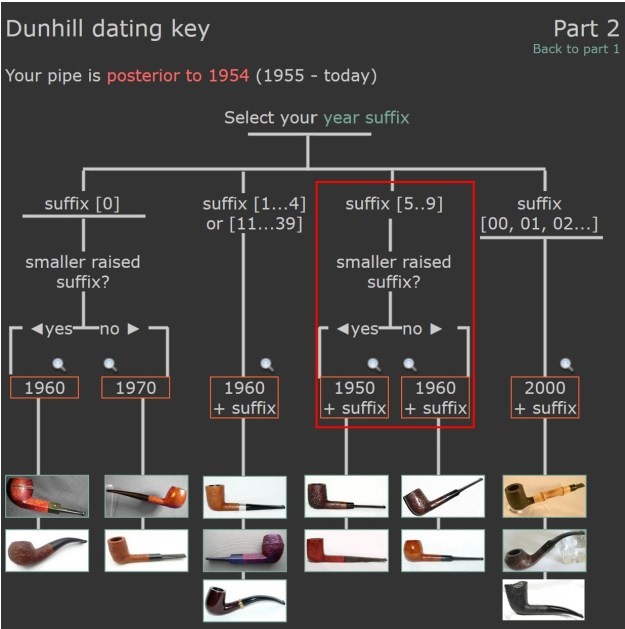
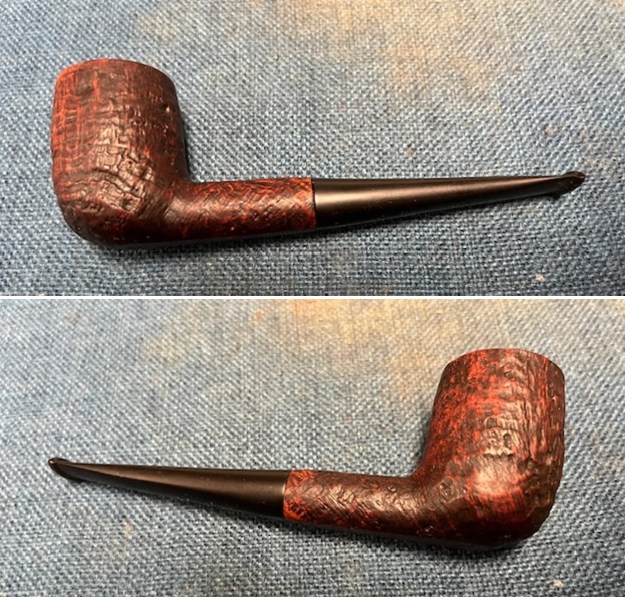
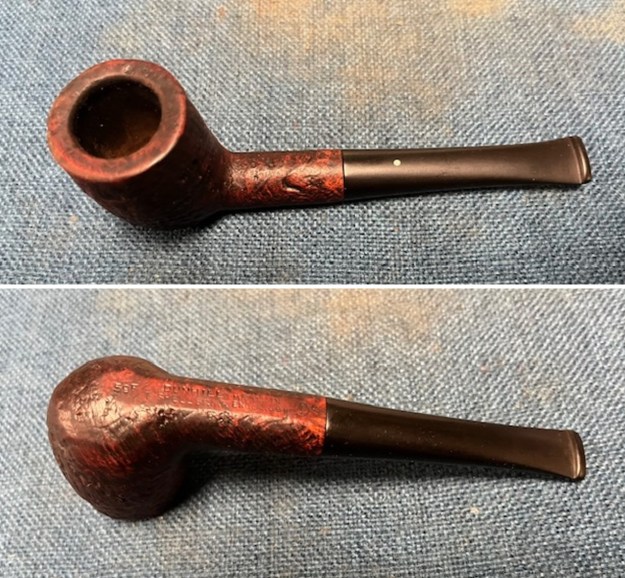
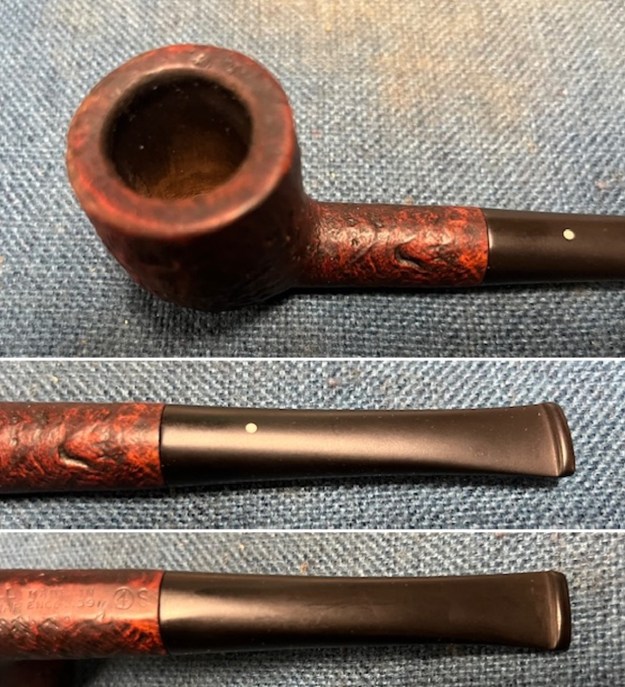
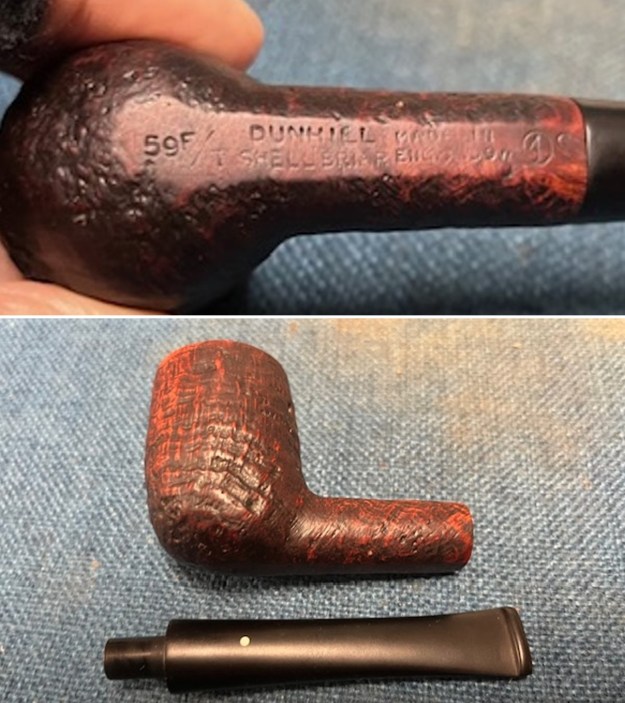
The next pipe on the table is one that came to us from a seller in Ogden, Utah, USA on 05/04/2025. It is a Dunhill sandblast that is in decent condition. It is stamped on a smooth panel on the underside of the shank with the shape number 59 F/T followed by Dunhill [over] Shell Briar. Next to that it is stamped Made in [over] England with the date number 9 after the D in England with an 11 below and to the right of the 9. After that it is stamped with a 4 in a circle [followed by] S for Shell Briar. The stamping is clear and readable as noted above. The finish was dusty and oily around the nooks and crannies of the sandblast but otherwise looked good. The bowl had been recently reamed but was dirty and there were some light lava spots on the sandblasted rim top or edges. The edges looked to be undamaged with some rounding on the outer edge. The taper stem was lightly oxidized, dirty and had light tooth marks and chatter ahead of the button. Jeff took photos of the pipe to show what it looked like before he started working on it. Jeff took photos of the bowl and rim top to show the general clean condition of the bowl and the light lava spots on the rim top. The photos of the stem to show the condition of both sides of the stem as noted above. He took photos of the sides of the bowl and the heel to show the beautiful grain in the sandblast around the bowl. It really is a beautiful piece of briar that has a shape that follows the grain. The finish is nice but it also dirty with dust ground into the finish. Jeff took photos of the stamping on the heel of the bowl and underside of the shank. It is clear and readable as noted above.I turned to the dating key on Pipephil’s site (http://www.pipephil.eu/logos/en/dunhill/cledat-en1a.html) to establish a date for the pipe. I drew a red box around the pertinent information below. It fits the criteria of a Sandblast with a year suffix and a Non-possessive form Dunhill. The suffix is the number 9 same size as the D which puts in the section below which notes 1960 + suffix 9 to establish a date. In this case it is 1960 + 9 making the pipe a 1969. The 11 stamped right and below of the 9 would point to the possibility that pipe was retailed in 1971.

I turned to Pipedia to verify this date on the pipe and have included the link and the post for that below (https://pipedia.org/wiki/Pipedia_Dunhill_Dating_Guide#Post-Patents). It verifies that date is 1969. I have included further information that was on the site for this time period. I have highlighted the pertinent information in red below:

[1955 up to 1969] Only a single suffix number.

The date code is just after ENGLAND: 1950 +: 5, 6, 7, 8 and 9 for the 50s and 0 for 1960 (they are smaller and underscored) then, 1, 2, 3, 4, 5, 6, 7, 8 and 9 for the 60s (they are equal in size to the “D” in the word “ENGLAND”).

  • Sometimes two suffix numbers (one after the other), but it’s an additional stamp for warranty control (see more here).
  • From 1961 up to 1964 we can find numbers without underscore – the code is a raised and smaller than the preceding “D”.
  • Sometimes the numbers 6, 7, 8 and 9, in the 50s, are roughly equal in size to the “D” in the word “ENGLAND”.
  • DUNHILL over finish stamp (BRUYERE or ROOT BRIAR). On sandblasted DUNHILL followed by the name of the finish (DUNHILL SHELL, etc).

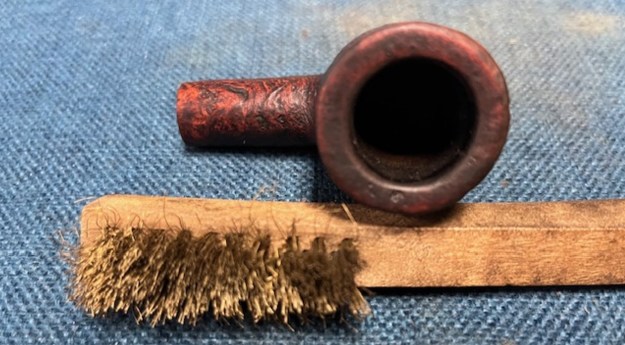
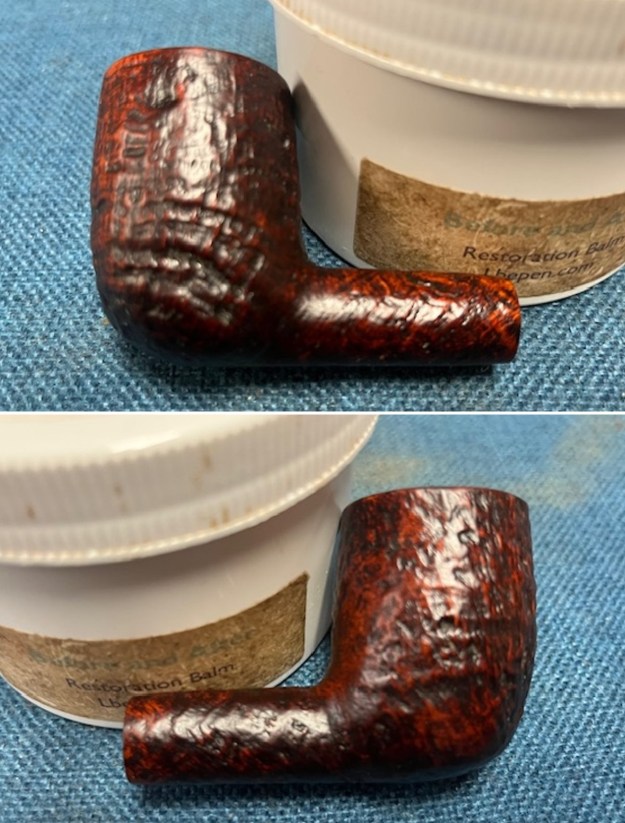
Now it was my turn to work on the pipe. Jeff had done an amazing cleanup of the pipe. He reamed the light cake with a PipNet reamer and cleaned up that with a Savinelli Fitsall Pipe Knife. He scrubbed the internals of the bowl and stem with alcohol, cotton swabs and pipe cleaners. He scrubbed the externals with undiluted Murphy’s Oil Soap and rinsed the bowl off with running water. He soaked the stem in Briarville’s Pipe stem Deoxidizer and once it had soaked rinsed it off with warm water to remove the residual solution. He dried it off and rubbed it down to remove any oxidation that was still on the stem. The pipe looked very good when I received it. I took photos of the bowl and the rim top as well as both sides of the stem to show the condition of the pipe before I started my work. The rim top looked remarkably good. The next photos show the condition of the stem and how clean it came out.I took a photo of the stamping on the shank. The photo of the stamping is clear and readable. I also removed the stem and took a photo of the parts of the pipe.I went over the rim top with a brass bristle wire brush to knock off any debris in the shallow blast. Some came out and it looks quite good.I rubbed the briar down with Before & After Restoration Balm. I worked it into the briar with my fingertips and a horsehair shoe brush. The product works to clean, enliven and preserve the briar. I let it sit for 10 minutes then I buffed it with a cotton cloth to deepen the shine. The briar really comes alive with the balm. I sanded the surface of the stem with 320-3500 grit sanding pads to smooth tooth chatters out and remove remnants of oxidation. When finished the stem looked much better. I polished the vulcanite with micromesh sanding pads – 1500-12000 grit pads. I wiped it down with Obsidian Oil after each sanding pad. I used Before & After Pipe Polish – both Fine and Extra Fine to further polish the stem. This 1969 Dunhill Shell Briar 59 F/T Group 4 Billiard has a beautiful, unique Dunhill Sandblast finish that is not as deep as the older ones. The rich brown/black finish highlights some great grain around the bowl and shank. The polished vulcanite taper stem adds to the mix. I put the stem back on the bowl and carefully buffed the pipe with Blue Diamond on the buffing wheel. It is critical to avoid buffing the stamping and to have a lighter touch on the sandblast briar. I gave the bowl and the stem multiple coats of carnauba wax on the buffing wheel and followed that by buffing it with a clean buffing pad. I hand buffed the pipe with a microfiber cloth to deepen the shine. The finished Dunhill Shell Briar 59 F/T Billiard is quite stunning and feels great in my hand. Give the finished pipe a look in the photos below. The dimensions of the pipe are Length: 5 ½ inches, Height: 1 ¾ inches, Outside diameter of the bowl: 1 ¼ inch, Chamber diameter: ¾ of an inch. The weight of the pipe is 1.38 ounces/39 grams. Thanks for walking through the restoration with me as I worked over another beautiful pipe. I am going to add it to the rebornpipes store in the British Pipemakers Section. If you would like to add it to your collection let me know. Thanks for your time.

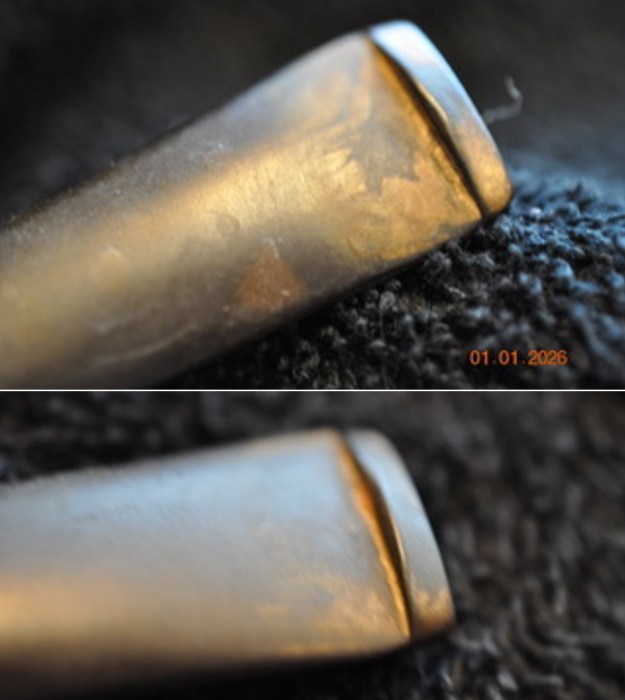
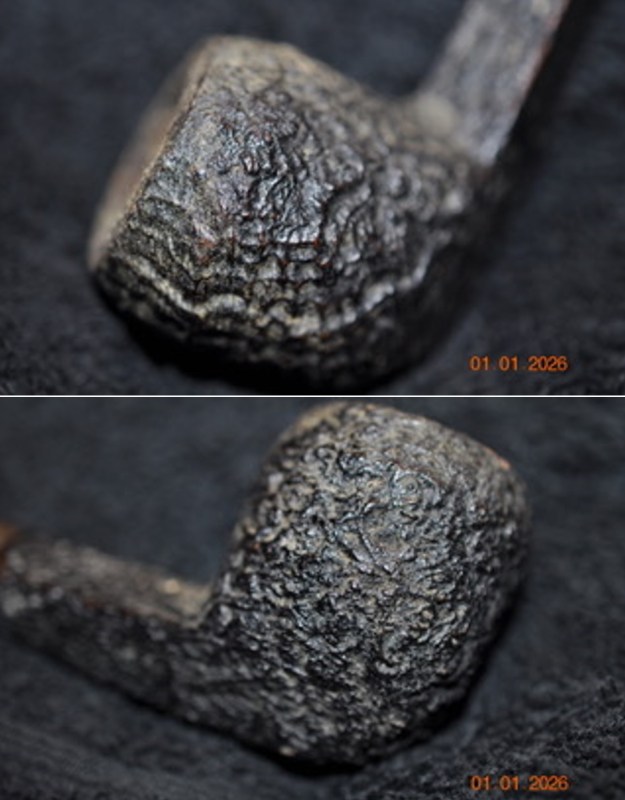
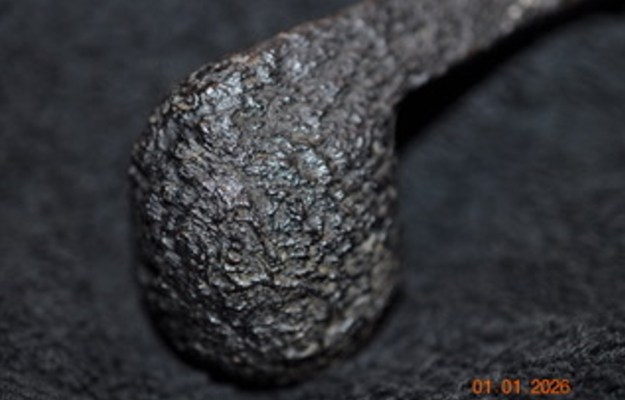
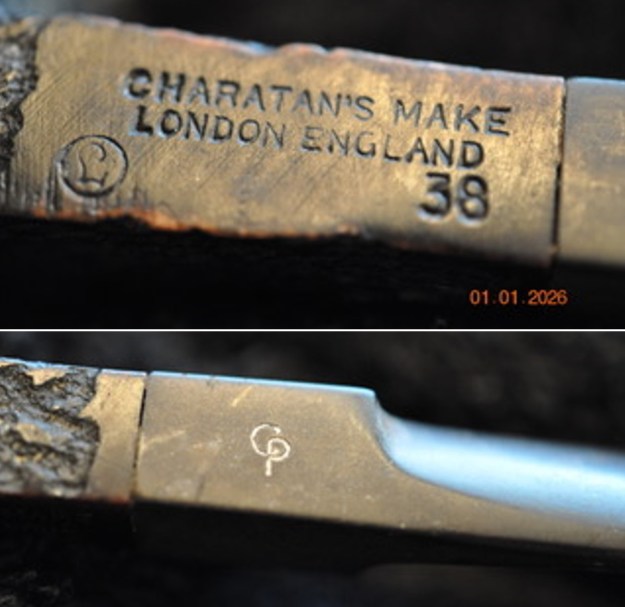
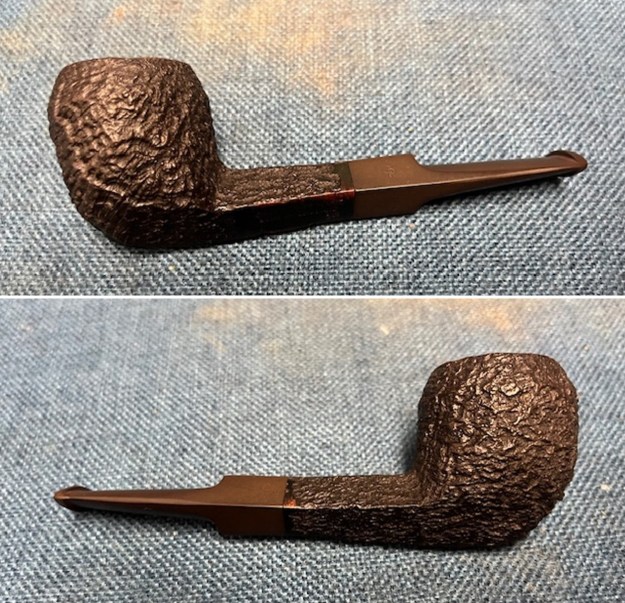
I love the shape of this Sandblast Charatan’s Make 38 Straight Bulldog


by Steve Laug

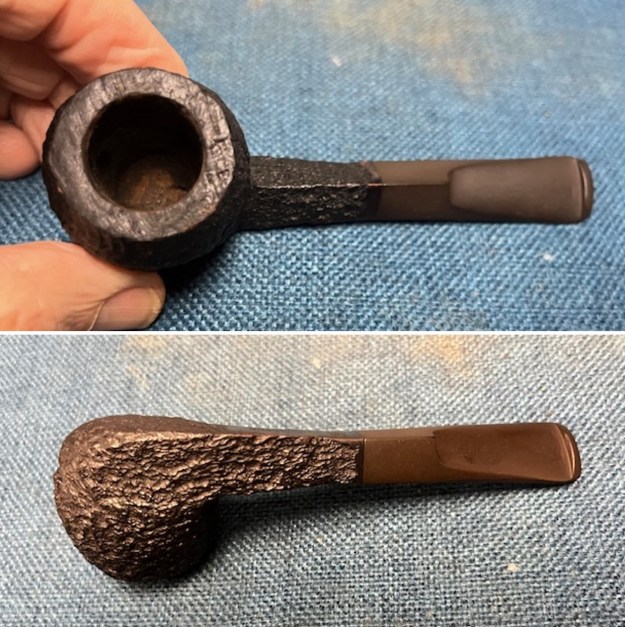
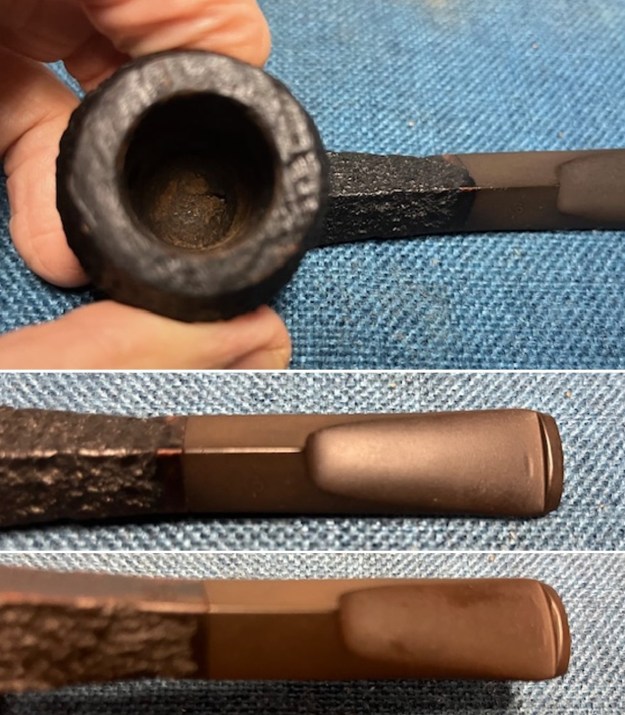
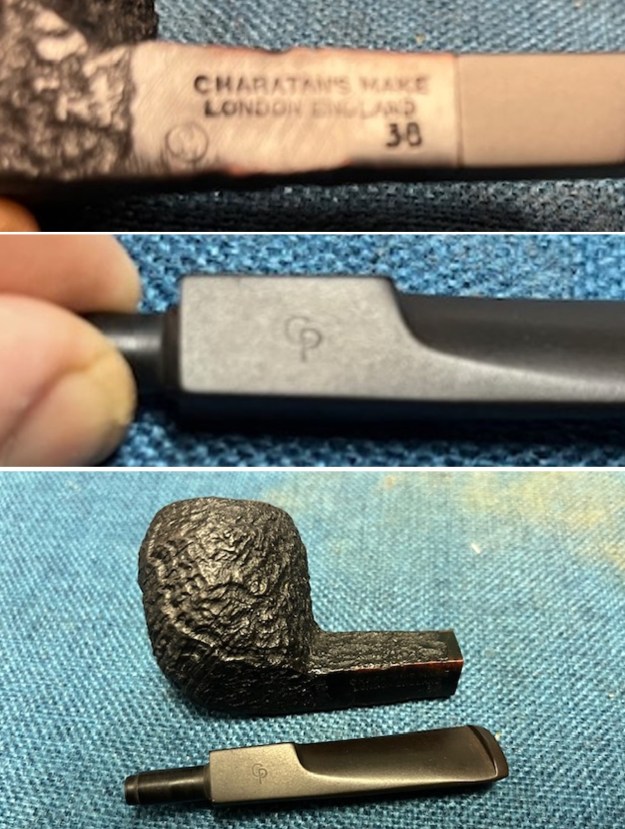
The next pipe on the table is a nice rusticated looking sandblast Bulldog shaped pipe. We purchased it from a seller in Downey, California, USA on 08/12/205. On the heel of the bowl it is stamped on a smooth panel on the left underside of the diamond shank. It reads Charatan’s Make [over]London. England. Underneath it is stamped with a cursive L near the bowl and the shape number 38 on the shank end. The pipe has a rugged, deep sandblast that I really like. The finish was very dirty with dust in all of the rustication, making it hard to see beyond that to the finish underneath that. There was a thick cake in the bowl and a heavy overflow of lava filling in the sandblast on the rim top. It was hard to know at this point the condition of the rim edges. The stem was oxidized, calcified and there were light tooth marks and chatter on both sides just ahead of the button. The stem has the Charatan’s CP logo on the top left side of the diamond saddle stem and it is faint but readable. I am not sure if it is deep enough to survive the clean up. Jeff took photos of the pipe before he started working on it. I include those below. Jeff took photos of the bowl and rim top to show the cake in the bowl and the lava build up on the rim top and dust and grime in the sandblast. It was thick and hard but hopefully it had protected the rim and edges from damage. The lava is deep in the blast and there is a buildup on the inner edge of the bowl. The stem shows oxidation, calcification and marks as noted above. Jeff took a photo of the sides and heel of the bowl to show the condition of the finish – the grime and grit all over the sides and bottom of the bowl. The blast is deep and dirty but it is interesting. This is a very tactile finish and one that I enjoy. Jeff took a photo of the stamping on the left underside of the shank and the CP stamp on the diamond saddle of the stem. It is very clear and readable as noted above.This pipe was a real mess like many of the pipes we work on. I was curious to see what it would look like when I unpacked it. I was surprised at how good it looked. Jeff reamed it with a PipNet pipe reamer and cleaned up the reaming with a Savinelli Fitsall Pipe Knife. He scrubbed out the internals with alcohol, pipe cleaners and cotton swabs until the pipe was clean. He scrubbed the exterior of the bowl with Murphy’s Oil Soap and a tooth brush to remove the grime and grit on the briar and the lava on the rim top. The finish on the bowl looked really good when I got it. The rim top looked much better and the inner and outer edges were looking good. There was some debris in the grooves of the rim top that still needed to be picked out. He had cleaned the internals and scrubbed the exterior of the stem and soaked them in Briarville’s Pipe Stem Deoxidizer bath to remove the oxidation. The stem looked very good other than the very light tooth marks and chatter in the surface. I took photos of the pipe before I started my work on it.   I took photos of the condition of the rim top and stem before I started working. The rim top looks very good. The crevices and valleys of the rustication are clean and look great. The bowl is spotless. The stem is lightly oxidized and has some tooth marks and tooth chatter. The Savinelli S shield on the top of the stem is worn and very shallow. It will be hard to save in the clean up work. I took a photo of the stamping on the underside of the heel and the shank. It is clear and readable as noted above. I took the bowl and stem apart and took a photo of the pipe to show the look of the pipe.I started my work on the pipe by working over the rim top with a brass bristle wire brush to remove the debris deep in the grooves of the rim top. It was looking much better. It was ready for the next step. I worked some Before & After Restoration Balm into the finish of the bowl and the rim top and shank with my fingertips and a horsehair shoe brush to clean, enliven and protect it. I find that the balm really makes the briar come alive again. The contrasts in the layers of stain and the separate finishes really made the grain stand out. I let the balm sit for a little while and then buffed with a cotton cloth to raise the shine. The bowl really looks good at this point. I filled in the tooth marks on the top and underside with clear CA glue and set it aside to cure. Once cured I used a small file to flatten the repair and then sanded it with 220 grit sandpaper to blend it into the surface of the vulcanite. I touched up the CP stamp with white acrylic nail polish. I scraped off the excess and smoothed it out with a worn 1500 grit sanding pad.I sanded the stem to further blend in the repairs with 320-3500 grit 2 inch square sanding pads. I wiped down the stem with an Obsidian Oil Cloth after each sanding pad. At this point the stem is looking better and the repairs blended in well. The CP stamp also looked very good. I polished the stem with micromesh sanding pads – dry sanding it with 1500-12000 grit pads. I wiped it down with an Obsidian Oil cloth after each pad. I polished it further with Before & After Pipe Stem Polish – both fine and extra fine. I gave it another wipe down with the Obsidian Oil cloth and buffed it to a shine. Once again, I am at the part of the restoration that I always look forward to – the moment when all the pieces are back together. I put the Lane Era Charatan’s Make London England 38 Bulldog back together and lightly buffed the bowl with Blue Diamond. I buffed the stem with a heavier touch with Blue Diamond on the buffing wheel. I gave the bowl multiple coats of Conservator’s Wax and the stem multiple coats of carnauba wax. I buffed the pipe with a clean buffing pad to raise the shine. I hand buffed it with a microfiber cloth to deepen the shine. It is fun to see what the polished bowl looks like in contrast with the black vulcanite stem. This dark stained Charatan’s Make 38 Straight Bulldog must have been a fine smoking pipe judging from the condition it was in when I started. Have a look at it in the photos below. The dimensions are Length: 5 ½ inches, Height: 1 ¾ inches, Outside diameter of the bowl: 1 ¼ inches, Chamber diameter: ¾ of an inch. The weight of the pipe is 1.23 ounces/35 grams. This is one that will go on the British Pipemakers Section of the rebornpipes online store shortly. Thanks to each of you who are reading this blog. Remember we are not pipe owners; we are pipemen and women who hold our pipes in trust until they pass on into the trust of the next generation.

Renewed Life for a Savinelli Capri Root Briar 115 Pot


by Steve Laug

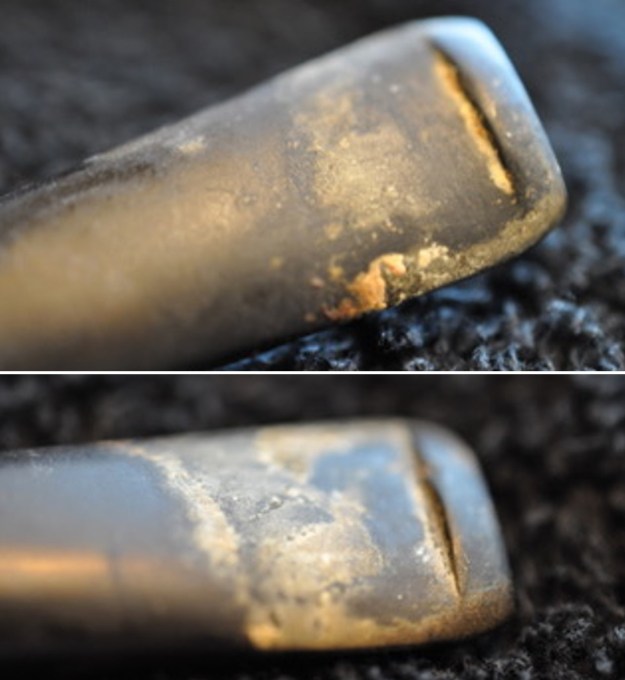
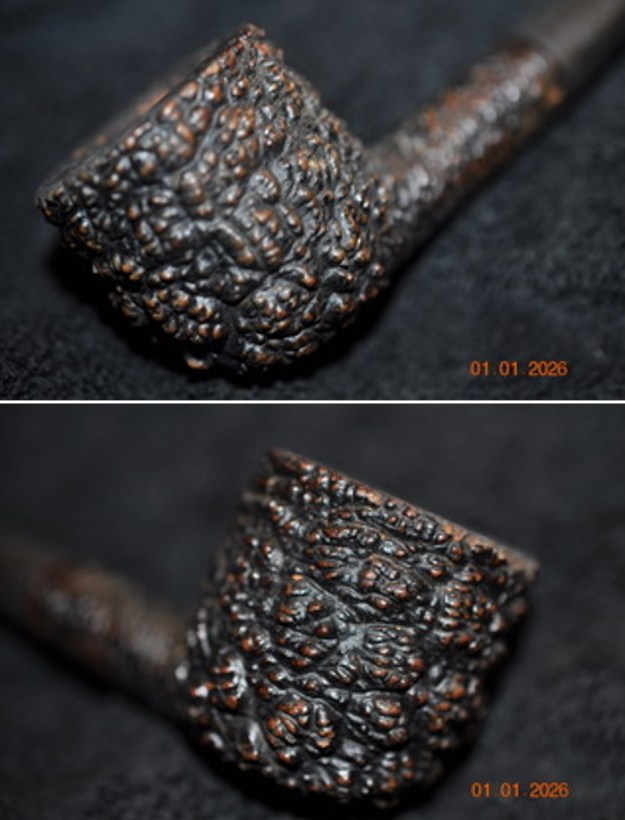
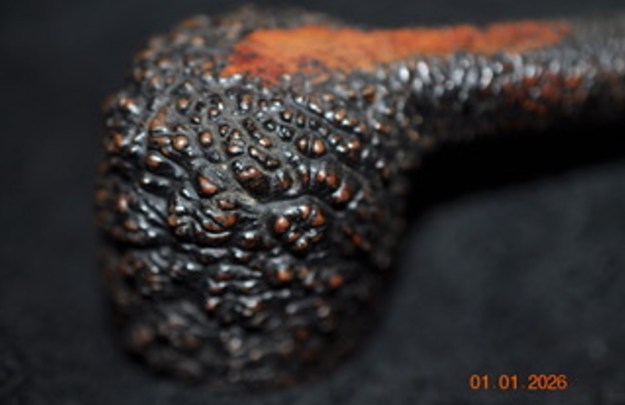
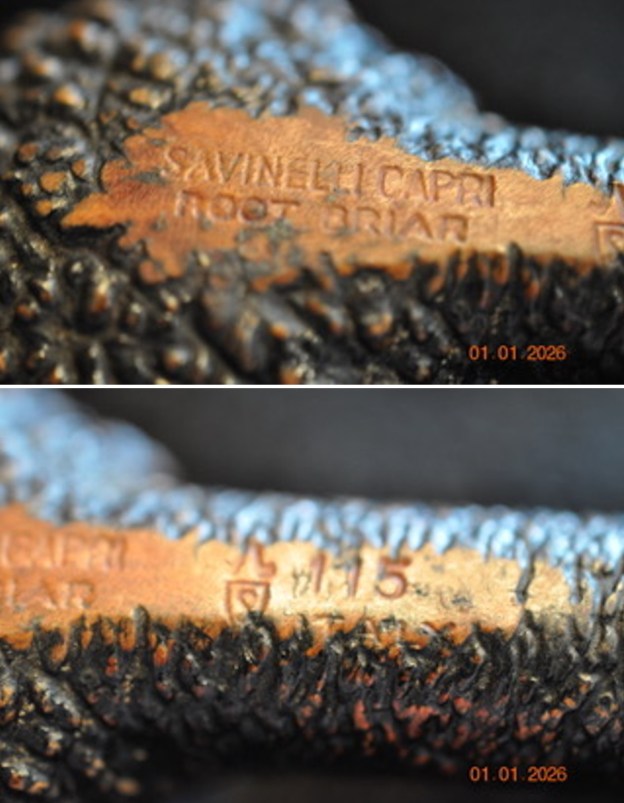
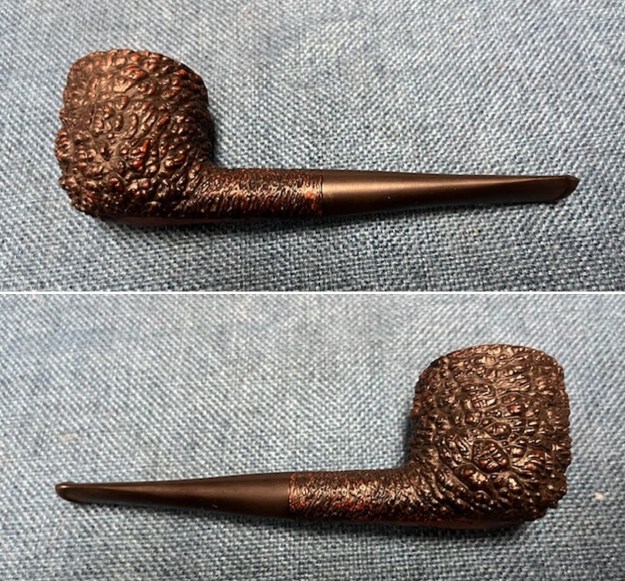
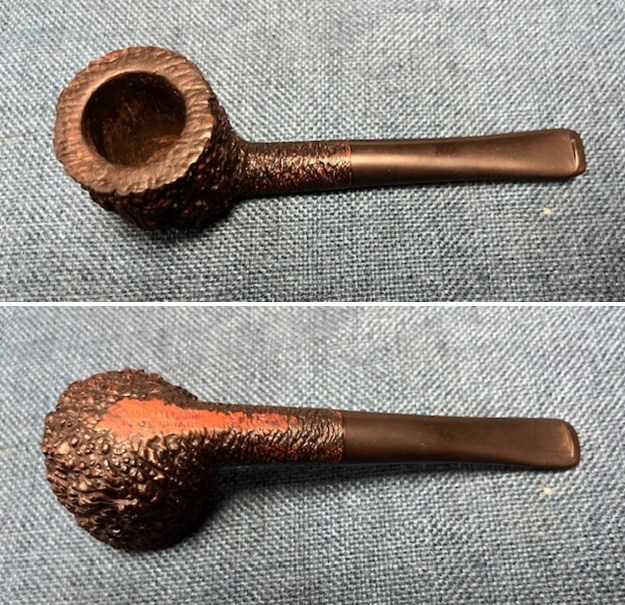
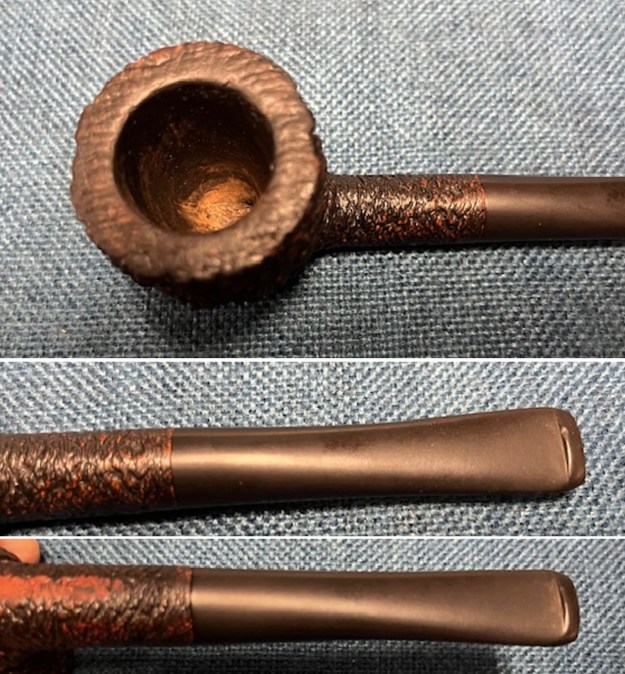
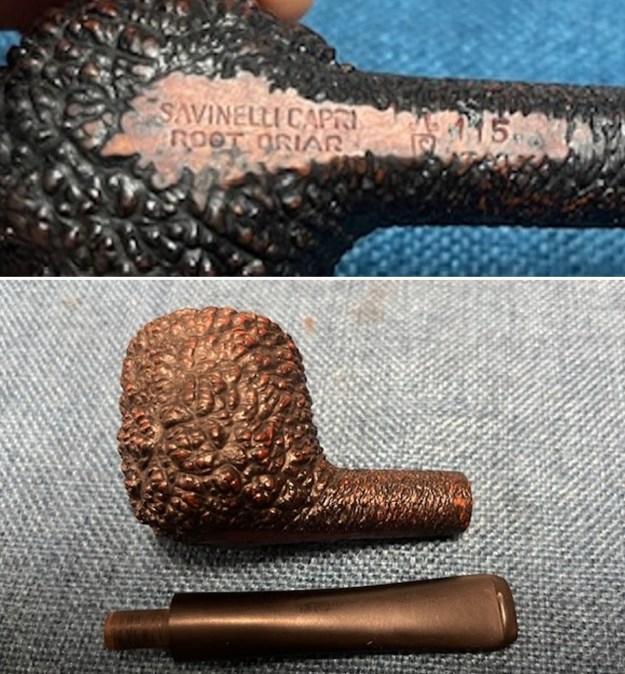
The next pipe on the table is a nice rusticated looking pot shaped pipe. We purchased it from a seller in Downey, California, USA on 08/12/205. On the heel of the bowl it is stamped Savinelli Capri over Root Briar. That is followed by The Savinelli “S” shield and the shape number 115 [over] Italy. The pipe has a Sea Rock or coral style rustication that I really like. The finish was very dirty with dust in all of the rustication, making it hard to see beyond that to the finish underneath that. There was a thick cake in the bowl and a heavy overflow of lava filling in the rusticated rim top. It was hard to know at this point the condition of the rim edges. The stem was oxidized, calcified and there were light tooth marks and chatter on both sides just ahead of the button. The stem did not have the Savinelli S shield logo on the top of the stem and it is not clear if it wore off with buffing or it was not present. Jeff took photos of the pipe before he started working on it. I include those below. Jeff took photos of the bowl and rim top to show the cake in the bowl and the lava build up on the rim top and dust and grime in the rustication. It was thick and hard but hopefully it had protected the rim and edges from damage. The lava is deep in the rustication and there is a buildup on the inner edge of the bowl. The stem shows oxidation, calcification and marks as noted above. Jeff took a photo of the sides and heel of the bowl to show the condition of the finish – the grime and grit all over the sides and bottom of the bowl. The rustication is deep and dirty but it is interesting. This is a very tactile finish and one that I enjoy. Jeff took two photos of the stamping on the underside of the shank to capture all of it. It is very clear and readable other than the shape number 115.This pipe was a real mess like many of the pipes we work on. I was curious to see what it would look like when I unpacked it. I was surprised at how good it looked. Jeff reamed it with a PipNet pipe reamer and cleaned up the reaming with a Savinelli Fitsall Pipe Knife. He scrubbed out the internals with alcohol, pipe cleaners and cotton swabs until the pipe was clean. He scrubbed the exterior of the bowl with Murphy’s Oil Soap and a tooth brush to remove the grime and grit on the briar and the lava on the rim top. The finish on the bowl looked really good when I got it. The rim top looked much better and the inner and outer edges were looking good. There was some debris in the grooves of the rim top that still needed to be picked out. He had cleaned the internals and scrubbed the exterior of the stem and soaked them in Briarville’s Pipe Stem Deoxidizer bath to remove the oxidation. The stem looked very good other than the very light tooth marks and chatter in the surface. I took photos of the pipe before I started my work on it. I took photos of the condition of the rim top and stem before I started working. The rim top looks very good. The crevices and valleys of the rustication are clean and look great. The bowl is spotless. The stem is lightly oxidized and has some tooth marks and tooth chatter. The Savinelli S shield on the top of the stem is not present. I took a photo of the stamping on the underside of the heel and the shank. It is clear and readable as noted above. I took the bowl and stem apart and took a photo of the pipe to show the look of the pipe.I started my work on the pipe by working over the rim top with a dental pick and a brass bristle wire brush to remove the debris deep in the grooves of the rim top. I wiped it down with isopropyl alcohol and a folded pipe cleaner to remove the debris loosened by the pick and the brush. It was looking much better. I touched up the cleaned rim top with a Walnut stain pen to match the stain around the rest of the bowl. It looks quite good. It was ready for the next step. I worked some Before & After Restoration Balm into the finish of the bowl and the rim top and shank with my fingertips and a horsehair shoe brush to clean, enliven and protect it. I find that the balm really makes the briar come alive again. The contrasts in the layers of stain and the separate finishes really made the grain stand out. I let the balm sit for a little while and then buffed with a cotton cloth to raise the shine. The bowl really looks good at this point. I sanded the stem to smooth out the tooth marks and chatter. I used 320-3500 grit 2 inch square sanding pads. I wiped down the stem with an Obsidian Oil Cloth after each sanding pad. At this point the stem is looking better and the tooth marks are gone. I polished the stem with micromesh sanding pads – dry sanding it with 1500-12000 grit pads. I wiped it down with an Obsidian Oil cloth after each pad. I polished it further with Before & After Pipe Stem Polish – both fine and extra fine. I gave it another wipe down with the Obsidian Oil cloth and buffed it to a shine. Once again, I am at the part of the restoration that I always look forward to – the moment when all the pieces are back together. I put the Savinelli Capri Root Briar 115 Pot back together and lightly buffed the bowl with Blue Diamond. I buffed the stem with a heavier touch with Blue Diamond on the buffing wheel. I gave the bowl multiple coats of Conservator’s Wax and the stem multiple coats of carnauba wax. I buffed the pipe with a clean buffing pad to raise the shine. I hand buffed it with a microfiber cloth to deepen the shine. It is fun to see what the polished bowl looks like in contrast with the black vulcanite stem. This dark stained Savinelli Capri Pot 115 must have been a fine smoking pipe judging from the condition it was in when I started. Have a look at it in the photos below. The dimensions are Length: 5 ½ inches, Height: 1 ¾ inches, Outside diameter of the bowl: 1 ½ inches, Chamber diameter: 7/8 of an inch. The weight of the pipe is 1.52 ounces/44 grams. This is one that will go on the Italian Pipemakers Section of the rebornpipes online store shortly. Thanks to each of you who are reading this blog. Remember we are not pipe owners; we are pipemen and women who hold our pipes in trust until they pass on into the trust of the next generation.

The Loewe & Co. Derby Billiard: an Archangel a Little Damaged


by Kenneth Lieblich

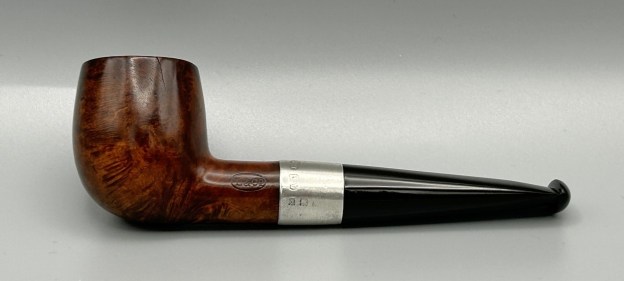
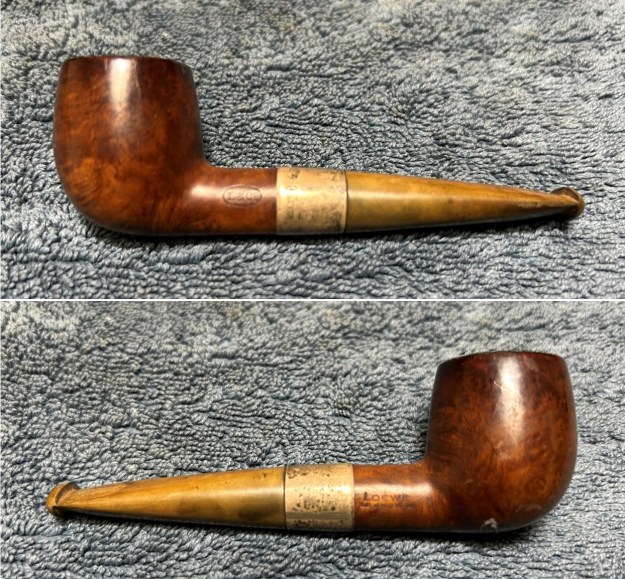
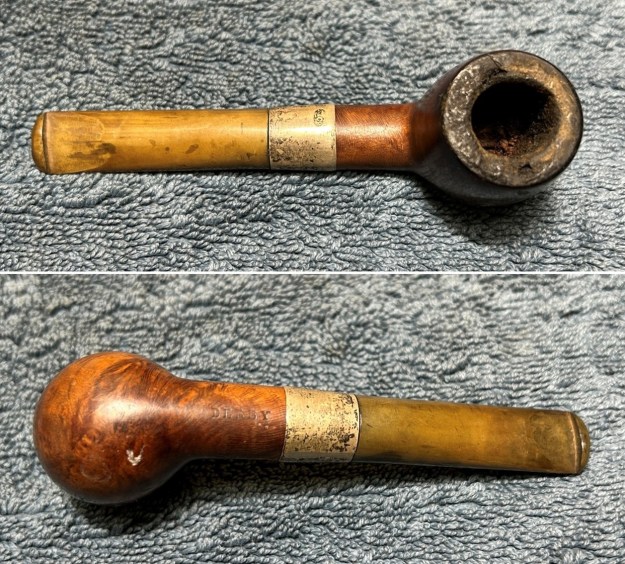
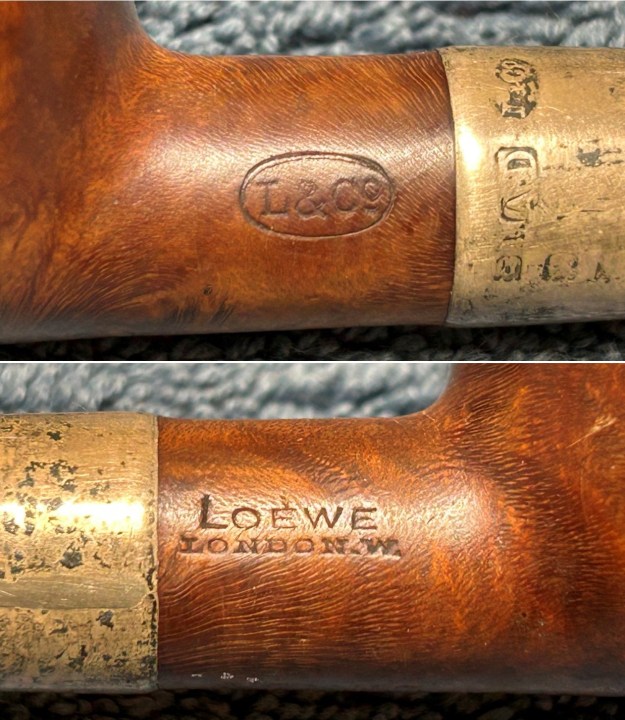
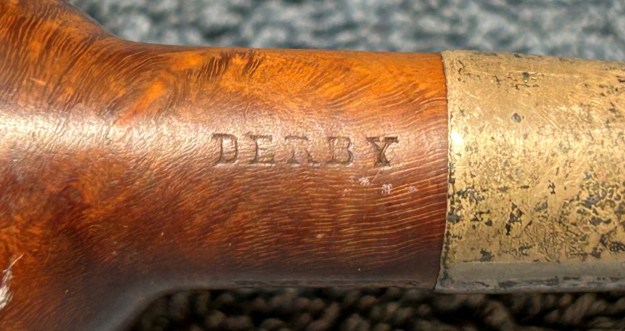
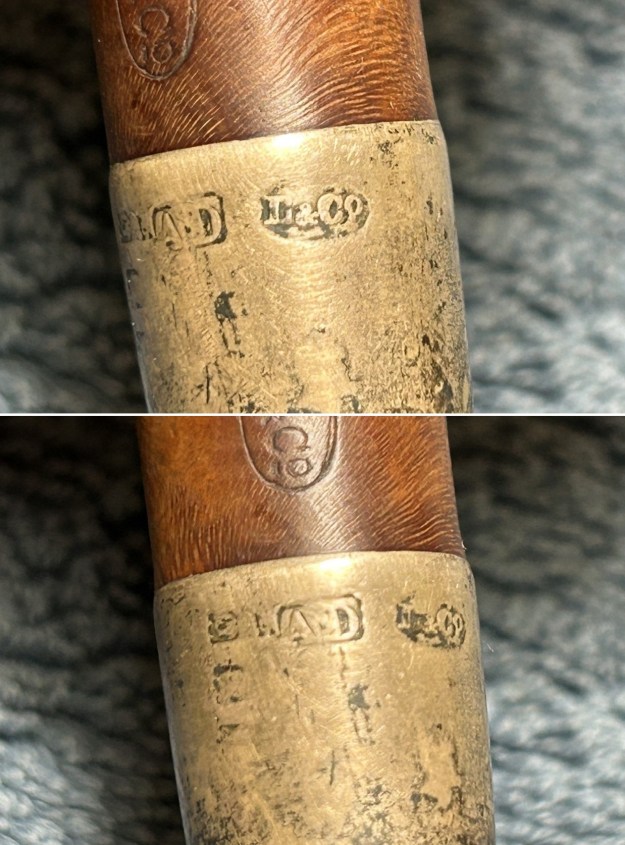
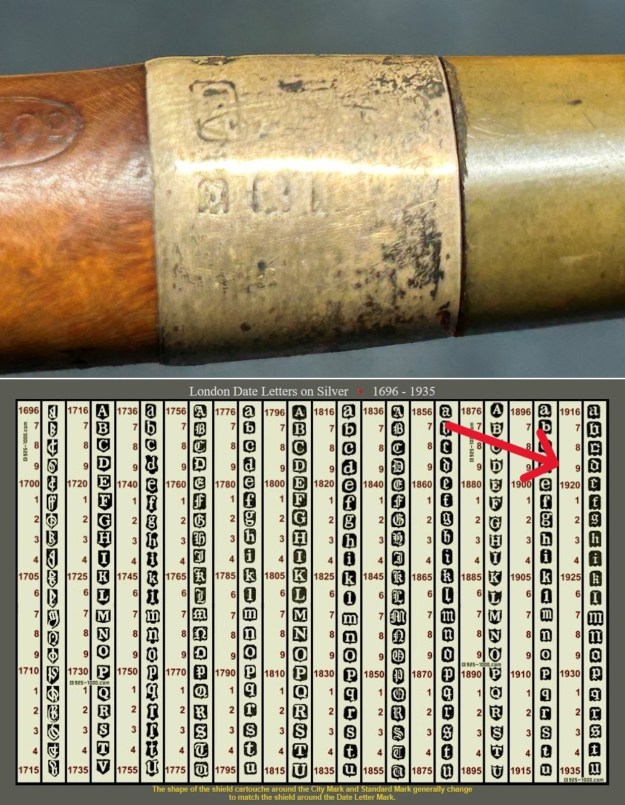
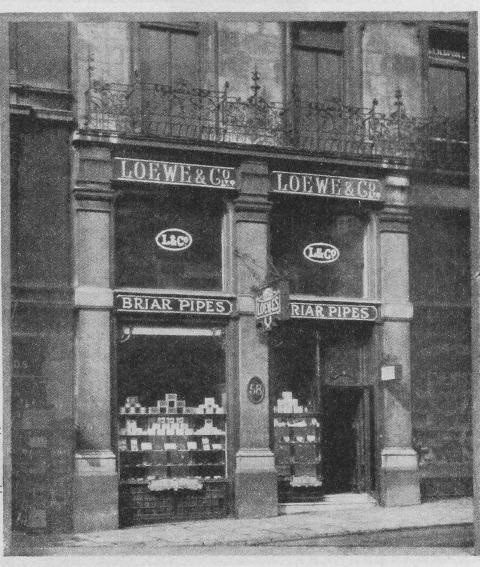
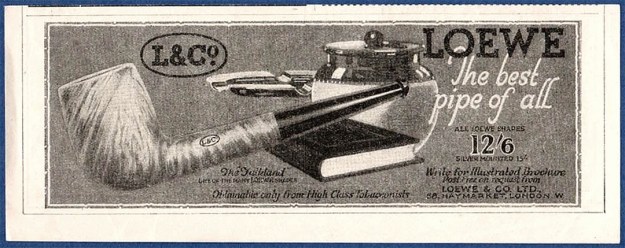
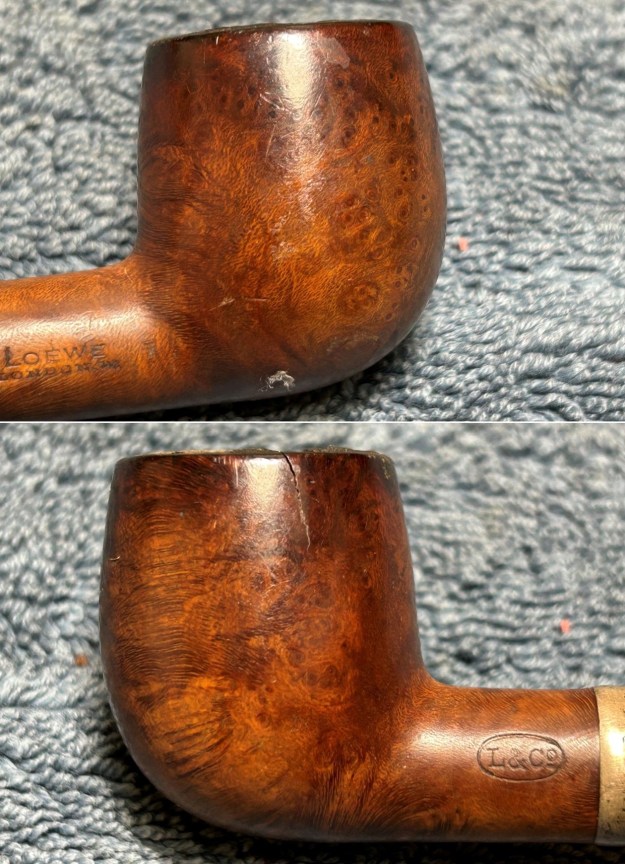
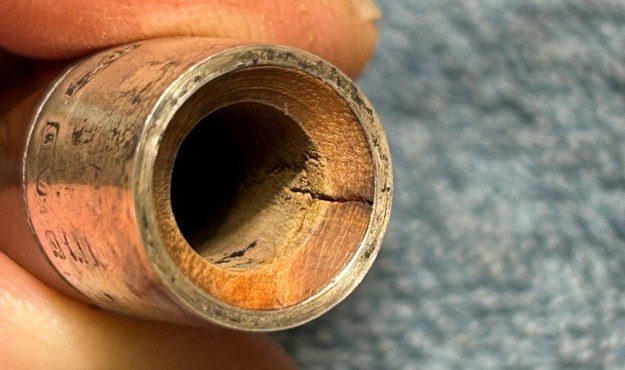
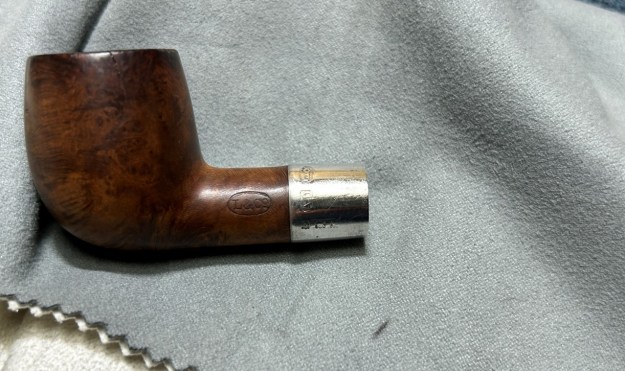
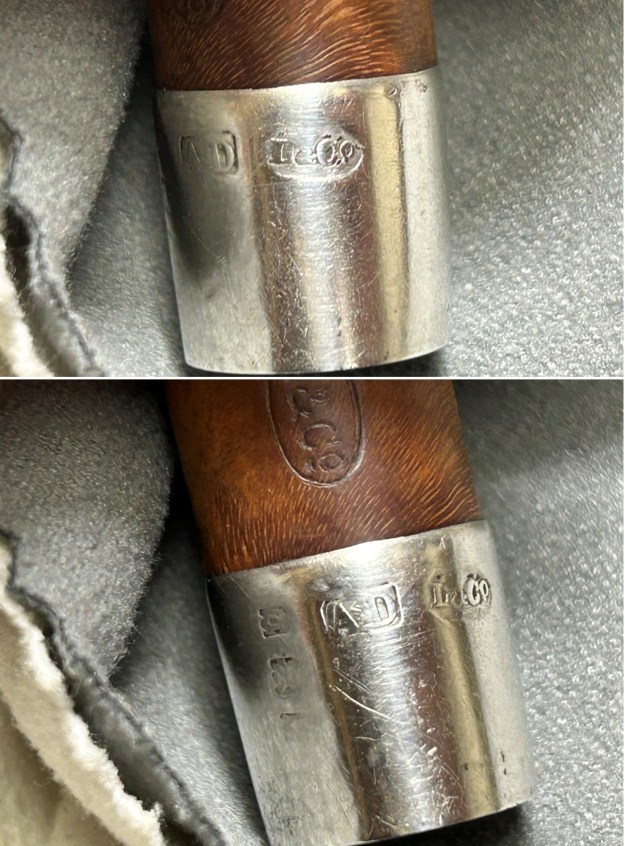
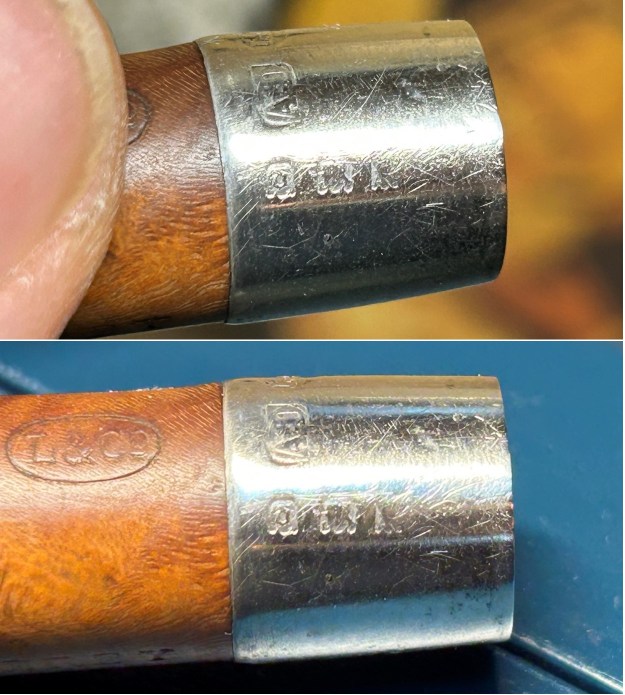
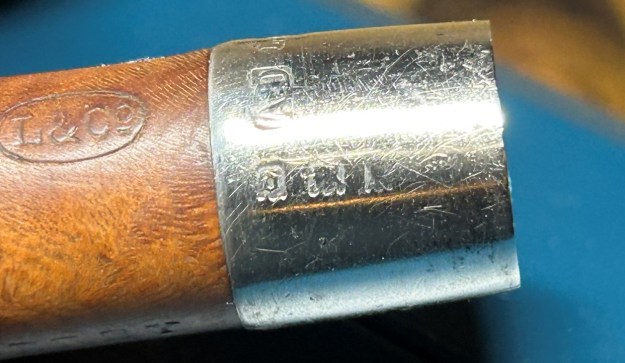
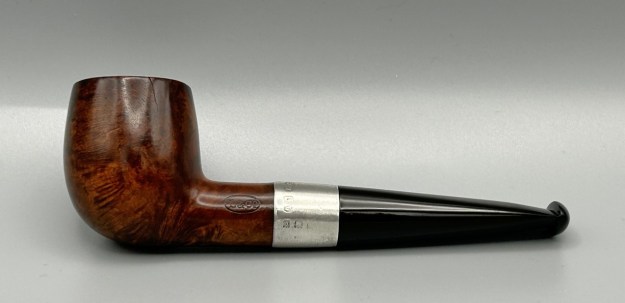
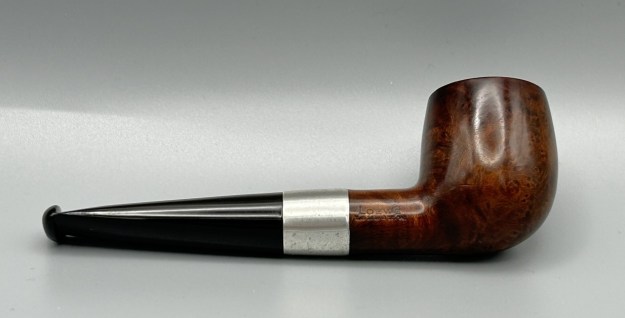
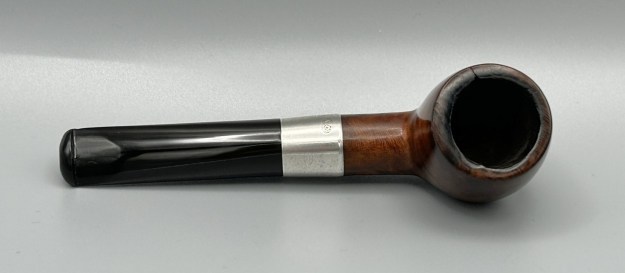
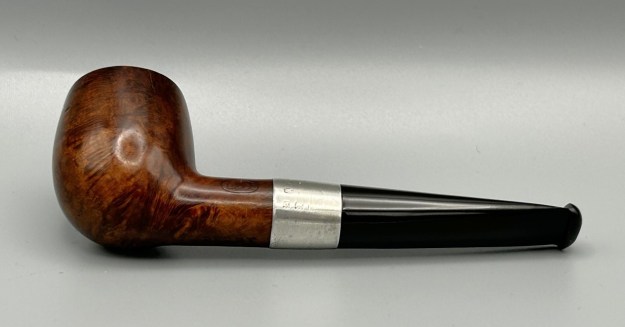
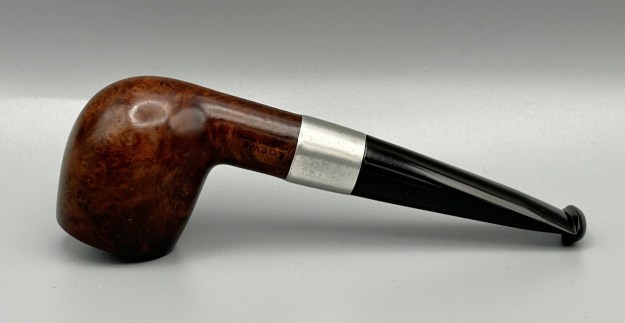
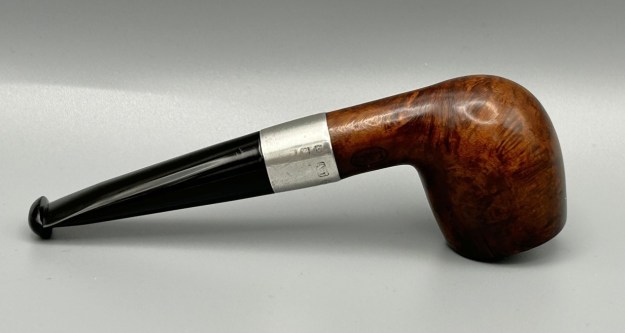
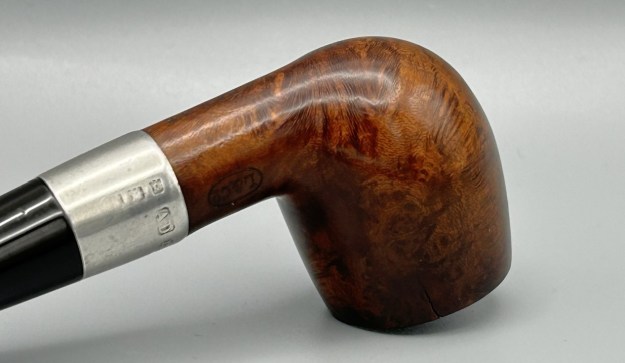
Charles Lamb famously described his friend, Samuel Taylor Coleridge, as ‘an archangel a little damaged’ – and that is how I feel about this extraordinary, sterling-silver banded Loewe & Co. billiard. Just by looking at the pipe, you can tell that it comes from a bygone era. There is an elegance and subtlety to this pipe which makes it somewhat angelic – but it is more than a century old and bears the damage of a life well-lived. This is something of a grail pipe for me and, despite the wounds, I am delighted to have found it. Before we refresh our memories about the quasi-mythical Loewe & Co., let’s have a look at the marks on the pipe itself. On the left side of the shank is engraved the encircled logo of the company: L&Co. On the right side of the shank is engraved the words Loewe [over] London.W. On the underside of the shank is engraved the word Derby – the model name of this pipe, indicating it to be a billiard. We move on to the sterling-silver band. It also shows the encircled logo of the company: L&Co. In addition, it shows the letters A·D inside a rectangle. Finally, it also has a set of hallmarks which were nigh-on impossible to decipher at the start – but I did decipher some of them later in the restoration. But no need to jump ahead – I will tell you now that the hallmarks are a gothic letter ‘D’, then a somewhat-obscured lion passant, and the third is too faint to make out – but it is likely to be a leopard’s head. Naturally, L&Co. is an abbreviation of Loewe & Co. of London. The letters A·D on the silver refer to Auguste Dreyfus, whose company, Dreyfus & Co., had assay offices in London and Chester in England. The gothic letter ‘D’ corresponds to the year 1919 (as you can see in the chart below). The lion passant indicates that this is sterling silver (id est, 92.5% silver). And, assuming that the final mark is, actually, a leopard’s head, it would indicate that the object is from London. Let us examine some of the details of Loewe’s history. Pipedia provides a surprisingly long entry on Loewe’s and I heartily encourage you to read it here. However, it is worth quoting a few lines (emphasis mine):

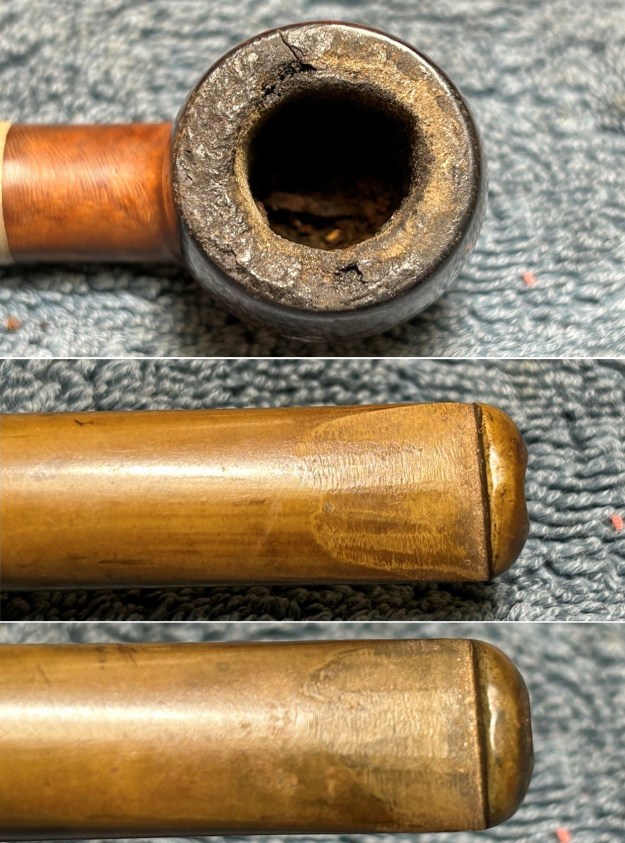
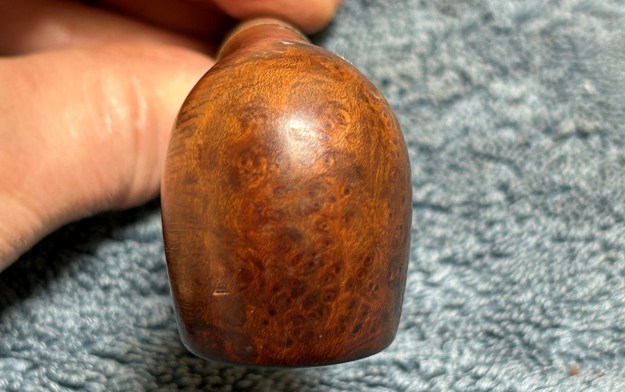
Loewe is one of the haunting old names of British pipe-making, characteristic of an almost vanished “upper middle class” of the trade, which also incorporated makes such as BBB, Orlik, Comoy’s and GBD. Along with these brands, Loewe has long dwindled into pseudo-existence, becoming little more than a logo occasionally used by the Cadogan factory in Southend-on-Sea. But owners of older Loewes treasure them as superb, featherweight smokers, excellently crafted and with grain characteristics superior to those of many contemporary Dunhills. The Frenchman Emil Loewe founded the company, both shop and workshop, in 1856 at the Haymarket 62, London. He is said to have been the first to make briar pipes in England. Richard Hacker maintains that theatre people from the West End were among the shop’s heyday aficionados. Loewe’s spigots are especially well regarded by lovers of elegance today – they were originally introduced for practical reasons, to facilitate the production of replacement stems for customers abroad.                  Furthermore, there is an excellent article on Loewe pipes (and especially their dating) by Martin Farrent, which Steve reposted on this blog. You can read it here. It would appear that much of his article was used to make the Pipedia post. In any case, it is well worth reading.Let’s examine this marvellous pipe. The condition of the pipe is not ideal, but only in the same sense that a hero wounded in battle is not ideal. The stem is beautifully shaped, but heavily oxidized. There are some scratches on the stem, around the bit, suggesting that someone may have tried to sand down some ancient tooth marks. This is an orific stem – not surprising, given its age – and it’s worth reading Steve’s old blog about such stems here. Meanwhile, the stummel has some issues. There is plenty of cake in the bowl, a mound of lava on the rim, a few small nicks here-and-there, and – most notably – a crack in the bowl and a crack in the shank. Finally, the sterling silver band is heavily worn and thoroughly tarnished.Before I go on, I want to make something clear: because of the age of the pipe, I will not be making some of the repairs that I might on a younger pipe. There is something special about this Loewe – and its wounds are part of its history, part of its story.

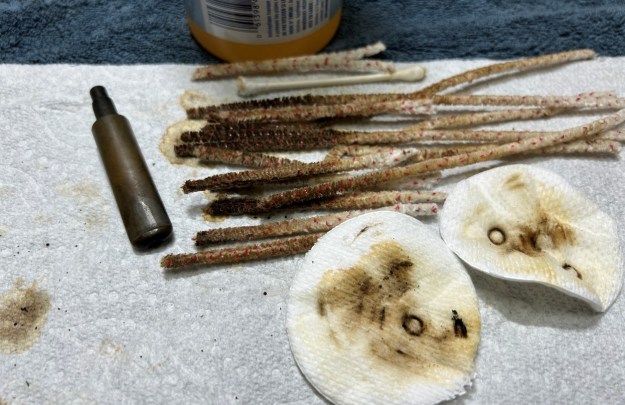
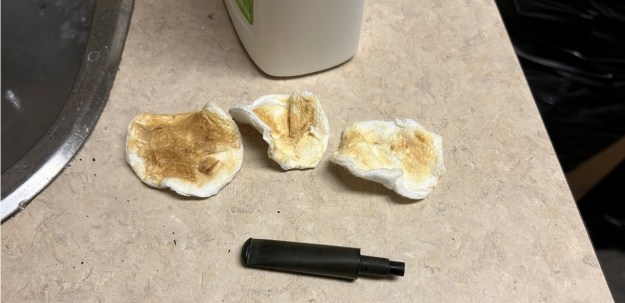
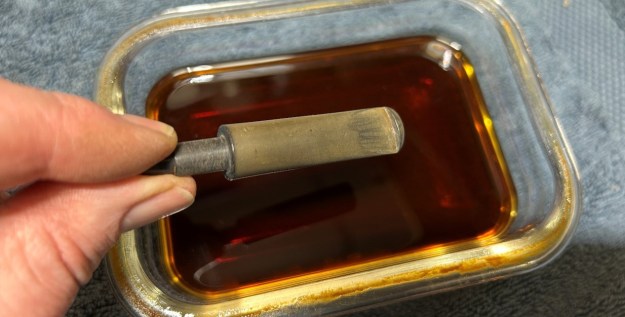
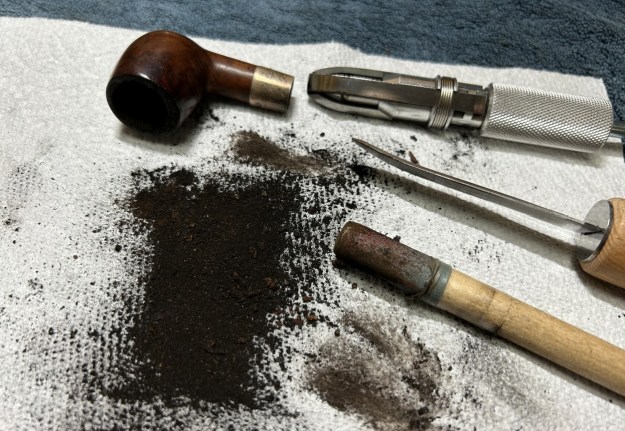
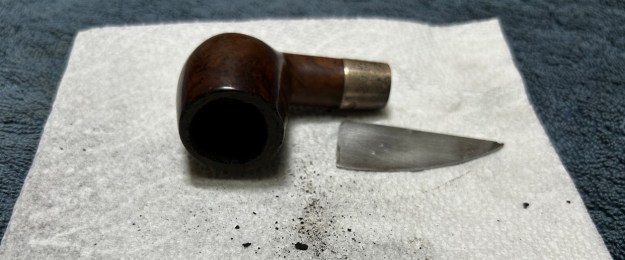
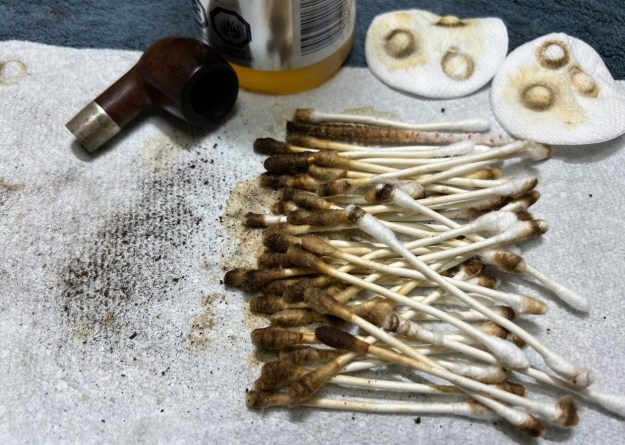
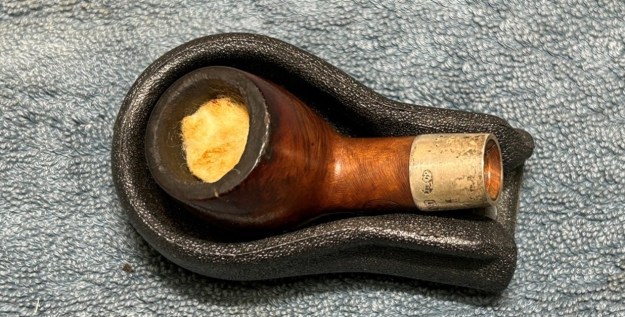
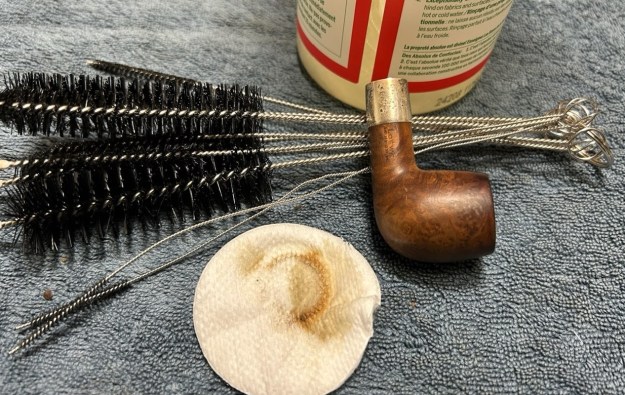
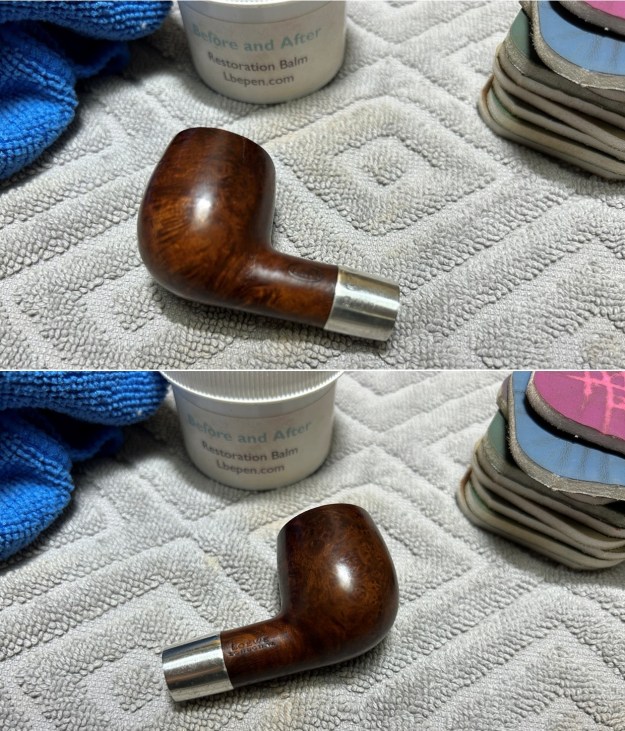
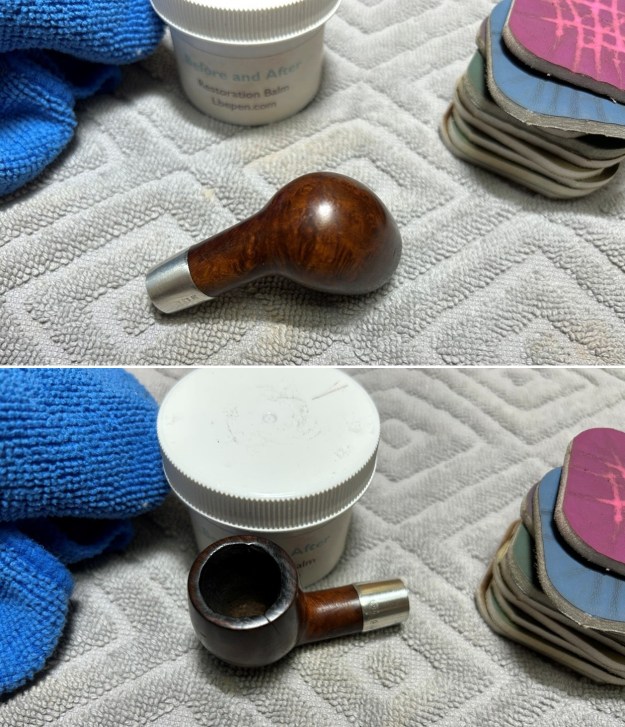
I used isopropyl alcohol on a few cotton rounds and wiped down the stem to provide an initial cleaning of filth before moving on to the next steps. The primary cleaning came next. I disinfected the inside of the stem with both pipe cleaners and cotton swabs dipped in lemon-infused 99% isopropyl alcohol. I scrubbed thoroughly to make sure the interior was very clean. It was pretty darn dirty and I used quite a few pipe cleaners and cotton swabs.The goal of the next step is the removal (or minimization) of oxidation. Going to my sink, I used cream cleanser, cotton rounds, and a toothbrush, and scoured the stem to remove as much surface oxidation as possible. As the photos show, the result was a hideous, ochre-coloured mess – but better off the stem than on it.Once the stem was reasonably clean, I soaked it overnight in some Briarville Stem Oxidation Remover. This solution works to draw oxidation in the stem to the surface of the vulcanite. This is a major aid and an important step in ensuring a clean stem. The following day, I drew out the stem from its bath and scrubbed the lingering fluid with a toothbrush.The penultimate step for the stem is sanding. I used all nine of the micromesh sanding pads (1,500 through 12,000 grit) to sand out flaws, even out the vulcanite, and provide gentle polishing of the finished surface. I also applied pipe-stem oil while using the last five micromesh pads. There was a wonderful, deep black shine to the stem when I was done.As the stem was (nearly) complete, I moved on to the stummel. The first step was to ream out the bowl – that is to say, remove all the cake inside the bowl. This accomplished a couple of things. First (and most obviously), it cleaned the bowl and provided a refurbished chamber. Second, when the old cake was removed, I could inspect the interior walls of the bowl and determine if there was damage or not. I used a reamer, a pipe knife, and a piece of sandpaper taped to a wooden dowel. Collectively, these ensured that all the debris was removed. I was pleased to see that, aside from the aforementioned crack, the walls of the chamber were intact and solid (albeit heavily used).My next step was to remove the lava on the rim. For this, I took a piece of machine steel and gently scraped the lava away. The metal’s edge is sharp enough to remove what I need, but not so sharp that it damages the rim. This work revealed some notable wear, but nothing overly serious.Similar to the stem, I then cleaned the stummel with both pipe cleaners and cotton swabs dipped in lemon-infused 99% isopropyl alcohol. With a pipe this dirty, it took quite a while and much cotton to clean.I then decided to ‘de-ghost’ the pipe – that is to say, exorcize the remaining filth from the briar. I filled the bowl and the shank with cotton balls, then saturated them with 99% isopropyl alcohol. I let the stummel sit overnight. This caused the remaining oils, tars and smells to leach out into the cotton.To tidy up the briar, I wiped down the outside, using a solution of a pH-neutral detergent and some distilled water, with cotton rounds. I also used a toothbrush in the crevices. This did a good job of cleaning any latent dirt on the surface of the briar. The last step of the cleaning process was to scour the inside of the stummel with the same mild detergent and tube brushes. This was the culmination of a lot of hard work in getting the pipe clean. This also laid bare the crack inside the shank. Unfortunate, but it is what it is. I took the time to carefully clean and polish the silver band. I wanted to obviously remove the tarnish and grime, but without adding any wear to the already-heavily-worn band. I used some of the same pH-neutral detergent mentioned above and followed that by buffing it with my jewellers’ cloth. This worked very well and allowed me to finally decode the hallmarks, as discussed above. I have included a few detailed photos below. The marks are still hard to see, but they are there. I used a few micromesh pads (not all) to sand the outside of the stummel and finish it off. This sanding provides a beautiful smoothness to the wood. I rubbed some LBE Before & After Restoration Balm into the briar and let it sit for 30 minutes or so. The balm moisturizes the wood and gives a beautiful depth to the briar. I then buffed the stummel with a microfibre cloth. For the final step, I took the pipe to my bench polisher and carefully buffed it – just with three coats of carnauba wax. This procedure makes the pipe look its best – the stummel sings and the stem glows.All done! This Loewe & Co. Derby billiard looks fantastic again and I am delighted with the results. This is one pipe that I am going to be adding to my collection. Feel free to email me directly at  kenneth@knightsofthepipe.com. The approximate dimensions of the pipe are as follows: length 4⅓ in. (109 mm); height 1⅜ in. (35 mm); bowl diameter 1⅛ in. (30 mm); chamber diameter ⅔ in. (18 mm). The weight of the pipe is ⅝ oz. (22 g). I hope you enjoyed reading the story of this pipe’s restoration as much as I enjoyed restoring it. If you are interested in more of my work, please follow me here on Steve’s website or send me an email. Thank you very much for reading and, as always, I welcome and encourage your comments.

Turns out to be an older Peterson’s Donegal Rocky Made in Ireland Billiard


by Steve Laug

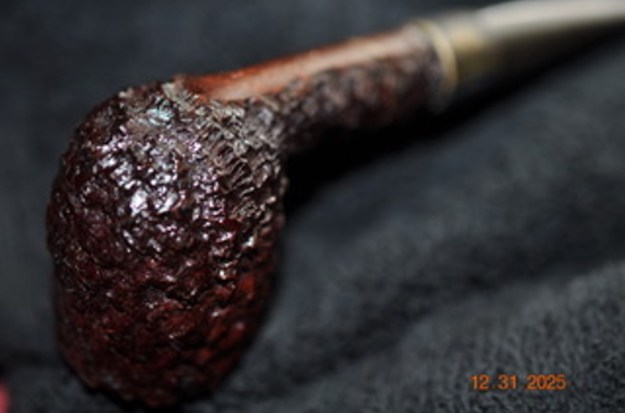
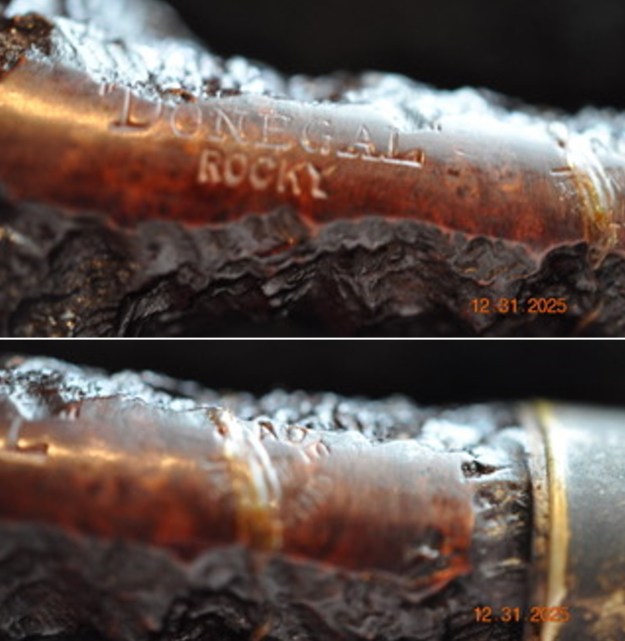
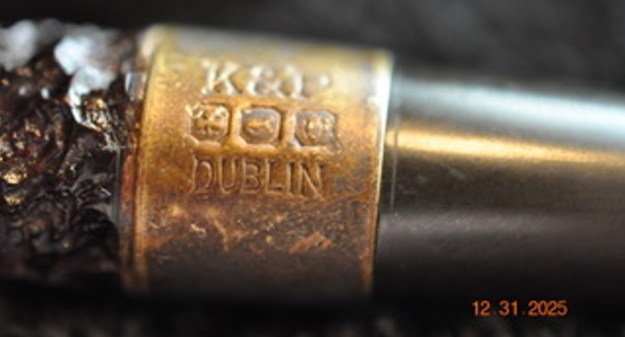
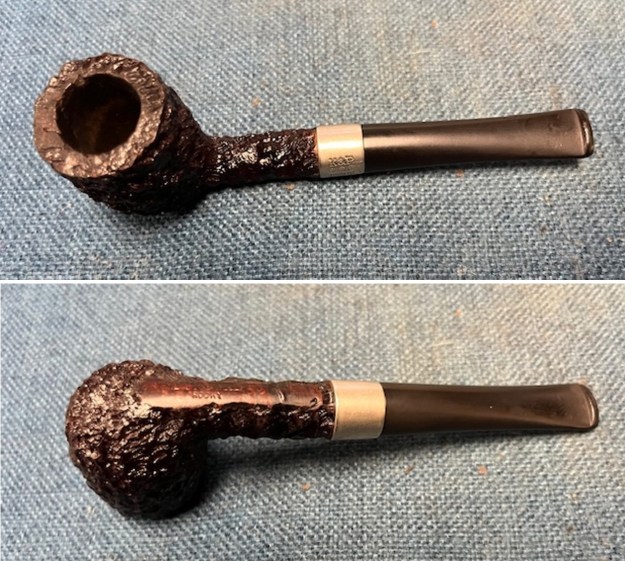
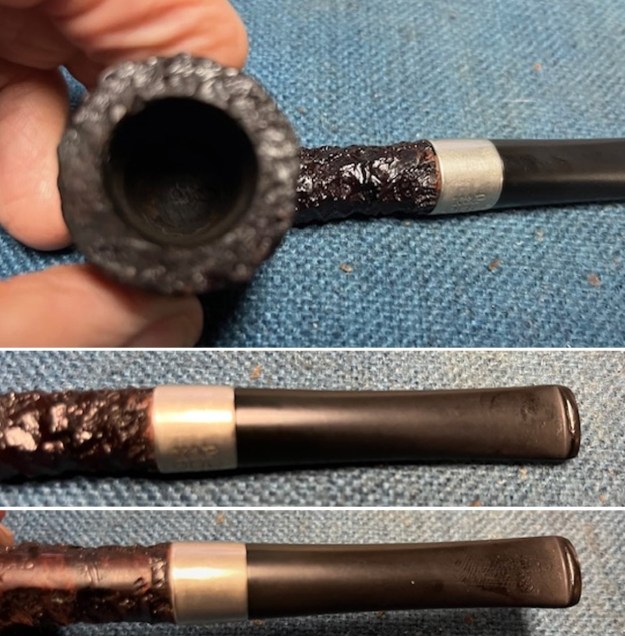
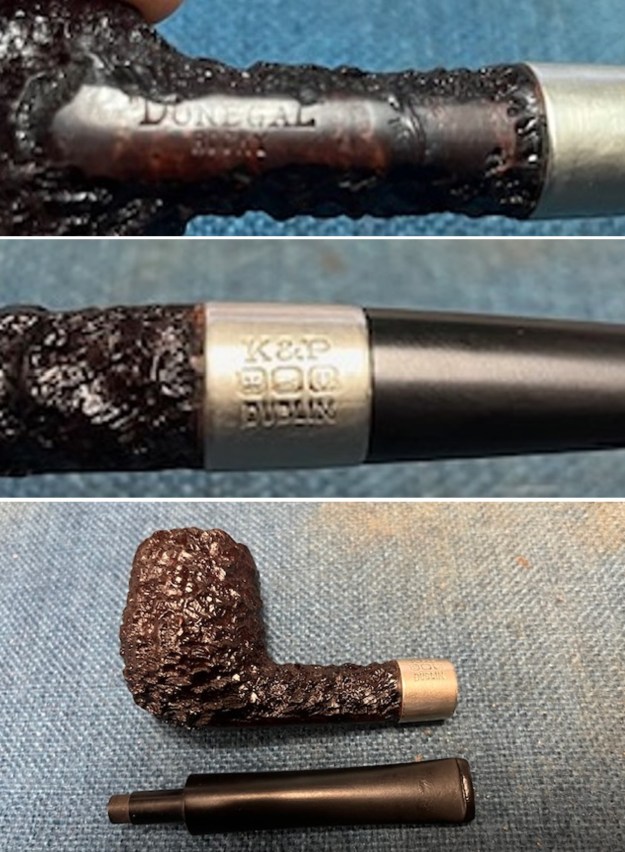
The next pipe on the work table is a sandblast Peterson’s Rusitcated Billiard shaped pipe that we received from a friend in Naples, Florida, USA on 07/17/2024. It was stamped on the underside of the bowl and shank and on the heel, it was stamped “Donegal” [over] Rocky. There was no shape number though it appears to be a shape 15.  Following that it read, Made in Ireland (in circle). There is a band on the shank that is stamped on the left side and reads K&P [over] three faux hallmarks, or Makers Marks. These were used before 1963. These included a Refined Shamrock, Wolf Hound and a Tower without a door. Under that it read DUBLIN. It has a deeply rusticated finish around the bowl and shank that has a lot of oils, debris and grime in the finish. The pipe had been recently reamed and there was a light cake in the bowl and a lava overflow in the rustication on the rim top. The inner edge of the bowl looks to be in good condition. There was a very beautiful pipe underneath all of the buildup of years of use. The stem was a Peterson’s Fishtail Taper Stem. It had light chatter on both sides ahead of the button. Jeff took photos of the pipe before he started his cleanup work on it. Jeff took photos of the bowl and rim top to show the thin cake in the bowl and the light lava build up on the rusticated rim top and the edges of the bowl. The rim top and edges looked good. Jeff took photos of the top and underside of the stem showing the tooth chatter on an otherwise good looking stem. More would be visible once Jeff cleaned it up. Jeff took photos of the sides and heel of the bowl to show the condition of the finish. You can see the dust and grime around the sides of the bowl and shank in the heavily rusticated finish. Jeff took photos of the stamping on the underside of the bowl and shank. The stamping was faint but readable as you can see from the photos. It read as noted above. The Silver ferrule is actually clearly stamped and readable. I am including the information from Pipedia’s article on Peterson pipes. It is a great read in terms of the history of the brand (https://pipedia.org/wiki/Peterson). I have included a bit of the pertinent history here.

1915 – 1949 The Pre Republic Period

This was a turbulent period for the company with the outbreak of World war 1 and the start of the Easter uprising in 1916. The K&P shop was extensively damaged during the military action at this time (see attached newspaper report).

Following quote by Kapp & Peterson.

“Kelly’s, the well known Dublin landmark at the corner of Sackville Street and Bachelor’s Walk, one of the most shot at and fully punctured premises in Dublin, was in our possession practically before the smoke ceased over the ashes of our fine shop under the Metropole Hotel. This was one of the most sensational business captures arising out of the Rebellion.”

Around 1916, Peterson began stamping their pipes “Made in Ireland” in what is referred to as a block format.

Charles Peterson died shortly after retiring and moving to Hamburg in Germany in 1919 where he is buried. The original 1890 ‘system’ pipe patent expired at around this time.

The Irish free state came into being in December 1922. The Free State Era was from 1922 through to 1937.

Peterson followed with a stamp of “Irish Free State” in either one or two lines, either parallel or perpendicular to the shanks axis and extremely close to the stem. Ireland was a republic in all but name. Eventually the Irish people voted for a new constitution in 1937 and Ireland then formally became Eire (Ireland in Irish). The Made in Eire era stamps were from 1938 through till 1941. Peterson now stamped their pipes with “Made in Eire” in a circle format with “Made” and “Eire” in a circle with the “in” located in the centre of the circle. This was used during the years of 1938 – 41. Later they stamped their pipes with “Made in Ireland” in a circle format 1945-1947 and still later with “Made in Ireland” in a block format 1947-1949. The “Made in Ireland” block format came in either one line or two lines. The Republic of Ireland was formed on 17 April 1949.

The above information helped me date the pipe. I knew from the Maker’s Marks on the Silver that it was made prior to 1963. The Made in Ireland circular COM stamp helps to take the date back a bit further as it was used from 1945-1947. This was another older pipe. That was a bit of a surprise for me.

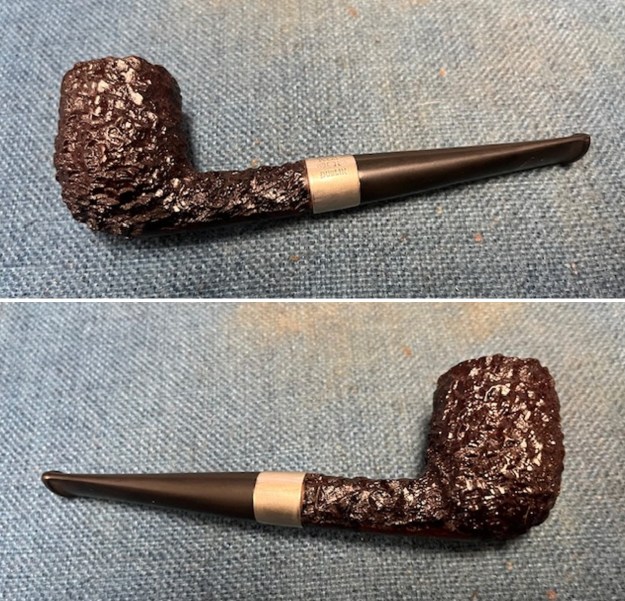
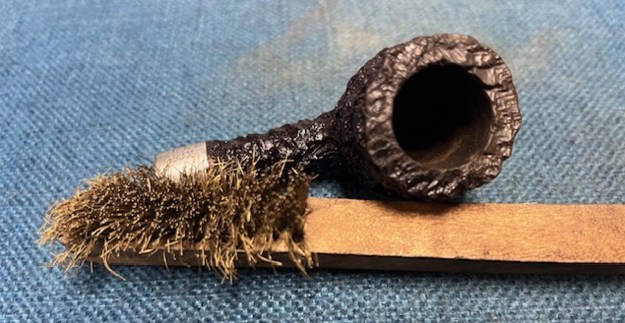
Jeff had done a great job cleaning up the pipe as usual. He cleaned up the reaming with a PipNet reamer and a Savinelli Fitsall Pipe Knife. He scrubbed the interior of the bowl and shank with pipe cleaners, cotton swabs and alcohol to remove the tars and oils. He scrubbed the exterior of the pipe with undiluted Murphy’s Oil Soap and a tooth brush to remove the grime from the finish. He worked on the rim top lava and darkening with the soap and tooth brush. He scrubbed the inside of the stem with alcohol and pipe cleaners. He scrubbed the exterior of the stem with Soft Scrub and then soaked it in Briarville’s Pipe Stem Deoxidizer. He rinsed it off with warm water to remove the Deoxidizer. The pipe looked far better when it arrived. The silver tarnished once again and would need to be polished because it had been sitting here for awhile. I took some close up photos of the rim top and also of the stem surface. I wanted to show how well it had cleaned up. The rim top and edges look quite good. I also took close up photos of the stem to show the light tooth marks on the surface near the button.I took a photo of the stamping on the underside of the shank and the band. You can see that it is stamped as noted above. It is faint but still readable. I took the pipe apart and took a photo of the pipe. It is a good-looking pipe and has a rugged rustication around the bowl.I worked over the dull area on the rusticated rim top with a brass bristle wire brush to knock off the remnants of crud in the deep grooves. It looked better.I worked some Before & After Restoration Balm into the surface of the briar with my fingertips and a horsehair shoe brush to clean, enliven and protect the briar. I let the balm sit for 10 minutes and then buffed with a cotton cloth to raise the shine. The photos show the bowl at this point in the restoration process. I polished the Sterling Silver band on the shank with a jeweller’s cloth to remove the tarnish and protect it from further tarnishing. I sanded the stem with the 2 inch square 320-3500 grit sanding pads to remove the light tooth chatter and marks in the acrylic. I wiped down the stem after each sanding pad with Obsidian Oil. I was able to remove the marks and the stem looked very good.I polished the stem with micromesh sanding pads – wet sanding with 1500-12000 grit sanding pads. I wiped it down after each sanding pad with Obsidian Oil. I polished it with Before & After Pipe Stem Polish – both Fine and Extra Fine. I gave it a coat of Obsidian Pipe Stem Oil. It works to protect the stem from oxidizing. I set it aside to dry. I am excited to finish this Republic Era Peterson’s “Donegal” Rocky 15 Billiard. I put the pipe back together and buffed it with Blue Diamond on the buffing wheel. I gave the bowl multiple coats of Conservator’s Wax and the stem multiple coats of carnauba wax. I hand buffed the pipe with a clean buffing pad to raise the shine. It is fun to see what the polished bowl looks like with the rugged rustication all around it. Added to that the polished Sterling Silver band and the black vulcanite stem was beautiful. This rusticated Classic Peterson’s “Donegal” Rocky Billiard is nice looking and the pipe feels great in my hand. It is light and well balanced. Have a look at it with the photos below. The dimensions are Length: 5 ½ inches, Height: 1 ½ inches, Outside diameter of the bowl: 1 ¼ inches, Chamber diameter: ¾ of an inch. The weight of the pipe is 34 grams/1.20 ounces. It is a beautiful pipe and one that will be on the Irish Pipe Makers Section of the rebornpipes store soon. If you are interested in adding it to your collection let me know. Thanks for walking through the restoration with me as I worked over this pipe. Thanks to each of you who are reading this blog.
As always, I encourage your questions and comments as you read the blog. Thanks to each of you who are reading this blog. Remember we are not pipe owners; we are pipe men and women who hold our pipes in trust until they pass on into the trust of those who follow us.

Breathing New Life into a Smooth Comoy’s Facet 215 Bent Billiard


by Steve Laug

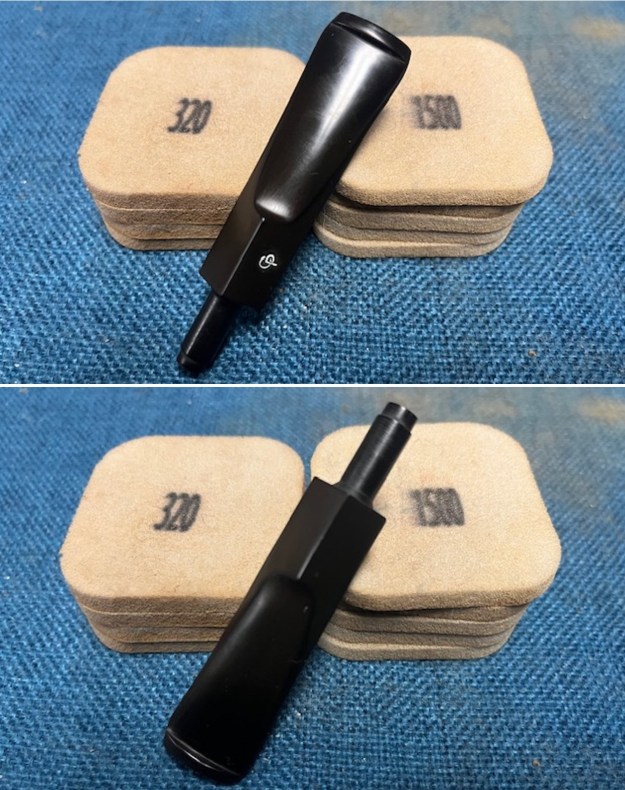
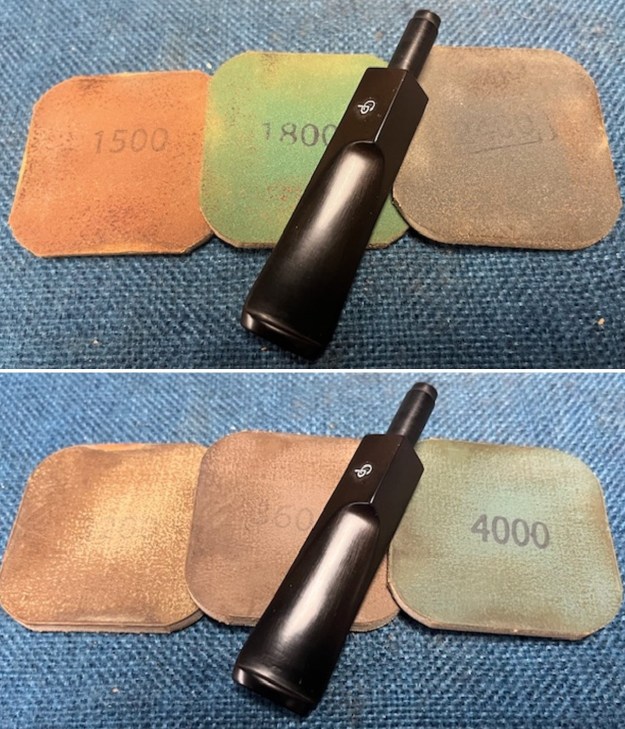
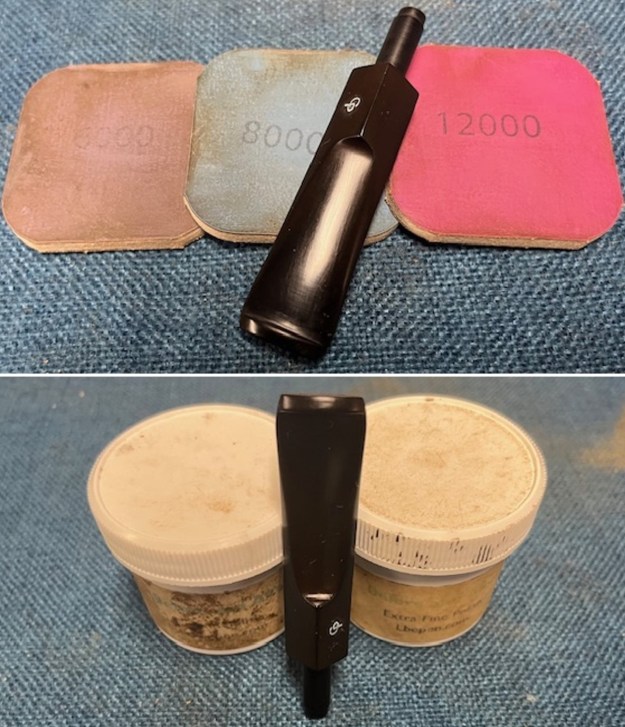
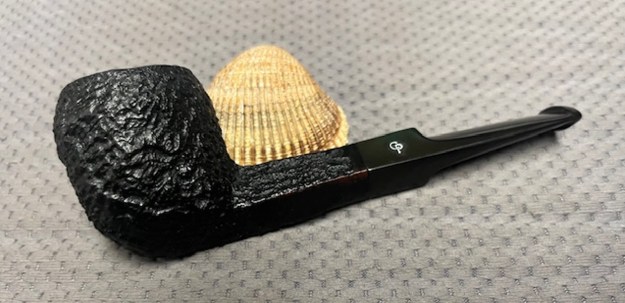
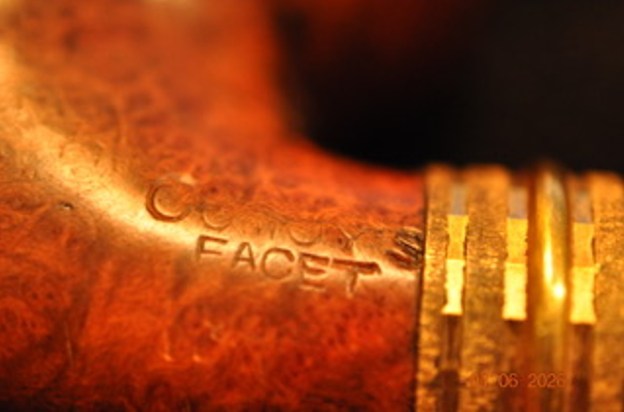
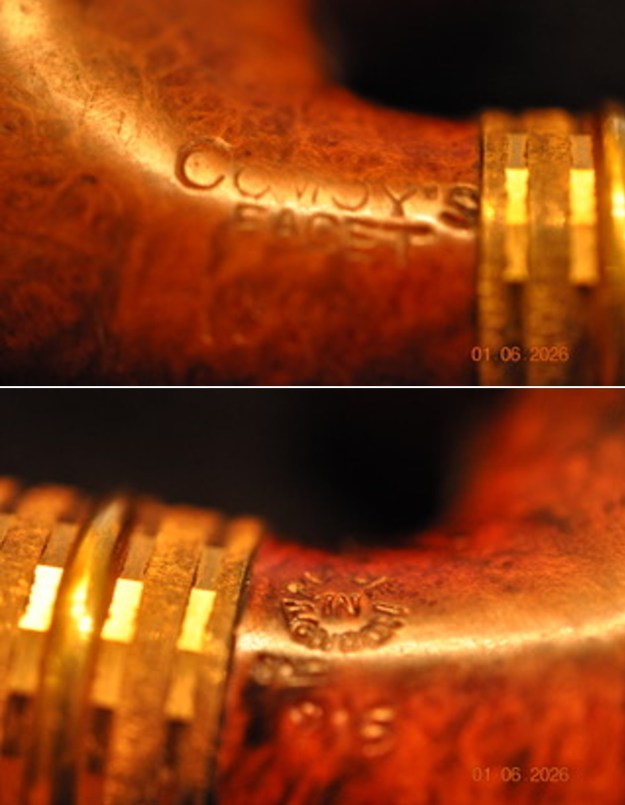
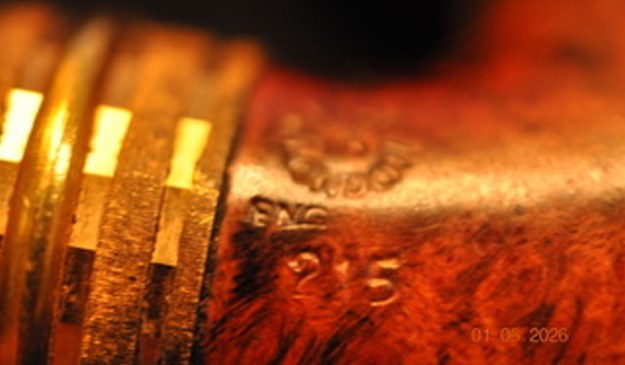
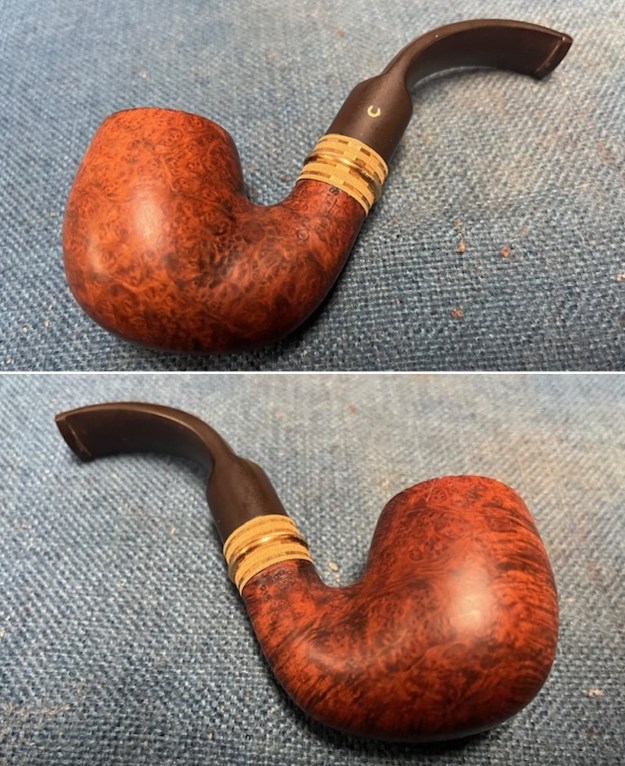
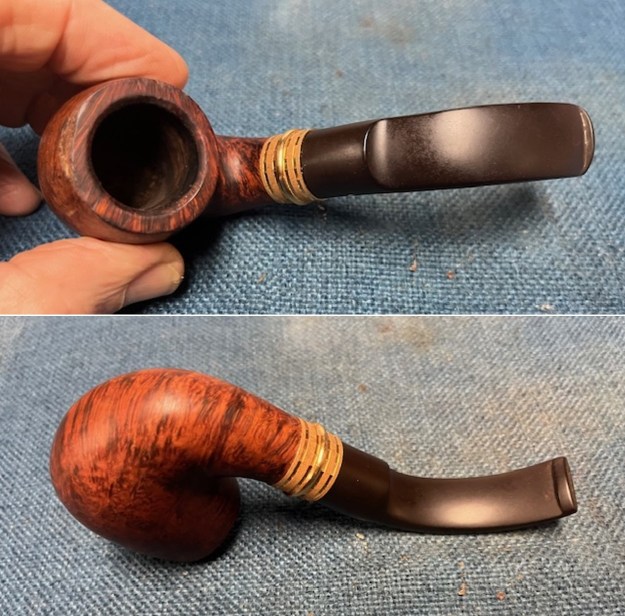
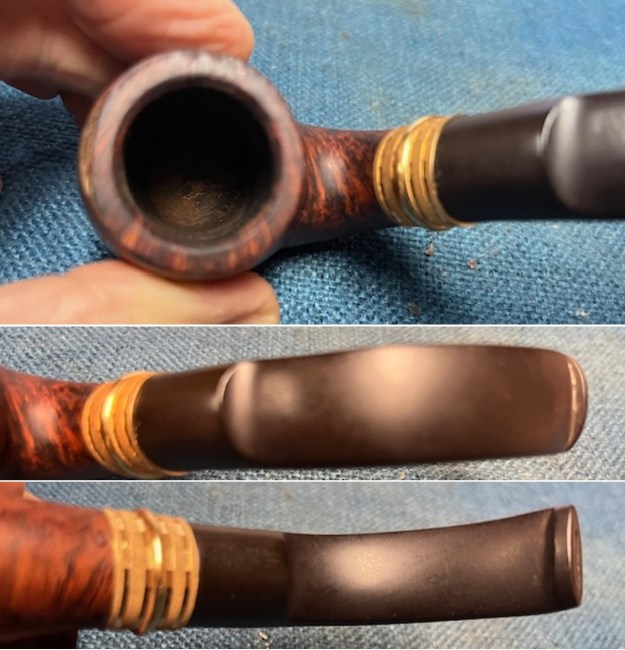
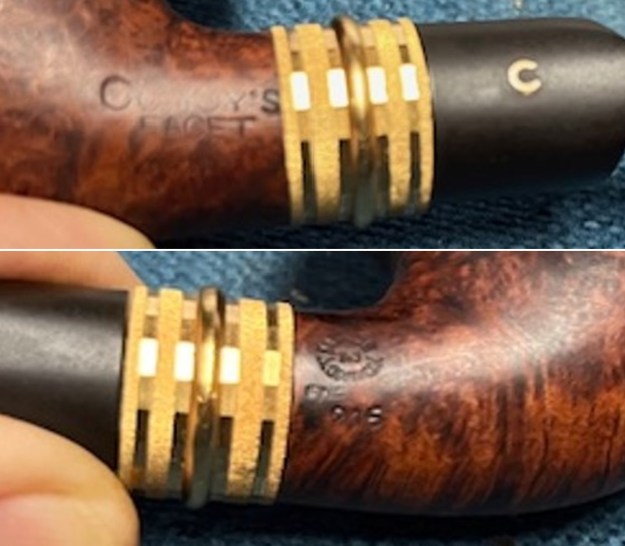
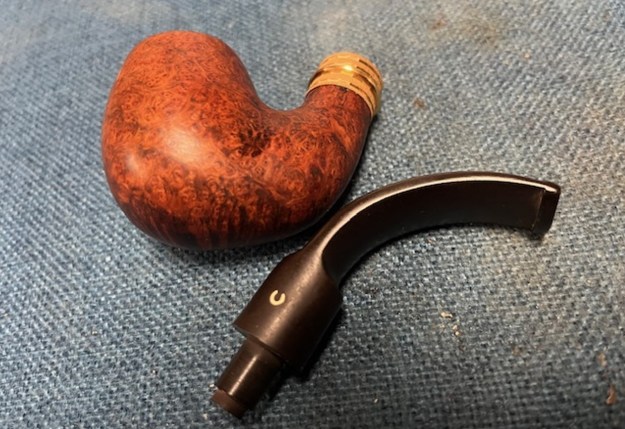
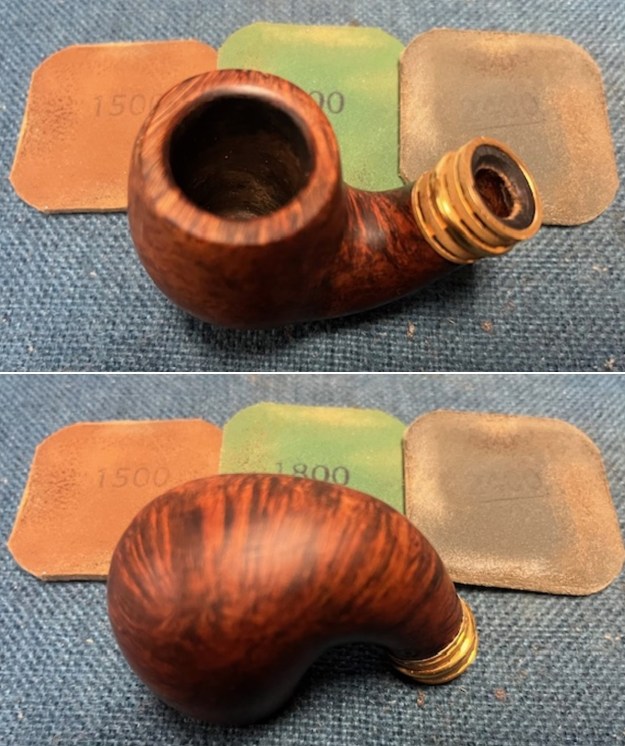
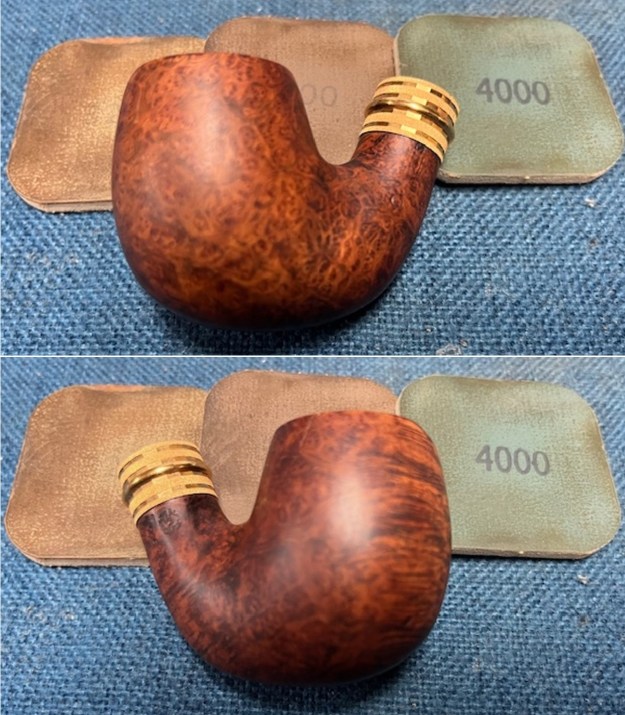
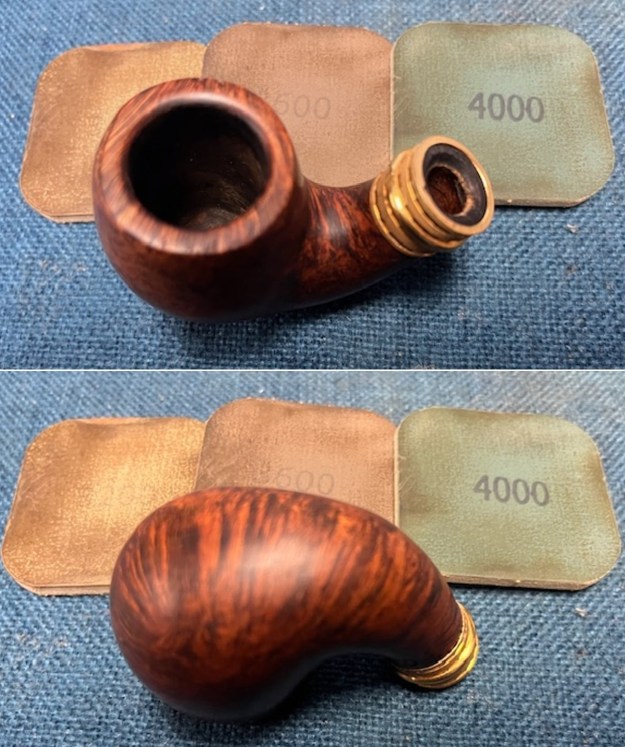
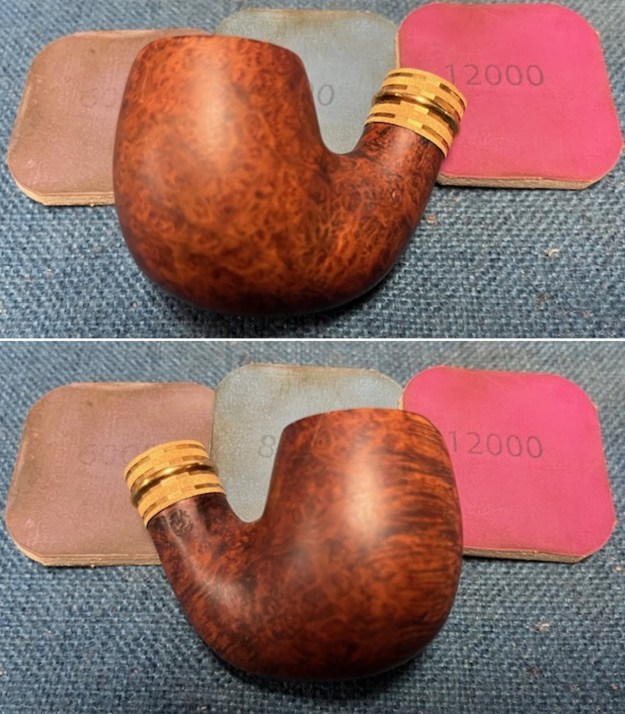
The next pipe on the work table was a Bent Briar Comoy’s Bent Billiard. It came to us from a seller in Downey, California, USA on 08/12/2025. The pipe is stamped Comoy’s [over] Facet on the left side of the shank. On the right side it is stamped with a circular COM stamp that read Made in London in a circle [over] England [over] the shape number 215. The bowl had a thick cake in it that had overflowed as thick lava onto the rim top. The finish was dirty and had tars and oils ground into the finish. There was a triple layer shank brass band – two faceted bands sandwiching a smooth band. The vulcanite stem was oxidized, calcified but the stem only had light tooth chatter on both sides. The C logo was not the three part older logo that was on earlier Comoy’s pipe but rather a one part inlay with a different style font. Jeff took photos of the pipe before he began the cleanup process. He took photos of the rim top and both sides of the stem to show the condition of both. The close up of the rim top shows the cake in the bowl and the overflow of lava on the rim top and inner edge of the bowl. The stem was oxidized, calcified and both sides of the stem had light tooth chatter near the button. The photos of the sides and heel of the bowl show the dirty finish on the sides of the bowl and shank. The briar is quite nice all around the pipe. The finish makes the grain really stand out on the bowl and shank. Jeff took a series of photos on the sides of the shank rolling it between photos to make sure that all of the stamping was readable.Jeff had cleaned up the pipe using his usual procedure. He reamed it with a PipNet reamer to remove the heavy cake. He cleaned up the sides of the bowl with a Savinelli Fitsall Pipe Knife. He scrubbed the bowl with undiluted Murphy’s Oil Soap with a tooth brush. He rinsed it under running warm water to remove the soap and grime from around the bowl sides. It looked better but the rim top and inner edge was darkened. The front outer edge showed damage. He cleaned out the inside of the shank and the airway with alcohol, cotton swabs and pipe cleaners. The stem looked good and the light tooth marks on both sides were still visible and would need a little work. I took photos of the pipe once I received it. I took a photo of the rim top and the stem to show their condition. Jeff was able to clean up the darkening on the rim that was shown in the rim and bowl photos above. The rim top and outer edge show damage. The stem looked better, though there were some light tooth marks and chatter on both sides ahead of the button.I took photos of the stamping on the sides of the shank and the band. You can see that it is stamped as noted above. It is faint in spots but still readable. I took the pipe apart and took a photo of the pipe. It is a good-looking pipe and has a rugged rustication around the bowl. I started my work on the bowl by working to minimize the damage on the front outer edge and rim top I worked on them with a folded piece of 220 grit sandpaper. I wanted to smooth out the damaged areas without changing the bowl’s profile. I think it worked well.I sanded the bowl with 320-3500 grit sanding pads to remove the surface scratches in the finish. I carefully avoided the stamping so as not to damage it. I wiped the bowl down with a damp cloth after each pad to remove the sanding debris. The briar began to have a rich shine and the stain on the bowl looked very good. I polished the bowl sides and the smooth rim top with micromesh sanding pads. I dry sanded it with 1500-12000 grit micromesh pads. I wiped it down after each pad. It really began to be beautiful. I rubbed the bowl and shank down with Before & After Restoration Balm to deep clean the finish on the bowl and shank. The product works to clean, enliven and protect the briar. I worked it in with my fingers to get it into the briar. I let it sit for 10 minutes then I wiped it off and buffed it with a soft cloth. The briar really began to have a rich shine. I took some photos of the bowl at this point to mark the progress in the restoration. It is a beautiful bowl. I sanded the stem with the 2 inch square 320-3500 grit sanding pads to remove the light tooth chatter and marks in the acrylic. I wiped down the stem after each sanding pad with Obsidian Oil. I was able to remove the marks and the stem looked very good.I polished the stem with micromesh sanding pads – dry sanding with 1500-12000 grit pads. I wiped the stem down after each sanding pad with Obsidian Oil. I did a final hand polish of the stem with Before & After Pipe Stem Polish – both Fine and Extra Fine. I gave it a final wiped down with the cloth and set it aside to dry. I put the stem back on the Comoy’s Facet 215 Smooth Bent Billiard and took it to the buffer. I buffed the bowl and stem with Blue Diamond to polish the briar and the vulcanite. Blue Diamond does a great job on the smaller scratches that remain in both. I gave the bowl and the stem several coats of carnauba wax and buffed the pipe with a clean buffing pad to raise the shine. I hand buffed it with a microfiber cloth to deepen the shine. I am amazed at how well it turned out. The finished pipe is shown in the photos below. This is beautiful smooth finished Comoy’s Facet 215 Bent Billiard with brass faceted bands and the vulcanite saddle stem combine to give the pipe a great look. The dimensions of the pipe are Length: 5 inches, Height: 1 ¾ inches, Outside diameter of the bowl: 1 ¼ inches, Chamber diameter: ¾ of an inch. The weight of the pipe is 2.05 ounces/59 grams. This is another pipe that I will be putting on the rebornpipes online store in the British Pipe Makers Section shortly, if you are interested in adding it to your collection. Thanks for walking through the restoration with me on this beauty!

As always, I encourage your questions and comments as you read the blog. Thanks to each of you who are reading this blog. Remember we are not pipe owners; we are pipe men and women who hold our pipes in trust until they pass on into the trust of those who follow us.

Breathing Life into a Brigham Made in Canada 9W2 Three Dot Freehand


by Steve Laug

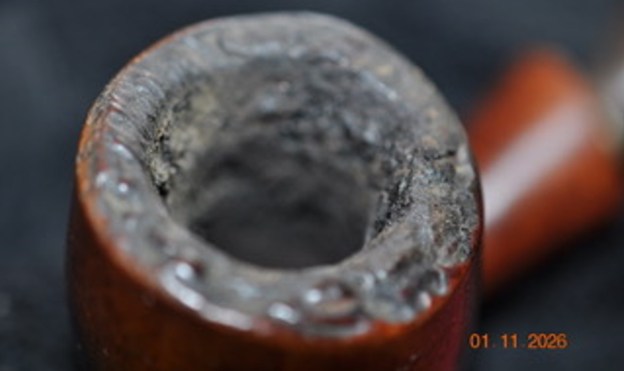
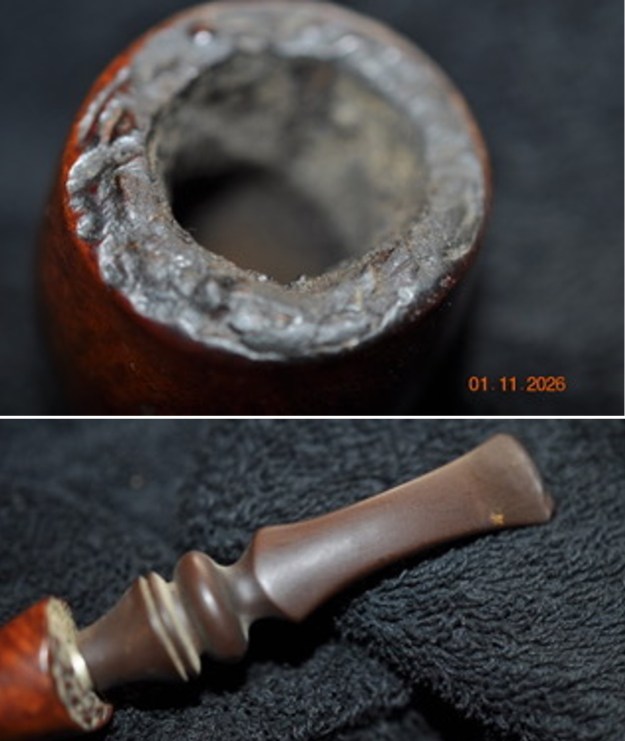
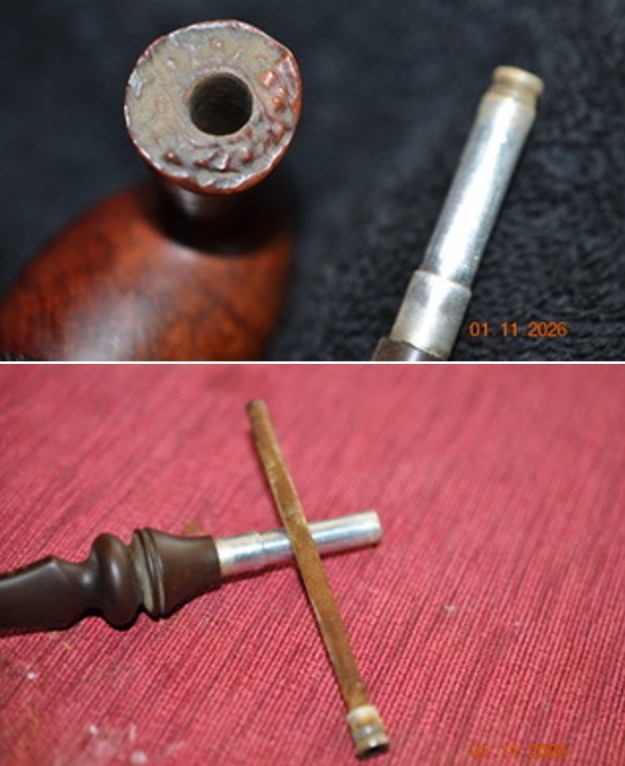
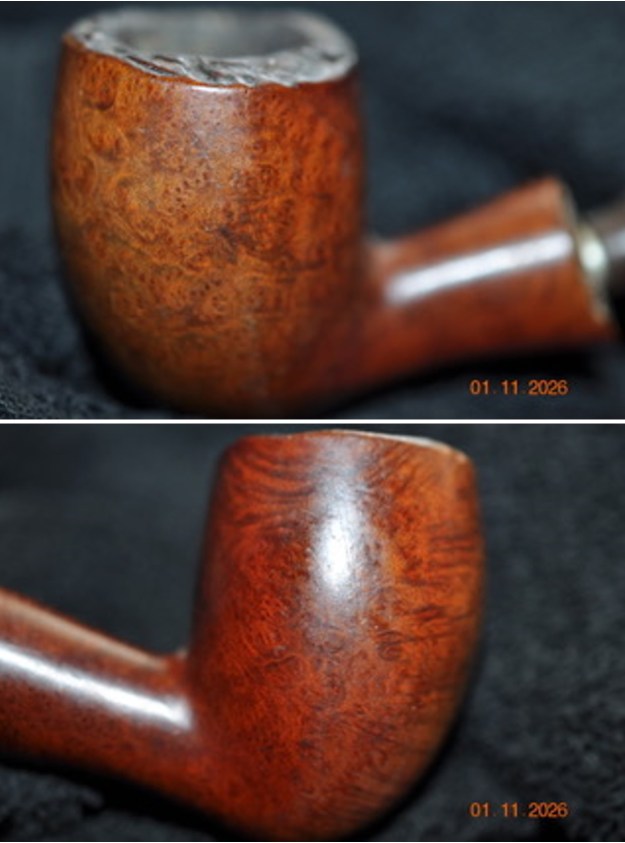
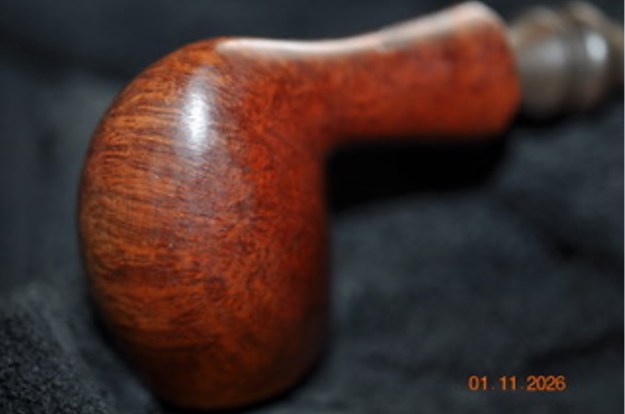
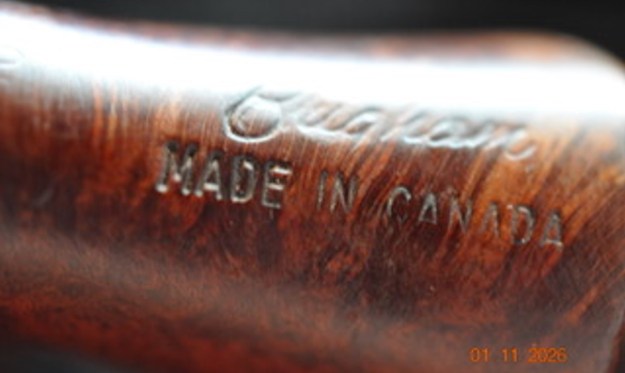
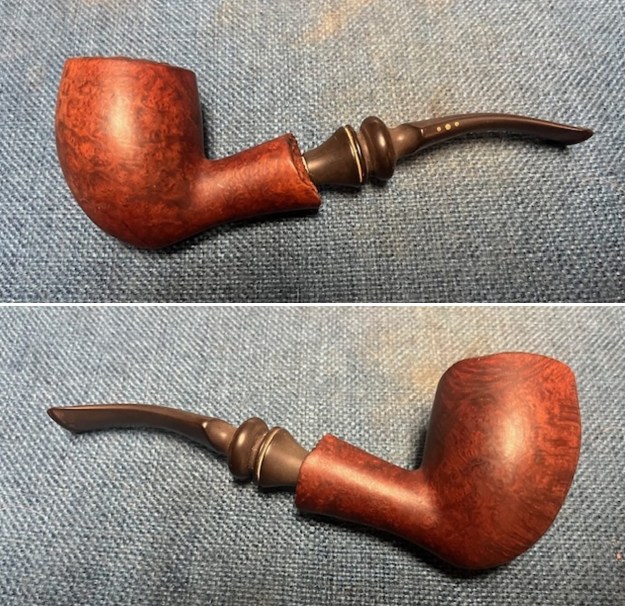
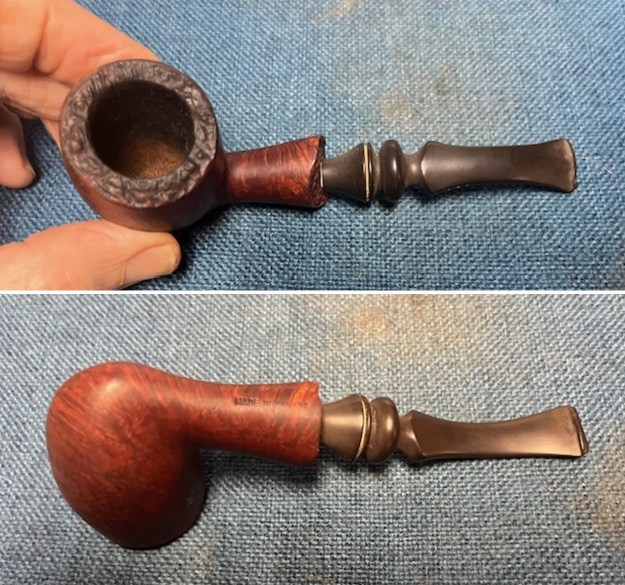
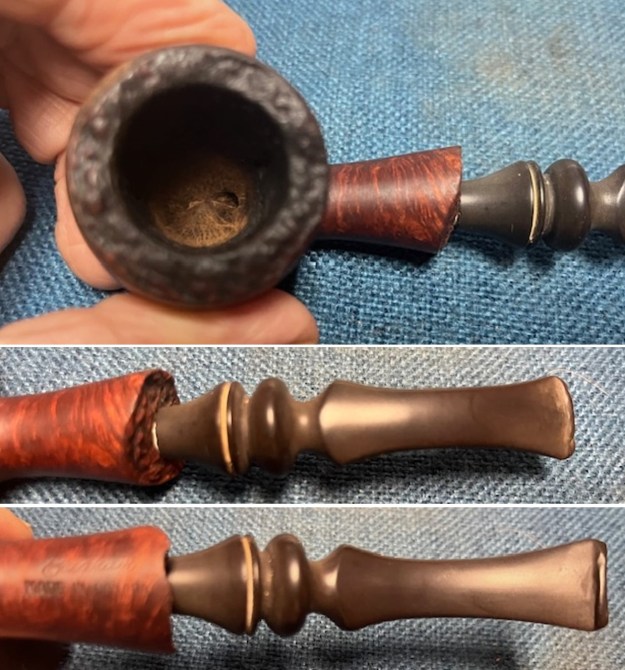
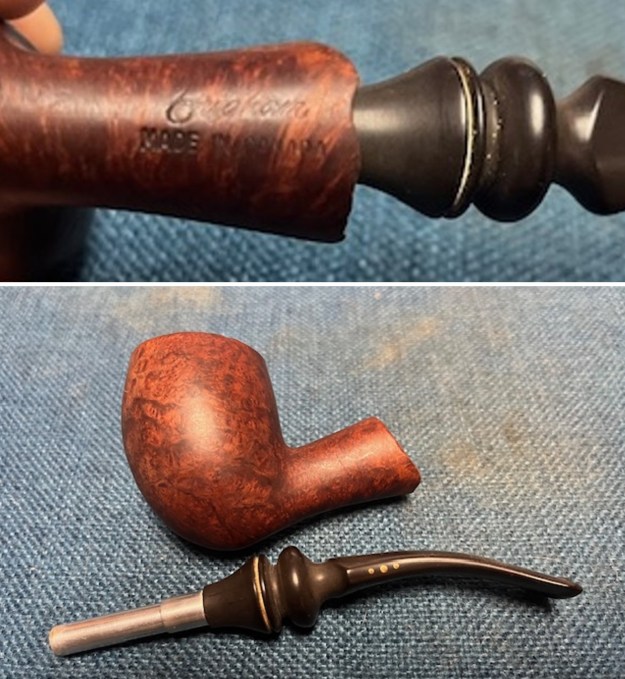
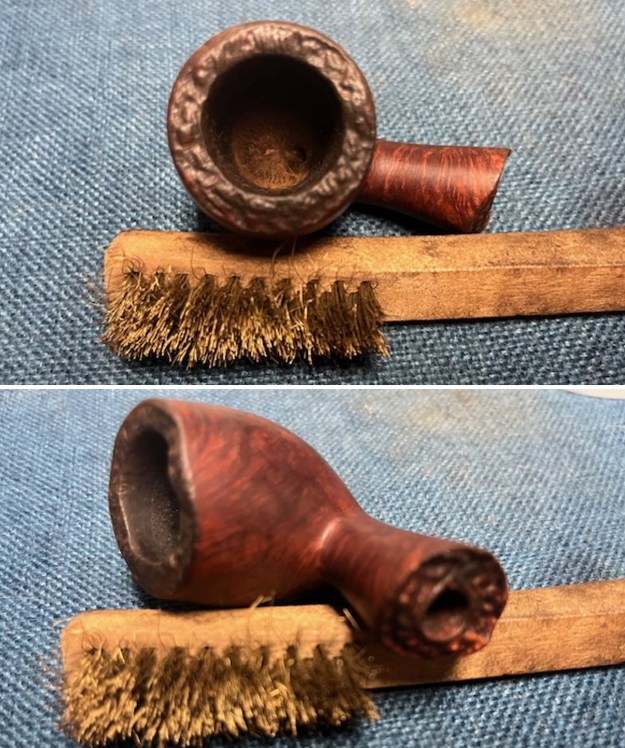
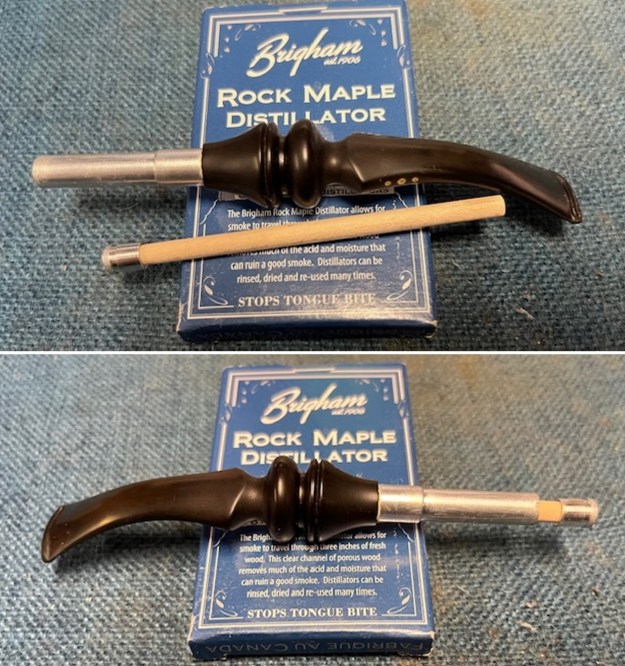
I chose to work on another Canadian Made Brigham to work on next. The pipe is a Freehand Acorn shaped bowl with a carved faux plateau rim top and shank end. We picked it up from a seller in Annapolis Valley, Nova Scotia, Canada on 01/31/2023. It is a neat looking pipe with real character. The shape of the bowl reminded me of some of the Danish Stanwell pipes that I have restored. I did the research on it. It is stamped Brigham [over] Made in Canada on the underside of the shank and has the shape number 9W2 stamped to the left of that. The stem has three brass pins on the left side of the blade of the fancy saddle. There was a heavy cake in the bowl and a lot of lava overflow on the rim top and edges. The rustication on the rim top is a faux plateau look and it has a smooth finish on the bowl and shank. I think that there was a beautiful pipe underneath all of the buildup of years of use. The stem was oxidized and had tooth marks on the top and underside of the stem ahead of the button. It was a mess. Jeff took photos of the pipe before he started his cleanup work on it. Jeff took photos of the bowl and rim top to show the condition of the bowl with the thick cake in the bowl and a thick overflow of lava on the rim top. He took photos of the top and underside of the stem showing the tooth marks on the top and underside as well as on the button surface. Jeff removed the stem and it had the Brigham Hard Rock Maplewood Distillator aluminum tenon. It had an old wooden Distillator in the tenon that was quite dirty. Jeff took photos of the sides and heel of the bowl to show the condition of the finish. Even under the dirt and debris of the years the grain on the smooth briar looked very good. The stamping is very clear and reads as noted above. He included a pic of the 3 brass dots on the stem.For the needed background I am including the information from Pipedia on Brigham pipes. It is a great read in terms of the history of the brand (https://pipedia.org/wiki/Brigham_Pipes). Charles Lemon (Dadspipes) is currently working on a book on the history of the brand. Until that is complete this article is a good summary. I have included it below.

Roy Brigham, after serving an apprenticeship under an Austrian pipesmith, started his own pipe repair shop in Toronto, in 1906. By 1918 the business had grown to include five other craftsmen and had developed a reputation across Canada for the high quality of workmanship. After repairing many different brands of pipes over the years, Roy noted certain recurring complaints by pipe smokers, the most common referred to as “tongue bite”. Tongue bite is a burning sensation on the smoker’s tongue, previously thought to be due to the heat of the smoke (i.e. a “hot smoking pipe”).

He soon began manufacturing his own pipes, which were lightweight, yet featured a more rugged construction, strengthening the weak points observed in other pipes. The problem of tongue bite intrigued him, and he decided to make overcoming it a future goal.

About 1938, Roy’s son Herb joined him to assist in the business. The business barely survived the great depression because pipes were considered to be a luxury, not a necessity, and selling pipes was difficult indeed. In approximately 1937 [1], after some experimentation, Roy and Herb discovered that tongue bite was in fact a form of mild chemical burn to the tongue, caused by tars and acids in the smoke. They found that by filtering the smoke, it was possible to retain the flavour of the tobacco and yet remove these impurities and thereby stop the tongue bite.

Just as Thomas Edison had searched far and wide for the perfect material from which to make the first electric light bulb filaments, Roy & Herb began experimenting with many materials, both common and exotic, in the quest for the perfect pipe filter. Results varied wildly. Most of the materials didn’t work at all and some actually imparted their own flavour into the smoke. They eventually found just two materials that were satisfactory in pipes: bamboo and rock maple. As bamboo was obviously not as readily available, rock maple then became the logical choice.

They were able to manufacture a replaceable hollow wooden tube made from rock maple dowelling, which when inserted into a specially made pipe, caused absolutely no restriction to the draw of the pipe, yet extracted many of the impurities which had caused tongue bite. The result was indeed a truly better smoking pipe…

With the information I knew what I was dealing with in terms of the stamping and the age of this pipe. I learned that the pipe was originally carved from surplus stummels left over from the Norseman and Valhalla lines. It was made in the 1980-90s because of the stamping on the shank. Now it was time to work on the pipe.

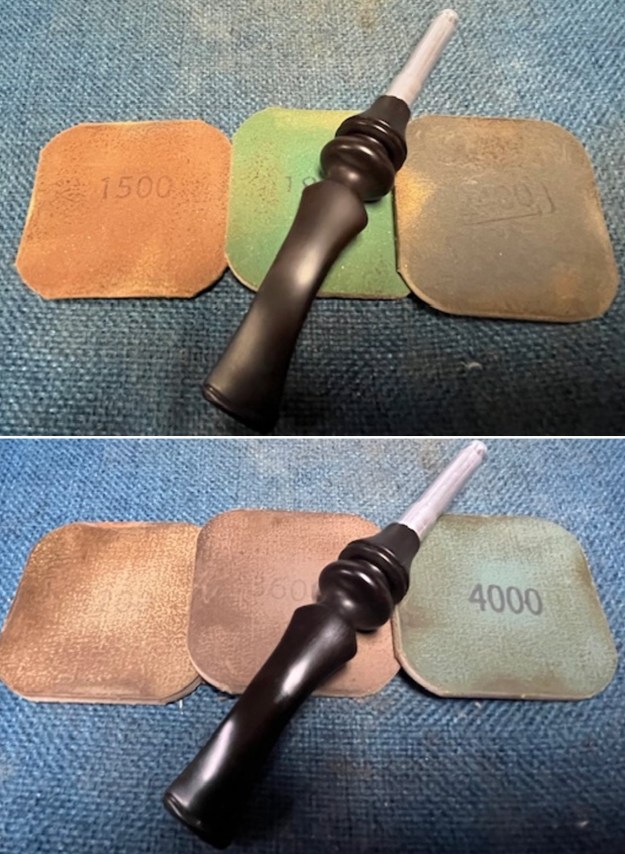
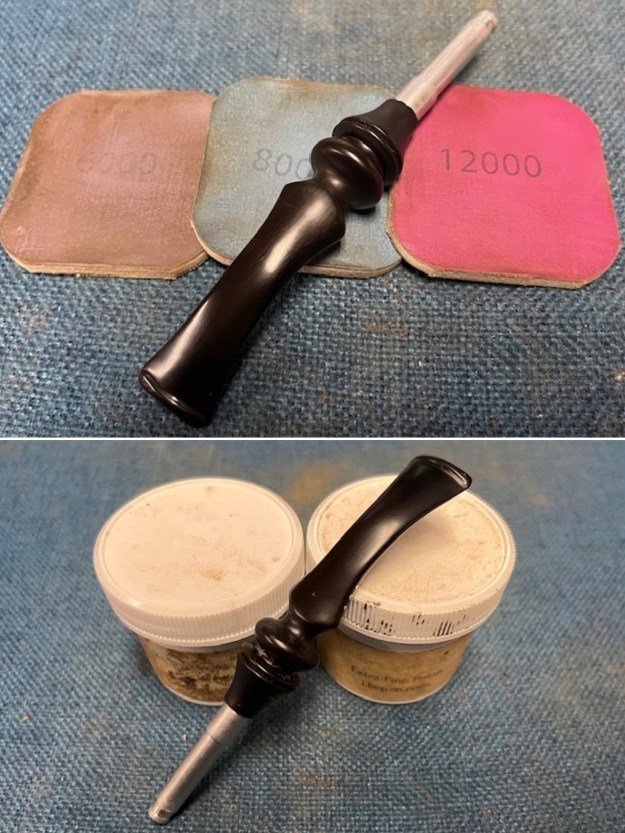
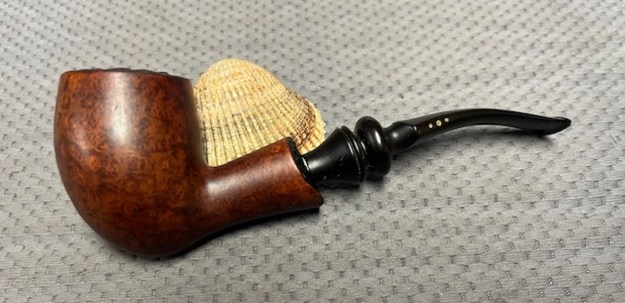
I am really happy to have Jeff’s help on cleaning up the pipes that we pick up along the way. He cleaned this filthy pipe with his usual penchant for thoroughness that I really appreciate. This one was a real mess and I did not know what to expect when I unwrapped it from his box. He reamed it with a PipNet pipe reamer and cleaned up the reaming with a Savinelli Fitsall Pipe Knife. He scrubbed out the internals with alcohol, pipe cleaners and cotton swabs until the pipe was clean. He scrubbed the exterior of the bowl with Murphy’s Oil Soap and a tooth brush to remove the grime and grit on the briar and the lava on the rim top. The finish looks very good with great looking grain around the top half of the bowl and great rustication on the rest of the bowl and shank. Jeff soaked the stem in Before & After Deoxidizer to remove the oxidation on the rubber. He scrubbed it with Soft Scrub All Purpose Cleaner to remove the majority of the oxidation. When the pipe arrived here in Vancouver it looked very good. I took some close up photos of the pipe before I started my part of the restoration. I took photos of the bowl and rim top as well as both sides of the stem to show its condition. The rim top and edges show a darkening on the plateau but the inner edge looks good. I took close up photos of the stem to show the tooth marks and chatter on the top and underside of the stem and on the button itself. I took a photo of the stamping on the underside of the shank. It is stamped as noted above and is clear and readable even though faint in spots. I took the pipe apart and took a photo of the pipe. It is an interesting pipe that you can see the grain in the photo below.I decided to start my restoration work on this one by cleaning up the plateau rim top and shank end with a brass bristle wire brush. I scrubbed it to remove more of the debris and darkening. When I had finished it looked much better.I touched up the plateau on the rim top and shank end with a black Sharpie Pen. It gives the plateau depth and great look. I sanded the scratches and marks on bowl sides and shank with 320-3500 grit 2×2 inch sanding pads. I wiped it down after each pad with a damp cloth. It really began to shine. I polished the bowl sides and shank with micromesh sanding pads. I dry sanded it with 1500-12000 grit micromesh pads. I wiped it down with a damp cloth after each pad. It really began to look beautiful. I rubbed the bowl and shank down with Before & After Restoration Balm to deep clean the finish on the bowl and shank. I worked it in with my fingers to get it into the briar. I worked it into the plateau rim top and shank end with a shoe brush. The product works to clean, enliven and protect the briar. I let it sit for 10 minutes then I wiped it off and buffed it with a soft cloth. The briar really began to have a rich shine. I took some photos of the bowl at this point to mark the progress in the restoration. It is a beautiful bowl. I set the finished bowl aside and turned my attention to the stem. I filled in the deep tooth marks on the top and the underside of the stem with a black rubberized CA glue. Once it cured I shaped it with small files and then sanded the repairs with 220 grit sandpaper to blend it into the vulcanite. I sanded the stem with 2 x 2 inch sanding pads – dry sanding with 320-3500 grit pads and wiping it down after each pad with an Obsidian Oil cloth. I fit the aluminum tenon with a new Rock Maple Distillator tube so it would be ready to go.I polished the stem with micromesh sanding pads – dry sanding with 1500-12000 grit pads. I wiped the stem down after each sanding pad with Obsidian Oil. I did a final hand polish of the stem with Before & After Pipe Stem Polish – both Fine and Extra Fine. I gave it a coat of Obsidian Pipe Stem Oil. It works to protect the stem from oxidizing. I set it aside to dry. I am excited to finish this Brigham 9W2 Danish Style Freehand – as I think it is an interesting looking pipe that was on the market as a means of using up extra stummels from the Norseman and Vahalla lines that Brigham made. I put the pipe back together and buffed it with Blue Diamond on the buffing wheel. I gave the bowl and the stem multiple coats of carnauba wax. I buffed it with a clean buffing pad to raise the shine. I hand buffed the pipe with a microfiber cloth to deepen it. It is fun to see what the polished bowl looks like with the grain popping through on the bowl and shank. Added to that the polished, rebuilt black vulcanite stem with four shining brass pins was beautiful. This Brigham 9W2 Freehand is nice looking and the pipe feels great in my hand. It is light and well balanced. Have a look at it with the photos below. The dimensions are Length: 5 ¾ inches, Height: 2 inches, Outside diameter of the bowl: 1 ¼ inches, Chamber diameter: ¾ of an inch. The weight of the pipe is 47 grams/1.66 ounces. It is a beautiful pipe and one that will be on the rebornpipes store soon. If you are interested in adding it to your collection let me know. Thanks for walking through the restoration with me as I worked over this pipe. Thanks to each of you who are reading this blog.
Cleaning up an UNSMOKED NOS Ropp Supreme Cherry wood made in France 7


by Steve Laug

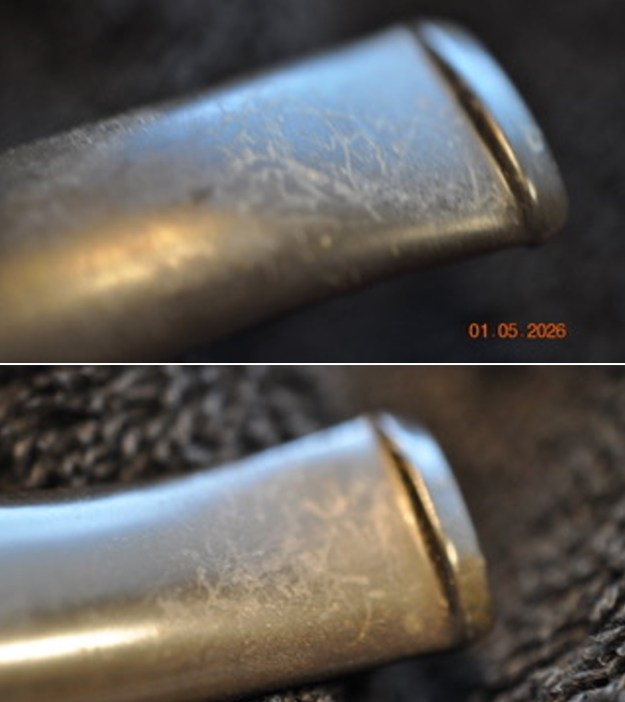
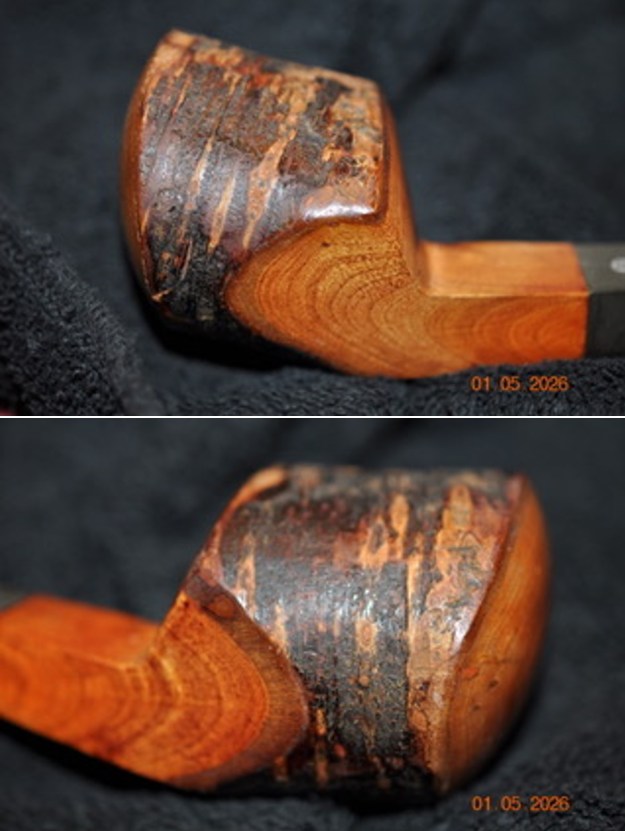
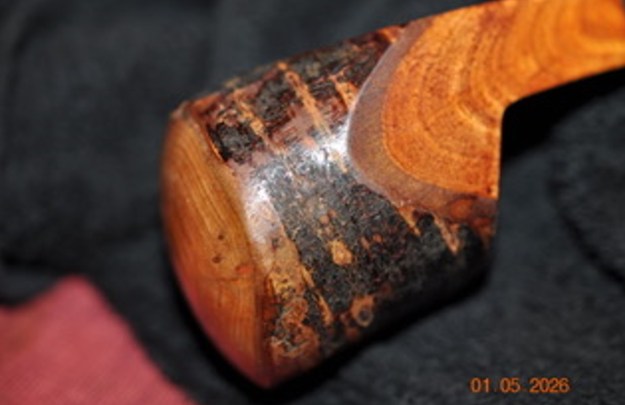
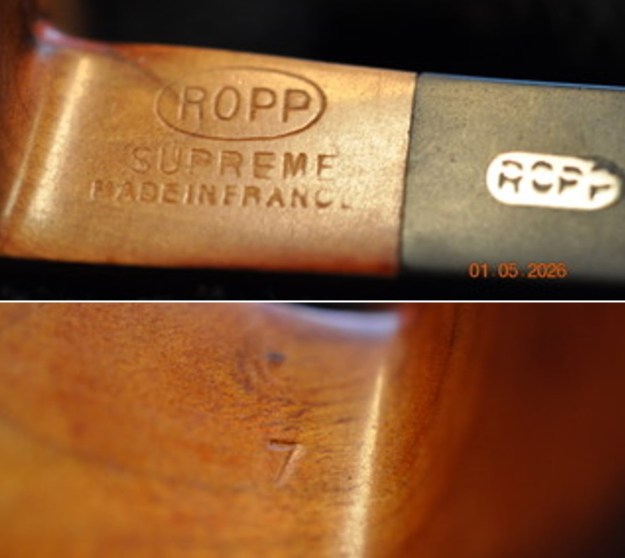
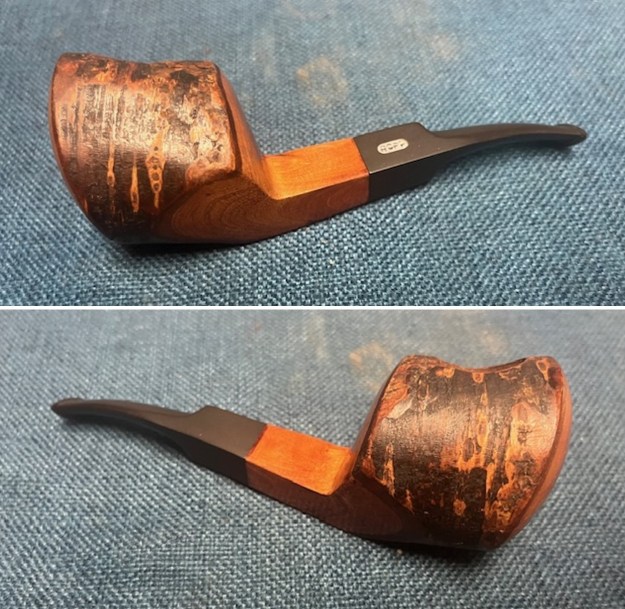
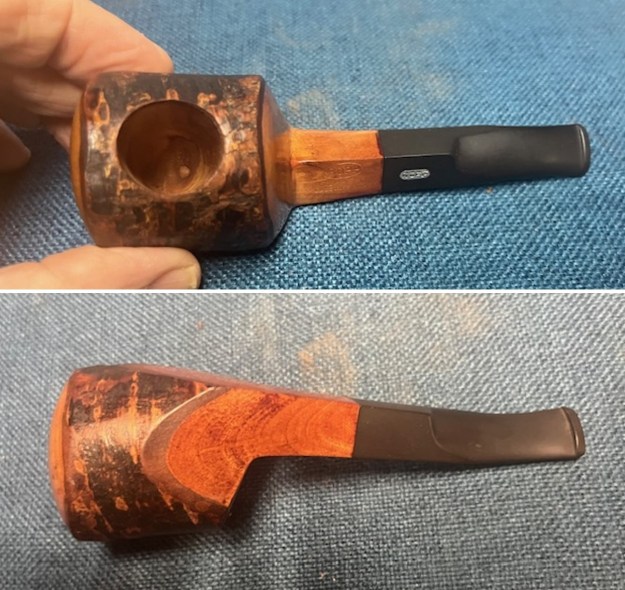
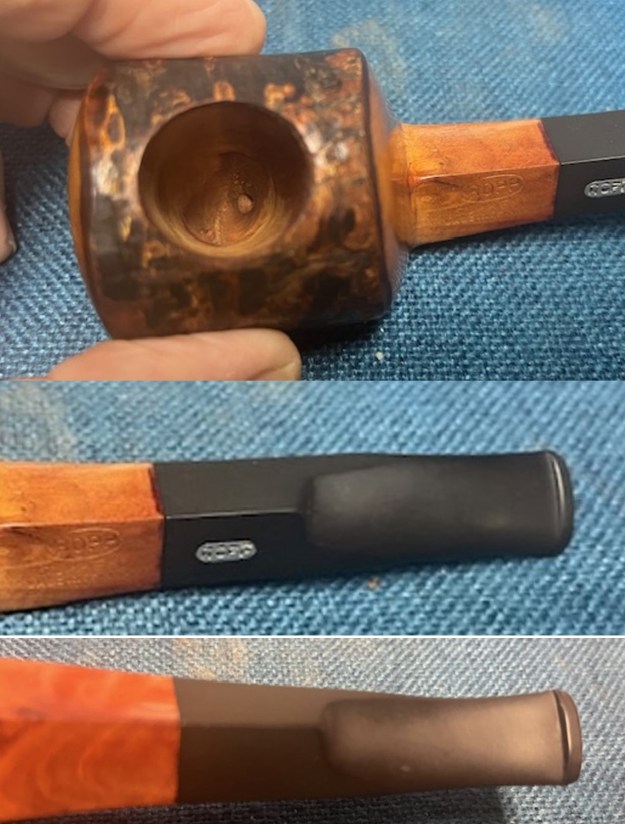
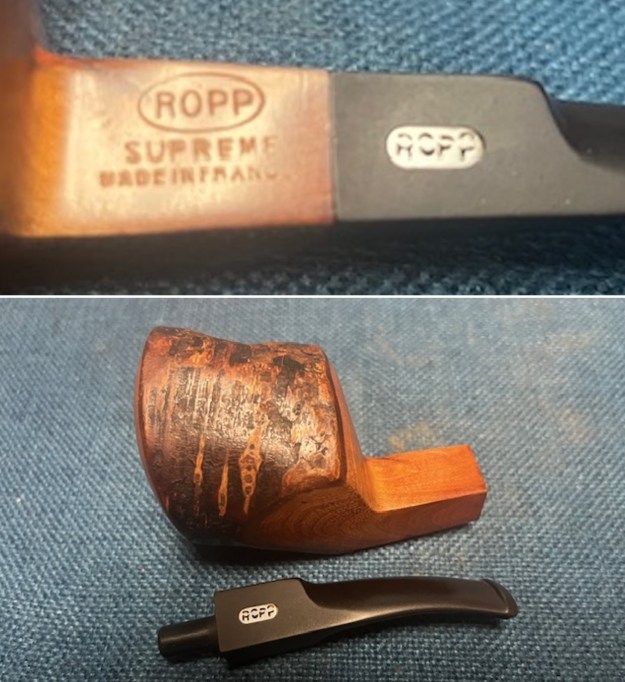
For a guy who has never really liked Ropp Cherrywood pipes I have had a lot of them over the years. I have had full bents, half bents, billiards but never one quite like this one. Jeff picked this pipe up at an antique store in Portland, Oregon, USA. It is kind of a 1/8 Diamond Shank Billiard or I don’t know what shape truly. It has a smooth shank and a smooth oval shaped panel on the front and rear of the bowl. The right and left side, top and bottom of the bowl were left with the bark in place. You can see the knot holes in the bowl where branches were snipped off. The bark around the bowl sides is in decent condition as is the bottom of the bowl. The rim top looks very good and the inner edge of the rim on both the front and the back are undamaged. The bowl was unsmoked and pristine. The pipe is stamped on the left side of the shank and reads Ropp in an oval [over] Supreme [over] Made in France. On the left side it bears the shape number 7. The stem is vulcanite with the silver Ropp oval on the left side of the saddle. It is lightly oxidized and dirty from time stored. Happily, it has no tooth marks or chatter on either side of the stem. Jeff took these photos before he started his clean up work. Jeff took photos of the rim edges and top to show the damage that was there. The smooth and clean bowl and rim top are a gift of an unsmoked pipe. It is great to see. He took photos of the stem surface as well to show the condition as noted above. Jeff took photos of the bowl sides, heel of the bowl and the shank to give a sense of the condition of the bark around the sides of the pipe. It is a unique one. You can see where the branches had been lopped off on both sides. He took a photo of the stamping on the left side of the shank and the inset Ropp oval logo on the left side of the stem. Both are readable and clear as noted above.I turned to Pipephil (http://pipephil.eu/logos/en/logo-ropp.html) to get a bit more background on the brand before I did my work on the pipe. No matter how many I have worked on I seem to forget the history of the cherrywood pipes. I quote:

Brand created by Eugène-Léon Ropp (1830 – 1907) and continued throughout 3 generations. “GBA Synergie” run by Bernard Amiel (†2008) bought back Ropp in 1988 and owned it until 1991.The company was taken over by Cuty-Fort Entreprises (Chacom, Vuillard, Jean Lacroix…) in 1994.

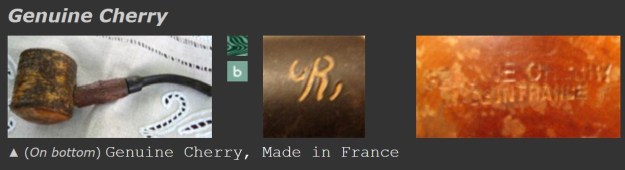
I have also included a screen capture of a Cherry wood pipe. The one I am working on is significantly different that this but it has the bark left on the pipe as noted below.Cherry wood pipe with bark. Ropp stamped a cursive R on the stems of some of their export pipes.

I turned to Pipedia for a bit more detailed history of the brand (https://pipedia.org/wiki/Ropp). I quote below.

Eugène-Léon Ropp (1830 – 1907) had acquired a patent for a cherrywood pipe (wild cherry, lat.: Prunus avium) in 1869. In 1870 he established a workshop to manufacture such pipes in Büssingen (Bussang, Vosges mountains). Around 1893 the business moved into the former mill of Sicard (part of the community of Baume-les-Dames – Département Doubs, Upper Burgundy – from 1895 on).

The pipes were a big success in the export as well. Shortly before 1914 Ropp designated A. Frankau & Co. (BBB) in to be the exclusive distributor in the UK and it’s colonies.

Probably in 1917 a workshop in Saint-Claude in the Rue du Plan du Moulin 8 was acquired to start the fabrication of briar pipes. In 1923 a small building in the environment of Saint-Claude, serving as a workshop for polishing, was added.

Even though cherrywood pipes were the mainstay of Ropp until the company finally closed down in September 1991. The company was taken over by Cuty-Fort Entreprises (Chacom, Jeantet, Vuillard, Jean Lacroix…) in 1994.

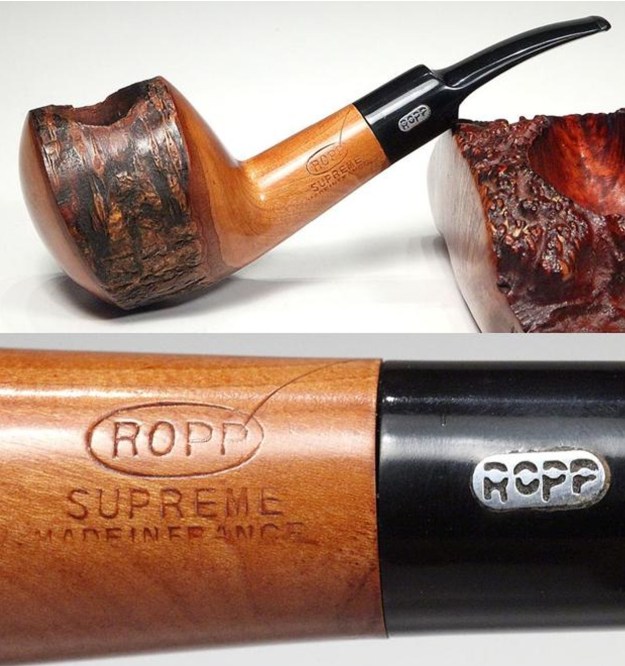
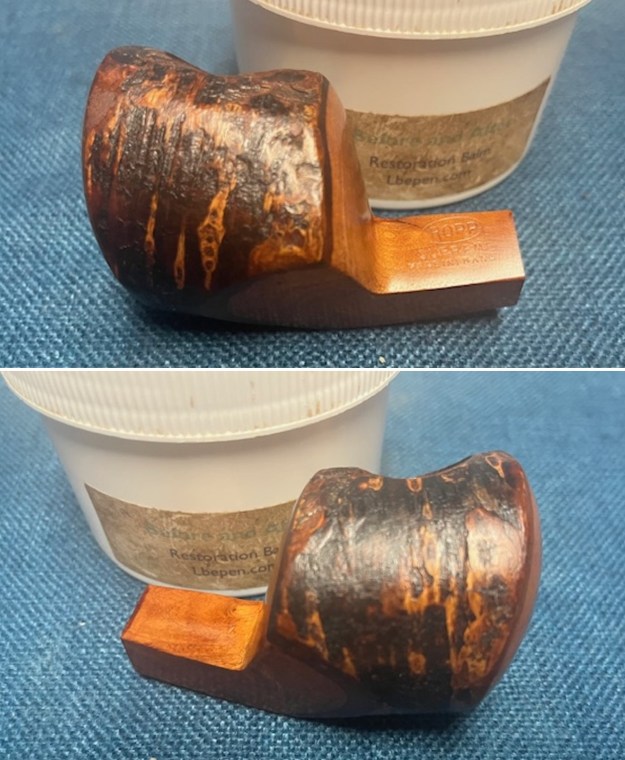
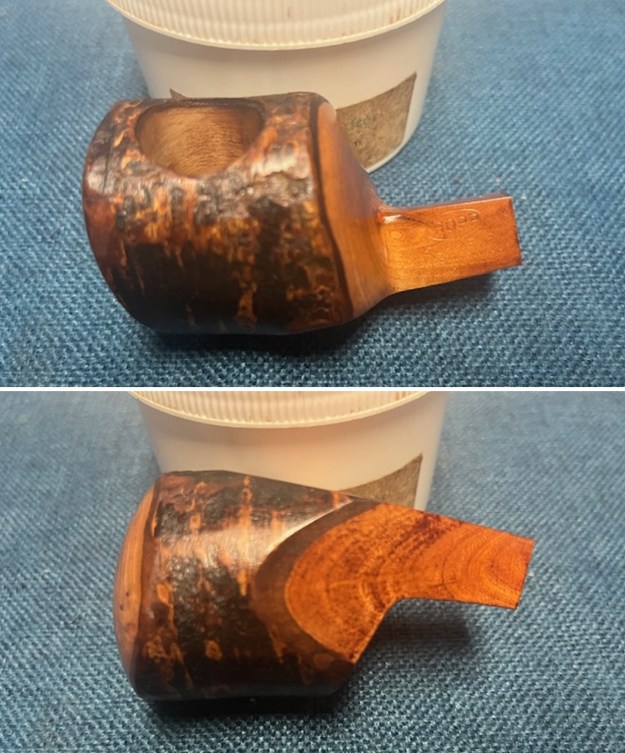
There was also a photo of the Ropp Supreme pipe that was remarkably similar to the one that I was working on. I have included that photo as well as the photo of the stamping below.Reminded about the background on the Ropp Family and their Cherrywood pipes it was now time to turn to the pipe itself and do my part of the work. Jeff had done a thorough cleanup on the pipe. He carefully cleaned the exterior of the bowl, rim, shank and stem with a tooth brush and Murphy’s Oil Soap to remove the grime on the finish of the bowl. He scrubbed out the mortise and the airway in the shank and the stem with alcohol, cotton swabs and pipe cleaners. He rinsed it under running water. He dried it off with a soft cloth. He cleaned the internals and externals of the stem with alcohol, pipe cleaners and cotton swabs. He scrubbed the exterior of the stem with Soft Scrub and a cotton pad. Once finished he soaked the stem in Briarville’s Pipe Stem Deoxidizer and rinsed it off with warm water and cleaned out the airway in the stem with alcohol. Other than the damaged rim top the pipe looked good. I took a photo of the rim top and the stem to show their condition. The rim top was clean and the inner and outer edges of the bowl are in excellent condition. The stem looked better with all the grime and oxidation of the years washed away. It should polish up very well.I took a photo of the stamping on the top left side of the diamond shank to show that it was clean and readable as noted above. It also shows the silver Ropp oval logo on the left side of the saddle stem. I removed the stem from the shank and took a photo of the parts to give a sense of what the pipe looks like. Because the bowl was unsmoked and unused I was able to leave out the micromesh sanding portion of the restoration. Instead went right to the polishing. I rubbed the bowl and shank down with Before & After Restoration Balm to deep clean the finish on the bowl and shank. The product works to clean, enliven and protect the Cherrywood and the bark. I worked it in with my fingers to get it into the wood. I let it sit for 10 minutes then buffed it with a soft cloth. The wood and bark really began to have a rich shine. I took some photos of the bowl at this point to mark the progress in the restoration. It is a beautiful bowl. I set the bowl aside and turned to the stem. I sanded the stem with 2 x 2 inch sanding pads – dry sanding with 320-3500 grit pads and wiping it down after each pad with an Obsidian Oil cloth. I polished the stem with micromesh sanding pads – dry sanding with 1500-12000 grit pads. I wiped the stem down after each sanding pad with Obsidian Oil. I did a final hand polish of the stem with Before & After Pipe Stem Polish – both Fine and Extra Fine. I gave it a coat of Obsidian Pipe Stem Oil. It works to protect the stem from oxidizing. I set it aside to dry. This UNSMOKED NOS (New Old Stock) ROPP Supreme Made in France 7 Diamond Shank Billiard with a black vulcanite saddle stem is a great looking pipe. The rugged bark finish on the sides adds a ruff texture and works well with the grain on the cherrywood bowl front and back side and shank. The black saddle stem is a great contrast to the wood. The rich medium brown of the wood gave the grain a sense of depth with the polishing and waxing. The grain really popped. I put the stem back on the bowl and carefully buffed the pipe with Blue Diamond on the buffing wheel using a light touch on the briar. I gave the bowl and the stem multiple coats of carnauba wax on the buffing wheel. I buffed the pipe with a clean buffing pad to raise the shine. I hand buffed the pipe with a microfiber cloth to deepen the shine. The finished ROPP Supreme 7 Cherrywood is a beauty and feels great in the hand and looks very good. Give the finished pipe a look in the photos below. The dimensions of the pipe are Length: 6 inches, Height: 2 inches, Outside diameter of the bowl: 2 inches wide by 1 ¾ inches long, Chamber diameter: ¾ of an inch. The weight of the pipe is 2.72 ounces/78 grams. It will be listed in the French Pipemakers Section of the rebornpipes store. If you are interested in adding it to your rack let me know. Thanks for reading this blog and my reflections on the pipe while I worked on it. There are many more to come!