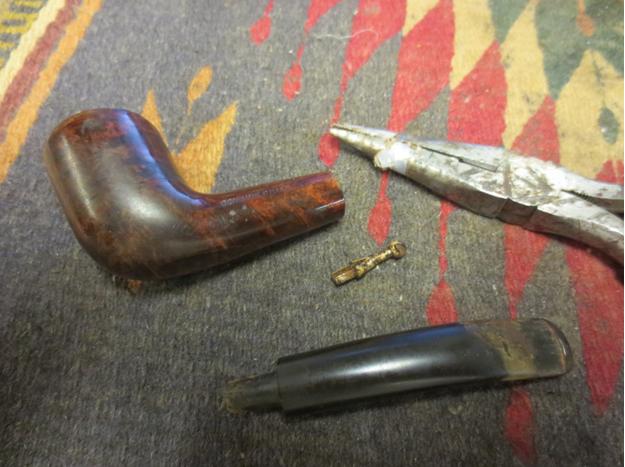
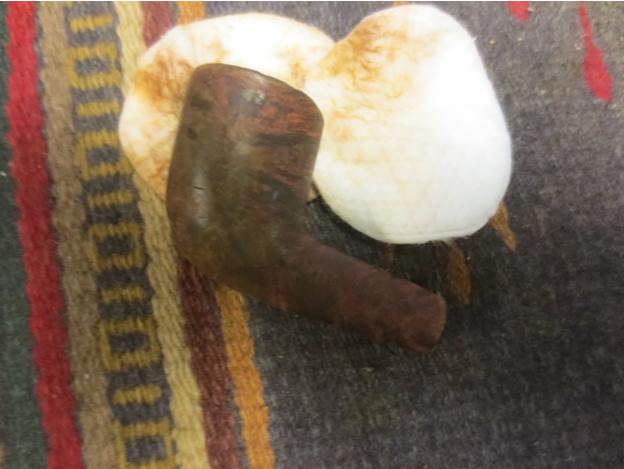
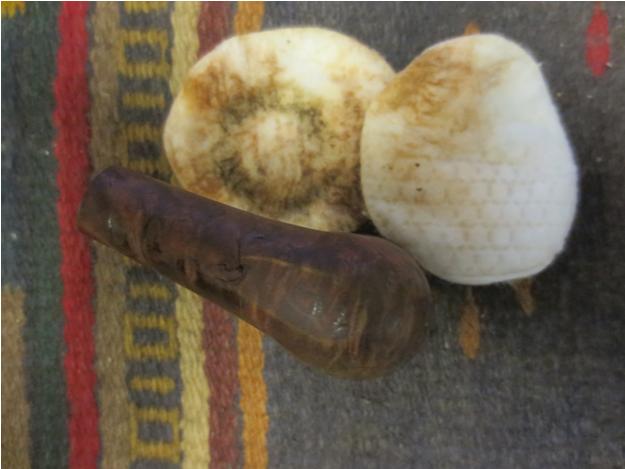
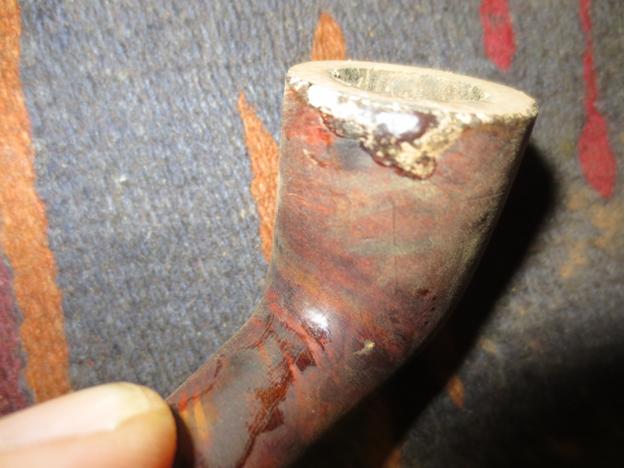
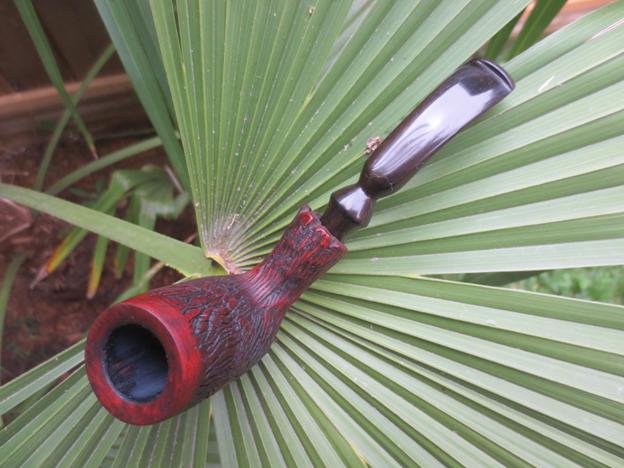
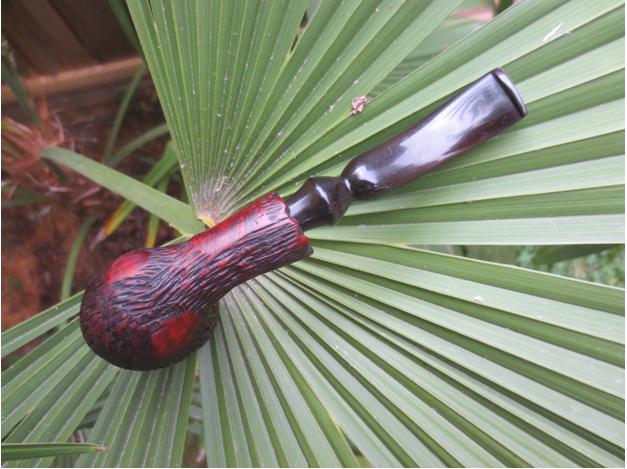
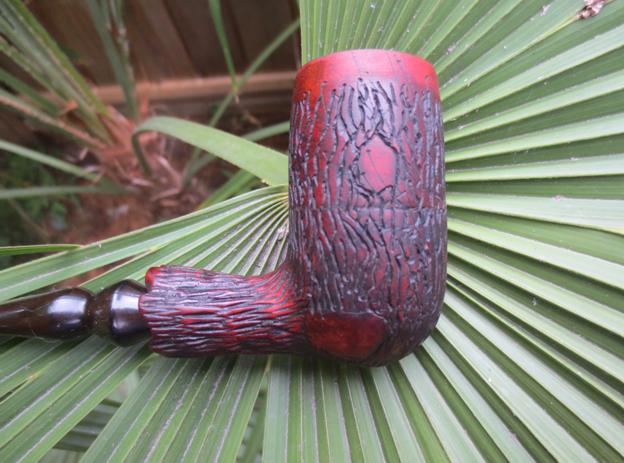
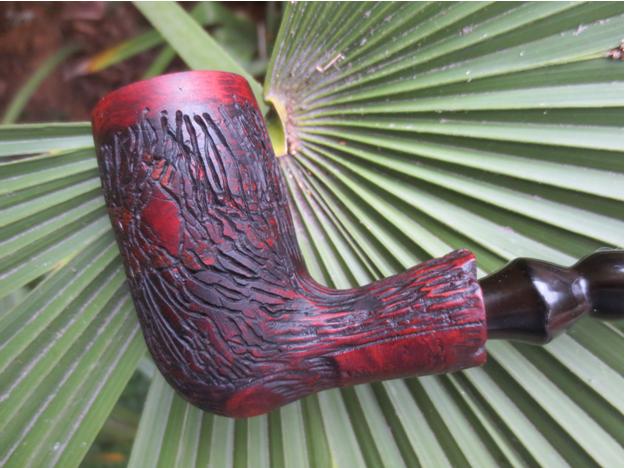
Tag Archives: refinishing

Restoring an Ed Burak Connoisseur Tall Stack


Blog by Steve Laug

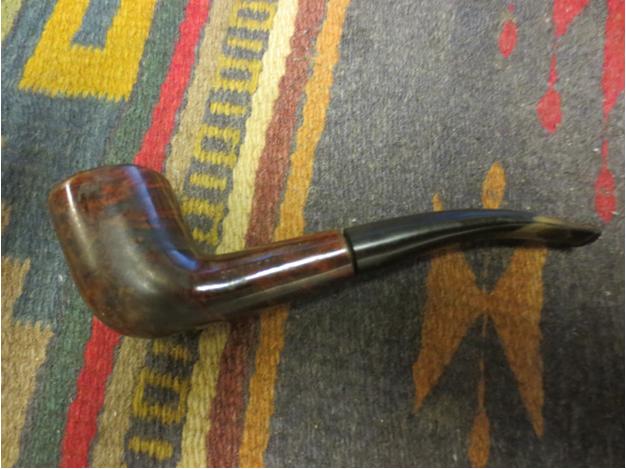
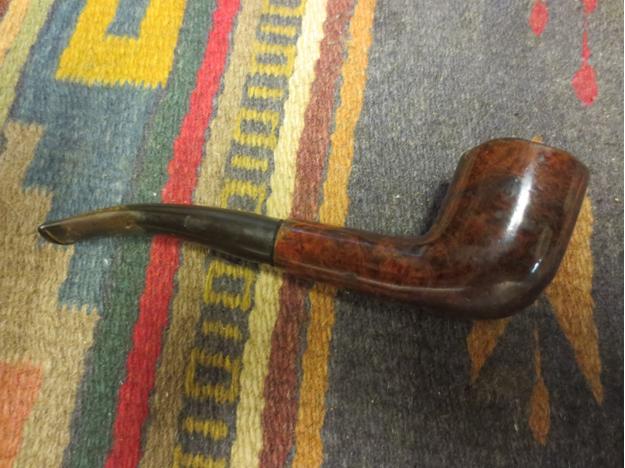
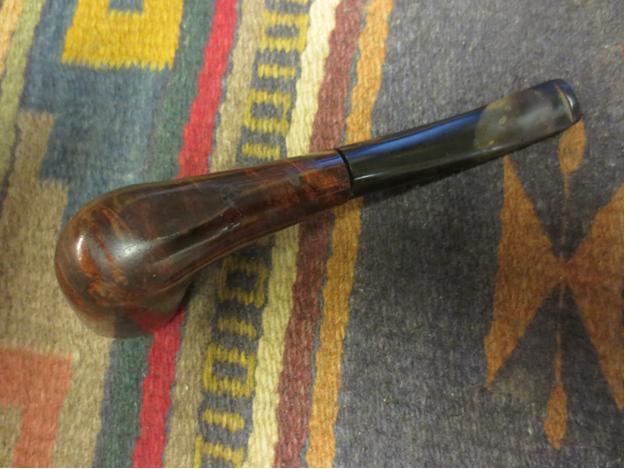
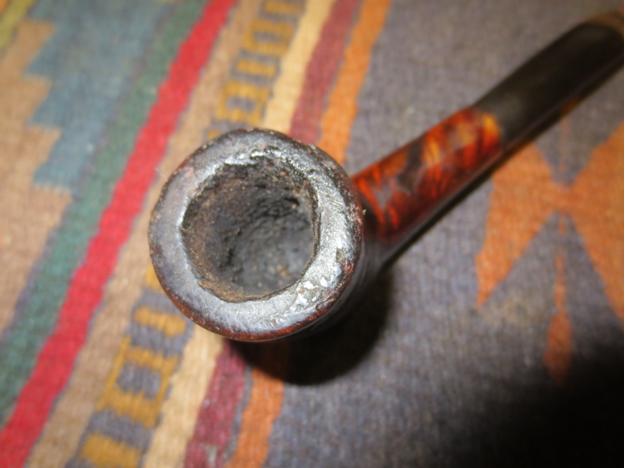
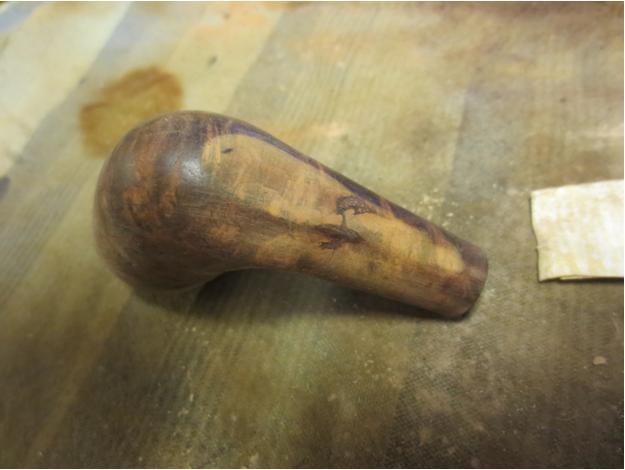
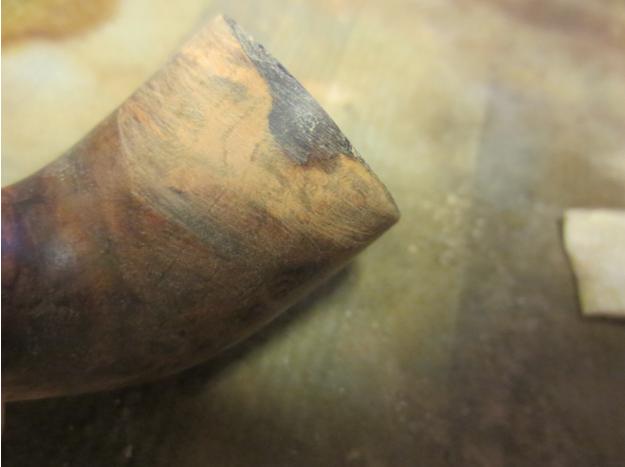
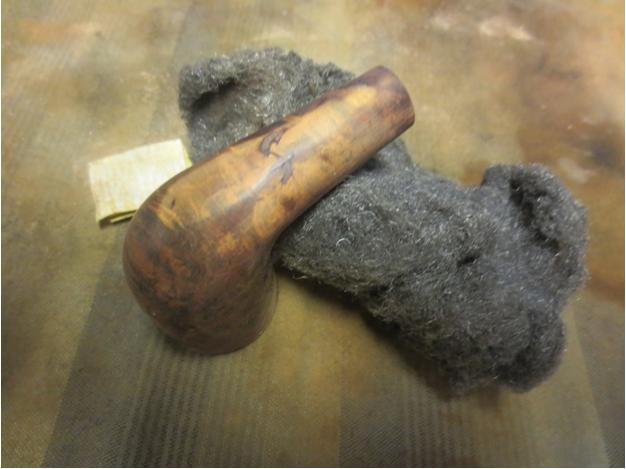
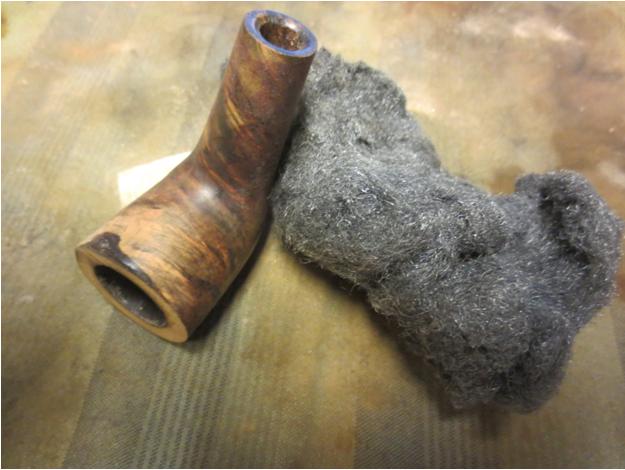
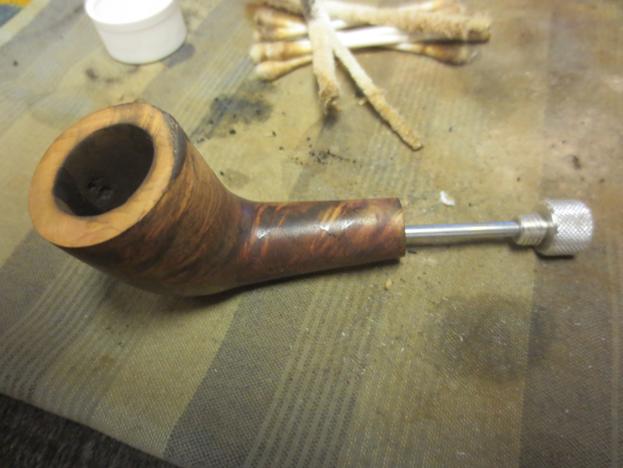
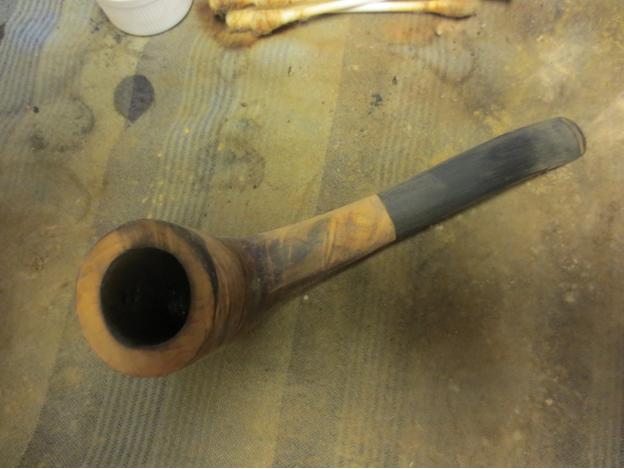
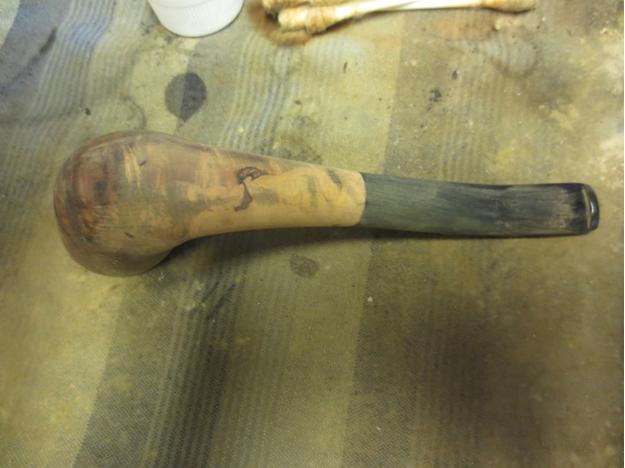
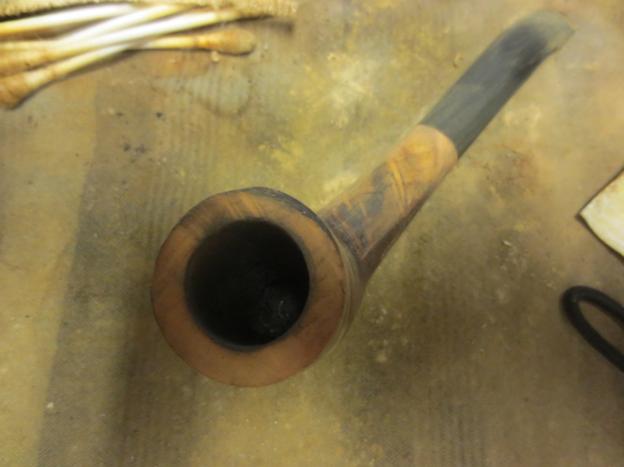
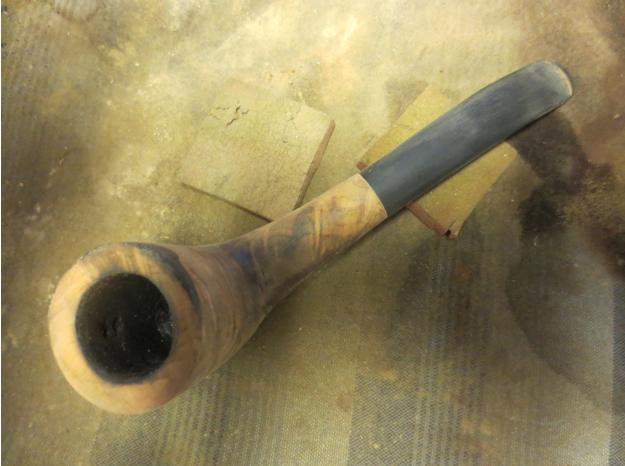
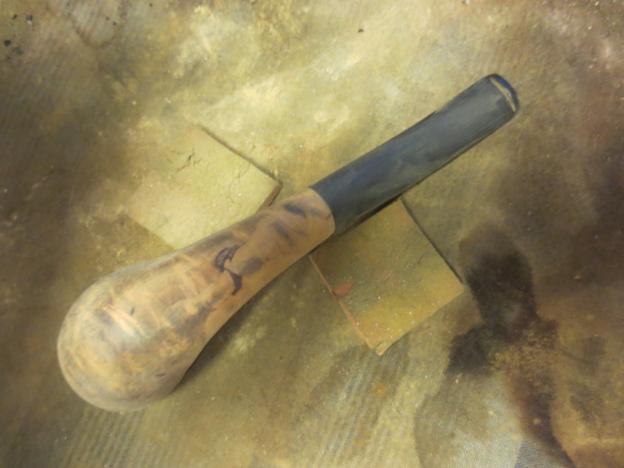
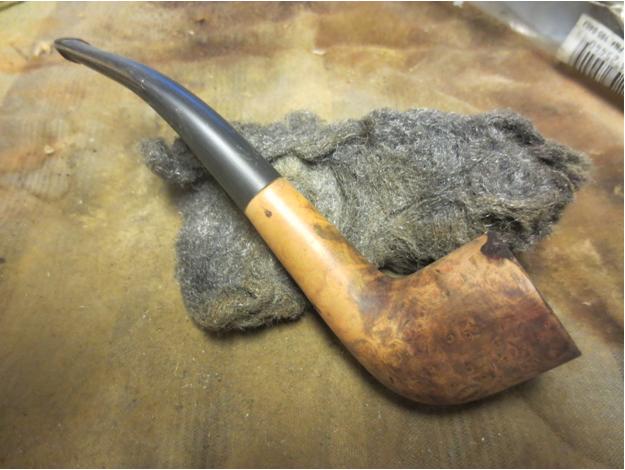
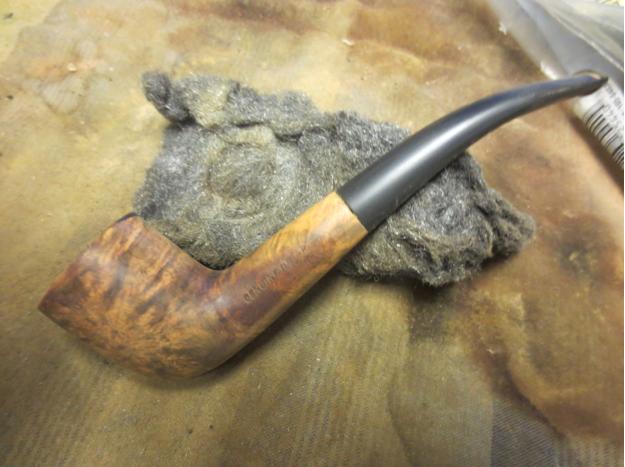
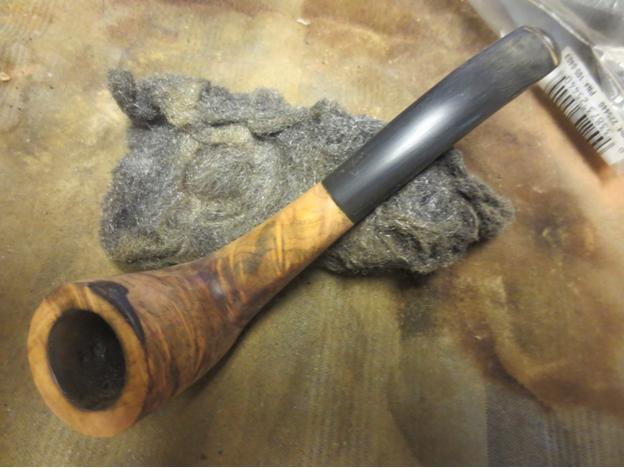
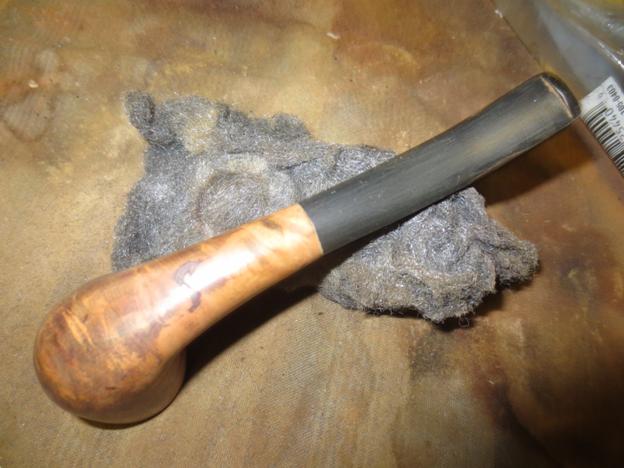
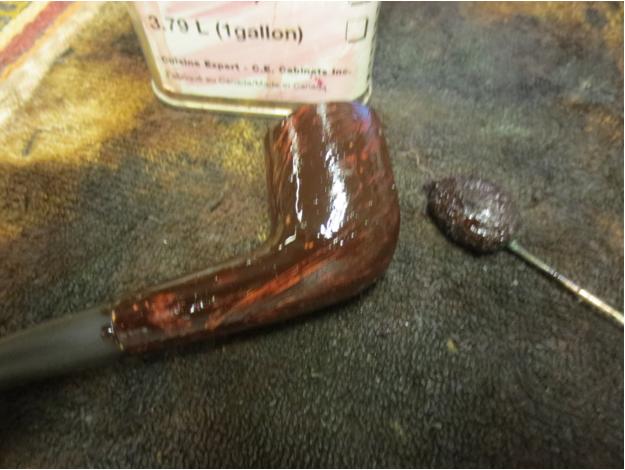
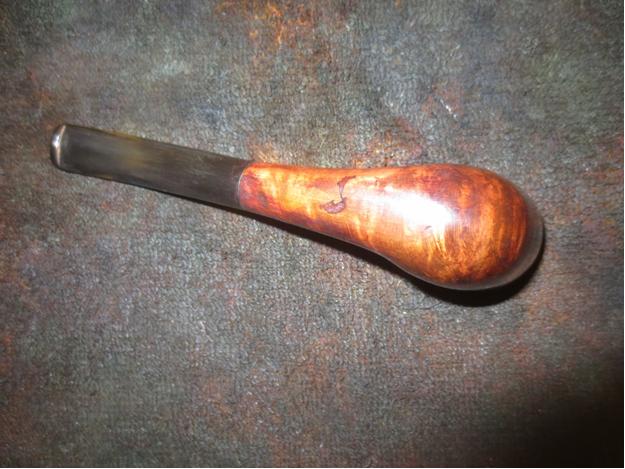
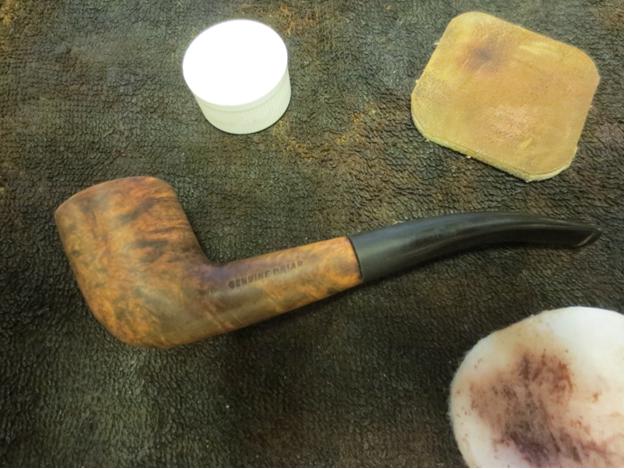
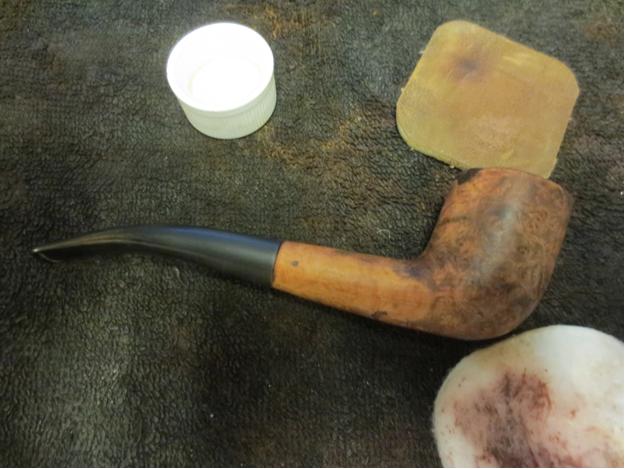
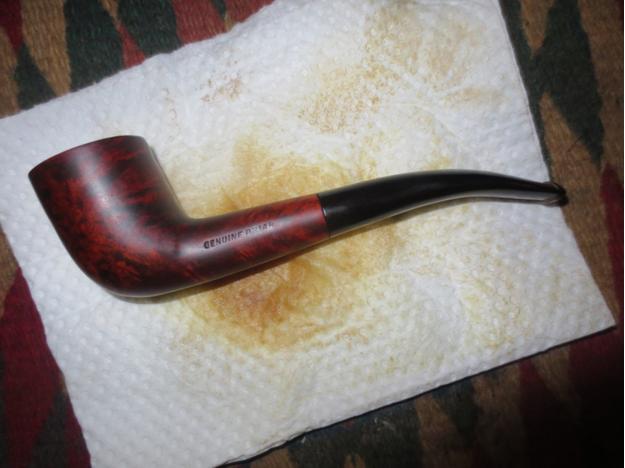
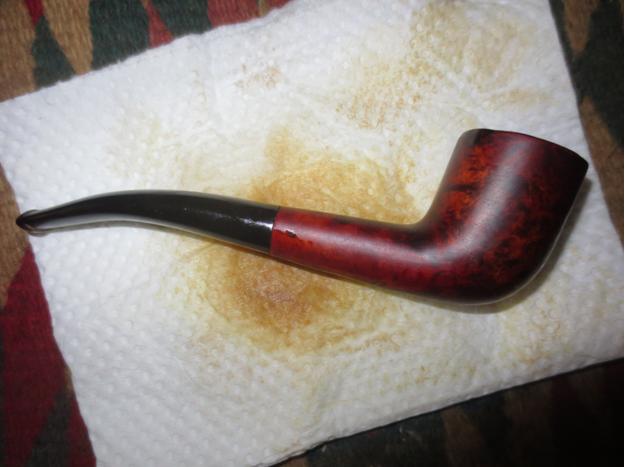
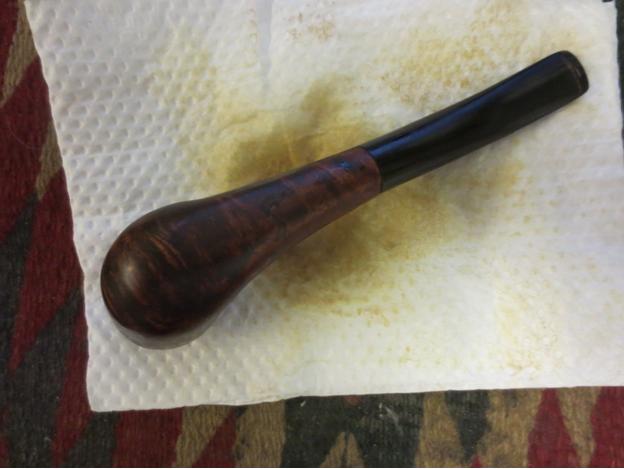
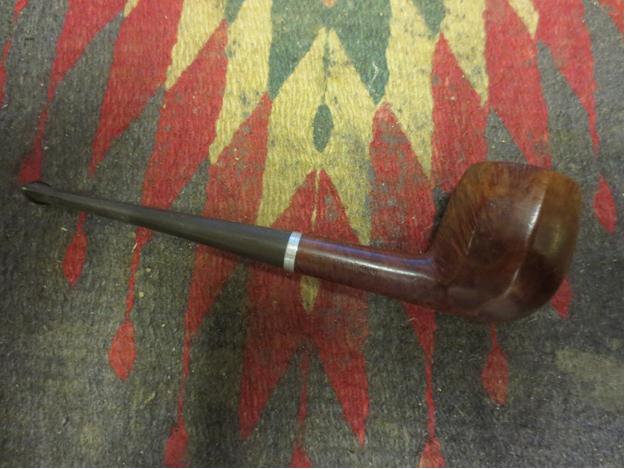
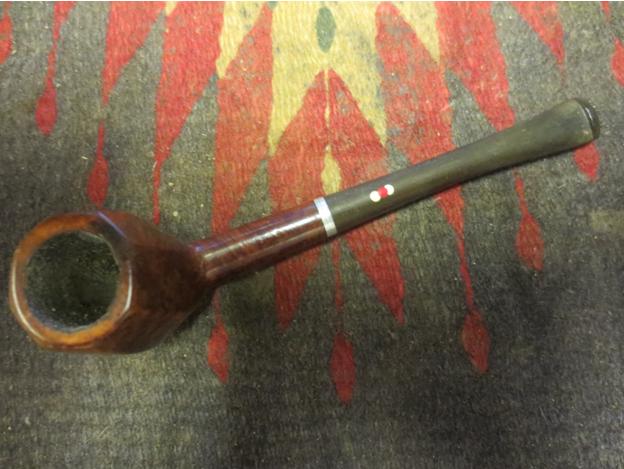
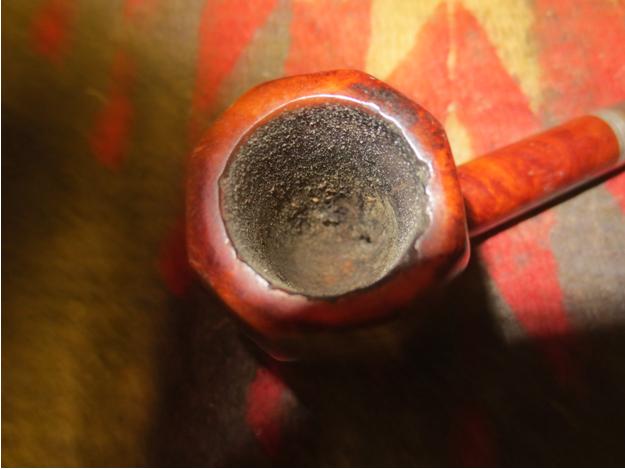
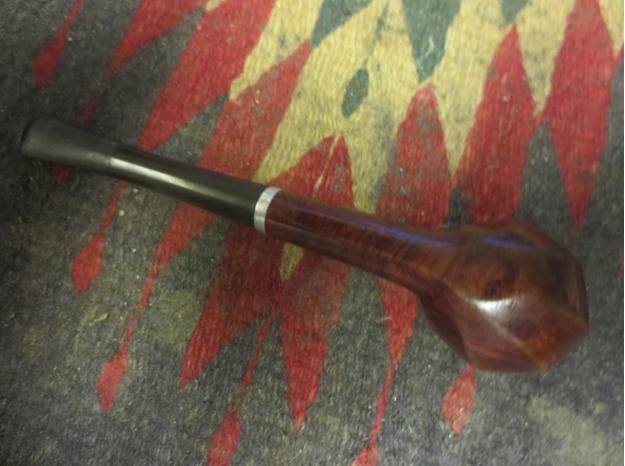
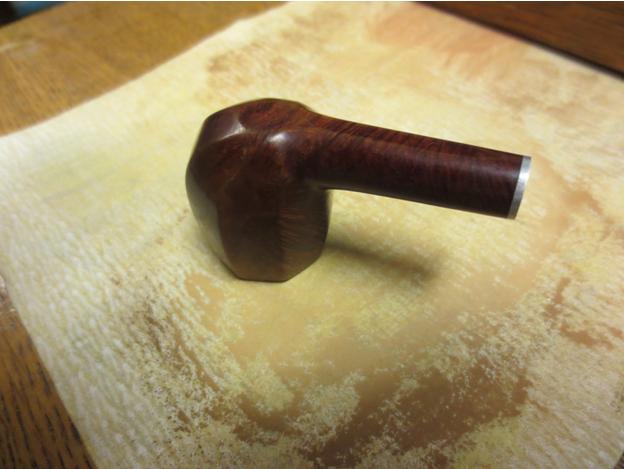
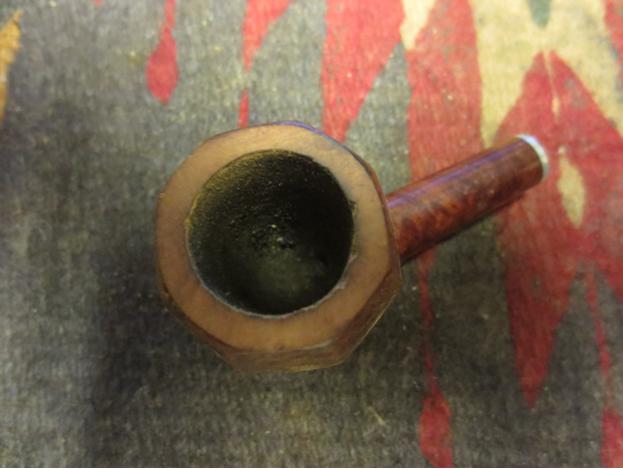
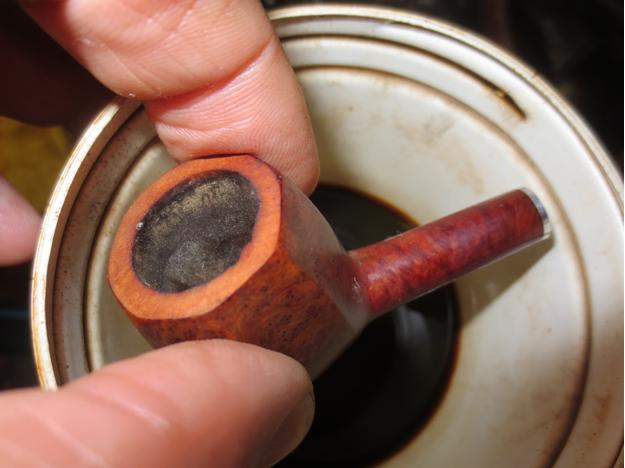
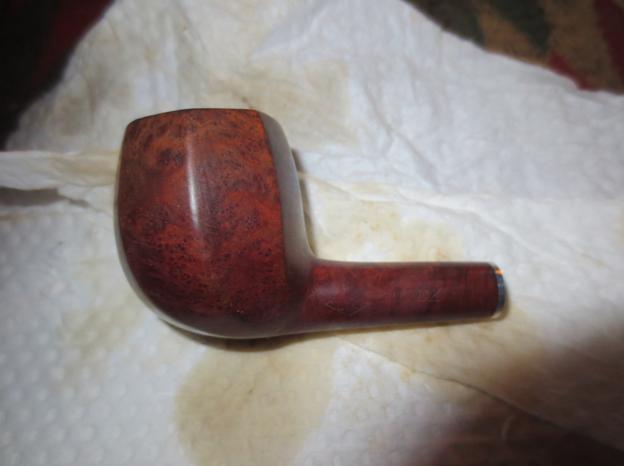
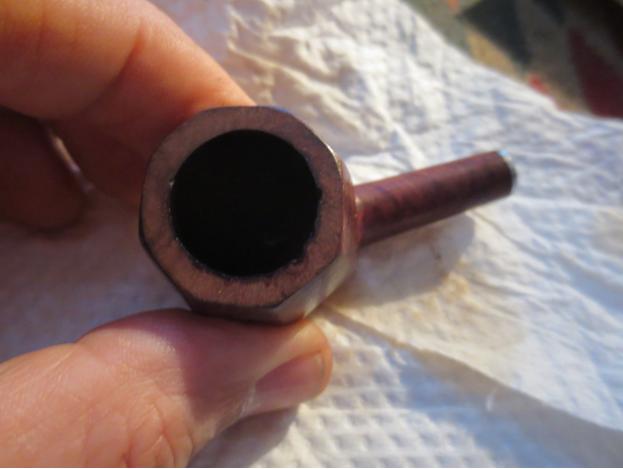
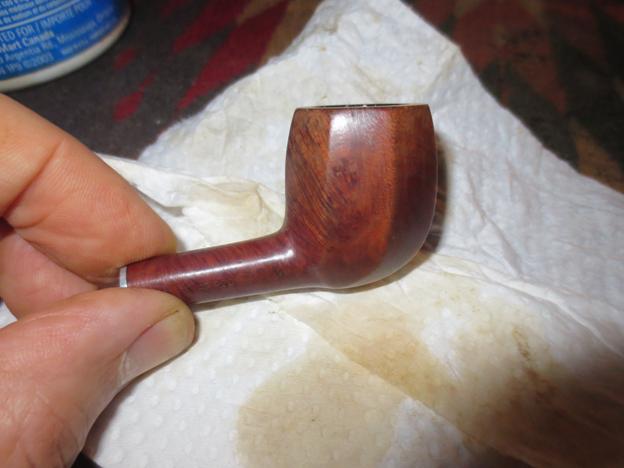
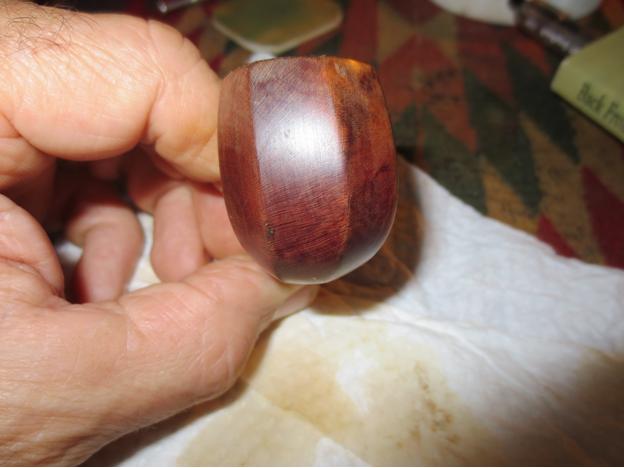
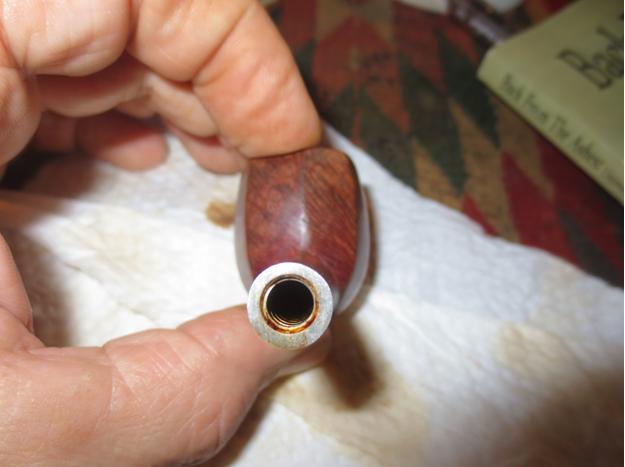
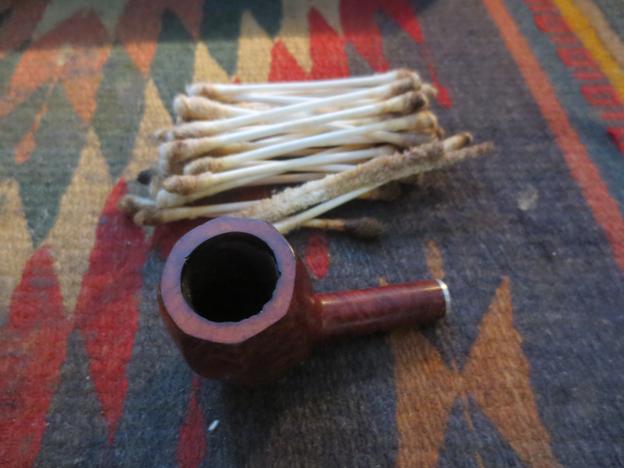
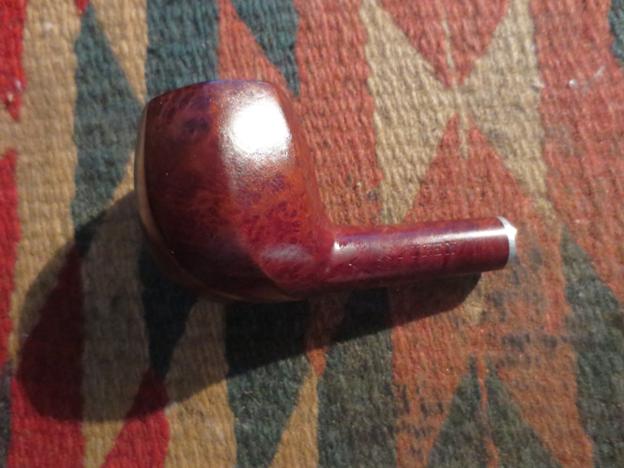
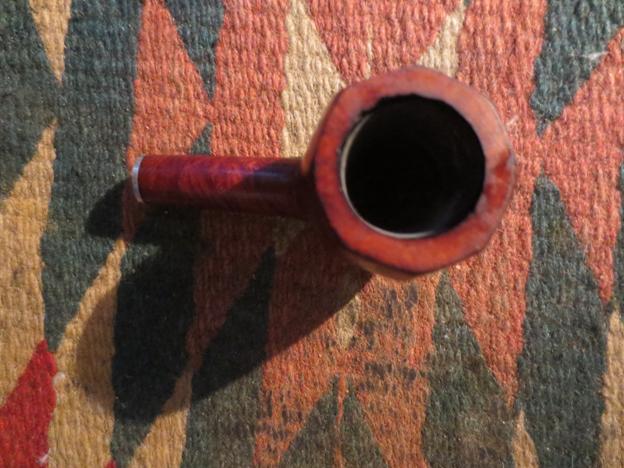
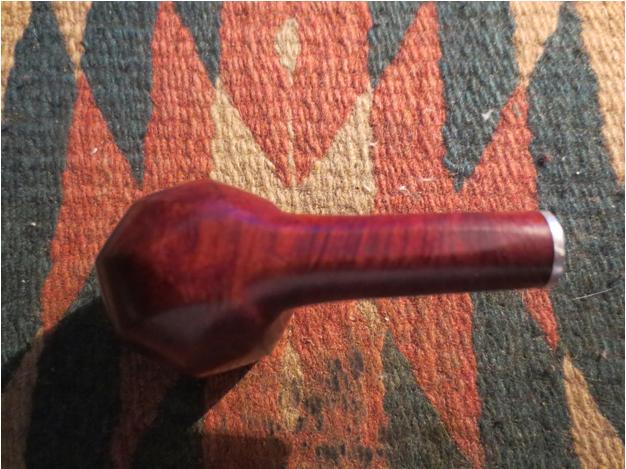
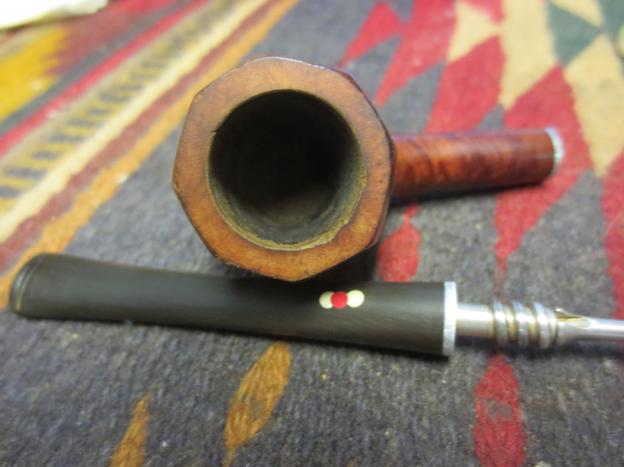
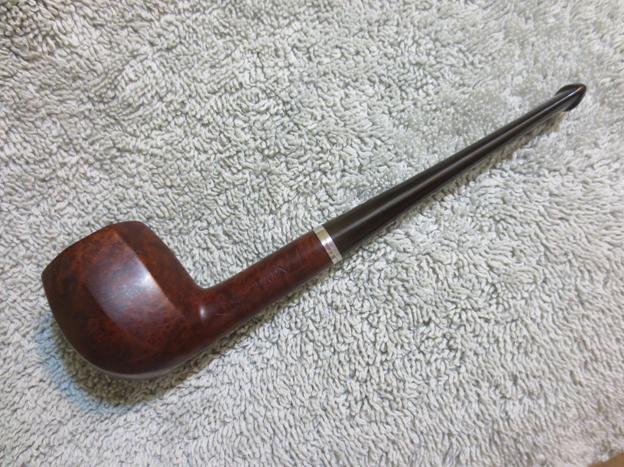
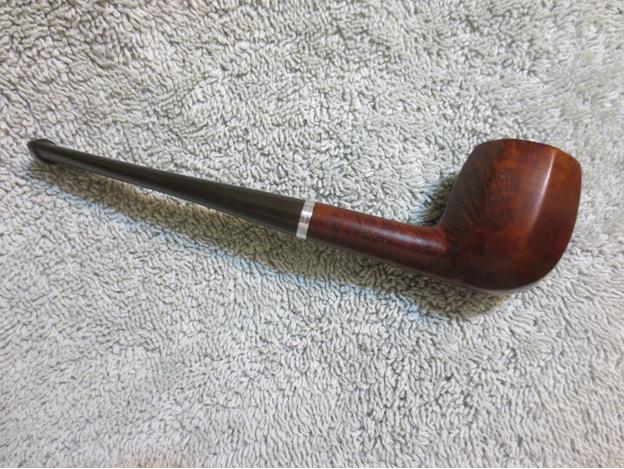
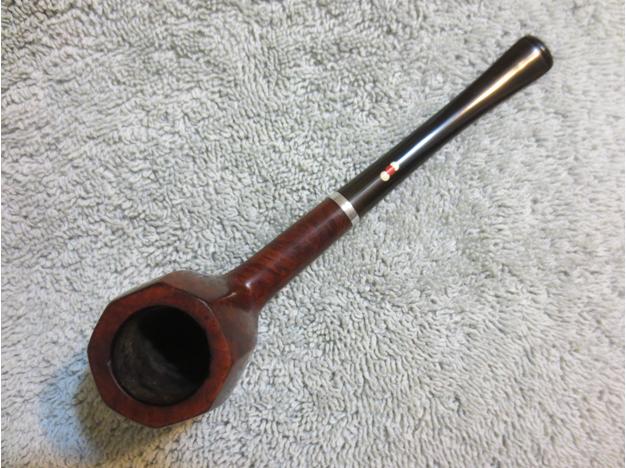
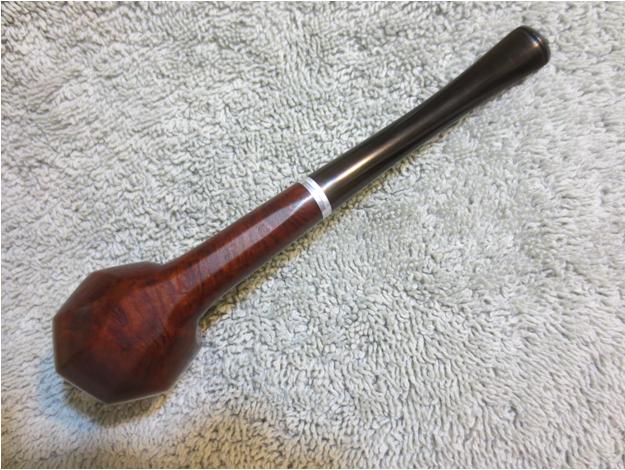
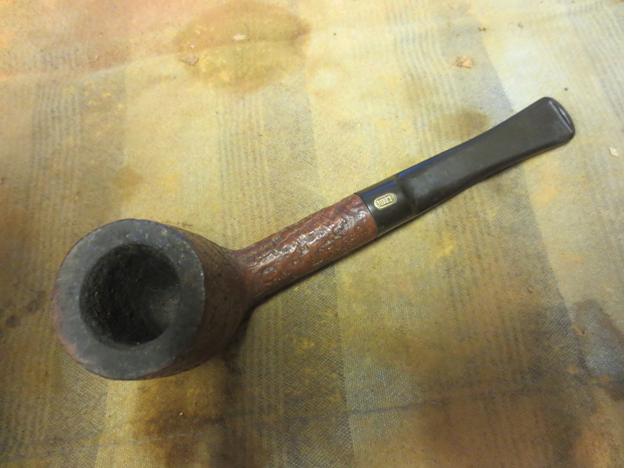
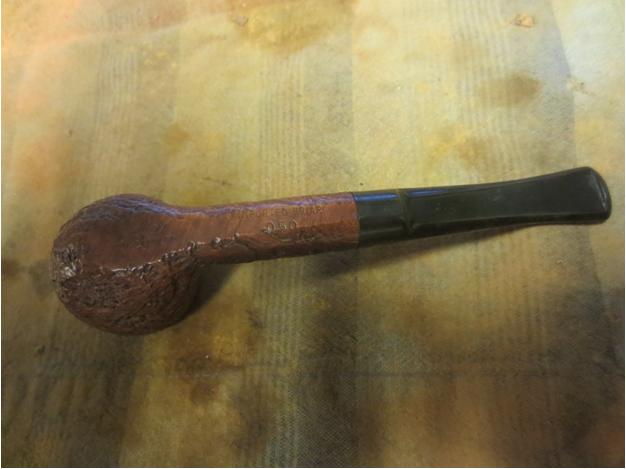
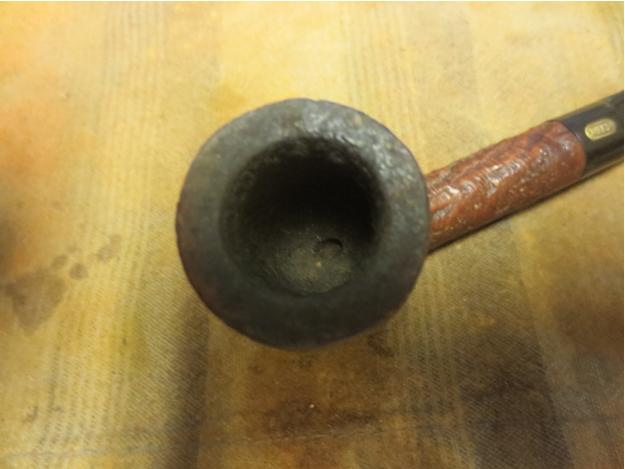
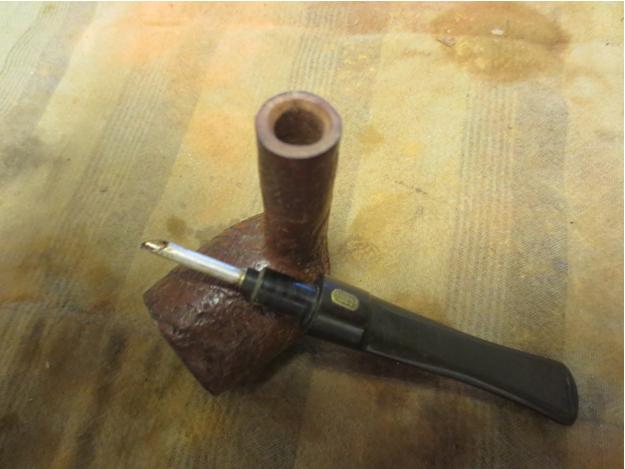
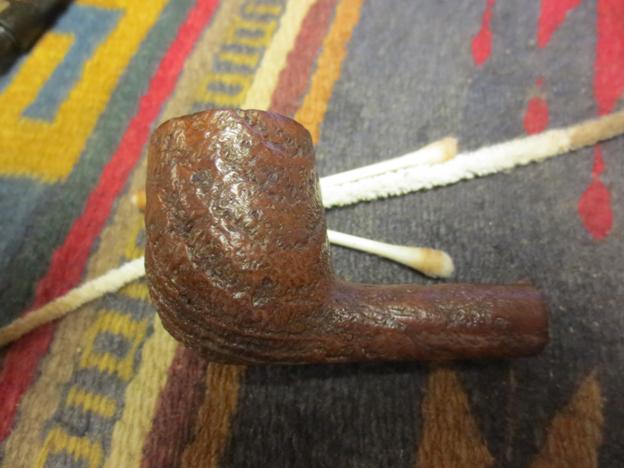
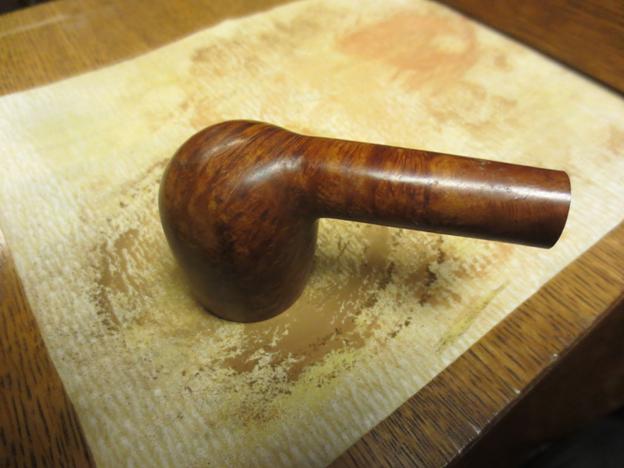
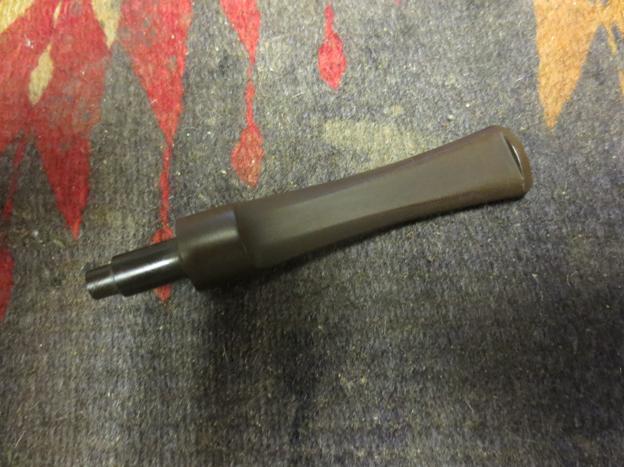
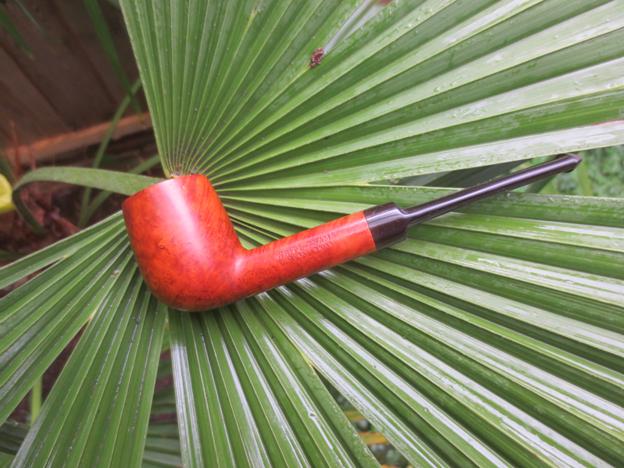
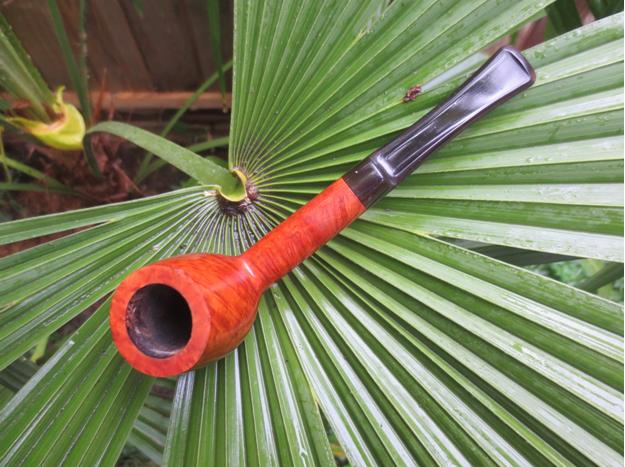
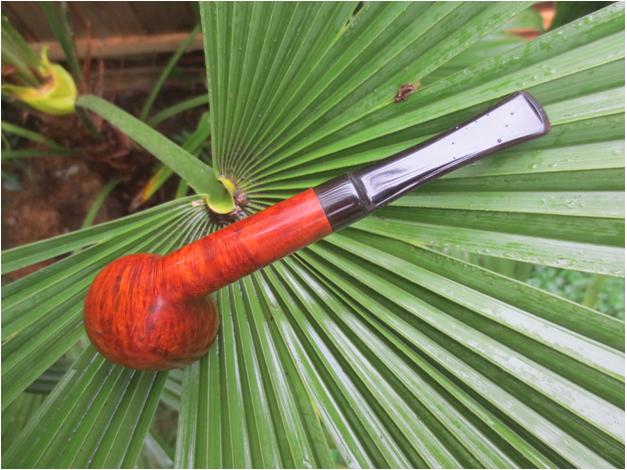
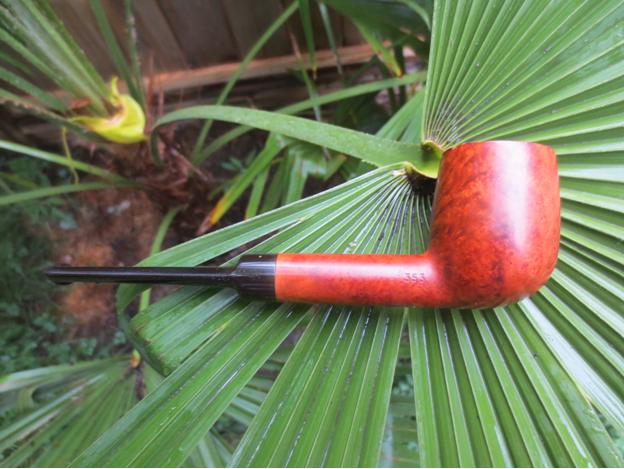
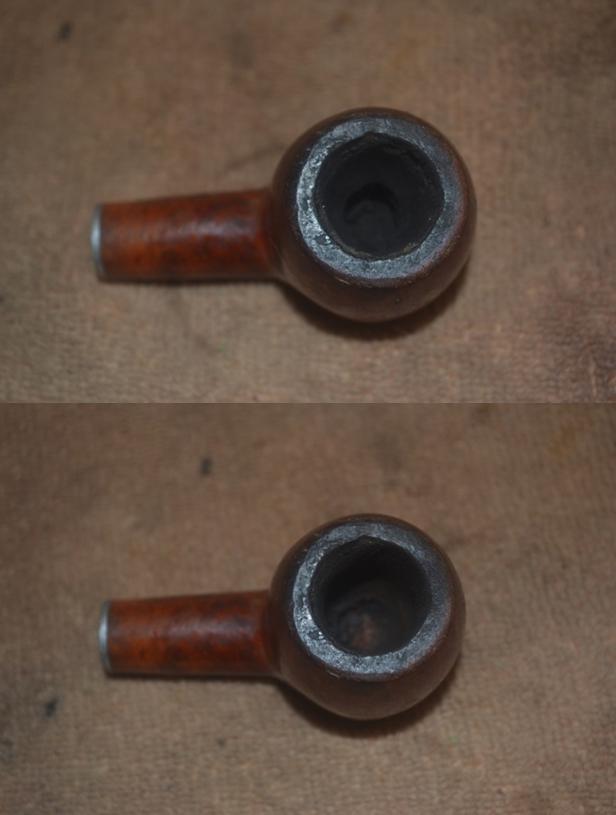
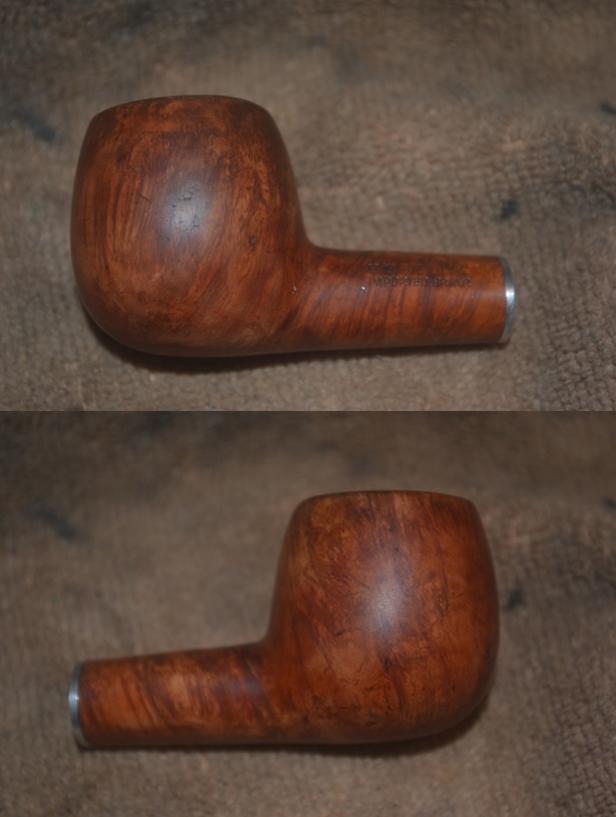
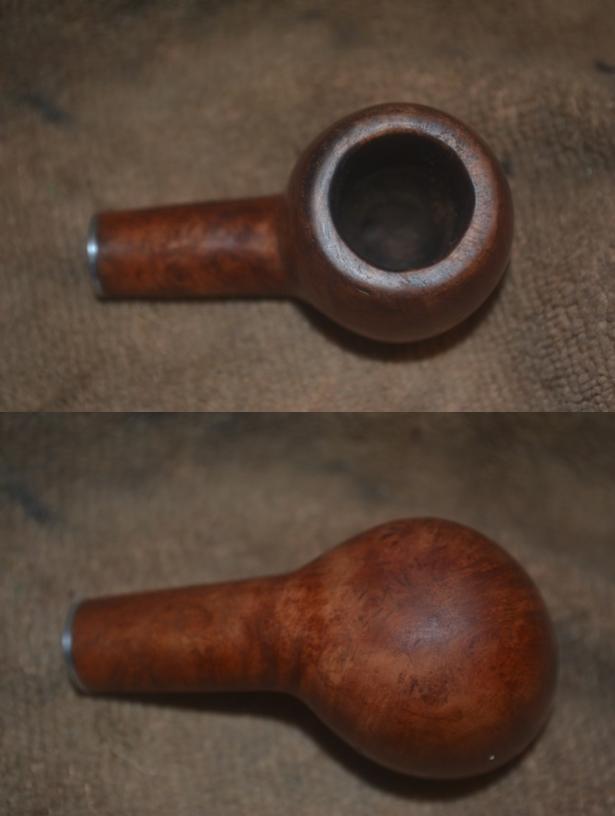
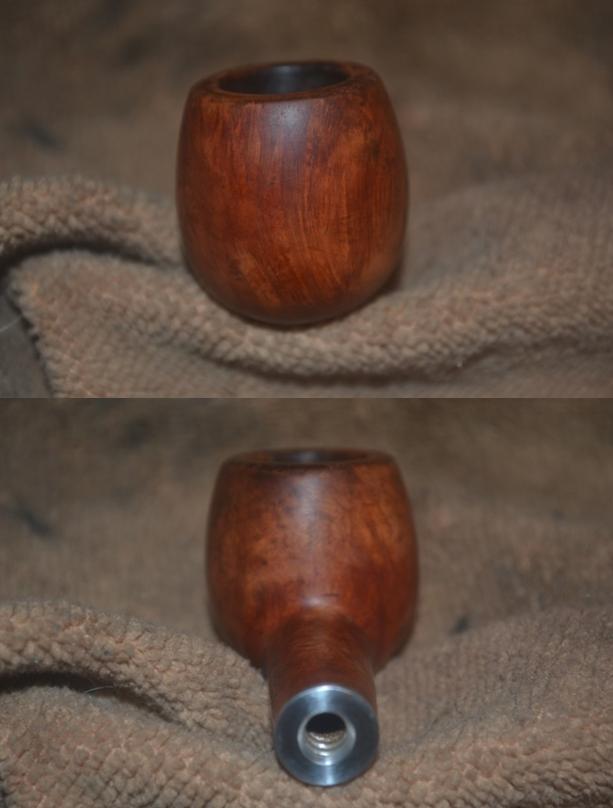
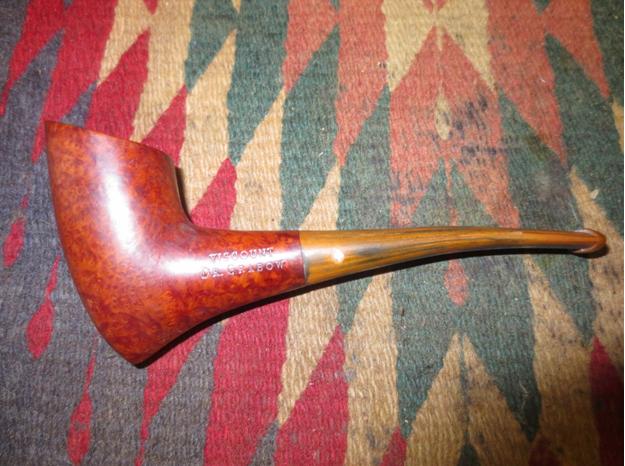
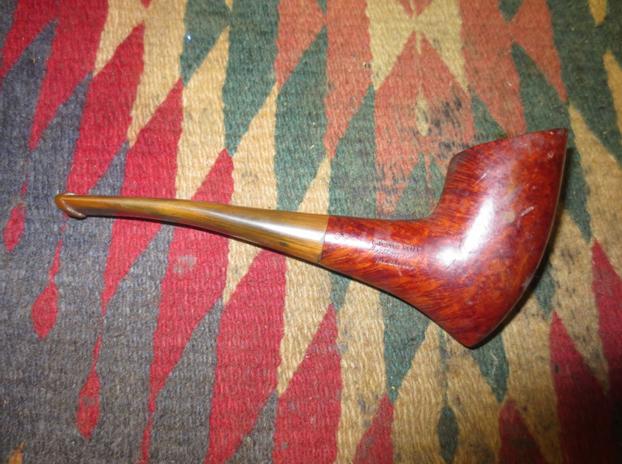
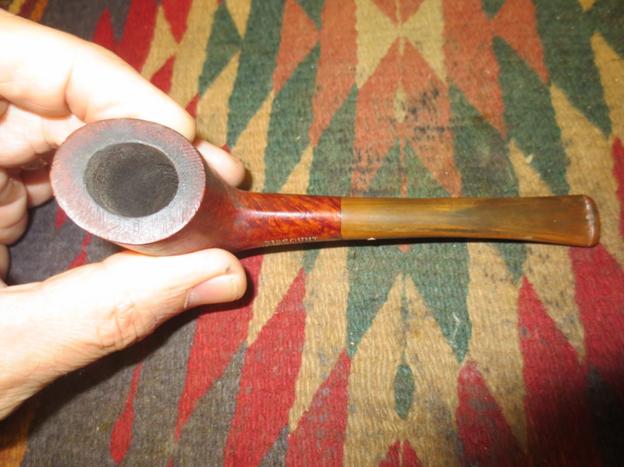
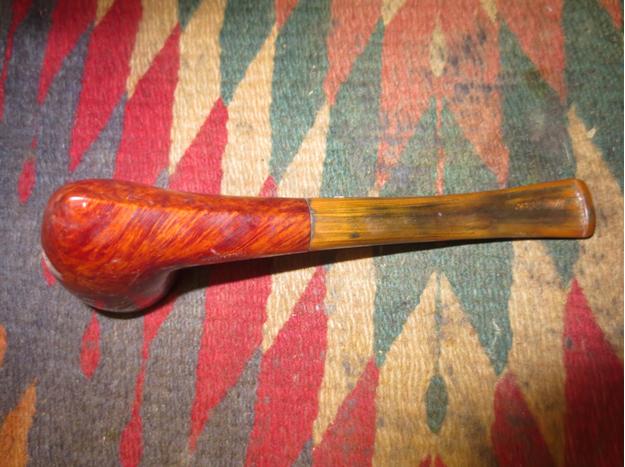
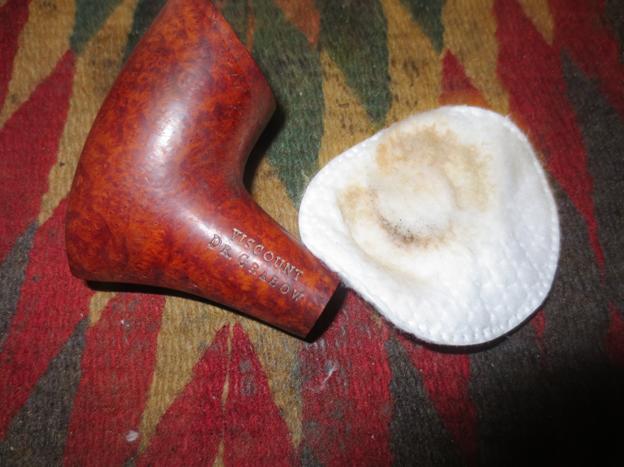
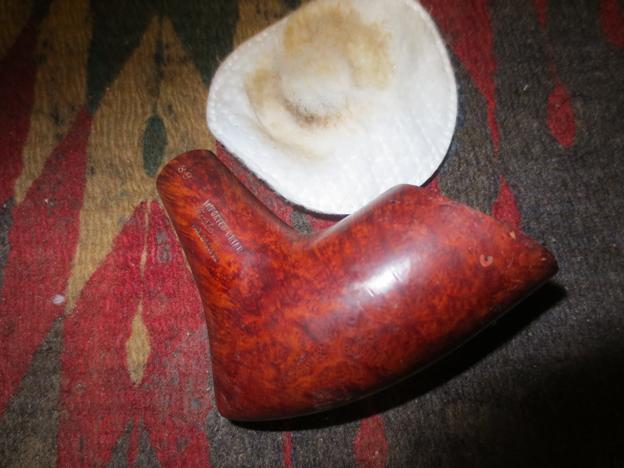
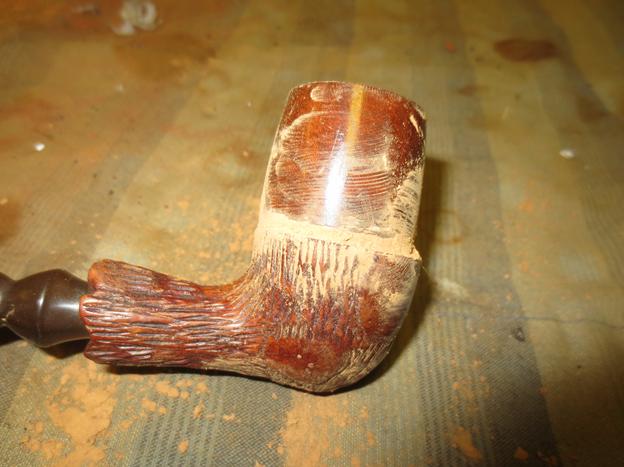
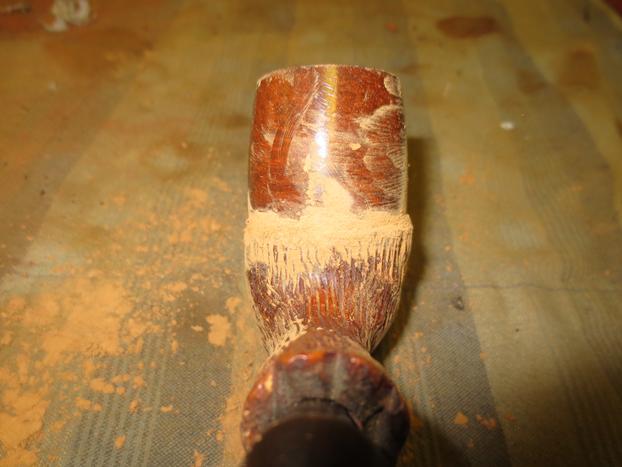
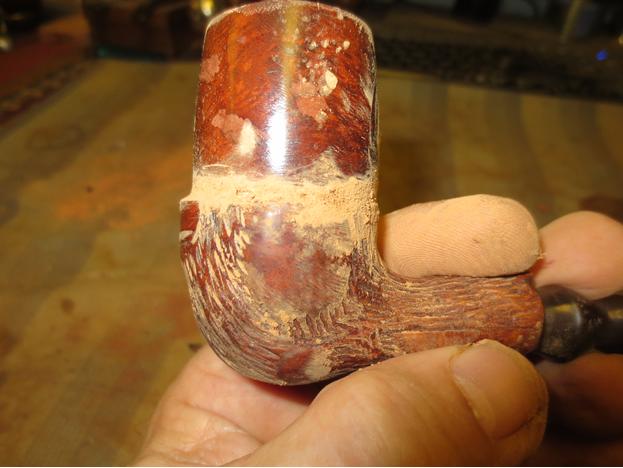
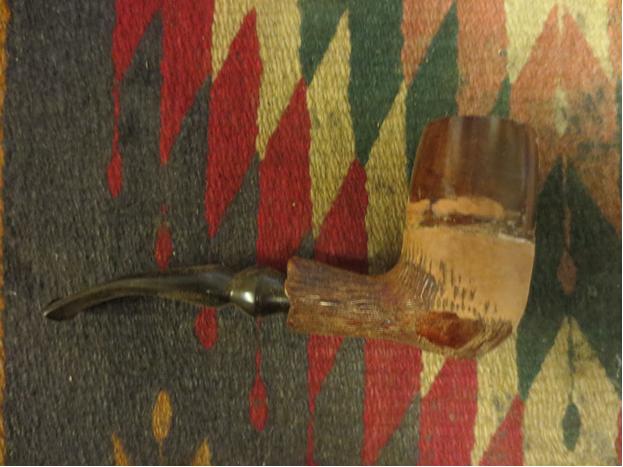
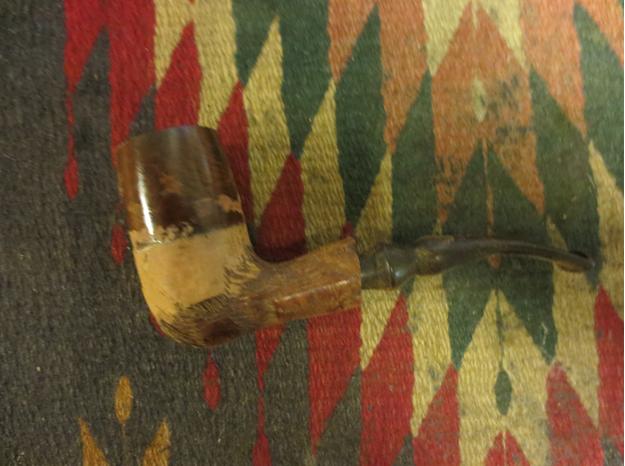
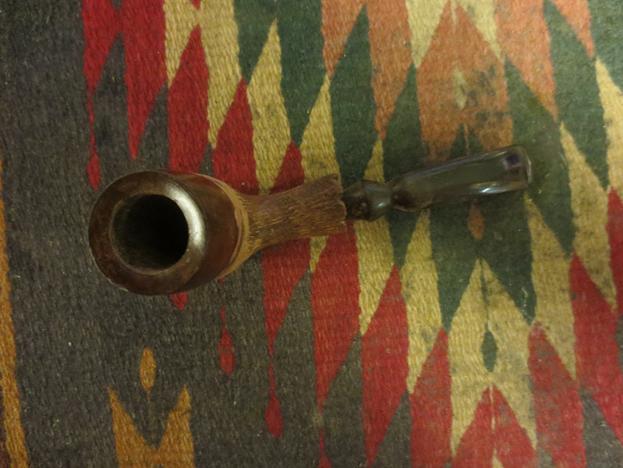
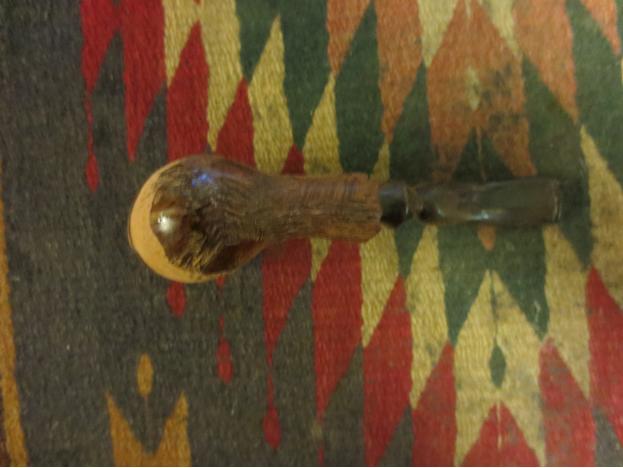
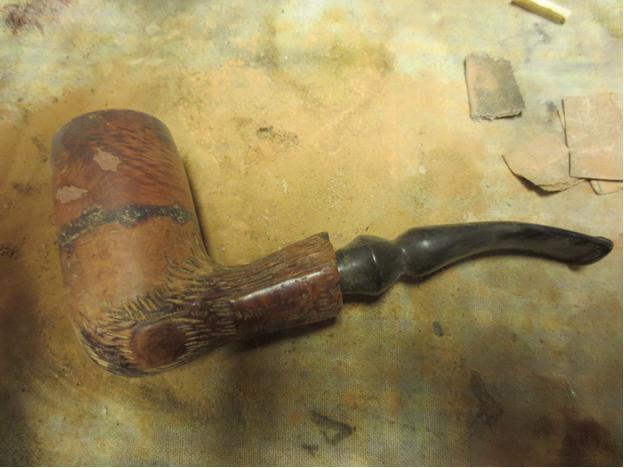
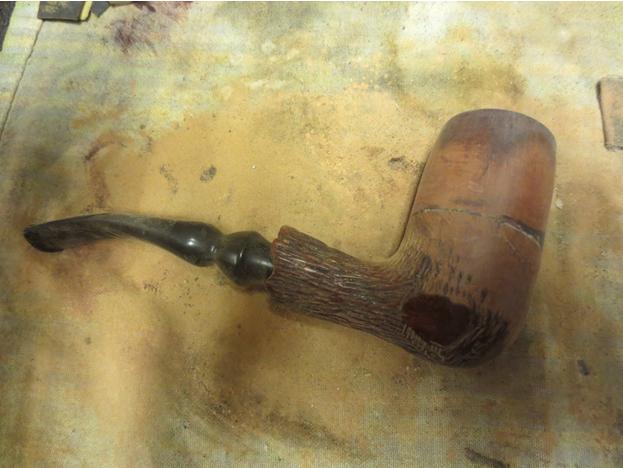
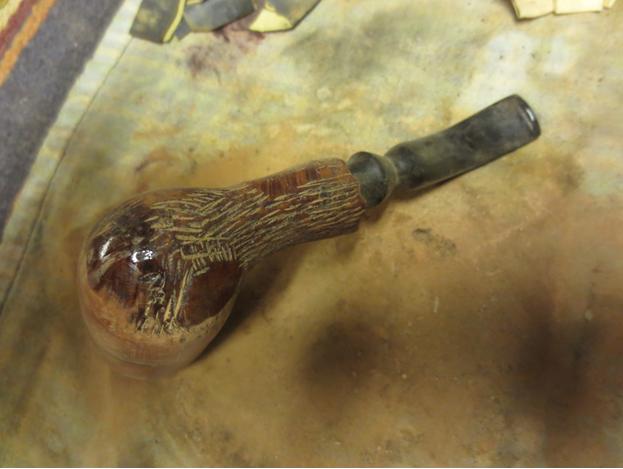
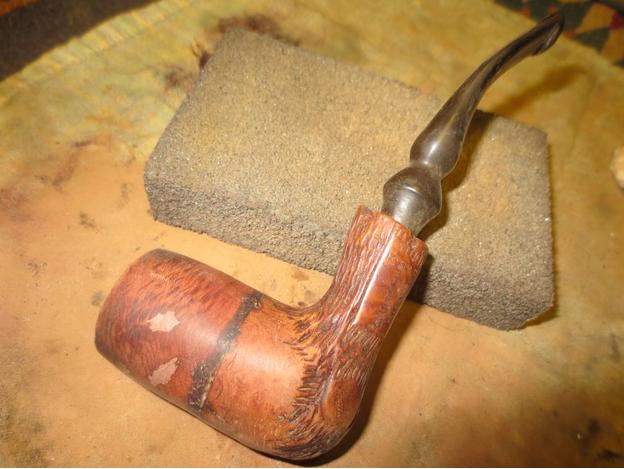
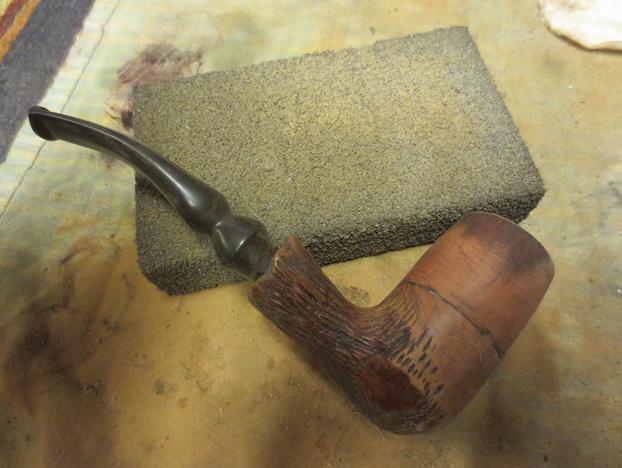
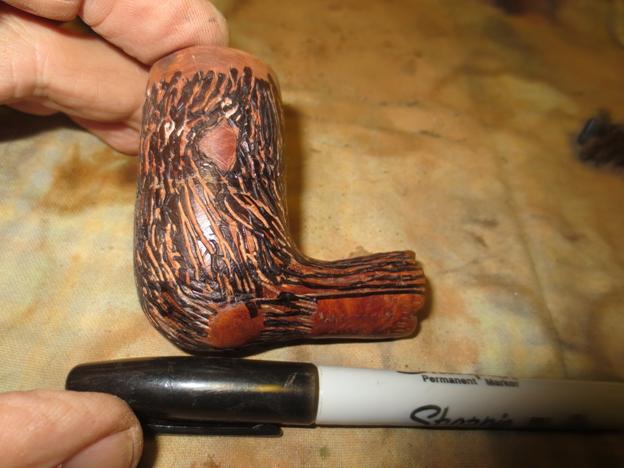
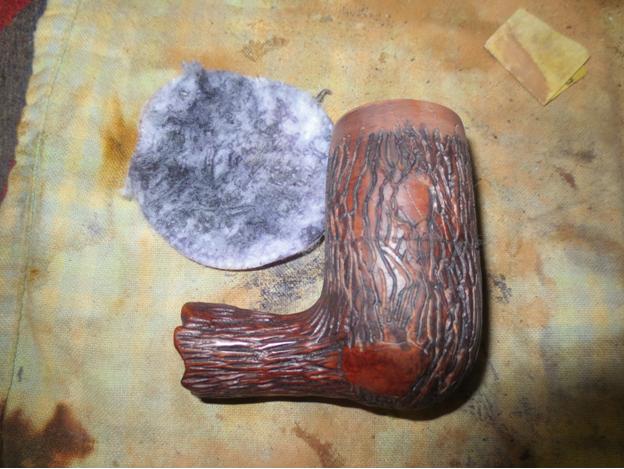
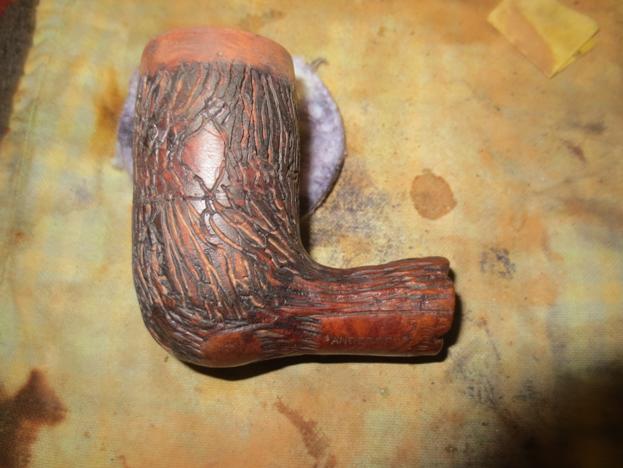
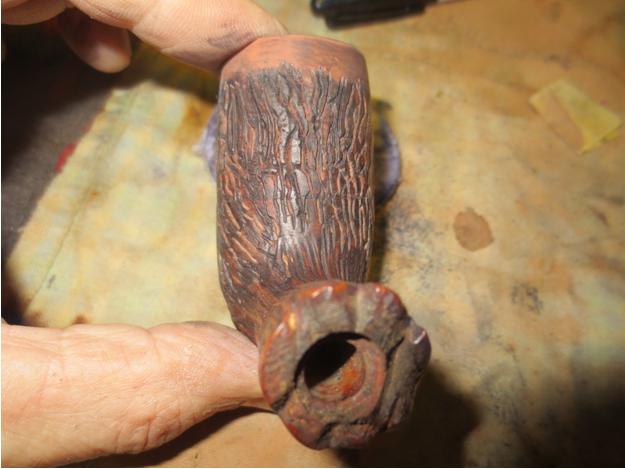
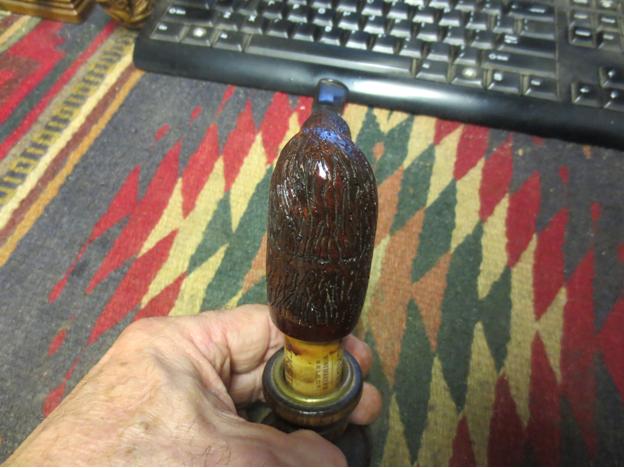
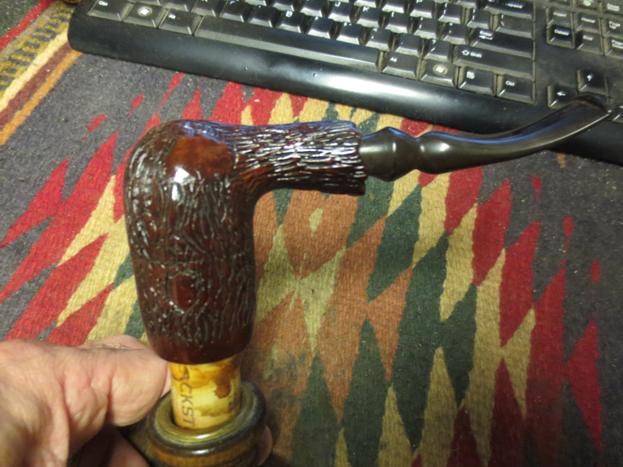
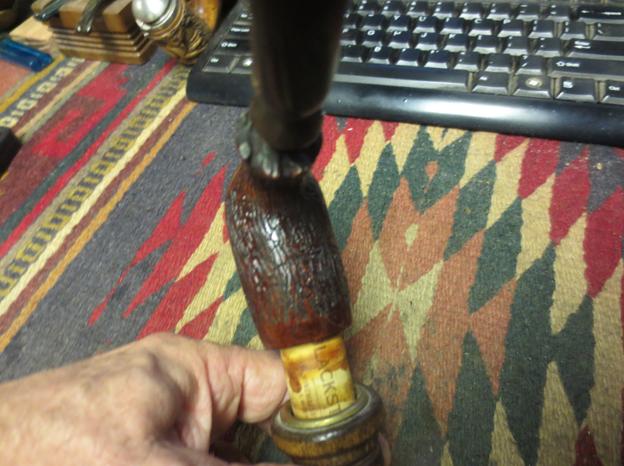
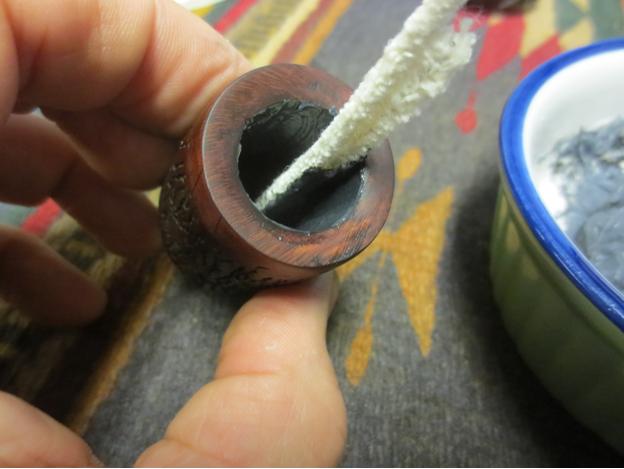
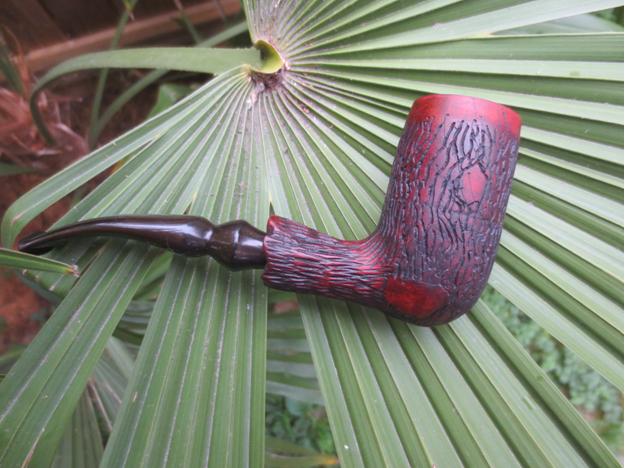
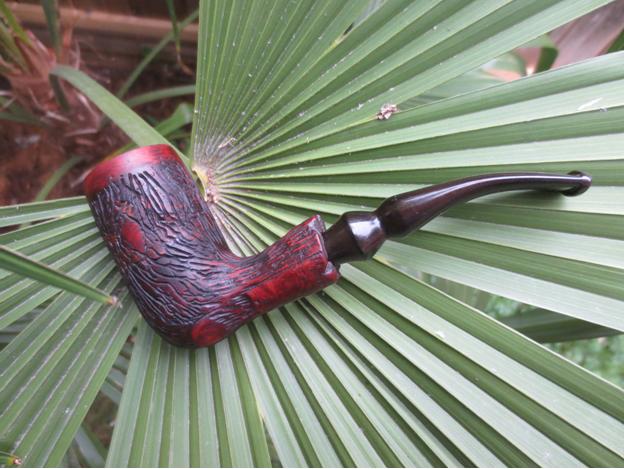
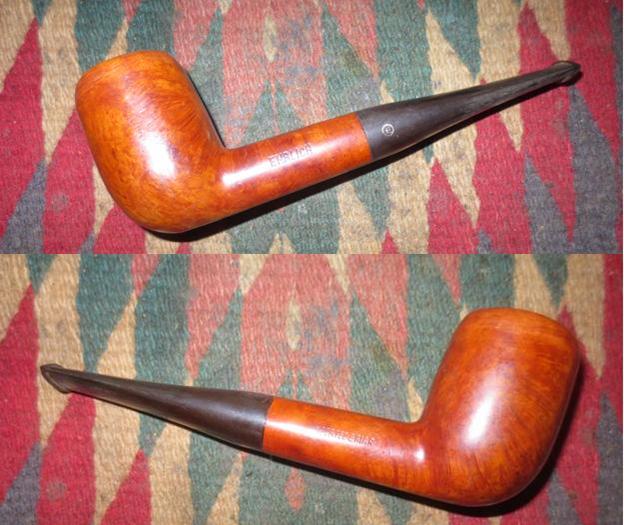
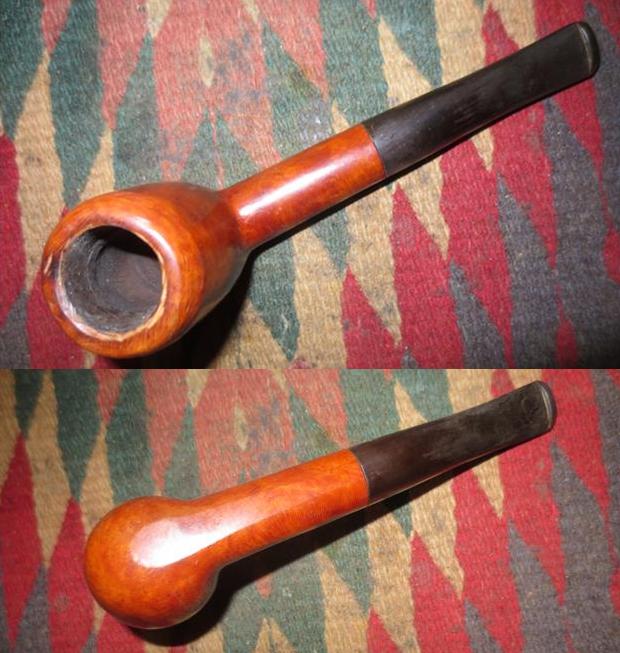
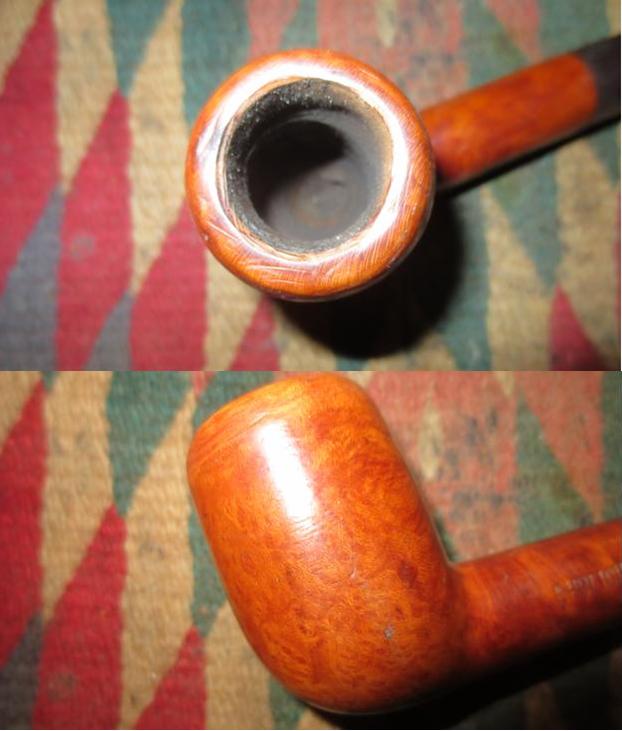
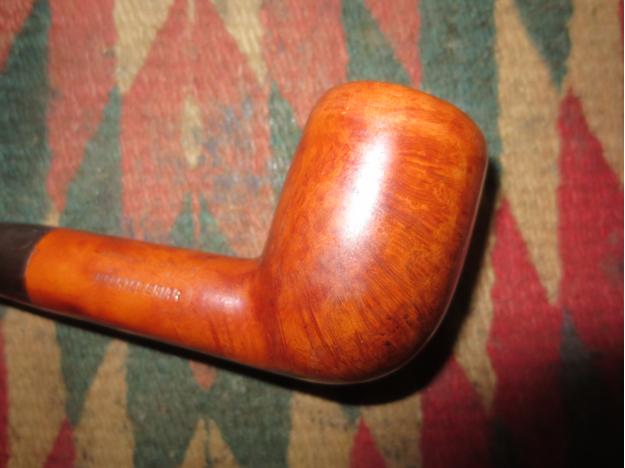
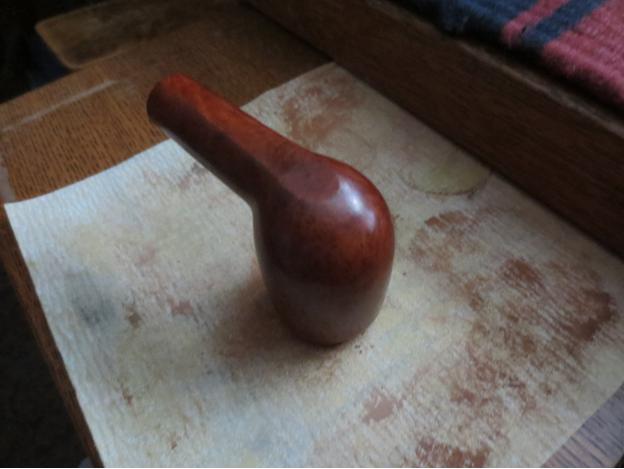
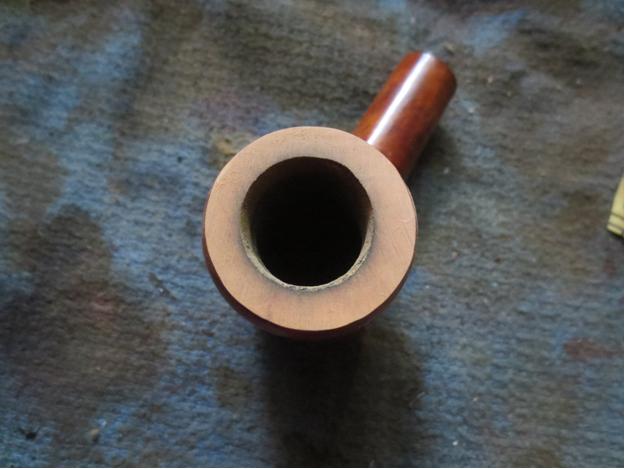
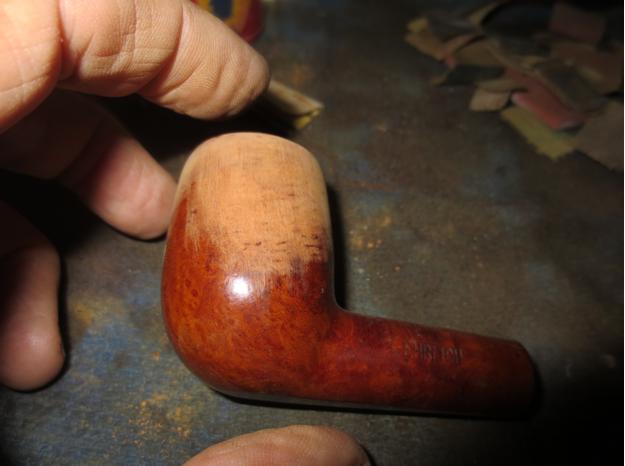
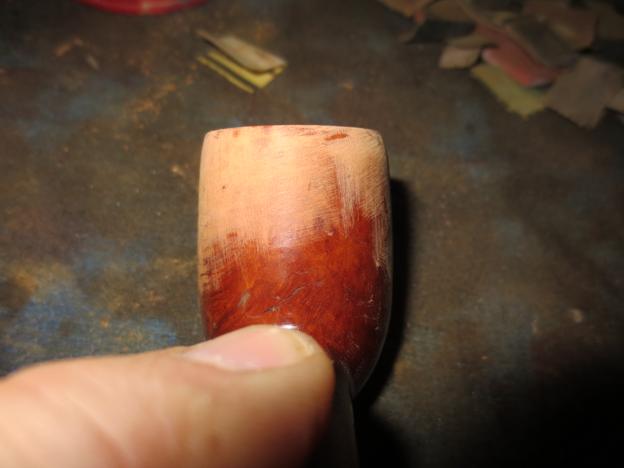
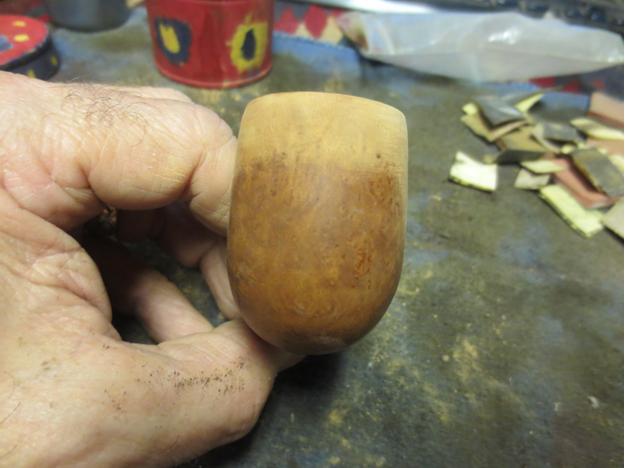
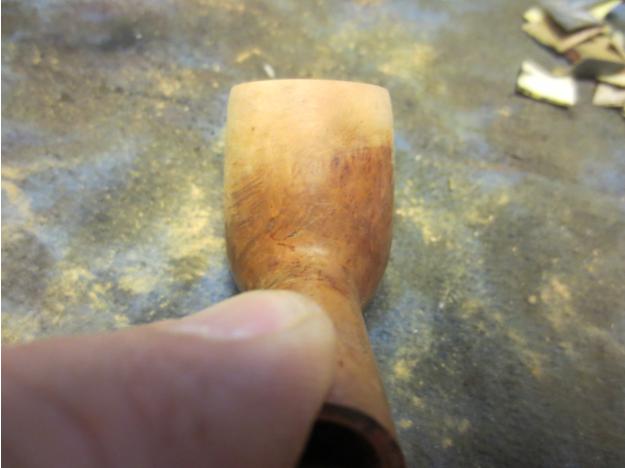
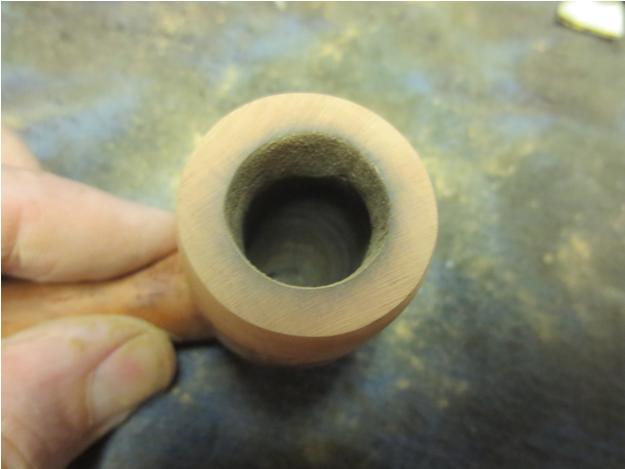
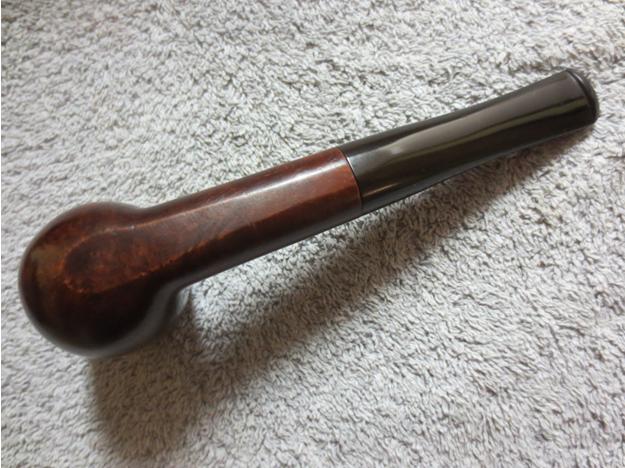
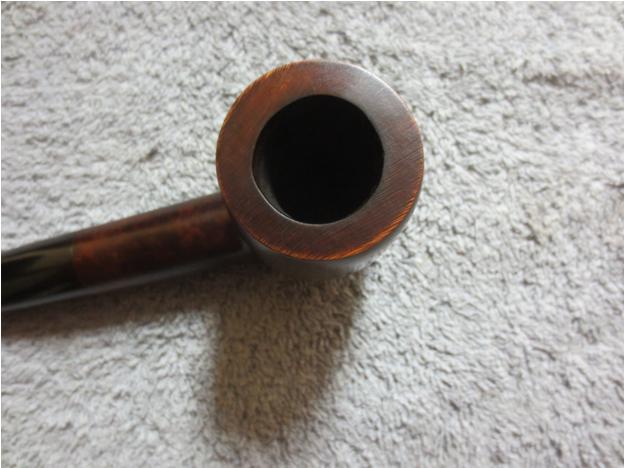
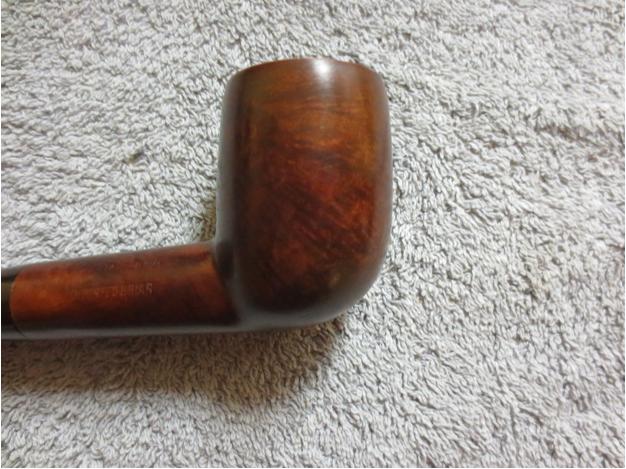
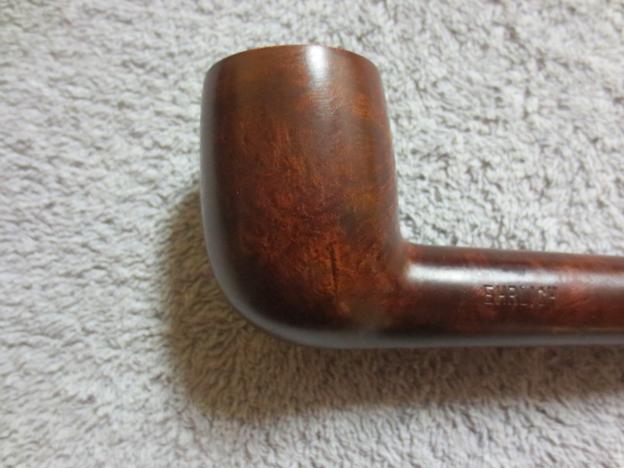
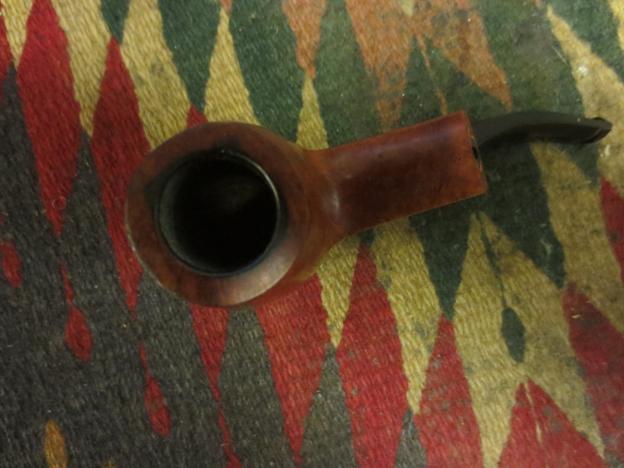
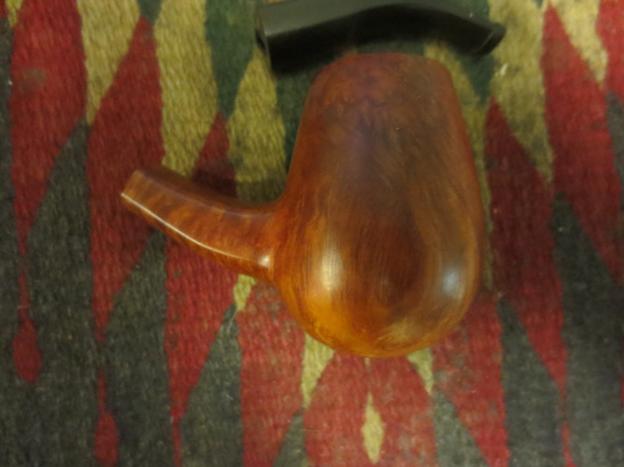
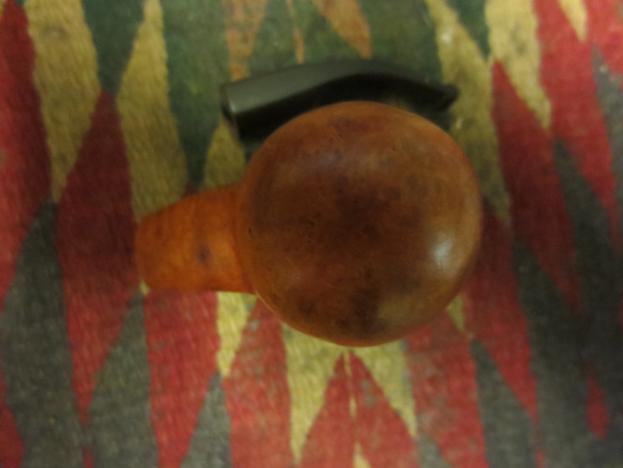
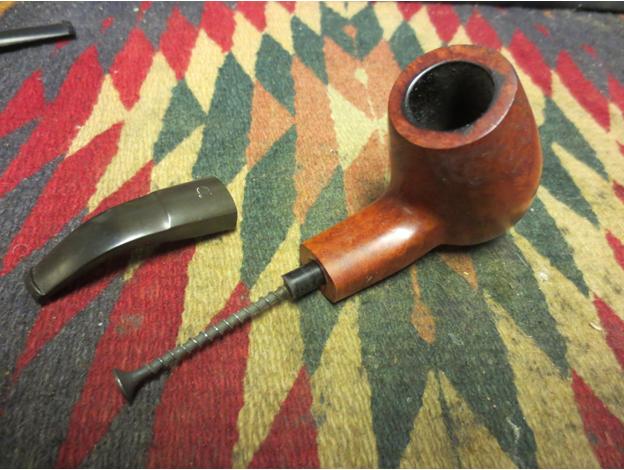
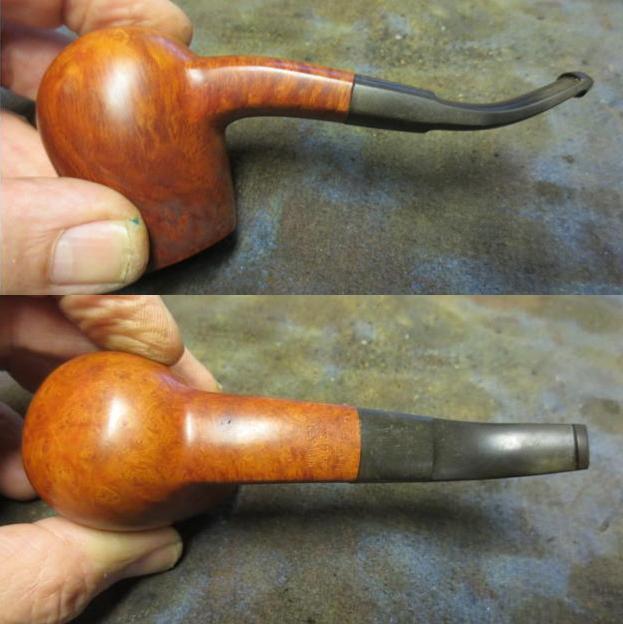
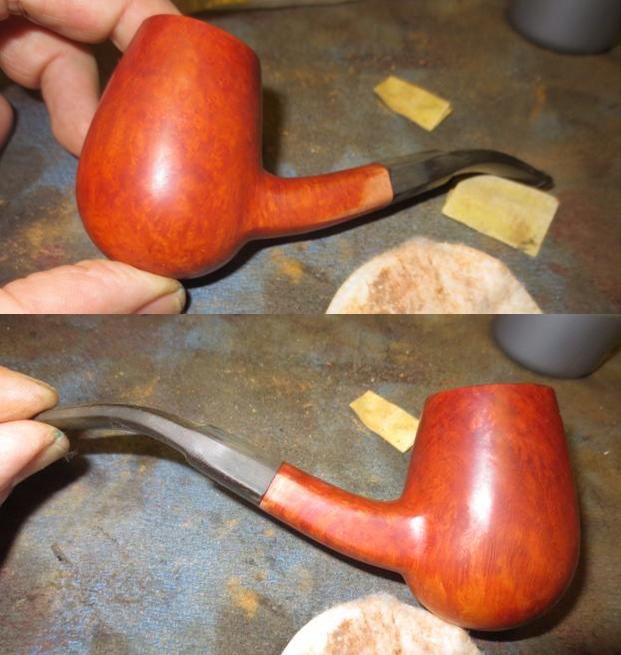
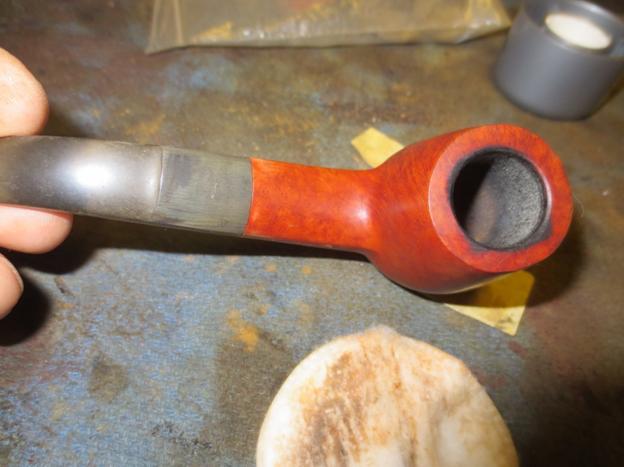
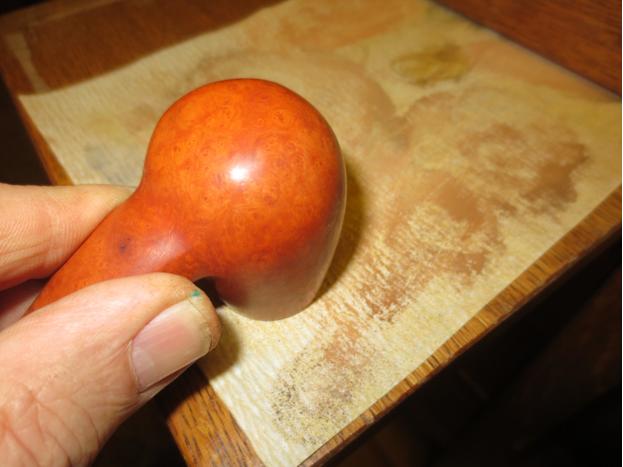
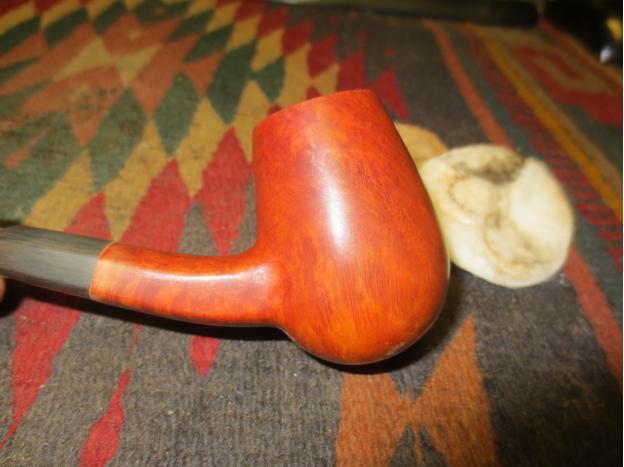
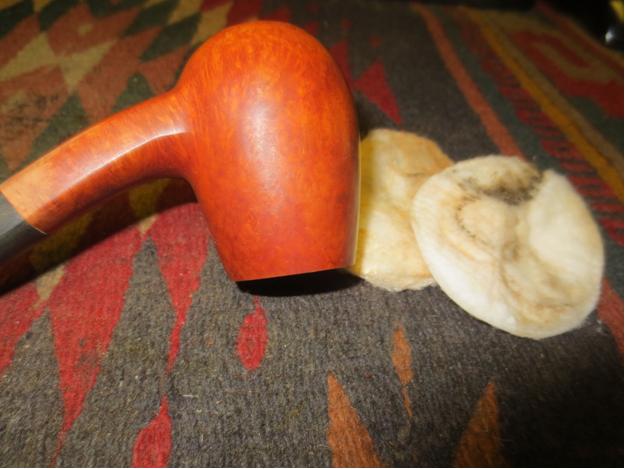
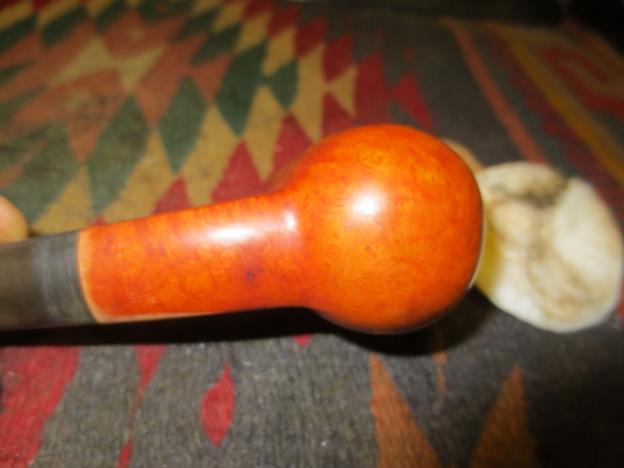
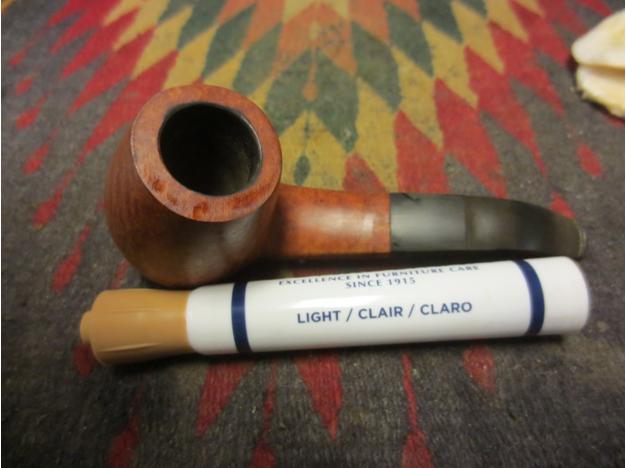
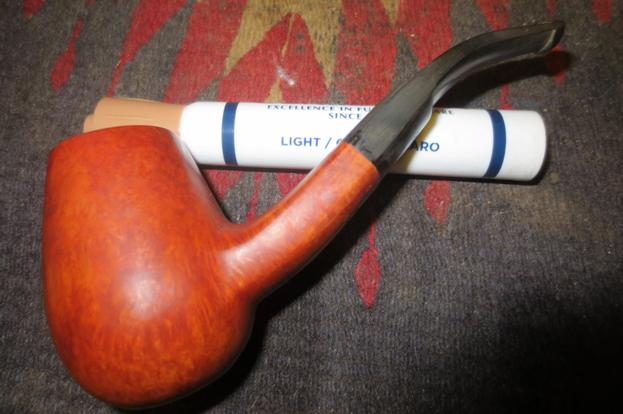
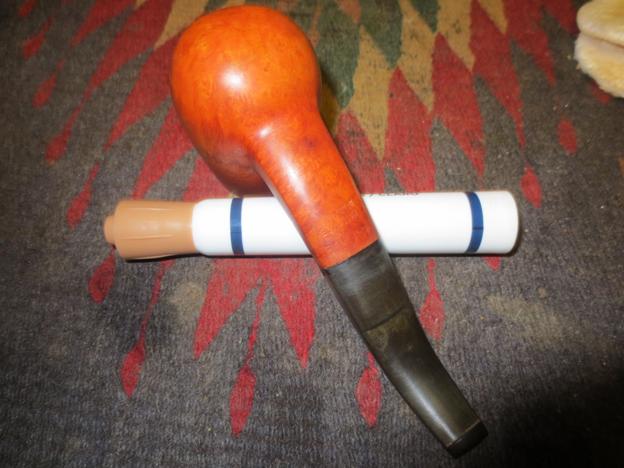
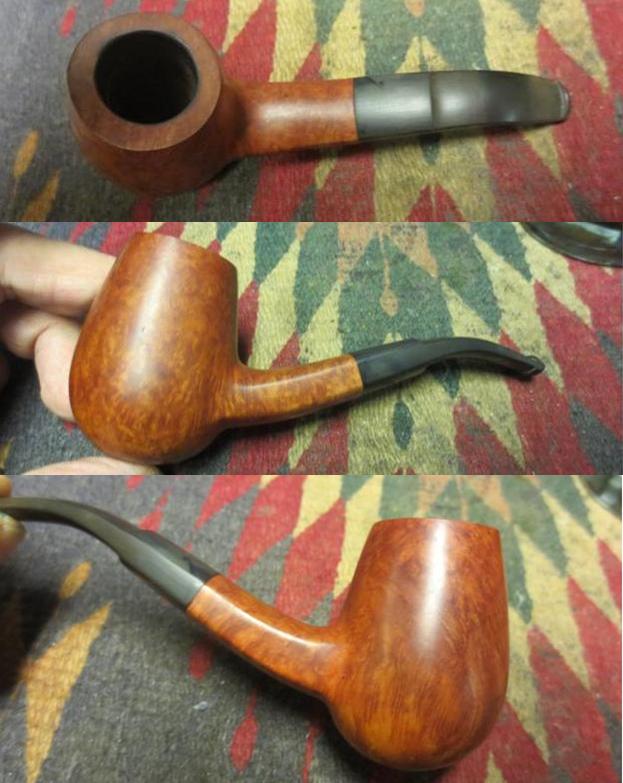
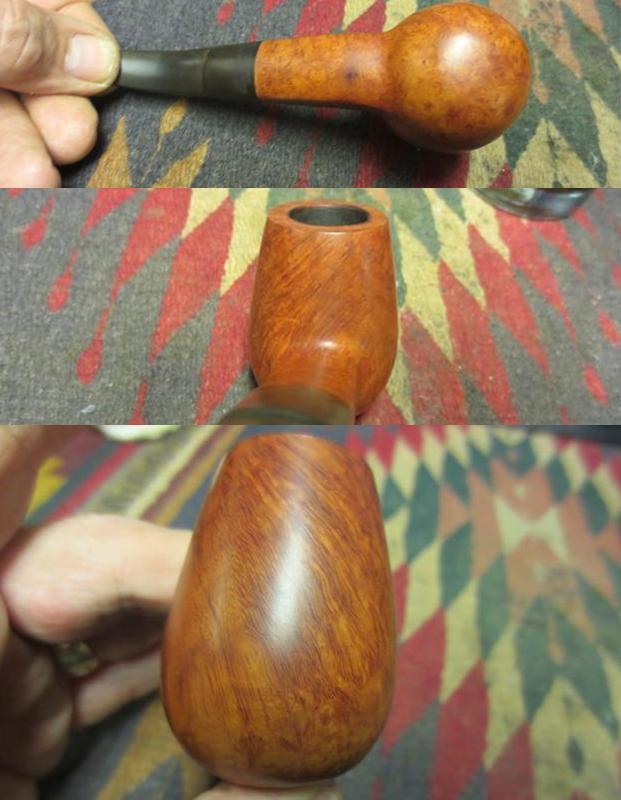
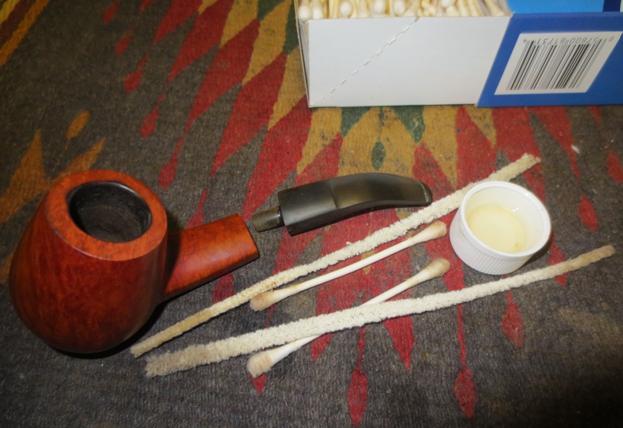
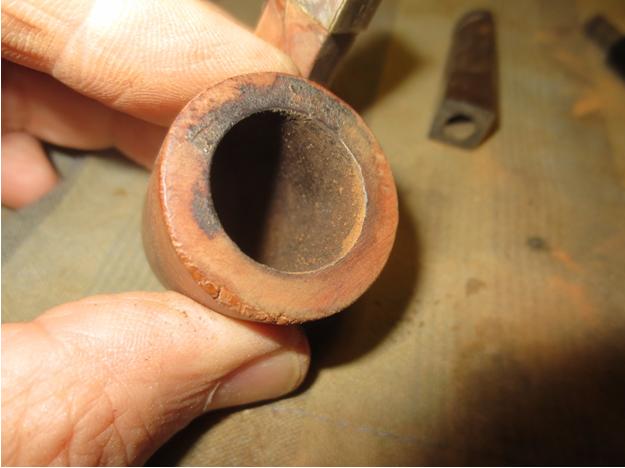
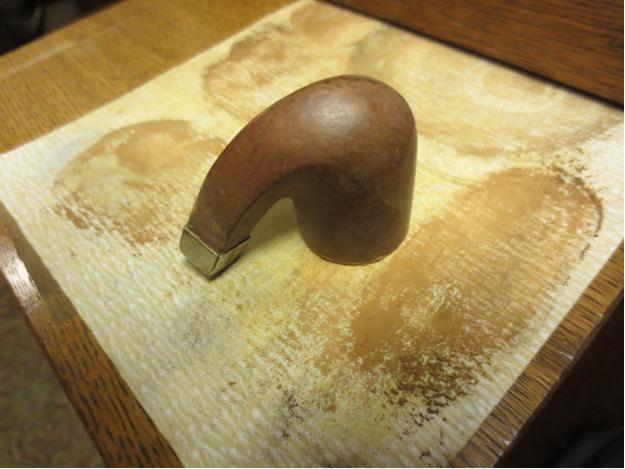
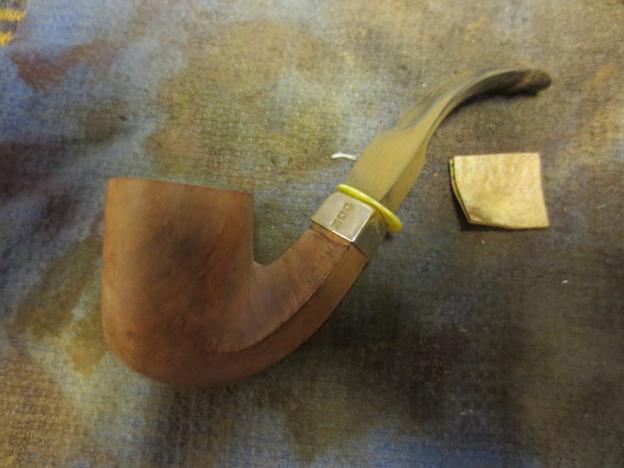
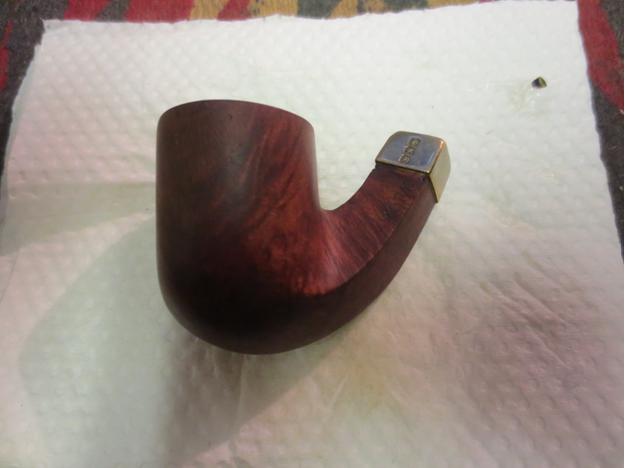
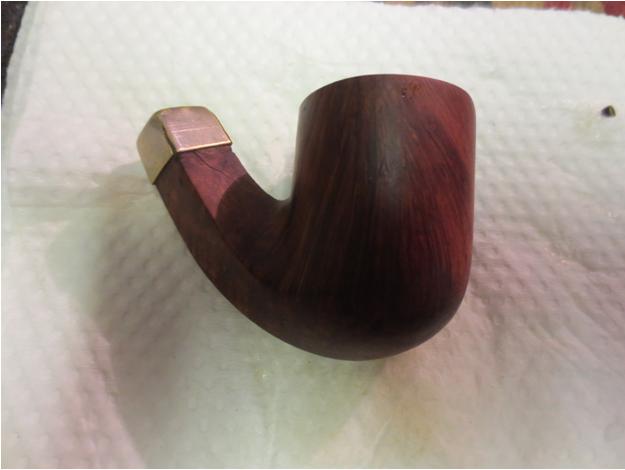
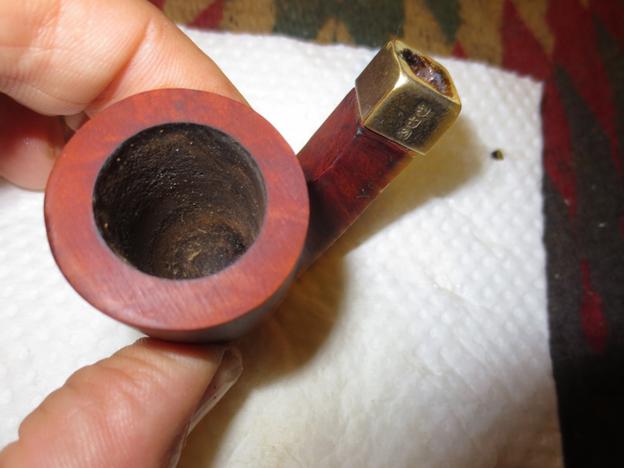
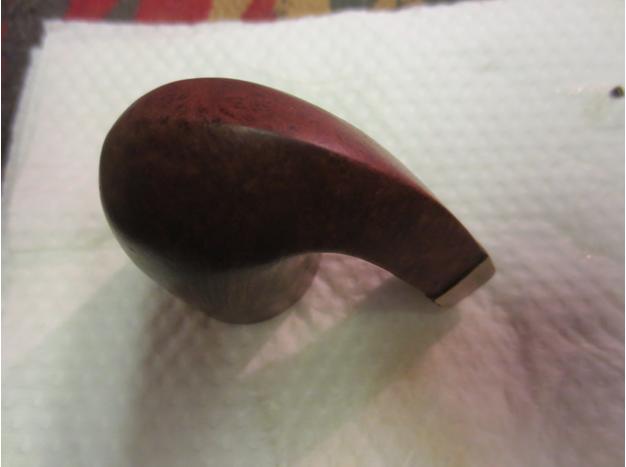
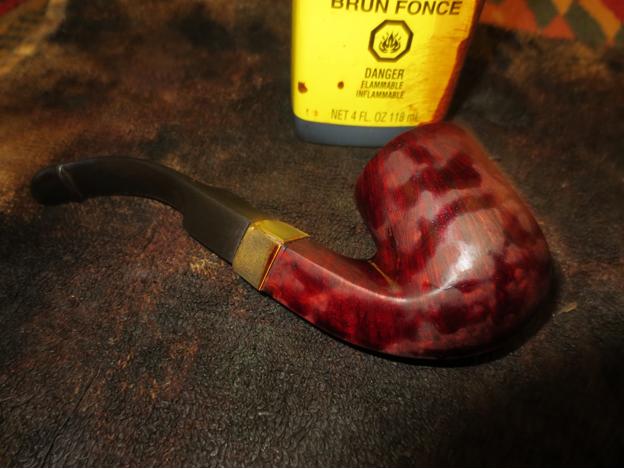
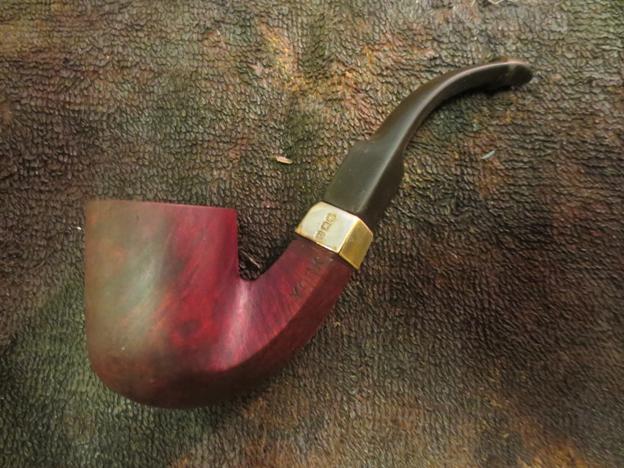
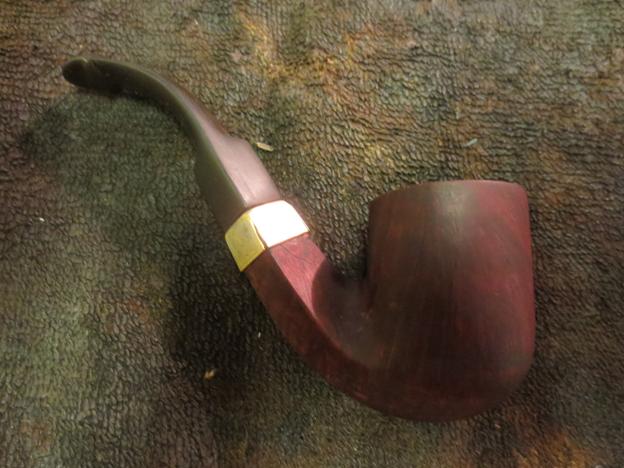
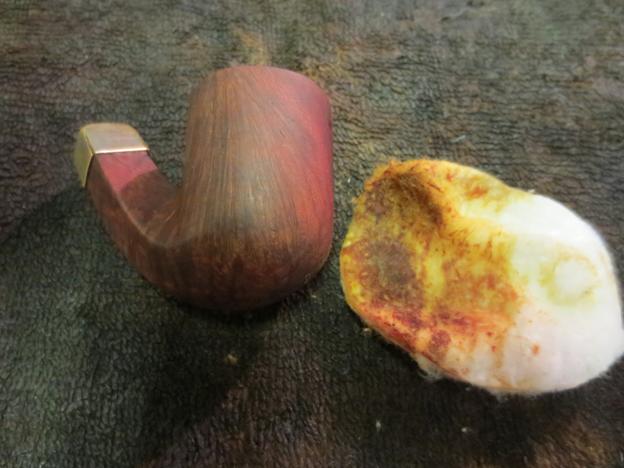
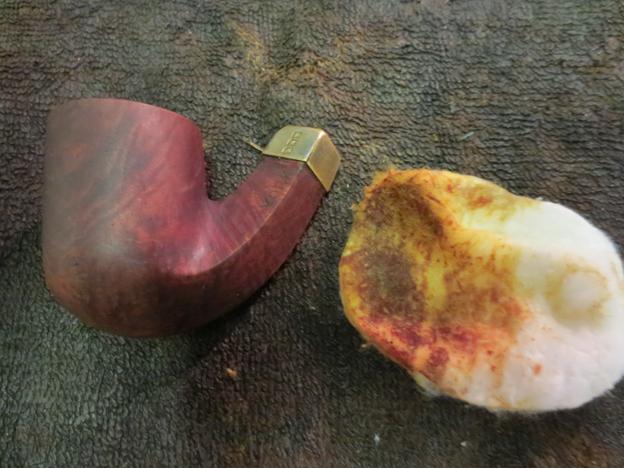
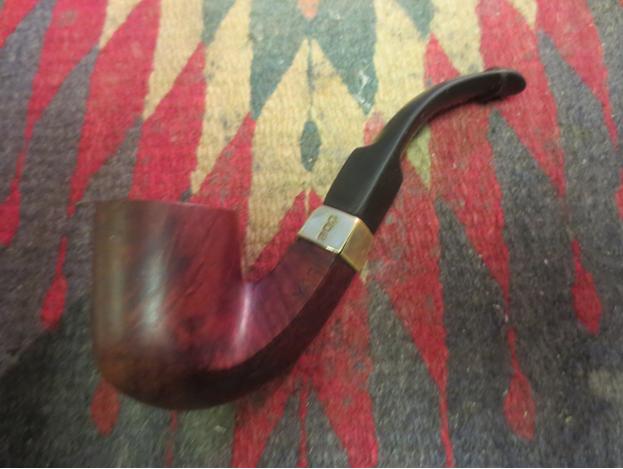
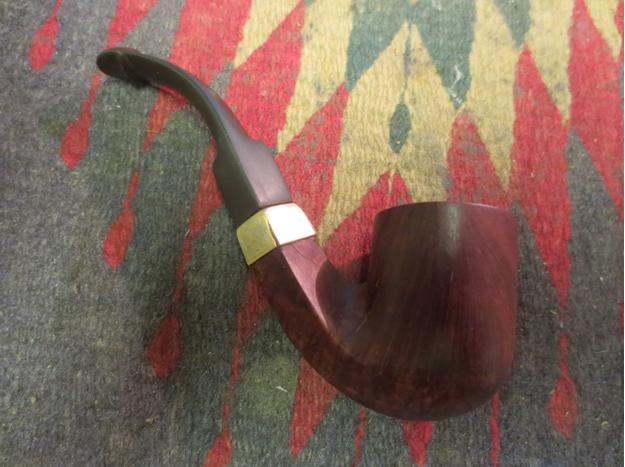
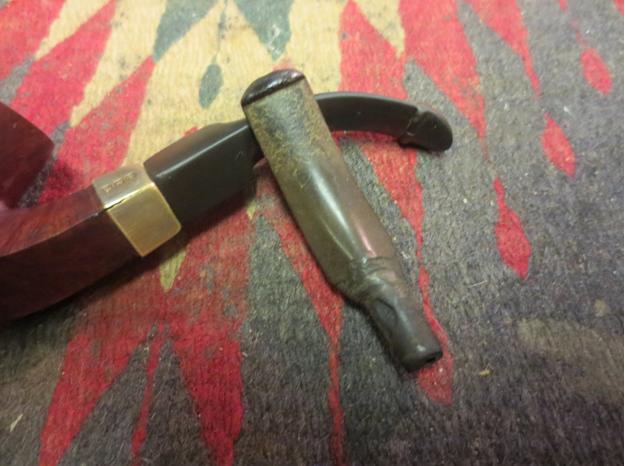
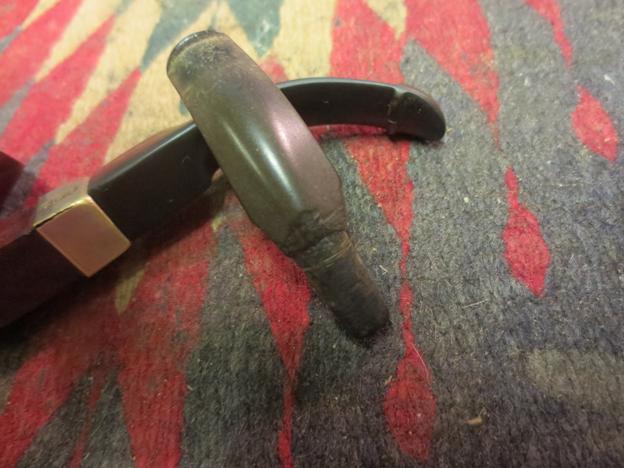
The next pipe that came to my worktable was the shapely stack pictured below. It is stamped Connoisseur over N.Y.C. on the left side of the shank and then below that E. Burak in script. The majority of the stamping is very sharp. The N.Y.C. is a bit faint. There is no other stamping on the pipe or shank. The briar was natural and unstained. It had darkened slightly with age. The finish was dirty and there were a few dents and dings in the briar. The stem was badly oxidized and had several small tooth marks on the surface. It was over bent and the way it hung in the mouth would dump the ash in your lap. The rim had a tarry buildup on the back top surface. The inner and outer edges of the rim were in perfect shape. There were some small sandpits in the briar on the left side of the bowl and on the underside of the shank. The inside of the shank was dirty and black with tars and oils. The bowl inside was thickly caked with a crumbly soft cake that was flaking away in some parts of the bowl. The shank itself was interesting to me in that it looked perfectly round. Once the stem was removed the drilling of the mortise was centered but low on the shank. The drilling was perfectly aligned but the airway seemed constricted. My guess was that there were tars and oils clogging the airway in the shank and the over bent stem made the draught constricted.Con1

Con2

Con3

Con4 Over the years I have had several Connoisseur pipes but none of them were stamped like this one. I wondered about the stamping. It was my guess that it somehow helped with dating the pipe to a particular time in Ed Burak’s pipe making career but I did not know for sure. I decided that before working on this particular pipe I would do a little research on the brand and the maker on Google. I always check Pipedia to see what they might have on a maker. In this case I was not disappointed. There as a great article on the site. The link to that is: http://pipedia.org/wiki/Burak.

On that site I found not only some history on Ed Burak and the brand but also a photo of a pipe that was the same shape as the one I was working on. I was fortunate to find it because it confirmed my earlier assessment that the stem was over bent. With the photo and a second one that I found on another site I would be able to correct the bend on the stem and open the airflow from the bowl to the button.

I also found some great information on the site regarding Ed Burak. I quote from that article below. If you should wish to read it in its entirety click on the link noted above. The article is entitled, The Art of Edward F. Burak, Dean of American Pipe Designers.
Con5“Ed Burak is the dean of American pipe designers whose work has had a worldwide influence on the thinking and the work of contemporary pipe makers.”

“…he met and subsequently began working with Meerschaum master Paul Fisher, with whom he stayed 5 years. During that time he produced a small number of Meerschaum pipes, a few of which are still extant in collections. He also worked for Wally Frank as a pipe designer. In 1968 he bought the Connoisseur Pipe Shop, where he was able to concentrate on his own designs. Burak’s pipes have been carved by a number of well-regarded pipe makers, among them Joe Corteggione and Tony Passante. Several of his freehands are in the Museum of Modern Art in New York and have been part of a traveling exhibit of the American Craft Museum.”

“Burak’s work is best known as pipe design as fine art. He admires pays tribute to the classic English designs of the old Barlings and Comoy’s and offers a line of “Classics” which begin with these traditional values yet reflect his own interpretations.”

“Because these pipes are different, so carefully crafted, they not only please the eye, but educate it. Most pipe makers will start with an idea and work the wood toward that goal, but will change their original design to accommodate the briar. Burak does not allow the medium to modify the intent. Minor surface flaws are left on the pipes. No staining is permitted; all Connoisseurs have a natural finish, with only carnauba was added.”

“As a significant footnote, the reader should note that Ed Burak’s pipes are NOT made by Paul Perri, nor Weber, nor Jobey, as erroneously stated in Lopes’s book “Pipes: Artisans and Trademarks.” Burak prefers not to disclose the name of his current pipe carver.”

I also learned on Pipephil’s website, http://www.pipephil.eu/logos/en/about-en.html that the stamping did indeed give some information that helped in identifying the period that a particular pipe was made. There I found that one may generally separate Connoisseur pipes date of manufacture into three periods.

From late 1960’s until 1974: no stampings
From 1974 until 1981: CONNOISSEUR over N.Y.C.
From 1981 on: CONNOISSEUR over N.Y.C. and Ed Burak’s signature

The pipe I was working on was stamped like the photo below. It had the Connoisseur over N.Y.C. stamp and Ed Burak’s signature. That dated the pipe to the time period from 1981 to the time that the Connoisseur Pipe Shop in Manhattan closed in 2009 on Ed’s retirement. Included with the photo of the stamp was a picture of a tall stack pipe that looked identical to the one that I was working on. Using the photo above and this photo gave me a clear picture of what the bend of the stem was like originally.Con6 I took a photo below of the stamping on the left side of the pipe that I am working on for comparison with the one above. You can see that they have the same stamping.Con7 On the Puff.com Pipe Forums I found a thread on Connoisseur pipes that confirmed how the pipes were finished when they were originally made. http://www.puff.com/forums/vb/general-pipe-forum/299824-ed-burak-pipes-man.html. There in the latter part of a post by a member identified as Mr. Rogers was the information that I was seeking confirmation about.

“His premium pipes were like nothing I had seen before. He finished all of his pieces with only wax, no stain. He incorporated blemishes into his designs and made no attempt to hide these flaws with fillers. I frequented the CPS (Connoisseur Pipe Shop) as a high school, college, then grad school student, never really having the funds to purchase his premium pieces. As luck would have it, once I became established in my work/field, the CPS was long gone…”

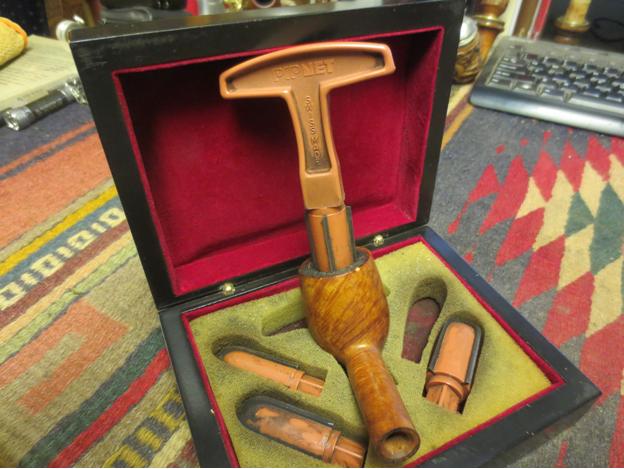
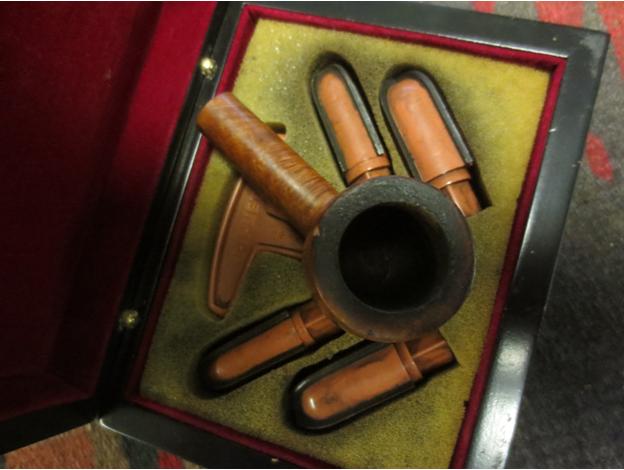
Now that I had a pretty good idea of when the pipe was made and what the stamping meant, it was time to go to work cleaning up this beauty. I took a close-up photo of the bowl to show the state of the uneven broken cake that was formed on the walls of the bowl. The cake had a fuzzy appearance that bothered me. So before I cut into it with the reamer I examined it with my lens to see if it was mold. I was glad to see that it was merely dust particles. I was able to blow them out before with a blast of air before I reamed back the cake. You can also see the flaw on the back side of the rim centered between the inner and outer edge of the rim.Con8 I reamed the bowl with a PipNet reamer. I started with the smallest cutting head and worked up to a cutting head the same diameter as the original bowl. The bowl was U-shaped but narrowed slightly half way down the bowl so I had to use the second cutting head to clean out the bottom half of the bowl and smoothed out the transition between the two cutting heads with a sharp pen knife. I took the cake completely back to the bare wood so that a good, clean, solid cake could be formed.Con9

Con10

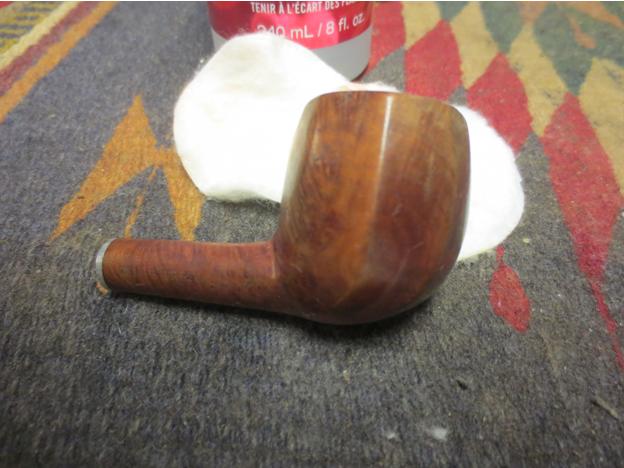
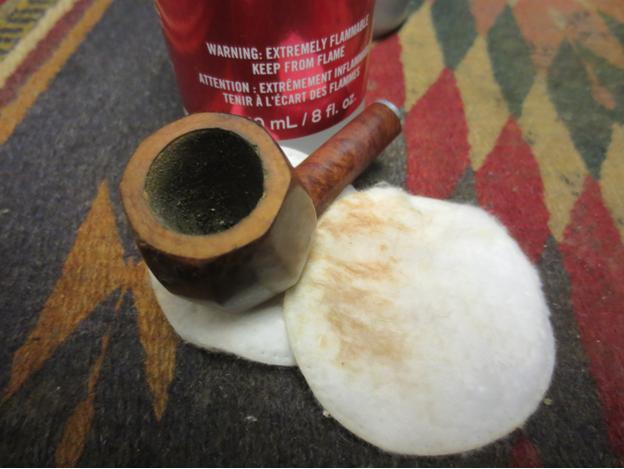
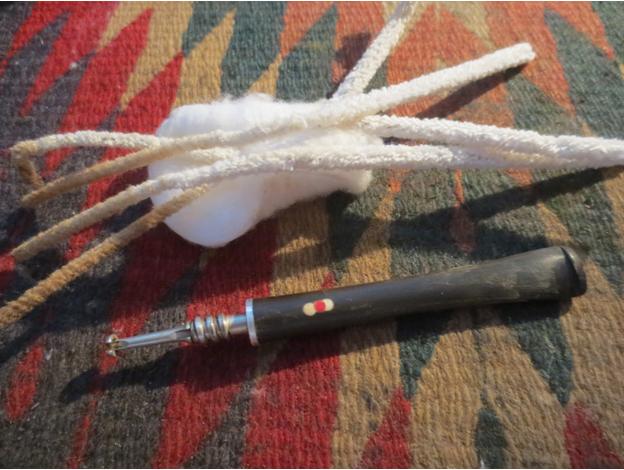
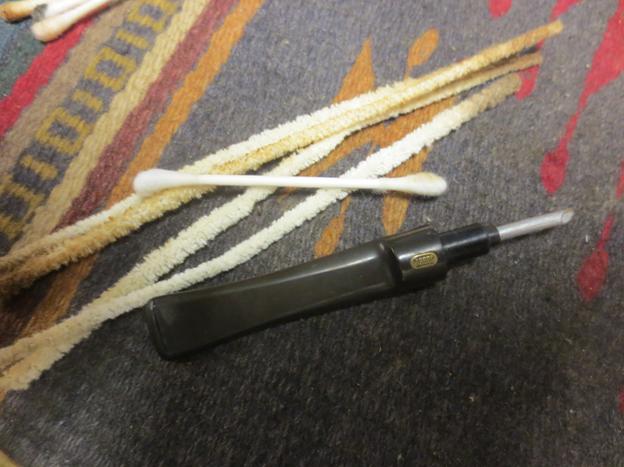
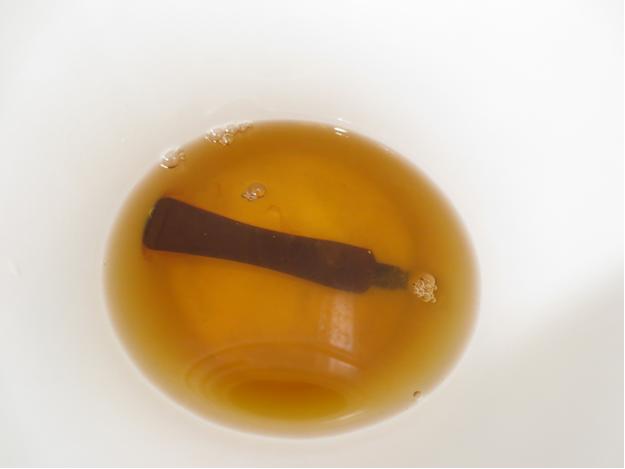
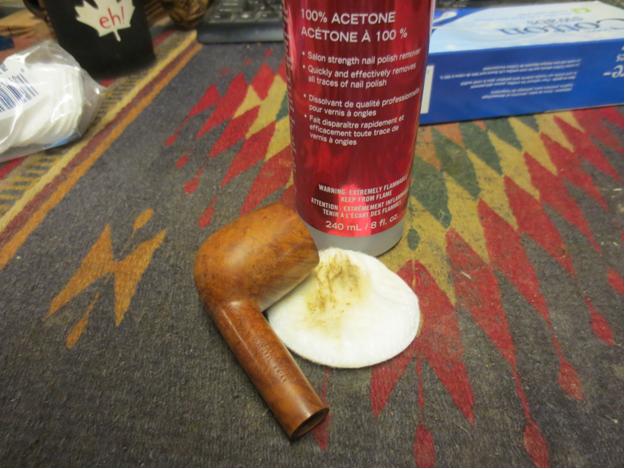
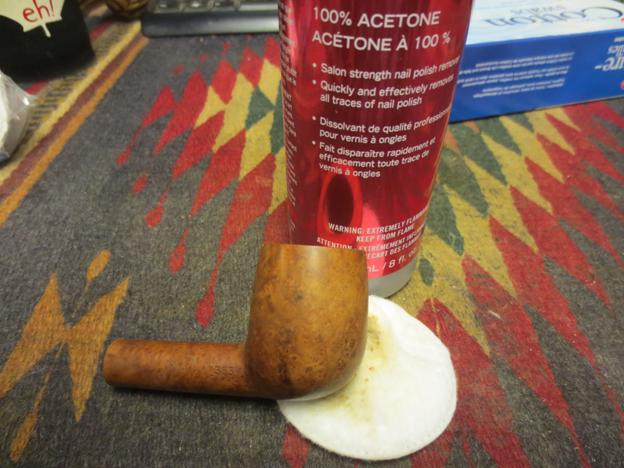
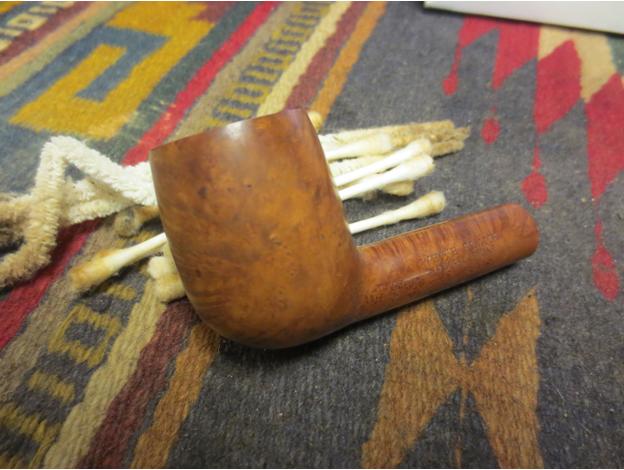
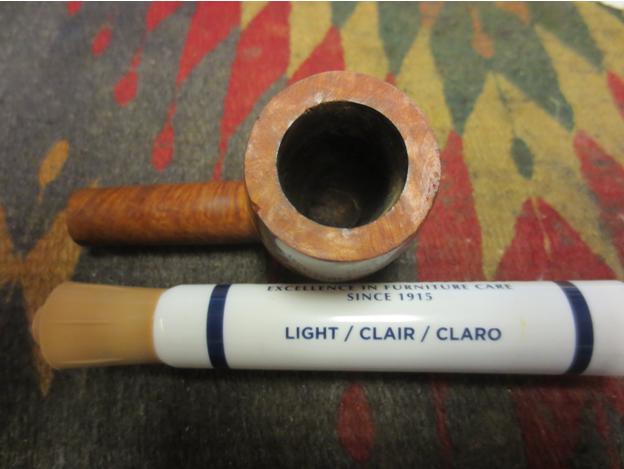
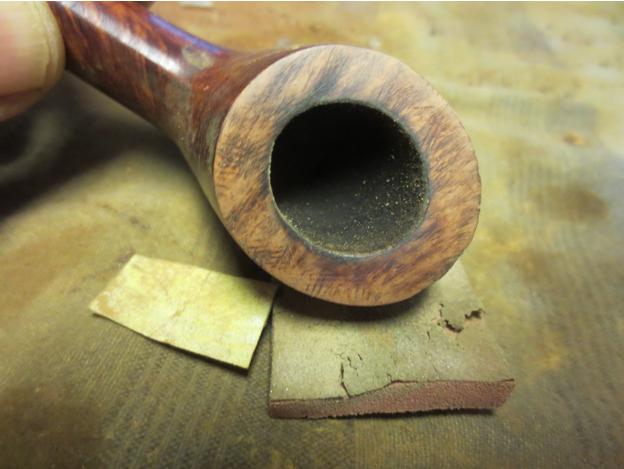
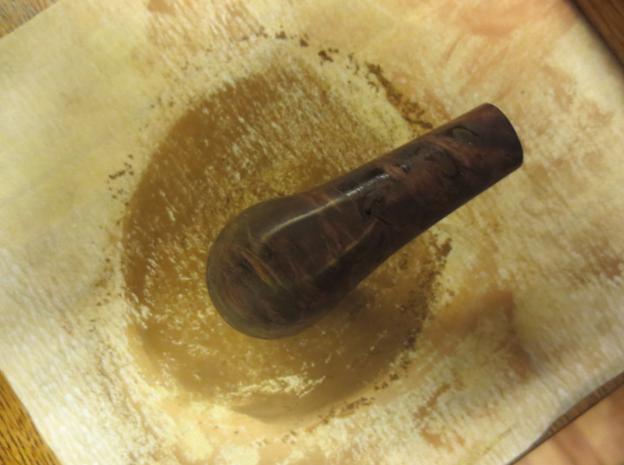
Con11 I scrubbed the exterior of the natural briar with alcohol on cotton pads. It removed the grime, oils and ground in dirt from the finish and left the briar clean.Con12 I dropped the stem in a bath of Oxyclean. Almost as soon as it hit the water and I shook it the mixture turned amber coloured as the Oxy worked on the oxidation. I set the bath aside to let the stem soak and turned my attention to cleaning up the bowl.Con13 Before I could repair the flaw on the rim I needed to clean it up. I lightly topped the bowl on the topping board using 220 grit sandpaper. Once I had topped it lightly I washed it down with alcohol on a cotton pad to remove the sanding dust and blew out the dust in the bowl.Con14 I picked out the dust and grime in the flaw and used a drop of clear super glue and some briar dust from the topping of the bowl to fill in the flaw. Once it was hardened I sanded it with 220 grit sandpaper on the topping board and then with a medium and a fine grit sanding block to smooth out the scratches and polish the rim.Con15 The photo below shows the repair to the rim as well as the oils and tars on the cotton swabs and pipes cleaners that I used to clean out of the mortise and airway. I also wiped down the inside of the bowl with alcohol on cotton swabs to remove the dust and any remnants of the old cake.Con16 With the bowl cleaned and repaired I took the stem out of the Oxy bath. It had been soaking for about 2 hours and the oxidation was softened and brought to the surface enough that when I scrubbed stem to dry it off I was able to remove much of it.Con17
Con18

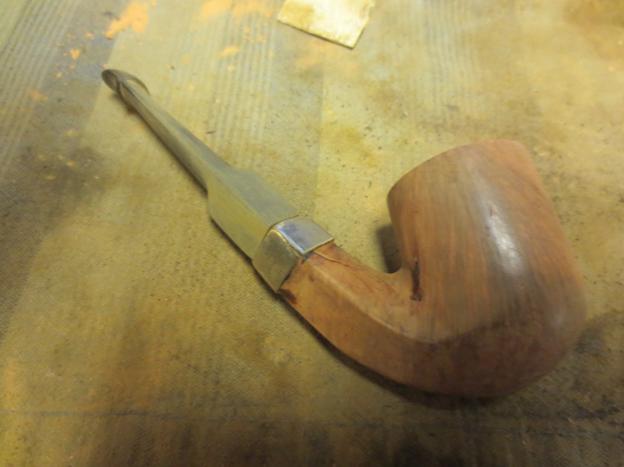
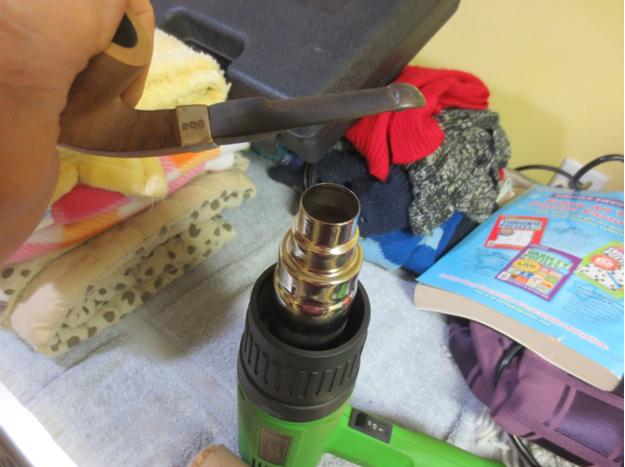
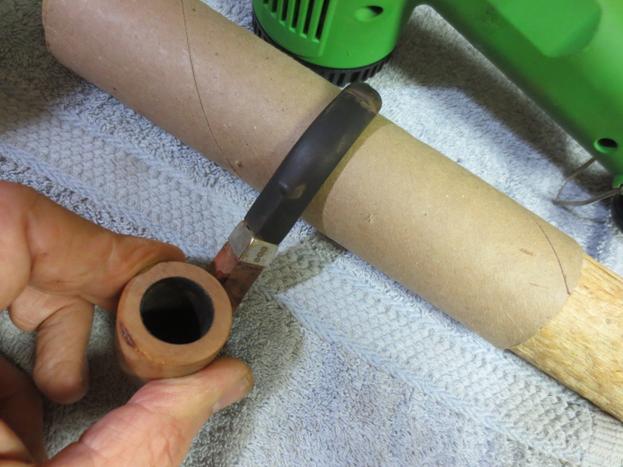
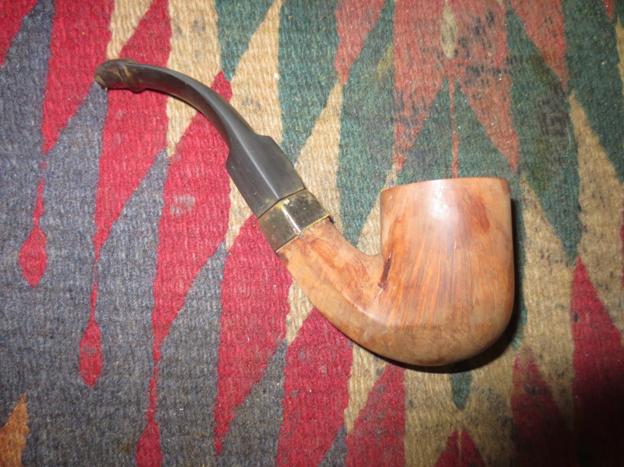
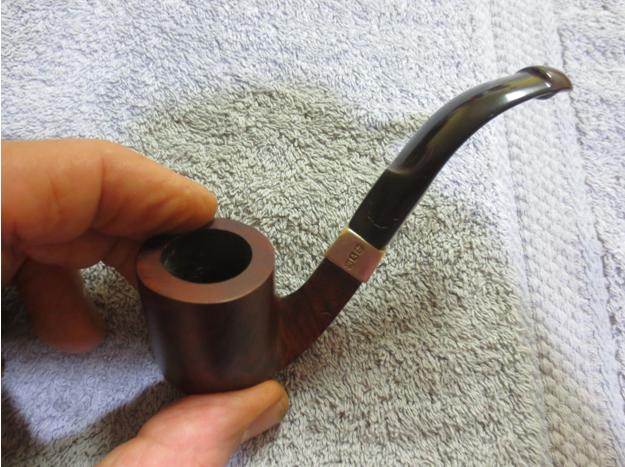
Con19 I put the stem in the shank and used a heat gun to heat the vulcanite and reduce the angle of the bend in the stem.Con21 I took it back to the work table and took the next four photos of the new angle of the stem to see how it looked from the comfortable distance of the computer screen. I took it back and heated it again to bend it slightly more. The angle was close but I would need to adjustments to get to what I wanted for the bend in the stem.Con22

Con23 While this photo was taken to show the stem it also gives a good picture of the repair to the rim on the pipe. It blended in very well and looks far better than the original crevice.Con24

Con25 I sanded the stem lightly with 220 grit sandpaper paying special attention to the tooth marks and tooth chatter near the button on both the top and bottom of the stem. Once I had removed the marks and chatter I sanded it with a medium and a fine grit sanding sponge to remove the scratches.Con26

Con27

Con28

Con29 The next four close-up photos show what the stem looked like at this point in the process of removing the oxidation and scratches.Con30

Con31

Con32

Con33 To highlight the beautiful mixed grain on this piece of briar I rubbed it down with a light coat of olive oil and let it soak into the briar.Con34

Con35

Con36

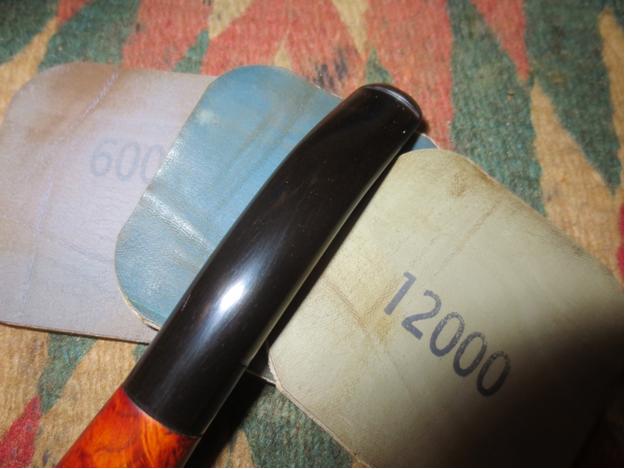
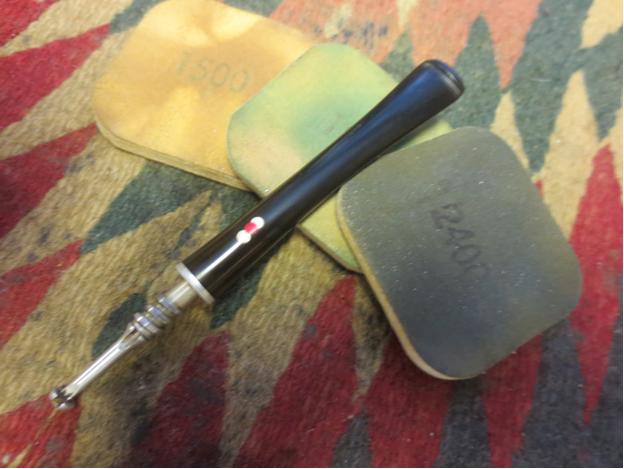
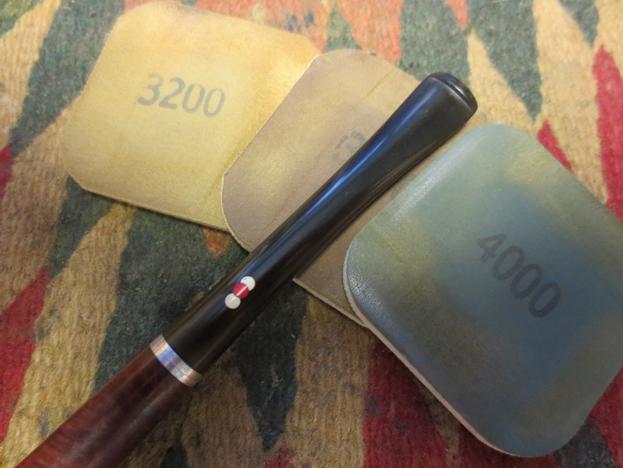
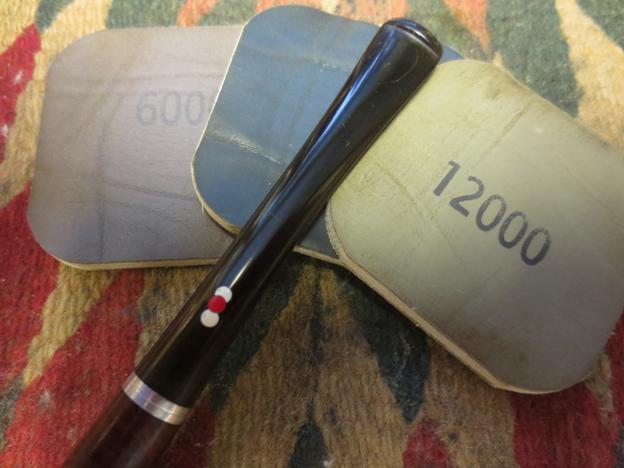
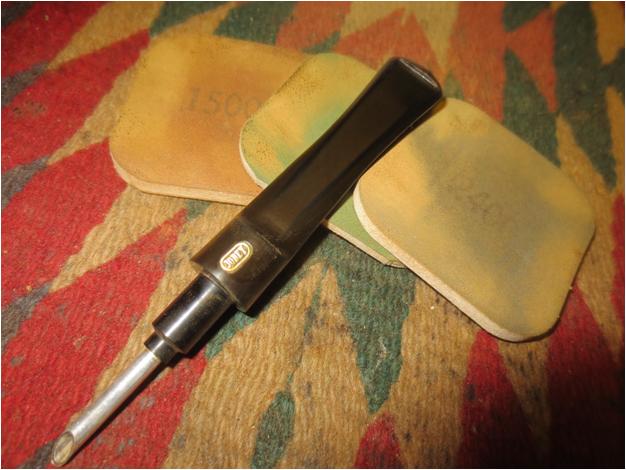
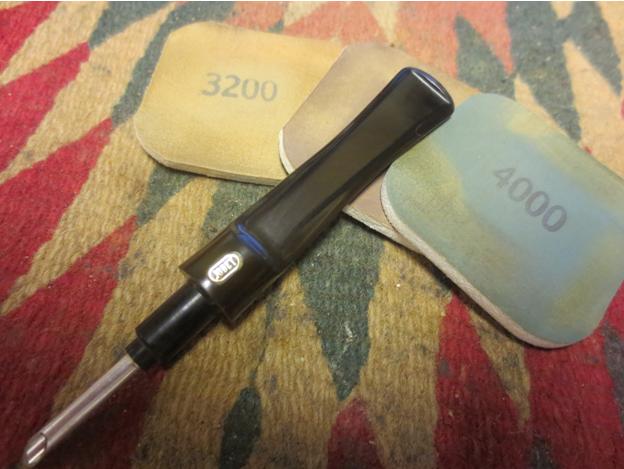
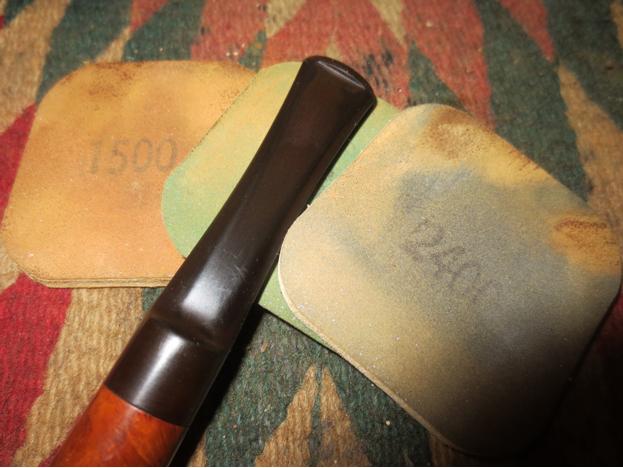
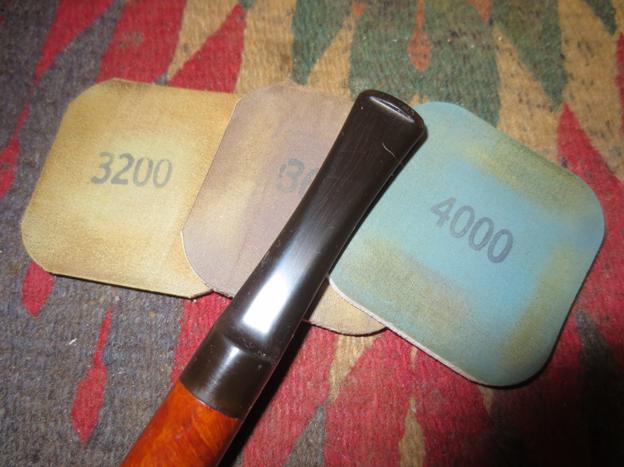
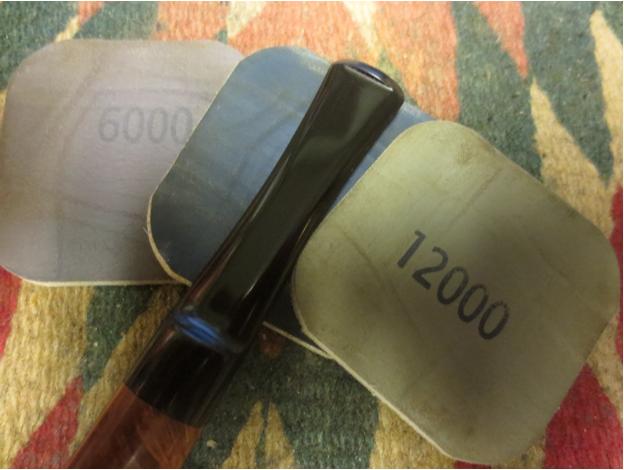
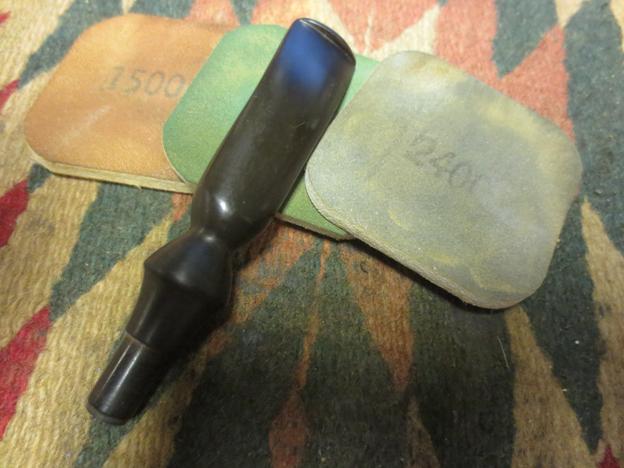
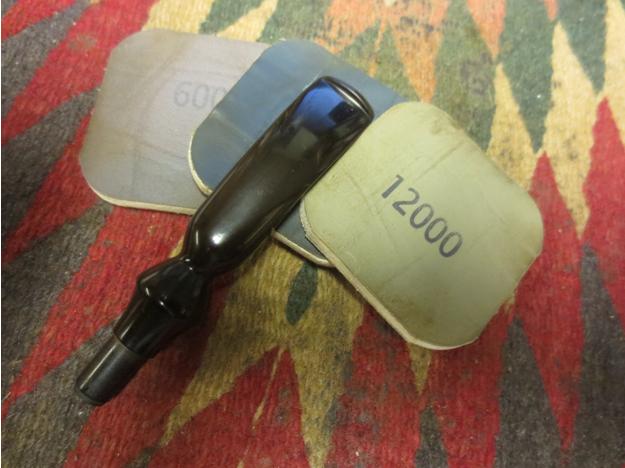
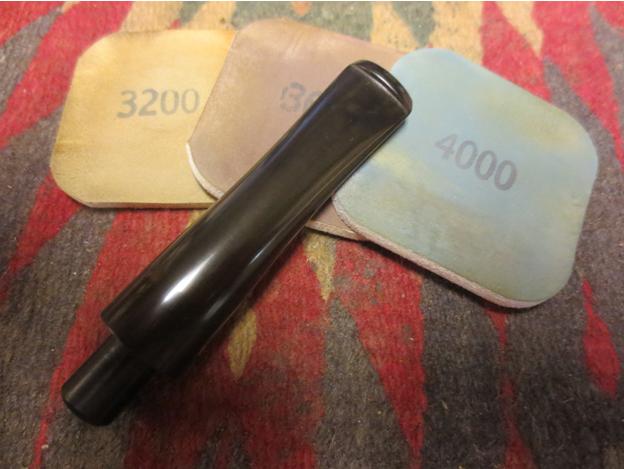
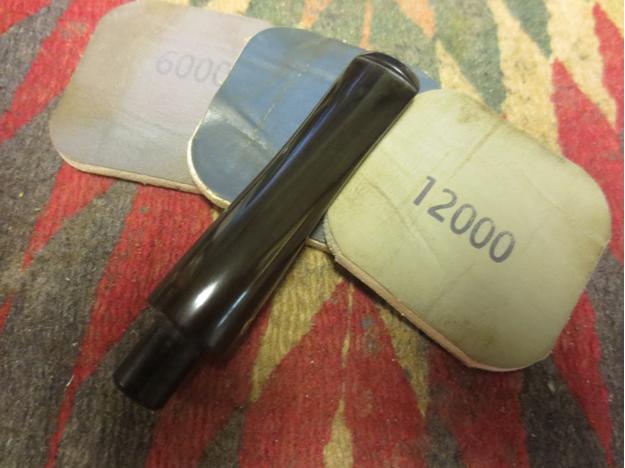
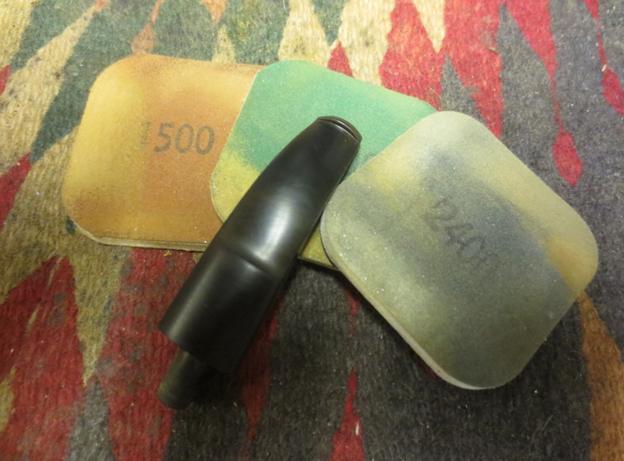
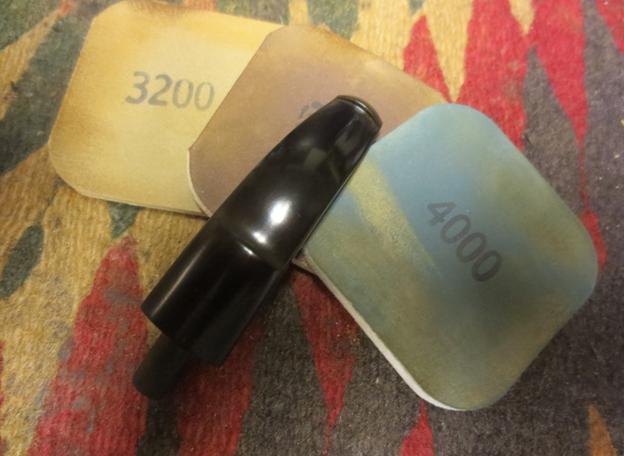
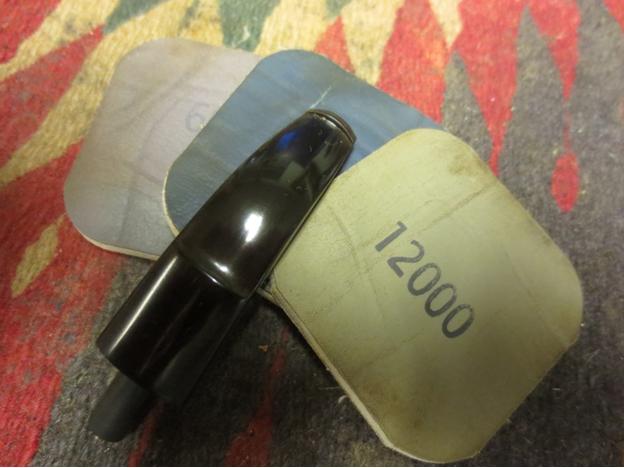
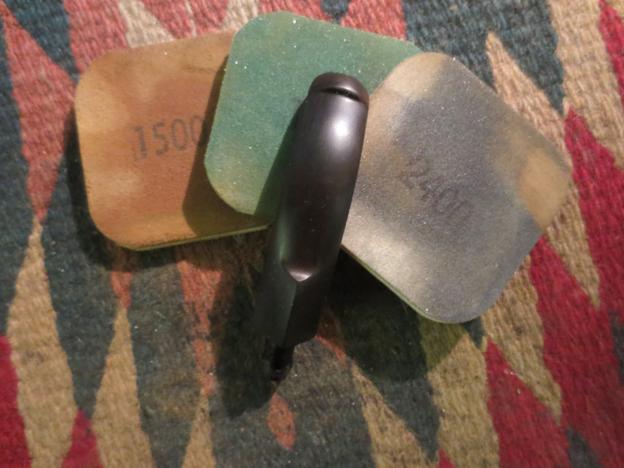
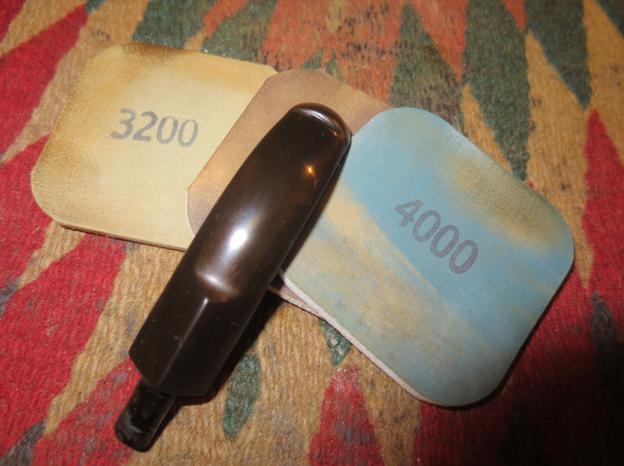
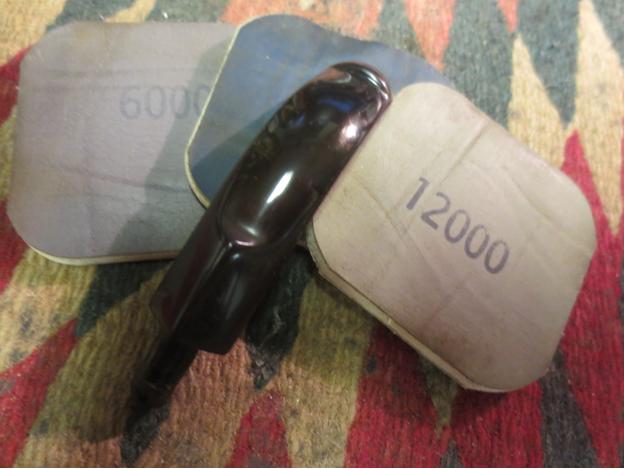
Con37 I sanded the stem with micromesh sanding pads – wet sanding with 1500-2400 grit pads. Once I finished with the 2400 grit pad I buffed it with White Diamond and then rubbed it down with Obsidian Oil.Con38 I dry sanded with 3200-4000 grit micromesh pads and again rubbed it down with Obsidian Oil. Once it dried I lightly buffed it again with White Diamond to give it a deeper polish. Then I continued sanding it with 6000-12,000 grit micromesh sanding pads.Con39

Con40 I gave it a final coat of the oil and took the pipe to the buffer and buffed it with Blue Diamond Plastic Polish.Con41

Con42

Con43

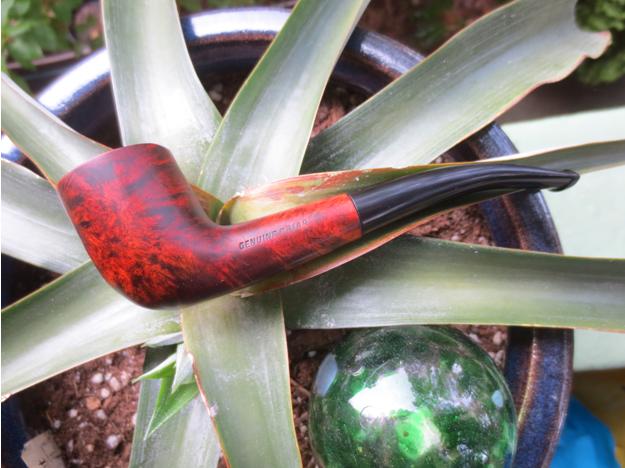
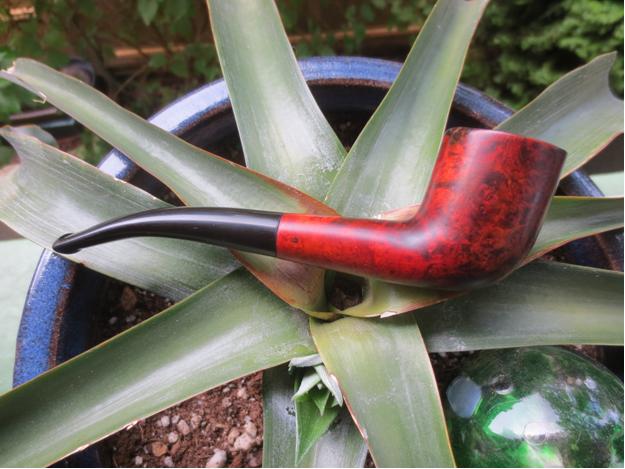
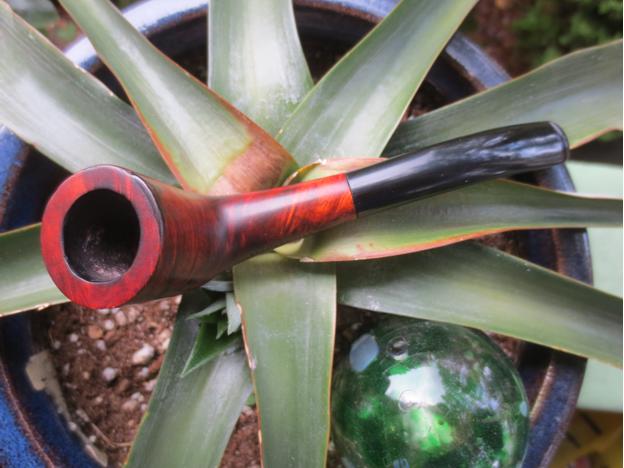
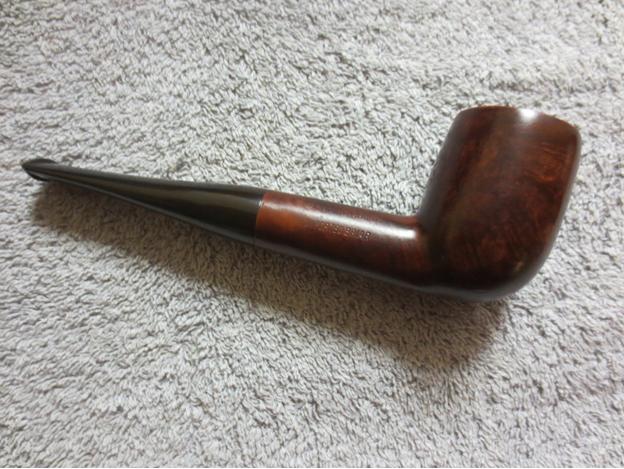
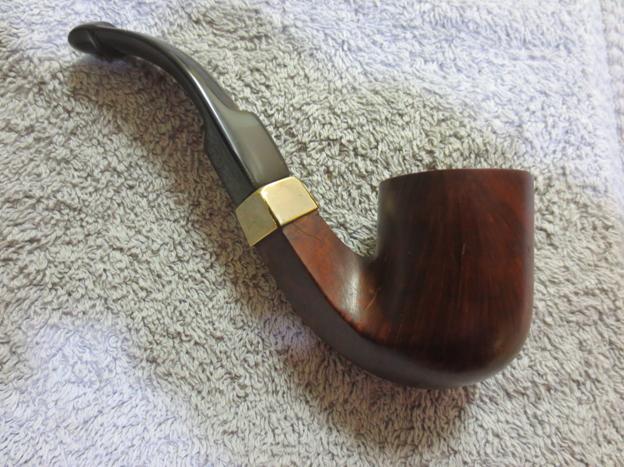
Con44 I buffed the whole pipe with Blue Diamond and gave it multiple coats of carnauba wax to protect the finish and the stem. I finished buffing it with a clean, soft flannel buff and no buffing compounds to raise the shine on the finish and the stem. The finished pipe is shown below. Thanks for looking.Con45

Con46

Con47

Con48

Restoring a Sydney P. Ram Oom Paul


Blog by Steve Laug

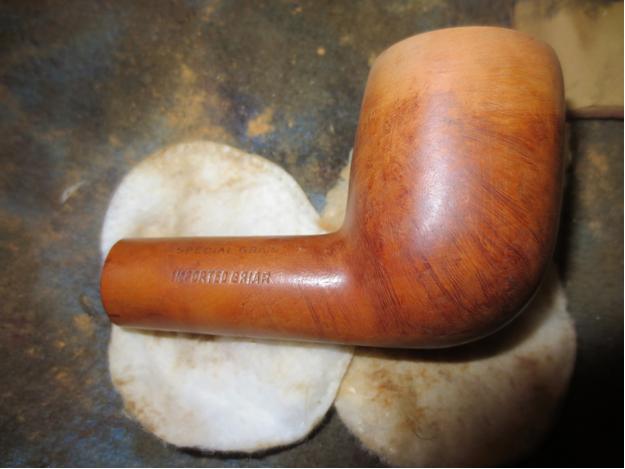
I just finished refurbishing a beautiful Oom Paul that is stamped left side of the shank Sydney P. Ram in script. On the right side it is stamped Imported Briar over 3172/VD. When it arrived to my work table it had a few issues that needed to be addressed. The rim was damaged on the right front outer edge from what looked like being knocked against something. The inner edge on the front had a burned area from a lighter. The briar was unstained, natural but looked dry, lifeless and dirty. The bowl was barely smoked the top 2/3s of the bowl was darkened and had some particles of tobacco stuck to the bowl sides. The bottom 1/3 of the bowl was still raw briar. The airway was quite large at the bottom of the bowl but was well drilled and centered on the back side of the bowl at the bottom. The stem would not sit all the way in the mortise and was very tight. The mortise was far dirtier than the bowl. It had a buildup of tars and oils that had prevented the tenon from seating properly in the mortise. The stem itself was not only oxidized but had stains that ran the length of the underside. The airway was plugged. The slot in the button was plugged and was very narrow so that getting even a paper clip into the slot took a lot of effort.F1

F2

F3

F4 I took the stem off the pipe and used an unfolded paperclip to open up the clogged airway. It took some work but I was able to open it back up. The slot in the button was so small that a normal pipe cleaner was hard to push through. Once it was done the clog came out and was pipe cleaner detritus and tars.F5

F6 I put the stem in an Oxyclean bath to soak while I worked on the bowl.F7 The damage to the outer rim of the bowl needed to be addressed. I was able to stem the flat surface and lift some dents but the outer edge dents were actually cuts and they did not move. I decided to top the bowl lightly to remove the damage to the edges – both the outer right front and the inner front burned area. I set up a topping board with 220 grit sandpaper and took down the top until the damage was minimized. I then sanded the outer edge with a medium grit sanding block to dull the sharp edge slightly. I worked on the inner rim with a folded piece of 220 grit sandpaper to bevel the edge slightly and minimize the damage from the burned area.F8

F9

F10

F11

F12

F13 With the rim top cleaned and repaired I worked on the inner edge of the rim with a folded piece of sandpaper. I beveled the inner rim edge inward to compensate for the burned area on the front of the bowl. Then I washed down the bowl with alcohol on cotton pads to remove the wax and the grime on the briar. I scrubbed the inside of the bowl with cotton swabs and alcohol to clean up the debris in the bowl and the dust from sanding. I cleaned out the shank and mortise with pipe cleaners, cotton swabs and alcohol until the cotton swabs came out clean and the mortise was clean to sight. I followed up that by sanding the rim with a medium and fine grit sanding sponge and then with 1500-12,000 grit micromesh to polish it. The beauty of working with natural briar finishes is that when a bowl is topped it is not hard to match and blend into the finish of the bowl.F14

F15 I steamed the front, bottom and sides of the bowl where there were many small dents and nicks. I heated a table knife over the gas flame on our stove, folded a wet cloth and placed it over the dents and then touched the hot blade of the knife to the wet cloth. This created steam with which I was able to lift many of the dents and nicks. While most of them were gone there were others that remained that were reduced noticeably.F16

F17

F18 When I finished the steaming of the dents I rubbed down the bowl with a light coat of olive oil to give life to the briar. I buffed it on the wheel with Blue Diamond polish and gave it several coats of carnauba wax to protect and finish it. Once the stem was completed I would buff it again and then apply more wax to the pipe.F19

F20

F21

F22

F23 While the stem was soaking I set the finished bowl aside and did a bit of research on the Ram brand. It was one which I had read about on the forums and had seen on eBay but not a brand I knew anything about. I googled the name and found quite a bit of information on the different pipe forums and on Pipedia.http://pipedia.org/wiki/Ram%27s_Horn.Here is a summary of what I found.

“Sydney P. Ram was a pipe maker in the 1930’s and reported to have retired in 1942. Ram’s shop was at 59 West Monroe in Chicago’s Loop. His pipes were normally simply stamped Sydney P. Ram in script. He was also the author of a book on pipe smoking in 1941 called How to get more fun out of smoking; a guide and handbook for better smoking and is sometimes available on Amazon, having been reprinted in 2011.”

I contacted Ken Prevo who was mentioned later in the Pipedia article as we have corresponded on the various pipe forums that we both frequent. I asked his permission to post a copy of the 16 page catalog from the shop era that was referenced in the article. He graciously responded that I could post it here on rebornpipes in high resolution. I have done so here: https://rebornpipes.com/2015/05/22/are-you-getting-the-most-out-of-your-smoking-a-pipe-catalogue-from-the-sydney-p-ram-pipe-shop/

Ken welcomes those interested in viewing or downloading a copy of the catalogue to do so from his Dropbox at this link: https://www.dropbox.com/sh/dao82dnm8tw3y0i/XIdMElvkbk.

Ken reported that recently, in 2013, New Old Stock has shown up with the pipes being sold from California, which may have been where Ram relocated the shop after the war, or it could have been retained inventory on closing the Chicago store and retiring.

The catalog states that all pipes are either Algerian or Corsican Briar. The pipes being sold are light but color to deep brown very rapidly. Ken has not seen similar treatment. The catalog shows pipe prices ranging from $1.75 to $7.50. (Factory workers in the era made around $40/wk at the time). They are stamped either straight grain or imported briar. The catalog also indicates the shop did its own blending and had onsite repair.

I took the stem out of the Oxyclean bath and rubbed it dry with a coarse cotton cloth. I sanded the stem with 220 grit sandpaper to remove the oxidation that was still left and the residue that was hardened in spots on the underside of the stem.F24

F25

F26

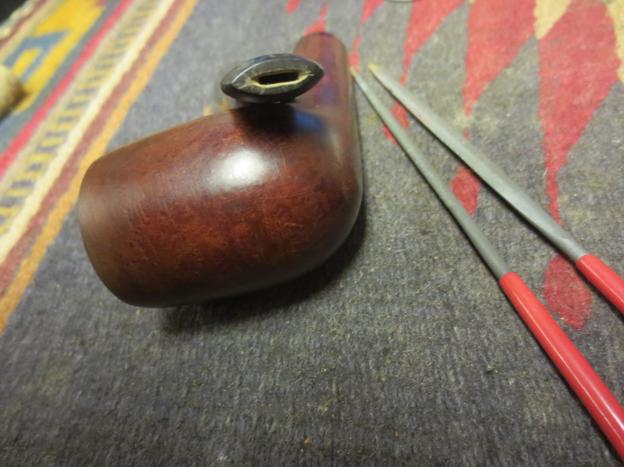
F27 I worked on opening the slot in the button. I used a combination of needle files to open the slot. I began with a flat blade file to widen the slot on the top and bottom. This is tedious work but it pays off dividends in the end. Once I had that area more open I worked on the sides of the slot with a flat oval file to create a Y shape in the slot. I then used a fat oval and a round needle file to open the slot further and round out the ends of the slot. When the filing was completed I folded a piece of sandpaper and worked on sanding the inside of the slot smooth and removing all of the file marks.F28

F29

F30

F31

F32

F33 When I finished opening the slot I sanded the stem with a medium and a fine grit sanding sponge to reduce the scratches on the vulcanite.F34

F35

F36

F37 By this time with the slot opened and the oxidation pretty well cleaned up it was ready to be polished with micromesh sanding pads. I wet sanded the stem with 1500-2400 grit pads and rubbed the stem down with Obsidian Oil.F38

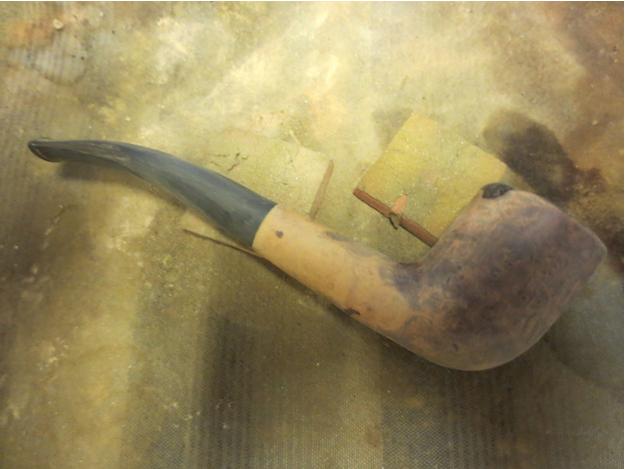
F39 I buffed the stem with red Tripoli to further remove the scratches left behind by the sandpaper. I took it back to the worktable and put it in the shank and took some photos.F40
F41

F42

F43 I removed it from the shank and dry sanded it with 3200-4000 grit micromesh and rubbed it down again with Obsidian Oil before finishing with 6000-12,000 grit pads to bring the final shine out on the vulcanite.F44

F45 I buffed the stem with White Diamond and then with Blue Diamond Plastic polish on the buffing wheel.F46

F47

F48

F49 I took it back to the worktable and rubbed it down with some Briar Wipe before taking it back to the buffer for some carnauba wax. I buffed with several coats of carnauba and finished by buffing it with a clean, soft flannel buff. The dry buff raises the shine on the bowl. The finished pipe is shown in the photos below.F50

F51

F52

F53

F54 Thanks for looking. Be sure to check out the link above to the Sydney Ram Catalogue that I posted on rebornpipes.

Doing an interior shank repair and restemming a KBB Yello Bole Lovat


Blog by Troy Wilburn

I got this pipe from a member of Dr. Grabows Collector Forum, John McP. He hails from across the pond in Scotland. He had contacted me about a old KBB Yello Bole pipe that he had picked up that did not have a stem and wanted to know a little about it and what kind of stem it originally had. He also informed me it had an old repair of a cracked shank.

It is stamped 2079 and had the “Honey Cured Briar” under the KBB Yello Bole, which made it a pre 1936 model. I then checked my Kaywoodie charts. It’s a large bowl, long shank Lovat saddle bit. Even though the KW shape charts call it a Canadian I don’t think so because of its round shank. I’ll never consider a round shank as a Canadian.K1 I informed him that it was a nice pipe and should be a good smoker once cleaned up and a replacement stem found. Unfortunately for John the old repair was not a good one and it had made the shank weak. When John tried to fit some stems to it, a piece broke out of the shank. He asked me if I wanted it free of charge as he did not want to tackle repairing the pipe.

The pipe as John showed me before he sent it.K2 I agreed that I would see what I could do with it. Well after over a month in the mail it finally arrived and I got a good look at it and found a donor saddle bit from another Yello Bole.K3

K4 The bowl had some black scorch marks from smoking hot.K5 I was going to get this pipe blasted after repairs to help hide them and cover some dark burn marks on the bowl. After much thought I decided to restore it close as factory as I could. The possible history of this pipe was just too good to alter it. In the short time of my possession of this pipe it had already been half way around the globe. That’s just a fraction of the long life that this pipe has had over it’s at least 80-year-old life. Maybe it was taken over by an allied soldier and left behind as a gift of friendship? Maybe it was carried by an OSS agent behind German lines during the war? Maybe not but its fun to think of the possibilities.

So all the sand pits and small fills were left as is and not covered or filled. After all it’s a Yello Bole if it did not have these imperfections it would have been a Kaywoodie. The old war horse has some scars from repairs and wear. The stamping’s are quite worn but it’s a pipe someone had thought enough of to repair it once before. Hopefully it has many more years left in it.

I decided to do an inner band like Steve did on a YB I sent him for repair. I found an old metal tenon from a Grabow filter stem I had.K6 I filed out the inner shank and broken shank piece to clean up and to give the glue something to grab too.K7 After grinding the metal tenon to fit inside the shank. I cleaned up the shank and broken piece with some 91% alcohol and marked the best way it fit with a black sharpie so I know where to place it when glued.K8 I mixed up some two part epoxy and then set the inner band in the shank.K9 After it set up I got ready for the broken piece and cleaned off the Sharpie from the metal band to ensure a good bond. I put two part epoxy on the metal band then super glue on the briar edges and set the broken piece. Then I applied briar dust before the glue set. I had to work fast so no pics during this process, only before and after.K10

K11

K12 I then sanded the repairs; the old repair had a bad high spot and took some filing.K13 I had to build up the bottom from making the old repair flush again. It was a bit lower than the stem.K14 I then filed the stem to match the shank.K15 After cleaning out the shank and bowl I noticed that all the old YB coating was gone from wear or scraped out over time. I decided to remove all the cake and address this later.K16 I then stripped off the old finish with warm water and Oxy Clean bath. I did some light scrubbing with a toothbrush and a Scotch Brite pad used on the stubborn spots. I then wet sanded repairs and bowl with various grits of wet dry paper from 600 – 2500.K17 After this I wiped the pipe several times with household bleach to lighten the dark spots and repairs so it would be harder to spot with the dye.K18 After bleach bath the pipe is ready for dye.K19 I then mixed up some dye close to original stain but slightly darker to help cover the repairs and black marks. I applied three coats.K20 Pipe dry and ready for some base wax.K21 After applying three coats of wax to lock in the dye I mixed up some homemade Yello Bole bowl coating.K22 I applied the bowl coating and found a Yello Bole paper cover from a NOS pipe I have. The cover is from an Imperial but I thought it would look nice for the pictures.K23

K24 After several more coats of wax the pipe is done. First off the repairs are not perfect and I wish I could have gotten a tighter fit with the stem. This was my first inner banding so I didn’t get the band quite as square as I should have making the stem fitting a bit difficult .The more I tried to get a tight fit the more gap I would get on one side, so I settled for a uniform gap. I’ll know better next time and should get a better fit. Here are some pics of the finished repairs.

As Steve pointed out to me on the Dr. Grabow Collectors Forum, if you flare the tube it will make it fit more squarely. I think showing your mistakes is as important as showing your successes for the next person trying to do a similar repair. So if you are doing an inner band repair soon I suggest you flare the end before you set it with epoxy.K25

K26

K27

K28 I did manage to save what little of the stamping’s were left.K29

K30 Pictures of whole completed pipe K31

K32

K33

K34

K35

K36

K37

K38

K39

K40

K41 Even though this was a tough and time consuming refurbish it was quite fun and wish to thank John for sending me this old soldier to be used and enjoyed again.

Restemming and Restoring a Weber Deep Grain Lovat


Blog by Steve Laug

I have been doing a bit of reading on the Dr. Grabow Collectors Forum and have been learning a lot from the folks there. On one of the threads on refurbishing Scot wrote and asked about restemming an older Weber Deep Grain Lovat. He had it sitting and did not feel confident about doing the stem work on it. I offered to restem it for him for the postage. When the pipe arrived I took it to the work table and took the following photos. The bowl had some really nice grain on it. The finish was rough with a lot of scratches, dents and nicks. Next to the band the finish was work off on the right side. There were some deep gouges and a scratch across the surface on the right side of the bowl. The rim was in rough shape. The outer edges were beat up pretty badly with gouges and chunks missing from the edge. The inner edge was clean and undamaged. The top of the rim was very rough. There were nicks and dents and it was almost crowned looking – though uneven. The bowl was badly caked forming a thick ring about mid bowl. Below that the cake was almost non-existent and above that it was flaking off in sheets. The stem was worn out with a large bite taken out of the top side near the button and the underside it was cracked. It was ruined.Weber1

Weber2

Weber3

Weber4 I took the next two close-up photos to show the rim damage and the odd cake in the bowl and also the damage to the stem.Weber5

Weber6 When Scott first sent it I was under the impression that he merely wanted me to make a new stem for it. After I saw it I wrote him and asked if he wanted me to clean it up and restore it for him. While I waited for his response I worked on the new stem. I had a stem that was the same length and had a tenon that was not only the right length but also almost the right diameter. I sanded the tenon down lightly and fit the stem to the shank. It was perfect in diameter on the bottom side of the band but was a little large on the top and left side of the saddle.Weber7

Weber8

Weber9

Weber10

Weber11

Weber12

Weber13 I put a plastic washer between the shank and the stem so that I could sand it to the edge without rounding the shoulders of the stem. I sanded it with 220 grit sandpaper to shape it and fit it to the band diameter. I also sanded off the oxidation that was on the surface of the stem and some of the wavy lines that were present on the flat surface of the blade.Weber14

Weber15

Weber16

Weber17 removed the washer and carefully sanded around the shank/band junction to clean up that edge.Weber18

Weber19

Weber20

Weber21 I sanded the stem with a medium and a fine grit sanding sponge to remove the scratches that were present on the stem from the sandpaper.Weber22

Weber23

Weber24 Once I had removed the majority of them I sanded the stem with micromesh sanding pads – wet sanding with 1500-2400 grit pads and dry sanding with 3200-12,000 grit pads. I rubbed the stem down with Obsidian Oil between each set of three pads.Weber25

Weber26

Weber27 There were still some scratches present on the stem that would go once I had buffed it with Blue Diamond but just before I took it to the buffer I heard back from Scott. He said he would be glad to have me give the pipe a work over. Given that go ahead I set aside the stem and turned to work on the bowl. Once I had the bowl finished I would buff the entire pipe.

I reamed it with a PipNet reamer starting with the smallest cutting head and then finishing with the second smallest head. With that I took the crumbling, flaking uneven cake back to bare wood. I figured that Scott could start over and build an even hard cake of his own choosing.Weber28

Weber29 I took a few photos of the bowl to record the damage and scratches to the finish. I wanted to not only get a good look at them but I also wanted to document them. The right side of the bowl had a large series of scratches and grooves from what looked like dropping the pipe on concrete. There were also scratches on the shank and outer edge of the rim. In fact the rim edge was very rough. The left side of the bowl also had some scratches that were pretty deep. The top view of the rim shows the missing chunks of briar around the edge of the bowl and the uneven crown that came from tapping the bowl out against a hard surface. The underside of the shank had a rough spot next to the band and quite a bit of scratching.Weber30

Weber31

Weber32

Weber33I washed down the bowl with acetone on cotton pads to remove the remnants of the finish before I worked on the scratches and dents in the bowl and shank.Weber34 topped the bowl on a topping board to remove the damaged surface and outer edge of the rim.Weber35 Once I had the bowl topped and the rim smooth and flat again I decided to repair the missing chunks of briar on the outer edge and the deep cuts on the right side of the bowl. I sanded the edge and scratches with a sanding sponge to clean up the jagged edges. I wiped the areas down with alcohol. I then filled the cuts and the missing chunks with superglue and packed in briar dust to fill them. I generally overfill them and then sand them back until they are smooth and blend into the surface area around them.Weber36

Weber37 I sanded the fills with a folded piece of 220 grit sandpaper and then with sanding sponges until I had blended the area in with the surrounding surface of the bowl.Weber38 I took the next two profile photos of the pipe to show the clean look of the bowl rim. Notice on the second photo the repair to the cuts on the right side of the bowl toward the lower ¼.Weber39

Weber40 The next photo shows the newly topped and repaired rim from the top.Weber41 I sanded the bowl surface with a medium and a fine grit sanding sponge being careful around the stamping so as not to damage it. Once it was smooth and the scratches minimized I rubbed down the bowl with a light coat of olive oil. The olive oil gives some life to the grain and highlights the areas that I still needed to sand. The next four photos show the pipe after it had been rubbed down with a soft cloth after the olive oil.Weber42

Weber43

Weber44

Weber45 I took another close up of the rim to show the repairs and how the olive oil brought out the colour of the rim so that it matched the rest of the pipe.Weber46 I then took the pipe to the buffing wheel and buffed it with Blue Diamond Plastic Polish. I worked the stem over with the polish and then buffed the briar as well. Afterwards I gave the bowl and stem several coats of carnauba wax and buffed it with a clean, flannel pad to raise the shine of the wax. The finished pipe is shown below. Tomorrow I will get it packed up and sent back to Scott. It should serve him well for a good many years to come. Thanks for letting me work on this old pipe. It was a pleasure.Weber47

Weber48

Weber49

Weber50

Weber51

Weber52

A KB&B Capitol


Blog by Andrew Selking

As a collector of old KB&B pipes, I have searched for a KB&B Capitol for a very long time. First of all they just have a unique look, kind of like an upside down poker, but what really interests me is the craftsmanship required to make a threaded briar insert. There is very little information available about these pipes, about the best I could find is that it was made between 1919 and 1924.
When I received the pipe it had some cake built up in the bowl and tar stains on the rim and the stem was unmolested. The biggest issue was that the insert was firmly stuck. In fact a previous owner tried pliers to get it out, based on the gouges along the top. I tried the usual method of freezing it, but to no avail. I wrote Steve for any ideas and he suggested doing a retort. That didn’t work either. I finally ended up soaking the bowl in alcohol for 24 hours, freezing it, then heating it with my heat gun. With the help of a rubber kitchen gripper, it finally broke loose.
In these first pictures you can really see the tar build up on the inside of the pipe.KBB1

KBB2

KBB3 I soaked the stem in Oxyclean. The stem was marked “Hard Rubber” and exhibited no oxidation after soaking. It was pretty filthy though. I used a pipe cleaner soaked in the Oxyclean solution to remove as much gunk as possible, this was the first pass.KBB4 Next I turned my attention to removing the serious tar build up in the inner bowl. I found my dental pick was the perfect tool for this task.KBB5 The bottom of the inner bowl had a biscuit of tar.KBB6

KBB7 I used an alcohol soaked cotton ball to loosen the tar in the threads.KBB8 Since this pipe has two bowls, I did a retort with just the outer bowl followed by a retort with the inner bowl inserted.KBB9 I love the old stems.KBB10 I did a retort on the stem. It was nasty, but the boiling alcohol did the trick.KBB11

KBB12

KBB13 The design of this pipe makes it extremely easy to clean, although I doubt that ever happened prior to my getting ahold of it.KBB14 A couple of q-tips and a pipe cleaner and the shank was clean.KBB15 Next I tackled the stem. I used 400 grit wet/dry with water followed by 1500-2400 grit micro mesh pads with water. You will notice the small washer, I use that to make sure that I don’t round off the edges of the stem.KBB16 You may have noticed in a previous picture that there was a piece missing at the top of the inner bowl. I spread a small amount of CA glue into the hole with a push pin followed by briar dust and accelerator.KBB17 I also noticed a small fill residing under the band, so I picked out the old fill and replaced it with briar dust and CA glue.KBB18 The exterior of the bowl was caked with tars and grime, so I used acetone and 0000 steel wool to clean it up.KBB19 That was only minimally effective, so I ended up sanding the whole thing. I used 400 grit to get the worst off, followed by a progression of micro mesh pads, 1500-12,000 grit. While working on the bowl, I also polished the stem with 3200-12,000 grit micro mesh pads. One of the things Steve talks about is using Obsidian Oil after each third set of pads. Since I don’t have Obsidian Oil, I used a very small amount of mineral oil with the 3200 grit pad. It really cut down on the dust and seemed to help the rest of the pads polish more effectively. Here is the pipe ready for stain and polishing.KBB20 I don’t know if the stamping on the stem was originally filled in white, but I thought it might look nice. I used my correction pen to fill in the letters.KBB21 I removed the excess correction fluid with my rotary tool and some white diamond. I then polished the stem with carnauba wax.KBB22 I stained the pipe with a medium brown stain and polished it on the buffer with white diamond and carnauba wax. Here is the final result.KBB23

KBB24

KBB25

KBB26

KBB28

Conjuring a Makeover for a Carey Magic Inch


Guest Blog by Robert M. Boughton
Member, North American Society of Pipe Collectors
http://www.naspc.org
http://www.roadrunnerpipes.com
http://about.me/boughtonrobert
Photos © the Author

“Blessed are they who see beautiful things in humble places where other people see nothing.”
― Camille Pissarro (1830-1903), French Impressionist painter

INTRODUCTION
I suspect there is some aspect of my basic personality that is incapable, to a degree, of not admiring the tenacity alone required to survive 67-years – and still going – in the admirable pursuit of providing affordable smoking pipes. Remember, this is an industry that has seen all manner of fly-by-night systems for dissipating the high heat of the all-important tobacco that has an inherent tendency to become moist and therefore brackish in the process of flowing through the basic designs of all pipes.

Notwithstanding the relative quality of pipes that evolve based on the periodic new patents from the ever-pioneering designers at E.A. Carey, which also owns the Duncan Hill Aerosphere brand, the system’s section that comprises the so-called “Magic Inch” has changed little since 1948, when the first billiard version was created and marketed. The system involves five elements: 1-2) the first two in the double-pronged tenon, the thin, hollow end of which attaches to the plastic bit and the typical part that slides into the shank; 3) the thin bit insert with six small drilled holes, two each on the top and bottom (when properly inserted) and one each on either side; 4) the newer Papyrate II sleeve (two-ply) – made of very thin, wet slices, from the roots of an aquatic plant, that are pressed together and dried – that fits snugly over the holes of the bit insert, and 5) six horizontal slits in the shank end of the bit, three on the top and three on the bottom. The photos of the bit show the used, brownish papyrate sleeve that came with the original pipe.Carey1

Carey2

Carey3

Carey4

Carey5 Back some months when I was snatching up pipe lots online, I bought one with 10 sundry examples of the craft, including a few nice finds such as a Kaywoodie Filter Plus metal pipe from the late 1950s, a Jobey Extra, a nice glazed clay pipe and others, with this Magic Inch among them.Carey6 I put all of these in a small box “for later,” except for the beautiful unknown clay billiard that I cleaned up and added new cork in the shank with a hole drilled to fit the screw-in tenon attached to the acrylic stem, for my own collection.

By the way, not everyone knows that Carey does not only make Magic Inch pipes. Here are a few of the company’s representative standard briar pipes.Carey7 But this blog concerns the vintage Magic Inch billiard, U.S. Patent №. 3,267,941 granted in 1966, shown in the lot above three rows down on the right. A few years ago, I owned, and for a while enjoyed, another Magic Inch, and it wasn’t – well, bad. But first, I have a few comments regarding Carey’s rather imaginative advertising.

Numerical data and the manifold methods of collection, arrangement and interpretation of them for publication as fact by the complex use of statistics in almost every facet of society – including but by no means limited to governmental and other political concerns, businesses and the news media – can be misleading at best and downright manipulative at worst.

Take, for example, the E.A. Carey Smokeshop claim [http://www.eacarey.com/ pipes.html] that it has sold more than one million of its Magic Inch pipes since 1948. That sounds impressive, and suggests that Carey’s pipes are superior to others. But that total averages to 15,152 pipes (rounded up, through 2014) per year. Then again, Carey changes the number of Magic Inch pipes sold in the same period to a vague “hundreds of thousands” [http://www.eacarey .com/magicinchinfo.html]. Allowing for hundreds of thousands to be a maximum of 200,000 pipes, which quite likely is stretching it, the average drops to 3,030. Somehow, I doubt that either annual sales figure engenders any impulse among the world’s other pipe makers to compete with the folks at the venerable Carey Smokeshop online, both in the U.K. [http://www.eacarey. co.uk/] and U.S.

Now, to return to the real subject matter, the purpose of this particular blog is to show how a pipe with a singular lack of attractive qualities can be transformed into something nicer.Carey8

Carey9

Carey10 RESTORATION
After removing and separating the bit and two-sided tenon, throwing away the old brown papyrate sleeve, on an impulse, I decided to give the old rusticated briar girl an Everclear soak. For some reason, this process took quite a while – say six hours. At any rate, when the old finish was stripped and the wood dried, I began a hand-buff with super fine steel wool followed by a progression of micromesh pads from 1500-3600.

I turned a reamer a few times in the chamber, followed by sanding with 200-grit and 320, and the chamber was almost good to go. Then I attached a suitable stem and retorted the shank and chamber.Carey11

Carey12

Carey13

Carey14

Carey15

Carey16 Thinking the pipe, which was dreary in the beginning, deserved something more distinctive and in keeping with its natural reddish color, I chose maroon boot stain. After the quick application and flaming, I rubbed the wood gently with 3200 micromesh.Carey17

Carey18

Carey19

Carey20

Carey21

Carey22 To clean the hollow plastic bit and tenon, I diluted – and I mean heavily – a little Everclear with a lot of water. I like to think of this as the Reverse Julia Childs Approach. The popular cook once said, “I like to cook with wine. Sometimes I even put it in the food.” From what I recall of watching Julia in the studio kitchen on TV, I am not surprised that she seemed to have forgotten the apparent equal measures of wine expended in the food and down the hatch. Anyway, I bent a soft pipe cleaner in half and dipped it in the comparatively wimpy solution, which is like comparing wine to Moonshine, and inserted the folded end in the stem, turning it several times and finding it needed replacing. And so I repeated the action, but giving the inner bit the old in-and-out, scrubbing its sides. Only the slightest amount of grime came out on the second run, and I used the same cleaner to work through the slits on the top and bottom. I used a third, dry cleaner to finish.

The outer bit required very little work with one micromesh pad, although I forget the grade, to make it shine. Using a white china marker, I filled in the small, long-empty square with a three-sided C in the middle, forming all but one line of a second square. Thanks to a generous gift of a handful of papyrate sleeves from my good friend and mentor, Chuck Richards, I was able to complete the tenon for ultimate placement into the shank.

All that was left to do was buff the wood on the electric wheels, using white Tripoli and White Diamond, with quick runs on the clean wheel after each. At last, with a finger, I applied a thin, even coat of Halcyon II, and after letting the briar sit for 10-15 minutes, buffed it with the clean wheel.Carey23

Carey24

Carey25

Carey26

Carey27

Carey28

Carey29 CONCLUSION
Love ’em, hate ’em or really don’t give a hoot either way, the Carey Magic Inch has secured its place in tobacco pipe history, as well as giving many a smoker a start in the pleasures derived from fine tobaccos. And as far as I’m concerned, the Carey system works better than most far more complicated attempts.

Imagine, if you will, a special place in the Twilight Zone – an area so horrific only the most heinous attempts at pipe cooling ever make it there. Take, for example, the following specimen, a Jenkins, which, with its screw designed to hang while smoking like a broken appendage from the underbelly of the shank at a point just before the bowl, may never find its way back.Carey30

Saving a Pipe – Restoring a Royal Danish 33 Bulldog that had seen better days.


Blog by Steve Laug

I am in the midst of a particularly labour intensive restoration of a Royal Danish 33 Bulldog. It was in very rough shape but having met the old timer who it originally belonged to I decided to make the extra effort to bring it back to life. It was obviously a favourite pipe of his and he as much as said so. I think it was the only one of the lot that he felt bad about letting go of when he sold me the lot. Often I will take time to read some of my favourite blogs during lunch break at work or even when I come home to help me unwind from a long day. I read before I pick up a pipe to work on or restore and find that it helps focus my attention. Yesterday at lunch I came across an article by Alan Chestnutt on his blog on his website Reborn Briar Estate Pipes that really resonated with what I was feeling as I worked on the particular pipe. He called the work he does as a pipe restorer – “saving the pipes”. I think that is a particularly poignant description of the work on this Royal Danish 33 Bulldog that I picked up in the lot from craigslist. It is shown in the first photo below at the bottom middle of the photo. In the second photo it is in the right hand column at the bottom of the photo.craig5

craig6 The old timer was a well loved pipe and obviously a good smoking pipe. It was in rough shape. In fact it was in the roughest shape of the lot. The photos below show the state of the pipe when I brought it to the work table. The finish was rough and dirty with lots of scratches and dents in it. The rim was shot. The front side was worn down from beating out dottle when the smoke was finished. The drop from the height at the back of the bowl to the height at the front was over ¼ inch and the surface was chewed up. The outer edge of the bowl on the front was obliterated. The rim surface was beat up as well. There were thick marks of tar or oil on the sides of the bowl and rim that were sticky. The bowl was heavily caked. The double ring around the bowl was damaged. Over ½ of the briar between the rings was broken and missing. The stem was oxidized and chewed. The topside of the stem had deep dents near the button that went up almost a half an inch. On the underside the tooth marks were even deeper and there was a hole in the stem where it had been gnawed through. Around the stem was calcification that is common pipes that have had a softie bit on the stem. I think the old timer who had this pipe slipped the softie bit over the damage so he could keep smoking his favourite pipe.Dan1

Dan2

Dan3

Dan4 The next series of photos show the thickness of the cake, the extent of the damage to the rim and the missing pieces of the briar between the double rings around the cap of the bowl.Dan5

Dan6

Dan7

Dan8 I reamed the bowl with a PipNet reamer starting with the smallest cutting head and working up to a head that was almost the same diameter as the bowl. I took the cake back to a very thin layer on the bowl.Dan9

Dan10 I decided to sacrifice some of the height of the bowl to give back some dignity to the tired bowl. I topped the bowl in stages on a topping board. The back side of the rim was significantly higher than the front of the bowl so I started by leveling out the bowl height all the way around the bowl. I brought the back side down to the same height as the damaged portion.Dan11

Dan12

Dan13 Once the height was even all the way around the bowl it was time to work on the front edge damage. At this point in the topping process I pressed the bowl down on the topping board with even pressure front and back and moved it on the sand paper in a circular motion.Dan14 I continued sanding until the damage on the front top of the rim was minimized. There was still damage on the front of the bowl that would need to be addressed to smooth out the damage to the bowl. I wiped the bowl down with acetone on a cotton pad to remove the sticky oils and tars spots on the bowl sides. I also cleaned up the damaged area on the front of the bowl so that I could repair it.Dan15

Dan16

Dan17 I dripped some super glue into the damaged surface and then pressed briar dust into the glue. I then gave it a top coat of super glue as well. In the photo below you can see the repaired edge and the repair to the gouges and damage on the bowl front. Dan18 I sanded the repaired area with 220 grit sandpaper and then with a medium and a fine grit sanding sponge to blend the repair into the surface of the briar. The next photo shows the same spot on the bowl after sanding the repair. The second photo below shows the top view of the rim repair. The dark/shiny edge at the bottom of the photo is the super glue repair.Dan19

Dan20 I tried to fill in the damaged briar between the double rings around the bowl. I filled in the areas with briar dust and super glue but when I tried to re-score the two lines the fills fell out of the ring. After several failed attempts to build up the centre I finally decided to remove the centre from between the two rings. I used a sharp knife to lift out the centre portion all the way around the bowl. With that gone I used a folded piece of 220 grit sandpaper to sand the surface smooth in the groove. I also sanded it with the sanding sponges to remove the scratching.Dan21

Dan22

Dan23

Dan24 I decided to stain the groove to highlight it rather than hide it. I used a black aniline stain and applied it, flamed it and repeated the process until I had the coverage in the groove that I wanted.Dan25

Dan26

Dan27 I sanded the bowl sides around the groove to remove the spillage of the stain. I worked on the bowl until the black was confined to the groove and the top and bottom edges. The more I sanded the bowl the more I liked the grain that I was seeing come through. There was some great flame grain, birdseye and mixed grain on the bowl and shank.Dan28

Dan29

Dan30

Dan31 I decided to do a contrast stain on the rest of the bowl to highlight the grain and contrast with the black stain in the groove. I heated the briar and stained it with a black aniline stain. I applied it and flamed it, and repeated it a second time. Once it was dry to touch I wiped the bowl down with alcohol and then with acetone on cotton pads to remove the black stain from the surface of the briar and leave it in the grain.Dan32

Dan33

Dan34

Dan35 I set the bowl aside to dry for awhile so I could work on the damage to the stem. I sanded the stem with 220 grit sandpaper to remove the oxidation and to clean up the calcification around the damaged areas of the top and underside of the stem.Dan36

Dan37 I wiped the stem down with alcohol to clean the surface of the stem so I could apply the superglue patch. I used a dental pick to remove debris and damage vulcanite. I greased a pipe cleaner with Vaseline and inserted it in the button underneath the hole in the stem. I built up the area around the hole with black super glue. I sprayed it with an accelerator to allow me to add a second and third coat to the repair to the hole. I then flipped the stem and repaired the deep tooth marks on the top of the stem. I filled them and also sprayed them with the accelerator.Dan38

Dan39 Once the stem patch was dry to touch I put the stem back in place on the bowl and sanded the bowl with a medium and a fine grit sanding sponge to remove more of the black stain. I also used a fine grit sanding block. The next four photos show the bowl with the black removed and the grain patterns highlighted.Dan40

Dan41

Dan42

Dan43 I set the pipe aside for the night and let the stem repairs cure over night. In the morning I sanded the patched areas with 220 grit sandpaper and with a medium and fine grit sanding sponge. I rubbed the bowl down with a light coat of olive oil to see what contrast would look like. I really liked the overall look of the bowl with the contrast. Seeing this I knew what contrast stain colour I would use on the next stain coat.Dan44

Dan45

Dan46

Dan47 There were still small pits in the patches on the top and bottom repairs. I find that when I use an accelerator the spray causes these bubbles that once dry pop and leave pits in the surface of the finish. I sanded the stem surface some more with 220 grit sandpaper to smooth it out and then added another coat of black super glue. When it dried I sanded it again to bring it smooth. In the next two photos you can still see some small pits in the finish.Dan48

Dan49 I repeated the process of filling in the pits and then finished by using some clear super glue which dries more quickly and brushing it over the pitted areas on the stem. Once I had that done I sanded the stem with micromesh sanding pads. I wet sanded with 1500-2400 grit pads. The surface was significantly smoother but the patches still showed through the finish.Dan50

Dan51 I dry sanded with 3200-4000 grit micromesh pads and rubbed the stem down with Obsidian Oil. Once it dried I repeated the sanding with the same pads. The patches are still visible but are gradually blending into the surface of the vulcanite.Dan52

Dan53 I buffed the stem with red Tripoli to remove the scratches in the rubber and to further blend the patches. I then took it back to the work table and dry sanded it with 6000, 8000 and 12,000 grit micromesh pads. I rubbed it down with another coat of Obsidian Oil and set it aside until it was absorbed.Dan54 I rubbed the stem down with Scratch X2.0 to polish the scratches. It is a plastic polish and blemish remover that is used on acrylic/plastic headlamps. It worked wonders in removing the remaining scratches in rubber stem material. I then buffed the stem with Blue Diamond on the buffing wheel and gave it several coats of carnauba wax. I buffed it with a clean flannel buff to raise the shine shown in the next two photos.Dan55

Dan56 After finishing the stem it was time to give the bowl its contrast coat of stain. I used an oxblood aniline stain. I applied it with a folded pipe cleaner to keep it out of the groove around the bowl. I flamed it, reapplied it to the briar and flamed it again.Dan57

Dan58

Dan59

Dan60 I buffed the stem and bowl with Blue Diamond and then gave the entire pipe several more coats of carnauba wax. I buffed the pipe with a clean flannel buff. The finished pipe is shown below. I think that Alan Chestnutt’s definition of the restoration process as Saving the Pipe accurately describes the work that went into restoring this beauty. The finished pipe ready to fire up and be enjoyed for many more years to come.Dan61

Dan62

Dan63

Dan64

Dan65

A Bachelor’s Soliloquy for a Lovely French Camelia Bulldog


Guest Blog by Robert M. Boughton
Member, North American Society of Pipe Collectors
http://www.naspc.org
http://www.roadrunnerpipes.com
http://about.me/boughtonrobert
Photos © the Author

My oldest pipe, my dearest girl,
Alas! Which shall it be?
For she has said that I must choose,
Betwixt herself and thee.

Farewell, old pipe; for many years
You’ve been my closest friend,
And ever ready at my side
Thy solace sweet to lend.

No more from out thy weedy bowl,
When fades the twilight’s glow,
Will visions fair and sweet arise
Or fragrant fancies flow.

No more by flick’ring candlelight
Thy spirit I’ll invoke,
To build my castles in the air
With wreaths of wav’ring smoke.

And so farewell, a long farewell–
Until the wedding’s o’er,
And then I’ll go on smoking thee,
Just as I did before.

― Edmond Day, “A Bachelor’s Soliloquy,” in Bain Jr., John, ed., “Tobacco in Song & Story,” 1896

INTRODUCTION
Aware of my sometimes peculiar use of quotes to lead into blogs, I ask that you try to follow this reasoning behind the above description of a somewhat disingenuous if humorous plan. As a recovered alcoholic (which is not to say cured), I have not found it necessary to return to the certainty of the lifestyle I led until my last drink of the life-deadening liquid, for persons of my nature, 27 years and a few months ago. Still, I remember with a cringe the oft-quoted “Lips that touch wine shall never touch mine,” a slight adjustment of the popular slogan of the Temperance Movement in the late 19th and early 20th centuries, that I used to hear with frequency in certain circles.

I always recoiled from the notion as being too Puritanical for my liking. Likewise, as a bachelor, I still (or perhaps more so now, given the socio-political incorrectness of enjoying tobacco, even a pipe) encounter the ultimatum of choosing my great, sundry pleasures derived from these marvelous instruments of relaxation and contemplation, or someone with whom to share my life. Being somewhat obdurate when push comes to shove, so to speak, I have no trouble saying fare thee well to all who spur the ominous prognostication of the inevitable disaster of any proposed relationship founded upon such Draconian conditions.

Thus, coming upon the quote in an old collection devoted to the comforting qualities of fine tobaccos, I made a mental connection with the habits of many former drinkers to eschew even those who are able to enjoy liquor socially and responsibly, and their cohorts in the dating war who substitute tobacco use as the evil enemy. People of these sorts are deluded by their recruiters. And while, again, I do not condone the deceptive behavior suggested by the English-speaking but now apparently almost forgotten poet, I do understand his hunger to enjoy all of life’s appetites, and I find it somehow French in attitude, and by association à propos to my sentiments for this lovely example of the elegant Camelia straight smooth bulldog #699, originating in France of excellent lineage, being, according to Pipedia, an obsolete line of pipes once made by GBD.

[There is, by the way, an anonymous, very funny spoof on Hamlet’s famous soliloquy, called “The Bachelor’s Soliloquy,” available at http://www. monologuearchive.com/a/anonymous_001. html.]

THE RESTORATION

Cam1

Cam2

Cam3

Cam4

Cam5

Cam6

Cam7 While the stem sloughed off its inner and outer impurities in an OxiClean soak, I turned to the briar. The rim burn was removed with greater than usual ease using super fine steel wool, and the chamber cake crumbled almost as fast with a few turns of a 17mm reamer followed by 150-grit sandpaper, then 320.

I removed the stem from its soak and rinsed it before wiping off the residue and cleaning the air hole with a soft, thick cleaner. The resulting evidence made clear that a large area, on both sides below the bit, required more work before applying the micromesh.Cam8

Cam9 And so I reattached the stem to the shank and retorted the pipe before finishing the stem with light work using 320-grit paper on the scratched areas before a four-stage micromesh progression from 1500-4000.

I gave the briar a bath and saw no major scratches or other blemishes. My next step of micro-meshing the wood the same way I did the stem turned out to be a waste of a few minutes, but what the heck.Cam10

Cam11

Cam12

Cam13

Cam14

Cam15 Granted, based on the original color of the pipe, it was already prepared for polishing with the buffers. But I seem to draw over-dark-stained pipes with unnatural frequency. I don’t think I’m alone in appreciating as much of the good grain every pipe has to offer. Therefore, I got out a small piece of the super fine steel wool to ease away a shade or two of the stain. Of course, when I could see the result I wanted, I had to re-micromesh the whole outer briar again and apply a light brown stain to the shank and lower bowl up to the bulldog line and inward curve of the top. Flaming that part and letting it cool before using 3600 micromesh to remove the film of char, I applied burgundy stain to the curved top and rim of the bowl and flamed it, and after the cool-down period I wiped it gently with the micromesh also. The effect produced was subtle but still there for the discerning eye.

Ready for the electric buffers, I took the two pieces of the Camelia from my living room work substation to the bedroom/workroom proper. For the stem, I followed my former practice of buffing with white and red Tripoli followed by White Diamond, one after the other, as I incorrectly understood they were to be applied. Then I buffed the briar with the same compounds and wax except for the red Tripoli, and including a double carnauba wax. The Camelia straight, smooth bulldog was the last pipe I worked on with this procedure because of a comment by my friend and mentor, Chuck, when I showed him the pipe. He had been asked by another member of our pipe club why my pipes appeared duller than his when compared side by side on the same table. Chuck’s close inspection of the Camelia then revealed streaking of the finishes, and he was able to deduce the reason.

Armed with my new understanding of how to run the stem and briar over a clean buffer on the wheel between coats, I returned home later and began by putting both parts to an unused replacement pad to clear off the excess previous waxes and repeated the series of buffs, using the clean pad after each. After the re-buffs, I filled in the Camelia brand mark on the stem with a white china marker.Cam16

Cam17

Cam18

Cam19

Cam20

Cam21 CONCLUSION
The entire pipe, from bowl to bit, glowed with a far brighter and unyielding finish. Showing Chuck the new and improved completed Camelia, he smiled after the quick look-over that is necessary when nothing is wrong, and asked with obvious excitement, “Was I right? Doesn’t that simple step make all the difference in the world?”

Yes, Chuck, you were right. And the world is a little bit better as a result.

JPL Tomato restored and given a new look


Blog by Steve Laug

When I first saw the pipe lot on craigslist Vancouver the pipe that caught my eye was the squashed tomato that is shown in the photo below on the top right. I had no idea who the make was but it was obviously a large pipe and a unique shape that made me want to know more. It is actually the pipe that pushed me to make the phone call to the seller. I have a Rad Davis that is similarly shaped but nowhere near as large.craig5 When I got to the seller’s home and looked at the pipe I could see that it was stamped JPL over Bruyere over St. Claude France on the shank. The pipe was well smoked. The finish was pretty well dried out – I think originally it had been an oil finish over the natural briar and that was gone and in its place was a lot of grime. The top of the bowl was in the roughest shape. It had a thick coat of tar/oil that I call lava flowing over the rim. The bowl had a cake that was hard and there were remnants of tobacco stuck in the walls and bottom of the bowl. The top also had what looked like road rash on the front. There were many pin prick nicks and dents that made me think that the pipe had been dropped on concrete. The redeeming feature was that the briar had some stunning flame grain around the sides and top portion of the bowl and featured great birdseye grain on the bottom. The stem was oxidized and there were two deep tooth marks on the top and bottom sides of the stem near the button. There was also a lot of tooth chatter and it looked as if the stem had been covered at one time with a softie bit.JPL1

JPL2

JPL3

JPL4 I took the next series of three photos to show the damage to the top of the bowl and the tooth marks in the stem.JPL5

JPL6

JPL7 I was unfamiliar with the stamping on the pipe as I had not seen it before. Once Googled it on the web I found that JPL stood for Jean Pierre Lacroix. That was a name I was familiar with in previous reading on St. Claude pipe making families. I looked on Pipedia and found the following information:

“Lacroix Pipes have a rich history of pipe making tradition and the brand was started in 1962. Eugine Lacroix began making pipes for the Delacour factory in the 19th century; his sons founded their own factory in 1921. Two of the grandsons (including Jean) continued on in the business, but parted ways and struck out on their own in 1962. At that time, Jean set up Jean Lacroix pipes, coincidentally in the old Delacour building his grandfather started in 85 years prior. Today, Jean Lacroix, Chacom, Jeantet, and Vuillard are all pieces of the larger Cuty-Fort Enterprises, and Jean is actively involved with the prestigious Confrerie des Maitres-Pipiers de Saint-Claude. Jean still makes pipes; his spectacular freehands are known throughout the world. The model named “Nizza” De Luxe is made by him with scripted stamp showing his name (hard to read!). Jean Pierre Lacroix sometimes marked Maitre Pipier a Saint-Claude.” Quoted from Pipedia http://pipedia.org/wiki/Lacroix

More information is available on PipePhil’s website. http://www.pipephil.eu/logos/en/infos/lacroix-en.html#split

I began cleaning up the pipe by scrubbing the rim with acetone on a cotton pad. Since the pipe was unfinished and was so dirty I used acetone rather than alcohol. I scrubbed the bowl top until I had removed all of the tars and oils. I also wiped down the remainder of the bowl to remove the oils and dirt from the years of being held in the hand.JPL8 Once I had the bowl top cleaned I removed the stem to see what I was dealing with. I found that the stem and the shank was drilled for a 9MM filter but that somewhere along the way someone had inserted an ill fitting stinger apparatus in the tenon. It was pressed in place deep in the tenon and there was a lot of wiggle room around it. It did not extend very far into the shank and as such the shank was filthy. The first photo below shows the stinger in place. The second shows the length of the stinger once I removed it from the tenon.JPL9

JPL10

JPL11 I sanded the bowl with 220 grit sandpaper to remove the damage on the top of the bowl. I sanded until I had removed the road rash on the front edge and the damage to the back of the bowl. I sanded it further with a medium and fine grit sanding sponge to minimize the scratches left behind by the sandpaper.JPL12

JPL13 While I had the sandpaper out I also sanded the tooth chatter and tooth marks on the stem. You can see that after sanding I still had a fairly large tooth dent on the underside of the stem and a small one on the top near the left edge.JPL14

JPL15 I reamed the bowl with a PipNet reamer starting with the largest cutting head that would fit and working my way up to the largest head in the set. I took the cake back completely to leave the bare briar exposed and ready to build a new cake of my liking.JPL16

JPL17 I did some more sanding on the stem and was able to remove the damage from the top side near the button completely. The mark on the underside was still deep. I cleaned the surface of the stem with alcohol and picked the tooth mark clean with a dental pick. I filled it with black super glue and set it aside to dry.JPL18 I sanded the bowl with a medium and a fine grit sanding block and worked over the damaged area on the top front and some of the more minor damage on the sides and back of the bowl. I sanded it and then wiped it clean with isopropyl alcohol on a cotton pad. After wiping it down the grain really began to show. The final photo in this series shows the birdseye on the bottom of the bowl.JPL19

JPL20

JPL21

JPL22

JPL23 I scrubbed out the shank of the pipe with pipe cleaners, cotton swabs and isopropyl alcohol until it was clean and the swabs came back white. I may well use a retort on it later but at this point I stopped with the swabs.JPL24 I sanded the bowl with micromesh sanding pads – wet sanding with 1500-2400 grit pads in preparation for staining the bowl.JPL25 Though the pipe was originally unstained when it was made I decided to use a contrast stain to highlight the beautiful grain on the bowl. I heated the briar and then applied several coats of black aniline stain. I flamed the stain to set it in the grain. I wiped the briar down with alcohol on cotton pads to remove the topcoat of black stain.JPL26

JPL27

JPL28 I took the pipe to the buffer and buffed it with red Tripoli to further remove the topcoat of stain. I sanded it with a medium grit sanding sponge and the fine grit sanding block.JPL29

JPL30

JPL31

JPL32 Once I had the surface stain removed and the remaining black stain highlighted the grain I wiped the bowl down a final time with alcohol and prepared to stain it with the contrast stain. I decided to use a rich mahogany aniline stain for the contrast coat. I applied the stain and then flamed it to set it in the briar.JPL33

JPL34

JPL35 When it had dried I buffed it with White Diamond and took the following photos to show where it stood at this point in the process.JPL36

JPL37 The grain really stood out on the pipe at this point. I still needed to sand it with micromesh to develop a richer sheen.JPL38

JPL39

JPL40

JPL41

JPL42

JPL43

JPL44 I wet sanded the bowl with 1500-2400 grit micromesh sanding pads.JPL45

JPL46 I dry sanded with 3200-12,000 grit micromesh sanding pads.JPL47

JPL48

JPL49

JPL50 After sanding with the 12,000 grit micromesh pad I buffed the bowl with Blue Diamond on the buffing wheel and then gave it a coat of carnauba wax. I buffed it with a soft flannel buffing pad to raise the shine. I set the bowl aside and went to work on the stem. I cleaned out the 9MM tenon with alcohol and cotton swabs and pipe cleaners. I worked until the stem was clean.JPL51

JPL52 I sanded the stem with a medium grit sanding sponge and then rubbed it down with Obsidian Oil. I had a box of 9MM filters so I took one out of the box to try in the stem. It fit well and made the draw less open.JPL53

JPL54 I wet sanded the stem with 1500-2400 grit micromesh sanding pads and then buffed the stem with red Tripoli to remove the stubborn oxidation. I resanded it with the micromesh before moving on and dry sanding with 3200-12,000 grit sanding pads. I rubbed the stem down with Obsidian Oil between each set of three pads. After sanding with the 12,000 grit pad I buffed the stem with Blue Diamond and polished until the stem shone. I then gave it a coat of carnauba wax and buffed it with a soft flannel buff.JPL55

JPL56

JPL57 I put the stem back on the pipe and buffed the whole pipe with carnauba wax. I gave it multiple coats of wax and then a final buff with a soft flannel buffing pad.JPL58

JPL59

JPL60 The finished pipe is shown in the photos below. I really like the new look that the contrast stain gives the pipe. The colour makes the grain pop and stand out very well.JPL61

JPL62

JPL63

JPL64

JPL65

JPL66

JPL67

JPL68