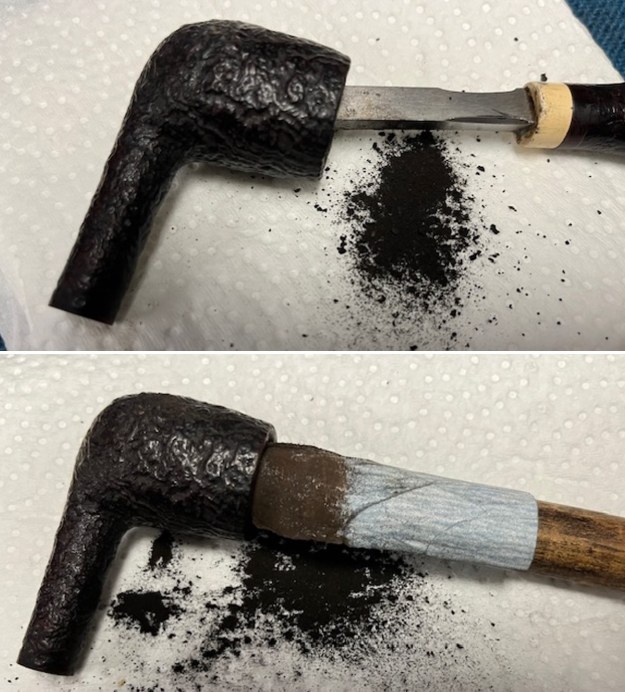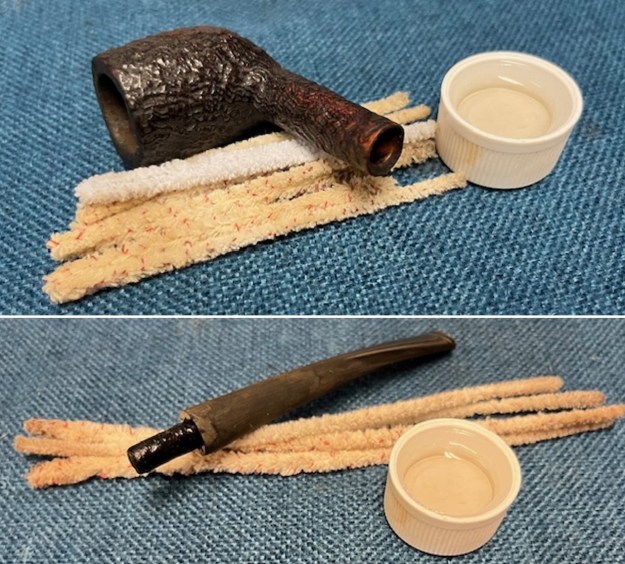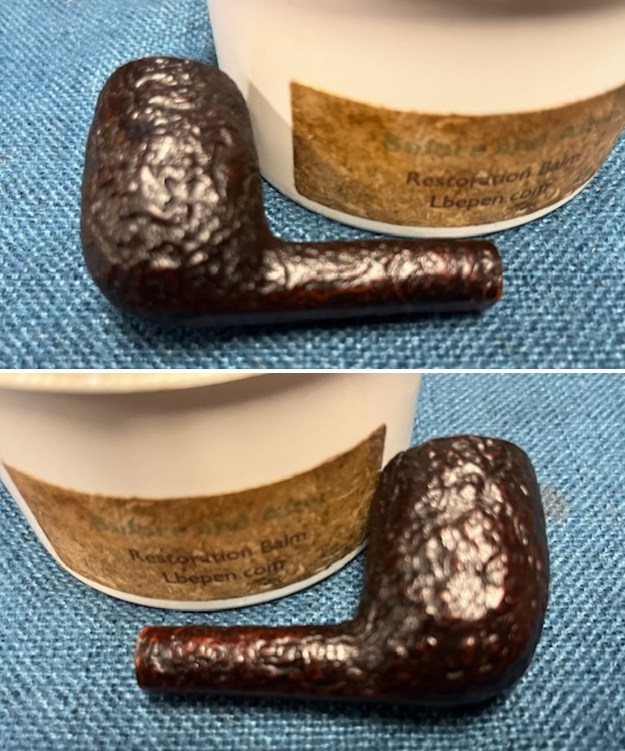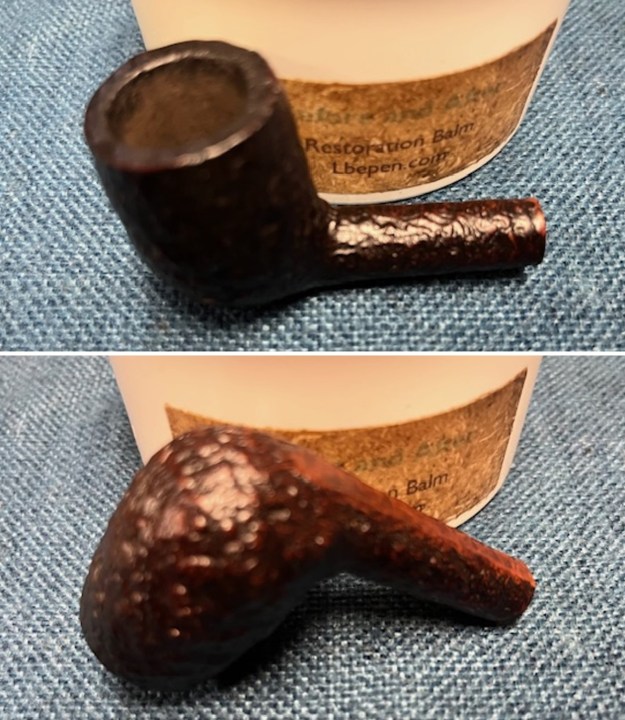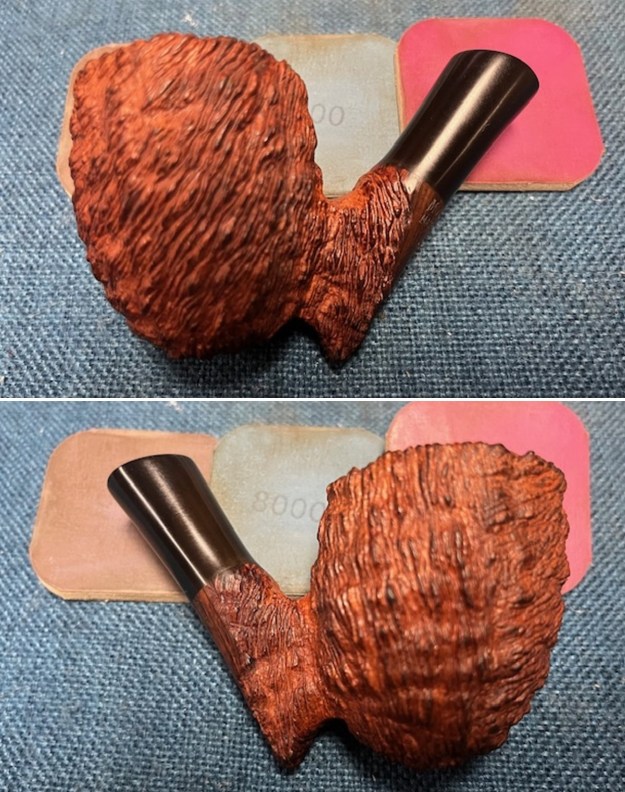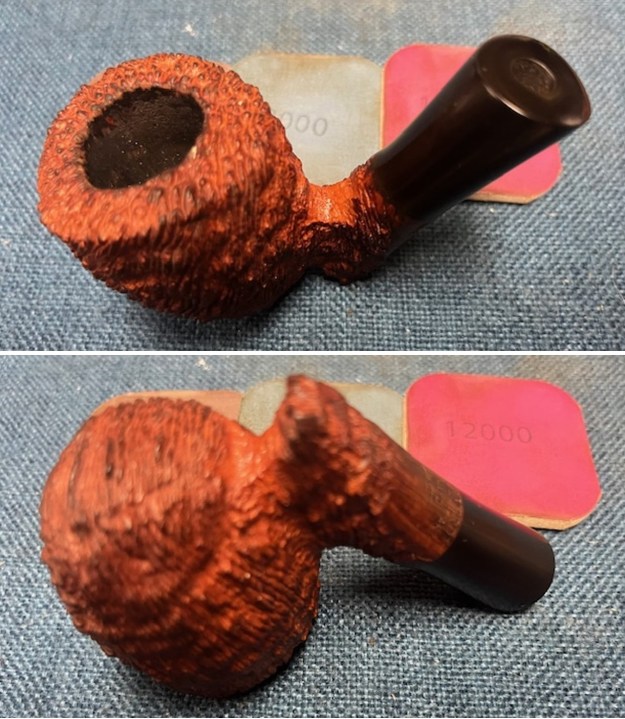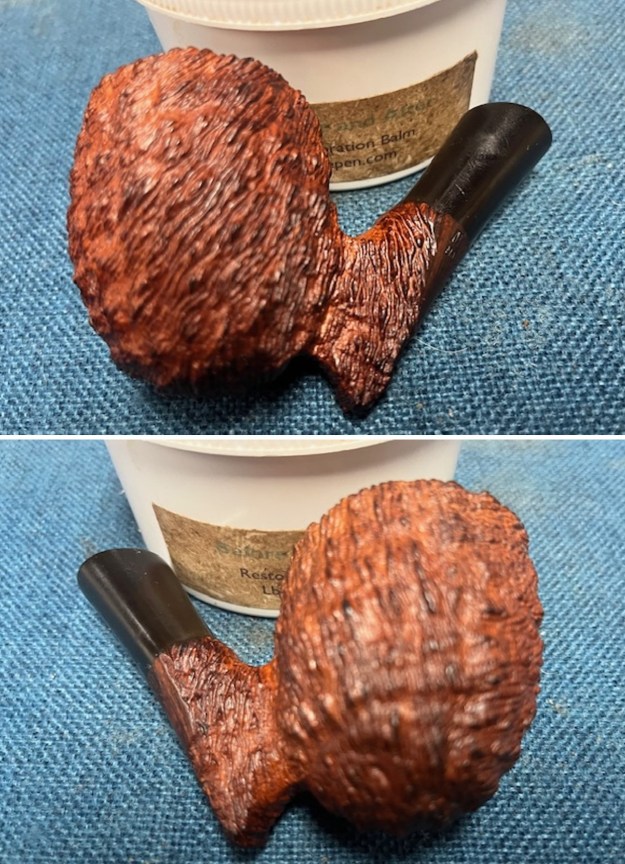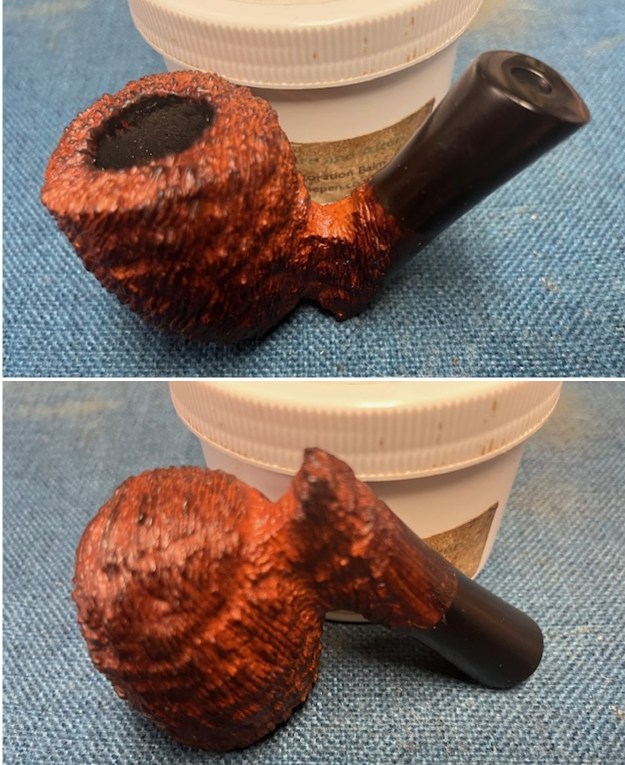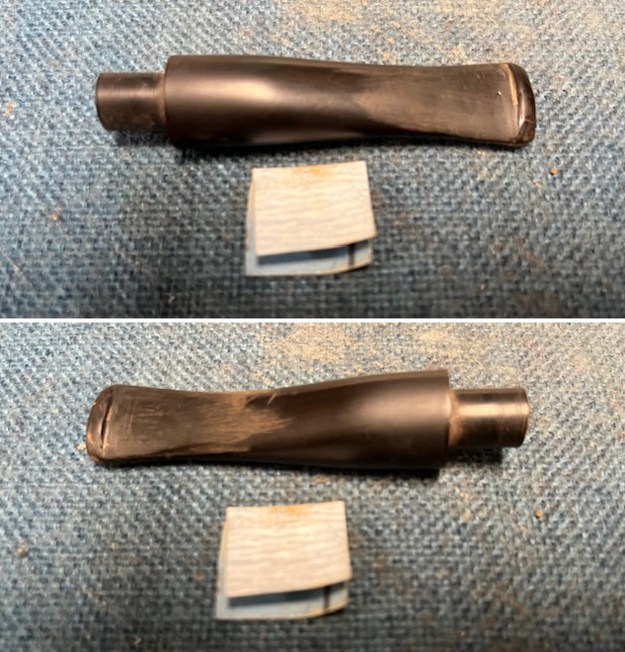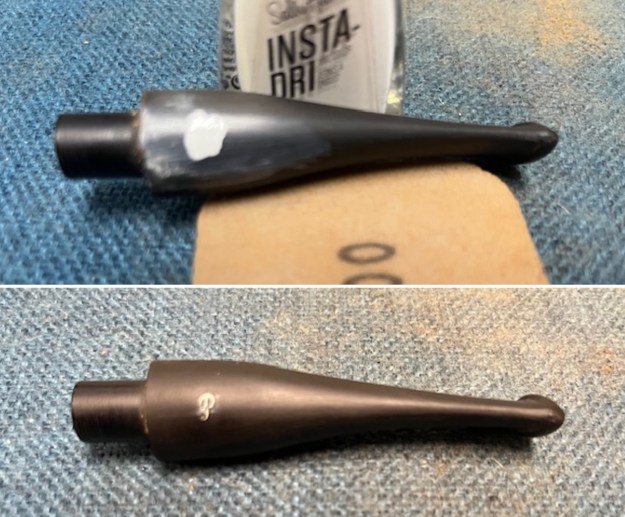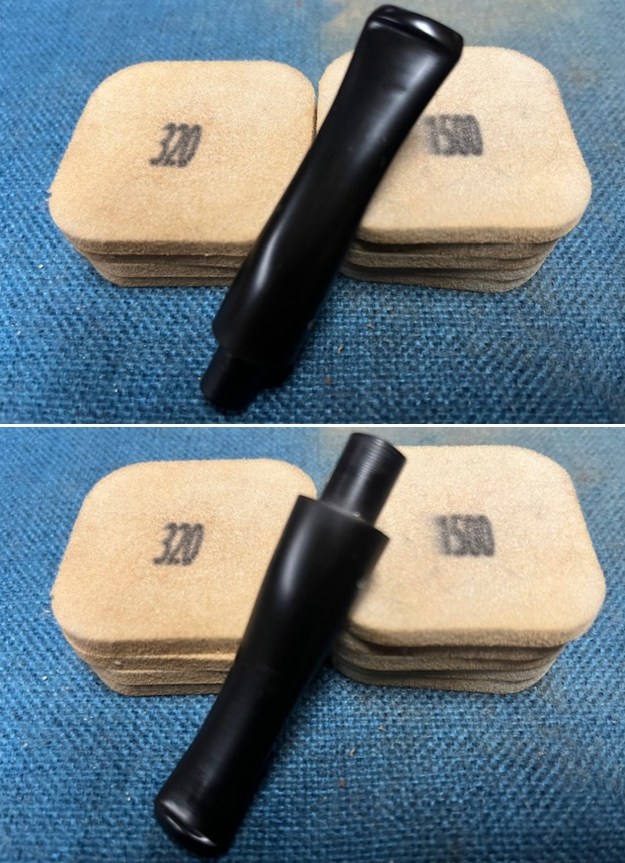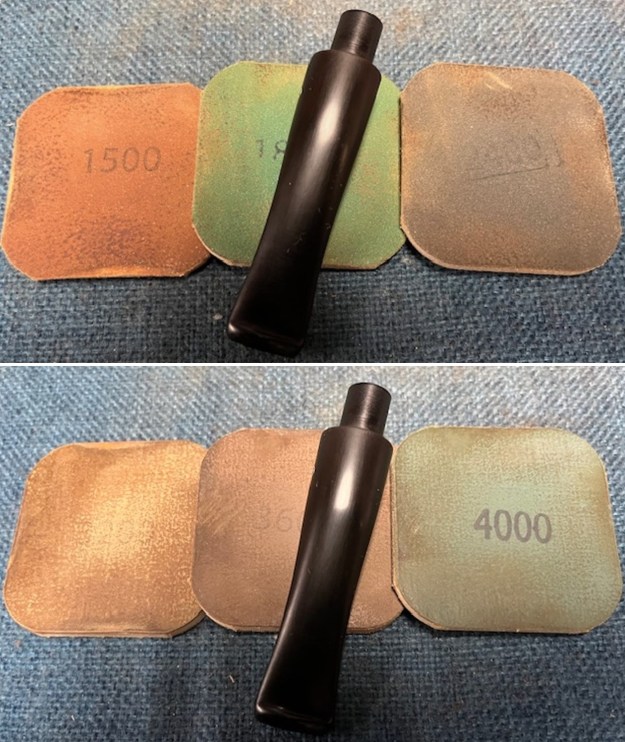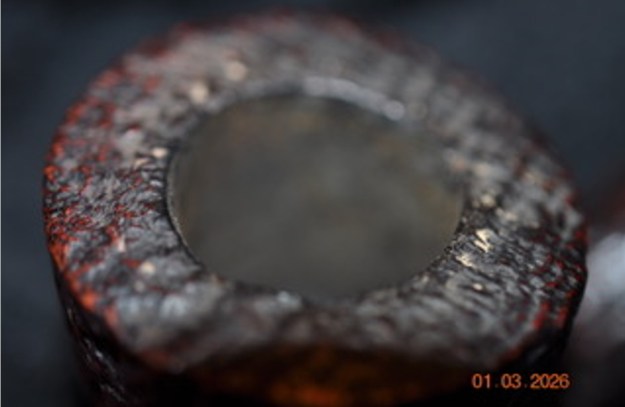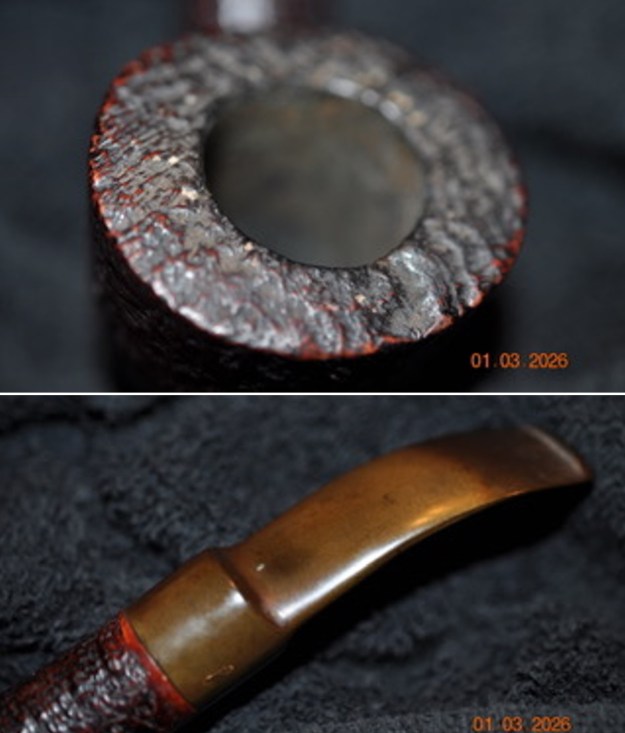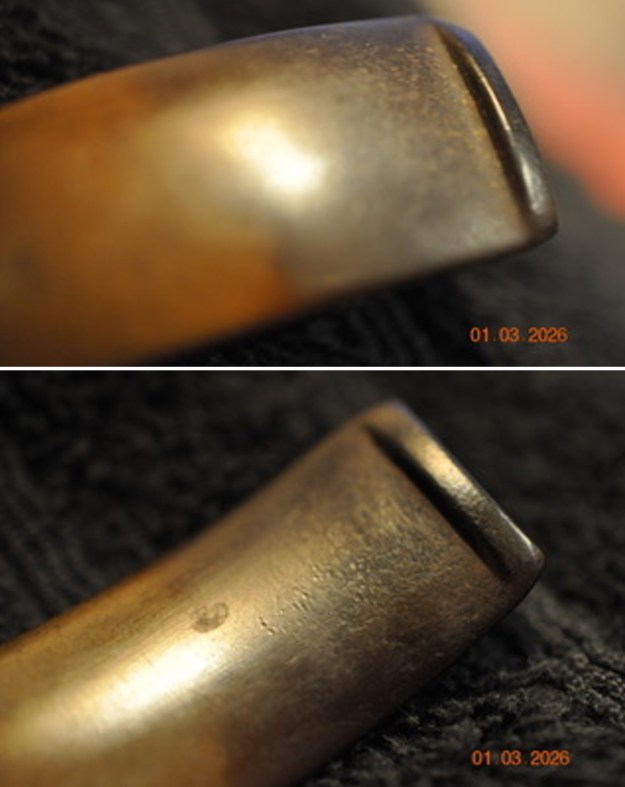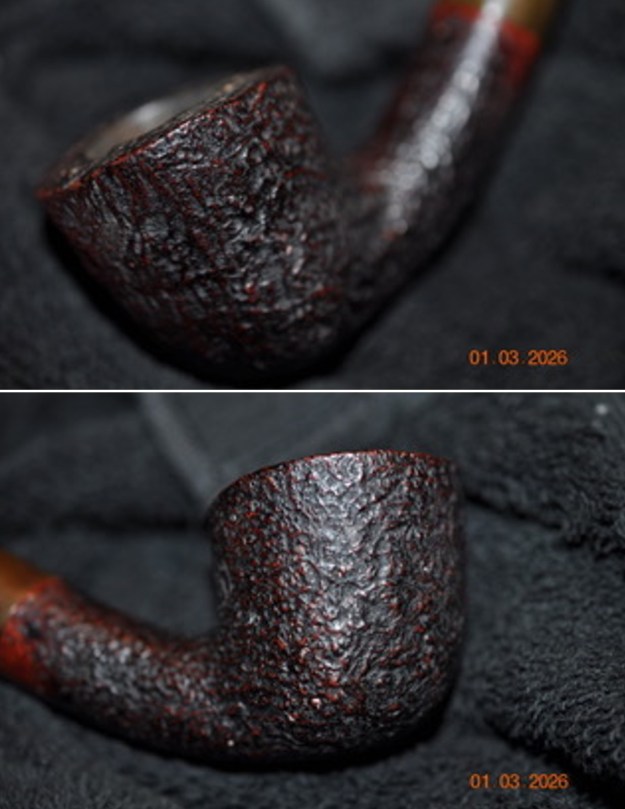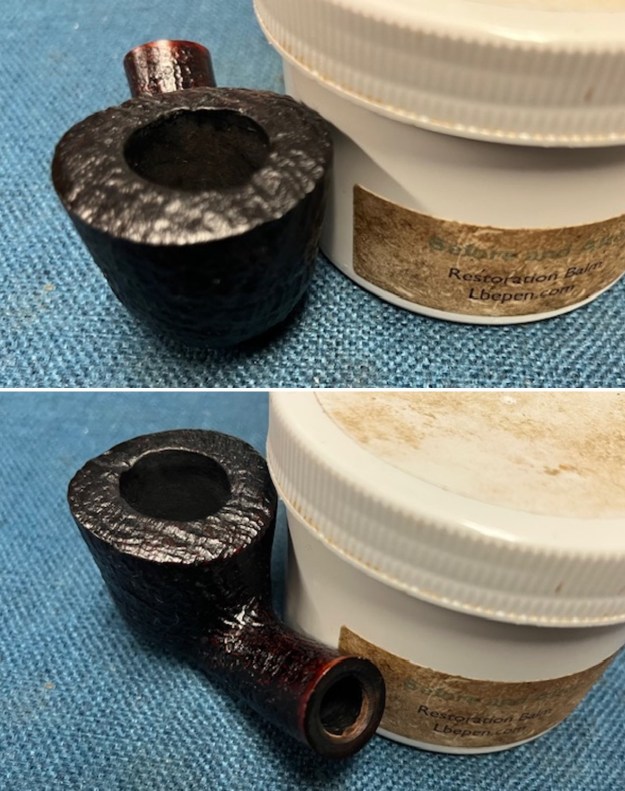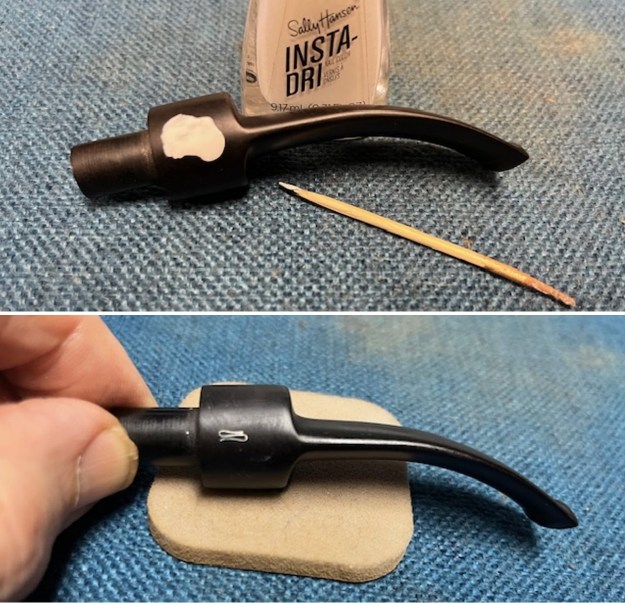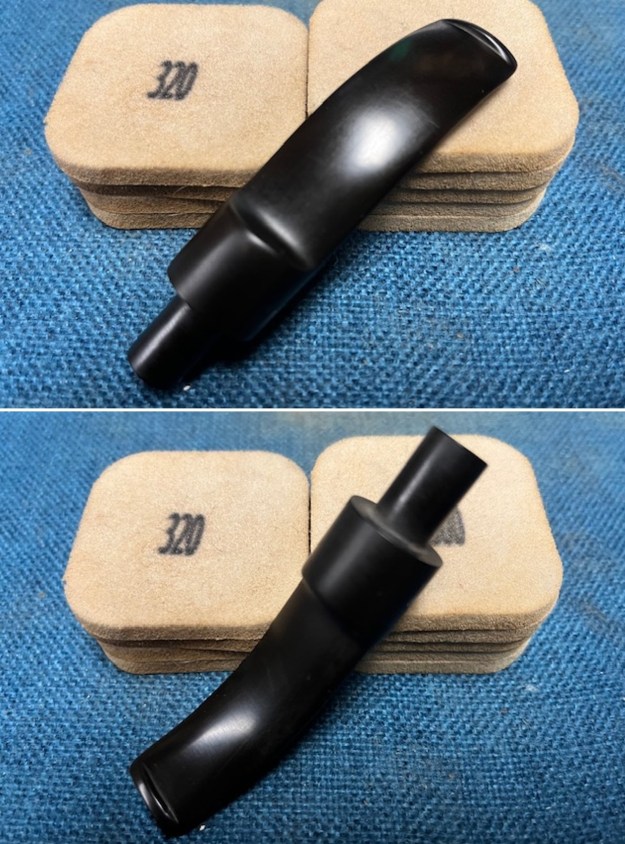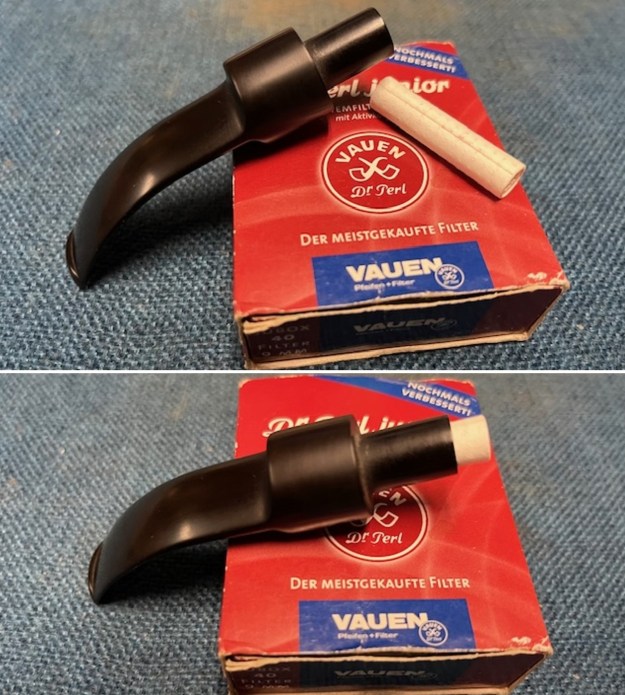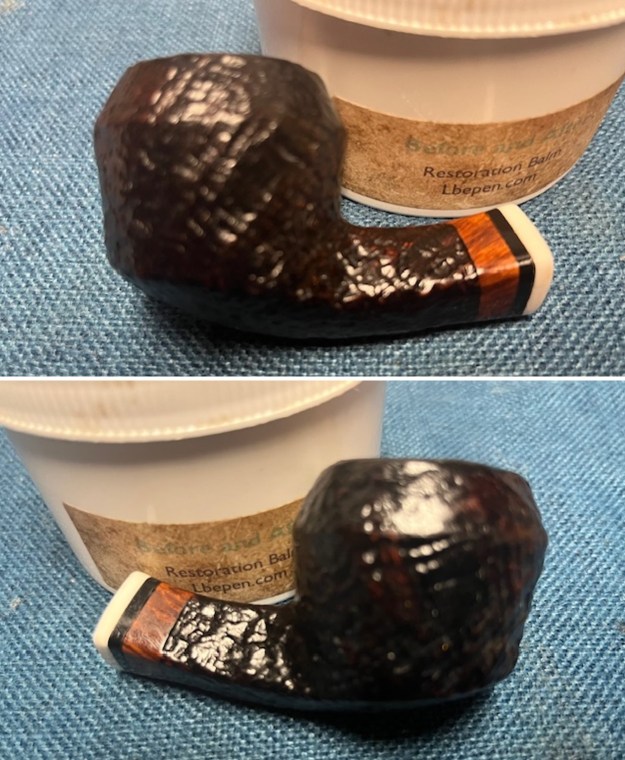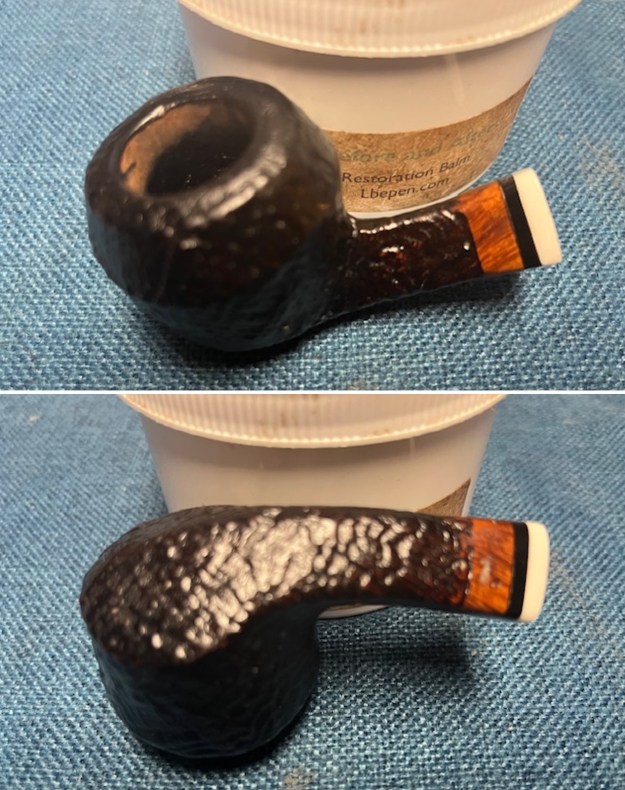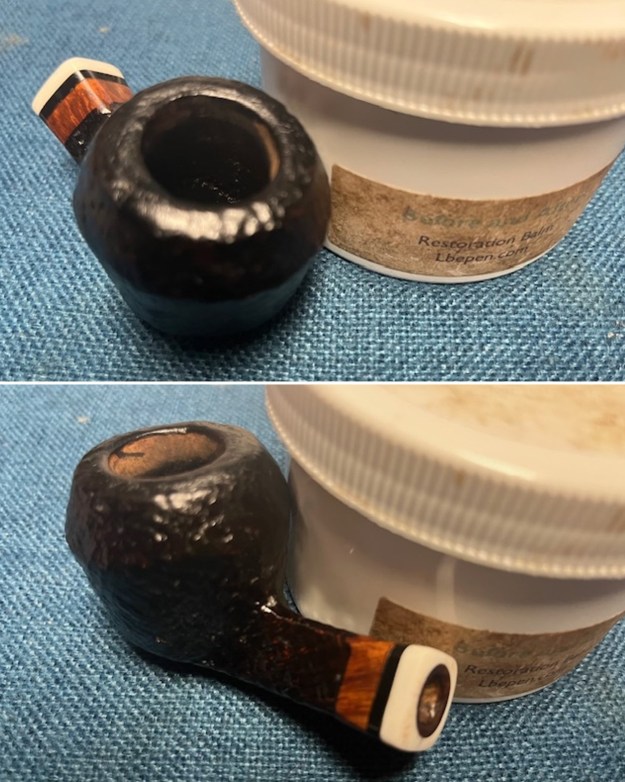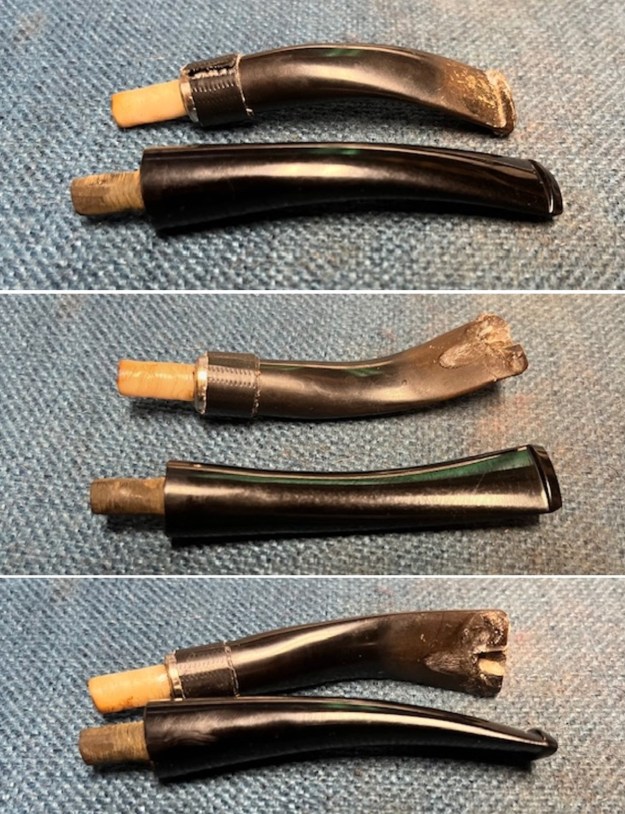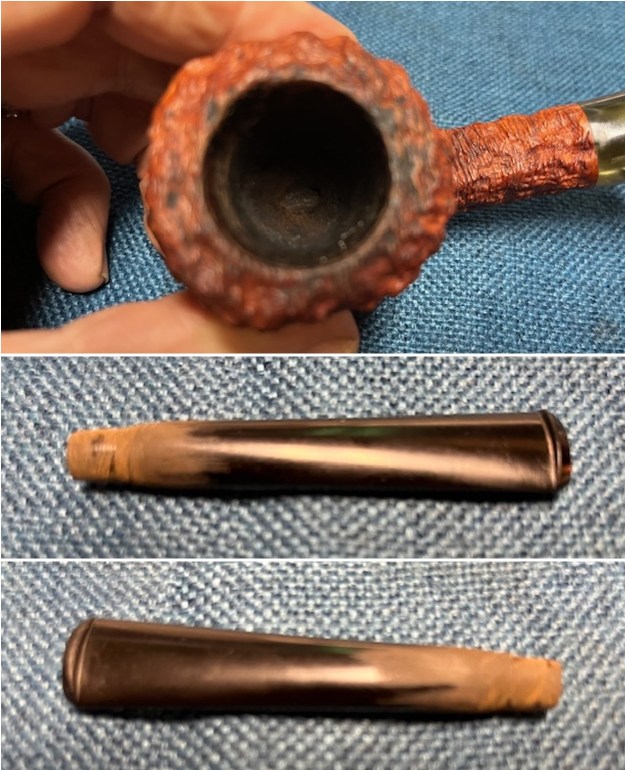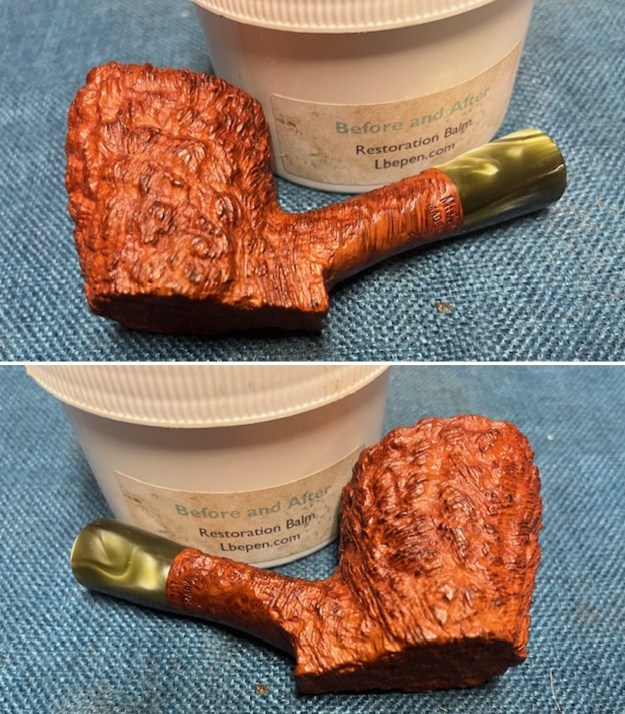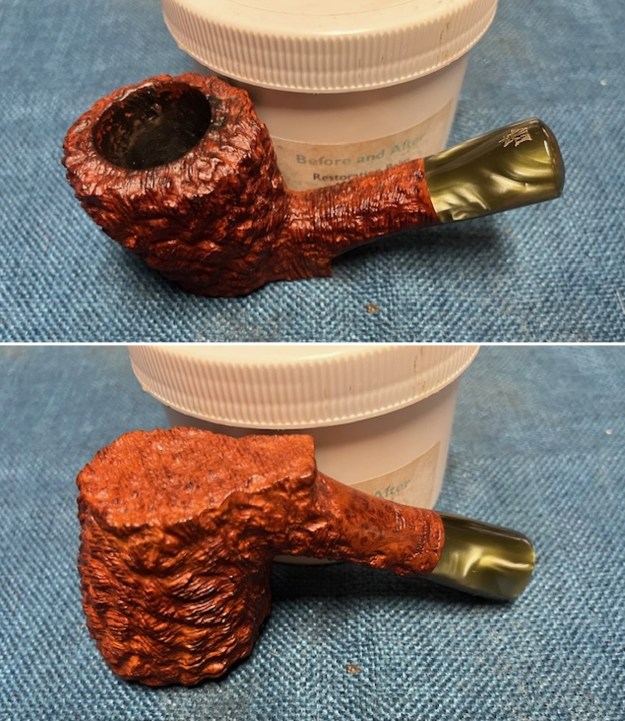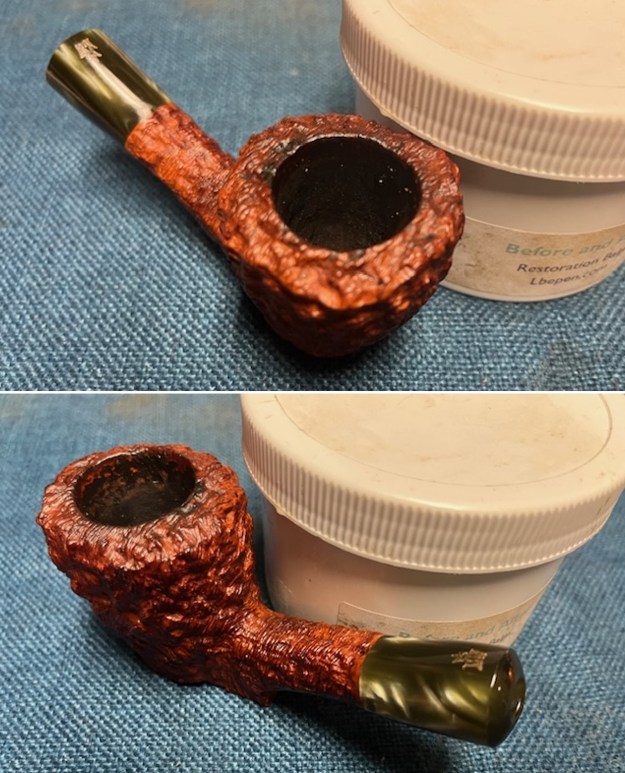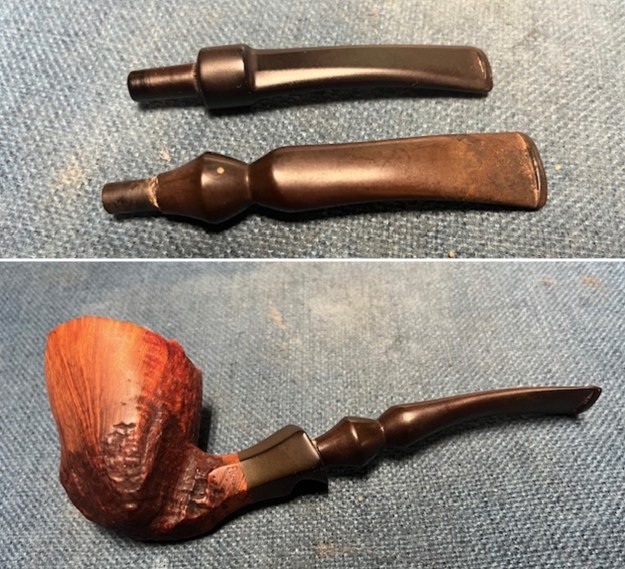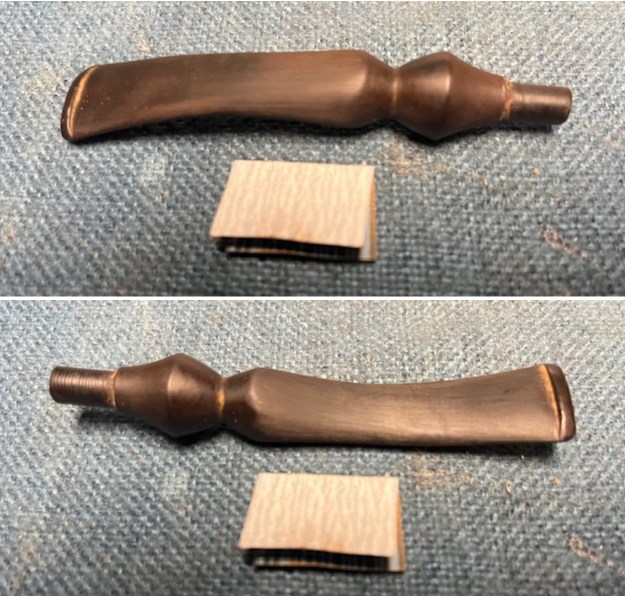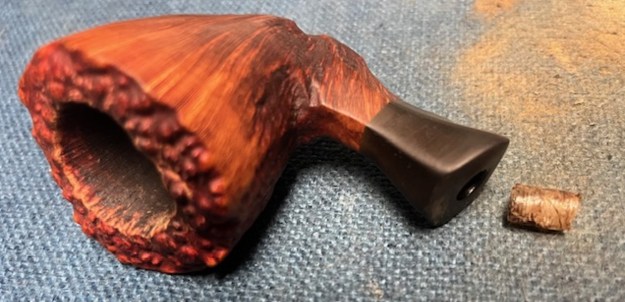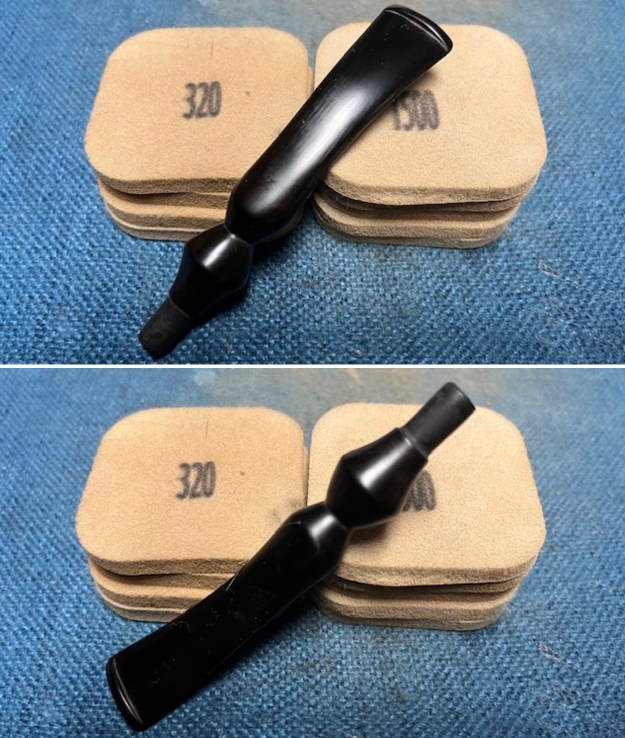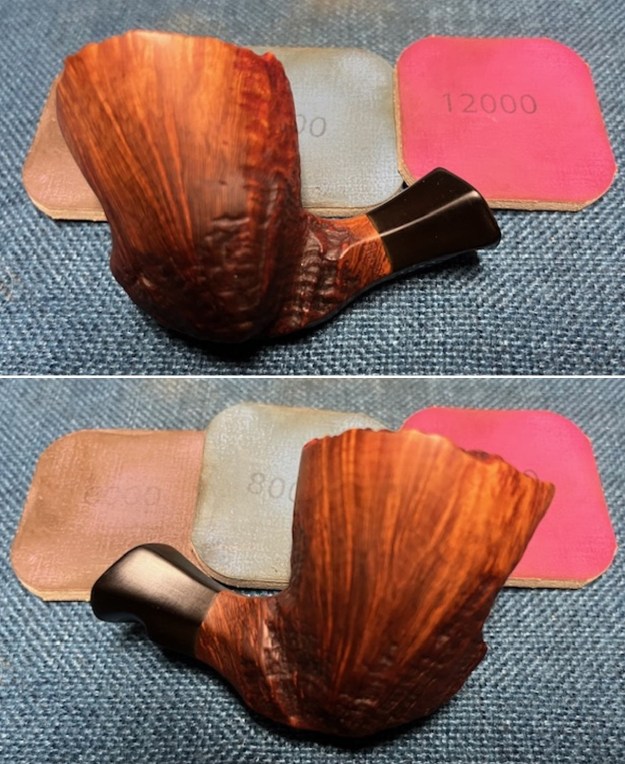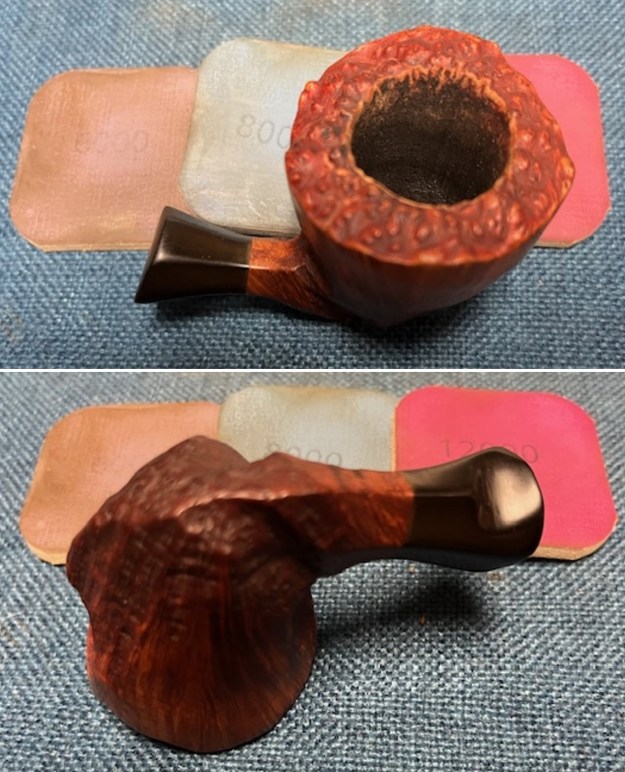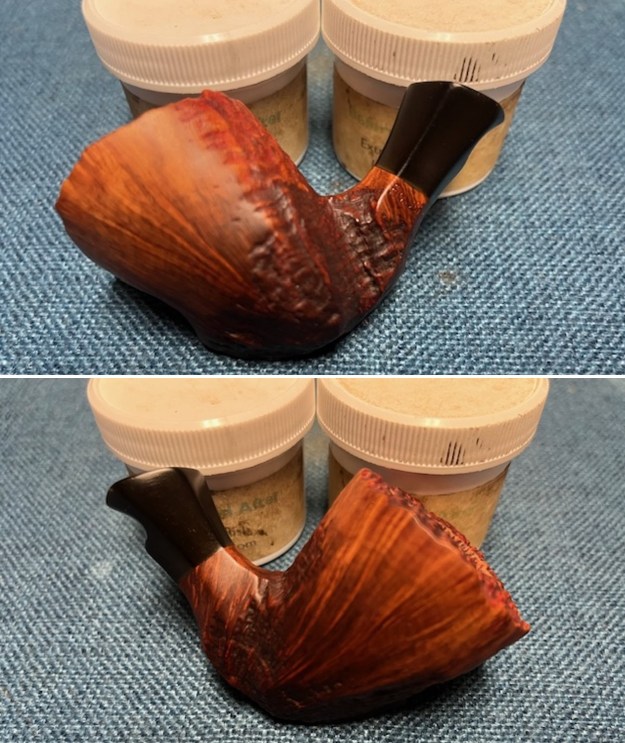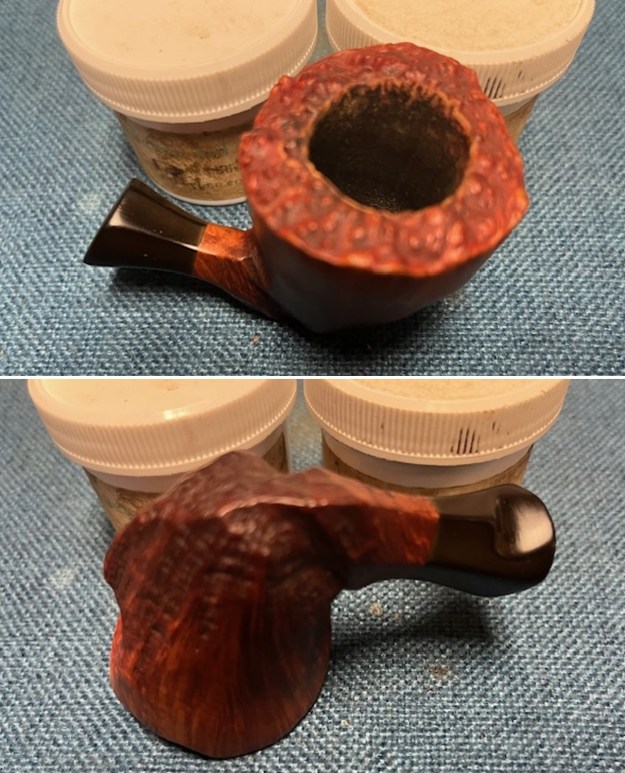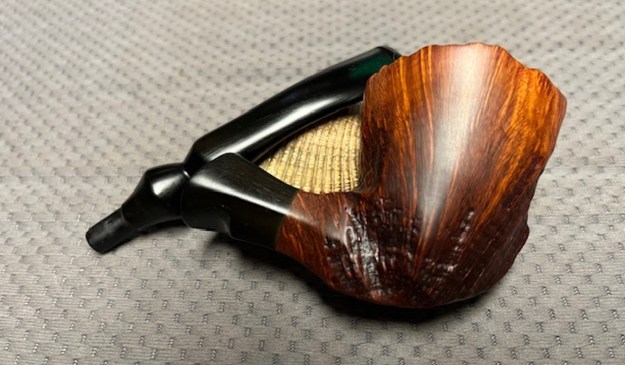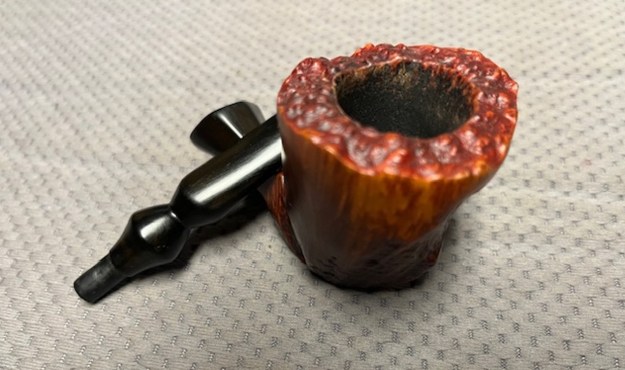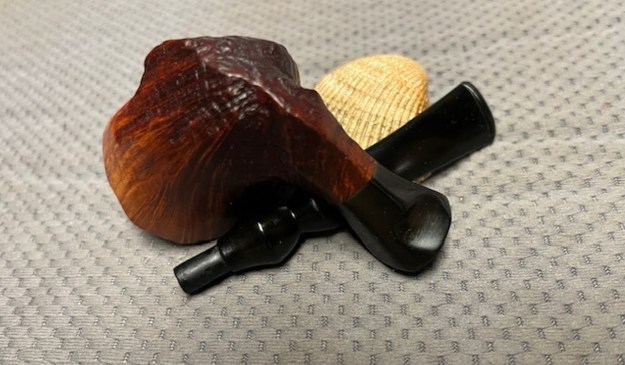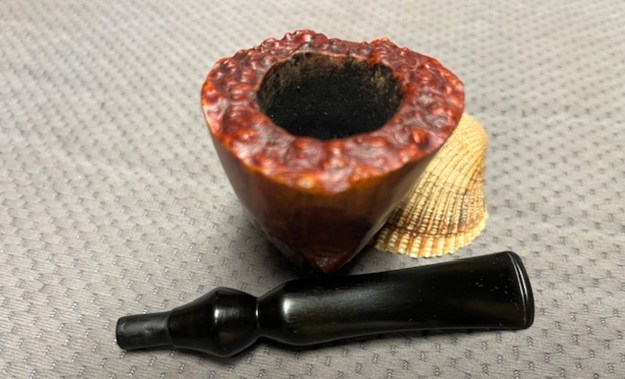
Tag Archives: pipe restemming

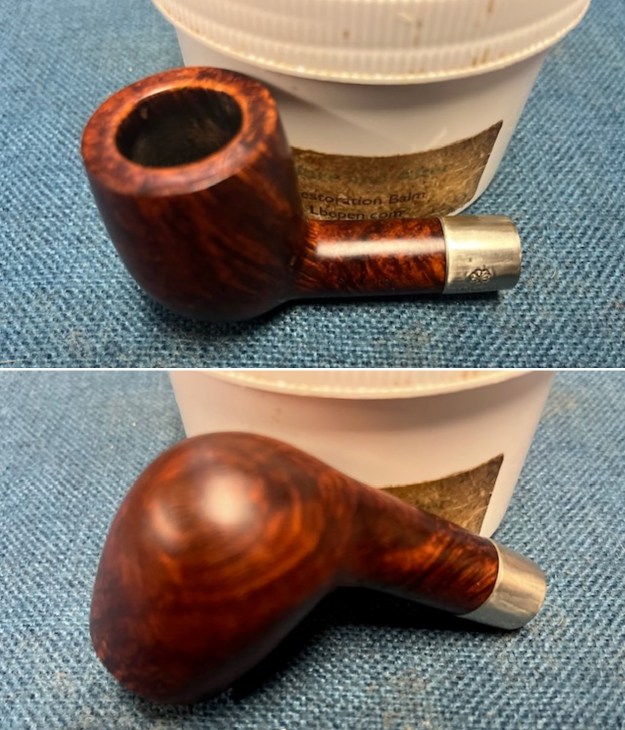
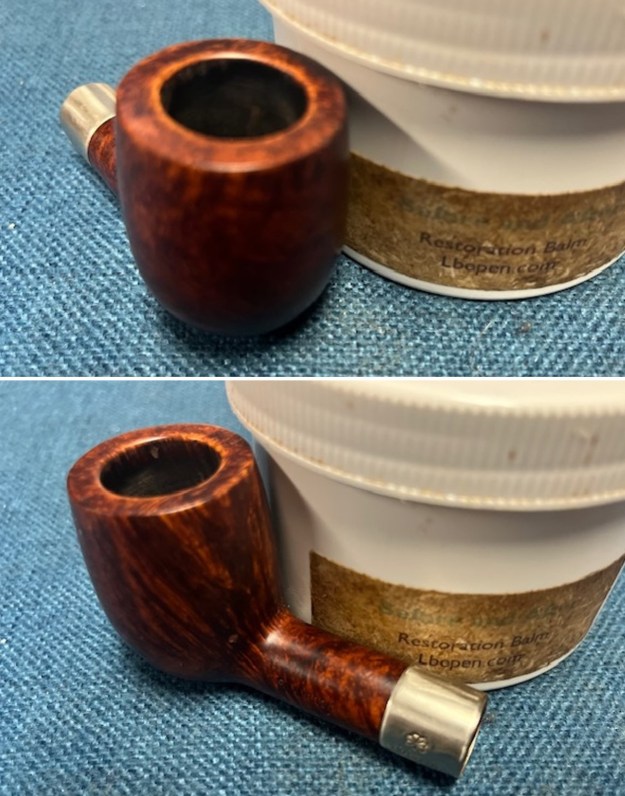
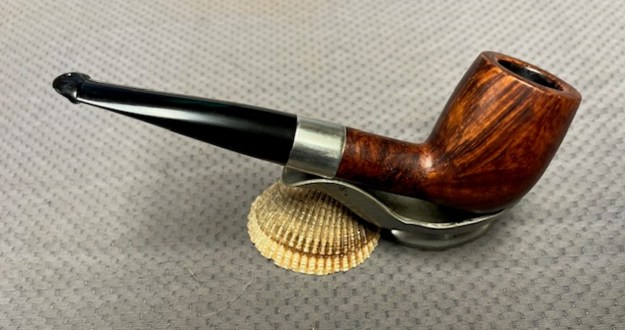
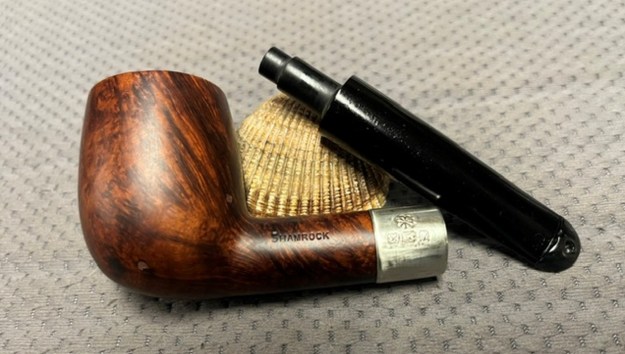
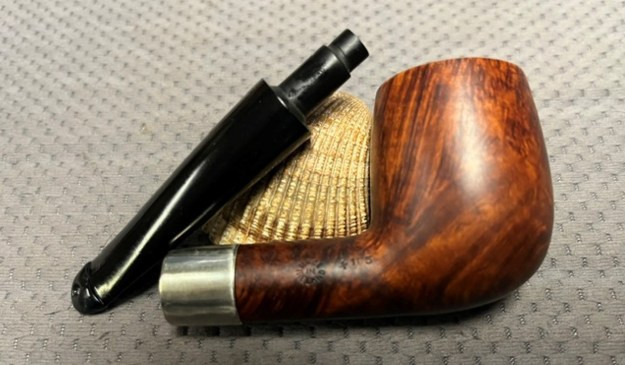
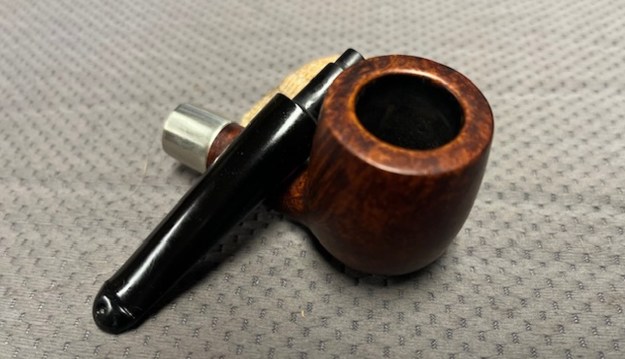
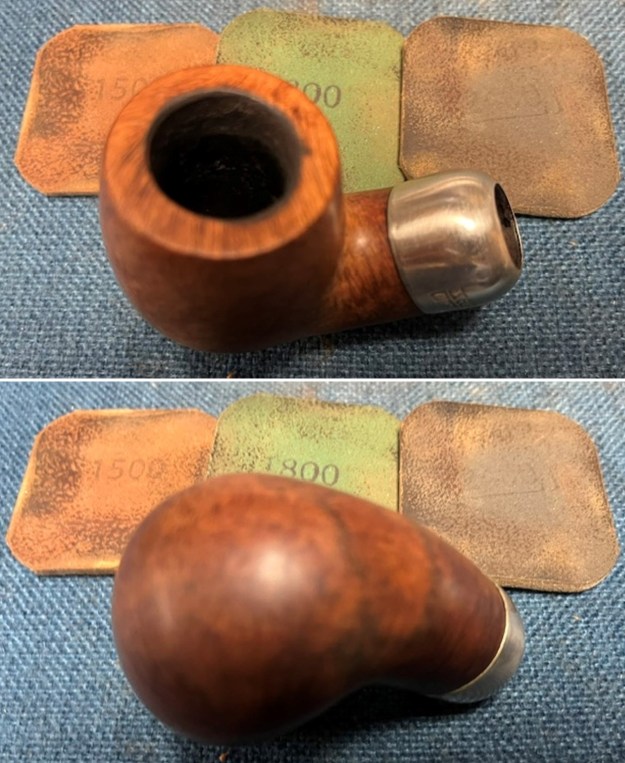
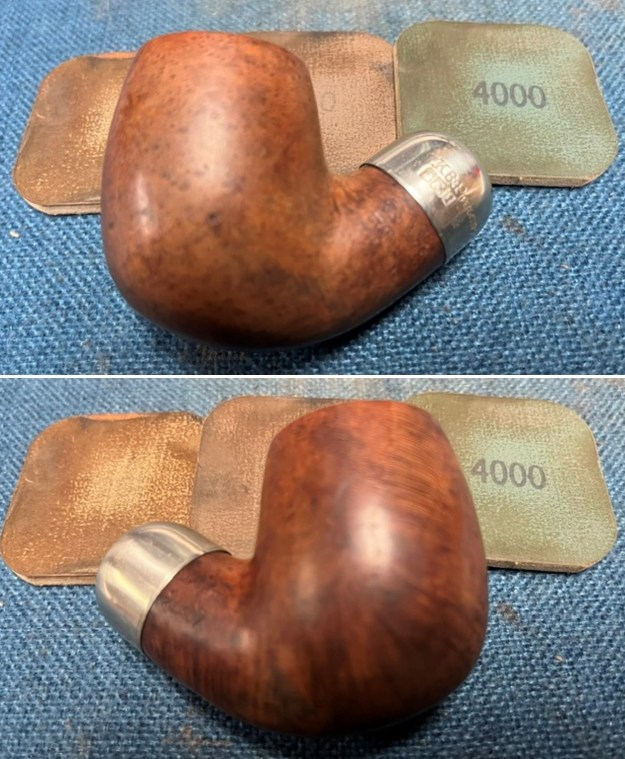
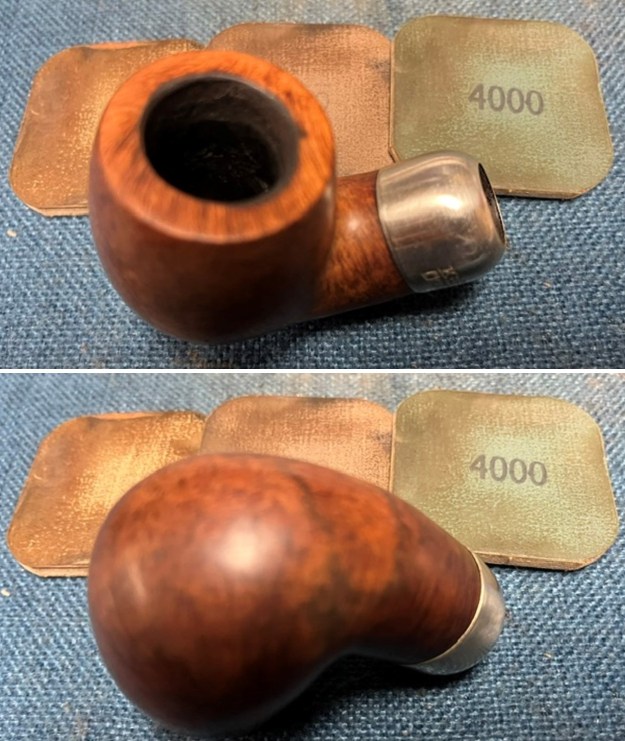
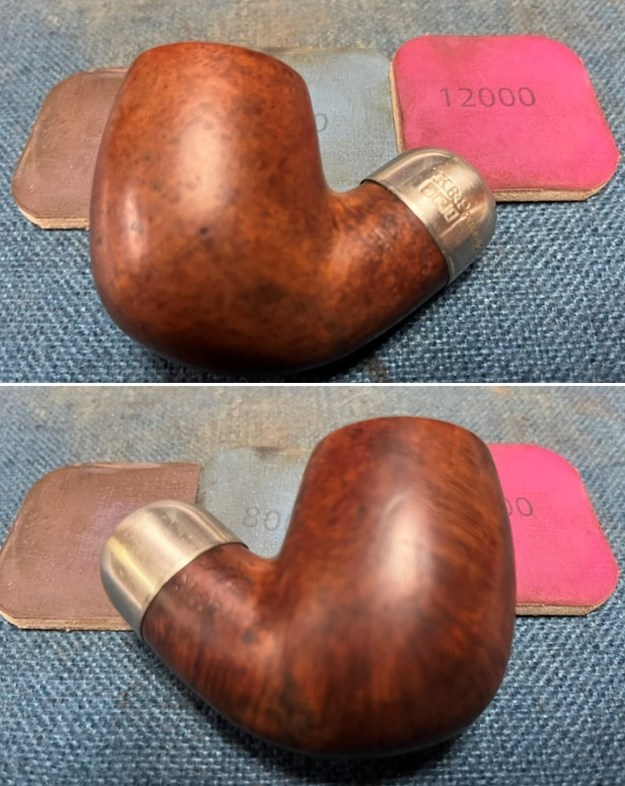
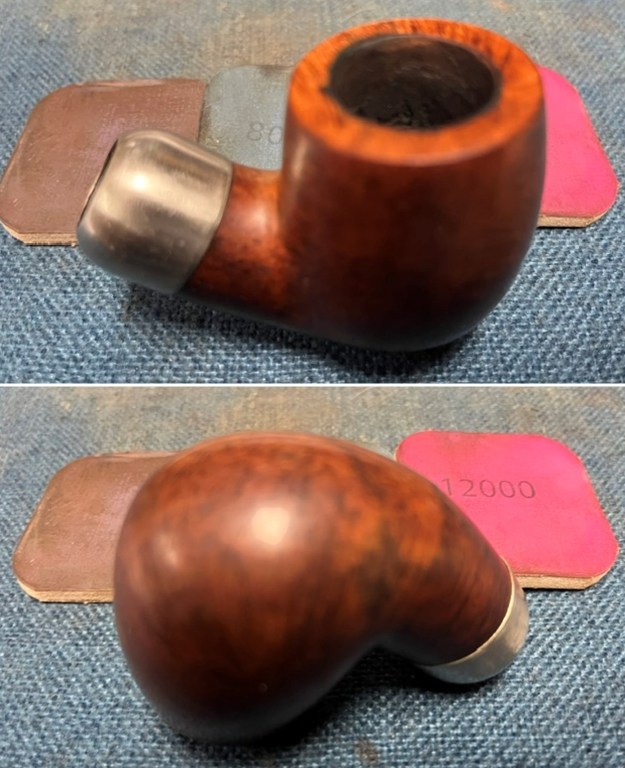
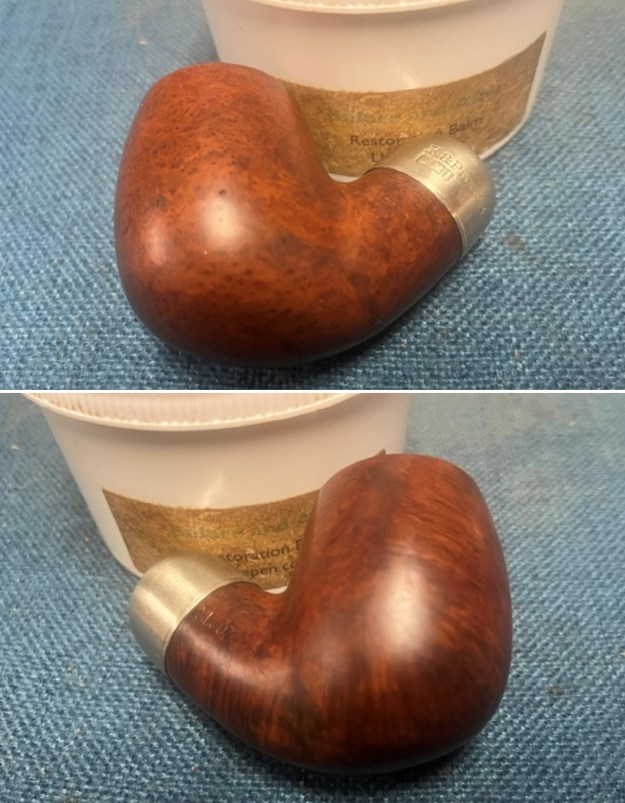
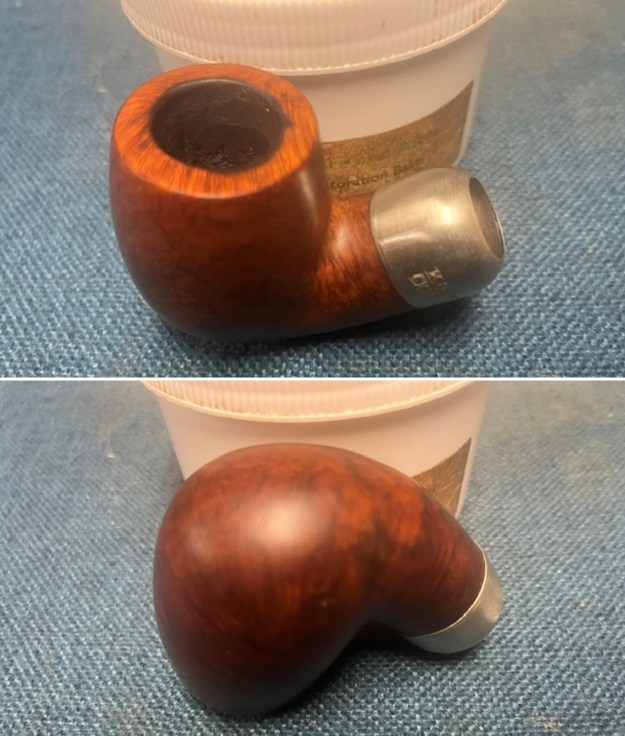
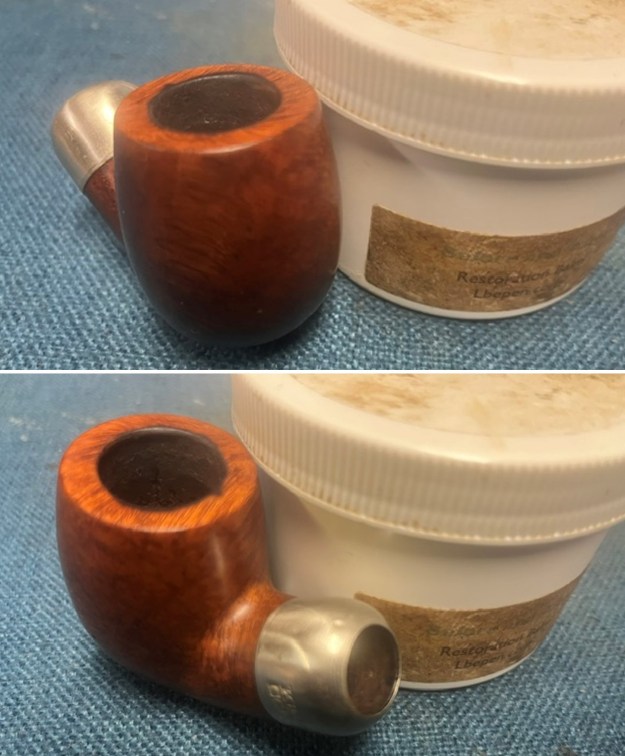
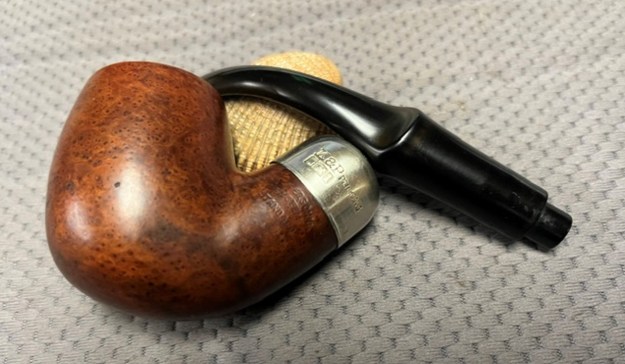
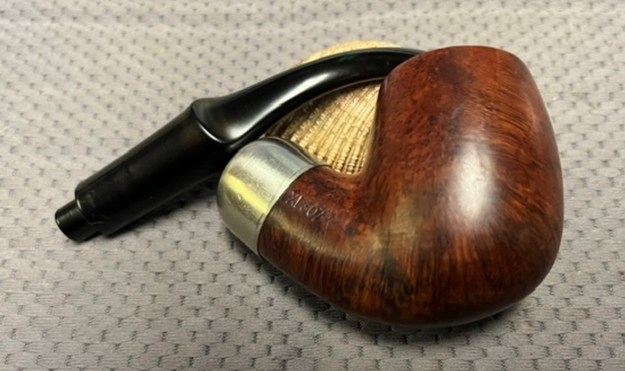
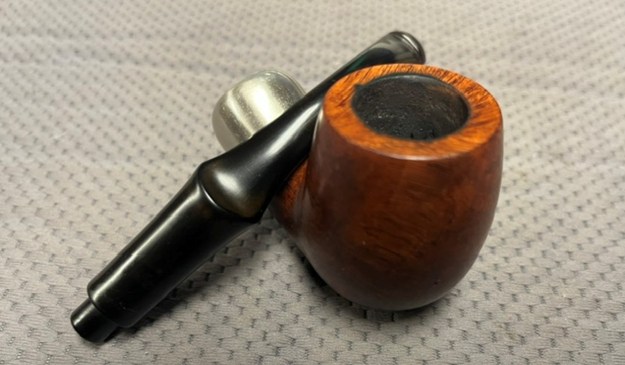
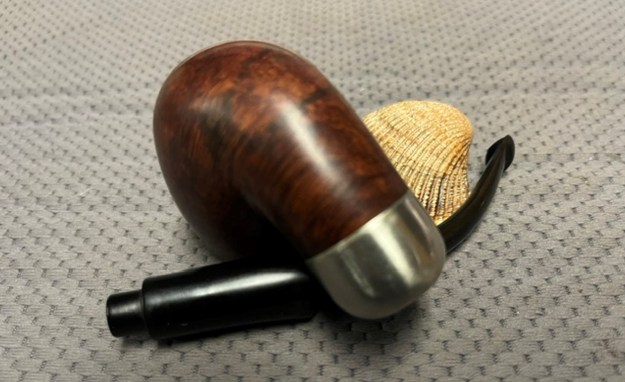
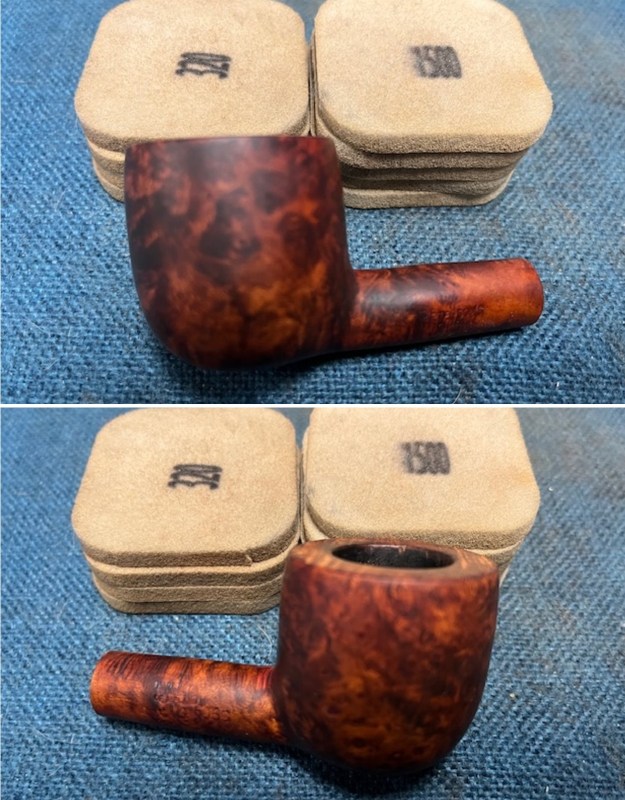
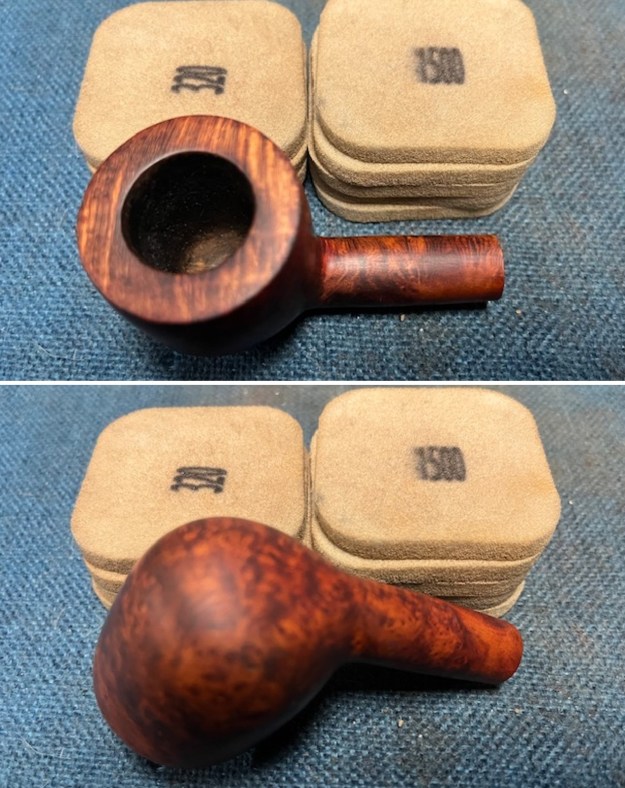
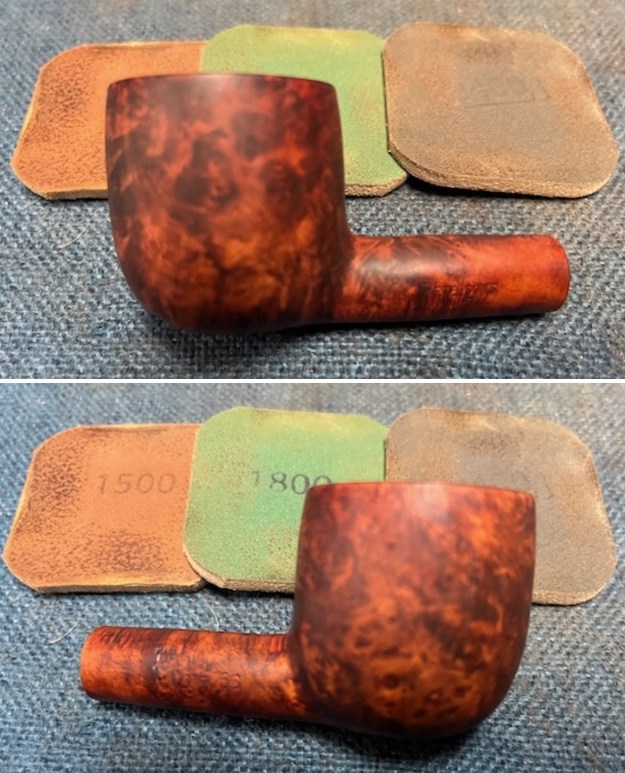
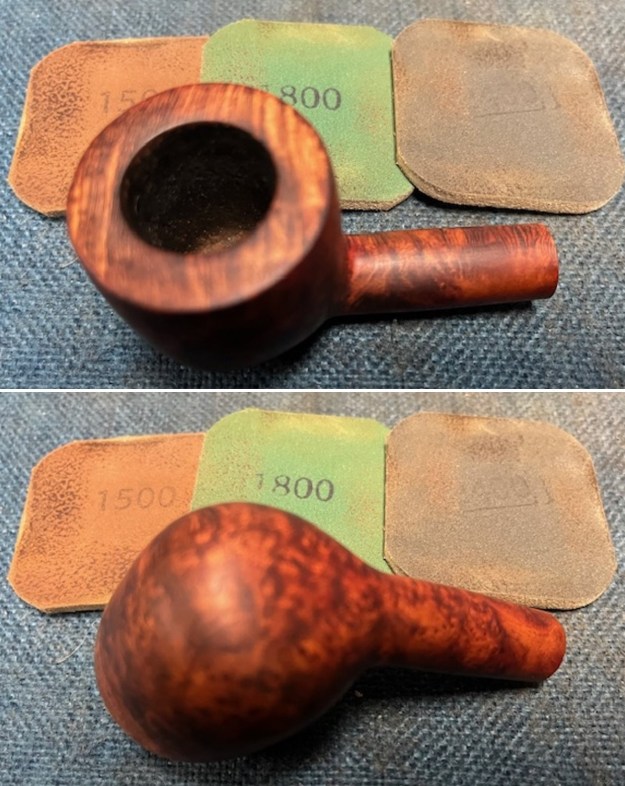
Restoring a Shamrock Billiard made in Ireland 105 Billiard with a Maltese Cross on the shank


by Steve Laug

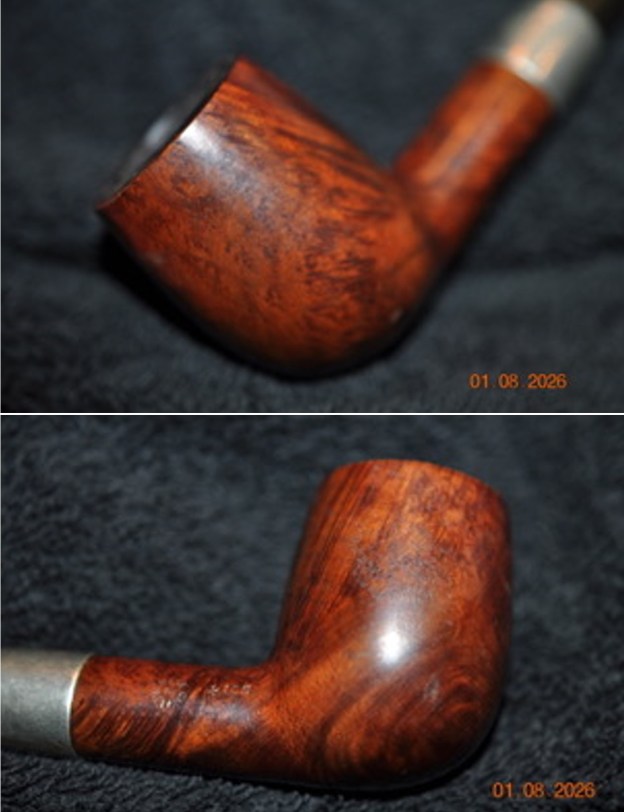
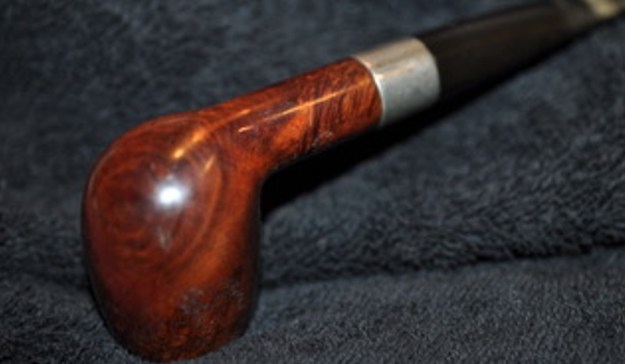
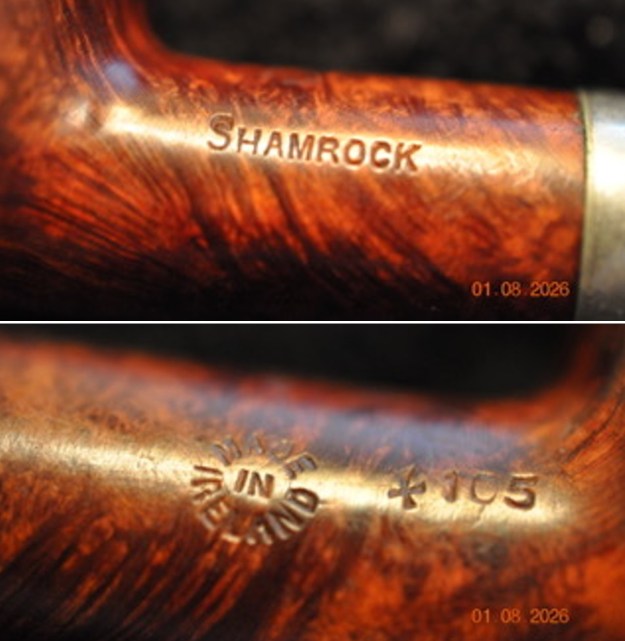
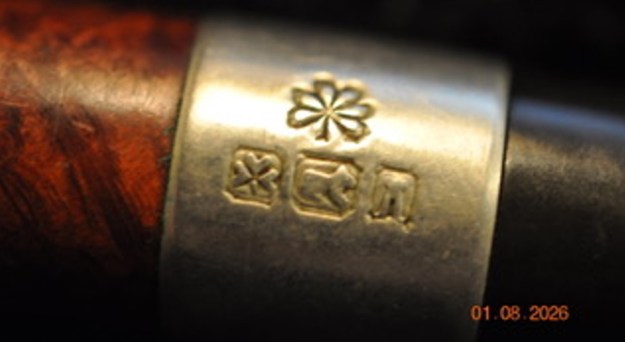
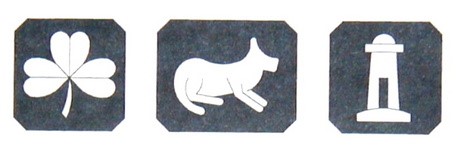
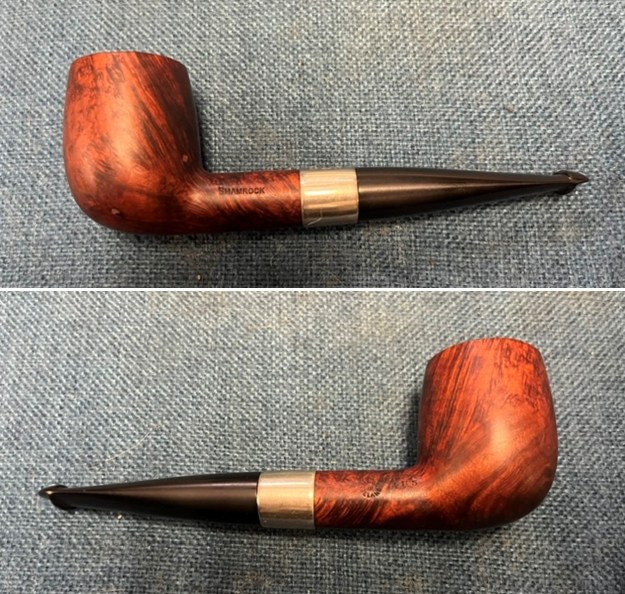
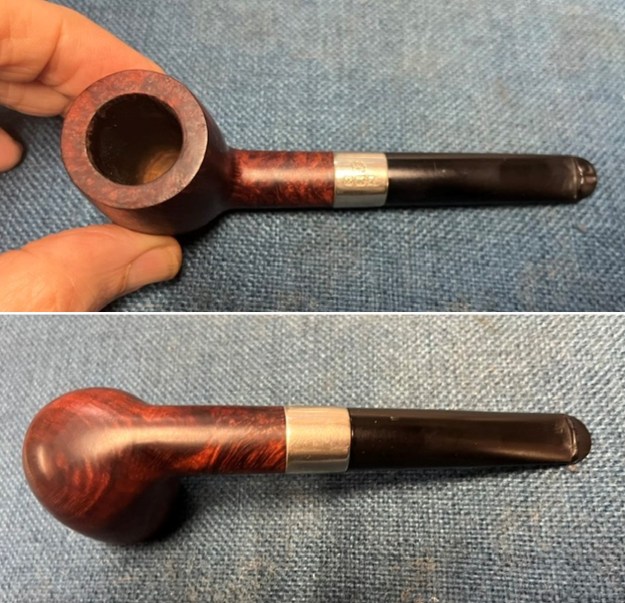
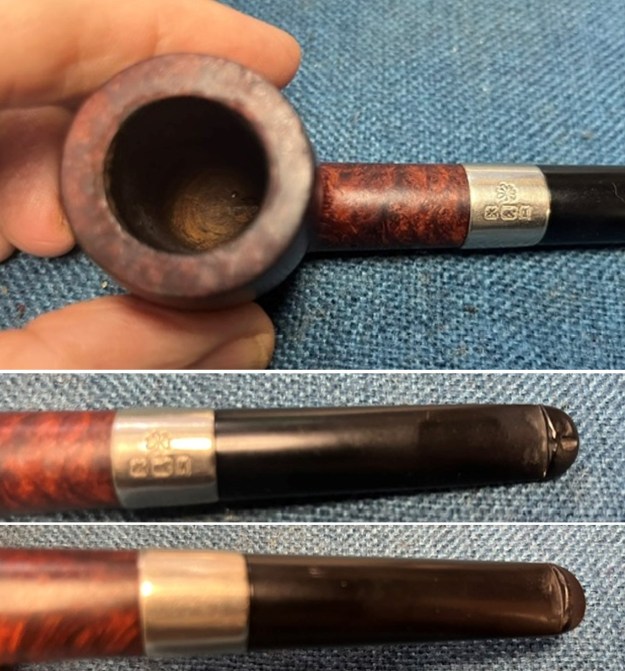
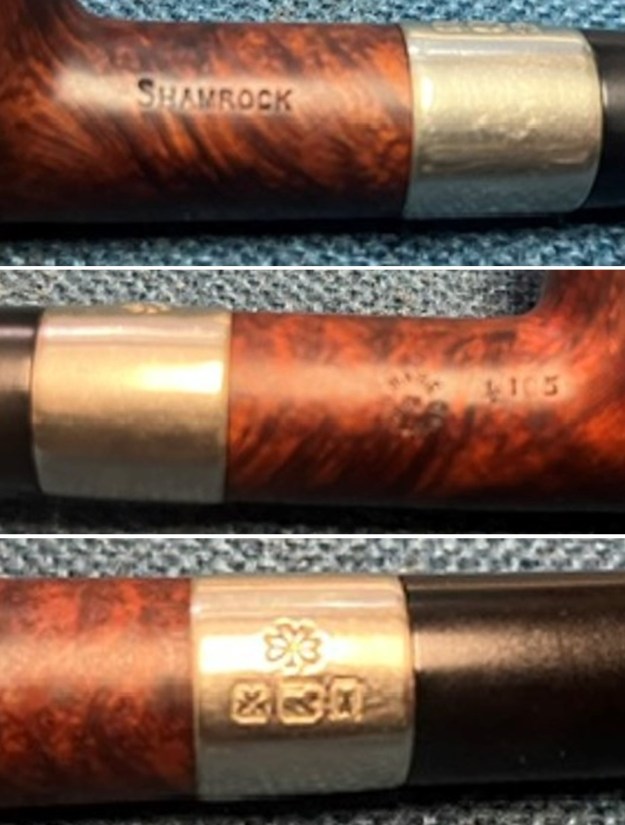
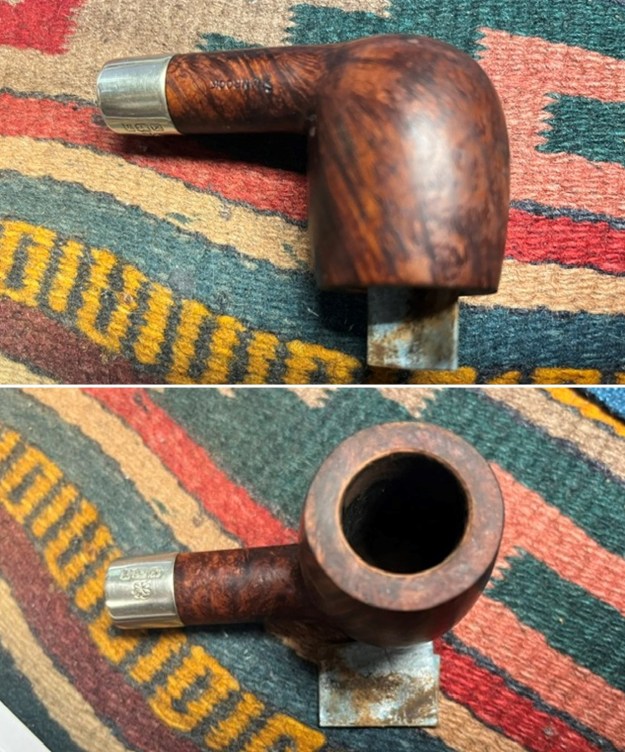
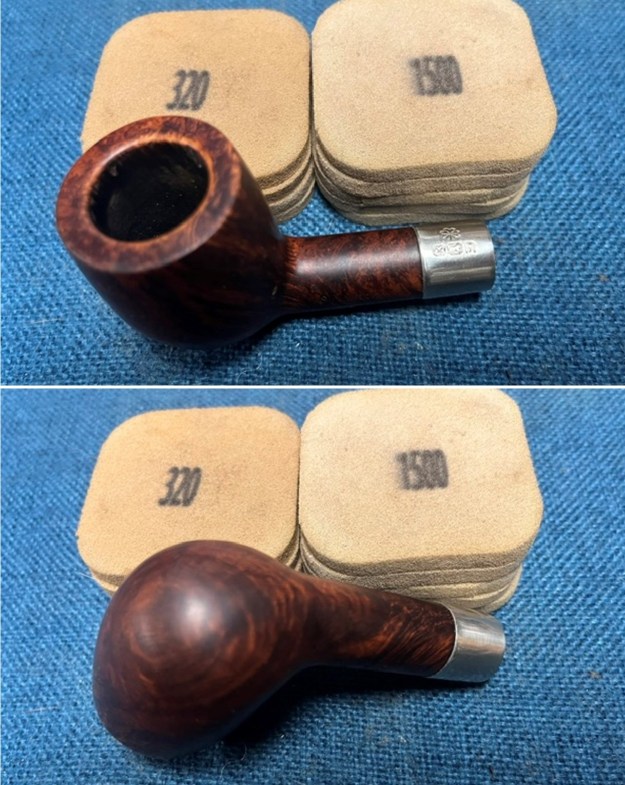
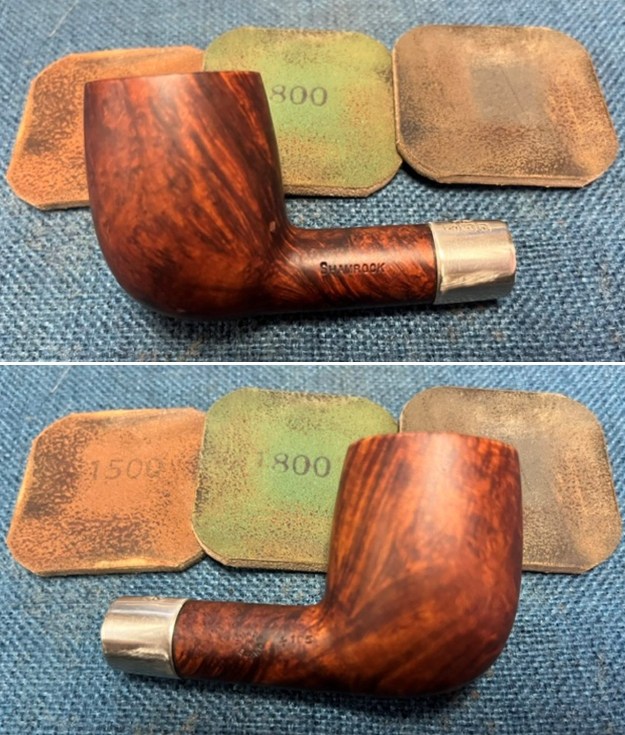
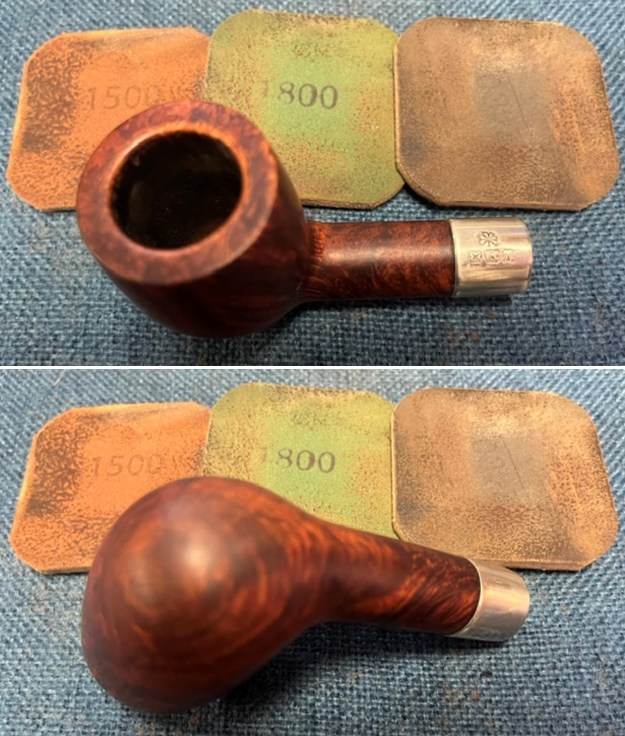
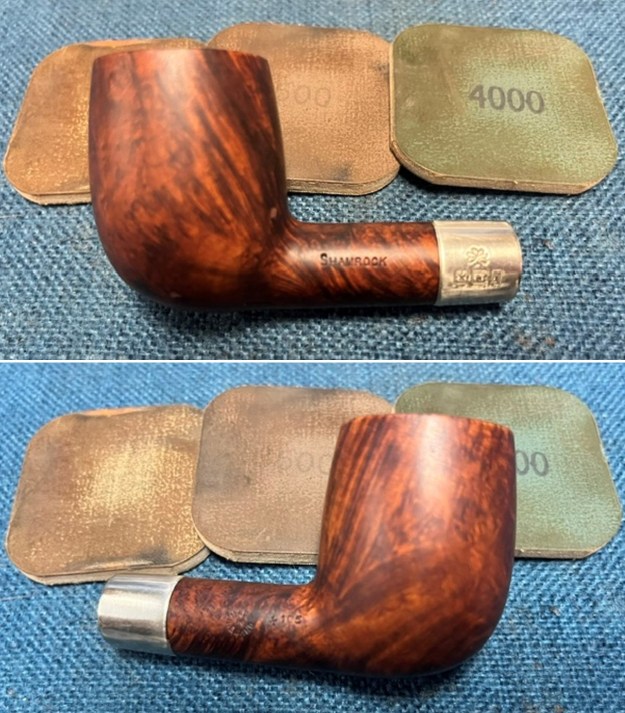
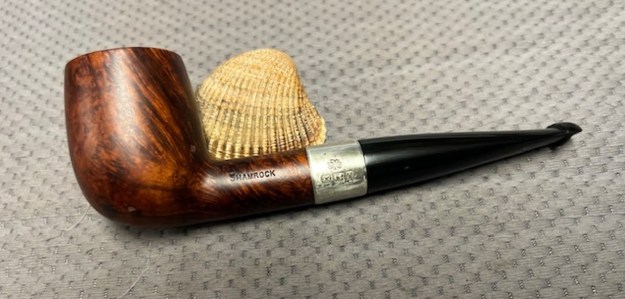
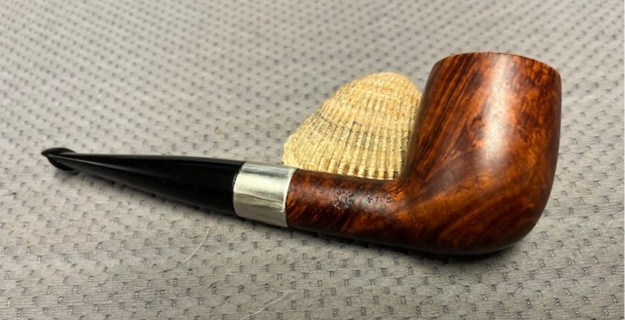
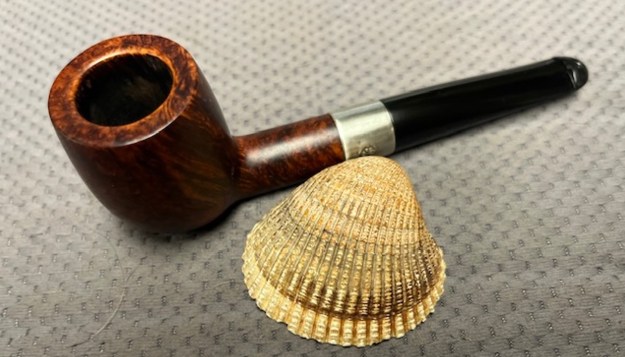
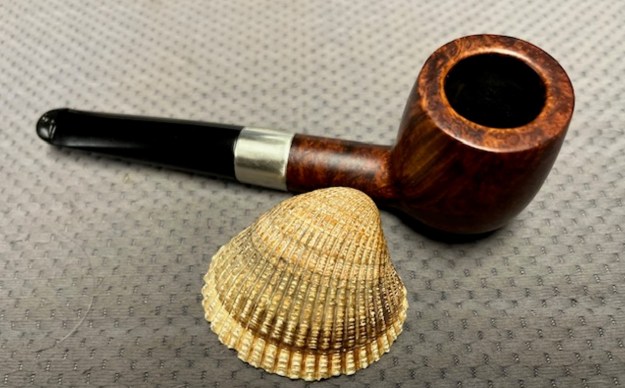
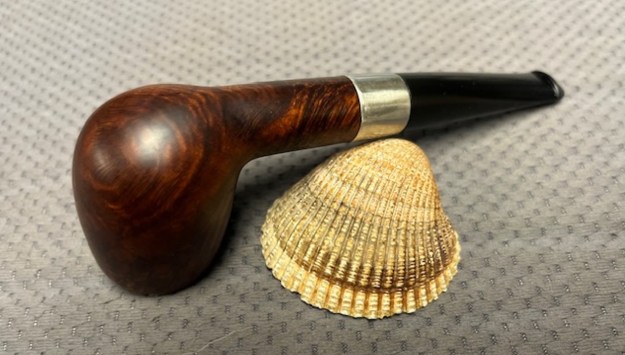
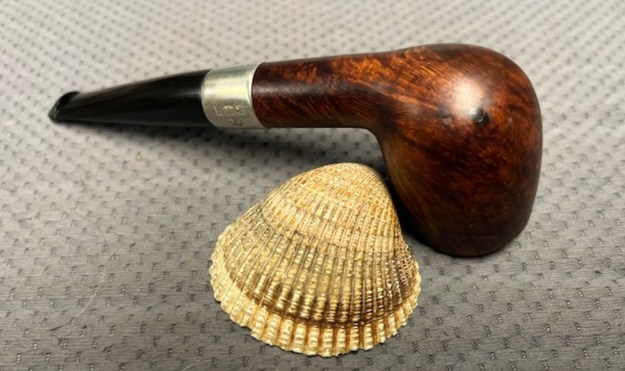
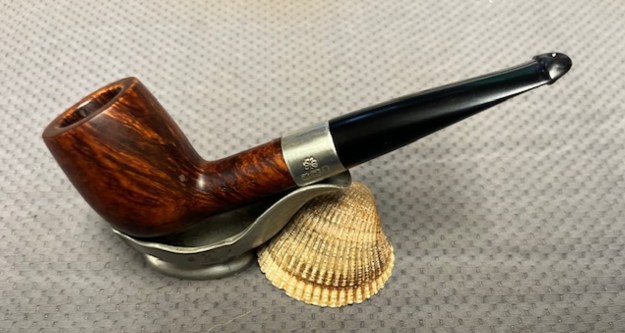
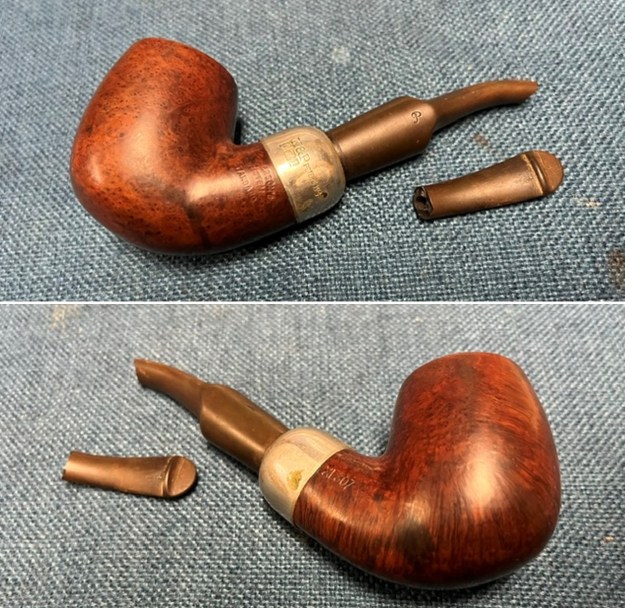
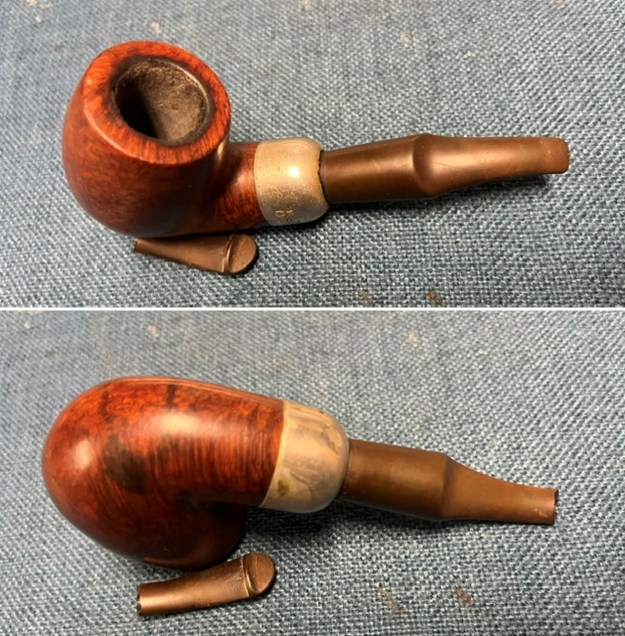
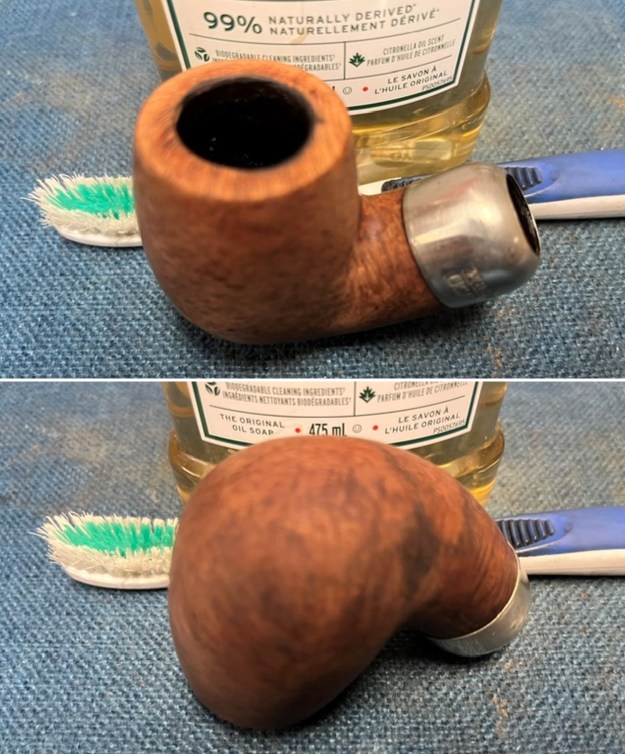
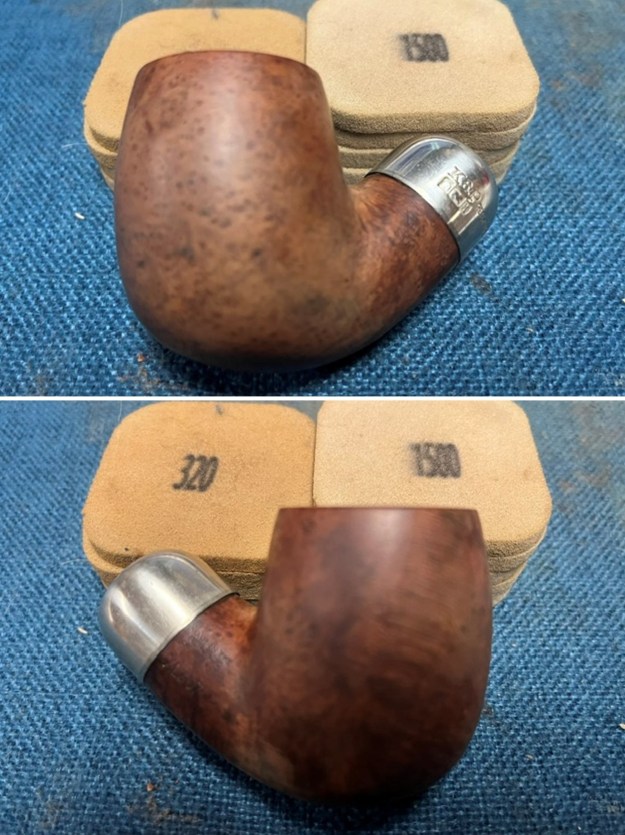
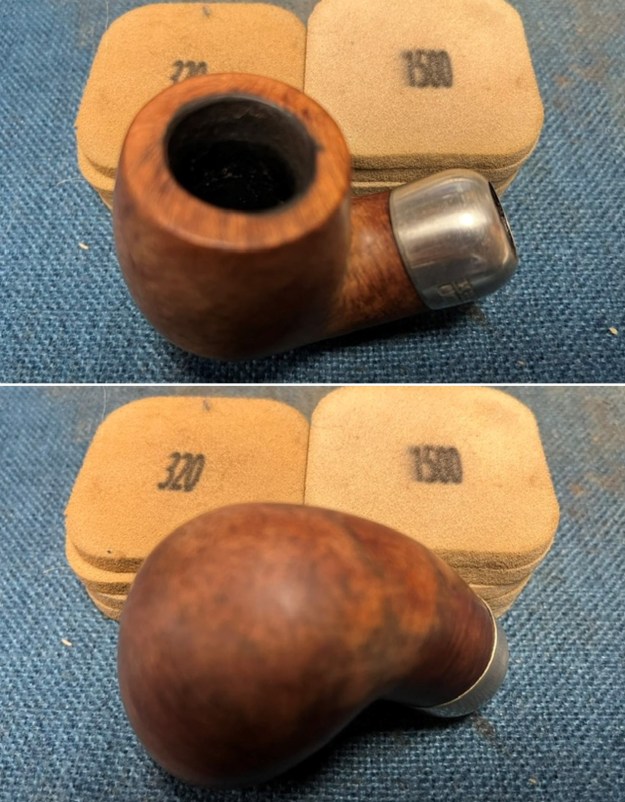
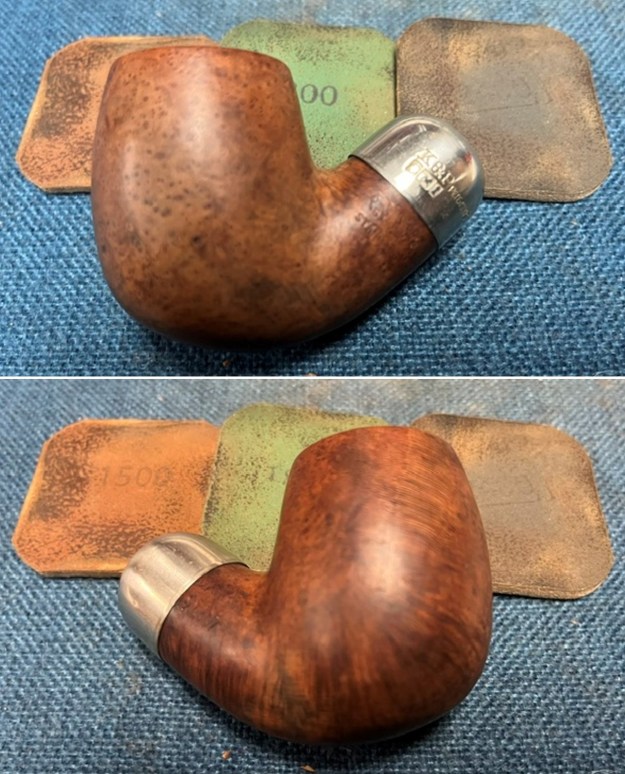
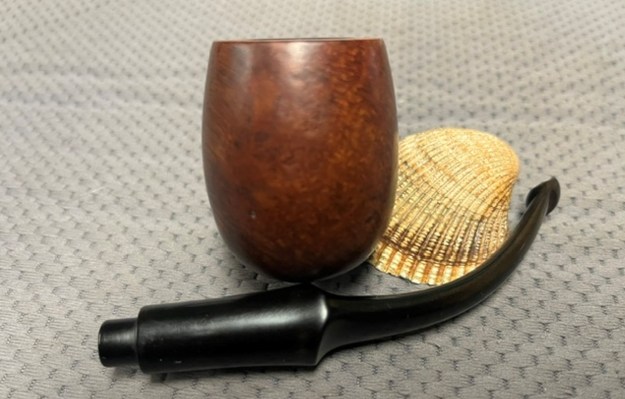
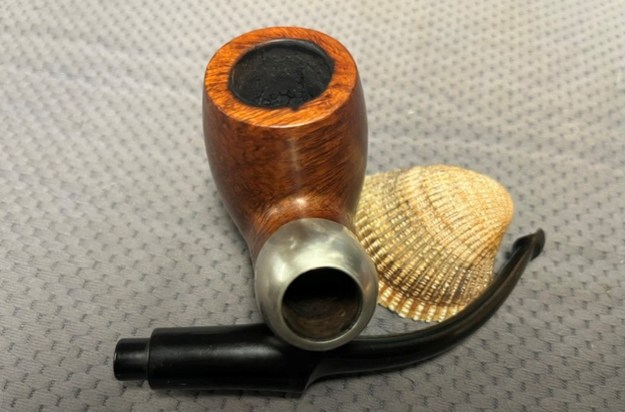
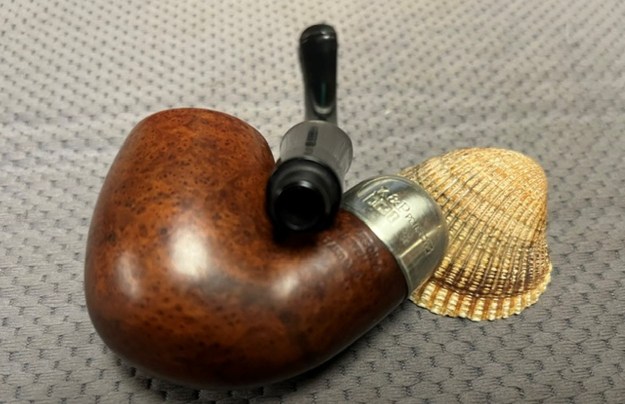
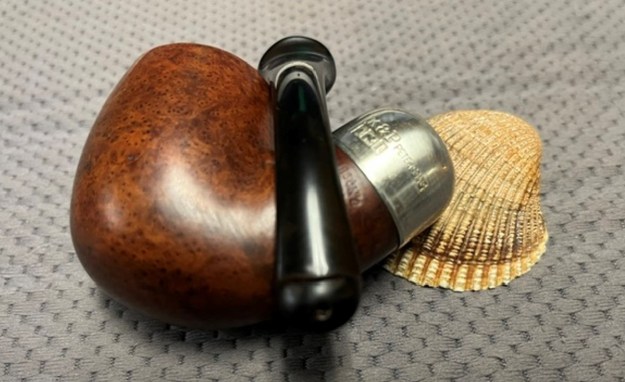
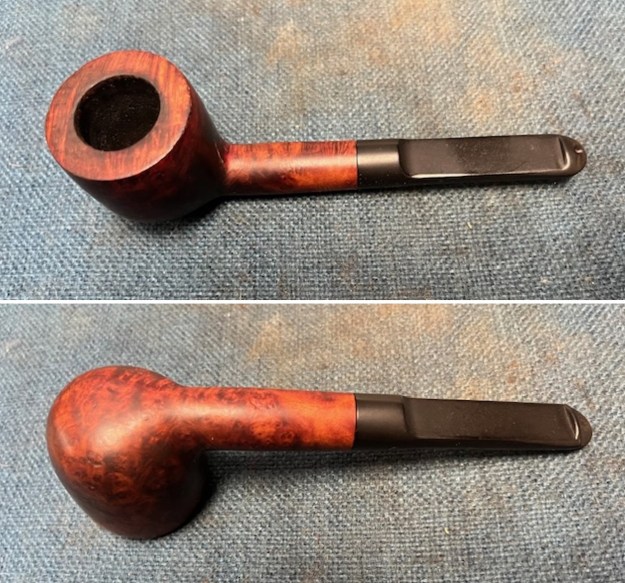
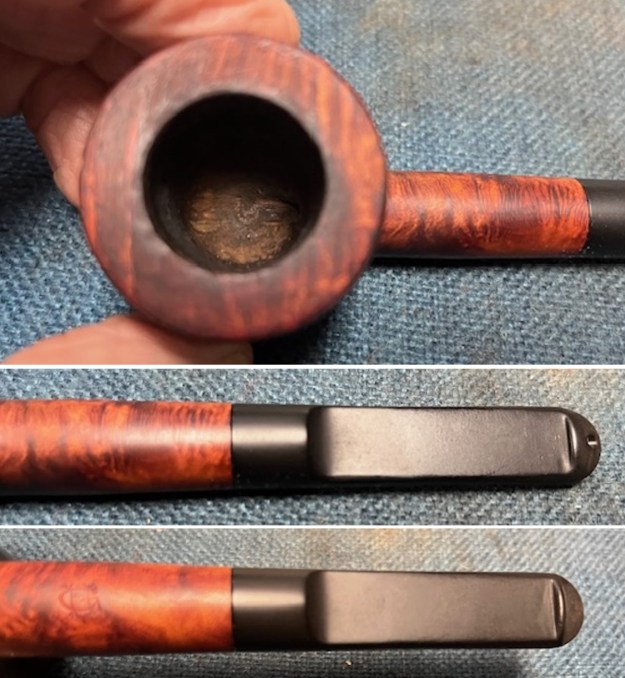
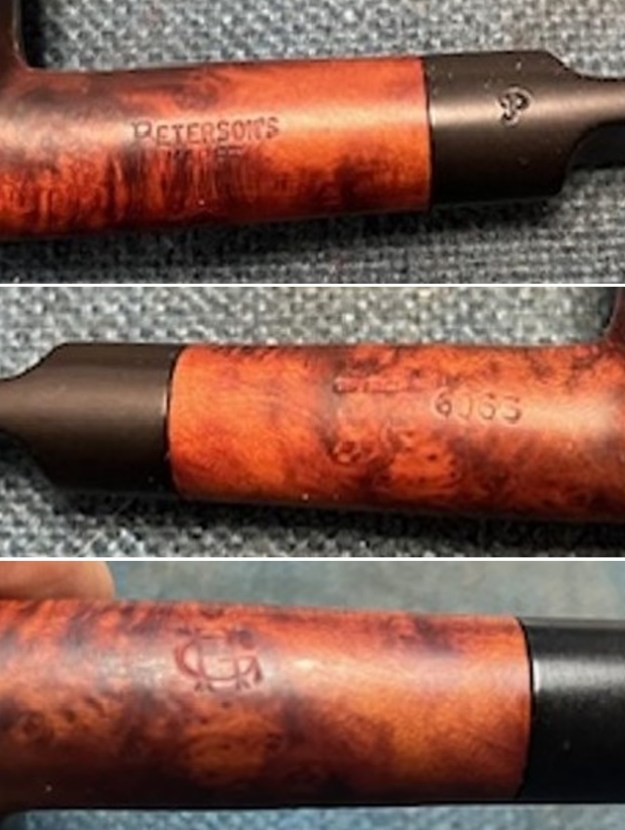
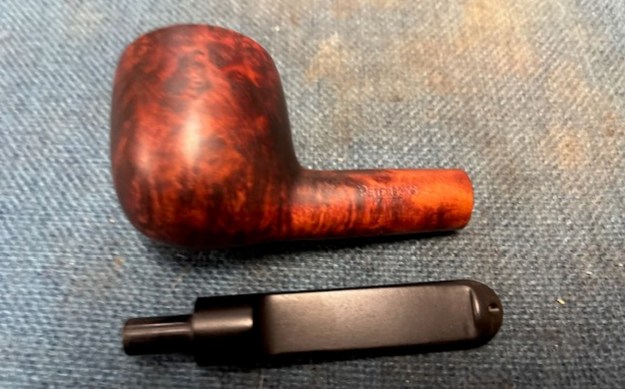
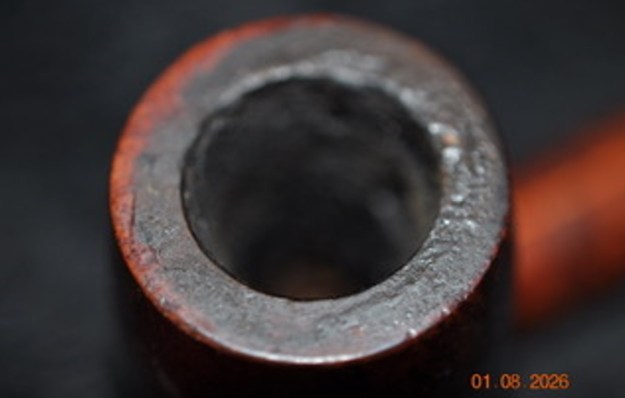
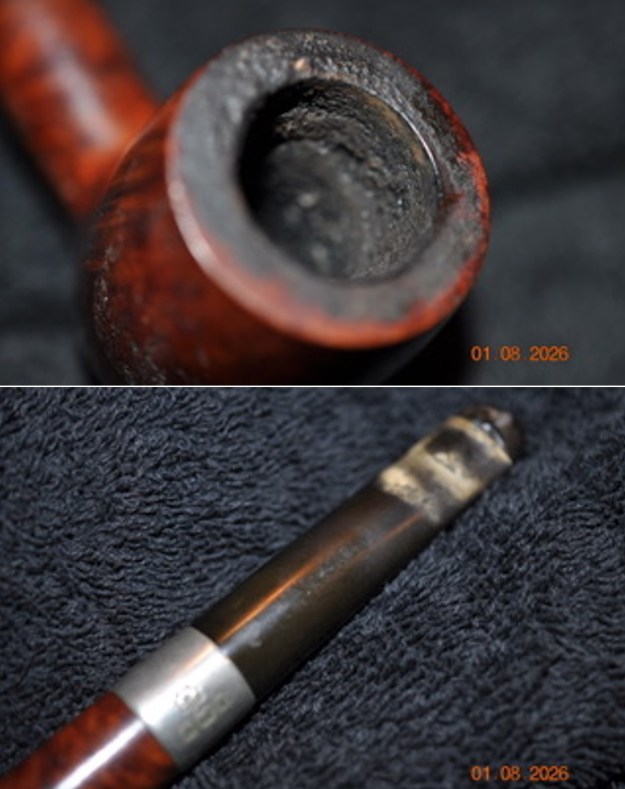
The next pipe was a mess and one that obviously had been “ridden hard and put away wet”. The finish and condition were filthy. It was definitely a stranger to any cleaning! This one is a smooth Billiard that has a rich coloured finish around the bowl sides and shank under the grit and grime of years. This pipe was purchased from an antique mall on 08/31/2024 in Hillsboro, Oregon, USA. The finish is dark and dull, so dirty that it obscures the grain in the finish. It was stamped on the left side of the shank and read SHAMROCK. It was stamped to the right of the shank and reads MADE IN IRELAND (in a circle) with the shape number 105 preceded by what looks like a Maltese Cross. Together they are next to the bowl. It was filthy when Jeff brought it to the table. There was a thick cake in the bowl and lava on the rim top and the inner edge of the bowl. There were nicks in the inner edge all the way around. The polished nickel band was stamped with a Shamrock [over] three faux hallmarks – a shamrock, an Irish Wolfhound and a tower with a door. The vulcanite stem was oxidized, calcified and had tooth marks and chatter on the top and underside ahead of the button. Jeff took photos of the pipe before his cleanup work.
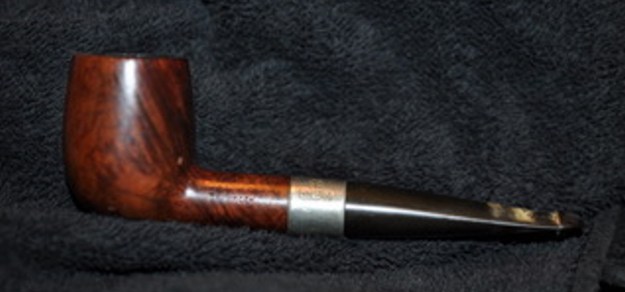
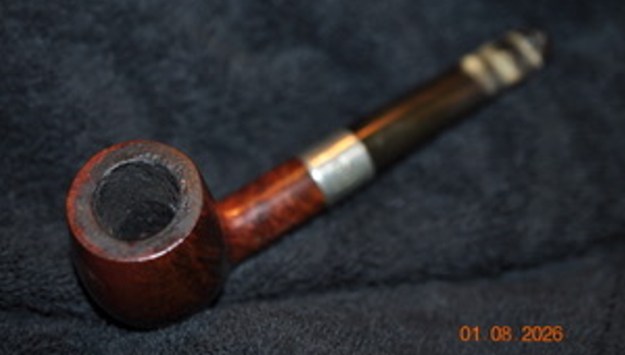
Jeff took photos of the rim top and stem to show the general condition of the pipe. The bowl is heavily caked so it is hard to know the condition of the edges under the lava overflow. The stem was oxidized, calcified and had tooth marks on the top and underside. Jeff took photos of the bowl sides and heel to show the grain that was around this bowl. You can see the mix of grain and the small sandpits in the finish in the photos below. Even so, it is a nice looking pipe. He took a photo of the sides of the shank to show the stamping. The stamping is clear and readable as noted above. He also captured the stamping on the polished nickel band on the shank. It is also very clear. I always try to research the brand and the stamping on a pipe so I can better understand its background and history before I start my work on it. The stamping on this pipe have a rich history that I wanted to understand. I am including the link to the Pipedia’s article on Peterson pipes. It is a great read in terms of the history of the brand (https://pipedia.org/wiki/Peterson).
I turned to “The Peterson Pipe” by Mark Irwin and Gary Malmberg to get some background on the Peterson’s Shamrock Pipe. On page 312 it had the following information.

Shamrock (c1941-2009) Originally stamped SHAMROCK with no brand name, an inexpensive line first described in George Yale (New York) mail order booklet in 1941, imported by Rogers Import. The line was actively promoted beginning in ’45, aggressively promoted in US by Rogers from early ‘50s when they registered the Shamrock logo with US Patent Office, claiming propriety since ’38. Over the years offered with P-lip or fishtail mouthpiece, with or without nickel band, with or without Shamrock logo on the band, with or without S stamped in white or later in gold on mouthpiece. Appearing in 2008 as unstained smooth and rustic, fishtail mouthpiece with gold impressed P on the stem. COMS of MADE IN over IRELAND (C1945-1965), MADE IN IRELAND forming a circle (c1945-1965), “A PETERSON’S PRODUCT” over MADE IN IRELAND (c1945-1965), MADE IN THE over REPUBLIC over OF IRELAND9c1948-1998). Model is always difficult or impossible to date.

Judging from the description above, the pipe I am working on is stamped with the stamp noted in red above. Made in Ireland in a circle which narrows the date to between approximately 1945-1965. It is just stamped SHAMROCK with no brand name and no stamping on the stem.

From there I turned to page 302 in the above book to unpack the stamping on the nickel band on the shank. There was a listing on the nickel mounted markings such as those used on the band on the shank of this pipe. I quote:

Nickel-Mount Markings. Often called faux hallmarks or faux marks by Peterson collectors, this set of three little images of a shamrock, an Irish wolfhound and a round tower appear within rectangular shapes as decorations on nickel mountings. Very early nickel mounts (1891-c. 1920) had no such decorations, only the same stamps used on sterling but without the hallmarks. As a stamp, the set of decorations began to appear at the beginning of the Irish Free State era, sometimes alone but often under K&P and over block lettered PETERSON over DUBLIN, although the  three emblems appeared on K&P’s Irish Carving Shamrocks pipes since 1896. The stamp was used until about 1963, when hand soldered nickel bands and ferrules were replaced by pressed ferrules and premade bands…The shamrock is the emblem of Ireland; the Irish wolfhound has long been used for both hunting and protection, and is an emblem of strength; the round tower a symbol of Ireland’s early religious power. These decorations were stamped at the factory on non-sterling mounts only, and the assay office has nothing to do with them…

I have also included the following photo of the stamping on the nickel band below. It is as described above.That still not cover the Maltese Cross on the right side of the shank ahead of the shape number 105. I have seen these before but I wanted to document what I had found on Peterson’s Pipe Notes blog. I have included that below (https://petersonpipenotes.org/276-kps-pipes-for-the-illuminati-na-heireann/). I quote:

Two of the foremost researchers among the P.G. (Peterson Geeks) Irregulars are Lance Dahl and Scott Forrest, who independent of one another came up with compelling evidence regarding an unknown stamp on a number of pipes in their collections. The stamp looks like a Maltese cross and appears either singly or doubled on pipes from the Patent era through the Éire and Early Republic. Because pipemen can sometimes be quite dogmatic about what they read in a forum or imagine the case to be (“don’t confuse me with the facts, my minds made up”), I should let everyone know that Scott’s background is in historical research and Lance worked in government intelligence before his retirement, giving them that “Thinking Man” spirit we routinely find in our fellow CPGs…

SCOTT: It’s crazy to speculate on the such scanty information, but since that’s what pipe smokers do almost every day regarding the origin of their pipes, here’s my take. This wasn’t an auxiliary of the Irish republicans. The Maltese cross is always thought of first as a symbol of protection, although to be sure numerous religio-political military organizations attached themselves to its use (like the Order of St. John, but there’s dozens of them). I say that because of what we know Charles Peterson’s own political views. But his cousin Conrad wasn’t adverse to using violence to bring about political change and neither was his own wife, right? So who knows? But it’s interesting that the Maltese cross pops up in these “Peace” advertisements in the 1910s, isn’t it?

LANCE: I think I’d have to agree with Scott’s theory, based on the text at St. Patrick’s. The motives and purpose of the group seem outside the normal purview of the Irish republicans. While the book is about anti-Papal groups, but the two paragraphs on this group don’t say they were anti-Catholic per se so much as suggest they should be considered anti-Catholic because they were motivated by some kind of tolerance or pacificism like we find in the Mennonites of Ukraine, the Moravians, Quakers, Molokons or whoever. But the use of the Maltese crosses (three), the all-seeing Eye and the shamrock is interesting, isn’t it? Obviously the “watching” thing is there, the idea of enlightenment or secret understanding. Then there’s the symbol of Ireland, which is also a symbol of the Trinity used in the St. Patrick legend. The last line of the text from the seminary reads Hic coetus doctrinam suam non a Patriciis, sed a Sanctis Celticis habere videtur, something like “the society takes its spiritual doctrine not from Patrick but the Celtic saints before him.” So I don’t know, at least not until something more turns up.

The blog also includes a lot more information on the Maltese Cross or Crosses on Peterson’s Pipes. Give it a read as it very interesting. Now it was time to work on the pipe.

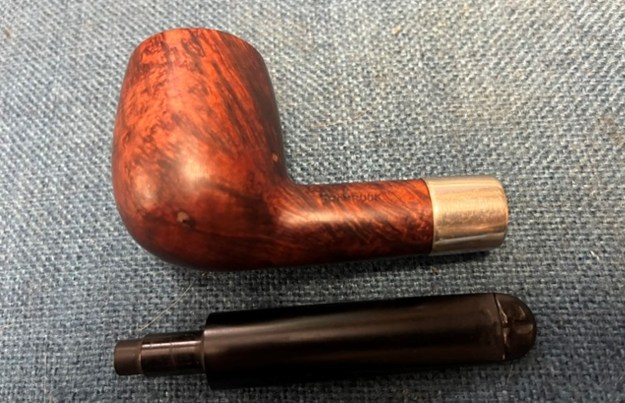
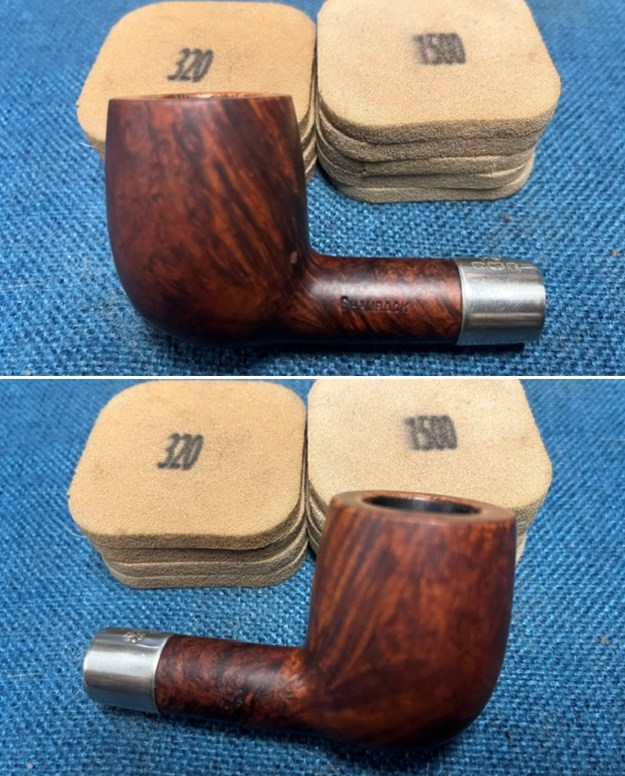
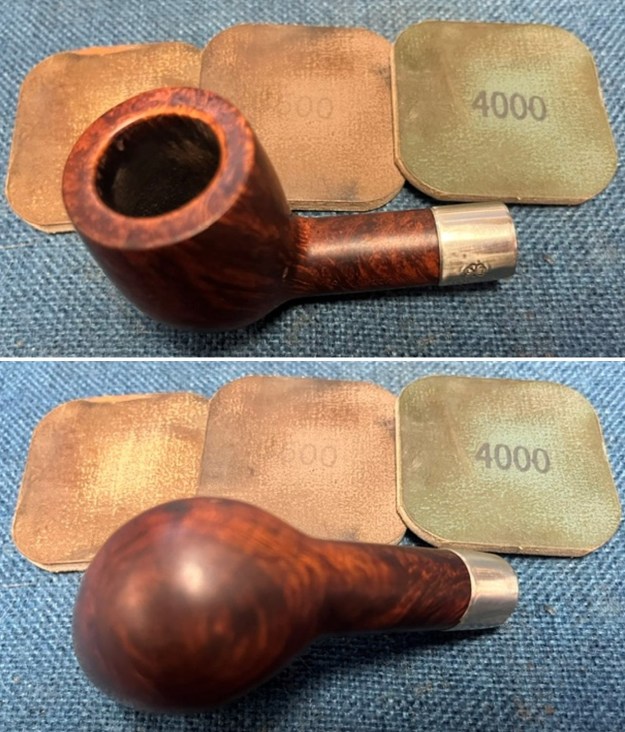
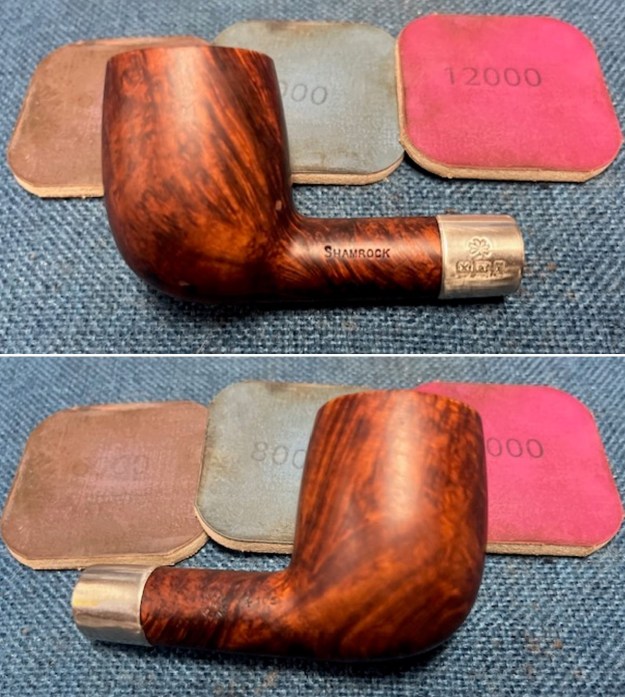
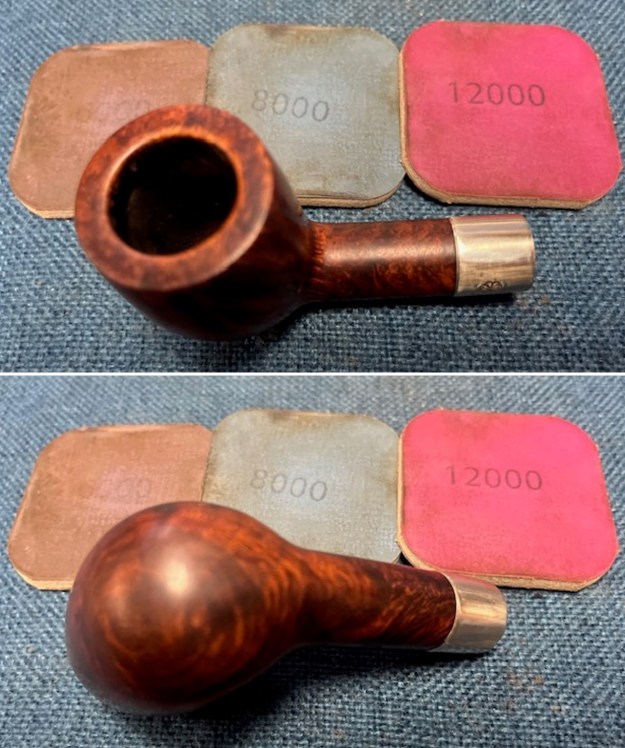
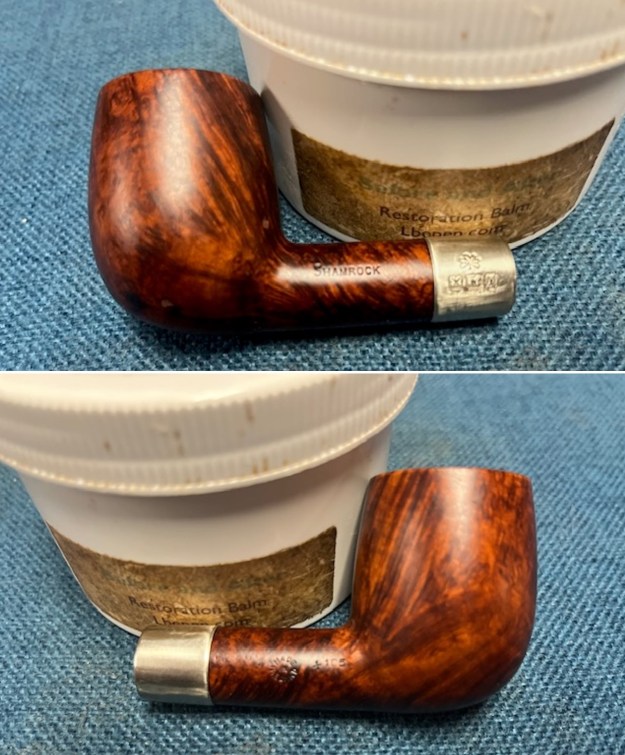
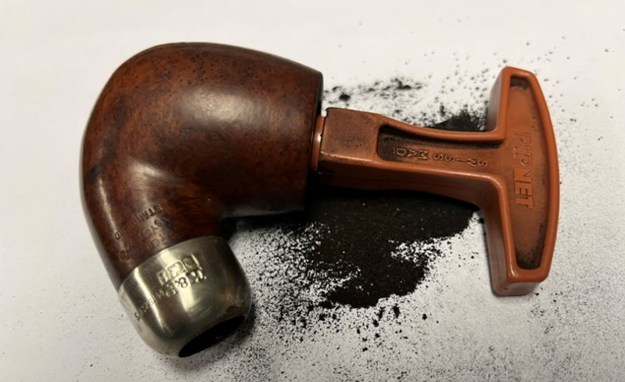
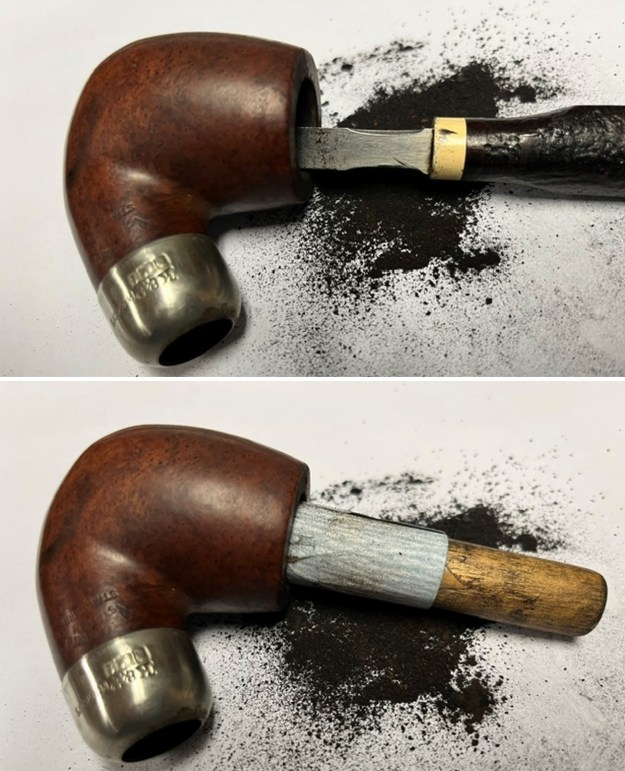
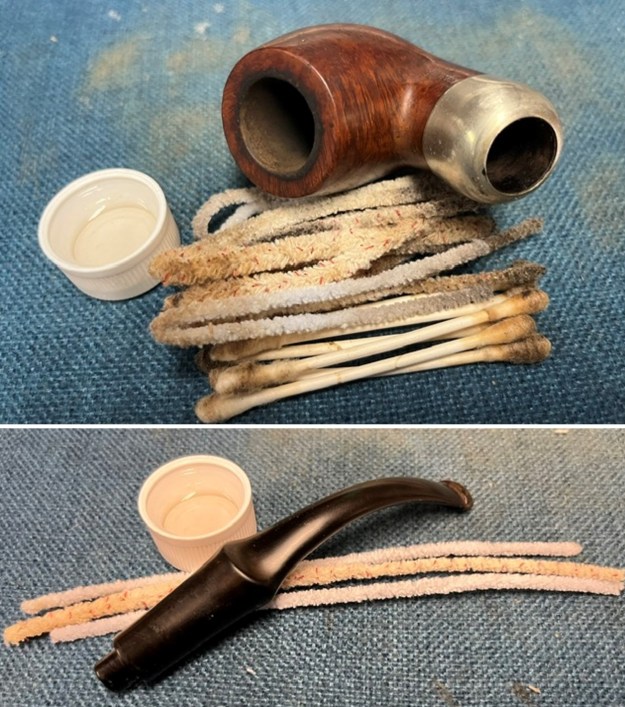
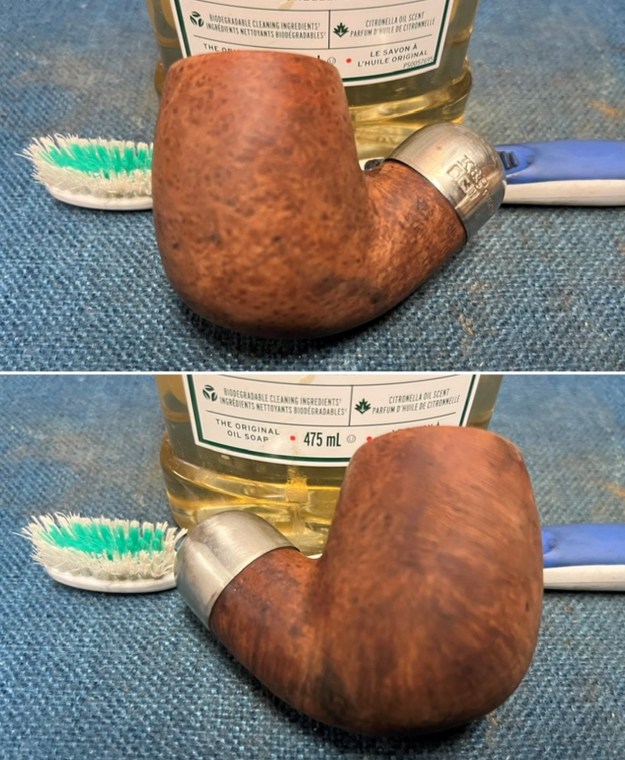
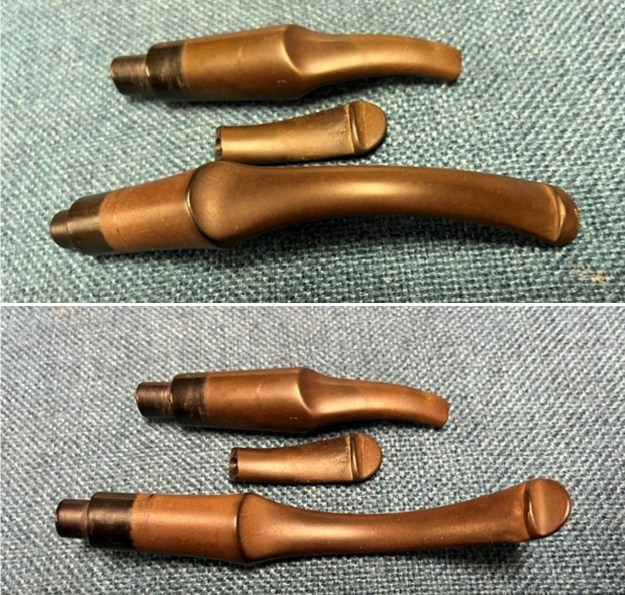
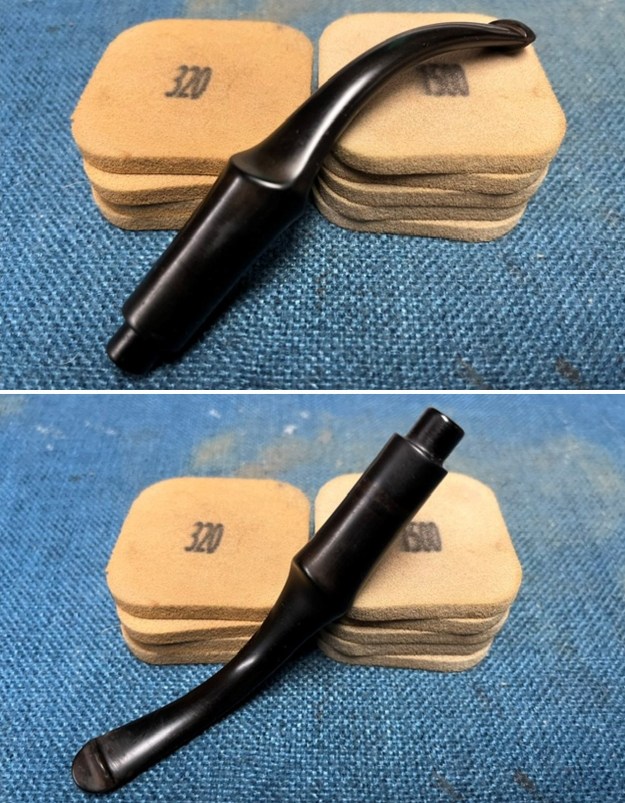
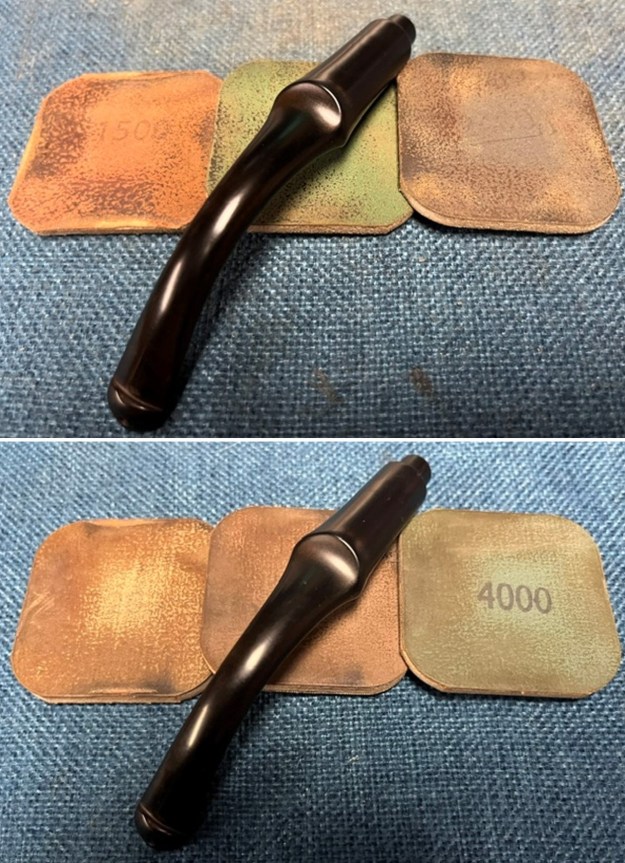
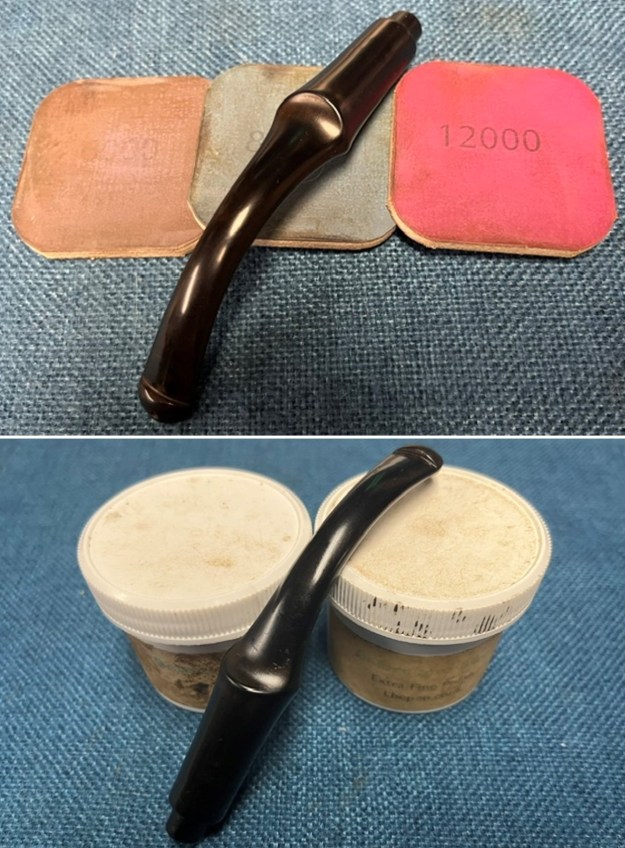
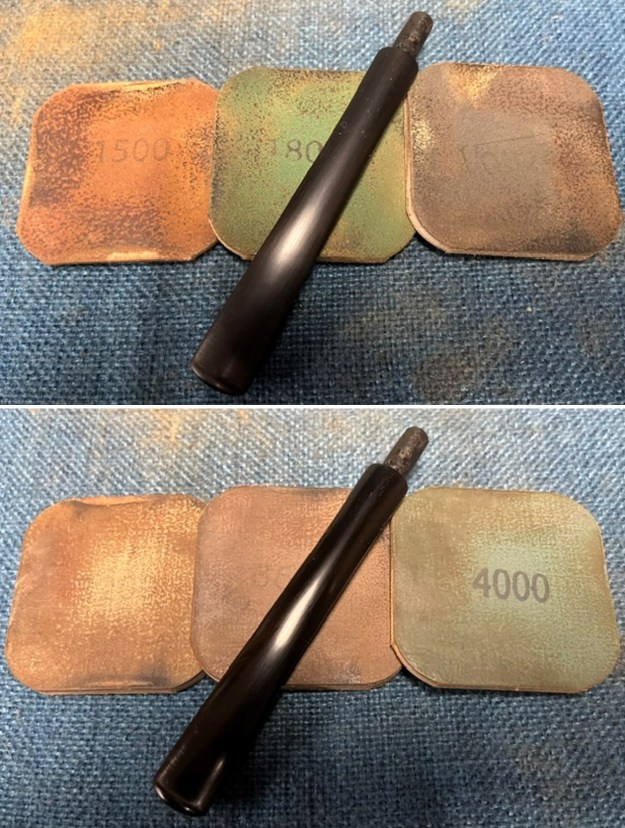
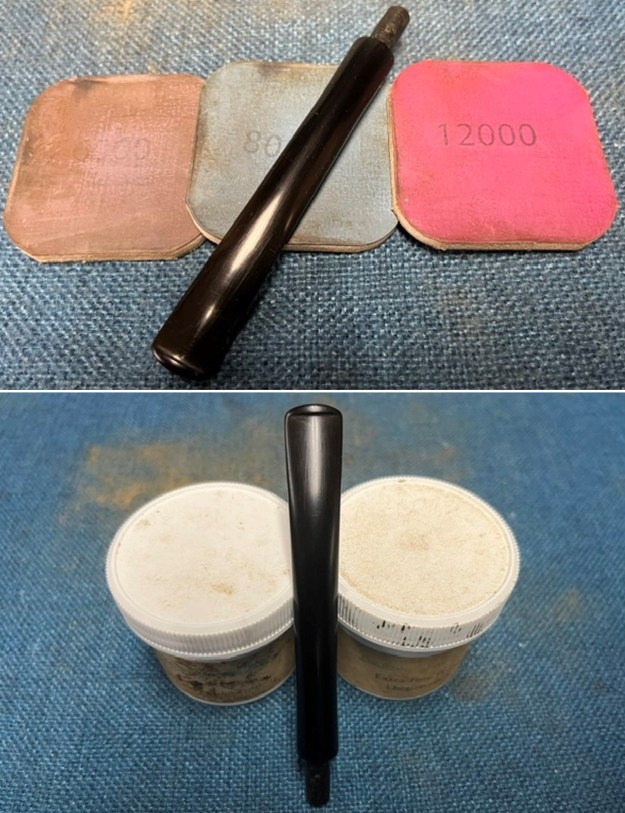
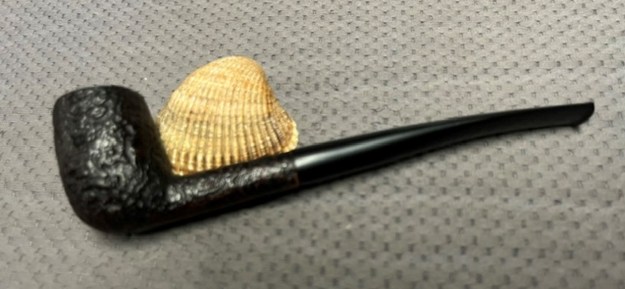
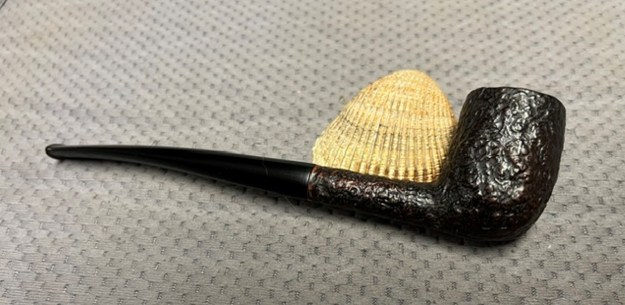
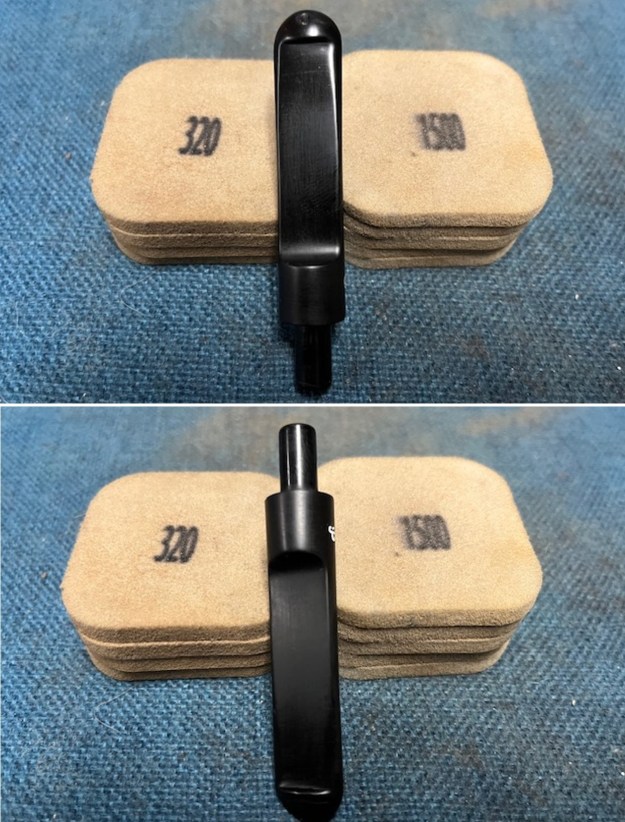
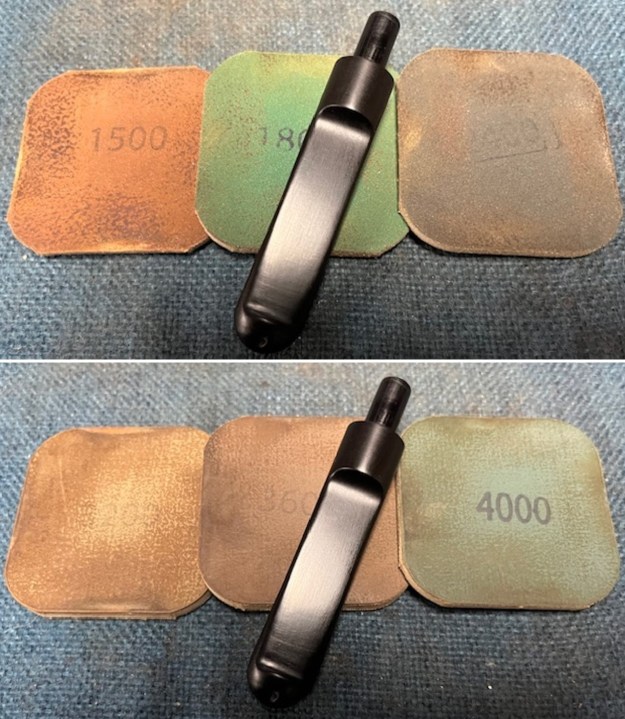
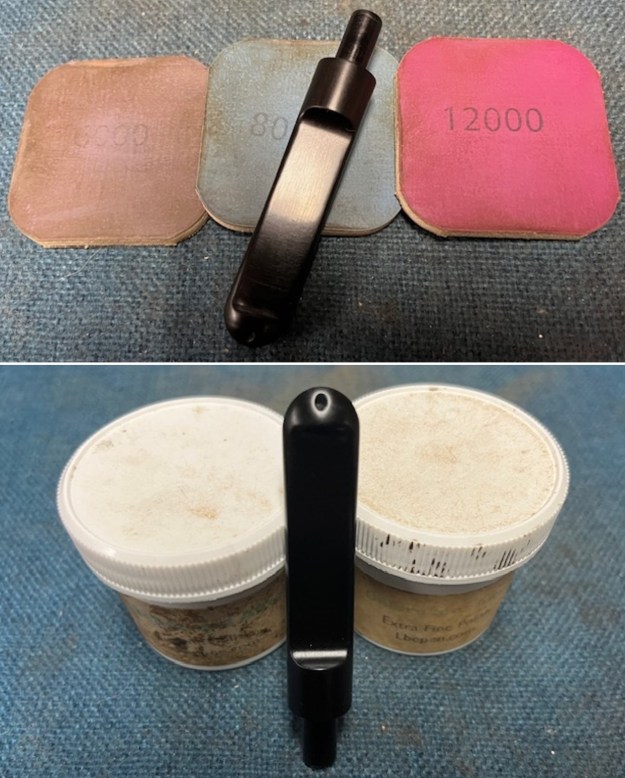
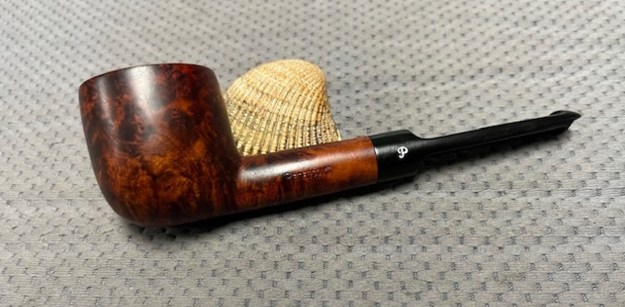
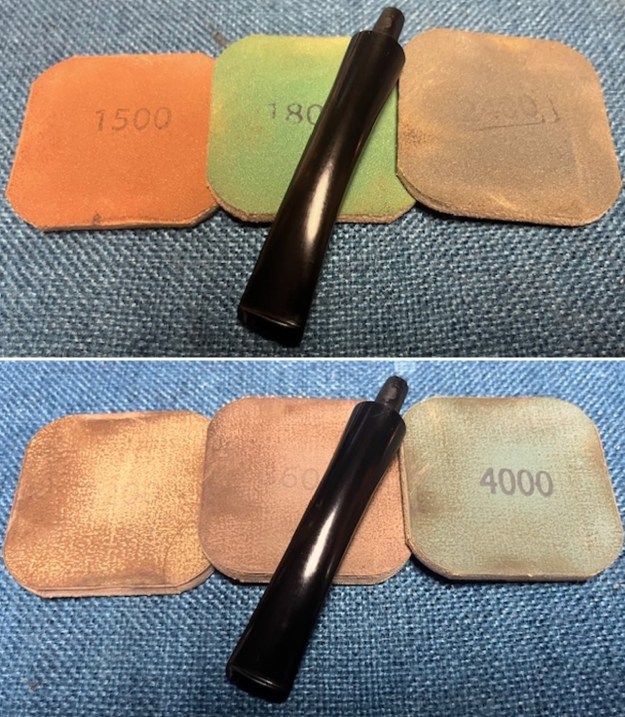
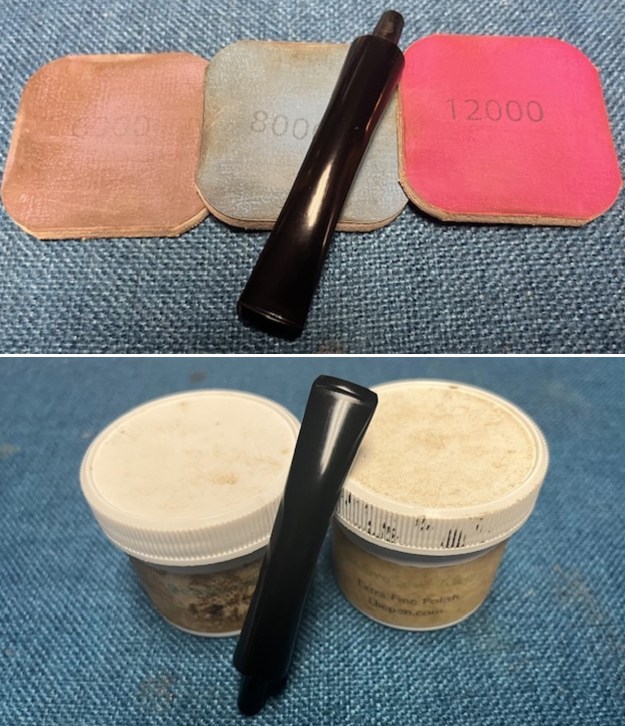
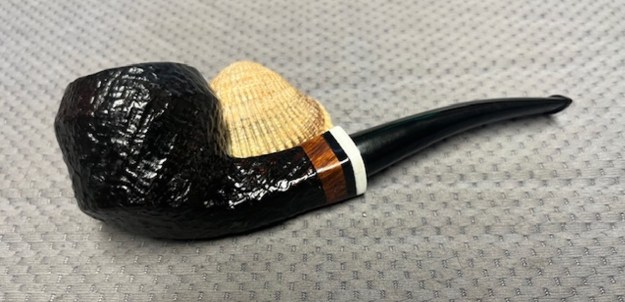
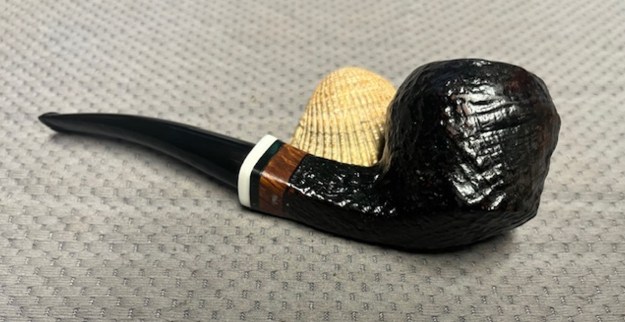
I was utterly surprised when I took this pipe out of the box and compared it to the before photos. Jeff had done a great job cleaning up the pipe as usual. He reamed the pipe with a PipNet reamer and cut back the cake back to the bare briar. He cleaned up the walls with a Savinelli Fitsall Pipe Knife. Surprisingly the walls looked unscathed from the heavy cake. He scrubbed the interior of the bowl and shank with pipe cleaners, cotton swabs, shank brushes and alcohol to remove the tars and oils. He scrubbed the exterior of the pipe with Murphy’s Oil Soap and a tooth brush to remove the grime from the finish. He worked on the rim top lava and darkening with the soap and tooth brush. He scrubbed the inside of the stem with alcohol and pipe cleaners. He scrubbed the exterior of the stem with Soft Scrub and then soaked it in Briarville’s Deoxidizer. He washed it off with warm water to remove the Deoxidizer. The pipe looked far better when it arrived. The cleaned up rim top revealed very damaged inner edge and the top. There were nicks in the surface of the rim and the edges. I took some close up photos of the rim top and the stem to show the condition of both. You can see the deep tooth marks and damage to the button edges on both sides.I took photos of the stamping on the sides of the shank. It is faint but still readable. It reads as noted above. I took a photo of the stamping on the shank. It is clear and readable. I removed the stem and took a photo of the pipe to have a look at the parts and overall look. I used a folded piece of 220 grit sandpaper to clean up the inside edge of the bowl and smooth out the damage on the rim top. I gave it a slight bevel to minimize the damage.I sanded the bowl and rim with 320-3500 grit 2×2 inch sanding pads. I wiped the bowl down with a damp cloth after each pad to remove the sanding debris. It began to take on a shine by the final pad. I polished the briar with micromesh sanding pads – dry sanding with 1500-12000 grit sanding pads. I wiped the bowl down with a damp cloth after each sanding pad. The bowl developed a rich shine. I worked some Before & After Restoration Balm into the surface of the briar with my fingertips to clean, enliven and protect the briar. I let the balm sit for 15 minutes and then buffed with a cotton cloth to raise the shine. The photos show the bowl at this point in the restoration process. I set the bowl aside and turned to the stem. I “painted” the stem surface with the flame of a lighter to lift the tooth marks. I was able to lift some of them. I filled in the remaining marks in the surface with extra strength, rubberized CA glue. I set it aside to cure. I sanded the marks smooth with a folded piece of 220 grit sandpaper. I sanded the stem with 320-3500 grit sanding pads to further blend the repairs into the stem. I wiped the stem down after each pad with an Obsidian Oil cloth. It began to look much better.I polished the stem with micromesh sanding pads – wet sanding with 1500-12000 grit sanding pads. I wiped it down after each sanding pad with Obsidian Oil. I polished it with Before & After Pipe Stem Polish – both Fine and Extra Fine. I am excited to finish this Older Made in Ireland Shamrock 105 Maltese Cross Billiard. I put the pipe back together and buffed it with Blue Diamond on the buffing wheel. I gave the bowl and the stem multiple coats of carnauba wax. I hand buffed the pipe with a clean buffing pad to raise the shine. It is fun to see what the polished bowl looks like with beautiful mixed grain all around it, looks great with the new black vulcanite stem. This smooth Classic Shamrock 105 Maltese Cross Billiard is great looking and the pipe feels great in my hand. It is light and well balanced. Have a look at it with the photos below. The dimensions are Length: 5 ½ inches, Height: 1 ¾ inches, Outside diameter of the bowl: 1 ¼ inches, Chamber diameter: ¾ of an inch. The weight of the pipe is 42 grams/1.48 ounces. It turned out to be a beautiful pipe. I will be putting on the rebornpipes store in the Irish Pipe Makers Section. Thanks for walking through the restoration with me. Any questions or observations are always welcome.

Restoring and Replacing a Broken Stem on a Republic Era Peterson’s System Standard XL307


by Steve Laug

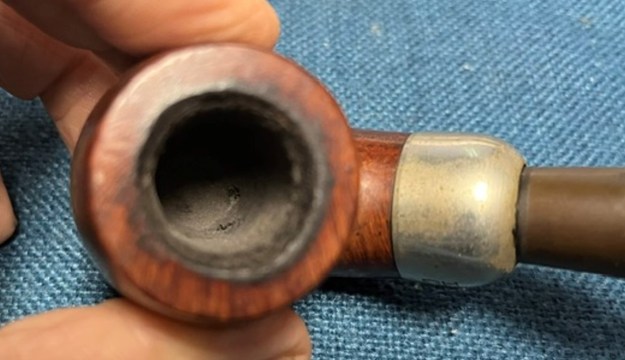
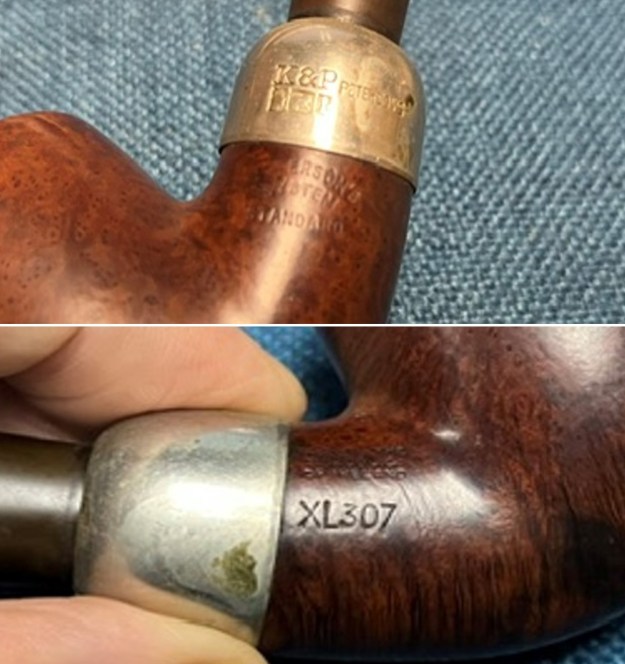
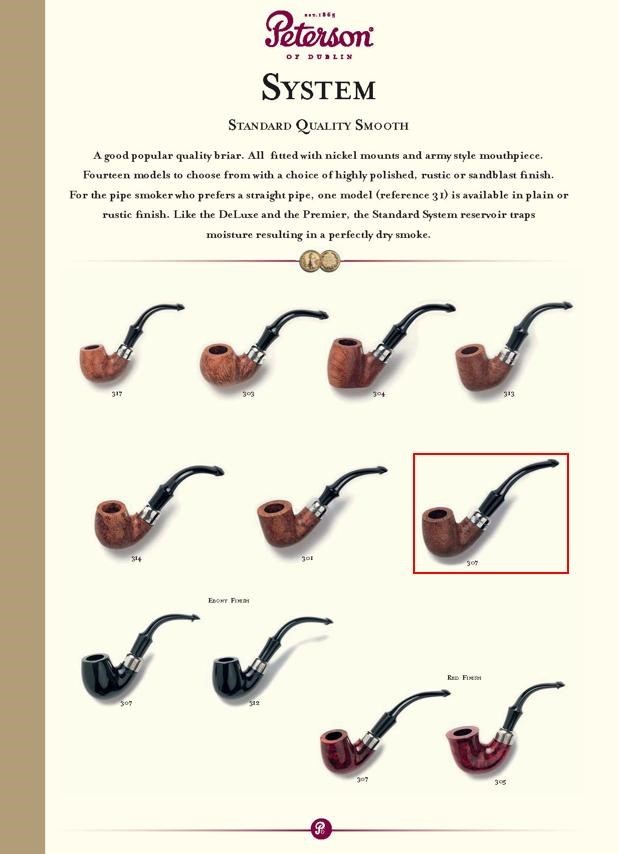
The next pipe on the work table is Peterson’s System pipe that a reader, Don sent to me to work on. It was stamped Peterson’s [arched over] System [arched over] Standard on the underside side of the shank in a smooth panel. It was stamped Peterson’s [over] System [over] Standard. On the right side it is stamped Made in the Republic of Ireland (in three lines) [over] the shape number XL307. It has a a great looking smooth bowl with some nice grain around the bowl and shank that is dirty with ground in oils, debris and grime. There was a moderate cake in the bowl and a light lava overflow and darkening on the rim top. There was a very beautiful pipe underneath all of the buildup of years of use. The nickel ferrule on the shank end was oxidized and is stamped on the left side K&P [over] three faux hallmarks. That is followed by Petersons. It is not dented or damaged. The stem was broken midway between the button and the saddle. I would need to restem it with a proper stem in the process of my work. I took photos of the bowl and rim top to show the cake in the bowl and the light lava build up on the top of the rim and the edges of the bowl. The rim top and edges look very good. Only clean up would tell the full story.I took photos of the stamping on the sides of the bowl and shank. The stamping was faint in spots but readable as you can see from the photos. It read as noted above. The nickel ferrule on the shank end is stamped on the top and left side K&P Peterson’s over three Peterson marks used on nickel ferrules.I have included the information on the shape number on this pipe that I picked up on researching the previous pipes. This is the second of two Peterson’s System Standard pipes in Bob’s collection marked with the 307 shape number. I have included a page from a Petersons Catalogue that I have on rebornpipes (https://rebornpipes.com/tag/peterson-hallmark-chart/). I have put a red box around the 307 shown in the catalogue page shown below. That should give a clear picture of the size and shape of the pipe. I am also including the information from Pipedia’s article on Peterson pipes. It is a great read in terms of the history of the brand (https://pipedia.org/wiki/Peterson). I have included a bit of the pertinent history here.

1950 – 1989 The Republic Era – From 1950 to the present time, the stamp for this era is “Made in the Republic of Ireland” in a block format generally in three lines but two lines have been used with or without Republic being abbreviated.

During the 1950’s and 60’s the Kapp & Peterson company was still in the ownership of the Kapp family. However 1964 saw the retiral of the company Managing Director Frederick Henry(Harry) Kapp.

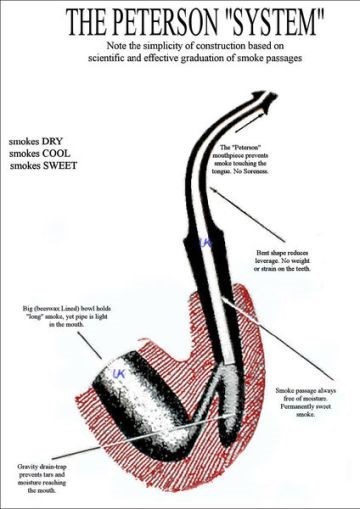
Pipedia also included a section of information on the System pipes including a diagram of the systems look (https://pipedia.org/wiki/Peterson#Republic_Era_Pipes). I quote a section of the article in part and include a link to another article on Pipedia on the System pipe.

The Peterson System pipes are the standard bearers of the Peterson pipe family, famous for the excellent smoking pleasure they provide. Often imitated but never equaled, the Peterson System smokes dry, cool and sweet, thanks to the scientific effectiveness of the original design. The heart of the System is the unique graduated bore in the mouthpiece. This makes the suction applied by the smoker 15 times weaker by the time it reaches the tobacco chamber. The result is that all the moisture flows into the reservoir and, thus cannot reach the smoker’s mouth. The Peterson Lip further enhances the effectiveness of the graduated bore by directing the flow of smoke upwards and away from the tongue. This achieves a uniquely even distribution of smoke and virtually eliminates any chance of tonguebite or bitterness. Furthermore, the shape is contoured so that the tongue rests comfortably in the depression under the opening. Each “PLip” mouthpiece is made from Vulcanite. For the Peterson System pipes to work properly, the stem/tenon has to have an extension, the tip of which will pass by the draft hole from the bowl and into the sump. Upon the smoker drawing in smoke, this extension then directs the smoke down and around the sump to dispense a lot of the moisture before the smoke enters the extension and stem. On the System Standards and other less expensive systems, this extension with be made of Vulcanite turned integrally with the stem. On the more expensive System pipes this extension will be made of metal which screws into the Vulcanite stem. This extension on the earlier pipes will be of brass and the newer pipes will be of aluminium. Most smokers not knowing this function of the metal extension, assumes that it is a condenser/stinger and will remove it as they do with the metal condensers of Kaywoodie, etc. Should you have a System pipe with this metal extension, do not remove it for it will make the System function properly and give you a dryer smoke (https://pipedia.org/wiki/A_closer_look_at_the_famous_Peterson_Standard_System_Pipe).

With that information in hand I knew what I was dealing with in terms of the stamping and the age of this pipe. I knew from the information that the pipe was made during the Republic Era between 1950 and 1989. My guess is that the pipes is a 1960s era System pipe. Now it was time to work on the pipe.

I started with the bowl and reamed it with a PipNet pipe reamer and cleaned up the reaming with a Savinelli Fitsall Pipe Knife. I took the cake back to bare briar. I sanded the walls with 220 grit sandpaper wrapped around a piece of dowel. I scrubbed out the internals of the bowl, sump and shank with alcohol, pipe cleaners and cotton swabs until the pipe was clean. I also cleaned up the inside of the stem at the same time. It was ready for the rest of the restemming process.I scrubbed the exterior of the bowl with Murphy’s Oil Soap and a tooth brush to remove the grime and grit on the briar and the lava on the rim top. The finish looks very good with great looking grain around the bowl and shank. I sanded the bowl with 320-3500 grit 2×2 inch sanding pads to remove the scratches and dark marks in the briar. I worked over the bowl and shank with each pad and wiped it down after each pad with a damp cloth to remove the sanding dust. I polished the briar with 1500-12000 grit micromesh sanding pads – dry sanding with each pad and wiping it down after each one with a damp cloth. The briar began to take on a rich shine. I worked some Before & After Restoration Balm into the surface of the briar with my finger tips  to work it into the finish. The product is incredible and the way it brings the grain to the fore is unique. It works to clean, protect and invigorate the wood. I went through my stems and found one that was the right length diameter of the shank and the tenon. It was on older Peterson’s P-lip that I had here that fits these 307 pipes. It was oxidized and had light tooth marks but otherwise was a duplicate of the original. It did not have the P logo on the stem side.I sanded the stem with 320-1500 grit 2×2 inch sanding pads. I wiped the stem down after each sanding pad with an Obsidian Oil Cloth to remove the sanding dust. It began to look very good.I polished the stem with micromesh sanding pads – dry sanding with 1500-12000 grit pads. I wiped the stem down after each sanding pad with an Obsidian Oil Cloth. The stem began to take on a rich shine. Once again at this point in the restoration process I am excited to be on the homestretch. I look forward to the final look when the Republic Era Peterson System XL307 is put back together, polished and waxed. I put the bowl and the new stem back together. I polished the bowl and stem with Blue Diamond to polish out the scratches in the briar and the vulcanite. I gave the bowl and the stem multiple coats of carnauba wax. I buffed the pipe with a clean buffing pad to raise the shine. I hand buffed it with a microfiber cloth to deepen the shine. The pipe polished up pretty nicely. The shiny black vulcanite stem is a beautiful contrast to the browns of the bowl and nickel ferrule. This Peterson’s System Standard XL307 Bent Billiard was fun pipe to work on. It is a stunning piece of briar whose shape follows the flow of the briar. The finished pipe is shown in the photos below. The dimensions of the pipe are Length: 6 inches, Height: 2 inches, Outside diameter of the bowl: 1 ¼ inches, Chamber diameter: ¾ of an inch. The weight of the pipe is 2.12 ounces/59 grams. I will be putting it on the rebornpipes store in the Irish Pipemakers Section if you would like to add it to your rack and carry on the previous pipeman’s legacy. This is an interesting estate to bring back to life.

As always, I encourage your questions and comments as you read the blog. Thanks to each of you who are reading this blog. Remember we are not pipe owners; we are pipe men and women who hold our pipes in trust until they pass on into the trust of those who follow us.

Restoring and Restemming a Stanwell Regd. No. 969-48 deluxe 87 Billiard


by Steve Laug

Not too long ago I received an email from a Andrew in Greece asking if I could work on some pipes for him. He had some that needed a stem and a couple of pipes with broken stems and a Canadian that had a crack down the back of the bowl and across the right side. We emailed back and forth and he sent me the following photos. I figured they would be some interesting pipes to work on so he sent them to me to work on. I received the box yesterday. When I opened it this morning I was amazed to see what he had sent. The Sandblast Canadian that needed restemming was stamped 264 Peterson’s Kapruf. The rest of the stamping was quite faint. The pipe needed to be restemmed and it had a small divot in the shank end and what looked like a crack. The second, a smooth Canadian was a BBB Ultonia 504 with a gold band. The two Sandblast with broken stems turned out to be Stanwells. The larger on is stamped Stanwell [over] Regd. No. 969-48. It is followed by the shape number 858 [over] Old Briar. The smaller one is stamped Stanwell [over] Regd. No. 969-48 followed by de Luxe followed by the shape number 87. The last of the five with the cracked bowl is an 8 Dot Sasieni [over] London Made [over] Pat. No. 1513428. It was also stamped “Amesbury”. They were going to be an interesting lot to work on.

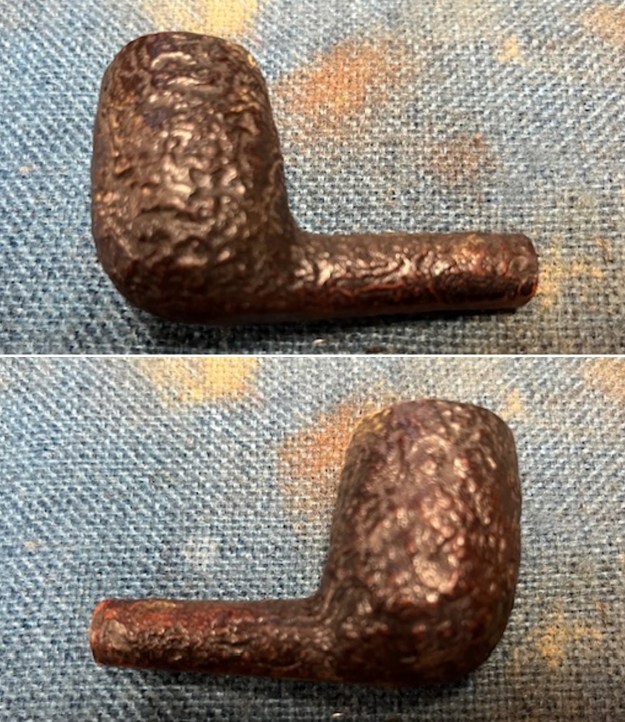
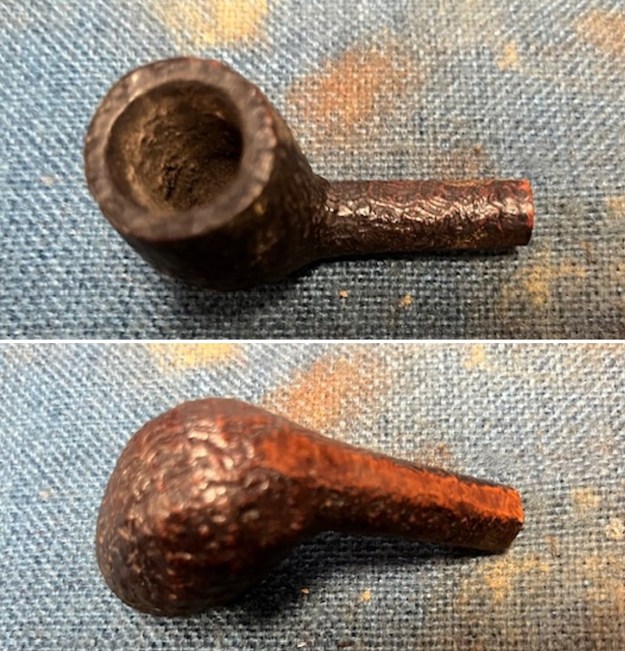
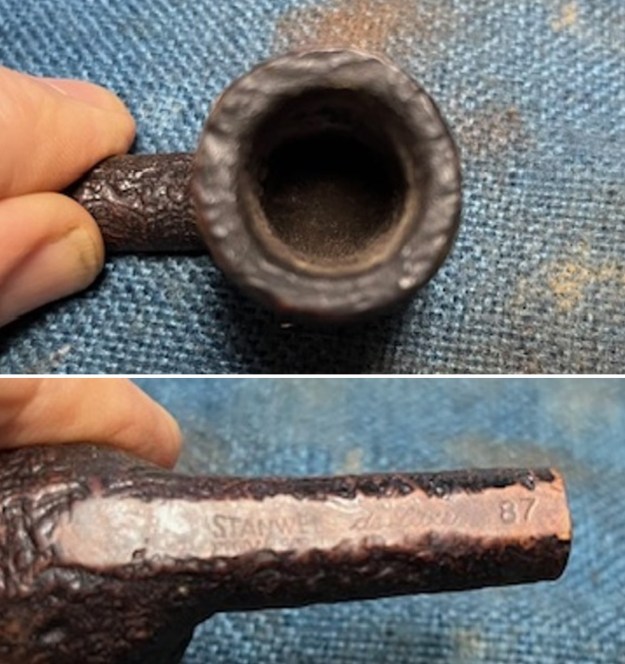
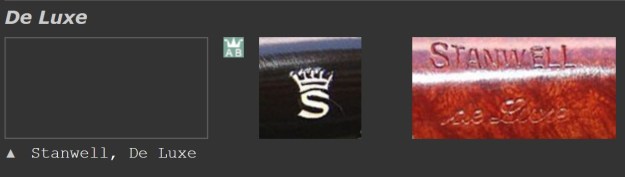
I chose to deal with the smaller Stanwell de Luxe 87 billiard next. It was in decent condition, probably the best of the lot. The stamping on the Stanwell [over] Regd. No. 969-48 followed by de Luxe followed by the shape number 87. It was clear and readable. The sandblast finish was nice but dirty. The bowl had a light cake in it and there were spots of lava in the sandblast on the rim top and inner edge. The inner edge was a little rough from previous reaming. The interior of the shank was quite dirty. I took a photo of the bowl and rim top to show the condition of them bowl. The lava on the rim top was in the sandblast. The inner edge looked very good. I also took a photo of the underside of the shank to show the faint stamping that was present. It is faint in spots but is still readable.I turned to do a bit of research on the Stanwell de Luxe line first to Pipephil’s site and found a listing there with a photo of the stamping (http://www.pipephil.eu/logos/en/logo-stanwell.html).I know that Pipedia has some great history (https://pipedia.org/wiki/Stanwell) on the brand so I turned there hoping to see the de Luxe. There were several examples of the de Luxe line shown on the site and references to it appearing in both a 1960s and 70s catalogue.

I turned to the article on designers and shape numbers to see if I could find data on the 87 Shape (https://pipedia.org/wiki/Stanwell_Shape_Numbers_and_Designers). I found that the shape had     four versions of this shape number a) Large billiard, full mouthpiece, b) Large “Chimney”, full mouthpiece, c) Freehand, conical bowl, long saddle mouthpiece by Sixten Ivarsson. 87R. Same as 87(b).

I knew that the pipe I had in hand was pipe a) above – a Billiard and in this case small one. With the Regd. No. on the shank, the pipe was made in the period between 1948 and 1960. But I wanted to know more. I can find many examples of the de Luxe line online but no one explains the meaning of the term. Do any of you readers have any information on this quandary? Post a response and let us in on the information.

Now it was time to work on the pipe. I started my work on the pipe by reaming it with a Savinelli Fitsall Pipe Knife. I scraped the lava built up on the rim top with the edge of the knife. I sanded the bowl walls with 220 grit sandpaper wrapped around a dowel to clean up the remaining bits. It looked much better after the clean up.I cleaned out the internals of the shank and bowl with pipe cleaners, cotton swabs and isopropyl alcohol. The pipe is very clean. I like it clean to make a better fit for new stem. I cleaned out the airway in the stem I had chosen with pipe cleaners and alcohol.I worked some Before & After Restoration Balm into the surface of the briar with my finger tips and a shoe brush to work it into the sandblast. The product is incredible and the way it brings the grain to the fore is unique. It works to clean, protect and invigorate the wood. I went through my stems and found one that was the right length and would need some slight adjusting to fit the diameter of the shank and the tenon.I used a Dremel and sanding drum along with a folded piece of 220 grit sandpaper to shape and rework the stem and tenon to fit the shank end. Once I was finished with the reshaping I took photos of the look of the stem.I sanded the stem with 320-1500 grit 2×2 inch sanding pads. I wiped the stem down after each sanding pad with an Obsidian Oil Cloth to remove the sanding dust. It began to look very good. I polished the stem with micromesh sanding pads – dry sanding with 1500-12000 grit pads. I wiped the stem down after each sanding pad with an Obsidian Oil Cloth. The stem began to take on a rich shine. This Sandblast Stanwell Regd. No. 969-48 de Luxe 87 Billiard with a new vulcanite taper stem is a great looking pipe now that it has been restemmed and restored. The beautiful sandblast on the briar shines through the polished finish is stunning. I put the stem back on the bowl and carefully buffed the pipe with Blue Diamond on the buffing wheel. I gave the bowl and the stem multiple coats of carnauba wax on the buffing wheel and followed that by buffing the entire pipe with a clean buffing pad. I hand buffed the pipe with a microfiber cloth to deepen the shine. The finished Stanwell Regd. No 969-48 de Luxe 87 Billiard fits nicely in the hand and feels great. Give the finished pipe a look in the photos below. The dimensions of the pipe are Length: 6 inches, Height: 1 ½ inches, Outside diameter of the bowl: 1 inch, Chamber diameter: 5/8 of an inch. The weight of the pipe is 22 grams/.78 ounces. It is a beautiful pipe and one that I will hold until I have finished working on the final pipe that Andrew sent me. Once I am finished with the lot they will be heading back to Greece. Thanks for walking through the restoration with me as I worked over this pipe. Thanks to each of you who are reading this blog.

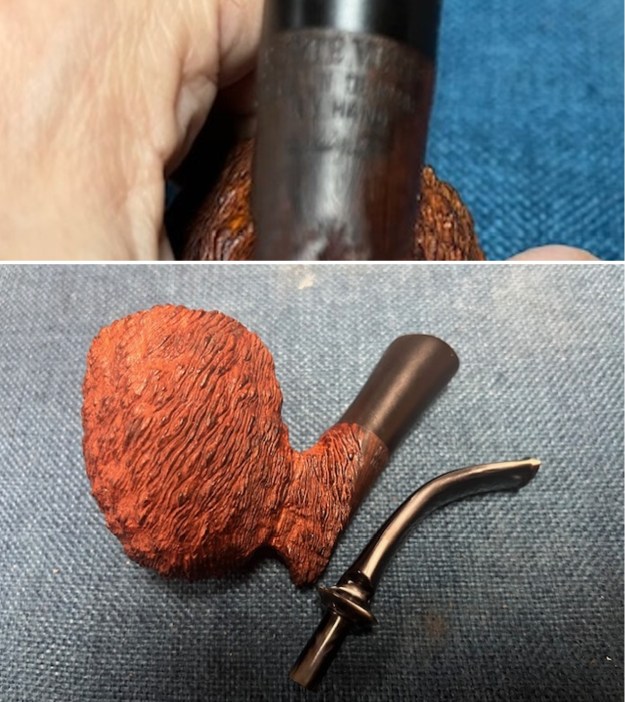
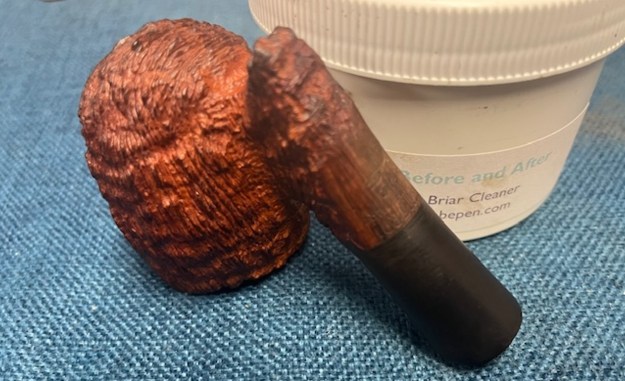
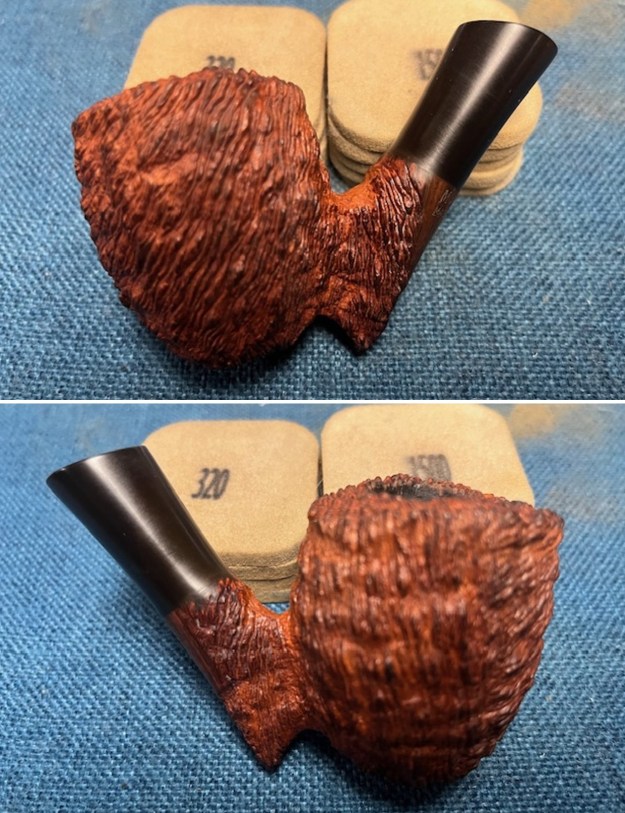
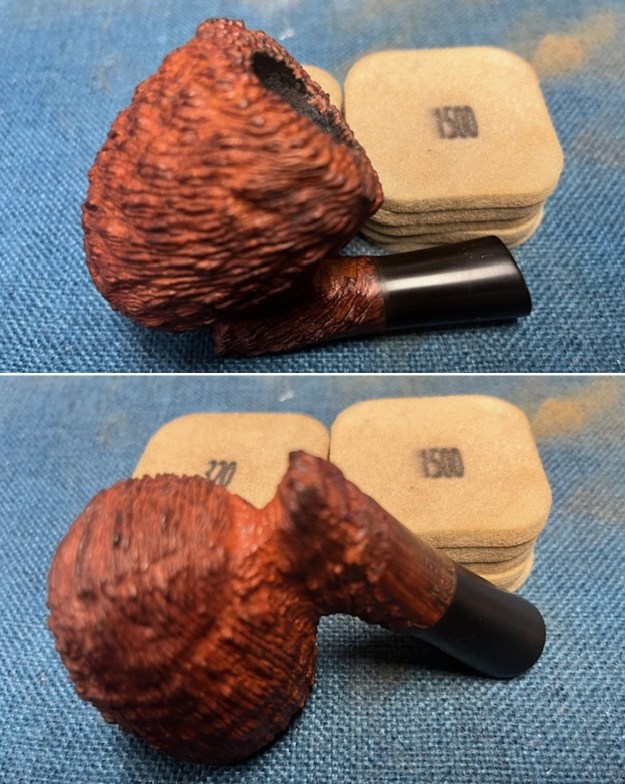
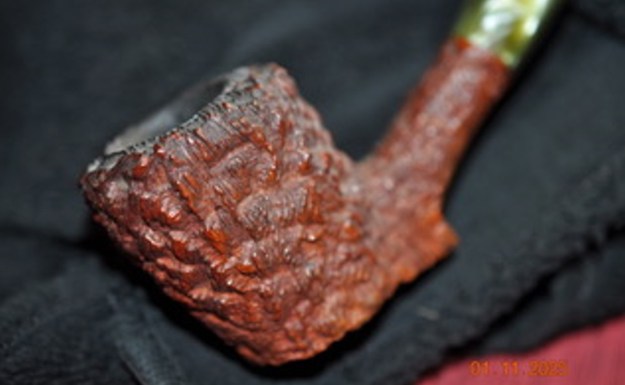
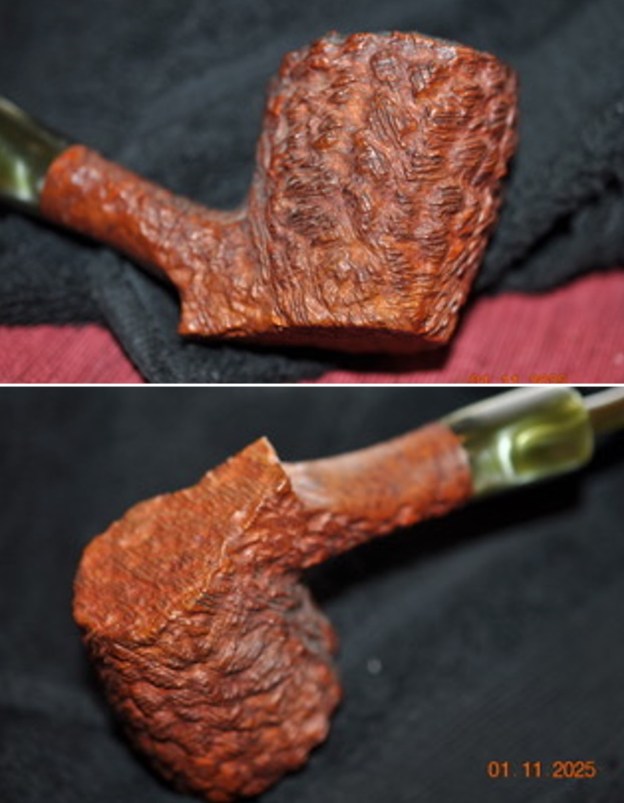
A Lovely Monte Verde Made in Denmark By Hand Golden Tan Rusticated Bent Egg


by Steve Laug

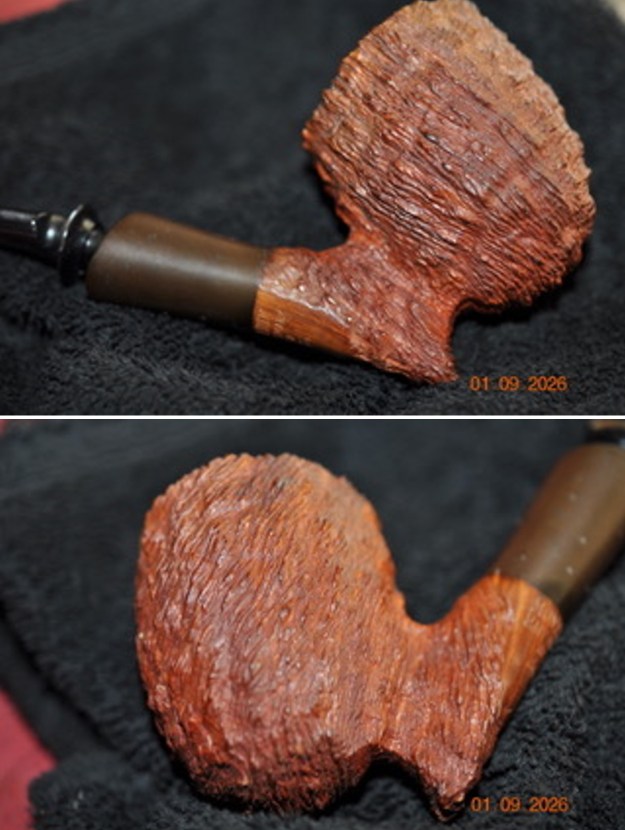
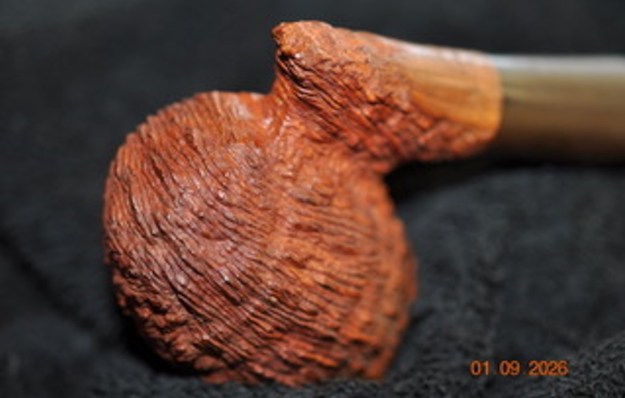
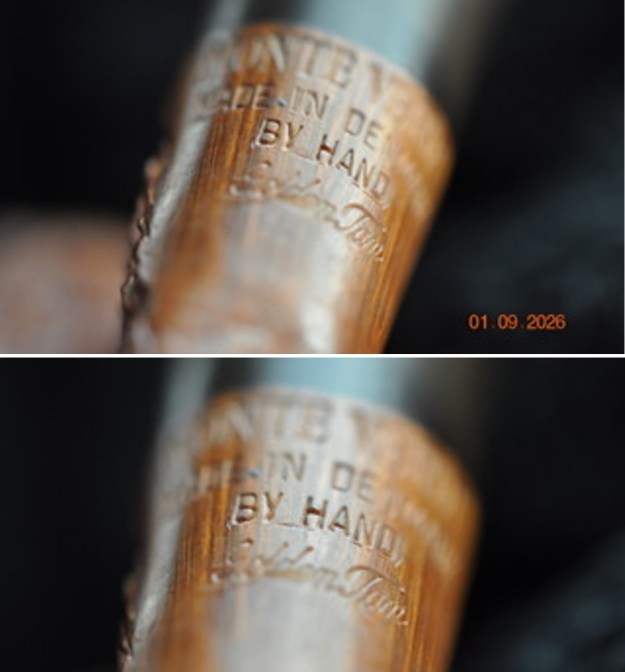
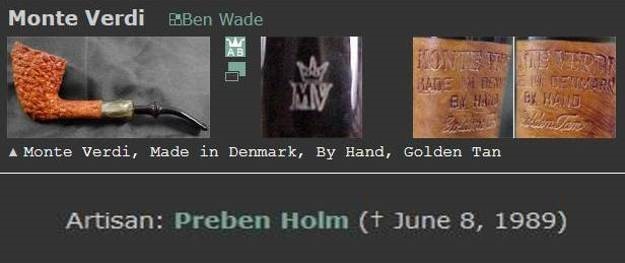
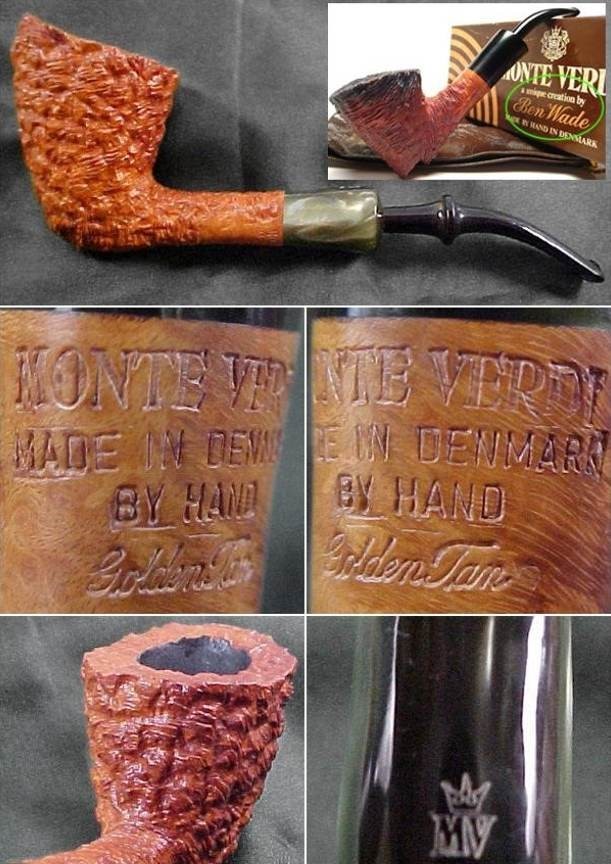
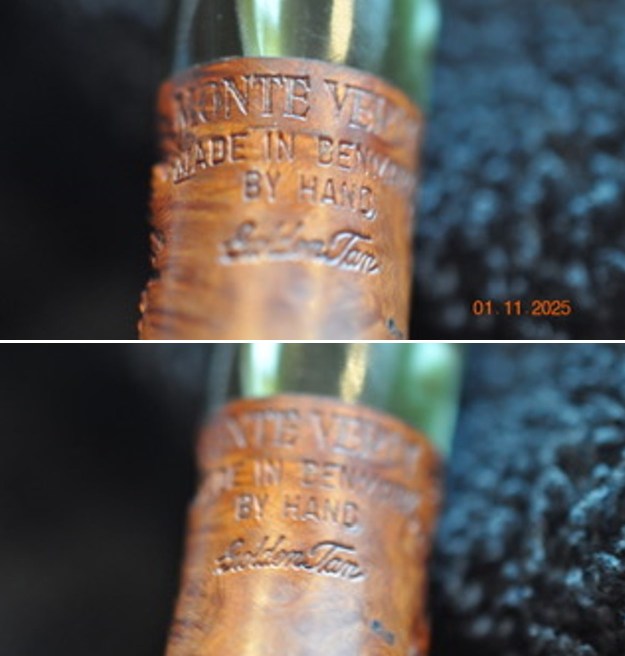
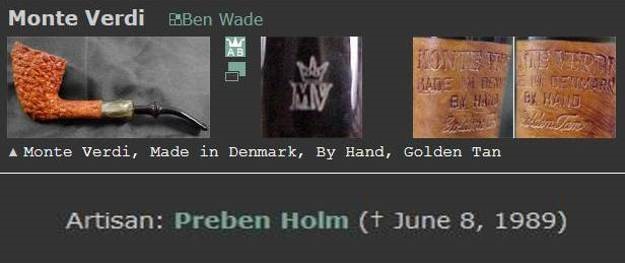
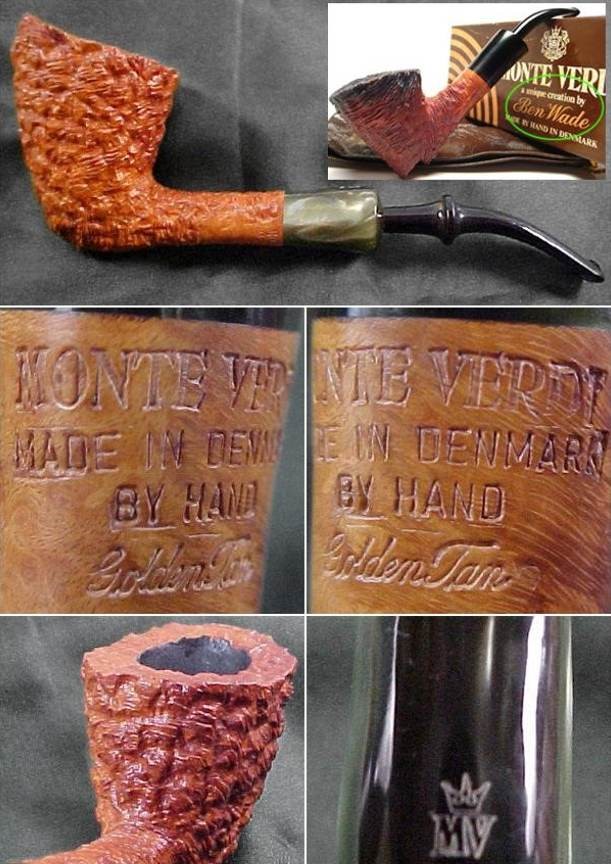
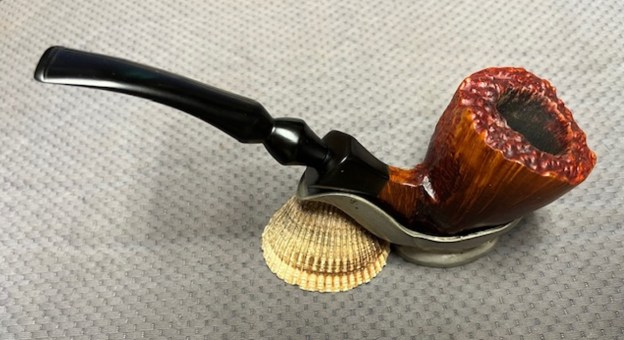
The next pipe on the table was purchased from a seller 08/10/25 from Livingston, New Jersey, USA. It has that verve that I have come to associate with pipe made by Preben Holm as they are always unique and beautiful. The pipe is stamped on a smooth panel on the underside. It reads Monte Verde [over] Made in Denmark [over] by Hand [over] Golden Tan. The shank extension is vulcanite with no stamping but it is oxidized. I have refurbished several Monte Verde pipe so if you are interested in the brand here is a link to one I did back in 2019 that has a similar finish to this one (https://rebornpipes.com/2019/02/09/new-life-for-a-preben-holm-monte-verde-twin-finish-freehand/). This one was quite dirty, like the rest of the pipes we tend to work on. There was a thick cake in the bowl and a lava overflow in the rustication of the rusticated rim top. The inner and outer edges of the bowl looked very good. The black/silver acrylic saddle stem was dirty and had scratches and light tooth marks on the top and underside. Jeff took photos of the pipe before he started his cleanup process. He took close up photos of the bowl and rim top from different angles to show the condition of the rim top. The bowl has a thick cake that lining the walls and overflowing lava and build up on the rim top and flowing over the inner edge of the bowl onto the top. He also took photos of the stem to show the surface of the top and underside of the acrylic stem. You can see the tooth marks and chatter on both sides ahead of the button. He took photos of the sides and heel of the bowl to show the lay of the rustication and grain around the pipe. It is a beautiful piece of briar. It had a very unique double rustication! The green acrylic shank extension works well with it. Jeff took several photos of the stamping on the underside of the shank to capture all of the stamping. It was clear and read as noted above. There was no stamping on the stem surface.I turned to Pipephil’s site to get a read on the brand (http://pipephil.eu/logos/en/logo-m6.html). It confirms that the Monte Verdi line was made by Preben Holm. The pipe in the photo had a very similar rustication to the Monte Verdi I was working on. I did a screen capture of the section on Pipephil. I have included it below.  There were also photos that were included on Pipephil of what this particular pipe looked like when it left Denmark. The rustication around the bowl and shank is very similar. The pipe I have has the same shank extension and finish. The pipe in the photo had a fancy turned vulcanite stem. The stem on the one I have in front of me is missing so I will need to replace it with one similar to the one in the photos below.I also Googled the brand and found a thread on Pipes Magazine about the brand that gave me some more information (http://pipesmagazine.com/forums/topic/monte-verde-pipes). I include that below.
The Monte Verdi line was indeed a pipe style offered by Holm. It usually features heavily blasted and rusticated briar and smaller group sizes than some of his other lines. Some refer to this line as a “second”, but it provided an outlet for briar that had flaws and therefore unsuitable his other lines. Holm marketed many different lines featuring a variety of finishes in both stains and carvings and this is merely one of those. The ones I own are good pipes and smoke well. The blast finish is very interesting to look at and the tactile sensations make it fun to hold.

Jeff reamed the bowl with a PipNet pipe reamer and followed up with a Savinelli Fitsall pipe knife to remove the cake. He scrubbed out the mortise and the airway in the shank and the stem with alcohol, cotton swabs and pipe cleaners. He scrubbed the exterior of the bowl, rim, shank and stem with a tooth brush and Murphy’s Oil Soap to remove the oils and tars on the rim and the grime on the finish of the bowl. He rinsed it under running water. He dried it off with a soft cloth. He was able to the lava build up on the rim top and you could see a little darkening in the finish on the top of the bowl. I took photos of the pipe bowl to show its condition before I started my work on it. I took a photo of the rim top and bowl to show the condition of the pipe. I took photo of both sides of the stem to show its condition. Overall the pipe was in great condition.I took a photo of the stamping on the underside of the shank. There was some darkening on the smooth portion but the stamping was clear and readable as noted above. I removed the stem from the shank and took a photo of the pipe to give a sense of the proportions of the bowl and stem.I scrubbed the darkening on the shank with some Before & After Briar Cleaner and a tooth brush. I wiped it off with a soft cloth remove the product. I repeated the process several times.I sanded the oxidized vulcanite shank extension with 320-3500 grit sanding pads. I wiped the shank extension down after each sanding pad with an Obsidian Oil Cloth to remove the debris. It looked significantly better. I polished the vulcanite shank extension with micromesh sanding pads – dry sanding it with 1500-12000 grit sanding pads. I wiped it down after each pad with an Obsidian Oil cloth to remove the debris. It began to have a rich shine. I rubbed the bowl and shank down with Before & After Restoration Balm. I worked it into the surface of the bowl sides and shank with my fingertips and a shoe brush to clean, enliven and protect the briar. I let the balm sit for a little while and then buffed with a cotton cloth to raise the shine. The Balm did its magic and the grain stood out. I set the bowl aside and turned my attention to the stem. I sanded the stem with 320-3500 grit 2×2 inch sanding pads to smooth out the tooth chatter. The pipe stem was looking very good.I polished the stem with micromesh sanding pads – wet sanding with 1500-12000 grit pads and wiped down the stem with some Obsidian Oil after each sanding pad. I finished the polishing with some Before & After Stem Polish – both fine and extra fine. I gave it a final coat of Obsidian Oil and set the stem aside. This beautiful, double rusticated Preben Holm carved Monte Verde Golden Tan Freehand Full Bent Egg is a special looking pipe and it feels amazing in the hand. I polished stem with Blue Diamond polish on the buffing wheel. I gave the bowl multiple coats of Conservator’s Wax and the stem multiple coats of carnauba wax. I buffed the pipe with a clean buffing pad to raise the shine. I hand buffed it with a microfiber cloth to deepen the shine. The pipe polished up pretty nicely. The multi-coloured grain shining through the rustication came alive with the buffing. The rich contrasting brown colour works well with the polished vulcanite shank extension and the black and white Lucite stem. The finished Monte Verde Golden Tan Freehand Full Bent Egg is a beauty and feels great in the hand. Have a look at it with the photos below. The dimensions are Length: 6 ½ inches, Height: 2 ¼ inches, Outside diameter of the bowl: 1 ¾ inches, Chamber diameter: 1 inch. The weight of the pipe is 2.72 ounces/76 grams. I will be putting this Monte Verde by Preben Holm on the Danish Pipe Making Section on the rebornpipes online store soon. It is such an interesting tactile pipe and if you have been looking for a freehand then this might be the one for you. Thanks for walking through the restoration with me on this interestingly shaped Preben Holm Hand Made pipe. 

Breathing Life into a Republic Era Peterson’s Kapet 606S Pot


by Steve Laug

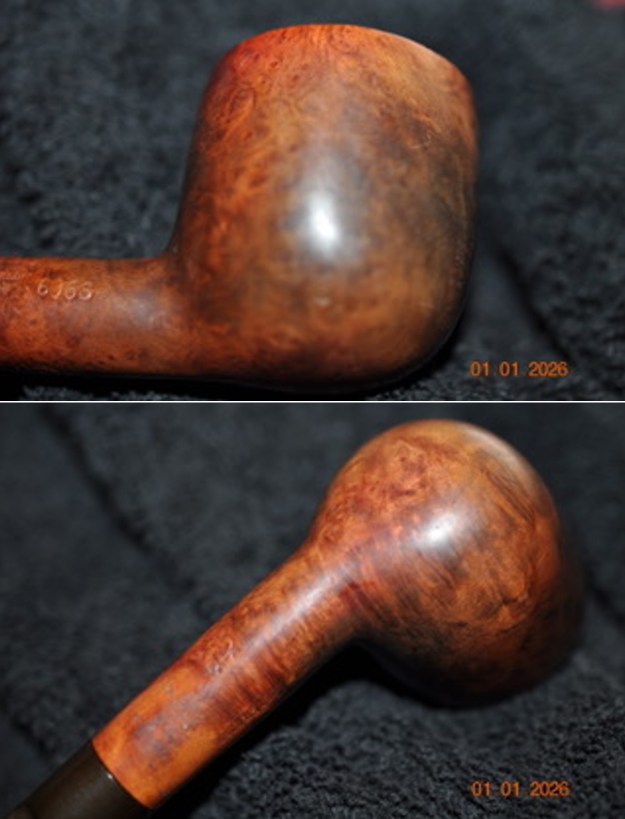
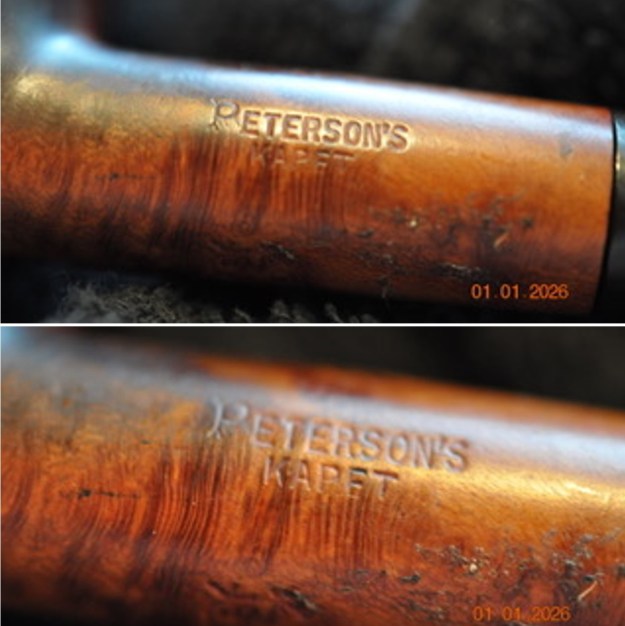
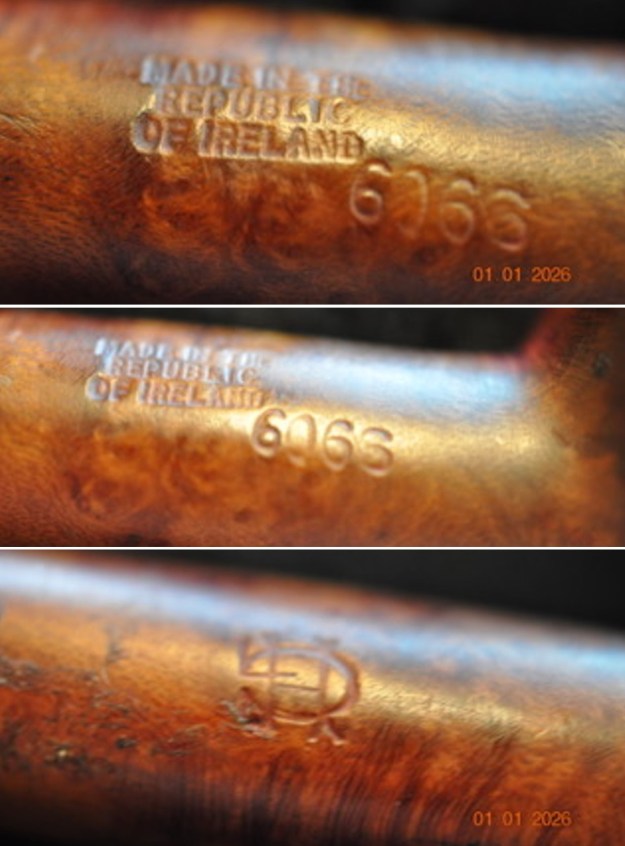
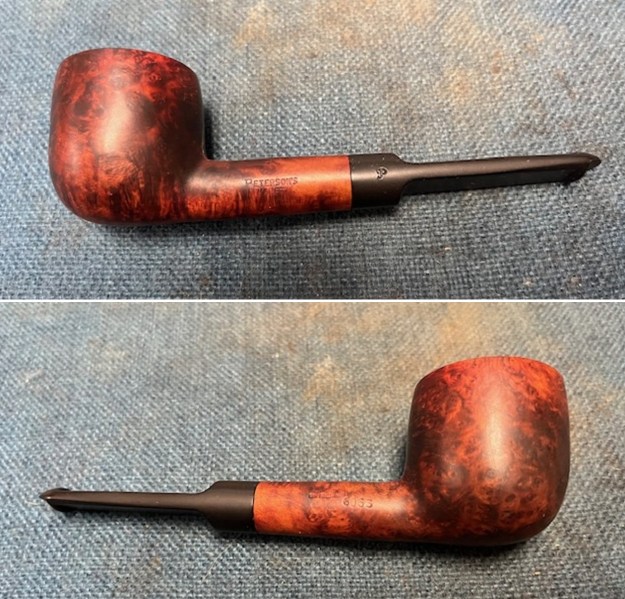
This beautifully grained well used briar pipe was purchased on 04/11/2023 from our contact in Copenhagen, Denmark. It is stamped on the left side of the shank and clearly reads Peterson’s [over] Kapet. On the right side it is stamped Made in the Republic of Ireland [three lines]. The shape number 606S is stamped below and to the right of that next to the bowl/shank junction. The 606 is the shape number for a Pot and the S is for the saddle stem. On the underside it is stamped with a large interlocked HG.  It has a smooth finish around the bowl and shank have oils, debris and grime ground into the finish. The bowl had been recently reamed and was quite clean. There were spots of lava on the rim top and edges. The inner edge had darkening. The smooth finish was dirty with debris and oils. The vulcanite saddle stem has a “P” stamped on the left side of the saddle. It was oxidized, calcified and has tooth marks and chatter on both sides near the button. It was a beautiful looking pipe even through the grime in the finish. Jeff took photos of the pipe before he started cleaning it up. Have a look. Jeff took close up photos of the bowl and rim top to show the condition of the bowl and the rim top. You can also see the light lava on the rim top, inner edge and the relatively clean bowl. He also took close up photos of the stem to show the tooth marks and chatter on both sides of the stem. He took photos of the bowl sides and heel to show the grain around the bowl. The grain is birdseye and mixed. Jeff also took photos of the stamping on the sides of the shank. It is faint in spots but readable as noted above. He did not capture the condition of the P stamp on the stem side. I am including the link to the Pipedia’s article on Peterson pipes. It is a great read in terms of the history of the brand (https://pipedia.org/wiki/Peterson). There was a short note toward the bottom of the page about the series. It is definitely referring to the newer line that came out later. I quote:

I turned to Pipedia (https://pipedia.org/wiki/Peterson) to first pin down a date that the pipe was made. I knew that the Made in Ireland stamp would give me that. I quote:

As usual when trying to get accurate facts in regard to Peterson history, something will jump up and get in the way. They are missing many of their records. The following is the best that we can do for a guide to the myriad markings during the period 1922 – 1949. Prior to 1920 it was rare for a country of origin to be stamped on the pipe, just Peterson’s Dublin on the band. After 1921/22, if it is stamped “MADE IN IRELAND” and the “Made in” is stacked over “Ireland” or “MADE IN EIRE” or several other forms, it was made between 1922 and 1938. A considerable number of Peterson pipes were stamped “Irish Free State”. From about 1930 to 1949, most of the pipes (those which were stamped) were stamped “Made in Ireland”.” If the stamp reads “MADE IN IRELAND” in a circle, the pipe was made between 1939 and 1948. These are all “Pre-Republic” pipes. I can tell you that the mark “Irish Free State” was adopted in 1922; and replaced by “Eire” in 1937 and then by “Republic of Ireland” in 1949.

That gave me a date for the pipe – it was made after 1949 as can be proved by the Made in the Republic of Ireland stamp on the right side of the shank.

I turned to “The Peterson Pipe” by Mark Irwin and Gary Malmberg to get some background on the Peterson’s Kapet Line. On page 305 it had the following information.

Kapet (1925-87) Line first described in 1925 brochure and featured in occasional catalogs through 1987. Early specimens will be stamped IRISH over FREE STATE. Described in 1937 catalog as available in dark plum or natural finish. Featured an aluminum “inner tube” or stinger until 1945.  Mid-century specimens may be stamped Made In over Ireland. Specimens from 1970 on may have mounts with hallmarks.

Judging from the Made in the Republic of Ireland stamp, the pipe I am working on is probably made after 1945 when the stinger or inner tube was removed. Those dates work also for the Kapet information above. The stem has the original P stamp on the saddle side and no stinger.

Finally, on the underside of the shank it is stamped Huber [over] Munchen. From a past restoration I did a lot of work on the stamping (https://rebornpipes.com/2023/10/14/petersons-kildare-special-hg-republic-of-ireland-10-canadian/). Have a look if you are interested.

To learn more about the Huber Munchen stamp I turned to page 300 of “The Peterson’s Pipe” by Mark Irwin and Gary Malmberg as noted by him in the previous blog and found a great paragraph on the stamping. I quote in full.

GH Retailer’s Monogram (c. 1960s) George Huber of Munich, Germany, a Peterson distributor and retailer for decades, stamped their monogram on pipes sold in their store, G overlaid on H. Peterson shared in the 1988 commemoration of Huber’s 125th year in business by producing a special pipe with a sterling rim cap, stamped HUBER over CELEBRATION.

The pipe I have is one that has the GH Retailer’s Monogram (1960s) and does not appear to have ever had the sterling rim cap and was not stamped HUBER over CELEBRATION. The Monogram attaches it to the Huber Tobacco shop in Munich, Germany. With that information I turned my attention to working on the pipe.

Armed with the information above, I turned my attention to the pipe itself. Jeff had cleaned the pipe with his usual penchant for thoroughness that I really appreciate. He reamed it with a PipNet pipe reamer and cleaned up the reaming with a Savinelli Fitsall Pipe Knife. He scrubbed out the internals with alcohol, pipe cleaners, shank brushes and cotton swabs until the pipe was clean. He scrubbed the exterior of the bowl with Murphy’s Oil Soap and a tooth brush to remove the grime and grit on the briar and the lava on the inner edge of the rim top. The finish looks very good with good looking grain around the bowl and shank. There is some darkening on the sides of the bowl as well. Jeff soaked the stem in Briarville’s Pipe Stem Deoxidizer to remove the oxidation on the vulcanite. When the pipe arrived here in Vancouver for the second stop of its restoration tour it looked very good. I took photos before I started my part of the work. I took close up photos of the bowl, rim top and stem to show how clean the pipe was. The bowl was clean and the rim top and the inner edge look beautiful. The stem was clean and did not show either tooth marks or chatter.I took photos of the stamping on the sides of the shank. It is very clear and readable and read as noted above. I also removed the stem from the shank and took photos of the pipe to show the look of the parts. I sanded the bowl and shank with 320-3550 grit 2×2 inch sanding pads to smooth out the scratches and darkening on the rim top and sides of the bowl. I wiped the bowl down after each sanding pad with a damp cloth to remove the sanding debris. I sanded the exterior of the bowl with 1500-12000 grit micromesh sanding pads. I dry sanded it with each pad and wiped the briar down with a damp cloth to remove the sanding- debris. I worked some Before & After Restoration Balm into the briar with my finger tips. I let it sit on the bowl and shank for 10 minutes and then buffed it off with a paper towel and soft cloth. The product is a great addition to the restoration work. It enlivens, enriches and protects the briar while giving it a deep glow. It is a product I use on every pipe I restore. I set the bowl aside and turned my attention to the stem. I touched up the “P” stamp on the left side of the saddle with some white acrylic nail polish. I let it cure then scraped off the excess and sanded the remnant off with a 1500 grit sanding pad. I sanded the stem and tenon with 320-3500 grit sanding pads. Each successive pad brought smoother shape and definition to the stem. I wiped it down with an Obsidian Oil cloth after each sanding pad and by the end it was starting to look very good.I polished the stem with micromesh sanding pads – dry sanding with 1500-12000 grit pads. Once again, I wiped it down between each pad with Obsidian Oil. I further polished it with Before and After Stem Polish – both Fine and Extra Fine. It looked very good. I am excited to finish this beautifully grained, Peterson’s Kapet 606S Saddle Stem Pot. I put the pipe back together and buffed it with Blue Diamond on the buffing wheel. I gave the bowl and the stem multiple coats of carnauba wax. I hand buffed the pipe with a clean buffing pad to raise the shine. It is fun to see what the polished bowl looks like with beautiful mixed grain all around it. The straight Pot looks great with the black vulcanite saddle stem. This smooth Classic Peterson’s Kapet 606S Pot is great looking and the pipe feels great in my hand. It is light and well balanced. Have a look at it with the photos below. The dimensions are Length: 5 ½ inches, Height: 1 ½ inches, Outside diameter of the bowl: 1 ½ inches, Chamber diameter: ¾ of an inch. The weight of the pipe is 39 grams/1.34 ounces. It turned out to be a beautiful pipe. I will be putting on the rebornpipes store in the Irish Pipe Makers Section. If you would like to add it to your collection let me know. It is a real beauty. Thanks for walking through the restoration as I brought the pipe back to life.

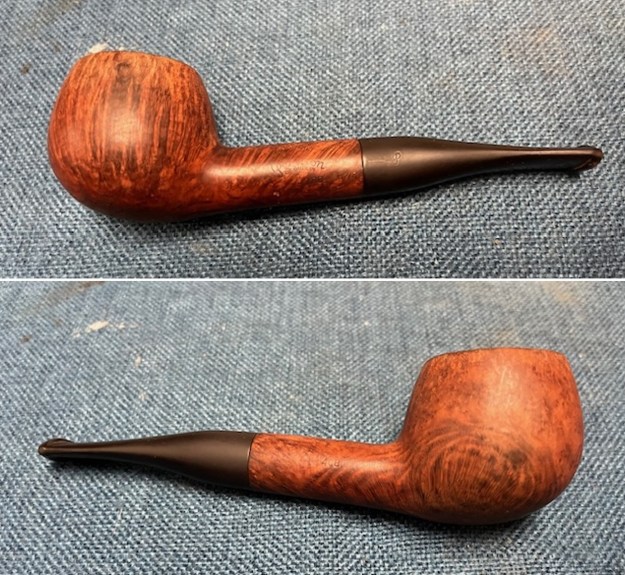
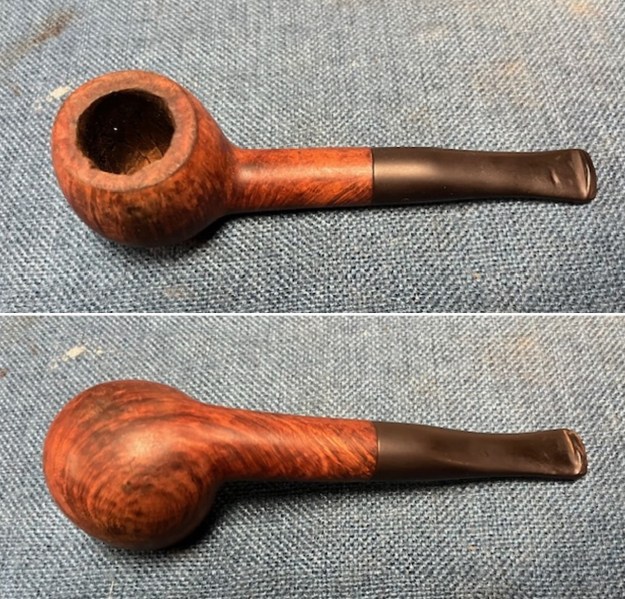
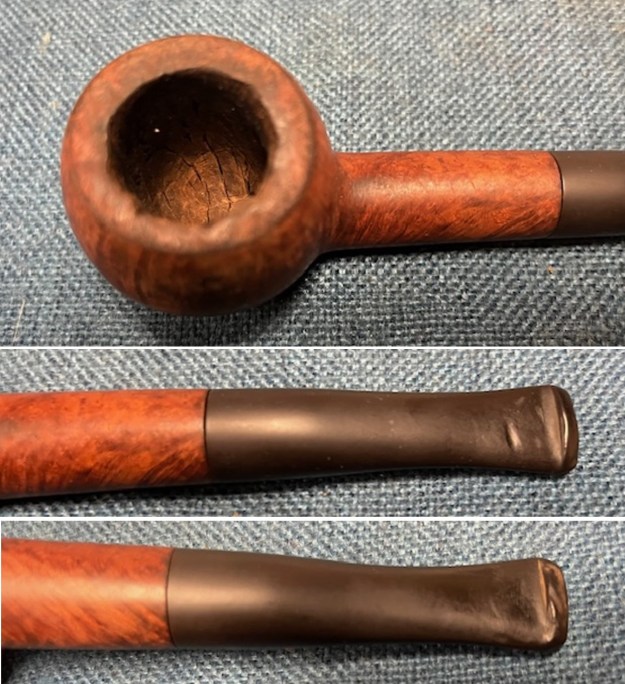
What a Wreck of a Pipe this Peterson’s of Dublin Kildare 408 Apple


by Steve Laug

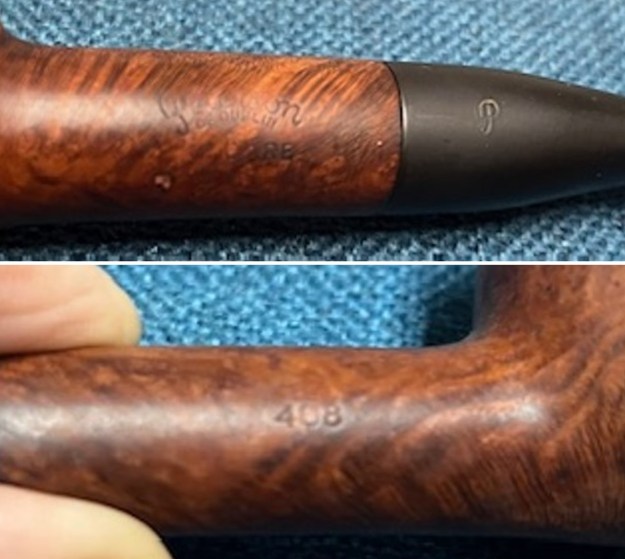
This is another pipe we picked up from a seller in Macon, Georgia, USA on 03/08/2025. It was a classic Peterson’s Apple shaped pipe. It was stamped Peterson’s [arched over] Dublin [over] Kildare. Mid shank on the right side it was stamped 408. It was truly a wreck of a pipe at the worst and at the best it was someone’s favourite. It was very dirty and was covered with tars and oils all around what must have been a natural coloured pipe when it started. The bowl had a thick cake that overflowed in lava onto the rim edge and top of the bowl. The inner edge of the bowl appears to have been poorly, if not infrequently reamed with a sharp knife. It was notched and damaged all the way around and was even visible with the lava coat. The stem was a vulcanite fishtail one that was very dirty, discoloured and there were deep tooth marks on both sides ahead of the button. The fit of the stem to the shank showed that the internals of the shank were as dirty as the externals of the pipe. All in all, it was truly a mess that I was unsure would clean up well. Jeff took photos of the pipe so I could have a sense of what it looked like before he started his work on it. Jeff took photos of the stem and the bowl and rim to give a sense of the horrible condition of the pipe. You can see the thick cake in bowl and the lava overflow on the edges and rim top of the bowl. The damage on the inner edge of the rim is visible even under the lava. The stem surface is very dirty and you can see the tooth marks and damage. This will be a challenge! He also took photos of the sides of the bowl and the heel to show the beautiful grain that could not be totally hidden by the heave filth on the bowl sides. You can see the oils and debris ground into the finish and built up on the surface of the bowl and shank. He took a photo of the stamping on the left side of the shank. It is faint but still is readable as noted above.I reread Pipedia’s article on Peterson pipes. It is a great read in terms of the history of the brand (https://pipedia.org/wiki/Peterson). I am quoting nothing specifically from that article but recommend you take time to read it.

I turned to “The Peterson Pipe” by Mark Irwin and Gary Malmberg to get some background on the Peterson’s Kildare Line. It has become my go to any time I want information on Peterson’s lines. Page 314 had the following information on the Kildare Line.

Kildare (1965-) First issue of line with matte-finish in Classic Range shapes, P-Lip and fishtail mouthpiece. Second issue C.1979 as Kildare Patch, with rusticated patches on pipe surface. Third issue 2010, matte-brown, P-Lip or fishtail mouthpiece, no band. Fourth issue 2011-, burgundy sandblast finish, nickel army mount, fishtail mouthpiece, exclusive to smokingpipes.com.

The information given above identifies the pipe as a First Issue of the line with a matte-finish. It would have been issued between 1965 and 1979. This line was issued in a brown finish with either a P-lip or a fishtail mouthpiece. This means that the pipe is an older issue Kildare. The 408 shape number is attached to a ¼ bent Apple.

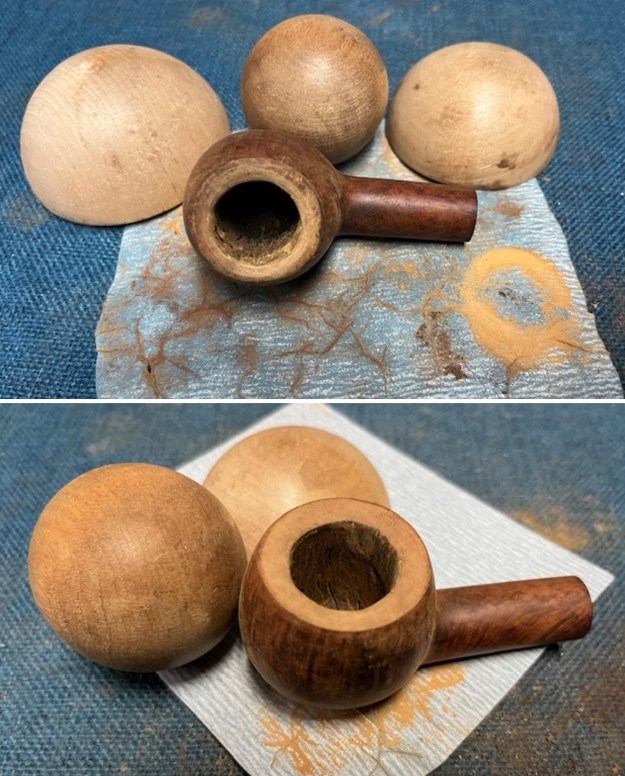
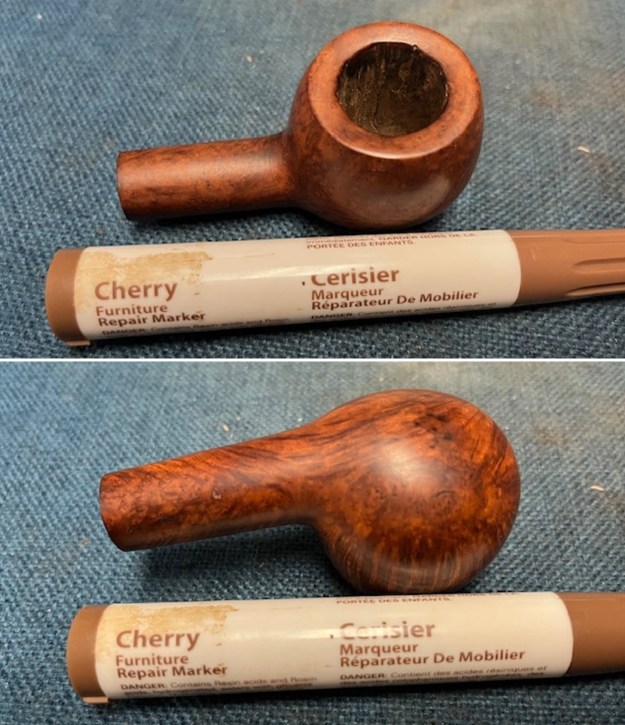
Now it was my turn to work on the pipe. Jeff had done an amazing cleanup of the pipe. It was such a wreck that I wondered what it would look like after his work. He reamed the heavy cake with a PipNet reamer and cleaned up that with a Savinelli Fitsall Pipe Knife. He scrubbed the internals of the bowl and stem with alcohol, cotton swabs, shank brushes and pipe cleaners. He scrubbed the externals with undiluted Murphy’s Oil Soap and rinsed the bowl off with running water. The scratches in the briar stood out once clean. There were some on the heel of the bowl. The rim top was clean but badly damaged on the inner edge. He scrubbed the dirty stem with Soft Scrub and then soaked it in Briarville’s Pipe Stem Deoxidizer. Once it had soaked he rinsed it off with warm water to remove the residual solution. He dried it off and rubbed it down to remove any oxidation that was still on the stem. Overall the pipe looked better but would be a challenge to bring back to life. I took a photo of the rim top to show the condition. You can see the clean bowl. The bowl is in excellent condition and the rim top shows the heavy damage on the inner edge of the bowl. The stem came out looking quite good and the tooth marks and chatter were visible on the surface ahead of the button.I took photos of the sides of the shank to show the stamping. The photo clearly shows the faint stamping though it is actually more readable in person. The stem is also faintly stamped with a Peterson’s P logo. I removed the stem from the shank and took a photo of the pipe parts to show what I was working with. It really does have some beautiful grain on the bowl and shank. It was time to work on the pipe. I started by trying to clean up the inner edge bevel with a folded piece of 220 grit sandpaper. It was too far gone for that to work. I changed course to use various wooden spheres I have here along with 220 grit sandpaper to try to rescue the rim edge and bevel. Once finished it definitely looked better. I filled in the deep road rash on the heel of the bowl with clear CA glue, working it into the deep pits with a tooth pick. Once it cured I used a folded piece of 220 grit sandpaper to smooth it out and blend it in.I sanded the bowl with 320-3500 grit sanding pads to remove the scratching and marks on the bowl surface and top and underside of the shank. I wiped it down after each pad with a damp cloth and by the end the bowl really began to show some promise. I carefully avoided the stamping on the shank sides. I used a Cherry stain pen to restain the inner edge and rim top to match the rest of the briar before I started sanding it. Once it had been sanded the match should be perfect. I polished the briar with micromesh sanding pads. I dry sanded it with 1500-12000 grit sanding pads and wiped the bowl down after each pad with a damp cloth. By the final pads the briar really had a shine. I rubbed the briar down with Before & After Restoration Balm. I worked it into the briar with my fingertips to work it into the finish. The product works to clean, enliven and preserve the briar. I let it sit for 10 minutes then I buffed it with a cotton cloth to deepen the shine. The briar really comes alive with the balm. I set the bowl aside and worked on the tooth marks on the stem. I “painted” them with the flame of a lighter to lift them. They came up a bit and I filled in what remained with the extra strength rubberized Black CA glue. Once the repairs cured I flattened them out and redefined the button edge with small flat files. I sanded them smooth with a folded piece of 220 grit sandpaper. I touched up the P stamp on the left side of the taper stem with some white acrylic fingernail polish. Once it cured I scraped off the excess and worked over the surface with a 400 grit sanding pad to clean up the stamping. It is clear and readable.I sanded the stem and tenon with 320-3500 grit sanding pads. Each successive pad brought smoother shape and definition to the stem. I wiped it down with an Obsidian Oil cloth after each sanding pad and by the end it was starting to look very good.I polished the stem with micromesh sanding pads – 1500-12000 grit pads. I wiped them down with Obsidian Oil after each sanding pad. I used Before & After Pipe Polish – both Fine and Extra Fine to further polish the stem. I gave it another coat of Obsidian Oil and set aside for the product to absorb into the vulcanite. It was great to finish this older (1965-79) Republic Era Peterson’s 408 Apple. It was a question if it could be reborn but I think it looks good.  I put the bowl and the stem together and buffed it with Blue Diamond on the buffing wheel. I gave the bowl and the stem multiple coats of carnauba wax. I buffed the pipe with a clean buffing pad to raise the shine. I hand buffed the pipe with a microfiber cloth to deepen the shine. It is fun to see what the polished bowl looks like with deep sandblast all around it. Added to that the polished black vulcanite stem was beautiful. This Peterson’s Kildare 408 Apple is great looking and the pipe feels great in my hand. It is light and well balanced. Have a look at it with the photos below. The dimensions are Length: 5 ¾ inches, Height: 1 ¾ inches, Outside diameter of the bowl: 1 ¼ inches, Chamber diameter: 7/8 of an inch. The weight of the pipe is 58 grams/2.05 ounces. It is a beautiful pipe and one that will soon be on the rebornpipes store in the Irish Pipe Makers Section. If you want to add it to your collection let me know. Thanks for walking through the restoration with me as I worked over this pipe. Thanks to each of you who are reading this blog.
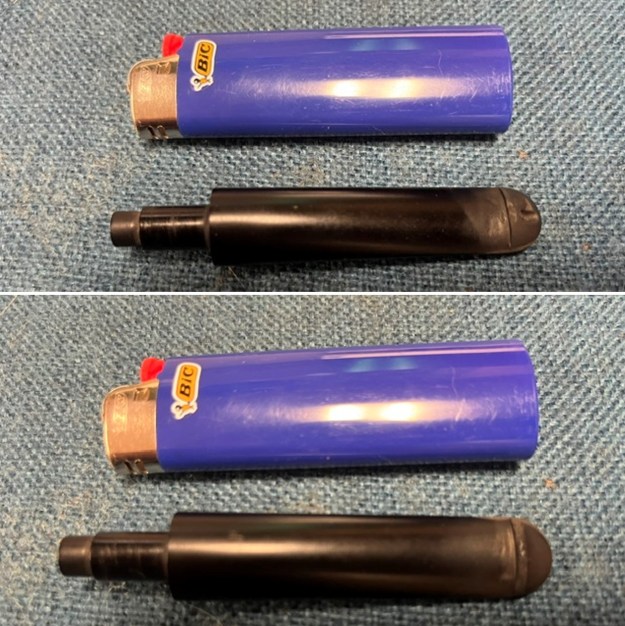
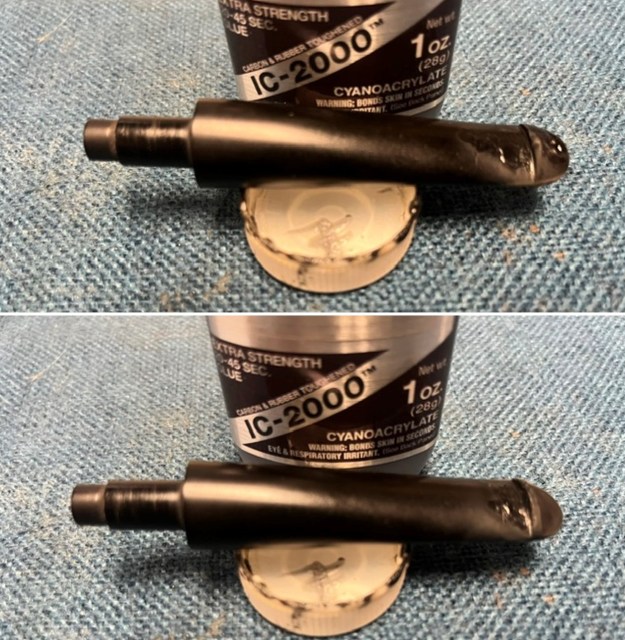
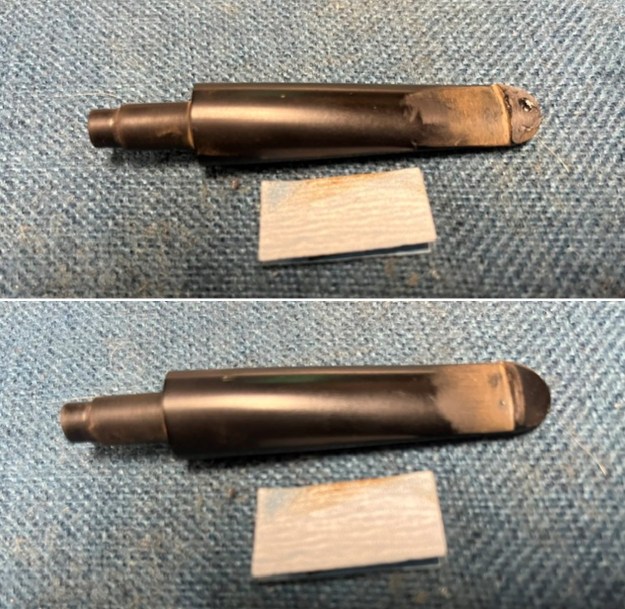
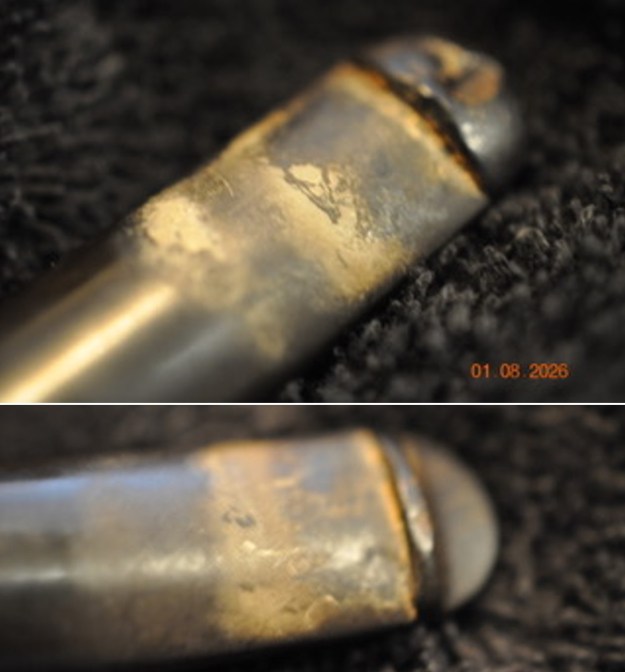
New Life for a Svendborg Danish Hand Carved Sand Blast Bent Dublin with a 9MM filter saddle stem


by Steve Laug

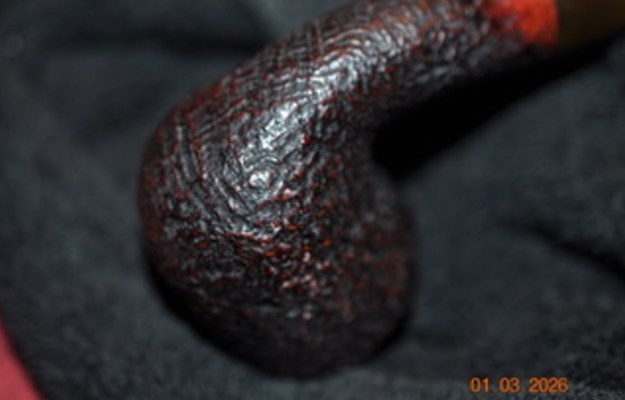
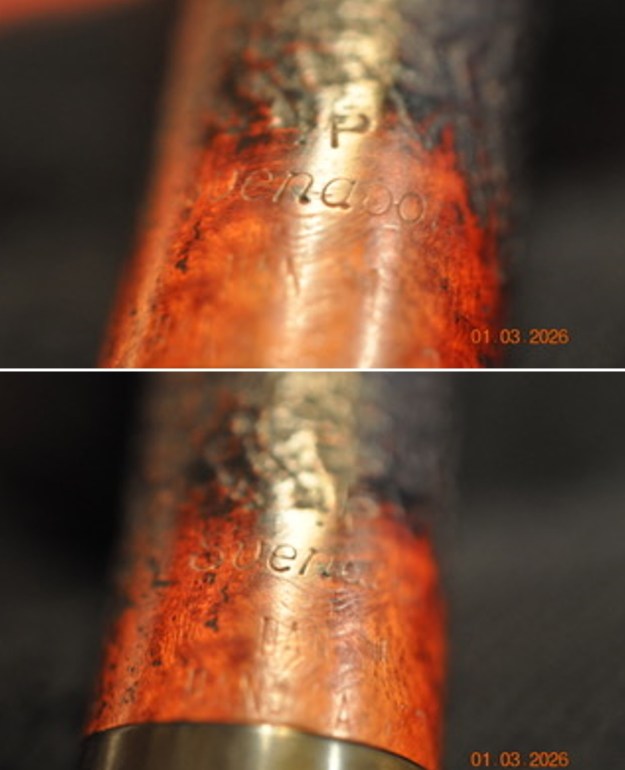
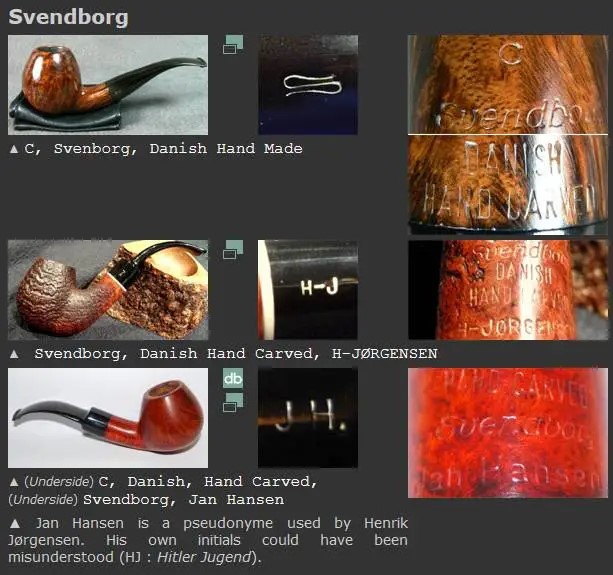
The next pipe on the table is one that has travelled much in its life. It went from Denmark to the Philippines and then to the US and now here in Canada. We picked it up in a batch of pipes we purchased from John Mags, a pipemaker in Lapaz, Philippines on 04/24/2025. The sandblast finish around a fluid Danish style Dublin works well to make this a great looking pipe. The pipe was stamped on a smooth panel on the underside of the shank and read P [over] Svendborg [over] Danish [over] Hand Carved. The rich dark brown/black stain on the sandblast finish looked very good. It had a lot of dust and debris in the valleys of the sandblast. The bowl had a moderate cake in it and it overflowed as light lava into the sandblast rim top. It was dirty but very interesting looking. The stem was quite oxidized but still had the Svendborg infinity looking logo on the left side of the saddle. It is a 9MM filter stem. There were light tooth marks on both sides ahead of the button. Jeff took photos of the bowl before his clean up work to give a sense of its beauty even with the grime in the finish. He took photos of the rim top and bowl to show clearly the cake in the bowl and the overflow of lava in the sandblast rim top. The condition of the stem is also visible as noted above. The next photos capture the sandblast in the briar on the sides and heel of the bowl. It is a beautiful blast that shows the grain around bowl sides and the heel of a well shaped Dublin. He captured the stamping on the underside of the shank and the shape of the stem in the next photos. The stamping is faint in spots but still readable and reads as is noted above. Before I started working on the pipe I did a bit of research on the brand to remind myself of what I knew of the maker. I turned to Pipephil’s site first (http://www.pipephil.eu/logos/en/logo-s14.html). I did a screen capture of the information on the site. I did a screen capture of the pertinent information and have included it below.I copied and pasted the side bar information below:

Brand founded in 1970s by Henrik Jørgensen, Poul Ilsted and Tao Nielsen. They bought an old factory (Nordisc Pibefabriker) in Svendborg on Funen Island. Poul and Tao gradually bow out from machine manufactured pipes (1982) and Henrik Jørgensen manages the brand until its takeover by Design Berlin (D) in the late 90ies. Kaj C. Rasmussen jointed the firm for several years. 17 employees worked for this brand under Henrik Jørgensen direction.

That link gave me a bit of information on the brand – a joint venture of Henrik Jorgensen, Poul Ilsted and Tao Nielsen. I could see from the information that usually the carvers stamped their names on the shank of the pipe. In the case of the one I have there is no name stamp. I wonder if the P stamp above the name would point to possibly Poul Ilsted as the carver. If so it would put the date of the carving before 1982 when Ilsted and Nielsen left. It is stamped Hand Carved which also points to a pre-1982 date.

I then turned to Pipedia and found that an article on the brand that was helpful and interesting to read (https://pipedia.org/wiki/Svendborg). I have included the first part of the article below.

Jens Tao Nielsen and Poul Ilsted Bech met each other when working together for Erik Nørding and soon became close friends. Both felt a bit tired to make nothing but bizarre fancy shapes and agreed they wanted to produce pipes of more style and more classicism. They decided to establish their own brand “Tao & Ilsted” – But how to do it?

A good fortune brought them in contact with Henrik Jørgensen, a passionate pipe lover and a wealthy Copenhagen banker who was willing to retire from bank business and change his career to become a pipemaker. The trio joined in 1969 and decided to start a new pipe brand together. Nielsen and Ilsted started to search for a suitable workshop while Jørgensen took care of the finances. In early 1970 the partners found an old, closed down pipe factory in Svendborg on Funen, and bought it shortly after for a mere 16.500 Danish Kroner. It was the earlier Nordic Pipe Factory – Nordisc Pibefabriker – maybe the oldest Danish pipe factory. And now it became the home of Svendborg Piber.

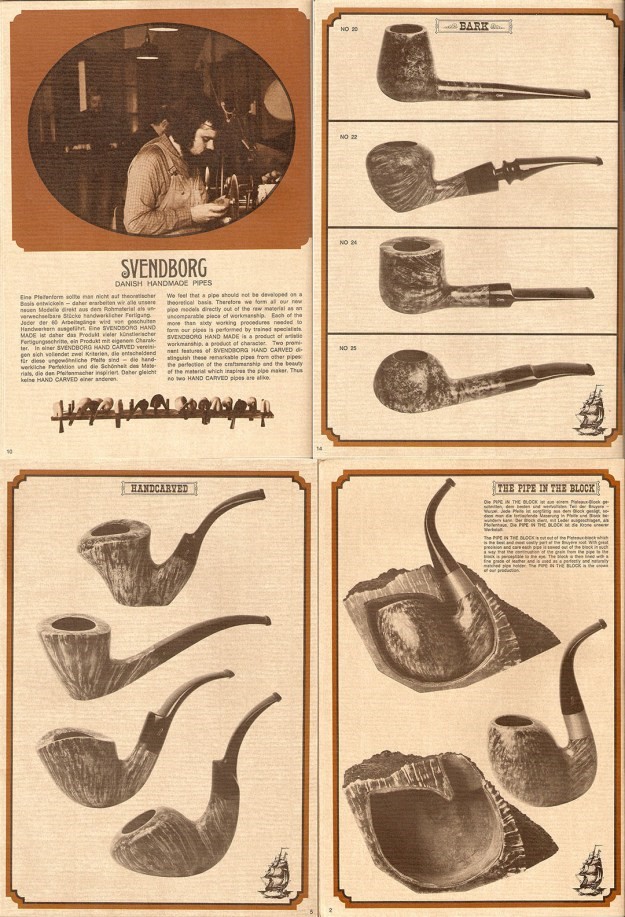
The article also included this set of pages from a catalogue that were interesting. The philosophy that drove the brand is also there to read. It is well worth the time to pause and read about that passion.Now it was my turn to work on the pipe. Jeff had done an amazing cleanup of the pipe. He reamed the light cake with a PipNet reamer and cleaned up that with a Savinelli Fitsall Pipe Knife. He scrubbed the internals of the bowl and stem with alcohol, cotton swabs and pipe cleaners. He scrubbed the externals with undiluted Murphy’s Oil Soap and rinsed the bowl off with running water. He soaked the stem in Briarville’s Pipe stem Deoxidizer and once it had soaked rinsed it off with warm water to remove the residual solution. He dried it off and rubbed it down to remove any oxidation that was still on the stem. The pipe looked very good when I received it. I took photos of the bowl and the rim top as well as both sides of the stem to show the condition of the pipe before I started my work. The rim top looked remarkably good. The next photos show the condition of the stem and how clean it came out.I took a photo of the stamping on the underside of the shank and the left side of the saddle stem. The photo of the stamping is faint but still readable. I also removed the stem and took a photo of the parts of the pipe.I went over the rim top with a brass bristle wire brush to knock off any debris in the shallow blast. Some came out and it looks quite good.I rubbed the briar down with Before & After Restoration Balm. I worked it into the briar with my fingertips and a horsehair shoe brush. The product works to clean, enliven and preserve the briar. I let it sit for 10 minutes then I buffed it with a cotton cloth to deepen the shine. The briar really comes alive with the balm. I touched up the infinity style Svendborg logo stamp on the left side of the saddle stem with white acrylic fingernail polish. I worked it into the stamp with a tooth pick. Once it dried I sanded the excess off with a worn 1000 grit sanding pad. It looks significantly better.I sanded the surface of the stem with 320-3500 grit sanding pads to smooth the tooth chatter out and remove remnants of oxidation. When finished the stem looked much better.I fit the tenon with a 9MM filter. The fit was perfect as expected and the airflow was unrestricted.I polished the vulcanite with micromesh sanding pads – 1500-12000 grit pads. I wiped it down with Obsidian Oil after each sanding pad. I used Before & After Pipe Polish – both Fine and Extra Fine to further polish the stem. This Svendborg Danish Hand Carved Dublin P with its fancy, vulcanite 9MM saddle stem is a beautiful sandblast pipe with a flowing shape that looks great. The rich browns and blacks of the contrasting stain makes the grain come alive with the polishing and waxing. I put the stem back on the bowl and carefully buffed the pipe with Blue Diamond on the buffing wheel using a light touch on the briar. I gave the bowl and the stem multiple coats of carnauba wax on the buffing wheel and followed that by buffing the entire pipe with a clean buffing pad. I hand buffed the pipe with a microfiber cloth to deepen the shine. The finished Svendborg Danish Hand Carved Dublin really is a beauty and fits nicely in the hand and looks very good. Give the finished pipe a look in the photos below. The dimensions of the pipe are Length: 5 ½ inches, Height: 1 ¾ inches, Outside diameter of the bowl: 1 ½ inches, Chamber diameter: ¾ of an inch. The weight of the pipe is 1.76 ounces/50 grams. This pipe will soon be on the Danish Pipe Makers Section of the rebornpipes store if you would like to add it to your collection. Thanks for reading this blog and my reflections on the pipe while I worked on it.

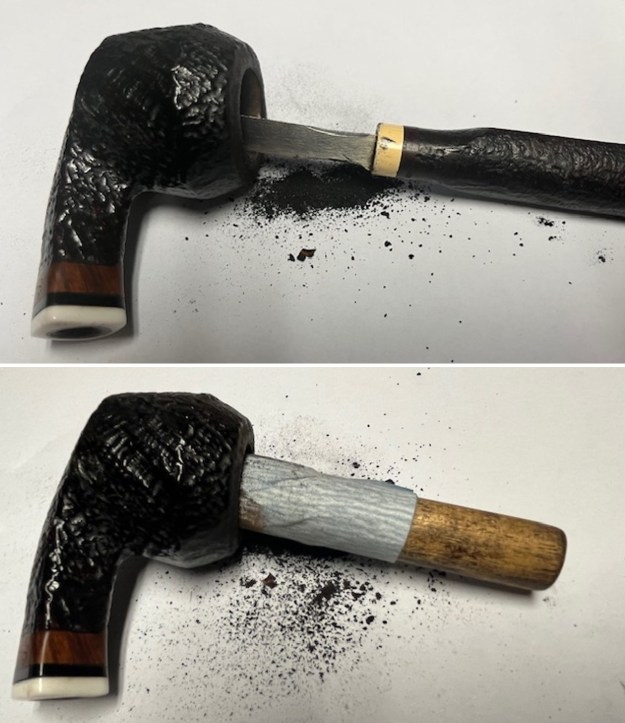
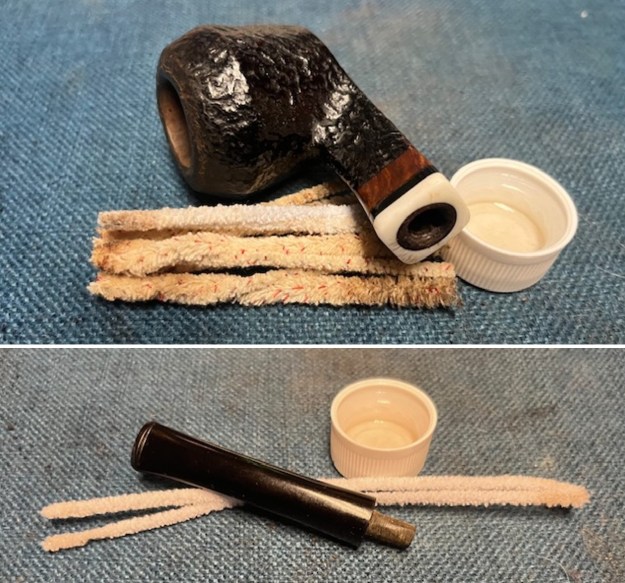
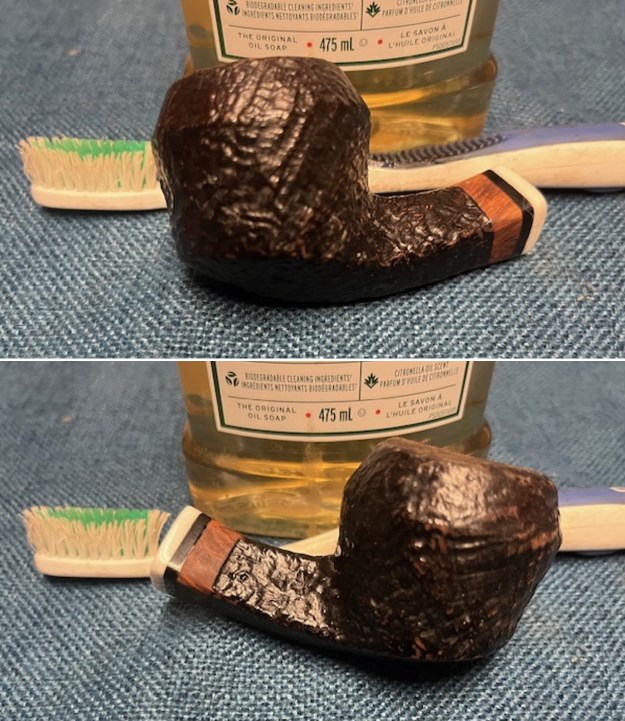
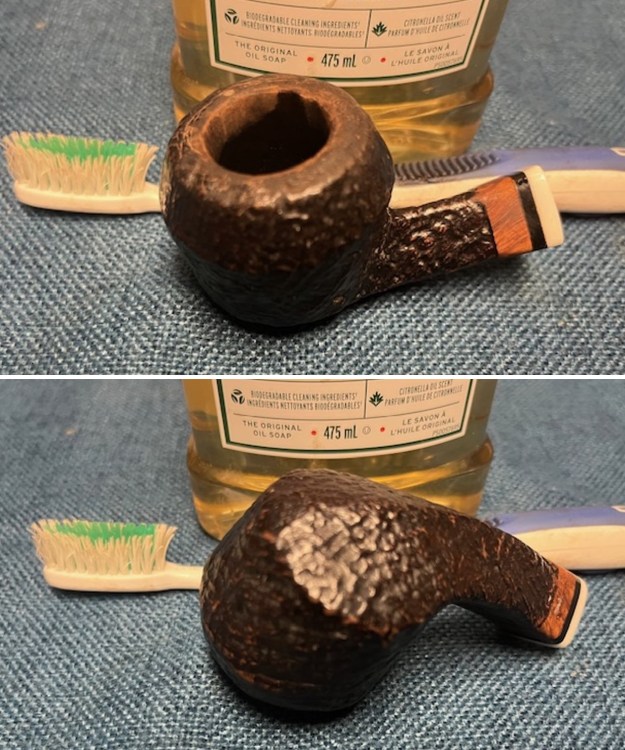
Fitting a new stem to a Neerup, Made in Denmark Bulldog


by Steve Laug

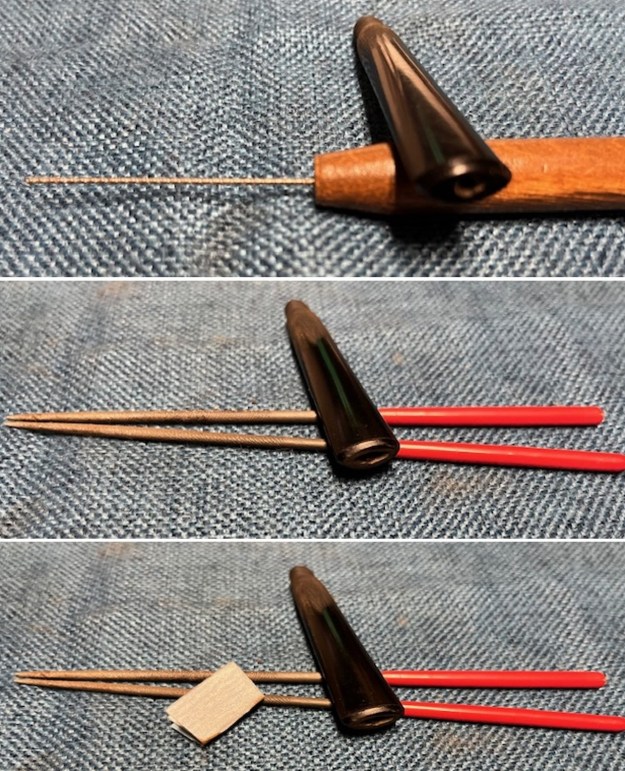
The next pipe came to my table from a fellow I had repaired pipes for before. It has been awhile and he has moved further away but he remembered me and sent the pipes to me to repair. There were two of them – a Savinelli Billiard with a snapped shank and a Neerup Bulldog. The Bulldog looked very familiar to me and I did a bit of looking back and found that I had worked on it previously. I had fitted it with a new stem in the past and later replaced the tenon on it. Now it was back for a new replacement stem. It is obviously a favourite pipe. It has a black sandblast finish that is a bit dirty and a light cake in the bowl that had been recently reamed. There is an overflow of lava on the rim top. The pipe was still a beauty. The shank end of the vulcanite stem had been wrapped in tape but I am not sure the purpose of the tape. Under the tape was a polished nickel end cap on the stem for decorative purposes and perhaps Curtis would rather have it plain. The button end had been chewed and was missing a large piece of vulcanite on the underside of the button surface. The stem will need to be replaced. I took photos of the pipe before I began my work on it. I took a close up photo of the bowl and rim top to show the thickness of the cake and the condition of the stem when I received the pipe. It was a bit of a mess. The stem was in rough condition as noted above. You can see the damage on both sides of the stem – the chipped and broken underside of the button as well as the tooth damage on the topside of the stem. Looking at it you can see why we chose to restem it.The next two photos showed the stamping on the underside of the shank. It is faint and hard to read in the photos. In person it is faint but readable as noted above. I removed the stem and took a photo of the pipe to give a sense of perspective to the parts. I went back and reread my previous work on this pipe. I have been doing this long enough that I am doing repeat repairs on pipes that I had repaired before. This link is to the first restem on the pipe. Here is the link (https://rebornpipes.com/2022/12/22/new-life-and-new-look-for-a-neerup-made-in-denmark-bulldog/).

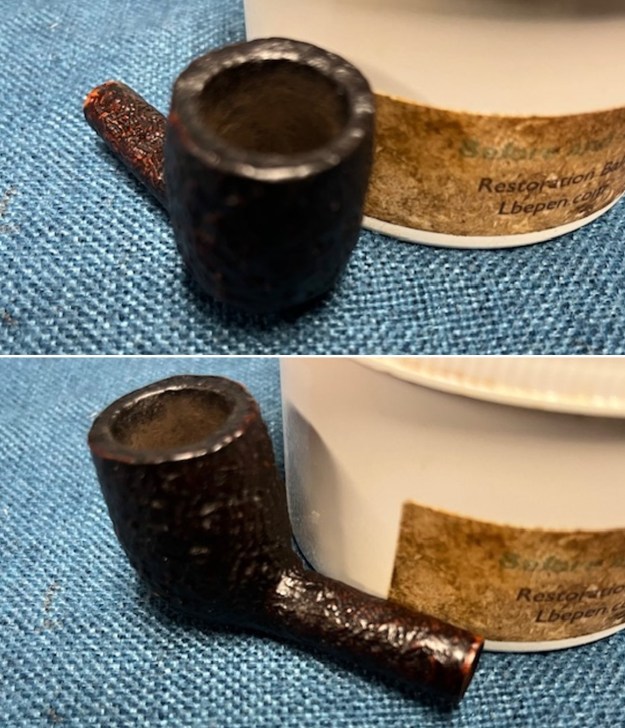
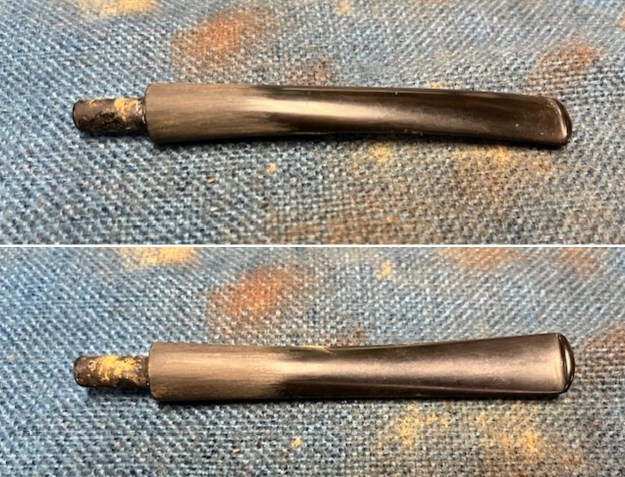
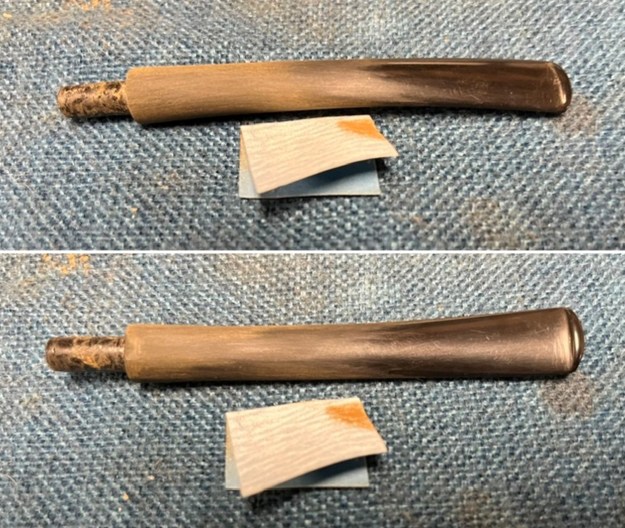
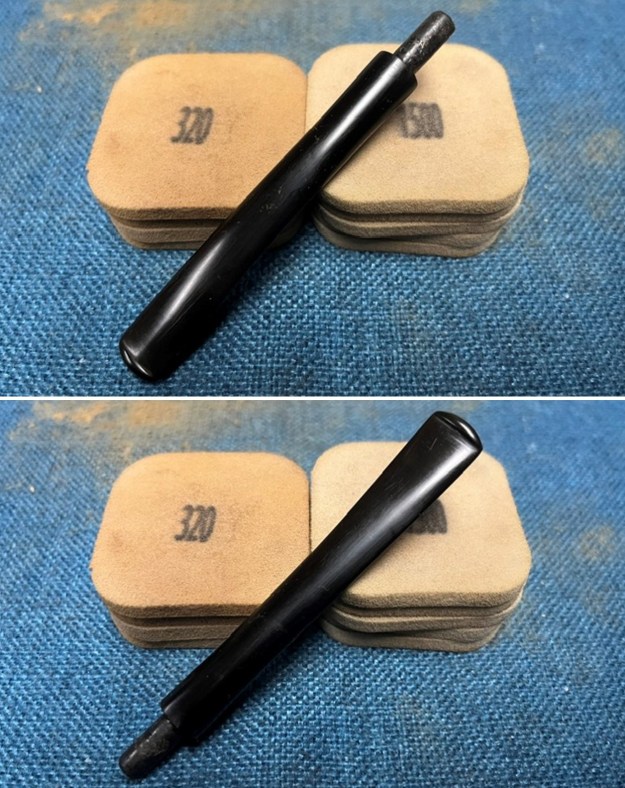
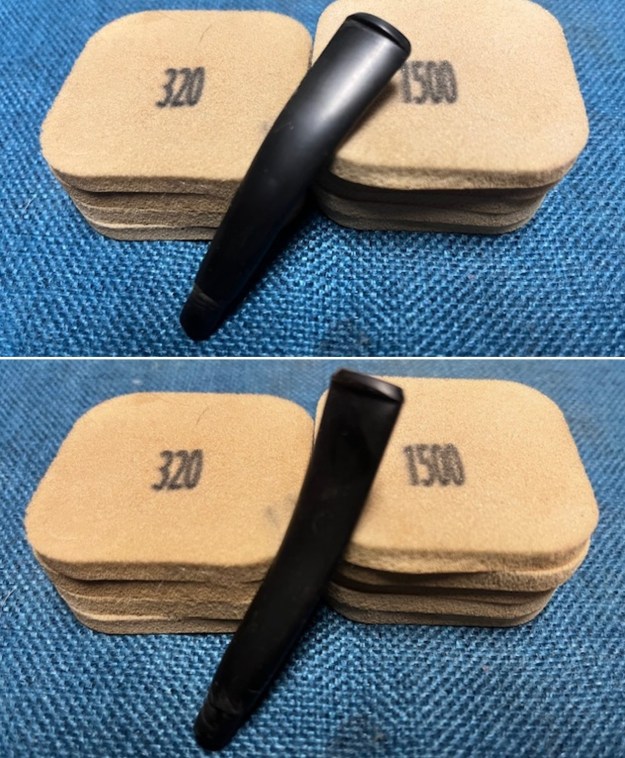
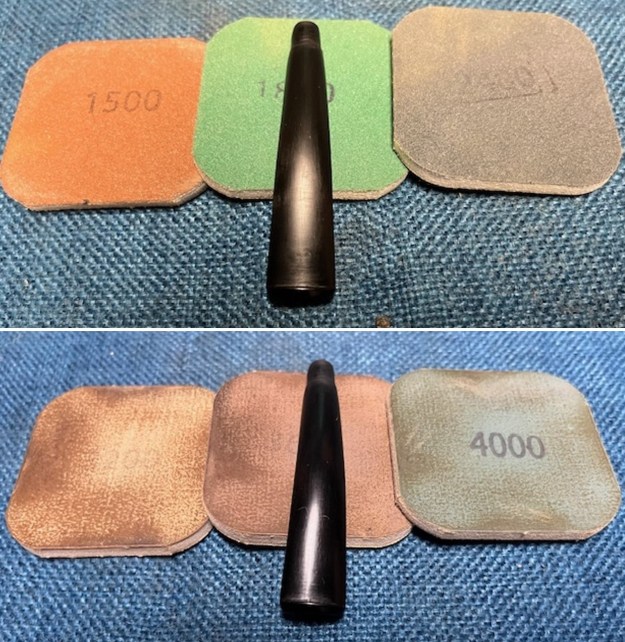
I reamed the bowl with a PipNet Pipe Reamer to remove the thin cake from the bowl – using a Savinelli Fitsall Pipe Knife to scrape away the carbon coat. I sanded the walls smooth with a piece of dowel wrapped with some 220 grit sandpaper.I cleaned out the shank and the mortise with pipe cleaners, cotton swabs and isopropyl alcohol to remove the tars and oils. I also cleaned out the airway in the stem I had chosen to use as well. I scrubbed the bowl with Murphy’s Oil Soap and a tooth brush on the sandblast and the a brass bristle brush on the rim top. I rinsed the bowl with warm running water to rinse off the soap and the grime left behind. It looked better. I rubbed the bowl down with Before & After Restoration Balm. I worked it into the sandblast with my fingertips and a horsehair shoe brush to get it deep in the grooves of the sandblast. I let it sit for 15 minutes and buffed it off with a soft cloth. I went through my stems and found this slightly longer taper stem that would need very little adjustment to fit in the shank. I took pictures of the old stem with the replacement stem in the photo to show the difference.I polished the stem with micromesh sanding pads – dry sanding with 1500-12000 grit sanding pads. I wiped the stem down after each sanding pad with a cloth impregnated with Obsidian Oil. The oil both preserves the rubber and also provides some needed friction for the micromesh pads. I polished it with Before & After Fine & Extra Fine Polish. I rubbed it down a final time with the oil and set it aside. This Neerup Made in Denmark Freehand Bulldog carved by Peder Jeppesen combines a great looking piece of sandblast briar with a multi-banded shank extension and a vulcanite stem to make a beautiful pipe. The removal of the thick shiny coat allows the grain to come alive with the polishing and waxing. I put the stem back on the bowl and carefully buffed the pipe with Blue Diamond on the buffing wheel. I gave the bowl and the stem multiple coats of carnauba wax on the buffing wheel and followed that by buffing the entire pipe with a clean buffing pad. I hand buffed the pipe with a microfiber cloth to deepen the shine. The finished Neerup Made in Denmark Bulldog really is a beauty and fits nicely in the hand and looks very good. Give the finished pipe a look in the photos below. The dimensions of the pipe are Length: 5 ¾ inches, Height: 1 ¾ inches, Outside diameter of the bowl: 1 ¾ inches, Chamber diameter: ¾ of an inch. The weight of the pipe is 1.80 ounces/51 grams. Once I finish the second pipe this one will be going back to Curtis to enjoy. Thanks for reading this blog and my reflections on the pipe while I worked on it. There are many more to come!


Restemming and Restoring a Monte Verde Golden Tan Freehand Sitter


by Steve Laug

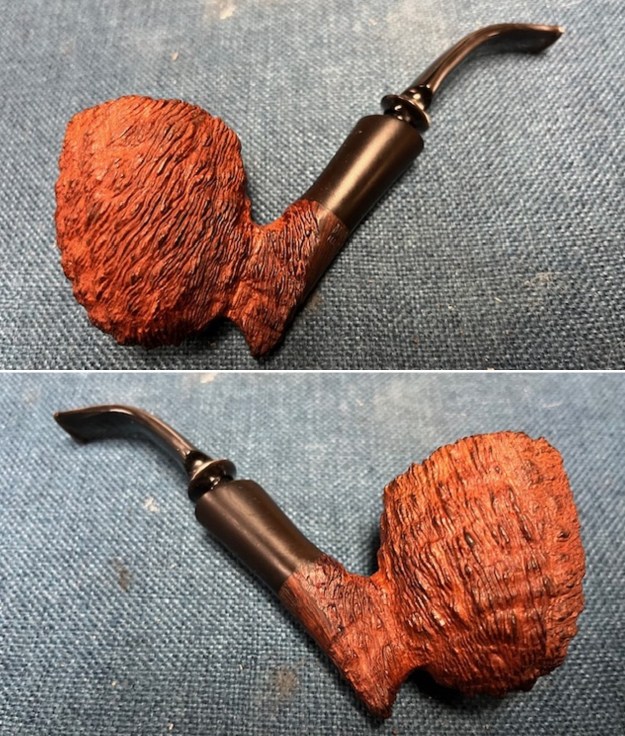
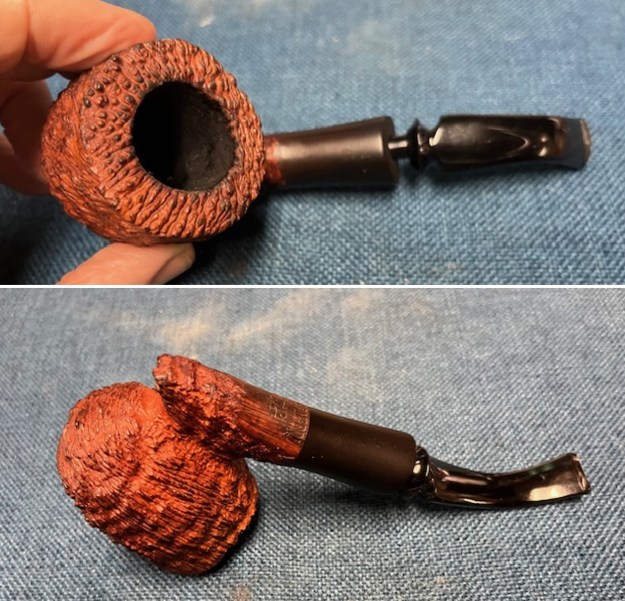
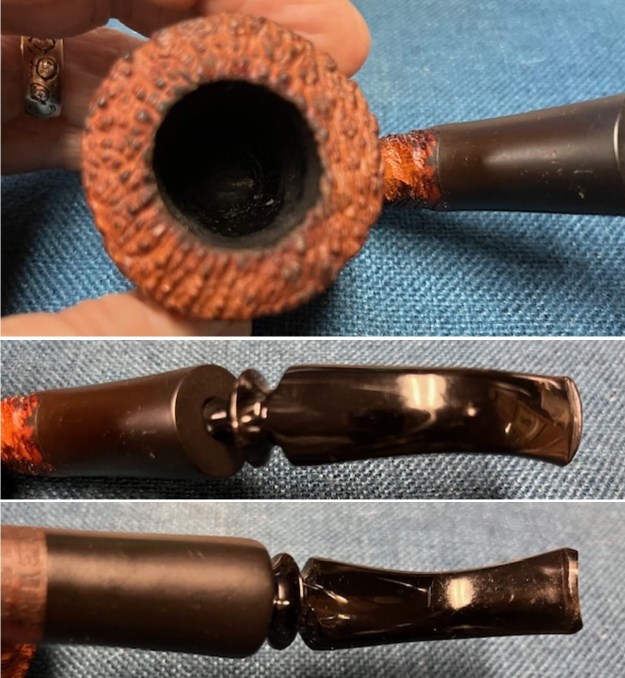
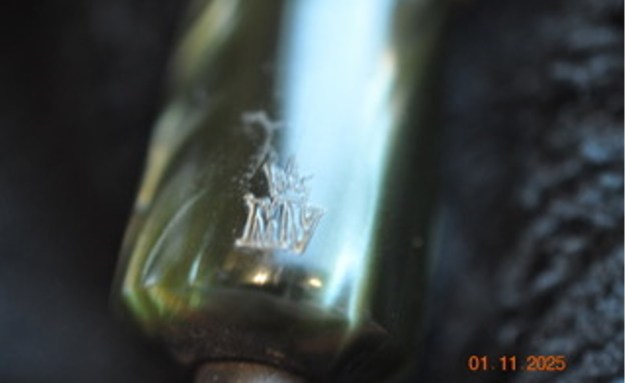
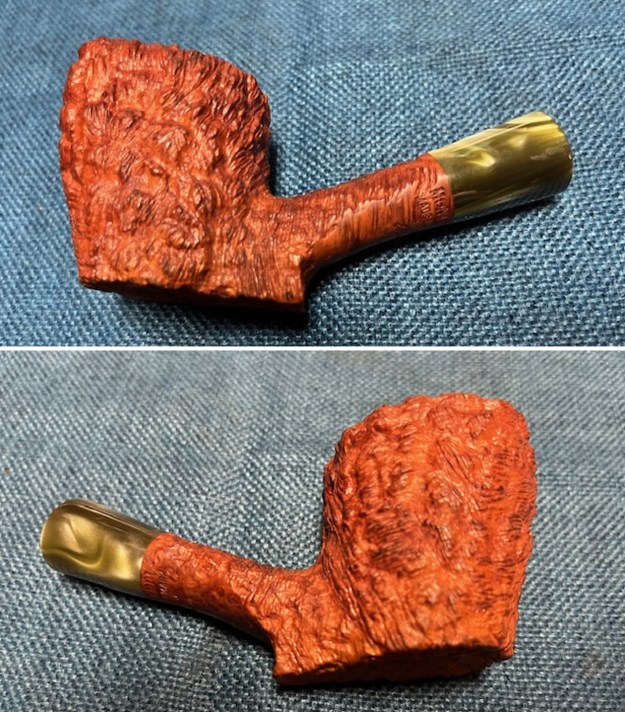
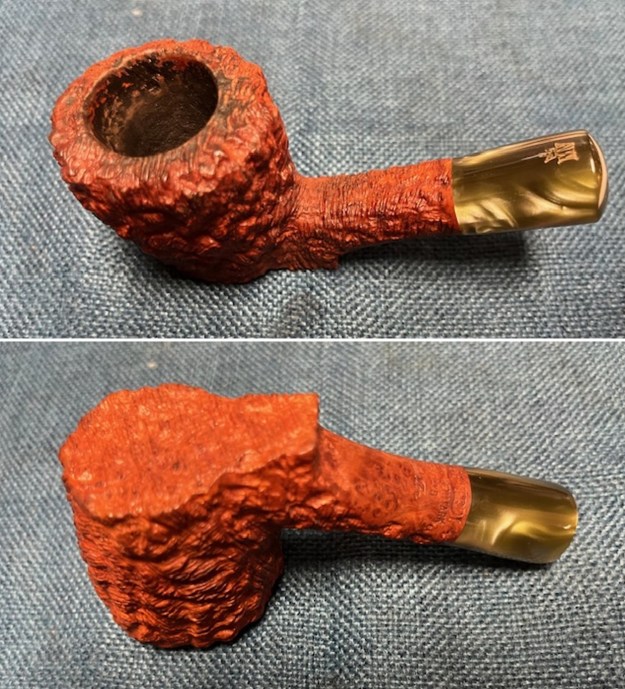
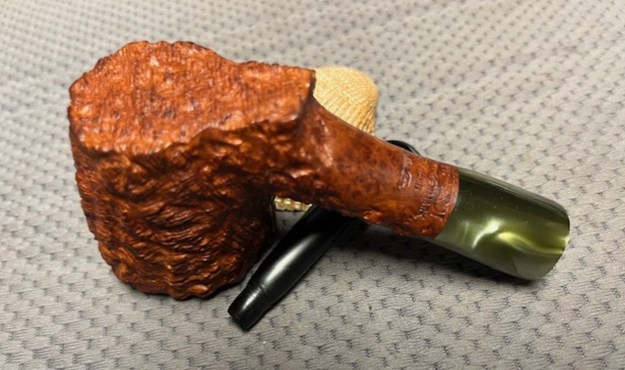
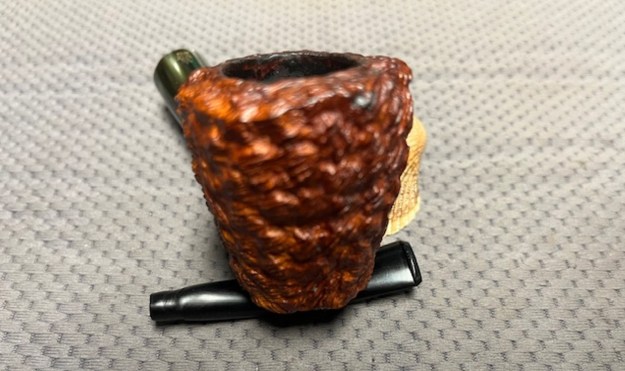
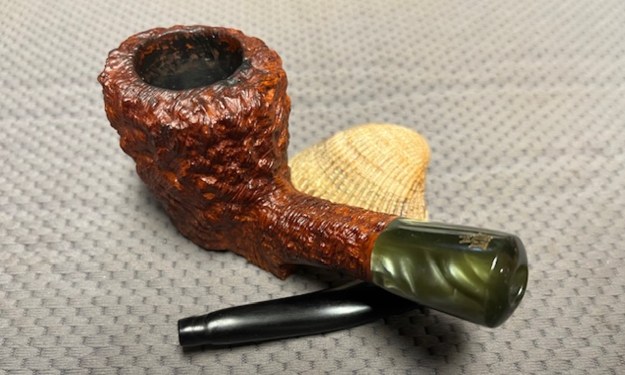
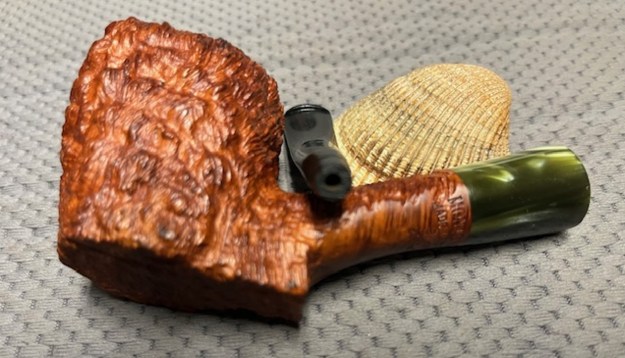
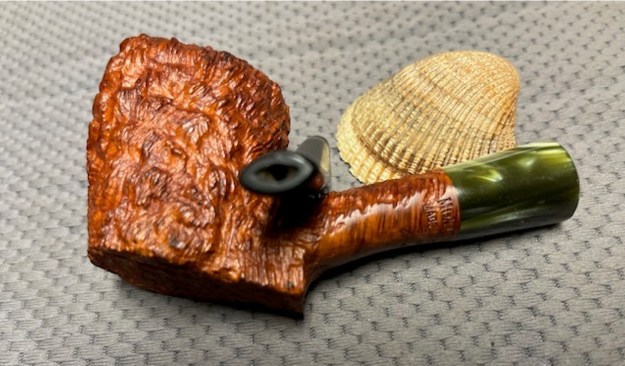
The next pipe on the table was purchased from a seller 05/28/24 from Santa Cruz, California, USA. It has that verve that I have come to associate with pipe made by Preben Holm and the fellow we purchased this lot from obviously loved Preben Holm carved pipes because we acquired several from him in this lot. They are unique and beautiful. The pipe is stamped on a smooth panel on the underside. It reads Monte Verde [over] Made in Denmark [over] by Hand [over] Golden Tan. The shank extension is a marbled green acrylic shank extension has a gold Crown MV on the top. I have refurbished several Monte Verde pipe so if you are interested in the brand here is a link to one I did back in 2019 that has a similar finish to this one (https://rebornpipes.com/2019/02/09/new-life-for-a-preben-holm-monte-verde-twin-finish-freehand/). It was quite dirty, like the rest of the pipes in this collection. There was a thick cake in the bowl and a lava overflow on the rusticated rim top. The inner and outer edges of the bowl looked very good. The stem was present for these photos but somehow disappeared in its journey from Jeff to me. Jeff took photos of the pipe before he started his cleanup process. He took close up photos of the bowl and rim top from different angles to show the condition of the rim top. The bowl has a thick cake that lining the walls and overflowing lava and build up on the rim top and flowing over the inner edge of the bowl onto the top. It is hard to know if there is damage or if the lava protected it. He also took photos of the stem to show the surface of the top and underside of the acrylic stem. You can see the tooth marks and chatter on both sides ahead of the button. I only wished that the stem had travelled to me here. He took photos of the sides and heel of the bowl to show the lay of the rustication and grain around the pipe. It is a beautiful piece of briar. It had a very unique double rustication! The green acrylic shank extension works well with it. Jeff took several photos of the stamping on the underside of the shank to capture all of the stamping. It was clear and read as noted above. He also captured the stamp on the top of the missing stem. I turned to Pipephil’s site to get a read on the brand (http://pipephil.eu/logos/en/logo-m6.html). It confirms that the Monte Verdi line was made by Preben Holm. The pipe in the photo had a very similar rustication to the Monte Verdi I was working on. I did a screen capture of the section on Pipephil. I have included it below.   There were also photos that were included on Pipephil of what this particular pipe looked like when it left Denmark. The rustication around the bowl and shank is very similar. The pipe I have has the same shank extension and finish. The pipe in the photo had a fancy turned vulcanite stem. The stem on the one I have in front of me is missing so I will need to replace it with one similar to the one in the photos below.I also Googled the brand and found a thread on Pipes Magazine about the brand that gave me some more information (http://pipesmagazine.com/forums/topic/monte-verde-pipes). I include that below.

The Monte Verdi line was indeed a pipe style offered by Holm. It usually features heavily blasted and rusticated briar and smaller group sizes than some of his other lines. Some refer to this line as a “second”, but it provided an outlet for briar that had flaws and therefore unsuitable his other lines. Holm marketed many different lines featuring a variety of finishes in both stains and carvings and this is merely one of those. The ones I own are good pipes and smoke well. The blast finish is very interesting to look at and the tactile sensations make it fun to hold.

Jeff reamed the bowl with a PipNet pipe reamer and followed up with a Savinelli Fitsall pipe knife to remove the cake. He scrubbed out the mortise and the airway in the shank and the stem with alcohol, cotton swabs and pipe cleaners. He scrubbed the exterior of the bowl, rim, shank and stem with a tooth brush and Murphy’s Oil Soap to remove the oils and tars on the rim and the grime on the finish of the bowl. He rinsed it under running water. He dried it off with a soft cloth. He was able to the lava build up on the rim top and you could see a little darkening in the finish on the top of the bowl. I took photos of the pipe bowl to show its condition before I started my work on it. I took a photo of the rim top. You can see the spots of darkening in the rim top and some bits of lava in the grooves. I had a stem in my can that was similar to the one that was lost but was black vulcanite. With a bit of work, it would fit the shank nicely. I took photo of both sides of the stem to show its condition.I cleaned the rim top with Before & After Briar Cleaner to soften the dark spots and darkening on the rim top. I used a brass bristle wire brush with the product deep clean the grooves in the double rusticated rim top. I rubbed the bowl and shank down with Before & After Restoration Balm. I worked it into the surface of the bowl sides and shank with my fingertips to clean, enliven and protect the briar. I let the balm sit for a little while and then buffed with a cotton cloth to raise the shine. The Balm did its magic and the grain stood out. I set the bowl aside and worked on the stem. I used the slot saw and a series of flat files to shape the slot and make it a football shape. I cleaned up the shape with a folded piece of 220 grit sandpaper to smooth out the slot. It worked very well and the slot began to take on a very classic look.I worked over the tenon end with a flat file to get a snug fit into the shank extension of the pipe. It took a slight step down on the vulcanite to shape it for the proper fit. I fit it into the shank and took photos to show the look. While it was in place I heated the vulcanite and gave it a bend to match that of the original stems in the photos that Jeff sent that I included above. I sanded the stem surface with a folded piece of 220 grit sandpaper. I wiped the stem down with an Obsidian Oil impregnated cloth. The stem began to take on a shine. I finished working on the stem by sanding it with 32-3500 grit 2×2 inch sanding pads to smooth out the repair and to remove the tooth chatter. The pipe stem was looking very good. I polished the stem with micromesh sanding pads – wet sanding with 1500-12000 grit pads and wiped down the stem with some Obsidian Oil after each sanding pad. I finished the polishing with some Before & After Stem Polish – both fine and extra fine. I gave it a final coat of Obsidian Oil and set the stem aside. This beautiful, double rusticated Preben Holm carved Monte Verde Golden Tan Freehand Sitter is a special looking pipe and it feels amazing in the hand. I polished stem with Blue Diamond polish on the buffing wheel. I gave the bowl multiple coats of Conservator’s Wax and the stem multiple coats of carnauba wax. I buffed the pipe with a clean buffing pad to raise the shine. I hand buffed it with a microfiber cloth to deepen the shine. The pipe polished up pretty nicely. The multi-coloured grain shining through the rustication came alive with the buffing. The rich contrasting brown colour works well with the polished swirling brown, tan, black and white Lucite stem. The finished Monte Verde Golden Tan Freehand Sitter is a beauty and feels great in the hand. Have a look at it with the photos below. The dimensions are Length: 6 ½ inches, Height: 2inches, Outside diameter of the bowl: 1 ½ inches, Chamber diameter: 1 inch. The weight of the pipe is 2.36 ounces/68 grams. I will be putting this Monte Verde by Preben Holm on the Danish Pipe Making Section on the rebornpipes online store soon. It is such an interesting tactile pipe and if you have been looking for a freehand then this might be the one for you. Thanks for walking through the restoration with me on this interestingly shaped Preben Holm Hand Made pipe.

Restoring and Restemming a Mixed Finish Frasorteret Hand made in Denmark Freehand


by Steve Laug

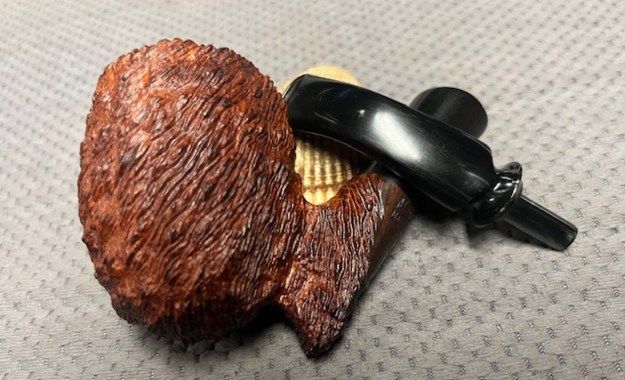
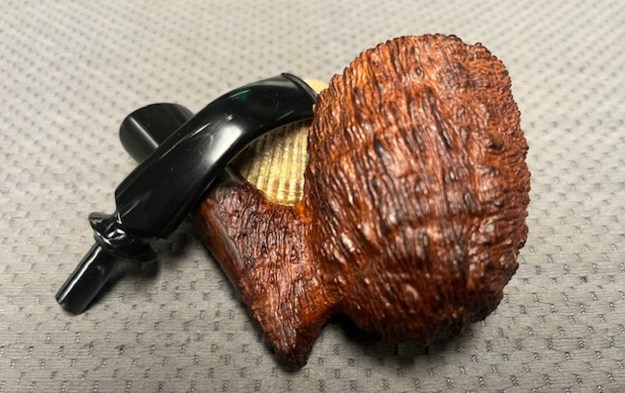
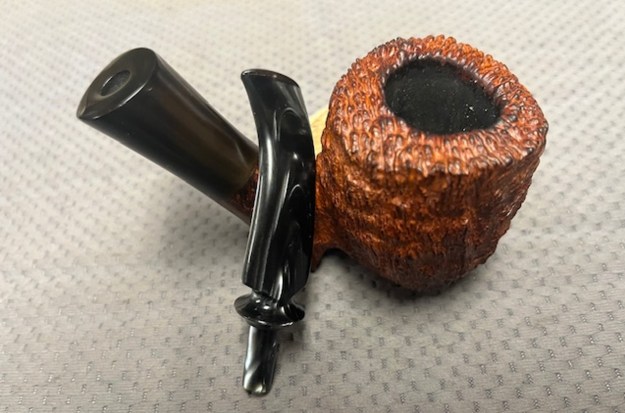
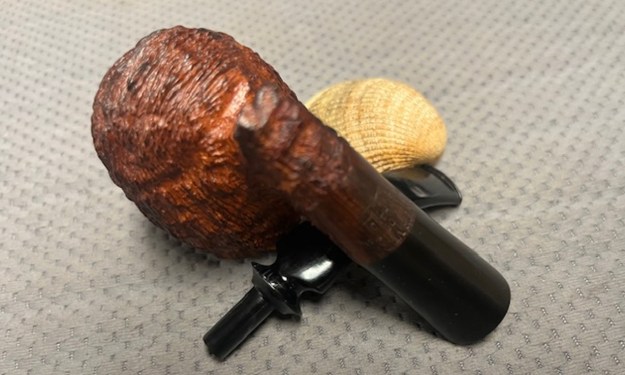
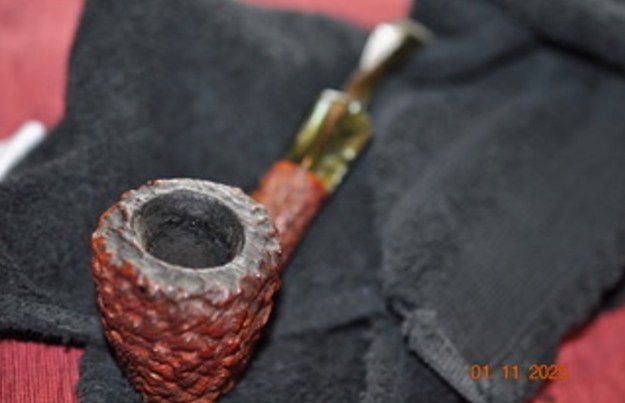
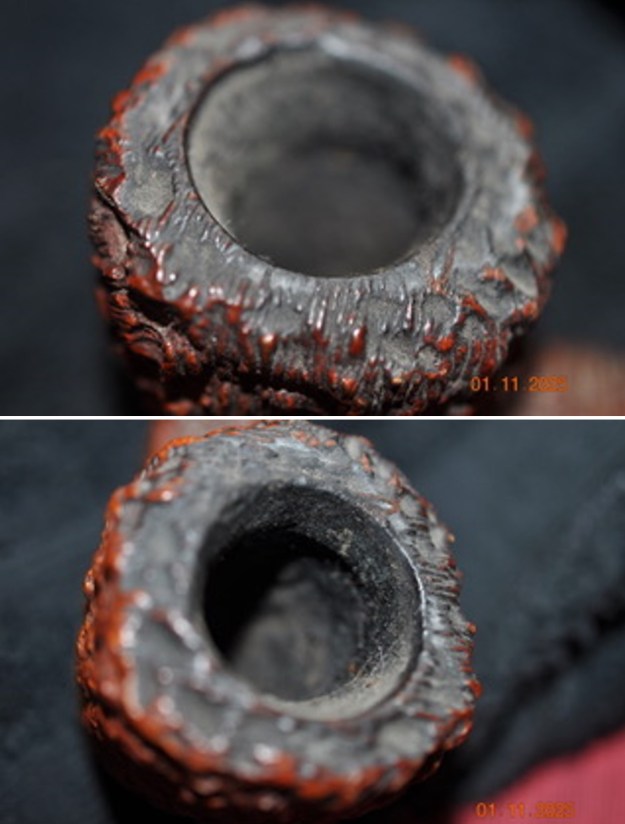
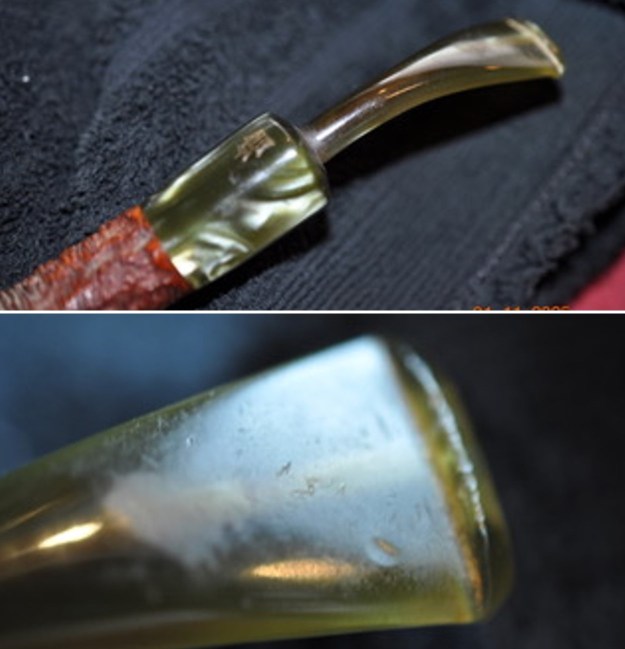
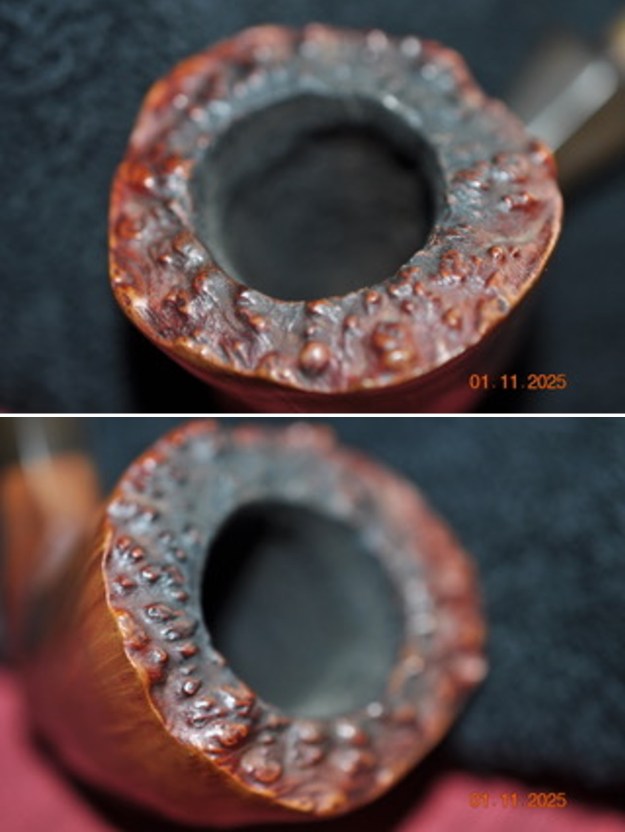
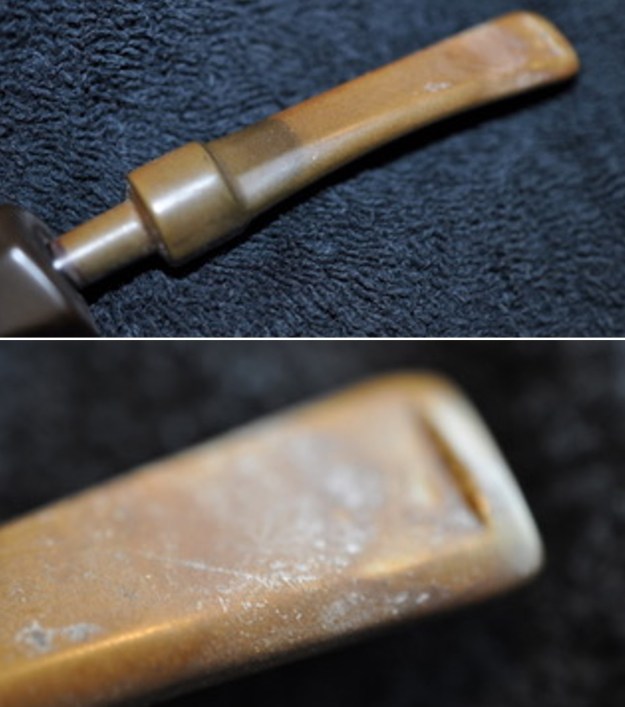
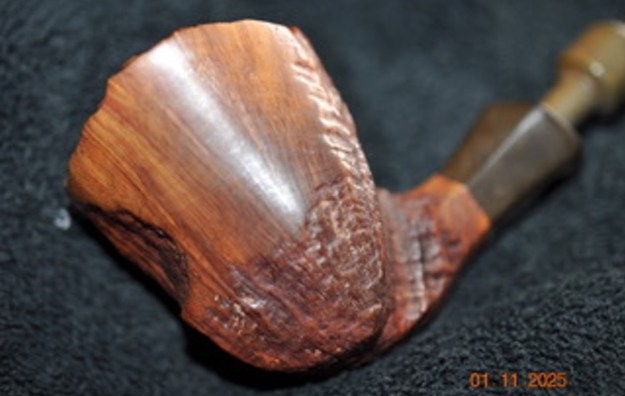
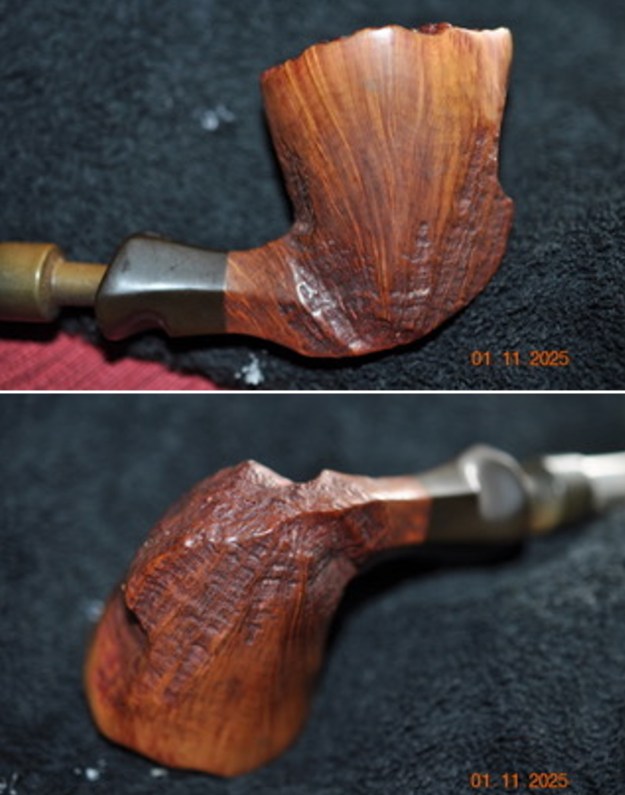
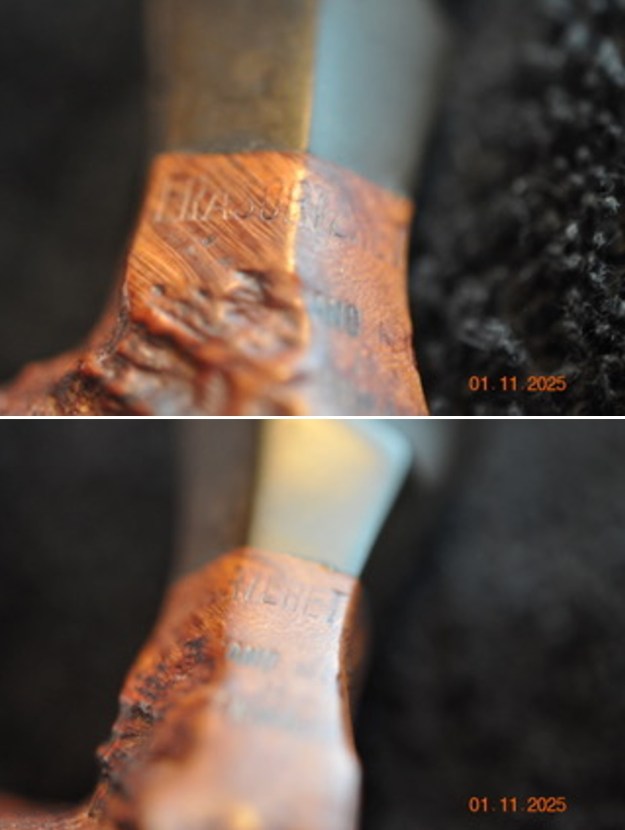
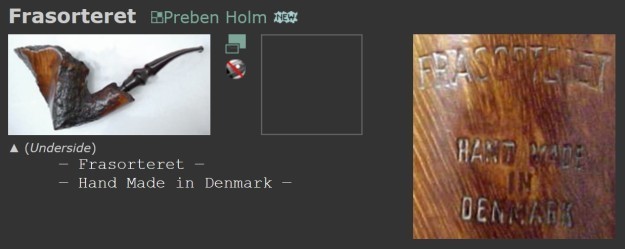
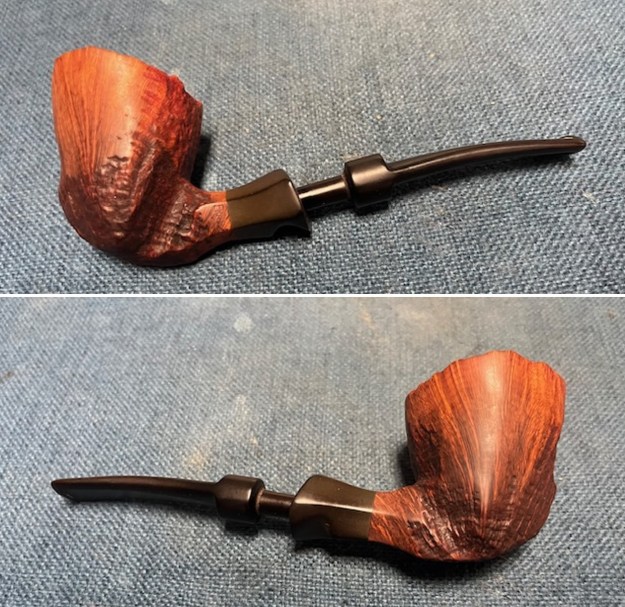
This interesting Freehand with both smooth and sandblast finishes came to us from an estate we purchase from Santa Cruz, California USA on 05/28/2024. It is a unique looking pipe that took some work to figure out the stamping. With some digging and comparing we knew that the stamping on the underside of the shank just ahead of the shank read Frasorteret [over] Hand Made [over] In [over] Denmark. You might well ask why we had to figure it out. That is simple in the half of the name line was hidden by the sandblast. The finish is dirty with dust and oils in the sand blast portions on the bowl sides. The smooth portions are also dirty with oils and dirty ground into the finish. The plateau rim top has some darkening toward the back of the bowl as well as thick lava filling it the grooves in the finish. The bowl has a heavy cake. The vulcanite shank extension is oxidized and also dirty. The stem is actually a poor replacement that is a saddle stem for a straight shank. The pipe would have originally had a fancy freehand style military style stick stem that sat in the extension. It will need to be replaced. Jeff took some photos of the pipe before he started his work on it. He took photos of the rim top to show the cake in the bowl and the thick lava coat and debris in the plateau finish on the rim top. You can see that it basically fills in the grooves of the finish. The shank extension is also oxidized and dirty. He took photos of the stem to show the oxidation and calcification on it but at some level it does not matter as it will be replaced. Jeff took photos of the sides and heel of the bowl to give a sense of the finish on the bowl sides. It is really a beautiful pipe with great grain in the smooth portions. He captured the stamping as best as possible on the underside of the shank next to the vulcanite shank extension. It reads as noted above.It seemed to me that Frasorteret pipes came from the creative carving of Preben Holm so I wanted to confirm that memory. When you get a certain age memory can fool you! I turned first to Pipephil’s site (http://www.pipephil.eu/logos/en/logo-f4.html). It tied the line to Preben Holm but there was not too much more information at this point.I turned to Pipedia (https://pipedia.org/wiki/Frasorteret) to gather further information. There the information was scant but none the less made the connection to Preben Holm very clear. Here is the information.

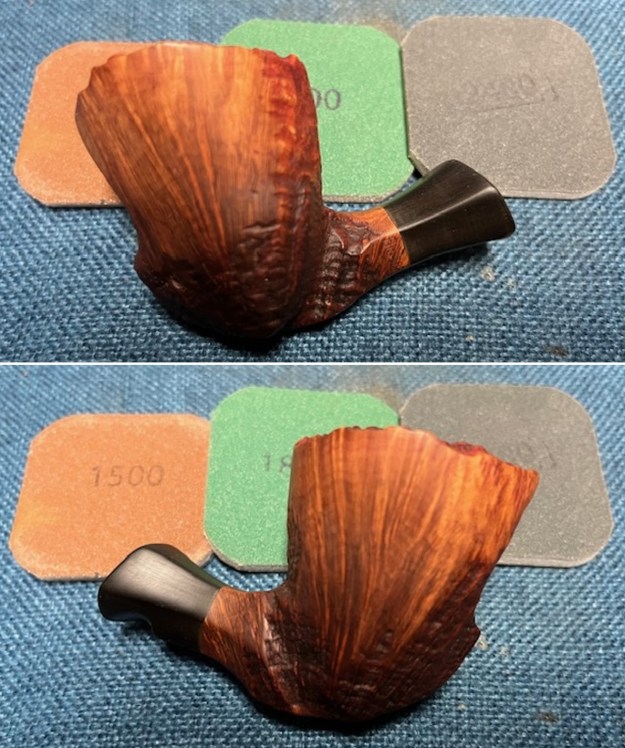
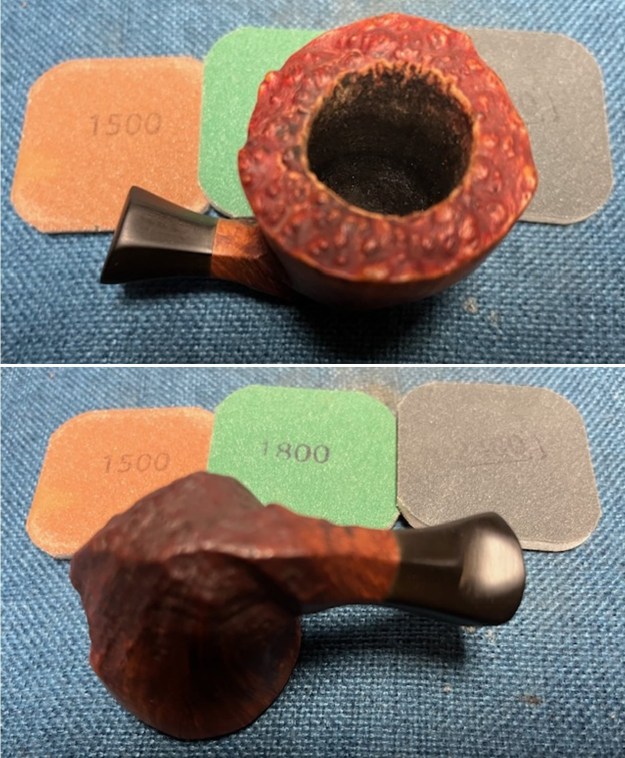
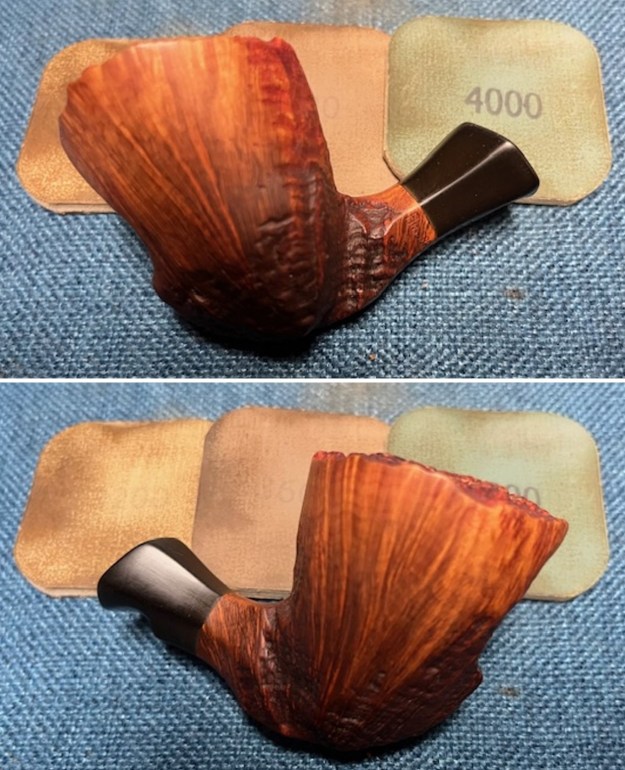
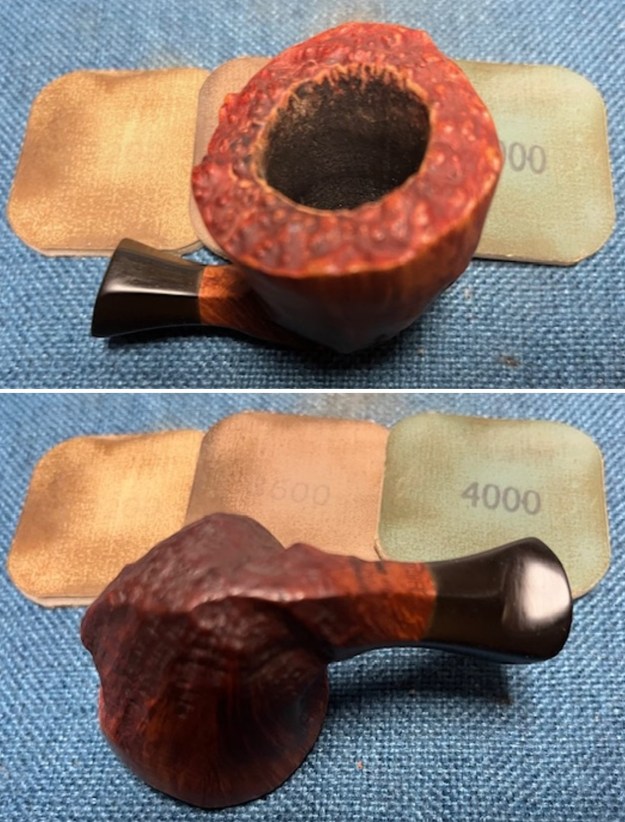
The Frasorteret line of pipes were made by Preben Holm and were nearly identical to his normal line of pipes but for fills and pits and the like. The pipes were stamped Frasorteret Made in Denmark.

Now I had the background I needed. I was ready to start working on this pipe. As usual, Jeff had thoroughly cleaned up the pipe. I probably don’t say enough about how much I appreciate him doing the hard clean up work before I even get the pipes. He does an amazing job. He had reamed the pipe with a PipNet pipe reamer back to bare briar and removed the remnants of the cake with a Savinelli Fitsall Pipe Knife. He used a small blade to pick out the thick lava on the rim top. He scrubbed the bowl with undiluted Murphy’s Oil Soap and a tooth brush. He rinsed it under running warm water to remove the soap and grime. He cleaned out the inside of the shank and the airway in the stem with alcohol, cotton swabs, pipe cleaners and shank brushes. He soaked the stem in Briarville’s Pipe Stem Deoxidizer and rinsed it off with warm water. I took photos of the pipe and the stem that came with it before I started my part of the restoration work. Preben’s Holm’s magic is very visible in the shaping of the pipe. I took photos of the bowl and rim top to show the clean condition. The bowl walls look very good. The replacement stem looks very clean and will be a good addition to my can of stem options.I tried to capture the stamping on the shank underside. It is a bit blurry but it is still very readable and clear as noted above. I took a photo of the pipe with the replacement stem removed. It really makes it clear to me that it is a replacement. The pipe was ready for me to work on but I decided first to go through my stems. I went through both vulcanite and acrylic stems which may sound easy but I have several hundred stems to sort through. I was looking for something that flowed with the delicate shape of the bowl and shank and was simply weightless looking. I found what I was looking for and took a photo of the stem I found. I put the new stem in the shank and took a photo, I like the looks of the new choice.What to do next? I figured I might as well continue working on the stem since I had already started. I sanded out the tooth chatter on the stem end and worked on the oxidation with a folded piece of 220 grit sandpaper.I fit the cleaned stem into the shank of the pipe and it was an odd fit. When I pulled it out this piece of scotch tape came out with the tenon. That is yet another testimony to the stem being a replacement. The tape would have been around the tenon to snug the fit in the shank. I cleaned out the shank with pipe cleaners and alcohol to remove the residual gum from the tape. Much better and the stem fit!I sanded the stem with 2×2 sanding pads – 320-3500 to start the polishing process and further remove the oxidation and marks. I wiped the stem down after each sanding pad with Obsidian Oil. It was beginning to look very good.I love watching the shine develop on the vulcanite as I polish it with micromesh sanding pads – dry sanding with 1500-12000 grit pads. I wiped it down after each pad with Obsidian Oil. I finished this part of the polishing by using Marks Hoover’s Before & After Pipe Stem Polish – both Fine and Extra Fine. I wiped it off with a soft cloth and gave the stem another coat of Obsidian Oil. I set the stem aside and turned my attention to the bowl. I sanded the shank extension with 320-3500 2×2 inch sanding pads. I wiped the vulcanite extension down with Obsidian Oil after each sanding pad. It began to look better.I polished the smooth portions of the briar and the vulcanite shank extension with micromesh sanding pads – dry sanding with 1500-12000 grit sanding pads. I wiped the bowl down with a damp cloth after each pad. I wiped the shank extension down with Obsidian Oil. I finished this part of the polishing by using Marks Hoover’s Before & After Pipe Stem Polish – both Fine and Extra Fine. I wiped it off with a soft cloth and gave the stem another coat of Obsidian Oil. Once again, by the end of the process it looked quite good. I rubbed the bowl and shank down with Before & After Restoration Balm. I worked it into the surface of the bowl sides and shank with my fingertips. I worked it into the plateau finish with a shoe brush. It works to clean, enliven and protect the briar. I let the balm sit for 15 minutes and buffed with a cotton cloth to raise the shine. The grain came alive. This newly restemmed Frasorteret Hand Made in Denmark Freehand is a great looking pipe with some interesting shaping around the sides of the bowl and vulcanite shank extension. You can easily see the handiwork of Preben Holm in the shaping of the pipe. The beautiful grain around the smooth portions and sandblast on the other portions of the bowl is quite stunning and works well with both the shape and the polished vulcanite shank extension and the fancy vulcanite saddle stem. I put the new stem back on the bowl and carefully buffed the pipe with Blue Diamond on the buffing wheel using a light touch on the briar. I gave the bowl and the stem multiple coats of carnauba wax on the wheel and followed by buffing the pipe with a clean buffing pad. I hand buffed the pipe with a microfiber cloth to deepen the shine. The finished Preben Holm Hand Made Frasortert Freehand fits nicely in the hand and feels great. Give the finished pipe a look in the photos below. The dimensions of the pipe are Length: 6 inches, Height: 2 ¼ inches, Outside diameter of the bowl: 1 ¾ inches, Chamber diameter: 1 inch. The weight of the pipe is 49 grams/1.69 ounces. I will be putting it on the rebornpipes store in the Danish Pipemakers Section shortly. If you wish to add this interesting pipe to your rack it is a great addition. Send me a message or an email. Thanks for reading this blog and my reflections on the pipe while I worked on it. I appreciate your support and time!