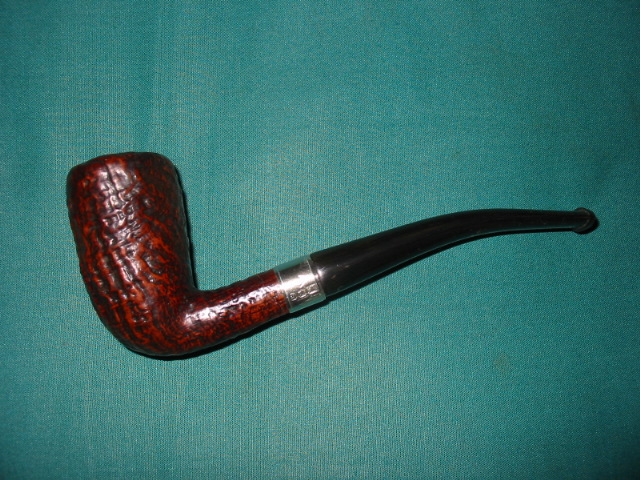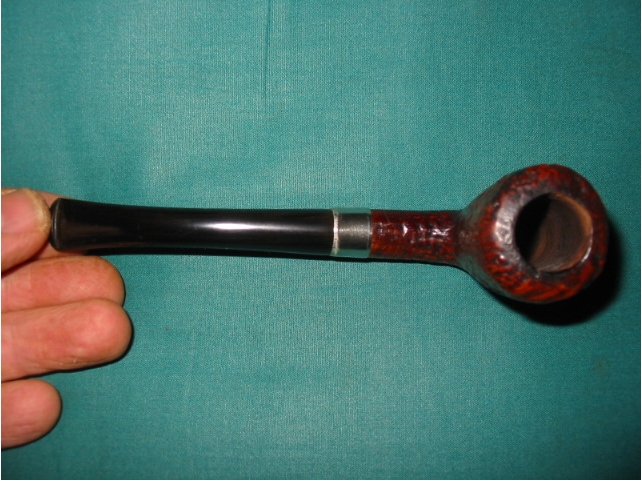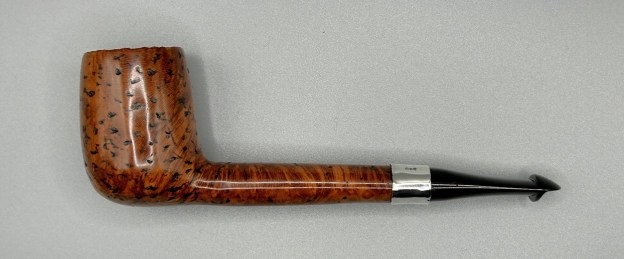
Tag Archives: Peterson

A Peterson Donegal 264 Canadian with an Unusual History


by Kenneth Lieblich

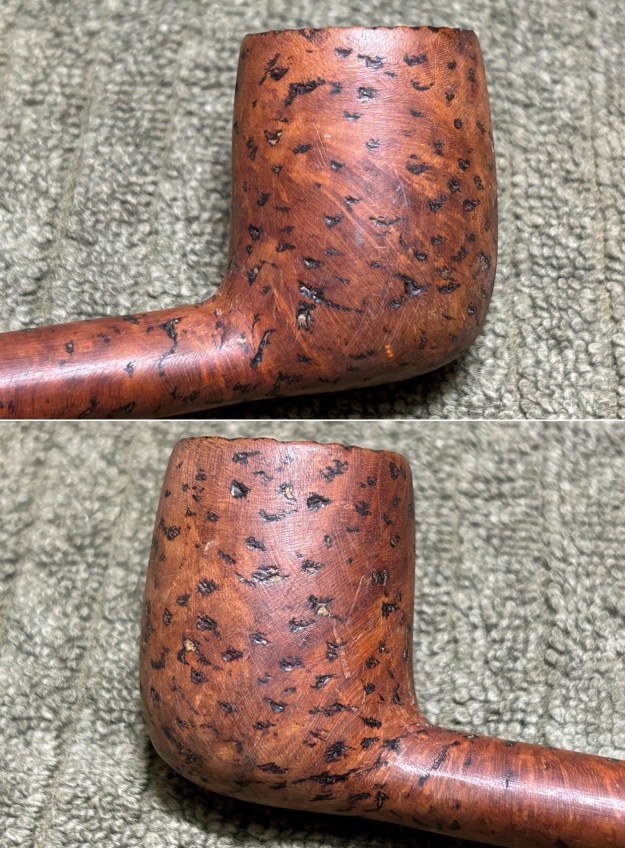
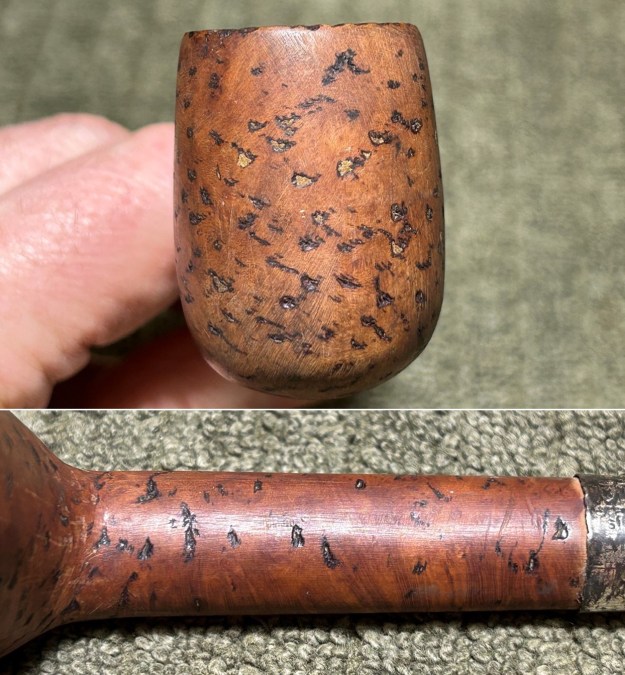
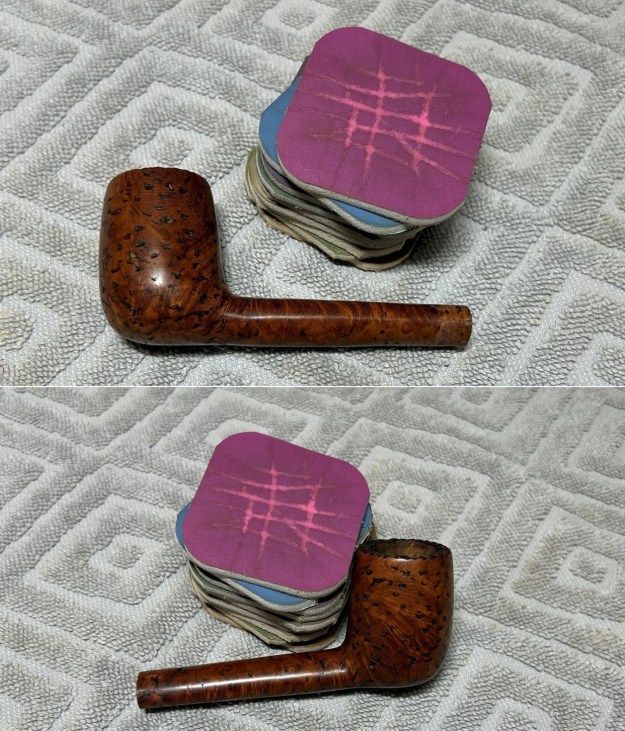
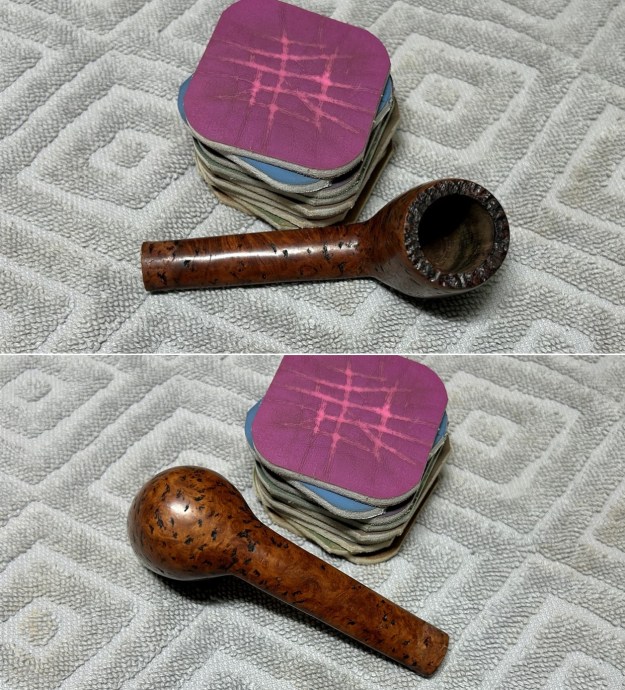
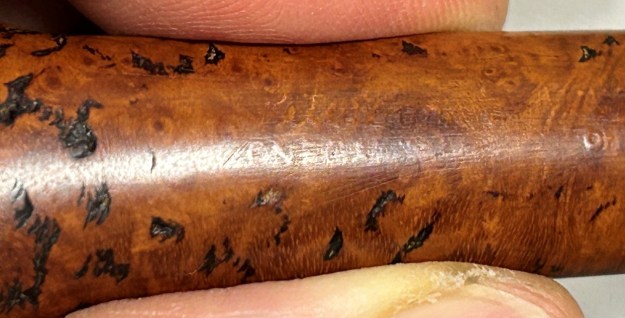
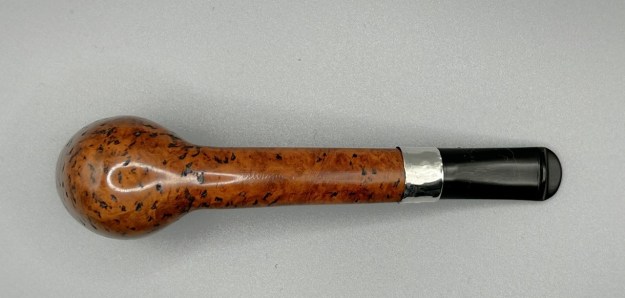
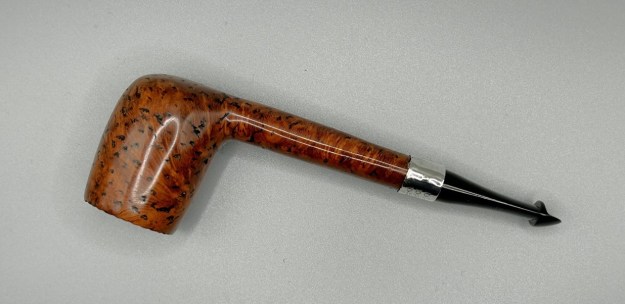
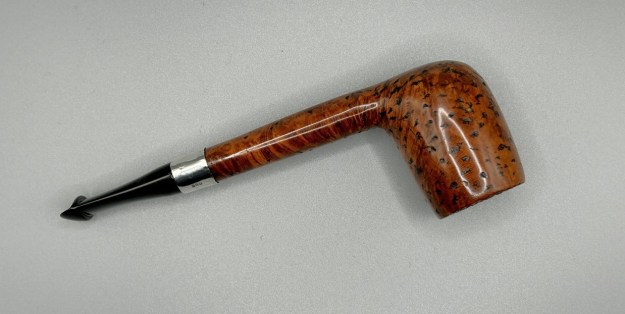
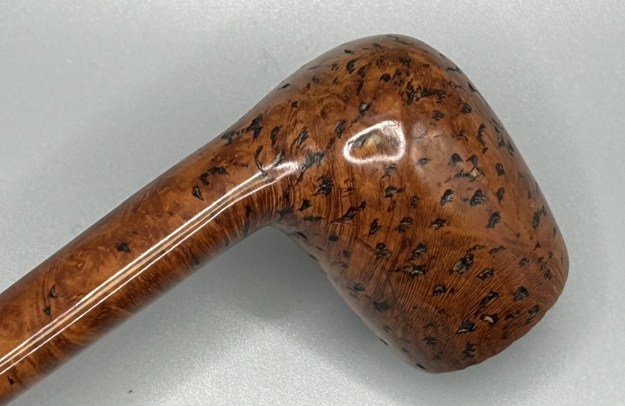
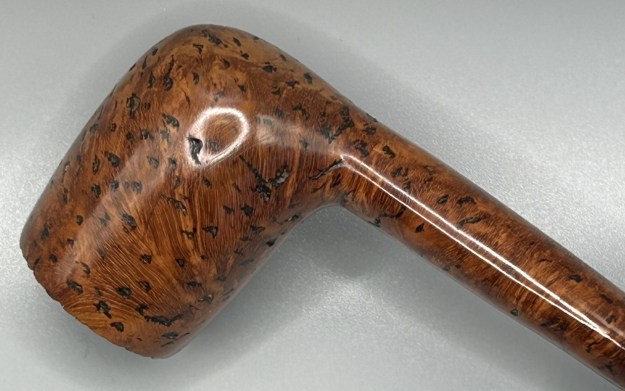
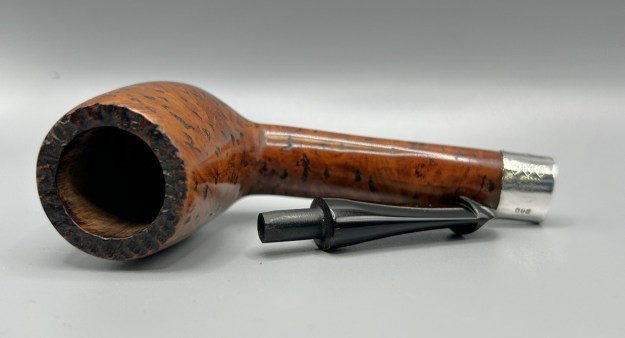
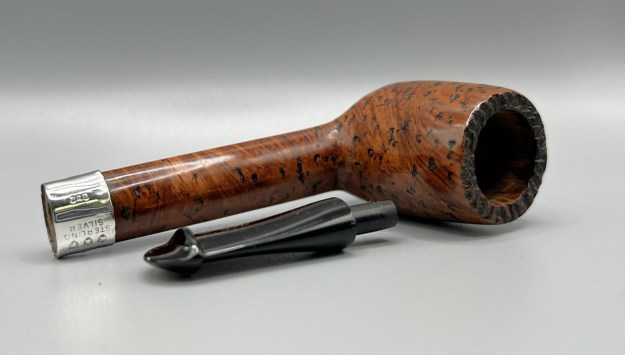
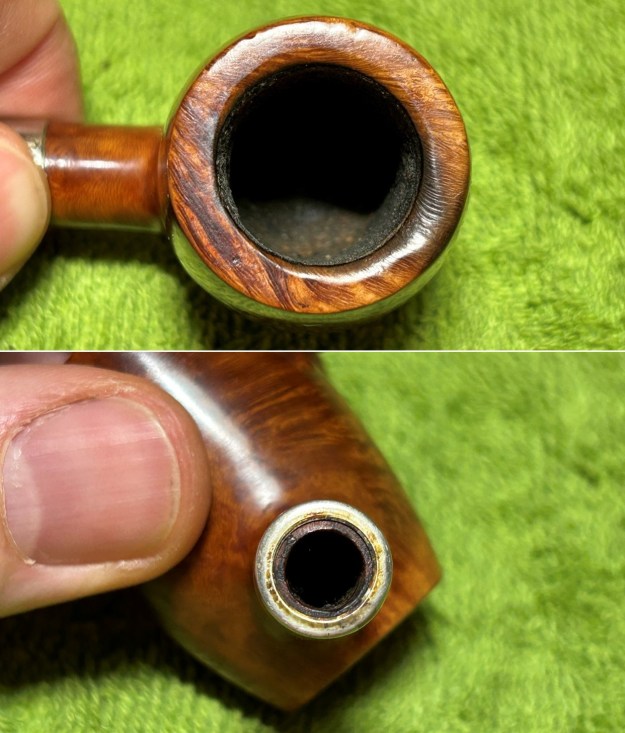
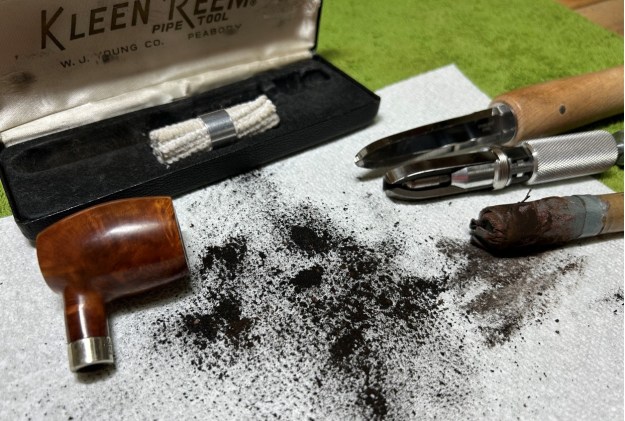
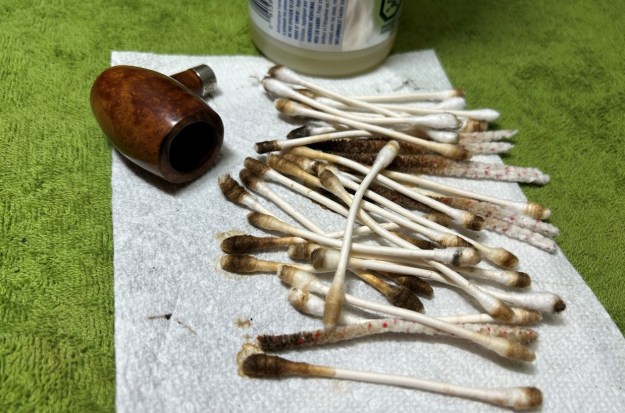
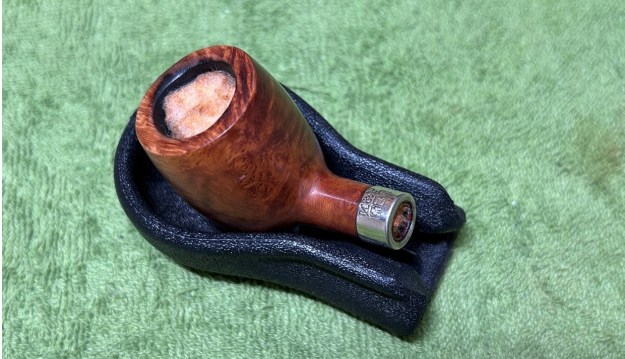
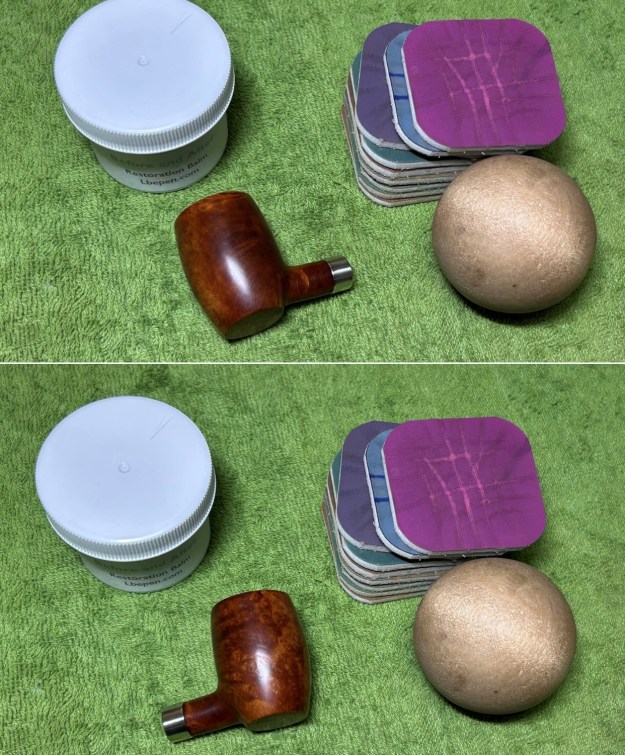
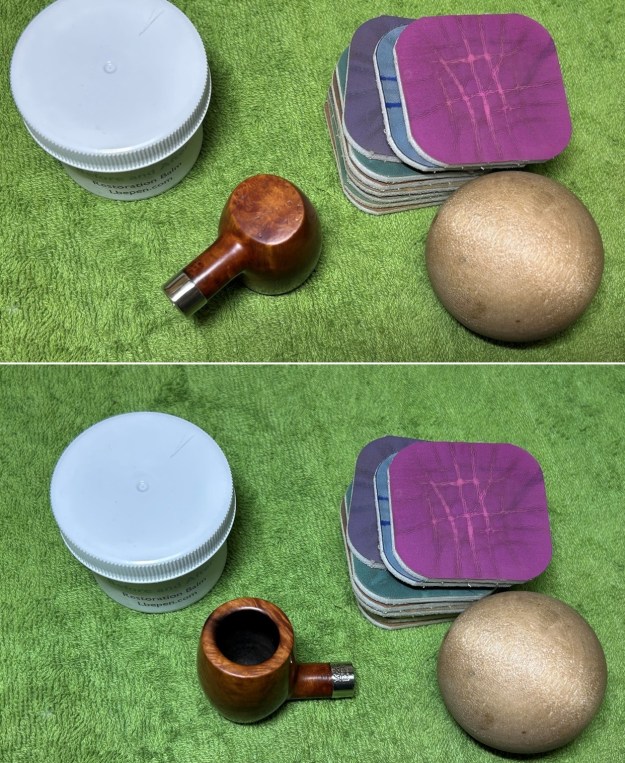
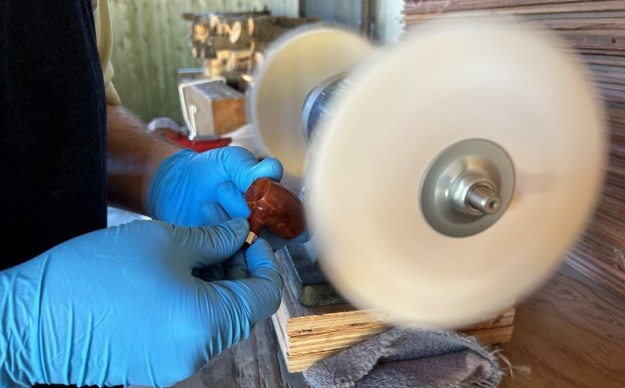
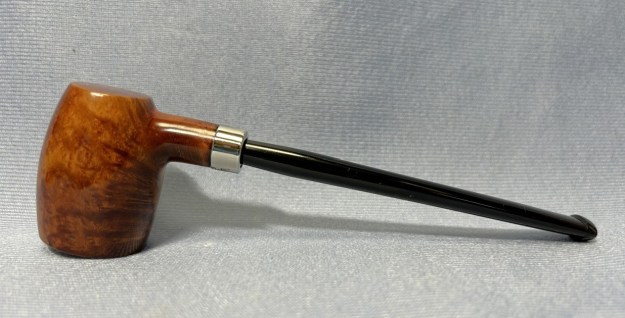
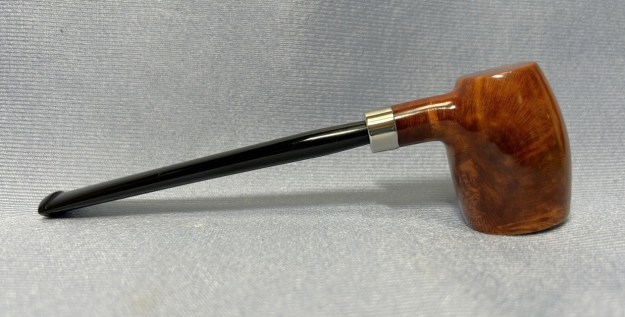
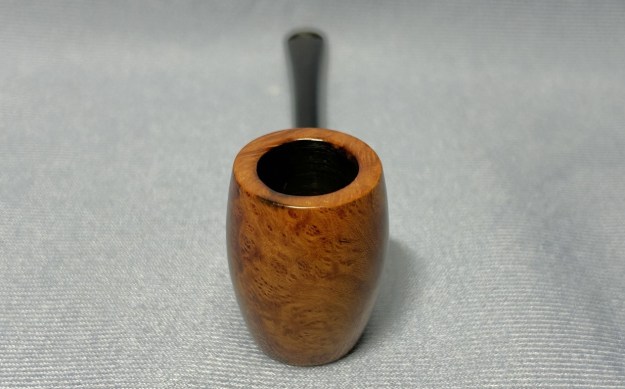
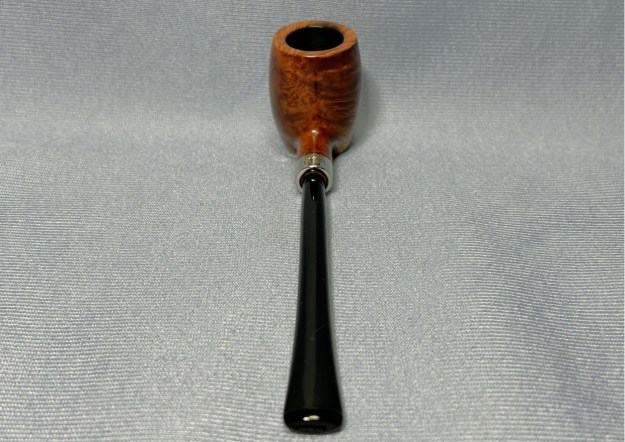
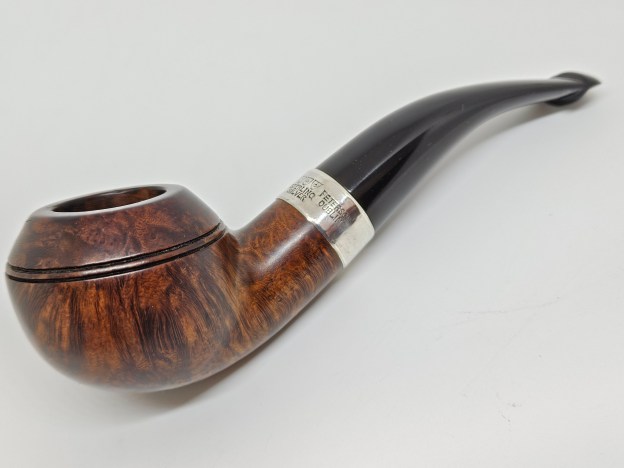
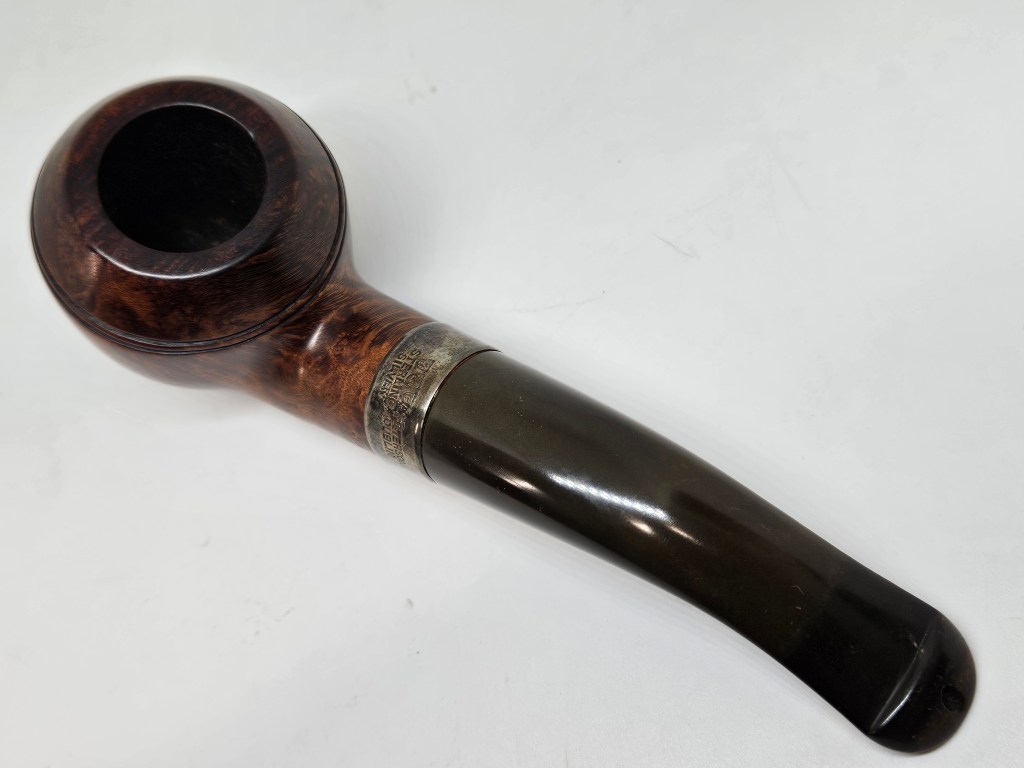
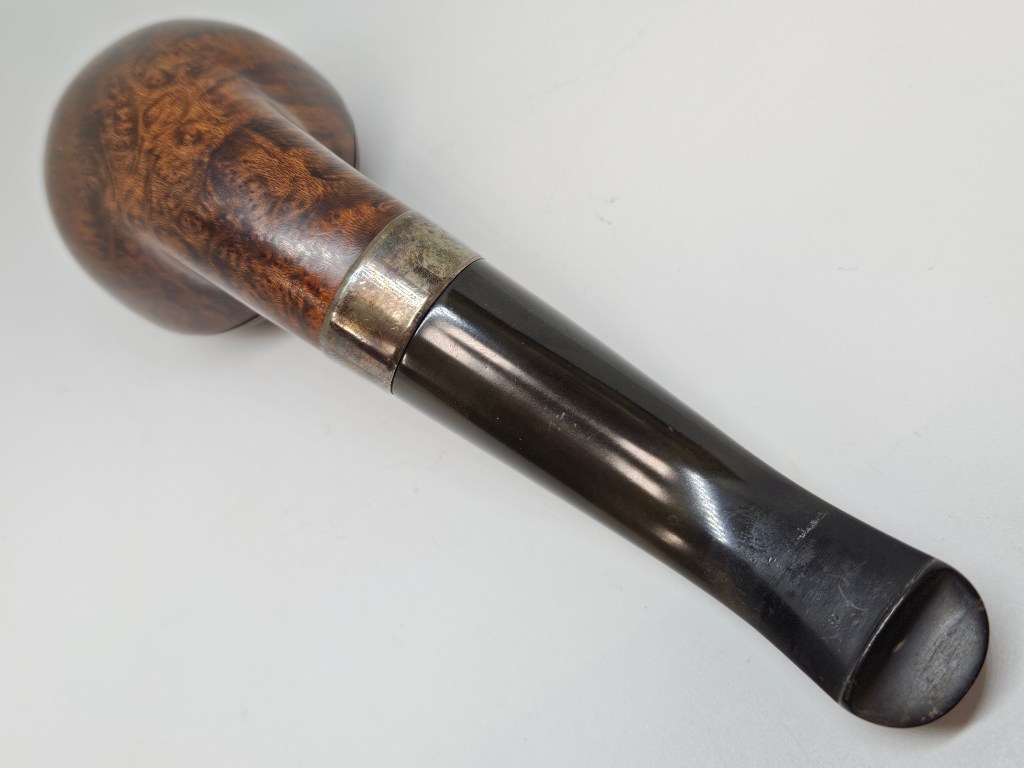
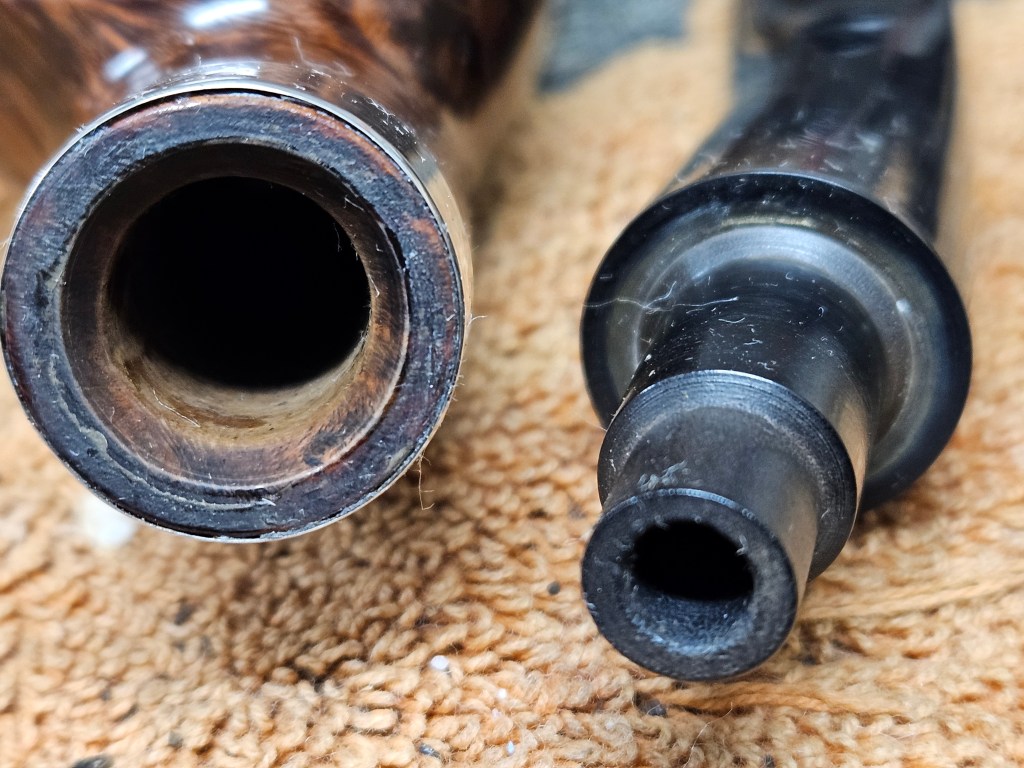
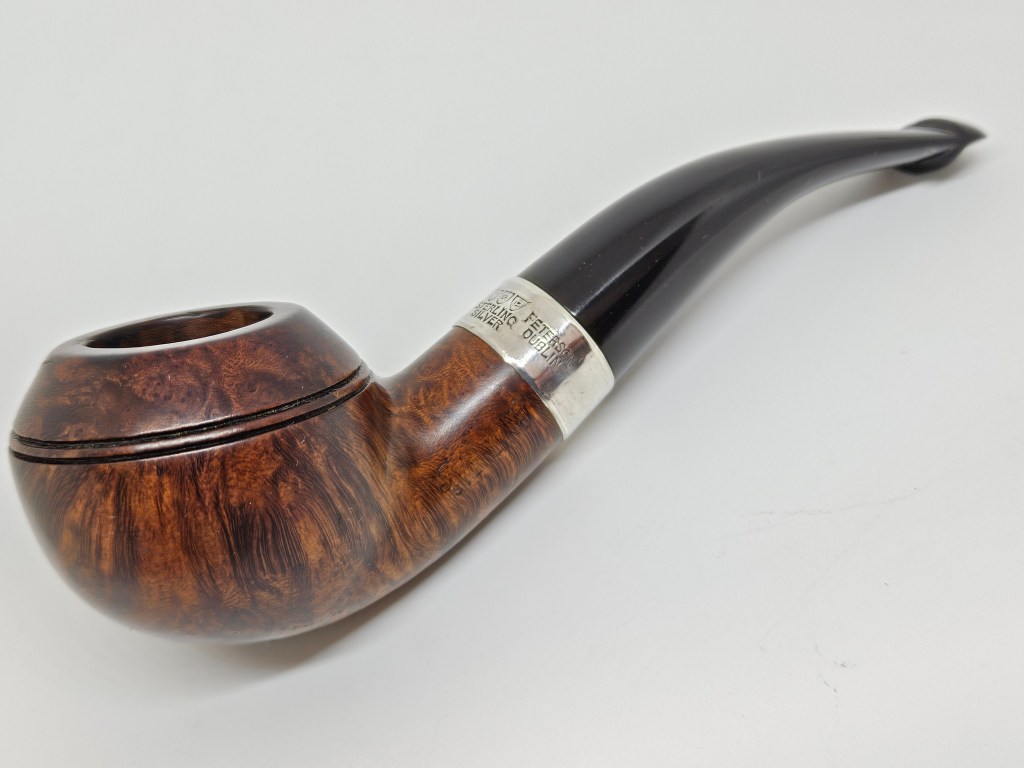
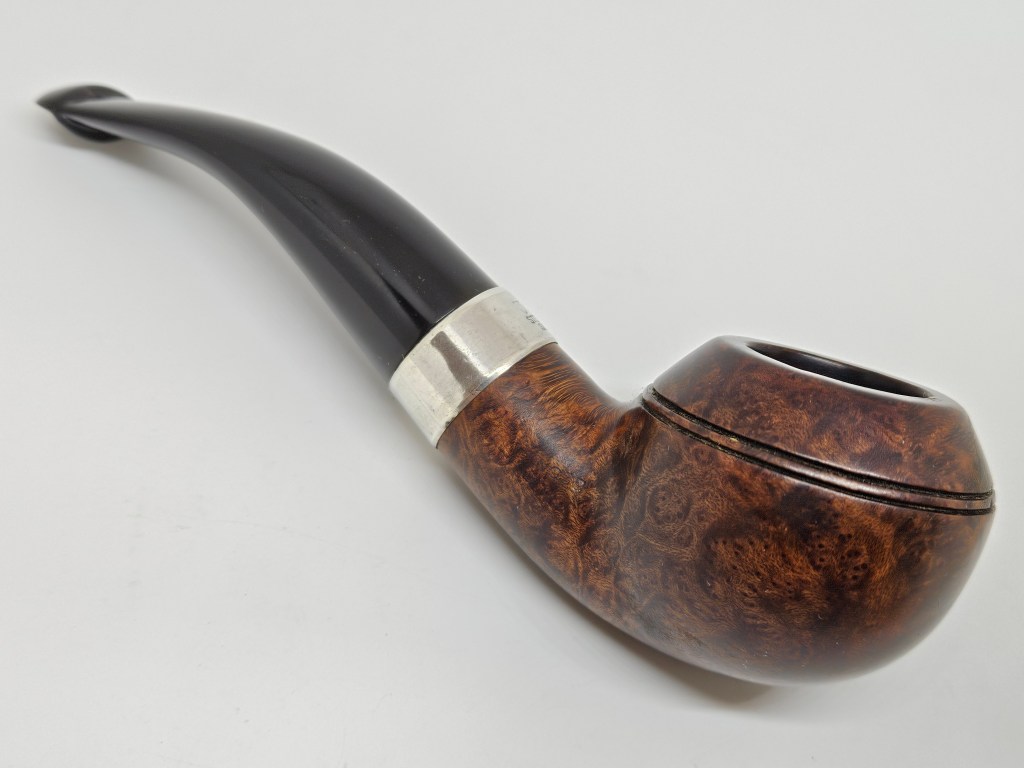
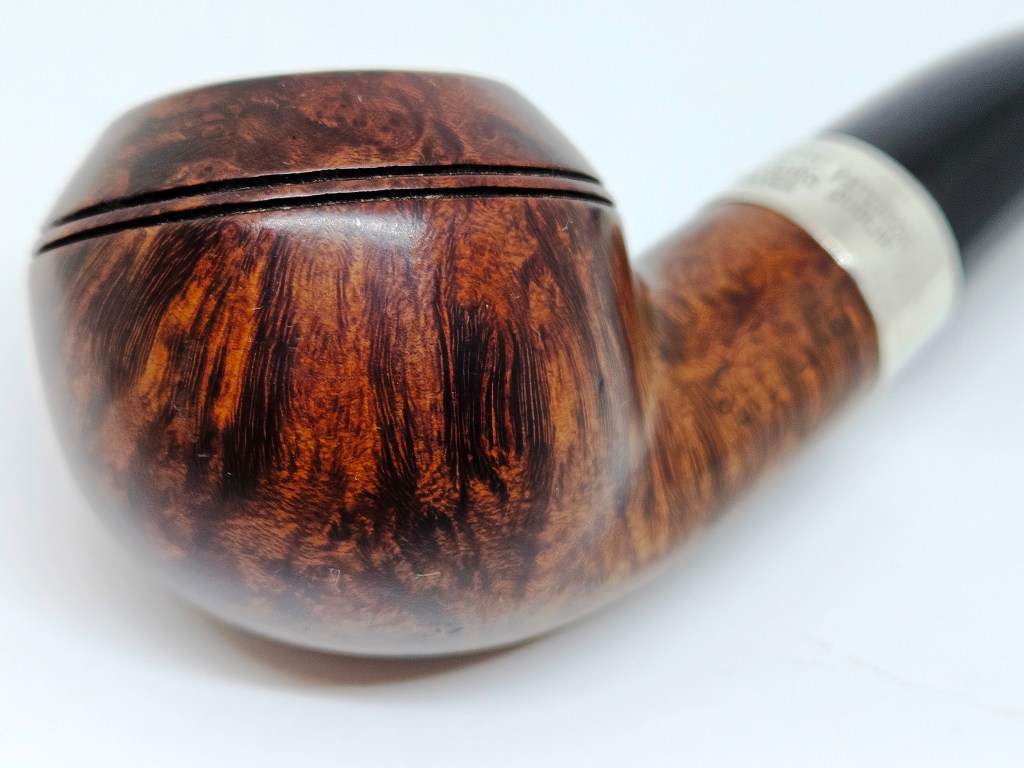
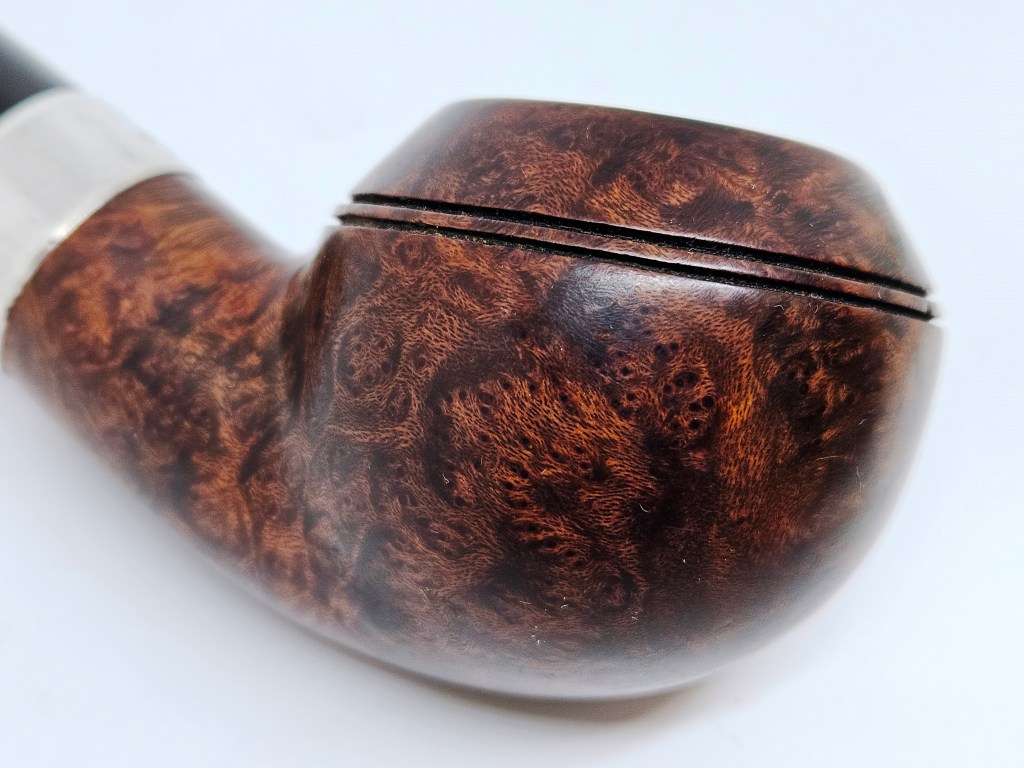
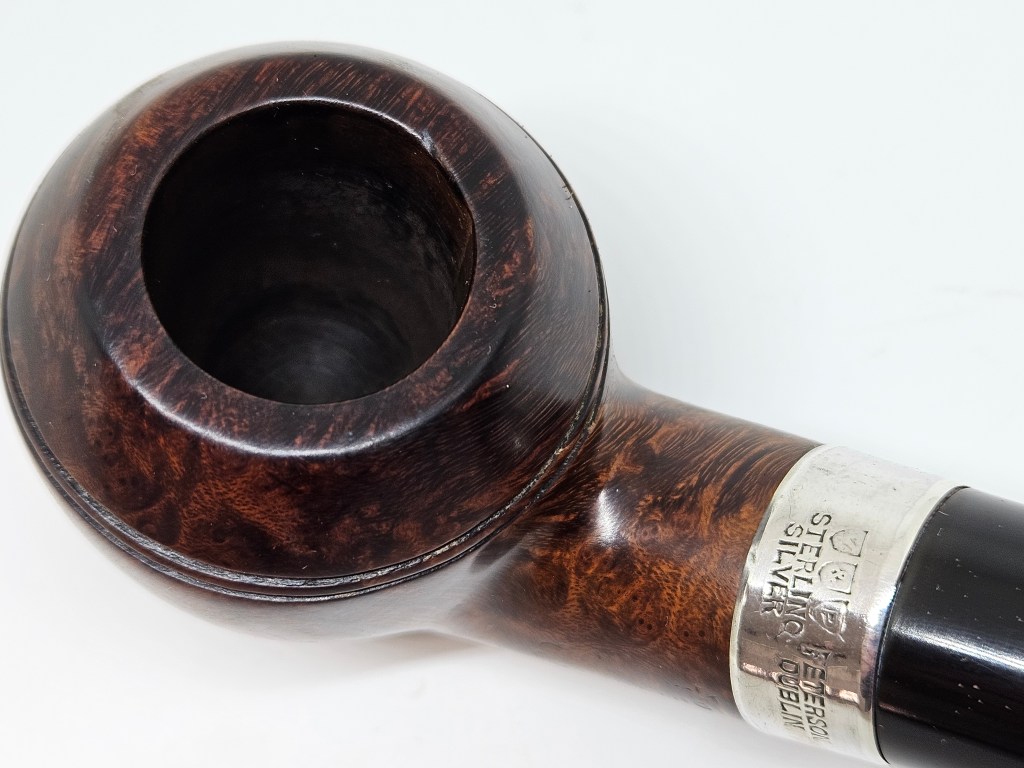
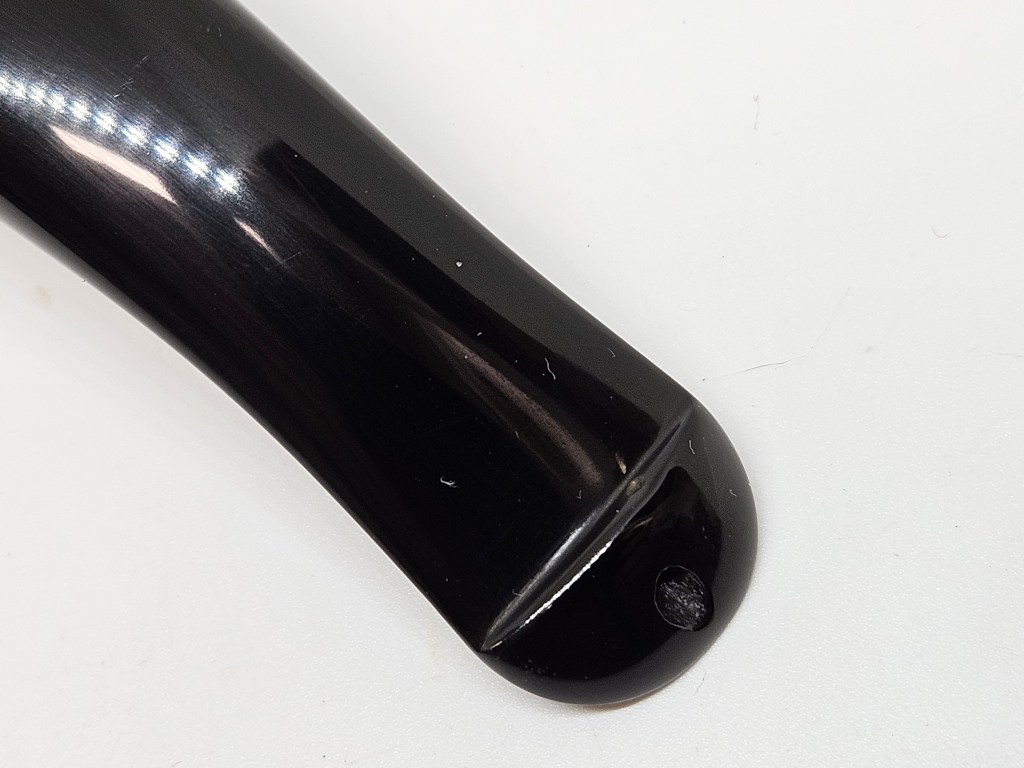
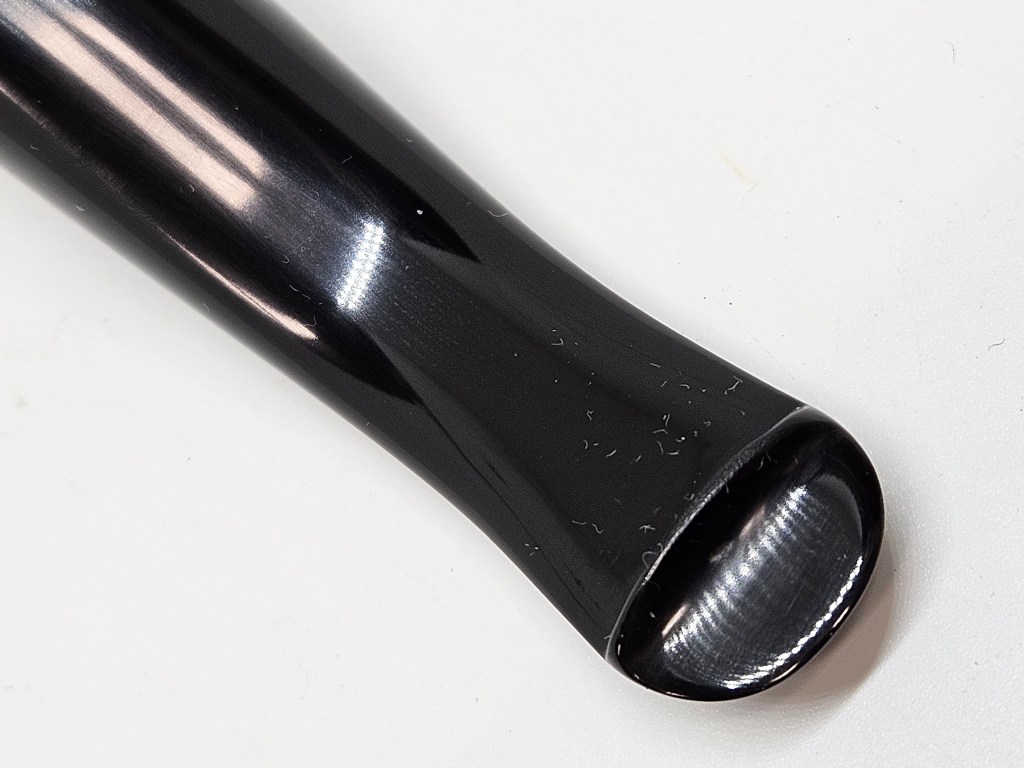
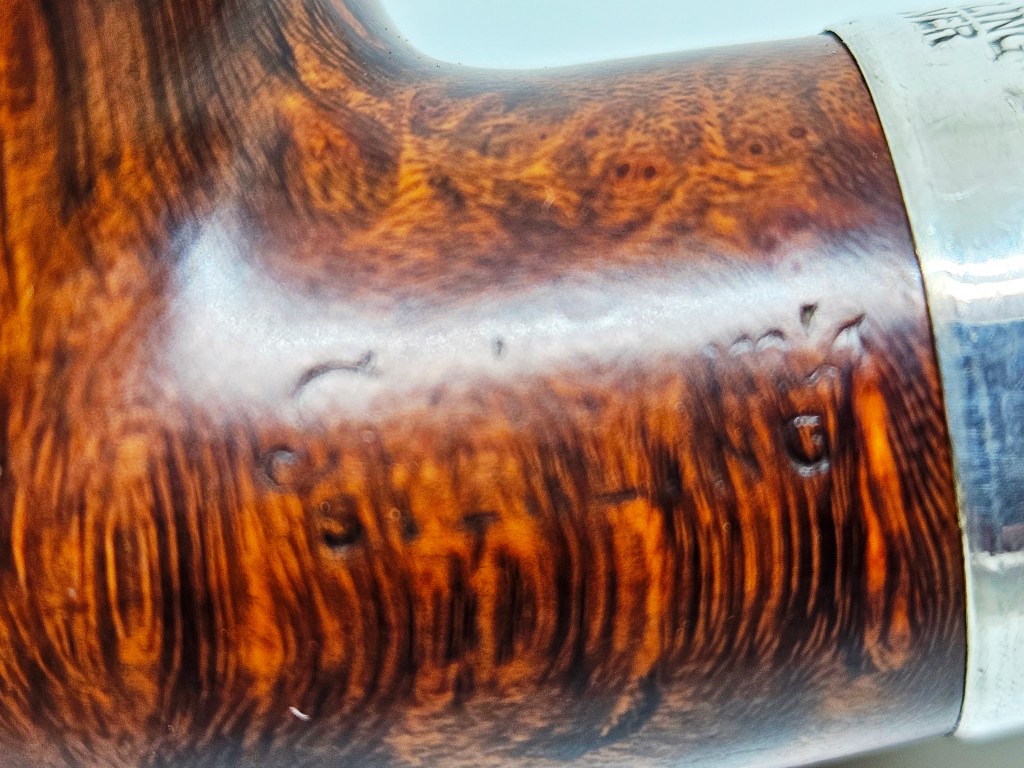
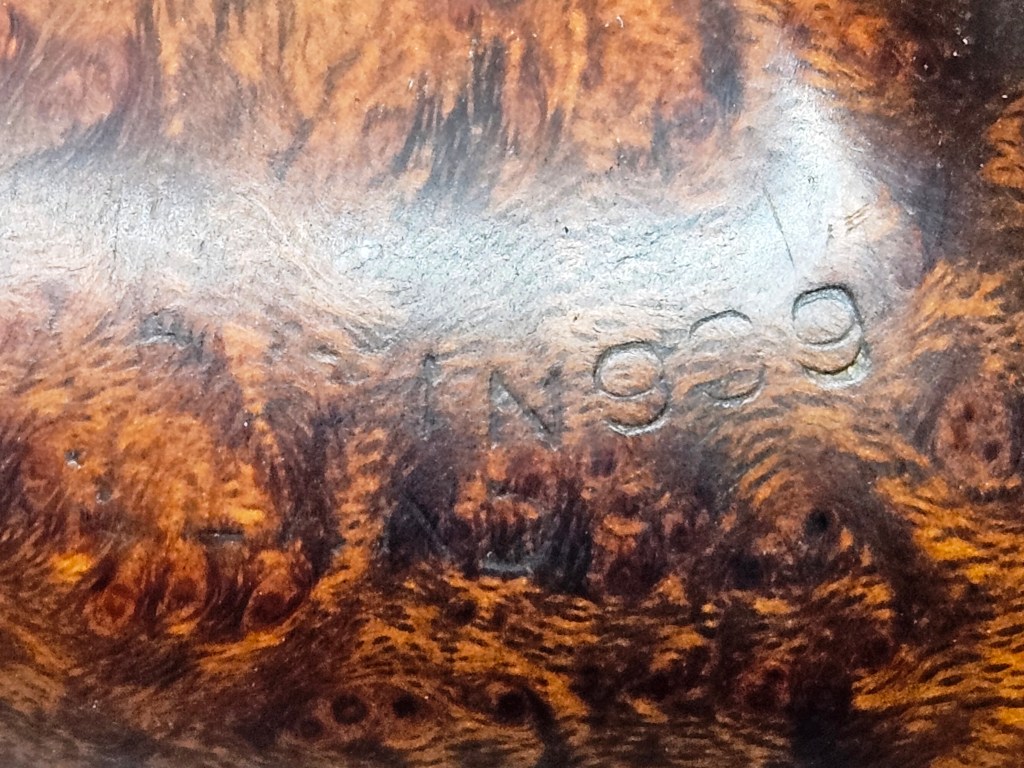
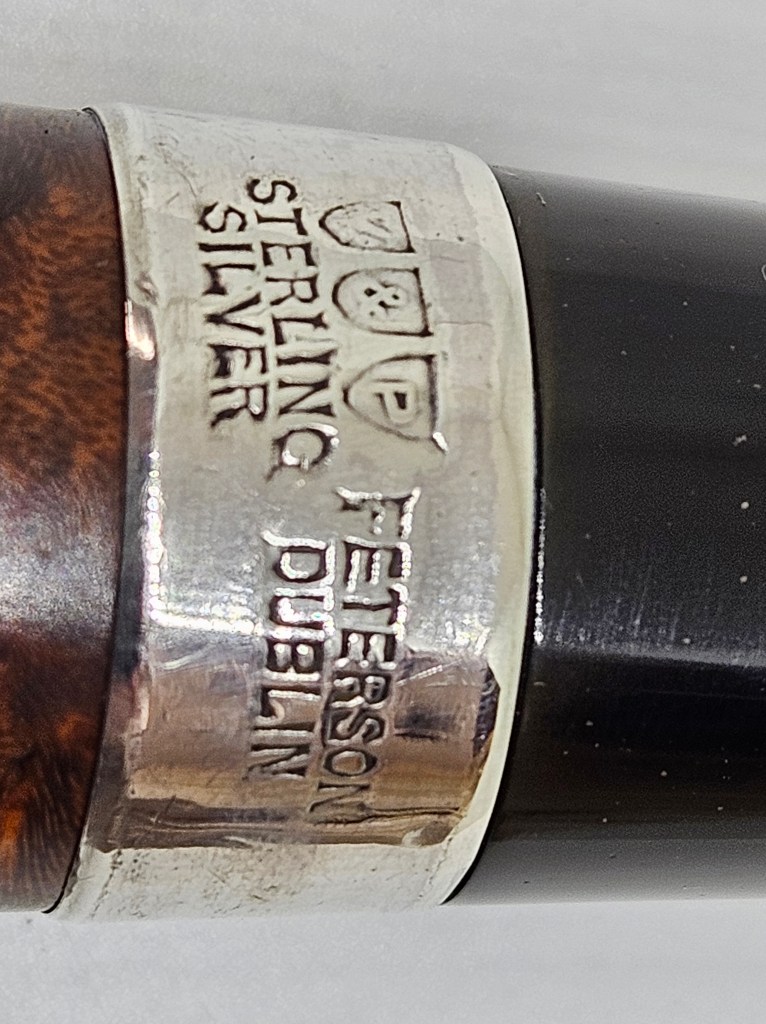
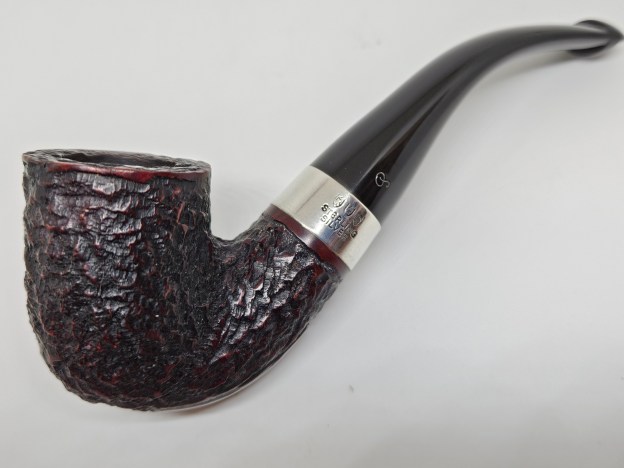
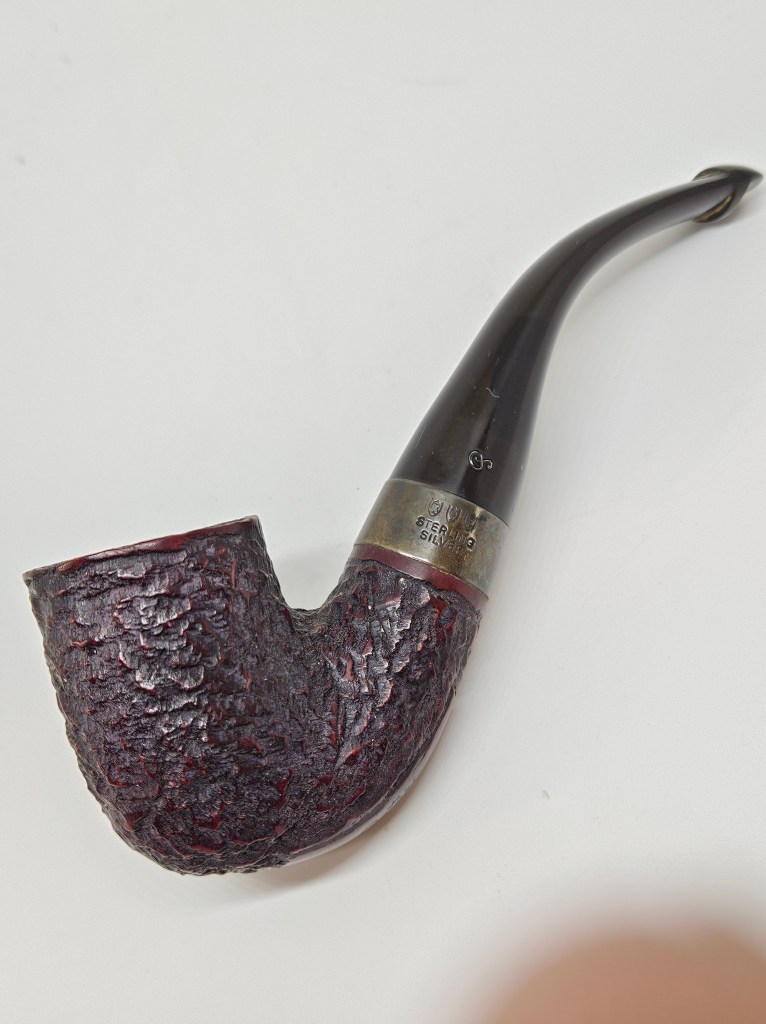
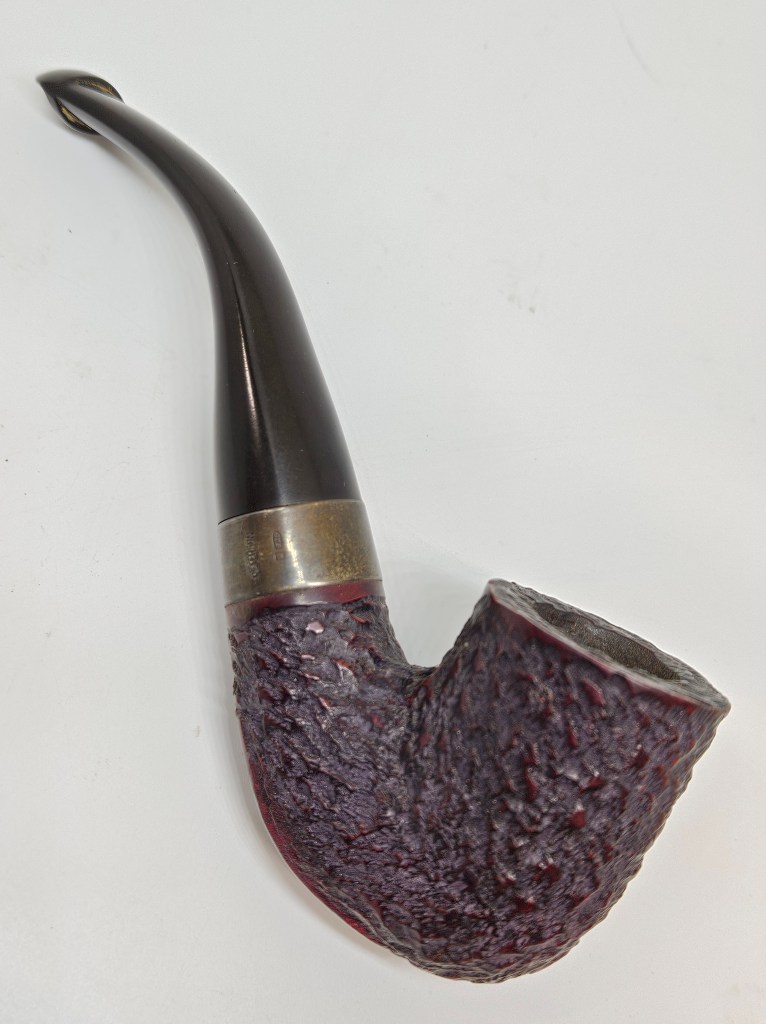
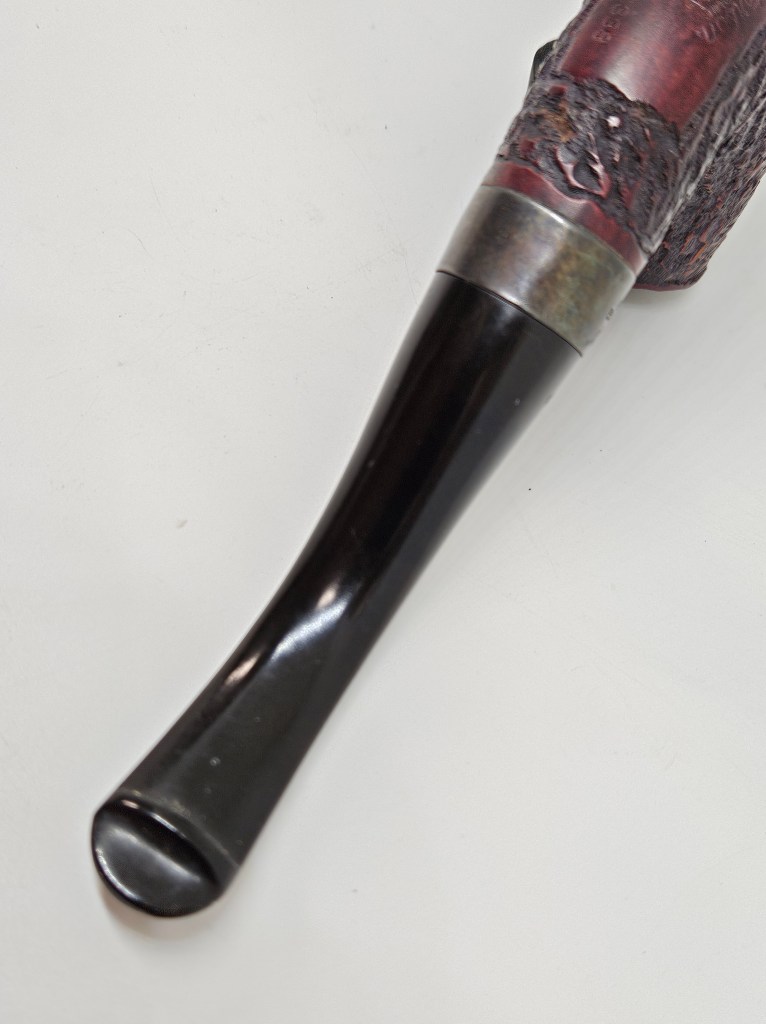
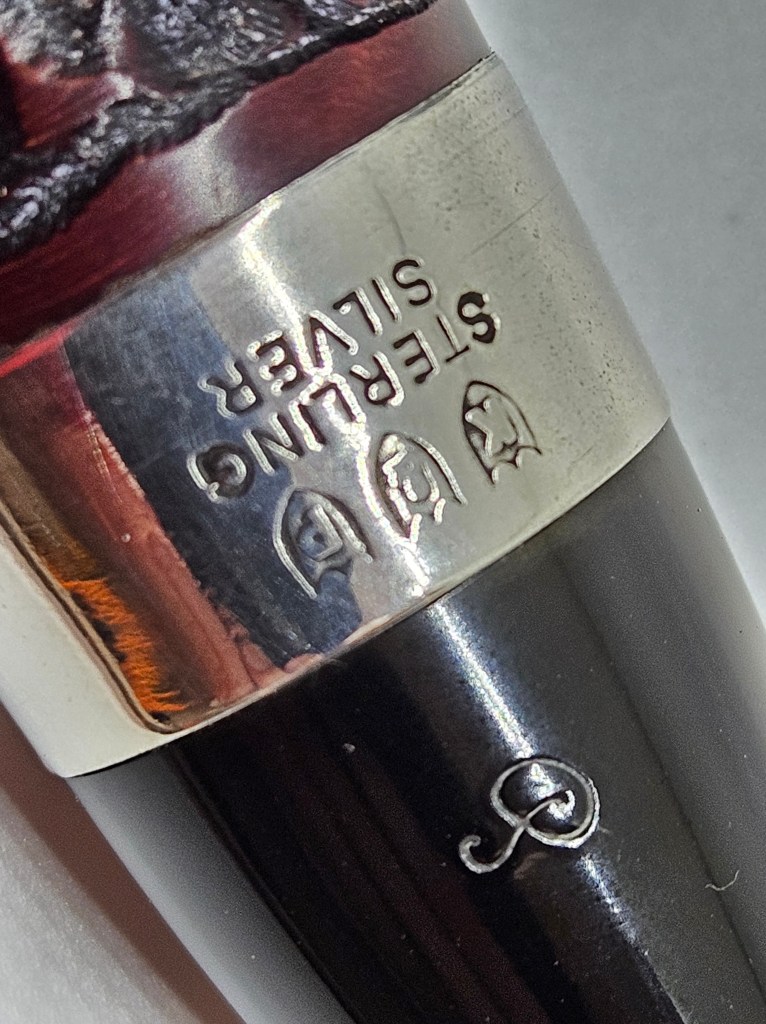
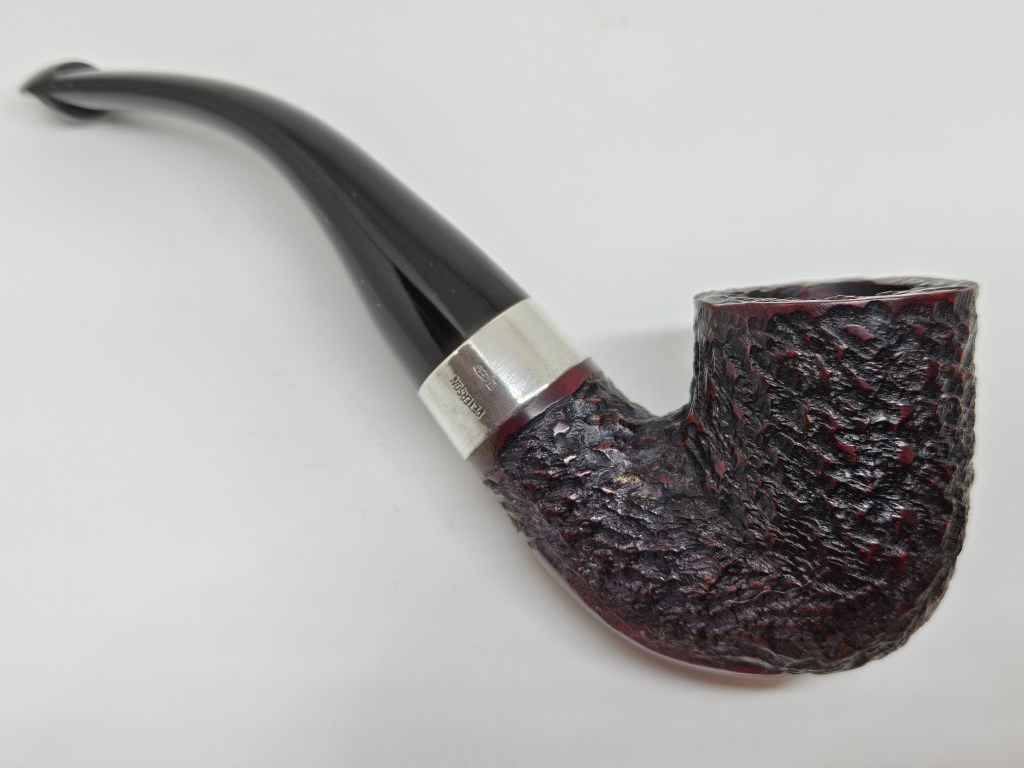
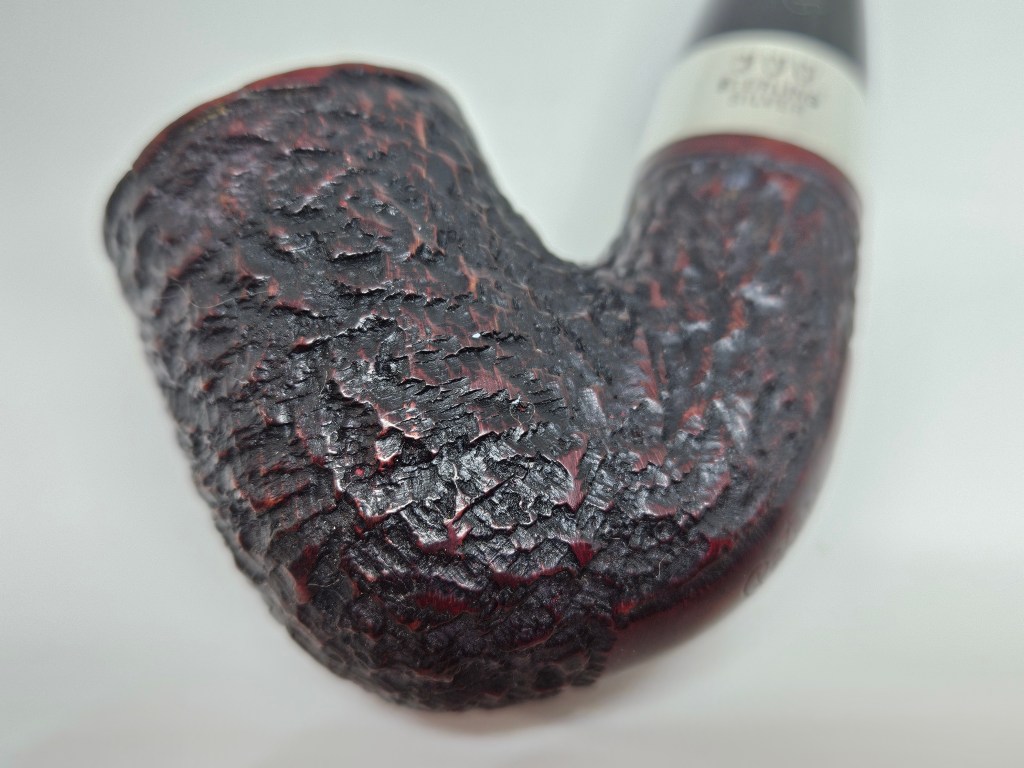
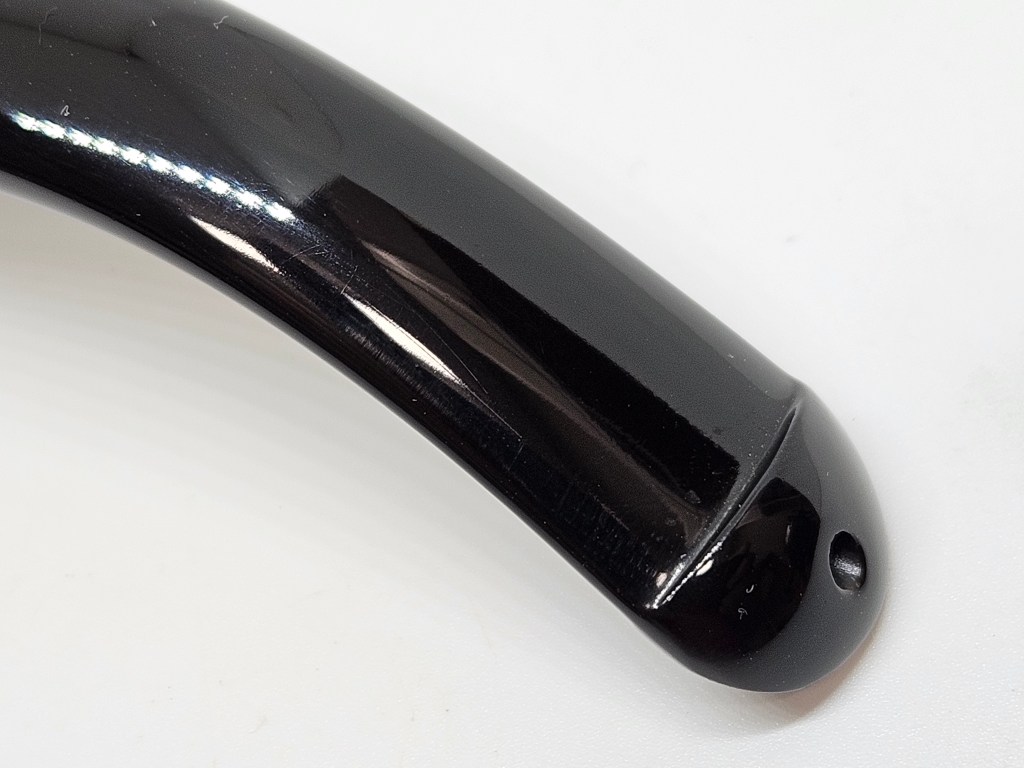
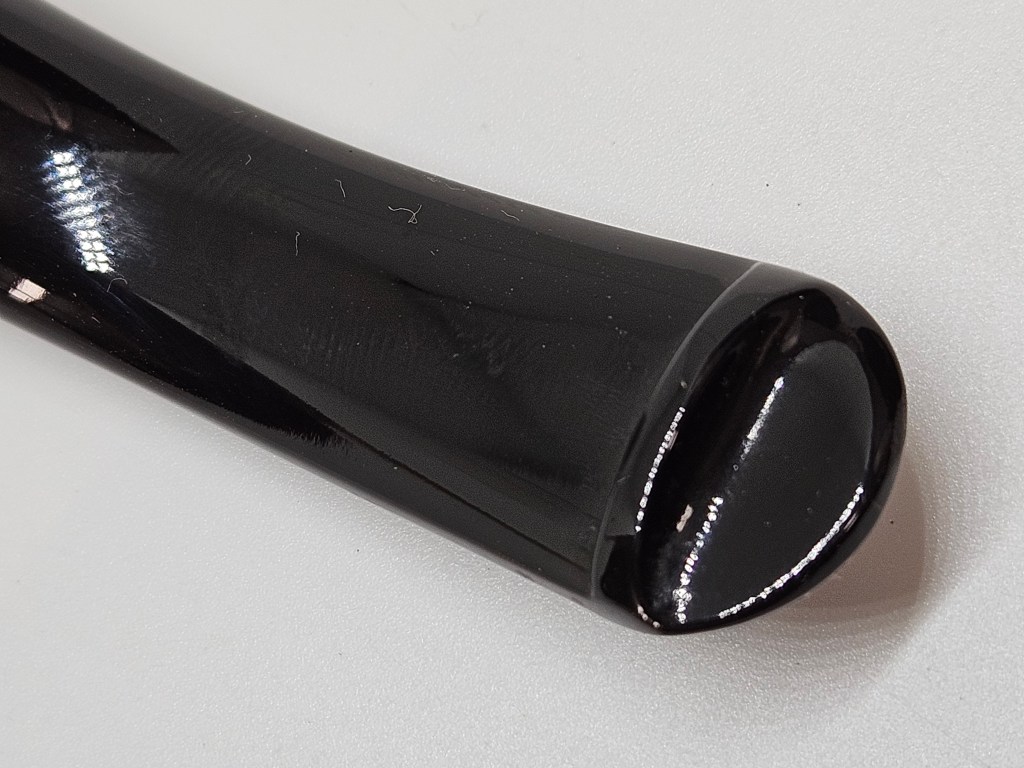
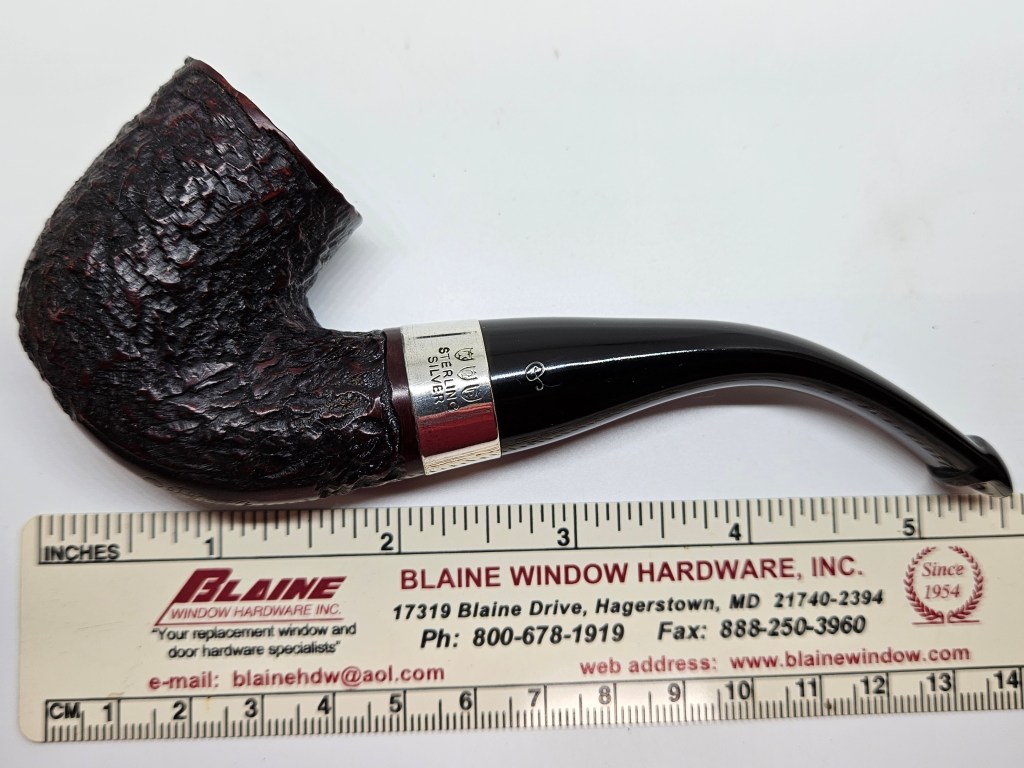
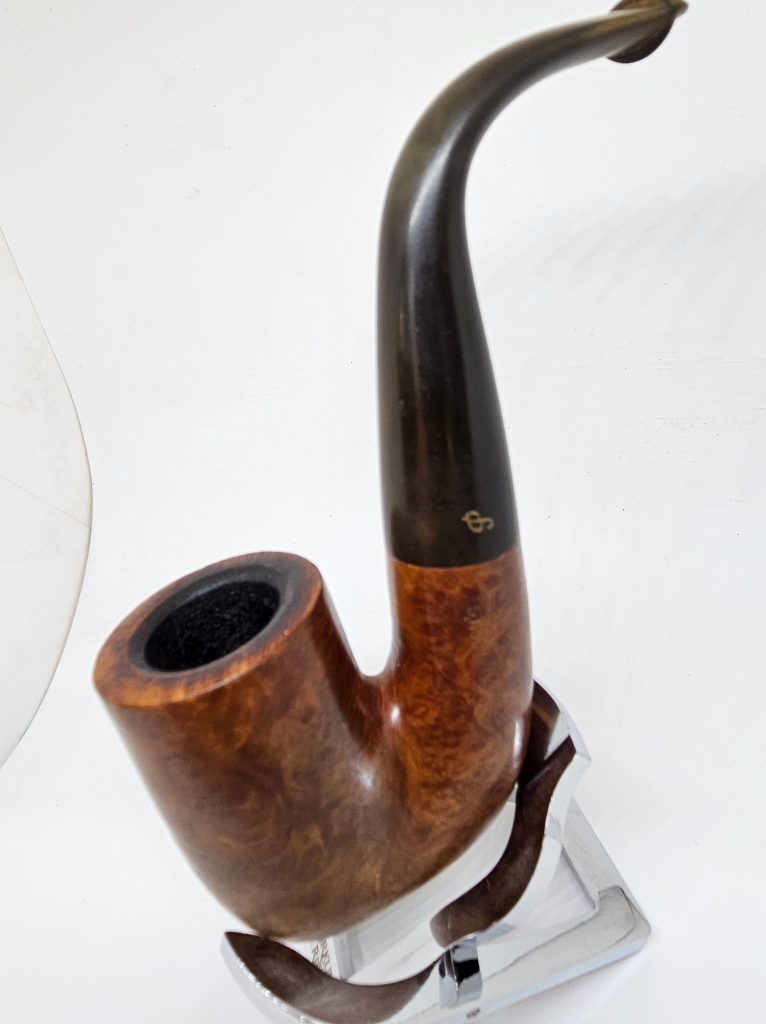
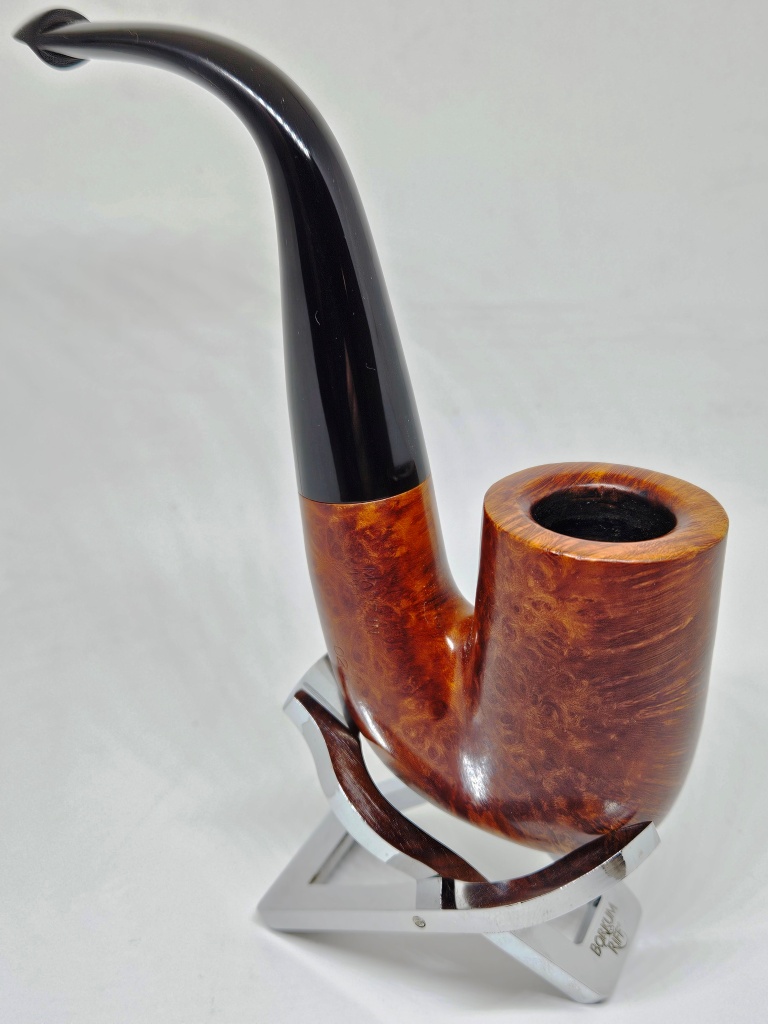
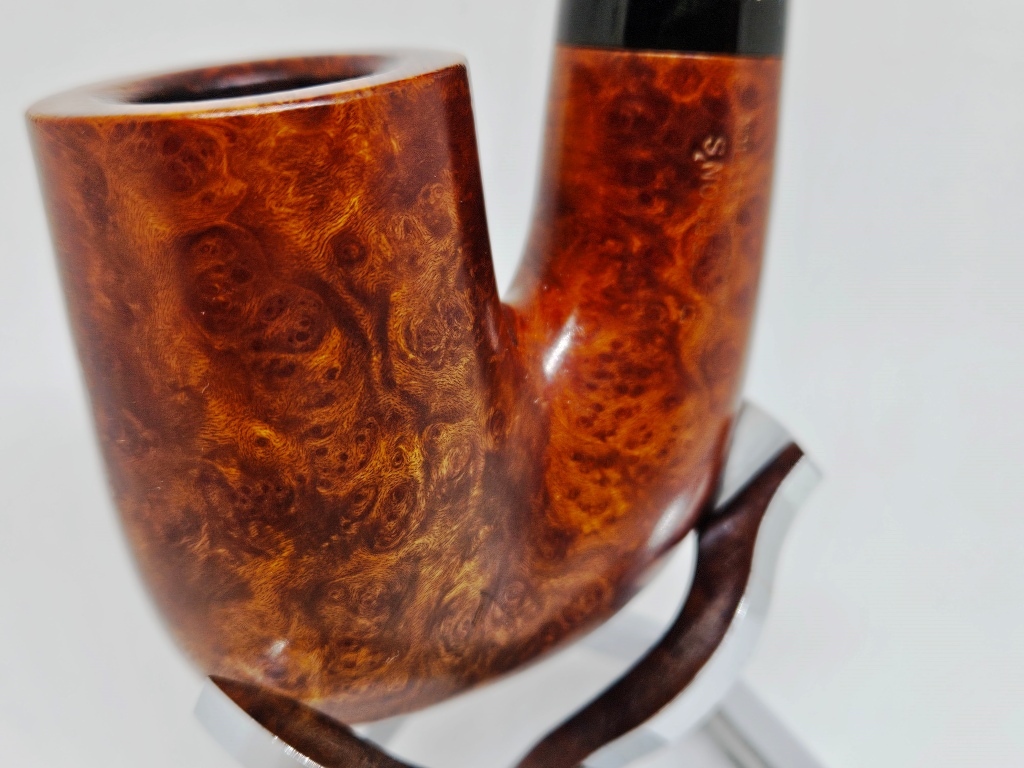
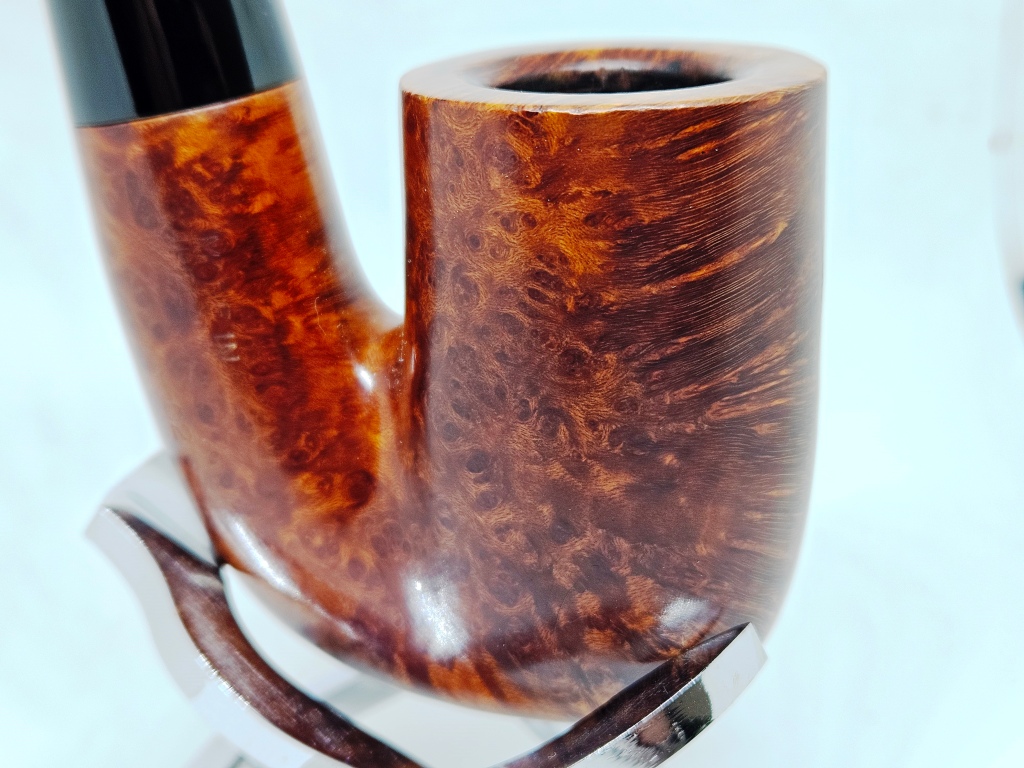
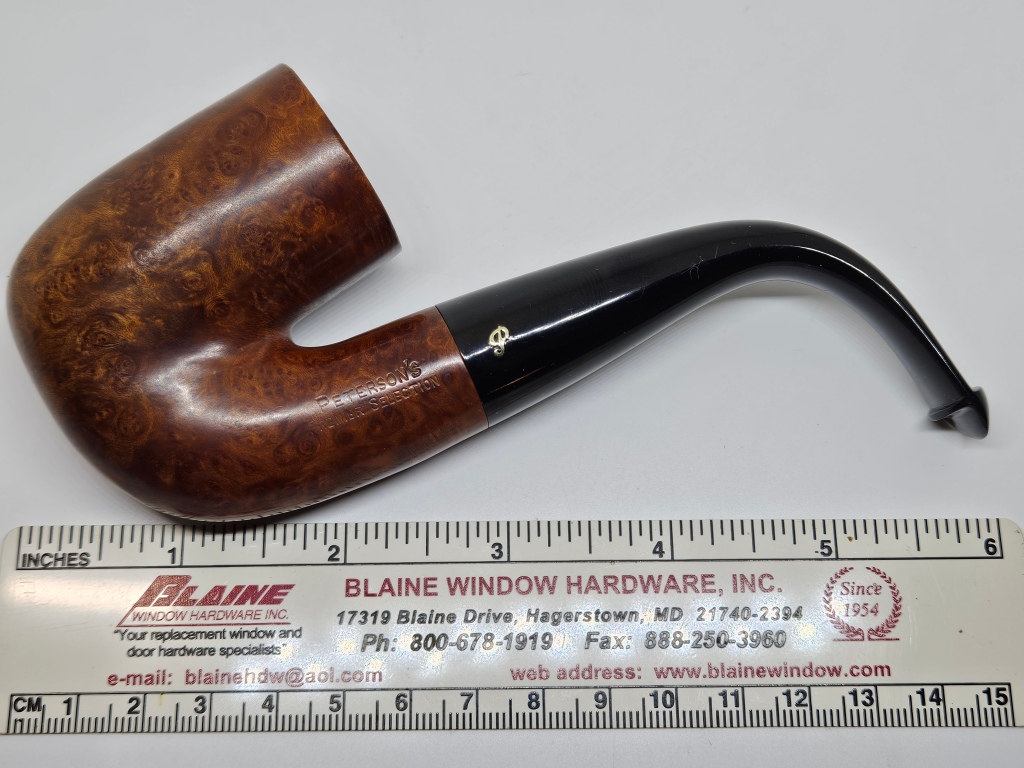
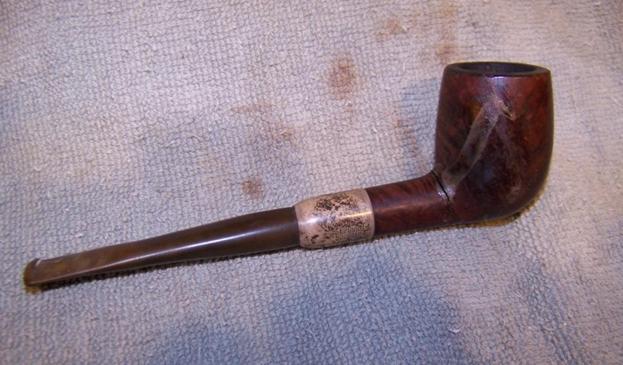
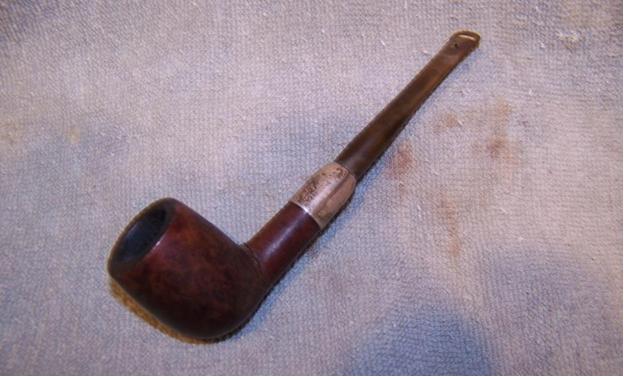
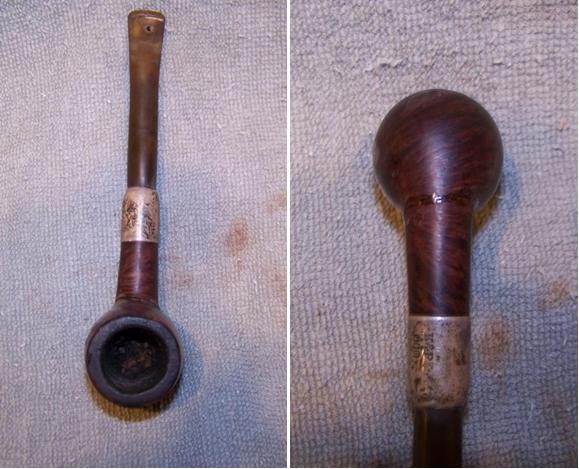
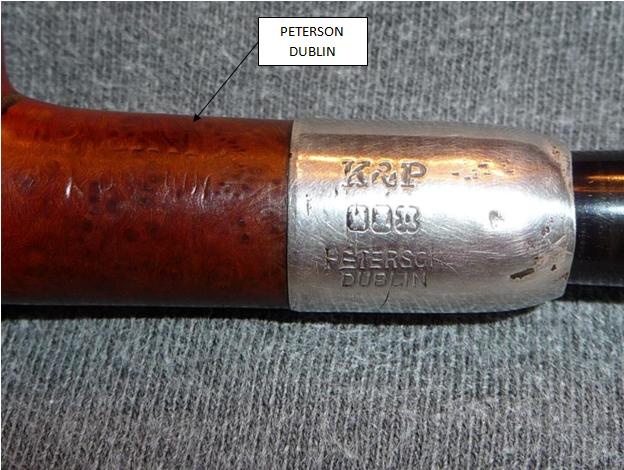
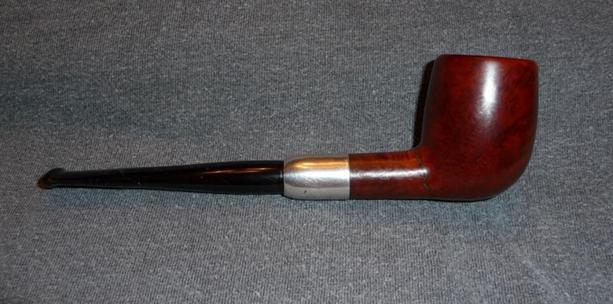
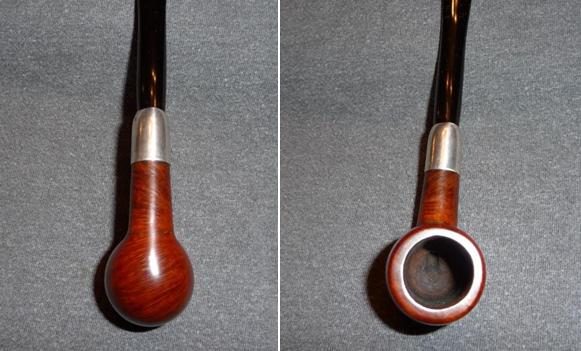
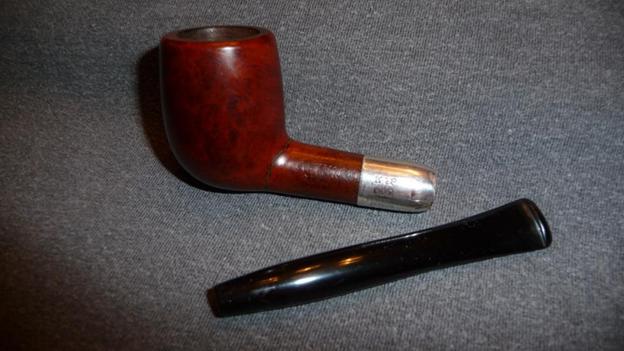
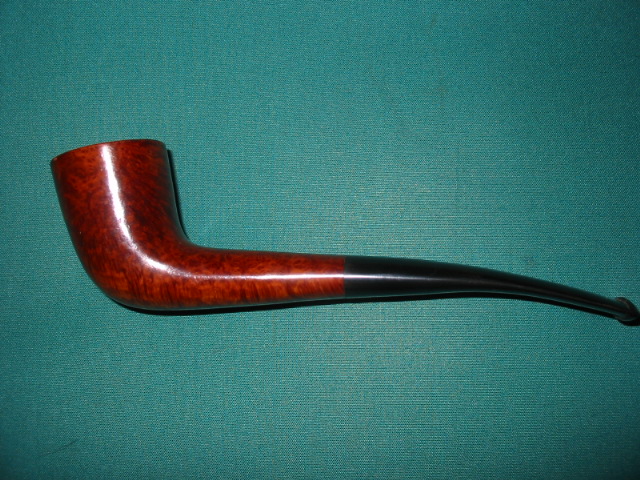
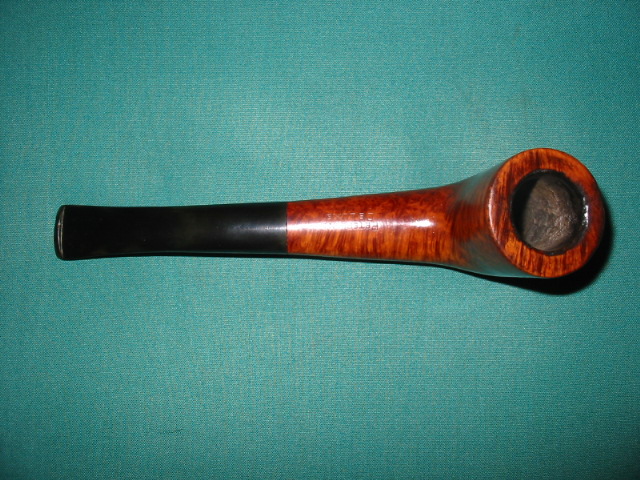
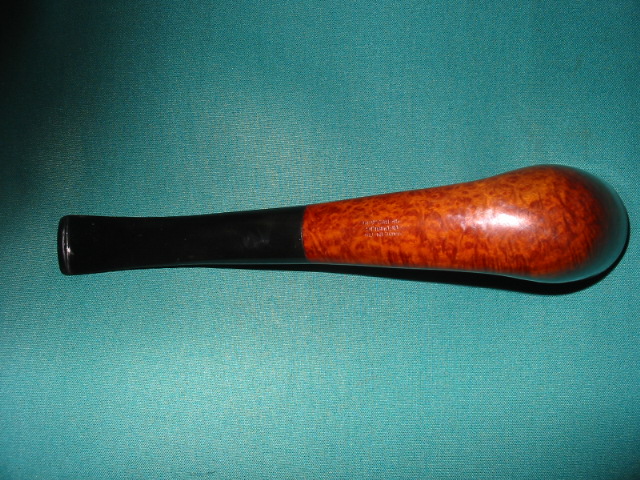
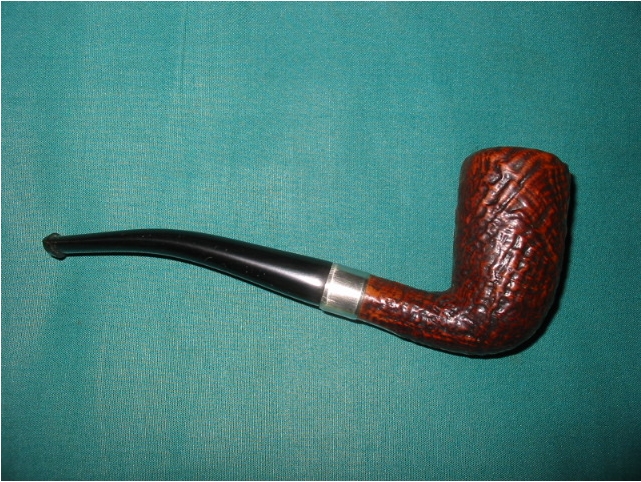
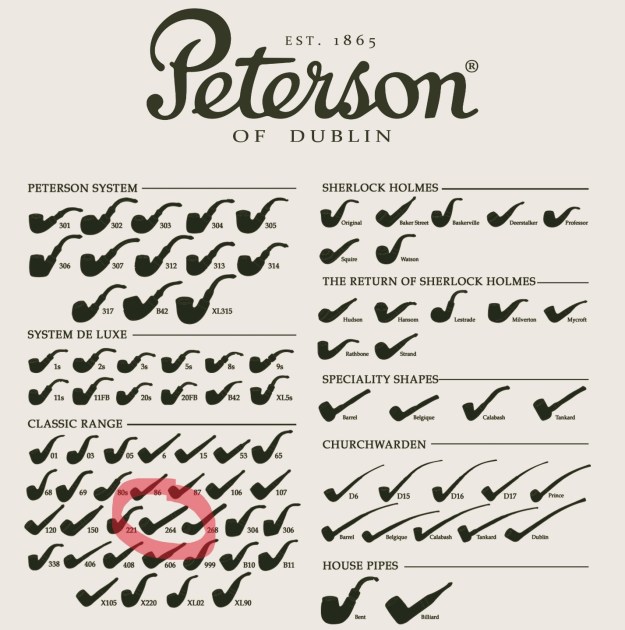
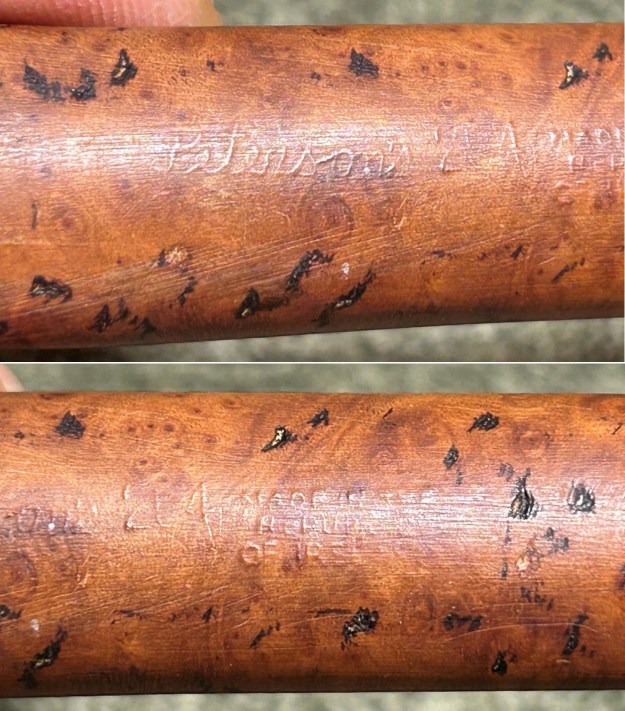
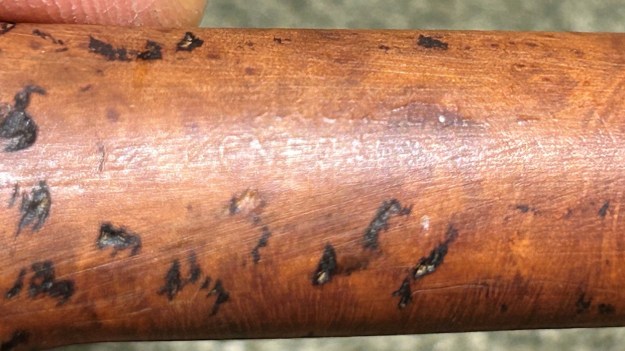
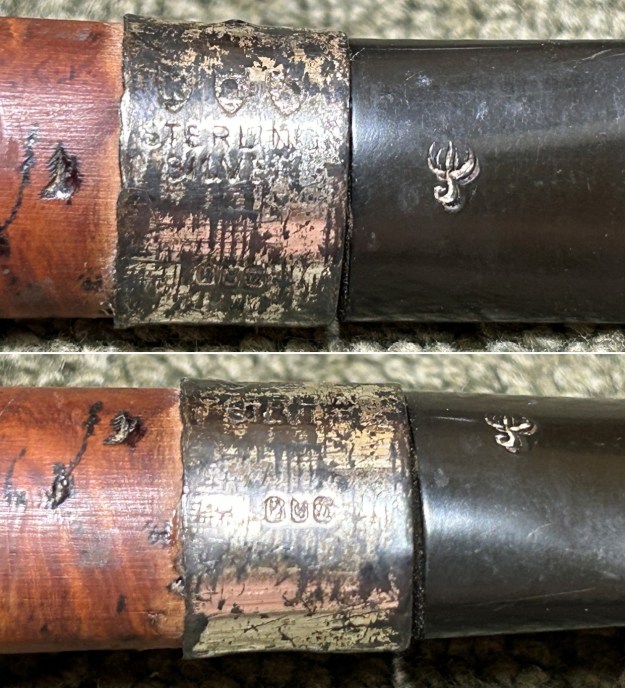
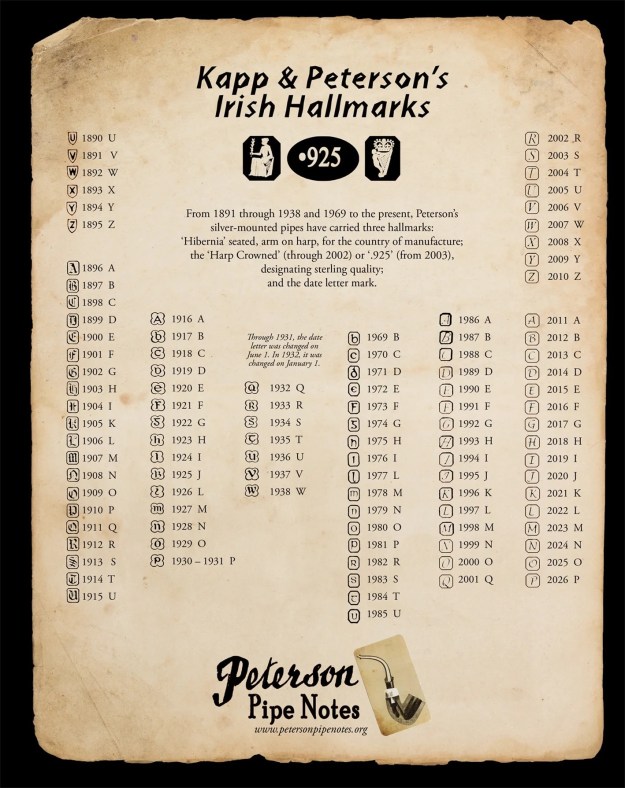
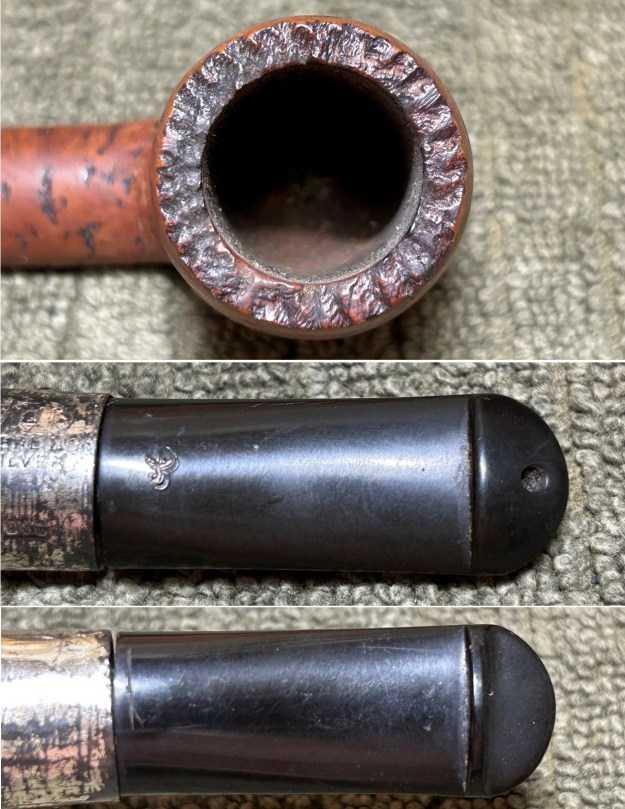
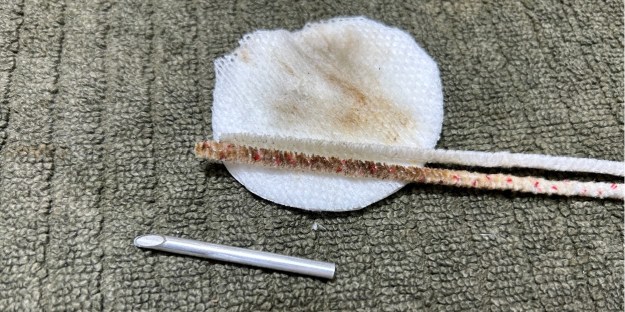
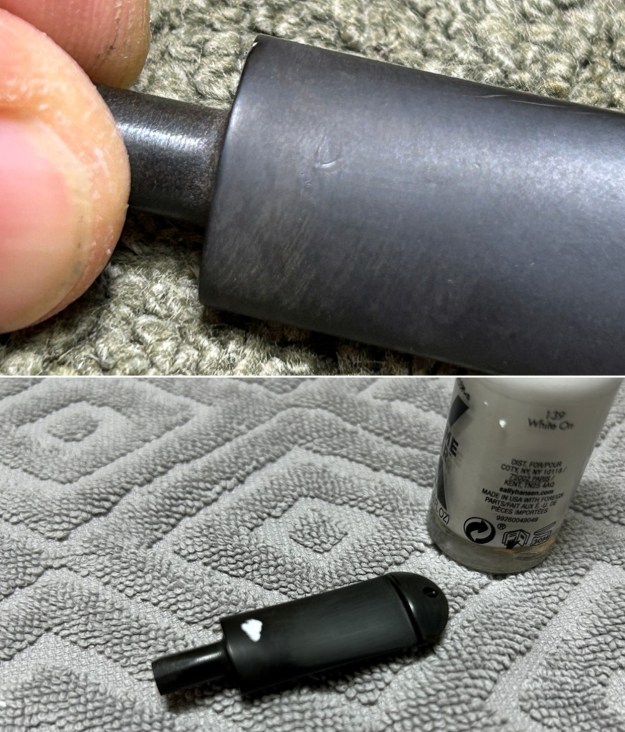
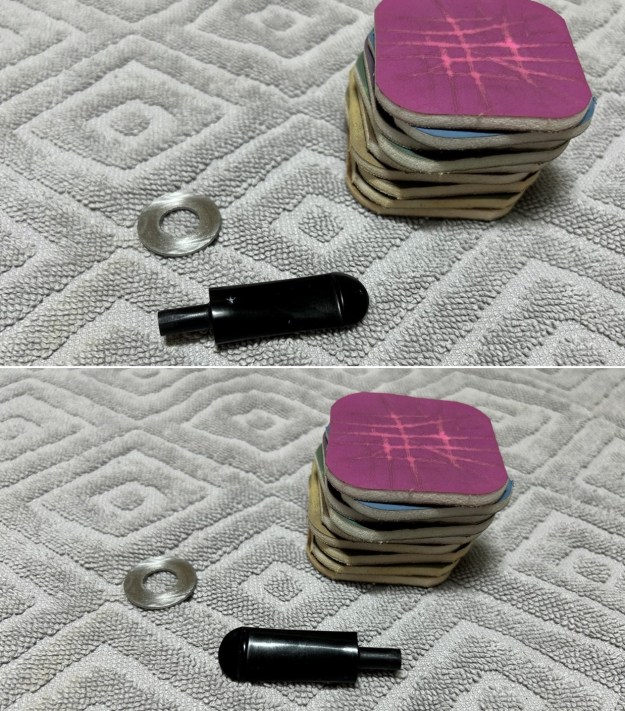
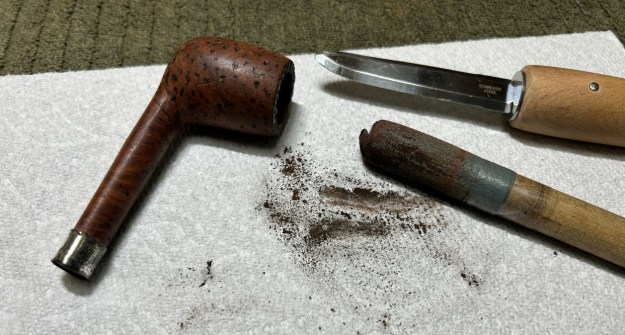
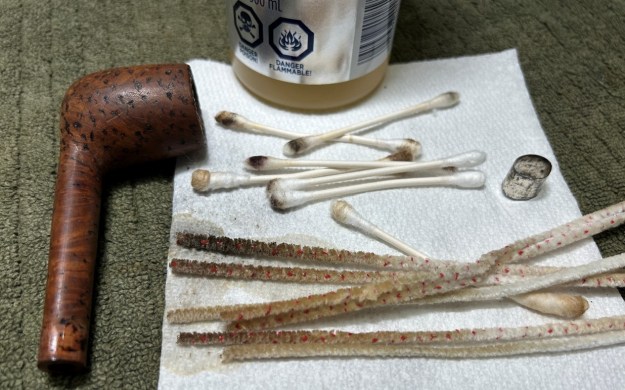
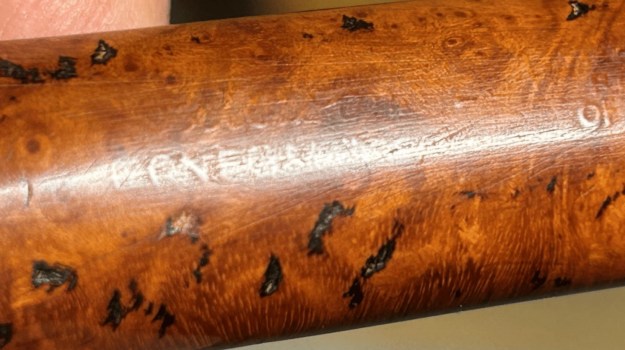
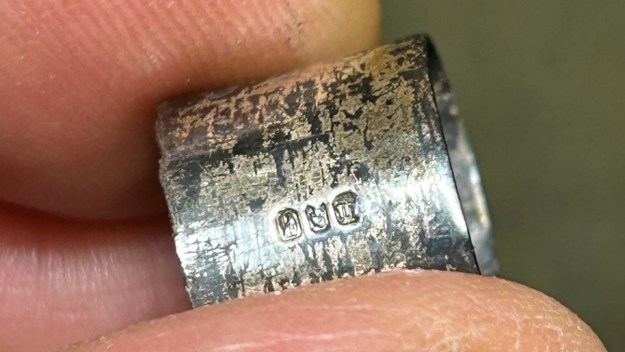
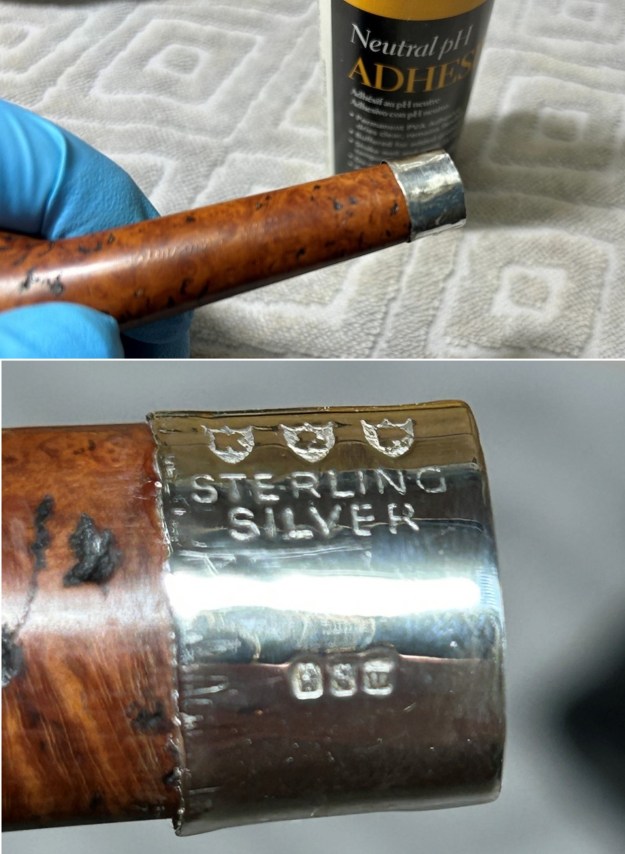
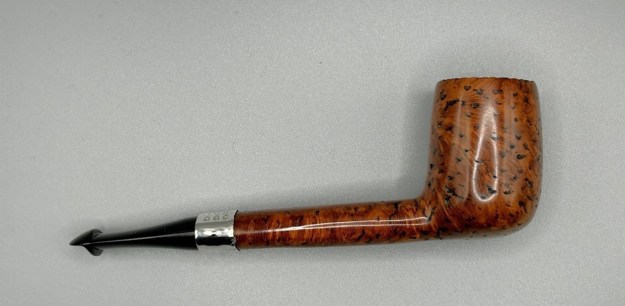
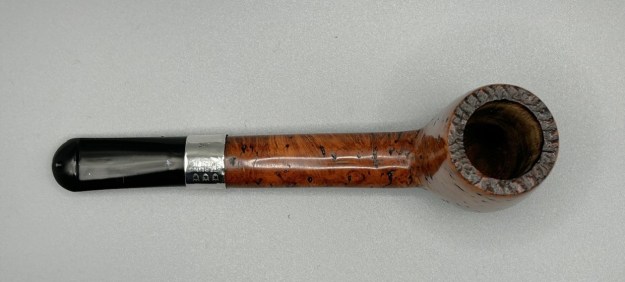
If you’re interested in acquiring a Peterson unlike any other, have I got the pipe for you! I unearthed this pipe a couple of years ago at an antique fair and I found it quite peculiar. The shape seemed perfectly normal, the components were in good (albeit, used) condition – but the finish was something I’d never seen before from an old Pete. I was definitely curious about what it might be. The pipe turned out very well, all things considered, and, like I said, if you want a pipe that no one else has – this is your pipe. I’m sure it’ll be a good smoker. Neither Steve nor I were clear on how this pipe ended up the way it did. I initially wondered if this was an odd finish that Peterson tried years ago – but that didn’t seem likely. I had another theory, but Steve suggested that I contact Peterson expert, Mark Irwin, to ask him about it. Mark basically confirmed what I suspected: this Donegal has had its rustication (mostly) removed. In other words, it’s been sanded down. This is strange, but there’s no way of determining why this was done. Thanks for your help, Mark. Regardless, we’ve ended up with an interesting finish and a pipe that I need to make beautiful.The markings on this pipe were a problem, since they had suffered a bit during the sanding process. However, I did manage to figure them out. On the underside of the shank, we can see the word Peterson’s. There is something marked underneath that, but I’ll come back to that as it’s somewhat unreadable. Next to Peterson’s is the shape number, 264. And next to that are the words Made in the [over] Republic [over] of Ireland. It took me quite a while to determine what was marked underneath of Peterson’s, but, of course, it is the word Donegal. This is the Peterson line. You will have noticed that the stem is the traditional Peterson P-lip, and it has the classic letter P. Most importantly, there is a sterling silver band on the end of the shank. On the sterling silver band is displayed three shields each containing the three marks K&P [over] Sterling [over] Silver. These are not silver hallmarks – they are simply Peterson’s marks. However, it does have a set of proper hallmarks (which are very difficult to see): Hibernia, which indicated that it was made in Dublin. Next is the Harp Crowned, which indicates sterling silver. Third is the date letter. In this case, it’s a stylized M. Checking the Irish hallmarks chart tells me that this pipe dates from 1978. So, what is the state of the pipe? Well, it’s a mixed bag, as these things tend to be. The stem is in surprisingly good shape – not too dirty or oxidized. It does have a notable cut into the vulcanite, near the tenon end, but that’s not a problem to repair. The stummel is, for the most part, also quite nice. It has a few unsurprising scratches, but it’s fairly clean inside. The silver band is heavily tarnished and has a few bumps and knocks. On with the restoration! This pipe had an inner tube, so I cleaned that first. I wiped it with some alcohol and ran a pipe cleaner or two through it. Much improved.The primary cleaning came next. I disinfected the inside of the stem with both pipe cleaners and cotton swabs dipped in lemon-infused 99% isopropyl alcohol. I scrubbed thoroughly to make sure the interior was very clean.The goal of the next step is the removal (or minimization) of oxidation. Going to my sink, I used cream cleanser, cotton rounds, and a toothbrush, and scoured the stem to remove as much surface oxidation as possible. This one wasn’t too bad at all.Once the stem was reasonably clean, I soaked it overnight in some Briarville Stem Oxidation Remover. This solution works to draw oxidation in the stem to the surface of the vulcanite. This is a major aid and an important step in ensuring a clean stem. The following day, I drew out the stem from its bath and scrubbed the lingering fluid with a toothbrush.As the stem was now clean and dry, I set about fixing the nasty cut in the vulcanite. This was done by filling it with black cyanoacrylate adhesive, impregnated with carbon and rubber. I left this to cure and moved on.After this, I painted the logo on the stem with some enamel nail polish. I restored the logo carefully and let it fully set before proceeding. Most of the logo has gone with the passage of time, but at least a bit of it still shows.The penultimate step for the stem is sanding. First, with my set of needle files, I reduced the bulk of the cyanoacrylate repairs. I removed the excess adhesive as near to the surface as possible, without cutting into the vulcanite. Following that, I used all nine of the micromesh sanding pads (1,500 through 12,000 grit) to sand out flaws, even out the vulcanite, and provide gentle polishing of the finished surface. I also applied pipe-stem oil while using the last five micromesh pads. There was a wonderful, deep black shine to the stem when I was done.As the stem was (nearly) complete, I moved on to the stummel. The first step was to clean out the bowl – that is to say, remove all the cake inside the bowl. This accomplished a couple of things. First (and most obviously), it cleaned the bowl and provided a refurbished chamber for future smoking. Second, when the old cake was removed, I could inspect the interior walls of the bowl and determine if there was damage or not. I didn’t need a reamer this time, so a pipe knife and a piece of sandpaper taped to a wooden dowel did the trick. Collectively, these ensured that all the debris was removed.Similar to the stem, I then cleaned the stummel with both pipe cleaners and cotton swabs dipped in lemon-infused 99% isopropyl alcohol. Since the pipe wasn’t too dirty, it didn’t take long to clean it.I then decided to ‘de-ghost’ the pipe – that is to say, exorcize the remaining filth from the briar. I filled the bowl and the shank with cotton balls, then saturated them with 99% isopropyl alcohol. I let the stummel sit overnight. This caused the remaining oils, tars and smells to leach out into the cotton.To tidy up the briar, I wiped down the outside, using a solution of a pH-neutral detergent and some distilled water, with cotton rounds. I also used a toothbrush in the crevices. This did a good job of cleaning any latent dirt on the surface of the briar. The last step of the cleaning process was to scour the inside of the stummel with the same mild detergent and tube brushes.I used all nine micromesh pads (1,500 through 12,000 grit) to sand the outside of the stummel and finish it off. This sanding minimizes flaws in the briar and provides a beautiful smoothness to the wood. I had to be especially careful this time, to avoid losing any more of the markings on the underside of the shank. To clean the silver band, I gently removed the tarnish with a soak in a bath of aluminum foil, baking soda, and hot water. Worked like a charm! I polished it up and glued it back in place. There are still some bumps and bashes, but it looks so much better. I rubbed some LBE Before & After Restoration Balm into the briar and let it sit for 30 minutes or so. The balm moisturizes the wood and gives a beautiful depth to the briar. I then buffed the stummel with a microfibre cloth. For the final step, I took the pipe to my bench polisher and carefully buffed it – first with a blue diamond compound, then with three coats of conservator’s wax. This procedure makes the pipe look its best – the stummel sings and the stem glows.
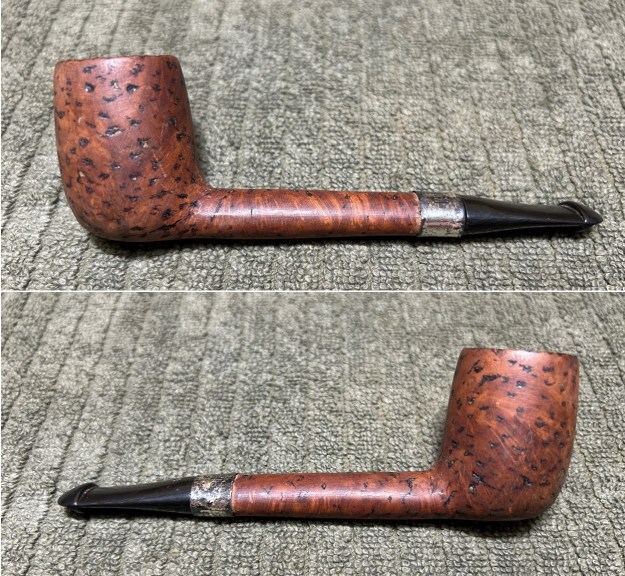
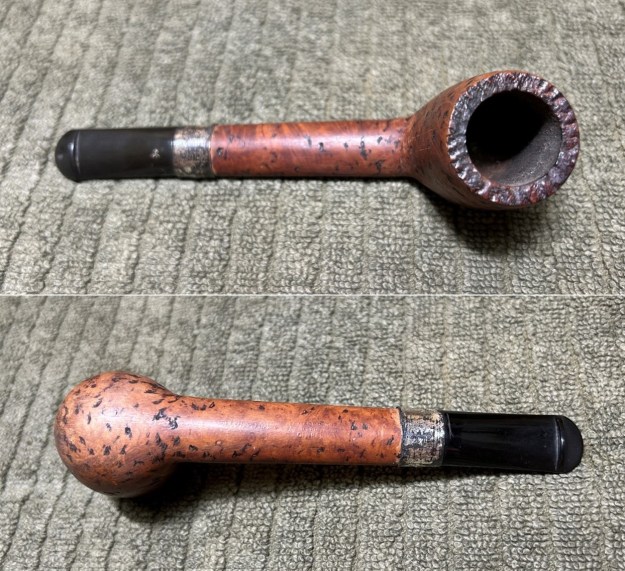
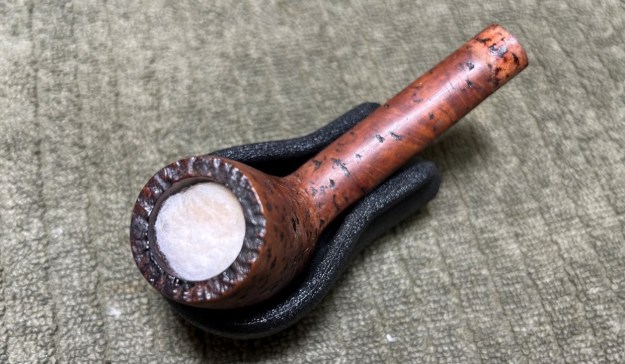
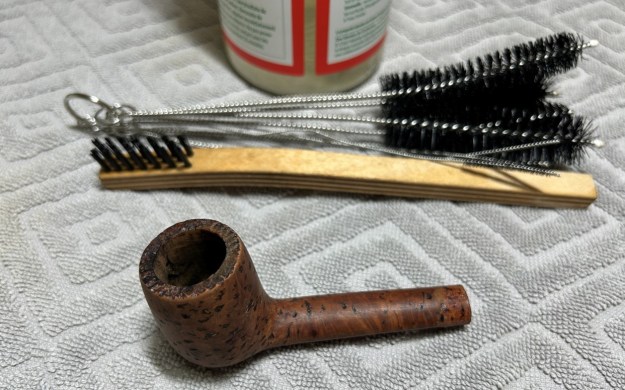
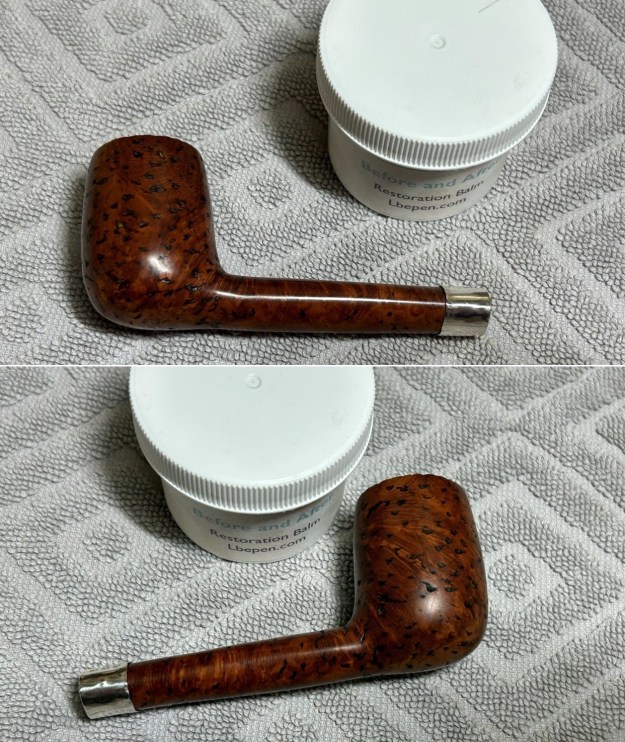
This Peterson Donegal 264 Canadian looks fantastic again and is ready to be enjoyed by its next owner. I am pleased to announce that this pipe is for sale! If you are interested in acquiring it for your collection, please have a look in the ‘Irish’ pipe section of the store here on Steve’s website. You can also email me directly at kenneth@knightsofthepipe.com. The approximate dimensions of the pipe are as follows: length 5½ in. (138 mm); height 1¾ in. (45 mm); bowl diameter 1¼ in. (33 mm); chamber diameter ¾ in. (20 mm). The weight of the pipe is 1 oz. (32 g). I hope you enjoyed reading the story of this pipe’s restoration as much as I did restoring it. If you are interested in more of my work, please follow me here on Steve’s website or send me an email. Thank you very much for reading and, as always, I welcome and encourage your comments.

Restemming a Wonderful Peterson Specialty Barrel


by Kenneth Lieblich

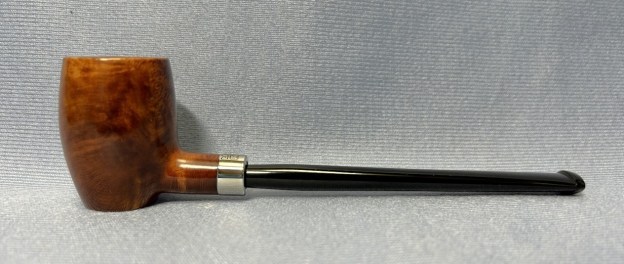
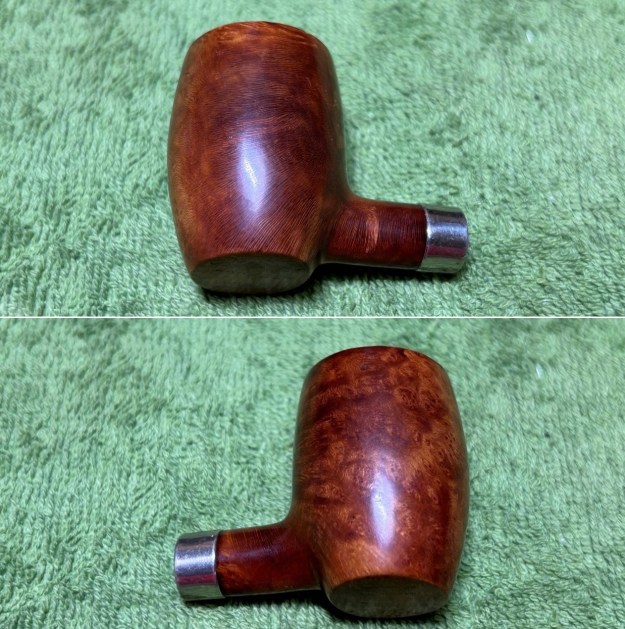
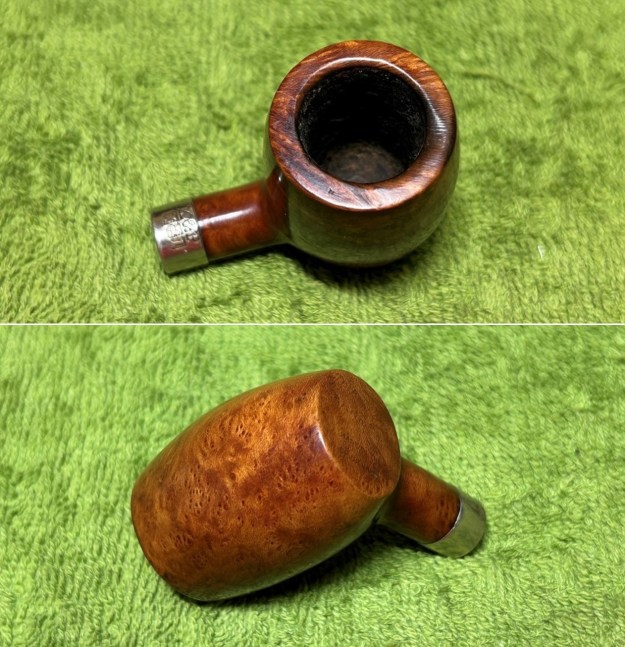
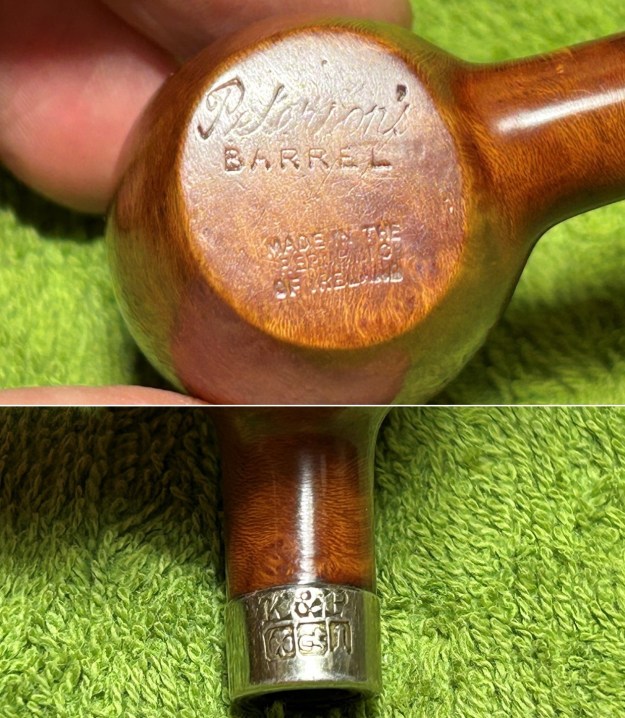
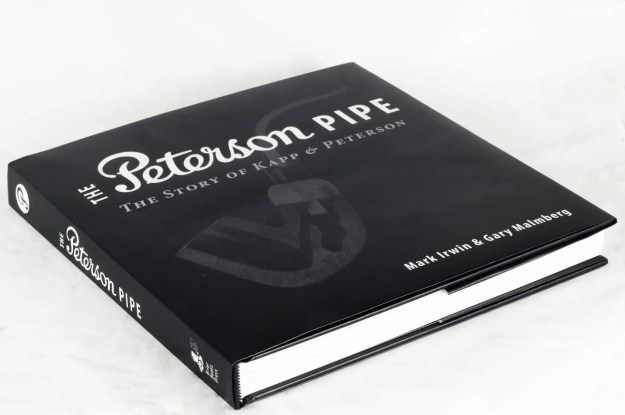
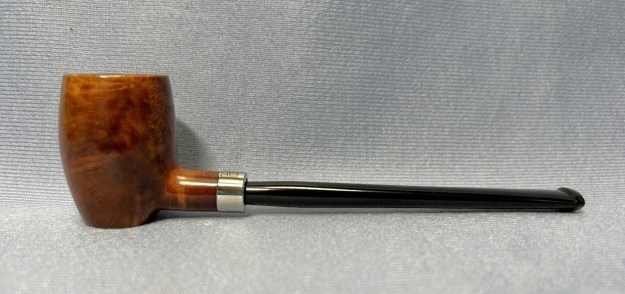
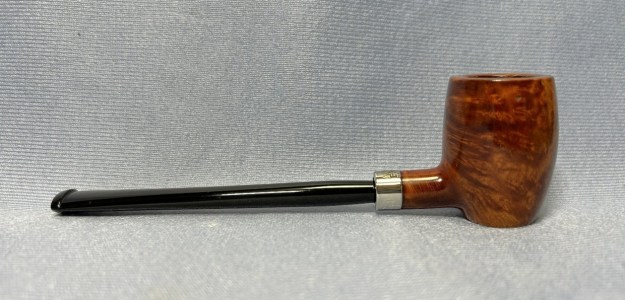
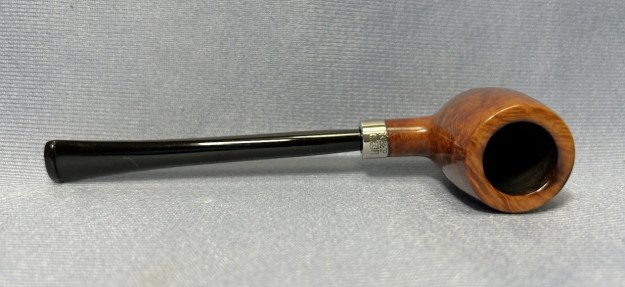
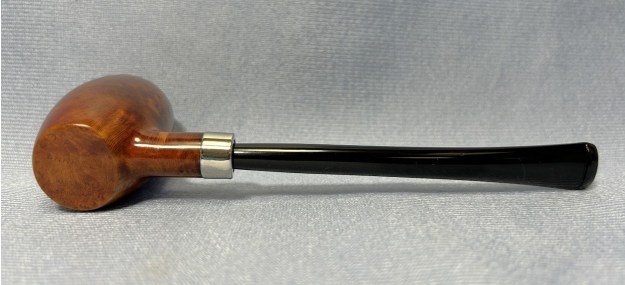
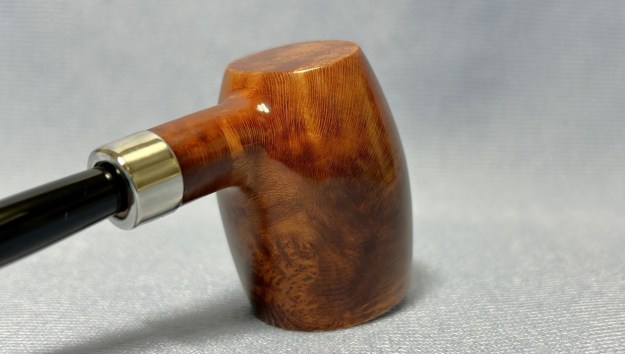
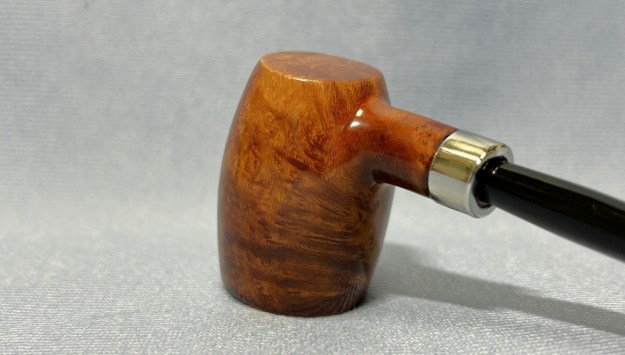
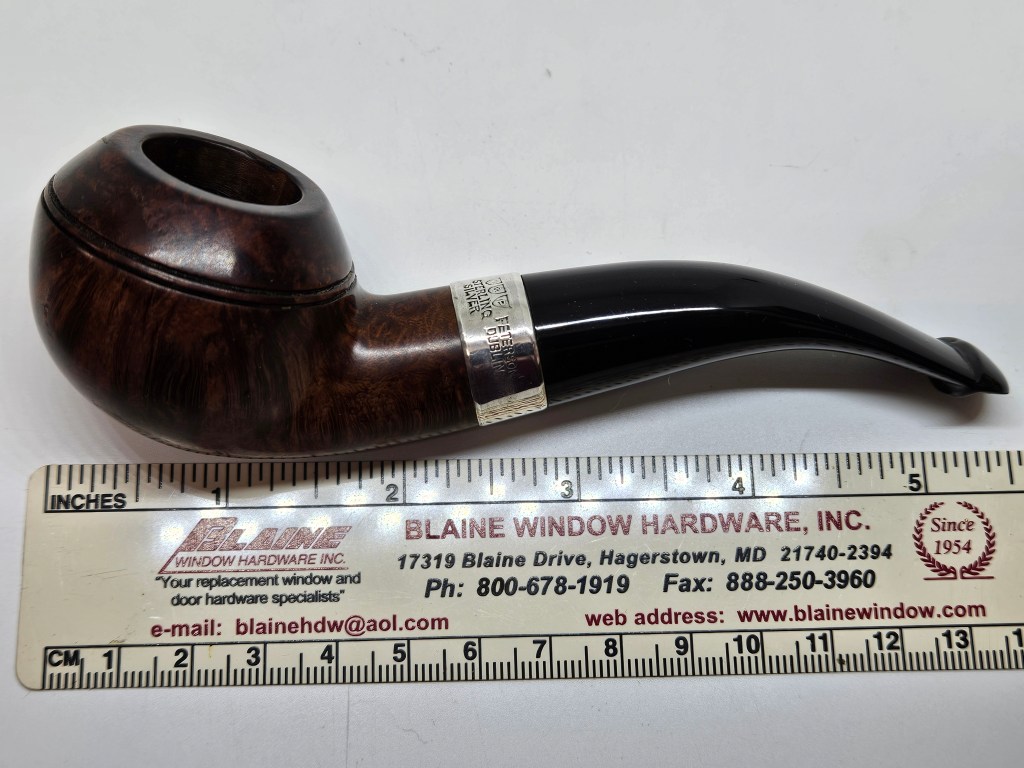
Now we’re talking! This terrific republic-era Peterson Barrel came to me in a box of pipes and pipe parts. It looked so engaging, but it was missing its stem. No problem – I can solve that! The Peterson barrel is not common, but it isn’t a rarity either. Regardless, it is a consistently popular and attractive shape – and it’s not hard to see why. No doubt, someone will be pleased to add this to their collection. Let’s look at the markings. On the underside of the stummel, it reads Peterson’s [over] Barrel [over] Made in the [over] Republic [over] of Ireland. On the nickel band, we see K&P engraved over images of the Shamrock, Wolf Hound and Round Tower. To be clear, these are not silver marks, they are nickel-mount markings of Peterson.Naturally, the Peterson brand is well-storied among collectors and I encourage you to read the Pipedia article about them: https://pipedia.org/wiki/Peterson. Obviously, I was particularly interested in learning more about the barrel, so I referred to The Peterson Pipe book, written by Mark Irwin and Gary Malmberg. It had a couple of very helpful tidbits. On page 136, we read

One collection … making its first appearance in the 1945 catalog is the line of Specialty shapes that have been Peterson favorites for nearly 70 years: the tankard and barrel, calabash and Belgique, and churchwarden.

Also, over on page 313, the following information can be found:

Barrel (1945-). P-lip or fishtail mouthpiece; smooth or rustic finish, sandblast offered in 1970.

So, beyond saying that it is newer than 1945, I can’t quite tell how old this pipe is. Good to know, however, that the fishtail was an option.Let’s work on the pipe. The first thing I did was to hunt down a suitable replacement stem. It needed to be a military mount and it could be either a P-lip or fishtail. In this case, I didn’t have a P-lip that worked with this pipe – but I found a terrific fishtail, which you can see below. The stem is brand new – it even still has its casting marks!I took some sandpaper and gently sanded away those casting marks. Following that, I used all nine of the micromesh sanding pads (1,500 through 12,000 grit) to sand out flaws, even out the vulcanite, and provide gentle polishing of the finished surface. I also applied pipe-stem oil while using the last five micromesh pads. There was a wonderful, deep black shine to the stem when I was done. Over to the stummel – and they were some issues. It was very dirty and had a significant burn on the rim. The first step was to ream out the bowl – that is to say, remove all the cake inside the bowl. This accomplished a couple of things. First (and most obviously), it cleaned the bowl and provided a refurbished chamber for future smoking. Second, when the old cake was removed, I could inspect the interior walls of the bowl and determine if there was damage or not. I used a reamer, a pipe knife, and a piece of sandpaper taped to a wooden dowel. Collectively, these ensured that all the debris was removed. I then cleaned the stummel with both pipe cleaners and cotton swabs dipped in lemon-infused 99% isopropyl alcohol. With a pipe this dirty, it took quite a while and much cotton to get clean. It’s a small pipe, but so, so dirty.I then decided to ‘de-ghost’ the pipe – that is to say, exorcize the remaining filth from the briar. I filled the bowl and the shank with cotton balls, then saturated them with 99% isopropyl alcohol. I let the stummel sit overnight. This caused the remaining oils, tars and smells to leach out into the cotton.To tidy up the briar, I wiped down the outside, using a solution of a pH-neutral detergent and distilled water, with cotton rounds. This did a good job of cleaning any latent dirt on the surface of the briar. The last step of the cleaning process was to scour the inside of the stummel with some mild detergent and tube brushes. This was the culmination of a lot of hard work in getting the pipe clean.

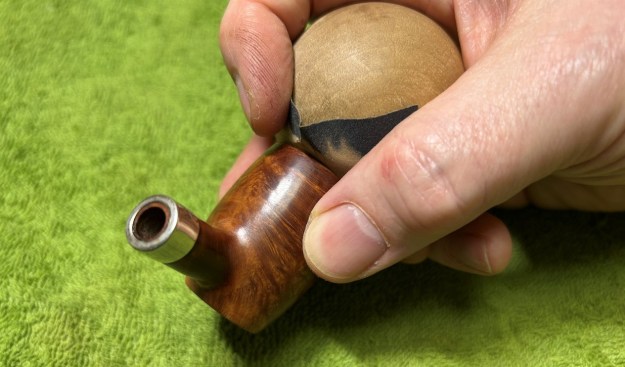
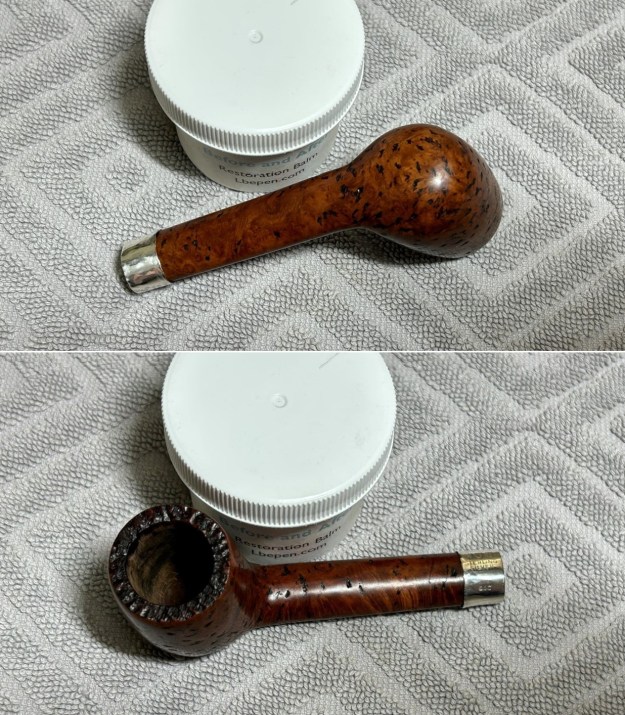
Some burn remained on the rim, so I took some crystalized oxalic acid and dissolved it in warm water. I took some cotton swaps, dipped in the solution, and rubbed the burned spot vigorously. The weak acid works very nicely to alleviate superficial burns (burns where the integrity of the wood is still sound). I took a solid wooden sphere, wrapped a piece of 400-grit sandpaper around it, and sanded the inner edge of the rim. This achieved two things: first, it removed some of the burn marks; and second (and more importantly), the circular shape and motion of the sphere gradually returned the edge to a perfect circle.I used all nine micromesh pads (1,500 through 12,000 grit) to sand the outside of the stummel and finish it off. This sanding minimizes flaws in the briar and provides a beautiful smoothness to the wood. I rubbed some LBE Before & After Restoration Balm into the briar and let it sit for 30 minutes or so. The balm moisturizes the wood and gives a beautiful depth to the briar. I then buffed the stummel with a microfibre cloth. For the final step, I took the pipe to my bench polisher and carefully buffed it – first with a blue diamond compound, then with three coats of carnauba wax. This procedure makes the pipe look its best – the stummel sings and the stem glows.This Peterson Specialty Barrel looks fantastic again and is ready to be enjoyed by its next owner. I am pleased to announce that this pipe is for sale! If you are interested in acquiring it for your collection, please have a look in the ‘Irish’ pipe section of the store here on Steve’s website. You can also email me directly at kenneth@knightsofthepipe.com. The approximate dimensions of the pipe are as follows: length 5¾ in. (147 mm); height 1⅔ in. (42 mm); bowl diameter 1¼ in. (32 mm); chamber diameter ⅔ in. (18 mm). The weight of the pipe is ⅞ oz. (25 g). I hope you enjoyed reading the story of this pipe’s restoration as much as I did restoring it. If you are interested in more of my work, please follow me here on Steve’s website or send me an email. Thank you very much for reading and, as always, I welcome and encourage your comments.
Peterson 999 Sterling Pre-Republic Restoration


By Al Jones

This Peterson belongs to a member of the PipesMagazine.com forum who asked me if I could undertake the restoration. He said that the nomenclature was worn and wanted someone to restore to use, but not further damage the nomenclature. I don’t take on my pipes beside my own, but I love working on special pipes like this one, so I said yes.

If you are a fan of the Peterson 999, check out Mark Irwins Peterson Pipe Notes blog entry on the history of the shape (two pipes from my collection are featured, thanks for the nod Mark!)

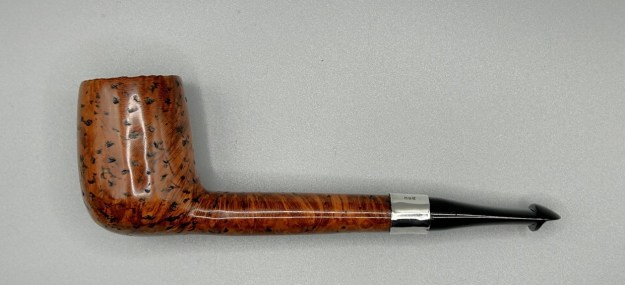
The pipe was in very good condition with really the only issue the worn nomenclature. The pipe has the block style “Made In Ireland” COM and an Sterling band with no hallmark. According to Mike Leverette, in his “A Peterson Dating Guide” entry on Pipepedia, that block style COM was used between 1947 and 1949. Below is the pipe as it was received. Curiously, it has what appears to be a filter tenon. There was very little cake and only a mildly oxidized stem. There are no signs of internal threads. This would be the first filter Peterson I’ve held, so any input is appreciated. Shamrock 999’s often have stingers, but they fit a standard tenon.

I reamed the pipe lightly and soaked it with sea salt and alcohol. Following the soak, the stem was mounted and oxidation removed with 600, 800, 1,500 and 2,000 grade wet sandpaper. I used a cream silver cleaner on the band. The stem was then buffed with White Diamond and Meguiars plastic polish.

The bowl was lightly buffed with White Diamond and several coats of Carnuba wax, staying away from the nomenclature.

Below is the finished pipe.

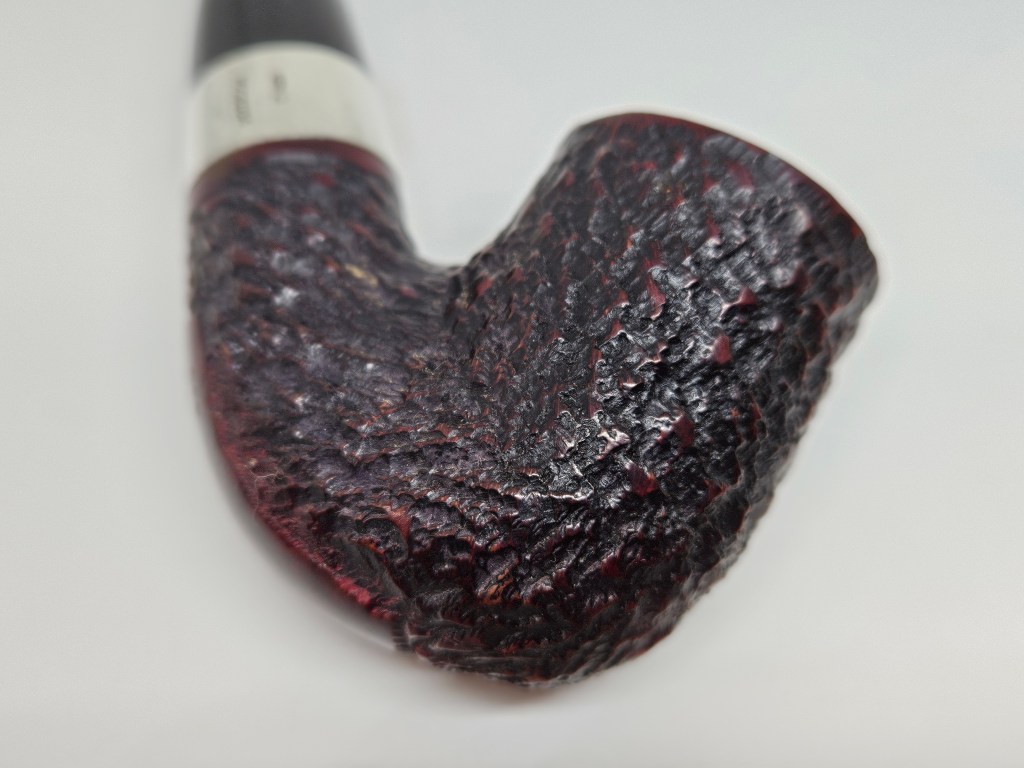
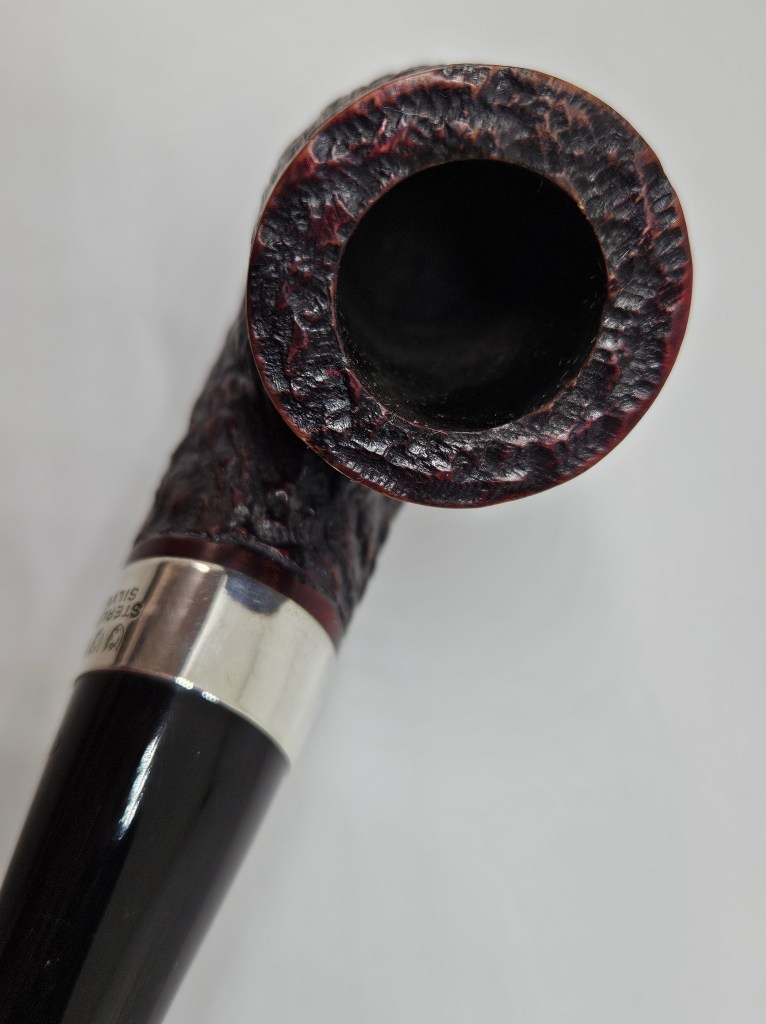
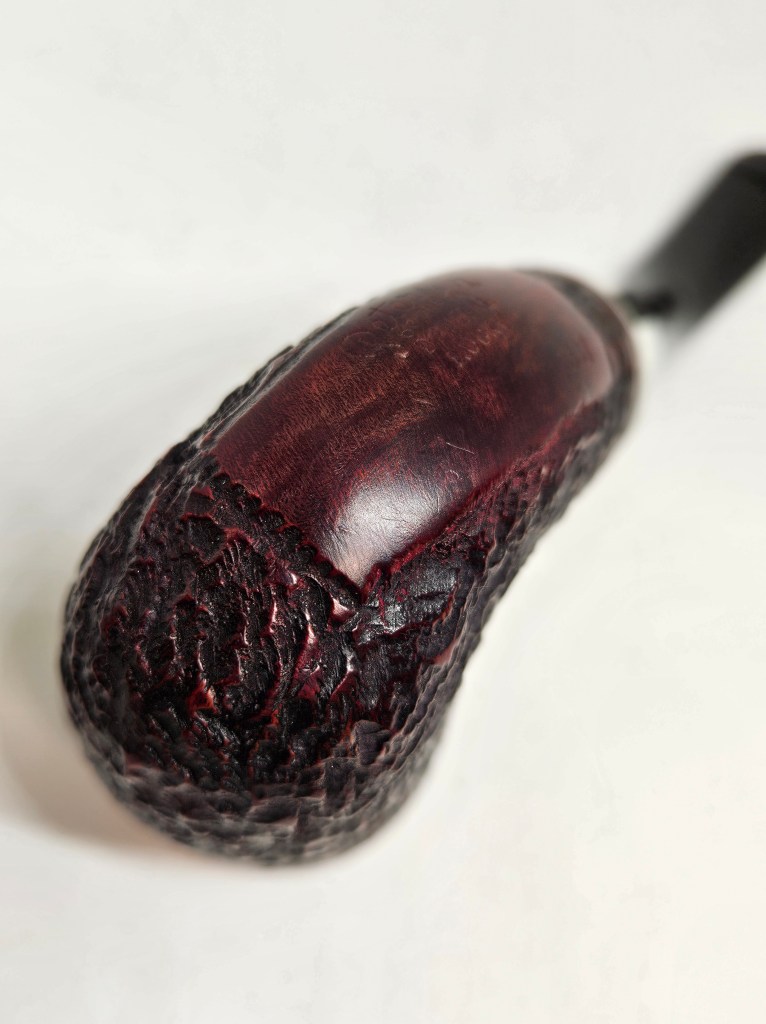
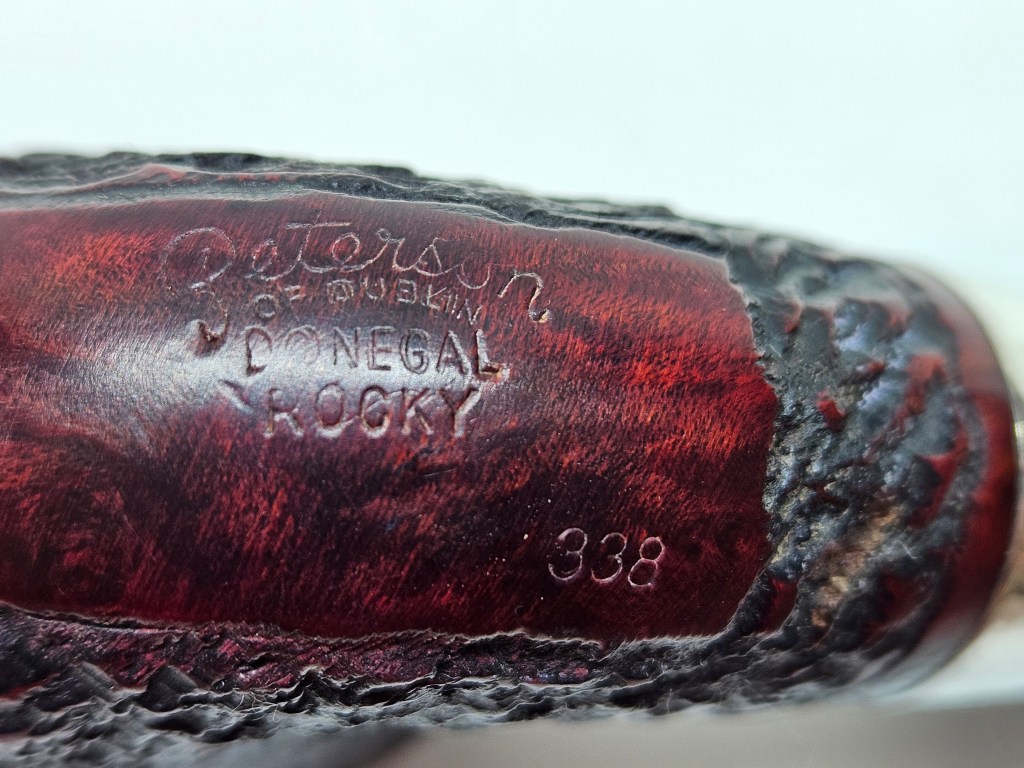
Peterson 338 Donegal Rocky Clean-up


By Al Jones

This Peterson Shape 338 caught my eye because it was a Donegal Rocky and came with a silver band. Peterson introduced this line in 1945 with a rusticated finish and two-tone stain. The rustication style has evolved over the decades.

Mark Irwin had an entry on the Donegal Rocky line on his Peterson Pipe Notes blog. Curiously, the line was first introduced only with a fishtale stem and Sterling band. The line came with a P-lip starting in 1975.

This is the first shape 338 to land on my work bench. It is described as a smaller, bent billiard in the tubular bowl shape house-pipe style.

Below is the pipe as it was received. It was in great shape and the reason this is titled “clean-up” versus restoration. The mildly oxidized stem and tarnished silver are the only real points of attention.

The silver stamping was curious and a bit of a mystery. The stamping includes the typical K&P stamp. There is no specific date hallmark, which is odd, nor the remains of one. What I originally thought was a worn date code appears to be the Hibernia symbol

Form member “PaulFG” added:

The shape of the square would put it 1968 and forward.

From 1891 through 1938 and 1969 to the present, Peterson’s silver-mounted pipes have carried three hallmarks: ‘Hibernia’ seated, arm on harp, for the country of manufacture; the ‘Harp Crowned’ (through 2002) or ‘.925’ (from 2003), designating sterling quality

so this would make it newer than 2003

The bowl was very clean, only requiring a light sand to remove the barely there cake. I used sea salt and alcohol to soak the bowl.

After the soak the shank was scrubbed with a bristle brush dipped in alcohol. The stem was mounted and I removed the light oxidation with 800, 1,500 and 2,000 grade sandpaper, working carefully around the “P” stem logo. The stem was buffed with White Diamond and Meguiars Plastic polish. The briar was hand polished with Halycon wax.

Below is the finished pipe.

Peterson 1950’s House Pipe Restoration


By Al Jones

This large, oom-Paul Peterson shape caught my eye on eBay. It had what appeared to be pre-Republic stamping, and it appeared to be in very good condition. It was a Premier Selection grade, which are always stunning. I learned many years ago, from Mark Irwin, that the Premier Selection grade was just below the Deluxe. I was a bit surprised to discover that I won the auction. I’ve always had good luck with auctions ending during a holiday, and this was a good example.

Peterson fans, aka “CPG = Certified PeteGeeks”, are fortunate to have Mark Irwin brand expertise just an email away. Mark’s blog, “Peterson Pipe Notes” is a must-read for Peterson or briar pipe enthusiasts and it has a world-wide following. I emailed Mark about this pipe and sent him my finished photos. I received a speedy reply and he shared as below:

On the 02 Premier. First, it’s a fully-functioning System pipe, which many folks don’t appreciate. It’s got all the engineering and in spades: deep reservoir, 1st-rate condenser with cross vents, P-Lip with graduated bore airway. Second, the MADE IN IRELAND probably tells us that it’s a Rogers Imports pipe, as that was the usual stamping on the high-grade lines requested by Rogers. The brass P is another indication of the high tier, but it also suggests (in conjunction with the bone condenser) that the pipe was made during the first decade of the Early Republic era. So anytime during the 1950s would be my estimate.

Mark has a blog entry on the 02 House pipe shape and it’s various iterations, if you have further interest:

https://petersonpipenotes.org/tag/peterson-02-shape/

The pipe had some buildup on the bowl top and the stain was faded in one area. The stem had some oxidation, but the P-lip features were undamaged. There was a very slight cake in the bowl. The nomenclature was very strong. Below is the pipe as it was received. I discovered that photographing this shape was not easy!

There were some handling marks on the bowl. I was able to steam most out, with a wet cloth and an electric iron. I reamed the slight cake with my Pipe-net reamer and used a piece of 320 sandpaper to finish inside the bowl, which was in excellent condition. The bowl was then soaked with alcohol and sea salt. Following the soak, I used a bristle brush dipped in alcohol to clean the system shank.

The stem was mounted and I removed the oxidation with 600, 800, 1500 and 2,000 grade wet paper, taking care around the brass inlaid P logo. The stem was then buffed with White Diamond and Meguiars Plastic polish.

In the decade, I’ve owned over 40 Petersons, but oddly, none were true system pipes (well, condensor & P-Lip). It took me a minute to locate the draft hole after the inaugural smoke. The draft hole was far above the well!

The bowl was buffed lightly with White Diamond and several coats of carnuba wax.

Below is the finished pipe, which weighs a healthy 64 grams. Mark Irwin promised me that I was in for a treat with a true system pipe and he was right! It hangs effortless, despite the weight and really was a wonderful smoking experience. I can see now why this shape was a favorite of since-passed CPG Jim Lilley.

Repairing and Restoring a1929 Irish Free State Billiard


Blog by Aaron Henson – 11/29/15

I think the thrill of the hunt is part of what makes this hobby so enjoyable. Going into a new store or happening upon a pipe in an unlikely place, never knowing just exactly what you are going to find and always keeping a lookout for that forgotten gem.

This past summer I was on vacation with my family in Seaside, Oregon. Between Seaside and Astoria I visited 14 different antique stores and only two had any pipes at all. And of those, they were all on the pricy side; too rich for me.

Partly on a whim and partly out of desperation, I went into a second-hand store that I had passed by several times. It was more “junk” than “antique” and of course that is where I made my score although I didn’t think so at first. Three pipes: the first was a non-briar volcano with “Italy” stamped on the bottom, the second was a Medico that was in such bad shape it could only be used for parts but the third was intriguing with a silver band. I could not read the markings for all the filth on the pipe. I negotiated with guy behind the counter and walked out will all three for $15.Aaron1 It was clear that this had been a very nice pipe in its day. The wood grain that could be seen through the grime was beautiful and the Army Style push stem I thought gave the pipe a classy feel. When I got it back to the house and looked it over in better light, I noticed that the band had been rotated on the shank so the writing was upside down and in the dim light of the store I could not read it. Now I could see that it clearly said “Peterson” and “Dublin” stamped in the silver band.

A Peterson, my heart skipped a beat. I was well aware of Peterson’s long history of making quality pipes and now I had picked up an early model for 5-bucks!Aaron2

Aaron3 The bowl had a good build up of cake and a fair amount of unburned tobacco in the bottom. Some build up of tars on the rim but otherwise seemed to be in good condition. The shank had clearly been broken, however and the glue used for the repair was spread all over one side of the bowl. The stamping on the band, as stated before, were worn and not very readable. The stem was oxidized and had a hole in the top near the button. This must have been a favorite pipe of the previous owner.

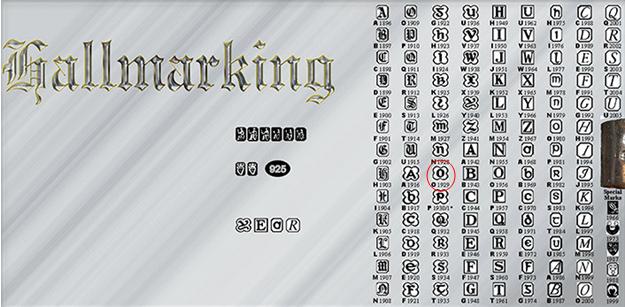
When I got home from vacation, I tried to understand the symbolic hallmarks on the band. Not being familiar with Peterson marking I sent a picture to Steve Laug to ask his opinion. Steve very graciously referred me to his Peterson expert, Mark Irwin. With Mark’s help I was able to understand Peterson’s hallmarking and dated the pipe as 1929 – placing it in the Irish Free State era: 1922 – 1937. At least, that was my interpretation of the third hallmark, an “O”.Aaron4

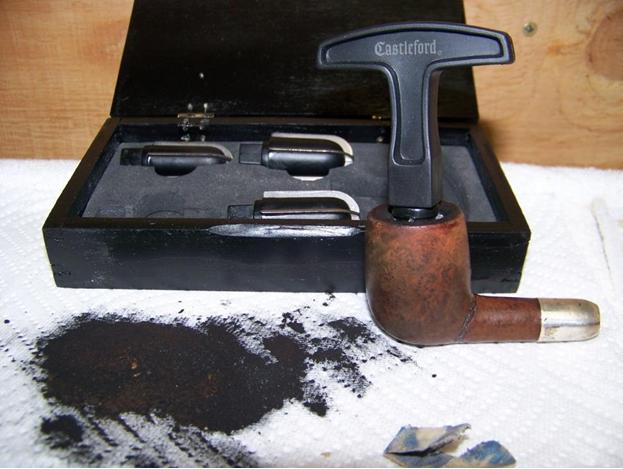
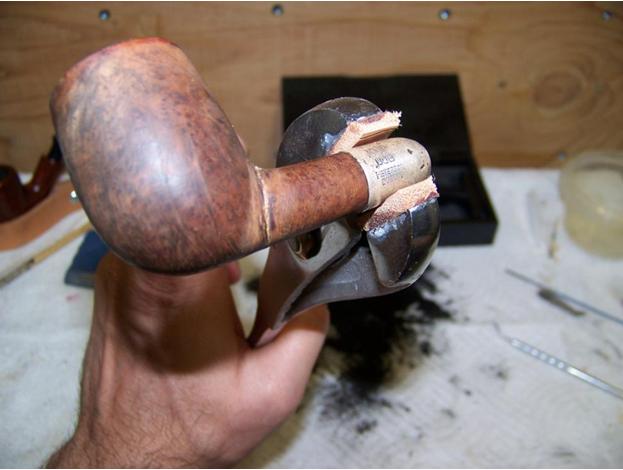
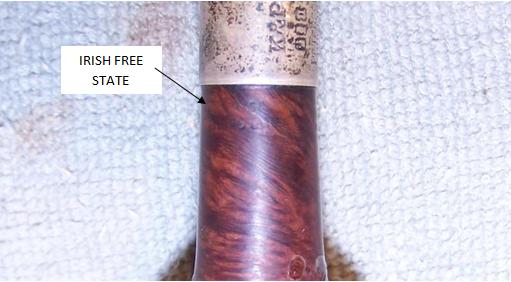
Aaron5 I began by reaming out the cake with a Castleford reamer and took the interior back to bare wood. There were some burn marks under the tar on the rim so I elected to top the bowl with some 220 grit paper laid on the flat work bench.Aaron6 Next I heated the band with a flame and then using leather jawed pliers and carefully rotated the band back into correct alignment.Aaron7 The outside of the bowl I wiped down with a cotton pad soaked in acetone. This removed the grime and the glue. I had been worried that the glue was covering a crack in the bowl but it turned out that the person doing the shank repair had just been sloppy. The glue came away and revealed pristine briar underneath. In just the right light, I also could see a very faint IRISH FREE STATE stamped into the bottom side of the shank – Confirmation!Aaron8 The break between the bowl and the shank had been complete. I could see the seam all the way around the shank but it had been a clean break. There were no gaps, rounded edges nor missing pieces; so far, so good.

At this point I turned my attention to the stem. I put the stem to soak in a mild chlorine bath to raise the oxidation. A light sanding with some worn 400 grit paper removed the oxidation completely. I picked the loose material out of the hole, made backing plug out of toothpicks and slipped it into the airway. This would hold my patching material in place. Next I mixed up some StewMac black super glue with some activated charcoal powder and worked it into the hole with another tooth pick. I set the stem aside to cure over night.Aaron9

Aaron10 When I came back to the stem I sanded down the fill with 220 grit paper. The plug blended nicely and I proceeded to polish the stem with 1500 – 12000 micromesh pads. Cleaning the inside of the stem was quite simple, four of alcohol soaked pipe cleaners (2 bristled and 2 soft) took care of the insides and the stem was done.Aaron11 Returning to the stummel, I began to work the bowl-shank joint back and forth with ever increasing force. I caught myself holding my breath, afraid of breaking the pipe beyond repair but dismissed that thought as fear of the unknown and pushed on. Eventually the crack began to open up and the shank and bowl were separated. I was surprised to see that the original repair had included two small brads – or pins – set on either side of the air hole to strengthen the break. Since the brads were already in proper alignment I decided to reuse them in my repair.Aaron12 After some research, I settled on the J-B Kwik Weld as my epoxy of choice. Its resistant temperature is less than that of original J-B Weld (300 vs 550 degrees); however, I do not think the shank should reach 300 degrees during a smoke. But the real advantage in my minds was that the set time is only 6 minutes compared to 4-6 hours. I didn’t want to have to come up with a way to hold the two parts together for several hours and risk the parts slipping.

In order to keep the airway clear during the repair, I pushed a pipe cleaner through the airway before smearing the epoxy on the both surfaces with a tooth pick. With the clock running on the set time, I pushed to the two parts together using the old brads as alignment pins. Looking back I think it would have been better if I had only used one of the pins. The fit was tight and I was fighting against the pins to get the two parts tight together when the time ran out on the epoxy. I was left with a larger gap between the pieces than I thought was right; I had been hoping for a flush fit. Before setting the pipe aside to cure I wiped off the excess epoxy and removed the pipe cleaner.Aaron13 I let the pipe sit overnight and the next day I used a dental pick to remove some of the epoxy from the gap between the stummel and bowl. The gap was very small, less than a 1/32 of an inch on top and near flush on the bottom. When the crack was as clean as I could get it, I filled it with briar dust and placed drops of clear super glue on top to hold the dust in place. When the super glue dried I smoothed out the repair with 220 grit sand paper.Aaron14 There were some minor dents in the bowl and I decided to steam them out by wrapping the bowl with a damp terry cloth rag and going over the rag with a clothes iron set on high. If you used this method I would advise keeping your figures well clear of the iron. Speaking from personal experience, you don’t have to be very close to the iron get burned by the steam. Fortunately, I did not drop bowl!

I sanded the entire bowl with 400 – 2000 grit paper to remove all the dents and scratches but being sure to stay clear of the marking on the shank. The markings were faint but I wanted to preserve as much of them as I could.

The bowl had beautiful grain and I wanted to use a light brown stain to highlight it. I used one part Fiebing’s light brown mixed with 2 parts isopropyl alcohol applied with a cotton swab in layers until the color looked just right. I flaming each layer and wiped off the excess with a cotton pad moistened with alcohol.

The next to last step was to polish the sterling silver band. For this I tried a new technique that I had recently learned on this blog using a small amount of cigar ash and saliva. I was careful not to polish too much – or at all – around the hallmarks. The final step was a trip to the buffer for three coats of carnauba wax on the briar and stem. I hand applied a light coat of Walker Briar Works carnauba wax sealer on the silver band and I buffed the pipe with a micro fiber cloth to bring up the shine.Aaron15

Aaron16

Aaron17

Aaron18

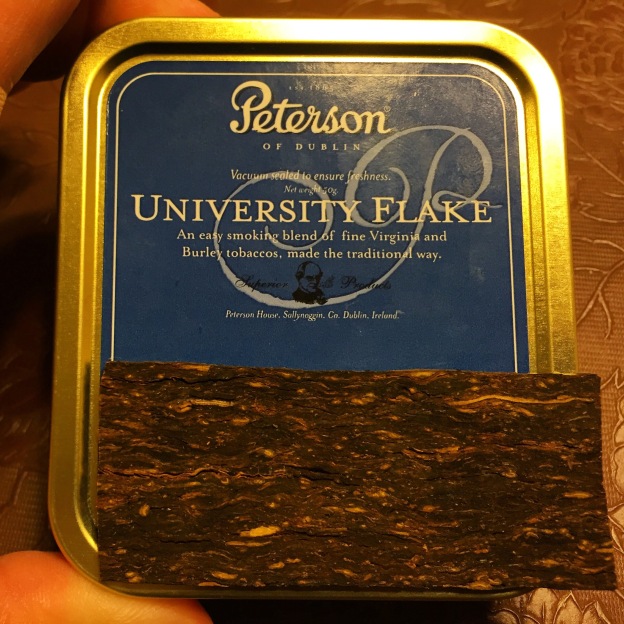
Peterson University Flake: a lesson in subjectivity


Just after the first of the year a new tobacconist opened in my area. Though they are primarily a cigar store, the last few months they’ve started really delving into pipes and pipe tobacco, giving me a new choice to shop locally; they are about 20 minutes away so it’s not very often I get […]

http://smokingjacketmagazine.com/2015/11/11/peterson-university-flake-a-lesson-in-subjectivity/

Refurbished a Peterson’s Deluxe Zulu


In one of my EBay purchases was this little Peterson’s Deluxe Zulu shape #268. To me this pipe epitomizes the Zulu shape – in other words, when I think Zulu I think of a pipe that is shaped like this. When the pipe arrived the bowl was dirty and caked (two things that I almost forget to say as they are to be expected in estate pipes and I am surprised when I find one that is not). The finish was mottled with light and dark spots where the stain had worn off. It also had some flecks of paint on the surface that are not clearly visible in the photos below. The rim was very caked and covered with tars. Fortunately there was no charring that was visible as I looked it over. The stem also had paint flecks on it and was slightly oxidized. There were tooth marks on the top and bottom of the stem that would need to be repaired.ImageImage

I reamed and cleaned the bowl and the rim of the pipe. The shank took some work with isopropyl alcohol and many pipe cleaners and a shank brush before it was clean. I wiped down the surface of the bowl with acetone to clean off the remaining finish and the paint spots. I use cotton makeup removal pads that I picked up at the store. They work great and are easier to use than just cotton bolls. Once the finish was cleaned I dropped the bowl in the alcohol bath to soak while I turned my attention to the stem.
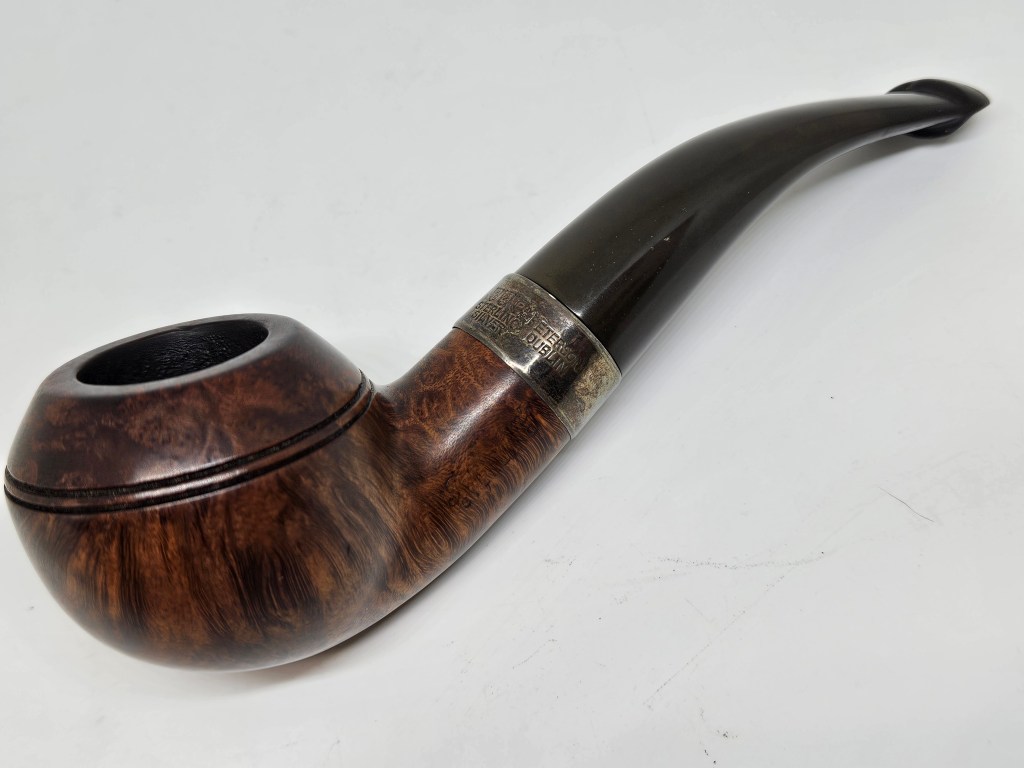
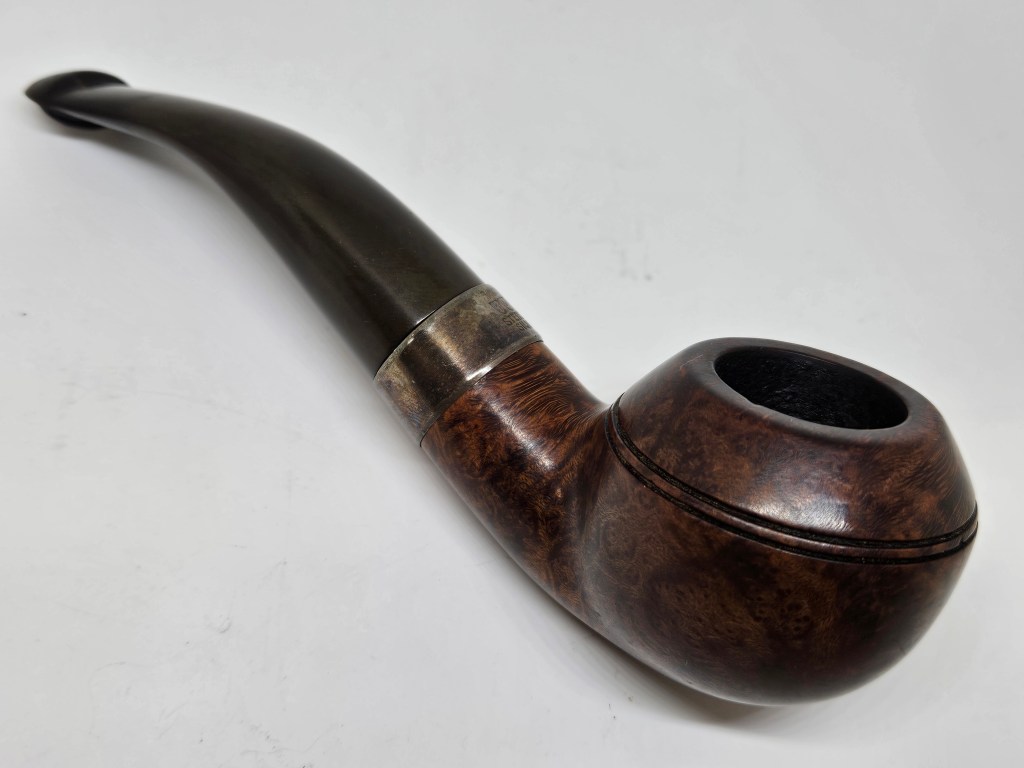
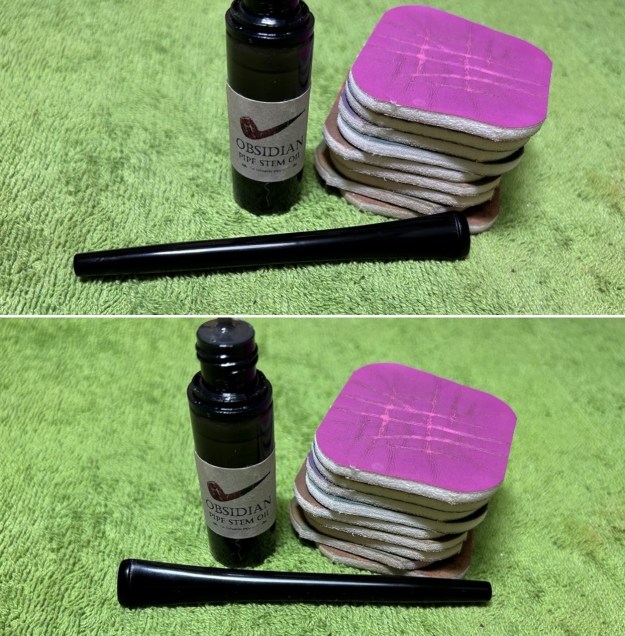
I buffed the stem to remove the oxidation and the paint spots. I was careful to avoid the area where the stem and shank meet so as not to round the sharp edges and ruin the great fit of the two. I heated the tooth marks that needed to be lifted with my heat gun and when they had come back as far as possible I sanded the stem with 240 grit sandpaper to remove what remained. I sharpened up the edge of the button with my needle files to give it a good crisp edge. I then sanded the whole stem with 400 and 600 grit wet dry sandpaper and water. I finished the sanding and polishing process with micromesh pads from 1500 to 6000 grit. Once that was finished I laid the stem aside with a coat of Obsidian Oil and turned back to the bowl.
I took the bowl out of the alcohol bath and restained it with a medium brown aniline stain. I flamed it, let it dry and then took it to the buffer and buffed it with White Diamond. This was done and the entirety buffed and polished with carnauba wax to give it several layers of wax. The cross grain, birdseye and straight grain on this beauty are well laid out. ImageImageImageImage

Restoring a unique Peterson 10


I picked up this old Peterson shape number 10 at a flea market for about $12. This one needed cleaning inside and out as well as reaming. The finish was quite good. I just used a soft bristle tooth brush to get into the crevices. The shank had a crack in it so I banded it with a silver band. The bowl was caked and very narrow. I used a battery terminal brush and an old adjustable reamer to get inside of it. The stem on it was obviously not the original but a smaller diameter replacement stem that did not fit well. The shank had been sanded smooth but was not tapered to meet the misfit stem but it was perfect for setting the band. Before doing that I used some super glue to squeeze the crack in the shank together. I held it until it was dry. I then heated the band with my heat gun and pressure fit it on the shank. I flattened the bottom edge of the band to match the flat bottom where the stamping is. I fit and shaped a new stem. Once it was fit I bent it to a comfortable fit for the mouth. Then I sanded and polished it with my usual regimen of micromesh pads from 1500-6000 grit.