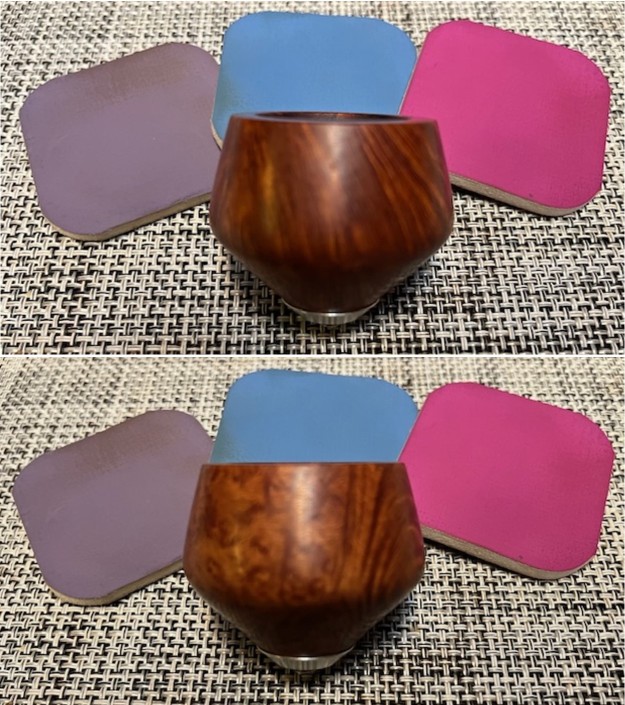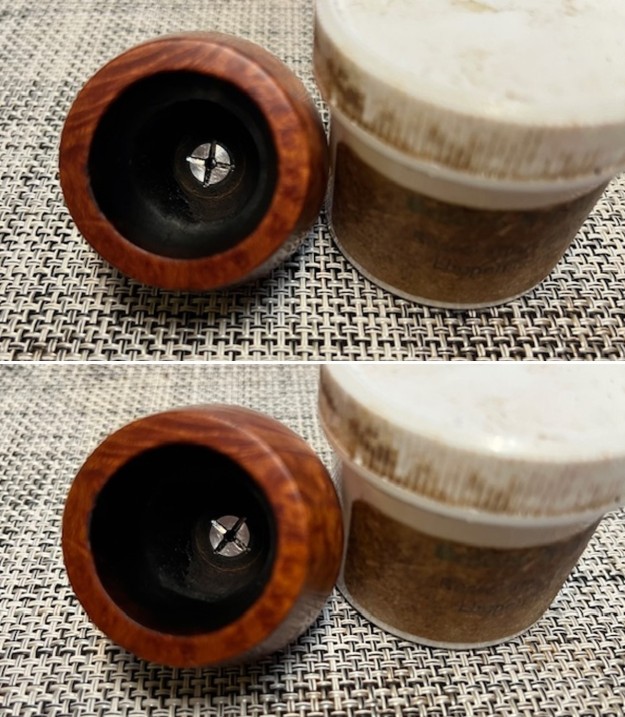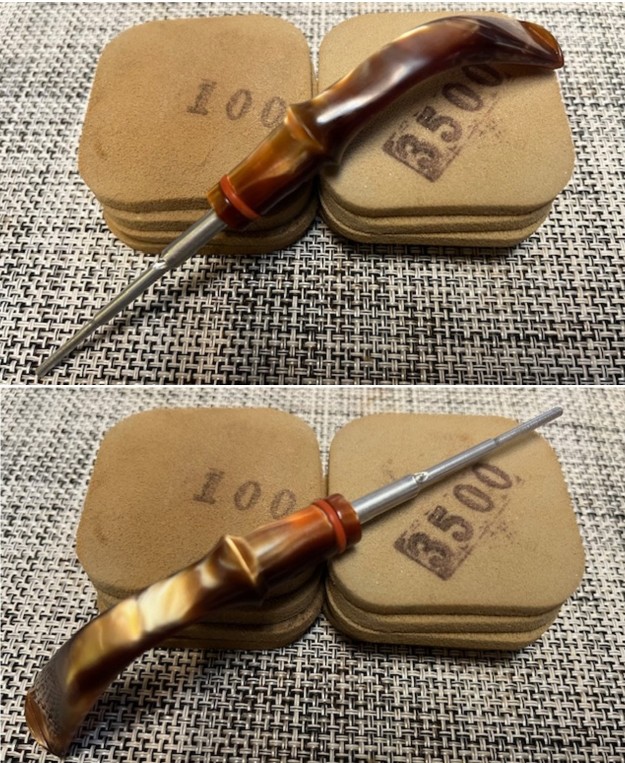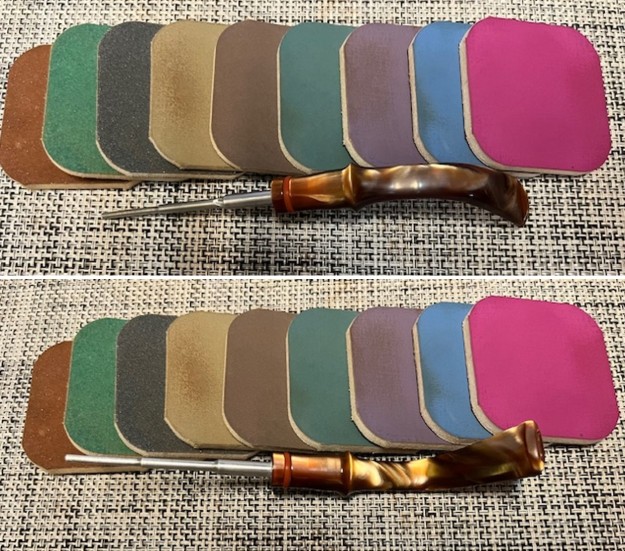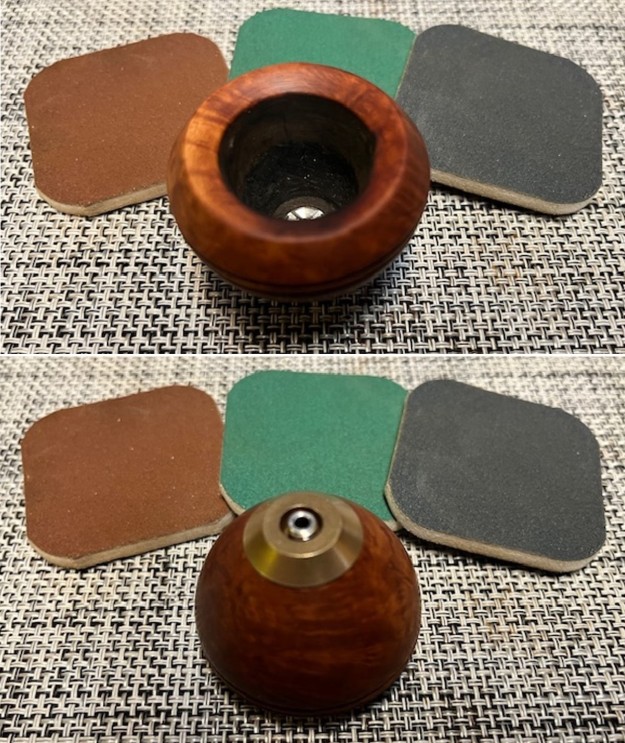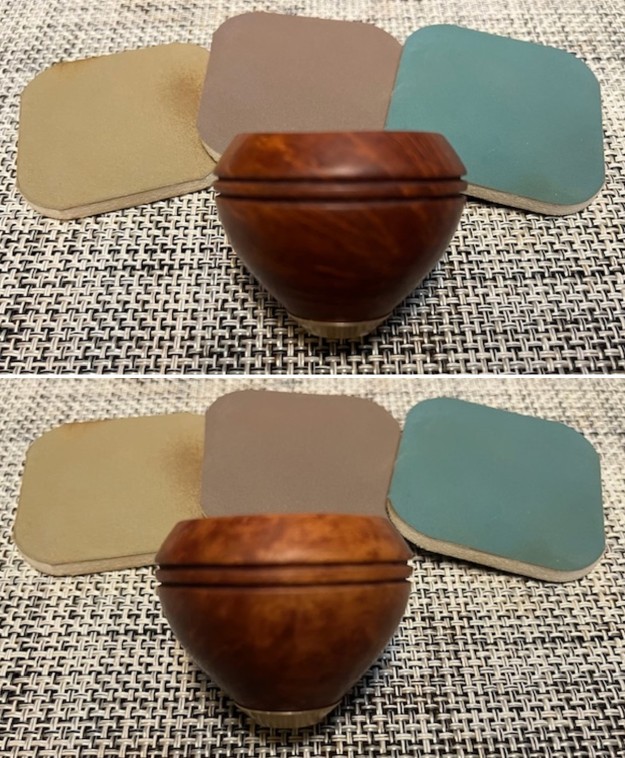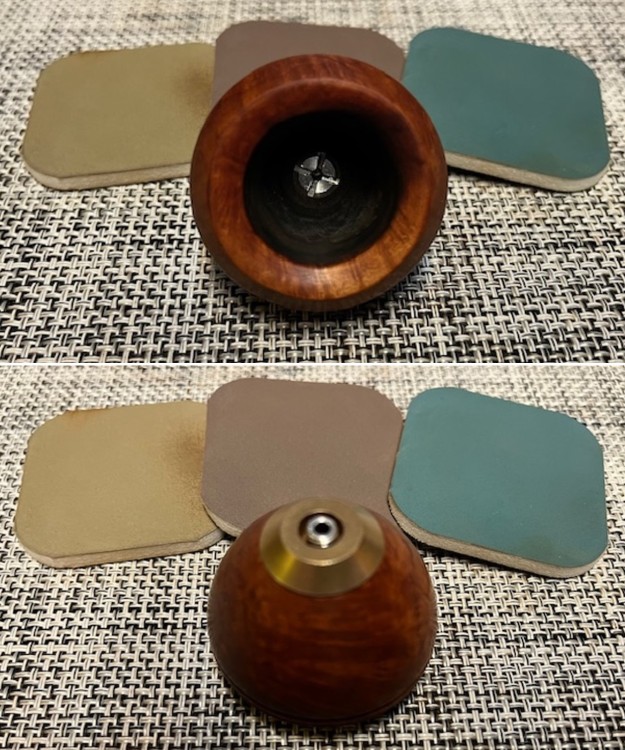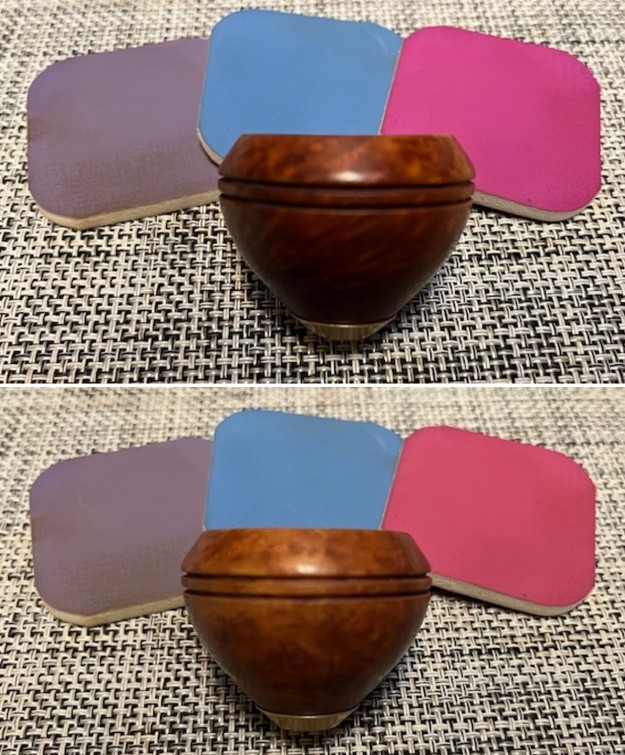
Tag Archives: Kirsten pipes

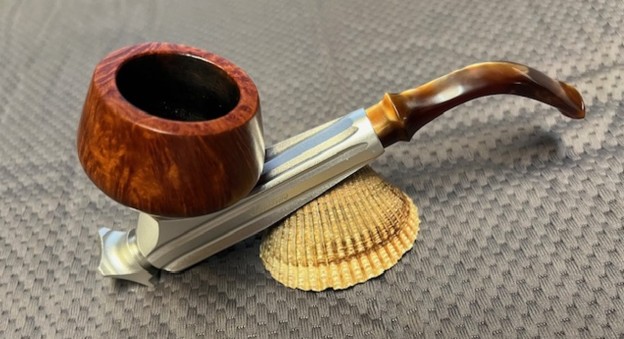
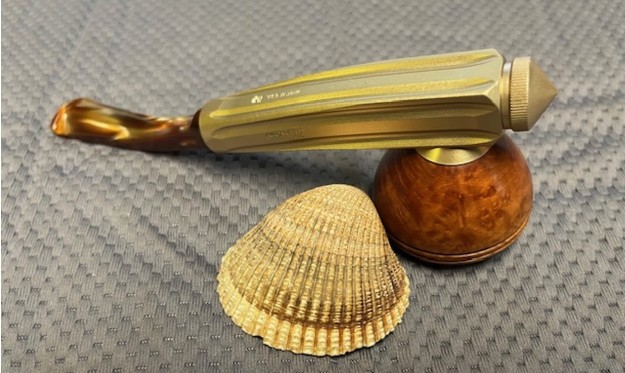
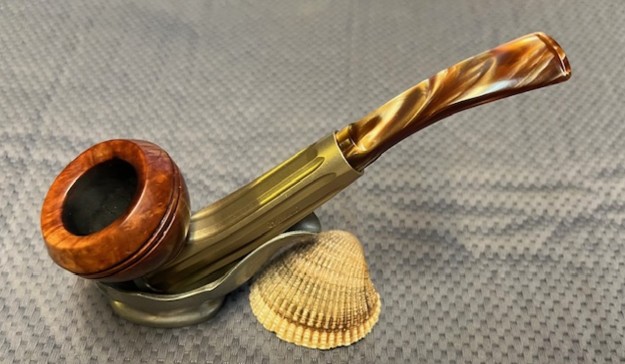
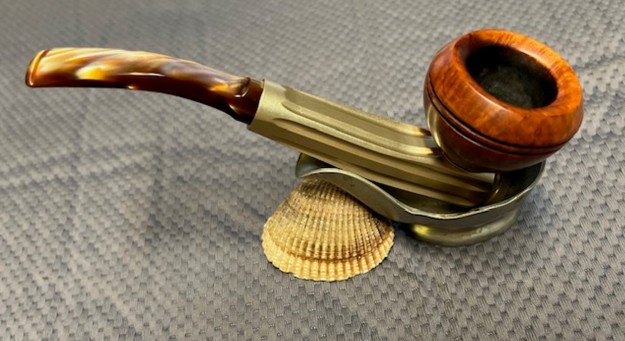
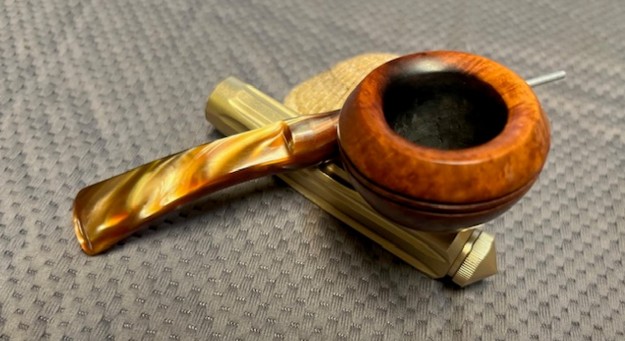
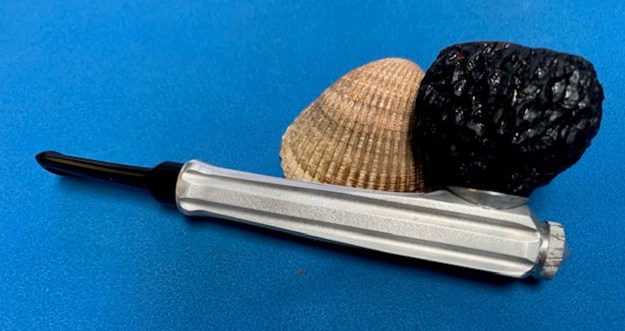
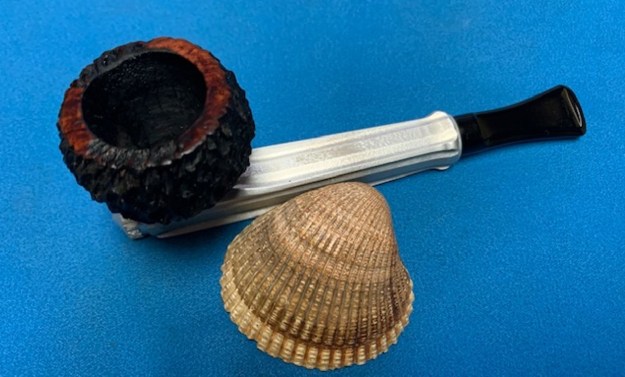
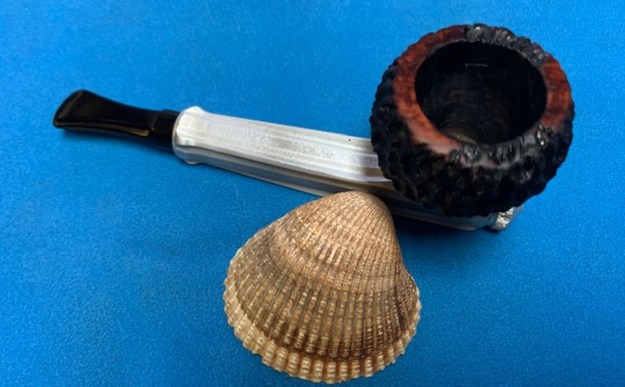
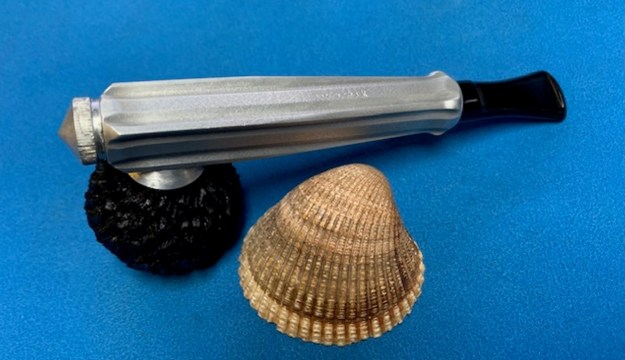
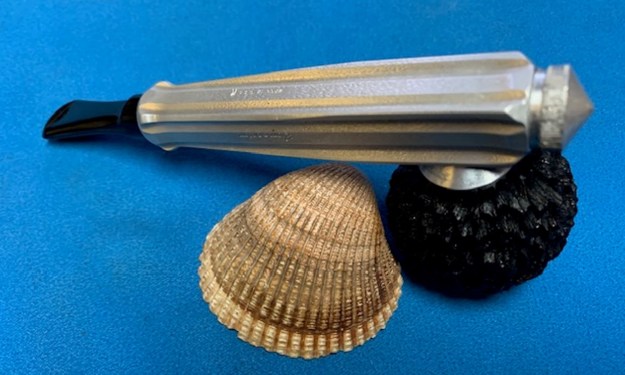
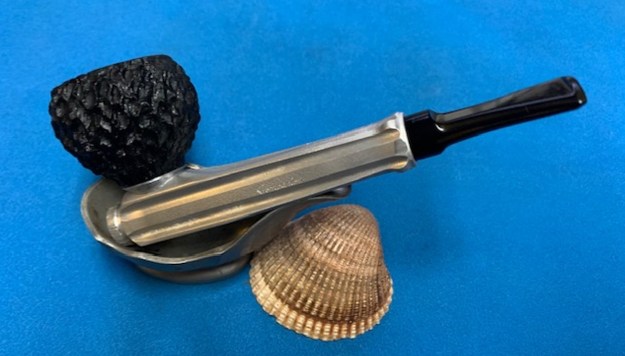
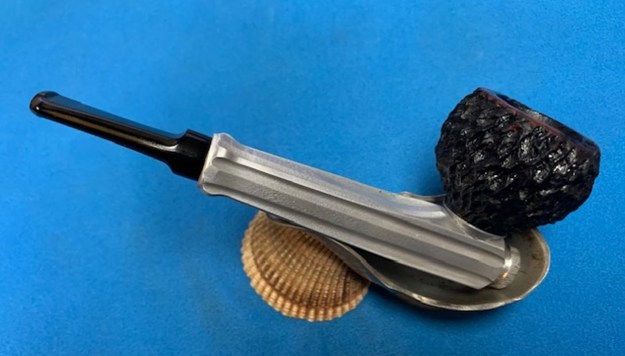
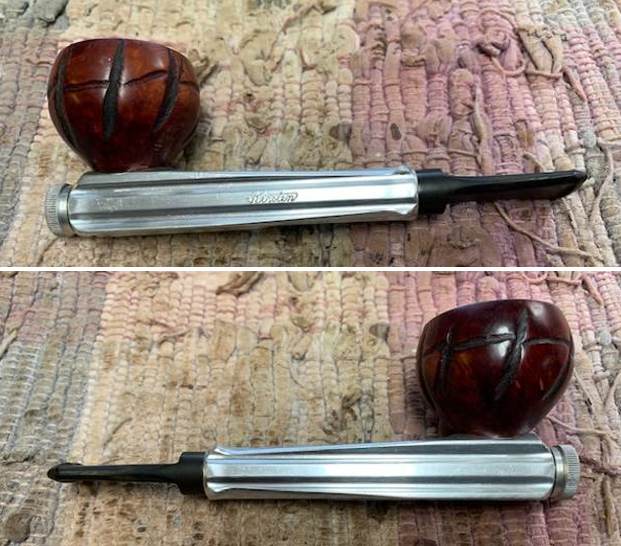
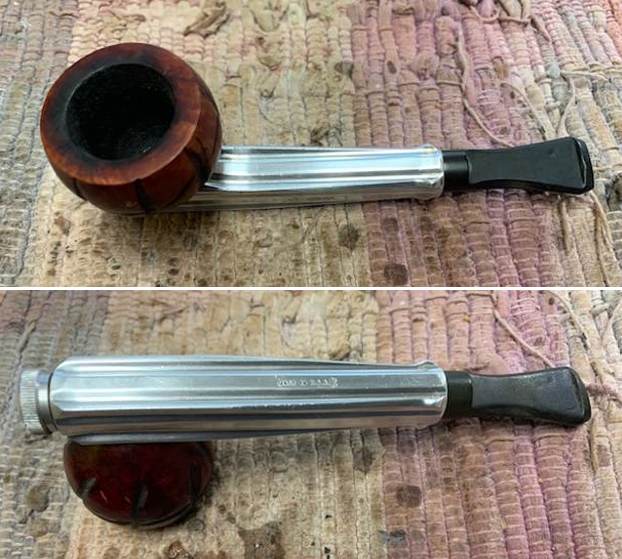
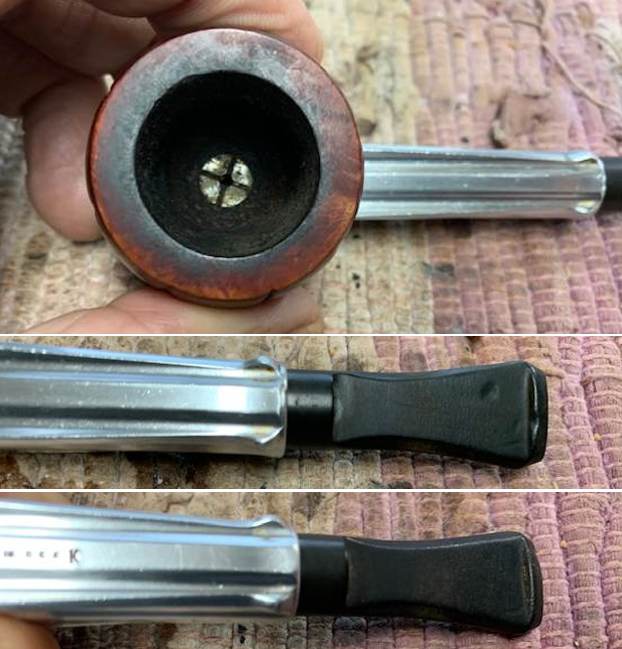
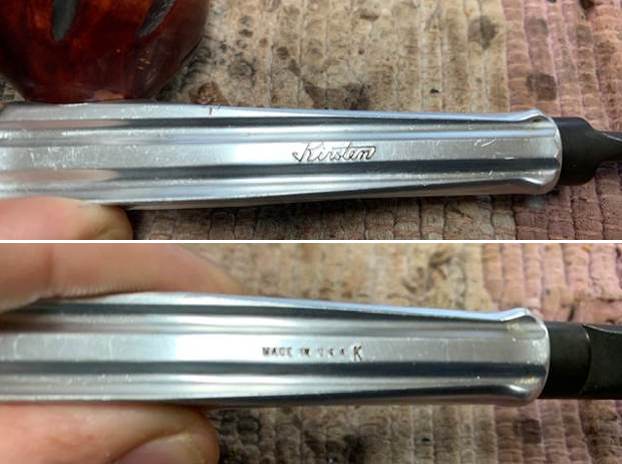
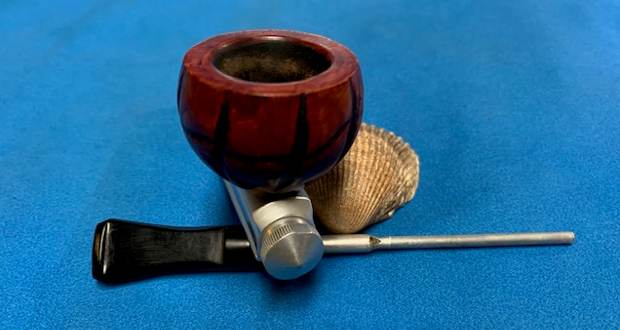
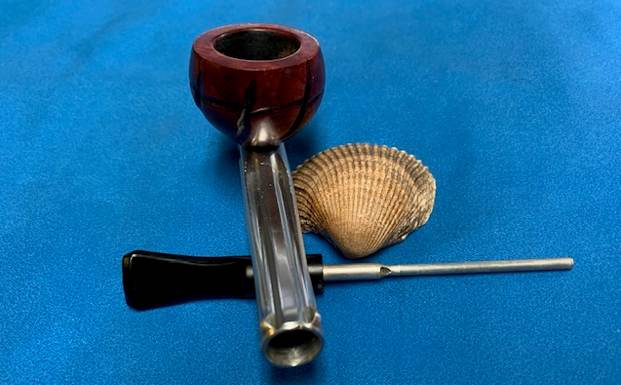
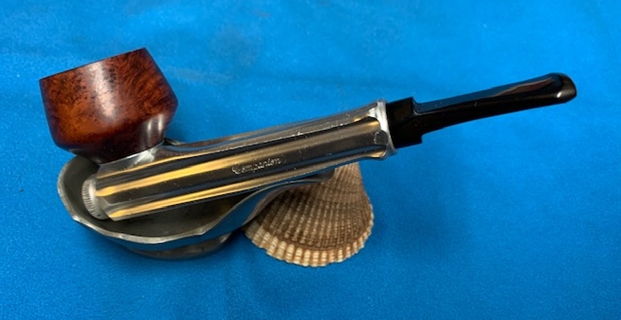
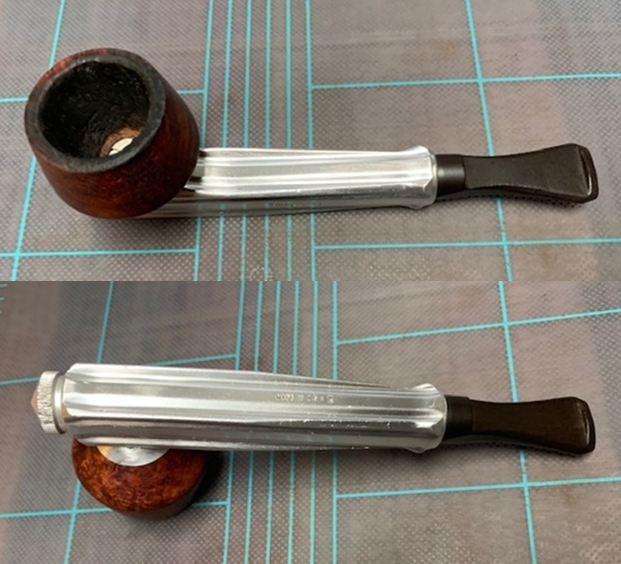
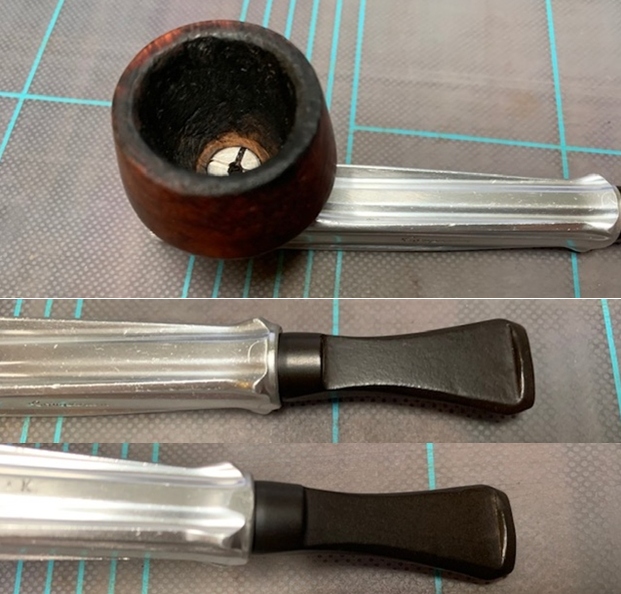
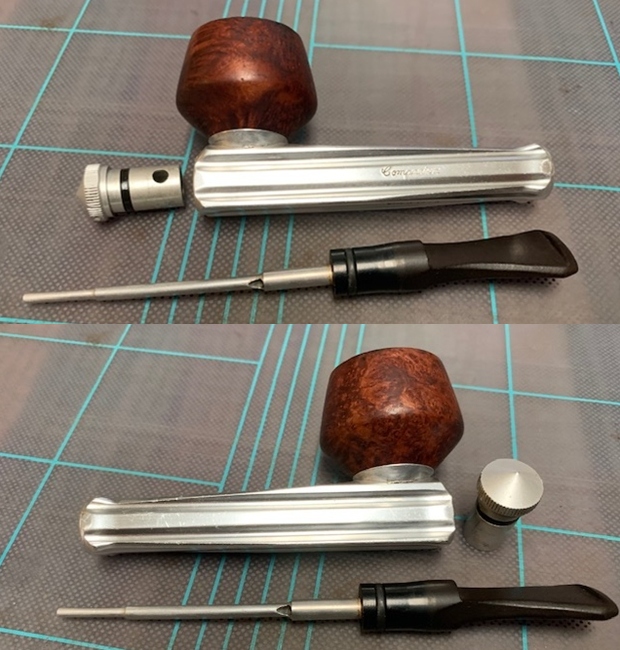
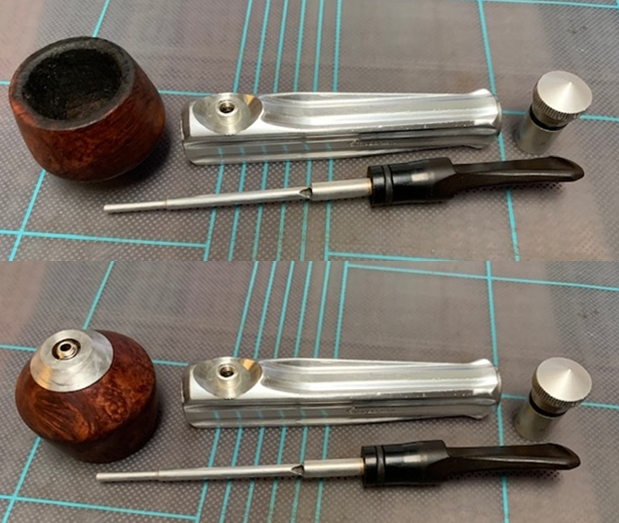
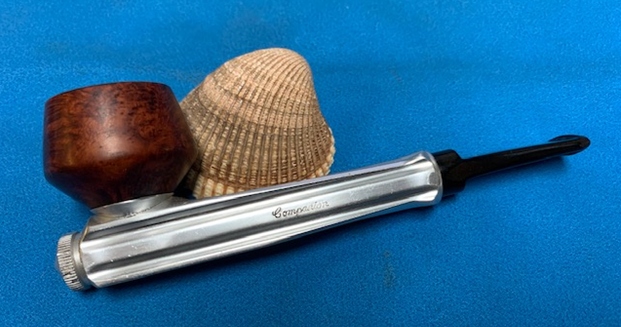
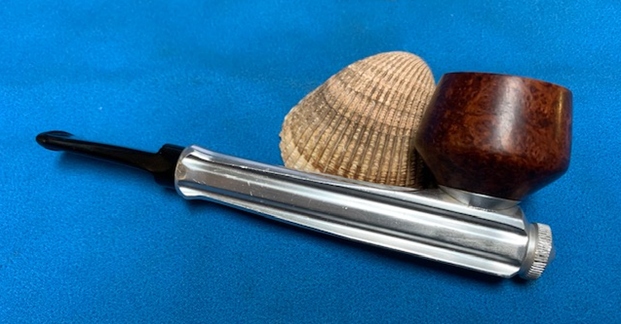
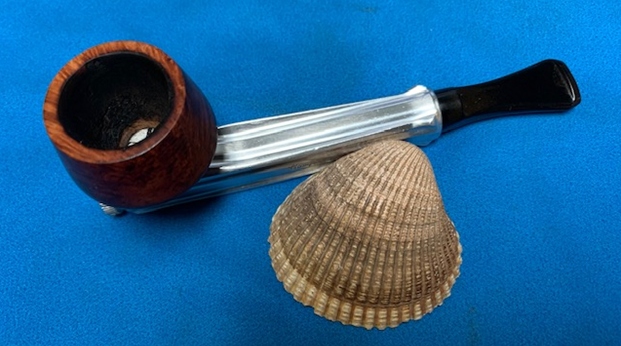
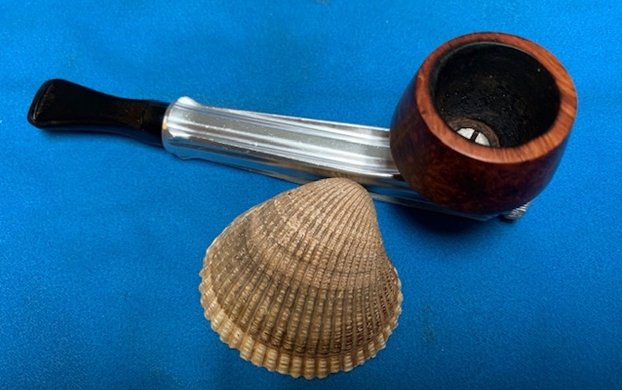
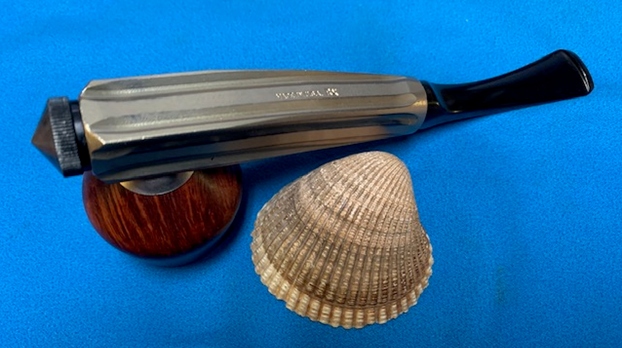
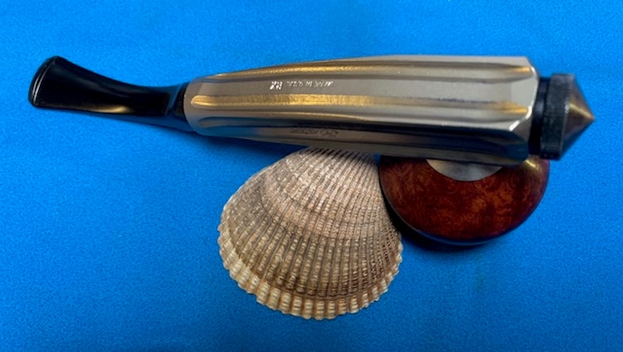
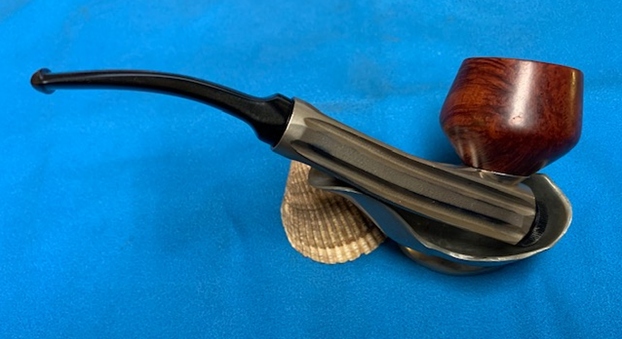
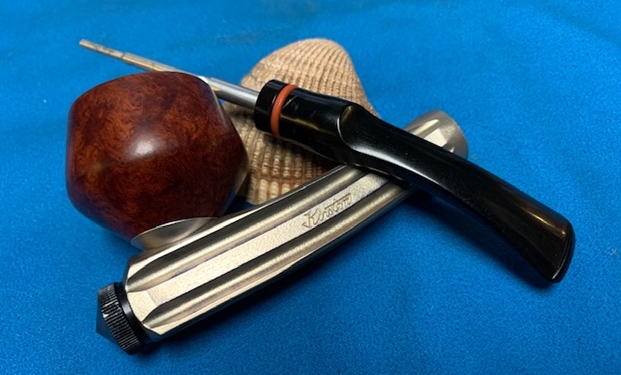
Giving Some Life Back to a Kirsten Companion K


by Kenneth Lieblich

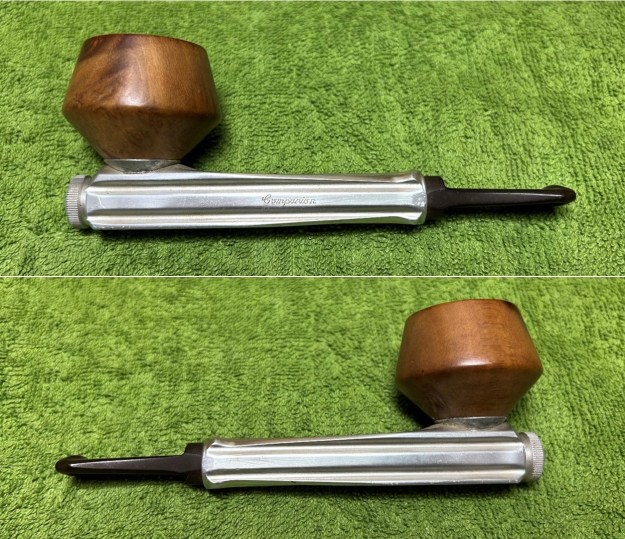
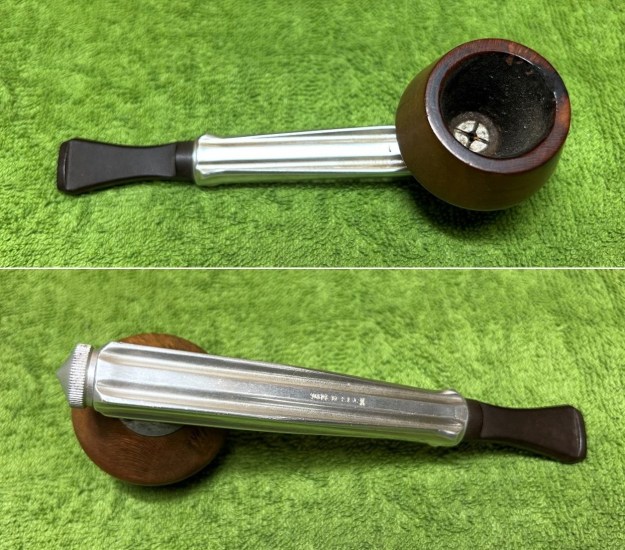
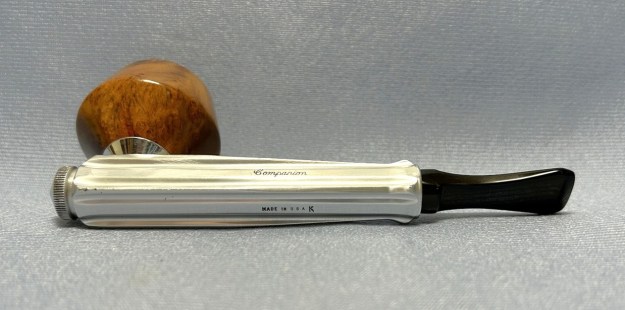
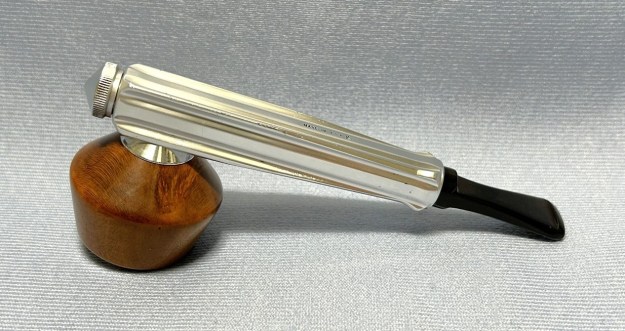
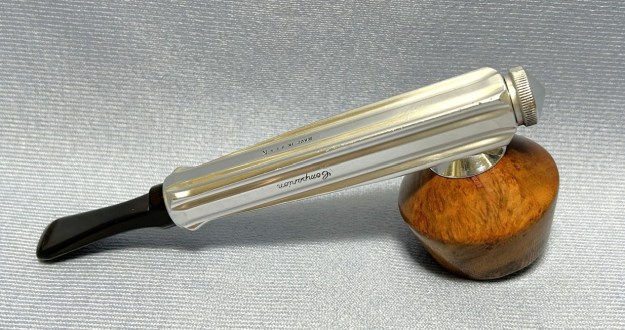
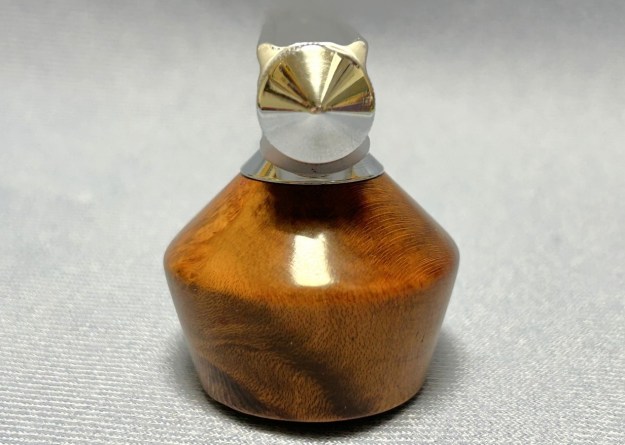
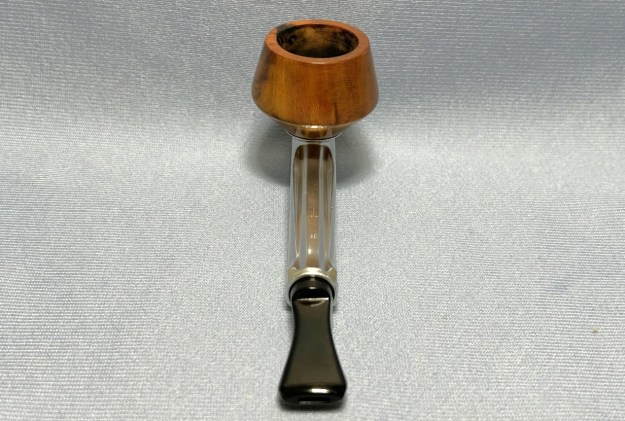
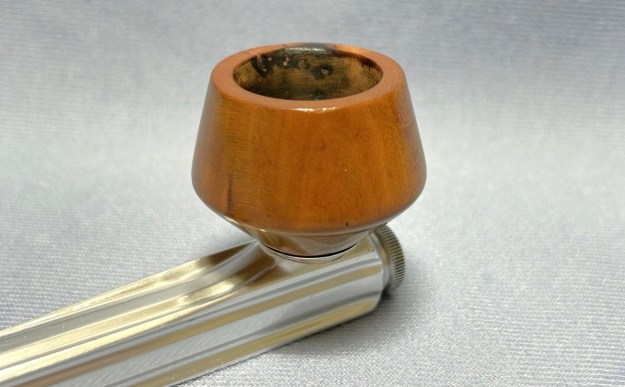
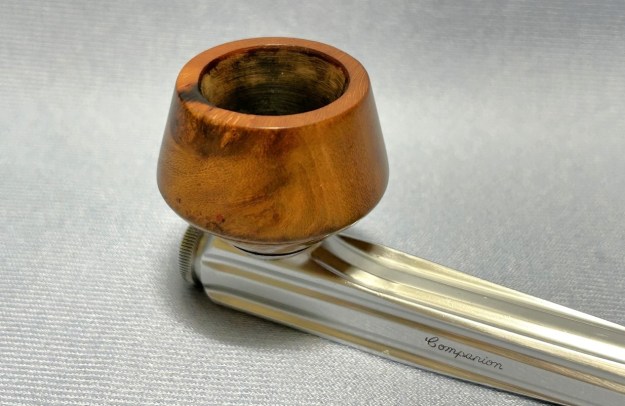
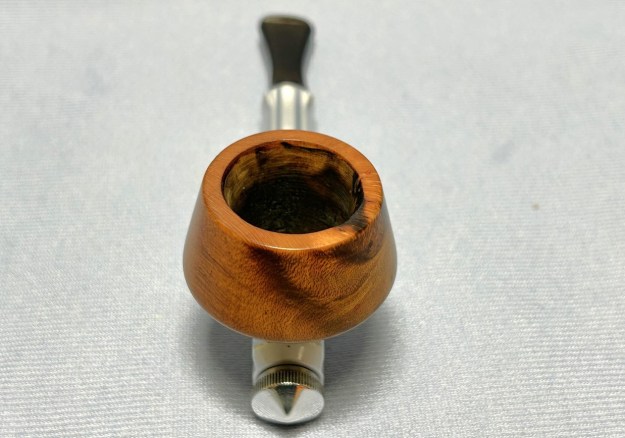
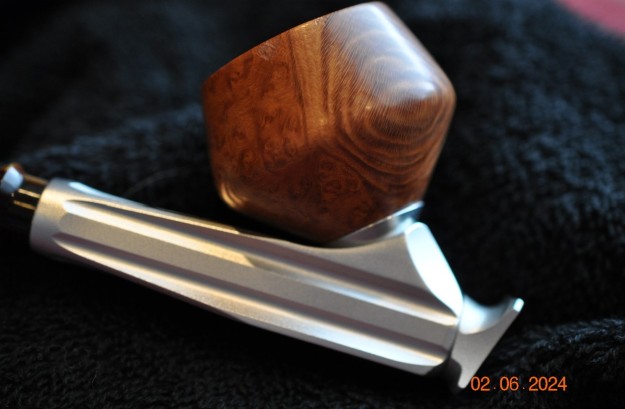
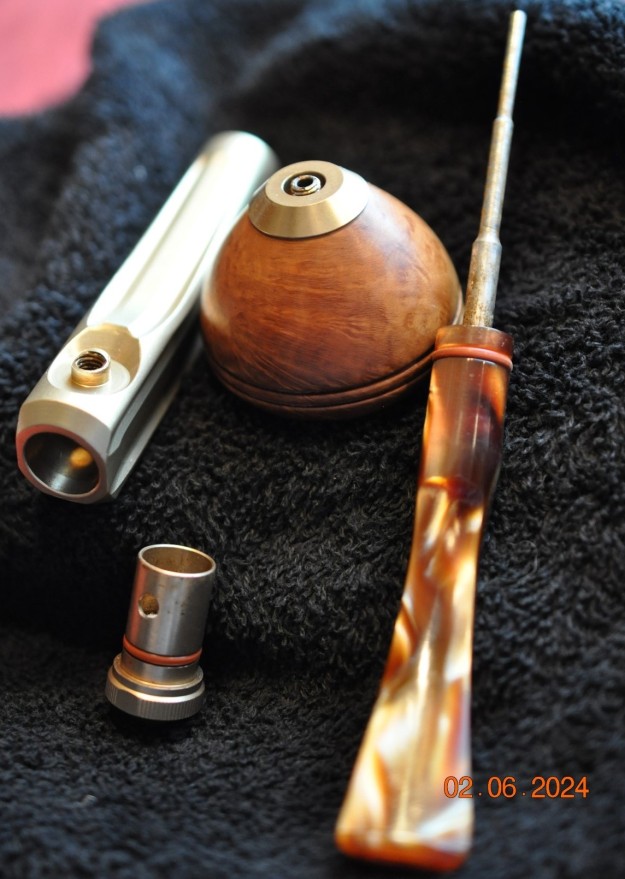
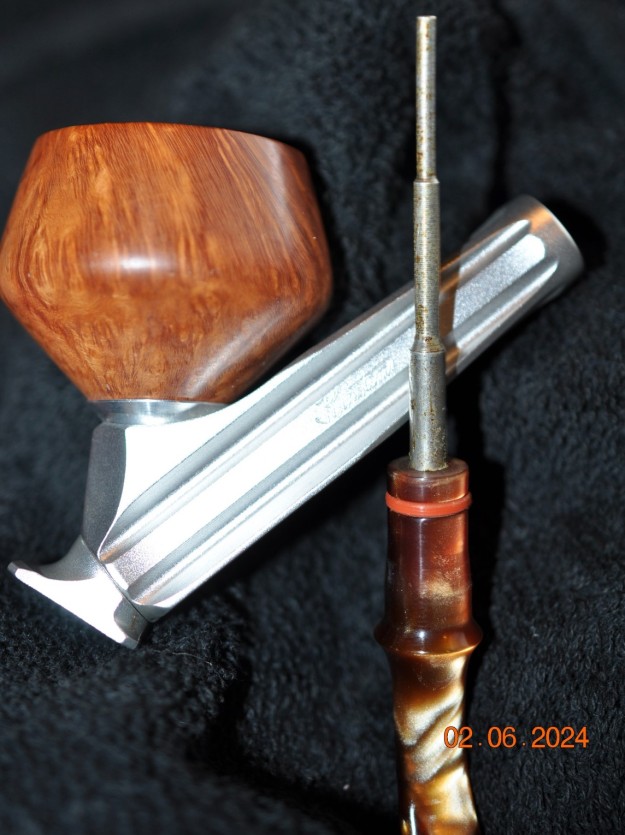
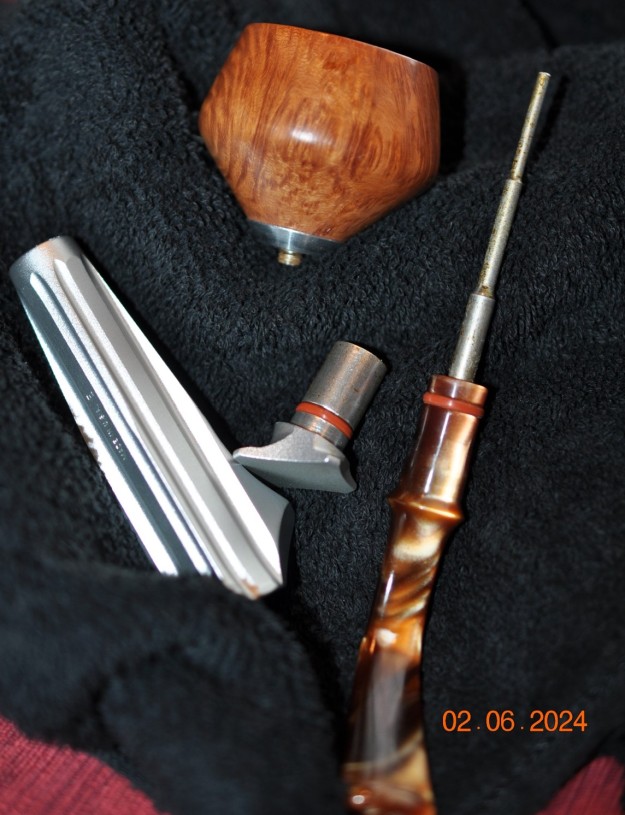
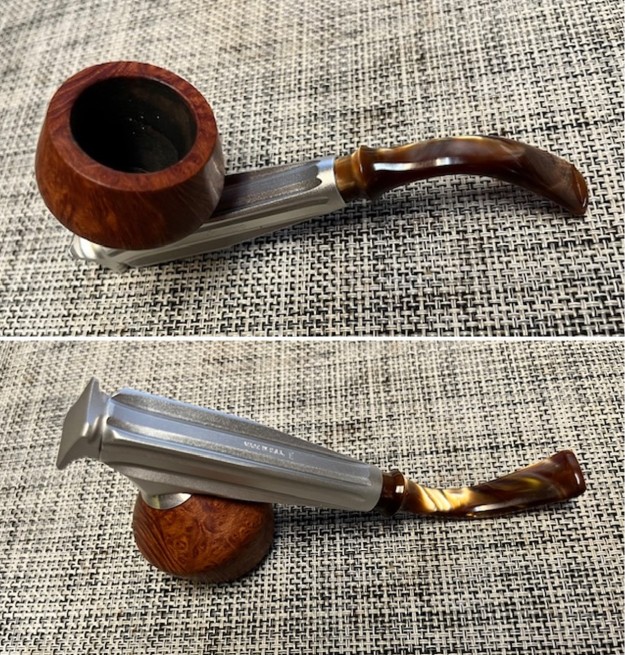
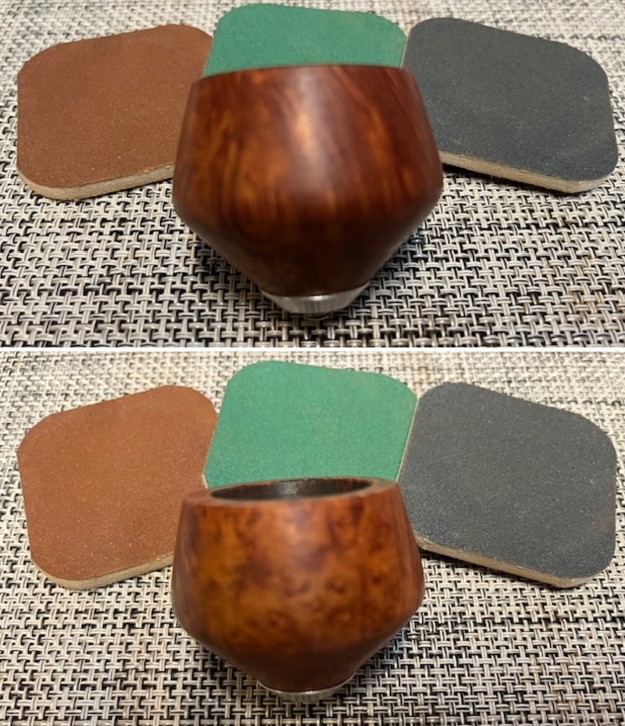
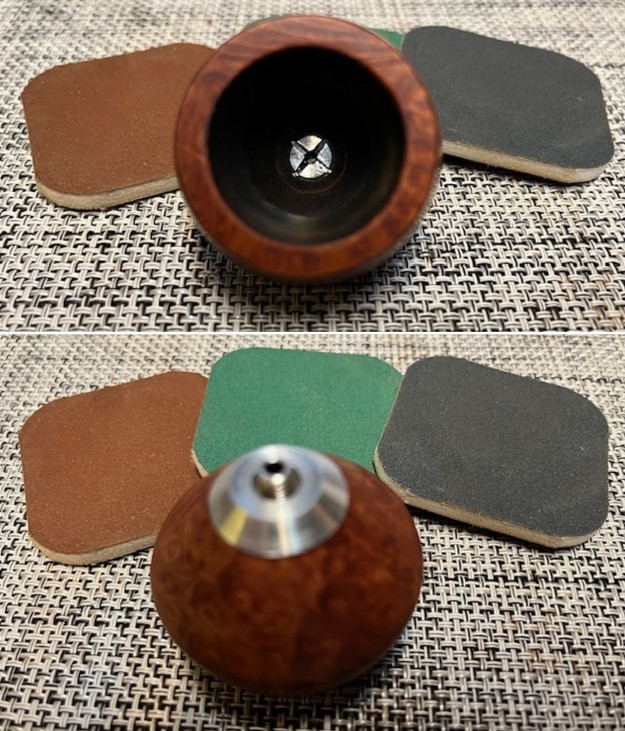
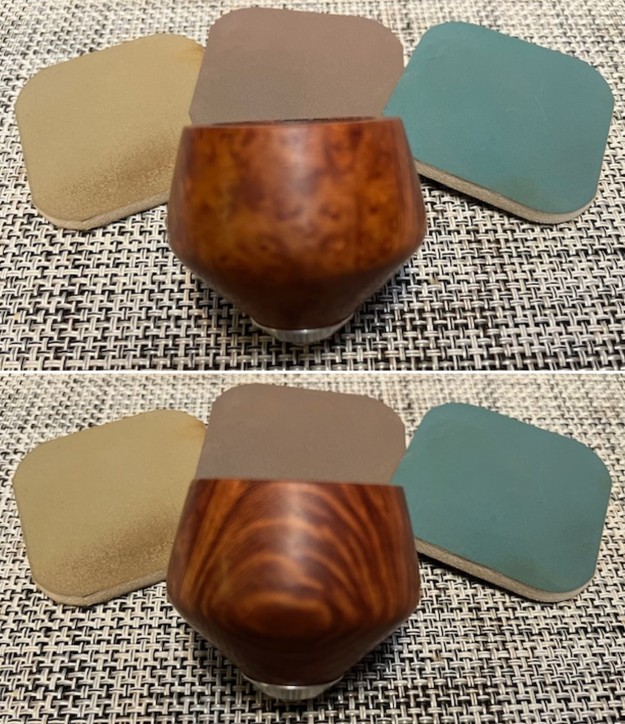
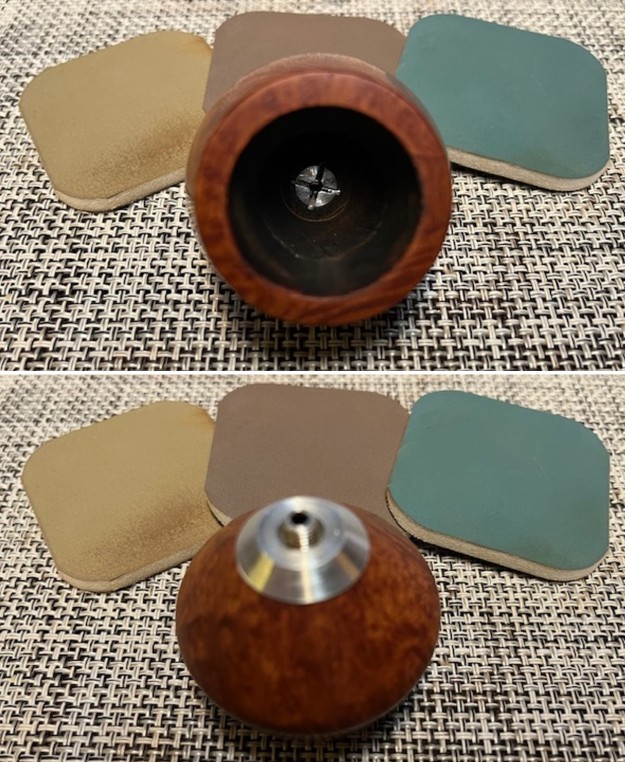
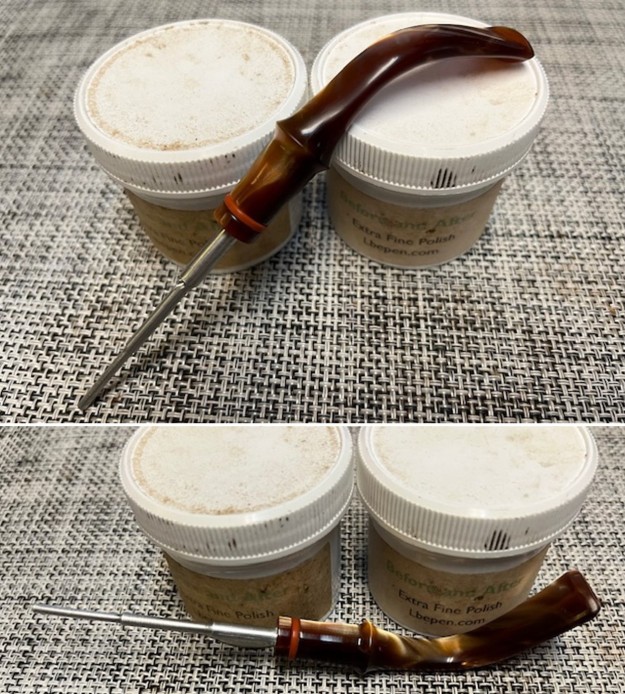
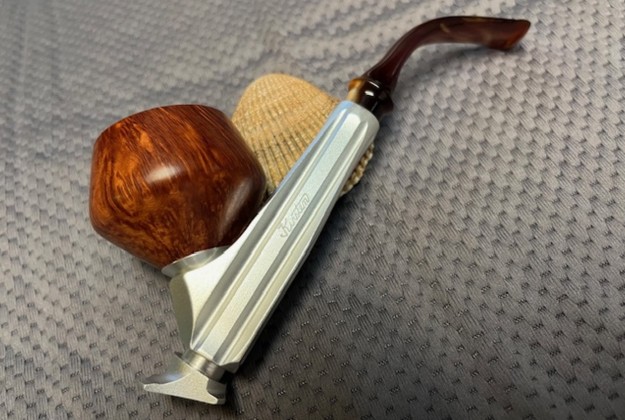
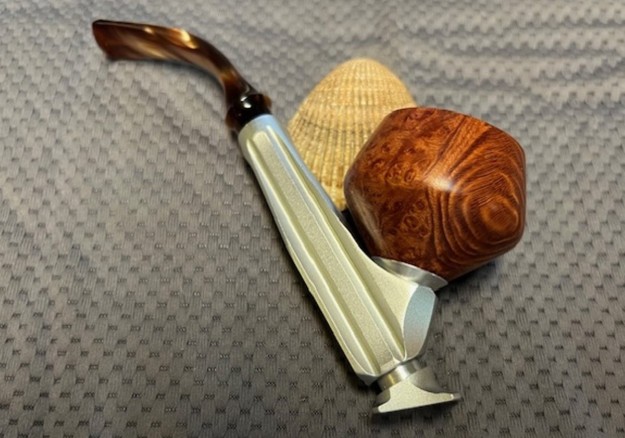
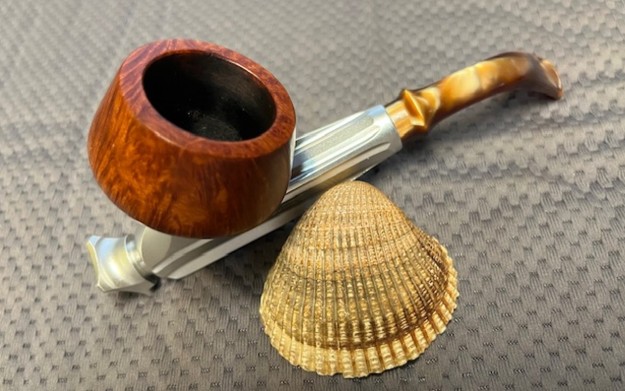
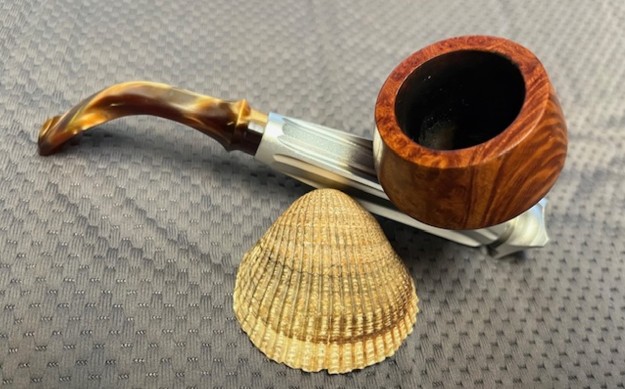
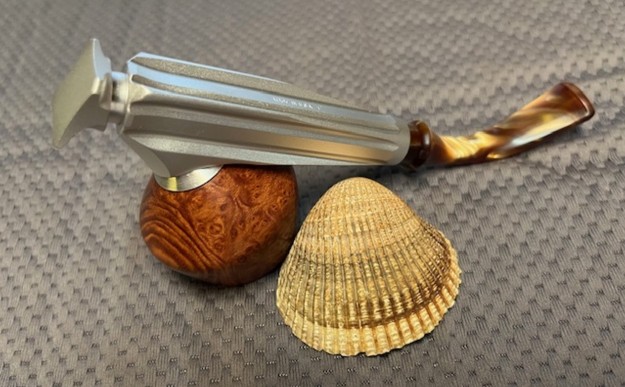
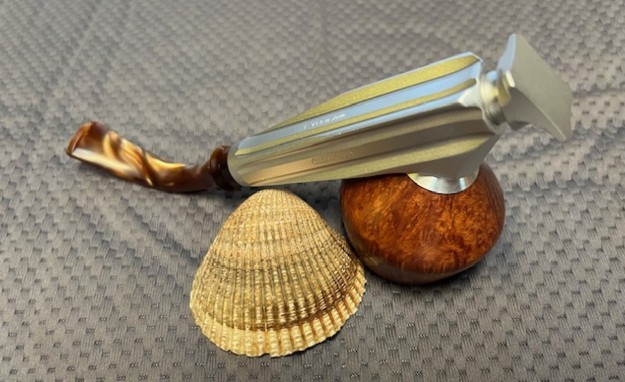
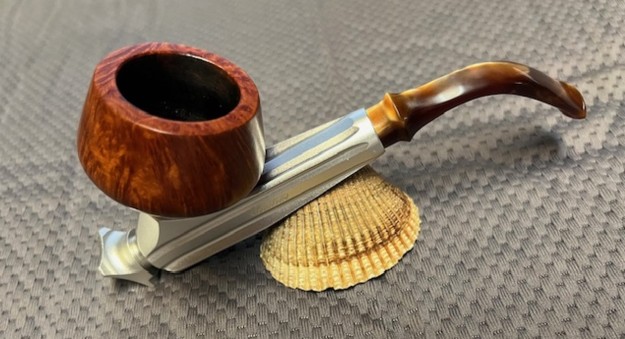
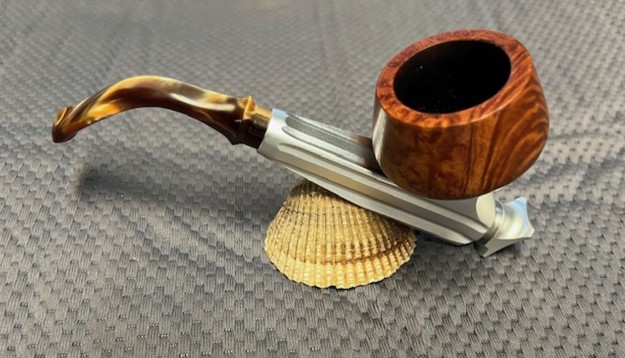
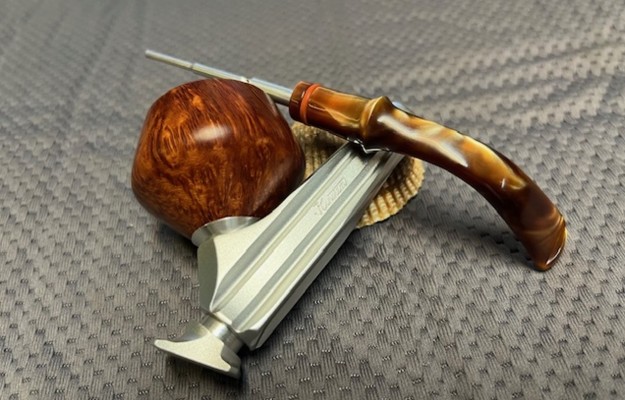
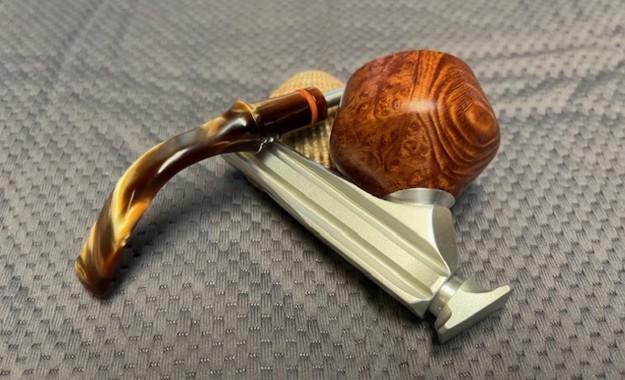
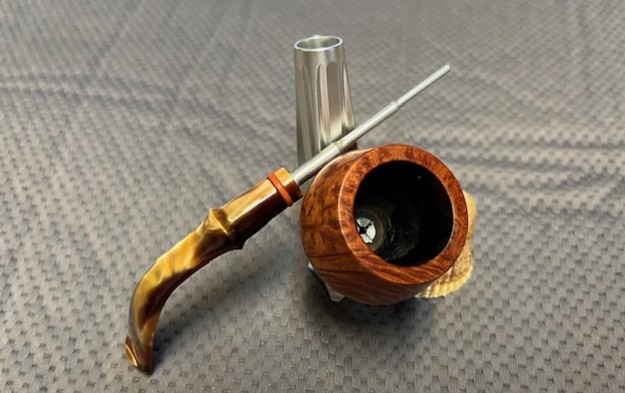
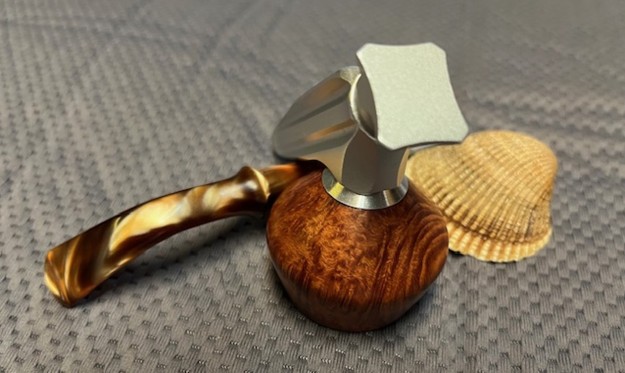
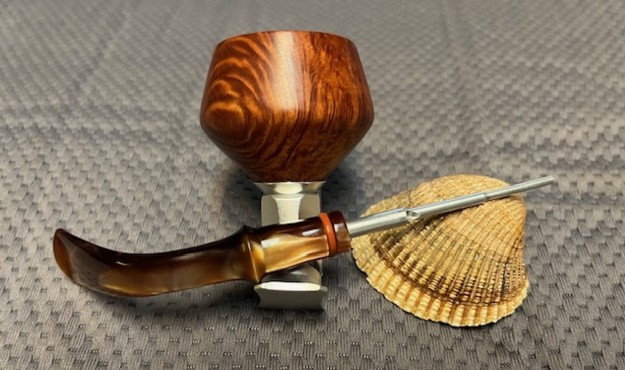
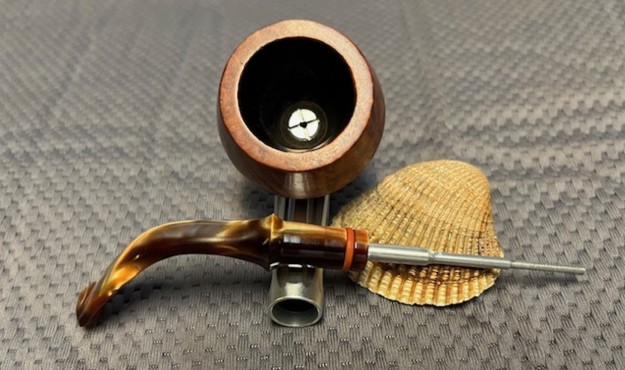
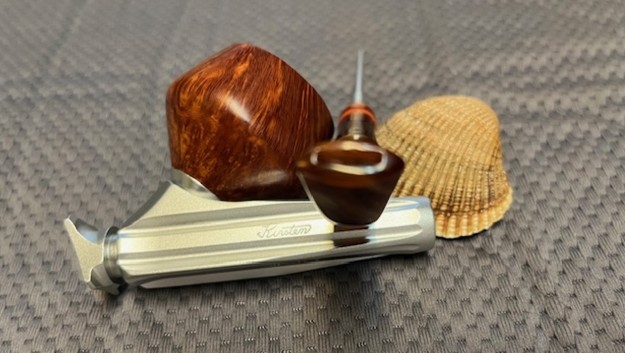
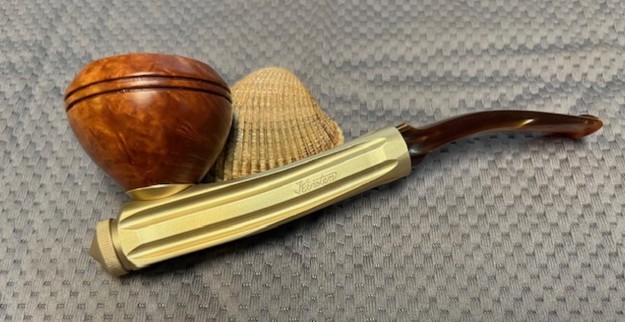
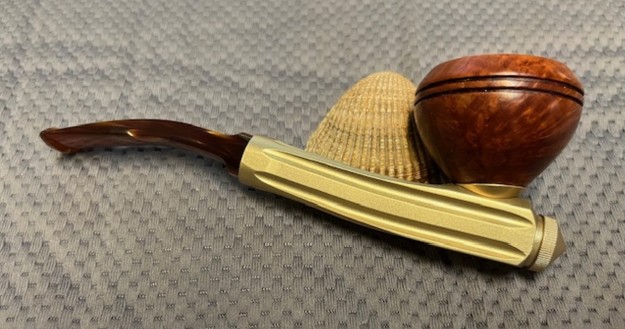
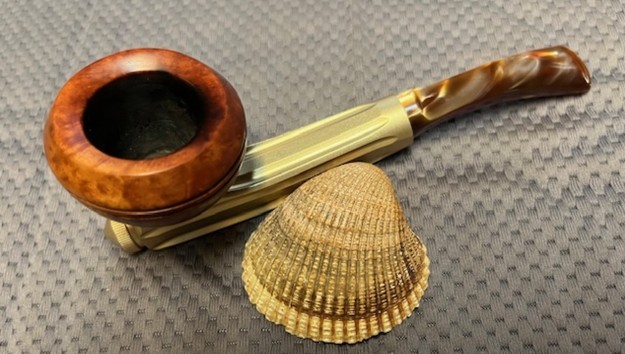
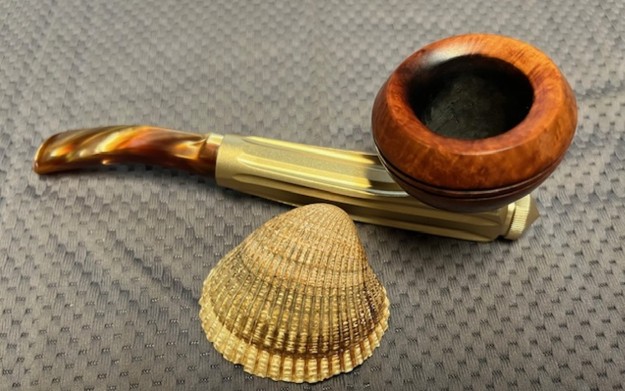
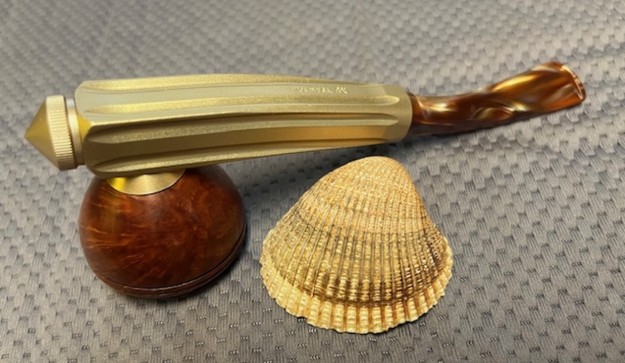
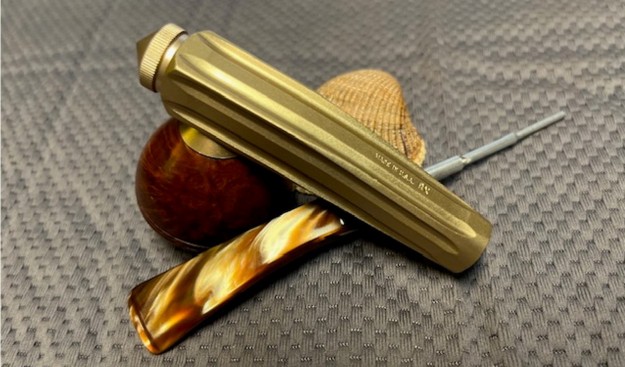
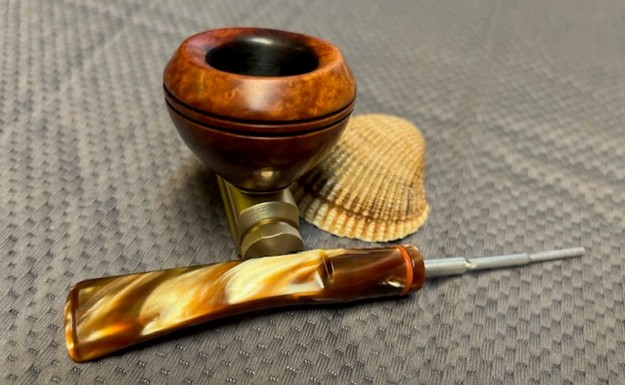
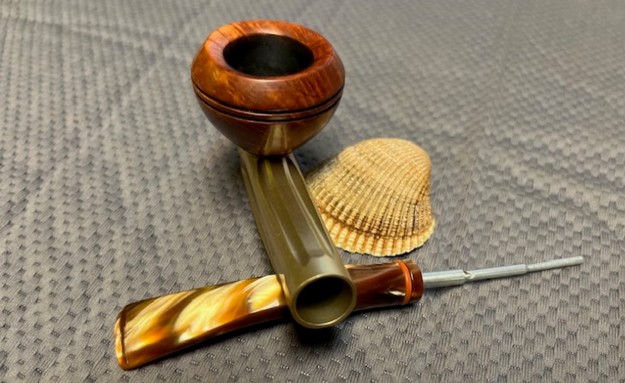
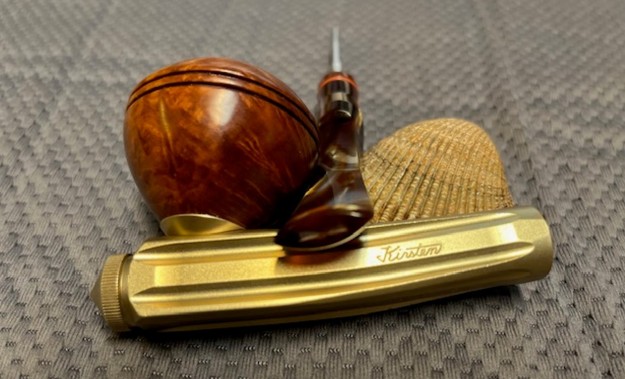
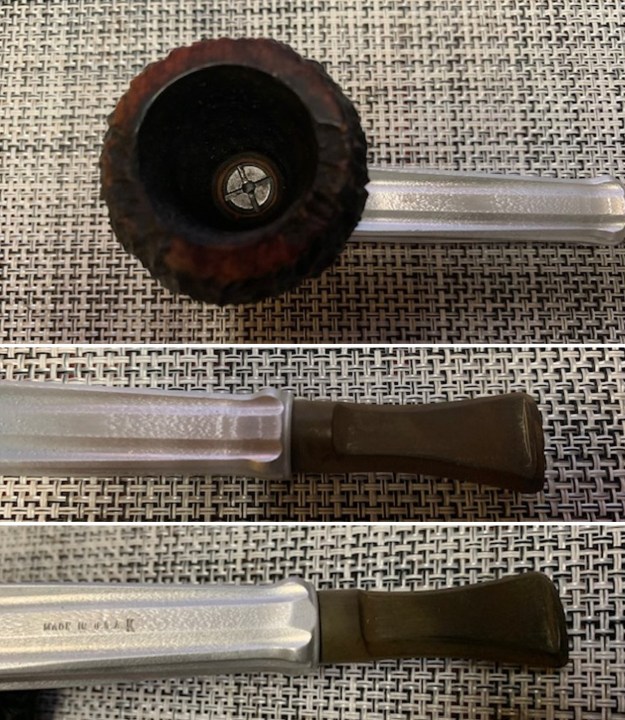
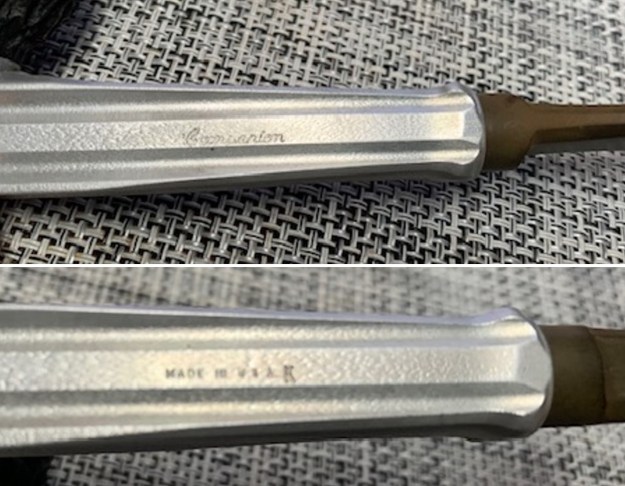
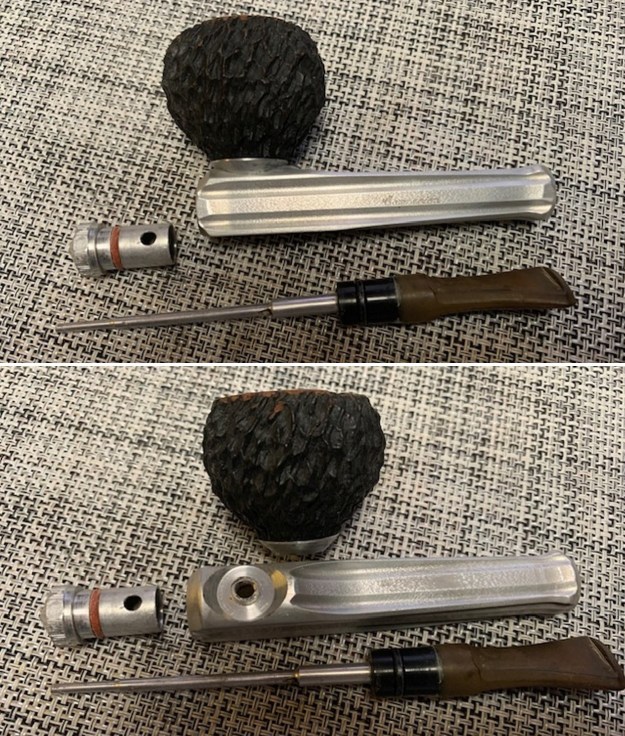
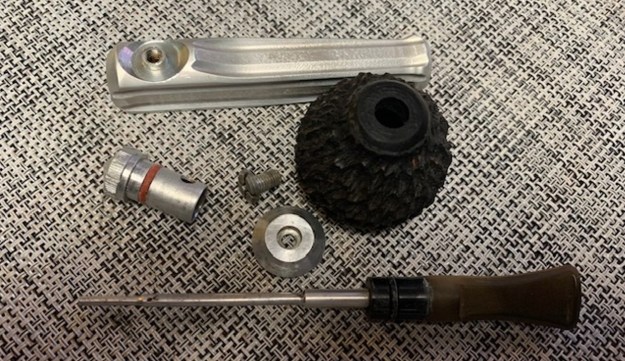
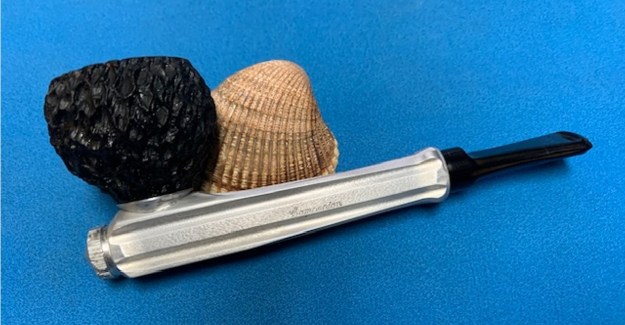
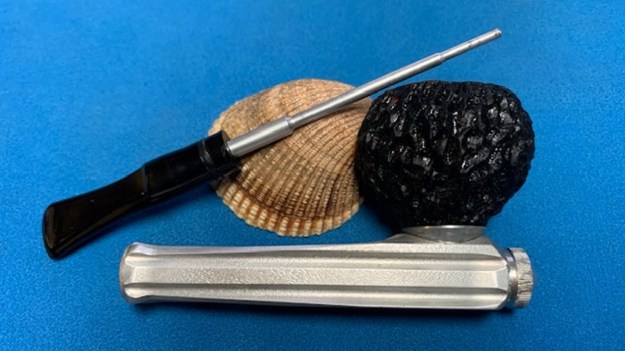
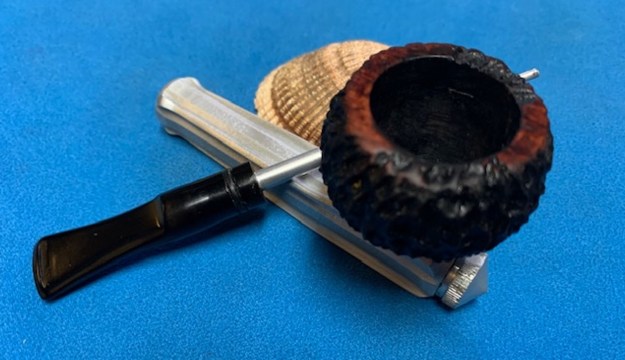
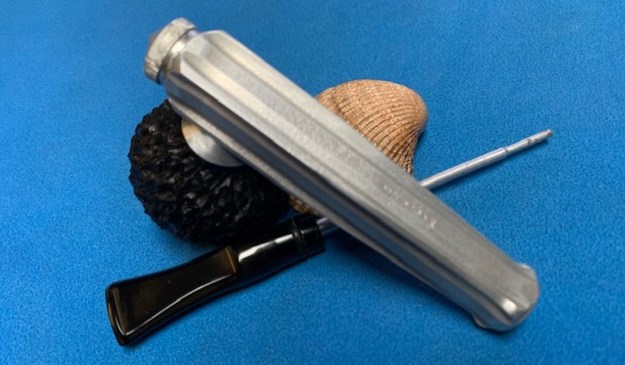
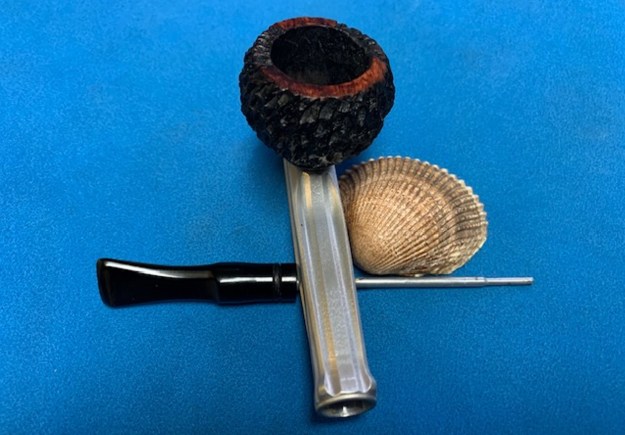
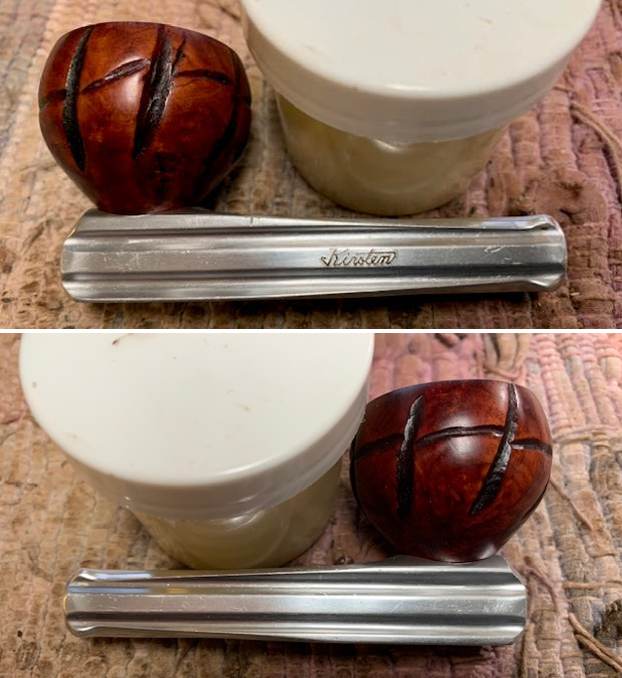
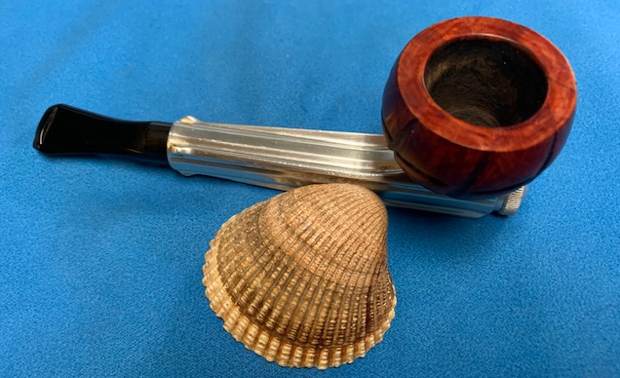
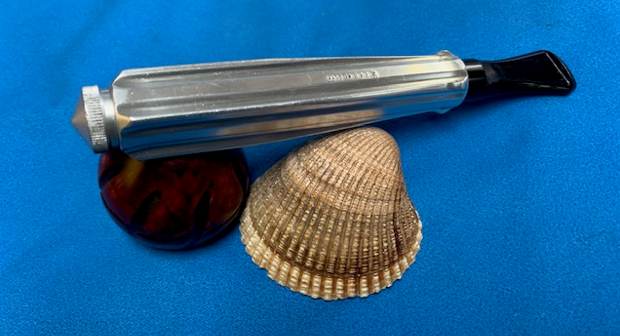
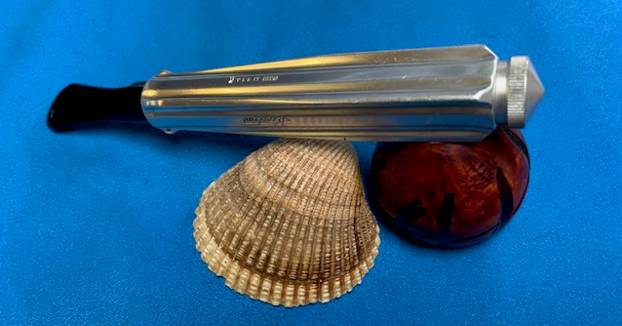
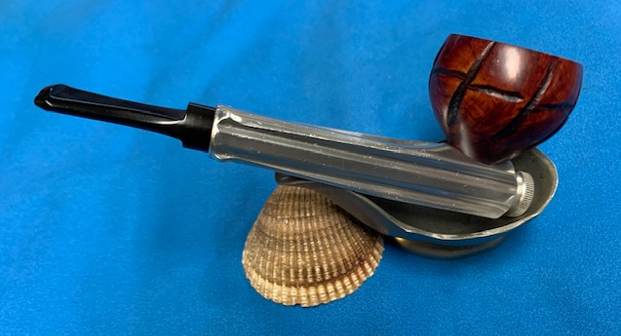
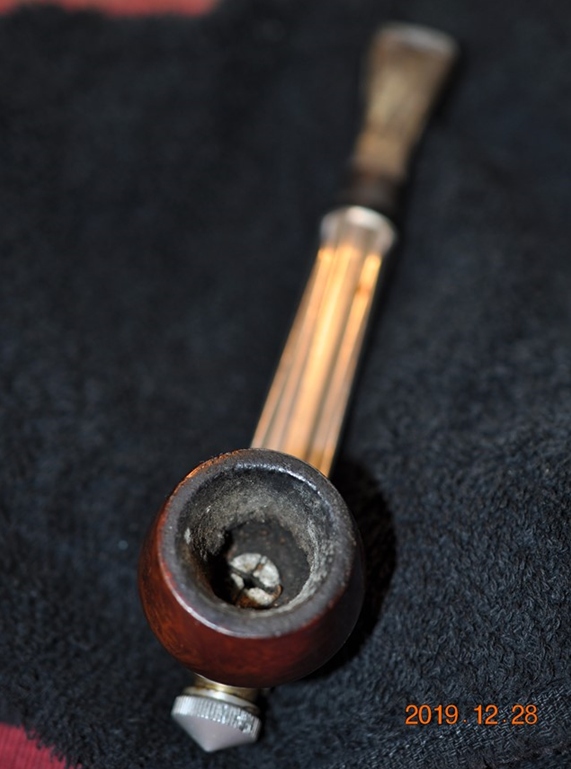
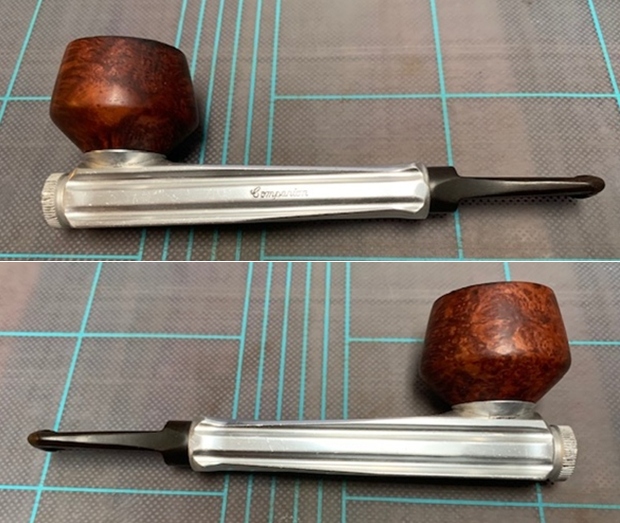
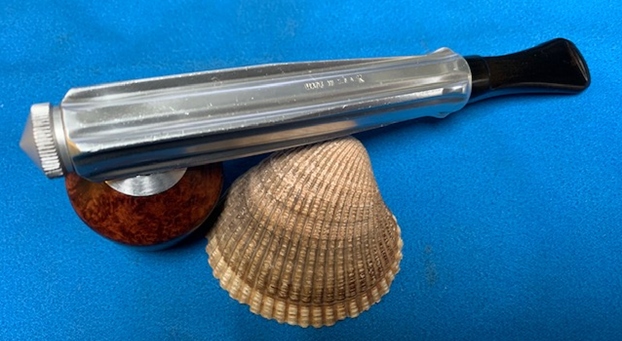
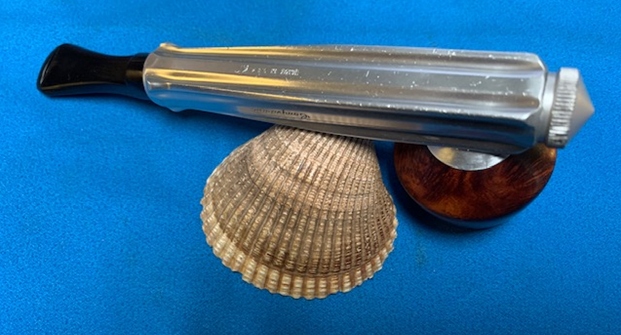
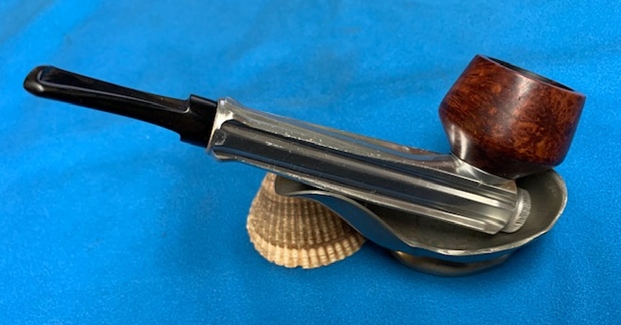
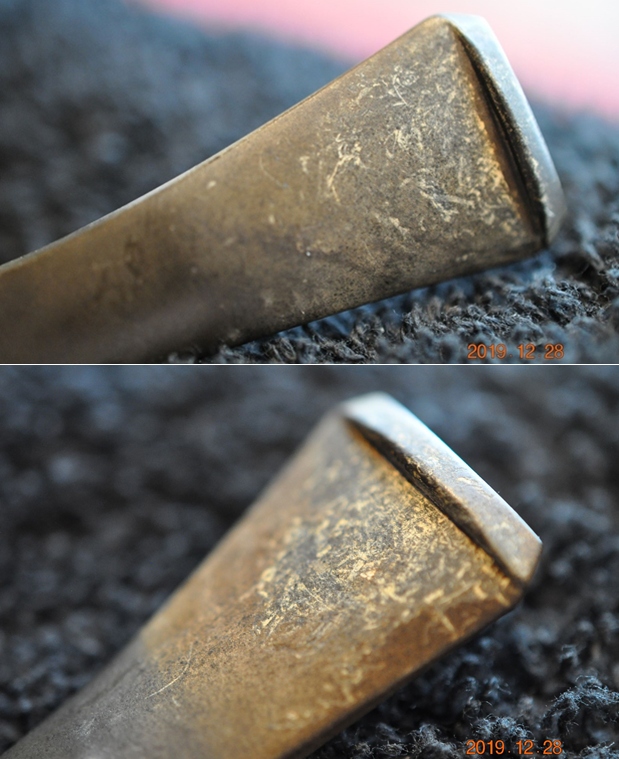
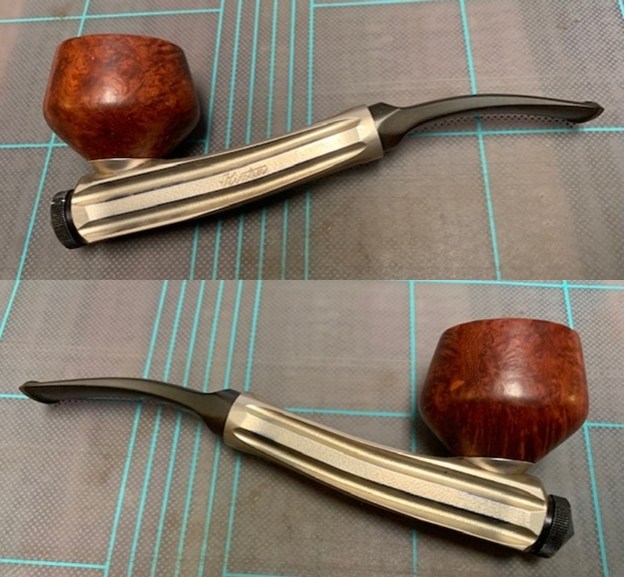
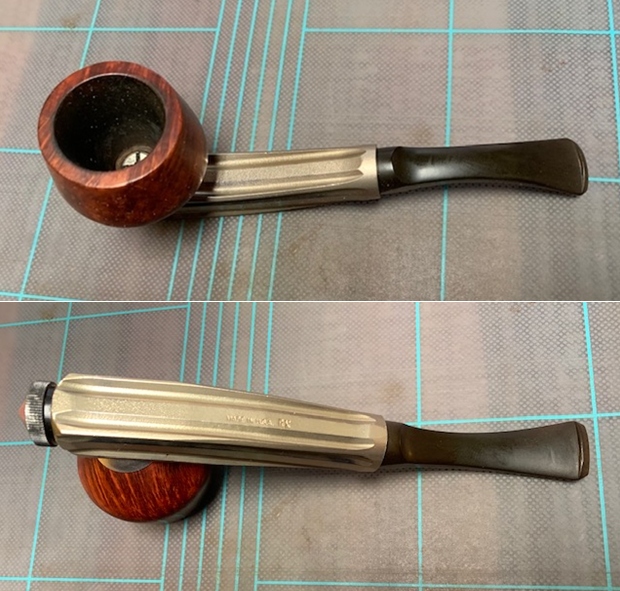
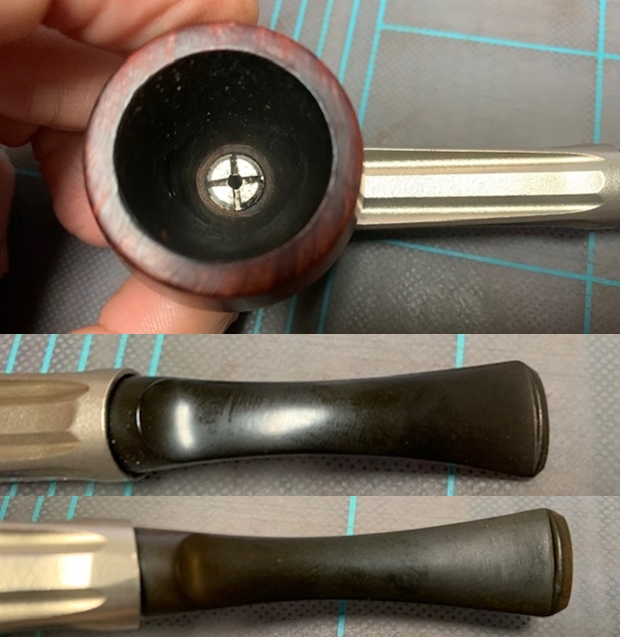
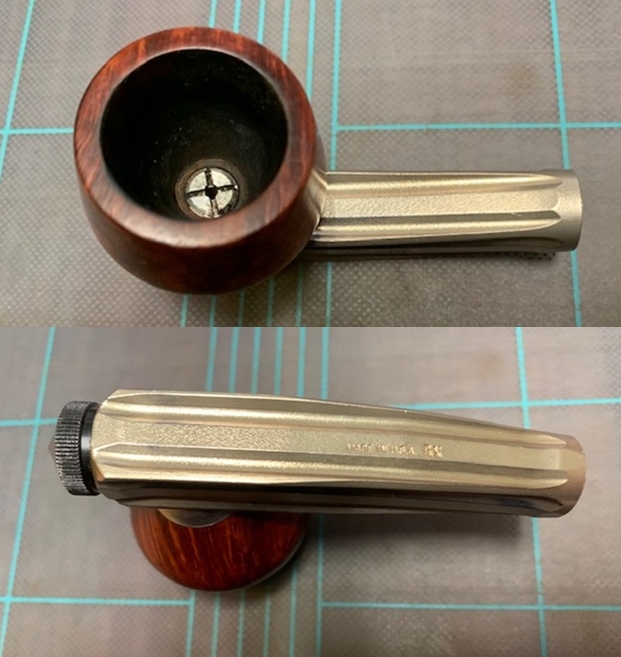
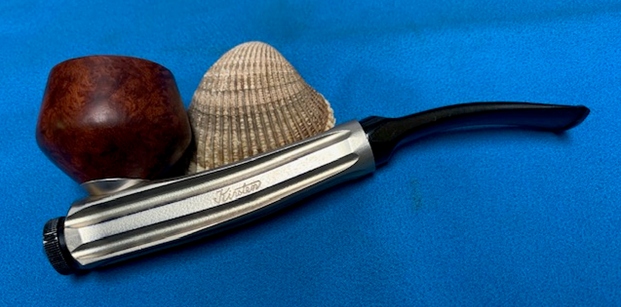
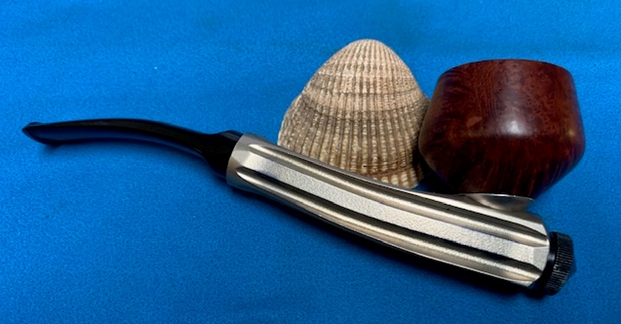
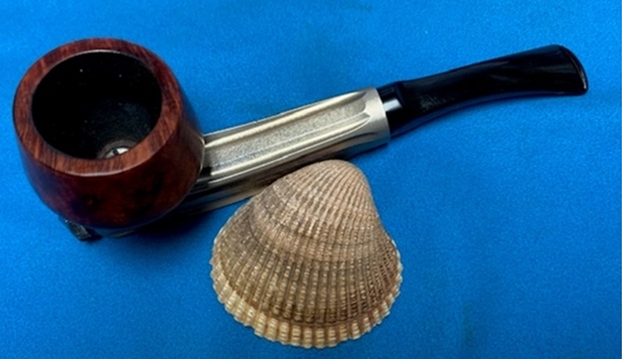
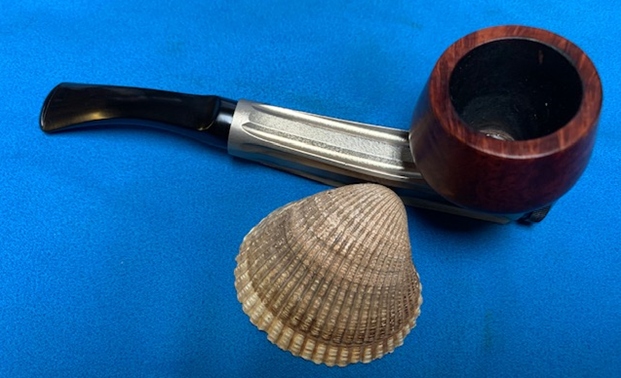
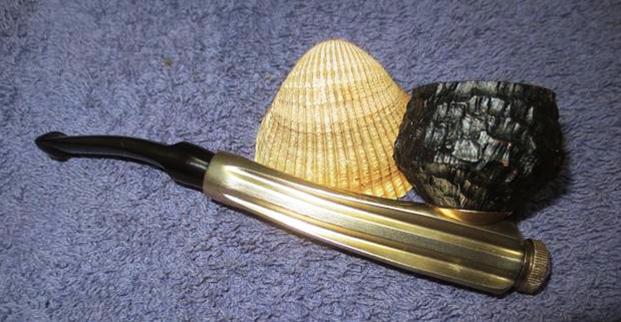
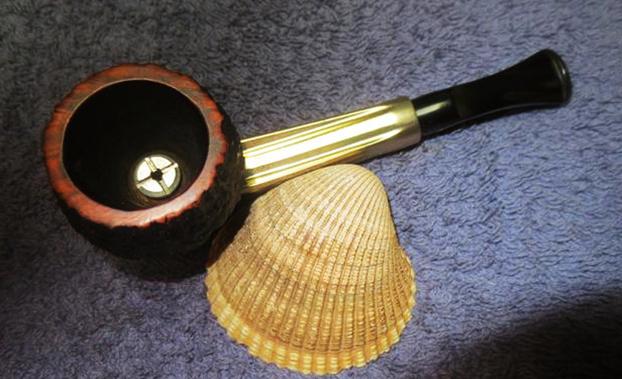
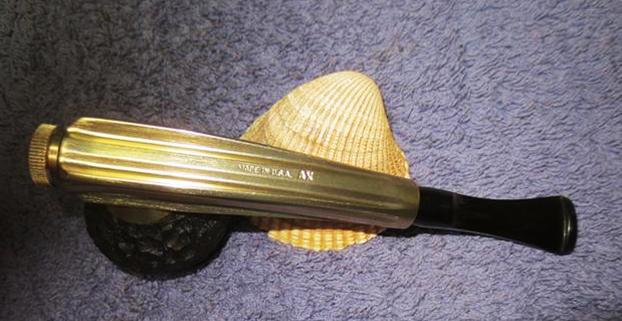
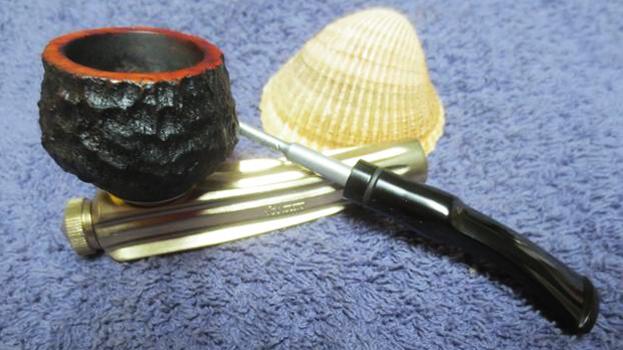
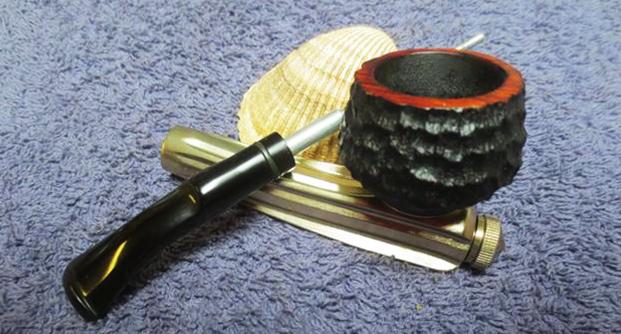
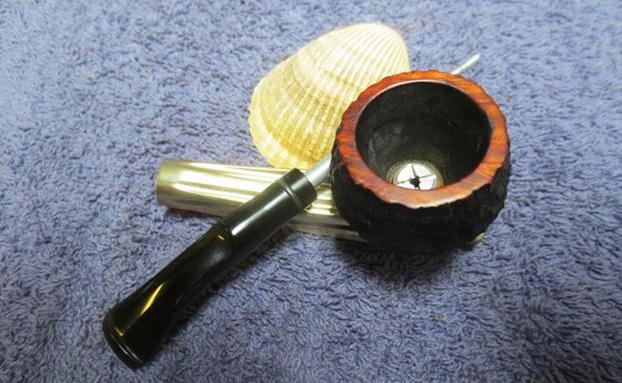
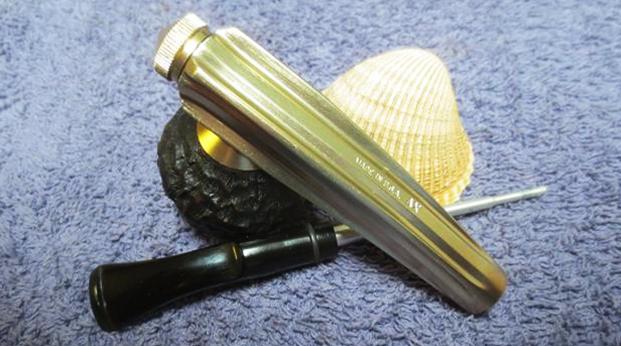
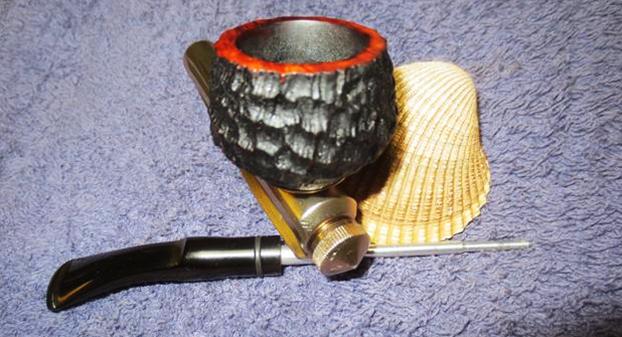
The latest restoration story belongs to a handsome Kirsten Companion ‘K’. Once again, this pipe is going to a young man from a local family who wanted some pipes restored. I’ve always been interested in Kirsten pipes – I’m not sure I always like them, but I always study them. The young fellow who acquired this pipe wanted something unusual and unlike the rest of his family – and he certainly got that! I quite like Steve’s description of Kirsten pipes:

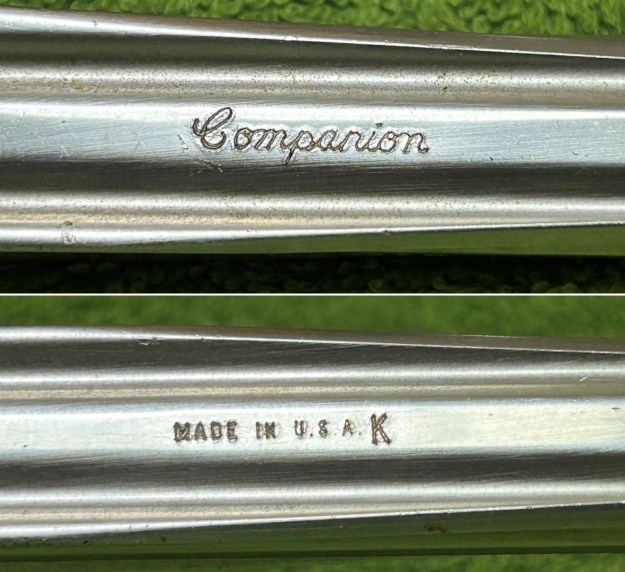
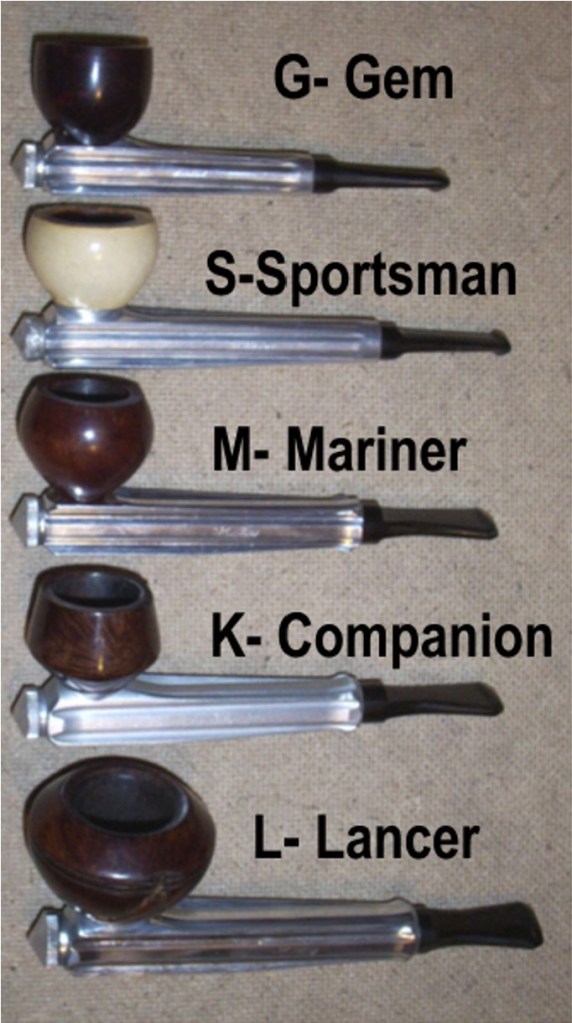
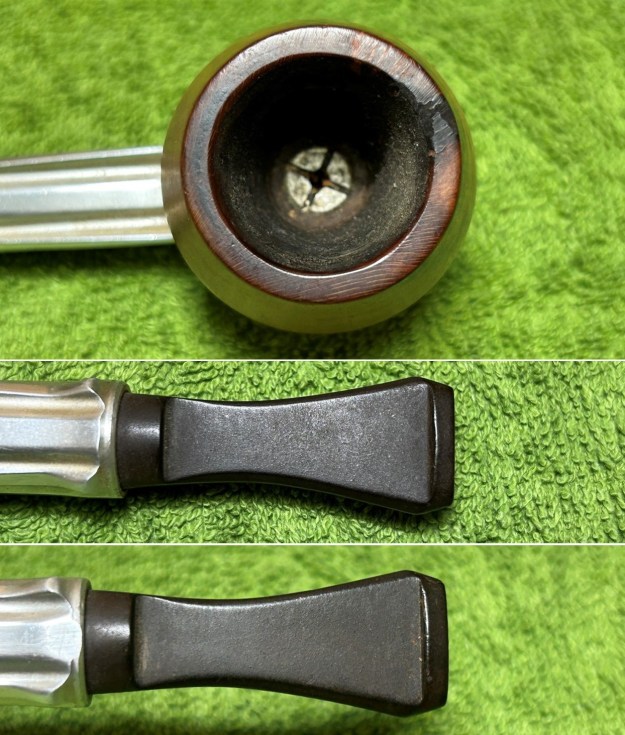
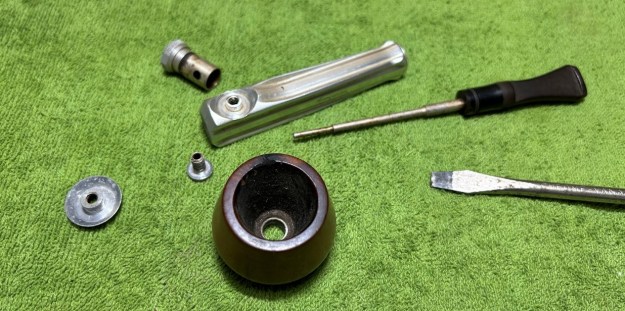
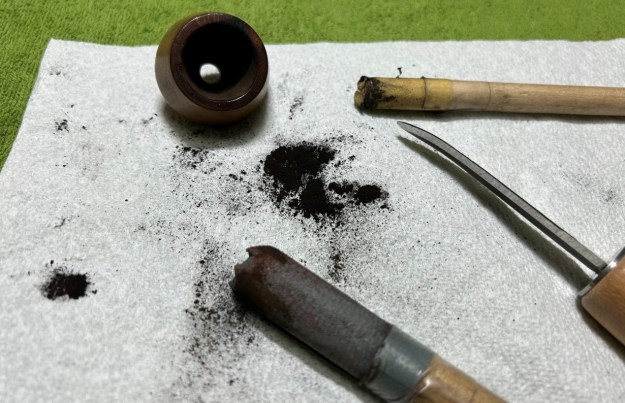
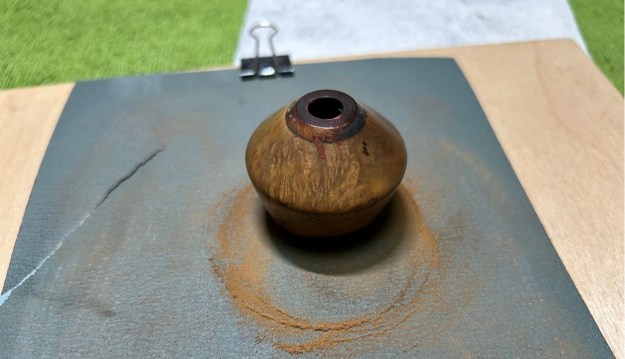
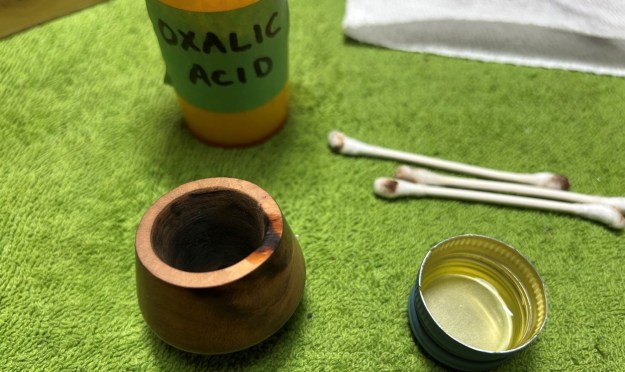
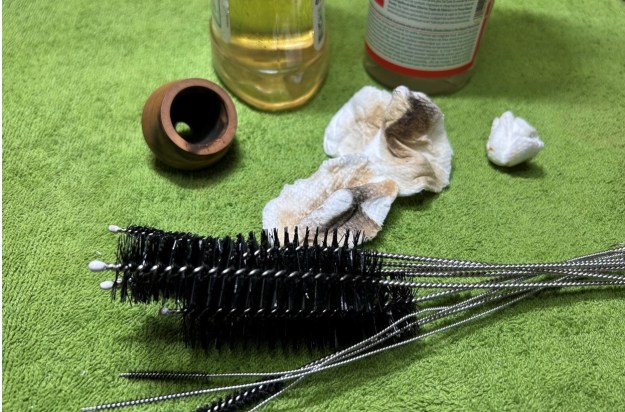
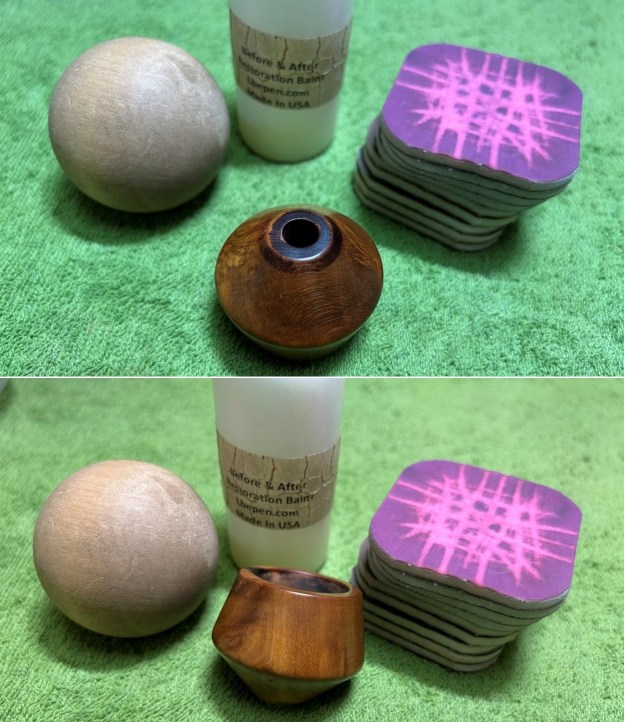
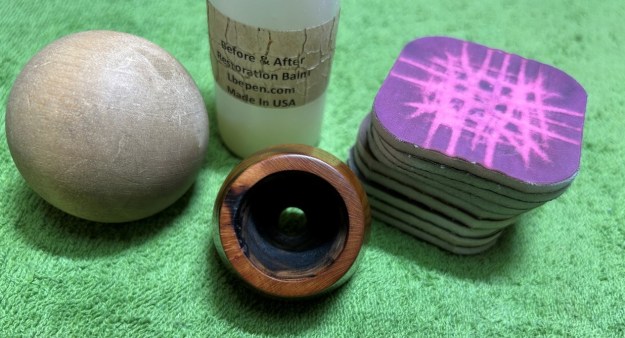
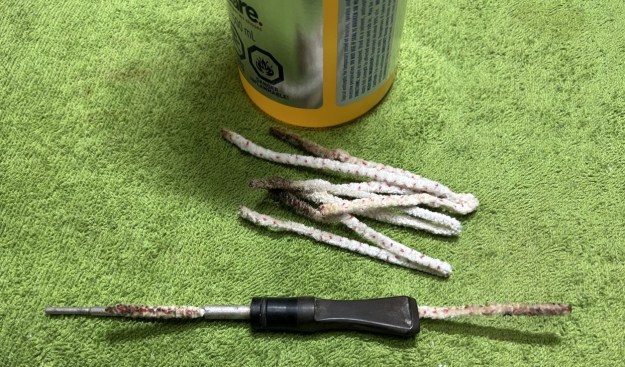
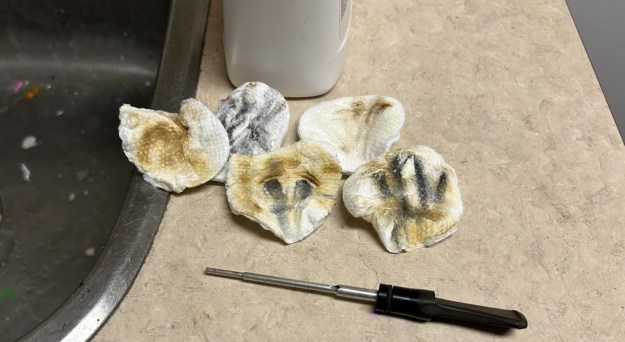
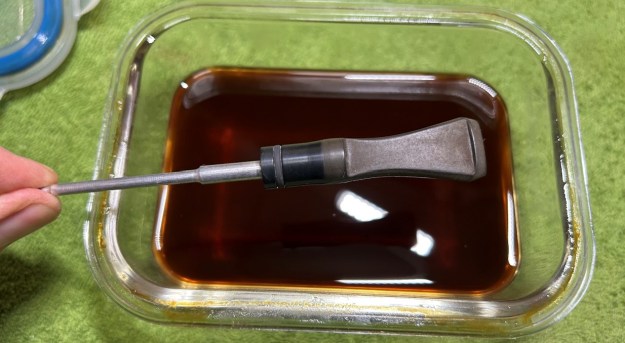
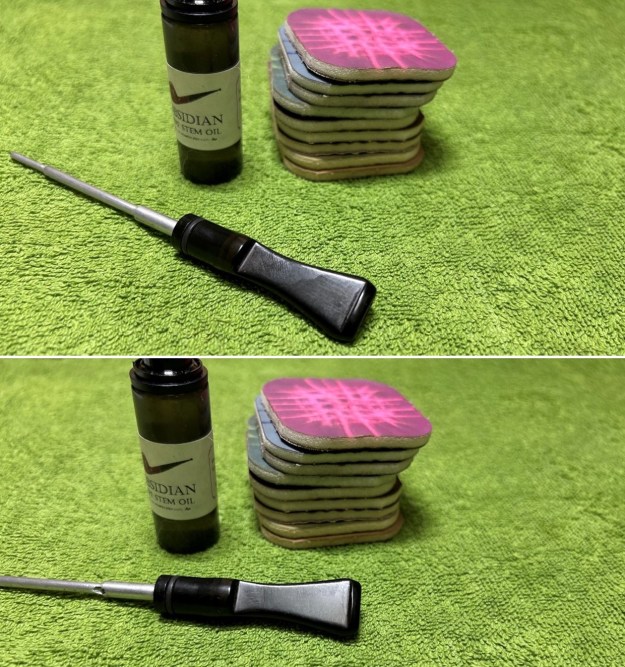
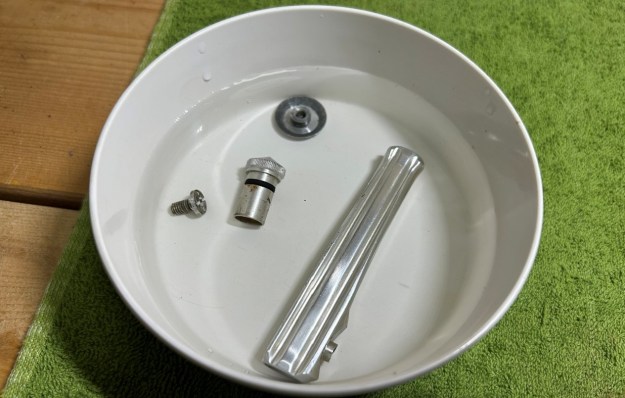
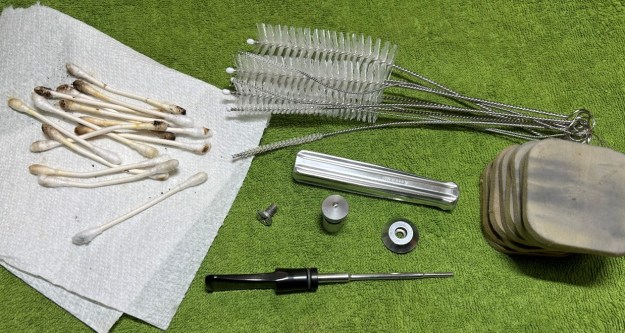
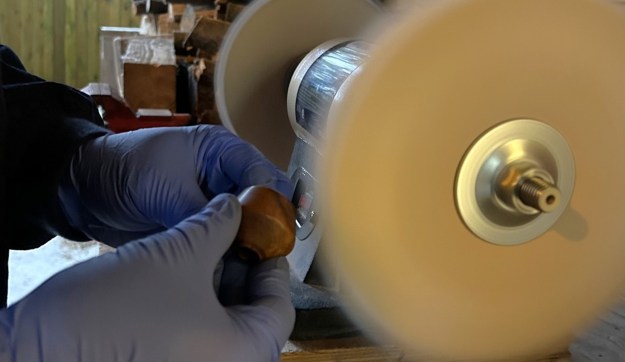
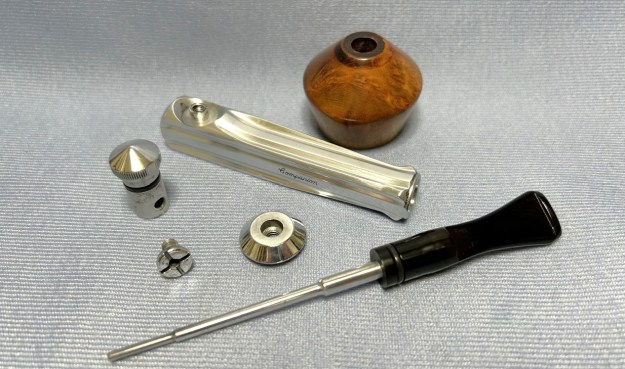
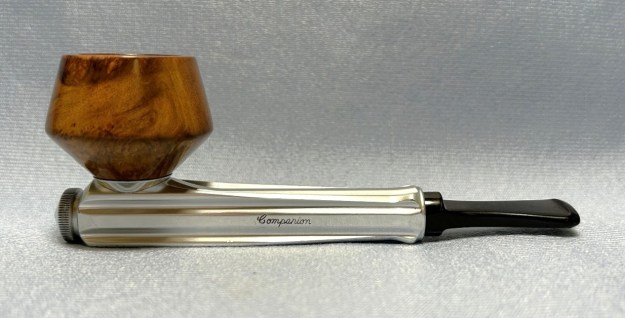
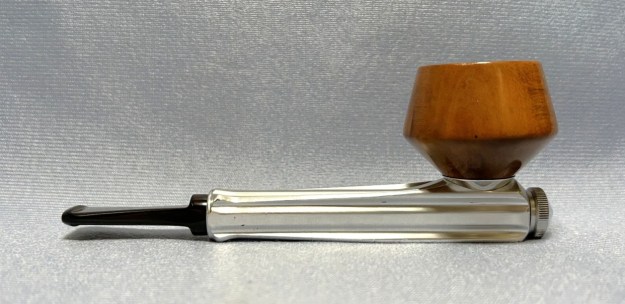
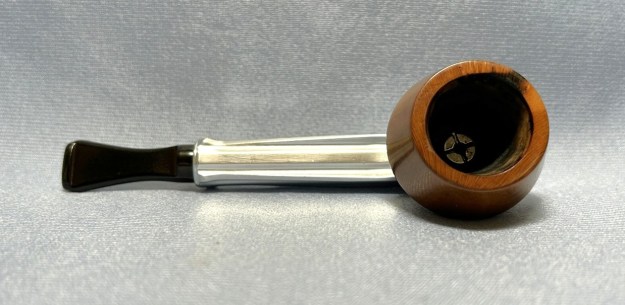
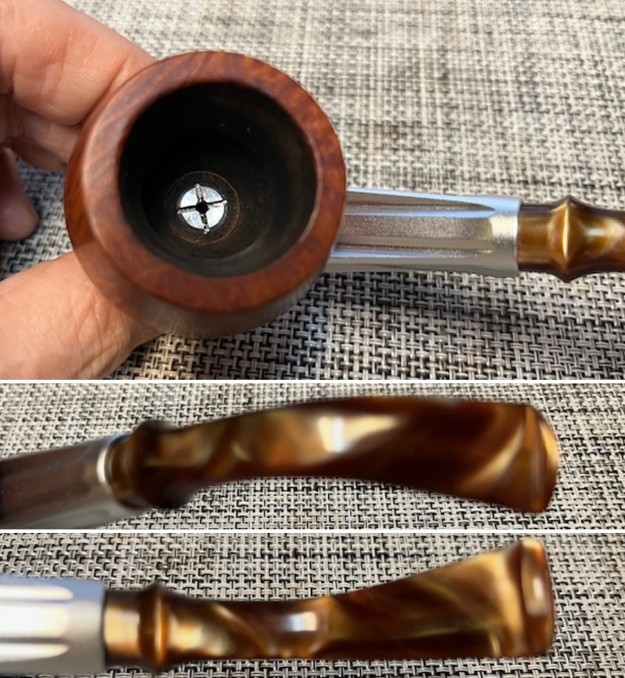
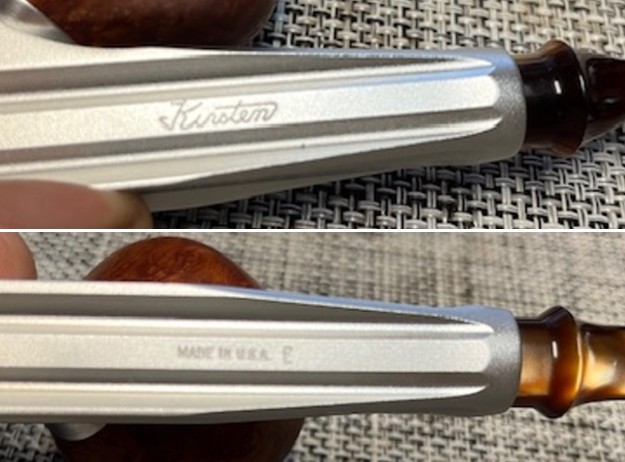
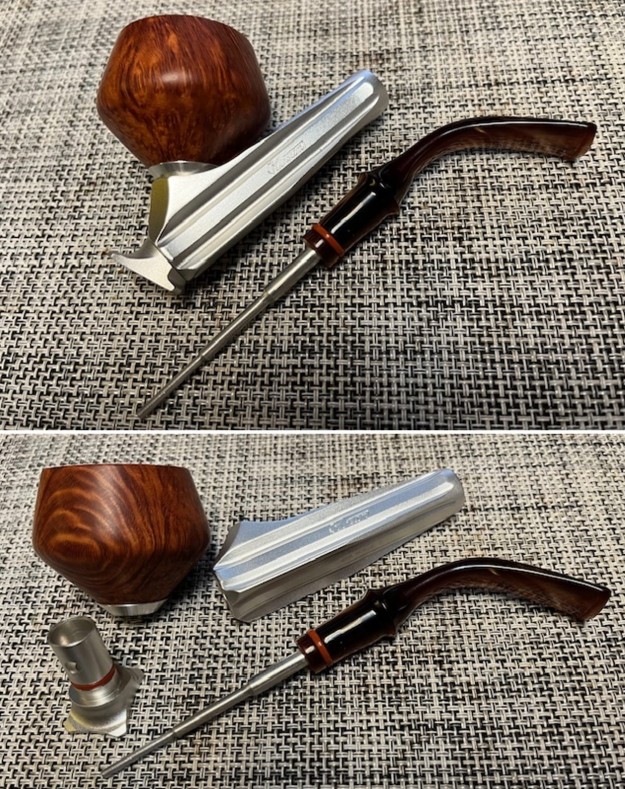
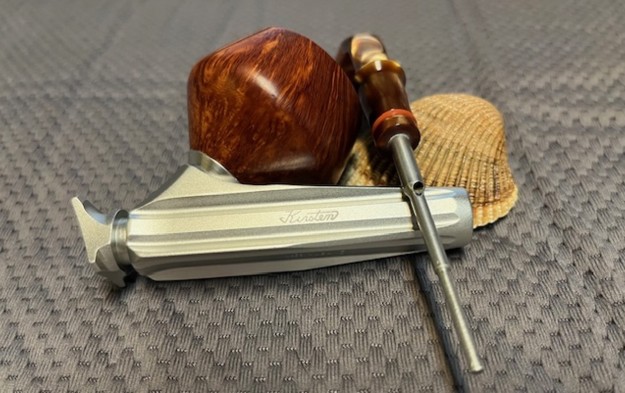
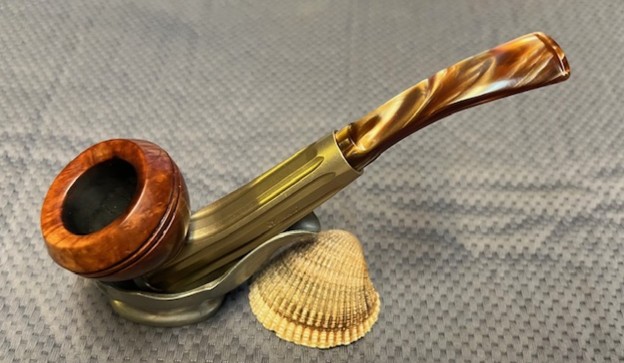
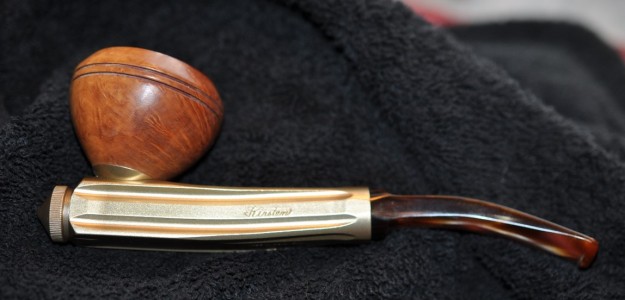
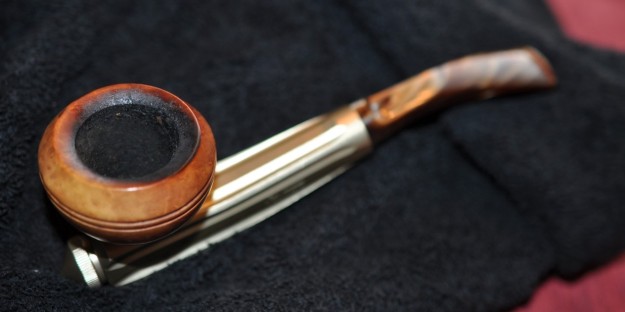
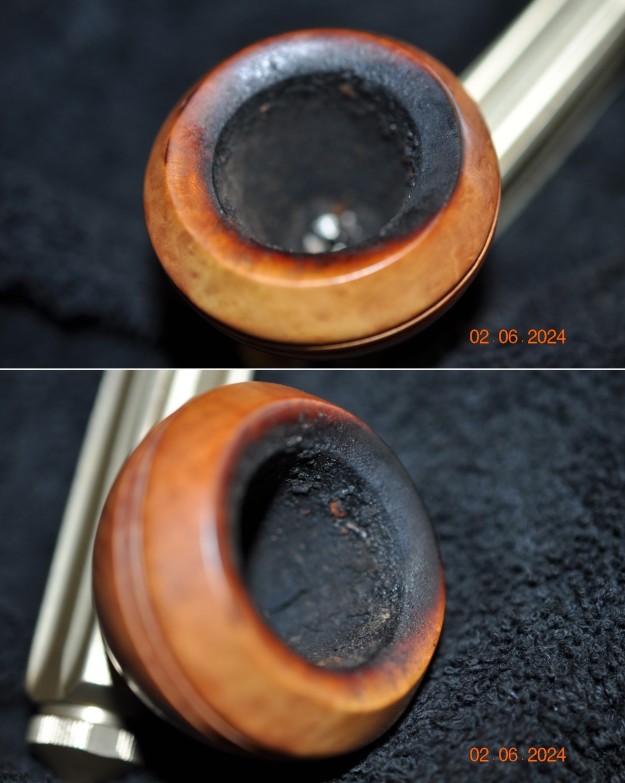
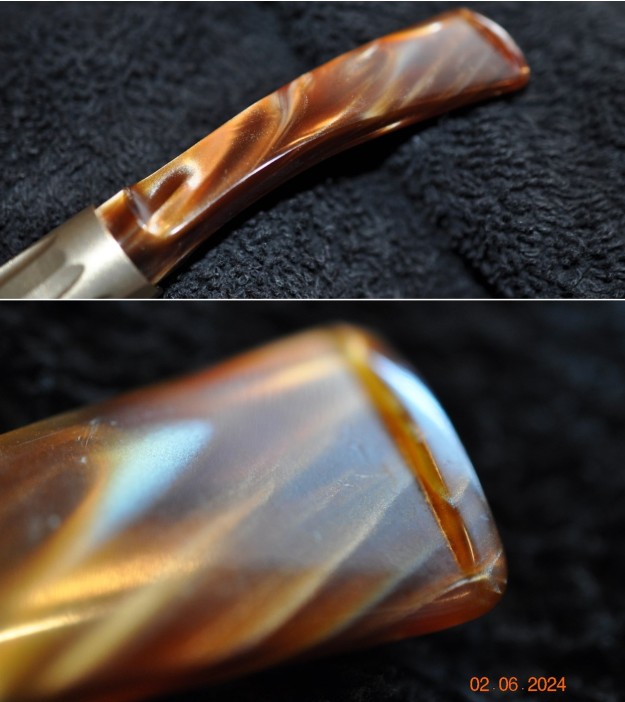
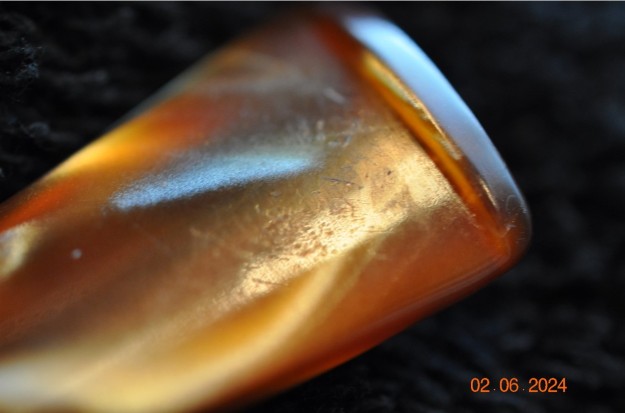
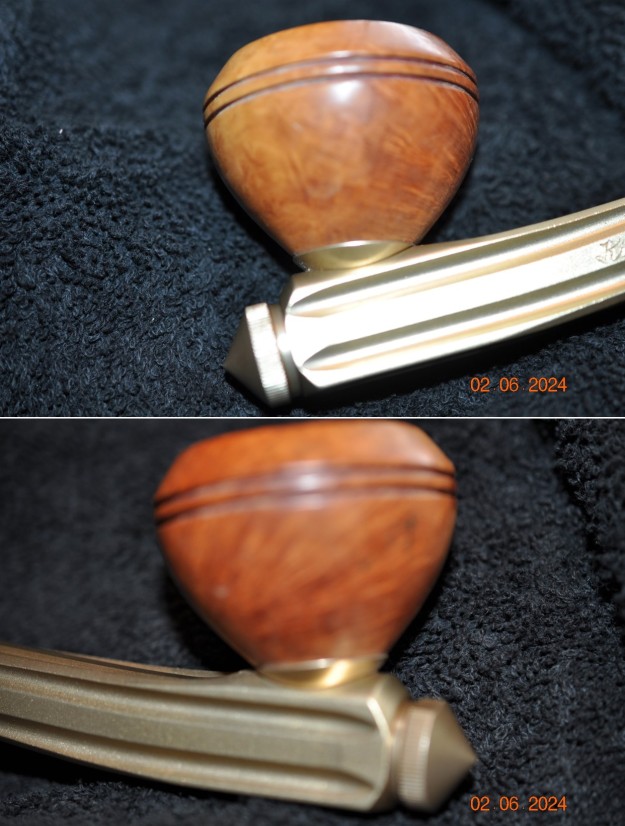
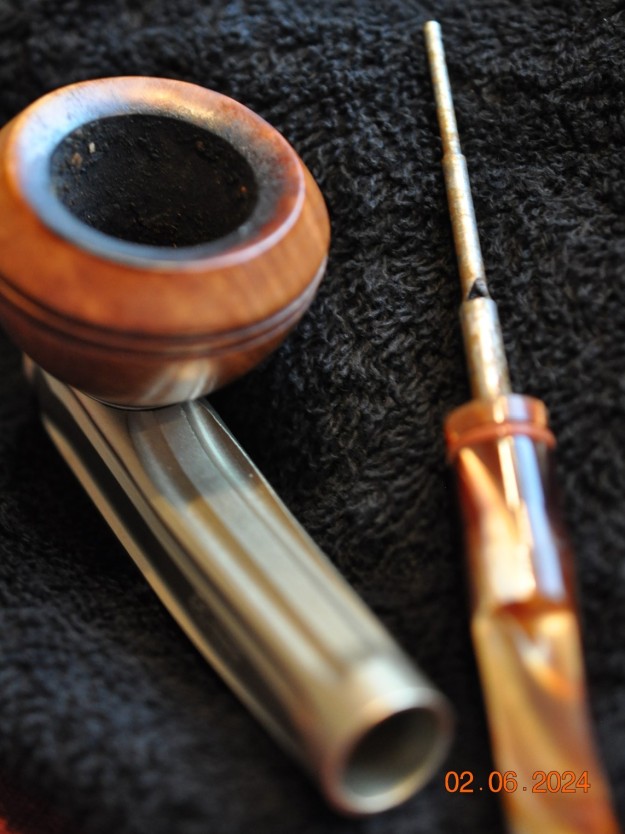
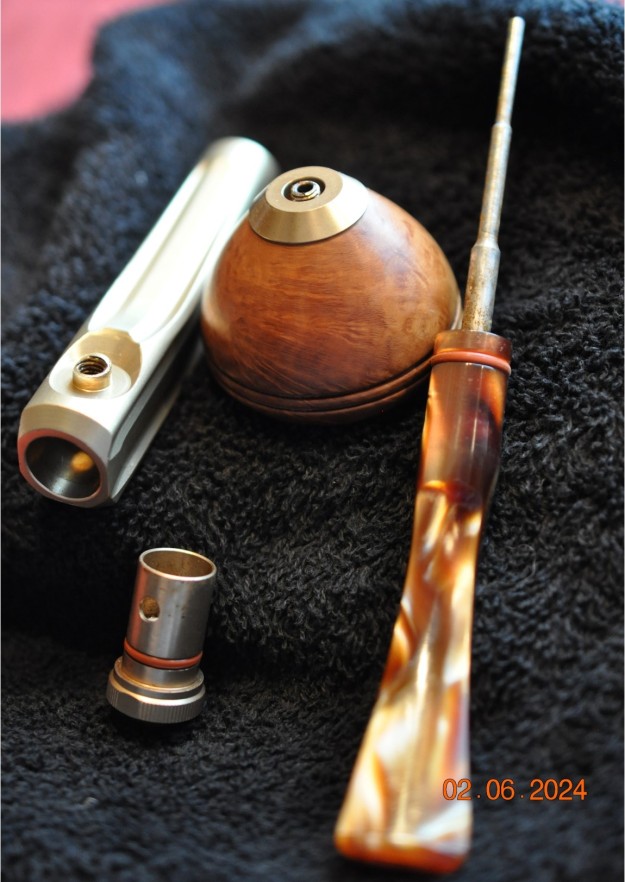
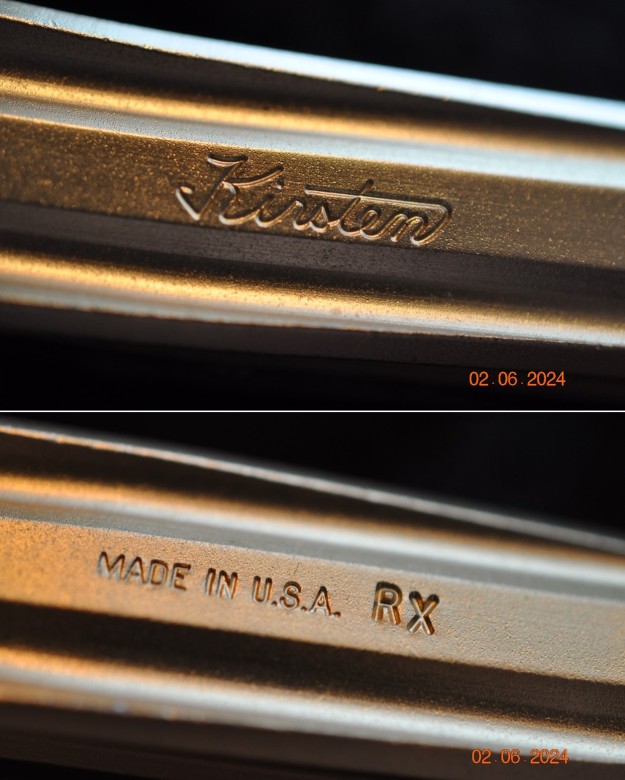
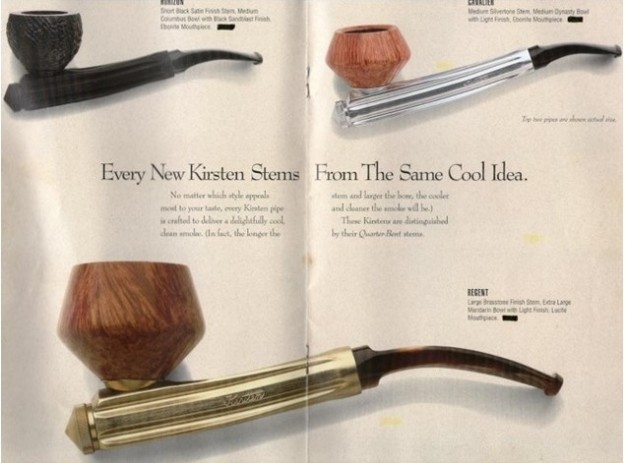
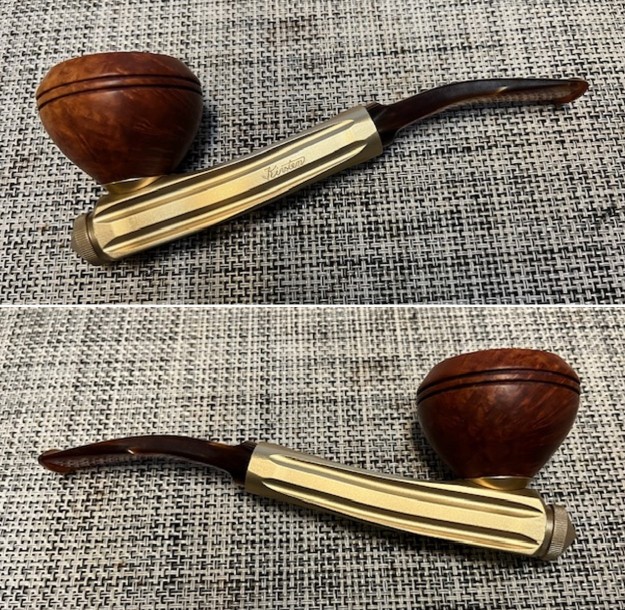
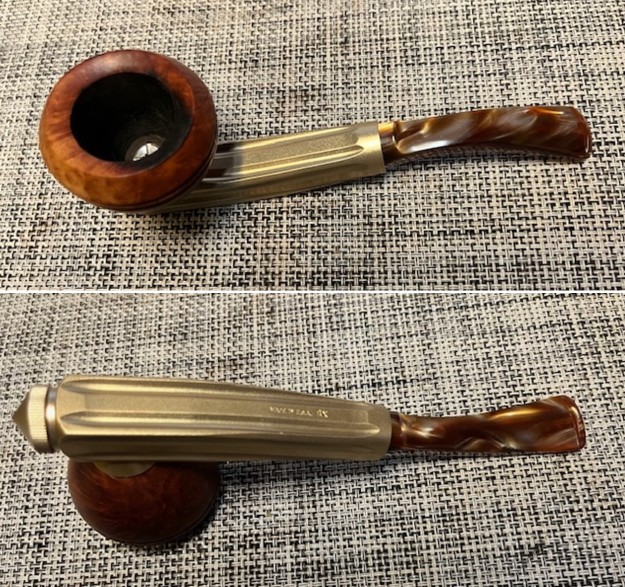
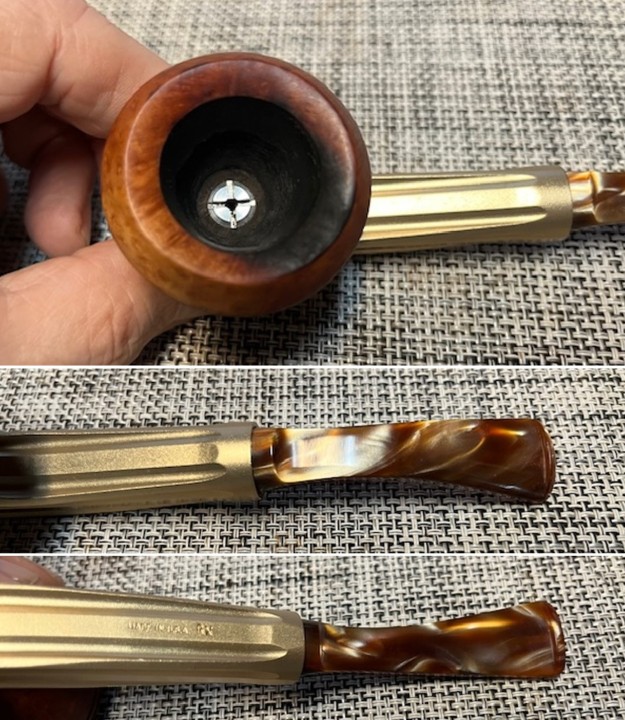
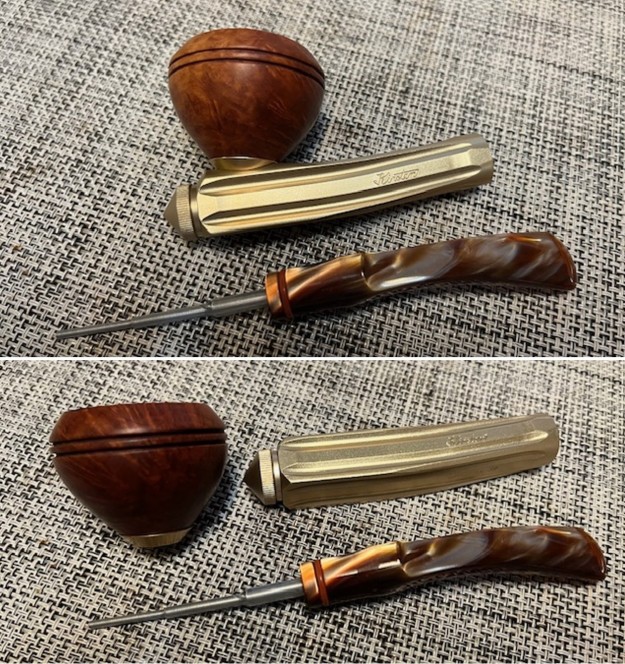
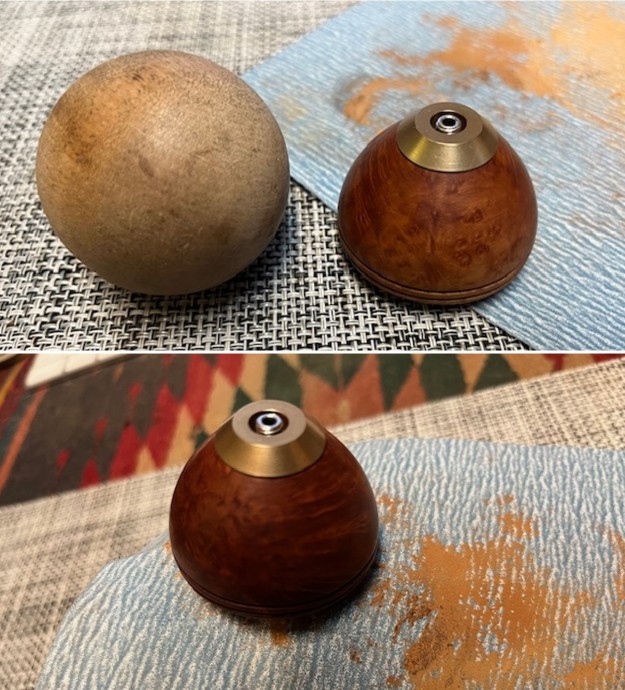
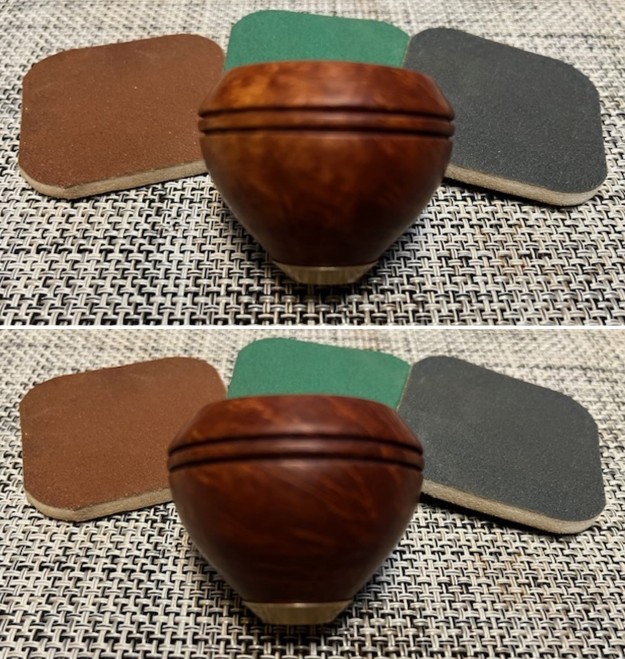
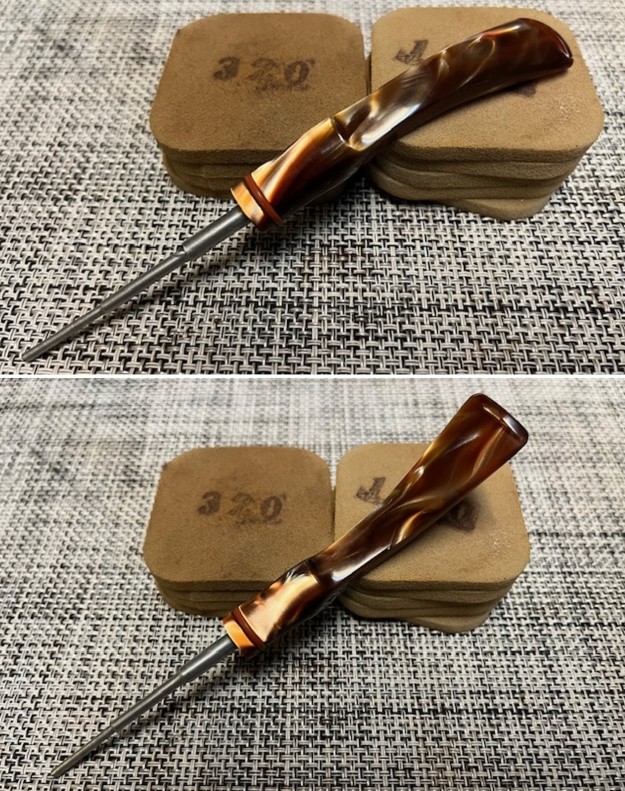
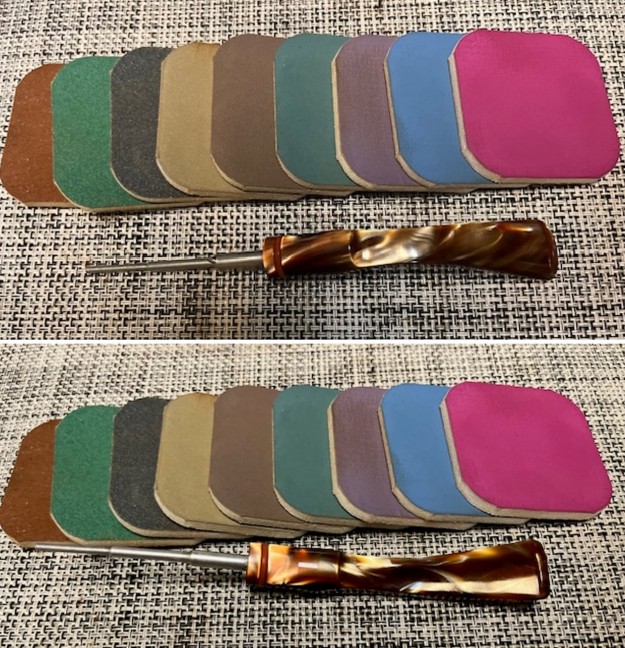
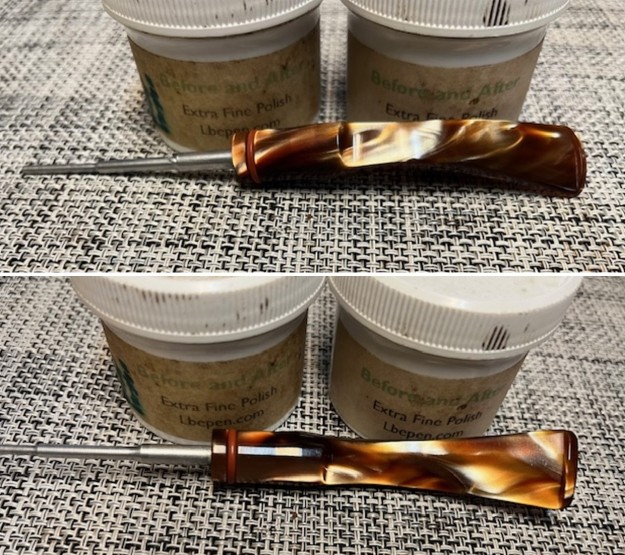
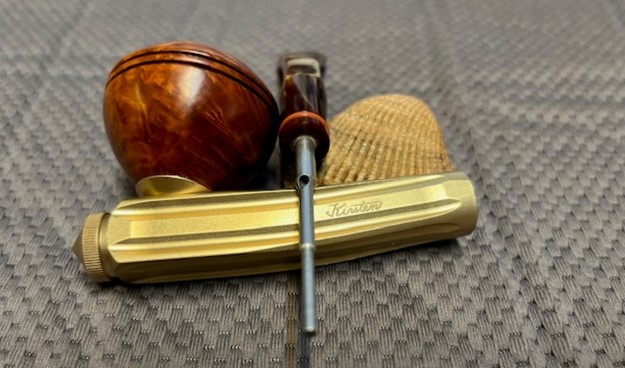
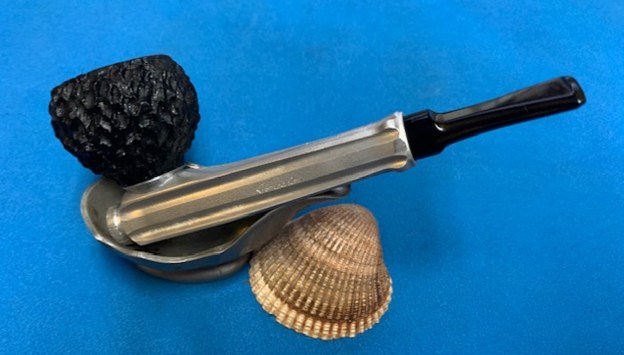
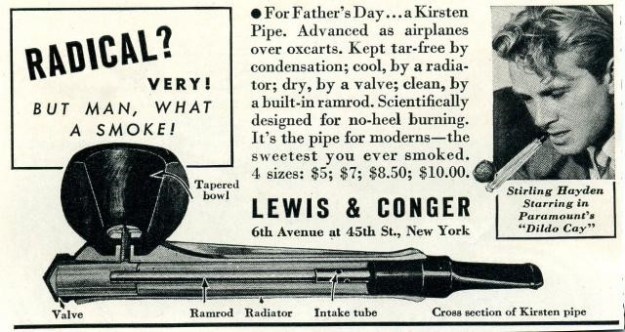
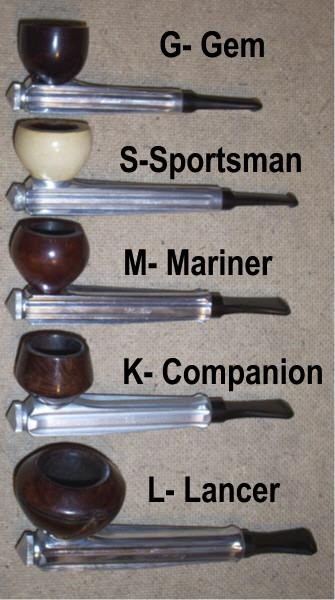
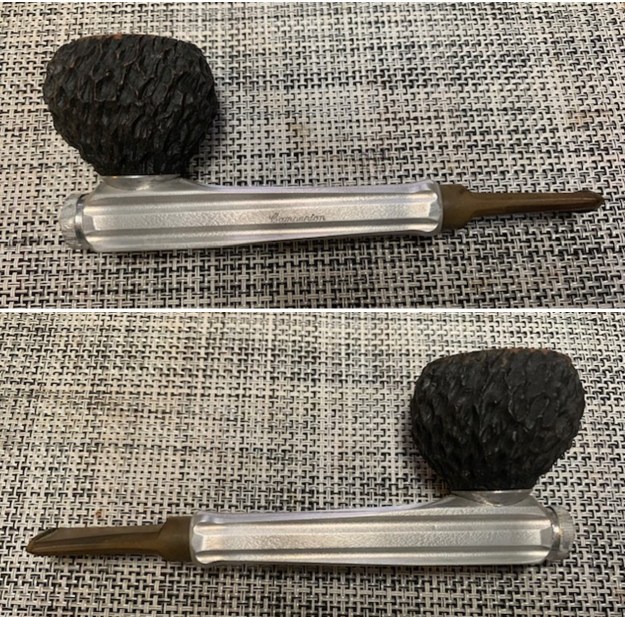
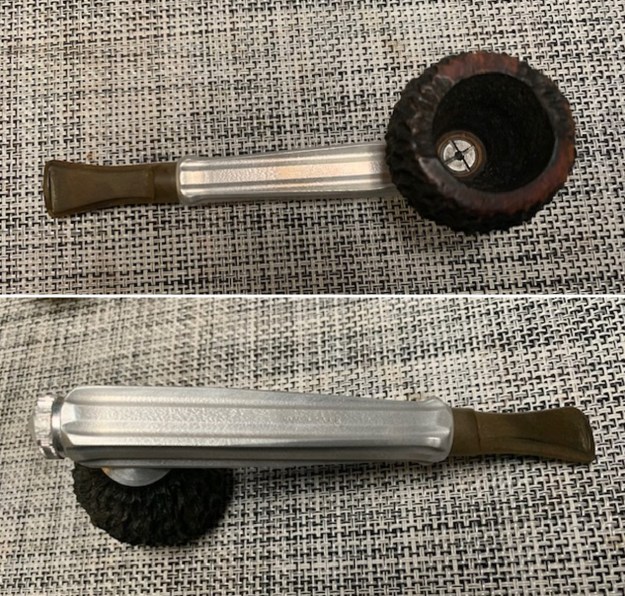
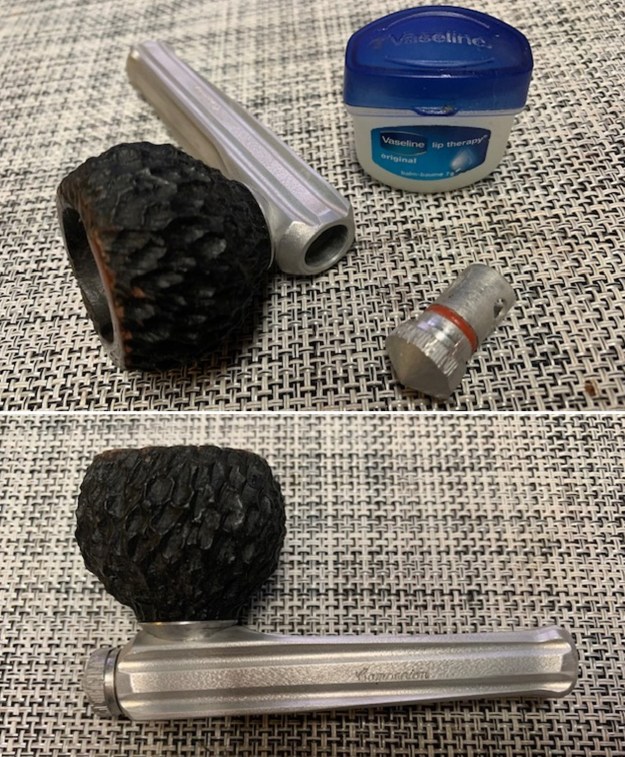
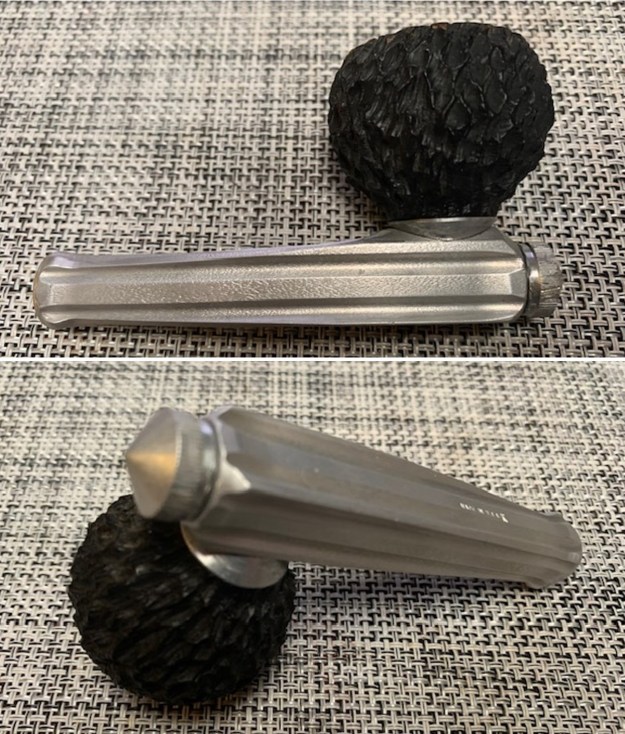
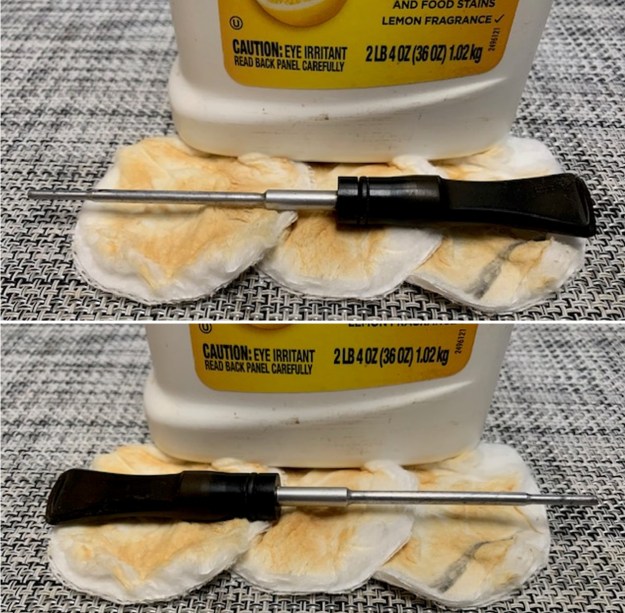
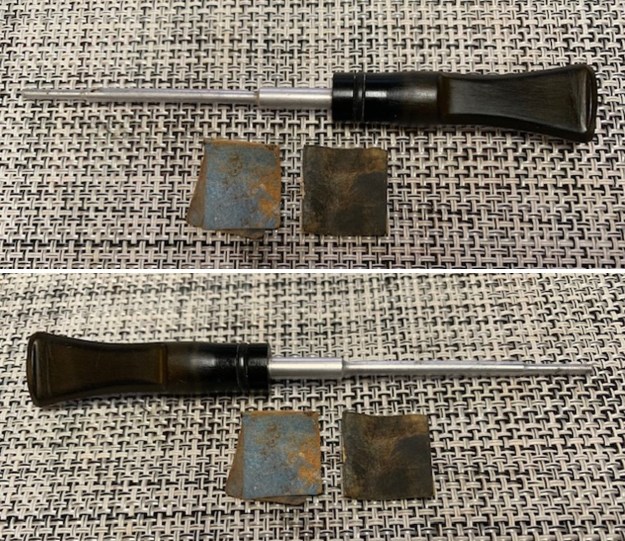
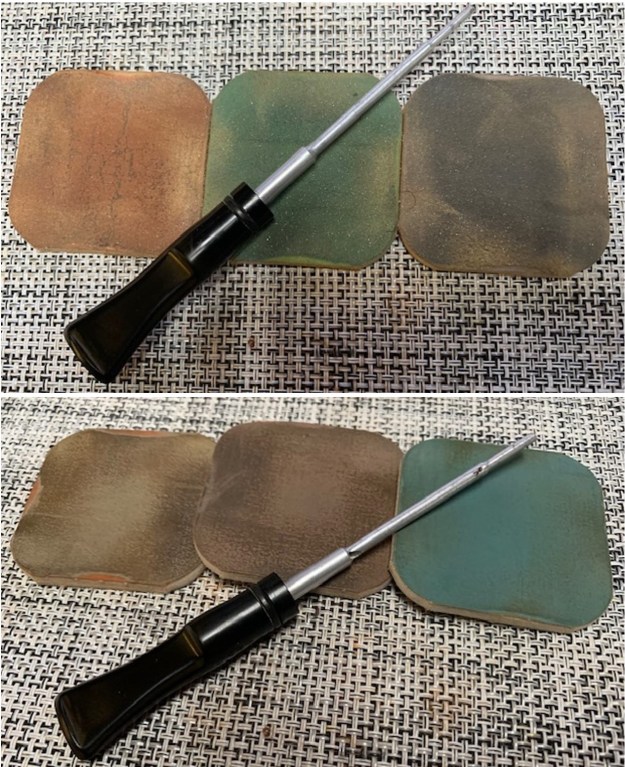
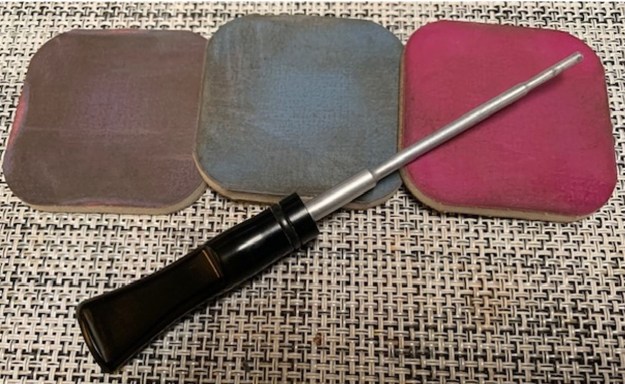
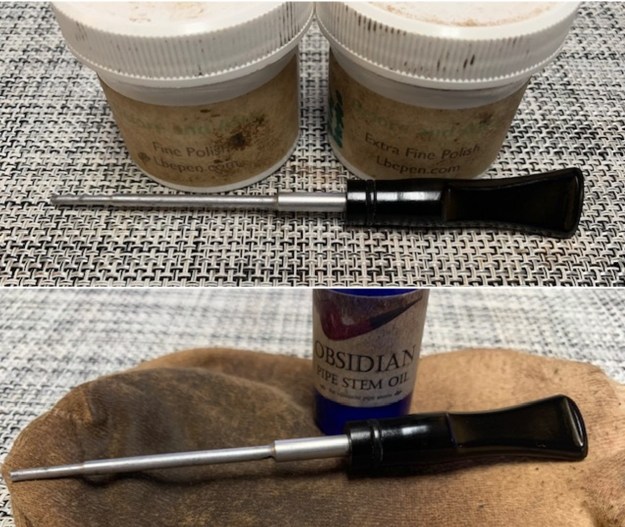
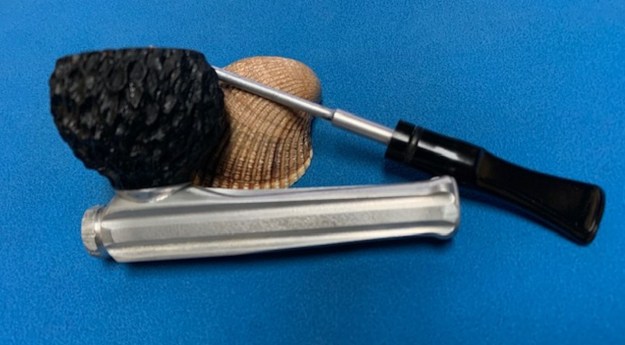
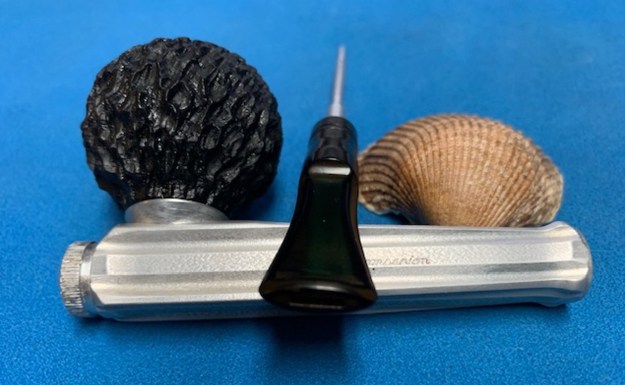
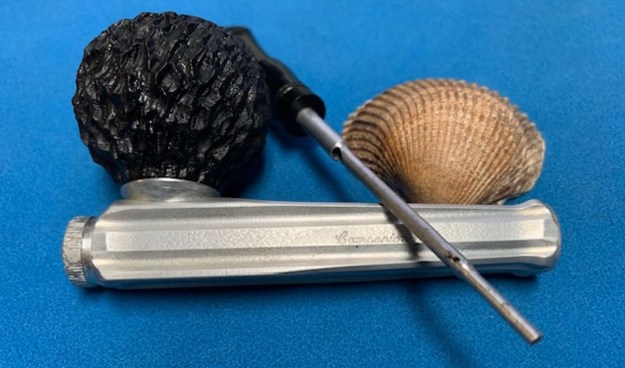
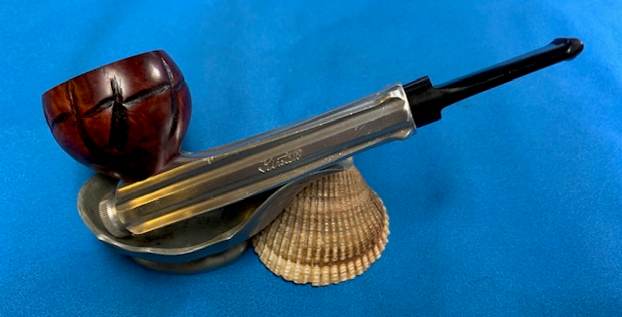
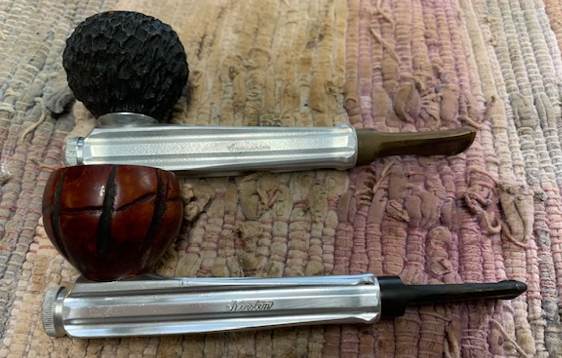
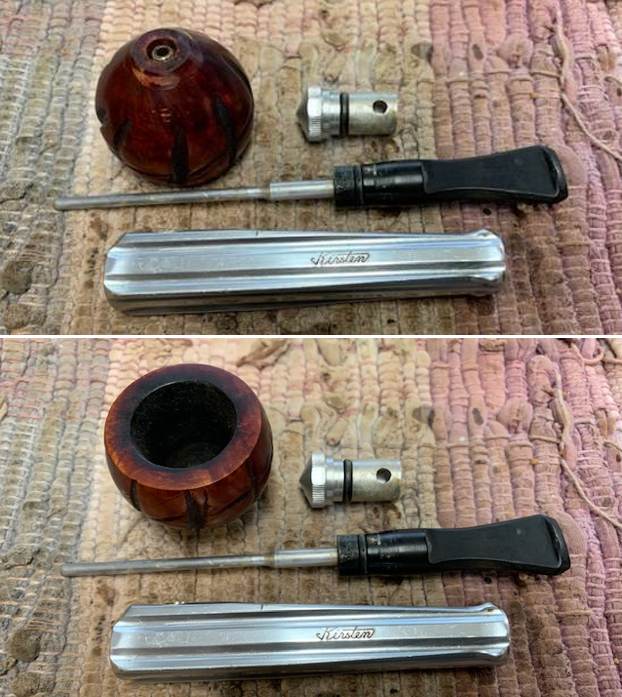
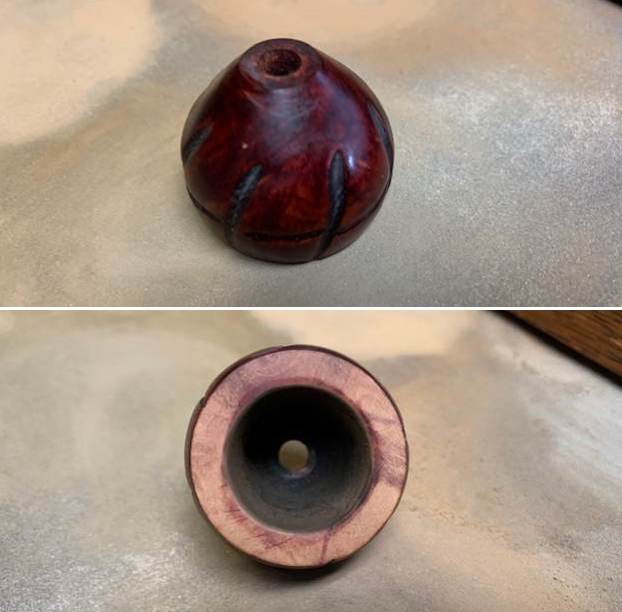
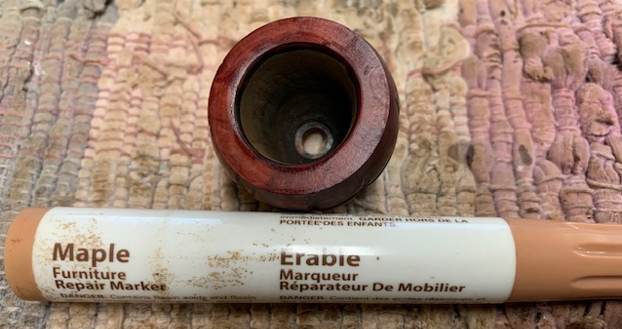
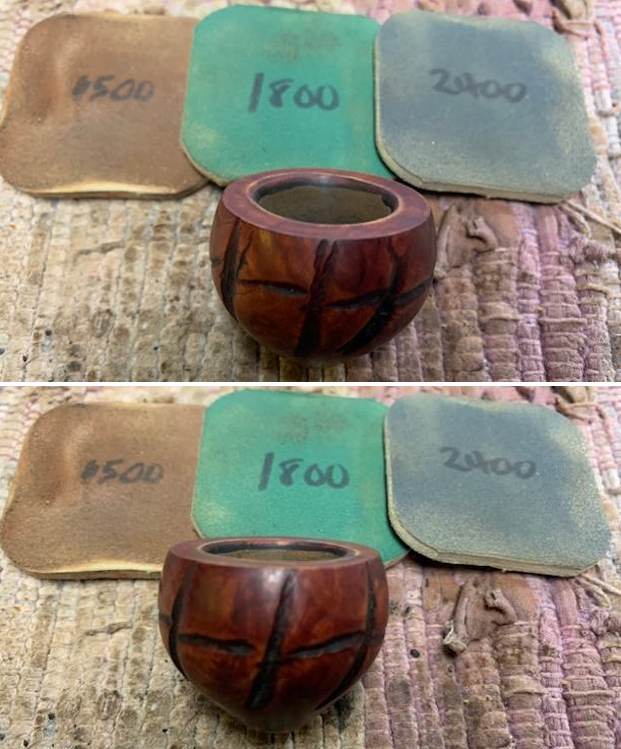
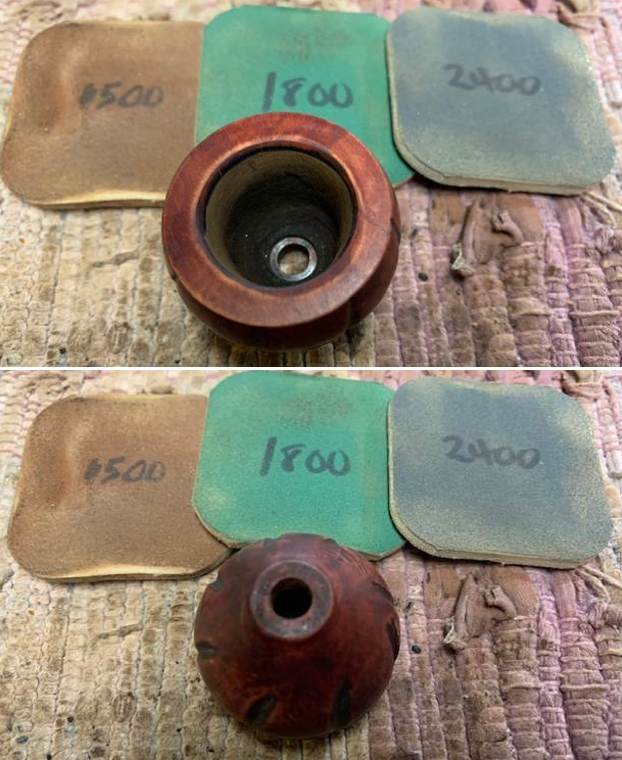
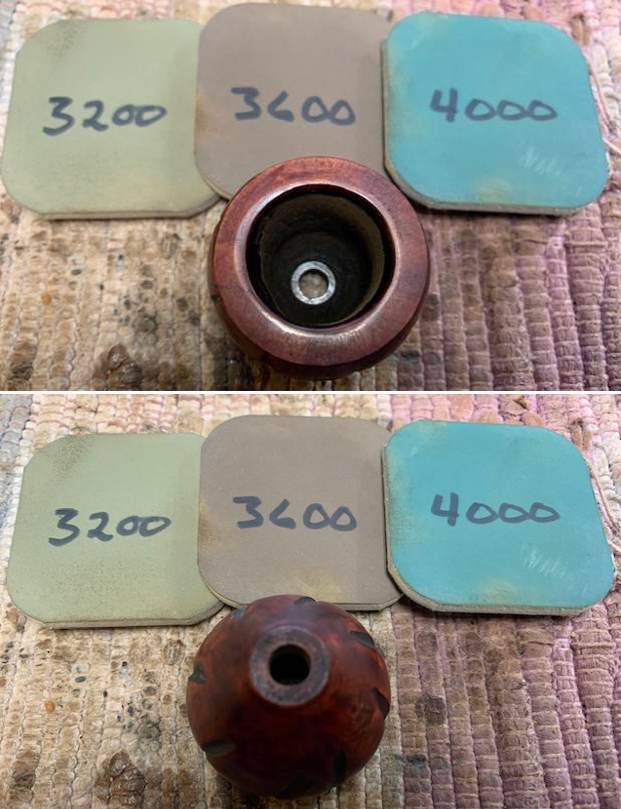
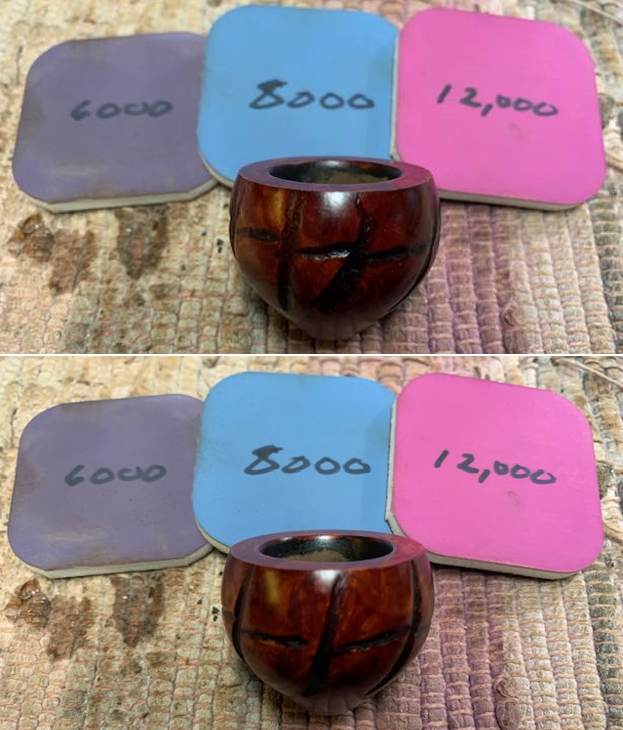
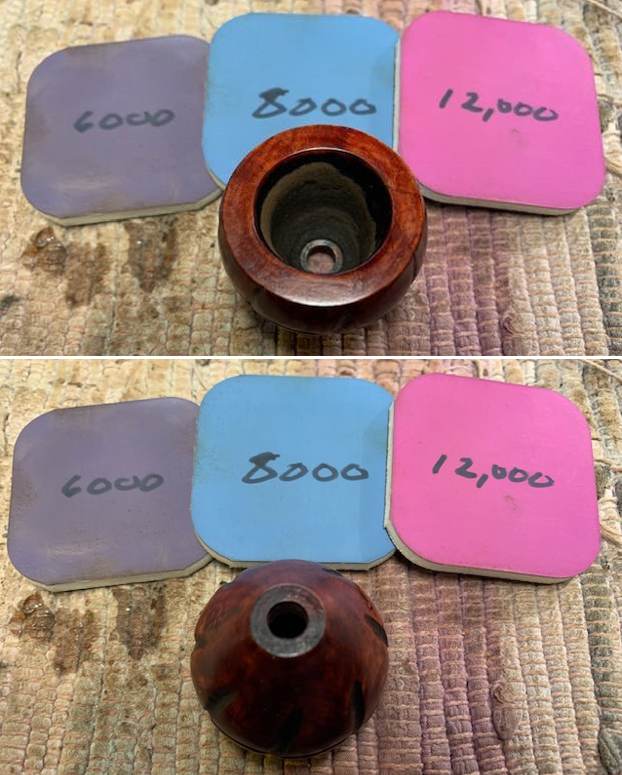
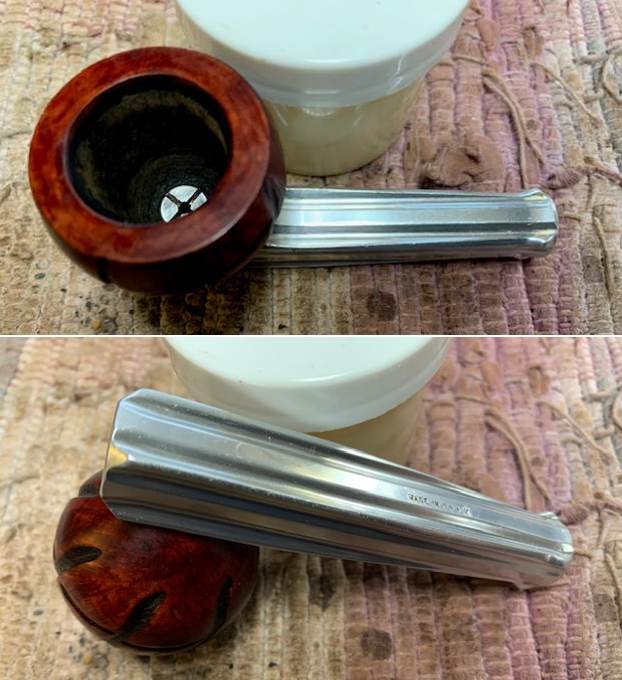
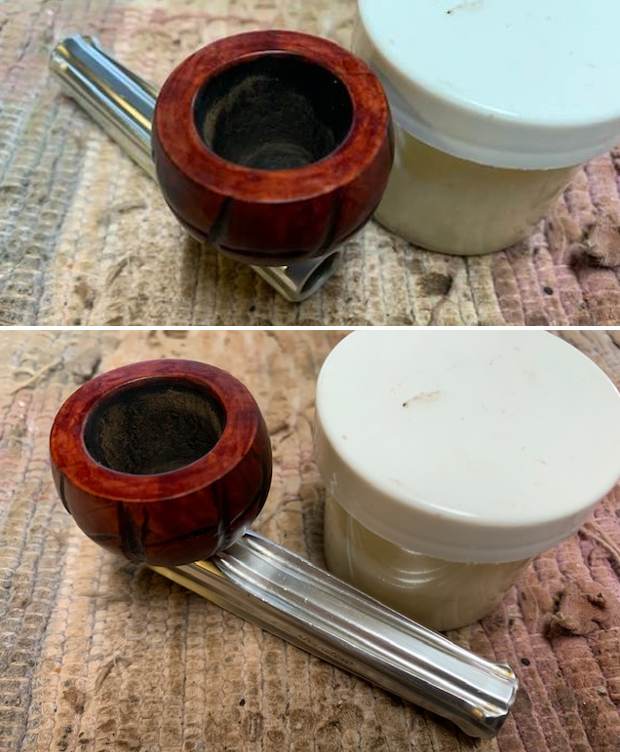
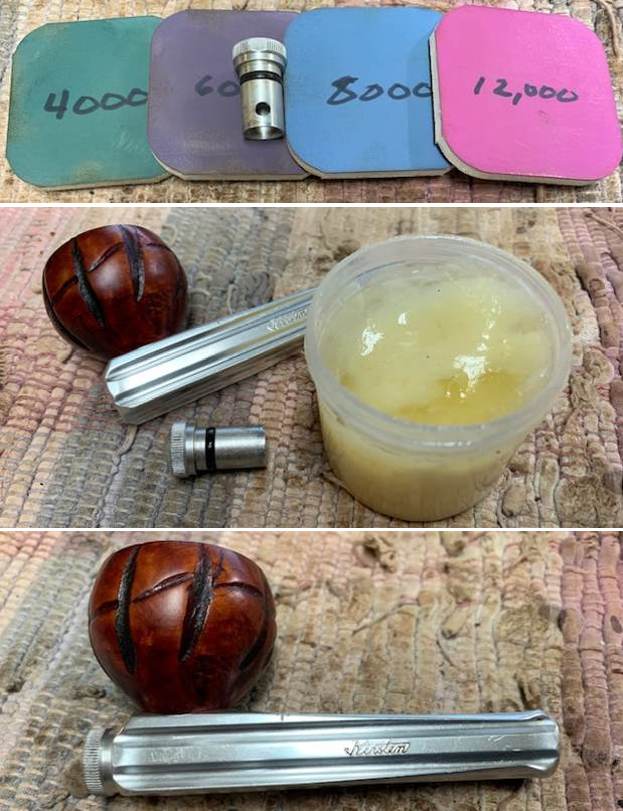
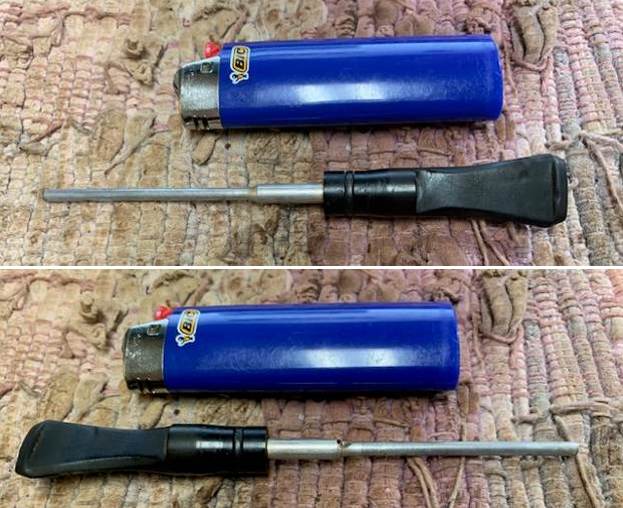
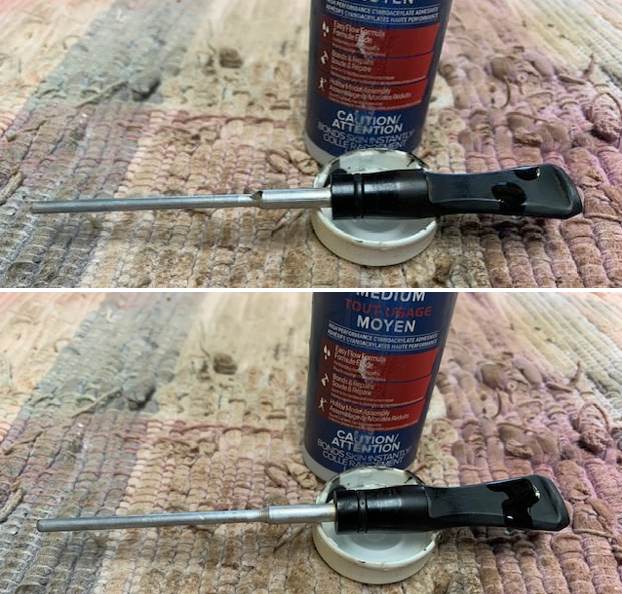
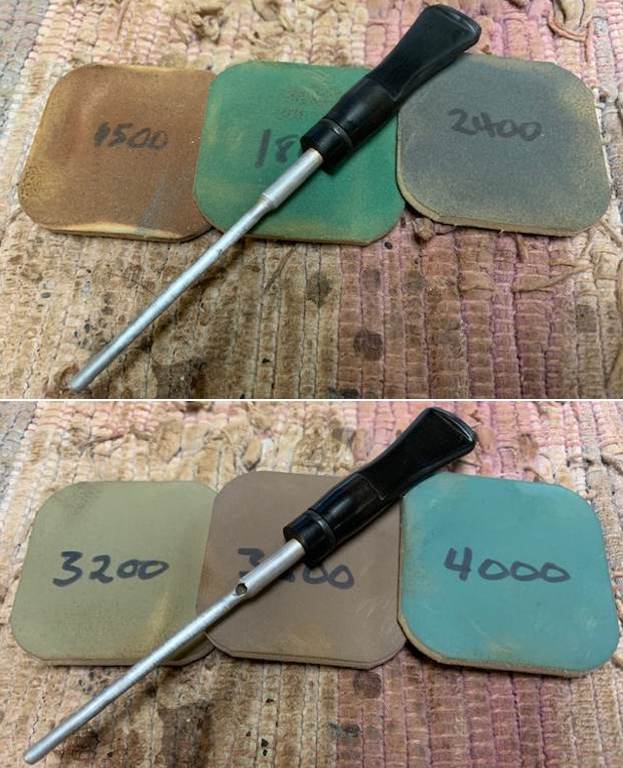
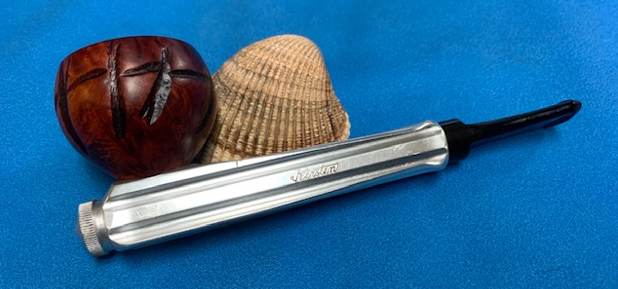
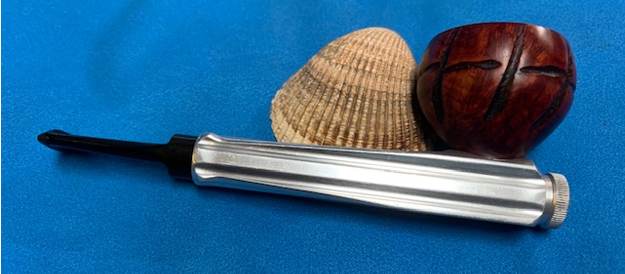
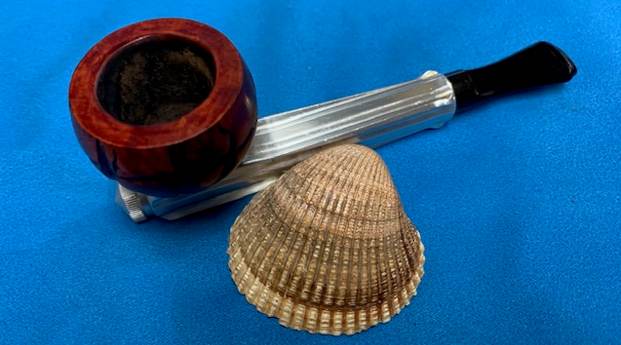
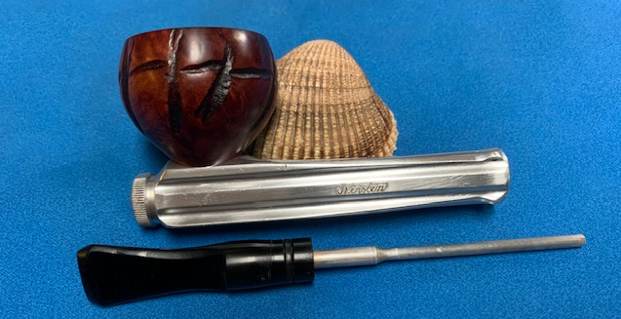
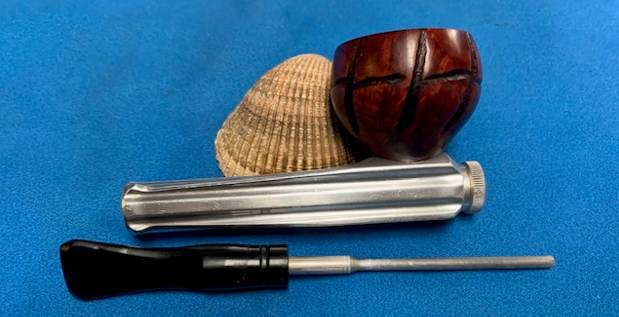
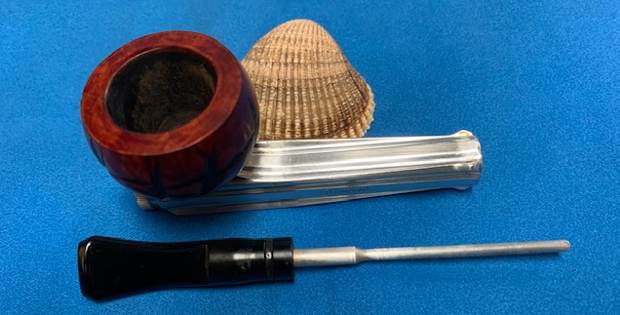
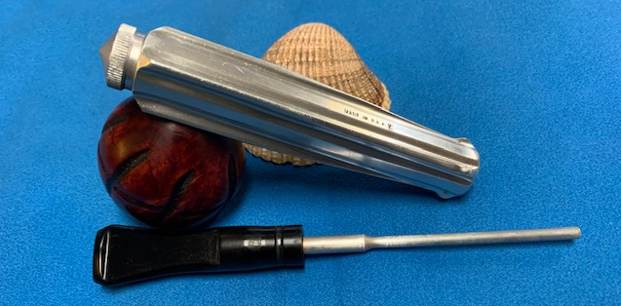
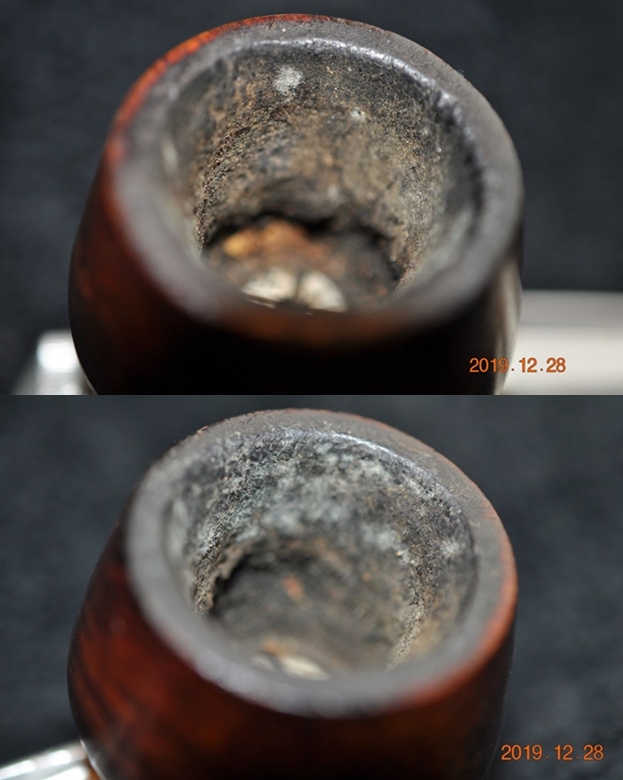
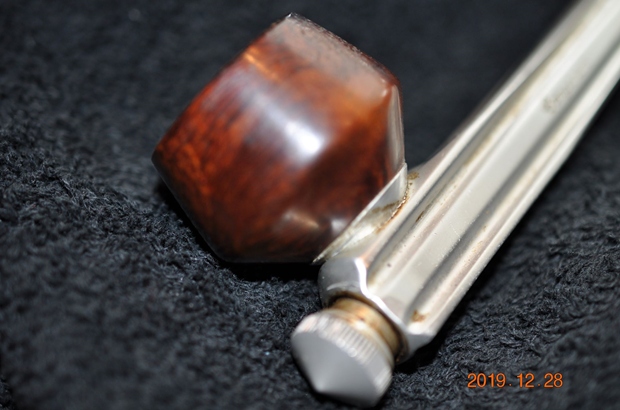
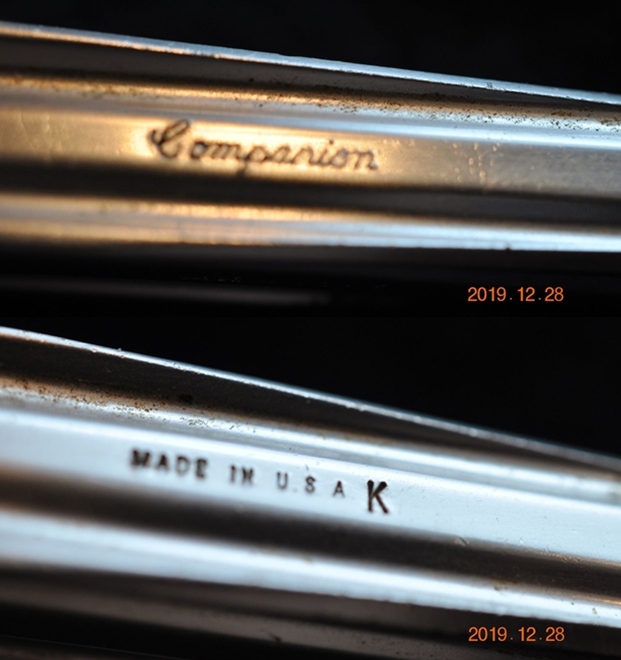
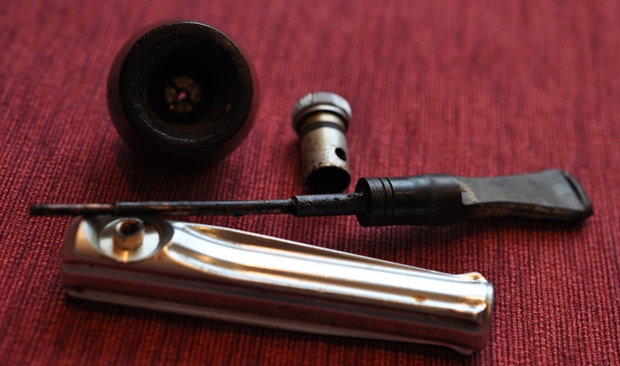
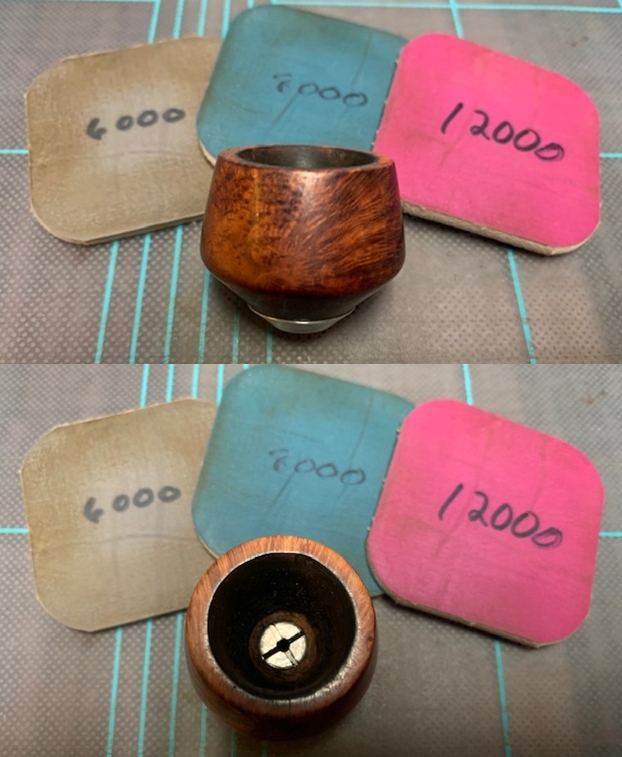
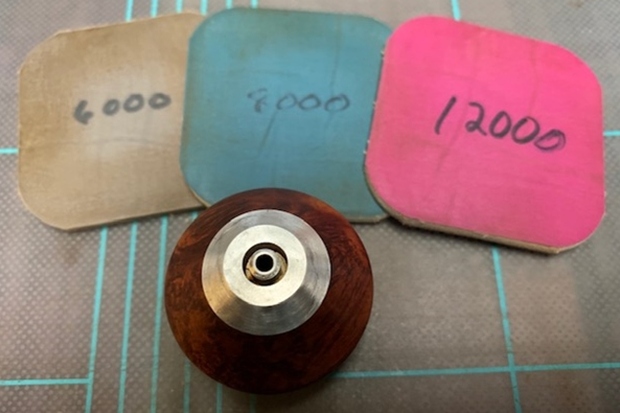
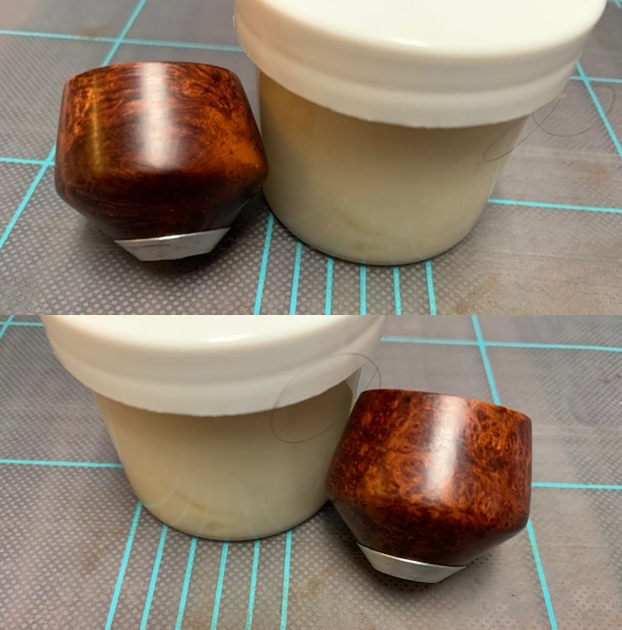
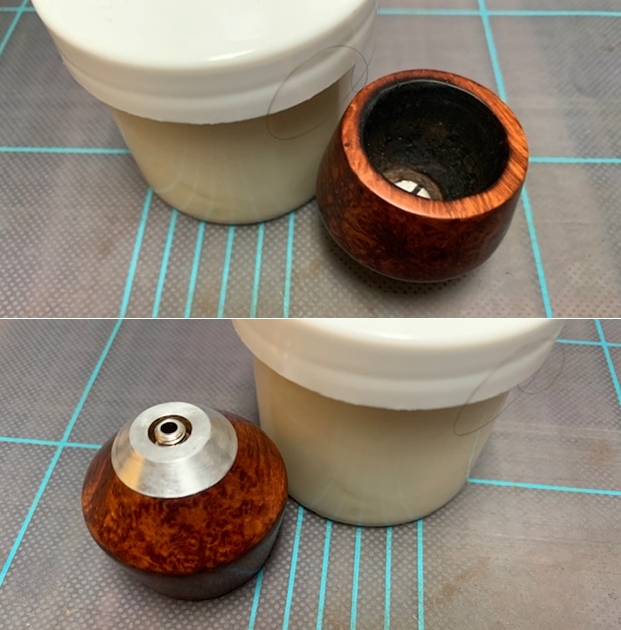
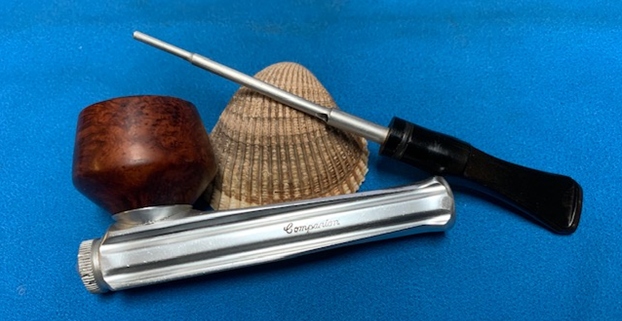
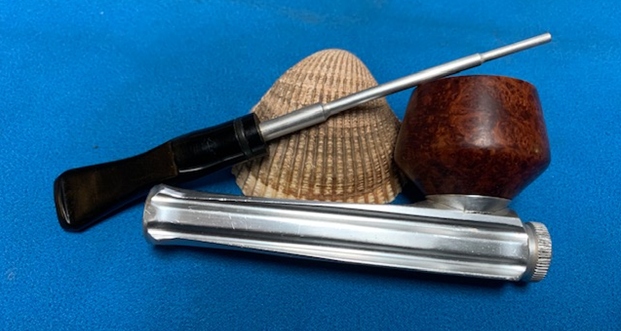
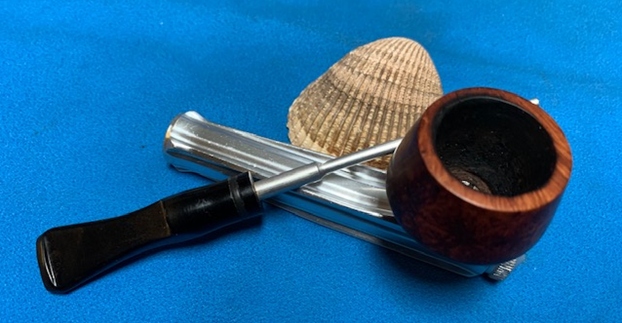
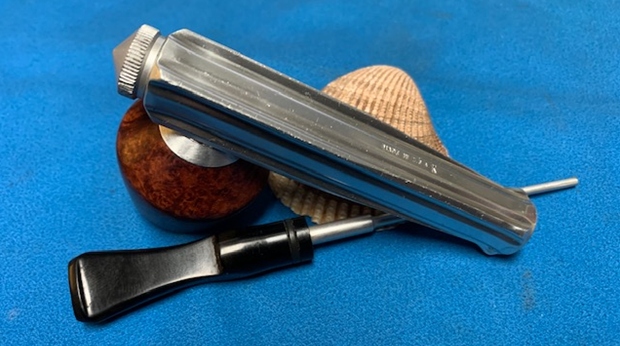
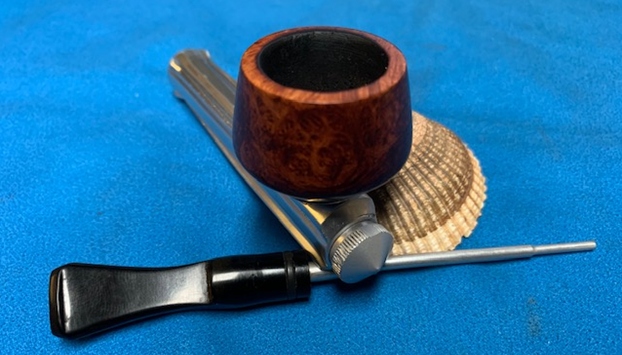
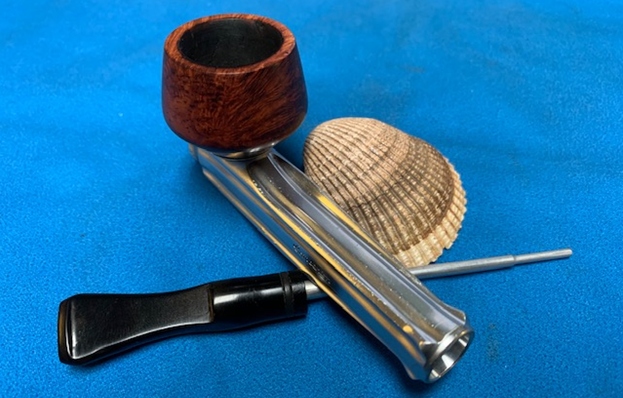
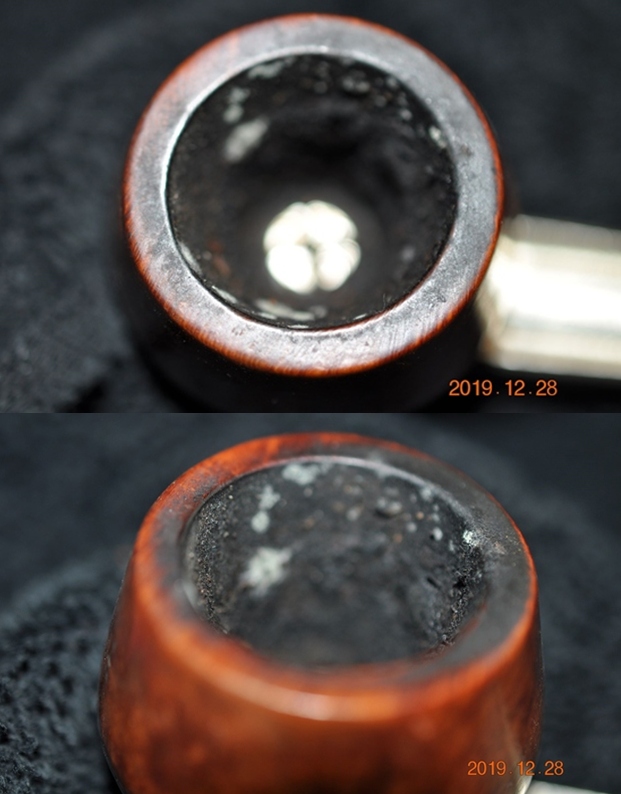
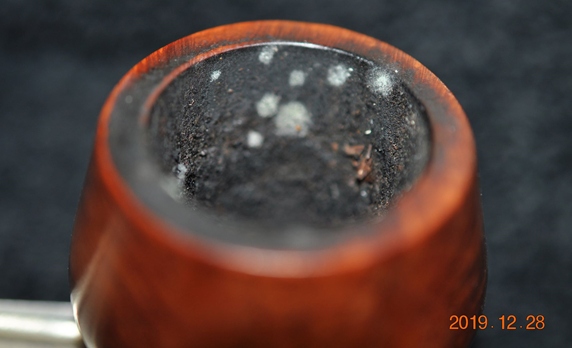
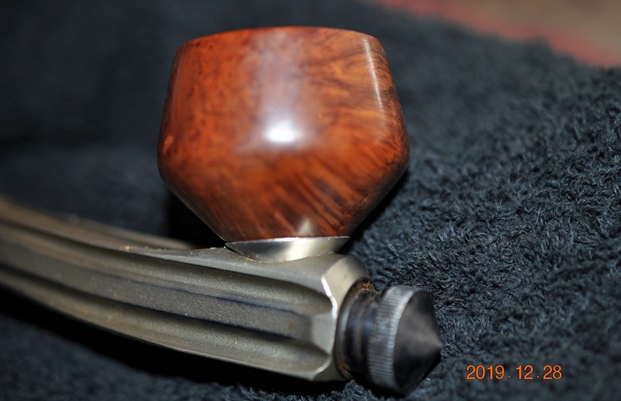
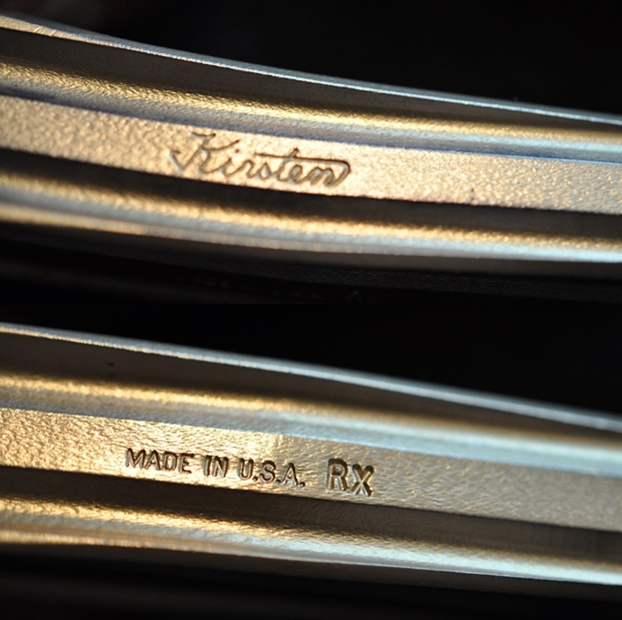
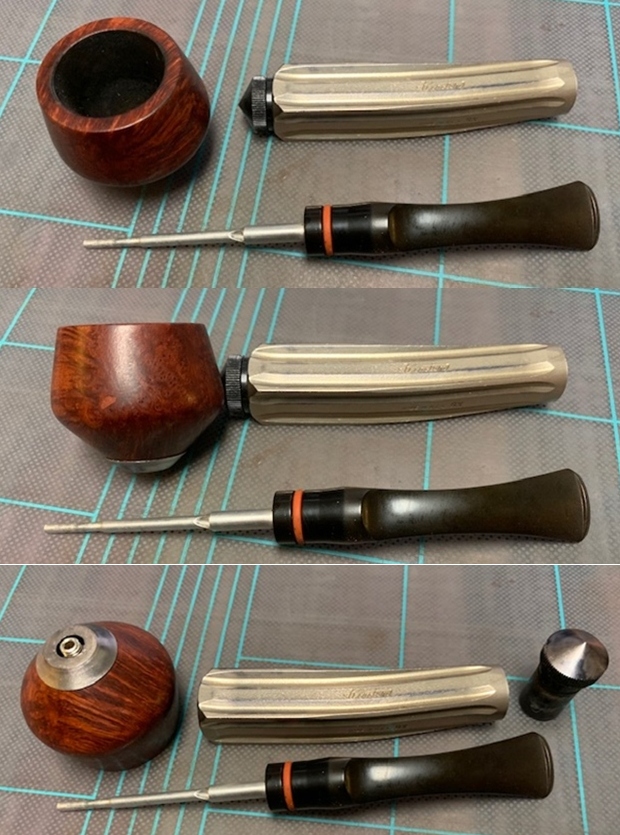
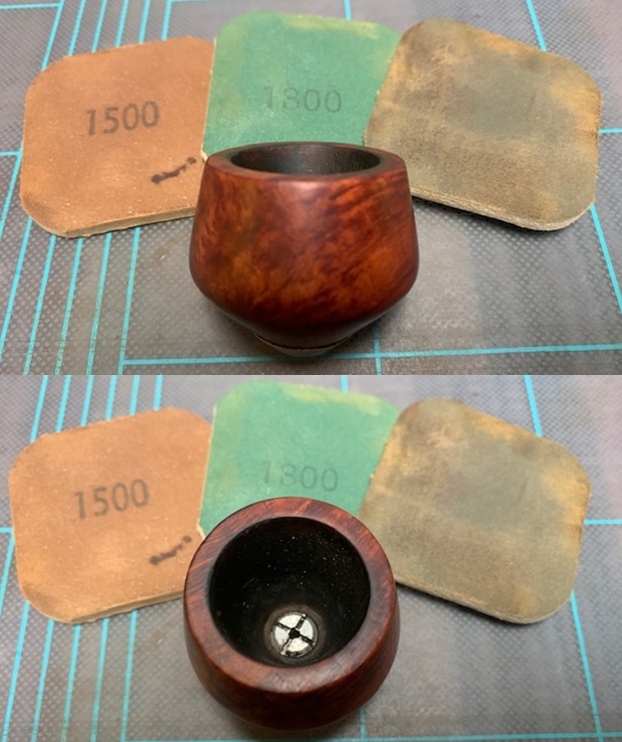
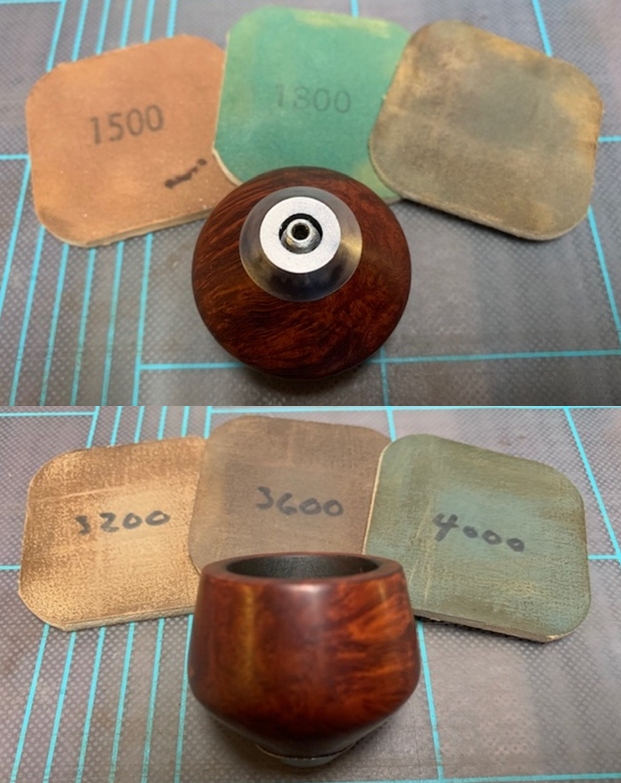
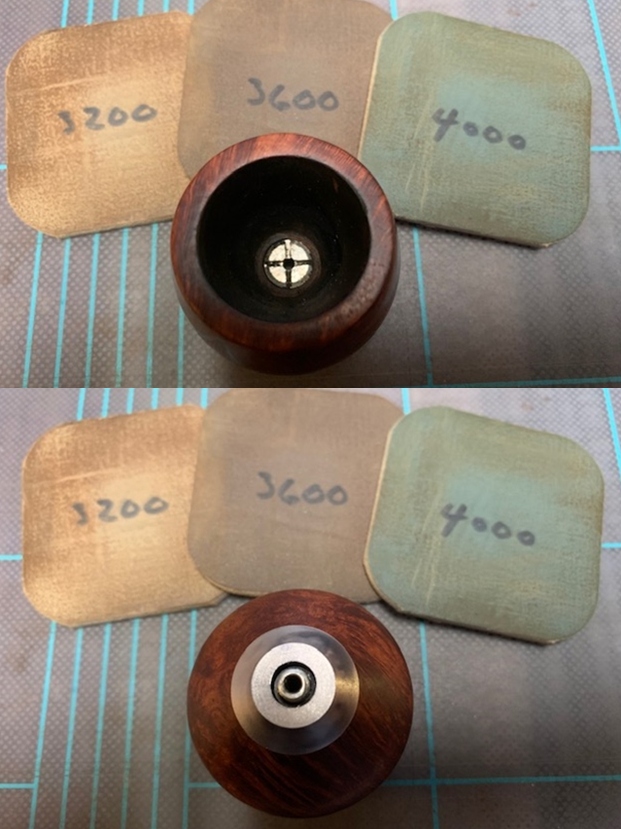
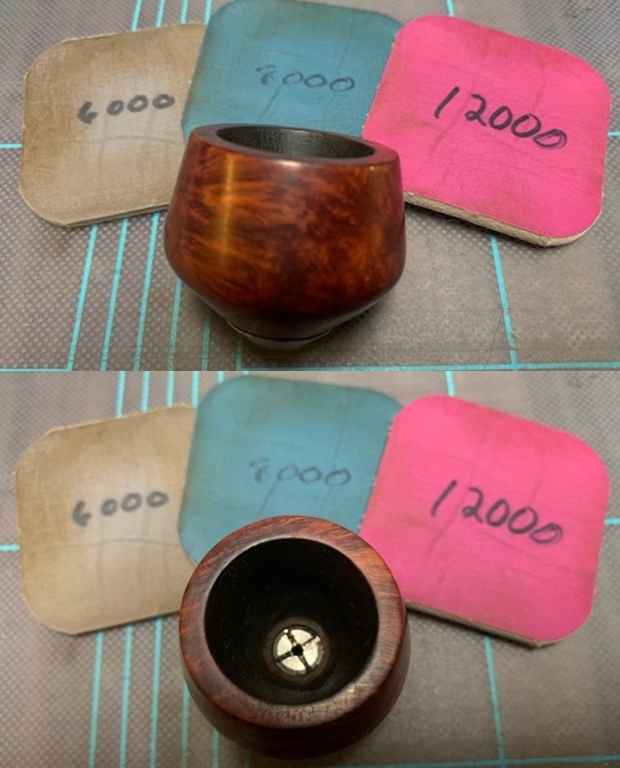
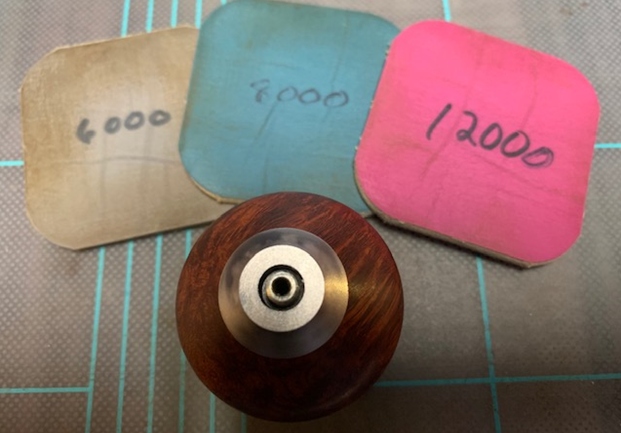
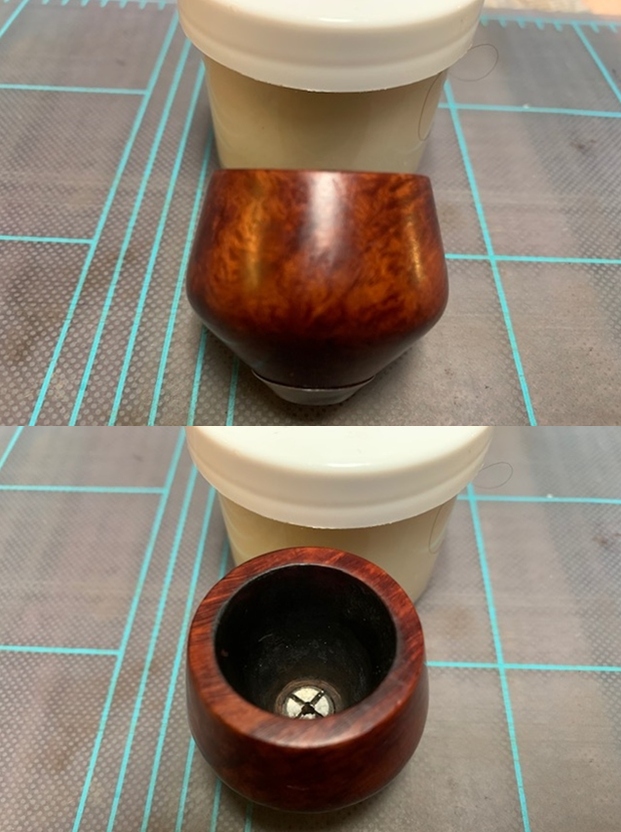
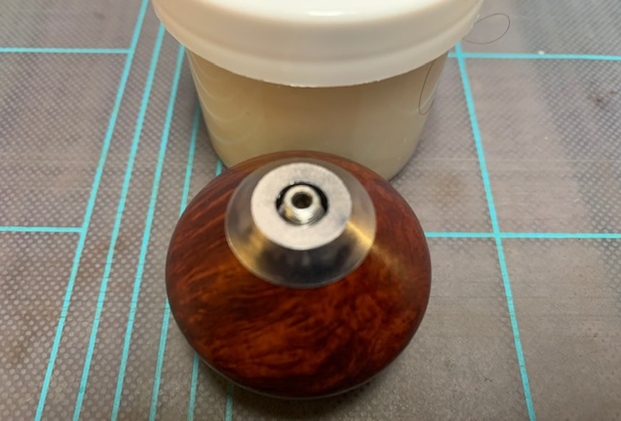
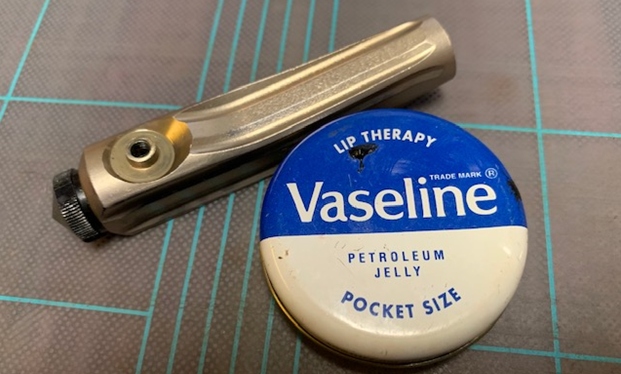
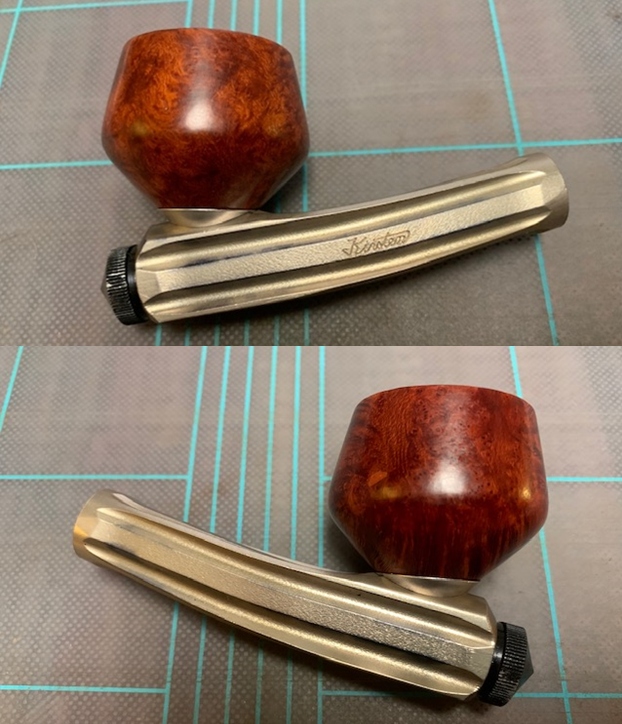
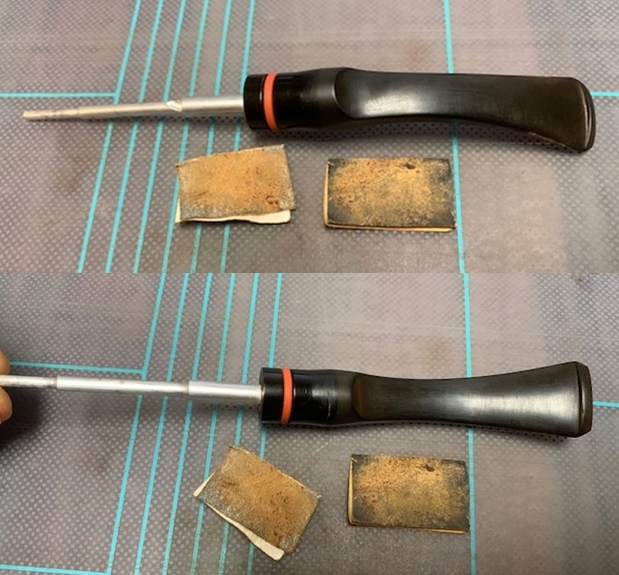
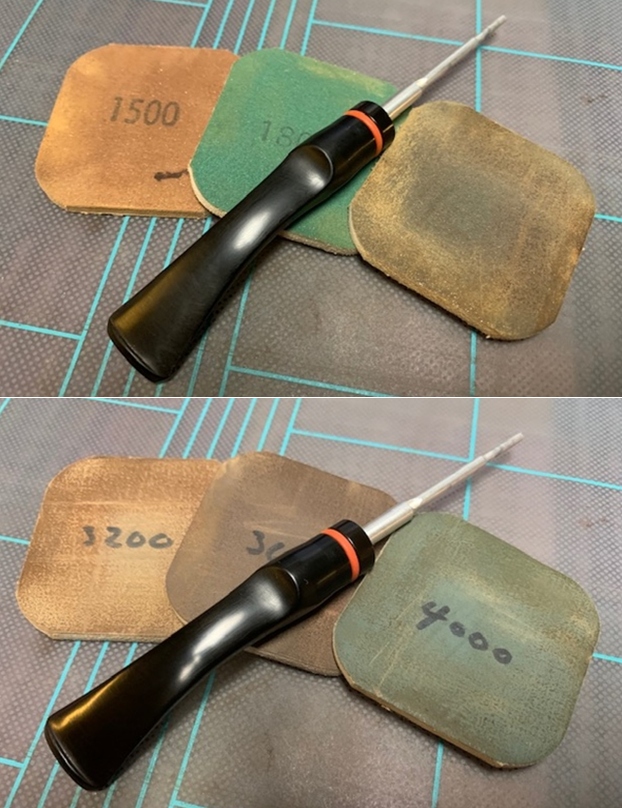
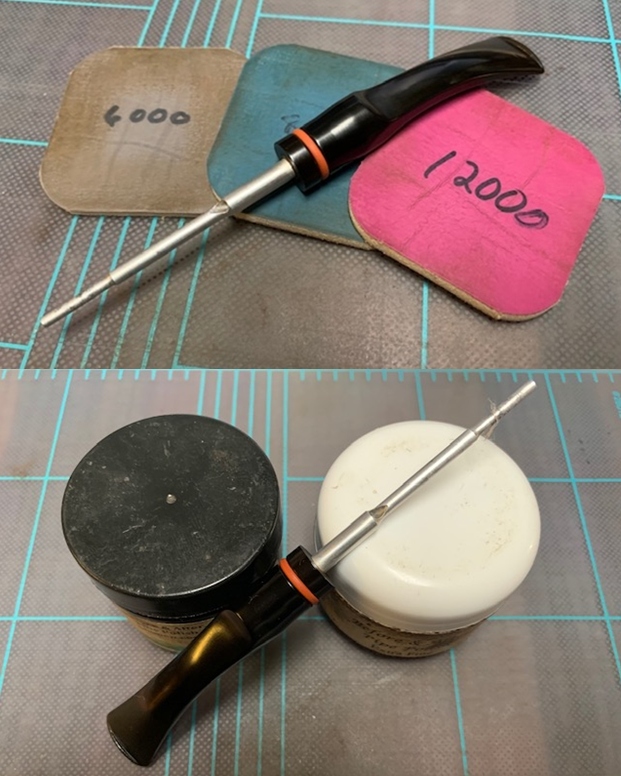
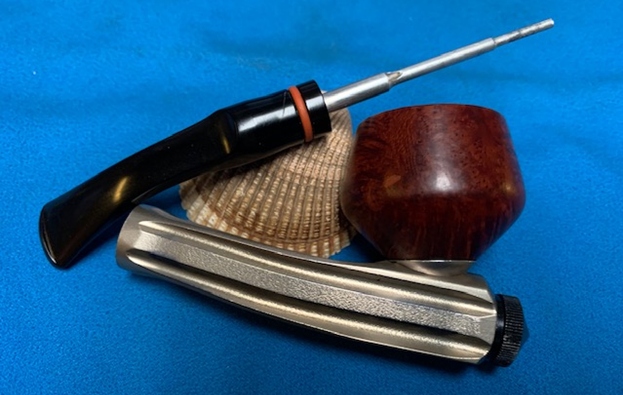
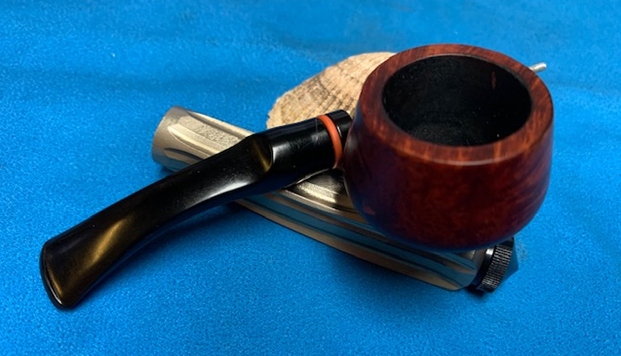
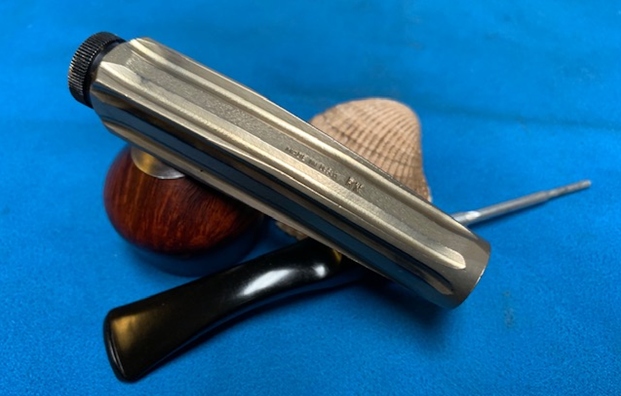
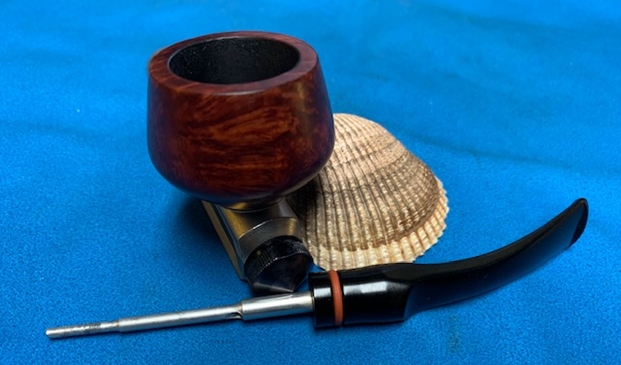
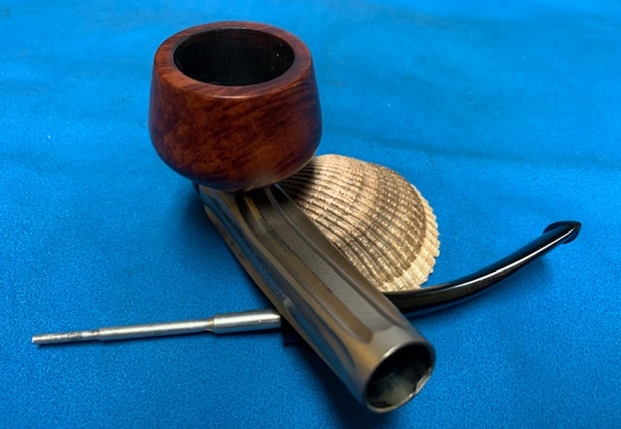
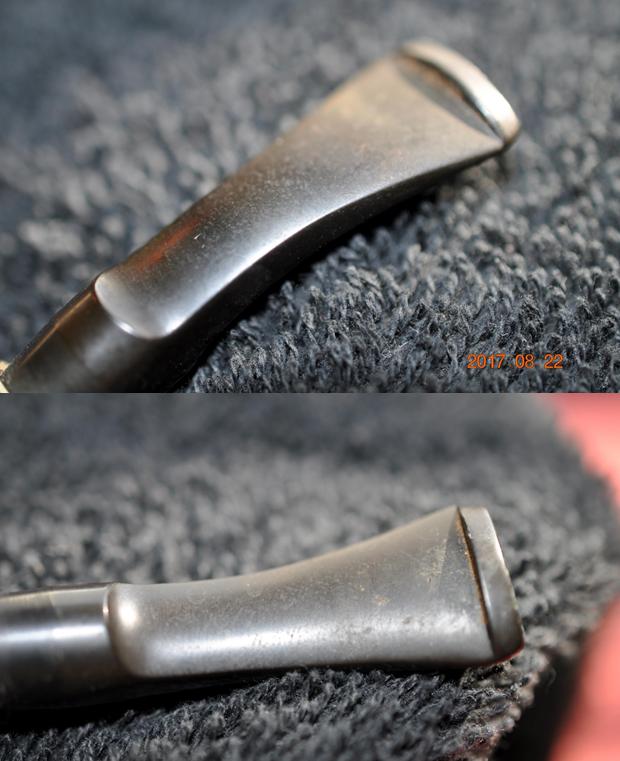
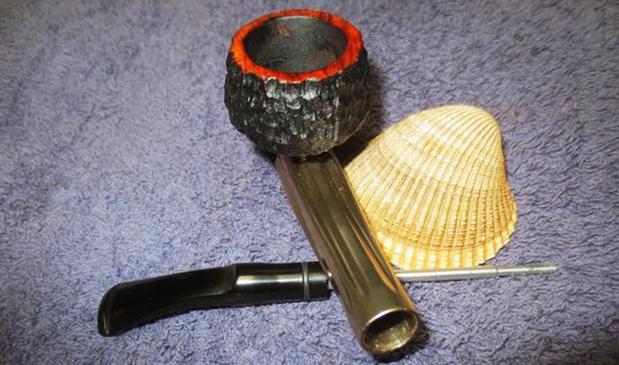
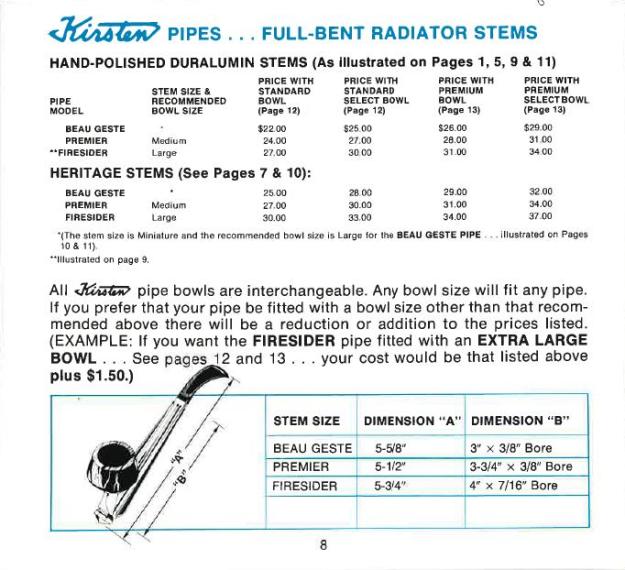
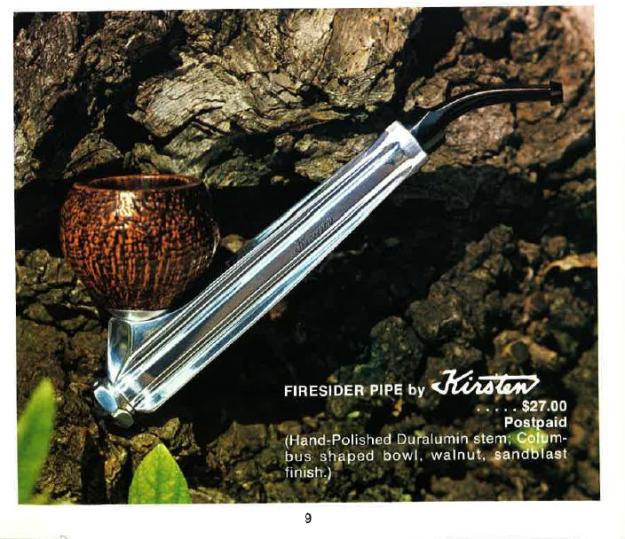
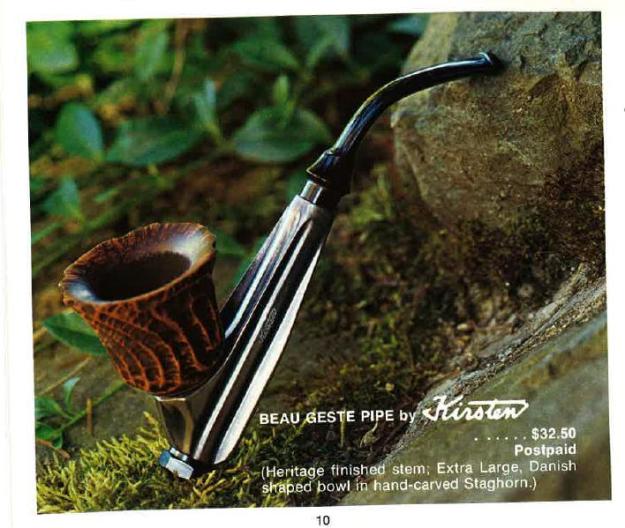
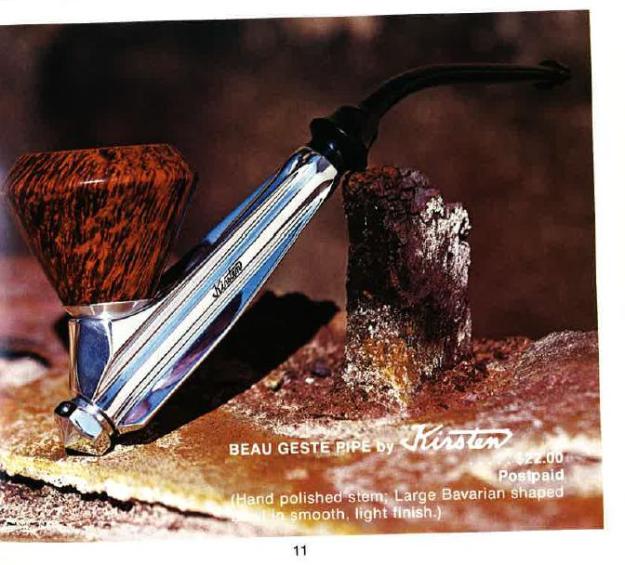
Kirsten pipes have always been a bit of an enigma to me. The combination of briar and aluminum is unique. It is a pipe that is not really fish or fowl in terms of briar or metal. It is a pipe with an aluminum radiator with a bowl attached to it. The vulcanite stem is attached to an aluminum metal pin that extends the length of the radiator. On the end is a valve that controls the flow of air to bowl and is adjustable. This pipe has some markings. Interestingly, the name Kirsten is not one of them, but this is unquestionably a Kirsten pipe. On the left side of the aluminum body is the word, Companion. On the underside of the body are the words, Made in U.S.A. – next to that is the shape letter, K.Kirsten pipes have a long and interesting history. Naturally, Pipedia has a long article on this, but, in fact, that information comes from the fascinating Smoking Metal website. I encourage you to read the various articles they have on Kirstens.Let’s examine the pipe a bit. The aluminum is in decent shape – no major dents or scratches. There are merely micro-scratches, but no big deal. Similarly, the stem was in really nice shape. Only very minor tooth wear. Little oxidation and calcification. However, the briar bowl did have some issues. It had some cake in the bowl and was fairly dirty. The main problem was a significant burn on the rim. I’d have to take a closer look at that.My first step was to take the entire pipe apart. Here is a good photo of the various components of this Kirsten – plus the screwdriver I used to take the pipe apart.I decided to work on the briar bowl first on this occasion. The first step for the bowl is to ream it out – that is to say, remove all the cake inside. This accomplishes a couple of things. First (and most obviously), it cleans the bowl and provides a refurbished chamber for future smoking. Second, when the old cake is removed, I can inspect the interior walls of the bowl and determine if there is damage or not. I used a reamer, a pipe knife, and a piece of sandpaper taped to a wooden dowel. Collectively, these ensure that all the debris is removed.The damage to the rim is significant. In order to lessen the burns and nicks on the rim, I ‘topped’ the pipe – that is to say, I gently and evenly sanded the rim on a piece of 220-grit sandpaper. This effectively minimizes the damage, without altering the look of the pipe.Some of the burn remained on the rim, so I took some crystalized oxalic acid and dissolved it in warm water. I took some cotton swaps, dipped in the solution, and rubbed the burned spot vigorously. Some of the burn was removed, but, unfortunately, some will always remain as part of this pipe’s history.To tidy up the briar, I also wiped down the outside with some oil soap on cotton rounds (and a toothbrush). This does a good job of cleaning any latent dirt on the surface of the briar. The last step of the cleaning process is to scour the inside of the stummel with some soap and tube brushes. This is the culmination of a lot of hard work in getting the bowl clean.I took a solid wooden sphere, wrapped a piece of 220-grit sandpaper around it, and sanded the inner edge of the rim. This achieves two things: first, it removes some of the burn marks; and second (and more importantly), the circular shape and motion of the sphere gradually returns the edge to a perfect circle. I then used all nine micromesh pads (1,500 through 12,000 grit) on the outside of the stummel to finish it off. This sanding minimizes flaws in the briar and provides a beautiful smoothness to the wood. I rubbed some Before & After Restoration Balm into the briar and let it sit for 20 minutes or so. The balm moisturizes the wood and gives a beautiful depth to the briar. I then buffed it with a microfibre cloth. On to the stem. I cleaned the inside with both pipe cleaners and cotton swabs dipped in 99% lemon-infused isopropyl alcohol. I scrubbed thoroughly to make sure the interior was clean.The goal of the next step is the removal (or minimization) of oxidation. Going to my sink, I used cream cleanser, cotton rounds, and a toothbrush, and scoured the stem to remove as much surface oxidation as possible. As the photos show, the result is a hideous brownish mess – but better off the stem than on it.Once the stem was reasonably clean, I soaked it overnight in some de-oxidation fluid. This solution works to draw oxidation in the stem to the surface. This is a major aid and an important step in ensuring a clean stem. The following day, I drew the stem out from its bath and scrubbed the lingering fluid with a toothbrush.I used all nine of the micromesh sanding pads (1,500 through 12,000 grit) to sand out flaws, even out the vulcanite, and provide gentle polishing of the finished surface. I also applied pipe-stem oil while using the last five micromesh pads. There was a wonderful, deep black shine to the stem when I was done.Next was the aluminum body of this old Kirsten. In order to loosen up some of the old filth, I soaked all the metal pieces in a vinegar solution. This was only mildly successful and I would need to do more.Just like other pipes, I cleaned the insides thoroughly with cotton swabs dipped in 99% lemon-infused isopropyl alcohol. This wasn’t enough – I also cleaned the inside of the aluminum with my cream cleanser and some tube brushes. That worked well! I then used my grey micromesh pads and polished the metal to a beautiful shine. Boy, it looked terrific after that.For the final step, I took the bowl to my bench buffer and carefully polished it – first with a white diamond compound, then with three coats of carnauba wax. This procedure makes the pipe look its best – the stummel sings and the stem glows.All done! This Kirsten Companion K looks fantastic again and is ready to be enjoyed by its new owner. It was great fun to work on. The approximate dimensions of the pipe are as follows: length 5⅓ in. (136 mm); height 1⅞ in. (48 mm); bowl diameter 1½ in. (39 mm); chamber diameter ⅞ in. (22 mm). The weight of the pipe is 1⅝ oz. (49 g). I hope you enjoyed reading the story of this pipe’s restoration as much as I enjoyed restoring it. If you are interested in more of my work, please follow me here on Steve’s website or send me an email at kenneth@knightsofthepipe.com. Thank you very much for reading and, as always, I welcome and encourage your comments.

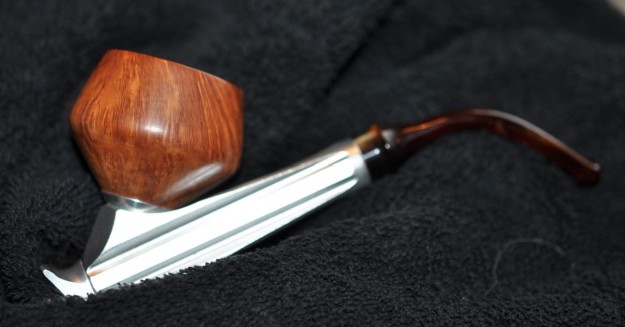
Restoring an Amazingly Grained Kirsten Full Bent Sitter E


Blog by Steve Laug

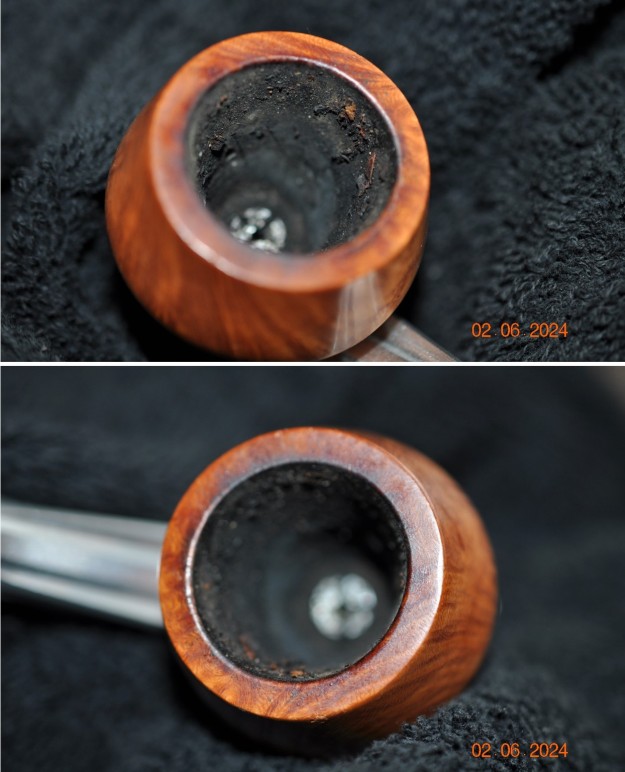
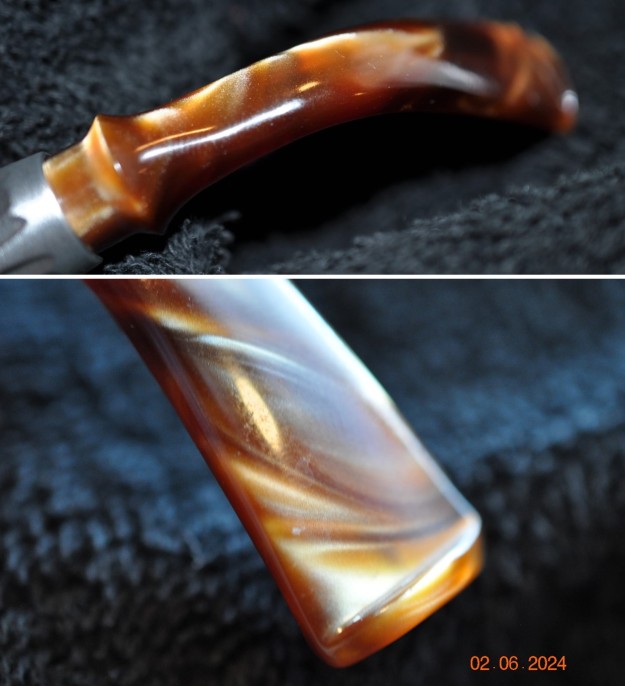
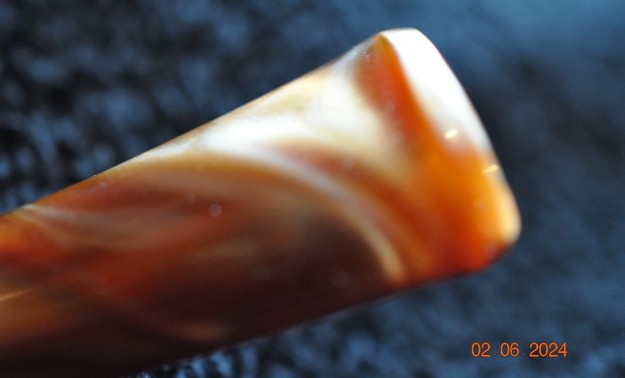
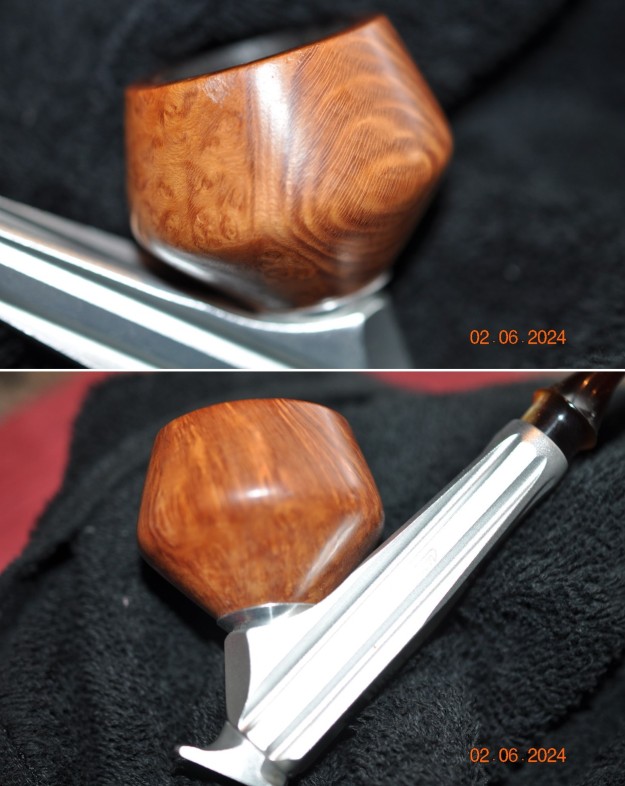
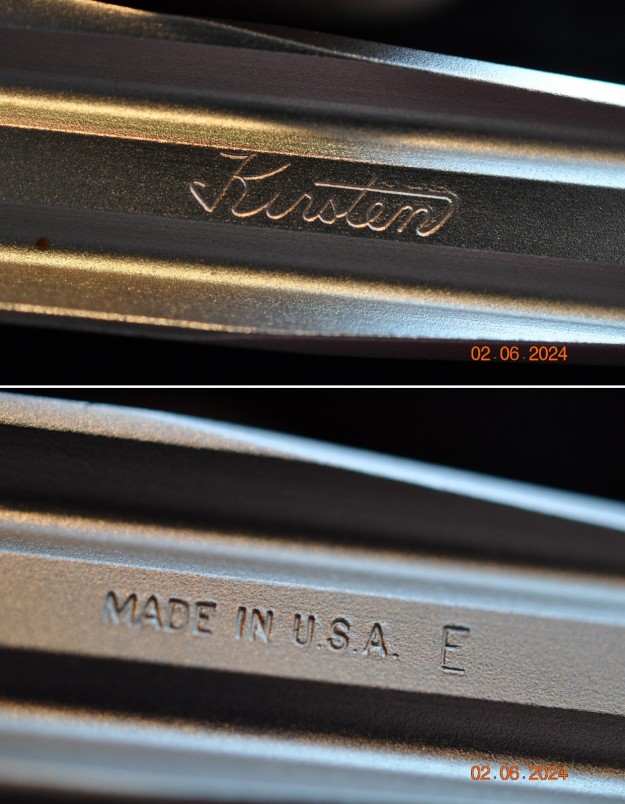
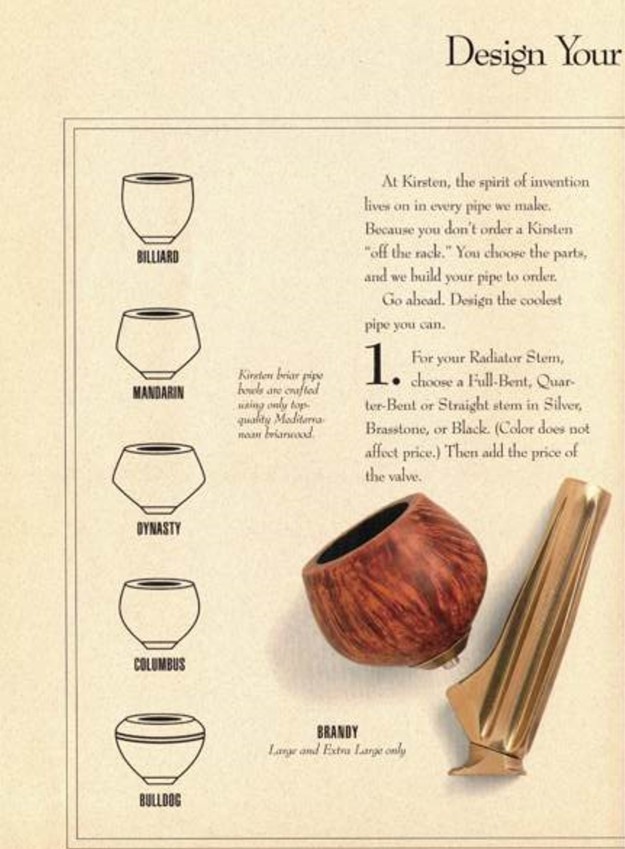
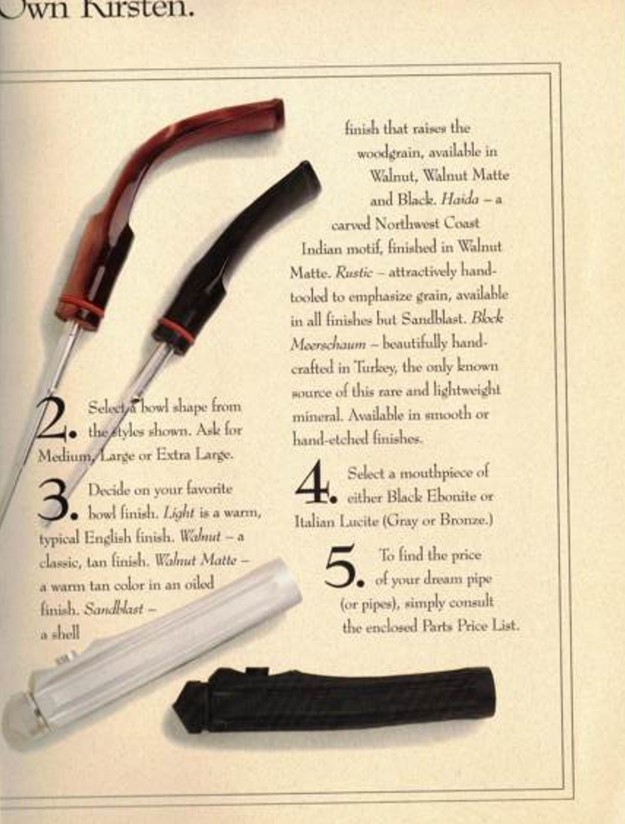
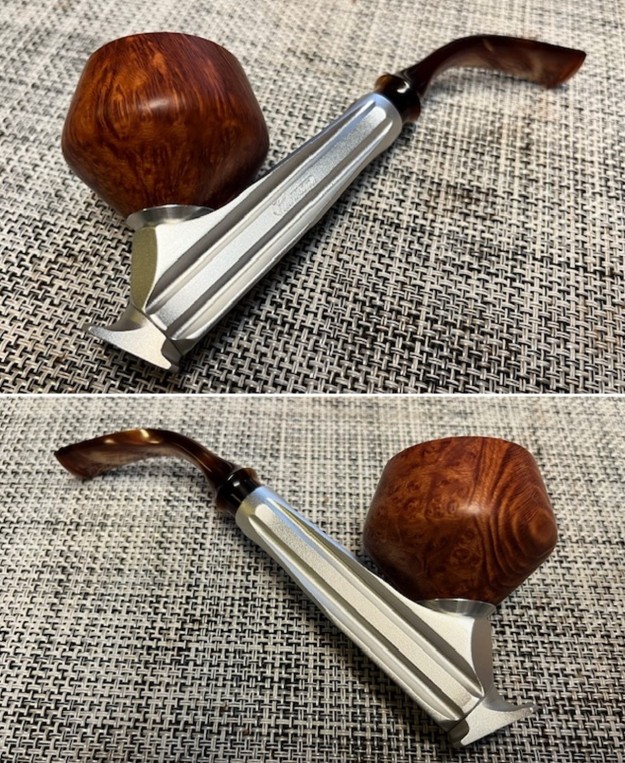
I bought my first Kirsten – a Mandarin in the early 80s from a pipe shop that specialized in them in Idaho Falls, Idaho. That shop is long since gone but there is still something about Kirsten pipes that attracts my attention. It may be the design look of the pipe and it may be the stubborn resolve that gave birth to it when Kirsten invented it after getting word from his doctor that he had to stop smoking. I don’t what it is but I like the boxy look of the base and shank, the grooves in the machined metal, the beautiful grain on the smooth bowls and the gentle curves of the stem. They always catch my eye. This one is no exception. We purchased it at an estate sale on 09/16/2023 in Idaho Falls, Idaho, USA. It has O rings on the stem and the end valve and a base on the bowl so I know that it is one of the more modern renditions. It also has the same kind of thick marbled acrylic stems that the one I purchased had. The pipe is a large one with a silver tone barrel. The smooth Mandarin style bowl has some great grain on it under the grime on the surface. The bowl was thickly caked with a light lava overflow pouring over the rim top. It was hard to know the condition of the inner edge and rim top underneath the lava but cleaning that up will tell the story. The acrylic stem had light tooth marks and chatter on both sides ahead of the button. The internals were heavily tarred and the metal tube and intake to the stem was also very dirty. The valve on the front of the bowl was tight but it was not frozen. It had a flattened base that allowed the stem to stand. Jeff took photos of it before he worked his magic in the cleanup process. The exterior of the pipe was very dirty – grime and grit ground in from years of use and sitting. The rim top was covered with a coat of thick lava that overflowed the bowl. There was also some darkening and lava on the rim top. The bowl itself had a thick cake with flecks of tobacco stuck in the cake on the sides. The acrylic stem surface was dirty and had some tooth marks and chatter on both sides. Jeff took photos of the sides of the bowl to give a better feel for the condition of the bowl. You can see the interesting grain on the bowl side and front. He took photos of the pipe taken apart to show the constituent part s of the pipe. IT really was a well-made piece of engineering from the Kirsten factory. I was looking forward to working on it. The next photos show the stamping on the sides of the barrel shank and it is very readable. It reads Kirsten on the left side of the barrel and on the underside Made in USA E.Before doing cleanup work on the pipe I decided to do some research on the pipe. I have several Kirsten catalogues on the site and turned to the 1993-94. Here is the link to that catalogue (https://rebornpipes.com/2022/11/17/1993-94-kirsten-pipe-catalogue/). I have included several of the pages below. The first shows the bowl shape and the Radiator barrel. The bowl is the Mandarin shape bowl below, the second from the top in the drawings of bowl shapes. The stem is shown in the second catalogue page below. It is a bronze coloured Italian Lucite with a bent. With that information in hand I went over the details of the stamping on a previous blog that I had posted by Dave Whitney who wrote Old Briar. He gave a helpful guide to dating a Kirsten pipe by the stamping and component parts. He separated them into generations – 1, 1.5, 2, 3. Going over the details I concluded that what I was dealing with a Generation 3 pipe that was made between 1985 and the present. Here is the link and a portion of the blog. I have italicized the portions that pertain to this particular pipe (https://rebornpipes.com/2012/11/03/kirsten-generation-1-1-5-2-3/).

Generation 3 – 1985 to the present                                                                         

All current models stamped “Made in U.S.A.” and all have O rings on both the valve and stem. They come in the following models:

Straights

JX Jewel Brass

M Mariner

L Lancer

Quarter-Bents

RX Regent Brass

H Horizon

Full bents

Advertisement

EX Esquire Brass

DX Designer Brass

FOOTNOTE ON VARIATIONS IN LETTER DESIGNATIONS:  Generally speaking, the X added to a model letter like “S” stands for brass tone finish, i.e., “SX.” There is one exception to this: In the 1960s Kirsten made a brass tone model with an “Eternalum” finish that gave the brass tone an antiqued look. They were marked with a “X” designation following the model letter. The B added to a model letter like “M” stands for black finish, i.e., “MB.”

He ended his answer to the questions with this great note: “Now the fun part…. this is how they came from the factory. What people did to them after they got them is what makes it an inexact science. Parts for the different sizes are not interchangeable, except for the bowls. I have a Gen 1 – M and -S…nothing interchanges but the bowls. If you get a Gen 1 that has been badly abused, you can end up losing either the bit or metal insert, or both, no matter what you do or how long you try.”

References used:

Whitney, Dave (2009) Old Briar – Pipe smoking on a budget. Pipesbywhitney http://www.kirstenpipe.com/

I now knew that the pipe I was working on was a Generation 3 made between 1985 and the present. It was a Full-Bent and the E made it an Esquire Version. The E is for Esquire shape and it has a silver finished. Now it was time to work on the pipe.

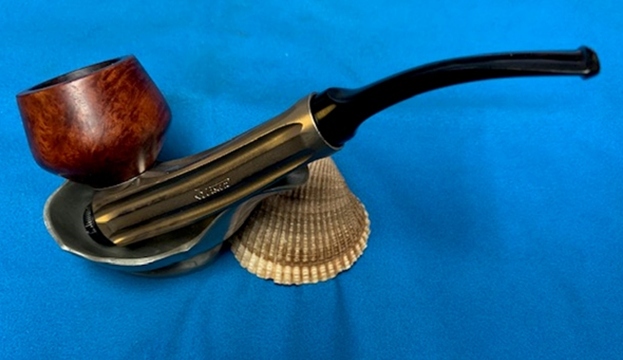
Jeff reamed it with a PipNet pipe reamer and cleaned up the remaining cake in the bowl with a Savinelli Fitsall Pipe Knife. He scrubbed out the internals with alcohol, pipe cleaners and cotton swabs until the pipe was clean. He scrubbed the exterior of the bowl with Murphy’s Oil Soap and a tooth brush to remove the grime and grit on the briar and the lava on the rim top. The finish looks very good with good looking grain around the bowl and shank. The rim top had some significant damage on the back part of the bowl. It had been burned from repeated lighting with a torch lighter. Jeff took the pipe apart and cleaned the barrel, the adjustable valve and the stem with alcohol, pipe cleaners and cotton swabs. He scrubbed the stem with Soft Scrub and soaked it in Briarville’s Pipe Stem Deoxidizer to remove the grime on the acrylic. When the pipe arrived here in Vancouver for the second stop of its restoration tour it looked a lot better. I took photos before I started my part of the work. I took a photo of the bowl and rim top to show how well it had cleaned up. The top and the edges of the bowl are in very good condition. There does not seem to be any damage on either the inner or outer edges and the rim top. The stem had light tooth marks and chatter on both sides ahead of the button.I took photos of the stamping on the left side and underside of the shank. It is clear and readable.I remove the stem from the barrel and took a photo. I removed the bowl from the barrel and took another photo.I started my work on the pipe by polishing the bowl and rim top with micromesh sanding pads – dry sanding with 1500-12000 grit pads. I wiped the bowl with a damp cotton pad after each sanding pad. The surface began to take on a nice shine. I worked Before & After Restoration Balm deep into the smooth finish to clean, enliven and protect the briar. I hand rubbed it with my fingers and worked it into the finish. I set it aside to dry for 10-15 minutes. I wiped it off with a soft cloth. I buffed the bowl with a cotton cloth to polish it. It really began to have a deep shine in the briar. I took some photos of the bowl at this point to mark the progress in the restoration. The grain on the bowl stands out with interesting lines moving across the sides of the bowl. I set the bowl aside and sanded the stem with the 2 inch square 320-3500 grit sanding pads. I wiped down the stem after each sanding pad. I was able to remove the tooth marks and chatter on both sides with the pads. The stem looked very good.I polished the acrylic stem with micromesh sanding pads – dry sanding it with 1500-12000 grit pads. I wiped the stem down after each sanding pad with Obsidian Oil and set it aside to dry.I polished it further with Before & After Pipe Polish – using both the Fine and Extra Fine Polishes. I gave it a rubdown with Obsidian Oil one last time and set it aside.I put the Kirsten Generation 3 Full Bent Mandarin E back together and worked the pipe over on the buffing wheel using Blue Diamond to lightly polish the bowl and the acrylic stem. I buffed the bowl and stem to raise the gloss on the briar and the acrylic. I gave the pipe multiple coats of carnauba wax. I buffed the entire pipe with a clean buffing pad to raise the shine. I hand buffed it with a microfiber cloth to deepen the shine. The finished the Kirsten Gen 3 Full Bent Mandarin is shown in the photos below. The medium brown stains on the smooth Bulldog shaped bowl works well with the rich bronze Italian acrylic stem. The dimensions of the pipe are: Length: 6 inches, Height: 2 ½ inches, Outside Diameter: 1 ½ inches, Diameter of the chamber: 1 inch. The weight of the pipe is 61 grams/2.15 ounces. This is an interesting piece of briar, cross grain and birdseye on the bowl and shank. I really like how the briar and the vulcanite work well together. This one will soon be on the rebornpipes store. If you are interested in adding a Kirsten to your collection this may well be the one for you. Thanks for walking with me through the restoration process.

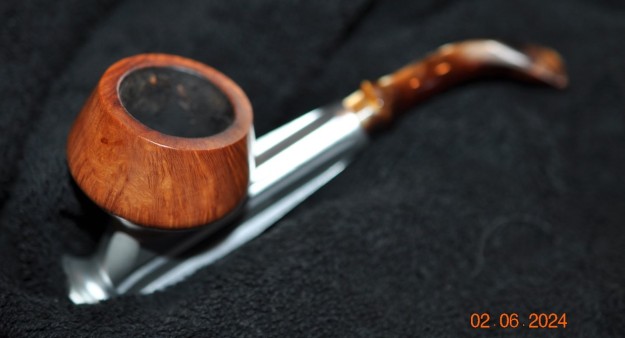
Restoring a Lovely Generation 3 Kirsten RX Brass Tone ¼ Bent Bulldog


Blog by Steve Laug

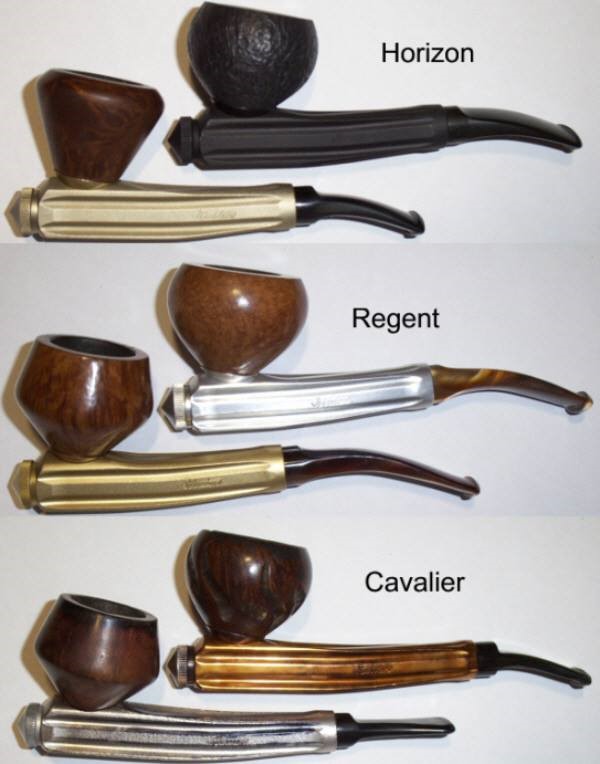
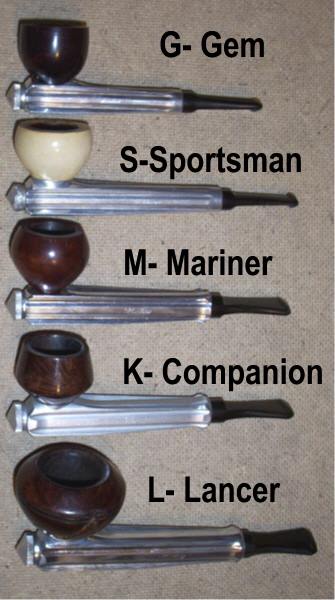
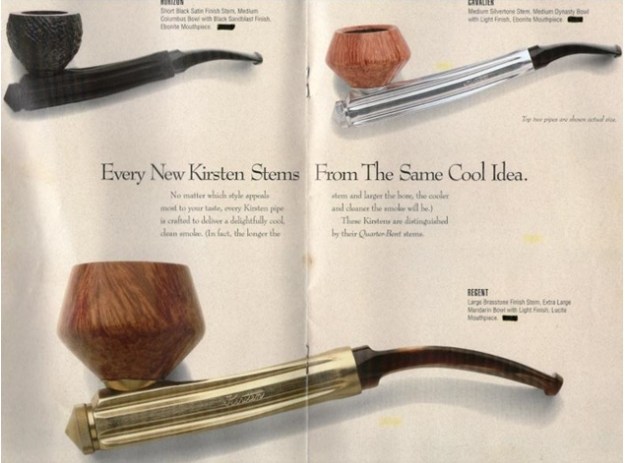
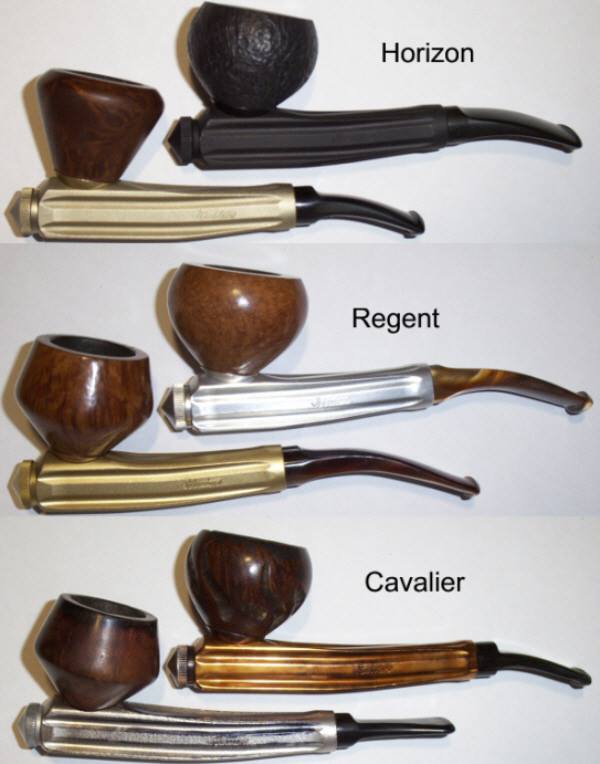
I bought my first Kirsten – a Mandarin in the early 80s from a pipe shop that specialized in them in Idaho Falls, Idaho. That shop is long since gone but there is still something about Kirsten pipes that attracts my attention. It may be the design look of the pipe and it may be the stubborn resolve that gave birth to it when Kirsten invented it after getting word from his doctor that he had to stop smoking. I don’t what it is but I like the boxy look of the base and shank, the grooves in the machined metal, the beautiful grain on the smooth bowls and the gentle curves of the stem. They always catch my eye. This one is no exception. We purchased it at an estate sale on 09/16/2023 in Idaho Falls, Idaho, USA. It has O rings on the stem and the end valve and a base on the bowl so I know that it is one of the more modern renditions. It also has the same kind of thick marbled acrylic stems that the one I purchased had. The pipe is a large one with a brass tone barrel. The smooth Bulldog style bowl has some great grain on it under the grime on the surface. The bowl was thickly caked with a thick lava overflow pouring over the inwardly beveled rim top. It was hard to know the condition of the inner edge and rim top underneath the lava but cleaning that up will tell the story. The acrylic stem had light tooth marks and chatter on both sides ahead of the button. The internals were heavily tarred and the metal tube and intake to the stem was also very dirty. The valve on the front of the bowl was tight but it was not frozen.  Jeff took photos of it before he worked his magic in the cleanup process. The exterior of the pipe was very dirty – grime and grit ground in from years of use and sitting. The rim top was covered with a coat of thick lava that overflowed the bowl. There was also some darkening and lava on the rim top. The bowl itself had a thick cake with flecks of tobacco stuck in the cake on the sides. The acrylic stem surface was dirty and had some tooth marks and chatter on both sides. Jeff took a photo of the sides of the bowl to give a better feel for the condition of the bowl. You can see the interesting grain on the bowl sides and front.He took photos of the pipe taken apart to show the constituent part s of the pipe. It really was a well-made piece of engineering from the Kirsten factory. I was looking forward to working on it. The next photos show the stamping on the sides of the barrel shank and it is very readable. It reads Kirsten on the left side of the barrel and on the underside Made in USA RX.Before doing cleanup work on the pipe I decided to do some research on the pipe. I have a catalogue for Kirsten pipes in my files and found this pipe in the catalogue. It is shown in the photo below in the bottom of the photo. The pipe I am working on is in the Regent Shape. I also have several Kirsten catalogues on the site and turned to the 1993-94. Here is the link to that catalogue (https://rebornpipes.com/2022/11/17/1993-94-kirsten-pipe-catalogue/). I have included several of the pages below. The first shows the bowl shape and the Radiator barrel. The bowl is the Bulldog shape bowl below at the bottom of the drawings of bowl shapes. The stem is shown in the second catalogue page below. It is a bronze coloured Italian Lucite with a ¼ bent. With that information in hand I went over the details of the stamping on a previous blog that I had posted by Dave Whitney who wrote Old Briar. He gave a helpful guide to dating a Kirsten pipe by the stamping and component parts. He separated them into generations – 1, 1.5, 2, 3. Going over the details I concluded that what I was dealing with a Generation 3 pipe that was made between 1958 and 1985. Here is the link and a portion of the blog. I have italicized the portions that pertain to this particular pipe (https://rebornpipes.com/2012/11/03/kirsten-generation-1-1-5-2-3/).

Generation 3 – 1985 to the present                                                                         

All current models stamped “Made in U.S.A.” and all have O rings on both the valve and stem. They come in the following models:

Straights

JX Jewel Brass

M Mariner

L Lancer

Quarter-Bents

RX Regent Brass

H Horizon

Full bents

Advertisement

EX Esquire Brass

DX Designer Brass

FOOTNOTE ON VARIATIONS IN LETTER DESIGNATIONS:  Generally speaking, the X added to a model letter like “S” stands for brass tone finish, i.e., “SX.” There is one exception to this: In the 1960s Kirsten made a brass tone model with an “Eternalum” finish that gave the brass tone an antiqued look. They were marked with a “X” designation following the model letter. The B added to a model letter like “M” stands for black finish, i.e., “MB.”

He ended his answer to the questions with this great note: “Now the fun part….this is how they came from the factory. What people did to them after they got them is what makes it an inexact science. Parts for the different sizes are not interchangeable, except for the bowls. I have a Gen 1 – M and -S…nothing interchanges but the bowls. If you get a Gen 1 that has been badly abused, you can end up losing either the bit or metal insert, or both, no matter what you do or how long you try.”

References used:

Whitney, Dave (2009) Old Briar – Pipe smoking on a budget. Pipesbywhitney http://www.kirstenpipe.com/

I now knew that the pipe I was working on was a Generation 3 made between 1985 and the present. It was a Quarter-Bent and the RX made it a Regent Brass Version. The R is for the Regent shape and the X stamp refers to the Brass finish. Now it was time to work on the pipe.

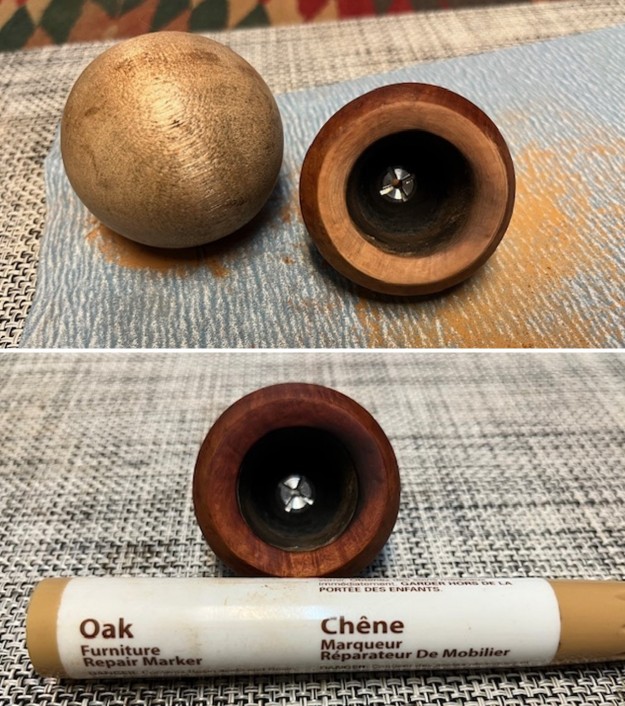
Jeff reamed it with a PipNet pipe reamer and cleaned up the remaining cake in the bowl with a Savinelli Fitsall Pipe Knife. He scrubbed out the internals with alcohol, pipe cleaners and cotton swabs until the pipe was clean. He scrubbed the exterior of the bowl with Murphy’s Oil Soap and a tooth brush to remove the grime and grit on the briar and the lava on the rim top. The finish looks very good with good looking grain around the bowl and shank. The rim top had some significant damage on the back part of the bowl. It had been burned from repeated lighting with a torch lighter. Jeff took the pipe apart and cleaned the barrel, the adjustable valve and the stem with alcohol, pipe cleaners and cotton swabs. He scrubbed the stem with Soft Scrub and soaked it in Briarville’s Pipe Stem Deoxidizer to remove the grime on the acrylic. When the pipe arrived here in Vancouver for the second stop of its restoration tour it looked a lot better. I took photos before I started my part of the work. I took a photo of the bowl and rim top to show how well it had cleaned up. There is some rim damage on the back of the beveled rim top from the outer edge to the inner edge. It was burned from repeated lighting from a torch lighter and the charring seemed quite deep but sanding would make that clear. The rest of the rim top had some darkening but it was very clean. The stem tooth marks and chatter are very light.I remove the stem from the barrel and took a photo. I removed the bowl from the barrel and took another photo.I started my work on the pipe by dealing with the burn damage on the beveled rim top, the inner edge of the rim and the general darkening on the rim top with a wooden bowl and some 220 grit sandpaper wrapped around it.Once it was finished it looked very good. The burn damage was minimized and the darkening around the top and edges was mostly removed. I restained the rim top and edges with an oak stain pen to match the rest of the bowl.I polished the bowl and rim top with micromesh sanding pads – dry sanding with 1500-12000 grit pads. I wiped the bowl with a damp cotton pad after each sanding pad. The surface began to take on a nice shine. I worked Before & After Restoration Balm deep into the smooth finish to clean, enliven and protect the briar. I hand rubbed it with my fingers and worked it into the finish and used the shoe brush to get in the twin rings. I set it aside to dry for 10-15 minutes. I wiped it off with a soft cloth. I buffed the bowl with a cotton cloth to polish it. It really began to have a deep shine in the briar. I took some photos of the bowl at this point to mark the progress in the restoration. The grain on the bowl stands out with interesting lines moving across the sides of the bowl and the shank. I set the bowl aside and sanded the stem with the 2 inch square 320-3500 grit sanding pads. I wiped down the stem after each sanding pad. I was able to remove the tooth marks and chatter on both sides with the pads. The stem looked very good.I polished the vulcanite stem with micromesh sanding pads – dry sanding it with 1500-12000 grit pads. I wiped the stem down after each sanding pad with Obsidian Oil and set it aside to dry.I polished it further with Before & After Pipe Polish – using both the Fine and Extra Fine Polishes. I gave it a rubdown with Obsidian Oil one last time and set it aside.I put the Kirsten Regent Brass (RX) Bulldog back together and worked the pipe over on the buffing wheel using Blue Diamond to lightly polish the bowl and the acrylic stem. I buffed the bowl and stem to raise the gloss on the briar and the acrylic. I gave the pipe multiple coats of carnauba wax. I buffed the entire pipe with a clean buffing pad to raise the shine. I hand buffed it with a microfiber cloth to deepen the shine. The finished the Kirsten Regent Brass Bulldog is shown in the photos below. The medium brown stains on the smooth Bulldog shaped bowl works well with the rich bronze Italian acrylic stem. The dimensions of the pipe are: Length: 6 inches, Height: 2 inches, Outside Diameter: 1 ½ inches, Diameter of the chamber: 1 inch. The weight of the pipe is 59 grams/2.08 ounces. This is an interesting piece of briar, cross grain and birdseye on the bowl and shank. I really like how the briar and the vulcanite work well together. This one will soon be on the rebornpipes store. If you are interested in adding a House of Robertson to your collection this may well be the one for you. Thanks for walking with me through the restoration process.

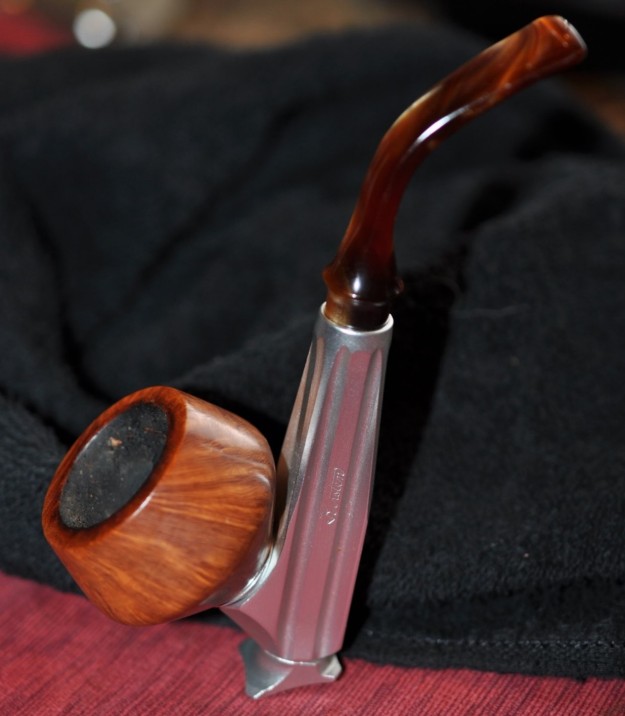
New Life for a Kirsten Companion K with a Rusticated Bowl


Blog by Steve Laug

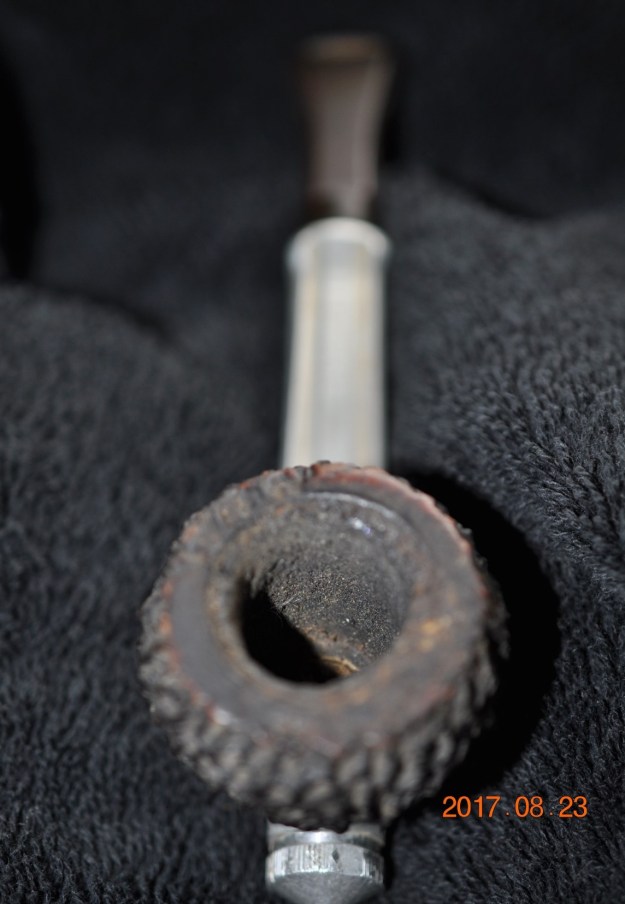
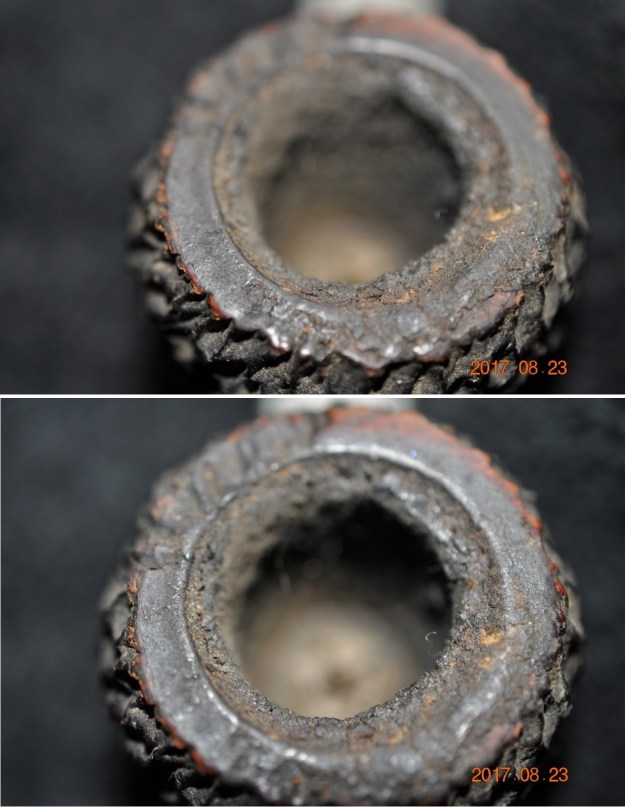
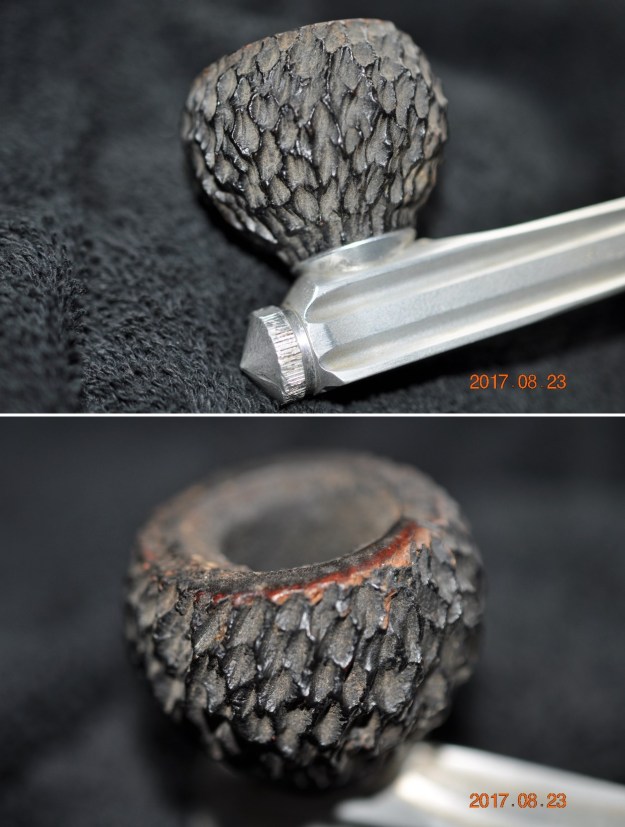
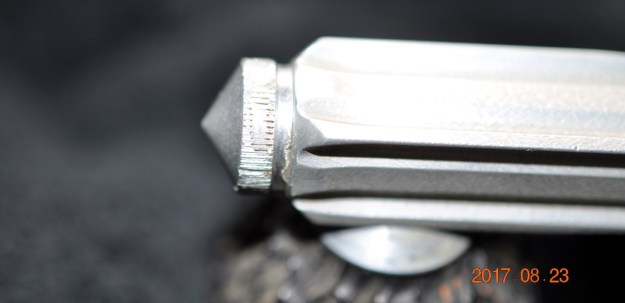
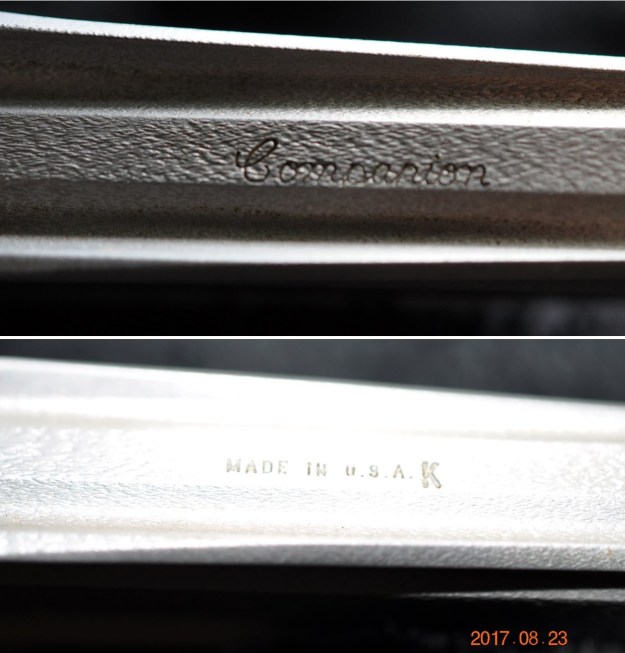
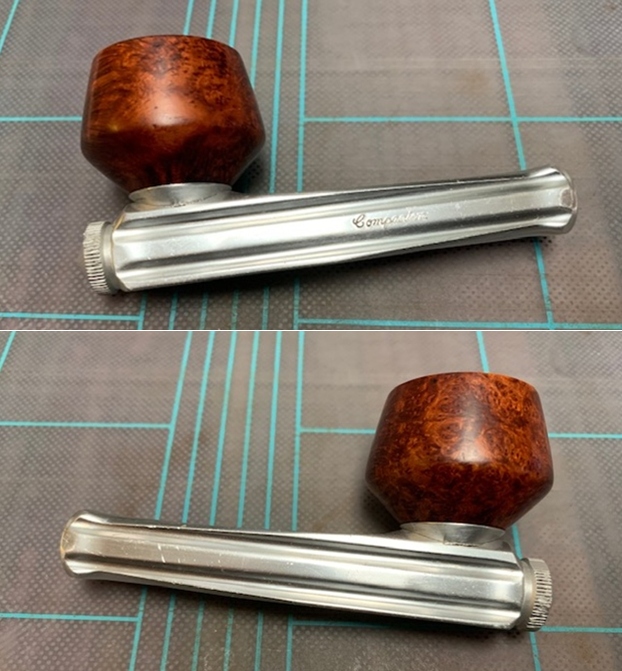
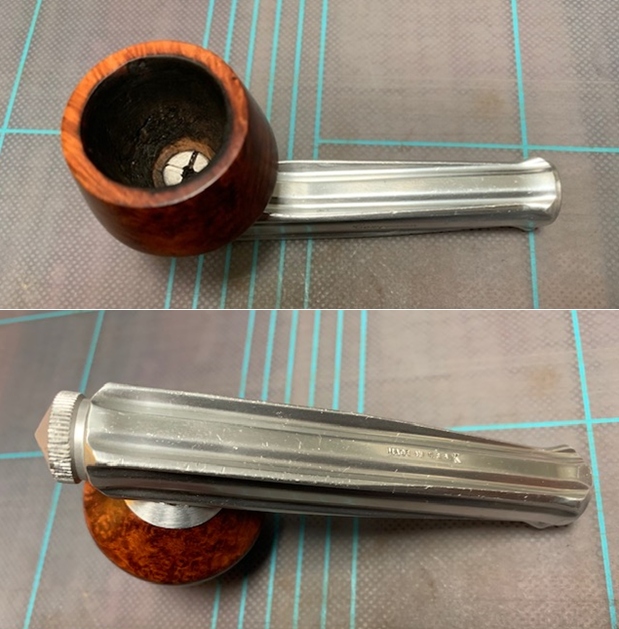
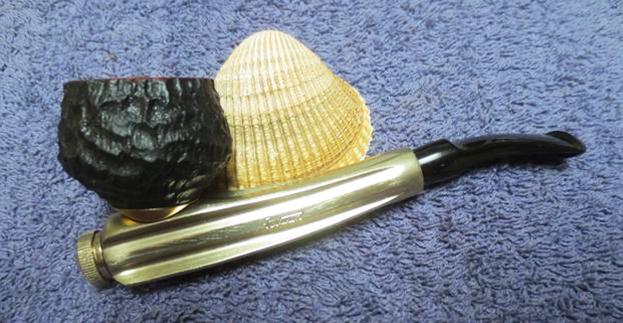
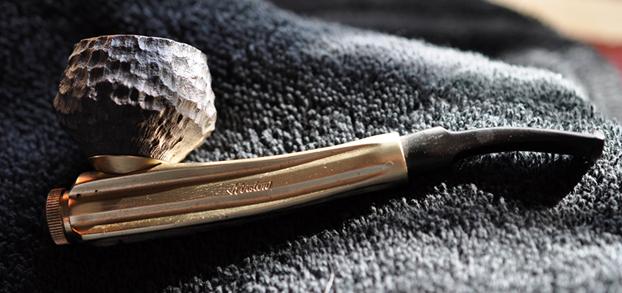
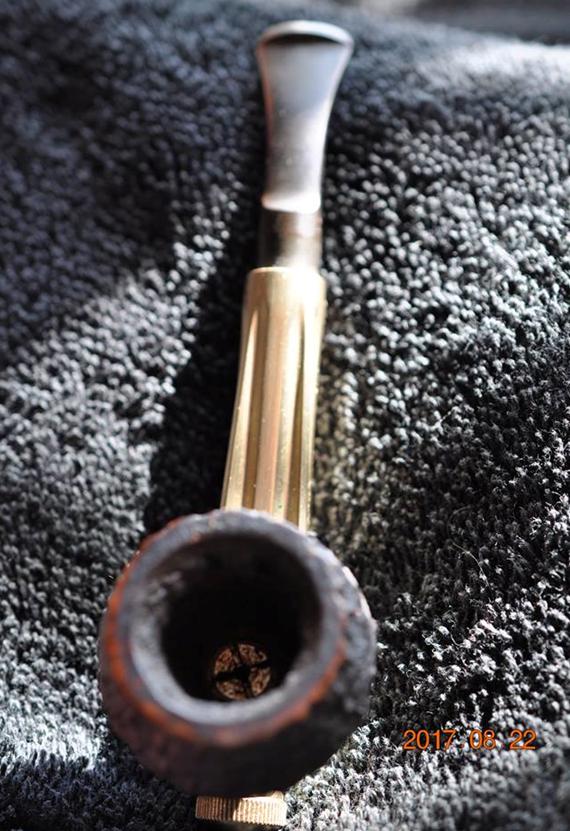
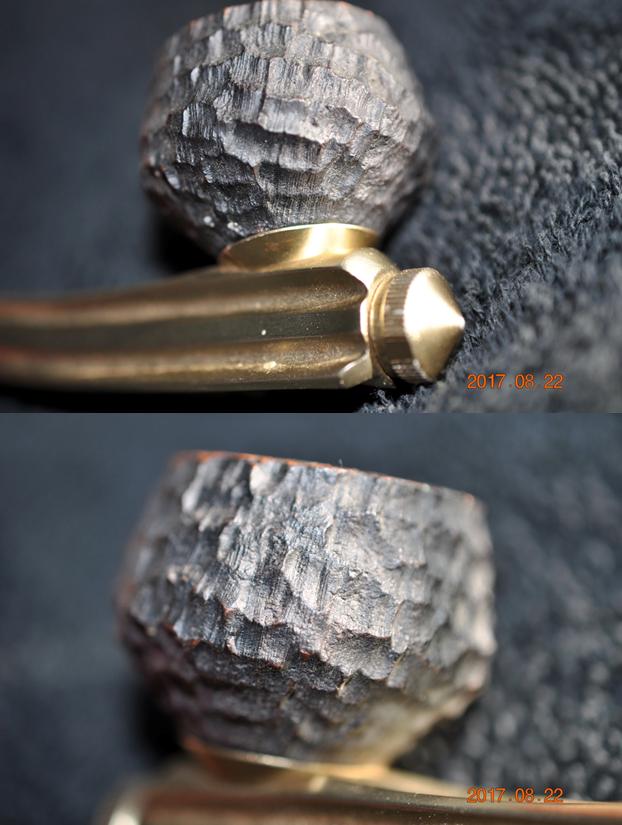
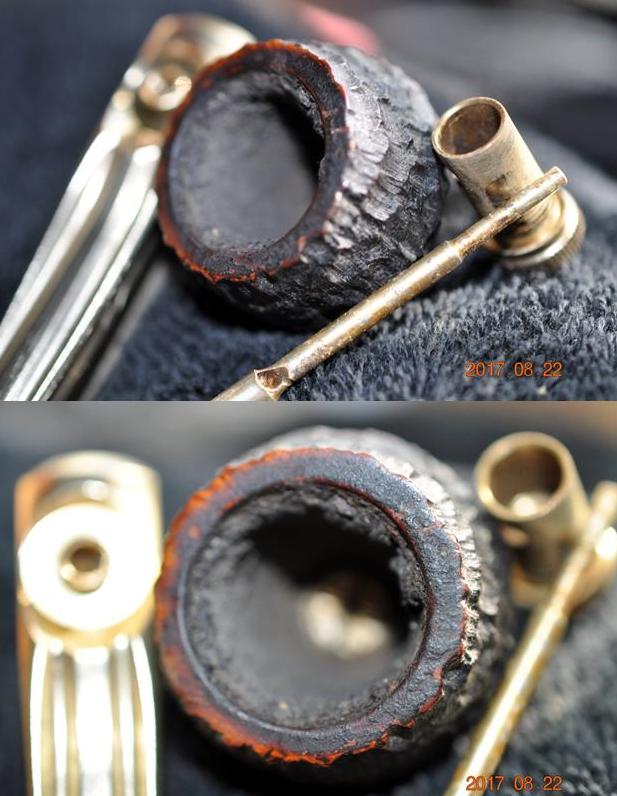
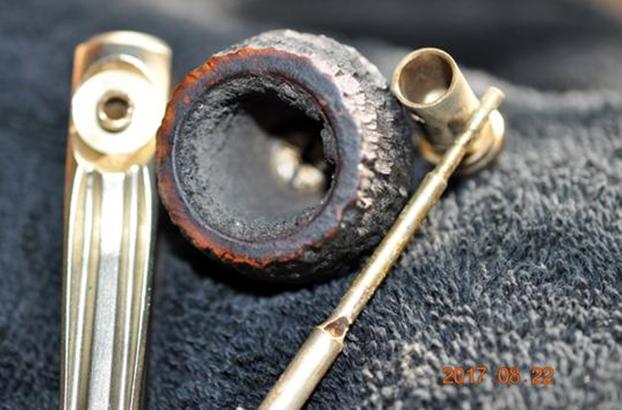
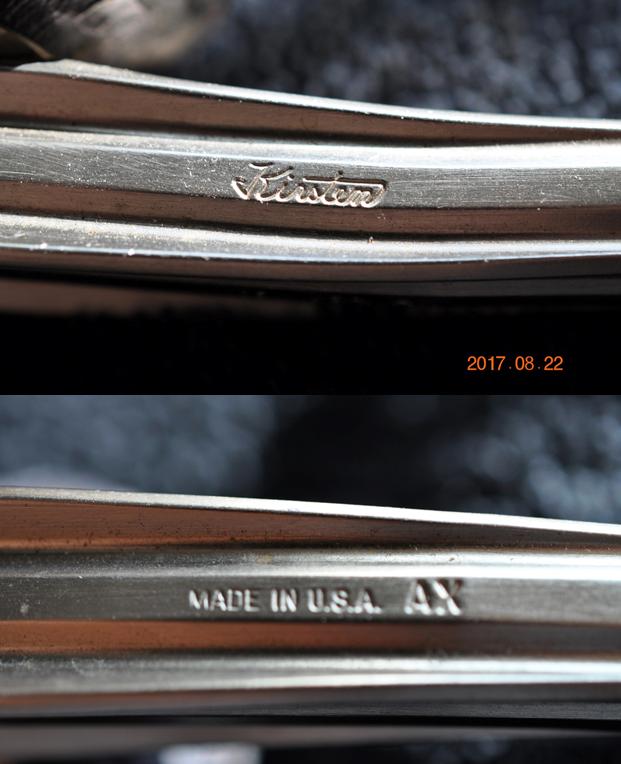
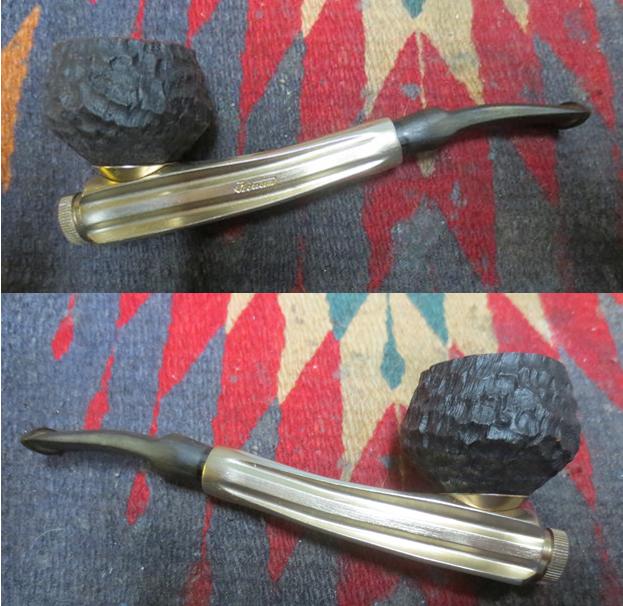
The next pipe I am working on is a nice looking was purchased from an antique store in Bozeman, Montana, USA on 07/22/17. Kirsten pipes have always been a bit of an enigma to me. The combination of briar and aluminum is unique. It is a pipe that is not really fish or fowl in terms of briar or metal. It is a pipe with an aluminum radiator with a bowl attached to it. The vulcanite stem is attached to an aluminum metal pin that extends the length of the radiator. On the end is a valve that controls the flow of air to bowl and is adjustable. In this case it is not frozen which is a blessing. On the left side of the radiator it is stamped with Companion in script. On the underside of the polished aluminum barrel it is stamped Made in U.S.A. followed by K. It is a straight pipe with large rusticated Dublin bowl. The metal base is actually in good condition. The pipe has gaskets on the valve on the front and on the stem insert. Stem is oxidized, tooth marks, chatter near the button. There was a thick cake in the bowl and heavy lava overflow on the rim top and edges. The rusticated bowl is filthy with grime and dusty ground into the bowl sides. The bowl has a metal cup on the base and a screw runs through the bowl and screws into the top of the radiator. The knurled valve has some light damage from what looks like marks left behind by pliers. The pipe is very dirty.  Jeff took photos of the pipe to show its general condition before he did his cleanup. The exterior of the pipe was very dirty – grime and grit ground in from years of use and sitting. The rim top was covered with a coat of thick lava that overflowed the thickly caked bowl. It was hard to know the condition of the rim top or edges due to the thick lava and cake. Only a clean up would make that known. The stem was dirty, oxidized, calcified and had light tooth marks and chatter on both sides ahead of the button. Jeff took a photo of the sides of the bowl to give a better feel for the condition of the bowl. You can see the heavy grime ground into the rusticated finish in the photos. It is a mess.He took a photo of the knurled valve on the radiator end. You can see the light pliers marks on the knurled edges.The next photos show the stamping on the sides of the aluminum radiator and it is very readable. It reads as noted above.I turned to Pipedia (https://pipedia.org/wiki/Kirsten_Pipe_Company) to do a bit of research on the history of this particular pipe. I have included pertinent portions of the article below.

The first and only Kirsten I had, had to be an old Companion model that came from one of the Kirsten cards you found in those days in some smoke shops. It might even have been in some small-town drugstore. If I recall correctly, it did not even have the Kirsten name on it – just “Companion”.

It would be another four decades before I ran into the Kirstens again as I began buying and restoring old pipes. I had accumulated about a half dozen Kirstens from several lots I acquired and they lay around in my work area for several months before I decided to see what I could do with them.

Old Kirstens are a problem. When bought in lots of other pipes, and many times when bought used individually, they are a mess. By the very nature of the pipe, which is made up of five basic components – mouthpiece, radiator body, valve, bowl and bowl screw (a sixth component, the bowl ring, is found in many Kirstens) – there is a lot of room for problems. For the most part, used Kirstens have set for some time, usually in an uncleaned state, and the old tobacco juices have created a sort of binder that holds them tightly together.

My experience has been that only about three or four out of every five used Kirstens I buy are completely restorable. The remainder furnish parts for those that are restored.

By the time I had completely restored my first half dozen Kirstens I came to realize there are many variations in the pipe, designed in 1936 by Professor Frederick Kirsten – the man who invented Boeing’s first wind tunnel – after he has been advised by his physician to stop smoking. Kirsten was looking for a way to trap the tars and moisture from tobacco and the Kirsten pipe was his solution.

Some Kirstens had “O” rings on the valve and mouthpiece and others had none. Some had an “O” ring on the valve and not on the stem. Some had bowl rings and others not. Some came with shiny finishes, others were a rough Parkerized-like finish called “Heritage.” Some were silver, some were gold, some were black, and yet another was a gold-tone finish with an overlay of what looked like tarnish made from “Eternalum” and referred to as Kirsten’s “Traditional” finish.

There were straight Kirstens, quarter bents and full bents. Some sat flat on their radiator body, others stood tall on a special valve with a flat plate on the bottom.

From collector’s standpoint, there were more variations than one could hope to acquire.

It dawned on me that there had to be some way to classify Kirstens. An e-mail or two to the Kirsten factory in Seattle, Wash., showed the company had not kept exacting records as to their years and types of production. So I borrowed from the Colt Peacemaker collectors and decided to try to classify Kirstens by generations, including some transitional models and some non-traditional Kirstens.

Since the pipe was invented in 1936 and some of the early pipes were stamped “PAT APPLIED FOR” it was easy to establish these as the Generation 1 pipes. But, although the basic pipe models offered in that generation – S for Standard, M for Medium and L for Large – continued to be produced after the stamping was changed to “PATS & PATS PENDING” it appeared there would be some divisions even within the generations.

It was determined that the ‘PAT APPLIED FOR” stamp was only used for a couple of years so I concluded that those pipes were probably produced in 1936 and were produced until 1938 and the ones stamped “PATS & PATS PENDING” were most probably made from around 1938 until about 1958 – a somewhat hypothetical date albeit maybe more accurate than we think when it comes to dividing the Kirstens into generations.

Lynn Kirsten, granddaughter of the founder and daughter of Gene Kirsten who ran the factory for many years, said the biggest change in models and pipemaking techniques took place around 1958 when the company was incorporated. She confirmed that clear records of year of manufacture, model types and styles, and other basic information about the Kirsten pipes had not been kept by the company.

However, she made one statement to the effect that during the transition period between what I have classified as Generation 1 anf Generation 2, Kirsten used up a lot of miscellaneous parts. Therefore, I have found many pipes that do not clearly fit the generation classifications I have developed but are clearly what I call “transition” pipes or Generation 1.5.

Altogether, there are three distinct Kirsten generations, 1, 2 and 3 by numerical order. Generation 1 runs from 1936 to roughly 1958. Generation 2 runs from 1958 to about 1985. Generation 3 runs from 1985 to the present with possibly some backward overlap. And, the pipes from the transitional period, or Generation 1.5, can be grouped in the mid-to-late ’50s.

The biggest thing that separates the Generation 1 from the Generation 2 pipes are the “O” rings, actually rubber rings on both the valve and mouthpiece that help provide a tighter seal as they are inserted into the radiator stem. Instead of “O” rings, the machining of the Generation 1 pipes was so precise the fit was exact. Hence the difficulty in dismanteling many of the older pipes because residue left in them for years has bonded the two metals.

There are, of course, exceptions to every rule. Take for instance what is referred to as the Kirsten “Thrifty,” the only pipe I have run across that actually bears the Kirsten shield logo. Most Kirstens, with the exception of some of the Companions – as noted above – bear the Kirsten stamped script logo. The “Thrifty” has not just an “O” on only the valve but a black offset valve that works in reverse of all other Kirsten valves I have run across. Traditionally the valve on a Kirsten has a flat spot on one wide of its outer rim. When the flat spot is lined up with the bowl, an opening in the inner valve tube is aligned with the air hole in the bottom of the bowl and the pipe is ready to smoke. Adversely, when the flat spot is in any other position about the pipe, the hole is closed and no trapped liquids can run back into the bowl. But the “Thrifty’s” flat spot, when lined up with the bowl, indicates the valve is closed so no trapped liquids can run back into the bowl and when it is in any other position the passageway to the bowl is open and the pipe can be smoked.

I turned to a catalogue for Kirsten pipes that I have in my files and found this pipe in the catalogue. It is shown in the photo below. The K stamp identifies it as a Companion pipe.

There is also some great history on the brand on Pipedia that is well worth a read. It gives clear information on the development of the brand (https://pipedia.org/wiki/Kirsten_Pipe_Company).

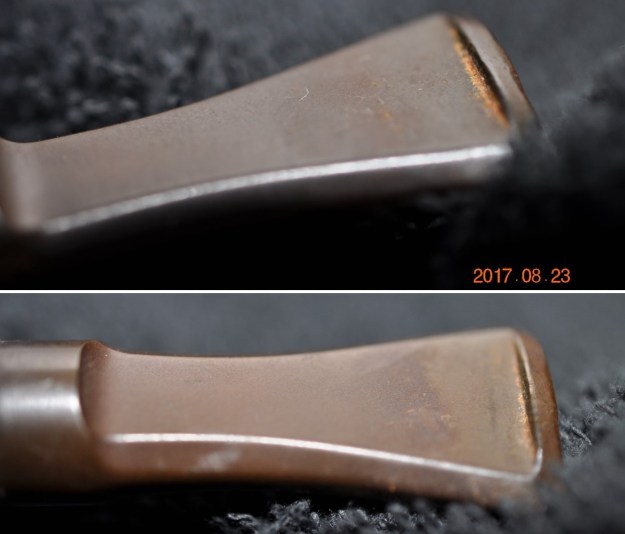
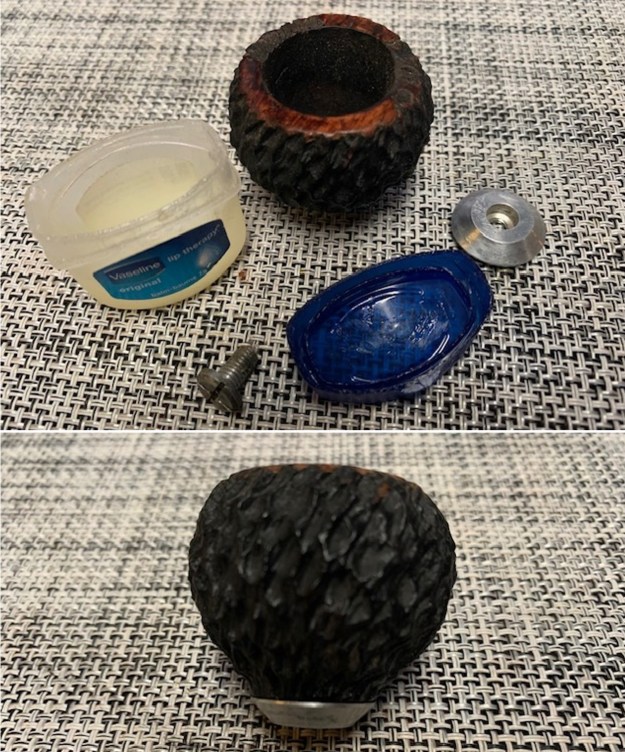
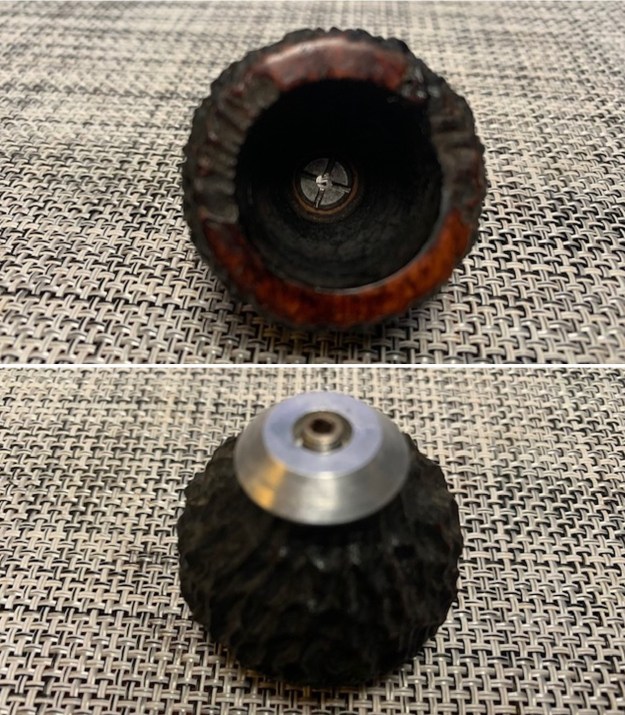
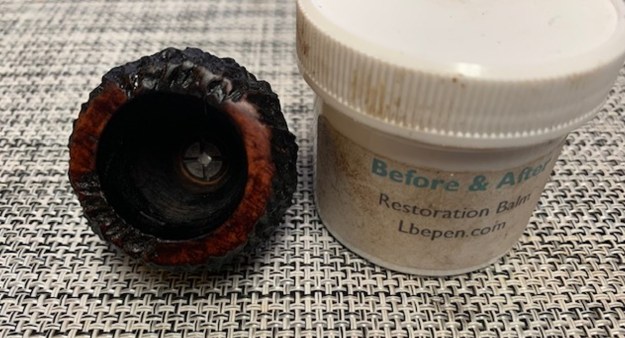
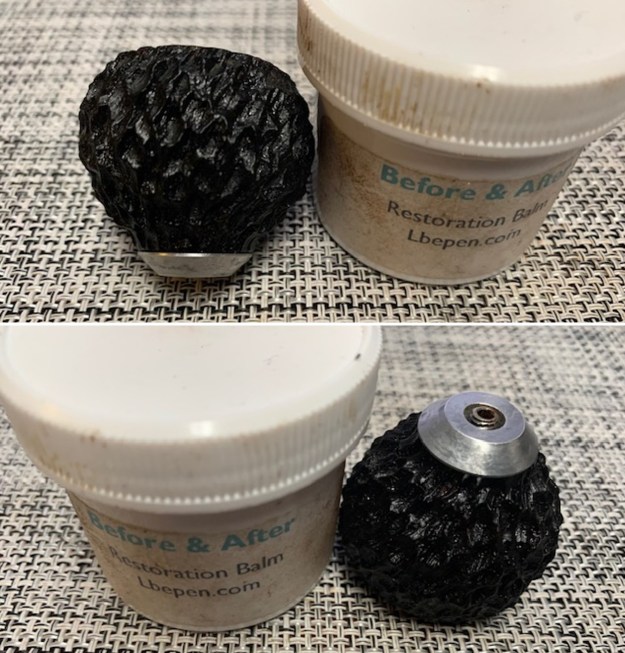
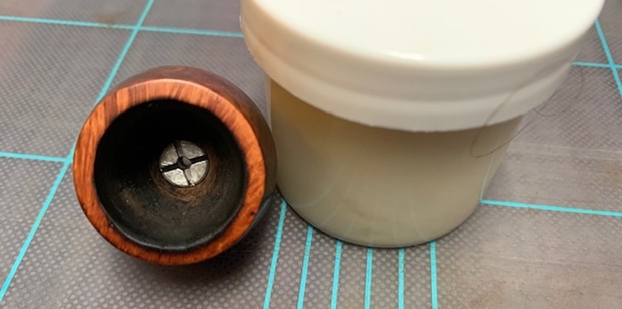
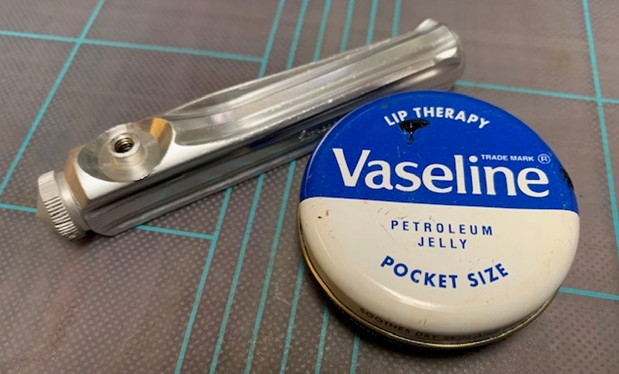
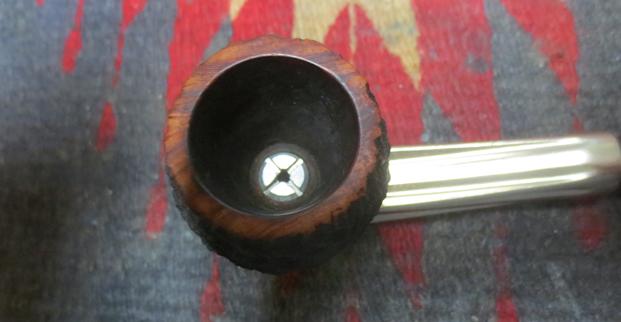
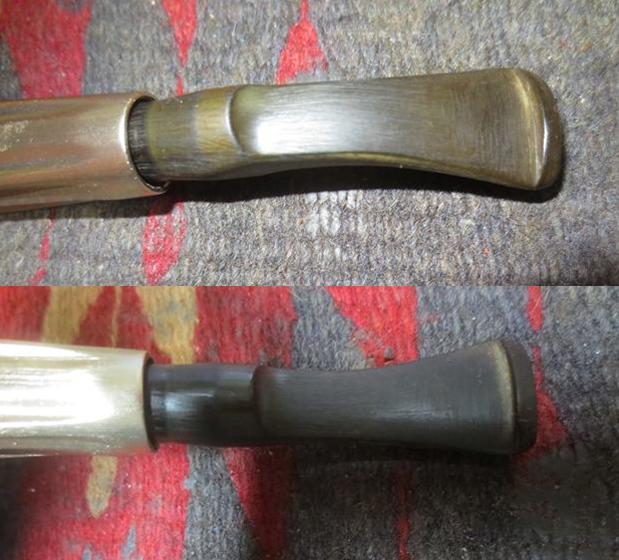
Jeff hates cleaning Kirstens probably as much as I do. However, he cleaned the pipes with his usual thoroughness that I really appreciate. He had reamed it with a PipNet pipe reamer and cleaned up the remaining cake in the bowl with a Savinelli Fitsall Pipe Knife. He scrubbed out the internals with alcohol, pipe cleaners and cotton swabs until the pipe was clean. He scrubbed the exterior of the bowl with Murphy’s Oil Soap and a tooth brush to remove the grime and grit on the briar and the lava on the rim top. The finish looks very good with good looking grain around the bowl and shank. Jeff took the pipe apart and cleaned the radiator, the adjustable valve and the stem with alcohol, pipe cleaners and cotton swabs. He scrubbed the stem with Soft Scrub and soaked it in Before & After Deoxidizer to remove the oxidation on the rubber. When the pipe arrived here in Vancouver for the second stop of its restoration tour it looked a lot better. It has been sitting in my drawer here since 2018 so the stem has taken on some more oxidation during its rest in my bin of metal pipes. I took photos before I started my part of the work. I took some close up photos of the rim top and also of the stem surface. I wanted to show what cleaned bowl and rim top looked like. The rim top and edges of the bowl looked very good. The screw in the bottom of the bowl looks very good with no damage to the slots. I also took close up photos of the stem to show the light tooth marks and the remaining oxidation on the stem.I took photos of the tamping on the radiator sides. The left side is stamped Companion in script and on the underside it is stamped with the words Made in the U.S.A. followed by the letter K.I took the pipe apart and took photos of the parts of the pipe to give a picture of what it looked like. Now, on to my part of the restoration of this Kirsten Companion K pipe. The rim top was in looked quite good. The rim top was smooth with two rusticated portions on the sides of the top. I decided to begin my work by polishing the bowl and rim top with micromesh sanding pads – dry sanding with 1500-12000 grit pads and wiping the briar down with a damp cloth after each sanding pad. With the polishing finished it was time to put the bowl back together. I greased the screw threads with Vaseline and dropped it through the hole in the bowl bottom. I screwed the base plate back on the bowl and took photos. I rubbed the bowl down with Before & After Restoration Balm. I worked it into the surface of the bark on the bowl sides and shank with my fingertips to clean, enliven and protect it. I let the balm sit for a little while and then buffed with a cotton cloth to raise the shine. I screwed the bowl back onto the radiator and took photos of the pipe as it looked at this point in the process. I rubbed down the valve and o-ring with Vaseline and then inserted it in the end of the radiator. The pipe was coming together very well at this point. I set the bowl and metal barrel aside and turned my attention to the stem. I scrubbed the oxidized stem with SoftScrub on cotton pads to break down the oxidation. Once finished it looked much better.I sanded out the stem surface with 220 grit sandpaper to remove the remaining oxidation and the light tooth marks and chatter. I started to polish it with 400 grit wet dry sandpaper.I polished the vulcanite with micromesh sanding pads – 1500-12000 grit pads. I wiped it down with a damp cloth after each sanding pad. I polished it with Before & After Pipe Stem Polish – both Fine and Extra Fine. I gave it a coat of Obsidian Pipe Stem Oil. It works to keep the stem from oxidizing as quickly. I set it aside to dry. This Kirsten Companion Made in USA K Generation 2 pipe turned out to be another great looking pipe. The finish on the pipe is in excellent condition and works well with the polished vulcanite saddle stem. I put the pipe back together and carefully buffed it with Blue Diamond on the buffing wheel. I gave the bowl and stem multiple coats of carnauba wax on the buffing wheel and followed that by buffing the entire pipe with a clean buffing pad. I hand buffed the pipe with a microfiber cloth to deepen the shine. Give the finished Kirsten Companion K pipe a look in the photos below. The dimensions of the pipe are Length: 5 ½ inches, Height: 2 inches, Outside diameter of the bowl: 1 ½ inches, Chamber diameter: 1 inch. The weight of the pipe is 1.66 ounces/47 grams. This beauty is already spoken for and it will soon be heading south to the new steward. Thanks for reading this blog and my reflections on the pipe while I worked on it. This is an interesting estate to bring back to life.

As always, I encourage your questions and comments as you read the blog. Thanks to each of you who are reading this blog. Remember we are not pipe owners; we are pipe men and women who hold our pipes in trust until they pass on into the trust of those who follow us.

Restoring a Generation 1.5 Kirsten – Made in U.S.A. K


Blog by Steve Laug

This past week I received an email from a fellow named George. He was hunting for a specific Kirsten Pipe that he wanted as a gift for his son. I am including his first correspondence with me about the pipe.

Hi Steve

I am inquiring about the Kristen Companion K Straight Pipe. I read the posting on this pipe and am wondering if there is any place where I can purchase this style pipe. My father had and used this style pipe. It was his favorite of all the pipes he had. He had purchased it because the bowl was replaceable. He was very poor growing up, coming out of the Depression and WWII times and every penny counted. Having a pipe that he could replace just the bowl and not have the expense of purchasing the entire pipe appealed to him. My son is looking for this pipe to remind him of his grandfather and I want to find one for my son. Any leads you could provide me would be deeply appreciated. Thank you.

I wrote him back and sent him a picture of an anodized Kirsten Companion K and polished aluminum Kirsten K both of which I had here in my clean up queue. I asked him to have a look and get back to me on whether one or both would fit his needs.He wrote me back and gave me a bit of the back story on the pipe he was seeking. I have included a portion of that email below.

Hi Steve,

Thank you so very much for getting back to me. As with any pipe, there is always a back story, but I will only relate the Reader’s Digest version.  I have a son who remembers his grandfather’s (my dad’s) pipe of this style and regrets that he was only 14 and too young to speak up and get one of my dad’s pipes when he passed in 1982.  I am trying to surprise my son with this replica of my dad’s favorite pipe.  I am thrilled you have two of this style and are willing to sell one or both… I do like the bowl on the lower one better since my dad had only very plain bowls…

George

I corresponded with George and answered his questions regarding the difference on the two pipes and he wrote back with his choice. I quote from that email as follows.

Steve,

Thank you for your reply and your clear explanation of the difference in the pipes.  I would be interested in the smooth finished as that is the type pipe my dad had.  The less ornate, smooth finished, brown bowl would be the one I would like. Please keep my informed, but there is no rush on getting the pipe to me as I want to send it to my son on my father’s birthday which was on 18 February… Thanks for your help in doing this for my son and my dad’s memory.

George

With his choice made I knew what pipe I was working on next – a Kirsten metal pipe with a smooth briar Dublin bowl with carvings around the smooth finish. It is stamped on the left side of the shank, Kirsten in a cursive script. On the underside it is stamped Made in U.S.A. – K.

Here is some background information on the brand. These pipes were made for a long period of time in the Seattle, Washington area of the US. They came in four generations or iterations – Generation 1, 1.5, 2 and 3. The stamping on this one, the absence of a metal cap to hold the bowl, and the presence of the rubber O rings on the metal valve and on the stem insert, point to it being a Generation 1.5 pipe or a transitional one.

I am thankful to Dave Whitney for the information he provided for an earlier blog on Kirstens to help date this pipe (https://rebornpipes.com/2012/11/03/kirsten-generation-1-1-5-2-3/). The blog gives following information on the Generation 1.5 – transitional period – mid to late 50’s.

This was an experimental stage. Kirsten realized that the bit and insert were prone to seizure as the condensate dried. This model always has O-rings on the metal insert, and later models can have O-rings on both. Same markings, as I remember it. There is no metal cup spacer under the bowl. This generation has O rings either on the valve or mouthpiece but no O rings on the other end. This transitional period is stamped “Pat. Pending” and “Pats. & Pats. Pending” some with “Made in U.S.A. It seems like the company was using surplus parts to combine into this series of pipes. This particular pipe is stamped K after the U.S.A. thus making it a Companion.

With that I knew that the Kirsten K I was working on was a Companion (what George had asked for). It was made from the mid to late 1950s during the transitional period of Kirsten manufacture. It will be a great, smokable piece of both Kirsten history and George’s family history once it is finish. Now it was time to work on the pipe itself.

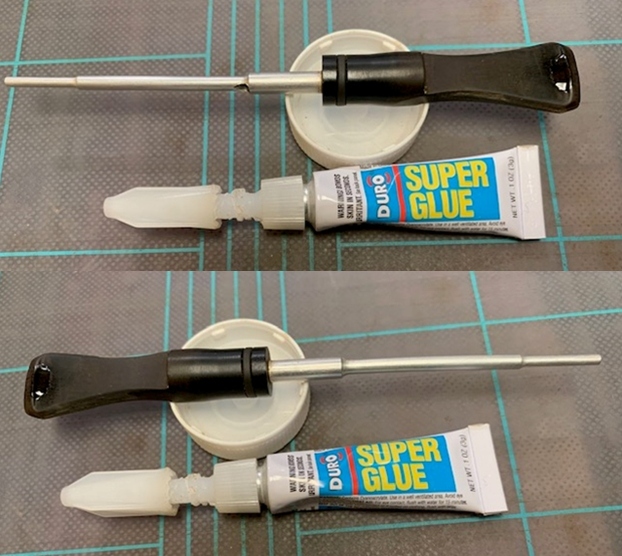
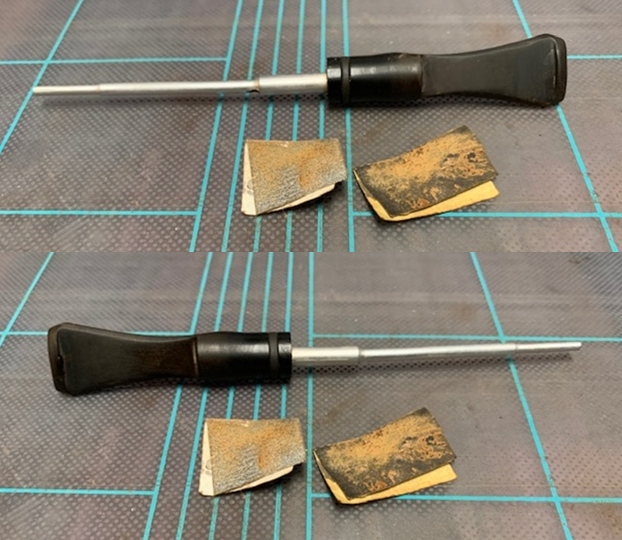
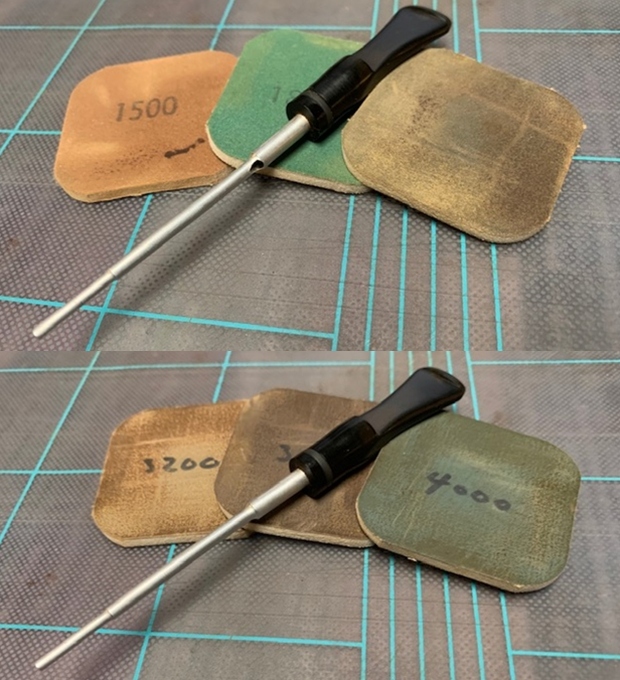
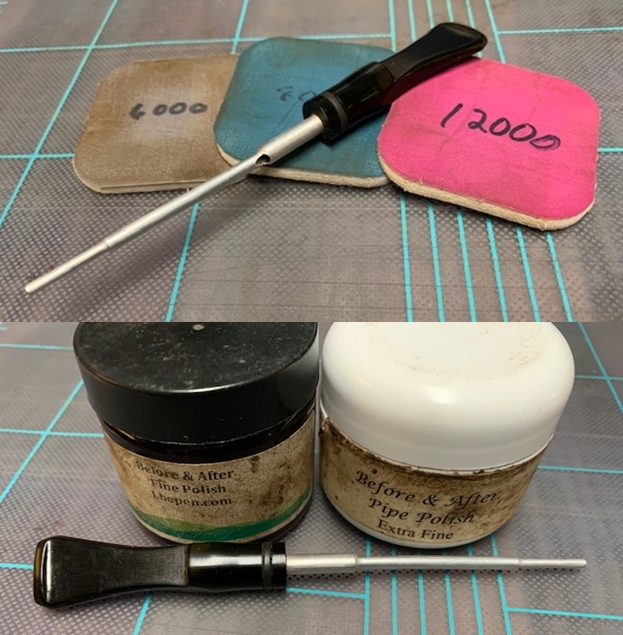
Somewhere along the journey of this pipe Jeff had done a great cleanup on the pipe. He reamed the bowl with a PipNet pipe reamer and followed up with a Savinelli Fitsall pipe knife to remove the cake. He scrubbed out the mortise and the airway in the shank and the stem with alcohol, cotton swabs and pipe cleaners. He scrubbed the bowl exterior and the aluminum barrel with a tooth brush and Murphy’s Oil Soap to remove the grime on the finish of the bowl and the lava from the rim top. He rinsed it under running water. One of the benefits of this scrub is that it also tends to lift some of the scratches and nicks in the surface of the briar. He dried it off with a soft cloth. He cleaned the internals and externals of the aluminum barrel and the vulcanite stem with alcohol, pipe cleaners and cotton swabs. He soaked the stem in Before & After Pipe Stem Deoxidizer and rinsed it off with warm water and cleaned out the airway in the stem with alcohol, pipe cleaners and cotton swabs. I took photos of the pipe as I saw it when I put it on the table.   I took photos of the rim top and stem to show the condition. The rim top and beveled edge looked amazing. The stem was vulcanite and there were tooth marks and chatter on both sides ahead of the button. I took photos of the stamping on the sides of the aluminum barrel. They are clear and readable as noted above.   I removed the stem from the barrel and the flow adjuster valve from the front of the barrel. I removed the bowl from the top of the shank and took a photo of the pipe to give a sense of the components of the pipe.I set the parts aside and worked on the bowl. I removed the screw from the bottom of the bowl so that I could clean up the bowl. I sanded the inside of the bowl and topped the rim top to remove the burning and darkening. I worked on the inner edge with a folded piece of 220 grit sandpaper to smooth out the darkened and damaged inner edge of the bowl. In the photo below there is a mark at the 5 o’clock section of the rim top below. The mark is actually a fill in the rim top. It is solid and undamaged. Once finished, the top and inner edge looked better.I used a Maple stain pen to restain the rim top to match the sides of the bowl. Once it was finished and polished it would look a lot better.I polished the bowl sides and top with micromesh sanding pads – dry sanding with 1500-12000 grit pads. I wiped it down with a damp cloth after each sanding pad to remove the grime. The finish began to look much better. I rubbed the bowl down with Before & After Restoration Balm and worked it into the grooves as well as the smooth surface of the briar. I let it sit for 15 minutes then buffed it off with a soft cloth. The bowl took on a rich glow and the grain shown through the finish. I polished the aluminum valve on the from of the barrel with 4000-12000 grit micromesh pads to polish off the oxidization that was on it when I first took it out of the box. It shined up very well. I coated the rubber gasket on the valve with some Restoration Balm as it worked to bring the rubber back to life. Once it had sat for awhile I wiped it off and put the valve back in the barrel of the pipe and the bowl. The valve was easily adjustable and would act like a flue on a wood stove when the pipe was smoked. I set the bowl and barrel aside and turned my attention to the stem. I “painted” the vulcanite stem surface with the flame to lift the tooth marks. I was able to lift them considerably. I filled in the remaining tooth marks with clear CA glue and set it aside for the repairs to cure. I used a small file to flatten the repairs and start the process of blending them into the surface of the stem. I then sanded them with 220 grit sandpaper to blend them into the surface of the vulcanite stem. I used micromesh sanding pads to polish the stem and bring back the shine. I dry sanded the stem with 1500 – 12,000 grit pads and rubbed it down with Obsidian Oil after each sanding pad. I polished it with Before & After Fine and Extra Fine Polish and then gave it a final coat of Obsidian Oil and let it dry. This Kirsten Gen. 1.5 Made in U.S.A. – K straight pipe with a vulcanite saddle stem has a smooth reddish finish. The rich reds and blacks of the contrasting stain makes the grain come alive with the polishing and waxing. I buffed the barrel lightly with the Blue Diamond and also buffed the bowl. I gave the bowl and barrel several coats of carnauba wax and then lightly buffed it with a clean flannel buffing pad to raise the shine. I put the vulcanite stem back on the bowl and carefully buffed the pipe with Blue Diamond on the buffing wheel using a light touch on the briar and followed that by buffing the entire pipe with a clean buffing pad. I hand buffed the pipe with a microfiber cloth to deepen the shine. This older Kirsten Companion K is a great looking pipe and the Dublin bowl gives it a distinctive look. Give the finished pipe a look in the photos below. The dimensions of the pipe are Length: 5 ½ inches, Height: 1 ¾ inches, Outside diameter of the bowl: 1 ¼ inches, Chamber diameter: ¾ of an inch. The weight of the pipe is 1.66 oz./46 grams. The finished pipe is shown in the photos below. It is ready for George to give to his son in memory of his grandfather. Thanks for reading this blog and my reflections on the pipe while I worked on it. There are many more to come!

Restoring a Kirsten Companion K System Pipe from Bob Kerr’s Estate


Blog by Steve Laug

The second of the Kirsten pipes I have chosen to work on from Bob Kerr’s Estate is a Companion polished aluminum coloured Barrel system pipe with a saddle stem. It is the second of Bob’s Kirsten pipes and also the last one I have to work on from the estate. (Bob’s photo is to the left). If you have not “met” the man and would like to read a bit of the history of the pipeman, his daughter has written a great tribute that is worth a read. Because I have included it in most of the restorations of the estate to date I thought that I would leave it out this time. Check out some of the recent Dunhill restoration blogs (https://rebornpipes.com/2020/01/01/restoring-the-last-of-bob-kerrs-dunhills-a-1962-dunhill-bruyere-656-f-t-bent-billiard/).

When I think of Kirsten pipes this is the shape that is a typical Kirsten. On the left side of the shank it is stamped with Companion in script. On the underside of the polished aluminum barrel it is stamped Made in U.S.A. followed by K. It is a straight pipe with large Dublin bowl. Metal base is dented and worn. The pipe has gaskets. Stem is oxidized, tooth marks, chatter near the button. Button is damaged. There is a cake in the bowl and lava overflow on the rim. The ridged valve has some damage from what looks like marks left behind by pliers. The pipe is very dirty.  Jeff took photos of the pipe to show its general condition before he did his cleanup. The exterior of the pipe was very dirty – grime and grit ground in from years of use and sitting. The rim top was covered with a coat of thick lava that overflowed the bowl. There was also some darkening and lava on the rim top. The bowl itself had a thick cake with flecks of tobacco stuck in the cake on the sides.  It also appeared that there was some mold on the cake in the bowl.Jeff took a photo of the side and the heel of the bowl to give a better feel for the condition of the bowl. You can see the interesting grain on the bowl side and front.The next photos show the stamping on the sides of the barrel shank and it is very readable. It reads as noted above. The stem was dirty and extremely oxidized, calcified and had tooth marks on both sides ahead of the button. It was not nearly as chewed the other pipes in Bob’s estate.  Jeff took apart the pipe and took photos of the parts of the part. It was incredibly dirty with tars and oils on the internals of the pipe.Before doing cleanup work on the pipe I decided to do some research on the pipe. I have a catalogue for Kirsten pipes in my files and found this pipe in the catalogue. It is shown in the photo below. The K stamp identifies it as a Companion pipe.

There is also some great history on the brand on Pipedia that is well worth a read. It gives clear information on the development of the brand (https://pipedia.org/wiki/Kirsten_Pipe_Company).

I am really glad that Jeff helped me work through this estate of over 125 pipes to clean from Bob’s estate. I would in no way be this close to finishing the estate without his help. Jeff cleaned the pipes with his usual penchant for thoroughness that I really appreciate. He had reamed it with a PipNet pipe reamer and cleaned up the remaining cake in the bowl with a Savinelli Fitsall Pipe Knife. He scrubbed out the internals with alcohol, pipe cleaners and cotton swabs until the pipe was clean. He scrubbed the exterior of the bowl with Murphy’s Oil Soap and a tooth brush to remove the grime and grit on the briar and the lava on the rim top. The finish looks very good with good looking grain around the bowl and shank. Jeff took the pipe apart and cleaned the barrel, the adjustable valve and the stem with alcohol, pipe cleaners and cotton swabs. He scrubbed the stem with Soft Scrub and soaked it in Before & After Deoxidizer to remove the oxidation on the rubber. When the pipe arrived here in Vancouver for the second stop of its restoration tour it looked a lot better. I took photos before I started my part of the work. I took some close up photos of the rim top and also of the stem surface. I wanted to show what cleaned bowl and rim top looked like. The rim top and edges of the bowl looked very good. The screw in the bottom of the bowl looks very good with no damage to the slots. I also took close up photos of the stem to show the light tooth marks and the remaining oxidation on the stem.I took the pipe apart and took photos of the parts of the pipe to give a picture of what it looked like. Now, on to my part of the restoration of this Kirsten RX pipe. The rim top was in rough condition and looked as if it had been beat against a hard surface. I decided to begin my work by topping the bowl with 220 grit sandpaper on a topping board.I polished the bowl and rim top with micromesh sanding pads – wet sanding with 1500-12000 grit pads and wiping the briar down with a damp cloth after each sanding pad. I rubbed the bowl down with Before & After Restoration Balm. I worked it into the surface of the bark on the bowl sides and shank with my fingertips to clean, enliven and protect it. I let the balm sit for a little while and then buffed with a cotton cloth to raise the shine. I rubbed the valve on the metal base with some Vaseline Petroleum Jelly. I have found that it keeps the valve from sticking in the base end. I screwed the bowl on the top of the metal barrel. This part of the restoration is finished and the pipe is looking really good at this point in the process. All that remains is the stem and push rod that goes in the end of the base. I set the bowl and metal barrel aside and turned my attention to the stem. There were some deep tooth marks near the edge of the button on both sides. I filled them in with clear super glue.I sanded out the stem surface with 220 grit sandpaper to remove the tooth marks and chatter. I started to polish it with 400 grit wet dry sandpaper.I polished the vulcanite with micromesh sanding pads – 1500-12000 grit pads. I wiped it down with a damp cloth after each sanding pad. I used Before & After Pipe Polish – both Fine and Extra Fine to further polish the stem. This Kirsten Companion Made in USA K pipe from Bob Kerr’s estate turned out to be another great looking pipe. The finish on the pipe is in excellent condition and works well with the polished vulcanite saddle stem. I put the pipe back together and carefully buffed it with Blue Diamond on the buffing wheel. I gave the bowl and stem multiple coats of carnauba wax on the buffing wheel and followed that by buffing the entire pipe with a clean buffing pad. I hand buffed the pipe with a microfiber cloth to deepen the shine. Give the finished pipe a look in the photos below. The dimensions of the pipe are Length: 5 ½ inches, Height: 1 ¾ inches, Outside diameter of the bowl: 1 ¼ inches, Chamber diameter: 7/8 of an inch. It will be going on the rebornpipes store soon. If you are interested in carrying on Bob’s legacy with this pipe send me a message or an email.  This is the last of Bob’s Estate pipes that I am working on. Thanks for reading this blog and my reflections on the pipe while I worked on it. This is an interesting estate to bring back to life.

Restoring a Kirsten RX System Pipe from Bob Kerr’s Estate


Blog by Steve Laug

The first of the Kirsten pipes I have chosen to work on from Bob Kerr’s Estate is an RX Anodized Brass coloured Barrel  system pipe with a saddle stem. It is the first of Bob’s Kirsten pipes. (Bob’s photo is to the left). If you have not “met” the man and would like to read a bit of the history of the pipeman, his daughter has written a great tribute that is worth a read. Because I have included it in most of the restorations of the estate to date I thought that I would leave it out this time. Check out some of the recent Dunhill restoration blogs (https://rebornpipes.com/2020/01/01/restoring-the-last-of-bob-kerrs-dunhills-a-1962-dunhill-bruyere-656-f-t-bent-billiard/).

When I think of Kirsten pipes this is the shape that sticks in my mind because it is similar to the first Kirsten that I purchased in the late 70s. On the left side of the shank it is stamped with Kirsten in script. On the underside of the anodized barrel it is stamped Made in U.S.A. followed by RX. X107. It is a bent with large Dublin bowl. Metal base is dented and worn. The pipe has gaskets. Stem is oxidized, tooth marks, chatter near the button. Button is damaged. There is a cake in the bowl and lava overflow on the rim. The pipe is very dirty.  Jeff took photos of the pipe to show its general condition before he did his cleanup. The exterior of the pipe was very dirty – grime and grit ground in from years of use and sitting. The rim top was covered with a coat of thick lava that overflowed the bowl. There was also some darkening and lava on the rim top. The bowl itself had a thick cake with flecks of tobacco stuck in the cake on the sides.  It also appeared that there was some mold on the surface of the cake in the bowl. Jeff took a photo of the side and the heel of the bowl to give a better feel for the condition of the bowl. You can see the interesting grain on the bowl side and front.The next photos show the stamping on the sides of the barrel shank and it is very readable. It reads as noted above. The stem was dirty and extremely oxidized, calcified and had tooth marks on both sides ahead of the button. It was not nearly as chewed the other pipes in Bob’s estate. Before doing cleanup work on the pipe I decided to do some research on the pipe. I have a catalogue for Kirsten pipes in my files and found this pipe in the catalogue. It is shown in the photo below in the bottom of the photo. The pipe I am working on is in the Regent Shape.I am really glad that Jeff helped me work through this estate of over 125 pipes to clean from Bob’s estate. I would in no way be this close to finishing the estate without his help. Jeff cleaned the pipes with his usual penchant for thoroughness that I really appreciate. He had reamed it with a PipNet pipe reamer and cleaned up the remaining cake in the bowl with a Savinelli Fitsall Pipe Knife. He scrubbed out the internals with alcohol, pipe cleaners and cotton swabs until the pipe was clean. He scrubbed the exterior of the bowl with Murphy’s Oil Soap and a tooth brush to remove the grime and grit on the briar and the lava on the rim top. The finish looks very good with good looking grain around the bowl and shank. Jeff took the pipe apart and cleaned the barrel, the adjustable valve and the stem with alcohol, pipe cleaners and cotton swabs. He scrubbed the stem with Soft Scrub and soaked it in Before & After Deoxidizer to remove the oxidation on the rubber. When the pipe arrived here in Vancouver for the second stop of its restoration tour it looked a lot better. I took photos before I started my part of the work.  I took some close up photos of the rim top and also of the stem surface. I wanted to show what cleaned bowl and rim top looked like. The rim top and edges of the bowl looked very good. The screw in the bottom of the bowl looks very good with no damage to the slots. I also took close up photos of the stem to show the light tooth marks and the remaining oxidation on the stem surface.I took the pipe apart and took photos of the parts of the pipe to give a picture of what it looked like.Now, on to my part of the restoration of this Kirsten RX pipe. I decided to start by polishing the bowl and rim top with micromesh sanding pads – wet sanding with 1500-12000 grit pads and wiping the briar down with a damp cloth after each sanding pad. I rubbed the bowl down with Before & After Restoration Balm. I worked it into the surface of the bark on the bowl sides and shank with my fingertips to clean, enliven and protect it. I let the balm sit for a little while and then buffed with a cotton cloth to raise the shine. I rubbed the valve on the metal base with some Vaseline Petroleum Jelly. I have found that it keeps the valve from sticking in the base end. I screwed the bowl on the top of the metal barrel. This part of the restoration is finished and the pipe is looking really good at this point in the process. All that remains is the stem and push rod that goes in the end of the base.  I set the bowl and metal barrel aside and turned my attention to the stem. I sanded out the stem surface with 220 grit sandpaper to remove the tooth marks and chatter. I started to polish it with 400 grit wet dry sandpaper.I polished the vulcanite with micromesh sanding pads – 1500-12000 grit pads. I wiped it down with a damp cloth after each sanding pad. I used Before & After Pipe Polish – both Fine and Extra Fine to further polish the stem. This Kirsten RX Made in USA ¼ pipe from Bob Kerr’s estate turned out to be another great looking pipe. The finish on the pipe is in excellent condition and works well with the polished vulcanite saddle stem. I put the pipe back together and carefully buffed it with Blue Diamond on the buffing wheel. I gave the bowl and stem multiple coats of carnauba wax on the buffing wheel and followed that by buffing the entire pipe with a clean buffing pad. I hand buffed the pipe with a microfiber cloth to deepen the shine. Give the finished pipe a look in the photos below. The dimensions of the pipe are Length: 6 inches, Height: 2 inches, Outside diameter of the bowl: 1 ½ inches, Chamber diameter: 7/8 of an inch. If you are interested in carrying on Bob’s legacy with this pipe send me a message or an email.  I have 2 more of Bob’ pipes to go, perhaps one of those will catch your attention. Thanks for reading this blog and my reflections on the pipe while I worked on it. This is an interesting estate to bring back to life.

The Decline of Restoring Old Pipes, Part 1/4


Blog by Robert M. Boughton
Copyright © Reborn Pipes and the Author except as cited
https://www.roadrunnerpipes2k.com/
https://www.facebook.com/roadrunnerpipes/

“I bet ya three-to-one I beat this.”
— John Joseph “The Teflon Don” Gotti, Jr. (1940-2002), Mafia boss, to law enforcement officers the night he was arrested for five murders, racketeering, loan sharking, tax evasion and related charges leading to his conviction

“The Teflon is gone. The don is covered with Velcro….”
— James Fox, FBI Assistant Director in Charge of the New York field office, upon Gotti’s conviction on all counts and sentence to life without parole

INTRODUCTION
While the denouement of the golden age of pipe restoration I anticipate here is only of importance to those who undertake the artful practice and the collectors they serve, and represents nothing as dramatic as the life of John Gotti or his vicious crimes from the age of 12 until he was convicted at 51, the problems I will describe are real and present  The dangers relate to pipes made of wood, meerschaum, synthetic plastic and even metal, in particular antiques and many that are pushing the limits of vintage.  The simple facts are that certain parts used in the construction of some old pipes are no longer manufactured nor can they be, and still more materials needed to restore them and others to original condition are not being pre-fashioned.

This dearth of components that once were ready-made or easier to come by restricts their availability to a rarefied number of true artists in the repair business possessing the essential skills to create vital pieces to the specifications of given projects.  Such craftsmen, already very difficult to track down, are in fact dying out.  The ability of most common and even some great restorers to complete their work as most would prefer – to the pipe’s authentic state – is therefore in grave peril.  This is the sad reality

The supplies I have identified so far with careful thought, but by no means having reached a comprehensive list, are Bakelite, including Redmanol;:amber and amberoid; ivory, notwithstanding its illegality in the U.S. and most other countries, or in the alternative imitation ivory; bone and horn tenon screws; replacement bowls and other components of metal and other pipes;  real corncob Aristocob inserts, made just for that infamous aluminum pipe, and the most surprising member on the endangered species list, the push-pull Teflon stem fittings used with most meerschaum pipes, especially newer ones.

AN ILLUMINATING CONVERSATION
I spoke on the telephone to Floyd Norwood, the patriarch of a two-generation family pipe repair business.  He is retired but continues taking a hand in the operation as his son now runs the shop.  Prepared for the immediate negative response, I wanted to know if I could buy an assortment of bone screw tenons from them, but his next words shook me and started the cogitation that led to this blog.  I had left his name out of this because the conversation wasn’t a formal interview, but it will become obvious later in the series.

“Nobody makes these things anymore,” the old gentleman began.  “These things” encompassed the various parts we had discussed, not only bone tenons but real amber and the Bakelite family of stem materials.  Mr. Norwood’s voice was tired, sad and a bit disgusted.

“Tell me about it!” I replied in the heat of commiseration I immediately understood could not begin to match his own sorrow after a lifetime career seeing the dissipation of the tools he employed in his labor of love.  “It took me two years to track you down, and then only in a recent, second, desperate plea for help did one friend on the Smokers Forums UK think to recommend you.”  I dropped the name of the friend, who will remain anonymous.

A few others on SF responded with vague attempts to help that I appreciated, but none could recall the name of the person who did such specialty work for them in the distant past.  Only when I posted in the thread that the problem was solved by the link provided in the first response did several other members chime in that they had also used Norwoods Pipe Repair at times and gave the man with whom I had the honor of chatting, or in more recent experiences his son, Kenneth, their highest recommendation for quality of service, speed and price.  I amended my previous comment to include the total of four glowing referrals, but it did little to cheer up the aging expert whose specialized skills I have now enjoyed for three pipes.

“The kids these days doing the repairs, and even the older restorers, just aren’t interested or able to do the work involved,” the worn out and still somewhat irked master continued, “and I mean for a single job much less volume production for sale to people like you.”

I took no offense from the last phrase.  He was correct, after all.

BAKELITE, REDMANOL AND CONDENSITE
Leo H. Baekeland (1863-1944), a Belgian-American chemist, invented Bakelite, the first synthetic plastic, in 1907.  He named it after himself.  I will save most of the ruthless and covetous tactics Baekeland undertook, in order to seize control of many much smaller companies that made similar but superior synthetic plastics, for another blog that is in the works.  Here’s all you need to know for now.

Bakelite was patented for its revolutionary innovation that employed thermosetting, a process of controlling intense heating and pressure, of phenol and formaldehyde resins sometimes combined with lesser amounts of wood or asbestos fibers that resulted in soft or liquid material. In that form, Bakelite could be molded into any shape before final curing rendered it irreversible.  Baekeland called his machine that performed the entire operation – what else? – the “Bakelizer.”  Bakelite was particularly useful because of its electrical nonconductivity and heat resistant qualities that made it ideal for diverse products including electrical casings, firearms and tobacco pipes and stems, to name only a few.

The two particular small, independent chemical research and production laboratories to which I alluded a moment ago – the Redmanol Chemical Products Co. of America in Chicago formed in 1913 by Lawrence V. Redman, after whom his creation was self-styled; and the Condensite Co., started in 1910 and headed by A.J. Aylsworth, over which Redmanol had acquired a controlling interest – developed synthetic plastics that were stronger and capable of being colored in more varieties than Bakelite.  Original Bakelite, whatever the color, still looked like plastic, while deep red, translucent Redmanol was so close to amber of the same color that it often requires an expert to differentiate the two.
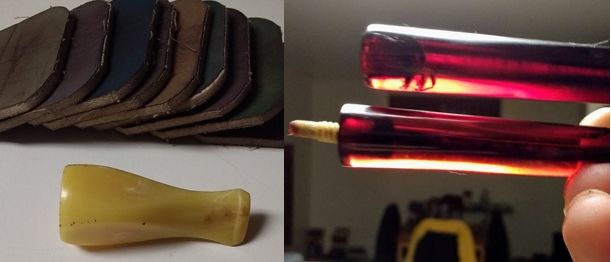
Bakelite cigar holder, left; real amber compared to Redmanol, right

The greater strength and coloring qualities of Redmanol and Condensite were the results of different chemical catalysts used employing the same basic heat and pressure process innovated by Baekeland.  But Redmanol employed the action of formin on carbolic acid, while Condensite utilized the effect of chlorine on naphthalene.  Furthermore, Baekeland’s machine, the Bakelizer, was only one means of achieving the intense heat and pressure necessary for the reactions of the two ingredients he chose.  Aylsworth devised a means of heating the chlorine and naphthalene without pressure, a process Redman adopted.  The three processes, therefore, rendered each substantially different.  In 1922, however, a U.S. Federal Court judge in New York interpreted the tortuous patent laws in favor of Bakelite – which, by the way, not wanting to force its two greatest competitors to defend themselves sued not the manufacturers but their distributors – destroyed and  merged the prized competitors into its growing family in the newly and litigiously formed Bakelite Corporation.  Since then, Redmanol and Condensite products have been lumped together under the single name Bakelite.

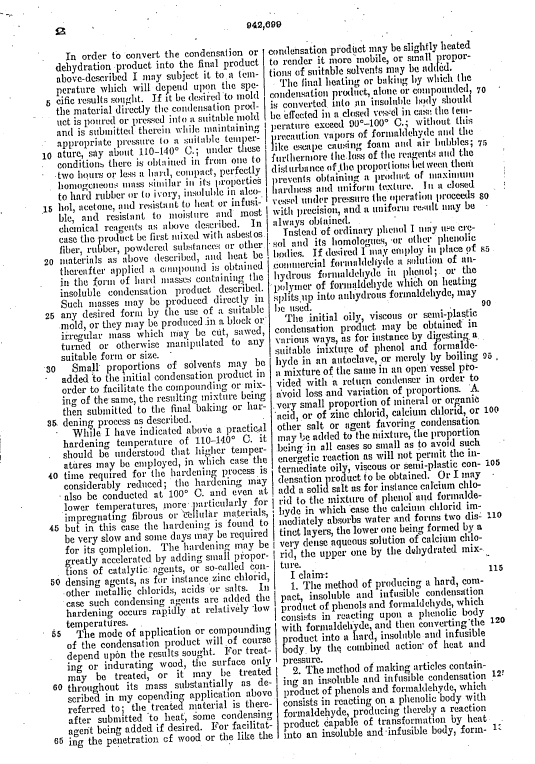
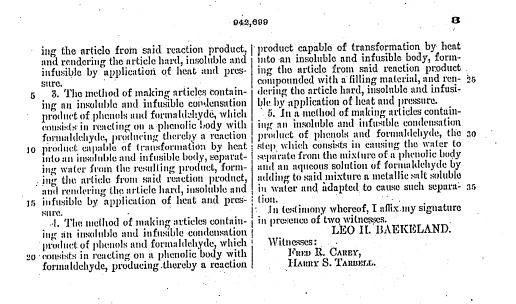
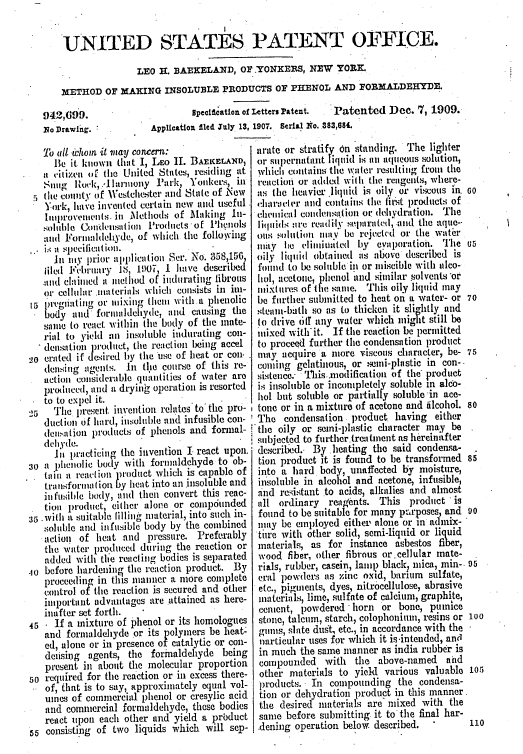
The Bakelite patent can be read below.
The Problems
The most obvious difficulty is that Bakelite, at least for tobacco pipe products, has not been manufactured since 1939, when Bakelite Corp. was acquired by Union Carbide and Carbon Corp. (Union Carbide Corp. since 1957).  As was already noted, the curing process for Bakelite rendered it “irreversible.”  Bakelite products were custom made for whatever use was needed.  In other words, for purposes of restoring old stems made of Bakelite, which, again, includes Redmanol, any necessary replacement can be reworked in only one way: fitting an over-sized stem of an otherwise suitable candidate to a shank by serious sanding or other such methods.  Any other alteration, such as bending or threading, is strictly impossible compared to Vulcanite, acrylic and even amber.  By way of illustrations, imagine trying to find substitute parts for these beauties.
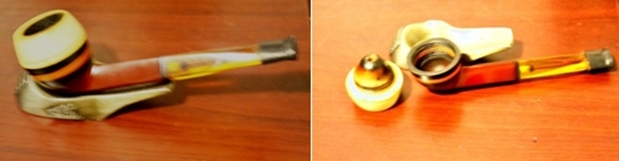
Socket pipe with meerschaum bowl, Redmanol shank and stem and bone tenon screw
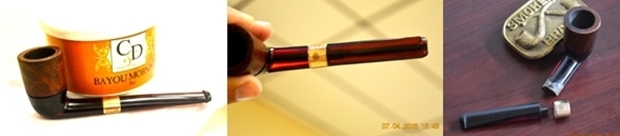
KB&B gold band socket pipe with irreplaceable threaded Redmanol stem and bottom and custom-made screw-in briar bowl

AMBER AND AMBEROID
Amber is an organic material (neither gem nor stone despite common descriptions) formed by the polymerization of prehistoric pine tree resin into hard, fossilized pieces that often have inclusions, meaning trapped insects or plants.  More than half of the known inclusions found have been flies.  Its colors include yellow and orange, the most common, as well as red, green, blue and brown, and these colors range in translucence to almost opaque.  Found in the greatest quantities throughout Europe, amber is more common in the northern Baltic countries and Russia, but is also present in other places all over the planet.  Amberoid refers to pieces of amber and sometimes other resins compressed by intense heat and pressure. Most of it is used for jewelry, primarily in small bits and pieces.
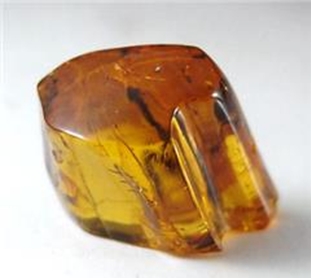
Polished Baltic amber courtesy Minerals.net

The Problems
Amber is on the soft and fragile side (2-3 on the Mohs scale of 1-10, with talc being 1 and diamond 10), and it begins to decay the instant it is exposed to sunlight.  By human reckoning the process is very slow, but amber’s natural brittleness increases considerably within a human lifetime.  That means that its use as a material for pipe stems in the late 19th and early 20th centuries leaves examples that are now more prone to chipping and breaking, neither of which damage can be repaired with a purist method if at all.

Also, even for anyone alive today who is capable of fashioning an amber stem, the cost is prohibitive, and the process very difficult   Because amber does not actually melt, as in the sense of turning to liquid, but rather reaches the temperature where it would at about 570° F. and beyond that decomposes, there may be nobody around now inclined to try anyway, as Floyd Norwood suggested..

As a result, we are left with a more and more limited supply of random styles and lengths that can be found only at places such as eBay, where the sellers don’t know or care enough about pipe restoration to publish the measurements and, in my experience, are clueless when asked to provide such information.  In other words, they can be found in random lots the measurements of which can only be guessed.  The increasingly absurd prices of these lots make buying them a serious gamble with poor odds of winning.

Amberoid is a still bigger problem.  For those willing to destroy various jewelry and other ornaments made of amberoid, the bits and pieces acquired would be useless.  The only amberoid stems I can find available to buy are already on pipes, such as this Andreas Bauer meerschaum billiard courtesy of SmokingPipes.com.IVORY, REAL AND IMITATION
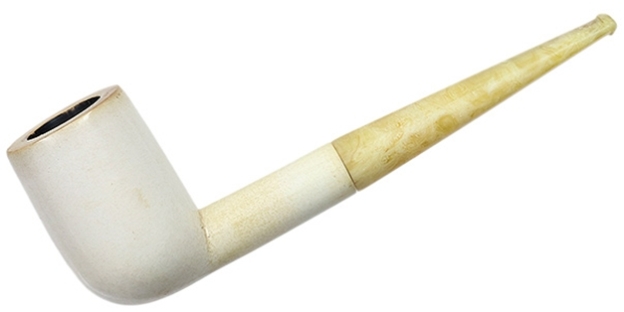
Ivory in its purest form is the dense material forming the teeth and tusks of large mammals including elephants that are still present in our world, their distant relatives mastodons that have been extinct since the end of the Pleistocene epoch 10,000-11,000 years ago and woolly mammoths (another ancestor of elephants that were alive during the earliest time of humans but died off completely 4,000 years ago).

Other, less valued forms of ivory are found in walruses, narwhals, hippopotami, rhinoceroses, warthogs and sperm whales, but also in a variety of smaller species such as elks.  For most of human history, ivory has been prized for its artistic uses, from classical statues to piano keys.  The fact that ivory, in particular its oldest and finest variety, can be carved into any form made it valuable for beautiful works of art, including ornate tobacco pipes.
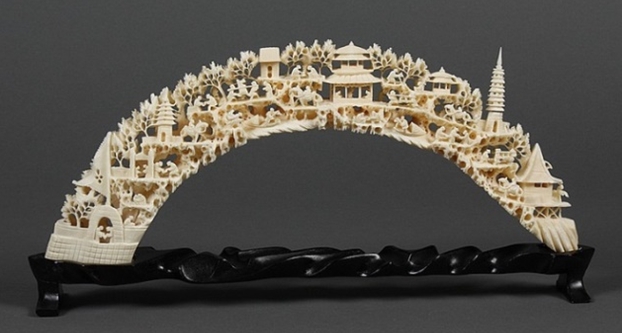
Japanese carved ivory tusk courtesy invaluable.com
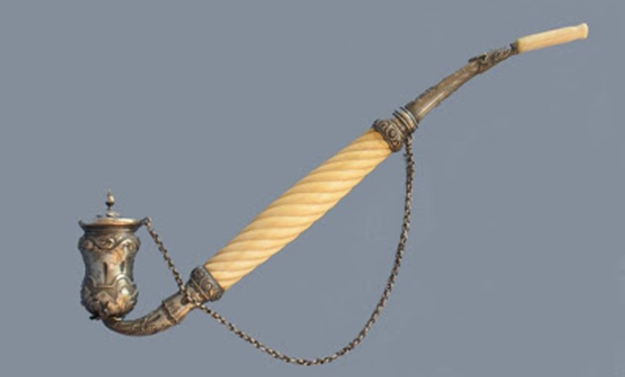
1890 Tiffany ivory-silver pipe courtesy tobaccopipehistory.blogspot.com
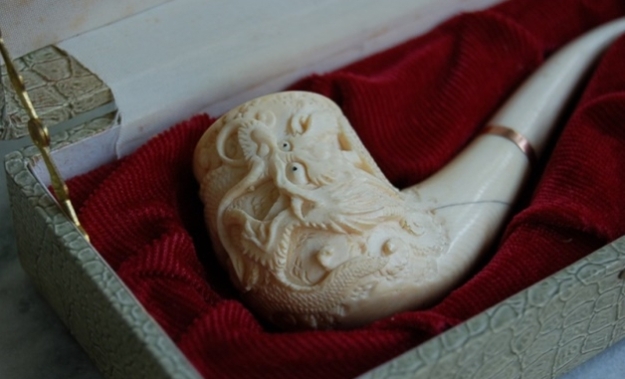
Tsuge ivory billiard courtesy Brothers of Briar

There are several alternatives to ivory.  Celluloid; believe it or not; invented in France in 1865, is the oldest.  Best known for its later use as an early, highly flammable film for motion pictures; celluloid – not Bakelite – is touted on some sites as the first “successful” synthetic plastic and was used for products that were not limited to the following.
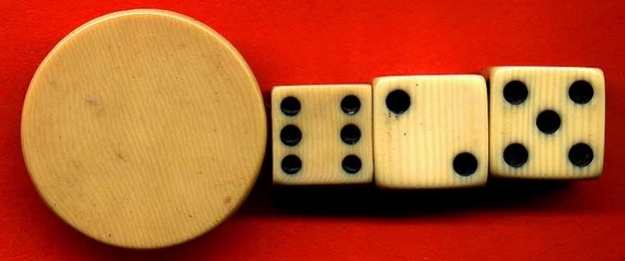
Celluloid chip and dice courtesy antiquegamblingchips.com
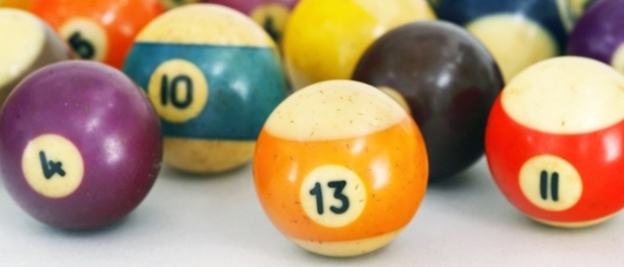
Billiard balls courtesy sciencehistory.org
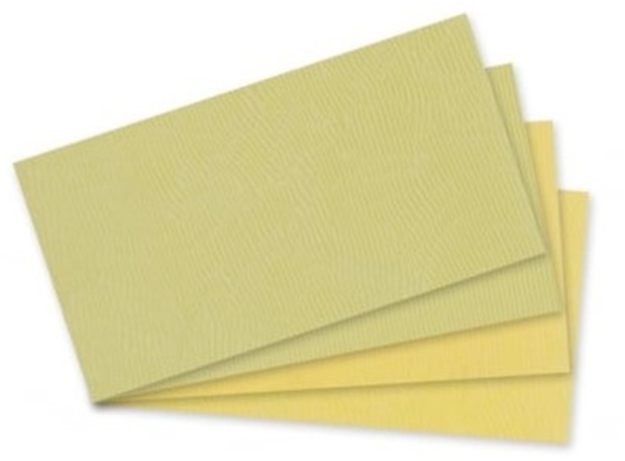
Celluloid ivory sample sheets courtesy Rothko & Price

A second, more workable imitation ivory is vegetable ivory, found in the nuts of varieties of tropical South American palms.  The white cores of these nuts are fashionable into all kinds of shapes that harden and can be polished like real ivory, and best of all, they can be drilled for stem making purposes.  The nut below looks tiny but is in fact about the size of a large honeydew melon.  It even has a fine grain pattern that can be differentiated from that of real ivory.
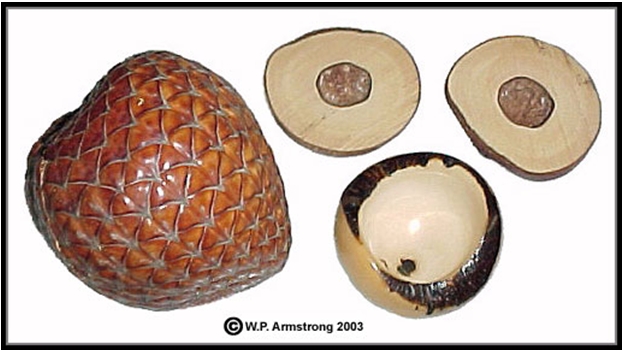
Vegetable ivory nut from Micronesia courtesy palomar.edu

There is a third, still better, resin-based variety of imitation ivory for pipe makers and restorers capable of tooling a stem from scratch.  Although hesitant to promote a single business when there may be others using the same brand, I can’t find any, and the brand factor is vital because of the similarity of others that nevertheless possess serious basic differences.  These characteristics include the use of polyester in those that are inferior for pipe use, leaving them weaker, less glossy when buffed and all-in-all not so close to the real thing that there might be a problem trying to transport an object made of this stuff through airport customs.  To get around to the reluctant business plug, whatever the brand name is, it’s available at Vermont Freehand

The rods sold at that online business are offered in different diameters, the same as those used for traditional materials such as Ebonite.  Vermont Freehand describes it as the finest available.  It varies in price according to two grades, 1 and 2 where 1 is the better, and the diameter desired, from $3.60-$100.  For example, the minimum 12mm diameter rod of Grade 2 is $3.60 compared to a 14mm rod of Grade 1, which is $7.20.  The largest diameter of Grade 2 is 1.4” square at $28.80, and a 1.6” x 2.6” rectangle of Grade 1 is $100.  Again, note the grains.
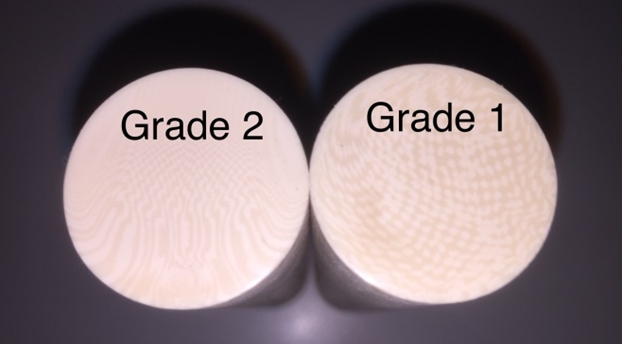
Imitation ivory stem rods courtesy Vermont Freehand

The Problems
In this case, the “problems” for the most part are really solutions to a greater crisis.  Evolving international laws aimed at saving African and Asian elephant populations, devastated to the verge of extinction by poaching and unregulated exportation of tusks that are harvested for their great value, at the expense of elephant lives, have had unexpected and negative effects on the animals they are intended to protect.  Uncooperative countries that I will not name here in the interest of avoiding geo-political argument and controversy have allowed poachers to capitalize on the increased value of ivory that resulted from the various embargo attempts.

Tougher and more restrictive bans are already being enforced to degrees that seem to have stabilized at least some elephant herds in Africa and Asia, and still more effective laws are being considered, notably in the United States and the European Union.  The present laws, targeting buyers and sellers of ivory as well as art dealers and collectors, are expected to curb poaching still more.

Certain aspects of the laws have been met with resistance from art and personal rights advocates.  The issues have to do with the age of the artworks, the years they were acquired and the sources, all of which create complexities for enforcement, to put it in the simplest terms that are anything but simple.

In 2016, the Obama Administration initiated a blanket ban on the importation of elephant ivory and almost all sales of ivory throughout the country.  The very few exceptions include antiques that can be proven through a professional appraisal or a bill of sale to be at least 100 years old.  Many ivory pipes fit that category.  However, President Trump, undermining the Obama ban, directed the Fish and Wildlife Service to consider importation permits for sport-hunted elephant trophies from select African countries “on a case by case basis.”  In other words, Trump has cleared the way for his rich cronies to bring elephant heads with their tusks intact home from safaris.  This kind of favoritism, which was never announced publicly by the Trump Administration but rather via a Fish and Wildlife Service memo issued March 1, 2018, can’t possibly surprise anyone given Trump’s record since he assumed office.

Concerning imitation ivory of any kind, it is of more use to master artisans who can create a stem by hand or machine, again, rather than average or even skilled restorers.  However, this resin-based imitation ivory sold by Vermont Freehand might be fashionable into small pieces suitable for filling chips and other damages to real ivory pipes – but only with serious practice based on what I’ve learned of its physical makeup.

BONE AND HORN SCREW TENONS
The good news is that bone and horn screw tenons, which can be made from the calcified skeletal remains of animals such as cows and deer, are not in short supply.  To be sure, there are other sources, but J.H. Lowe, for example, offers “a multitude of styles and sizes” in assorted 12-packs for $28.90 – and you know what you’re getting compared to online auction sites that tend to be clueless as to the importance of the various elements of importance in measuring the correct size.  Another plus when ordering screw tenons from an actual pipe supply store is that they are new.  Here is a motley collection of bone screw tenons said to be antiques courtesy of Worthpoint.
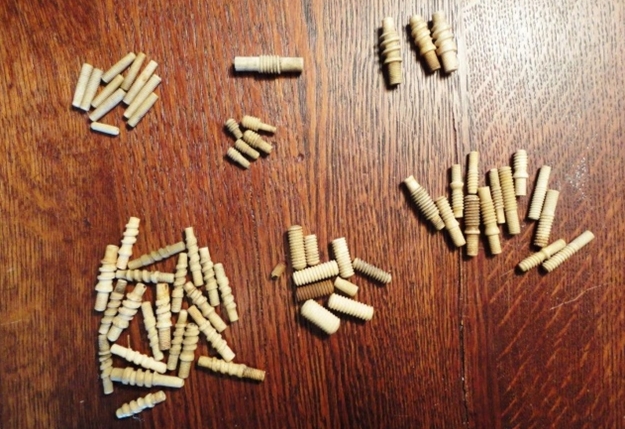
Without impugning the integrity of the seller of those screw tenons, if they are antiques, they represent a pristine collection of unused specimens.  I’ll take this opportunity to emphasize that, although I am committed to using only the original materials for antique and extreme vintage pipe restorations, that devotion does not require any replacement parts to be as old as the pipe I’m refurbishing.  A brand new screw tenon or anything else, so long as it’s the same substance as the one with which the pipe came, is fine with me, and I’m planning on stocking up on assorted sizes, styles and shapes of everything I can find in new condition.  Still, I have a small collection of antique and vintage tenons, stems, bands, an endcap and one shank extension, upon which I look forward to expanding.  No doubt the day will come for each to find its wizened old pipe mate, and I anticipate the matches, at the risk of sounding daft, with somewhat of a sense of excitement.  Call me old-fashioned or sentimental or a codger or what you will, but there it is.
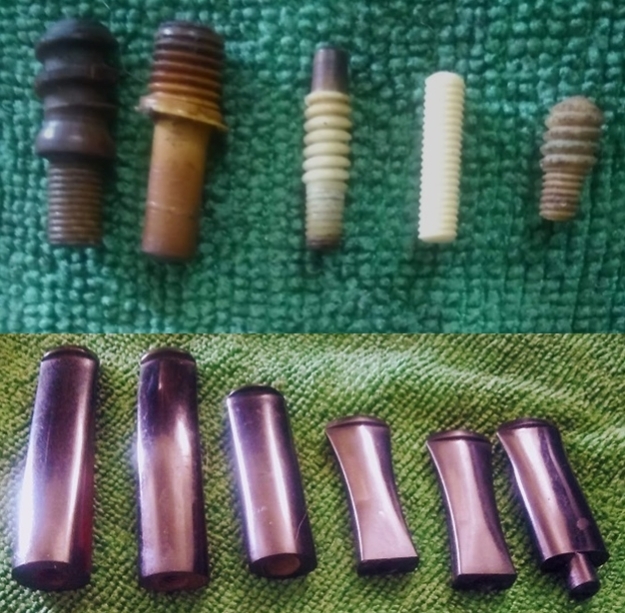
The two on the left are Redmanol.
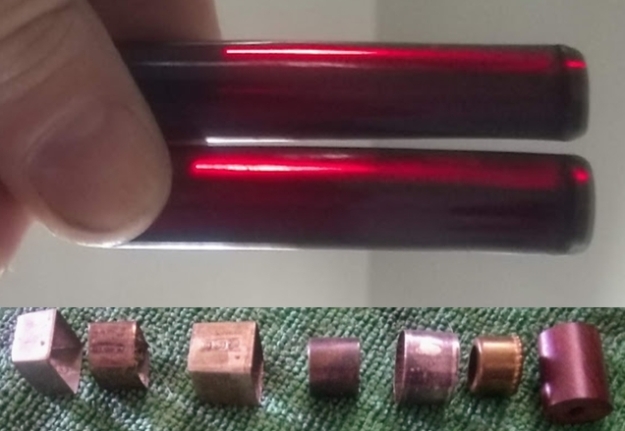
The Problems
I realize I’ve overstepped the subject of bone tenon screws a bit in this section, for reasons of expansion on the greater subject, but now to address the problems with those parts.  Again, I stated that the bone tenons are in no immediate danger of extinction.  I should have qualified that assertion by noting in most cases.  Consider the photo of my antique bone screws above.  I have no doubt that various suppliers of newly made old-style supplies such as these screws indeed have considerable varieties on hand, but the fact remains, many were custom made as long as a century or more in the past.  As the venerable Mr. Norwood pointed out, nobody is stepping up to produce such oddities as bone screws to order.  Of course, artisans able to do so can and will be found – but the task won’t be easy, as Part 2 of my series will show.

Then there are several other problems, I’ll call them: one, fitting a bone screw requires matching it to the stem and shank.  In most cases, the measurements for each are different, not to mention the style of the tenon screw.  Just whipping out the calipers and determining the approximate diameters of the two ends and the optimum length of the whole may not be enough.  Two, bone is inherently soft and brittle, and therefore breaks with the least provocation.  If you’re lucky, the original broken tenon will be available, but if so, it’s likely to be in bits and pieces, some powdered.  It follows that matching can be problematic.  Three – and this isn’t being persnickety – adding to all of the above obstacles is the likelihood, not possibility, that re-threading the stem and/or shank into which each end of the bone tenon screws will be necessary.  To be blunt, not everyone is up to any or all of these tasks.

To sum up, the more than potential need for someone specializing in bone tenon repair will become mandatory.

METAL SYSTEM PIPES
Arguably the most fascinating coincidence in the history of pipe making was the introduction in a single year of two brands of an altogether new kind of system pipe.  The year was 1936, and the inventors were Frederick K. Kirsten, a German-born emigrant to the U.S., and Kenly C. Bugg, a native of Indiana.  Both of them were engineers and prolific inventors with great numbers of diverse patents, and each chose aluminum for the frame, because of its light weight and rapid heat dispersion, as well as screw-on briar bowls.  Otherwise, their designs were quite different   Kirsten’s pipes are more box-like while Bugg’s are sleeker and more cylindrical.
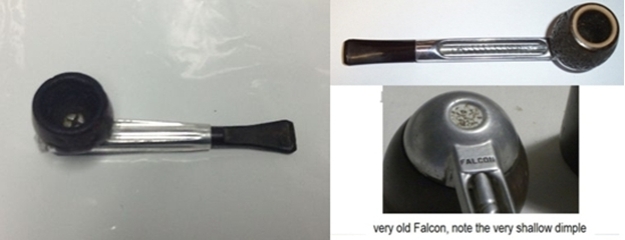
1930s Kirsten courtesy Pinterest and “very old” Falcon courtesy Smoking Metal

The basic systems – the details of which I will omit – differ, also, but suffice it to say, Kirsten’s was more complex while Bugg’s was simpler, using a moisture trap beneath the bowl.

Which man committed his plans to paper and created a prototype is moot.  Kirsten had the presence of mind to begin manufacture and sale of his pipes the same year, applied for the patent in 1937 and received his grant with US Patent No. D112, 701 on December 27, 1938.  Bugg, on the other hand, sat on his invention, not selling his first pipes until 1940 and receiving US Patent No. 142,280 on August 21, 1945.  Kirsten, therefore, is generally credited with the invention of the metal system pipe despite the uncertainty of the exact date of the metal system pipe’s conception and in whose mind it occurred,

I have included the Patents for both for your enjoyment should you wish to read them (the Kirsten first followed by the Bugg).
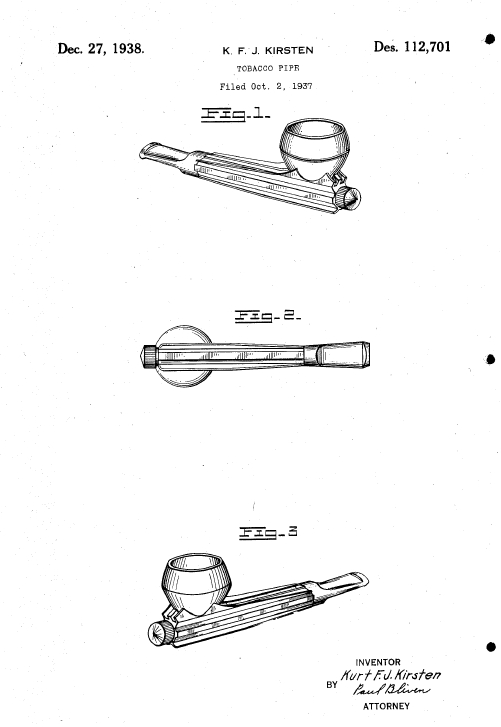
The transition of production of the great American original Falcon pipes to Great Britain began in 1961, when production started there.  In 1968, U.S. production of Falcon pipes was transferred altogether to Falcon Pipes Ltd. (also known as Falcon House Group) in Great Britain, which still later became the Merton and Falcon Co.  The Falcon Pipe Group now runs the operation, as far as I can tell.  Despite the convoluted name changes, Falcon pipes have maintained their quality since Kenly Bugg made the first one.  By the way, to clarify a variation that began to annoy me, there is no second e in Kenly, despite frequent errors.  See patent signature of inventor.

Everything so far in the category of metal pipes has been to explain the genesis of an explosion in brands and systems of metal pipes with bowls made of wood, meerschaum and the sundry Bakelite materials, to name some.  The exact number of Falcon pipes sold worldwide to date is difficult to pin down, but two numbers stand out: by 1954, six million of them had been sold in the U.S. alone, and starting seven years later, from between 1961 and 1974, 16 million more were sold by the oft-switching producers in England to pipers around the world, excluding the U.S.   This leads us on a nice, ordered path to…

The Problems
Rest easily, Kirstens and Falcons are in no danger of running out of replacement bowls and even other parts as both companies remain in business and don’t appear to have plans to stop.  Replacements or new screw-in bowls are available directly from Kirsten Pipes or the Falcon Pipe Group’s distributors, such as the Arango Cigar Co. in the U.S.  This is not to mention the numerous artisans who make bowls that fit either or both, including Don Warren Pipes for Kirsten bowls and DGE Handmade Pipes and Manly Things (I didn’t make up the name, so don’t shoot the messenger) for Falcon and/or Dr. Grabow Viking bowls, which are interchangeable.

That reassurance made, the rest will be brief and simple in its awfulness.  I’m not about to go through the entire A-Z Index at Smoking Metal’s UK website to locate, count and determine all of the brands – known and unidentified – of metal system pipes identified and catalogued so far by Tony Pringle.  Like a French gentleman whose first name is Richard but is known to countless pipe smokers as Pipephil (who retired a few years ago), Tony works alone and in his spare time, making his accomplishment a monumental feat even with the sparse contributions of readers.

All I need to point out is that many – no, more likely the vast majority – of the metal pipes listed and shown at Smoking Metal were manufactured without even a moment’s thought about compatibility with others of their kind.  In blatant terms, this means they can’t be replaced without making one from scratch.  And who is going to do that?

I’d say that works as the one and only necessary dilemma with this category of scarcity.

CORNCOB INSERTS FOR BELOVED OLD ARISTOCOBS
The Aristocob was invented by Joseph W. Zarikta and assigned to the Al-Cobb Corporation (later Aristocob, Inc.) of Grand Haven, Michigan with U.S. Patent No. 3,292,639, granted just in time for Christmas 1966. Here is what the new-in-plastic case product looked like, complete with the aluminum frame, plastic stem and two cob inserts, courtesy Smoking Metal.  (Filter possibly not included.)
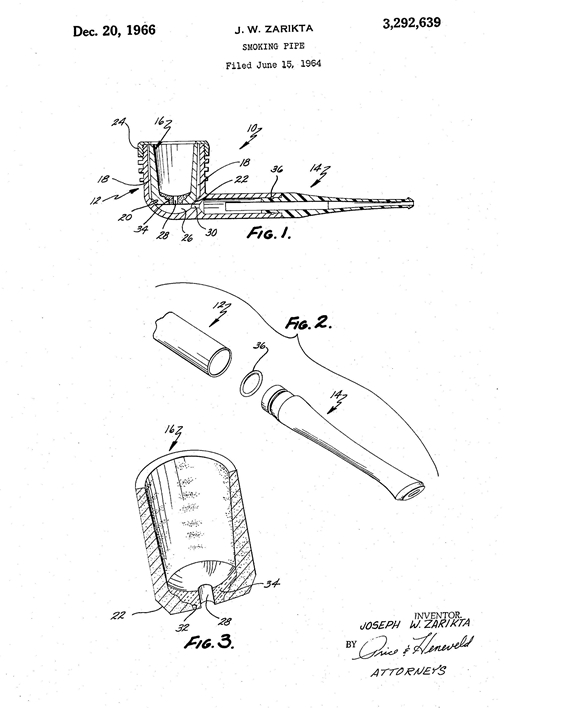
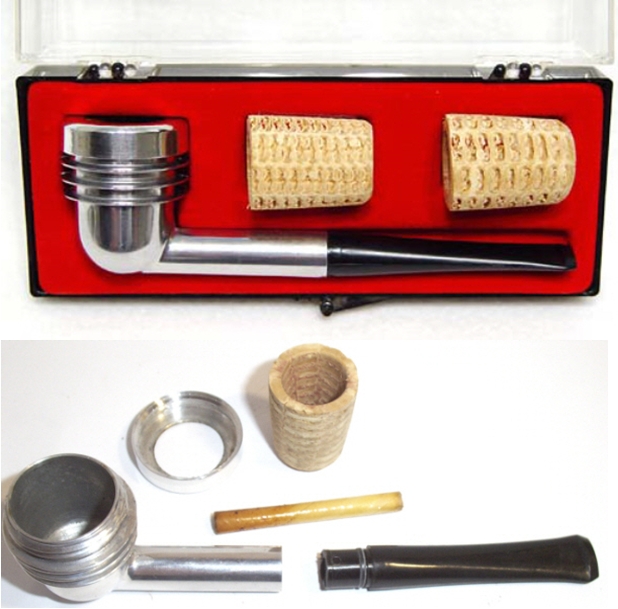
The Problems
Missouri Meerschaum took over manufacturing the Aristocob and its inserts in the mid-1970s.  The best known maker of cob pipes discontinued the Aristocob at some point but continued manufacturing the inserts until 1983, when the endeavor became unprofitable.

While it is true that original Aristocob corncob inserts can still be found online, at one of the last sources in the astounding list at the end, for example, when they’re all gone, that will be the end of the real thing.  The substitution of a custom-carved briar insert at the expense of the original cob is perhaps better for its durability in the lone case of the Aristocob.  As far as I know, they are fashioned only by Steven LaVoice Jr. of Owl Pipes.  I happen to know Steven’s work to be excellent after being compelled to use one of his traditional wood substitutes when I restored an Aristocob three years ago, about a year after Steven started business in Western Massachusetts.
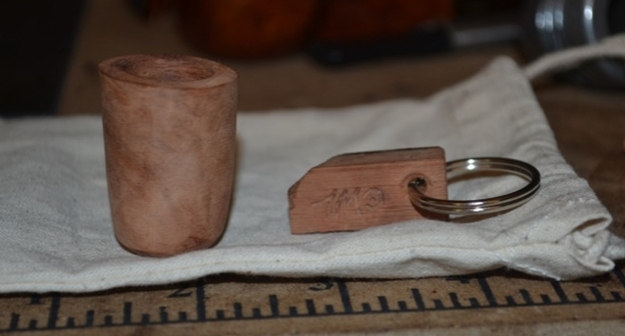
Briar insert from Owl Pipes, with a nice keychain included

Some cold-hearted pipers, hearing of the rising shortage of original corncob inserts for the Aristocob, may bid them good riddance or scoff, “So what!”  I’ll answer that hypothetical question   Those who continue to enjoy durable cob pipes know and appreciate the difference in taste afforded by the intended Aristocob insert.  Any purists are left with one of these singular “art deco” smoking metal creations that’s rendered useless for them.  Others can still buy a briar insert directly from Steven if the owner wishes to be rid of the short-lasting cob originals that I’m told become quite nasty the closer to their expiration they get, and thus avoid the intermediary restorer altogether.  Steven makes different styles of inserts, one of which has the rough exterior reminiscent of real cob.  (Being a bit obsessive-compulsive, I polished the one shown above, which sold to a happy old-timer.)  And the cost of a briar insert, which is five times greater than the $5 I paid at a garage sale for the worn old Aristocob I restored, can be a one-time expense.

The critical fact remains, though, that nobody seems to be stepping up to make quality (non-flammable) cob inserts with a coating to harden them, and therefore, when Steven is no longer around “to do the work” with briar, remaining Aristocobs will be tossed in the trash or placed with nostalgia as heartless shells on shelves.

MEERSCHAUM PUSH-PULL FITTINGS
Now, here’s the most bizarre item on the list, and I hope it sparks English Parliamentary style chaos of furious, frenzied, fibrillating debate – but no fighting, please.  I know that may be shameful of me, and I don’t care, because of the single and singular fact I will assert when I get to the proper Problems section.  For now, a push-pull fitting is formed of two small pieces of polytetrafluoroethylene (Teflon) or a generic variation.  Teflon is a polymer, or chemical compound of high molecular weight, discovered in 1938 by a new-hire at DuPont with a chemistry doctorate.  Teflon, the specific combination of gases and other substances that formed by chance when the lucky chemist heated a canister a certain way by mishap, happens to be extremely resistant to solvents, acids, bases and heat, and hence corrosion and melting, and is therefore perfect for the most part to join a meerschaum pipe shank to its stem.  Of course, it has other uses and fascinating properties anyone so inclined can read about near the end of my sources.  At its simplest, Teflon is a very fancy synthetic plastic.

The two parts are paired with one piece that screws into the shank opening and another into the stem.  A push-pull fitting, in other words, acts as a special tenon on one side that screws or pushes into the other.  Most of the time by far, the tenon part is installed in the opening of the stem and fits the shank part, but I’ve seen the process done in reverse, probably because that’s the way some restorer could make the two match up without drilling either the stem or shank opening.  The use of push-pull fittings was a great innovation to protect the fragile meerschaum and also do away with bone and horn tenons that are just as easy to break

Here are two shots, one of a trio of “standard” push-pull fittings of slight difference in size, courtesy Royal Meerschaum, that costs $3.99 for the three-pack.  The other is a screw-in stem for one of my pipes.  Standard just means they can be pushed or twisted together rather than screwed and are also the general sizes for newer meerschaum pipes.Note my Paktas billiard above with only the stem fitting that screws into the bare meerschaum shank.  I’m always very careful unscrewing it!
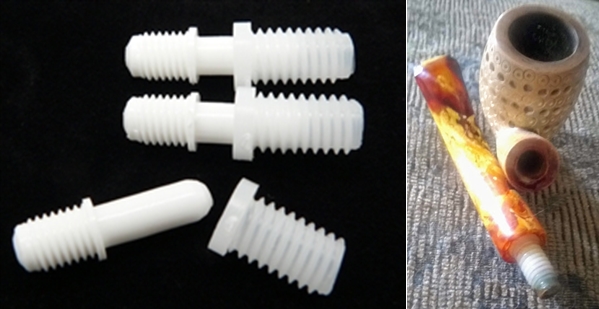
The Problems
The single problem with these push-pull fittings is that they’re not hard to find in all of the typical sizes that are pretty much standardized today, but that means bupkis.  The artisans who crafted meerschaum pipes in the old days – before push-pull fittings became popular in the 1970s – did everything themselves, including drilling the shank and stem however they pleased at the moment and depending on the size of the pipe.  Ay, there’s the rub.

In this day and age where everything from furniture to motor vehicles is composed entirely or at the least more than half with cheap and readily available plastic, “real” or synthetic (think imitation Naugahyde), there’s no excuse for a lack of push-pull sets designed in enough sizes to accommodate older pipes.  But there it is.  Oh, they’re no doubt out there some place, but where?  Norwoods Pipes and Walker Pipe Repair, again by way of examples, offer push-pull fittings, but (and no offense is intended to either of these fine pipe repair providers) if they have different sizes, they’re limited.

I sent the following very large lattice meerschaum stummel with no stem and a hole in the shank to Norwoods, which can provide almost any original replacement part, only to learn that the new Lucite stem was no problem, but a push-pull set that big was unavailable.  A bone tenon screw was used instead for the same price, and that pipe with its new tenon and stem arrived in the mail soon after.  In this case, I am quite pleased with the result, since I kept it for my own use and didn’t have to worry about any prospective buyer breaking the bone tenon and blaming me.  That restoration will be the subject of the final part of this series.
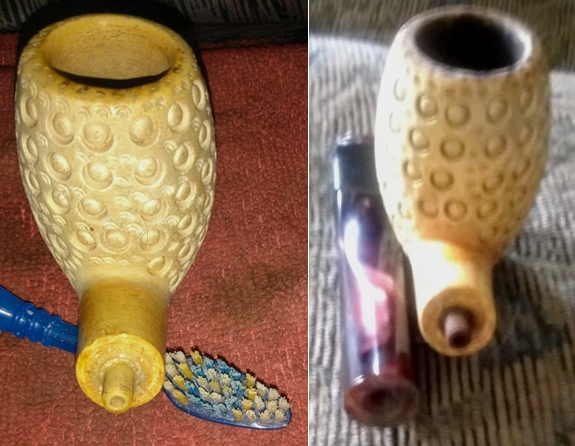
CONCLUSION
For now, I can continue to cobble together limited replacements of the various parts integral to the proper restoration of old pipes, and for those tasks requiring the dwindling repair services that exist, I can turn to them.  I also know of a few artisans with the know-how to tool these small yet vital implements of restoration.  Still, I have no doubt that within my lifetime the need “to do the work” myself will come.  I can only hope practice will be enough…and I had better get to it.

SOURCES

http://norwoodspiperepair.com/index.html
https://patents.google.com/patent/US942699A/en?oq=942699
https://books.google.com/books?id=oYZGAQAAQBAJ&pg=PA6&lpg=PA6&dq=redmanol+chemical+products+founder&source=bl&ots=juthNFh-rW&sig=b9qO8plogjv6fj_u2TBjkdpIfCM&hl=en&sa=X&ved=0ahUKEwj-gNj4h9nNAhUM9YMKHXKjBwMQ6AEINDAE#v=onepage&q=redmanol%20chemical%20products%20founder&f=false, Phenolic Resins Technology Handbook, by NPCS Board of Consultants and Engineers, 2017, excerpted by permission
https://books.google.com/books?id=nTs8AQAAMAAJ&pg=PA144&lpg=PA144&dq=redmanol+bakelite+infringement+judgment&source=bl&ots=TCel6fmccJ&sig=ehZijKCRrQSs- RnL6xiDbVA5aKM&hl=en&sa=X&ved=0ahUKEwi39veundvNAhUT32MKHbeiCJwQ6AEIHDAA#v=onepage&q=redmanol%20bakelite%20infringement%20judgment&f=false Factory and Industrial Management, Vol. LXIV, No. 3, August 1922, excerpted by permission (p.144)
https://books.google.com/books?id=11FHAQAAMAAJ&pg=PA816&dq=in+search+of+the+man+made+amber+redmanol&hl=en&sa=X&ved=0ahUKEwis5OvgmNvNAhVk0oMKHYveA6sQ6AEIIzAB#v=onepage&q=in%20search%20of%20the%20man%20made%20amber%20redmanol&f=false Compton’s Pictured Encyclopedia, Vol. 2, excerpted by permission (p. 818)
https://en.wikipedia.org/wiki/Bakelite
https://rebornpipes.com/2016/07/05/the-scintillating-antique-kbb-redmanol-pipe/
http://www.jhlowe.com/bits-bakelite.htm
https://rebornpipes.com/2013/10/14/louis-blumfeld-1901-bbb-bent-billiard-by-james-gilliam-of-jsecpipes-com/comment-page-1/#comment-23486
https://www.minerals.net/gemstone/amber_gemstone.aspx
http://mentalfloss.com/article/73608/15-clear-facts-about-amber
https://www.amazon.com/REPLACEMENT-TOBACCO-STEMS-AMBER-STRAIGHT/dp/B01HZU8NBU
https://www.amazon.com/REPLACEMENT-TOBACCO-STEMS-STRAIGHT-AMBER/dp/B01HZU7M94
https://leta.st/blog/2016/07/history-of-russian-amber-1/
https://en.wikipedia.org/wiki/Baltic_amber
https://www.thefreedictionary.com/amberoid
https://www.shutterstock.com/search/amberoid
http://www.uniclectica.com/conserva/ivory1.html
https://www.washingtonpost.com/news/energy-environment/wp/2016/06/02/its-final-selling-just-about-any-item-containing-elephant-ivory-is-a-crime-in-the-u-s/?utm_term=.fe4c2ac312fb
https://www.npr.org/sections/thetwo-way/2018/03/06/591209422/trump-administration-quietly-decides-again-to-allow-elephant-trophy-imports
https://www.sciencehistory.org/distillations/magazine/celluloid-the-eternal-substitute
http://vermontfreehand.com/product/imitation-ivory/
https://www.amazon.com/ARVORIN-PLUS-Imitation-Substitute-Material/dp/B0755RG32T
https://www.chicagotribune.com/news/ct-xpm-2002-09-22-0209220243-story.html
https://www.dictionary.com/browse/casein
https://www2.palomar.edu/users/warmstrong/pljan99.htm https://www.ebay.com/itm/Antique-BONE-tenons-88-PIECES-Lot-of-Assorted-Sizes-Victorian-Vintage-pipe-/202297224337
http://www.jhlowe.com/misc-items.htm
http://www.smokingmetal.co.uk/pipe.php?page=56
http://www.kirstenpipe.com/pipes.html
https://www.etsy.com/shop/DonWarrenPipes?section_id=22062561
http://www.musiccitymarketing.com/cart_catalog_search.cfm
https://www.dgehandmadepipes.com/catalog/replacement-falconviking-bowls
https://www.ebay.com/itm/VINTAGE-NOS-ARISTOCOB-REFILL-COB-BOWLS-3-PER-BOX-ESTATE-PIPE-ALUMINUM-METAL-NOS/323553620046?hash=item4b554c704e:g:HGYAAOSwlHJbOmP0:rk:2:pf:0
https://www.owlpipes.com/product-page/briar-aristocob-inserts
http://www.jhlowe.com/misc-items.htm https://pipedia.org/wiki/Kirsten_Pipe_Company
https://pipedia.org/wiki/Falcon
http://www.smokingmetal.co.uk/pipe.php?page=366
https://www.markwaterpumps.limited/falcon-pipes-aluminium-die-casting-specialist-keeps-traditional-product-alive/
https://www.paykocimports.com/plastic-tenon-screw-set-3-pack/
https://en.wikipedia.org/wiki/Polymer
https://en.wikipedia.org/wiki/Fluoropolymer
http://www.royalmeerschaumpipes.com/Regular-Stem-Push-Pull-Fittings-p/sft-3.htm
http://www.walkerpiperepair.com/html/pipe_repairs.html

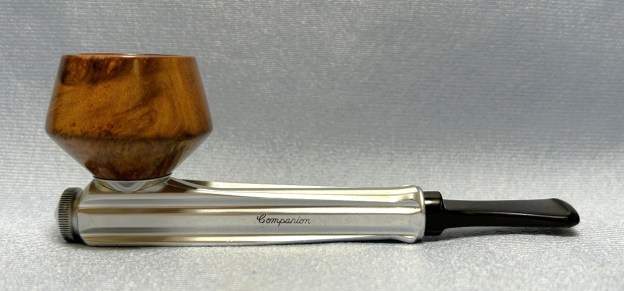
Restoring a Generation 2 Kirsten AX Aladdin Brass Tone


Blog by Steve Laug

I bought my first Kirsten – a Mandarin in the early 80s from a pipe shop that specialized in them in Idaho Falls, Idaho. That shop is long since gone but there is still something about Kirsten pipes that attracts my attention. It may be the design look of the pipe and it may be the stubborn resolve that gave birth to it when Kirsten invented it after getting word from his doctor that he had to stop smoking. I don’t what it is but I like the boxy look of the base and shank, the grooves in the machined metal, the rugged look of the bowls and the gentle curves of the stem. They always catch my eye. This one is no exception. I can’t remember where Jeff picked this one up but it a good one. It has O rings on the stem and the end valve and a base on the bowl so I know that it is one of the more modern renditions. Jeff took photos of it before he worked his magic in the cleanup process.The stem was lightly oxidized with minor tooth chatter but no deep marks. The Brass Tone finish was lightly scratched and dirty in the grooves. The rusticated bowl was undamaged but filthy. There was dirt and dust ground into the grooves of the briar and the bowl had a thick cake. The rim was covered in an overflow of the lava from the bowl but looked to be in good condition. I was hoping that the valve was not stuck in the end of the shank. Jeff took photos of the bowl from various angles to give an idea of the rustication pattern and the general condition of the pipe.He took the pipe apart and took photos of the pieces to show how it all looked before cleaning. The valve was dirty and gummed up with tobacco juices as was the push rod. The bowl cake is noticeably thick in the photos. The screw in the bottom of the bowl was loose enough to take the bowl off without damage to the slot. The base was stamped Kirsten in script on the left side mid shank. On the underside it was stamped Made in U.S.A. with the letters AX following it.The next two photos show the oxidation on the stem and the minimal tooth chatter on the surface.

With the photos in hand I went over the details of the stamping on a previous blog that I had posted by Dave Whitney who wrote Old Briar. He gave a helpful guide to dating a Kirsten pipe by the stamping and component parts. He separated them into generations – 1, 1.5, 2, 3. Going over the details I concluded that what I was dealing with a Generation 2 pipe that was made between 1958 and 1985. Here is the link and a portion of the blog. I have italicized the portions that pertain to this particular pipe.
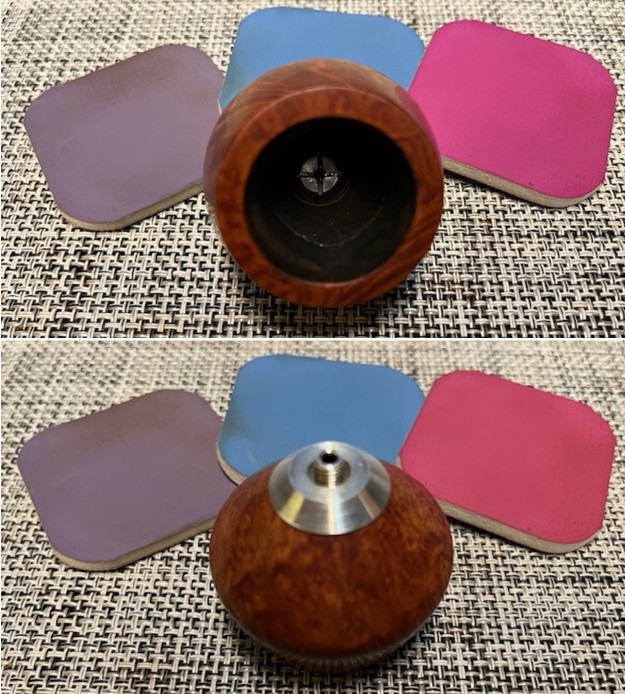
https://rebornpipes.com/2012/11/03/kirsten-generation-1-1-5-2-3/

Generation 2 – 1958-1985

Markings on underside of metal shank “Made in USA XL” (or app. size) and “Pat. & Pats. Pending”. The presence of O rings on both the valve and the mouthpiece and the metal cup spacer under bowl are the biggest thing that separates the Generation 1 from the Generation 2 pipes. These O rings help provide a tighter seal when the stem and apparatus are inserted into the radiator stem. Instead of “O” rings, the machining of the Generation 1 pipes was so precise the fit was exact. This generation came in the following models:
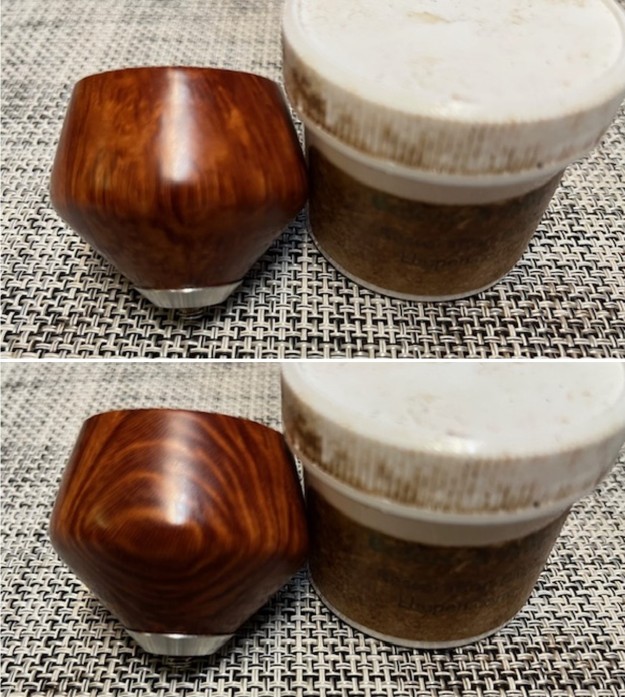
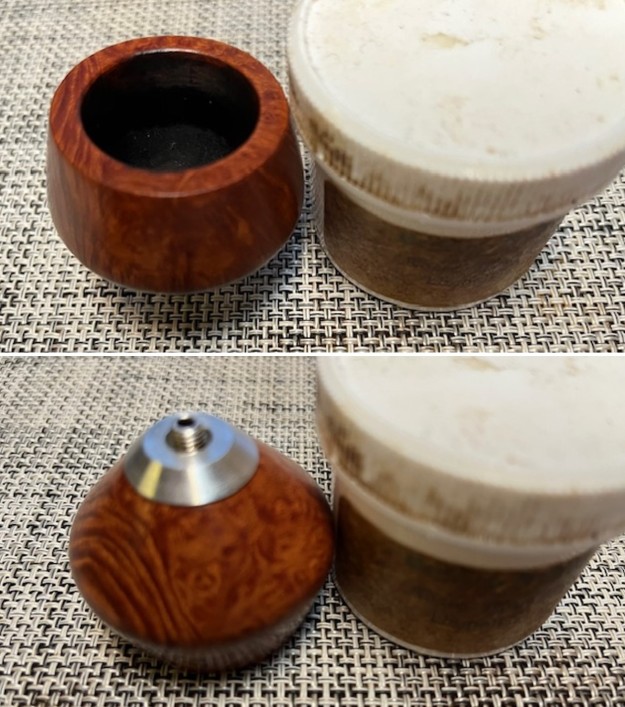
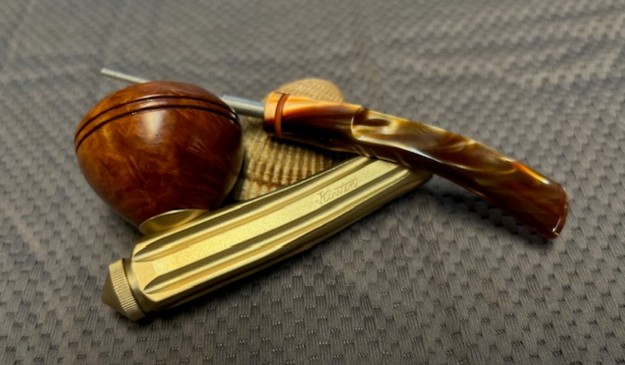
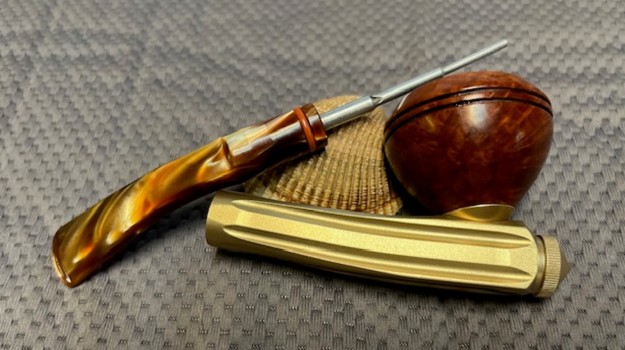
Straights

K Companion

G Gem

S Sportsman

SX Sportsman Brass

M Mariner

MB Mariner Black

L Lancer

Quarter-Bents

A Aladdin

V Vagabond

CX Cavalier Brass

T Tyrolean

Full bents

W Westerner

B Beau Geste

P Premier

F Firesider

…Generally speaking, the X added to a model letter like “S” stands for brass tone finish, i.e., “SX.” There is one exception to this: In the 1960s Kirsten made a brass tone model with an “Eternalum” finish that gave the brass tone an antiqued look. They were marked with a “X” designation following the model letter. The B added to a model letter like “M” stands for black finish, i.e., “MB.”

Jeff did his usual thorough clean up on this pipe. He scrubbed the inside and outside of the barrel shank with brushes and Murphy’s Oil Soap. He reamed the bowl with a PipNet reamer and finished with a Savinelli Fitsall Pipe Knife. He scrubbed the bowl exterior with the oil soap and a tooth brush and rinsed the whole pipe under running water. He cleaned the airway in the stem with pipe cleaners, cotton swabs and alcohol until it was clean. He soaked the stem in an OxyClean bath to raise the oxidation and soften it. When the pipe arrived here in Canada it was in far better condition than it was in the photos above. It cleaned up amazingly well. I took photos of it before I put on the finishing touches. Jeff was able to get the tars and lava off the rim and once they were gone it revealed a nicely grained smooth top on the bowl. The edges of the rim looked good and the screw in the bottom of the bowl was undamaged.The stem needed work to remove the oxidation but even that was pretty light. There were scratches in the surface of the stem that would need to be polished out but it was in good condition.I sanded the stem with 220 grit sandpaper to remove the remaining oxidation and the tooth chatter on the top and underside near the button.I polished the stem with micromesh sanding pads – wet sanding with 1500-2400 grit pads and dry sanding with 3200-4000 grit pads. I wiped the stem down with Obsidian Oil after each pad. I buffed the stem with red Tripoli and Blue Diamond after the 4000 grit pad to polish out the tougher oxidation. I brought the pipe back to the work table and finished polishing it with 6000-12000 grit micromesh pads. Once again I wiped the stem down with Obsidian Oil after each pad and when I finished with the last pad I set it aside to dry. While the oil was drying I rubbed the bowl down with Before & After Restoration Balm to deep clean and enliven the briar. I applied it by hand and worked it into the finish with my fingers. I buffed the bowl with a shoe brush and then a microfiber cloth to give it a sheen.I put the stem back on the bowl and worked the pipe over on the buffing wheel using Blue Diamond to polish the bowl and shank. I used a gentle touch on the rusticated briar when I was buffing it so that the nooks and crannies of the rustication would not be filled in with the polish and make more work for me. I buffed the stem with a harder touch to raise the gloss on the rubber. I gave the bowl multiple coats Conservator’s Wax and buffed it with a shoe brush. I gave the stem multiple coats of carnauba wax. I buffed the entire pipe with a clean buffing pad to raise the shine. I hand buffed it with a microfiber cloth to deepen the shine. The finished pipe is shown in the photos below. The rich combination of dark brown and medium brown stain on the rustication and smooth rim, the Brass Tone barrel/shank/base along with the rich black of the vulcanite stem make this a stunning example of the Kirsten pipes. The dimensions of the pipe are: Length: 5 inches, Height: 1 3/4 inches, Diameter of the bowl: 1 1/4 inches, Diameter of the chamber: 7/8 inches. I will be adding this one to the rebornpipes store shortly if you are interested in adding it to your collection. It will make a fine addition to the rack. If you are interested email me at slaug@uniserve.com or send me a message on Facebook. Thanks for looking.

1975-1976 Kirsten Pipe Company Catalog


This is the last of the Kirsten Pipe Catalogs that I received. It is from 1975-1976. Once again enjoy this blast from the past. It comes from the year I got married – 40+ years ago now. I remember I picked up my first Kirsten not long after that time. There is something about the design that intrigues me so I really like reading the old pieces of literature from the company.