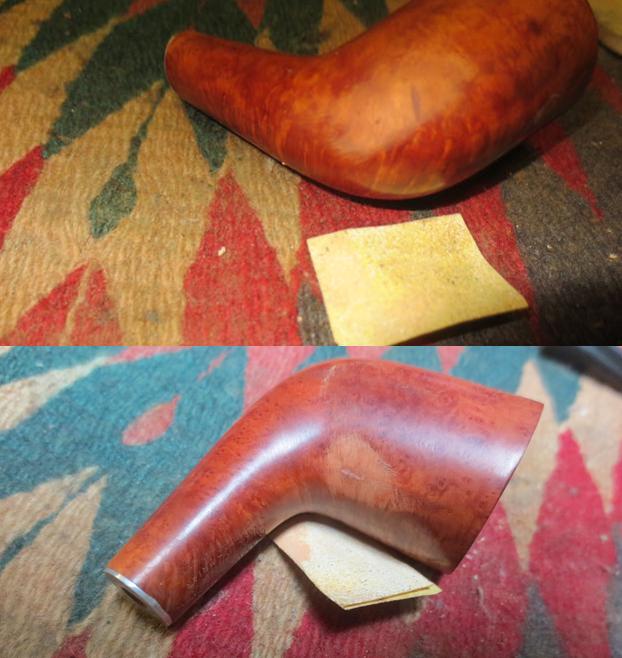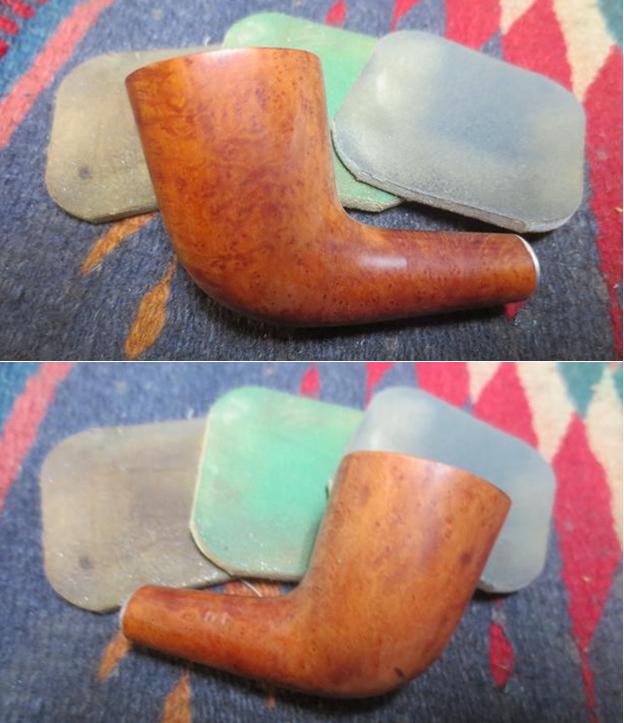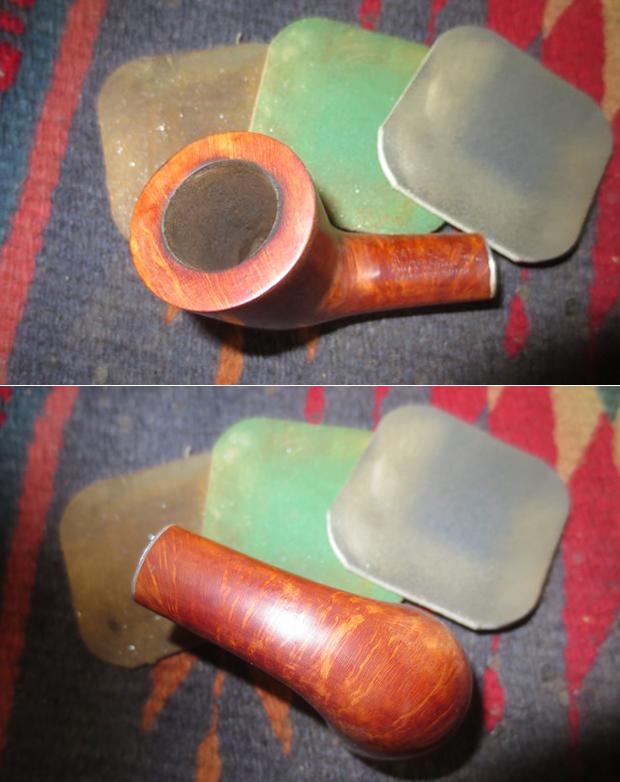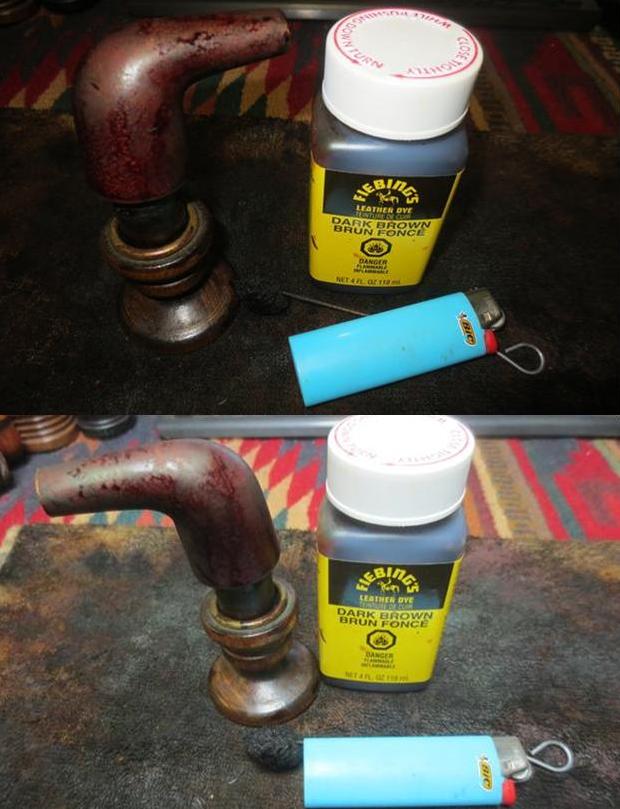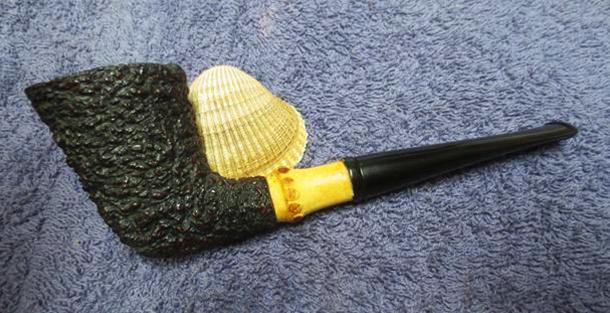
Tag Archives: fitting a stem

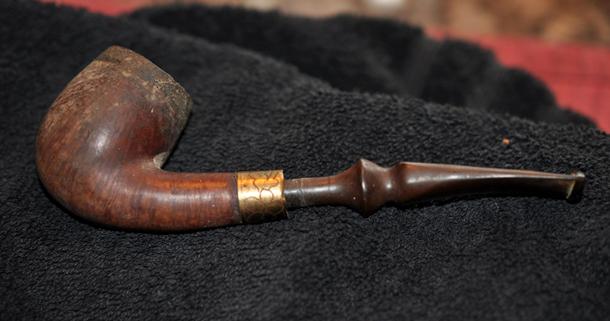
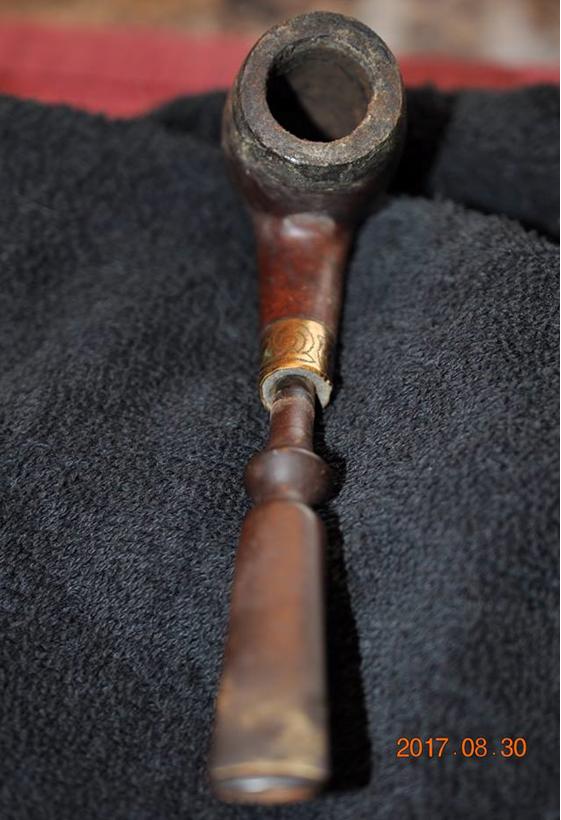
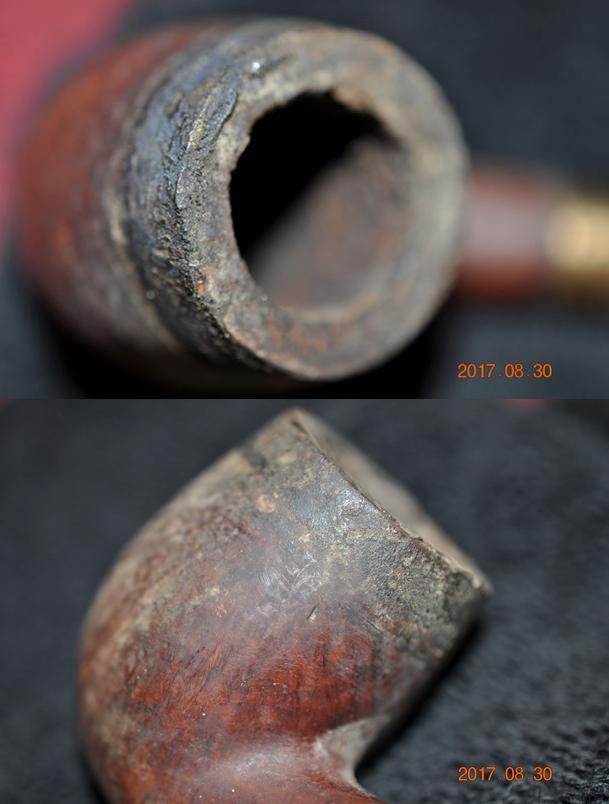
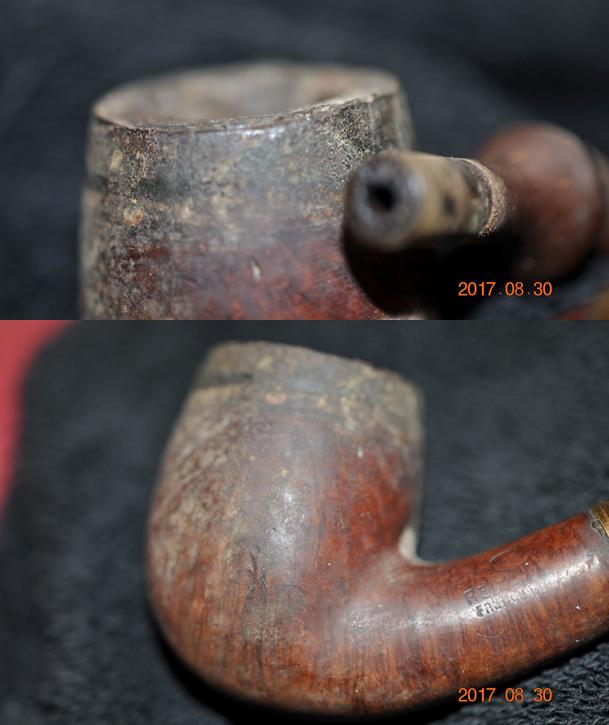
Repairing a Cracked Shank and a Chipped Stem on a Dr. Plumb Bulldog


Blog by Steve Laug

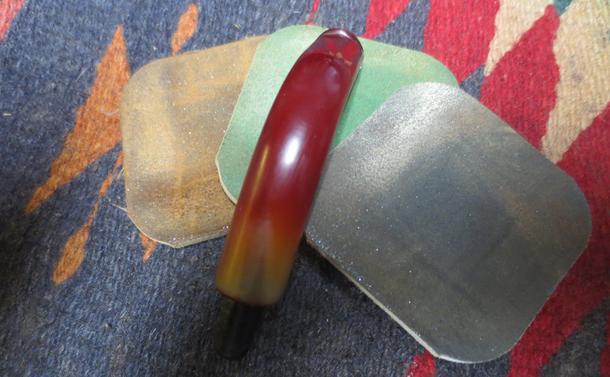
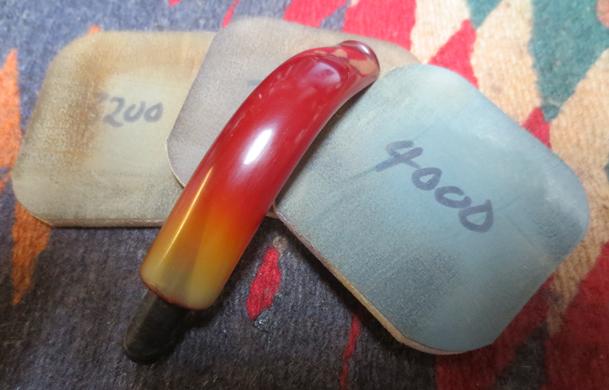
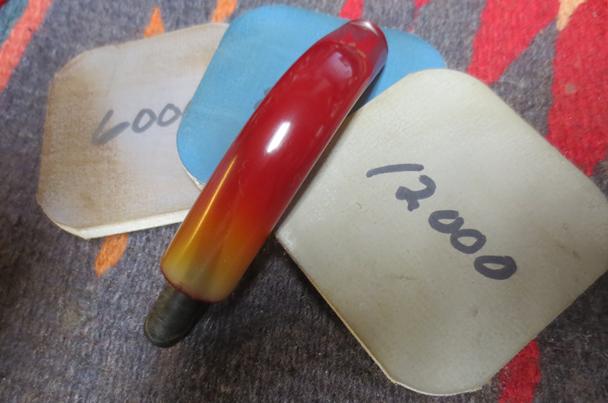
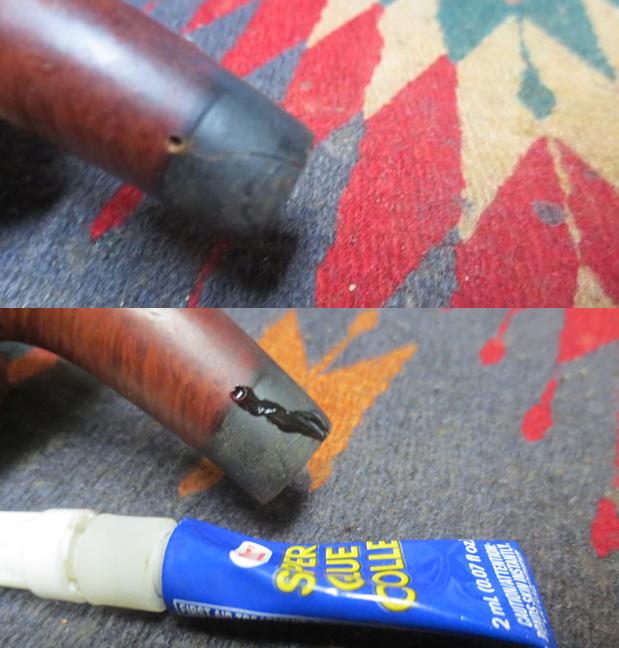
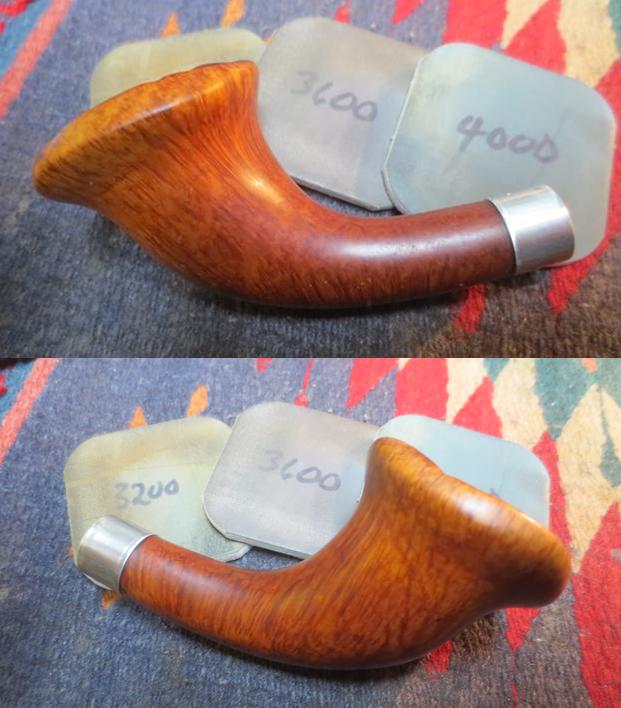
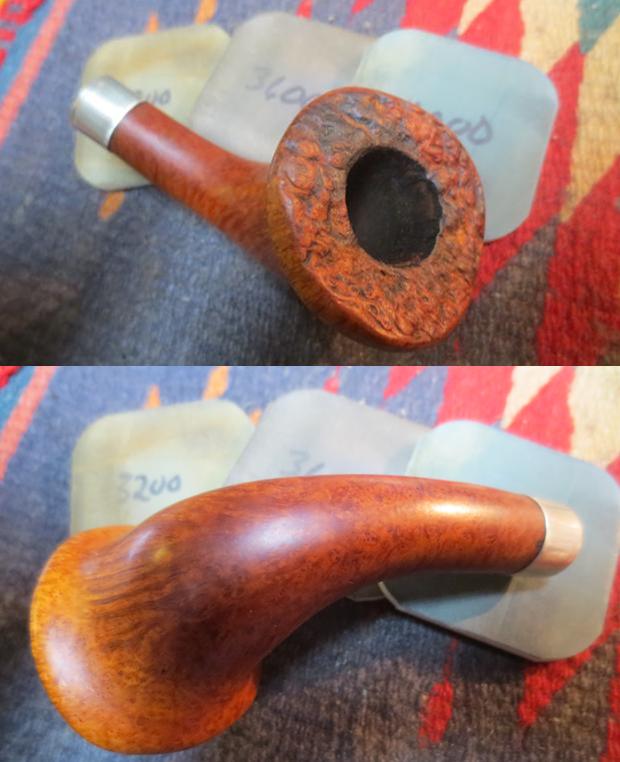
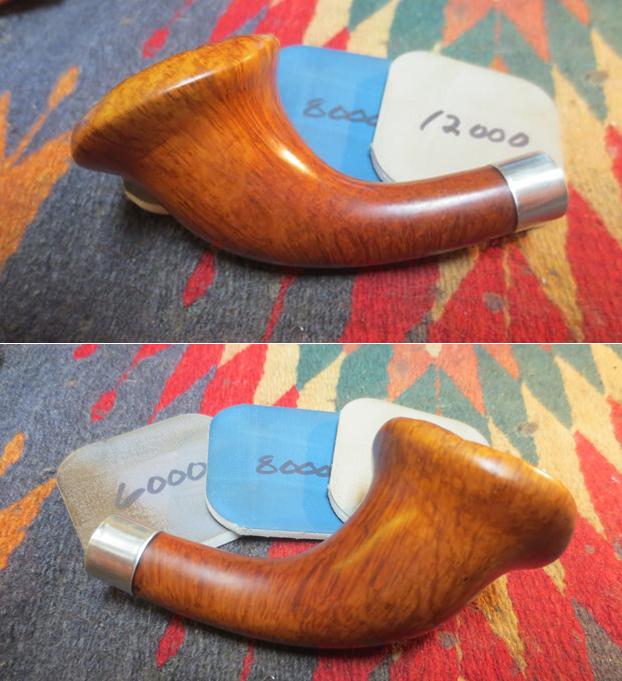
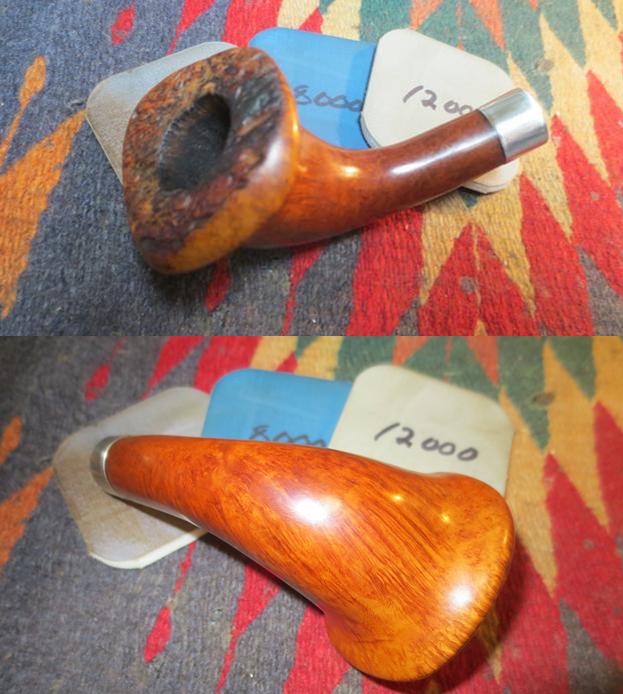
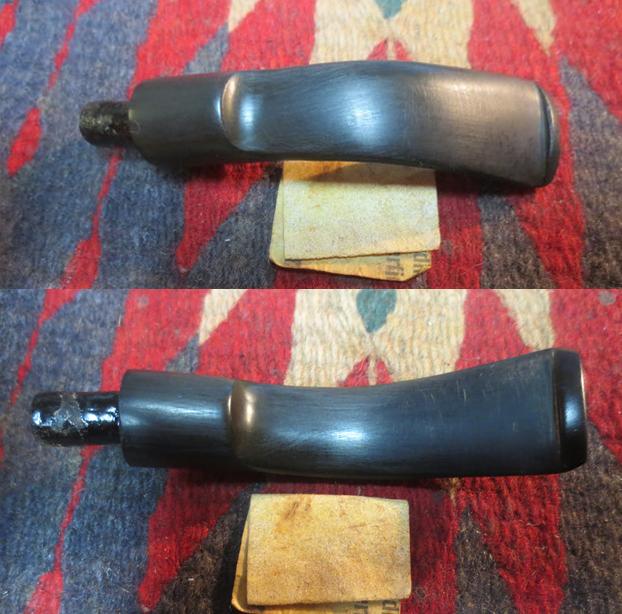
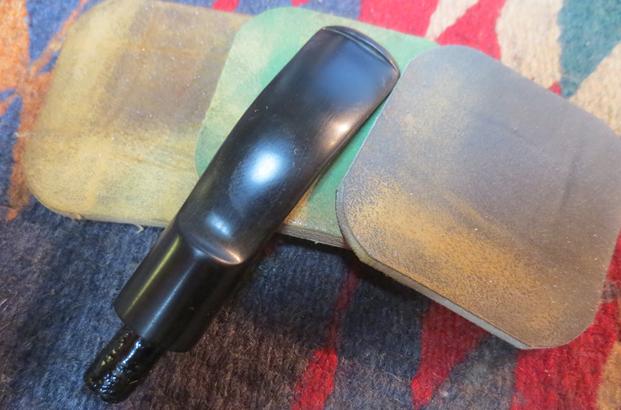
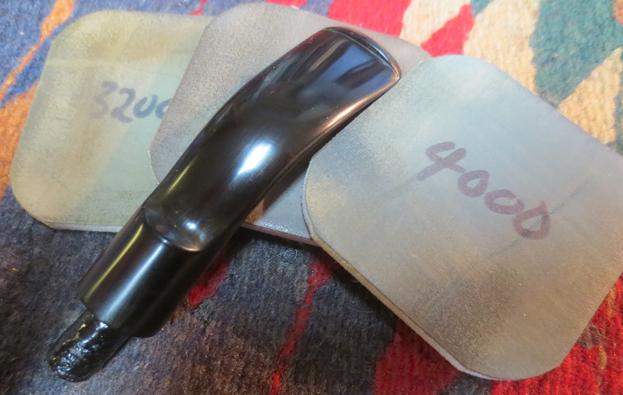
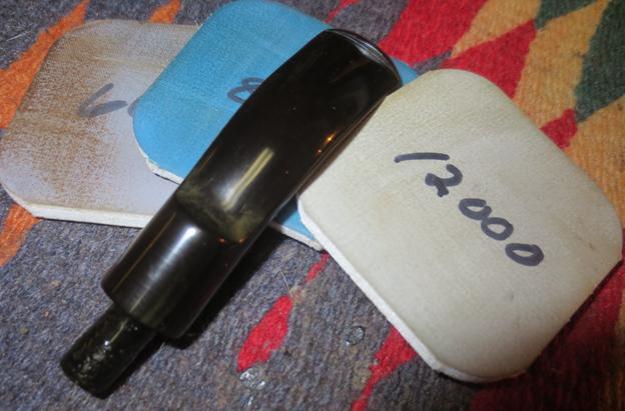
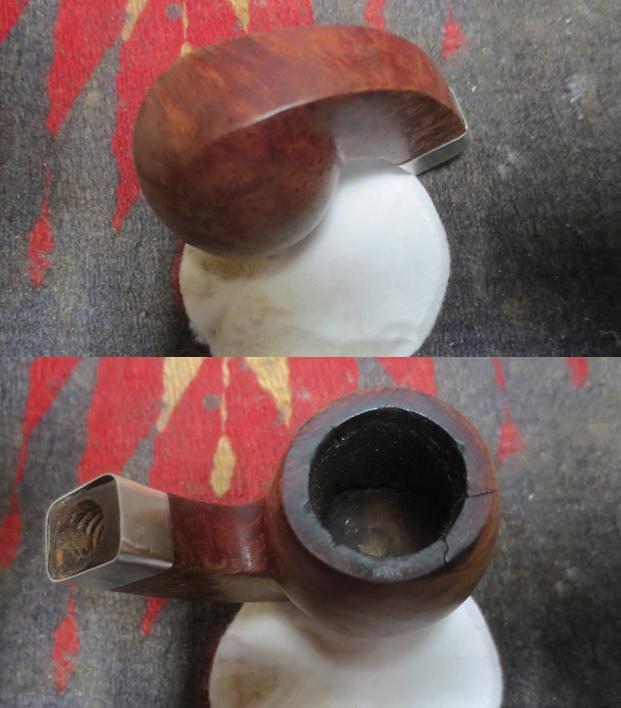
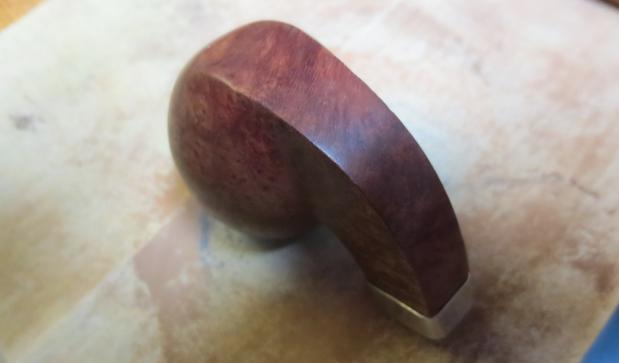
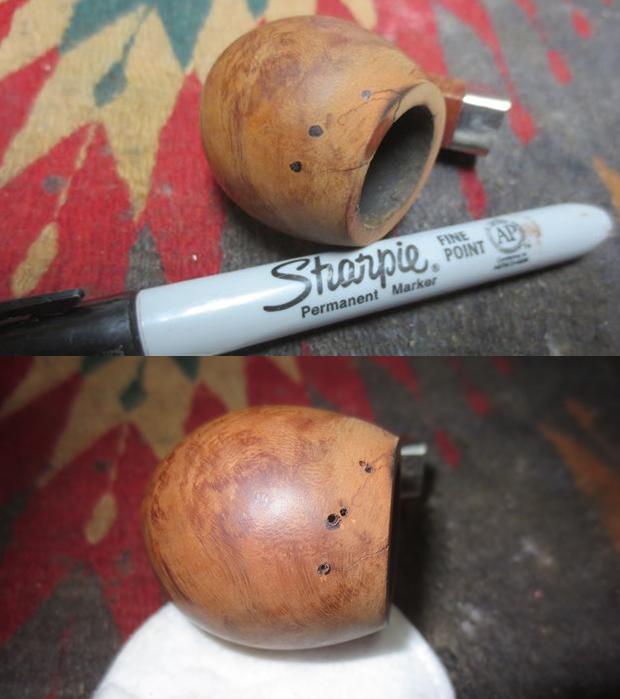
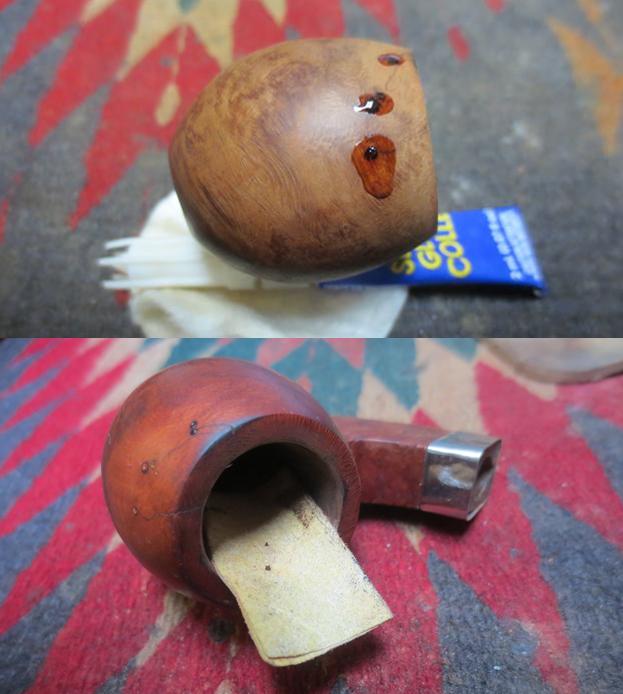
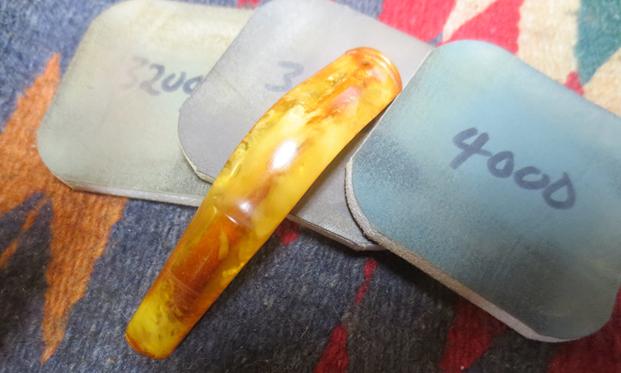
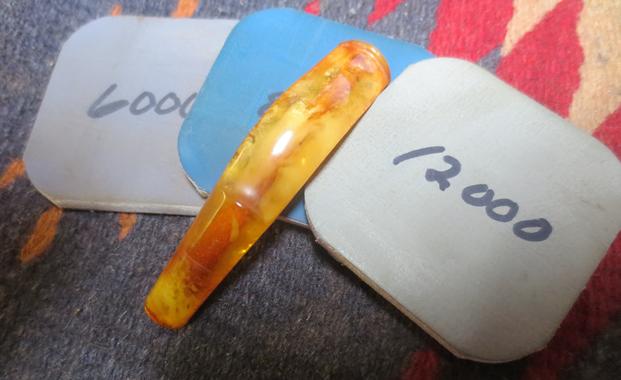
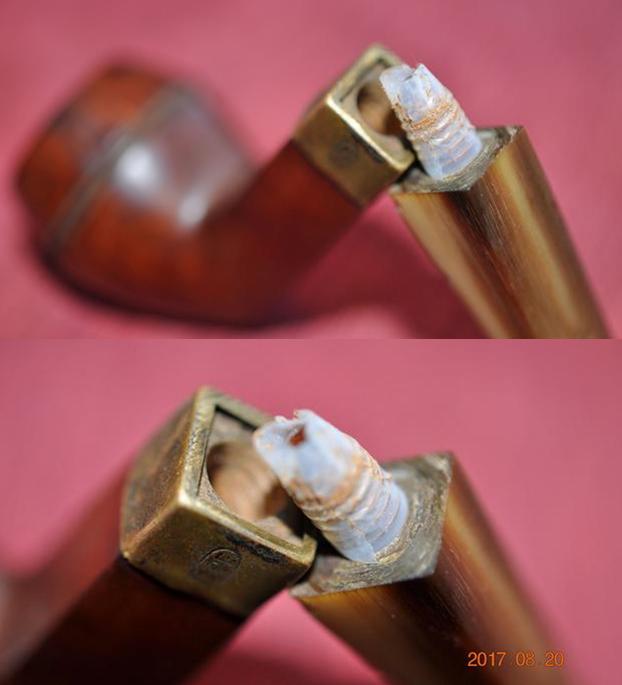
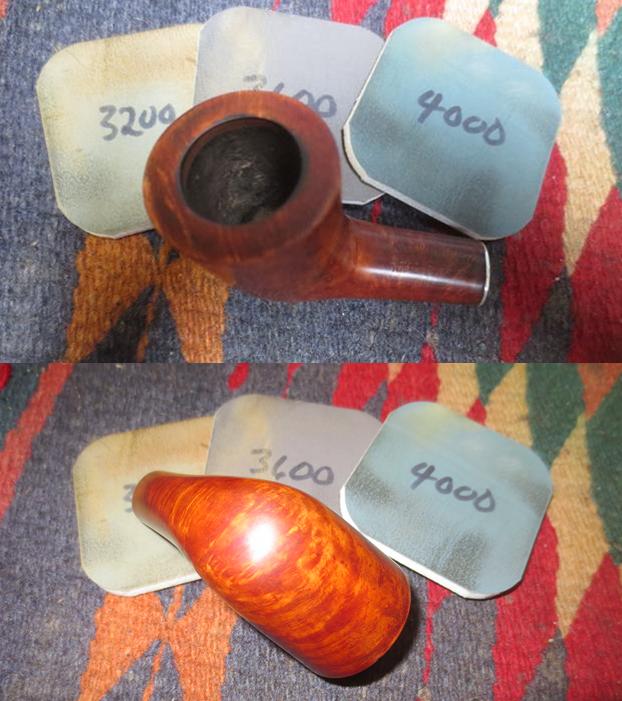
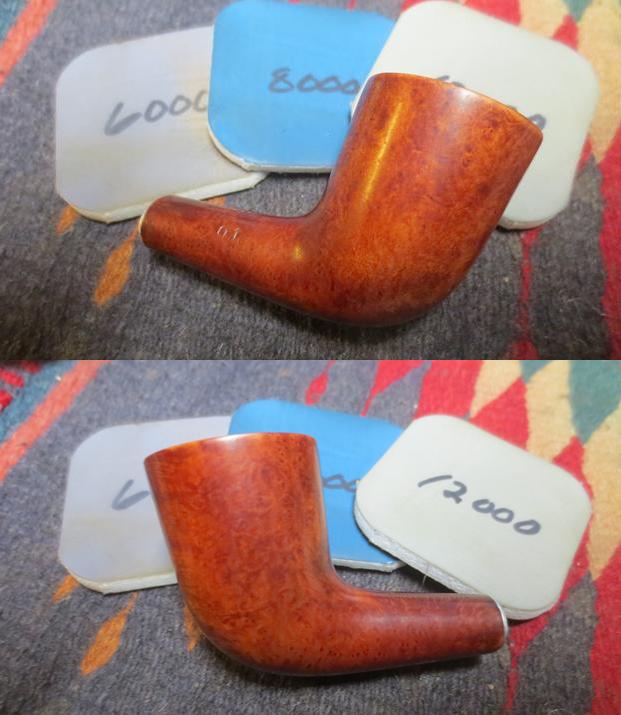
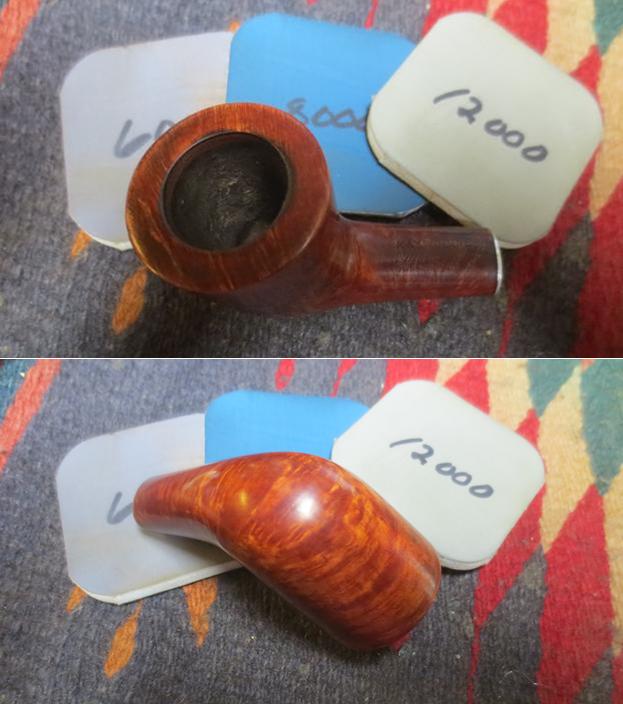
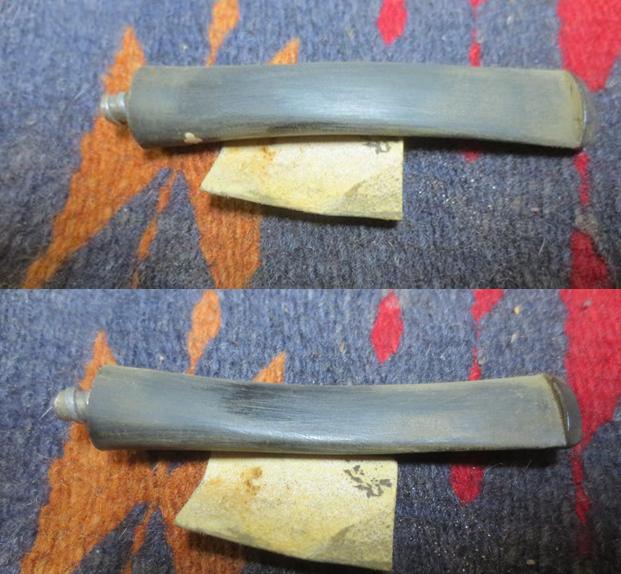
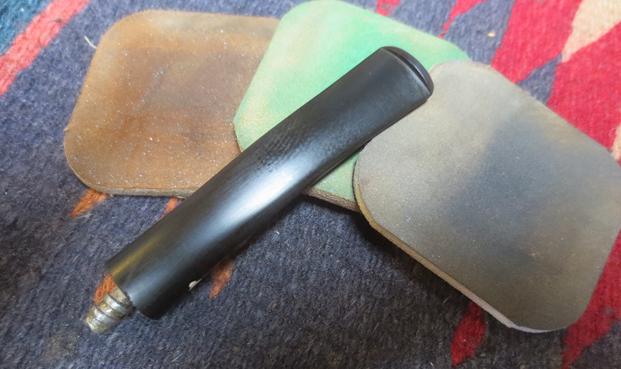
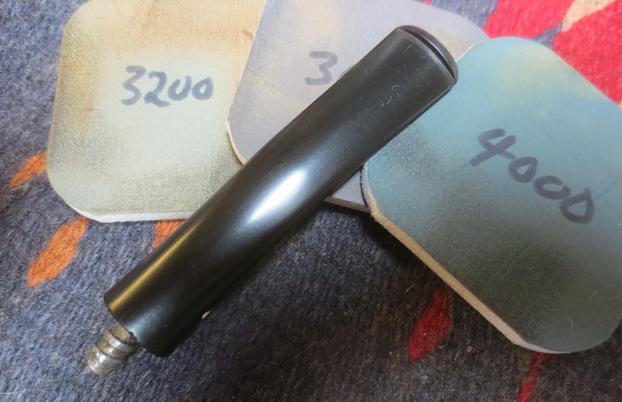
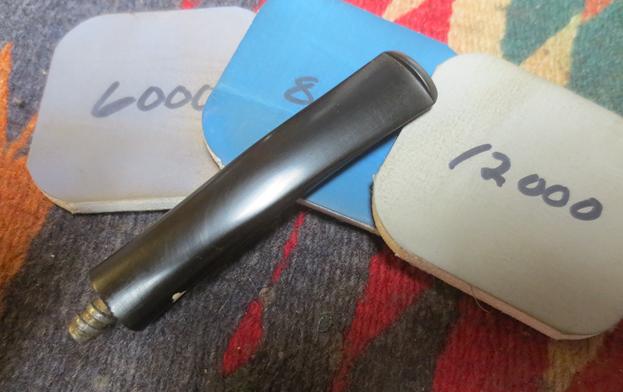
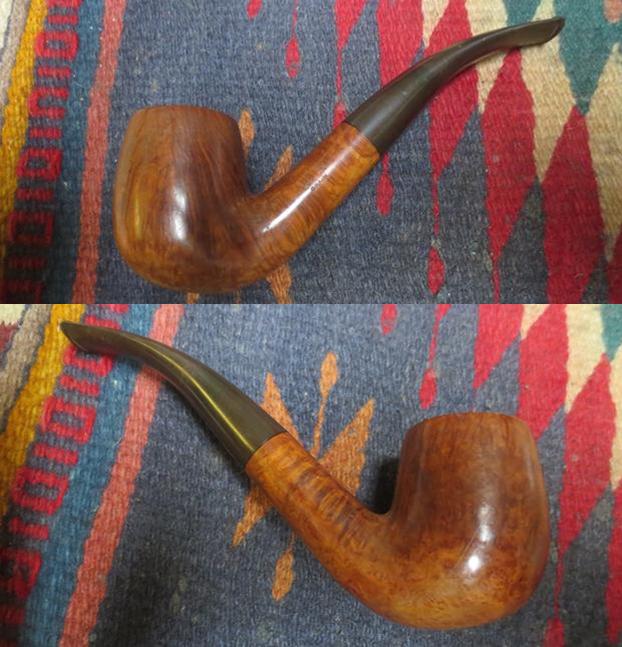
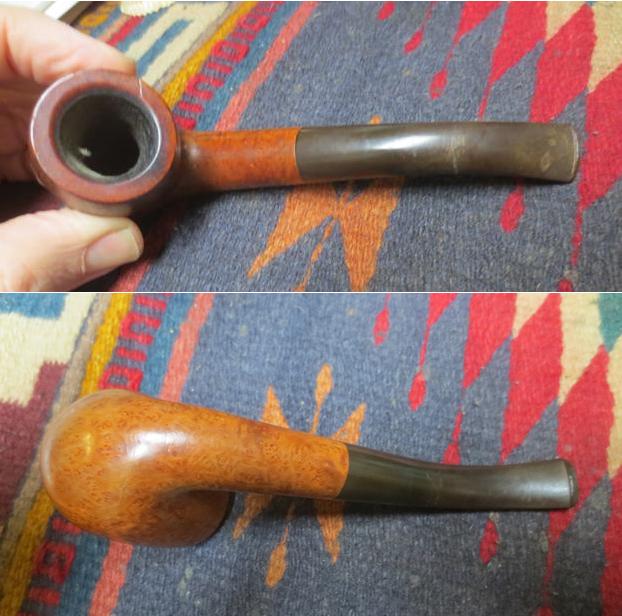
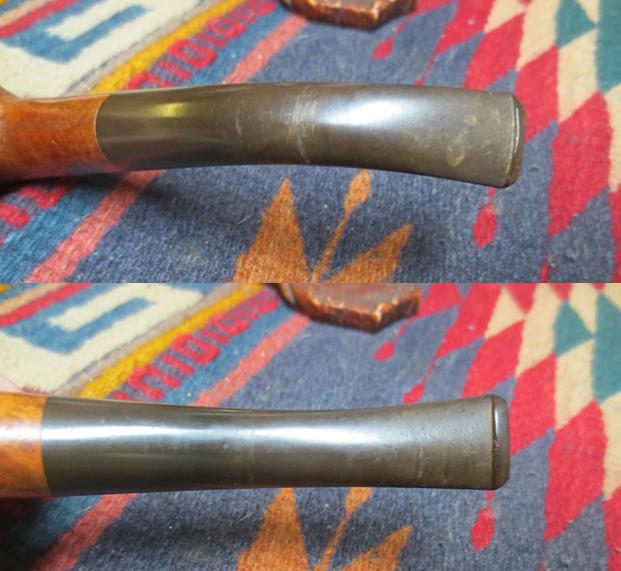
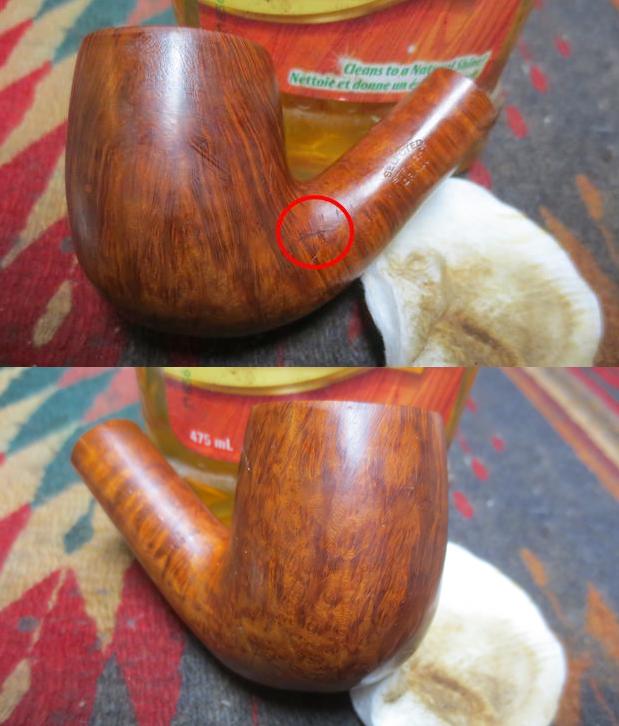
I received a short email from a reader of the blog about a Dr. Plumb Bulldog that he had that needed a bit of work. He wanted to know if I would be willing to work on it for him. He said that there were some issues with the pipe that he wanted me to try my hand at repairing. He said that the shank had a crack, the stem had a broken stinger end lodged in the airway and the button was broken off on the underside of the stem. I wrote back and asked him to send me some photos of the pipe so I could see what he was speaking about regarding the pipe. He sent the first photo to give me an idea of the overall look of the pipe. Looking at it I have to say that it is a classic GBD shaped bent Bulldog and it had nice grain. He sent a photo of the crack at the bowl/shank junction and noted that he had glued it but was not happy with the way it looked. The photo only shows the crack on the left side of the stem but it was also on the right side. He wanted me to clean it up and stabilize it so that it would not crack any further. That should not be too much of an issue.He sent along a photo of the rim top showed that the outer edge of the bowl had some small nicks in it that needed to be cleaned up. The surface of the beveled rim had some lava overflow and was darkened in several places around the top and the inner edge of the bowl. It was hard to tell for certain from the photos but there was probably some wear on the top and inner edges. The next photo he included showed the stem. Not only was it oxidized with a nice greenish brown colour but there was the “little issue” shown on the underside of the stem. There was a large chunk of vulcanite missing from the button and extended down into the surface of the stem. It appeared to be broken off and I wonder if had not happened when attempting to drill out the broken stinger. I am not sure but I have seen that kind of damage done with a drill bit on other stems in the past. The other possibility is less likely but could have happened, while inserting a thick pipe cleaner the button had cracked and come off.The final two photos pin point the second issue that he was having with the pipe. The metal stinger threaded into the tenon that comes on all Dr. Plumb pipes had been broken off with the threaded portion of it stuck in the tenon and extending part of the way up the stem. His photos included a tenon end shot and a photo of the broken stinger by itself. You can see the ragged edge of the end that would have sat flush against the end of the tenon.Once I saw the photos, I wrote back and told him to send the pipe up to Canada and I would see what I could do with the issues on the pipe. He packed it up and sent it off to me. It did not take too long for it to arrive here in Vancouver. I unpacked it from the mailing envelope it came in and had a look at it. It was even a better looking little Bulldog in person. There were a few small fills on the shank. The largest of the fills was on the right side of the shank right at the junction of the stem and bowl. The crack went through and around the fill. The pipe was stamped faintly on the left side of the shank with the script Dr. Plumb over Perfect Pipe and on the right side it was faintly stamped Made in England and the shape number 134. The stamping was only readable under a bright light. The shank was dirty and the airway in the bowl was tarry and dirty from the buildup around the stinger apparatus. The airway in the stem was dirty and partially blocked by the broken stinger. I took photos of the pipe when I received it so I would have a base to show the progress once I had finished. The third photo shows the damaged stem and I have circled the missing chunk of vulcanite in red. I took a close up photo of the rim top to show the darkening to the rim and the debris that was built up on the top. There was some damage to the inner edge of the rim that would need to be smoothed out.I took some photos of the stem to show the oxidation and the damaged area on the underside at the button.I made a wedge out of cardboard and cellophane tape and pushed it into the slot in the button to provide a base for the repair. I mixed charcoal powder with black super glue and built up the missing chunk. I removed the wedge and slid a greased pipe cleaner into the slot and built up the area on the end of the button. I filled in the deep tooth marks on the top side of the stem with the mixture. I filed the repair on the underside of the stem with a rasp and a file to begin to shape the button edge and blend the repair into the surface of the stem. I shaped the button with the files as well to begin to shape it in a classic football shape to match the top half of the stem. The photos show the progress of the shaping. Once I had the levels on the surface correct I wiped the stem down and could see the tiny air bubbles in the repair. I filled them in with clear super glue and let them cure. Once the repairs had cured I used needle files to reshape the button and slot in the end of the stem. There were a few more air bubbles that showed up as I reshaped the button. Once they dried I sanded repaired spots. I used the files to cut the sharp edge of the button. When the spots dried I sanded the surface of the stem with 220 grit sandpaper to smooth out the repaired areas and blend them into the rest of the stem. I set the stem aside for awhile and worked on the bowl. I wiped down the area around the crack in the shank and drilled small microdrill bit holes in the end of each of them. I fount that on the right side there was a third trail of crack so I drilled it as well. I filled in the drill holes with clear super glue. I layered in the glue to a bubble and let it dry. Once the glue had dried I sanded the length of each crack in the shank and the repaired holes as well until they were smooth. I sanded the beveled rim top to smooth out the damage and clean up the surface. I worked over the inner edge with sandpaper to smooth out the damaged areas.I used a dark brown stain pen to touch up the repaired and sanded areas on the shank and on the beveled rim top. I cleaned out the inside of the shank and mortise with cotton swabs, pipe cleaners and alcohol until the shank was clean and all of the oils and tars were removed.I stained the bowl and shank with a dark brown aniline stain. I flamed the stain to set it in the briar and repeated the process until the coverage around the bowl was even. I wiped down the briar with alcohol on cotton pads to make it more transparent. After wiping it down the grain shone through the stain coat. I think that once it is polished it would be a beautiful finish for this Dr. Plumb. Polishing the stem was a harder prospect and took more work than the bowl. The sanding and polishing process repeatedly revealed new air bubbles in the newly built up underside of the stem and button. I sanded and added drops of clear super glue to take care of each air bubble. It was tedious but it paid off. I polished the stem with micromesh sanding pads – wet sanding with 1500-2400 grit pads and wiping down the stem after each pad with Obsidian Oil. I checked for new air bubbles and then went on to dry sand it with 3200-4000 grit pads. I gave it a coat of oil after each one and then finished polishing it with 6000-12000 grit pads. I repeated the oil after each pad and after the 12000 grit pad I set the stem aside to dry. I put the stem back on the bowl and buffed the pipe with Blue Diamond. I kept a light touch in buffing the underside of the stem and button as I did not want to do any harm to the repair. I buffed the repairs on the shank normally and the rest of the pipe the same way. I gave the bowl and stem multiple coats of carnauba wax and buffed it with a clean buffing pad to raise the shine in the briar and vulcanite. I hand buffed it with a microfiber cloth to deepen the shine. The pipe is almost ready to go back to the pipe man who sent it to me. It will go out later this week after I do a last minute check up on the entire pipe. I want it to go back to him in good condition. Thanks for walking with me through this repair and restoration project.

Replacing a Broken Tenon & Restoring an Old Italian Bulldog


Blog by Steve Laug

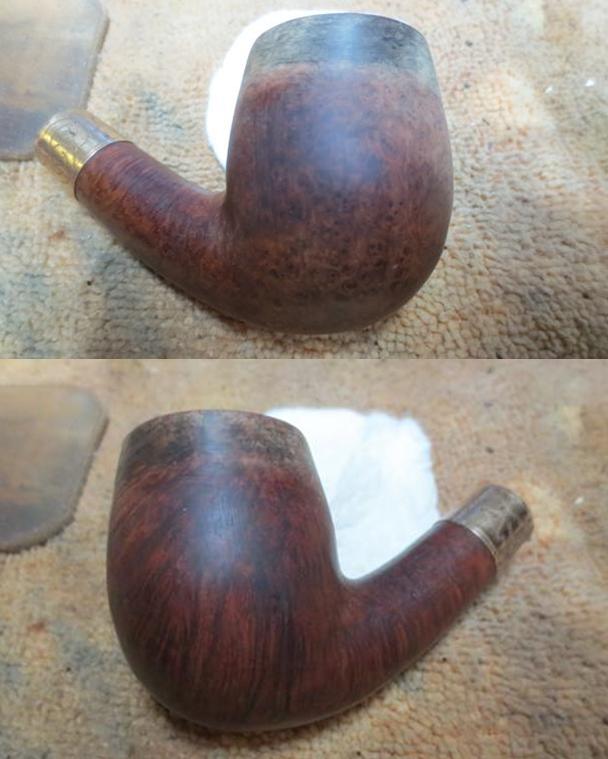
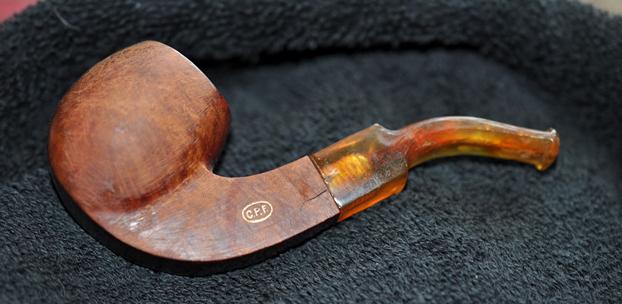
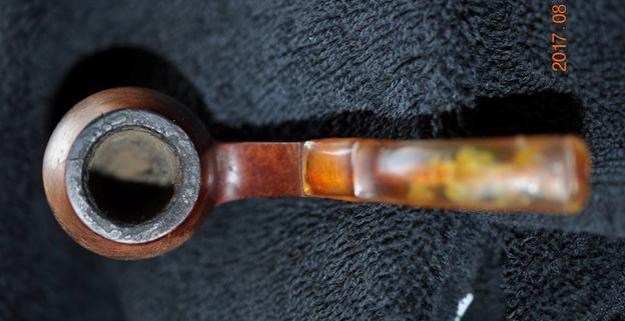
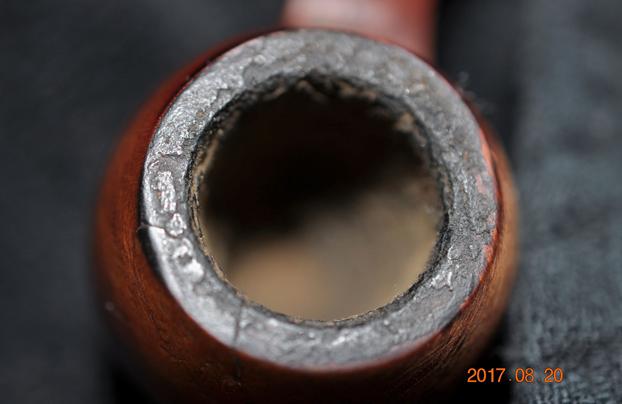
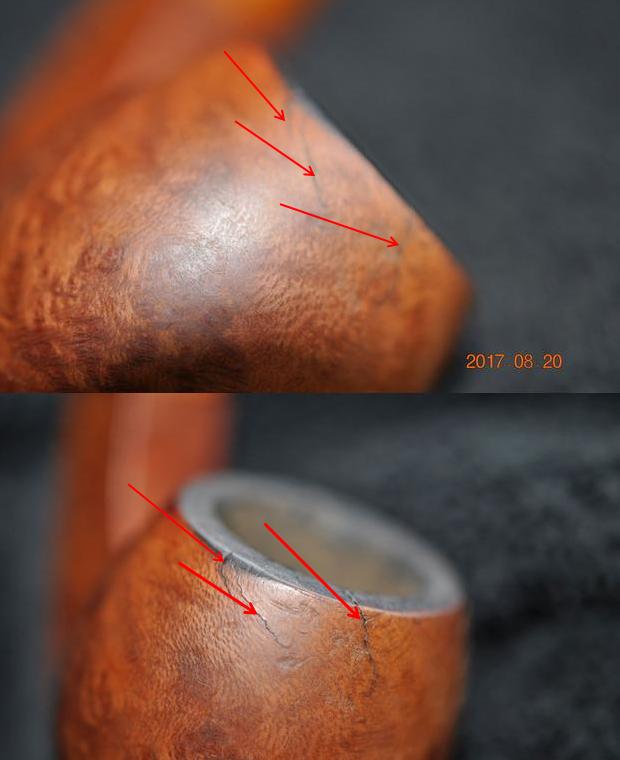
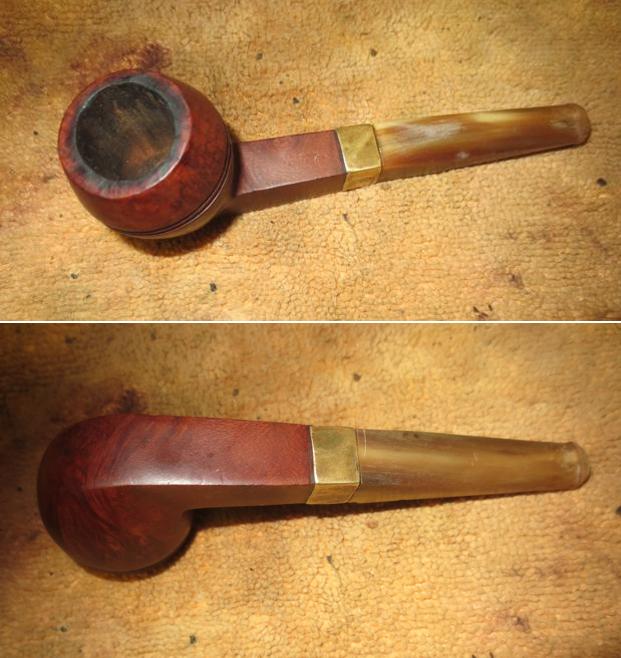
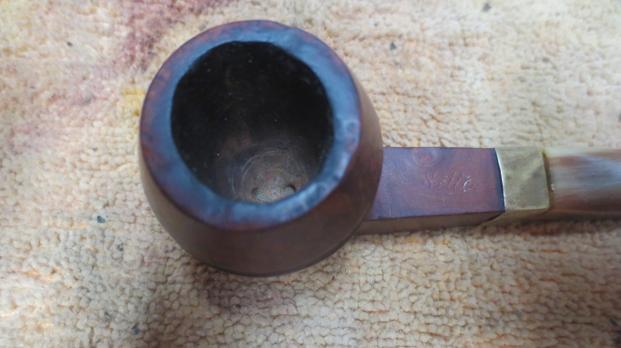
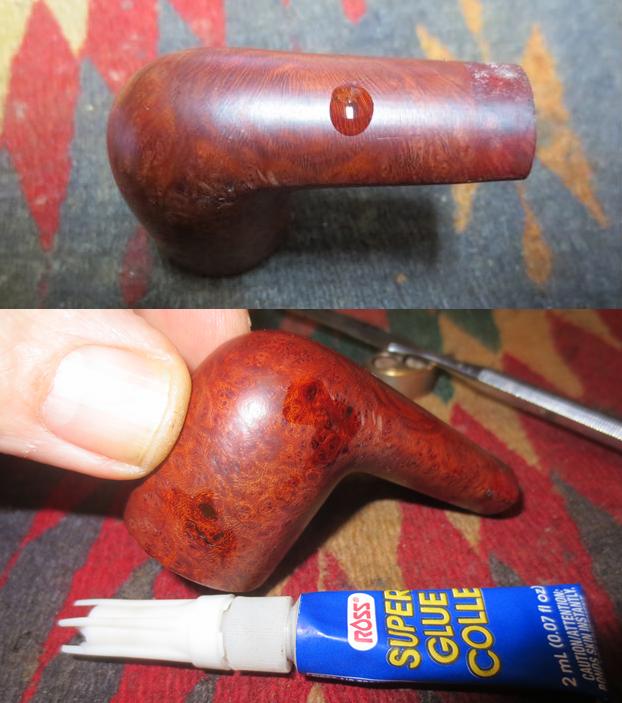
I am just about finished cleaning up and restoring the pipes my brother and I picked up on our Virtual Pipe Hunt in Montana. The next pipe that I brought to my work table was from that hunt. I think I may have two or three left two work on but this is one that I have picked up and put back several times since they arrived in Vancouver. As I mentioned in my last blog I have written several blogs about that hunt as it was one of those once it a life time finds. It contained a lot of late 1890s and early 1900 era pipes. These included C.P.F., W.D.C. and some no name pipes from the same era. Again if you are interested in reading about any of the restorations, a quick search on the blog for “Virtual Pipe Hunt” will give you the links to a blog about the hunt and to other pipes that were included. This particular little Bulldog shaped pipe had something about it that caught my eye. It combined some interesting grain (birdseye, swirled and cross grain) on the bowl and a diamond shaped taper stem with an orific button. The finish was worn and the stem was glued onto the shank. At this point in the process the stem would not move as the glue held it tightly in place. The top of the shank was stamped ITALIAN BRIAR in block print and no other stamping on the pipe on either side. The stem had a red dot on the left top side of the diamond. There were tooth marks and the stem was really dirty with an overflow of glue that was on both sides. My brother took photos of the pipe before he started the cleanup process.The next two photos show the pipe from the top side and the underside of the pipe. The topside shows the wear and tear to the finish. There were a lot of scratches and nicks in the briar and a cake in the bowl with lava overflow on the rim top. The underside of the bowl showed the nicks and scratches that went down both sides and the bottom of the bowl and shank. He took some photos of the rim top and bowl. Both photos show the thick cake in the bowl and a thick lava coat on the rim top. It is hard to know if there was any damage to the inner edge of the bowl or on the top surface of the rim.The close up of the underside of the bowl and shank shows the glue buildup in the gap between the shank and the stem.The stem looked like it was in rough shape. There were some peeling flakes on the surface of the stem. They could either be glue or damage to the stem.I was really surprised that my brother was able to get the stem off the shank. It turned out that the broken tenon was glued in the shank and a piece of inner tube was glued into the broken tenon. About an inch of the tube extended beyond the shank and the stem fit on the tube. The glue was painted onto the end of the shank and the end of the stem and the two parts were held together until the glue set. Jeff used some acetone to eat through the glue in the gap between the stem and the shank and was able to pry the pieces apart.The next photos show the damaged stem. It looked like the repair had also included painting the surface of the stem with glue. The glue had bubbled, cracked and peeled leaving behind a messy chipped finish. The orific button on the rounded stem end was in good shape. It appeared that the glue mixture had protected the stem from a lot of tooth marks and chatter. Jeff did his usual thorough cleanup of the pipe. I am coming to expect nothing less when he sends me pipes that have gone through his cleaning process. He reamed the bowl with a PipNet reamer, scraped the bowl and the rim top with a Savinelli Fitsall Pipe Knife to clear off the lava build up. He cleaned out the internals in the airway in the shank as much as possible with the broken glued in tenon in the way. He used alcohol, cotton swabs and pipe cleaners. He cleaned out the airway in the stem with alcohol and pipe cleaners. He scrubbed the exterior of the briar and the stem with Murphy’s Oil Soap and a tooth brush to remove all of the grime on the briar and the hardened, chipped glue on the finish of the stem. He rinsed the parts under running water and dried it with a soft cloth. He soaked the stem in OxyClean to clean off the glue on the surface. When the pipe arrived in Vancouver it looked different than it did when we picked it up in Montana. I forgot to take photos of the pipe before I started on it because I was excited to pull the broken tenon from the shank. You can see the clean bowl and stem in the photos.

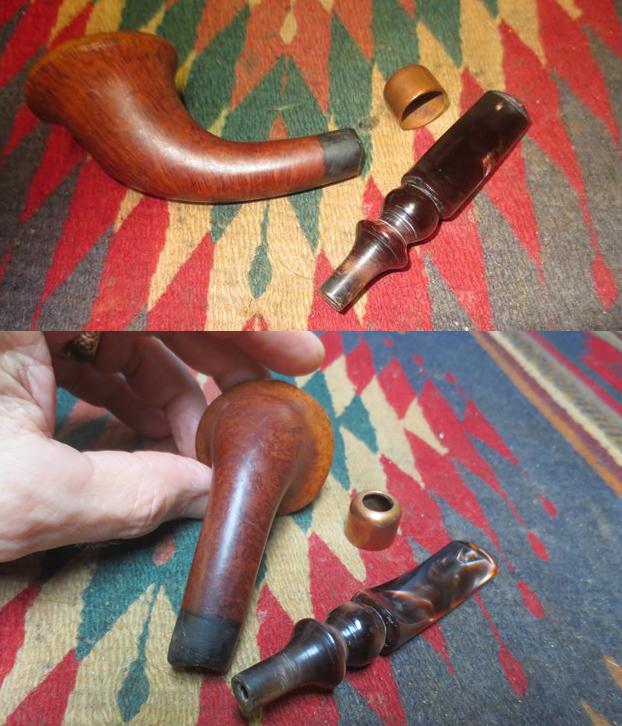
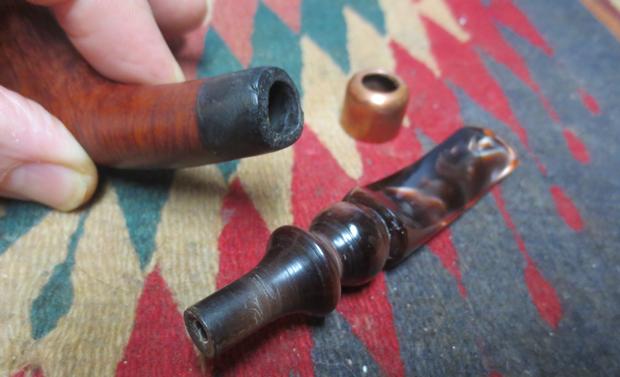
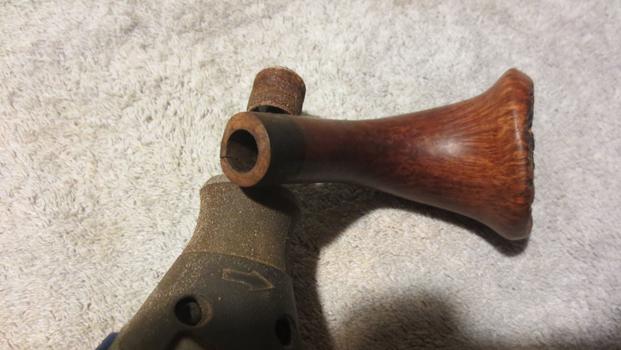
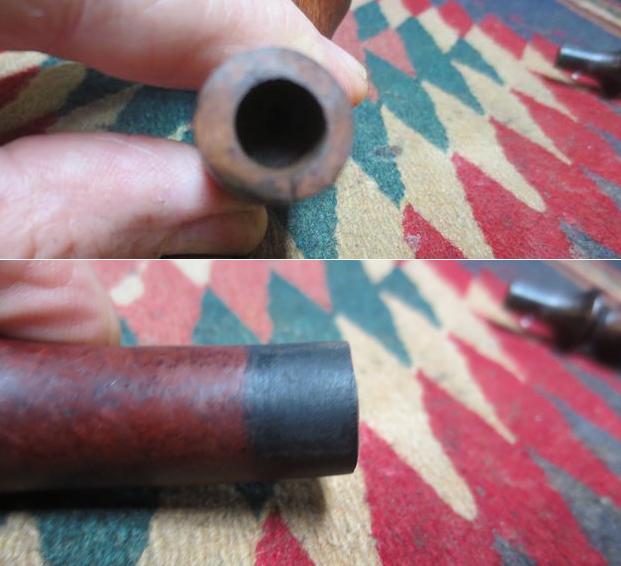
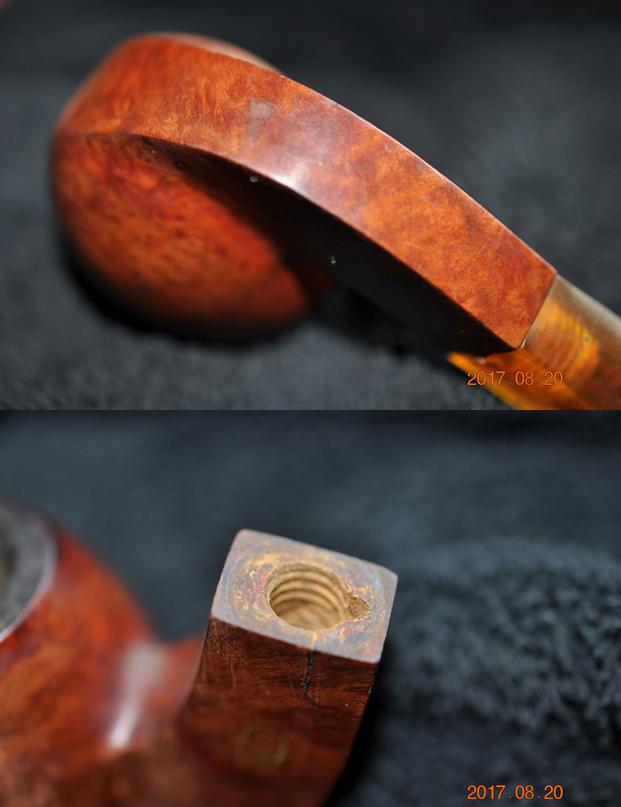
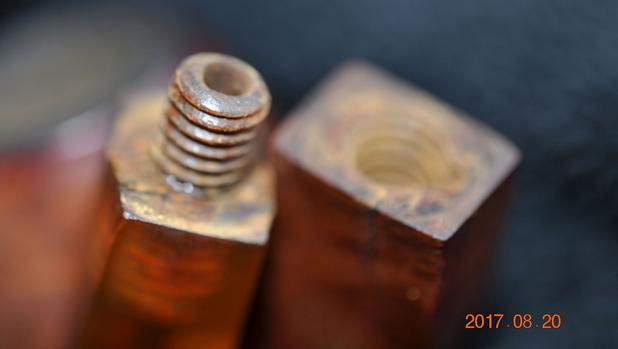
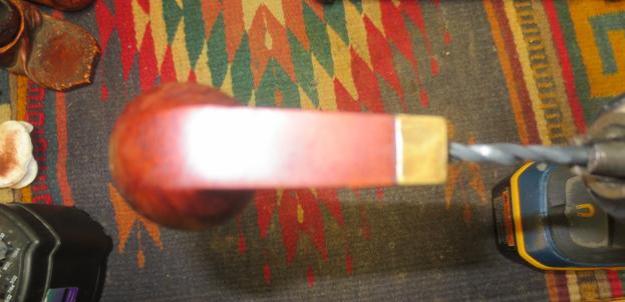
I put a drill bit in the chuck of my cordless drill and turned the bowl as the bit went into the airway on the broken tenon. I used one that was slightly larger than the airway and worked my way up to the one in the second photo. Some of the tenon crumbled away and the remainder stuck on the drill bit. I pulled it out of the shank and that part of the process was complete. The shank was clear. I used a Dremel and sanding drum to smooth out the broken edges of the tenon on the end of the stem. I smoothed it out until the broken tenon was smooth against the end of the stem. I put a drill bit in the chuck of my cordless drill and turned the stem onto the bit to open the airway for the new threaded Delrin tenon. I increased the size of the bit until it was the same size as the threaded tenon end. I cleaned up the newly drilled airway with a dental burr on the Dremel.I took the stem back to the work table and took pictures of the process of inserting the new tenon in the stem. The photos show the progress. I turned the tenon into the stem and put glue on the final few threads and use a pair of pliers to turn it into the stem until it was seated against the flush end. I put the stem in the shank and took some photos. The alignment is always a little off when the stem is first inserted. In this case the fit against the shank was perfect. The sides on the old stem and shank were just a little bit off. The left and top side aligned almost perfectly but the right and underside of the stem need some minor adjustments to fit properly. I sanded the stem/shank connection with 220 grit sandpaper to smooth out the transition and make it smooth to touch. I wiped the bowl down with acetone on a cotton pad to remove the remaining finish from the bowl. When I was finished I took photos of the fit and it was looking really good. I topped the bowl with 220 grit sandpaper on a topping board. I topped it until the surface was smooth and the damaged areas were removed. I used a folded piece of sandpaper to smooth out the inner edge of the bowl.I sanded the stem surface to remove the scratches and damage to the flat sides of the diamond and also the flat angle to the button. I wiped the stem down with alcohol on a cotton pad and removed the debris left behind by the sanding. I filled in the tooth marks with clear super glue and when the glue dried I sanded the repairs smooth with 220 grit sandpaper. I put some clear super glue on the tenon to build it up so that the fit in the shank would not be too loose. When the glue dried I sanded the surface of the tenon until it was smooth. I polished the stem with micromesh sanding pads – wet sanding it with 1500-2400 grit pads and dry sanding it with 3200-12000 grit pads. I rubbed the stem down with Obsidian Oil after each pad and after the final pad I gave it a final coat of oil. I set it aside to let it dry. I scraped out the inside of the mortise with a pen knife to remove the glue build up on the walls. I cleaned up the bevel with the blade of the knife at the same time to make sure that it did not interfere with the fit of the stem against the shank. I cleaned out the airway and mortise with pipe cleaners, cotton swabs and alcohol to remove the debris that remained once I pulled the old tenon. It took a few pipe cleaners and swabs but it did not take too long to clean it up. I polished the briar with micromesh sanding pads – wet sanding it with 1500-2400 grit sanding pads.  I worked around the stamping so I would not damage it in the process. I decided to stain the bowl with a medium brown stain pen rather than my regular aniline stain. I covered the sanded rim top, bowl sides and the shank with the stain. I continued to polish the bowl with micromesh sanding pads – dry sanding it with 3200-12000 grit sanding pads. I wiped it down after each pad with a damp cotton pad. The briar began to really shine as I worked through the micromesh sanding pads. I put the stem back on the bowl and buffed it with a carnauba wax buffing pad. I gave the stem and bowl multiple coats of wax. I buffed the completed pipe with a clean buffing pad to raise the shine. I hand buffed the pipe with a microfibre cloth to deepen the polish. The finished pipe is shown in the photos below. It turned out to be a pretty pipe. The black vulcanite stem with the red dot works well with the reddish colour of the briar. The grain stands out well with the colours of the stain. I like the look of finished pipe a lot. This one will probably stay in my own collection. Thanks for following along with me on this refurbishing journey.

New Life for a C.P.F. Wellington Style Pipe


Blog by Steve Laug

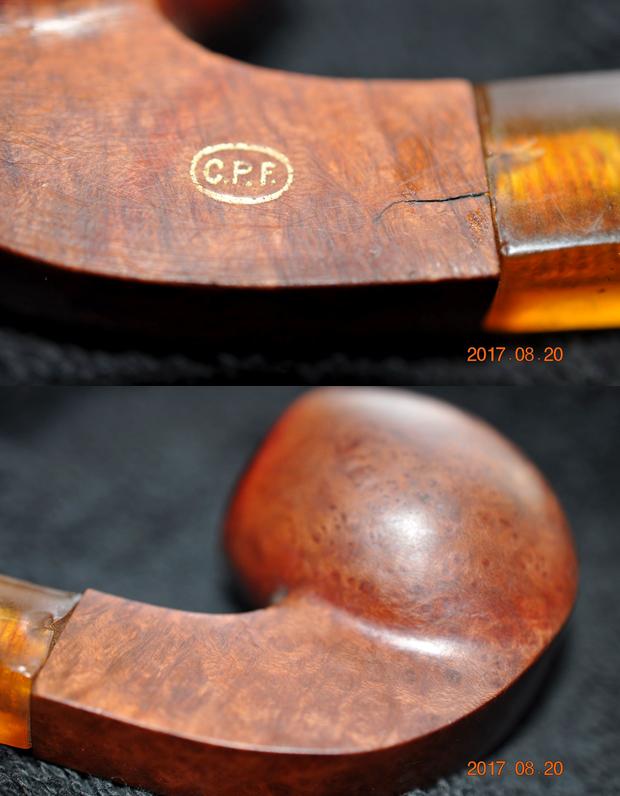
The next pipe on my work table is another C.P.F. from the virtual pipe hunt Jeff and I did in Montana. It is an interesting piece in that it has some age on it but to my thinking it is “newer” than the other C.P.F. pipes I have been working on from that hunt. This one has no stamping on the bowl but has the C.P.F. in an oval logo stamped on the ferrule underneath a set of the expected faux hallmarks.

To me it is very much like later C.P.F./KB&B post-merger Chesterfield pipes. KB&B acquired or started the C.P.F. line sometime between 1884 and 1898” (http://kaywoodie.myfreeforum.org/archive/cpf__o_t__t_161.html). They operated the factory at 129 Grand Street, in New York City, New York. The ferrule and stem are not stamped with the dual stamp that later pipes had, so I think it is safe to assume that it is from pre-1900. I went back and read my blog post on the background of the brand and I think I was able to date this one a bit.

The C.P.F. brand was discontinued sometime between 1910-1920. I turned to a quote I found from Bill Feuerbach where he notes the following, which pins down the time frame of the discontinuation of the brand more specifically, “I have a C.P.F. Chesterfield in our office display that has a nametag from way before my time that says 1900 C.P.F. Chesterfield. It looks like most other Chesterfields you’ve seen, including the military type push stem, except this stem is horn and not vulcanite. As far as I have gathered the C.P.F. brand was phased out sometime around 1915” (http://kaywoodie.myfreeforum.org/archive/cpf__o_t__t_161.html). Interestingly, he noted that the Chesterfield name and style was later introduced in the KB&B, Kaywoodie and Yello-Bole lines. He says that the 1924 KB&B catalog shows KB&B Chesterfields. (Here is a link to the full blog on the brand: https://rebornpipes.com/2013/04/14/some-reflection-on-the-historical-background-on-cpf-pipes/).

My brother Jeff took the previous and the following photos of the pipe before he cleaned it and sent it to me. It was extremely dirty with grime settled deep in all of the grooves of the rustication on the bowl. The nickel ferrule was oxidized and had turned and the stamping in the metal was not visible on the left side. The stem was oxidized and spotty looking and to my eye it had appeared to have straightened over time and lost some of the natural curve it originally had. This old pipe was in really rough shape. The rim was heavily covered in a thick lava coat and the bowl was caked with a hard carbon. It was thick against the walls with the cake thicker on the back side of the bowl. The way the cake was it was hard to tell what kind of condition the inner and outer edge of the bowl would be in until it was all removed.The next photo not only shows more of the rim and bowl but also the damage and heavy oxidation of the ferrule. It was rough to touch and there was a large piece missing on the end.The next photos show the dirt that was caked in the grooves and carvings of the bowl and shank sides. The curved area between the bowl and the shank was really dirty. The third photo below shows the heel of the bowl and the small crack that went across the width. It was hard to tell if it was just a flaw in the briar or a true crack. Once it was cleaned up I would be better able to tell. The one thing going for it was that there was no darkening to the exterior of the heel. The ferrule had come loose at some point in its life and had been reglued upside down. The C.P.F. in an oval logo and the faux hallmarks were on the bottom of the shank. The damaged spot on the ferrule had turned to the top of the shank. I wondered if the damage had been engineered when the shank had been drilled. Once again, I would know once we had cleaned it up and looked at it up close. When the stem was removed the end was wrapped up the stem about an inch with cord. This was often done to tighten the fit in the shank. I have found that on pipes this dirty that the sump below the airway in the mortise is generally filled and the sides of the mortise are so dirty that the stem no longer fits correctly in the shank. Jeff took a photo of the shank end to show the damage to the ferrule close up. It almost looks like it is notched. I am wondering if the turned ferrule (the notch) on the top of the shank rather than the bottom was not one reason for the misfit of the stem.The next two photos show the wrap as he began to unwind it from the end of the stem.The stem was badly oxidized and it was going to be hard to get all of the oxidation off the old vulcanite. The button end had a slight notch that opened up the orific airway. I was not sure if this was original or if it was damage. The stem was stamped on the underside with the words SOLID RUBBER and on the topside near the saddle with C.P.F. in an oval. There was some definite wear and tear on the stem but surprisingly no tooth marks. Once again, Jeff did his usual thorough cleanup of the pipe. He reamed the bowl with a PipNet reamer, scraped the rim top with a Savinelli Fitsall Pipe Knife to clear off the lava build up. He cleaned out the internals – mortise, airway in the shank and stem with alcohol, cotton swabs and pipe cleaners. He scrubbed the exterior of the briar with Murphy’s Oil Soap to remove all of the grime and grit in the finish and clean out the areas around the issue I had noted on the heel of the bowl. He rinsed the briar under running water and dried it with a soft cloth. He soaked the stem in OxyClean to bring the oxidation to the surface and remove the grime. When the pipe arrived in Vancouver it certainly looked different than it did when we picked it up out of the sale display in Montana. I did not take photos of the pipe before I started working on it but instead got sucked into the restoration process.

I heated the ferrule with a Bic lighter to soften the glue that held the metal to the shank end. It took a bit of heating a cooling before I was able to pry the ferrule off the shank end. In the photo below you can see the glue on the shank end and the notch in the face of the ferrule. I wiped down the finish with acetone on a cotton pad paying special attention to the glue on the shank end. I wanted the shank end clean before I reglued the ferrule on it. I painted all-purpose glue around the shank, aligned the ferrule so that the notch was at the bottom of the shank and the C.P.F. logo and faux hallmarks were on the left side of the shank as they had originally been when the pipe left the factory. I pressed the ferrule in place. Once it set on the shank I tried the stem and it fit better than previously. I put the stem in a bath of Before & After Pipe Stem Deoxidizer for 24 hours to let the mixture do its magic on the badly oxidized stem.Once the bowl had been reamed clean it was clear that the cake had been reamed out before with a knife and the airway entered the bowl high. The bottom of the bowl was below the airway and because of that it made the bottom quite thin. While the bowl was not burned or damaged it was a candidate for that to happen. I mixed a batch of JB Weld and applied it to the bottom of the bowl and up the sides part way to raise the bottom of the bowl and protect it. The airway entrance was also to open so I built up the edges around it with some of the mix. I set the bowl aside to let the repair cure overnight, turned off the lights and called it a day. Work was so busy last week that I did not get to work on the pipe again until the weekend. The stem had soaked in the bath for 48 hours and I was hoping that the mixture had done its magic and remove the oxidation. I took it out of the bath and dried it off and ran pipe cleaners and alcohol through the airway in the stem.I put a pipe cleaners in the airway and heated the solid rubber stem with a candle to soften the stem enough to be able to bend it. I kept it high enough above the flame so that the rubber would not burn. Once it was soft and flexible I bent it to the point that when in the shank it sat properly in the mouth of the pipe man.I sanded the stem with 220 grit sandpaper to remove the tooth chatter on both sides of the stem in front of the button. I reshaped the end of the button to make it more round and remove some of the damage on the edges.I buffed the stem with red Tripoli to remove some of the deep remnants of oxidation. I polished it with micromesh sanding pads – wet sanding it with 1500-2400 grit pads and rubbing it down after each pad with Obsidian Oil. I dry sanded it with 3200-12000 grit pads and once again rubbed it down after each pad. I gave it a last coat of oil after the 12000 grit pad and set it aside to dry. I examined the area on the heel of the bowl with a lens and could see that the bowl was not cracked but rather I was dealing with a flaw in the briar. I picked it clean and wiped it down with alcohol on a cotton swab to make sure that there was no debris in the crack. I pressed some briar dust into the flaw with a dental pick and spatula. I put clear super glue on top of the briar dust and let it seep into the flaw.I carefully sanded the repaired area with a folded piece of 220 grit sandpaper to smooth out the repair. Once it was smooth I touched up the stain with a medium grit stain pen and buffed the bowl with Blue Diamond on the buffing wheel. I rubbed the briar down with Conservator’s Wax and when it dried, I buffed it with a clean buffing pad to raise the shine. The next photos show the bowl at this point in the process.(An interesting note at this point. Looking down the bowl from the top you can see the JB Weld repair on the bowl bottom. Once this cures for about a week I will give the pipe a bowl coating of sour cream and charcoal powder.)I buffed the stem with Blue Diamond and gave it several coats of carnauba wax. I gave the bowl several more coats of Conservator’s Wax and buffed the pipe with a clean buffing pad to raise a shine on the pipe. The finished pipe is shown below. The dimensions of the pipe are Length: 6 ½ inches, Height: 1 ¾ inches, Bowl diameter: 1 3/8 inches, Chamber diameter: ¾ inches. Though the pipe is far from perfect, I think this old-timer has been given a new lease on life and should last the next pipe man for many years to come. The damages are repaired but in many ways still speak of the story of the old pipe. Hopefully the next pipe will keep the trust for this old pipe and pass it on to the next generation. Thanks for looking.

“Frankensteining” a Badly Damaged C.P.F. Cromwell Double stem pipe


Blog by Steve Laug

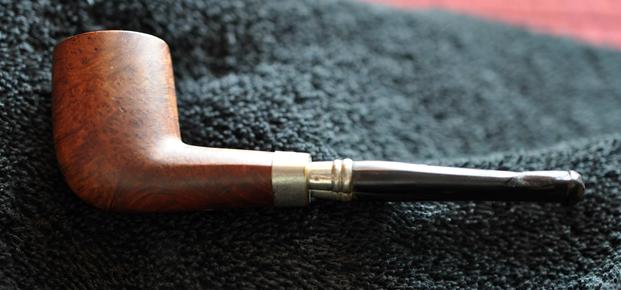
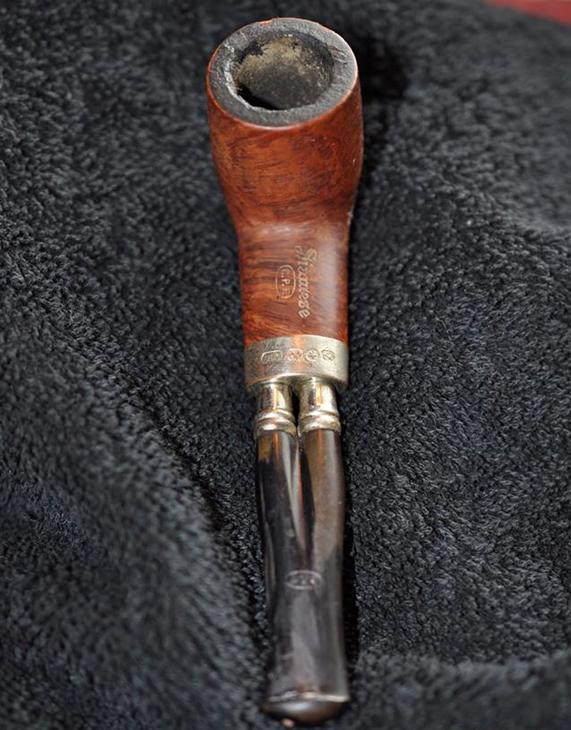
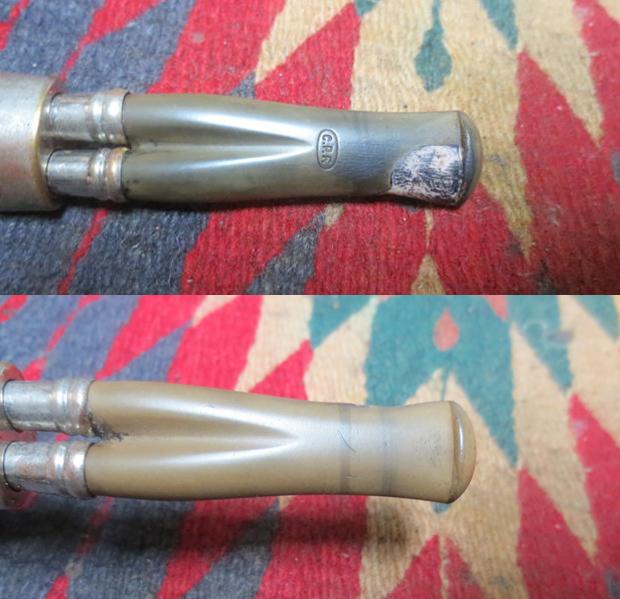
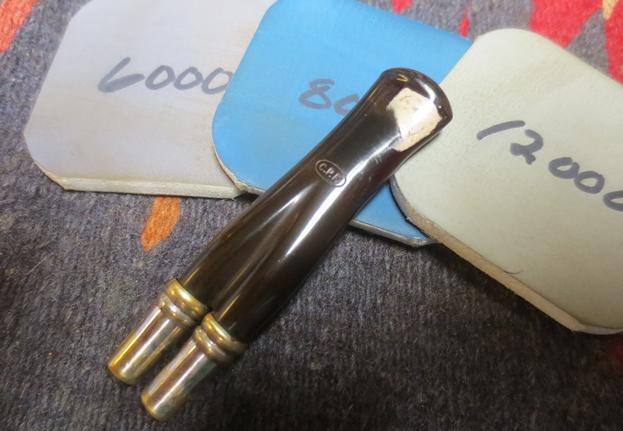
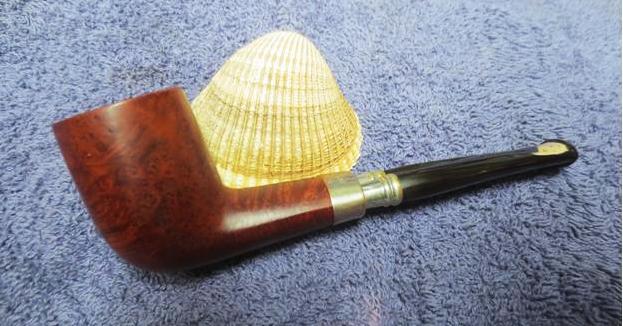
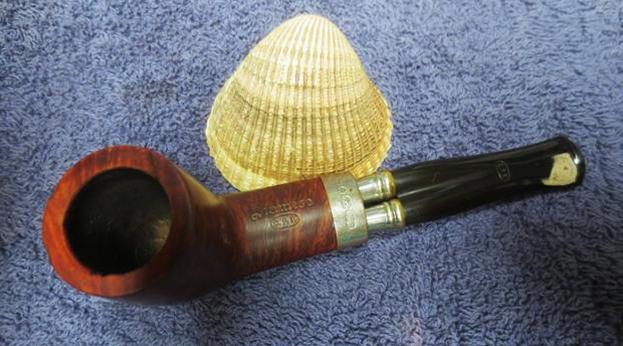
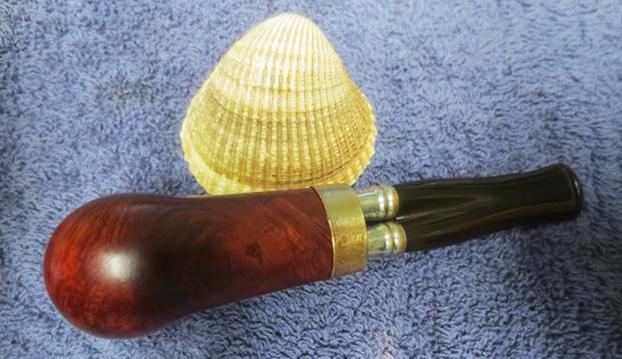
This is the second C.P.F. Cromwell Double stem system pipe that I have worked on (https://rebornpipes.com/2017/07/01/out-damn-spots-a-c-p-f-cromwell-double-vertical-stem-bent-billiard/). This one was in very rough shape but the stem was in much better condition. Like other older C.P.F. pipes this one has some real charm that deserved to be repaired and brought back to life. Like the other Cromwell it is on the petite side of things – 4 ½ inches long and 1 ½ inches tall. It was a nice piece of briar, a mix of grains. The silver collar on the shank is stamped with the same faux hallmarks and the C.P.F. in an oval logo as the previous one. It is probably silver or at least plated but I am not sure. The stem is the unusual part of the mix. It has two silver plated spigot tenons that fit into openings in the silver collar. The twin stems merge into one single airway. In the previous blog I posted a line drawing on the pipe showing the flow of air through the bowl to the button. I include that below as it is quite unique to this particular pipe.He took photos of the pipe from a variety of angles to show the uniqueness and the condition. The finish was worn and the top of the bowl had been burned and sanded down by about half of the briar. It was uneven and broken looking. But I think that the pipe still had some life in it. I was toying with the idea of “Frankensteining” the pipe. I was thinking about bonding the upper portion of another pipe bowl to the damaged portion of this bowl. The left side of the shank is stamped in worn gold leaf C.P.F. in an oval over Cromwell in script. There is no other stamping on the bowl. The stem is also stamped on the left side and reads PURE RUBBER on the top stem and C.P.F. in an oval on the lower stem. This pipe is also from the virtual pipe hunt my brother and I did in Montana. The photos he took are shown below. The next two photos show that the pipe continued to be smoked even after all of the damage. It must have been someone’s favourite pipe as you can see the cake that is formed around the inside walls of the bowl. The rim top and edges are absolutely savaged and it looks like someone took a rasp or file to the top to try to smooth out the damage. A view from the front of the bowl shows the damage to the top of the bowl and how it dips dramatically at the front. The bowl sides are scratched and damaged as well.The next two photos show some of the nice grain that remains on the bottom and sides of the bowl.The stamping on the left side of the shank is very readable – C.P.F. in an oval logo over Cromwell in script format. The metal ferrule bears the C.P.F. in an oval logo flanked on the left by the same three faux hallmarks that were on all of the other C.P.F. pipes.The double stem inserted in the ferrule has end caps that are also metal and pressed onto the vulcanite. The stem is stamped Pure Rubber on the top stem and the C.P.F. in an oval logo on the lower stem. The stem is oxidized but it is in good condition.The stem surface at the top and underside near the button is worn and has tooth chatter and wear on the sharp edge of the button.When the stem was removed from the shank the inside of the mortise was dirty and had a lot of oxidation and buildup on the inside and on the stem caps. The airways were also dirty and almost clogged.Once again Jeff did his usual thorough cleanup of the pipe. He reamed the bowl and cleaned out the internals – both sides of the twin mortise, and the convoluted airways in the shank and stem with alcohol, cotton swabs and pipe cleaners. He scrubbed the exterior of the briar with Murphy’s Oil Soap to remove all of the grim and grit in the finish and clean out the areas around the sandpits. He rinsed the briar under running water and dried it with a soft cloth. He soaked the stem in OxyClean to bring the oxidation to the surface and remove the grime. When the pipe arrived in Vancouver it certainly looked different than it did when we picked it up. I took the photos below to show the condition of the pipe when I brought it to the work table.

The briar was really a nice piece with flowing straight and flame grain running up the sides of the bowl and shank and birds eye on the bottom of both. The rim top was basically gone and what remained was very damaged with missing chunks of briar on the inner edge. The angle of the remaining rim was lower in the front than it was in the back. The bottom of the bowl was over reamed. I took a close up photo of the rim top and bowl. It was really damaged but it was clean. You can see the chips and missing chunks of briar in the rim top. The bowl is totally out of round and is rough with file marks on the top surface.The OxyClean soak had brought the oxidation to the surface of the vulcanite. It was evenly distributed over the entire stem surface. There was some tooth chatter and marks on the stem that showed up with the soak. They are not deep so they will easily cleanup.I topped the bowl with 220 grit sandpaper on a topping board. I wiped the bowl down with alcohol on a cotton pad to clean up the dust from the topping process. I put the stem in the Before & After Pipe Stem Deoxidizer to soak and turned my attention to working on my idea for the bowl repair. I went through a box of bowls and stuff I have here for repairing pipes and I found a bowl that originally came from a metal pipe that had an open bottom. It was solid with no fills and it was one I had around that did not fit any of the metal bases in my drawer. I decided it would work really well as the replacement for the top half of the bowl. It was time to begin “Frankensteining” the two parts so that they would fit together. I used the sanding drum on the Dremel to sand off the threads on the bowl base and also sand out the inside of the Cromwell base.I built up the top edge and rim top of the bowl with a combination of briar dust and clear super glue. I wanted to build an even surface for the base of the bowl to rest on. I wanted the bowl to anchor firmly in the base using the smoothed out threaded portion of the bowl.I took photos of the bowl top after I had topped it on the topping board. You can also see the sanding marks of the sanding drum on the inside of the bowl.I applied super glue to the edges of the top bowl and on the inside of the base and glued the bowl to the base. I held it in place until the glue set. When it had dried I filled in the gaps between the bowl top and base with super glue and briar dust as shown in the photos below. This is where I begin to shape the “Frankenpipe” and bring the two parts together. I used a Dremel and sanding drum to begin to blend the two parts together. I need to reduce the diameter and flow of the top of the bowl so that it would blend in with the sides of the base portion of the bowl. It was going to take a lot of sanding but I think it actually would work. At this point the bowl is quite tall and that would need to be shortened. I took the stem out of the Before & After bath and dried it off with a rough cloth to remove the oxidation and sludge that clung to the surface of the vulcanite. I cleaned out the airways in the stem with pipe cleaners and alcohol. I sanded out the tooth marks at the button on both sides and wiped the surface with Obsidian Oil. I was so intent on cleaning it up that I forgot to take photos of the stem work.I still needed to polish the stem with micromesh sanding pads but I would do that later in the process.

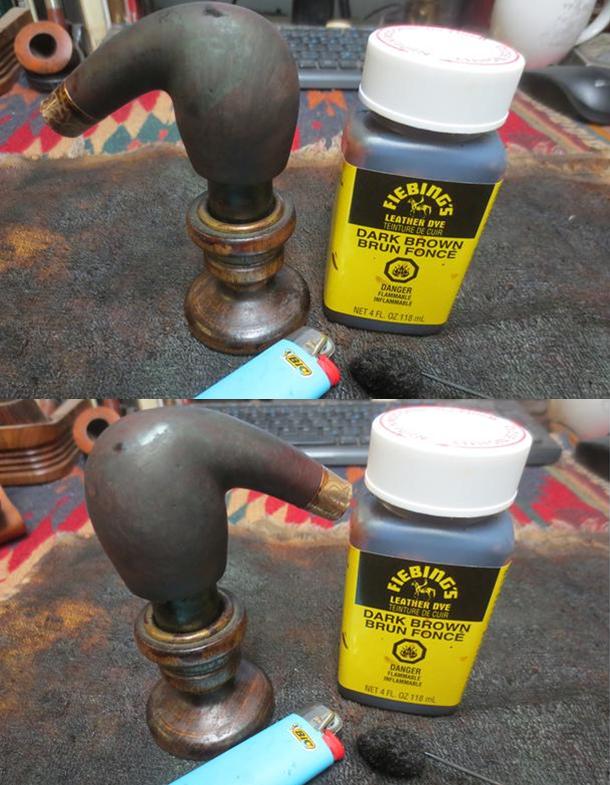
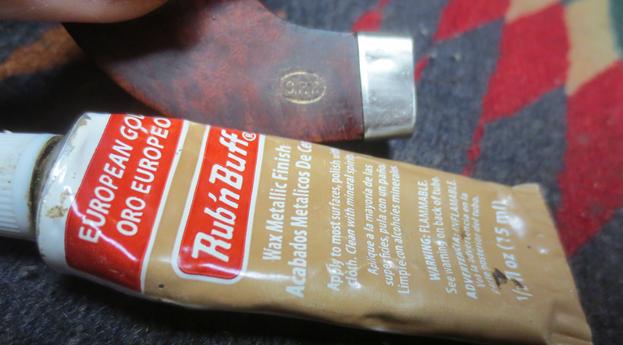
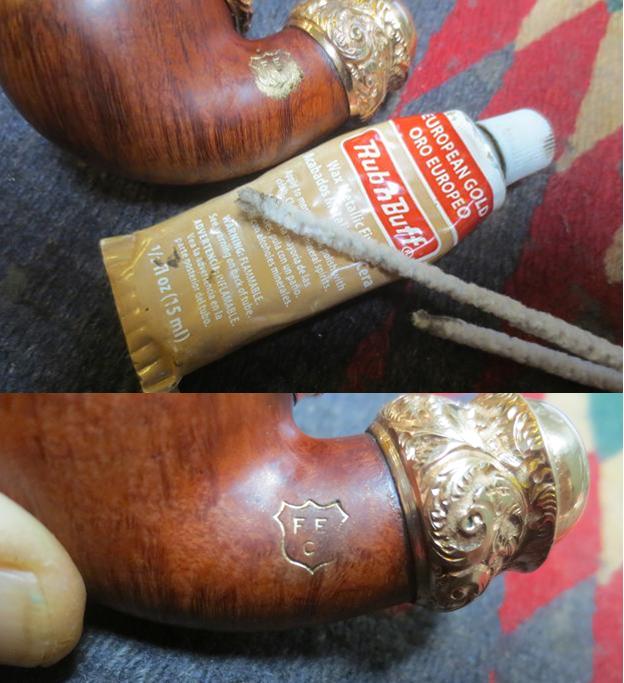
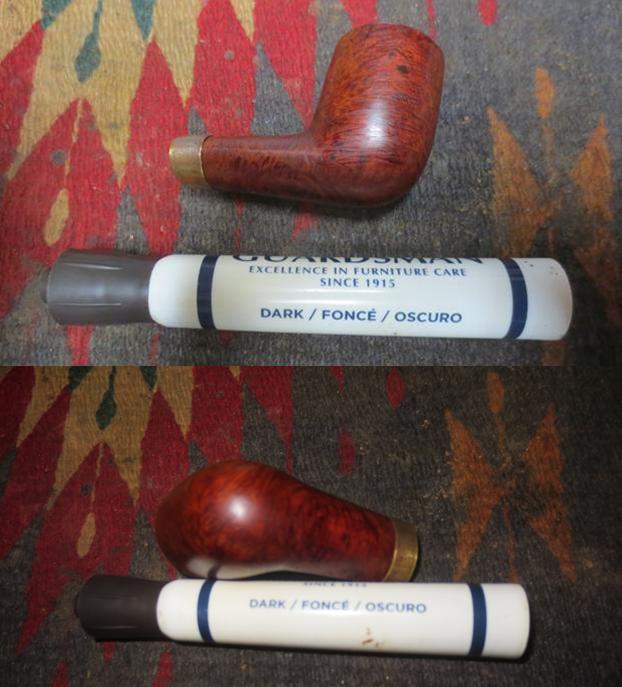
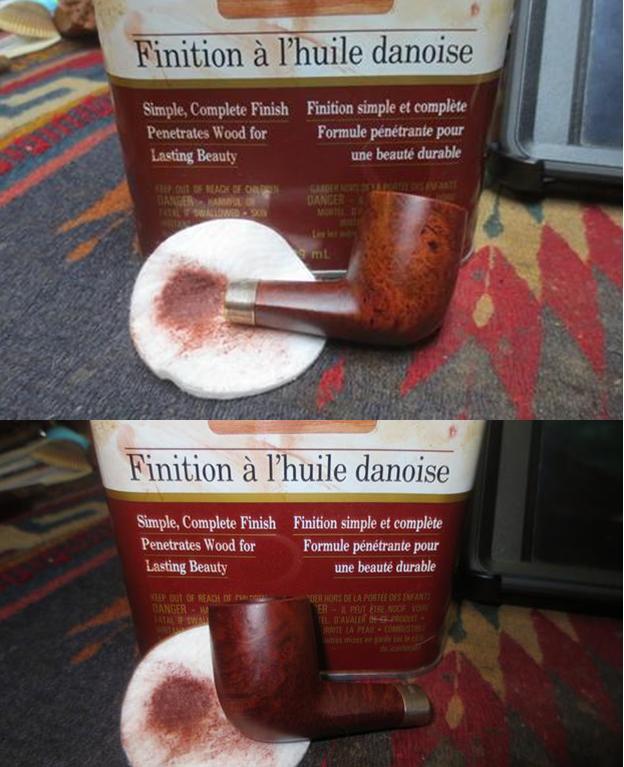
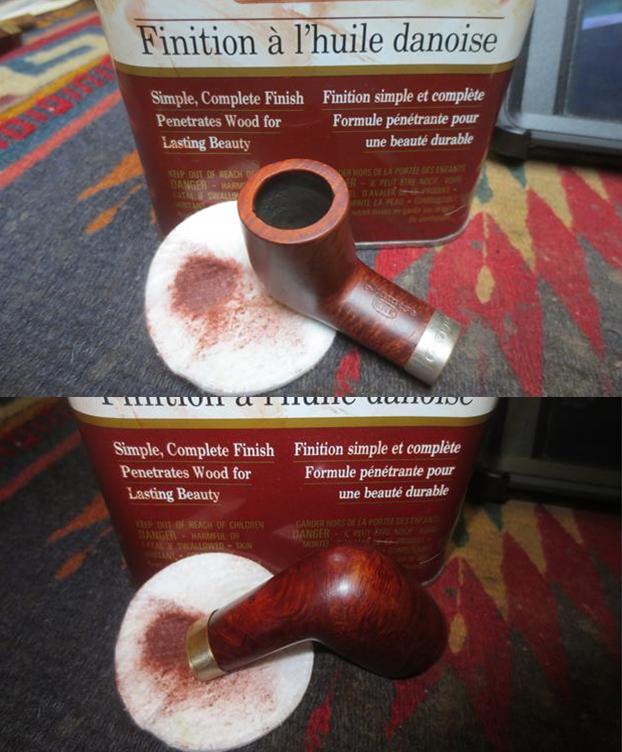
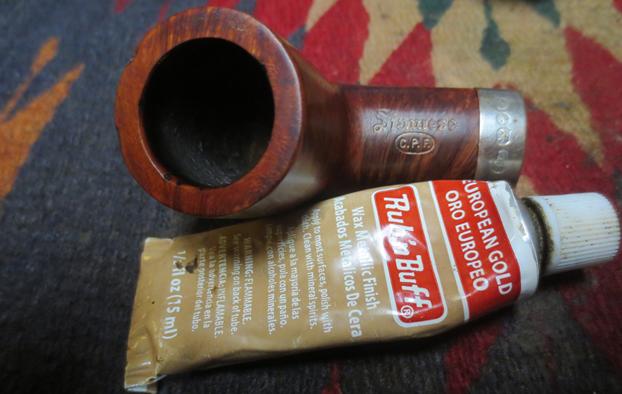
I turned back to the bowl and continued to sand with the Dremel and sanding drum shaping the bowl top to match the flow of the base. I shortened it each time I sanded the sides but it was going to take some time. I put the stem back in the shank and took photos to see where I stood with the reshaping work. You can begin to see the shape of the new pipe emerging as I sand it. I removed more of the height off the top of the bowl and continued to sand and remove excess briar around the base and sides to blend the two parts together. The photos tell the story. I continued to shape and shorten the new bowl with 220 grit sandpaper. I worked on the inside of the bowl using the Dremel with a sanding drum to smooth out the joint of the two parts. I followed up by using 180 grit sandpaper. In the photos below the pipe is beginning to take shape.To protect the joint on the inside of the bowl from potential burn out or damage I mixed a batch of JB Weld and used a spatula to apply it to the inside of the bowl. I decided to stain the briar with a dark brown aniline stain to make the grain stand out on the briar. I would sand it all off but the dark brown would highlight things well. I would not be able to hide the connection between the two parts of the bowl so I was thinking that I could leave the shank darker, the bottom a shade lighter, the junction between the two black and the top portion lighter. It would have a contrast like a meerschaum. I stained it and flamed it to set the grain in the briar. I repeated the process multiple times. While the stain cured on the bowl I worked on the stem with micromesh sanding pads. I wet sanded it with 1500-2400 grit pads and wiped it down with Obsidian Oil. I dry sanded it with 3200-12000 grit pads and wiped it down with the oil after each pad. Once again I was so absorbed in working on the bowl that I forgot to take photos of the stem work. I set the stem aside to dry and went back to the bowl. I sanded the bowl with 180 and then 220 grit sandpaper to remove the stain coat on the bowl. The dark band is not even but it looks really good to me. I touched up the stamping on the left side of the shank with Rub’n Buff European Gold. I applied it with a cotton swab and buffed it off with soft pad. It is very readable and clear.With all of the touch ups finished and sanding finished on the bowl it was time to polish the briar. I really like to polish it with micromesh sanding pads as it brings the grain to the surface and gives the briar a deep shine. I work the same each time – wet sanding with 1500-2400 grit pads and dry sanding with 3200-120000 grit pads. I wiped the bowl down with a damp cloth after each pad. I polished the ferrule and the stem ends with the micromesh pads at the same time. I wiped them down with a jeweler’s cloth to protect and give them a shine. I buffed the bowl and stem separately with Blue Diamond on the buffing wheel being careful around the joint of the two parts of the bowl and the metal end caps on the double stem. I gave the bowl and stem multiple coats of carnauba wax and buffed it with a clean buffing pad. I rubbed the bowl down with a light coat of olive oil and buffed it with a soft microfiber cloth to deepen the shine on the bowl. The repaired pipe is shown in the photos below. I am pretty happy with how it turned out. In a few days I after the JB Weld has cured in the bowl I will give the bowl a coat of sour cream and charcoal powder to further protect it. What do you think of this Frankenstein pipe? Thanks for looking.
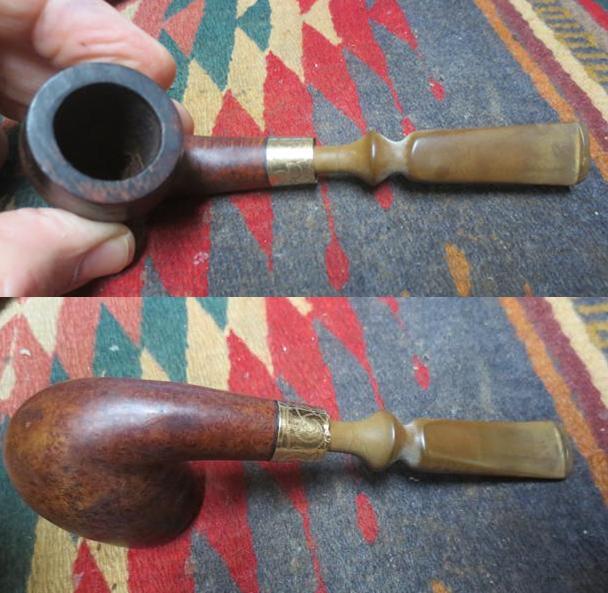
Repairing a broken shank and crooked alignment on a Joh’s Churchwarden


Blog by Steve Laug

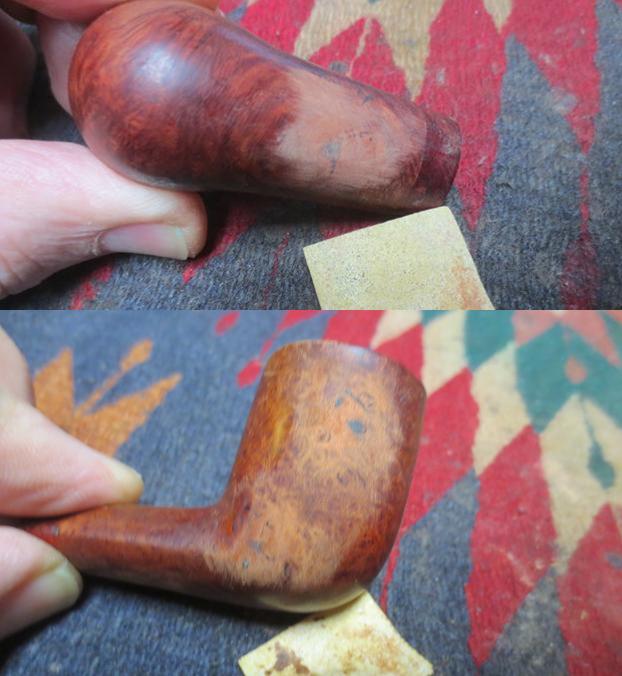
I received an email a few weeks ago from a fellow in Vancouver named Chris, asking if I would have a look at a cracked shank on his Joh’s churchwarden. He figured that it was not repairable but wanted to know if I would cut back the broken shank and refit the stem. I asked him to send me some photos of the damaged shank so I could see it myself. He sent me two photos of the pipe – one from the left side and the other from the top. The photos showed some extensive damage to the shank. There were cracks on the top, the bottom, the right and the left side of the shank. There was a large chunk of briar missing on the left side of the shank. It also appeared to me that the diameter of the stem was smaller than the diameter of the shank and that the stem sat toward the left side of the shank.Chris brought the pipe by my office for me to have a look at. We sat in my office and he went over the pipe with me. It was a nice looking pipe with two rusticated panels on the left side of the bowl and the rest of the bowl and rim were smooth. The pipe was in good shape other than the broken shank. The rim had some darkening and oils on the back side. The stem was in excellent condition with no tooth marks at all on either side. We made the decision to work on it and see what I could do repairing the damage. I took photos of the pipe when I brought it home from work and put it on the work table.I took close up photos of the cracked and broken shank. You can see the extensive damage and the difference in the diameter of the shank and the stem. I used a microdrill bit on the Dremel and drilled pin holes at the end of each crack to stop the cracks from spreading further.I used a combination of super glue and briar dust applied in layers to build up area where there was a missing chunk of briar in the left side of the shank. I built it up until the missing chunk was replaced with the mixture. It was not pretty but it was better than it was when I started the process.I sanded the repair with a sanding drum on my Dremel. The sanding drum smoothed out the repair on the exterior of the shank. The next series of three photos show the repaired area of the shank. I used a needle file to smooth out the inside of the mortise and to begin to return it to round. I would do more work on that once I had pressure fit a nickel band on the shank. I heated the nickel band with a Bic lighter to expand it and pressed it onto the shank of the pipe until the edge of the band and the edge of the shank end were even.I remembered that I had not filled in the pinholes that I had drilled. I used clear super glue and a tooth pick to put a bead of glue on top of each pin hole. When the glue had dried I sanded the shank repairs smooth with 220 grit sandpaper until they were blended into the surface of the briar.I polished the sanded areas of the briar and the dirty top of the bowl with 1500-2400 grit micromesh sanding pads. I wiped the shank down with a damp cotton pad to remove the dust. I used a medium brown stain pen to touch up the sanded areas around the shank. The medium brown blended perfectly with the existing stain. I polished the bowl and shank with 3200-12000 grit micromesh sanding pads and wiped it down with a damp cotton pad to remove the sanding dust on the surface after each pad. Before I took photos of the polished stummel after using the 12000 grit pad, I gave the bowl multiple coats of Conservator’s Wax and buffed the pipe on the buffer with a clean buffing pad to give it a shine. The polished pipe is shown in the photos below. I took close up photos of the shank repair and band to show the look of the repaired shank. If you look closely you can see the repaired cracks and the tiny pinholes but the pipe looks very good with the new nickel band and blended stain. I reshaped the mortise with needle files and built up the left side of the tenon with clear super glue to move the stem toward the centre of the shank. Once I had finished the alignment was far better than when I started and the stem looks more centred in the shank. I used a tooth pick and super glue to fill in the gap between the band and the right side of the shank. You can see from the photo that the shank was not round but more oval and slanted to the left. With the band and the repair the shank is round and the mortise end looks far better.I buffed the bowl and stem with Blue Diamond on the buffing wheel and gave the bowl and stem multiple coats of carnauba wax to protect it. I used a very light touch on the rusticated portions of the left side of the bowl. I buffed the pipe with a clean buffing pad to raise a shine and hand buffed it with a microfiber cloth to deepen the shine. The pipe is well proportioned with the following dimensions Length: 10 inches, Height: 2 inches, Bowl diameter: 1 ¾ inches, Chamber diameter: ¾ inches. The finished pipe is shown in the photos that follow. I think Chris will be happy to see one of his favourite pipes returned to his rotation looking better than when he left it with. Chris if you read this – tell us what you think. Enjoy. Thanks for looking.

Restoring a Made in England Cumberland Acorn


Blog by Steve Laug

The stamping on the next pipe that crossed my work table was faint but it read Cumberland over Made in England. There is no shape number and no other name on the pipe. There is nothing Cumberland about the pipe as far as I can tell – the stem is black vulcanite and appears to be original. The finish is sand blast and quite nice though there are some sand pits in the bowl that are quite large and have been filled in. The rim and bowl are in good condition. The stem was badly oxidized and had a few tooth marks but otherwise clean. Like I said nothing Cumberland about it. I looked on Pipephil’s site and as expected nothing with this name other than Dunhill. I looked at Who Made That Pipe and they list it as UNKNOWN. So the mystery remains. I have no idea who made this nicely shaped acorn but I know that it was made in England. Anyone have any ideas?

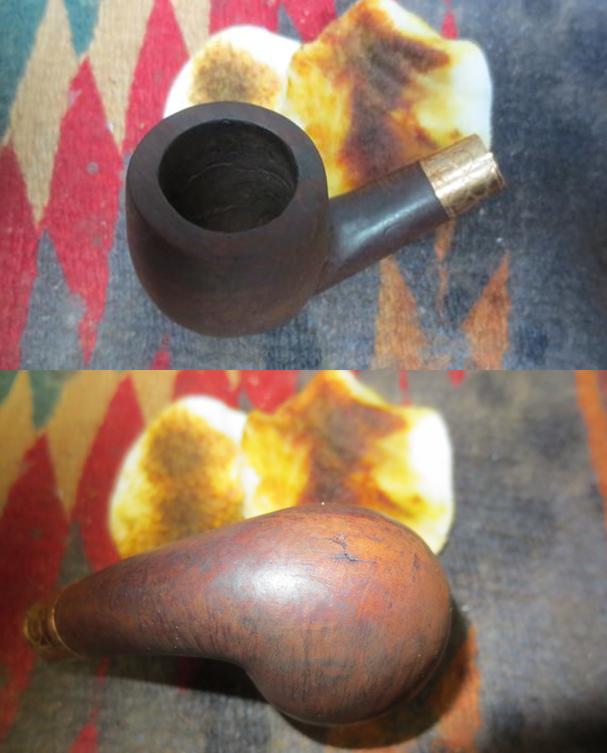
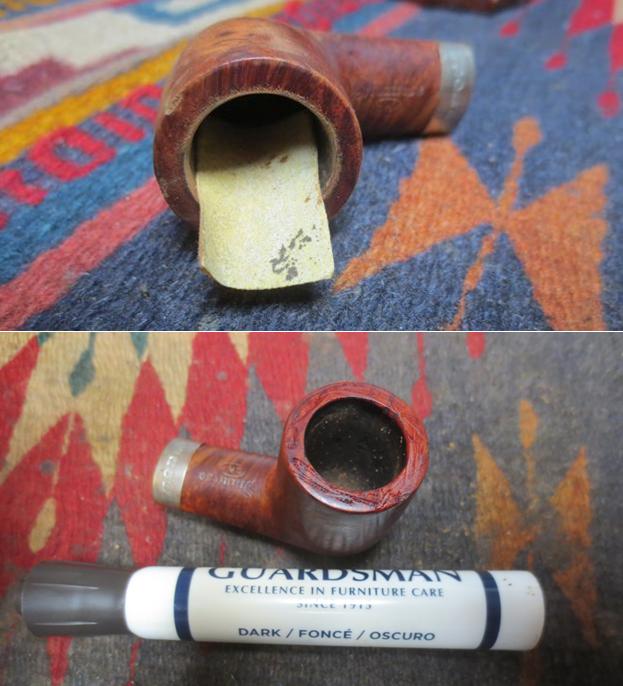
I received a comment on the blog and on my Facebook page both confirming what I asked regarding the maker of this pipe. Al Jones (upshallfan) and Dan Chlebove both figured it was made by Charatan. I did some searching online and found a Charatan Shape Chart on Al Pascia’s website. Sure enough, the shape was on the chart. It is the Salisbury Shape 173. Dan noted that it was an older one because it did not have the Double Comfort style bit on it. I think that the scar on the front of the bowl and the sandpit on the back make it a Charatan Reject. Thanks for the information gentlemen.My brother took the photo above and the ones that follow to show the condition of the pipe when it arrived in Idaho. The finish was very dirty and there was a lot of grime and dirt in the grooves of the sandblast. There was significant tar and darkening on the rim top and edges. The bowl had a thick cake and it had overflowed onto the rim top. The stem was lightly oxidized and very dirty with the slot almost closed off with tars. There were tooth marks and chatter on both the top and underside of the stem near the button and tooth damage to the sharp edge of the button on both sides.The next photo shows the cake and the overflow on to the bowl top. I have found that generally this kind of buildup protects the rim top as well as the inner and outer edges from damage.The next photos show the interesting sandblast finish on the bowl from various angles. Looking past the dirty finish it is an interesting blast. The first photo below shows the sandpit on the front of the bowl but future photos will give a better view of that spot.I have included both of the next photos because together they give a clear view of the stamping on the underside of the shank. The first one show the CUMBERLAND stamping though the Made in England stamp is blurry. The second is the reverse. The shank is stamped on the curve of the shank so it is hard to get a clear photo of both at the same time.The close up photos of the stem surfaces show the tooth marks, chatter and damage to the edge of the button on both sides.Jeff did his usual thorough cleanup of the pipe. He reamed the bowl and cleaned out the internals – mortise, airway in the shank and stem with alcohol, cotton swabs and pipe cleaners. He scrubbed the exterior of the briar with Murphy’s Oil Soap to remove all of the grim and grit in the finish and clean out the areas around the sandpits. He rinsed the briar under running water and dried it with a soft cloth. He soaked the stem in OxyClean to bring the oxidation to the surface and remove the grime. When the pipe arrived in Vancouver it certainly looked different than it did when we picked it up. I took the photos below to show the condition of the pipe when I brought it to the work table. The finish looked amazingly clean. The rim top looked better without the tars and buildup. There was some darkening on the rim top but the edges of the rim looked very good.The OxiClean had done the job and the oxidation was on the surface of the vulcanite stem. It was pretty green. I dropped it in the Before & After Pipe Stem Deoxidizer to soak for 24 hours while I turned my attention to the stummel. The “Harry Potterish” scar (flaw/sandpit) on the front of the bowl was quite deep but it was not cracked. To me it took away from the overall look of a nice sandblast. There was also a round sandpit on the back side of the bowl on the left toward the top edge that also needed attention. I used a brass bristle brush to scrub out the remaining debris in those areas. I filled them in with clear super glue to blend them into the surface of the briar better. When the repairs had cured I carefully wiped around the edges with acetone on a cotton swab to remove the excess glue. I have found that the super glue repairs leave a shiny spot on the finish if you don’t remove the overage. To blend the repairs into the briar even more I topped up the repaired areas with black super glue. It would blend in better with the final stain that I was planning on using on the briar. I cleaned up the areas with a cotton swab and acetone to remove any excess glue in the surrounding sandblast. I warmed the briar and stained it with a dark brown aniline stain. I applied the stain and flamed it several time until I had an even coverage on the stummel. I set the pipe aside for about an hour and worked on another pipe I have on the work table. When the stain had dried I wiped it off with alcohol on a cotton pad to make it more transparent and show some of the underlying grain. I like the contrast that happens in the finish when I wiped off some of the stain. Notice the repaired areas on the front and back side of the bowl. They blend in quite well with the darker finish. I gave the sandblast several coats of Conservator’s Wax and buffed it with a shoe brush to raise the shine. I really like the new colour on the bowl and find that the repaired areas really do blend in quiet well with the rest of the finish. It also blends in the darkening on the rim top and gives the pipe a richer new look. I took the stem out of the Before & After soak and dried off the stem with a rough cloth to remove the remnants of the soak and the oxidation that it had lifted. The next two photos show the stem after the soak. There is still some deep oxidation that will need to be addressed but it looks far better than it did when I started.I put the stem on the stummel and took some photos to get an idea of where I was at with the restoration. The pipe is going to look good once I am finished. I used some black super glue to repair the edge of the button on both sides of the stem. Once the repair dried I sanded the repairs and the rest of the stem with 220 grit sandpaper to shape the button and to remove the remaining oxidation. I worked on the saddle portion of the stem carefully so as not to round the edges where it met the shank of the pipe. It was looking better but more work was necessary to bring it to a full shine. I polished the stem with micromesh sanding pads – wet sanding with 1500-2400 grit pads and wiping the stem down after each pad with Obsidian Oil. I polished the stem with Before & After Pipe Polish to further remove the scratches left behind by the sandpaper. I dry sanded the stem with 3200-12000 grit micromesh pads to deepen the polish. I wiped the stem down after each pad and set it aside to dry after sanding with the 12000 grit pad. I put the pipe back together and polished it with Blue Diamond on the buffing wheel. I find that Blue Diamond Plastic polish really takes out the scratches in the vulcanite stems. I gave the stem multiple coats of carnauba wax and polished it with a clean buffing pad. I hand waxed the sandblast bowl with a final coat of Conservator’s Wax and buffed it with a clean buffing pad. I hand buffed the bowl and stem with a microfiber cloth. The darker stain blended the repaired sandpits and the darkening on the rim top into the rest of the finish. It turned out to be a nice looking pipe – its dimensions are Length: 5 ½ inches, Height: 1 1/2 inches, Bowl diameter: 1 3/8 inches, Chamber diameter: ¾ inches. The finished pipe is shown in the photos below. I will be putting it on the rebornpipes store soon. If it interests you, send me an email to slaug@uniserve.com or a message on Facebook. Thanks for looking.
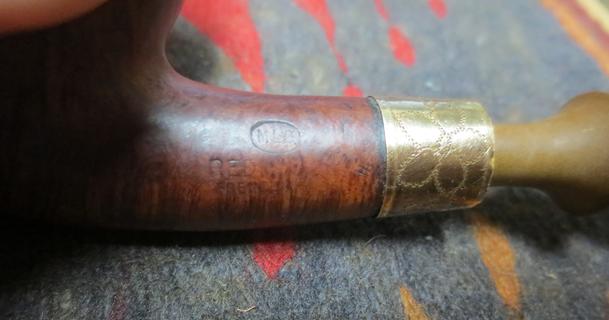
Cleaning and Restoring a Large Meerschaum Calabash Oom Paul


Blog by Steve Laug

I was visiting my family in Idaho and staying with Jeff and his wife when this pipe arrived. We opened the box and took it out and I think both of us were surprised at how big it was. We took it out and turned it over in our hands to examine it. It was a huge meerschaum Oom Paul. The meer seemed to have an interesting colouring pattern coming up from the bottom of the bowl. The surface of the meerschaum was dirty and scratched. The rim top had a strange stepped up section that rose above the top of the rim. It was chipped and no longer round. The bowl had a cake in it and it did not seem to be as deep as the bowl exterior would have led us to believe. It was odd. The area around the raised section of the rim top was dirty and had a thick build up of tars and oils flowing out from the raised portion toward the outer edge of the rim. The stem was in rough condition at the button end but it aligned perfectly with the diamond shank. It was amber coloured Bakelite stem and I believe it was original. There were deep tooth marks and chatter on the stem at the button on both sides. The button itself was misshapen from tooth marks. I took photos of the pipe before I started the cleanup. The out of round portion that extends above the rim surface and the colouration pattern on the sides of the bowl made me wonder what I was dealing with in terms of the mechanics of this pipe. When I inserted my finger in the bowl, it is not as deep as the depth of the outer portion of the pipe. That too made me wonder.I took a close up photo of the rim top to show the condition of the bowl and rim at this point. You can see the rough inner and outer edges of the raised portion of the pipe. There was also scratching in the surface of the lower potion and a ring of darkening around the edge where the raised portion met the lower portion. This made me wonder if I was not dealing with some kind of bowl insert.I took photos of the stem damage on both sides of the stem. The button and the flat portion had a lot of tooth marks and chatter that left a very rough and uneven surface on both sides.I unscrewed the stem from the shank and found that the pipe had a metal tenon in the stem itself. That was a good sign in that it was not stuck in the shank.The next two photos show the cake in the bowl and how I used a Savinelli Fitsall Pipe knife to trim back the cake to bare meerschaum.I used a cotton swab to run a bead of alcohol around the raised portion of the bowl to begin to loosen it. I ran alcohol, pipe cleaners and cotton swabs through the mortise and shank of the pipe to clean out the tars. I ran a pipe cleaner into the airway in the bowl and as I pulled it back and forth the raised portion came loose on the pipe cleaner. I removed the inner bowl from the outer and was surprised by how deep the outer bowl was. The inner bowl was quite shallow and had the airway on the back side. In the bottom of the outer bowl there was a ball of cotton or wool that was used as a trap for moisture and a filter. It was brittle and crusty with old tars. It is visible in the third and fourth photo below. I used the Savinelli Fitsall Reaming Knife to ream the outer bowl. I scrubbed the inside and outside of the two bowls with SoftScrub cleanser and a tooth brush. I worked on the rim top with the scrub and tooth brush and was able to remove the tars and oils that were on that surface. Once it was clean I rinsed the pipe under running water. I dried it off with a soft cloth. The photos below show the bowl after the scrubbing and rinsing. The line on the bottom half of the bowl makes sense now. The colouration is all below the bottom of the insert bowl. Everything above the insert shows no colour at this point. The outer edge of the inner bowl was damaged. It almost looked as if someone had tried to remove it with a pair of pliers. The edge was very rough and no longer round. The inside edge and the outside edge was damaged. I used a Dremel and sanding drum to clean up the outer edge of the bowl. I sanded the bowl surface, the edges and the bottom portion of the bowl with 220 grit sandpaper and with 1500-2400 grit sandpaper. The next four photos show the bowl after my cleanup work. There was some darkening on the rim top that I was not able to remove without removing significant amounts of the meerschaum. I worked over the inner edge of the bowl with a folded piece of 220 grit sandpaper. I wanted to clean it up and make it more round again.One the bowl was cleaned up I put it back in the outer bowl and took a picture of how it looked in place in the meerschaum. I could easily put it in place and remove it with the tip of my index finger. The second photo below gives some idea of the size of the inner bowl.I polished the inner bowl with micromesh sanding pads – wet sanding with 1500-2400 grit pads and dry sanding with 3200-12000 grit pads. Each successive pad brought more of the shine to the surface of the inner bowl. I waxed the bowl edge and rim top with Clapham’s Beeswax and hand buffed it to raise a shine. I cleaned up the damaged portions of the stem with a cotton swab and alcohol to remove any debris in the deep tooth marks. I filled in the tooth marks and rebuilt the button surfaces to make the orific button round like it was originally. I layered on the amber super glue in the marks and on the button until the surfaces were slightly over filled.I put the stem in my ebony drilled block to allow the repair to dry on both sides.When the repair dried I recut the edges of the button on the top and underside of the stem with a needle file. I also smoothed out the surface of the repairs with the file to match the surface of the rest of the stem. I sanded the repaired areas on the stem surface and the button with 180 and 220 grit sandpaper to blend them into the surface of the stem and the button. I wanted the repairs to be as invisible as possible when the stem was examined. I polished the stem with micromesh sanding pads – wet sanding with 1500-2400 grit sanding pads and dry sanding with 3200-12000 grit pads. I rubbed the stem down after each sanding pad with Obsidian Oil. After the final sanding pad I gave it a final rubdown with the oil and set it aside to dry. I cleaned the end of the shank with alcohol and cotton swabs to remove the tars and build up on the shank end.I polished the meerschaum bowl with micromesh sanding pads – wet sanding with 1500-2400 grit pads and dry sanding with 3200-12000 grit pads. I wiped the bowl down after each pad with a dry felt cloth to polish it further. I have found that the micromesh pads do not remove the patina in the colouring meerschaum. I put the stem back on the bowl and buffed it with Blue Diamond on the buffing wheel to raise a shine. I put the inner bowl on the end of my finger and buffed it with Blue Diamond. I buffed the stem, the inner and outer bowl with a clean buffing pad to raise a shine. I hand buffed the pipe with a microfibre cloth to deep the shine. I inserted the inner bowl in the outer bowl and hand buffed it all one final time with the microfibre cloth. It is a big pipe and fills the hand. It is definitely one that should be smoked sitting beside the fire, sipping your favourite beverage and reading a good book. The dimensions of the pipe are Length: 6 inches, Height: 3 inches (with the inner bowl inserted), Outer diameter of the bowl: 1 ¾ inches, Chamber diameter: ¾ inches. The finished pipe is shown in the photos below. Thanks for joining me in the process.

Restoring a Sad, Old MLC Bent Billiard


Blog by Steve Laug

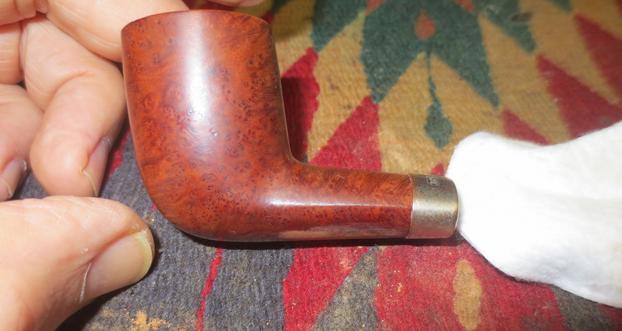
This older MLC bent billiard is a turn of the 20th century pipe. The initials stand for Mary Linkman Company. The company was named for the mother of the same Linkman who eventually branded pipes under that same name and then eventually became the Dr. Grabow pipe manufacturer with which we are familiar. If you have followed this blog for a while you have come to know that I love really old pipes and this one fits the bill. It is stamped MLC in an oval with no other stamping on the shank. The ferrule is brass and has faux hallmarks on the left side. They are worn but still readable with a bright light and a lens. It is another small pipe, slightly under 4 inches long and 1 ½ inches tall. The stem is Bakelite or Redmanol and has a lot of small spidering cracks in the flat portions of the stem on both sides. Both sides of the saddle are split the entire length of the saddle. There is very little tooth chatter or and minor tooth marks on both sides near the button. Jeff took the photos that follow before started the cleanup. (http://www.pipephil.eu/logos/en/logo-m6.html)The pipe was in really rough shape. The finish was worn and spotted with paint specks, grime and nicks in the briar. The stem was split and worn. The bone tenon looked good but the band on the shank was loose and spun around the shank. The wear and tear on the brass band and the tarnish left is a mottled mess. The bowl had been reamed somewhere in the process so the cake was not thick. The lava on the rim was light. The inner and outer edge of the bowl was undamaged. The rim close up shows the cake and the peeling lava on the surface of the bowl.Jeff took photos of the sides of the bowl and the bottom side to show the wear and tear on the finish. There were some deep gouges in the briar and a lot of paint speckles on the briar. The stamping on the left side of the shank is quite clear – MLC in an oval. It had originally been gold leaf but it was worn. The stamping on right side of the oval was lighter than the rest of the stamping.I did some digging on the net to see what I could find out about the MLC brand. I knew that it was a Linkman pipe but could not remember much about it. I turned to my go to site for quick information – Pipedia (https://pipedia.org/wiki/M._Linkman_%26_Co). The information did not add much to my understanding other than pin down the date to the late 1890s or early 1900s. Included in the article was a photo of Mary Linkman, her son Louis and August Fisher at their Chicago Office. The photo is from Mary’s obituary and is a fascinating piece of history. The scan of the photo and obituary are courtesy of August Fisher’s granddaughter.Jeff took some photos of the stem. The right side of the saddle stem was split from the end up to the transition to the blade of the stem. The right side also had a crack. It looked to me that someone had turned the bone tenon too deep into the stem and split the saddle. The flat surfaces of the top and bottom of the stem were filled with a series of small spidering cracks. The stem, like the bowl was covered with paint flecks or spray. You can see from the first photo that the band has been turned all the way around so that the worn faux hallmarks are upside down and on the wrong side. Jeff cleaned the exterior of the pipe with some Murphy’s Oil Soap and a tooth brush and rinsed it off under running water. He dried it off with a soft cloth and the soap had removed the paint flecks and the deeply ground in grime on the finish. He ran pipe cleaners and alcohol through the mortise and the airway in the shank and stem to remove dust and debris that had collected there. He carefully scrubbed out the cracks and splits in the sides of the saddle stem using a tooth brush and rinsing it in water. Once the pipe was clean, he packed it up and sent it my way for the repair and restoration work. I took photos of the pipe when I unwrapped it on my worktable. It is an intriguing little pipe that caught my attention. When I unscrewed the stem the ferrule fell off in my hand. I laid out the parts of the pipe and took the following photo. It shows the nicks, dents, sandpits and flaws in the briar. The band looked as if it was never glued to the shank. The briar is clean and the inside of the ferrule had no remnants of glue. It was clean.I took some close up photos of the stem to show the cracks and splits in the saddle portion. The stem was worn and battered. The bone tenon was darkened from tobacco smoke and tars. The edges on the tenon were worn down and when the stem was on the pipe it was over turned or over clocked.  I cleaned out the cracks in the side of the saddle stem with a dental pick and a damp cotton swab until the inside of the crack was clear of debris that would cause the stem repair to be very visible. I dried the stem off with a cotton pad. I filled in the cracks on both sides of the stem with amber super glue and set the stem aside to dry.When the repair had cured I sanded it smooth to blend it into the rest of the stem with 220 grit sandpaper. I sanded all of tooth chatter and marks out of the surface of the stem as well to smooth out all of the damage. I wanted it to disappear into the amber Bakelite. After I had smoothed out the repair I polished it with micromesh sanding pads – wet sanding with 1500-2400 grit pads and dry sanding with 3200-12000 grit pads. I wiped the stem down after each pad with Obsidian Oil and set the stem aside to dry. (I almost forgot to add this piece of information. Just before I polished the stem I painted the threads on the tenon with clear fingernail polish to build them up so the stem would align properly when I put it in place.) The bowl needed a lot of work. I wiped the bowl down with acetone and filled in the nicks, dents, flaws and sandpits in the briar with clear super glue. I sanded the fills smooth with 220 grit sandpaper until they blended into the surface of the briar. I wiped the bowl down again with alcohol on a cotton pad to remove the sanding debris. I gave the shank end a coat of white all-purpose glue and put the ferrule in place with the faux hallmarks aligned with the stamping on the shank side. I left it to dry and worked on another pipe for a while. Once the glue had set I sanded the bowl and the ferrule with a medium and a fine grit sanding sponge to smooth out the scratches left behind from sanding with the 220 grit paper. The photos below show the bowl at this point in the process of the restoration. I stained the bowl with a dark brown aniline stain and flamed it to set it in the grain. I figured that the dark brown stain would hide the repairs and give the bowl the original rich colour. I set it aside to cure while I went to work for the day.I buffed the bowl with red Tripoli on the buffing wheel to remove some of the heavy coat of stain. I sanded the bowl with 2400-6000 grit micromesh sanding pads to make the finish more translucent so the grain would stand out when it was polished. I gave the bowl multiple coats of Conservator’s Wax and set it aside to dry. I touched up the gold filled MLC Oval with Rub’n Buff European Gold. I applied it with a cotton swab and hand buffed the excess off with a cotton pad.I carefully buffed the bowl and stem with Blue Diamond on the buffing wheel. I gave the bowl and stem multiple coats of carnauba wax and buffed the pipe with a clean buffing pad to raise the shine. I hand buffed it with a microfiber cloth to deepen the shine. The photos of the finished pipe are shown below. It has come a long way from what it looked like when I started. It turned out to be a beautiful pipe that has served pipe men well for well over 100 years. Thanks for looking.
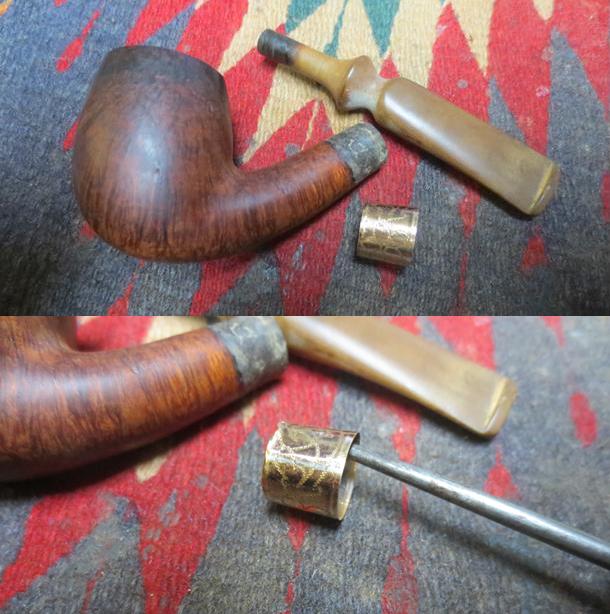
An Unbelievable Find – An Unsmoked Tiny Horn Stem WDC Bent Billiard


Blog by Steve Laug

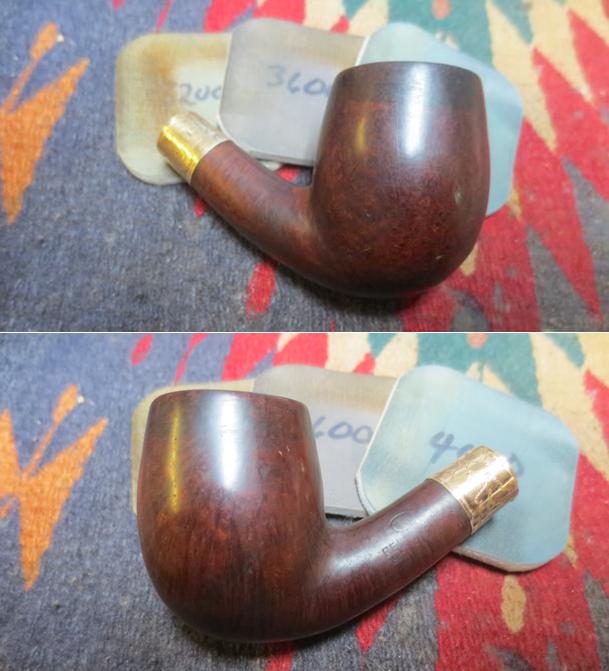
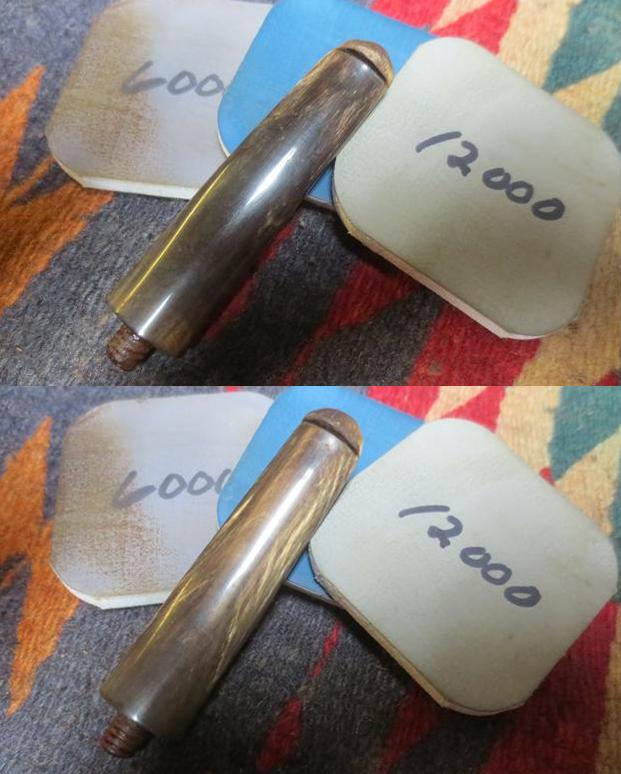
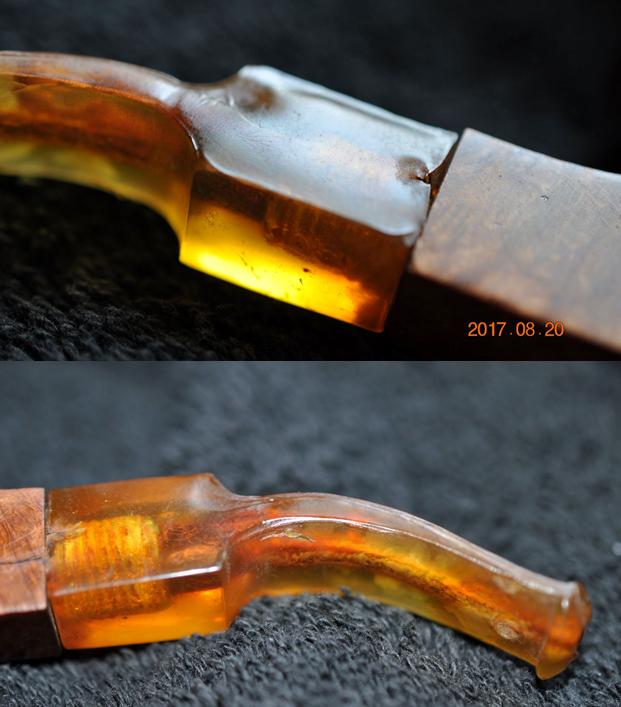
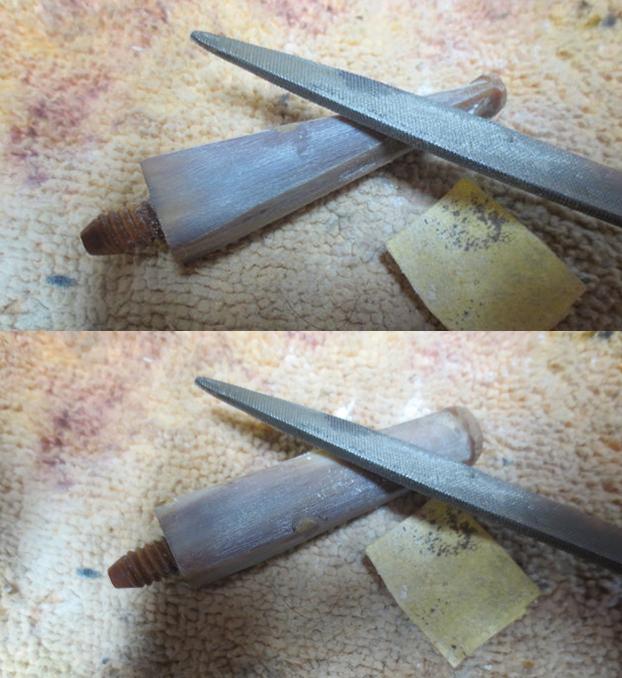
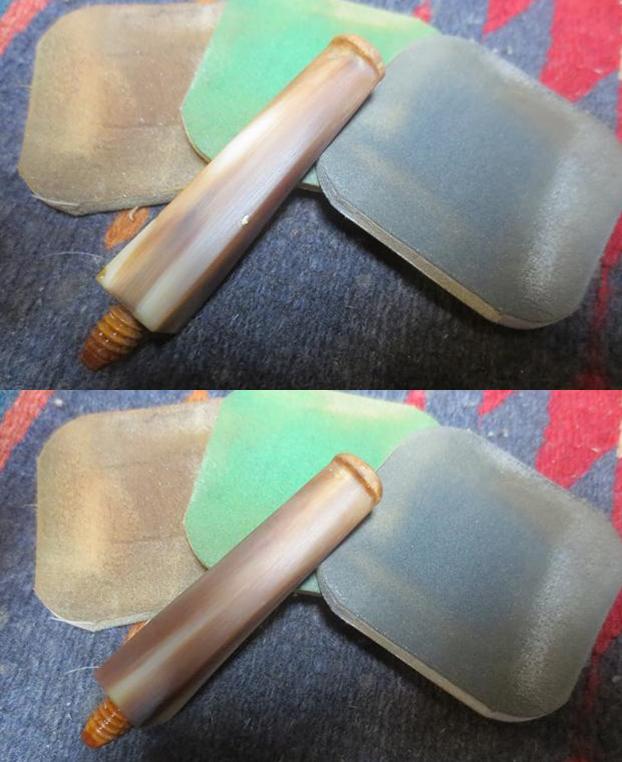
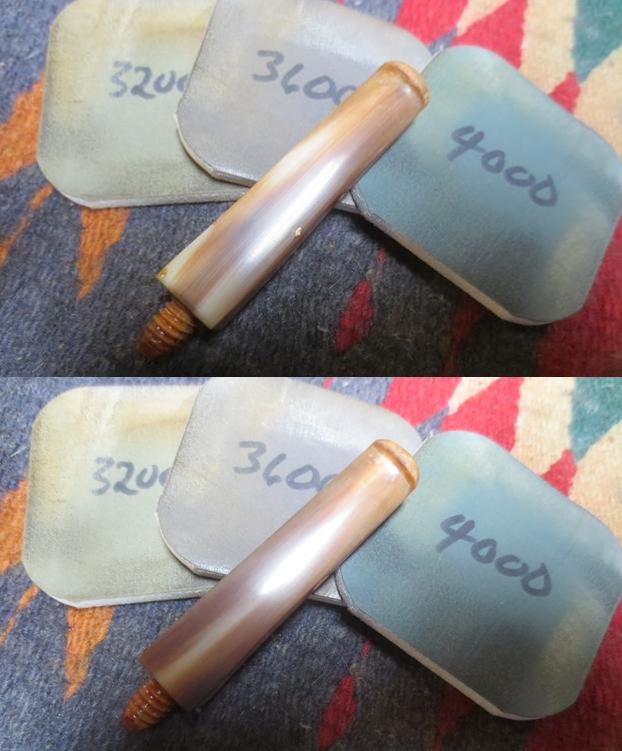
Jeff picked this one up in an antique shop somewhere along his travels. He is getting as bad as me in not being able to drive by an antique mall or shop without pulling over and having a quick look. We both have very patient wives that humour us with our obsession. He found this little beauty on one of those stops. It is a small pipe – 4 inches long and 2 inches tall. The bowl diameter is 1 1/8 inches and the chamber diameter is ¾ inches. For such a petite pipe the bowl is almost standard size and would hold a full bowl of tobacco. This pipe came from the age of putting the pipe in the pocket when you went to the opera or a show. It would hardly show whatever the pocket you slipped it into.What makes this pipe remarkable to me is that it is unsmoked. There has never been a bowl of tobacco lit and smoked in this old timer. I believe it is an early 1900’s era pipe or possibly earlier. It has a horn stem that is turned which is also unusual. I typically see straight or bent tapered horn stems. I don’t remember the last fancy turned horn stem I have seen. The pipe bears the WCD triangle logo on the left shank and a matching logo on the ferrule. There are a few small fills in the bowl and some issues on the inside that I will speak about when I get to the photos of the bowl and rim. Nonetheless this is a rare find – a pipe that is probably at least 100 years old that has not been smoked. It is new old stock with an emphasis on the old. Jeff took the above photo and the ones that follow when he brought it home from the trip. The finish was a little shop dirty from years of sitting on display. The rim was clean but had some grime in the finish. The issue I referred to above can be seen in the first photo below. There was a large fissure in the right side of the bowl from the rim downward into the bowl for about ¼ inch. It was clean and there was no burn thanks to the unsmoked condition. If the pipe is going to be used for its intended purpose then this will need to be repaired. The inner edge of the bowl is also nicked around the area above the flaw. It makes the inner edge out of round. Though the pipe is new and unsmoked it is dirty with the kind of dust and grime that comes from sitting for a long time on display. The next photos show the grain with the grime and also show the tarnished ferrule and the clear stamping on the shank. The ferrule has been turned as there is a WDC triangle logo on it as well. The next four photos give a closeup picture of the shank/stem fit and the WDC triangle on the ferrule. The turned horn stem really is beautiful under the dust and debris of time. The stem has the old style button with the orific opening on the end. The button is more rounded that new buttons and the round opening at the end is very different from the newer slot opening. Jeff took a photo of the pipe with the stem removed. The threaded bone tenon looks clean and new. This is yet more proof of an unsmoked pipe.The horn stem showed damage from the shuffling around. There were small scratches and nicks in the top side and underside on the flat portion of the stem. There were also small nicks on the some of the edges of the turned area of the stem. These were normal marks of wear and tear and really nothing too big to deal with. Jeff cleaned the exterior of the pipe with some Murphy’s Oil Soap and a tooth brush and rinsed it off under running water. He dried it off with a soft cloth and the grime on the finish was gone. He ran pipe cleaners and alcohol through the mortise and the airway in the shank and stem to remove dust and debris that had collected there and he packed it up and sent it my way for the touch up work. I took photos of the pipe when I unwrapped on my worktable. It is an intriguing little pipe that draws attention, that is for certain. He also turned the loose band so that it lined up properly with the stamping on the shank side. You can see from the photos that the stem is slightly underclocked and will need to be aligned. The next two photos show the damage to the bowl wall and rim edge.The stem had some small nicks that a bit of amber super glue would easily take care of.The ferrule was loose and it took nothing to have it drop off in my hands when I turned the stem out of the shank. The briar underneath looked as if it had never had glue on it. It made me wonder if the band had just been held in place originally by pressure fit and over time the wood shrunk as it dried and the band came free of the shank.To address the flaw in the briar on the right inside of the bowl I mixed some briar dust and clear super glue and filled in the flaw. As the patch dried it shrunk and I refilled it until it was even with the rest of the surround bowl walls. While the glue dried on the repair I put some white glue around the shank, aligned the ferrule and put it in place. Thus while the repair dried the band could also dry. Once the repair in the bowl dried I sanded it smooth with 220 grit sandpaper. I reshaped the inner edge of the bowl with the sandpaper as well and cleaned up the nicks in the edge. I chose not to bevel the rim as it had not been beveled previously. The bone tenons can swell over the years making the fit and alignment less than perfect. I have learned a few tricks over time with over and under turned stems with bone tenons. If the stem is over turned I generally build up the threads on the bone tenon with super glue until thing align properly. If it is under turned like this stem I remove material from the tenon. I carefully sanded the threaded area to reduce the diameter slightly. I checked the fit often and once I had it finish I cleaned up the tenon and put the stem aside. I filled in the nicks on the surface of the stem and near the button with clear super glue. The amber would have dried dark on this light horn. When the repair dried I sanded it smooth with 220 grit sandpaper. I sanded the nicks on the turned areas with 220 grit sandpaper to smooth them out and make them less obvious. I polished the horn stem with micromesh sanding pads – wet sanding it with 1500-2400 grit pads and dry sanding it with 3200-12000 grit pads. I rubbed the stem down with Obsidian Oil after sanding with each micromesh pad. After the final pad I set the stem aside to let it dry. I polished the metal ferrule with micromesh sanding pads to remove the tarnish on the metal. There was a small crack in the underside of the ferrule that I repaired when I glued it onto the shank. I finished with the 12000 grit pad and then rubbed the stem down with a jeweler’s cloth to polish the metal. The silver is a nice contrast between the brown of the bowl and the translucence of the horn.I buffed the pipe and stem with Blue Diamond on the buffing wheel and worked carefully around the band. I gave the bowl and stem multiple coats of carnauba wax. I buffed it with a clean buffing pad to polish the wax and give the pipe a shine. I hand buffed it with a microfiber cloth to deepen the shine. The wax made the grain stand out clearly and the two fills along the front and the back right edge of the bowl running with the grain. They are visible but they do not detract from the beauty of this old unsmoked William Demuth & Company pipe. It is an interesting piece of pipe history and I can only wish it could tell the story of its journey across the United States and now into Canada. Thanks for looking.
 

Breathing life into a Superior Real Briar Bulldog


Blog by Steve Laug

This older C.P.F. style bulldog with an ornate rim cap and shank end cap was another pipe that my brother and I found in our pipe hunt in Montana. That hunt yielded a lot of older C.P.F. and WDC pipes from between the late 1890s and the early 1900s. This one is certainly from that time period. The briar is very worn and the finish is gone. The metal rim cap and shank cap or ferrule are brass coloured but blackened with oxidation. The top of the rim is thickly caked with the lava overflow from the heavy cake in the bowl itself. The stem is either Redmanol or Bakelite and has some cracking near the shank/stem junction but nothing that affects the fit of the stem to the shank. There is some tooth chatter and tooth marks near the button on the top and underside of the stem. My brother took the photos that follow before he did his clean up.The pipe has some faint stamping on the left side of the shank. The photo below shows the condition of the stamping. It clearly reads SUPERIOR in a diamond. There seems to be other stamping that is faint underneath SUPERIOR in the diamond but I am unable to read it. On the outside of the diamond there is stamping on either side. It is faint but to the left under the edge of the diamond is faint stamping Real and under the right edge of the diamond it reads Briar. There appears to be something underneath the diamond going across the shank but it is not clear enough for me to be able to read.The next two photos show the pipe from two different angles to give an idea of what the pipe looked like in its entirety. There is some real promise with this old pipe.The rings around the cap on the bowl are in excellent condition. There is some debris lodged in them but there are no chips or cracks in the ring. The finish on the briar is spotty with small remnants of the original finish in place. The grain on the pipe is quite nice underneath the grime. The bowl has a thick cake in it and the lava has flowed over on top of the rim top. The metal rim top is blackened and has a thick cake of lava on it. It is hard to know what the inner edge of the rim will look like at this point because of the cake in the bowl. The carvings/castings in the metal rim cap and the shank end are dirty and have a lot of grime built up in the grooves and crannies. The Bakelite/Redmanol stem had tooth marks and chatter on both sides of the stem from the button forward about an inch. There were some small cracks in the shank end of the stem that would need to be addressed in the repair.Jeff did an amazing job of reaming out the bowl on this one and revealed that the metal cap was folded over and lined the inner edge of the rim thus protecting the rim from damage. He was able to ream the bowl back to bare briar without damaging this inner rim edge. He cleaned out the internals of the pipe with pipe cleaners, cotton swabs and alcohol until they were clean. He scrubbed the exterior of the bowl and the metal with a tooth brush and Murphy’s Oil Soap. This removed the grime in the nooks and crannies of the metal work and also cleaned the briar. He was careful around the already damaged stamping so as not to damage it further. When the pipe arrived in Canada it was clean and ready for restoration. I took photos of the pipe before I began my work to show what it looked like cleaned and ready for me. I love working on clean pipes! He was able to get all of the buildup off the rim cap but the surface was pitted and worn from all of the years of grime sitting on the brass. The bowl looked really good and the brass folded over the inside edge was darkened but undamaged.The stem was cleaned of the tars that were on the inside of the airways. The photos show the cracking at the shank end near the band. While the cracks were not rough to touch they were present. There were also many tiny little spidering cracks on the inside of the airway.I polished the metal rim cap and inner edge with micromesh sanding pads, wet sanding it with 1500-2400 grit pads. I was able to remove much of the pitting and scratching on the surface and the blackening of the inner edge of the cap. I dry sanded it with 3200-12000 grit pads to further polish the cap and edge.I laid the bowl aside for the time being and turned my attention to the stem repairs. I cleaned the surface of the stem around the largest and roughest feeling crack with a water dampened cotton pad. I sanded it with 1500 micromesh and wiped it another time to remove the sanding residue. I filled in the cracked surface with clear super glue and let it cure. When it dried I sanded it smooth with 220 grit sandpaper and also sanded the tooth marks and chatter on both sides of the stem at the button.I cleaned out the interior of the stem with pipe cleaners and water to remove more of the debris from the airway.I polished the stem with micromesh sanding pads – wet sanding it with 1500-2400 grit pads and dry sanding it with 3200-12000 grit pads. I rubbed the stem down with Obsidian Oil after sanding with each micromesh sanding pad, gave it a final coat of oil and set it aside to dry. I turned back to the bowl to finish my work on it. I wiped the briar down with a cotton pad and alcohol being careful around the faint stamping on the shank. I was hoping that when it was wet it would be more readable. Sadly it was not. The SUPERIOR stamp was all that I could read. The briar has some nice grain. I decided to leave the nicks and scratches alone as they were well earned character marks on this 100+ year old pipe. I really like the look of the raw briar on this one so I decided to rub it down with olive oil to make the grain stand out and give the briar some life. The next photos show the grain on the oiled bowl. It looks really good to my eye. I gave the bowl a coat of Conservator’s Wax to protect the briar and when the wax dried I buffed it with a flannel cloth to give it a shine. I put the stem back on the shank and in doing so remembered that it was slightly overturned. The lines of the shank and the diamond stem did not align. I have found that on these old bone tenon and threaded mortises that they wear down slightly over time. A little trick I use to address the wear is to paint the tenon with a thin coat of clear fingernail polish that I swiped from my daughters years ago. It dries clear and just one thin coat was enough to align the stem perfectly when I screwed it into the mortise.I lightly buffed the bowl and stem with Blue Diamond on the buffing wheel to remove the tiny scratches that remained on the brass and the briar. I gave the briar portion of the bowl and the stem multiple coats of carnauba wax and polished them with a clean buffing pad to raise the shine. I polished the brass with a jeweler’s cloth and buffed it with a clean buffing pad. I hand buffed the entire pipe with a microfiber cloth to put on the finishing touches. The pipe is shown in the photos below in all of its beauty. I love the look of these older pipes with all of the bling and the Redmanol/Bakelite stems. They really look elegant and show their era well. Thanks for coming with me on this refurb.