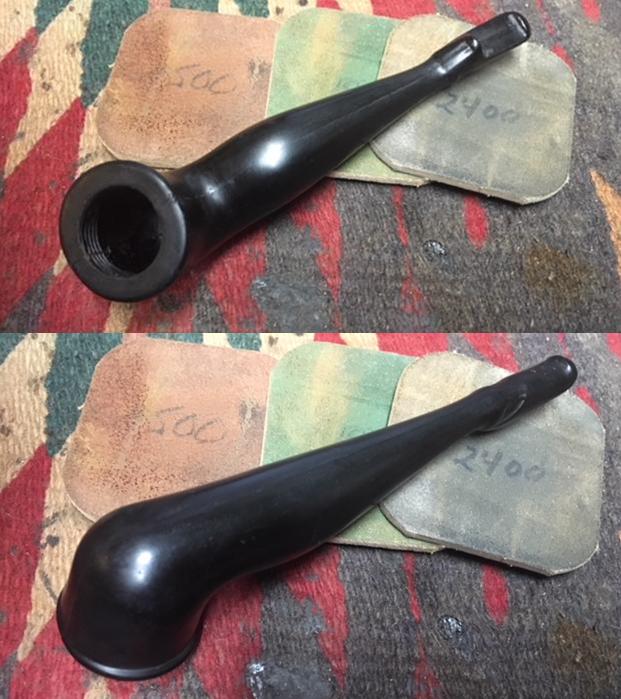
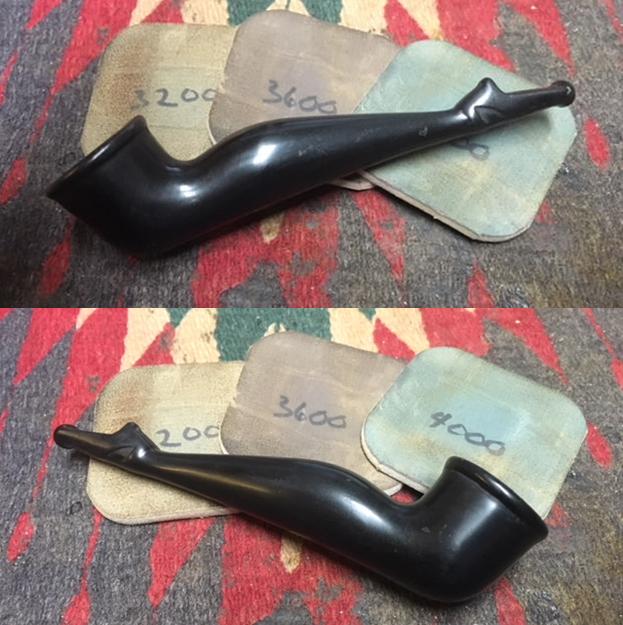
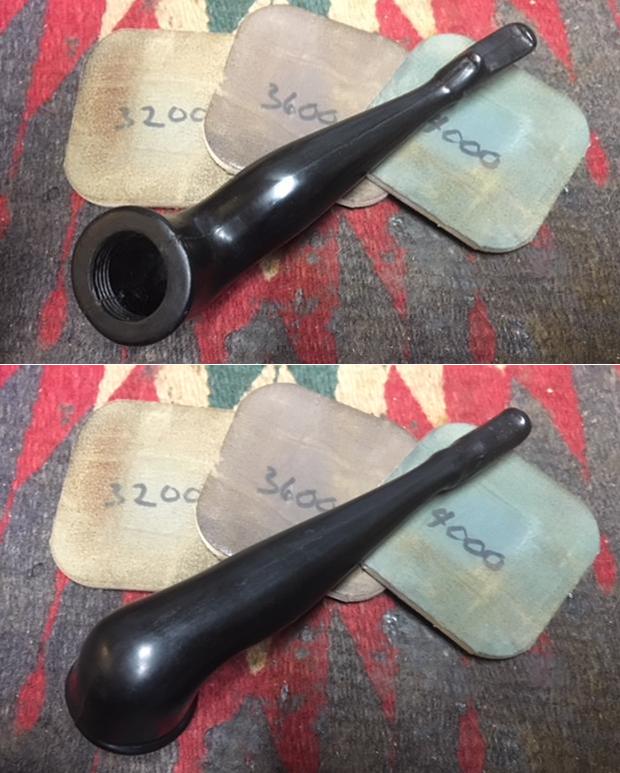
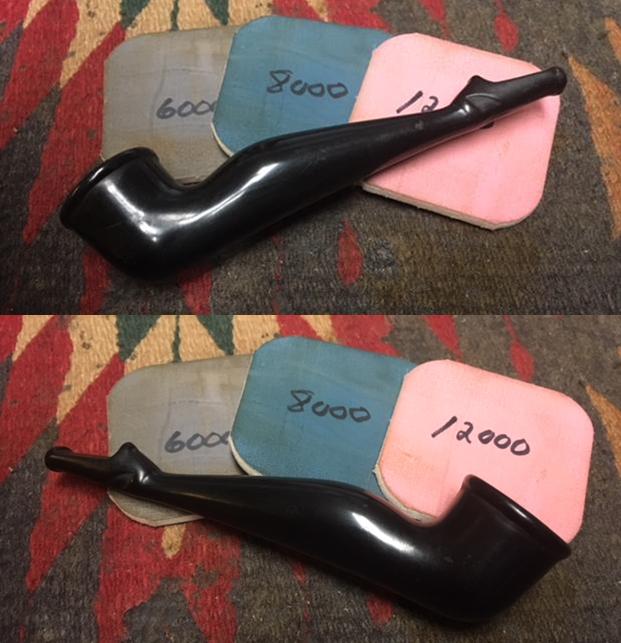
Tag Archives: contrast staining

Restoring a Second Bari De Luxe Mahogany Freehand…


Blog by Steve Laug

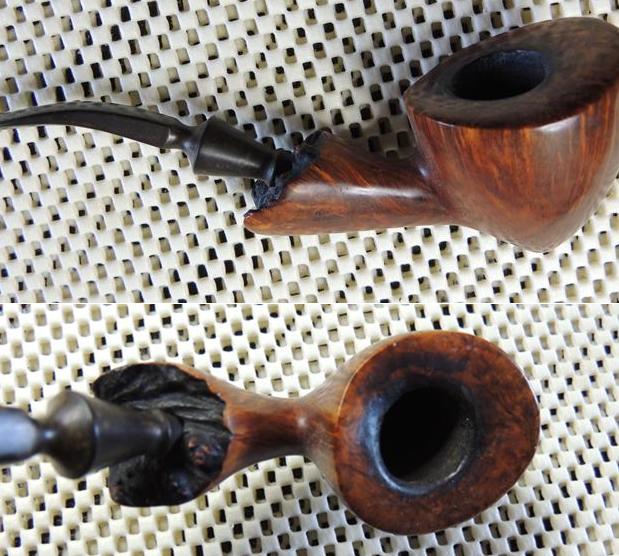
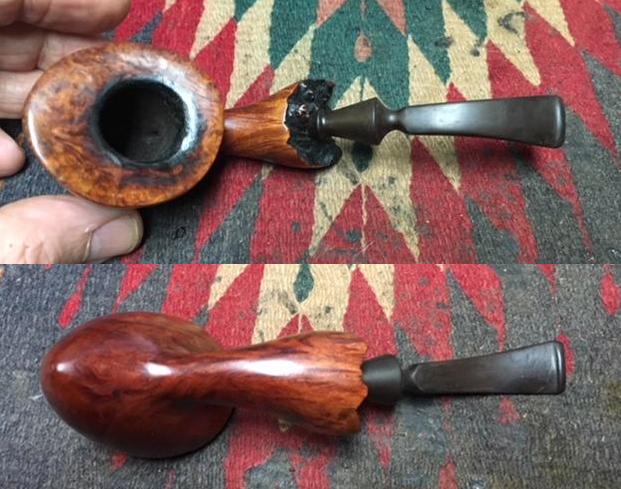
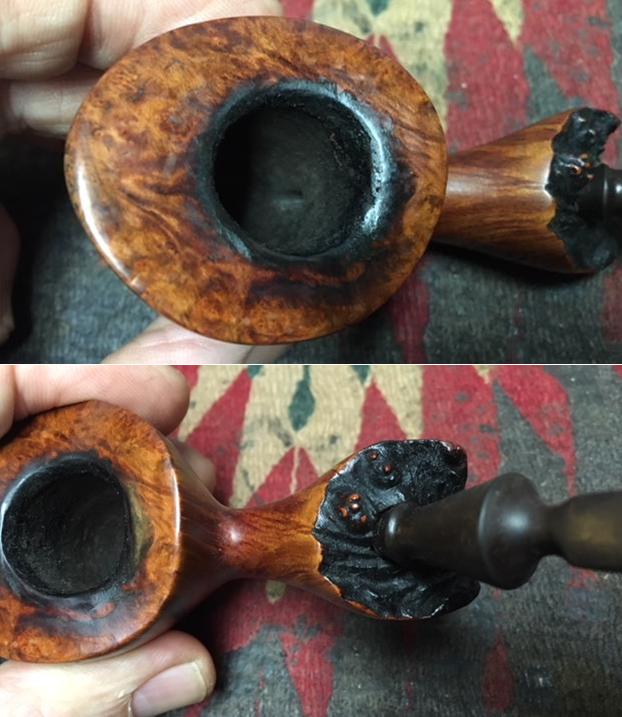
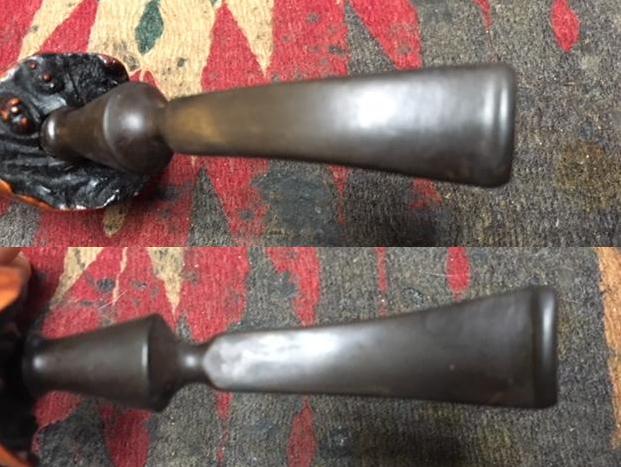
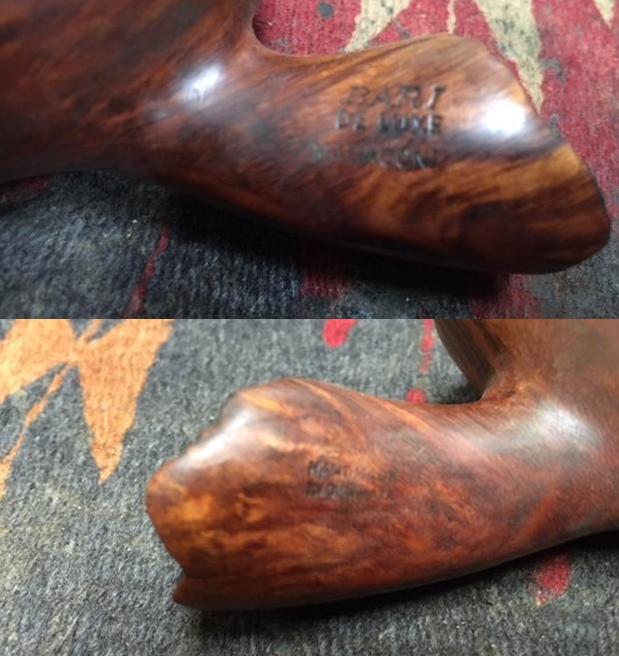
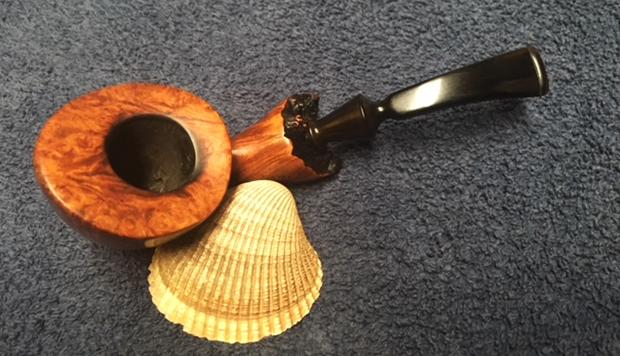
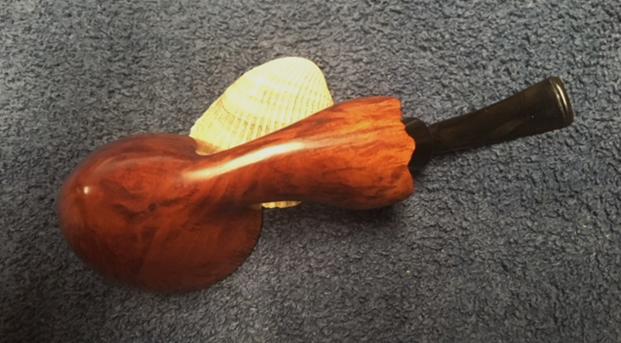
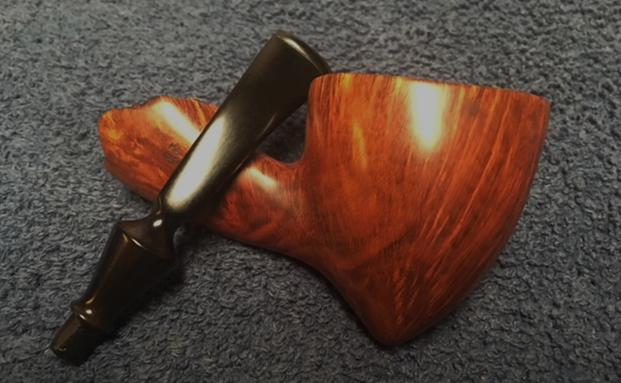
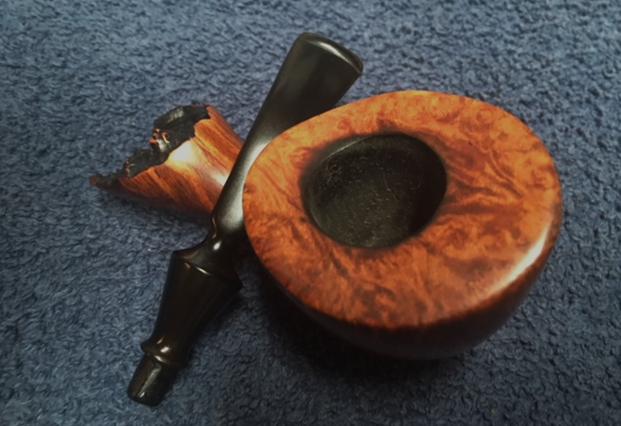
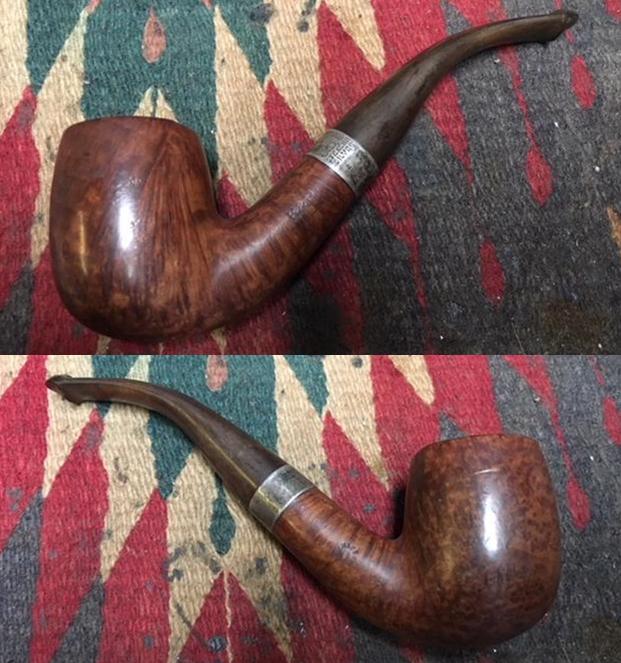
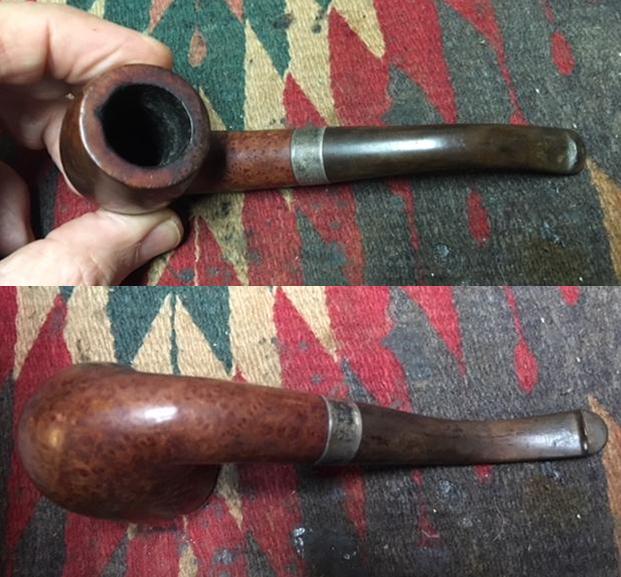
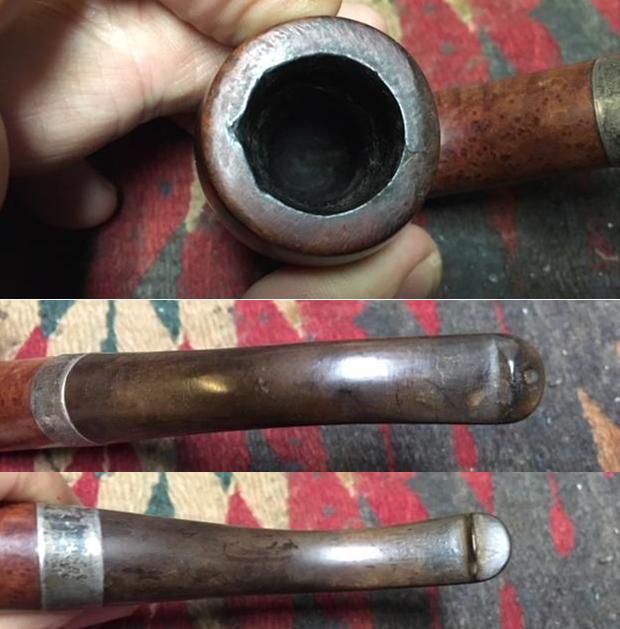
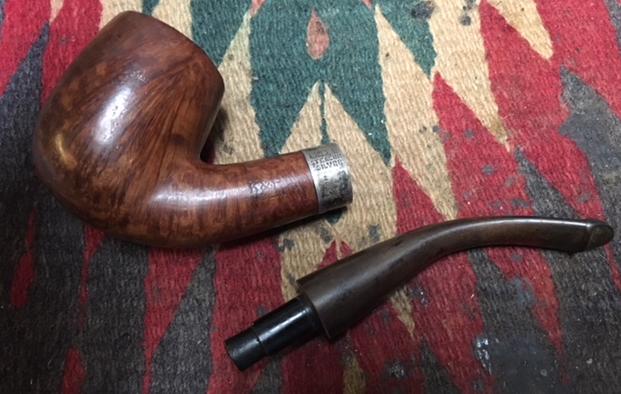
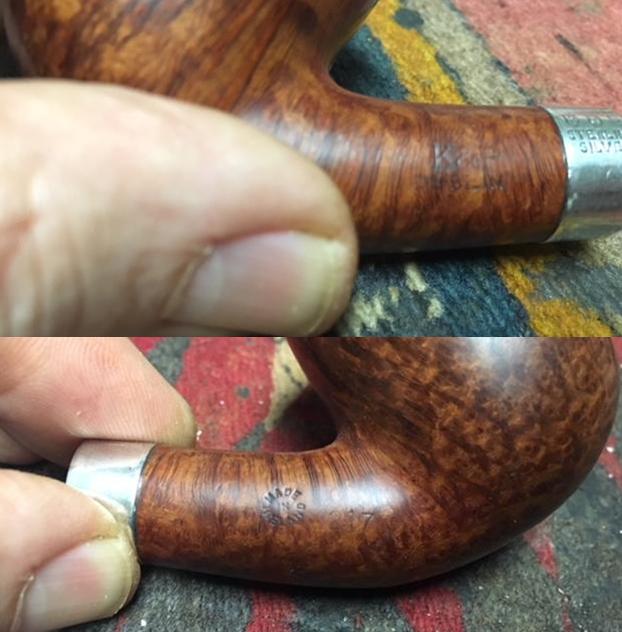
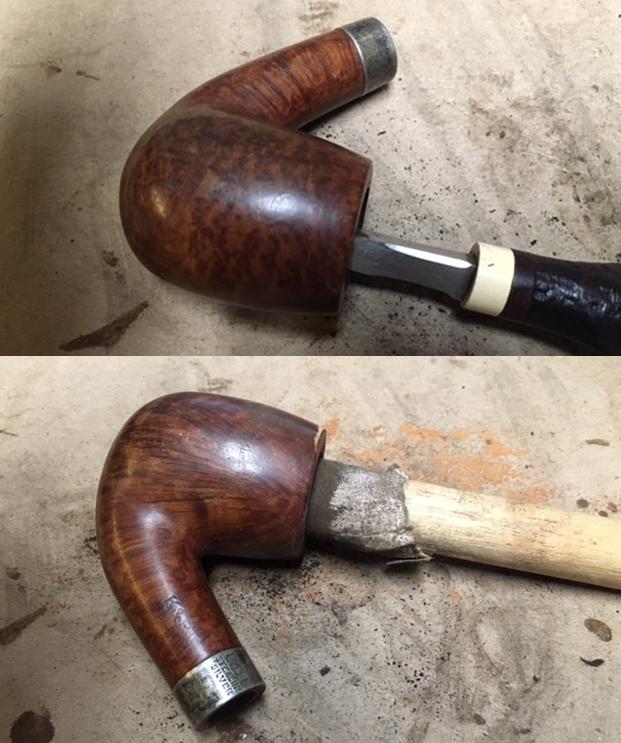
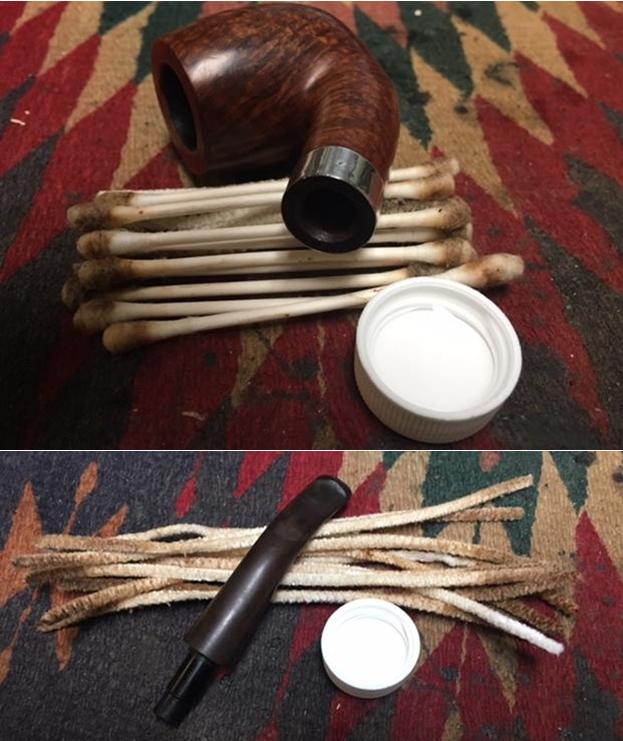
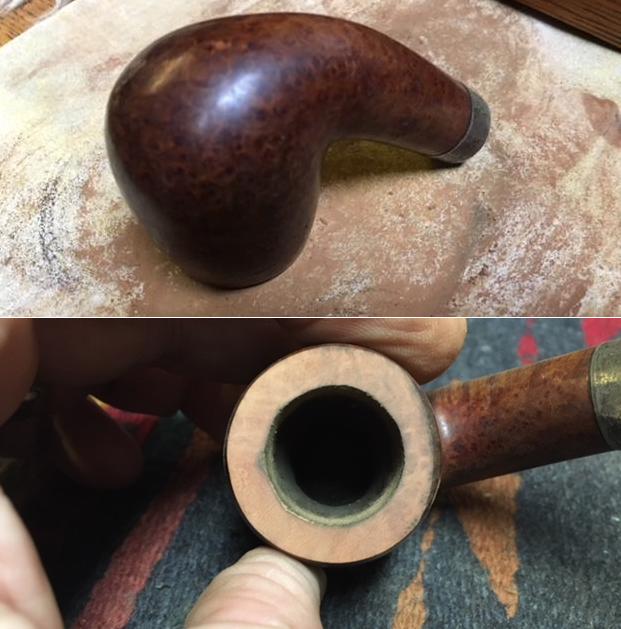
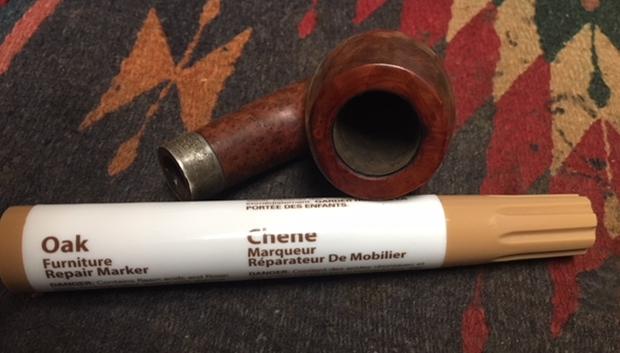
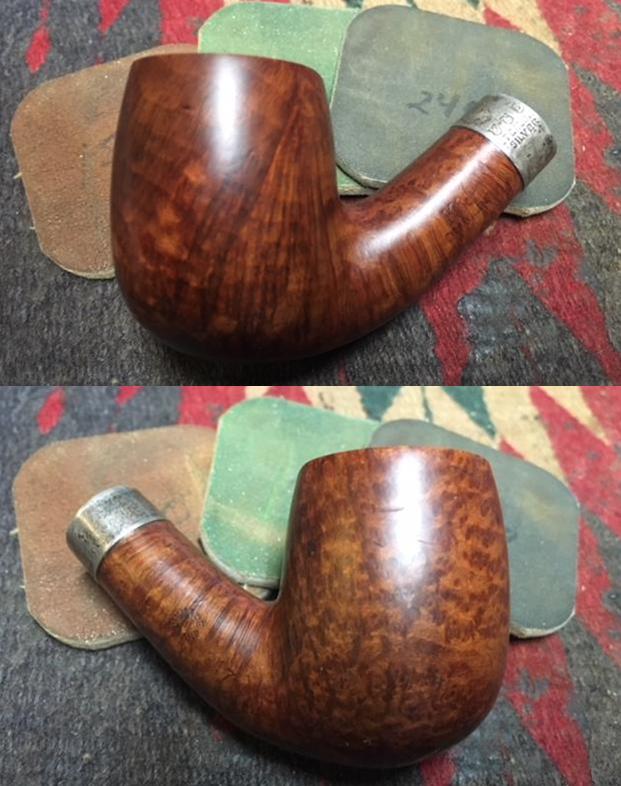
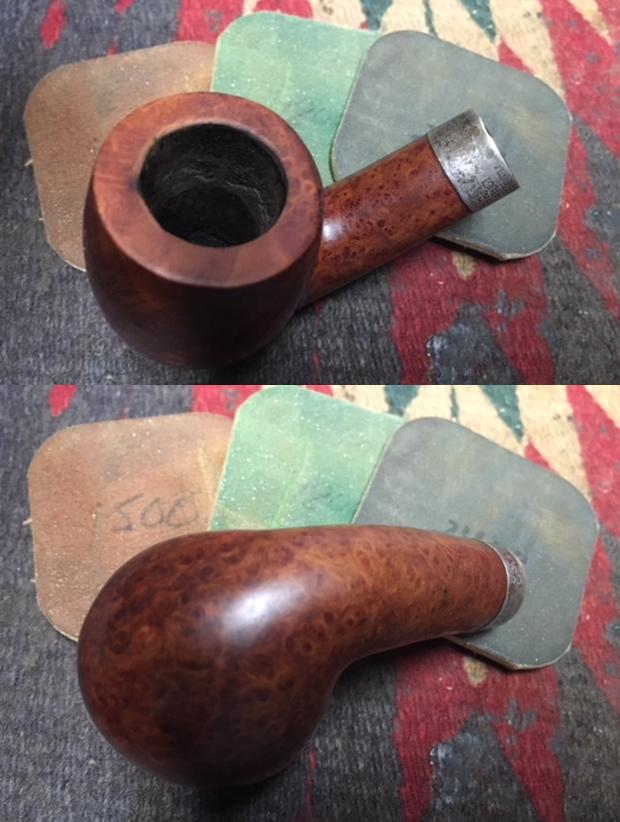
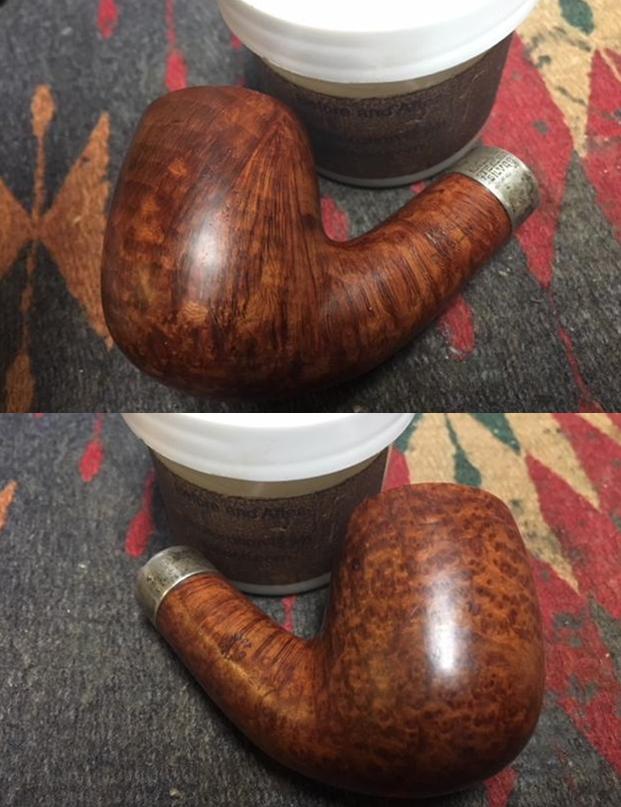
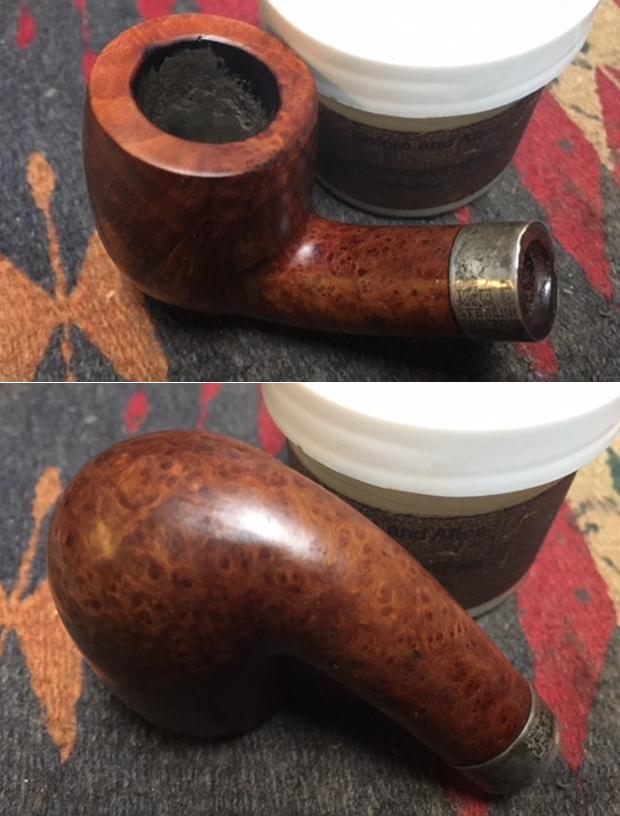
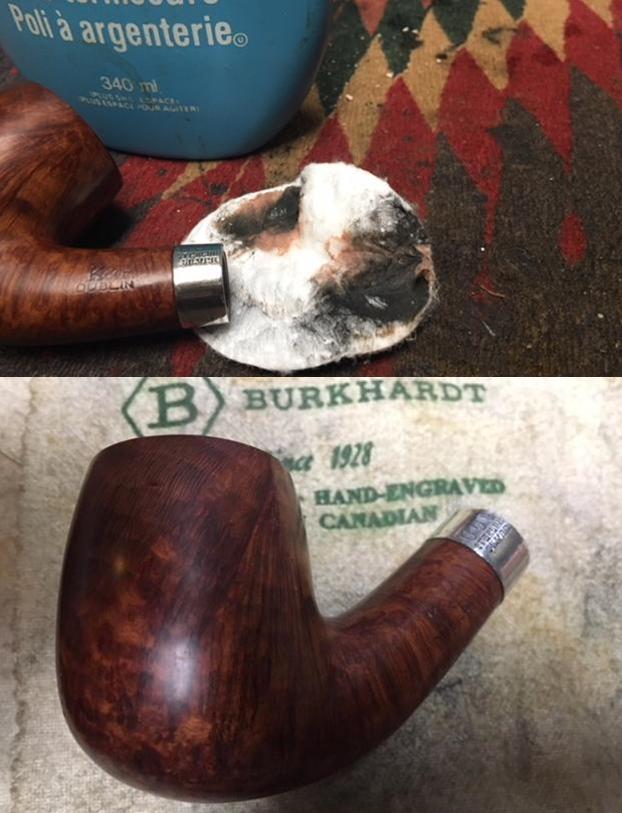
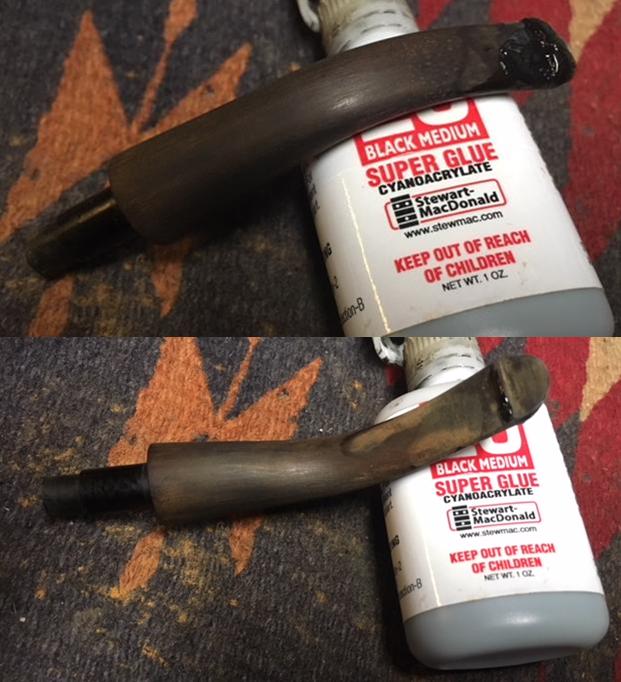
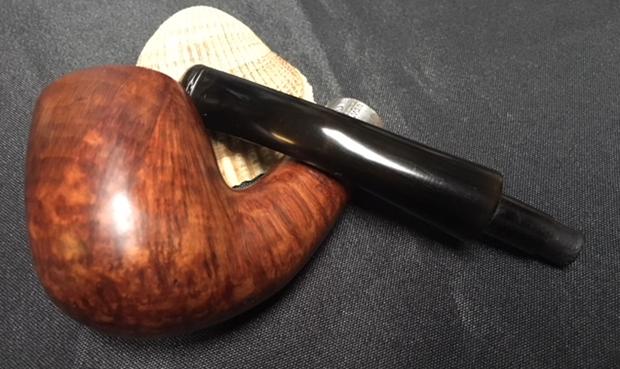
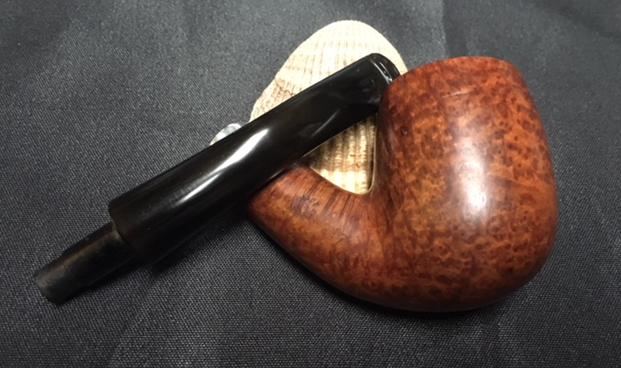
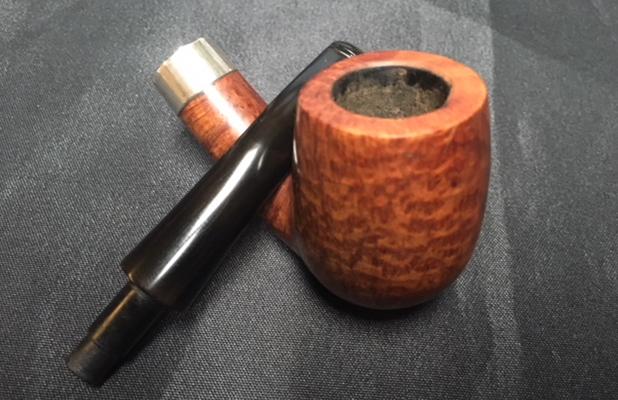
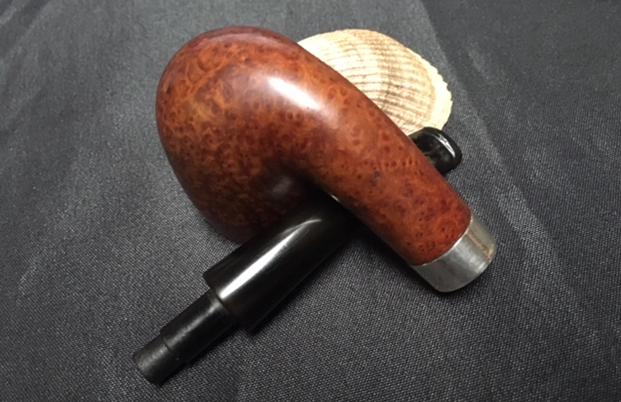
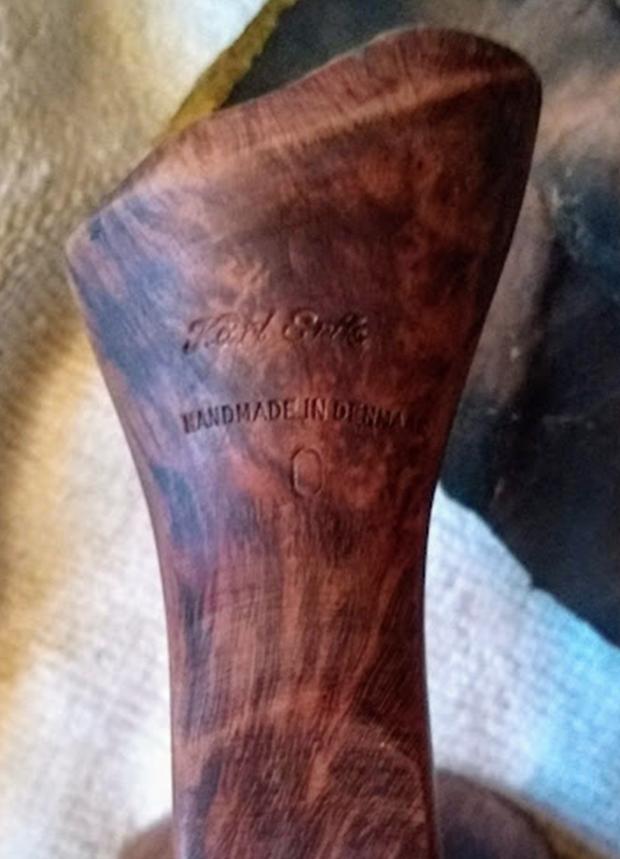
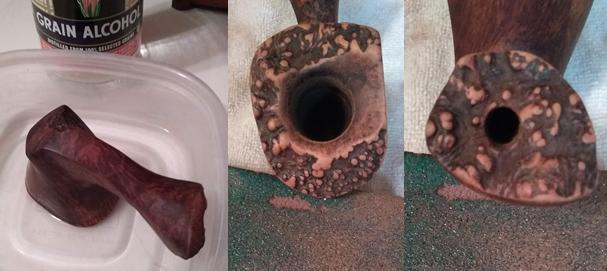
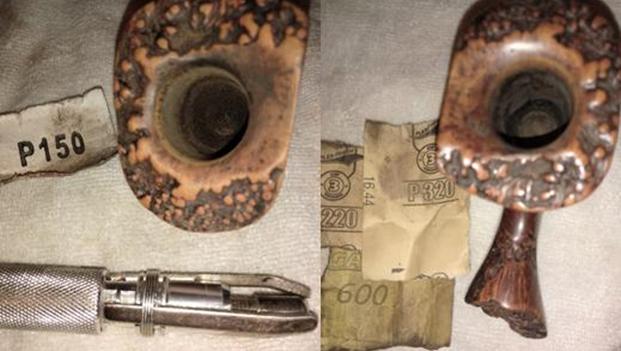
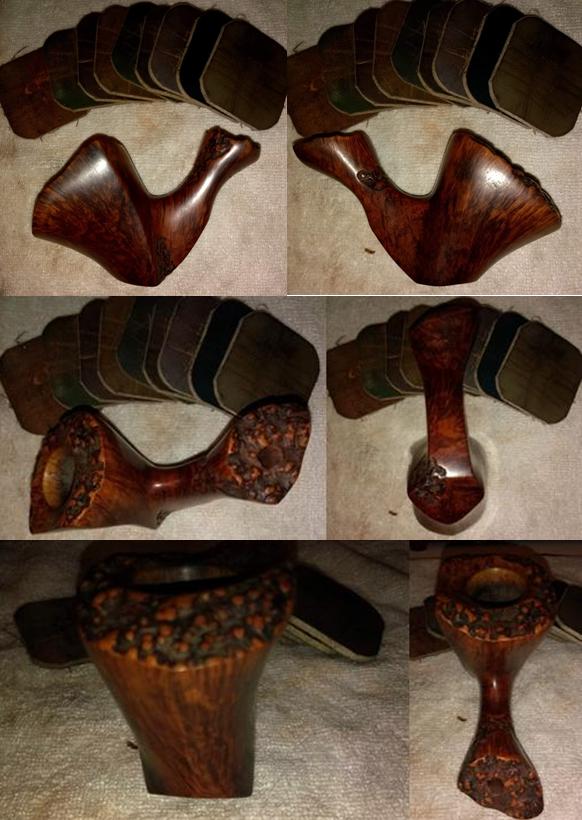
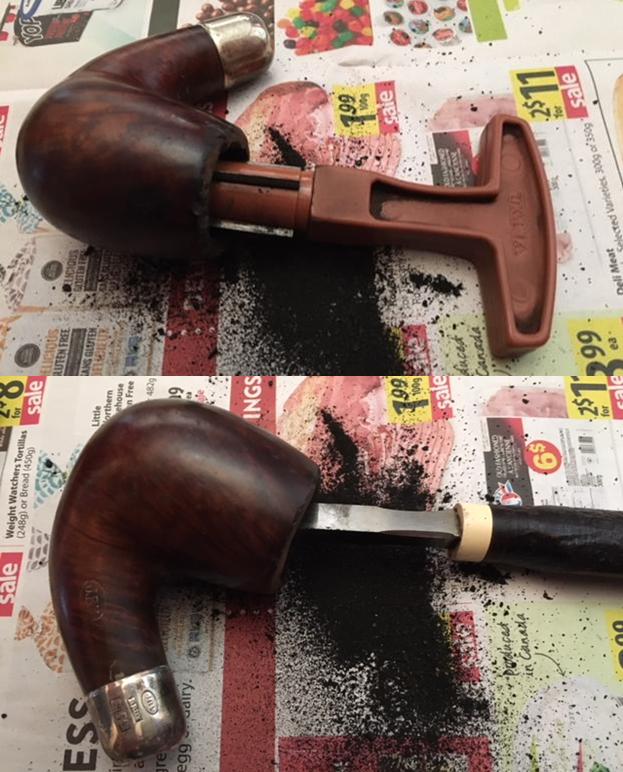
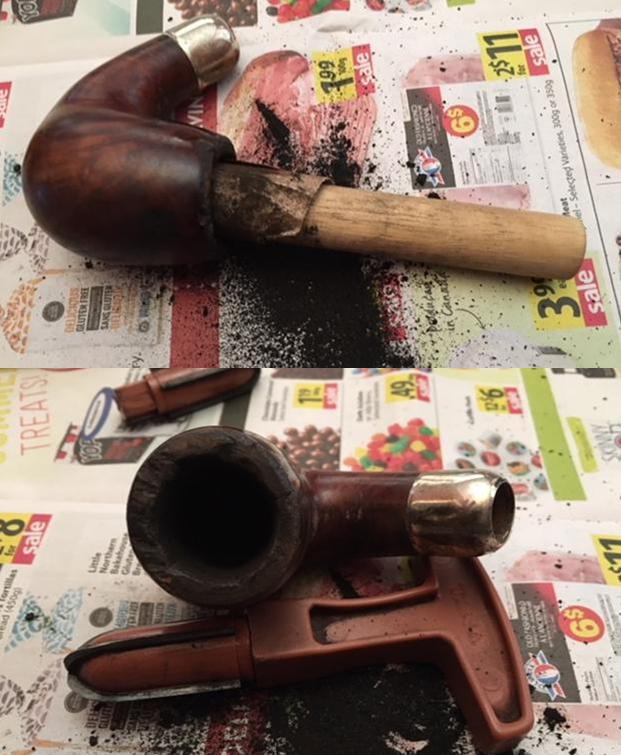
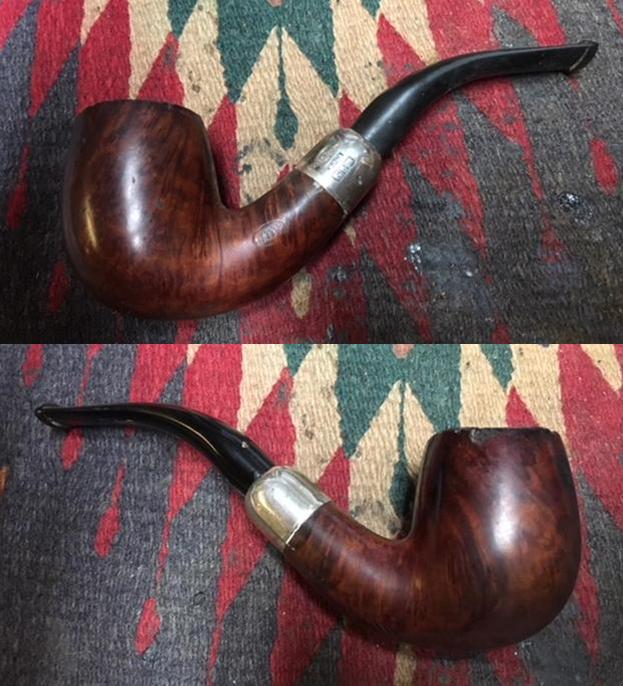
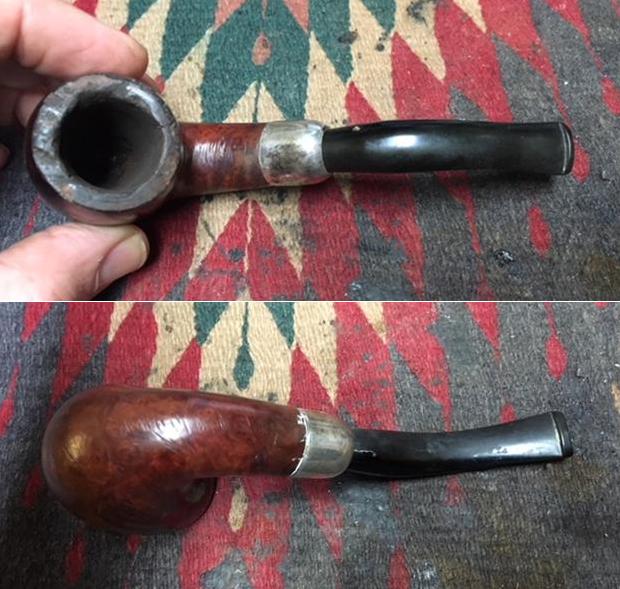
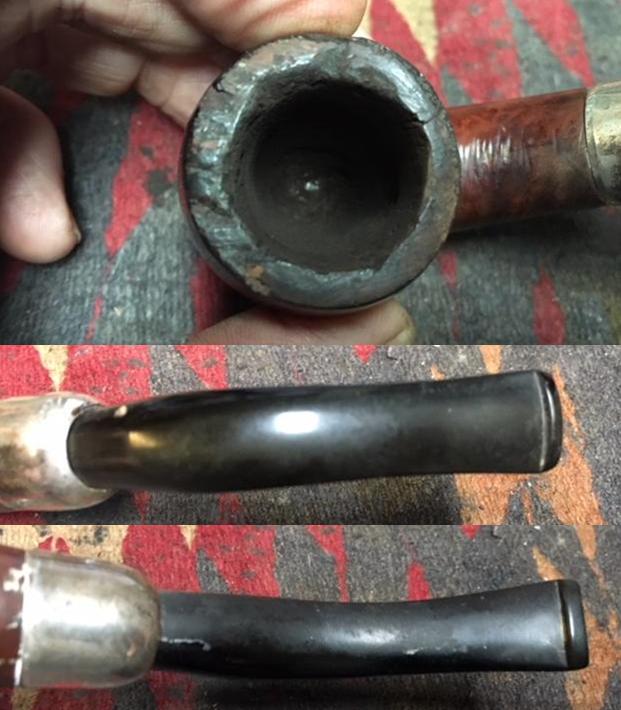
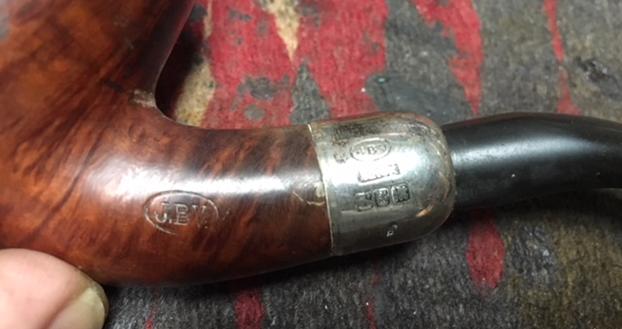
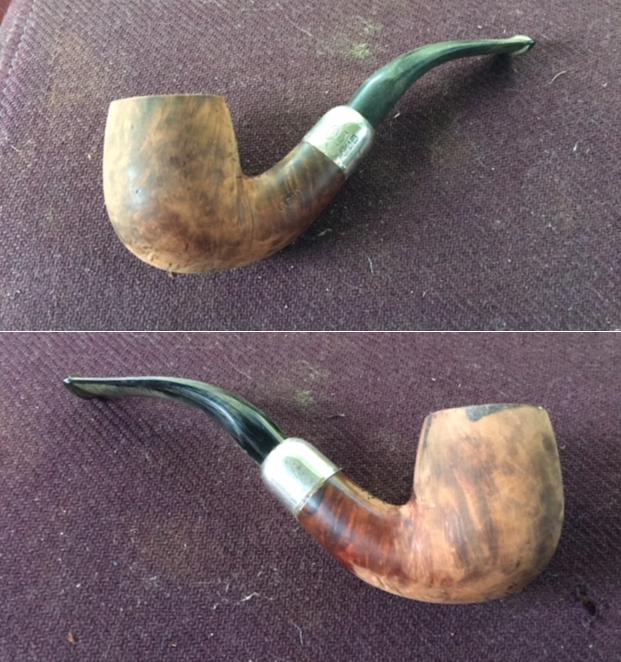
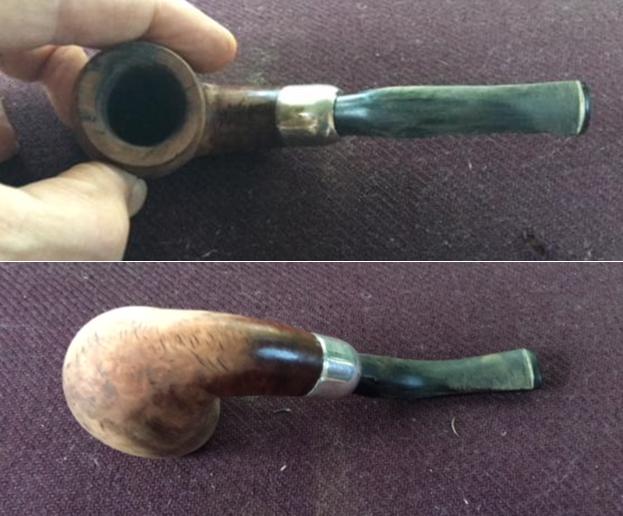
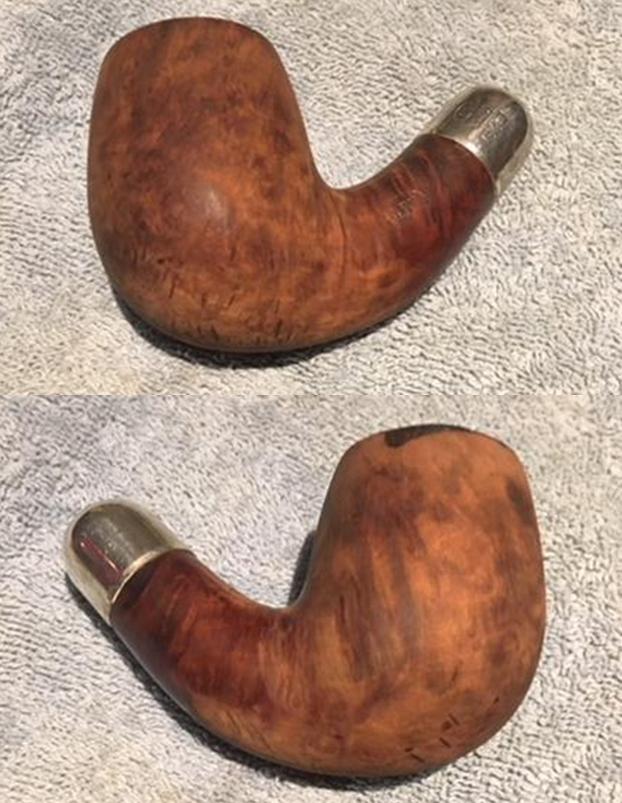
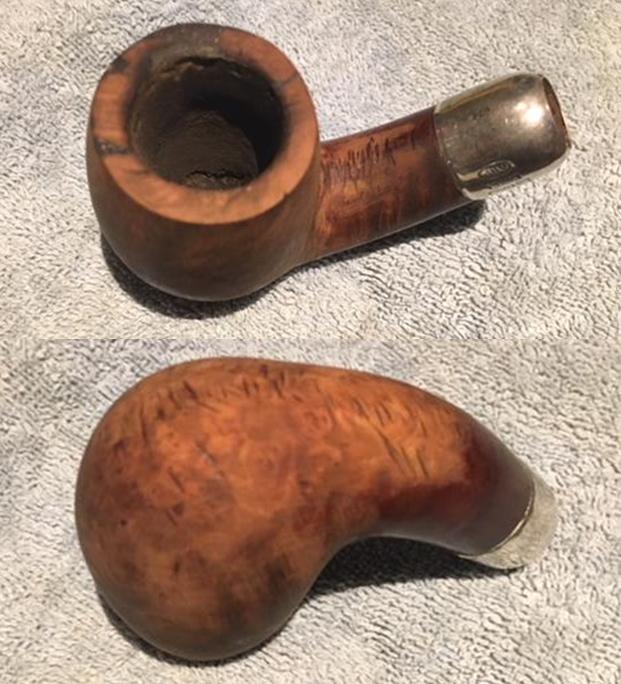
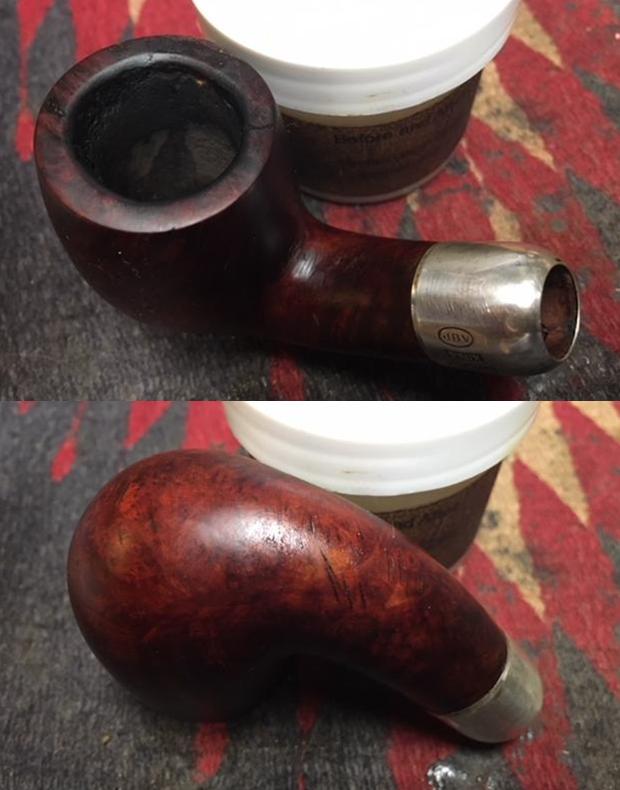
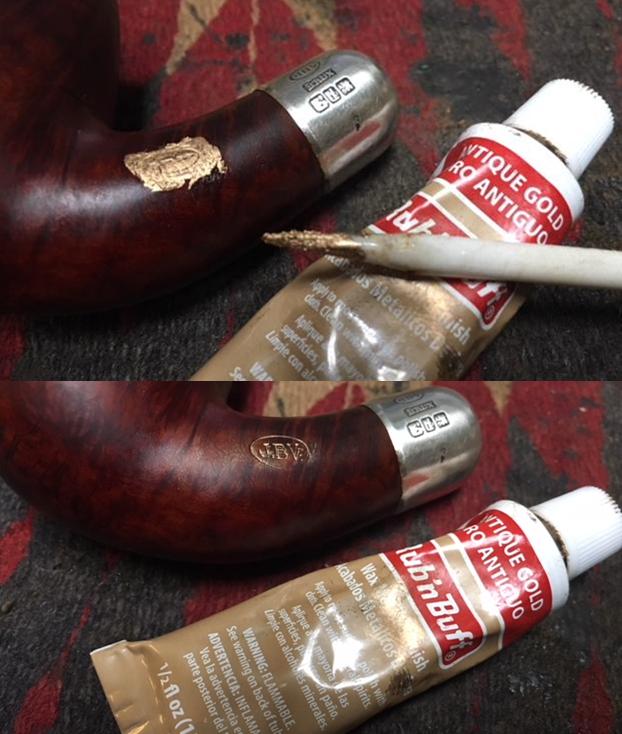
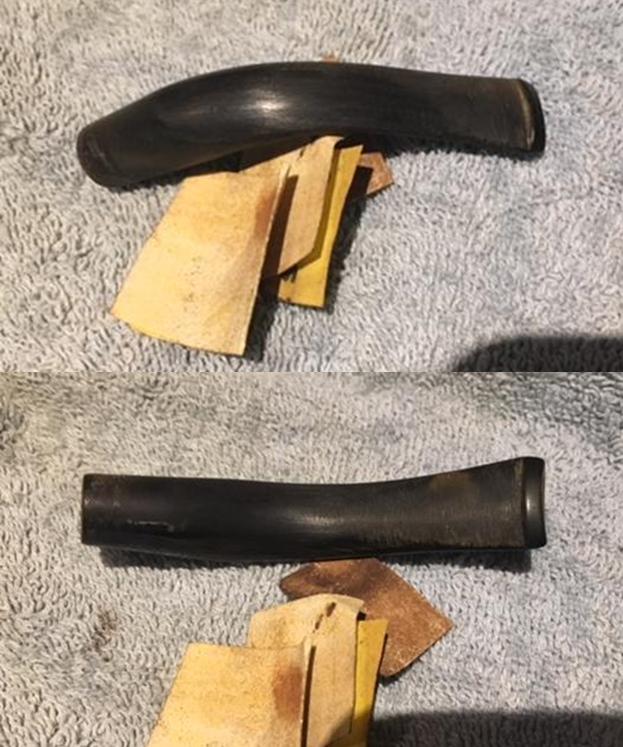
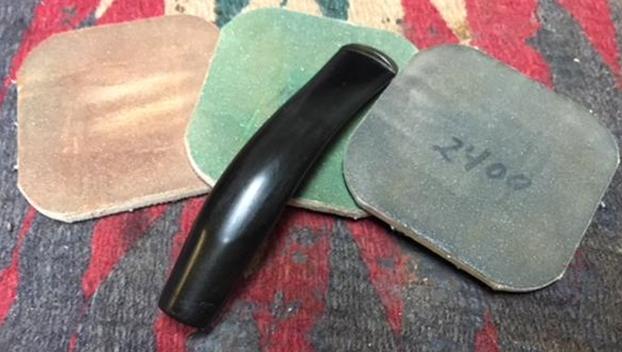
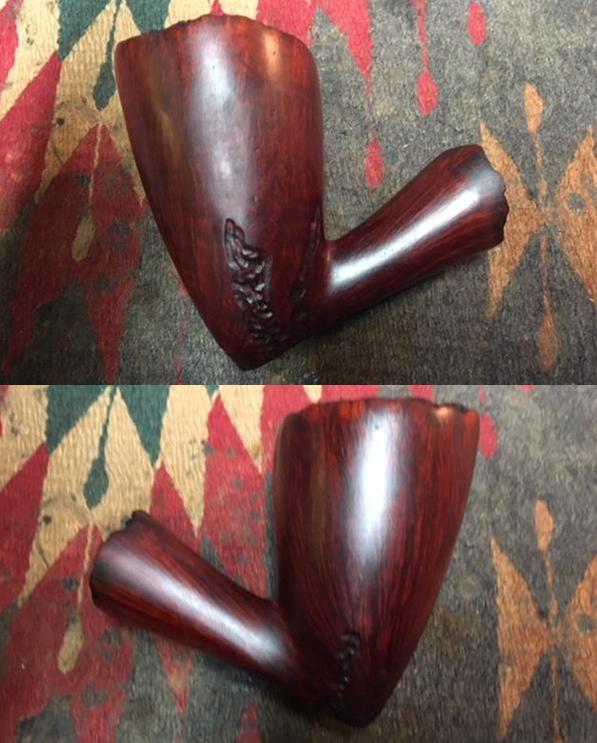
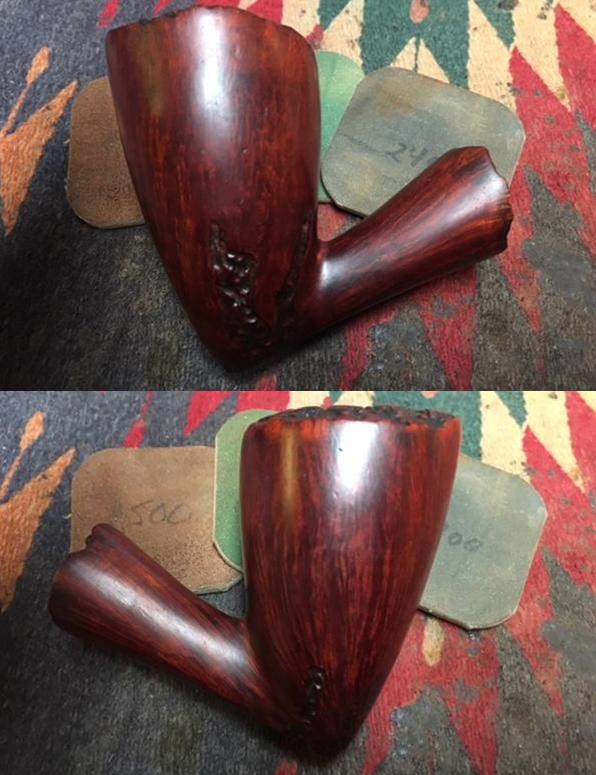
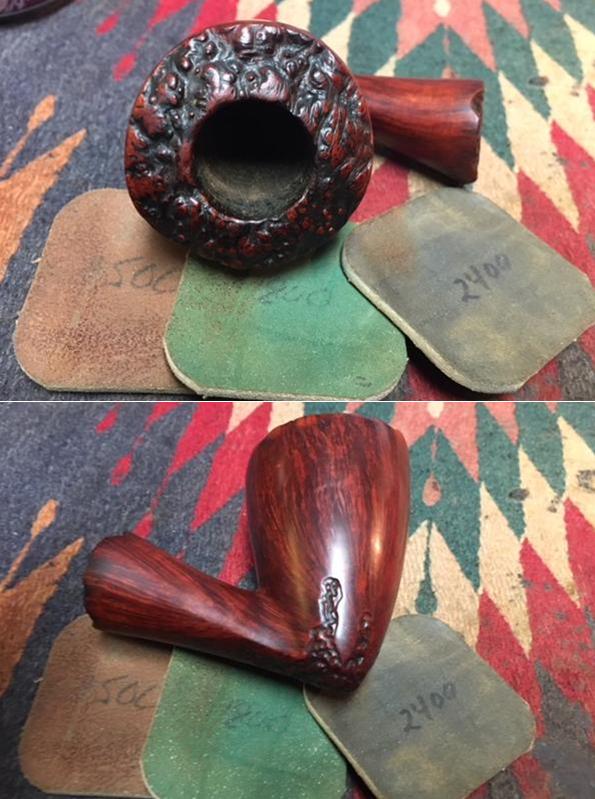
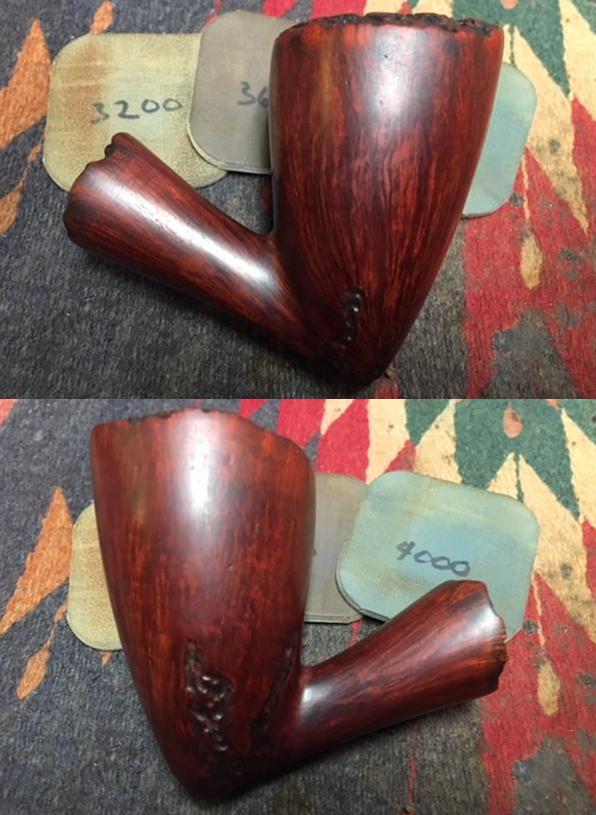
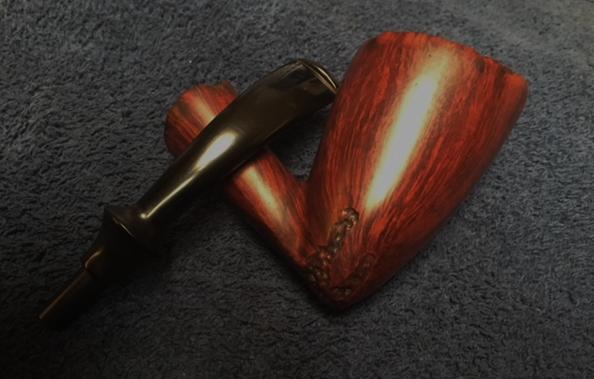
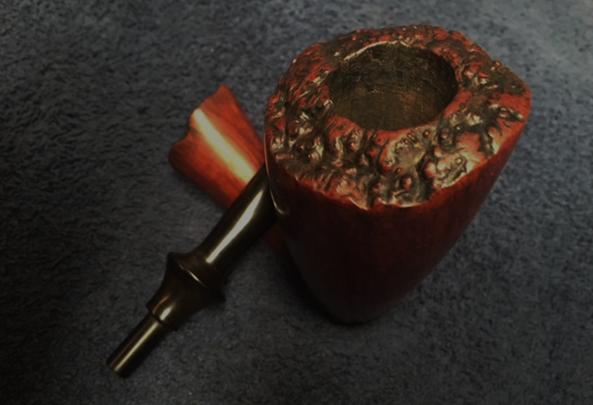
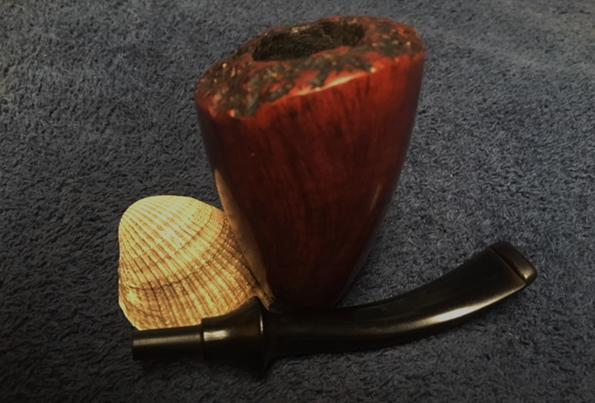
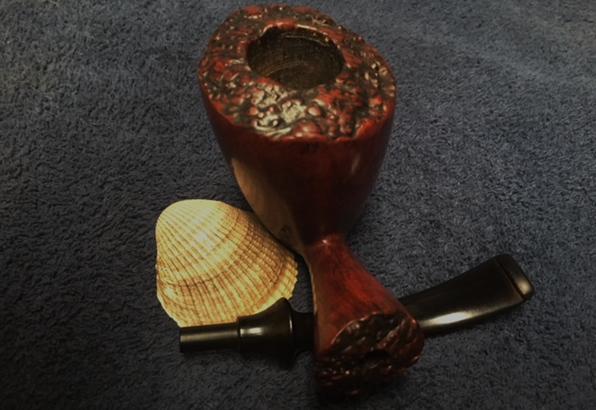
I was emailing back and forth with a pipeman in Edmonton who wanted to sell of his pipes. He was cleaning up things and thought he would see if I was interested in them. He said that he had several Bari’s that were in the lot and he wanted to move those out. He sent me photos of the pipes he had and we soon struck a deal. Since we were both in Canada it did not take long for the package to make its way to me. I opened it and went through his pipes to see what I had to work on. There were some pipe racks and accessories in the box as well. I went through the pipes and set them aside. Today I decided it was time to start working on them. I chose a second Bari De Luxe Mahogany Freehand as the second of those Bari’s that I would work on. I have included two of the photos of the pipe that he sent to me before I purchased the lot. You can see that it was a well-loved pipe and one that he smoked often. The finish on the sides and shank was in good condition but dirty. The shank end was a nice natural plateau but not as craggy as the previous one. The rim top had an over flow of lava on the top and there was a burn mark on the back inner edge of the rim. Under the tar and lava it looked like the rim top was in good condition. The stain highlighted the beautiful grain on the briar and the plateau was stained black in stark contrast to the reddish brown of the bowl. The bowl was caked and would need to be reamed but otherwise good condition. The stem was cleaner than the previous one and did not have any sticky substance on it. There was some oxidation under the oil but there were not any tooth marks or chatter on the surface. Tenon end was chipped and broken and would need to be repaired. I took the following photos of the pipe before I began the cleanup. (The pipe came in an original Bari pipe sock.) I took some close up photos of the rim top and the stem to show the condition of the pipe when I started. The rim top shows damage at the back inner edge of the bowl and on the rim top at that point as well. Other than general darkening and tar around the inner edge of the bowl the rim shows some nice grain. The plateau on the shank end is in excellent condition. The stem surface is in good condition other than some oxidation. When I took the stem out to examine the tenon and shank I found a surprise. When I spoke with John he was unaware of the issue as well and was surprised. The tenon had a large chunk out of the top side. There was almost half of the tenon missing.I took photos of the stamping on both sides of the shank. On the left it was stamped Bari over De Luxe over Mahogany and on the right side it was stamped Hand Made in Denmark. The stamping was faint toward the bowl on both sides of the shank but was still readable.In the previous blog on the Bari De Luxe Freehand I quoted a section from Pipedia on Bari pipes. Here is the link to the article on Pipedia: https://pipedia.org/wiki/Bari. I summarize the material that I found there as it gives a clear picture of the brand. I have been working on several pipes by Viggo Nielsen recently so it was a good reminder.

Pipedia states that Bari Piber was founded by Viggo Nielsen in Kolding, Denmark around the turn of 1950/51. His sons Kai and Jørgen both grew into their father’s business from a very young age and worked there till 1975. Both have become successful pipe makers.

Bari successfully adapted the new Danish design that had been started mainly by Stanwell for its own models. Bari was sold in 1978 to Van Eicken Tobaccos in Hamburg, Germany though the pipes were still made in Denmark. From 1978 to 1993 Åge Bogelund and Helmer Thomsen headed Bari’s pipe production.

Helmer Thomson bought the company in 1993 re-naming it to “Bari Piber Helmer Thomsen”. The workshop moved to more convenient buildings in Vejen. Bogelund, who created very respectable freehands of his own during the time at Bari got lost somehow after 1993. Bari’s basic conception fundamentally stayed the same for decades: series pipes pre-worked by machines and carefully finished by hand – thus no spectacular highgrades but solid, reliable every day’s companions were what they turned out. The most famous series are the smooth “Classic Diamond” and the blasted “Wiking”.

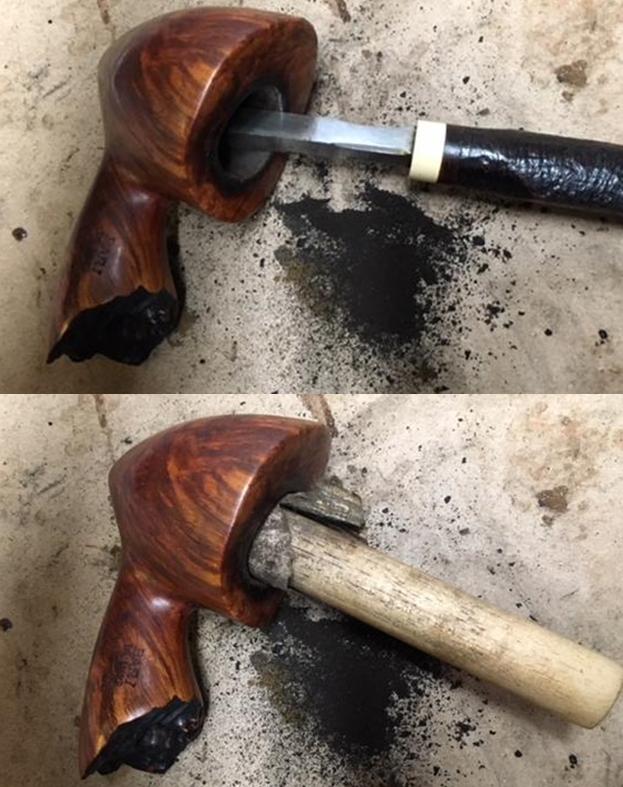
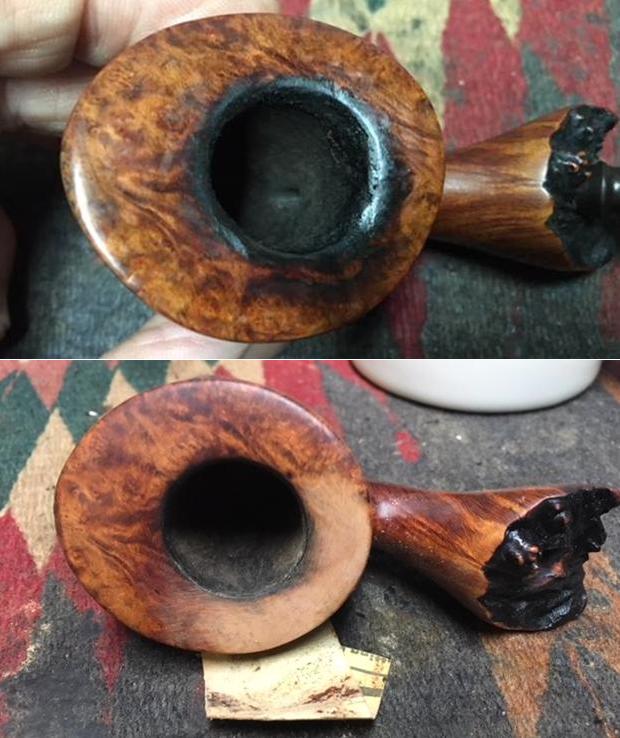
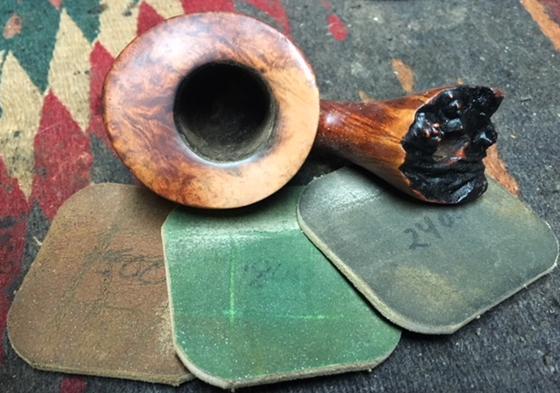
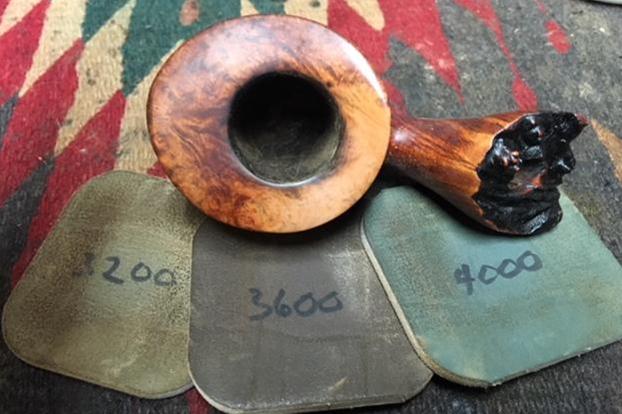
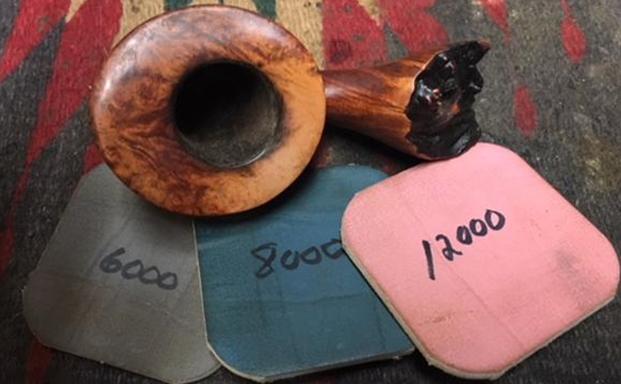
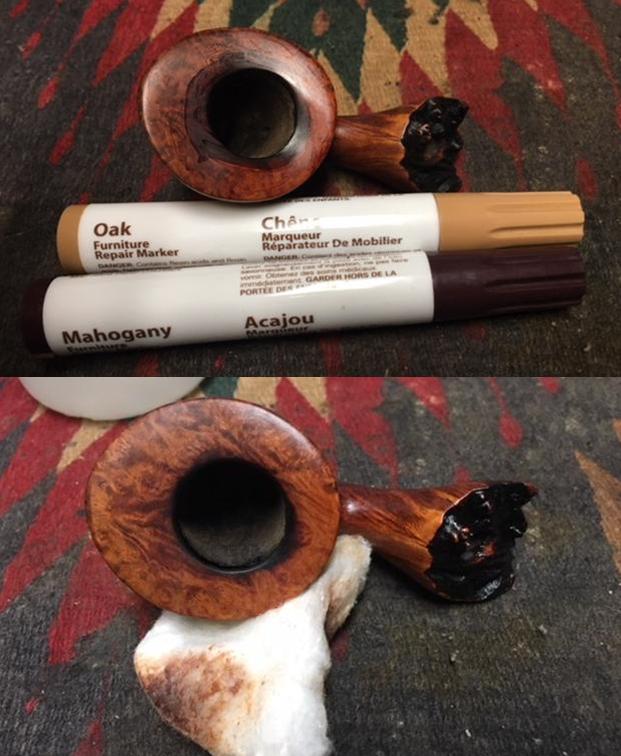
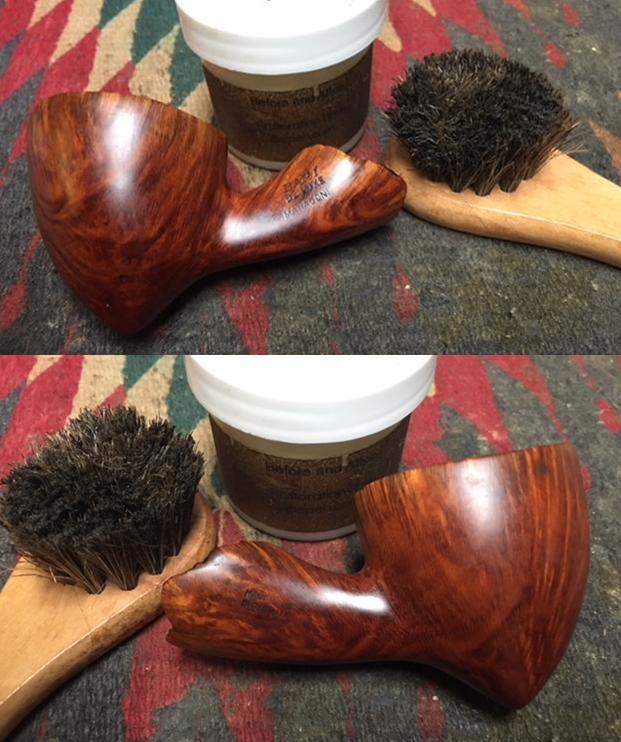
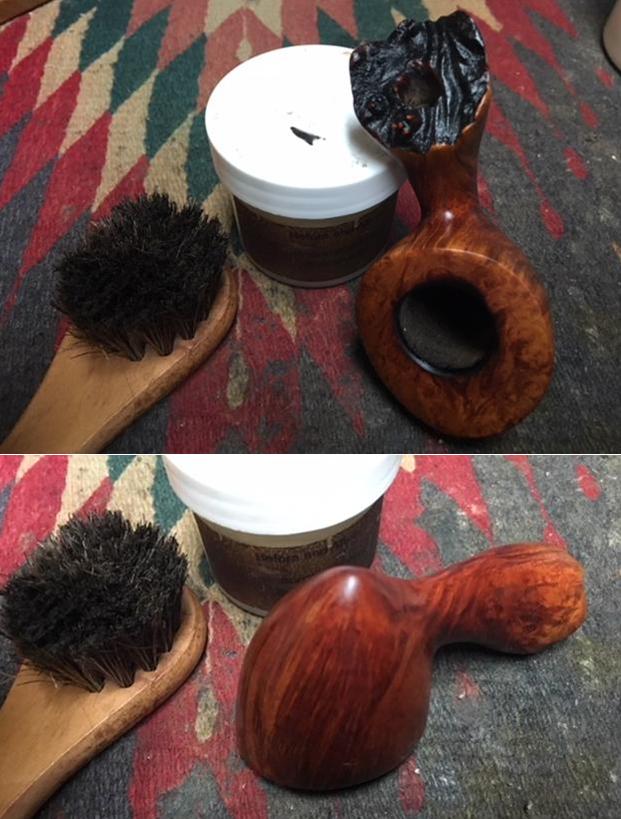
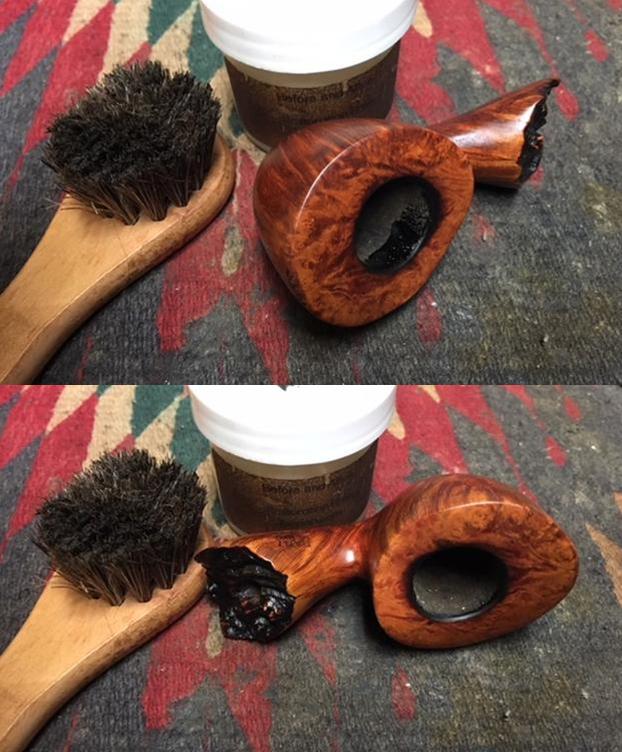
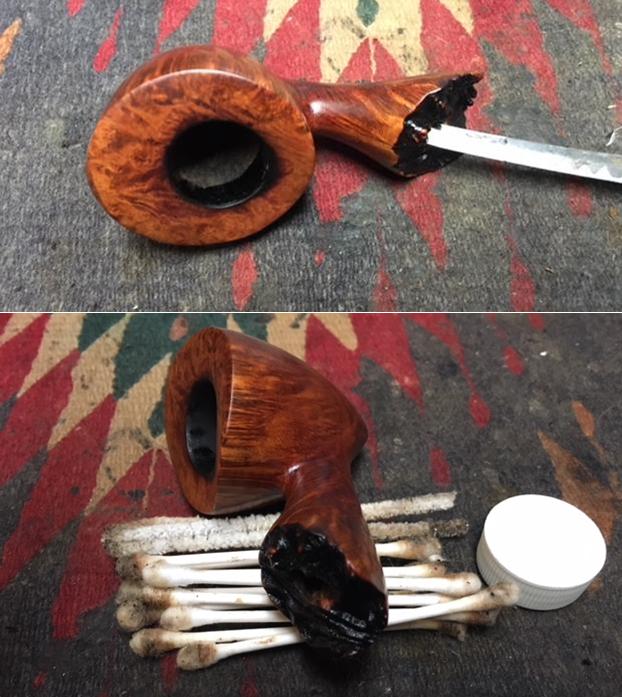
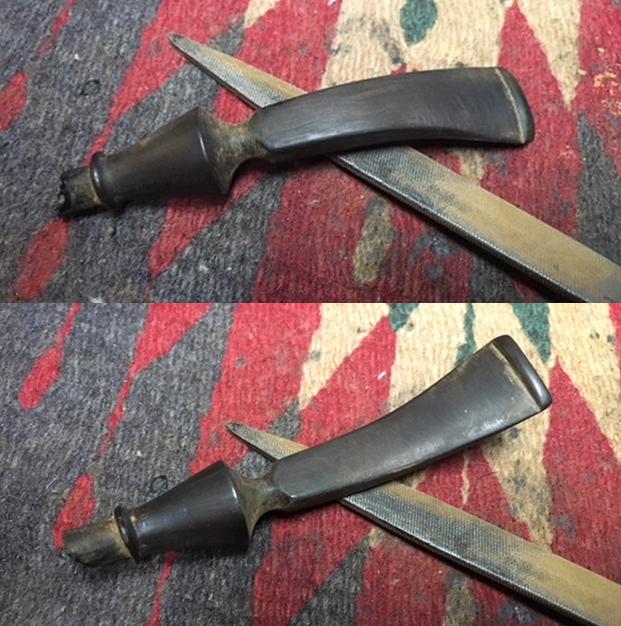
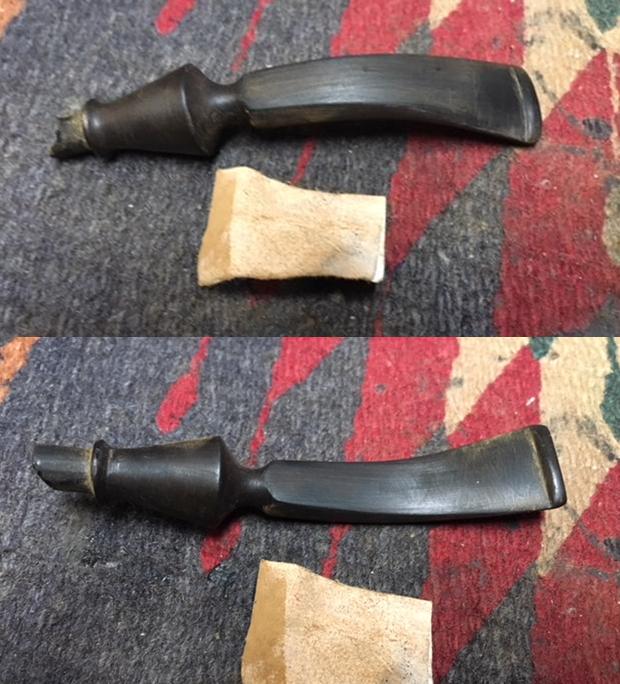
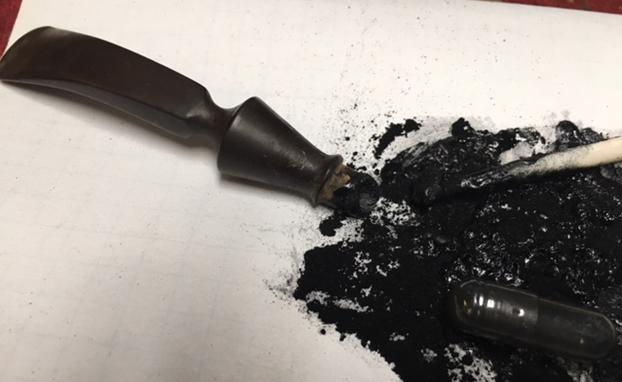
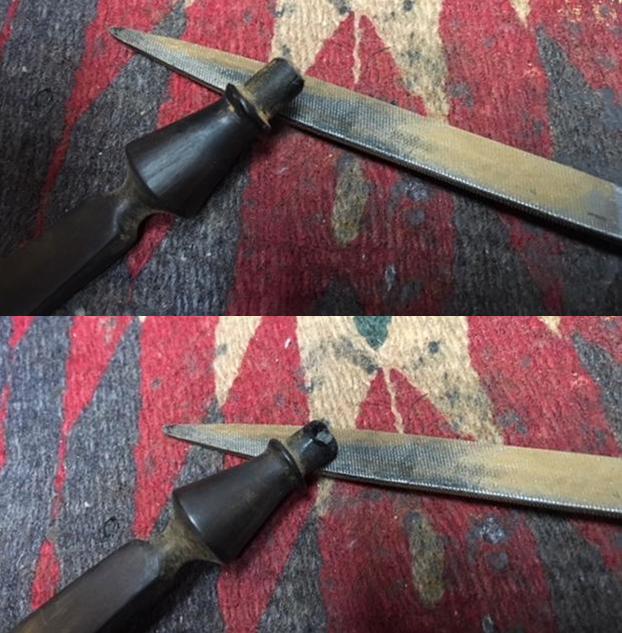
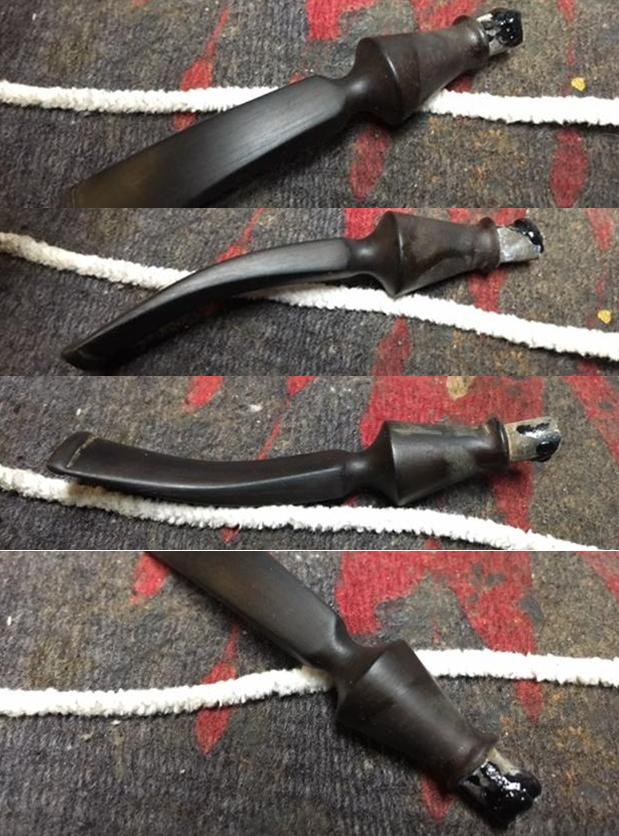
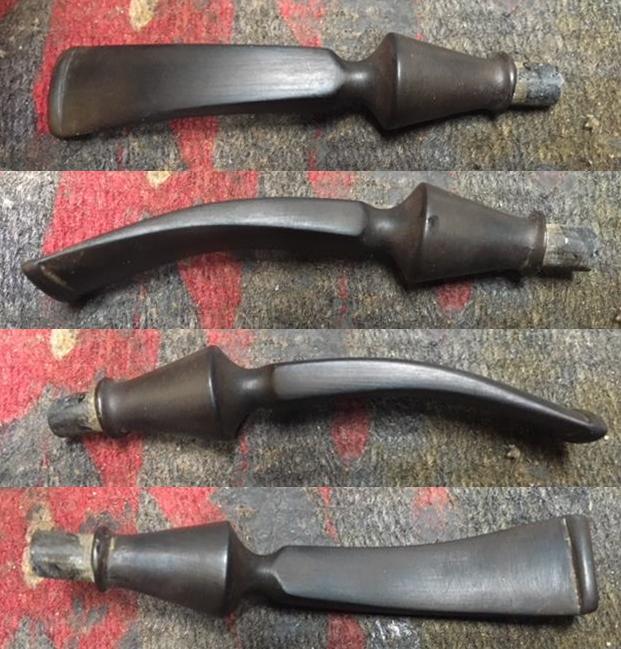
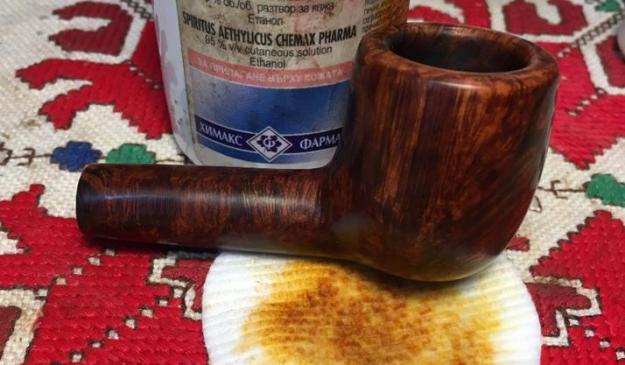
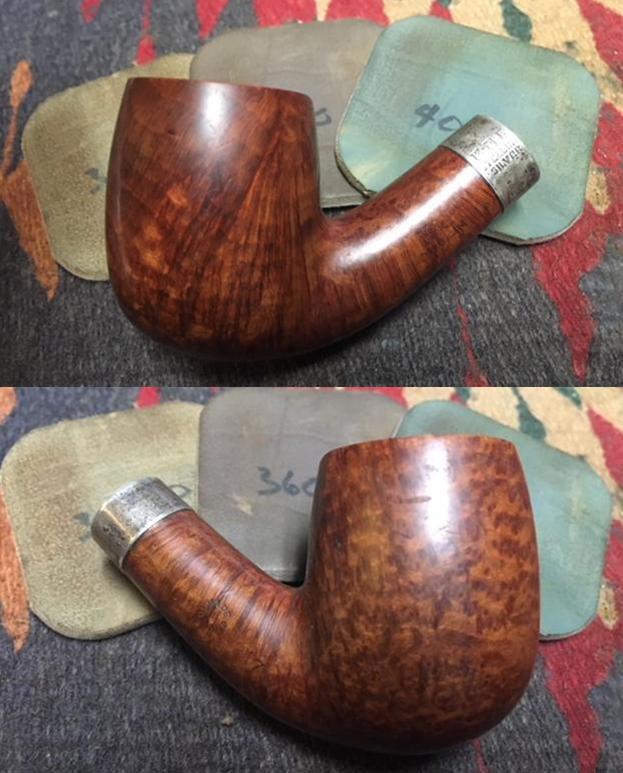
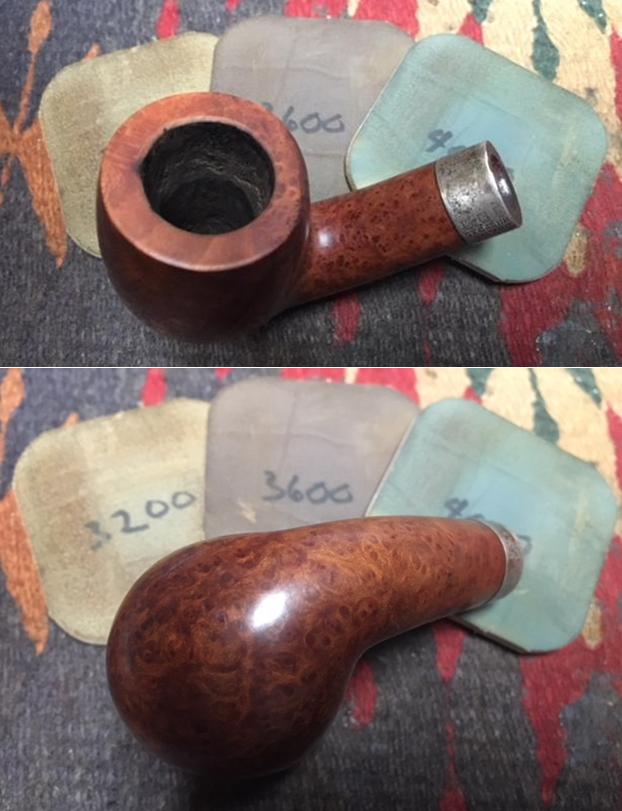
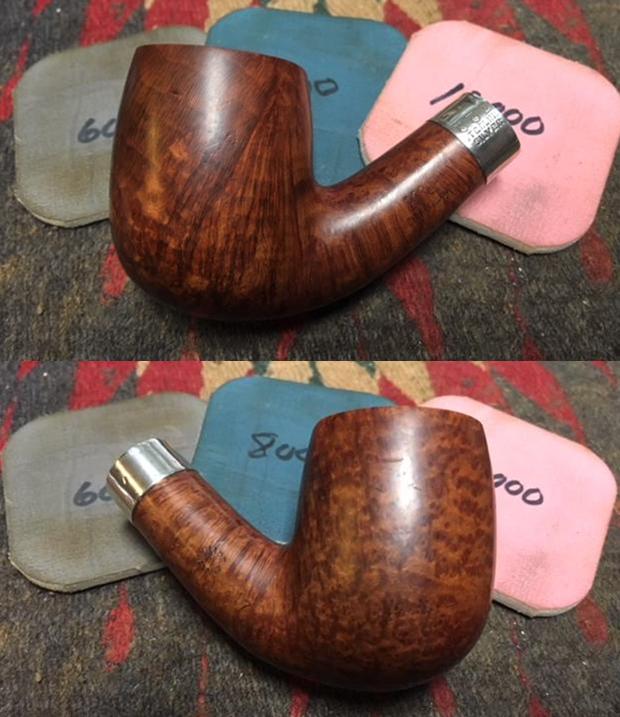
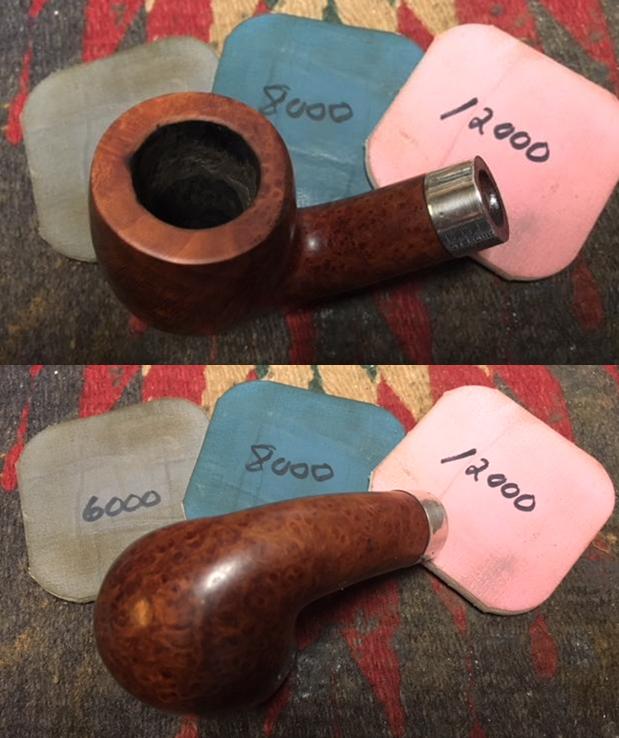
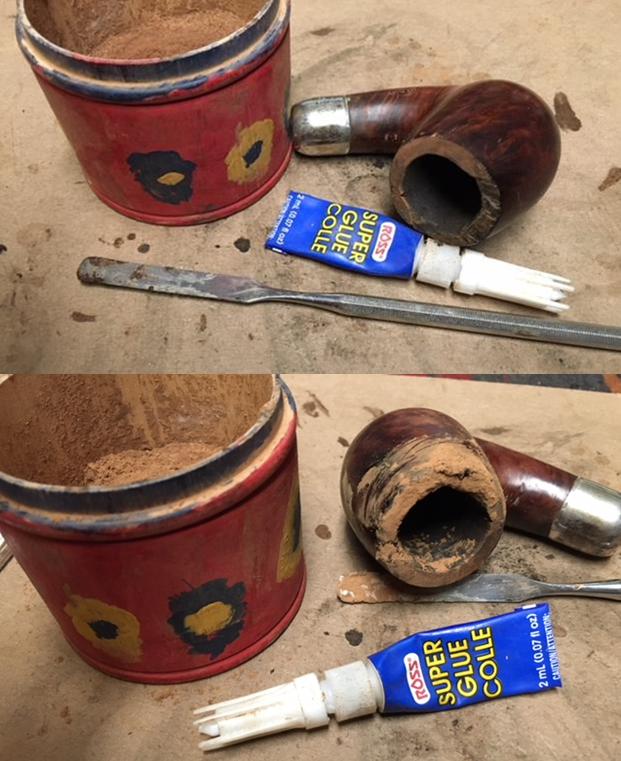
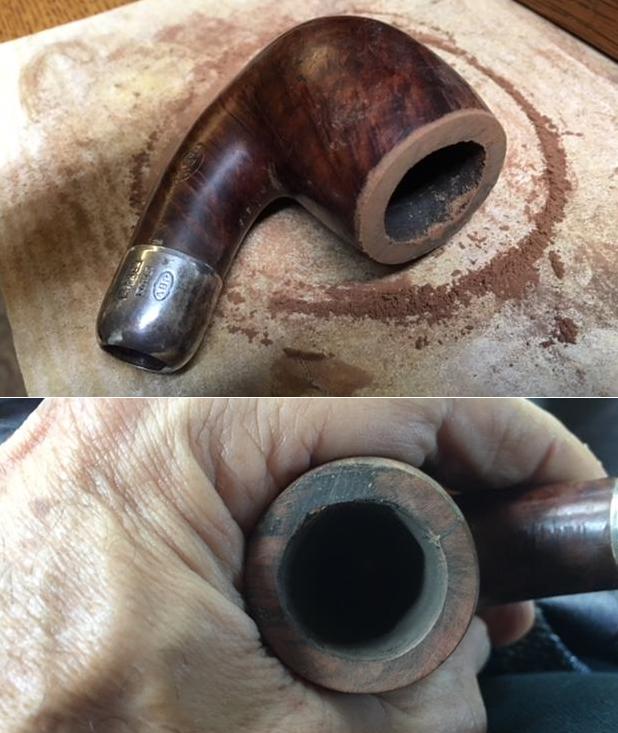
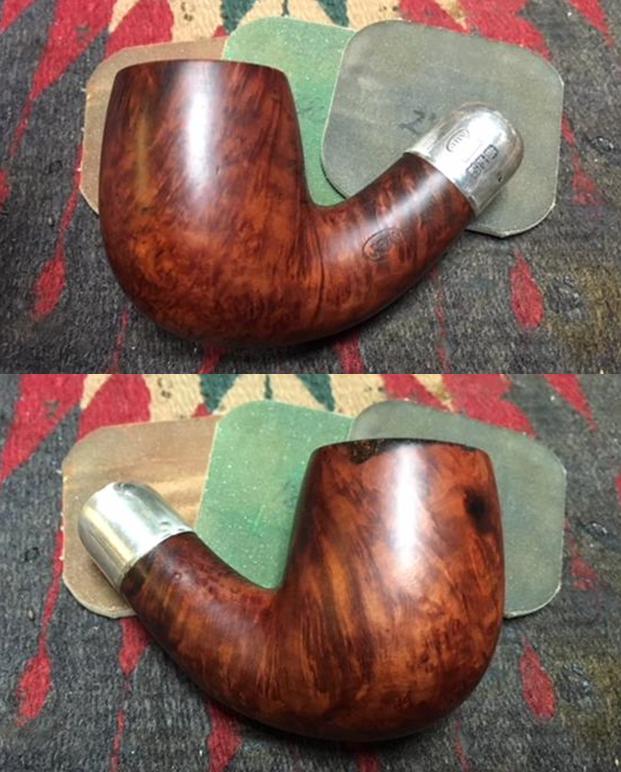
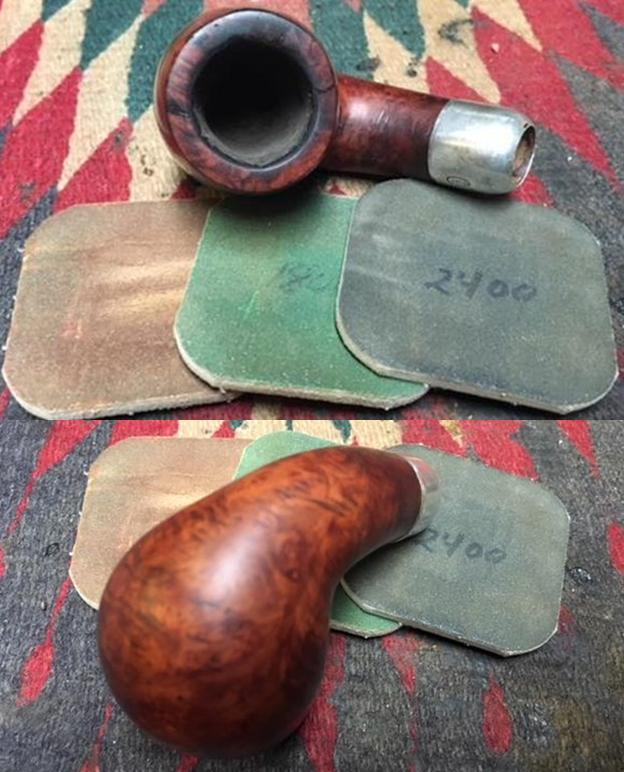
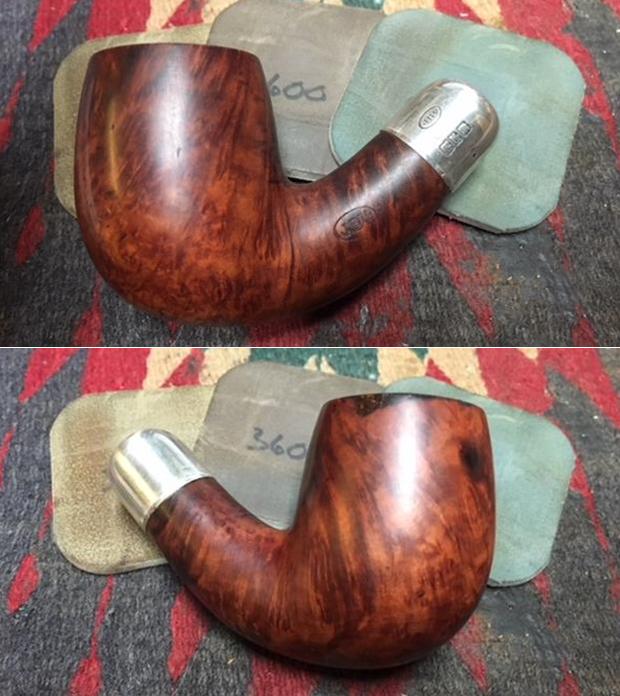
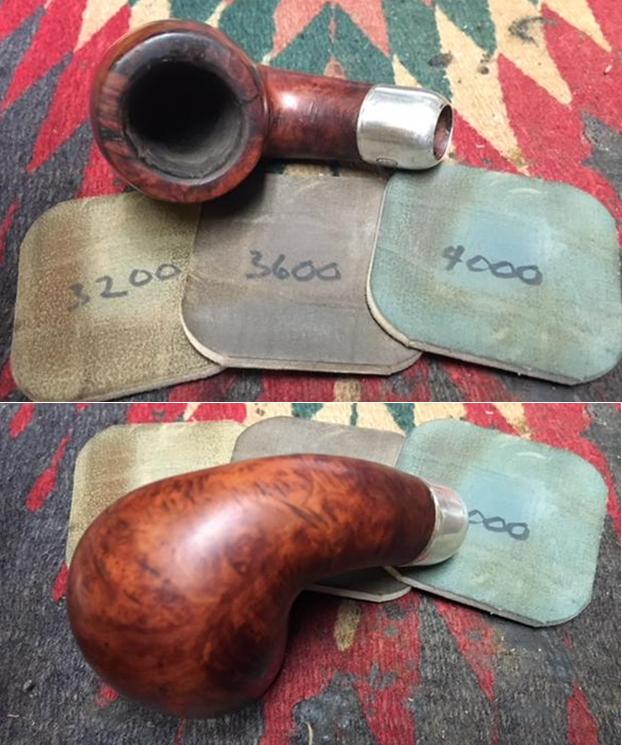
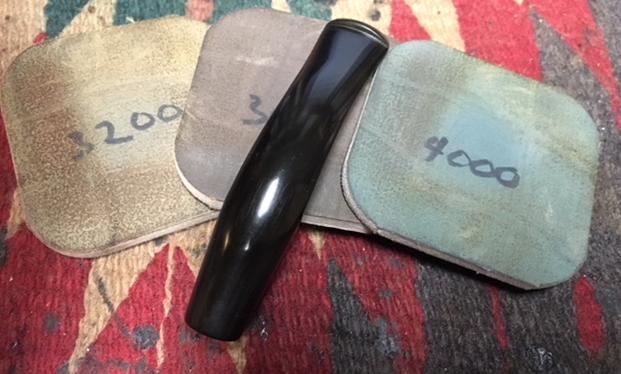
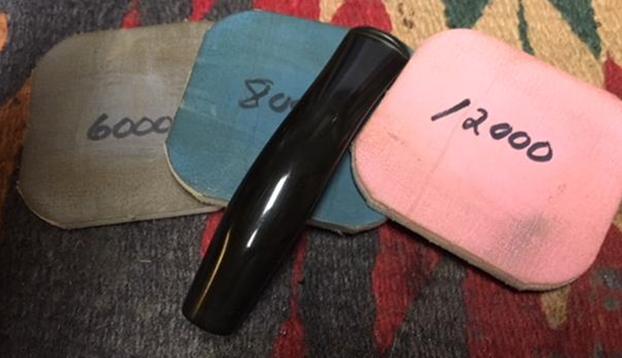
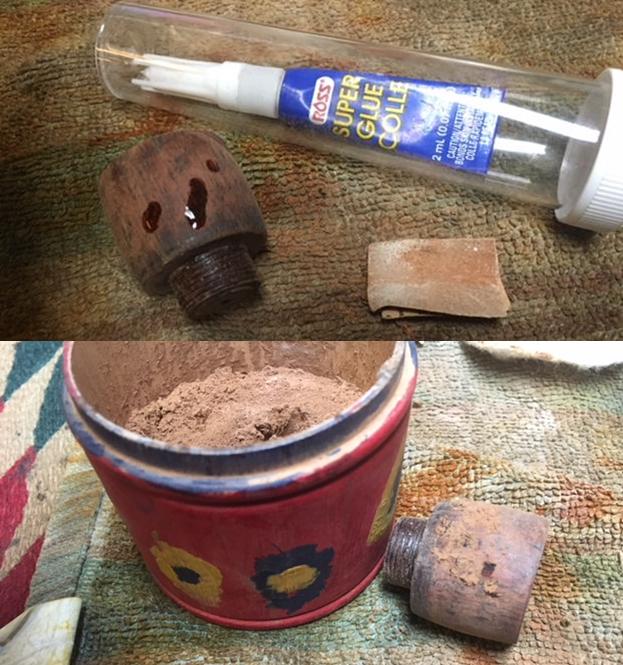
I started my cleanup of this pipe by working on the internals. I reamed out the cake with a PipNet pipe reamer and took the cake back to the bare briar. I scraped out the remnants in the bowl with a Savinelli Fitsall Pipe Knife. I sanded the walls in the bowl with a piece of dowel wrapped with 220 grit sandpaper to smooth the walls. I sanded the rim top with a folded piece of 220 grit sandpaper to remove the burn damage on the back side of the bowl. I polished the sanded area with micromesh sanding pads – wet sanding with 1500-2400 grit pads and dry sanding with 3200-12000 grit pads. I wiped the surface down with a damp cloth after each sanding pad. The first photo is a reminder of where things were at when I started the cleanup. While the burn mark was not totally removed it looked much better than when I started the cleanup. I used an Oak stain pen to restain the entire rim top. I used a Mahogany stain pen to touch up the inner edge of the bowl to try to blend in the darkening around the edges. Once the stain dried I rubbed it lightly with an alcohol dampened cotton pad to blend the colours together.I rubbed some Before & After Restoration Balm into the surface of the briar to enliven, clean and preserve it. I rubbed it in with my fingertips working it into the briar. I worked it into the nooks and crannies in the plateau on the rim and the shank end using a cotton swab. I brushed those areas with a shoe brush to work it in more deeply and spread it out. I set it aside for a little while to let the balm do its work. I buffed it off with a cotton cloth and then buffed it with a microfiber cloth. The photos below show the pipe at this point in the restoration process. I scraped the mortise walls with a sharp pen knife to remove the lacquer build up from tobacco juices and oils. It was thickly coated. Once I had that finished I cleaned out the mortise and the airway in the shank with cotton swabs, pipe cleaners and alcohol. It was dirty but I was surprised it was as clean as it was all things considered. I cleaned the airway in the stem the same way as the shank.I set the bowl aside and turned my attention to the stem. I reshaped the button with a needle file and sharpened the edge against the surface of the stem. I sanded the surface of the stem with 220 grit sandpaper to remove the light tooth chatter on the surface of the stem and to break up the oxidation that was prevalent in the grooves and spindles of the stem.  I started the process of rebuilding chipped tenon. I have done this on one other pipe and was quite happy with the results. I mixed a batch of charcoal powder and super glue to make a putty to start the rebuild. I applied it to the edge of the tenon with the sharp tip of a sanding stick. I wanted to layer the edge until the tenon was sharp and smooth. It would be a process of layering and shaping to get what was needed. The process was quite simple – set a base of the superglue and charcoal and shape the repair. Add more of the mix to the tenon and shape it again. The process would be repeated until the tenon was even all the way around. The pictures tell the story of the rebuild process. I applied another coat of the glue to fill in the airspaces left from the charcoal powder. I sanded the rebuilt tenon smooth with 220 grit sandpaper. I wiped the end down with Obsidian Oil after sanding it smooth. It is starting to look really good and once the repair cures it will be durable.I set the stem aside and let it cure overnight and worked on other pipes. When I picked it up again this morning I polished it using micromesh sanding pads – wet sanding with 1500-2400 grit pads and then buffing on the wheel with red Tripoli. I dry sanded the stem with 3200-12000 grit pads to further polish it. After each pad I wiped it down with Obsidian Oil to protect and enliven the stem. I polished it further with Before & After Pipe Polish – both Fine and Extra Fine. When I finished with the polish I gave it a final coat of oil and set it aside to dry. This second Bari De Luxe Mahogany Freehand is another beauty with swirling, straight and flame grain all around the bowl. The shank end has some interesting looking plateau that is deep and craggy. The smooth rim is quite nice and has some swirls of grain undulating in the briar. The brown of the bowl and the black of the plateau look really good with the black of the turned vulcanite stem. I buffed the bowl and the stem with Blue Diamond polish to raise the shine on the briar and the vulcanite. I lightly buffed the rim top and shank end as well. I was careful to not buff the stamping and damage it. I gave the bowl and stem multiple coats of carnauba wax. I buffed the entire pipe with a clean buffing pad to raise the shine. I hand buffed it with a microfiber cloth to deepen the shine. The finished pipe is shown in the photos below. The dimensions of the pipe are: Length: 6 inches, Height: 2 1/8 inches, Outside Diameter: 1 3/4 inches, Diameter of the chamber: ¾ of an inch. This is the second Bari De Luxe that I have worked on and it more average or medium in size. The combination of smooth and rugged looking plateau on the shank end makes it an interesting pipe. Thanks for walking through the restoration with me.

Refreshing a Jobey Hand Rubbed 015 Zulu/Woodstock


Blog by Dal Stanton

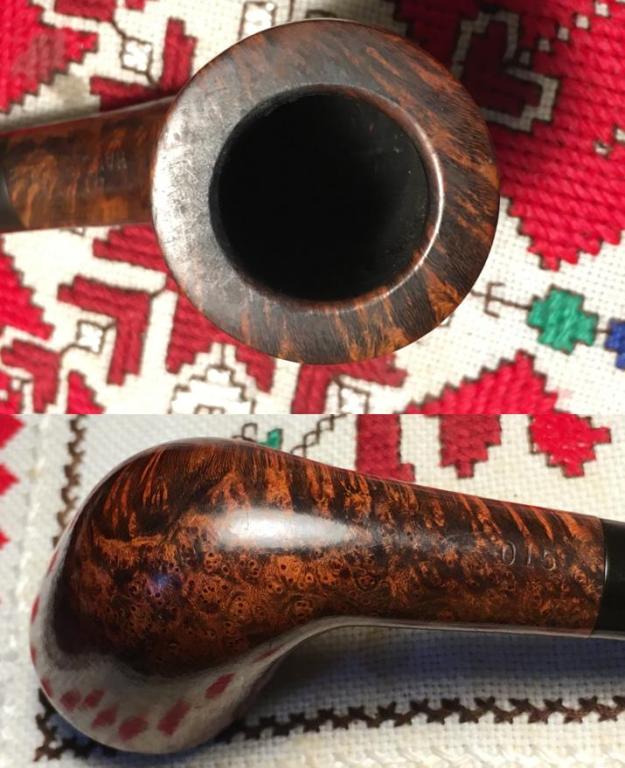
This very sharp Jobey Hand Rubbed Zulu/Woodstock came to me via eBay auction block when I secured the Lot of 66 which has been a great acquisition for restoring pipes benefitting the Daughters of Bulgaria – women and girls who have been trafficked and sexually exploited.  Brian, a pipe man in Kentucky, had already commissioned my last Peretti Oom Paul Sitter and saw this Jobey as he was checking out my page, For ‘Pipe Dreamers’ Only!.  We came to an accord and Brian had two pipes in the queue for restoration.  Here are pictures of the pipe that got Brian’s attention. The nomenclature of the Zulu/Woodstock has Jobey (cursive) over HAND RUBBED on the top of the shank.  The bottom of the shank is marked with 015, which I assume is the shape number for a Zulu/Woodstock.  The stem has on it the well-known JOBEY roundel ensconced on the top.When one searches the usual places for information about pipe manufacturers and names, Jobey consistently stands out as having a mysterious beginning.  From TobaccoPipes.com, the Jobey history is summarized.

The exact origins of the Jobey Pipe Company are a mystery…Depending on the year, a Jobey pipe could have been produced in England, North America, or France. Since the early 1920’s, Jobey pipes have jumped continents with production falling into the hands of seven different companies over the years. No one is really sure who first produced smoking pipes under the Jobey brand. The pipes are believed to have originated in England; but their true origin is still a bit of a mystery. Jobey pipes were, for most of their history, primarily an English and American brand.

In the same article, interestingly it describes Jobey having a strong Danish influence in its early history as well:

Danish pipe artist Karl Erik had taken a strong interest in the Jobey pipes and started to offer a wide variety of pipe designs that became extremely popular in England and throughout some of the countries such as Holland and the Netherlands.

Today, Jobey pipes are manufactured out of Saint Claude, France, and in 2012 the name was taken on by the Weber Pipe Company, according to PipesTobaccos.com.

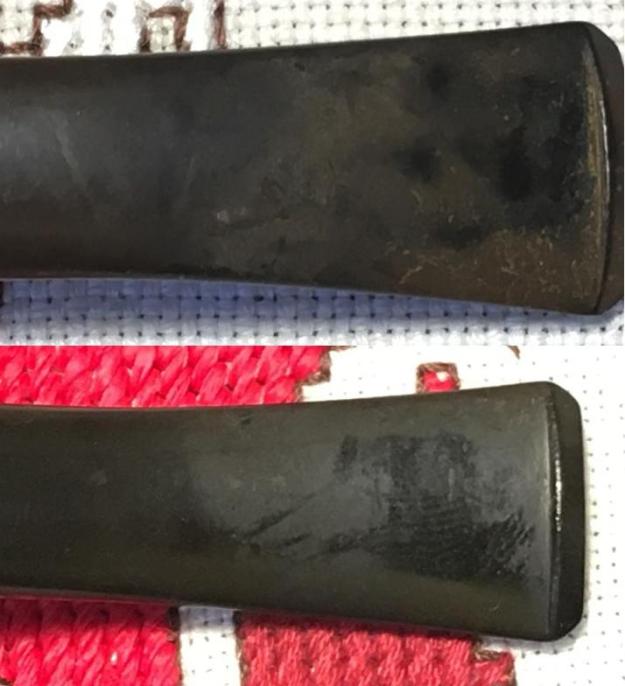
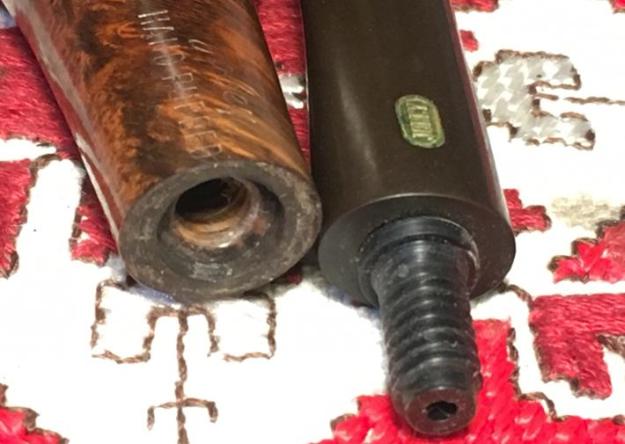
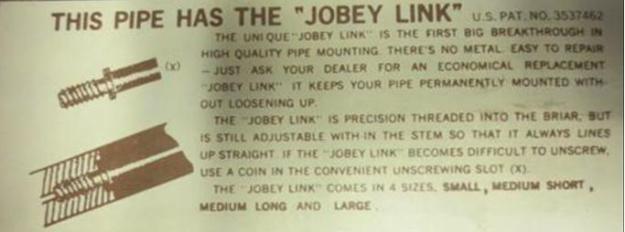
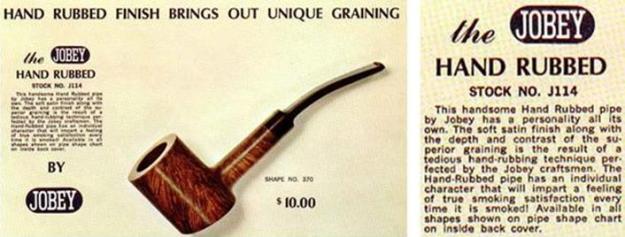
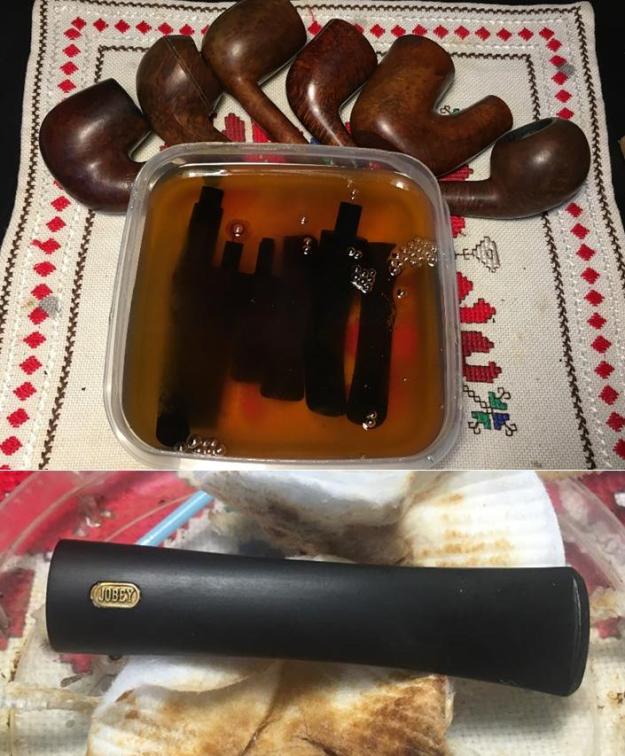
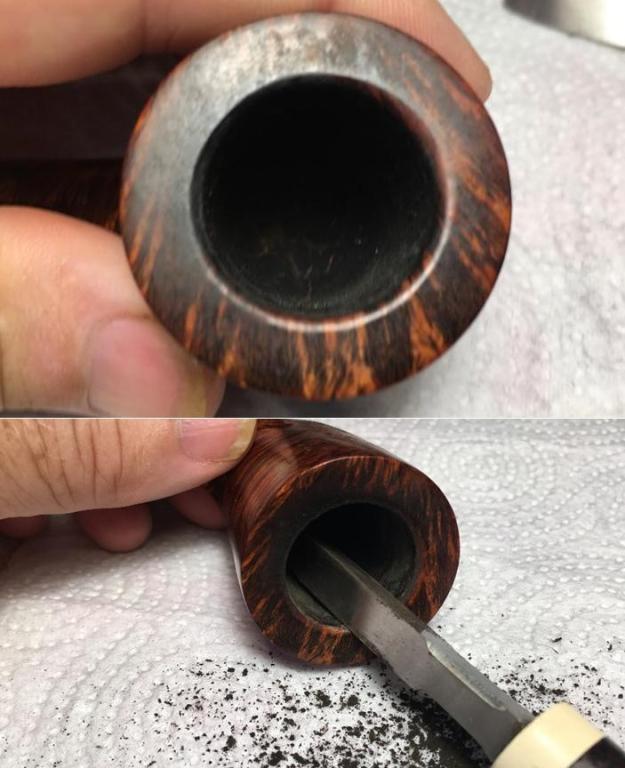
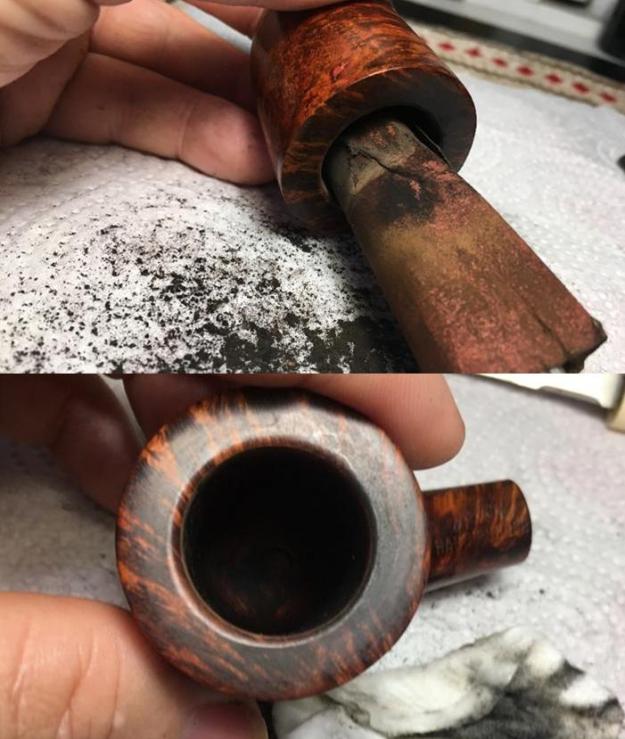
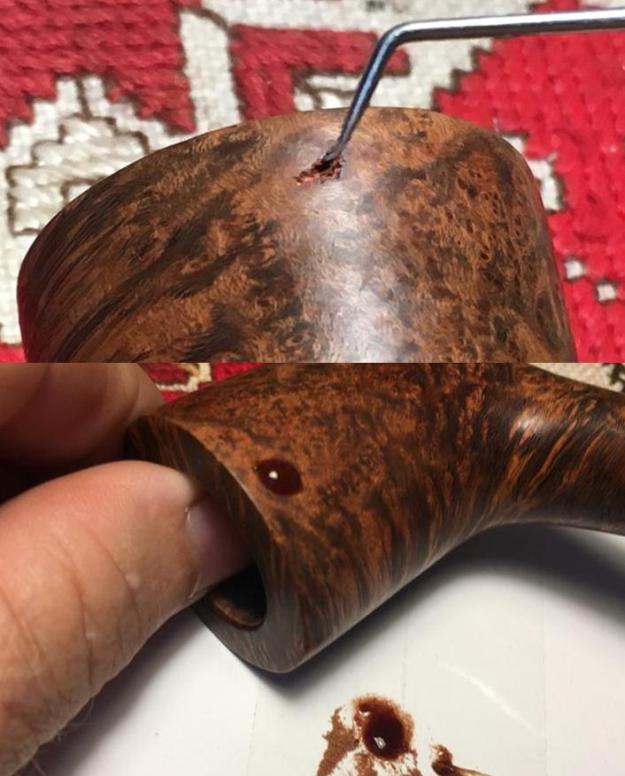
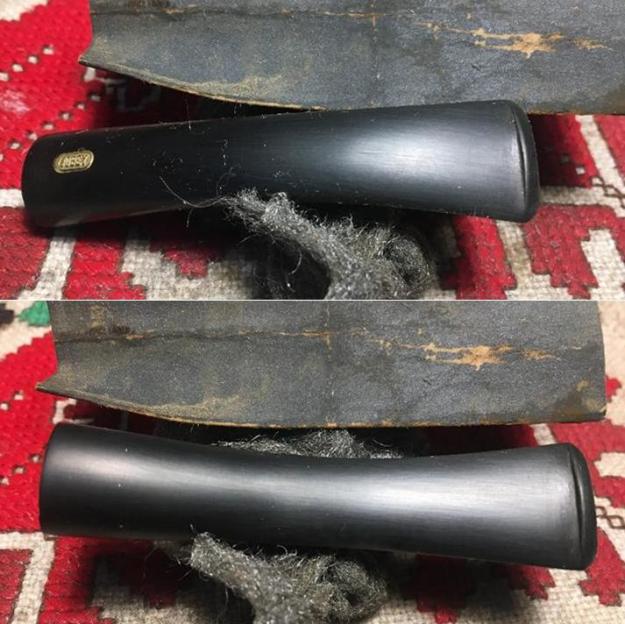
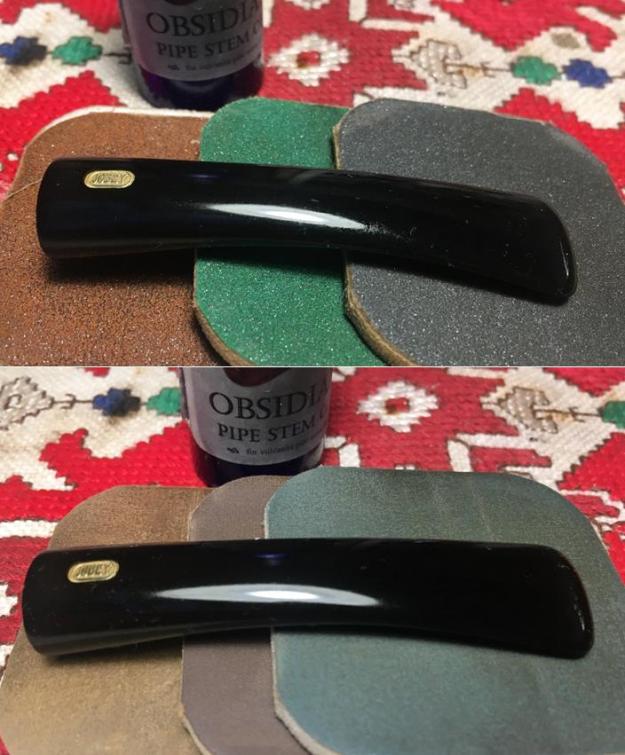
The most well-known invention that has been associated with Jobey is the Jobey Link – the tenon system that is popular for its ease of cleaning and replacing.  In his post on of a Jobey Cauldron on RebornPipes, Steve became the recipient of original packing information about the Jobey Link that I found fun and interesting:The Jobey Hand Rubbed Zulu/Woodstock is fitted with the famous Link.  Regarding the Jobey line, Hand Rubbed, from some old eBay posts I found some ‘Hand Rubbed’ Jobey pipes and one listing gave it a general dating in the 1980s.  From this Pipedia Jobey article, I found this older ad for a Jobey Hand Rubbed Poker that I thought was interesting giving a description of the unique properties of this line of Jobey offerings.  For the ease of reading, I clipped the description.The Jobey Hand Rubbed Zulu/Woodstock now on the worktable is in good shape.  The cake is almost nonexistent.  The stem is in good shape with almost no detectable tooth chatter but with a bit of oxidation.  The briar grain is stunning, and I see few problems with the surface.  The only question is the shiny finish over the briar.  I’m hoping that it isn’t an acrylic finish which is a bear to remove.  This restoration may be more of a refresher if the finish isn’t a problem.  I begin refreshing this Jobey by first removing the Jobey Link from the stem and running some pipe cleaners dipped in isopropyl 95% to clean the internal stem.  I then add the stem to a soak with Before & After Deoxidizer along with 5 other stems.  The Deoxidizer does a good job dealing with oxidation and is friendly to stampings and, in the Jobey’s case, the brass roundel.  After soaking for a few hours, I fish out the Jobey stem and wipe off the raised oxidation with cotton pads wetted with light paraffin oil.  I also run a pipe cleaner, dipped in alcohol, through the airway to clear the Deoxidizer.  The Deoxidizer has done a good job.Turning now to the stummel, with the chamber being so lightly caked, I use only the Savinelli Fitsall Pipe Tool to scrape the walls removing the cake.  It did not take much.  I follow by sanding the chamber with 240 grit paper to clean more and to reveal fresher briar for a fresh start.  I then wipe the bowl with a cotton pad wetted with alcohol to remove the leftover carbon dust.  Pictures show the progress. Now to clean the external surface.  I’m hoping that using undiluted Murphy’s Oil Soap will make a dent on the shiny finish.  I scrub with Murphy’s using cotton pads and rinse with cool tap water.  The stummel cleans up nicely, but as the picture below reveals, there remains a shine on the surface which says to me there’s still old finish needing to be removed to get to the natural briar.  I also detect a small fill that is pitted and will need some attention.To continue the cleaning regimen, I use pipe cleaners and cotton buds wetted with isopropyl 95% to clean the internal mortise and airway.  I’m getting the impression that this pipe has not been smoked a lot.  The internals are not too grungy, and the cotton buds and pipe cleaners are coming out clear.Now, to see if I can remove the shine from the briar surface, I first try using alcohol on cotton pads to see if it will do the trick.  Not quite – still some shine.  Next, I apply acetone with cotton pads.  That did the trick.Now, to work on the shaky fill on the stummel.  I take a closeup of it.  I use a sharp dental probe to excavate the old material.  I then clean it with a cotton pad and alcohol.  To create a good blending patch, I mix a small amount of briar dust and CA glue to form a putty.  When mixing the two, when it reaches the consistency of molasses, it’s ready to be applied to the patch.  I use a toothpick as a trowel.  I then set the stummel aside to allow the patch to cure.While the patch cures, I turn my attention back to the stem.  The stem is in good shape, but the vulcanite surface is rough.  I use 600 grade paper and wet sand the entire stem.  I follow the 600 with 0000 grade steel wool.  The paper and steel wool did the job, now I’m ready to move to the micromesh pad phase. Using micromesh pads 1500 to 2400, I wet sand the stem.  I follow by dry sanding with pads 3200 to 4000 and 6000 to 12000.  Between each set of 3 pads I apply Obsidian Oil to the stem to revitalize the vulcanite.  And, it looks great! With the stem poised to join a stummel, I look now to the Jobey Zulu/Woodstock bowl.  The briar dust putty patch has cured and is ready to be filed and sanded.  I initially use a flat needle file to bring the patch mound down near to the briar surface.  I keep the file on the patch mound to not impact surrounding briar.  I follow the file with 240 grit paper and sand the mound flush with the briar surface.  I then cover the scratches of the 240 with 600 grit paper. To deal with the lightening of the wood around the patch due to sanding (above) I use both a cherry and walnut dye stick to color the area – seeking to strike a good blend.  I would also dab the area with a cotton pad wetted with alcohol to achieve the blend.  I’m satisfied.To address the small nicks on the surface, I start the micromesh sanding pads wet sanding with pads 1500 to 2400, then dry sand with 3200 to 4000 and 6000 to 12000.  I take a picture after each set of three to watch the briar grain emerge. Next, I apply Before & After Restoration Balm to the briar surface.  I have grown to like this product.  What I like about it is that it enhances the natural grain color by deepening and enriching it.  I squeeze some of the Balm on my finger and work it into the briar.  The Balm starts with a light oil texture but then thickens into a wax-like consistency as it works into the briar.  After fully saturating the bowl, I set the Zulu/Woodstock aside to allow the Balm to do its work for a few minutes. I take a picture capturing this.  Then, I wipe the Balm off with a cloth – it starts tacky, but this buffs out.  I like the results.I reassemble the Jobey Link tenon and reunite the stem with the stummel and mount a cotton cloth buffing wheel on the Dremel with the speed set at about 40% full power.  I then apply Blue Diamond compound to the stem and stummel.  When completed, I use a felt cloth to buff the pipe, wiping off the compound dust in preparation for the wax.  I then mount another cotton cloth wheel to the Dremel, maintain speed at 40% and apply a few coats of carnauba wax to the pipe.  I complete the restoration by giving the pipe a rigorous hand buffing with a microfiber cloth to bring out the shine.

This Jobey Hand Rubbed Zulu/Woodstock is a keeper and I enjoyed recommissioning him.  The briar grain reminds me of a zebra – the bird’s eye and swirls are incredible.  The Zulu/Woodstock shape always seems to have a bit of attitude to it.  This Jobey Zulu/Woodstock is a classic expression of this pipe shape.  Brian commissioned this Jobey Zulu/Woostock and he will have first opportunity to acquire it in The Pipe Steward Store and this benefits the Daughters of Bulgaria – helping women and girls who have been trafficked and sexually exploited.  Thanks for joining me!


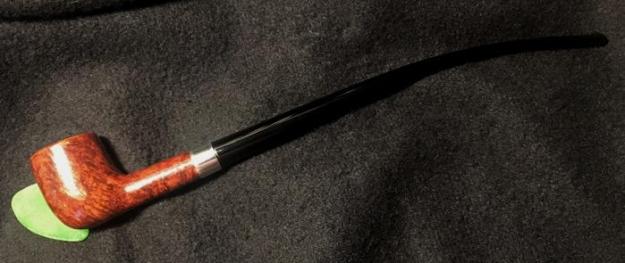
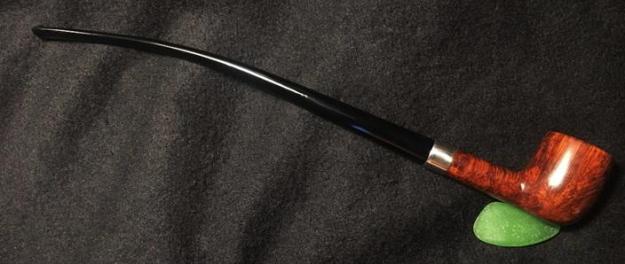
Fashioning a Churchwarden from a Forlorn, Throw away Billiard – a story of the Phoenix


Blog by Dal Stanton

The Greek mythological Phoenix is a long-lived bird that cyclically regenerates or is otherwise born again, according to Wikipedia.  It is regenerated out of its own demise, from its own ashes.  The images that come to mind are Harry Potter-esque – the Phoenix’s name is Fawkes and “as stated by Dumbledore, they are extremely loyal creatures, and are capable of arriving to the aid of beings who share a similar devotion. This was how Fawkes arrived to assist Harry in slaying the Basilisk in the Chamber of Secrets during his second year at Hogwarts” (LINK).  The tear of the Phoenix could also bring healing and recovery from near death.

What does the Phoenix have to do with pipes and Billiards?  True confession: I enjoy immensely working on vintage pipes with well-known and sought names like Dunhill, Savinelli, Comoy’s, Stanwell, GBD, Jeantet and BBB.  But truth be known, I LOVE taking the throwaways, the discarded, the ‘only good for the waste heap’ pipes – that make most people cringe and reach for latex gloves – to take these pipes and see what I can do to help.  There is a satisfaction at the end of such projects that translates into, ‘Wow! Who could have imagined…!”  The discovery of hidden beauty that was always there, but no one took the time to help it emerge.   I guess, at the core of it is the sense that sometimes people are treated in such a way or may view themselves in such a way that does not reflect the often hidden value that people intrinsically have.  Helping is seeking to bring new life out of the ashes of the past.

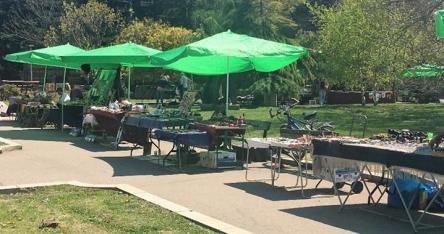
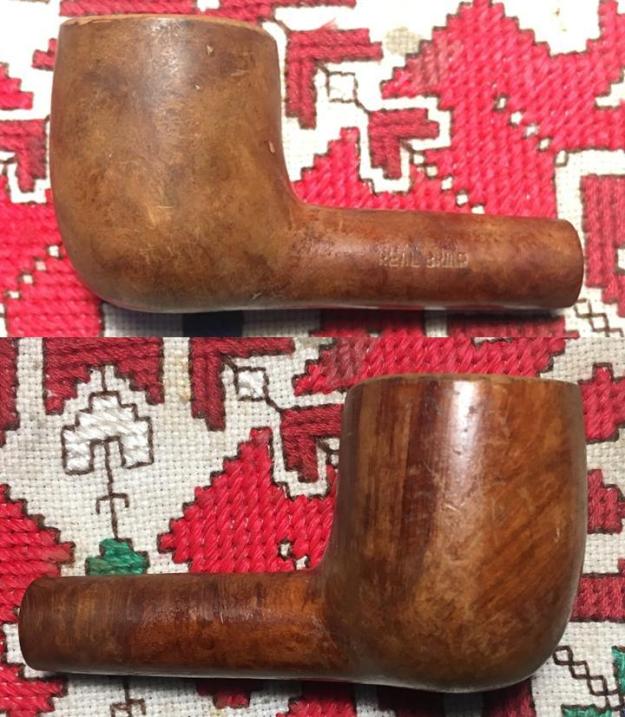
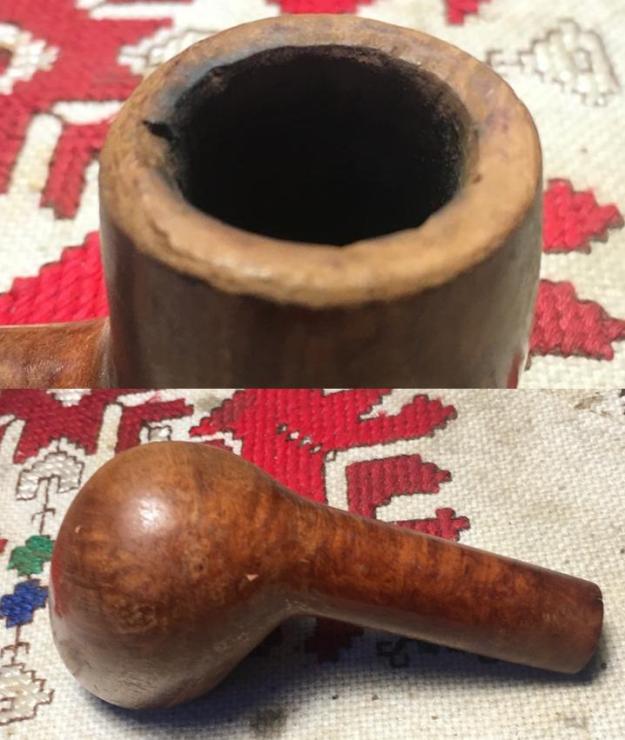
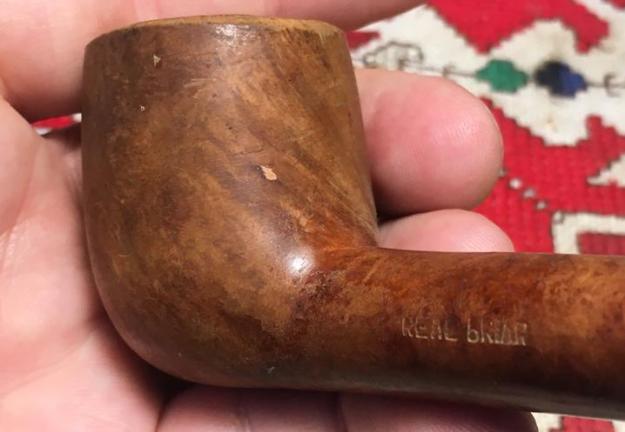
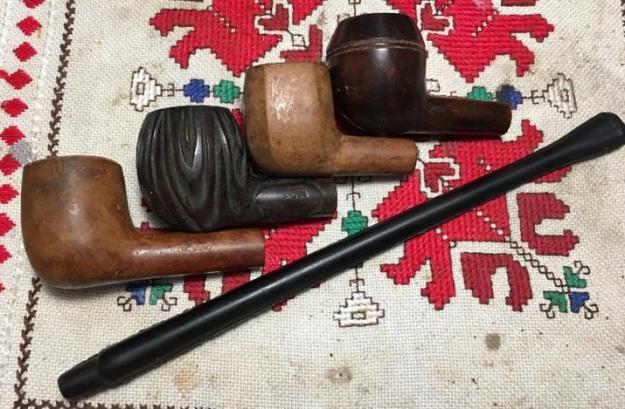
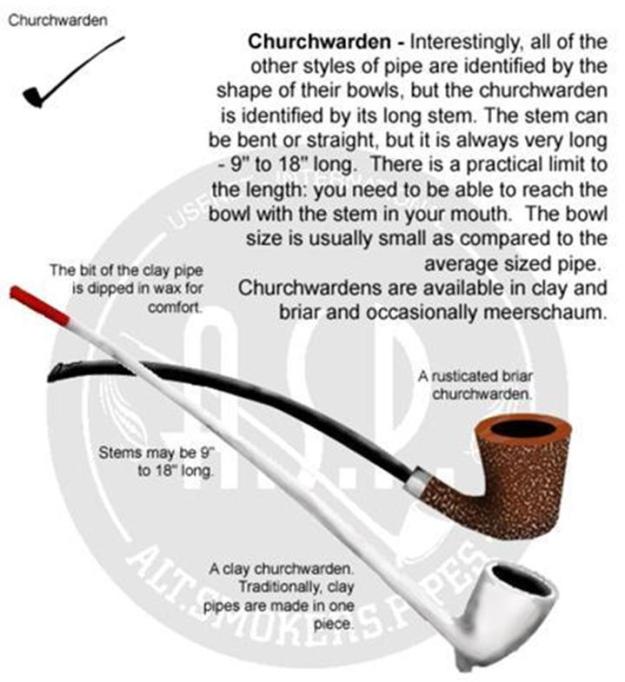
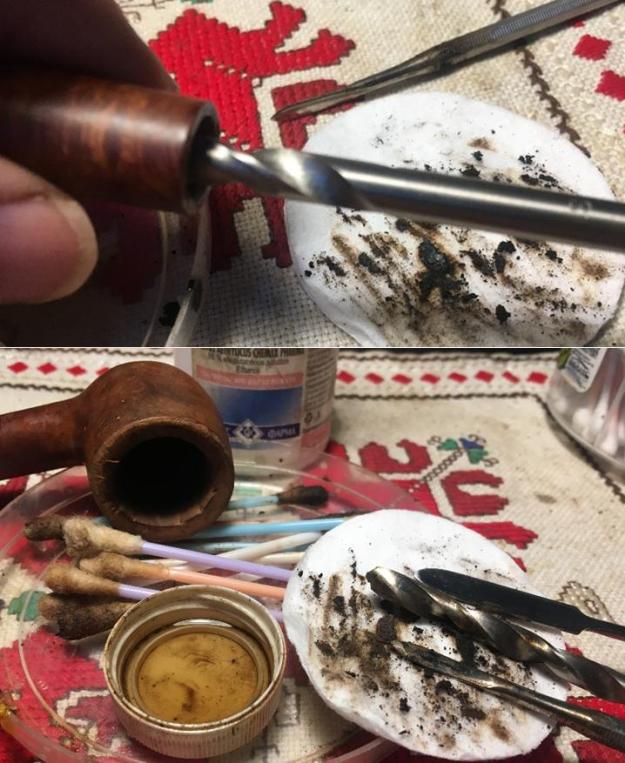
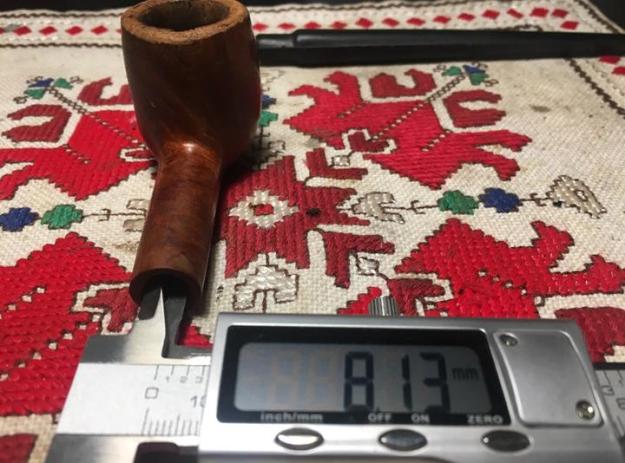
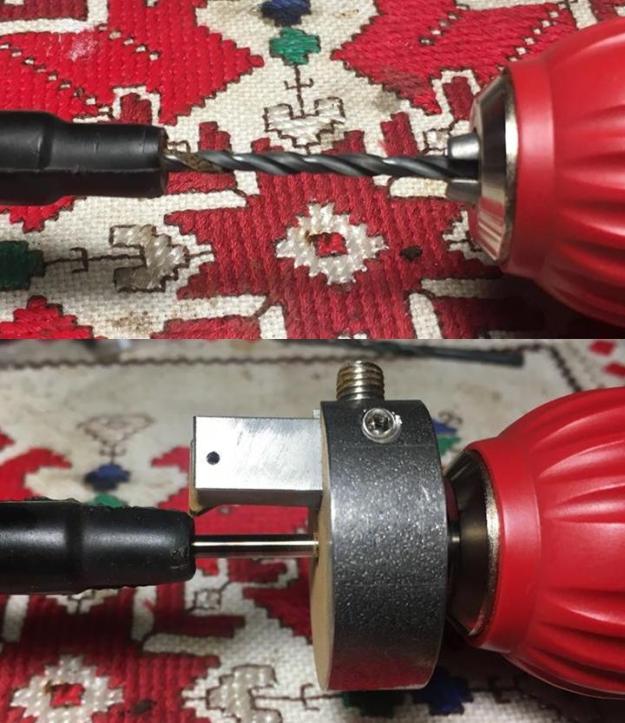
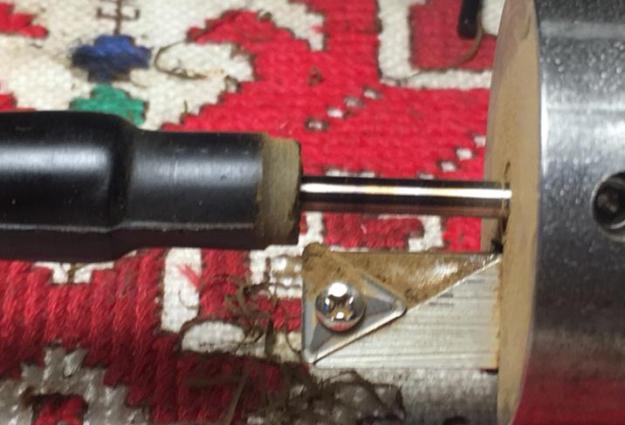
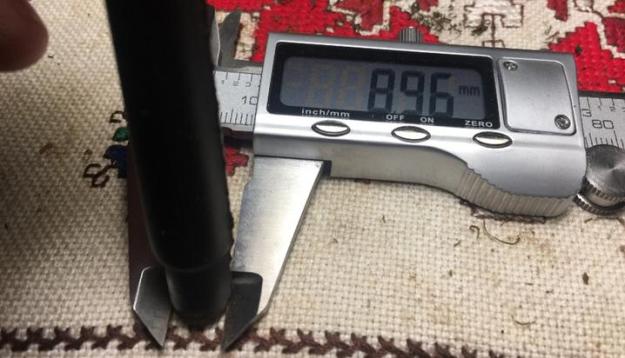
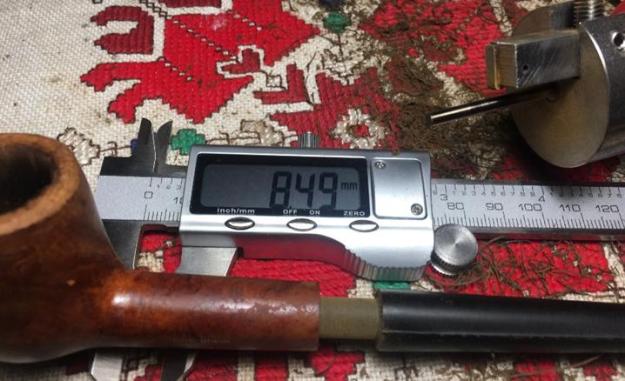
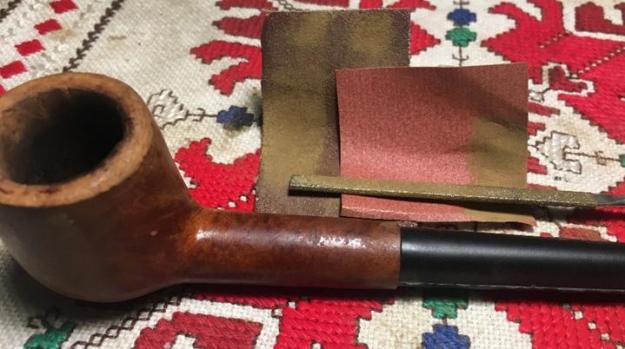
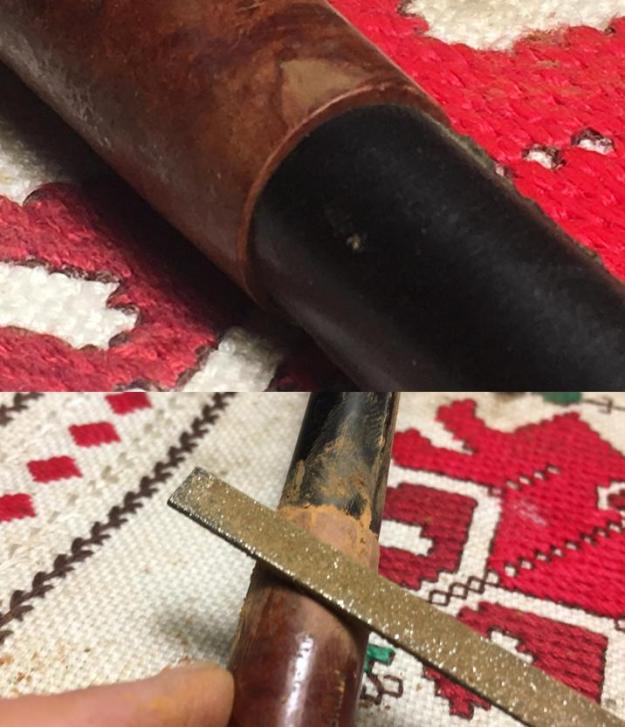
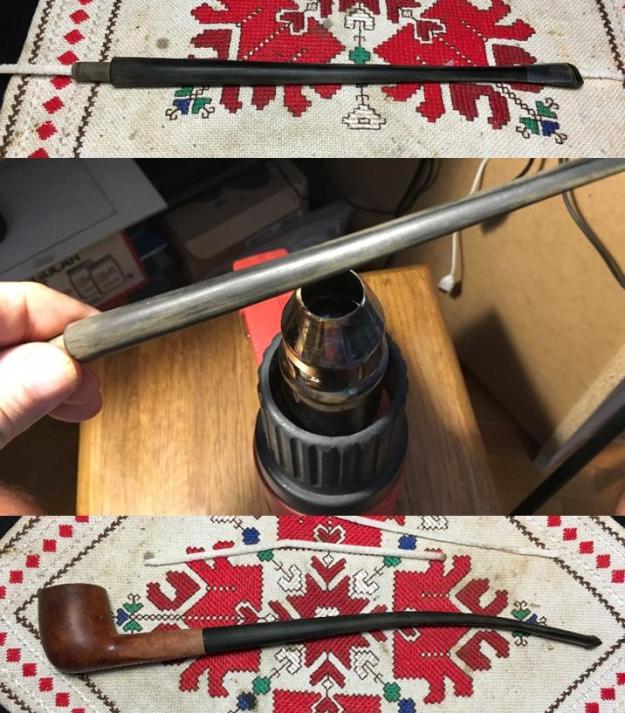
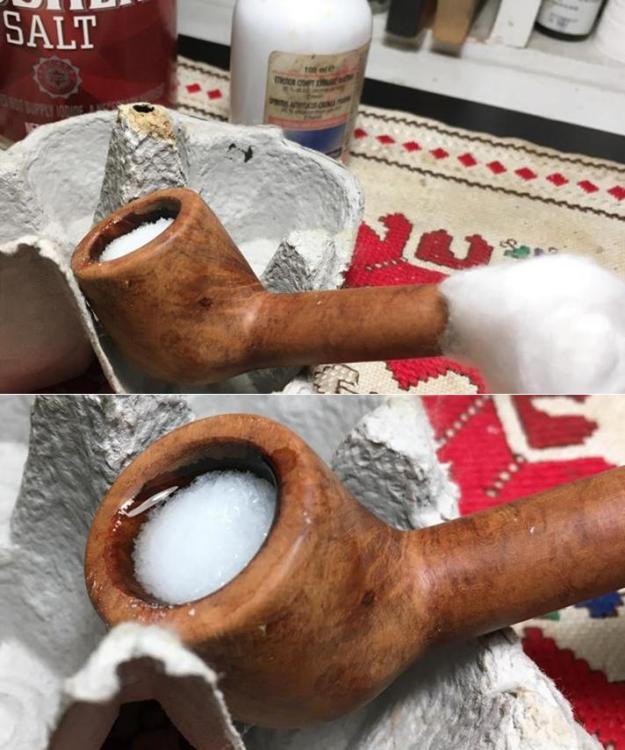
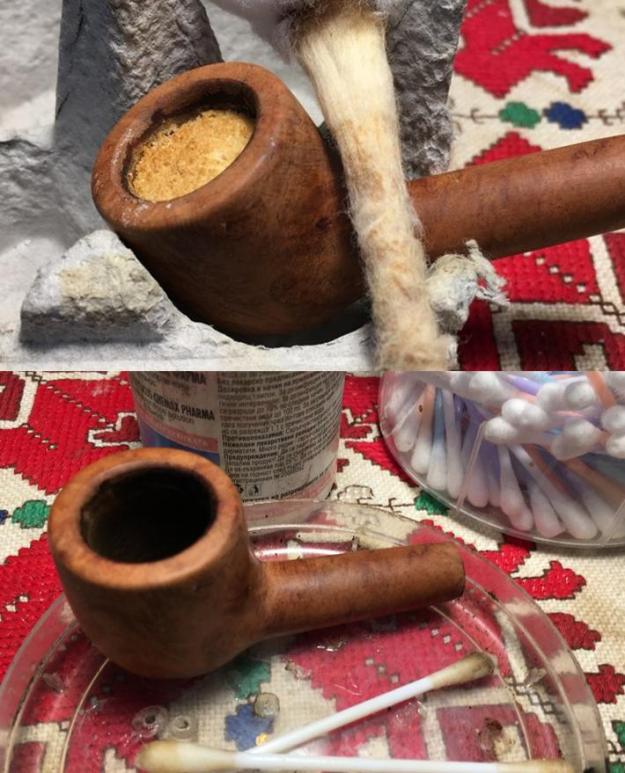
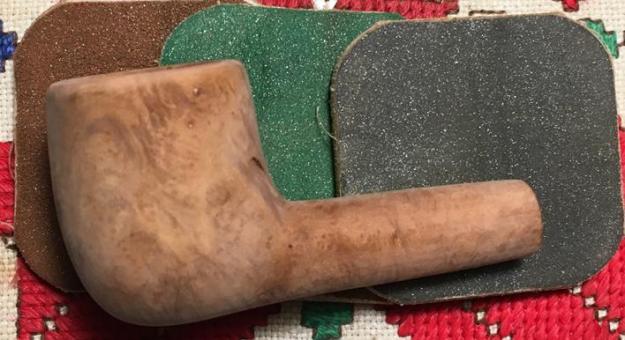
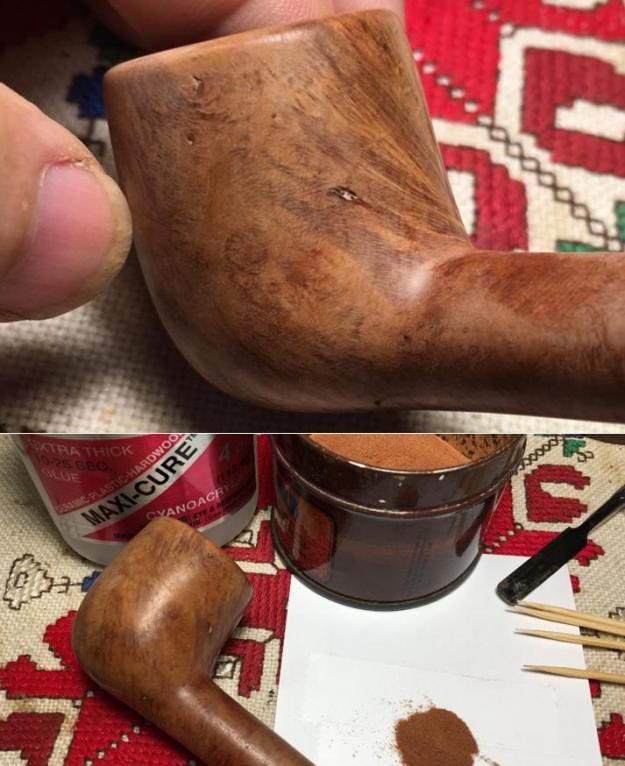
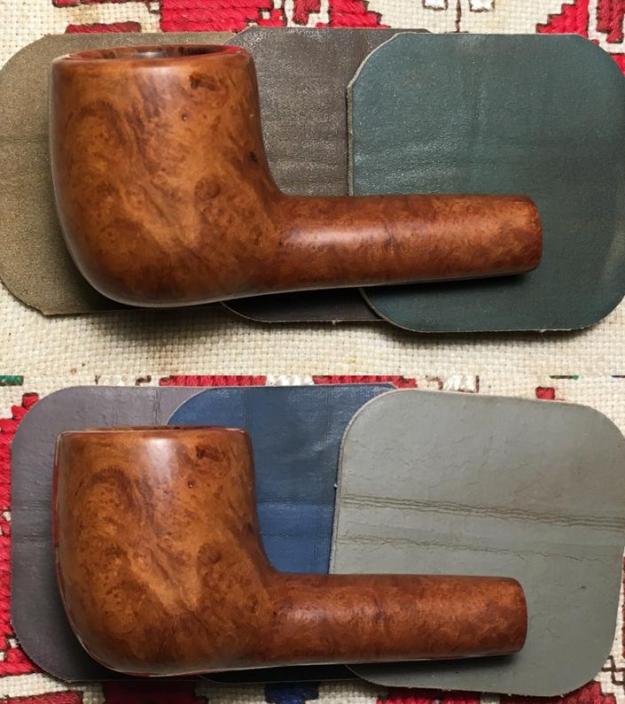
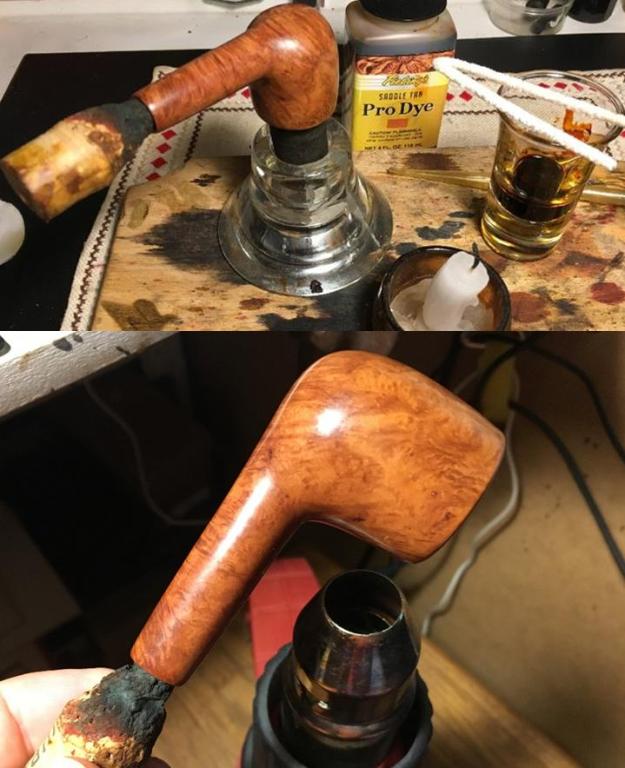
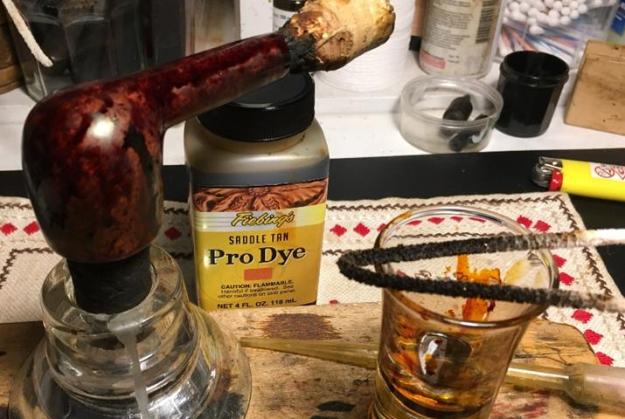
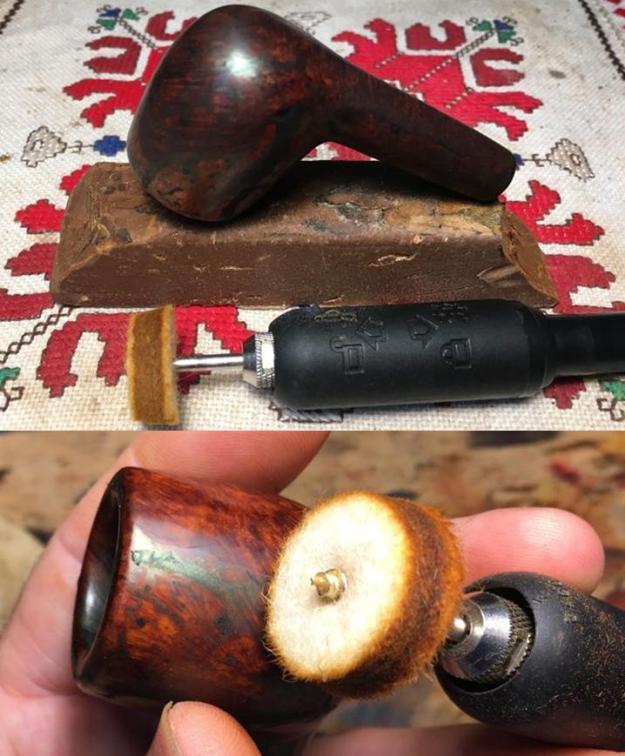
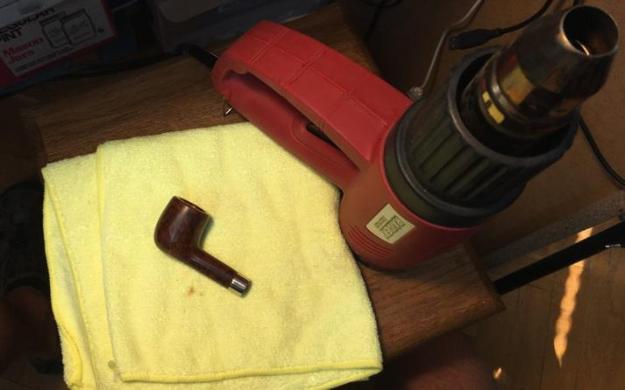
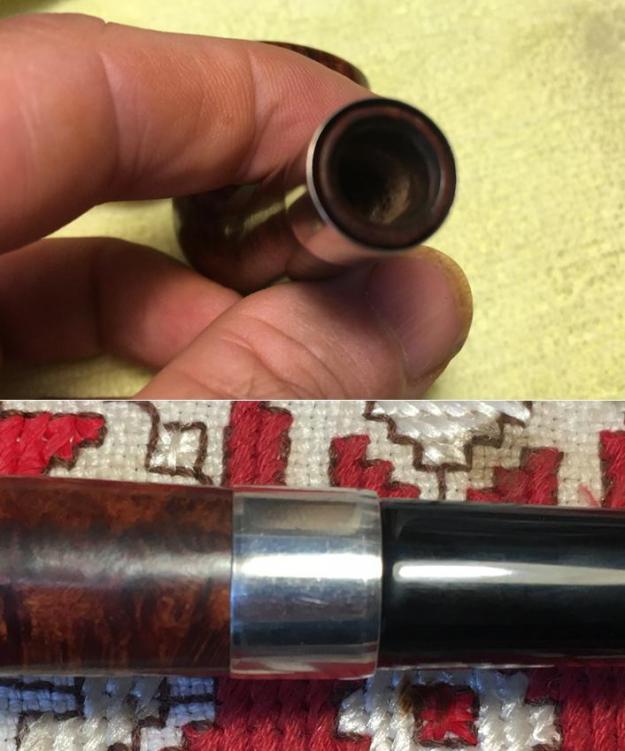
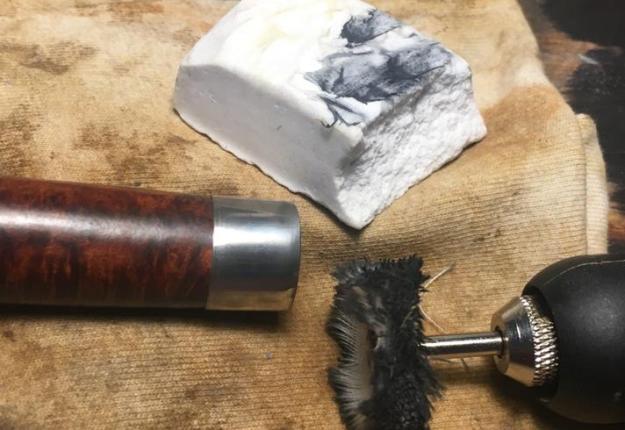
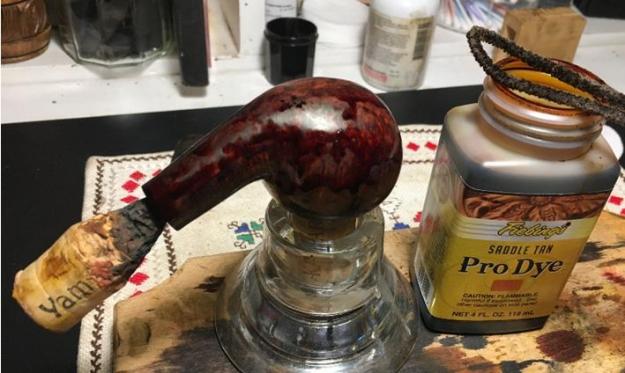
I want you to meet my forlorn Billiard stummel.  I’m sure that one past day he enjoyed the attention of a steward.  He proudly was settled on the rack with other proud pipes of The Rotation.  One day something happened, and he lost that favored position, and everything changed.  I found him in a bag of a second-hand/antique vendor in Sofia, Bulgaria’s ‘Antique Market’ in the city-center.  The bag was full of broken and discarded stems, stummels and other things unrecognizable.  He had no stem.  I plucked him out of the bag along with a few other pieces, paid the vendor a very small sum for what had no value to the vendor or to anyone else.  The small Billiard stummel was marked with the most generic of all markings, ‘Real Briar’.  Absolutely nothing special.  Here are pictures of the redeemed Billiard on my worktable. I just completed the restoration of a Monarch Pat. 1989069 – 1074H Bent Ball  for Andy, a pipe man living in Maryland, who attends the church where I was formerly the pastor on the Eastern Shore – the peninsula created by the Chesapeake Bay and Atlantic Ocean east of Washington DC.  Andy commissioned the Monarch from the ‘For Pipe Dreamers Only!’ section on my blog.  He told me he was also hoping to land a Peretti Oom Paul and a Churchwarden someday.  He had seen several of the Peretti Lot of Oom Pauls that I had already restored and recommissioned for new stewards and was hopeful.  I had no more Perettis to share, but I proposed that I could fashion a Churchwarden from repurposed stummels.  I also had one 8-inch Warden stem left in my stores.  Not long ago, I completed a fun restoration I called ‘A Tale of 3 Church Wardens’ – where I fashioned 3 Churchwardens that all found new stewards in Germany.  I directed Andy to check out the post to decide what he wanted to do.  It didn’t take long and he decided to add a Churchwarden to his Monarch Bent Ball – each of these pipes benefit the work we do here in Bulgaria with the Daughters of Bulgaria – helping women and girls who have been trafficked and sexually exploited to find a new life and hope.  The next question for Andy was what stummel would mast the Warden stem and rise from the ashes like the Phoenix?  Here were the options I sent to Andy with a warning not to be distracted by the color or condition – to look only at the shape.  Here’s what he saw.From the top, his choices were a Rhodesian, a Panel, a carved Apple and the forlorn Billiard.  Andy chose the classic Billiard shape, influenced mainly by the longer shank which will add a bit of flow to the Churchwarden he would become when transformed.  The interesting factoid that I reported before, in my writeup of the 3 Churchwardens, was from Bill Burney’s Pipedia Pipe Chart. It provides the framework for forlorn bowls to rise as the Phoenixes.  What brings this power?  A Churchwarden stem:As you would expect, our Billiard that Andy chose has many challenges.  The worst of his obvious problems is the rim which has been chewed and gnarled! It has a large divot on the internal lip over the shank.  Also, on the shank side, the rim slopes away having endured a ‘skinned knee’ experience.   The old finish is totally old and the stummel has some small fills that need checking.  Yet, underneath the grime and tired finish – where there is finish, is briar grain with potential.  I begin the story of this Billiard hoping to rise as a Phoenix by doing the basic cleaning of the stummel before fashioning the precast Churchwarden stem.  To mark the beginning of the restoration, I take a picture of the Billiard stummel with the Warden stem – the place where Pipe Dreamers begin!I take a picture of the chamber and see that there is very little cake build up, but I also see that it appears someone took a pocket knife to the chamber in the past – with little care.  I take the Savinelli Fitsall Tool and I ream the bowl of residue carbon.  Following this, I sand the chamber with 240 grit paper by wrapping the paper around a Sharpie Pen seeking to clean it but also to smooth the top of the chamber where knife marks were.  I then clean the chamber with a cotton pad wetted with isopropyl to rid it of carbon dust.  The chamber wall seems to be in good shape – no cracks or heat fissures are visible, but I will need to do a bit more sanding – I’ll wait to do this along with the rim repair. Now I turn to internal cleaning of the stummel.  Using cotton buds dipped in isopropyl 95%, I realize very quickly that the grunge in this mortise and airway was thick.  I put the cotton buds down for a time and start scraping the mortise walls with dental spatulas.  I also insert a drill bit the size of the airway and hand turn it to excavate the tar and oil buildup.  In time the cotton buds started coming out less soiled.  I plan to give the stummel a kosher salt and alcohol soak through the night to clean the internals further and freshen the stummel for the new steward.  The pictures show the grunge warfare!With the stummel cleaned, I now turn to the precast Churchwarden stem.  I begin by pulling out my new electronic caliper that I acquired when I fashioned the 3 Churchwarden stems before.  I take an internal measurement of the Billiard’s mortise, which is the target.  The reading is 8.13 mm.  For a conservative target in shaping the new tenon on the precast Warden stem, I add .40 mm to the 8.13 which gives me a conservative target of 8.53 mm.  I now mount the drill bit to drill the tenon’s airway enlarging it to receive the guide pin for the Pimo Tenon Turning Tool, which I also just added to my tools.  I mount the Pimp Tenon Turning Tool into the drill chuck and cut a conservative practice cut on the tenon to get an initial measurement.  The practice cut measurement is 8.96 mm which means I need to remove around .43 mm to arrive at the conservative target of 8.53 mm.  The purpose of the conservative target is to get close to the exact size of the mortise, but not quite.  This leaves room to sand the tenon to fashion the custom size because every mortise is different.  The fit between the newly fashioned tenon and the mortise must be snug but not too tight. I crank down the blade on the Tenon Turning Tool a bit and make another practice cut and remeasure.  Now, I have a perfect example of why doing practice cuts is a good idea!  The next measurement was 8.23 – only .10 mm off the actual mortise size – too close for comfort.  I don’t want to risk taking off too much.  I back the blade off a little and recut.  I come to an 8.49 mm which is good.  Using a flat needle file, 120 and 240 grit papers I gradually bring the size of the tenon down.  After MANY filings/sanding and testing the fit in the mortise, I can seat the tenon snugly into the mortise.  The shank is slightly larger than the diameter of the stem when the stem is inserted into the mortise.  The picture below shows how the briar is extending at this point, but as I look around the shank, the amount of overhand is not the same.  I use the flat needle file to start bringing the briar overhang flush with the Warden stem. The picture below shows the shank having that ‘stuff pants look’ as the taper of the shank to the stem is not gradual.  To address this, I file and sand around the shank to create a more gradual tapering from the bowl through the shank to the Warden stem.  Most of the briar bulging was on the shank sides not on the upper and lower areas which look pretty good. After a lot of sanding with a flat needle file, 120 and 240 papers, I arrive at a nicer tapering from shank to stem.  I sacrificed the ‘Real Briar’ stamping on the left side of the shank for the more balanced look on both sides of the shank.  I thought about it for a few minutes, and sanded away in favor of a reborn Phoenix!  The shank overhang has been sanded out and the shank/stem junction is flush.  I like the flow from bowl, through the shank, and into the stem.  Before bending the stem, while still in the same customized position, I also file and sand down the sides of the precast stem to remove the seams created by the casting halves.  I aim for rounding the stem. With the Billiard’s straight shank, the bend will be very small and subtle.  Last time I fashioned Churchwarden stems I found that I was consistently overbending the stem and then I would need to back off the bend for the best look.  I place pipe cleaners in the stem at both ends to maintain the integrity of the airway during the heating and bending process.  I use a hot air gun and warm the vulcanite in the area where I make the bend.  As it warms, the vulcanite, a rubber compound, becomes supple and is fashioned easily.  After making the bend, by simply eyeballing it, I take the heated stem to the sink and cool it with tap water to set the bend.  I remount the bent stem and I like it.  It has a gentle bend, not too much.  The Phoenix is coming to life!Looking now to the stummel, I use a sharp dental probe to test the very small fills on the stummel.  They seem to be solid.  I then look at the gnarly rim.  The next step is to remove the damage by utilizing the topping board.  Using a chopping block, I place a sheet of 240 grade paper on it.  After inverting the stummel on the board, I begin to rotate the stummel over the paper.  I’m thankful for the fact that Churchwardens typically have smaller bowls.  That’s good news because I’m taking a bit of briar off the top.  After a while, there is still a divot on the inside of the rim over the shank which I will address by creating a bevel.  After the 240 grade rotation, I then use 600 for a bit and finish the topping. Using 120 grit paper, I start carving a bevel on the inside lip of the rim.  I follow by moving to the outside edge of the rim.  I create the bevel by pinching the rolled piece of sanding paper under my thumb and then methodically move it around the rim putting pressure on the paper.  The continuous movement is what keeps the bevel consistent.  I then follow with 240 paper for both the inside and outside edges of the rim.  I think it looks good – what an improvement!To address the stummel surface to remove the top surface and scratches and old finish, I start by using a coarse sanding sponge on the entire stummel.  I follow the coarse sponge with medium and then light sanding sponges.I decide now to continue working on the stem.  Using a flat needle file and 240 grit sanding paper I continue smoothing and shaping the stem.  I work on the rough button with the file to shape it with the file.  I sand the entire stem with 240 grit because, even though the stem is new, the vulcanite contains ripples and ribs from the casting process.  I work the stem with sand paper so that it’s smooth and the stem is rounded.  From filing and 240 grit, I sand the entire stem with 600 grade paper.  I finish this sanding phase by sanding/buffing the stem with 0000 grade steel wool.  The pictures show the progress. My day is ending and I finish at the worktable with a kosher salt and alcohol soak to further clean and refresh the stummel.  I create a wick from a cotton ball by stretching and twisting the cotton.  I then insert/stuff the wick in the mortise and airway.  I then put the stummel in an egg crate to stabilize it and fill the bowl with kosher salt which leaves no after taste as does iodized salt.  I then use a large eye dropper to fill the bowl with alcohol until it surfaces over the salt.  After a few minutes I top off the alcohol.  I set the stummel aside and turn out the lights.The next morning the kosher salt and alcohol soak did the job – the salt and wick are soiled by drawing out more tars and oils from the mortise and airway.  After dumping the expended salt, I wipe the chamber with paper towel to remove the old salt.  I blow through the stummel as well to clear out the left overs. To make sure all is clean, I run a few more cotton buds dipped in isopropyl 95% through mortise.  Moving on.Time to micromesh the Churchwarden stem.  Using pads 1500 to 2400 I wet sand the stem.  Following this, I dry sand using pads 3200 to 4000 and then, 6000 to 12000.  After each set of 3 pads, I apply Obsidian Oil to the stem to enrich the new precast Warden stem.  I take only one picture at the end because it’s difficult enough to see the detail of black vulcanite with regular sized stems, with the Churchwarden stem, the picture is from orbit!With the stem drying, it’s time to begin the micromesh sanding of the stummel.  Using micromesh pads 1500 to 2400 I wet sand the stummel.  As has happened on previous restorations, the wetting of the stummel during the wet sanding process spelled the end of the once solid fills that I saw before.  The fill material must be made of a water-soluble material – not sure what it is, but it isn’t anymore! The fills fully disintegrated.The detour means that I need to apply patches to the pits – I mix briar dust and thick CA glue to form a putty that I apply to the holes.  I first use a sharp dental probe to make sure the pits are free of debris.  I use an index card to do the mixing by placing some dust in a pile. I then place some of the CA glue next to the briar dust.  Using a toothpick, I gradually draw a bit of the dust into the glue while mixing it with the toothpick.  I continue to do this until the putty reaches a molasses-like consistency. I then apply the putty to the places needed – there are a few. After applying the briar dust putty, I spray the patches with an accelerator to cure the patches more rapidly.  Then, using a flat needle file, I begin filing down the patches to near the briar surface.  Then I use 240 grit paper to remove the remaining excess patch material bringing the fill flush with the briar surface.  Following the 240 paper, I use 600 grit paper on each of the patch areas.  Finally, I return to the initial micromesh pads and sand the patches with 1500 to 2400 grade pads.  The detour is complete, back on track.  The pictures show the patch repairs.  These patches will blend very well. I pick up again by dry sanding using pads 3200 to 4000 and then 6000 to 12000.  The pictures show the finished result.  I enjoy so much watching the grain emerge during the micromesh process.  This lonely stummel just may be a Phoenix after all!At this point, aiming for the color preferences Andy described when he commissioned the Billiard, I will stain the stummel using the base as Fiebing’s Saddle Tan Pro Dye but add to it just a bit of Fiebing’s Dark Brown Leather Dye to darken it a bit.  I believe this will add more depth to the grain contrast – or I hope!  After mixing the dyes in a shot glass, and inserting a cork into the shank to act as a handle, I then warm the stummel using a hot air gun.  This expands the briar making the wood more receptive to the dye.  After warmed I apply the stain using a folded pipe cleaner.  After the stummel is completely covered, I flame the aniline stain using a candle.  The alcohol in the dye immediately combusts leaving the dye set in the grain.  After a few minutes, I repeat the same regimen including flaming.  I then set the stummel aside to rest and settle through the night.  The next morning, after an early 5AM trip to the Sofia Airport to drop off a summer intern who was returning to the US, I returned to the worktable ready to ‘unwrap’ the Billiard that had been dyed the night before.  I enjoy this a lot!  I mount a felt wheel on the Dremel, set to the lowest speed, and begin removing the flamed crust encasing the stummel.  I use the coarser Tripoli compound to do this.  As I work the buffing wheel methodically over the surface, I avoid applying too much downward pressure but allow the felt wheel, speed and compound to do the work. During the process, I purge the wheel often to clean it and keep it soft. After finishing with the felt wheel, I switch to a cotton cloth wheel and apply Tripoli to the crook between shank and stummel which the felt wheel is unable to reach.  After the Tripoli, I wet a cotton pad with alcohol and wipe down the stummel to blend the new stain and to lighten it a bit.In the same manner as the Tripoli compound, I apply Blue Diamond, a finer compound.  I mount another cotton cloth wheel on the Dremel, increase the speed to about 40% of full power.  I apply the compound to both stem and stummel.  After I finish, I wipe down both stem and stummel with a felt cloth to remove compound dust in preparation for applying the carnauba wax.  Before applying the wax, I want to add a special touch to this reborn Phoenix Billiard Churchwarden.  I decide to band the shank – always a nice touch.  I pull out my collection nickel bands and find one that fits over the shank but leaves about a 1/4 inch slack between the end of the shank and the end of the band.  To slide the band safely up the shank I heat the band with a hot air gun while on the shank at the tension point.  As the band heats, it will expand microscopically.  After a time of heating, I turn the shank downward and gently but firmly press down against a thick cloth on the hard wood surface.  This pressure moves the band up the shank a few millimeters and the cloth cushions the end of the band so it doesn’t bend with the pressure.  If one presses too hard and tries to expand the band too quickly, the nickel can rip – that is not good.  I got through the heating and pressing cycle a few times and the band is seated well.  I remount the stem and eyeball the band placement.  It looks good and I think the new steward will like this touch of class a lot for this Phoenix Billiard Churchwarden. Before I wax the pipe, I mount a cotton cloth buffing wheel on the Dremel that I use exclusively on nickel.  I want to shine the band up before applying wax.  I set the speed at 40% and apply White Diamond compound to the band.  I’m careful not to run the buffing wheel over the band to the briar as it can discolor the wood. I learned this the hard way in the past.  I’m not sure what the chemical process is, but when polished at high speed, a dark residue is produced.  You can see it on the White Diamond bar as well as on the wheel.  This is another reason why each compound and use have a dedicated wheel.  After finishing with the White Diamond buffing, I buff the band with a microfiber cloth and, oh my!  How it shines!Now, the home stretch.  Time to wax the pipe.  Again, I change to another cotton cloth wheel dedicated to carnauba, maintain a 40% speed on the Dremel, and apply a few applications of the wax to the stem and stummel.  I finish the polishing by hand buffing the Churchwarden with a microfiber cloth to raise the shine.

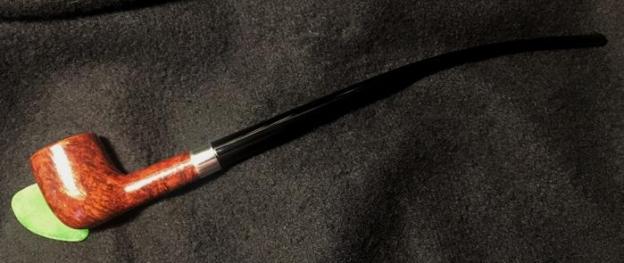
Few words describe the transformation of this lonely Billiard into a Phoenix.  Again, I’m amazed at the beauty in what God has created, even that which we often pass by with the shrug of the shoulders.  The gain revealed in the Billiard is beautiful.  The rim, gnarled as it was, looks great and is not diminished by the briar I was forced to take off.  As I look at it, the slightly squatter bowl works very well as the mast of the long, flowing Churchwarden stem.  The band mounted on the shank simply rocks, what can I say.  Andy commissioned this Billiard now Phoenix Churchwarden and he will have the first opportunity to acquire it in The Pipe Steward Store.  This pipe benefits the Daughters of Bulgaria – women and girls trafficked and sexually exploited.  Thank you for joining me in the telling of the story of the Phoenix!

Recommissioning a Monarch Pat. 1989069 – 1074H Bent Ball


Blog by Dal Stanton

This nice-looking Monarch Bent Ball shape came to me along with 65 pipes in an eBay acquisition which I’ve called the Lot of 66.  The Bowl shape has a very nice feel in the palm with the dimensions an adequate: Length: 6 1/4 inches, Height: 1 1/4 inches, Bowl width: 1 3/4 inches, Bowl depth: 1 3/8 inches, Chamber width: 15/16 inches.  This pipe got Andy’s attention in the special section on my blog site called “For ‘Pipe Dreamers’ Only!” where pipe men and women (and their significant others looking for special gifts!) can commission pipes.  Andy is from the state of Maryland in the US and he and his wife attend church where I used to be the pastor – in a former life many, many years ago!  Andy reached out to me via Facebook Messenger:

I really enjoy your posts with the restored pipes, and I’m wondering what might be available now and what the costs are. I really like the Oom Paul’s (and some of the other Peretti’s), and the Savinelli from May 29. Many years ago, I had a small collection which included a Comoy, and, if I recall correctly, a Peretti and a Savinelli. Sadly, they were lost somewhere along the way. Thanks for reigniting my interest (no pun intended). I looked at your website and found the answers I needed. What can you tell me about the Monarch Pat. 1989069 – 1074H Bent Ball shape on the Pipedreamer’s page? It looks very similar to one I had many years ago, and I might be interested in commissioning it if it’s still available. Thanks!

It’s amazing how pipes become so much a part of memories and associations in our lives!  Andy and I dialogued, and he commissioned the Monarch and will have the first opportunity to acquire the Bent Ball when it is restored and placed in The Pipe Steward Store, benefiting the Daughters of Bulgaria.  Here are the pictures that caught Andy’s attention. The stampings on the pipe are distinctive: on the left side of the shank is stamped ‘Monarch’ in cursive script with swirly tail, over ‘PAT. 1989069’.  The right side of the shank has ‘1074H’ stamped which I assume is a shape number.  The stem has a dot marked on the top which I notice actually appears to be a vent – the black center of the dot is not solid but a hole.  Interesting. A quick trip to Pipedia in search of ‘Monarch’ turns up useful information.

Monarch Pipe Co. was established in Hartford Con, most likely in the late 1930 by Fred Warnke, who obtained a patent on the system pipe on January 22 1935. The company moved to Tulsa Oklahoma at some point in the 1950s, after which Monarch Pipe Co was moved to Bristow, Oklahoma. The Monarch Pipe Co. also makes E.A.Carey Magic Inch and Duncan Hill Aerosphere Pipes.

So, the question in my mind was, are pipes still being produced by the Monarch Pipe Co. in Bristow, Oklahoma?  After searching the internet, I found an interesting newspaper article from the The Oklahoman, published January 15, 1995, entitled, ‘Bristow Manufacturer Lives on Pipe Dreams Pipe Fitting As Fragile as a Smoke Ring, The Art Still Burns in Bristow’ (LINK).   Excerpts from the article are enlightening and interesting:

Monarch has manufactured pipes in Bristow for 32 years. Once it employed 12 workers and produced 5,000 pipes a month; now the workforce is four, including Austin (a manager mentioned earlier).

Monarch was founded in 1929 in Connecticut. In 1962, a Tulsa businessman who ordered his pipes from Monarch discovered his source might close down, so he bought it. He and his partners moved it to Bristow…. Some 15 years ago, Carey bought the little enterprise.

This excerpt mentions Monarch’s parent company was the E.A. Carey of Ohio, company most well known for the ‘Carey Magic Inch’ pipes which boasts of a system that produces a drier, cooler smoke.  Still wondering if Monarch currently was producing pipes, I search again, “Monarch Pipe Co.” and found an old business link from Buzzfile.com that gave information and a ,mailing address – no email or website.  I plugged the Bristow, OK, mailing address in Google Maps and found this picture of the Monarch Pipe Co.  The date of the photograph from Google is July 2012 – now six years ago. Still desiring to know if Monarch pipes were being manufactured, I decided to try one more angle.  The 1995 Oklahoman Newspaper article above said that E. A. Carey bought out the small Monarch enterprise 15 years earlier, in 1980.  I searched for the Magic Inch E. A. Carey of Ohio name and found a website: http://www.eacarey.com.  As I’ve successfully done many times in the past, I went to the sites ‘Contact Us’ page and used the email provided to see if anyone there knew anything about the Monarch Pipe Company?  I received a reply from Danielle: 

Thank you for the email.  We are sorry, but the Monarch pipe company closed a few years ago.  The woman who ran it has retired.  We do still sell magic inch pipes, they can all be found on our website: www.eacarey.com   Any pipes she made for us, we no longer have.

In reply, I went out on a limb asking if they had a Monarch Shapes Chart…. We’ll see what happens! (Addendum: Danielle responded in a few days to say that they had no information on Monarch pipes.  Oh well!)

The closing lines in the 1995 Oklahoman article proved to be prophetic.  The former manager of Monarch Pipe Co., Francis Austin was quoted:

Still, he said, Carey “realizes the stability of the smoking industry” is as fragile as a smoke ring, and is diversifying into such areas as children’s safety toys and goose down products.

Someday, concedes Austin, who’s 60, his artful pipes will be collectors’ items.

This Monarch Bent Ball is now a collectible!  The other interesting aspect of the Monarch nomenclature is the patent number given: ‘PAT. 1989069’ which is for the system evident in the fittings of the Monarch ‘System’ pipe.  I took the patent number to the United States Patent and Trademark Office site searched the patent number.  I found that the patent was approved January 22, 1935 and a diagram that is also referenced by Pipedia, showing a cutout of a pipe with the system that remains in the Monarch on my worktable. I was also intrigued by reading the full patent document submitted by Fred L. Warnke in 1931.  I clipped the header from that document and placed it below.  The first several paragraphs describes how the system would provide the holy grail of pipe technology – a cooler and dryer smoke! One last interesting item to note which I referenced earlier.  The dot on the top of the stem is a hole or a vent air regulator which is labeled #25 in the Fig. 1 1931 patent diagram.  I found this caption that I clipped from the patent document interesting as it describes the purpose of the vent and how it contributes to a ‘dryer and cooler’ smoking experience as it regulates the introduction of fresh air to the to the smoke.  I really wish I could try out some of the pipes I restore to experience these inventions in practice!As I take a close look at the Monarch Bent Ball, the chamber has light cake buildup with some lava flow on the rim, but light.  The stummel looks to be in good shape. I see no fills and only the normal grime that builds on the surface.  I’m not quite sure how the internals of this system pipe work, I’ll have to experiment to see how to clean it.  The stem has mild oxidation and some tooth chatter.  So, with a better understanding of the provenance of this Monarch Bent Ball and the technology of the patent, I begin the restoration by cleaning the internal airway and air chamber of the stem with pipe cleaners and cotton buds then I add the Monarch stem to Before & After Deoxidizer along with five other pipes’ stems to address the oxidation.After some hours, I fish the stem out of the Deoxidizer and wipe off the Deoxidizer and oxidation with a cotton pad and light paraffin oil (mineral oil).  I also clear the airway of Deoxidizer using a pipe cleaner dipped in isopropyl 95%.  The Before & After Deoxidizer did a good job – the stem’s oxidation is removed.Turning to the stummel, I begin to clear the light cake using the Pipnet Reaming Kit.  I take a picture to mark the start and spread paper towel to minimize cleaning. I jump over the smallest blade head with this large chamber and use the next blade to the largest blade head.  I then use the Savinelli Fitsall Pipe Tool to fine tune the reaming by scraping the chamber walls where the blade heads missed.  To get down to fresher briar, I then sand the chamber by wrapping a piece of 240 grade paper around a Sharpie Pen.  Finally, to clean the chamber removing the carbon dust, I wet a cotton pad and wipe the chamber.  Looking at the chamber wall – I see no problems.  The pictures chronicle the progress. Turning to the external surface, I use undiluted Murphy’s Oil Soap to scrub with cotton pads and I also utilize a brass brush on the rim.  After cleaning I rinse the bowl under tap water.  The rim came out well with most of the lava removed.

I decide to explore the internals of the Monarch’s mortise.  I first clean the nickel mortise airway tube with pipe cleaners and shank brushes.  The tube was easily cleaned.  After looking at the patent diagram again, mainly at figure five which shows the mortise fitting, I decide to see if it will come out.  The base appears to be threaded.  Carefully, I clamp down on the flat sided flange shown as #26, and gently rotate the stummel holding the mortise fitting stationary.  It starts a bit sticky but then gradually loosens up until it is removed.  What I’m looking at looks close to the 1935 patent diagram.  I find that #15 is loose and comes off of the main threaded insert.  I read in the patent document that this hardware was designed to enable an exact adjustment to position the stem with the stummel.  We’ll see after I clean everything and reassemble how this works.  I wanted to see if there was a crud trap at the end of the tubing near the draft hole.  I am pleased to see that there wasn’t after plunging a few cotton buds down through the opened mortise.  After cleaning and reassembling the mortise insert, it did take a bit to figure out how to work the adjustment mechanism. It was a combination of rotating the threaded insert (#14) so that the flange (#15) was loosened and could rotate a degree or so and tightened to change the alignment of the stem that would then be screwed on….  After a few tightenings and loosenings, I was able to align the stem as it should be!  The new steward will have to figure this out!  I take a picture to show the alignment. To address the stem’s tooth chatter, I first use the heating method to expand the vulcanite, thus reducing the severity of the indentations.  I use a Bic lighter and paint both the upper and lower bit.  I follow that by using a flat needle file to re-shape the button lips, both upper and lower, then I sand using 240 grit paper to erase the file scratches and to sand out the tooth chatter.  Following the 240 grit paper, I use 600 grit paper to erase the scratches of the 240.  Then, over the entire stem, I sand/buff using 0000 grade steel wool.  The tooth chatter is removed, and the button’s new lines look good. The stem is ready for the micromesh process.  Using micromesh pads 1500 to 2400, I wet sand the stem.  Following this, I dry sand using pads 3200 to 4000 and 6000 to 12000.  After each set of 3 pads, I apply a coat of Obsidian Oil to rejuvenate the vulcanite.  The stem looks good – the glossy pop is what we aim for! The stem is waiting in the wings and I now look to the stummel.  To begin, I decide to do a very light topping using 600 grade paper on the chopping board to refresh the rim lines and to remove the remaining lava traces. Inverting the stummel onto the board I only go a few rotations and I’m satisfied with the results. To remove the minor cuts and nicks on the stummel from normal wear, I use micromesh pads 1500 to 2400 and wet sand the stummel.  Following this, I dry sand using pads 3200 to 4000 then 6000 to 12000.  Well, at the beginning of the second set of micromesh pads while sanding, I spied a blemish in the briar that I hadn’t seen before (second picture below).  It was a bit too large for me to be happy with the finished restoration, so I take a little detour.  I apply a drop of clear CA glue on the spot.  I spray it with an accelerator to instantly cure the patch.  I keep the drop as small as possible so not to impact the surrounding briar.  Surgically, I file and sand the patch down with a flat needle file, then use 240 and 600 grade papers and then play catchup with the spot with the first 3 micromesh pads.  Finally, I then complete the micromesh process with the final six pads.  The grain is looking good on this Monarch Bent Ball! At this point I decide to add a stain to darken the stummel, but to give it a nudge in a reddish direction. I decide to use Fiebing’s Saddle Tan Pro Dye to do this.  For the staining process, I remove the Monarch System insert in the mortise.  I then wipe the stummel with a cotton pad and alcohol to clean the surface.  Using a hot air gun, I warm the bowl causing the briar to expand.  This helps the grain be more receptive to the dye.  After the bowl is heated, I use a folded pipe cleaner to apply the Saddle Tan dye to the briar.  After I coat the stummel thoroughly, I flame the stain with a lit candle.  This causes the alcohol in the dye to combust and to set the pigment in the briar.  After a few minutes, I repeat the process of applying dye and flaming.  I set the stummel aside to rest through the night.  It’s a good idea, and I turn out the lights. The next morning has arrived and I’m anxious to ‘unwrap’ the flamed Saddle Tan crust encasing the stummel.  I mount a felt buffing wheel on the Dremel and set the speed at the slowest and I use Tripoli compound to remove the layer.  The felt wheel, coupled with the Tripoli, a coarser compound, removes the leftover stain as well as finely buffs the briar surface.  I work the Tripoli compound methodically ‘sweeping’ the briar surface revealing the grain beneath.  With my wife’s help, I include a picture of the process.  At the end of the application of Tripoli compound, I give the stummel a light wipe with a cotton cloth wetted with isopropyl 95% to blend the new stain. Next, I rejoin stem and stummel and I mount a cotton cloth buffing wheel on the Dremel, turn up the speed to about 40% and apply Blue Diamond compound, a less abrasive compound.  Completing this, I use a felt cloth and wipe the pipe removing the compound dust in preparation for applying wax.  I mount another cotton cloth wheel to the Dremel, maintain the 40% speed and apply a few applications of carnauba wax to both stem and stummel.  I complete the waxing with a rigorous hand buffing using a microfiber cloth.

My goodness!  The grain on this Monarch Bent Ball just stands up and shouts!  As one traces the patterns around the Ball’s bowl, there’s flame grain, some bird’s eye and a rippled stream of grain that reminds me tiger fur – a landscape of grain pleasing to the eye.  The Monarch Ball shape fits naturally in the palm.  Andy from Maryland commissioned this Monarch Bent Ball and he will have first dibs on it when it’s placed in The Pipe Steward Store.  This pipe benefits the Daughters of Bulgaria – helping women and girls who have been trafficked and sexually exploited.  Thanks for joining me!

Discovering the History of a Pipe Pub Brigade Made in London, England, Canadian Lumberman


Blog by Dal Stanton

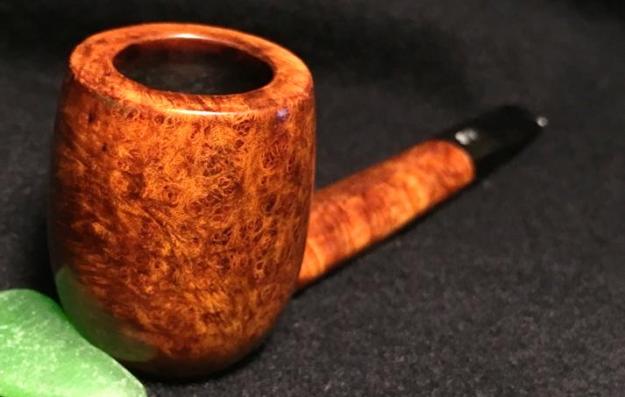
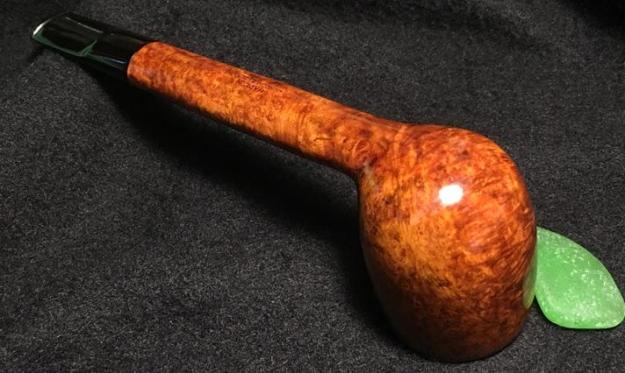
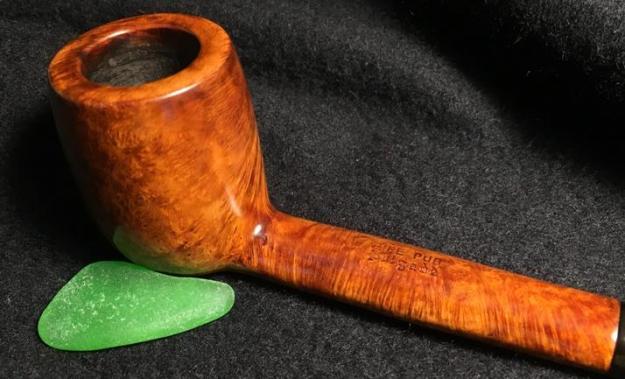
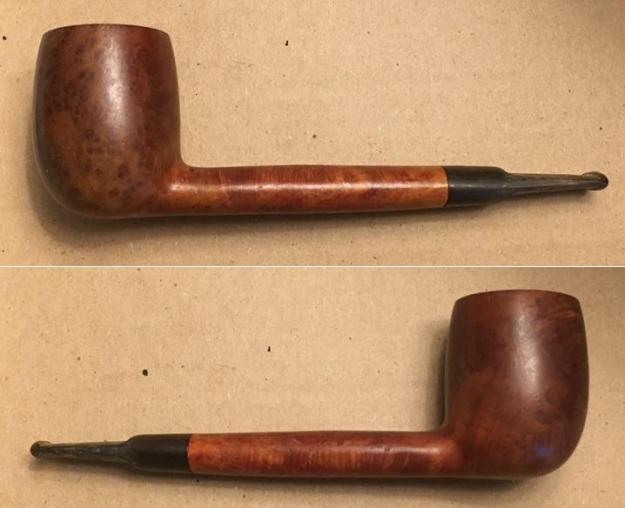
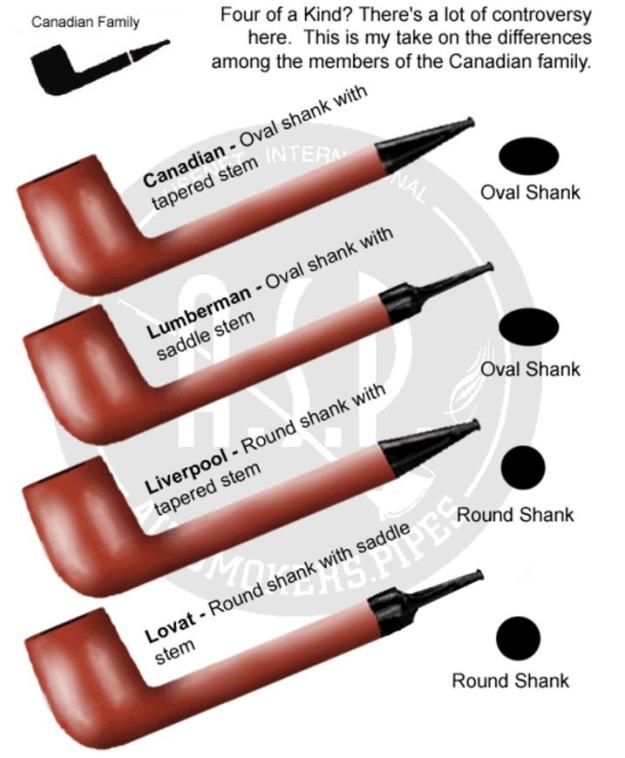
This Canadian Lumberman came to me in the Lot of 66 that I’ve mentioned several times having restored several pipes coming from that one eBay acquisition.  He has a hefty presence.  He has a length of 6 3/8 inches, bowl height of 2 inches, bowl width of 1 5/16 inches, and a depth of 1 ¾ inches – plenty of room for one’s favorite blend.  I do not have an active Canadian shape in my rotation and I had considered adding this Pipe Pub Brigade to my collection, but I decided to put him on The Pipe Steward site in the “For ‘Pipe Dreamers’ Only!” section to benefit the Daughters of Bulgaria – women and girls we seek to help who have been trafficked and sexually exploited.  Towner, a long-time friend living in Pennsylvania, saw the Pipe Pub Brigade online and sent me a note desiring to commission this Canadian.  I recalled talking to Towner last year when my wife and I were visiting Towner’s church and talking about our work in Bulgaria – he said that he wanted to add a Canadian to his collection and that he would wait for me to get back to Bulgaria.  He waited and now his commissioned Canadian Lumberman is on my worktable.  Here are the pictures that got Towner’s attention as he was ‘Pipe Dreaming’! According to Bill Burney’s Pipedia Pipe Shapes Chart, this Canadian is a Lumberman.  Here is his helpful information for those of us seeking to understand the nuances of the Canadian pipe family. The Lumberman stands out among the Canadians with the oval shank coupled with the saddle stem.  The combination of both unique characteristics translates into a classy looking pipe.
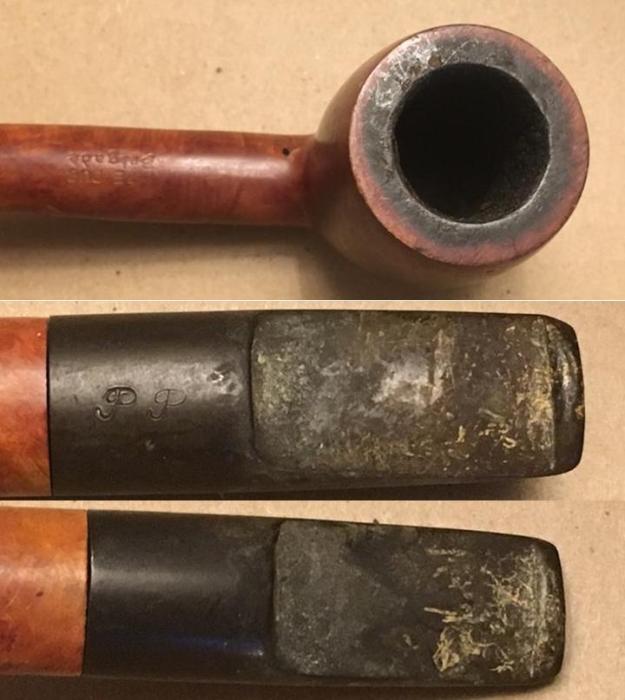
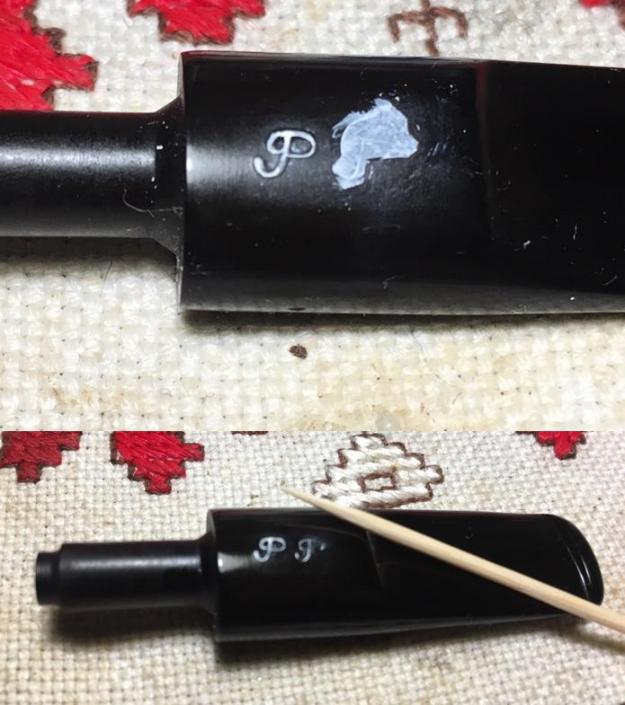
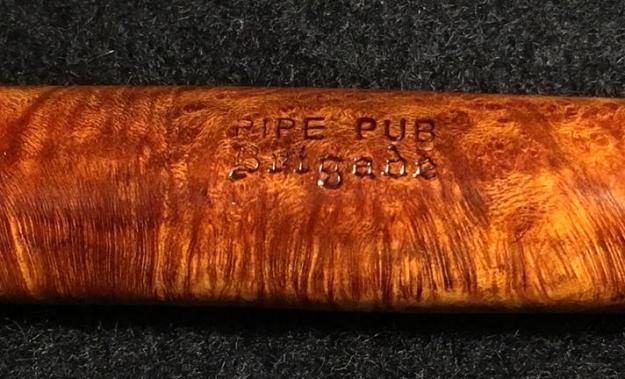
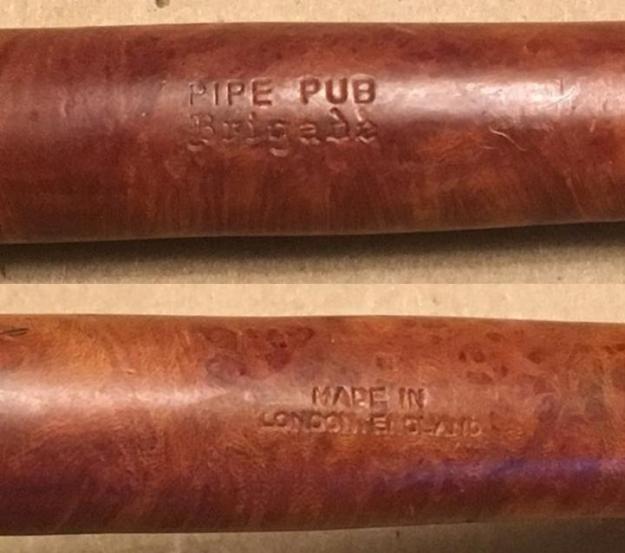
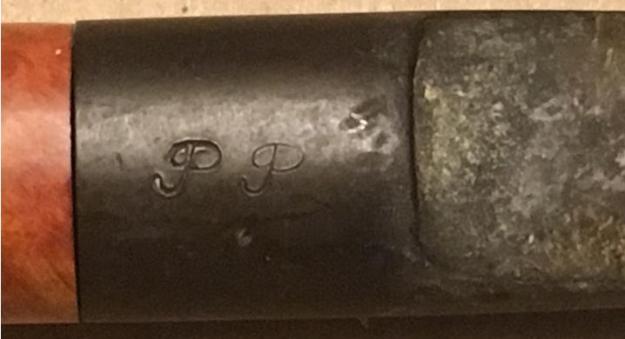
The nomenclature of this Canadian Lumberman proved to be a bit more difficult.  Mid-way on the top of the long shank is stamped, PIPE PUB over Brigade, in a ‘old world’ looking script.  On the opposite side of the shank is stamped, MADE IN over LONDON, ENGLAND.  Stamped on the top of the oval saddle stem is ‘PP’ in a cursive script, which I’m assuming stands for Pipe Pub. To learn more about the provenance of the Pipe Pub name I started my search in my regular go to sites – Pipedia.com and Pipephil.eu and came up with absolutely nothing.  I broadened my search on the internet by simply searching ‘Pipe Pub’ and ‘Pipe Pub Brigade’.  My initial findings had more to do with bagpipers, bagpipe brigades, Irish pubs and pipes…, all of these go well together!  Yet, I wasn’t finding anything that helped me with the Canadian looking back at me on my worktable.  I looked in my copy of Wilczak and Colwell’s ‘Who Made that Pipe?’ and found nothing giving me a direction.  Usually, when I face the brick wall my response is to send Steve an email.  With all his vast Rebornpipes experience, surely, he’ll know something.  Steve’s response was quick and helpful:
Hi Dal

I have heard of it. Here is a link to one on Smoking pipes.com

https://www.smokingpipes.com/pipes/estate/england/moreinfo.cfm?product_id=200834

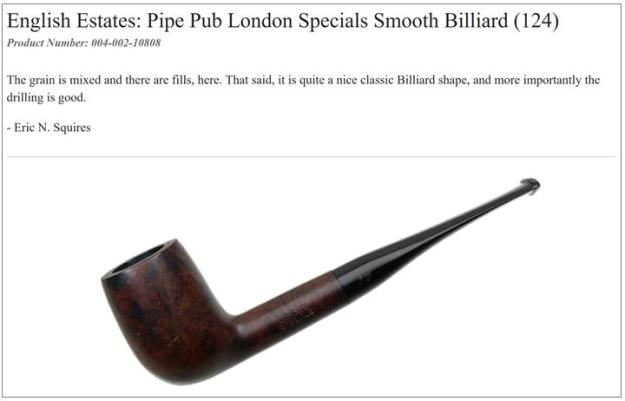
I would try to ferret out the shape number. For instance on the one from Smoking pipes it is a 124… which interestingly is a GBD shape number for a Billiard. I wonder if the brand was not made by special order for pipe shops and stores.

SteveI looked at the link and saw my first example another Pipe Pub pipe – a very nice classic Billiard.  I immediately looked again to see if I missed a shape number on the Canadian – I still saw no number.  But the other piece of information that Steve gave was helpful – the brand was perhaps a special order for pipe shops and stores.  I went back to Google not looking for pipes but for places named ‘Pipe Pub.’  I hit pay dirt and the dirt was surprising!  With the COM of the Canadian stamped indicating London, England, I had been expecting to find something that was UK based but instead, I found a reference for Pipe Pub that was based in the great US state of Texas – who would have thought?  Through several iterations of search parameters, I came across a Google Group chat stream that started in 1998 entitled, “Pipe Pub?” .  The question posed was about a Pipe Pub “almost Canadian” pipe that had the same nomenclature and stem ‘PP’ as mine, but the COM was stamped, ‘Italy’.  The questioner in the stream proposed a correlation with the Italian Savinelli name wondering if Pipe Pub might be a second of that well-known Italian pipe house?
The next response to Bro. R from Larry introduced the Texas connection:

Bro. R,

Back in the 70’s the mall tobacconists here in Austin, TX, were named Pipe Pub; they became Pipe World a little later.  I don’t know if, then or now, these businesses were strictly local or part of a larger chain.  I’m pretty sure they sold a store brand with their name on the pipes.  Today, Pipe World’s store brand pipes *are* made by Savinelli.

Larry

With these two entries, I knew that we were talking about the same pipe name – the ‘PP’ on the stem was the clincher.  Pipe Pub is a local Texas tobacconist which had pipes manufactured with the Pipe Pub name.  But there was more information that perhaps should be submitted to Pipedia!   The next entry I’m including in its entirely because it brings in much of the historical context with much color and the source of the information is a Jon Carter, who is described by Don Schram as a manager of Pipe Pub in the 80s.

Here’s the skinny on Pipe Pub, as related to me by Jon Carter, former manager of Pipe Pub from 1983 to 1987, who isn’t online as of yet. (Messages will be relayed to him through me at: dsc…@bigfoot.com ,however.)

Pipe Pub was started in the Houston area of Texas in the early 70’s with a single downtown store.  It was joined a short time later by a store located in the Austin, TX, area, which was owned and operated by a brother-in-law of the original founders (whose name escapes Jon for the moment).  While Pipe Pub wasn’t nationwide, they owned approx. 14 stores throughout Texas, primarily in the Houston area, and were much in competition with Tinderbox. (Comparable to Churchill’s in the S.E. Michigan area.)

The Pipe Pub pipe in question was confirmed by Jon to be a pipe from this chain.  The letters ‘PP’ in script on the stem indicate that the bit is original, and you are correct in that it stands for Pipe Pub.  As far as the age, there is no definite method of dating this pipe, however; Pipe Pub only carried their own line of ‘Private Label’ pipes between the early 70’s and 1983 when they were phased out in favor of higher grade (and higher priced) pipes, to coincide with the Texas oil boom of the 80’s.  Jon was not able to confirm positively that the pipe is indeed of Savinelli make (second or otherwise), however, he did point out that Pipe Pub did have an excellent relationship with the Savinelli company, as they were allowed to carry and sell the rare Savinelli 0000 (Quadruple-ought) Autograph, of which only 3 have been produced in the last century.  Jon also pointed out that he and another manager sold it to a gentleman who worked for the telephone company to complete a collection of Savinelli Autographs.  (He went to the bank and took out a $5000 loan for it.  The bank, initially thought he was purchasing ‘oil drilling pipe’, but gave him a personal loan for the tobacco pipe anyways.  He kept it in a lock box for a while, then finally broke it out and smoked it for the first time during the 1986 or 1987 Superbowl.)

To round out the history of Pipe Pub, the chain was bought out, save one store, in 1985 by a family, by name of Kowalski, who turned the tobacco chain into a chain of mall knick-knack stores.  (Sound all-too familiar Churchill’s customers?)  The one store, Pipe Pub in Austin, run by the brother-in-law, was not included in the deal, but it was agreed that he would change the name of the store.  Jon commented that the lone store may have changed its name to Pipe World, but wasn’t really privy to such information, as it was, more or less, operated as a renegade store.  The Kowalski’s opened one additional store in Louisiana, their home state, and promptly ran the chain right into the ground after one Christmas season, due to poor ownership and product focus.  Jon pointed out, “They carried vibrating pillows, for God’s sake!”  Forcing the company into bankruptcy, the Kowalski’s sold the chain back to the original owners, whom to his
knowledge, still own it today.

For more information, Jon recommends calling down to Houston and asking information for their main office, which was on Mitchelldale.  [A search of Yahoo Yellow Pages came up empty, however there is a Carol’s Pipe Pub in Bacliff, TX, a suburb of Houston.  Phone (281) 488-7300.  It’s unknown if they’re related.]

DS (Don Schram.)
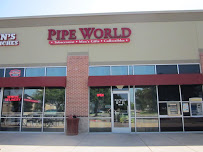
This information-filled post is dated, 1998.  On a hunch, I google the name of the offshoot store characterized as the ‘renegade’ store that wasn’t part of the reported 1985 Pipe Pub acquisition described in stream above.  As part of the legal agreement this store was required to change the name without further association with the Pipe Pub name.  Pipe World, based in Austin, and run by a “brother-in-law” family member came into existence – or, more accurately, carried on the original legacy of Pipe Pub under a different name because it seems that the new owners of Pipe World ran the company off the rails.  I found http://pipeworld.com/ with different locations in Texas and wondered if this was the same ‘Pipe World’ referenced above.

As I’ve done in the past with surprising success, I go directly to the front door and knock.  I went to the ‘Contact Us’ section on the Pipe World site and sent an email asking if anyone had been around long enough to know something about the history of the former, Pipe Pub Tobacconist out of which Pipe World came.  You never know what will happen! I received a reply to my email the same day from Pipe World – from Kyle who asked me to call directly if I had any questions.  Thankfully, I have an internet phone from Bulgaria and I called Kyle in Texas.  Kyle answered the phone and was extremely helpful.  His grasp of the history was amazing – he had been there during the whole transition.  I was totally taken off guard when I discovered through our conversation, that he was the owner of Pipe World.  His name is Kyle Haas.  He was the ‘brother-in-law’ referenced above who opened the new Pipe World and held firm to the values that had been true historically of Pipe Pub.

I enjoyed talking with Kyle, his recall of the events and his grasp of all the many moving parts of the tobacco industry fascinated me.  He was able to answer the primary question I had about the origin of the Pipe Pub pipes.  Definitively according to Kyle, during the 70s and early 80s, GBD/Comoy’s was producing the English line of pipes with the Pipe Pub name out of the London factory.  Pipe Pub pipes marked ITALY were all produced by the well-known Italian house of Savinelli.  He said that he doubted that Savinelli continued to do sub-contract work because they sell enough of their own pipes today to make it worthwhile.  He said that they had to order a lot of each shape as part of the requirements – I believe he said that they introduced a new shape each year.  He mentioned that the pipes that were produced in England and Italy with the Pipe Pub label were done with higher quality in mind.  I said that I could attest to this as I looked at the GBD/Comoy’s factory made Pipe Pub Canadian on my worktable.

After talking about the current climate in the tobacco industry, some of the current issues with Dunhill and the like, I shared with him our work with the Daughters of Bulgaria (he was surprised to hear I was calling from Bulgaria!) and my love for restoring classic pipes which benefit our Daughters of Bulgaria Foundation.  We ended our conversation with words of friendship and for me, a desire to stop off at Pipe World and visit Kyle at their shops in Round Rock and Austin, Texas.  I appreciated the time Kyle gave me on the telephone to discover a bit more pipe history.

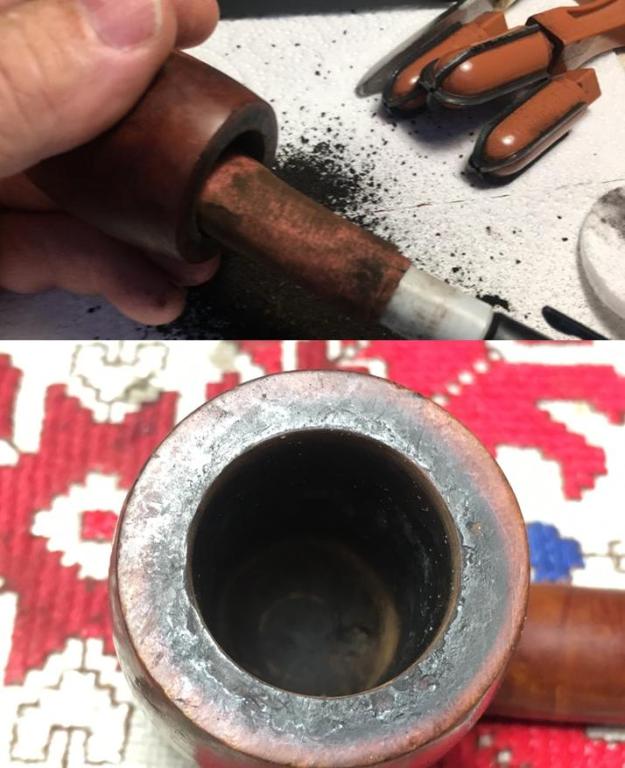
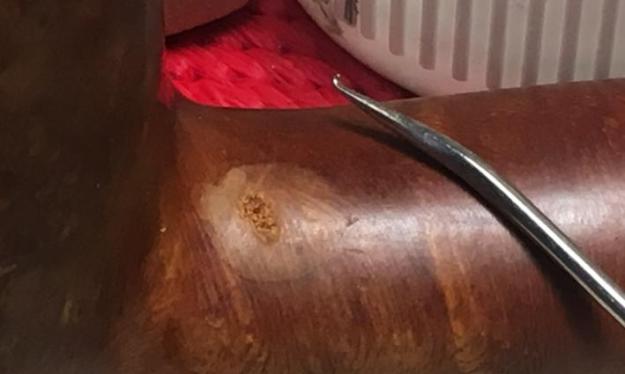
With a better understanding now of the origins of this Pipe Pub Made in London, England, Canadian Lumberman thanks to Kyle, I look to recommissioning it for yet another lifetime.  I take a few close-ups to take a better look.  The chamber has light carbon cake which will not be difficult to remove getting down to fresh briar for a fresh start.  There is some darkening on the rim and nicks, cuts and bruises over the entire briar surface.  I identify an odd-looking fill at the shank/stummel transition.  It looks like dark CA glue, but it doesn’t blend at all.  I also identify about mid-way on the side of the shank a divot of sorts in the briar.  The finish is old, worn, and tired, though the briar grain hiding beneath shows very good potential.  The stem also has some dents and button damage.  To start, after cleaning the internal of the stem with pipe cleaners dipped in isopropyl 95%, I add the short saddle stem to a soak with Before & After Deoxidizer along with 5 other pipe stems in queue for restoration.  After soaking for a few hours, I fish out the saddle stem and wipe off the Deoxidizer and raised oxidation with cotton pads and light paraffin oil.  I also run some pipe cleaners through the airway dipped with alcohol to clear the Deoxidizer.  The Before & After Deoxidizer did a good job on the oxidation. I decide to first work on the stem by using the heating method to minimize the tooth chatter and dents.  Heating the vulcanite causes it to expand and return to some degree to the original condition of the vulcanite.  I paint the problem areas with a flame from a Bic lighter – both upper and lower bit. I take starting point pictures to compare both uppers and then lowers.  The heating technique made a difference by minimizing the damage and raising the compressions. With the dents and chatter less extreme, I’m able to sand out the remaining problems.  Using 240 grade paper I sand both upper and lower bit and I also redefine the button lips using a flat needle file.  I’m very careful to avoid the Pipe Pub “PP” stamping – the second “P” is thin and I don’t want to add to its challenges!To erase the 240 scratches, I follow by sanding with grade 600 paper then with 0000 steel wool to smooth further and buff up the vulcanite.  I like the results.With the stem progress at this point, I turn to the Pipe Pub Canadian Lumberman stummel.   To deal with the very light carbon cake buildup in the chamber, I utilize the Pipnet Reaming Kit and jump to the 3rd largest blade head – the bowl is large!  I remove a good bit of the cake and then I transition to the Savinelli Fitsall Tool to fine tune – getting to the lower part of the chamber and removing more carbon.  To get down to the fresh briar, I then wrap a piece of 240 grit paper around a Sharpie Pen and sand the chamber wall – the pen gives me leverage.  Finally, to remove the carbon dust I wet a cotton pad with isopropyl 95% and wipe out the chamber.  I inspect the chamber walls and I see no cracks or heat fissures – all looks great!  The pictures chronicle the steps. Turning to the external briar surface, using undiluted Murphy’s Oil Soap, I scrub using cotton pads and utilize a brass brush on the rim.  I also use a pen knife carefully to scrape the rim.  The stummel and rim cleaned up nicely.Before proceeding with the external surface, I clean the internals of the stummel – the long Canadian mortise and airway.  Using isopropyl 95%, I employ many cotton buds, utilize a dental shovel to scrape the mortise walls, and pipe cleaners and shank brushes to reach into the long Canadian airway.  There was a lot of lodged tars and oils but it finally started giving way.  I plan to clean further utilizing a kosher salt and alcohol soak at the end of my work day. I take a picture of the weapons and carnage!As I look over the stummel and shank, I see two problem areas, both on the shank.  As the shank merges with the bowl, there is an old fill that is shiny black and stands out like a sore thumb.  It appears to be solid CA glue but an eyesore.  The other problem is mid-way on the right side of the shank.  It appears to be a gouge or puncture in the grain.  I take pictures of both as I consider what to do.I address first the shiny black fill.  I want to remove the fill but not impact the surrounding briar with sanding.  To do this I will try to dissolve the CA fill by applying a small amount of acetone directly to the fill and hopefully it will soften and allow me to dig it out with a dental probe.  It works like a champ.  Since acetone evaporates quickly, I repeatedly dob a bit of acetone on the fill using a cotton bud.  While the acetone rested on the fill as a droplet, I would carefully scrape and probe the fill with a sharp dental probe.  Gradually the CA began to soften, allowing the dental probe to undermine the integrity of the fill.  After repeating the dob, scrape, probe several times, the fill disintegrated, and the briar blemish can be refilled and hopefully blended better.  The pictures show the process.  For the gouge on the other side, I gently clean out the wound with the sharp dental probe to remove any old fill and debris that had collected.  I then wipe both repair areas with alcohol to clean the areas in preparation for a new fill.I mix together thick CA glue and briar dust to form a putty.  I place some briar dust on an index card and put a few drops of the CA glue next to the briar dust.  Using a toothpick, I add briar dust to the CA glue until I reach a viscosity of about molasses.  I then apply the Briar putty to the two areas on the shank – a mound of putty over the areas in anticipation of sanding them down after the putty cures.  I put the stummel aside for several hours.   With the patches curing, I turn to the stem and using micromesh pads 1500 to 2400, I wet sand the stem.  I follow by dry sanding with pads 3200 to 4000 and then 6000 to 12000.  After each set of three I apply a coat of Obsidian Oil to rejuvenate the vulcanite stem.  Throughout all the sanding I take care to avoid the Pipe Pub ‘PP’ stamping on the top of the stem.  The first ‘P’ is strong but the second ‘P’ is faded.  Later I will add paint to the stamping with hope that there’s enough tread left in the second ‘P’ to hold the paint. I like the progress – the vulcanite stem has a glossy pop!  The patches on the shank are ready for filing, sanding and blending.  I use a flat needle file to bring the patch mounds down near to the briar surface.  Then I follow with 240 grit paper rolled up tightly, then 600 grit – each removing the scratches of the former.  Finally, I run 0000 steel wool over each patch.  I take pictures to show the progress. Moving on to the micromesh phase.  To address the tired finish and the myriad of small scratches over the stummel from normal wear, I wet sand using micromesh pads 1500 to 2400, then dry sanding with pads 3200 to 4000 and pads 6000 to 12000.  I love watching the gradual unveiling of the briar grain during the micromesh cycle. I never grow tired of the beautiful matrix of grains – no pipe is the same, each a new showcase of God’s creation.  The pictures show the progress. I’m at a decision point.  The question before me is whether to apply a darker stain to the stummel or leave it at the natural grain hue?  The current state is very attractive except for the fact that the briar patch I applied closest to the bowl, as seen in the pictures above, stands out more than I like because it is surrounded by lighter wood. I wonder if I would have applied simply a drop of clear, regular CA glue the patch would have been lighter?  Hmm.  Something to consider in the future.  While I’m considering the question of staining, I decide to give the stummel a kosher salt and alcohol soak to further freshen the internals of the Canadian for the new steward.
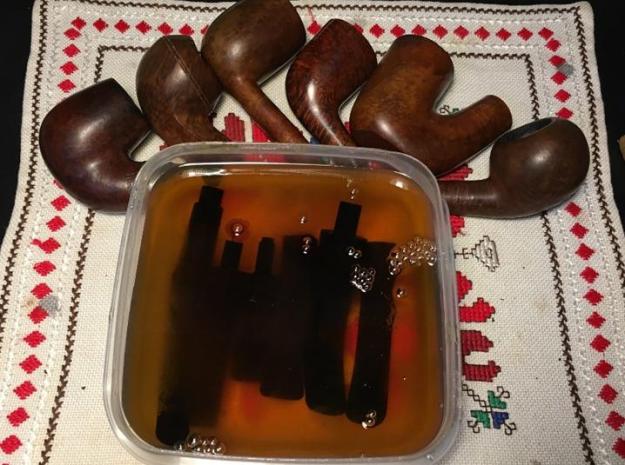
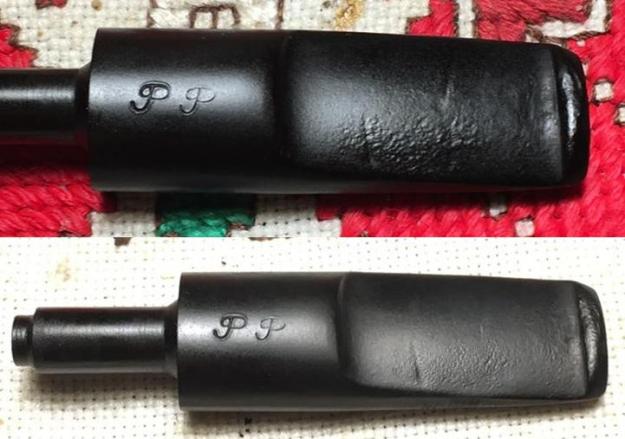
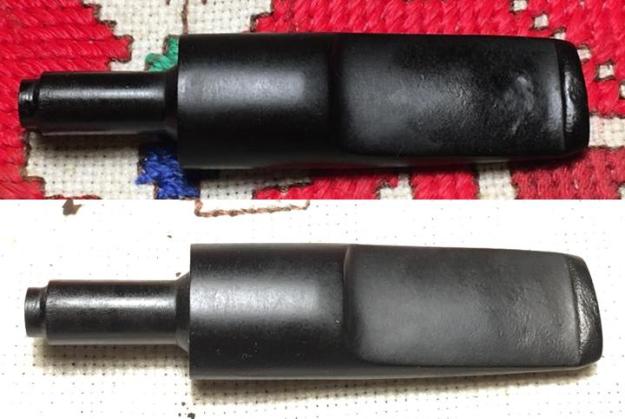
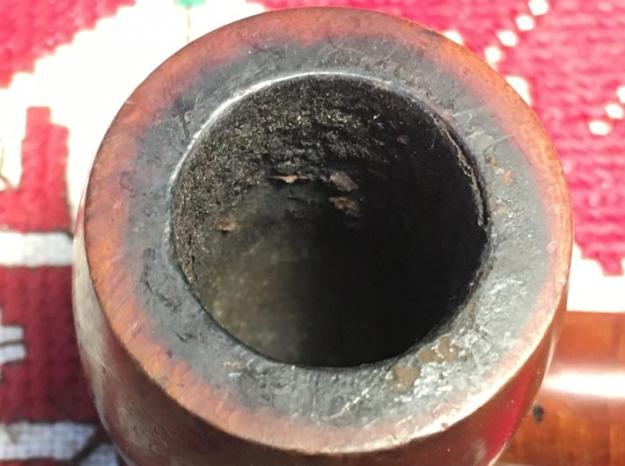
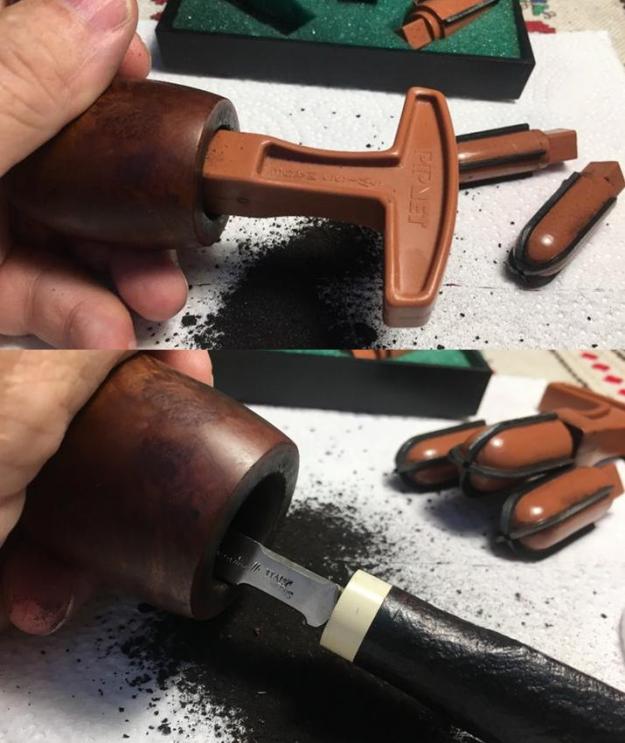
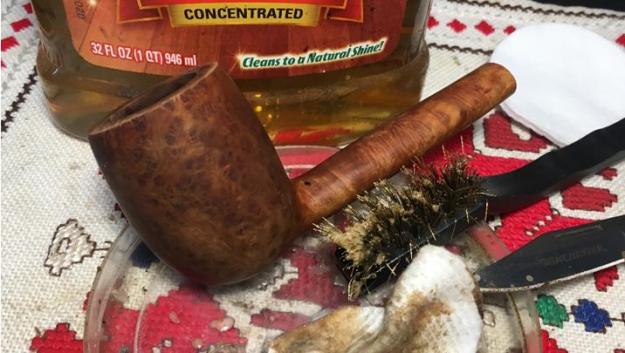
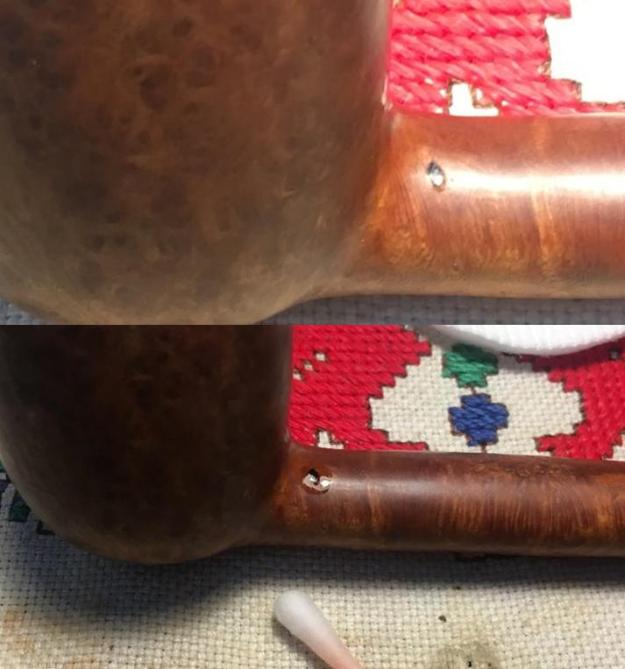
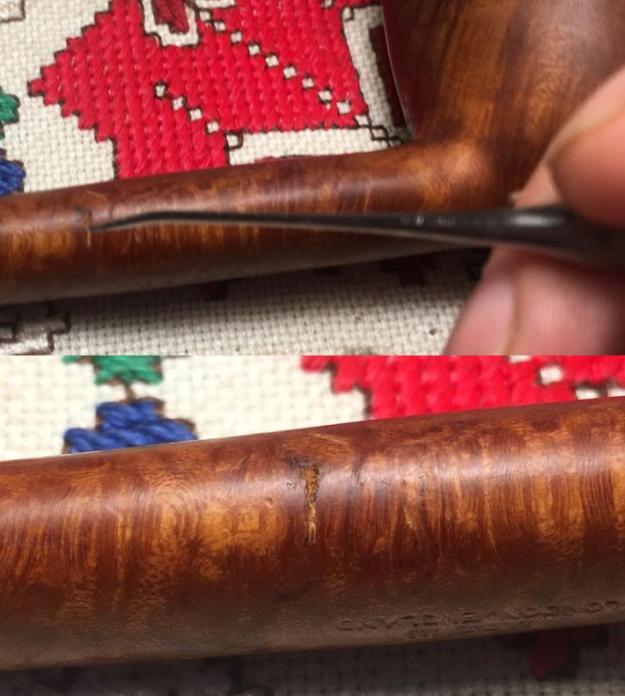
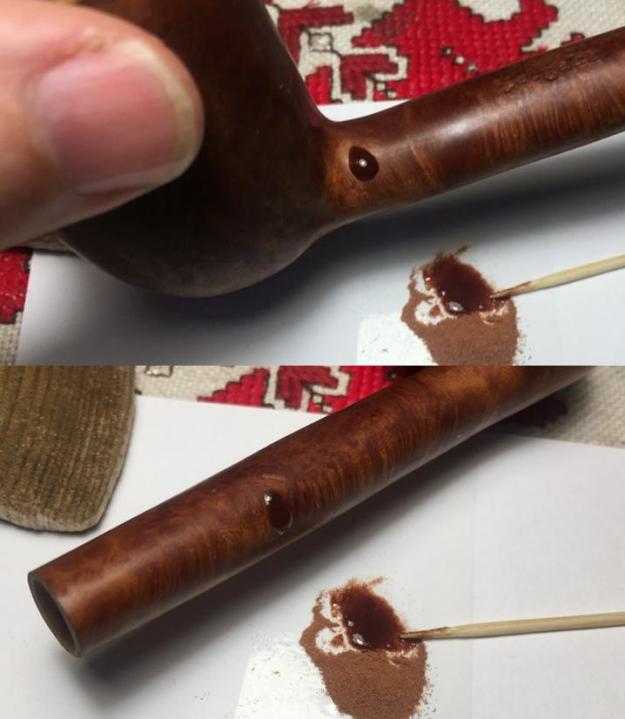
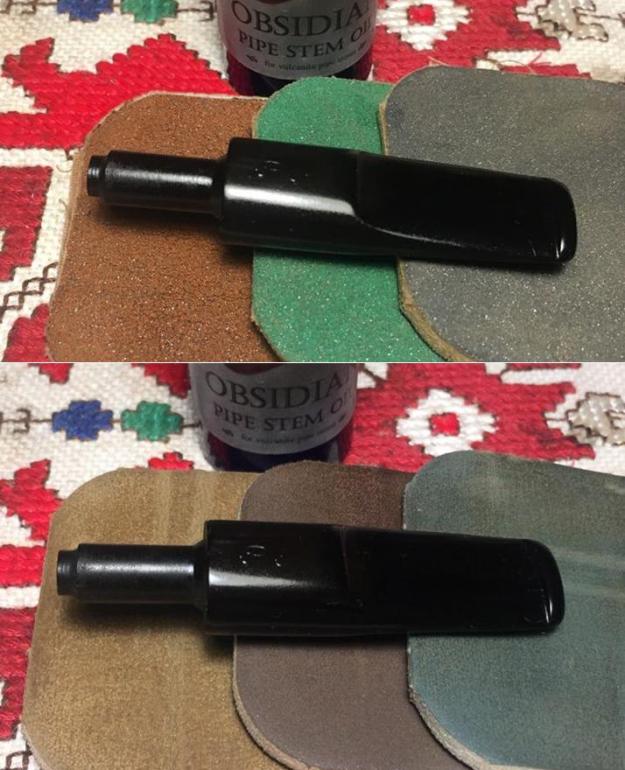
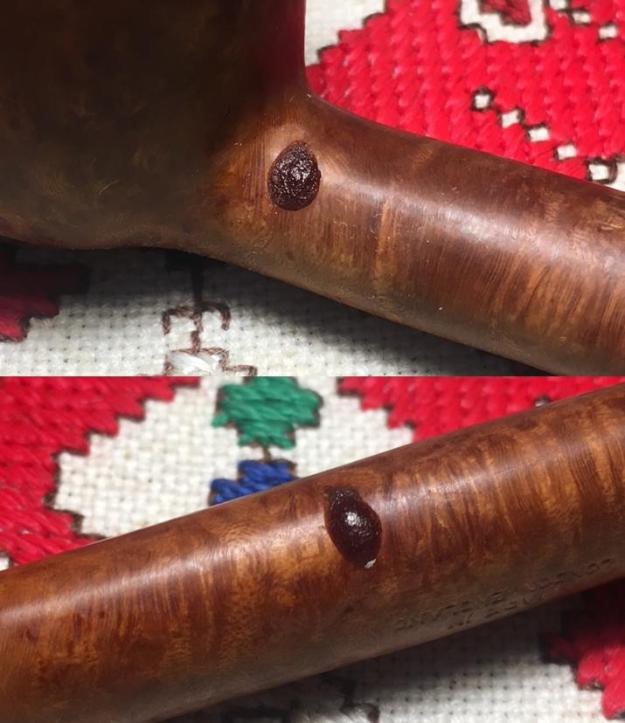
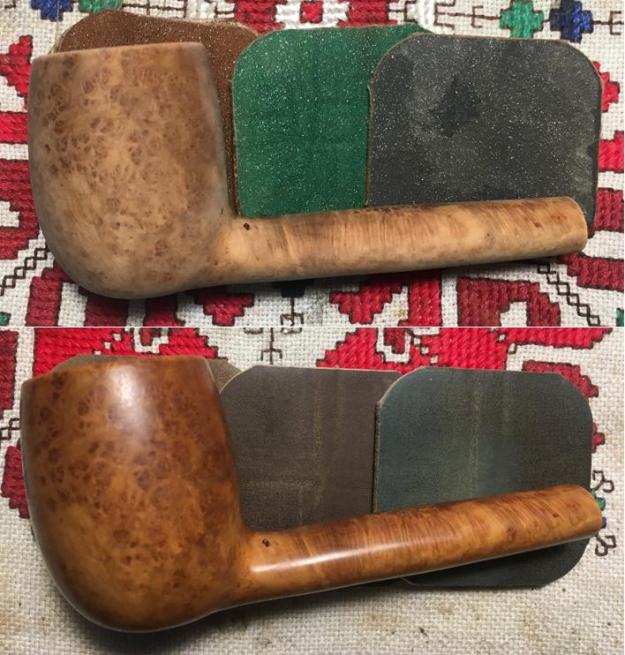
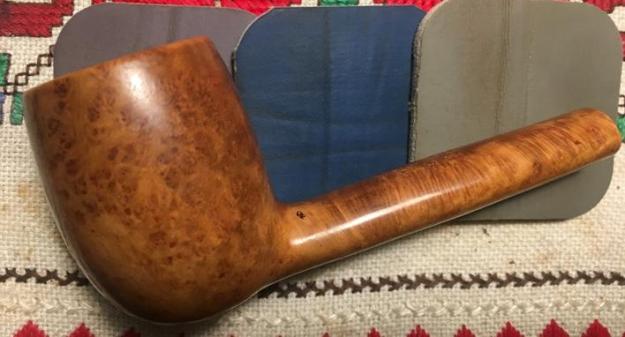
First, I form a wick to insert as far down the long shank’s airway as possible to draw out tars and oils.  I use a cotton ball and by stretching it out and twisting it I form the wick.  I use a straight wire to help force it down to airway.  I then fill the bowl with kosher salt, which leaves no aftertaste.  After setting the stummel in an egg carton for stability, using a large eyedropper, I fill the bowl with isopropyl 95% until it surfaces over the salt.  I wait a few minutes and top off the alcohol again.  I set the stummel aside to soak for several hours.While the stummel is soaking, I take another closeup of the ‘PP’ stamping on the stem.  To add a nice touch to the recommissioning of this Pipe Pub Canadian, I want to add white acrylic paint to the lettering.  I have no pictures of Pipe Pub pipes that give this detail to compare, but I’m assuming that when this Pipe Pub Canadian rolled off factory line in London, the ‘PP’ stamping was colored.  I’m hoping too, that the second ‘P’ can hold the paint.  Using white acrylic paint, I apply a very small amount over the ‘PP’ stamping spreading it with a toothpick and then using a cotton pad I dob off some of the paint – to thin it so that it will dry more evenly.  I take a picture at this point.  I let it set for a few hours.  Using the mid-part of a toothpick to rub lightly the dried paint, I’m able to achieve a good look with the first ‘P’.  I apply more paint over the second ‘P’ and let it cure.  Well, after some time I’m somewhat satisfied with the results – it’s the best I can do with the worn, thin second ‘P’.   The stummel has been in a kosher salt and alcohol soak for several hours.  The salt has discolored and the wick as well.  Its done its job. I shake the salt in the waste and clean the bowl of salt with paper towel.  I also blow through the mortise to dislodge in salt crystals.  The bowl is fresher now and the new steward will appreciate this!After some thought, I decide to darken the hue on the stummel to mask more effectively the fills on the shank and to capture a more classic darker English style considering the London, England origins of this Canadian.  I use Fiebing’s Dark Brown Leather Dye and I cut it with isopropyl 95% by about 50%.  I want a darker stain but not too dark.  As an aniline dye, if I elect, I can lighten it further by wiping the stained stummel with alcohol.  I first mix the stain with alcohol in a shot glass, and then I clean the stummel by wiping it down with a cotton pad wetted with alcohol.  I fit the stummel with a cork in the shank to act as a handle.  I then heat the stummel using a hot air gun to expand the briar making the grain more receptive to the dye.  After heated, I apply the dye liberally to the stummel and long Canadian shank with a folded over pipe cleaner.  After thoroughly covering the stummel with dye, I flame the stummel by igniting the aniline stain and the alcohol in the dye combusts leaving behind the dye set into the grain.  After a few minutes, I repeat the application of applying dye and flaming.  I set the stained stummel aside to rest through the night.  I turn off the lights and do the same! The next morning arrives, the stummel has rested through the night allowing the stain to set well. I enjoy ‘unwrapping’ the stummel of the flamed dye crust to reveal the grain below.  To do this, I mount a dedicated felt buffing wheel on the Dremel – the felt wheel creates more torque and friction on the surface.  With the felt wheel I apply the coarser Tripoli compound with the Dremel set at the slowest speed.  I purge the wheel with the metal edge of the Dremel’s adjustment wrench which removes old compound and softens the wheel.  I then methodically work the wheel over the surface with the compound to reveal the newly stained briar and buffing with the compound.  I purge the wheel often as old compound collects quickly.  I pause and take a picture to show the border of progress.  It takes close to an hour to complete the use of the felt wheel.  With the felt wheel I was unable to reach into the crook where shank and bowl meet, so I change a cotton cloth wheel and increase the speed of the Dremel to about 40% and apply Tripoli to the crook to remove the flamed stain.  When complete, I give the stummel a very light wipe with alcohol using a cotton wipe not really to lighten but to blend the new stain.  Pictures show the progress. After the Tripoli, I apply the finer Blue Diamond compound to both reunited stem and stummel.  I mount a cotton cloth wheel dedicated to Blue Diamond onto the Dremel, keep the speed at 40% and apply the compound methodically over the entire pipe. After completing the Blue Diamond compound, I wipe the pipe with a felt cloth to remove the compound dust in preparation for the wax.  I mount another cotton cloth wheel on the Dremel with the speed at about 40% and apply a few coats of carnauba wax to stem and stummel.  I finish the restoration by giving the pipe a rigorous hand buffing with a microfiber cloth.
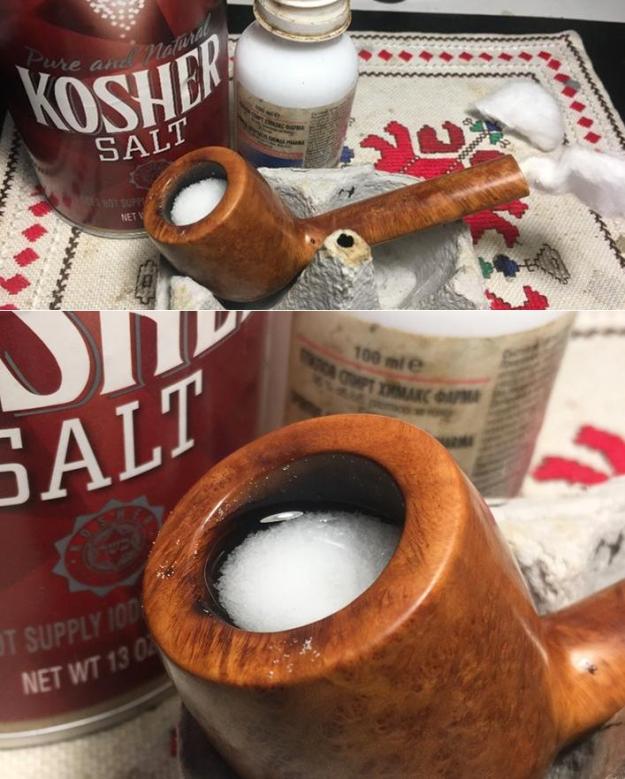
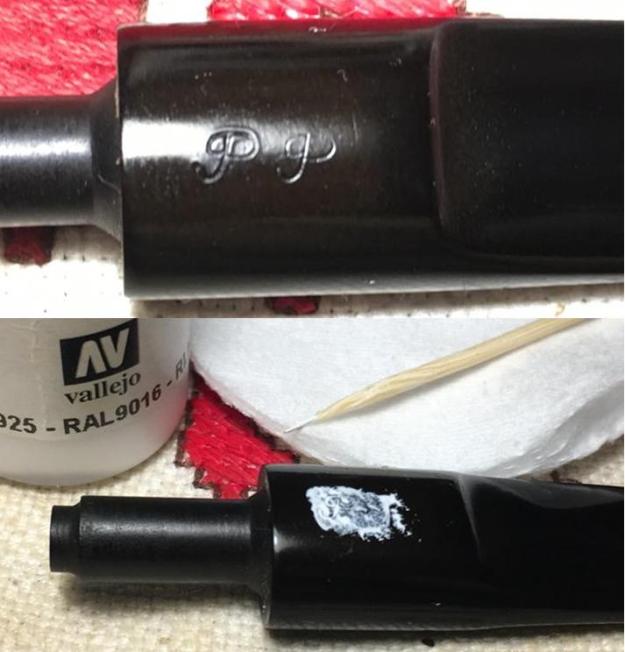
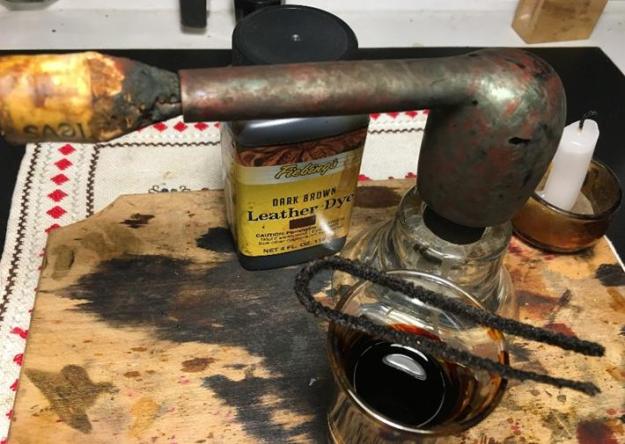
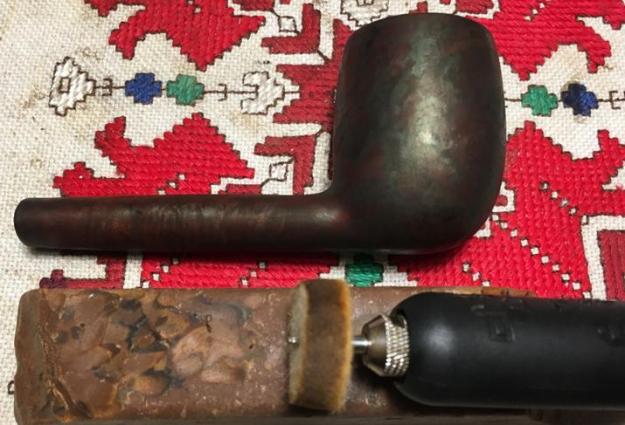
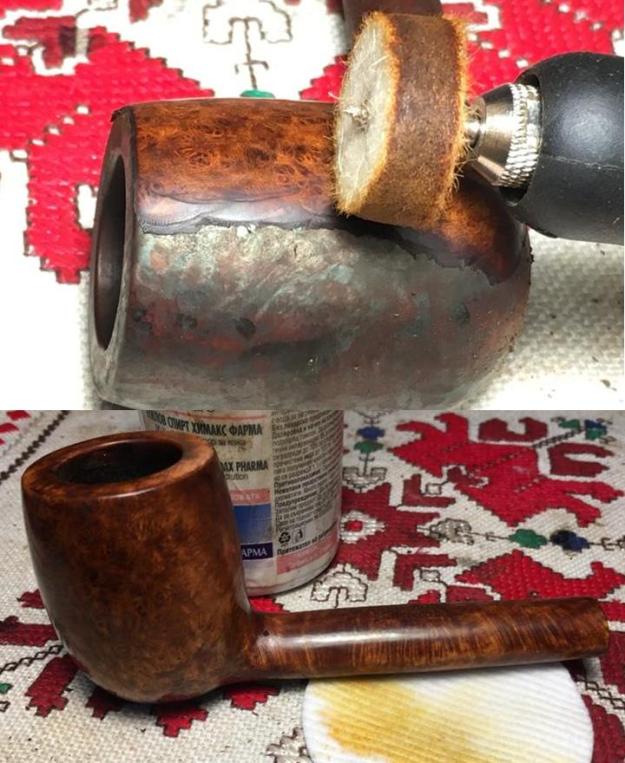
Wow!  I’m pleased with the results of this Pipe Pub Canadian Lumberman.  I appreciate more the history of the Pipe Pub name and the provenance of this pipe manufactured in London, England.  What stands out in this Classic Canadian shape is the briar grain.  Oh, my…the pop of the grain is beautiful, and I know that a new steward will enjoy this pipe.  Towner commissioned the Pipe Pub Canadian Lumberman from the “For ‘Pipe Dreamers’ Only” area of  The Pipe Steward site and he will have first dibs at it in The Pipe Steward Store.  As usual with other restorations, this pipe will benefit the Daughters of Bulgaria – women and girls who have been trafficked and sexually exploited.  Thanks for joining me!
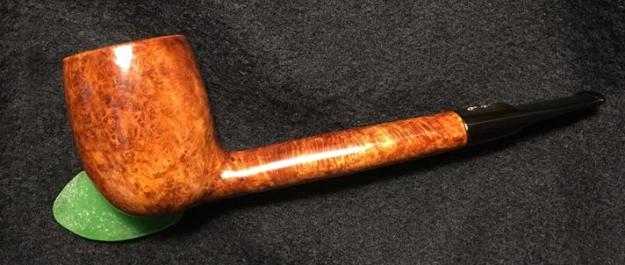
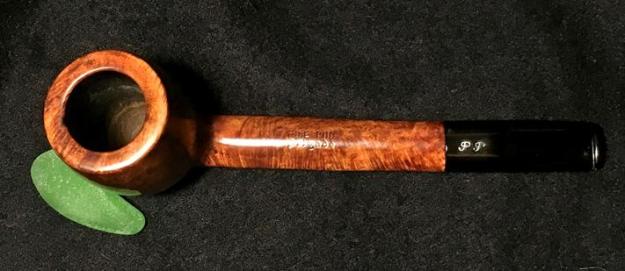
 

Restoring a Beautiful K&P Dublin Bent Billiard


Blog by Steve Laug

This is another pipe from the fellow here in Vancouver that he dropped off for me to work on. There were 8 pipes in the lot – I have finished six and this is the seventh. It is a bent billiard shaped bowl that is stamped on the left side of the shank and reads K&P over DUBLIN. On the right side of the shank is the COM stamp Made in Ireland in a circle with the “in” in the centre of the circle. Next to that is the shape number 217. The silver band is marked K&P over Sterling Silver. The stem was the original and was in fair condition. It was another one of his pipe finds on a recent pipe hunt in Vancouver. There was some really nice grain showing through the dirt and debris of the tired pipe. The rim top was damaged with a burn mark on the front right and the back outer edge was rounded over. The finish was very dirty and there was a thick cake in the bowl. The stem was oxidized and had tooth marks on the top side near the P-lip and on the underside near the shelf. I took close up photos of the rim top and the stem to show the condition they were in when I received the pipe. The first photo shows the damage to the rim top – there is a nick out of the front inner edge of the bowl and a few other nicks and chips that make it appear to be out of round. The back outer edge on the shank end is worn down at an angle but it is not rough. The inside of the bowl has some uneven cake around the bowl and some tar and oil on the top of the rim. The sterling silver band – with K&P  and Sterling Silver stamped on it is oxidized and tarnished but otherwise in good condition. The photos of the stem show the tooth damage on the top and underside of near the P-lip button. There is a deep tooth mark on the top side ahead of the button and some wearing down of the button edge on the left and right. The underside of the stem also has tooth chatter and some wear on the sharp ledge. The airway on the top of the stem is still in good condition. I took a photo of the pipe with the stem removed to give an idea of the style of the tenon on the stem and the look of the pipe sans stem.I took a photo of the stamping on the both the right and left side of the shank. It is very clear and readable. The stamping left reads K&P over Dublin and the stamping on the right reads shape number 217 and the COM stamp as mentioned above – Made in Ireland in a circle.I started my clean up on the bowl with reaming and then cleaning out the airway to the bowl and the inside of the mortise as well as the airway in the stem. I reamed the bowl with a Savinelli Fitsall Pipe Knife to remove the cake on the walls. I used a dowel wrapped with sandpaper to sand down the walls on the bowl. I cleaned out the airway in both the bowl and stem with alcohol (99% isopropyl), pipe cleaners and cotton swabs until they were clean on the inside. To remove the damage from the rim top I lightly topped the bowl with 220 grit sandpaper on the topping board. I checked it repeatedly as I did the topping to make sure I had removed just enough to suffice to remove the damage. The second photo shows the topped bowl. You will note that I left a little of the damage on the rear outer edge so as not to top too much of the briar.I wiped the rim top down with alcohol on a cotton pad to remove the dust then stained it with an Oak coloured stain pen. I buffed it lightly with a soft cloth to even out the stain.I wiped down the bowl alcohol on a cotton pad to remove the dust and grime on the surface of the bowl. I polished the briar finish with micromesh sanding pads – wet sanding with 1500-2400 grit micromesh pads and dry sanding with 3200-12000 grit pads. I wiped it down after each pad with a damp cloth. The grain began to shine through with both flame and birdseye showing up on the sides of the bowl. I rubbed down the briar with Before & After Restoration Balm. I worked it into the finish with my fingertips and finished working it in with a shoe brush. The balm worked to clean, preserve and enliven the surface of the finish on the small bowl. The briar was coming alive so I took some photos of the pipe at this point. I polished the silver band with Hagerty’s Silver Polish to remove the tarnish. It is a soft scrub that is put on the band and buffed off with a cloth afterwards. I used a cotton pad to remove the tarnish. I polished it further with a jeweler’s cloth to protect and give it a shine. I set the bowl aside and began to work on the dents in the stem surface. I “painted” the vulcanite with a Bic lighter flame to try to raise the dents. I was able to get those on the underside completely removed. The deep one on the top surface of the stem and sides of the button needed to be addressed differently. I cleaned the areas around the button and filled in the dents with black super glue. When the repair cured I sanded the repairs and the oxidation with 220 grit sandpaper. I folded the paper and worked in the edges of the button. I polished the stem with micromesh sanding pads – wet sanding with 1500-2400 grit pads and dry sanding with 3200-12000 grit pads. I wiped the stem down with Obsidian Oil between each sanding pad. I put the stem back on the bowl and buffed the pipe with Blue Diamond polish on the buffing wheel. I carefully avoided the stamping on the both sides of the shank. I gave both the bowl and the stem multiple coats of carnauba wax and buffed the pipe with a clean buffing pad to raise the shine. I hand buffed it with a microfiber cloth to deepen the shine. The finished pipe is shown in the photos below. I have one more pipe to finish for him – it is the last of the pipes he found while pipe hunting. This has been a fun bunch of pipes to work on. I look forward to moving through the rest of them. Thanks for looking. 


A THREE-CARD DRAW FOR AN INSIDE STRAIGHT WITH AN OLD KARL ERIK HAND MADE GRADE O FREEHAND


Blog by Robert M. Boughton

Copyright © Reborn Pipes and the Author except as cited

https://www.facebook.com/roadrunnerpipes/

You’ve got to sing like you don’t need the money
Love like you’ll never get hurt
You’ve got to dance like nobody’s watchin’
It’s gotta come from the heart if you want it to work.

— In “Come from the Heart” (1987), a country music song by Susanna Clark and Richard Leigh

INTRODUCTION
The free-spirited quote I chose for today’s blog is a chorus of sorts to the darker, harder to control song of myself I change a little at a time, but concerning Danish freehands, at least, it shouts out.  In regular prose as opposed to verse, the words have been attributed to many folks, the most famous of whom are Leroy “Satchel” Paige and Mark Twain.

Really?  Satchel Paige and Mark Twain?  Can anyone even summon to the mind an image of Satchel, showman though he was, hurling three evanescent fast balls for a strikeout and then sauntering off the mound, doffing his cap as for the National Anthem, to spout what would have been considered insane gibbering in his day and gotten him run out of town on a rail or worse?  Or the wry and often hilarious Great American Writer – who can still leave readers today ROFL from his literary accounts of the myriad outrageous frays he entered with zeal and turn wickedly acerbic in his social commentary – wearing his famous white Southern suit and taking the cigar out of his mouth as he steps onto a gazebo to pronounce such life-affirming, feel good modern sentiments?  I think not.

But I like the way Kathy Mattea sings those four lines, although I can’t recall any of the others, and the lively, high-strung electric fiddle plucking of an unsung but talented musician.

To the point, the pictures of a nine-pipe lot I bought at the beginning of the month, before the package arrived, had a magnetic pull on me.  The main attraction was a pair of Danish freehands, and the other was the presence of at least two and maybe three other nice finds, about which the seller might have been oblivious.  With no order whatsoever to the description and only three brands identifiable (Kaywoodie, Falcon and Missouri Meerschaum), the seller did reveal that one of the freehands was a Knute of Denmark and the other a Karl Erik.  I had heard of Knute and was unfamiliar with the brand, but I’ve owned several Karl Eriks and was pretty sure the behemoth in the lower right side of the following photo was it.  I was correct.

9-pipe eBay lot courtesy stwok74075

I restored the freehands from the lot first.  Of those, I decided to start with the Knute for two reasons, the lesser being my inexperience with the brand and the more significant that, although both were large pipes, the Karl Erik was enormous and therefore had much more area to repair.  Had I any idea there was something greater about the KE than its massive potential for beautiful geometric symmetry and fine example of chasing the grain, I might have chosen the opposite order.  KE, by the way, is my abbreviation for convenience, not to be confused with the maker’s earliest pipe mark)

The pipe’s bleak façade of thick gunk at first hid the small block of nomenclature on the stem end of the shank.  Before I would have taken photos of the pipe as it arrived, I used a thick cotton rag and more than a little force to wipe away the muck that at one point I thought might require alcohol.  I stopped breathing a moment when I saw the mark.  Instead of the regular two lines of imprint, there were three: KARL ERIK/HANDMADE IN DENMARK/O.

The grade mark, of course, was the part that surprised me.  I’ve owned four KE pipes not counting my latest addition, two of which were far more striking at a glance than this one even after I finished its restoration, but none of them was graded.

As fast as I could, I browsed to Pipephil and found a mention of “previous grading” from 4-1 ascending, meaning1 would be the highest, not counting the Ekstravagant releases that were entirely handmade.  Well, that was no help, and so I searched further, finding multiple sites that gave both the previous grades and the newer ones from D-A, again ascending.  Some of the latter sources, including Pipedia, expanded on the Ekstravagant grade, noting that it in fact was divided into degrees, C, B, A, AA and AAA.  I found no official mention of letter grading beyond D, but I did track down a Worthpoint auction that describes O as “[t]he highest grade in the old Karl Erik grading system.”  Needless to say, my breath was taken away again.  I’m calling on any readers with information on the maker’s early grading system to fill me in on it!

Speaking of the maker, his name was Karl Erik Ottendahl (1942-2004), and he was a lithographer struggling to make ends meet from his apprenticeship starting when he was 16 into his mid-20s when he took up carving pipes as a day job.  Young Ottendahl had made pipes as a hobby since he was 16 and gave most of them to friends and senior co-workers.  Never forgetting his “roots,” Ottendahl remained perhaps the most generous pipe maker in the history of the craft and trade.  He was devoted to the proposition that fine pipes should be affordable to the average smoker, and to that end he priced his works of art far below the going rate.  Likely for that reason, his brilliant work was underestimated and likewise valued during and after his lifetime, and it is only in recent years that the market has begun to appreciate their worth more.  I’m sure that fact makes Karl Erik roll over in his grave.

The poor, big lunk of fine Danish stock in this blog had fallen on hard times and was in a sorry state.  The following triple stem swap gets a little crazy, so try to follow this.  The KE came with a nice dark brown swirled acrylic fancy stem that was just way too short to support its gigantic stummel but was perfect for a Knute of Denmark from the same lot that I already restored, blogged and sold – with the KE stem.  The Knute, by the way, had a Vulcanite stem that was chomped, with a hole in the bottom below the button I fixed well but the absence of a full lip I knew I could mend enough for my own use but would never pass off to a customer.  So that was a no-brainer.  I decided on a temporary substitution of a bright orange Lucite stem from a Ben Wade by Preben Holm freehand I have.  For now, the half-eaten but semi-repaired Vulcanite stem from the Knute is on the BW.  I’ll just add that I’m anxiously awaiting replacements for both of them.

Here are photos of the KE as I received it minus the stem, and the Knute Vulcanite bollix I mended as far as I’m going to do for now, with no signs of the hole that was on the underside but a bit of a double lip there now and the pre-existing half lip topside. RESTORATION
Part of me knew, from the rich, dark briar grain that glowed through the long bottom of the shank after I vanquished the grime that had overcast its natural, smooth brilliance, that the rest of the wood could only be better.  But the Devil’s Advocate in me gave rise to the tomfool but nevertheless undeniable apprehension that nothing good could come from stripping away the sedimentary layers of anomalous substances.  I decided to be done with the majority of the business using an Everclear soak.

To keep my mind from its pointless and counterproductive negative preoccupation with the state of the stummel, I turned my attention to the Lucite stem that was taken off the BW to use in place of the lovely and too petite stem with which the pipe came.  Note the dark stains inside the stem’s airhole and the bore and tenon opening. Most of the inner stain came out with alcohol soaked bristly cleaners, and the rest of that later with the retort.  The bore and shank end, on the other hand, needed more wheedling.  At first when I tried the small end of a bristly cleaner dipped in alcohol, I had minimal results.  Switching to something more pointed, sharp and focused – an unwound paper clip – I scraped away the accreted blackness on both ends and used a 180 grit sanding pad on the tip of the shank end.  Either I forgot to snap shots of the results or misplaced them, i.e., tapped Save As on the computer and didn’t look where I did it, but I don’t have the proof of cleaning to display.  Later pictures will show all but the shank opening of the stem.

But there’s good news!  The Everclear soak was finished!  The color and grain I wanted to see were there.To remove the remaining odd caliginosity obscuring the fine wood, I gave the bowl and shank a quick rub with 600-grit paper and the rim with super fine “0000” steel wool.  The difference was marked. The plateaux rim and shank opening needed a little more Everclear soaking.  That done, I grabbed my handy sanding pad again and spot-scrubbed those places. I reamed and sanded the chamber with 150, 220-, 320- and 600-grit paper that took the char far enough down to the wood for the retort to handle what remained. For me, the most gratifying part of a pipe restore, if the wood has been prepped properly beforehand, is micro meshing from 1500-12000, for this is where the mettle of the pipe is revealed.  The deep, shiny, shimmer that should result is something to behold with wonder.  And the grain on the block of wood chosen for this pipe is spectacular.  I also ran four Pyrex tubes of Everclear through the pipe afterward for the retort. Staining the rough rim and shank opening with Lincoln Medium Brown boot stain before flaming them, I took off the char with 8000 and 12000 micro mesh.  The second of the next two pics shows before I finished it with a light touch of steel wool.With that, the pipe was finished except for buffing the stummel and stem with red rouge and carnauba wax.  I’m out of Halcyon II and therefore could not use it on the plateau areas. CONCLUSION
One look at this pipe out of the box the lot came in and I fully intended to offer it for sale.  The gentleman from one of my pipe smokers’ forums who bought the Knute was also more than eager, to put it lightly, to get his hands on the Karl Erik I told him I had.  But all that was before I started unearthing – in a sense that may be literal given the fact that the pipe looked to have been buried for some time – the way Ottendahl chased the grain on this splendid example of one of his earlier works, when he graded them on an as yet undocumented scale.  For all I know, O being the fifteenth letter of the English alphabet, my newest freehand may not be near the top end, but it’s still graded.  That means it meant something to its maker, and I’m certain he would remember it if he could be reached where he is now.  Besides, as his newer scales are ascending, meaning from “best” to “worst,” and I being more of a glass half-full kind of guy, I like to think it’s two grades closer to the sidewalk than the middle if the road.

SOURCES
http://www.pipephil.eu/logos/en/logo-k1.html
https://pipedia.org/wiki/Karl_Erik
https://www.worthpoint.com/worthopedia/karl-erik-freehand-estate-pipe-521847614
https://rebornpipes.com/2016/07/06/a-stellar-find-a-gbd-prestige-1451-oval-shank-billiard/
https://rebornpipes.com/2018/07/17/finding-the-natural-beauty-of-a-knute-of-denmark-freehand/
https://pipedia.org/wiki/Knute

Restoring a Cased Set of Pipes – 2 JBV and 1 M&T Bent Military Mount Billiards – Part 2


Blog by Steve Laug

I have already introduced this set of pipes for you in Part 1 of this blog. It is an old cased set of three pipes. Two of them were stamped JBV in an oval and one was stamped M&T Best Briar & Bands. The set was missing the third JBV pipe which I would bet was a smooth meerschaum bent billiard bowl and a second stem. The second stem in the case was for the M&T pipe and was smaller in diameter than the shank of the JBV pipes. As I mentioned in Part 1 the silver was dirty and the bowls caked on all of the pipes but there was something about them that really attracted me. Here is the link to the first part of the blog – the restoration of the most damaged of the JBV pipes: https://rebornpipes.com/2018/07/22/restoring-a-cased-set-of-pipes-2-jbv-and-1-mt-bent-military-mount-billiards-part-1/.

I am including a photo of the opened case showing the pipes and the stamping on the inside of the lid. It reads J.B. Vinche over “Au Nabab” over Bruxelles as far as I can interpret the blurred stamping on the felt lining. You can also see that the case has spots for what looks like a tamper tool and possibly a cigarette holder that are also missing.The next pipe that I chose to work on is the one on the right side of the case in the photo above. It is stamped JBV in an oval on the left side of the shank. The silver ferrule is also stamped JBV in an oval over BRUX over three hallmarks that are hard to read. The first appears to be a flower, the second a person and the third is ARG over 900. The pipe is in rough shape, but I am not sure I want to call it that after my experience with the first JBV splitting when I cleaned it. The finish on this one is shot; there is silver polish on the shank ahead of the ferrule. There are some gouges in the top and underside of the shank. There is a thick cake in the bowl and the rim top is beat up. There are big chunks of briar missing around the outer edge of the rim. The rim top is chipped and damaged and the inner edge is in rough condition. The JBV Oval was originally gold leaf. There looked like there could be a crack in the bowl down the left side. Like the rest of the pipes in this set the pipe is very dirty. I have included that research in Part 1 of this blog. I also included an old catalogue and some information from Pipephil’s site and Pipedia (https://rebornpipes.com/2018/07/22/restoring-a-cased-set-of-pipes-2-jbv-and-1-mt-bent-military-mount-billiards-part-1/).

I had reamed the bowl on the second JBV pipe and wrote about it in Part 1. I used a PipNet pipe reamer starting with the first cutting head and working my way up to the second and lightly working on it with the third one. I took the cake back to bare briar to check out the interior of the bowl. I followed up by reaming it with a Savinelli Fitsall Pipe knife and finally sanding the bowl with 180 grit sandpaper wrapped around a piece of dowel. I took the pipe out of the case and took photos of its condition before I started working on it. I put the original stem in the shank to give an idea of the overall look of things. I really like the shape of the JBV pipes in this case. The flow and bend of the briar and the layout of the grain is nicely done. It is a shame that the previous owner beat them to death. But one thing I know for certain is that the pipes must be great smokers to have been smoked to the condition they are in when I received them here. I took a close up photo of the rim top to show the extent of the damage. It affects the top and the inner and outer edge of the rim. There are huge chunks of briar missing from the surface and the edges of the bowl. The damage to the outer edge extends down the sides of the bowl. There is also a small crack on the bowl rim on the back right side. I also took photos of the stem to show its condition. It was dirty and had some chatter on the top and underside near the button but there was no serious damage. It is interesting to work on pipes with bowls in this horrible condition and have stems that are not gnawed to the point of no return.I also took a close up photo of the stamping on the shank and ferrule. It is clear but the hallmarks are too worn to read.I started the process of repairing the rim by topping the bowl. I want to even out the high spots on the back and left side of the bowl. Topping part of the bowl is a precarious operation because if you are not careful you can give the bowl a slant. My idea was that those areas had less damage than the rest of the rim and could provide a stable base to work from to address the damage that was on the front and the right side.Once I had the bowl topped I was ready to begin the rebuilding process on the damaged areas on the front and right side. I built those areas up with briar dust and clear super glue. I filled in the large chipped areas on the side and front of the bowl. I repaired the small crack on the right back side of the bowl rim.When the repair had cured I sanded the top by hand with a folded piece of 180 grit sandpaper to flatten the high spots in the repairs. I check the bowl against a hard surface to make sure that it sat firmly in place and did not rock. Once it sat well I topped the entire bowl on the topping board with 220 grit sandpaper to smooth out the repairs and make the top of the bowl flat.I sanded the outer edge of the bowl and the surface of the bowl itself with 220 grit sandpaper. There were many nicks and scratches in the finish as well as the areas that I had repaired. The bowl is beginning to look good at this point. I sanded the rest of the bowl with 220 grit sandpaper and wiped the bowl down with a damp cloth. When sanding, I carefully avoided the stamping on the shank so as not to damage that area. I took some photos of the bowl at this point in the process. Things were looking very good. I steamed out the dents on the underside of the bowl with a hot iron and a wet towel. The heat from the iron created steam and the heat and moisture lifted the dents in the briar until they were smooth.I rubbed the bowl down with a light coat of olive oil and worked it into the briar. I find that a little oil at this point makes the nicks and scratches stand out clearly on the finish and show me what still needs to be sanded.I took a few photos with my computer at work while I was on my lunch hour. The pipe is beginning to look very good. The dents on the underside of the shank and bottom of the bowl are no longer visible. I cleaned out the inside of the mortise and shank as well as the airway into the bowl and stem with alcohol, pipe cleaners and cotton swabs. The airway was clogged so I pushed a pipe cleaner through into the bowl. The mortise was like a Peterson’s sump and it was filthy. It took a lot of work to clean it out. The stem was quite clean on the inside.I polished the briar with micromesh sanding pads – wet sanding with 1500-2400 grit pads and dry sanding with 3200-12000 grit pads. I wiped it down with a damp cloth after each sanding pad to remove the dust.  (You can see a small dark spot on the right side toward the front.) I stained the bowl with a Tan aniline stain. I had found that the stain was probably mislabeled as it had a definite red cast to it. I applied it with the dauber and flamed it with a lighter to set the stain in the finish.Once the stain cured I rubbed the bowl down with Before & After Restoration Balm. It cleans, enlivens and protects the briar. In this case I also found that it blended the stain well on the surface of the briar. I polished the silver with a jeweler’s cloth to polish and remove the tarnish. I reapplied the gold to the stamping on the shank using Rub’n Buff Antique Gold. I applied it in the stamping using the tip of a sanding stick. I let the stamping sit for a few minutes then buffed off the excess product with a cotton pad.I set the bowl aside and turned my attention to the stem. This was the original JBV stem and was made out vulcanite. I sanded out the tooth chatter on both sides of the stem near the button with 220 grit sandpaper.I polished the stem with micromesh sanding pads – wet sanding with 1500-2400 grit pads and dry sanding with 3200-12000 grit pads. I wiped the stem down after each pad with Obsidian Oil to wipe away the sanding dust and bring some life to the vulcanite. With the stem and bowl completed, the second installment of this blog – Part 2, is also complete. It is time to reconnect things and take some final photos. I buffed the bowl and stem with Blue Diamond on the buffing wheel. I gave the entire pipe multiple coats of carnauba wax to protect. I buffed it with a clean buffing pad to raise the shine. I hand buffed it with a microfibre cloth to deepen the shine. The badly damaged rim on the pipe came together really well. The repairs blend in nicely with the stain colour. The repairs are visible up close but they look natural. Thanks for walking with me as I continue on the threesome. Part 3 will address the third pipe in the cased set. With this one both of the original JBV pipes are finished. Thanks for reading.

Restoring a Gutta-Percha Woman’s Leg Pipe with a Briar Bowl


Blog by Steve Laug

On Friday my wife and I took a drive out to one of our favourite spots near Vancouver to do a bit of walking and hunting. She likes looking for old cookbooks and I of course am always on the prowl for old pipes. We walked about for a while and enjoyed the beautiful day. We stopped by two antique malls and spent some time looking. She found nothing for her collection but I found three old pipes – A Parker Super Briar Bark 345 Bulldog in decent shape, a French Made Algerian Briar diamond shank Billiard and a Gutta-Percha Leg shaped pipe with a briar bowl. It was in the worst condition of the three pipes.The black cast/molded Gutta-Percha base was shaped like a female leg and even had a ballet slipper on the extended foot. The airway came out at the end of the toe. The base was nicked and dull looking with none of the rich glow that I know comes when the material is polished. But by far the worst part of the pipe was that some had dipped the briar bowl in a gold metallic paint rubbed it into the grain and then covered it with multiple layers of Varathane plastic coat. They had even dipped the threads on the nipple that screwed into the base in the plastic coat and painted the inside of the bowl as well. I say that was the worst part because otherwise the pipe was unsmoked. It would have been NOS (New Old Stock) before whoever did this abomination to the pipe. The bowl is normally a rich reddish brown colour in all the variations that I have seen on the internet so the gold and plastic finish would need to go. I took a close up photo of the rim top to show you the way it looked when I got it – I don’t know if some of you like the look – but I don’t. It is like painting an antique wooden piece with crackly gold paint to give it the look of hammered metal. It just does not work for me. I also took some photos of the base to show the condition of the mouthpiece end of the pipe. There were some nicks in the material but no tooth marks or chatter and the orific airway in the end of the toes was undamaged.I took photos of the bowl with it removed from the base to show how it had been painted with streaks to make it look like vertical grain – it was not as the wood was smooth and bits of it peaked through the gaudy gold finish. You can also see the thick plastic coat on the nipple that is threaded into the bowl almost filling in all of the threads. I topped the end of the nipple with 220 grit sandpaper on the topping board to remove the thick plastic coat that was not even smooth on that portion of the bowl. I did the same with the bowl to remove the plastic and metallic gold paint. Those areas definitely looked better to me but the bowl was a long way from looking normal.I tried wiping the bowl down with acetone to break through the plastic coat – no luck. The brown stains on the cotton pad come from the nipple end and the rim top where I had broken through the finish. There was only one way to remove this abominable coat of plastic and that was to sand it until it was gone… not my favourite thing. Think twice before any of you put that stuff on a pipe. It is truly awful and stops the wood from breathing.I sanded the bowl with 180 grit sandpaper and was able to break through the plastic coat and the gold coat. Underneath the bowl was nicked and damaged. The majority of the damaged spots were merely built up plastic coat and sanding them smoothed things out. But some of them were deep gouges in the wood. I sanded, cleaned with alcohol and filled those in with clear super glue and briar dust. When the repairs had cured I sanded them smooth with 180 and 220 grit sandpaper to blend them into the surface of the bowl. I sanded the bowl with a medium and a fine grit sanding sponge to remove the remnants of the repair and the plastic coat. It took a bit of sanding but the finish was finally smooth to touch. I sanded the bowl with micromesh sanding pads – wet sanding with 1500-2400 grit pads to smooth things out more.With the bowl smooth and clean I decided to stain it with the tan aniline stain I have. I am sure that it is mislabeled as it is far too red to be tan. I figured it would work well with this bowl.I wiped the bowl down with alcohol on cotton pads to even the stain coat and make it a bit more transparent. The trouble was that all of the flaws and nicks in the wood showed up then. I gave it a second coat of stain using a Mahogany stain pen to darken the overall surface of the bowl and still leave it transparent enough to see the grain in the wood. I rubbed some Before & After Restoration Balm into the surface of the bowl to enliven, clean and protect the newly stained bowl. I let it sit for a few moments then buffed it off with a cotton cloth. I took photos of the bowl at this point to show how things were developing. I set the bowl aside and worked on the base. I cleaned out the debris of time on the inside of the base with cotton swabs and alcohol. There were not a lot of tars as the pipe was unsmoked. But there was dust from sitting all these years since it was made.I polished the base with micromesh sanding pads – wet sanding with 1500-2400 grit pads and dry sanding with 3200-12000 grit pads. I wiped the base down after each pad with Obsidian Oil and rubbed it into the material. The pictures tell the story as the base begins to develop a shine. I further polished it with Before & After Pipe Polish – both Fine and Extra Fine to remove more of the scratches from the Gutta-Percha base. I rub the polish on with my fingertips and polish it with a cotton pad to raise the shine. I buffed the bowl and the base independently of each other with Blue Diamond on the buffing wheel to remove minute scratches and give the materials a shine. I gave both parts multiple coats of carnauba wax and buffed them with a clean buffing pad to raise the shine. I put the parts back together and hand buffed it with a microfiber cloth to deepen the shine. The photos below show the finished and restored pipe. I personally like the rich brown over the metallic gold on the bowl when I got the pipe. The dimensions of the pipe are petite – the length from thigh to tip of the toe is 5 ½ inches, the height from the knee to the thigh is 2 inches, the outer diameter of the thigh is 1 1/8 inches and the chamber diameter is 1 inch. It is a unique piece of pipe history and joins the rest of the Gutta-Percha pipes in my collection. Thanks for walking through the restoration of this leg pipe with me.
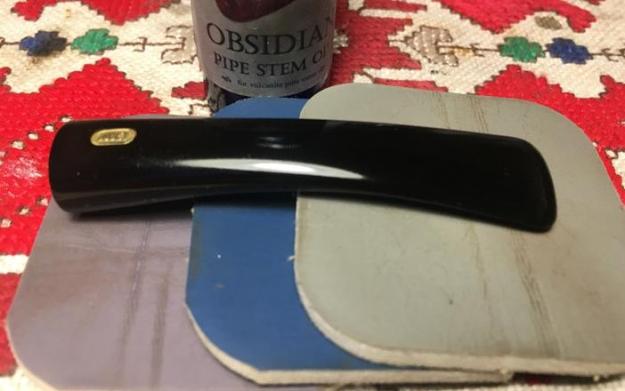
A Harcourt Hand Carved Freehand – #7 of Anthony’s Dad’s Pipes


Blog by Steve Laug

This is a continuation of the work that began with an email from Anthony, a reader of rebornpipes asking if I would be willing to help him clean up his Dad’s pipes. He wrote; “I have a few pipes (8 or so) that haven’t been smoked in 15 years. They were my dad’s. I would like to get someone to restore them”. We chatted back and forth via email and the long and short of the story is that I have eight of his Dad’s pipes in my shop now to work on. The photo below shows the mixture of pipes that he sent me. There are some interesting shapes and most are very dirty and have very little if any of the original finish left on the briar. All have an overflow of carbon on the rim top and all have chewed, damaged stems and buttons. Anthony remembers his Dad smoking them throughout the years he was growing up so they went from regular use to being boxed and stored. They will need a lot of TLC to bring life back to them but it should be fun to give it a go. I went through the pipes and assessed their condition and contacted him and got the go ahead to proceed on the lot.I have completed the restoration of six of the pipes. The next pipe I chose to work on was the tall freehand with plateau on the rim and the shank end. It too had a replacement vulcanite stem – it is the second pipe down on the left hand column in the above photo. I have circled it in red. It is a tall freehand with a 1/4 bent stem. It is a really pretty straight grain with patterns of rustication on the bottom portion of the bowl. It has plateau on the top and on the end of the shank. The plateau finish has what looks like mold or at least water damage on both the top and end of the shank. There is also water damage around the end of the shank. The stem that is on it is again a replacement twin bore/bite proof stem that is chewed and for all intents and purposes destroyed. The fact that most of these pipes have a replacement twin bore bite proof stem tells me a lot about Anthony’s Dad’s habitual gnawing on his pipes. The stem is ruined with large pieces tooth marks and holes on both the top and underside extending from the chewed button into the surface of the stem. I will need to find a different stem. The pipe is stamped on the underside of the shank with the number 0 and under that Harcourt over Hand Carved in Denmark. The bowl had a thick cake, and some lava overflow under the water damage. The finish was gone and very washed out looking. Even the dirt and grime were anemic. I took photos of the pipe to show its overall condition when it arrived at my work table. I took some close up photos of the bowl, rim top and the stem to show what I was going to be dealing with on this pipe. The plateau rim top was in rough condition – mold filled in the grooves and valleys of the plateau. There was also some lava overflowing from the bowl that had filled in the grooves. The plateau on the shank end was worse than the rim top (if possible). The finish worn off and there was water staining all around the shank end.The water damage around the end of the shank was darker than the rest of the finish. It was water stained and those are hard to remove. I took a photo of the stamping on the underside of the shank. It reads 0 over Harcourt. Underneath that are two lines reading Hand Carved over In Denmark.The stem was ruined you can see from the second and third photos below. The “bite proof” stem evidently was not bite proof. Anthony’s Dad had gnawed through the twin bore and left holes in the deep tooth marks on the stem. It would need to be replaced.I had some vague memory about the Harcourt brand that had a connection to Preben Holm and the stamping seemed a lot like the way that he stamped his pipes. I did a bit of research on the brand to see the connection. The first place I looked was on Pipedia at the following link: https://pipedia.org/wiki/Harcourt. There I found the following information which I quote in full.
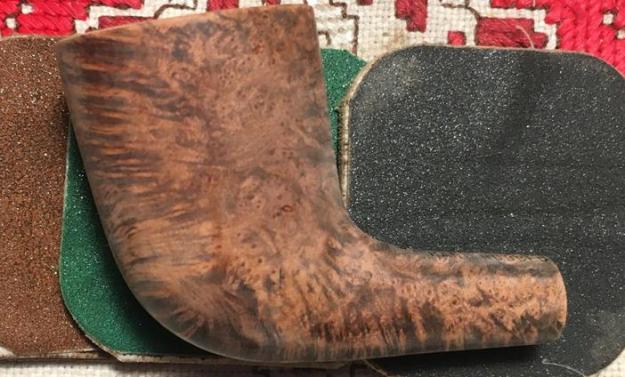
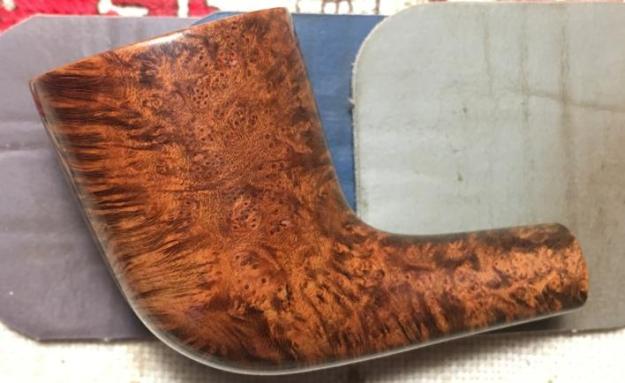
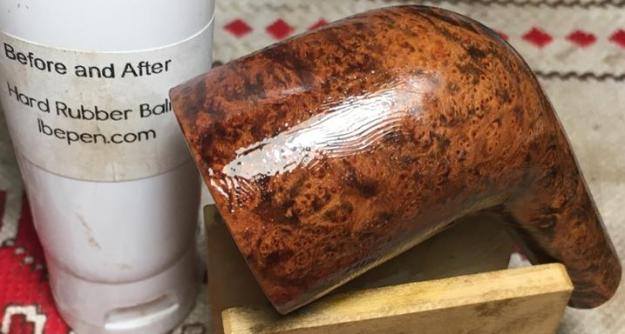
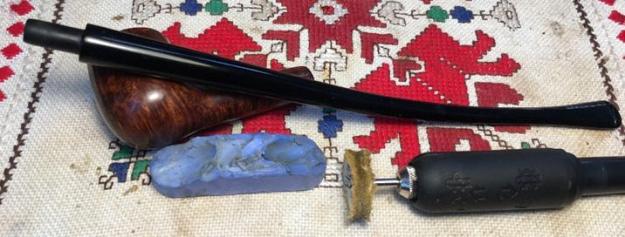
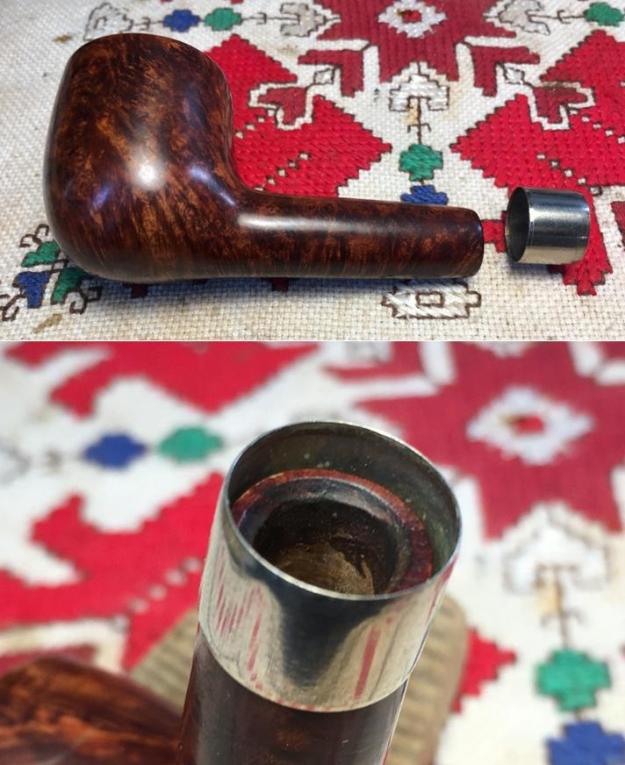
The brand Harcourt was produced by Preben Holm (†) for Dunhill to secure a share of the Danish fancy boom for Dunhill’s principal pipe dealers. Later Erik Nørding made Harcourt pipes for a shorter period. These pipe are sometimes (partially) rusticated.

It had been reported that the second generation of Harcourt pipes were sold exclusively through Dunhill stores, but we now know through Rich Mervin that the Brick Church Pipe Shop, a chain of 3 stores in NJ sold Danish freehands in the 1970s and 80s including Knute, Ben Wade, and Harcourt. They were also an authorized Charatan and Dunhill retailer. So, apparently Harcourt freehands were sold through at least some Dunhill dealers as well as the Dunhill stores.

I then turned to the pipephil site at this link and found out some more information on the brand. http://www.pipephil.eu/logos/en/infos/harcourt1.html. I followed the links there to some photos of a boxed pipe and the stamping on the shank.

This box contains a pipe carved for Dunhill in the 1970s. Harcourt pipes were Dunhill’s answer to the passion Danish style raised during this period.There was also a photo of the stamping on Preben Holm’s designed Harcourt that is recognizable by the characteristic shape of the pipe as well as by the stampings on its shank. The stampings in the photo are identical to the pipe I am working on. It is stamped with an 0 over HARCOURT and underneath that it reads  HAND CARVED over IN DENMARK.

From the two sites I was able to make the connection between the pipe I am working on and the Harcourt pipes that were made by Preben Holm. The connection between Preben Holm and Dunhill’s desire to tap into the Danish Freehand market in the US was also helpful as it gave me a potential date for the pipe. It was made in the 1970s – the height of the Danish period in the US.

So now I knew that Anthony’s Dad had purchased this pipe during the 1970s from a shop probably somewhere in California. Possibly even the pipe shop that Anthony’s Mom had written about called “Andre’s,” around 1969 or ’70. She said it was a unique shop, originally located in Los Gatos, or Campbell, California she thought. She said that it later moved to the Alameda area in San Jose. Anthony’s Dad also bought his favorite tobacco blends there so it makes sense to me that he may have also purchased the pipe there. Perhaps Anthony will let us know when he reads this.

Once again I am including the tribute that I asked Anthony to write about his Dad and his pipe smoking once again in case some of you missed that and wanted to have some background. Here is what Anthony sent: When my dad died 6 years ago, my mom asked if I wanted my dad’s old pipes. He was a long time pipe smoker, ever since I was a kid I can remember him sitting on the couch smoking his pipe inside. He worked at IBM and used to smoke his pipe in his office before they changed the laws in California. So you can imagine he had quite the collection over the years.

I took his pipes and put them in storage for a few years, I myself recently quit smoking cigarettes and decided to take up pipe smoking as it was easier on the wallet. I asked in /r/pipetobacco if anyone could recommend a pipe restoration service and someone told me about rebornpipes.com. I was hesitant but after looking at the blog I knew it would be a good place to send my dad’s pipes.

My dad loved smoking his pipes, sitting out by the pool in the sun taking a nap or in the garage wood working. The house was my mom’s area and the garage was my dad’s area. I spent hours sitting out in the garage as a kid watching the niners or a’s and giants on tv while doing woodworking projects. I hope to do the same with my kids these days.

I’m not sure if my dad smoked other tobacco but I remember Captain Black was the kind he smoked regularly. He had tins of it in the garage, full and empty and would turn the old tin jars into storage for odds and ends, like screws or washers or miscellaneous stuff.

I remember when I played little league my dad would sit in the stands and smoke his pipes. One of my teammates asked “What is that smell?” and I ashamedly said “Oh that’s my dad’s pipe…I’ll go tell him to put it out” and my teammate said “No man, it smells good!”.  It’s funny how the little conversations over the years you remember.

Another time when I was in 3rd grade or so we learned how smoking was bad for you (this was back in the 80s). I remember I asked my teacher if smoking a pipe was bad for you too….and she hesitated and said “Not as bad as cigarettes, since you don’t inhale it”. After that I was no longer worried about my dad smoking.

Knowing my mom I have no idea how my dad pulled this off but he managed to smoke his pipe in the house. I guess she liked the smell of it. Recently when I was waiting for my girls to get out of school I was sitting on a side street smoking my pipe and someone walked by and thanked me for bringing the pipe back. He said his dad used to smoke a pipe and he loved the smell. As did mine. The only difference is my daughters complain constantly about the smell of my car, but that is mostly because I smoke cigars too.

Anyway, grab some fine tobacco, light up a bowl and sit back and relax. I don’t have a pool like my dad did but you can catch me working on my laptop sitting in my driveway smoking a nice pipe, especially one of these restored pipes from reborn pipes….I can’t wait to smoke them.

Thanks Anthony, that gives me a sense of who your Dad was and how he enjoyed his pipes. I was ready to turn my attention to this seventh pipe. I went through my can of stems and found a stem that I really like the looks of. There was something classic about it and simple that looked right with the pipe. It was about ½ inch longer than the replacement stem. The tenon was the right length for the shank and once it was cleaned up it would look good. I would need to put a slight bend in the stem to fit the flow of the shank and pipe. It was lightly oxidized but otherwise a pretty clean saddle stem. I took photos of the two stems together to show how they compared.I heated the new stem with a heat gun to soften the vulcanite enough to bend it. When it was flexible I bent it over the end of the buffing wheel to get the proper bend on the shank. I put the stem in the shank and took photos of the newly bent stem. The fit was good. I liked the look of the bend and the flow of the pipe. I sanded down the circumference of the tenon with 150 and 220 grit sandpaper. It did not take too much work to get the stem to fit well in the shank  the way I wanted. I sanded the oxidation off the surface of the stem and sanded out the tooth chatter and light tooth marks on the top and underside of the stem at the button. I polished the stem with micromesh sanding pads – wet sanding with 1500-2400 grit pads and dry sanding with 3200-12000 grit pads. I wiped the stem down with Obsidian Oil after each sanding pad. I polished the stem with Before & After Pipe Stem Polish – both Fine and Extra Fine to finish removing the light scratches that remained. I gave stem another coat of the oil after that and set it aside to let the oil dry. I set the stem aside and worked on the bowl. I reamed it back to bare briar using a PipNet pipe reamer to remove as much of the cake as I could. I finished with a Savinelli Fitsall pipe knife and then sanded it with 220 grit sandpaper wrapped around a dowel. There were some deep gouges and flaws in the briar on the left side toward the bottom half of the bowl. I cleaned the area and filled them in with drops of clear superglue. When the glue cured I sanded them back to blend into the surrounding bowl side.I worked some Before & After Restoration Balm into the nooks and crannies of the sandblast finish on the rim top, bowl and shank. I worked it deeper into the grooves with a horsehair shoe brush. The balm works to clean, enliven and protect the briar. I really like the way it brings life to the briar. When I wipe it off with a soft cloth it not only adds a shine but takes away the grime that is in the finish.    I needed to stain the bowl to get some coverage on the water damaged areas. Even after sanding they were darker than the rest of the briar. I stained the pipe with Fiebing’s Tan stain. It seems the tan stain may be improperly labelled because everything seems to come out like it has been stained with oxblood or cordovan stain. It brought the red out of the briar. I applied the stain and flamed it with a lighter. I repeated the process until the coverage was even around the bowl. Once the stain had cured I buffed the bowl with Blue Diamond on thebuffing wheel to polish the stain and smooth out the finish. The pipe is looking good. The finish is a little too opaque for me so I will need to address that shortly. I decided to make the finish less opaque by polishing it with micromesh sanding pads. I sanded with 1500-12000 grit sanding pads to make the finish more transparent. The photos below show the process. I put the pipe back together and polished the bowl with multiple coats of Conservator’s Wax and the stem with multiple coats of carnauba wax. I buffed it with a clean buffing pad to raise the shine. I hand buffed it with a microfiber cloth to deepen the shine. The pipe polished up pretty nicely. The finished pipe is shown in the photos below. This is seventh of eight pipes that I am restoring from Anthony’s Dad’s collection. I am looking forward to hearing what Anthony thinks once he sees the finished pipe on the blog. Once I have the remaining pipe finished I will pack them up and send them back to him. It will give him opportunity to carrying on the trust from his Dad. The dimensions are Length: 7 inches, Height: 3 1/8 inches, Outside diameter of the bowl: 2 inches, Chamber diameter: 7/8 inches. Thanks for walking through the restoration with me as I worked over this pipe from Anthony’s Dad’s collection. One more freehand pipe remains and will soon follow in the days ahead keep an eye out for it.