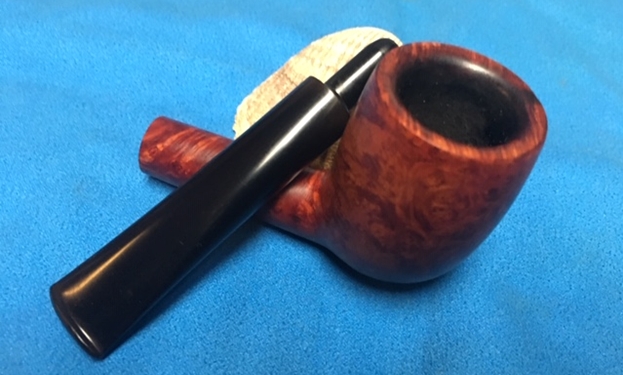
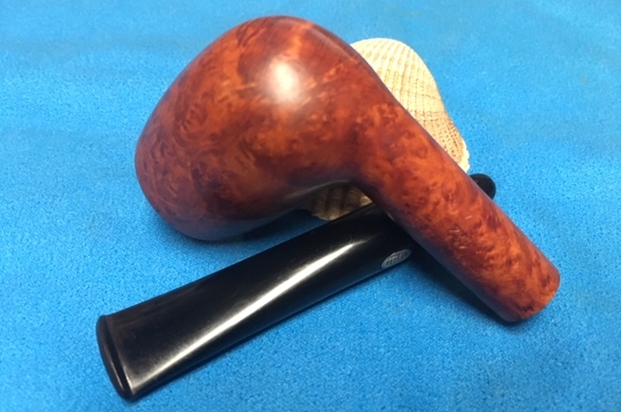
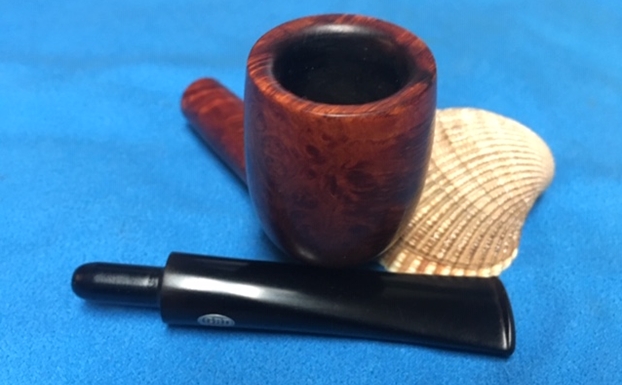
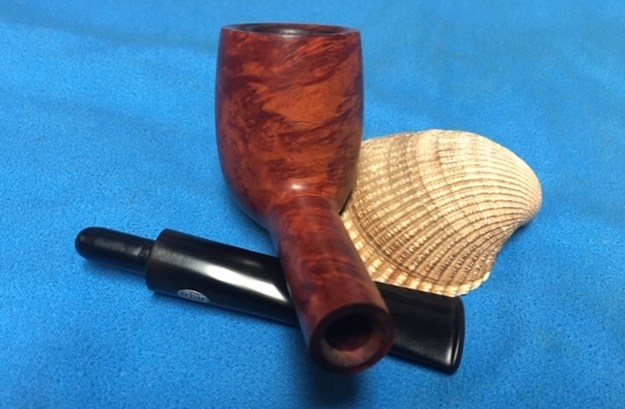
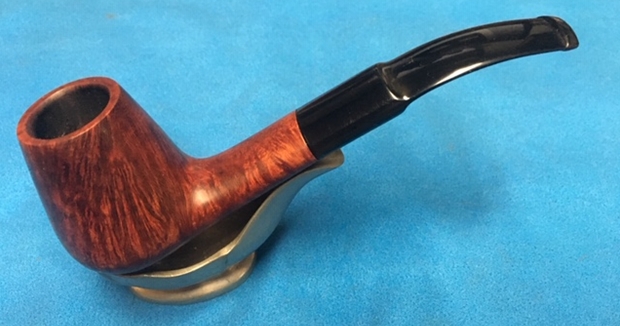
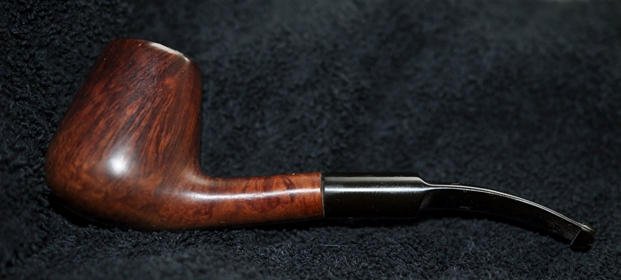
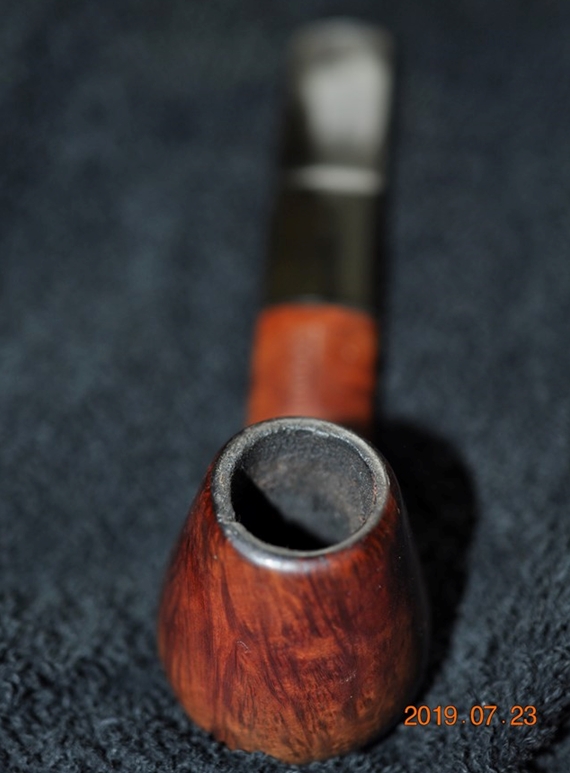
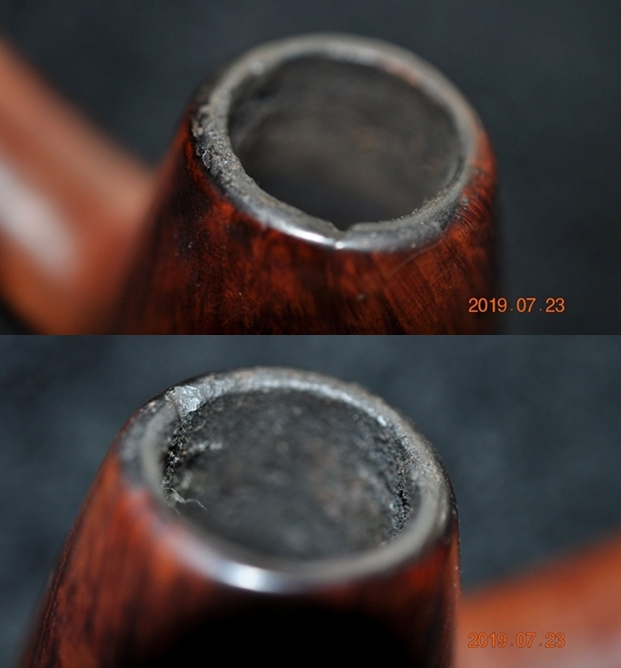
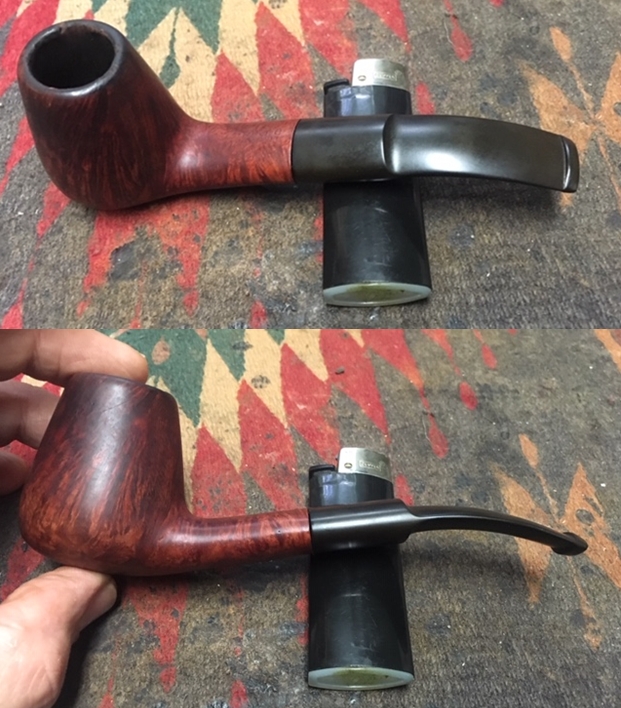
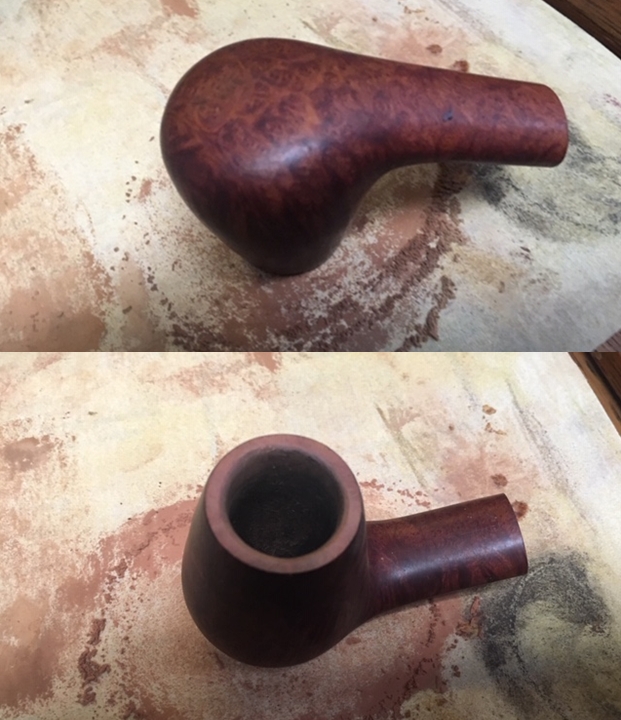
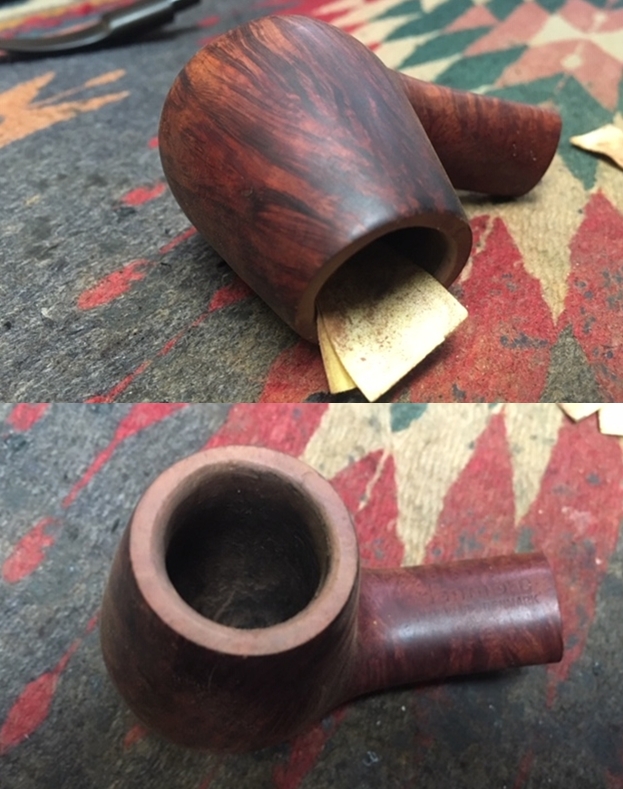
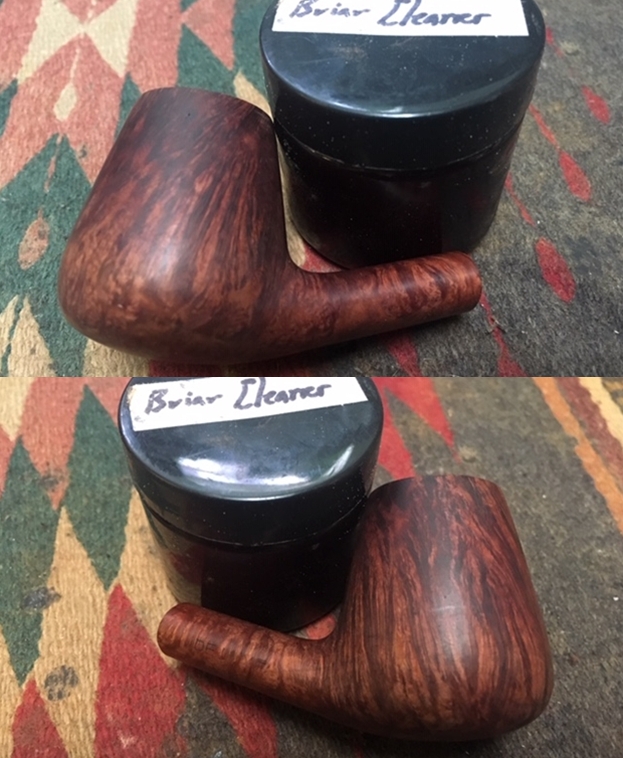
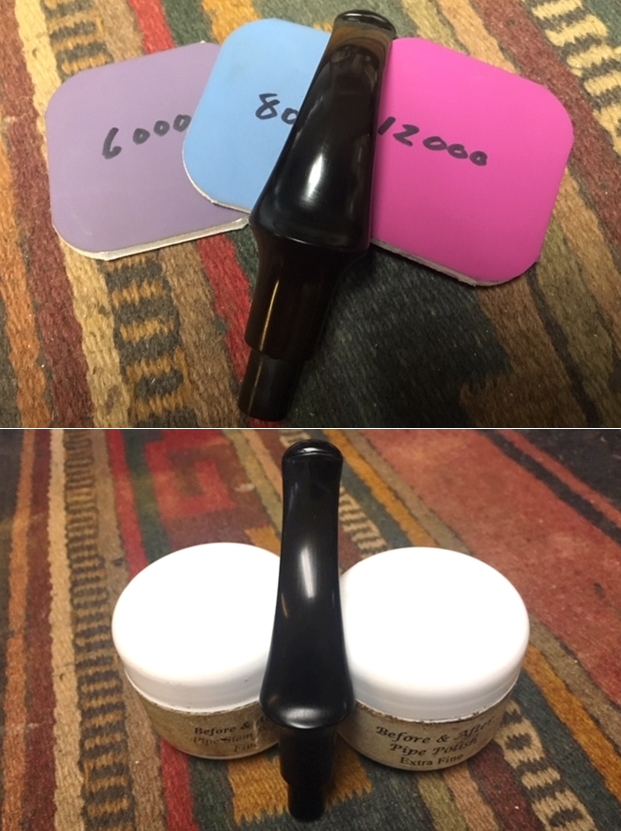
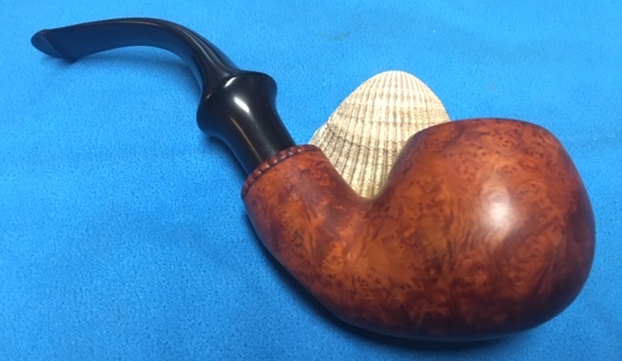
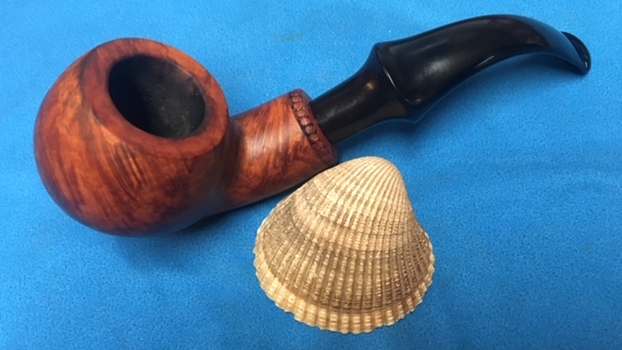
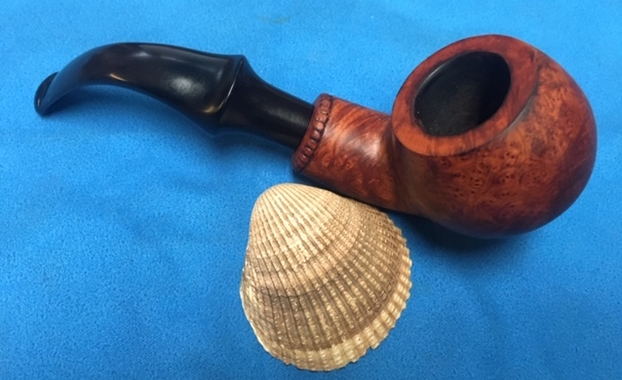
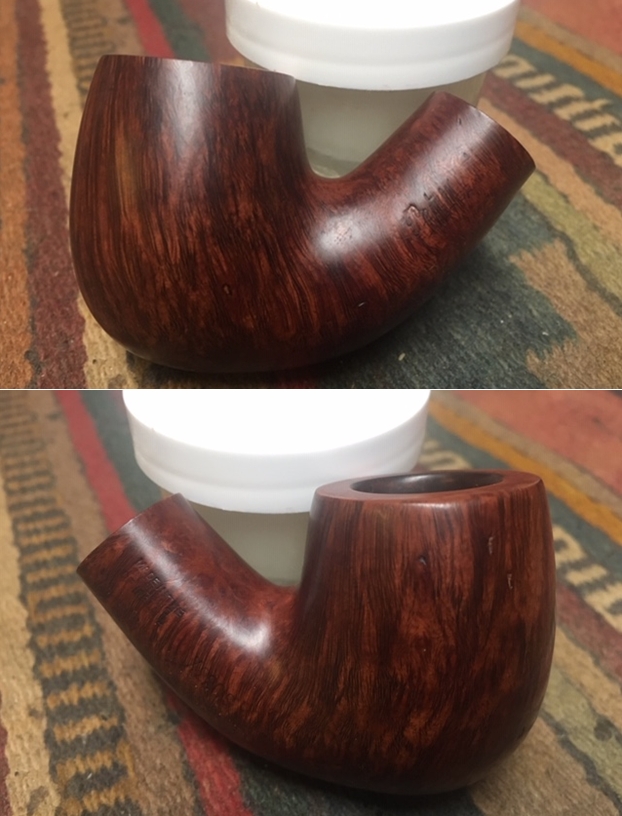
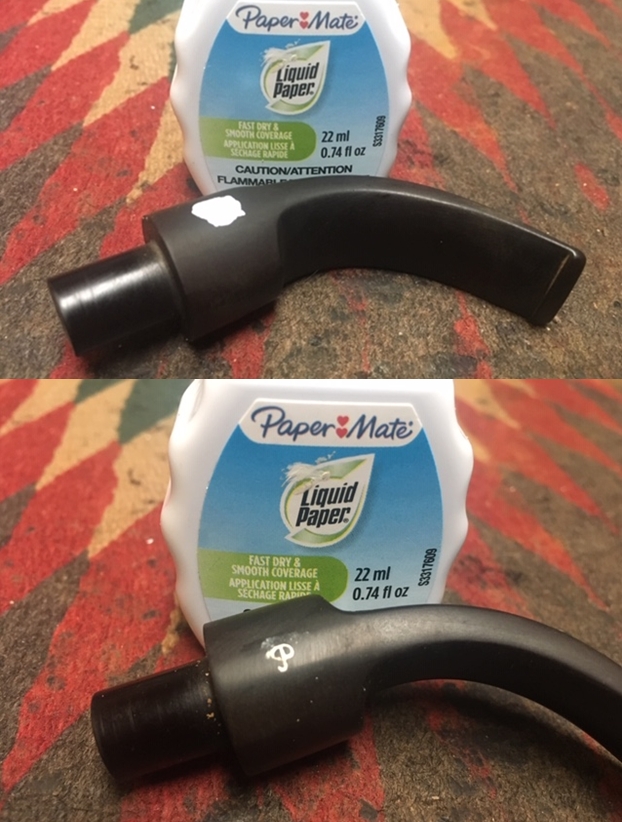
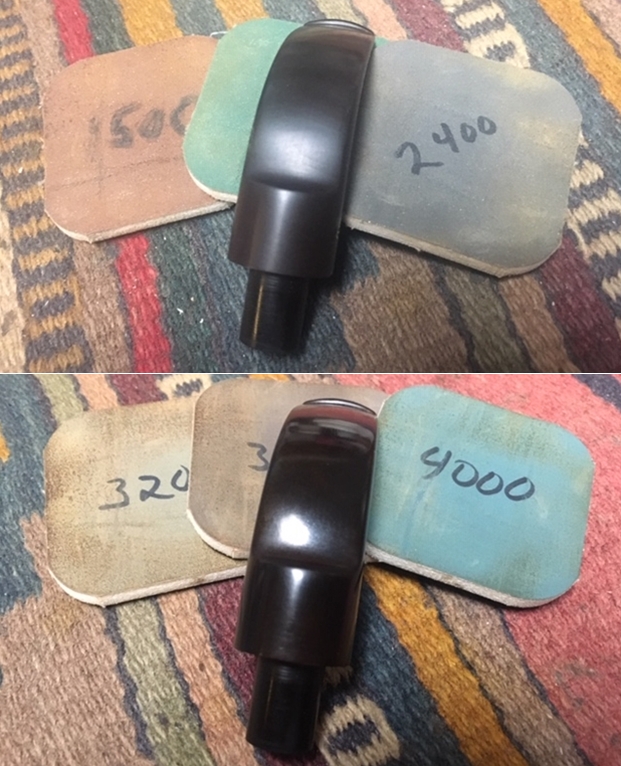
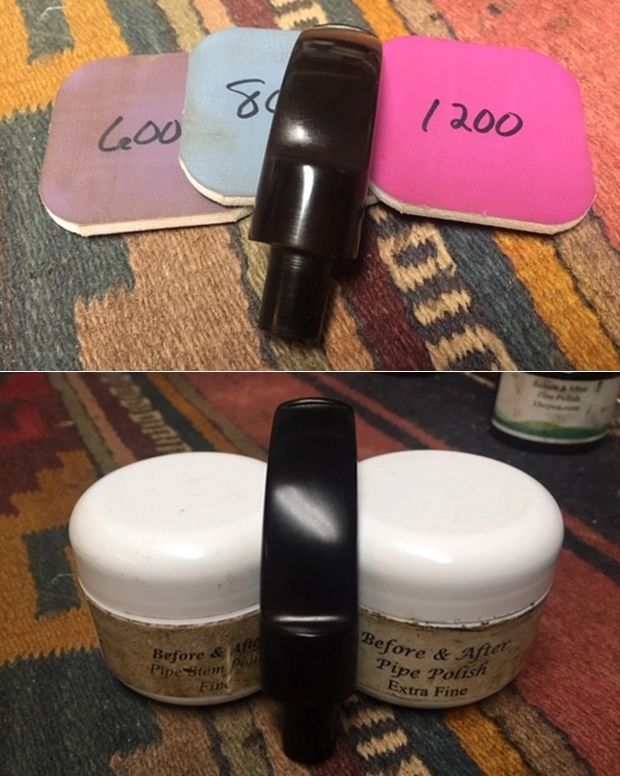
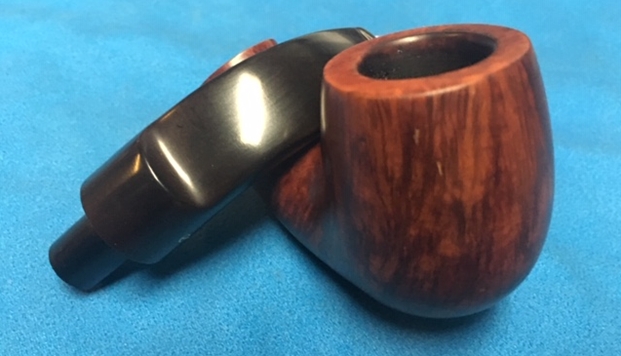
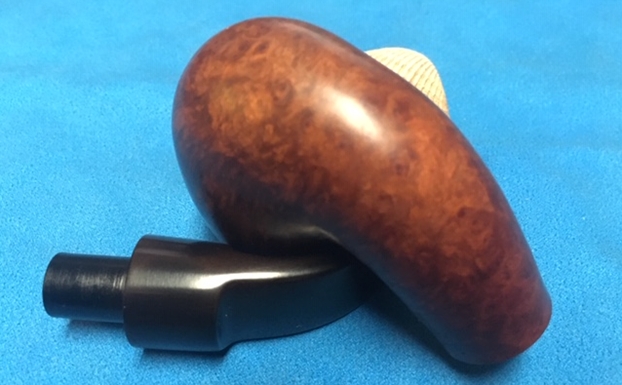
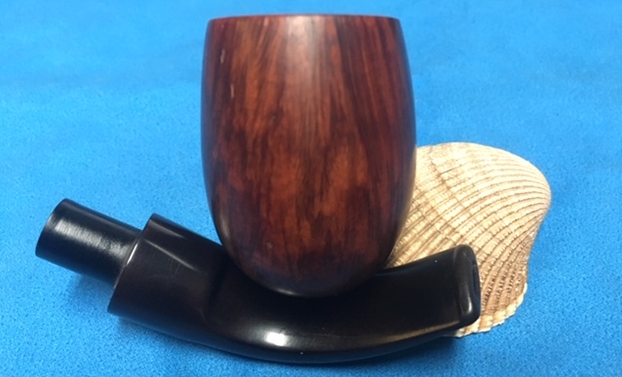
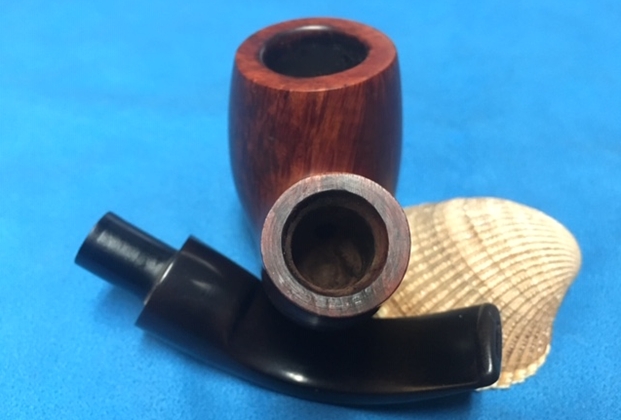
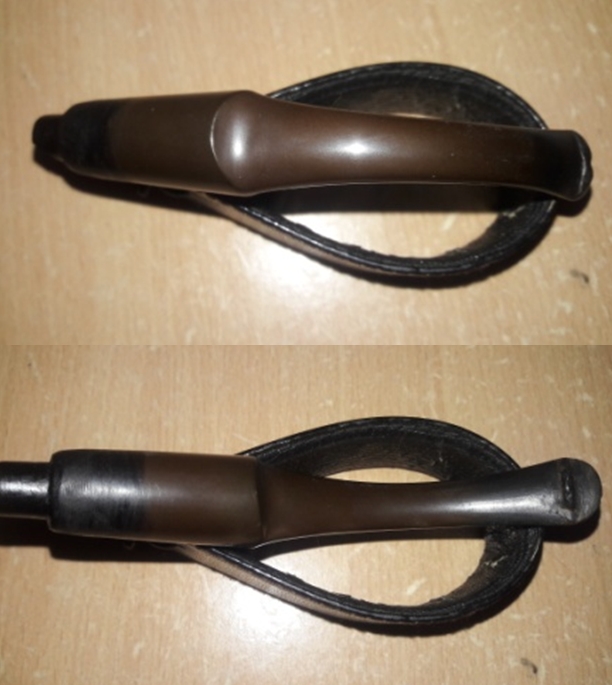
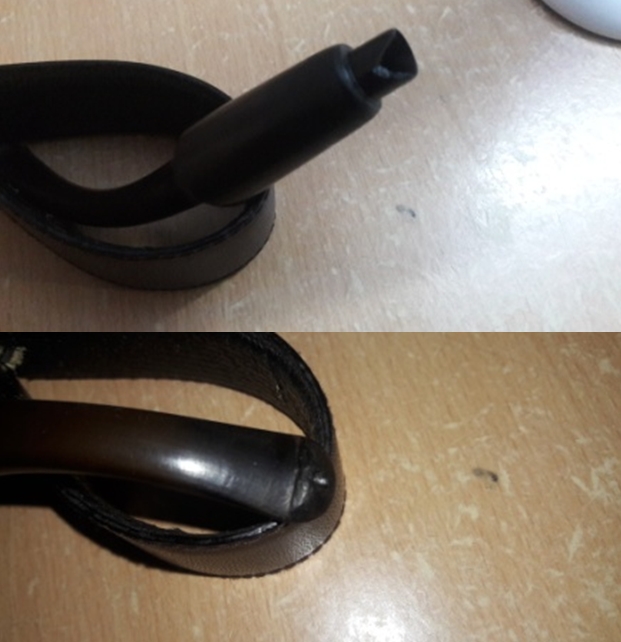
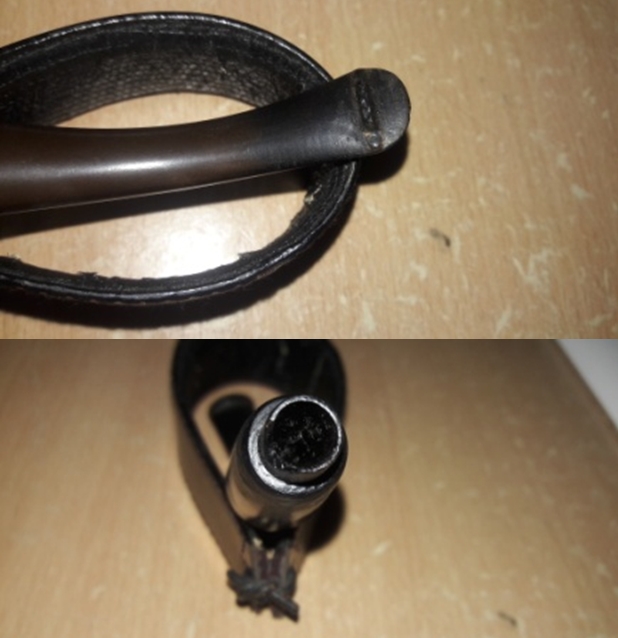
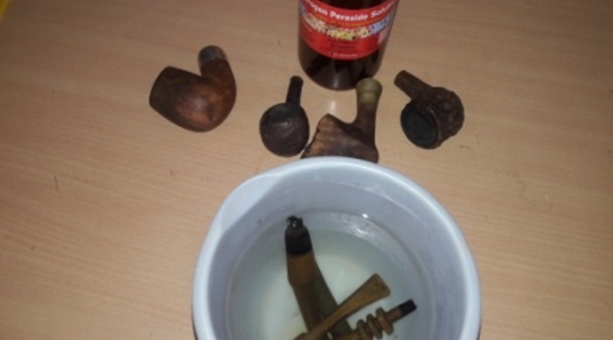
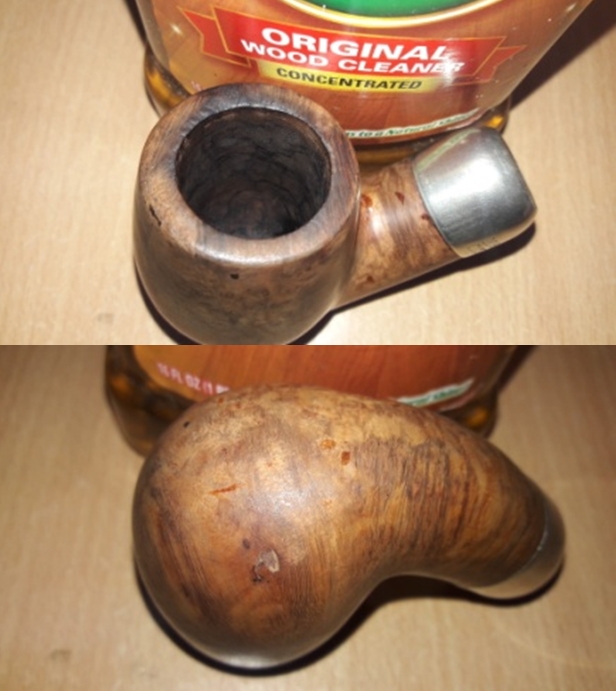
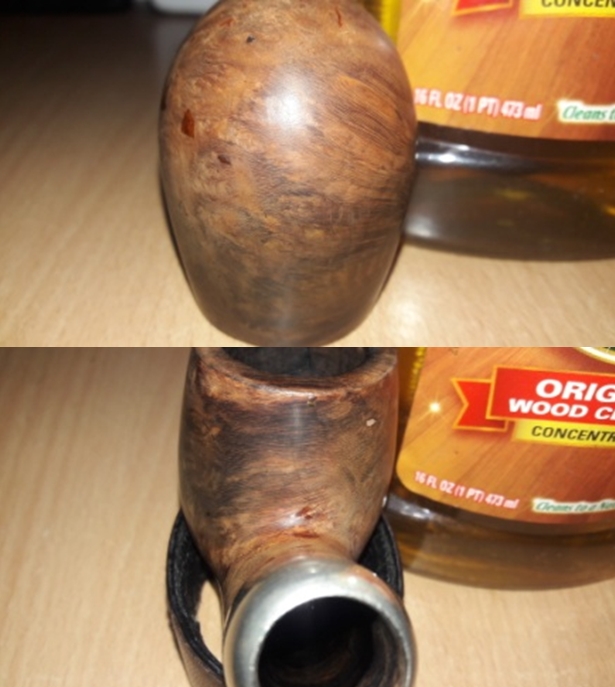
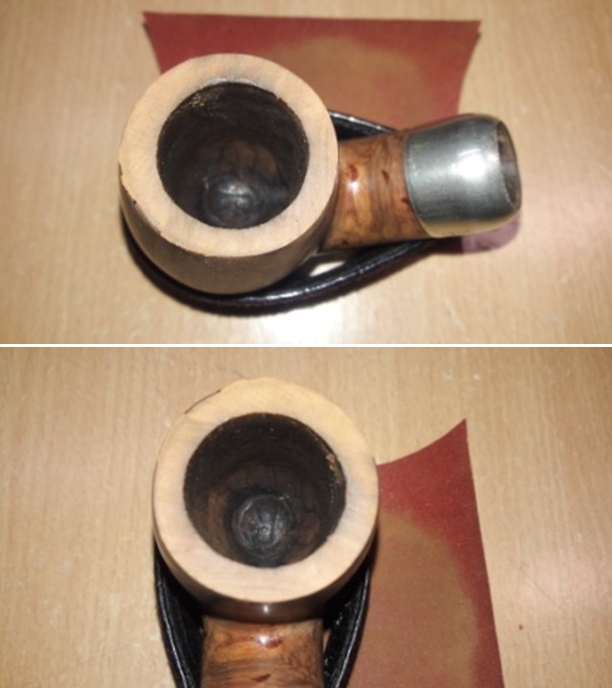
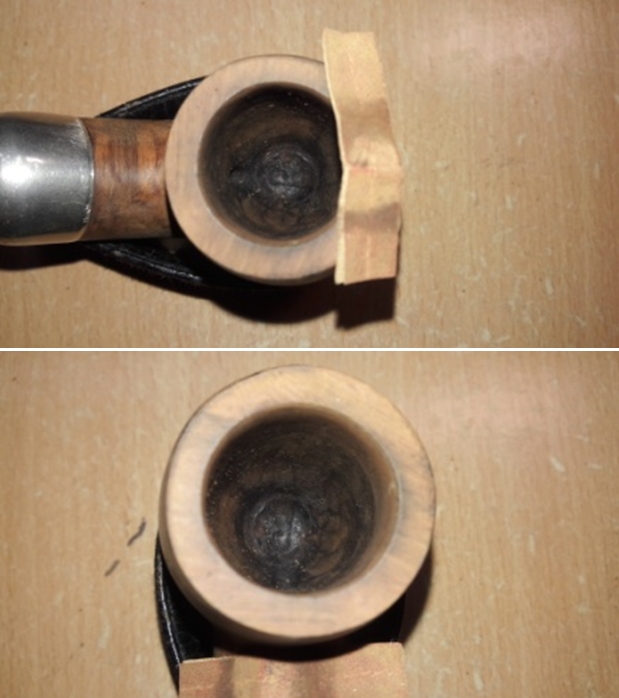
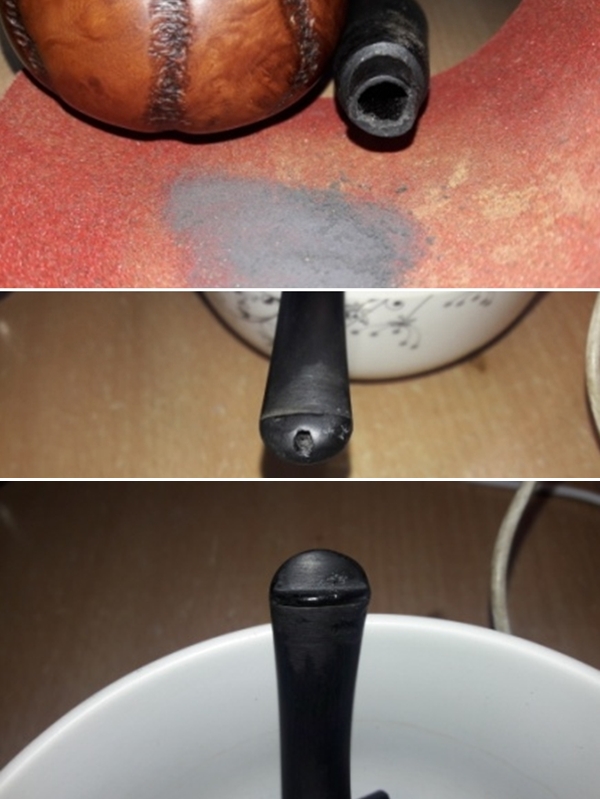
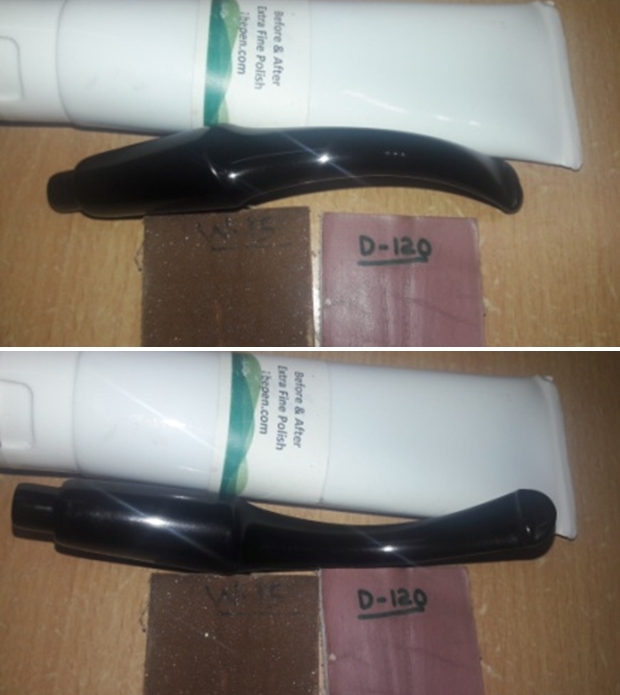
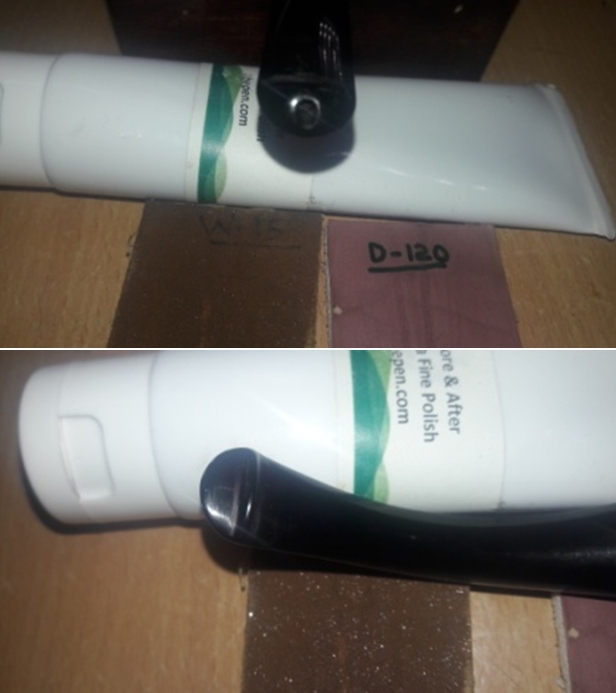
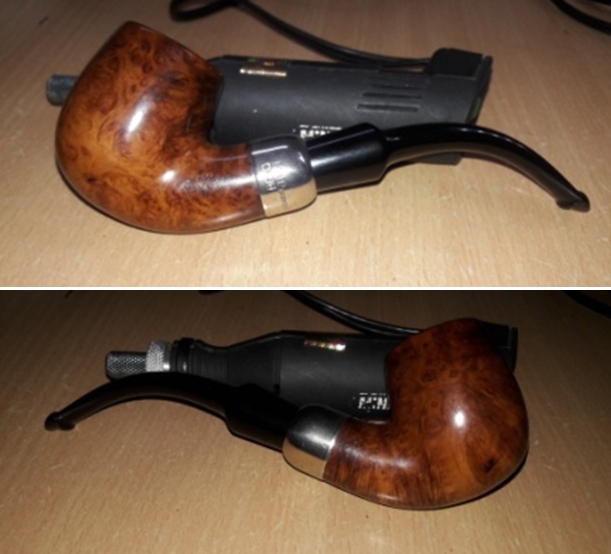
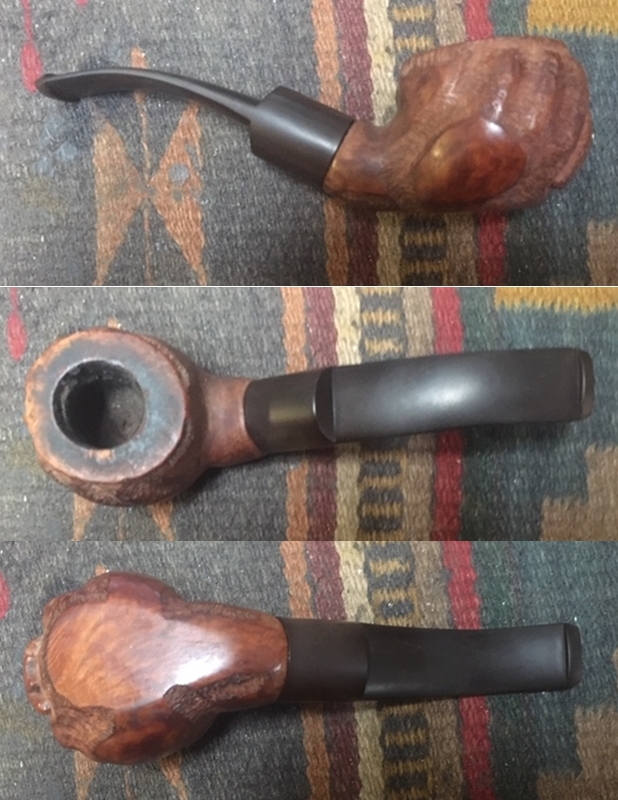
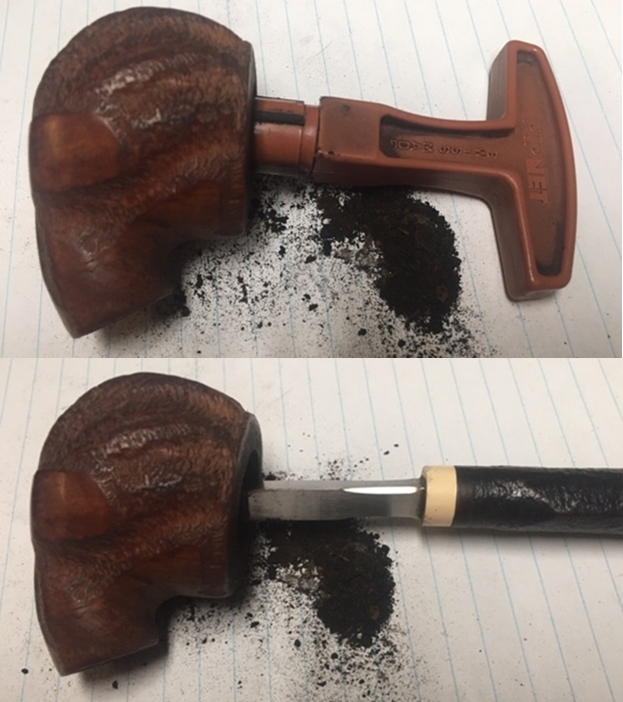
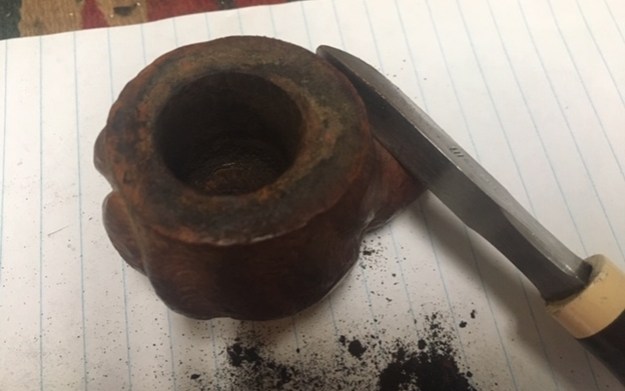
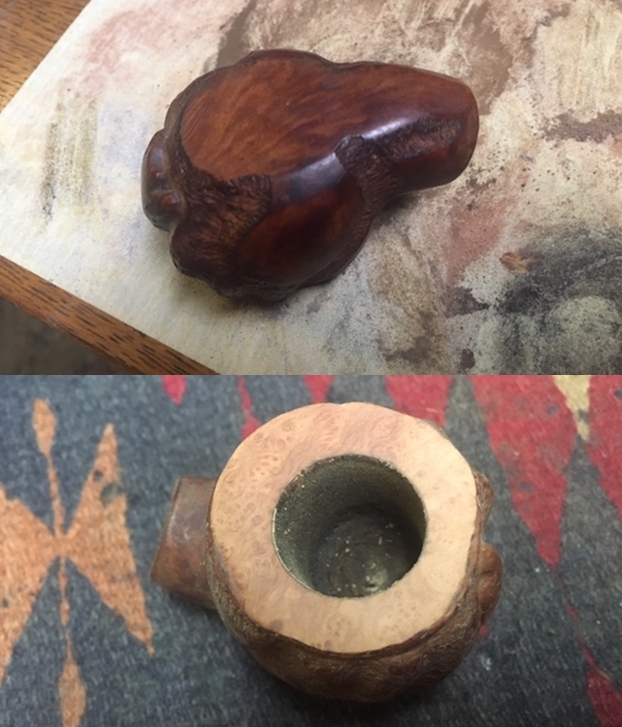
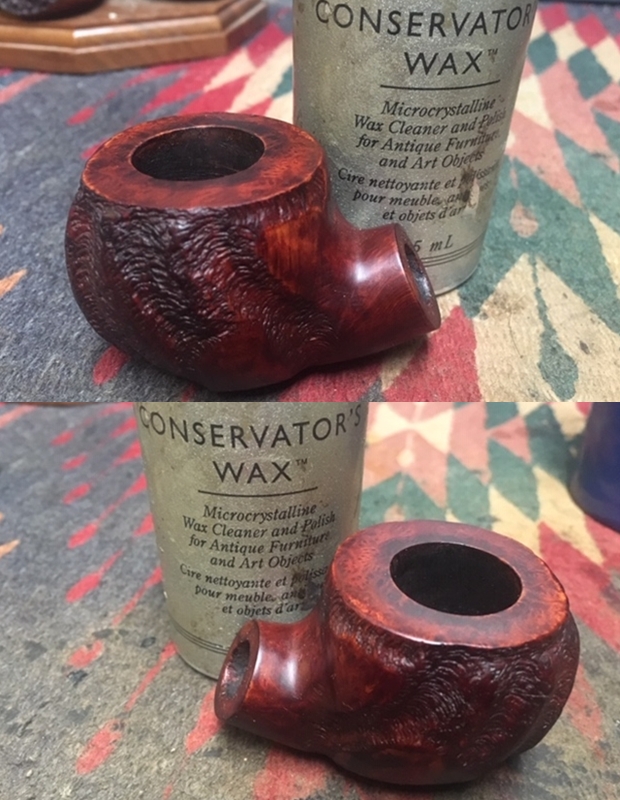
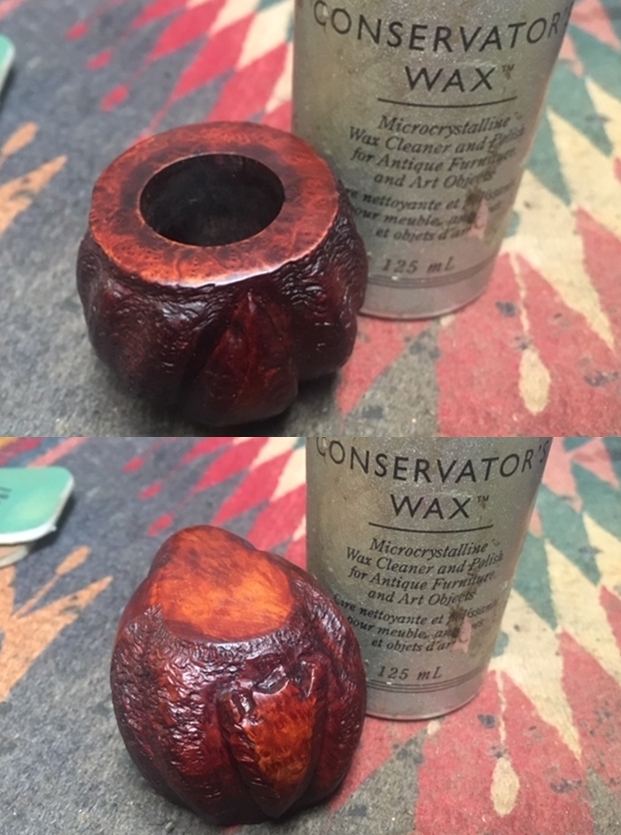
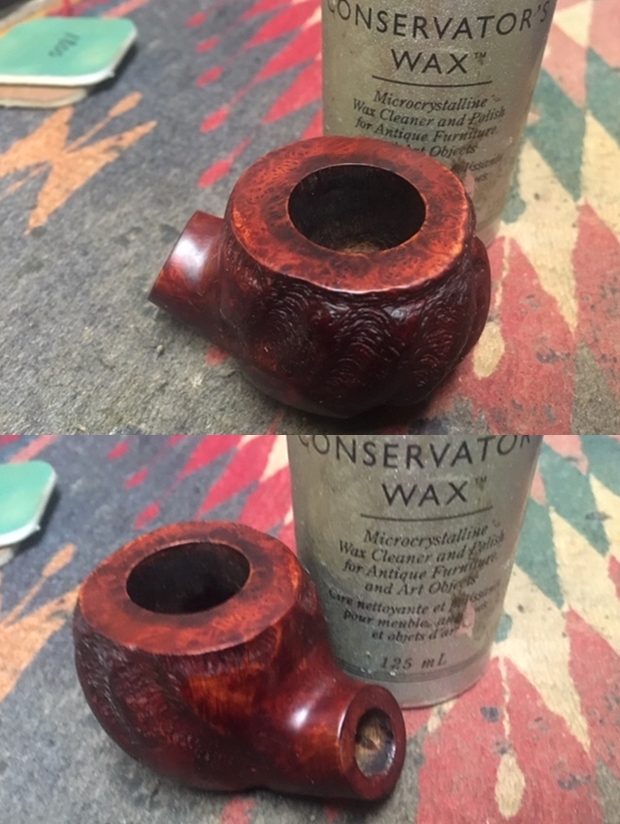
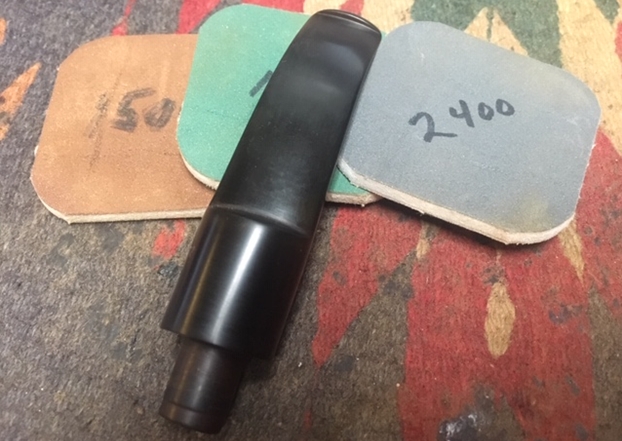
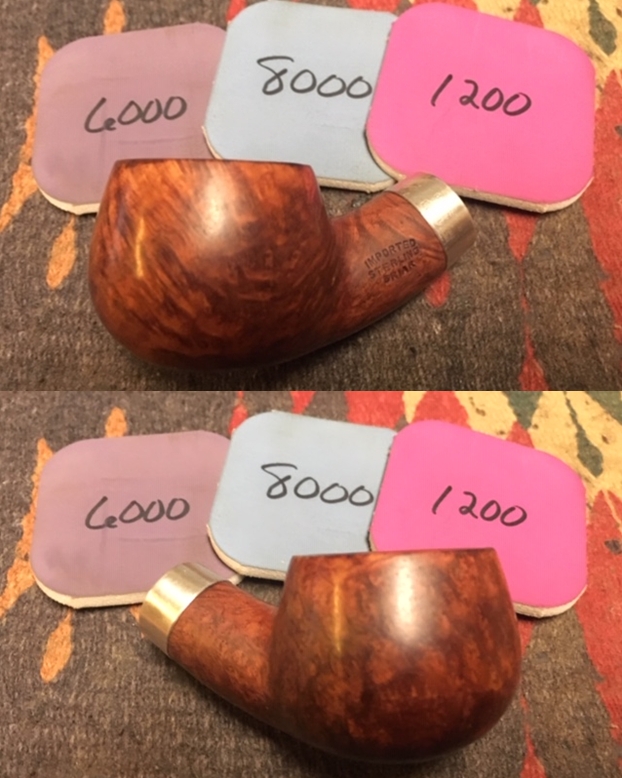
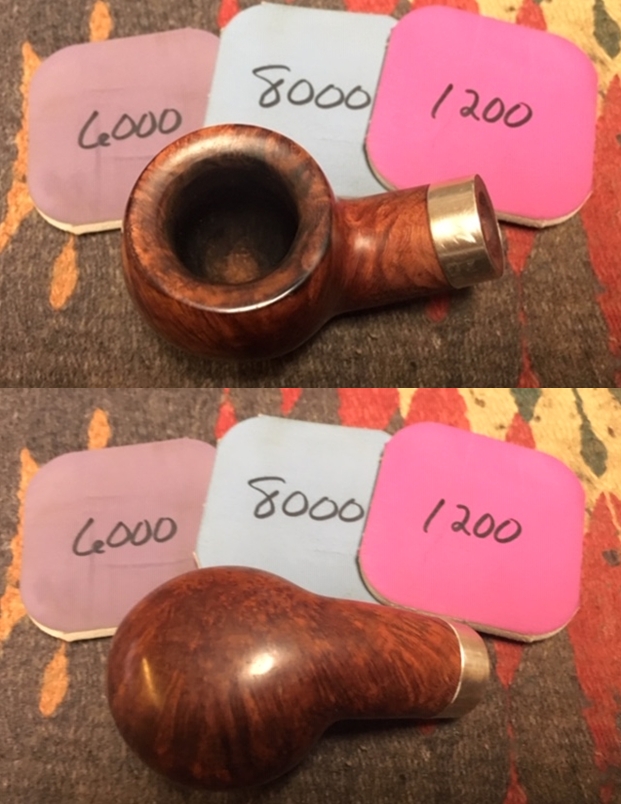
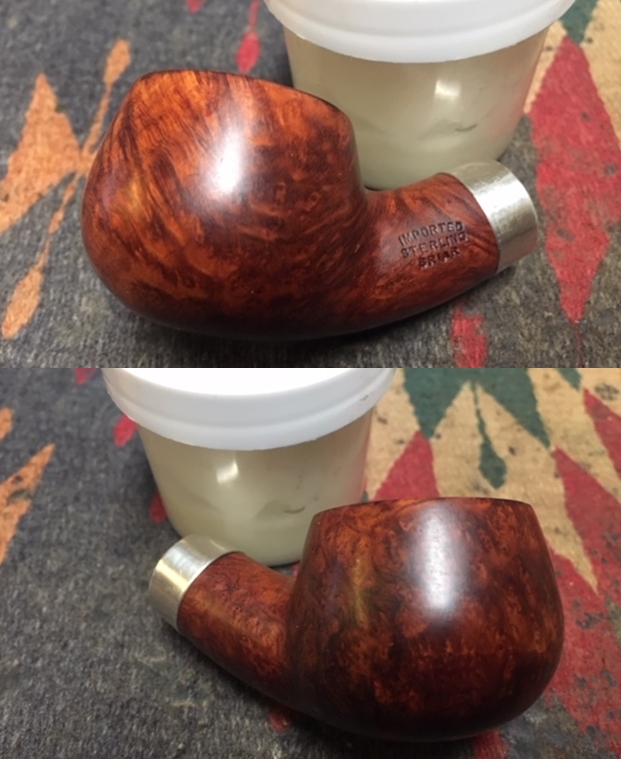
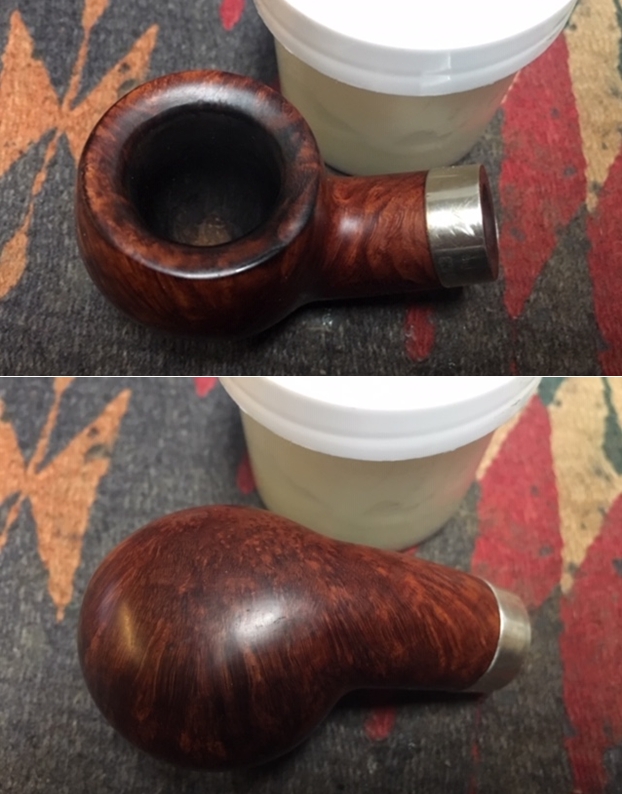
Tag Archives: bowl topping

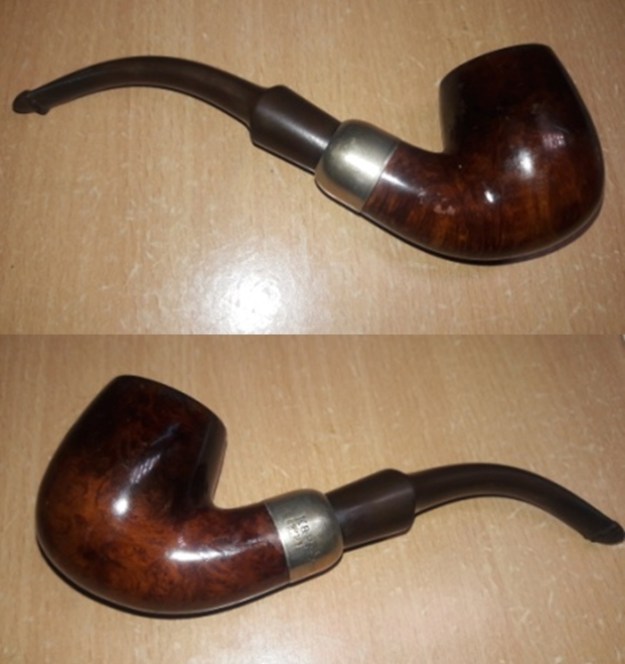
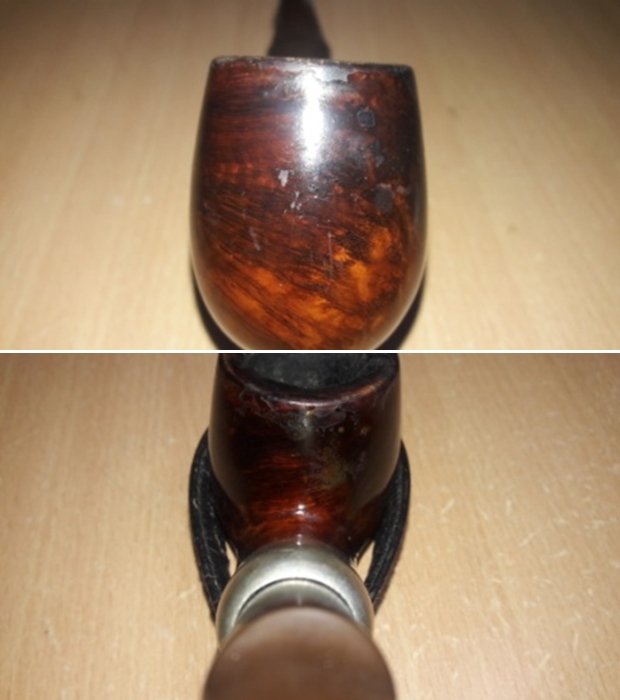
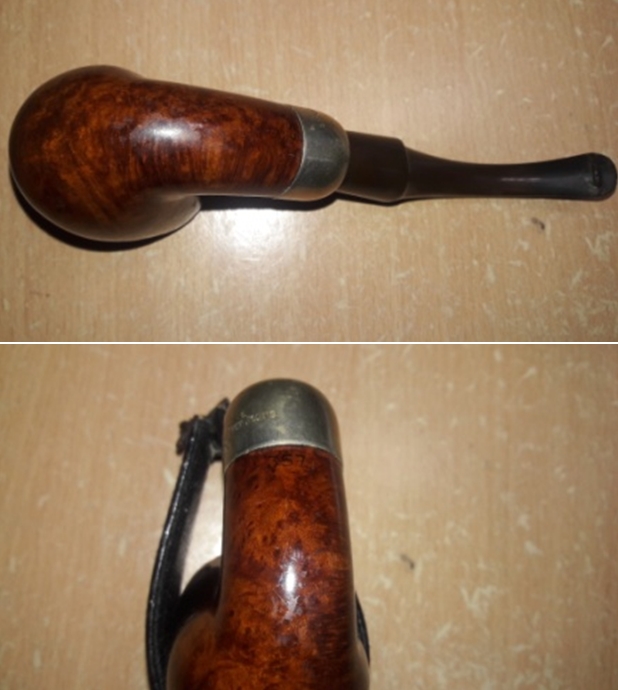
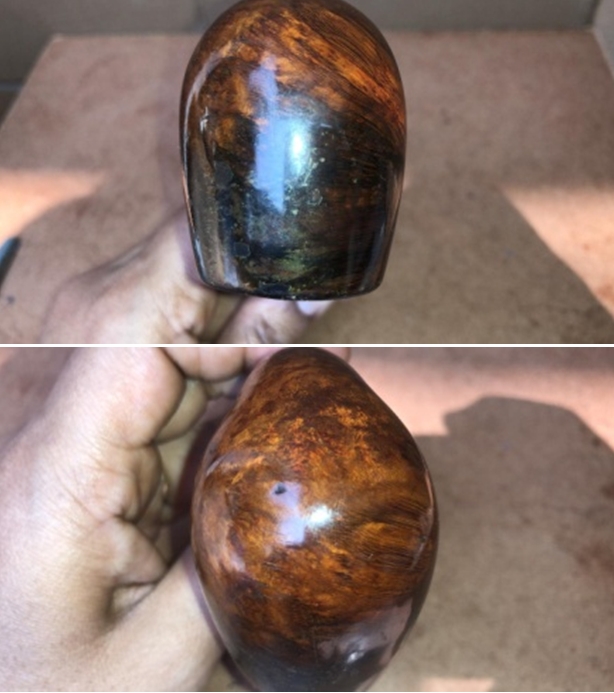
Gifting my Mentor and Dear Friend, Steve, an Alexander Zavvos Hygrosystem Pipe.


Blog by Paresh Deshpande

When Steve, his brother, Jeff and Dal Stanton, The Pipe Steward, were on a visit to India, I had a desire that there should be a unique pipe which all three of us should have (Mr. Jeff being a non smoker) and had laid down for myself, the following parameters for identifying THAT PIPE!

(a) Both should not be having this pipe in their personal collection (knowing well that this would be a very tall order!!)

(b) The pipe must have some historical significance and should have made a contribution to the world’s pipe history.

(c) It must come from a well-known carver or manufacturer.

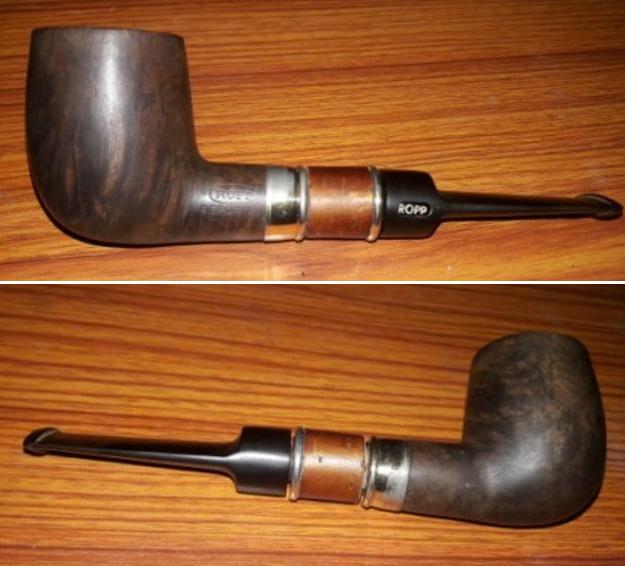
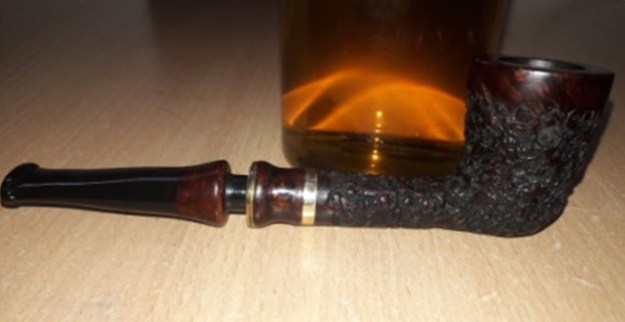
I began this selection with going through my own personal modest collection, rather my Grandfather’s collection to which I have made miniscule additions. Amidst all the WDCs, Charatans, Comoy’s, Barlings, Ben Wades, Stanwells and Kriswills, there was this one pipe which was very different. Very early in my association with Steve, we had discussed this pipe which Mr. Steve had not come across (which was unbelievable!!!) and did not own a pipe from this carver, but was very much interested in it. An oblique enquiry from Dal also confirmed that he did not have this make. Well, this helped me zero in on this pipe to be gifted to my friends during their visit to India. The pipe selected is an ALEXANDER ZAVVOS HYGROSYSTEM, PAT.No 87033, made in the 1970s-80s. What followed was an extensive and prolonged hunt for two such pipes of which the first one was purchased from one seller on Pinterest and the second was on eBay. These pipes were received separately and the last delivery materialized a couple of days prior to the arrival of my esteemed guests. Here are both the pipes as I received them.Since Dal was the first to arrive in India (and being the youngest amongst arriving guests…LoL), he was given a choice between the two. He selected one with an Apple shape and the remaining willy-nilly came to Steve. At that point in time, both Dal and I discussed that it would be the Apple shape that Steve would have selected but… Well after working on Steve’s pipe, am I glad that the Dublin came to Steve as it provided me with an opportunity to present my first ever rusticated pipe to the person who has introduced me to this art and mentored me all along. Thank you Steve for being with Abha and me on this journey.
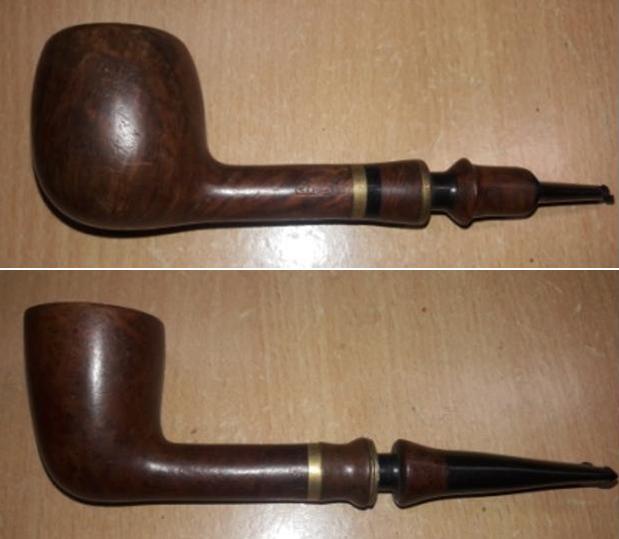
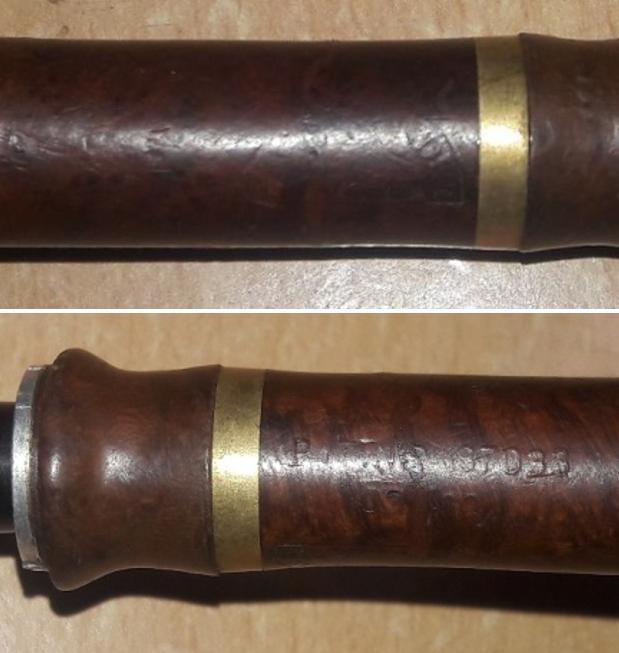
The stamping on the Dublin is pretty worn out and hard to make out. However, the stampings on my pipe and that on Dal’s is pretty crisp and clear. It reads on the left of the shank as “ALEXANDER” over “HYGROSYSTEM” over a square with letter “Zb” over “GREECE”. The bottom of the shank bears the stamping “PAT No. 87033” over “03/ 89”, which I believe is the date code indicating that the pipe was made in March of 1989. This stamping is visible only under a white light with a magnifying glass and the area around the stampings has bubbled up skin surface, something akin to chipped paint.I researched this pipe on pipedia.org and reproduce excerpts of information on this pipe carver, in his own words, and his immense contributions to the Greek pipe industry in particular and entire world’s pipe community.

I am Alexandros Zavvos, born in Molos, Thermopylae, near Lamia. Since I was a child I had an inclination for art, starting with painting. I studied Radio-electronics, and at age 23 I got involved with commerce with a capital of 150.000 drs. in 1962.

 I entered the pipe business where I met, by total chance, with Mr. Libero G. Albanese, first technician and producer of briar-wood models in Kalabria, Italy. When I told him that I am Greek, he almost prayed, saying that we Greeks have the best briar in the world for pipe-making! From that moment on I understood that this fellow is in love woth his work – and he transmitted that to me instantly!

From mid-1962 to 1963 I searched all over the world for a college or a school in order to be taught the art of pipe-making, but in vain – there were none. Moreover, I wasn’t able to make it through the big European pipe-makers of that time (British, Italian, Danish). I was convinced that only through experience there was a chance of me becoming what I wanted.

In 1964 I started the commercial briar-wood model production, in 1965 I constructed empirically my first pipe and in 1967 I started the vertical production (this is from the briar Greek woods to the consumer) – maybe there is no other factory in the world producing smoking pipes vertically.

In 1970 I started the research, which was accomplished in 1984, on the 1st generation hygrostatic system. In that same period we founded, my brother and I, our factory in Lamia for the production of ebony epistomes.

Today, 40 years later, I have successfully arrived at the production of the 5th generation hygrostatic pipe. I will finish by saying that this pipe, to what concerns the pleasure it provides, has nothing to do with that pipe for peace, offered by American Indians.

Update: Today I am saddened by the news that Alexander passed away on February 10th, 2015. Our thoughts and prayers are with his family and friends. We are very thankful for his contributions to the World of pipes. —sethile (talk) 21:00, 12 February 2015 (UTC).

The description given by the seller on eBay was equally informative and I reproduce the same for the readers to get a fair idea of the famed Hygrosystem that has been incorporated into the construction of this pipe.

A patented Hygro-system pipe by the greatest and most known (now deceased) Greek pipe manufacturer Alexander (Zabos / Zavvos). His old pieces are by now becoming rare and sought after, as his son who took over the business is not equal to the father. His stamp (Z with a B lower) comes from the two consonants in his name the way it is spelled in Greek. Very big and well known European pipe makers have purchased top briars from Alexander Zavvos, since the Greek briars are among the best in the world.

A few things about Alexader Zabos’s patent: The hygrostatic system  is the result of 35 years research and experience. It is based on the Bernoulli principle, has been allowed to be patterned (No 87833) by the Greek Ministry of Industry and Energy. Unlike most filter or no-filter pipes, the Alexander Hygrostatic Pipe reduces drastically moisture and other heavy residue (such as tar etc), which otherwise could be inhaled into our lungs and extinguishes a bitterness and a burning on the tongue.

Alexander Zavvos’s Hygrosystem pipes were quite expensive if bought new (the cheapest had a value of 160-170 euros) and have become highly collectible after the death of the manufacturer.

From the above information, it is safe to infer that this pipe is from the first generation of the hygrosystem pipes from Alexander Zavvos and made in March 1989.

DECONSTRUCTING THE PIPE
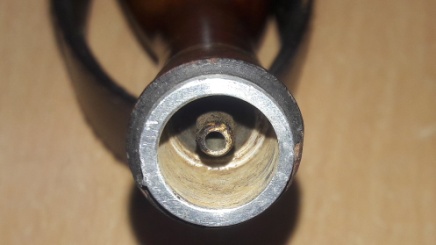
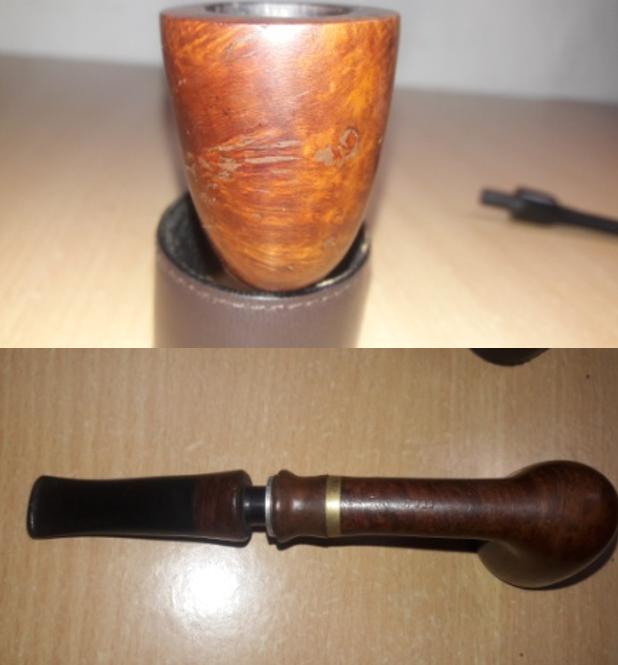
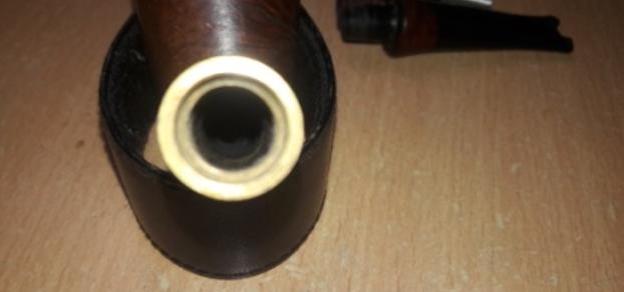
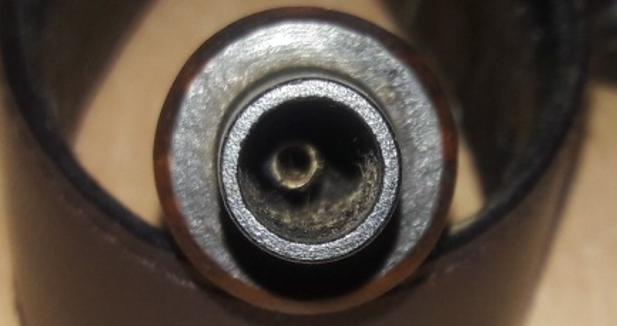
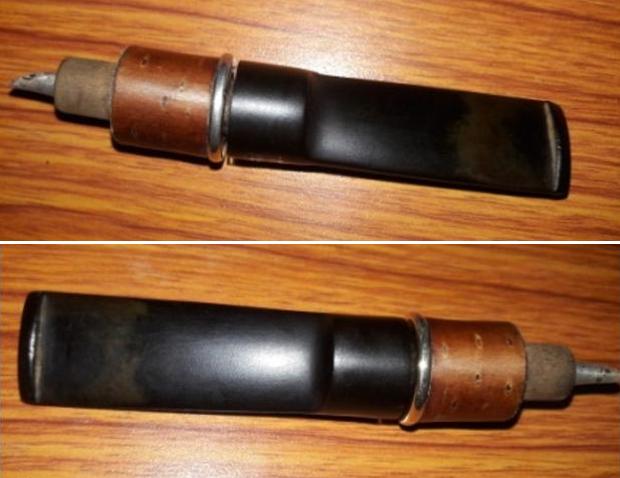
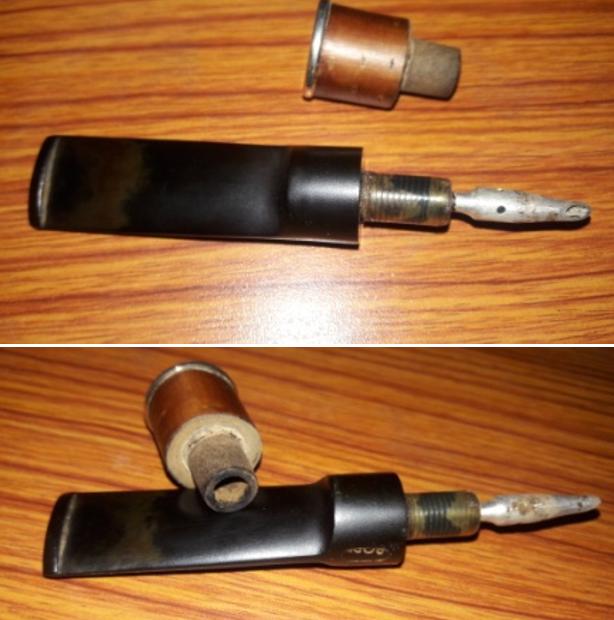
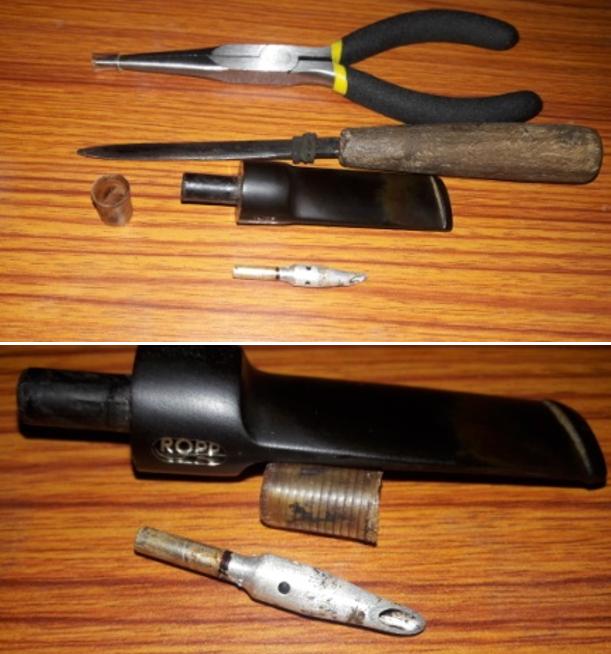
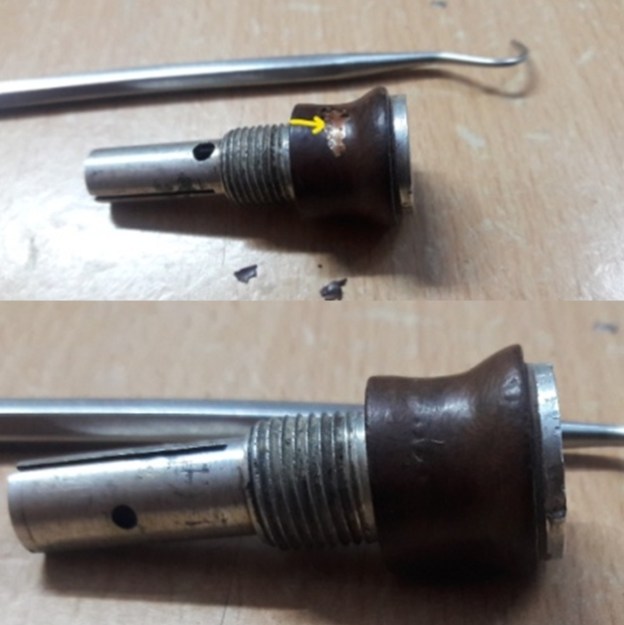
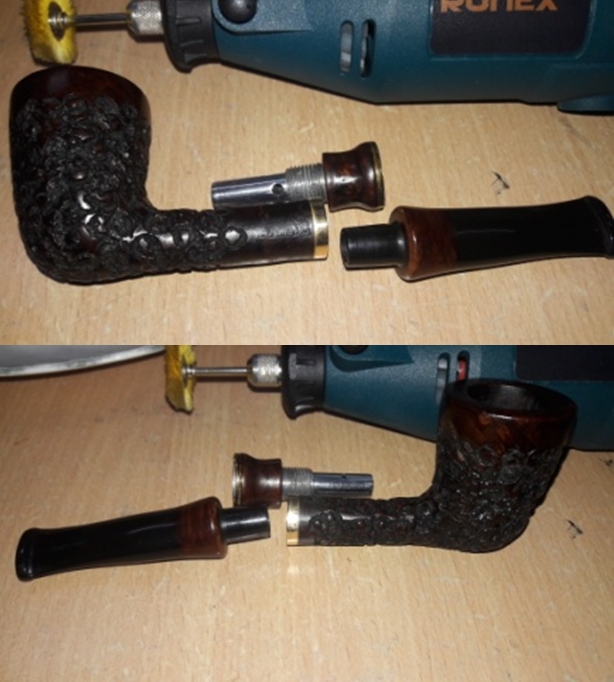
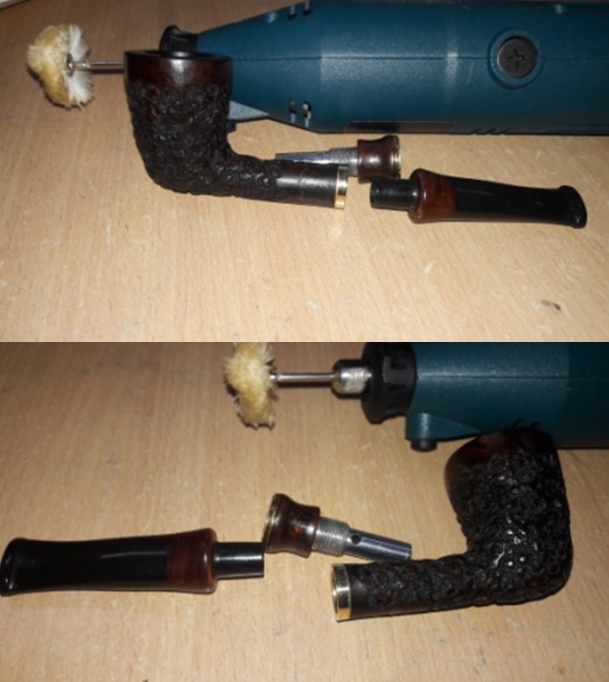
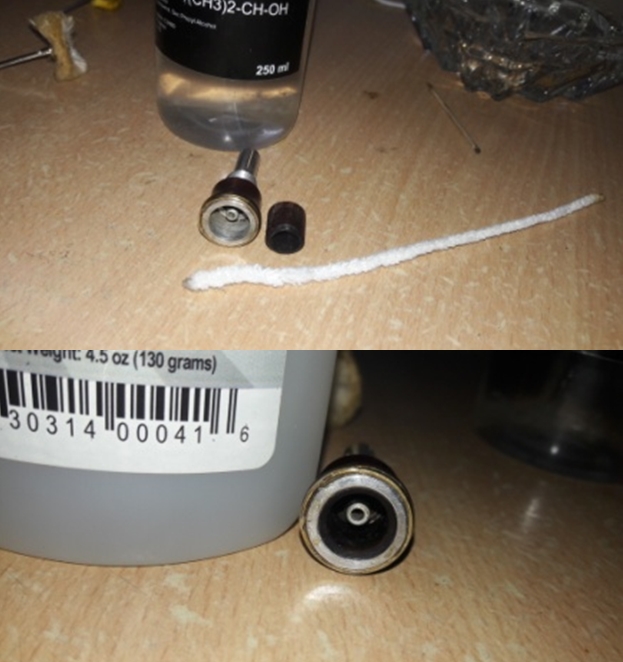
In my quest to understand the functional principal of the famed HYGROSYSTEM used in this pipe, I began by first dismantling the pipe. The pipe was dismantled in three parts; first the stummel, secondly the aluminum screw-in shank extension which has an aluminum tube to house a filter, probably a 6 mm, and lastly vulcanite stem with a fused briar wood saddle. From my appreciation, it is the shank extension which forms the critical component in the famed Hygro-System, at the stem end of which a smaller aperture pipe protrusion is seen. A similar sized protrusion is seen at the tenon end of the vulcanite stem. The fit of the tenon in to the aluminum shank extension is made air tight with a thin ring of briar wood (not leather, as it is not pliable at all).APPLICATION OF BERNOULLI’S PRINCIPLE IN THE HYGROSYSTEM

Bernoulli’s principle states that an increase in the speed of a fluid occurs simultaneously with a decrease in pressure or a decrease in the fluid‘s potential energy. This is applicable to flow of gases also.

In simple layman’s understanding, the above principle states that “Pressure is inversely proportional to the speed of the liquid or gaseous flow”. So how does this principle work in the hygrosystem of this pipe? To explain application of this principle, refer to the picture of the pipe below that I have drawn:(a) Hot smoke along with heavy particulates of oils, tars and moisture from the chamber enters the mortise and expands due to width of the mortise. As a result, speed is reduced. High pressure is created in the mortise.
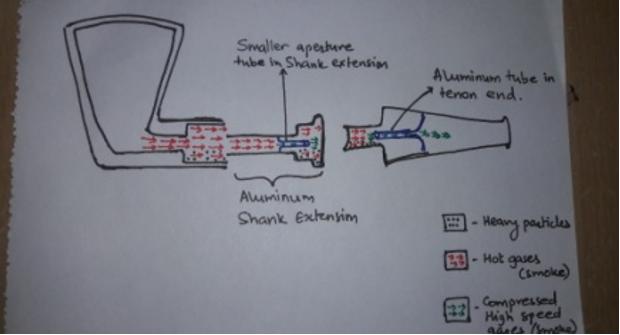
(b) Once the smoke enters in to the aluminum shank extension, it is compressed and speeds up considerably creating a low pressure area. Due to the low pressure, heavy particles like oils, tars and moisture settle down and are trapped in the filter in the aluminum tube of the shank extension.

(c) The speed is further increased when the smoke passes through the smaller aperture tube due to further compression, shown in green arrows, further lowering the pressure. When this smoke leaves the smaller aperture tube and enters the wide stem end of the shank extension, there is a sudden increase in pressure. This sudden variation in pressures results in heavy particulates settling down and only smoke, being lighter, propelled ahead.

(d) Similar pressure changes are affected when the smoke passes through the wide tenon and through the smaller aperture tube in the stem, further precipitating the heavy particulates of oils, tars and moisture. The end result is a pure smoke without any oils or tars.

The above understanding is my own reasoning based on my learning of science till Graduation level. Any corrections or clarifications from more knowledgeable readers is always enriching and welcomed.

INITIAL VISUAL INSPECTION
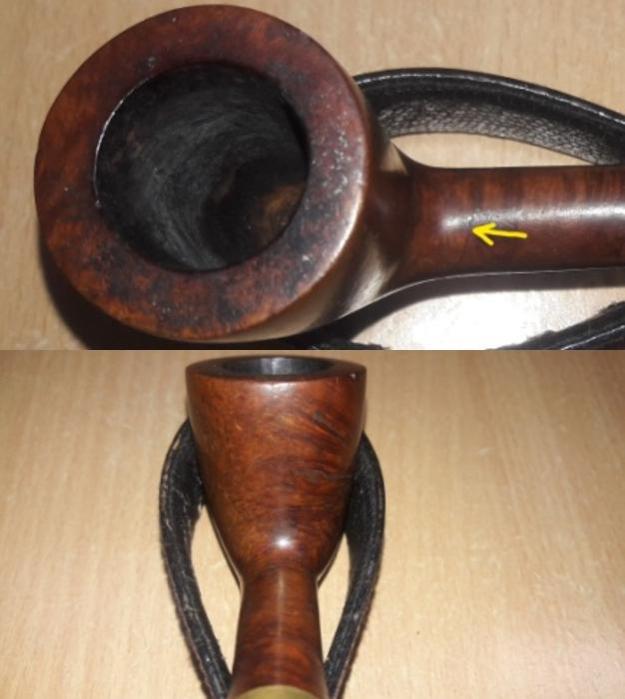
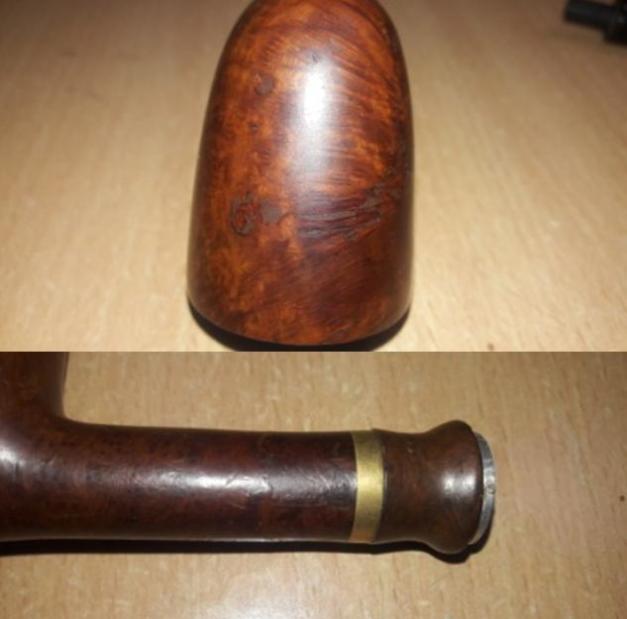
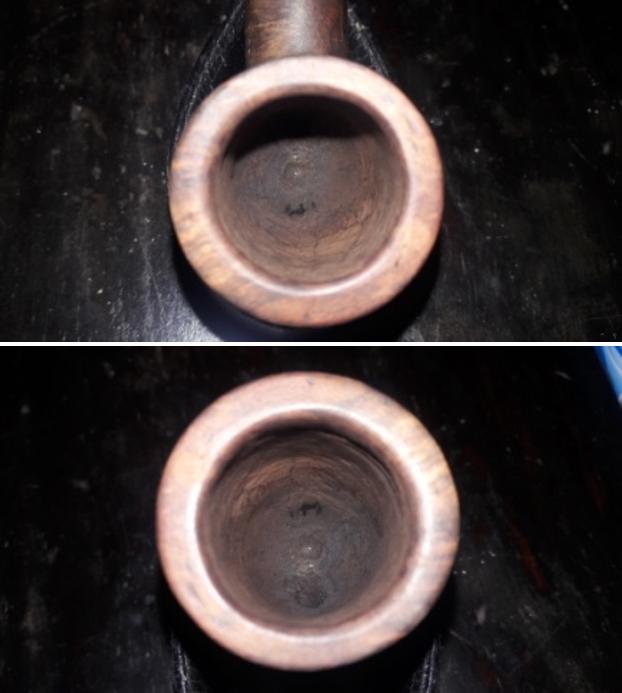
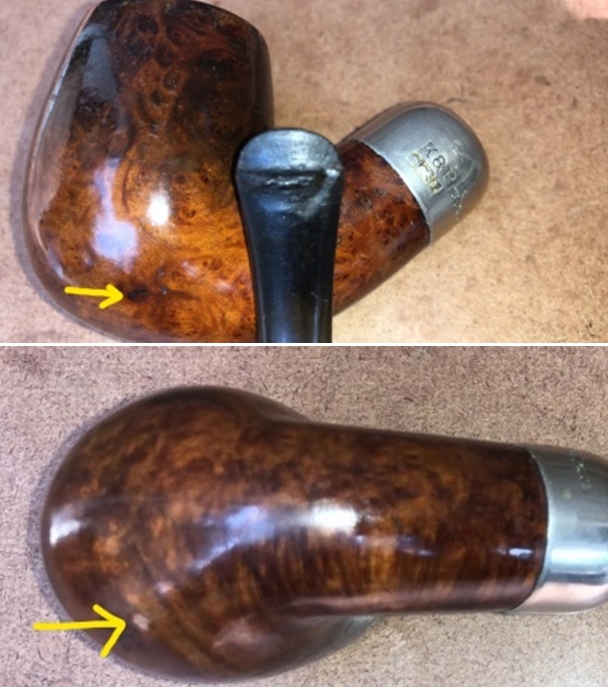
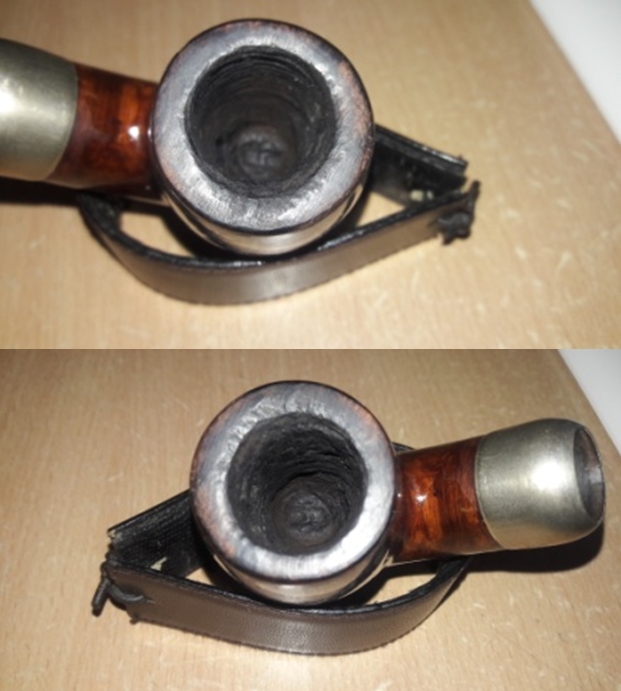
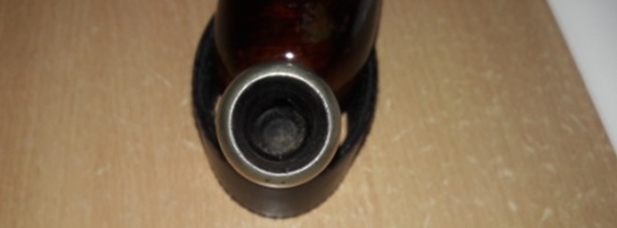
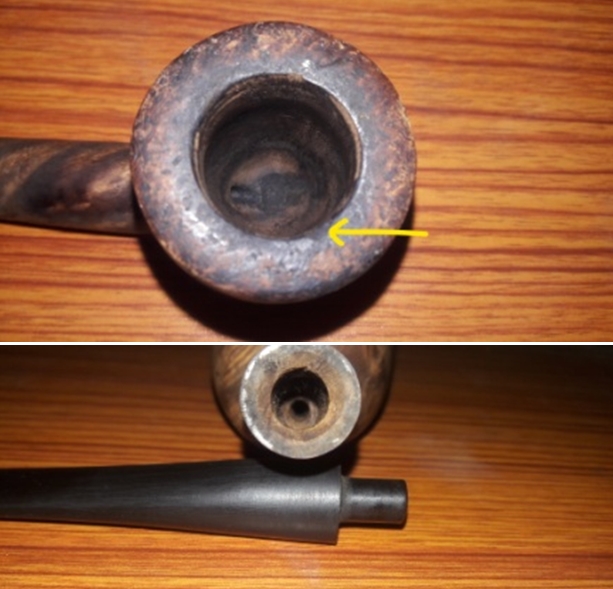
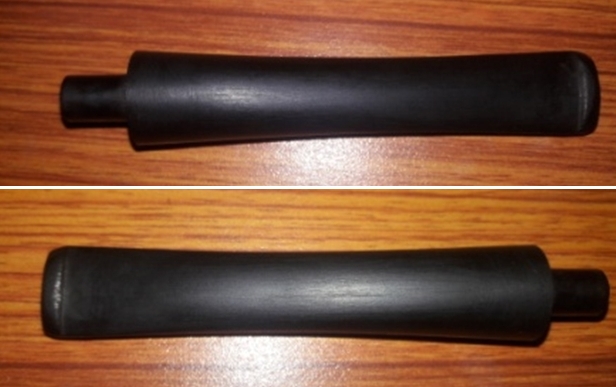
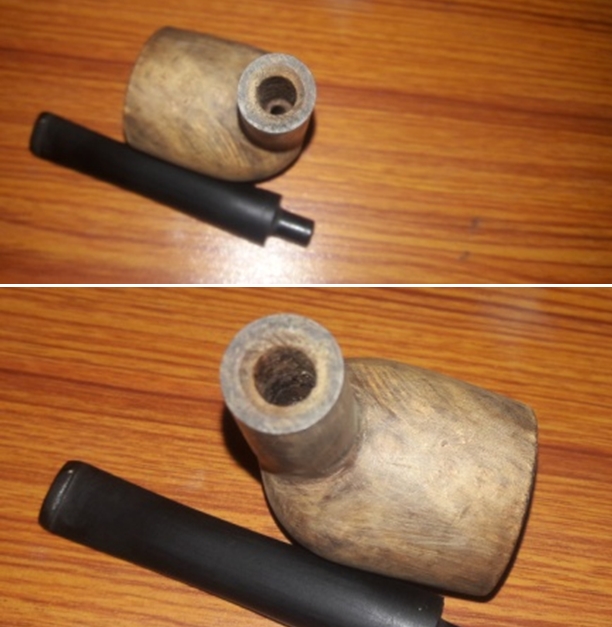
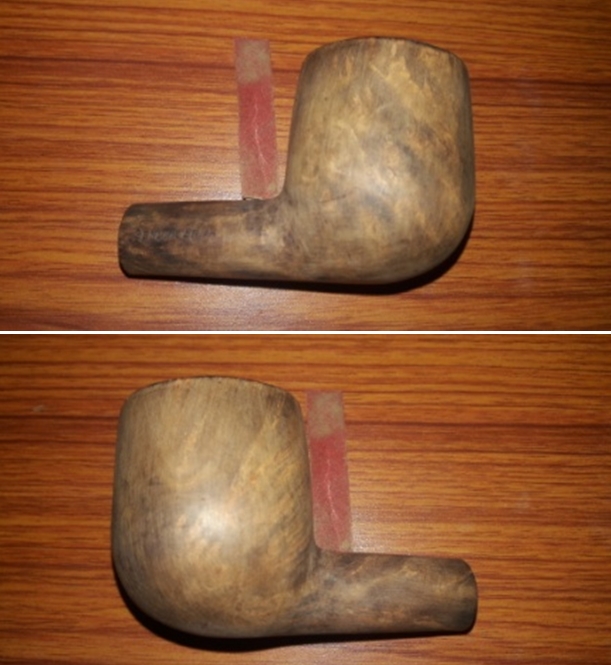
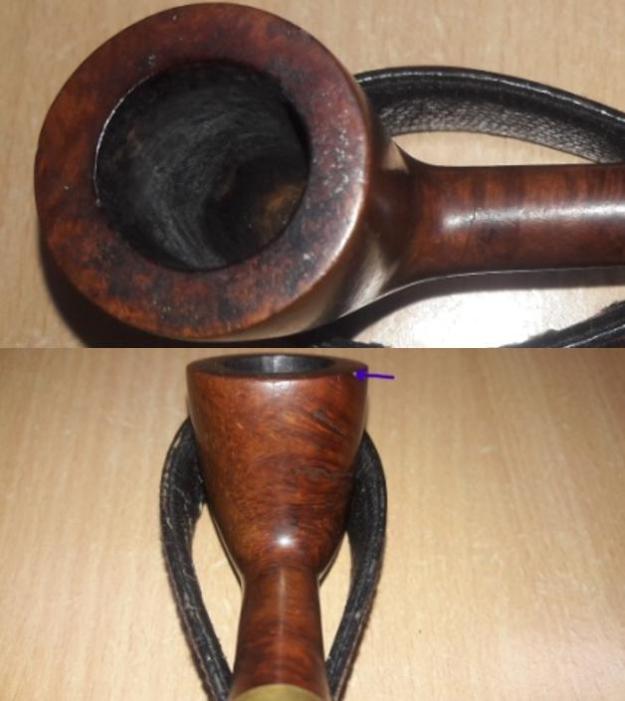
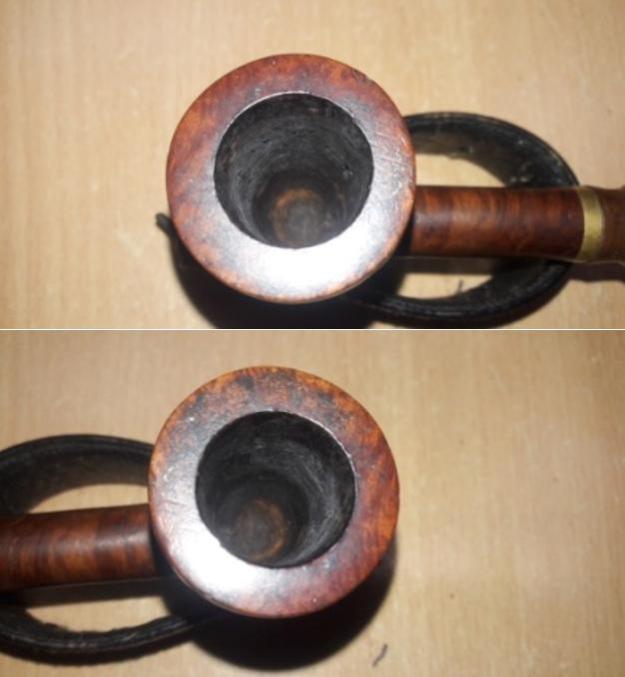
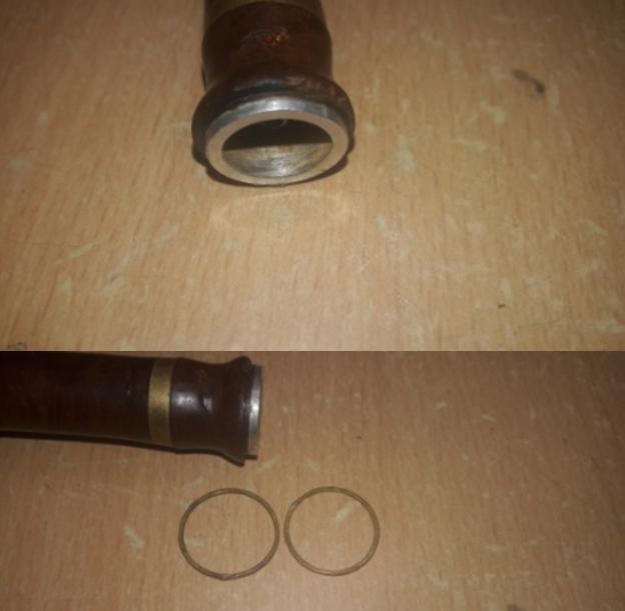
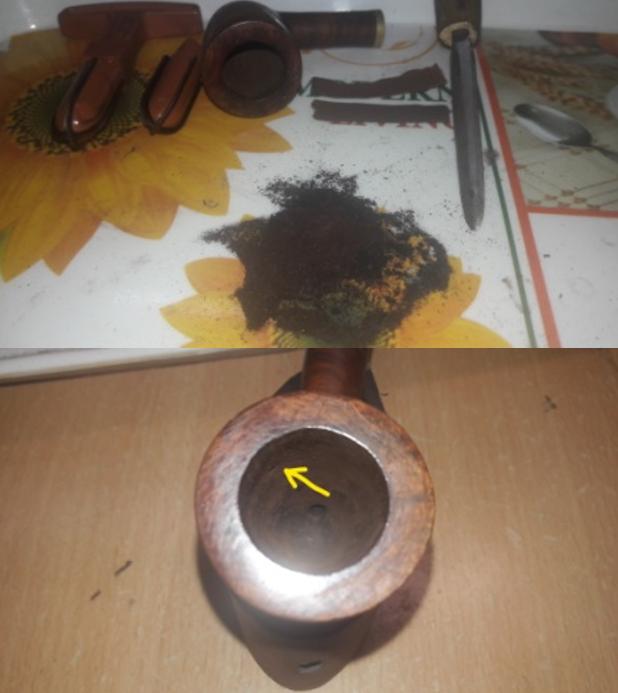
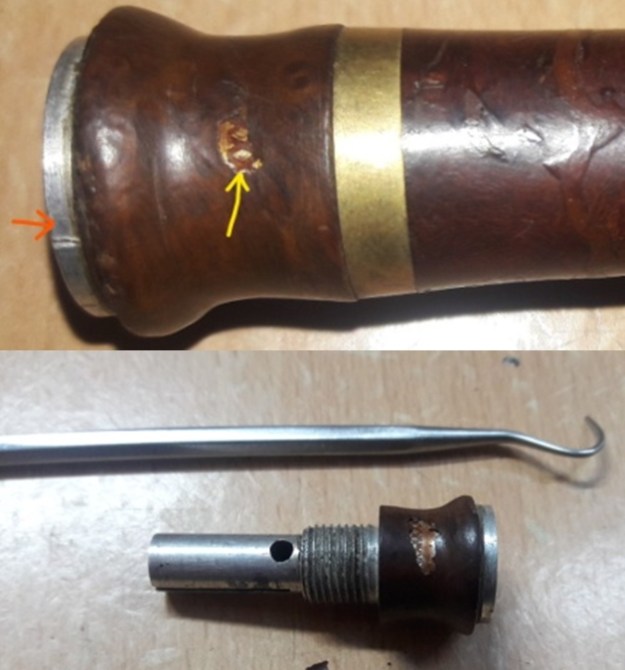
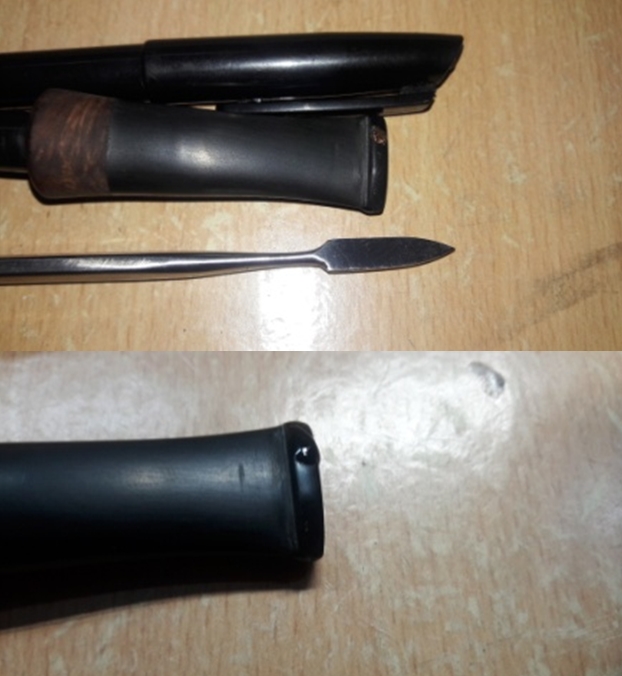
Starting with the rim and rim top surface, there is a slight overflow of lava on the rim top and the surface itself is peppered with numerous dents and dings which should be easy to sort out by topping the rim top. The rim edges are sans any serious damage, save for an odd chip on the outer edge, marked in blue arrow.The chamber however tells a very different story. There is a thin layer of cake which has taken on a grey coloration, which is a first for me, by the way. The way the cake appears to the eye, I suspect a few heat lines in the walls of the chamber towards the back and right side. I just hope that the issue is not a major one and just a bowl coating should suffice. Well, I shall cross the bridge when I reach it. There is strong smell emanating from the chamber which should be addressed to a great extent once the chamber has been reamed and the shank has been cleaned. The stummel surface has signs of accumulated dirt, dust and grime and should clean up nicely. It was surprising to note that these accumulations are in patches, almost following the cross grains seen on the right and front and over the entire shank. The left side, which has some beautiful bird’s eye grain, is clean. There are a large number of dents and dings all around the stummel surface. The shank surface has bubbled up near and around the stampings towards the shank end. Just near to the shank and bowl junction, I could make out a very thin line running all round the shank forming a circle (marked in yellow arrow). This worries me as at this stage, I am not sure about the extent of the depth of the crack. Also along this crack line, I could make out one fill. All in all, this is going to be a challenging restoration to get it back to being smoke worthy. There is a brass ring at the shank end which extends inside the shank with threads on to which the aluminum shank extension is screwed in. This brass ring should add a bit of glitz to the pipe appearance once polished. The mortise is clogged and heavy crust of dried oils and tars are clearly visible. This will take some effort to clean out.   The screw-in aluminum shank extension that houses a filter is covered in oils and tars. Also the smaller aperture pipe protrusion at the stem end is covered in gunk and tars. The briar coating at the top of this extension is chipped at one place (marked in yellow arrow) exposing the underlying aluminum shank extension. At the stem end of this extension, the brass ring is missing (marked in orange). I don’t have any brass rings and hence will have to improvise one that will fit. The vulcanite stem with its fused briar saddle at the tenon end is generally in good shape, save for the broken button end. The stem is very lightly oxidized and has minor tooth chatter on the lower lip surface towards the button end. The lower button itself shows minor tooth marks. Rebuilding of the missing button portion of the upper surface and reshaping of the lower button shouldn’t pose any major issue. The tenon is dirty with all the gunk and dried oils and tars left behind by the previous owner of this pipe. THE PROCESS
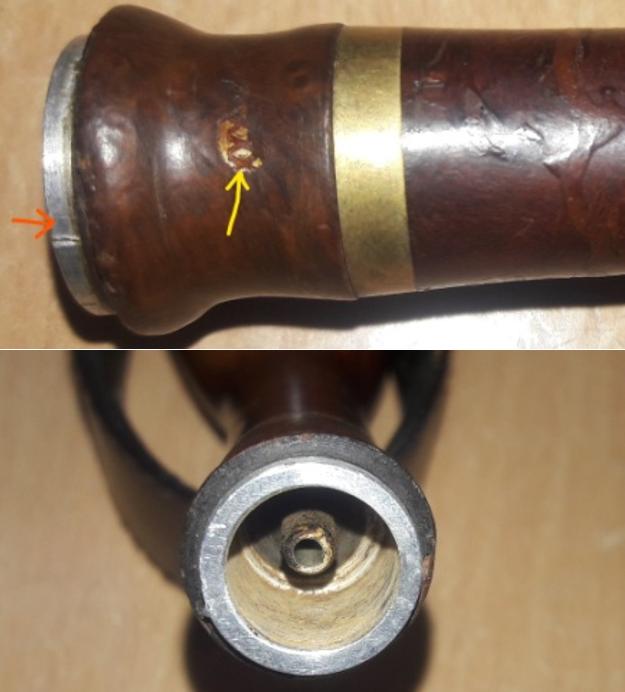
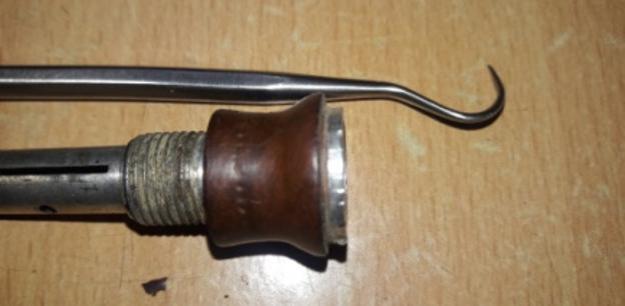
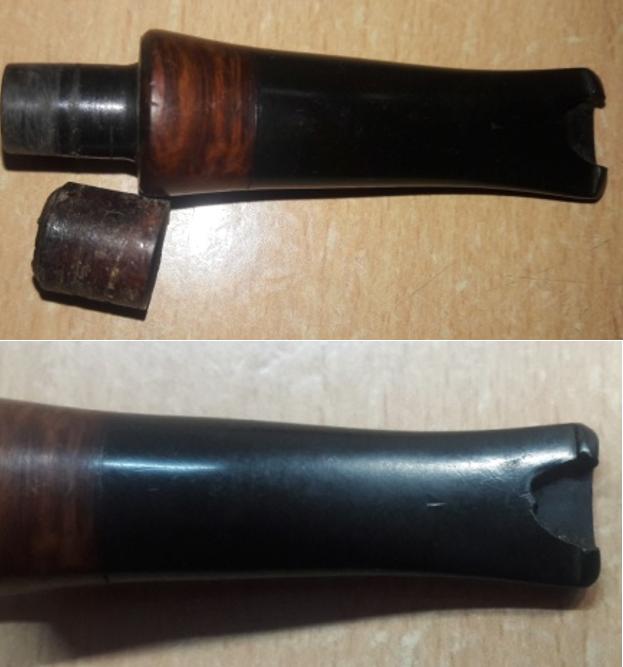
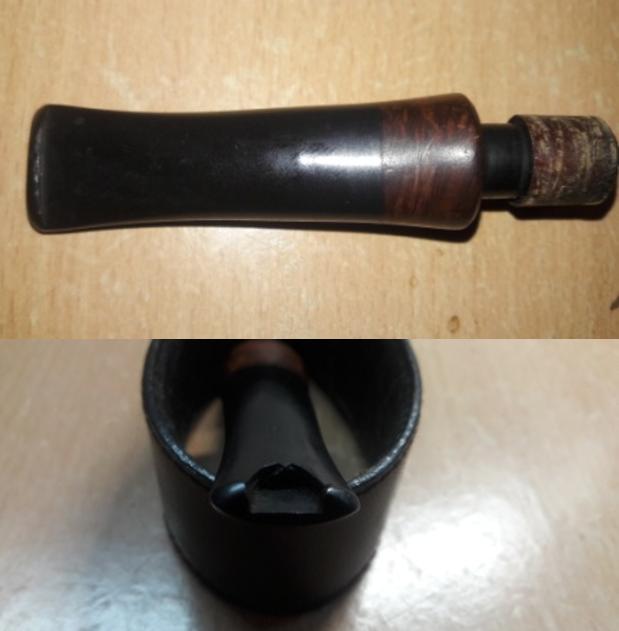
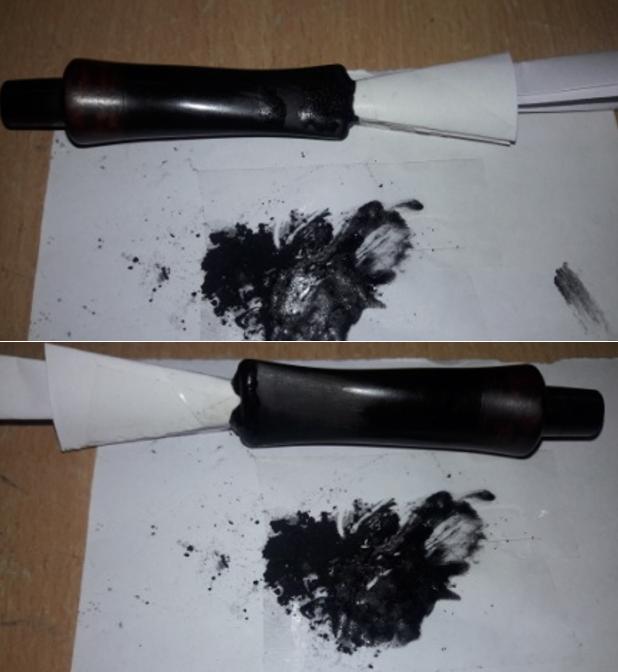
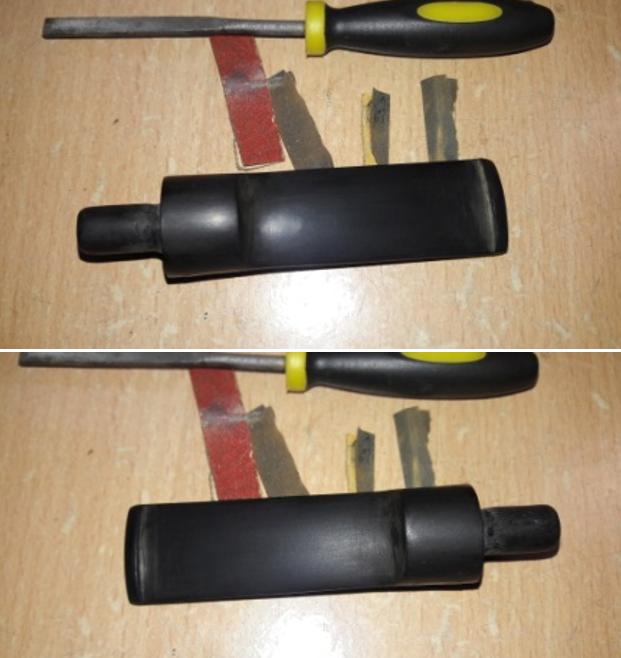
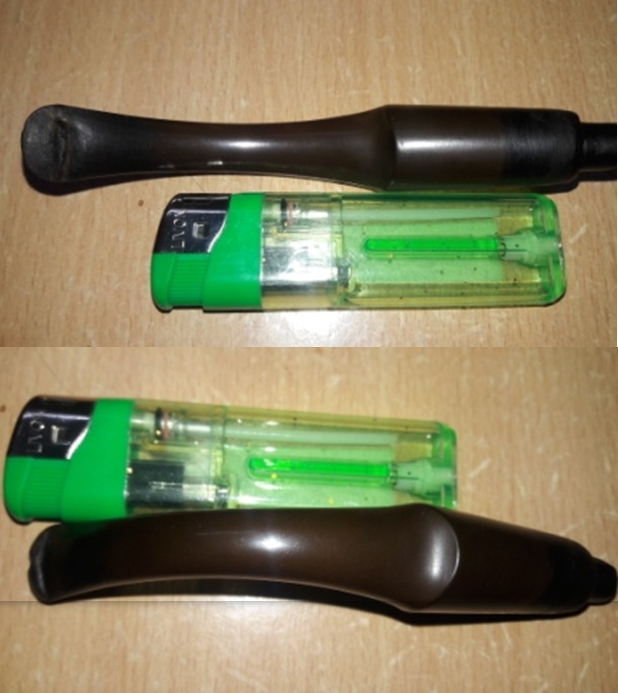
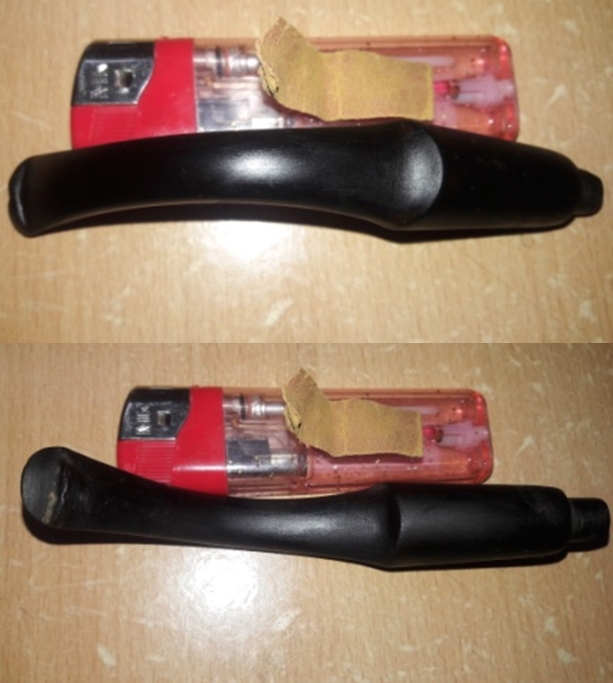
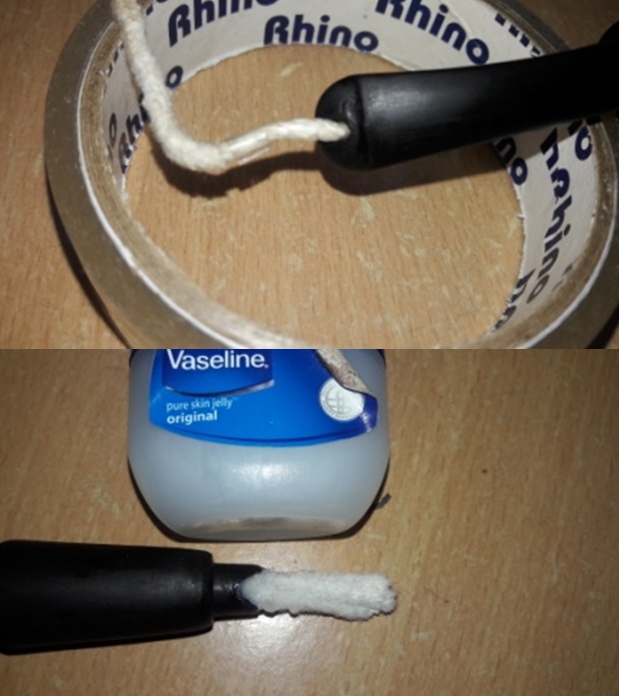
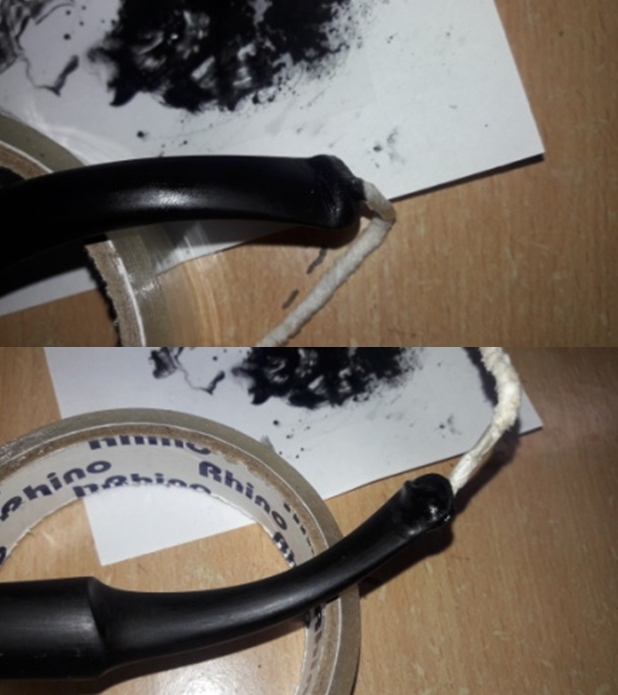
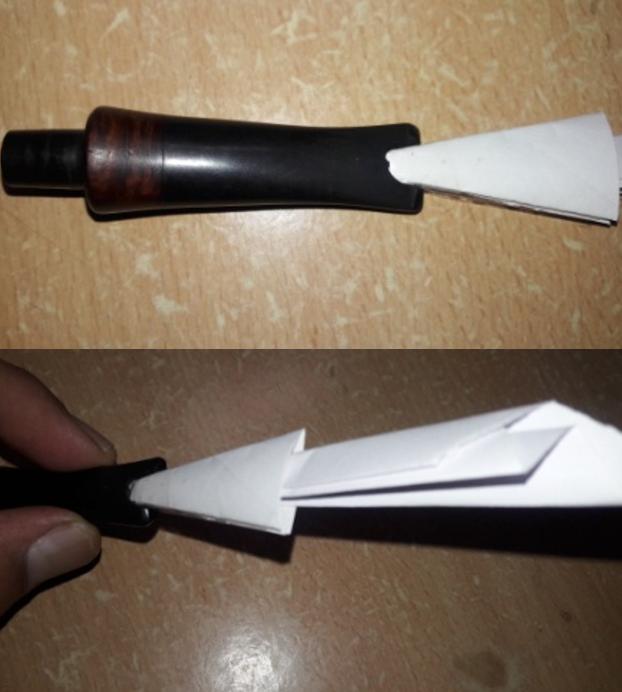
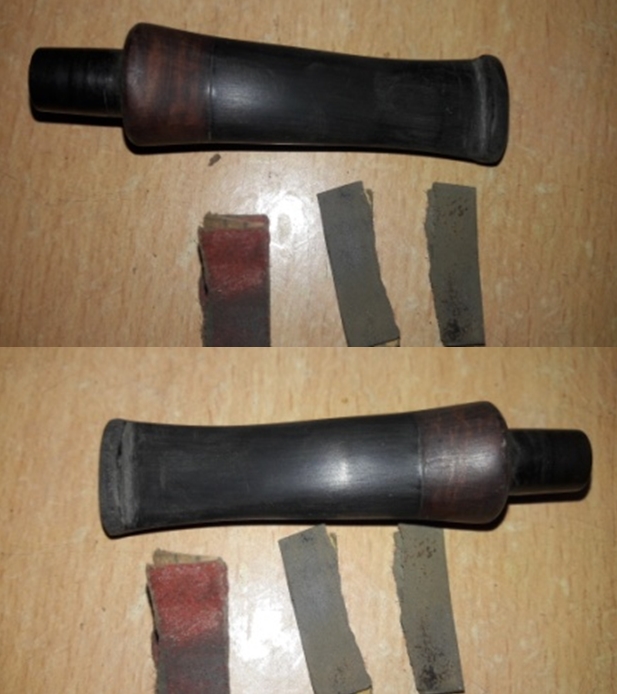
Since any stem reconstruction takes the most amount of time what with all the curing, sanding, refilling if needed, shaping and polishing, I always prefer to start with repairs to the stem. Firstly, I sand off all the tooth chatter and the area of intended fill with a piece of 220 grit sand paper. This not only evens out the surface for the fill but also gets rid of the oxidation which would otherwise show itself through the fills as a brown patch after polishing. This was followed by cleaning up the internals of the stem and the tenon with regular and bristled pipe cleaners dipped in 99% pure isopropyl alcohol. With a dental pick, I scrubbed out the dried gunk from the tenon and from along the broken button end edges. I had seen Dal use a folded triangular index card while reconstructing a broken button end whereas I always used a Vaseline coated pipe cleaner inserted in to the air way to keep it open. My method, though effective, was time consuming as I had to completely reshape the slot thereafter. Therefore for this repair, I decided to adopt Dal’s method. I appropriately folded an index card and covered it with a transparent tape which prevents the superglue and charcoal mix from sticking to the card. This is how it appears and fits in to the broken stem.I prepared a thick mix of CA superglue and food grade activated charcoal and applied it over the broken button area. I also applied this mix over the lip edge to make it even and cover the tooth marks. Once this layer had cured, I applied another layer of the mix. The trick here is that this type of reconstruction needs to be done in layers to a thickness more than the adjoining stem surface. This thereafter can be filed and sanded down to match the stem surface. I did exactly as described above and set the stem aside to cure.First layer.Second layer.Third layer.Final layer.
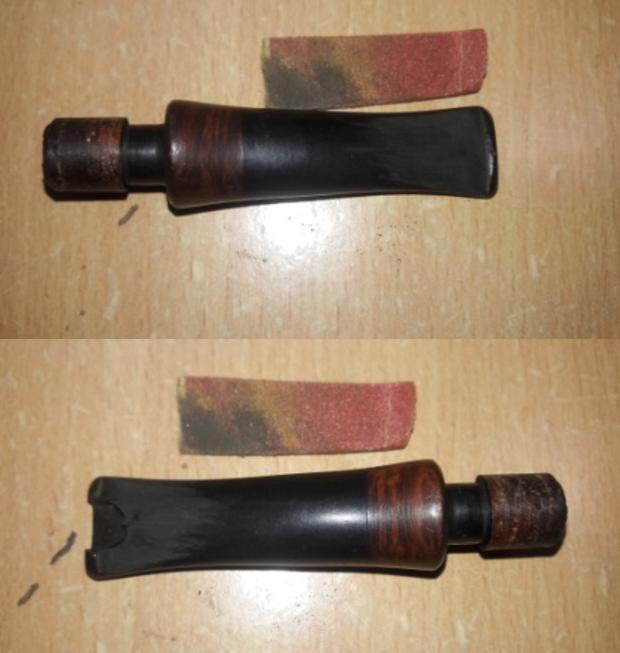
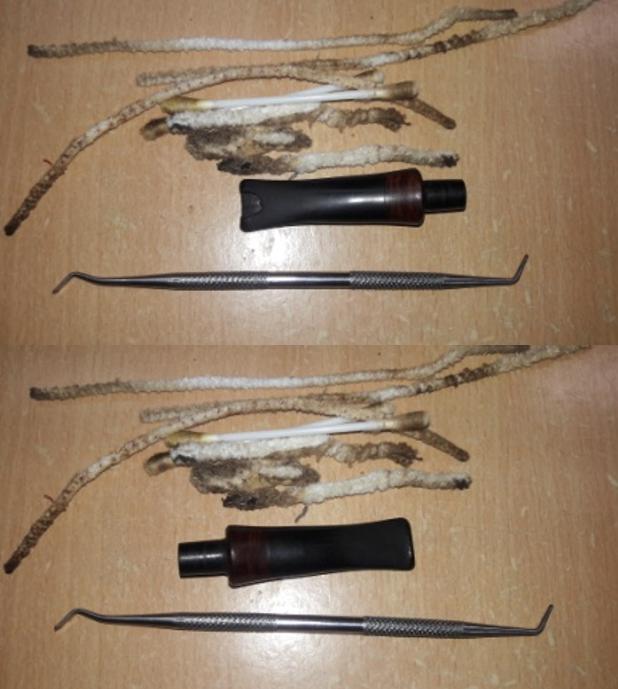
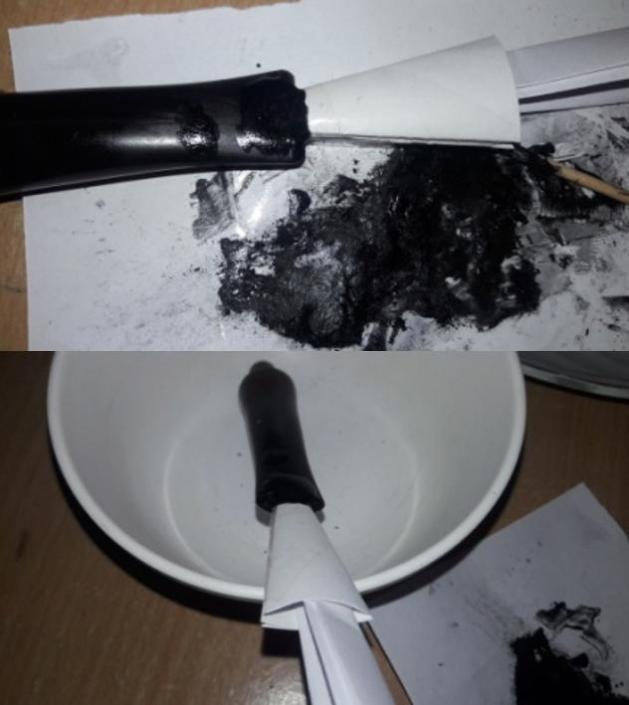
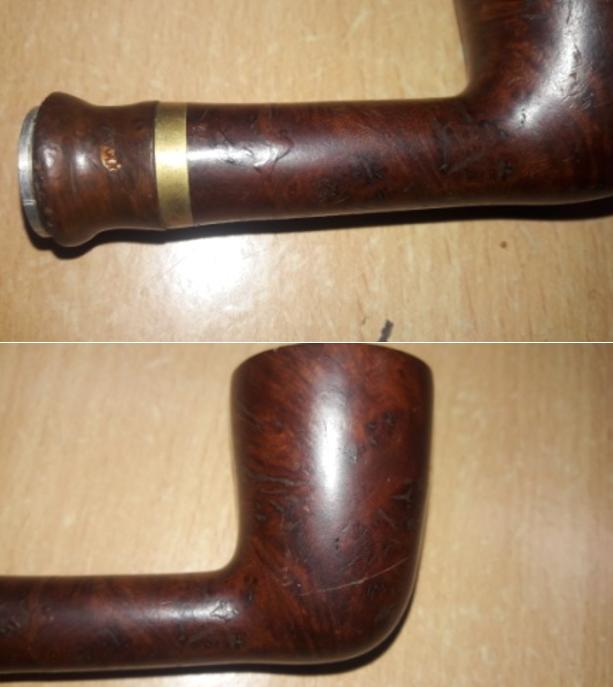
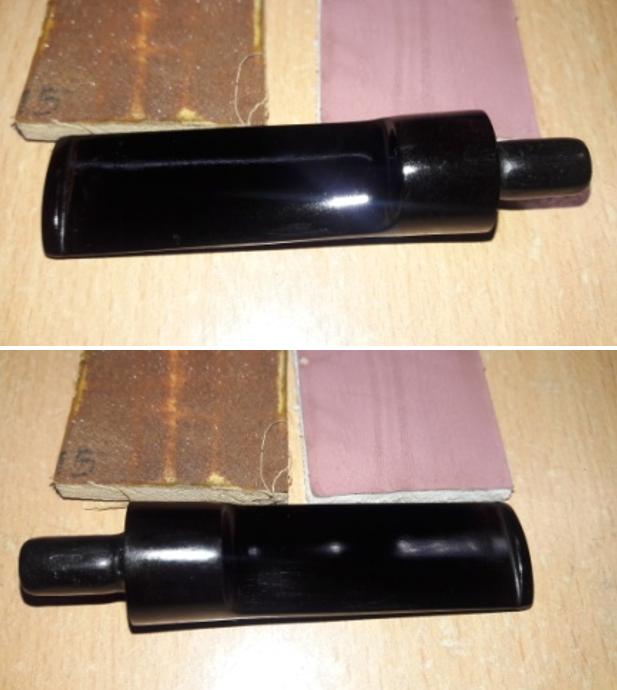
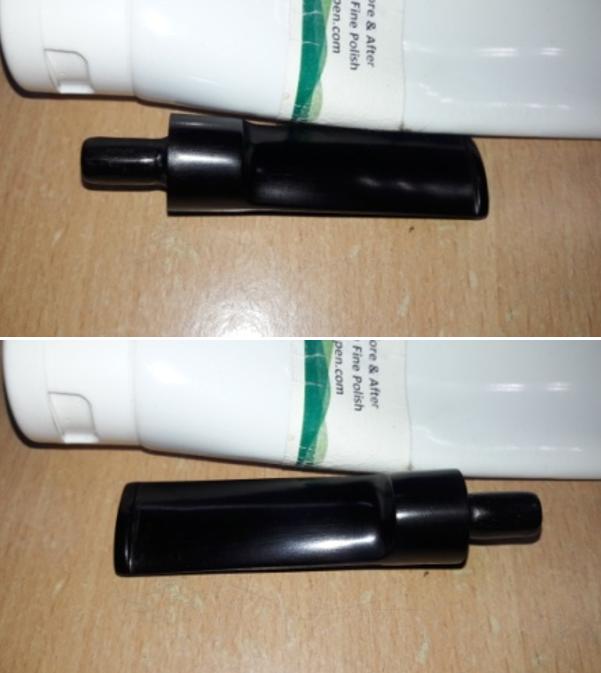
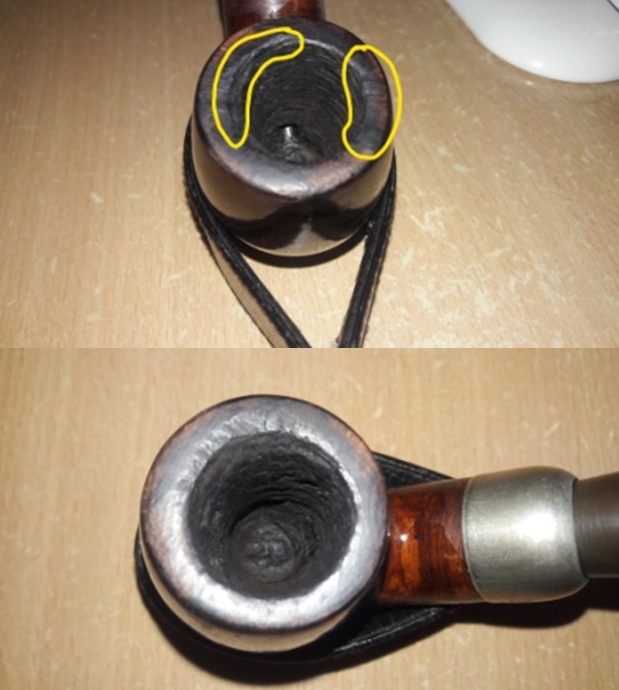
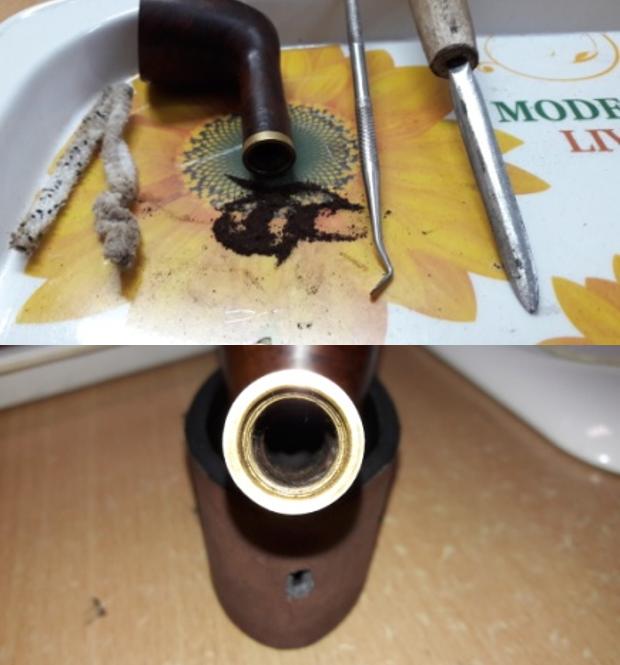
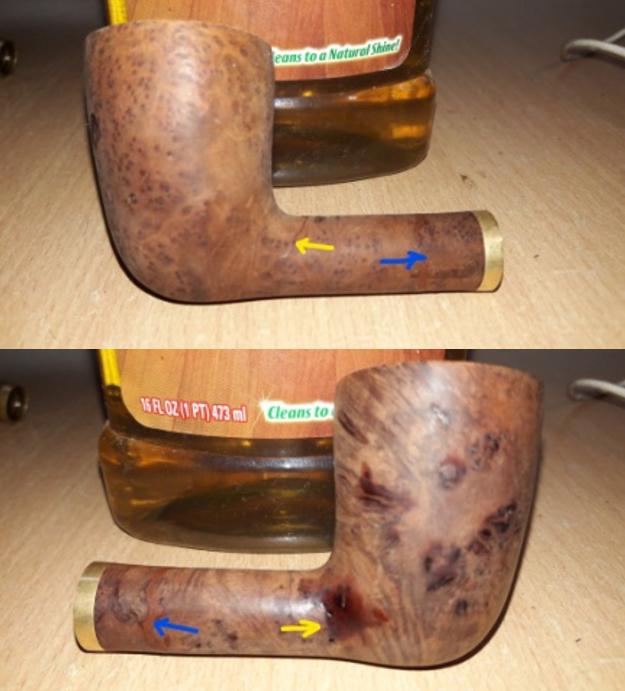
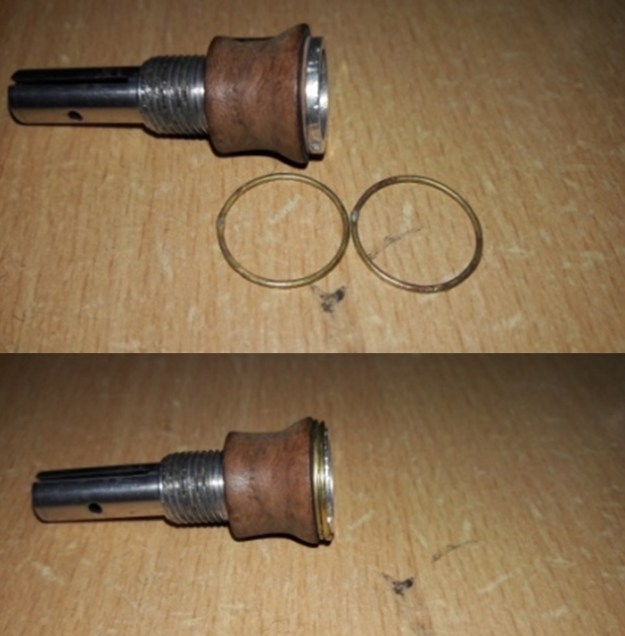
Once the mix had cured hard, I went about matching these fills with a flat head needle file and followed it up with a piece of 220 grit sand paper. As expected, I observed a couple of air pockets and also that one of the lip edge had been filed down more than the other and was dotted with many air pockets. I addressed these issues with a layer of superglue and charcoal powder mix. However, in this mix, the percentage of superglue was higher than the charcoal powder. I set the stem aside to cure. After the stem fills had cured, I repeated the process explained above to match the filled surface with the stem surface using needle files and sand paper. Now the lip edges are even, however, the air pockets persist. It’s very frustrating, I know but you have to be equally persistent. I applied a layer of clear CA superglue (would have ideally applied black CA glue, but……don’t have it) and set it aside. To take my mind off the troublesome stem repair, I decided to tackle the issue of missing brass band from the stem end of the shank extension. Working with limited spares, materials and tools has its advantages. It forces you to think out-of-the-box for ways around the hurdle, many a times with startling and successful results but you pay the price in terms of time penalties. Well, time I have aplenty!!! I decided to fabricate a brass ring of adequate thickness. My fabricator informed me that it would not be possible to make one with this width as he had only wires and not strips of brass. No issues, I had two rings made!! These rings fit perfectly and add a nice unique touch. These should polish up nicely. I shall fix these rings towards the end of the restoration process. Moving ahead, I reamed the chamber with size 1 and 2 head of the PipNet reamer. Using my smaller sized fabricated knife, I further reamed out the cake from places where the PipNet reamer could not reach. I gently scrapped out the lava overflow from the rim top surface. I followed it with sanding the chamber walls with a 220 grit sand paper. How I miss my younger daughter, Pavni, who specializes in smoothing the chamber walls and removing every trace of the old cake. Steve, hope I have come close to her finesse!! Once the cake was taken down to bare briar, my initial fears of heat fissures/line were confirmed, with the only difference being that these were not linear but pits, another first for me. These pits were only on the right side of the stummel and marked in yellow.  To use J B Weld or only a bowl coating (which I prefer) would suffice, shall be decided later. Removing the overflow of lava from the rim top revealed a surface that is peppered with numerous dents and dings. Other than these issues, the walls of the chamber are even and solid. I still did not have the inclination to work on the stem (actually it’s the fear of unknown result of the last fill!!) and continued with cleaning of the stummel. I worked the mortise using the dental tool first to scrap out the dried out gunk, oils and tars left behind by the previous steward. The amount of grime scrapped out is a testimony to the efficacy of this HygroSystem, I say. A few pipe cleaners dipped in alcohol later, the shank is clean. Now that the chamber and shank internals are clean, the smells though reduced, is still prevalent.Staying with the stummel, I cleaned the externals with Murphy’s oil soap and toothbrush. Rinsing under tap water (remember, I am in India and its hot here and even tap water is equally warm!!!!) was the start of my nightmare and prolonged conversations with Steve and on our FB messenger group. Here are the pictures first; description of my observations will follow subsequently. Just follow the arrows… As I had noted during my initial inspection, the hairline crack towards the bowl end is now prominently visible and marked with yellow arrows in each picture. This hairline crack runs all around the shank and is joined end-to-end. This still was okay as I had anticipated it, but what surprised me, or rather rocked my feet, was the thick fill of putty running all around the shank end. The same is marked with blue arrows. This fill runs in a more perfect circle than the one near the bowl shank joint and right through the middle of all stampings!! Aargh……There goes the stampings… Sorry Steve, hope you understand.
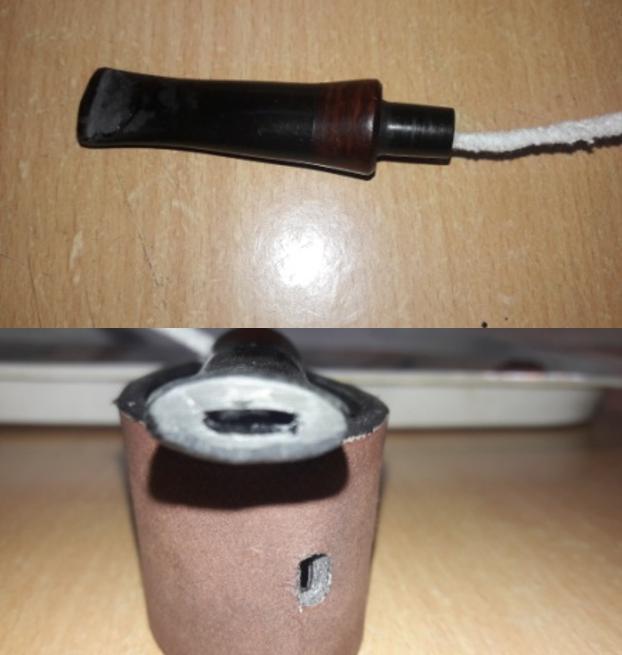
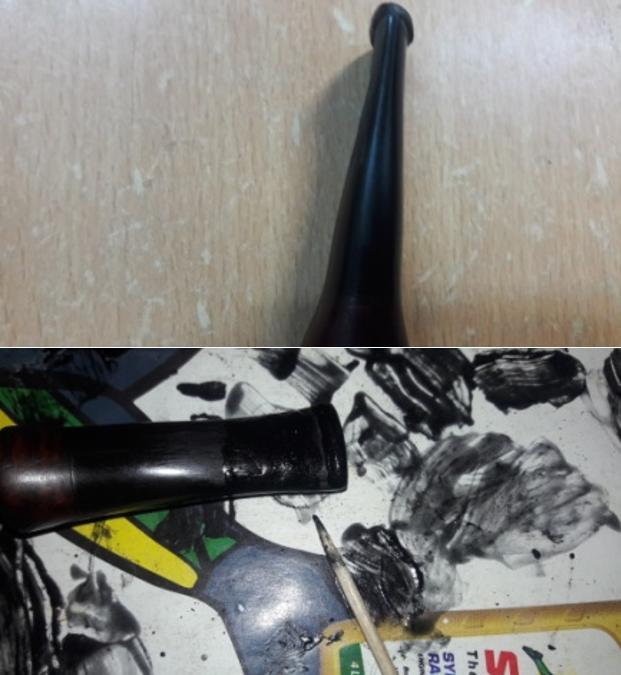
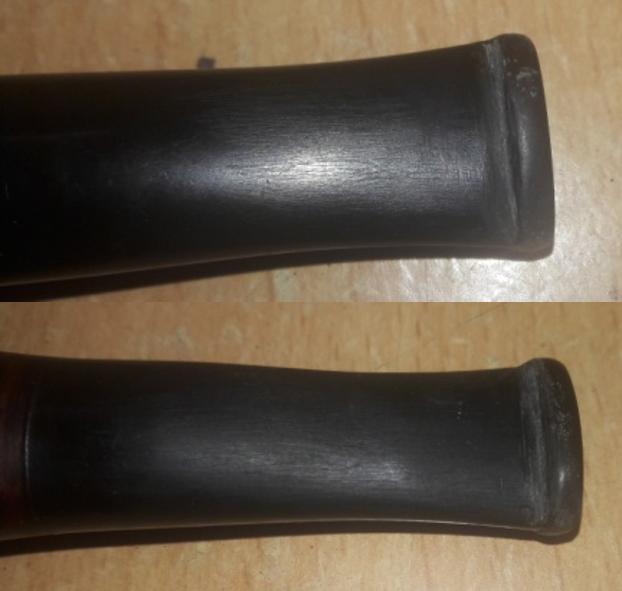
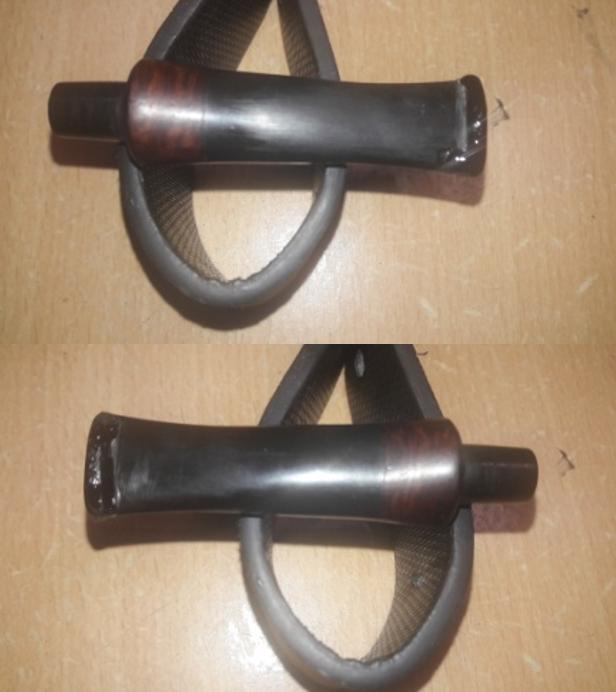
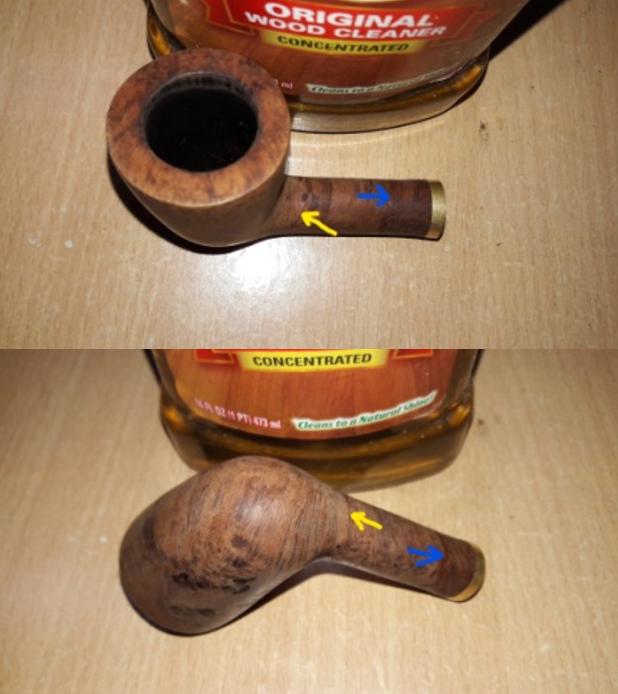
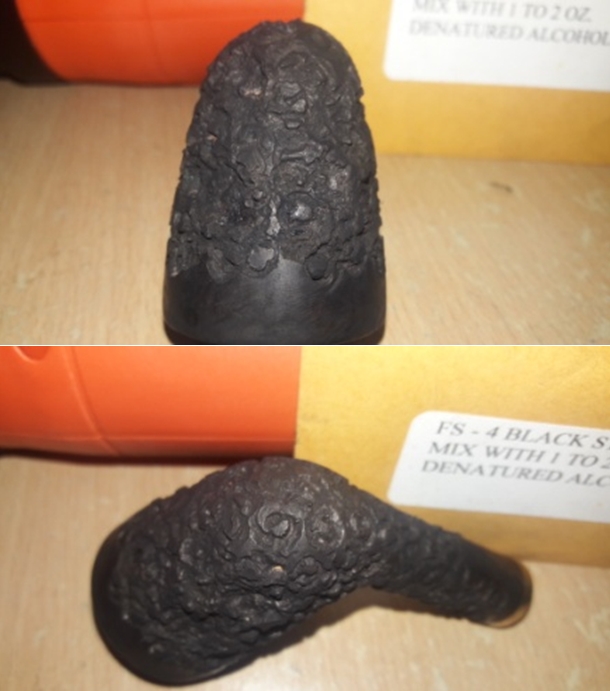
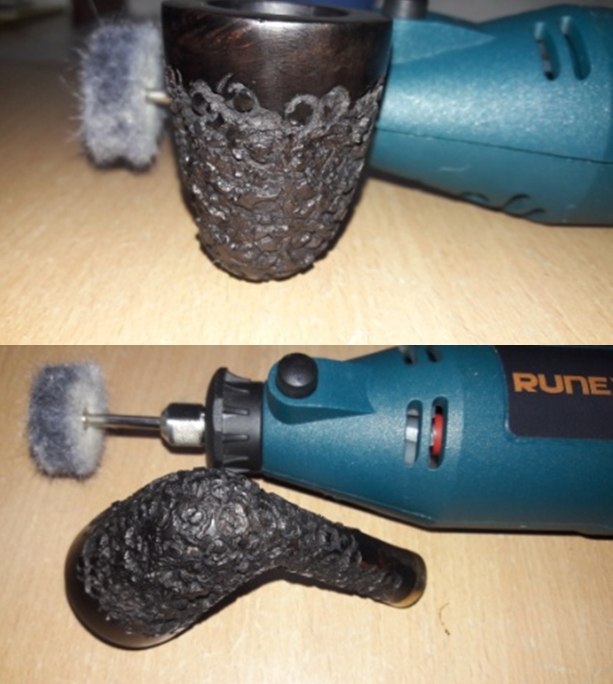
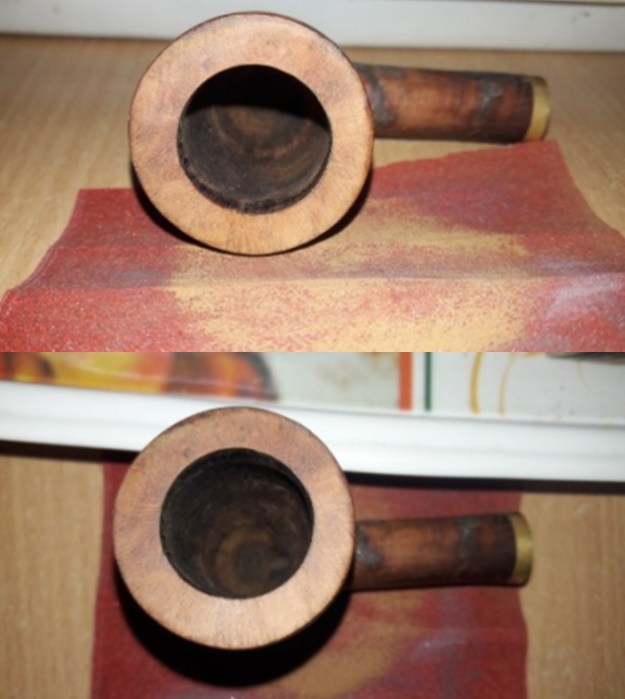
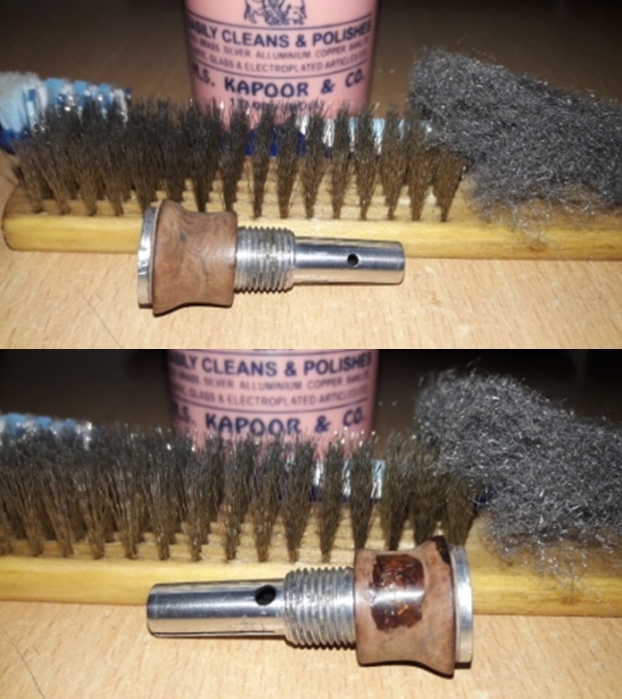
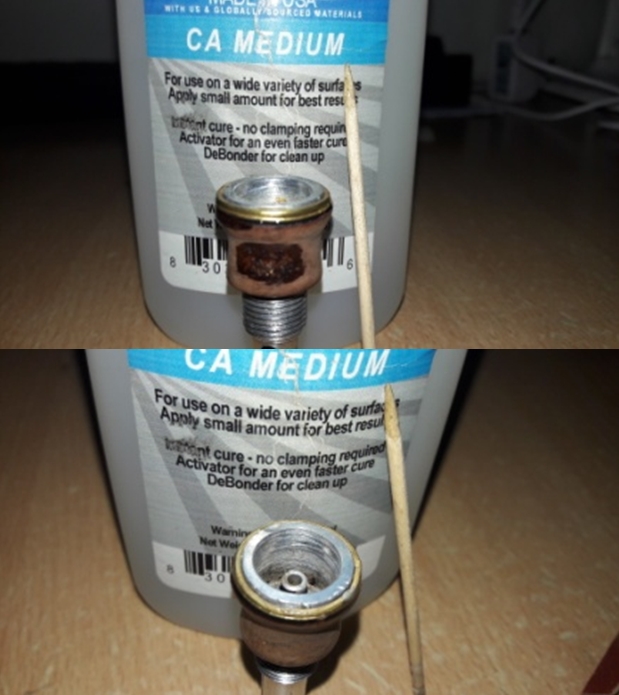
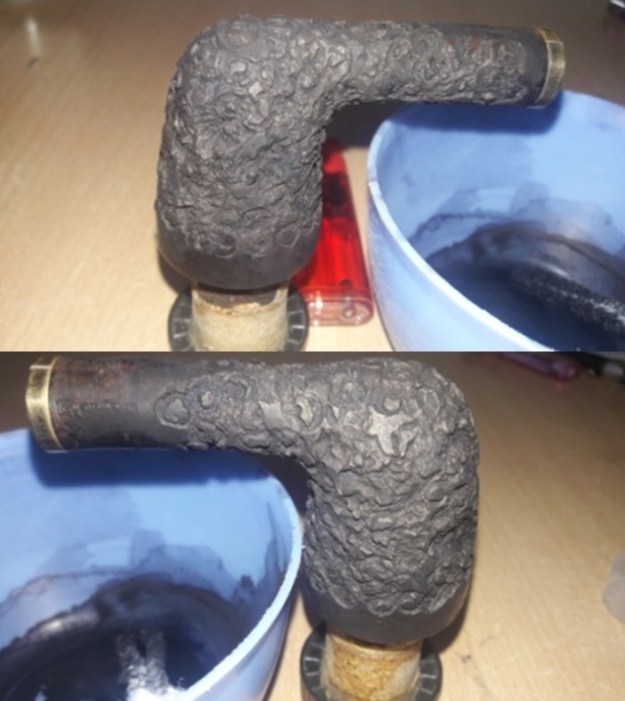
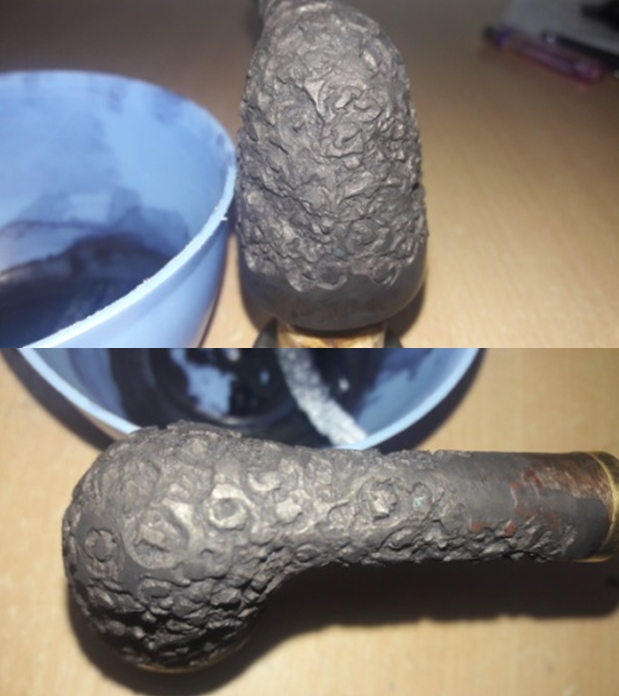
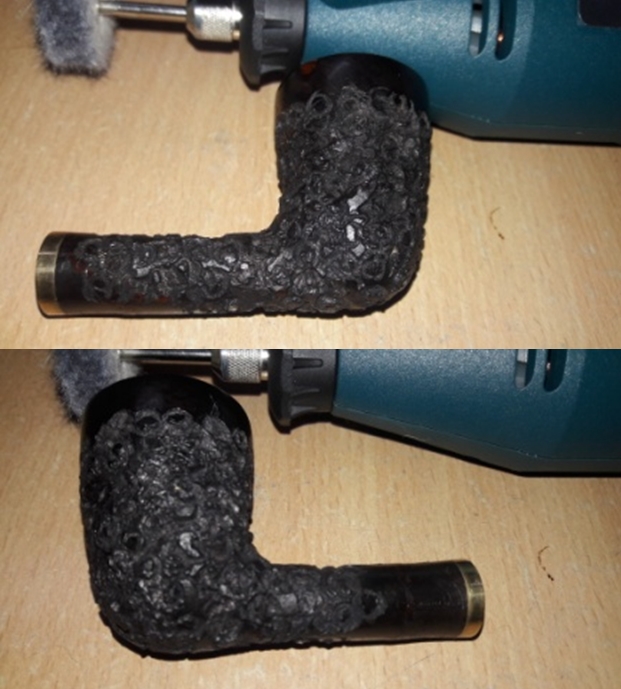
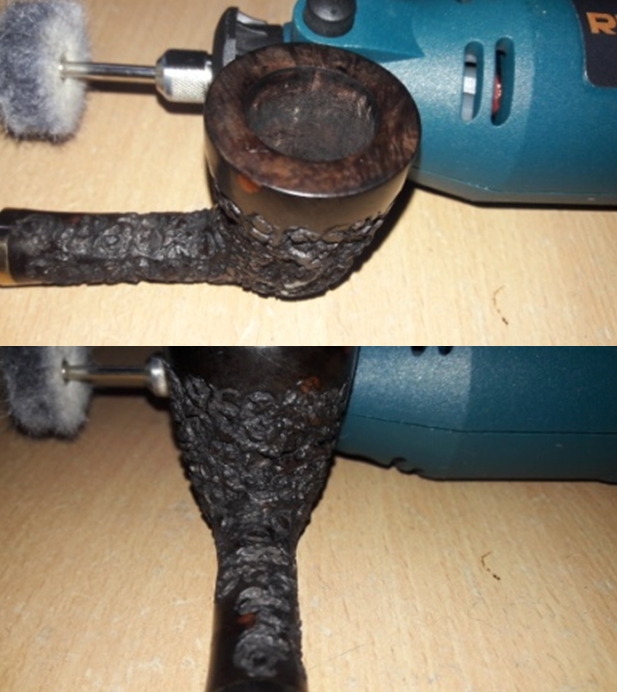
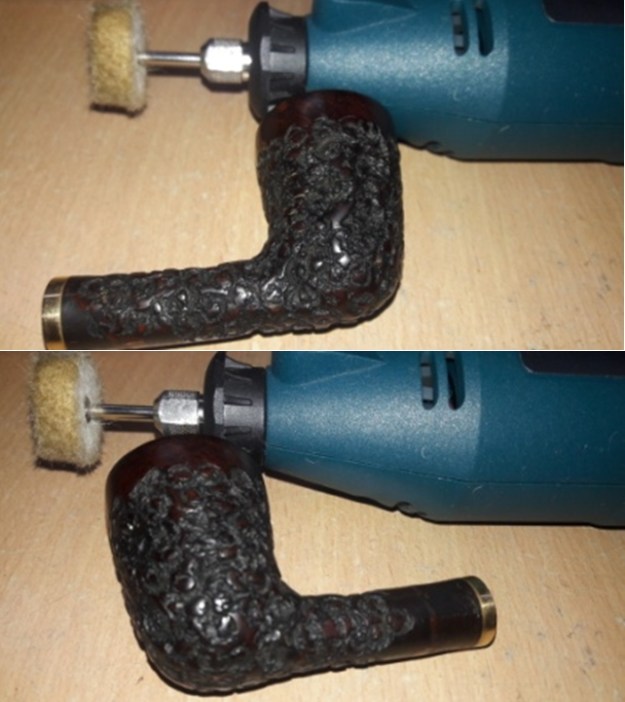
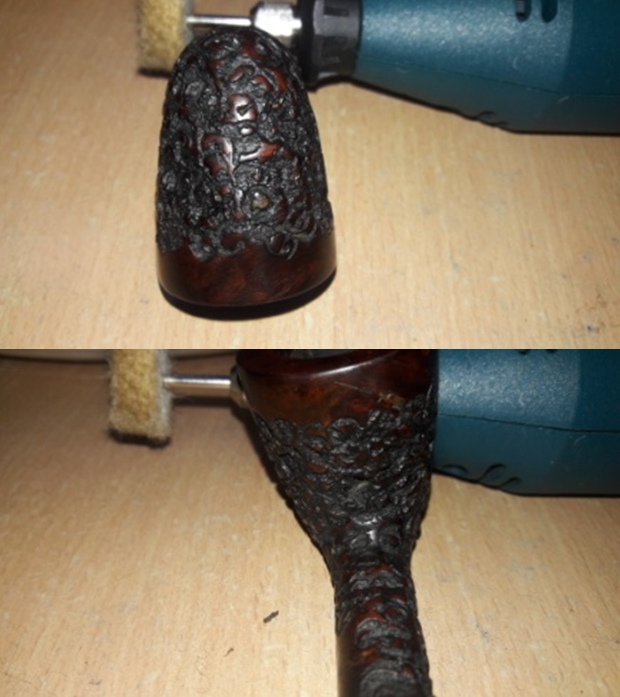
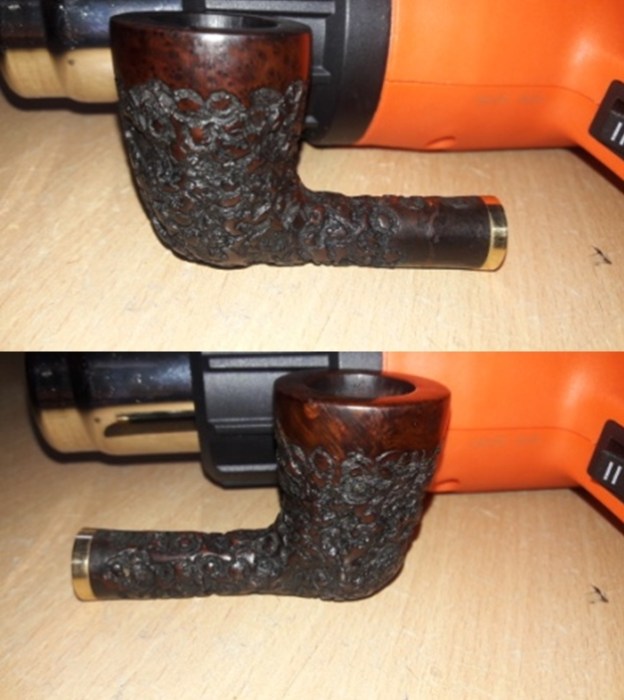
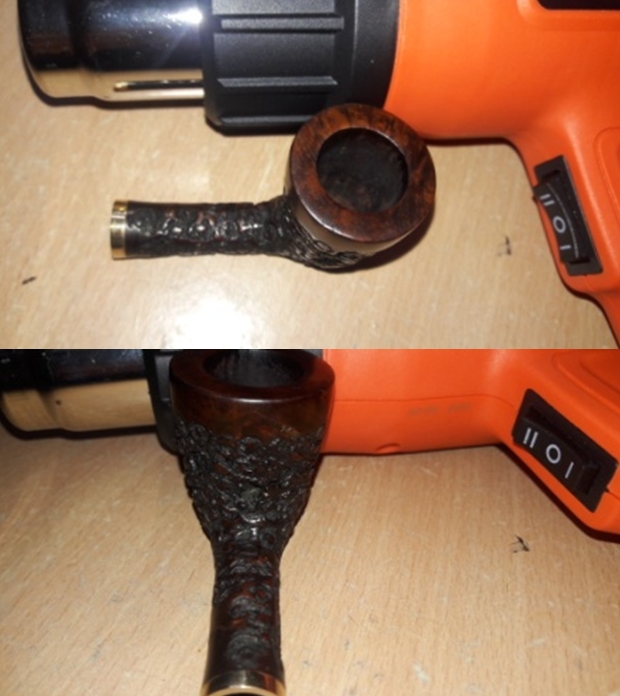
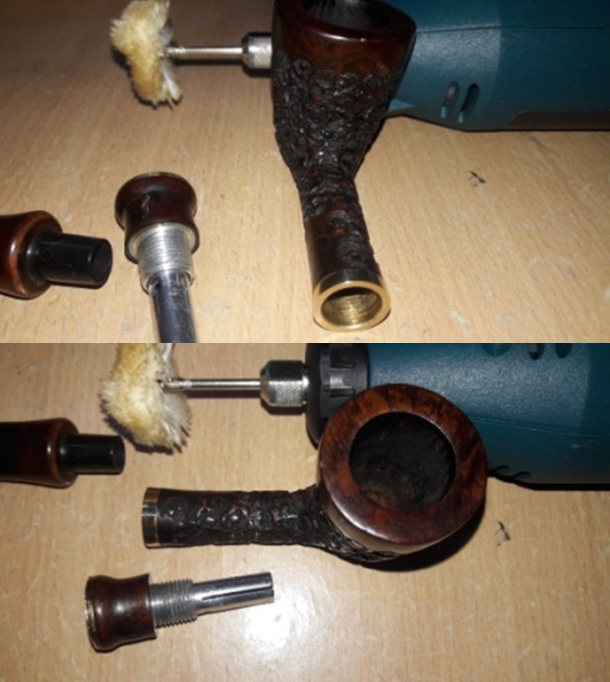
As if the hairline crack and the all-round fill at the shank end was not enough, the right side of the stummel is…. Actually, I am lost for words and the words that come to my mind are most definitely unprintable and I definitely have no desire for a rap on my knuckles from Steve. Have a look at the pictures and please decide for yourself a suitable description. There is not an inch on the right side of the stummel and shank that is free of any fills. Undaunted, I began the arduous journey of removing the old fills and preparing the stummel for a fresh fill. Using my newly acquired dental tools which were procured when Steve, Jeff, Abha and I had gone around the town shopping for tools for pipe resto work, I progressed to removing the fills. This is how the pipe appeared after the old fills were removed, a cheesecake pipe!!!! The fills were large and deep. The only saving grace was the crack near the bowl shank joint was only superficial and the fills on it would act as counter hole, what am I writing!! It’s a complete circular crack. The long and short of it is that the crack is stable and going nowhere damaging the structural integrity of the pipe. At this point in the restoration, I decided to address the issue of old odors in the chamber and shank by subjecting it to a cotton and alcohol bath. I wrapped some cotton around a folded pipe cleaner, keeping the tip of the pipe cleaner free of wrapped cotton as this would be inserted through the draught hole in to the chamber. This would form the wick for the shank. I tightly packed the chamber with cotton balls and filled it with 99% pure isopropyl alcohol using a syringe and set it aside. Immediately a few seconds later, the alcohol started oozing out of all the fills. The pipe appears to be shedding tears at its present condition, and so am I. I shared these pictures with my FB messenger group friends inquiring whether to discard the pipe or continue and ways to progress ahead with the restoration. The unanimous reply was to continue and rustication was the way ahead. Well I moved ahead with my work on the pipe but was not sure about the rustication part. Here is how the pipe appeared at this stage in restoration: By next day, the cotton and alcohol had drawn out the tars and oils from the chamber and max from the shank.I let the stummel fills dry out completely and after all the alcohol had evaporated, proceeded to fill the deep gouges with CA superglue and briar dust using the layering technique. I my part of the world, the moment briar dust came in to contact with the glue it becomes rock hard even after trying every trick that Dal had shared with me and Steve when we were together in India. Therefore, I adopted the layering technique where I put down a thin layer of superglue in to the fill and press briar dust over the glue. I continue with this till the fill rises above rest of the stummel surface. Believe you me readers, I spent an entire evening working well past midnight, to get all the gouges filled up. I set the stummel aside to cure for the next 24 hours. Still working on the stummel, I file the raised mounds of the patched fills with a flat needle file. The only drawback of the layering technique is that a number of air pockets are revealed after the filing. This time was no exception and I refilled the exposed air pockets only with superglue and set it aside to cure. Since there was still time before I hit the bed, I decided to address the stem. I sand the fill to match the surface of the stem. For a better blending, I further sand the entire stem with 220. I topped the slot on a piece of 220 grit sand paper to even it out. The repairs looked good at this stage. With the stummel fills nicely cured, it was time again to work on it. Using a flat head needle file, I sanded the fills and followed it with further sanding with a folded piece of 220 grit sand paper. Again the same sordid story, the fills revealed numerous air pockets through which the briar dust was seen. In my quest to make this restoration as perfect as possible, it refilled these air pockets with superglue and briar dust. This time around, I mixed a minuscule amount of briar dust with superglue and surprise! The mix remained pliable for just enough seconds in which I could apply it over the fills. Again I set the stummel aside to cure. This sure is trying my patience and stubbornness. I shall prevail, is what I have decided. Since the glue and briar dust mix had hardened immediately, but not hard enough to use a flat head needle file on it, I decided to address the issue of the numerous dents, dings and scratches on the rim top surface. To do this, I spread out a patch of 220 grit sand paper on my work table. Firmly holding the patch in my left hand and the stummel in my right, I gave a few firm rotations to the rim top over the sand paper patch. I continued the process, checking ever so frequently, till I was satisfied with the result. The rim no appears pristine and even. This was the only uneventful part in the entire restoration, LoL!!The fills on the stummel having sufficiently cured, I went ahead and filed the fills with a folded worn out piece of 150 grit sand paper and followed it up with sanding with a piece of 220 grit sand paper. My reasoning for not using a flat head needle file was that maybe the hard abrasiveness of the file is causing the fill to come out exposing the air pockets. But no, the air pockets still showed themselves in all their ugliness. I decided to press on with the process, even though Steve was still gently prodding me to take the rustication route. This was followed up with micromesh polishing cycle. I wet sanded the stummel going through with 1500 to 12000 grit pads. Intermittent wiping of the stummel with a moist cloth helps firstly, to remove the sanded dust and secondly, gives an idea of the progress being made and areas which needed more attention. The stummel has taken a beautiful sheen where there are no fills, but the right and front of the stummel and the shank tells a different story, it does not look presentable to put it mildly. While going through with the micromesh polishing cycle, I extend this care to the brass band at the shank end. The now nicely shining brass band adds a touch of class to the pipe and some bling too!!I shared the above pictures with Steve and asked for suggestions for the way ahead. He suggested applying some “Before and After” restoration balm as it may also help in further blending the fills. As he was suggesting this, there was a ping on my mobile and there were some pictures of beautifully rusticated pipes that Steve had done over the years. I just smiled and went ahead with applying the balm and see the results. The results were not encouraging at all to say the least. To be honest, the thought of going the rustication route to salvage this pipe had started taking roots in my head, mind you head and not the heart! Disappointed with the stummel appearance at this stage, I turned my attention back to the stem. I had sanded the stem, including the briar insert at the tenon end with a 220 grit paper. I picked it up from there and progressively sanded the entire stem with 600 and 800 grit sand paper. I expected a clean and neat looking stem to stare back at me, but what I saw made me cringe. The top of the button showed some beautiful white spots of air pockets (marked in circle)!! Why, why can’t this restoration progress without any hiccups? I decided to take a break and cleaned out my work table. I loaded my large W. O. Larsen bent brandy pipe with my favorite G. L. Pease Virginia blend, Telegraph Hill (thanks Steve for this pipe and the tobacco, though my gift to you is testing my endurance and determination!) and went out and sat down in the lawns closing my eyes. I thoroughly enjoyed my smoke and came back refreshed. I rubbed a little Extra Virgin Olive oil in to the stem surface to hydrate it and set it aside to be absorbed in to the vulcanite.I had undertaken restoration of two of the three parts of this pipe, the stem and the stummel, and this had proved to be tedious and frustrating. I left them aside in various stages of progress and now turned my attention to the third and last part, the aluminum shank extension. The only issue that I had seen in my initial inspection was that of the chip and bubble in the surface of the briar coating over the aluminum insert. I picked out the bubble and lo, behold, the small chip instantly transformed itself in to larger than life sized!!!! The thickness of the coat was very thin, a few microns, maybe, and instantly peeled of like wall paint. I immediately realized that I am in for a long haul on this one too. Here is what happened and for comprehension, reproducing the picture taken during the initial inspection.It was interesting to note that the aluminum shank extension had a nice design, indicated with a yellow arrow, below the briar finish coat and the coat was pressed on to it. That the coat is heated and wrapped around is evident from the fact that this design can be seen on the intact coat surface. I decided to address the issue of chipped coating by filling it with a mixture of briar dust and superglue. I set the shank extension aside to cure after applying the mix. I missed out on taking pictures of the fill.While fill on the shank extension was curing, I decided to complete the stem repairs. I completely gouged out the area with air pocket for a fresh fill. With a black marker I darkened the fill and thereafter spot filled it with a mix of charcoal powder and superglue, superglue being more than charcoal and set it aside to cure. The mix hardened immediately and I continued with sanding and shaping the button. The fills and stem reconstruction came out good and I was satisfied with the way the stem has now turned out. I followed it up with sanding the entire stem with a folded piece of 220, 400 and 600 grit sandpaper in that order. I finished the stem reconstruction with a polishing with micromesh pads, wet sanding with 1500 to 12000 grit pads. I applied a small quantity of Extra Virgin Olive oil to the stem and set it aside. The fill on the shank extension had cured and I progressed with filing it with a flat head needle file followed with a sanding with a piece of 220 grit sand paper. I further matched the fill with the rest of the surface by sanding the entire wood coating on the shank extension with folded pieces of 400 and 600 grit sand papers. In the pictures below, one may think that there are air pockets in the fill; however, the fill is solid without any air pockets. I also evened out the edges over the aluminum extension in preparation for fixing the two fabricated brass rings, described above. Staying with the shank extension, I cleaned out the aluminum tube protrusion and the threading with a brass wire brush. I further polished it with a 0000 grade steel wool. The aluminum tube is now clean and shining. I finished the cleaning regime of the tube and threads in the shank extension by polishing it with a multipurpose liquid polish.Now it was time to affix the two fabricated brass rings. I applied a little superglue over the exposed aluminum protrusion of the shank extension towards the stem end and fixed the rings over it. I polished the shank extension, the aluminum tube and the two brass rings included, with micromesh pads, wet sanding with 1500 to 12000 grit pads. The shank extension now has a nice shine and the aluminum tube looks like new. The fill does show through in all its awfulness, but this will blend in nicely when I stain and subsequently polish it further. I applied a little “Before and After” restoration balm and buff it with a microfiber cloth after 20 minutes.I cleaned out the wood gasket which makes the fit of the tenon in to the shank extension airtight with cotton buds dipped in alcohol. I applied a little Extra Virgin Olive oil to this gasket, inside and out, to hydrate the wood and set it aside to be absorbed in the wood. When I had initially dismantled the pipe, this gasket came out attached to the tenon. However, close observation of the outer surface of the gasket points to the fact that the gasket was stuck inside the shank extension towards the stem end. I did not sand the outer surface to a smooth finish as I wanted to keep the surface rough when I applied superglue and reaffixed it inside the shank extension.Now that I had completed the restoration and reconstruction of the shank extension and stem respectively, I turned my attention back to the stummel with all its imperfections. Even at this stage, while on Face time with Steve he suggested that I rusticate the stummel. However, when he saw the reluctance, he suggested that I should try to blend the fills, which were standing out like sore thumbs, with a darkest stain available to me. I decided to stain the stummel and the rim top surface with black stain first and later with a dark brown stain in the hope that the contrast would help in a nice blend. I heated the stummel surface with my heat gun to open up the pores on the stummel so that the stain is well set. I mixed black stain powder with isopropyl alcohol and liberally applied it over the heated surface, flaming it with the flame of a lighter as I went ahead to different self designated zones of the surface. This helps in the setting of the stain in the grain of the briar. Similarly, I applied the black stain over the wood of the shank extension. I set both the stummel and shank extension aside for the stain to dry and get completely absorbed in the surface. The next evening, approximately 18 hours later, as Dal describes, I began to unwrap the stain in the hope to see beautiful grains. I mount a felt cloth buffing wheel (for the first time I admit, as I had only recently purchased these) on my hand held rotary tool. Setting the tool at its slowest speed as Dal had explained to me that a felt cloth wheel generates tremendous heat, I began to peel of the stain from the stummel surface first. But, hell there was no unwrapping at all!!! Not an iota of stain was buffed out. Therefore, I decided to increase the speed of the rotary tool a notch higher and still no result. I further upped the ante and took the speed regulator to half of the full power. Now the stain was peeled out gradually. This was followed with wiping the stummel with a cotton swab and alcohol to lighten the stain a little as it was too dark for my liking and this also helps in cleaning the surface of all the residual stain. But as soon as I reached to the right side of the stummel, I started seeing the dreaded patches where the fills got removed. Same for the shank extension!!! Here are the pictures as I saw the after effects of this buffing. Following are my observation on the stummel at this stage:-
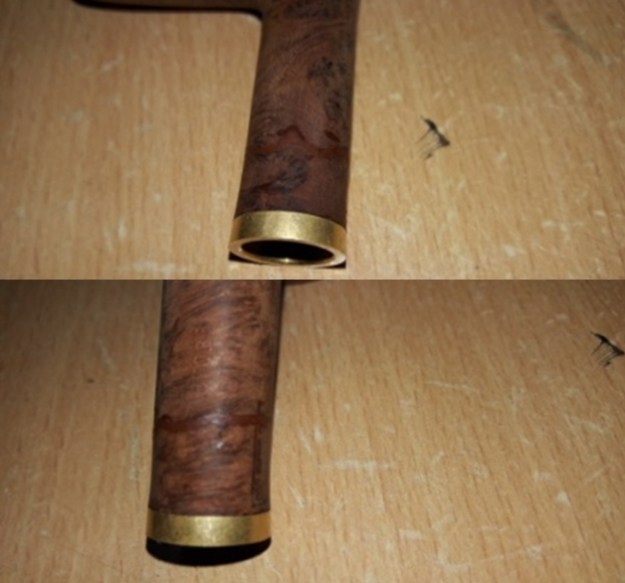
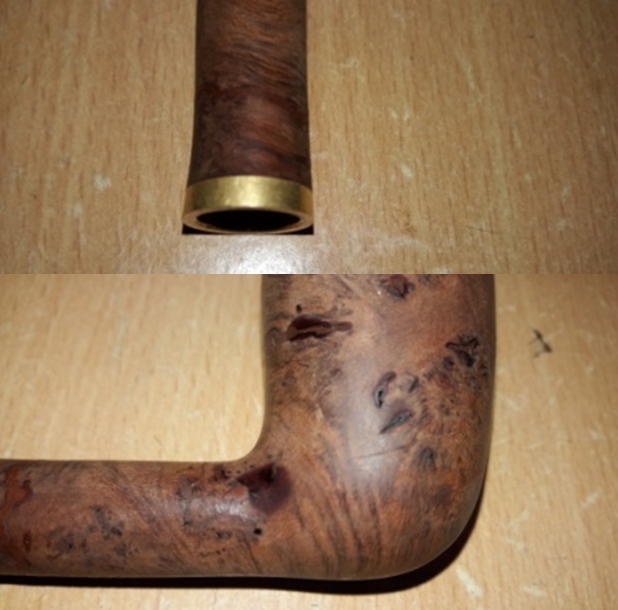
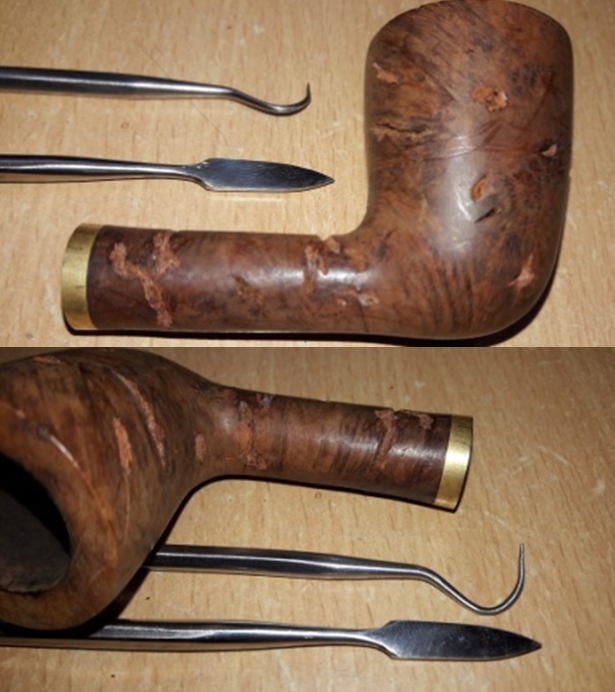
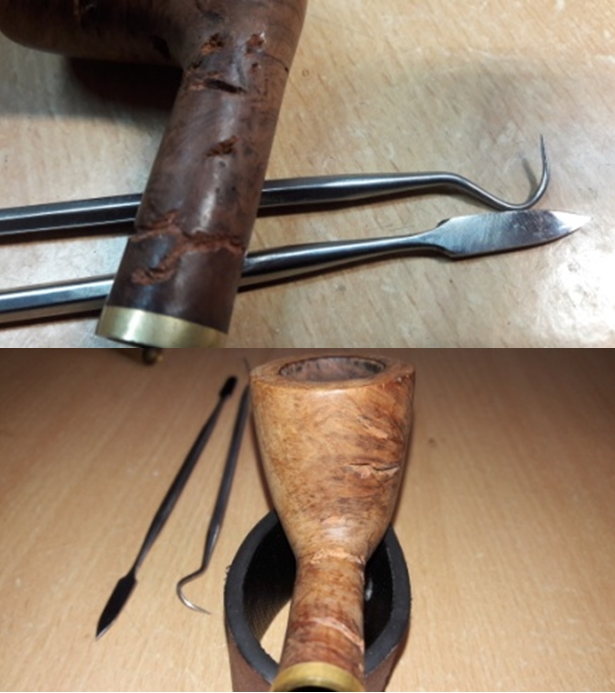
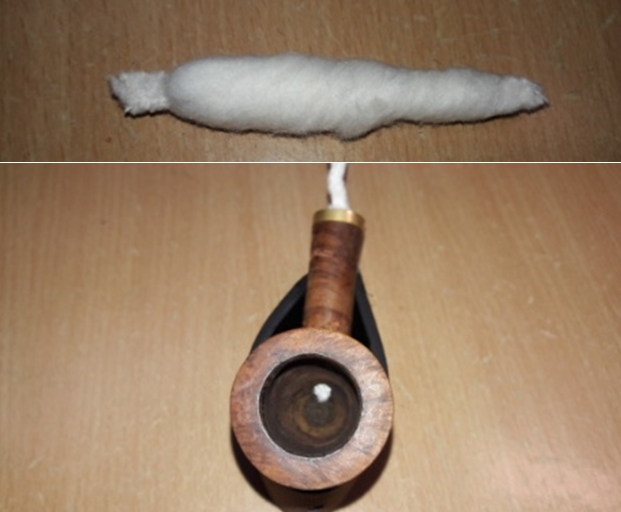
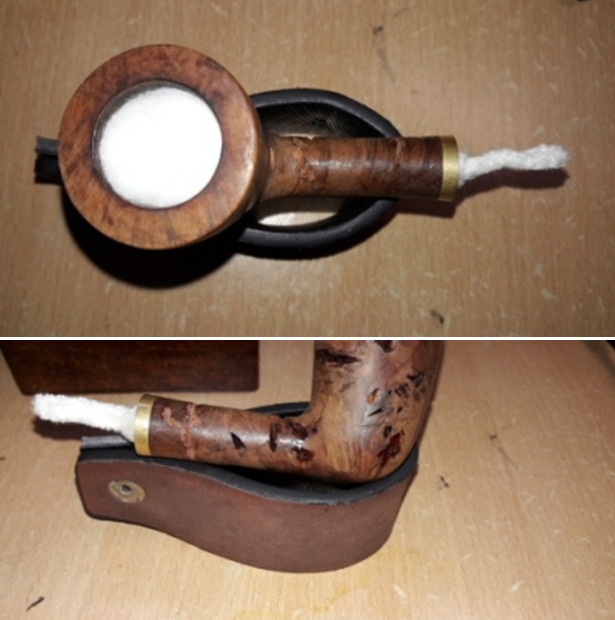
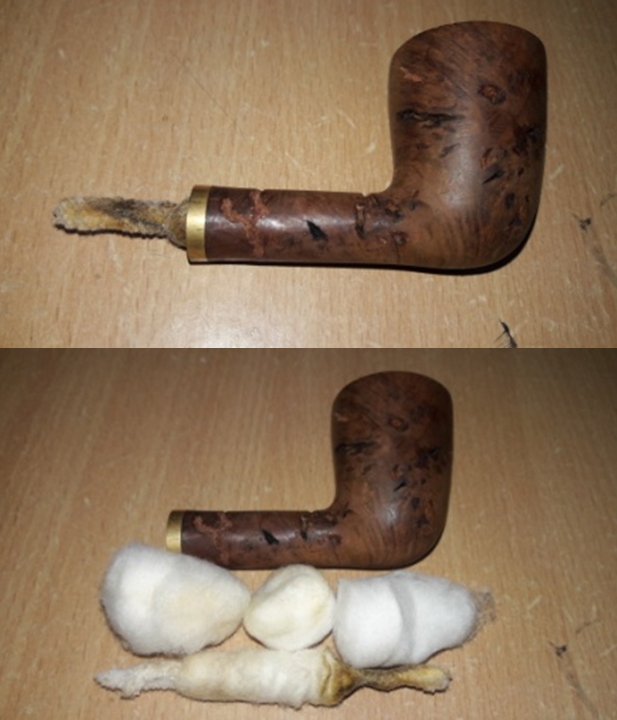
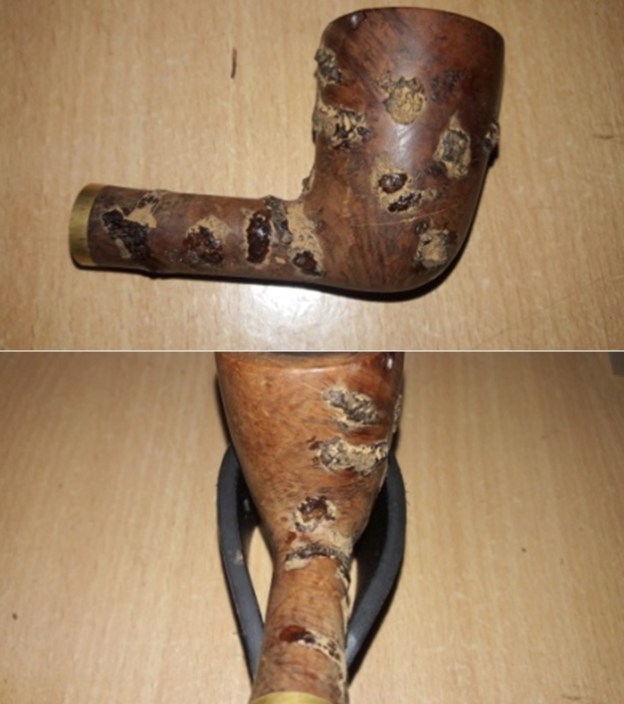
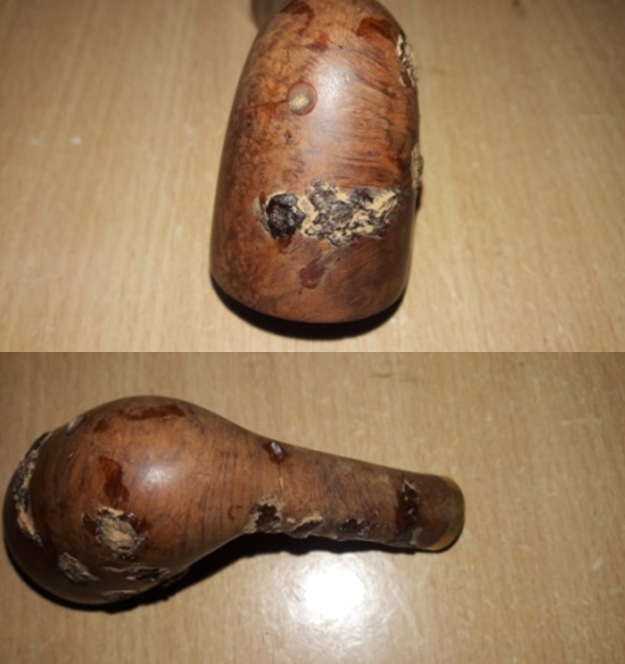
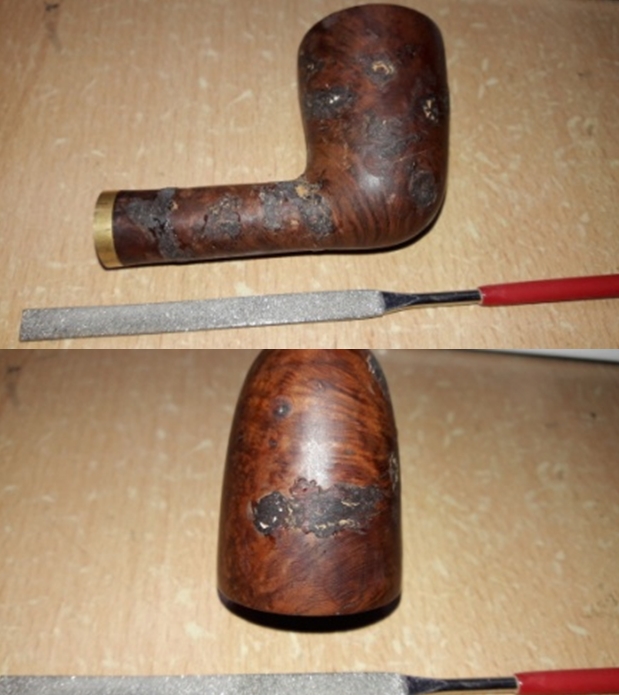
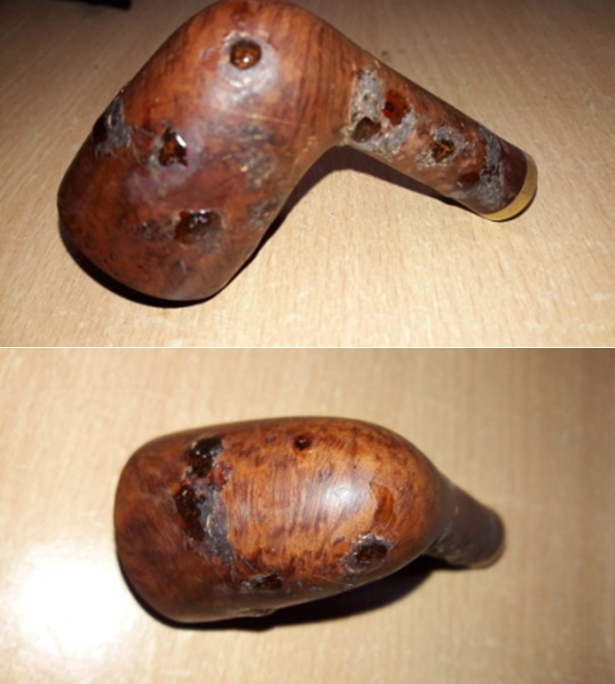
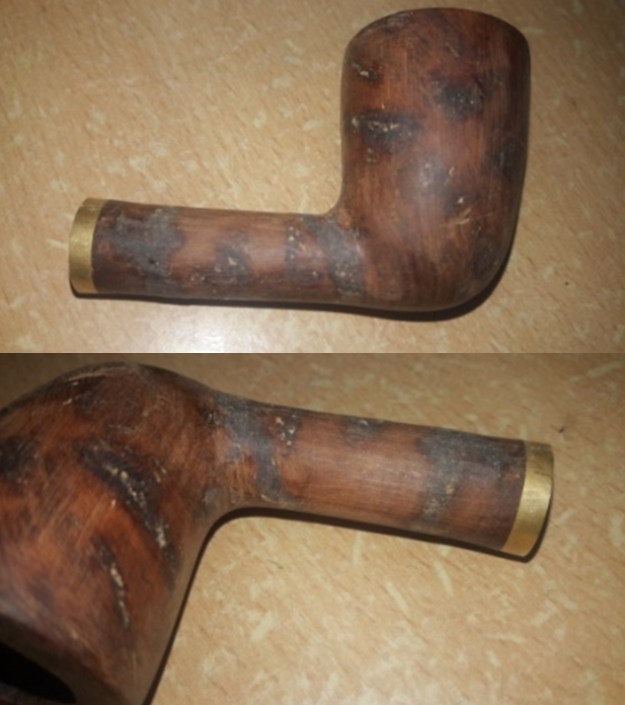
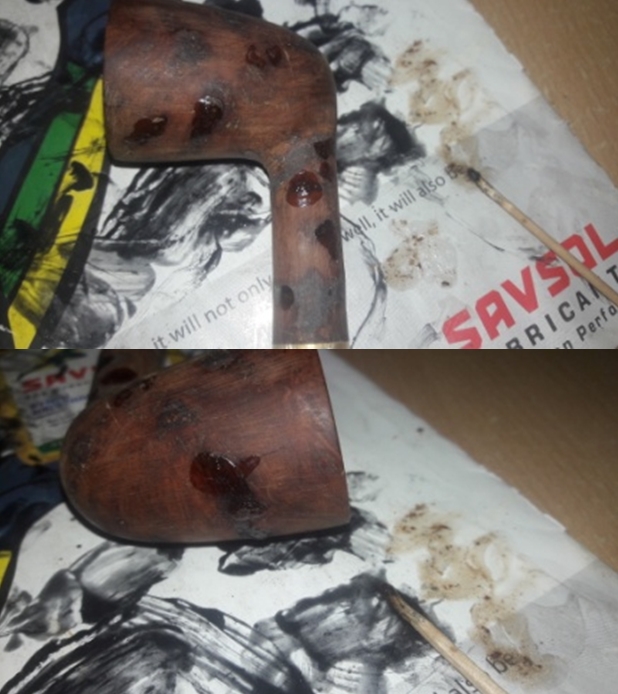
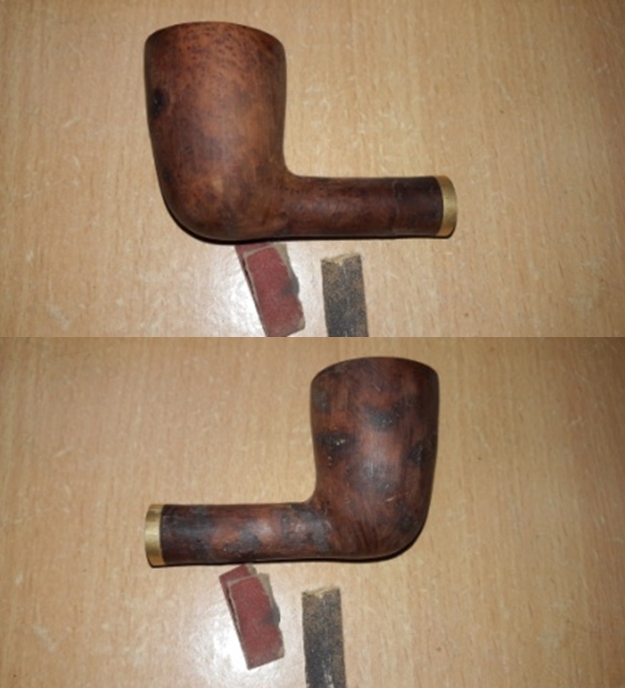
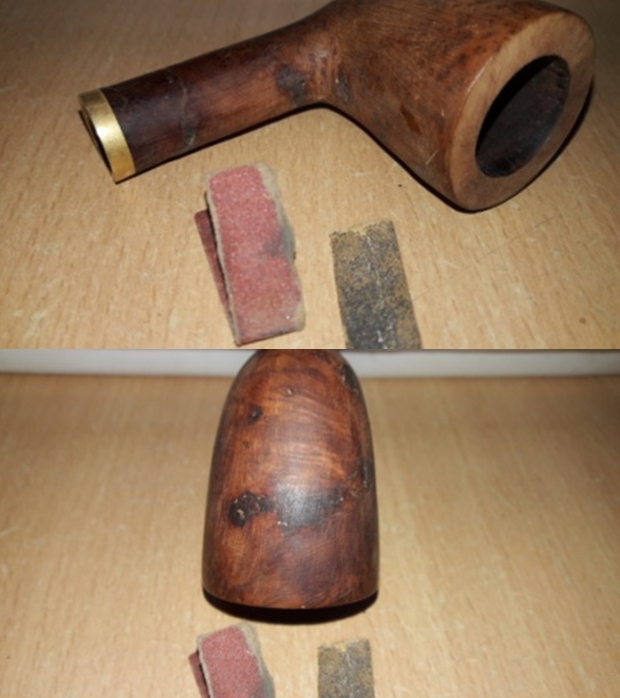
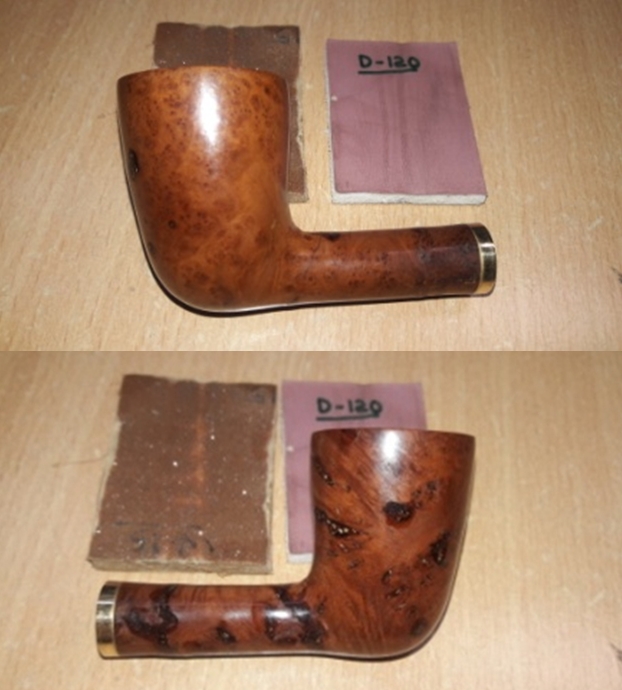
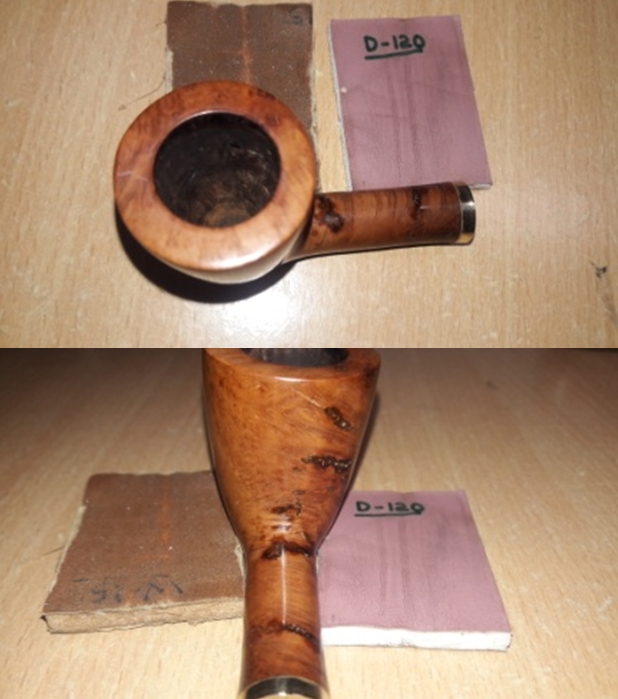
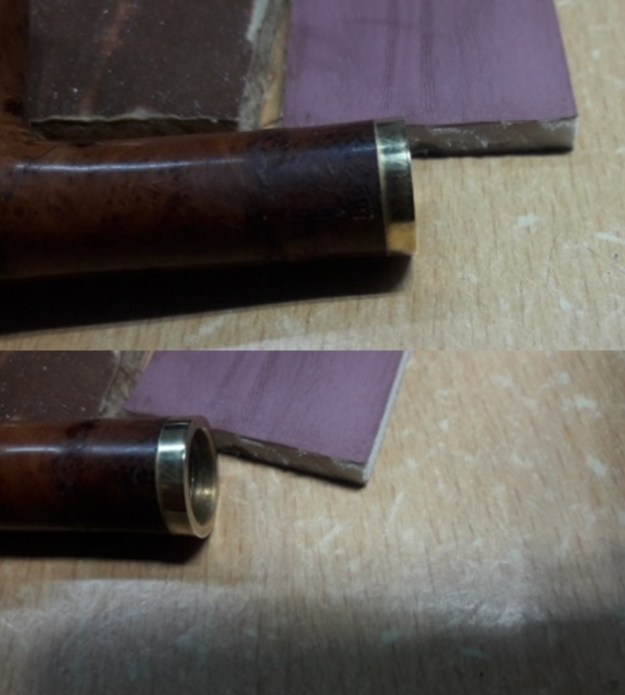
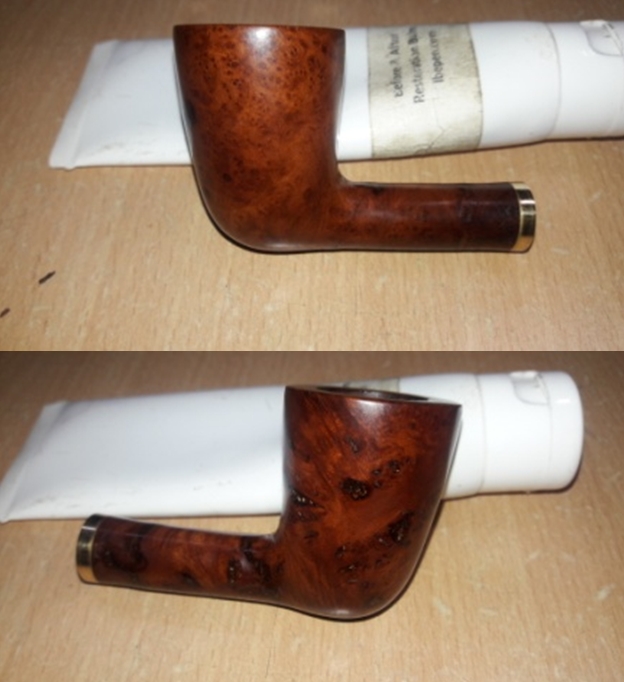
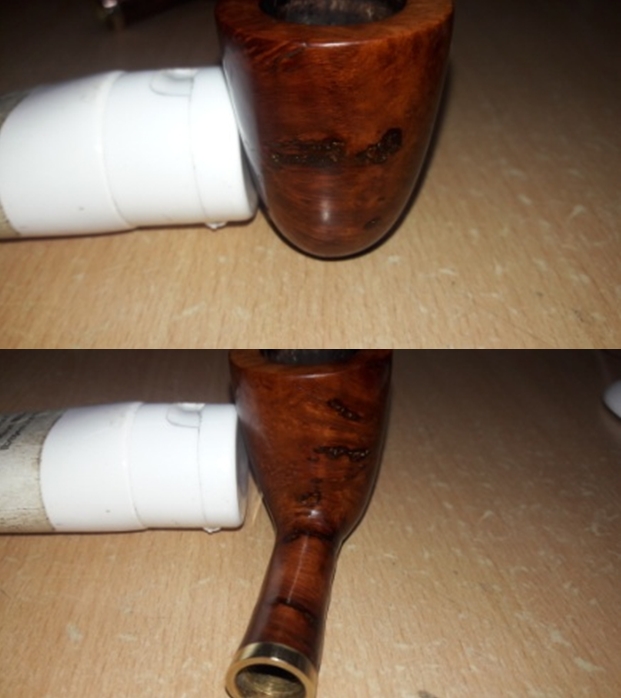
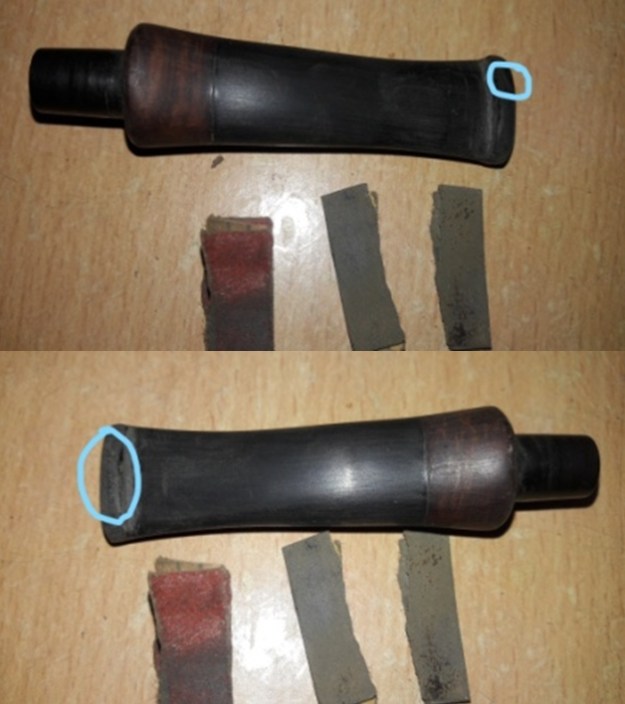
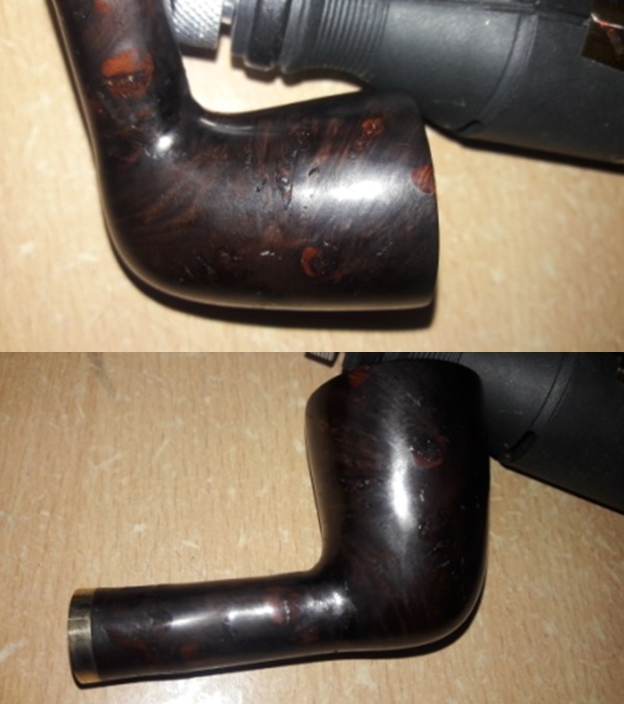
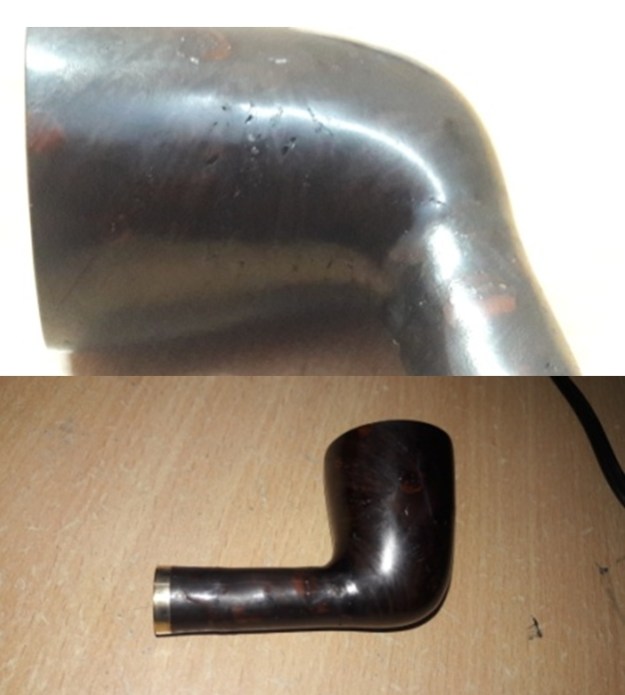
(a) The stain had not set in over certain fills. These stood out like red blisters and are gory to look at.

(b) The fills had come out at certain spots. This was due to my mistake. I had either heated thestummel too much prior to staining or could be that I erred in my handling of the newly acquired felt cloth buffing wheel. Unknowingly, I got the stummel overheated, ditto for the shank extension.

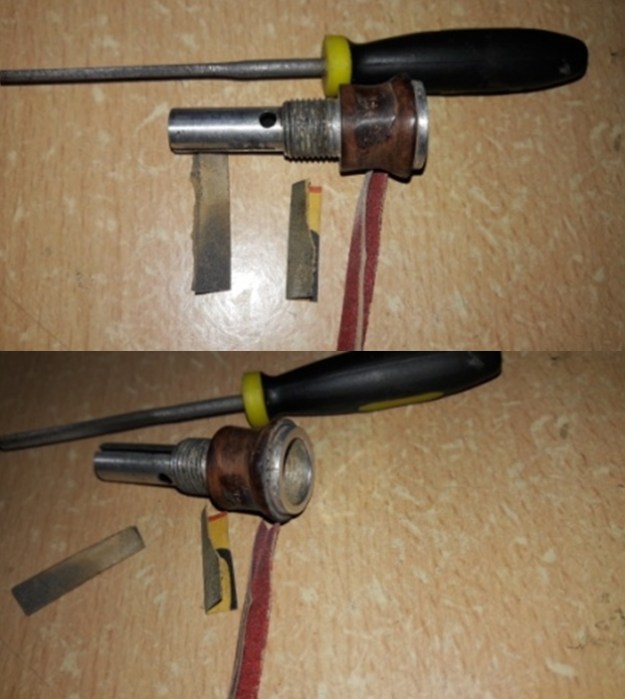
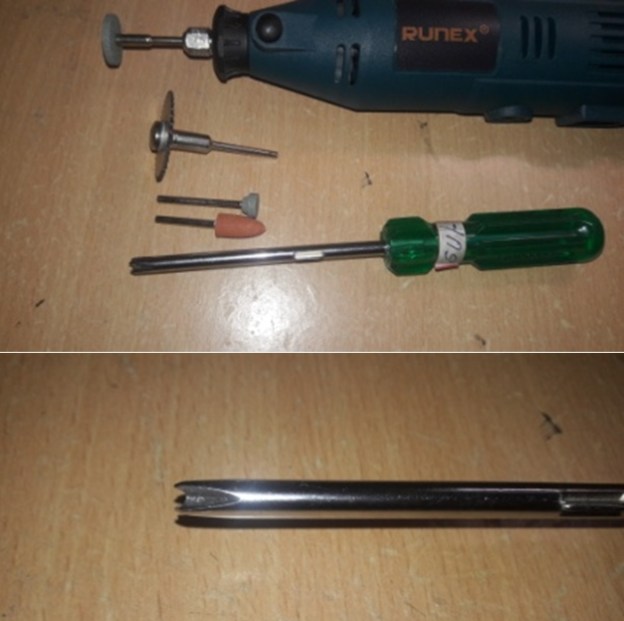
It was extremely frustrating to say the least. Now I had option of either refilling the spots or “RUSTICATING” the stummel and the shank. To the readers, I would like to inform that during the process of filling and subsequent sanding of the stummel there were numerous, or countless I say, times when I had to spot fill small pockets and repeat the sanding of these small spots. I really had no desire to go that route as it would have literally meant starting from square one!! And it has already been nearly 25 days that I have been working on this pipe (and simultaneously on Dal’s pipe too with its own share of challenges!). I decided to go the path pointed by my mentor and rusticate the stummel. I messaged Steve about this decision and his first response was a terse “Good”!!! Before I could forward a message lamenting further about not having suitable tools, he sent me a link on rebornpipes.com about how to make rustication tool from a Philips screwdriver. From the speed and swiftness with which he forwarded the link, it appeared as if he had anticipated this. Here is the link and is a must read for all new exponents of this art. https://rebornpipes.com/2012/11/03/making-a-rustication-tool-out-of-a-phillips-screwdriver/

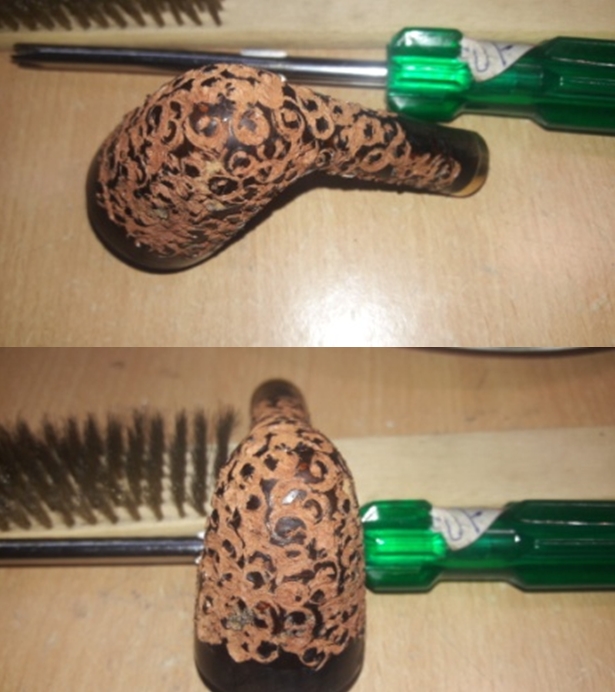
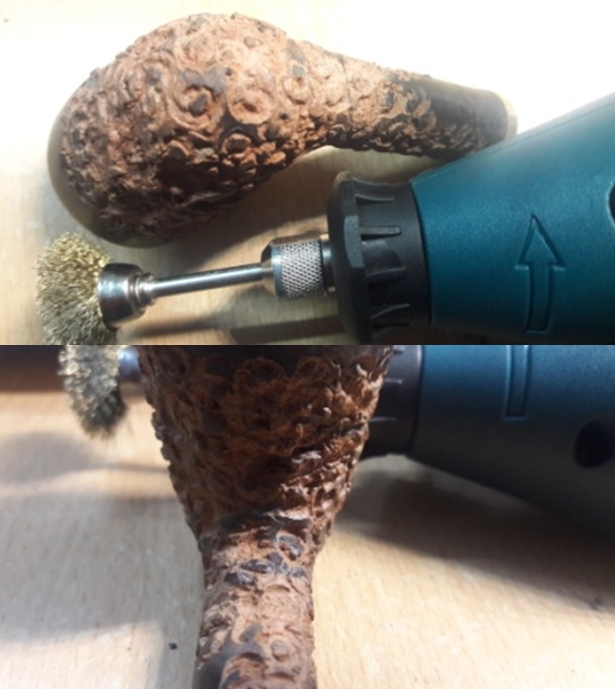
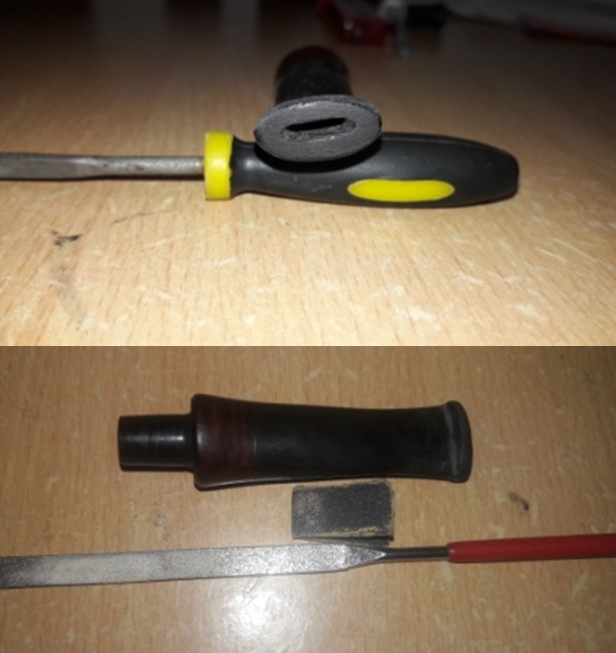
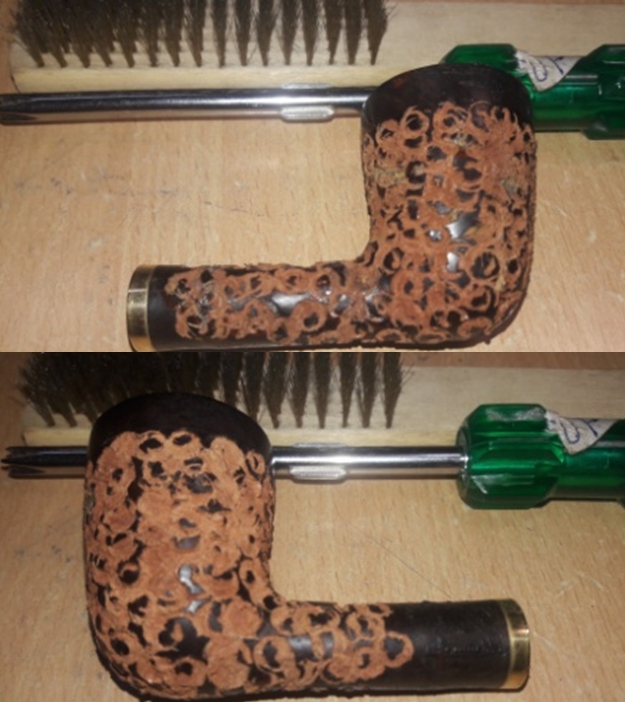
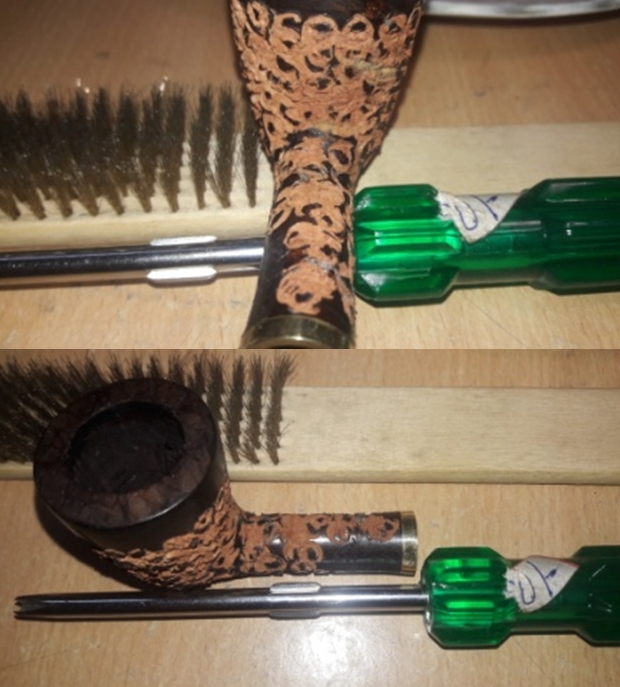
The article is worded very simple and articulate enough for anyone to follow and make a rustication tool for oneself.  Lucky for me, I had ordered a DIY rotary tool kit with complete accessories and this kit included all the tools that were essential to make myself a rustication tool. Shown below are a few pictures of the tools used and the completed rustication tool. With this, I geared myself for the first ever rustication of a pipe amidst a lot of trepidation. It was after a lot of effort that I had laid my hands on a pipe from this maker with this system, was meant to be a gift for someone I admire and as such did not want to ruin it. However, if you do not take a step further, you never progress and never learn and so I began the process of rusticating the bowl and shank.
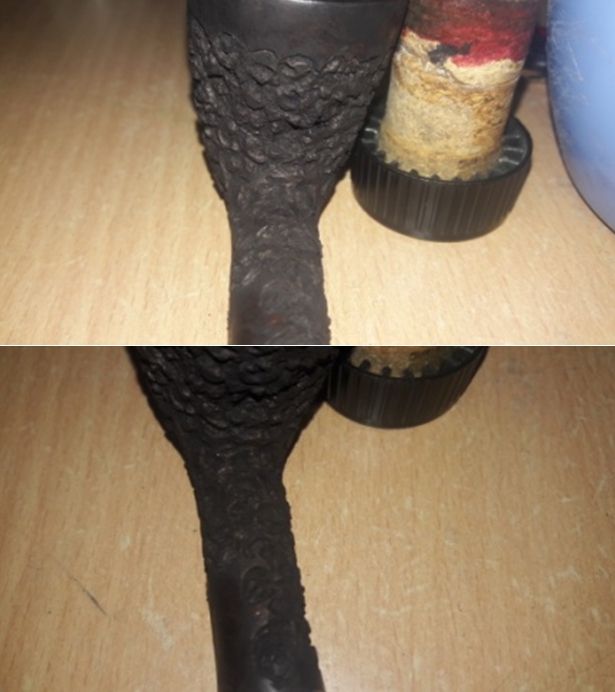
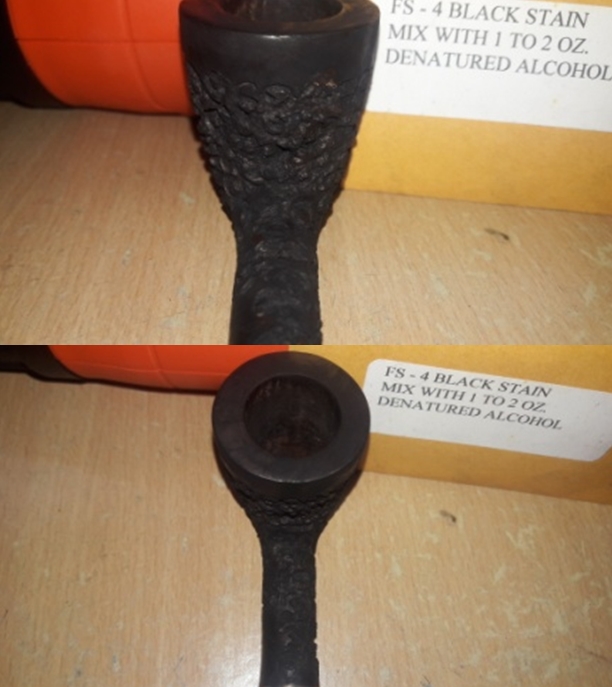
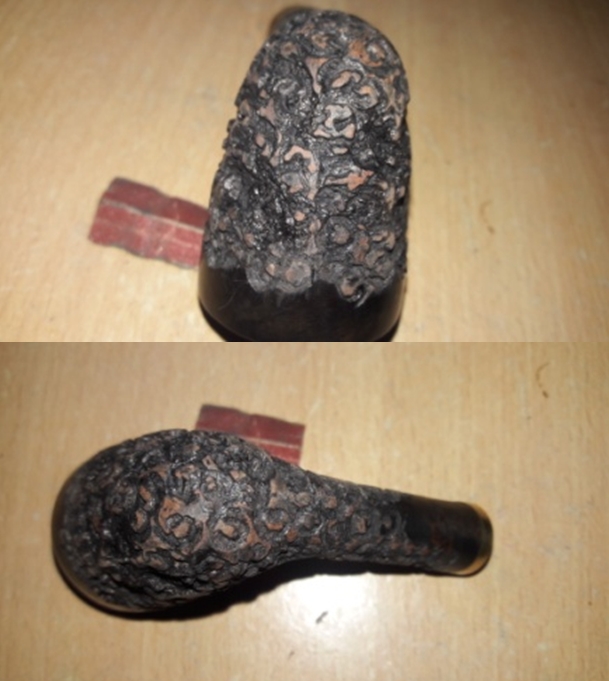
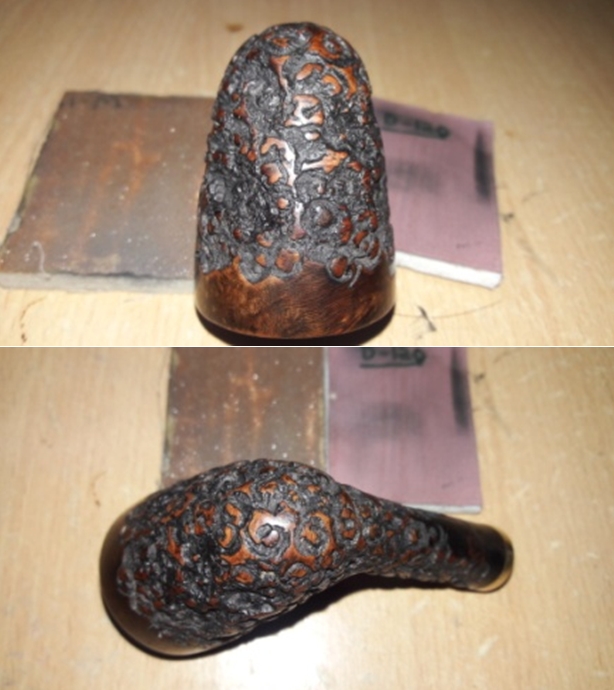
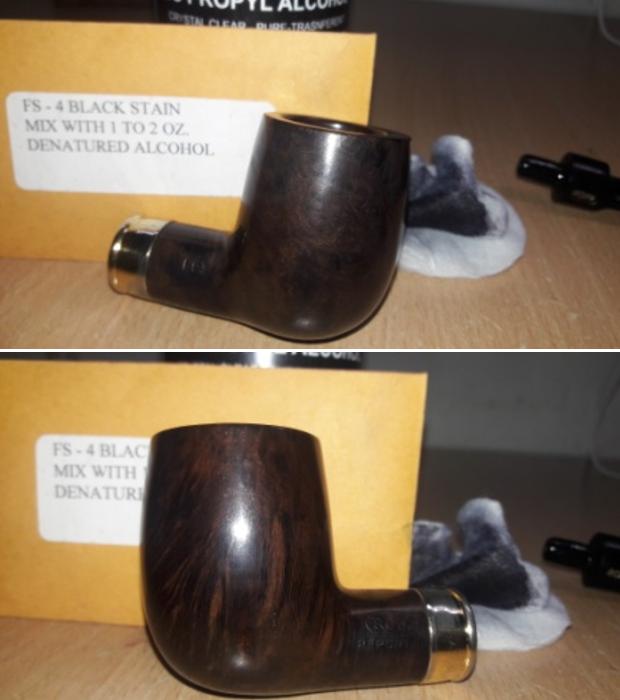
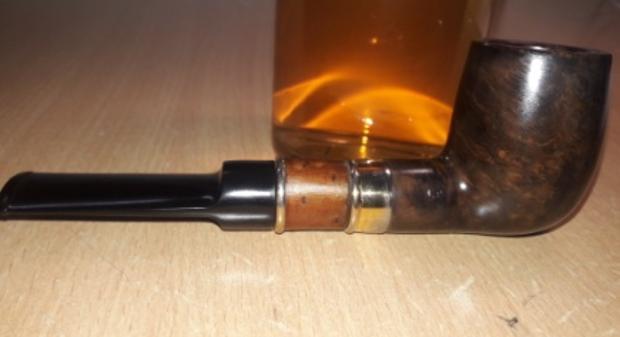
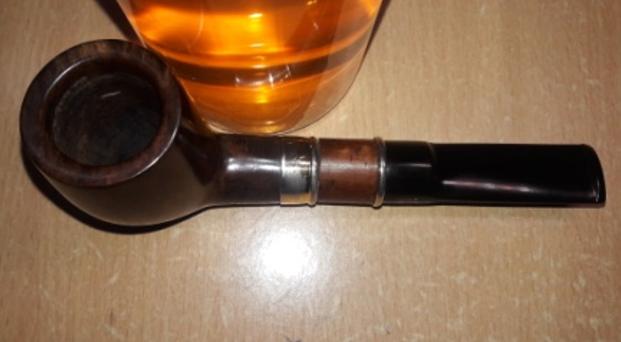
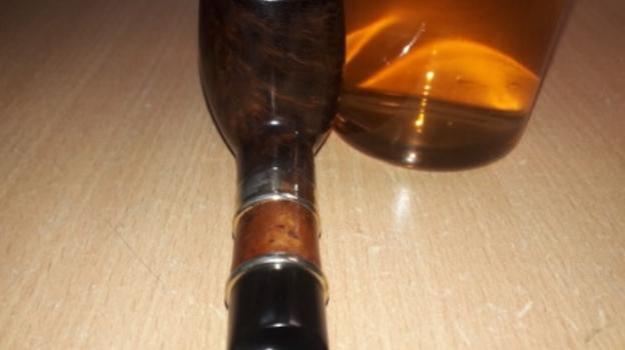
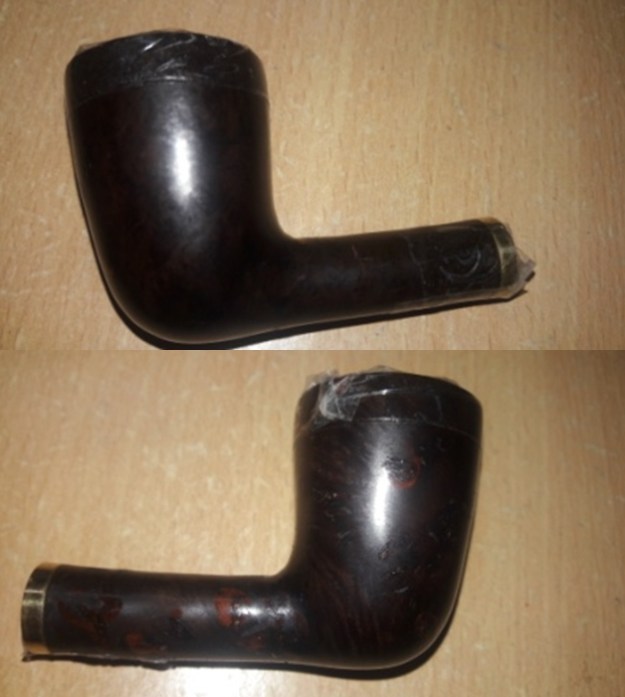
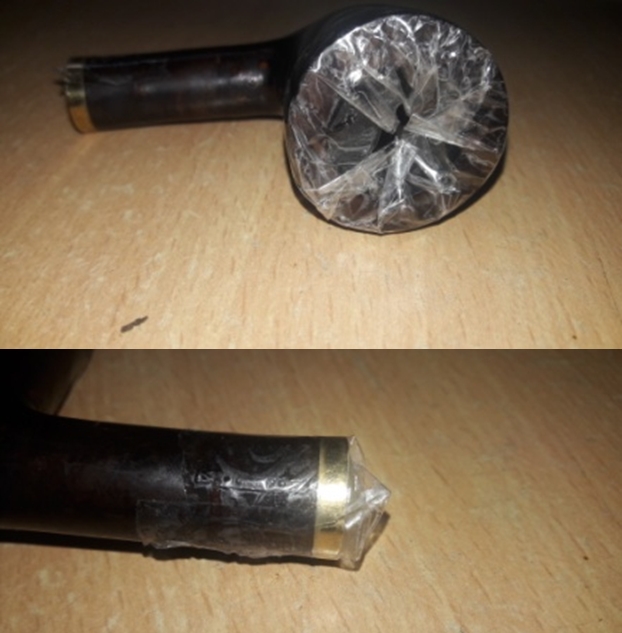
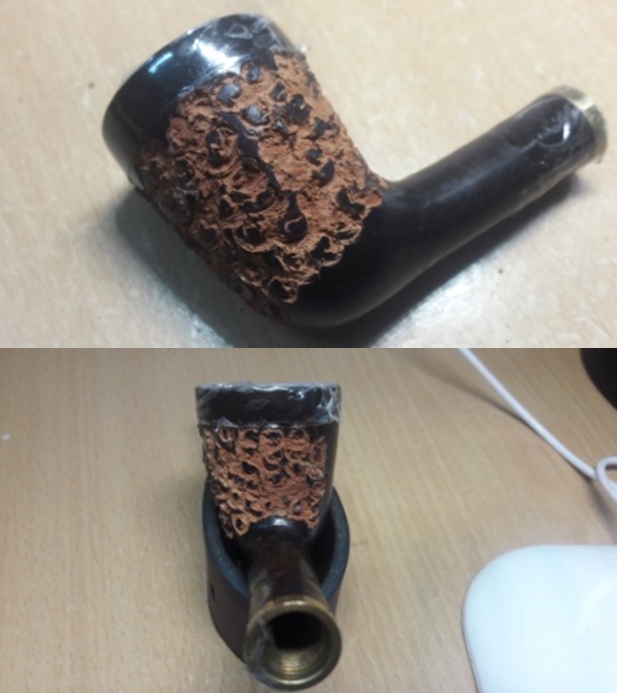
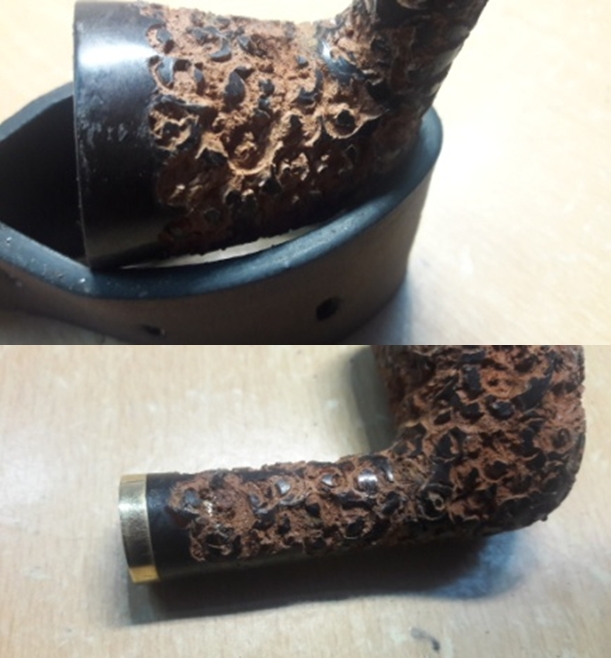
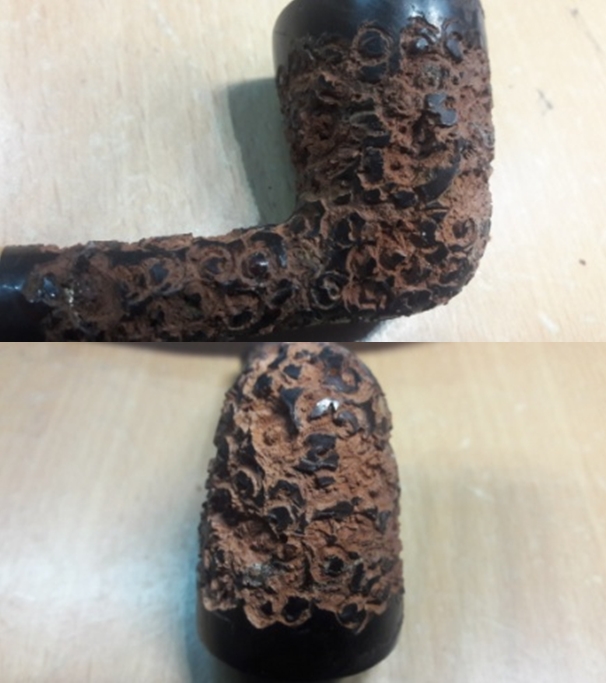
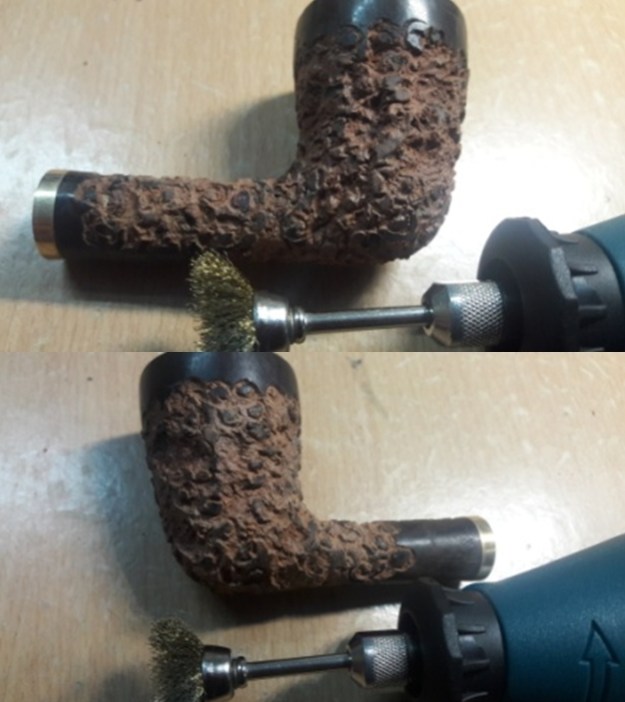
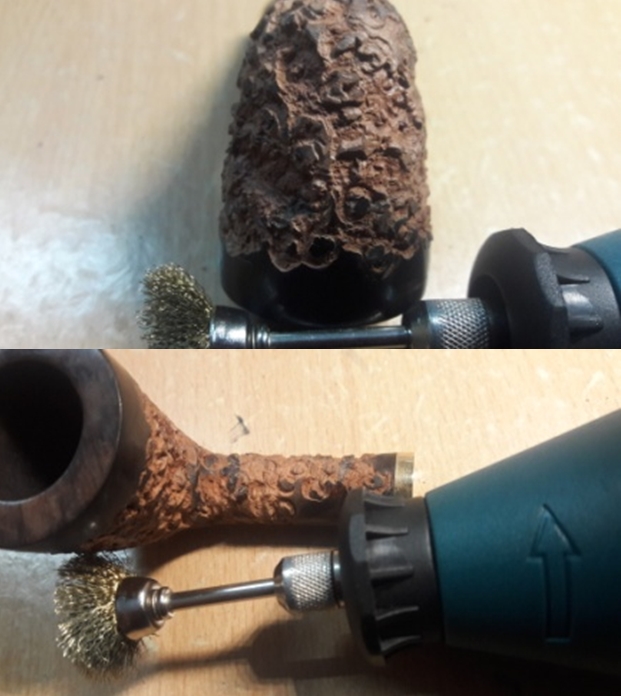
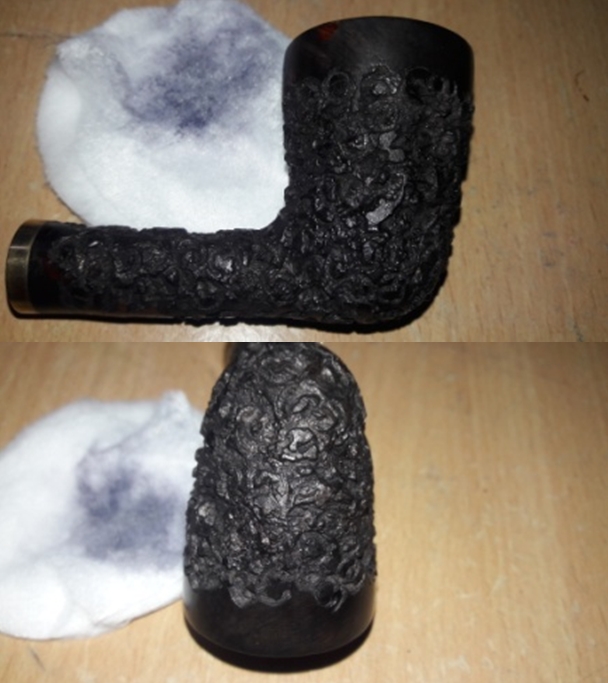
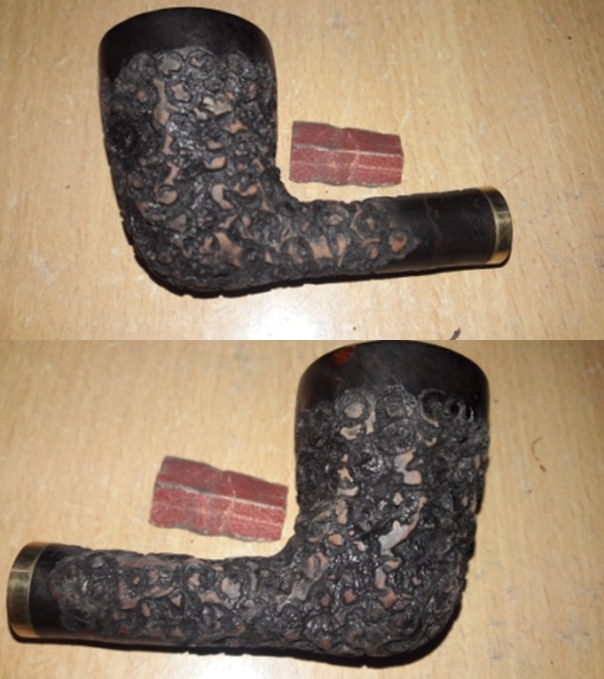
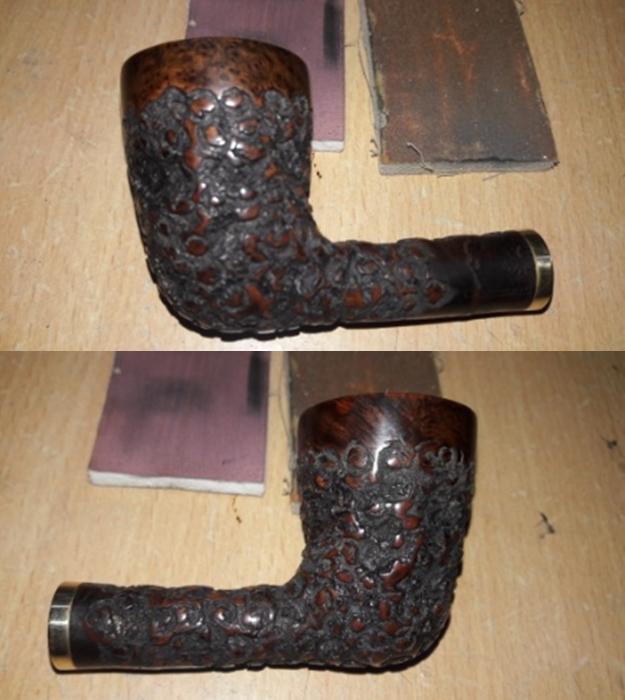
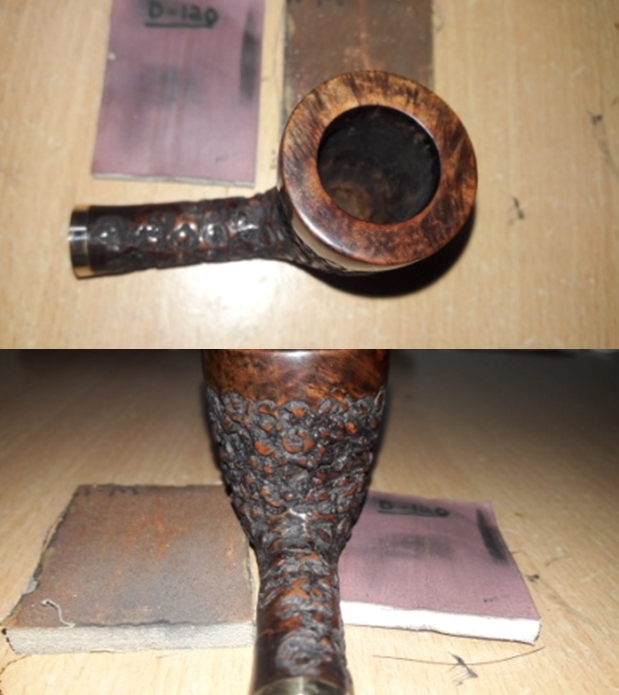
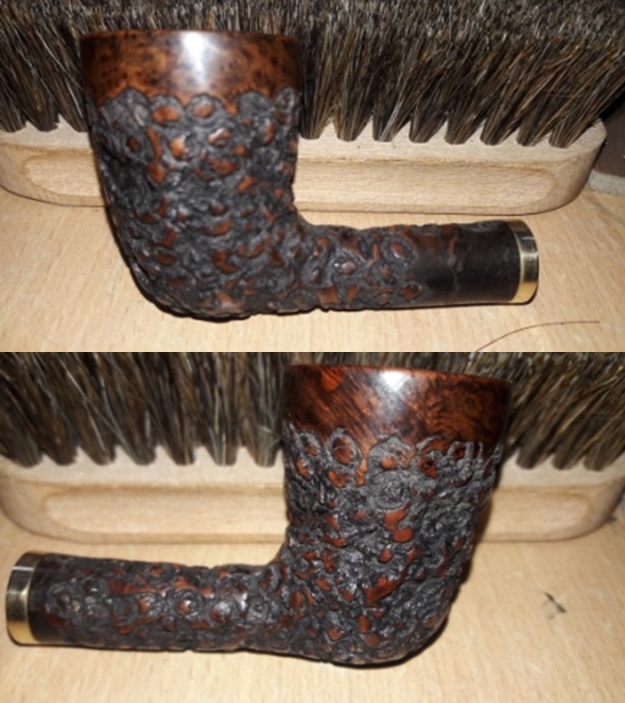
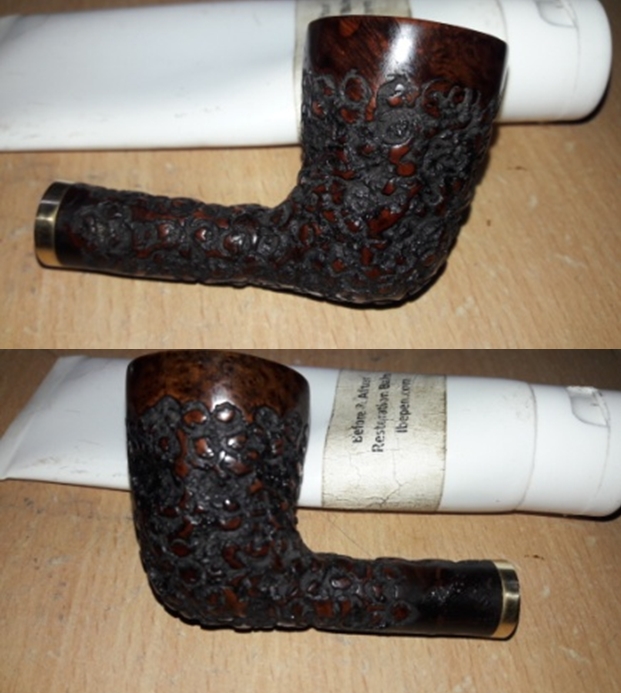
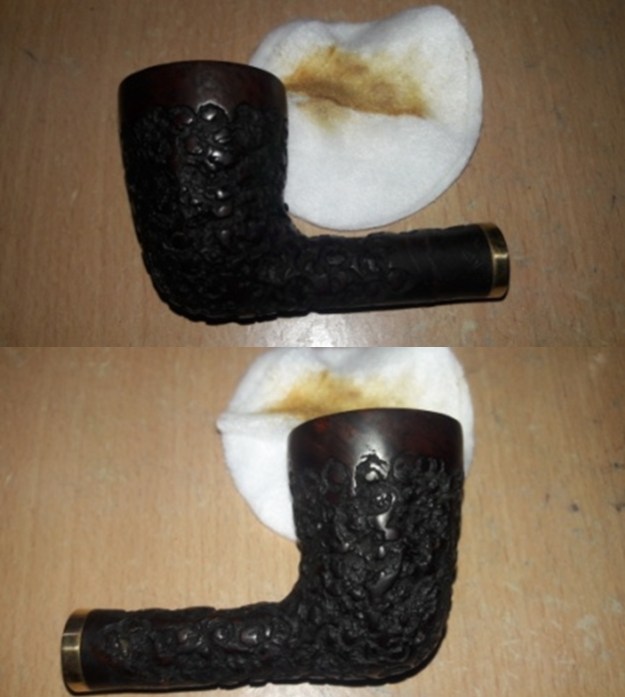
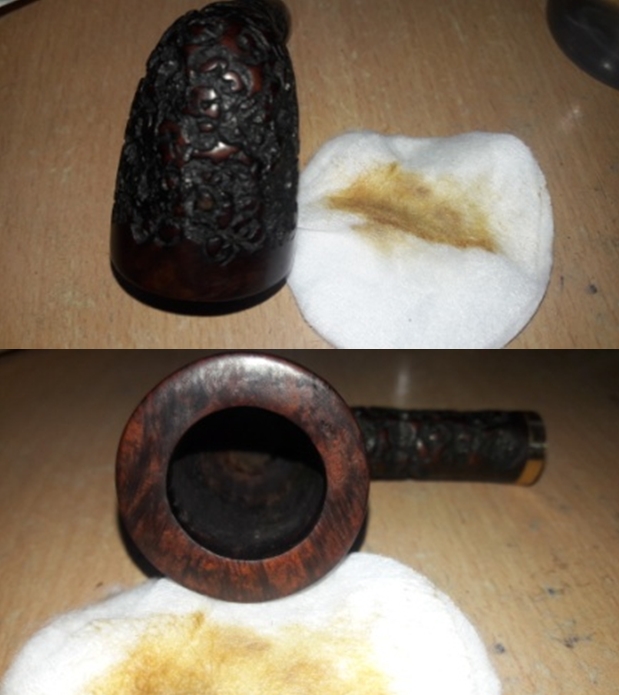
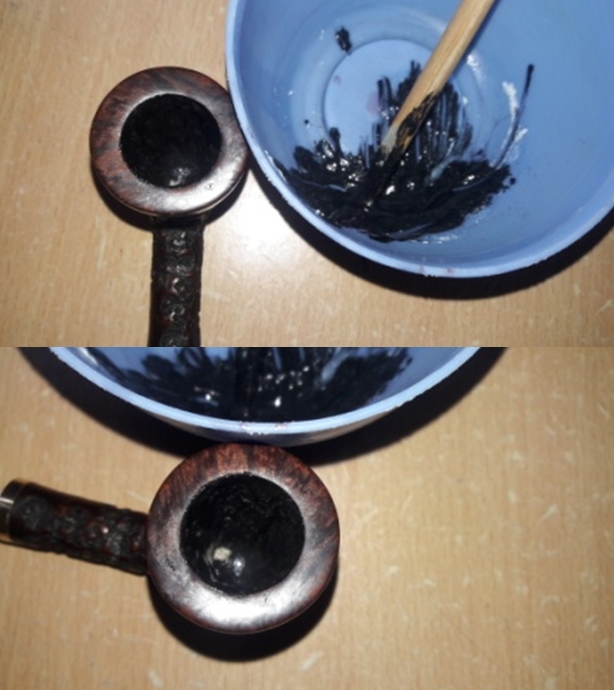
I first wiped the stummel with a cotton pad and isopropyl alcohol to clean the surface and lighten the dark stain. The rim and about half an inch below the rim was in decent shape and I decided to maintain a smooth ring atop the rustication. Since I did not have a masking tape, I used a transparent tape to demarcate the area that I wanted to keep smooth that is the rim top and about half an inch below the rim outer edge. Similarly, I covered whatever little that remained of the stamping. This is a very essential step as I realized during rusticating that it is very easy to lose track and transgress over the areas and stampings which you wish to preserve. To rusticate, I firmly held the stummel in my left hand and with my right hand and began gouging out the briar. The technique is to firmly press the pointed four prongs of the modified Philips screwdriver in to the surface, rotate and pull out the removed chunk of briar. During the entire process, I kept sharing pictures of the progress that I was making, with Steve. As Steve suggested, I was pretty aggressive in my rustications. Once I had completed the rustications over the intended areas, I removed the transparent tape and cleaned the entire stummel with a soft bristled brass brush to remove all the debris from the rusticated surface. Here is how the stummel appeared after the cleaning process. I am happy with the way the stummel appears at this stage. I wanted to smooth out the jagged edges left behind by the screwdriver. I decided to scrub the entire stummel with a hardwired bristled circular brush mounted on my rotary tool. I hoped that this would thoroughly clean the rustications, smooth out the rough edges, and remove the chipped surface which could not be removed by the soft wired brass brush while adding a new dimension to the rusticated surface. Well, honestly I am not sure about the last aspect that I had hoped to achieve, but the other objectives we successfully achieved. I cleaned the smooth and rusticated surface with a cotton swab dipped in isopropyl alcohol to remove the sticky mark left behind by the tape and clean the rusticated surface in preparation for application of black stain. Once satisfied with the cleaning, I heated the stummel with my heat gun and applied a coat of black stain as described above. I set the stummel aside to set the stain in the surface. Once the stain had dried, I did observe a few spots that missed the application of the stain. However, I am not overly concerned with this, as these spots would eventually get stained when I apply the second coat of dark brown. Once the stain had set in well, I again warmed the stummel with my heat gun. This helps the stain to be absorbed and set further in to the briar. This heating also helps in reducing/preventing the stain from bleeding onto one’s hands while smoking or that is what I have read. I mounted a felt cloth buffing wheel on my rotary tool and gently buffed the entire stummel surface. Not wanting to repeat my previous mistake, I kept the speed of the rotary tool at its minimum. It took some time before I was finally able to remove the crust formed by the black stain. I wiped the stummel with a cotton swab and alcohol to remove any excess stain and followed it up sanding the raised rustication with a folded piece of 220 grit sand paper. This was followed up by carefully dry sanding of the entire stummel, especially the raised rustications with 1500 to 12000 grit micromesh pads. This not only lightened and highlighted the rustications, but would also provide a smooth surface for the next coat of dark brown stain. I was contemplating either a cherry red or oxblood stain apart from the dark brown as suggested by Steve, for the next coat. Also the present look of the stummel was equally beautiful. So there I was, at cross roads for deciding stain or no stain for the second coat. I decided to go by Steve’s suggestion as he is more experienced and as also this was to be his pipe. Here is how the pipe appeared before I applied the second coat of dark brown stain. I buffed the stummel with a horse hair shoe brush to remove any sanding dust resulting from the micromesh sanding. I applied a small quantity of “Before and After” restoration balm to rehydrate and rejuvenate the briar and set it aside for some time. Thereafter, I buffed and cleaned the stummel with a microfiber cloth. I applied a second coat of dark brown stain over the stummel and the shank extension, going through the same method as described above and set them aside for the stain to set. However, in my exuberance to cross the finish line, which by the way was now within sight, I completely missed out on taking pictures of this stage. Once the stain was set, I wiped down the stummel with a cotton swab and alcohol to remove any excess stain and lighten it from the raised rustications. Mounting a felt cloth buffing wheel on my rotary tool, I went about removing the crust formed by the stain over the raised rustication. The second coat of brown stain has added another layer of texture to the appearance of the stummel and aluminum shank extension. I like the way the stummel now appears to the eye. Now, the fear that besieged me was the stain running down Steve’s hand as he smoked the pipe and I shared this anxiety with him. He suggested that I should set the stain by again heating the stummel surface with the heat gun and this is exactly what I did. Next, I mounted a cotton cloth buffing wheel and setting the speed to ¼ of the full power, I applied a coat of carnauba wax over the stummel, aluminum shank extension and the stem. I worked the complete pipe to a beautiful and lustrous shine.I followed this wax polish by a mounting a clean cotton buffing wheel on the rotary tool and cleaned the stummel surface to remove any excess wax that had lodged itself in the rustications. The last issue that remains unaddressed is the thin chamber wall on the right side of the stummel. I had an option of either applying JB Weld or using plain bowl coating. I decided to go with the latter as, in my appreciation, this should suffice and also, in case my appreciation goes awry, I know Steve would apply JB Weld to make it functional again. Had this pipe been for anyone else, I would have applied JB Weld followed by a layer of bowl coat, just to be sure.Before re-assembling the pipe, I once again thoroughly cleaned the internals of the shank, aluminum shank extension and the stem airway with pipe cleaners and ear buds dipped in isopropyl alcohol. I also fixed the wooden gasket with superglue in to the stem end of the shank extension. I checked the draw to make sure that the airways in the shank, extension and stem are open. The draw is nice, smooth and open and somewhat similar to the draw experienced on a Peterson’s P-lip stem. I also applied a little Vaseline over the threads of the aluminum shank extension and the wood gasket to protect and keep it soft.To finish, I reassembled the complete pipe and gave it a final buff with a microfiber cloth to deepen the shine. This dude has come a long way from being on the verge of being discarded, to be my first ever attempt at rustication, to being my first gift to my Guru and mentor, Steve. I am pleased with the way this pipe has turned out and I sincerely hope that Steve likes it too. This pipe will soon be on its way to another part of the world, Vancouver, Canada to be precise, to be enjoyed and to serve my dear friend while he reminisces about his visit to me, Abha, Mudra and Pavni. I sincerely thank all the readers to have spared their valuable time in going through this long, and at times repetitive, write up. P.S. This project has been a great learning, with its fair share of frustrations and moments of euphoria, both of which are memorable to me. I enjoyed researching and understanding the working principle employed in this pipe. Any input and suggestions are always valuable to me and most appreciated as they help me grow and improve.
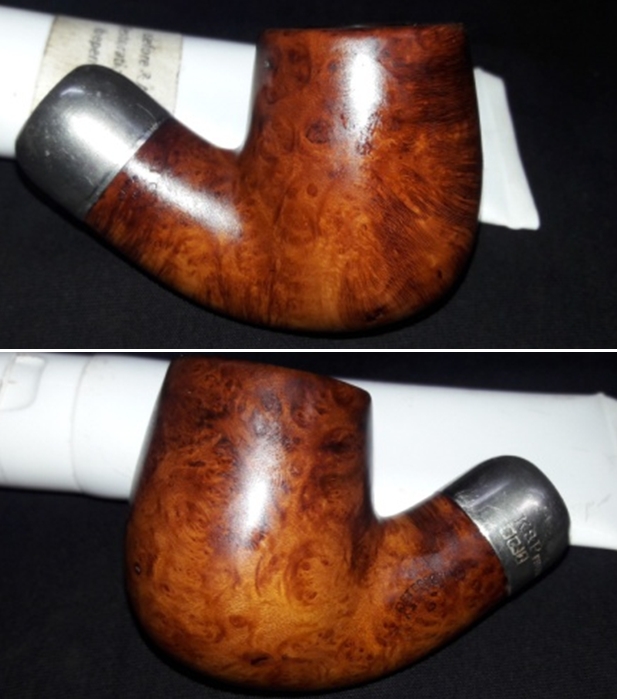
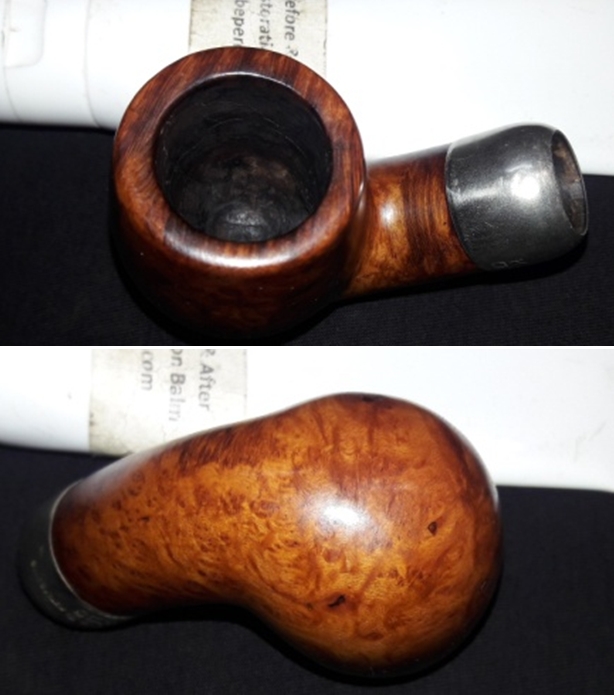
Recommissioning a Sharp BBB Classic London England 106S Chimney


Blog by Dal Stanton

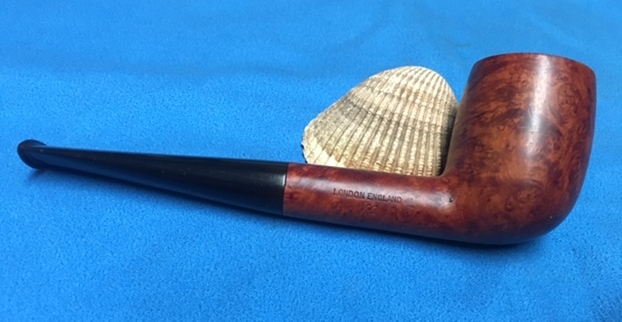
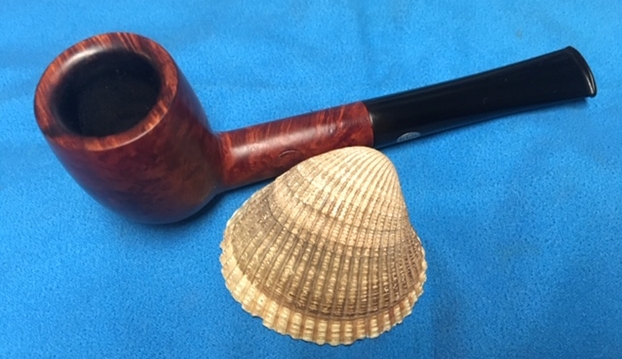
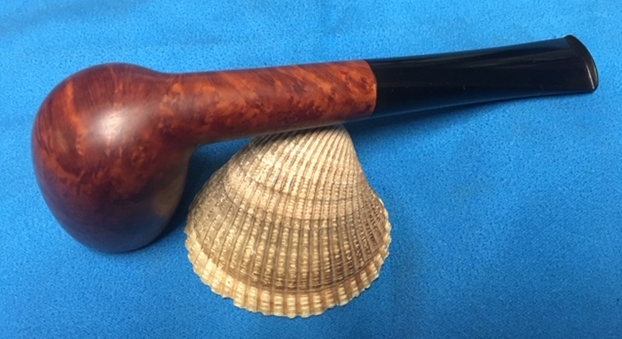
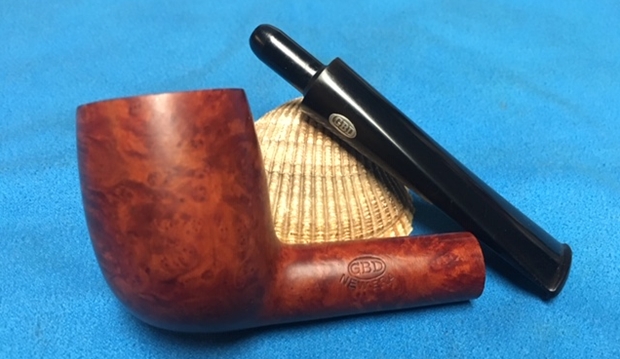
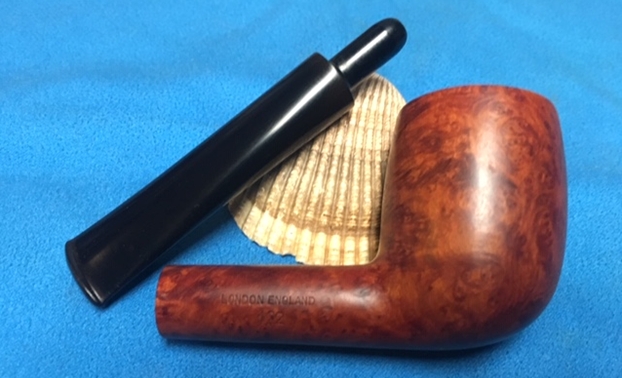
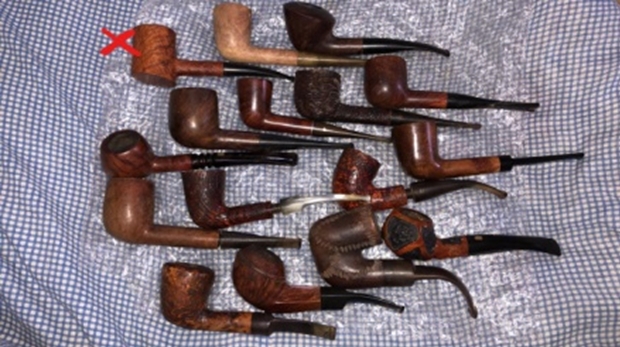
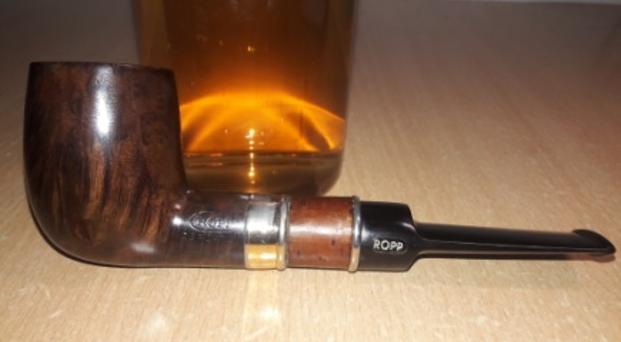
This very classy looking BBB I acquired with the French Lot of 50 that I won on the French eBay auction block along with several other treasures that I’ve enjoyed restoring for new stewards benefiting our work here in Bulgaria with the Daughters of Bulgaria.  Along with a few other pipes commissioned by my friend in India, Paresh saw this BBB in the For “Pipe Dreamers” Only! collection and was interested in adding it to his BBB collection.  I’ve marked the BBB in the pile of pipes that I acquired.  I love looking at ‘pipe piles’ 😊.With the pipe now on my worktable here in Sofia, Bulgaria, I take more pictures to show what got Paresh’s attention.  In prototypical English style, the pipe is on diminutive side measuring, Length: 5 3/8 inches, Height: 1 7/8 inches, Rim width: 1 1/8 inches, Chamber width: 3/4 inches, and Chamber depth: 1 3/4 inches. The left side of the shank is stamped with the classic ‘BBB’ ensconced in the rhombus [over] ‘CLASSIC’.  The right side of the shank is stamped, ‘LONDON, ENGLAND’ [over] 106S – what I’m assuming is the BBB shape number designation.  The shape of the stummel I would label as a Chimney sporting a saddle stem.  In my research I could unearth no BBB Shapes Chart that corroborates my designation matching the 106S.I love the look and feel of this pipe and its distinctive brass rondel embedded on the topside of the stem placing this ‘Best British Briar’ Classic in the 1950s and 1960s.  Below is pictured the evolution of the BBB stem markings which is included in an extensive article on the History of BBB Pipes by Fiona Adler that Steve reposted in rebornpipes after translating from the original French.Pipephil provides a very brief description of ‘BBB’:

BBB: ” Best British Briar” is now a brand of the Cadogan Company (Oppenheimer group). American rights to use the brand name were sold to Wally Frank in 1980.
Founder of the brand in 1847: Louis Blumfeld. The oldest pipe brand name in the UK has been registered in 1876 (Blumfeld Best Briar)
Grading (ascendant): Own Make, Bold Grain, Best Make, Rare Grain

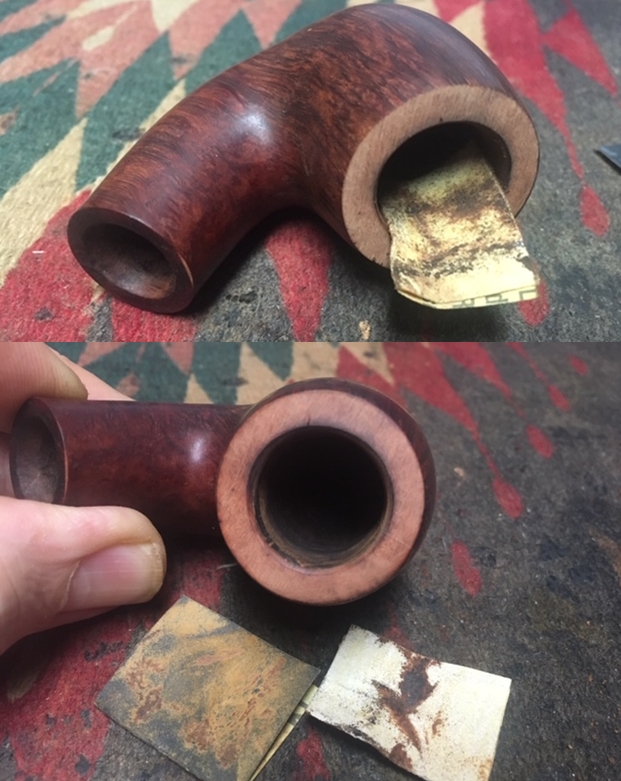
With the dating of this pipe giving it a 50s/60s vintage, I was hopeful to find the ‘Classic’ line in some of the catalogs that Steve acquired from Victor C. Naddeo who is the administrator of the FB Group, Pipe Club of Brasil. I enjoy it when catalogs are posted but unfortunately, I found neither the ‘Classic’ line mentioned or the shape number 106S in the 60s catalog (See: Best British Briar Catalog to see the whole posting).The Chimney stummel is in very good condition – the grain pattern shows great promise after the stummel is cleaned of normal dirt and grime buildup.  The chamber has a thick cake and the lava overflow matches the fact that this pipe was well smoked and served his steward well.  I will remove the cake to give the briar a fresh start and to inspect the chamber walls for heating problems.  The saddle stem has heavy oxidation but very little tooth chatter on the bit.  I’m looking forward to seeing how the very nice-looking BBB Classic Chimney cleans up.

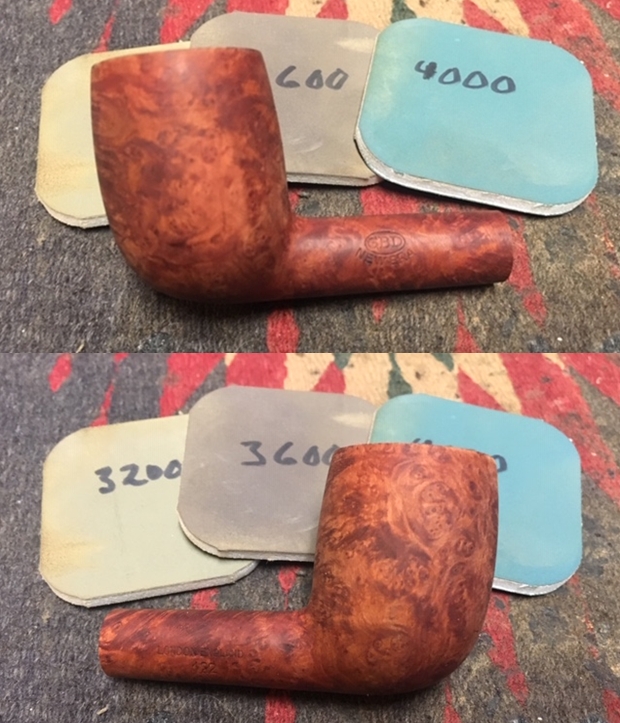
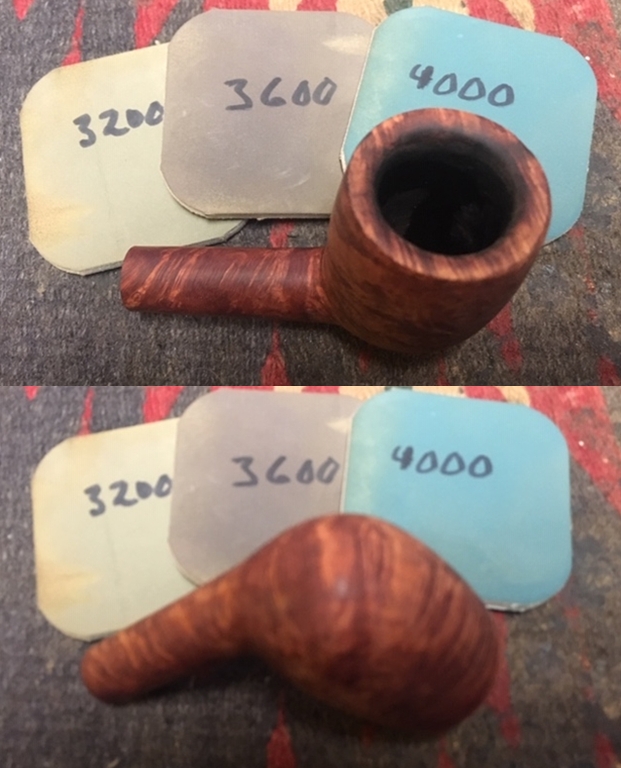
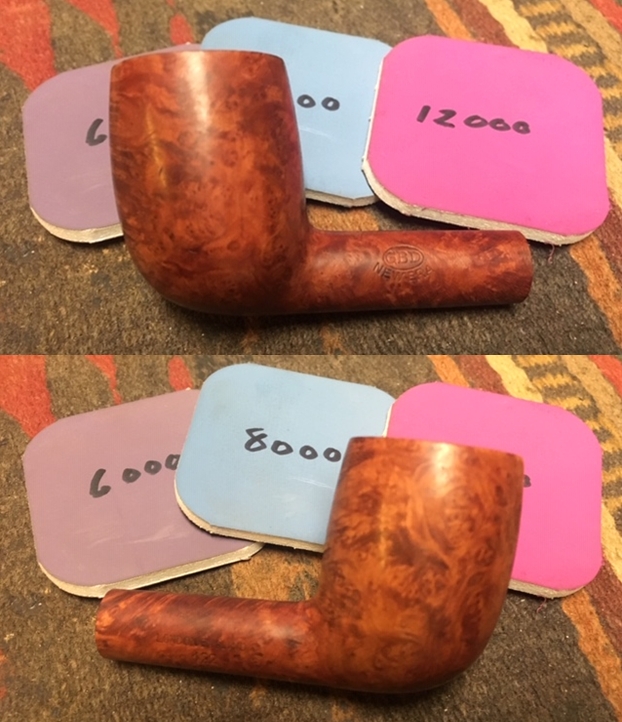
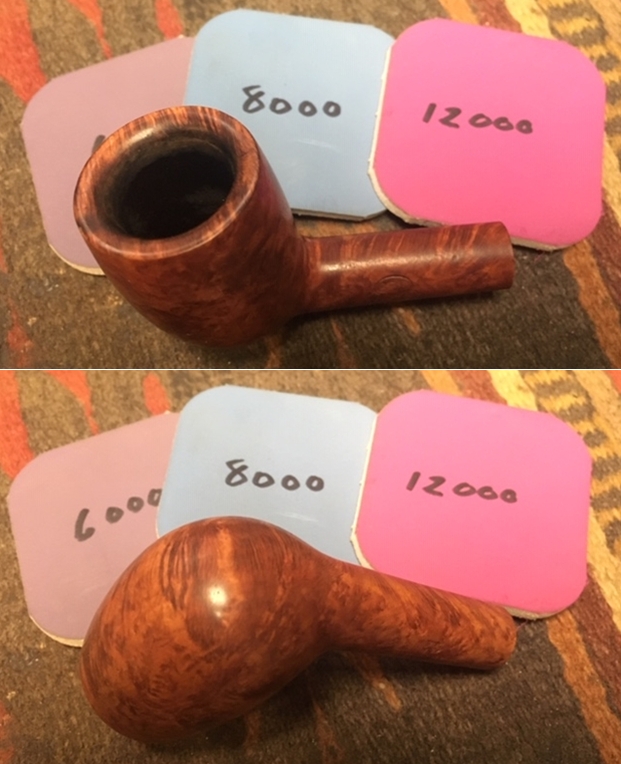
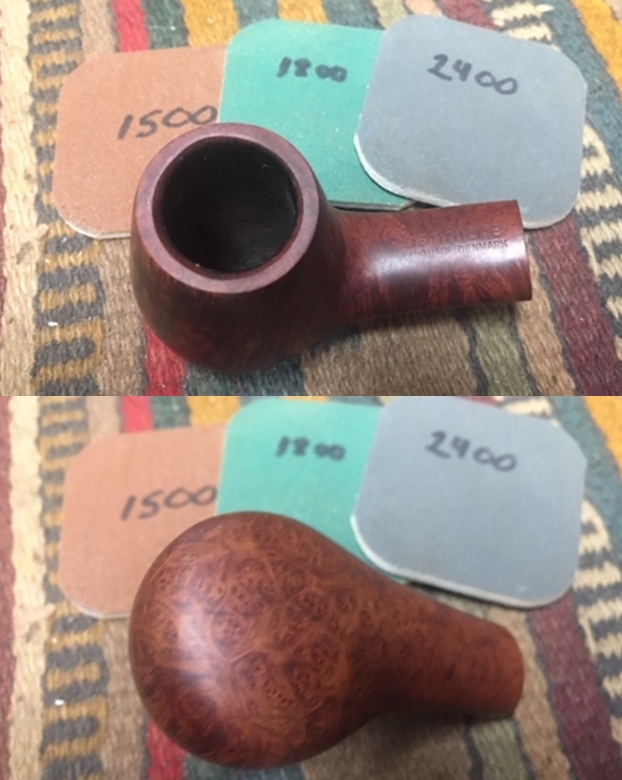
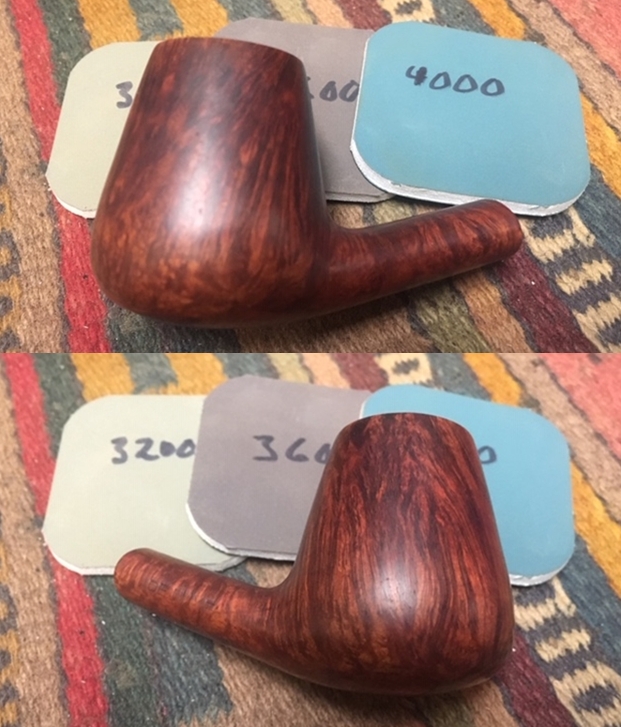
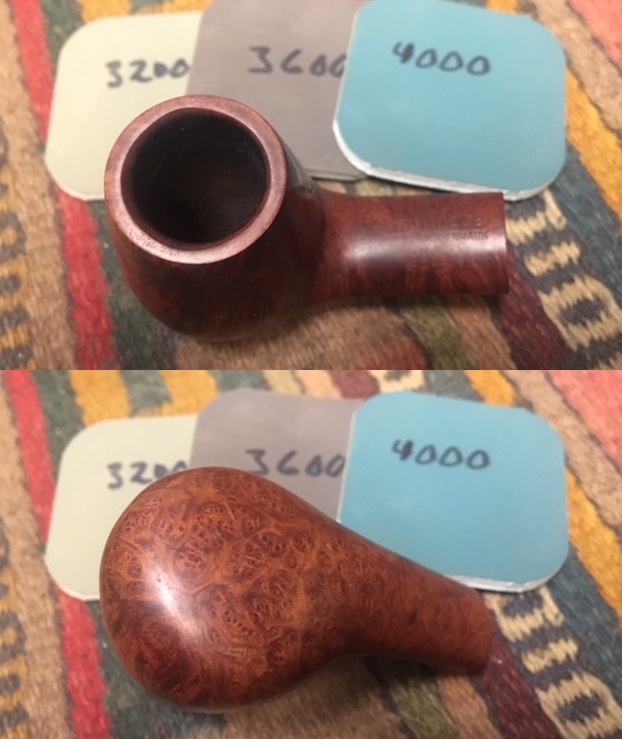
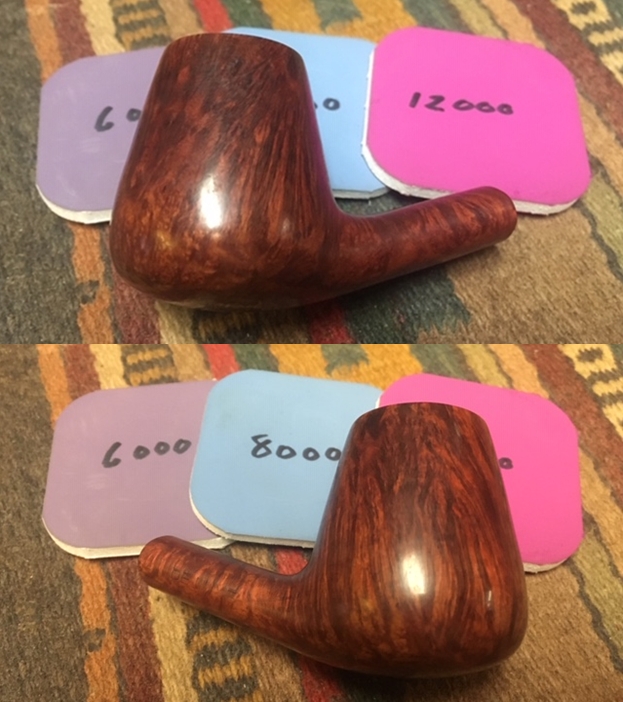
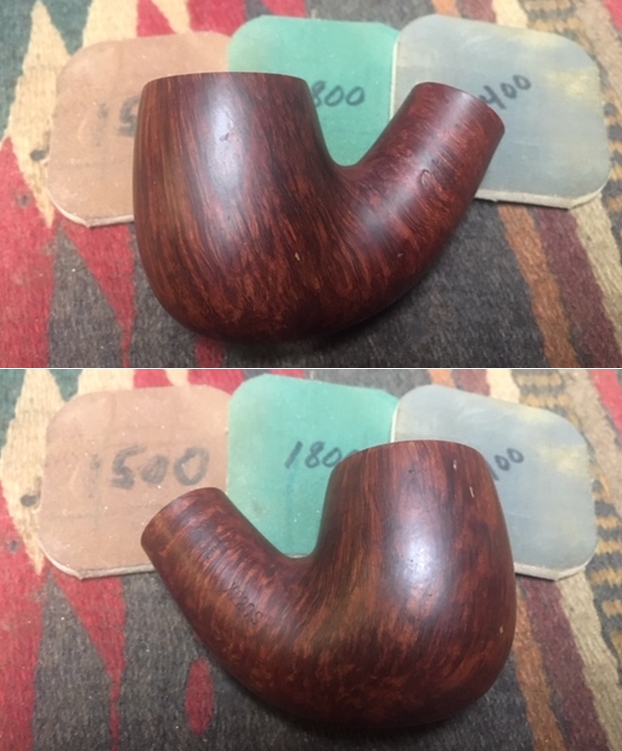
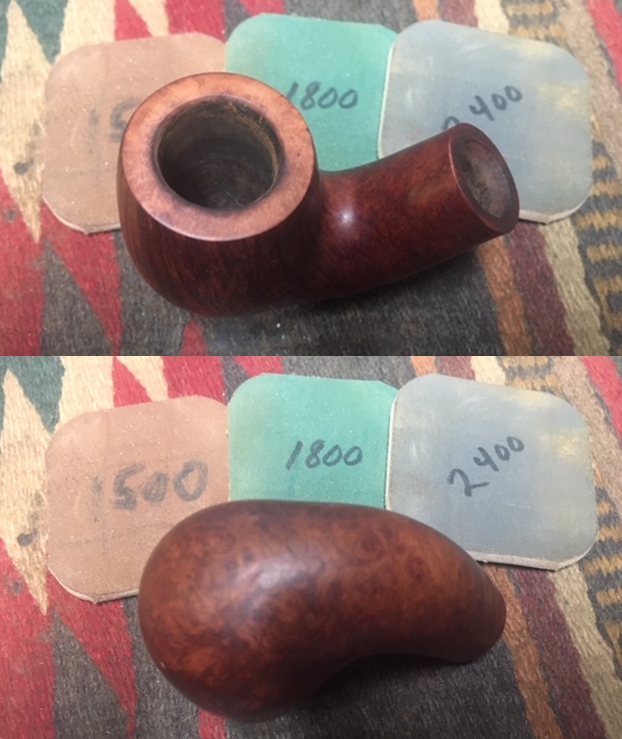
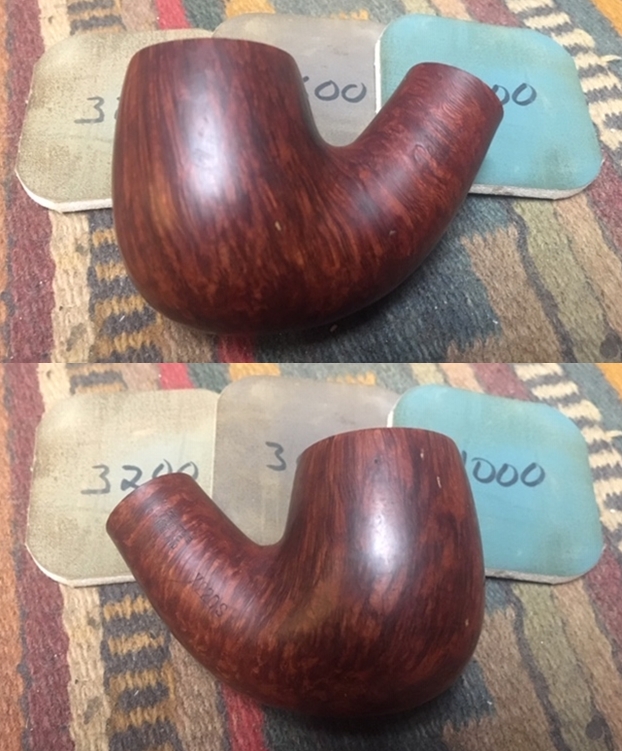
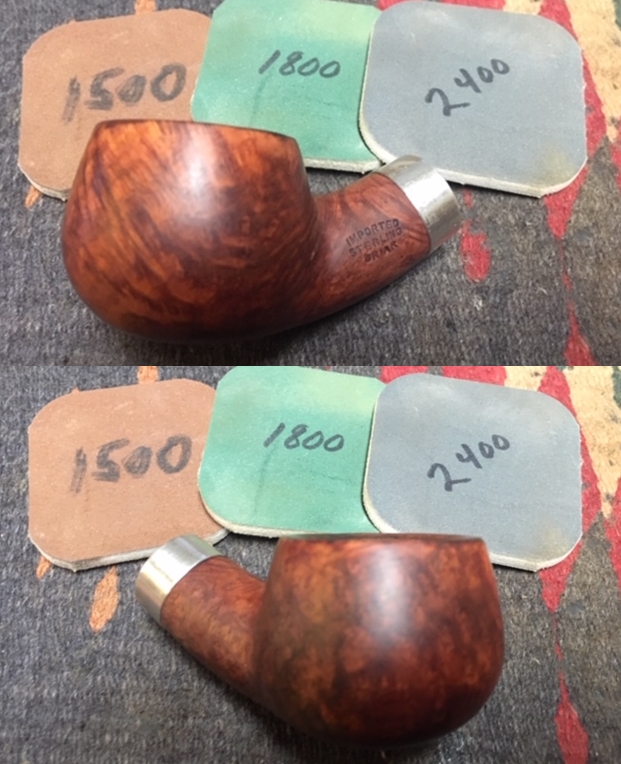
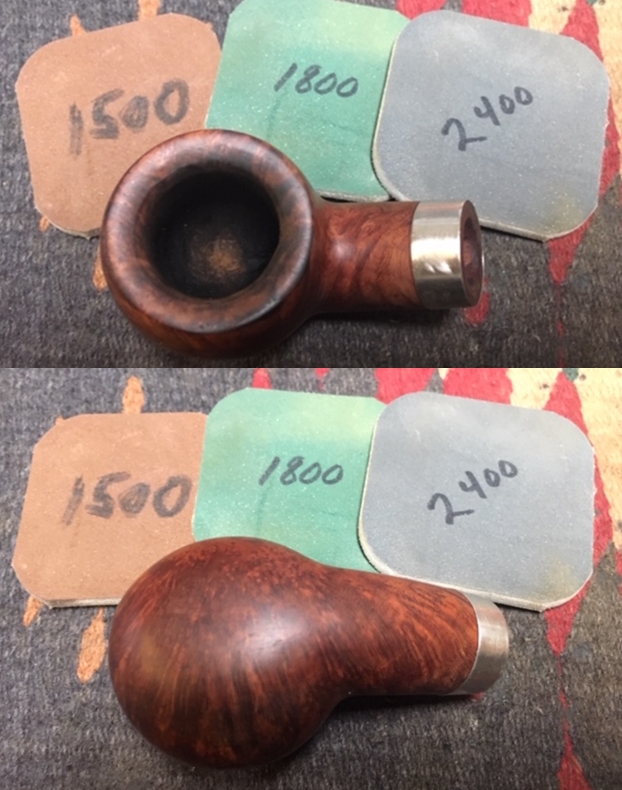
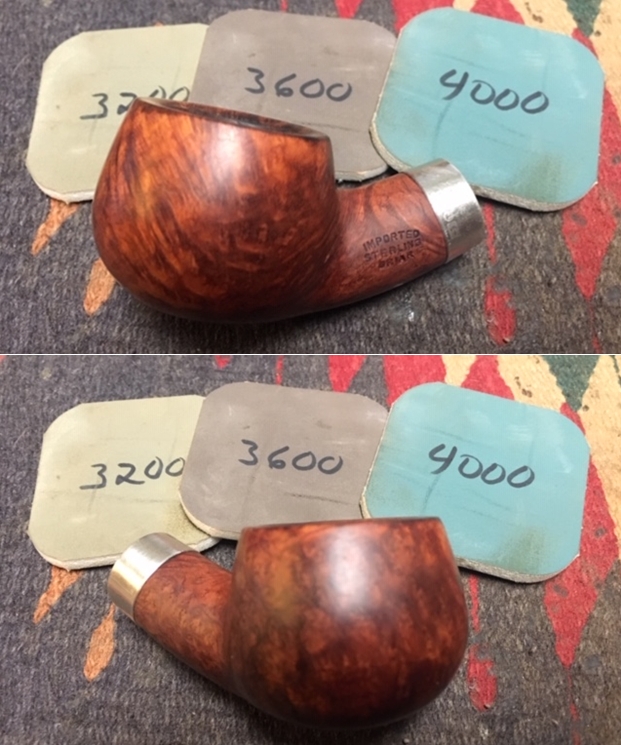
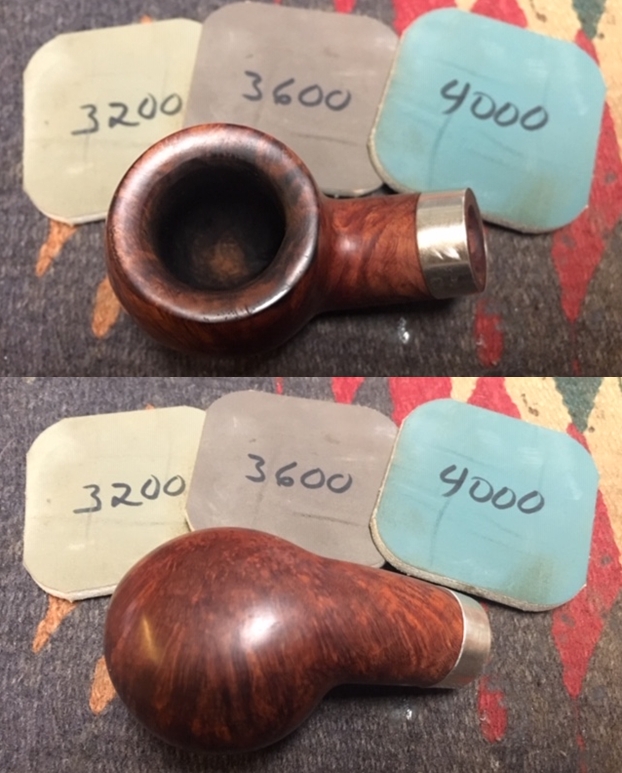
I start by trying something that I haven’t tried before.  The oxidation in the stem is a lot and very deep.  My experience with Before & After Deoxidizer is that it is not able to remove very strong oxidation fully.  It can address some of the issue, but not thoroughly – in my experience.  I try to break up the oxidation by using a small felt buffing wheel mounted on the Dremel set to the lowest speed.  I start first with simply the felt wheel, but I’m concerned that it is too hot on the vulcanite.  I add paraffin oil to the mix.  I wet the felt wheel with the mineral oil and buff the stem trying to break up the oxidation in anticipation of putting the stem in the B&A Deoxidizer soak.After buffing, I wipe the stem down with a cloth and put it aside and allow it to dry.  After drying, the next two pictures show that the buffing did help, but there is still oxidation.I continue by cleaning the airway of the stem with a pipe cleaner wetted with isopropyl 95%.  Once clean, I add it to a bath of Before & After Deoxidizer with other pipes in the queue.  I’m hopeful that the Deoxidizer will now be more efficient after the aggressive buffing I did. After some hours in the Deoxidizer soak, I fish out the BBB saddle stem and after draining off the excess Deoxidizer, I use cotton pads wetted with isopropyl to wipe off the raised oxidation.  I also run a pipe cleaner wetted with alcohol to clean the airway of the fluid.  The pictures show improvement, but I’m not satisfied.Next, I employ Mr. Clean Magic Eraser to address the oxidation further.  I’m satisfied with the results – the vulcanite appears to be free of the oxidation.To rejuvenate the stem, I apply paraffin oil to the vulcanite with a cotton pad and put the stem aside to absorb and dry.  I’m pleased with the results.Turning now to the BBB stummel, I take a few pictures to show the heavy build up both in the chamber and the rim.  I use only the smallest of the Pipnet Reaming Kit’s blade heads to ream the carbon cake out of the chamber. This will give the briar a fresh start.  I transition to the Savinelli Fitsall Tool to do the fine tuning by scraping the chamber walls more, and then wrap 240 grade paper around a Sharpie Pen and sand the chamber to clean it further of carbon cake residue.  Finally, I wipe the chamber with a cotton pad wetted with alcohol to rid the chamber of carbon dust.  I take a final picture of the cleaned chamber and after inspection, I see know problems in the chamber with heating cracks or fissures. Turning now to the external briar cleaning, I use undiluted Murphy’s Oil Soap with a cotton pad to scrub the surface.  I also work on the rim using my thumbnail to scrape the rim to remove the buildup and then with a brass wire brush.  I then take the stummel to the sink and using a bristled toothbrush I brush and further clean the surface under the warm water.  Using shank brushes and anti-oil dish liquid soap as well I clean the internals of the stummel rinsing with warm water.Next, using pipe cleaners and cotton buds wetted with isopropyl 95%, I continue the internal cleaning.  I also scrape the mortise walls with a small dental spoon.  This does a great job removing the thicker tars and oils that are hanging on.  After a time, the cotton buds begin to emerge cleaner.To continue the internal cleaning process, I use the kosher salt and alcohol soak.  To form a ‘wick’ to draw out the tars and oils, I twist and pull a cotton ball to form the wick.  A stiff wire helps to insert and push the wick into the mortise.  Then the bowl is filled with kosher salt, which leaves no aftertaste and freshens the bowl, and I set the stummel in an egg crate to keep it steady.  A large eyedropper is used to fill the chamber with isopropyl 95% until it surfaces over the salt.  After a few minutes, I top the alcohol off after it has absorbed into the internals. I set the stummel aside for it to soak through the night.  It’s late, I also turn out the lights! The next morning, the kosher salt and isopropyl 95% soak has done the job.  The wick and salt are soiled having drawn more tar and oils from the internal cavity.  I thump the expended salt into the waste and wipe the chamber with a paper towel as well as blow through the shank to remove expended salt crystals.  To make sure the internals are clean, I use a few more cotton buds dipped in isopropyl 95%.  As hoped and expected, they come out clean and I move on.With the cleaning complete, I turn my attention to the rim’s condition.  The cleaning did a great job removing the grime and lava over the rim, but the discoloration and skins and nicks on the edge of the rim remain.  I take a couple close-ups picturing both sides of the rim and nicking is evident.To address the rim condition, I bring out the chopping board and put 240 grade paper on it to serve as a topping board.  I top the stummel very lightly – just enough to clean the rim and allow me to erase the rim edge nicks with a simple, inconsequential beveling.After a few rotations on the board I take a picture.After a few more rotations, I’m satisfied with the 240 topping.  On the lower right of the rim you can see the remaining rim edge issues that I’ll rectify with a gentle beveling or sanding.To smooth the rim further, I exchange the 240 paper for 600 grade paper and go a few more rotations.Next, I introduce outer and inner edge bevels to erase the remaining damage and to give the Chimney’s top a smoother softer appearance.  I use 240 grade then 600 grade papers rolled to do the beveling.  I think it looks great.With the rim repair completed, I take the stummel through the full regimen of 9 micromesh pads.  First, I wet sand using pads 1500 to 2400 then dry sand using pads 3200 to 4000 and 6000 to 12000.  I take a picture between each set of 3 pads to mark the change in the briar.  It amazes me how the grain emerges.  This BBB Classic’s grain is striking.  As I track the grain around the bowls, the horizontal grain gradually transitions to bird’s eye grain as the stummel position pivots.  There are no fills in the stummel that I can see – a beautifully crafted block of briar! Before returning to the stem to catch it up with the stummel, I’m anxious to apply Before & After Restoration Balm to this BBB Classic Chimney stummel.  I place some Balm on my fingers, and I work it into the briar thoroughly.  The Balm starts with a cream-like consistency but then thickens into more of a wax-like consistency.  I like the Balm because it seems to draw out the deeper tones of the briar – nothing earth shattering, but the subtle enhancement of the natural briar grain is what I like most.  After applying the Balm, I put the stummel aside for about 20 minutes before wiping off the excess and then buffing it up with a micromesh cloth.  The picture shows the Balm at work.Next, I turn back to the BBB saddle stem.  The tooth chatter is minimal, but the button has some compressions.  The skin of the stem is rough as well.I begin by refreshing the button lips using a flat needle file.  I also work on the bit with 240 grade paper sanding out the imperfections. The slot is also a bit out of shape.  I use a sharp needle file to file the edges to balance the slot.While sanding, I see a pit on the edge of the stem that I didn’t see before.  I try sanding it out, but soon realize is too deep.  I remedy the situation quickly using a spot-drop of regular CA glue on the pit after cleaning it with a cotton pad and alcohol.  I use an accelerator to quicken the curing process and then sand it with 240 grade paper. I then wet sand the entire stem with 600 grade paper and follow by applying 000 steel wool to the whole stem.  The next step is applying the regimen of micromesh pads to the stem starting by wet sanding using pads 1500 to 2400.  This is followed by dry sanding with pads 3200 to 4000 and 6000 to 12000.  Between each set of 3 pads a coat of Obsidian Oil is applied to further enrich and condition the vulcanite.  The freshly sanded pop of the vulcanite contrasted with the embedded BBB Rondel is great!  While trying to reunite the stem and the stummel before applying Blue Diamond compound, it becomes evident that the cleaning of the stummel has expanded the briar making the fit of the tenon in the mortise a bit too tight and forcing the issue could easily result in a cracked shank!  Nothing desired at this point.  To remedy this, utilizing a combination of filing the mortise with a half-circle needle file and sanding the tenon down by wrapping a piece of 240 grade paper around the tenon and rotating the paper does the trick.  The combination approach now allows the tenon fit to be snug but not too tight.With the BBB Classic stem and stummel reunited, after mounting a cotton cloth buffing wheel onto the Dremel, and setting the speed at about 40% full power, Blue Diamond compound is applied to the stem and stummel.After the application of Blue Diamond compound, I wipe the pipe with a felt cloth to remove the compound dust in preparation of applying the wax.  Then, after mounting another cotton cloth buffing wheel on the Dremel, and maintaining the speed at 40%, carnauba wax is applied to the stem and stummel.  The restoration is finished with a hand buffing using a microfiber cloth to raise the shine.

I’m very pleased with results.  This BBB Classic London, England Chimney is a beautiful pipe.  The block of briar is exquisite, with no fills and a landscape of grain transformation as you track it around the bowl.  There is a striking tight patch of bird’s eye grain on the right flank of the bowl that holds the eyes.  As a 1950s/60s vintage BBB, even though the ‘Classic’ line could not be fully identified, there is little doubt as to the quality of this BBB Classic Chimney.  Paresh commissioned this pipe which benefits the Daughters of Bulgaria – women and girls who have been trafficked and sexually exploited and he will have the first opportunity to adopt this BBB from ThePipeSteward Store and bring it home.  Thanks for joining me!

Rebirthing another Schoenleber Hand Made – A Petite Straight Apple


Blog by Steve Laug

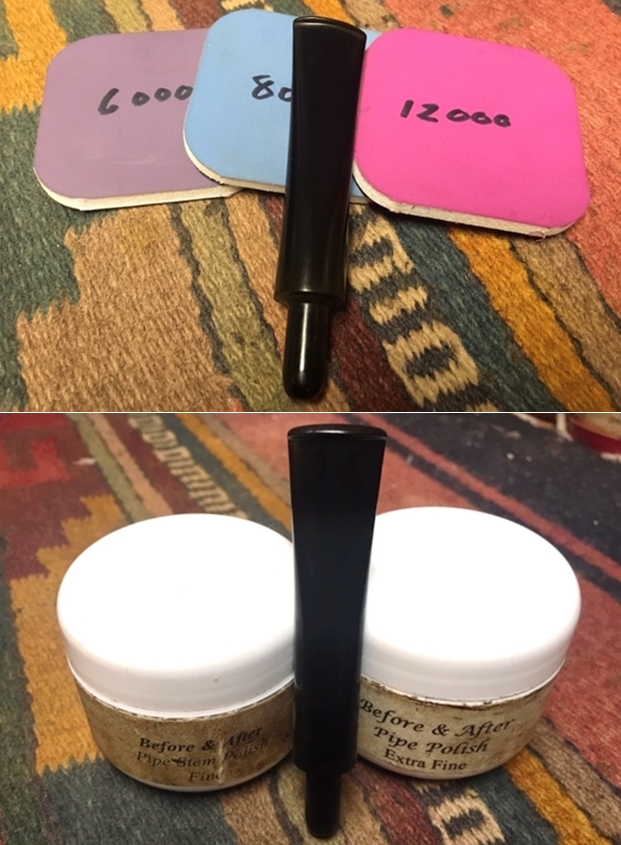
The next pipe in the queue is another one from the batch of pipes I am cleaning up for Alex – this one is another Schoenleber Hand Made – a petite straight shank Apple with some beautiful grain around what appears to be an oil cured bowl and shank. The entire pipe has some beautiful birdseye, straight and flame grain around the bowl and shank. The pipe was filthy with overflowing lava but the grain peaked out under the grime. The carver did a great job utilizing the block of briar to maximize the grain. The pipe is stamped on the left side of the shank. It reads Schoenleber over Hand Made. On the right side next to the bowl/shank junction there is a number 3 which is either a shape number or size designation. The tapered stem is vulcanite and has no marking or stamping. This is another nice looking piece much like many of the pipes Alex is picking up. The bowl has a thin cake inside the bowl but the tars cover the thin rim top and run down the sides of the bowl. There some darkening on the rim top. The exterior of the briar was dirty with grime and dust. The oxidized vulcanite stem tooth marks and chatter on both sides near the button. The photos below tell the story and give a glimpse of the pipe before clean up. I took a photo of the bowl and rim to capture the condition of the pipe before I started my cleanup work. There was significant darkening and damage on the rim top and a thin cake in the bowl flowing over as lava on the thin top edge. The outer edge of the bowl appeared to be in good condition I would only be sure once I removed the lava. The stem was in decent condition under the thick oxidation and calcification on the surface. There was also some tooth chatter and tooth marks on both sides of the stem near the button. The button is also damaged by tooth marks.I also took a photo of left side of the shank to show the stamping. The stamping is readable in the photo below and is as noted above – Schoenleber over Hand Made. On the opposite side there is a 3 at the shank/bowl junction.I remember working on a Schoenleber pipe in the past and had a memory of the pipe being made for a shop in the New York area but could not remember much more than that. I quickly googled the brand to see what I could learn and found a link on Pipedia. Here is that link. I quote the article in full (https://pipedia.org/wiki/Schoenleber).

Louis Schoenleber lived in North Arlington N.J. and was an Austrian immigrant and skilled artisan in pipe making. His hand carved pipes were available in his shop, ‘Schoenleber’s Newark Pipe Shop’, at 26 Branford Pl., Newark NJ, thought to open in the 1920’s. Schoenleber’s carried a full line of tobaccos as well as related pipe smoking accessories. It’s thought the shop operated until the late 1960’s, and Louis Schoenleber died in 1976. It’s also fairly certain they may have sold to other brands such as Jelling, also in Newark and are very similar in design and finish.

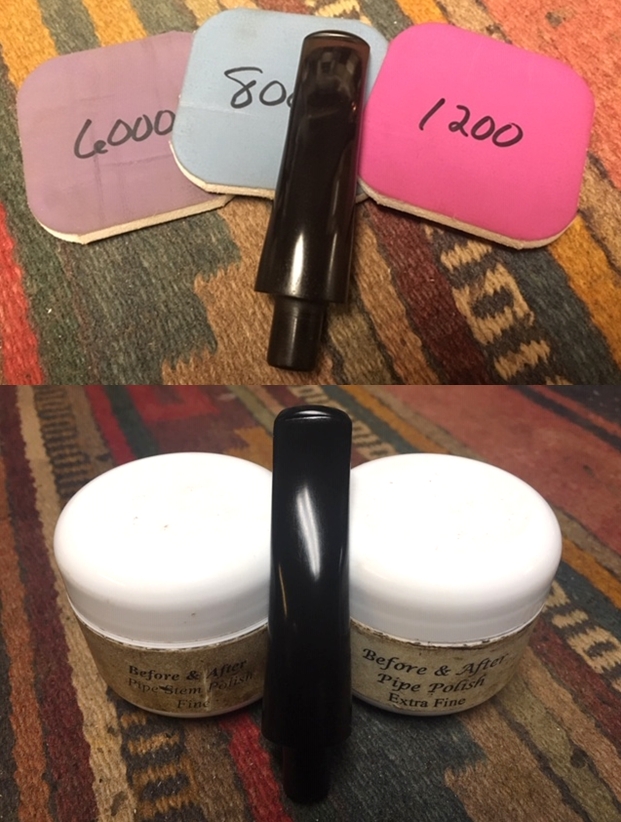
There was also an advertising card on the site that I have included below. It speaks to my assumptions about the curing process and the finishing process on the pipe. It also connects the pipe to Schoenleber’s Newark Pipe Shop in Newark, N.J. It also has a comment on the fact that pipes were made to order.I reamed the bowl with a Savinelli Fitsall Pipe Knife to take the cake back to bare briar. The cake was thin but the lava over flow on the rim and down the bowl was heavy and dark. The rim top looked pitted and damaged. I sanded the internal walls of the bowl with 220 grit sandpaper wrapped around a piece of dowel.I lightly topped the bowl on a topping board with 220 grit sandpaper to remove the damage to the rim top and smooth out the thick lava coat. It did not take too much sanding to remove the damaged briar. I still need to smooth out the inner edge of the rim but the bowl looks pretty good.The filthy exterior of this pipe was perfect for me to continue experimenting with a new product from Mark Hoover of Before & After Products. This one is a product he labels briar cleaner and it has the capacity of absorbing grime and dirt from the surface of briar. I rubbed the bowl down with some of his Briar Cleaner to see how it would work in this setting. In speaking to Mark he noted that the product is completely safe to use. The main product is even FDA approved edible. I rubbed it onto the bowl and rim top with my finger tips and worked it into the grime and grit on the bowl. I let it sit on the pipe for about 5 minutes before I rubbed it off with a microfibre cloth. I rinsed it under warm running water to remove the residue. I was pleasantly surprised by how clean the surface on the bowl looked when I was finished. The mortise and the airway in the shank was filthy. There was a thick build up of tar and oils on the inside of the shank. I scraped the shank walls with a thin bladed knife until the briar was bare. I scrubbed the walls of the mortise and the airway in the shank and stem with pipe cleaners, cotton swabs and isopropyl alcohol until they were clean.I turned to polishing the bowl and rim with micromesh sanding pads – wet sanding with 1500-12000 grit pads. I wiped the bowl down after each pad to remove the sanding debris. My goal was to further remove the darkening on the both the rim top and the first half inch of the bowl. I worked some Before & After Restoration Balm into the surface of the briar with my fingertips to clean, enliven and protect it. I let the balm sit for a little while and then buffed with a cotton cloth to raise the shine. Mark Hoover’s Balm is a product that I have come to appreciate and one I use on every pipe I have been working on. With the bowl finished I set it aside and turned my attention to the stem. I sanded it with 220 grit sandpaper to remove as much of the oxidation as possible. I was also able to remove much of the damage to the surface of the stem on each side. There was a remaining tooth mark on the top and underside of the stem. The button surface also had some tooth marks. I forgot to take photos of the stem after sanding and before repairing. I wiped the stem surface down with a damp cloth and then filled in the tooth marks with clear super glue. I also rebuilt the top and underside of the button surface with clear super glue. Once the repairs cured, I sanded the filed stem surface with 220 grit sandpaper to blend the repairs into surface of the stem. I am happy with the stem surface once that was done. I started the polishing of the surface with 400 grit wet dry sandpaper. I polished the stem with micromesh sanding pads – wet sanding it with 1500-12000 grit pads. I wiped the stem down with a damp cloth after each pad. I further polished it with Before & After Pipe Polish – both Fine and Extra Fine. I wiped it down with a coat of Obsidian Oil and set it aside to dry. With both parts of the pipe finished, I polished the bowl and the stem with Blue Diamond polish on the buffing wheel. I gave the bowl and the stem multiple coats of carnauba wax. I buffed the pipe with a clean buffing pad to raise the shine. I hand buffed it with a microfiber cloth to deepen the shine. The pipe polished up pretty nicely. The rich finish and the grain came alive with the buffing. The finish on the briar works well with the polished black vulcanite stem. The finished pipe is a well-proportioned, nicely grained Classic Apple. Have a look at it with the photos below. The dimensions are Length: 5 inches, Height: 1 1/2 inches, Outside diameter of the bowl: 1 inch, Chamber diameter: 3/4 of an inch. This Schoenleber Hand Made Classic Straight Apple will be going back to Alex soon to join his growing collection of American made pipes. Thanks for walking through the restoration with me on another of Alex’s pipes.

A Nightmare Restoration of an Oldenkott Munchen Huber Filter Pipe


Blog by Steve Laug

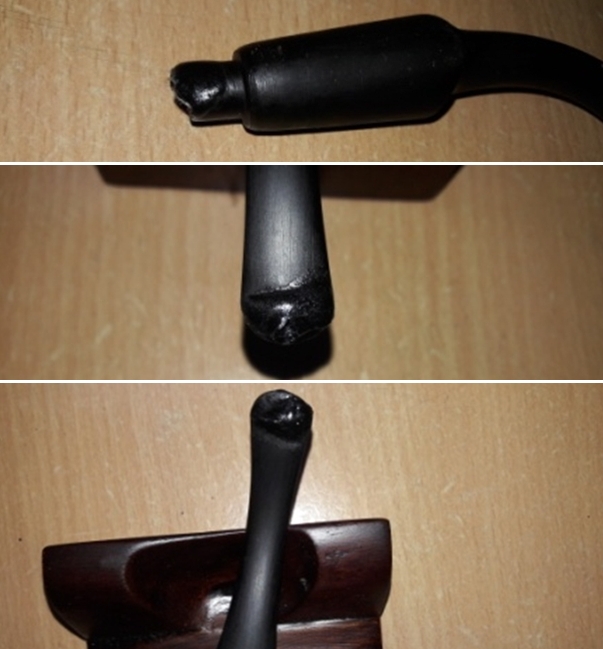
I have had this old pipe kicking around in my box for refurbishing for a long time now. I have picked it up numerous times and put it back as I just had no desire to do anything with it. That changed yesterday. I took it out and looked at it to think about what needed to be done to it. The stem was a mess – it had shattered when the guy who owned it tried to take it off. He sent me these photos of the pipe. It was green which did nothing for me and there was nothing about it that called my name. It was an Oldenkott pipe – a brand that I had worked on before but not a shape that I was interested in. The stem was broken and the pipe was a mess. After seeing the photos below, I had declined purchasing it as it really was not interesting to me. But even my declining it did not matter much – He had mailed it as part of a group of pipes that Jeff and I had purchased from him them.The pipes had been sent to Jeff and in the box was this one. Jeff opened the box and showed me this pipe and really it was in even worse shape than I imagined. The pipe came with the stem pretty well stuck in the shank and a small plastic bag with stem pieces was rubber banded to the tenon. Jeff chucked it in the freezer and the stem came off easily enough. It was a mess and it was a filter pipe! The bowl had a thick in it and a thick lava overflow on the rim top. It was hard to know the condition of the inner edge of the rim because of this. The bowl had a lot of bright green fills around the sides and heel. The stem was a disaster – broken off and shattered at the same time. It was definitely one for the garbage. He took photos of the pipe before he started working on it so I could see what he was dealing with. He took a photo of the rim top and bowl to try to capture the mess of both. The thick cake in the bowl and the overflow of lava are both visible. The cake was thick and hard and the lava overflow was a thick band around the bowl. One consolation is that considering the mess it was in, this must have been a great smoking pipe.The next photos show the side and bottom of the bowl and give a clear picture condition of the green stain. It was spotty and worn. The fills in the bowl were very green spots, like painters green tape and stood out like a sore thumb to me. They were just ugly and almost obscured the interesting grain around the bowl for me. Hopefully you get a feel for why I just kept putting it back in the restoration “to do” box.Jeff took photos of the stamping to capture the clarity of it even under the grime. The Oldenkott name is stamped on the left side of the shank. On the underside it is stamped Huber over Munchen. Jeff took photos of the stem to show the shattered condition. It really was not redeemable even by such a stalwart stem rebuilder as Paresh Deshpande! It was also a 9mm filter stem and to me that also was another strike against it. It was useless in my opinion. I knew I was dealing with a German pipe from previous ones that I had worked on. I had been told that the brand was the German equivalent of Dunhill pipes in England. This one certainly did not make a case for that assumption. I turned first to Pipephil to see if I could get a brief review (http://www.pipephil.eu/logos/en/logo-oldenkott.html). The site gave various lines that had been made by the factory before its closure in 1992.

I went on to Pipedia knowing that there would be some more detailed information and I was correct in that assumption (https://pipedia.org/wiki/Oldenkott). I quote in full from that article.

Very little is known about the company. According to the albums the company was founded in 1760 in Amsterdam as Hermann Oldenkott, and in 1819, a subsidiary in Ahaus (Germany). There were likely other factories as well, as in 1838 August Kersten from Rees (Germany) bought the factories from Heinric Oldenkott in Elten (Germany) and Weesp (Holland), although it is not clear whether these were part of the of the original Oldenkott company. The German company increased rapidly and became one of the largest German tobacco companies. In 1929 the factories from Hermann Oldenkott in Ahaus and Neuss (Germany) were bought by the German Oldenkott company. The German company produced pipes starting in 1932. In 1972 the German company was bought by the Dutch company Niemeijer. Tobacco production ceased in 1974 and only pipes were made afterward. In 1987 the German pipe company was bought by the Kersten family again, but closed in 1992.

The pipes were machine made and in general of mediocre quality. The most important pipes of Oldenkott were the so called “Porsche” design pipe. The bowl was turned like the motor block of a racing car and was lacquered with a silver-grey color. Today these special pipes are very rare and expensive.

In spite of the apparent quality of both Oldenkott and VAUEN pipes, they are known as good smokers.

The site also quotes from the book “Pipes, Artisans and Trademarks, by José Manuel Lopes’ –“Oldenkott is an early 20th century German brand by Henry Oldenkott. His factory in Hallen closed in April 1982, with some of the workder moving to VAUEN. Oldenkott made ipes with and without filters. It was in this company that Porsche pipes were produced.”

Armed with that information I turned to address the pipe itself. Jeff had cleaned up the pipe before sending it to me. He reamed the bowl with a PipNet pipe reamer and cleaned it up with a Savinelli Fitsall Pipe Knife. He scrubbed the exterior with Murphy’s Oil Soap and a tooth brush to clean off the grime off the finish and the heavy overflow of lava on the rim top. He cleaned up the internals of the shank, mortise and stem with pipe cleaners, cotton swabs and alcohol to remove all of the oils and tars in the pipe. He cleaned up the stem so that it did not stink and soil the other clean pipes he sent me. When it arrived here in Vancouver it was a clean pipe and I knew what I had to work with. I took photos of it before I started my part of the restoration. I took a close up photo of the bow and rim to capture the burn damage on the right side inner edge of the bowl. I also took photos of the shattered stem to show the extent of the damage.I took a photo of the left side and the underside of the shank to show the stamping on the pipe. It read as noted above. After the cleanup it was still readable.I decided to address the broken stem first. I went through my can of stems and found a suitable saddle stem that was roughly the same length as the broken one. It had a different saddle arrangement but to be honest I like the new one better. It was a new cast stem that I had picked up from a fellow who was selling out his father’s refurbishing supplies. I measured the diameter of the tenon on the broken stem and set the PIMO Tenon Turning Tool to crank out a tenon on the new stem that would match. I turned it carefully and once I took it off the tool and measured both were identical in diameter – BUT (and this part is very irritating to me) the new tenon though identical and in size was loose in the mortise!!!I filed out the nubs left behind from the tool and the new stem was now functional. I would need to expand the tenon to get a good snug fit but it was done. I gave the tenon a coat of clear fingernail polish to snug up the fit in the mortise. I set it aside to dry. While the stem was drying I decided to work on the damage to the inner edge of the bowl on the right side. I topped it on a topping board with 220 grit sandpaper and removed as much of the damaged area as possible.I knew that I needed to deal with the uneven green stain coat on the bowl so that I could smooth it out. I also needed to deal with the fills in the bowl. I wiped it down with acetone on a cotton pad to evenly remove the stain. I picked out the largest fill on the right side of bowl with a dental pick. Under the bright green top coat the fill was bright white putty. Once I picked it out wiped it down with alcohol. I filled in the hole with briar dust and clear super glue to replace the fill. I put the stem on the shank and worked on the fit against the shank. I used a wood fill to reduce the diameter on the stem giving it a bit of a conical shape to match the flow of the shank. I also worked on the shank diameter because like everything else that is a bit of a deficit on this pipe the shank was not perfectly round and the stem had to be hand fit to the shank. I sanded the shank and stem with 220 grit sandpaper to smooth out and shape the shank and stem union. I also sanded the repaired fill on the right side of the bowl to blend it into the surface. The stem was looking pretty good as was the new fill. I wiped the bowl down with a damp cloth to have a look at it at this point. I removed the stem and worked on polishing the bowl with 1500-2400 grit micromesh sanding pads. I wiped the bowl down after each pad. I decided to only use these three grits because I had decided to experiment with staining this pipe GREEN once again. (I have to tell you this was an experiment and in many ways a failed one. But I get ahead of the story!). Here is where the restoration took a horrible turn for me. I should have left well enough alone but I wanted to tryout the Kelly Green stain that I had picked up earlier for some Peterson’s St. Patrick’s Day pipes that I have not dealt with yet. I figured this would be a good place to learn about the idiosyncrasies of green stain. I heated the briar and stained and flamed the pipe to set the stain in the wood. I looked at it and just shook my head. The stain set really well. I wasn’t sure how the fills received it and was a bit worried when I saw them shining through the dark green stain. I set the bowl aside to let the stain cure. Once the stain was dry I moved to my next “normal” step which is to wipe the bowl down with alcohol on cotton pads to make it more transparent and make the grain stand out more. Here is where my next issue rose – I wiped it down with four pads and alcohol and kept repeating the wipe down and it did not become more transparent. All that happened was that the fills turned white. I touched them up with green but there was no remedy to the issue. I like the pipe better before I stained it green. Now what was I going to do to make it LESS GREEN? At this point the experiment was a failure in my opinion. The GREEN NOT ONLY SET IN THE GRAIN BUT IN THE WHOLE PIECE OF BRIAR. I have to admit that at this point it crossed my mind that I probably could have thinned the stain a lot and made a green wash but after thought is too late. I buffed the pipe with Red Tripoli to try to remove it from the briar but it really had little effect. I was getting pretty frustrated and know from experience it is time to change things up a bit before I make things worse!

So I decided to address the stem for a while instead of the bowl. I put the stem on the shank and heated it with my heat gun until it was soft. I bent it to match the angles of the bottom of the bowl and set the bend with cool water. It was a good diversion from the GREEN bowl.I took the stem off and went back to work on the bowl. I wiped it down with acetone to try to reduce the green stain and while it partially worked it still was too green to my liking. I sanded the bowl and shank with 1500-2400 grit micromesh sanding pads to further reduce it. I still was not happy with the results. The green was just not to my liking. It needed to go. I restained the bowl with Tan stain and flamed and repeated the process until the coverage was good. I set it aside to cure and went to lunch with a friend. After lunch I buffed the bowl with Red Tripoli to unveil with the bowl looked like at this point. The tan stain had worked together with the Green stain to create a colour that I really liked. I buffed it with Blue Diamond to further polish it. I like the way the bowl looked at this point. I still needed to polish it and wax it but I wanted to finish the stem as well. I wet sanded it with 1500-12000 grit micromesh sanding pads to polish it. I wiped the stem down with Obsidian Oil after each pad. I finished polishing it with Before & After Pipe Polish – both Fine and Extra Fine. I gave it a final coat of Obsidian Oil and set it aside to dry. In looking at the photos above you can see a few nicks in the tenon. I filled them in with clear super glue to smooth them out and set the stem aside to dry. I sanded them smooth with 1500-2400 grit micromesh sanding pads. I wiped it down with Obsidian Oil and again let it dry.  With the parts finished it was time to polish up this nightmarish experiment that took me far longer than it rightly should have taken. I learned a ton in terms of Green stain – such as using it as a wash instead of as it comes in the bottle. I learned that it sinks deep into all of the grain not just the softer parts. I found that it is very hard to remove once it is once it is on the briar. Learning all of that I was finally glad that it was time to finish this pipe. I put the stem and bowl back together and buffed the pipe with Blue Diamond on the buffing wheel. I polished the briar and the minute scratches still in the vulcanite of the stem until there was a rich shine. This Oldenkott turned out better than I expected and has some nice grain showing through. The finish really highlights the grain and hides the fills on a proportionally well carved pipe. Once I buffed the pipe the briar came alive and the mixture of grain popped with polishing. The black vulcanite replacement stem had a rich glow. The finished pipe is a beautiful grained bent Apple. The dimensions are Length: 5 1/4 inches, Height: 1 3/4 inches, Outside diameter of the bowl: 1 1/4 inches, Chamber diameter: ¾ of an inch. Thanks for walking through the long, experimental restoration with me as it was a learning experience for me.

Cleaning up an Unsmoked Gutta-percha Pistol Pipe with a Flawed Bowl


Blog by Steve Laug

One of the great packages I brought back from my trip to Idaho was a small bag of C.P.F. pipes smoked and unsmoked. Some have horn stems; some have Gutta-percha bases and stems. I went through the bag and chose the next pipe I wanted to work on. It was an unsmoked Gutta-percha pistol pipe with a wooden bowl. I say wooden as it did not appear to be briar. There is no stamping on the barrel (shank) or on the body of the pistol. The maker is thus unknown. The shank had been snapped off and repaired – sloppily with what appears to be epoxy. There was a lot of residue left all over the barrel. The joint seemed solid and was pretty well aligned but would need to be sanded smooth and polished. The bowl was unsmoked but had a lot of dust and debris inside. It had a large flaw in the rim top extending down into the bowl from the rim to the bottom edge. There was a crack on the outside of the bowl at that point as well. A large flaw in the wood was in wood opposite the crack. The finish was a poorly varnished red over the flaws. The finished needed to go to make the repairs. I took photos of the pipe before I began my work. I took a close up photo of the rim top and bowl to show the condition of the unsmoked bowl as well as the flaw on the top. The flaw is very visible at the bottom of the photo and on the left side of the bowl. It was clean but dusty and grimy. The photos of the pistol shaped base show its general condition and the poor repair to the broken off barrel. There was a lot of dust and grime in the small casting features on the base. It still should clean up well.The next photo shows the details of the casting of the pistol. It is a well cast model that has great detail in the parts of the pistol. The grips and barrel as well as the cylinder in the middle are well cast (incidentally you can also see the repaired crack in the barrel).Because I was once again working with a Gutta-percha cast pipe I went back and read a previous blog that I had written to reacquaint myself with the material and the variety of cast products that were sold. I remembered that I had included a photo in the blog of a trio of pistols that this one reminded me of. Here is the link to the blog (https://rebornpipes.com/2017/12/08/59256/). I quote a pertinent part of the blog below:

That led me to do some research on the web to see what I could find out about the material. (Honestly, I don’t know what I would do without Google. I don’t know how I survived college and graduate school without it.) The first link I found and turned to was on Wikipedia (https://en.wikipedia.org/wiki/Gutta-percha). I quote large portions of that article below to set the base for understanding the material’s composition and origin.

Scientifically classified in 1843, it was found to be a useful natural thermoplastic. In 1851, 30,000 long cwt (1,500,000 kg) of Gutta-percha was imported into Britain. During the second half of the 19th century, Gutta-percha was used for myriad domestic and industrial purposes, and it became a household word. In particular, it was needed as insulation for underwater telegraph cables, which, according to author John Tully, led to unsustainable harvesting and a collapse of the supply.

According to Harvey Wickes Felter and John Uri Lloyd’s Endodontology: “Even long before Gutta-percha was introduced into the western world, it was used in a less processed form by the natives of the Malaysian archipelago for making knife handles, walking sticks and other purposes. The first European to discover this material was John Tradescant, who collected it in the Far East in 1656. He named this material “Mazer wood”. Dr. William Montgomerie, a medical officer in Indian service, introduced Gutta-percha into practical use in the West. He was the first to appreciate the potential of this material in medicine, and he was awarded the gold medal by the Royal Society of Arts, London in 1843.”

…In the mid-19th century, Gutta-percha was also used to make furniture, notably by the Gutta-Percha Company (established in 1847). Several of these ornate, revival-style pieces were shown at the 1851 Great Exhibition in Hyde Park, London. When hot it could be molded into furniture, decorations or utensils.

It was also used to make “mourning” jewelry, because it was dark in color and could be easily molded into beads or other shapes. Pistol hand grips and rifle shoulder pads were also made from Gutta-percha, since it was hard and durable, though it fell into disuse when plastics such as Bakelite became available. The material was adopted for other applications. The “guttie” golf ball (which had a solid Gutta-percha core) revolutionized the game. Gutta-percha remained an industrial staple well into the 20th Century, when it was gradually replaced with superior (generally synthetic) materials, though a similar and cheaper natural material called balatá is often used in Gutta-percha’s place. The two materials are almost identical, and balatá is often called Gutta-balatá.

When I reread the blog I found the photo that I had remembered with three pistol pipes with wooden bowls and Gutta-percha bases. I include copy of that photo below. The one that I have is very similar to these with the expected variations.From that information I can give a potential date for the pipe as having been made in the late 19th to early 20th century – the period when Gutta-percha was in vogue. During that period many items were cast of the material because it could easily be cast with detail and because of its durability. For me the interesting fact is the old pipe remained unsmoked for this long. That may well be the result of the flaw in the bowl and the desire to not make it worse. The story of its journey to Jeff and me this long after the date it was made is another mystery. This is one of those times that I wish an old pipe could speak and share the story of its journey. What a well-traveled pipe and one that I will never really know the story about the nature of the journey. Armed with that information it was now time to work on the pipe.

I decided to begin with the bowl. I took it off the base so that I could address the horrible finish and then work on the flaws in the wood. I took a photo of the crack on the outside of the bowl and the flaw on the top and inside. I also took a photo of the pipe taken apart before beginning my restoration. I started the clean up on bowl with working to remove the varnish or shellac coat. I wiped it down with acetone on a cotton pad to break down the shiny top coat and had very minimal success. I would need to resort to more intrusive measure to truly remove the finish. I topped the bowl on a topping board with 220 grit sand paper to break through the thick shiny coat on the rim top. I sanded the bowl with 220 grit sandpaper to remove the thick shiny coat and get down to the wood. I repeatedly washed the bowl down with acetone on a cotton pad during the sanding process to see how it was progressing. It was clearly not a piece of briar that I was working on so I wanted to be sure to clean it off before restaining. I examined the crack on the outside of the bowl and it appeared to actually be a grain line. I examined it with a lens to double check. There was a small hairline crack for the first ¼ inch from the rim top. I ran a bead of clear super glue down the line and let it seep into the crack. I held it tight until the glue set. For the flaw on the inside of the bowl I filled it in with clear super glue and briar dust to rebuild the damaged area of the wall.Once the repair had cured I sanded the inside and outside of the bowl smooth again with 220 grit sandpaper and polished it with 400 grit wet dry sandpaper. I polished it with 1500-4000 grit micromesh sanding pads to remove the scratches. All of this was done in preparation for the first coat of stain. I had decided to stain it with a base coat of Fiebing’s Tan stain as it has a red tint to it. I applied the stain, flamed it and repeated the process until I was happy with the coverage. I generally put a cork in the bowl which allows me to manipulate the bowl and a candle stand to let the stain cure. I took pictures of the bowl after the stain had cured overnight. I noted that the inner edge of the rim needed a bit more work before the next stain coat that I had chosen. I filled it in with more super glue and briar dust until the edge was filled in. I sanded it and the spot on the rim top smooth. I decided to use a Mahogany stain pen for the next coat. Because the grain was vertical I stain the bowl vertically with the pen. The next photos show the bowl after the stain coat has been applied. I lightly, cautiously buffed the bowl with Blue Diamond polish on the buffing wheel. I gave it a coat of carnauba wax and buffed it with  a clean buffing pad to raise the shine. I took the following photos after that. There is a bit more polishing to go but you can see where I am heading with the stain coat.I set the bowl aside at this point and went to work on the base and “barrel”. Because of all the nooks and crannies in the casting it was very dusty and dirty. I scrubbed the base with Murphy’s Oil Soap and a tooth brush to get the debris and dust out of the crevices and valleys. I rinsed it under warm water and ran a pipe cleaner through the airway. The pipe looked really god at this point and it was ready from the next step of sanding the “barrel”. Now that the grime was cleaned off it was time to address the sloppy repair on the cracked “barrel” and clean up the excess glue around the repair. I sanded the “barrel” with 220 grit sandpaper to remove the excess glue that was around the repaired area of the broken shank. I sanded the “barrel” and the mouthpiece end to remove not only the glue but also the casting marks that were left behind from when the pipe was made. I polished the stem with micromesh sanding pads – wet sanding it with 1500-12000 grit pads. I wiped it down with Obsidian Oil after each sanding pad. I finished the polishing with Before & After Pipe Polish – both Fine and Extra Fine. I gave it a final coat of Obsidian Oil and set it aside to dry. Over the last few years I have come to appreciate the workmanship that went into creating the molds for these Gutta-percha pipe bases. The combination of design and skill that went into the molds is reflected in the cast Gutta-percha pipe bases. The creativity exceeds even the most ornately carved clay in terms of the minute detail that can be cast into the Gutta-percha material. I have yet to find as much care going into the pipe bowls as I have seen them made from a variety of woods and showing less craftsmanship in shaping or finishing them. Almost all of the ones I have worked on used a dark stain that hides the grain and a heavy varnish coat that covers a multitude of flaws. Nevertheless, these pipes have endured for over 125 years and look much like they did when they were made – at least underneath the grime and grit of use and time. This little revolver really captures the look and feel of a pistol in the details of the casting. Though this one was unsmoked (in part due to the flaws in the bowl) even the smoked ones that I have seen have lasted a long time.

I finished my restoration and put the base and bowl back together and gently polished with Blue Diamond polish on the buffing wheel. I gave the bowl and the stem multiple coats of Conservator’s Wax and hand buffed it with a microfiber cloth to raise the shine. The pipe polished up pretty nicely. The contrast between the newly stained wooden bowl and the dark Gutta-percha base looks really good. The finished pipe has a rich look that is quite catching. Have a look at it with the photos below. The shape, finish and flow of the pipe and stem are very well done. The dimensions are Length: 5 1/2 inches, Height: 2 3/4 inches, Outside diameter of the bowl: 1 1/4 inches, Chamber diameter: 3/4 of an inch. This one will be joining my collection as it fits in the American Made Pipe niche group that I have been building. The shape and feel in the hand is perfect. Now I have to make a hard decision – do I leave it unsmoked or do I load it up with some aged Virginia and break it in. Thanks for walking through the restoration with me as I restored and reworked this old Gutta-percha Pistol Pipe from late 19th Century. It is always a treat for me to work on a piece of pipe history especially when I have learned a bit of the story behind it.

A Meer-lining and Crack Repair to Rescue a Doomed Gargantuan Kilimanjaro Made in Tanganyika Bent Billiard


Blog by Dal Stanton

My good friend in India, Paresh, commissioned 3 pipes from the ‘For “Pipe Dreamers” Only!’ collection.  To have him commission pipes is a privilege after being with him and his family in India not long ago.  I will not forget the hospitality that Paresh and Abha provided to me, Steve and Jeff when we all converged in Pune.  Paresh has commissioned some pipes before and it’s no secret that he is drawn to large pipes.  One of the three he chose is perhaps the largest pipe that I’ve ever handled, and it also offers a good bit of weightiness as it rests in the hand – note, I didn’t say, “palm”.  This guy is for the hand!  I took a picture of the three he commissioned to show the comparison with normal sized pipes – with the Kilimanjaro is a French CPF Chesterfield and a BBB Classic Chimney which are next in the queue.The dimensions of the Kilimanjaro are an impressive, Length: 7 inches, Height: 2 5/8 inches, Rim width: 1 1/2 inches, Chamber width: 1 inch, Chamber depth: 2 3/16 inches.  Here are more pictures of the Kilimanjaro now on the worktable. The nomenclature is on the lower shank panel with ‘KILIMANJARO’ to the immediate left of, ‘MADE IN TANGANYIKA’.  To the fore of these stampings, almost on the heel of the stummel is the shape number of 104.

Pipedia has a good amount of information about this pipe’s provenance in the article about the Tanganyika Meerschaum Corporation:

From Pipes, Artisans and Trademarks, by José Manuel Lopes

Tanganyika Meerschaum Corporation is a company that formed in 1955 by Kenyan businessmen from Nairobi after the discovery of a meerschaum mine relatively close to the surface on Kilimanjaro. The meerschaum is tougher, less porous, and cheaper than the Turkish variety. Another mine was soon discovered in Sinya, in the famous Amboseli Game Park.

The company, previously based in Arusha (Tanzania), became an associate of a Belgium firm, but closed some years after. It produced the CavemanCountrymanKikoKillimanjaroSportsmanTownsman, and Wiga brands. It maintained a link with GBD for the making of the GBD Block Meerschaum series, and after its closure, the English firms, London Meerschaum and Manx Pipes (Manx Meerschaum) continued producing with African meerschaum.

This additional information about the better-known subsidiary, Kiko, is from Pipedia’s ‘Kiko’ article:

Kiko, meaning “pipe” in Swahili-Kiswahili to English translation, is probably the best known of the various brands listed below . In East Africa Meerschaum is found in Tanganyika, once known as German East Africa, and since 1964 part of the United Republic of Tanzania. The main deposit comes from the Amboseli basin surrounding the Lake Amboseli. Tanganyika Meerschaum is normally stained in shades of brown, black and yellow, and is considered to be inferior to Meerschaum from Turkey. Even though, the raw material is mined by the Tanganyika Meerschaum Corporation and to a large extent used for pipe making.

The same Pipedia ‘Kiko’ article referenced the specific line of ‘Kilimanjaro’ as being an old brand from Amboseli Pipes that belonged to the parent Tanganyika Meerschaum Corporation and provided a picture of a Kilimanjaro sporting the designator for that line, a rhinoceros, which the Kilimanjaro on my worktable unfortunately shows no evidence of having survived its journey.  The box that carried the Kilimanjaro in the picture is very cool!The description of the Kilimanjaro line also includes this interesting information: “East African pipewood Meerschaum lined and individually boxed. Available in black rough finish and natural smooth or rough finish.”  The finish looks like a blasted finish, but I’m not sure if it is not also rusticated – perhaps it is a ‘blasticated’ finish – a combination of both, but either way, it’s an attractive, tactile surface.  ‘Pipewood’ is the description above and I’m sure the wood is not briar. I find no ‘pipewood’ of African origin doing a quick search on the internet.  So, it’s East African ‘Pipewood’ whatever that is.

The issues facing this Kilimanjaro giant are significant.  When Paresh commissioned this pipe with a full awareness of the issues it faces, said to me that he was not only attracted to the size, but he was also looking forward to seeing what I did to rescue this giant pipe!  No pressure!  To be sure, I’m not sure that the remedies I employ will provide a long-term resolution, but I’m hopeful.  The first and fundamental issue is the vertical crack that runs for ‘miles’ along the left side of the pipewood bowl.  The first picture below shows ‘daylight’ coming through the crack at the rim level. The following pictures show the crack as it disappears into the ‘moon surface’ crags and crevasses of the pipewood finish.  To find the terminus point of the crack will require a magnifying glass.  The question that I ask myself is what caused the crack? The other major issue is the Meerschaum lining.  The trauma, whatever the source was, cracked and broke off the upper part of the Meer-lining.  The Meer breakage appears to correlate to the crack-side which would indicate that the crack and the Meer breakage go together.  The question that comes to my mind again is, what caused the crack and the breakage?  To ‘Sherlock’ the scene shows no trauma to the surrounding pipewood, which I would expect to see if the trauma were caused by a dropping of the pipe.  Inspection of the rim leaves me with the impression that it is thin for the size of the pipe.  This observation leads me to postulate that the crack was possibly caused by the expansion of the wood as the Meerschaum heated, but how much does Meerschaum expand as it heats?  If so, even microscopically, this would suggest that the expansion could have contributed to the pressure on the encasing pipewood contributing to the crack.  But what explains the breakage of the Meer?  The vertical crack is set almost center between the widest break points of the Meerschaum. This question prompted me to write Steve with the question regarding how a Meer-lining was installed.  Was the Meer-lining a result of compacted or pressed Meerschaum that was formed to the chamber or was it a cut piece of Meerschaum that was inserted as a separate piece?  Steve’s response was that Meer-linings generally were cut in a lathe and drilled and inserted to fit the chamber.  This information was helpful because it would indicate then that the Meer-lining remaining in this Kilimanjaro was essentially one piece, and barring any large hidden cracks in the surviving Meer, should be structurally intact.  I’ll need to clean the surviving Meerschaum lining to make sure that the rest is intact and then begin the repair from the outside working in.  With this initial assessment of the serious issues standing in the way, I begin the clean-up by running pipe cleaners dipped in isopropyl 95% through the stem and then into a soak with Before & After Deoxidizer along with other pipes in the queue. After several hours in the soak, I extract the Kilimanjaro’s stem and run pipe cleaners dipped in isopropyl 95% to clear the Deoxidizer from the airway.  I then wipe the stem down with cotton pads wetted with alcohol to remove the raised oxidation.  I missed taking pictures of this part, but the aftermath shows residual oxidation in the stem after the Before & After Deoxidizer soak.I follow by scrubbing the stem with Mr. Clean Magic Eraser to see if it would deep clean the oxidation.  There is some additional improvement but, in the end, I’ll need to sand the stem to remove more oxidation.At this point, I apply paraffin oil to the stem to hydrate and condition it.  I open the aperture on the iPhone App and take another picture showing the deep oxidation that can still be detected.  I put the stem aside for the time to look again at the stummel.Before beginning on the stummel repair, I need to clean the Meerschaum lining to be able to get a closer look at its condition.  I see something obstructing the draft hole.  After unsuccessfully trying to push a pipe cleaner through the draft hole via the mortise, I take a dental probe and am able to pop it out.  It appears to be an old hunk of dottle that had hardened. I take additional pictures of the chamber walls moving up to the rim where the Meerschaum breakage is.  The floor of the chamber is clear of carbon buildup.  This is the moment of truth for this pipe – to remove the carbon to examine the condition of the Meerschaum.  If it has more substantial cracks underneath it could raise questions about the integrity of the remaining Meer and the wisdom of a repair, but we will see. Patience is the key as I gingerly scrape the carbon layer off the remaining Meer surface.  I use the Savinelli Fitsall Tool to do the scraping. I don’t work on it like I would a briar chamber.  This scraping is more akin to rubbing with the edge to dislodge the buildup.After the scraping, I use 240 grade sanding paper wrapped around a Sharpie Pen to reach down into the huge chamber to continue to clean.When I’ve sanded sufficiently, I give the chamber a wipe with a cotton pad wetted with isopropyl 95% to remove left over carbon dust.With the carbon layer cleared and the Meer surface exposed, I find an almost perfectly uniform hairline crack, which almost looks like a seam, halfway down the chamber running in a full circle around the circumference of the chamber.  It is so uniform that it looks like the Meerschaum was constructed in halves – a lower half bowl and the upper half ring. I also detect another hairline originating at the uniform crack running downwardly and then curving as it nears the floor.  The good news, if there’s good news to be had, is that these are tight hairline cracks, there’s no crumbling. The Meerschaum below the rim seems to be solid.  To the touch, the hairlines are imperceptible.  With a sharp dental probe, I was able to detect a slight bump as I drew the point across the hairlines.  I’ve already decided what I will do.  I’ve been waiting some time for this Meer-lined repair to come to the top of the queue.  I want to give this Kilimanjaro a shot at continuing to serve.  I worked on a previous Meer-lining repair of a Zulu (see: An Italian Croc-skin Zulu and a Bear of a Meer-Lining Repair) where I discovered an old timers’ approach to addressing Meerschaum problems.  In the Zulu repair, Steve told me about Troy’s approach on Baccy Pipes.  Troy’s method of using chalk and egg whites to repair Meer surfaces worked with the Zulu and I had this in mind from the beginning looking at the Kilimanjaro’s issues.  Steve had reposted Troy’s blog on the methodology, and I had saved it as a keeper in my resource bucket.  Steve’s repost can be found here: Old Time Meer Lining Repair Method On a Kaywoodie Shellcraft #5651 | Baccy Pipes which will then take you over to Troy’s site.  Troy’s mixture of egg white and chalk is an amazing Meer-looking and feeling composite which holds up very well.  Troy’s approach of patient, layering of the mixture fills and reinforces the existing Meerschaum.  I’m looking forward to seeing what it will do again, but first, I must address the daunting ‘pipewood’ crack running down the side of the bowl.  This is critical to reestablish a solid ‘frame’ around the Meerschaum.  I take a few fresh pictures of this ‘Grand Crack Canyon’ which runs down and disappears in the lower craggy regions – everything about this pipe is BIG!  You can see ‘day-light’ at the upper, rim-part of the crack. I don’t know with certainty the reason for the crack and the Meer breakage, but my best guess is that it was heating expansion.  If this is correct, the good news is that the bowl has expanded causing the crack.  Theoretically, this should be good news for the repair of the crack, filling it at this expanded point will provide a better framework for the Meerschaum and overall stability of the pipe – theoretically.  Even though the crack and the Meerschaum repairs are large undertakings, the current condition of the Kilimanjaro Giant makes it unusable, and so there’s absolutely nothing to lose for this big guy.  He’s already in the ICU!  If after the repairs are completed, and if Paresh decides he doesn’t want him, he can convalesce in my racks for as long as he wishes 😊.

I decide to do this repair before cleaning the stummel in the normal order of things, but I didn’t want to dampen the pipewood in the crack or mess with the Meerschaum butting up to the crack. The first order of business is to identify and mark the lower termination point of the crack.  This is critical to keep the crack from growing through the southern pole of the bowl.  Taking a magnifying glass, I follow the crack until I find the endpoint and I use a sharp dental probe to mark that spot.  This helps me to find it again as well as to help guide the 1mm drill bit when I drill a counter-creep hole. I take a very close-up picture of the inverted stummel to show the difficulty of tracing the crack as it becomes less distinct and blends into the moon-scape cragginess.  I mark the crack and circle what appears to be the end of the crack.Again, I recheck with the magnifying glass and then mark the point with the sharp dental probe.  I then mount the 1mm drill bit onto the Dremel and with nerves of steel, drill a hole freehand!  It’s amazing how shaky the hand gets when you’re trying to do precision drilling.  I intentionally make the counter-creep hole a little bigger than usual to make sure the crack is arrested.  I have no worries about blending in the rough blasted surface. Before applying thin CA glue, I use a Sharpie Pen to darken the hole I just drilled.  This will help blending after I apply the clear CA glue.Next, I use the thinnest CA glue in my inventory with a precision nozzle on it. I use thin CA glue to maximize the seepage of glue deeply into the crack.  I don’t want the glue congealing on the surface but curing deeply in the pipewood crack to reinforce the strength.  After waiting a while, I apply another line of CA down the crack.  I also apply CA to the inside of the rim where the crack is exposed above the Meerschaum. While I apply additional coats of CA glue to the stummel crack repair and the CA glue cures, I switch focus to the stem.  Even after soaking in the Before & After Deoxidizer, the oxidation in the stem is significant as the pictures show.  On the first picture, the saddle has a round section where the vulcanite appears burnt or something – like a wart almost.  I move directly to sanding the entire stem with 240 grade paper to remove the oxidation.To guard against shouldering the saddle stem’s shank facing I employ a disc that I fashioned to keep the sanding in check. After the first round of sanding with 240 grade paper I follow by wet sanding using 600 grade paper.  On the dark surface it’s easier to take pictures that show the oxidation holding on.  The second picture shows a close-up of the ‘wart’ after sanding.  It shows pitting and even after sanding, the area appears rough and clouded. I return to sanding with 240 grade paper on the areas that continue to show oxidation and then finally move on to wet sanding with 600 grade paper and then apply 000 steel wool.  I also use Mr. Clean Magic Eraser to clean further.  The stem is much improved even though the ‘wart’ is still visible. I then apply Before & After Fine and Extra Fine Polish to further clean and condition the vulcanite stem.  In succession I apply the polishes with my fingers and rub them in.  Between each coat, I allow some time – about 10 minutes, for the polish to absorb.  I then wipe the stem clean using paper towels and then buff some with a microfiber cloth and put the stem aside.After applying several applications of thin CA glue to the stummel crack, the crack is filled, and the glue cured.  To blend the ‘glue line’ I take a cotton bud and dip it in acetone and rub it over the glue line.  This removes much of the excess CA glue on the surface running along the crack line while not bothering the glue in the crack itself.  Doing this helps blend the crack in the craggy stummel surface.  I’m pleased with this crack repair and where I used acetone to clean, the hue of the pipewood is somewhat lightened.  I’ll address this later. With the stummel crack now stabilized, and before working on the Meerschaum lining patch project, I continue with the normal cleaning regimen.  I would rather finish with a clean pipe and not have to clean it at the end!   The stummel surface is dirty and grimy.  Now that the crack is repaired, I’m looking at the stummel surface and I see hints of oxblood coloring. Using undiluted Murphy, I scrub the blasted surface with a bristled toothbrush.  I scrub well getting into the crags of the blasting. After cleaning the external surface, I go to work on the internals.  Using pipe cleaners – bristled and soft and cotton buds dipped in isopropyl 95%, I work on the mortise.  I also employ shank brushes and a small dental scoop to help clean.  I’m not able to reach far into the mortise with the dental tool because the threaded mortise narrows.  I discover that the mortise threading is cut into the wood.  I thought at first that it would be metal like the threaded tenon, but the threads are hewn out of the mortise.  I’m careful not to wear them down through the cleaning.  After some time and effort, the pipe cleaners start emerging lighter and I move on.I’m getting ready to head to the Black Sea for a few days on the beach with my wife for some R&R from our work here in Sofia. Before putting the stummel aside, I apply paraffin oil to the pipewood to help rehydrate the blasted or perhaps, blasticated pipewood.  It looks good and gives me a sneak peak of what the bowl will look like in the later stages of the restoration – I like what I see!The time was wonderful, the beach was superb and I’m thankful for the time of R&R with my lovely bride.  We enjoy the Black Sea immensely and find the slower pace rejuvenating to the soul.  I took along with me the newest addition to my collection that I purchased in a trip to Istanbul a few weeks ago. I love this carved block Altinay Meerschaum sculpted Billiard with the burgundy acrylic silver banded stem.  I looked at 100s of carved Meerschaums at the Grand Bazaar in Istanbul, but this was the pipe that called my name and chose me 😊.  I guess I’m a ‘classic shape’ pipe man at heart.While on the beach, I thought a lot about how to approach the next step in this gargantuan Meer-lined Kilimanjaro.  The method I will be using to repair the Meerschaum I discovered from Troy (of Baccy Pipes) who posted this methodology on his website: Old Time Meer Lining Repair Method on a 1930s Kaywoodie Shellcraft #5651  described in his blog how he came upon this strategy as he approached repairing his first Meer lining:

I had read and heard from other pipe restores that an old late 19th-early 20th century druggist recipe for fixing broken meerschaum was egg whites and finely ground chalk, so that was what I was going to try and fix the meerlined rim with. It is said to have about the same porous properties of meerschaum and imparts no taste to the tobacco. 

Troy also affirms in the comments section on his blog that the mixture of egg white and chalk is ‘neutral’ and presents no difference in aftertaste compared to native Meerschaum.  I used this methodology with great success in the restoration An Italian Croc Skin Zulu and a Bear of a Meer Lining Repair.  This Zulu came out well.  I want to state for the record: the Meerschaum is NOT being repaired but emulated.  The process reinforces and strengthens the faults of the Meerschaum as well as masking the problems.  When I did the Zulu repair, I was taken to task by a commenter that it wasn’t a Meer repair…. True indeed.  But the alternative in this case will be that the pipe is never used again.  The method is without doubt a patch to the existing native Meerschaum, but with no better alternative, I’m willing to go with it.

To begin, I take a picture looking at the rim-top and the upper condition of the Meer.  I use a piece of 240 grade paper and lightly sand the top side of the Meerschaum to clean it and to show better the imperfections.  I also do a quick sanding over the internal pipewood that is exposed. I follow Troy’s lead in masking the stummel to protect it from the chalk/egg white mixture because it sets up very hard – not something I want on the Kilimanjaro’s blasted surface! With the Zulu repair I found some chalk from a Kindergarten teacher (of course) who is a fellow team member here in Bulgaria.  I used the old-fashioned way of pulverizing the chalk as finely as I could with the mortar and pestle to do the job.  After putting a pipe cleaner in the airway and through the draft hole to keep it free of ‘Ole Timer’ mixture, I apply an initial thin coating of the mixture using my finger to fill in the cracks in the fire chamber and over the broken area at the rim – filling the gaps and cracks is important at the beginning.  Later after this first, thin coat sets, I will build up the lining toward the rim so that it will cover the cracks as well as provide a uniform surface as I build out the rim breakage. For the first application, I mix 1 egg white to about 3 tablespoons of chalk to create the initial mixture to get into and fill the cracks for the first two applications. I save the remaining mixture and put it in the fridge and put the stummel aside for several hours for the ‘Ole Timer’ mixture to set.  The key to Troy’s approach, I believe, is the patient layering of the mixture allowing it to set and build, layer by layer – not putting the mixture on too thick which I believe would be more prone to trapping air pockets and cracking.  The pictures show the process. After a few more hours, the first picture shows the state of the Ole Timer mix.  With my finger, I again add a coat of the mixture to the chamber and let it set for several hours for it to set up, dry and harden more. After several hours, the layering is taking hold.I add another tablespoon of chalk to the current thin mixture to thicken it some.  Again, using my finger, I add another coat to the chamber, rim and over the breakage area.  This time I let the application cure overnight. The next morning, I take another picture to show the progress. I add one additional coating of the Ole Timer mixture to the entire chamber at the current thickness.  Again, I let it set for a few hours for it to dry and harden.  With the stummel on the side again, I turn to the stem and apply the full regimen of nine micromesh pads.  I begin by wet sanding with pads 1500 to 2400, then dry sand with pads 3200 to 4000 and 6000 to 12000.  Between each set of three pads, I apply a coat of Obsidian Oil to continue rejuvenating the vulcanite stem.  It looks good! Now it’s time to work directly on the main Meerschaum breakage on the rim.  I’ve built the layering over the exposed area with the previous coats of the Ole Timer mix of chalk and egg whites.  I separate a smaller portion of the remaining mixture in a container and again add more powdered chalk to thicken it a bit more.  When it seems about the right viscosity to stand more firmly in the break cavity, I apply the mixture to the rim.  I keep the stummel on its side, with the breakage on the bottom to use gravity to settle the mixture in the break cavity.   I first take a before picture then an after. I don’t want to ‘over’ fill but allow more time to apply an additional coat of the thicker mixture.  I again put the stummel aside for several hours for the thicker mixture to dry and harden.  Again, I put all the Ole Timer mix back into the fridge to use again. Suffice it to say, I did several more coatings using the Old Timer mixture to build up the rim – I’m passing on more pictures of this process!  My goal was to build out the chamber wall to the rim and to fill out the rim, including the breakage gap, so that the chamber is a uniform cylinder.  From this reestablished uniform platform, I will then sand back to the original Meerschaum wall and reshape the rim to hopefully mask the breakage and produce an attractive rim presentation of darker pipewood meeting the new reinforced and repaired lining.  That “meeting” to me is what makes Meer-lined pipes attractive – the contrasting themes of color and texture.  The picture is the final after curing through the night to fully dry and harden. I start sanding the top of the stummel by removing the excess Old Timer mix to bring it down to the masking tape level.  I do this patiently to have a gradual approach to the rim surface. At this point, I’m careful to guard the internal repair to make sure I leave room for shaping the repaired rim.  Fine tuning comes later.  To be sure, working with this material is not tidy!  The dried mixture is extremely strong and durable, but it makes for a very dusty work space especially in the sanding phase.The masking tape is now showing through letting me know I’m down to the ‘show me the money’ area of the rim.  It shows me how much depth exists in the repaired lining and it shows me if I’m possibly too thin.  I’m wondering this when I look at the exact bottom of the picture – which represents the right-most edge of the Meer breakage.  The edge of the fill dips in there.  I decide to move on and see how things shape up.I transition to sanding from the bottom of the chamber working up toward the rim.  I wrap a piece of 240 grade paper around a Sharpie pen for reach.  My aim is to clean out the floor of the chamber and sand a smooth transition from the Meer floor moving upward toward the Old Timer material surface.Well, it was going so well until it wasn’t.  One of the things that I learned when I first started restoring pipes is that learning from what doesn’t work is as valuable as what does.  As I sand, I see the cracks emerge in the Old Timer surface.  When I first see that a major problem was in progress, two things come to my mind – this Kilimanjaro has perhaps transitioned from a commission benefitting the Daughters of Bulgaria (sorry Paresh!) to a personal project.  The second was to continue sanding to see what remained intact. When the cracked sections started forming, I also use a sharp dental probe to aid the controlled destruction.As the following pictures show, the surprising part is that the current problems with the Ole Timer surface isn’t with the area of the major Meer breakage gap, but along the rim where the Meer has deteriorated and there was little for the Ole Timer mixture to grip. When there isn’t anything to lose but time, I decide to proceed to see what can be done.  My wife actually proposed the present path when I showed her the meltdown and explained that it was the thin deteriorating Meer at the top of the rim that the Ole Timer mix was not able to adhere.  Her suggestion was to top the stummel to mine down to a healthier and more solid foundation for the rim.  This sounded like a good option to me and perhaps would have been the better path at the beginning to clean out the deteriorated area more.  Of course, there is no telling how the rest of the rim, Meer and Ole Timer surface will like this idea. To prepare for the topping adventure, I remove the masking tape from the top of the stummel.Using 240 grade paper on the chopping board, I very gently begin the topping process.  At first I’m not sure what will result. After a few rotations, I check the progress and the remaining Ole Timer mixture appears to be solid.  This emboldens me and I continue to rotate the stummel several more rotations.Very interestingly, I the grain of the pipewood emerges during the topping.  After several rotations, the emerging wood is not smooth like briar, but a naturally ‘rusticated looking’ presentation appears as the pictures below show very clearly.  I continue to top the stummel and the pictures following show the gradually change in the appearance of the rim as the sanding does its work. The mysterious ‘pipewood’ continues to dog me.  What is pipewood anyway?  I did a bit of snooping in my research bucket and remembered that Charles Lemon had worked on a Kilimanjaro (see: Resurrecting a Giant Kilimanjaro War Club Billiard) and he had raised the same question about the type of wood he was working on – definitely not briar.  In the comments section of that blog we went back and forth about the wood and Johan came up with the mysterious ‘Pipewood’ designation in Pipedia’s article which I referenced above.  Charles didn’t resolve what ‘pipewood’ actually was either.  I decided to ask my wife what she made of this ‘East African Pipewood’.  She’s pretty amazing with plants and is a horticulturalist hobbiest in her own right. She looked at the grain I had uncovered on the rim and with little thought observed that that it looked like bamboo.  With her curiosity piqued, she did a bit of online research and sent me a link with a picture (see LINK) labeled, ‘bamboo end grain flooring’.  The cheetah-like spotting is very much like the Kilimanjaro’s rim.  Then, a little later, as if to produce exhibit “2”, my wife handed me one of our throw-away bamboo chopsticks we get from our favorite Bulgarian Chinese home delivery restaurant.  I managed to take a closely focused picture again to show the uniformed ‘tubular’ grain structure of a bamboo specimen.  The case for East African Pipewood being some strain of bamboo is looking pretty strong.  As Charles remarked in his blog noted above, whatever the wood is, it would not be good to use in direct contact with fire, like with briar, but would of necessity need to be paired with a Meershaum lining to work.  Thanks to my gifted wife, I think I have a better handle on what pipewood actually is.  What I’m seeing on the rim is a cross-section cut of this wood.  The LONG crack down the side of the stummel makes more sense with the straightness of it – this wood it structured in long, straight grains.  It would not, therefore, have a lot of resistance to an expansion from heating… it would seem!  Curiosity satisfied, I move on.At this point I’ve come to a place where more topping will not help.  The deteriorated and crumbling part or the rim and Meerschaum has been removed and solid Meer has emerged.  I circle the one place that the Meer shows a residual chip.  To remove this area would require more ‘Pipewood’ to be sacrificed than I’m willing to give. This next pictures shows clearly the depth of the Meer chip and how much of the top would need to be removed to erase the chip – not an option.  As I look at the integrity of the remaining Old Timer faux Meer material, it appears to be strong but aesthetically, not very pretty!  At this point, strength wins over pretty!  With nothing to lose, I will again apply more coats of the Ole Timer mixture to fill this area and hopefully to solidify a stronger foundation.I give the area a quick cleaning with a cotton bud dipped in alcohol.Again, I apply the mixture of egg white and chalk – applying several coats over a few days gradually to build up the area arriving at the point to start sanding again.  I’m amazed that as often as I’ve gone back to my original mixture of egg white and chalk, it has only taken one egg white and it has done quite well being refrigerated after each application.I come to the point of sanding once more. The gradual building of the Ole Timer mix looks good.  I use 240 grade paper wrapped around a Sharpie Pen to provide the firm backing to the sanding.  I want the chamber straight and I don’t want to inadvertently bevel off the internal edge at the rim. I then take the stummel back to the topping board using 240 grade paper.  This does a good job cleaning the rim surface again exposing the unique cheetah-like grain pattern of the pipewood. I follow the 240 grade paper by rotating the stummel a few more times on 600 grade paper.After the topping, I use pieces of 240 then 600 grade papers to further smooth the chamber walls – blending the edges of the differing layers of the Old Timer material.  Smoothing the rim more also seems to harden the material more – making both the native Meerschaum lining and the Ole Timer more durable.  I also give the inner rim edge a subtle rounding which protects the edge from chipping.  Looking closely at where the native Meer and Ole Timer Faux Meer meet, I see a few gaps that the Ole Timer mixture did not close.  These are marked with the arrows.One more time I bring out the chalk and egg white mixture and after mixing it, I apply more on the rim with my finger to close the gaps and then let it set for a few hours to harden.Again, I sand… …and declare that the Meerschaum chamber repair is complete!  I’m pleased with the what I’m seeing – as I said before, it ain’t pretty, but this pipe has a chance for another lifetime and that makes this long, methodical process worth the trouble.  Altogether, I’ve been working on this Meer-lining repair about a week or so.  The true test for both the stummel’s crack repair and the Meerschaum, and how well the Old Timer Faux Meer holds up, will come after the chamber is put into service.  The physics of the heat – expansion and contraction – will show no favorites and we’ll see what the result will be!Anxious to see the stem and stummel reunited, I peel away the masking tape and clean the exposed stummel with a cotton pad wetted with alcohol.  Not bad!I look closely at the crack repair (formerly the Grand Crack Canyon) and it is solid, but I notice again that the crack line itself and the pipewood in the immediate area running along the crack has lightened a wee bit.  It’s not surprising after using acetone to clean away the excess CA glue from the crack repair.  The picture shows this well.To remedy this, I use an Italian made dye stick labeled, Noce Medio (Medium Night) that does a great job blending the area with the stummel.The surface looks great and I enhance this by applying a goodly portion of Before & After Restoration Balm to bring out the depth of the dark, burgundy speckled, blasted surface.  After rubbing the Balm into the craggy surface with my fingers, I set the stummel aside for about 20 minutes allowing the Balm to do its thing.And I like what it did!  After 20 minutes I use a cotton cloth to wipe the excess Balm and then I follow by hand buffing with a microfiber cloth.After reattaching the stem, I mount the Dremel with a cotton cloth buffing wheel and set the speed at 40% full power.  I then apply Blue Diamond compound to the stem.  I also apply the compound to the rim surface as well as the smooth surface on the underside of the shank holding the nomenclature.After applying the compound, I mount another cotton cloth buffing wheel to the Dremel maintaining the same speed and apply a few coats of carnauba wax to the stem and as well a light application to the stummel.  The craggy stummel surface will get gummed up if I apply too much wax, but a small amount spreads nicely with the Dremel action and brings out the luster of the dark hues of the pipewood.  I finish the restoration by giving the pipe a rigorous hand buffing using a microfiber cloth.

This restoration was a labor of love – this gargantuan pipe wanted another opportunity to serve and I hope my repairs have given him a fighting chance!  As I said earlier, the proof of this pudding will be in the heating and cooling of the stummel.  The Old Timer Faux Meerschaum is a durable material after it sets up and hardens.  The key will be if the Ole Timer material bonds and moves with the native Meerschaum during the heating and cooling.  We’ll see!  My good friend in India, Paresh, commissioned this giant Kilimanjaro to benefit the work we do here in Bulgaria with the Daughters of Bulgaria – women and girls who have been trafficked and sexually exploited.  I’m going to propose to Paresh that if he would like, I can send the Kilimanjaro to him to put it into service for a few months to see how the repairs fair then settle up 😊.  If not, I’ll keep the Kilimanjaro in my own collection and see how he does!  Thanks for joining me!  It’s not pretty!  ThePipeSteward


Recommissioning an Italian La Strada Scenario Canadian 130


Blog by Dal Stanton

Pipes come to me in many ways – pipe picking in bazaars, second-hand shops and antique shops.  The eBay auction block is another way I procure pipes to restore to benefit the Daughters of Bulgaria, our work here in Bulgaria helping women and girls who have been trafficked and sexually exploited.  Another gratifying way pipes have come to me are from people who hear about the Daughters and want to help.  They donate pipes from their own collections or pipes that were passed on from loved ones.  In 2017, my wife and I were in Butler, PA, speaking at a church that has financially and prayerfully supported the work we do in Bulgaria for many years.  We were invited to visit the home of Dan and Jane Hartzler, who we’ve known for many years.  We had a great time visiting and Dan said he wanted to give me something.  He brought out 4 very well-used pipes in a rack and offered them to me to use to benefit our work with the Daughters.  The pipes came from his now deceased father, Rex, who was an Ohioan all his life from his birth in 1922 till his final day in July of 2011.  When I receive pipes in this way I always try to find out about their former steward – it adds depth of story and meaning when I restore pipes that are passed on.Dan shared with me about his father during that visit and in subsequent emails after we departed Butler. It’s not possible to capture an entire lifetime in the brevity of this write-up, but I found very interesting was that Rex had a yearning for adventure in his early years.  When he started college in 1940, he also took flying lessons and subsequently joined the Navy pilot program during WWII.  This choice in his life as a young man brought him into an interesting role during WWII.  He piloted blimps flying protective duty over the Panama Canal – a critical naval east/west artery to connect the Atlantic and Pacific naval operations.  This description from BlueJacket.com is interesting and adds insight to Rex’s duties as a ‘lighter than air’ pilot.  The primary role of the blimp was directed toward anti-submarine warfare.  The toll on merchant marine fleets were heavy during the beginning years of the Atlantic theater supporting the Allied war effort in Europe.  The ‘Lighter Than Air’ units played a key role in turning the tide of these major naval losses.  To guard shipping using the Panama Canal, blimps were stationed on both the Pacific and Atlantic sides to ward off submarine attacks on shipping.  Dan told me that is father never piloted again after the end of the war and settled into married life in 1946 and raised a family in Ohio.

Dan looked for a picture of his father smoking his pipe that I could add but couldn’t find one.  One reason for this was probably the fact that Dan’s mother didn’t like pipe smoke in the house, so Rex would normally load up the bowl with his favorite blend and go outside where he walked among the trees – and by looking at some of the pipes that Dan gave me, we concluded that he probably knocked on the trees or on other hard surfaces to clear the ashes!  I’m thankful for Dan’s contribution of his dad’s pipes to benefit the Daughters.  I brought them back to Bulgaria and placed them in the ‘For “Pipe Dreamers” Only!’ collection online and this is where Jim found the Canadian he wanted to commission.  Jim came to my Dreamers inventory with Canadians on his mind.  After looking at different offerings he came down to Rex’s La Strada, which I was very pleased to commission and now, begin restoring this well-used La Strada Scenario from Rex to a new steward.

Jim added one more request for the La Strada Canadian when I began work on it.  He sent this short note with a link:

dal,
noticed this as an improvement for many pipes. would it do well for the pipe you’re working on for me?  https://pipedia.org/wiki/Airflow:_The_Key_to_Smoking_Pleasure

 jim

The title of the Pipedia article piqued my interest and it introduced me to debate regarding “opening” the airway in a pipe to improve the physics of airflow.  The author of the article, Ken Campbell, originally posted it to The Pipe Collector, the official newsletter of The National Association of Pipe Collectors (NASPC), I believe in 2011 where he makes a compelling argument.  Ken Campbell sited those who did not agree with his assessments, but what I found interesting was the science behind the proposition that increasing the diameter of the airway, if done correctly, according to the author. can enhance the enjoyment, reduce gurgles, difficulties in keeping the bowl lit, etc.  A step closer to pipe smoker’s nirvana!  The science is interesting, and whether it’s correct or not, I’m not sure, but it’s compelling.  I’m repeating this paragraph from Campbell’s, ‘The Key to Smoking Pleasure’ in toto including the pipe artisans he sites to make his case:

My first clue came from an article I read in Pipes & Tobacco in the Winter/1996/97 edition, early in 1997. The article was entitled “Nature’s Designs” by Dayton H. Matlick and was about Lars Ivarsson, his pipe making and some of his philosophy and knowledge about smoking. I quote Messrs. Matlick and Ivarsson from this article: “Unrestricted airflow through the entire channel is essential for an easy-smoking pipe….’Once you pick the shape and size of pipe you like, test the airflow,’ says Lars Ivarsson. ‘Draw in through the empty pipe at normal smoking force. There should be no sound or, at most, a deep, hollow sound. This means the airflow is not restricted, an essential element of a good-smoking pipe. If you have any whistling sounds,… meaning restricted airflow, you will probably have trouble keeping it lit and it will probably smoke wet. According to Lars, ‘You’re getting turbulence in the airstream when you exceed a certain speed. The sound of that turbulence indicates that the smoke will get separated. Smoke is actually microdrops of moisture containing hot air and aroma. When air passes quickly through a restricted passageway, turbulence moves the heavy particles, including the moisture, to the perimeter, like separating cream from milk. This can be caused by too small a diameter or sharp corners in the smoke passage [which is] an extremely important issue….[T]he physics of the boring of your pipe will definitely have an impact on the taste of the pipe and your smoking pleasure. For all of his pipes, Lars uses a four millimeter [Ed. about 5/32nd of an inch] channel from one end of the pipe to the other. This may vary with the pipe maker, but the sound test will still hold true.”

The article is interesting, and I’m always interested in trying new things to expand my restoration repertoire, so I responded to Jim saying that I would give it a try, but because I had not done this before, I would need to research it more to make sure I get it right.  So, opening the airway of this La Strada Scenario Canadian is what I need to investigate and look for longer drill bits to add to my collection.

These were the pictures of Rex’s Canadian posted in ‘For “Pipe Dreamers” Only!’ that got Jim’s attention.

‘La Strada’ simply means, ‘The Street’ in Italian.  The information gleaned from Pipedia and Pipephil.eu (See LINK) point to the La Strada name being primarily an Italian pipe production made for export, especially to the US.  Pipedia also added this bit of information: La Strada was an Italian export brand. Its large formats had some success in the USA, and were included in the 1970 Tinder Box catalog.  Steve restored a very nice looking La Strada Staccato found on rebornpipes (See LINK) where he posted this page from Tinderbox showing La Strada Offerings.  The Scenario shown on this page is a Bent Stem Sitter.  Interestingly, the Staccato example is the Canadian shape that I have on the worktable. As I was looking at the Staccato line, I recalled that I have a nice quarter bent Billiard La Strada Staccato in the ‘For “Pipe Dreamers” Only!’ collection available for commissioning!  The ‘strapped’ sculpting and matte finish is the Staccato hallmark which I like.Looking at the La Strada Scenario Canadian now on the worktable, it is evident that it was put in service a good bit and the thick, uneven cake in the chamber shows this.  The lava over the rim is also thick revealing the signs of Rex’s stummel thumping practice as he would flip the Canadian over in his hand and thump it on a nearby tree to dislodge the ashes.  I take a few pictures below focusing in this area.  The rim’s fore section is nicked and chipped from this.  The second picture is looking at the back side of the bowl and the darkened area over the rim which was most likely how Rex lit his pipe.  Both pictures reveal the grime covering the stummel in need of cleaning.  The short stem of the Canadian reveals deep oxidation in the vulcanite and bite compressions on the upper- and lower-bit areas.With the initial assessment of the pipe’s condition completed, I begin the restoration by adding the stem to a soak of Before & After Deoxidizer to begin addressing the deep oxidation in the stem.  I don’t believe that the soak will fully remove the oxidation, but this is a start in the right direction.  The first picture below shows the La Strada on the far right after the communal activity of cleaning the airways before putting the stems into the soak.  Using pipe cleaners wetted with isopropyl 95%, I ream out the oils collected in the airways.  I not only am cleaning the airway but sparing the B & A Deoxidizer bath from undo contamination!  The stuff is expensive, and I want it to stretch as long as possible!  After cleaning the airway, I place the La Strada’s stem in the bath for several hours. After some hours, I fish the stem out of the bath and drain the excess Deoxidizer back into the bath.  I then use a cotton pad wetted with isopropyl 95% to wipe the stem down removing the raised oxidation resulting from the soak.  I also clear out the airway of fluid and clean it again with pipe cleaners wetted with isopropyl 95%.  As expected, my naked eye still detects the dark green evidence of residual oxidation in the stem – the pictures do not pick it up.  For now, to start the stem revitalization, I coat the surface with paraffin oil (a mineral oil) and put the stem aside to absorb the oil and dry. Now, looking to the Canadian stummel, I take a close-up of the chamber area showing the thick carbon cake. To address this, I start by reaming the chamber with the Pipnet Reaming Kit starting with the smallest of the 4 blade heads available.  After putting down paper towel to help in cleaning, I go to work.  Reaming the chamber not only cleans and gives the chamber a fresh start, but it allows me to see the briar underneath the cake to identify any potential burning issues with the chamber. I use 3 blade heads to ream the chamber then I shift to using the Savinelli Fitsall Tool to further scrape the chamber wall and to reach down to the floor of the chamber. After this, I sand the chamber using 240 grade paper wrapped around a Sharpie Pen to give me reach and leverage as I sand.  Sanding removes the final carbon cake hold outs and helps smooth the chamber surface.  The second picture shows the full arsenal of tools used to address the chamber reaming. After I wipe the carbon dust with a cotton pad wetted with isopropyl 95% to clean, I give the chamber an inspection.  About 2/3s down into the chamber there are evidences of some heat cracking which I don’t believe are serious enough to address with more than providing a new protective layer on the chamber wall.  I’ll do this later with a coating of either pipe mud or using a mixture made from activated charcoal and yogurt (or sour cream).  I take two pictures, the first with an open aperture to see more clearly the cracking.  Below the cracking, a small reaming ‘shelf’ has developed from too much forced pressure from the reaming tool.  I’ll work on smoothing that out with sanding aiming for a uniformed chamber contour. Next, to address the grime and oils on the Canadian bowl and long shank and to work on the lava flow on the rim, I first take a few pictures going ‘around the horn’ showing the starting condition. Next, I start by using undiluted Murphy’s Soap with a cotton pad and scrub the surface.  I also use a Winchester pocketknife to carefully scrape caking on the rim.  A brass wire brush also helps in this effort on the rim which helps clean but does not add to the rim erosion.  I start with the scrubbing using the Murphy’s Soap and work through scrubbing the smooth surface and scraping and brushing with the brass wire brush the rim area.I do an initial rinsing of the soap in the sink, and then immediately dive into cleaning the internals using pipe cleaners and cotton buds dipped in alcohol as well as the full range of long shank brushes reaching through the long Canadian airway.  I also excavate much oil grime and tars from the mortise and reaching into the airway using a dental spatula.  I then take the stummel to the sink, and using warm water, I rinse the stummel again and use dish soap and warm water with the shank brushes to continue cleaning the airway.  This picture shows the conclusion of the carnage!After completing the cleaning, I inspect the external surface and am glad to find no large fills or holes revealed after the cleaning.  I like the potential of this briar to come out well.  But I do detect one more problem to add to the list. Looking closely at the distinctive vertical grain pattern running upward from the heel just to the right of the shank, I detect a crack.  At first, I think that it may simply be a ‘gap’ between the grain lines, but the more I look at it, I believe it’s a crack that needs to be addressed or it will possibly grow along the grain line. I decide to address this problem straight away.  I first mark the terminus points on each side of the crack.  Using a sharp dental probe tool, I press an indentation at each of these points.  I need a magnifying glass to correctly identify the ends of the cracks.  I press these indentations at the end points for two reasons.  First, I can better see where I need to drill counter-creep holes with the Dremel, but also the probe holes create a guide hole or a starter to guide the Dremel’s drill bit which I’m applying freehand!  The first two pictures are of the lower guide hole and then the next two, the upper guide hole. Next, I mount a 1mm drill bit in the Dremel and with a steadier hand than usual, I drill both counter-creep holes freehand. The guide holes help a good bit.  The picture shows the holes drilled at each end.  Not bad!I use a thin CA glue to run along the crack to shore it up as well as in the counter-creep holes.  I use thin CA glue to encourage seepage into the crack to provide a better seizing of the crack.  I then sprinkle briar dust over the holes and the crack to encourage blending.Not long after, the crack patch has set up enough for me to continue my work on the stummel.  I turn my attention to the battered rim.  There is no question that it will be visiting the topping board.  I take another closeup of the fore section of the rim to show its raw, battered condition.  The second picture shows the deterioration of the front side progressed to the point it appears to be sloped forward.  The normal disposition of the plane of the rim on the Canadian will be close to parallel to the shank.  I’ll need to remove some of the rim to bring proper orientation back to the rim. I cover the chopping board with 240 grade paper, and I start rotating the inverted stummel over the paper.  I intentionally lean to the rear to help move the rim line toward level.  The next pictures show the progression of topping. At this point I’m satisfied with the progression.  The rim has evened out and even though there are residual chips on the front side of the rim, I believe the small ones can be dispatched with a slight beveling.  The larger ones remaining will need more attention.I switch to 600 grade paper on the chopping board and give the stummel a few more rotations to smooth the surface more.The smaller skinned-up area on the right should disappear with some gentle bevel sanding.  I’ll first apply some briar dust putty to the larger remaining chips on the left, and then sand these areas out.  One larger chip remains on the aft of the rim which will also receive a fill of briar dust putty.  It should work well.I use a plastic disc to serve as my mixing pallet and I also put down some strips of scotch tape to help with the cleanup.  I mix some briar dust with regular CA glue.  I first put a small mound of briar dust on the pallet and then add a small puddle of CA glue next to it.  I gradually draw the briar dust into the CA glue until it thickens enough to trowel to the chipped areas using a toothpick.  The pictures show the progress. With the patches on the rim curing, I turn to the La Strada Scenario’s short Canadian stem.  When the stem came out of the Before & After Deoxidizer soak, I noted that I could still detect deep oxidation.  I need to address this, but first I will work on the tooth compression on the bit.  They aren’t severe.  First, I use a Bic lighter and paint the bit with the flame to heat the vulcanite.  When heated, the physics of the rubber expands with the heating and hopefully will lessen the severity of the compressions.  This works well, but I still need to sand.  I sand using 240 grade paper to work on the remaining tooth compressions and the residual oxidation.  I use a plastic disk I fabricated to sand against to avoid shouldering the stem facing.  I also use a flat needle file to sharpen the button definition.I widen the aperture on this picture to show the continued residual oxidation near the disk – more sanding needed.After using the file and 240 grade paper, I wet sand the stem using 600 grade paper then follow using 0000 steel wool. I like the progress.I’m on a roll with the stem.  Next, I wet sand using micromesh pads 1500 to 2400.  I follow by dry sanding with pads 3200 to 4000 and 6000 to 12000.  After each set of 3 pads, I apply a coat of Obsidian Oil to further rejuvenate the vulcanite stem.  I love the newly polished vulcanite pop! The briar dust patches filling out the chips on the rim are fully cured.  Using a flat needle file, I first work to file the excess patch material on the topside of the rim.  I file the excess briar dust patch down until close to the rim surface. When each of the three main patches are filed down vertically, I switch to filing the sides of each patch down close to the briar surface. I then take the stummel back to the topping board and light turn a few revolutions on 240 grade paper and then 600 grade.  This brings the patches down flush with the rim.Using 240 grade paper again, I create a soft bevel on the external rim lip.  This both shapes the patches and cleans up the smaller nicks on the circumference of the rim’s edge. I also do the same on the internal edge of the rim.Finally, I go over both the external and internal bevels with 600 grade paper to smooth and blend.  I like what I see!  This phase of the rim repair is complete.Next, I address the crack repair patch.  Again, I use a flat needle file to file the excess material down to the briar surface then follow with 240 and 600 grade papers. While I have the sandpaper handy, the front of the bowl has some skins and pits.  I quickly dispatch these using 240 and 600 grade papers. I follow the rough sanding by utilizing sanding sponges before the micromesh regimen.  I use a coarse, medium, and then light grade sanding sponge and sand the entire surface.  I’m careful around the nomenclature on the shank.  I like using the sanding sponges to clean the surface of minor imperfections, but they are not invasive.Turning now to the micromesh pad regimen, I wet sand using pads 1500 to 2400.  I follow by dry sanding with pads 3200 to 4000 and 6000 to 12000. Wow!  I’m liking the way this grain is coming out. I’ve come to a juncture and decision point.  The grain has come out beautifully and I like the rich honey brown tone of the briar.  Yet, the patches on the rim and for the crack repair stand out and to me, distracting.  The pictures below show this and for this reason, I decide to apply a darker hue to mask the repair work. The patches will not disappear totally, but the contrast will be minimized.  I like using Fiebing’s Dark Brown for this purpose.  As an aniline – alcohol-based dye, I can lighten it by wiping the stained surface with a cotton pad wetted with alcohol. After I assemble all the components for staining on my worktable, I warm the stummel using a hot air gun to expand the briar which enhances the reception of the dye pigment.  After the stummel is warm, I use a folded over pipe cleaner to apply the dye.  I apply the dye in swatches and then flame the aniline dye with a lit candle.  The alcohol combusts and sets the pigment in the grain.  After I methodically apply dye and flame the entire stummel, I repeat the process again assuring thorough coverage.  I set the stummel aside to rest through the night to allow the new dye to settle in.  And for me, I turn out the lights and call it a day. The next morning, the flamed stummel has had enough time to rest the new dye.  To ‘unwrap’ the stummel removing the crust, I mount a felt buffing wheel on to the Dremel, set it at the slowest possible speed and begin the methodical process of both removing the crust as well as polishing the briar with Tripoli compound. I stop to take a picture during the process to show the emerging briar grain after the staining process.  It’s amazing as I uncover the briar.  I’m pleased with the hue that I’m seeing. Not pictured above is that I changed the felt wheel to a cotton cloth buffing wheel, increased the speed of the Dremel to about 40% full power and when over the entire surface again with Tripoli compound.  Unlike with the felt wheel, with the cotton wheel I can reach into the crook of the shank and bowl to apply compound removing the crust.  I also fine tune the polishing using the cloth wheel – it brings out and sharpens the grain a step more.

Below, after completing the use of Tripoli compound, I wet a cotton pad with alcohol and I very lightly wipe the stummel.  This helps to blend the newly applied stain as well as lighten the finish a bit.Next, I rejoin the stem and stummel (after I took this picture!) and mount another cotton cloth wheel to the Dremel, maintaining the same 40% power setting and I apply Blue Diamond compound to both stem and stummel.  After completing this, I wipe the pipe down with a felt cloth to remove the compound dust before applying wax.Before applying wax, to provide the chamber with a starter layer to encourage the develop of a protective cake, I mix Bulgarian natural yogurt and activated charcoal to form a mixture which I apply to the chamber walls.  After I stick a pipe cleaner through the stem and the draft hole, to guard the airway from being blocked, I mix the yogurt and charcoal dust to a point where the mixture does not drip off the pipe nail tool as I hold a dollop of the mixture in the air.  I then apply and spread the mixture over the chamber evenly and fully.  Satisfied with the progress, I then put the mixture aside for it to set-up after a few hours. I then mount another cotton cloth wheel to the Dremel and apply a few coats of carnauba wax to the Canadian.  To finish the restoration, after applying the wax I give the pipe a hearty hand buffing with a microfiber cloth to raise the shine even more.

Before completing the restoration, I received an email back from Jim regarding his request that I ‘open’ the airway from the factory drilling to a .4mm width.  I did some reading and found a long enough .4mm drill bit to do the job.  Yet, while it would not be a difficult thing to open the straight Canadian airway, my concern was that I really could not change the airway construction of the small, Canadian stem.  I didn’t know whether this continued compression point of the air passage would defeat the physics advantage of opening the airway.  I left it to Jim to decide and what he decided to do was to first test the airway’s factory diameter and then open the airway himself to compare smoking experiences.  This sounded good to me and I hope to hear from Jim the results of this comparison.

What can I say?  Rex’s La Strada Scenario Canadian has been reborn and ready to begin a new lifetime!  The pipe required some attention, but I’m pleased with the masking of the patches on the rim and for the crack repair.  The grain is exceptional on this Italian La Strada.  The bowl showcases both flame and vertical grains with some bird’s eye on the heel.  The longer Canadian shank is also a great plus – a cooler smoking experience.  Jim saw the potential of this Canadian in the For “Pipe Dreamers” Only! collection and since he commissioned it and waited patiently for me to restore it, he has the first opportunity to purchase the La Strada Canadian from The Pipe Steward Store which benefits the Daughters of Bulgaria – helping women and girls who have been trafficked and sexually exploited.  I thank Dan Hartzler for donating this pipe for this purpose, and I thank you for joining me!

Back to Bob Kerr’s Estate – a Dunhill Bruyere 48FT Bulldog


Blog by Steve Laug

With this Dunhill Bruyere I am turning again to work on Bob Kerr’s estate. This is the second of the smooth pipes in his Dunhill Collection. I am cleaning them for the family and moving them out into the hands of pipemen and women who will carry on the trust that began with Bob and in some pipes was carried on by Bob. In the collection along with the Dunhills are a good bevy of Petersons, some Comoy’s and Barlings as well as a lot of other pipes – a total of 125 pipes along with a box of parts. This is the largest estate that I have had the opportunity to work on. I put together a spread sheet of the pipes and stampings to create an invoice. I was taking on what would take me a fair amount of time to clean up. I could not pass up the opportunity to work on these pipes though. They were just too tempting.

I sorted the pipes into groups of the various brands and had a box of 25 different Dunhill pipes in different shapes, styles and sizes. I decided to work on the Dunhills first. It was a great chance to see the shape variety up close and personal. The photo below shows the box of Dunhill pipes.With the completion of the restoration on this one there are only 9 more Dunhills of the original 25 left to work on – all smooth finished pipes in a variety of shapes. I went through the box of the remaining smooth Dunhills shown above and chose a beautiful little straight Bulldog. It is stamped 48 over F/T followed by Dunhill over Bruyere on the left side of the shank. On the right side it is stamped Made in England followed by 0 and a subscript1 Circle 4A – Group four size Bruyere made in 1960 and sold in 1961. The rich Bruyere finish is very dirty and there is a thick coat of lava on the out of round rim top. The inner edge of the rim is damaged on the front side of the pipe. The smooth Bruyere finish is dirty but like the other pipes in Bob’s collection there is something quite beautiful about the birdseye and cross grain on the pipe. The bowl had a thick cake and as mentioned above, thick lava overflows from the bowl onto the rim top. After cleaning I will know more. The diamond shank flows into a Fish Tail (FT) saddle stem that is oxidized and has tooth marks and chatter near the button. There is some calcification on the first inch of the stem ahead of the button and there is some light damage to the top of the button. I took pictures of the pipe before I started working on it. I took some close up photos of the rim top and the stem to show what I was dealing with. This Bruyere Bulldog had some damage on the inner edge of the bowl toward the front as can be seen in the photo. The cake in the bowl was quite thick and the lava on the rim top was also thick. The stem was dirty, oxidized, calcified and had a lot of tooth chatter on the top and underside for about an inch ahead of the button.I took a photo of the stamping on both sides of the shank. The stamping was very sharp and readable and confirms the information above. There is a little sloppiness to the second number stamp following the D in England. Under the lens it looks clearly like a 0 followed by a 1 that is dropped down below. In the photo there is some sloppiness to the stamp. The one has a slant and some nicks before and after so it looks almost like a 7 but I think it is a 1.Since this is another pipe Bob’s estate I am sure that some of you have read at least some of the other restoration work that has been done on the previous pipes. You have also read what I have included about Bob Kerr, the pipeman who held these pipes in trust before I came to work on them. Also, if you have followed the blog for long you will already know that I like to include background information on the pipeman whose pipes I am restoring. For me, when I am working on an estate I really like to have a sense of the person who held the pipes in trust before I worked on them. It gives me another dimension of the restoration work. I asked Brian if he or his wife would like to write a brief biographical tribute to her father, Bob. His daughter worked on it and I received the following short write up on him and some pictures to go along with the words. Once again I thank you Brian and tell your wife thank you as well.

I am delighted to pass on these beloved pipes of my father’s. I hope each user gets many hours of contemplative pleasure as he did. I remember the aroma of tobacco in the rec room, as he put up his feet on his lazy boy. He’d be first at the paper then, no one could touch it before him. Maybe there would be a movie on with an actor smoking a pipe. He would have very definite opinions on whether the performer was a ‘real’ smoker or not, a distinction which I could never see but it would be very clear to him. He worked by day as a sales manager of a paper products company, a job he hated. What he longed for was the life of an artist, so on the weekends and sometimes mid-week evenings he would journey to his workshop and come out with wood sculptures, all of which he declared as crap but every one of them treasured by my sister and myself. Enjoy the pipes, and maybe a little of his creative spirit will enter you!

I have included a photo of one of Bob’s wood carvings to give you an idea of what he daughter wrote about above. You can see his artistry in the carving that is patterned after British Columbia’s Coastal First Nations people. To me this is a sea otter but perhaps a reader may enlighten us.

Having already worked on other pipes from Bob’s estate I think I understood how he used and viewed his pipes. I had learned to tell which pipes were his favoured ones and which were his work horses. He really loved his billiards. I could get a sense of the ones that accompanied him into his carving shop. I think this Bulldog also was one that went into the shop and I can almost imagine him reaming it out with a carving knife. In many ways it was as if he was standing over my shoulder while I cleaned up his pipes.

With that in mind I turned to work on this pipe. I reamed the bowl to remove the cake on the walls and the debris of tobacco shards that still remained. I used a PipNet pipe reamer to start the process. I followed that with a Savinelli Fitsall Pipe Knife to clean up the remaining cake in the conical bottom of the bowl. I sanded the bowl with 220 grit sandpaper wrapped around a piece of dowel. It smooths out the walls and also gives a good start to the process of bringing the inner edges back to round. I cleaned up the rim top and removed the thick lava coat in the rim. I used the Savinelli Fitsall knife to scrape away the high spots of lava and a scrubbing pad to continue work on the rim top and remove the buildup there. The rim was quite damaged with the out of round section on the front of the inner edge and the burn mark that was there as well. It was going to take some careful work giving the edge a bit of a bevel to bring it back to round. The damage to the rim was very bothersome to me and in my opinion made an otherwise beautifully finished little Bulldog an eyesore. This is where I am sure some may differ with my decision but I decided to address the damage. I topped the rim on the topping board with 220 grit sandpaper to minimize the damage to the rim edge on the front. I topped it on a medium and a fine sanding sponge to remove the scratches and smooth out the rim top. Once I had flattened the rim top and removed some of the damage, I worked over the front inner edge of the bowl with a folded piece of 220 grit sandpaper. I followed that by sanding the edge with a 1500 grit micromesh sanding pad. Through the process I was able to remove much of the damage. The rim top definitely looks better.Now comes the hardest part of the process in my opinion. It will either make the pipe look refreshed and beautiful or it will make it look very tacky and poorly done. I mixed three different stain pens and a black Sharpie pen to match to colour of the Bruyere stain. I used a Cherry, Maple and Mahogany stain pen – blending them together rather than letting each one dry. The colour is very close. I set the bowl aside to let the stain dry and put the stem in a bath of Before & After Deoxidizer to soak. That done I turned off the lights and called it a night.In the morning I took the stem out of the bath and rinsed it with warm water to remove the solution. I blew through the stem to clean out the insides and rinsed them with water as well. I rubbed the stem dry with a microfiber cloth to remove the remnants of oxidation. I took the following photos to show the condition of the stem at this point.I then picked up the bowl to examine the stain and get a feel for what it looked like in the morning light. It would need some polishing and touch up but the colour was looking very good to my eye. The inner edge of the rim also looked a lot better than it did when I began. Now to polish and blend the colours a bit!I decided to let the polishing wait and turned my attention to the internals of the pipe. I cleaned out the shank and airway to the bowl and in the stem with 99% isopropyl alcohol, cotton swabs and pipe cleaners. I cleaned both until the cleaners came out white. It was a dirty pipe.I polished the rim top with a microfiber cloth to work the stains together to blend it and touched up the light areas with a stain pen. I repeat the polishing with the cloth. I worked some Before & After Restoration Balm into the finish of the bowl and the rim top. I worked it into the surface with my fingertips to clean, enliven and protect the wood. I let the balm sit for about 10 minutes and buffed it off with a soft cotton cloth. I took photos of the pipe at this point in the process to show what the bowl looked like at this point. I am happy with the blend of the stain on the rim top and the overall look of the bowl at this point. I set the bowl aside and turned my attention to the stem. I also sanded out the tooth marks and chatter on the surface of the vulcanite with a folded piece of 220 grit sandpaper. I followed the 220 grit sandpaper with 400 grit wet dry sandpaper to minimize the scratching. The two papers combined do a great job removing the tooth chatter and remaining oxidation left behind after the stem soak. I polished the stem with Denicare Mouthpiece Polish to take out the oxidation at the button edge and on the end of the mouthpiece. I buffed the stem with a microfiber cloth. I polished out the scratches with micromesh sanding pads – wet sanding with 1500-12000 grit pads. I wiped the stem down after each sanding pad with Obsidian Oil. I polished it with Before & After Pipe Stem Polish – both Fine and Extra Fine. Once I had finished the polishing I gave it a final coat of oil and set it aside to dry. I put the bowl and stem back together. I polished the bowl and stem with Blue Diamond to polish out the scratches in the briar and the vulcanite. I gave the bowl and the stem multiple coats of carnauba wax. I buffed the pipe with a clean buffing pad to raise the shine. I hand buffed it with a microfiber cloth to deepen the shine. The pipe polished up pretty nicely. The cross grain and birdseye grain that show up in the polished bowl looked good with the polished black vulcanite. This 1960 Dunhill Bruyere 48 F/T Straight Bulldog presented some challenges in the restoration process but it was a fun pipe to work on. It really has that classic Dunhill Bulldog look in a Bruyere finish that catches the eye. The combination of red and black stains really makes the pipe look attractive. It is a comfortable pipe to hold in the hand and I think that as it heats with smoking that over time the finish will darken and look even better. The finished pipe is shown in the photos below. The dimensions of the pipe are Length: 5 1/4 inches, Height: 1 7/8 inches, Outside diameter of the bowl: 1 1/2 inches, Chamber diameter: 3/4 of an inch. If you would like to carry on Bob’s legacy let me know by email or message on Facebook. I still have 9 more Dunhill pipes with smooth finishes – Root Briar, Bruyere etc. Perhaps one of those will catch your attention. Thanks for reading this blog and my reflections on the pipe while I worked on it. This is an interesting estate to bring back to life.

Restoring my Grandfather’s “Brakner” with Steve and Jeff Laug


Blog by Paresh Deshpande

How often does it happen in one’s life that the person/ persons you are very keen to meet do finally meet up for a week or so? This, especially with the background when each of these friends is from across the world, has to cross the seven seas, numerous hurdles of visas and fine tuned itineraries of all the stake holders!! Well, believe you me readers, these remain as the most treasured days.

I recently had this great experience when Mr. Dal Stanton (The Pipe Steward) from Sofia, Bulgaria, Mr. Steve Laug (rebornpipes.com) from Vancouver, Canada and his brother Jeff from Idaho, USA, visited my family. The following week was a flurry of activities, which also included learning the finer nuances of pipe refurbishing while restoring some nice pipes from my grand old man’s collection, it was something like OJT (on the job training). One such pipe that was selected by Steve was this Brakner. This pipe was nowhere in the “To Restore” list of pipes that I had drawn out as I thought it to be some run-of-the-mill pipe, but was cherry picked by Steve with a smile while sifting through the pile of pipes.

This uniquely rusticated billiard shaped pipe is stamped on the smooth surface on the left side of the shank as “BRAKNER ANTIQUE” over “DENMARK”. The smooth surface on the right side of the shank is stamped as “HAND-CUT” followed by # 108, most likely the shape number. The vulcanite stem is adorned with a green dot (larger than a Dunhill stem logo), which has now faded to a light brown color. There is a smooth band around the end of the shank.I researched this maker and it was then that I realized the uniqueness of this brand and why Mr. Steve had selected it to work on. I visited rebornpipes.com and sure enough, Mr. Steve has worked on a Brakner before and researched the maker/ brand in detail. Here is the link to the write up that he has posted on his web page: https://rebornpipes.com/2018/08/26/breathing-new-life-into-a-brakner-antique-hand-cut-807/

From this write up, I have picked this picture which shows the Brakner design # 108 (ticked in red) that we were working on. The only variation is that my inherited pipe has a smooth band on the stummel below the rim.Having read the detailed account, I now know that I am holding a piece of pipe history and cannot thank my lucky stars for the inheritance and having being introduced to Mr. Steve.

INITIAL VISUAL INSPECTION
As is generally observed with most of my grandfather’s pipe, the chamber of this pipe too is filled with a thick cake with overflowing lava covering the rim top surface. The thick cake hides the condition of the inner walls of the chamber and will be ascertained only after the cake has been taken down to bare briar. Similarly, the condition of the rim top surface will be commented once the overflowing lava has been scraped off. However, with the inner rim edge, Steve and I suspect charring in the 4 o’clock direction and is highlighted in pastel blue circle. The outer rim edge too shows damage in the 6 o’clock direction and is circled in yellow. There is a thin smooth briar band extending down from the outer rim edge, which too, is covered in overflow of oils, tars and grime. The contrast of dark and medium brown stains on the rim top and the band should highlight the beautiful grain on the briar and will go well with the rusticated finish on the bowl and shank once cleaned up. The mortise and the shank air way are clogged as expected making the air flow restricted and laborious. However, with the draught hole being right at the bottom of the chamber and the perfect alignment of the stem airway, tenon and the shank airway should make this one a fantastic smoker. The excitement of restoration and fun filled involvement of Steve, Jeff, Abha and me, all resulted in none of us taking any pictures of before and detailed pictures of the process. Each one thought that other was taking the pictures and the end result was that none of us took any!! Lol…

The unique rustications on the stummel surface are covered in oils, tars, grime and dust of all these years of use and storage. However, once cleaned up, the dark of the stummel should contrast beautifully with the smooth brown shank end band, the rim top and the band below the rim outer edge. The vulcanite stem is heavily oxidized and showed heavy tooth chatter and deep tooth marks on the upper stem surface. The button on the upper surface has bite marks and will have to be rebuilt and reshaped. The same holds true for the lower stem surface, albeit with less severity. As brought out earlier, the trademark green dot on Brakner pipe stem has turned a shade of brown. The tenon does not seat flush inside the mortise. This issue, in all probability, should get addressed once the mortise is cleaned off the entire accumulated gunk. Sorry again, I did not take sufficient pictures of the stem either!!All in all, judging from the initial examination, we do not envisage any major/ serious issues to present themselves in the course of restoring this beauty, with the exception of charred inner rim edge and damaged outer rim edge.

THE PROCESS
Even before Steve and Jeff had arrived, it was decided that Abha, my wife who helps me in the initial clean up, and Jeff who does it for Steve, would work together on the initial clean up and Steve and I would do the repairs and final finish on these pipes. This would help us understand and learn the techniques and processes involved in restorations. This exactly what we did while working on this pipe, but with a twist, which I shall bring out later.

Abha and Jeff reamed the chamber with Castleford pipe reamer set (one of the many gifts for Abha from Steve and Jeff) followed by cleaning the mortise and shank airway using dental pick, cotton buds/ hard and soft bristled pipe cleaners dipped in isopropyl alcohol. Once the shank internals were cleaned, we called it a day.

And this is where the twist occurs!!

When we met again over breakfast the next day, the Brakner was completed!! In short, what really started as a combined project was eventually completed by Steve and Jeff alone. What follows is the narrated sequence and pictures that Steve and Jeff shared with me over a pot of coffee (perfect brew was demonstrated by these two gentlemen as we are predominantly tea drinkers).

Once the chamber and shank were cleaned, Jeff cleaned the external surface of the stummel and the smooth rim top surface with Murphy’s Oil soap and cotton swabs followed by scrubbing the rusticated surface with a toothbrush and dish washing soap. This rid the stummel rustications of all the accumulated dust, dirt and grime and both the smooth brown bands around the rim and shank now contrasts beautifully with the dark stummel surface. However, the inner and outer rim damage revealed itself in all its ugliness and this is what Steve decided to tackle at this stage in restoration. No pictures available to show the condition of the stummel at this point…sincere apologies!!

Steve began the process of addressing the inner rim damage by creating a bevel to the inner rim edge to mask the blackened rim and address the out-of-round chamber with a folded piece of 220 grit sandpaper. Once satisfied with the repairs, he polished the entire rim top surface with micromesh pads, wet sanding with 1500 to 2400 grit pads and dry sanding with 3200 to 12000 grit pads. The rim top surface now appears amazing and the repairs appear to be almost non-existent. To enliven the briar wood and further enhance the contrast of the bands with the rest of the dark stummel surface, he rubbed a little quantity of “Before and After” balm in to stummel surface and set it aside for 20 minutes for the balm to be absorbed in to the briar. Thereafter he hand buffed it with a microfiber to deepen the shine. The stummel looks nice and vibrant. All this while, Jeff was busy working the stem. He cleaned the internals of the stem using pipe cleaners dipped in isopropyl alcohol. Once the stem internals were clean, he cleaned the stem surface with cotton pads dipped in isopropyl alcohol. This step also helps to remove surface oxidation to some extent. With this, he handed the stem back to Steve to address the tooth chatter and deep bite marks.To address the issue of bite marks and tooth chatter on the stem surfaces, Steve flamed the surface with the flame of a Bic lighter. Vulcanite has the property to return to its original shape when heated and this is exactly what was being done. The tooth chatter and deeper bite marks were raised to the surface to a great extent. The remaining minor tooth indentations were filled with clear super glue and set aside to cure. Once the fill had hardened (and it was pretty quick, thanks to the 43 degrees temperature that was prevalent at that point in time!!), he sanded the fill and the entire stem surfaces with a folded piece of 220 grit sandpaper. This not only ensured a nice blend of the filled areas with the rest of the stem surface, but also removed the oxidation from the surface. He rubbed the stem surface with some Extra Virgin Olive Oile and set it aside to be absorbed in to stem surface. It was at this stage that self, Abha and my kids joined them for breakfast. After a hearty breakfast, I launched a determined assault on the stem, subjecting it to the complete cycle of micromesh polish. The end result is a gorgeous, smooth and shiny looking black of the vulcanite stem. This was followed by the routine regime of polish with carnauba wax using my hand held rotary tool. The Brakner looks unique and oozes quality. Here are a few pictures that should give you a fair idea about the end results… Thank you all for being a part of this journey and all the encouragement and support extended. P.S. – As I mentioned above, the excitement of working and learning from Steve and Jeff coupled with the ambiguity of who is taking pictures and not to mention the chilled Beer and humorous banter, all resulted in a limited number of pictures.

Secondly, those of you who have been following rebornpipes.com regularly, would surely have read the detailed write up on the restoration of an 1846 BBB Amber stem by the master story teller, Dal Stanton (https://rebornpipes.com/2019/05/30/west-meets-east-in-india-to-restore-a-grandsons-treasure-an-1846-bbb/) !! While in one corner of the world, on the 10th floor apartment in Sofia, Bulgaria one of the longest write ups on rebornpipes.com was being shaped, here I was trying to piece all the processes involved in restoration of this unique piece of pipe history from memory and ending up with what could be the shortest write up on rebornpipes.com.

West Meets East in India to Restore a Grandson’s Treasure – an 1846 BBB


Blog by Dal Stanton

This story is about the restoration of perhaps, one of the oldest BBBs in the world today – but it’s much, much more.  Every pipe man and woman has discovered this and within that even smaller subgroup of the pipe community, vintage pipe restorers, the experience is perhaps even more heightened.  The love of pipes – their former stewards, provenances, shapes, grains, stems and especially their restorations, creates a unique bond and fellowship among those who have experienced the joy of seeing one’s hands bring about a pipe’s restoration.  Whether a high-end Dunhill or a common ‘No-Namer’, to bring a crippled pipe back to life brings a sense of fulfillment and satisfaction to those whose skill, hands and purposeful patience have wrought.

So much in our world today divides people of race, religion, politics, and station of life, but my amazement is kindled by how often these barriers are overcome within this community of pipe lovers and restorers.  With the internet in full bloom, people in this world-wide community have come together in amazing ways.  This happened when Steve Laug (aka: rebornpipes, Vancouver, Canada), Jeff Laug (Steve’s brother – pipe procurer and cleaner, Idaho, USA) and I, (aka: ThePipeSteward, Sofia, Bulgaria) converged in Pune, India, at the invitation of Paresh Deshpande (aka: rebornpipes contributor and the grandson who has become the steward of a treasure trove of pipes left to him by his grandfather).

I began this write-up with a full and thankful heart on the flight from Pune (Poo’-ne) to New Delhi on my return trip to Sofia.  Steve and Jeff were able to stay a few extra days and so I said goodbye to them at the flat where our fellowship took shape several days earlier.  I also said goodbye to Paresh’s daughters, Mudra (17) and Pavni (11), whose equally opposite personalities and dispositions were a wonderful composite reflection of their parents’ care and love.  Mudra impressed us with her elegant sophistication and Pavni, well, she earned the nickname of ‘Bollywood’ – she entertained us and brought much laughter.

Paresh and Abha took me to the airport and I found myself surprisingly reflective and quiet as Paresh navigated the choked Pune streets heading to the airport – cars, scooters and Tuk Tuks (motorized rickshaw taxis) dodged here and there like swallows on wheels in a chaotic purposeful swarm.  Only the day before I was helmeted on the back of Paresh’s classic 1980 ROYAL ENFIELD 535 CC motorcycle and videoed with my iPhone while Paresh became one with the swarm!  Oh my….  As I sat in the back seat of the car on the way to the airport, Paresh asked me why I wasn’t smiling – that I was serious.  It was true that navigating through the Pune Airport’s security was on my mind and wondering if they would remove my prized Savinelli pipe lighter, an unbelievable gift from my landlady, Rozie, in Sofia, left behind by her now departed husband.  My concerns about the lighter fortunately, were proven to be unfounded, but I found myself reflecting on the past week under the watchful care and rich hospitality of Paresh and Abha.  How do I describe it?  How do I tell this story to capture not only the unbelievable pipe our special cohort restored together, but the bond that we discovered along the way?  I think I can safely speak for Steve and Jeff in saying that the hospitality we experienced from our Indian hosts was none like we had experienced before.  For the most part, we started as acquaintances but through the week experienced a deeper bond that is more reminiscent of a family.  Steve and I have known each other for some time because of our work with women and girls who have been trafficked and sexually exploited (Servants Anonymous Foundation and Daughters of Bulgaria), but through the internet was how our pipe lore fellowship was formed and based upon this, Paresh invited us to come to Pune coinciding with Steve’s trip to nearby Nepal in concert with his work.  When I heard of this ‘Fellowship of the Pipe’ developing, I couldn’t bear to be left out, especially after hearing that Steve’s brother, Jeff, whom I had never met, was also coming.  Steve had traveled to this part of the world several times.  I had traveled to Cambodia previously, but never to India.  Jeff, also, was experiencing his first trip to this area of the world.  So, from Vancouver (via Nepal), from Sofia and from Idaho Falls, the ‘West’ converged in the ‘East’ in India, for the first convocation of this Pipe Fellowship.

This ‘Fellowship’ also included others that were unable to respond to Paresh’s invitations to come.  Several months ago, Paresh formed a FaceBook Messenger group of pipe restorers that included the four of us but also Mark Domingues (aka: LoneStarBriarWorks Texas, USA) and Victor Naddeo (aka: Naddeo Pipes, Belo Horizonte, Brazil). This group, as you might guess, was the online ‘Pipe Man Cave’ where pipes, nomenclatures, techniques were discussed, and questions entertained – of course, Steve is recognized as the undisputed pipe sage and guru of this diverse and eclectic group of pipe men.  The weeks before the convocation in Pune, this group was actively involved in shaping the convocation.  It was in the FaceBook group that Paresh proposed what became the anchor activity of our time in Pune – the restoration of one of the oldest and most precious of Paresh’s trove of pipes he inherited from his grandfather, whose collection could possibly rival any personal collection in the world.  Steve and Paresh told the story of Paresh’s grandfather in Steve’s earlier restorations of some of these pipes on rebornpipes (see: Paresh’s Grandfather’s Pipe #7 – Charatan’s Make De Luxe 140 Billiard).  Paresh had so many of his grandfather’s pipes, that Steve (as he has done with many of us!) began to encourage (coerce 😊) Paresh to start dabbling in restoration.  Paresh didn’t dabble long and has become an excellent restorer and contributor to rebornpipes.  As Jeff does for Steve, Abha cleans many of the pipes that Paresh restores.

One of the highlights of our time in Pune was going through Paresh’s entire collection of pipes – from his grandfather as well as his own additions.  During the hot(!) part of the Indian day, Paresh unwrapped each pipe to show and to pass around.  To hold and examine these pipes was a treat.  If this were not enough, we (Dal, Steve and Paresh – Jeff’s not a smoker just a collector and journeyman cleaner!) also smoked 3 very special pipes from Paresh’s grandfather that Paresh had restored – classic pipes with albatross bone shank extensions and horn stems.  At the beginning of the convocation, we decided we would smoke these pipes together in celebration of the completion of our communal restoration project.  On the Fellowship Facebook group, Paresh proposed restoring one of his grandfather’s pipes together.  His idea was that we would do the restoration as a group, but that we would each share that part of the restoration that focused on strengths of each: Jeff and Abha, (cleaning), Pavni (sanding the chamber), Steve (main restoration work), Dal (final buffing and polishing with the Dremel), and Paresh would be the project manager!  Paresh also appointed me as the scribe – the one who would do the write-up and take pictures of the restoration because of my ability to spin a good tale!  After the 1846 BBB was chosen to be our restoration project, this was the discussion on the Fellowship FB Group that revealed Paresh’s deeper hope of what would result from the group restoration:

Paresh: Steve Sir, what say about working this pipe…

Mark: You can handle it Paresh!  It’s no different than a Dr. Grabow!

Paresh: More than the value of the pipe, it’s worth its weight in gold working together with Steve Sir and Dal Sir on this oldest heirloom piece that I desire.  And not to mention Jeff Sir and Abha doing the initial cleaning…lol

Steve: Sounds like an interesting proposal Paresh… I am game.  But I also know that you can handle it

Paresh: Thank you Sir. I appreciate your confidence in my abilities. But just think, you shall be meeting up with Mudra and Pavni, my daughters. They would see all of us working together on this very very old pipe. We shall be handing over these memories to them. Kids will always associate this pipe as THE ONE which belonged to their Great Grandfather and was worked on by their father and his friends from across the oceans…. wow wouldn’t that be great.

Paresh:  So that’s decided. 1846 made BBB project postponed to 03 May 19 and now back to square one! Which pipe should I work next? Fresh suggestions requested please.

When I discovered I was to be the writer of this grand project before coming to Pune, Paresh sent pictures of the 1846 BBB.  Here are the pictures of the BBB Bent Billiard with its classic amber stem. The nomenclature is stamped on the left flank of the shank with the classic stacked BBB ensconced in the diamond.  The diamond is centered above ‘OWN MAKE’.  The silver ferule repeats the BBB diamond stamp over hallmarks providing information on the provenance which will be unpacked below.With a pipe dated so early, it qualifies as one of the first pipes produced by BBB.  I look to Pipedia’s article on BBB to set the stage for understanding the origins:

BBB

The initials once stood for Blumfeld’s Best Briars after Louis Blumfeld, who took over the management of the Adolph Frankau Company in 1856. After his death, the BBB gradually became known as Britain’s Best Briars. Soon to be the oldest English trademark in current use and the first pipe ever to have a registered trademark. “Britain’s Best Briars”, often called BBB, is one of the oldest brands still in production and has always been the most popular foreign brand in Denmark. Earlier pipes included a metal rondel with a diamond shape including BBB embedded in the stem top, and later post-Cadogan went to a stamped-on logo, similar to the GBD pipes.

Dating and History:

I have been doing some digging into BBB pipes for some we have for VPC auctions and I found an article online in French. Here is a Babelfish translation of a history of BBB from http://www.fumeursdepipe.net/artbbb.htm

Genesis and history of the company. Adolph Frankau & Co Ltd In 1847, Adolph Frankau arrived in London and quickly understood opportunities that the market of tobacco presented, in full expansion. He created the company “Adolph Frankau & Co” and became an importer of meerschaum pipes and supplies in connection with the tobacco. It takes under its wing young a 14 year old boy, Louis Blumfeld. The business thrives quickly until the death of Adolph Frankau in 1856. His widow prepares to sell the company.

The dating we’ve placed on the BBB is 1846.  The formation of the Adolph Fankau & Co. Ltd is said to be 1847 in London from the article above.  The seemingly contradictory information creates part of the mystery uncovered in the research – the origins of BBB and a pipe apparently dated before it began!  Fortunately for me, the Pipe Man Facebook Group tackled the research for me.  With only slight editing, here is the ‘research wing’ dialog in toto.  I repeat the dialog because it captures the thrill of discovery of a treasure and the process leading to it:

Paresh: From my grandfather’s collection…. unable to decide my next project. Please suggest…… It’s nice to be spoilt for choice.


Jeff


Steve: Here’s my vote… marked with the check .


Paresh: BBB it is then….. thank you.

 Paresh:  The BBC….. just for the record you all have chosen the dirtiest one for me to work on. Other three pipes….. Abha, my wife, had done the initial cleaning……Lol. It’s BBB and not BBC….. you have chosen wisely as in Indiana Jones and the Last crusade!!!!

Victor:  Oh man! I love BBB’s, it’s my favorite brand ever!


Paresh: Where have you been my friend?

Victor:  This pipe looks to me like Pamela Anderson ….[edited by scribe 😊]…. with a suitcase full of dollars and a bottle of champagne.  I’ve been working hard this days my friend, and my head was a little bit away from the pipes

Paresh:  And me….. [edited by scribe]…. it happens….

Victor:  Hahahaha I’ve 12 BBB’s in my collection

Paresh:  On this selection, there was a unanimous vote from all parts of the world…….and the bigwigs wonder how to bring the world together……………….. It’s this simple.

Victor:  i just LOVE all of them.

Paresh:  All vintage?

Victor:  yeah!

Paresh:  I need to check how many I have. Never bought one BBB, except for one commissioned from ThePipeSteward…..  All my BBB are my grandfather’s.

MAR 15, 2019, 2:02 AM

Steve: Victor and I share a love of BBB pipes…one of my favourite brands

Paresh:  I haven’t been able to identify my favourite brand!! My present rotation includes Farida’ s dad’s Dunhill, GBD International, BIJOU, Hilson Viva and two Somersets.

MAR 15, 2019, 5:53 PM

Paresh:  Found this stamp on 1858 BBB Meer….. exact same stamp on my BBB but letter D. This makes it from 1852. Did they make Briar pipes then?


Need help in dating this pipe based on hallmarks….

MAR 15, 2019, 7:08 PM

Victor:  I need a close picture of the hallmarks and I could say precisely the year

Paresh:  I shall try. But as I said earlier, the only difference between the meer stampings above and mine is letter capital D…

Victor:  Oh, I thought you said the meer had the letter D – ok! But i must say the frame around the letter influences too

Paresh:  Hallmark stampings are slightly worn out.  Understood. I wish I had an iPhone…..

Steve:  Anchor is Birmingham, lion is the mark for 925 silver,

Victor:  Yes, exactly. And L&B the silversmith.  If your pipe has the exactly same square frame around the D as this meerschaum, You have a 1852 pipe in your hands.  And i must say this is probably the oldest briar pipe i ever seen.

 Paresh:  Does this help?

Victor


Could L-B stand for Louis Blumfield?

Victor: 


This


Or this 

Paresh:  More like the upper one but more decorative but less than the second…..

Victor:  Maybe like the third one?This is the oldest briar pipe i ever had Its 1873 Samuel McLardy

Paresh:  Neither the third. Look for the J letter in 1858 and in same chart look for D. More or less same. 80% match….

Victor:  I must admit I’m little envious about you BBB hahaha.  What a lucky guy you are!  Hahahaha

Paresh:  Mclardy letter not clear…..

Victor:  The first one is the D from the same chart of this J

Paresh:  The different is “moustache” like shape at the junction……..on my pipe.   Where the vertical line of D meets the horizontal line towards the right….

Victor:  Looking close to your picture. I don’t think it’s a D

Paresh:  Could you please enlarge the last pic that I sent you, Victor?

Victor: 


I think it’s an “r”

Paresh:  Wow…..that’s….. Let me check again.

Victor:  And if is this one it’s a 1846 pipe

Paresh:  You may be right Victor, it could be an ‘r’What do you think? Enlarge the picture please.

 Steve:  I think it is an r as well

Paresh:  Steve Sir, what does the letter appear to you?


Mark:  Lower case R


Steve:  Lower case r

Victor:  Now I’m sure.  It’s an 1846 pipe.  Congratulation

Mark:  So what year is that?

Victor: !!

Mark:  No way!

Victor:  Yes it is sir!


Mark:  When did they start?!?

Victor:  Actually its a lower case x – Hahahhaa

Mark:   BBB?

Paresh:  Okay. That settles it. So let me check again if it’s a repair band…… hearts thumping like nuts…

Victor:  BBB it’s one of the oldest factories in England – Wait, Pipedia says it was founded in 1847 But they could be wrong.  I’ve seen this kind of mistake before in pipedia

Steve:  Remember silver hallmarks date the silver…

Mark:  Amber stem?

Paresh:  NO REPAIR BAND…… summary of all discussions?

Agreed, hallmarks date silver. But the other stampings on the silver, like BBB and L- B?

Mark:  Louis Blumfield? Amber stem, it must be old!

Paresh:  As asked before, could LB stand for Louis Blumfield?

Mark:  Maybe that’s one of the first after Frankau’s death in 1846?  Sorry, 1856

Paresh:  So am I holding a BBB which dates back to 1846? Remember, Louis Blumfeld joined him much earlier than 1856 before his demise.

Victor:  Man

Steve:  Man…

Victor:  This is probably one of the first Frankau era pipes ever made!

Paresh:  Concrete summary requested please, before I hit the Bar!!!

Victor:  Maybe the silver was made in the end of the ear of 1846, few months before the factory made the pipe.

Year* Concrete summary?

Steve:  That was my thinking Victor

Victor:  You’re a [edited by scribe 😊] lucky bastard! Vavavavava Hahahahaha*

Paresh:  Yes!!! Drinks are on me gentlemen….

Victor:  Congratulations.  Probably the oldest BBB in the whole world.

Steve:  Congrats

Paresh:  Good that I sought your advice on selection of the pipe to work on. My what a thrilling experience this was. Thanks again gents. Dal Stanton has missed this frenzy…
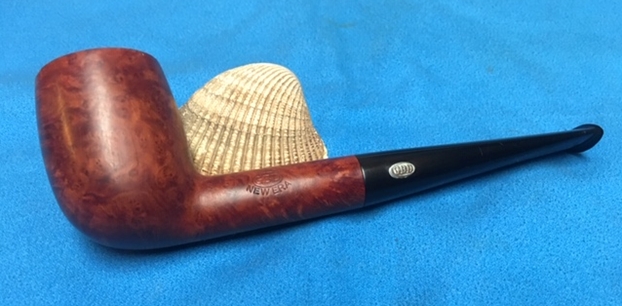
Paresh:  Victor, you started this……

Steve Sir, would you like to work this pipe with me when you reach? This will be an epic project together or you want me to proceed ahead? It will be a significant project.

Victor:  W8, Steve is going to India? (You live in India, right?)

Paresh:  Yes Sir. Even Dal Stanton will be with us.

Victor:  I wanna go too! Hahahaha

Paresh:  Really?

Victor:  I’m just kidding, I can’t afford a trip like this

Paresh:  Okay. U will not be spending a dime here.

Steve Sir, what say about working this pipe…?

Mark:  You can handle it Paresh!

It’s no different than a Dr. Grabow!

Paresh:  More than the value of the pipe, it’s worth its weight in gold working together with Steve Sir and Dal Sir on this oldest heirloom piece that I desire.  And not to mention Jeff Sir and Abha doing the initial cleaning…lol

Steve:  Sounds like an interesting proposal Paresh… I am game.  But I also know that you can handle it

I did miss the frenzy of the discovery of the dating of this BBB treasure Paresh inherited from his grandfather, but I experienced the thrill of having a part in its restoration – and what a restoration it was!  One of the fun parts and challenges was to use only the tools available to Paresh in India.  Each restorer is used to his own tools and techniques.  The restoration of the 1846 also became a time of sharing and seeing how each of us approached the different phases of the restoration.

The day we determined would be THE day for THE restoration arrived.  We three are in the flat that Paresh had provided for us during our stay.  On this day set for THE restoration, we were up early before Paresh arrived from his home.  After our tea and coffee, we were ready to go and decided to start on the cleaning phase to get a jump on things. Here we go!  Jeff and Steve set up camp to begin the cleaning phase laying out the tools of the trade – no Savinelli Fitsall Tool this time around! The BBB had very thick cake and lava flow over the rim – very characteristic of Paresh’s grandfather’s other pipes where the practice seemed to be smoke, never clean and toss in the box when they were unsmokable and buy another! Steve started with reaming the chamber.  Starting with the reaming blade heads he reams with the smallest blade and then works to the next larger. He uses two of the four blades available and then switches to the long pen knives available in Paresh’s arsenal and continues clearing the thick cake. After scraping the chamber walls with the pen knives, he follows by using ‘230’ grade paper (I can’t remember what the grading was in India – it could have been 220 to 240, mid-range) to clean the walls of the carbon further and wipes the chamber with paper towel. After wiping, Steve evaluates the condition of the chamber and the 173-year-old chamber is in good shape from what we can see at this point.Switching now to the rim, Steve carefully employs the sanding paper over the rim to begin removing the thick lava flow. Continuing on the rim, next he uses a flat blade and pen knife and continues carefully scraping the rim. Using a spatula tool, he switches attention to the mortise and scrapes out the old oils and grime buildup. With the lava excavated from the rim, Steve identifies what looks like a hairline crack running over the rim.The crack isn’t easy to see.  It runs across the rim and over and down the stummel a bit.Steve continues smoothing the rim using 230 grade paper in order to get a better look at the rim’s condition.The crack is now more clearly seen. We paused when Paresh and Pavni arrived and I got more practice perfecting my selfie technique.  Pavni enjoys helping her father in his restoration adventures.  Her specialty in the restoration process, which has become a unique trademark in Paresh’s restorations, is sanding the chambers to a smooth perfection.As the project manager, Paresh receives an update on the progress on the 1846 BBB which includes the news about discovering of the crack after the rim cleaning.After conferring with the master restorer, the decision is made to take the 1846 to the topping board.  In this case, a piece of 230 paper on the flat, glass table serves well as Paresh begins the topping process.  The debate using the topping board is always weighing the loss of briar verses the needed corrections in the restoration process.  The rim needs refreshing and redefinition, and the hope is that some topping will improve the situation with the crack. The first revolutions show the progress and revealing more distinctly the rim crack. After another few revolutions on the topping board, it is time for a conference and Steve again takes the stummel to the topping board. Paresh harvests the briar dust off the sanding paper, which appears to be a 150 grade from this view.  Under Pavni’s watchful eye, Steve takes the stummel a few more rotations and we arrive at a satisfactory point. From the picture above, the inner rim edge is rough and uneven.  There is also a dark scorched ring remaining around the inner perimeter. Paresh goes to work cleaning the inner rim edge with a roll of sanding paper.  We’re hoping that the sanding will take care of the minor hairline crack. Across the table, Jeff takes a close look at the amber stem with the Henry Hughs Son LTD London magnifying glass.  The night before we were all squinting looking at the nomenclatures of many pipes and this morning Paresh remembered to bring this classic lens!  Looking at the 1846 BBB through this antique lens seemed only right! Jeff goes to work on cleaning the delicate bone tenon but waits on the airway of the amber stem.  We don’t want to use alcohol on the amber which could potentially damage it causing it to shatter or craze – making spider web-like cracking.  During the week, Paresh had a young man on call to respond to all our needs.  We needed a natural acidic cleaner for the amber stem and lemon juice is a good choice for the job.  Paresh made a call to the young man to bring us lemons.…  Waiting for the lemons, Jeff gave Murphy’s a try on the bone tenon and airway with some results. On the other side of the table, Steve isn’t satisfied with the rim and adds a few more turns on the topping board and follows with a light sanding touch on the external rim edge to soften the rim edge and clean remaining nicks. The threads of the bone tenon have years of debris compacted and Jeff starts with a bristled brush to help clean and then passes the stem across the table and Paresh continues the delicate thread cleaning probing and scraping with the flat blade. With Paresh working on the tenon, Steve passes the stummel to Jeff who starts his cleaning regimen using Murphy’s Soap and a paper towel.  The towel shows the first layer of grime coming off.  He also gently scrapes the shank shaft with a blade where the band was mounted removing grime softened by the Murphy’s Soap. Paresh hands the stem off to Steve who continues working on the bone tenon threads using a stationary inverted wire brush.  This does the job and the stem goes back to Jeff for his inspection. Jeff continues cleaning the BBB stummel with more Murphy’s Soap and gently scrapes the lava buildup on the stummel surface just over the rim. Next, Jeff furthers the cleaning by taking the stummel in the kitchen and giving the stummel a cleaning using warm water and liquid dish soap, which in India came in a paste form, and scrubbing with a bristled toothbrush.  I was very interested in seeing Jeff’s cleaning process.  He has developed an interesting system of which even Steve was not fully aware! With Jeff’s cleaning, he’s not concerned to allow water in the internals but washes the internals as well using a shank brush to clean – rinsing with warm water – external surface and internals. With the stummel clean, Steve takes the stummel to work on the primary restoration issues.  Using a 1500 grade micromesh pad, Steve dry sands the upper part of the stummel around the rim and the rim surface to work on some rough areas and to clean the area of the crack identified earlier.  The challenge is to preserve the 1800s patina while applying some abrasives to the surface.  Steve employs the micromesh for this reason. While Steve is working on the stummel, our young helper man arrives with the lemons needed for Jeff to continue his internal cleaning of the amber stem!Steve’s fine sanding with the micromesh pad on the rim brings into focus two cracks, the original and a lesser one – in the picture below at the 4 o’clock and 6:30 o’clock positions. To address these issues, Steve decides to drill a counter-creep hole with the Dremel on the original lone crack which creeps down the stummel and then apply CA glue shoring it up.  To begin, to create a hole to guide the drilling, using the magnifying glass, Steve presses the corner of the flat blade into the briar where the crack terminates creating the guide hole for the Dremel drill bit. With the area cleaned, the crack is clearly seen now on the external side as well as internally looking in the chamber. After a very short discussion with Paresh, it’s decided that Steve will do the honors of drilling the counter-creep hole.  Mounting a 1 or 2mm (not sure which now!) drill bit in the Dremel, with nerves of steel preparing to drill on the 1846 BBB, Steve does the job.  This part of the restoration is critical – drilling the hole keeps the crack from advancing as the bowl heats and cools – expands and retracts.  During the drilling, one does not want to drill too far punching through into the chamber! Next, after Steve applies CA glue over the crack and count-creep hole, Paresh is ready to apply briar dust over the wet repair area to enhance the blending on the vintage briar surface. With the main crack glued and briar dust applied, the secondary crack receives a spot drop of the thin CA glue as well to create a strengthened reinforcement. After the CA glue cures, Steve strategically files and sands the repair areas removing the excess glue and bringing the patches flush with the briar surface. To again freshen the rim after the crack repairs, Steve lightly tops the stummel and the results look good. Following the topping, again using the 1500 micromesh pad, Steve sands both repair areas on the stummel surface as well as topping the stummel with the micromesh pad. This smooths and blends the repair area well with little impact on the ancient briar’s patina. Now armed with a natural cleanser, lemon juice, Jeff continues the cleaning of the amber stem’s airway. You get a better idea now why this write up seems a bit like watching a ping pong tourny!  Paresh now continues the application of micromesh to the rim of the 1846. The results are great for Jeff’s stem cleaning utilizing the lemon juice.  The pipe cleaner reveals the buildup in the airway. Steve continues to work on the rim and repair areas with micromesh pads 1800 and 2400. With a sense of having worked the areas enough with the micromesh pads, Steve applies Before & After Restoration Balm to the rim and the crack area where he had been applying the micromesh pads to see how the briar will snap to.  The result is phenomenal as the following pictures show. This marks the completion of micromesh pads 1500 to 2400 on parts of the stummel and rim.  The cracks are still visible but have blended well in the darkening briar hues. Paresh follows by dry sanding with 3200 grade micromesh on the stummel. Jeff declares that the stem internals are now clean.  After thinning a thick pipe cleaner with the pen knife, Paresh runs the pipe cleaner through the stem and bone tenon for one final pass. The amber stem bit has experienced chipping and this is next up for repair.  Steve begins the repair by spot dropping clear CA glue to fill the divot.  After applying, he puts the stem aside for the CA glue to cure. The BBB silver band is next.  The band shows the normal coloring as the silver oxidizes over time.  Paresh tackles this project by using a dry powdered silver cleaner that he has available in India.  I had never seen anything like it before and watched with interest as Paresh pinched the powder and applied it to the band and rubbed the powder in the metal. The results were stellar as the pictures show. While Paresh worked on cleaning the band, Steve pressed forward applying the next set of micromesh pads to the stummel and rim of the 1846 BBB.  Using pads 3600 to 4000 he dry sanded. The emergence of the beauty of this aged patina was amazing to watch as Steve teased it out by dry sanding with pads 6000 to 12000. With the micromesh phase completed, Steve attaches the newly shined BBB silver band with its identifying hallmarks, using a bit of CA glue.  After applying a small line about midway up the shank underneath where the band will rest, Steve positions and slides the band over the shank until it tightened. All I could say was, ‘Wow!’.  The vintage band adds that touch of class that the 1846 BBB already had in spades!Next, we’re all anticipating the results of applying Before & After Restoration Balm to the entire bowl.  The Balm does a great job coaxing out the deeper hues of the briar.  Often, the changes are subtle, but distinctive.  This picture shows the stummel before application.Steve applies the Balm by putting some on his finger and thoroughly working it into the briar surface.  I have often described the texture as thinner, or cream-like when first applied, then thickens into a wax-like texture as it is rubbed in.  After allowing the Balm to set a while, Steve buffs it off with a cloth to reveal the great results!  The vertical grain on this stummel is beautiful with a smattering of bird’s eye grain on the heal. It’s true, we may have done this a bit out of order, but Jeff and Paresh team tag working on cleaning the internals of the mortise.  Cotton buds and pipe cleaners are used, after dipping in alcohol.  Paresh excavates some gunk with a small scoop tool which was part of his arsenal. Meanwhile, after the first round of CA glue cures (it didn’t take long), Steve continues to work on the bit of the amber stem.  He uses a file on the button and also files out a chip on the side of the stem, next to the button. He applies another round of CA glue to chipped area on the side as well as to the previous divot to continue building up the surface.  The pictures show the progress. Jeff declares, ‘Clean!’ after a plethora of cotton buds and pipe cleaners bear witness to the tars and oil he removed from the stummel internals.The 1846 BBB was the main show of the day’s restorations, but several other projects were going on as well.  Here, Steve and Paresh confer and Pavni works on doing what she does best – patiently sanding and smoothing another stummel – this one a Meerschaum! Steve completes filing the stem repairs and sands down the patches so that they are invisible.With the stummel cleaned, I finally get the nod from the project manager to put down my iPhone (actually, Paresh takes over the picture taking) and pull out the Dremel and to begin the fine polishing phase.  I use White Diamond compound with a cotton cloth buffing wheel mounted with the speed set at about 40% of full power and apply the compound.While I disappear into the ‘zone’, Paresh takes a picture. While I’m in the zone, Paresh captures the progress Steve is making on the amber stem.  The CA glue patches have been fully sanded out and are invisible.  Steve did a great job smoothing, blending and filling the chipped area on the side of the stem.  He had to apply several coats of CA to build out the surface so that it again blended naturally.Zone….The amber stem is then treated to the full regimen of micromesh pads, dry sanding from 1500 to 12000. Zone…. After completing application of the compound, I mount another cotton cloth wheel maintaining the same speed and apply carnauba wax to the stummel.  I’m please the way the grain is popping!Then, to add the finishing touches, I apply White Diamond compound to the amber stem – appreciating the work that Steve did. After the White Diamond, I decided not to apply carnauba to the stem – it was already glistening and the pure, raw amber was more than ample to present this classic pipe.After I completed applying the compound to the stem, I rejoined stem and stummel and passed the 1846 to Paresh who had the privilege of doing the final handbuffing to raise the shine and complete the restoration of the 1846 BBB.  Woohoo! As we had planned, in celebration of the completion of the restoration together we smoked 3 unbelievable vintage pipes with albatross shank extensions and horn stems – all from the 1800s.  Oh my…. We each thoughtfully packed our bowls with our choice of blends and lit up and, well….  What a treat for Paresh to share the treasure trove of pipes left to him by his grandfather.  Jeff did the honor of commemorating this event with pictures. To further commemorate this amazing experience, we took a portrait of everyone who had taken part in the restoration of the 1846 BBB – notice Abha will have the first use of this grand old BBB! Mudra did the honor of taking the picture.There are not enough words to describe all that we experienced together while in India with Paresh’s family.  Steve, Jeff and I were treated literally like royalty!  We were taken to many different places to see the sites and to enjoy different cuisines, even pizza!  We all stored up memories which we’ll value all our days.Before heading to the airport, I took one more picture of Paresh and his family, Abha, Mudra and Pavni.  We arrived in India as acquaintances and we parted as family. And now the story has been told. West met the East in India for the restoration of the star of this story, the beyond classic 1846 BBB Own Make – a treasure from a grandfather to his grandson.  Thanks for joining us!