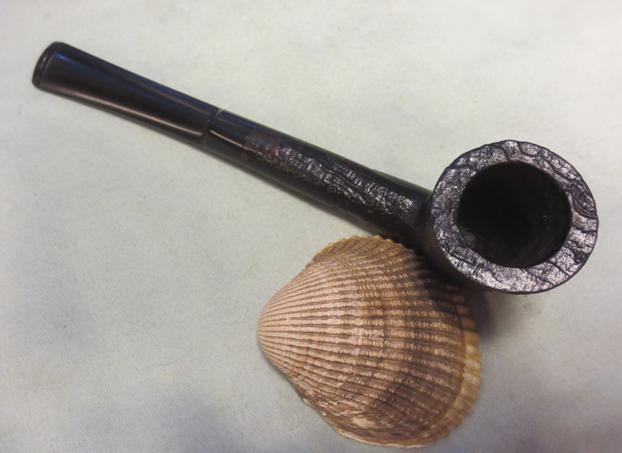
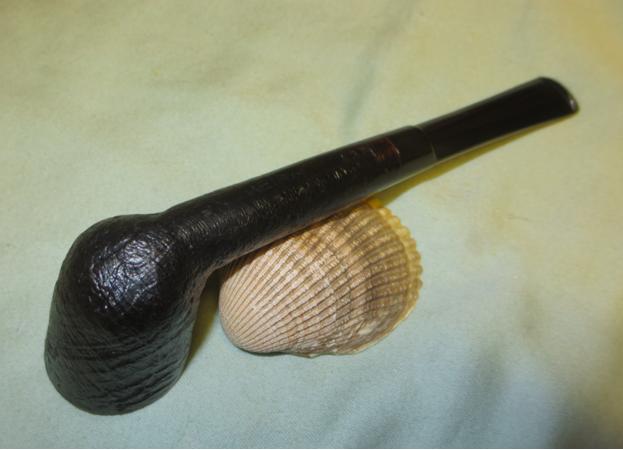
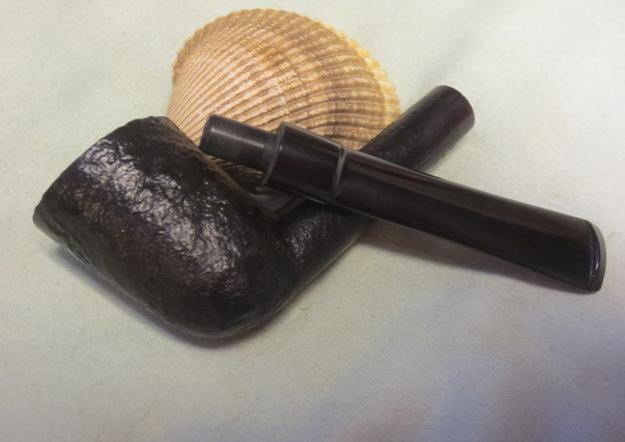
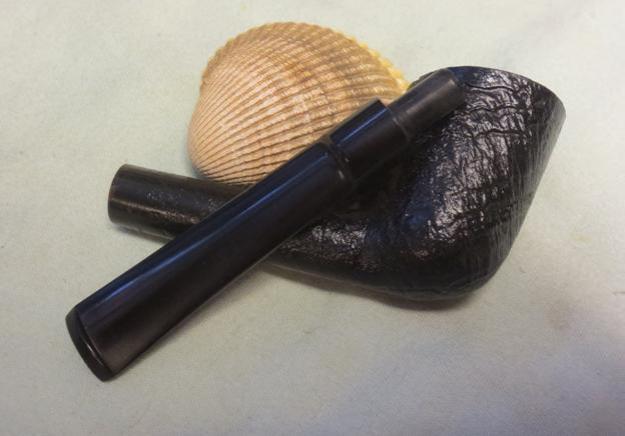
Tag Archives: Bowl – finishing

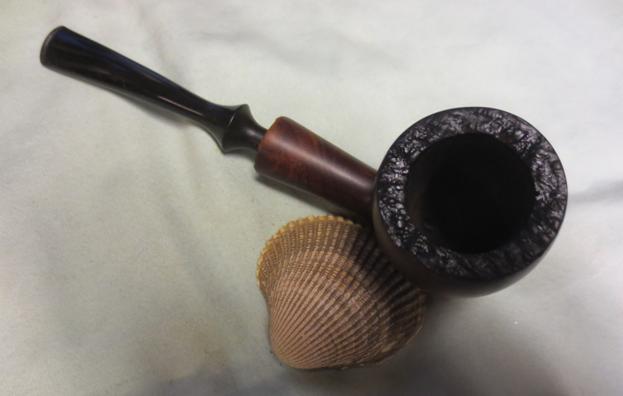
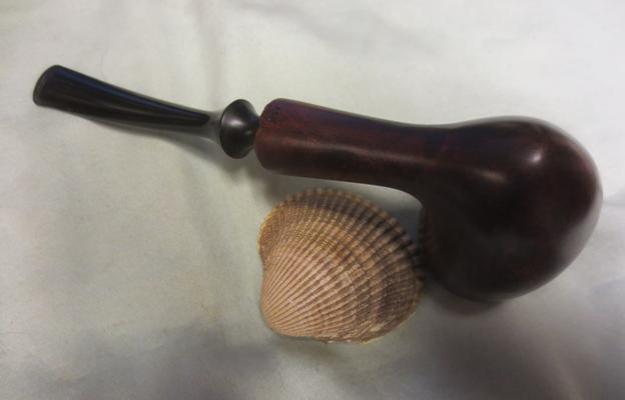
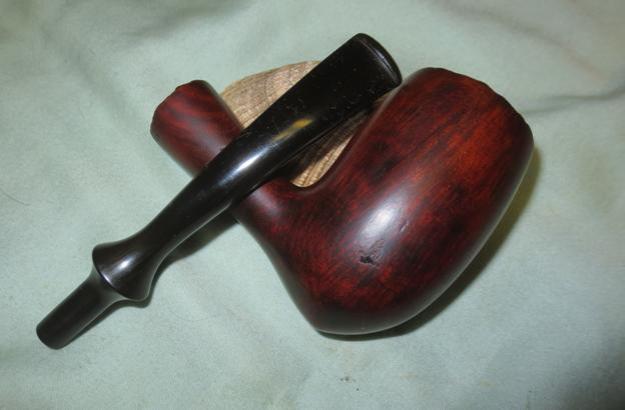
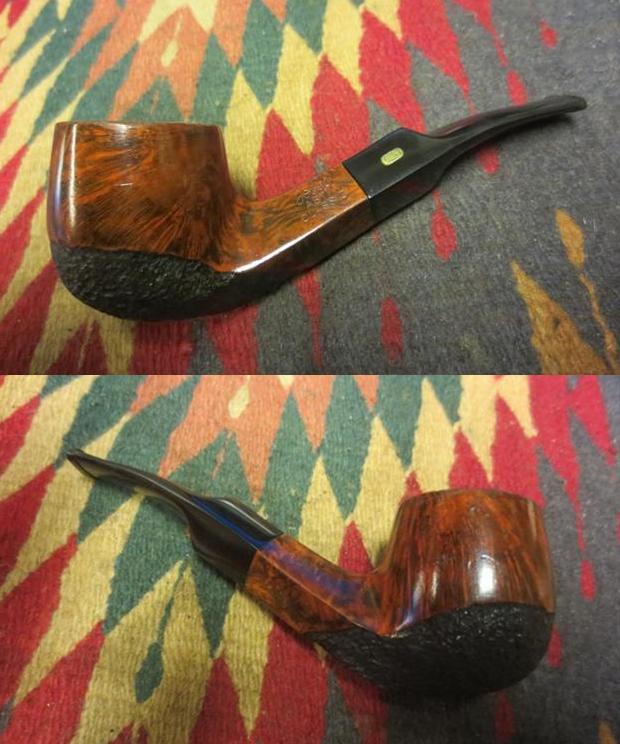
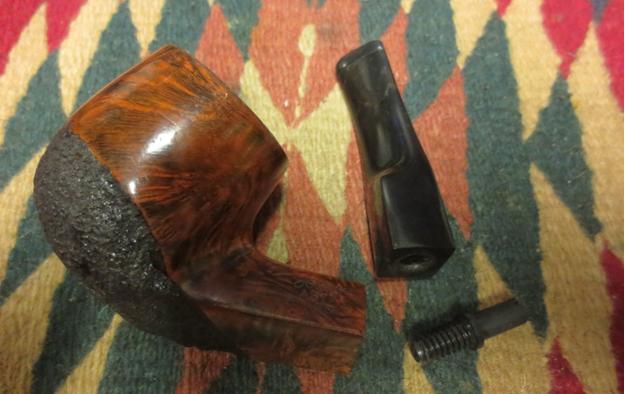
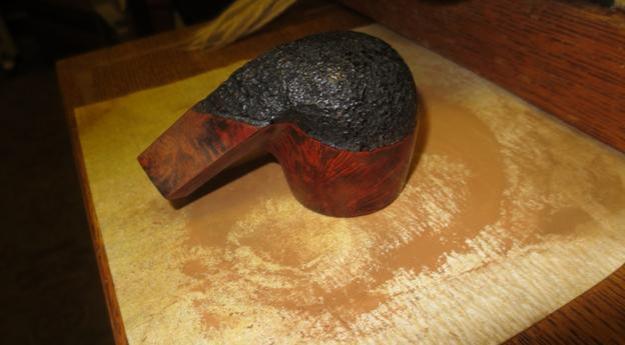
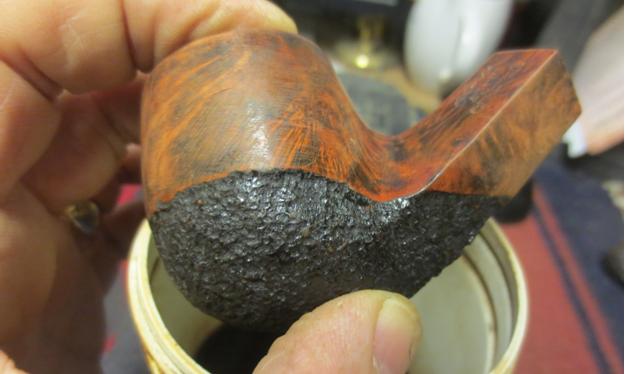
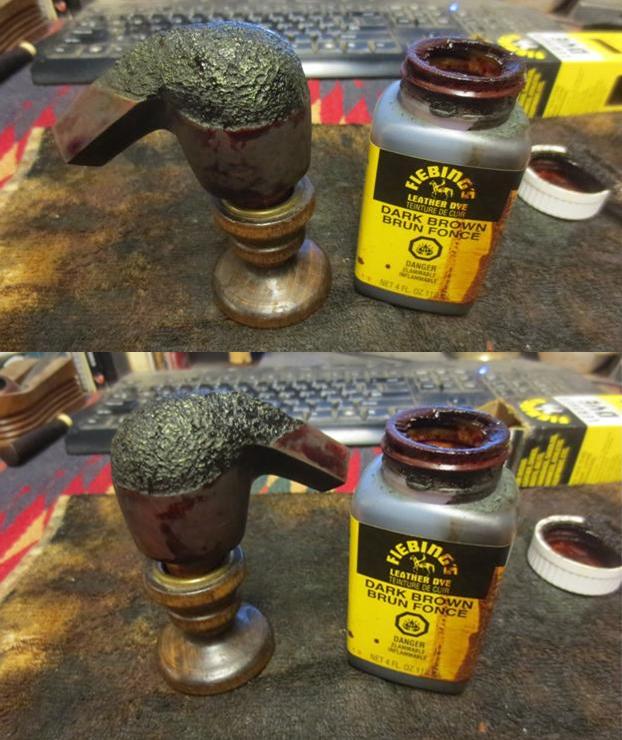
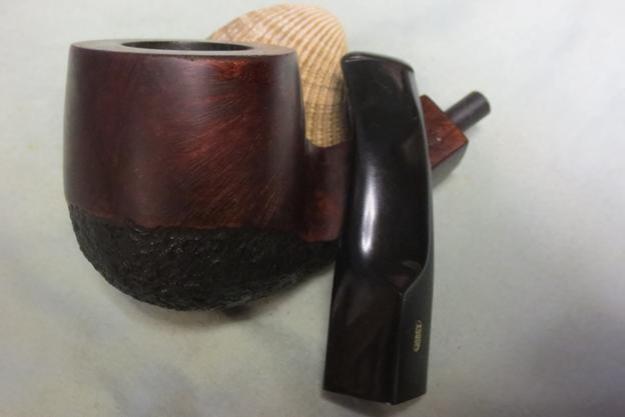
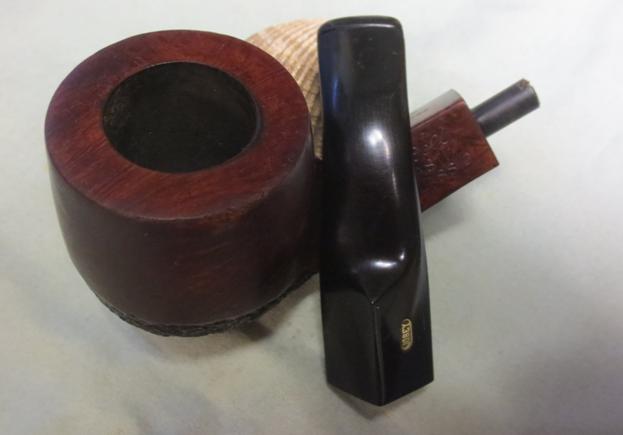
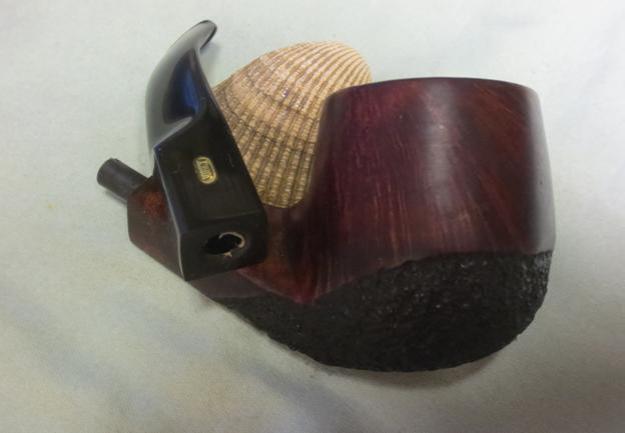
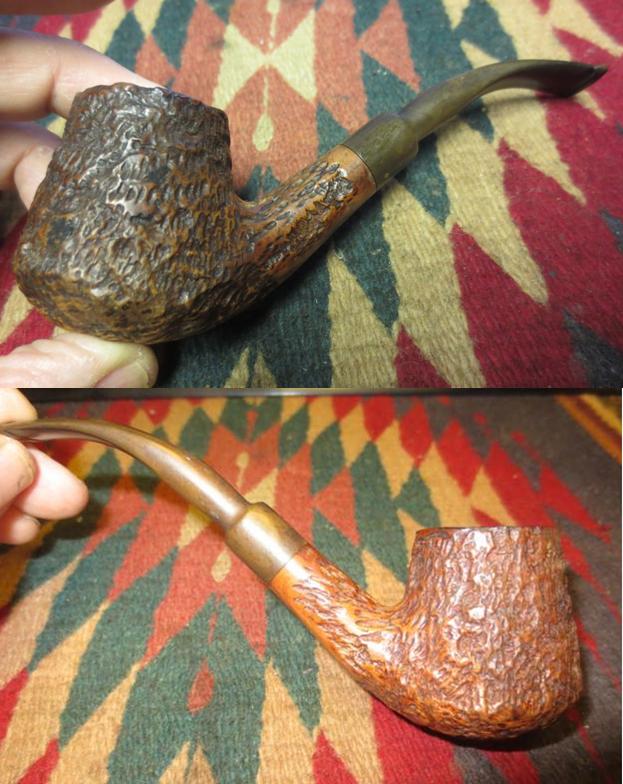
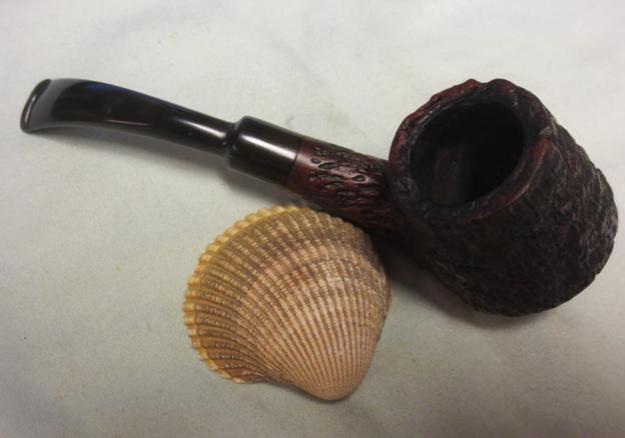
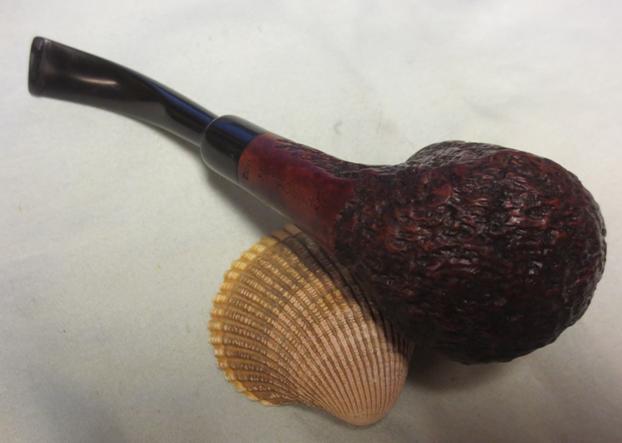
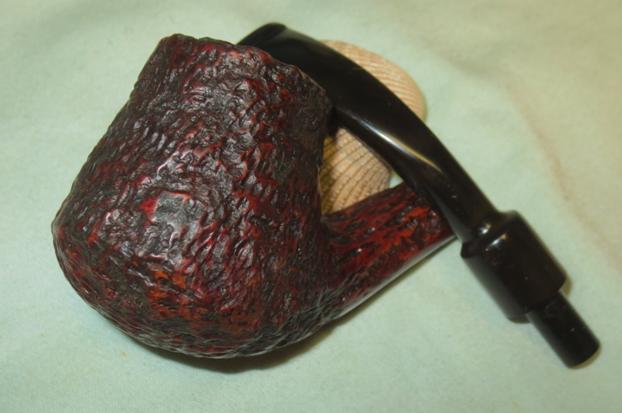
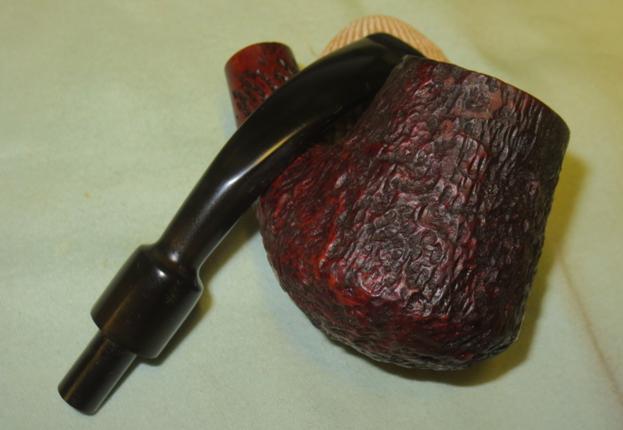
Restemming and Restoring a Hardwicke’s Freehand


Blog by Steve Laug

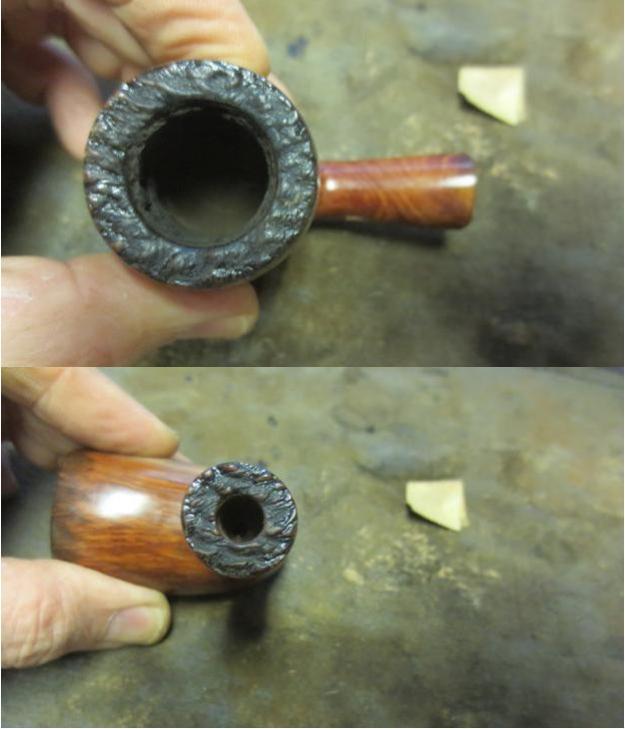
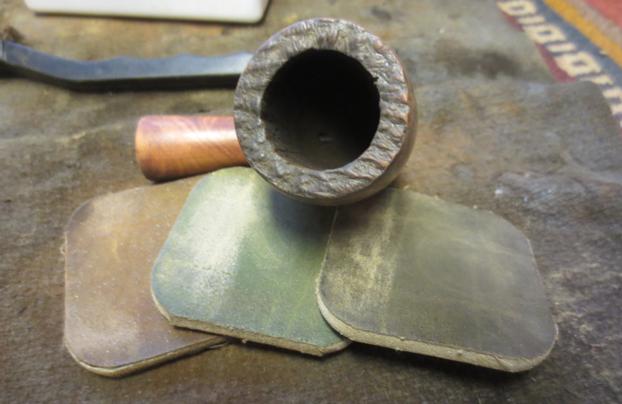
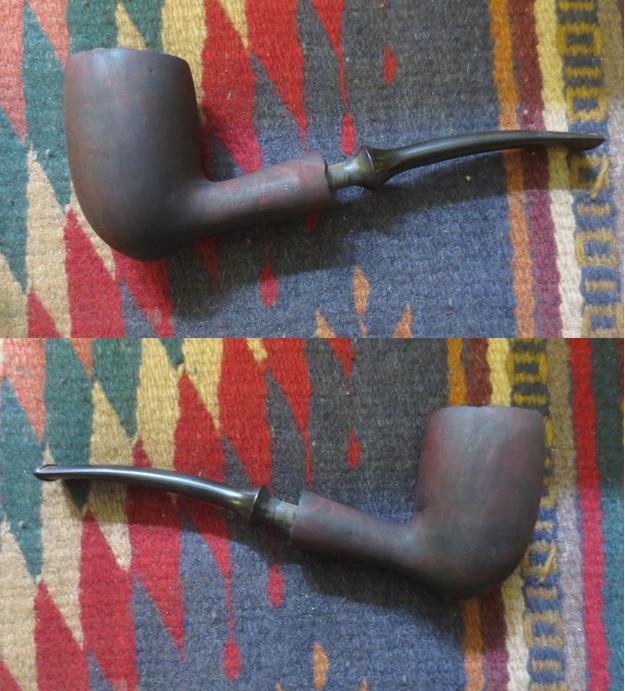
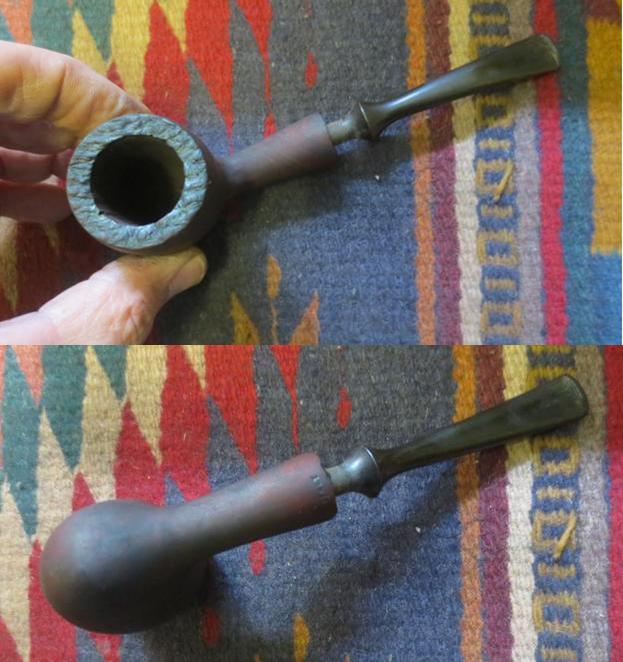
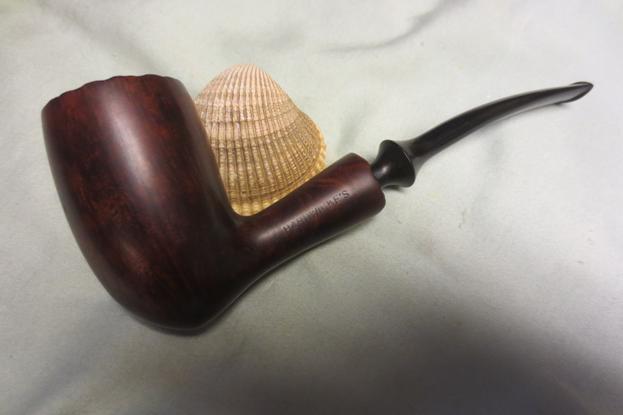
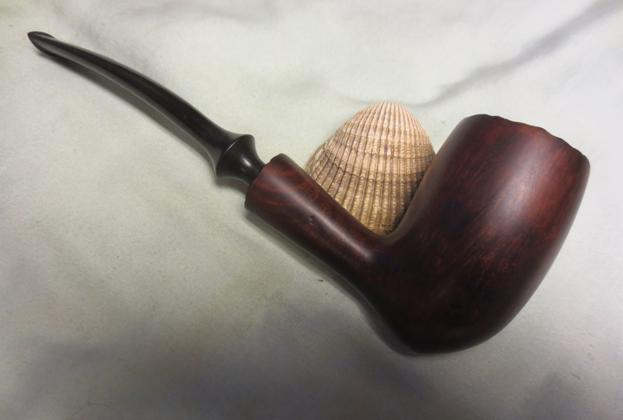
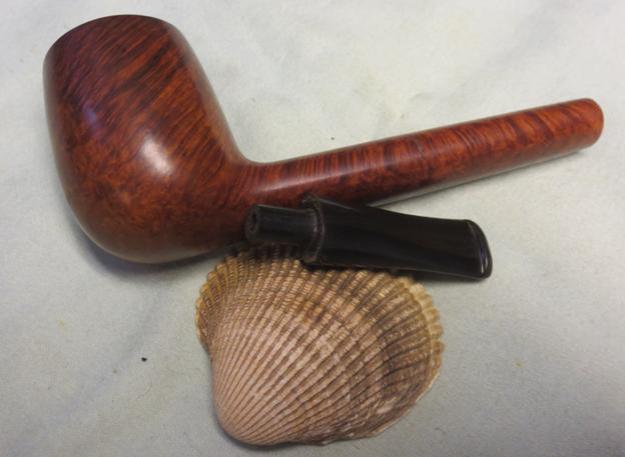
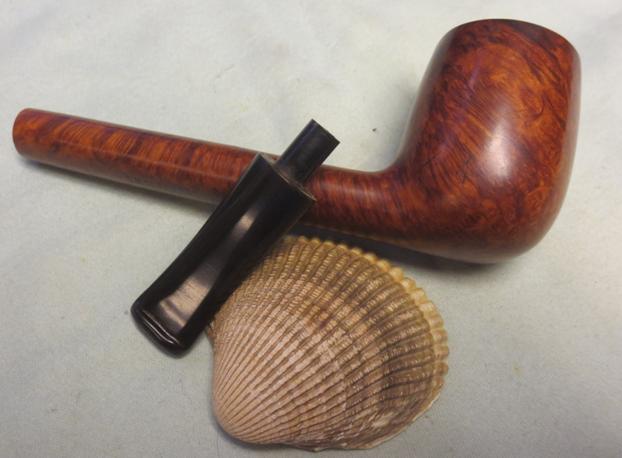
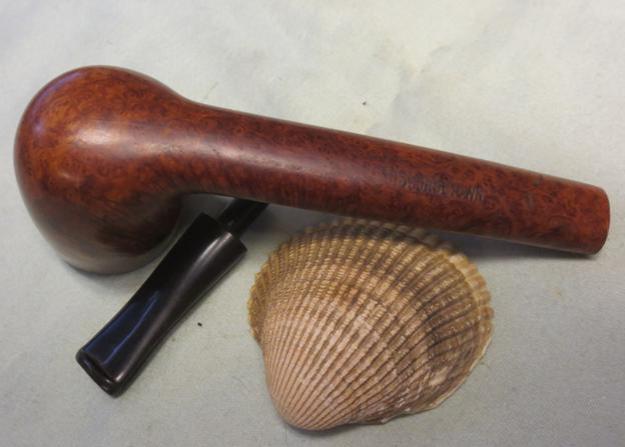
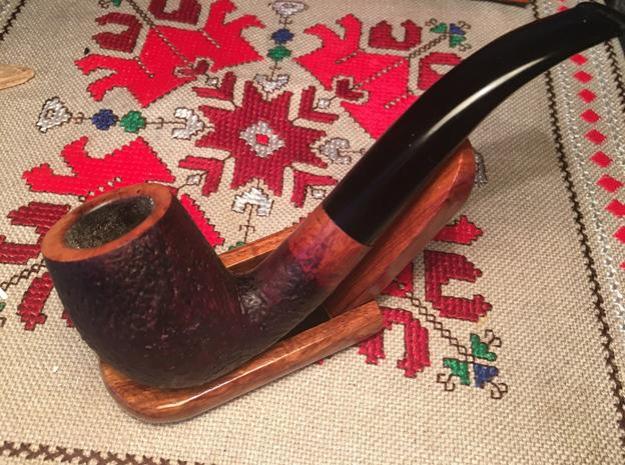
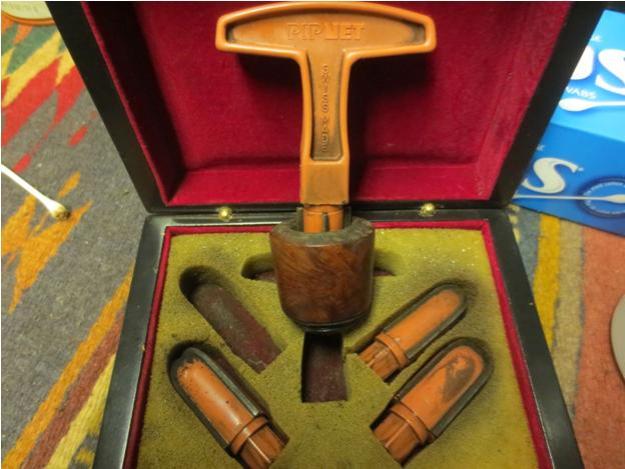
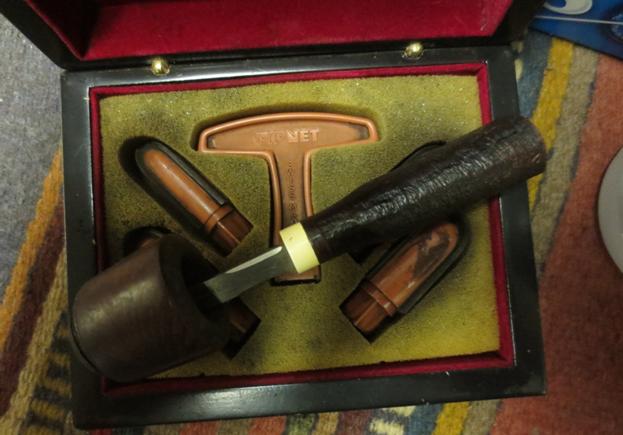
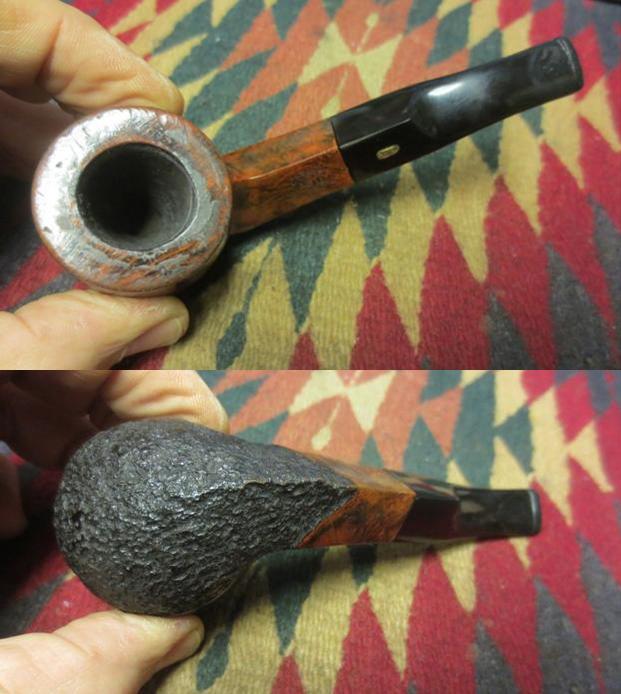
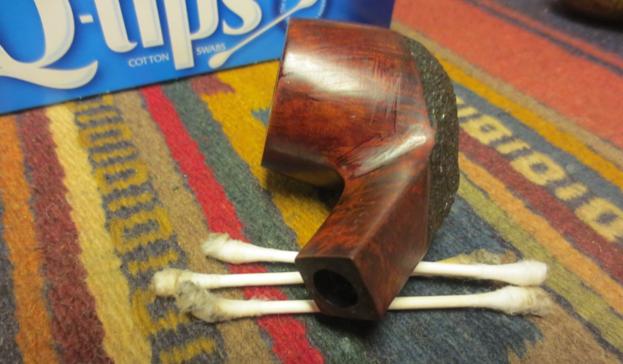
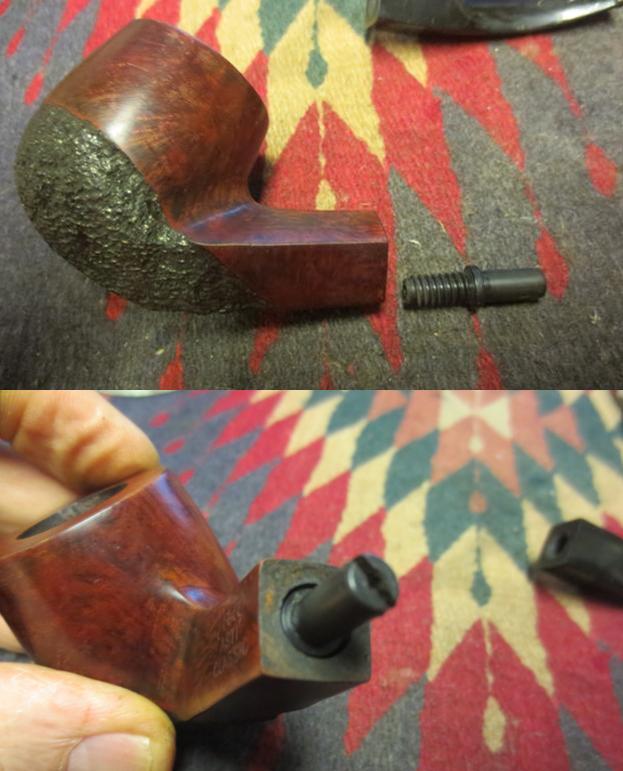
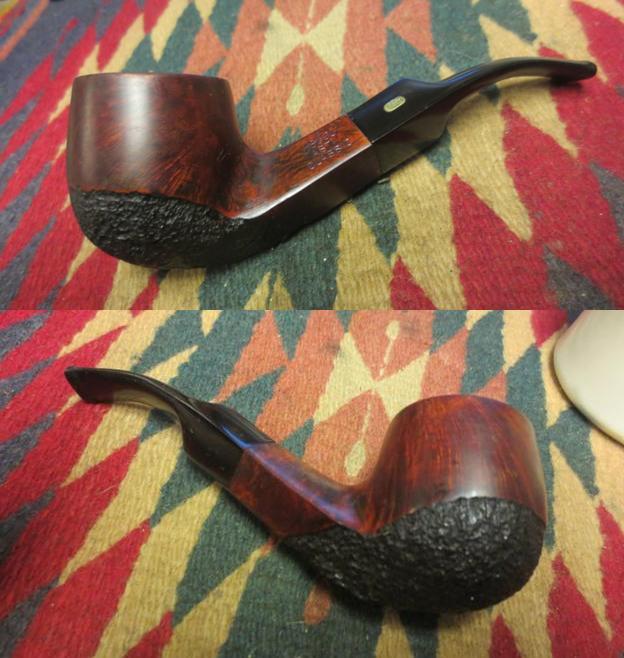
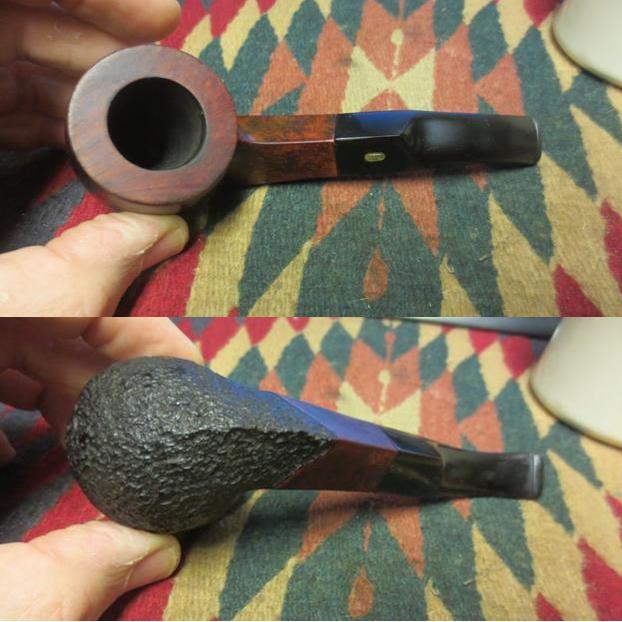
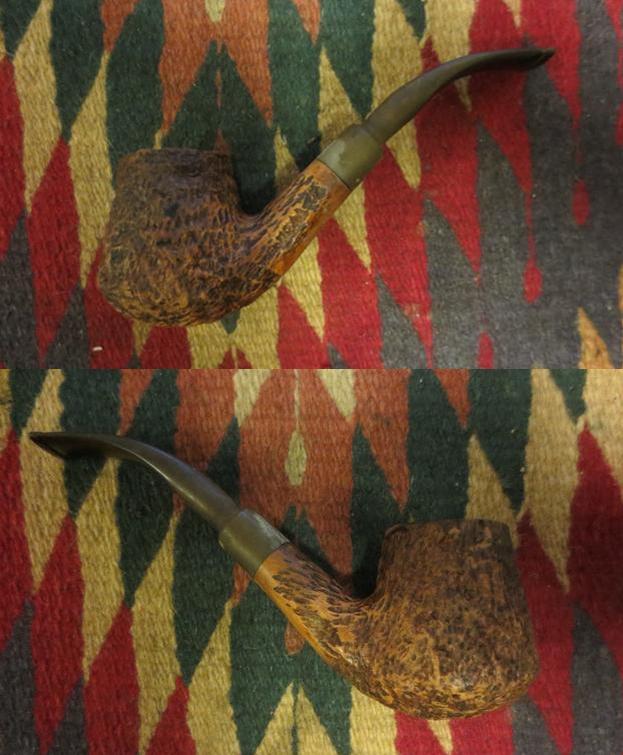
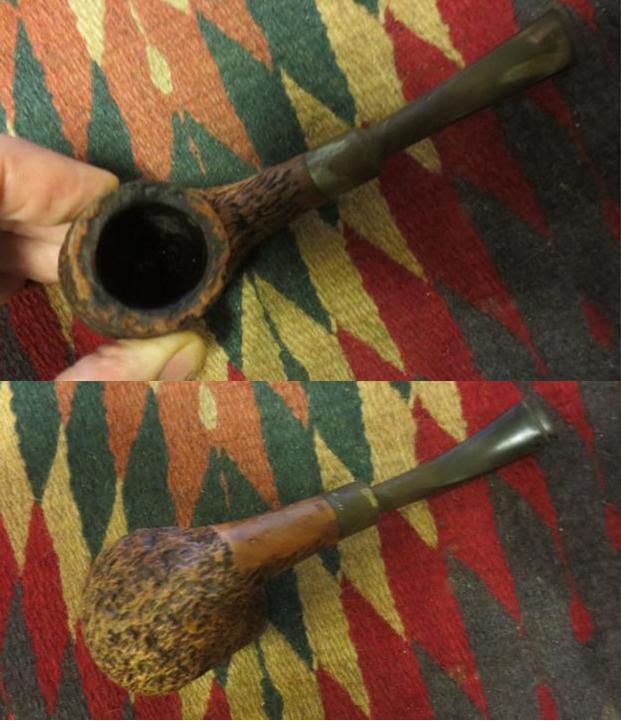
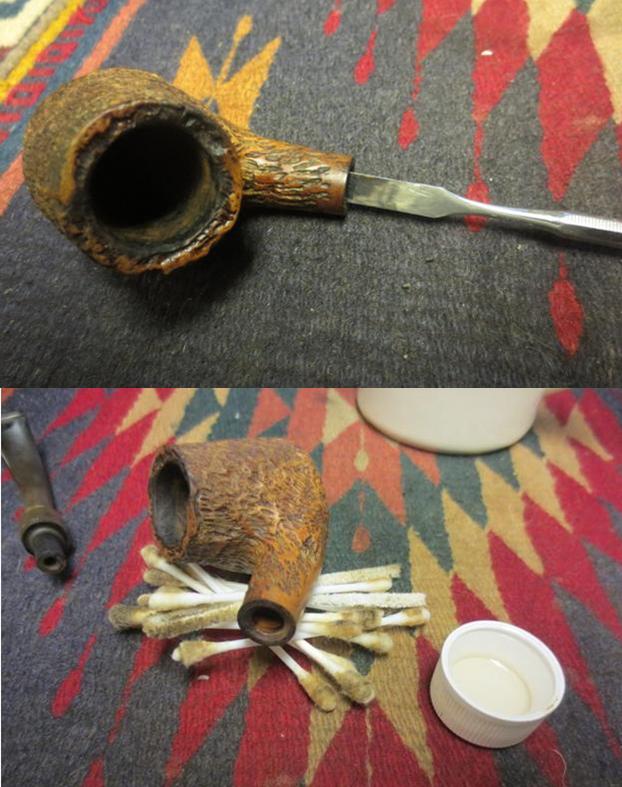
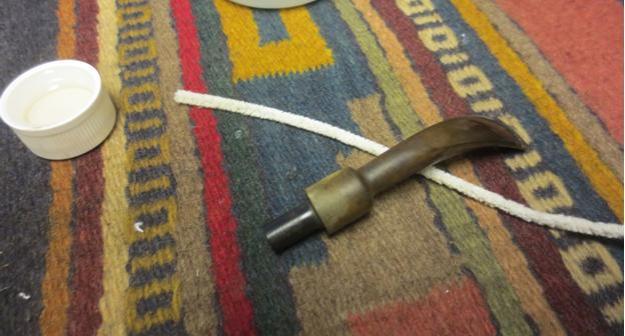
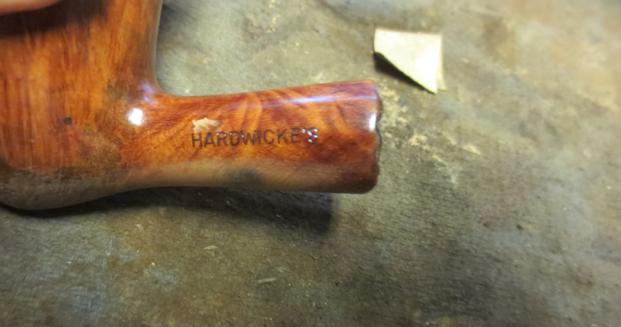
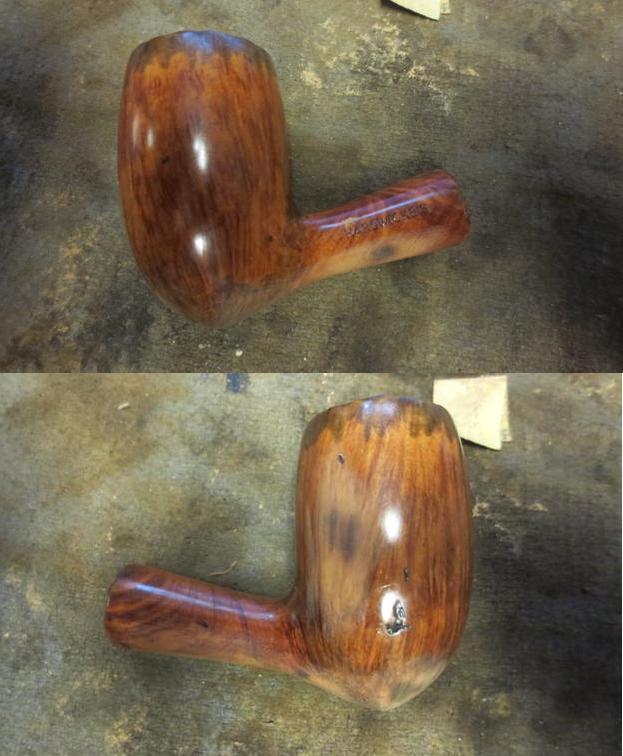
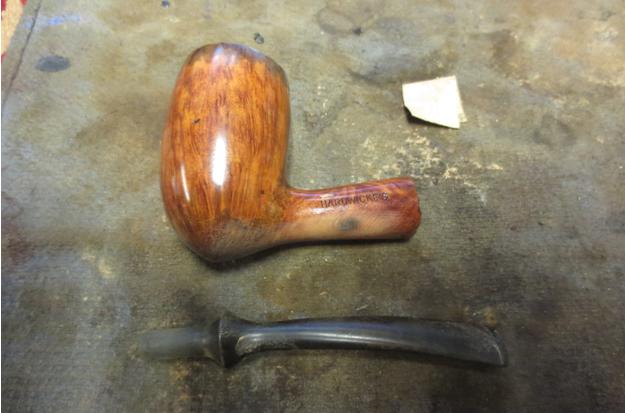
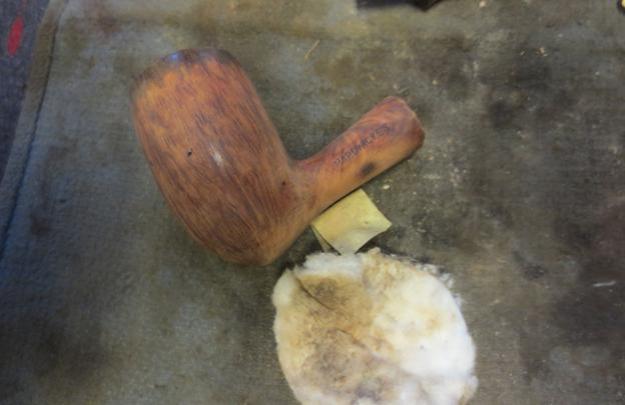
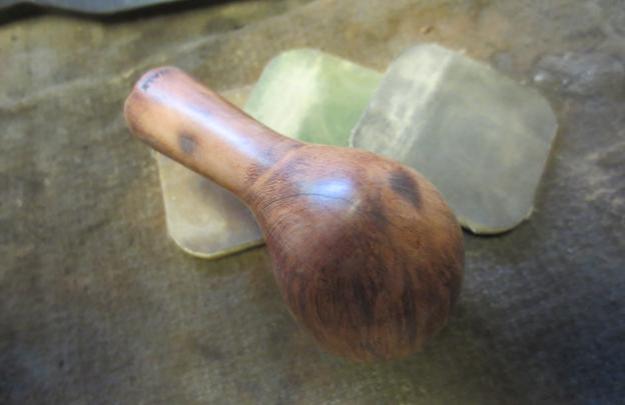
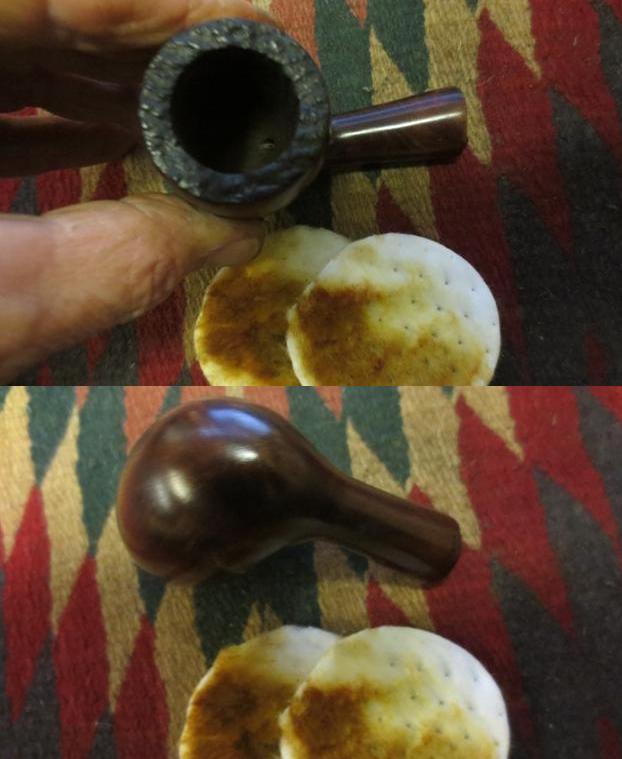
One of the pipe bowls that came to me in the box of pipes from my brother was a tall nicely grained freehand that was stamped on the shank Hardwicke’s and Italy on the underside of the shank next to the shank stem junction. H1I had never heard of the brand before and it was not listed on Pipedia or on the Pipephil website. The more I looked in my usual sources such as Who Made that Pipe the more stymied I was about the brand. It was an interesting shaped bowl. The bowl had some dark marks on the shank, the bowl bottom and on the right side at the point and up the side midway. There was a thick coat of urethane over the entire bowl and the faux plateau. The rustication on the rim matched that of the end of the shank and had been done with tools. There was a thick coat of tars and oils under the urethane on the rim. The bowl itself had a thick cake in it that filled it from top to bottom. The first quarter inch down from the top of the rim had a darker stain that ran down the walls. (I almost forgot to take photos of the bowl before I had sanded all of the urethane off the surface. I stopped and caught these. On the lower part of the bowl on the right side there was a spot of real plateau.H2 H3I went through my box of stems and had a stem that would work really well with this pipe. It would need to have the tenon end reduced so that it would sit in the mortise.H4I decided to Google Hardwicke’s Cigar and Pen to see if the pipe could have been a shop pipe. It was made in Italy but the Hardwicke’s stamping pointed elsewhere. I found that there was a group of shops in Indianapolis, Indiana. The main shop was located at 743 Broad Ripple Ave, Indianapolis.H5One reviewer of the shop had this to say about the shop: “This small cigar shop is located just south of the circle, so in the heart of downtown. They carry a pretty impressive stock of cigars and the pricing is relatively reasonable considering their location. The staff is incredibly knowledgeable and willing to help you find something in your price range. They do have a lot of cigars at the $5 price point so don’t be put off by the fact there are also a lot of $15+ cigars.”
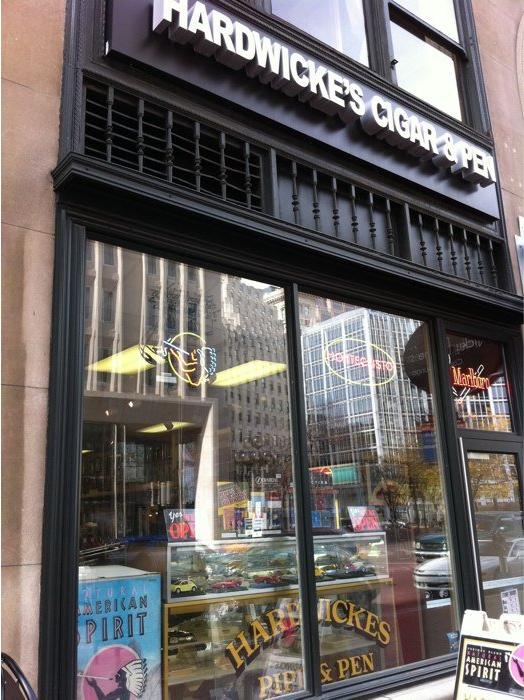
“They also have their own brand, which is rolled with several different tobaccos and in several sizes, these should not be overlooked, especially if you don’t want to spend a lot on your smoke.”

“They also offer pens, pipes, pipe tobacco and the usual array of cutters and lighters you’d expect from a cigar shop. I’ve only purchased cigars here so cannot comment the rest of their offerings, although their selection of pipes does seem good to me.”

Further digging found an article in the Indy Star newspaper about the Downtown shop closing. The article also says that the Broad Ripple Store remains open. I have included the link to the article as well the article in full. http://www.indystar.com/story/money/2016/01/20/smoke-free-downtown-landmark-hardwickes-exits/78800744/

Hardwicke’s Pipe & Tobacco, a long-time Indianapolis fixture, seems to have shuttered its Downtown store.

The inventory was being removed last week, and a store clerk said closure was imminent. The store now stands empty, void entirely of the fine cigars, cigarettes and pipes the retailer sold for five decades.

Hardwicke’s Broad Ripple store, which predates the Downtown shop, remains open. Staffers answering the phone there declined to comment on the fate of the Downtown location, which had occupied a storefront at 18 N. Meridian St., just off Monument Circle, since 1977.

The demise of Hardwicke’s Downtown comes amid a flurry of change for Indianapolis’ old-time businesses.

Last month Kincaid’s, the high-end meat market at 56th and Illinois streets that had been in the same family since its founding nearly a century ago, was sold. Virginia Jarvis Coiffures, a beauty shop for many of Indianapolis’ leading women since 1965, closed its doors Saturday. G. Thrapp Jewelers, in the Butler-Tarkington neighborhood, closed Sunday after 33 years.

Contact IndyStar reporter Will Higgins at (317) 444-6043. Follow him on Twitter @WillRHiggins.
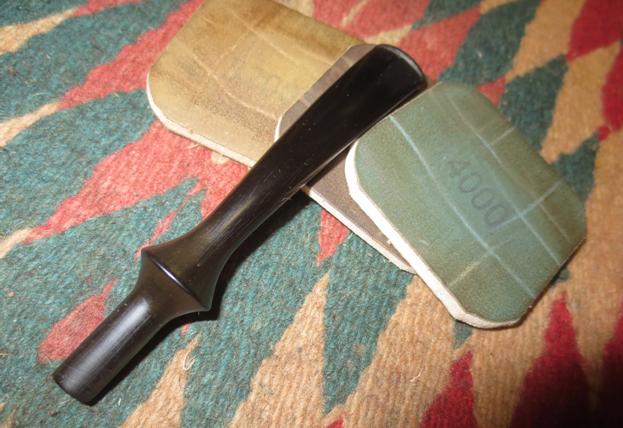
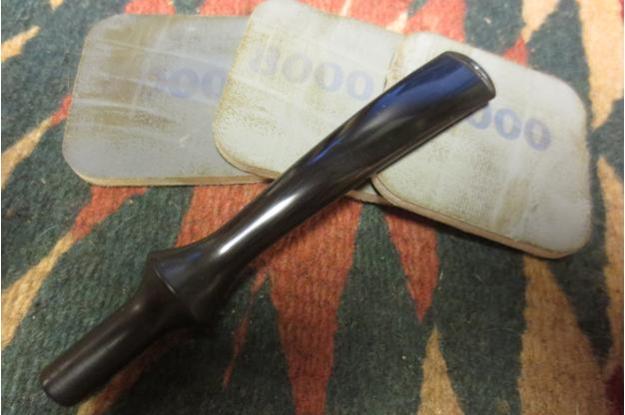
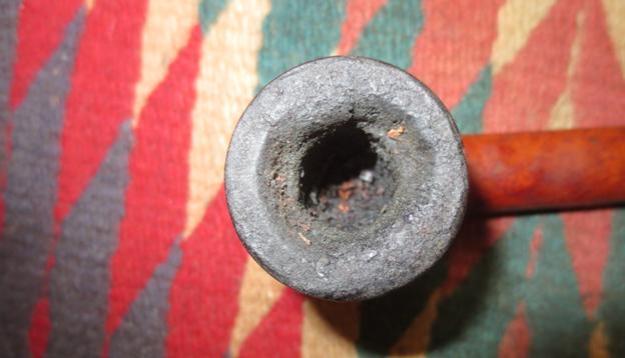
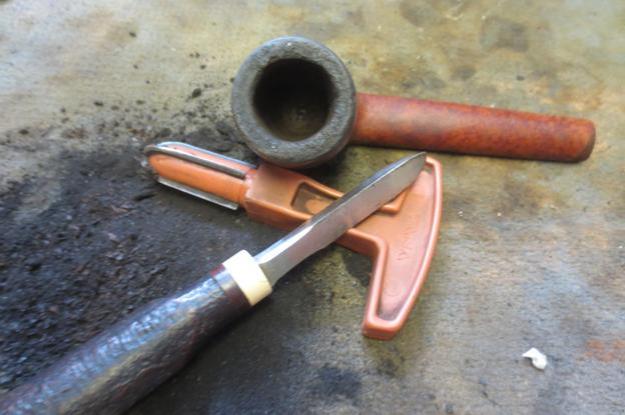
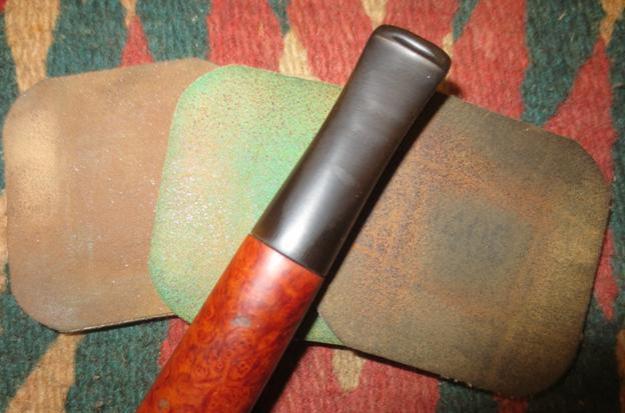
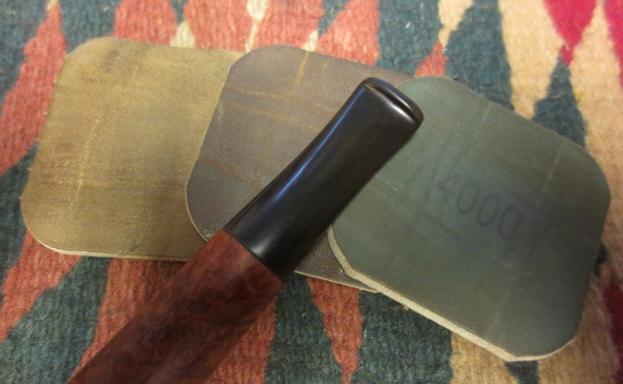
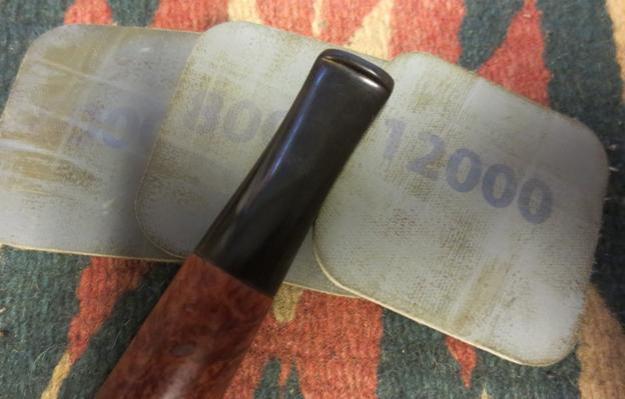
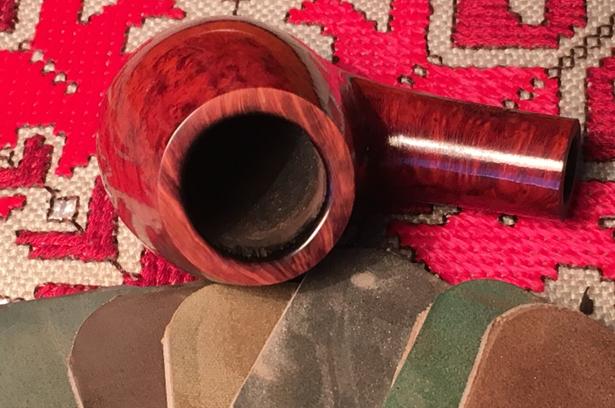
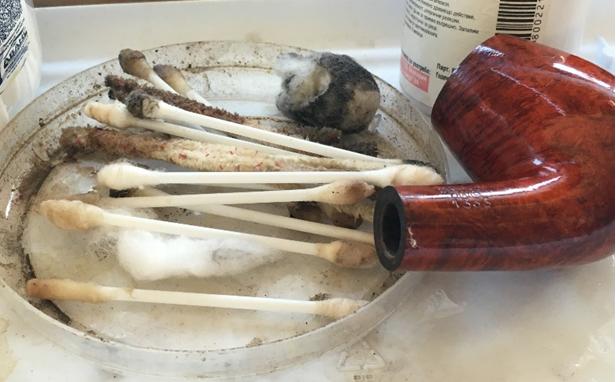
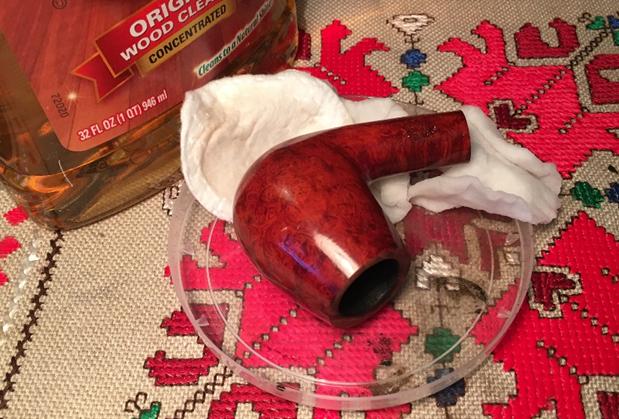
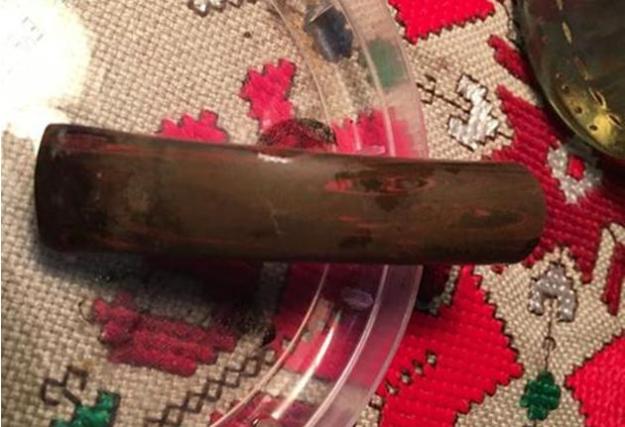
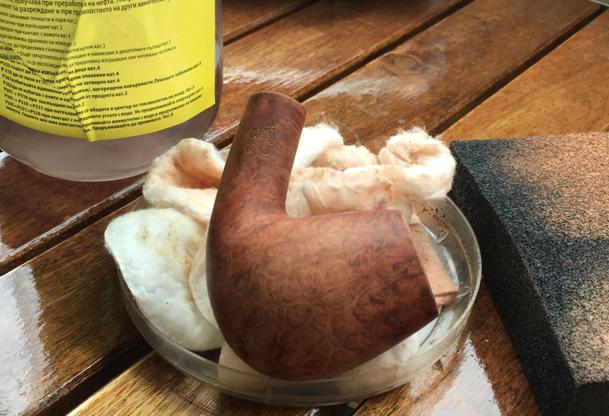
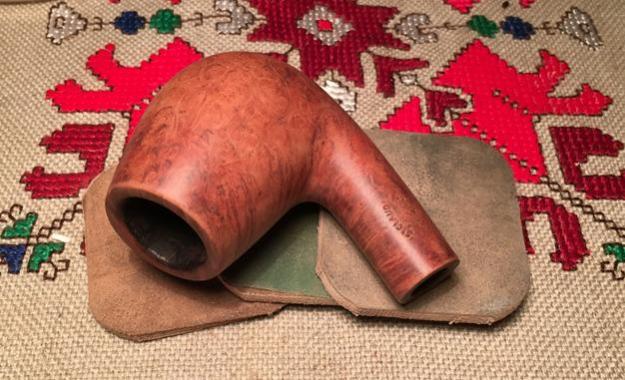
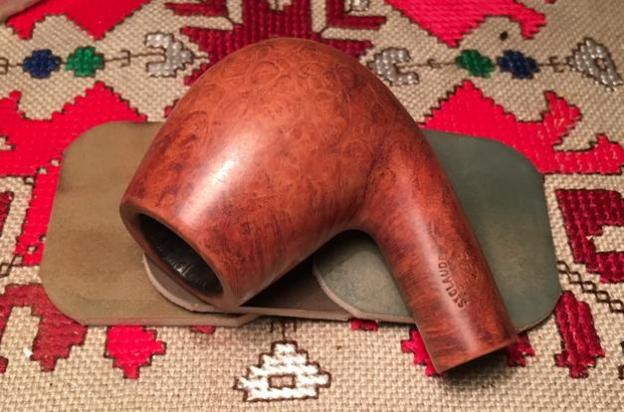
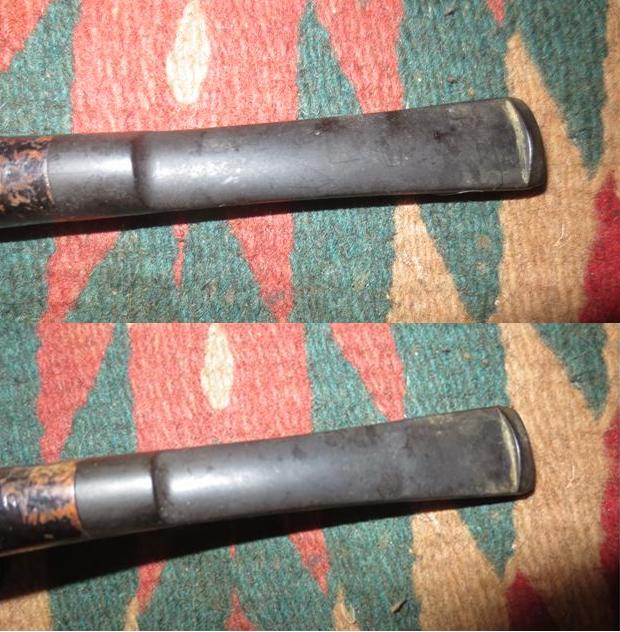
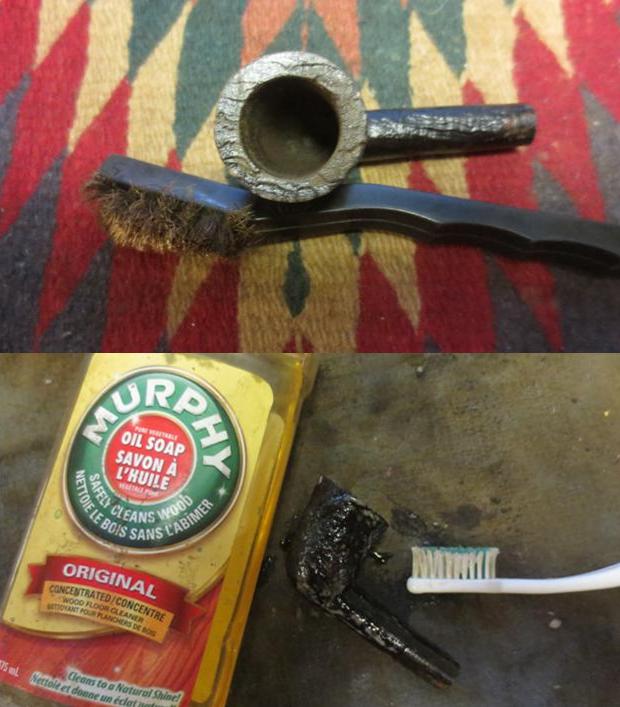
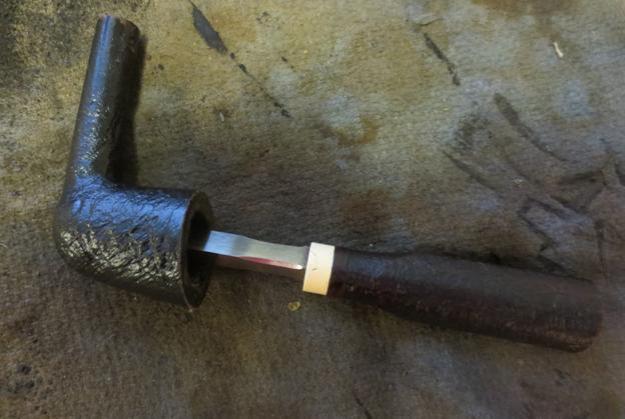
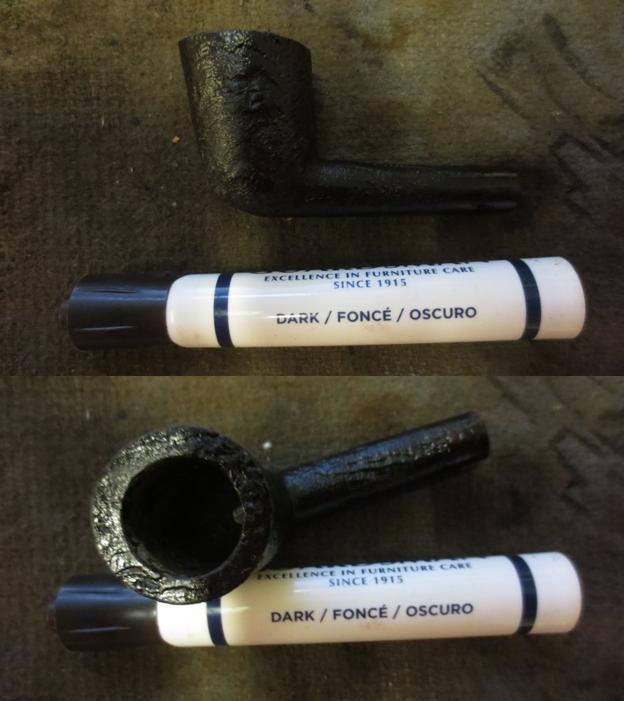
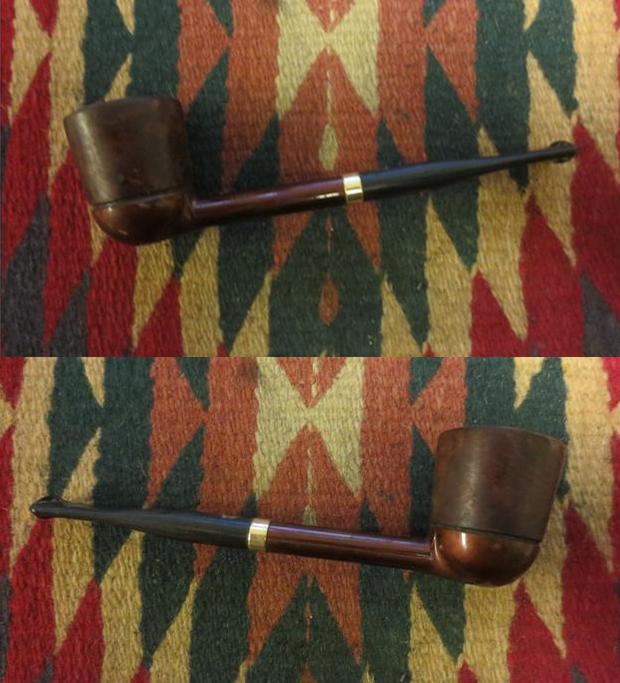
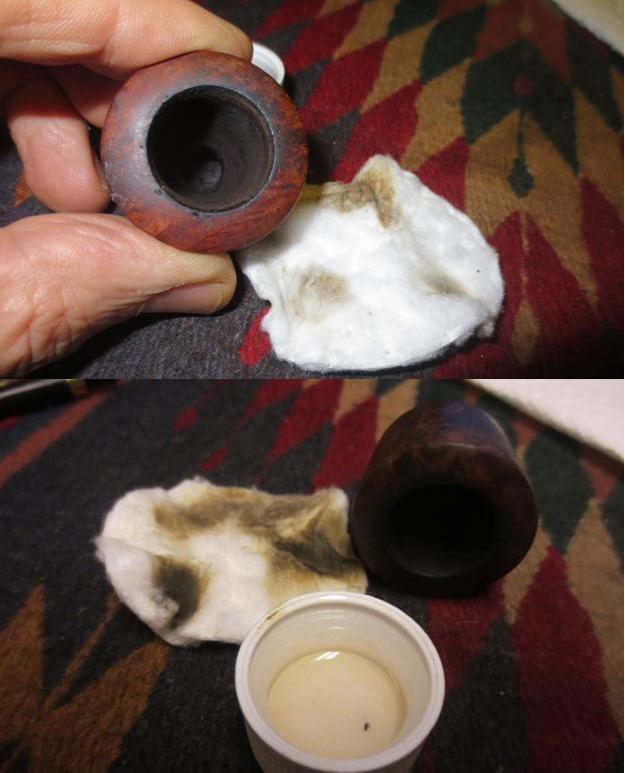
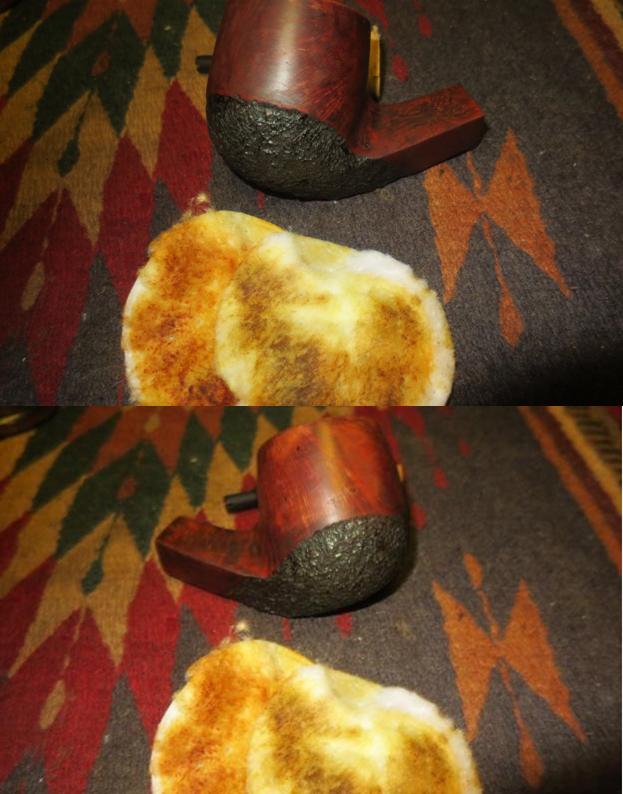
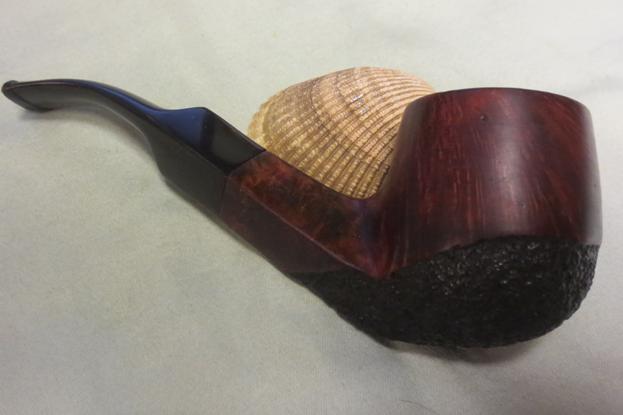
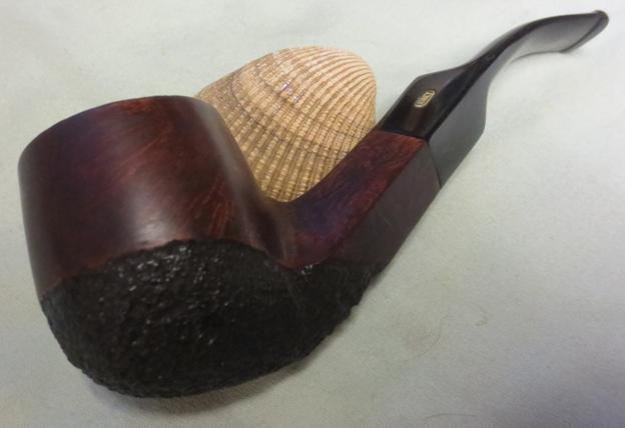
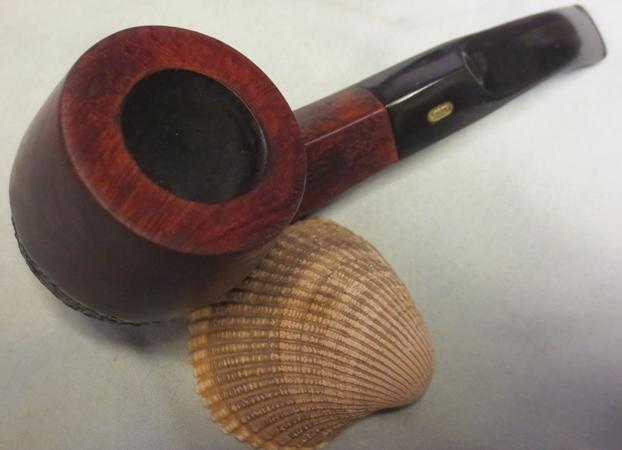
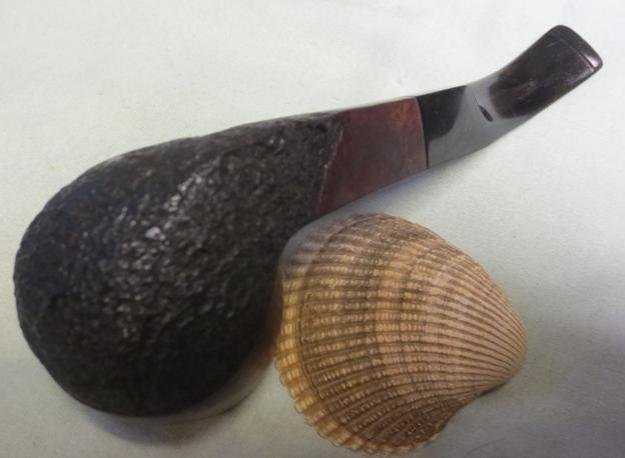
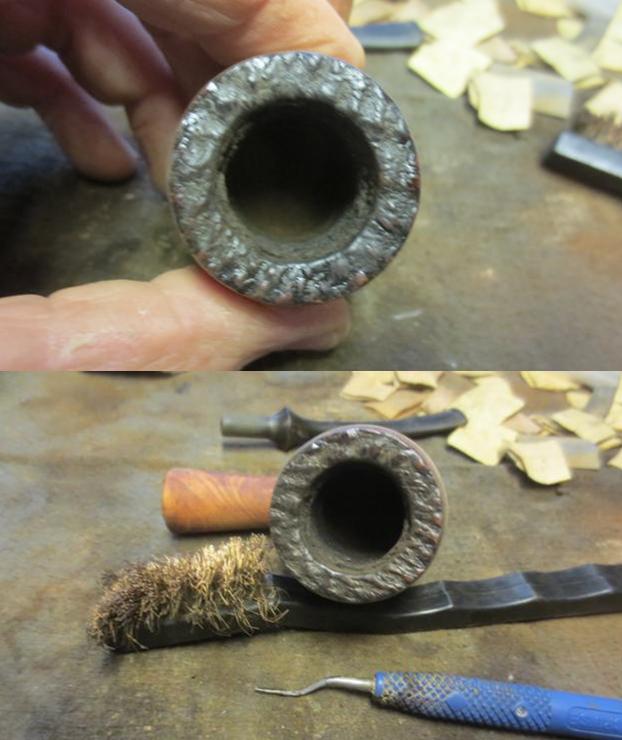
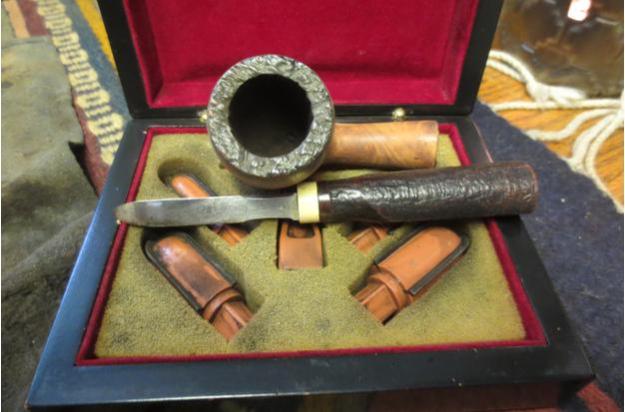
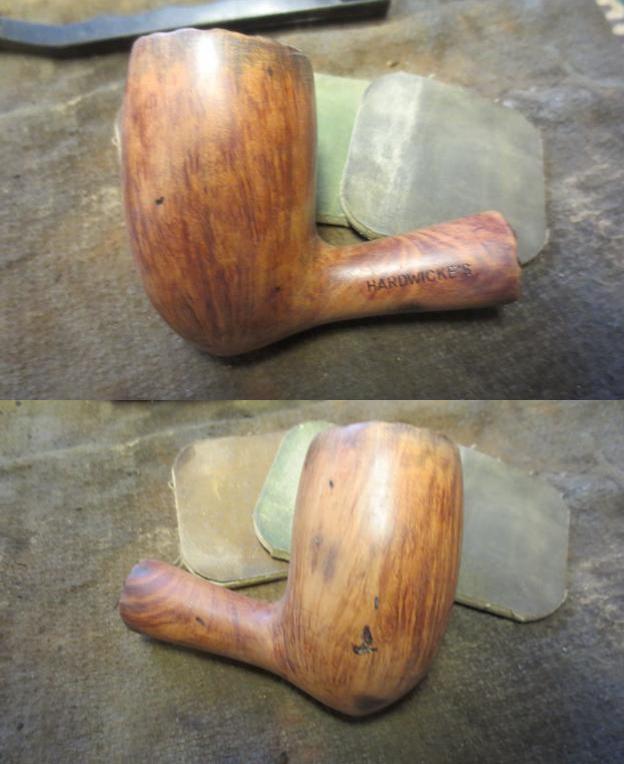
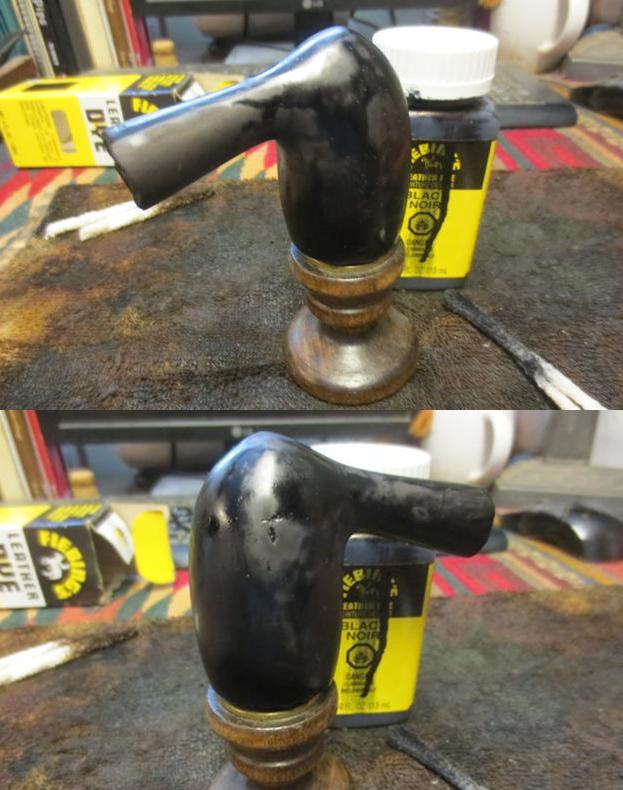
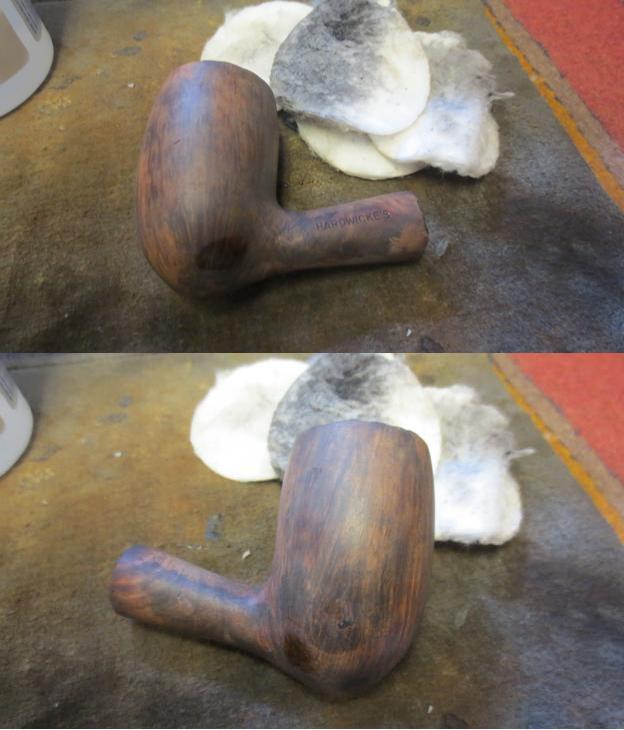
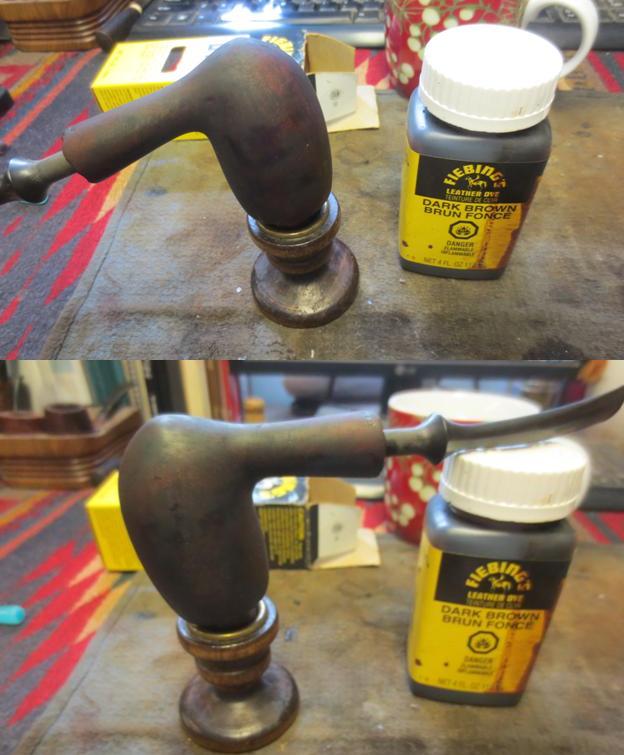
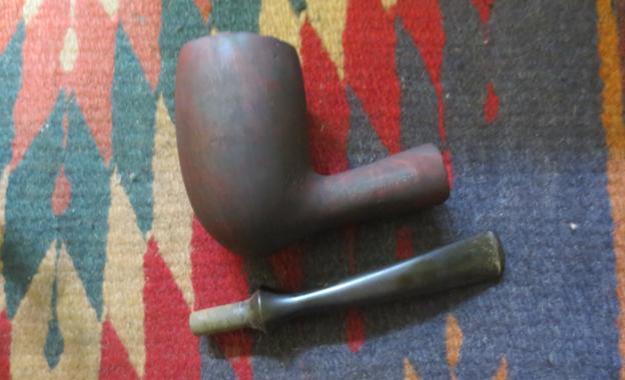
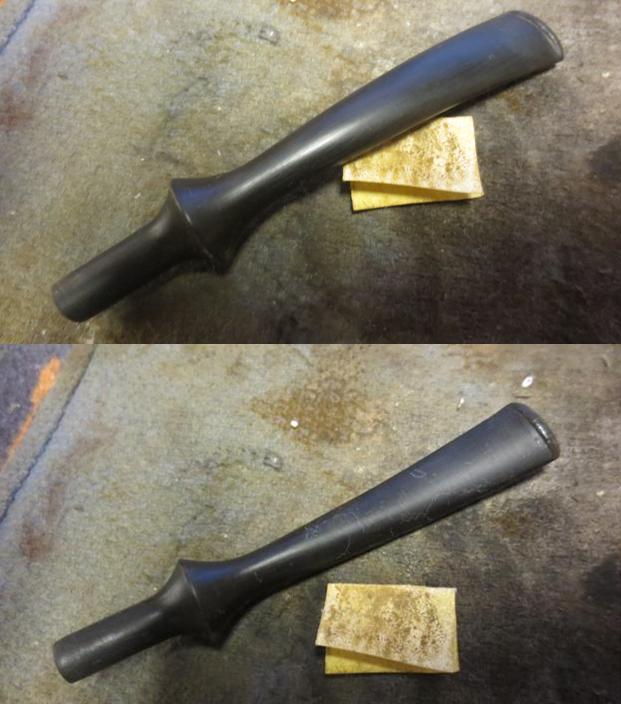
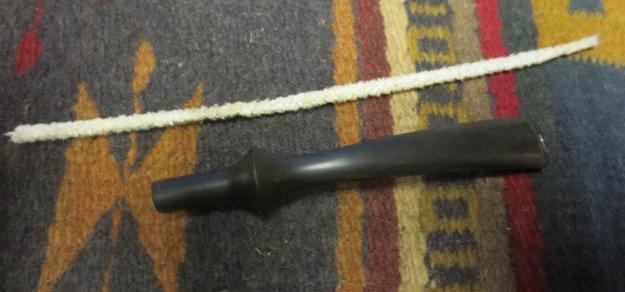
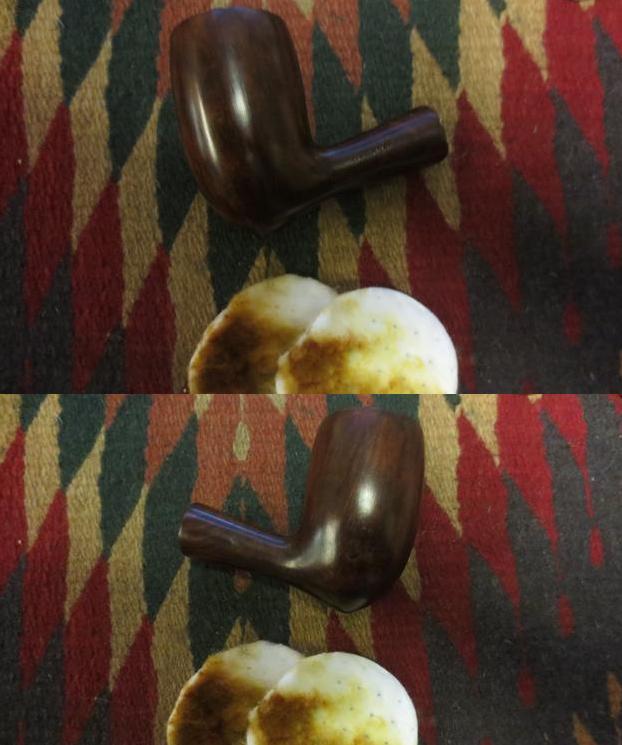
So now I knew that the pipe I had was indeed a shop pipe made for Hardwicke’s Tobacco Shop of Indianapolis. Now it was time to work on it and restore and restem it. I sanded the bowl with 220 grit sandpaper to remove the urethane finish that covered the grime and the burn marks. I sanded the burn marks and tried to reduce the damage to the briar. The more I worked on them the more I am convinced that they were not burn marks but rather dark stains that happened when the bowl was laid in something that left a stain mark. I remember when my mom made pickles when I was a lad and the jars of vinegar left dark rings in the oak table top. These looked identical to the ones I remember as a boy. I sanded and was able to remove several of them. I wiped the bowl down with acetone to clean off the stain and the dust.H6The rim was thickly caked. I worked on it with a brass bristle wire brush and a dental pick to remove the build up on the rim. You can see from the second photo the rustication pattern in the faux plateau on the rim. It is identical to the one that is cut on the end of the shank.H7I reamed the bowl with a PipNet reamer and took the cake back to bare wood. I cleaned up the edges and the bottom of the bowl with the Savinelli Pipe Knife.H9I sanded the bowl with a medium and fine grit sanding sponge and then with 1500-2400 grit micromesh sanding pads to remove the scratching in the surface left behind by the 220 grit sandpaper. I remove the darkening around the top of the rim so the surface of the briar was the same over the entire bowl.H10 H11The bottom of the bowl shows a scratch in the surface that looks like it is a hairline crack. Looking at it with a magnifier I am pretty sure it is a scratch and not a crack.H12To deal with the darkened spots on the shank and the bowl bottom as well as the scratch I decided to use a contrast stain. I stained the bowl with a black aniline stain and flamed it. I repeated the process until the coverage was even.H13I wiped down the black stain with alcohol on cotton pads to remove the stain in the body of the briar and leave it in the grain.H14I washed it down with an alcohol damp pad and gave it a top coat of brown stain. I flamed it and applied it until the coverage was even. Then I set it aside to dry.H15I used the Dremel and sanding drum to reduce the diameter of the tenon. I cleaned it up with a piece of 220 grit sandpaper. I put the stem in the shank and took some photos of the look of the pipe at this point in the process.H16 H17 H18I sanded the stem with 220 grit sandpaper to remove the tooth chatter on the top and bottom sides of the stem at the button.H19I cleaned out the airway with a pipe cleaner and alcohol. It was not dirty at all which surprised me.H20I wiped down the bowl with alcohol on cotton pads and then buffed the bowl with Blue Diamond on the buffing wheel.H21 H22I wet sanded the stem with 1500-2400 grit micromesh sanding pads and rubbed it down with Obsidian Oil. I dry sanded with 3200-4000 grit pads, gave it another coat of oil and finished sanding it with 6000-12000 grit pads. I gave it a final coat of Obsidian Oil and set it aside to dry.H23 H24 H25I buffed the bowl and stem with Blue Diamond on the buffing wheel. It removed a little more of the brown stain and made it a bit more translucent. I gave the stem and bowl several coats of carnauba wax and buffed it with a clean buffing pad to raise the shine. The new stem looks like it belongs with the pipe and the curve of the bowl and the new stain look great in my opinion. The grain on the pipe is very nice. The black and brown stain combination hides the dark mars on the shank and the bowl. They are still present but blend in nicely. Thanks for looking.H26 H27 H28 H29 H30 H31 H32
What a mess – a Georgetown Made in London, England Canadian


Blog by Steve Laug

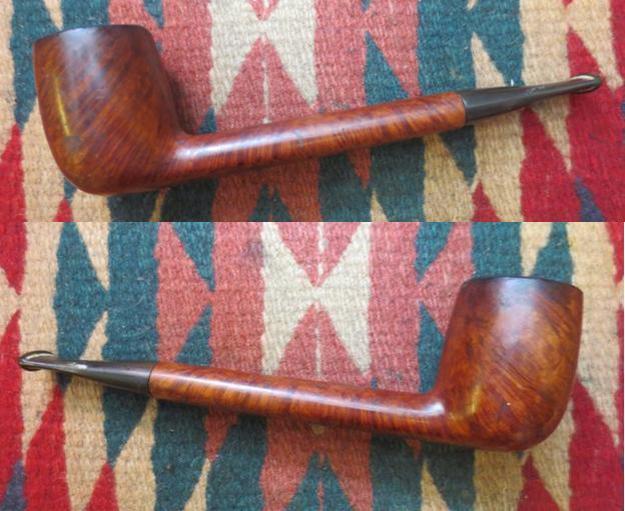
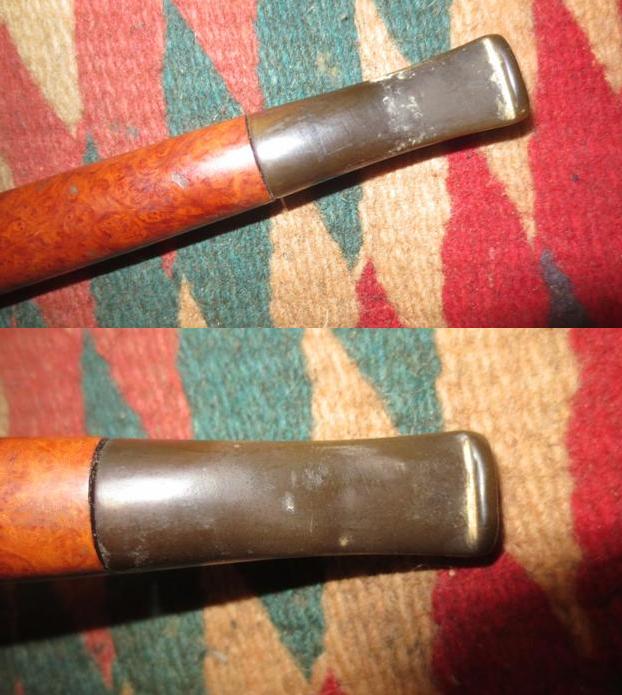
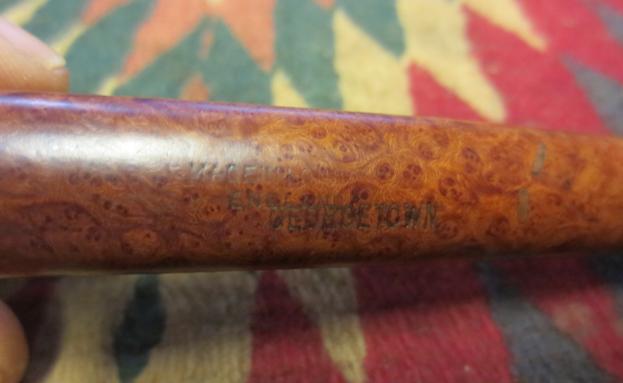
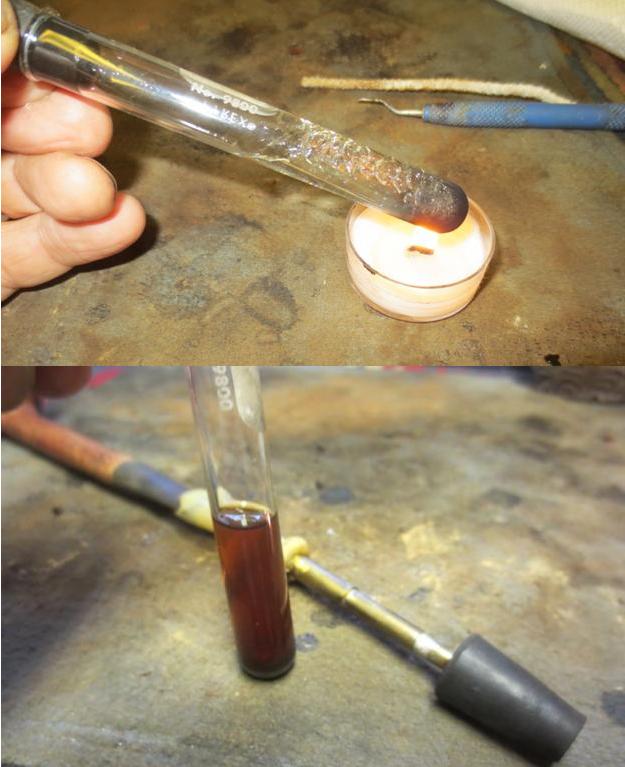
The grain on this old Georgetown Canadian really spoke to me when I took it out of the box of pipes from my brother. The mix of diagonal cross grains on the sides of the bowl and the birdseye on the front and back of the bowl and the top and bottom of the bowl and shank are really quite stunning. The bowl itself was incredibly dirty and the finish had rubbed and baked in grime all over. The rim was thickly caked with an overflow of lava the came from a bowl that was so caked that there was hardly room for any more tobacco. The stem was oxidized and there was a thick white build up of what I call calcification that comes from saliva and use. The slot in the end of the button was almost closed off with merely a small space mid slot. It was truly a mess that caused me to wonder what I would find once I cleaned and reamed the bowl.Geo1 Geo2I took some close up photos of the rim and bowl as well as the stem to show the extent of work that would have to be done to clean it up.Geo3 Geo4I also took a photo of the stamping on the shank to try to capture how it looked. It read MADE IN LONDON on the top line and under that ENGLAND. Stamped high and touching the bottom of the letters of the England stamp is the GEORGETOWN stamp.Geo5I reamed the bowl with the PipNet reamer starting with the smallest cutting head and working up the third head. The cake was harder toward the bottom of the bowl so I worked on smoothing it out with the Savinelli Pipe Knife and finished with the third cutting head of the reamer. You can see the rim damage on the inner edge of the rim at the back of the bowl in the photo below.Geo6I topped the bowl on the topping board until the damaged areas were minimized on the rim surface and the thick hard lava build up was gone. You can see the out of round areas on the inner edge of the rim in the second photo below.Geo7I scrubbed the surface of the bowl with acetone and cotton pads to remove the grime and the waxes on the finish. If you look closely at the pipe you will see a multitude of fills that are well placed in the grain of the pipe and barely visible.Geo8 Geo9I worked on smoothing out the damage to the inner rim by beveling it with the Dremel and sanding drum and then sanding it with a folded piece of 180 and 220 grit sandpaper. I smoothed out the scratches with 1500-2400 grit micromesh sanding pads.Geo10I started cleaning out the shank and the airway with pipe cleaners, cotton swabs and alcohol but found that I would need to use too many of them to be effective. I put the stem in place on the shank and set up the retort to boil alcohol through the pipe. I used five test tubes of alcohol before finally I was able to get one that was clear after boiling it through.Geo11 Geo12 Geo13I cleaned out the airway in the shank and the stem as well as the mortise with a few pipe cleaners and cotton swabs to remove the remnants of alcohol and debris left behind by the retort. I used the light brown stain pen to touch the area on the rear side of the bowl where I had done some light sanding and repair as well as the area around the shank stem junction that was lighter.Geo14I wet sanded the stem with 1500-2400 micromesh sanding pads and gave the stem a coat of Obsidian Oil. I dry sanded it with 3200-4000 grit pads, gave it another coat of oil and finished sanding with 6000-12000 grit pads. I gave it a final coat of Obsidian Oil and set it aside to dry.Geo15 Geo16 Geo17I buffed the pipe with Blue Diamond on the buffing wheel and then gave the bowl and stem multiple coats of carnauba wax. I buffed it with a clean buffing pad to raise the shine and then hand buffed it with a microfibre cloth to deepen the shine. The finished pipe is shown in the photos below. I am still trying to figure out who made the pipe. I know that the Made in London, England stamp was used by Barling and in the pre-Cadogan era by GBD. If anyone can give me more definitive information regarding the maker of these pipes for the Georgetown Tobacconist please contact me in the comment section. Thanks ahead for your help and thanks for journeying with me on this refurb. Geo18 Geo19 Geo20 Geo21 Geo22 Geo23 Geo24 Geo25

Sofia Hole in the Wall #3: A Butz-Choquin Rocamar with a Cumberland stem


Blog by Dal Stanton

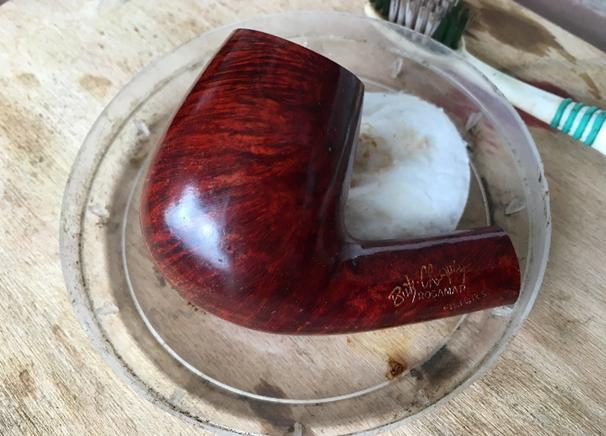
This is my third restoration from what I called the ‘Bag of 4’ that Steve and I saw at the ‘Hole in the Wall’ antique store during his visit to Sofia, Bulgaria.  Thanks again for indulging my ‘newbie’ offerings. My favorite of the bunch was a Savinelli Tortuga (https://rebornpipes.com/2016/06/18/sofia-hole-in-the-wall-find-savinelli-tortuga/).  The second, which I didn’t write up, was a beautiful Danske Club Vario, which I discovered on Pipedia is a Stanwell second.  Behind the Tortuga, the Vario was a close second. It is now next to my Tortuga in regular rotation – a great addition to my growing collection. Take a look at a few pictures of the finished Danish Danske Club Vario. I’m drawn to the blended smooth and sandblasted briar finishes on this pipe:Dal1 Dal2The markings I found on pipe #3 on the left side is Butz-Choquin over Rocamar with a ‘Filter 9’ diagonal imprint.  On the right side, St. Claude, France 1333, which I assume is the BC shape or series number.  The Cumberland stem has the BC imprinted marking.  From Pipedia I discovered a bit of the early history of the name from Pipedia:

“Jean-Baptiste Choquin of Metz started out as a tobacconist. This enterprise was prosperous; he had several employees. Among those, there was a certain Gustave Butz who was its first workman and who became his son-in-law by marrying Choquin’s daughter Marie in 1858.  In 1858 Jean-Baptiste Choquin created, in collaboration with Gustave Butz, the Choquin pipe. This bent pipe with a flat-bottomed bowl was finished with an albatross-bone mouthpiece, fixed with silver rings.  In 1858, still in Metz, Gustave Butz built an establishment for the manufacture of the Choquin pipe which took the name of -. In 1951, the Berrod-Regad company bought the trademark, continuing manufacture until 2002. Departing from Metz, the workshop was relocated to Saint-Claude, then also called ‘the world capital of the briar pipe,’ under the Berrod-Regad group.”

I could find nothing specific about the series name Rocamar so I decided to send an email to Butz-Choquin using their info contact from their current website which is under construction (http://www.butzchoquin.com/).  We’ll see where that goes.

The BC Rocamar has an attractive fiery grain and the bent billiard chimney is tall and elegant to me – perhaps tending toward an egg shaped bowl.  What I’m drawn to also is the bent Cumberland stem – my first to work on.  Not quite knowing what kind of stem it was I did a bit of research and discovered pipesmokersforum.com a thread discussing this stem:

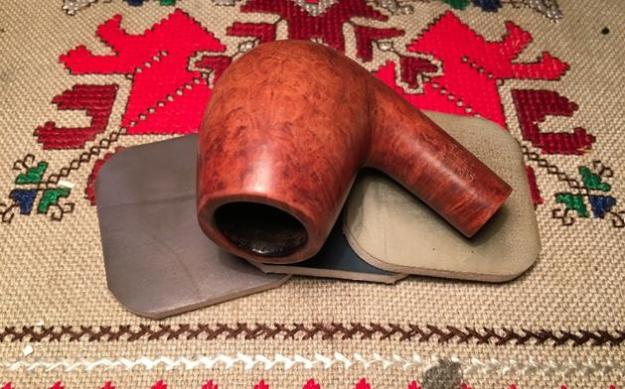
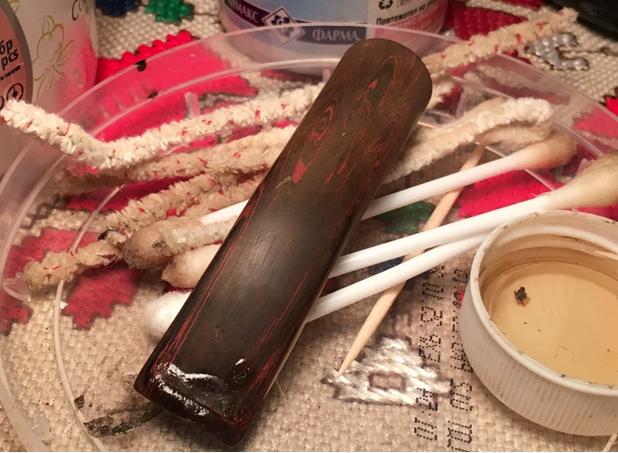
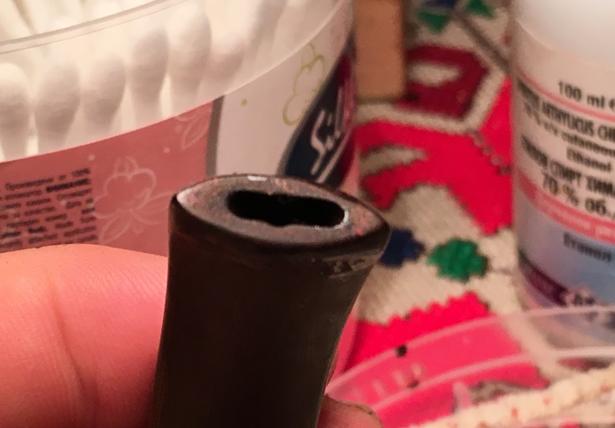
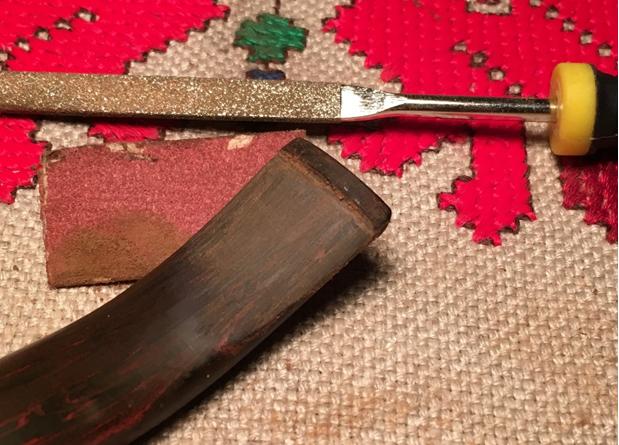
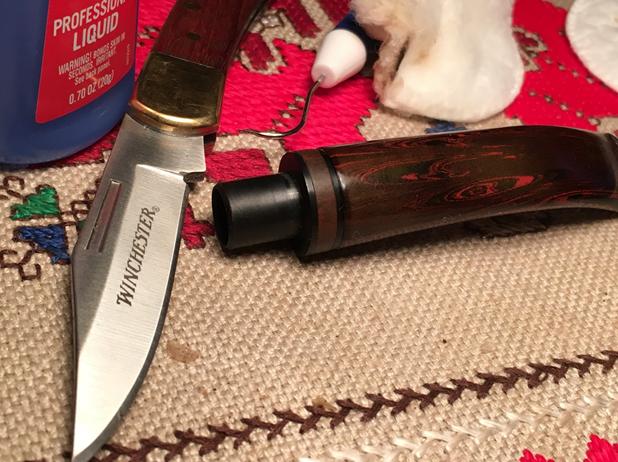
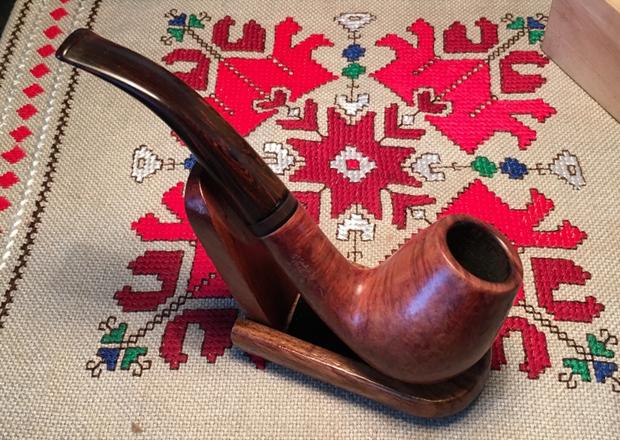
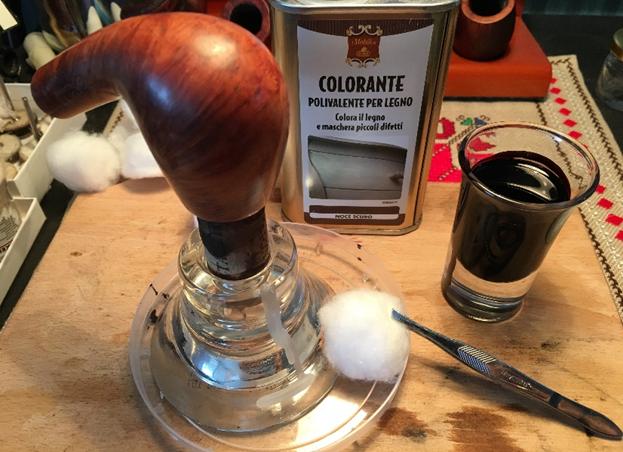
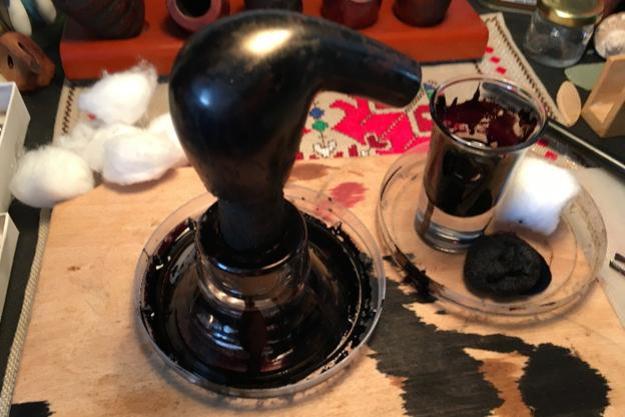
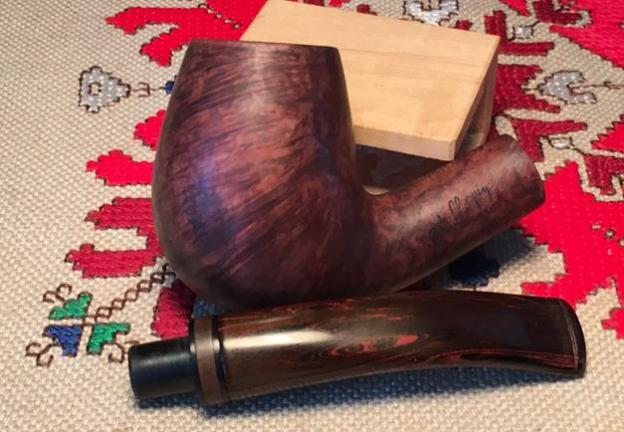
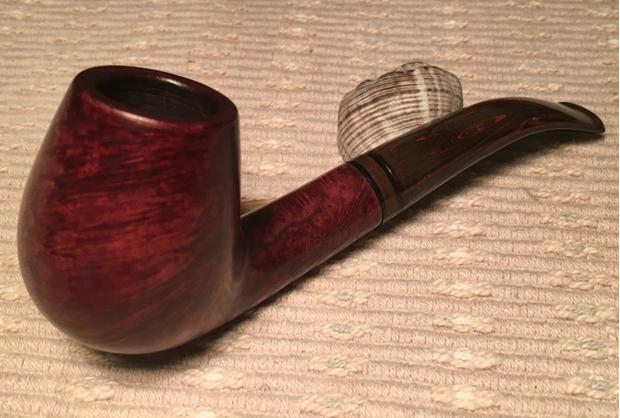
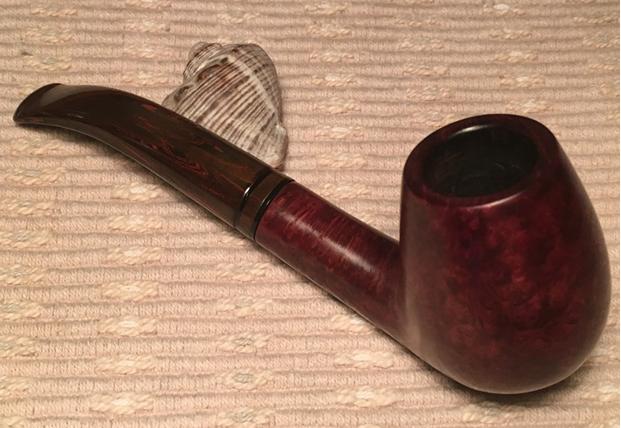
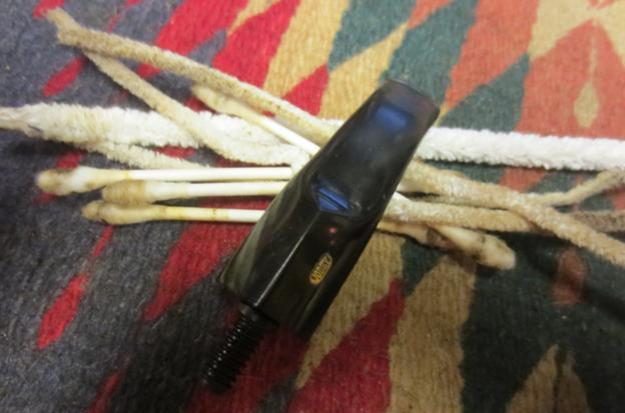
“Cumberland proper is a vulcanite rod made up from red and black rods, melted and swirled together for the brown/red marble effect. It is very soft, and oxydizes fairly quickly if the protective wax coating is scraped off. There is a harder version in ebonite, which has a higher sulfur content if I understand these things correctly, but the color combos are not quite as subdued as the vulcanite version. It’s a bit more “brick” colored.”  Another comment I read was that if one found a Cumberland stem it was most likely hand cut – to me that is cool.  Helpful information.  Here are pictures of the BC Rocamar when it arrived home from the Hole in the Wall:Dal3 Dal4 Dal5 Dal6 Dal7The briar is in great shape and will need basic clean-up.  The rim shows a burn scar about 2 o’clock and lava build up.  As the comments about Cumberland stems and oxidation stated, this one had its share.  The bit has significant teeth chatter and some significant divots that will need repair.  Yet, I see the potential of the color swirl of the Cumberland being a very nice augmentation to the fiery briar stummel.  The filter casing had dislodged from the stem and that will need to be reattached.  I decide to drop the stem in an Oxyclean bath to start working on the oxidation while I turn my attention to the bowl – whoops, that is after I retrieved the stem from underneath the bed – I forgot it was on my lap when I stood to head for the Oxyclean!  I took a close-up of the rim and bowl before I go to work.  I moved from the bedroom work table to the 10th floor balcony mobile work station with Pipnet reaming kit in hand.  I want to minimize pipe soot being released into the bedroom atmosphere resulting in a happier wife.  I use only the two smallest blades from the reaming kit to take the cake down to the wood.  I finish the fire chamber by rubbing it with 120 then 240 grit sanding paper to smooth and clean the chamber walls even more.  Turning to the rim, I clean it with isopropyl 95% and a brass brush which will not scratch the surface of the bowl. I want to see the rim wood clearly before I top the bowl to repair the burn scar and reveal the briar.  With the sunshine helping I can see the rim (and holding tightly not to lose it over the edge!).  I note that the rim circumference is small as the sloping shape of the bowl culminates. Dal8 Dal9 Dal10 Dal11I move to top the bowl but with a view to take off as little as possible to preserve the dimensions of the slender egg-peeked chimney of the bowl.  With the stem soaking in the Oxyclean bath I’m not able to reattach it to the stummel to help make sure I’m maintaining a true perpendicular top and not leaning into the softer burned area.  Before rotating the bowl to top it, I let it free stand and gently rotated the pitch of the bowl so that I could ‘feel’ the low spot where the rim was burned.  By doing this I was able to acclimate to the ‘healthy’ flat part of the rim during the sanding rotation.  It worked well!  I took a picture after only a few rotations on the topping board.  It revealed that I wasn’t fudging into the low spot as it was not yet impacted by the sanding but the other ¾ of the rim was.  I’m careful to keep eyeballing the progress.  I use 240 grit paper on a chop board as my topping table. Moving in a circular, even motion I remove only what is needed.  Satisfied with the topping, I made a small bevel on the inside of the rim using 120 and 240 grit paper.  I did this to take out a bit of inner rim damage and a small bevel is always nice and gives a classy touch. I followed this by using micromesh (1500-12000) on the rim to remove all scratches.  The pictures tell the story.Dal12 Dal13 Dal14 Dal15I decided to wait on staining the rim using a stain-stick and move to the cleaning of the internal and external of the bowl.  The reason I did this was I was able to differentiate the actual unstained color of the briar by looking at the newly repaired rim and compare it to the bowl color.  The rim briar leaned brown whereas the bowl, to the reds.  With cleaning with Murphy’s Soap of the external bowl, I expect there to be a slight change in the color of the bowl briar.  At that point I would go to work again on the color of the rim aiming for the best match.  I decided at this point to move to cleaning the internals of the stummel with Q-tips and pipe cleaners dipped in isopropyl 95%.  I found the internals to be amazingly free of muck and it was not long before Q-tips and pipe cleaners were coming out clean.  Turning to the external cleaning, I used Murphy’s Soap undiluted with cotton pads to remove the wax and grime on the bowl.  The bowl itself is in great shape – no significant scratches or fills.Dal16 Dal17At this point, I came to a road block which necessitated a quick email to ‘Master Obi-wan Steve’ for his input.  After the Murphy’s Soap cleaning I was expecting/hoping the high gloss finish on the bowl to have been dulled – getting to a more natural grain look not competing so much with the bared rim – at least this is what was in my mind.  My hesitations were not wanting to be too aggressive with the bowl finish and mess up the patina that is under the gloss….  With the time difference between Sofia and Vancouver, I put the stummel aside and turn to the much anticipated work on the Cumberland stem – what to me is the unique part of this BC stummel/stem ensemble.  After I extract the stem from the Oxyclean bath, I take some pictures to chronicle the progress.  After an initial buff with 000 steel wool to remove the surfaced oxidation, I take a closer look at the significant teeth divots on the bit and decide to apply super glue to the top and bottom to be able to redefine the button and cover the chatter damage. I want the superglue patches in place before beginning the sanding of the stem.Dal18 Dal19 Dal20 Dal21With the superglue curing, Steve’s reply came about my bowl conundrum and it is now decision time. He suspects that I’m dealing with a urethane finish much like he just dealt with in a Jobey restore (https://rebornpipes.com/2016/06/29/i-thought-this-one-would-be-easy-boy-was-i-wrong/) that was a bear to remove. The options before me are to either come up with a high gloss finish for the rim seeking to match up with the bowl or to aggressively remove the plastic, gloss finish and rescue the beautiful briar beneath.  The close-up picture below revealing the bare briar in rim repair sealed my decision – I put the bowl in an overnight alcohol bath hopefully to soften the glossy finish to be revisited tomorrow.  The time had come to watch some European football – Portugal and Poland – on my widescreen HDTV in my favorite recliner.Dal22The next day, with Poland and Portugal playing to a 1-1 tie the night before, I was anxious to see if the alcohol bath made a dent on the glossy finish.  Upon inspection (picture 1) it was still pretty shiny so I took a light grit sanding sponge to loosen the finish.  I was careful to lightly work around the nomenclature.  This did the trick.  The alcohol bath undoubtedly softened things up.  After the sponge sanding, I followed with rubbing the bowl with acetone with cotton pads to draw the stain out of the grain.  I finished with wiping down the stummel with isopropyl 95% to make sure all was cleaned and no grit left behind.Dal23 Dal24 Dal25I feel like I’m on a roll and I’m anxious to see the grain of this piece of briar unveiled.  I use micromesh pads from 1500 to 2400, 3200 to 4000, and 6000 to 12000.  The pictures below show the progress.  I have to be honest, this is perhaps my favorite part of the restoration process – each set of micromesh pads brings out more of the grain revealing the profoundly unique ‘fingerprint’ of each piece of briar we handle.  I euphemistically think of micromesh pads as ‘magicmesh’ pads – they bring the wood to life.  In my opinion, the grain that I’m now enjoying is much more satisfying than looking through the plastic shiny sheen of the original Butz-Choquin design.Dal26 Dal27 Dal28I decide to put the bowl aside and focus now on completing the Cumberland stem clean up and restoration.  I want to have an idea of the colors of the finished stem before I decide on the best finish for the stummel.  I like working on a clean stem so I first clean the airway using pipe cleaners and Q-tips dipped in isopropyl 95%.  During the cleaning, I saw something that I had missed before.  The button airway opening has a divot – I’ll need to add that to the list.  The superglue applications on the bit and button have had plenty of time to dry.  I use 240 grit sanding paper and needle files to work on the bit and button repair.  The bit repair looks good so I move to micromesh and the homestretch.  I wet sand using 1500-2400 and then apply Obsidian oil to the stem.  At this point, I inspect the repair work on the bit to make sure there are no scratches that I’ve missed before proceeding.  I’ve learned that often scratches are covered by the rough vulcanite.  With the Obsidian oil on the stem I dry-sand using micromesh pads 3200-4000 and apply more Obsidian oil.  I do the same with the last set of three – 6000-12000 and give a good coat of oil and put it aside to dry.  The pictures show the progress rejuvenating the Cumberland stem.  I like what I’m seeing.Dal29 Dal30 Dal31 Dal32 Dal33 Dal34 Dal35I had one undone job – re-attach the filter casing to the stem.  My assumption is that it was initially glued and after inspecting the inside of the stem, I detected residue that I assume was the glue previously used.  I clean the old gunk off the housing and the inside of the stem with alcohol and cotton pad and reattach the housing with superglue.  To get the job done I used my Winchester pocket knife and a dental pick to dig out the old glue.  With the filter housing reattached, the stem is complete.  I really like the rich color of the Cumberland stem.Dal36 Dal37After allowing the filter housing glue to dry I want to see the lay of the land, I rejoin the Cumberland stem to the stummel (picture #1 below).  I decide to stain the bowl with a new stain I found at the German owned ‘Mr. Prakteker’ –  like Home Depot in the US.  Finding alcohol-based stains in Bulgaria has been a challenge so I’ve been mixing my own batches up to this point. The brand is Italian and the cost was a bit more – I’m hoping that translates into better quality. When I opened the tin, a whiff of the stain revealed alcohol.  With the help of Google Translate, the flavor of the stain is Dark Nut.  The Bulgarian stick-on information tag said Dark Walnut.  My thinking is to aim for a darker stummel to blend with the darker hues of the stem.  If this succeeds, then I’m hoping the reds of the Cumberland stem ‘pop’ more instead of competing with the stummel.  We’ll see!   I can use alcohol-dipped cotton pads to lighten the stain after application if I choose.   After setting the stummel up on the cork/candle stand I apply the stain undiluted with a cotton swab to see how it goes.  I liberally allow stain to move over the inverted stummel – making sure of coverage over the inverted rim.  After a good covering I use a lighter to fire the stain which is a quick-combustion of the alcohol leaving the stain to set well into the grain.  The Italian stain ‘fired’ as hoped!  I repeated the procedure and then used the alcohol dipped pads to clean off the burn layer of the stain revealing how the grain received the stain – it’s never the same!  I take a picture to do a quick compare of stummel and stem.  After comparing I’m thinking that I like the dark hue but it needs some reds so I decide to add a layer of Cheren stain – red which I will mix with alcohol as it is a water based stain.  In my mind I’m thinking of the ‘Ox Blood’ depth that Steve uses – which is not found in Bulgaria!  I think the addition of the red stain does the trick (last picture) though it’s difficult to see the difference comparing the last two pictures.Dal38 Dal39 Dal40 Dal41 Dal42Next, I apply several layers of carnauba wax to the stummel and stem with Dremel and cotton wheels.  I’m careful to keep the Dremel wheel moving in rotation over the wood and use the lowest speed so not to overheat the wood. The buffing brings out the grain and the luster of the Cumberland stem.  I continue the buffing with a clean cotton wheel over the entire stummel and stem surface.  I finished with a thorough vigorous buffing with microfiber cloth to bring out the grain depth while watching Germany and Italy’s World Cup match.  The recommissioning of this Butz-Choquin Rocamar was more of a project than I was expecting.  I prefer the finish now before me to the shiny finish I started with.  I like the new color scheme for the bowl and Cumberland stem – I believe it works well.  The reds in the Cumberland stem match the grain amazingly well and the grain swirl in the rim has the appearance of continuing in the stem – a neat effect.  I’m very pleased with the color blends.  Another project done with new things learned to draw upon for the next candidate brought back to life!  Thanks for joining me!Dal43 Dal44 Dal45 Dal46 Dal47 Dal48 Dal49 Dal50

Bringing a FILTO SYSTEM Pipe Back to Life


Blog by Steve Laug

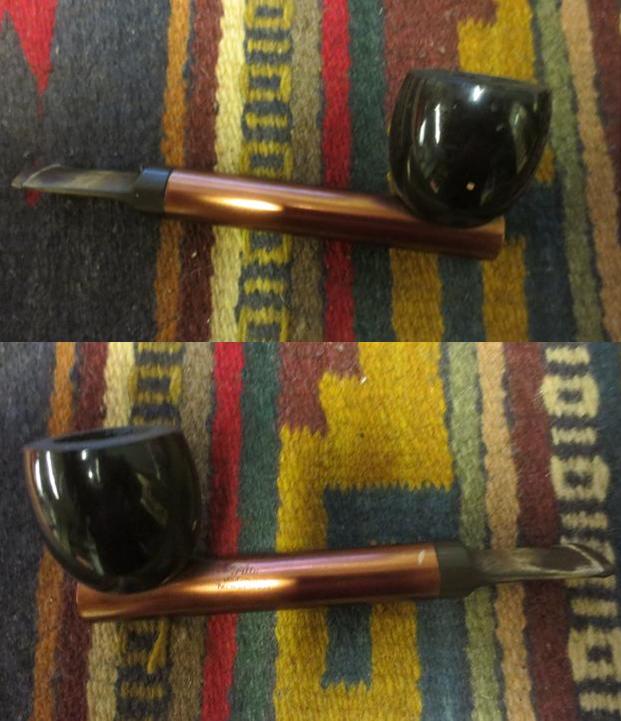
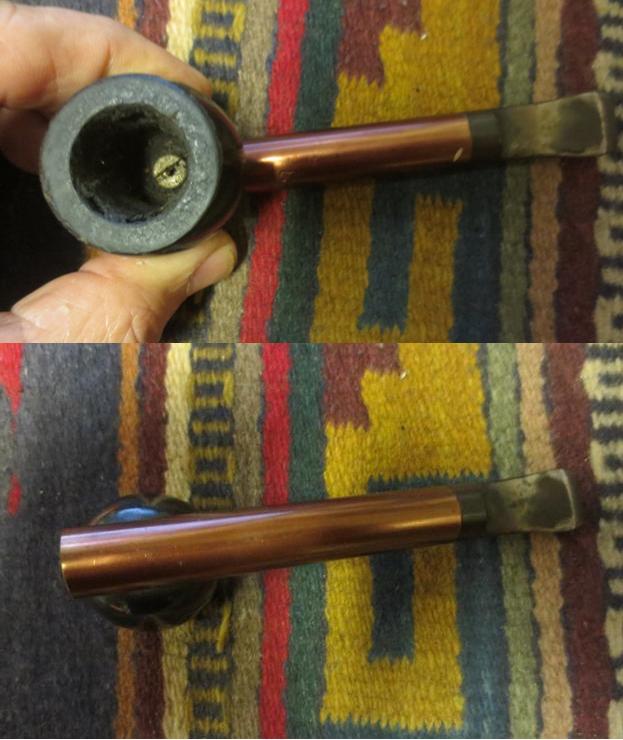
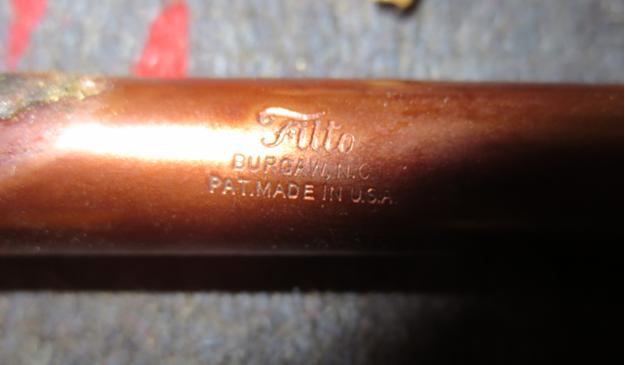
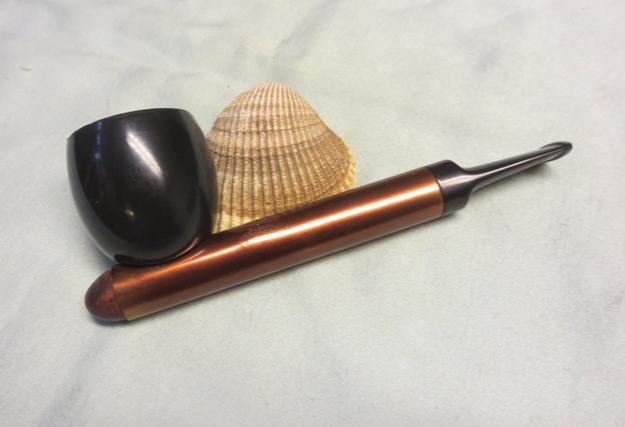
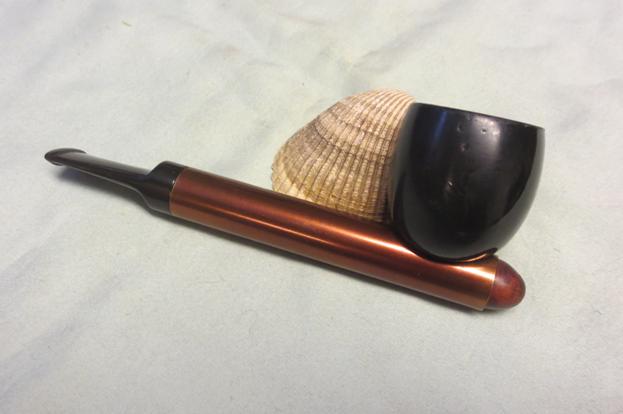
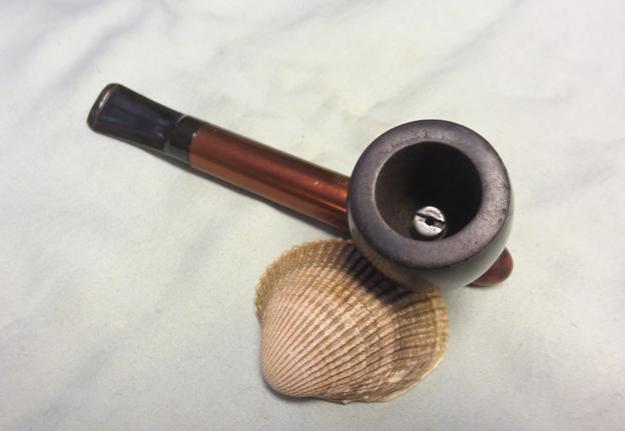
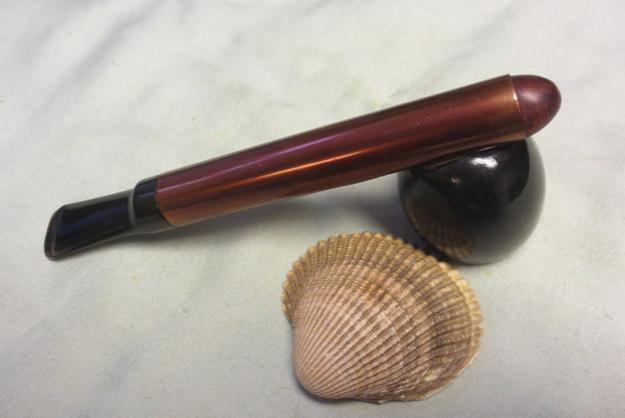
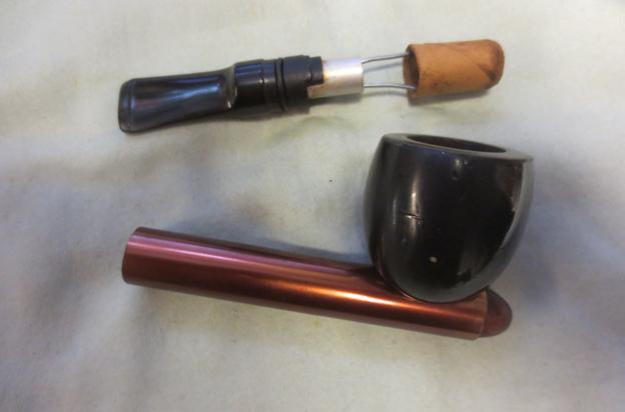
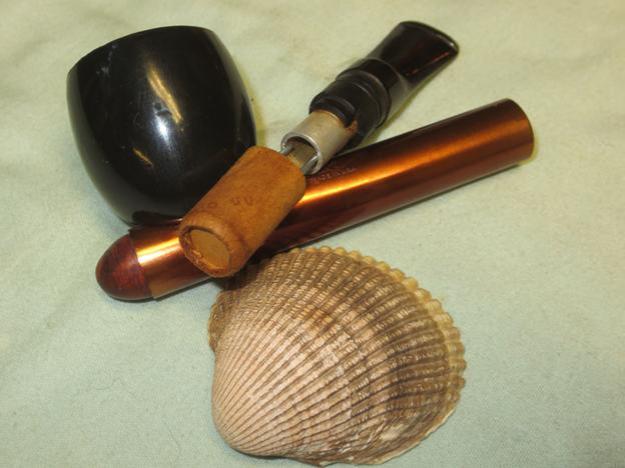
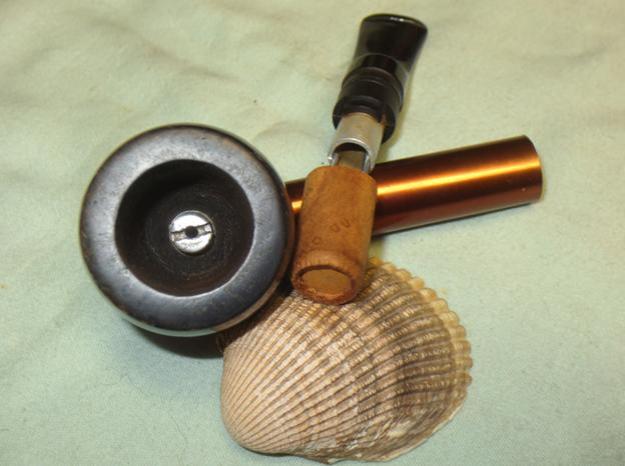
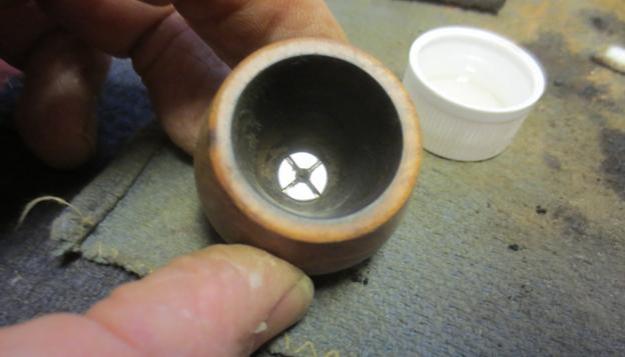
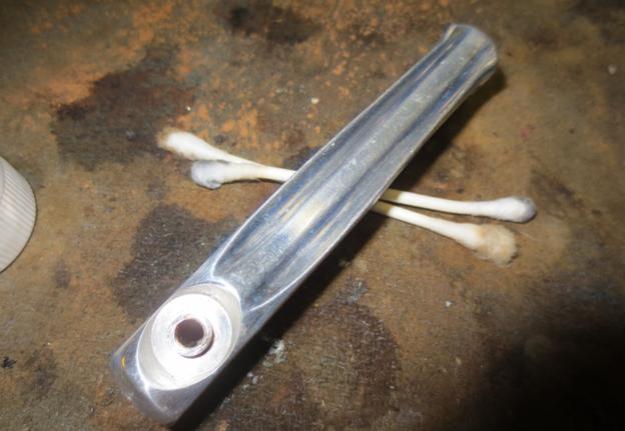
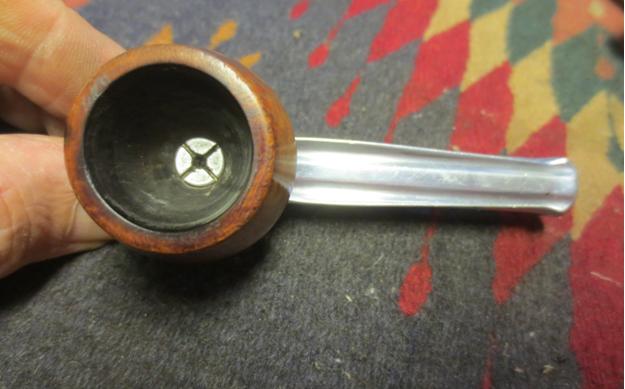
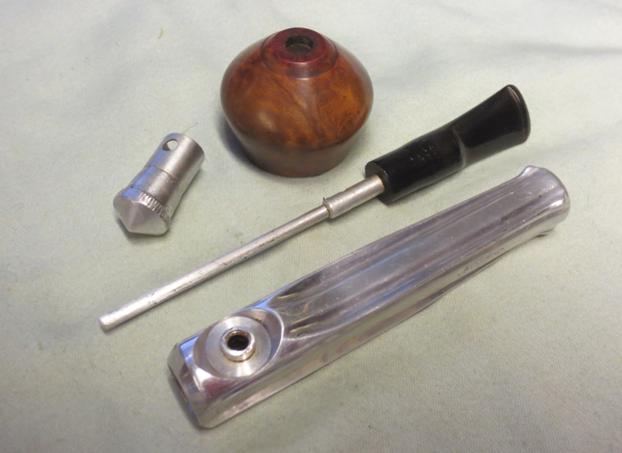
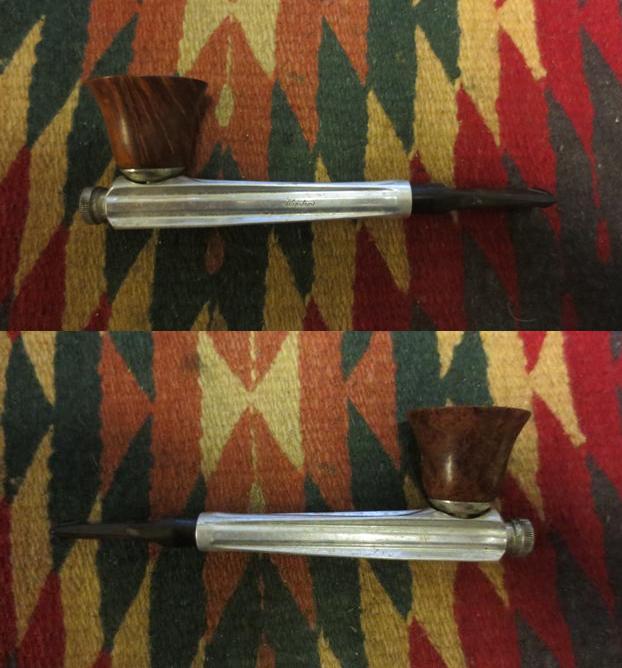
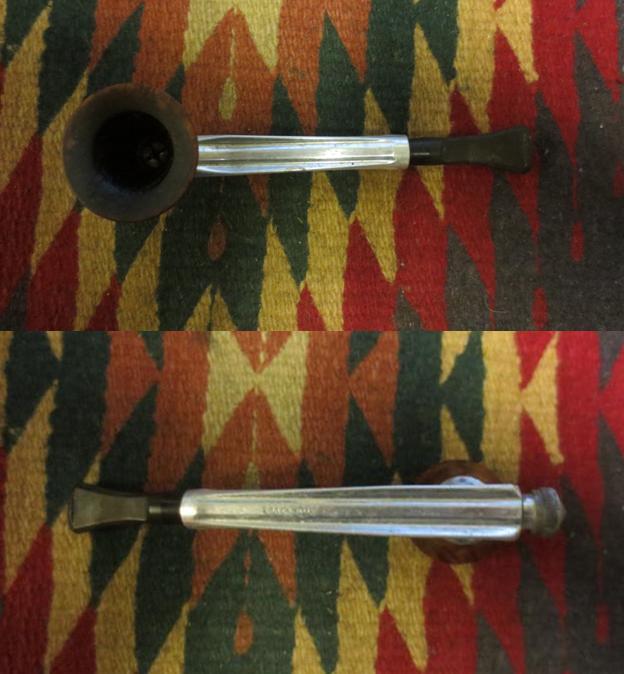
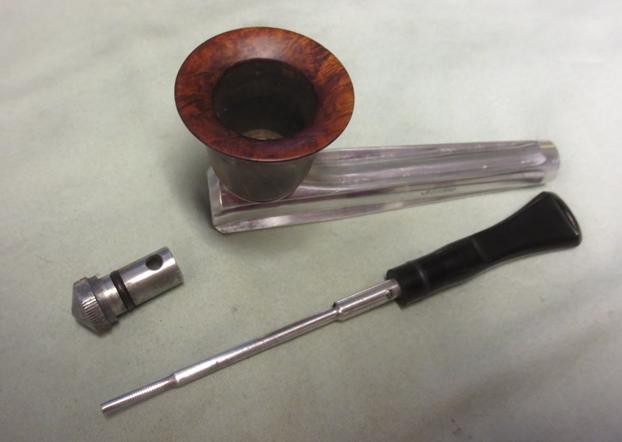
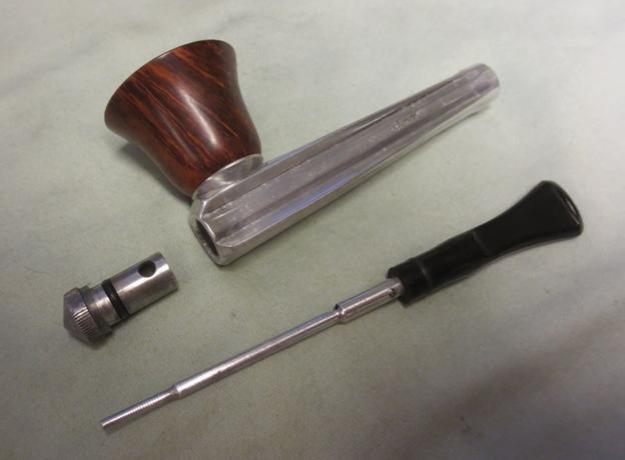
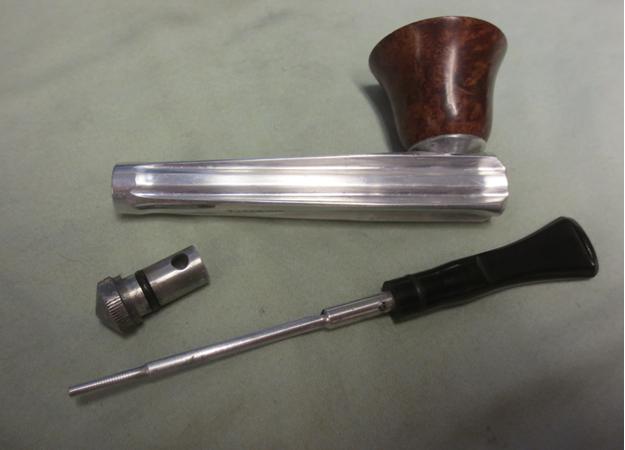
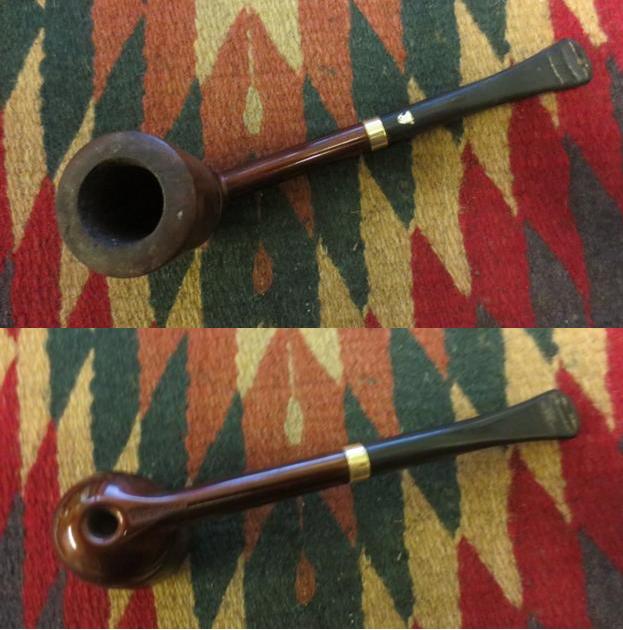
I have had this pipe sitting in a parts box for a while now. It was missing a few parts – notably the end plug. It had a copper coloured barrel and a black vulcanite mouthpiece that was oxidized. There were no tooth marks on the stem. The bowl was painted with a dark brown paint and had a shine. The rim was dirty with lava from the overflow of the bowl. The bowl had a thin, uneven cake on the walls. There was a screw in the bottom of the bowl that was similar to Kirsten screws. It had a hole in the centre that allowed the air to be pulled from the bowl into the barrel. It was stuck in the bottom under the cake that held it in place. The inside of the barrel on the end that was missing the end plug was thickly caked with tars and oils. There appeared to be something in the barrel part way down that closed off the barrel. The side of the barrel is stamped FILTO over Burgaw, NC over PAT. MADE IN USA.Filto1Filto2

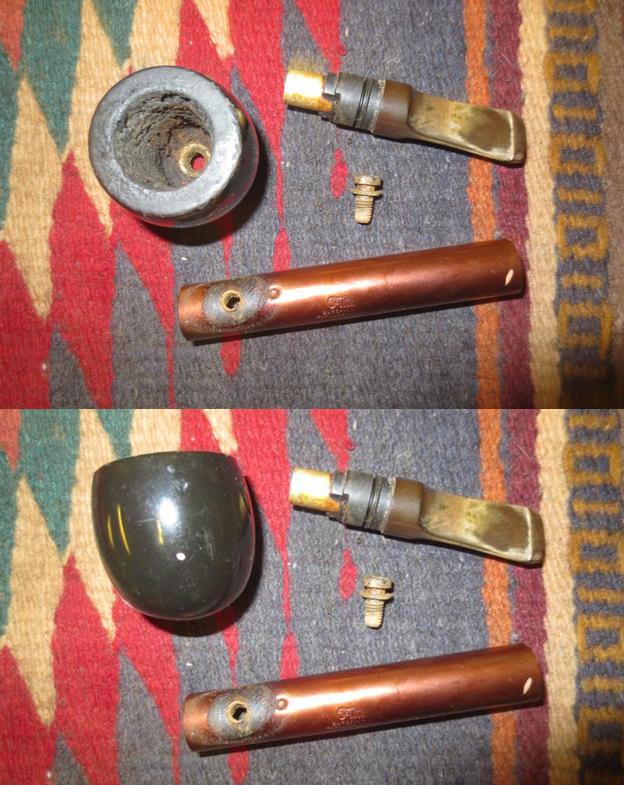
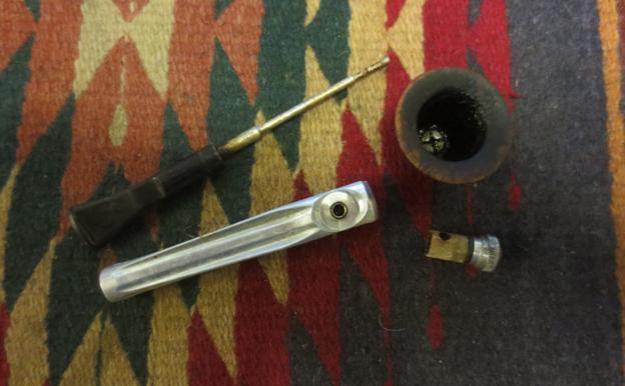
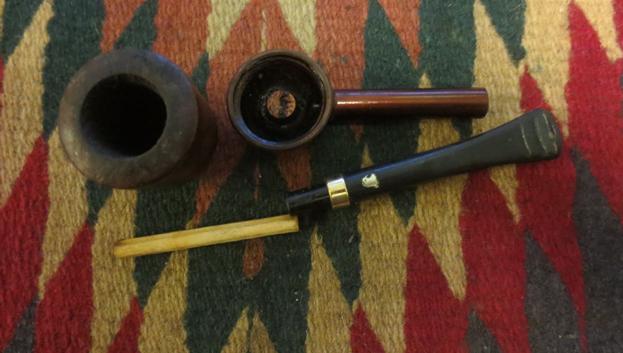
I took the pipe apart so that I could look at the pieces. The next photos show the barrel, bowl, stem and screw. The screw is interesting in that it had a collar that kept it lifted above the bottom of the bowl. There seemed to be a build-up of something on the top of the barrel where the bowl sat.Filto3

I did a bit of hunting on the web to see if I could figure out what was missing in the barrel. I knew that the end cap was missing and that it was a pressure fit. I also wanted to know what the card board piece was that seemed to be in the middle of the barrel. When I took the above photo I had not removed it from inside the barrel as I did not know what it was and did not want to damage it. I checked the Smoking Metal Website which is my first stop when seeking information on metal pipes. The site not only had the pipe listed but a variety of photos of the internals and of the models that were available. I have included the link and the short text that was included on the site.  http://www.smokingmetal.co.uk/pipe.php?page=213

“Made by Filto Pipes Inc. of Burgaw, North Carolina, inventor Robert L. Smith, US Patent #33170468 23rd Feb. 1965. The stem, sealing ring and filter holder design mentioned in design by Aristocob. The bowl and stem are in a great variety of colours, all interchangeable.The spring clip in the bit assists in holding the filter in place. There are two version of the stem one with a spun front end and more common with a plastic push fit end cap.”

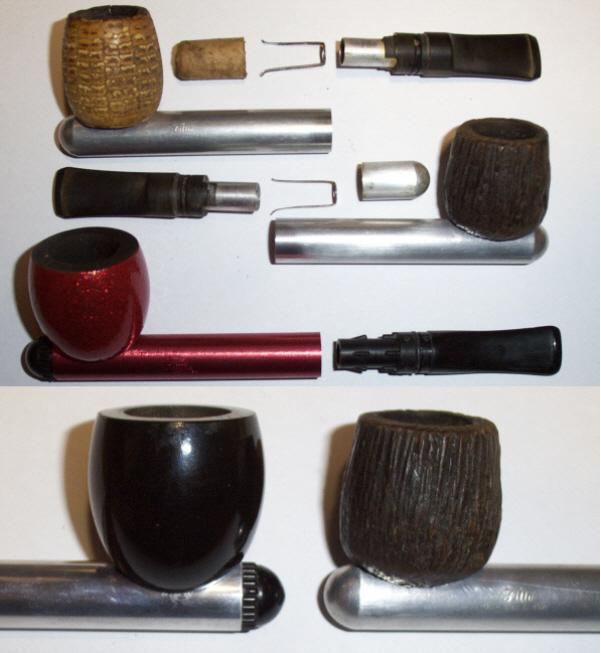
The photo below shows the parts that are enumerated in the above quote. There are two different barrel designs shown as well. The top one seems to show that the end is rounded and closed like a cigar cap. The red pipe below shows a plastic ridged endcap. The close up of the two bowls at the bottom show both ends. It is obvious that the one I had was like the pipe on the left side. Filto4

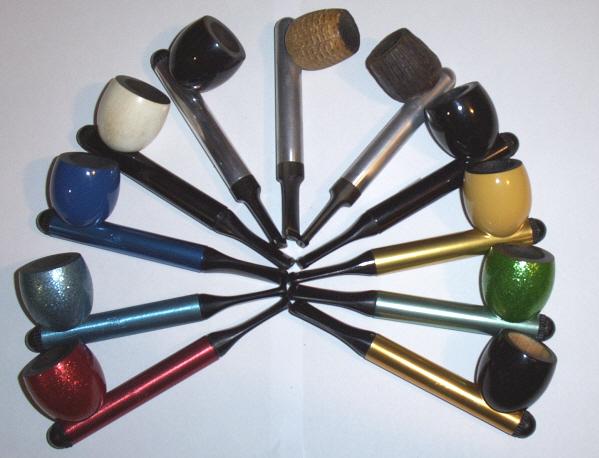
The photo below shows many different models of the same pipe. There are obviously two different styles of stems – a saddle stem like the one I have and a tapered stem.Filto5

Now I understood the shape of the end cap and also what the cardboard in the barrel was. I took a photo of the stamping on the barrel. It is clear and easy to read.Filto6

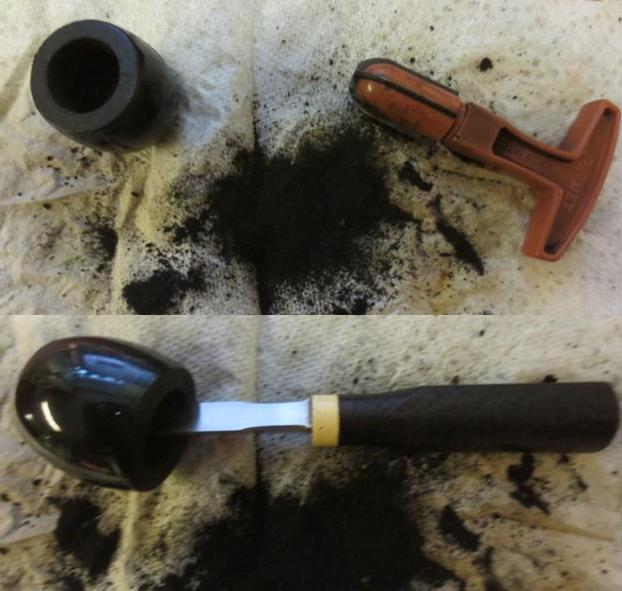
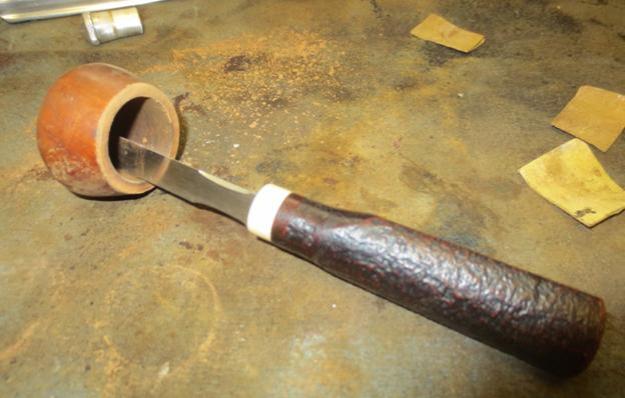
I reamed the bowl with the PipNet reamer and took the cake back to bare briar. I cleaned up the reaming with the Savinelli Pipe Knife.Filto7

I pushed the cardboard out of the barrel and it was marked FILTO filter. The cardboard was a filter that allowed the air to flow around the edges and caught the tars and oils on the end of the filter. This one was unused.Filto8

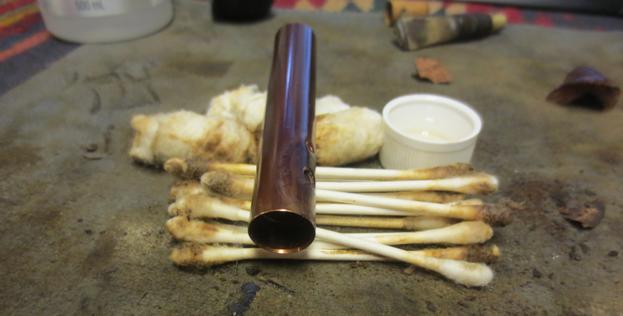
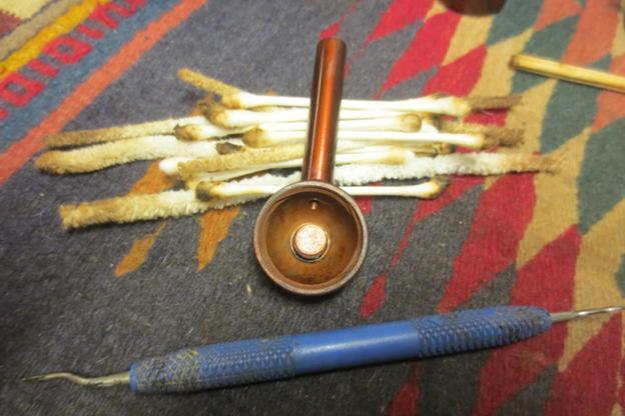
I cleaned out the inside of the barrel by pushing rolled cotton pads soaked in alcohol through the shank. I also used cotton swabs and alcohol to further clean out the barrel. I scraped the cardboard gasket from the top of the barrel where the bowl sat using the dental spatula. I cleaned the outside of the barrel with alcohol and cotton pads.Filto9

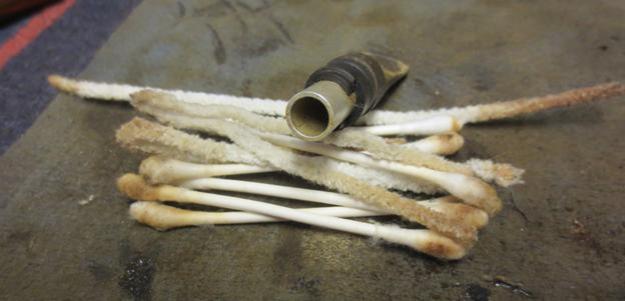
I cleaned out the inside of the tenon on the mouthpiece insert with cotton swabs and alcohol. I ran alcohol soaked pipe cleaners through the mouth piece and tenon to clean out the tars and oils.Filto10

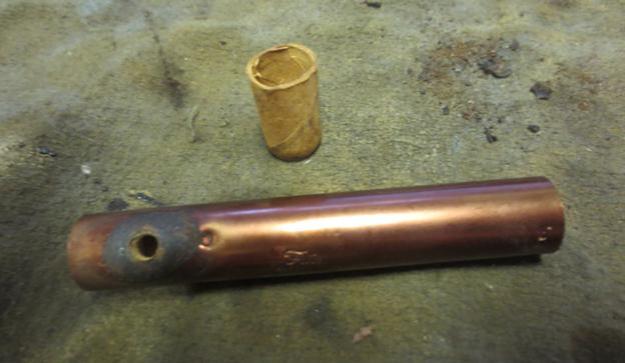
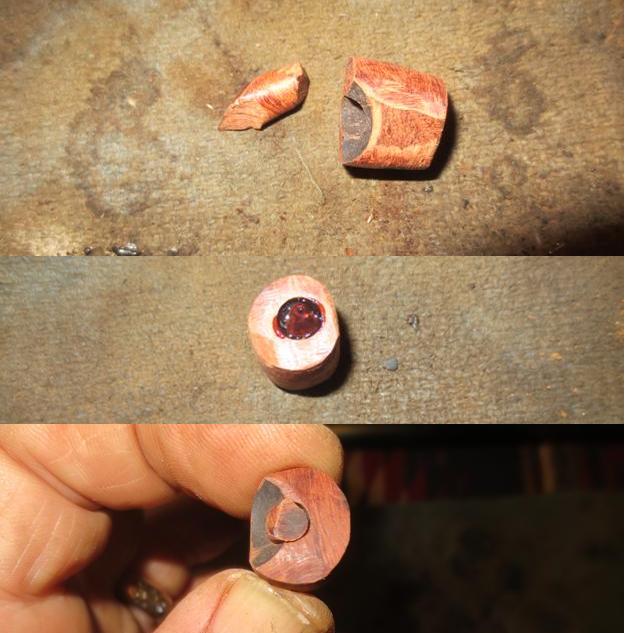
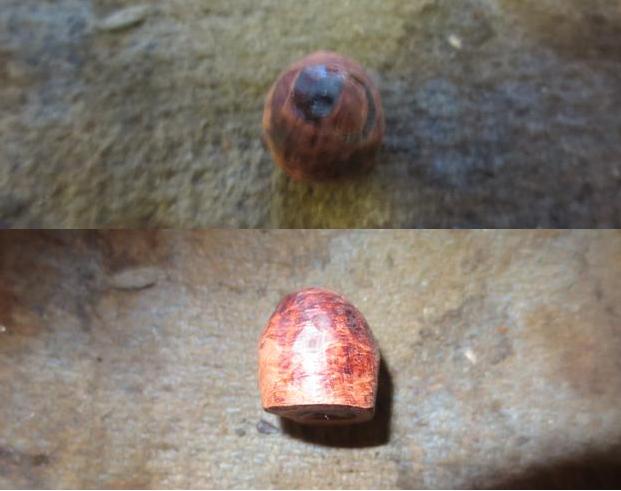
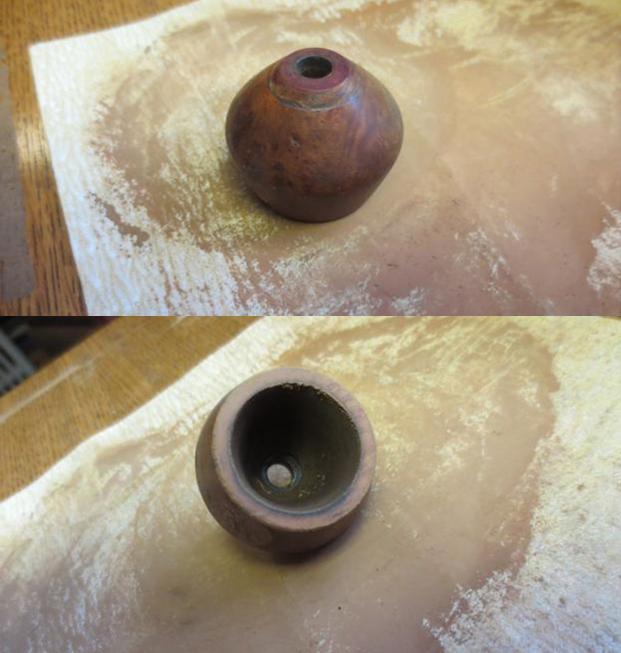
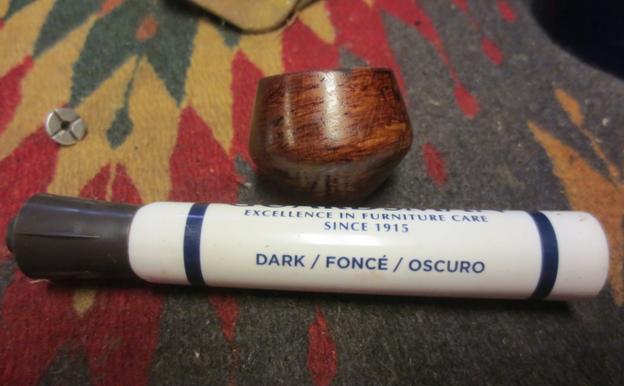
I decided to make and end cap or plug out of briar. I had a piece of briar that was next to the bowl. I had cut it off a while back to use for other purposes. Since it was drilled with an airway I needed to also make a round plug for the airway in the centre of the briar piece. I rounded out the shank piece and the small chip with a Dremel and sanding drum to make the end cap/plug. I round the chip until it fit perfectly into the drilled airway on the briar. I pushed it into the airway and glued it in place with super glue. I used the Dremel and sanding drum to smooth out the end that would go inside the barrel and the end that would stick out.Filto11

I used the Dremel and sanding drum to shape the end of the plug to be shaped like a cone. It continued to shape it until it would pressure fit into the end of the barrel.Filto12

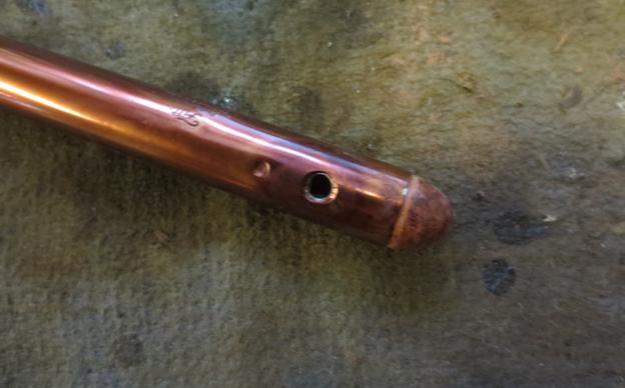
I shaped it like a cone and rounded the end. I cut a small band around the diameter of the end that would sit in the barrel. There was a step down inside that the cap sat against. I pressed it into place and continue to shape it with 180 and 220 grit sandpaper.Filto13

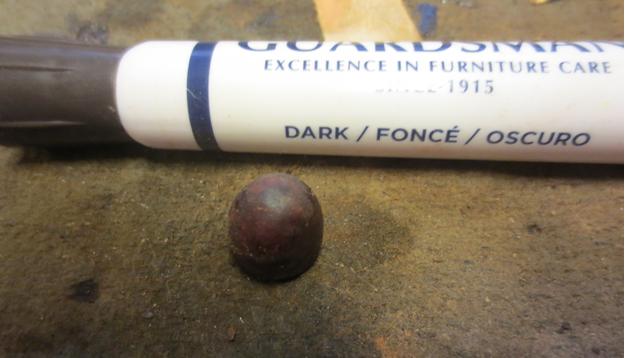
Once I had it shaped correctly I stained it dark brown with a stain pen and buffed it until it shone. I sanded it with 3200-4000 grit micromesh to give it some polish and thin down the opacity of the stain.Filto14

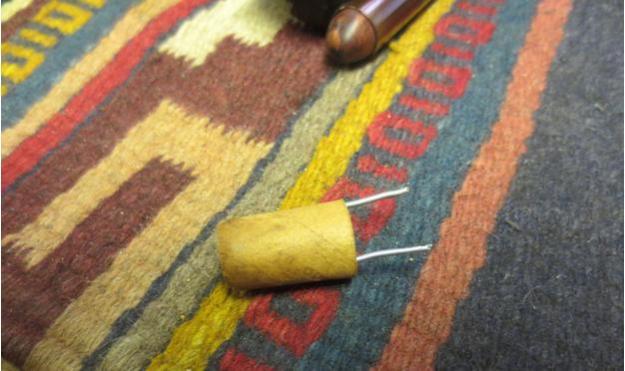
Looking at the spring clip that held the filter in place in the shank I made one that was similarly shaped out of a paper clip. I bent it to fit into the cardboard filter and to sit in the metal tenon of the stem.Filto15

I sanded the stem with 220 grit sandpaper to remove the calcification that was built up on the mouth piece at the button. There was some light oxidation on the saddle portion as well. I wet sanded it with 1500-2400 grit micromesh sanding pads and gave it a coat of Obsidian Oil. I dry sanded it with 3200-4000 grit sanding pads and gave it another coat of oil. I finished sanding it with 6000-12000 grit pads and gave it a final coat of Obsidian Oil.Filto16Filto17Filto18

I buffed the stem with Blue Diamond on the wheel and gave it several coats of carnauba wax. I buffed it with a clean buffing pad to raise the shine and hand buffed it with a microfibre cloth. I put the bent paperclip in the filter and in the end of the tenon.Filto19

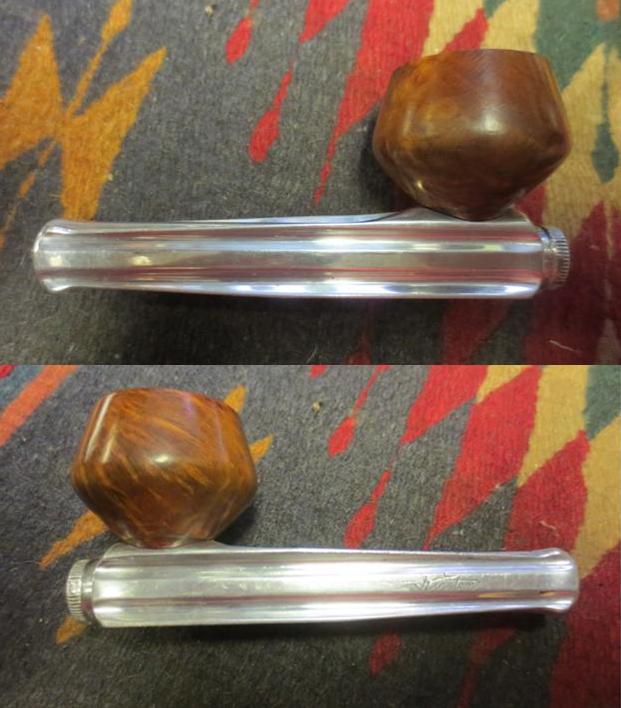
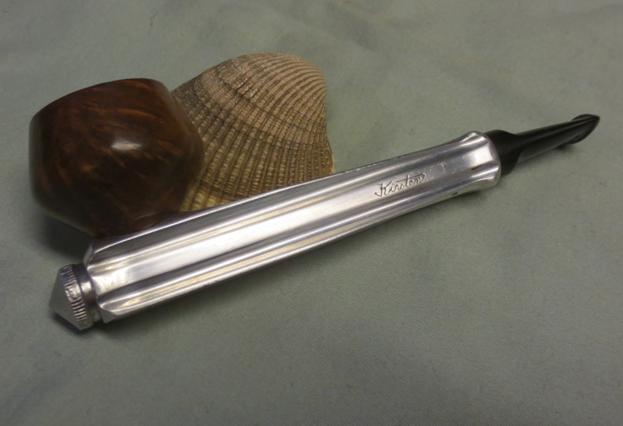
I lightly polished the bowl and barrel on the buffer using Blue Diamond. I gave both a coat of carnauba wax and buffed it with a clean pad to polish it. The bowl had a few dents and dings that I left as I found them because of the painted finish. I hand buffed the pipe with a microfibre cloth to deepen the shine. The finished pipe is shown in the photos below. The first four photos show the finished pipe as a whole. The last three show it in pieces.Filto20Filto21Filto22Filto23Filto24Filto25Filto26


Restoring a Kirsten Generation 1 Medium Straight Pipe


Blog by Steve Laug

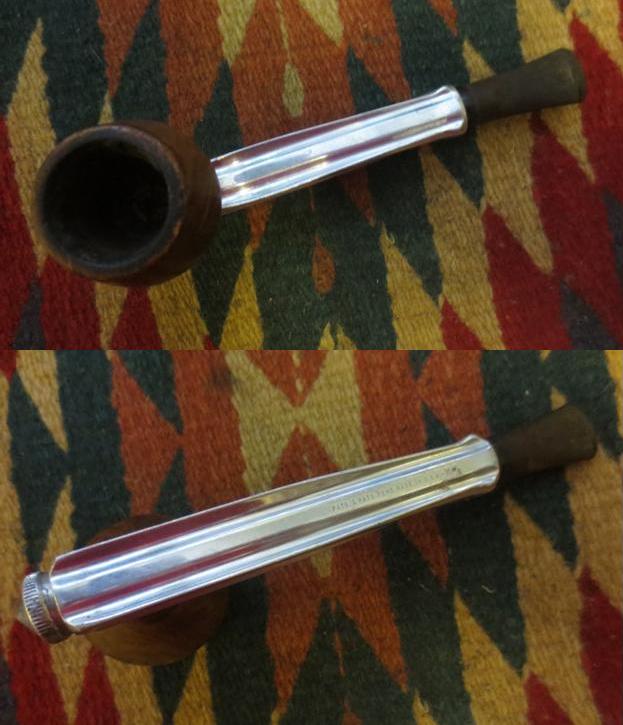
My brother continues to look for Kirsten estate pipes. He picked up this Kirsten because it looked like an old-timer. When I received it I could see that he was right about it being an older one. All the signs were there. The bowl was threaded directly on the barrel of the pipe and bottom cap that is on new models was not present. When the stem was removed there were no O rings on the end of the insert. The valve cap was stuck in the end of the shank and it could not be turned. The rim had a lava overflow on it and there was a heavy cake in the bowl. The screw mount in the bottom of the bowl was caked over to the point that it was stuck in the bowl. The metal barrel was oxidized and pitted. It had no shine left but looked like a well-worn pipe. The stem was oxidized and a dirty brown colour. There were tooth marks next to the button on the top and the bottom sides of the stem. The rod that ran through the barrel was dirty and coated with tars and oils that had hardened.K1 K2The left side of the barrel is stamped Kirsten in script. The underside is stamped Pats. & Pats.  Pend. USA M. The stamping along with the absence of O rings, the bowl screwed directly on top of the barrel pointed to a Generation 1 Kirsten which dated it between the years 1936-1958. In a previous blog I spelled out the features of each generation of Kirsten pipes that were released. https://rebornpipes.com/2012/11/03/kirsten-generation-1-1-5-2-3/ I quote the following from there: The wooden bowl on this generation connects directly to the metal barrel and there is no metal cup spacer. It is a pretty flush fit that goes flat against the barrel. On the underside of the metal barrel it is stamped with one or more of the following “Pat. Appl. For” (1936-38) and “Pats. & Pats. Pending” (1938-1958) over “Made in USA” – S” (or applicable size – S, M, L). There are no O-rings on the bit or metal shank insert. The M stamp on the pipe identifies it as a Medium sized pipe.

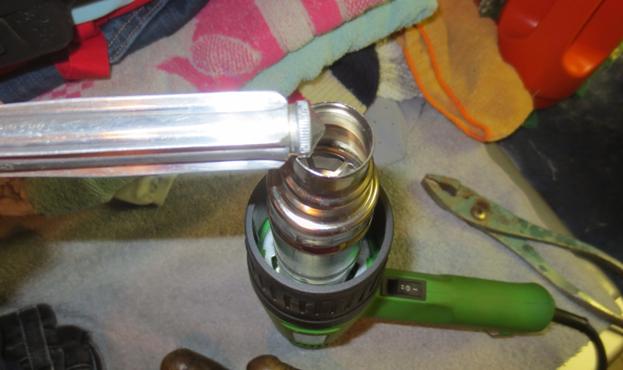
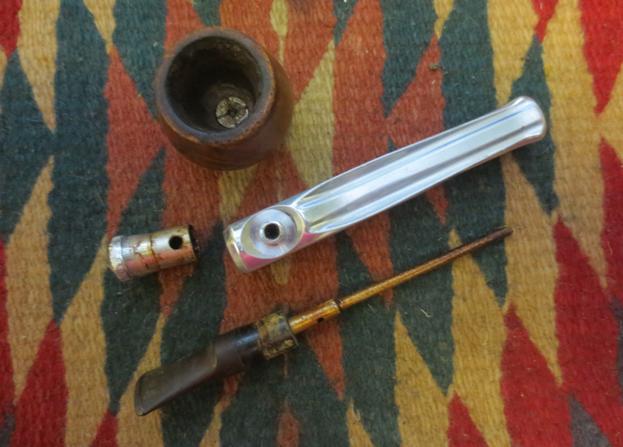
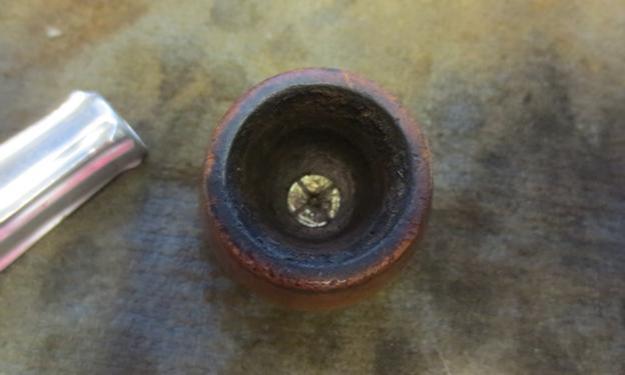
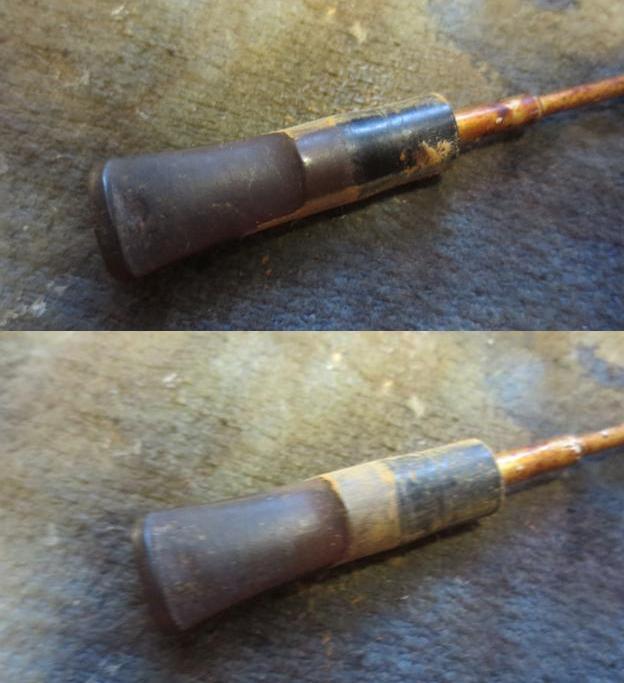
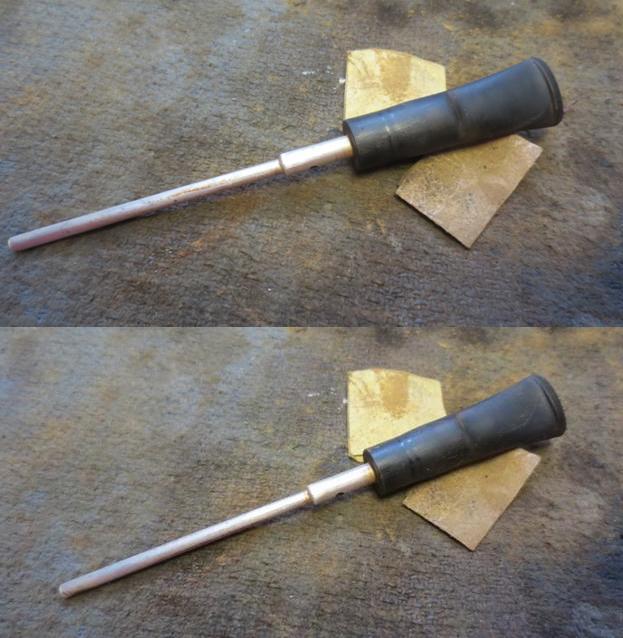
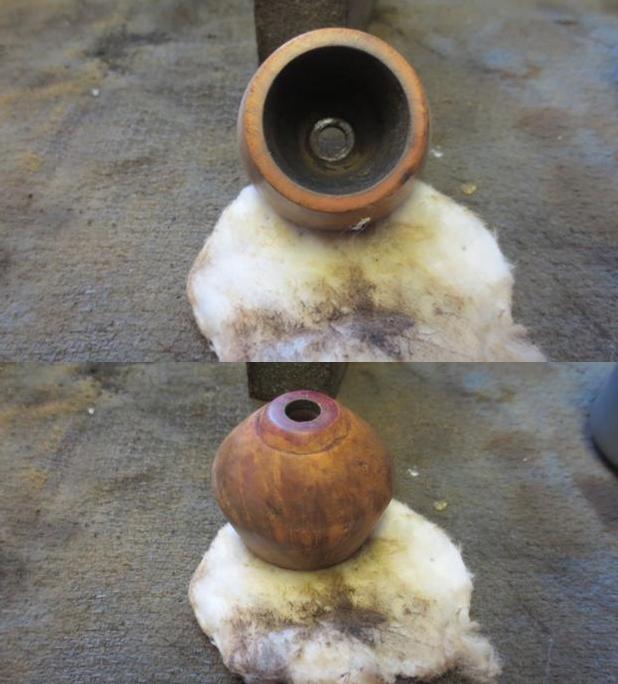
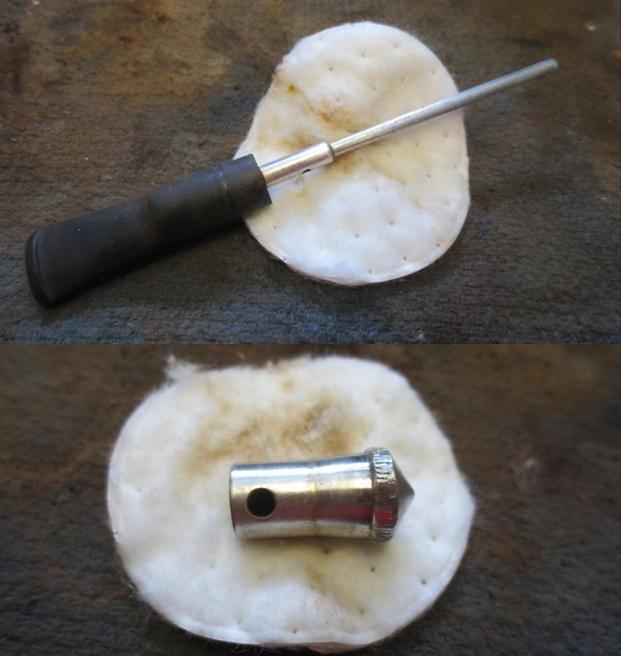
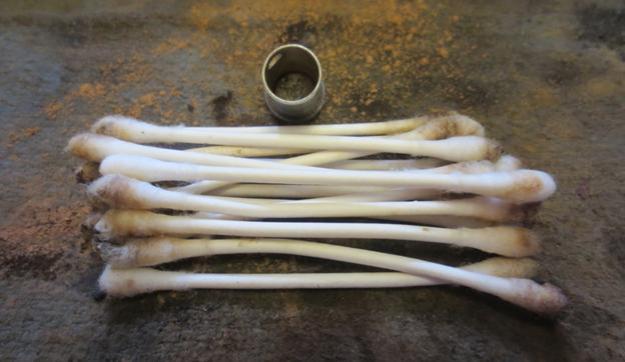
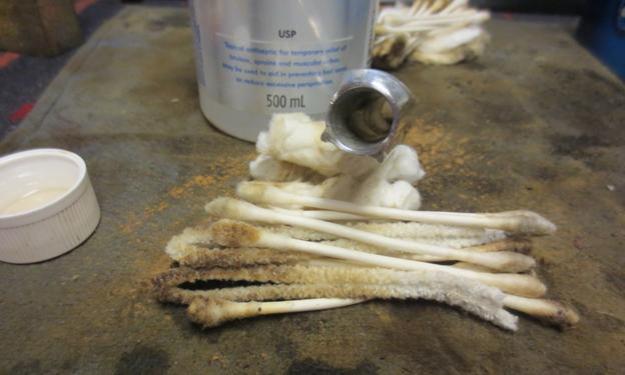
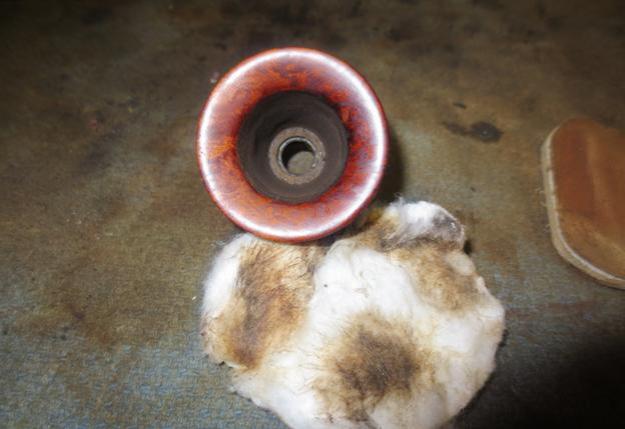
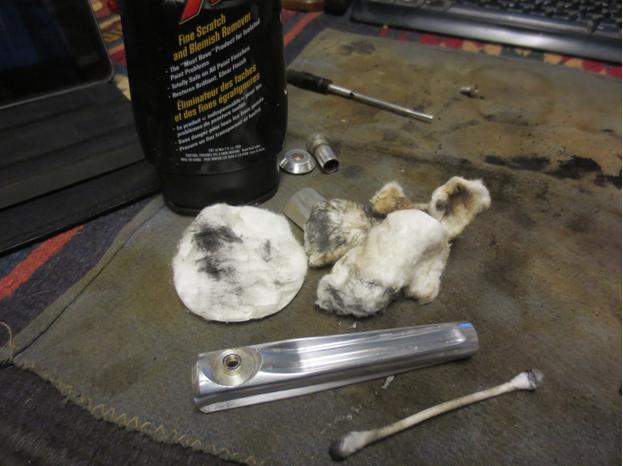
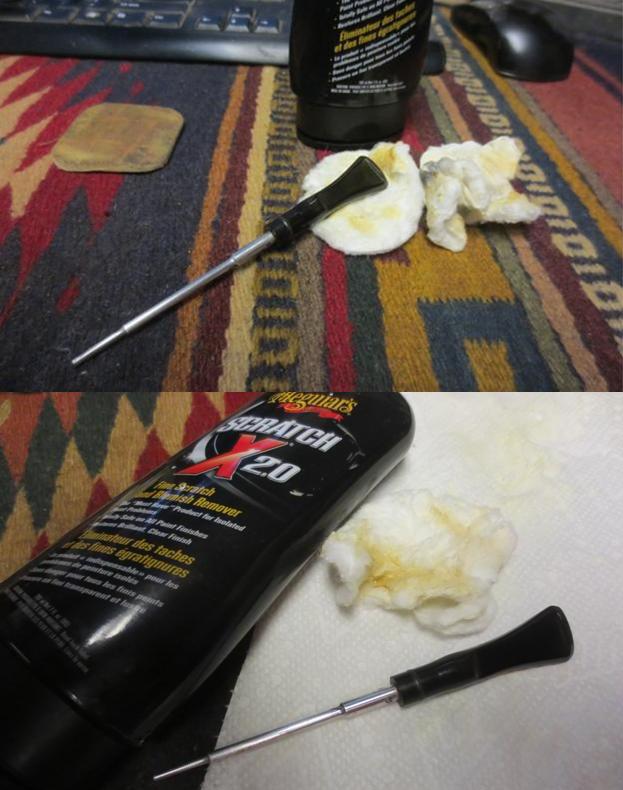
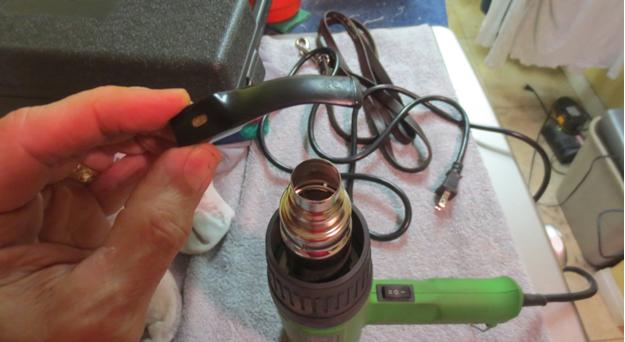
So I armed with that information I knew that the pipe I had, came from the time period of 1936-1958 and the lack of O rings on the mouthpiece and I assumed on the valve once I was able to remove confirmed that. I was ready to get to work on the pipe. I heated the valve insert with a heat gun to loosen the tars that held the cap in place. It did not take too long and I was able to insert a screw driver in the barrel and tap on the valve.K3The next photo shows the pipe taken apart. The condition of all of the parts is clear – dirty but functional. The knurled edges on the valve were damaged by previous attempts by someone else to remove the valve with pliers. In the photo above there are pliers present but I did not use them on the end cap.K4The screw in the bottom of the bowl was held in place by the cake in the bowl. The photo also shows the condition of the bowl and the rim. The other close-up photos show the stem and the tooth marks on both sides near the button.K5 K6I sanded the stem with 180 and 220 grit sandpaper to remove the oxidation and the tooth marks. I was able to blend the tooth damage into the flow of the stem because fortunately they were not deep.K7I lightly topped the bowl on the topping board to remove the damage to the rim and the build-up.K8I reamed the bowl with the Savinelli Pipe Knife and took the cake back to bare briar. I sanded the inside of the bowl with a piece of sandpaper to clean out the remaining cake.K9I scrubbed the exterior of the bowl with cotton pads and acetone to remove the grime and the remaining finish.K10 K11I scrubbed the rod on the stem unit with acetone to remove the tars and oils. I did the same with the exterior of the valve.K12I cleaned out the tarry build-up in the valve/end cap with cotton swabs and alcohol.K13I cleaned out the barrel with cotton swabs and rolled cotton pads and alcohol pushed through the opening with a screw driver. I also pushed a rolled piece of 0000 steel wool through the barrel to polish the inside. I used pipe cleaners to clean out the threads in the opening on the top of the barrel.K14I cleaned up the screw and the airway through the screw with a dental pick, pipe cleaners and alcohol. I cleaned the threads on the screw with cotton swabs and alcohol.K15I polished the aluminum barrel with Meguiar’s Scratch X2.0 and cotton swabs.K16I restained the bowl with a dark brown stain pen. K17I put the bowl on the barrel buffed them with Blue Diamond on the wheel to polish the stain and even out the coat on the bowl as well as polish the aluminum. The next photos show the bowl and barrel at this point in the process.K18 K19I cleaned out the airway in the stem with pipe cleaners and alcohol and then worked on the stem with micromesh sanding pads. I wet sanded with 1500-2400 grit pads and gave it a coat of Obsidian Oil. I dry sanded with 3200-4000 grit pads and gave it another coat of oil. I finished sanding with 6000-12000 grit pads and gave it a final coat of Obsidian Oil. I set the stem aside to dry.K20 K21 K22I gave the pipe and stem multiple coats of carnauba wax and buffed the barrel, bowl and stem with a clean buffing pad to raise the shine. I hand buffed it with a microfibre cloth to add depth to the shine. The photos below show the finished pipe. This one will also go on the store soon. If you are interested in it let me know. Thanks for looking.K23 K24 K25 K26 K27 K28 K29


Cleaning up the last of the Sofia, Bulgaria Finds – a Heibe Dublin 430


Blog by Steve Laug

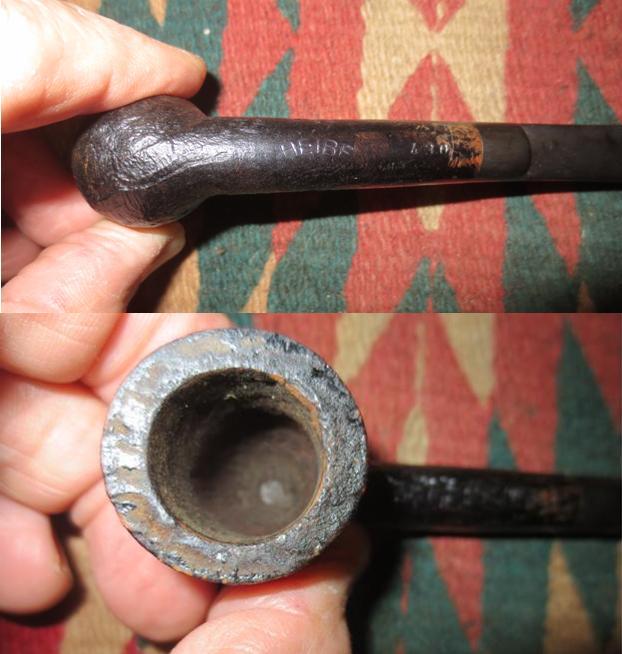
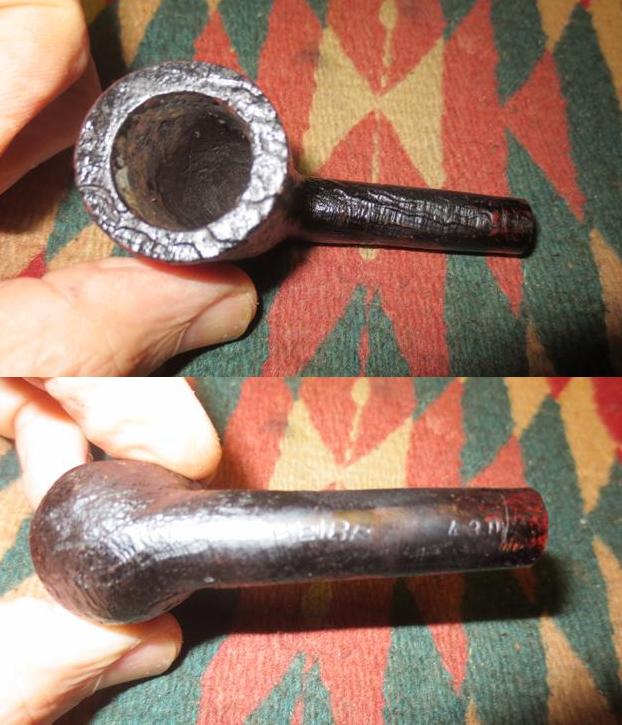
This is the last of the pipes I picked up on my trip to Europe and the pipe hunt with Dal in the market in Sofia. It is a nice sandblast Dublin stamped with an arced Heibe next to the shape number 430. There is no other stamping on the pipe so dating it is a bit difficult. I looked up what information I could find on the brand and found on Pipedia a short description of the brand. I quote it here in full with the reference at the end. “Heibe pipes are made by the company of the same name, owned in turn by Erich Heikaus, KG, in Bergneustadt, Germany. The trademark for the Heibe name was first filed on March 9, 1966 and registered on January 14, 1967. The sole trademarked line name of Heibe is the Heibe Goldpoint, which was applied for in 1970 and granted on May 31, 1972. Pipes have been seen stamped both “Germany” and “West Germany”, showing that the Heibe Company continued to make pipes after 1990, but these pipes appear to no longer be in production.  https://pipedia.org/wiki/Heibe

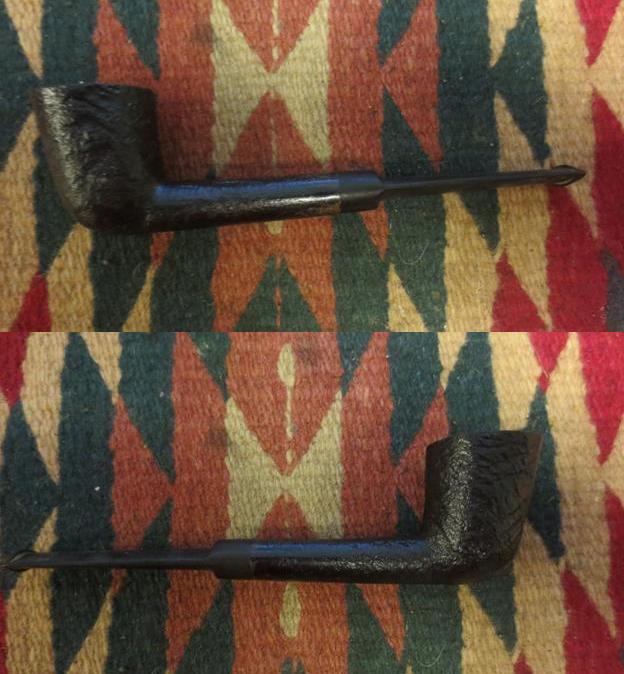
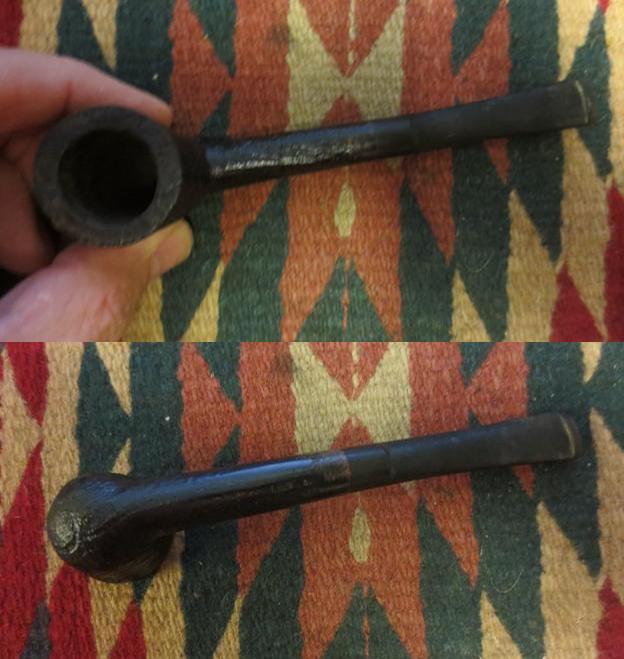
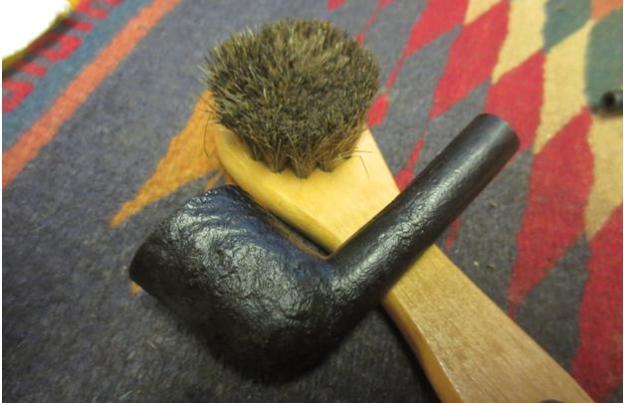
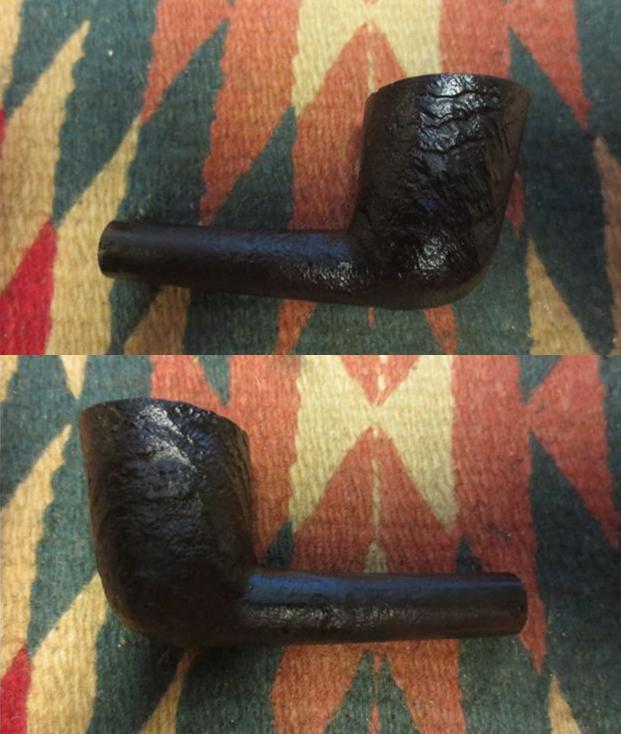
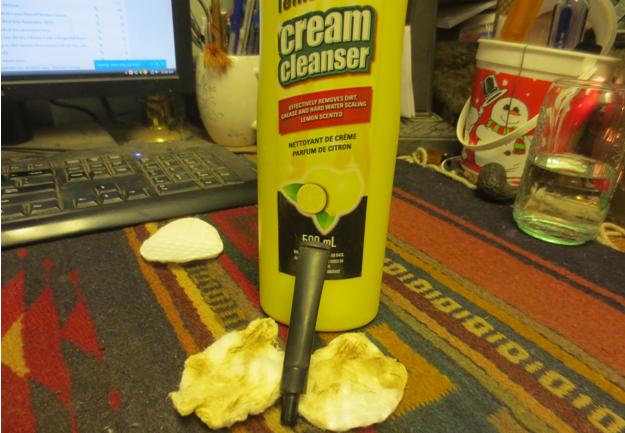
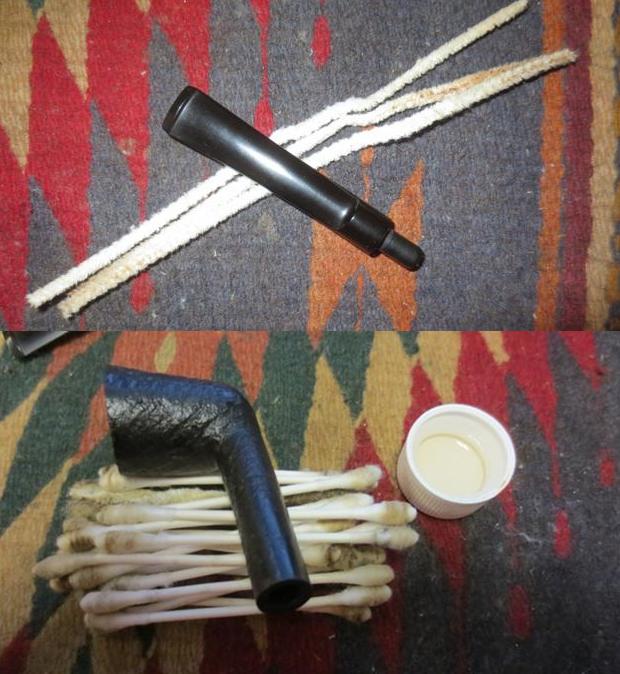
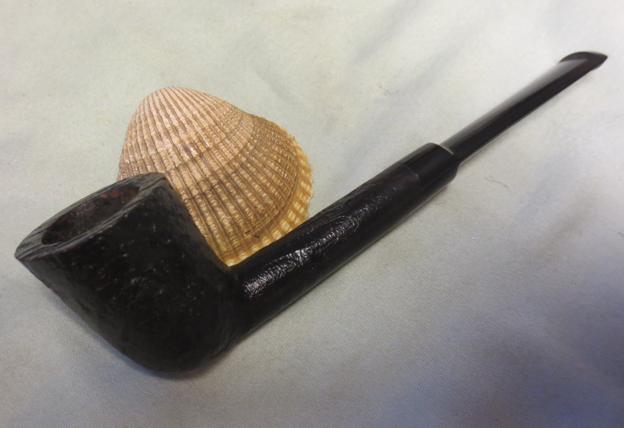
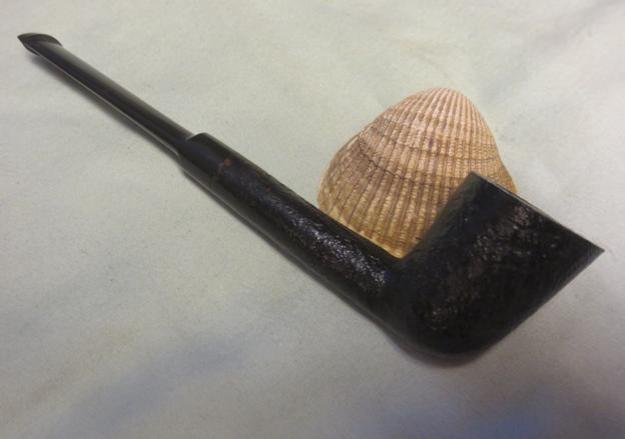
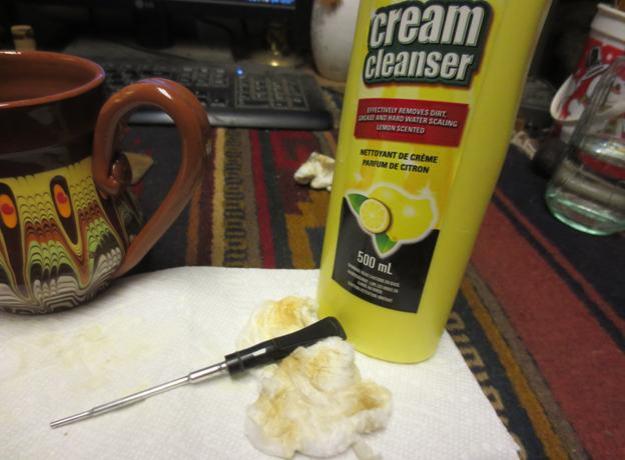
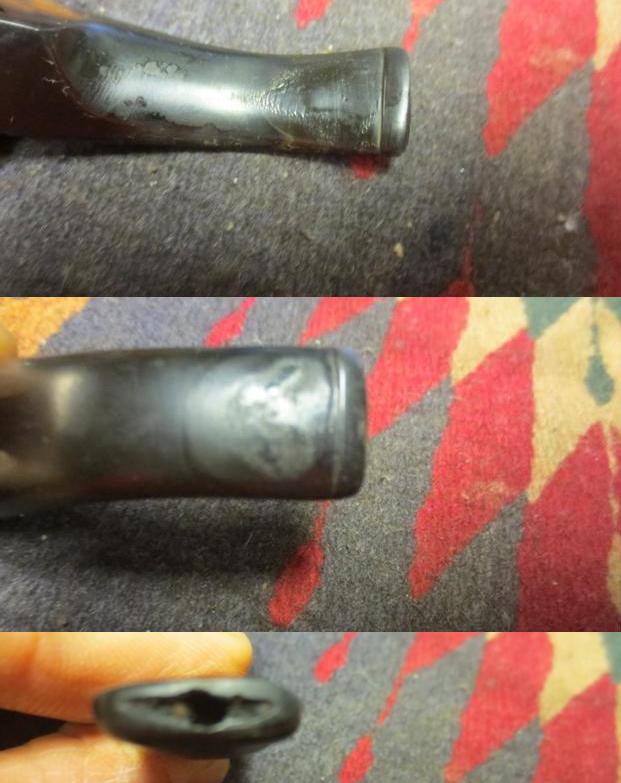
The pipe was in decent shape though the bowl and shank were dull and dirty. The stem was made of quality vulcanite that was not badly oxidized. It had no tooth chatter and other than dirt on the stem it was clean. The rim had some tars and oils over flowing from the bowl but it was not heavy. The cake was thin and uneven. There was a lot of dust in the grooves of the blast that gave the finish a dull appearance. There were some worn spots on the shank near the stem and also on the outer edges and top of the rim that would need to be touched up with stain. But other than that the pipe was in decent shape.Heibe1 Heibe2I took some close-up photos of the stamping, the bowl and rim and the stem to show the state of the pipe when I started cleaning it. You can see the shape number and brand in the first photo as well as the wear on the finish at the stem. In the second photo you can see the tars and grime on the rim and the thin cake in the bowl. The last two photos show the stem top and bottom sides. You can see the quality vulcanite had not oxidized too much.Heibe3 Heibe4I scrubbed the rim with a brass bristle wire brush to clean out the grooves and remove the build-up. It did not take too much scrubbing to get it clean. I scrubbed the rim with Murphy’s Oil Soap to remove the dust and grime in the sandblasted finish. I rinsed it under running water to remove the soap.Heibe5I scraped out the cake in the bowl with the Savinelli Pipe Knife. I took it back to bare briar.Heibe6I touched up the worn areas of the finish on the shank and the rim with a dark brown stain pen and then hand buffed the bowl with a shoe brush. The photos below show what the bowl looked like at this point in the process.Heibe7 Heibe8I hand buffed the bowl and shank with a shoe brush to get a feel for the look of the restained portion of the pipe. The new stain blended in very well with the older stain.Heibe9I gave the bowl several coats of Conservator’s Wax and then buffed it once again with the shoe brush. The polished bowl is shown in the photos below.Heibe10 Heibe11I decided to work on the stem with the cream cleanser and the Meguiar’s Scratch X2.0 once again. Since there were no tooth marks in the stem it would be just a matter of polishing the vulcanite. I scrubbed it with cream cleanser and cotton pads until I had removed the majority of the grime. I scrubbed it with the Meguiar’s to finish polishing it.Heibe12 Heibe13The two polishing compounds removed the grime. I cleaned out the airway with pipe cleaners and alcohol and the stem was finished. I scrubbed the mortise and the airway into the bowl with pipe cleaners, cotton swabs and alcohol and cleaned it out as well.Heibe14I buffed the cleaned pipe with Blue Diamond on the buffing wheel to polish the stem and lightly polish the bowl. I gave the stem several coats of carnauba and the bowl a very light coat of carnauba and then buffed the pipe with a clean buffing pad to raise the shine. I finished buffing it by hand with a microfibre cloth to give it a deeper shine. The look of the finished pipe is shown in the photos below. It has a nice blast and clean sharp lines to it. If anyone is interested in this one let me know it will go on the store very soon. Thanks for looking.Heibe15 Heibe16 Heibe17 Heibe18 Heibe19 Heibe20 Heibe21

Breathing new life into a Kirsten S with a Unique Bell Bowl


Blog by Steve Laug

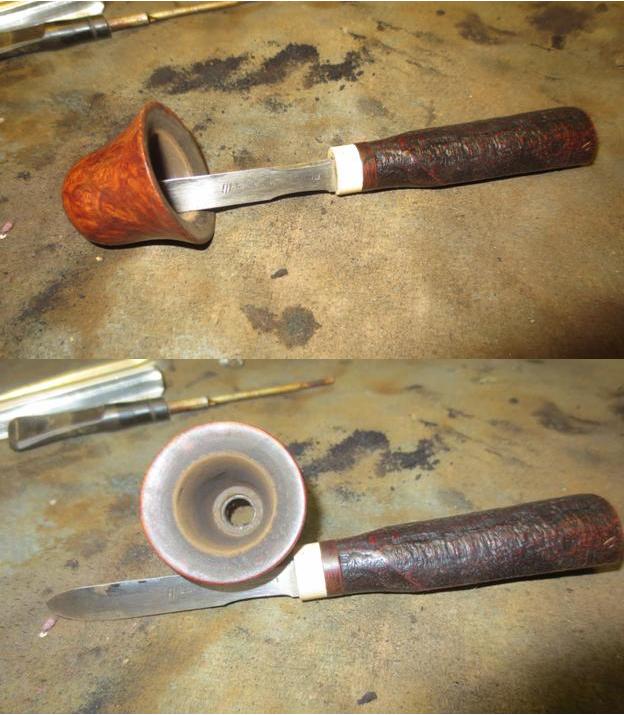
My brother picked up this Kirsten because he really liked the look of the bowl. I have never seen a Kirsten bowl this shape so I don’t know if it is an aftermarket bowl or one of Kirsten’s own. In the long run it does not matter because not only is the shape attractive but the briar is stunning. The rim has a slight bevel inward and the curve into the metal base cap looks great and feels great in the hand. The bowl had a heavy cake and the screw mount in the bottom of the bowl was caked over to the point that it was stuck in the bowl. The metal barrel was oxidized and pitted. It had no shine left but looked like a well-worn pipe. The stem was oxidized but there were no tooth marks or chatter on the stem. The rod that ran through the barrel was dirty and coated with tars and oils that had harden. The adjustable valve on the end of the barrel was stuck and could not be turn or adjusted. It was actually stuck closed so there was no airflow through the barrel.Kirsten1 Kirsten2I put the pipe in an alcohol bath to let it soak for a day while I was at work. When I came home in the evening I was able to take it apart. The alcohol had softened the tars and the stem came out easily and I was able to use a screw driver and a light tap on the handle to knock out the stuck valve. The bowl came off the barrel but the screw was still stuck in the bottom of the bowl. When I had it apart I realized I was dealing with a Generation 2 Kirsten. It was made between 1958-1985. I quote from a previous blog on the site with the information that leads me to the conclusion that I was dealing with a Generation 2. “Markings on underside of metal shank “Made in USA XL” (or app. size) and “Pat. & Pats. Pending”. The presence of O rings on both the valve and the mouthpiece and the metal cup spacer under bowl are the biggest thing that separates the Generation 1 from the Generation 2 pipes. These O rings help provide a tighter seal when the stem and apparatus are inserted into the radiator stem. Instead of “O” rings, the machining of the Generation 1 pipes was so precise the fit was exact.”  https://rebornpipes.com/2012/11/03/kirsten-generation-1-1-5-2-3/ The blog also identifies the S stamp on the bottom of the shank as the Sportsman Model from that era.

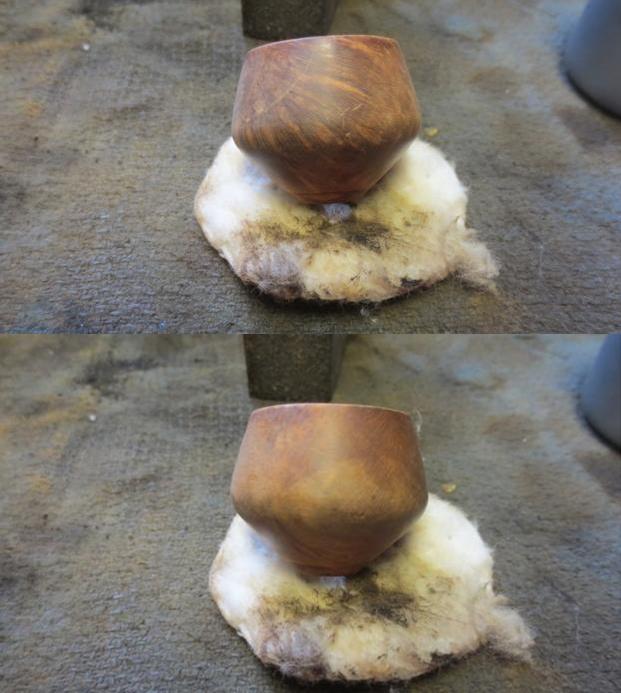
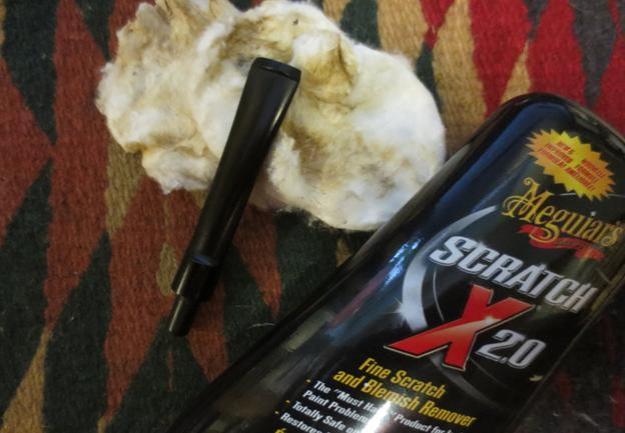
So I knew that the pipe I had, came from the time period of 1958-1985 and that the O rings on both the valve and the mouthpiece confirmed that. The S stamp also fits the pipe squarely within that date range. Armed with that information I began to work on refurbishing the Kirsten.Kirsten3I reamed the bowl with the Savinelli Pipe Knife and was able to clean out the cake enough that I could use a flat blade screwdriver to loosen the screw from the bottom of the bowl. Once the screw was removed I cleaned out the bowl with sandpaper to take the cake back to bare briar.Kirsten4I scrubbed the rim with a cotton pad and saliva and was able to remove the majority of the tars and oils. I used micromesh sanding pads to further clean up the rim top. The briar was beautiful once the grime was removed. I wiped down the outside of the bowl and rim with alcohol and the finish was in very decent shape.Kirsten5I scrubbed the oxidized finish with Meguiar’s Scratch X2.0 and cotton pads and cotton swabs and was able to remove the worn and oxidized build up on the surface. Underneath the oxidation was a shiny metal finish. It would not take too much scrubbing to remove all of the damage.Kirsten6I soaked some cotton pads in alcohol and pushed them through the barrel and also scrubbed the inside of the barrel with cotton swabs and alcohol to remove the tars and oils there. I cleaned out the inside of the valve and the outside of the insert end. Kirsten7I cleaned out the airway in the stem with alcohol and pipe cleaners. I sanded the metal rod with micromesh sanding pads to remove the build up and tars on the metal surface. I scrubbed it with alcohol to clean it and polished it with the Meguiar’s.Kirsten8With the internals cleaned, the bowl reamed and cleaned, the barrel polished and cleaned it was time to polish the stem. I scrubbed it with Soft Scrub cleanser to remove the oxidation. Once I broke through it I used the Meguiar’s Scratch X2.0 to further polish the stem. I decided to try to see if I could successfully use Charles’ method of cleaning oxidation with the Meguiar’s.Kirsten9 Kirsten10I was pretty amazed with the results. The finish glowed and the polish actually removed all of the oxidation. It just took repeated scrubbings and polishing until finally no more oxidation came off with the polish. I buffed the pipe with Blue Diamond on the wheel to polish the briar, barrel and the stem. I gave the pipe multiple coats of carnauba wax and buffed it with a clean buffing pad to polish it. I hand buffed it with a microfibre cloth to deepen the shine. The finished pipe looks like new and it just glows with warmth and a shine that must have originally graced the pipe. It is a beautiful Kirsten and should grace someone’s pipe rack for years to come. The finished pipe is shown in the photos below. If you are interested in this pipe let me know. Thanks for looking. Kirsten11 Kirsten12 Kirsten13 Kirsten14 Kirsten15 Kirsten16 Kirsten17
Finally a simple clean up – an Alco Universal Gold Pipe


Blog by Steve Laug

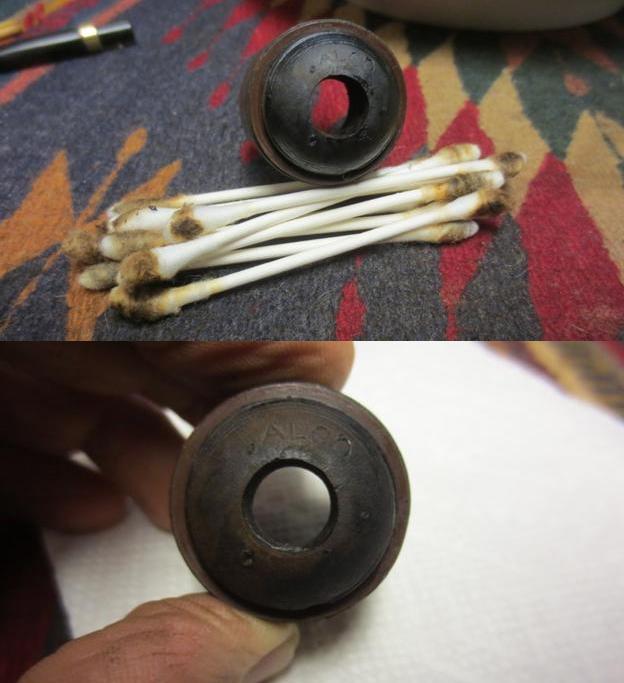
The Alco pipes were made by Falcon in England. This particular version of the Alco was made to hold an in line triple air groove filter. All Alco bowls are interchangeable with any other Alco, but NOT with Falcon. The Alco I was given is an Alco Universal Gold pipe. The pipe was in decent shape with the finish on the bowl in good shape but dirty. The rim had an abundance of lava overflow that came from a thickly caked bowl. There was tobacco debris stuck to the bottom of the bowl. The copper coloured base was dirty but did not show damage. The gold band was attached to the stem and showed some oxidation. The stem itself had a lot of tooth chatter on both the top and bottom sides near the button. What complicated that a little was that the stem was a dental bit and had two scored marks on each side. The airway in the stem was tight and the slot was narrow. The stem had a gold Falcon on the top side. The stamping on the underside of the base read ALCO UNIVERSAL.Alco1 Alco2The pipe came apart easily. I twisted the bowl off the base and found that there was a plastic spacer between the bowl and the base. The bowl had been stamped ALCO on the underside and it was dirty. The base had a lot of tars and oils that had hardened around the centre post. The stem also had the above mentioned “Triple Air Groove Filter”. Surprisingly the filter was pretty new looking.Alco3I cleaned out the airway in the stem with pipe cleaners, cotton swabs and alcohol. It was not as dirty as I expected. It made me wonder if the previous owner had not cleaned it a bit before he put in the new filter.Alco4The base was another story. It looked as if it had not been cleaned for a long time. I loosened the hardened oils and tar with a dental pick. I cleaned up the loosened debris with cotton swabs and alcohol and was able to remove the hardened tars and oils that had accumulated in the base over the years. I used cotton swabs, pipe cleaners and alcohol to clean out the inside of the mortise and airway in the shank.Alco5Reaming the bowl was a challenge as the cake was hard and dense. Starting with the smallest cutting head on the PipNet reamer and moving through the first three heads I reamed the cake back to bare briar. I cleaned up the bowl and airway at the bottom using the Savinelli Pipe Knife. Thinking about it as I write I probably should have tried out the Falcon Pipe Reamer that I picked up not too long ago. I forgot I had it so it will have to be used next time.Alco6 Alco7I scrubbed the base of the bowl and airway with cotton swabs and alcohol to remove the accumulated oils and tars on the bottom. You can see the ALCO stamping on the briar at the top of the picture.Alco8I worked on the rim with a cotton pad and saliva to remove the build-up there. It just took a bit of elbow grease to remove it and the undamaged rim came out of the grime. I wiped down the bowl with alcohol on the cotton pad and cleaned the dirt off the surface of the bowl and touched up the rim.Alco9I wet sanded the rim and bowl with 1500-2400 grit micromesh sanding pads and wiped it down again. I finished by sanding it with 3200-4000 grit pads to raise the shine. I put the bowl back on the base for the photo below.Alco10I have always found plastic stems harder to polish than rubber ones. The dental bit was a challenge to clean out all of the tooth marks in the grooves. I sanded the stem with 220 grit sandpaper to smooth out the chatter and then used 2000-6000 grit wet dry sandpaper to begin polishing it. I wet sanded it with 1500-2400 grit micromesh sanding pads and gave it a coat of Obsidian Oil. I dry sanded it with 3200-4000 pads, gave it another coat of oil and finished sanding it with 6000-12000 grit pads. I gave it a final coat of Obsidian Oil and let it dry.Alco11 Alco12 Alco13I have found that buffing plastic stems is more trouble than it is worth as the heat of the buffing pads can easily melt the stem and create a mess. I hand polished the stem with Meguiar’s Scratch X2.0 with cotton pads to bring up the shine. I buffed the bowl with Blue Diamond and gave it several coats of carnauba wax. I buffed the bowl with a clean buffing pad. I gave the stem several coats of Conservator’s Wax and hand buffed it and the bowl with a microfibre cloth. The finished pipe is shown in the photos below.Alco14 Alco15 Alco16 Alco17 Alco18 Alco19 Alco20


I thought this one would be easy – boy was I wrong


Blog by Steve Laug

I wanted a bit of a breather so I went through my box of pipes for repair and picked this multi-finish Jobey Asti Classic Bent Billiard to clean up. The stamping on the left side reads Jobey Asti Classic and on the right side France and the shape number 470. At first glance it looked like it would be a simple restore and clean. The bowl looked decent in the box and the stem was okay as well. When I got back to the table and did a closer examination I was surprised by what I saw. The bowl rim was in bad shape with the outer edge knocked and damaged. There were dent and score marks in the top of the rim. The lava had flown over the top and it looked as if someone had thrown a coat of Urethane on top of the bowl, grime and all. I looked at the exterior and found that even the grooves in the rusticated bottom of the bowl were thickly coated with the plastic stuff. The stem looked good at first but as I examined it I found that it had been cut off and the button recut and a slot fashioned that was not clean or even. The surface of the stem on the top and bottom next to the button was heavily built up with what appeared to be black epoxy and it was bubbled and full of pin prick like holes. It also was not bent correctly to the shape of the bowl. Truly it would need a lot more work than originally thought. (As an aside don’t use Urethane on bowls it is a bear to clean off and if you have to at least clean them before you dip them in that awful plastic stuff.)Asti1 Asti2I took the pipe apart and unscrewed the Jobey Link from the bowl and took a picture of the parts. I wanted to see how dirty the internals were and if the Link would come out easily. For those of you who don’t know the Link system one of the nice perks is that the end of the tenon that sits in the stem are slotted so you can insert a slot or blade screwdriver to loosen and remove the Link. It is a great piece of forethought on the part of the designer.Asti3Because of the coat of Urethane over the lava I needed to top the bowl to remove the grime and also to clean up the outer edges of the bowl. I topped it with 220 grit sandpaper on my topping board.Asti4I sanded the finish on the smooth portion of the bowl with a medium grit sanding block and then wiped the bowl down with acetone to try to break the plastic finish. I was partially successful in removing it but more work would need to be done.Asti5I reamed the bowl with the PipNet reamer and also with the Savinelli Pipe Knife to remove the remnants of cake that still were deep in the bowl. I reamed it back to bare briar so that the new owner could build a cake of their own choosing. You can also see the top and outer edge of the rim in these photos that show it after the topping of the bowl.Asti6In the next photo you can see the film of the plastic stuff still on the bowl with the scratches from the sanding block visible. I decided to let it soak in the alcohol bath for a day and a half to see if the finish would break down some more now that it had been broken through with the sanding blocks.Asti7When I took it out of the bath the finish was pretty smooth. The plastic stuff was gone. I sanded the bowl and shank with micromesh sanding pads to remove some of the scratching and was careful around the stamping on the sides of the shank. I washed the bowl down with some acetone on cotton pads and then stained it with a dark brown aniline stain. I flamed it and repeated the process to make sure I got and even coverage.Asti8While the bowl dried I turned to work on the stem. I heated it with the heat gun to soften the Lucite enough that I could bend it to the proper angle. It did not take too much to get the angle correct but the heat caused the epoxy patch to bubble. The perk of that was that the airhole pin prick marks disappeared.Asti9I wiped the bowl down with alcohol on cotton pads to remove some of the dark stain and bring the grain to the forefront.Asti10I cleaned out the interior of the stem with cotton swabs, pipe cleaners and alcohol. I cleaned out the area where the Jobey Link sat in the stem and the airway to ensure good fit and draw.Asti11Now it was time to work on repairing the stem repairs! The next photos show what the patches looked like when I started. They stood out clearly and the heat of the gun made them raise and bubble. To me they looked like overkill in terms of a repair. It was almost if the person who did the patch was trying to build up the thickness of the stem at the button to give it strength. It would take some work to make it blend in. I sanded the surface of the stem with 220 grit sandpaper to smooth things out and try to match the stem surface. Of course I forgot to take photos of the process but the ones shown below with the micromesh sanding pads will show the change. The third photo below shows the slot in the button. I worked on it with needle files to clean it up and shape it and again forgot to take photos of the process.Asti12I rubbed the bowl down with some Conservator’s Wax so that when I cleaned out the shank and Jobey Link System with would not damage the finish that I had done. (I know I should have done this before staining but this one irritated me and I forgot to do so.) I cleaned the link and then put a little Vaseline on the threads and turned it into the mortise. I adjusted it with the screwdriver to set it into the shank.Asti13 Asti14I buffed the bowl lightly with Blue Diamond on the wheel and gave it a light coat of olive oil. I took the following photos to show what the pipe looked like at this point in the process. You can also see the state of the stem in these photos. Overall the pipe is looking pretty good at this point. It is far better than I expected when I started. The contrast of the dark stain on the rustication and the lighter stain on the smooth briar makes this pipe look quite “classic” matching its name.Asti15 Asti16I wet sanded the stem with 1500-2400 grit micromesh sanding pads and dry sanded with 3200-4000 grit pads. I finished sanding with 6000-12000 grit pads. Asti17 Asti18 Asti19I buffed the bowl and stem with Blue Diamond. I avoided the rusticated portion so as not to get polishing compound in the crevices and pits of bottom half of the bowl. I waxed the bowl and the stem with multiple coats of carnauba. The finished pipe is shown in the photos below. The grain is quite beautiful and the contrast between the smooth and the rusticated portions gives a unique look to the pipe. Thanks for looking.Asti20 Asti21 Asti22 Asti23 Asti24 Asti25 Asti26 Asti27

An Interesting Churchill’s Volcano Brought to Life


Blog by Steve Laug

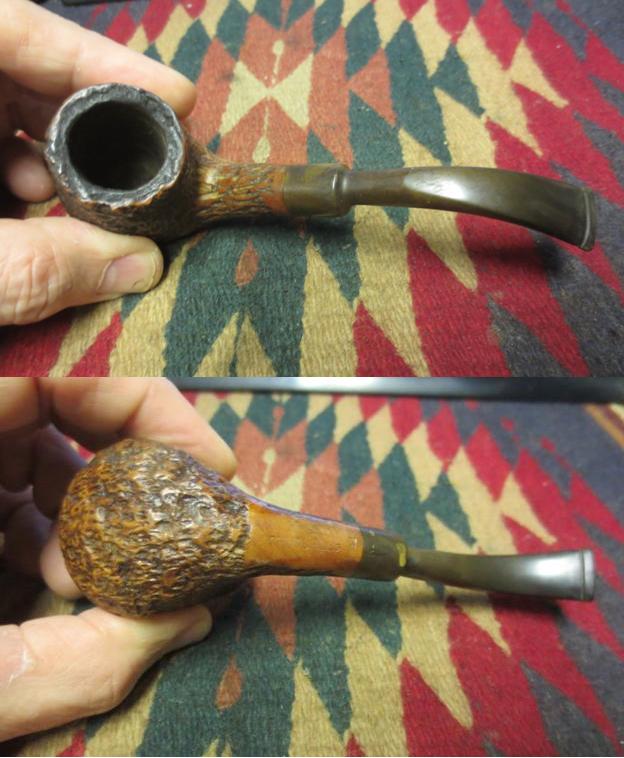
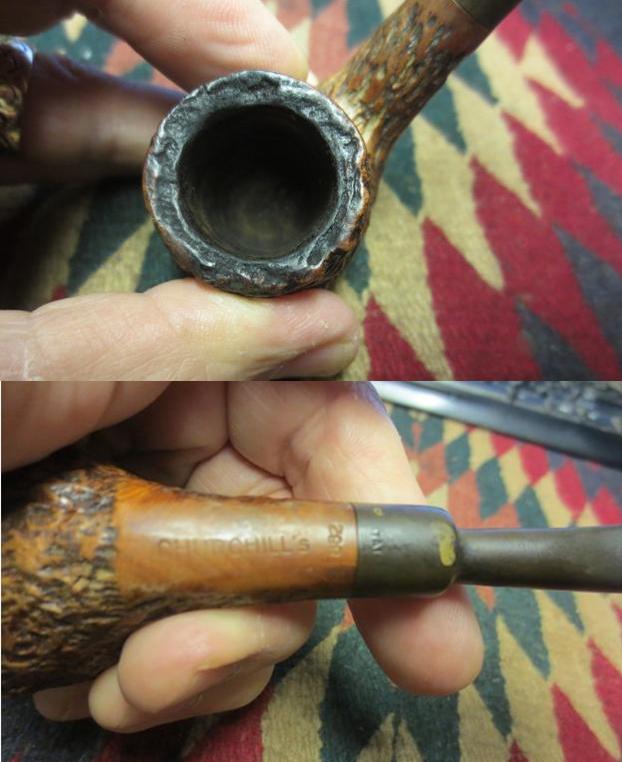
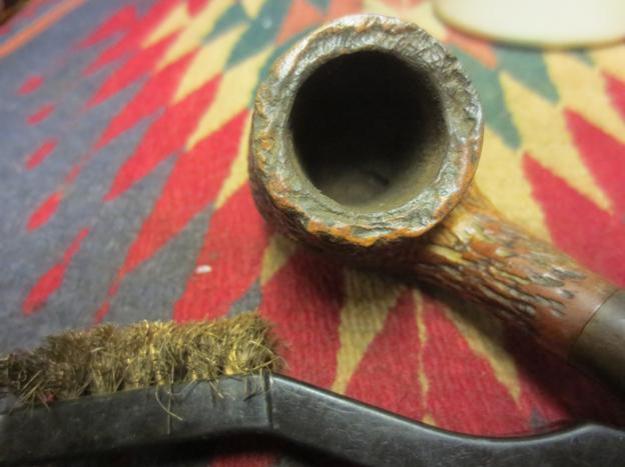
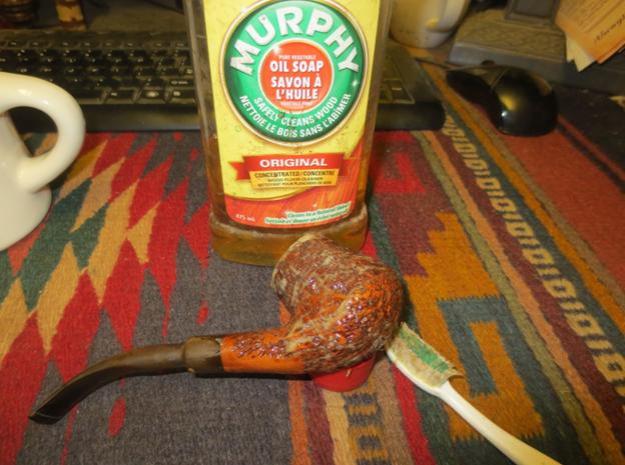
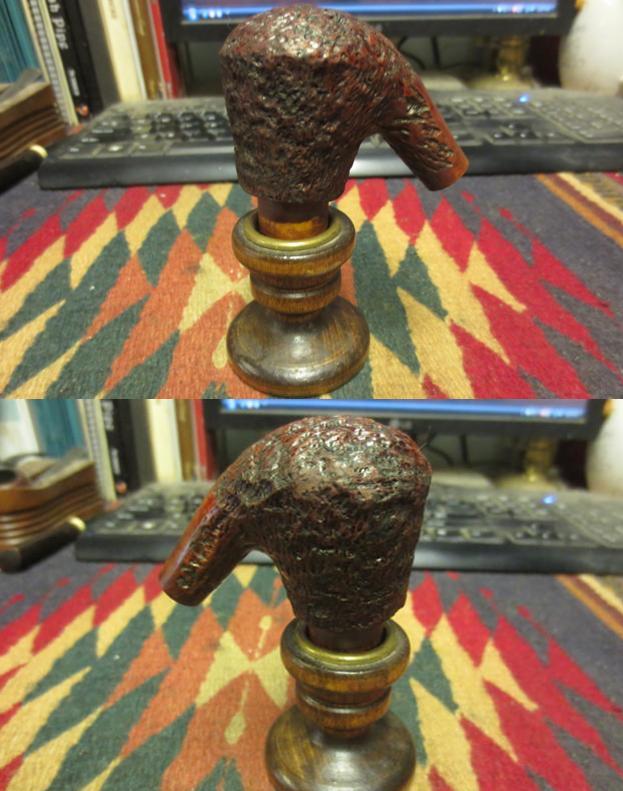
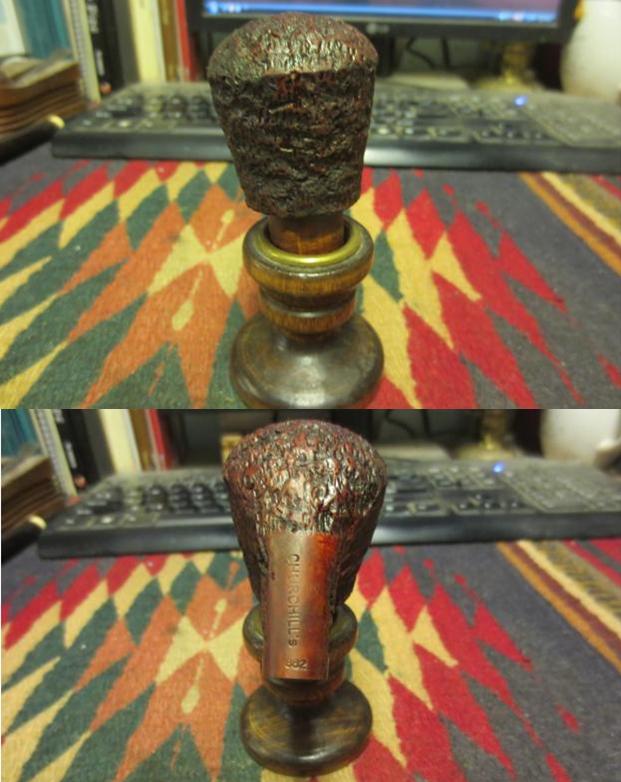
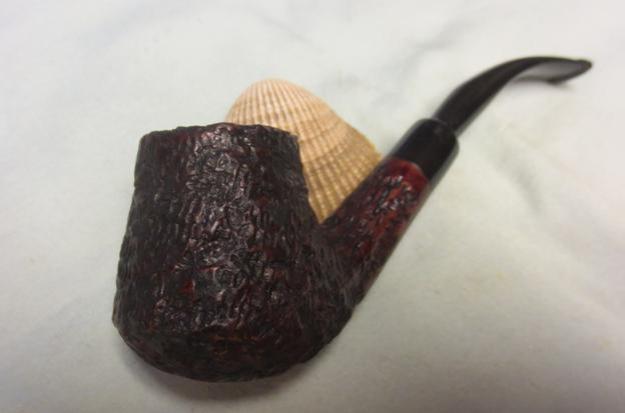
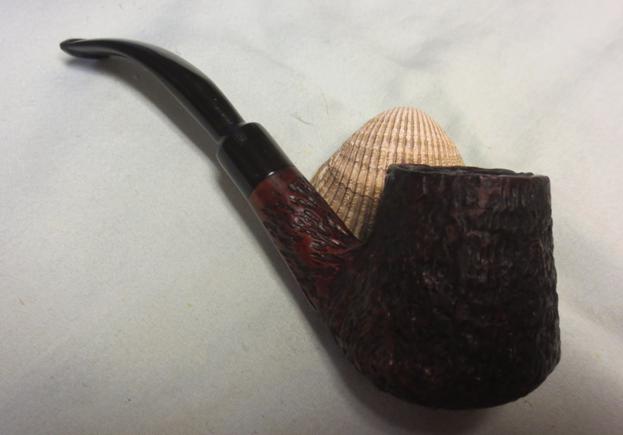
The next out of the box of pipes from my brother is the one below. It is stamped Churchill’s on the smooth underside of the shank. The shape number 882 is along the shank stem junction on the underside. I have refurbished several Churchill’s pipes from their pipe shop in Norwich. I wrote a bit about that shop when I did a refurbish on a Churchill’s Bent Pot. The link to that article is as follows: https://rebornpipes.com/2013/09/08/churchills-bent-pot/. This pipe had a rustication that is very similar to those I have seen on Lorenzo pipes. The stem on this pipe is stamped Italy on the underside. The finish was tired and dirty but the rustication was in good shape. The rim was solid with no damage to the inner or outer edge but it was thick with tars. The bowl was reamed while I was visiting in Idaho. The stem was in good shape at first glance. It was oxidized but there were no tooth marks. As I examined it I found that the stem had been cut off and a new button was cut into the surface. The slot was also reshaped. The button itself was very thin as the stem was also thin at this point.Church1 Church2I took a close up photo of the rim and the stamping on the underside of the bowl. The rim is dirty but the rustication is in good shape with no burn marks or damage. The stamping is also very clear.Church3I scrubbed the rim with a brass bristle wire brush to remove the tars and oils that had built up there. Once it was loosened I scrubbed it with a tooth brush and Murphy’s Oil Soap to clean off the grime in the finish. I rinsed the bowl with warm running water to remove the grime and soap.Church4 Church5The next photos show the cleaned finish on the pipe.Church6 Church7I used the dental spatula to scrape out the inside of the shank and break the tars and oil build-up away from the walls of the shank and mortise. I cleaned out the mortise and airway in the shank and stem with pipe cleaners, cotton swabs and alcohol.Church8 Church9I sanded the stem with 220 grit sandpaper to remove the oxidation. I built up the button with black super glue to add thickness and enable a grip on the button.Church10 Church11I used a file to shape the button and recut the sharp edge against the stem surface. I sanded it with 180 grit sandpaper to smooth out the areas in front of the button on the top and the bottom sides.Church12 Church13I continued to shape the stem surface and the button with 220 grit sandpaper and also used the needle files to open up the slot in the button and reshape that.Church14I sanded the stem with 220 grit sandpaper to clean off the oxidation. I wet sanded the stem with 1500-2400 grit micromesh sanding pads. I rubbed it down with Obsidian Oil. I dry sanded the stem with 3200-4000 grit sanding pads and gave it another coat of oil. I finished sanding the stem with 6000-12000 grit pads and gave it a final coat of Obsidian Oil. I let the stem dry.Church15 Church16 Church17I stained the bowl with a dark brown aniline stain and flamed it. I repeated the process until the coverage was good. I hand buffed the bowl with a shoe brush. I gave it a light coat of olive oil and hand buffed it again. I rubbed the surface down with some Conservator’s Wax and then hand buffed it with the shoe brush for a final shine.Church19 Church20I buffed the pipe lightly with Blue Diamond polish on the wheel and then gave the stem multiple coats of carnauba wax. I buffed the pipe with a clean buffing pad and then hand buffed it with a microfibre cloth. The finished pipe is shown in the photos below. The rustication has depth and textures both visually and tactilely. It feels great in the hand. The shape of the bowl and the faux military stem give the pipe a classic look with a flair that is almost Danish looking. I like the finished look of this one. Thanks for looking.Church21 Church22 Church23 Church24 Church25 Church26