Tag Archives: Bowl – finishing

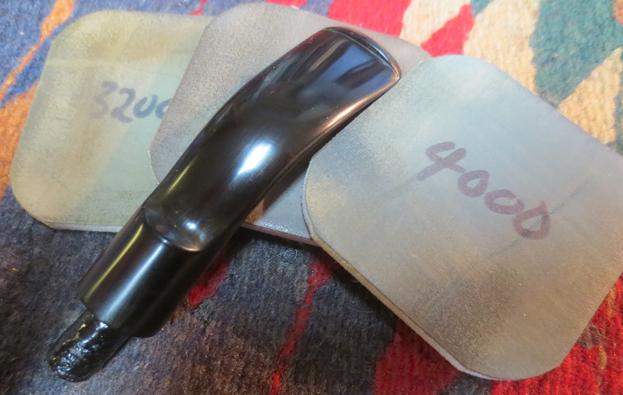
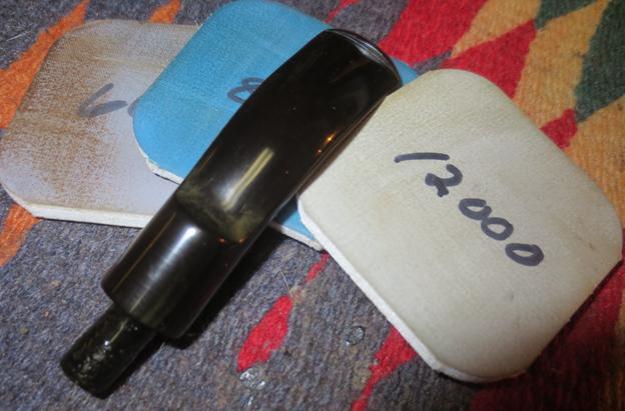
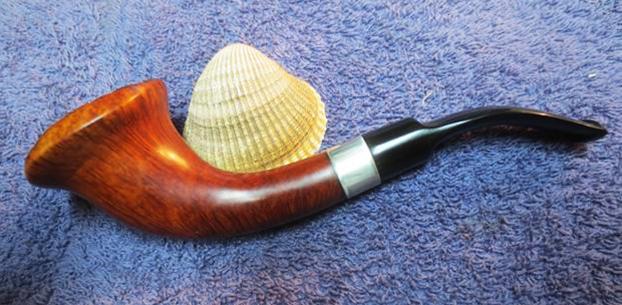
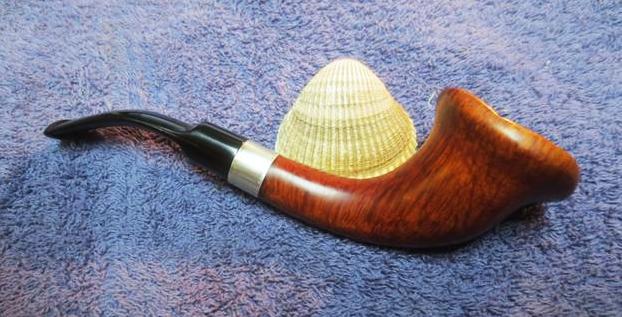
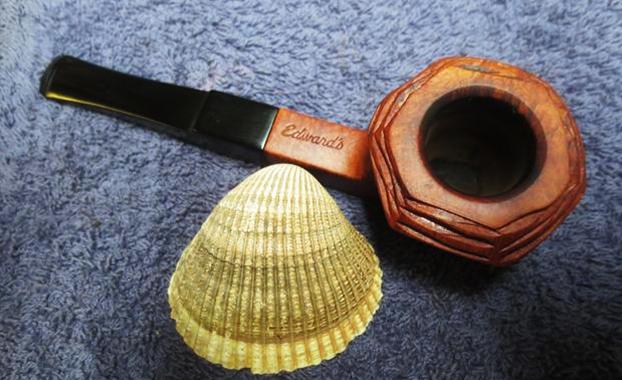
Restoring an Edwards Hexagon Dublin Sitter 97


Blog by Steve Laug

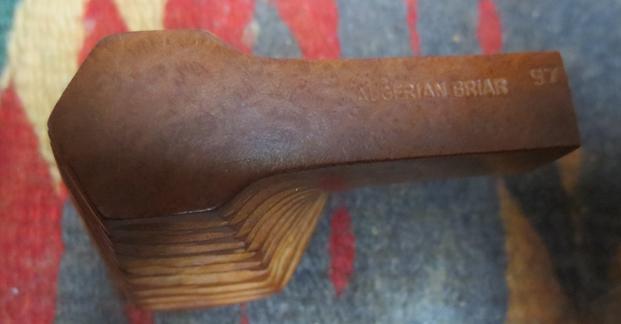
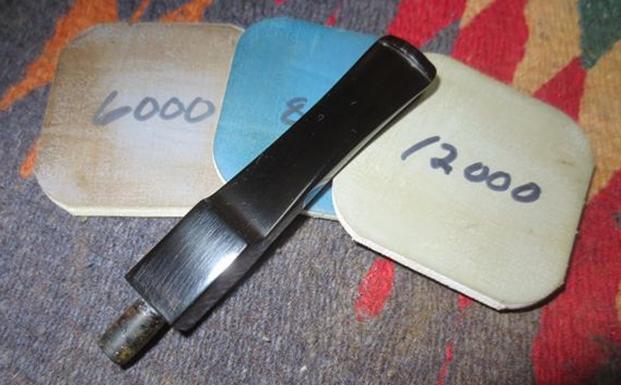
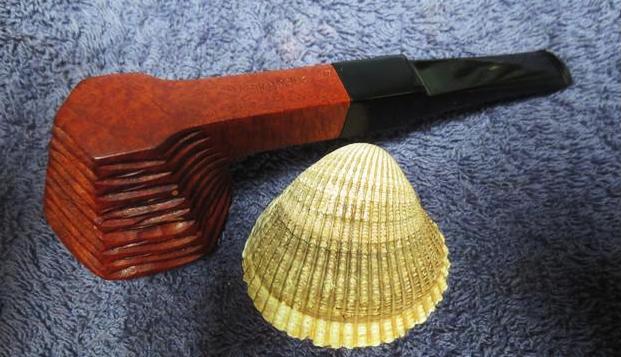
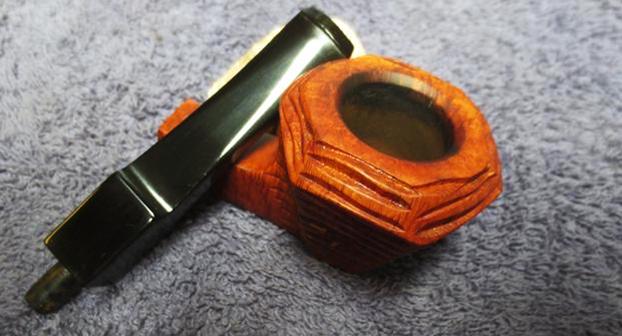
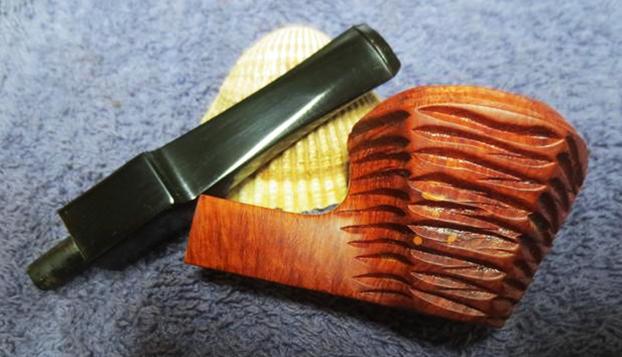
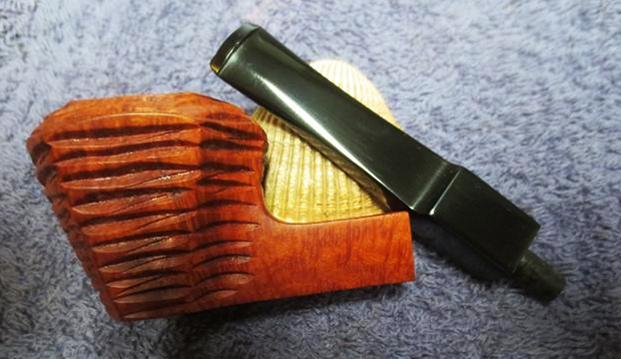
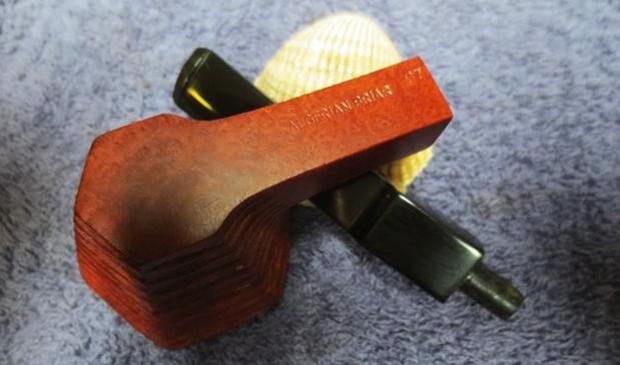
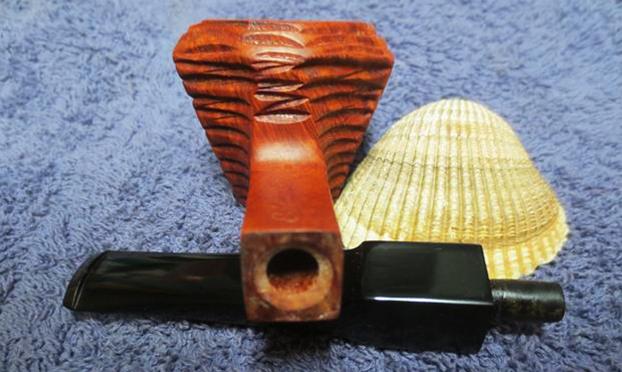
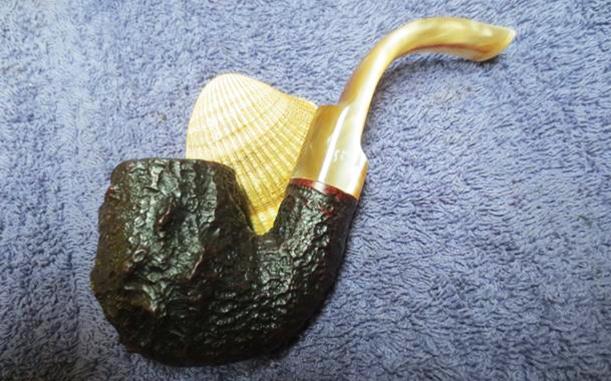
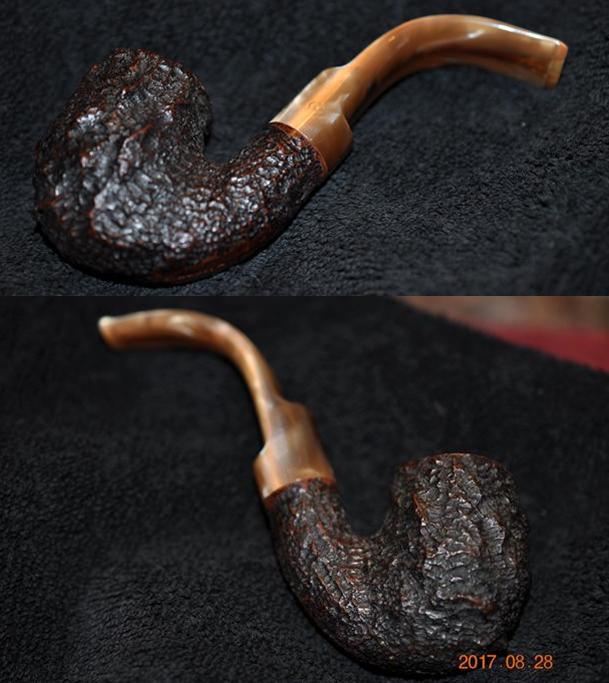
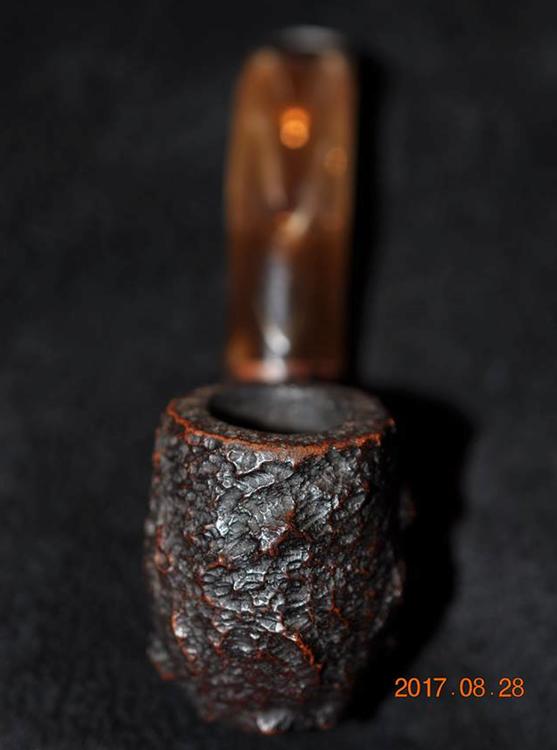
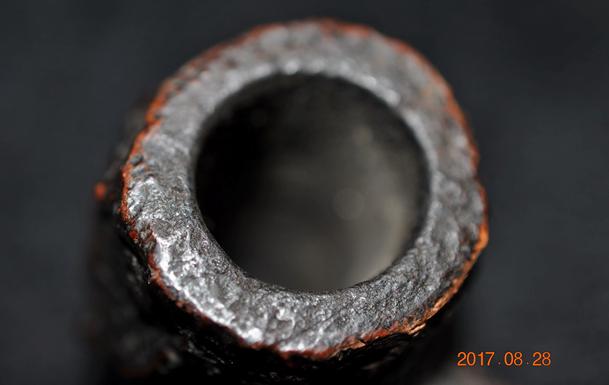
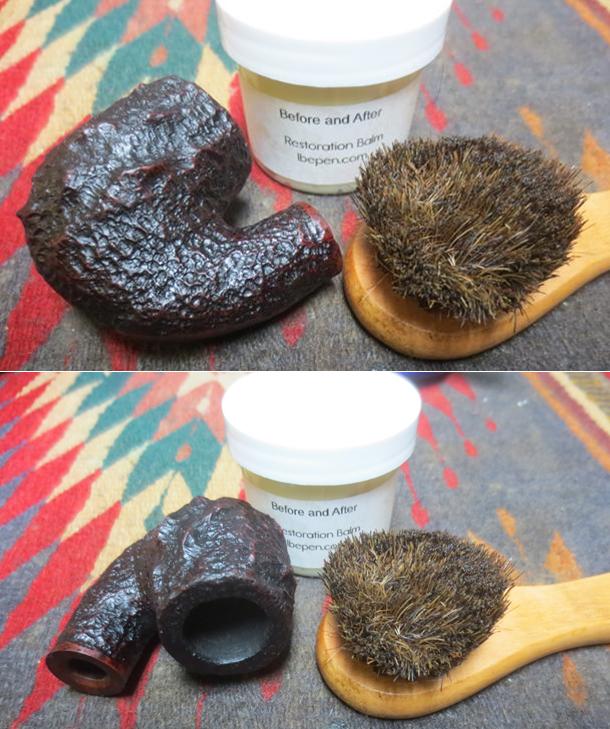
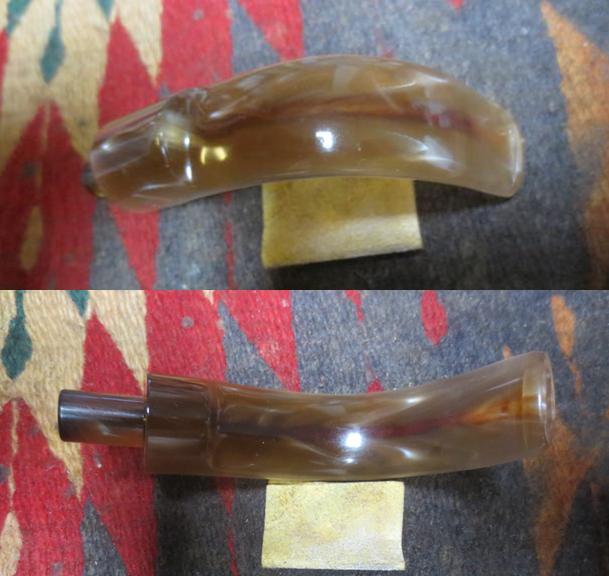
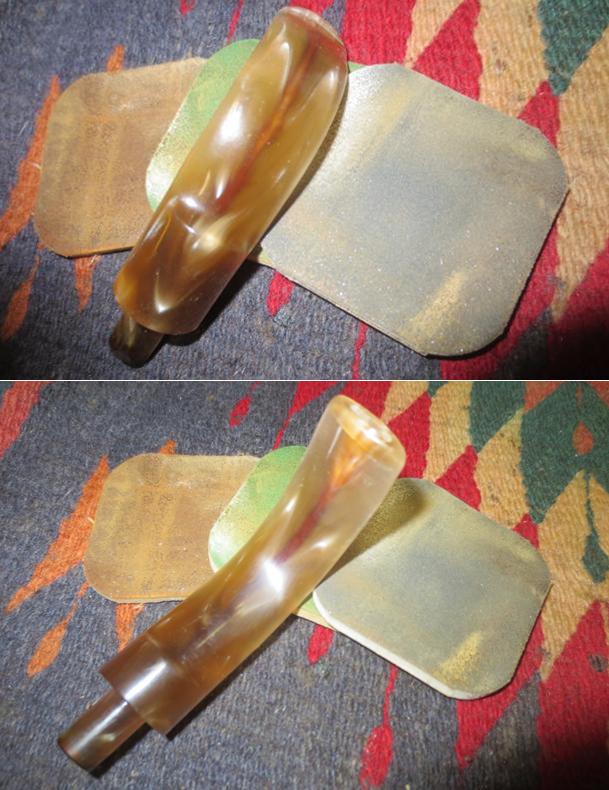
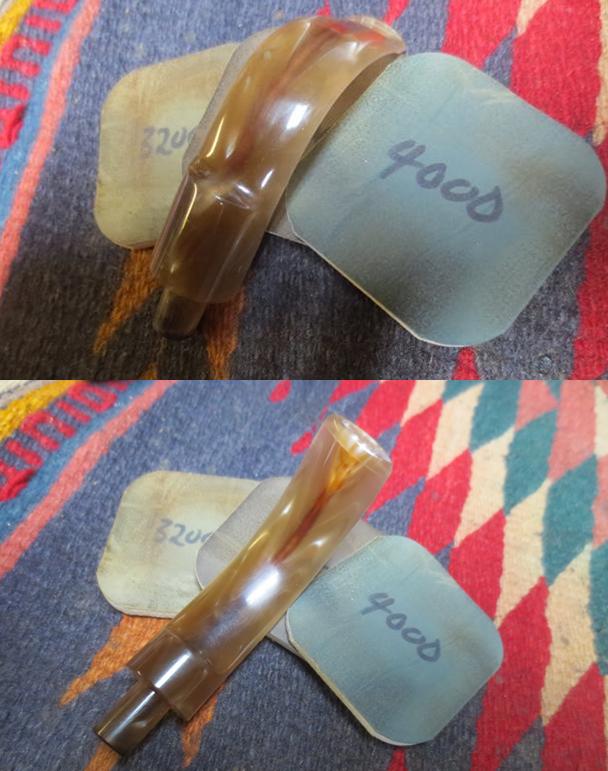
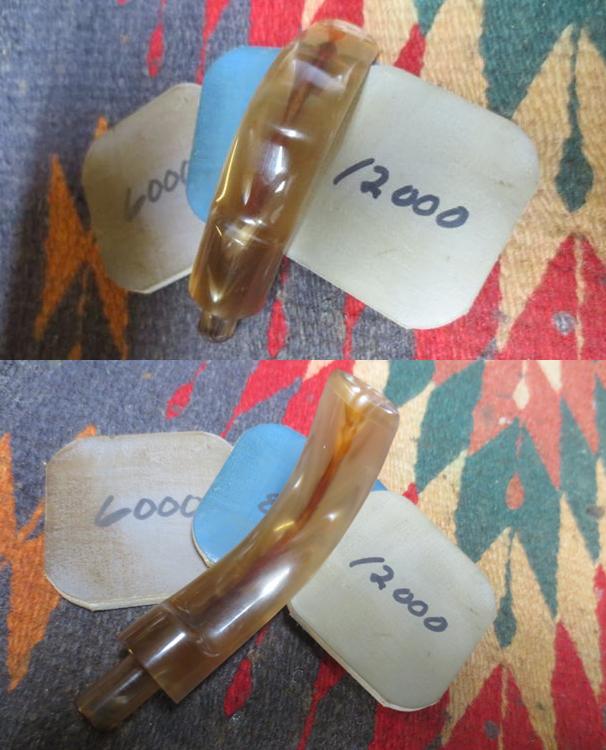
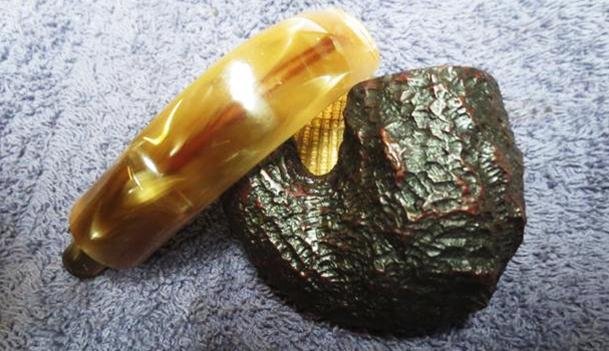
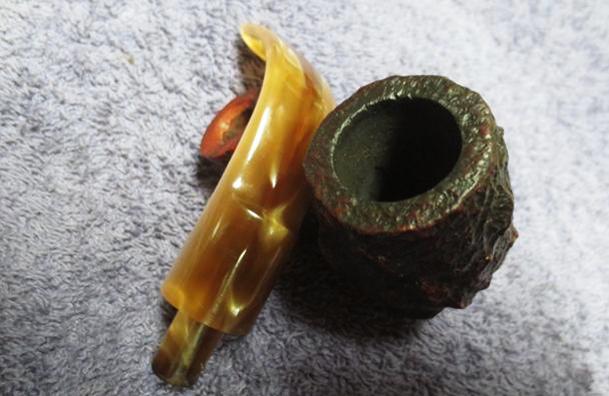
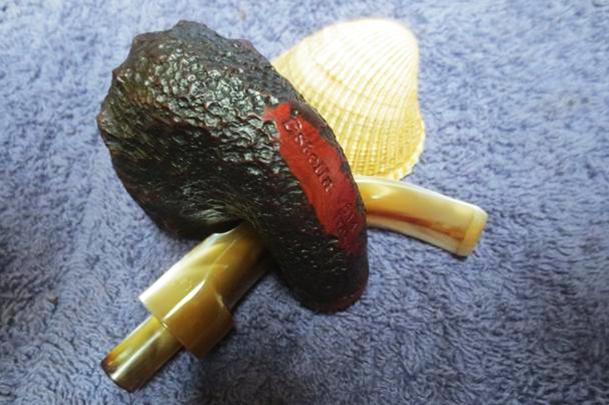
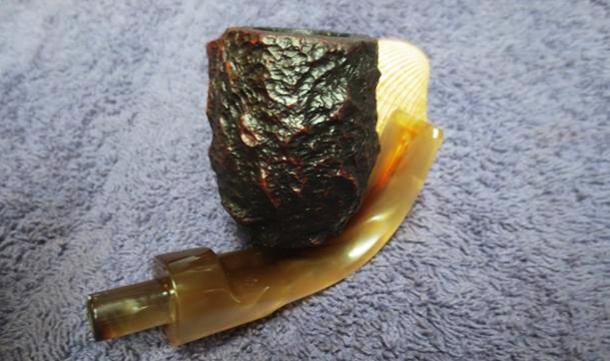
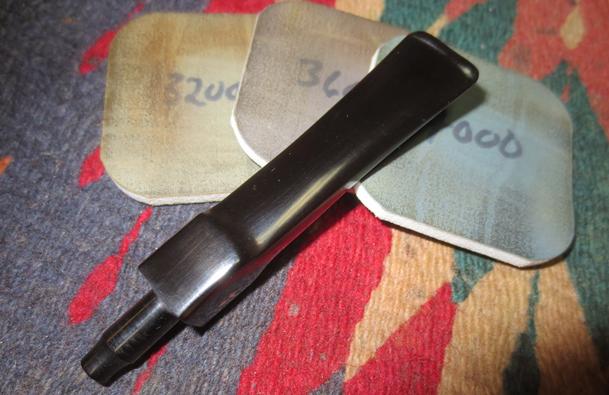
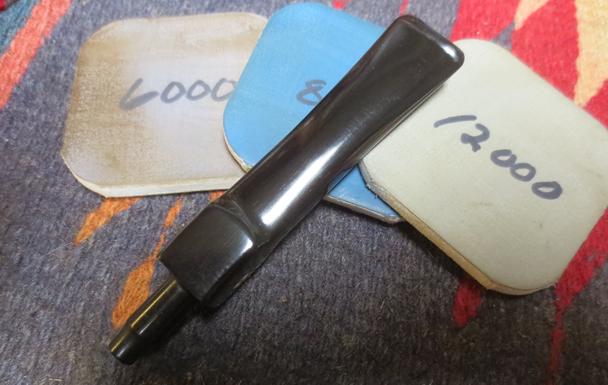
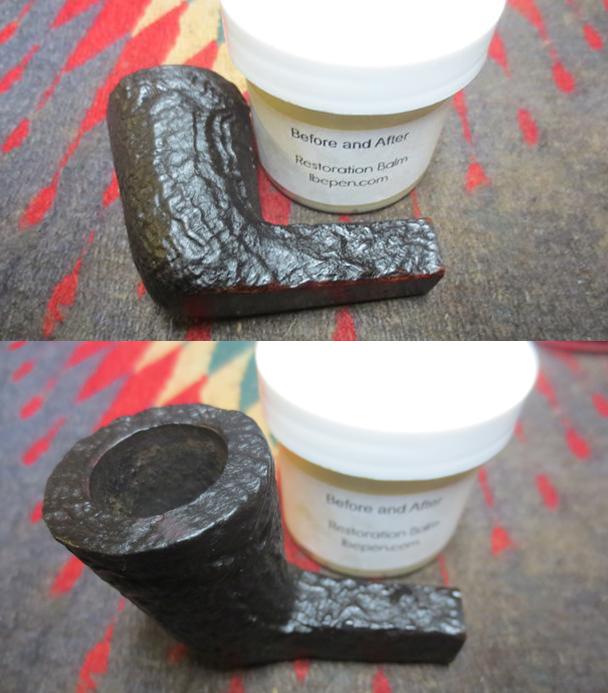
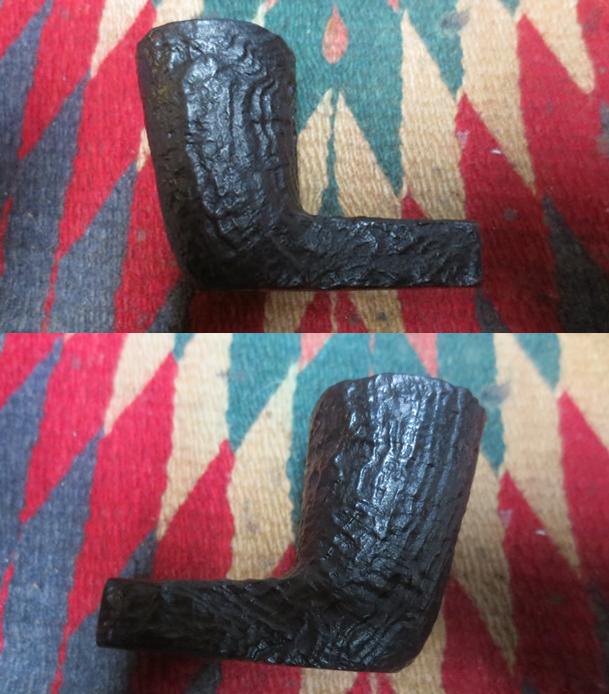
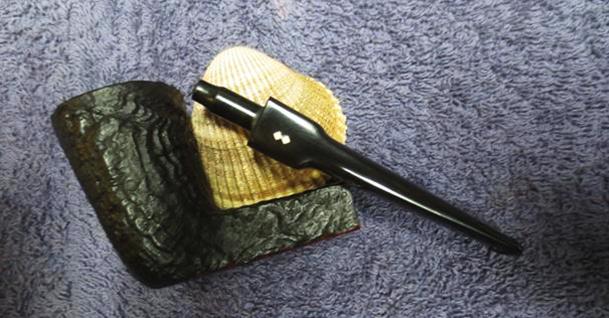
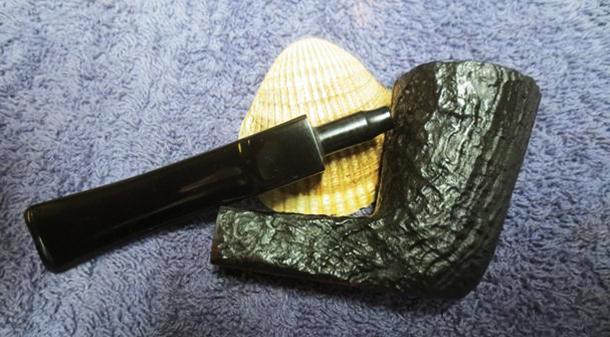
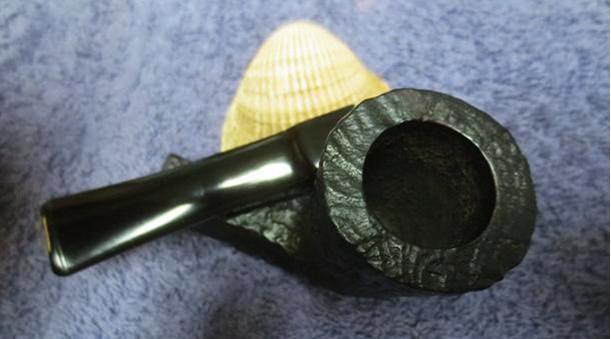
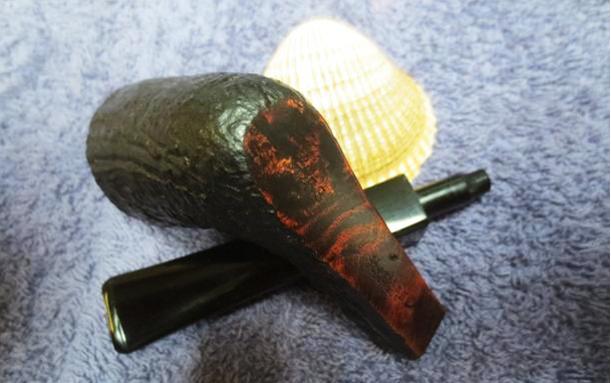
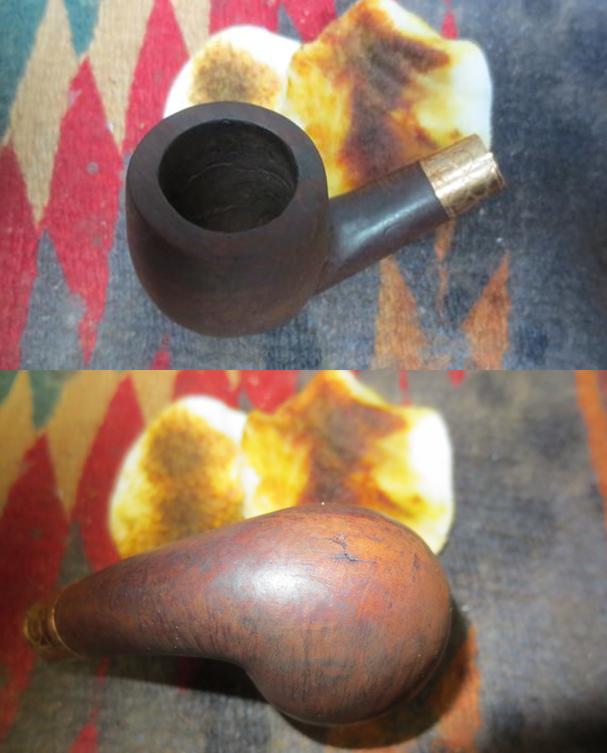
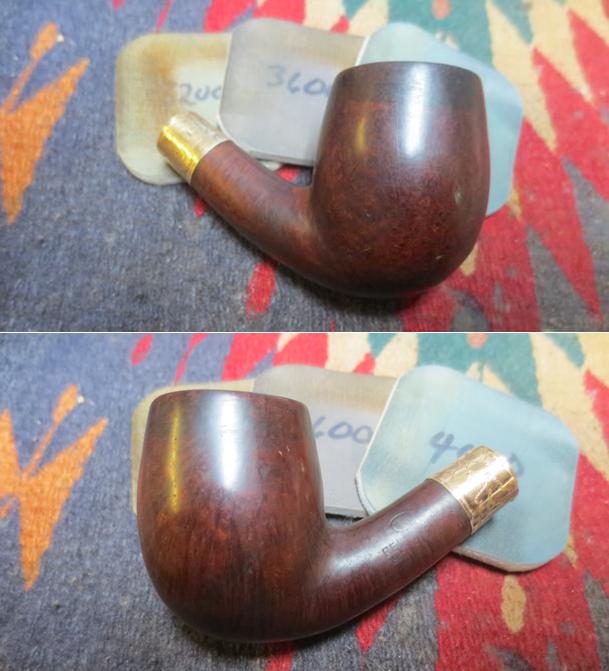
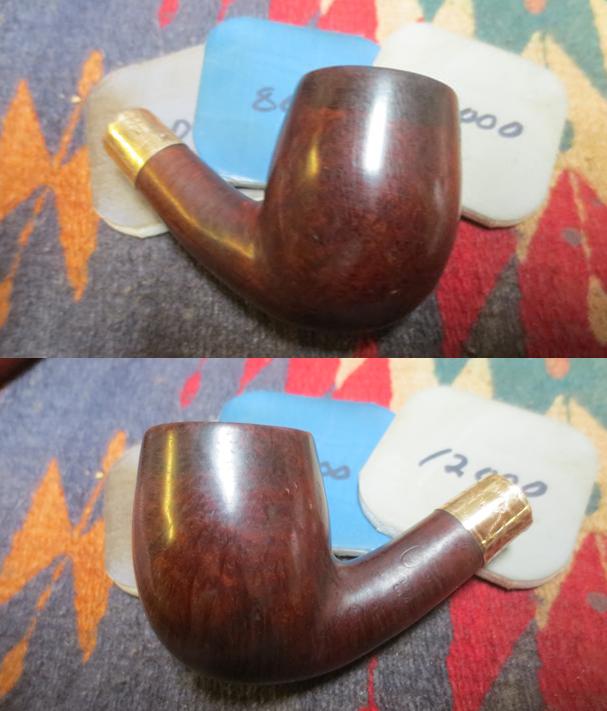
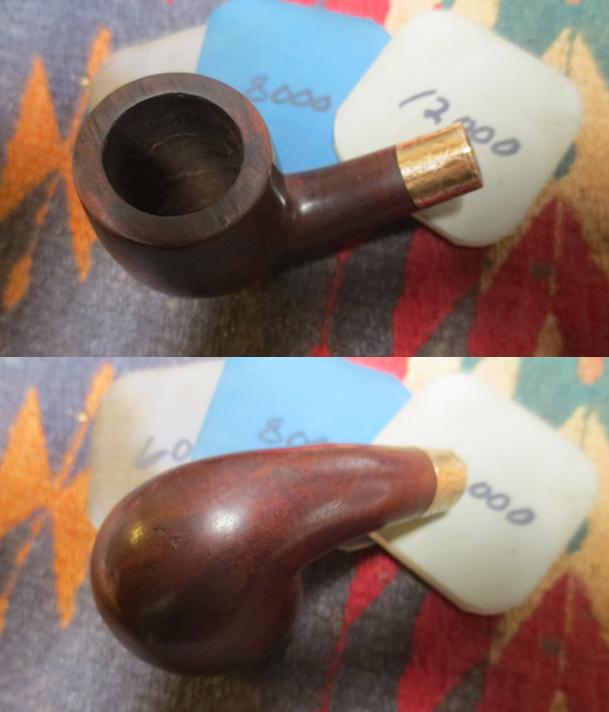
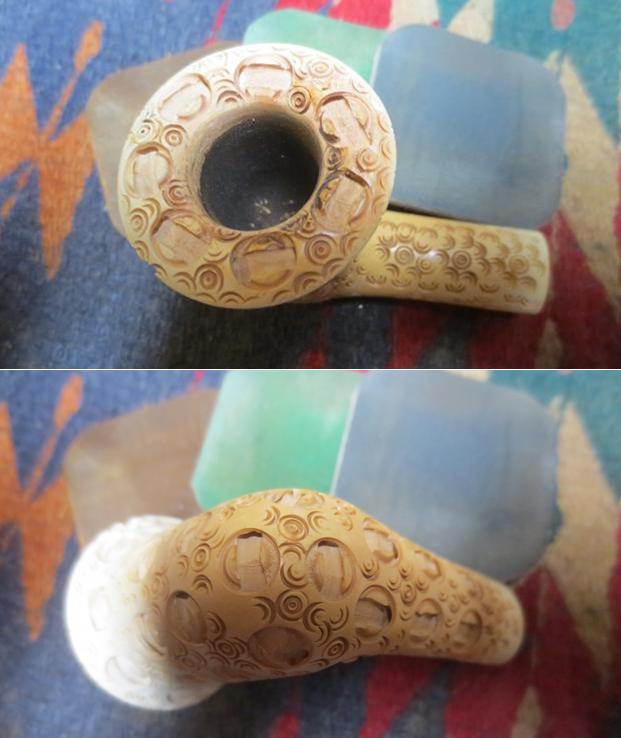
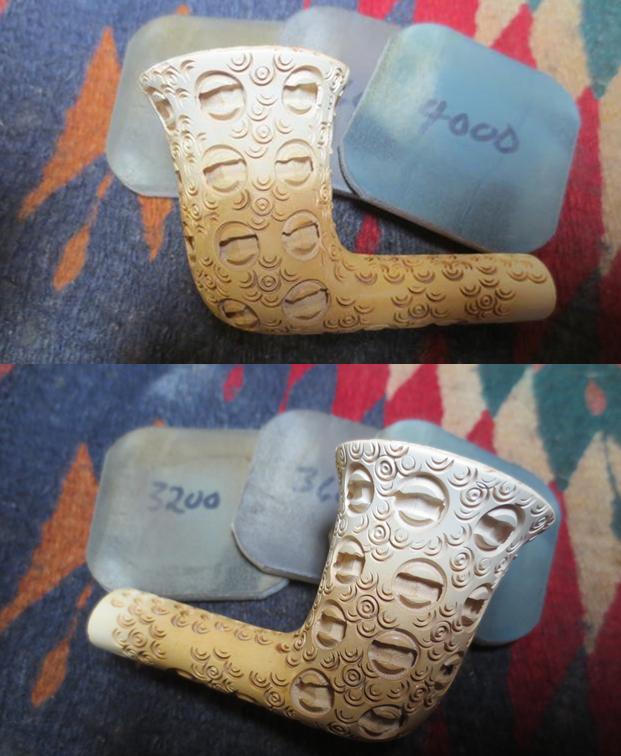
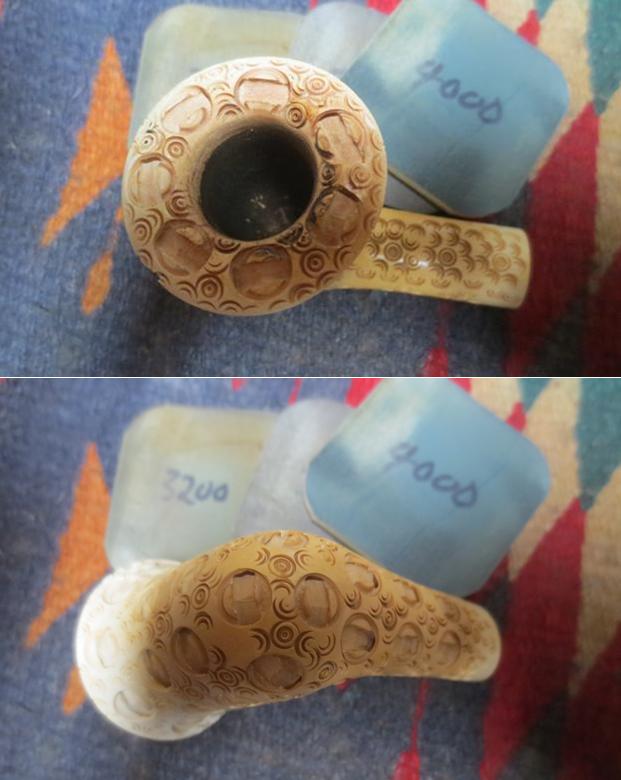
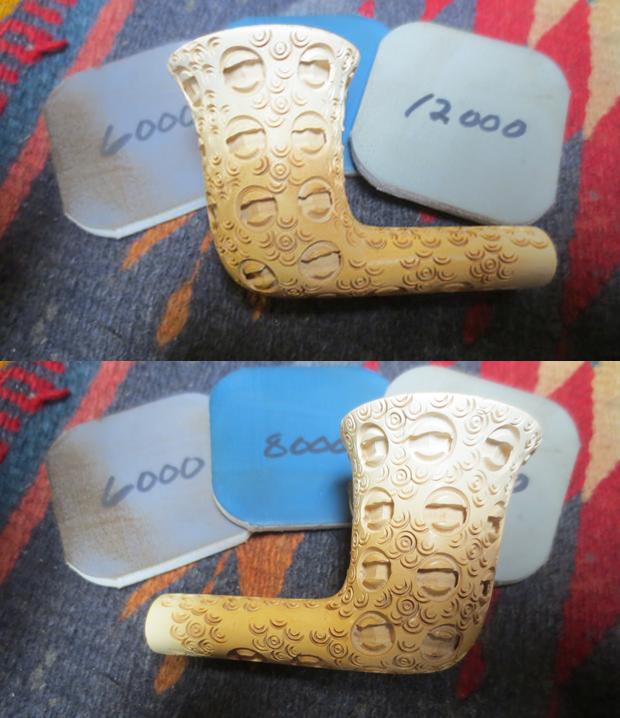
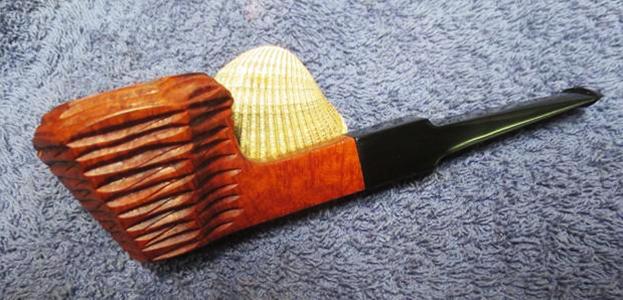
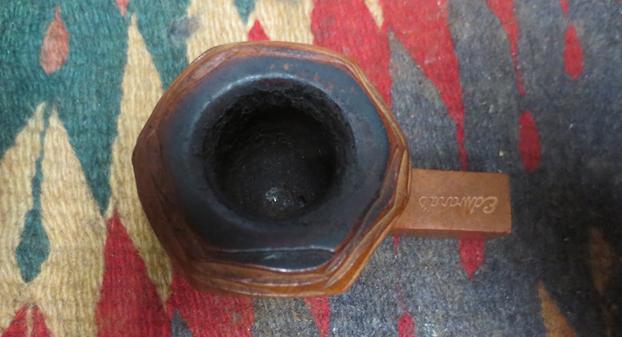
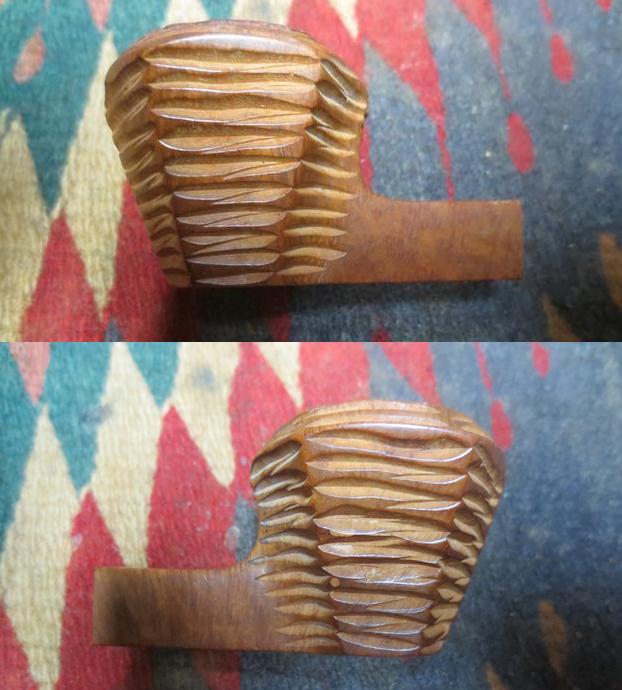
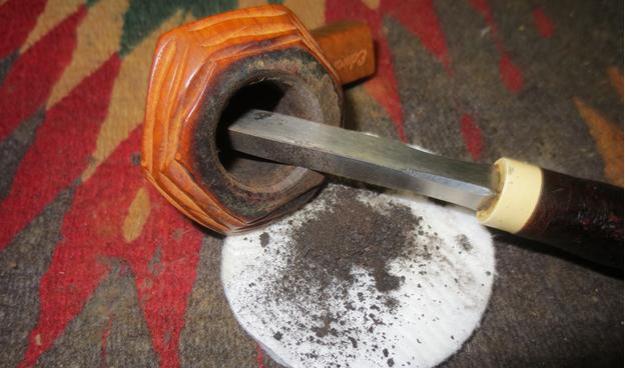
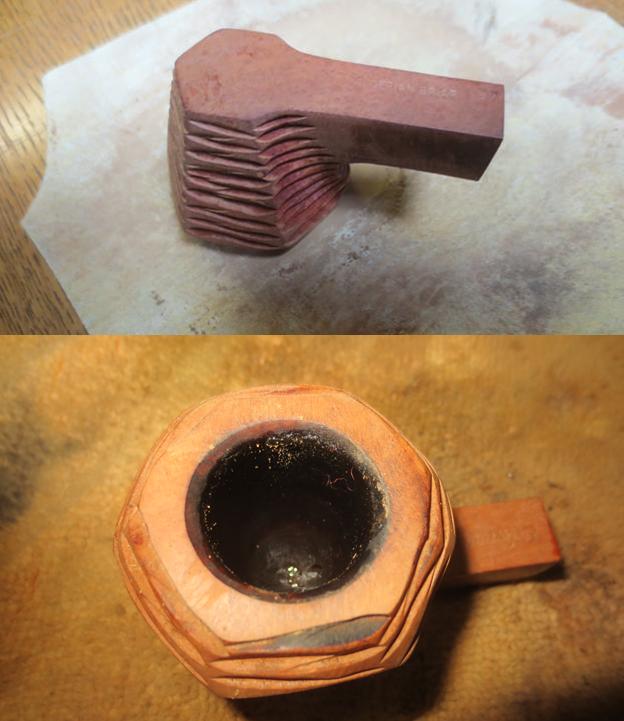
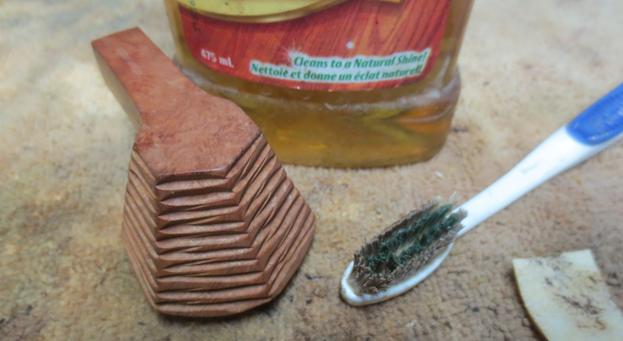
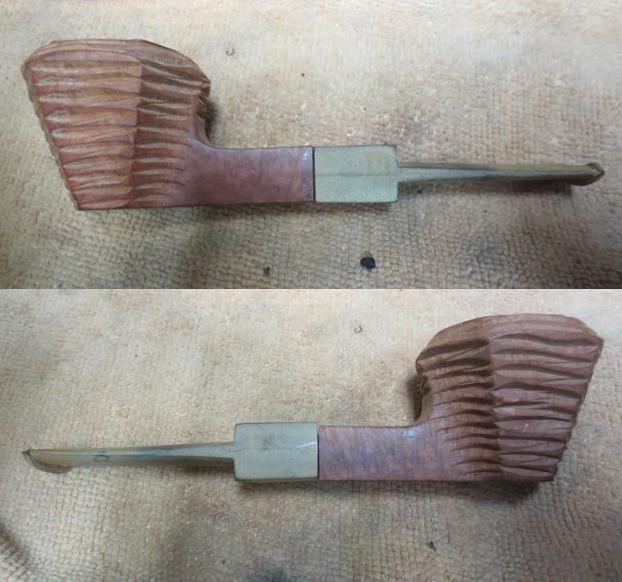
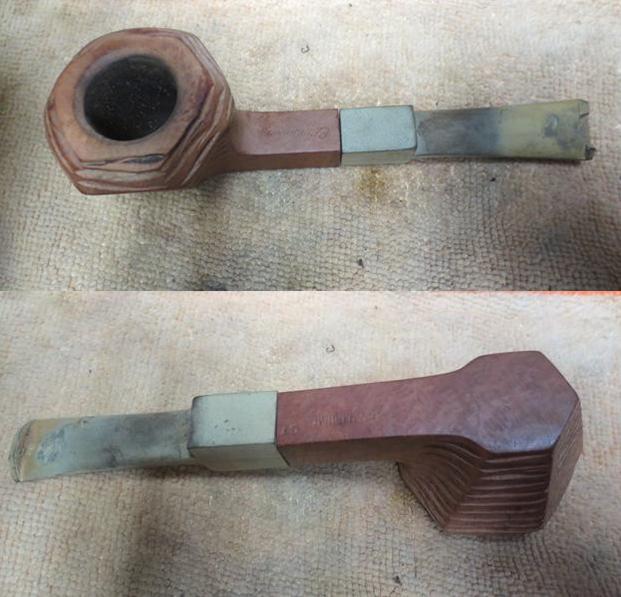
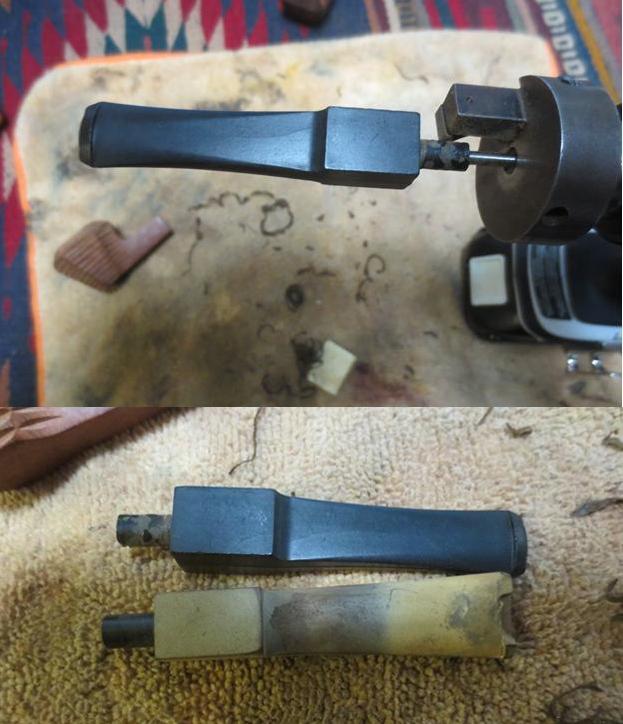
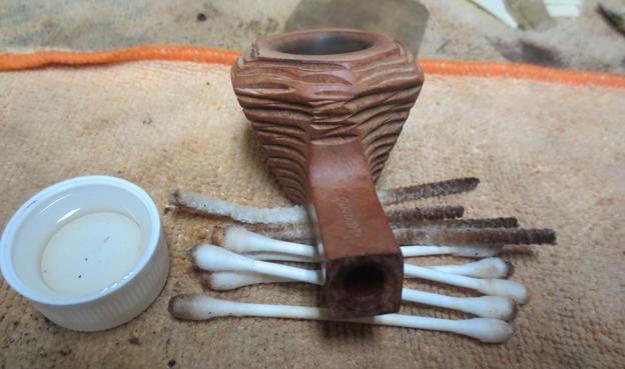
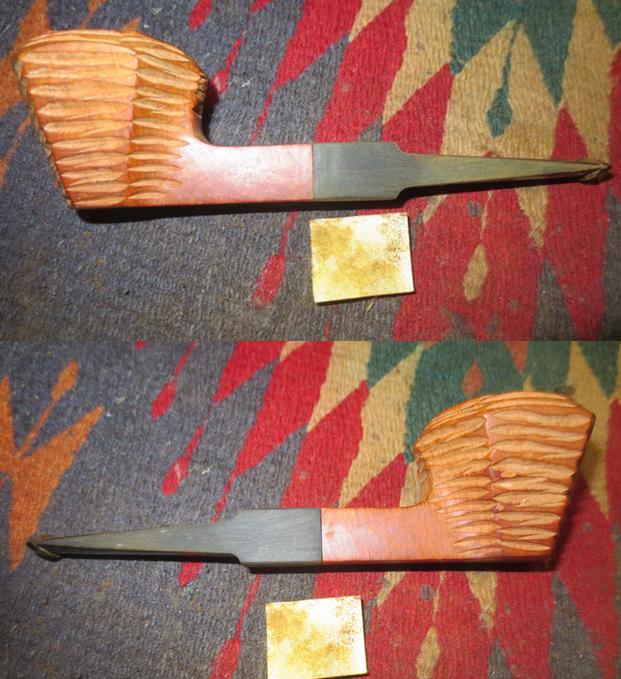
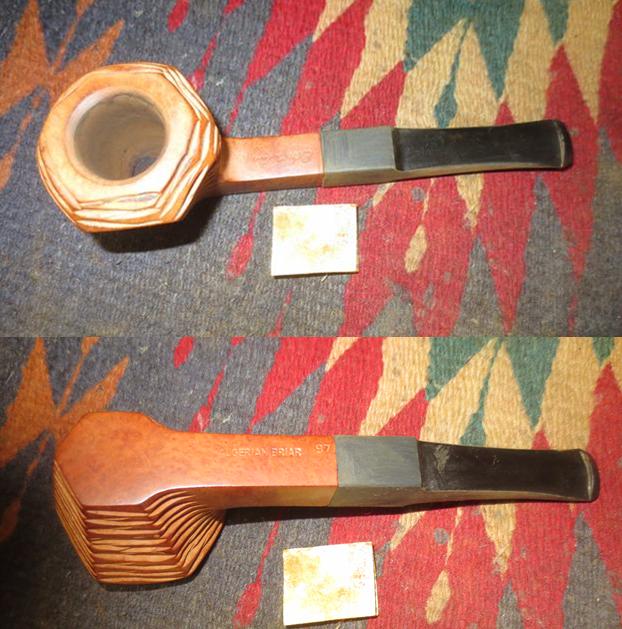
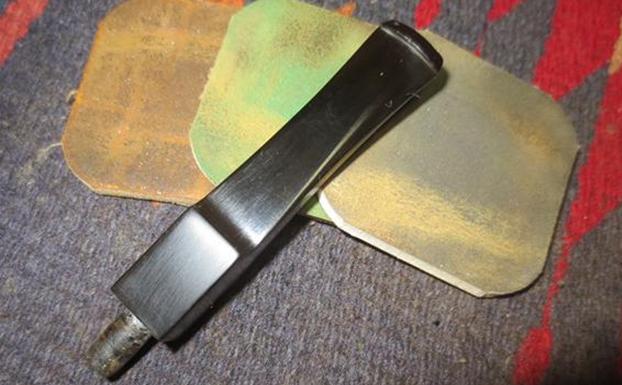
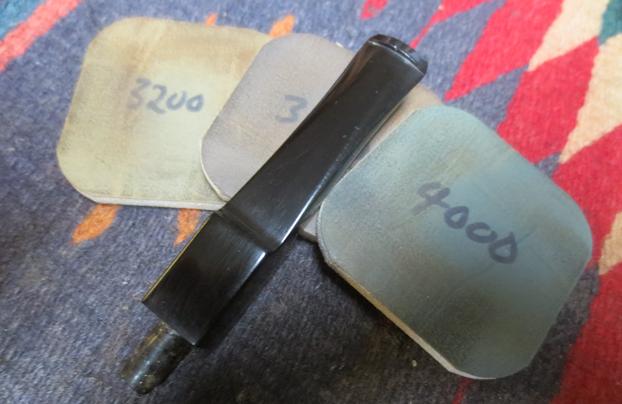
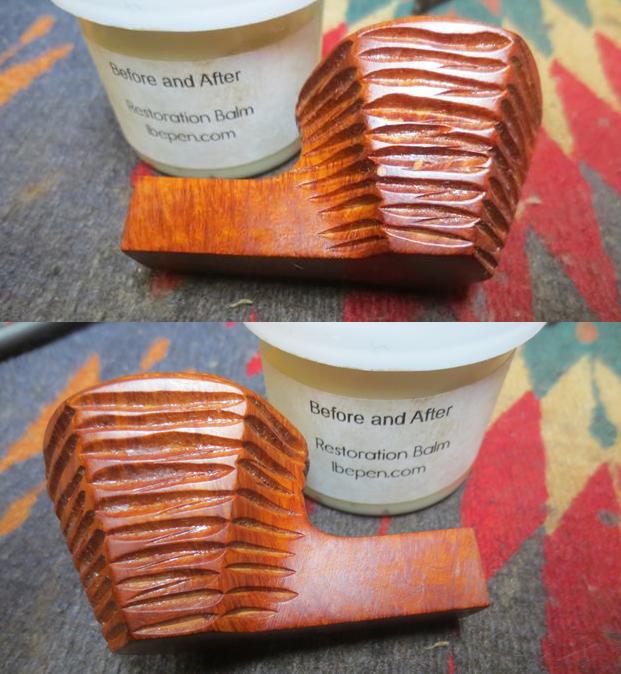
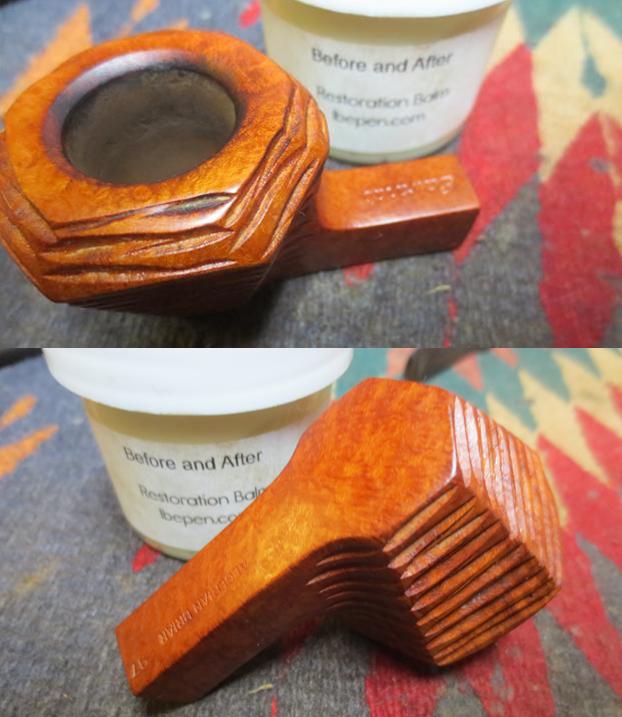
I got an email a while back from a friend who wanted me to work over an old Edwards that he had picked up. He had bought one from me in the past and had now found another one. It was a Hexagonal Dublin that had carved grooves on the sides of the bowl from the rim down to the base. The shank is square sided and is smooth. It is stamped Edwards on the top side of the shank. On the underside of the shank it is stamped Algerian Briar followed by the shape number 97. He had found it in a local antique shop I think. It had a thick cake in the bowl and the lava flowed over the top of the rim and down to the second layer of the carving on the rim. The shank was dirty and also filled with tars. The stem was a heavily oxidized replacement stem with the entire underside of the button broken off. Because it was a replacement I decided to put another replacement stem on the shank. I pulled the stem off the shank and took photos of the bowl. The grooves in the carving were dirty and the natural finish was dirty and damaged. I forgot to put the stem back on the shank and take photos. I was intent on cleaning up the bowl. I scraped out the carbon cake in the bowl and off the rim top with a Savinelli Fitsall Pipe Knife. I carefully removed the lava from the rim of the bowl.I lightly topped the bowl on the topping board with 220 grit sandpaper to remove the thick lava coat on the rim. I did not want to take off too much of the briar as it looks like an interesting stack of briar sheets from the top down.I scrubbed the bowl and rim with Murphy’s Oil Soap and a tooth brush to get all of the grit and dust out of all of the grooves and edges of the briar stack. I rinsed the pipe with running water to rinse off the dust and the soap and scrubbed it under the running water to leave behind a clean bowl. I dried it off with a clean cloth. Then I remembered I had not taken photos of the pipe with the old stem in place so I slid the stem into the shank and took the next series of photos. Not only was the replacement stem badly oxidized it also had a large chip out of the button across the top side of the stem. It was poorly fit to the shank as well. You can see from the photos that it is larger in diameter than the shank itself. It was definitely going to be replaced. I put aside the damaged replacement stem and took a new square stem blank out of my box of stems. I turned the tenon on the PIMO tenon turning tool on my cordless drill to take down the tenon to fit the shank of the Edwards pipe. Once I had the tenon turned I wiped it down with a damp cloth and took a picture of the new stem next to the one I was replacing.I put the new stem on the shank to see how it fit against the shank end. I needed to do quite a bit of sanding on the sides of the stem to get the flow along the sides, top and bottom smooth and even.I cleaned out the internals of the pipe – the mortise and the airway in the shank using alcohol, cotton swabs and pipe cleaners to remove all of the oils and tars that collect there. I cleaned out the airway in the new stem to remove the dust from turning tenon.I sanded the stem to reduce the size on all sides with 220 grit sandpaper. When I got close I put it on the shank and carefully sanded it until the transition between the shank and the stem was smooth. I sanded out the casting marks and scratches on the stem with 220 grit sandpaper. There were quite a few scratches left behind by the work I did to fit it to the shank. Once I had the majority of deep scratches sanded out, it was time to work on it with micromesh sanding pads. I used the micromesh sanding pads to polish the stem. I wet sanded it with 1500-2400 grit pads and wiped it down after each pad with Obsidian Oil to give the next pad more bite when I sanded. I dry sanded it with 3200-12000 grit pads and again wiped it down with the oil after each pad. After the final pad I wiped it down with a final coat of oil and set it aside to dry. In the last photo of the three below you can still see some light scratches in the vulcanite on the saddle part of the stem. These would need to be buffed out on the wheel. (I polished the tenon as well as can be seen in the photos below. Each photo shows it progressively getting a shine.) With the stem almost finished I took it off the shank and used the Mark Hoover’s Before & After Restoration Balm on the briar. I rubbed it into the grooves on the bowl sides with my finger and a cotton swab. I wanted it to go deep in the grooves to further test the effectiveness of the product. This would be a good test as it is a totally different finish than any of the other pipes I have worked on with the product.  Mark had said that the product can be used on briar or stems – whether vulcanite, acrylic or horn. He said it was designed to pull the dirt off of the briar as well as polish it. He added some anti-oxidants to keep the briar from getting damaged from both UV rays and water. Once I had all the grooves and surfaces of the bowl covered I worked it into the finish with a cotton pad to see if it pulled out the dirt. It seemed to work very well and I took the following photos to show the results. So far the product seems to be delivering as promised. I will continue using it for a while and see how it works in a variety of settings before I give an opinion of the product. I put the stem back on the bowl and buffed the entire pipe with Blue Diamond on the buffing wheel to polish the stem and the bowl. I used a soft touch around the stamped areas as I did not want to flatten them or polish them away. I buffed stem hard to work over the remaining scratches in the rubber. It took some work but they are smoothed out. I gave the stem multiple coats of carnauba wax buffed it with a clean buffing pad to raise a shine. I gave the bowl multiple coats of Conservator’s Wax and rubbed it into the sandblast and the plateau areas. I buffed it with a shoe brush and then with a clean buffing pad to raise the shine. I hand buffed the pipe with a microfiber cloth to deepen the shine. The interesting carved finish on the bowl with its natural oil finish and the new stem combine to present a beautiful pipe. The pipe has been given a total makeover and the new stem fits the shape very well. The finished pipe is shown in the photos below. I think William is going to really like the new look and feel of this pipe. I have one more of his to finish up and then the pair will go back to him in the mail. Thanks for looking.
Restemming and Reconditioning a Rungsted Mariner by Preben Holm


Blog by Steve Laug

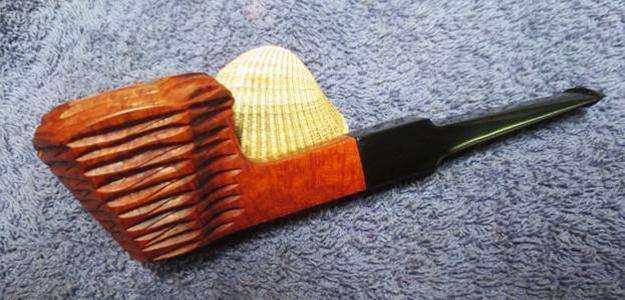
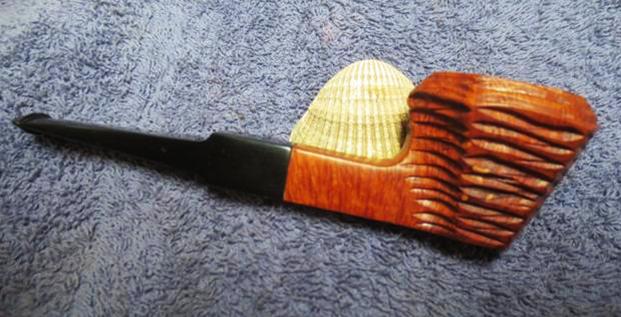
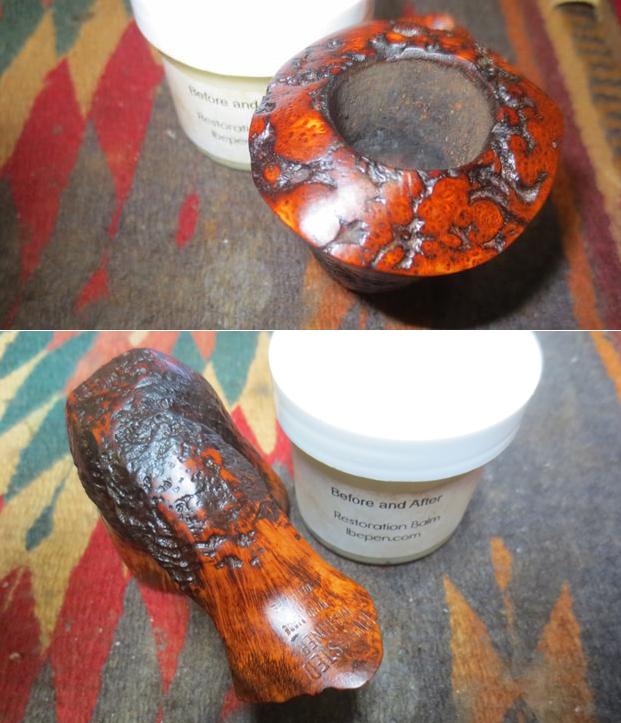
I don’t know when I learned that the Rungsted line of pipes was another line that Preben Holm carved. But I learned that he made several lines outside the Ben Wade contract pipes he was producing for Snug Harbor/Lane. This was confirmed when I looked online and found a thread on PipesMagazine.com. The discussion covered a brand called Britta Bech and one of the members there happened to mention and confirm what I already knew about the Rungsted line. From my memory and the speaker’s the pipes were mostly carved in the mid to late 70’s or early 80’s during the height of the Danish Freehand pipe craze in the US. The speaker there said that though some refer to these as seconds he did not think that was accurate and that really it was a totally separate line from Preben Holm. I would agree with his assessment on this. I am pretty certain looking at the various Rungsted pipes that I have worked on that there are no flaws. They all combine both smooth and sandblast finishes and present a really interesting finished pipe. (mlaug on pipesmagazine.com http://pipesmagazine.com/forums/topic/preben-holm-info-needed).

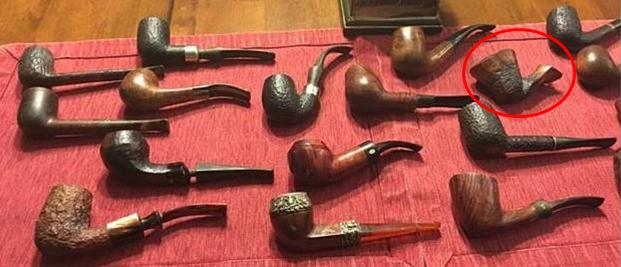
This particular pipe came in a lot that Jeff and I purchased from a fellow in Idaho. Jeff had purchased the pipes shown in the photo below from him. The Rungsted is circled in red at the top right side of the photo. The photo came because I asked Jeff to send me a picture of the pipes he picked up. I have written about the find on a previous blog that you can read if you are interested at the link that follows: https://rebornpipes.com/2016/10/07/a-good-day-hunting-orchestrated-between-british-columbia-and-idaho/ 

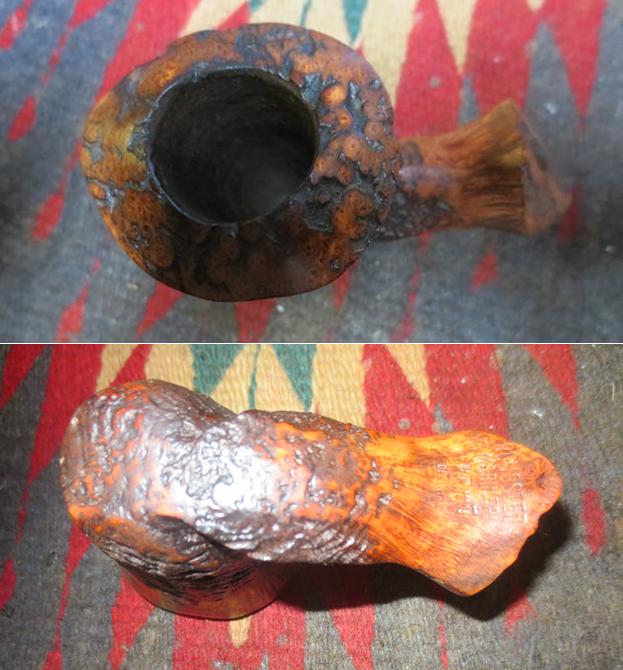
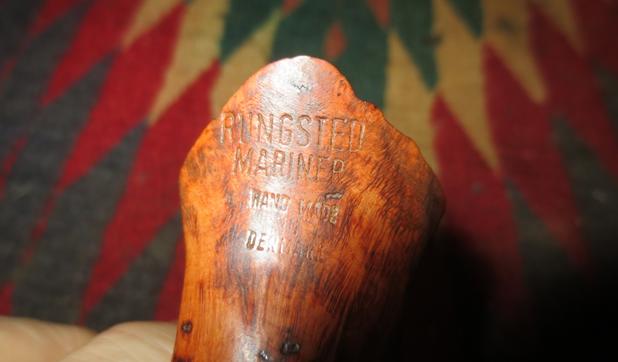
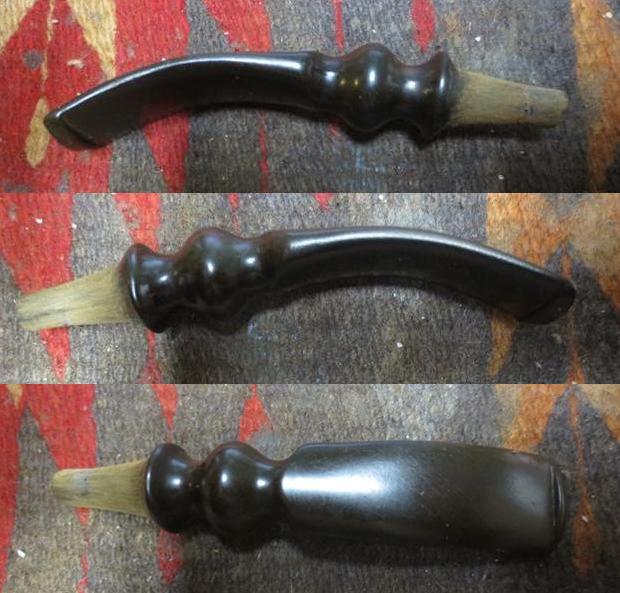
Jeff did a great job cleaning off the debris and grime on this old bowl. It did not have a stem when it came to us, one would have to be made to fit it. He reamed it with a PipNet reamer and smoothed the walls of the bowl with a Savinelli Fitsall pipe knife. He scrubbed out the mortise and the airway in the shank and the stem with alcohol, cotton swabs and pipe cleaners. He scrubbed the exterior of the bowl, rim and shank with a tooth brush and Murphy’s Oil Soap to the oils and tars on the bowl, rim and shank. He rinsed it under running water. He dried it off with a soft cloth. Once the grime was removed the finish underneath was in stellar condition. The rich patina of the older briar was a variegated finish of smooth and sandblast looked great. I took photos of the bowl to show its condition before I started my work on it. The shank of the pipe was stamped on the smooth underside. It read RUNGSTED over MARINER over Hand Made in Denmark. The stamping was quite legible, though the lower portion was lighter than the upper.I had a stem in my can of stems that I had started shaping for another pipe some time ago and abandoned. It needed to have a little more of the tenon end taken down to fit in the mortise but it had the correct look for the pipe. I took pictures of the stem before I did the work to make it fit.I sanded the tenon end down with 220 grit sandpaper until it fit snugly in the shank. I put it in place on the pipe and took the next set of photos. Lots of sanding to do, but it gives an idea of what the pipe will look like when it is finished. In my ongoing experiment with Mark Hoover’s Before & After Restoration Balm I am using it on this mixed finish pipe. It should be a good test of how it works in the transitions between the smooth and sandblast portions as well as on the plateau on the rim and the shank end. I have used it individually on each of those finishes but not on a pipe that had all three features. Mark describes the product being designed for use on briar or stems – whether vulcanite, acrylic or horn. It was formulated to pull the dirt off of the briar as well as polish it at the same time. It includes anti-oxidants to keep the briar from getting damaged from UV rays and water as well as something that enlivens the briar. I worked it into the sandblast portions with my fingers and rubbed it on the smooth portions. I wiped it down with a cotton pad to see if it pulled out the dirt. It worked very well on all the different parts of this bowl. I took the following photos to show the results. As always, I will continue using it for a while and see how it works in a variety of settings before I give an opinion of the product. I buffed the bowl with a clean buffing pad to polish the briar and see what the finished bowl would look like and if areas that needed a bit more attention. The buffed bowl can be seen in the photos that follow. It has a rich patina that really has a deep glow to it. The two finishes really flow into each other and give the pipe a warm look. I sanded out the casting marks and scratches on the stem with 220 grit sandpaper. I opened the slot in the end of the button with needles files and sandpaper to make it easier to push a pipe cleaner into the stem and shank. I polished it with micromesh sanding pads – wet sanding it with 1500-2400 grit pads and wiping it down after each pad with Obsidian Oil to give the next pad more bite when I sanded. I dry sanded it with 3200-12000 grit pads and again wiped it down with the oil after each pad. After the final pad I wiped it down with a final coat of oil and set it aside to dry. I put the stem back on the bowl and buffed it with Blue Diamond on the buffing wheel to polish the stem and the smooth portions of the briar. I used a soft touch around the stamped areas as I did not want to flatten them polish them away even more that they already were. I gave the stem multiple coats of carnauba wax buffed it with a clean buffing pad to raise a shine. I gave the bowl multiple coats of Conservator’s Wax and rubbed it into the sandblast and the plateau areas. I buffed it with a shoe brush and then with a clean buffing pad to raise the shine. I hand buffed the pipe with a microfiber cloth to deepen the shine. The variegated finish on the bowl and stem combine to present a beautiful pipe. The pipe really does look fresh and new to me and I like the finished look with the new stem. The dimensions of this pipe are Length: 6 1/2 inches, Height: 2 inches, Bowl diameter: 2 inches, Chamber diameter: 7/8 inches. The finished pipe is shown in the photos below. I will soon be adding it to the rebornpipes store if you are interested in adding to your collection. It is a beauty and will serve someone very well. Email me at slaug@uniserve.com or send me a message on Facebook. Thanks for looking.
Restoring a Savinelli Made Estella 614 Full Bent


Blog by Steve Laug

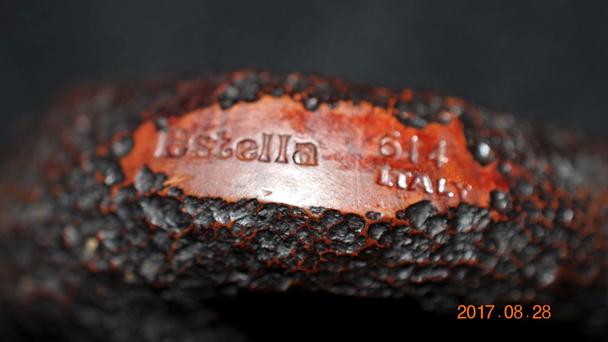
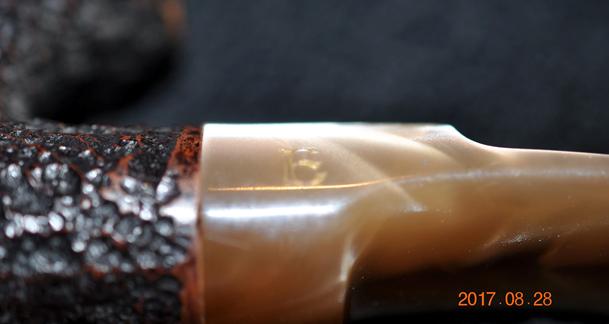
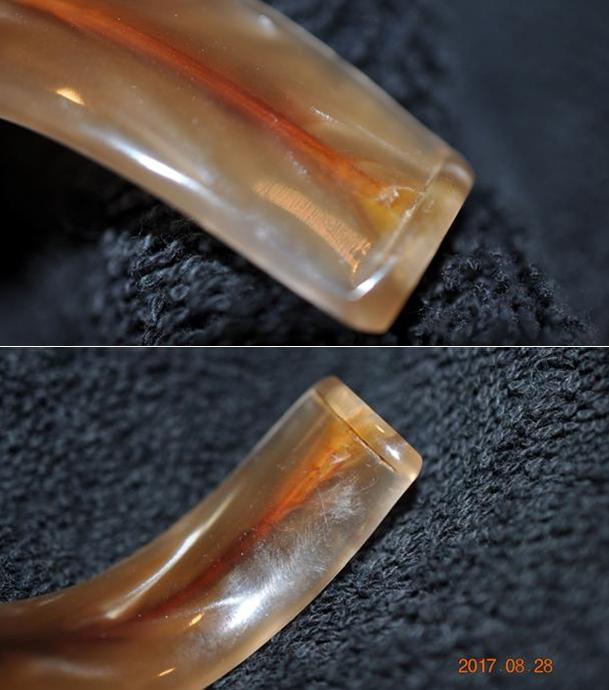
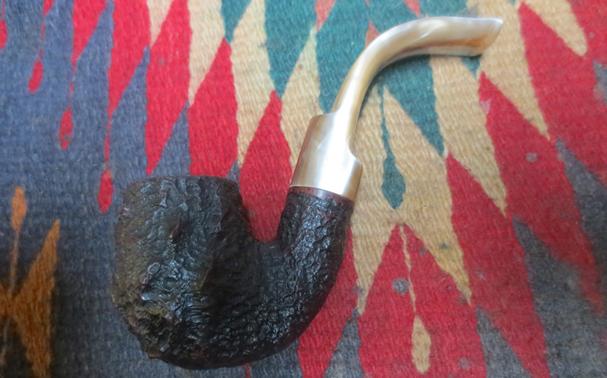
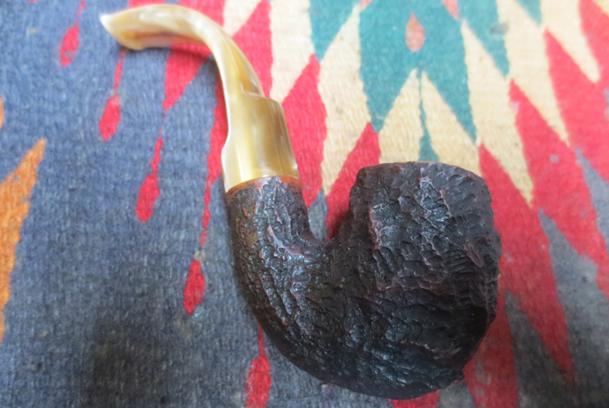
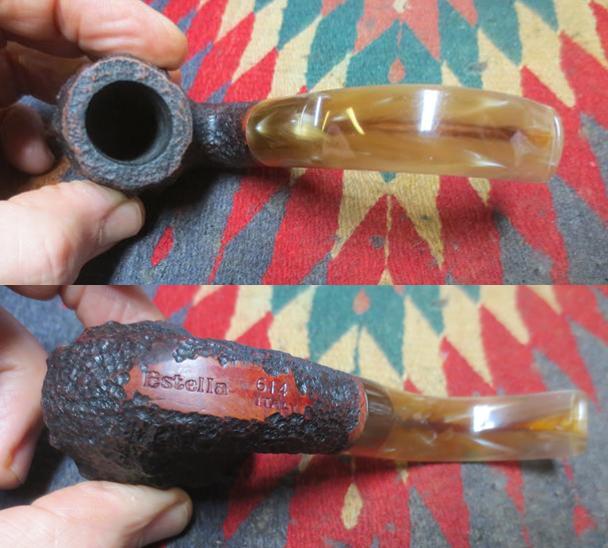
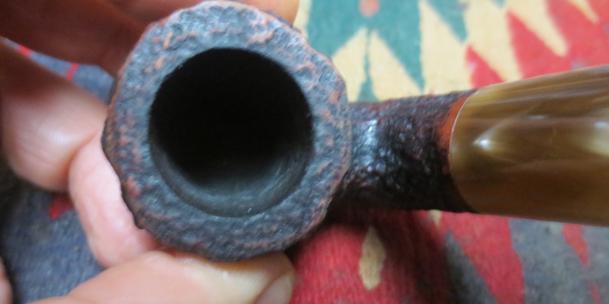
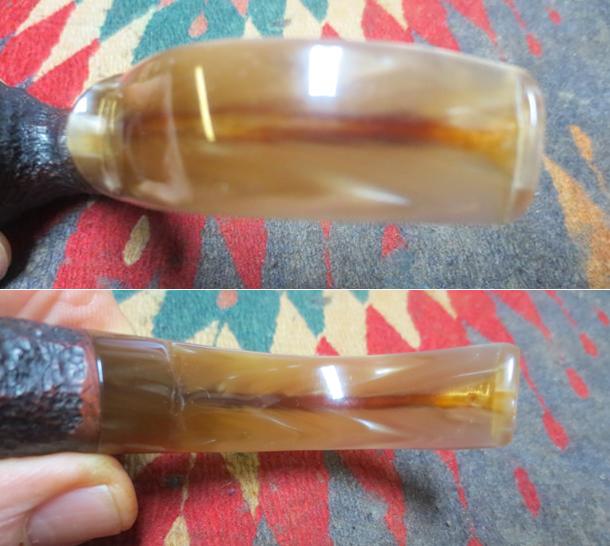
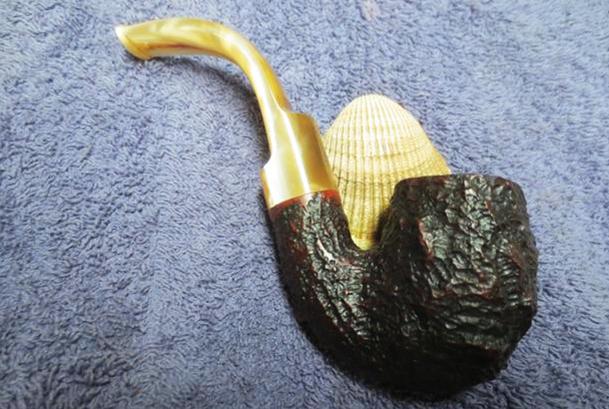
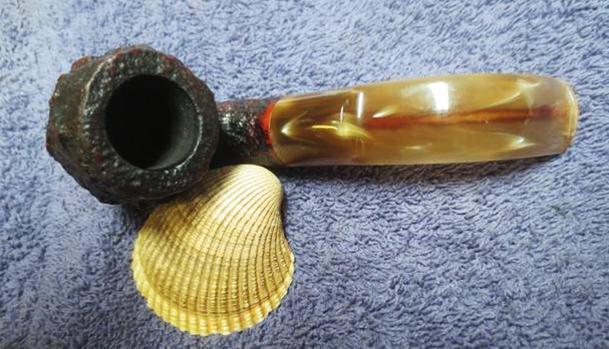
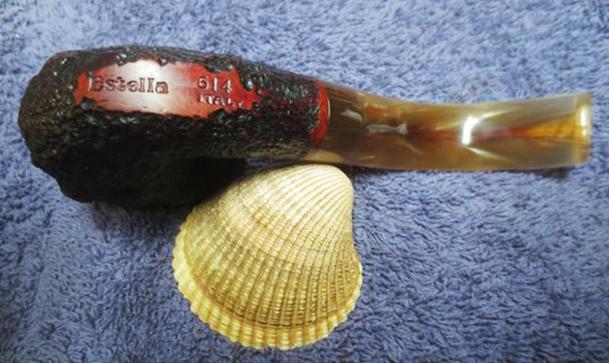
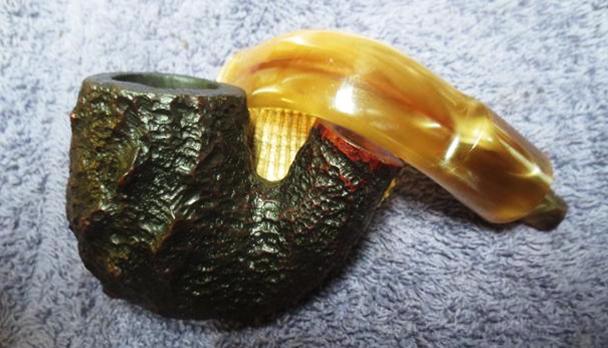
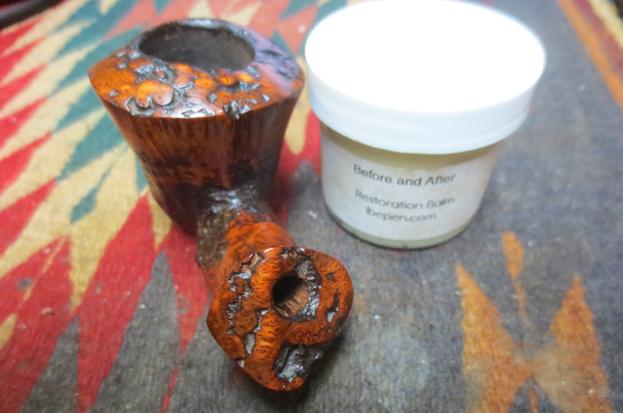
I have always liked the rocky rusticated finish on the Savinelli Made Estella pipes. I have worked on many of them over the years and by and large they seem to have been a well-loved, good smoking and almost indestructible pipe. The finish is a rustication that almost looks like a “blastication” (rustication then sandblasted). It is knobby and very tactile. It feels good in the hand. I have worked on panels, billiards and bulldogs but never a full bent. This one was in good shape. The finish was dirty but was undamaged. The inner edge of the rim was clean and the outer edge had some wear from knocking it out against hard surfaces. There was a light cake in the bowl and the rustication on the rim top was covered with a thick coat of lava. The Lucite stem had tooth marks on the top and the underside of the stem at the button. There was a dark tar stain in the airway in the stem.  The button was in great shape. Jeff took the next series of photos to show the condition of the pipe before he cleaned it. The next photo shows the rim top and you can see the tar buildup in the rustication of the rim. It is almost smooth there is so much tar.The next photo shows the stamping on the underside of the bowl and shank. It reads Estella followed by the shape number 614 over Italy. Often there is a Savinelli Shield logo but it is not on this pipe. There is also an E stamped on the left side of the staggered saddle stem. The next two photos show the tooth marks on the top and underside of the stem at the button. There was one deep mark on each side of the stem at the button.Jeff did an amazing job cleaning up the light issues on this pipe. He reamed it with a PipNet reamer and cleaned up the remnants with a Savinelli Fitsall pipe knife. He scrubbed out the mortise and the airway in the shank and the stem with alcohol, cotton swabs and pipe cleaners. He scrubbed the exterior of the bowl, rim and shank with a tooth brush and Murphy’s Oil Soap to remove the dust of the years. He removed the lava coat on the rim surface so that it was clean. He was able to clean up the outer edges of the rim so that the damage was removed and matched the rest of the rustication. He rinsed it under running water. He dried it off with a soft cloth. Once the dust was removed it was clear that the finish underneath was in stellar condition. The random style of the rustication and the high spots gave it a very rough feel that was like rock. Very well carved. I took photos of the pipe to show its condition before I started my work on it. The rim looked really good. The grooves and carved surface was very clean and the lava that had filled in all of them was gone. The bowl was clean as well.The stem cleaned up well. The majority of the tar stains in the airway came out with the scrubbing with alcohol. What was left was probably not going anywhere. The tooth marks on both sides were dents that were not too deep and could be sanded out.I stained the rim top and the outer and inner edges of the bowl with a dark brown stain pen to blend it in with the colour of the rest of the pipe. There was ring of smooth briar at the end of the shank where the stem sat against it.In my ongoing experiment with Mark Hoover’s new product that he calls Before & After Restoration Balm I used it on the blastication of the bowl and shank. Mark is the creator of the Before & After Pipe Stem Deoxidizer and Polishes.  He says that the product can be used on briar or stems – whether vulcanite, acrylic or horn. He said it was designed to pull the dirt off of the briar as well as polish it. He added some anti-oxidants to keep the briar from getting damaged from both UV rays and water. I chose to use it on this pipe because of the roughness of the rusticated finish on this bowl. I rubbed it into the finish on the bowl and shank with my fingers and worked it into the finish with a shoe brush to see if it pulled out the dirt. It seemed to work very well and I took the following photos to show the results. I will continue using it for a while and see how it works in a variety of settings before I give an opinion of the product. I used a sharp knife to bevel the airway in the tenon. Funneling the airway at that point adds to the smooth flow of air to the button.I sanded the tooth marks on the stem with 220 grit sandpaper until they disappeared into the surface of the stem. When I finished sanding the stem it was smooth and there were not any damaged areas on the stem at the button.I polished the stem with micromesh sanding pads – wet sanding it with 1500-2400 grit pads and wiping it down after each pad with Obsidian Oil to give the next pad more bite when I sanded. I dry sanded it with 3200-12000 grit pads and again wiped it down with the oil after each pad. After the final pad I wiped it down with a damp cloth and set it aside while I finished the bowl. I put the stem back on the bowl and buffed the pipe with Blue Diamond on the buffing wheel to polish the briar. I used a soft touch on the rusticated areas as I did not want to flatten them or fill in the grooves with polishing compound. I gave the stem multiple coats of carnauba wax and I gave the rusticated bowl several coats of Conservator’s Wax. I buffed it with a clean buffing pad to raise a shine. I hand buffed it with a microfiber cloth to deepen the shine. The rough rusticated finish with its dark brown and medium brown highlights works well with the golden swirled Lucite stem. The pipe looks fresh and new. The dimensions of this pipe are Length: 5 1/2 inches, Height: 2 inches, Bowl diameter: 1 1/8 inches, Chamber diameter: 3/4 inches. The finished pipe is shown in the photos below. It is one that will be going on the rebornpipes store shortly. It will make a nice addition to someone’s pipe rack. If you are interested email me at slaug@uniserve.com or send me a message on Facebook. Thanks for looking.
 

Cleaning up the first of three Heritage Pipes 45S Dublin


Blog by Steve Laug

Earlier this summer I was relaxing and surfing EBay on my iPad and I came across three listings for Heritage Pipes. All were square shank pipes and all were in decent condition. Two of them had original stems while the third had a well done replacement stem. Since I had found out about the brand through Andrew Selking who writes for rebornpipes I have kept an eye out for them. There do not seem to be too many showing up on EBay but every so often there is one. This time there were three. I contacted my brother with the links and he bid and won the threesome. Andrew wrote up a blog giving background, history, line information and a classic brochure from the company.  The information is helpful and it is worth a read if the brand intrigues you at all. Here is the link: https://rebornpipes.com/2014/12/23/refurbishing-a-heritage-heirloom/. I am including a brief summary of what he found in the next two short paragraphs to set the stage for the pipe on my work table.

Heritage pipes were Kaywoodie’s answer to Dunhill. According to one of their brochures, Heritage pipes were made from “briar burls seasoned and cured for up to 8 months,” with only “one briar bowl in over 300 selected to bear the Heritage name.” “Heritage stems are custom fitted with the finest hand finished Para Rubber stems. Mouthpieces are wafer thin and concave.”

The Heritage line began in the early 1960’s, with the trademark issued in 1964. The line was started at the request of Stephen Ogdon, (who worked for Kaywoodie in 1962). Mr. Ogdon had previous experience working for Dunhill, either running the New York store or working for Dunhill North America. Mr. Ogden was made President of Heritage Pipes, Inc., Kaywoodie Tobacco Co.,Inc. and Kaywoodie Products Inc. as well as a Vice President of S.M. Frank & Co. Heritage Pipes were produced from 1964 until 1970 (Source Kaywoodie.myfreeforum.org).

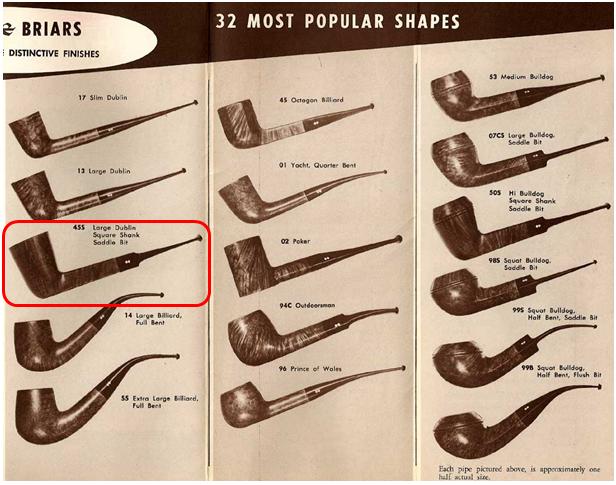
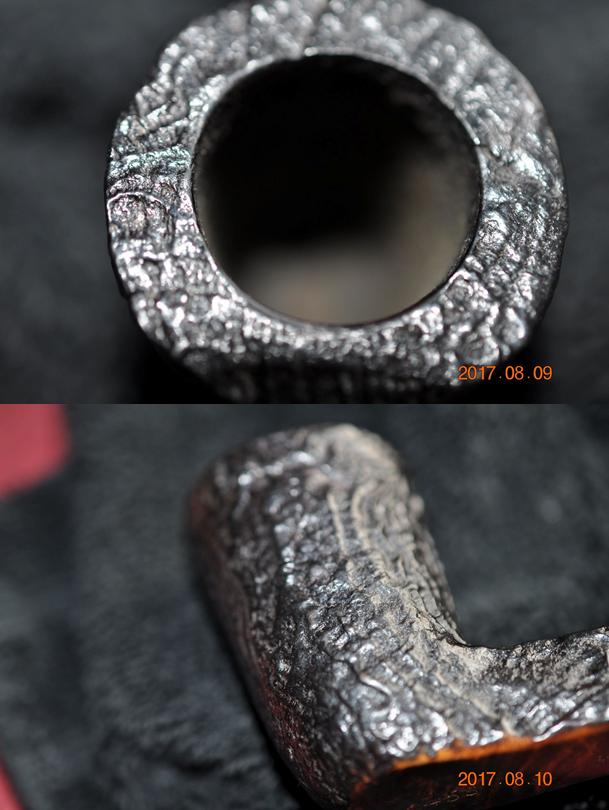
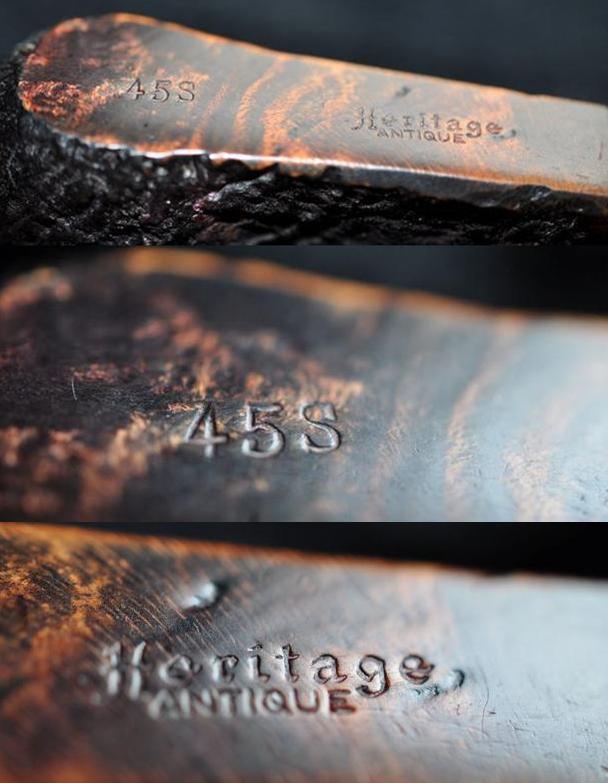
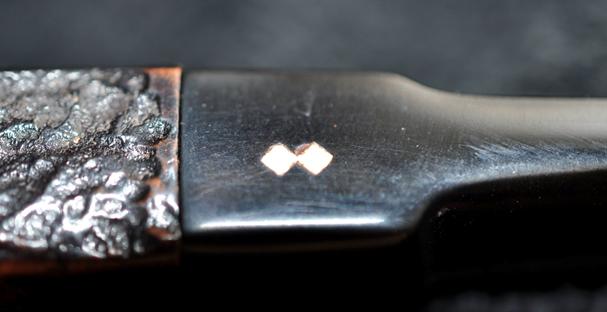
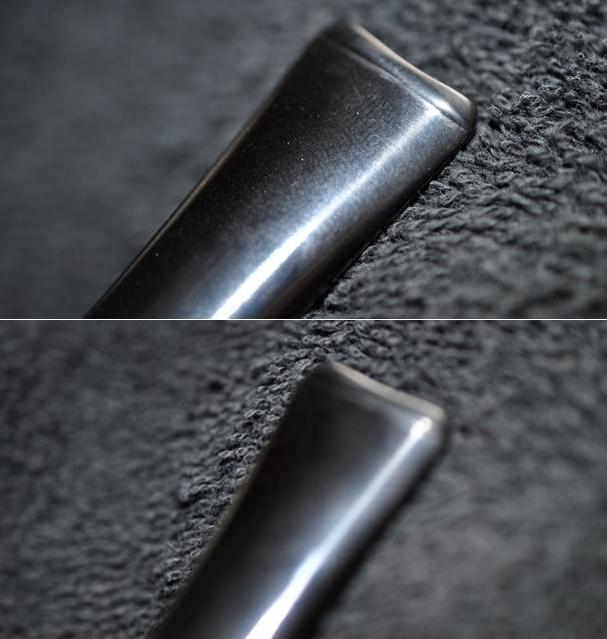
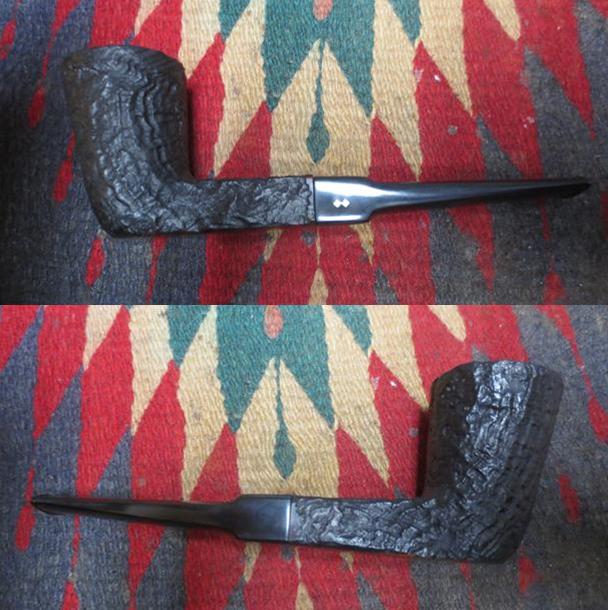
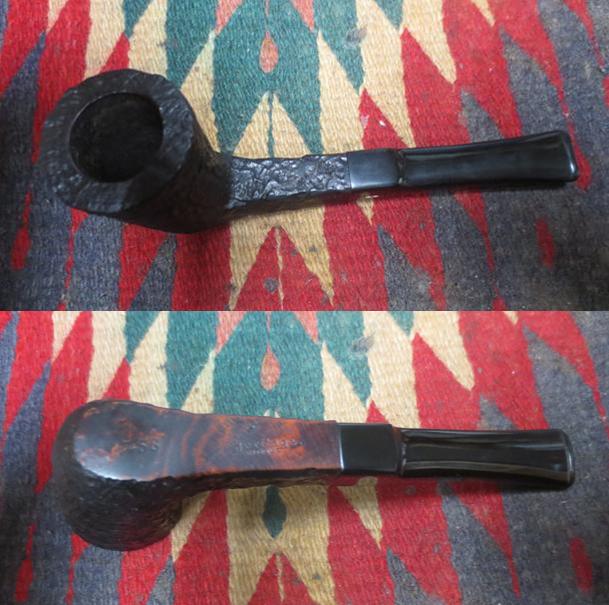
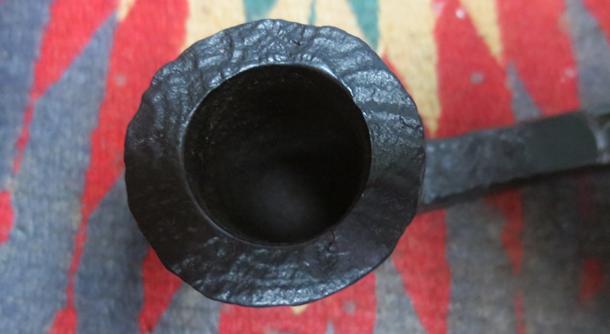
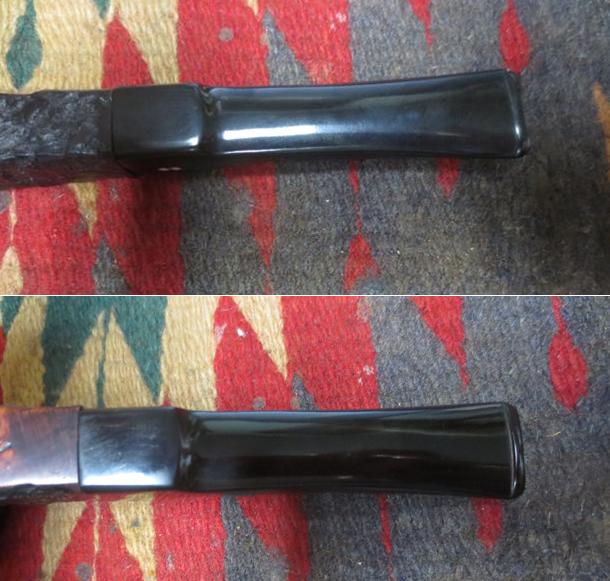
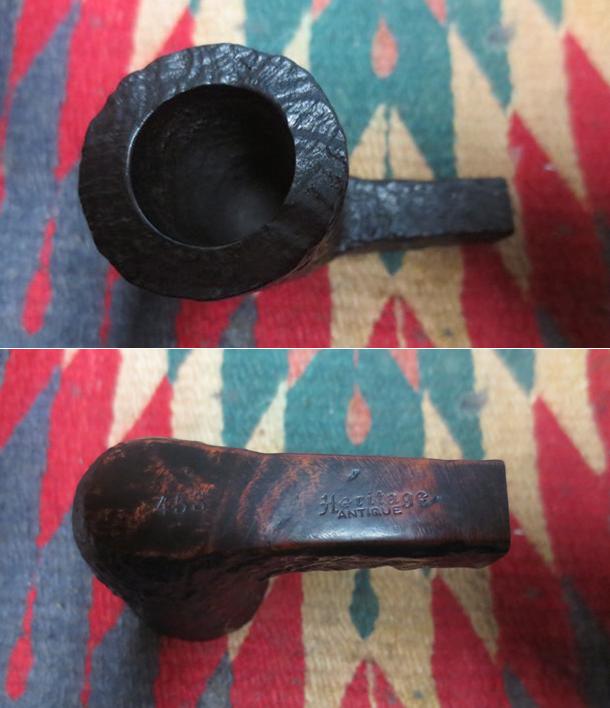
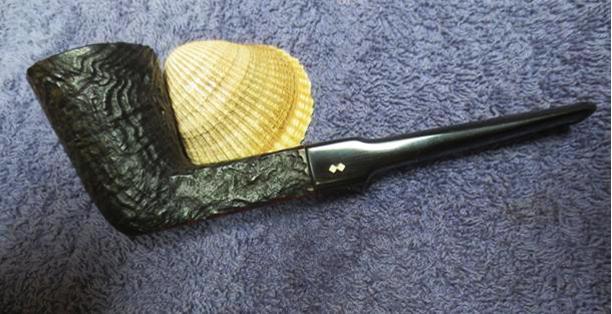
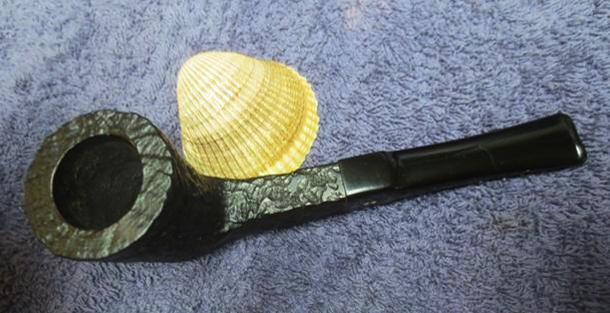
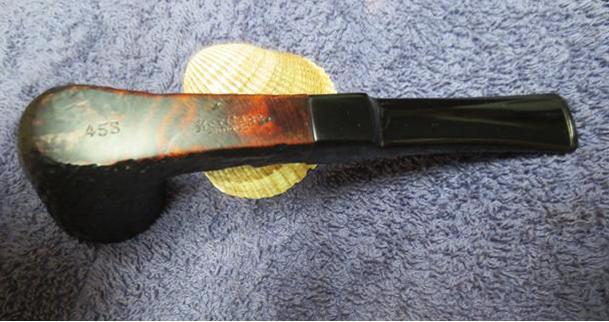
The pipe I chose to work on first from the threesome I had on the table was the number 45S Large Dublin, Square Shank, Saddle Bit. I have circled it in the page below. Interestingly, the one thing the Heritage line shared with Kaywoodie was the size and shape numbers. Unlike Kaywoodies, the Heritage pipes are normal push tenons.I am also including another page from Andrew’s blog post that highlights the line of Heritage pipes that the 45S Large Dublin comes from. It is a Heritage Antique which is described in the page below. Its “Rustic grain stands out in rugged relief”.  The brochure goes on to describe it in these terms, “…A special sandblasting process exposes a greater surface area on the bowl, giving a cooler, more satisfying smoke. Centuries-old Heritage Antique is strikingly masculine in appearance.”When the pipes arrived in Idaho, Jeff took photos of them before he did his cleanup work. The 45S Large Dublin was in good condition. There was a light cake in the bowl and no lava on the rim. The rugged sandblast finish was in excellent condition with only the dust of the years in the grooves. The underside of the square shank and bottom of the bowl were smooth. It was stamped 45S on the bottom of the bowl followed by Heritage over Antique mid shank. The stem was flawless other than a lack of lustre. The quality vulcanite had held up well through the years. The rim top was very clean and there was a thin cake in the bowl. The next two photos show the condition of the finish with photos of the rim and left side of the bowl.Jeff took a series of three photos of the stamping showing the entirety and each of the individual stampings.The left side of the saddle stem bore the twin diamonds that are the Heritage Pipe logo. You can see some scratches and scuffs in the hard rubber but there is no oxidation. The photos of the top and underside of the stem in front of the button are in excellent condition and show no tooth chatter or marks. Jeff worked his usual magic in cleaning up the light issues on this pipe. He reamed it with a PipNet reamer and cleaned up the remnants with a Savinelli Fitsall pipe knife. He scrubbed out the mortise and the airway in the shank and the stem with alcohol, cotton swabs and pipe cleaners. He scrubbed the exterior of the bowl, rim and shank with a tooth brush and Murphy’s Oil Soap to remove the dust of the years. He rinsed it under running water. He dried it off with a soft cloth. Once the dust was removed it was clear that the finish underneath was in stellar condition. The sandblast on the briar was a mix of grain shown in the grooves and crevices of the blast around the bowl and shank. I took photos of the pipe to show its condition before I started my work on it. The rim and bowl look really good. They are both very clean. I will need to rejuvenated the briar but little else regarding the finish.The stem looked really good. I only needed to polish it with micromesh sanding pads and give it a buff and it would be perfect. I polished the stem with micromesh sanding pads to remove the scratches and raise a shine. I wet sanded with 1500-2400 grit pads and wiped the stem down with Obsidian Oil after each pad. I dry sanded it with 3200-12000 grit pads and wiped it down after each pad with oil. When I finished with the 12000 grit pad I gave it a final coat of oil and set it aside to dry. Once it dried and I had finished with the bowl I would buff it with Blue Diamond on the buffing wheel and give it several coats of wax. I am continuing to experiment with a new product from Mark Hoover – the creator of the Before & After Pipe Stem Deoxidizer and Polishes. He calls it Before & After Restoration Balm and it can be used on briar or stems – whether vulcanite, acrylic or horn. He said it was designed to pull the dirt off of the briar as well as polish it. He added some anti-oxidants to keep the briar from getting damaged from both UV rays and water. This is the second pipe I have used it on that has a sandblast finish on the briar. I will continue using it for a while and see how it works in a variety of settings before I give an opinion of the product.I scrubbed the surface with the product and a soft cotton pad to rub it into the nooks and crannies of the finish. I buffed it with a shoe brush to further spread the balm over the surface of the bowl. I hand buffed it with a microfiber cloth and took the following photos of the bowl at this point. The finish is looking good. I put the stem back on the bowl and buffed it with Blue Diamond on the buffing wheel to polish the briar. I used a soft touch on the sandblasted areas as I did not want to flatten them or fill in the grooves with polishing compound. I gave the stem multiple coats of carnauba wax and I gave the sandblasted areas several coats of Conservator’s Wax. I buffed it with a clean buffing pad to raise a shine. I hand buffed it with a microfiber cloth to deepen the shine. The rough sandblast finish with its black and dark brown contrast stain and the square shank work well with the square saddle stem to present a beautiful pipe. The pipe looks fresh and new. The dimensions of this pipe are Length: 5 1/2 inches, Height: 2 inches, Bowl diameter 1 1/2 inches, Chamber diameter: ¾ inches. The finished pipe is shown in the photos below. It is a pipe that I really want to hang on to but I cannot have them all. It will soon be added it to the rebornpipes store if you are interested in adding to your collection. It is a beauty and will serve someone very well. Email me at slaug@uniserve.com or send me a message on Facebook. Thanks for looking.
Rode Hard & Put Away Wet – MLC Redmanol French Briar Bent Billiard


Blog by Steve Laug

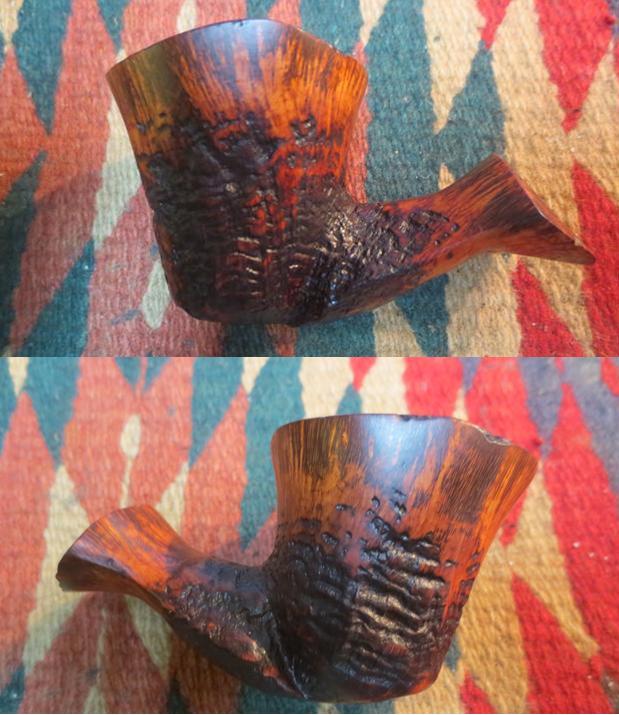
This older MLC bent billiard is a turn of the 20th century pipe. According to Pipedia, (https://pipedia.org/wiki/M._Linkman_%26_Co) the initials stand for M. Linkman Company which was thought to mean Mary Linkman Company. They were a Chicago based company that produced both briars and meerschaums. The company was named for the mother of the same Linkman who branded pipes under that same name and then eventually became the Dr. Grabow pipe manufacturer with which we are familiar. Pipephil’s site gave a little more information at this link (http://www.pipephil.eu/logos/en/logo-l4.html). M. Linkman and Co. was established by Louis B. Linkman and August Fisher in 1898. The company closed down in the 1950s and the Dr Grabow branch was sold to Henry Leonard and Thomas Inc. There was also a note that early Linkman’s pipes were stamped MLC in an oval.

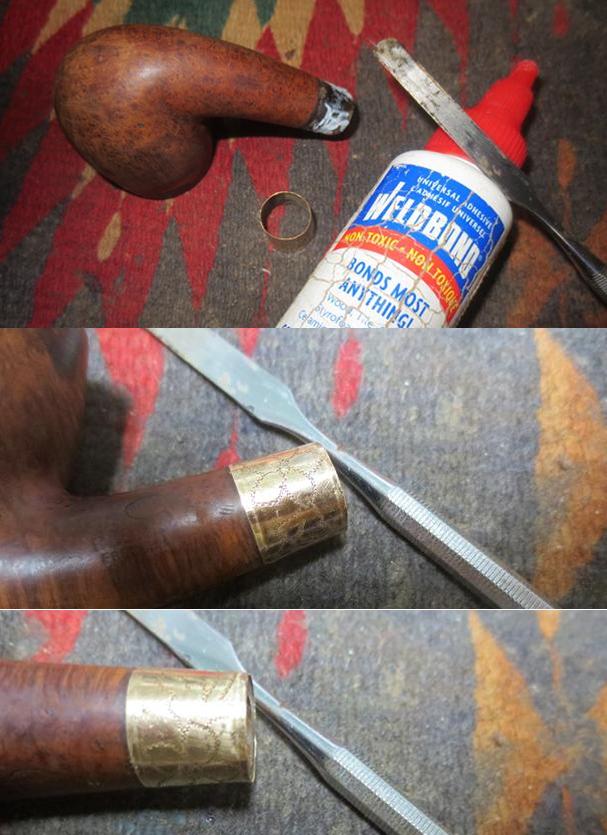
If you have followed this blog for a while you have come to know that I love really old pipes and this one fits into that category of pipes. It is stamped MLC in an oval over Redmanol over French Briar on the left side of the shank. There are no other stampings on the pipe. The band is brass and is etched with a pattern of vines and flower around the entire band. The band was a mess on the shank end. It was bent and dented and no longer round. It was loose on the shank and would need to be straightened out before it was reglued. It is a small bent billiard and definitely sporting the wrong stem. It should have had a Redmanol stem to go with the stamping on the shank of the bowl.

I have written a bit more about the MLC brand on several early blogs (https://rebornpipes.com/2016/11/12/an-interesting-the-nuvo-mlc-italian-briar-hidden-in-a-wdc-case/ https://rebornpipes.com/2017/08/17/restoring-a-sad-old-mlc-bent-billiard/).

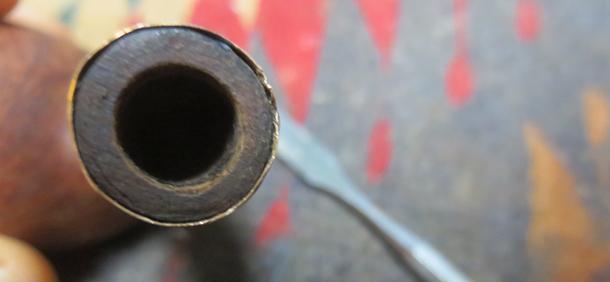
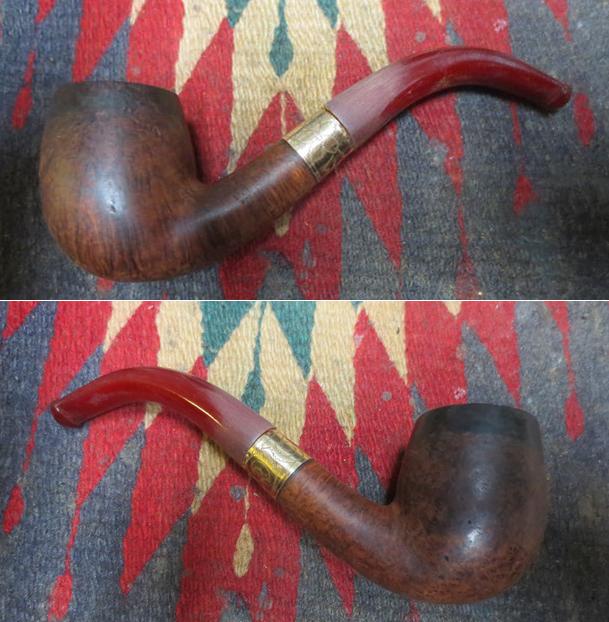
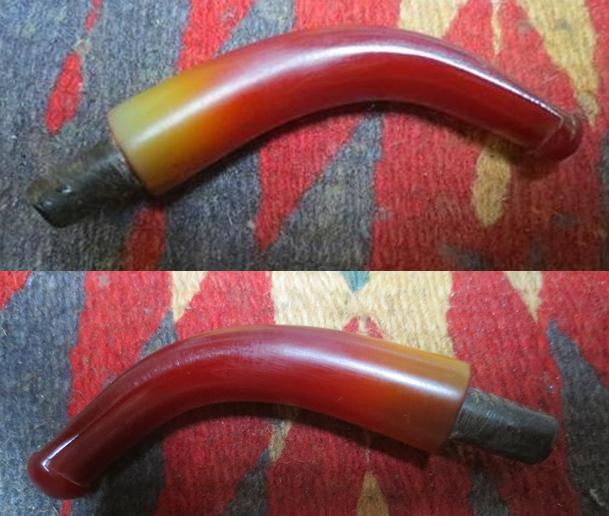
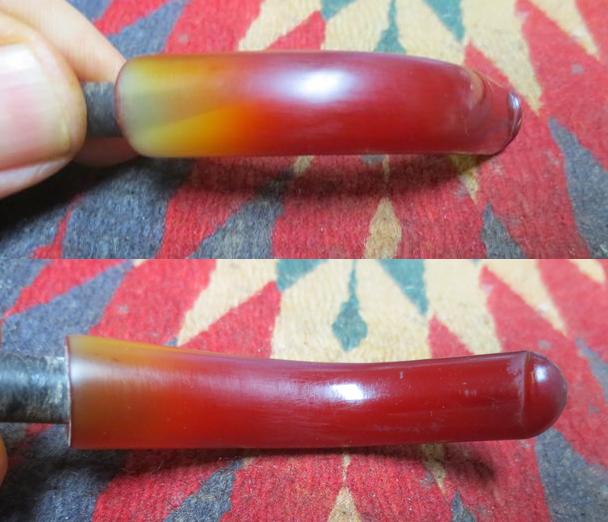
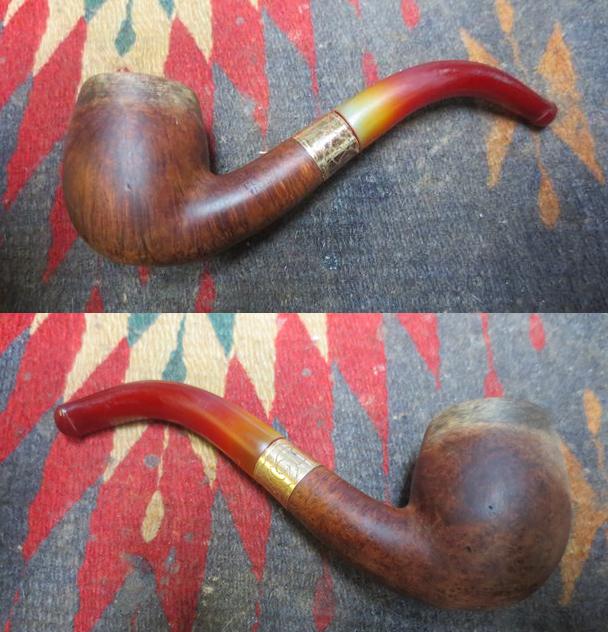
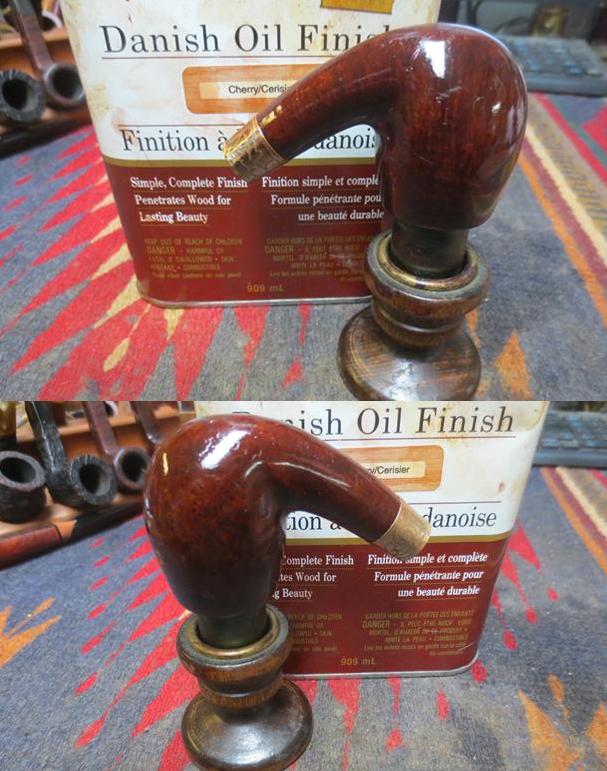
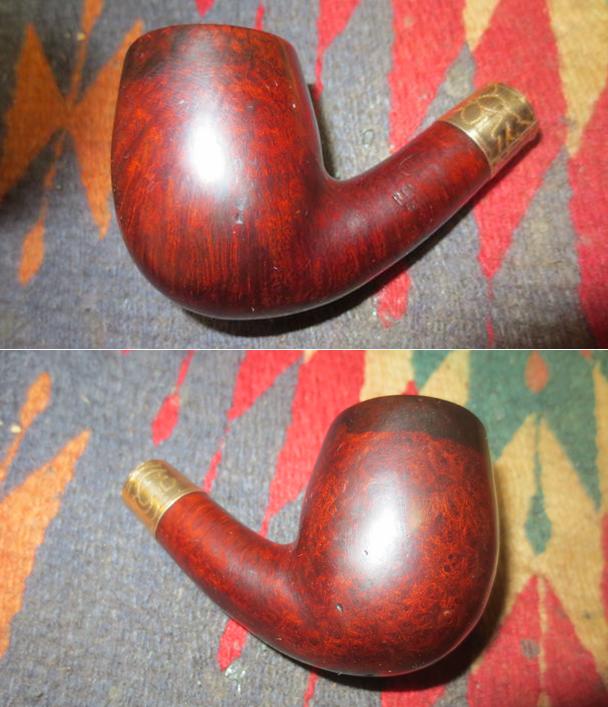
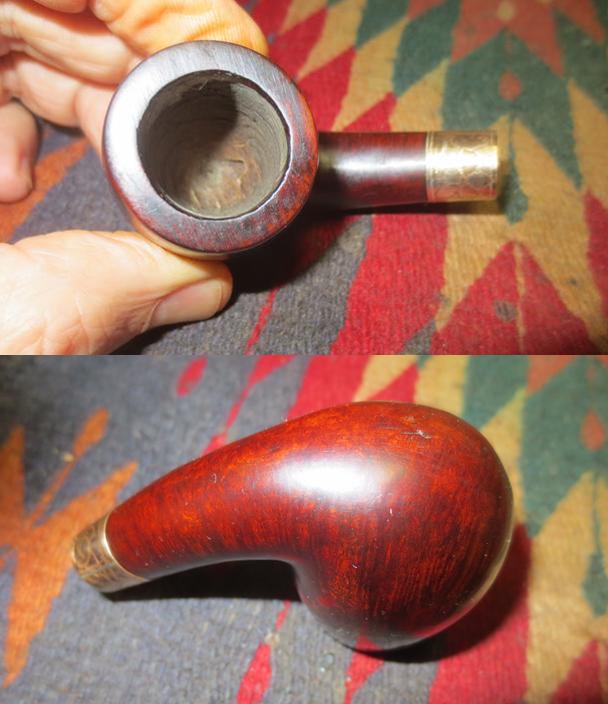
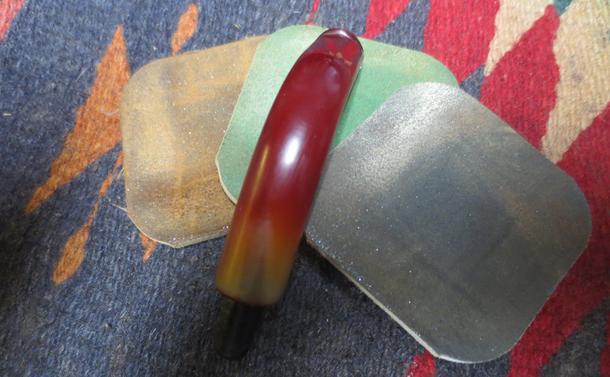
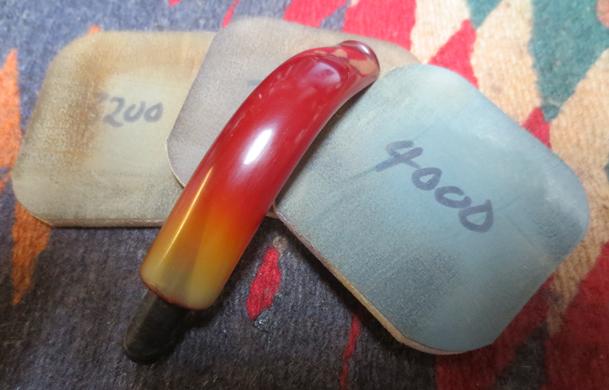
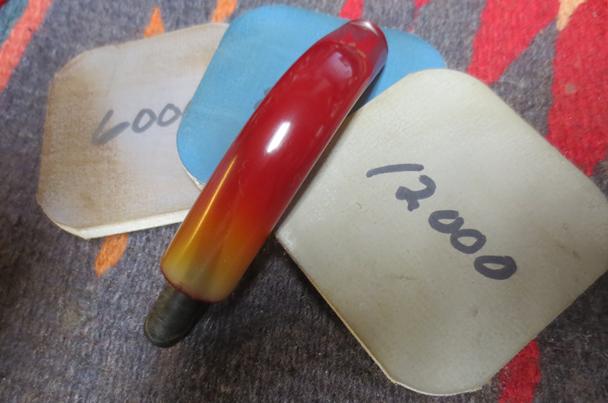
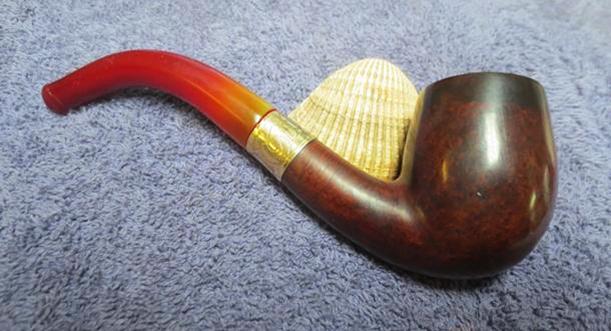
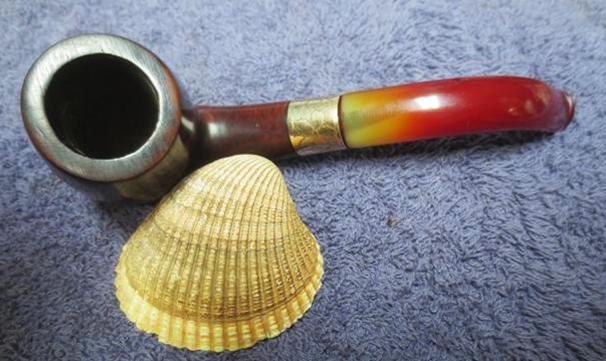
Jeff took the photos that follow before started the cleanup. You can see from the photos the condition of the pipe. The bowl exterior was absolutely filthy. It is the first time I have seen the lava that usually is on the rim flow over the top and down the sides of the bowl. The lava on the outside edge of the bowl and the thick cake in the bowl made it hard to know what the condition of the rim edges. The incorrect stem and the condition of the pipe told me that it was someone’s favourite smoker and when the old stem broke or wore out a convenient replacement was stuck in the shank and it continued to be smoked. The next photos of the bowl, rim and the flow of lava down the outside of the bowl shows how filthy this pipe was before Jeff started his clean up. The bowl is scratched and nicked but even that damage is hard to assess given the condition of the pipe. If you look closely you can see the MLC oval on the next photo of the shank. Below that it reads Redmanol over  French Briar. You can see the tars that have built up on the shank and pushed the band toward the end of the shank. It really was a dirty pipe. The photo of the bottom of the bowl and shank show more of the worn condition of the briar.The next three photos show the condition of the end of the band. It was in rough shape. As the band was pushed off the shank end because of the tars the end that extended beyond the briar of the shank was bent and damaged.The last photo Jeff took showed the condition of the stem. I was not particularly concerned with the stem as I was planning on replacing it with a fitted stem. If I used it in the future I would clean it up.I reread the blogs on the MLC pipes that I had restored previously to refresh the information. Now I was ready to see what I could do with this old pipe. It is really nice working on clean pipes. I have done enough repairs recently that have required me to ream and clean them that I have a greater appreciation for how nice it is to have this done for me. Thanks Jeff for your work and the way it makes my part a bit easier. He worked his usual magic in cleaning up this messy pipe. I really wondered what would lie beneath all of the grime and tars. Jeff reamed it with a PipNet reamer and cleaned up the remnants with a Savinelli Fitsall pipe knife. He scrubbed out the mortise and the airway in the shank and the stem with alcohol, cotton swabs and pipe cleaners. He spent quite a bit of time scrubbing the exterior of the bowl, rim cap and shank with a tooth brush and Murphy’s Oil Soap to remove the build up. He rinsed it under running water. It took a lot of scrubbing to get it free of the tars but it worked well. He dried it off with a soft cloth. Once the grime was removed it was clear that the finish underneath was in rough shape. The briar was quite nice with a mix of straight and birdseye grain around the bowl and shank. I took photos of the pipe to show its condition before I started my work on it. Jeff had done a miracle in removing the thick cake, cleaning the lava on the rim and sides of the bowl. The inner edge was in pretty  decent shape as was the outer one. I was happy to see the condition. There was however a darkening on the rim top and all around the bowl coming down the sides about ¼ inch. At first I thought that it might have been left behind by a rim cap of some sort but there were no small nail holes in the briar on the sides of the bowl. I think that actually it is what is left behind by the greasy hands of the pipe man and the lava that had flowed down the bowl sides.He was also able to remove much of the grime around the band on the shank and leave the stamping undamaged.I removed the stem and carefully slid the band off the shank. I wanted to clean up the end of the shank with alcohol and sandpaper. I also want to smooth out the back edges of the band and see if I could make it smooth and useable once again. I heated the end of an awl/ice pick and pressed it against the damaged areas of the band. The brass was quite thin so it was really quite workable. I was able to remove all of the damaged areas but one that was a compressed area on the bottom side. It would be hidden on the underside of the shank once it was glued back in place.I scrubbed the shank end and the dark area with acetone to remove more of the grime that was on the surface of the briar. I was able to reduce quite a bit of the buildup around the top of the bowl and the rim top with this method. I sanded the end of the shank to smooth it out. I used a dental spatula to spread the all-purpose glue around the shank. I pressed the band back on the shank with the small damaged spot on the underside.I took a photo of the end of the shank to show that the band fit tight on the shank and was even with the shank end. You can see the damaged area on the underside of the shank on the right side of the photo.I looked through my can of stems because I remembered having a bent Redmanol stem that I had picked up somewhere along the way. Sure enough it was there. It was slightly larger in diameter than the shank of the pipe so it would need to be sanded to fit nicely on the shank. It also had a push stem on it that would need to be removed and replaced with a normal tenon. Both of those were relatively easy jobs. I was anxious to get moving on the stem so of course I forgot to take photos of the stem with the meerschaum push tenon. It was loose so I unscrewed it from the stem. I had a small threaded Delrin tenon with the threads that were close to the same and threaded it into the airway on the stem. It worked well so I unscrewed it and glued it in place in the stem. The photos below show the new tenon on the stem.The tenon fit well in the mortise. The fit against end of the shank was nice. I sanded it to remove the excess material and reduce the diameter of the stem to match the shank using 220 grit sandpaper. In the photos below it is getting close to a nice fit. What you can’t see in the photos is that the nice, rich, red colour of the Redmanol lightened with sanding to shades of blood orange. I could not start over so I decided to keep sanding until the fit was correct. At first I did not like the effect on the Redmanol and I was disappointed by the colour shift. Looking at the stem from the drilled airway before I put the tenon in place and the flat end of the stem it appeared that the red was solid all the way through the material so when the oranges and yellows started to show up I was a bit frustrated. Now as I look at it I have to say it is growing on me. It reminds of the Popsicles that we used to by when I was a kid. I stopped sanding the bowl and put the stem on the shank to get a couple of photos so I could look at it on the screen and get the effect. It is almost like flame… kind of a nice variation. It is interesting to see the fine red line between the band and the stem – the flat end still is an even red. I don’t quite understand it but I am resolved to live with it. I am going to stain the bowl so that should also add to the variations of colour on this old pipe.I decided to try to bleach out the darkening on the rim top and first ¼ inch of the bowl all the way around. I wiped it down with bleach on a cotton pad and left it on the dark area to do its work. It worked better on the left side than the right.I stained the bowl with a dark brown aniline stain to try to blend in the dark rim stains. I applied the stain, flamed it and repeated the process. Once it dried I wiped the bowl down with alcohol on cotton pads to make it more transparent and let the grain shine through.  In the process some of the nicks in the briar showed up more clearly. I decided not to fill them in but to leave them as war wounds on this old timer. They tell a story that I wish the pipe could tell us. I polished the briar with micromesh sanding pads. I started polishing with 3200-4000 grit pads and wiped the bowl down after each pad with a damp cloth. I continued to polish with 6000-12000 grit pads and wiped it down after each pad. I hand buffed it with a soft cloth. The dark ring around the top of the bowl is still visible but less than before. The rim looks good. To further blend the darkened top portion of the bowl with the rest of the pipe I gave the bowl a contrast coat of Danish Oil Cherry Stain. I applied it by hand and rubbed it off and repeated the process to get a good smooth coat.I wiped the stain coat off and hand buffed the pipe lightly. The photos below show what the pipe is looking like at this point in the process. The right side still shows darker than the left at top edge of the bowl. I polished the stem with micromesh sanding pads – wet sanding it with 1500-2400 grit pads and dry sanding with 3200-12000 grit pads. I wiped the stem down with Obsidian Oil after each pad. After the final 12000 grit pad I gave it a final coat of oil and set it aside to dry. I put the stem back on the bowl and buffed it with Blue Diamond on the buffing wheel to polish the briar. I gave the pipe multiple coats of carnauba wax and buffed it with a clean buffing pad to raise a shine. I hand buffed it with a microfiber cloth to deepen the shine. The newly variegated Redmanol stem did not too bad with the old pipe. It shines like polished horn and the flow of the colours worked with the colours on the bowl. The way the colours shifted on the parts worked well together to present a beautiful pipe. The dark rim edge almost looks like the way meerschaum pipes were flumed with a dark edge. The pipe looks fresh and new. Later I will need to give it a bowl coating to protect the bowl inside as there are spidering cracks all around the briar. The finished pipe is shown in the photos below. Thanks for looking.
 

The Rebirth of an Unmarked Horn


Blog by Steve Laug

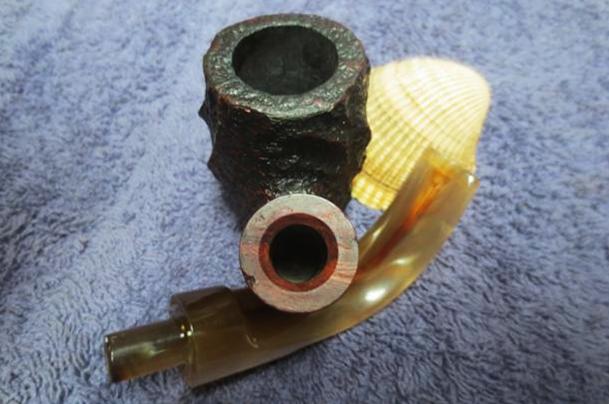
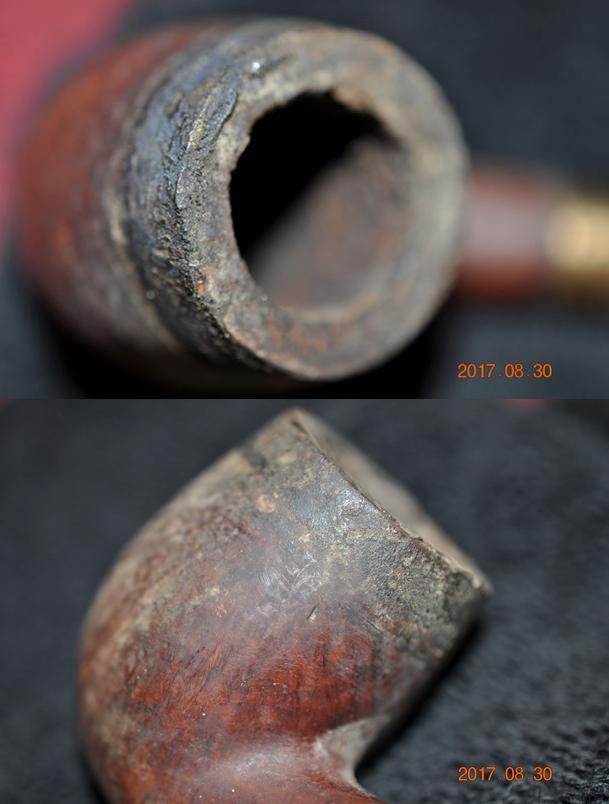
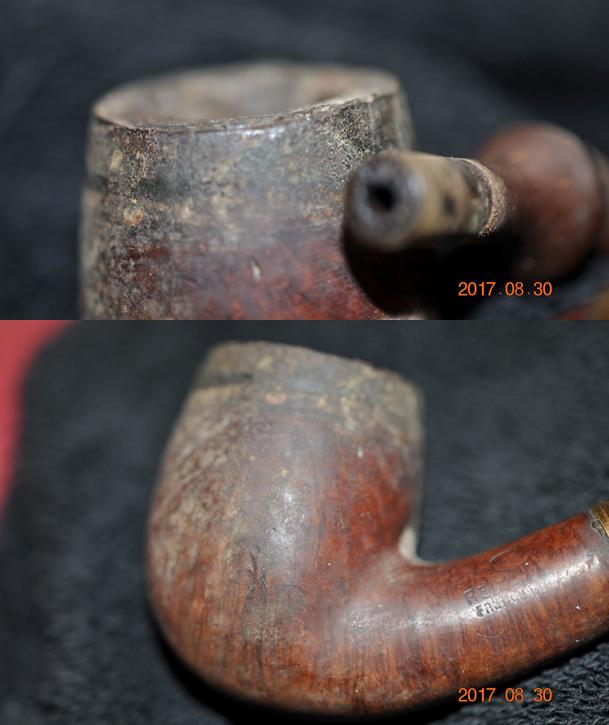
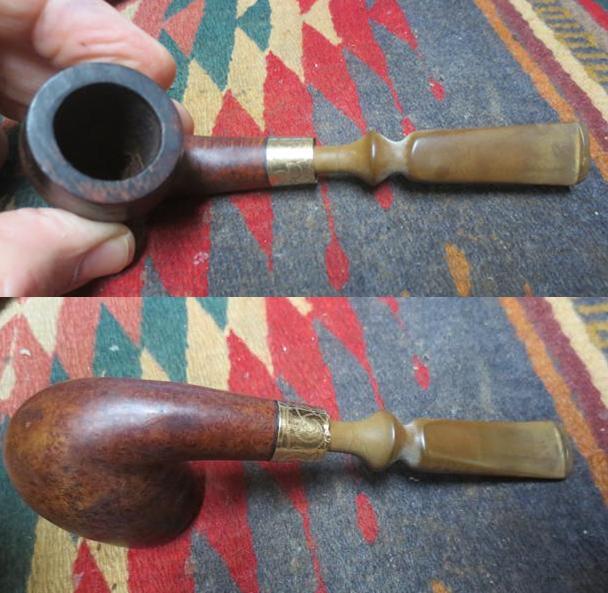
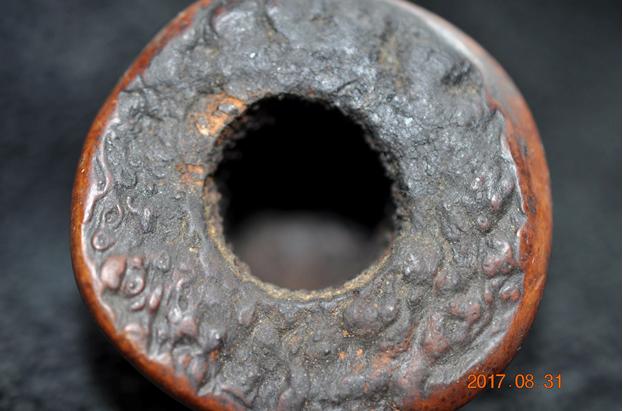
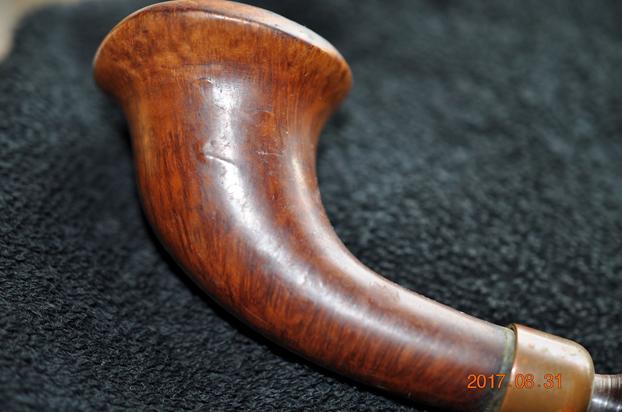
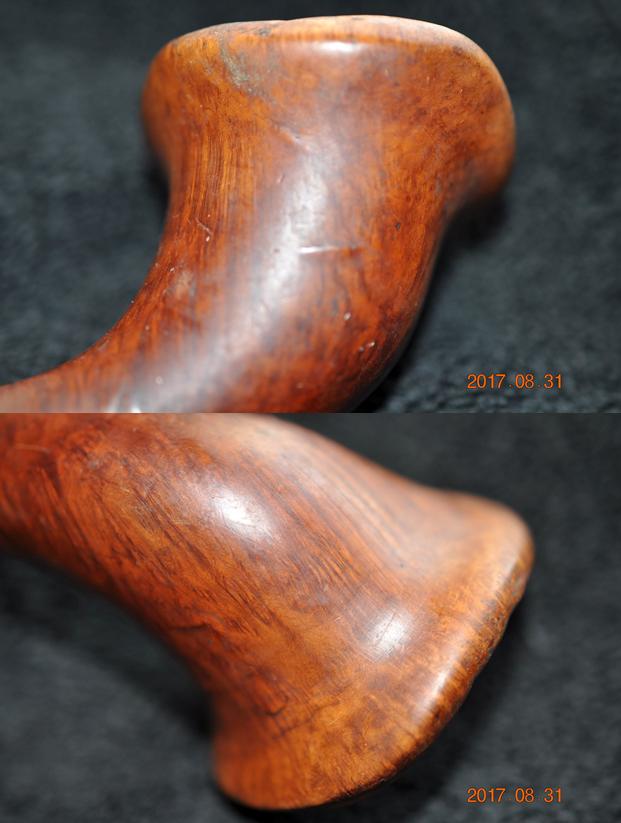
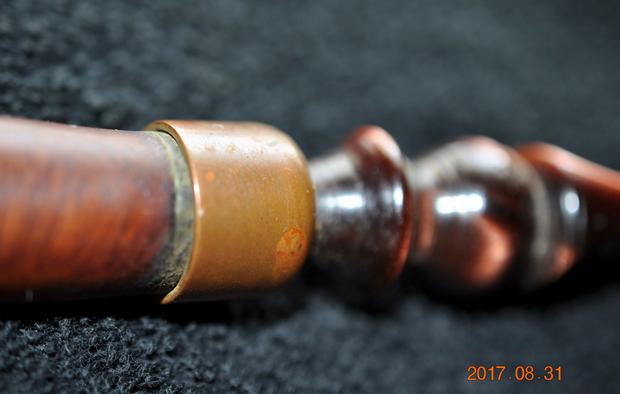
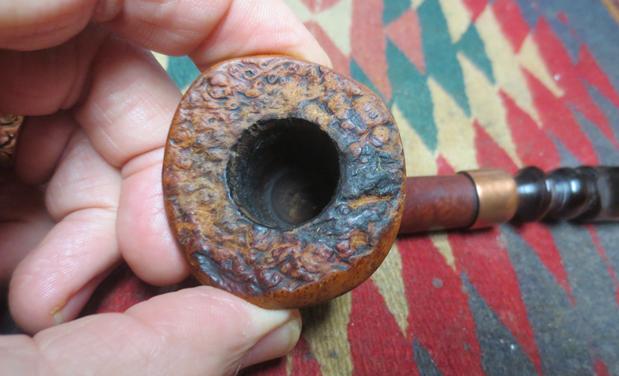
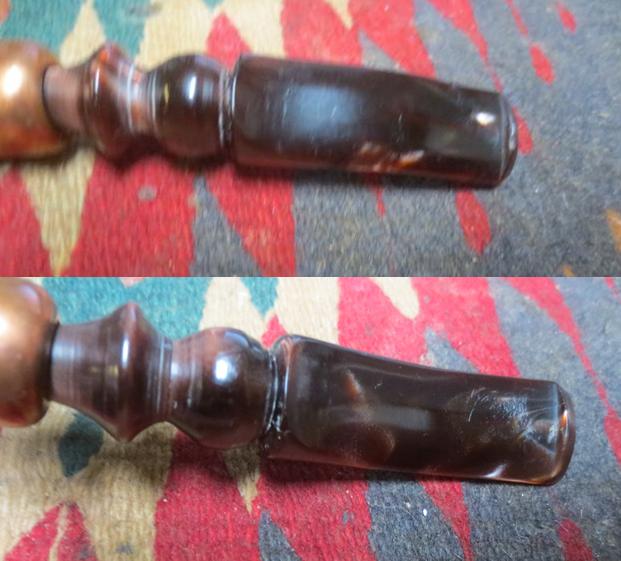
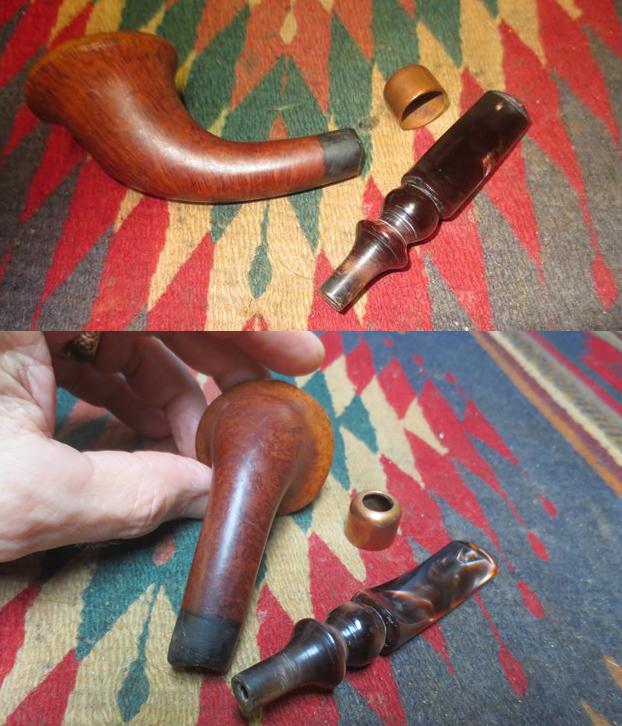
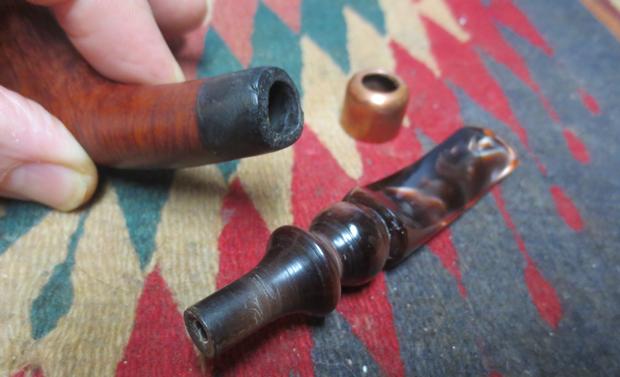
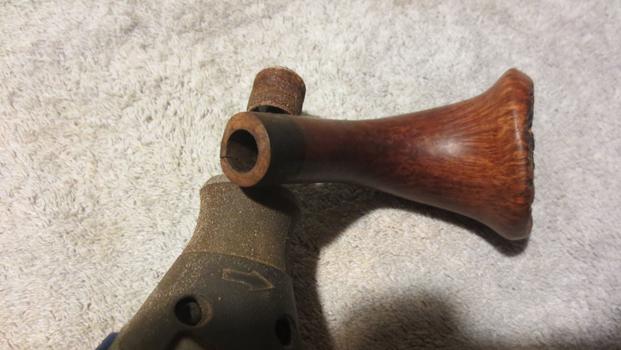
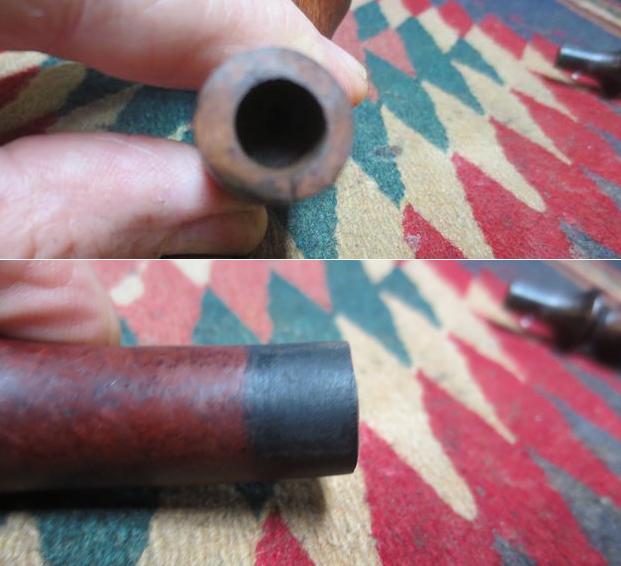
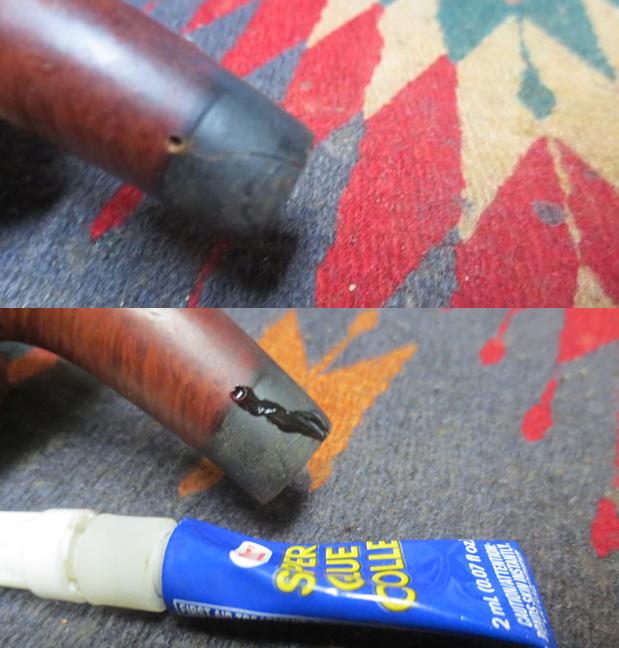
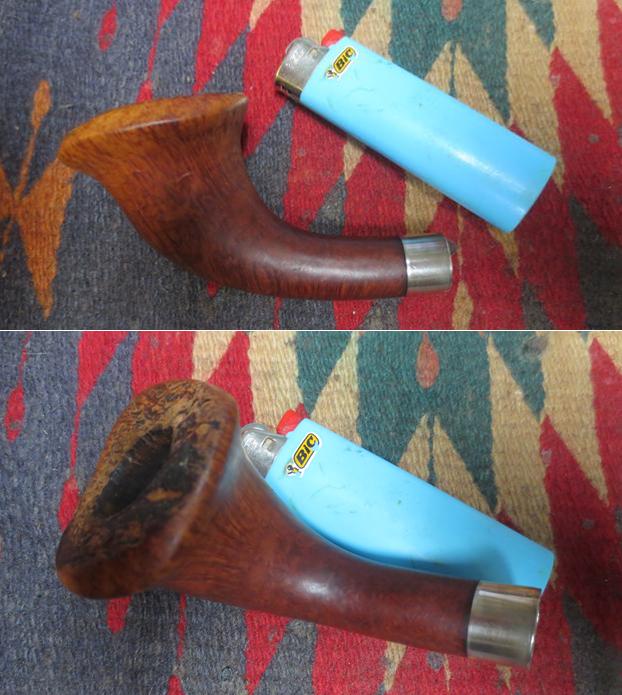
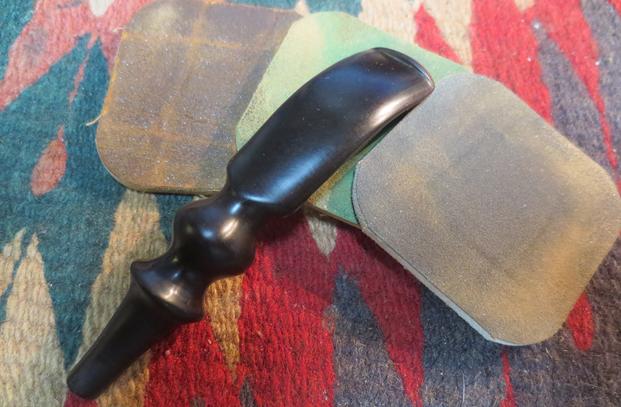
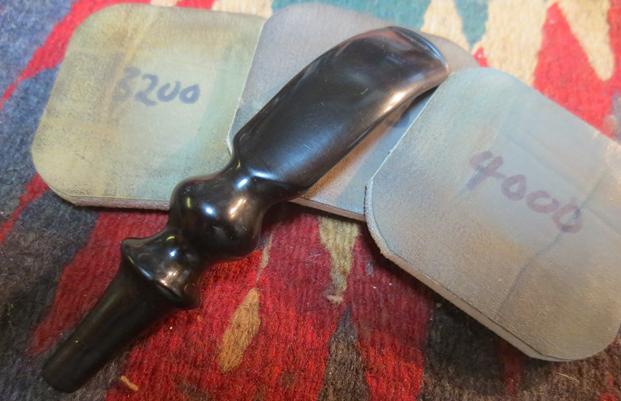
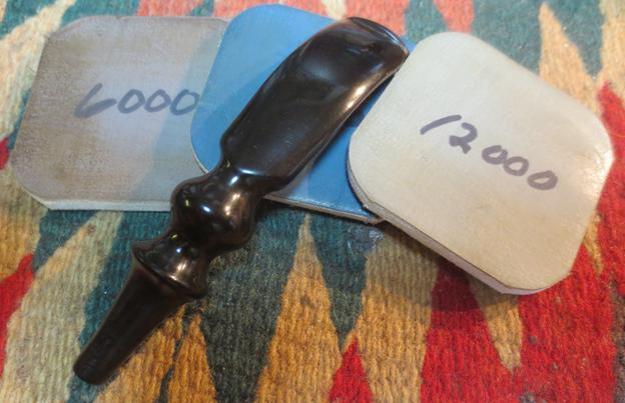
When my brother sent me photos of this particular pipe I could not see what he saw in it. It was just ugly in my opinion. The shank was crooked, the plateau crown had been sanded slightly, the shank was cracked and missing a chunk of briar, the copper ferrule looked like it fit better under a sink than on the shank and the finish had warts in it all around the bowl. To top it off the stem was clunky, thick Lucite and had lots of divots and tooth marks. It did not look like it belonged at all. The entire pipe looked like a failed shop project to me – one that took its own direction as it was being made. He purchased it and took photos of it before he cleaned it up thinking I might be charmed by it as he was.The next photo from the top shows the bow in the shank. I figured that the drilling would be way off once I got it and took it apart. I was pretty certain this one was going to interesting to work on to see if I could get anything resembling a nice looking pipe out of the concoction that it was in the photos. Note also the thick cake in the bowl and the overflow of lava on the rim filling in the smoothed out plateau. It was hard to know at this point if there was damage to the inner edge of the rim because of the thick cake and lava. Only a thorough clean up would reveal the condition. The next three photos show the warts on the sides of the bowl. The finish was rough. It was hard to tell if these were fills or if the pipe had not been sanded smooth when it was originally finished. In the photos, they look like scratches but they are actually standing above the finish on the briar. Some of them have scratches around the edges on the surface of the bowl. As I looked at the horn, I had to admit there was something strangely alluring to the shape and it was growing on me. The copper fitting is not snug on the shank it rattles around and is only held in place by the stem. You can see the gap between the cap and the shank. The shank under the band is coated with grime and there is a dark oxidized buildup.When the stem is removed the cap falls off and reveals the damaged shank. You can see the crack in the shank end and up the side on the right side of the photo below. The tars and oils that have built up on the end of the shank and in the mortise are quite thick. In the second photo below you can see the missing piece of briar. The third photo is a close up of the shank end. It shows the damage clearly as well as thick tars on the shank  under the cap. The stem is Lucite and in rough condition. It is the thick kind of stem that came out when Lucite first came on the market. It thick and poorly shaped. There are major dents in the surface and many tooth marks and chatter on both sides of the stem at the button. I do not intend to reuse the stem as it is not my kind of stem. I will replace it with a vulcanite stem and fit it to the shank. Jeff did his usual thorough clean up even on this ugly, old pipe. He reamed it with a PipNet reamer and cleaned up the remnants with a Savinelli Fitsall pipe knife. He scrubbed out the mortise and the airway in the shank and the stem with alcohol, cotton swabs and pipe cleaners. He scrubbed the exterior of the bowl and shank with a tooth brush and Murphy’s Oil Soap and rinsed it under running water. He scrubbed the rim on the bowl to clean out the lava on the plateau. It took much scrubbing to get it free of the tars. He dried it off with a soft cloth. The bowl itself was very light weight. It is a good looking piece of briar and has flame grain all around the bowl and shank with some birdseye on the shank top and bottom. He cleaned up the Lucite stem with the oil soap as well and was able to remove much of the debris. There were tooth marks and tooth chatter on both sides of the stem. The freehand style stem had a tapered tenon that sat tightly in the copper end cap. The copper cap was loose and fell off when the stem was removed from the pipe. I spent time turning the pipe over to see if I could find any identifying stamping that would help me know who made it and when it was made. There was nothing there. It was an unstamped pipe by an unknown maker at an unspecified point in time. I took photos of the pipe to show its condition before I started my work on it. Jeff did a great job on the rim top and the bowl. The inner edge of the rim was in good condition with little damage. There was still a little lava on the back side of the rim top that would need to be taken care of.The Lucite stem was clean but looking at it close up I knew that I did not want to keep the stem. I would need to go through my can of stems to find one that would work on this pipe.I removed the stem and the end cap and looked closely at the damage to the end of the shank. Once Jeff had cleaned it up the damage was really clear. The end of the shank had deteriorated and chunks of briar were missing. The surface of the shank end was rough and damaged. There was a large crack on the right side near the underside going from the shank end up the shank for ½ inch. I used a Dremel and sanding drum to remove the damaged shank end. I evened up the end of the shank and took off all of the compromised briar. I cleaned up the end so that a regular stem would work with it. I smoothed out the inside of the mortise. During this cleanup is when I discovered that the mortise and the airway in the shank were drilled at an angle. The airway was high in the end of the mortise and came out at the bottom of the bowl. The mortise itself curved and was poorly drilled in the shank. I cleaned up the briar that had been under the copper band. The briar was black with the colour going deep in the briar. I sanded it smooth and used a microdrill bit to drill a pin hole at the end of the crack to stop it from spreading further. I filled in the hole and the crack with clear super glue and let it cure.When the glue repair had dried, I sanded it smooth and pressure fit a nickel band over the end of the shank. I heated the band with a lighter to expand it and pressed the shank end and band so that the band went up the shank to cover the crack and the repair. I think that the band was a far better look for the pipe than the copper shank cap had been. I scrubbed the plateau top with a brass bristle tire brush to remove the remaining lava in the crevices of the surface. I worked on it until the rim top was clean.I sanded the bowl with 220 grit sandpaper to remove the warts from the surface and smooth out the scratches and dents. I wanted the surface to be smooth the way it should have been when the pipe was made. I worked on it until it was smooth to the touch. When I finished I washed the surface of the bowl and shank with acetone on a cotton pad to remove the last of the dust and the remaining finish from the briar. I buffed the bowl with Blue Diamond to polish it a bit and see where I needed to do some work before the final buff. I hand polished the briar with micromesh sanding pads – wet sanding with 1500-2400 grit pads and dry sanding with 3200-12000 grit pads. I wiped the bowl down with a damp cloth after each buffing pad. I hand buffed it with a microfibre cloth after the 12000 grit pad. The pictures below show the progress of the polishing on the briar. I used a black Sharpie Pen to colour in the crevices on the plateau top. I wanted the smooth high spots to shine through the deep black in the grooves. The contrast would look really good once the pipe was given a finish coat of stain and was buffed and waxed.I stained the briar with a Danish Oil Cherry stain to highlight the red colours in the briar and bring about a contrast with straight grain. I stained the plateau as well to give red hues to the high spots and contrast with the black of the crevices on the top. I hand buffed the bowl with a soft cotton cloth and then with a microfiber cloth to raise the shine. The bowl looks really good and the grain stands out. The straight grain all around the bowl sides looks really good. I chose a vulcanite saddle stem for the replacement for the Lucite stem. I knew it would be a bit of work to get things lined up because of the drilling in the shank. I measured the angles in the shank and figured I would need to bend the tenon at the angle shown in the photo. I heated the tenon and put it in the shank while it was still pliable and set the angle to match the angle of the mortise. The photo below shows the angle on the tenon. Bent at that angle the stem sits tight against the mortise. It gives you a good idea of the how poorly drilled the pipe was and what measures I had to take to line things up. I gave the tenon a coat of clear fingernail polish to make it fit snug in the mortise and let it dry. I roughened it up with the edge of a needle file to give it a bite in the shank. I tried the fit and all was well.I sanded the stem surfaces with 220 grit sandpaper to remove the light oxidation and the tooth marks and chatter on both sides of the stem. I worked on it until it was black and there was no remnant of oxidation or tooth marks.I polished the stem with micromesh sanding pads – wet sanding it with 1500-2400 grit pads and dry sanding it with 3200-12000 grit pads. I rubbed the stem down with Obsidian Oil after each pad to give traction to the next pad and also bring a little life to the vulcanite stem. After the final pad I gave it a last coat of the oil and set it aside to dry. I left the tenon with a few ridges to add bite to the inside of the mortise and hold it firmly in place. Some oxidation showed up on the top side of the stem near the saddle in the photos above so I worked it over in that area once again. When I finished I buffed the pipe on the wheel using Blue Diamond Polish and worked over the stem and bowl to remove any remaining scratches. I buffed the nickel band to give it a shine. I gave the pipe multiple coats of carnauba wax and buffed it with a clean buffing pad to raise a shine. I hand buffed it with a microfiber cloth to deepen the shine. The warts and nicks that I had sanded out were gone and the grain just popped on this old pipe. The new stem, with the angled tenon brought things into line and to me the pipe looked much better. The black of the polished vulcanite and the polished briar work well together to present a beautiful pipe. The finished pipe is shown in the photos below. It really is a beauty. Thanks for looking.
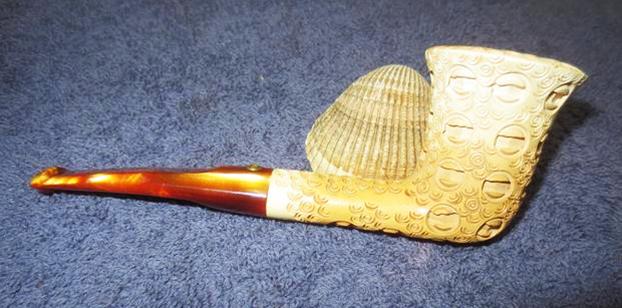
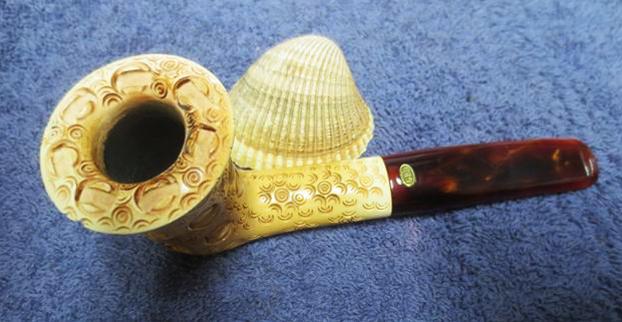
Renewing an old GBD Lattice Work Meerschaum Calabash


Blog by Steve Laug

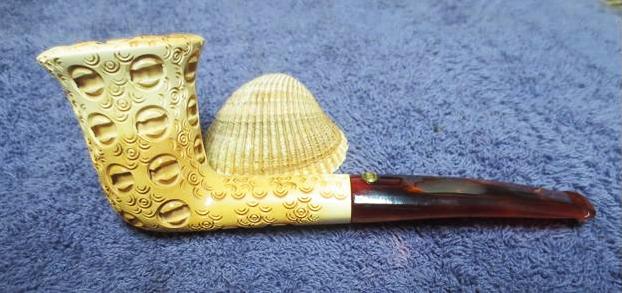
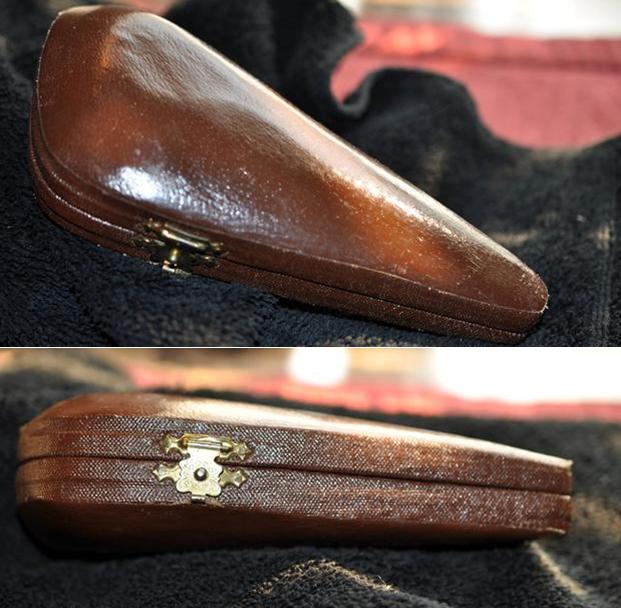
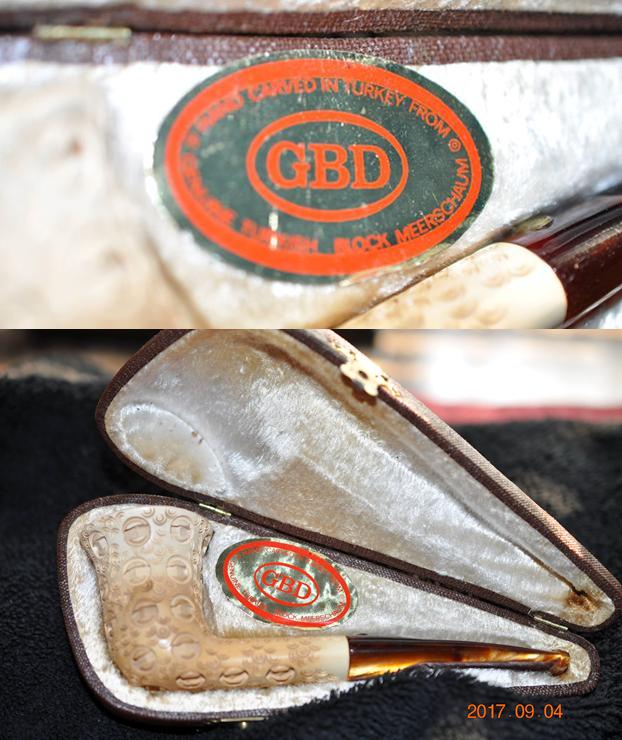
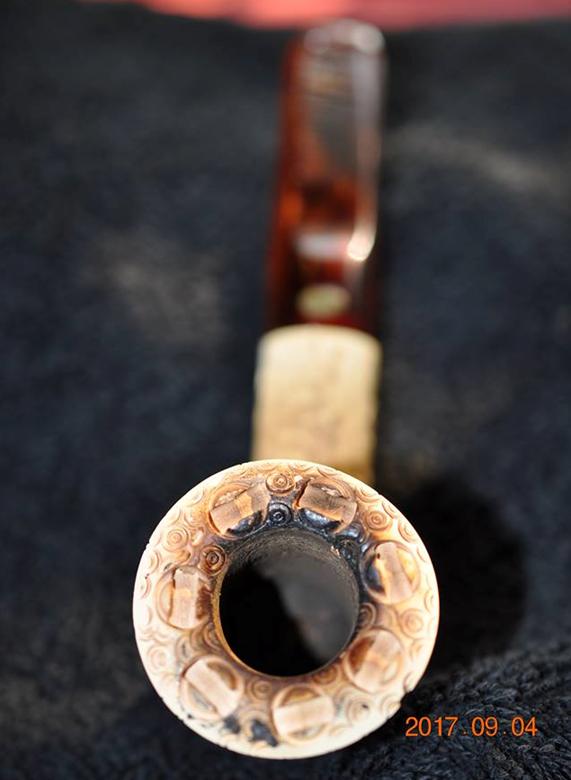
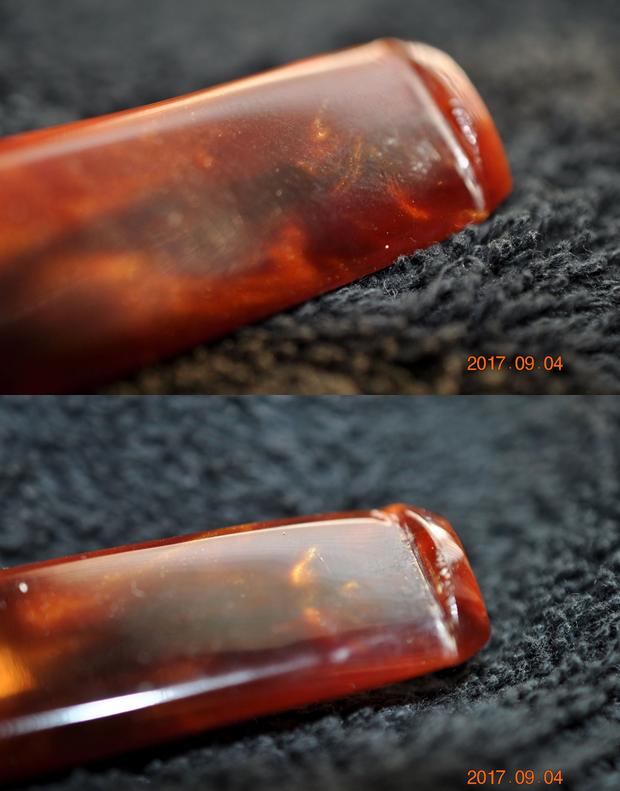
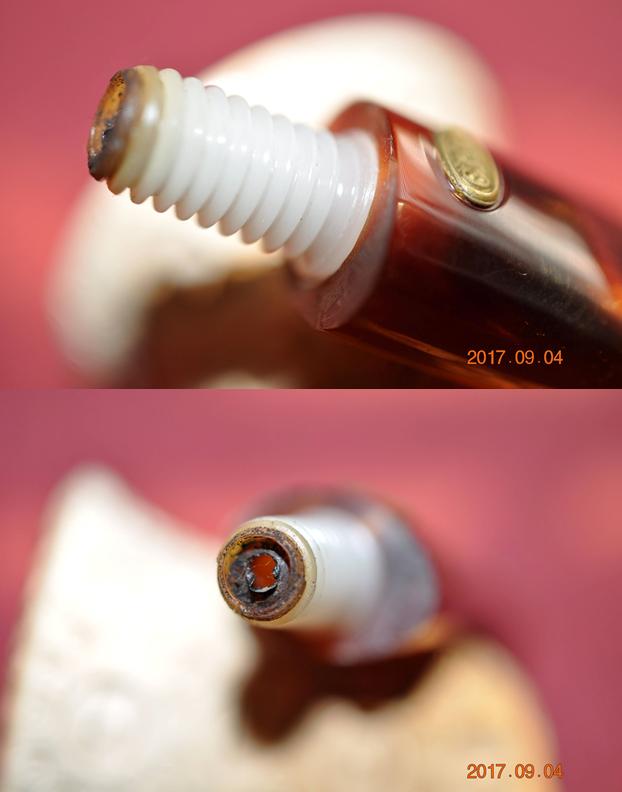
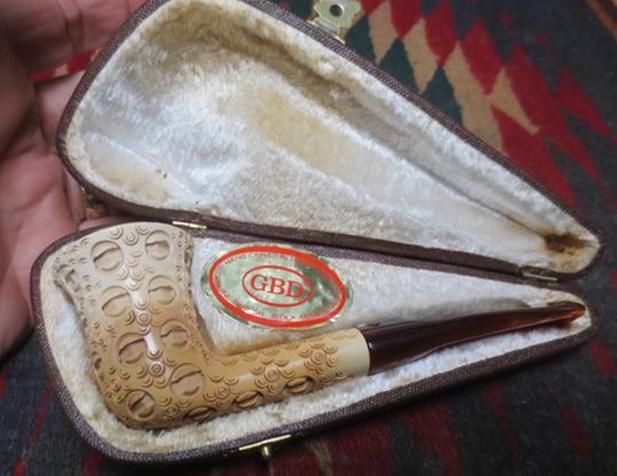
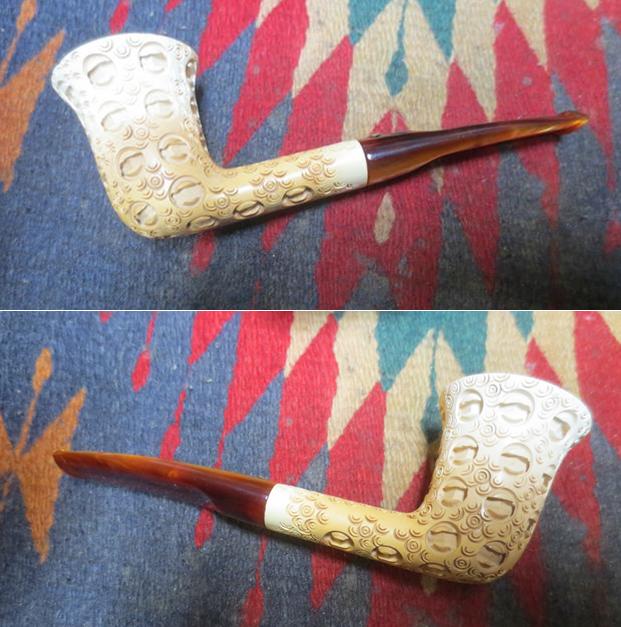
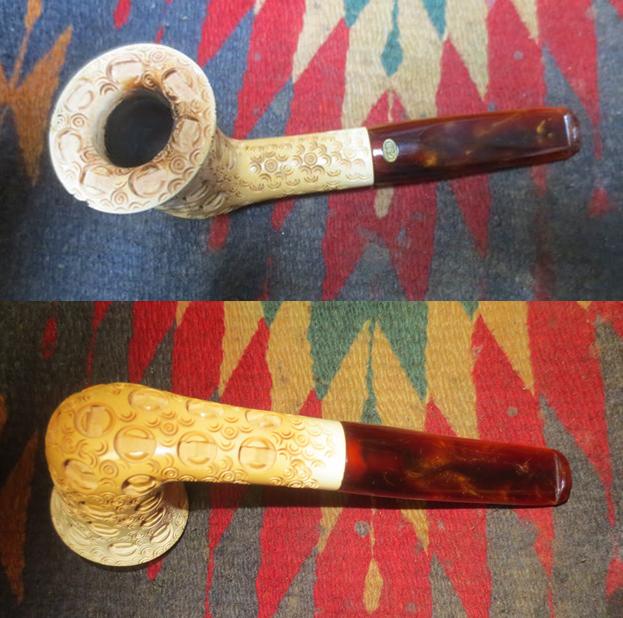
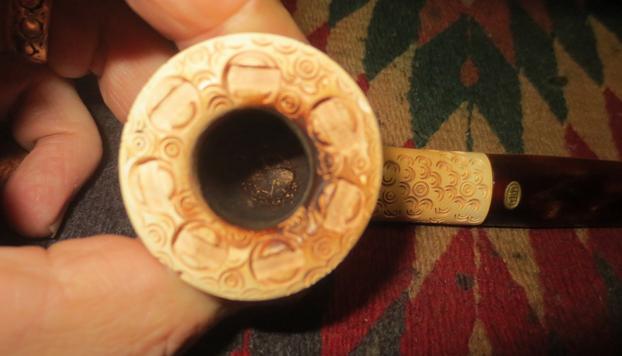
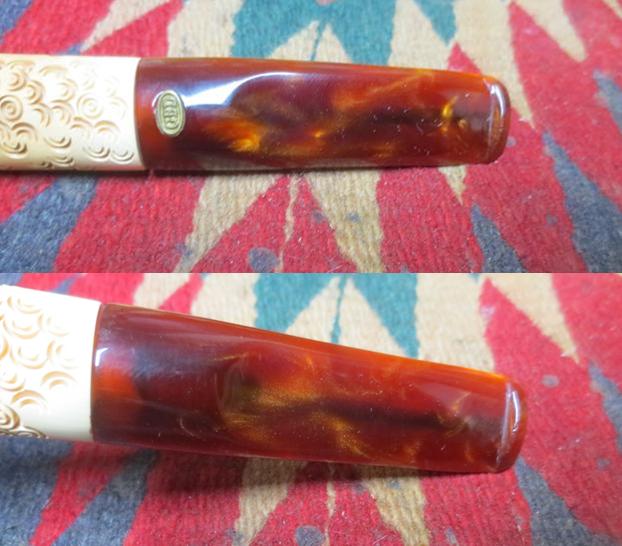
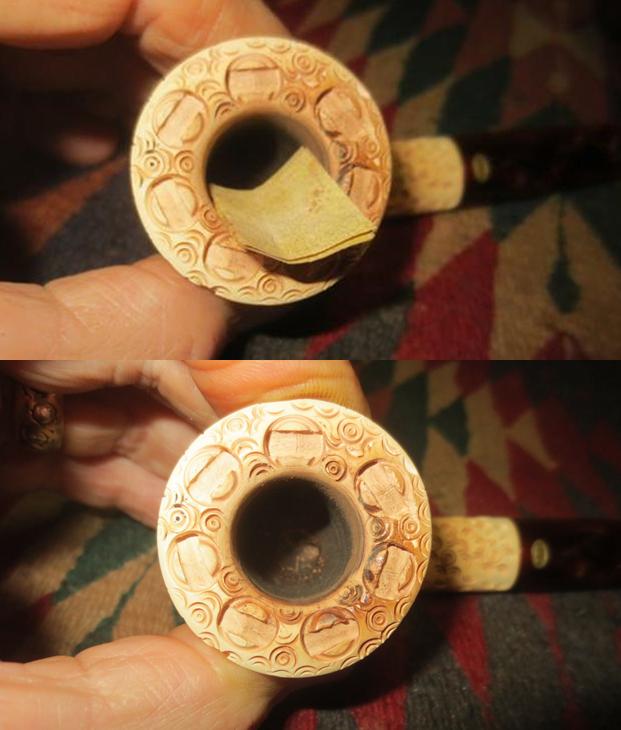
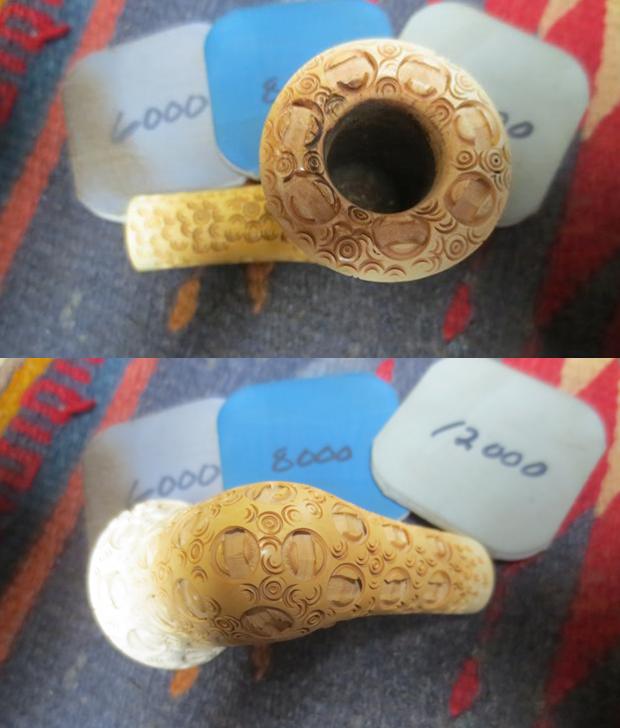
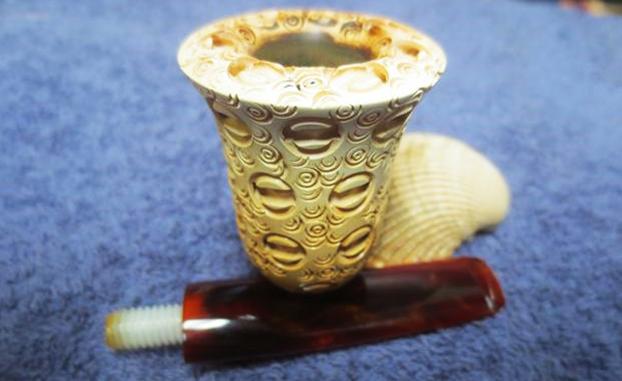
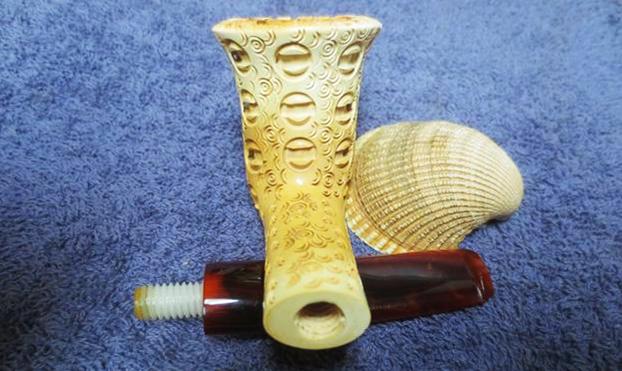
When Jeff messaged me that he had picked up a GBD lattice meerschaum pipe, I was a bit surprised. I had read the there were GBD meets out there but I had never seen one let alone worked on one. I was excited to see what he had found. He sent photos of the pipe and case before he cleaned it up. The case was covered in brown canvas that had been waterproofed. It was in excellent condition and showed little wear or tear. The brass hardware looked new.When he opened the case, it was lined with a taupe plush fabric. The GBD logo was inside the base just above the inset for the pipe. It read, “Hand carved in Turkey from Genuine Turkish Block Meerschaum” in a circle around the GBD oval logo. The inside of the case was in excellent condition. Sitting in the form fitted case was a lattice meer. It looked to be in good condition and was already picking up a patina on the shank and lower half of the bowl.  The rim top was also lattice work and it had a bit of lava in the crevices and grooves of the lattice. There was a thick cake in the bowl that overflowed on the back inner edge of the bowl. The next four photos give various views of the rim top so that you can appreciate the work that needed to be down on the rim top of the pipe. Jeff took a photo of the side of the bowl and the underside of the bowl and shank to show the colouration – the patina that was already beginning to develop on the pipe. The trick would be to clean up the dirt and grime without damaging the patina.The stem had the GBD rondel in the top of the saddle portion and it was in great condition. There were tooth marks and chatter on both the top and underside of the stem and wear on the button surface. The slot in the button was also very tight and it was almost impossible to pass a pipe clean through the airway without a lot of effort. The nylon tenon was in excellent condition and screwed directly into threads in the mortise of the meerschaum. There was no shank line or receptacle end to receive the tenon. The airway in the tenon was clogged with bits of tobacco and tars so even going through the tenon end was difficult to do with a pipe cleaner. Jeff had to use a paper clip to open the airway in the stem before he could get a cleaner through from tenon to slot.Jeff did his usual thorough clean up on this meerschaum. He carefully reamed it with a PipNet reamer and cleaned up the remnants with a Savinelli Fitsall pipe knife. He scrubbed out the airway in the shank and the stem with alcohol, cotton swabs and pipe cleaners. He had to open the airway in the stem with a paper clip before he could get pipe cleaners through. He scrubbed the rim top with a tooth brush and Murphy’s Oil Soap and carefully rinsed it under running water. He dried it off with a soft cloth. The meerschaum in this pipe was very light weight. The swirls and lattice work are quite unique. I have not seen that kind of carving in the past. There were tooth marks and tooth chatter on both sides of the stem. The threaded tenon was in great condition as were the threads in the mortise. The stem was Lucite and was a combination of swirled reds/browns and tans. Whoever carved this in Turkey for GBD did a great job in making a beautiful pipe. I took photos of the pipe when I brought it to my worktable. I like to have a record of what the pipe looked like before I started for comparison once I have finished working on it. I took a photo of the rim top to show what it looked like after Jeff had scrubbed it. The lava on the front right of the rim was gone. The back side lava was gone and what was left was some darkening along the inner bevel of the rim and in the edges of the swirls in the lattice work. He did a great job on it.The stem damage is more obvious after he had cleaned it up. None of the tooth chatter or marks were too deep so they would be fairly straightforward to sand out.To vary my work pattern I decided to start on the bowl on this pipe. I picked at the remaining debris in the swirls of the lattice with a dental pick and was able to remove more of the debris. I used a folded piece of 220 grit sandpaper to work on the darkening around the beveled inner edge of the rim. I was able to remove almost all of it without changing the shape of the bowl or rim top.I spot cleaned the rim with a damp cotton pad to remove the debris that my work had left behind. With the rim top cleaned up it was time to polish the meerschaum bowl. I started polishing with 1500-2400 grit micromesh sanding pads. After each pad I wiped the bowl down with a damp cotton pad. I continued polishing using 3200-12000 grit pads and wiping it down after each sanding pad. I took photos of the bowl after each set of three pads to show the progress of the shine. I set the bowl aside and turned my attention to the stem. I sanded the tooth chatter and marks out of the Lucite with 220 grit sandpaper. It did not take too much sanding to remove the damage to the stem surface and the surface of the button on both sides.I reworked the button and slot using needle files to open up the airway enough to be able to easily push a pipe cleaner through the airway.I polished the stem with micromesh sanding pads – wet sanding with 1500-2400 grit pads and dry sanding with 3200-12000 grit pads. I wiped the stem down with a wet cotton pad after sanding with each pad. I buffed the stem with Blue Diamond on the buffing wheel and carefully buffed the bowl at the same time. I used a light touch on the bowl and a heavier touch on the stem. I avoided the GBD rondel so as not to damage it. The pipe feels great in the hand. The carving is very well done and the pipe is exceptionally pointing to a quality block or meerschaum. The developing patina is a bonus for whoever adds this one to their collection. The dimensions are Length: 5 ½ inches, Height: 2 inches, Bowl diameter: 1 ½ inches, Chamber diameter: ¾ inches. I will be adding it to the rebornpipes store shortly. If you want to add it to your collection email me at slaug@uniserve.com or send me a message on Facebook. Thanks for looking.
Restoring an Ornate Hand Carved Horse’s Hoof Pipe with a Horn Stem


Blog by Steve Laug

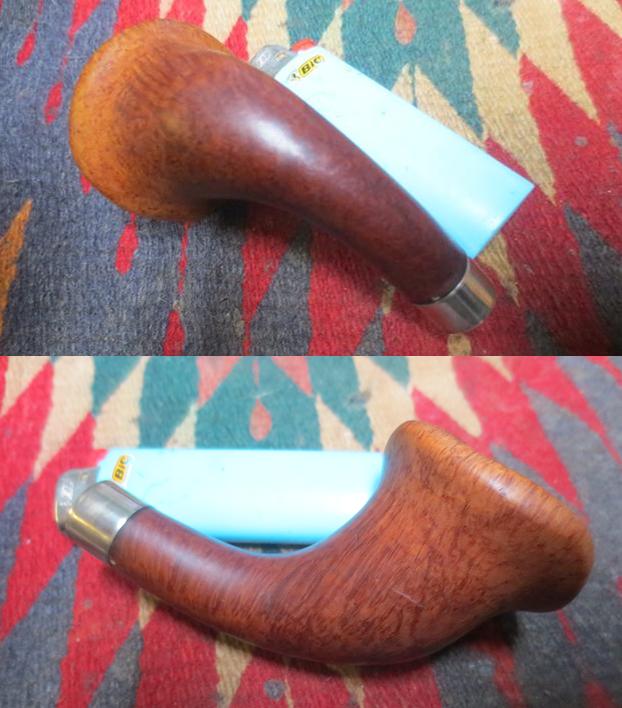
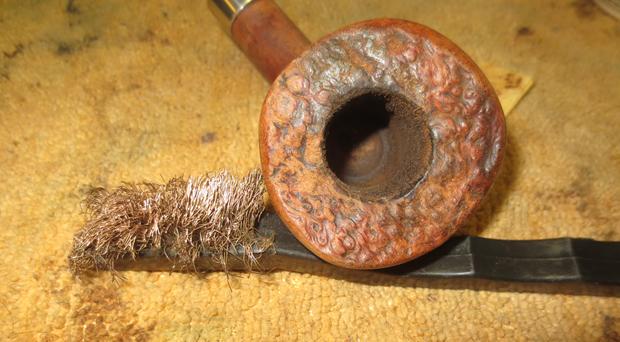
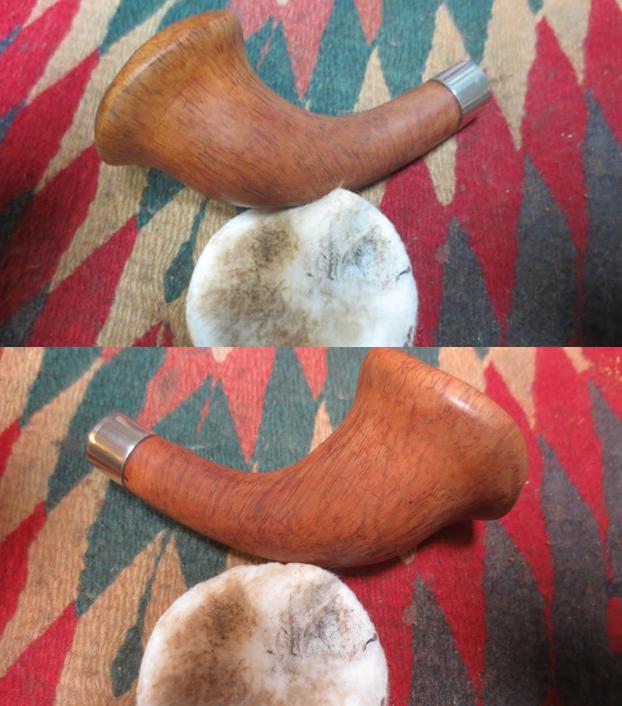
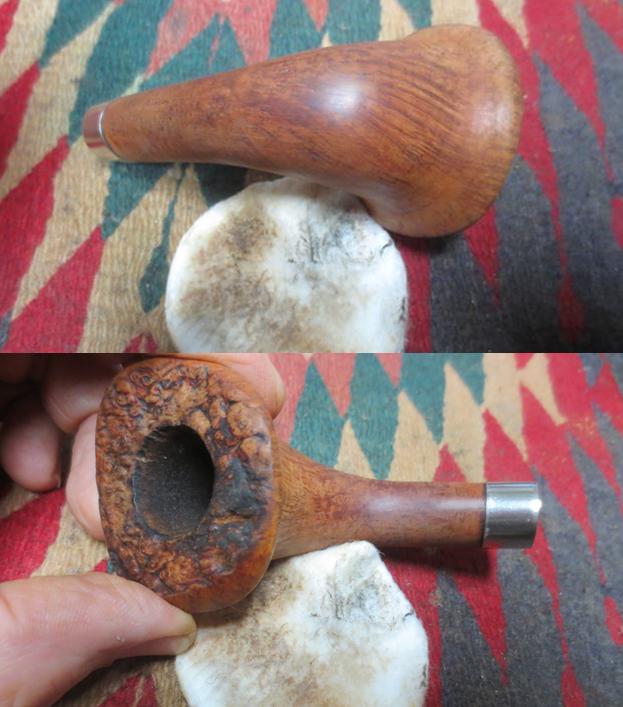
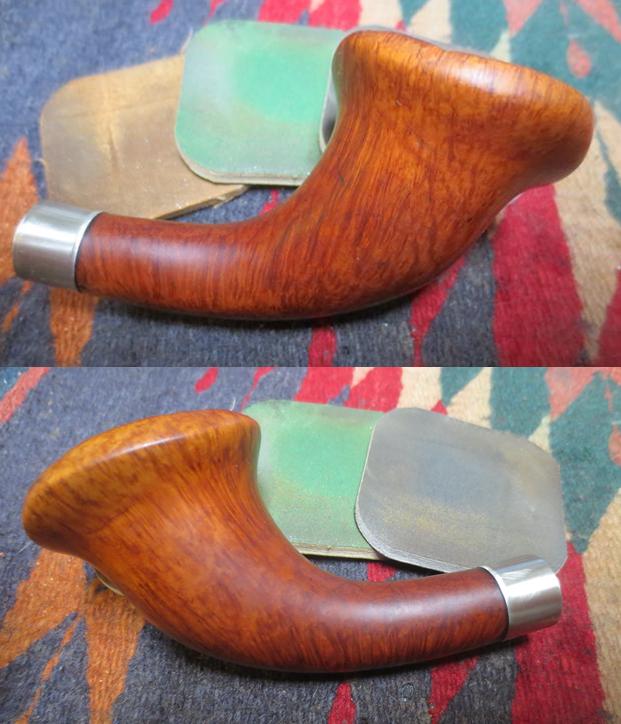
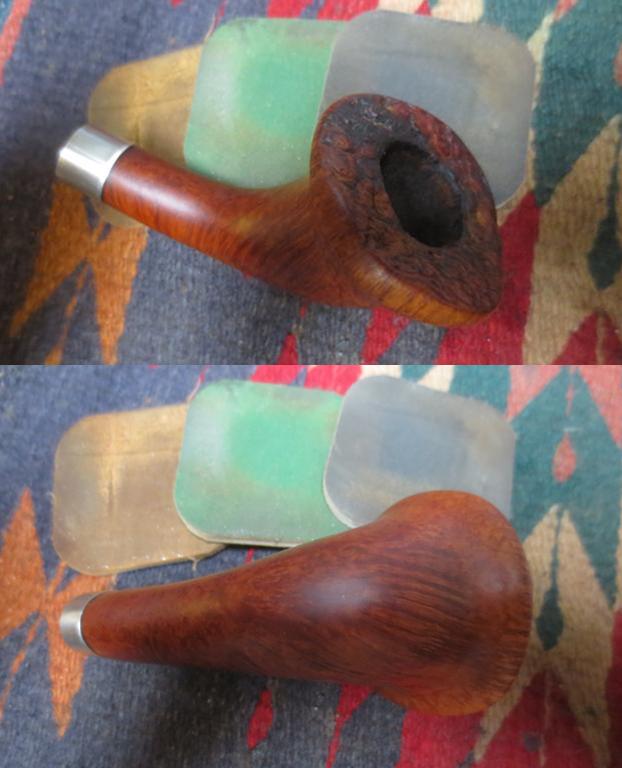
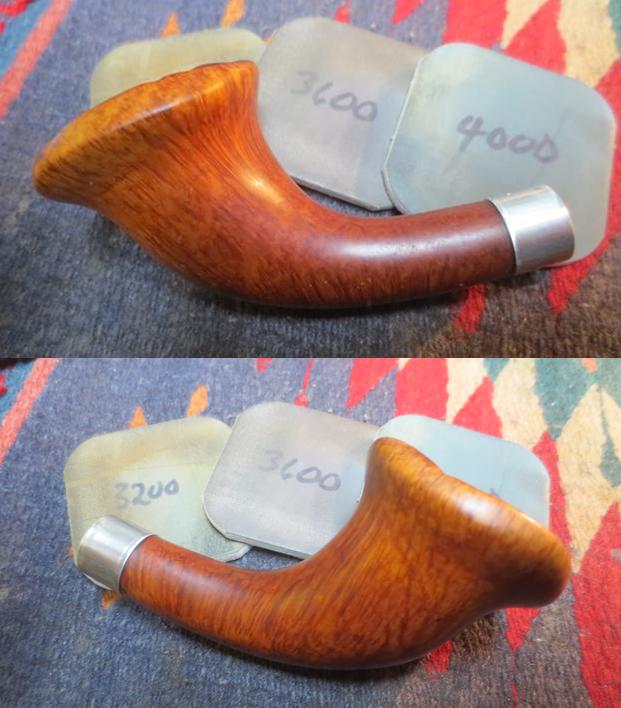
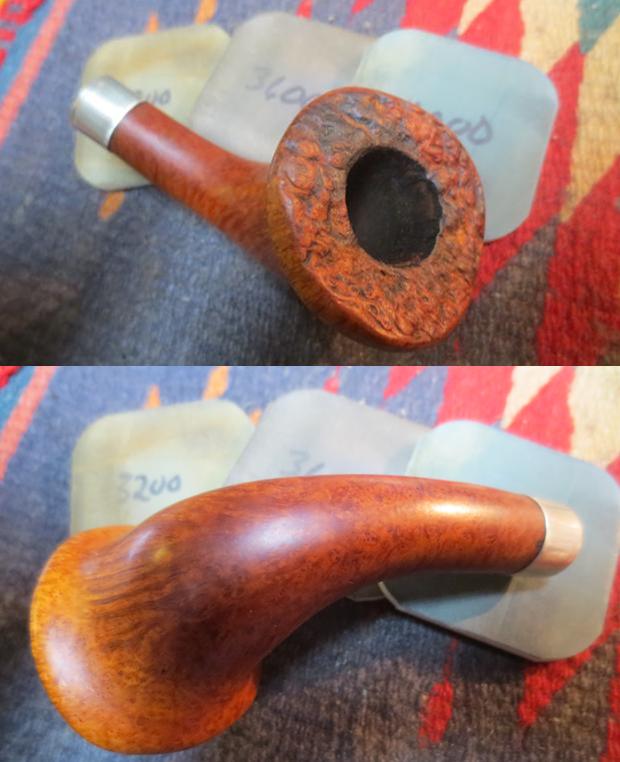
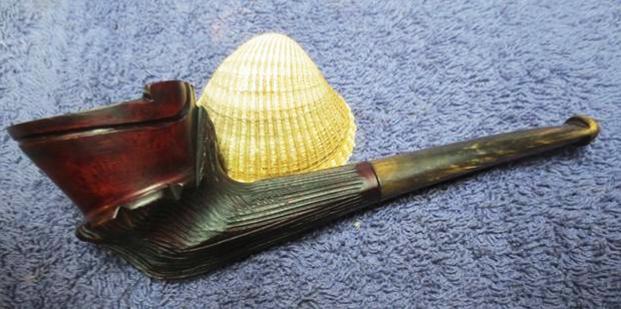
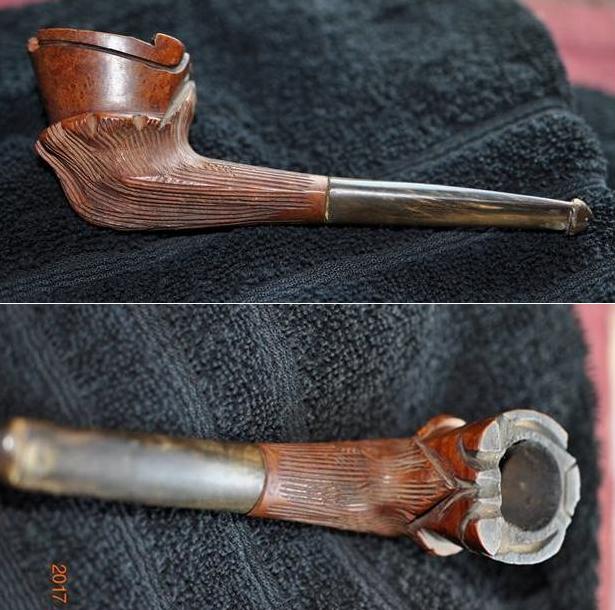
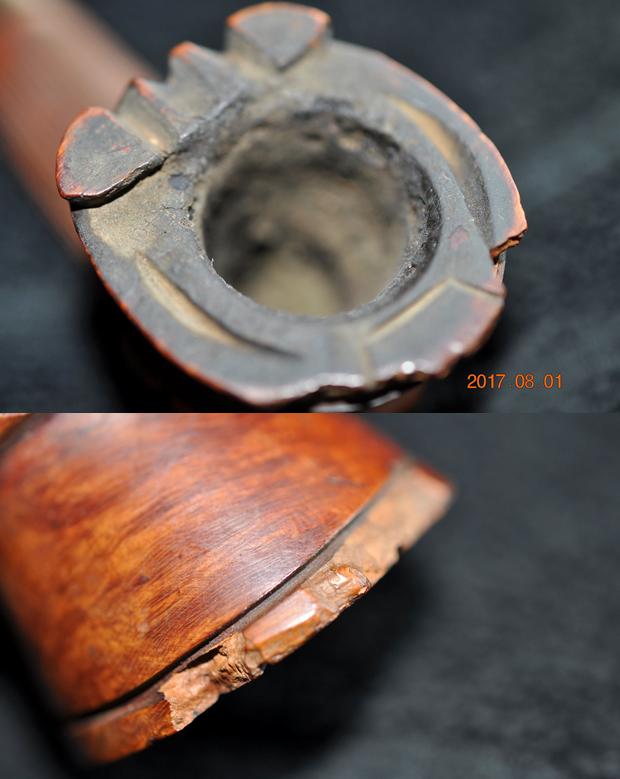
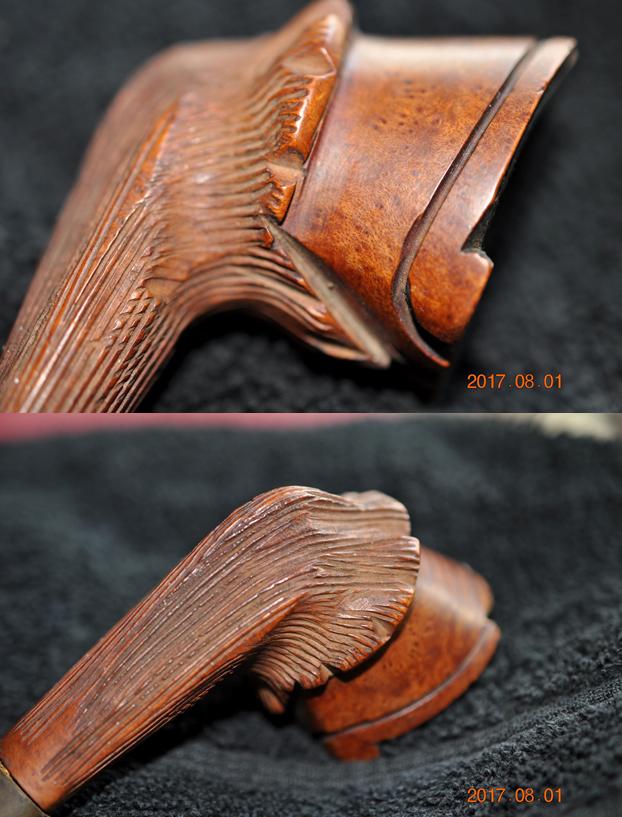
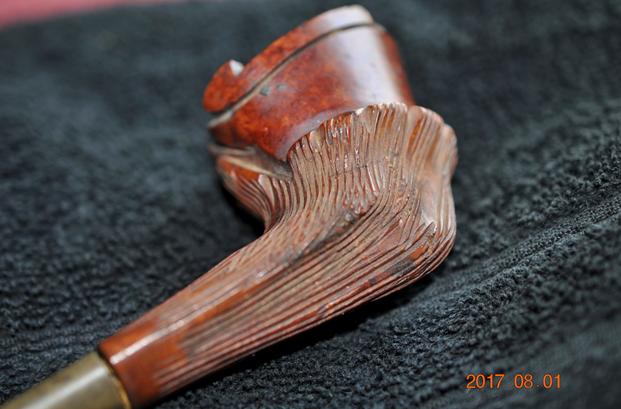
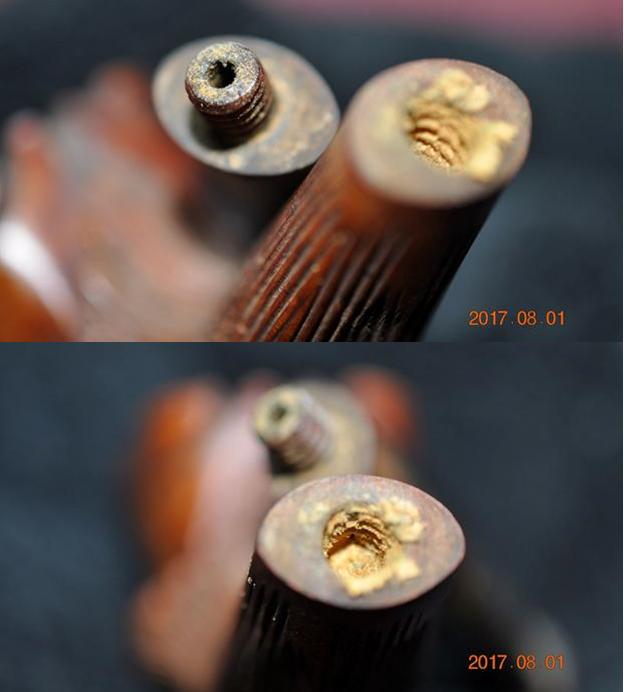
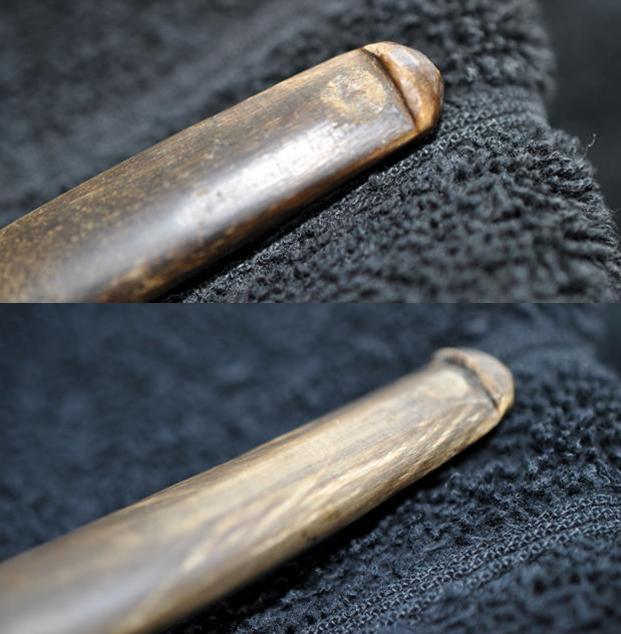
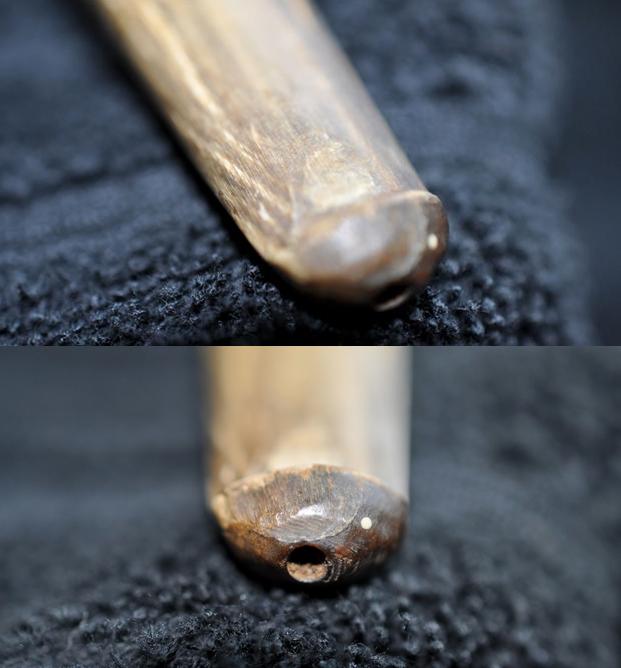
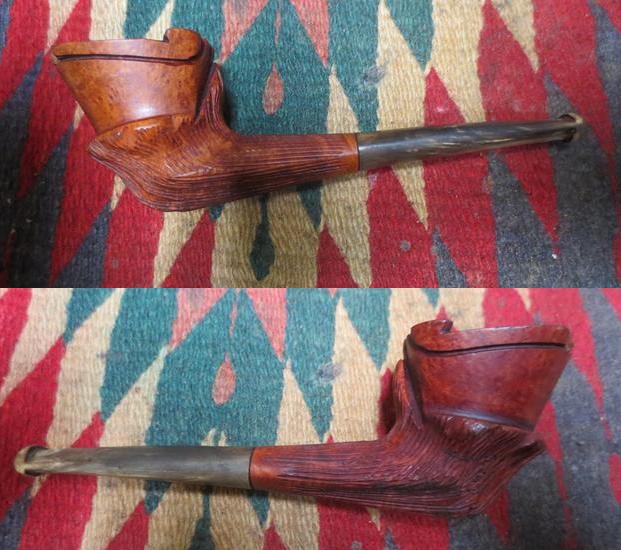
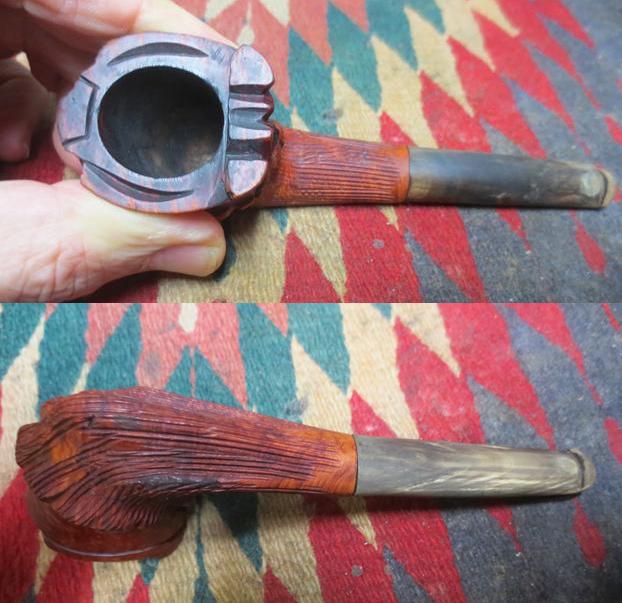
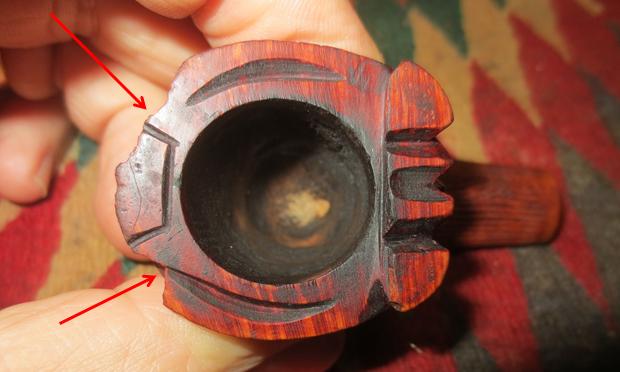
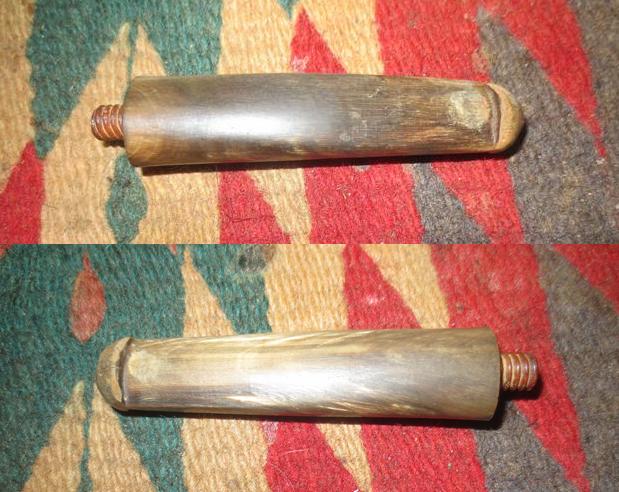
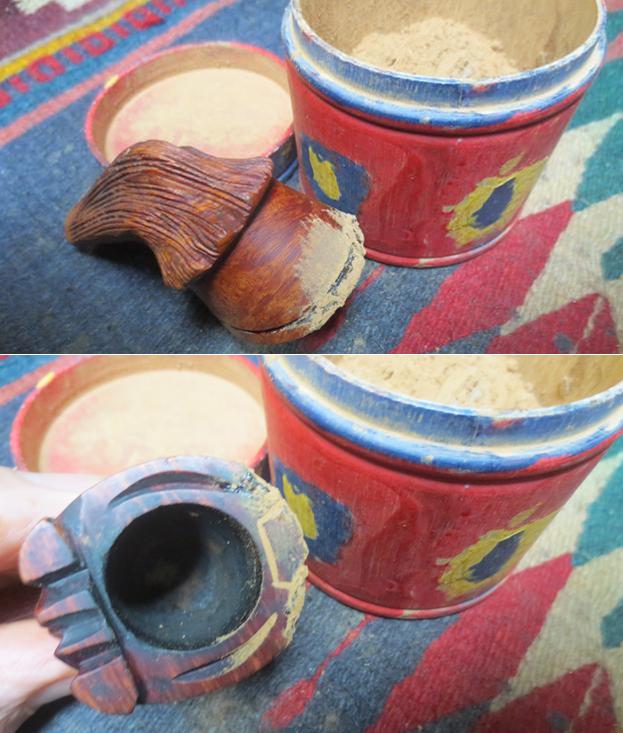
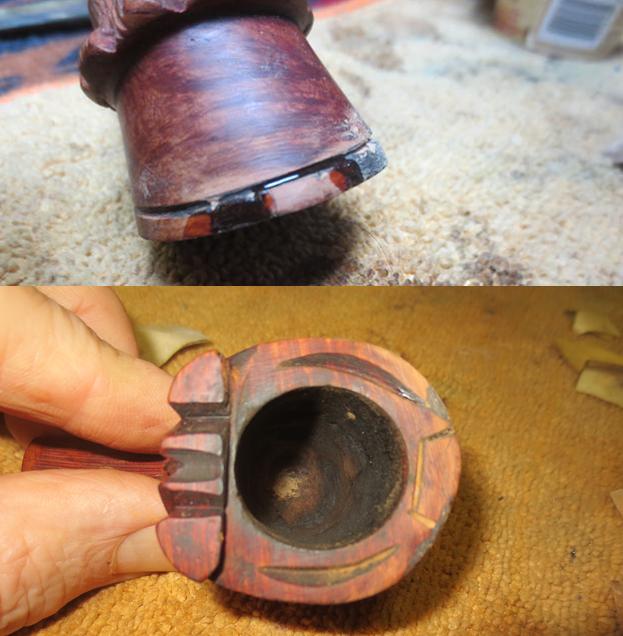
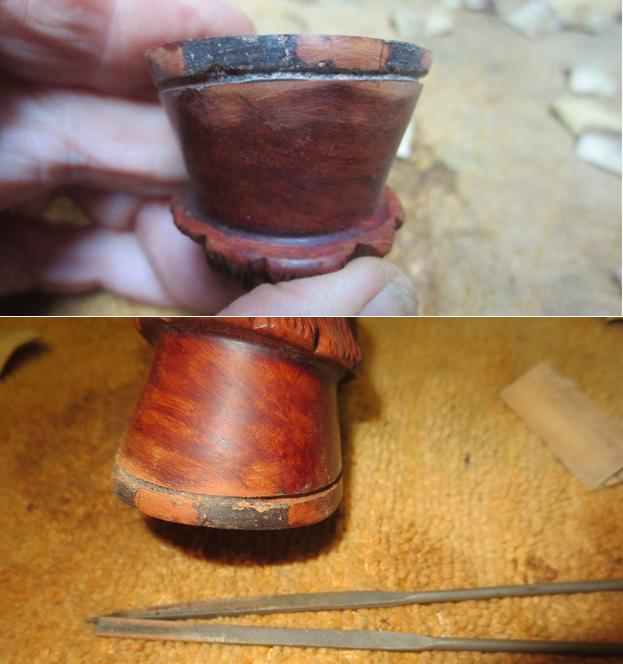
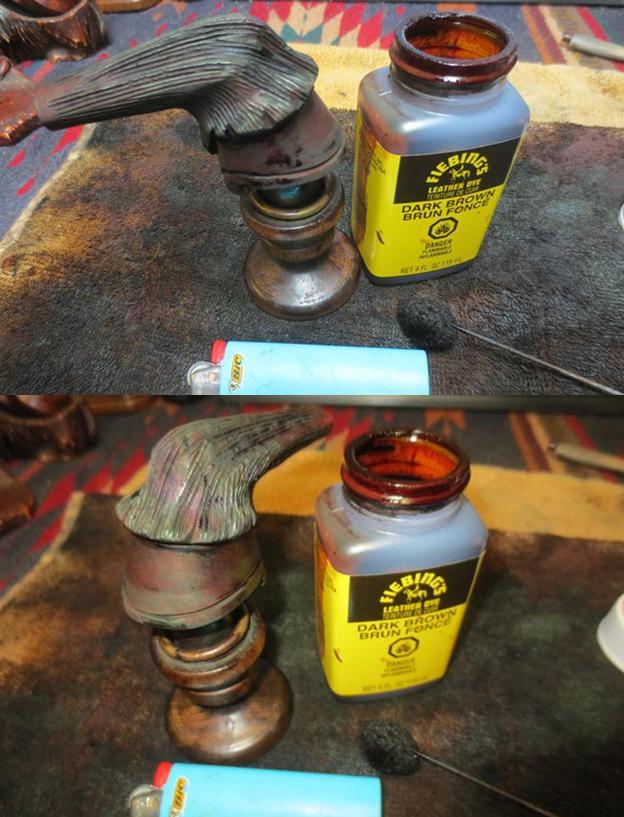
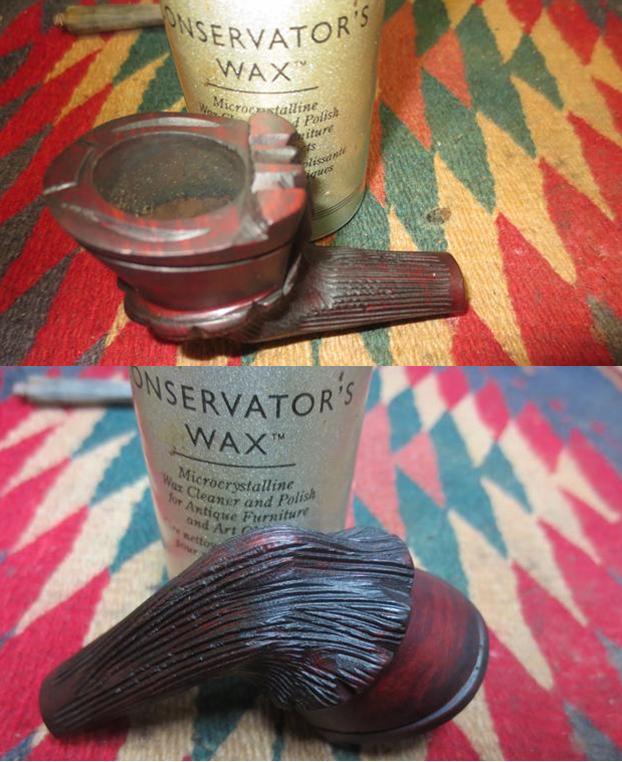
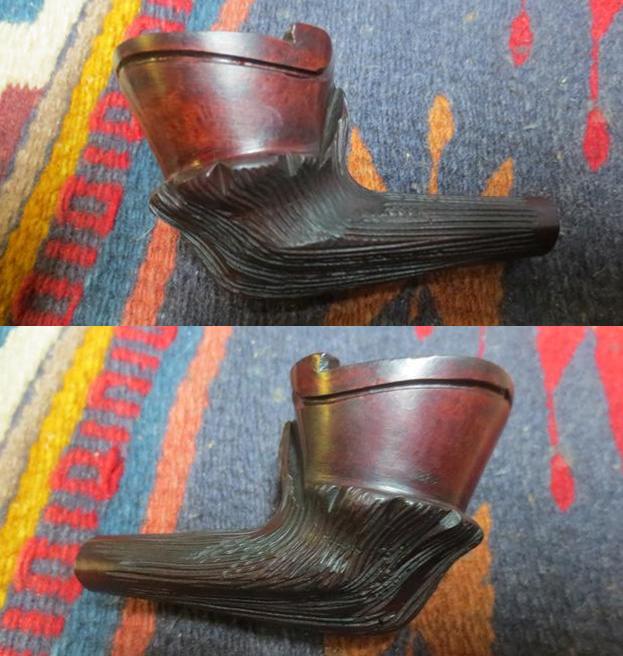
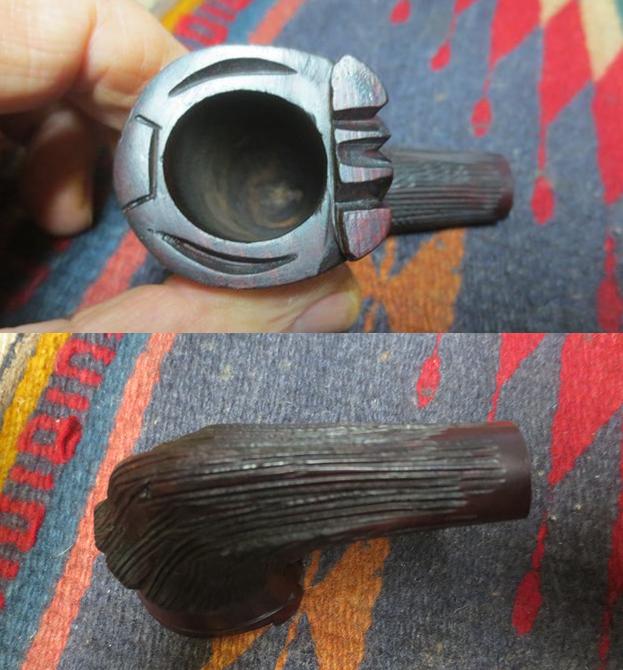
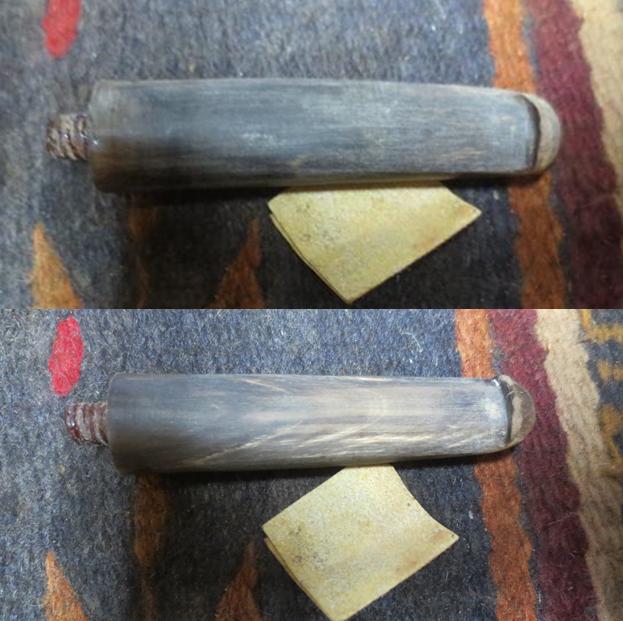
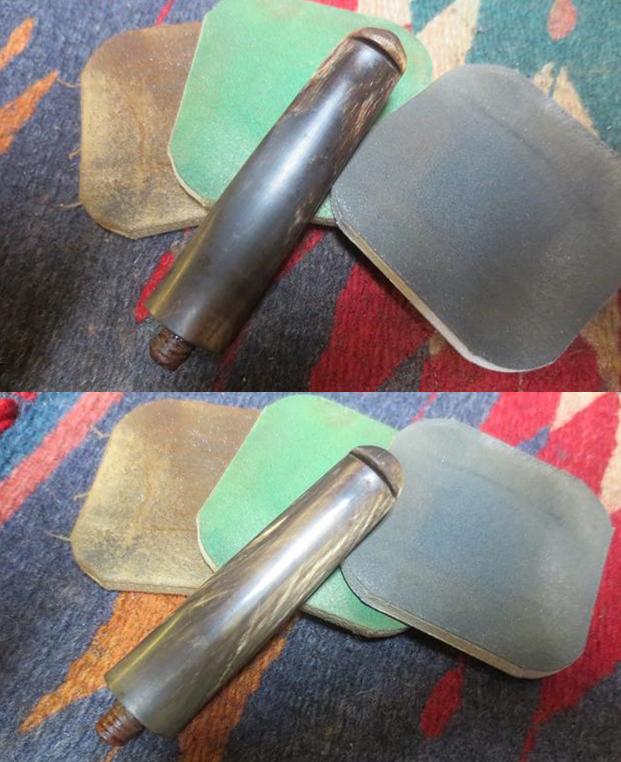
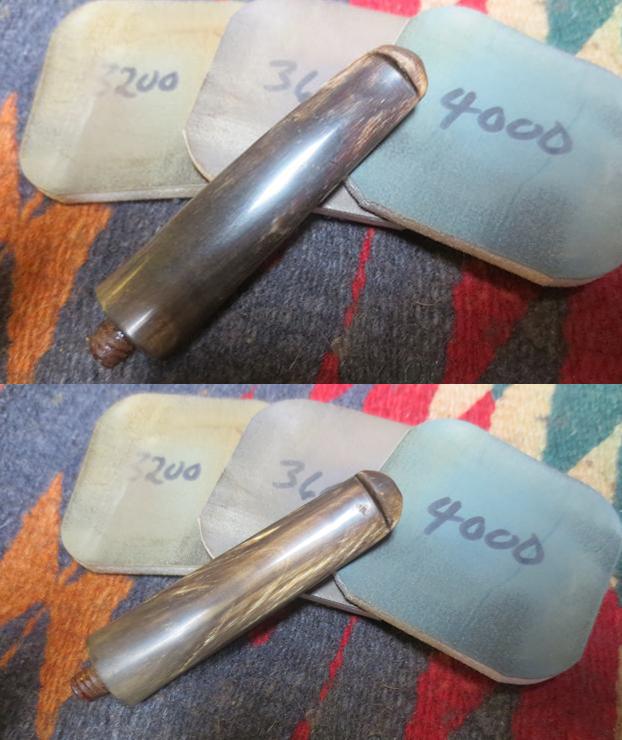
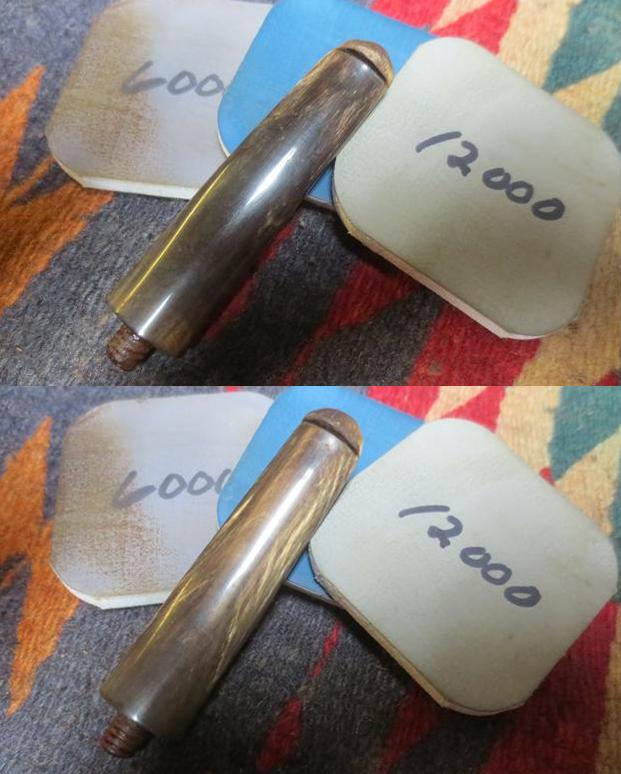
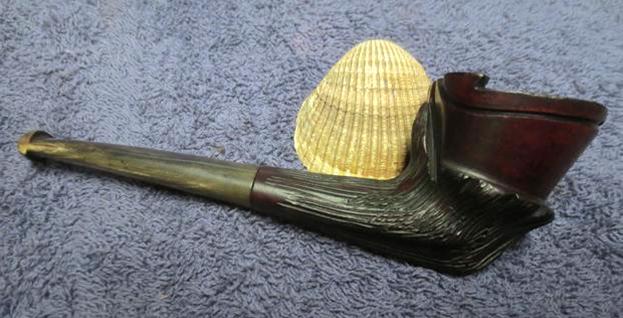
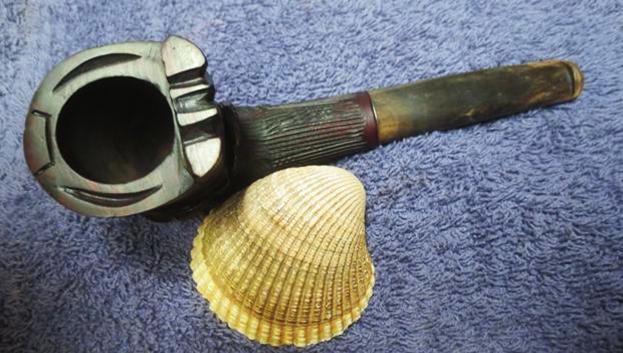
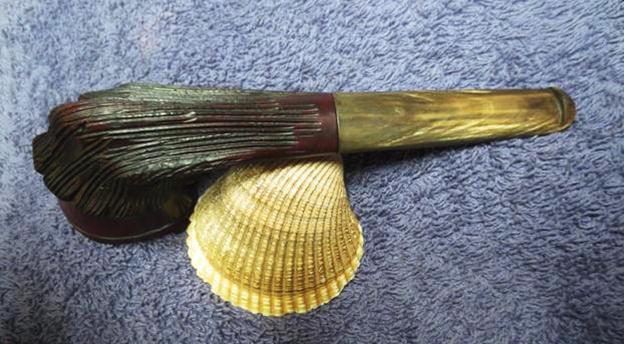
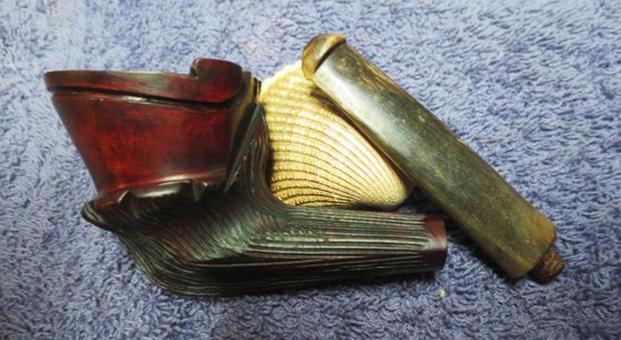
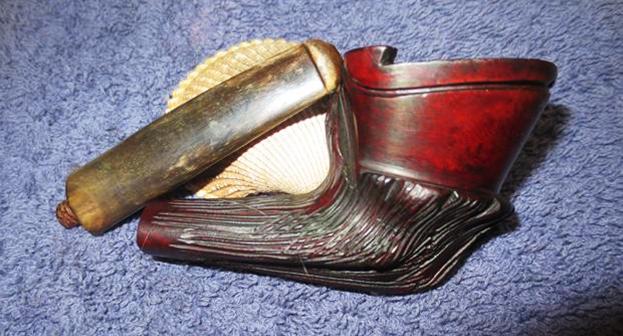
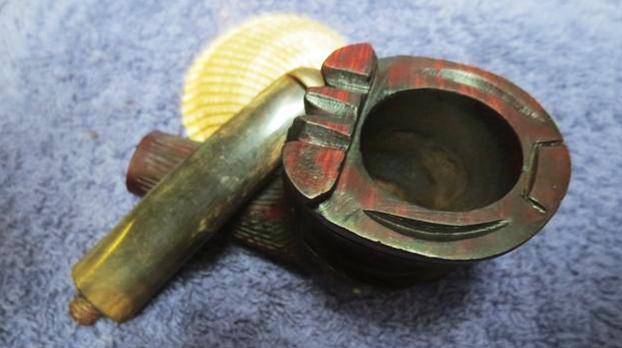
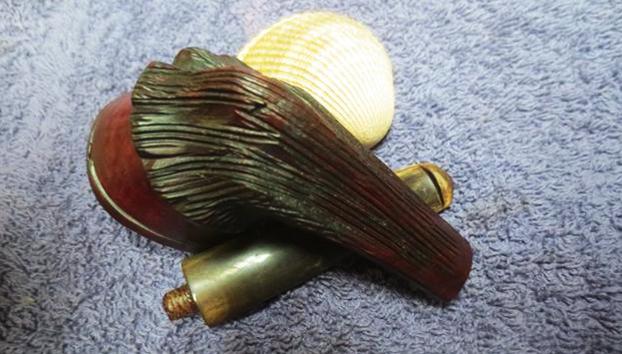
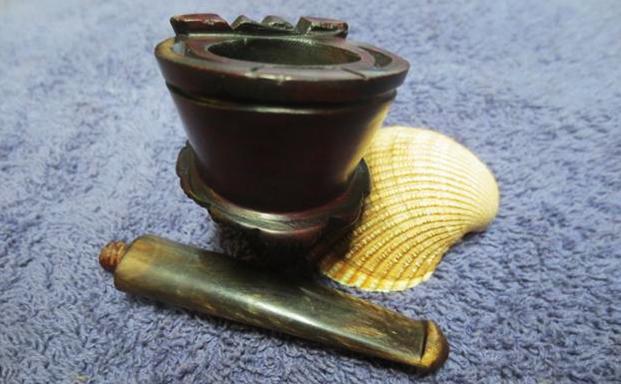
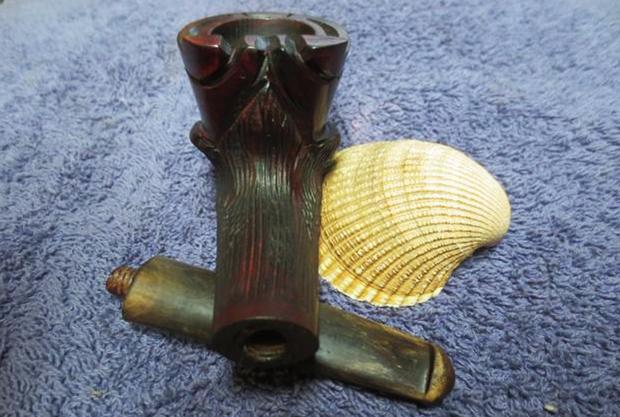
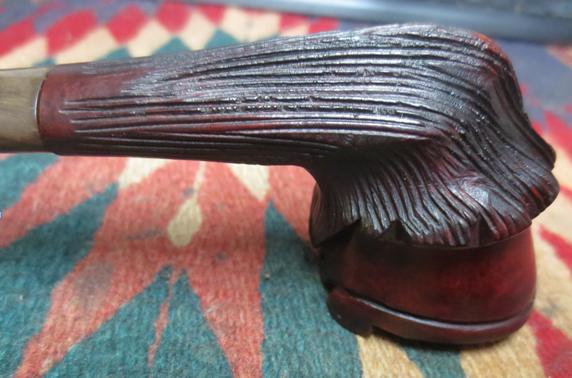
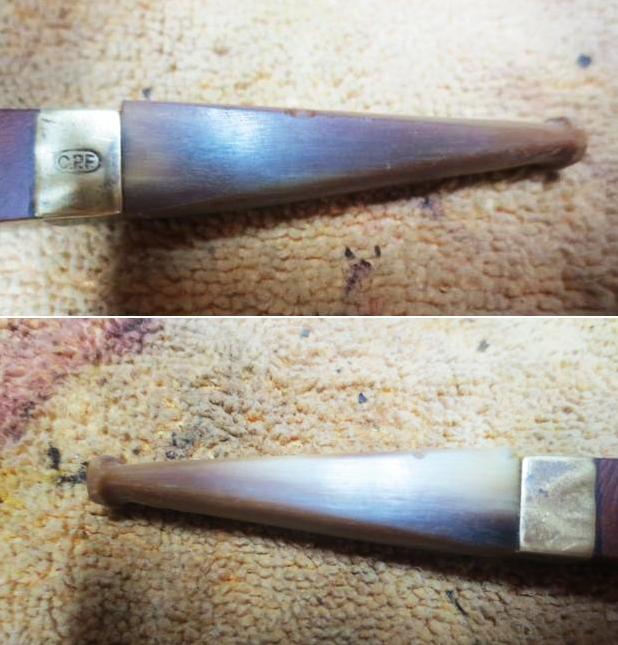
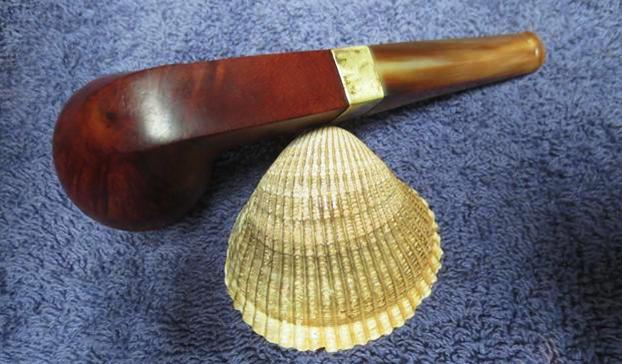
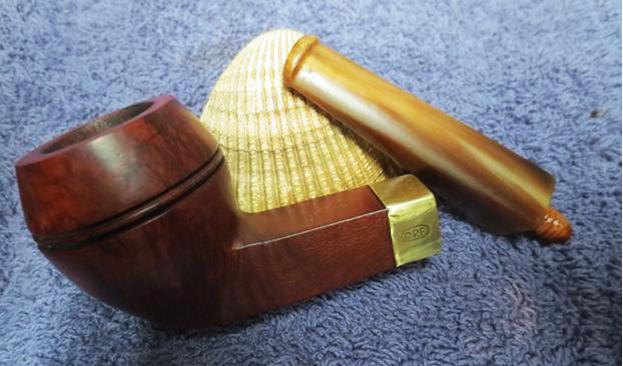
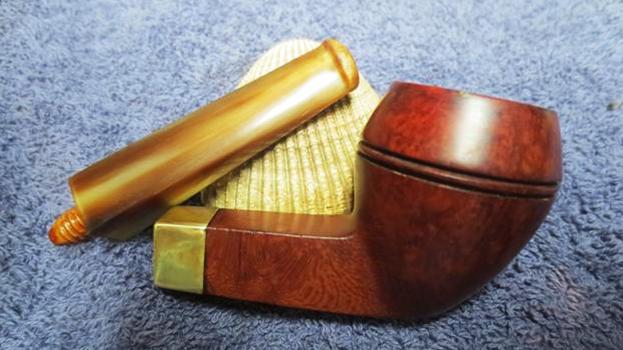
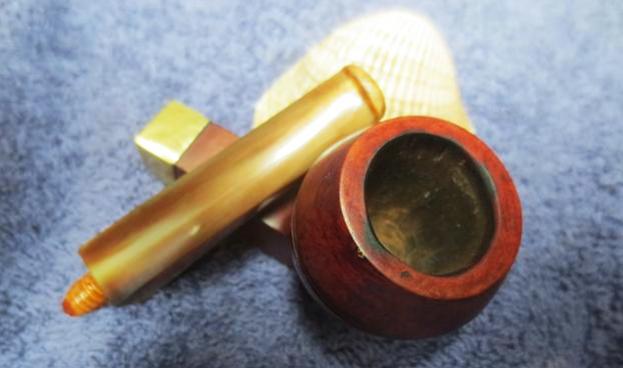
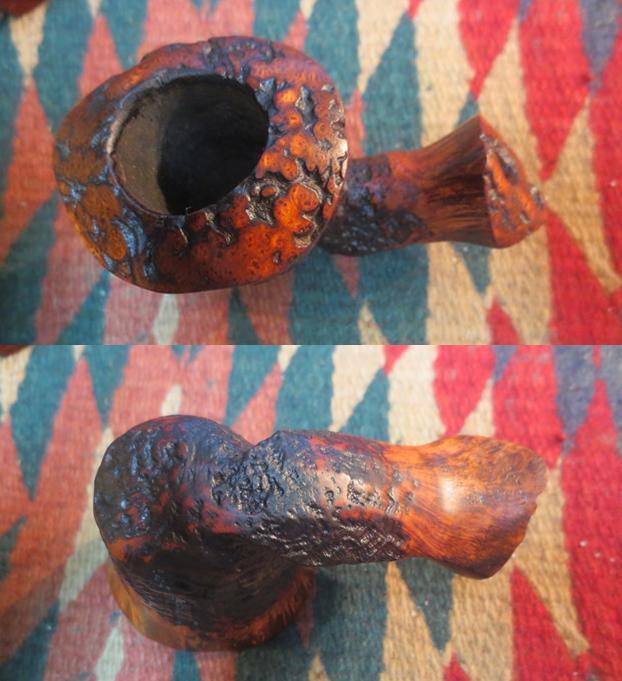
In the box of pipes I just received from my brother there was a pipe that just stood out as one that I would have some fun working on. It was a carved unique shaped piece with a horn stem. The bottom half of the bowl had lines carved into the briar that flowed from the front of the bowl to end of the shank. There was a smooth band around the stem shank union. The top half of the bowl was also smooth with some deep lines carved around the bowl just below the rim top. There were also deep grooves carved in the top of the rim working their way toward the back of the bowl to some deep carving. I was oblivious to the what the shape was until Satu commented below leading to an edit of the blog. The stem was horn and had some amazing stripes and striations in the horn. Jeff took photos of the pipe before he cleaned it. There were no identifying marks on the pipe that were visible to Jeff or to me in the photos. I would give it a more thorough examination once I had it in hand.The bowl had a thick cake that had overflowed onto the rim top. The lava was flaking and dirty. The grooves on the rim top were filled with dust and dirt as well as the lava. The outside front edge of the bowl was chipped and had large piece of briar missing as shown in the top view and front view of the bowl.Jeff took photos of the carved bowl from various angles to show the grain and condition of the pipe. There was something quite fascinating about the carving and the shape of the bowl. You can see the hoof shape in these side view photos. When Jeff removed the stem it looked as if someone had sprayed foam into the shank and then screwed the stem into the shank. It is not even clear if the airway is open or clogged at this point in the process. It was going to take some work to clean out the foam in the shank. It was a real mess that would be an interesting adventure to clean.The stem appeared to be in decent condition with some tooth chatter and light tooth marks on the stem and button on both sides. Jeff did his usual thorough clean up on this old pipe. He reamed it with a PipNet reamer and cleaned up the remnants with a Savinelli Fitsall pipe knife. He scrubbed out the airway in the shank and the stem with alcohol, cotton swabs and pipe cleaners. He scrubbed the exterior of the bowl and shank with a tooth brush and Murphy’s Oil Soap and rinsed it under running water. He dried it off with a soft cloth. The pipe was very light weight. It looks like briar and seems to have the grain of a piece of briar. The grain on the smooth portions really stands out. The carving on shank and the bottom part of the bowl is a series of tight lines that look like the shaggy hair of a horse’s foot coming down over the hoof. The smooth portion is the hoof itself. There are grooves around the bowl and the top of the bowl had some lines and carving in it with some ridges and swirls at the back of the bowl that capture the look of a horse shoe. There was some significant damage to the top and front of the bowl. He cleaned up the stem with the oil soap as well and the striations of the horn looked like swirls. There were tooth marks and tooth chatter on both sides of the stem. The threaded tenon was in great condition but the threads in the mortise were worn smooth. The stem was very loose in the shank and fell off when the pipe was moved. I spent time turning the pipe over to see if I could find any identifying stamping that would help me know who made it and when it was made. There was nothing there. It was an unstamped pipe by an unknown maker at an unspecified point in time. The next photo looking at the pipe from the top down shows the rough edges of the front of the bowl. There are major chunks of briar missing from the curves of the front of the bowl. It almost looked like bit marks were taken out of the front edges of the bowl. The arrows below point out the damaged areas. Now that Satu has identified the shape it is so clear – a horse shoe.The stem was dried out and the tooth chatter and marks are very visible in the surface of the stem at the button on both sides. The striations and marking on the horn stem is actually quite stunning and should polish up very nicely.I decided to build up the damaged areas on the top and front edge of the bowl with clear super glue and briar dust. The combination works well to shape into the curves of the damaged part of the rim. I layered in the glue and the briar dust until it was thick enough to work with. Once it was in place and had dried I shaped it with files and recut the groove on the front, sides and the top of the rim cap with needle files. I smoothed out the repairs with 220 grit sandpaper to blend it into the rest of the bowl. I polished the briar with micromesh sanding pads – wet sanding with 1500-2400 grit pads and dry sanding with 3200-12000 grit pads. I wiped the bowl down after each pad with a damp cotton pad to remove the sanding dust. When I had finished polishing the bowl I stained it with a dark brown aniline stain, flamed it and repeated the process to set the stain in the briar.Once the stain had dried I buffed it on the buffing wheel with Blue Diamond polish to remove the excess stain. I decided to leave it dark on the base and the shank. There would be some natural contrasts between the high spots and the grooves in the briar. I wanted to polish the top part of the bowl – the hoof portion – so that it was lighter than the lower portion of the pipe but matched what showed through. I gave it several coats of Conservator’s Wax and buffed it with a shoe brush to spread the wax all over the bowl evenly. I buffed it with a clean buffing wheel on the buffing to further raise the shine on the pipe bowl and highlight the contrast between the two parts of the bowl. With the bowl finished I turned my attention to the stem. To take care of the loose fit in the shank I painted the tenon threads with clear super glue to build it up to the point that it fit snugly in the shank. I sanded the stem surface with 220 grit sandpaper to smooth out the tooth chatter and the tooth marks. None of them were deep so it was an easy repair. I did not need to fill in the tooth marks so all that was needed was to sand it smooth.I polished the stem with micromesh sanding pads – wet sanding with 1500-2400 grit pads and dry sanding with 3200-12000 grit pads. I rubbed the stem down after each pad with Obsidian Oil and let it soak into the horn. Each successive pad made the stem take on a deeper and richer glow. After polishing the stem with the 12000 grit pad I gave it a final coat of oil and let it dry. I took photos of each side of the stem to show the variations in the colours and striation of the horn. It really is a beautiful piece of horn. I buffed the pipe bowl and stem independently with Blue Diamond on the buffing wheel to polish them both. I worked over the briar around the bowl with the Blue Diamond. I carefully gave the briar several coats of Conservator’s Wax, working it into the hard to reach spots. I buffed the waxed briar with a clean buffing pad to a raise a shine. I buffed the horn stem with Blue Diamond to bring the final shine coat to the horn. There is nothing like polished horn with the undulating colours and stripes in the grain of the surface. It really was looking beautiful. I gave the stem multiple coats of carnauba wax and buffed it with a clean buffing pad to raise the shine. I hand buffed bowl and stem with a microfibre cloth to deepen the shine. I put the stem in the shank and hand buffed it once more. The finished pipe is really quite nice. It is a beautiful piece of briar and the stem picked up a nice shine that brought it back to life. The repairs to the chipped areas on the front and top of the bowl have all but disappeared into the stain coat. The finished pipe is shown in the photos that follow. I am thinking the pipe is probably the same age as all the old C.P.F. pipes that I have been restoring. This is another unique one in the old pipe category. Thanks for putting up with my ongoing obsession with old pipes from another time. Thanks for looking.
ADDENDUM – As pointed out by Satu below this is indeed a horses hoof. The carving on the rim top is the horse shoe and the striated portions are the horses shaggy hair hanging down over the hoof. I took a picture with that orientation to show it more clearly. Thanks Satu. Now to go up and revise the blog.

HOrse1

Restoring a Wreck of a C.P.F. Rectangular Shank Bent Egg


Blog by Steve Laug

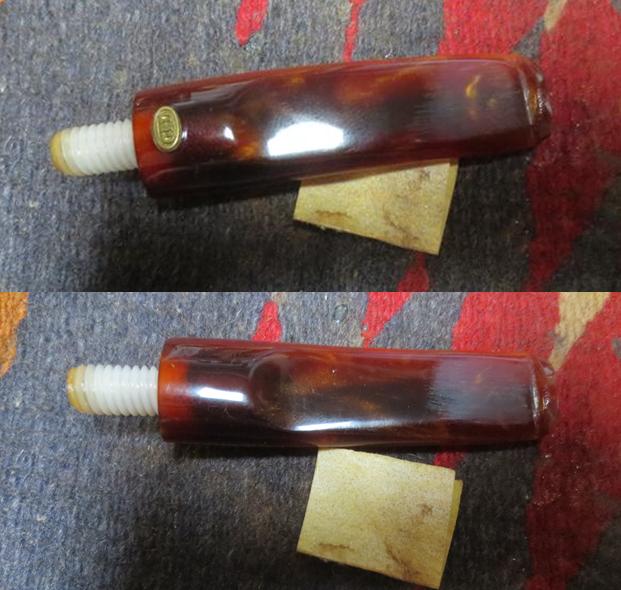
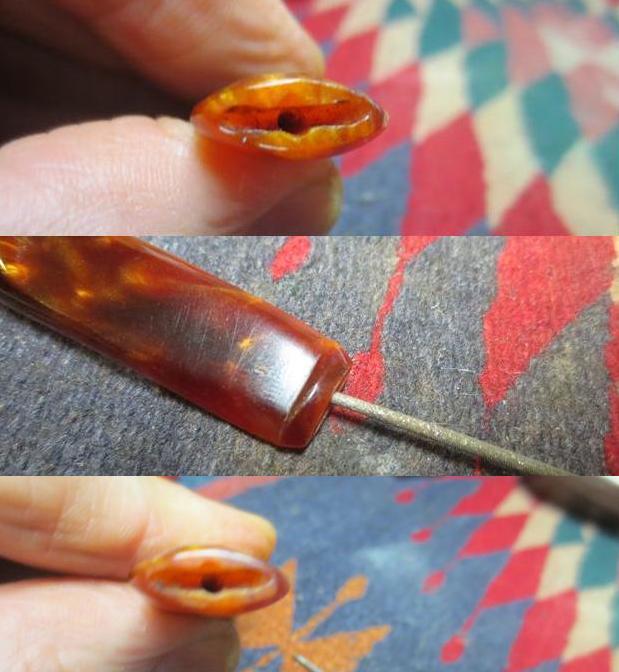
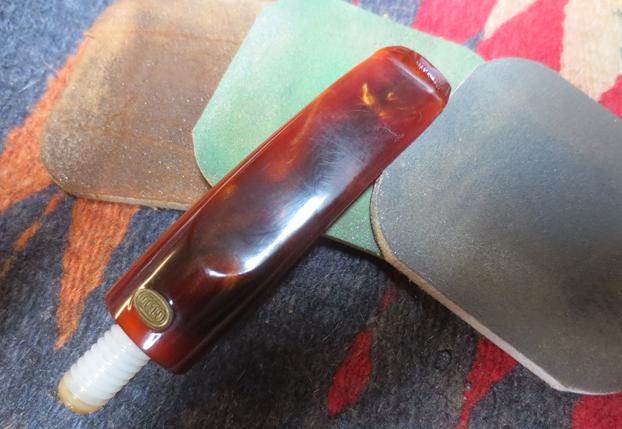
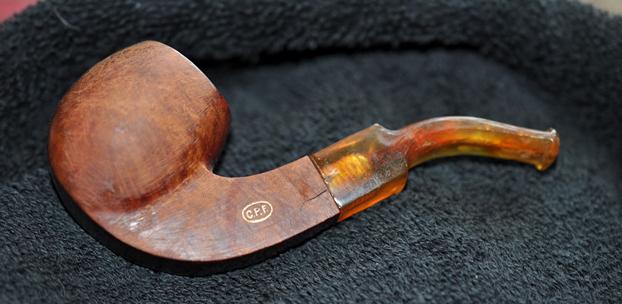
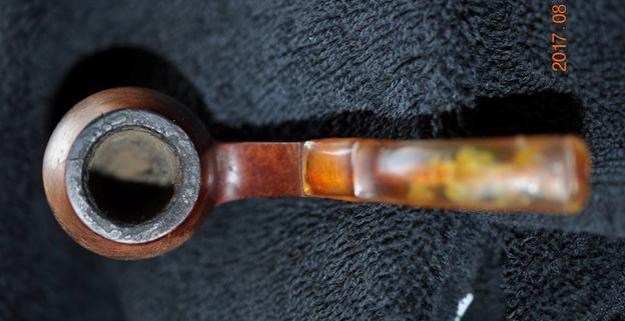
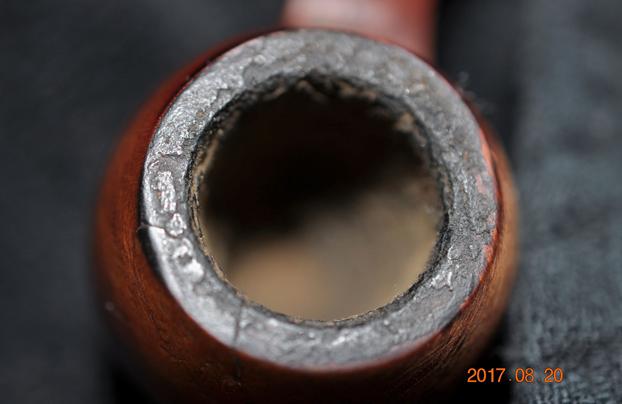
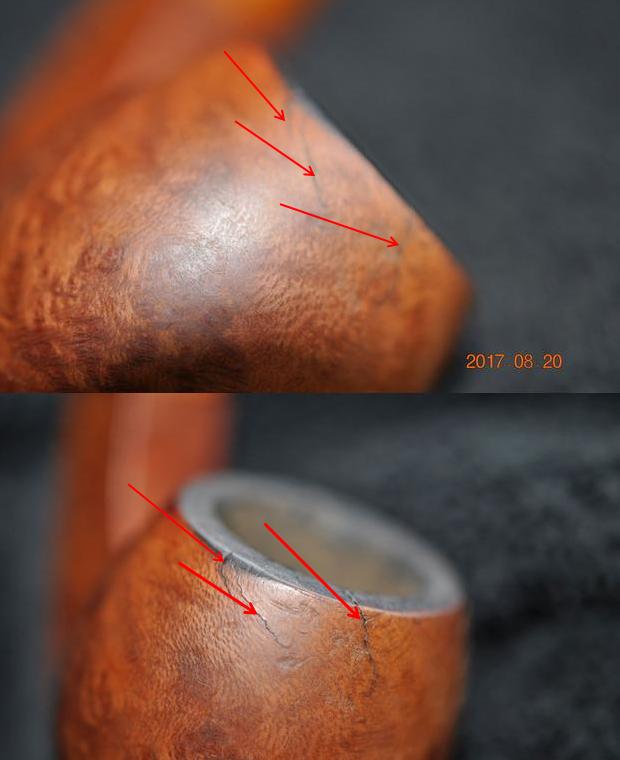
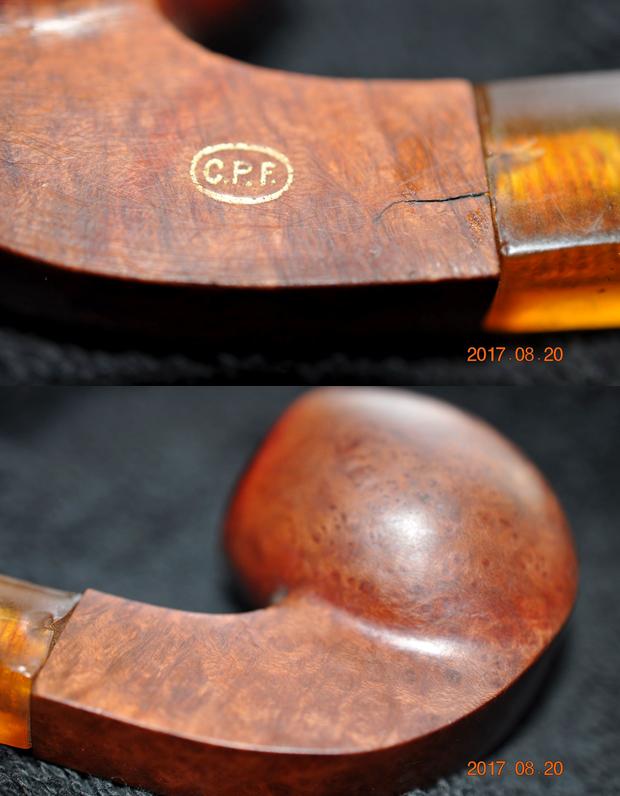
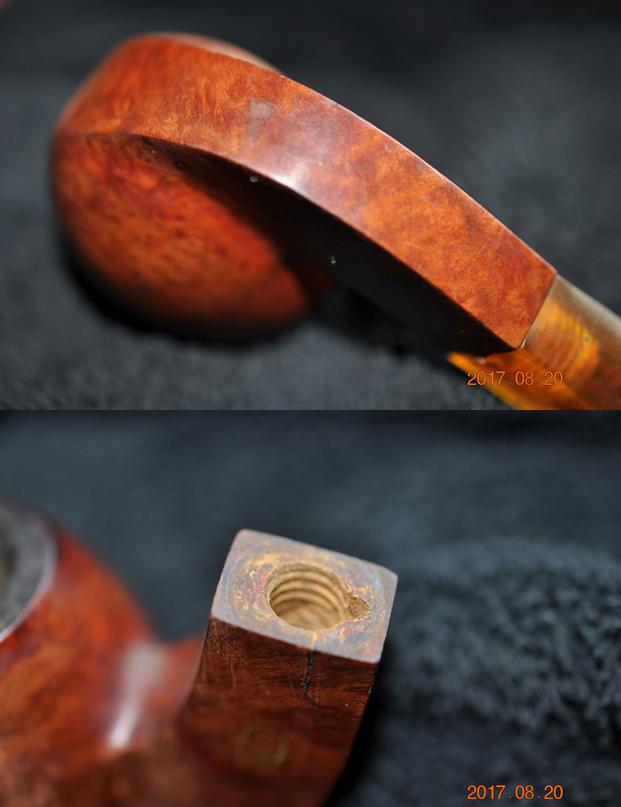
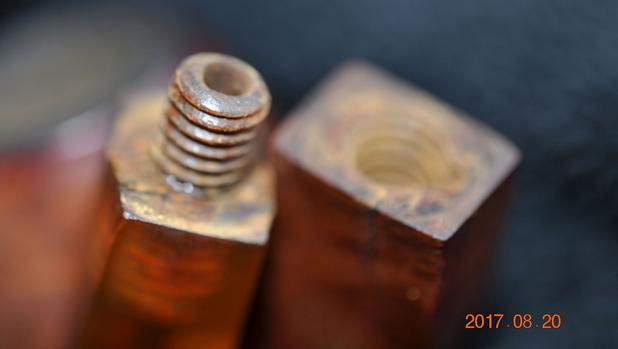
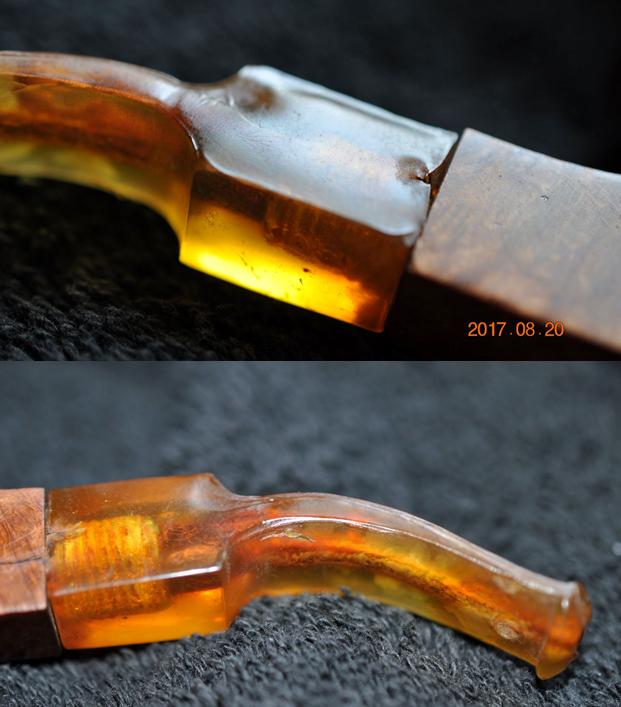
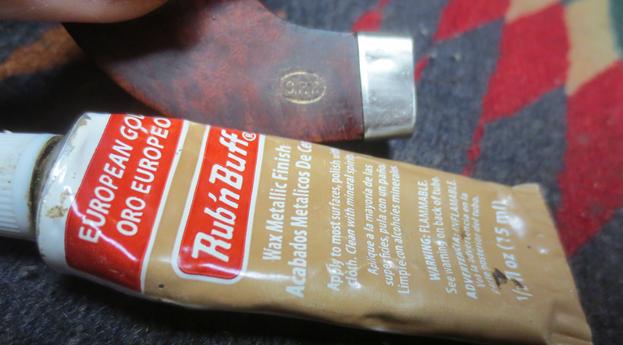
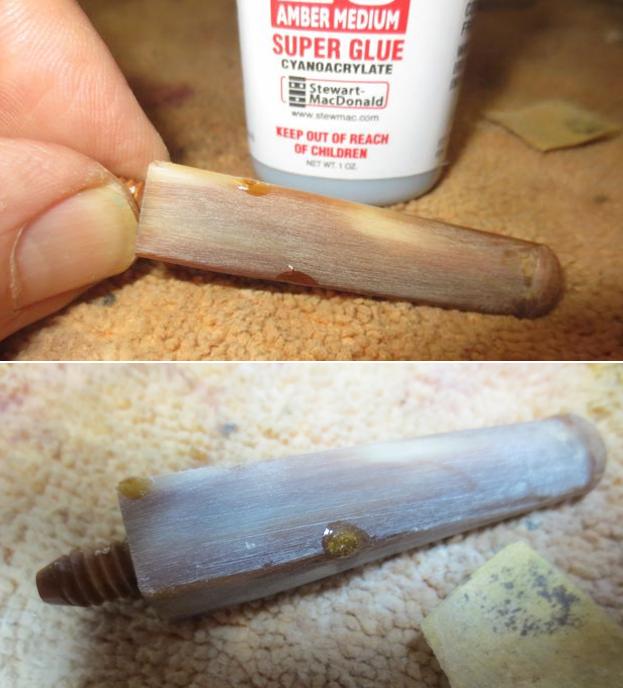
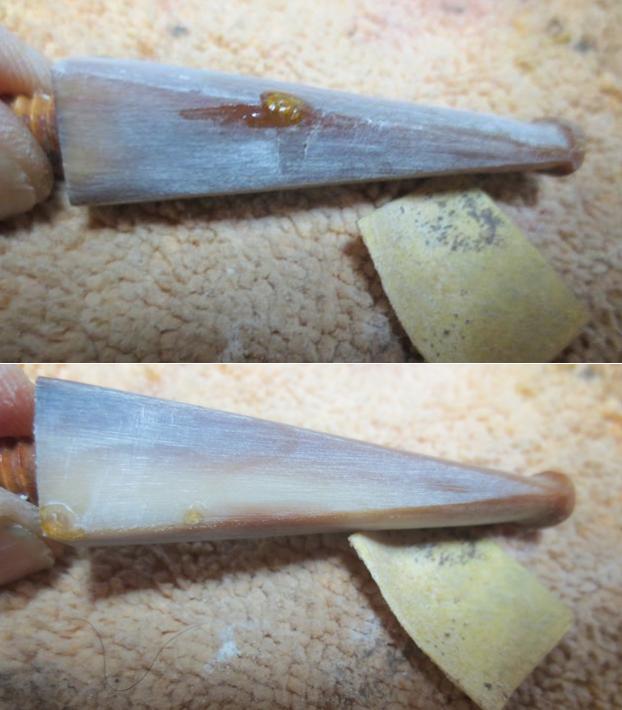
This poor old C.P.F. rectangular shank bent egg was in rough shape when it arrived in Vancouver. Not only was the tenon broken but the stem was in pretty damaged. There were tooth marks and chatter on the top and underside of the stem. The sides of the rectangular saddle portion of the stem were very damaged with deep casting marks and gouges. I think the stem is made of Bakelite but it was really a mess. Add to that the condition of the bowl – three cracks running down the front right side from the rim down and across the bowl, a cracked shank, no band, a scratched and damaged finish and you have a clear picture of the condition of the tired old pipe. There was a day when I would have retired this one and moved on to a different pipe but today it is a challenge worth taking and seeing what I can do with it. Jeff took various photos of the pipe to show what it looked like when he picked it up.The rim top was a mess. There was an overflow of lava that had hardened on the rim top. There was an average cake in the bowl that would need to go in order to repair the damaged areas. The inner edge of the rim was probably damaged though it was hard to tell at this point. There were to cracks on the right side of the rim toward the front of the bowl. I have included two photos to show the cracks in the same area from the rim down and across the bowl on the top right side. I have used red arrows to point them out in both photos.The crack in the shank is very obvious in the photo below. It was quite deep and had begun to separate. You can also see the damage to the stem at the stem/shank junction. But even with all of the damage there was still some charm to the briar. The grain was interesting – a combination of birdseye and cross grain all around the bowl. The flat bottom portion had nice cross grain that would stand out once the pipe was restained. The threads in the mortise were in excellent condition. The U-shaped divot at the bottom of the mortise shows how the airway was drilled into the bowl. The threads on the tenon looked good at this point. The next photos show the extensive damage to the sides of the saddle stem. It was rough. It almost looked as if someone had tried to pry it free from the shank rather than unscrewing it. There were some deep tooth marks and a lot of chatter on both sides of the stem in front of the button. Once again when the pipe arrived in Vancouver, I could see that Jeff had done his magic in cleaning and scrubbing it. He had reamed the bowl with a PipNet pipe reamer and a Savinelli Fitsall Pipe Knife. He cleaned up the rim and the exterior of the bowl with Murphy’s Oil Soap to remove the grime and debris on the briar itself. He had exercised care around the gold stamping on the left side of the shank. He had cleaned out the mortise and the airway in the shank and the stem with alcohol, cotton swabs and pipe cleaners. The stem damage was clearly visible and the gouges on the sides of the saddle stem stood out in clarity. There were some deep tooth marks on both sides of the stem at the button. When I brought the pipe to my work table I took some photos of it as I opened the case. It really was a beautiful old pipe. I took a photo of the rim top and bowl to show the issues there. The bowl was very clean. The rim top photo shows the cracks very clearly and the scars on the inside edge of the rim. The right side photo also shows the cracks.The stem has some beauty still, but the deep tooth marks would need a lot of work to bring them back to a smooth condition.This is where some of the issues show up. The tenon had broken when Jeff was cleaning it up. Fortunately it had not broken off in the shank or the stem so it was a clean repair. I would need to fit a new threaded tenon in the shank and stem. The gouges and nicks in the sides of the saddle are very clear in the next photos.Since the stem was such a mess and would take time to work on I started with it. I sanded the sides and top of the stem and filled in the damaged areas with amber super glue. In the next photos you can see the extent of the damage from the size of the glue repairs. I set the stem aside to dry and went for lunch with my wife and daughters. When I returned the repairs would have cured and I could continue. When I returned I used a needle file to smooth out the repaired areas and flatten out the sides of the saddle. I sanded the stem with 220 grit sandpaper to further blend in the repaired areas. I fit a new threaded tenon in the stem and set it in place. I sanded the stem more, to smooth things out. In the first photo below there looks like a crack runs along the middle of right side of the saddle. It was not a crack but a flaw in the stem material. There was still a lot of sanding to do before the stem was acceptable. I sanded the stem surfaces until they were smooth and the repairs were unnoticeable. It took quite a bit of sanding to achieve this. I polished the stem with micromesh sanding pads – wet sanding it with 1500-2400 grit pads and dry sanding it with 3200-12000 grit pads. I rubbed the stem down with Obsidian Oil after each pad to give traction to the next pad and also bring a little life to the Bakelite stem. With the work on the stem complete I set it aside and turned my attention to the issues with the bowl and shank. I decided to address the cracked shank first. I would need to fit a band on the shank. I did not have any brass bands so a nickel one would have to suffice. I used a needle file to work on the shank end to get it ready for the band. I started with the file and finished with the Dremel and sanding drum. Making a band that would fit took some work. I only had round bands so I needed to shape one that would work. I used a small nail hammer and the square edges of the needle file to make the round band rectangular. It was tedious but the finished band is shown in the photo below. I pressed it onto the shank of the pipe. It was still too large and if pressed all the way onto the shank would look awkward. I used the Dremel and sanding drum to cut the height of the band in half. It takes time and care to slowly grind the metal away. I used the topping board to smooth out the sharp edges of the band. I used an all-purpose glue to repair the crack and to anchor the band on the shank. I pressed the band in place on the shank. I took photos of the banded shank to remind myself of what it looked like at this point in the process. I still needed to polish the metal but it was looking better. The bowl still had remnants of the old varnish coat in the angles and on the shank bottom. I wiped it down with acetone on a cotton pad to remove the rest of the finish in preparation for the repairs that I needed to do on the cracks. I topped the bowl to remove the damaged areas on the rim top and to clean up the inner edge damage.I marked the ends of the cracks with a black Sharpie pen and drill the spots with a microdrill bit on my Dremel. I put these pin holes at the end of each crack to stop it from spreading further. I filled in the drill holes with clear super glue and smeared the glue over the cracks themselves. When the repairs dried I sanded them smooth with 220 grit sandpaper to blend into the surface of the briar. I also sanded the inner edge of the rim to minimize the damage there. With the repairs completed it was time to stain the bowl and blend them into the rest of the briar. For me the staining process on this pipe would be done in several steps. I stained the bowl with a dark brown aniline stain, flamed it and repeated the process to ensure an even coverage over the bowl. I wiped the bowl down with alcohol on cotton pads to make the stain more transparent. I sanded the bowl down with 1500-4000 grit micromesh sanding pads to make the grain more transparent and polish it in preparation for the next contrast coat of stain. I wiped it down with alcohol once more and then gave it a coat of Danish Oil Cherry stain for the top coat. I really like the way it brings out the reds in the grain of the briar. I touched up the gold stamping with Rub’n Buff European Gold. I rubbed it on and off leaving it in the light C.P.F. oval logo. It is faint in some places but it is readable. I gave the bowl several coats of Conservator’s Wax and buffed it with a microfiber cloth. The photos below show the renewed stamping and the waxed finish on the bowl. I used the Savinelli Fitsall Pipe Knife to clean up the remnant of the cake on the wall that is shown in the above photos. I buffed the pipe bowl and stem independently with Blue Diamond on the buffing wheel to polish them both. I worked over the briar around the bowl with the Blue Diamond. I carefully gave the briar several coats of carnauba wax and then Conservator’s Wax in the hard to reach spots. I buffed the waxed briar with a clean buffing pad to a raise a shine. I gently buffed the stem with Blue Diamond so as not to melt it or cause damage. I gave the stem multiple coats of carnauba wax and buffed it with a clean buffing pad to raise the shine. I hand buffed bowl and stem with a microfibre cloth to deepen the shine. I put the stem in the shank and hand buffed it once more. I am quite happy with the finished pipe. It is a beautiful piece of briar and the stem picked up a nice shine that brought it back to life. The damage on the stem is almost invisible now and the amberlike Bakelite looks translucent. The repairs to the cracks in the briar on the side of the bowl and the shank have disappeared into the contrast stain. The nickel band works alright with the finished look of the pipe and takes care of the shank damage. The finished pipe is shown in the photos that follow. Thanks for putting up with my passion for these old C.P.F. pipes from another time. Thanks for looking.
 

Cleaning up another CPF – this time it is a square shank Bulldog Setter


Blog by Steve Laug

If you have been reading rebornpipes for long, you will have figured out that I really like older C.P.F. pipes (Colossal Pipe Factory). I have quite a few of them in my collection and really like them. The history is an intriguing and enjoyable part of the brand for me. The artisanship and design of these pipes captures my appreciation and admiration. The shapes are always unique; even in the same line the shapes vary from pipe to pipe. The creativity and inventiveness of the smoking delivery systems of their pipes are always a pleasure to study. The variations of Bakelite bases and stems with briar bowls, briar bowls with Bakelite stems, briar bowls with horn and with vulcanite stems. The names the company gave their pipes always has me wondering where they came from. Sometimes they seem to be humorous like the Siamese conjoined stem pipe I just finished and sometimes descriptive like this one – the square shank, horn stem Setter. The pipe came from Jeff in a box he shipped to me just before he left for his European adventure. The box arrived last evening. I was like a kid on Christmas morning. No matter how many boxes he sends my reaction is always the same. There were two C.P.F. pipes that immediately caught my attention. Jeff had shown me these two on FaceTime before he left so I was awaiting their arrival. When he was cleaning them both he somehow switched the stems in a hurry and in the process broke the tenon off the wrong stem in the shank of this pipe. Both pipes had a bone tenon so it is easy to understand what happened. He had put both pipes in individual bags in the box. When I saw this one, I decided it was the next one I wanted to work on.The pipe is a bulldog with a square shank and square tapered horn stem. It has twin rings around the top of the bowl. The shank had a gold coloured ferrule on it with the end turned over to cover the exposed end of the shank. On the left side of the ferrule, it was stamped with the C.P.F. oval logo. There was no other stamping on the metal ferrule. The bowl had a thick cake that lightly overflowed like lava over the top of the rim. The inner edge of the rim shows a lot of damage from what looks like reaming with a knife. The outer edge showed some nicks on the right side and a few on the left front. Jeff took some photos from different angles showing the condition of the bowl. It was a beauty. The grain was quite nice and the twin rings around the rim were in excellent condition with no chips. On the top of the shank there was faint gold lettering reading Setter in a Germanic script that I have come to expect on C.P.F. pipes from this era of the late 1890s to early 1900s. The finish was worn and dirty as expected on a pipe of this age. The two photos that follow that are different views of the shank and the ferrule. The ferrule appeared to have slipped off during its life and there was a dark space just in front of it showing its original position on the shank. The diameter of the stem was larger than the diameter of the shank so it looked a little awkward making me wonder if it was not a replacement horn stem. If not it was poorly fitted and would need to be properly fitted to the shank. There were issues with the stem that might lessen with reshaping but they were present and can be seen in the photos below. These included deep nicks on the edges of the square stem – a chip at the right corner near the shank, a nick on the right side about a ½ inch from the shank end, and another on the left side that looked like a wormhole.The threads in the shank were evidently worn and someone had wrapped the bone tenon in scotch tape to facilitate a tight fit. I have seen this done often so it is not a surprise but it also makes me wonder if the stem is not a replacement. I won’t know until I check out the threads in the mortise when it arrives.The button showed some wear and tear and there was light tooth chatter on both sides of the stem. Fortunately it appeared that there were no deep tooth marks present.Jeff did a lot of cleaning and scrubbing on the pipe before he sent it to me. He reamed the bowl with a PipNet pipe reamer and a Savinelli Fitsall Pipe Knife. He cleaned up the rim and the exterior of the bowl with Murphy’s Oil Soap and removed the grime and debris of the years. He had cleaned out the mortise and the airway in the shank and the stem with alcohol, cotton swabs and pipe cleaners. The bone tenon on the stem was in good condition. The stem damage was clearly visible and the nicks and marks stood out in clarity. I drilled out the broken tenon in the shank of the pipe so that I could put it back together and check out the fit of the stem to the shank. Over the years I have developed my own method of drilling out a broken, threaded tenon. It may be different from the one that you use but it works for me. I followed that procedure on this pipe. I set up a cordless drill on my worktable and put a drill bit a little larger than the airway in the broken tenon. I slowly twisted the stummel onto the drill bit. I wanted it to grab onto the tenon and allow me to either twist it free or break it enough that I can remove it without damaging the threads in the mortis. I repeated this several times until the broken tenon came out on the bit. I blew the dust out of the shank. The pipe was now ready for me to work on.I checked out the threads in the mortise and they were slightly worn but not too severely damaged. They would easily be renewed for a better fit. I screwed the stem on the shank and took the following photos of the pipe before I started my work. These photos are kind of a benchmark for me to compare the finished pipe with the original shown in the photos. Note the fact that the stem is larger in diameter than the shank as noted above. It is the right shape but it sits above and below the top of the ferrule on the shank. The fit on the sides of the shank is perfect. That kind of fit makes me think that perhaps this was a replacement stem. The shape was correct but the fit was off. I have worked on enough C.P.F. pipes to know that they do not send them out of the factory with this kind of sloppy fit. Jeff had managed to clean up the rim quite well. The bowl was clean and the inner edge damage was clear.The next photos show the nicks and worm hole in the stem. These would need to be repaired. The side view photos show the fit of the stem against the shank. You can see from the photo that the top of the stem is significantly higher than the top of the ferrule and shank. I decided to address the nicks and worm hole first. I was not sure how much of the repair would be left once I reshaped the stem but I figured I might as well start with smoothing those out before I started shaping. I sanded the stem to smooth out the tooth chatter and the edges of the damaged areas first. I wanted to see if I had any filling to do around the button before I repaired the damaged areas. Fortunately there were no deep marks at the button. I filled the nicks and hole in with amber super glue. The photos below show the stem repairs from different angles. Note that the damage was on the top and side mid stem on the left and toward the front on the right. Once the glue dried I used a needle file to smooth out the repairs and blend them into the surface of the stem. I sanded the stem with 220 grit sandpaper to further blend them in. I used the Dremel and sanding drum to reduce the height of the stem on the top and bottom at the shank as well as adjust the width on both sides. Once I had it close I sanded it more with the 220 grit sandpaper. I painted the thread on the bone tenon with clear fingernail polish and let it dry. Once it was dry I screwed it into the shank and it was a snug fit. You can see in the photos below that the fit to the shank in terms of height and width is getting much closer. I sanded the stem until I was happy with the transition between the stem sides and the ferrule. I wanted it to be smooth. It took a lot of sanding to get it to the place where I was happy with the flow. I was happy to see that the sanding removed much of the repaired areas from the stem. The right side repairs are virtually invisible and on the left side it was quite small. Once it was there I polished the stem with micromesh sanding pads. I wet sanded with 1500-2400 grit pads and dry sanded with 3200-12000 grit pads. I wiped the stem down with Obsidian Oil after each pad. I polished the stem with Fine and Extra Fine Before & After Pipe Polish to further remove the scratches. I buffed the stem with Blue Diamond on the buffing wheel. I set the stem aside and turned my attention to the damaged rim and edges of the bowl. I lightly topped the bowl to remove the damage on the surface and the outer edges of the rim. I used a folded piece of 220 grit sandpaper to reshape the inner edge of the rim and bring it back close to round. I wiped down the surface of the bowl with alcohol on cotton pads and then put a drop of clear super glue in the damaged spot on the right side edge of the rim and bowl. When the glue dried I sanded it smooth with 220 grit sandpaper and polished it with 1500-4000 grit micromesh sanding pads. I used a dark brown stain pen to blend the repaired area on the side of the rim cap and the top of the rim into the existing colour of the pipe. It did not take much work to get a good match. I tried to add Rub’n Buff European Gold to the stamping on the shank top but the stamping was not deep enough to hold the repairs. I buffed the pipe with Blue Diamond on the buffing wheel to polish the briar and the stem. I gave the entire pipe multiple coats of carnauba wax and buffed it with a clean buffing pad to raise the shine. I hand buffed it with a microfibre cloth to deepen the shine. I am quite happy with the finished pipe. It looks far better than it did when I started the restoration. The fit of the stem to the shank and the overall look of the bowl is better. The small burn mark on the right side of the rim top is a beauty mark of the past life of the pipe. The rim and bowl look very good. The finished pipe is shown in the photos that follow. Thanks for looking and enduring my obsession with these older C.P.F. pipes.