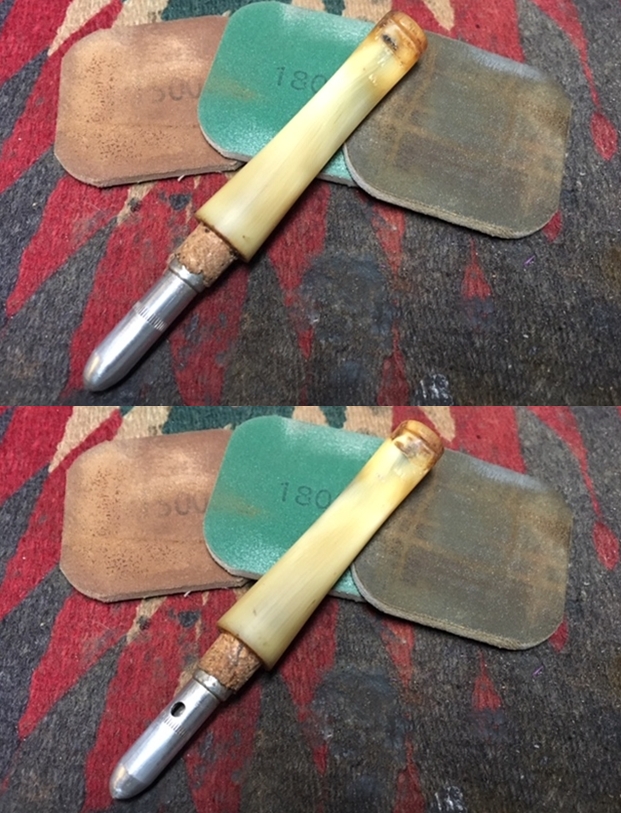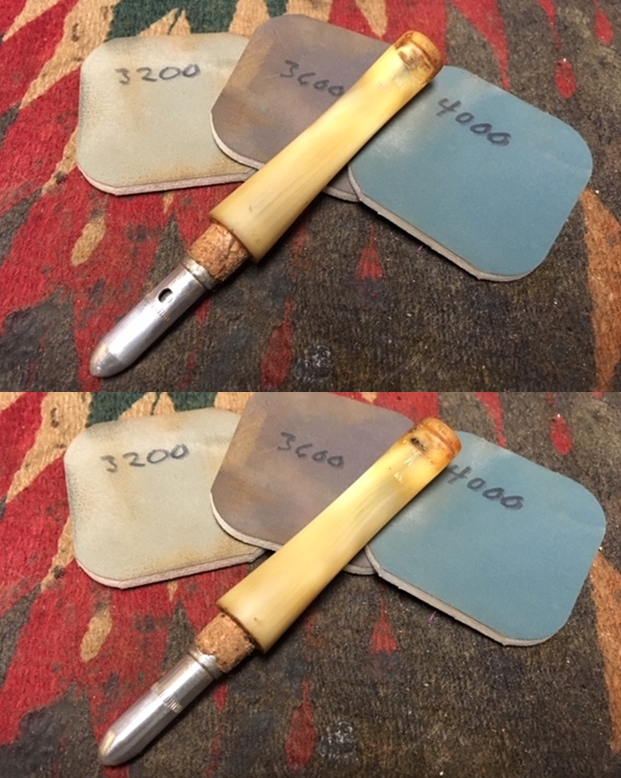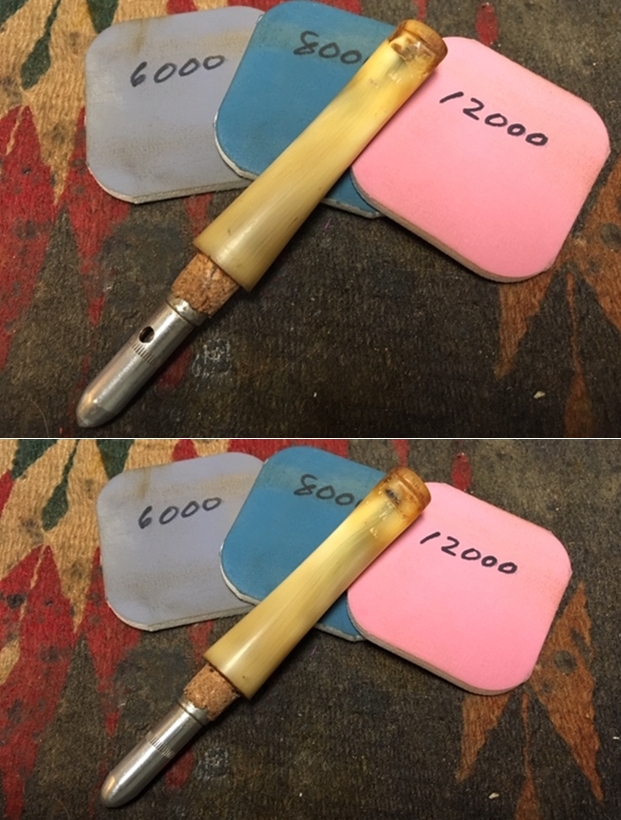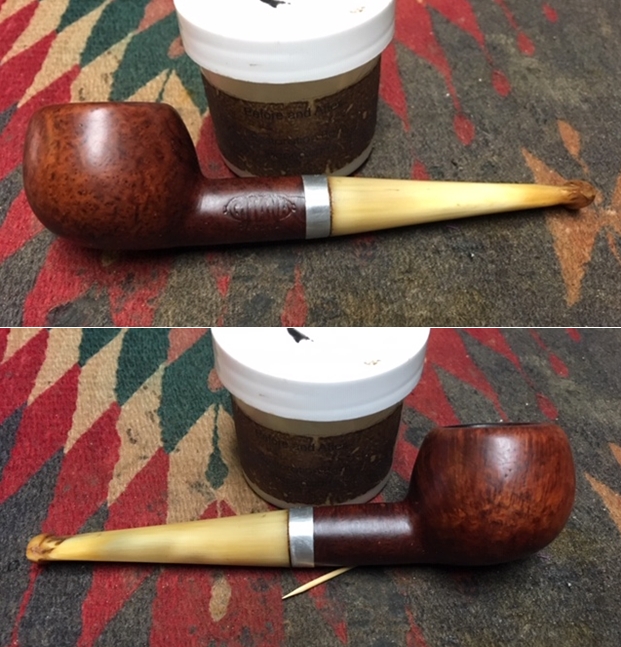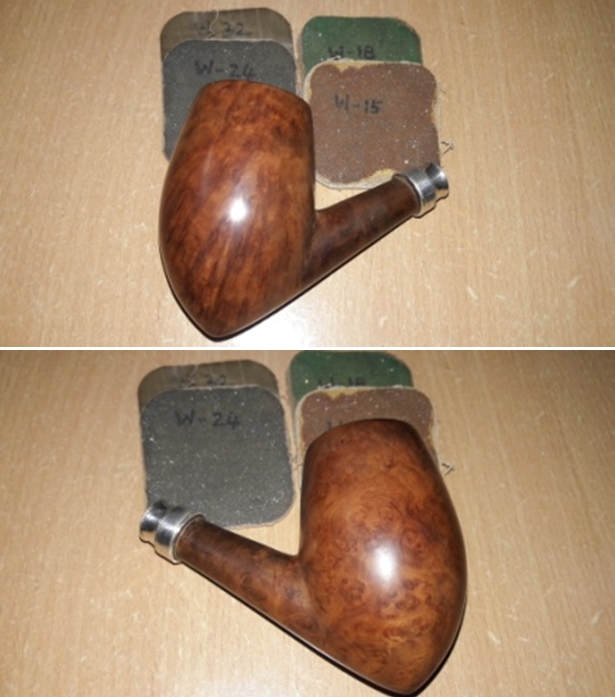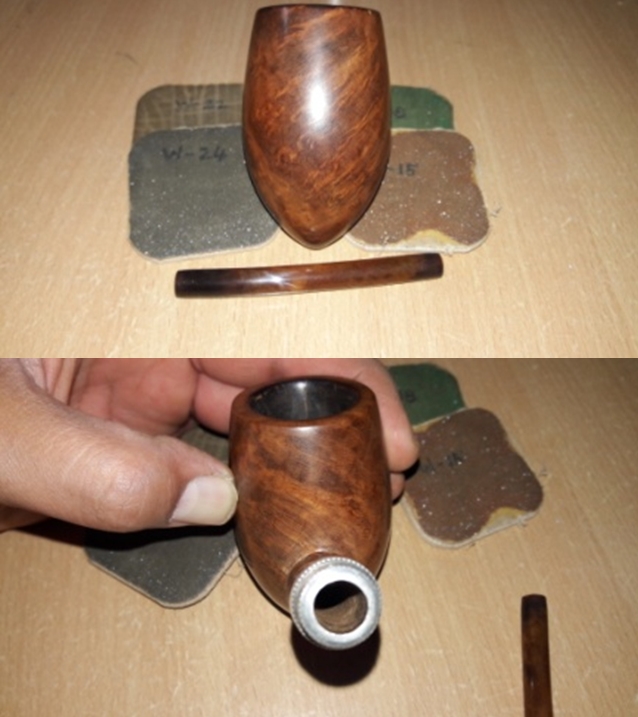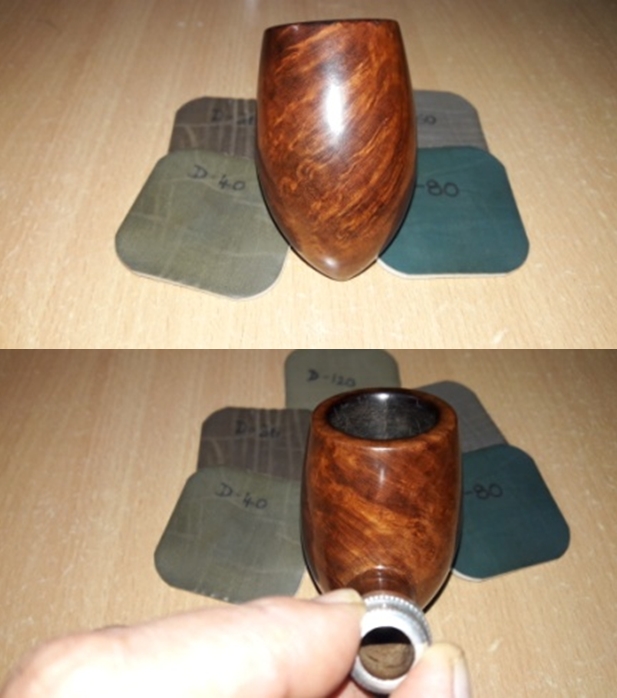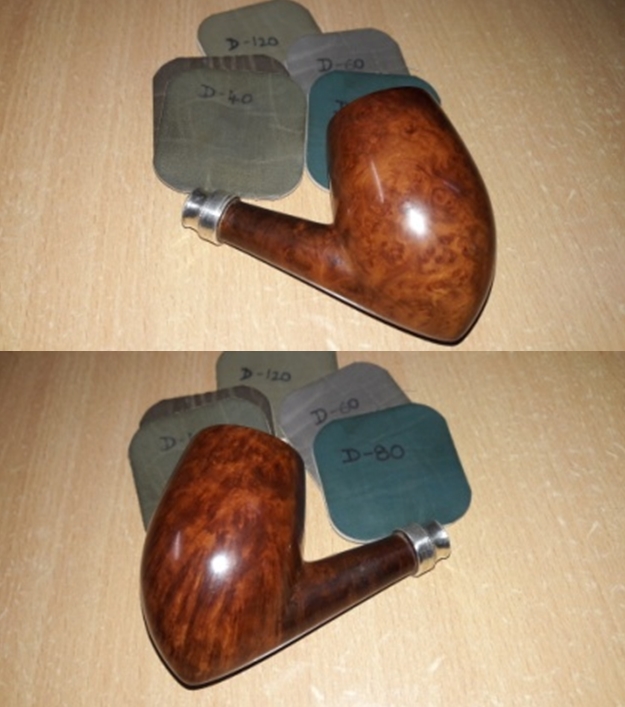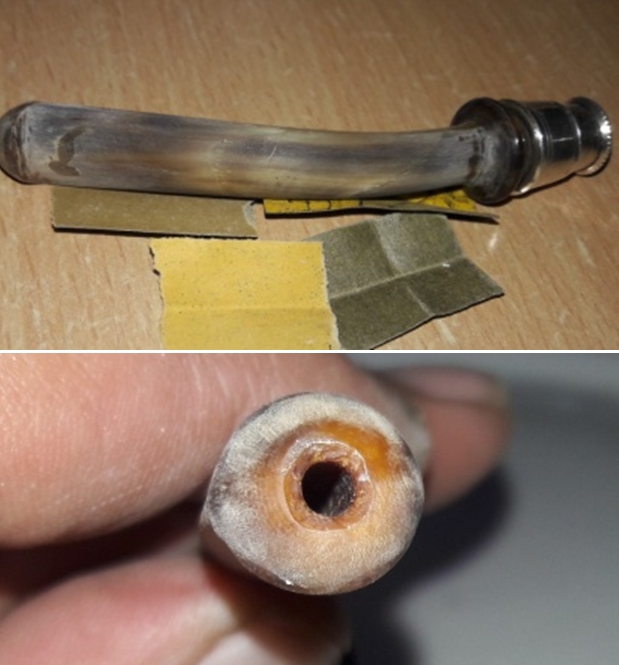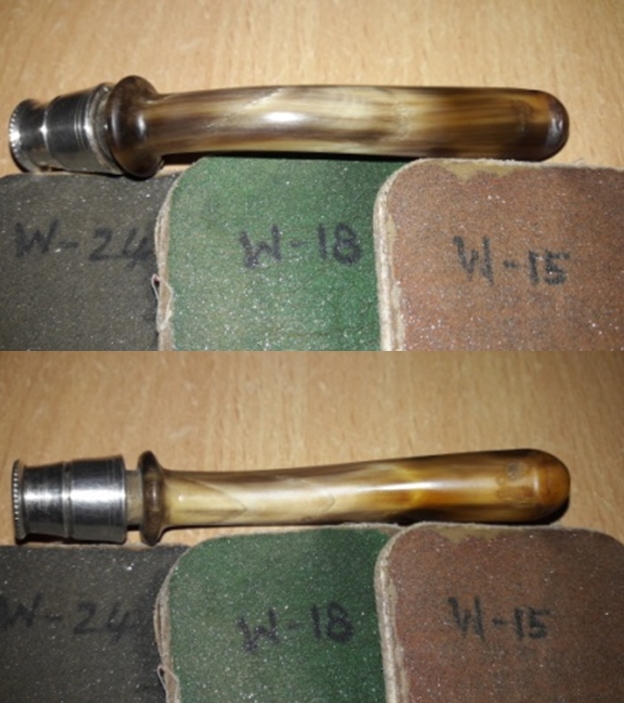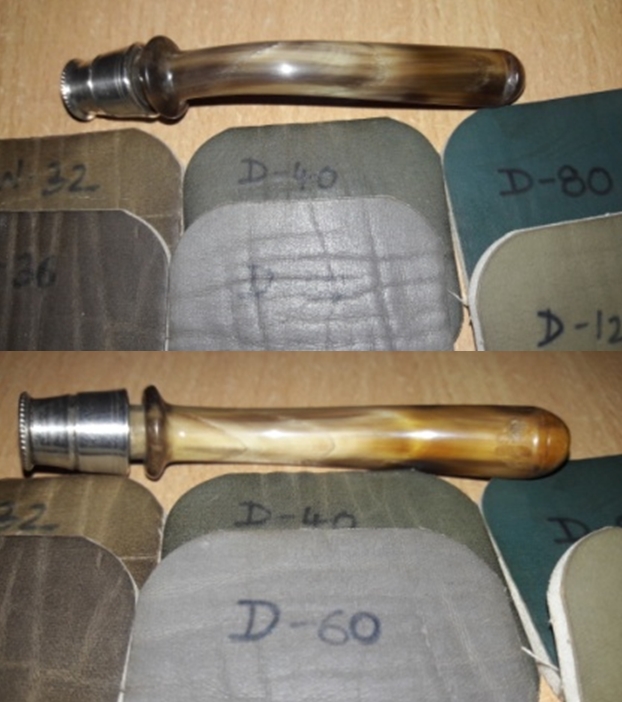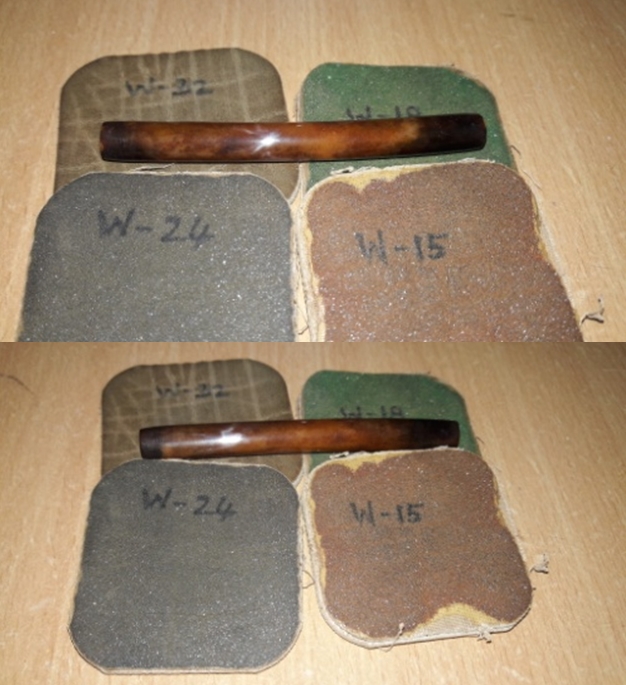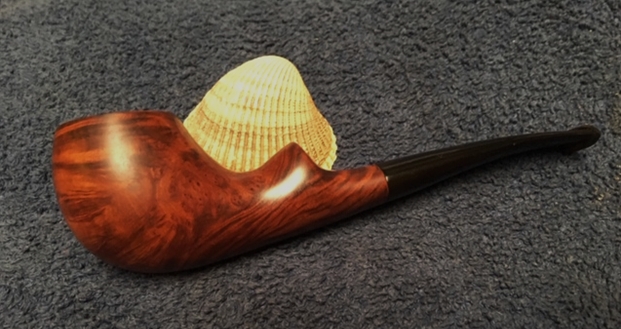
Tag Archives: bite marks

Stem Repair on a Savinelli Silver


Blog by Paresh Deshpande

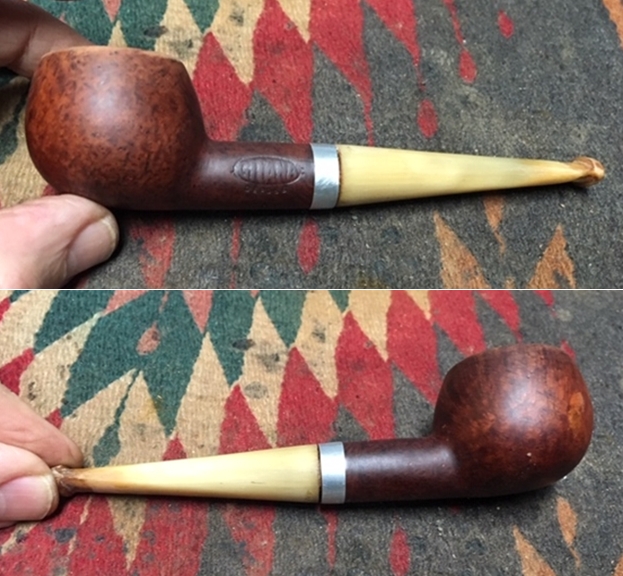
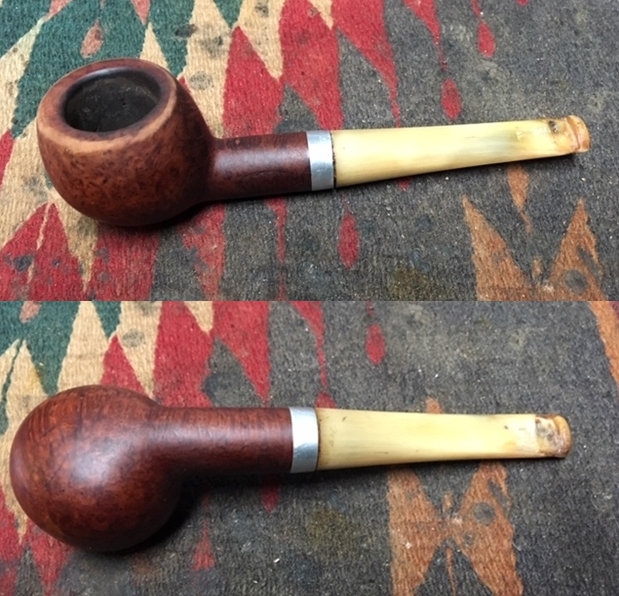
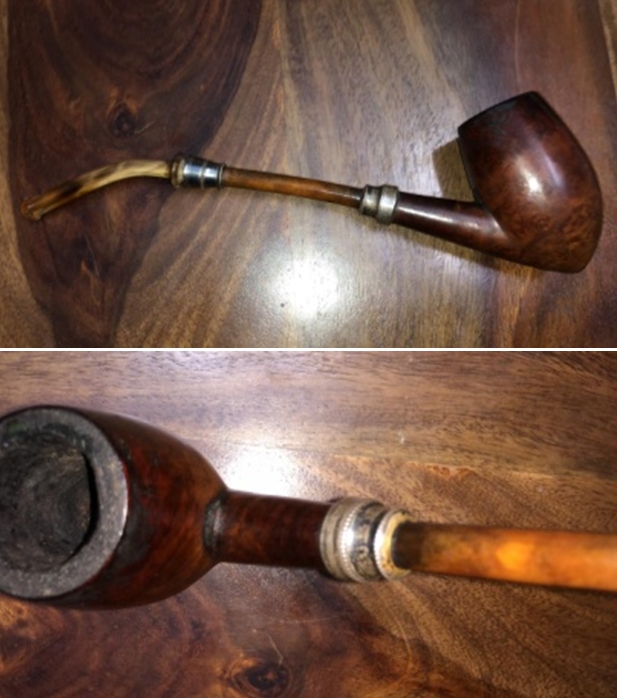
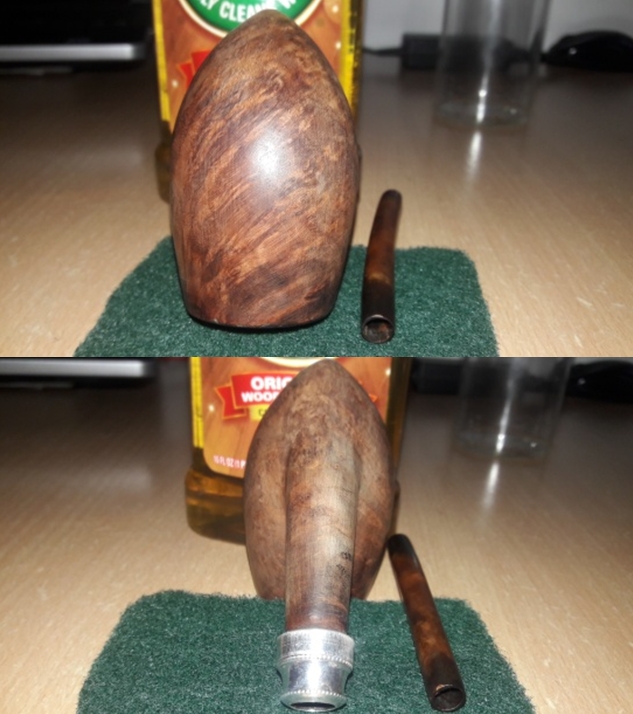
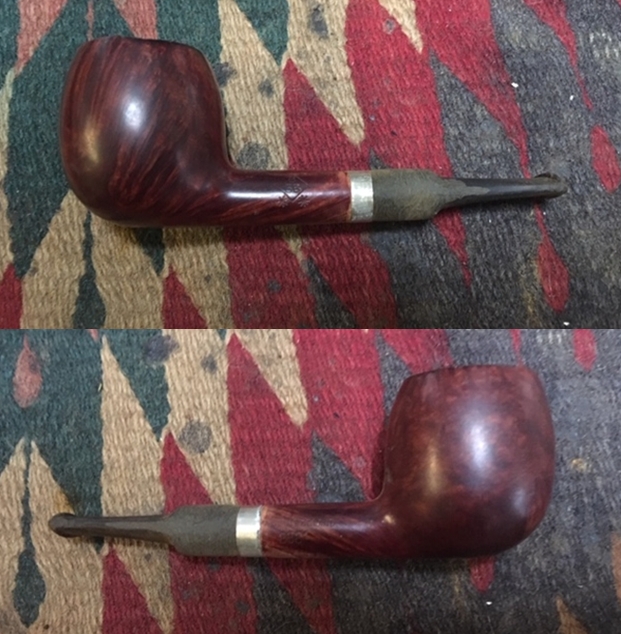
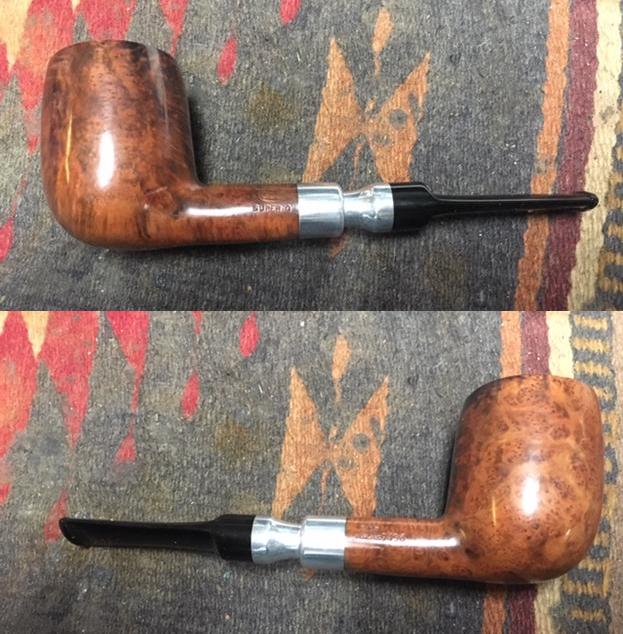
I have been simultaneously working on the stem repair of CHACOM PANACHE #44 (https://rebornpipes.com/2018/08/26/chacom-panache-44/) and this SAVINELLI SILVER. Both the pipes had similar damage to their stems; a gaping hole in the stem exposing airway of the stem. As stated in my write up on the former, I had primarily purchased these pipes to gain hands down experience in major stem repairs and stem reconstruction. That both these pipes were beautiful was an added bonus!!!!!

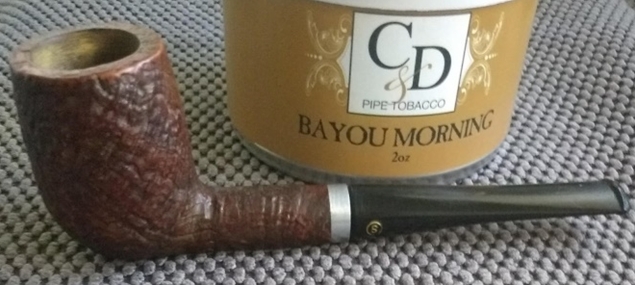
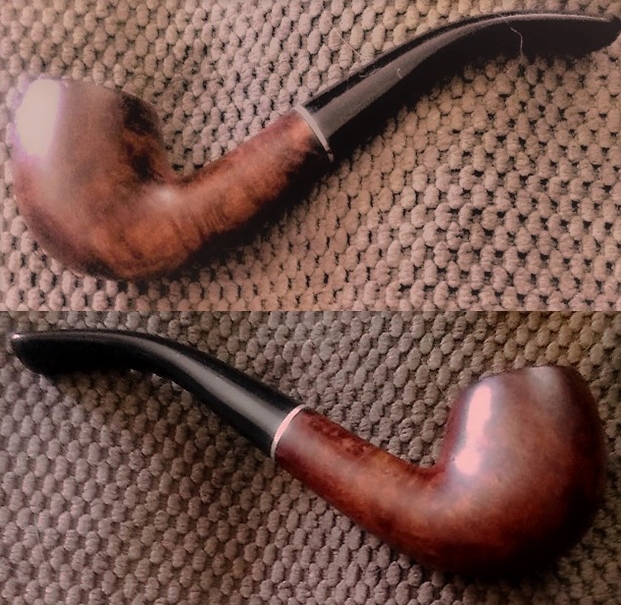
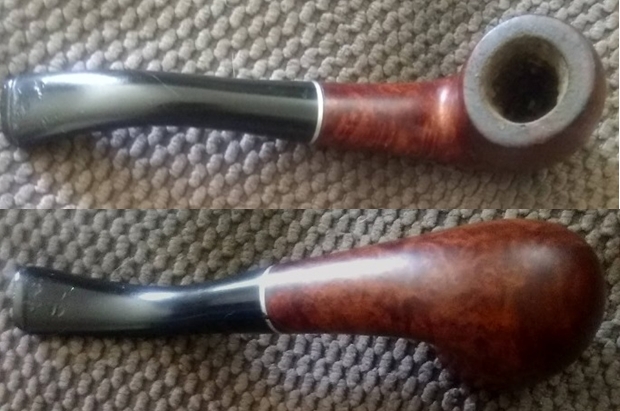
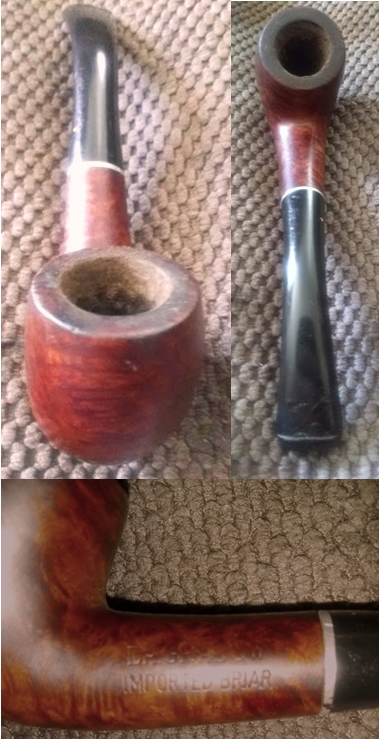
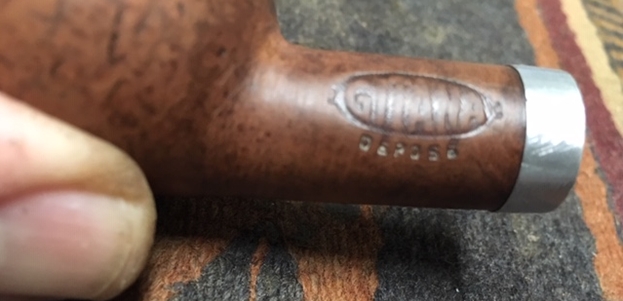
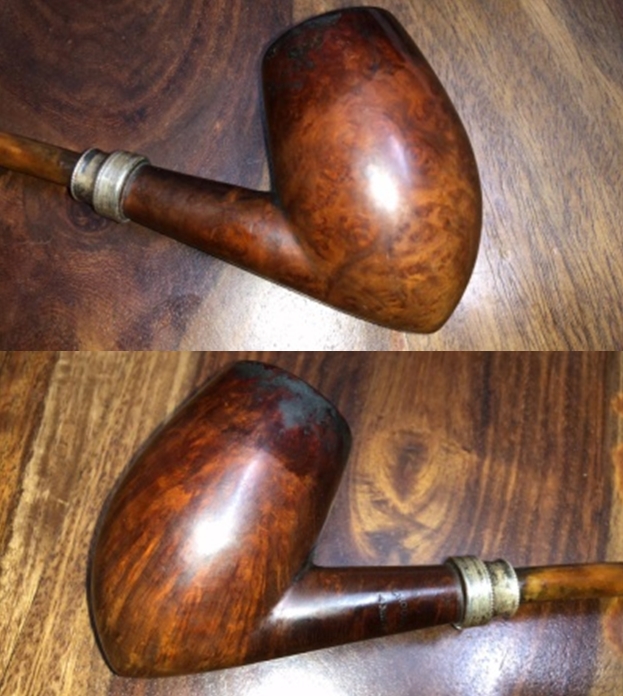
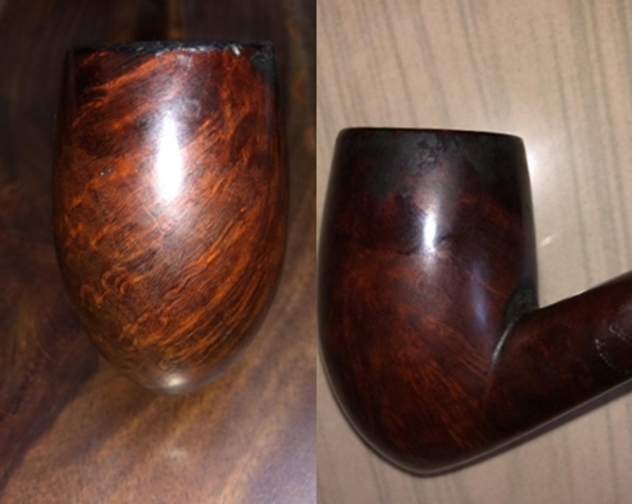
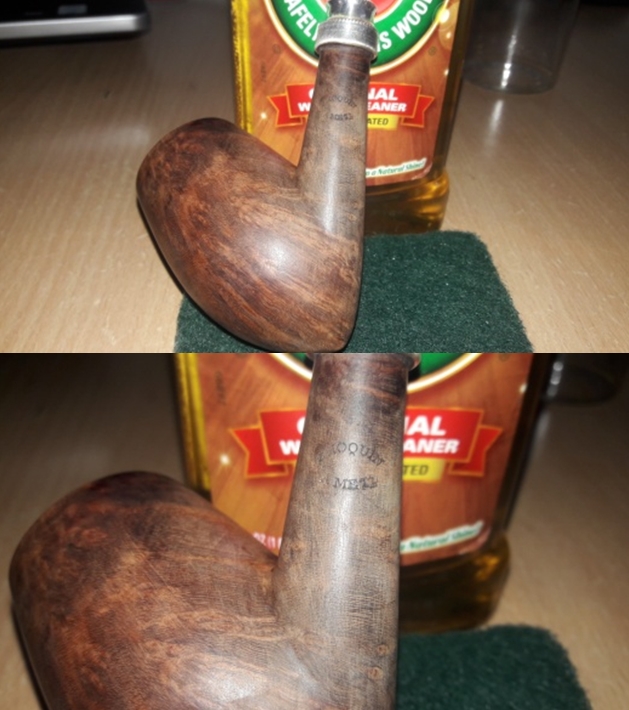
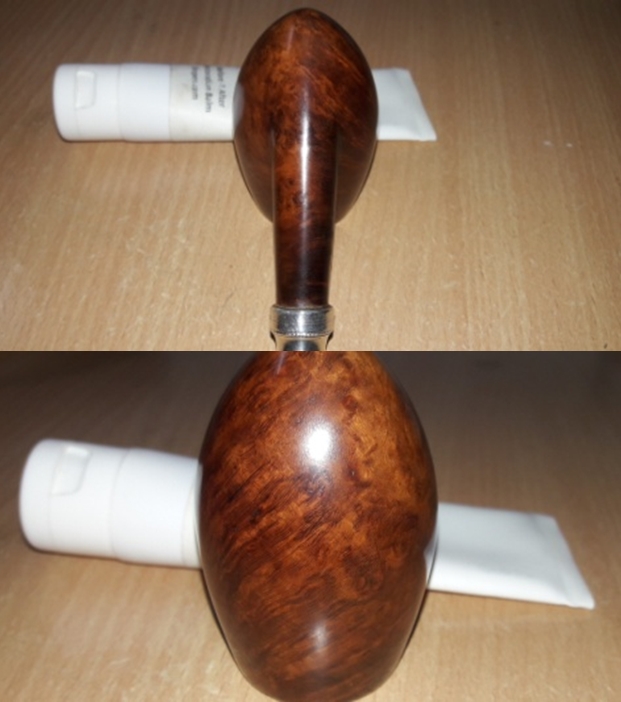
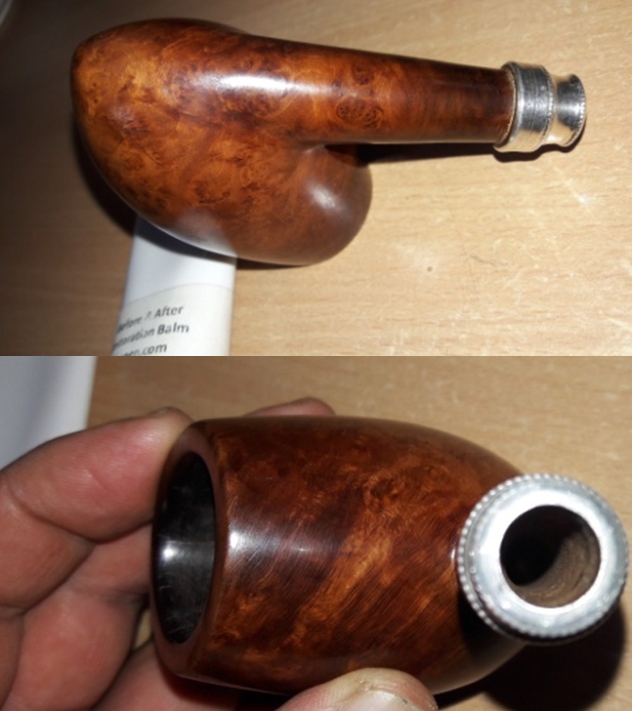
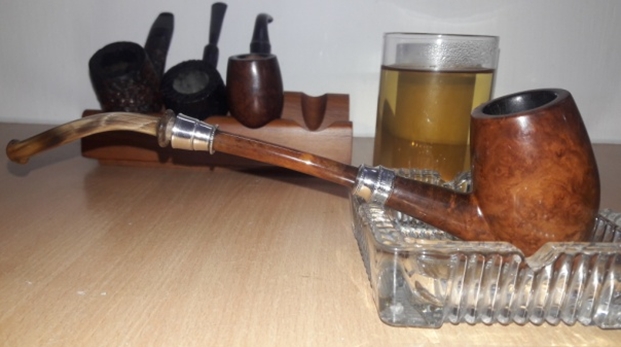
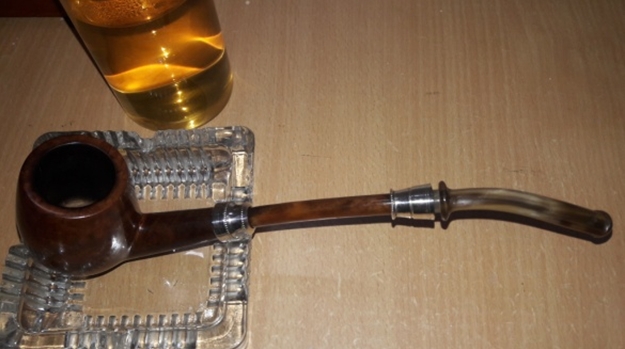
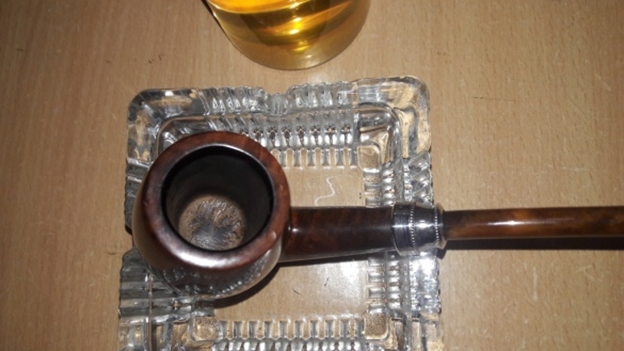
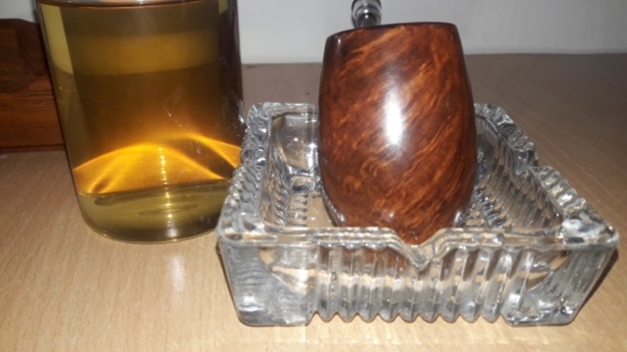
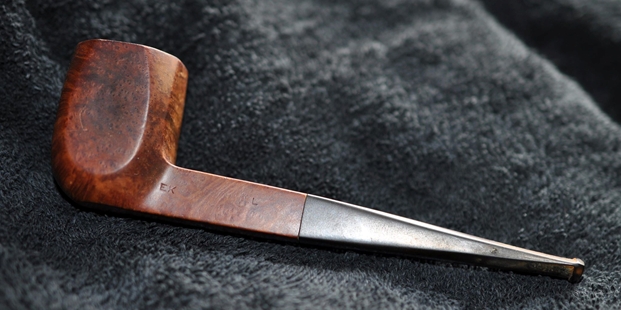
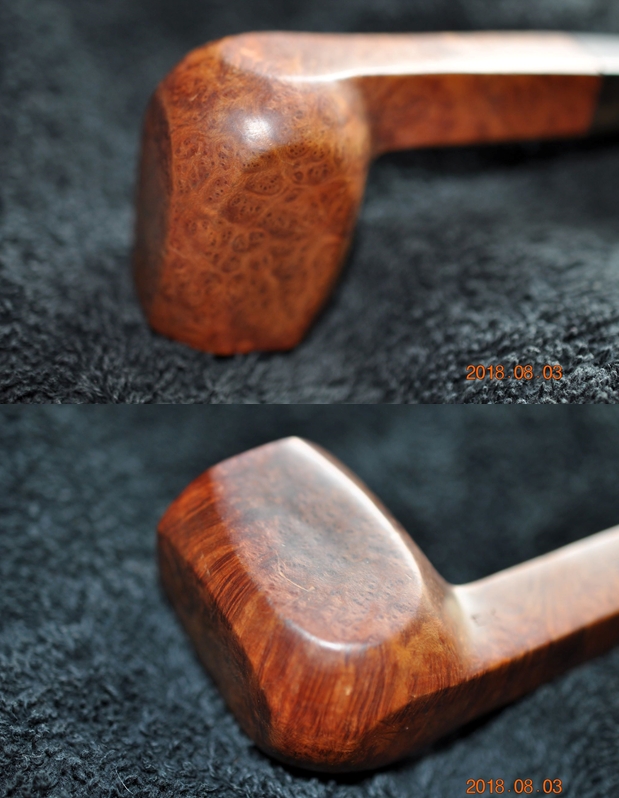
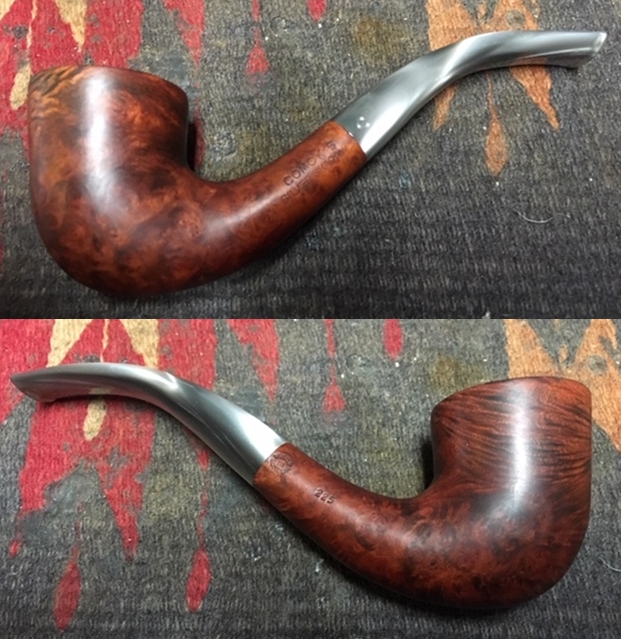
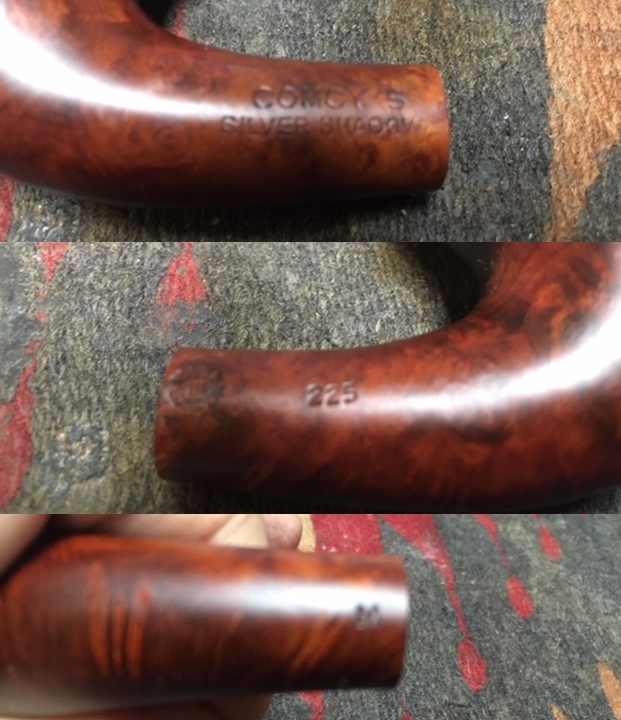
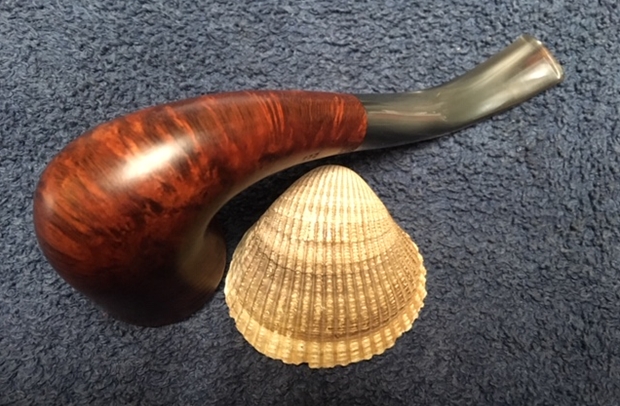
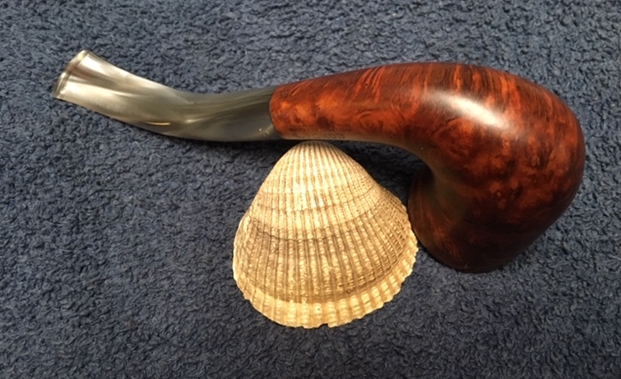
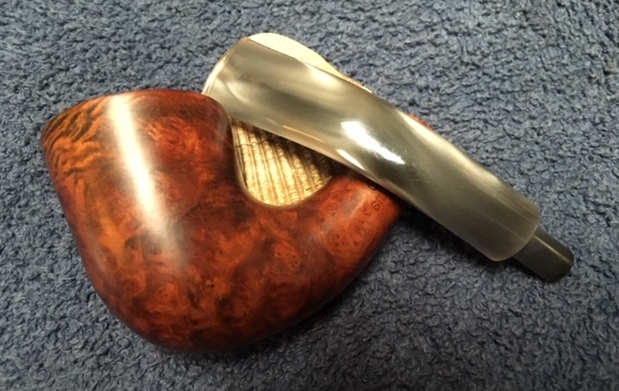
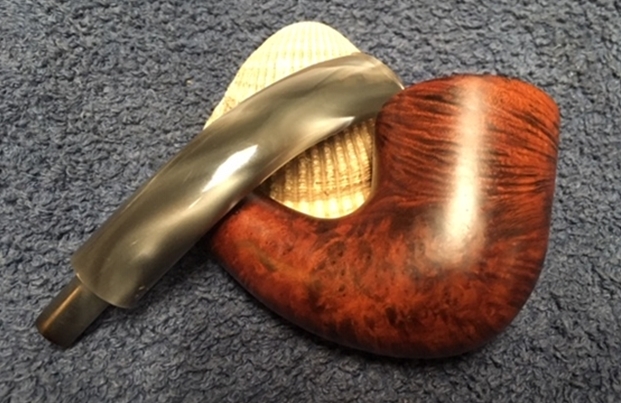
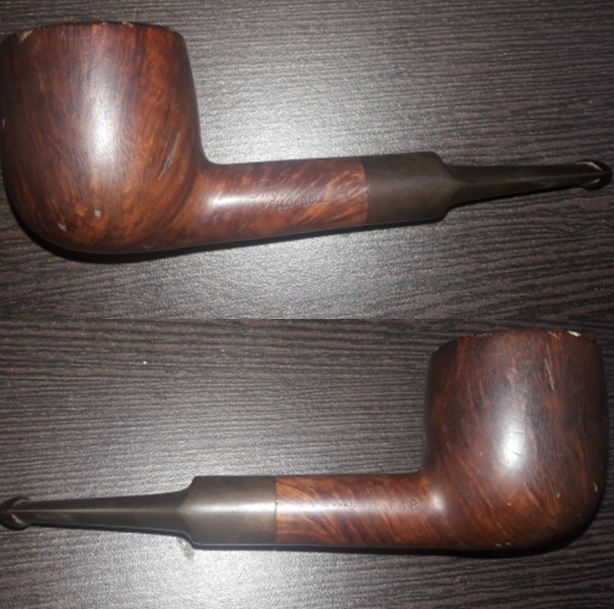
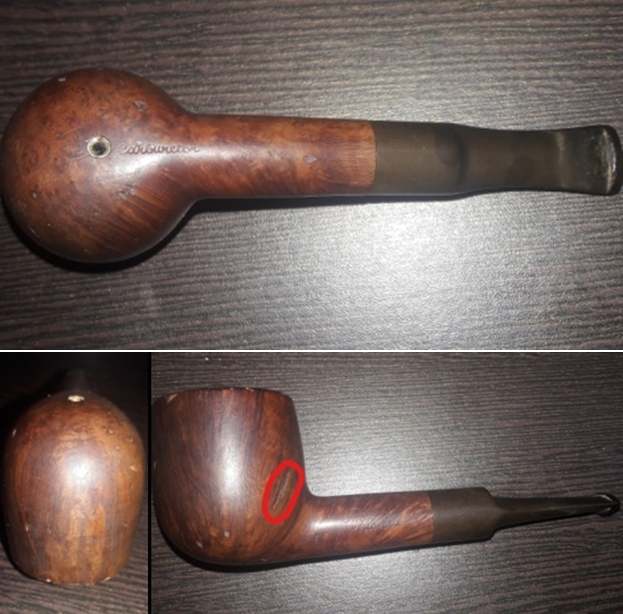
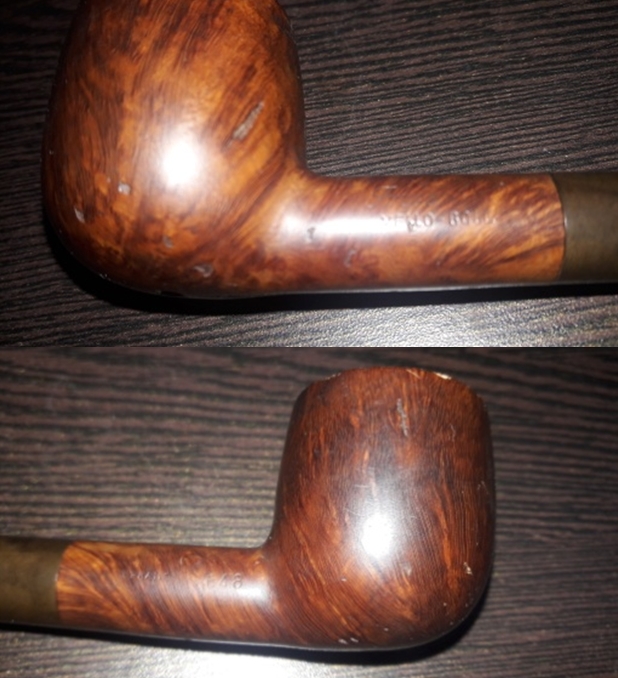
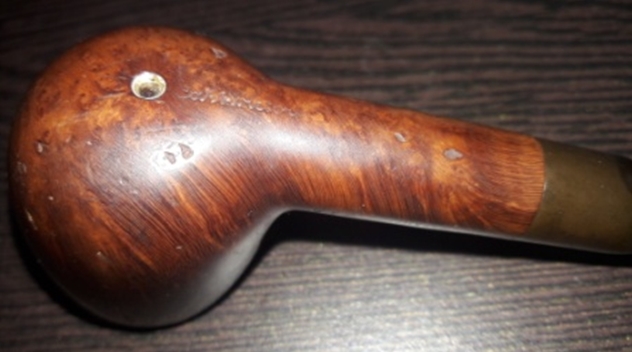
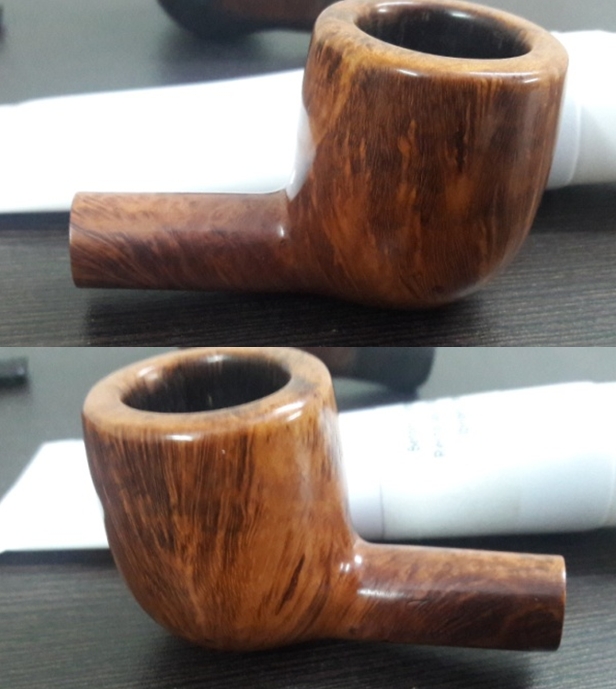
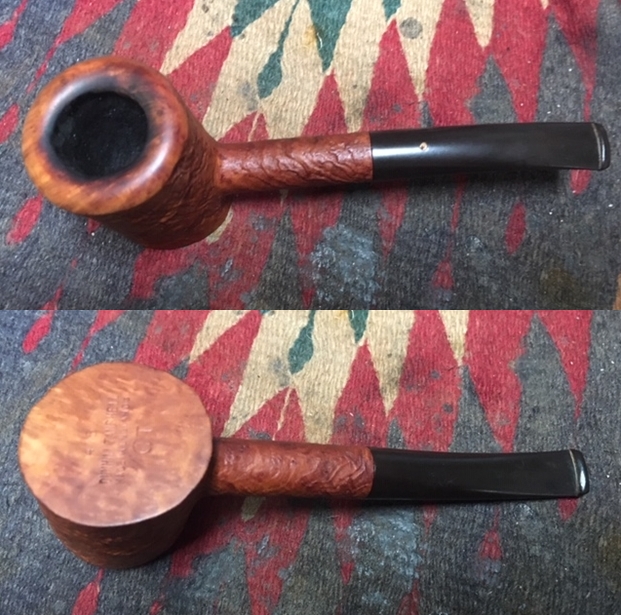
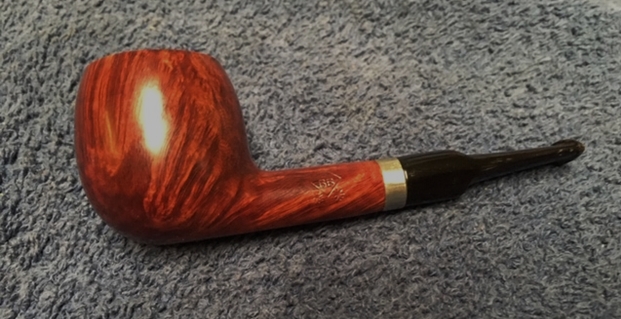
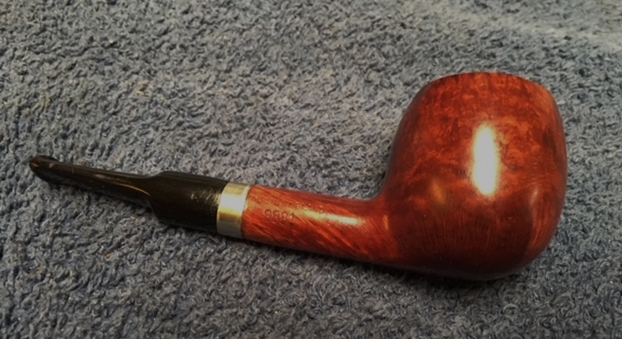
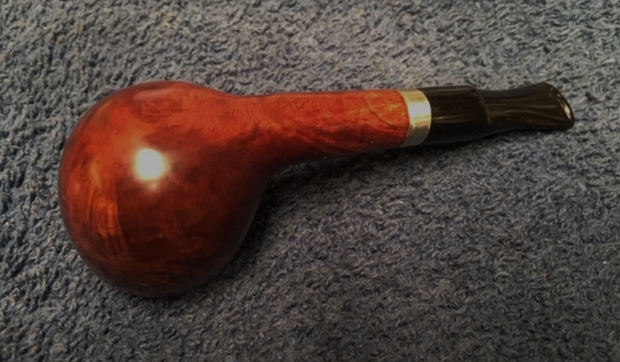
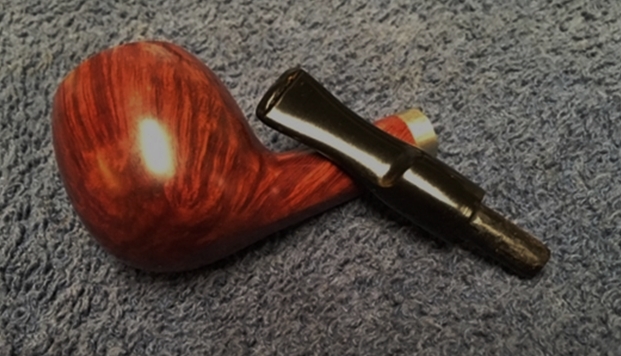
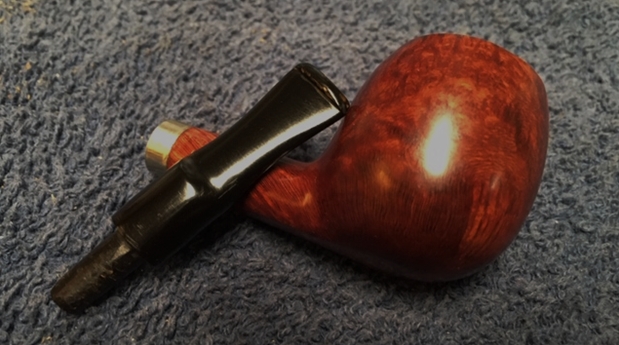
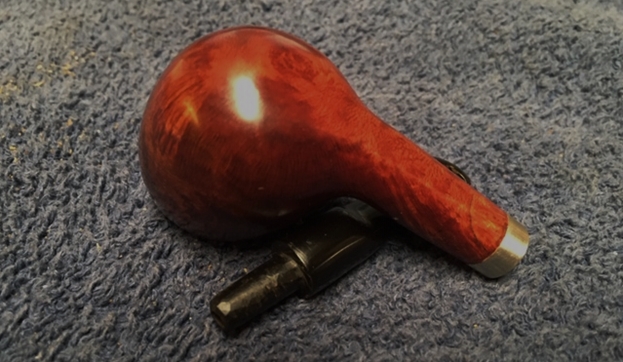
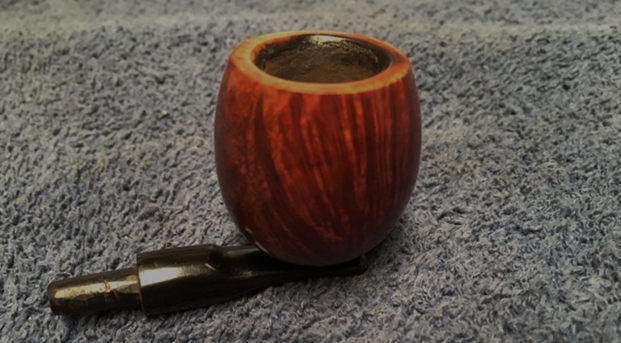
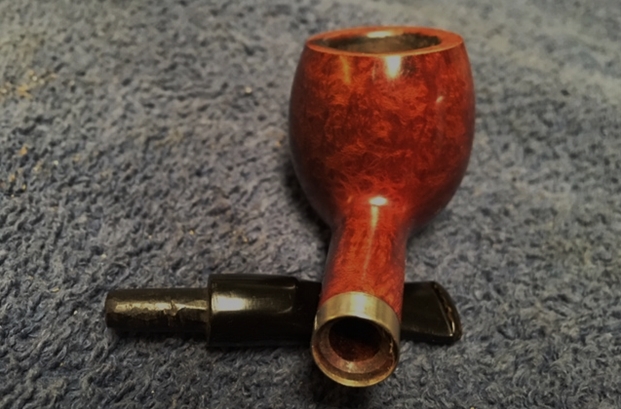
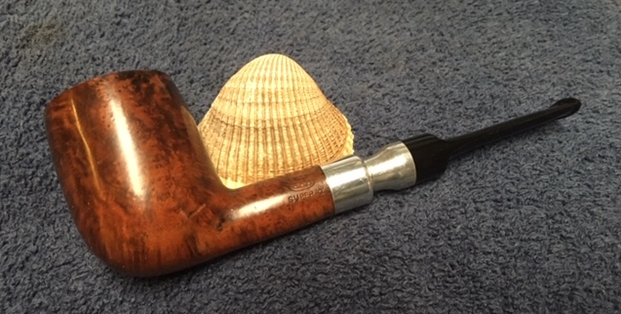
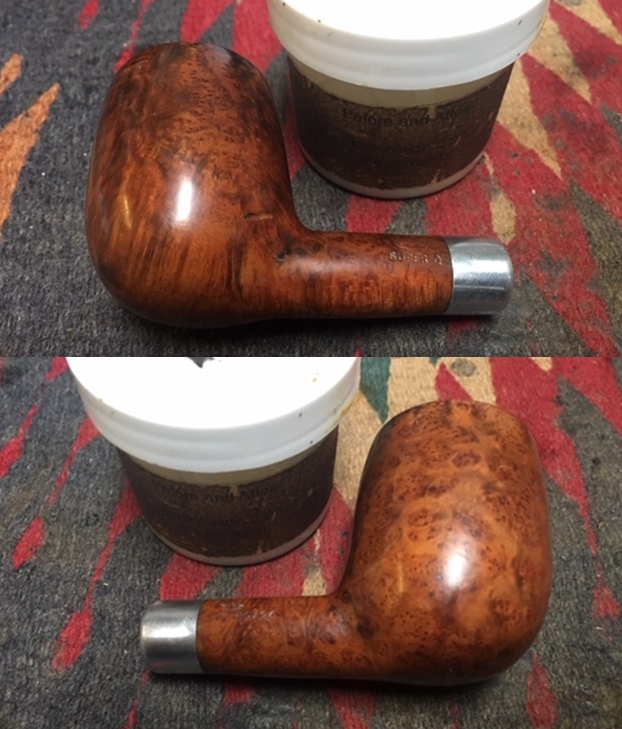
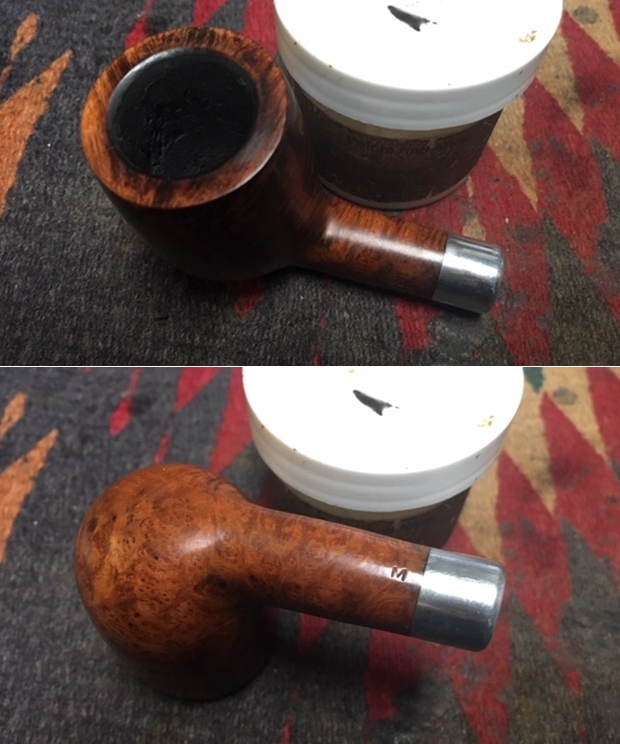
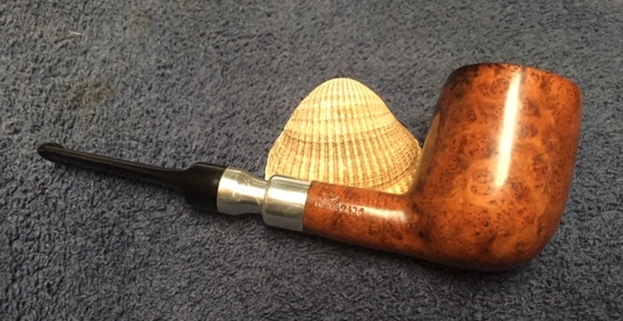
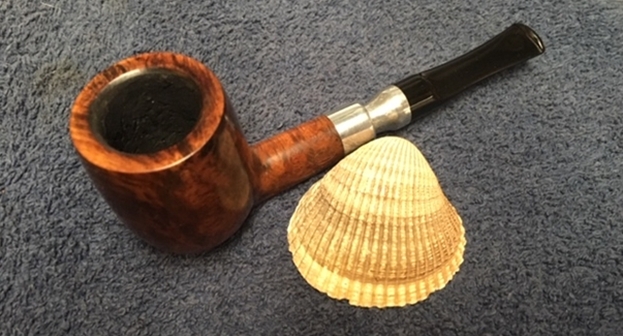
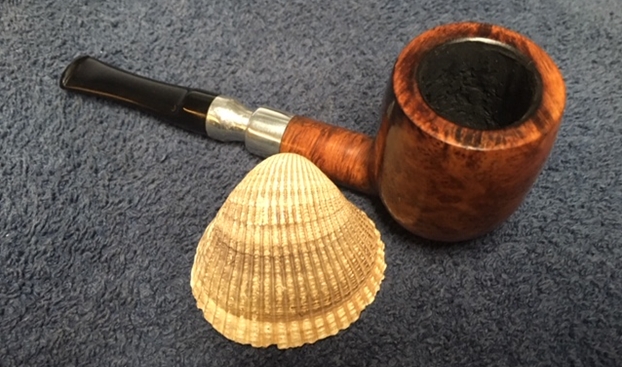
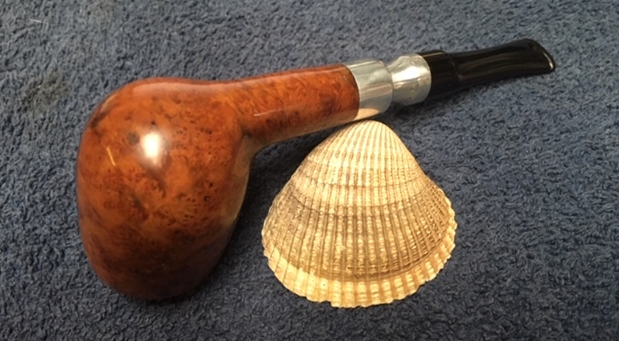
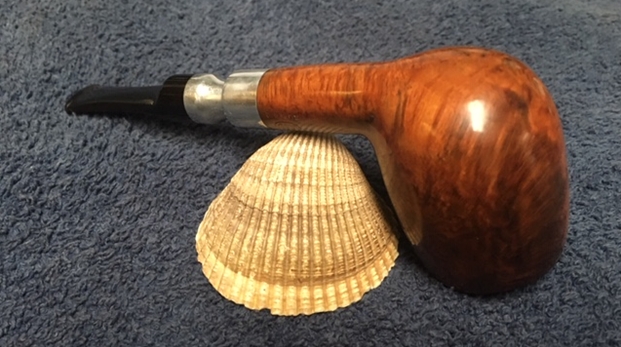
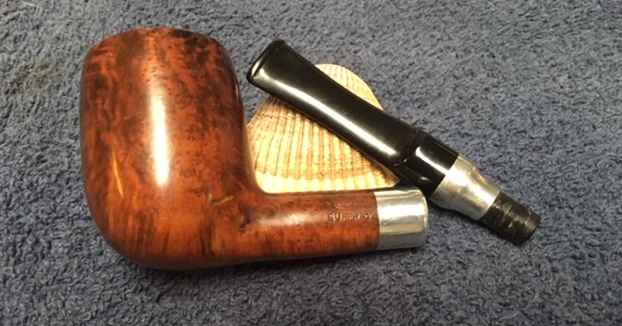
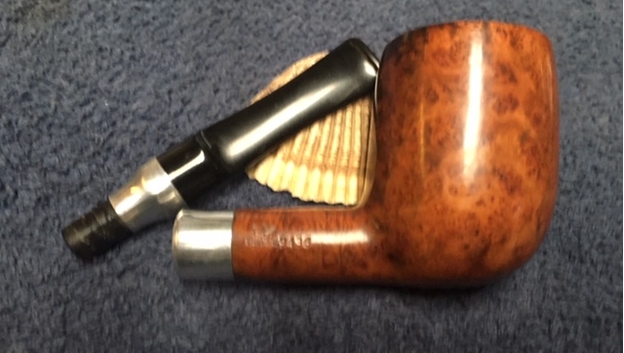
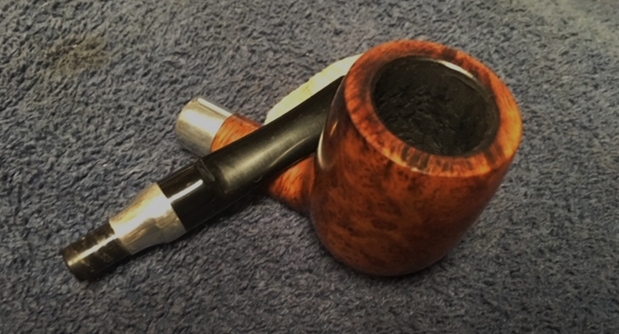
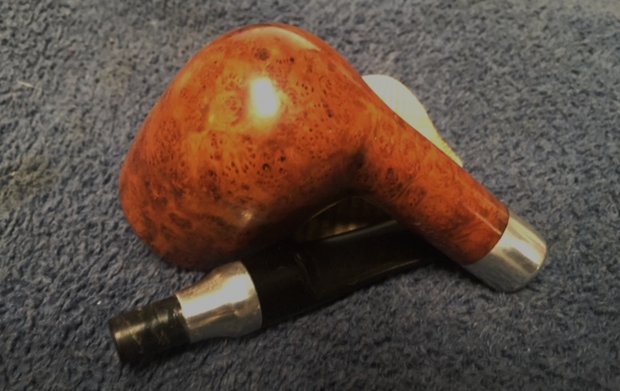
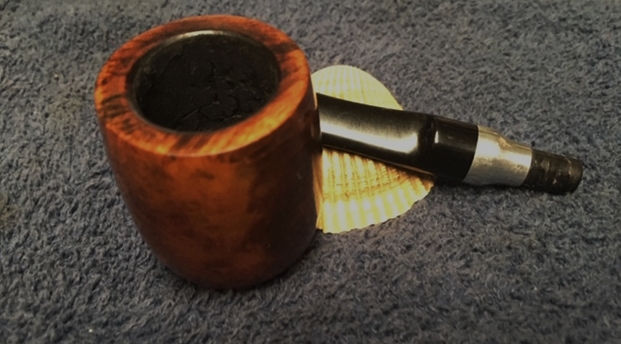
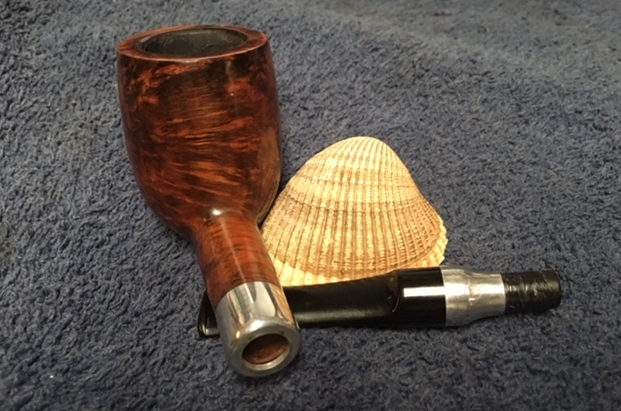
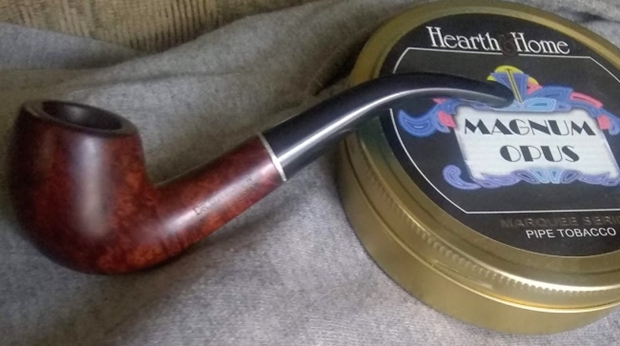
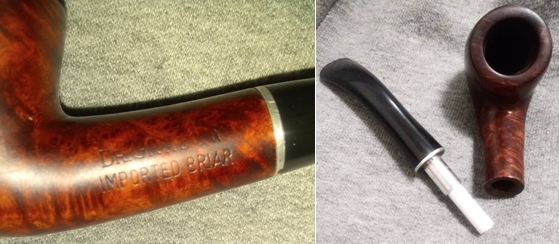
This fancy Dublin Sav has beautiful mixed grain on the right side of the bowl while the left side has lovely birdseye grain. The front and back of the bowl, lower and upper surface of the shank has nicely packed cross grains. A sterling silver band adorns this Sav and is stamped on the upper surface with “925” in an elongated hexagon over “SAVINELLI”. On the lower surface, this band is stamped as “STERLING” over “MOUNTED”. All stampings are in block capital letters. On top of the oval shank, towards the shank end, it bears the stamp “SAVINELLI” over “SILVER” while at the bottom, it is stamped with Savinelli shield, followed by “915”, followed by size “KS” over “ITALY” in block capital letters. The saddle stem bears the Sav Shield logo on top of the saddle. History of Savinelli pipes is very well documented on pipedia.com, however, due to a very large line up, frequent changes to models, shapes and finishes, I came to a halt when I tried to date this Savinelli. I earnestly request all the knowledgeable veterans of pipe world to share any bits and pieces of information on this pipe.

INITIAL VISUAL INSPECTION

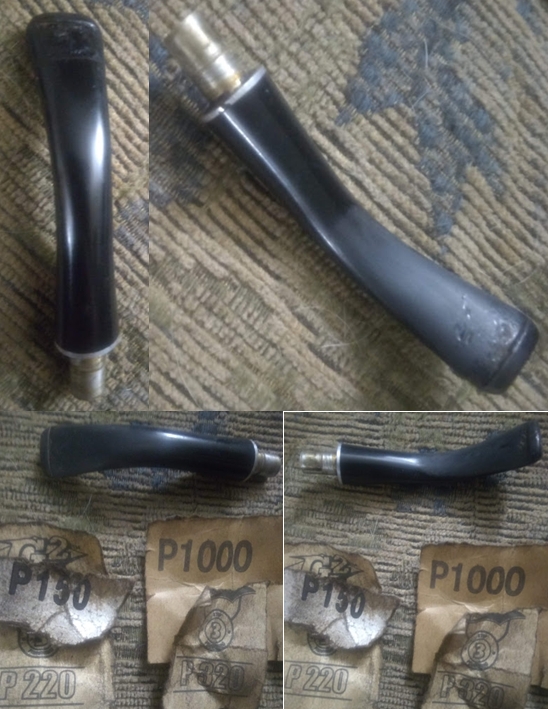
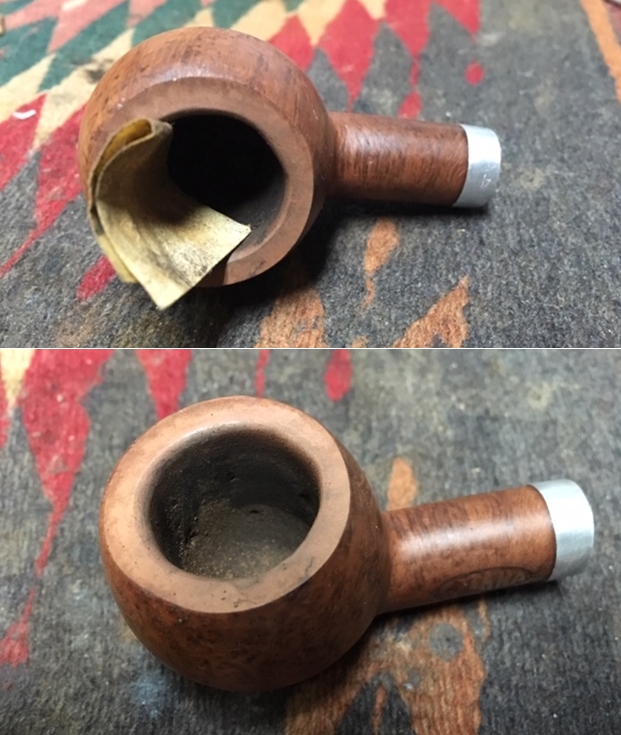
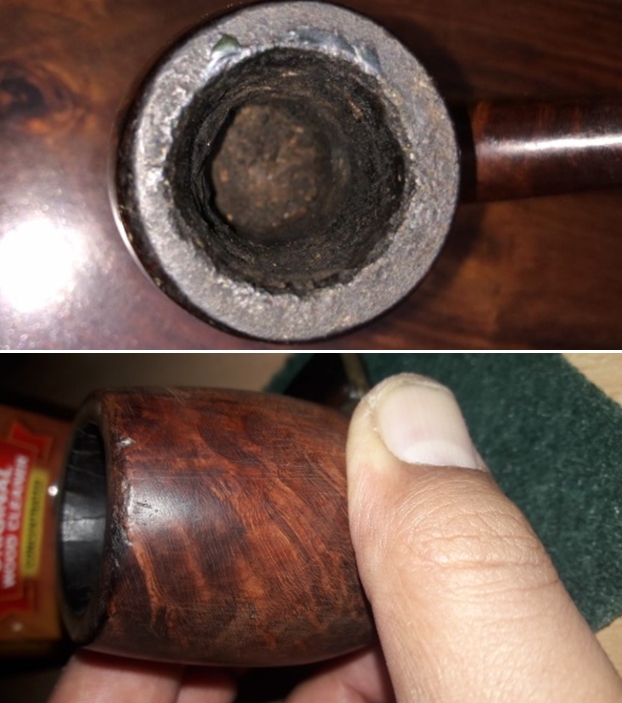
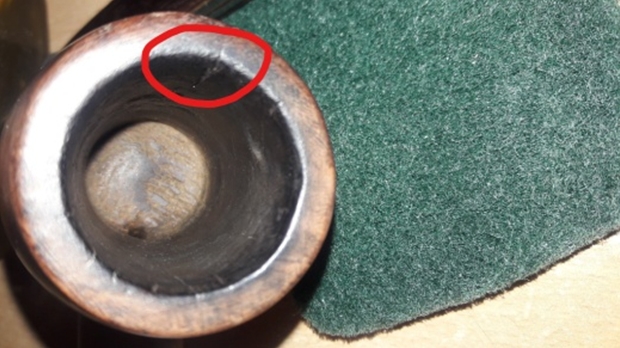
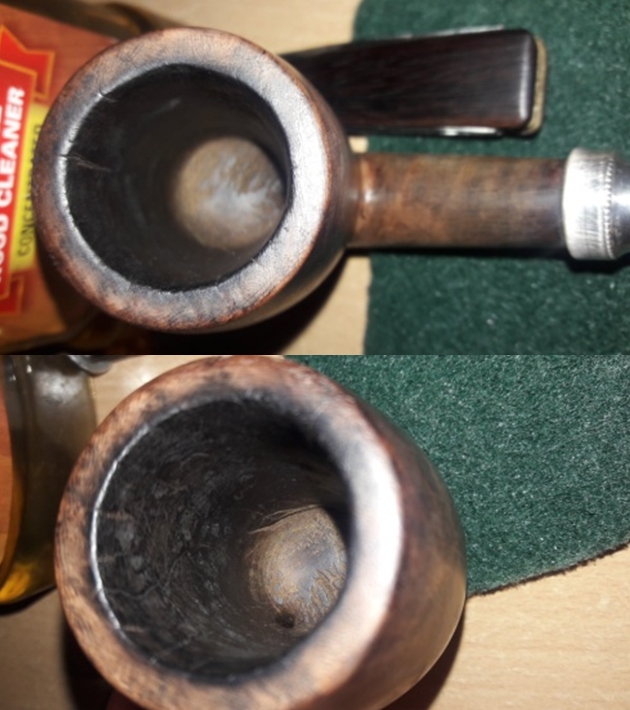
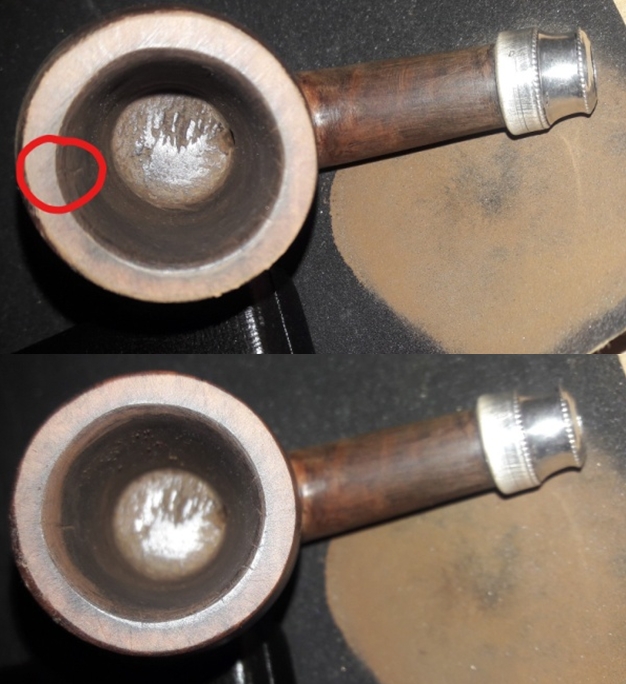
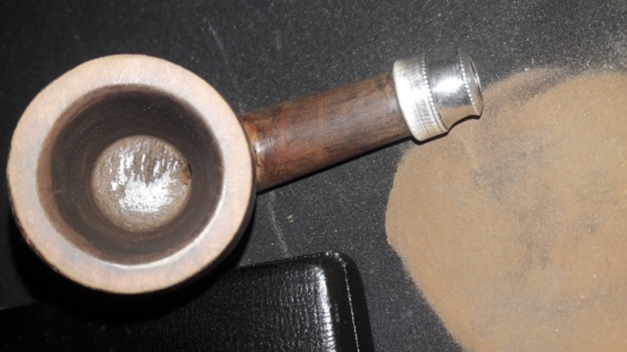
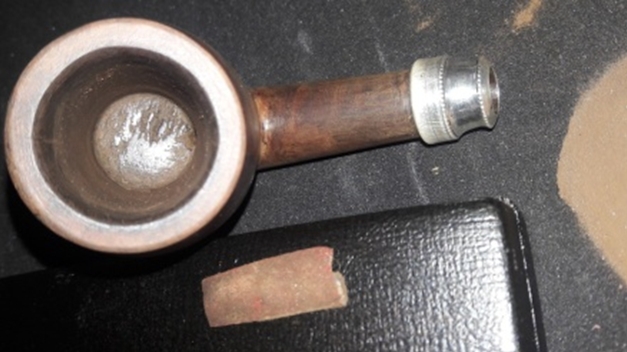
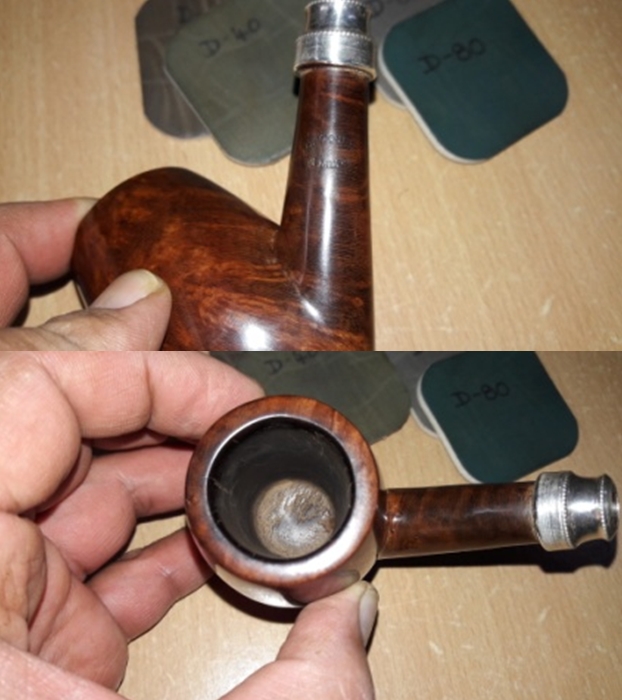
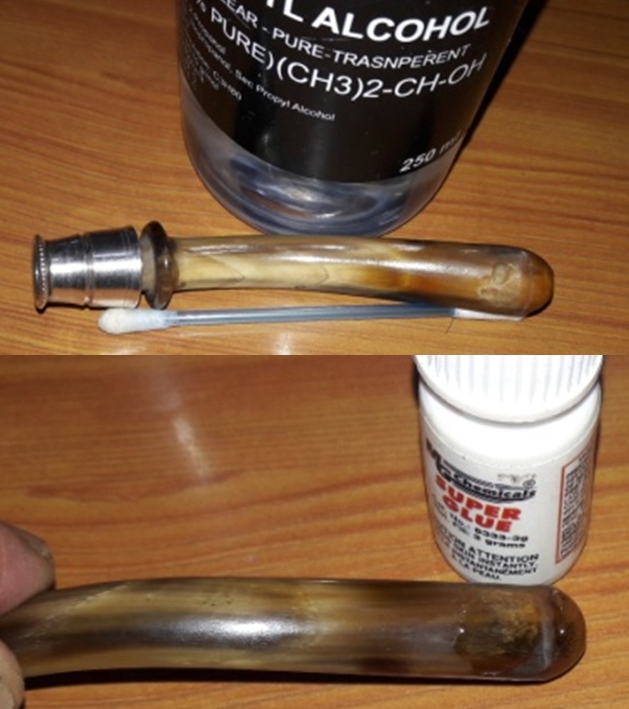
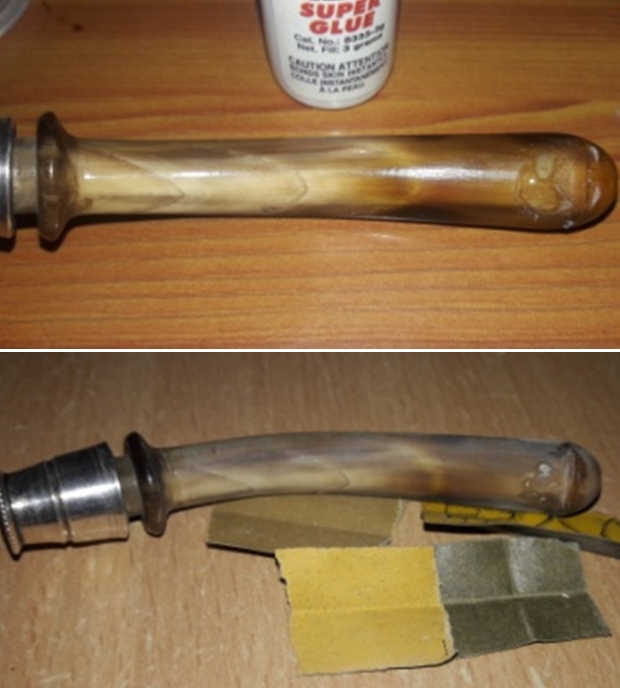
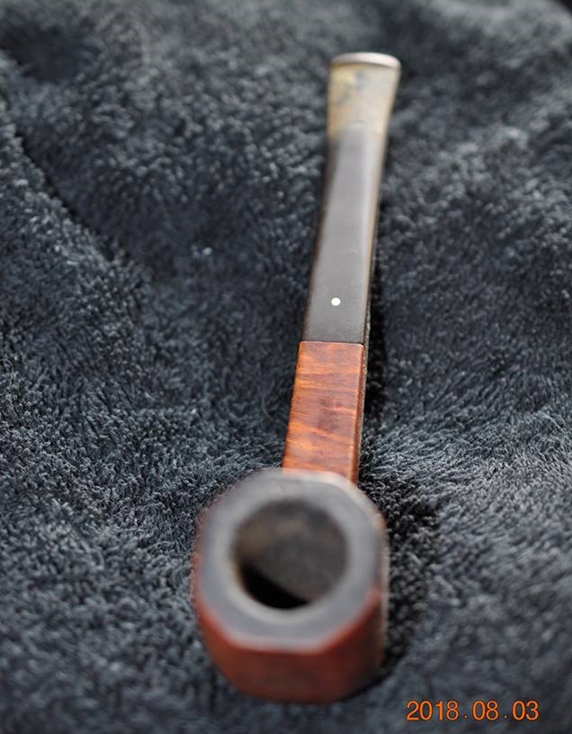
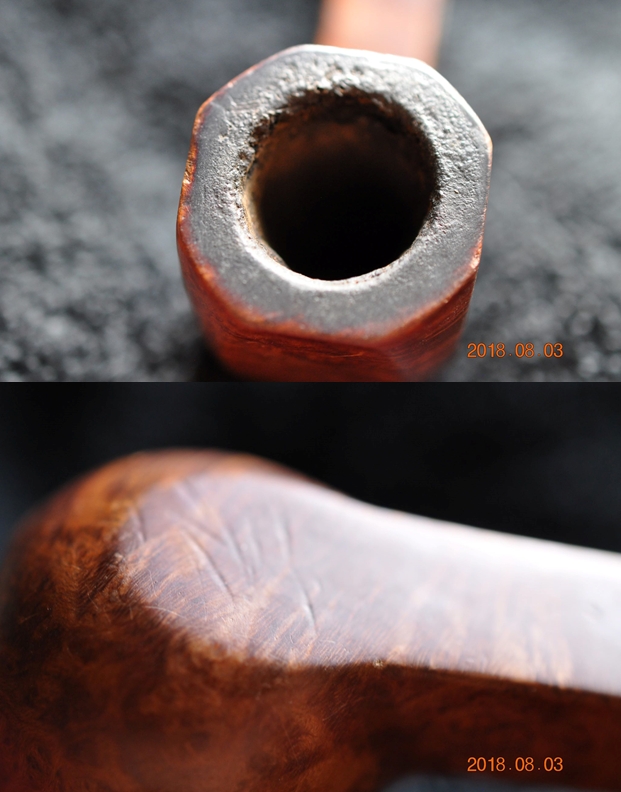
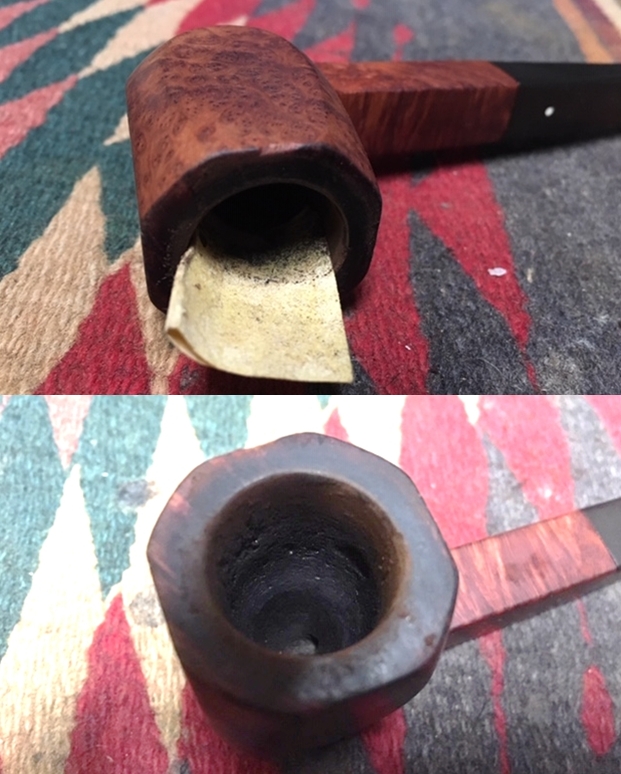
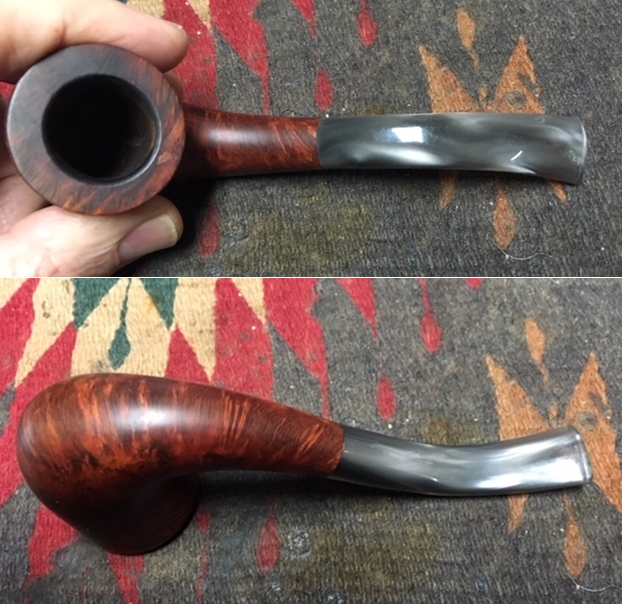
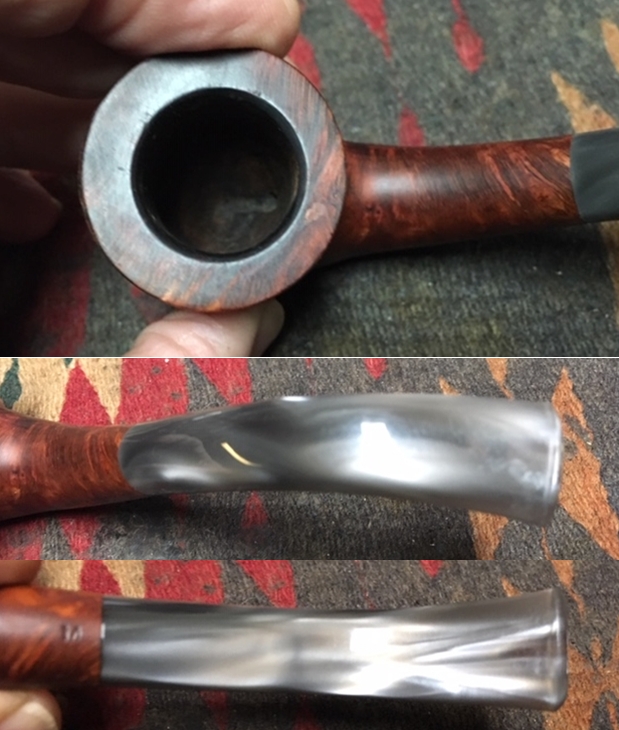
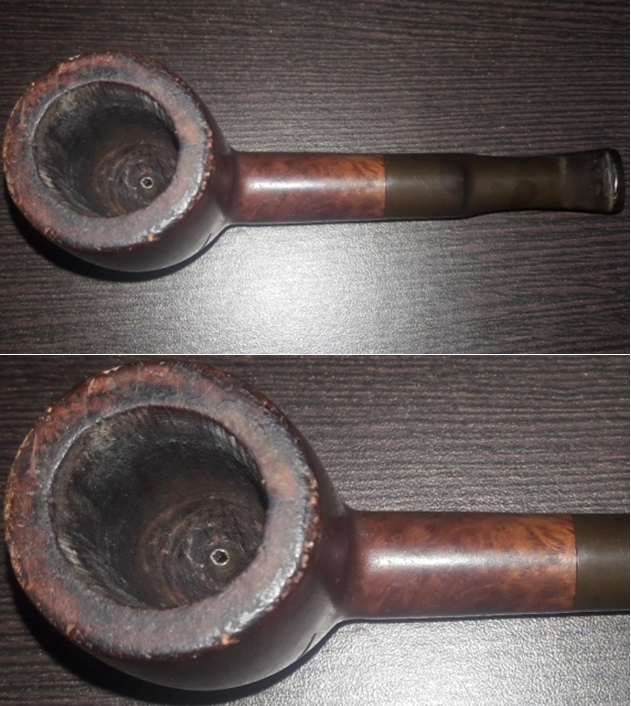
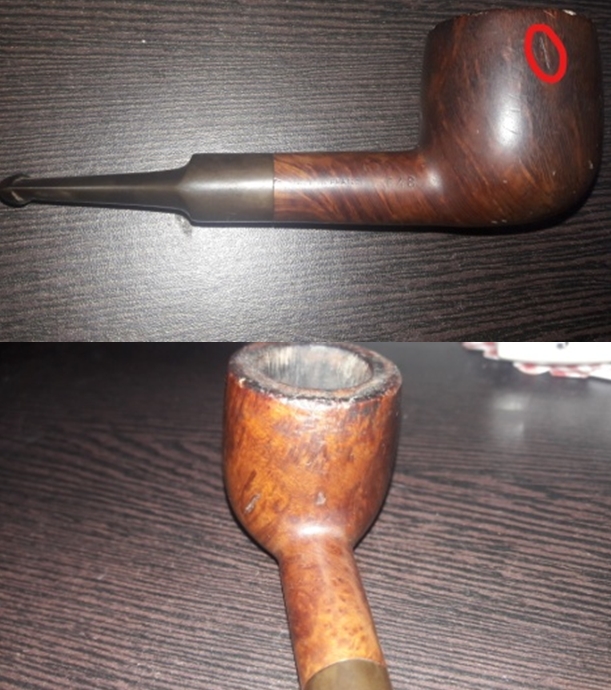
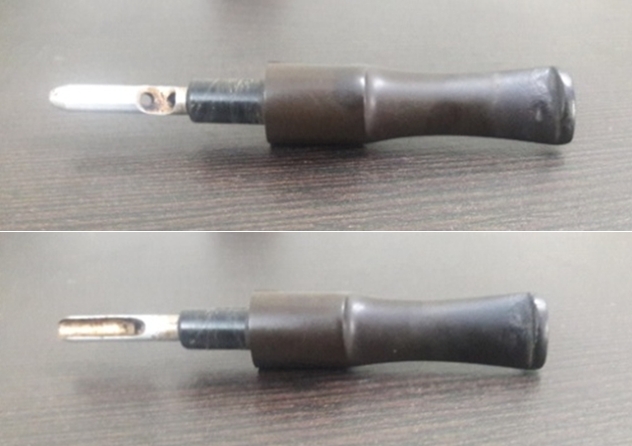
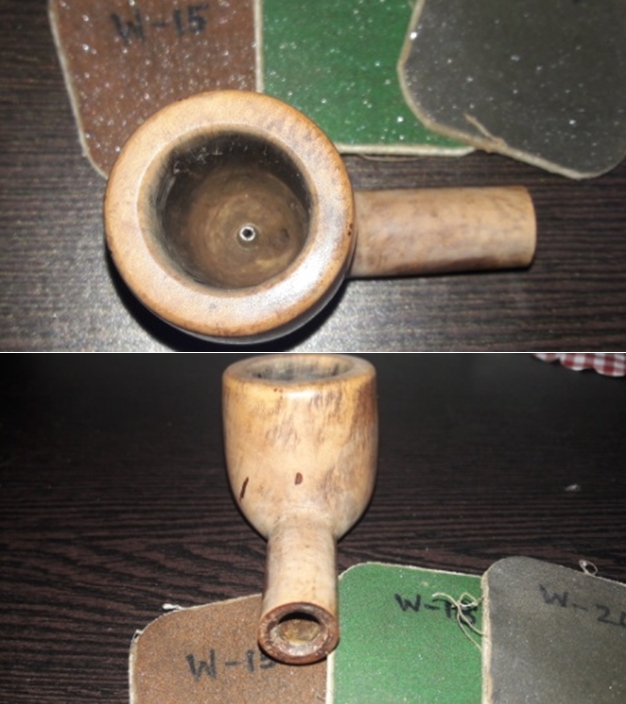
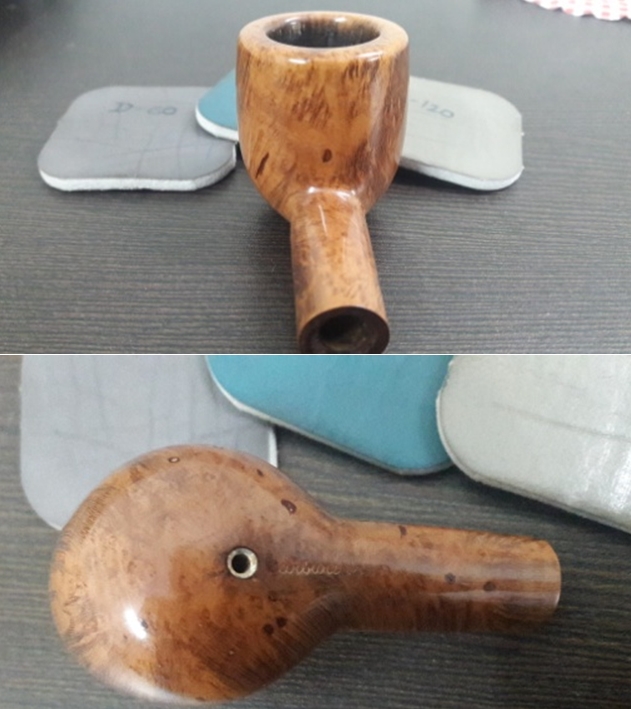
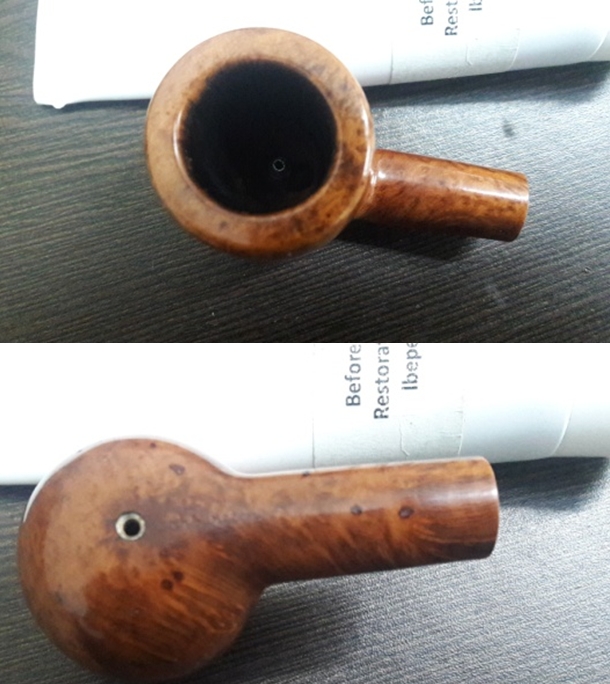
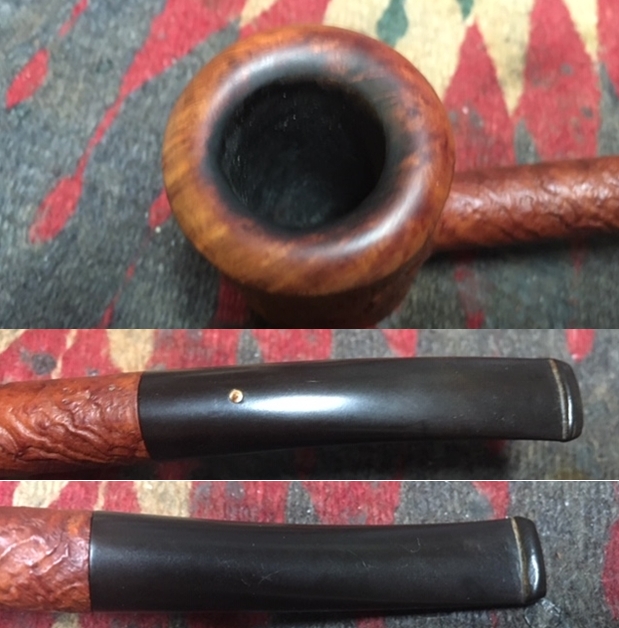
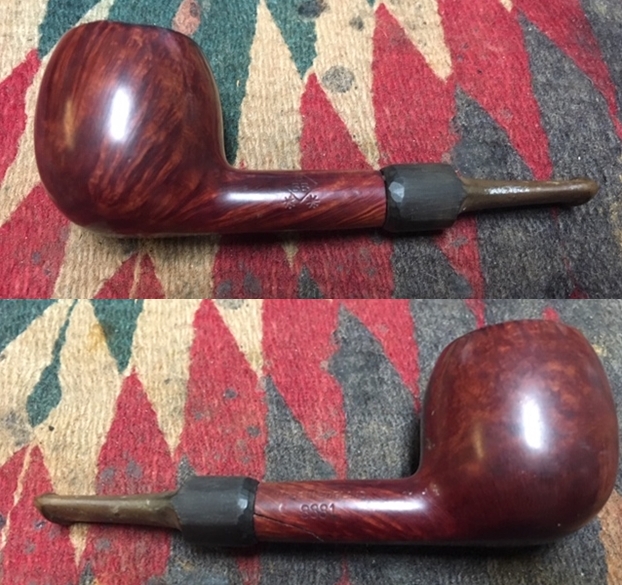
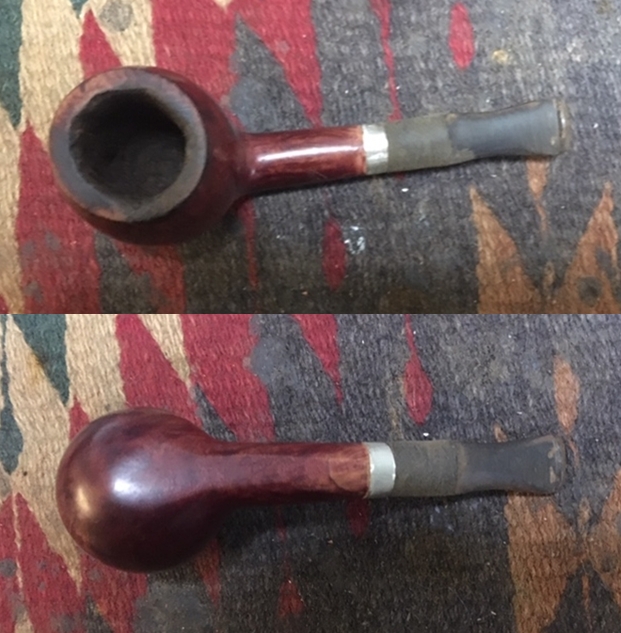
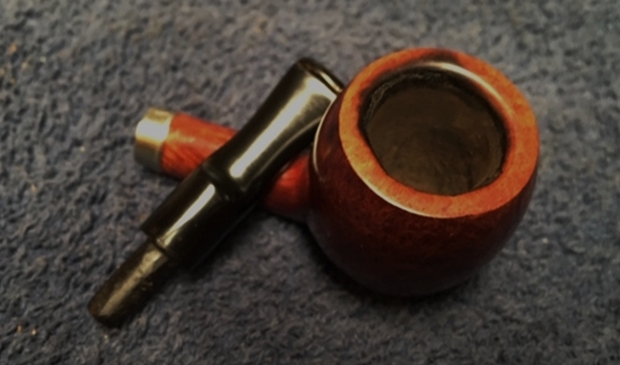
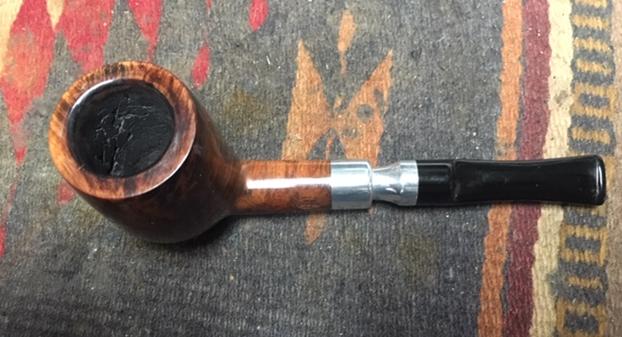
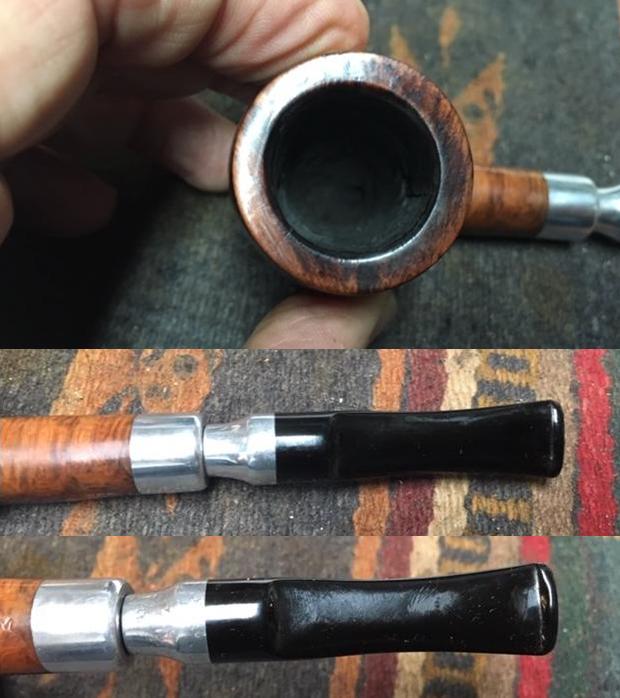
The stummel is covered in oils and tars giving a dull and lifeless appearance to the pipe. There is no heavy build up of cake in the chamber and also overflow of lava on the rim top. However, a slight darkening is seen on the right side of the rim. Some scratches are also seen on the rim top which will need to be addressed. It is the stem which has the maximum damage. A large hole can be seen on the upper surface of the stem near the button end, exposing that portion of the airway. There are two deep bite marks on the upper surface of the stem. The button on both surfaces of the stem has been chewed and will need to be reconstructed.The mortise shows some accumulation of previously smoked tobacco oils and tars, but it is nothing as compared to some pipes which I have seen.The airway is not clogged and will only require minor cleaning.

THE PROCESS

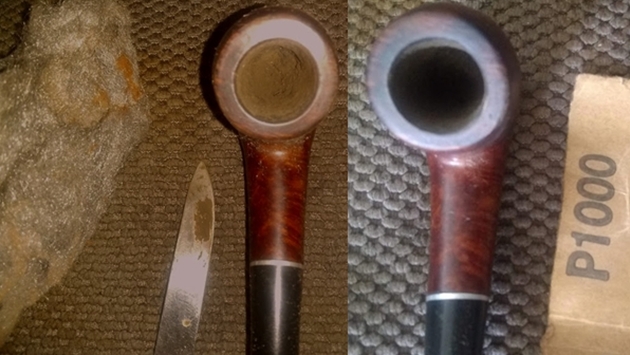
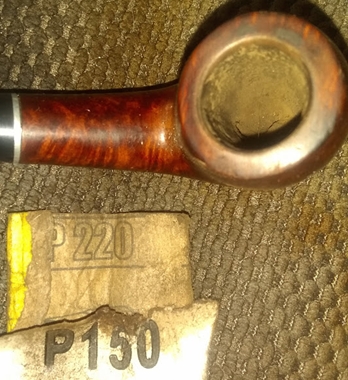
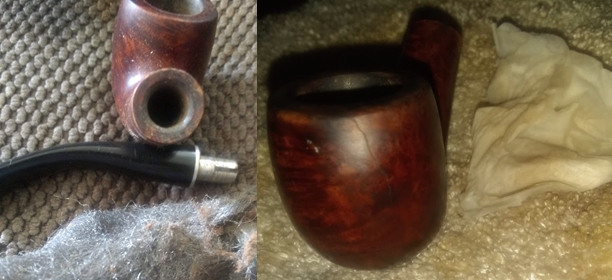
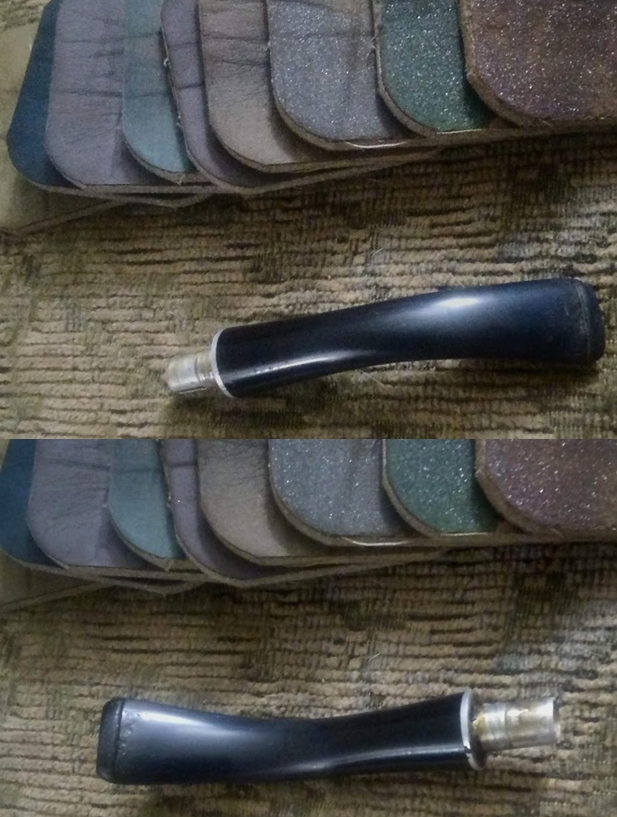
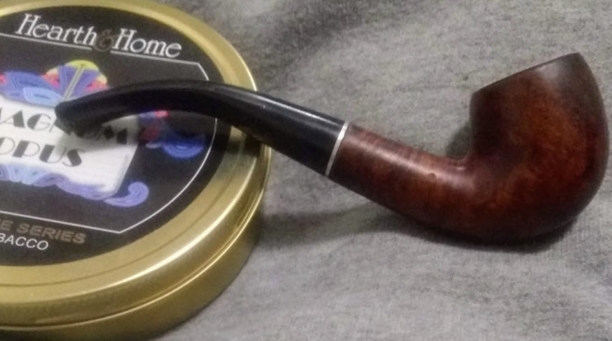
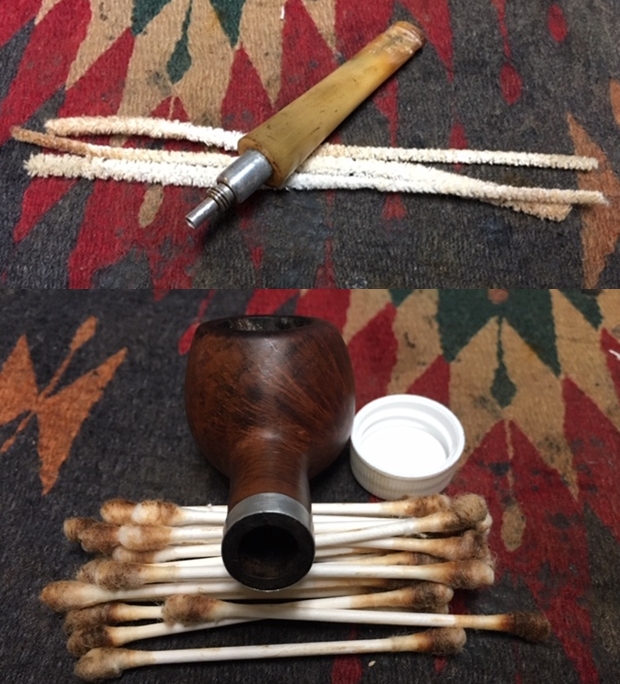
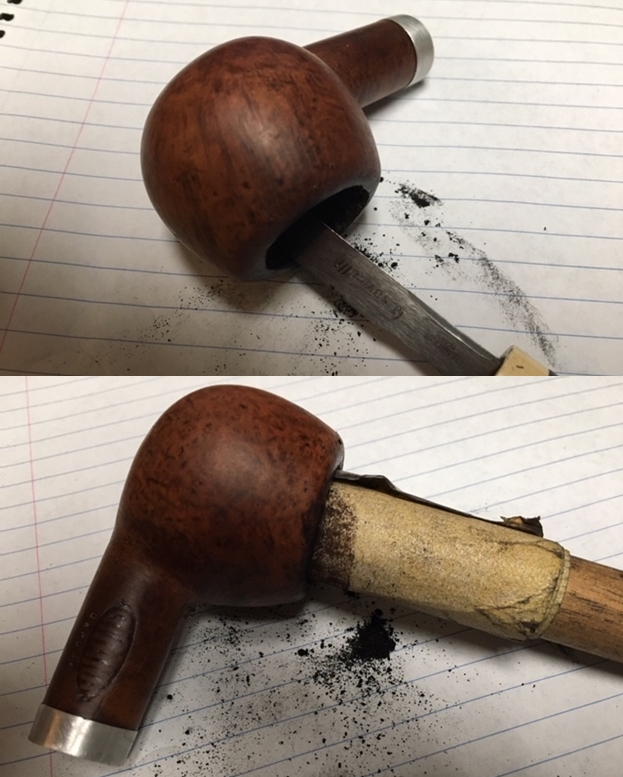
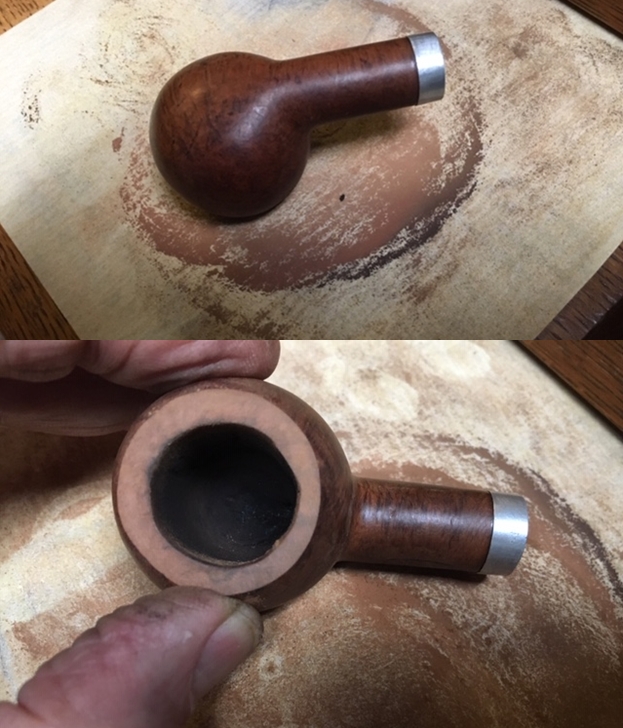
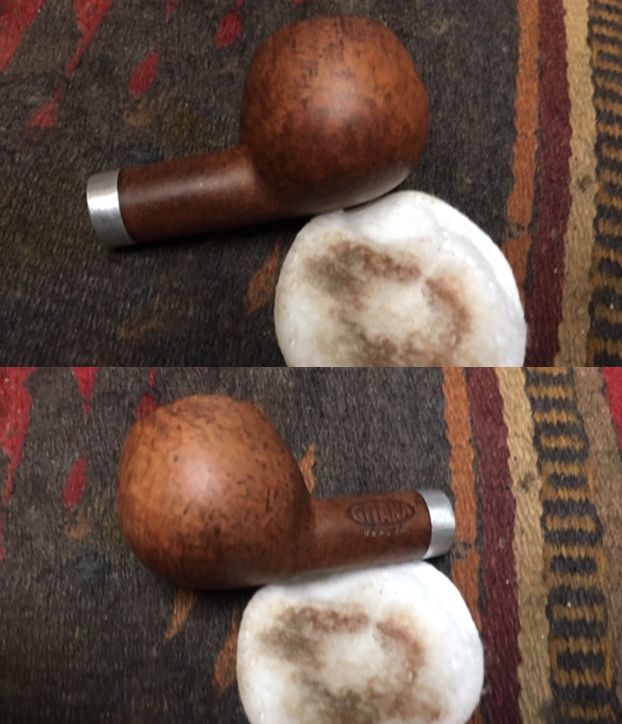
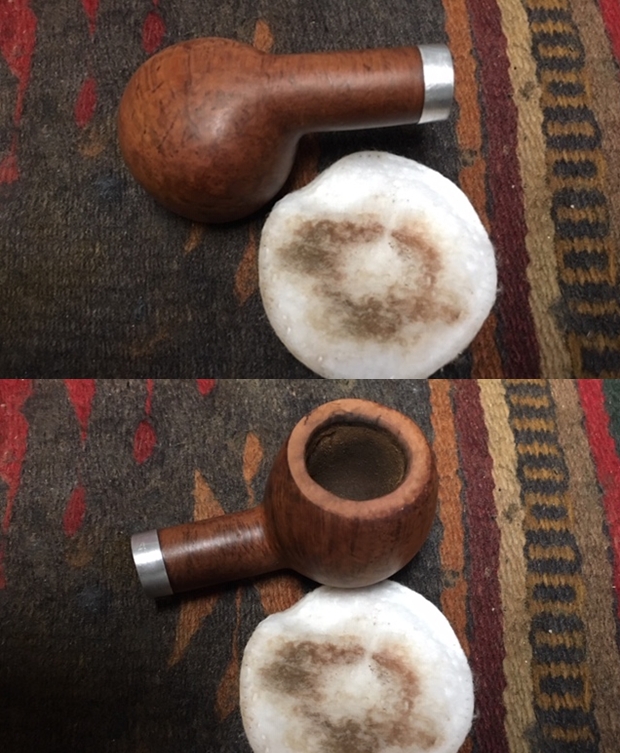
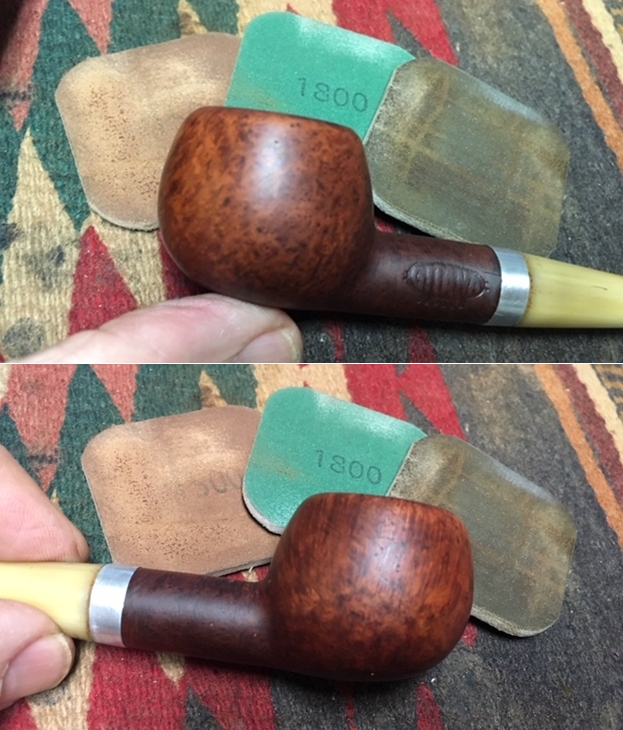
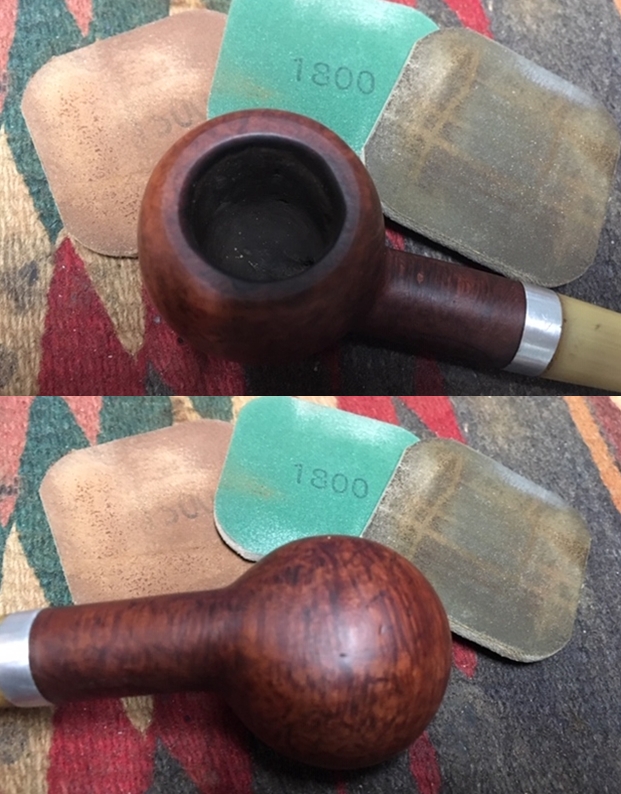
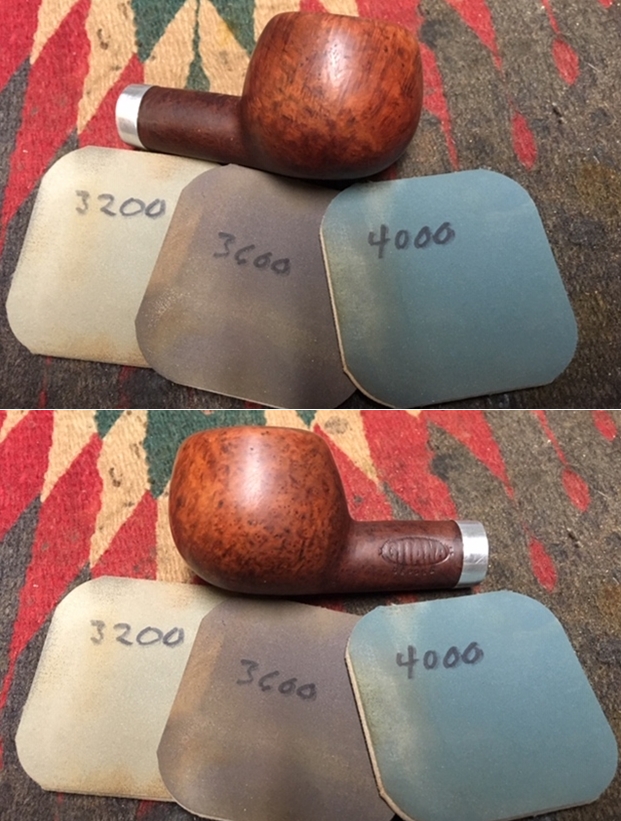
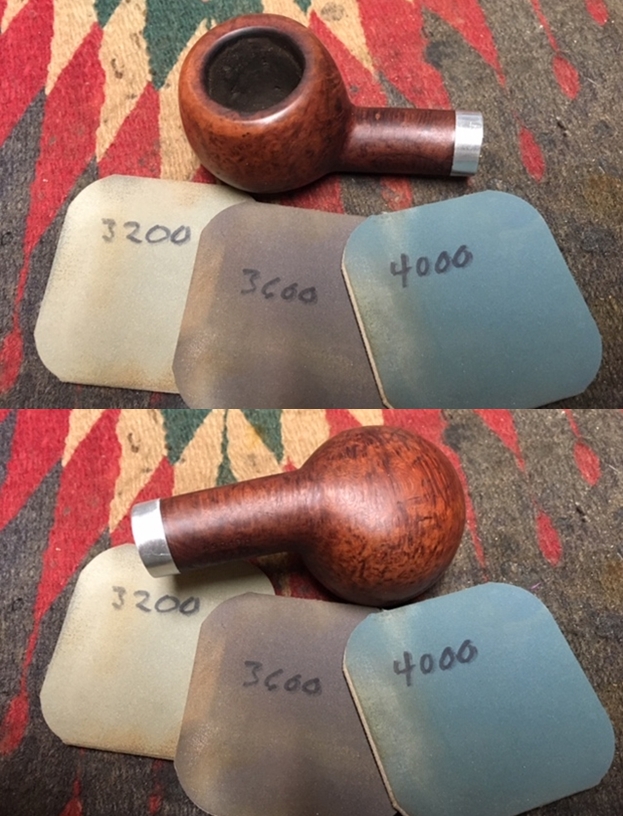
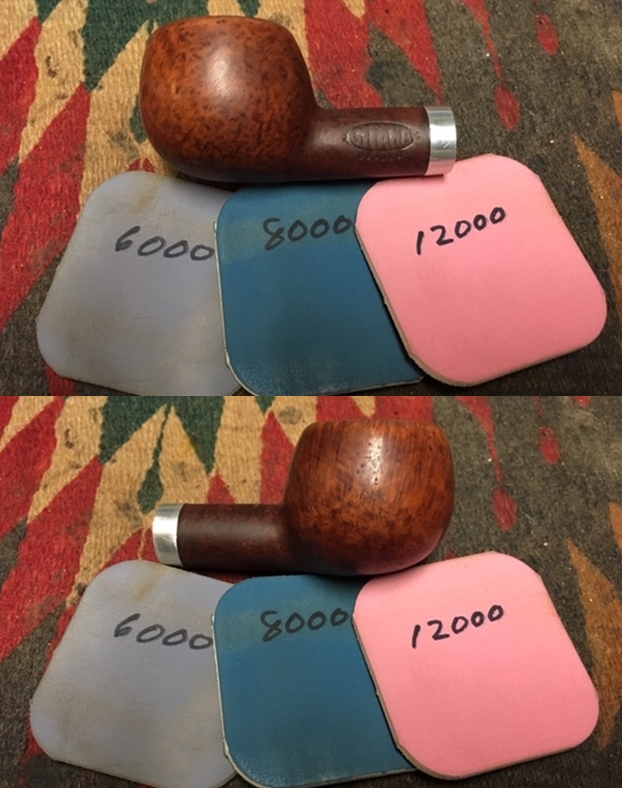
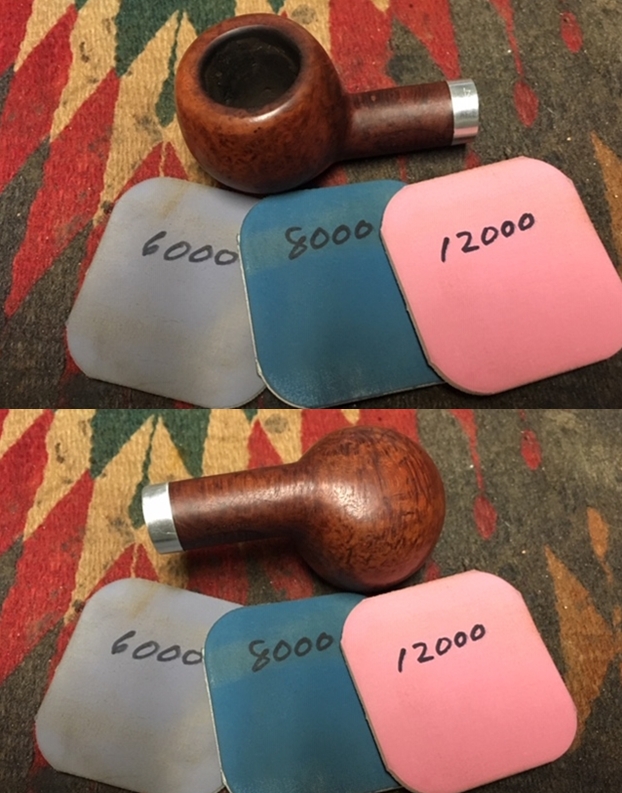
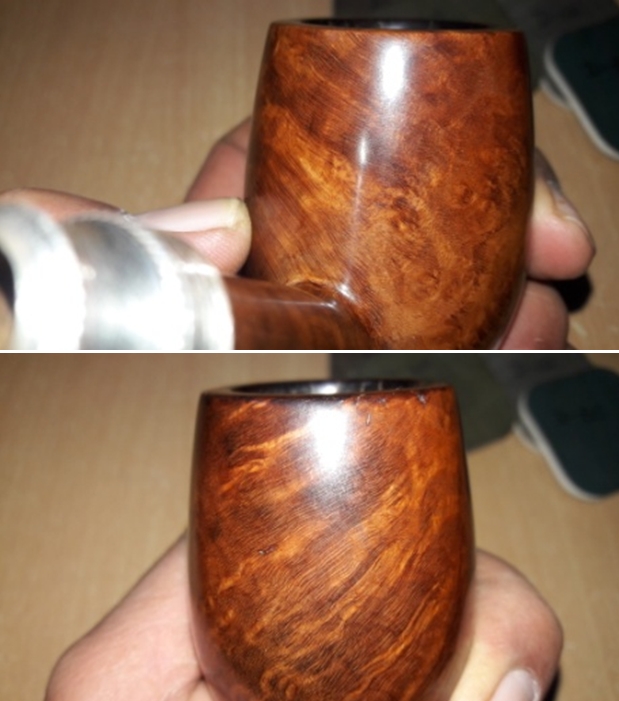
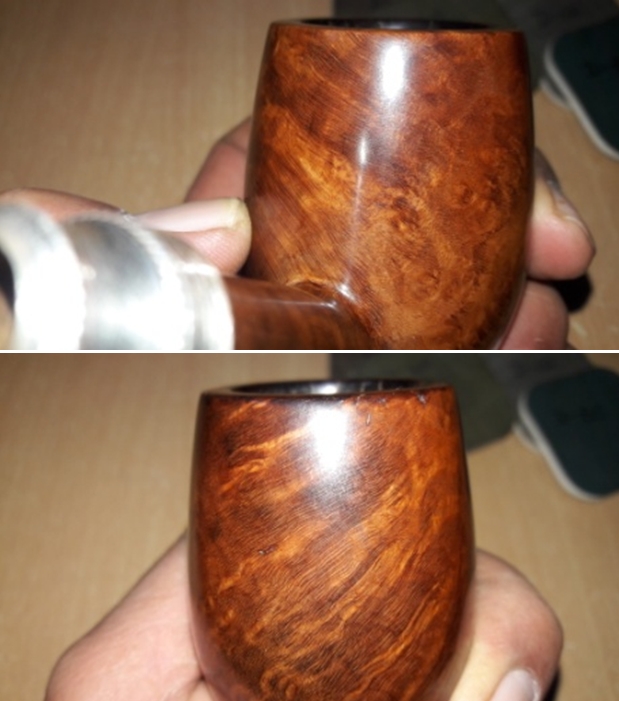
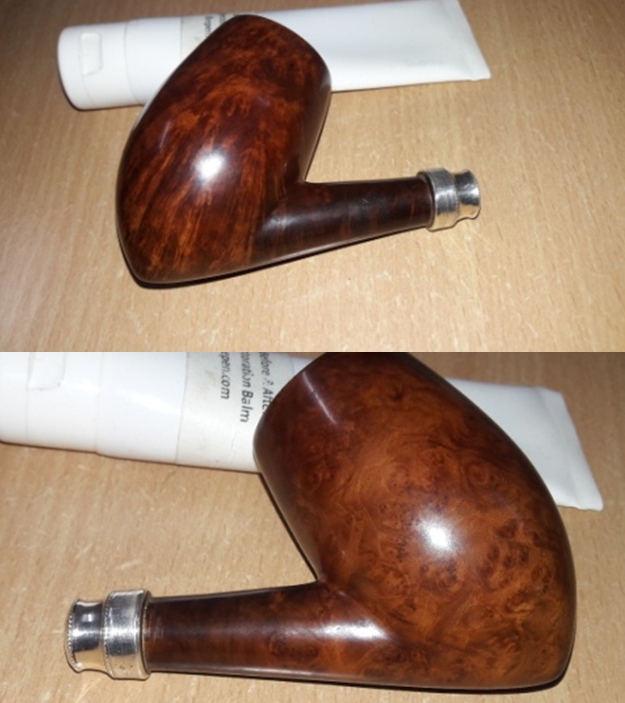
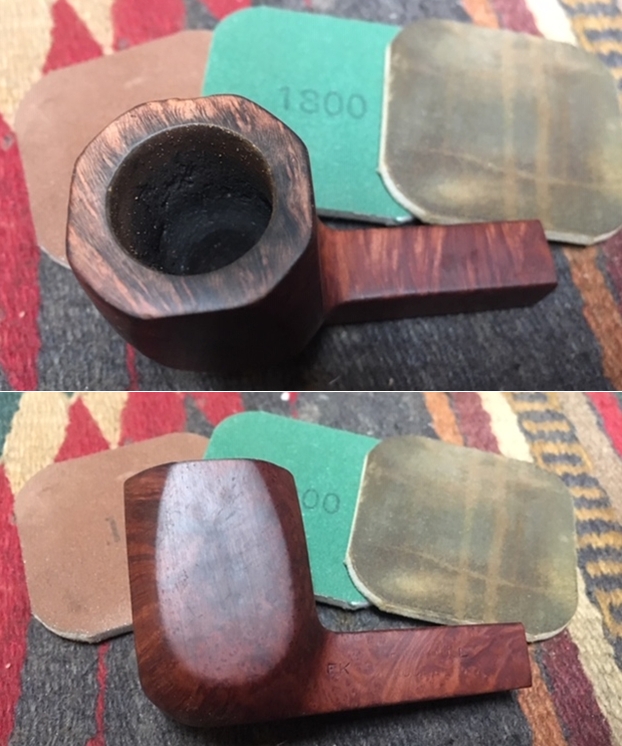
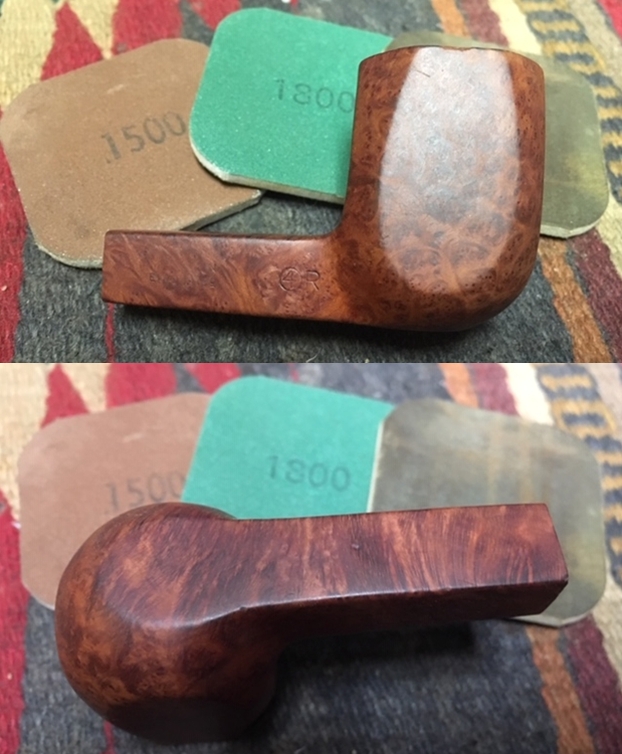
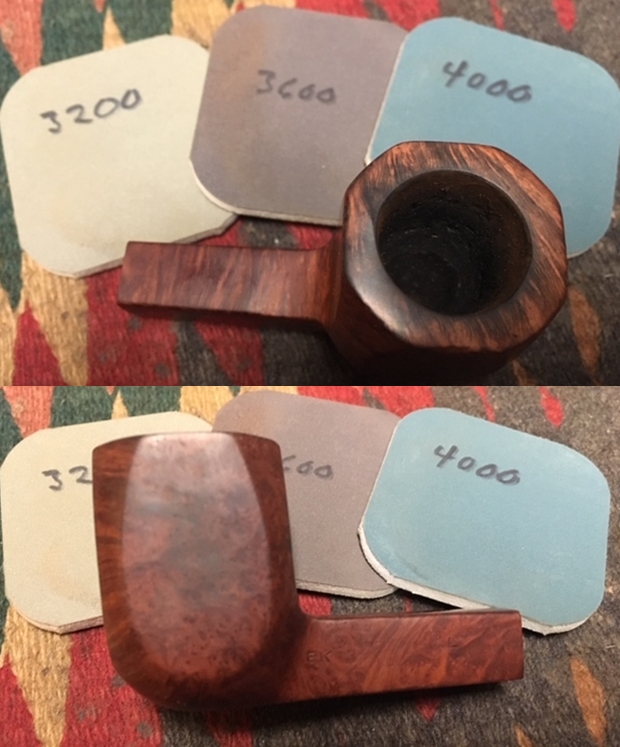
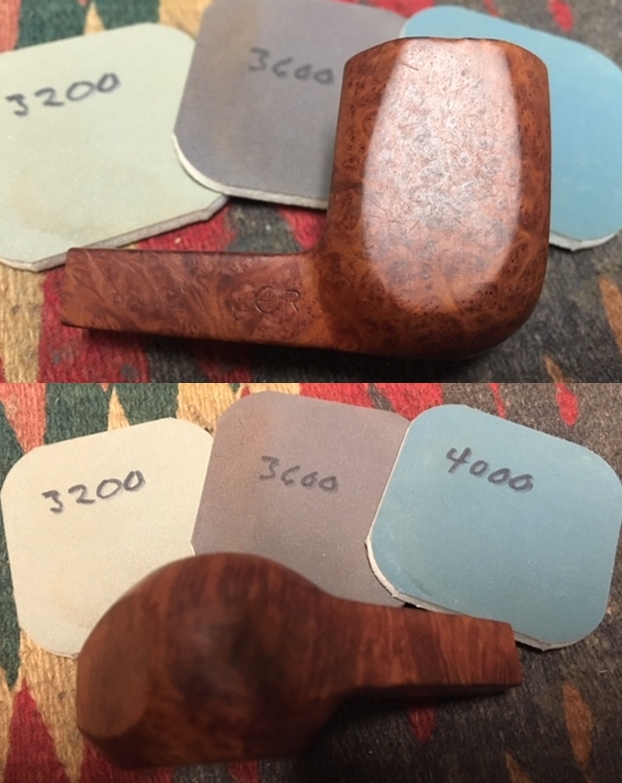
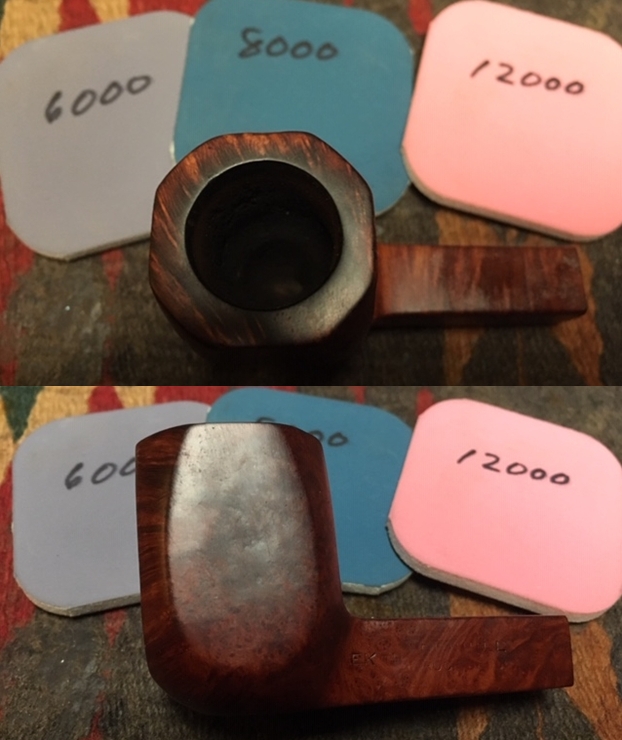
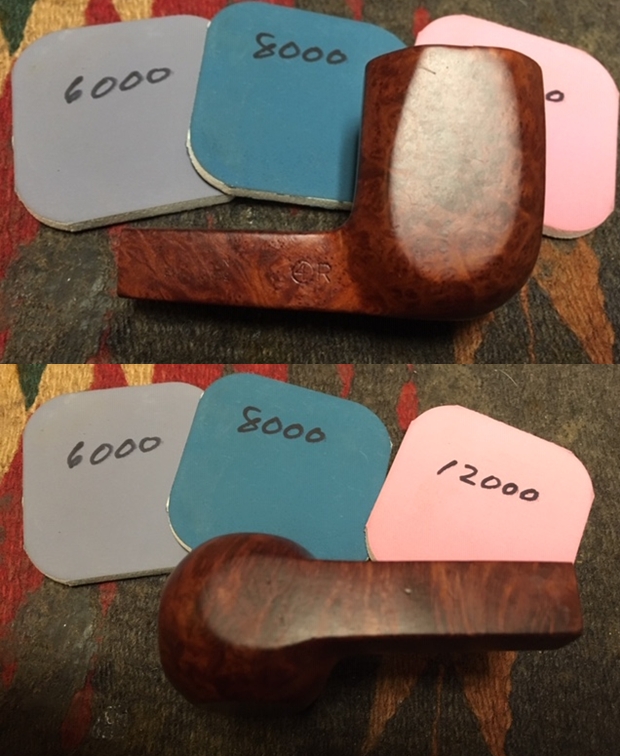
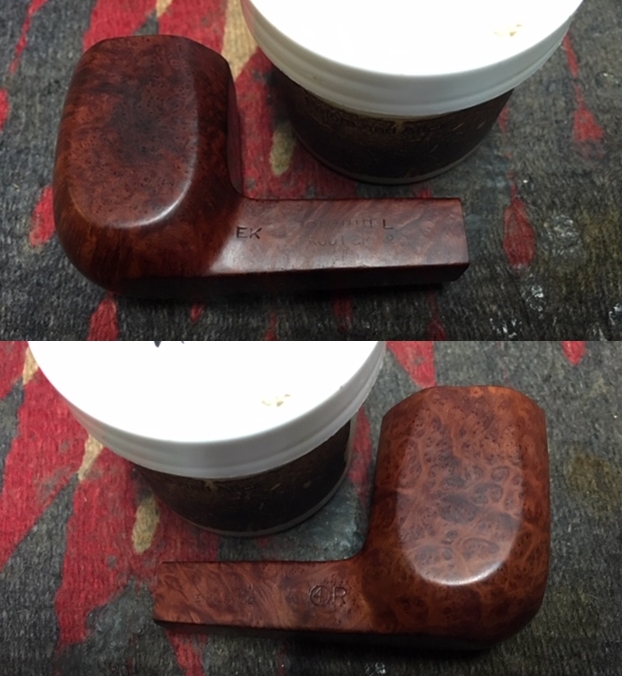
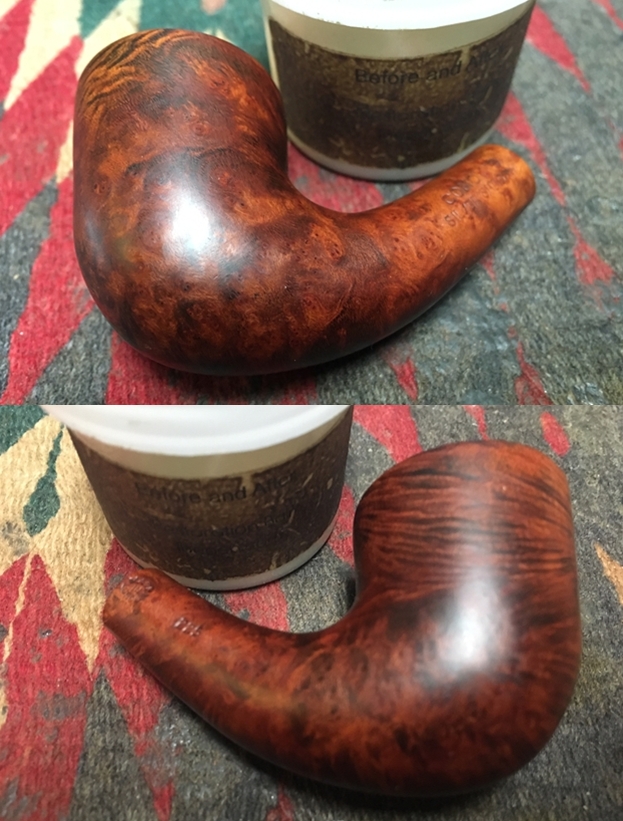
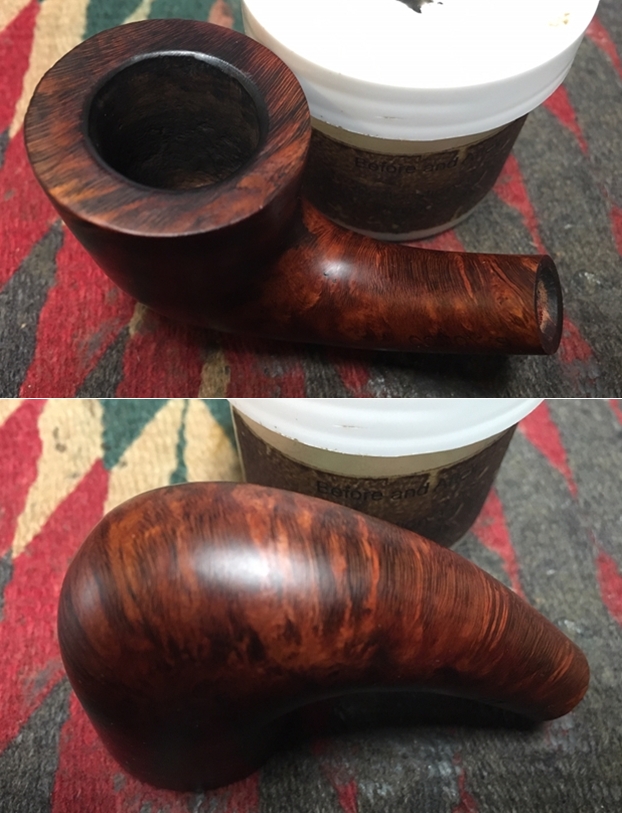
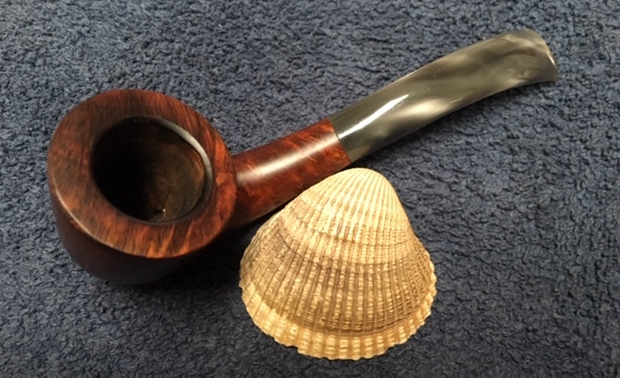
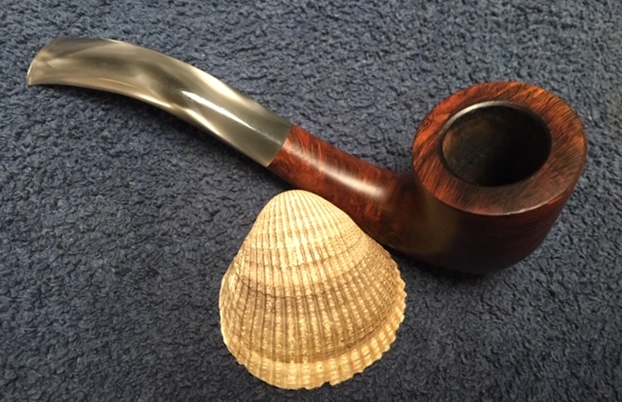
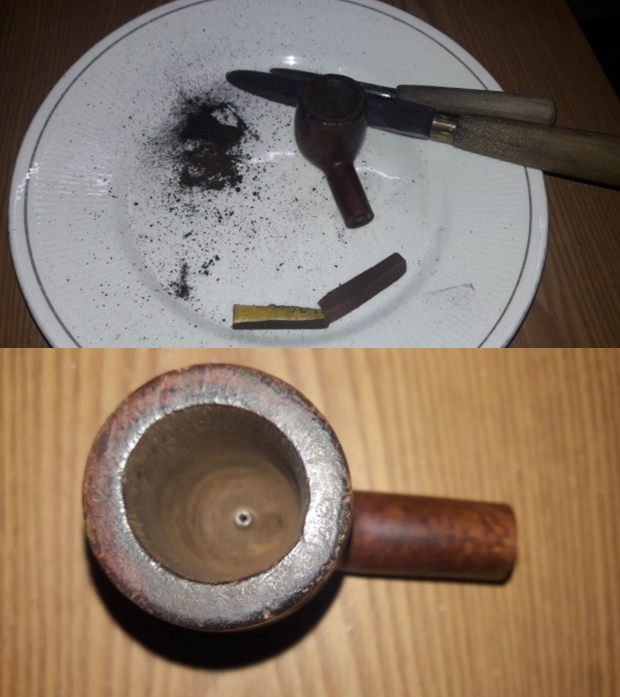
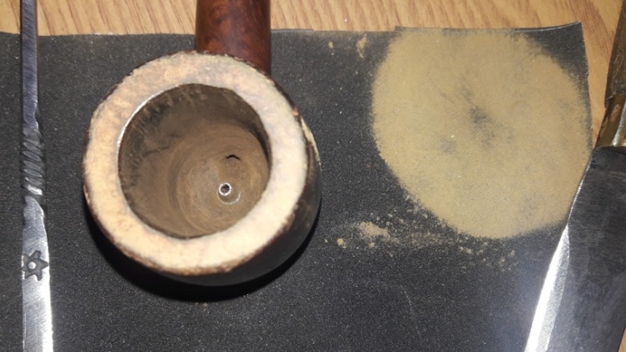
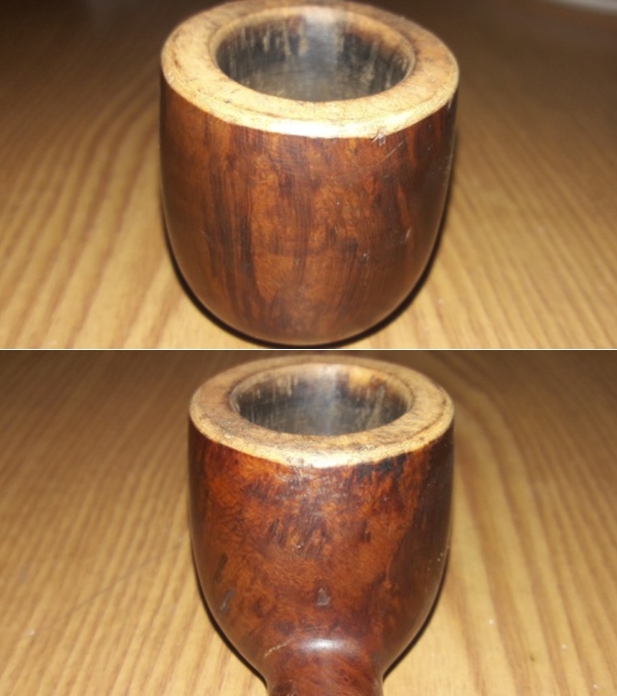
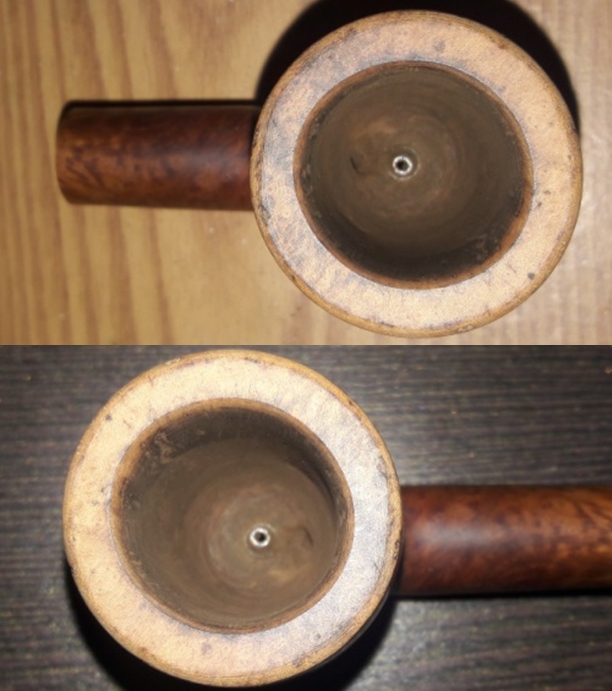
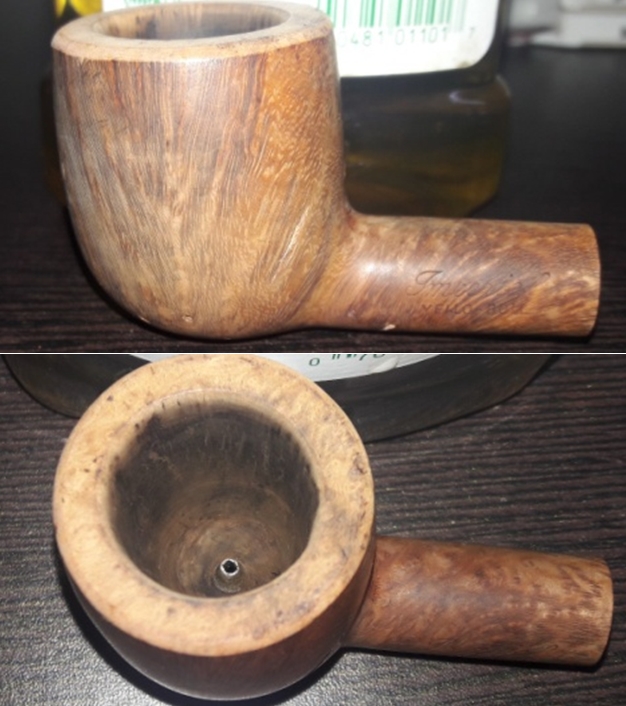
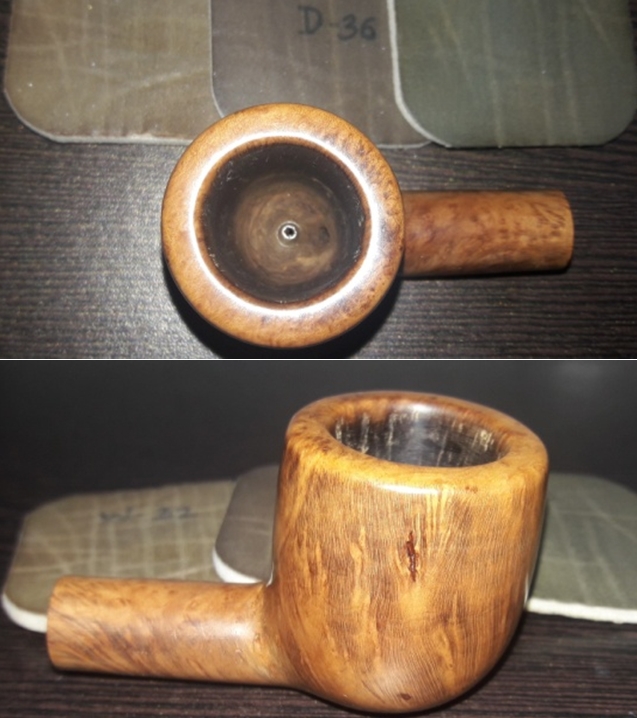
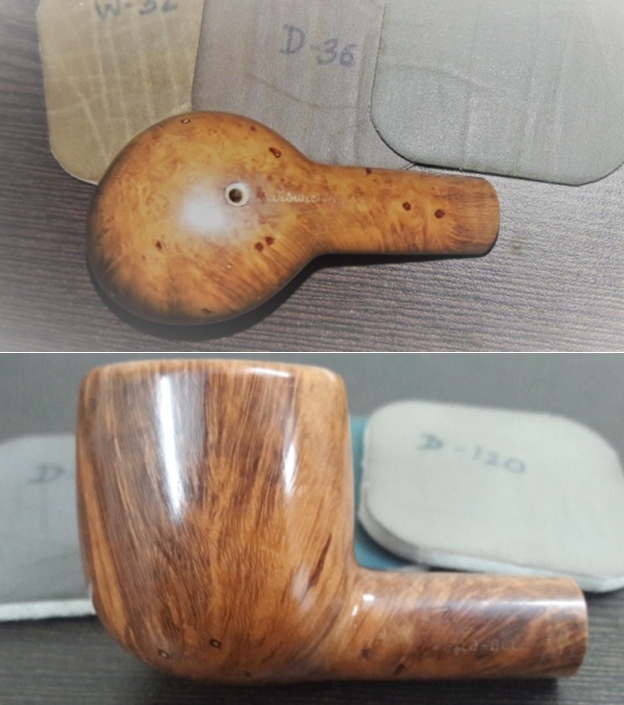
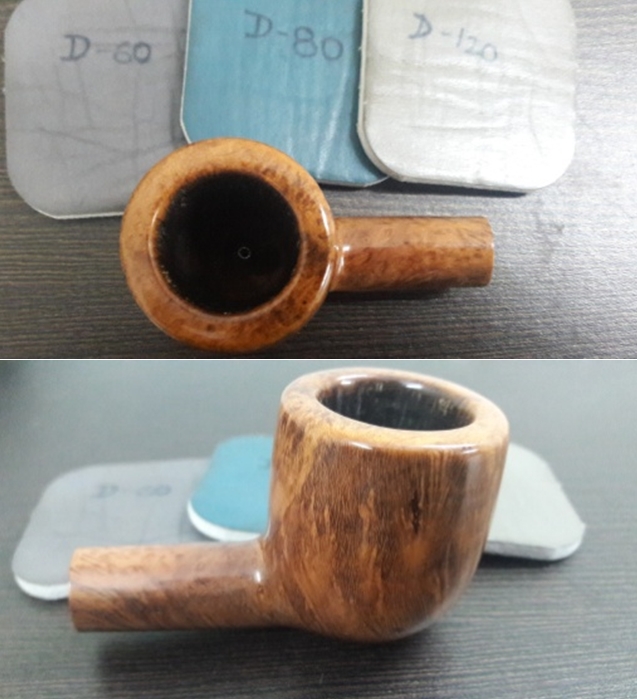
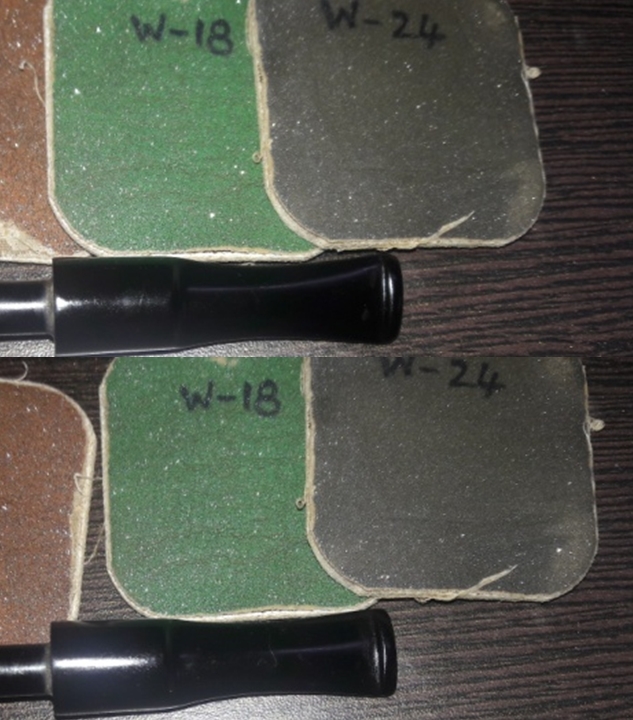
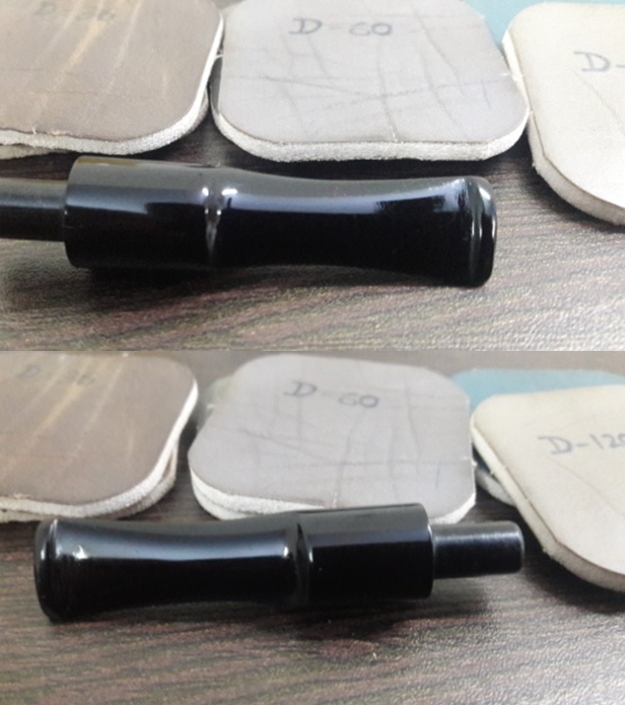
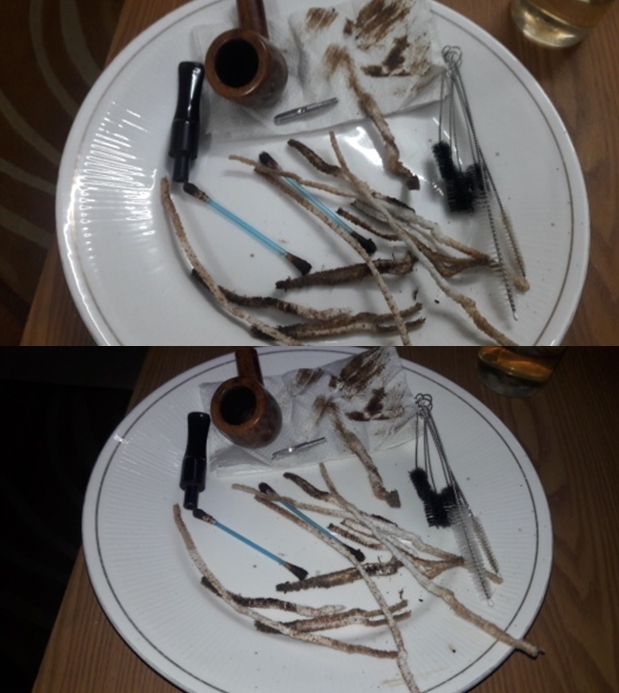
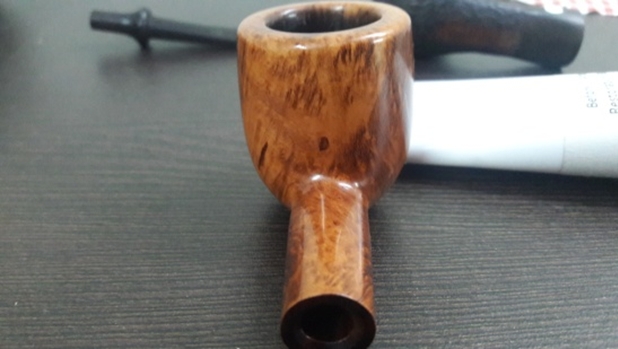
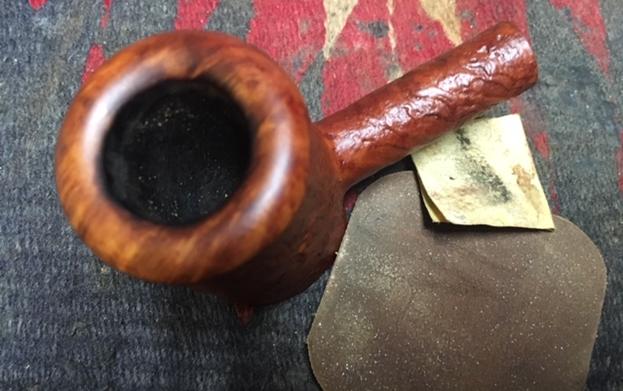
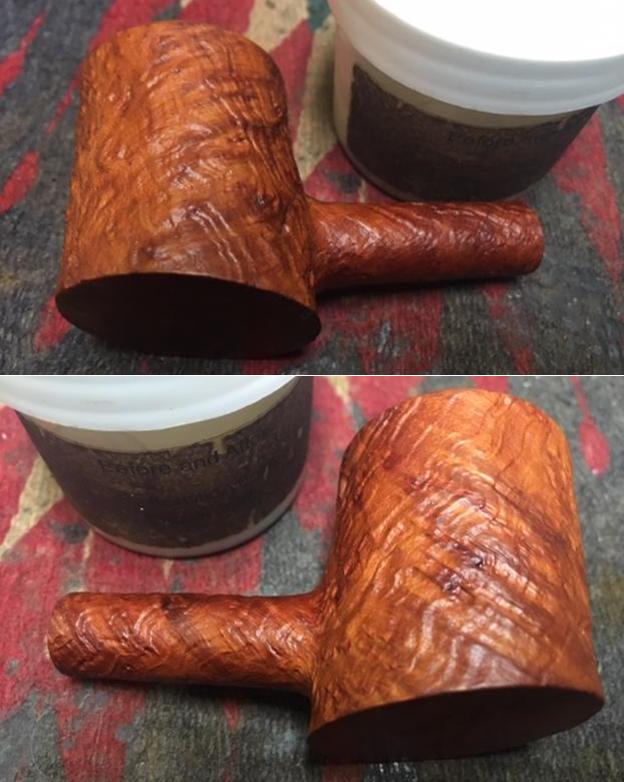
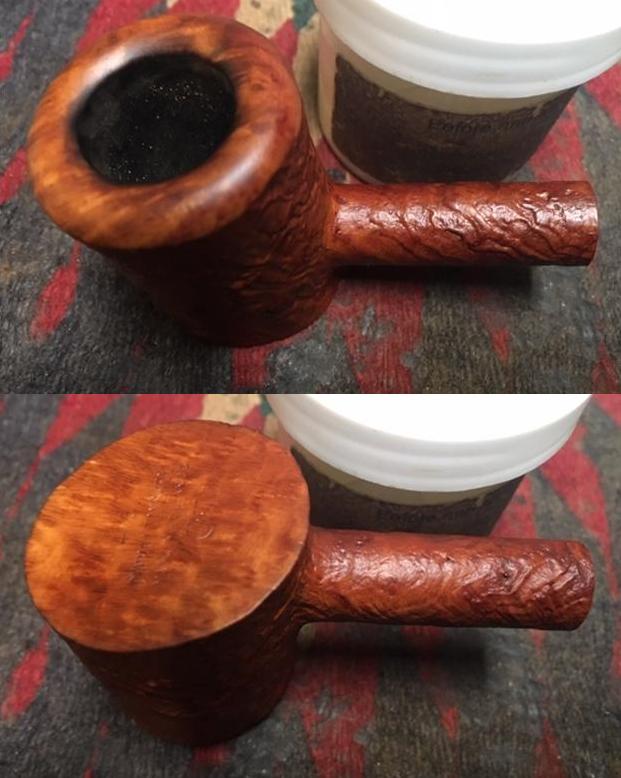
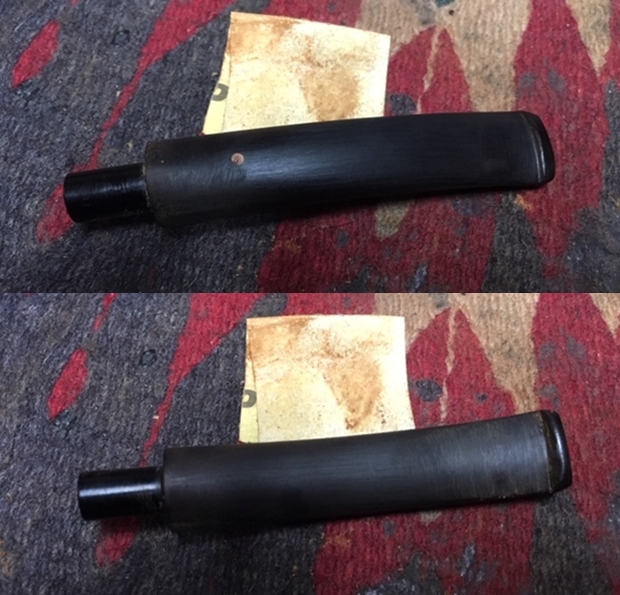
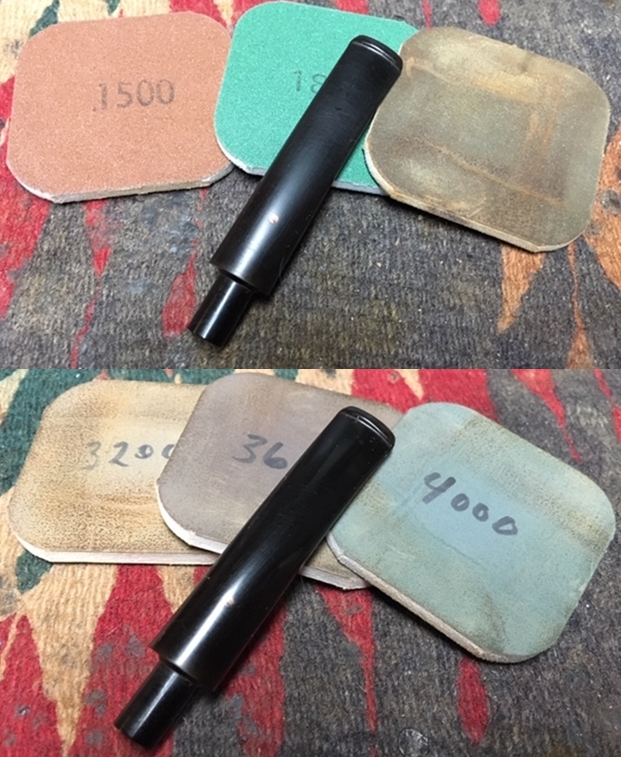
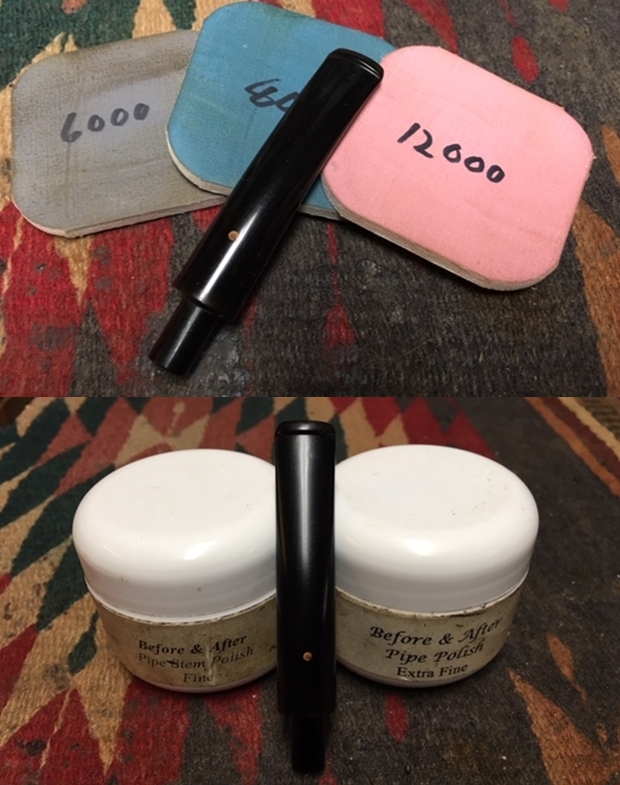
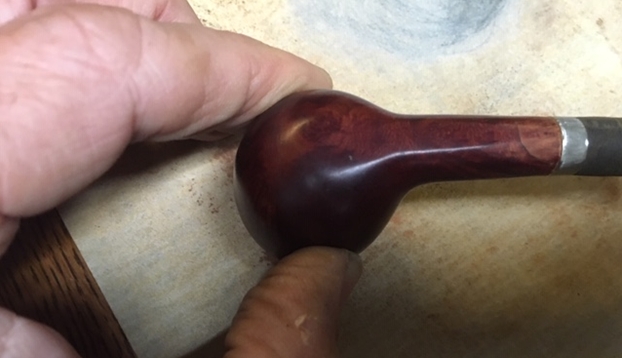
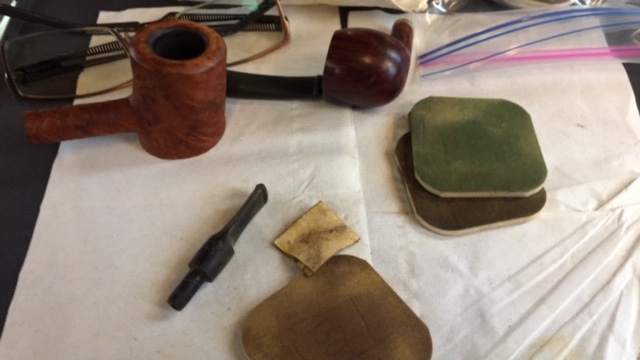
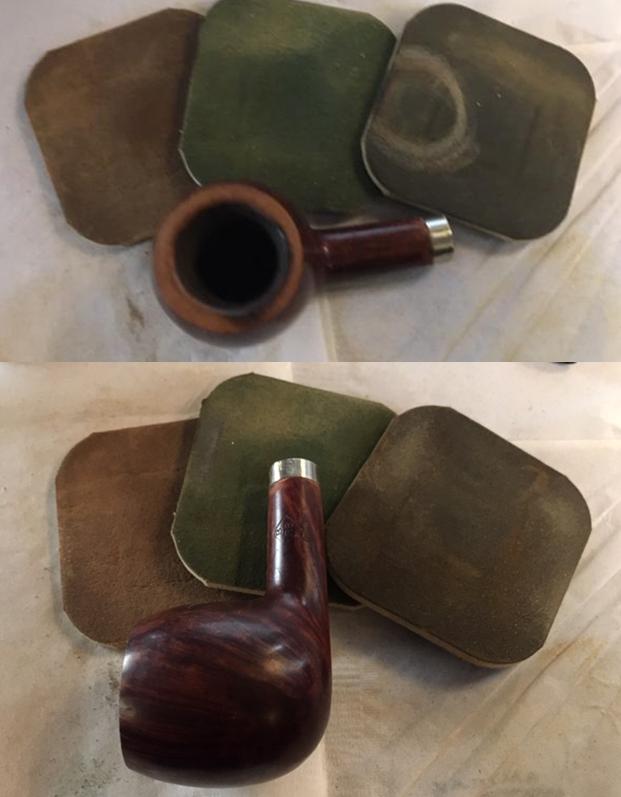
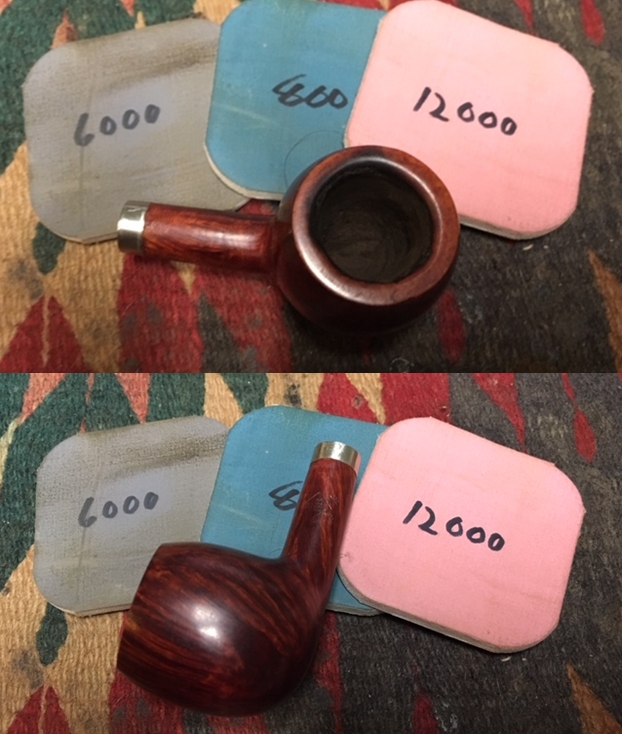
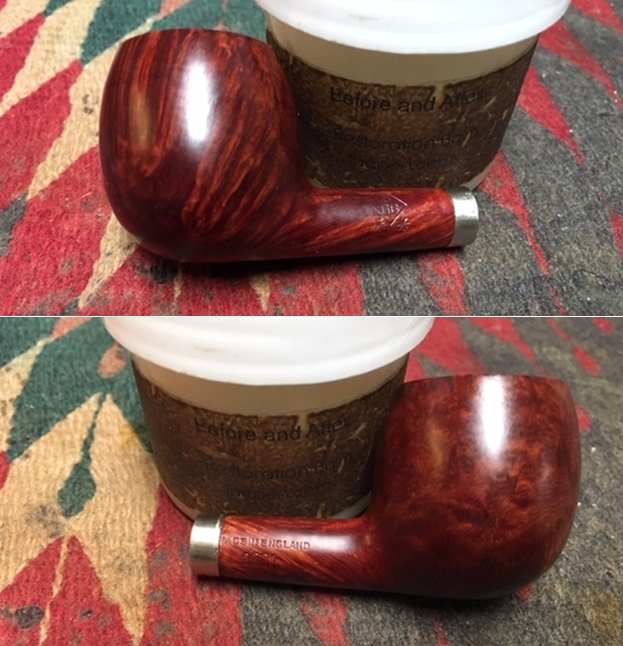
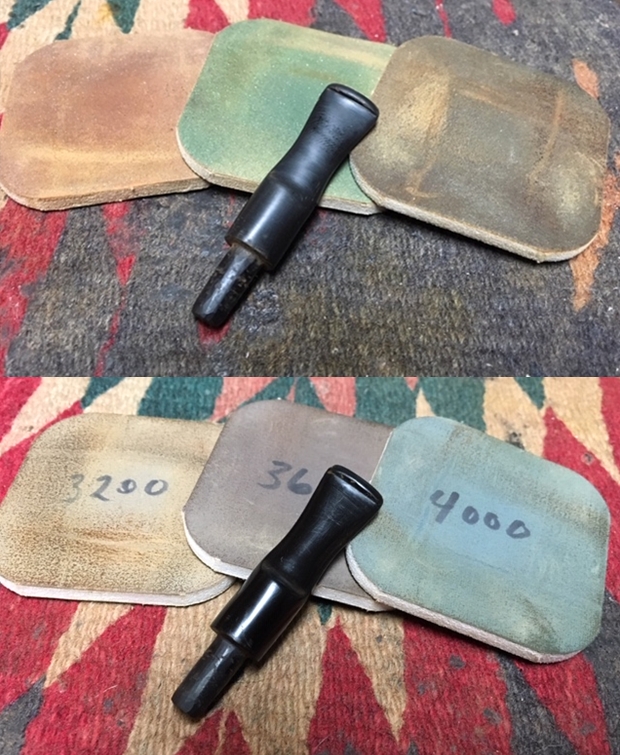
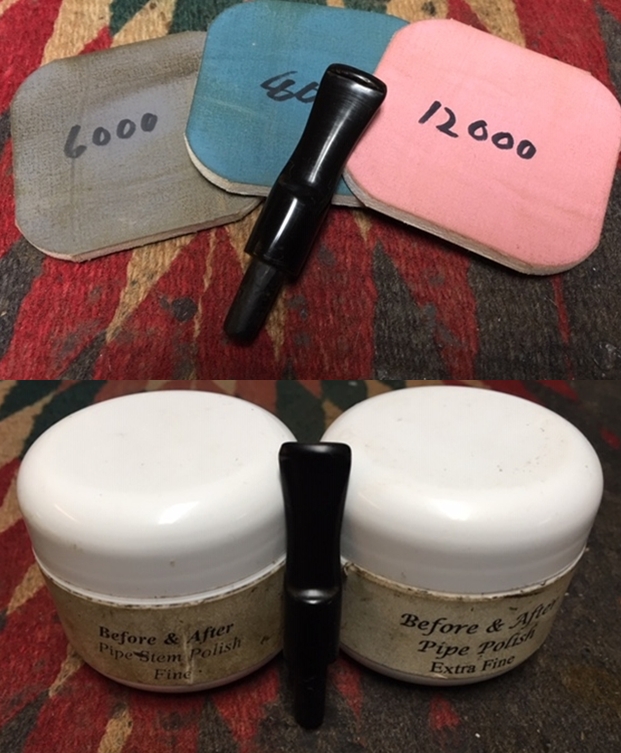
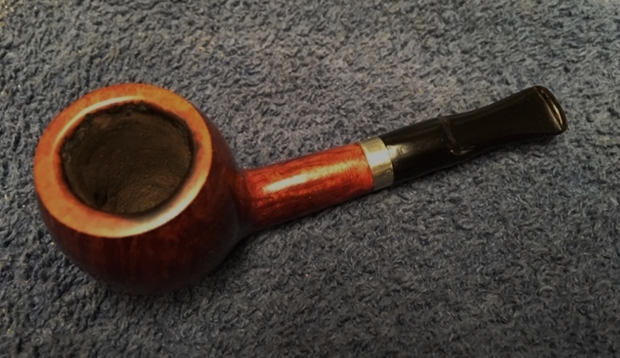
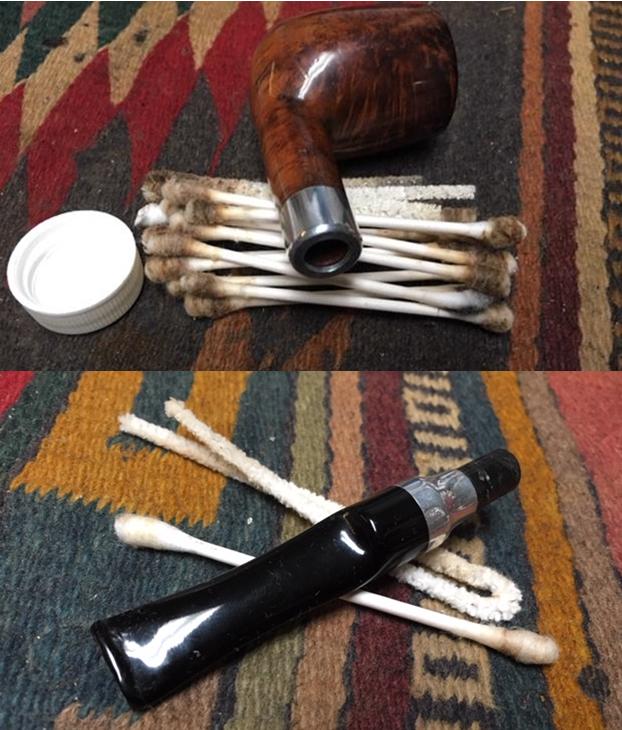
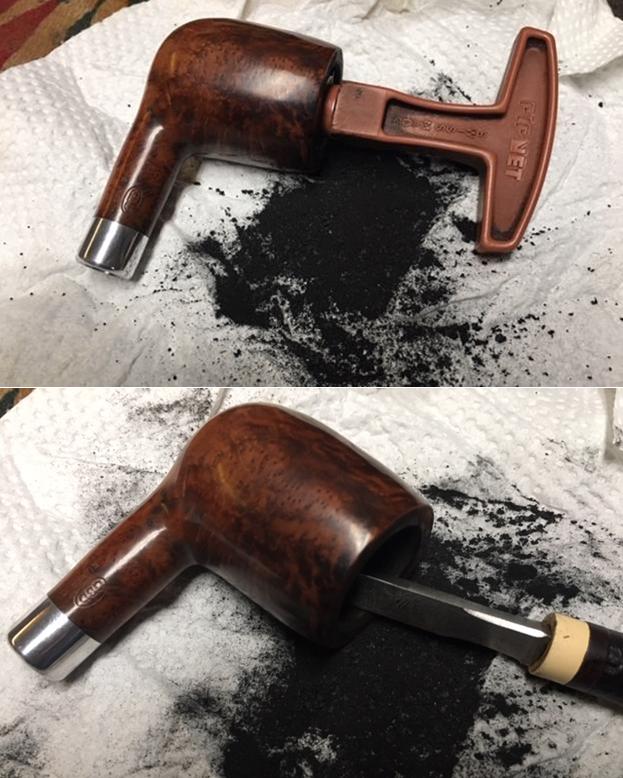
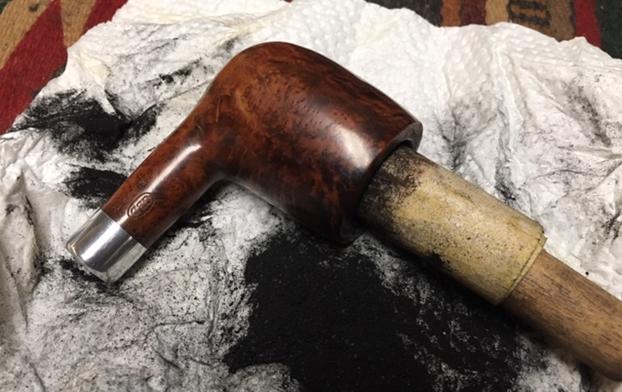
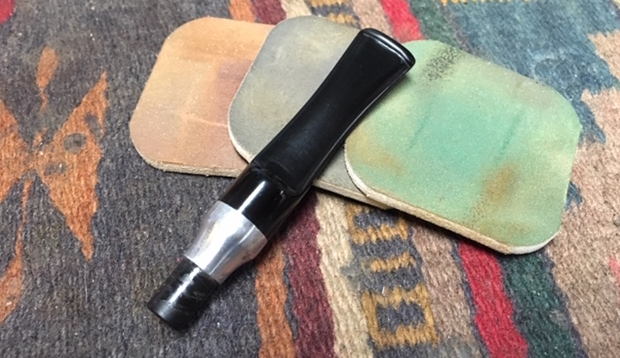
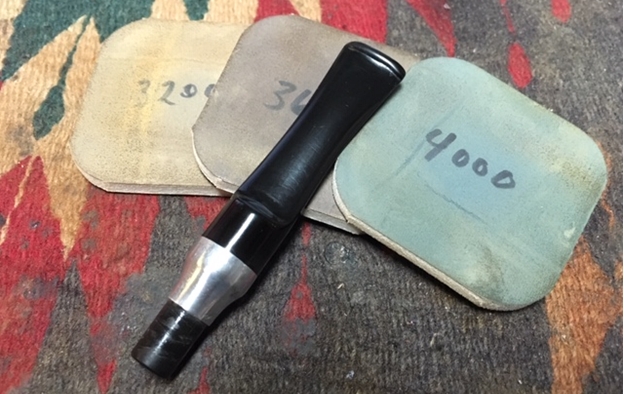
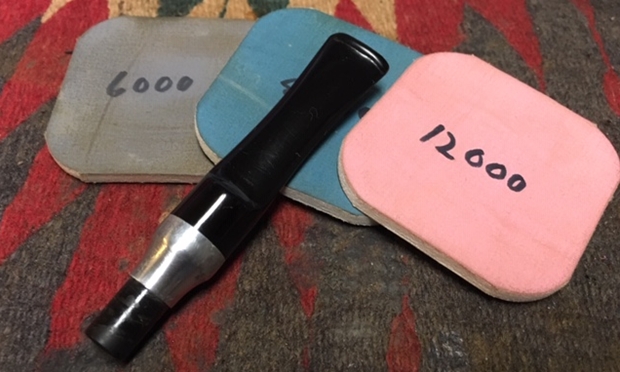
Since I had worked on the stem of the CHACOM simultaneously with that of this Sav, the process and difficulties were the same. I would request those interested in knowing the travesties I encountered and overcoming these, to please read the write up on the stem repair of CHACOM PANACHE #44 (https://rebornpipes.com/2018/08/26/chacom-panache-44/). Here are the progressive pictures of the restoration process. Having finished the stem repair (some imperfections are seen, but cannot be discerned in person), I turn my attention to the stummel. I reamed out the chamber using a Kleen Reem pipe reamer and fabricated knife. I removed the complete cake from the chamber. I further sanded down the walls of the chamber with a 220 grit sand paper to smooth the walls and took the cake back down to the bare briar. I gently scraped out the little overflow of lava from the rim top.I cleaned out the internals of the shank with pipe cleaners and cue tips dipped in isopropyl alcohol. I wiped the inside of the chamber with cotton swabs dipped in alcohol. There was very little amount of cake and the shank was pretty clean too. It appears that though the pipe was well smoked as is apparent from the stem condition, it was well cared for.I cleaned the stummel with undiluted Murphy’s oil soap and a tooth brush. I washed the stummel under running water and dried it using paper towels and soft absorbent cotton cloth. Once the stummel had dried, I felt that the bowl was still appearing dull and lackluster. The grains, though visible, needed to be highlighted. To achieve the desired results, I sanded the stummel with micromesh pads, wet sanding with 1500 to 2400 grit pads and dry sanding with 3200 to 12000 grit pads. The rim top was also sanded down with micromesh pads to remove/ reduce the darkened areas. I wiped the bowl with a moist soft cotton cloth to remove the sanding dust after each pad. The stummel now looks beautiful with the grains on full display. I finished the bowl by rubbing “Before and After Restoration Balm” with my hands and polished it with a soft cotton cloth. The bowl now appears to be alive and the grains pop out and are on display to be enjoyed. This pipe, along with the CHACOM, will always find a place of pride in my collection for being first major stem repair project. The finished pipe is shown below.

Chacom Panache #44


Blog by Paresh Deshpande

I have embarked on a journey into the wonderful, invigorating and leisurely world of pipe restoration and want to try out and address as many issues that one may encounter when dealing with an old, used and also abused pipes. Though there are a large number of old and vintage pipes that I have inherited, I went ahead and purchased two pipes, one is a CHACOM PANACHE # 44 and the other is a SAVINELLI SILVER, for gaining hands-on experience in stem repair. The stems on both these pipes have large gaping hole near the button end, exposing the stem’s airway. I shall be working on the stems of both these pipes simultaneously while the stummel will be worked on separately. The write up on both, though separate, is being uploaded at the same time so as to maintain continuity.

Even though I had purchased this pipe to practice repairing a stem bite-through, what really caught my attention was the beautiful coral like rustication on the bowl and shank which could be seen on some high end pipes from equally higher end brands. Through all the dust and grime, the beautiful contrasting stains between the lighter brown raised rustication and darker hued depressions makes for an eye catching finish. On the smooth surface at the bottom of the shank, it is stamped “CHACOM” in an artistic hand over “PANACHE” in block capital letters. This is followed by the shape number # “44” at the edge of the shank where it meets the stem. The stem bears the double “C” logo stamped on the left side of the stem towards the tenon end.I gleaned following info from Pipedia to know more about the brand of this pipe. It is reproduced below (https://pipedia.org/wiki/Chacom):

1825 : Well before the discovery of briarwood the COMOY family manufactured pipes in the small village of Avignon, near to Saint-Claude, mostly in boxwood for the “Grumblers” of the Army of Napoleon. 1850 : Birth of Henry COMOY, founder of the brand.
1856 : Discovery of briarwood and particularly the special treatment it required for the making of pipes. Saint-Claude becomes the birthplace of briar pipe manufactures and the world capital of pipe-making.
1870 : Henri COMOY, prisoner of war in Switzerland meets his cousins the Chapuis and ruminates the idea of an association.
1879 : Henry COMOY emigrates to London with some of his technicians from Saint-Claude and establishes the first English pipe factory in England H. COMOY & C° LTD. The Saint-Claude factory supplies them with briarwood and pipe bowls.
1922 : After the First World War the association COMOY and CHAPUIS is realised and the Saint-Claude factory becomes CHAPUIS COMOY & Cie.
1924 : Death of Henri COMOY. His sons Paul and Adrien assume the direction of the factories in Saint-Claude and London assisted by their cousins Emile and Louis Chapuis.
1928 : London now able to produce their own pipes, and in order to develop the Saint-Claude factory, the brand CHACOM is created, using the first three letters of the COMOY and CHAPUIS families. Up till 1939 CHACOM was offered only in France, Belgium and Switzerland in order not to embarrass the COMOY pipes which had the same shapes and qualities.
1932 : The world economic crisis reaches Saint-Claude. To weather this problem Chapuis Comoy & Cie joins with another company under the name of LA BRUYERE, forming the biggest pipe concern in the world with 450 workpeople. Big trucks were needed to transfer the briar blocks from the drying shed to the factory.
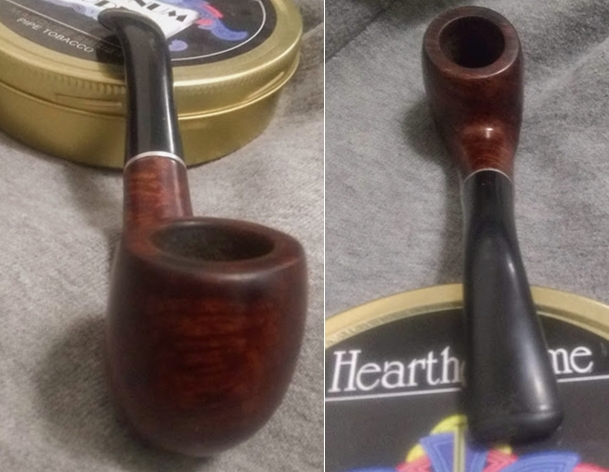
1945 : After the Second World War CHACOM assumes its entire commercial liberty and launches a complete and modern range of pipes.
1946 : Chacom becomes the principal brand in France and Belgium.
1947 – 1948 : CHACOM, number one in Scandinavia, Germany, then United States…
1957 : In face of the commercial preponderance of the brand CHACOM the company La Bruyère returns to the name of CHAPUIS COMOY & Cie.
1964 : Death of Adrien COMOY. His son Pierre succeeds to him in London. Mr REED is the Chairman and Managing Director in Saint-Claude.
1965 : First French brand named pipe in JAPAN
1971 : Having recovered its independence from COMOYS of London, Yves GRENARD, second cousin of Pierre COMOY, takes over the Direction of Chapuis Comoy & Cie and at the same time the exclusive sale of H. COMOY & Ltd, in France.

 I further searched pipephil.eu for additional information and the same is reproduced below:

The brand Chacom turned up (1934) after fusion of Chapuis-Comoy with La Bruyère. Yves Grenard (†2012), second cousin of Pierre Comoy headed the company from 1971. He was responsible for Chapuis Comoy’s recovering its independance from Comoy. His son Antoine Grenard took over the direction of the company in 2007. Chacom is a brand of Cuty-Fort Entreprises (Jeantet, Vuillard, Jean Lacroix, Ropp …).
INITIAL VISUAL INSPECTION

The bowl is caked but not heavily. The rustication on the rim top is filled with tars oils and grime. The finish is dull with dirt and dust filling the rustication. This will be cleaned with Murphy’s oil soap and hard bristled tooth brush.The mortise is filled with gunk and debris. This will need to need to be cleaned.The stem is heavily oxidized with heavy calcification towards the button end in the bit area. There is tooth chatter and bite marks on the top surface of the stem near the button end. However, the biggest damage can be seen on the lower surface of the stem. There is a large through and through hole in the stem exposing the airway. Thankfully, the top surface is complete with only tooth marks and tooth chatter. This reconstruction will be the biggest challenge since I have never attempted this restoration before. The button is badly damaged and will need to be reconstructed.THE PROCESS

In this restoration project the stem repair posed the biggest challenge. I searched the net, viewed YouTube videos and my most reliable website “rebornpipes.com” and read over each and every blog available on the website on stem repairs and took down notes and the steps involved. I even discussed with Mr. Steve. Now armed with this acquired knowledge, I embarked on my quest to gain knowledge through personal experience.

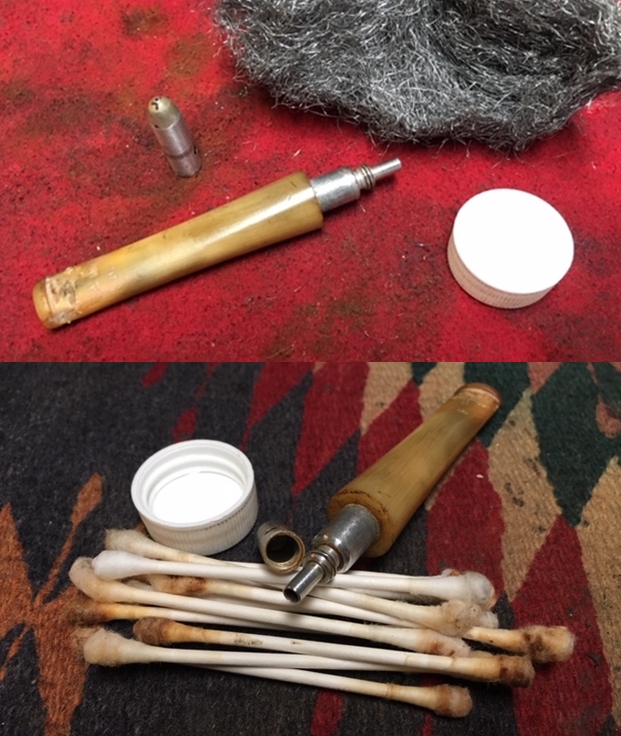
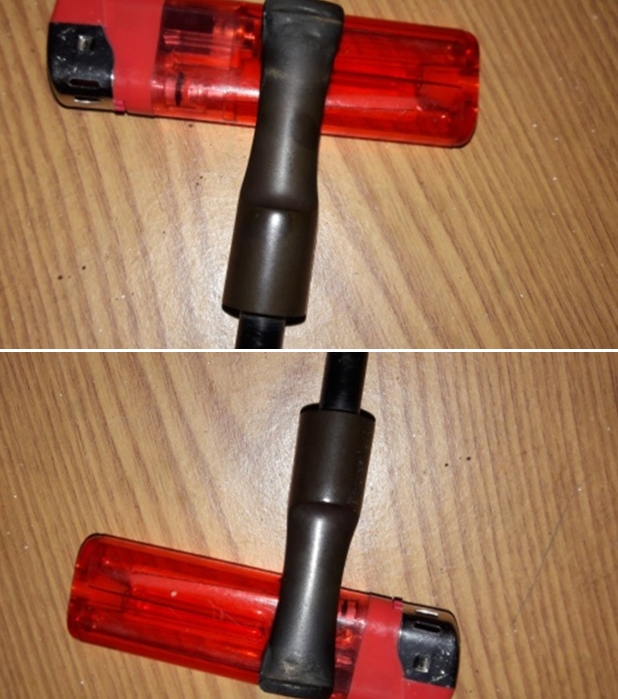
The first thing I did was to paint the upper and lower surfaces of the stem with the flame of a Bic lighter to raise the tooth chatter to the surface and also raise the edges of the hole to create an even surface. Next, I cleaned the surface of the stem with isopropyl alcohol to get rid of all the dirt, oils and tars from the surface. I also had the internals of the stem thoroughly cleaned using pipe cleaners, cue tips and alcohol.

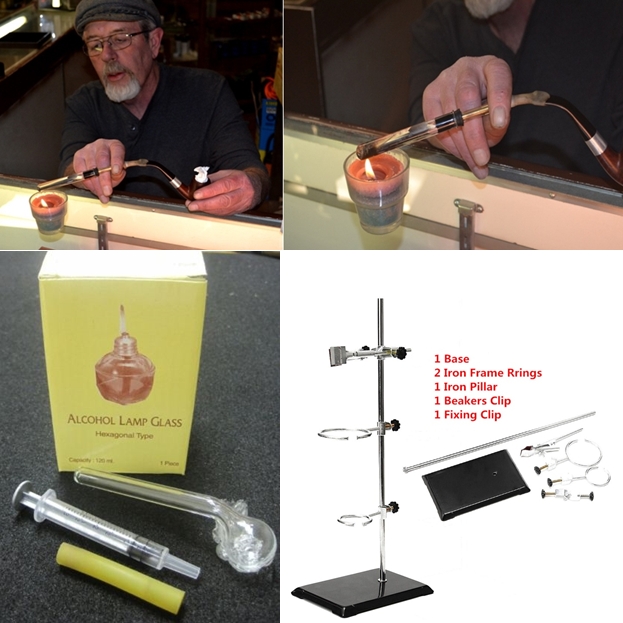
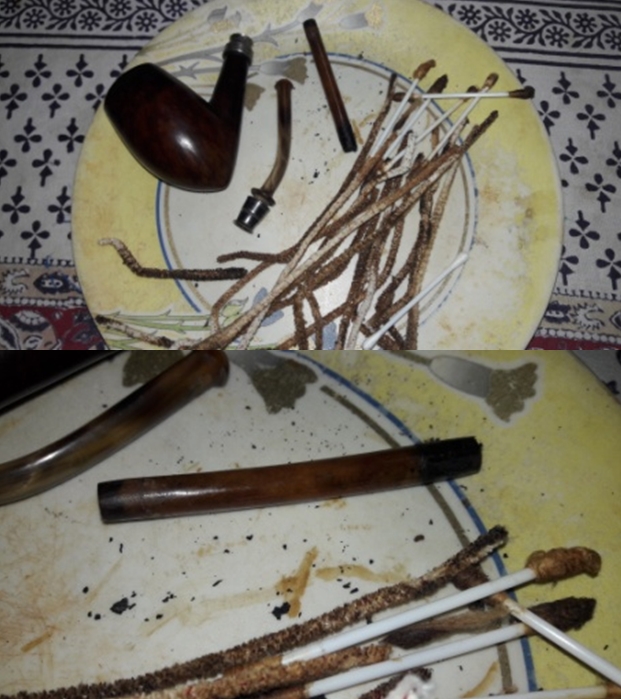
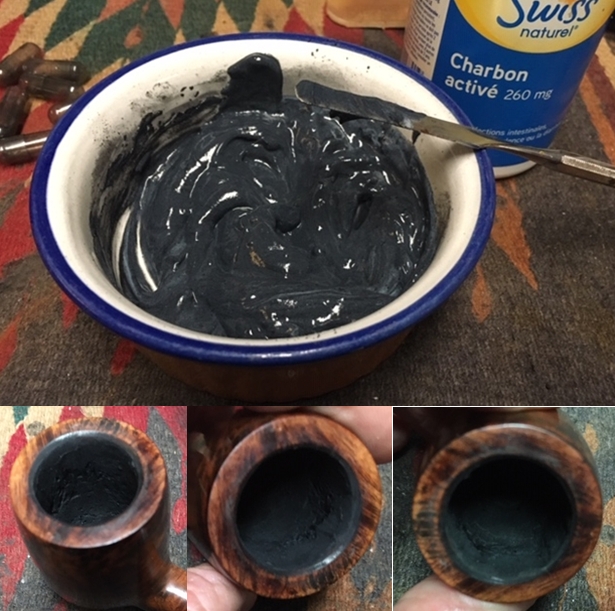
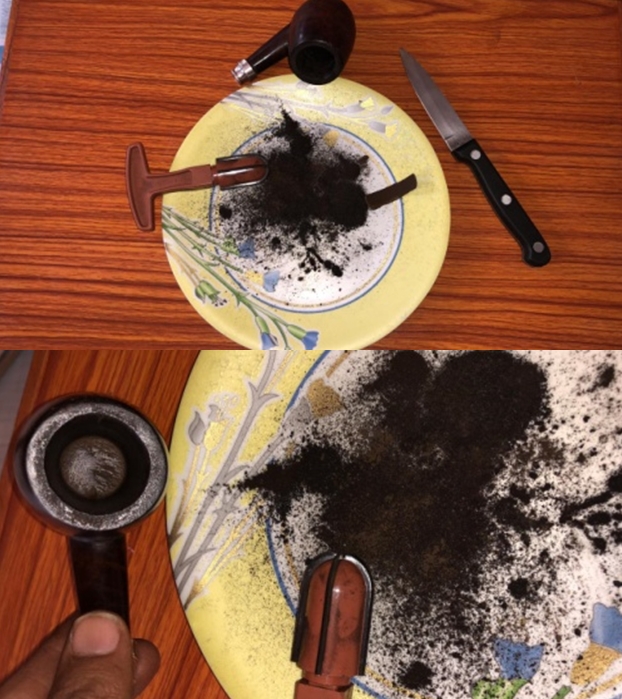
Once I was satisfied with the cleaning, I smeared a generous amount of Vaseline onto regular pipe cleaners and inserted it into the airway, ensuring the pipe cleaners are fully underneath the hole. This helps in ensuring that the airway remains open. Vaseline coated pipe cleaners prevents the mixture of CA superglue and activated charcoal from percolating down into the airway and clogging the airway.The next step in the process of this repair is mixing of CA superglue and activated charcoal to the consistency of putty filler. Suffice to say that the consistency should be such that it should not be too runny but just sufficient to spread smoothly and evenly over the intended surface. First timers like me, do not worry too much, even I did not understand what should be the ideal consistency (LoL). From the pictures below, it is amply evident that I did not achieve the exact consistency I desired, but no issues, it still worked!!! Since the beginning of my journey into the beautiful and challenging world of pipe refurnishing, I am being faced with problem relating to glue. Maybe the hot temperate climate prevalent here is causing issues or the quality of glue itself is an issue. However notwithstanding the issues of glue, I was able to prepare a mixture of CA superglue and activated charcoal and applied it to the surface. I set it aside to cure overnight.I began by sanding the repaired/ filled areas using a flat needle head. It was not as easy as it seemed because when I began the process, as I sanded down the stem, I observed that the filling crumbled and dislodged from hole. Apparently, the filling was too dry.
I prepared a fresh mixture of CA glue and activated charcoal and applied it to area to be filled. After curing, when I tried to file it down, I realized that shiny dots were visible. On close observation, these tiny dots were air pockets which were trapped during application and subsequent curing. I discussed with Mr. Steve who advised me to fill the spots with glue only. I did so and let it cure for 2 days.I sanded down the fill and realized bigger air pockets were now exposed. It is unfortunate that I did not take pictures of these issues and processes as I was too engrossed and concentrating on getting the filling right.
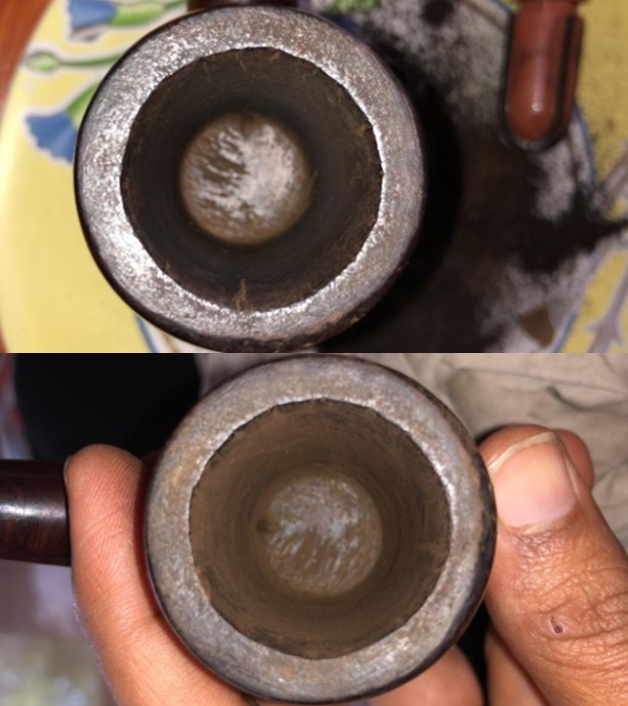
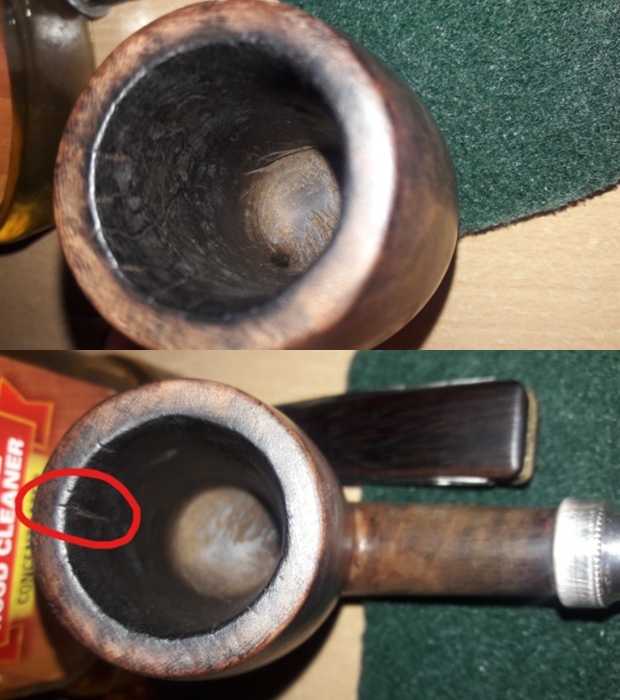
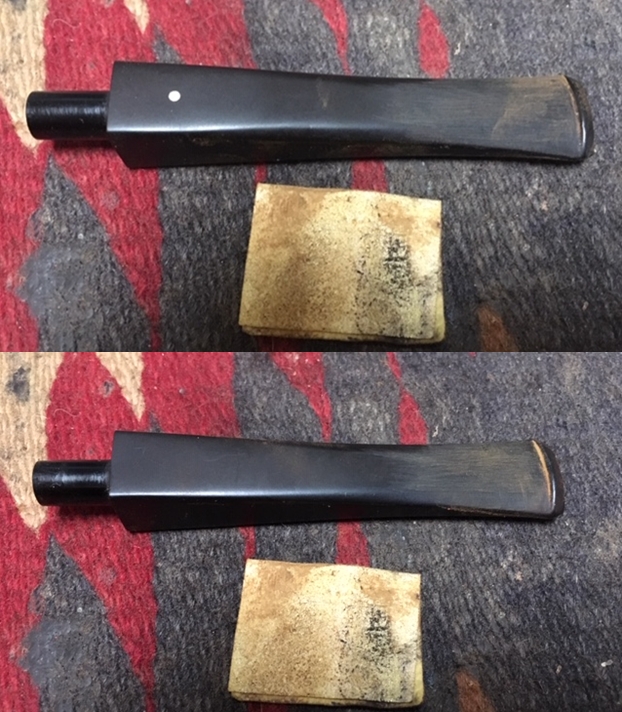
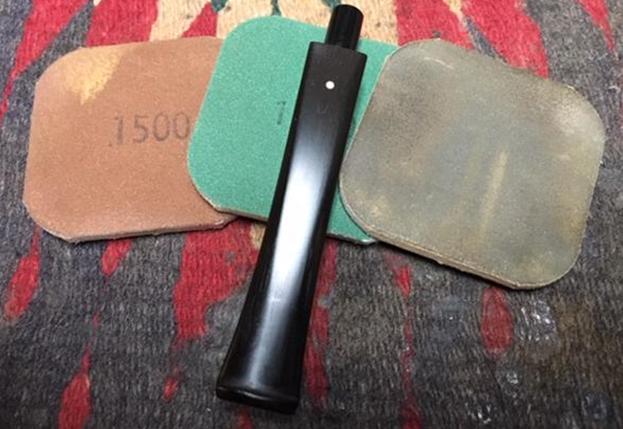
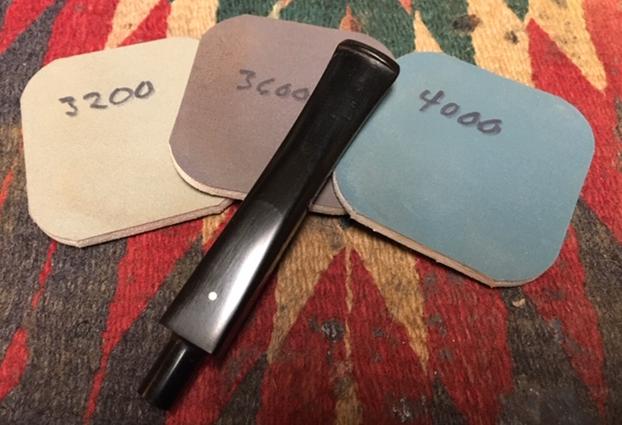
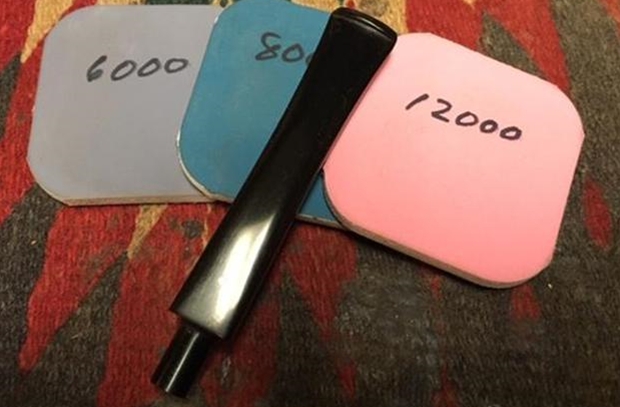
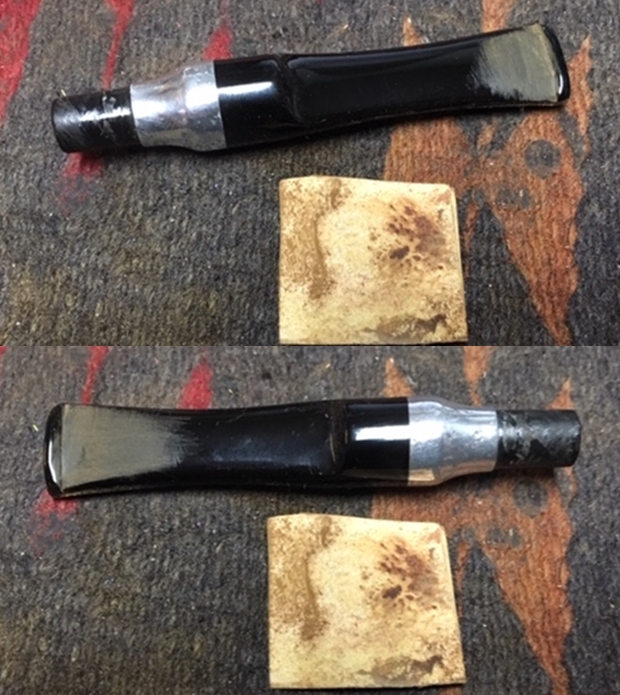
I again prepared a fresh mixture of activated charcoal and superglue and reapplied it to the stem surface and let it cure for 3 days since I was traveling.For this sanding, I took unusually long time taking frequent breaks to check the progress. I was very deliberate and used light hands. I used less of flat head needle file and more of 180 grit sandpaper. Finally, I was able to achieve a satisfactory fill. I further evened out the fill using 220 grit sandpaper, followed by 440, 600 and 800 grit papers. Now I am satisfied with the results of the fill.With the fill now evened out, I proceeded to sand the stem with micromesh pads, going through wet sanding with 1500-2400 pads and dry sanding with 3200- 12000 grit pads. I rubbed in Extra Virgin Olive oil after every three pads. The stem now has a nice shine to it and No Hole!! However, the finish is not as refined and minor imperfection can be seen in the finish, though not as glaring in person.With the issue of the stem now addressed, I turned my attention to the stummel. Using a Kleen Reem pipe reamer and fabricated knife, I removed the complete cake from the chamber. I further sanded down the walls of the chamber with a 220 grit sand paper to smooth the walls and took the cake back down to the bare briar.I cleaned the internals of the shank and mortise using regular and bristled pipe cleaners dipped in isopropyl alcohol and cue tips. I also wiped the internal walls of the chamber with cotton pads dipped in 99.9 % isopropyl alcohol. I use high proof isopropyl alcohol as it evaporates very rapidly and leaves no traces of odor or liquid behind to ghost your pipe.I cleaned the externals of the bowl with undiluted Murphy’s Oil Soap and tooth brush. Thereafter, the stummel was washed under running water and dried using a paper towel. I observed that the thin, delicate wire rustication on the rim top was still filled with oils and tars. To clean the rim top, I used a 000 grade steel wool with Murphy’s Oil soap to gently scrub out the dirt. I dried it with paper towels and a soft cotton cloth. Once the stummel had dried out, I rubbed a little “Before and After Restoration Balm “deeply into the coral rustication and also into the wire rustication of the rim top. I worked it deep into the rustication with a horse hair shoe brush. I polished the stummel to a deep shine by rubbing it down with a microfiber cloth. The raised portion of the rustication has a light reddish hue which contrasts beautifully with the dark brown coloration of the rest of the stummel. The completed pipe is shown below. Thanks for your valuable time spent in reading my amateurish attempt at pipe restoration.


Restoring a Svendborg Danish Hand Made Dublin 272 Barkentine


Blog by Steve Laug

I was emailing back and forth with John, a pipeman in Edmonton who wanted to sell of his pipes. He was cleaning up things and thought he would see if I was interested in them. He said that he had several Baris and a couple of Svendborgs that were in the lot and he wanted to move those out. He sent me photos of the pipes he had and we soon struck a deal. Since we were both in Canada it did not take long for the package to make its way to me. I opened it and went through his pipes to see what I had to work on. There were some pipe racks and accessories in the box as well. I went through the pipes and set them aside. Today I decided it was time to do some more work on the lot. I chose to work on the first of the Svendborg Hand Made Pipes – this one a Dublin. I have included the photos of the pipe that he sent to me before I purchased the lot. You can see that it was a well-loved pipe and one that he smoked often. The finish on the sides and shank was in good condition but dirty. The rim top had an over flow of lava on the top but otherwise looked undamaged on the inner and outer edge. Under the tar and lava it looked like the rim top was in good condition. The contrast stain highlighted the beautiful grain on the briar. The bowl was caked and would need to be reamed but otherwise good condition. The stem was oxidized and lightly pitted from the oxidation. There was a light tooth mark and some tooth chatter on the underside of the stem near the button. I took the following photos of the pipe before I began the cleanup. (The pipe came in an original Svendborg box that is marked Svendborg Bark. I assumed that it was the incorrect box but I may find out differently once I work on the pipe.) I took some close up photos of the rim top and the stem to show the condition of the pipe when I started. The rim top shows a thick buildup of tars and oils – lava from the inner edge of the bowl outward over most of the rim top. Other than the tar around the inner edge of the bowl the rim shows some nice grain. The stem surface is in good condition other than some oxidation and pitting on the surface of the blade. There are also some tooth marks on the underside of the stem near the button.I took photos of the stamping on the underside of the shank and around the stem/shank junction. On the underside it was stamped Svendborg over Danish over Hand Made. Stamped around the shank from the left side across the top edge it reads Barkentine. (Perhaps this is what the Bark name on the box that came with the pipe refers to.) The stamping was faint on the curves of the shank but was still readable. The left side of the saddle stem has a stylized squashed S stamp.When I am working on interesting old pipes (even sometimes those not so interesting) I like to know a bit about the background of the brand. I like to “meet” the carver to get a feel for their work and style. I don’t think I have worked on Svendborg pipes before so I felt compelled to do a bit of reading before I started the cleanup of the pipe.

I looked first on the Pipephil website (http://www.pipephil.eu/logos/en/logo-s14.html) to see what I could find. I have found through the years that it gives me a good summary of the information available and some pictures of some of the pipes from the brand. I have included a screen capture of the first pipe in the listing as it shows the logo on the stem and a bit of the stamping that is on the underside of the shank. From the site I learned that the “Brand founded in 1970s by Henrik Jørgensen, Poul Ilsted and Tao Nielsen. They bought an old factory (Nordisc Pibefabriker) in Svendborg on Funen Island. Poul and Tao gradually bowed out from machine manufactured pipes (1982) and Henrik Jørgensen manages the brand until its takeover by Design Berlin (D) in the late 90ies. Kaj C. Rasmussen jointed the firm for several years. 17 employees worked for this brand under Henrik Jørgensen direction.

That link gave me a bit of information on the brand – a joint venture of Henrik Jorgensen, Poul Ilsted and Tao Nielsen. I could see from the information that usually the carvers stamped their names on the shank of the pipe. In the case of the one I have there is no name stamp. My assumption is that the pipe was made after Ilsted and Nielsen bowed out which would put the date of the carving between 1982 and the late 90’s when Design Berlin took over. The Danish Hand Made stamping also confirms that assumption.

Next I turn to Pipedia for more information and detail (https://pipedia.org/wiki/Svendborg). I find that the articles there fill in some interesting information on the relationships and history of a given brand. In this case I found that also true. I quote pertinent pieces of the article.

Jens Tao Nielsen and Poul Ilsted Bech met each other when working together for Erik Nørding and soon became close friends. Both felt a bit tired to make nothing but bizarre fancy shapes and agreed they wanted to produce pipes of more style and more classicism. They decided to establish their own brand “Tao & Ilsted” – But how to do it?

A good fortune brought them in contact with Henrik Jørgensen, a passionate pipe lover and a wealthy Copenhagen banker who was willing to retire from bank business and change his career to become a pipemaker. The trio joined in 1969 and decided to start a new pipe brand together. Nielsen and Ilsted started to search for a suitable workshop while Jørgensen took care of the finances. In early 1970 the partners found an old, closed down pipe factory in Svendborg on Funen, and bought it shortly after for a mere 16.500 Danish Kroner. It was the earlier Nordic Pipe Factory – Nordisc Pibefabriker – maybe the oldest Danish pipe factory. And now it became the home of Svendborg Piber.

The young team started with the common difficulties but success came quite rapidly after they travelled Germany in search of a distributor and met Detlef Seiffert, senior partner of Seiffert Import Co., a major German wholesaler in Kassel. Seiffert, insisting on high quality standards, started placing considerable orders with the new factory and began to market the brand very successfully in Germany. Of course Seiffert – a relative of Harry Kapp, partner of Charles Peterson of the famous Dublin pipe house – used his international contacts to promote Svendborg furthermore.

The Funen crew designed many new models for him and after a couple of month (!) they employed up to 17 people. Tao Nielsen later gratefully remembered “the big chief’s whip”: “Without him we wouldn’t have made it, he gave us decisive support. He was like an engine – something that our business lacks today.”

But in spite of it’s magnificent success the trio fell apart after less than two years, when wilful Poul Ilsted stepped out declaring he didn’t want to make serial pipes anymore, but wanted to make individual specimens… Strange enough, he approached this aim returning to Nørding!

Ilsted’s argumentation doesn’t seem to be absolutely fair: even though Svendborg turned to produce mainly serial pipes under Seiffert’s influence each of the three partners was free to work on his very own one of a kind pieces as well! Since it was Seiffert’s basic idea to profit from – especially – Tao ‘s and Ilsted’s creativity to design new shapes. There are many knowledgeable collectors who confirm that these early Svendsborg pipes class among the most individual, innovating and exiting designs Danish pipecrafters created at that time…

The firm developed well and prospered throughout the 1970’s but around 1980 dissensions between Tao and Jørgensen occured. Tao: “Most pipes were delivered to the United States and whereby the Americans tried to dictate us the conditions. It was not only so that their taste and their view on aesthetics were simply horrible – no, moreover they wanted that the pipes should be as cheap as possible. That did not suit my plans at all, for I strove for high quality and artistic freedom in the end.”

Tao and Jørgensen, who tended to accommodate the US customers’ wishes, could not find a compromise on their different opinions, and so Tao left the firm in 1981 and opened his own pipe workshop near the harbour of Svendborg.

…Henrik Jørgensen continued Svendborg Piber bravely for more than a decade on his own until he finally sold the brand to Seiffert around the midst of the 1990’s. Seiffert, focusing on their mainstay brand Sillem’s, sold Svendborg – a ghost brand now – again before 2000 and the current owner is Planta’s Design Berlin.

That gives a good picture of the history and development of the Svendborg brand and the connection to some of the great carvers of Danish pipe history. Armed with that information I turned to work on the pipe in hand.

I started my cleanup of this pipe by working on the internals. I reamed out the cake with a Savinelli Fitsall Pipe Knife and took the cake back to the bare briar. I sanded the walls in the bowl with a piece of dowel wrapped with 220 grit sandpaper to smooth the walls. I used the edge of the Savinelli Fitsall knife to scrape away the lava from the top of the rim. It was quite thick so I proceeded cautiously so as not to damage the gentle crown of the rim top. Once I had it scraped away as much as possible I wiped down the surface of the rim with alcohol on a cotton pad and then sanded the rim top with 1500 grit micromesh sanding pads to remove the last vestige of the lava coat. I polished the rim top with micromesh sanding pads – wet sanding with 1500-2400 grit pads and wiping the rim down with a damp cloth after each pad. I continued polishing with micromesh pads – dry sanding with 3200-12000 grit pads, wiping down the rim after each pad. The rim really began to shine. I rubbed some Before & After Restoration Balm into the surface of the briar to enliven, clean and preserve it. I rubbed it in with my fingertips working it into the briar. I set it aside for a little while to let the balm do its work. I buffed it off with a cotton cloth and then buffed it with a microfiber cloth. The photos below show the pipe at this point in the restoration process. I scraped the mortise walls with a sharp pen knife to remove the lacquer build up from tobacco juices and oils. It was thickly coated. Once I had that finished I cleaned out the mortise and the airway in the shank with cotton swabs, pipe cleaners and alcohol. It was dirty but I was surprised it was as clean as it was all things considered. I cleaned the airway in the stem the same way as the shank.I set the bowl aside and turned my attention to the stem. I sanded the surface of the stem with 220 grit sandpaper to remove the pitting on the top surface of the stem and the light tooth chatter on the underside stem. I wiped the stem down with Obsidian Oil to get a clear picture of how the stem looked at this point.

Under the watchful eye of my shop supervisor, Spencer (my 14 year old Cocker Spaniel) I polished the stem using micromesh sanding pads – wet sanding with 1500-2400 grit pads dry sanding with 3200-12000 grit pads. After each pad I wiped it down with Obsidian Oil to protect and enliven the stem. Spencer sits next to my desk/work table whenever I am working on pipes. Periodically he will knock me on the leg for a treat I keep on top of the desk just for these occasions. Mostly though he just watches me work and when I get up for a break follows me like a shadow. I will miss his presence once he is gone but for now he continues to go strong. Back to the pipe, I polished it further with Before & After Pipe Polish – both Fine and Extra Fine. When I finished with the polish I gave it a final coat of oil and set it aside to dry. This first Svendborg Danish Hand Made Dublin is a beauty with swirling, straight and flame grain all around the bowl. There are spots where birdseye peeks through and highlights the complexity of the grain. The smooth rim is quite nice and has some swirls of grain undulating in the briar. The contrast browns of the bowl look really good with the black of the polished vulcanite stem. I buffed the bowl and the stem with Blue Diamond polish to raise the shine on the briar and the vulcanite. I was careful to not buff the stamping and damage it. I gave the bowl and stem multiple coats of carnauba wax. I buffed the entire pipe with a clean buffing pad to raise the shine. I hand buffed it with a microfiber cloth to deepen the shine. The finished pipe is shown in the photos below. The dimensions of the pipe are: Length: 5 1/4 inches, Height: 2 inches, Outside Diameter: 1 3/4 inches, Diameter of the chamber: ¾ of an inch. This is the first of two Svendborg pipes that I am working on. It is a well-made pipe with interesting finishing and a comfortable stem. I will be adding it to the rebornpipes store shortly if you are interested in adding it to your rack. Thanks for walking through the restoration with me.

Restoration of a deeply loved Chacom Rallye


Blog by Roberto Castiglioni

Over the past month I have corresponded with Rob about a variety of things about restoration processes and procedures. He is a great guy! When he sent me photos of his work on this pipe I wrote and asked him to write it up for rebornpipes. Without further words on my part his is Rob. Welcome to rebornpipes. — Steve

Bizarre hobbies like these prove that nothing is too arcane for humans. Fortunately, the insane have valiantly stepped up to plug that gap.

Seeing a dirty and damaged pipe come back to life makes me extremely happy. That happiness comes from fact that I am handling something that is old and has a long history. The more dirty they are more interested I am. Sometimes I ask to myself how the previous pipe smoker could smoke them. Sometimes I get a stem with double hole, a tobacco chamber with a very limited space. It is then that I remember when my father told me when I was younger that my great-grandparent’s pipe needed maintenance .

This is a very amazing hobby where I can practice applying all my knowledge of Mechanical Engineering. I can use even what I learned  high school about adjusting a piece of steel manually by means of files and other tools without using machine tools.

I am very thankful to those gents of rebornpipes for their willingness to post and teach others. They have shown how experience and manual work still has value in this modern society .

For a beginner, who most of the time is a dummy, reading all the posts in different forums to learn a general procedure how to do the work is extremely important. In rebornpipes I found a lot of information and suggestions on how to proceed.

With many thanks I have enclosed my first important restoration on Chacom Rallye …

Here are the before photos of the pipe. The stem was very damaged with a bite through on the top side and much chewing around the edges of the stem. The fit of the stem in the shank is also not good. The bowl is very dirty with little room in the bowl – thick cake and lots of overflow on to the back side of the rim.I reamed the bowl with reamers. I sanded out the bowl to remove the remants of cake. I cleaned the mortise, and the airway in the shank and stem with pipe cleaners and alcohol. I patched the chewed through stem and cleaned and polished the stem.Once the pipe was clean the metal tenon was loose in the mortise so I painted it with a coat of clear fingernail polish and let it dry in my improvised clothespin vise. You can see what the bowl looks like now in the next two photos. It is quite a change. Here are some photos of the completed pipe. Thanks Rob from Italy.

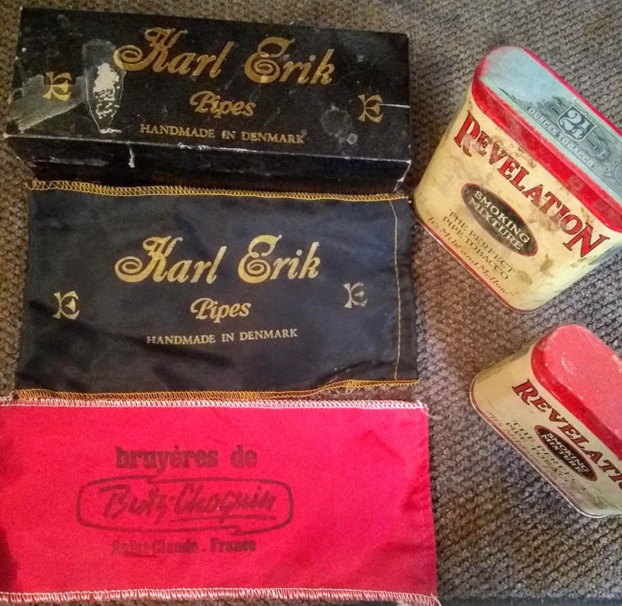
New Life for a Karl Erik Made in Denmark 5A Freehand


Blog by Steve Laug

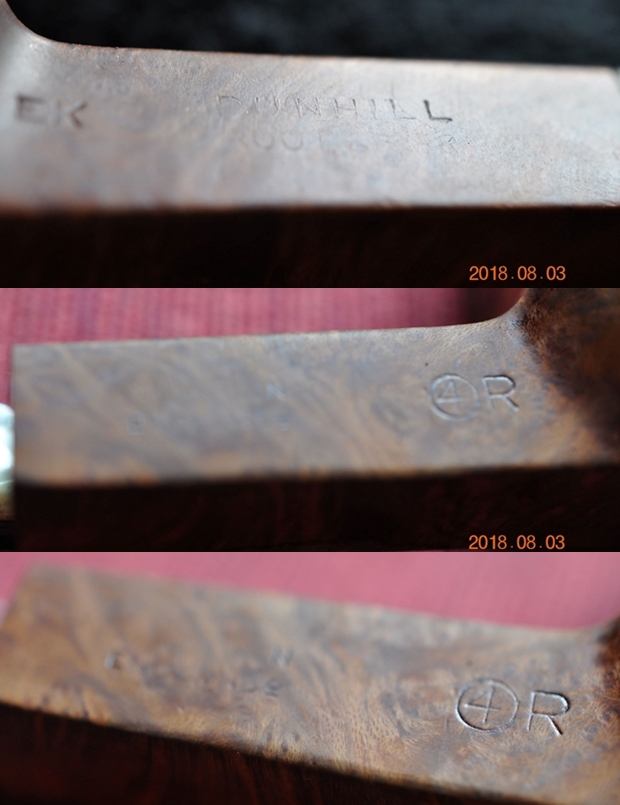
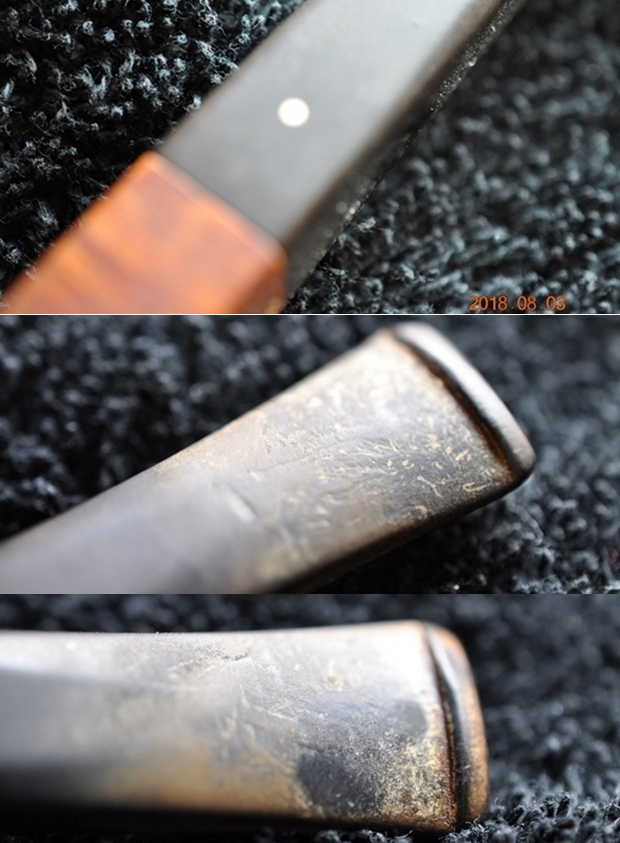
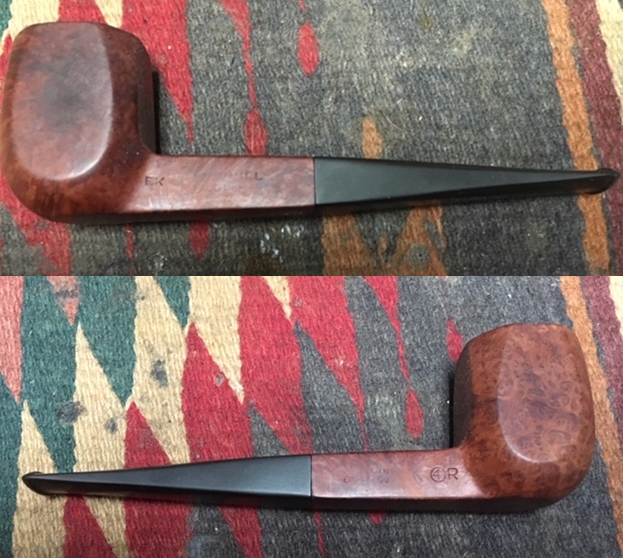
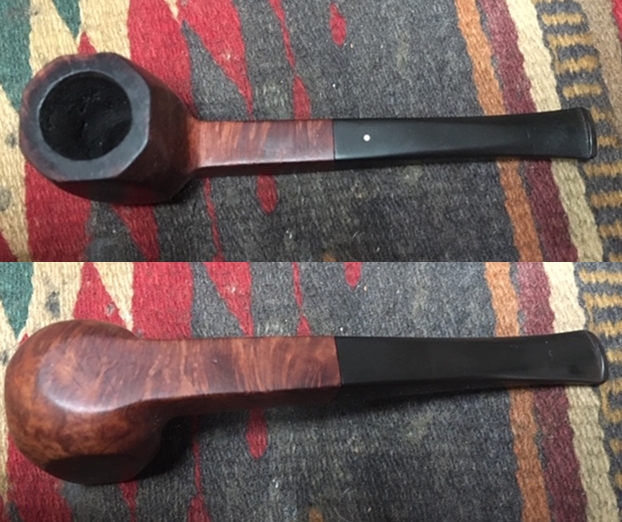
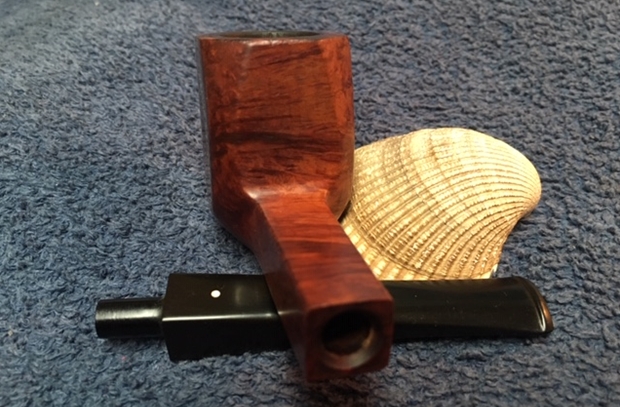
The next pipe on the work table was a beautifully grained Freehand. The bowl and shank had a smooth finish with mixed grain. The top of the bowl and the end of the shank was plateau. The shape of the bowl top was oval. The walls of the bowl are scooped on the sides and front of the bowl. Toward the back of each side there is a ridge running from the top to the bottom of the bowl. The bottom of the bowl is shaped almost like a spade. The shank is quite thick and the underside is stamped toward the shank end. It reads Karl Erik over Hand Made in Denmark over 5 over A. The bowl had a dull and dirty finish. There was a thin cake in the bowl and lava overflow and grime in the plateau on both the top and the end of the shank. The stem was oxidized but the Karl Erik KE logo was in perfect condition on top. There was tooth chatter on the top side and some deep tooth marks and chatter on the underside. I took photos of the pipe before I cleaned it up. I took a close up photo of the bowl and rim to show the condition of the pipe before I started to work on it. The plateau rim top was dirty and cake with lava overflow. The bowl had a thin cake but looked to be solid. The finish of the bowl was dull and looked tired. The second photo shows both the plateau top and the shank end. I reread the blog that Robert M. Boughton did for us on his “Grade O” Karl Erik to refresh my memory on the brand and the grading system (https://rebornpipes.com/2018/07/28/a-three-card-draw-for-an-inside-straight-with-an-old-karl-erik-hand-made-grade-o-freehand/). It was enlightening and from there I went on and looked up the brand on both Pipephil’s site and Pipedia to add some details to my knowledge.

Photo courtesy of Pipedia

From the Pipephil site I got a quick overview of the history of the brand. I quote: Brand created in 1965-66 by Karl Erik Ottendahl (1942 – 2004 †). In the best years he employed up to 15 craftsmen among which Bent Nielsen (see Benner) and Peder Christian Jeppesen. Former grading (ascending): from 4 to 1, and “Ekstravagant” (entirely handmade).  http://www.pipephil.eu/logos/en/logo-k1.html

From Pipedia here is a bit more detailed history of the brand.

Karl Erik Ottendahl (1942 – 2004) was born in Aalborg (Jutland), just a few miles from the very northernmost tip of Denmark. He began smoking a pipe when he was 14 and upon leaving school he started an apprenticeship…as a lithographer at the age of 16.

While working as an apprentice he began hand carving pipes as a hobby. Many were given as gifts to his more senior colleagues. Upon completion of his apprenticeship he moved to Nairobi, Kenya to work as a lithographer during the 1962 war. While in that war torn country, he was unable to procure pipes for himself. In the face of such a predicament, he chose to continue to make pipes for his own use rather than go without.

Returning to Denmark after three years he couldn’t find a well paid… job, and so he began making a few pipes on the side to boost his income choosing his prenames “Karl Erik” – logo “KE” – for his label. When he managed to find some major Copenhagen pipe stores willing to sell his pieces his reputation grew little by little and he was finally able to purchase more and better machinery and began working full time as a pipe maker. https://pipedia.org/wiki/Karl_Erik

Pipedia also included a short description of the grading system that was used. From what I can discern the numbers ascended (6-1) and the letters ascended as well.

KE’s new grading used numbers ascending from D to A. The unique “Ekstravagant” pipes C, B, A, AA to AAA. These superb pieces of remarkable quality were, almost certainly, the least expensive high- quality hand made pipes coming from Denmark today! https://pipedia.org/wiki/Karl_Erik

I used a brass bristle brush to clean up the plateau on the rim top and shank end. I scrubbed it dry to remove the buildup of grime and tars on both surface. The bristles are hard enough to remove the grime and soft enough not to scratch the surface. It is a tool I always have close at hand when working on Freehand pipes.Once the buildup was gone from the top and shank end I scrubbed the entire exterior with a tooth brush and Murphy’s Oil Soap to remove the dirt on the surface of the briar and the remaining dust in the plateau. I rinsed it under running water to remove the soap and debris from the pipe. I dried it off with paper towels and twisted the paper towels into the bowl to remove the light cake that was there. The pipe was starting to look really good. The grain stood out and the contrast was nice. I took a photo of the underside of the shank to show the stamping. You can read the stamp easily and the grade markings though more faint are still readable.I scrubbed out the shank – working on the mortise with pipe cleaners, cotton swabs and alcohol until it was clean. I cleaned the airway in the shank and stem with alcohol and pipe cleaners as well. I always use 99% isopropyl alcohol because of the low percentage of water in it and the quick evaporation rate.With the interior and exterior of the pipe clean I rubbed down the briar with Before & After Restoration Balm. I worked it into the plateau on the rim top and shank end as well as into the smooth briar on the rest of the bowl and shank. The Balm works to clean, enliven and protect the briar. I worked it into the briar with my fingertips and the help of a horsehair shoe brush. I let the balm sit for a little wall and then buffed with a cotton cloth to raise the shine. The briar came alive with the balm. I took the following photos to give a picture of the pipe at this point in the process. With the bowl finished at this point (other than the final buffing and waxing) I set it aside and turned my attention to the stem. I painted the deep tooth mark on the underside of the stem with the flame of a Bic lighter to raise the dent. It worked better than I expected and reduced the size of the bite mark significantly. (The first photo below is the stem prior to heating with the flame).The KE logo on the stem was in perfect condition so I worked around that so as not to damage it. I lightly sanded the stem down with 220 grit sandpaper to remove the oxidation and cleaned out the debris from the tooth marks with a cotton swab and alcohol. Once the stem was cleaned up I filled in the tooth mark with black super glue and set the stem aside to let the glue cure. Later in the afternoon when the glue had hardened I sanded the repair smooth with 180 and 220 grit sandpaper to blend it into the rest of the stem surface.I polished the stem with micromesh sanding pads – wet sanding with 1500-2400 grit pads and dry sanding with 3200-12000 grit pads. I wiped the stem down after each pad with Obsidian Oil to preserve and protect the rubber. After the final pad I gave it a final coat and set it aside to dry. I the polished the bowl and stem on the buffing wheel with Blue Diamond to remove the remaining small scratches and raise the shine. I gave the bowl and stem multiple coats of carnauba wax and buffed the pipe with a clean buffing pad to raise the shine. I hand buffed it with a microfiber cloth to deepen the shine. The pipe polished up pretty nicely. This turned out to be a beautiful pipe in terms of shape and finish. The finished pipe is shown in the photos below. The dimensions are Length: 6 inches, Height: 3 inches, Outside diameter of the bowl: 2 1/4 inches, Chamber diameter: 7/8 of an inch. Thanks for walking through the restoration with me as I worked over another beautiful Karl Erik Freehand. I will be adding it to the rebornpipes store shortly so if you are interested in adding it to your collection send me an email or a message on Facebook. Thanks for looking.

The Last of Boston’s Peretti Oom Paul Sitter Recommissioned


Blog by Dal Stanton

I’ve enjoyed restoring a Lot of 10 Peretti pipes and recommissioning them for new stewards.  All the Oom Pauls in the picture below, except for one which I added to my collection, are in the hands of new stewards except for the one on my worktable now.  I have been pleased to hear back from stewards who have these Oom Pauls and often I’ve heard that they have become favorites in their rotation lineups! I like Perettis myself and have a healthy collection of them.  They are great smokers in my experience and my Peretti Oom Paul is a favorite for me too – he hangs on the chin perfectly, like a good lap dog!  When I began my research on the L J Peretti name, I was surprised to discover that it is not an Italian pipe as one might expect with such a name!  In fact, I discovered the genesis of a significant story of Americana pipe history with the establishment of the L. J. Peretti Company of Boston in 1870 (Pipedia citing: Pipes, Artisans and Trademarks, by José Manuel Lopes), the second oldest tobacco shop in the US, second only to Iwan Ries & Co. of Chicago established in 1857 (See: Link).  The Peretti family originally comes from Switzerland, but the Italian name is explained by the fact that they originated from the southern slopes of the Swiss Alps which flows south toward Italy more easily than to the north – the heart of Switzerland.  The Calabash (upper left) and the Goliath Billiard (bottom) are waiting to be restored to be added to my collection of Perettis.  The hefty Egg in the middle is already in my lineup!Brian commissioned two pipes (See: For ‘Pipe Dreamers’ Only), a nice looking Jobey Hand Rubbed Dublin (next on the worktable) and the Oom Paul Sitter before me – both pipes benefit the Daughters of Bulgaria – helping women and girls who have been trafficked and sexually exploited.  Thanks Brian!  For a close-up look at the Oom Paul Sitter, I take several pictures on my worktable.  The nomenclature is the simple L.J. PERETTI stamp on the left shank.  This Oom Paul shares every single challenge that his former brothers had – the former steward seemed to have a scorched earth policy.  The chamber is heavily caked, and the rim scorched.  The rim challenges are the most daunting for this restoration.  The stummel has a build up of grime and minor nicks from usual wear.  The stem has significant oxidation and bit clenching and chewing which needs addressing.  To begin the restoration of this, the last Peretti Oom Paul Sitter in need of a new steward, after cleaning the internal airway with a pipe cleaner dipped in isopropyl 95%, I put the stem in a soak with Before & After Deoxidizer along with 5 other stems.  After some hours soaking, I fish out the Peretti stem and wipe off the raised oxidation with a cotton pad wetted with light paraffin oil (mineral oil in Bulgaria).  The Deoxidizer seems to have done an adequate job. Next, I attack the chamber carbon cake build up using the Pipnet Reaming Tool.  Putting paper towel down to minimize clean up, starting with the smallest blade head, I use 3 of the 4 blades available to me. I follow the blade heads by using the Savinelli Fitsall Tool to reach down into the chamber to scrape more carbon off the wall.  Then, to clean the chamber and to bring out fresher briar, I sand the chamber using a piece of 240 grit paper wrapped around a Sharpie Pen.  To remove the thick carbon dust left behind, I wipe the chamber with cotton pads wetted with alcohol.  After clearing the cake away, a look into the chamber reveals no problems – no heat cracks or fissures.  Good! Now to scrub the stummel surface and the rim with its thick lava I start with undiluted Murphy’s Oil Soap and cotton pads.  I also use a brass brush on the rim to break up the lava crust.  To scrape the rim, I use a pin knife as well as the straight edge of the Savinelli Fitsall tool.  As I scrape the crust off, I also remove the scorched charcoal that is on the inside of the rim mainly on the left side of the stummel – the area where the former steward damaged all his pipes.  The result is that the left side of the rim is narrower after the cleaning.  The stummel is in great condition – the rim is the challenge. Before moving on with the rim repairs I continue with the internal cleaning of the stummel.  Using pipe cleaners and cotton buds dipped in isopropyl 95% I go to work. I also employ a dental scalpel to scrape the internal wall.  I’m pleased that there wasn’t too much resistance.  At the end of my work day I’ll continue the cleaning process by giving the stummel a kosher salt and alcohol soak.Turning now to the stem, I begin addressing the tooth dents and chatter on the bit.  With his brother Oom Pauls, there usually was some button damage too, but this guy’s in better shape in that regard.  I first use the heat method to raise the vulcanite dents to make them less severe.  By heating the vulcanite, it expands, and the dented vulcanite naturally seeks its original positioning.  I use a Bic lighter and paint the upper and lower bit and after heating several passes, I do see a lessening of the severity of the dents as the vulcanite expands.  As a result, I can sand the remaining dents out with both the upper and lower bit.  Before the heating:After the heating:I sand out the damage using 240 grit paper.I move on to using 600 grit paper by wet sanding the entire stem.  I follow this with 0000 steel wool sanding/buffing the entire stem.Moving forward with the stem, I wet sand using micromesh pads 1500 to 2400 followed by dry sanding with pads 3200 to 4000 and 6000 to 12000.  To revitalize the vulcanite, I apply a coat of Obsidian Oil after each set of 3 pads.  I love the glossy pop! Looking now to the stummel, I see a few very small, nicely camouflaged fills which are in good shape, but I see one significant cut into the briar that needs attention.  To address it, using a toothpick, I lay a line of thick CA glue over the cut.  I set the stummel aside to allow the patch to cure.After a while, the patch has set enough for me to work on the rim.  The bad news is that the loss of briar on the left side of the internal rim from scorching is gone – it can’t be replaced.  The good news is that the aesthetic imbalance of the rim as a result can be mitigated somewhat by creating a bevel around the entire rim.  The bad news – there is additional loss of briar.  In restoring a pipe there’s always this tension between loss and gain.  With this Peretti, as with all his Oom Paul brothers, I did the same thing and they turned out well.  I start the process by taking the stummel to the topping board to remove the damaged wood on the top. Topping an Oom Paul can be a challenge because the shank extends beyond the plane of the rim.  So, to top the rim, the shank needs to hang off the side, so it isn’t unintentionally topped!  I take a picture to mark the start. I turn some rotations on the board and check out the progress.  I also utilize a small sanding block which allow me to focus on a certain area of the rim.  After the 240 paper, I put 600 grit paper on the board and do a few more rotations.  The pictures show this progress. Now, using a tightly rolled piece of coarse 120 grit paper, I begin beveling the internal rim edge – hoping to bring more balance to it.  I take a bird’s eye picture first to mark the progress.  I pinch the paper under my thumb as I move it in the areas of the rim to be reduced.  While I work on equalizing the rim diameter, I’m also sanding down the chamber to taper the walls as they move downwardly.  I’m looking for greater aesthetic balance.  I come to the point where I’ve done all I can do.  I think it looks much better.  I do another bird’s eye shot for comparison. I take the stummel one more time to the topping board using 600 grade paper.  I do this simply to reestablish the lines after the sanding. One more thing I want to do with the rim.  I’ve worked on the inside balance, now I also introduce a very gentle bevel on the outside of the rim.  I do this to soften the edge which is sharp after the topping.  I use 120 grit paper then 240 and finish with 600 – each rolled tightly.  With the rim repair done, I take the flat needle file and begin to file down the patch on the side of the stummel.  When I bring the patch down close to the surface, I switch to using 240 grit paper to remove the excess patch to the briar surface, making the patch area flush with the surface.  I then finish the sanding with 600 grit paper.  The patch will blend well later.My day has ended and I will continue the cleaning process of the stummel with a kosher salt and alcohol soak.  This freshens the briar and draws out more latent tars and oils from the briar.  I fashion a wick from a cotton ball by pulling and twisting it.  I insert it down the mortise and airway.  I then fill the bowl with kosher salt, which has no aftertaste, and then put isopropyl 95% into the bowl until it surfaces over the salt.  I wait a few minutes and top off the alcohol and turn out the lights. The next morning the soak has done the job through the night.  The salt and wick show soiling from the tars and oils.  I clean the stummel of residue salt with paper towel, blowing through the stummel, and to be on the safe side, I run a cotton bud with alcohol through the mortise to clean up any leftover remnants – after a couple of cotton buds I move on. The next step is to address the external briar surface of the Peretti Oom Paul Sitter.  I filled the one cut I saw on the surface that stood out.  There are other nicks and scratches that are normal from use.  To address these, I use micromesh pads.  I first wet sand using pads 1500 to 2400, then dry sanding 3200 to 4000 and 6000 to 12000.  The grain looks good as the micromesh pads coaxed it out.  The one bummer is the darkened wood from the scorching damage around the inner edge of the rim.  That will not go away because it would sacrifice too much briar to accomplish it. Since the rim had been topped and sanded, it is a shade lighter than the rest of the stummel.  To remedy this, I apply a maple color dye stick around the rim.  I forgot to take a starting picture for comparison but here is the aftermath.  It looks good and matches well.As I’ve done with all the other Peretti Oom Pauls (and one Bent Billiard!) I restored, I kept the color true to the original as much as possible.  To do this I used Before & After Restoration Balm on the briar and it does a great job deepening and enriching the color already there.  I do the same with this Sitter.  I squeeze some of the Balm on my fingers and work it into the surface.  The Balm starts with the consistency of light oil but as it is worked into the briar it gradually thickens to a wax-like feel.  After applying it fully and working it in, I set the stummel aside for a while, about 30 minutes to allow the Balm to do its thing and take a picture.After about 30 minutes I use a clean cloth to wipe and buff off the Balm.  I’m pleased with the results.  Turning now to the application of Blue Diamond compound, I rejoin stem and stummel, mount a cotton cloth wheel onto the Dremel, set the speed at 40%, and methodically apply the compound.  After finished, I wipe the pipe with a felt cloth to remove compound dust in preparation for the wax.  I mount a different cotton cloth wheel to the Dremel dedicated to applying carnauba wax, leave the speed at 40% and again, methodically apply a few coats of wax to stem and stummel.  I finish the restoration of the Oom Paul Sitter by giving the pipe a rigorous hand buffing with a microfiber cloth to raise the shine.

I am very pleased with the restoration of this, my last for now, Peretti Oom Paul Sitter.  The grain is rich on the huge, ample bowl which is the reason many pipe men and women desire an Oom Paul in their collections. The added benefit to this Oom Paul is that it is a Sitter.  He can comfortably join his steward at a table playing cards or board games!  Brian commissioned (see For ‘Pipe Dreamers’ Only) this Peretti Oom Paul Sitter and will have the first opportunity to acquire it in The Pipe Steward Store.  This pipe benefits the Daughters of Bulgaria – women and girls who have been trafficked and sexually exploited.  Thanks for joining me!

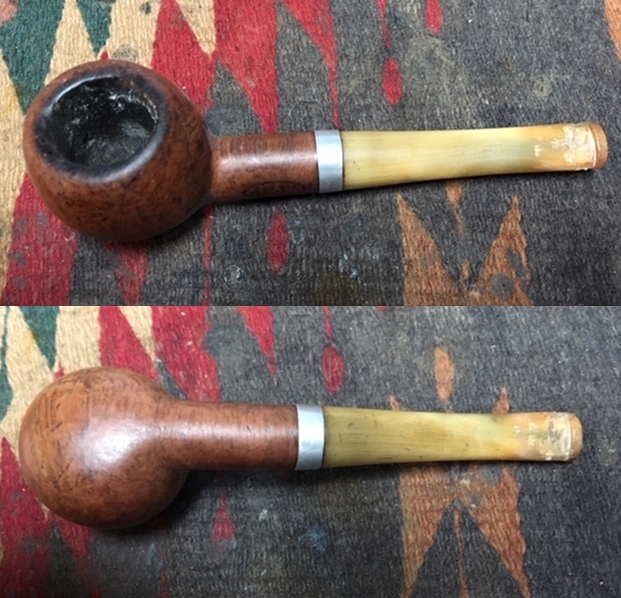
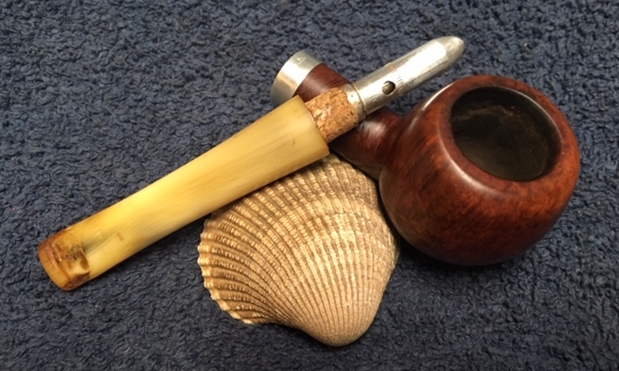
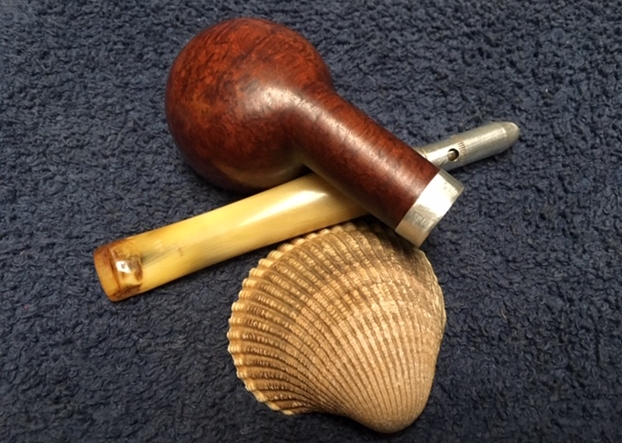
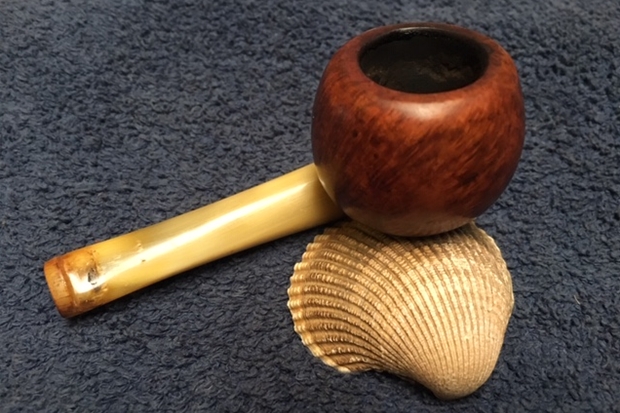
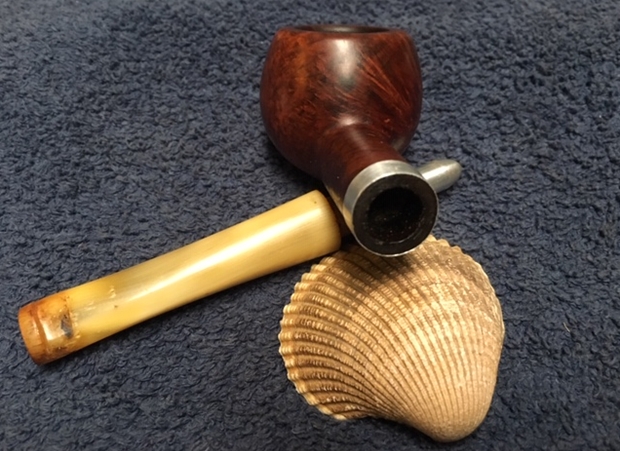
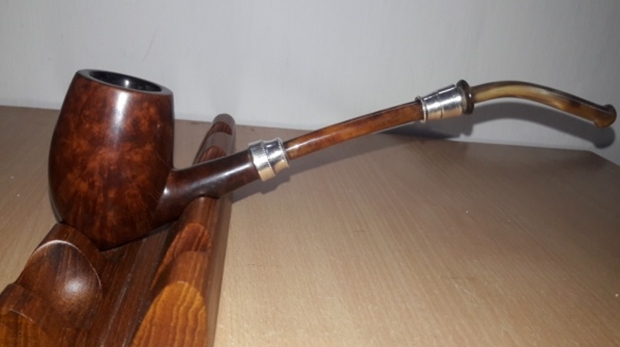
An email from France brought me another SINA pipe – a Horn Stemmed Chubby Billiard


Blog by Steve Laug

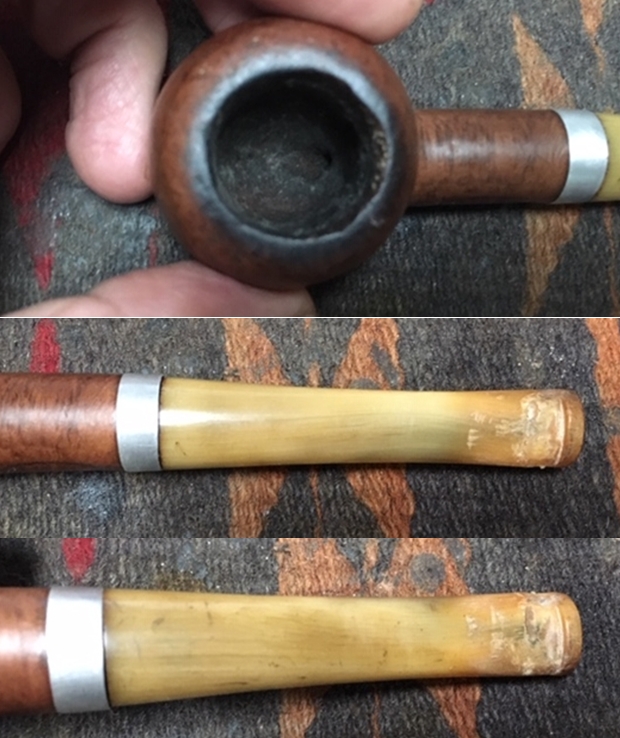
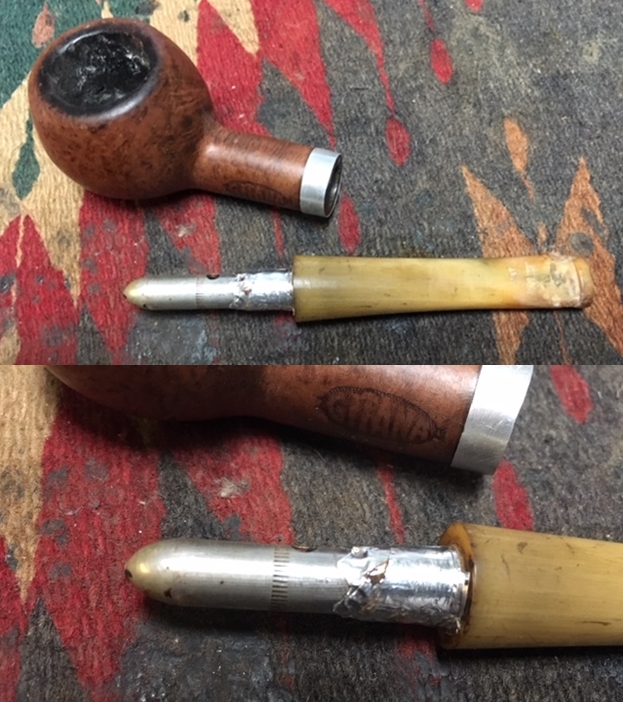
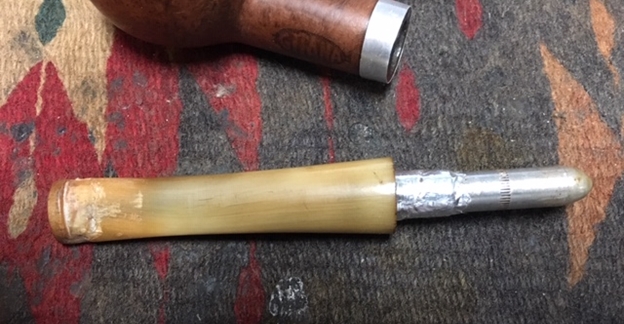
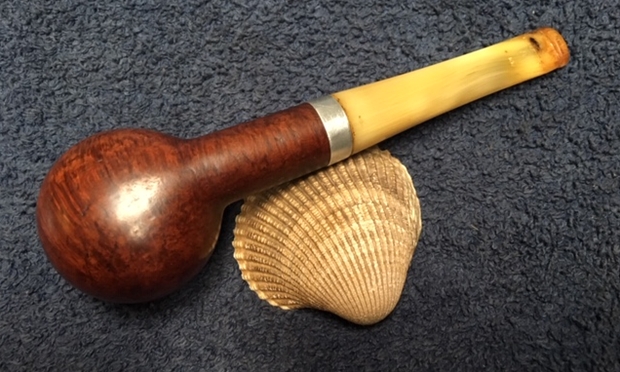
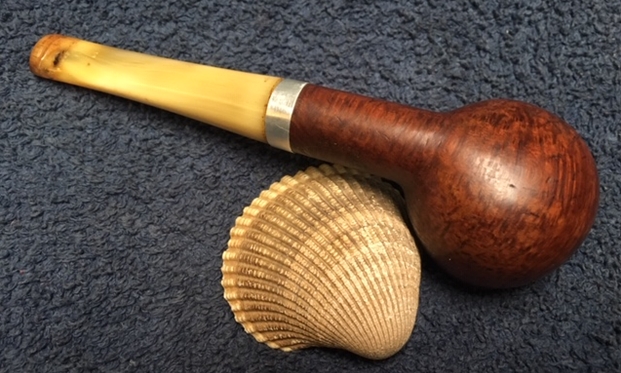
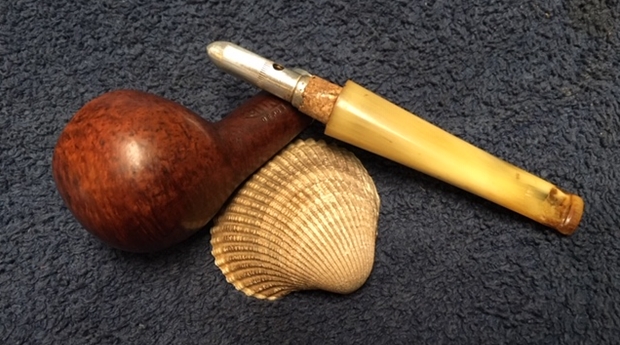
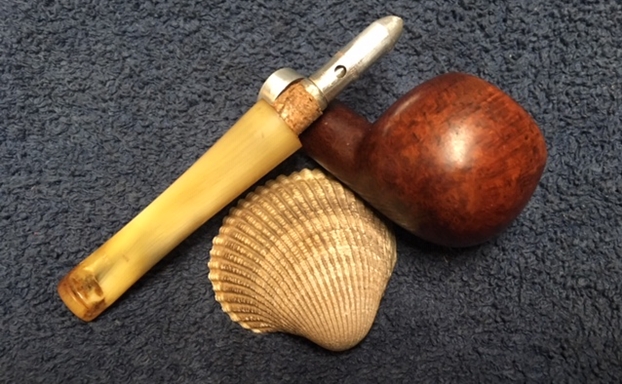
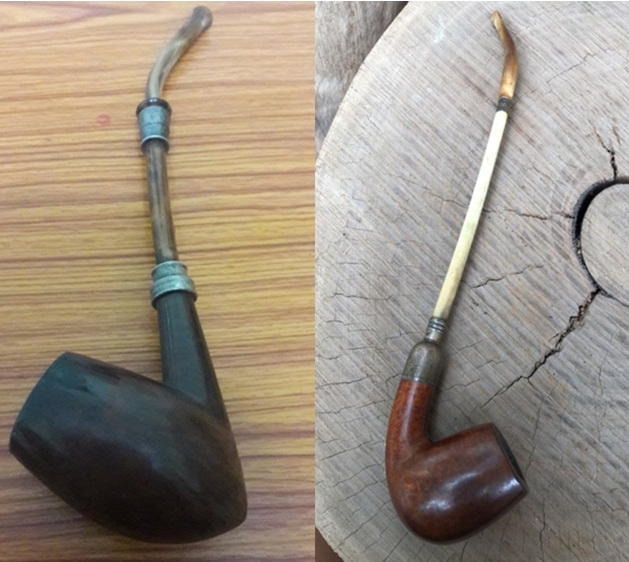
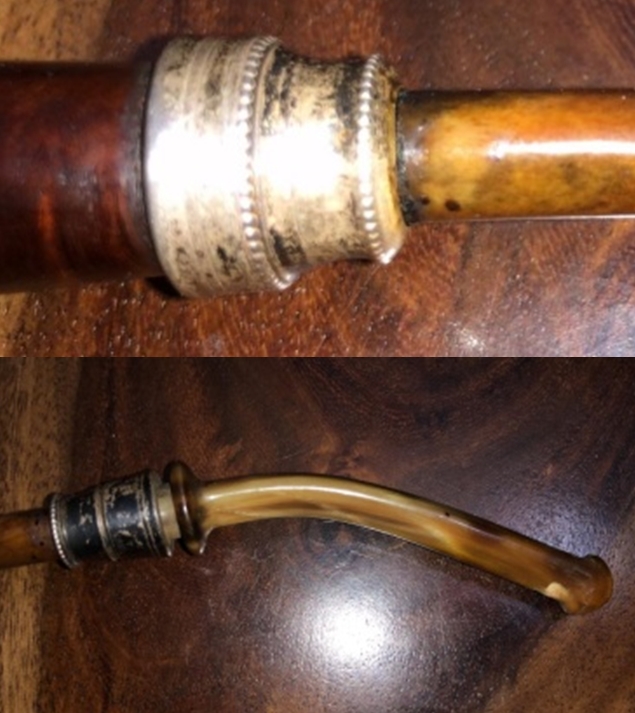
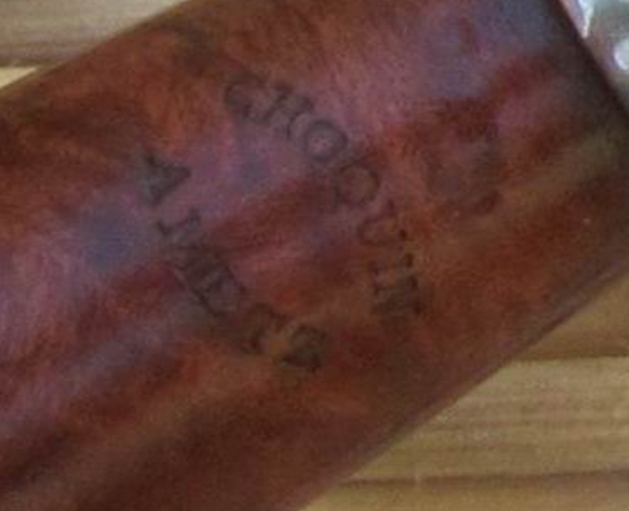
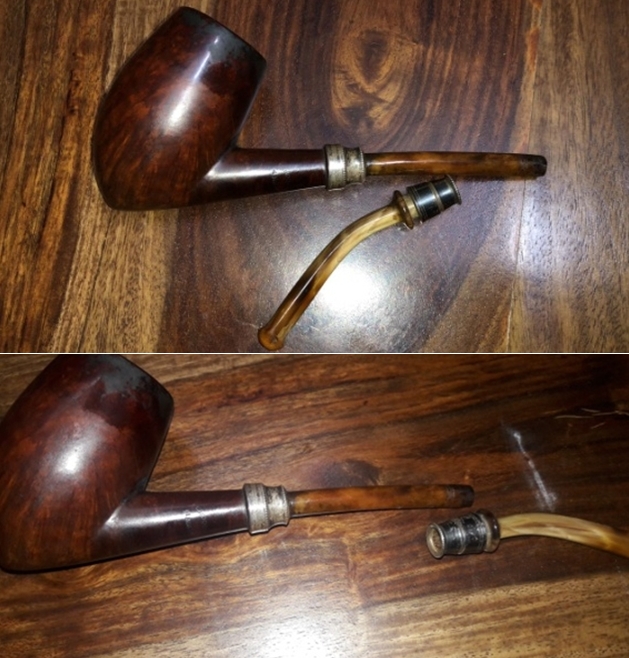
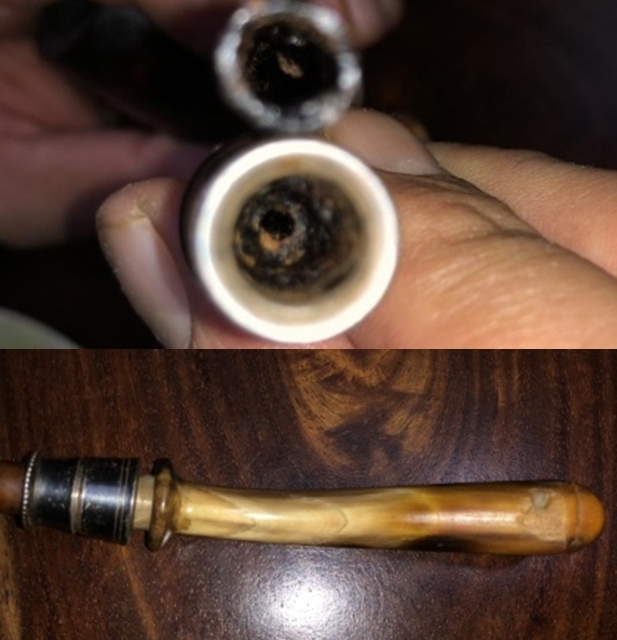
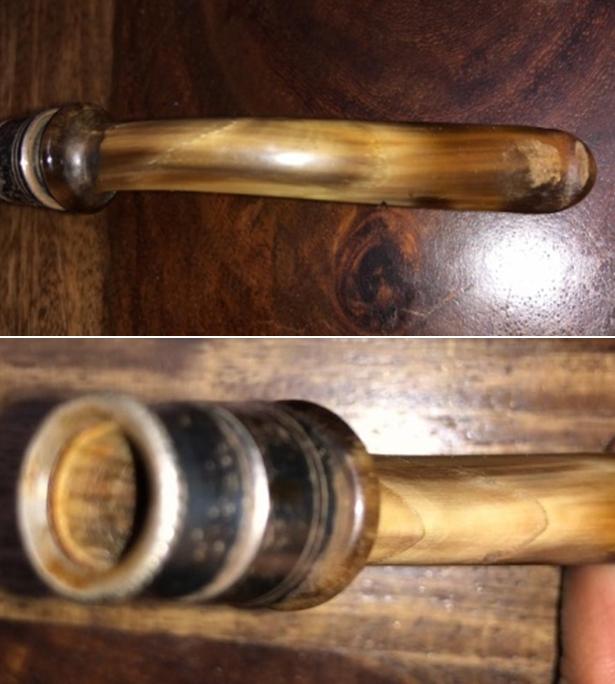
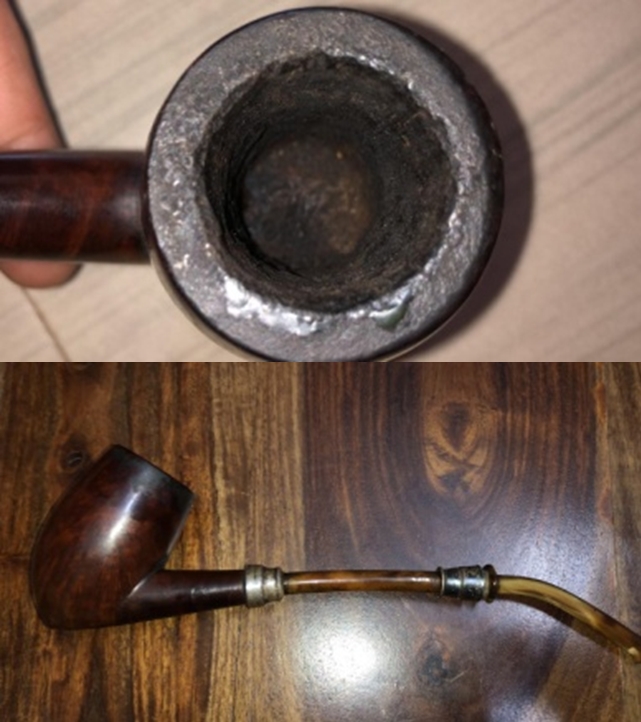
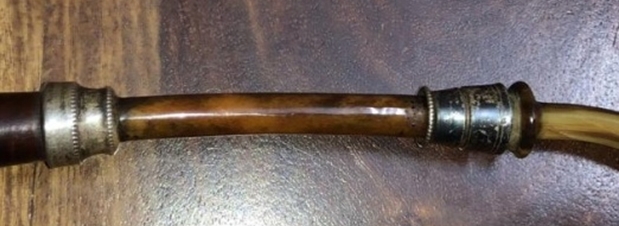
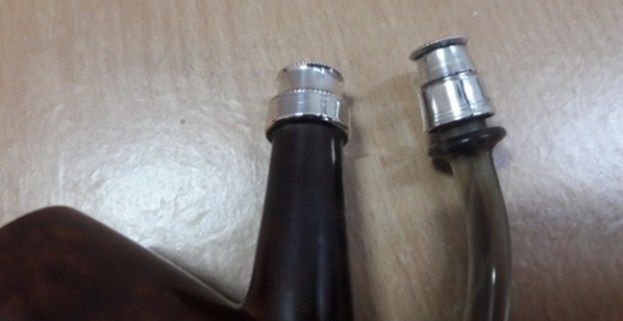
A couple of weeks ago I received an email from Jean Paul in France asking if I was interested in purchasing an old pipe he had. It was stamped SINA on the left side of the shank and on the stem. I asked him to send me some photos of the pipe to show me what he was offering. He sent me the following photos – a left side view, a top view and a photo of the pipe taken apart. The pipe was definitely an old one. The stamping on the left side of the thick shank and on the horn stem had remnants of gold stamping and reads SINA. The rim top was dirty and had a thick looking overflow but it was hard to see what the cake looked like. The inner and outer edges of the bowl looked to be in good condition. The horn stem was in excellent condition with some light tooth chatter on both sides of the stem at the button. There was an inner tube that ran from the tenon end into the bowl. It was heavily lacquered with tobacco oils and tars but otherwise in good condition. I sent another email and a payment via Paypal and the pipe was mine. The pipe was soon on its way across the Atlantic. The SINA brand was not uncommon to me as I have previously worked on another older SINA – a Rhodesian with a hard rubber stem. If you are interested in reading about the restoration of that old pipe the link will take you to the blog (https://rebornpipes.com/2014/08/28/giving-new-life-to-a-sina-rhodesian/). I have included two photos of the other SINA pipe in my collection. It is also an old timer from the same time period. When I worked on that pipe I did a bit of research to find out about the maker of the SINA pipe. I have included the information I found for that blog below. I figured it would be good to have it here as well as in the earlier blog. I quote:

I looked on Pipephil’s site and was able to find out that there was indeed a connection to GBD. The connection was with the French branch of GBD.From the screen capture above you can see the two links under the photo on the left. The first connects the pipe to the Marechal Ruchon & Co. factory that made GBD pipes. They eventually sold out to the Oppenheimer group. The French brand was also connected to C.J. Verguet Freres and to Sina & Cie which were sold to Oppenheimer in 1903-1904. In 1905-1906 Oppenheimer merged the two companies. The accompanying chart gives an overview of the twisted trail of the GBD brand and its mergers and sales. The chart also comes from the Pipephil site and was the second link under the above photo. Once I had refreshed my memory on the SINA brand I knew that this second pipe was made before the 1905-1906 mergers as well. It fits well with the thick horn stem and the shape of the button and narrow slot opening. The thick shank also fits well with the period. I really like the shape and style of this era of pipe history so this one would be a pleasure to clean up. I took the following photos of the pipe when I took it out of the box. It was really dirty as I had guessed from the presale photos. It was in good condition underneath it looked like but it was a mess. The outside of the bowl was very dirty grime and tars covering the front and right side of the bowl. The rim top had a thick coat of lava and tars and there was a thick cake in the bowl. The stem looked pretty decent other than tooth marks on the top and underside near the button. I took close up photos of the rim top and both sides of the stem to show its condition. You can see from the photo the thick cake in the bowl and the overflow on the rim top. The second and third photos show the tooth marks chatter on both sides of the stem at the button. The final photo shows the SINA in a logo stamped on the left side of the shank.I took photos of the bowl from a variety of angles to show the ground in grime and dirt in the briar on the exterior. I reamed the bowl with a PipNet pipe reamer starting with the smallest cutting head and working up to the third cutting head. I took the cake back to the walls of the bowl. I cleaned it up with a Savinelli Fitsall Pipe Knife to remove the cake that remained behind on the walls and on the bottom of the bowl. I sanded the inside of the bowl smooth with 180 grit sandpaper wrapped around a piece of dowel. I scraped the rim top with the Savinelli Fitsall Knife to remove the thick lava that had overflowed onto the rim. I wiped it down with acetone on cotton pads to remove the residual grime on the rim and around the bowl and shank.I took photos of the bowl after I had wiped it down with the acetone. The bowl looked quite good. There was some deep pits and nicks on the rim top and bowl edges as well as some burn marks toward the front of the bowl. I lightly topped the bowl with 220 grit sandpaper on a topping board. I worked over the inner edge of the bowl with a folded piece of 220 grit sandpaper.I polished the rim top and the rest of the bowl with micromesh sanding pads – wet sanding with 1500-2400 grit pads and dry sanding with 3200-12000 grit pads. I wiped the bowl down after each sanding pad with a damp cloth. I touched up the stain on the rim top with an Oak coloured stain pen to match the rest of the bowl. I would blend in the stain later in the process.I rubbed some Before & After Restoration Balm into the surface of the briar to enliven, clean and preserve it. I rubbed it in with my fingertips working it into the briar. I set it aside for a little while to let the balm do its work. I buffed it off with a cotton cloth and then buffed it with a microfiber cloth. The photos below show the pipe at this point in the restoration process. I touched up the gold leaf in the oval SINA logo on the left side of the shank using Rub’n Buff Antique Gold. I rubbed it into the stamping on the shank side and pressed it into the stamp with the sharp point of a sanding stick. Once the gold had dried I buffed it off with a cotton cloth. The second photo shows the stamp after the touch up. It does not look too bad for a pipe made before 1905-06.I scraped out the inside of the shank with a dental spatula to remove the lacquered tars and oils that had hardened in the mortise. I don’t think this pipe had been cleaned since it was first smoked in the early 1900’s.I turned the inner tube in the metal tenon in the stem to remove it. It was pressure fit and the tars and oils had it held tightly in place. With it removed and the shank scraped clean the pipe was ready to be cleaned up.I cleaned out the inside of the mortise and the airway in the shank and stem with pipe cleaners, cotton swabs and alcohol.I used clear super glue to repair the tooth marks on the stem. I sanded the stem surface with 220 grit sandpaper to smooth out the chatter and wiped it down with alcohol on a cotton swab. I filled in the tooth marks with clear glue and set it aside to cure.When the repair had cured, I sanded the surface of the repairs on the stem with 220 grit sandpaper to smooth out the repairs and blend them into the surface of the horn stem. I forgot to take photos of this part of the process as I was anxious to see what the stem looked like polished. I quickly move on to polish the stem with micromesh sanding pads – wet sanding with 1500-2400 grit pads and dry sanding with 3200-12000 grit pads. I wiped the stem down after each sanding pad with Obsidian Oil and after the final sanding pad I gave it a final coat of oil and set it aside to dry. The horn stem was beginning to look really good for a pipe of this age. I put the cleaned inner tube in the tenon and aligned the angle of the spear end so that it would sit on the bottom of the bowl when inserted in the shank. I took photos of stem at this point to show the inner tube.I used the sharp point of a sanding stick to apply Rub’n Buff Antique Gold to the stamping on the left side of the stem. I worked it into the grooves. I let the gold dry and then buffed it off with a soft cloth.This SINA, GBD predecessor is a beautiful pipe with mixed grain all around the bowl sides, top and bottom. The grain really is quite stunning. The rim top looks much better. The horn stem repaired easily and shined up well. I buffed the bowl and the stem with Blue Diamond polish to raise the shine on the briar and the vulcanite. I was careful to not buff the stamping and damage it. I gave the bowl and stem multiple coats of carnauba wax. I buffed the entire pipe with a clean buffing pad to raise the shine. I hand buffed it with a microfiber cloth to deepen the shine. The finished pipe is shown in the photos below. The rich patina of the original finish allows the grain to really stand out on this pipe and it works well with the rich lustre of the polished horn stem. The dimensions of the pipe are: Length: 5 1/4 inches, Height: 2 inches, Outside Diameter: 1 3/8 inches, Diameter of the chamber: 3/4 of an inch. This old and beautiful SINA Chubby Billiard will sit next to the other SINA pipe in my personal collection. I am looking forward to enjoying my first bowl in it soon. Thanks for walking through the restoration with me.

This is a Beautiful Heritage Heirloom Square Shank Tall Bulldog 50S


Blog by Steve Laug

Jeff picked up the latest pipe that I am working from an antique shop in Freeland, Washington, USA in February of 2017. Once again he has proved to have an eye for the unique and unusual. The shape and the look of the pipe caught my eye when I was looking for a pipe to work on next. Jeff took photos of the pipe before he did his cleanup work. The 50S square shank Tall Bulldog pipe was in good condition. There was a thick cake in the bowl and a light overflow of lava on the rim. The inner edge of the rim appeared to have some reaming damage and perhaps some burn damage. The grain on the sides of the bowl is quite stunning and is straight and flame grain on bowl and shank with birdseye on the top and underside of the shank and bowl. The finish was dirty but appeared to be in good condition under the grime and grit the years. The exterior of the bowl and square shank were clean and undamaged. It was stamped Heritage over Heirloom over Imported Briar on the left side of the shank and has the shape number 50S on the right side of the shank. The stem had light oxidation, some tooth chatter and some deeper tooth marks on both sides of the stem just ahead of the button. The double diamond logo on the left side of the stem was in good condition. The quality vulcanite had held up well through the years. Jeff took some photos of the rim top to show the tarry buildup on the flat surface and the potential damage to the inner edge of the bowl. There appears to be some damage on the inner edge at the back side of the bowl.Jeff also took some photos of the sides and bottom of the bowl and shank to show the condition of the pipe and the lovely grain all around. The next photos show the stamping on the shank – both the left and right sides. The stamping is dirty and faint but readable. The left side reads Heritage over Heirloom over Imported Briar. The right side reads 50S which is the shape number. The double white diamond insert on the left side of the saddle stem appears rough under magnification. He took photos to show the condition of the stem – the tooth marks and the worn edge of the button on both sides is very clear in the photos. The stem was also oxidized.I went back and read previous blogs I have written and others have written for rebornpipes on the Heritage brand of pipes. Andrew Selking did a great bit of research on the brand and did several blogs. I quote from his work at this link, https://rebornpipes.com/2014/12/23/refurbishing-a-heritage-heirloom/.

These pipes were made in the Kaywoodie factory, but on a completely separate line. Heritage pipes were Kaywoodie’s answer to Dunhill. According to one of their brochures, Heritage pipes were made from “briar burls seasoned and cured for up to 8 months,” with only “one briar bowl in over 300 selected to bear the Heritage name.” “Heritage stems are custom fitted with the finest hand finished Para Rubber stems. Mouthpieces are wafer thin and concave.”

The Heritage line began in the early 1960’s, with the trademark issued in 1964. The line was started at the request of Stephen Ogden, (who worked for Kaywoodie in 1962). Mr. Ogden had previous experience working for Dunhill, either running the New York store or working for Dunhill North America. Mr. Ogden was made President of Heritage Pi pes, Inc., Kaywoodie Tobacco Co. Inc. and Kaywoodie Products Inc. as well as a Vice President of S.M. Frank & Co. Heritage Pipes were produced from 1964 until 1970 (Source Kaywoodie.myfreeforum.org).

Andrew also included a copy of the Heritage brochure that I am also including below (Courtesy Kaywoodiemyfreeforum). On the fourth page I circled the 50S shaped pipe. This is the one that I am working on. Jeff had worked his magic in cleaning up this pipe. It is nice to work on pipes that he has cleaned up for a change. He reamed it with a PipNet reamer and smoothed the walls of the bowl with a Savinelli Fitsall pipe knife. He scrubbed out the mortise and the airway in the shank and the stem with alcohol, cotton swabs and pipe cleaners. He scrubbed the exterior of the bowl, rim and shank with a tooth brush and Murphy’s Oil Soap to the oils and tars on the bowl, rim and shank. He rinsed it under running water. He dried it off with a soft cloth. Once the grime was removed the finish underneath was in good condition. The rich patina of the older briar and the straight grain around the bowl and shank and the birdseye grain on the top and underside of the shank were beautiful. There were some dark spots on the left side of the cap and at a few spots around the edges. There was some damage to the rim top on the right rear. They appear to be burn marks or at least burn damage though the briar is solid. The cleaning of the stem left a light oxidation in the vulcanite. The tooth marks were clean but visible. I took photos of the pipe to show its condition before I started my work on it. I took some close up photos of the bowl, rim top and stem to show the condition of the pipe before I started to do the restoration work on it.I took close up photos of the burn damage to the left side of the bowl on the cap and double ring around the bowl. Fortunately the burn damage is not deep into the briar. The wood in the darkened portions is solid and not charcoal.To remove the damaged areas on the rim top I topped the bowl on a topping board with 220 grit sandpaper. You can see from the second photo that the damaged area on the right rear of the surface had been removed.  I scraped out the remnants of cake on the walls of the bowl using my Savinelli Fits all Pipe Knife. I sanded the walls of the bowl with sandpaper wrapped around a piece of dowel.I used a folded piece of 220 grit sandpaper to smooth out the inner edge of the rim and give it a light bevel inward to deal with the damage on the edge. I sanded the burned areas on the left side of the bowl cap to try to minimize them and blend them into the surrounding briar. I polished the exterior of the bowl and shank with micromesh sanding pads, carefully avoiding the stamping on the sides of the shank. I wet sanded the bowl with 1500-2400 grit pads and dry sanded it with 3200-12000 grit pads. I wiped the bowl down after each sanding pad with a damp cloth to remove the sanding dust. I rubbed some Before & After Restoration Balm into the surface of the briar to enliven, clean and preserve it. I rubbed it in with my fingertips working it into the briar. I set it aside for a little while to let the balm do its work. I buffed it off with a cotton cloth and then buffed it with a microfiber cloth. The photos below show the pipe at this point in the restoration process. I set the bowl aside to address the issues with the stem. I painted the surface of the stem with the flame of a Bic lighter to lift the tooth dents in the surface of the vulcanite. I was able to lift them quite a bit and then filled in the dents with black super glue. When the repair had cured I recut the edge of the button with a needle file and flattened out the surface of the repair to match the rest of the vulcanite. I sanded the surface of the repairs and the oxidation on the stem with 220 grit sandpaper to smooth out the repairs and shape the button. It also removed the surface oxidation that was on the stem. I polished the stem with micromesh sanding pads – wet sanding with 1500-2400 grit pads and dry sanding with 3200-12000 grit pads. I wiped the stem down after each sanding pad with Obsidian Oil and after the final sanding pad I gave it a final coat of oil and set it aside to dry. I polished it with Before & After Pipe Stem Polish – both Fine and Extra Fine. I used it to polish out some of the remaining scratches. I gave it another coat of Oil and set it aside. This Heritage Heirloom Square Shank Tall Bulldog is a real beauty with straight and flame grain all around the sides of the bowl and shank. It also has some beautiful birdseye on the top and underside of the bowl and shank. The grain really is quite stunning. The rim top looks much better. The Heritage high quality vulcanite stem repaired easily and shined up well. I buffed the bowl and the stem with Blue Diamond polish to raise the shine on the briar and the vulcanite. I was careful to not buff the stamping and damage it. I gave the bowl and stem multiple coats of carnauba wax. I buffed the entire pipe with a clean buffing pad to raise the shine. I hand buffed it with a microfiber cloth to deepen the shine. The finished pipe is shown in the photos below. The rich patina of the original finish allows the grain to really stand out on this pipe and it works well with the rich black of the polished vulcanite stem. The dimensions of the pipe are: Length: 6 inches, Height: 2 1/4 inches, Outside Diameter: 1 1/4 inches, Diameter of the chamber: 7/8 of an inch. In my years of refurbishing pipes I have not seen one quite this shape. I have worked on quite a few Heritage pipes since Andrew brought them to my attention but none have caught my eye like this one. So, this beautiful Heritage Heirloom 50S will fit really nicely into my personal collection for now. I am looking forward to enjoying my first bowl in it soon. Thanks for walking through the restoration with me.

Discovering the History of a Pipe Pub Brigade Made in London, England, Canadian Lumberman


Blog by Dal Stanton

This Canadian Lumberman came to me in the Lot of 66 that I’ve mentioned several times having restored several pipes coming from that one eBay acquisition.  He has a hefty presence.  He has a length of 6 3/8 inches, bowl height of 2 inches, bowl width of 1 5/16 inches, and a depth of 1 ¾ inches – plenty of room for one’s favorite blend.  I do not have an active Canadian shape in my rotation and I had considered adding this Pipe Pub Brigade to my collection, but I decided to put him on The Pipe Steward site in the “For ‘Pipe Dreamers’ Only!” section to benefit the Daughters of Bulgaria – women and girls we seek to help who have been trafficked and sexually exploited.  Towner, a long-time friend living in Pennsylvania, saw the Pipe Pub Brigade online and sent me a note desiring to commission this Canadian.  I recalled talking to Towner last year when my wife and I were visiting Towner’s church and talking about our work in Bulgaria – he said that he wanted to add a Canadian to his collection and that he would wait for me to get back to Bulgaria.  He waited and now his commissioned Canadian Lumberman is on my worktable.  Here are the pictures that got Towner’s attention as he was ‘Pipe Dreaming’! According to Bill Burney’s Pipedia Pipe Shapes Chart, this Canadian is a Lumberman.  Here is his helpful information for those of us seeking to understand the nuances of the Canadian pipe family. The Lumberman stands out among the Canadians with the oval shank coupled with the saddle stem.  The combination of both unique characteristics translates into a classy looking pipe.

The nomenclature of this Canadian Lumberman proved to be a bit more difficult.  Mid-way on the top of the long shank is stamped, PIPE PUB over Brigade, in a ‘old world’ looking script.  On the opposite side of the shank is stamped, MADE IN over LONDON, ENGLAND.  Stamped on the top of the oval saddle stem is ‘PP’ in a cursive script, which I’m assuming stands for Pipe Pub. To learn more about the provenance of the Pipe Pub name I started my search in my regular go to sites – Pipedia.com and Pipephil.eu and came up with absolutely nothing.  I broadened my search on the internet by simply searching ‘Pipe Pub’ and ‘Pipe Pub Brigade’.  My initial findings had more to do with bagpipers, bagpipe brigades, Irish pubs and pipes…, all of these go well together!  Yet, I wasn’t finding anything that helped me with the Canadian looking back at me on my worktable.  I looked in my copy of Wilczak and Colwell’s ‘Who Made that Pipe?’ and found nothing giving me a direction.  Usually, when I face the brick wall my response is to send Steve an email.  With all his vast Rebornpipes experience, surely, he’ll know something.  Steve’s response was quick and helpful:

Hi Dal

I have heard of it. Here is a link to one on Smoking pipes.com

https://www.smokingpipes.com/pipes/estate/england/moreinfo.cfm?product_id=200834

I would try to ferret out the shape number. For instance on the one from Smoking pipes it is a 124… which interestingly is a GBD shape number for a Billiard. I wonder if the brand was not made by special order for pipe shops and stores.

SteveI looked at the link and saw my first example another Pipe Pub pipe – a very nice classic Billiard.  I immediately looked again to see if I missed a shape number on the Canadian – I still saw no number.  But the other piece of information that Steve gave was helpful – the brand was perhaps a special order for pipe shops and stores.  I went back to Google not looking for pipes but for places named ‘Pipe Pub.’  I hit pay dirt and the dirt was surprising!  With the COM of the Canadian stamped indicating London, England, I had been expecting to find something that was UK based but instead, I found a reference for Pipe Pub that was based in the great US state of Texas – who would have thought?  Through several iterations of search parameters, I came across a Google Group chat stream that started in 1998 entitled, “Pipe Pub?” .  The question posed was about a Pipe Pub “almost Canadian” pipe that had the same nomenclature and stem ‘PP’ as mine, but the COM was stamped, ‘Italy’.  The questioner in the stream proposed a correlation with the Italian Savinelli name wondering if Pipe Pub might be a second of that well-known Italian pipe house?

The next response to Bro. R from Larry introduced the Texas connection:

Bro. R,

Back in the 70’s the mall tobacconists here in Austin, TX, were named Pipe Pub; they became Pipe World a little later.  I don’t know if, then or now, these businesses were strictly local or part of a larger chain.  I’m pretty sure they sold a store brand with their name on the pipes.  Today, Pipe World’s store brand pipes *are* made by Savinelli.

Larry

With these two entries, I knew that we were talking about the same pipe name – the ‘PP’ on the stem was the clincher.  Pipe Pub is a local Texas tobacconist which had pipes manufactured with the Pipe Pub name.  But there was more information that perhaps should be submitted to Pipedia!   The next entry I’m including in its entirely because it brings in much of the historical context with much color and the source of the information is a Jon Carter, who is described by Don Schram as a manager of Pipe Pub in the 80s.

Here’s the skinny on Pipe Pub, as related to me by Jon Carter, former manager of Pipe Pub from 1983 to 1987, who isn’t online as of yet. (Messages will be relayed to him through me at: dsc…@bigfoot.com ,however.)

Pipe Pub was started in the Houston area of Texas in the early 70’s with a single downtown store.  It was joined a short time later by a store located in the Austin, TX, area, which was owned and operated by a brother-in-law of the original founders (whose name escapes Jon for the moment).  While Pipe Pub wasn’t nationwide, they owned approx. 14 stores throughout Texas, primarily in the Houston area, and were much in competition with Tinderbox. (Comparable to Churchill’s in the S.E. Michigan area.)

The Pipe Pub pipe in question was confirmed by Jon to be a pipe from this chain.  The letters ‘PP’ in script on the stem indicate that the bit is original, and you are correct in that it stands for Pipe Pub.  As far as the age, there is no definite method of dating this pipe, however; Pipe Pub only carried their own line of ‘Private Label’ pipes between the early 70’s and 1983 when they were phased out in favor of higher grade (and higher priced) pipes, to coincide with the Texas oil boom of the 80’s.  Jon was not able to confirm positively that the pipe is indeed of Savinelli make (second or otherwise), however, he did point out that Pipe Pub did have an excellent relationship with the Savinelli company, as they were allowed to carry and sell the rare Savinelli 0000 (Quadruple-ought) Autograph, of which only 3 have been produced in the last century.  Jon also pointed out that he and another manager sold it to a gentleman who worked for the telephone company to complete a collection of Savinelli Autographs.  (He went to the bank and took out a $5000 loan for it.  The bank, initially thought he was purchasing ‘oil drilling pipe’, but gave him a personal loan for the tobacco pipe anyways.  He kept it in a lock box for a while, then finally broke it out and smoked it for the first time during the 1986 or 1987 Superbowl.)

To round out the history of Pipe Pub, the chain was bought out, save one store, in 1985 by a family, by name of Kowalski, who turned the tobacco chain into a chain of mall knick-knack stores.  (Sound all-too familiar Churchill’s customers?)  The one store, Pipe Pub in Austin, run by the brother-in-law, was not included in the deal, but it was agreed that he would change the name of the store.  Jon commented that the lone store may have changed its name to Pipe World, but wasn’t really privy to such information, as it was, more or less, operated as a renegade store.  The Kowalski’s opened one additional store in Louisiana, their home state, and promptly ran the chain right into the ground after one Christmas season, due to poor ownership and product focus.  Jon pointed out, “They carried vibrating pillows, for God’s sake!”  Forcing the company into bankruptcy, the Kowalski’s sold the chain back to the original owners, whom to his
knowledge, still own it today.

For more information, Jon recommends calling down to Houston and asking information for their main office, which was on Mitchelldale.  [A search of Yahoo Yellow Pages came up empty, however there is a Carol’s Pipe Pub in Bacliff, TX, a suburb of Houston.  Phone (281) 488-7300.  It’s unknown if they’re related.]

DS (Don Schram.)
This information-filled post is dated, 1998.  On a hunch, I google the name of the offshoot store characterized as the ‘renegade’ store that wasn’t part of the reported 1985 Pipe Pub acquisition described in stream above.  As part of the legal agreement this store was required to change the name without further association with the Pipe Pub name.  Pipe World, based in Austin, and run by a “brother-in-law” family member came into existence – or, more accurately, carried on the original legacy of Pipe Pub under a different name because it seems that the new owners of Pipe World ran the company off the rails.  I found http://pipeworld.com/ with different locations in Texas and wondered if this was the same ‘Pipe World’ referenced above.

As I’ve done in the past with surprising success, I go directly to the front door and knock.  I went to the ‘Contact Us’ section on the Pipe World site and sent an email asking if anyone had been around long enough to know something about the history of the former, Pipe Pub Tobacconist out of which Pipe World came.  You never know what will happen! I received a reply to my email the same day from Pipe World – from Kyle who asked me to call directly if I had any questions.  Thankfully, I have an internet phone from Bulgaria and I called Kyle in Texas.  Kyle answered the phone and was extremely helpful.  His grasp of the history was amazing – he had been there during the whole transition.  I was totally taken off guard when I discovered through our conversation, that he was the owner of Pipe World.  His name is Kyle Haas.  He was the ‘brother-in-law’ referenced above who opened the new Pipe World and held firm to the values that had been true historically of Pipe Pub.

I enjoyed talking with Kyle, his recall of the events and his grasp of all the many moving parts of the tobacco industry fascinated me.  He was able to answer the primary question I had about the origin of the Pipe Pub pipes.  Definitively according to Kyle, during the 70s and early 80s, GBD/Comoy’s was producing the English line of pipes with the Pipe Pub name out of the London factory.  Pipe Pub pipes marked ITALY were all produced by the well-known Italian house of Savinelli.  He said that he doubted that Savinelli continued to do sub-contract work because they sell enough of their own pipes today to make it worthwhile.  He said that they had to order a lot of each shape as part of the requirements – I believe he said that they introduced a new shape each year.  He mentioned that the pipes that were produced in England and Italy with the Pipe Pub label were done with higher quality in mind.  I said that I could attest to this as I looked at the GBD/Comoy’s factory made Pipe Pub Canadian on my worktable.

After talking about the current climate in the tobacco industry, some of the current issues with Dunhill and the like, I shared with him our work with the Daughters of Bulgaria (he was surprised to hear I was calling from Bulgaria!) and my love for restoring classic pipes which benefit our Daughters of Bulgaria Foundation.  We ended our conversation with words of friendship and for me, a desire to stop off at Pipe World and visit Kyle at their shops in Round Rock and Austin, Texas.  I appreciated the time Kyle gave me on the telephone to discover a bit more pipe history.

With a better understanding now of the origins of this Pipe Pub Made in London, England, Canadian Lumberman thanks to Kyle, I look to recommissioning it for yet another lifetime.  I take a few close-ups to take a better look.  The chamber has light carbon cake which will not be difficult to remove getting down to fresh briar for a fresh start.  There is some darkening on the rim and nicks, cuts and bruises over the entire briar surface.  I identify an odd-looking fill at the shank/stummel transition.  It looks like dark CA glue, but it doesn’t blend at all.  I also identify about mid-way on the side of the shank a divot of sorts in the briar.  The finish is old, worn, and tired, though the briar grain hiding beneath shows very good potential.  The stem also has some dents and button damage.  To start, after cleaning the internal of the stem with pipe cleaners dipped in isopropyl 95%, I add the short saddle stem to a soak with Before & After Deoxidizer along with 5 other pipe stems in queue for restoration.  After soaking for a few hours, I fish out the saddle stem and wipe off the Deoxidizer and raised oxidation with cotton pads and light paraffin oil.  I also run some pipe cleaners through the airway dipped with alcohol to clear the Deoxidizer.  The Before & After Deoxidizer did a good job on the oxidation. I decide to first work on the stem by using the heating method to minimize the tooth chatter and dents.  Heating the vulcanite causes it to expand and return to some degree to the original condition of the vulcanite.  I paint the problem areas with a flame from a Bic lighter – both upper and lower bit. I take starting point pictures to compare both uppers and then lowers.  The heating technique made a difference by minimizing the damage and raising the compressions. With the dents and chatter less extreme, I’m able to sand out the remaining problems.  Using 240 grade paper I sand both upper and lower bit and I also redefine the button lips using a flat needle file.  I’m very careful to avoid the Pipe Pub “PP” stamping – the second “P” is thin and I don’t want to add to its challenges!To erase the 240 scratches, I follow by sanding with grade 600 paper then with 0000 steel wool to smooth further and buff up the vulcanite.  I like the results.With the stem progress at this point, I turn to the Pipe Pub Canadian Lumberman stummel.   To deal with the very light carbon cake buildup in the chamber, I utilize the Pipnet Reaming Kit and jump to the 3rd largest blade head – the bowl is large!  I remove a good bit of the cake and then I transition to the Savinelli Fitsall Tool to fine tune – getting to the lower part of the chamber and removing more carbon.  To get down to the fresh briar, I then wrap a piece of 240 grit paper around a Sharpie Pen and sand the chamber wall – the pen gives me leverage.  Finally, to remove the carbon dust I wet a cotton pad with isopropyl 95% and wipe out the chamber.  I inspect the chamber walls and I see no cracks or heat fissures – all looks great!  The pictures chronicle the steps. Turning to the external briar surface, using undiluted Murphy’s Oil Soap, I scrub using cotton pads and utilize a brass brush on the rim.  I also use a pen knife carefully to scrape the rim.  The stummel and rim cleaned up nicely.Before proceeding with the external surface, I clean the internals of the stummel – the long Canadian mortise and airway.  Using isopropyl 95%, I employ many cotton buds, utilize a dental shovel to scrape the mortise walls, and pipe cleaners and shank brushes to reach into the long Canadian airway.  There was a lot of lodged tars and oils but it finally started giving way.  I plan to clean further utilizing a kosher salt and alcohol soak at the end of my work day. I take a picture of the weapons and carnage!As I look over the stummel and shank, I see two problem areas, both on the shank.  As the shank merges with the bowl, there is an old fill that is shiny black and stands out like a sore thumb.  It appears to be solid CA glue but an eyesore.  The other problem is mid-way on the right side of the shank.  It appears to be a gouge or puncture in the grain.  I take pictures of both as I consider what to do.I address first the shiny black fill.  I want to remove the fill but not impact the surrounding briar with sanding.  To do this I will try to dissolve the CA fill by applying a small amount of acetone directly to the fill and hopefully it will soften and allow me to dig it out with a dental probe.  It works like a champ.  Since acetone evaporates quickly, I repeatedly dob a bit of acetone on the fill using a cotton bud.  While the acetone rested on the fill as a droplet, I would carefully scrape and probe the fill with a sharp dental probe.  Gradually the CA began to soften, allowing the dental probe to undermine the integrity of the fill.  After repeating the dob, scrape, probe several times, the fill disintegrated, and the briar blemish can be refilled and hopefully blended better.  The pictures show the process.  For the gouge on the other side, I gently clean out the wound with the sharp dental probe to remove any old fill and debris that had collected.  I then wipe both repair areas with alcohol to clean the areas in preparation for a new fill.I mix together thick CA glue and briar dust to form a putty.  I place some briar dust on an index card and put a few drops of the CA glue next to the briar dust.  Using a toothpick, I add briar dust to the CA glue until I reach a viscosity of about molasses.  I then apply the Briar putty to the two areas on the shank – a mound of putty over the areas in anticipation of sanding them down after the putty cures.  I put the stummel aside for several hours.   With the patches curing, I turn to the stem and using micromesh pads 1500 to 2400, I wet sand the stem.  I follow by dry sanding with pads 3200 to 4000 and then 6000 to 12000.  After each set of three I apply a coat of Obsidian Oil to rejuvenate the vulcanite stem.  Throughout all the sanding I take care to avoid the Pipe Pub ‘PP’ stamping on the top of the stem.  The first ‘P’ is strong but the second ‘P’ is faded.  Later I will add paint to the stamping with hope that there’s enough tread left in the second ‘P’ to hold the paint. I like the progress – the vulcanite stem has a glossy pop!  The patches on the shank are ready for filing, sanding and blending.  I use a flat needle file to bring the patch mounds down near to the briar surface.  Then I follow with 240 grit paper rolled up tightly, then 600 grit – each removing the scratches of the former.  Finally, I run 0000 steel wool over each patch.  I take pictures to show the progress. Moving on to the micromesh phase.  To address the tired finish and the myriad of small scratches over the stummel from normal wear, I wet sand using micromesh pads 1500 to 2400, then dry sanding with pads 3200 to 4000 and pads 6000 to 12000.  I love watching the gradual unveiling of the briar grain during the micromesh cycle. I never grow tired of the beautiful matrix of grains – no pipe is the same, each a new showcase of God’s creation.  The pictures show the progress. I’m at a decision point.  The question before me is whether to apply a darker stain to the stummel or leave it at the natural grain hue?  The current state is very attractive except for the fact that the briar patch I applied closest to the bowl, as seen in the pictures above, stands out more than I like because it is surrounded by lighter wood. I wonder if I would have applied simply a drop of clear, regular CA glue the patch would have been lighter?  Hmm.  Something to consider in the future.  While I’m considering the question of staining, I decide to give the stummel a kosher salt and alcohol soak to further freshen the internals of the Canadian for the new steward.

First, I form a wick to insert as far down the long shank’s airway as possible to draw out tars and oils.  I use a cotton ball and by stretching it out and twisting it I form the wick.  I use a straight wire to help force it down to airway.  I then fill the bowl with kosher salt, which leaves no aftertaste.  After setting the stummel in an egg carton for stability, using a large eyedropper, I fill the bowl with isopropyl 95% until it surfaces over the salt.  I wait a few minutes and top off the alcohol again.  I set the stummel aside to soak for several hours.While the stummel is soaking, I take another closeup of the ‘PP’ stamping on the stem.  To add a nice touch to the recommissioning of this Pipe Pub Canadian, I want to add white acrylic paint to the lettering.  I have no pictures of Pipe Pub pipes that give this detail to compare, but I’m assuming that when this Pipe Pub Canadian rolled off factory line in London, the ‘PP’ stamping was colored.  I’m hoping too, that the second ‘P’ can hold the paint.  Using white acrylic paint, I apply a very small amount over the ‘PP’ stamping spreading it with a toothpick and then using a cotton pad I dob off some of the paint – to thin it so that it will dry more evenly.  I take a picture at this point.  I let it set for a few hours.  Using the mid-part of a toothpick to rub lightly the dried paint, I’m able to achieve a good look with the first ‘P’.  I apply more paint over the second ‘P’ and let it cure.  Well, after some time I’m somewhat satisfied with the results – it’s the best I can do with the worn, thin second ‘P’.   The stummel has been in a kosher salt and alcohol soak for several hours.  The salt has discolored and the wick as well.  Its done its job. I shake the salt in the waste and clean the bowl of salt with paper towel.  I also blow through the mortise to dislodge in salt crystals.  The bowl is fresher now and the new steward will appreciate this!After some thought, I decide to darken the hue on the stummel to mask more effectively the fills on the shank and to capture a more classic darker English style considering the London, England origins of this Canadian.  I use Fiebing’s Dark Brown Leather Dye and I cut it with isopropyl 95% by about 50%.  I want a darker stain but not too dark.  As an aniline dye, if I elect, I can lighten it further by wiping the stained stummel with alcohol.  I first mix the stain with alcohol in a shot glass, and then I clean the stummel by wiping it down with a cotton pad wetted with alcohol.  I fit the stummel with a cork in the shank to act as a handle.  I then heat the stummel using a hot air gun to expand the briar making the grain more receptive to the dye.  After heated, I apply the dye liberally to the stummel and long Canadian shank with a folded over pipe cleaner.  After thoroughly covering the stummel with dye, I flame the stummel by igniting the aniline stain and the alcohol in the dye combusts leaving behind the dye set into the grain.  After a few minutes, I repeat the application of applying dye and flaming.  I set the stained stummel aside to rest through the night.  I turn off the lights and do the same! The next morning arrives, the stummel has rested through the night allowing the stain to set well. I enjoy ‘unwrapping’ the stummel of the flamed dye crust to reveal the grain below.  To do this, I mount a dedicated felt buffing wheel on the Dremel – the felt wheel creates more torque and friction on the surface.  With the felt wheel I apply the coarser Tripoli compound with the Dremel set at the slowest speed.  I purge the wheel with the metal edge of the Dremel’s adjustment wrench which removes old compound and softens the wheel.  I then methodically work the wheel over the surface with the compound to reveal the newly stained briar and buffing with the compound.  I purge the wheel often as old compound collects quickly.  I pause and take a picture to show the border of progress.  It takes close to an hour to complete the use of the felt wheel.  With the felt wheel I was unable to reach into the crook where shank and bowl meet, so I change a cotton cloth wheel and increase the speed of the Dremel to about 40% and apply Tripoli to the crook to remove the flamed stain.  When complete, I give the stummel a very light wipe with alcohol using a cotton wipe not really to lighten but to blend the new stain.  Pictures show the progress. After the Tripoli, I apply the finer Blue Diamond compound to both reunited stem and stummel.  I mount a cotton cloth wheel dedicated to Blue Diamond onto the Dremel, keep the speed at 40% and apply the compound methodically over the entire pipe. After completing the Blue Diamond compound, I wipe the pipe with a felt cloth to remove the compound dust in preparation for the wax.  I mount another cotton cloth wheel on the Dremel with the speed at about 40% and apply a few coats of carnauba wax to stem and stummel.  I finish the restoration by giving the pipe a rigorous hand buffing with a microfiber cloth.

Wow!  I’m pleased with the results of this Pipe Pub Canadian Lumberman.  I appreciate more the history of the Pipe Pub name and the provenance of this pipe manufactured in London, England.  What stands out in this Classic Canadian shape is the briar grain.  Oh, my…the pop of the grain is beautiful, and I know that a new steward will enjoy this pipe.  Towner commissioned the Pipe Pub Canadian Lumberman from the “For ‘Pipe Dreamers’ Only” area of  The Pipe Steward site and he will have first dibs at it in The Pipe Steward Store.  As usual with other restorations, this pipe will benefit the Daughters of Bulgaria – women and girls who have been trafficked and sexually exploited.  Thanks for joining me!


Restoring a Beautiful K&P Dublin Bent Billiard


Blog by Steve Laug

This is another pipe from the fellow here in Vancouver that he dropped off for me to work on. There were 8 pipes in the lot – I have finished six and this is the seventh. It is a bent billiard shaped bowl that is stamped on the left side of the shank and reads K&P over DUBLIN. On the right side of the shank is the COM stamp Made in Ireland in a circle with the “in” in the centre of the circle. Next to that is the shape number 217. The silver band is marked K&P over Sterling Silver. The stem was the original and was in fair condition. It was another one of his pipe finds on a recent pipe hunt in Vancouver. There was some really nice grain showing through the dirt and debris of the tired pipe. The rim top was damaged with a burn mark on the front right and the back outer edge was rounded over. The finish was very dirty and there was a thick cake in the bowl. The stem was oxidized and had tooth marks on the top side near the P-lip and on the underside near the shelf. I took close up photos of the rim top and the stem to show the condition they were in when I received the pipe. The first photo shows the damage to the rim top – there is a nick out of the front inner edge of the bowl and a few other nicks and chips that make it appear to be out of round. The back outer edge on the shank end is worn down at an angle but it is not rough. The inside of the bowl has some uneven cake around the bowl and some tar and oil on the top of the rim. The sterling silver band – with K&P  and Sterling Silver stamped on it is oxidized and tarnished but otherwise in good condition. The photos of the stem show the tooth damage on the top and underside of near the P-lip button. There is a deep tooth mark on the top side ahead of the button and some wearing down of the button edge on the left and right. The underside of the stem also has tooth chatter and some wear on the sharp ledge. The airway on the top of the stem is still in good condition. I took a photo of the pipe with the stem removed to give an idea of the style of the tenon on the stem and the look of the pipe sans stem.I took a photo of the stamping on the both the right and left side of the shank. It is very clear and readable. The stamping left reads K&P over Dublin and the stamping on the right reads shape number 217 and the COM stamp as mentioned above – Made in Ireland in a circle.I started my clean up on the bowl with reaming and then cleaning out the airway to the bowl and the inside of the mortise as well as the airway in the stem. I reamed the bowl with a Savinelli Fitsall Pipe Knife to remove the cake on the walls. I used a dowel wrapped with sandpaper to sand down the walls on the bowl. I cleaned out the airway in both the bowl and stem with alcohol (99% isopropyl), pipe cleaners and cotton swabs until they were clean on the inside. To remove the damage from the rim top I lightly topped the bowl with 220 grit sandpaper on the topping board. I checked it repeatedly as I did the topping to make sure I had removed just enough to suffice to remove the damage. The second photo shows the topped bowl. You will note that I left a little of the damage on the rear outer edge so as not to top too much of the briar.I wiped the rim top down with alcohol on a cotton pad to remove the dust then stained it with an Oak coloured stain pen. I buffed it lightly with a soft cloth to even out the stain.I wiped down the bowl alcohol on a cotton pad to remove the dust and grime on the surface of the bowl. I polished the briar finish with micromesh sanding pads – wet sanding with 1500-2400 grit micromesh pads and dry sanding with 3200-12000 grit pads. I wiped it down after each pad with a damp cloth. The grain began to shine through with both flame and birdseye showing up on the sides of the bowl. I rubbed down the briar with Before & After Restoration Balm. I worked it into the finish with my fingertips and finished working it in with a shoe brush. The balm worked to clean, preserve and enliven the surface of the finish on the small bowl. The briar was coming alive so I took some photos of the pipe at this point. I polished the silver band with Hagerty’s Silver Polish to remove the tarnish. It is a soft scrub that is put on the band and buffed off with a cloth afterwards. I used a cotton pad to remove the tarnish. I polished it further with a jeweler’s cloth to protect and give it a shine. I set the bowl aside and began to work on the dents in the stem surface. I “painted” the vulcanite with a Bic lighter flame to try to raise the dents. I was able to get those on the underside completely removed. The deep one on the top surface of the stem and sides of the button needed to be addressed differently. I cleaned the areas around the button and filled in the dents with black super glue. When the repair cured I sanded the repairs and the oxidation with 220 grit sandpaper. I folded the paper and worked in the edges of the button. I polished the stem with micromesh sanding pads – wet sanding with 1500-2400 grit pads and dry sanding with 3200-12000 grit pads. I wiped the stem down with Obsidian Oil between each sanding pad. I put the stem back on the bowl and buffed the pipe with Blue Diamond polish on the buffing wheel. I carefully avoided the stamping on the both sides of the shank. I gave both the bowl and the stem multiple coats of carnauba wax and buffed the pipe with a clean buffing pad to raise the shine. I hand buffed it with a microfiber cloth to deepen the shine. The finished pipe is shown in the photos below. I have one more pipe to finish for him – it is the last of the pipes he found while pipe hunting. This has been a fun bunch of pipes to work on. I look forward to moving through the rest of them. Thanks for looking.