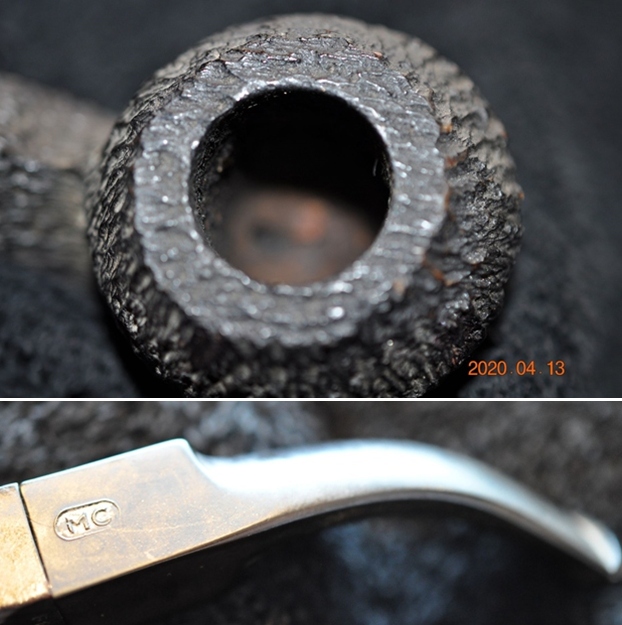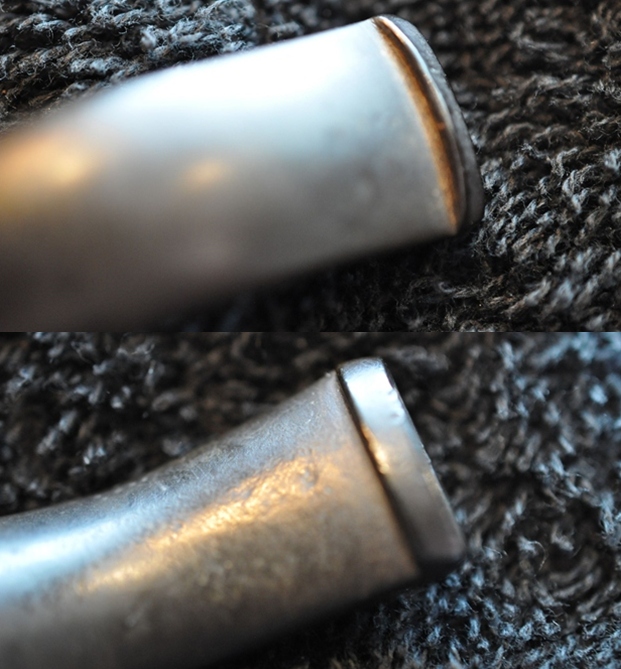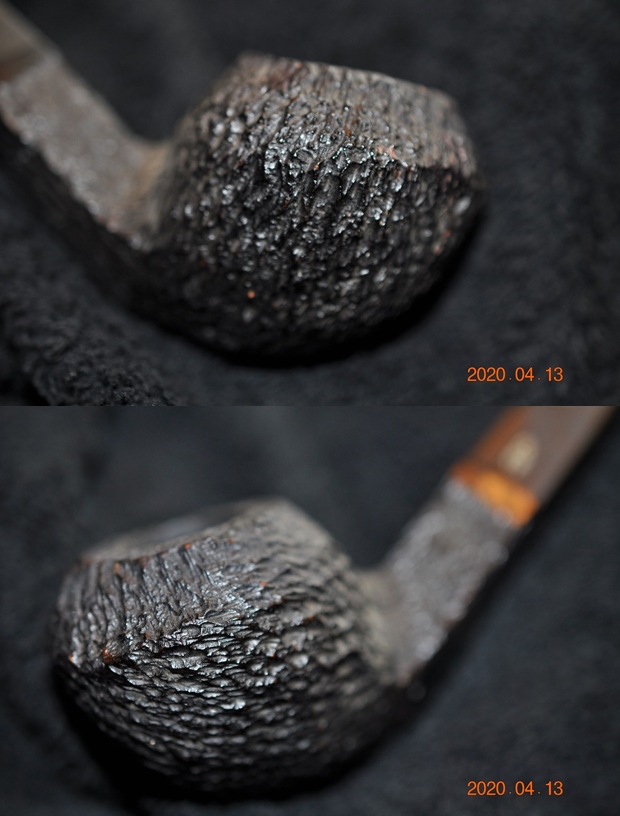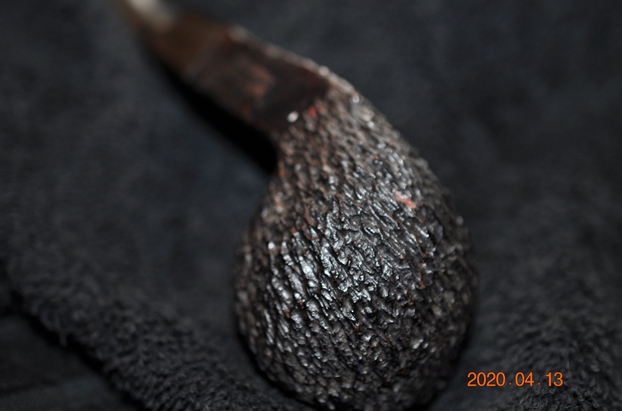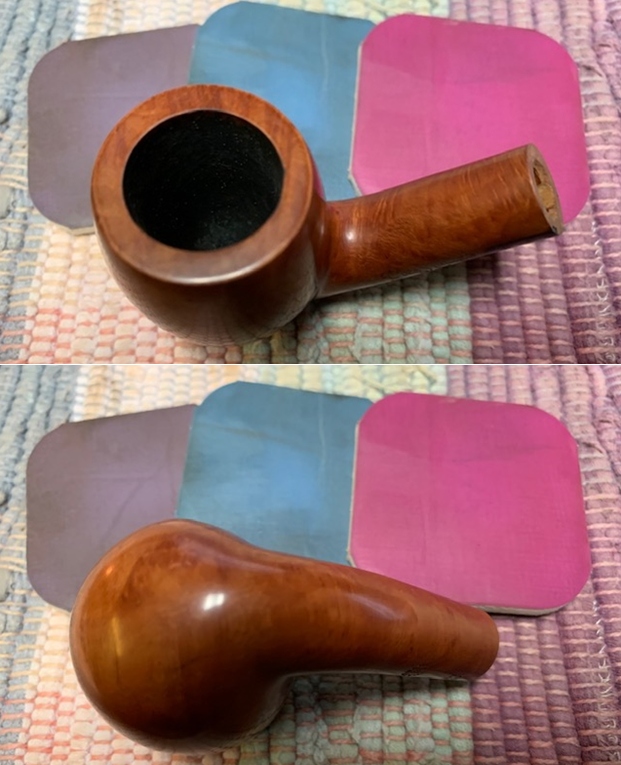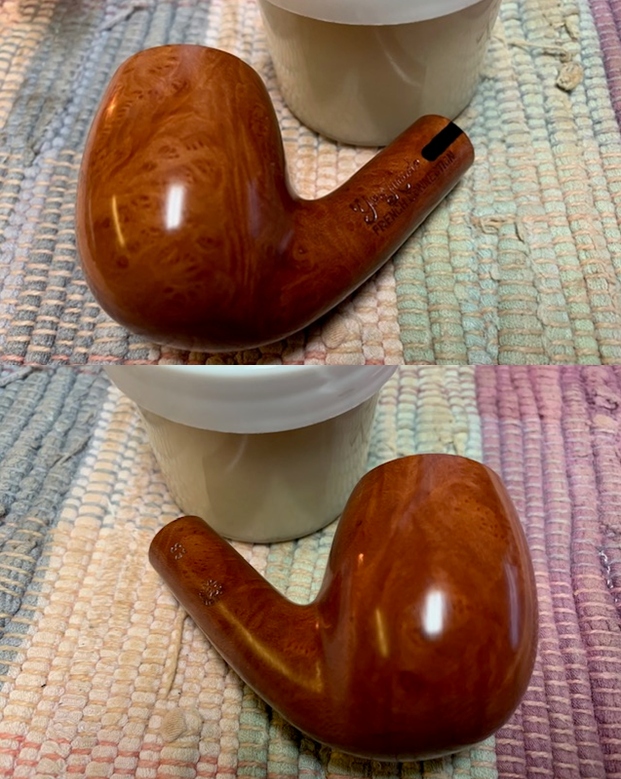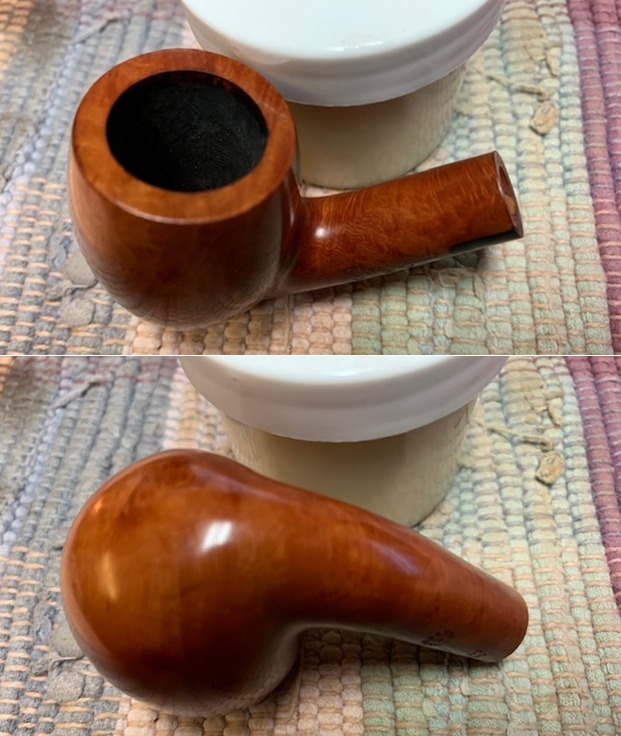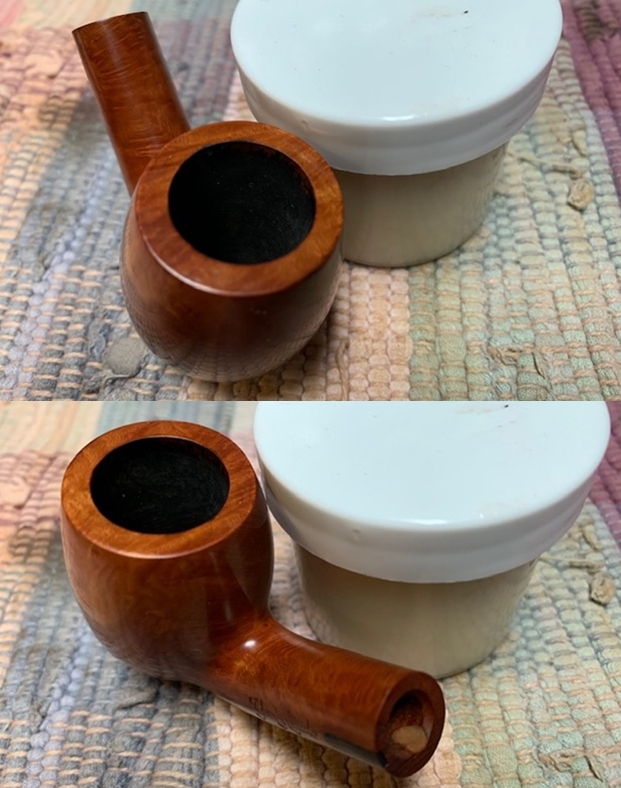
Tag Archives: bite marks

Beautification of an American Made Bertram Washington DC Grade 60 Prince


Blog by Steve Laug

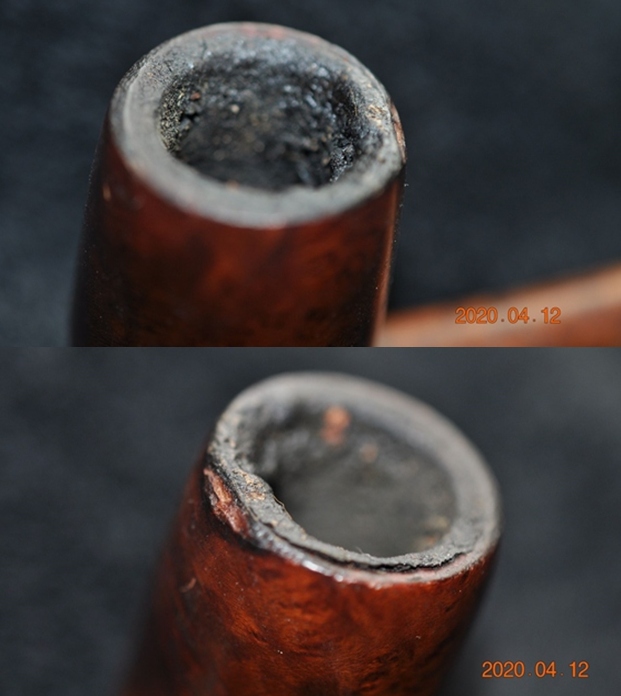
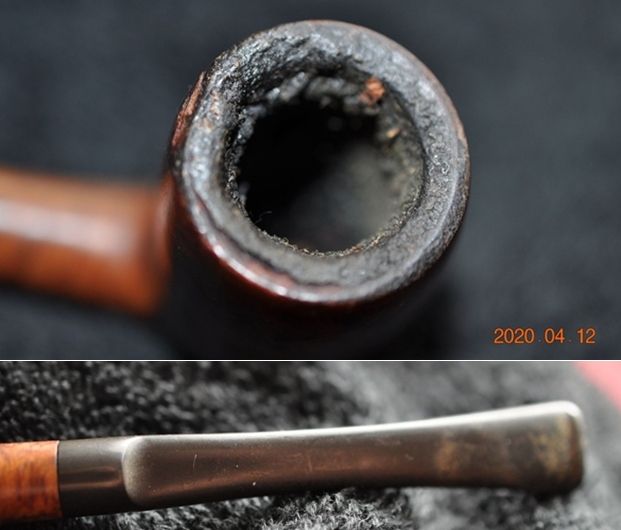
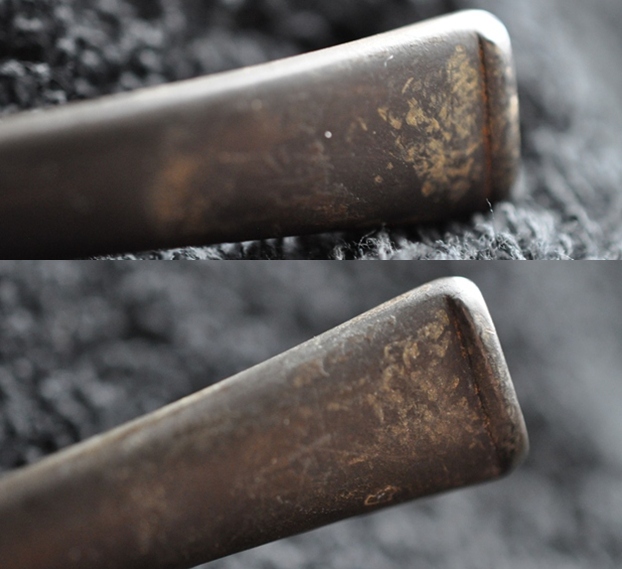
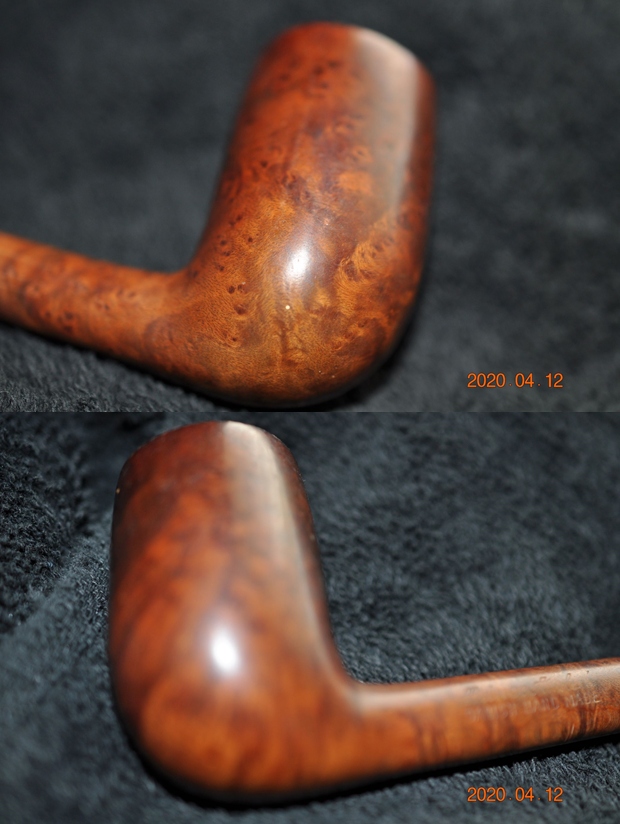
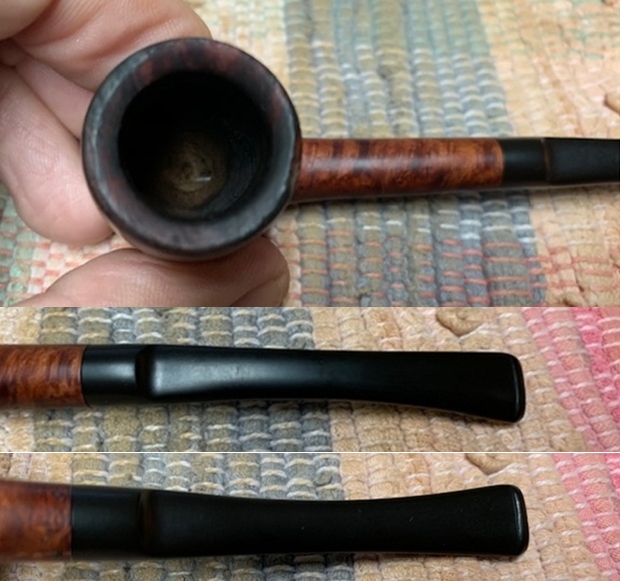
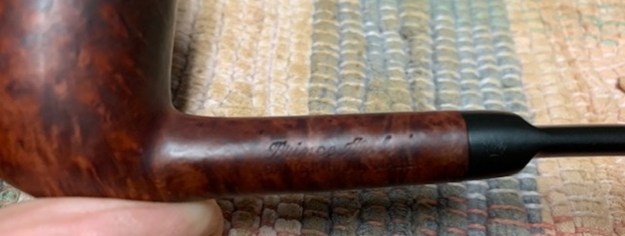
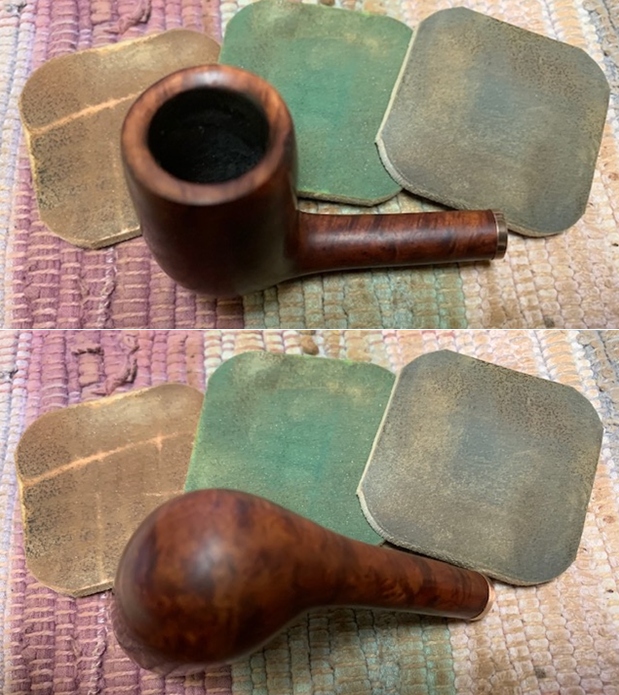
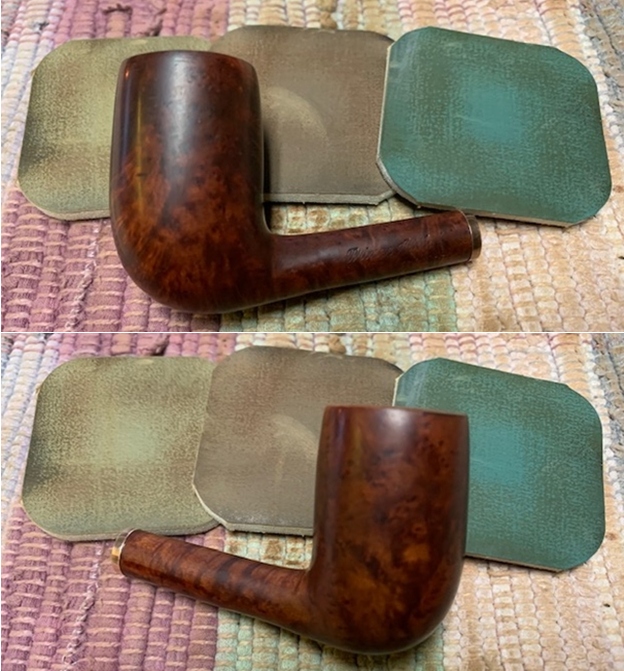
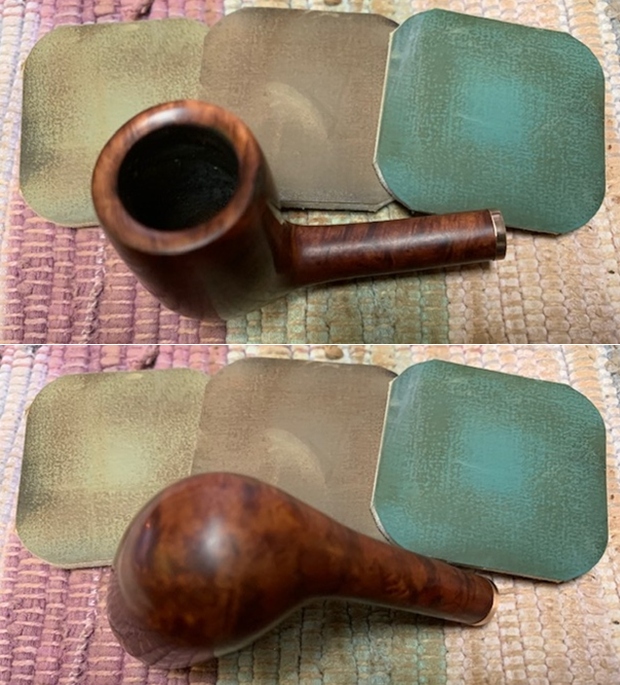
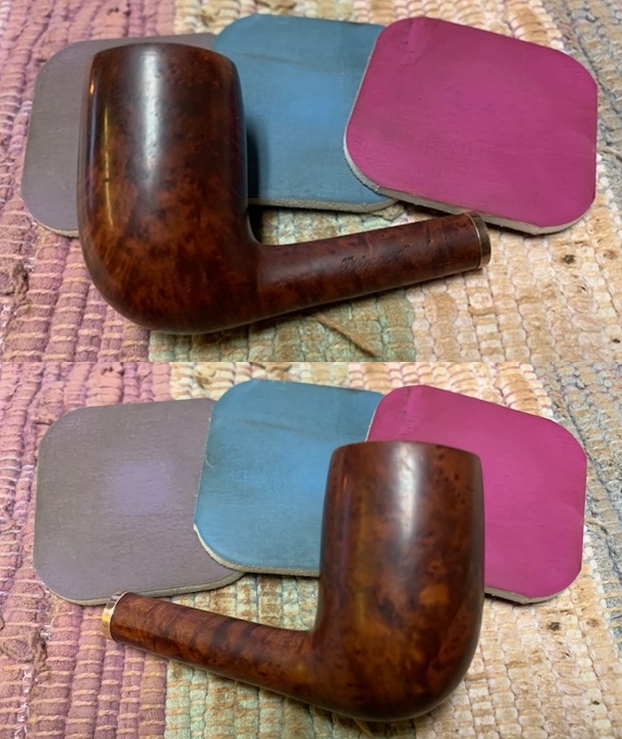
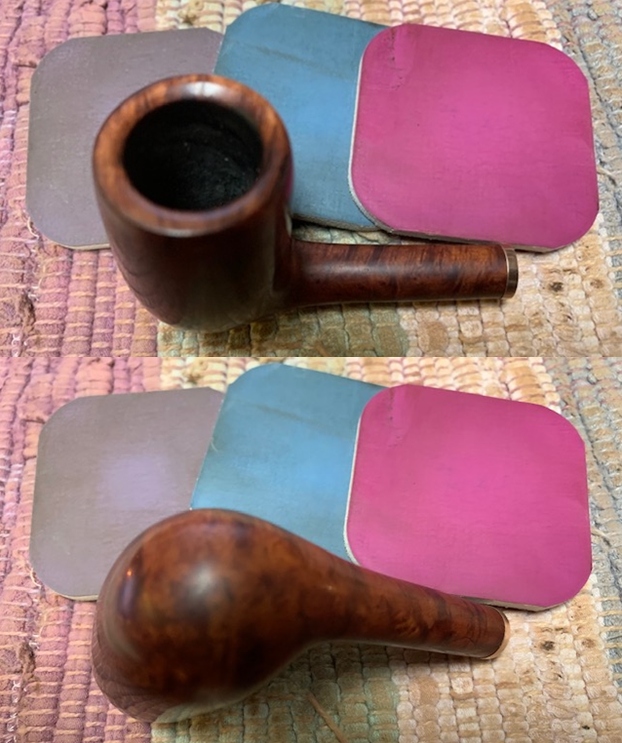
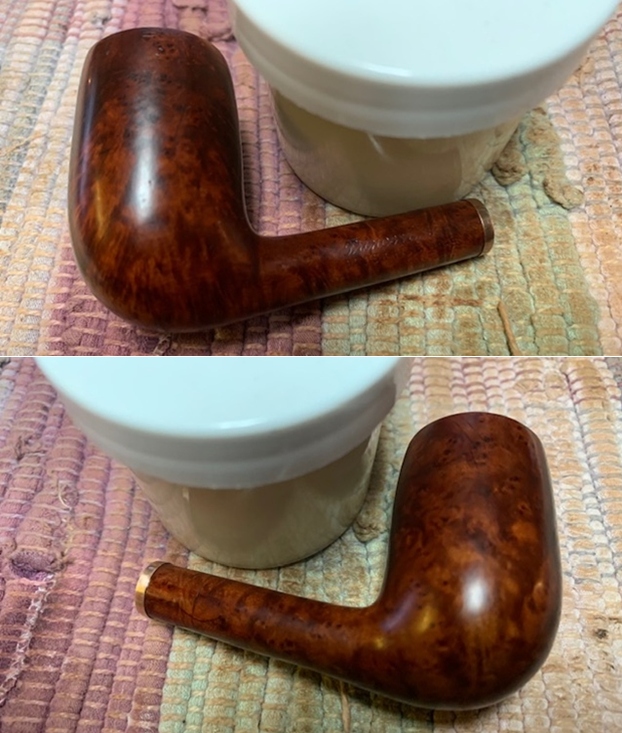
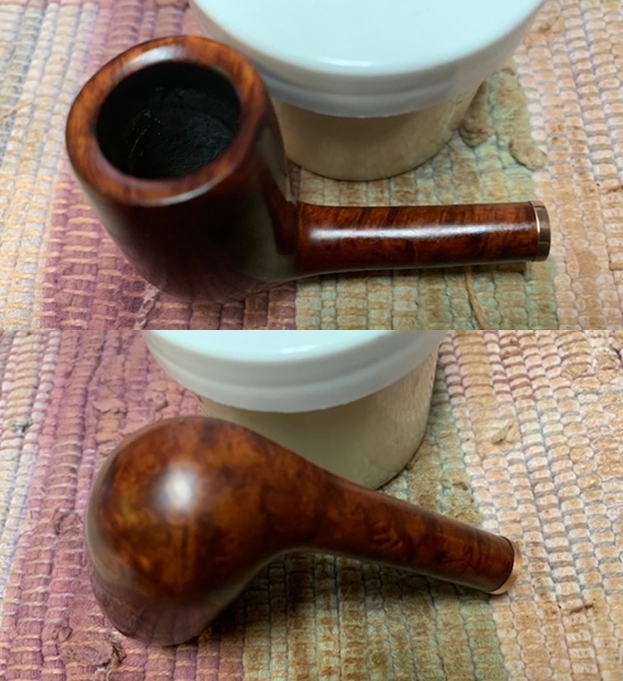
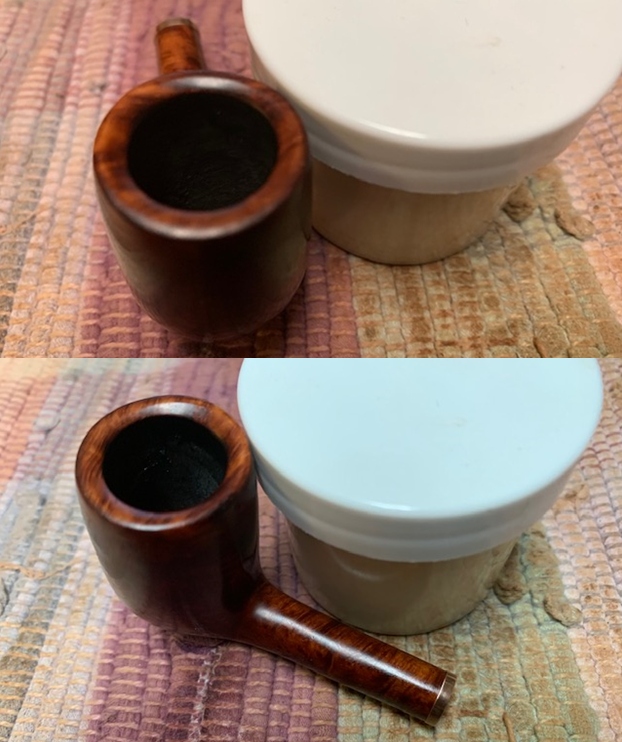
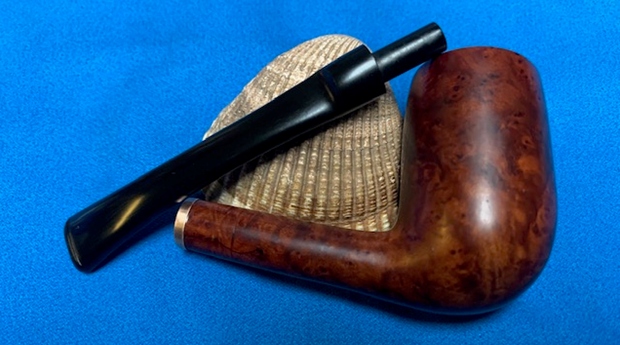
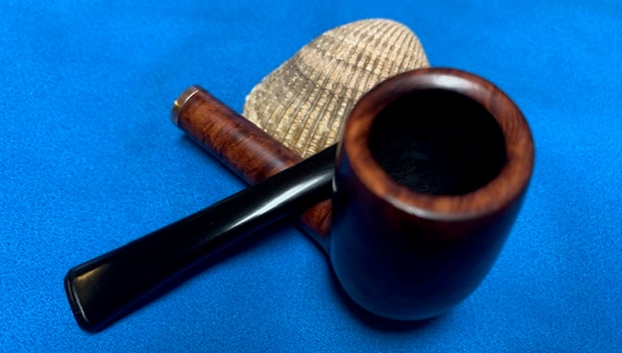
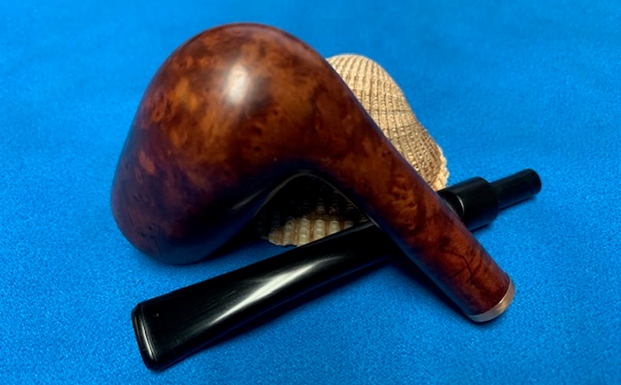
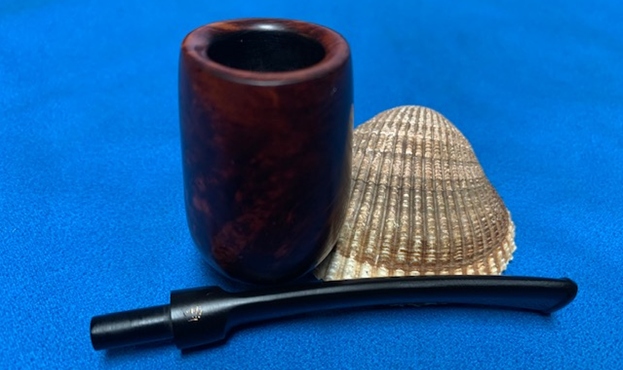
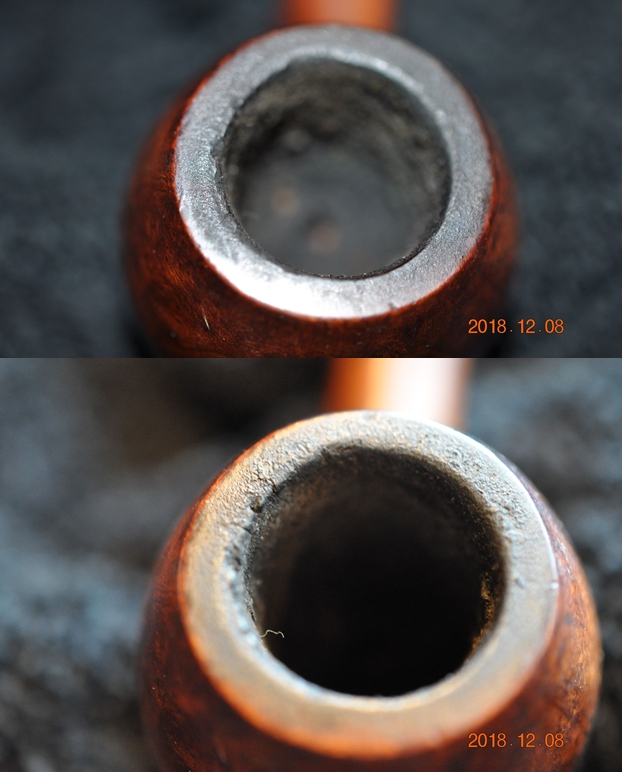
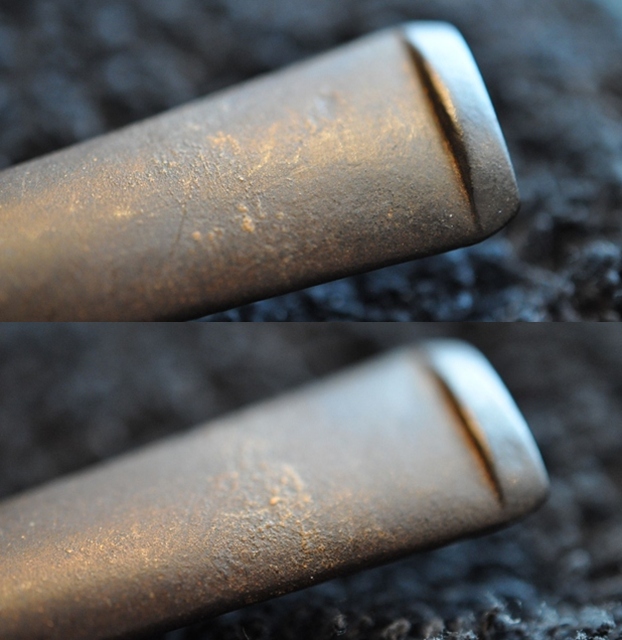
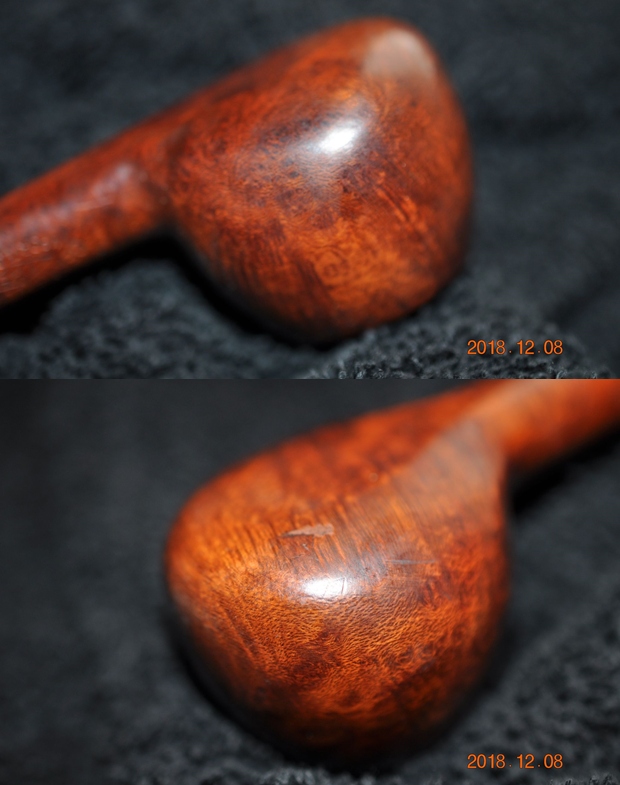
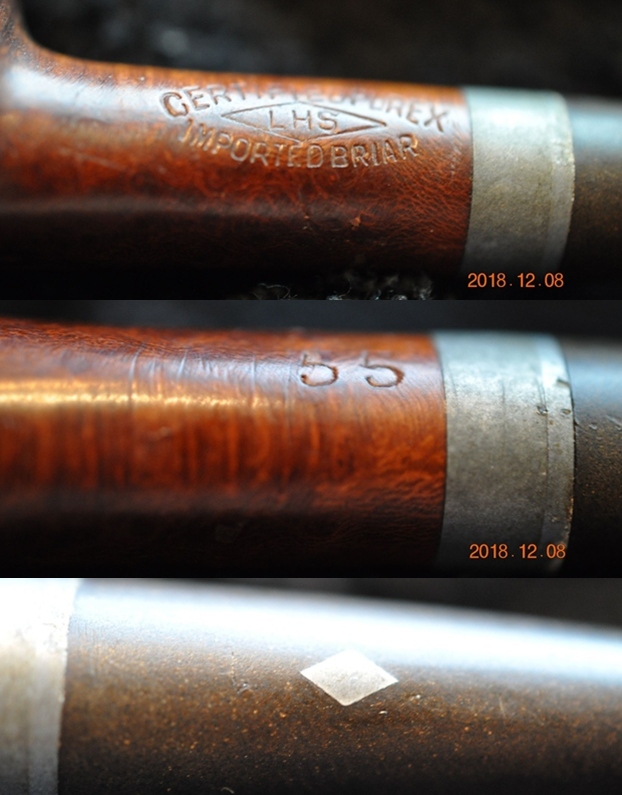
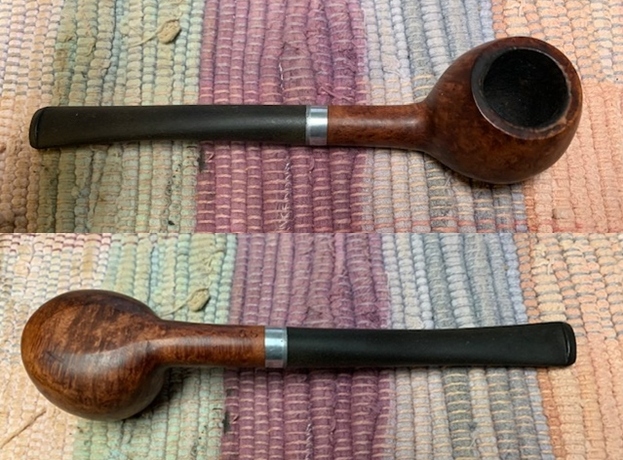
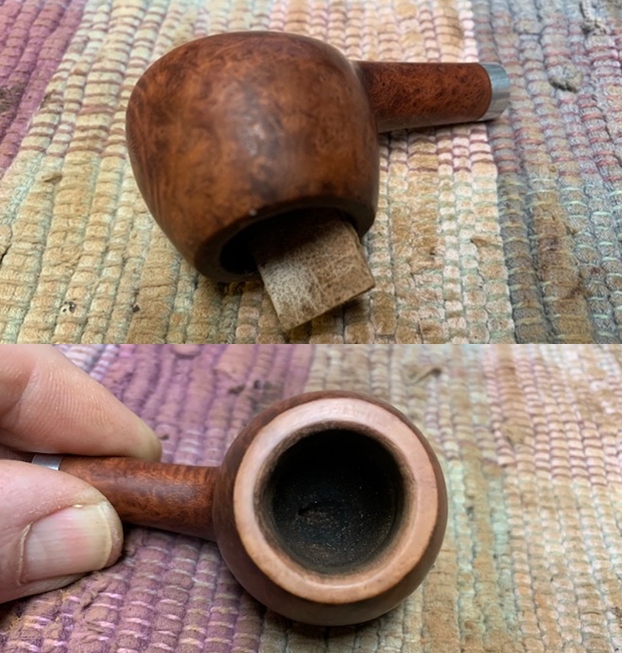
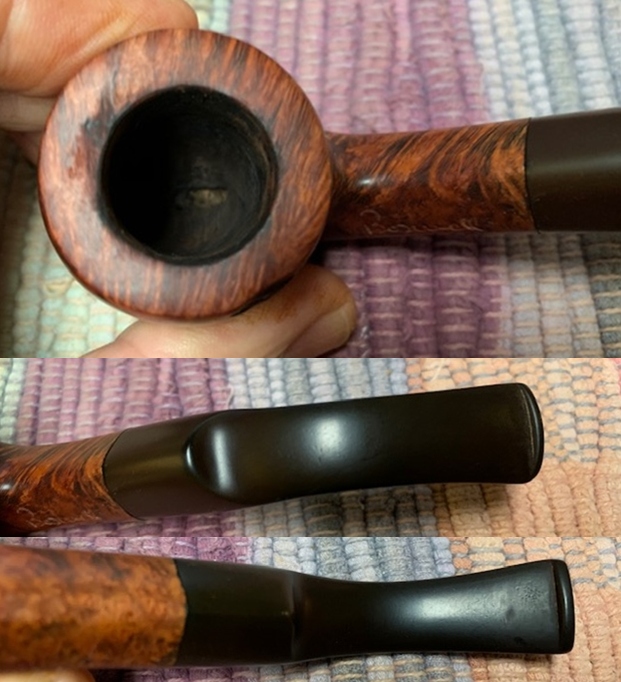
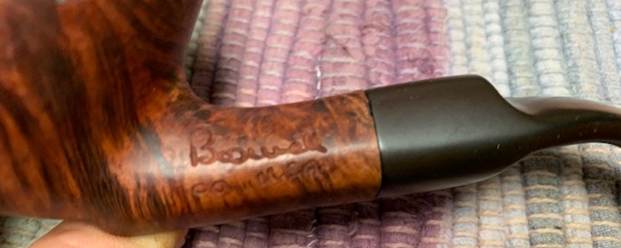
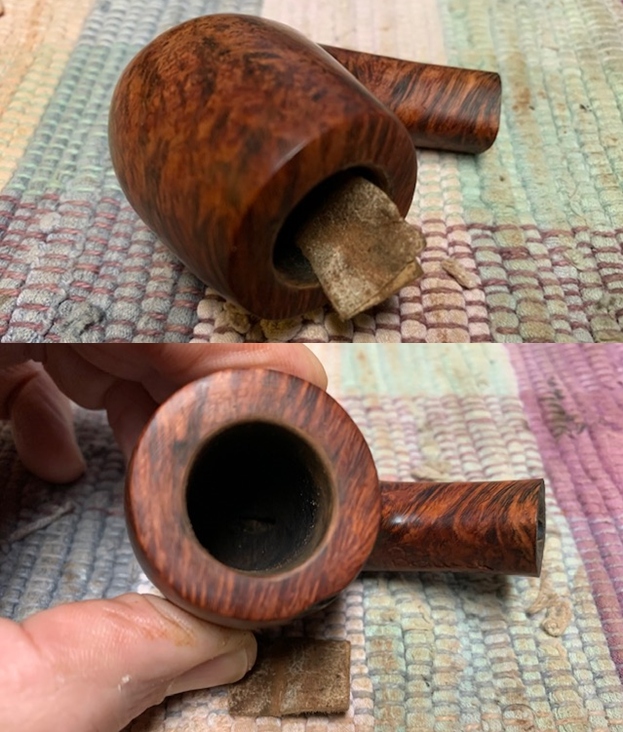
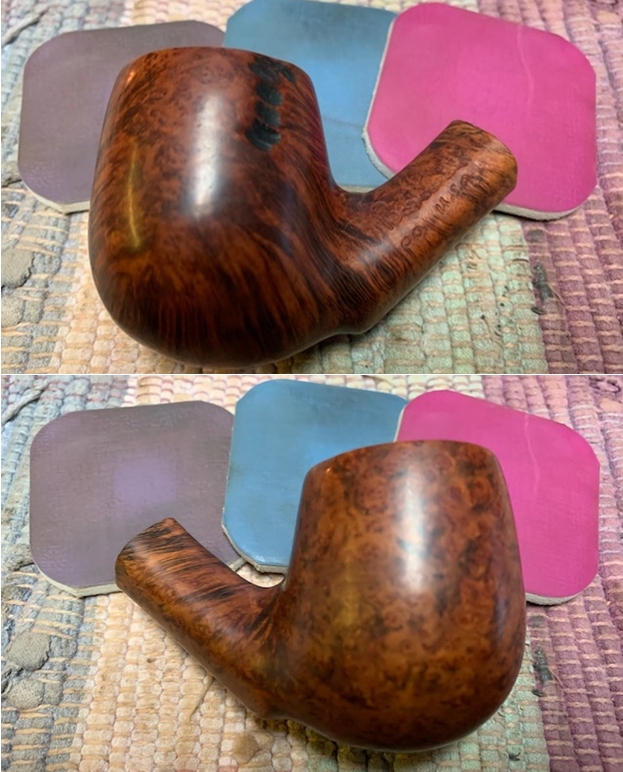
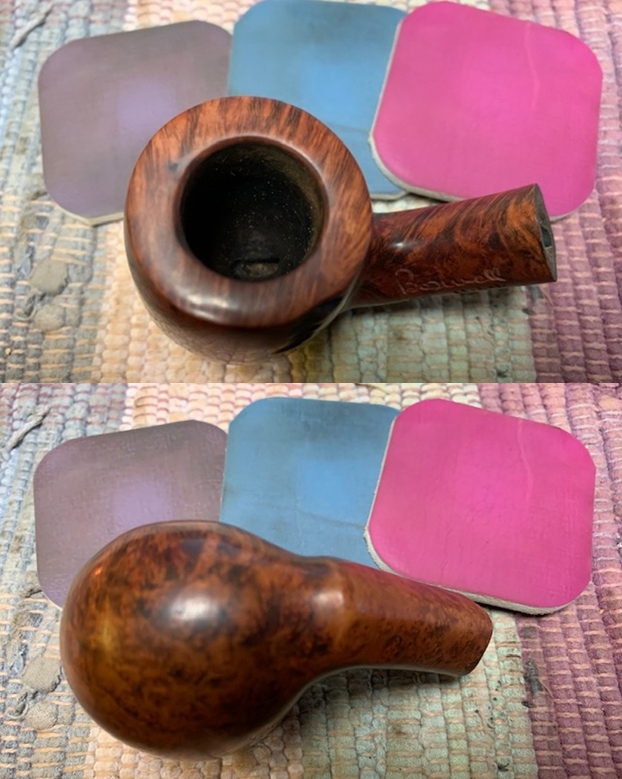
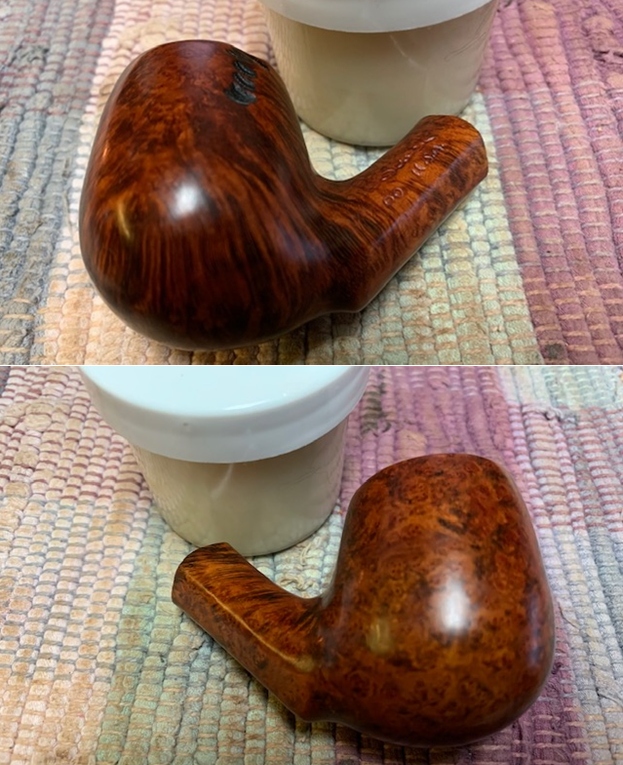
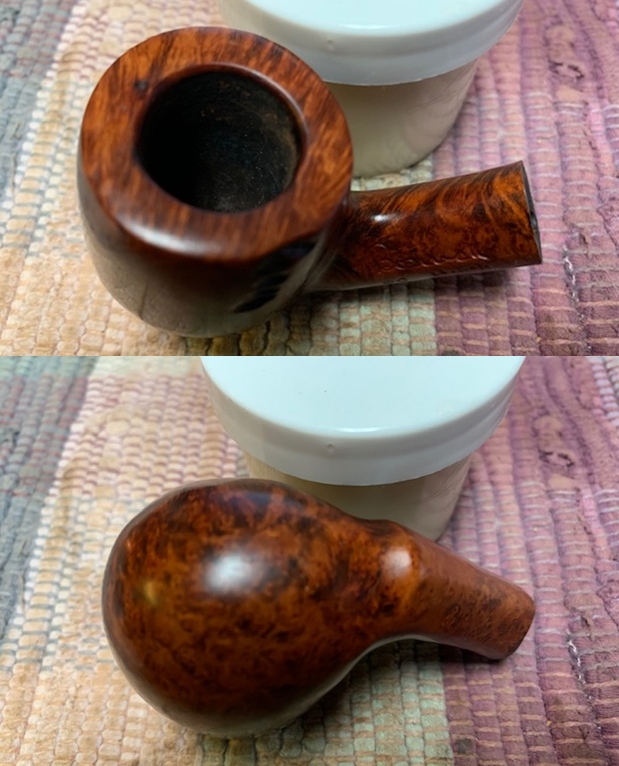
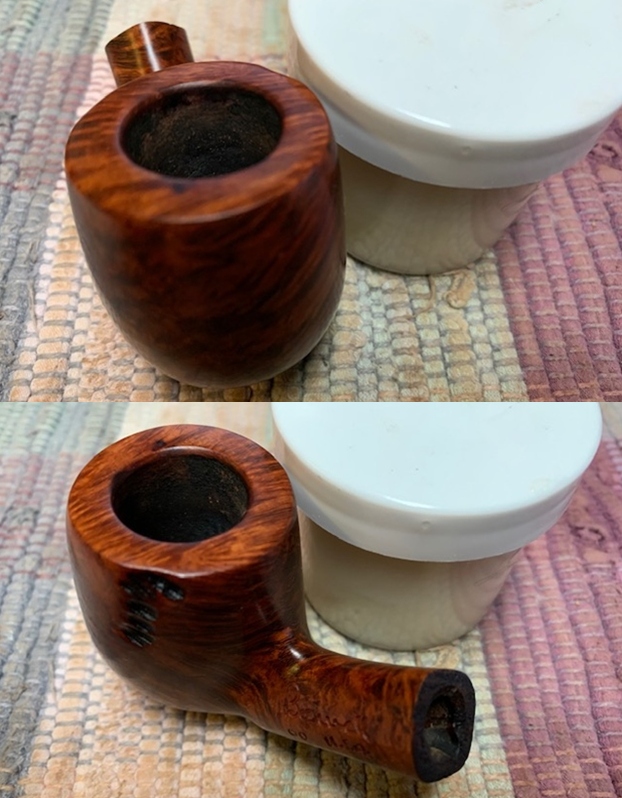
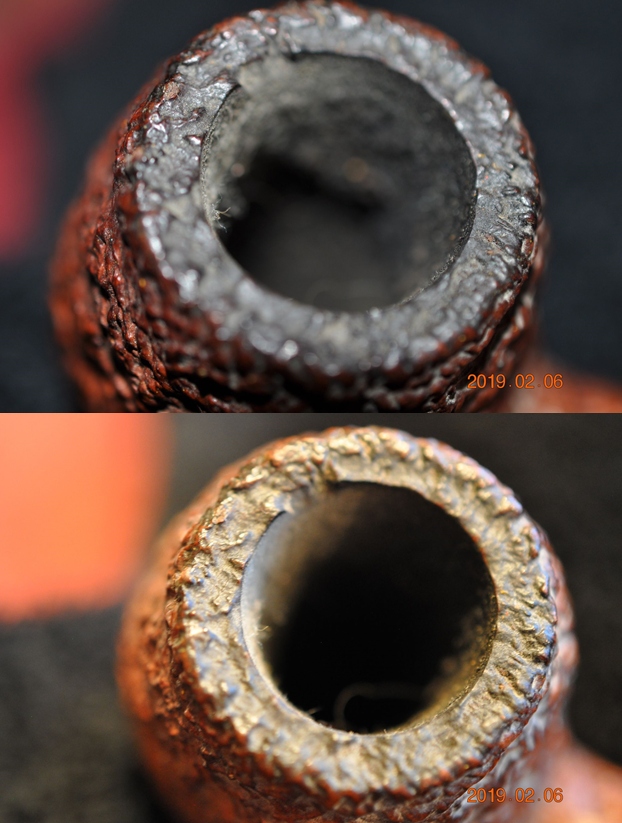
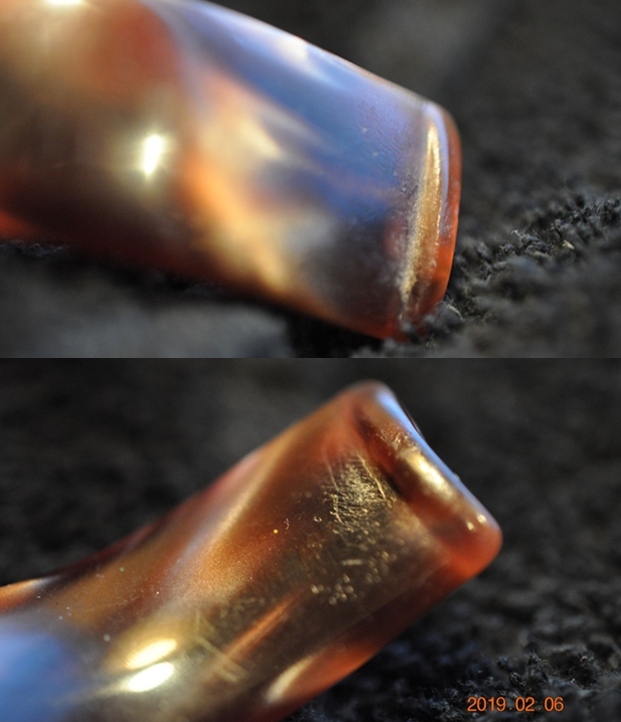
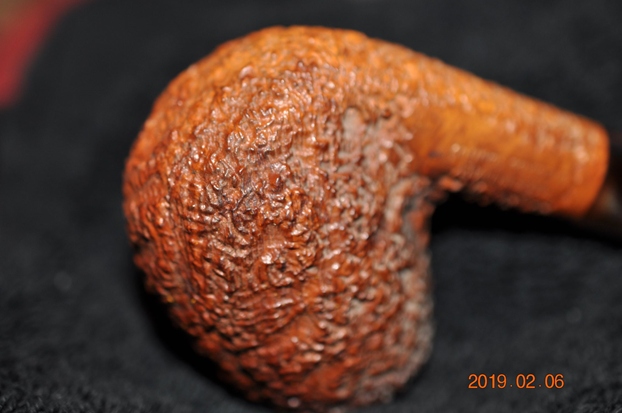
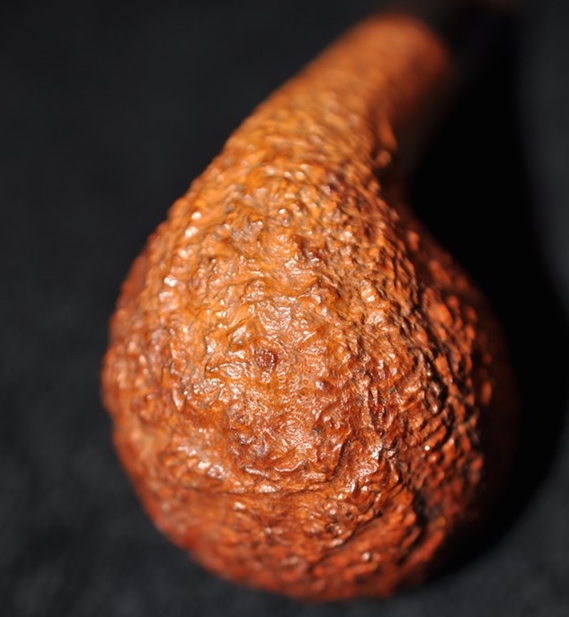
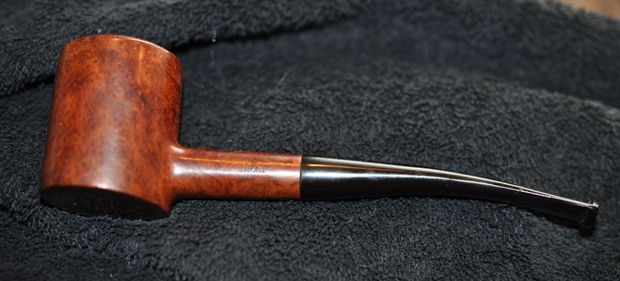
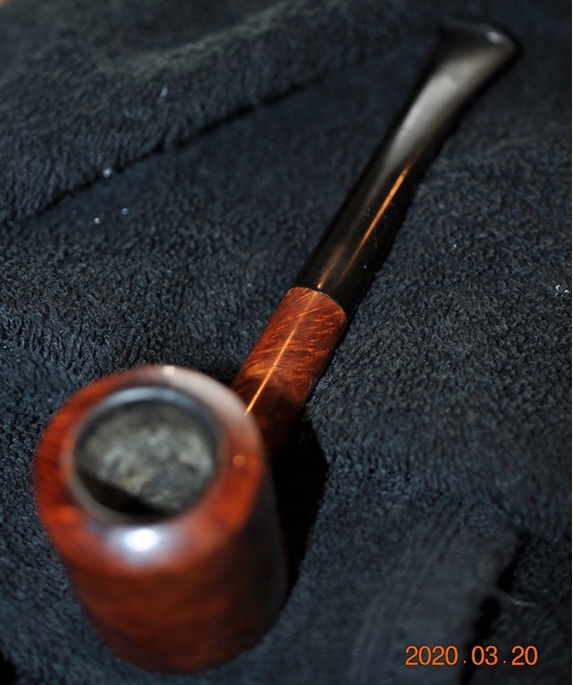
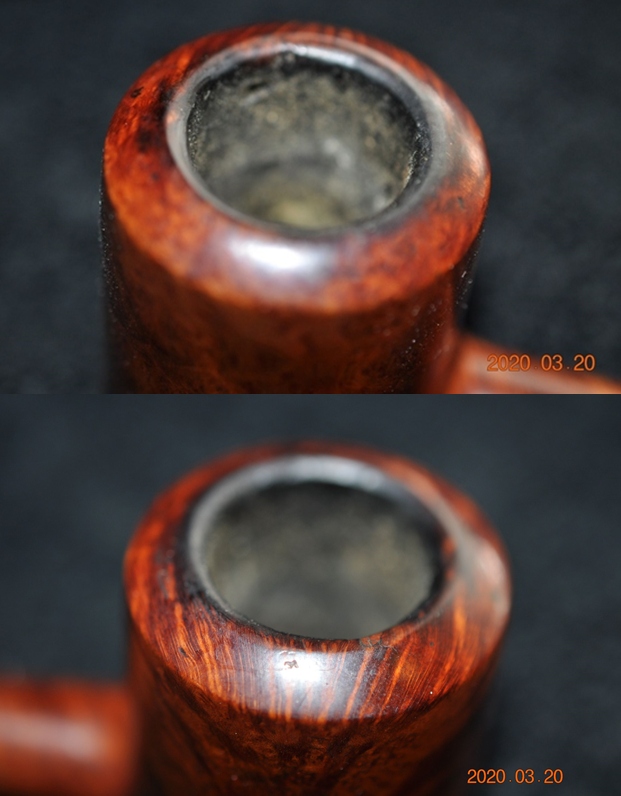
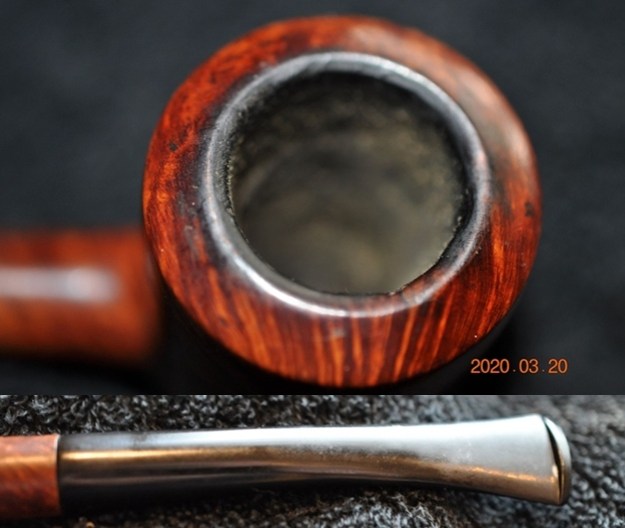
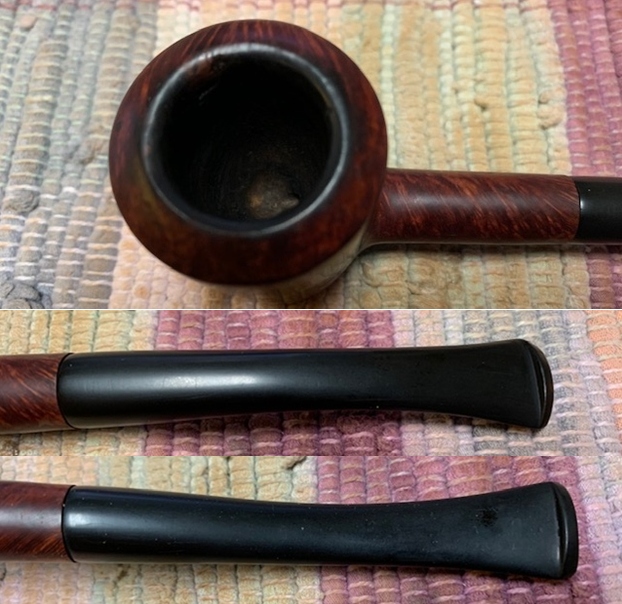
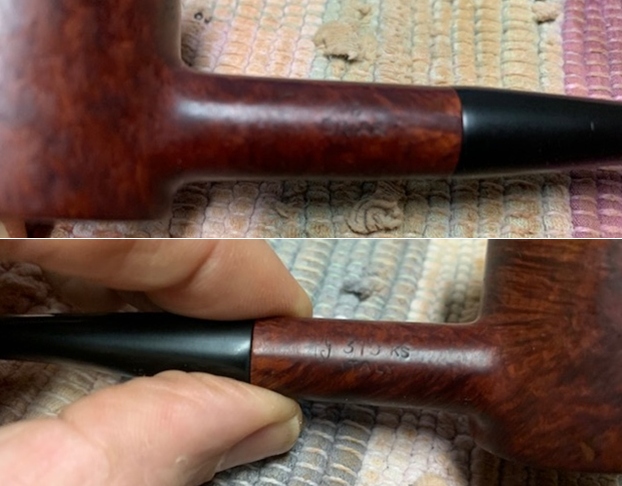
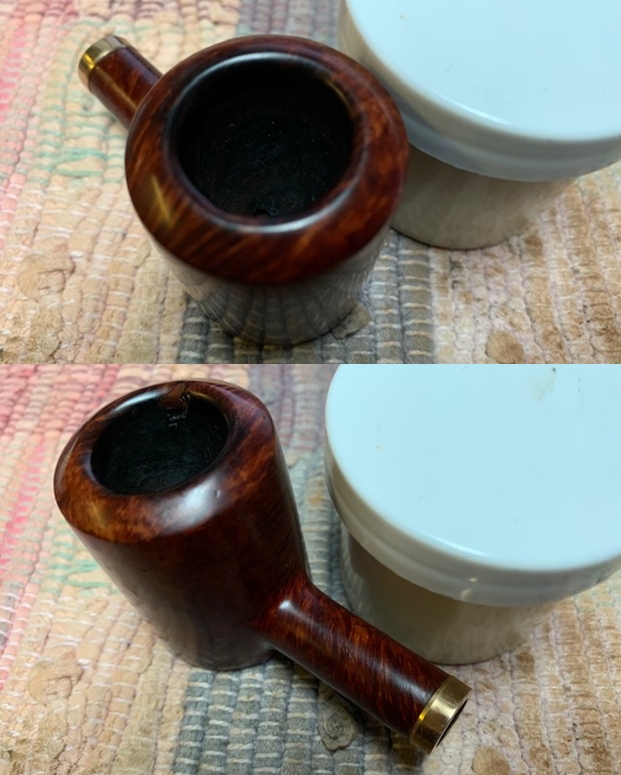
The next pipe on the work table came to me from one of our estate purchases. Between us we pick up quite a few pipes for restoration. I try to work them into the restoration queue so that I can keep them moving. We picked up over 120 Bertram pipes from an estate that a fellow on the east coast of the US was selling. This next one is from that estate – a beautifully grained Prince Grade 60 Bertram with a tapered vulcanite stem. The pipe is stamped on the underside side near the stem with the Grade 60 number. On the top side it is stamped Bertrams [over] Washington D.C. centered on the shank. The finish had a lot of grime ground into the smooth finish on the bowl and some darkening around the sides of the bowl. The bowl was caked with an overflowing lava coat on the top of the rim, heavier toward the back of the bowl. The edges looked okay other than some potential burn damage on the back inner edge. The stem was lightly oxidized, dirty and had light tooth chatter and marks on the top and underside near the button. There were not markings or a logo on the taper stem. Like the rest of the Bertrams in this lot the pipe had promise but it was very dirty. Jeff took photos of the pipe before he started his cleanup work. He took photos of the rim top and bowl to give a clear picture of the thickness of the cake and the lava on the rim top. He also took photos of the top and underside of the stem to show the chatter and tooth marks. Otherwise the stem is quite clean.   Jeff took photos of the sides and heel of the bowl to give a picture of what the briar around the pipe looked like. There is some stunning grain under the grime.     He took photos of the stamping on the top and underside of the shank. It reads as noted above and is clear and readable. The grade number is 60.     As I have worked on Bertrams I have written on the brand and have included the following information. If you have read it in past blogs, you can skip over it. If you have not, I have included the link to Bertram history and information. I would recommend that if you don’t know much about them take some time to read the background. I include a link to the write up on Pipedia (http://pipedia.org/wiki/Bertram). Bertram pipes were based out of Washington DC. They were popular among famous politicians and celebrities of the time. They made many products for them from FDR’s cigarette holders to Joseph Stalin’s favorite pipe. They were considered some of the best America had to offer till they finally closed their doors in the 70s. Bertram graded their pipes by 10s and sometimes with a 5 added (15, 25, 55 etc.), the higher the grade the better. Above 60s are uncommon and 80-90s are quite rare. I have worked on one 120 Grade billiard. I have several blogs that I have written on rebornpipes that give some history and background to Bertram pipes. (https://rebornpipes.com/2015/06/16/an-easy-restoration-of-a-bertram-grade-60-217-poker/).
I have included the following link to give a bit of historical information on the pipe company. It is a well written article that gives a glimpse of the heart of the company. http://www.streetsofwashington.com/2012/01/bertrams-pipe-shop-on-14th-street.html#

From this information I learned that all of these Bertrams were made before the closure of the shop in the 1970s. This Bertram Prince has stunning straight and flame grain around the bowl. This pipe has a 60 Grade stamp on it which I am sure explains the quality of the briar. But like many of these Bertrams the Grading system is a mystery to me.

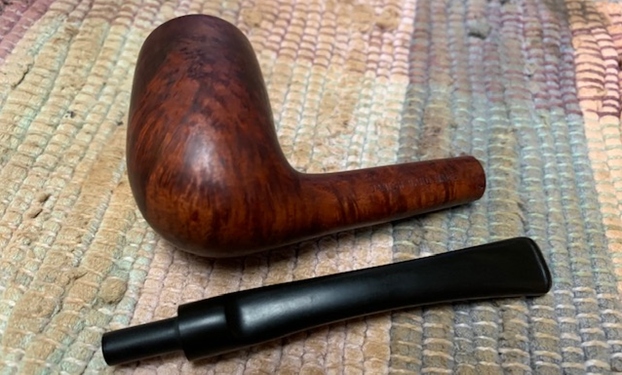
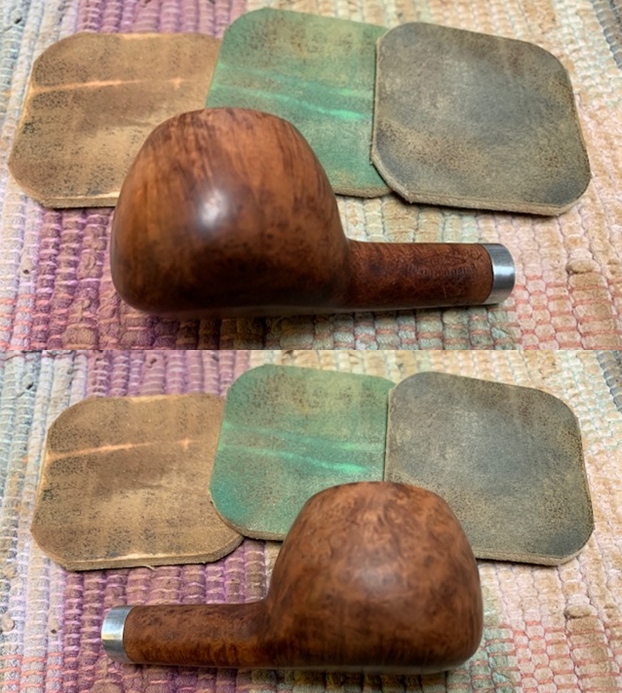
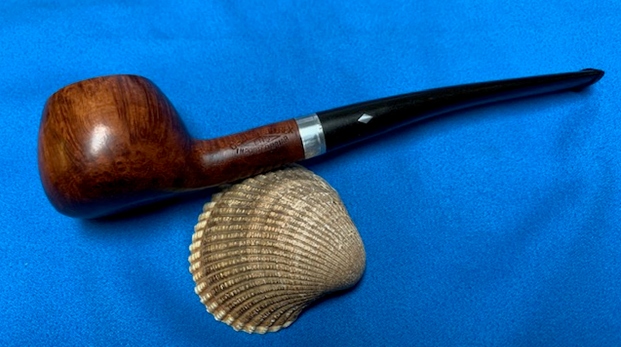
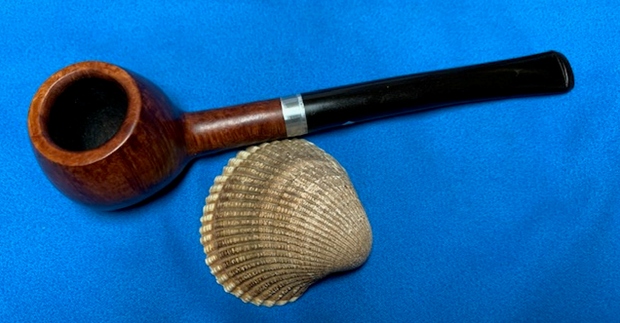
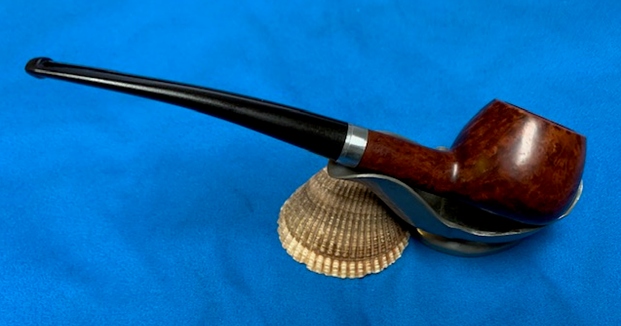
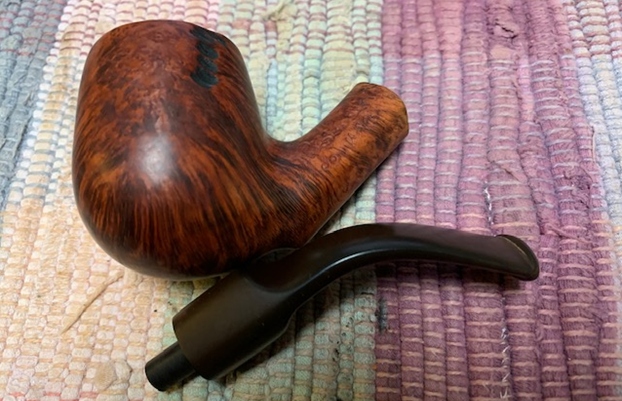
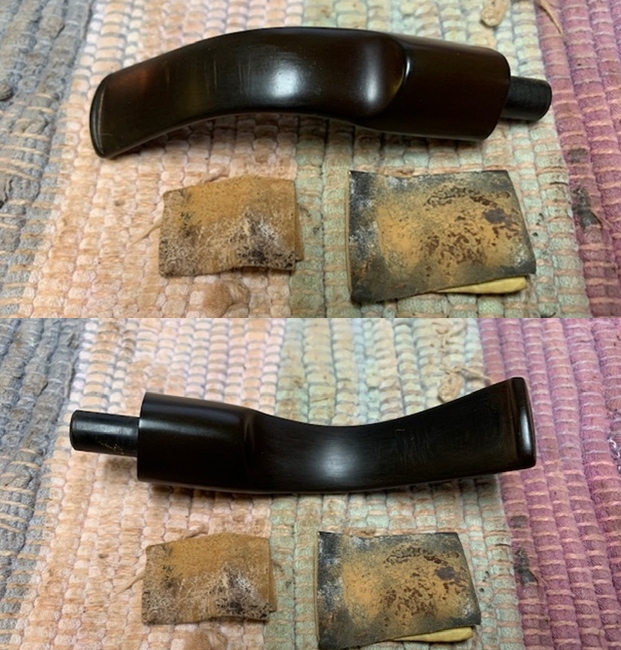
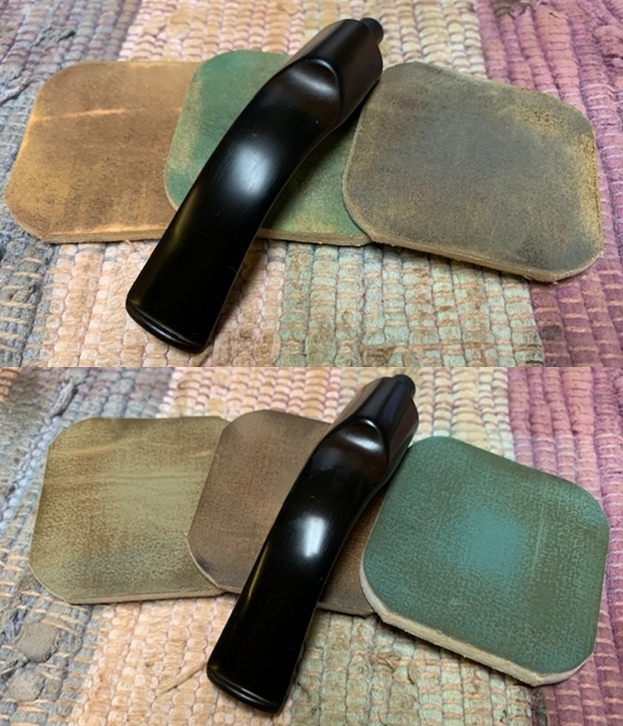
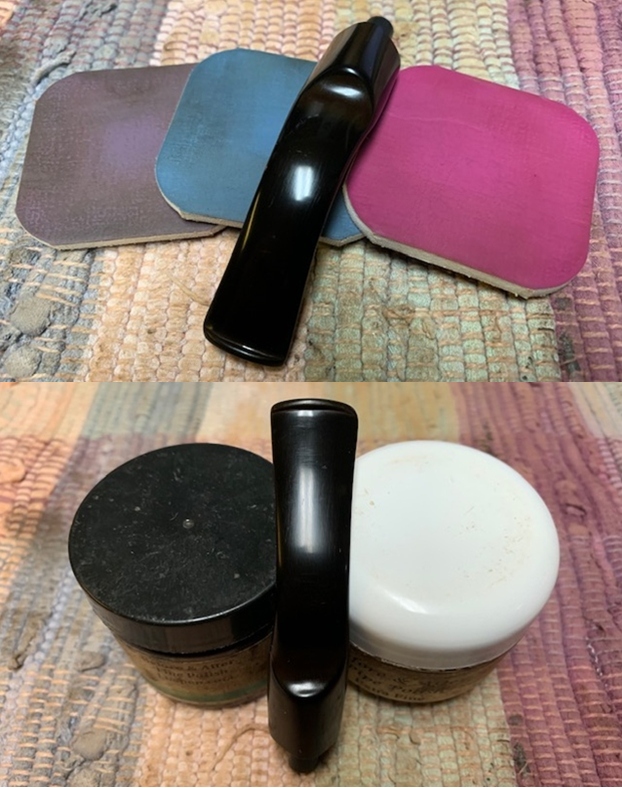
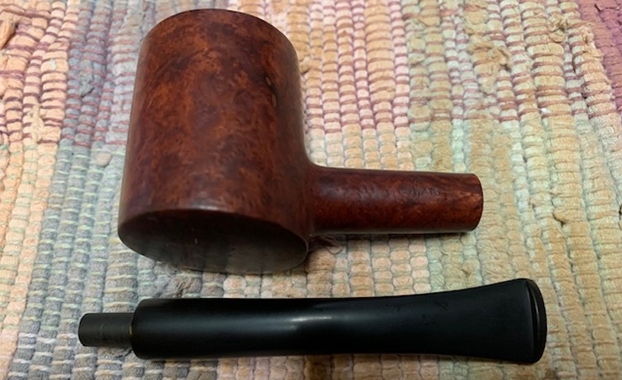
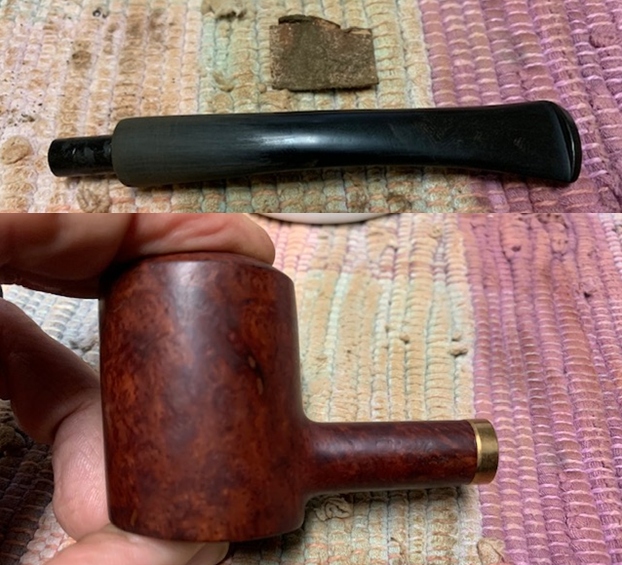
Jeff had cleaned up the pipe with his usual penchant for thoroughness. He reamed the pipe with a PipNet Pipe Reamer and cleaned up the remnants with a Savinelli Fitsall Pipe Knife.  He scrubbed the bowl with undiluted Murphy’s Oil Soap with a tooth brush. He rinsed it under running warm water to remove the soap and grime. He cleaned out the inside of the shank and the airway in the stem with alcohol, cotton swabs and pipe cleaners. He soaked the stem in Before & After Deoxidizer and rinsed it off with warm water. I took photos of the pipe once I received it. The rim top looked very good. The inner edge of the rim had some damage on the back side and there was darkening on the top of the rim at the back. The stem surface looked very good with a few small tooth marks and chatter on both sides near the button. I took photos of the stamping on the shank. The Bertram Washington DC is on the  left side of the shank. On the underside of the shank it is stamped with the Grade 60 number.I removed the stem and took a photo of the pipe to give a sense of the whole. The stem is tapered and narrow.I started my work on the pipe by reworking the inside edge of the bowl to clean up the burn damage on the back of the bowl with a folded piece of 220 grit sandpaper.Now it was time to do my work on the pipe. I polished the bowl and the rim top, sides and shank with micromesh sanding pads – wet sanding with 1500-12000 grit pads and wiping it down after each pad with a damp cloth.  I rubbed the bowl and shank down with Before & After Restoration Balm. I worked it into the surface of the bowl sides and shank with my fingertips to clean, enliven and protect the briar. I let the balm sit for a little while and then buffed with a cotton cloth to raise the shine.     I sanded out the tooth marks with 220 grit sandpaper and started polishing it with 400 grit wet dry sandpaper.    I set the bowl aside and turned to work on the stem. It was in very good condition so I polished the vulcanite stem with micromesh sanding pads – 1500-12000 grit pads. I wiped it down with a damp cloth after each sanding pad. I used Before & After Pipe Polish – both Fine and Extra Fine to further polish the stem.   This Bertram Washington DC Grade 60 Prince with a vulcanite taper stem is a great looking pipe now that it has been restored. I put the stem back on the bowl and carefully buffed the pipe with Blue Diamond on the buffing wheel using a light touch on the briar. I gave the bowl and the stem multiple coats of carnauba wax on the buffing wheel and followed that by buffing the entire pipe with a clean buffing pad. I hand buffed the pipe with a microfiber cloth to deepen the shine. The finished Bertram 60 Prince fits nicely in the hand and feels great. Give the finished pipe a look in the photos below. The dimensions of the pipe are Length: 6 inches, Height: 1 ½ inches, Outside diameter of the bowl: 1 ¼ inches, Chamber diameter: ¾ of an inch. If you are interested in adding this pipe to your collection send me a message or an email. Thanks for reading this blog and my reflections on the pipe while I worked on it. There are many more to come!

Replacing The Military Mount Stem Of a Beautiful “Selected Briar” Billiard


Blog by Paresh

I had been procrastinating restoration work on this pipe for long, primarily for want of spares. This was one of my inherited pipes that had its horn stem completely shot!! I had been waiting for a suitable replacement stem, preferably a horn stem and so when I received my stash of around 40 vulcanite and 20 horn stems (a mix of used and new stems), this pipe moved up the queue for refurbishing.

This pipe has an old world charm about it what with its classic billiard shape and military mount horn stem. The stummel has a mix of Bird’s eye grain on the front, back and at the foot of the stummel with cross grains to the sides of the bowl. The shank has beautiful cross grains that run the entire length of the shank. It appears as if these straight grains emanates from the shank end and move up towards the bowl shank junction. It is stamped on the left side of the shank as “SELECTED” in block with letter S being larger than rest of the letters, over “Briar” in artistic hand. The shank end nickel ferrule is stamped as “EP” in a rhombus over three American faux hallmarks. The stampings are crisp and clear. The lack of COM stamp or brand name makes me believe this pipe to be a BASKET PIPE and the faux American hallmarks points to the probability of this pipe being made for the American market. The stamp “EP” stands for ELECTRO PLATED nickel ferrule as I know.

The horn stem points to the vintage of this pipe as being from prior to 1920s when vulcanite rubber gained prominence as a stem material.

The dating of this pipe as prior to 1920s is my guesstimate based primarily due to fitment of a horn stem. Any concrete and substantiated information on this pipe and its dating will be a huge learning for me and fellow readers of rebornpipes!!

Initial Visual Inspection
This pipe has the classic straight Billiard shape with a medium sized bowl. The stummel boasts of a mix of Bird’s eye grain on the front, back and at the foot of the stummel with cross grains to the side of the bowl. The shank has beautiful straight grains all round. The stummel surface is covered in a lot of dust and dirt. There are a couple of fills in the briar but that does not mean that the quality of the briar is sub standard. The carving, hands feel and appearance of the pipe, even in this condition, screams high quality and excellent craftsmanship. There is a decent layer of cake in the chamber. The stem has been cut short before and is heavily damaged with a through hole on one of the stem surface and few deep bite marks in the bite zone. Here is how the pipe appears as it sits on my work table. Detailed Visual Inspection
The chamber has an even layer of thin cake and appears to have been reamed and never smoked thereafter. The smooth rim top surface is scratched and it seems that the rim top has been scrapped to remove overflowed lava. Both the inner and the outer rim edges are beveled and appear sans damage. The condition of the inner walls of the chamber can be commented upon after the cake has been taken down to the bare briar. The chamber odors are mild. The draught hole is dead center and at the bottom of the chamber and that makes me believe that it should great smoke. The stummel appears solid to the touch all around and hence I do not foresee any serious damage to the walls in the form of burnout/ deep heat fissures/ lines or pits. To address the damage to the rim top, I shall top the surface on 220 grit sand paper. The reaming and subsequent cleaning of the chamber and mortise should completely eliminate the ghost smells from the chamber.The smooth stummel surface has taken on a layer of aged patina, through which one can make out the beautiful mix of Bird’s eye grain on the sides and at the foot of the stummel with cross grains to the front and back of the bowl. The shank displays tightly packed lovely cross grains that run the entire length. There are two fills in the entire stummel (encircled in yellow), one on the right side and another in the shank, adjacent to the stamping and close to the edge of the ferrule. The vintage of the pipe and years of uncared for storage has added layers of grime and dust over the stummel surface giving the briar a lifeless and bone dry look. Thorough cleaning of the stummel surface and rinsing it under warm water should highlight the grain patterns while preserving the patina. I shall refresh the fills with a mix of briar dust and superglue. The fill near the stampings on the shank will need to be worked on very carefully, if I have to preserve the stamping and which I always ensure!! It will be easy job if the ferrule can be separated from the shank end. The mortise shows accumulation of oils, tars and gunk and will need to be cleaned up. However, I have to admit that it is not as clogged as I am used to on my grandfather’s pipes. The horn stem in military mount style is completely shot!! You name an issue that a restorer is likely to come across in a stem, it is present and how!! Though personally I feel that every stem is repairable to an acceptable standard, however, in this case I feel that a stem replacement is in order to improve both the aesthetics as well as functionality of this pipe. Have a look at the pictures below to get an idea of the issues that this stem brought to the table…The Process
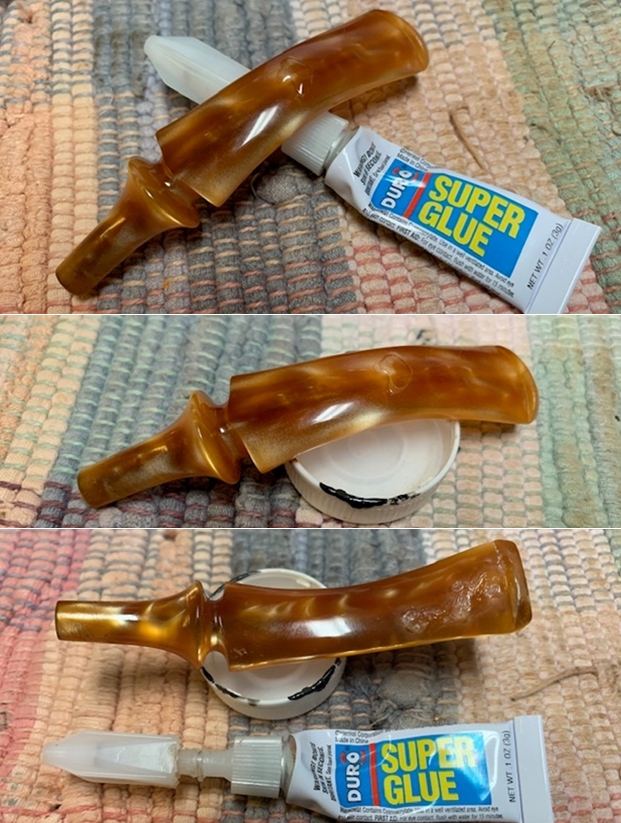
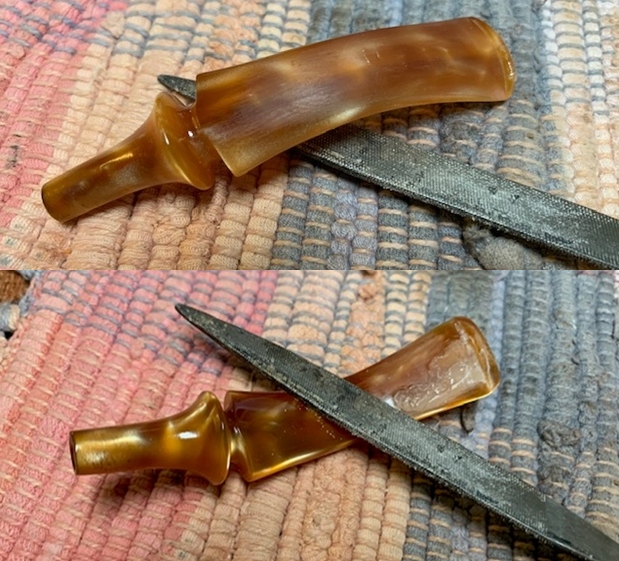
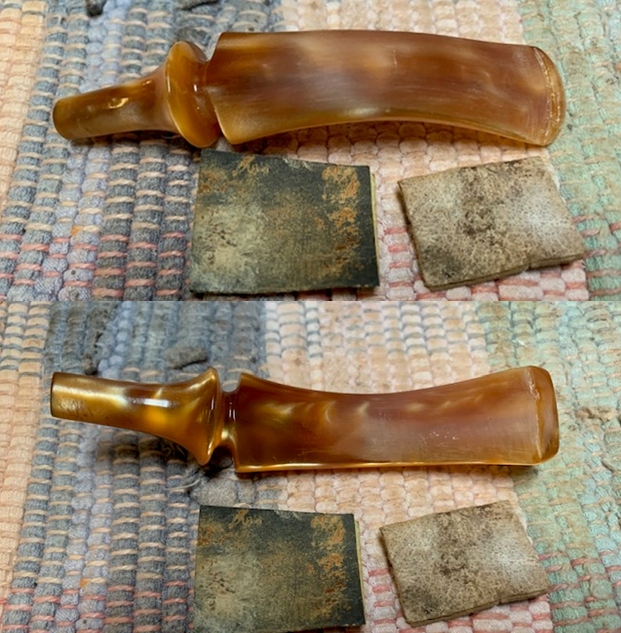
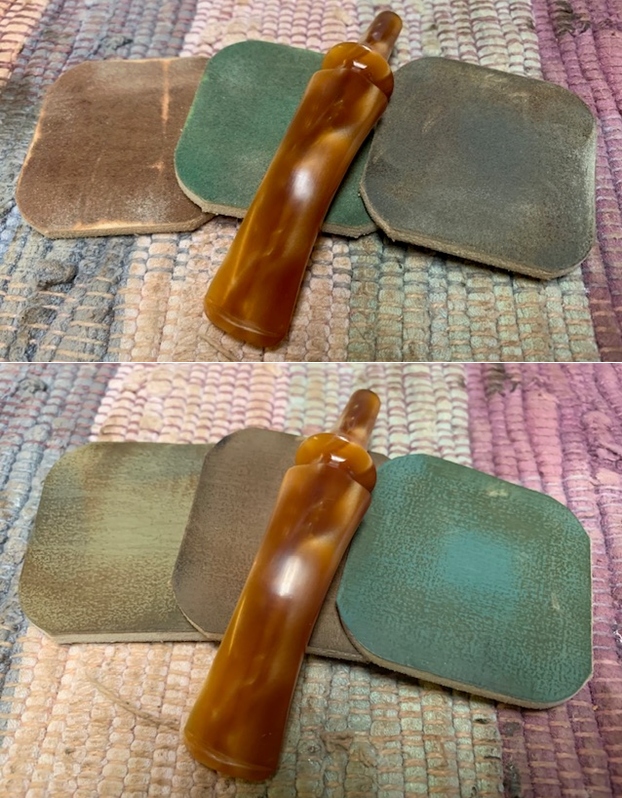
The first step in this restoration was to identify a suitable stem that would replace the old and chewed up horn stem. I FaceTimed with Steve and we went through the lot of horn stems that I had received. We shortlisted a straight military mount style specimen of brand new horn stem with a round orifice. It would suit the pipe both functionally and aesthetically. However, it did not have a taper and the slight belly swell that the original horn stem had. We ended the conversation with a few tips that Steve gave to help me work through this project. On a hunch, I got the slightly bent vulcanite stem that I had earmarked for another project, an early 1900s BEN WADE, and checked it out against the stummel. The extreme flare at the slot end, the taper and the size made me reconsider the horn stem that Steve and I had shortlisted. This vulcanite stem had the Castello like military mount stem and it really looked fantastic. I shared the pictures (shown below) of all the three stems, including the original and the vulcanite stem with Steve and promptly received the characteristic response from Steve, “Ohhh! The vulcanite stem looks like it was made for this pipe…I would definitely go with the vulcanite”. Decision made, the slightly bent vulcanite stem would be the one replacing the horn stem. I am definitely being ambitious to achieve Castello like shape to the stem, but there is no harm in trying!! The replacement vulcanite stem too came with its own set of damages. The stem was deeply oxidized with heavy and deep tooth indentations in the bite zone over the upper stem surface. The lower stem surface had a large chunk of vulcanite chewed off from the bite zone, including the button. The button edge on the upper stem surface is also deformed with heavy tooth indentations. The tenon has been unevenly sawed off, definitely an amateurish job, but it would save me some work nevertheless!! The stem would need to be straightened out first. The bite zone and buttons on either surfaces will have to be reconstructed and reshaped. Thereafter, the issue of seating of the stem in to the mortise will have to be dealt with. Before progressing to stem repairs proper, I decided to straighten out the stem first. I inserted a pipe cleaner through the stem prior to heating as the pipe cleaner prevents the collapse of the air way. With my heat gun, I gently heat the stem till it was pliable. I gently pressed the stem against the flat table surface and held it in place till the stem had sufficiently cooled and retained the straightened shape. I further cool it down under running cold water and set the straight shape. This heating also raised the tooth chatter and bite marks to the surface in the bite zone. The stem has been perfectly straightened out and some of the tooth chatter has been raised to the surface. The quality of vulcanite on this stem is top class.Next I inserted a triangulated index card covered in scotch tape in to the slot. The tape prevents the mix of superglue and charcoal from sticking to the index card/ seeping in to the air way and blocking it. I mixed superglue and activated charcoal powder and generously applied it over the bite zone, including over the buttons, on either surfaces of the stem and set it aside to cure. Once the fill has hardened, I shall file and sand the fills to match the surface of the stem and sharpen the button edges on either surface. I have been using CA wood superglue and this glue hardens immediately and allowed me only a few seconds of application whereas the all purpose CA superglue allowed me enough time to get an even spread over the damaged surface.   While the stem fills and repairs were curing, I worked on the stummel by reaming the chamber with size 2 PipNet reamer head. With my fabricated knife, I further scraped the chamber walls to remove the remaining carbon deposits. Once the cake was reamed back to the bare briar, I used a 150 grit sand paper followed by 220 grit sand paper to remove all the traces of remaining cake and also to smooth out the inner walls of the chamber surface. Finally, to remove the residual carbon dust, I wiped the chamber with a cotton pad wetted with 99.9% pure isopropyl alcohol. The chamber walls are sans any damage. The outer and inner rim edge is in great shape. The rim top surface itself is peppered with dents/ dings and scratches which will be addressed by topping. The ghost smells are greatly reduced and may be eliminated after the shank/ mortise are thoroughly cleaned. This was followed by cleaning the mortise with cue tips, pipe cleaners and shank brush dipped in isopropyl alcohol. I scraped the walls of the mortise with my dental tool to remove the dried oils and tars. The mortise was pretty clean and it did not take too much effort and pipe cleaners to get it nice and clean.  With the bowl internals clean, I move to clean the exterior of the stummel. I used a hard bristled tooth brush and Murphy’s Oil soap to scrub the stummel and rim top. For this stummel cleaning, l I used Murphy’s Oil soap as I wanted to preserve the old patina that had developed on the stummel and was not sure how the Briar cleaner product would affect it. After the scrub with oil soap, I washed the stummel under running warm water with anti oil dish washing detergent till the stummel surface was clean and dried it using paper towels and soft cotton cloth. I simultaneously cleaned the shank internals with the detergent and hard bristled shank brush and set the stummel aside to dry out naturally. The stummel surface has cleaned up nicely with the beautiful grain patterns on full display. The ghost smells are completely eliminated and the pipe now smells fresh, odorless and clean. The shank air way is nice and open. I am sure that the pipe will turn out to be a fantastic smoker with a full wide and open drew. I also noticed that the shank has a distinct taper towards the walls of the mortise. I prefer to have my tenon as close to the walls of the mortise as possible to ensure minimum gap between the air openings and the taper on this pipe means that the military mount stem tenon end will have to be shaped so. Next I addressed the issues of the two fills in the stummel surface. With a sharp dental tool, I gouged out the fill to the right side and one at edge of the ferrule on the left side of the shank. I covered the stampings on the left side of the shank with a scotch tape to prevent the briar dust and superglue glue mix from spreading over and ruining the stampings. Using the layering method, I filled these gouges with a mix of briar dust and CA superglue till the mound of the mix was slightly above the rest of the stummel surface. This helps in a better blending of the fill with the rest of the stummel surface while sanding and reduces the scratches caused by the use of a needle file as you have a correct perspective of the sanding that is required. I set the stummel aside for the fills to cure. While the stummel fills were set aside to cure, the next afternoon, I worked on the stem fills which had cured completely. With a flat head needle file, I worked on the filling till I had achieved a rough match with the surrounding surface and had sufficiently sharpened the button edges. I further sand the fills with a piece of 180 grit sand paper to achieve a better match. I used a slot file to even out the horizontal slot edges and widen it a bit. The reconstructed button over the lower surface needed to be refilled to make the button and the slot end face even. I spread the mix of charcoal and superglue over the button edge and slot end face on either sides again and set the stem aside for the refill to cure. With further stem repairs being on hold, I turned back to the stummel repairs. Using a flat head needle file, I sand the fill till I had achieved a rough match with the surrounding stummel surface. I sand the entire stummel with a piece of 220 grit sand paper to further blend in the fills with the stummel surface. I topped the rim top surface on a piece of 220 grit sand paper, checking frequently for the progress being made as I hate to loose briar estate any more than absolutely necessary. The scratches over the rim top have now been completely addressed. The inner rim edge bevel appeared to be slightly uneven at the front and at the back end of the rim top (encircled in blue) and I decided to freshen and even out the bevel. With a folded piece of a 220 grit sand paper pinched between my thumb and forefinger, I create a slight bevel on the inner edge of the rim top surface. I am careful so as not to alter the profile of the stummel by excessive topping or creation of the bevel. I am pretty pleased with the appearance of the rim top and edges at this stage. The following pictures show the progress being made and improvements to the inner and outer rim edges. With the stummel repairs almost complete, save for the micromesh and wax polish, I worked the stem. The fill had cured and with a flat head needle file I sand the fills and reshape the buttons. I further sand the fill and buttons with a folded piece of 220 grit sand paper. I am pretty happy with the way the stem repairs have shaped up and also the buttons now have a nice crisp edge to them.   I followed up the repairs to the bite zone by addressing the issues at the tenon end of the stem. I sand the tenon end over a piece of 180 grit sandpaper to a smooth and even face.  I marked the approximate length of the mortise over the stem from the tenon end with permanent marker. This would give me a reference point from where I would need to turn the tenon. I mounted a 150 grit sanding drum on to my hand held rotary tool and sand the tenon end. While sanding the tenon end, I always had the profile of the Castello stem at the back of my mind. I checked for the seating of the stem in to the mortise frequently and stopped once I had an approximate seating. I fine tuned the seating by further sanding of the tenon end with a piece of 220 grit sandpaper. When I checked the seating, I realized with a cringe that there is a substantial vertical gap (indicated with yellow arrows) between the stem and the shank end on either surface while the sides are a perfect fit. Another FaceTime consultation with Steve and we both reached a conclusion that there was no option but to rebuild the upper and lower stem surface afresh to cover the gap between the stem and shank end since other shortlisted stems would not do justice to the pipe’s complete appearance. So what followed was a tedious, laborious and time consuming process of filling with a mix of activated charcoal & superglue, curing, sanding, checking the seating and repeating the process till I achieved a snug fit of the stem in to the mortise. I have explained the entire process in just two lines, but in reality it took me 4 complete days to achieve the desired results. The pictures below will give the readers an idea of the process that was involved. At this stage of restoration, I had achieved a rough seating of the stem in to the  mortise and discerning Readers would have noticed minor gaps between the stem and shank end. I too had observed this gap but am not perturbed by this as this issue will be addressed when I fine tune the seating by sanding with higher grit sandpapers. Also, if the issue persists, I can always resort to rebuilding and readjusting as necessary.    Thereafter, again began the process of fine tuning the seating of the stem in to the mortise by sanding with 320, 600, 800 and 1000 grit sandpapers. The technique that I used is very simple; sand one side, check the seating and if the seating is not snug, sand the relevant side and continue to do so till I achieved a snug airtight fit. The closer I came to the perfect fit, the higher grit sand paper I used. A lot of patient and diligent work of 7 hours, I reached the point where I felt “no more sanding… this is the perfect seating!!”. My mantra “LESS IS MORE” was also playing at the back of my mind. I had simultaneously sanded the entire stem surface through all the above mentioned grit sand papers. I was very pleased with my efforts as I had achieved a perfect snug seating of the stem in to the mortise while being able to maintain the semblance of a Castello like stem!!To bring a deep shine to the vulcanite stem, I went through the complete set of micromesh pads, wet sanding with 1500 to 12000 grit sandpapers. I wiped the stem with moist cloth after each pad and rubbed it down with Extra Virgin Olive oil to rejuvenate the vulcanite. At the end of micromesh cycle, I polished the stem with “Before and After Fine & Extra Fine” paste. The finished stem is shown below.  For the readers to get a perspective of the stem transformation I am including the pictures below of the stem before the modifications to fit the shank were started. The gentle and seamless flare to the stem at the tenon end on both surfaces looks cool, akin to a Whale back!To check and verify the correctness of the alignment of the stem airway, the tenon opening, shank/ mortise airway and finally through the draught hole, I did the PIPE CLEANER test.  The pipe cleaner passed through cleanly and without any obstruction from the slot end right through the draught hole.With the stem repairs, transformations and micromesh polishing complete, I turned my attention back to the stummel which was yet to be polished with the micromesh grit pads. I wet sand the entire stummel with 1500 to 12000 grit micromesh pads, wiping frequently with a moist cloth to check the progress. I really like the looks of the stummel at this point in restoration. The grain and the clean lines of this piece of briar is really appreciable. The few scratches that were noticed over the stummel surface too have been addressed at this stage. Next, I rubbed a small quantity of “Before and After Restoration Balm” deep in to the briar with my finger tips and let it rest for a few minutes. The balm almost immediately works its magic and the briar now has a nice vibrant appearance with the beautiful grain patterns displayed in their complete splendor. I further buffed it with a horse hair brush. The contrast of the dark browns of the Bird’s eye and cross grains with the natural patina of the rest of the stummel adds an interesting dimension to the appearance of the stummel. I have now reached the homestretch in this restoration project. To complete the restoration, I mount a cotton cloth buffing wheel on to my hand held rotary tool and polished the stummel and stem with Blue Diamond compound. This compound helps to remove the minor scratch marks that remain from the sanding.    I mounted another cotton buffing wheel that I have earmarked for carnauba wax and applied several coats of the wax. I finished the restoration by giving the entire pipe a rigorous hand buffing using a microfiber cloth to raise the shine further. With a jeweler’s cloth, I cleaned the nickel ferrule to a nice deep shine. The finished pipe looks amazingly beautiful and is ready to join my collection. I only wish it could share with me its life story of the past years while I enjoy smoking my favorite Virginia blend in it or maybe an English blend or maybe just keep admiring it!! Big thank you to all the readers who have joined me on this path by reading this write up as I restored and completed this project.

Restoring a Worn and Tired Cesare Suprema 2 Brandy 111


Blog by Steve Laug

The next pipe on the work table came to us from an antique store in Houston, Texas in Nov. 2019 when Jeff was there for his eldest son’s wedding. It has been around waiting to be worked on. Jeff did the original photographs of the pipe in December 2019. It is a straight Brandy with an acrylic stem and some nice grain around the bowl. The stamping is the clear and readable. It is stamped on the left side of the shank and reads the Cesare [over] Suprema 2. On the underside of the shank it is stamped with the shape number 111. The finish was rough with a lot scratches and nicks in the briar. There was a small burn mark on the lower right side of the bowl toward the front where the pipe obviously had been laid against a hot ash in an ashtray. There was a lot of grime ground into the bowl and some darkening around the sides of the bowl. There was some damage on the crowned rim top where the finish was worn off and scratched. The bowl was heavily caked and there was a light lava coat on the scratched top of the rim. Surprisingly the inner edge of the bowl looked quite good under the grime. The black, taper acrylic stem was a mess. There were tooth marks and chatter on both sides and damage on the button surface. The stem had grey acrylic insert on the top side of the taper. The pipe had promise but it was very dirty. Jeff took photos of the pipe before he started his cleanup work. He took photos of the rim top and bowl to give a clear picture of the thickness of the cake and the condition of the rim top and edges. You can see the damage on the crowned top and edges of the bowl. He also took photos of the top and underside of the stem to show the horrible condition of the chatter and tooth marks. Jeff took photos of the sides and heel of the bowl to give a picture of what the briar around the pipe looked like. There is some interesting grain under the grime and heavy scratching of the bowl sides. There are a few small fills that also evident. The third photo shows the burn mark toward the front bottom of the bowl.     Jeff took photos of the stamping on the left and underside of the shank. It read as noted above. I searched on Pipephil for the brand and found the stamping and logo on a similar looking pipe. There is a listing at the bottom of the screen capture of a Suprema 4 with the same Cesare signature on the shank side (http://www.pipephil.eu/logos/en/logo-c3.html). It also confirmed a faint memory that I had about a connection to Barontini.I turned to Pipedia for information on the brand (https://pipedia.org/wiki/Barontini,_Cesare). I had seen the connection on Pipephil with Barontini so it was not surprising to see that the maker was Cesare Barontini. I quote from the site:

In 1890 Turildo Barontini opened a factory for the production of briar. In 1925 his son Bruno began to produce the first pipes. Cesare Barontini, son of Bruno, started direction of the factory in 1955, and still runs it together with his daughters Barbara and Silvia.

There was also a list of the Barontini sub-brands and seconds. I am including them below because of the many recognizable brands listed.

Aldo Velani, Cesare, L’artigiana, Stuart, Cortina. See also Barontini, Ilio, Cesare’s cousin.

I knew that the pipe I was working came from Cesare Barontini and the Barontini Factory in Italy. Now it was time to work on the pipe itself.

Since Jeff follows the same pattern of work in his cleanup we do not include photos but rather just a simple summary. Jeff reamed the bowl with a PipNet pipe reamer and followed up with a Savinelli Fitsall pipe knife to remove the cake. He scrubbed out the mortise and the airway in the shank and the stem with alcohol, cotton swabs and pipe cleaners. He scrubbed the exterior of the bowl, rim, shank and stem with a tooth brush and Murphy’s Oil Soap to remove the oils and tars on the rim and the grime on the finish of the bowl. He rinsed it under running water. He dried it off with a soft cloth. He was able to remove much of the varnish coat from the rim top and you could see the damages to the front edge of the rim. He cleaned the internals and externals of the stem with alcohol, pipe cleaners and cotton swabs. The stem was clean and you could clearly see the damage on the top and underside. I took photos of what the pipe looked like when I brought to my worktable. The bowl and rim top cleaned up really well leaving the nicks and scratches on the crown visible. The finish was worn off the rim top so it was rough to touch. The inner and outer edges of the bowl were surprisingly smooth. The stem surface looked very good the tooth chatter and marks on both sides ahead of the button very visible.       I took a photo of the stamping on the left and underside of the shank. It read as noted above.  I removed the stem and took a photo of the pipe to give a sense of the whole. It is a well shaped tall Brandy shape that looks elegant.Now it was time to do my work on the pipe. To minimize many of the nicks and scratches on the sides, bottom and top of the bowl I steamed them out. I heat a butter knife on our gas range and use a damp cloth to cover the nicks around the bowl. I heat the knife until it hot and then place it over the cloth. I creates steam which lifts many of the scratches in the briar. I was able to remove many of them. The few that remain are a part of this pipe’s journey. I polished the bowl and the rim top, sides and shank with micromesh sanding pads – wet sanding with 1500-12000 grit pads and wiping it down after each pad with a damp cloth. I carefully avoided the stamping on the top and underside of the shank so as not to damage the stamping. I rubbed the bowl and shank down with Before & After Restoration Balm. I worked it into the surface of the bowl sides and shank with my fingertips to clean, enliven and protect the briar. I let the balm sit for a little while and then buffed with a cotton cloth to raise the shine.  It helped to blend the stain into the rest of the bowl.  The final buffing would bring the pipe alive.  I set the bowl aside and turned my attention to the stem. I filled in the tooth marks on the topside and the underside of the stem with black super glue. I also rebuilt the button surface on both sides.Once the repairs cured I used a needle file to flatten the repairs and recut the button. I used 220 grit sandpaper to smooth out the repairs further and blend them into the stem surface. I started the polishing with 400 grit wet dry sandpaper.   I polished the acrylic stem with micromesh sanding pads – 1500-12000 grit pads. I wiped it down with a damp cloth after each sanding pad. I used Before & After Pipe Polish – both Fine and Extra Fine to further polish the stem.        This well made, classic Cesare Suprema 2 Tall Brandy with a black acrylic stem is a great looking pipe now that it has been restored. I was able to remove and minimize the scratches around the bowl and rim. The rich brown finish came alive with the polishing and waxing. The grain really popped. I put the stem back on the bowl and carefully buffed the pipe with Blue Diamond on the buffing wheel using a light touch on the briar. I gave the bowl and the stem multiple coats of carnauba wax on the buffing wheel and followed that by buffing the entire pipe with a clean buffing pad. I hand buffed the pipe with a microfiber cloth to deepen the shine. The finished Cesare Brandy is a beauty and fits nicely in the hand and looks very good. Give the finished pipe a look in the photos below. The dimensions of the pipe are Length: 6 inches, Height: 2 ¼ inches, Outside diameter of the bowl: 1 ¼ inches, Chamber diameter: ¾ of an inch. If you are interested in adding this pipe to your collection send me a message or an email. Thanks for reading this blog and my reflections on the pipe while I worked on it. There are many more to come!
Restoring an Interesting Israeli Made Balsa System Bent Apple


Blog by Steve Laug

The next pipe on the work table came to us from a friend in Maryland, USA. It has been around for a while waiting to be worked on. Jeff did the original photographs of the pipe in December 2019. It is a Bent Apple with an acrylic shank extension and stem and some nice grain around the bowl. There are two rings on the shank before the extension – one is black acrylic and one is brass. It makes for a pretty pipe. The stamping is the clear and readable. It is stamped on the left side of the shank and reads the Balsa [over] System. On the underside of the shank it is stamped with Israel next to the shank extension. The varnished finish had a lot of grime ground into the bowl and some darkening around the sides of the bowl. There was some damage on the outer edge of the rim at the front of the bowl caused by knocking out the bowl. The bowl was moderately caked and the varnish was peeling on the top of the rim. The rim top and inner edge of the bowl looked quite good under the grime. The fancy variegated gold and brown acrylic stem matched the shank extension. It had tooth marks and chatter on both sides of the P-lip style stem. The top showed more damage ahead of the button than the underside. The stem had no identifying logo or markings. The pipe had promise but it was very dirty. Jeff took photos of the pipe before he started his cleanup work.  He took photos of the rim top and bowl to give a clear picture of the thickness of the cake and the condition of the rim top and edges. You can see the damage on the front outer edge of the bowl and the peeling varnish on the top. He also took photos of the top and underside of the stem to show the chatter and tooth marks. The variations in colour on the stem are visible.  Jeff took photos of the sides and heel of the bowl to give a picture of what the briar around the pipe looked like. There is some interesting grain under the grime and smoky looking varnish. Jeff took photos of the stamping on the left and underside of the shank. It read as noted above.His final pre-cleanup photo shows the pipe taken apart. You can see from the drilling on the stem that it was made for a filter and in this case the Savinelli Balsa System Filter.I searched on Pipephil and Pipedia for information on the brand and did not find anything on either site. I Googled the Balsa System Israel brand and did not come up with anything either. I knew from previous work on Israeli made pipes that they came from the Shalom Pipe Company and were made for a variety of shops and makers around the world. Perhaps I was dealing with one of their pipes crafted to accept the Savinelli Balsa System.

I  did a search for the Balsa System and found a great review and explanation of the way that it works (https://www.tobaccopipes.com/blog/filtered-pipes-savinelli-balsa-system/). I quote from that article in part below.

Savinelli’s Convertible Balsa System

One of the many things that sets Savinelli apart from other pipe makers is the signature convertible balsa system. Most Savinelli pipes have this feature, although not all, so check your chosen pipe’s product description first.

Convertible refers to the ability to use the filter or remove it and use a spacer piece to smoke your pipe unfiltered.

Why balsa wood filters?When you hear the word “balsa”, your first thought is probably not about pipes. It’s the same material used to make small airplanes. Balsa is naturally porous, which allows it to absorb the majority of the moisture and smoke impurities from the tobacco, without the need to use chemical elements or paper. This unique wood can do this without altering the aroma or flavor of the tobacco, which sets balsa filters apart from other pipe filters like charcoal.

Popularly hailed as the most absorbent wood Mother Nature has to offer, Achille Savinelli and his team were clearly inspired in creating the convertible balsa system. The use of this unique material can’t be underestimated. No matter how hot you smoke, the tongue bite is eliminated (although we can’t help you with the hole you might burn in your beautiful Italian pipe). In addition, the gurgle caused by moisture build up many new smokers grapple with is no longer an issue. Another benefit of balsa wood is it’s apparent ability to help reduce toxins inherent in smoking tobacco. According to tests by the EURATOM Research Center of Ispra, Italy, the filter has the ability to absorb up to 77% of the nicotine and 91% of the tar contained in the pipe tobacco, without altering flavor. This makes Savinelli’s convertible balsa system ideal for smokers who want to cut down on nicotine and tar, without sacrificing the experience they love.

I knew that the pipe I was working came from an Israeli Pipemaker and was made to use the Savinelli Balsa 6mm Filter System. Now it was time to work on the pipe itself.

Since Jeff follows the same pattern of work in his cleanup we do not include photos but rather just a simple summary. Jeff reamed the bowl with a PipNet pipe reamer and followed up with a Savinelli Fitsall pipe knife to remove the cake. He scrubbed out the mortise and the airway in the shank and the stem with alcohol, cotton swabs and pipe cleaners. He scrubbed the exterior of the bowl, rim, shank and stem with a tooth brush and Murphy’s Oil Soap to remove the oils and tars on the rim and the grime on the finish of the bowl. He rinsed it under running water. He dried it off with a soft cloth. He was able to remove much of the varnish coat from the rim top and you could see the damages to the front edge of the rim. He cleaned the internals and externals of the stem with alcohol, pipe cleaners and cotton swabs. The stem was clean and you could clearly see the damage on the top and underside. I took photos of what the pipe looked like when I brought to my worktable. The rim top cleaned up really well with the peeling varnish coat removed. The rim top and outer edges of the rim showed some damage. The stem surface looked very good the tooth chatter and marks on both sides ahead of the button very visible.       I took a photo of the stamping on the side of the shank. It read as noted above.   I removed the stem and took photos of the pipe to give a sense of the whole. It is a well shaped apple with great grain. I also captured the mortise and tenon ends to show the 6mm Balsa Filter drilling. Now it was time to do my work on the pipe. To remove the damage to the rim top and the edges of the bowl I topped it on a topping board with 220 grit sandpaper. I was able to remove the  damage on the rim top but the damage on the front outer edge would take more work.    I gave the outer edge of the rim a slight bevel with 220 grit sandpaper to get rid of the damage on the front of the bowl and blend it into the overall look of the outer edge. I polished the bowl and the rim top, sides and shank with micromesh sanding pads – wet sanding with 1500-12000 grit pads and wiping it down after each pad with a damp cloth. I carefully avoided the stamping on the top and underside of the shank so as not to damage the stamping. I stained the rim top with a Maple  Stain Pen and set it aside to let the stain cure for a while.I rubbed the bowl and shank down with Before & After Restoration Balm. I worked it into the surface of the bowl sides and shank with my fingertips to clean, enliven and protect the briar. I let the balm sit for a little while and then buffed with a cotton cloth to raise the shine.  It helped to blend the stain into the rest of the bowl.  The final buffing would bring the pipe alive and further blend the stain. I set the bowl aside and turned my attention to the stem. I filled in the tooth marks on the topside and the damage to the button edge on the underside of the stem with clear super glue.  Once the repairs cured I used a needle file to flatten the repairs and recut the button. I used 220 grit sandpaper to smooth out the repairs further and blend them into the stem surface. I started the polishing with 400 grit wet dry sandpaper.    I polished the acrylic stem with micromesh sanding pads – 1500-12000 grit pads. I wiped it down with a damp cloth after each sanding pad. I used Before & After Pipe Polish – both Fine and Extra Fine to further polish the stem. I have some Savinelli Balsa System filters here in the work shop so I put one in the tenon of the stem. The fit was perfect.   This unique Balsa System Bent Apple with a fancy gold and brown variegated acrylic stem is a great looking pipe now that it has been restored. The rich brown finish came alive with the polishing and waxing. The grain really popped. I put the stem back on the bowl and carefully buffed the pipe with Blue Diamond on the buffing wheel using a light touch on the briar. I gave the bowl and the stem multiple coats of carnauba wax on the buffing wheel and followed that by buffing the entire pipe with a clean buffing pad. I hand buffed the pipe with a microfiber cloth to deepen the shine. The finished Balsa System is a beauty and fits nicely in the hand and looks very good. Give the finished pipe a look in the photos below. The dimensions of the pipe are Length: 6 inches, Height: 2 inches, Outside diameter of the bowl: 1 ½ inches, Chamber diameter: ¾ of an inch. If you are interested in adding this pipe to your collection send me a message or an email. Thanks for reading this blog and my reflections on the pipe while I worked on it. There are many more to come!


Breathing Life into a Mr. Mac Ultra Grain 140 Diplomat


Blog by Steve Laug

The next pipe on the work table came to us from an auction in Cedar Springs, Michigan, USA. It has been around for a while waiting to be worked on. Jeff did the original photographs of the pipe in December 2018. It is a beautifully grained Mr. Mac Diplomat that is really quite nice. The stamping is the clear and readable. It is stamped on the topside of the shank and reads the Mr. Mac [over] Ultra Grain. On the underside of the shank it is stamped with the shape number 140 [over] Made in London [over] England. The smooth finish had a lot of grime ground into the bowl and some darkening around the sides of the bowl. There was a burn mark on the front left and left back rim edge. The bowl was heavily caked and had an overflow of lava on the top of the rim. It was hard to know what the rim top and inner edge of the bowl looked like under the grime. The vulcanite saddle stem and was calcified, oxidized and had light tooth chatter and marks on the top and underside but the surface of the button was surprisingly free of damage. The stem had no identifying logo on the top of the saddle. The pipe had promise but it was very dirty. Jeff took photos of the pipe before he started his cleanup work. He took photos of the rim top and bowl to give a clear picture of the thickness of the cake and the overflow of lava on the rim top. You can see the damage on both the outer and the inner edge of the bowl. He also took photos of the top and underside of the stem to show the oxidation, calcification, light chatter and tooth marks.   Jeff took a photo of the heel of the bowl to give a picture of what the briar around the pipe looked like. There is some interesting grain under the grime.    Jeff took photos of the stamping on the sides of the shank and the top of the stem. It reads as noted above.  I turned to the listing on Pipephil and Pipedia to gather information on the brand and did not find anything. I did more research on the Pipedia site to identify the shape of the pipe. It fits the description of  a Diplomat shaped pipe (https://pipedia.org/wiki/File:Diplomat.gif). From there I did some digging to find out who made the shape 140. I identified the shape as being made by both Hardcastle and Masta. I have included photos of both shapes for comparison sake.

First is the Hardcastle pipe with the same shape number 140 found on SmokingPipes.com (https://www.smokingpipes.com/pipes/estate/england/moreinfo.cfm?product_id=182204)The second pipe is a Masta made pipe that also had the 140 shape number. This one came from a pipe that I had previously restored (https://rebornpipes.com/tag/masta-pipes/).So, now I knew that the pipe I was working came from the same company that made both the Masta and the Hardcastles pipe. I did not find any inforamtion on the brand itself but there was definitely a connection. Now it was time to work on the pipe itself.

Since Jeff follows the same pattern of work in his cleanup we do not include photos but rather just a simple summary. Jeff reamed the bowl with a PipNet pipe reamer and followed up with a Savinelli Fitsall pipe knife to remove the cake. He scrubbed out the mortise and the airway in the shank and the stem with alcohol, cotton swabs and pipe cleaners. He scrubbed the exterior of the bowl, rim, shank and stem with a tooth brush and Murphy’s Oil Soap to remove the oils and tars on the rim and the grime on the finish of the bowl. He rinsed it under running water. He dried it off with a soft cloth. He was able to remove the lava build up on the rim top and you could see the damages to the top and edges of the rim. I think this pipe may well been before we worked with Mark Hoover’s Before & After Deoxidizer so he cleaned the internals and externals. The stem was clean but lightly oxidized. I took photos of what the pipe looked like when I brought to my worktable.    The rim top cleaned up really well with the lava coat removed. The rim top, inner and out edges of the rim showed some damage. There were burn marks on the right front and left back of the bowl and rim top. I circled them in red in the photo below. The stem surface looked very good with heavy oxidation remaining and some light tooth chatter and marks on both sides ahead of the button. I took photos of the stamping on the sides if the shank. It reads as noted above.     I removed the stem and took a photo of the pipe to give a sense of the whole. It is a well shaped apple with great grain.Now it was time to do my work on the pipe. To remove the damage to the rim top and the edges of the bowl I topped it on a topping board with 220 grit sandpaper. I was able to remove the  damage on the rim top but the damage on the inner edge would take more work.I built up the damage to the inner bevel of the rim top with clear super glue and briar dust. It looks ugly but once it is cleaned up it will look much better. I topped it once again to smooth out the rim top. The second photos shows the rim top after that topping. I worked over the inner edge of the bowl with a folded piece of 220 grit sandpaper to smooth out repairs. The beveled rim edge was better but until it was stained it is hard to tell from the photos. I restained the rim edges and top with a blend of Cherry and Walnut stain pens. It matched colourwise and once it was polished the blend would be perfect.I polished the bowl and the rim top, sides and shank with micromesh sanding pads – wet sanding with 1500-12000 grit pads and wiping it down after each pad with a damp cloth. I carefully avoided the stamping on the top and underside of the shank so as not to damage the stamping. I restained the rim top and set it aside to let the stain cure before I did the final buffing on the pipe.I rubbed the bowl and shank down with Before & After Restoration Balm. I worked it into the surface of the bowl sides and shank with my fingertips to clean, enliven and protect the briar. I let the balm sit for a little while and then buffed with a cotton cloth to raise the shine.  It helped to blend the stain into the rest of the bowl.   While I was working on the bowl the stem was soaking in a new product I received from Briarville Pipe Repair – Pipe Stem Oxidation Remover. It is a liquid of about the same consistency as apple juice. The stem sat in the mixture for 2 ½ -3 hours. I removed the stem from the bath, scrubbed lightly with a tooth brush and dried if off with a paper towel. I was surprised that it was quite clean. Just some light oxidation on the top of the stem remained. The bath was dark with the removed oxidation of the seven stems. I cleaned out the inside of the stem with alcohol and pipe cleaners.  I filled in the tooth marks on the topside and the damage to the button edge on the underside of the stem with clear super glue.   Once the repair cured I used a needle file to flatten the repairs and recut the button. I used 220 grit sandpaper to smooth out the repairs further and blend them into the stem surface. I started the polishing with 400 grit wet dry sandpaper.    I polished the vulcanite stem with micromesh sanding pads – 1500-12000 grit pads. I wiped it down with a damp cloth after each sanding pad. I used Before & After Pipe Polish – both Fine and Extra Fine to further polish the stem.     This well made, classic Mr. Mac Ultra Grain 140 Diplomat with a vulcanite saddle stem is a great looking pipe now that it has been restored. The rich brown finish came alive with the polishing and waxing. I put the stem back on the bowl and carefully buffed the pipe with Blue Diamond on the buffing wheel using a light touch on the briar. I gave the bowl and the stem multiple coats of carnauba wax on the buffing wheel and followed that by buffing the entire pipe with a clean buffing pad. I hand buffed the pipe with a microfiber cloth to deepen the shine. The finished Mr. Mac Diplomat is a beauty and fits nicely in the hand and looks very good. Give the finished pipe a look in the photos below. The dimensions of the pipe are Length: 5 ½ inches, Height: 1 ½ inches, Outside diameter of the bowl: 1 ½ inches, Chamber diameter: ¾ of an inch. If you are interested in adding this pipe to your collection send me a message or an email. Thanks for reading this blog and my reflections on the pipe while I worked on it. There are many more to come!

New Life for another GBD London Made Lumberman 256


Blog by Steve Laug

The next pipe on the work table came to me from one of our estate purchases. We picked up a second GBD 256 Lumberman early in 2019.  I wrote about the previous one in an earlier blog (https://rebornpipes.com/2020/08/05/this-is-one-i-have-not-seen-before-a-gbd-london-made-lumberman-256-with-an-unusual-stamp-on-the-shank/). I had been stamped Ed’d Golden Era on the underside of the shank. The stamping on this one is more regular than that. It is stamped on the top side and reads GBD in an oval with London Made arched around the underside of the oval. On the underside it is stamped London England [over] shape number 256. Next to the stem/shank junction it is stamped with the number J. The finish had a lot of grime ground into the smooth finish on the bowl and some darkening around the sides of the bowl. The grain however could not be hidden on this gem. The bowl was moderately caked and had an overflow of light lava on the top of the rim. The rim edges looked pretty good. The stem was calcified, oxidized and had tooth chatter and marks on the top and underside and on the surface of the button. There was a faint GBD stamp on the topside of the saddle stem. The pipe had promise but it was very dirty. Jeff took photos of the pipe before he started his cleanup work. He took photos of the rim top and bowl to give a clear picture of the thickness of the cake and the overflow of lava on the rim top. It appears that there is also some damage to the front inner edge of the bowl in the next two photos. He also took photos of the top and underside of the stem to show the oxidation, calcification, chatter and tooth marks. Jeff took photos of the sides and heel of the bowl to give a picture of what the briar around the pipe looked like. There is some stunning grain under the grime.     He took photos of the stamping on both sides of the shank. They are numerous and are faint but read as noted above. He also included a photo of the stamping on the top of the saddle stem.    I turned to Pipedia and followed a link to the GBD Model Information article to see if there was some help there (https://pipedia.org/wiki/GBD_Model_Information). I wanted some information on the London Made line. I include what I found below.

London Made — Factory unknown: Some might not be marked with GBD logo and some with additional “house” stampings. Introduced in 1978(?) plain wax finished branded pipes” available in at least six stains. -catalog (1981).

That article gave me some helpful information. I knew that the pipe line was often marked with additional “house” stampings. This one did not have any! I also knew that the 256 shape number tied back to a Canadian. Since Lumberman pipes were in essence Canadians with a saddle stem I was in the right ballpark. Still I had no idea what the J stamp referred to. Now to work on the pipe.

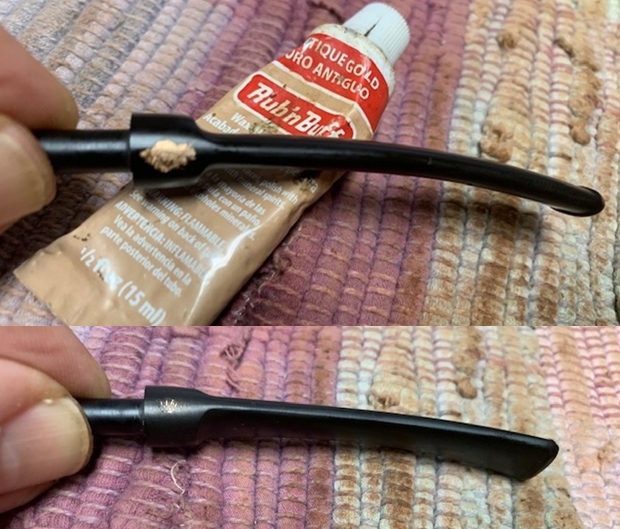
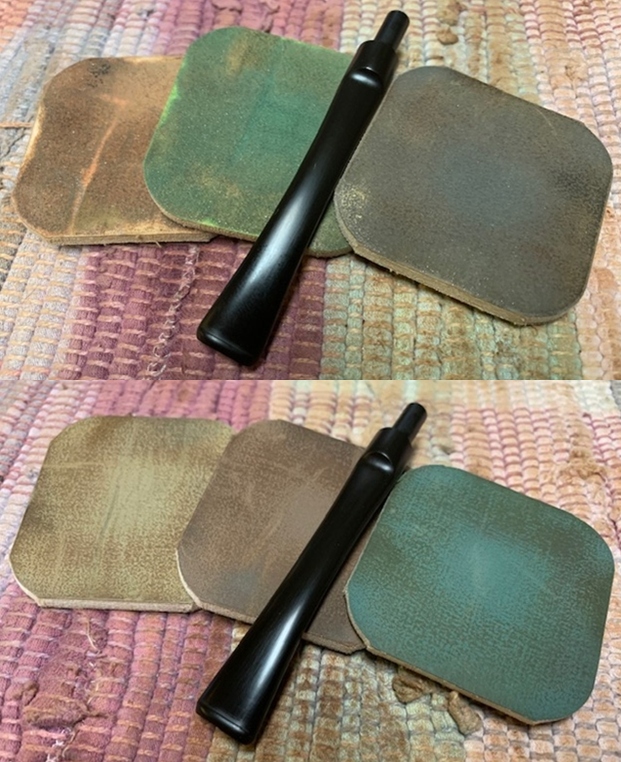
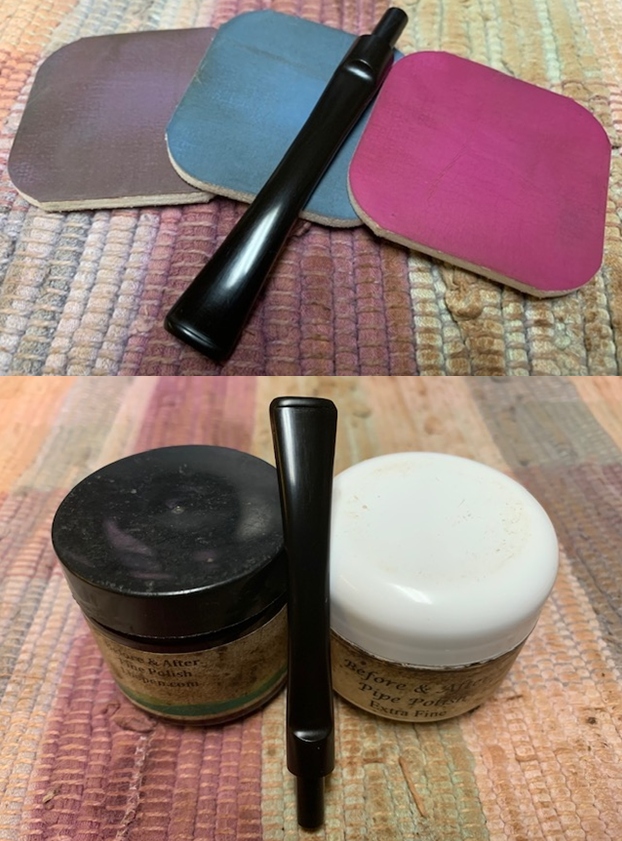
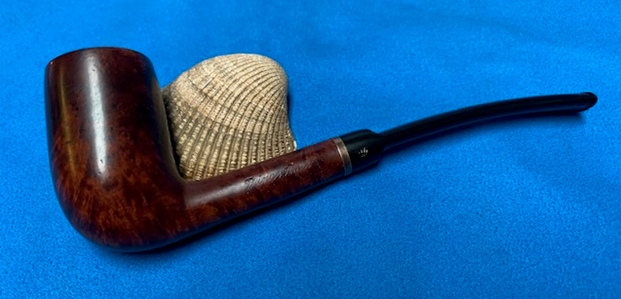
Since Jeff follows the same pattern of work in his cleanup we do not include photos but rather just a simple summary. Jeff reamed the bowl with a PipNet pipe reamer and followed up with a Savinelli Fitsall pipe knife to remove the cake. He scrubbed out the mortise and the airway in the shank and the stem with alcohol, cotton swabs and pipe cleaners. He scrubbed the exterior of the bowl, rim, shank and stem with a tooth brush and Murphy’s Oil Soap to remove the oils and tars on the rim and the grime on the finish of the bowl. He rinsed it under running water. He dried it off with a soft cloth. He was able to remove the lava build up on the rim top and you could see the damages to the top and edges of the rim. I think this pipe may well been before we worked with Mark Hoover’s Before & After Deoxidizer so he cleaned the internals and externals. The stem was clean but oxidized. I took photos of what the pipe looked like when I brought to my worktable. The rim top cleaned up really well with the lava coat removed. The inner edge of the rim showed some damage and burning on the front and back edges. There was also some damage on the rim top at the front.. The stem surface looked very good with some light oxidation remaining and a few tooth marks and chatter on both sides near the button and on the button surface itself.    I took photos of the stamping on the top and underside of the shank. It read as noted above.I removed the stem and took a photo of the pipe to give a sense of the whole. It is a well shaped Canadian.Now it was time to do my work on the pipe. I polished the bowl and the rim top, sides and shank with micromesh sanding pads – wet sanding with 1500-12000 grit pads and wiping it down after each pad with a damp cloth. I carefully avoided the stamping on the top and underside of the shank so as not to damage the already faint stamping. I rubbed the bowl and shank down with Before & After Restoration Balm. I worked it into the surface of the bowl sides and shank with my fingertips to clean, enliven and protect the briar. I let the balm sit for a little while and then buffed with a cotton cloth to raise the shine.   While I was working on the bowl the stem was soaking in a new product I received from Briarville Pipe Repair – Pipe Stem Oxidation Remover. It is a liquid of about the same consistency as apple juice. The stem sat in the mixture for 2 ½ -3 hours. I removed the stem from the bath, scrubbed lightly with a tooth brush and dried if off with a paper towel. There was some oxidation on the top of the saddle and on the edges of the stem remaining. The bath was dark with the removed oxidation of the previous 9 stems. I cleaned out the inside of the stem with alcohol and pipe cleaners. The nice thing about this new product is that it significantly softens the oxidation that is left behind making it easier to remove. I scrubbed the stem surface of the stem with Soft Scrub All Purpose cleanser to remove the remaining oxidation.  I polished the vulcanite stem with micromesh sanding pads – 1500-12000 grit pads. I wiped it down with a damp cloth after each sanding pad. I used Before & After Pipe Polish – both Fine and Extra Fine to further polish the stem.     I touched up the remnants of the GBD oval stamped logo on the stem top with Rub’N Buff Antique Gold. I rubbed the product on the top of the stem and pressed it in the stamping with a tooth pick. This gorgeously grained GBD London Made 256 Lumberman with a vulcanite saddle stem is a great looking pipe now that it has been restored. The rich browns of the contrasting stains came alive with the polishing and waxing. I put the stem back on the bowl and carefully buffed the pipe with Blue Diamond on the buffing wheel using a light touch on the briar. I gave the bowl and the stem multiple coats of carnauba wax on the buffing wheel and followed that by buffing the entire pipe with a clean buffing pad. I hand buffed the pipe with a microfiber cloth to deepen the shine. The finished GBD Lumberman is a beauty and fits nicely in the hand and looks very good. Give the finished pipe a look in the photos below. The dimensions of the pipe are Length: 5 ¾ inches, Height: 2 inches, Outside diameter of the bowl: 1 ¼ inches, Chamber diameter: ¾ of an inch. If you are interested in adding this pipe to your collection send me a message or an email. Thanks for reading this blog and my reflections on the pipe while I worked on it. There are many more to come!

Life for another American Made Pipe – A Bertram Washington DC 40 Canadian


Blog by Steve Laug

The next pipe on the work table came to me from one of our estate purchases. Between us we pick up quite a few pipes for restoration. I try to work them into the restoration queue so that I can keep them moving. We picked up over 120 Bertram pipes from an estate that a fellow on the east coast of the US was selling. This next one is from that estate – a beautifully grained Canadian Grade 40 Bertram with a tapered vulcanite stem. The pipe is stamped on the underside side near the stem with the Grade 40 number. On the top side it is stamped Bertrams [over] Washington D.C. centered on the shank. The finish had a lot of grime ground into the smooth finish on the bowl and some darkening around the sides of the bowl. The bowl was thickly caked with an overflowing lava coat on the top of the rim, heavier toward the back of the bowl. The edges looked to be in good condition. The stem was lightly oxidized, dirty and had light tooth chatter and marks on the top and underside near the button. There were not markings or a logo on the taper stem. Like the rest of the Bertrams in this lot the pipe had promise but it was very dirty. Jeff took photos of the pipe before he started his cleanup work. He took photos of the rim top and bowl to give a clear picture of the thickness of the cake and the lava on the rim top. He also took photos of the top and underside of the stem to show the chatter and tooth marks. Otherwise the stem is quite clean. Jeff took photos of the sides and heel of the bowl to give a picture of what the briar around the pipe looked like. There is some stunning grain under the grime.    He took photos of the stamping on the top and underside of the shank. It reads as noted above and is clear and readable. The grade number is 40.   As I have worked on the Bertrams I have written on the brand and have included the following information. If you have read it in past blogs, you can skip over it. If you have not, I have included the link to Bertram history and information. I would recommend that if you don’t know much about them take some time to read the background. I include a link to the write up on Pipedia (http://pipedia.org/wiki/Bertram). Bertram pipes were based out of Washington DC. They were popular among famous politicians and celebrities of the time. They made many products for them from FDR’s cigarette holders to Joseph Stalin’s favorite pipe. They were considered some of the best America had to offer till they finally closed their doors in the 70s. Bertram graded their pipes by 10s and sometimes with a 5 added (15, 25, 55 etc.), the higher the grade the better. Above 60s are uncommon and 80-90s are quite rare. I have worked on one 120 Grade billiard. I have several blogs that I have written on rebornpipes that give some history and background to Bertram pipes. (https://rebornpipes.com/2015/06/16/an-easy-restoration-of-a-bertram-grade-60-217-poker/).
I have included the following link to give a bit of historical information on the pipe company. It is a well written article that gives a glimpse of the heart of the company. http://www.streetsofwashington.com/2012/01/bertrams-pipe-shop-on-14th-street.html#

From this information I learned that all of these Bertrams were made before the closure of the shop in the 1970s. This Bertram Canadian with stunning grain has no visible fills around the bowl. This pipe has a 40 Grade stamp on it which I am sure explains the quality of the briar. But like many of these Bertrams the Grading system is a mystery to me.

Jeff had cleaned up the pipe with his usual penchant for thoroughness. He reamed the pipe with a PipNet Pipe Reamer and cleaned up the remnants with a Savinelli Fitsall Pipe Knife.  He scrubbed the bowl with undiluted Murphy’s Oil Soap with a tooth brush. He rinsed it under running warm water to remove the soap and grime. He cleaned out the inside of the shank and the airway in the stem with alcohol, cotton swabs and pipe cleaners. He soaked the stem in Before & After Deoxidizer and rinsed it off with warm water. I took photos of the pipe once I received it.  The rim top cleaned up really well with the lava coat removed. The inner and outer edge of the rim looked good.  The top of the rim at the back had some darkening. The stem surface looked very good with a few small tooth marks and chatter on both sides near the button. I took photos of the stamping on the shank. The Bertram Washington DC is on the topside mid shank. On the underside of the shank it is stamped with the Grade 40 number.   I removed the stem and took a photo of the pipe to give a sense of the whole. The stem is tapered and narrow.Now it was time to do my work on the pipe. I polished the bowl and the rim top, sides and shank with micromesh sanding pads – wet sanding with 1500-12000 grit pads and wiping it down after each pad with a damp cloth.  I rubbed the bowl and shank down with Before & After Restoration Balm. I worked it into the surface of the bowl sides and shank with my fingertips to clean, enliven and protect the briar. I let the balm sit for a little while and then buffed with a cotton cloth to raise the shine.     I sanded out the tooth marks with 220 grit sandpaper and started polishing it with 400 grit wet dry sandpaper.    I set the bowl aside and turned to work on the stem. It was in very good condition so I polished the vulcanite stem with micromesh sanding pads – 1500-12000 grit pads. I wiped it down with a damp cloth after each sanding pad. I used Before & After Pipe Polish – both Fine and Extra Fine to further polish the stem.     This Bertram Washington DC 40 Canadian with a vulcanite taper stem is a great looking pipe now that it has been restored. I put the stem back on the bowl and carefully buffed the pipe with Blue Diamond on the buffing wheel using a light touch on the briar. I gave the bowl and the stem multiple coats of carnauba wax on the buffing wheel and followed that by buffing the entire pipe with a clean buffing pad. I hand buffed the pipe with a microfiber cloth to deepen the shine. The finished Bertram 40 Canadian fits nicely in the hand and feels great. Give the finished pipe a look in the photos below. The dimensions of the pipe are Length: 5 ¼ inches, Height: 2 inches, Outside diameter of the bowl: 1 ½ inches, Chamber diameter: ¾ of an inch. If you are interested in adding this pipe to your collection send me a message or an email. Thanks for reading this blog and my reflections on the pipe while I worked on it. There are many more to come!
Restoring a North Dane Pipes 72 Special Stack


Blog by Steve Laug

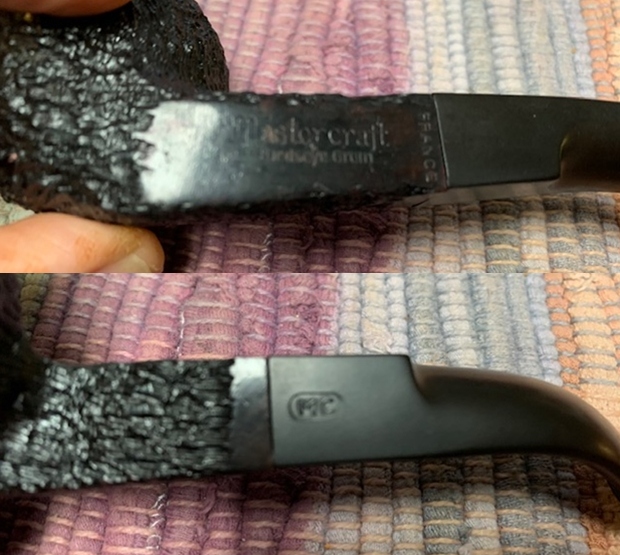
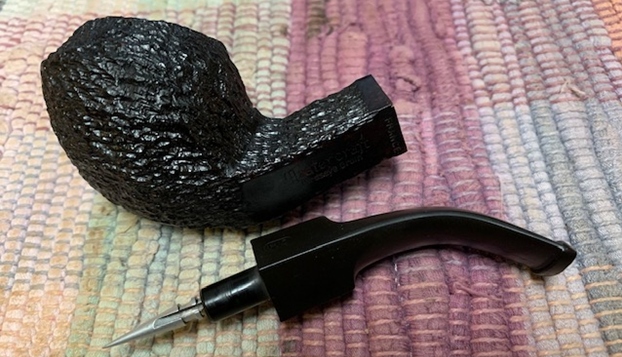
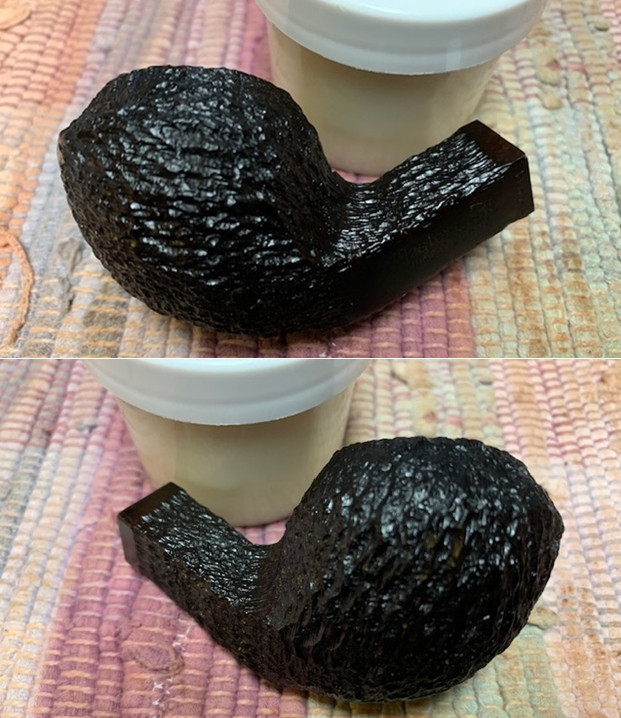
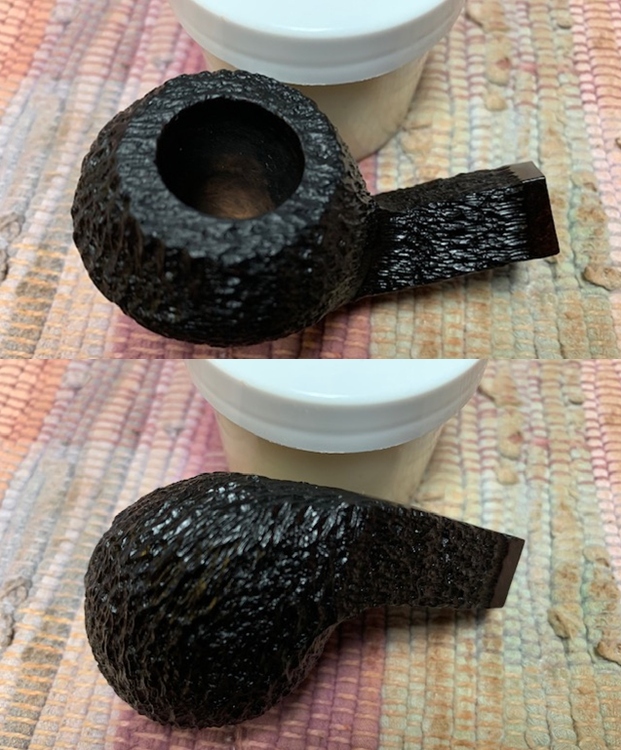
The next pipe on the work table came to us in one of Jeff’s pickups. It is a tall well grained Stack shaped pipe with a taper stem. The finish is a nice medium brown with darker stain highlighting the grain. The pipe has a mix of cross grain and birdseye grain around the sides of the bowl and shank. The stamping is the readable. It is stamped on the left side of the shank and reads North Dane Pipes [over] Made in Denmark. On the right side of the stem it is stamped 72 Special. On the underside at the shank/stem junction it is stamped 112. The taper stem is stamped on the left side with what looks like GJ in a circular stylized logo with the J being turned into an anchor. The smooth finish had a lot of grime ground into the bowl and some darkening around the sides of the bowl. The bowl was heavily caked and had a lava overflow and darkening on the top of the rim and beveled inner edge. Overall it appeared that the rim top and inner edge of the bowl looked to be in good shape but we would know more once it was cleaned up. The vulcanite taper stem was calcified, oxidized and had tooth chatter and marks on the top and underside ahead of the button. The pipe had promise but it was very dirty. Jeff took photos of the pipe before he started his cleanup work. He took photos of the rim top and bowl to give a clear picture of the thickness of the cake and the overflow of lava on the beveled rim top. He also took photos of the top and underside of the stem to show the oxidation, chatter and tooth marks on the surface. Jeff took photos of the sides and heel of the bowl to give a picture of what the briar around the pipe looked like. There is some interesting grain under the grime.       He took photos of the stamping on the sides of the shank and stem. It read as noted above. I have not worked on a North Dane Pipe before so I turned to Pipephil’s site to see if I could find any information on the brand (http://www.pipephil.eu/logos/en/logo-n2.html). He had a brief entry which I have included below as a screen capture.I turned to Pipedia and the brand was listed as Maker Unknown. I find that Pipephil’s connection of the brand to Georg Jensen, Danish Pipemaker to be very believable. The logo shown in the above photo can be read as a stylized GJ. I wonder about the concept of it being a second as the quality of the one I am working on is very good and makes me wonder if it should not be read as “another” line of Georg Jensen pipes. I guess I will never know for sure so it is time to work on the pipe.
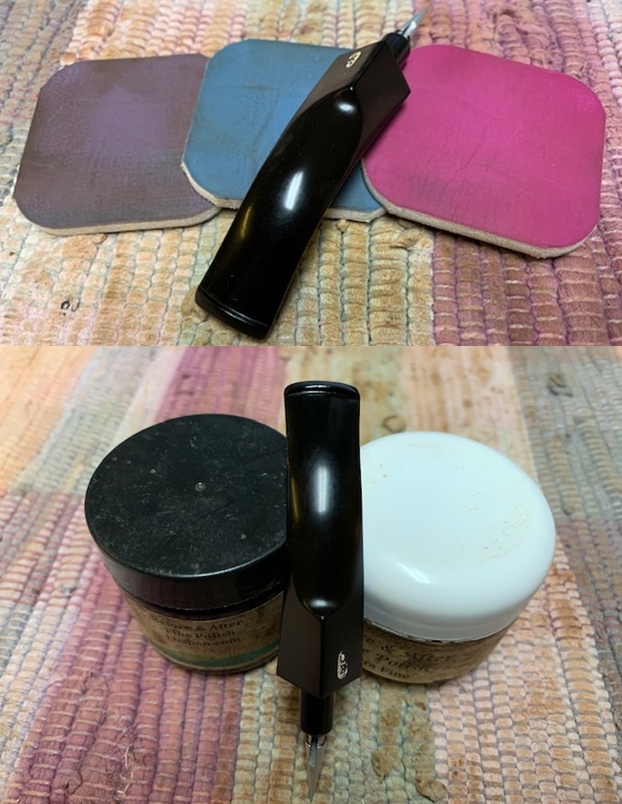
Since Jeff follows the same pattern of work in his cleanup we do not include photos but rather just a simple summary. Jeff reamed the bowl with a PipNet pipe reamer and followed up with a Savinelli Fitsall pipe knife to remove the cake. He scrubbed out the mortise and the airway in the shank and the stem with alcohol, cotton swabs and pipe cleaners. He scrubbed the exterior of the bowl, rim, shank and stem with a tooth brush and Murphy’s Oil Soap to remove the oils and tars on the rim and the grime on the finish of the bowl. He rinsed it under running water. He dried it off with a soft cloth. He was able to remove the lava build up on the rim top and you could see the damages to the top and edges of the rim. He scrubbed the stem with Soft Scrub and then soaked it in Mark Hoover’s Before & After Deoxidizer. The stem was clean but lightly oxidized. I took photos of what the pipe looked like when I brought to my worktable.   The rim top cleaned up really well. The lava coat was removed and there was some darkening and burn damage left behind on the back side of the rim top. Other than that the edges were in good condition. The stem surface looked very good with some light tooth chatter and marks on both sides ahead of the button.    I took a photo of the stamping on the top side of the shank. The stamping was clear and readable.   I removed the stem and took a photo of the pipe to give a sense of the well shaped Stack. To remove the darkening on the back bevel of the inner edge of the rim I used a folded piece of 340 sandpaper to the bevel to remove the damage. I polished the rim with 400 grit wet dry sandpaper.  I polished the bowl and the rim top, sides and shank with micromesh sanding pads – wet sanding with 1500-12000 grit pads and wiping it down after each pad with a damp cloth. I carefully avoided the stamping on the sides of the shank so as not to damage the stamping. I rubbed the bowl and shank down with Before & After Restoration Balm. I worked it into the surface of the bowl sidesand shank with my fingertips to clean, enliven and protect the briar. I let the balm sit for a little while and then buffed with a cotton cloth to raise the shine.      I set the bowl aside and turned my attention to the stem. The tooth dents in the stem were deep enough that just heating them did not raise them. I filled in the deeper marks with back CA glue and set the stem aside for the repairs to cure. Once they were cured I flattened them with a needle file and sanded them with 220 grit sandpaper to blend them into the surface of the stem. I started polishing the stem with 400 grit wet dry sandpaper.  I polished the stem with micromesh sanding pads – 1500-12000 grit pads. I wiped the stem down with Obsidian Oil after each sanding pad. I used Before & After Pipe Polish – both Fine and Extra Fine to further polish the stem.     I touched up the faint GJ stamp on the stem side with Rub’n Buff Antique Gold. I rubbed it on pressing it into the grooves with a tooth pick and buff it off with a cotton pad.  This well made, classic shaped North Dane Pipes Made in Denmark Stack really is a beautiful pipe now that it has been restored. The rich brown finish highlights the grain in such a way that it came alive with the polishing and waxing. I put the stem back on the bowl and carefully buffed the pipe with Blue Diamond on the buffing wheel using a light touch on the briar. I gave the bowl and the stem multiple coats of carnauba wax on the buffing wheel and followed that by buffing the entire pipe with a clean buffing pad. I hand buffed the pipe with a microfiber cloth to deepen the shine. The finished North Dane Pipes Stack is a beauty with combination of great grain and rich stain. It fits nicely in the hand and looks very good. Give the finished pipe a look in the photos below. The dimensions of the pipe are Length: 5 ¾ inches, Height: 2 inches, Outside diameter of the bowl: 1 1/8 inches, Chamber diameter: ¾ of an inch. If you are interested in adding this pipe to your collection send me a message or an email. Thanks for reading this blog and my reflections on the pipe while I worked on it. There are many more to come!

A Simple Clean Up of a Double Walled GoedeWaagen Apple Bowl Pipe


Blog by Paresh

About two months ago, I had worked on a battered and abused, but well loved meerschaum line Orlik Bent Brandy pipe from an estate lot of 40 pipes that I had acquired about eight/ nine months ago. That was the third pipe from the lot that I had refurbished, the first being a huge Real Cherry wood pipe and the second was a Corn Cob with a long Albatross wing bone. Here is the link to the three write ups which will provide background information as to how I came to acquire this lot and the condition of the pipes that I had received;

https://rebornpipes.com/2020/03/08/refurbishing-a-real-cherry-foreign-pipe-from-estate-lot-of-40/

https://rebornpipes.com/2020/05/10/refurbishing-a-vintage-corn-cob-pipe-with-an-albatross-wing-bone/

https://rebornpipes.com/2020/06/11/a-second-inning-for-a-meerschaum-lined-orlik-bent-brandy/

The fourth pipe from this lot and currently on my work table is beautiful brightly colored straight Apple with a tapered yellow variegated stem with swirls of black. The first three pipes that I had worked on are marked with yellow, green and indigo arrows while the fourth pipe that is currently on my work table is shown in the third picture marked in pastel blue colored arrow. The eye catching candy colored attractively Apple shaped pipe screams “PARTY” and feels ultra light in hand. The shank end is adorned with a brass band. It is stamped on the brass band as “GOEDEWAAGEN” over “MADE IN HOLLAND”. There is no shape code or stamping on either the stummel or the acrylic stem.   The stamping on the brass band gave me a definitive direction to my quest to know about this brand. I turned to my favorite site, rebornpipes.com, to know more about the brand and sure enough, Steve had worked on a couple of GoedeWaagen pipes and researched it in detail. Given below is the link for the readers who are interested in knowing about this pipe from Holland.

https://rebornpipes.com/2017/10/21/cleaning-up-a-pair-of-goedewaagen-delft-ceramic-pipes/

Steve has included a picture of these pipes that gives out the construction and functioning of the pipe which I have reproduced below.I searched pipedia.org for more information on the Maker and brand of GoedeWaagen. I have reproduced the information contained on the site and also the link to the webpage.  https://pipedia.org/wiki/GoedeWaagen

Dirck GoedeWaagen became a master pipemaker on January 1, 1779 and took on his first assistant the following month. Soon after Dirck’s grandson fell in love with and married a girl from the illustrious De Jong family, legendary in the ceramic pipemakers guild in Gouda. He built a workshop in the Keizerstraat in Gouda, which continued for two generations until his grandson Abraham GoedeWaagen moved the company to a new location.

In 1853, Pieter Goedewaagen purchased his father-in-law’s factory “De Star”, which becomes the basis of the modern GoedeWaagen Company. In approximately 1880, Abraham’s grandson Aart GoedeWaagen persuaded his father Pieter to expand the business with an eye towards more models of pipes, and P. GoedeWaagen & Sons was founded in response. Within ten years the firm had hundreds of models and P. GoedeWaagen & Son was exporting pipes around the globe.

GoedeWaagen continued to make pipes, but also began acquiring other ceramics firms, including ‘De Distel’ in 1923, and in so doing acquiring the expertise to make decorated ceramics other than clay pipes. It is at this time that the company is granted a Royal charter and by the 1930’s Royal Goedewaagen is one of the top names in Dutch ceramics.

While Goedewaagen pipes were originally traditional and figural clays, after the invention of the double walled clay pipe by Zenith, also a Gouda company, Goedewaagen began producing pipes in that commonly seen style, which they marketed as The Baronite Pipe, advertised for its clean smoking and health benefits. Since the company’s bankruptcy in 1982, however, they have made only the occasional souvenir pipe, including a line commemorating Holland’s monarchs.

There is a mention of “Zenith” pipes and visited the page that contained information on this brand related to GoedeWaagen pipes. The article makes for an interesting read.  https://pipedia.org/wiki/Zenith

Correlating the above two, it can be safely established that the pipe is from in between the period 1920s when the double walled ceramic pipes were invented by Zenith to 1982 when GoedeWagen filed bankruptcy.

With the provenance of the pipe established and firm in my knowledge and understanding of the GoedeWaagen Brand, I move ahead with my initial visual inspection.

Initial Visual Inspection
The pipe, as it appears, is shown in the pictures below. The pipe must have hardly been smoked as the layer of cake in the chamber is very thin with very minor traces of overflow of lava over the rim top surface. The stummel is covered in clear glaze and is covered in dust and fingerprints. The stem airway is dark with dried oils and tars. Heavy tooth chatter and deep bite marks in the bite zone and button edges on either surface can be seen on the stem surface. All in all, this is a lovely pipe and should stand out in any gathering once cleaned and polished. Detailed Inspection
The chamber has an even layer of hard cake. There are traces of old oils, tars and grime that can be seen over the inner rim edge. The cake masks the condition of the chamber walls and condition of chamber walls will be determined only once the cake and lava overflow has been cleaned up. The rim top surface is in pristine condition with no dents or dings or chipped areas. The smells from the chamber are very strong. This issue of old smells will have to be addressed. A simple reaming and cleaning should make this chamber as good as new, unless we have a cracked wall or any such surprise underneath the cake.   The clear glazed double walled ceramic stummel is covered in dust and oily fingerprints and appears dull. There are no cracks, dents/ dings on the stummel surface… Not even a scratch!! The mortise is nice and clean with no traces of accumulated gunk. A simple wash and polish should get the stummel nice and shining like new.   The yellow acrylic variegated stem with dark swirls perfectly matches the candy color of the stummel and rather elevates it further. The tenon end has a cork stopper that helps in snug fit of the tenon in to the mortise. The cork stopper has a small piece that has broken off and the cork itself appears dry. The bite zone is peppered with deep tooth chatter and heavy tooth indentations over the button edges on either surface. The tenon and the air way is covered and clogged with gunk. Air way over the surface appears darkened and flow through the stem is not full and clear. The stem surface and internal first needs to be cleaned. The tooth chatter will be sanded out with 220 grit sandpaper and filled with glue. The button edges on either surface needs re-building using clear CA superglue.   The Process
I began the process of refurbishing this pipe first by working on the stem. As I was handling the stem, I realized that the tenon turned in my hand. I completely unscrewed and realized that what I thought to be a tenon was in fact a tenon extension that was screwed on to the threaded tenon. The threaded tenon and the tenon extension were covered in dried gunk and grime. The front edges of the tenon extension are up turned and sharp and I shall address them subsequently.The threaded tenon and the tenon extension were cleaned with soft brass wired brush and cotton swabs wetted with alcohol. I cleaned the stem internals with a small shank brush and liquid dish soap. I have realized that using small shank brush and liquid soap reduces consumption of pipe cleaners by about 75%. This is considerable savings considering that I pay thrice the cost of pipe cleaners on cost of shipping!! Next, I ran a couple of dry pipe cleaners through the stem to clean and dry it out. I avoid using isopropyl alcohol in cleaning stem air way just to guard it against crazing (call it my paranoia to use alcohol on an acrylic or Perspex stem!!). The tenon end, slot and the air way is now clean. I cleaned the external surface of the stem with a Scotch Brite gauze and liquid dish washing soap. Next I addressed the issue of broken cork piece. I cut a piece of wine cork and roughly shaped it to match the missing cork piece. I stuck the new piece in place with clear CA superglue taking care that I did not foul up the threads on the tenon. I set the repairs aside for the glue to harden.  I wiped the stem with a cotton pad and alcohol. Thereafter, I applied clear CA superglue over the button edges and filled the deep tooth indentations and the minor tooth chatter in the bite zone. I set the stem aside for the fill to cure.   I had completely forgotten about the tenon extension amidst the other processes. The tenon extension was covered in oils and tars that had dried out and set hard over the surface. I cleaned it with shank brush, hard bristled toothbrush and dish washing soap. Once the tenon extension was cleaned, I observed that the tenon extension also bears the stamp “GoedeWaagen”. I still have to address the up turned and sharp front edges in the tenon extension.    Next, I reamed the chamber with my fabricated knife to take the cake down to the ceramic walls. Truth be told, the use of the knife was restricted only to scraping the surface in an attempt to dislodge the cake as I did not want to subject the ceramic to excessive force of a reamer head. With a 150 grit sand paper, the walls of the chamber were rid of all the remnants of the cake. I further wiped the chamber with a cotton swab wetted with alcohol to remove the carbon dust that remained. I wiped the traces of lava overflow from the rim edges with cotton swab and alcohol. The chamber walls are pristine with no damage and the rim top also cleaned up nicely.  I cleaned the shank internals first with hard and regular pipe cleaners dipped in alcohol. Thereafter, I rinsed the areas between the double walled chamber and the shank with warm water. The shank internals are now clean and fresh.    As I was wiping the stummel after the internal wash of the shank, the brass band came loose. The thick white ceramic paste that held the brass band over the shank end had dried up completely. I scraped the dried ceramic paste from the shank end surface and also from the insides of the brass band.   With the stummel internals clean and fresh, I moved ahead with cleaning the external surface of the stummel. I wiped the stummel surface with Murphy’s Oils soap on a cotton swab. I rinsed the stummel under warm running water and wiped it dry with a soft cotton cloth.   I cleaned the brass band with an all purpose liquid polish and worked up a nice shine to the brass band.   The cork repair had cured completely. With a flat head needle file, I sand the excess cork to match the rest of the cork surface. I further sand the cork to achieve a perfect match.  Next I worked the stem. The stem fills had cured nicely. Using a flat head needle file, I sand the fills to achieve a rough match with the rest of the stem surface and also reshaped the buttons on both the surfaces. I further fine tuned the match and sand the entire stem with 400, 600 and 800 grit sandpapers. I polished the stem surface with micromesh pads, wet sanding with 1500 to 12000 pads. I wiped the surface with a soft cloth at the end of the micromesh cycle. I applied a little Extra Virgin Olive oil to the stem, though it does not help much, and set it aside. Though I am not a big fan of acrylic stems, I am happy with the way the stem appears at this stage.   With the stem repairs and polishing completed, I turn my attention back to the stummel. I stuck the brass band to the shank end with all purpose glue and set it aside for the glue to set completely.    I evened out the sharp and up turned edges of the tenon extension by rolling them out with the middle round potion of a screw driver. I further smooth out the edges by sanding it down with a piece of 180 grit sandpaper. To bring a nice shine to the tenon extension, I polish it further by dry sanding it with 12000 grit micromesh pad. All through the process, I was careful to preserve the stamping on the surface of the tenon extension.   I rubbed a small quantity of “Before and After Restoration Balm” in to the stummel and let it rest for a few minutes. The balm almost immediately works its magic and the stummel now has a nice vibrant appearance. I further buff it with a horse hair shoe brush. Though the balm works best over the briar wood, it has been my experience that it works nicely on other stummel surfaces like Meerschaums and now ceramic. The balm imparts a nice sheen over this alternative stummel material which is as good as that over briar wood.    I applied a generous quantity of petroleum jelly over the cork stopper to rejuvenate and moisten the cork.    To apply the finishing touches, I mount a cotton cloth buffing wheel on to my hand held rotary tool and apply a coat of Blue Diamond to the stummel and the stem to polish out the minor scratches. With a cotton buffing wheel that I use for carnauba wax, I apply a coat of carnauba wax to the stummel and stem and continued to work on it till the complete coat of wax had been polished out. I mount a clean cotton cloth buffing wheel and gave the entire pipe a once over buff. I finished the restoration by giving the entire pipe a rigorous hand buffing using a microfiber cloth to deepen the shine further. The finished pipe is shown below. The yellow variegated stem with dark swirls elevates the fun quotient of the pipe and is very appealing to the eye. P.S. The next time once this pandemic is over and things return to normal, I shall take this attractive pipe to one of the gatherings, just to check out the reactions of the gathered people.

Appreciate all the efforts of readers who have had the patience to read this write up thus far!

Praying for the safety and well being of all the readers and their loved ones in these troubled times…


New Beginnings for a Malaga Ras Kassa Freehand


Blog by Steve Laug

The next pipe on the work table came to me from another of our estate purchases. It has been around for a while waiting to be worked on. Jeff did the original photographs of the pipe in December 2019. It is a beautifully grained Malaga Ras Kassa Freehand that is really quite nice. The Ras Kassa is the top of the line for Malaga pipes and very few receive that premium stamping. The grain on this one is unique on the left and amazing birdseye on the right. The stamping is the readable. It is stamped on the underside of the shank and reads the Malaga [over] Ras Kassa. The Malaga Oil finish had a lot of grime ground into the bowl and some darkening around the sides of the bowl. There was a cut in the left side of the bowl toward the top. The bowl was heavily caked and had an overflow of lava on the top of the rim. It was hard to know what the rim top and inner edge of the bowl looked like under the grime. The rim top and shank end are carved plateau like finishes and had a lot of grime ground into them. The fancy turned Freehand stem was calcified, oxidized and had light tooth chatter and marks on the top and underside particularly on the button surface. The pipe had promise but it was very dirty. Jeff took photos of the pipe before he started his cleanup work. He took photos of the rim top and bowl to give a clear picture of the thickness of the cake and the overflow of lava on the rim top. It is hard to know what the rim edge looks like under the lava coat. He also took photos of the fancy turned portion of the stem as well as the top and underside of the stem to show the oxidation, calcification, light chatter and tooth marks and damage on the underside of the button.   Jeff took photos of the sides and heel of the bowl to give a picture of what the briar around the pipe looked like. There is some interesting grain under the grime.   He took photos of the stamping on the underside of the shank. They read as noted above. I am also including the link to a blog that I wrote that gives some of the history of the Malaga brand and the Malaga Pipe Shop in Royal Oak, Michigan in the USA. I have written an earlier blog to give a little history of the Malaga Brand and the pipemaker, George Khoubesser. Here is the link – https://rebornpipes.com/tag/malaga-pipes/. That blog also includes links to a catalogue and the history of the pipemaker George Khoubesser. Follow the link to get a feel for the brand and the pipemaker.

Since Jeff follows the same pattern of work in his cleanup we do not include photos but rather just a simple summary. Jeff reamed the bowl with a PipNet pipe reamer and followed up with a Savinelli Fitsall pipe knife to remove the cake. He scrubbed out the mortise and the airway in the shank and the stem with alcohol, cotton swabs and pipe cleaners. He scrubbed the exterior of the bowl, rim, shank and stem with a tooth brush and Murphy’s Oil Soap to remove the oils and tars on the rim and the grime on the finish of the bowl. He rinsed it under running water. He dried it off with a soft cloth. He was able to remove the lava build up on the rim top and you could see the damages to the top and edges of the rim. I think this pipe may well been before we worked with Mark Hoover’s Before & After Deoxidizer so he cleaned the internals and externals. The stem was clean but lightly oxidized. I took photos of what the pipe looked like when I brought to my worktable.    The carved plateau style rim top and shank end cleaned up really well. The lava coat was removed and some darkening left behind on the back side of the rim top. The edges were in good condition. The stem surface looked very good with heavy oxidation remaining and some light tooth chatter and marks on both sides ahead of the button.  You can also see the damage to the button on the underside of the stem.      I removed the stem and took a photo of the pipe to give a sense of the well shaped Freehand. Now it was time to do my work on the pipe. The slice in the briar on the left side needed to be repaired. It was not deep but it would not raise with steam. I filled it  in with clear super glue applied to the slice with a tooth pick.  Once the repair cured I sanded it with 340 grit sandpaper to blend it into the rest of the surface.I polished the bowl and the rim top, sides and shank with micromesh sanding pads – wet sanding with 1500-12000 grit pads and wiping it down after each pad with a damp cloth. I carefully avoided the stamping on the top and underside of the shank so as not to damage the already faint stamping.     I rubbed the bowl and shank down with Before & After Restoration Balm. I worked it into the surface of the bowl sides, plateau top and shank end with my fingertips and a horse hair shoe brush to clean, enliven and protect the briar. I let the balm sit for a little while and then buffed with a cotton cloth to raise the shine. While I was working on the bowl the stem was soaking in a new product I received from Briarville Pipe Repair – Pipe Stem Oxidation Remover. It is a liquid of about the same consistency as apple juice. The stem sat in the mixture for 2 ½ -3 hours. I removed the stem from the bath, scrubbed lightly with a tooth brush and dried if off with a paper towel. I was surprised that it was quite clean. Just some light oxidation on the top of the saddle remaining. The bath was dark with the removed oxidation of the seven stems. I cleaned out the inside of the stem with alcohol and pipe cleaners.  I scrubbed the stem surface with Soft Scrub All Purpose cleanser to remove the remaining oxidation. The oxidation was strongest in the twists and turns of the lower portion of the stem. It took quite a bit of elbow grease to remove the oxidation but when I was finished it looked very good.     I rebuilt the button edge on the underside to smooth out the finish and remove the tooth damage. Once the repair cured I smooth it out and blended it into the surface of the  vulcanite with 220 grit sandpaper. I started the polishing with 400 grit wet dry sandpaper. (I forgot to take photos of this.)I polished the vulcanite stem with micromesh sanding pads – 1500-12000 grit pads. I wiped it down with a damp cloth after each sanding pad. I used Before & After Pipe Polish – both Fine and Extra Fine to further polish the stem.   This well made, classic Malaga Ras Kassa Freehand with a fancy turned vulcanite stem is a great looking pipe now that it has been restored. The rich oil finish that Malaga used came alive with the polishing and waxing. I put the stem back on the bowl and carefully buffed the pipe with Blue Diamond on the buffing wheel using a light touch on the briar. I gave the bowl and the stem multiple coats of carnauba wax on the buffing wheel and followed that by buffing the entire pipe with a clean buffing pad. I hand buffed the pipe with a microfiber cloth to deepen the shine. The finished Malaga Ras Kassa is a beauty with combination of smooth and plateau rim and shank end. It fits nicely in the hand and looks very good. Give the finished pipe a look in the photos below. The dimensions of the pipe are Length: 6 ¼ inches, Height: 2 ½ inches, Outside diameter of the bowl: 1 ¾ inches, Chamber diameter: ¾ of an inch. If you are interested in adding this pipe to your collection send me a message or an email. Thanks for reading this blog and my reflections on the pipe while I worked on it. There are many more to come!