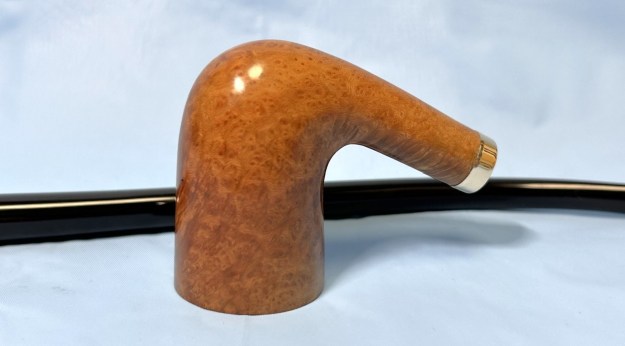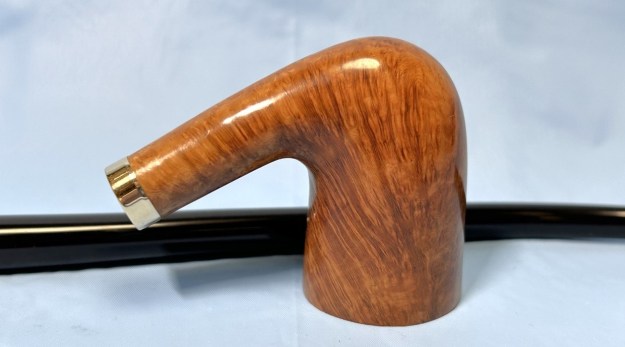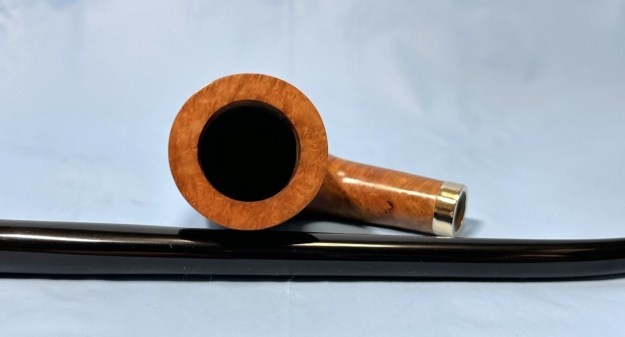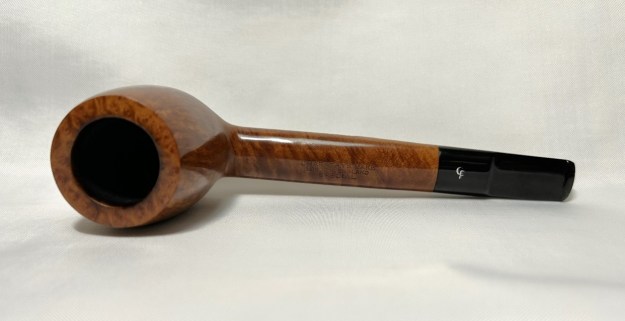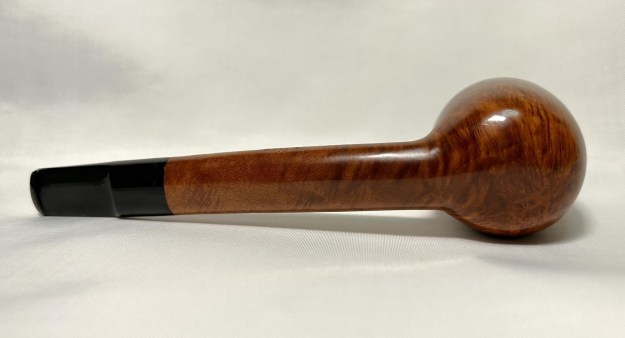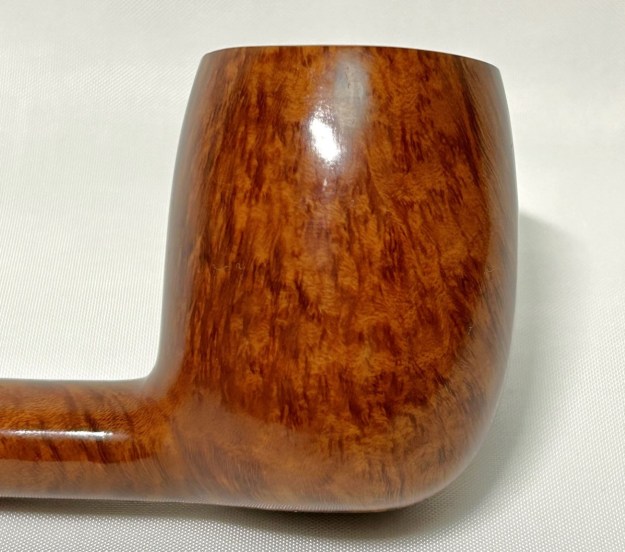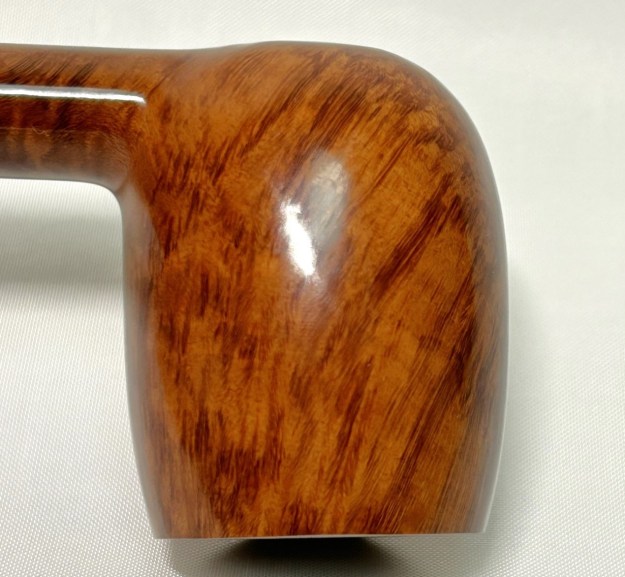
Tag Archives: article by Kenneth Lieblich

Cleaning Up an Interesting Paradis Star Freehand Pot


Blog by Kenneth Lieblich

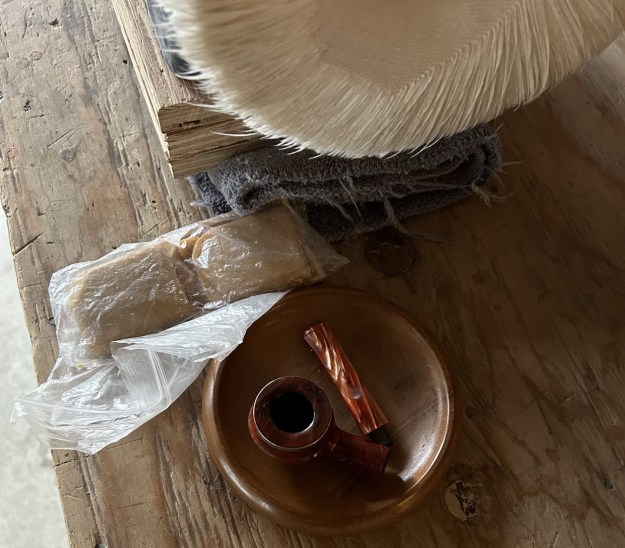
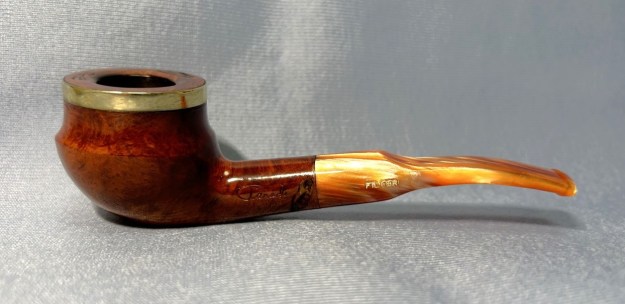
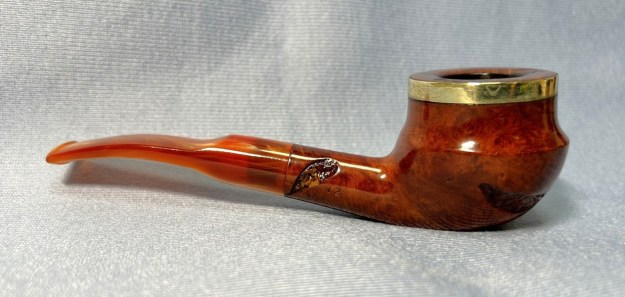
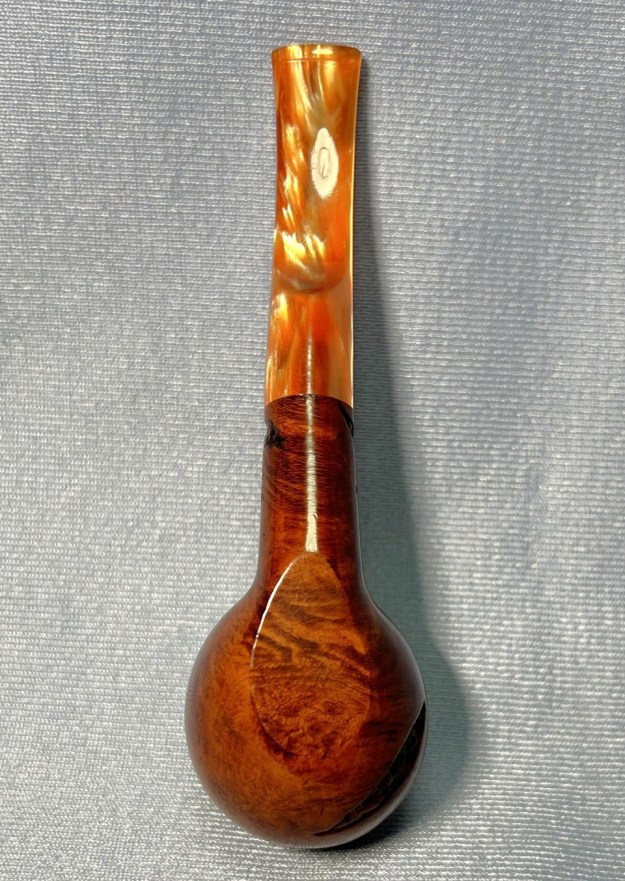
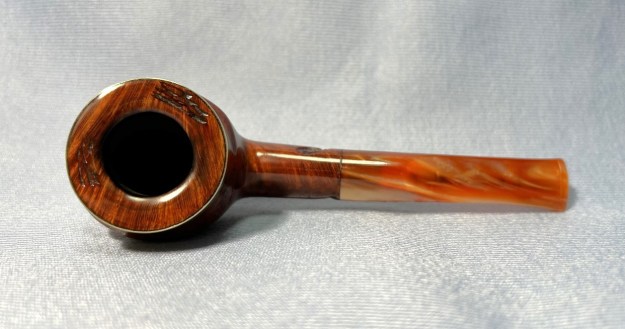
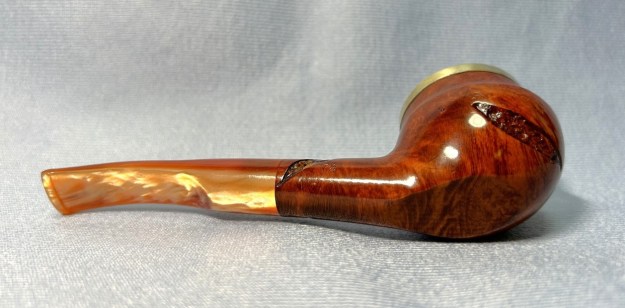
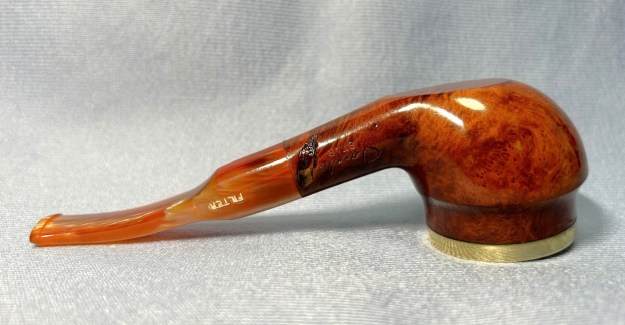
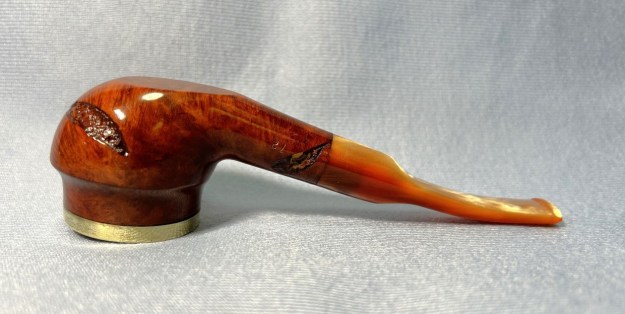
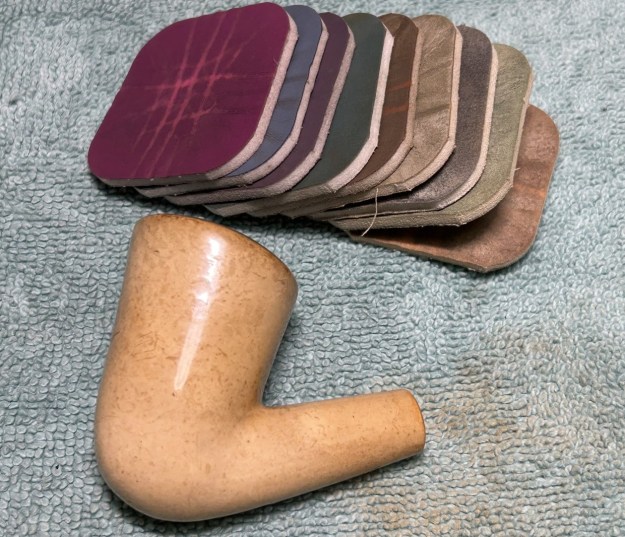
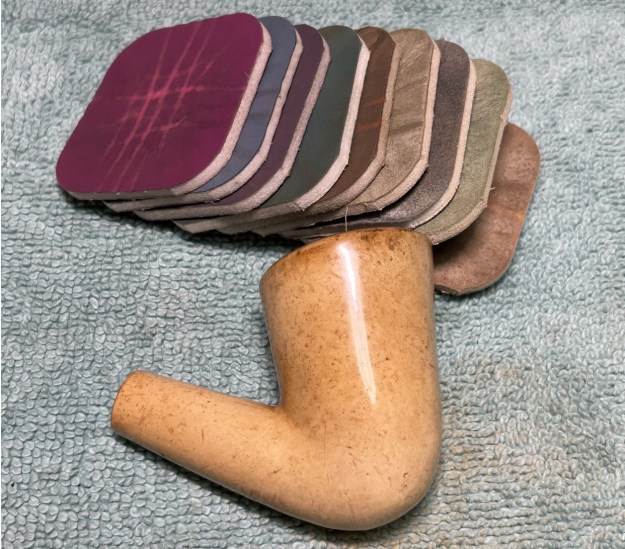
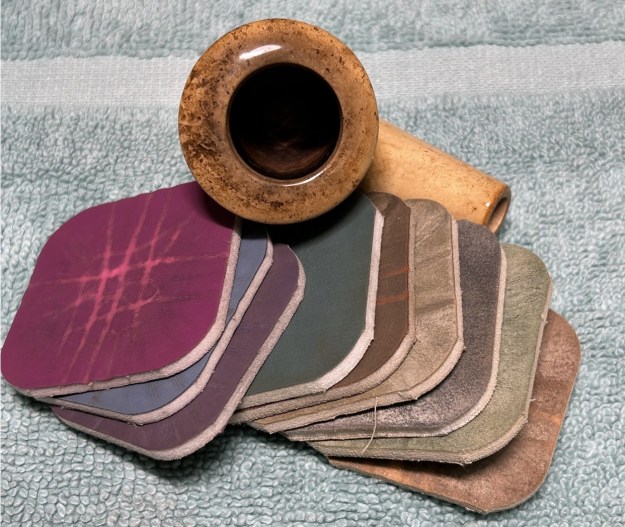
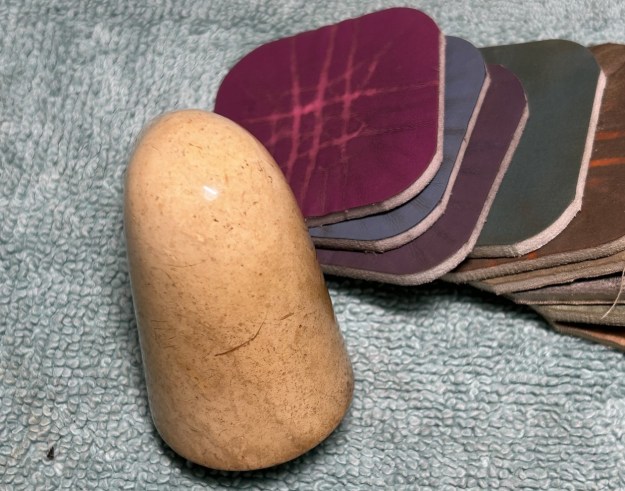
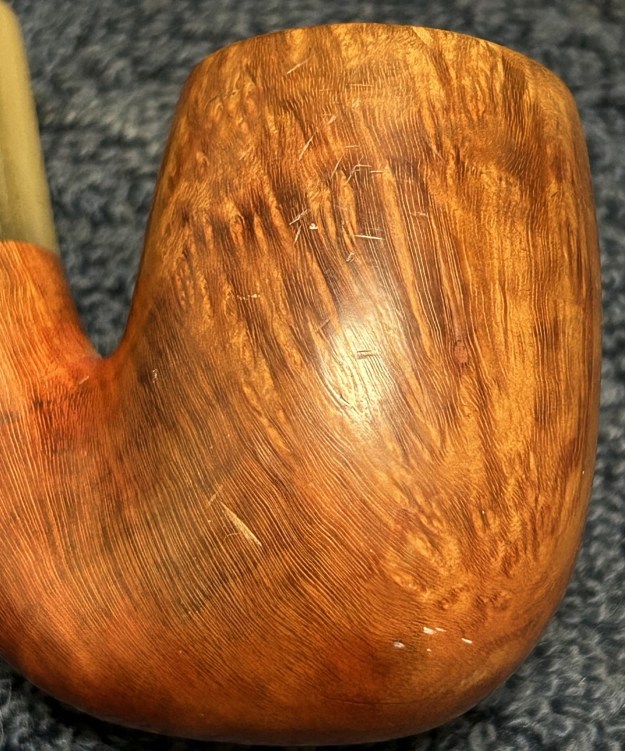
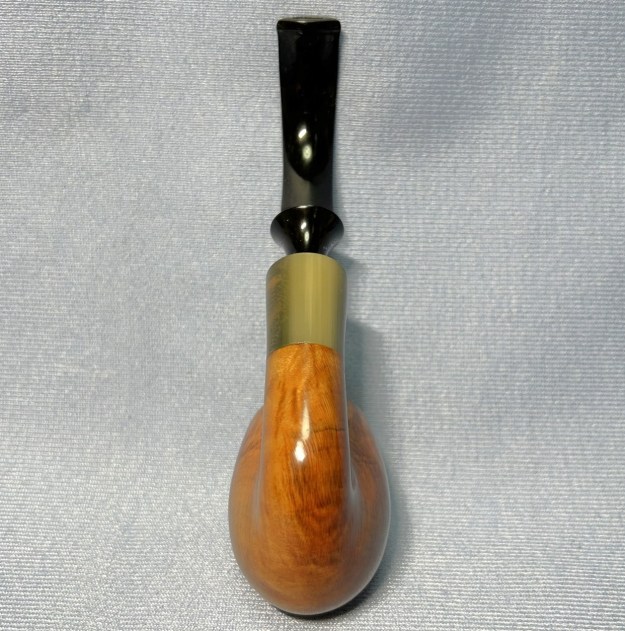
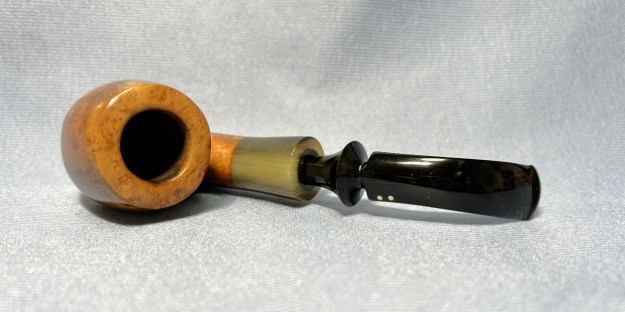
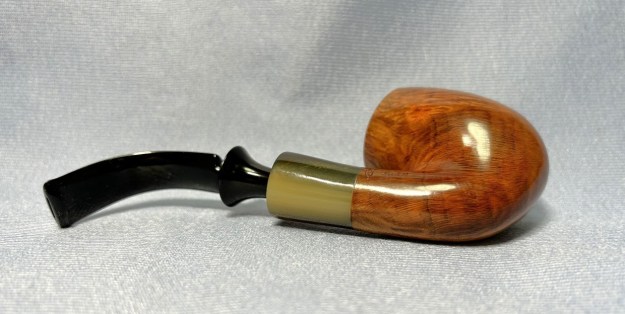
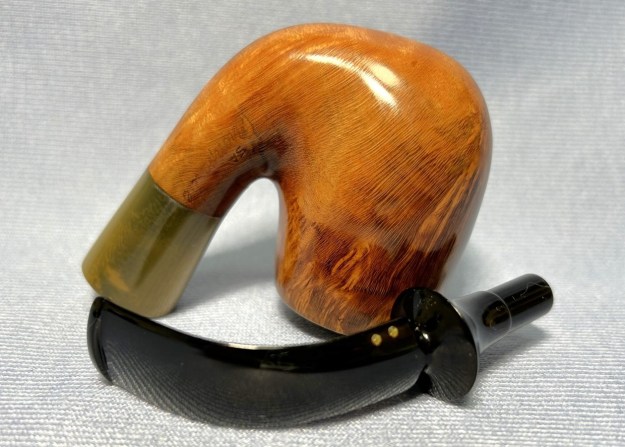
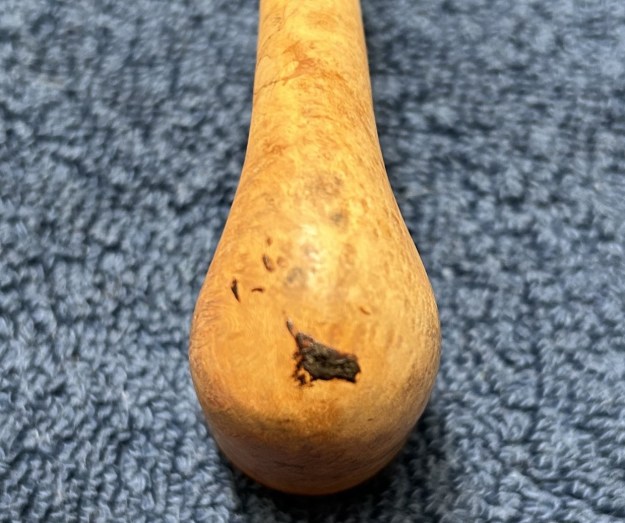
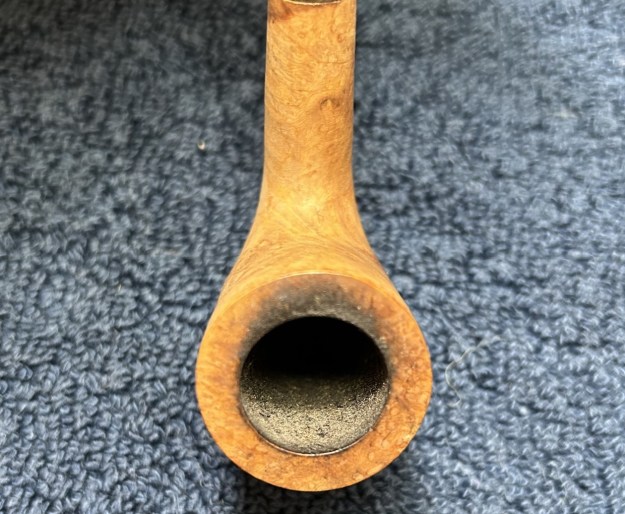
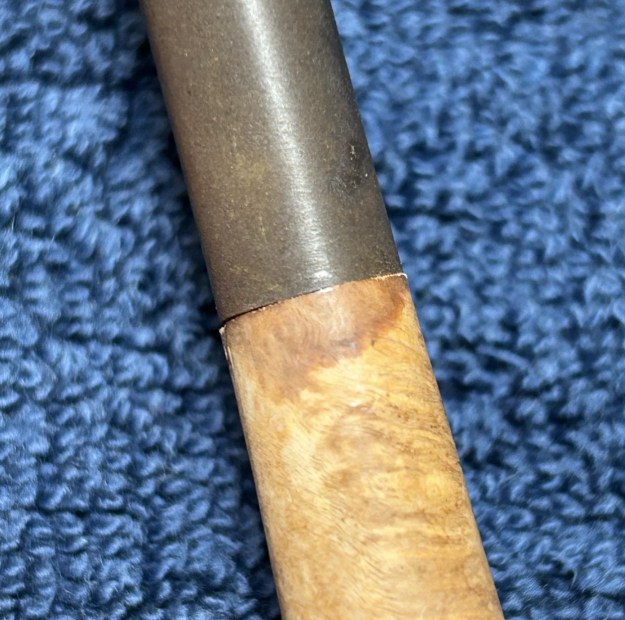
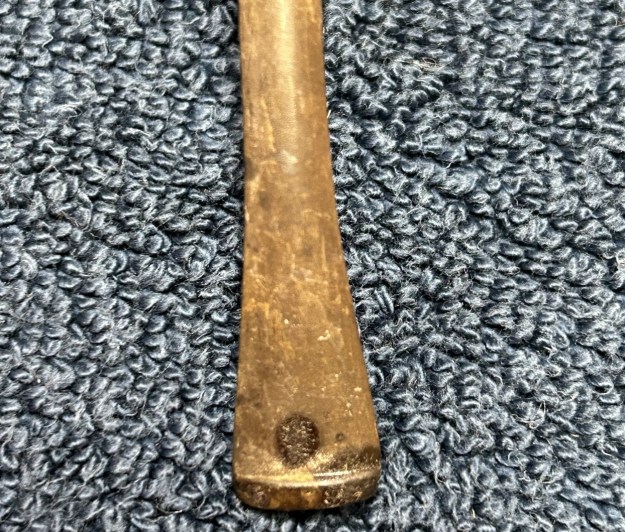
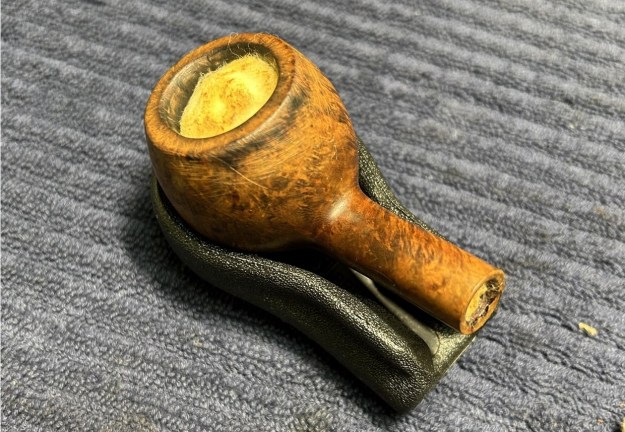
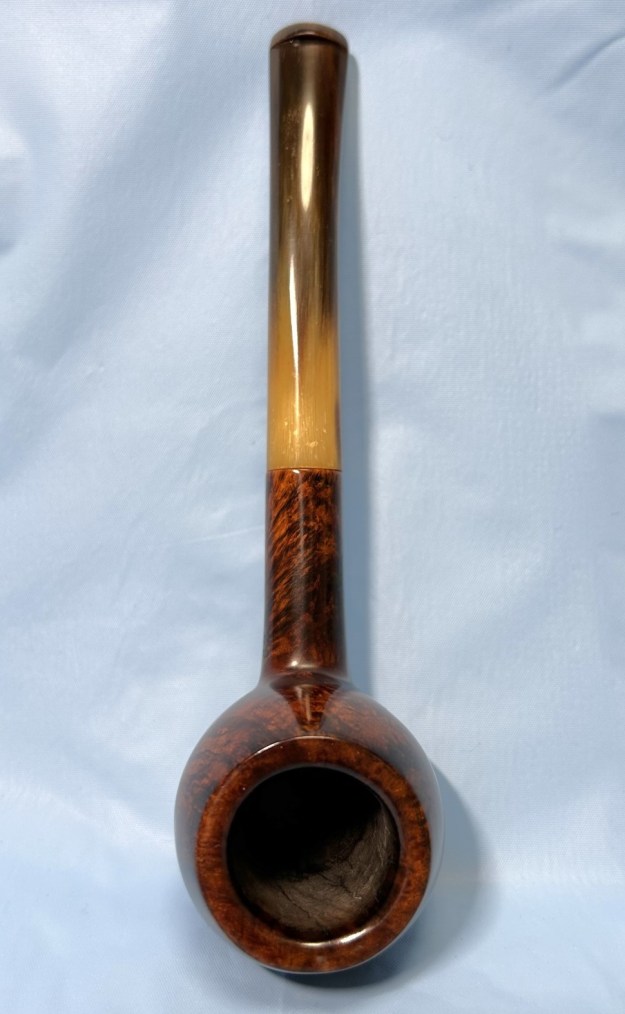
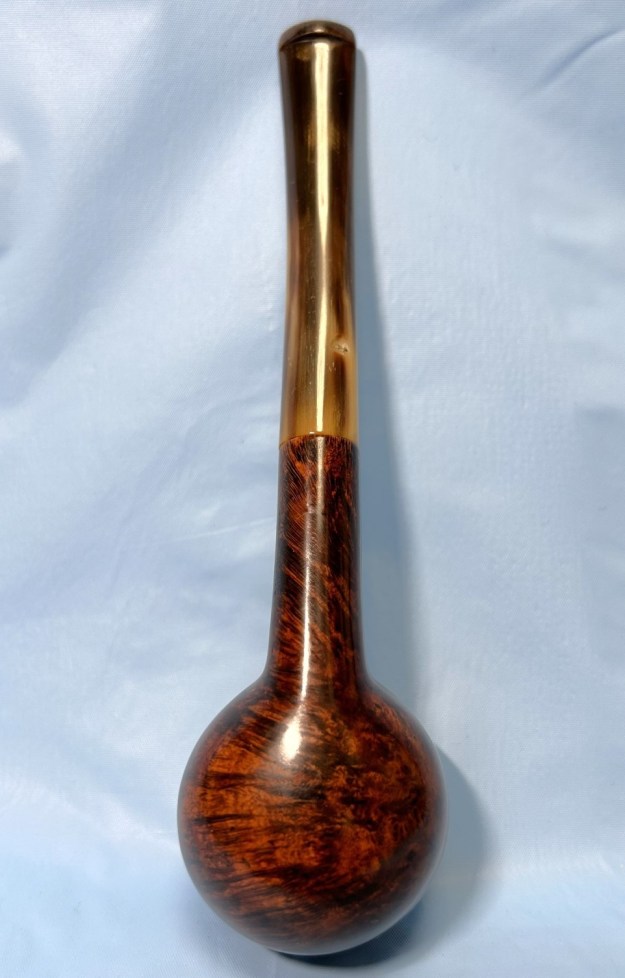
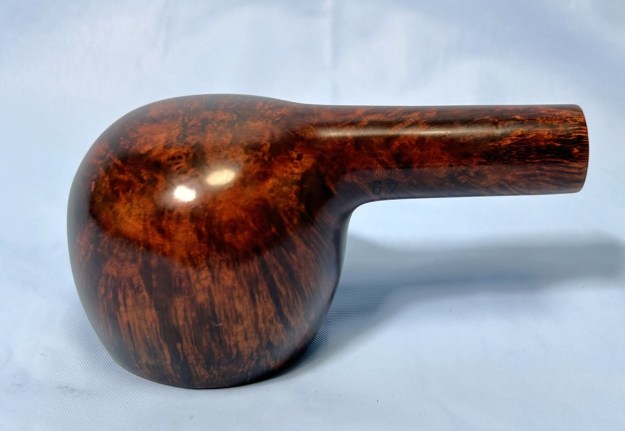
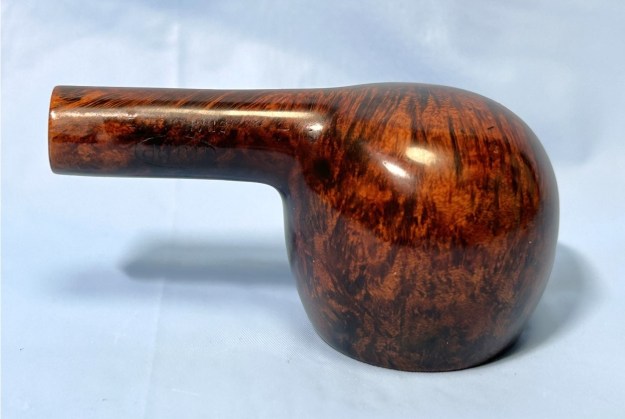
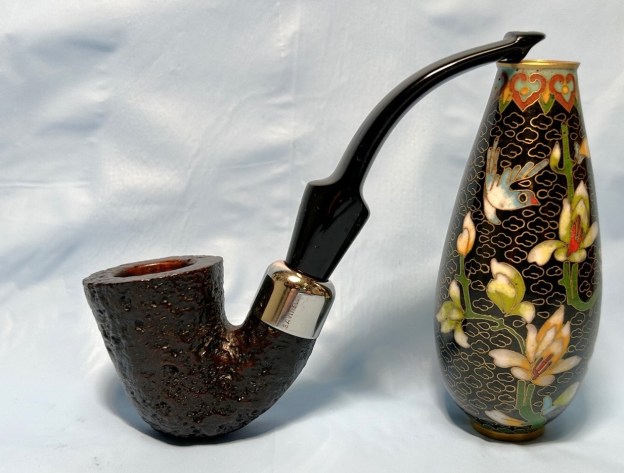
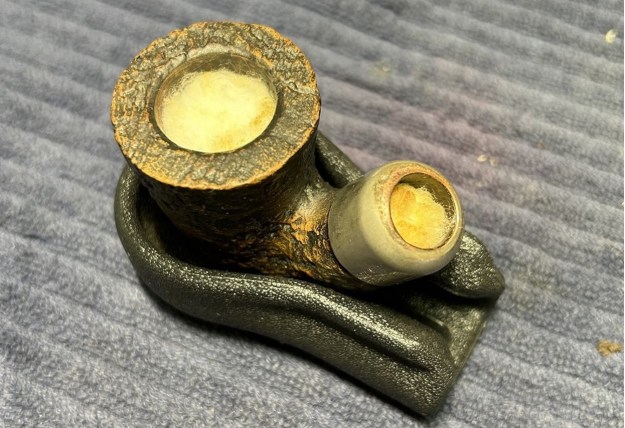
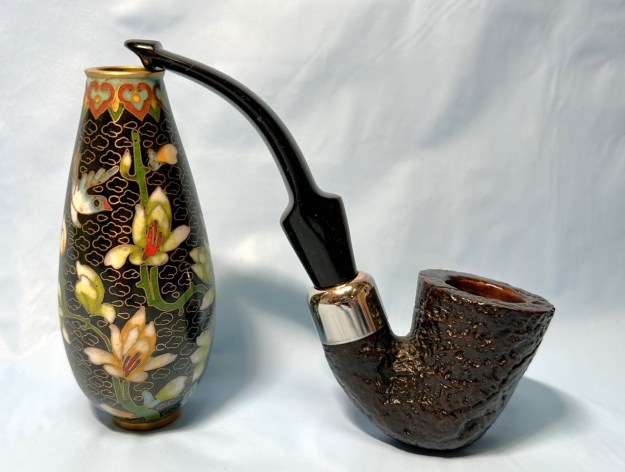
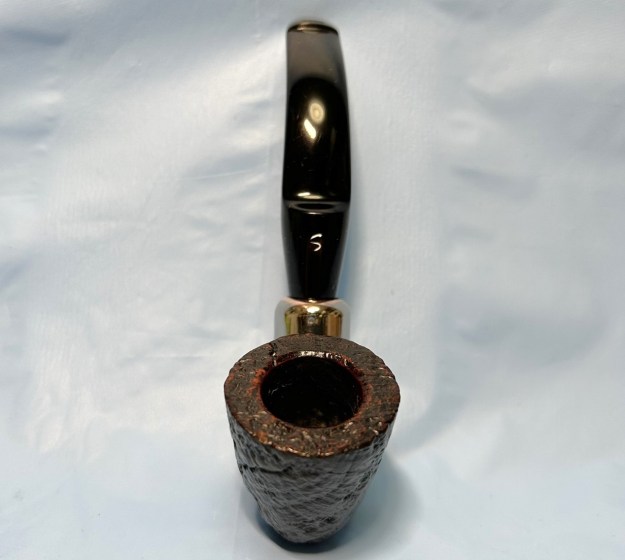
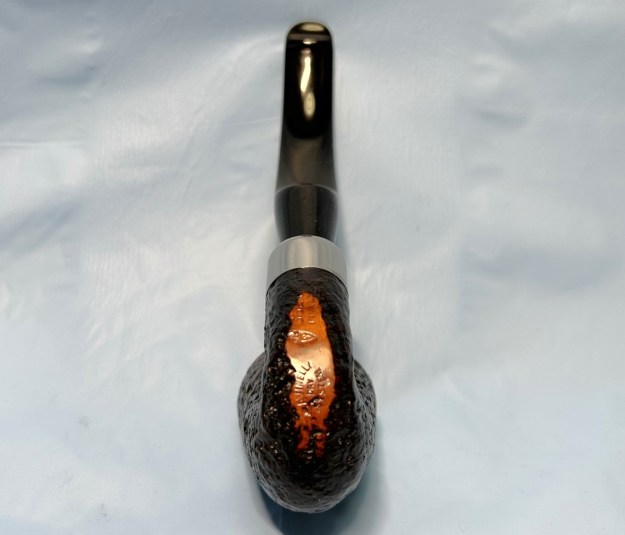
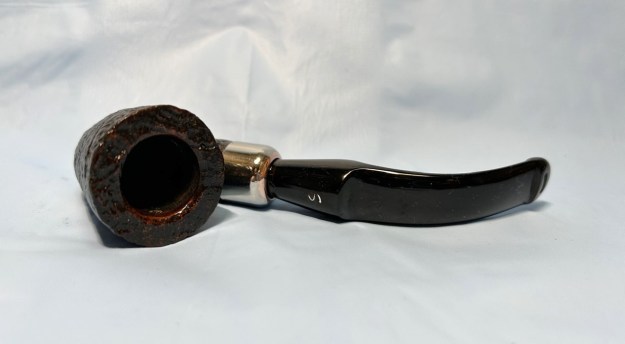
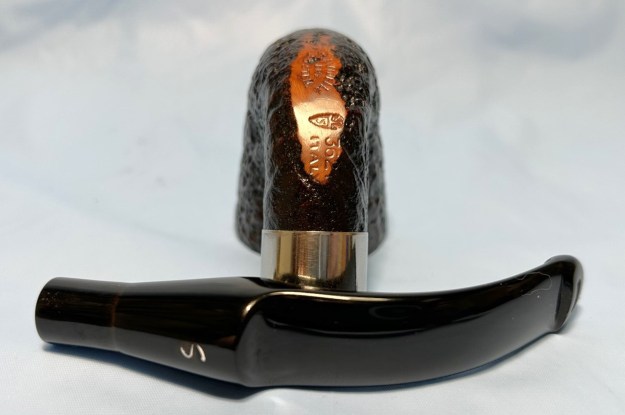
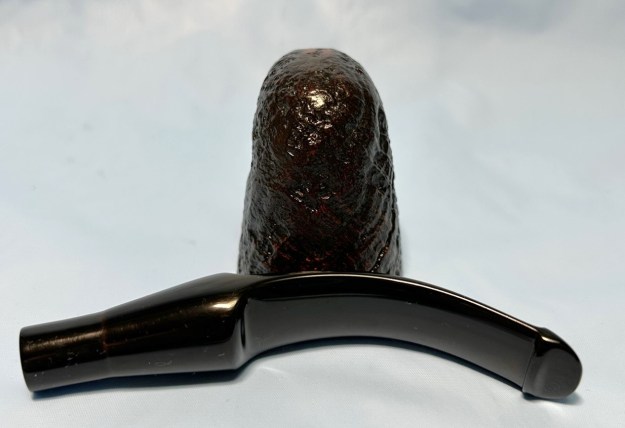
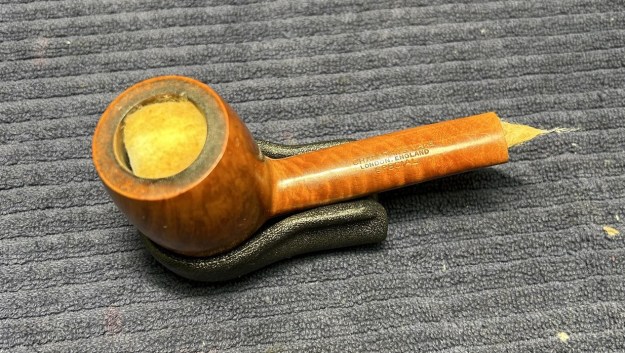
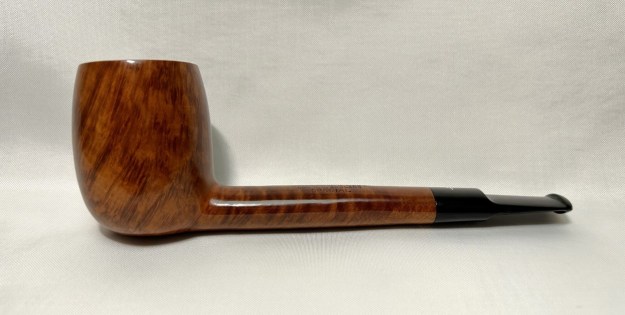
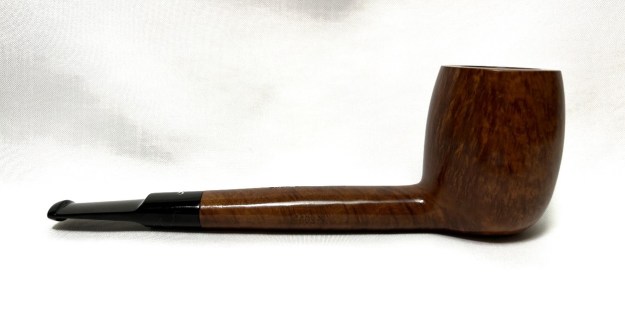
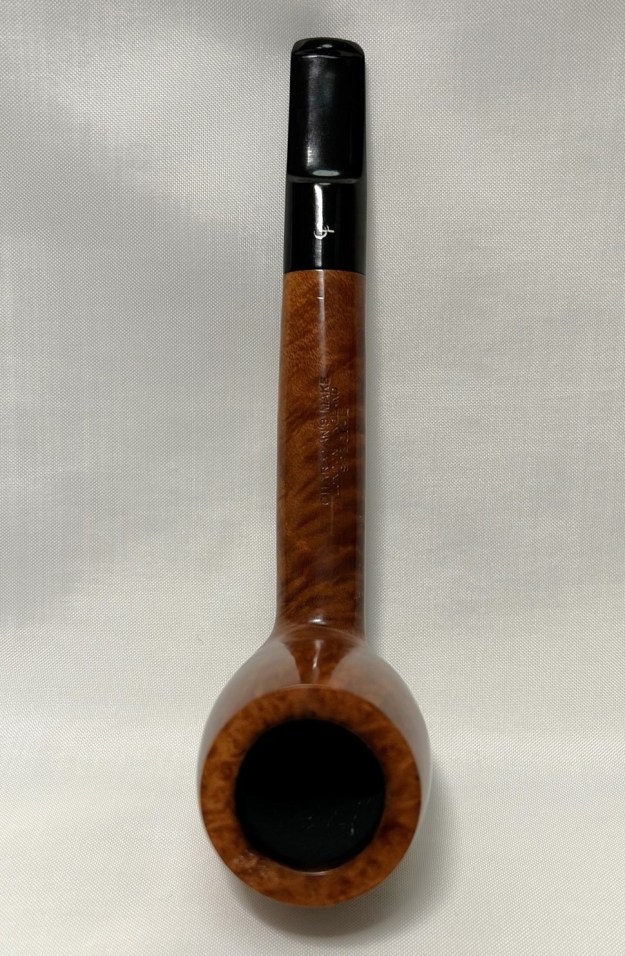
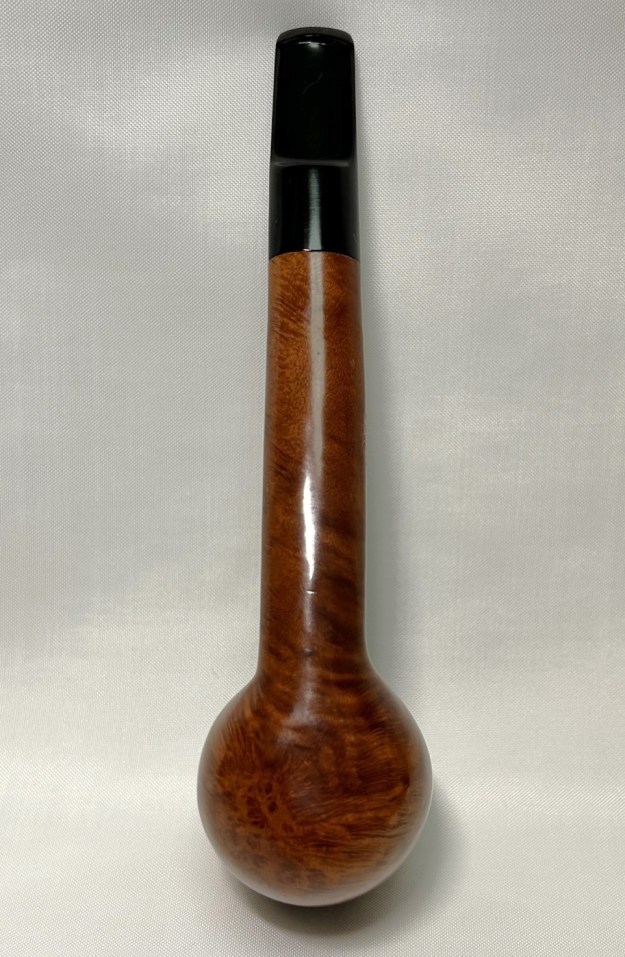
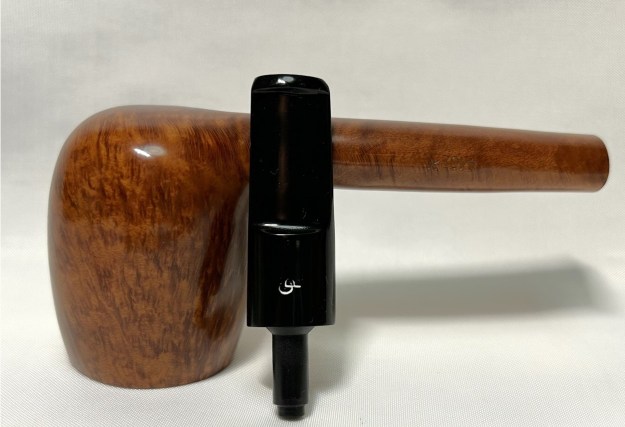
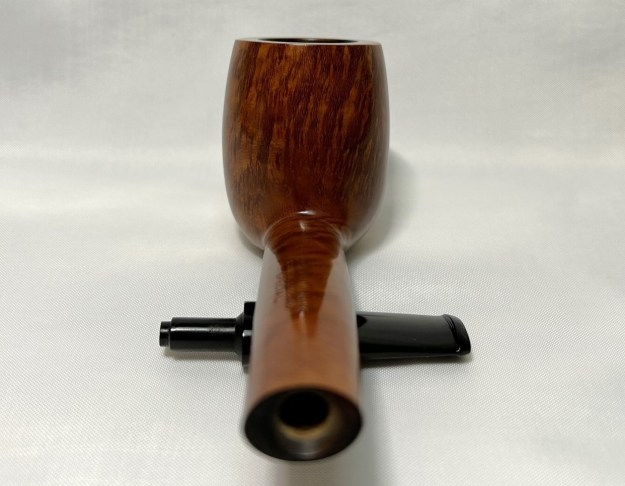
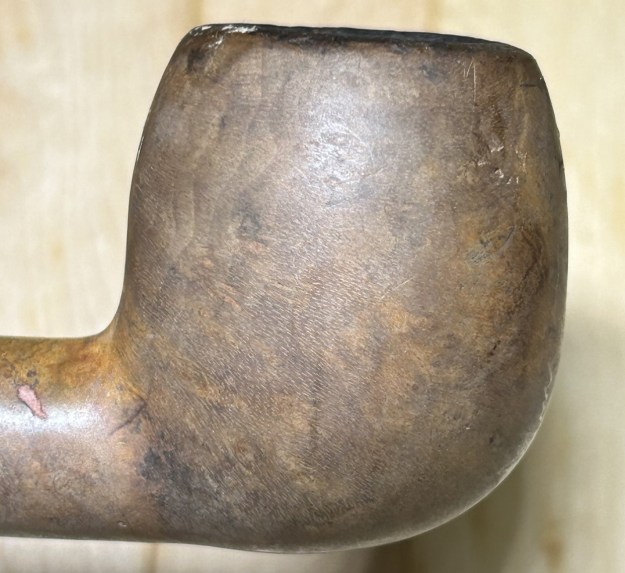
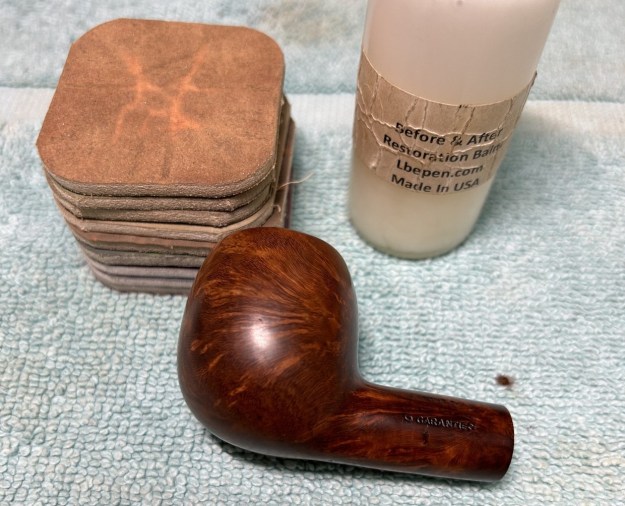
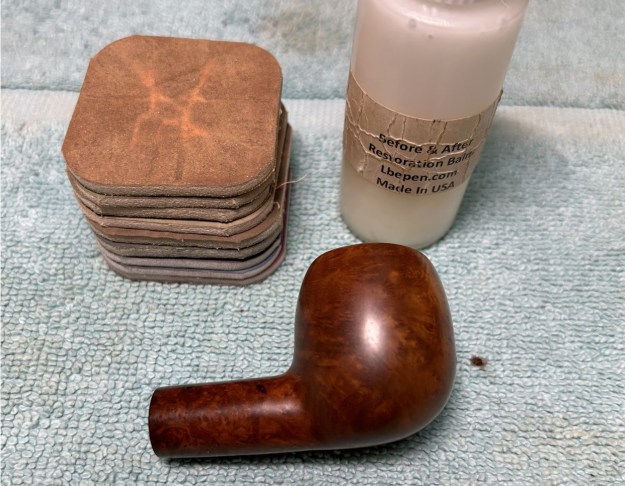
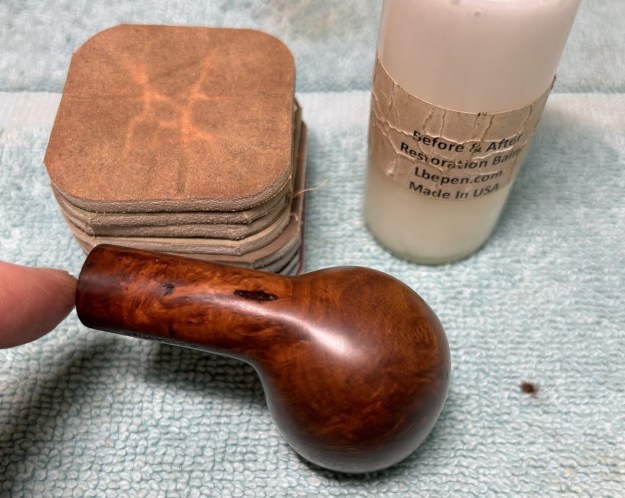
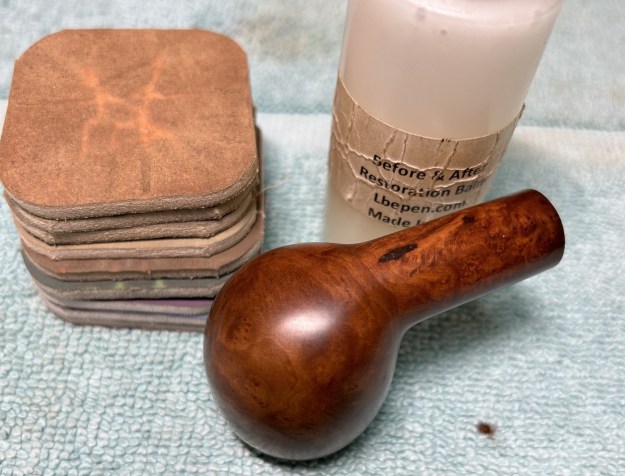
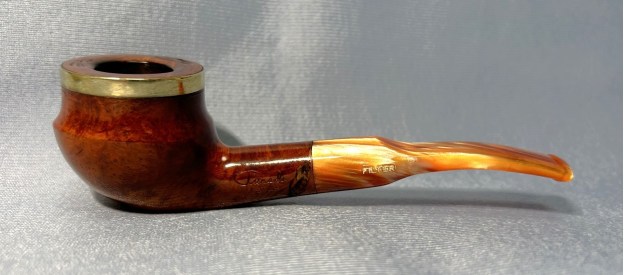
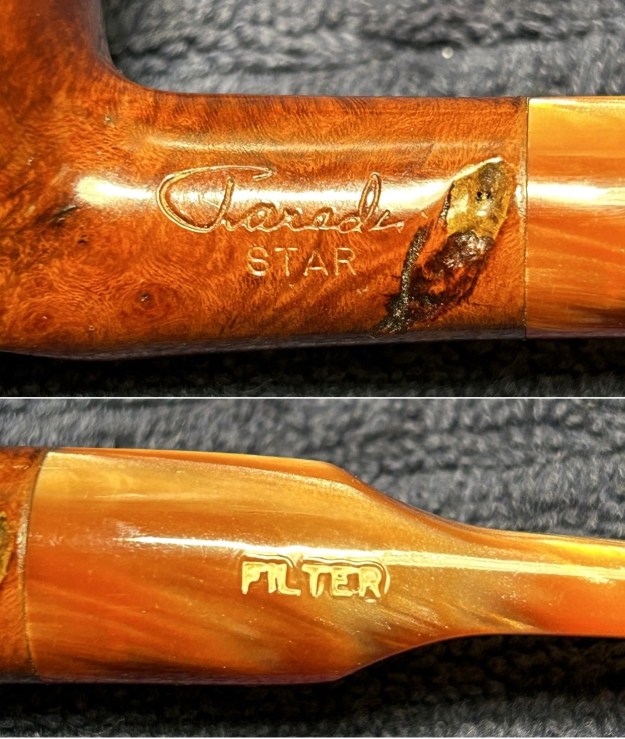
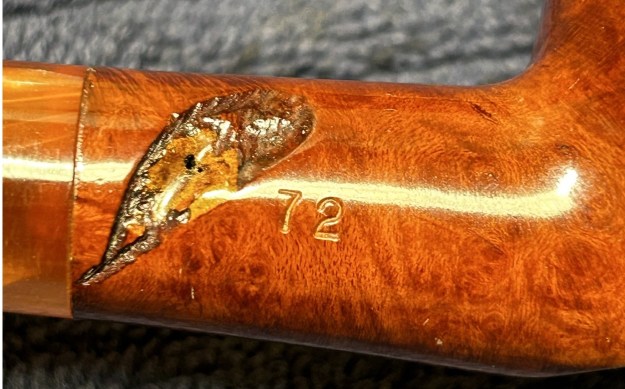
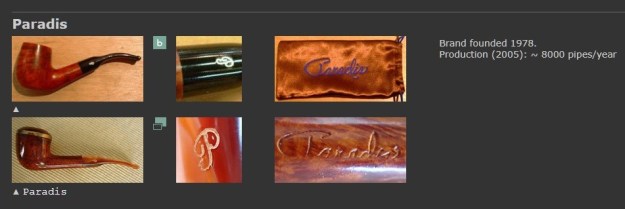
A fine gentleman from out east contacted me asking for this pipe to be restored. Naturally, I obliged and managed a relatively quick job on it. This is just a quick-and-dirty report because it was really more of a cleaning job than a repair job – and I missed out on a few photos. This pipe is a Paradis Star 72 Freehand Pot. The markings on the pipe are as follows: the left side of the shank read Paradis [over] Star; on the right side of the shank read the number 72 – the shape number; and on the left side of the stem was the word Filter. This pipe did indeed have a 6 mm filter and so that makes sense. I knew Paradis Pipes to be a Canadian pipe company, based in Montréal, but I went over to Pipedia and Pipephil to seek out more information. Here’s some of what I found (after correcting the many spelling errors):
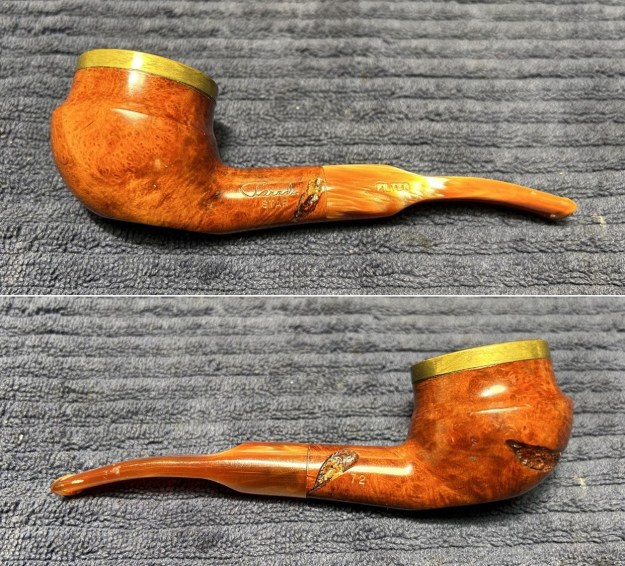
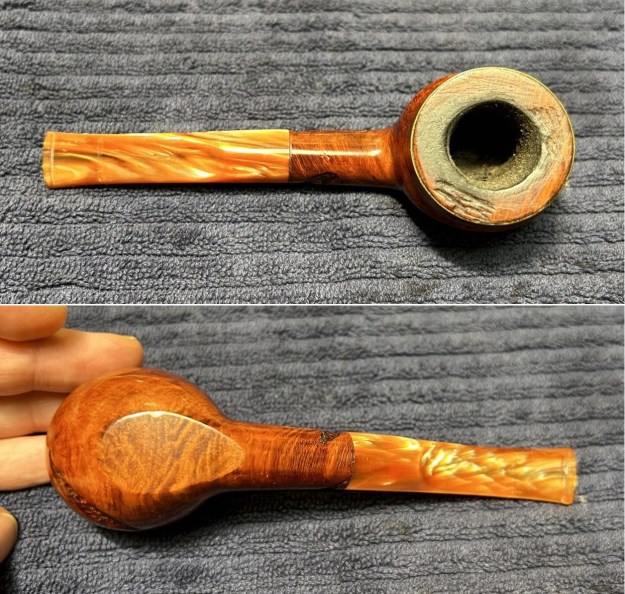
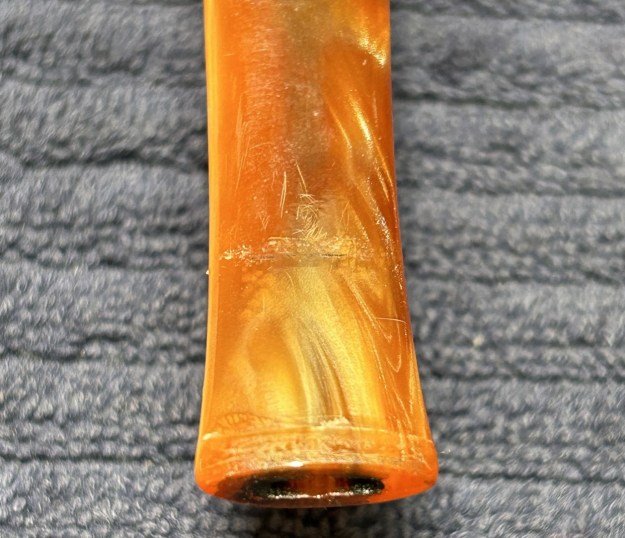
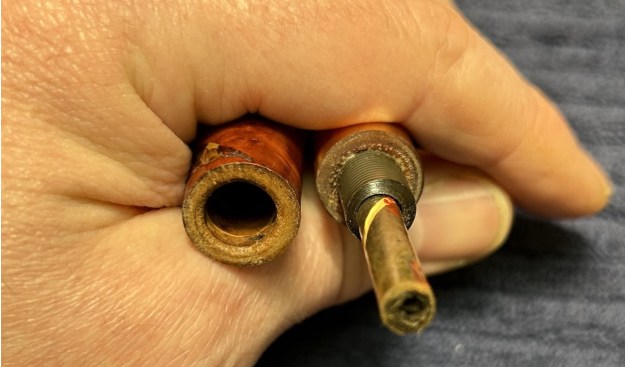
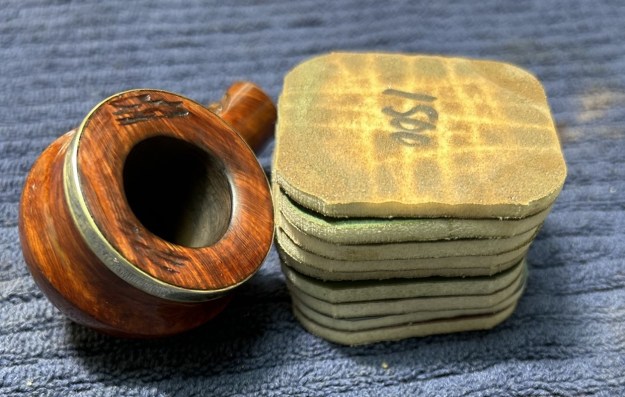
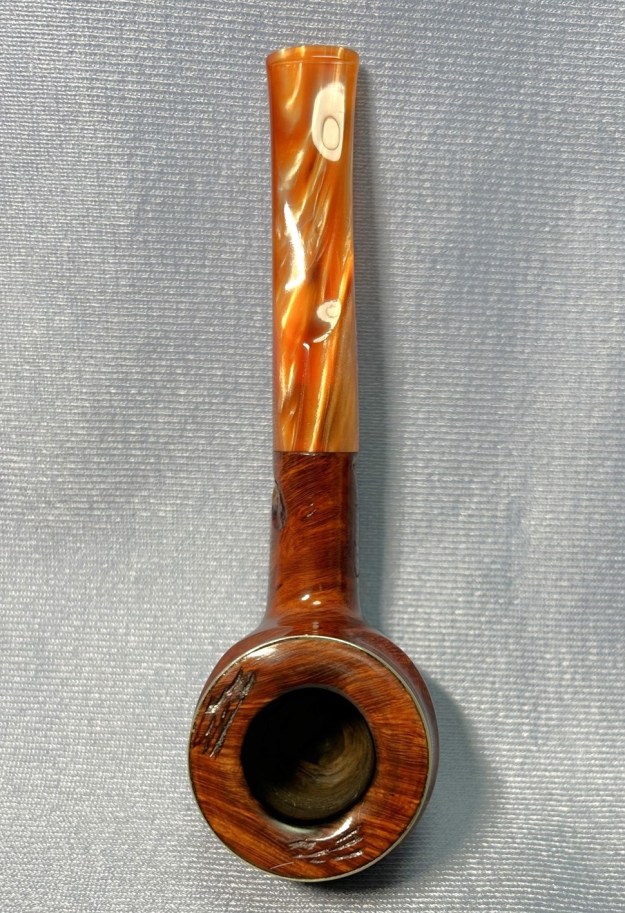
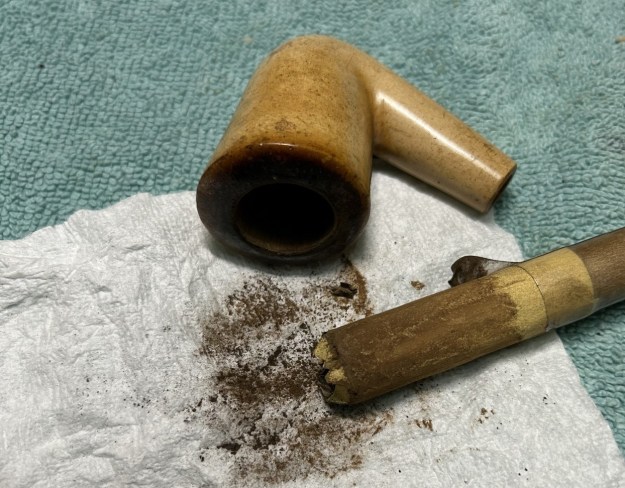
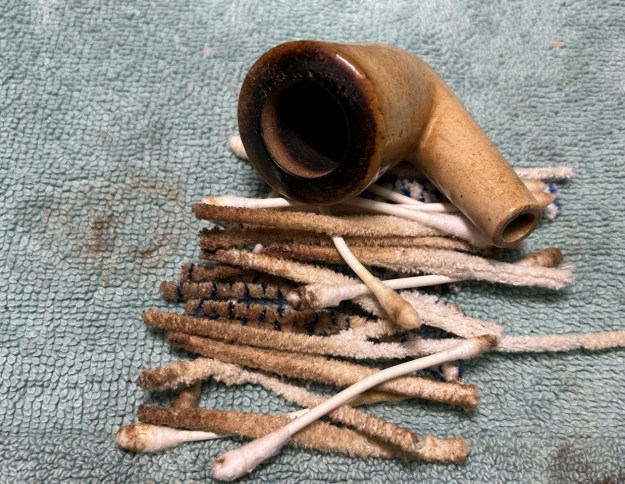
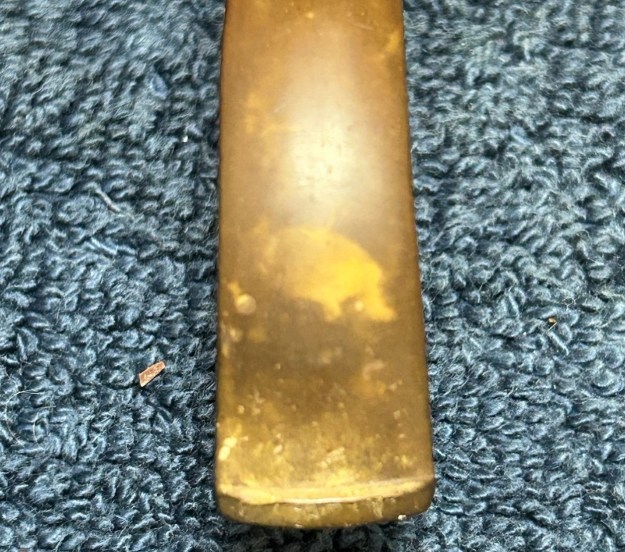
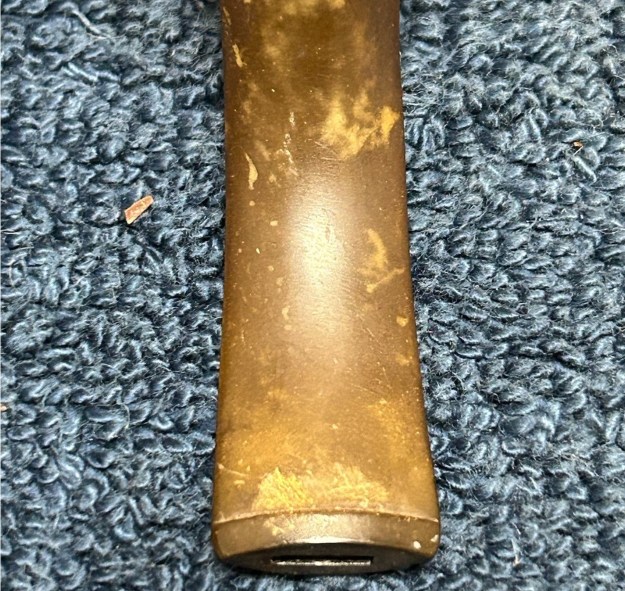
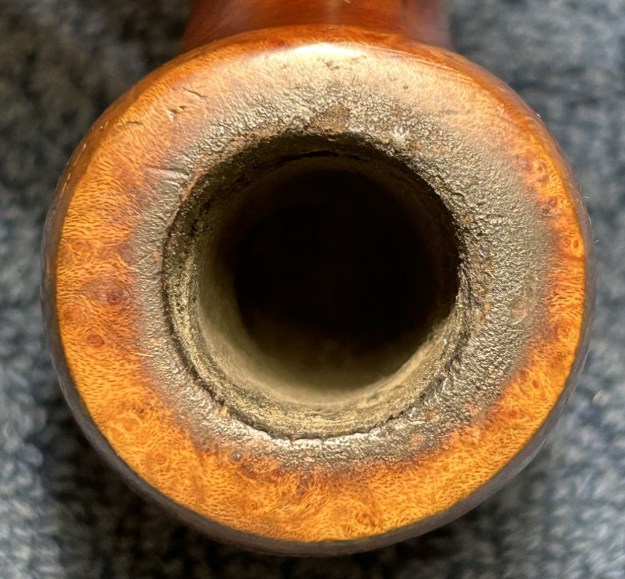
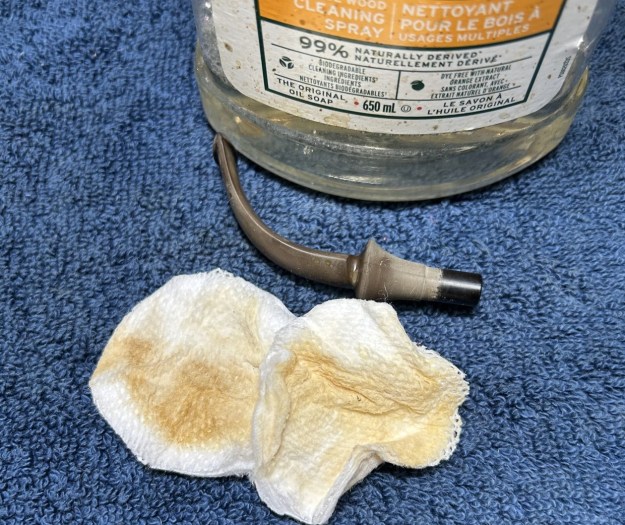
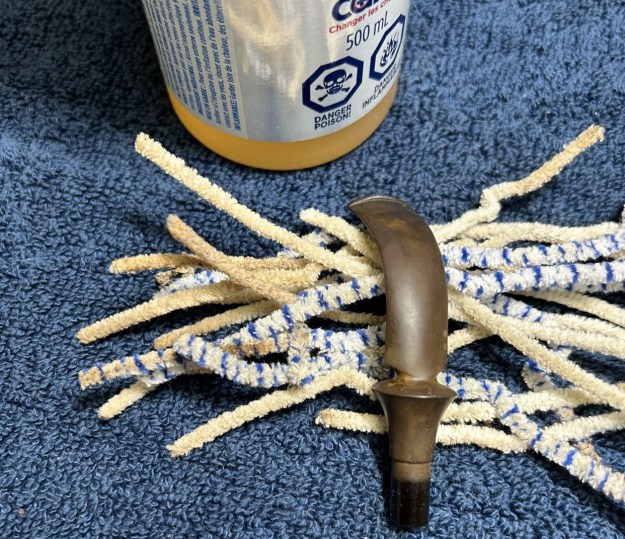
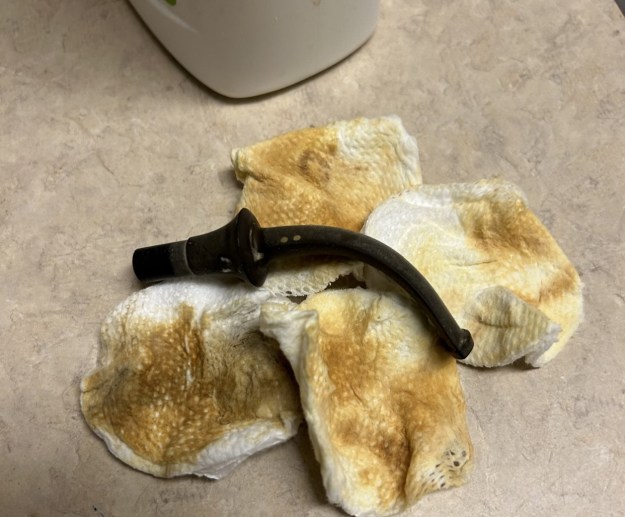
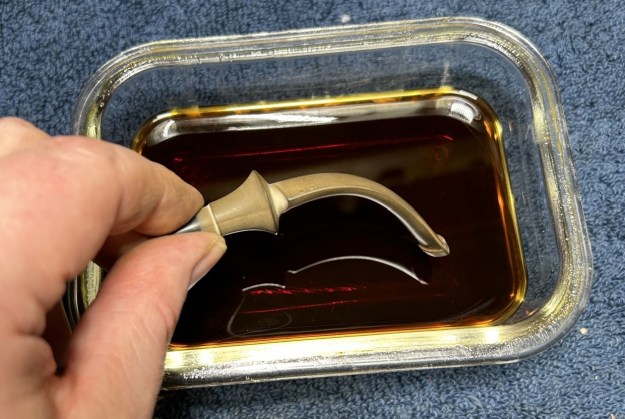
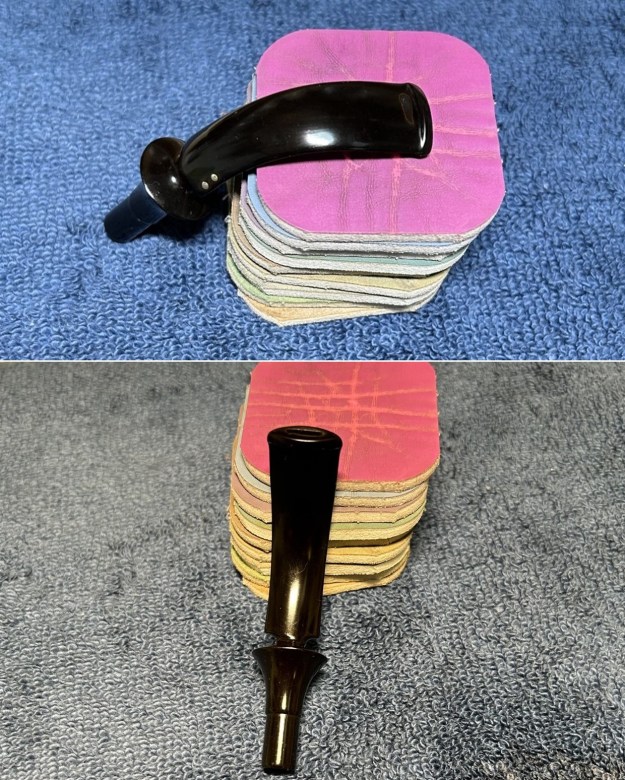
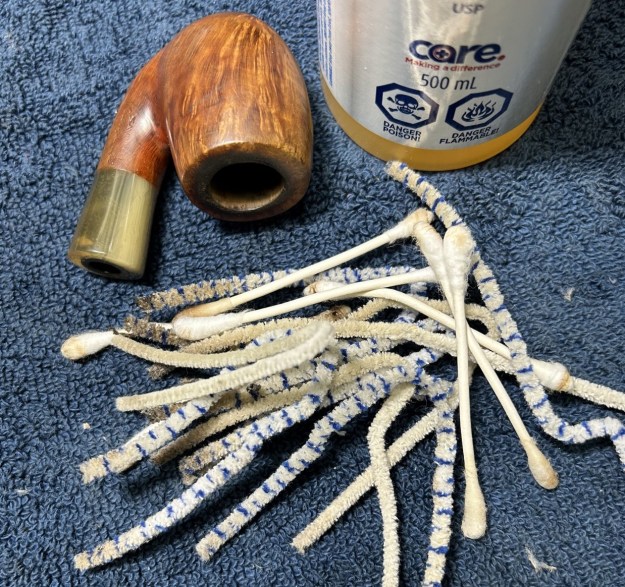
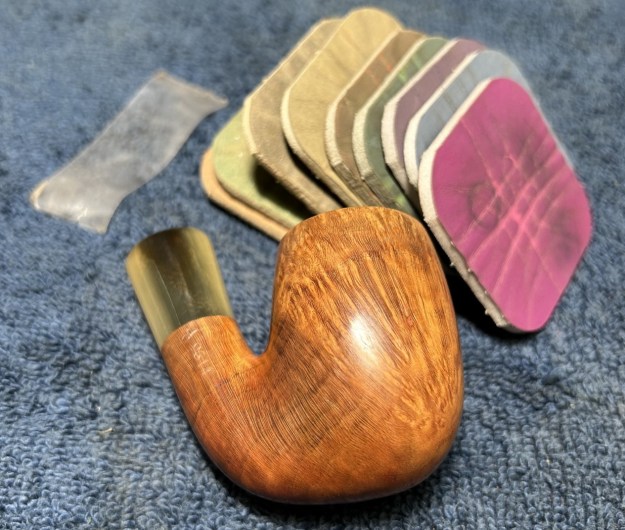
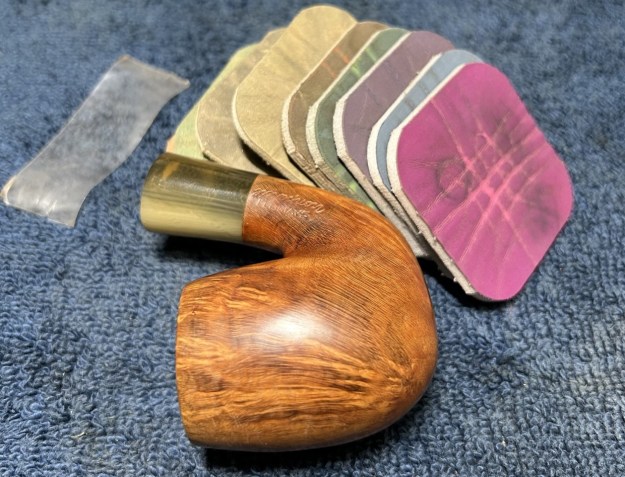
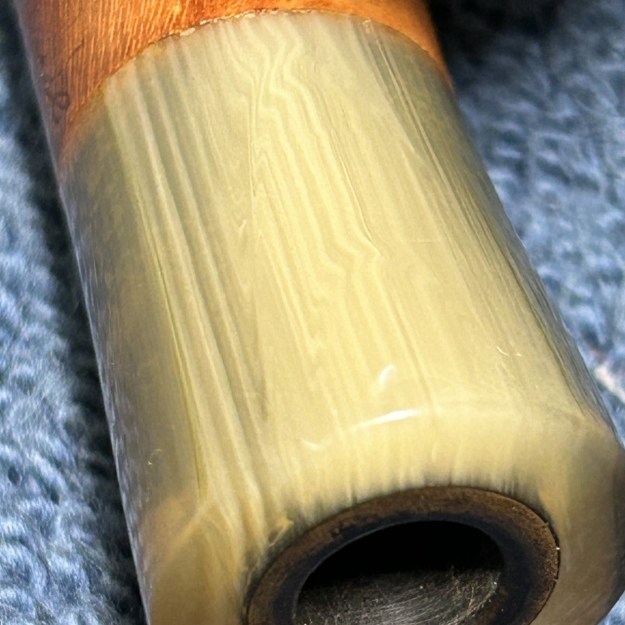
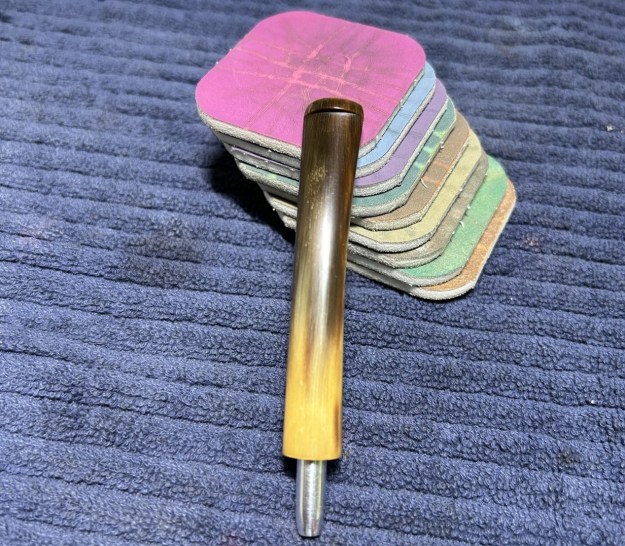
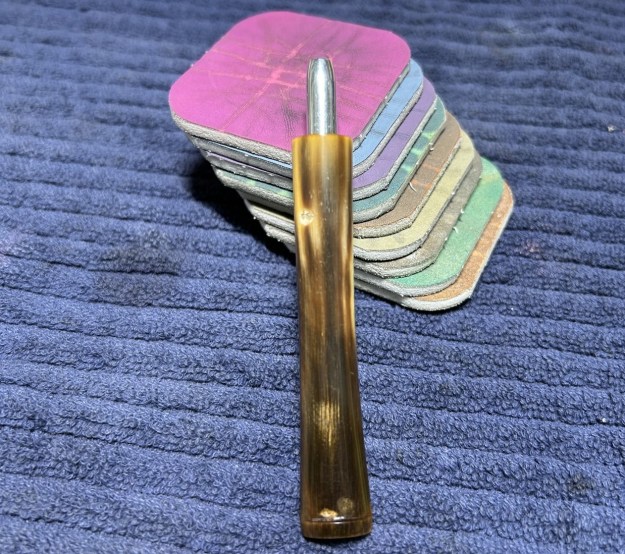
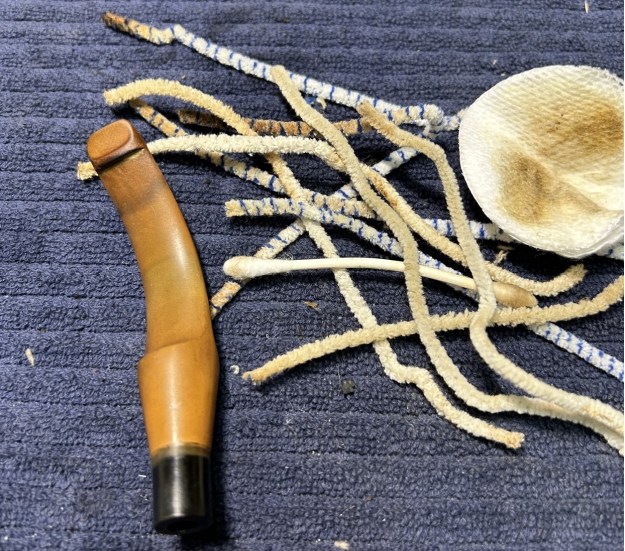
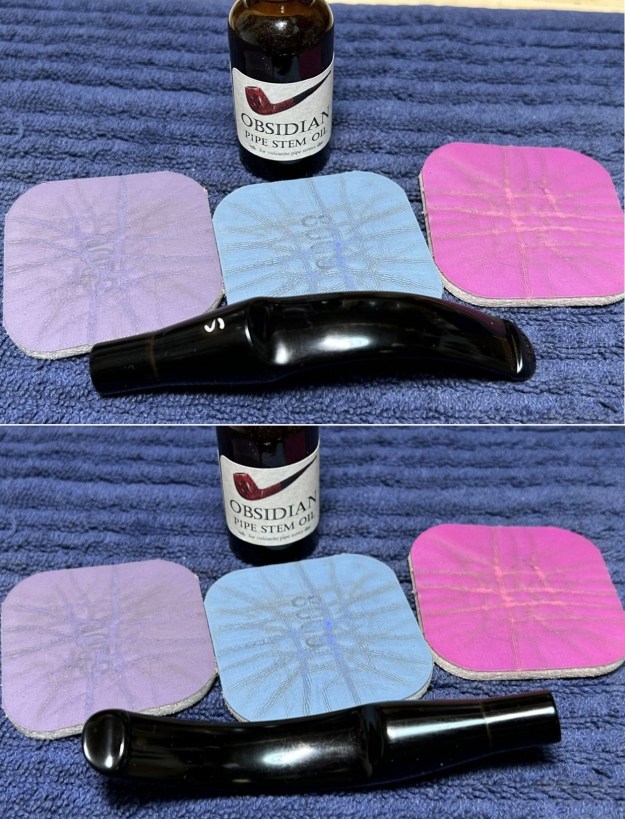
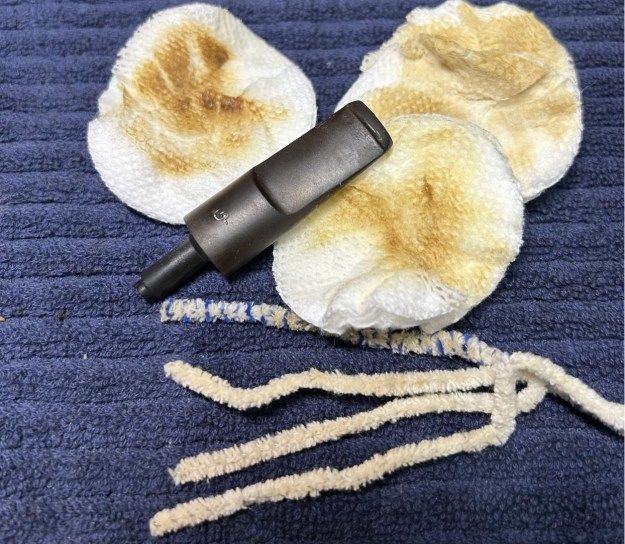
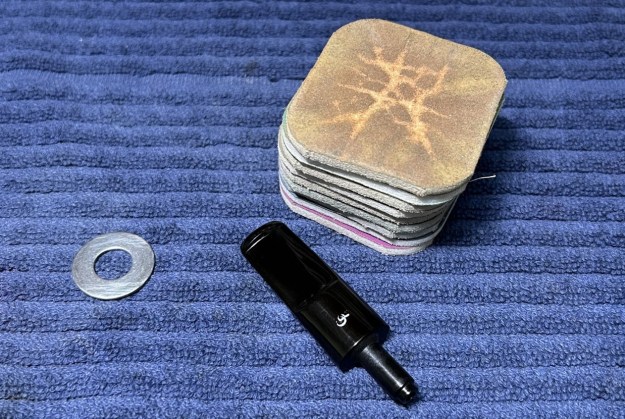
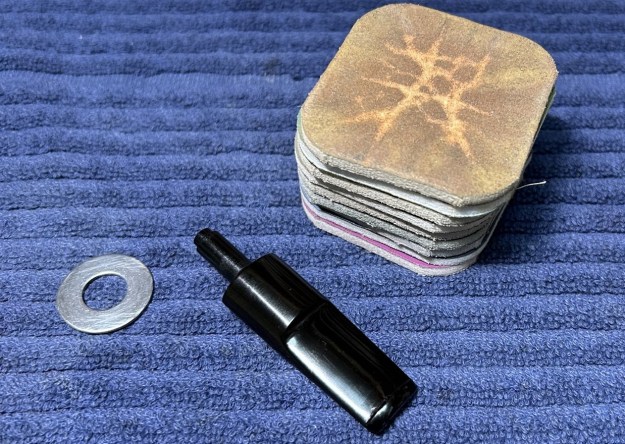
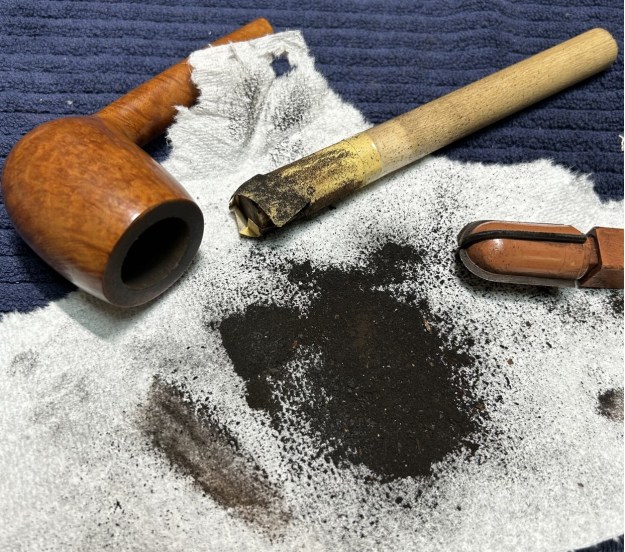
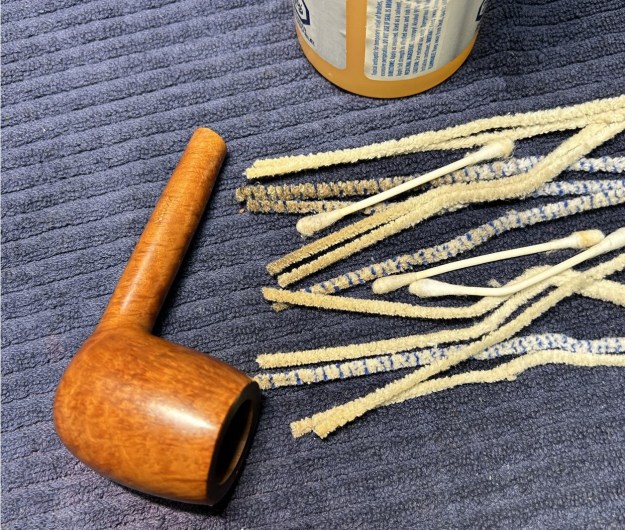
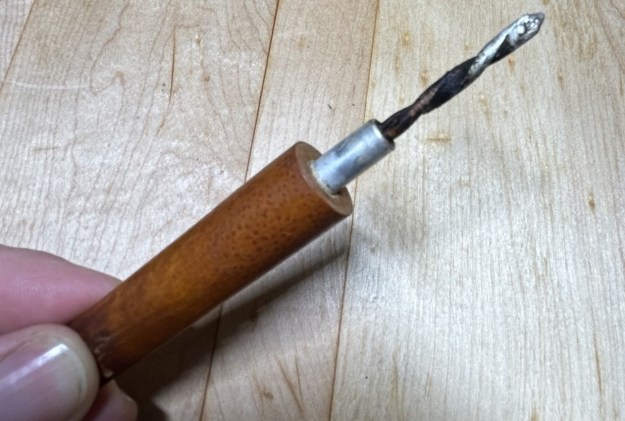
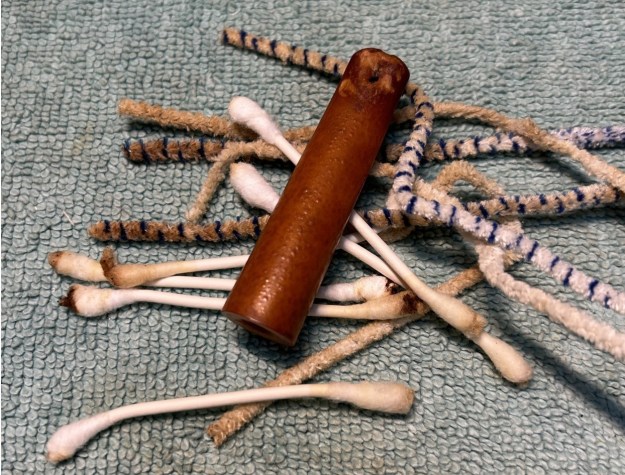
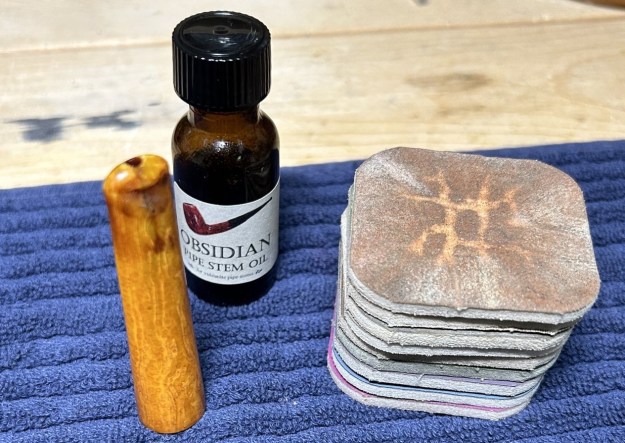
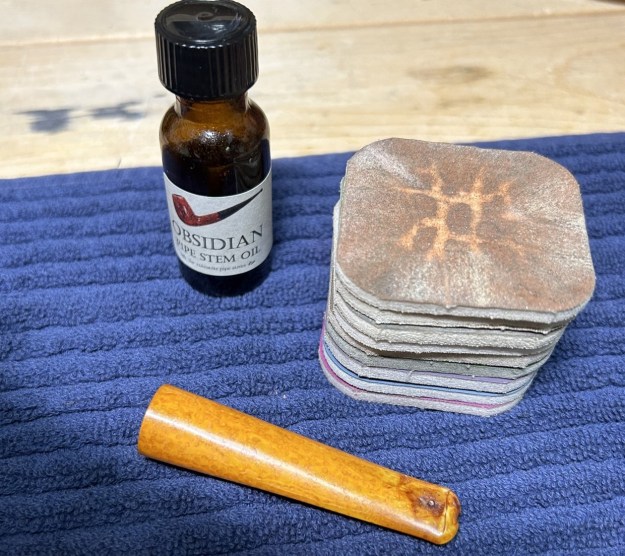
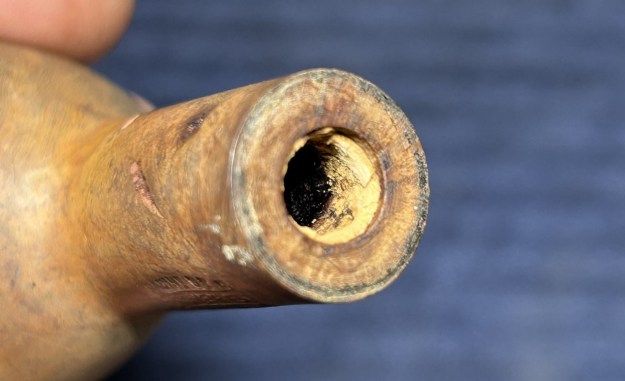
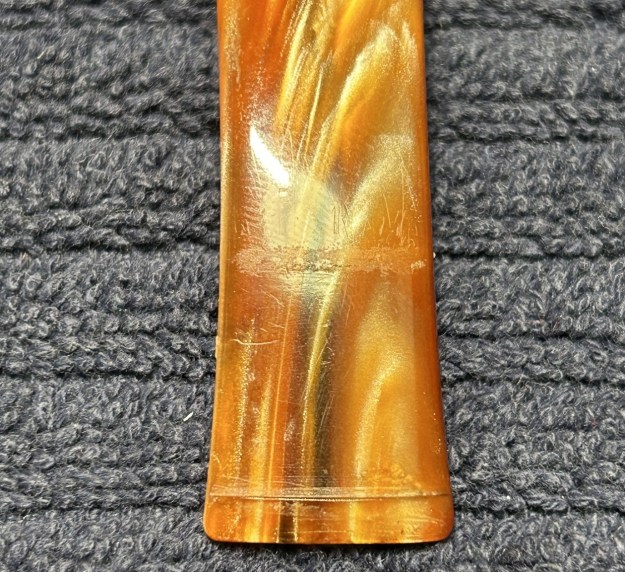
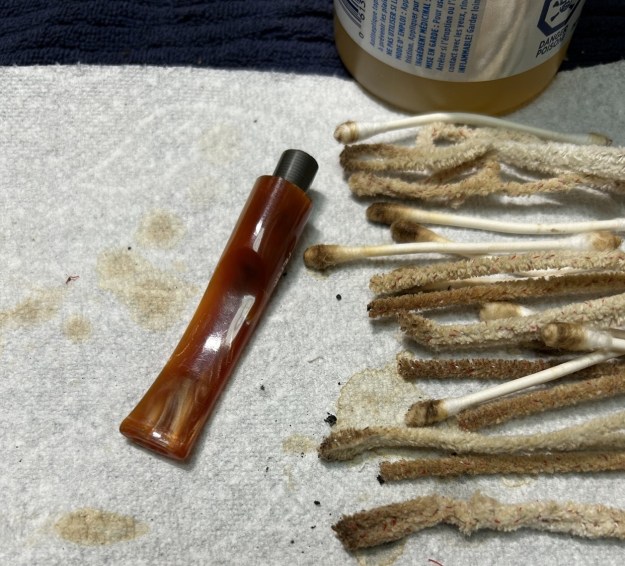
Paradis Pipes is the Canadian brand of the brothers Gilles and Fernand Paradis. In 1922 the Paradis family moved to the USA, when Lucien Paradis (1906-1979) was 16 years old. It was at this age that he started as an apprentice at his uncle’s pipe factory: Joseph B. Desjardins, maker of (JD) pipes, in Fall River, MA. Joseph Desjardins was issued two patents during this period, one for a new machine for making pipe stems and another for a new design of pipe reamer. The company employed 60 workers at one stage. In 1930, due to the Great Depressions, Lucien lost his job and returned to Quebec to work in the agricultural machine industry. In his spare time, be made pipes, selling them door to door. Three years later the rest of the family joined him, and Lucien founded a pipe factory with two of his brothers. The company eventually employed 18 workers and in the 1960s produced over 50,000 pipes a year, under brads like JBL, Dr. Thomas, Fernand Gignac, S.C. Pipes, New London Golfer, and Jo Thomassin. Paradis was founded in 1978, at the Salon of Quebec Artisans, and is available in tobacconists all over the country today. The brand produces 8,000 pipes a year (400 “handmade”), with Greek briar.The pipe was in decent condition. It had been well-smoked, and the bowl and shank were fairly dirty. The bowl had some cake on the inside and a bit of lava on the rim. But there was clearly some burning there too. The brass ring around the bowl was in good condition, just a bit scratched up. Meanwhile, the stem was relatively dirty. It was made of acrylic, so no oxidation to speak of, but there were what I would describe as “typical” tooth scratches on the bit. Fortunately, no dents – but someone did leave a heavily used filter behind. Delicious. The stem was first on my list. I wiped the outside down with Murphy’s Oil Soap on some cotton pads. I cleaned out the insides with lemon-infused isopropyl alcohol and some pipe cleaners and cotton swabs.I then used all nine Micromesh pads (1,500 through 12,000 grit) to make the swirling colours of the stem’s acrylic shine again. I also used Obsidian Pipe Stem Oil in between each pad scrubbing (from 3,600 onward).
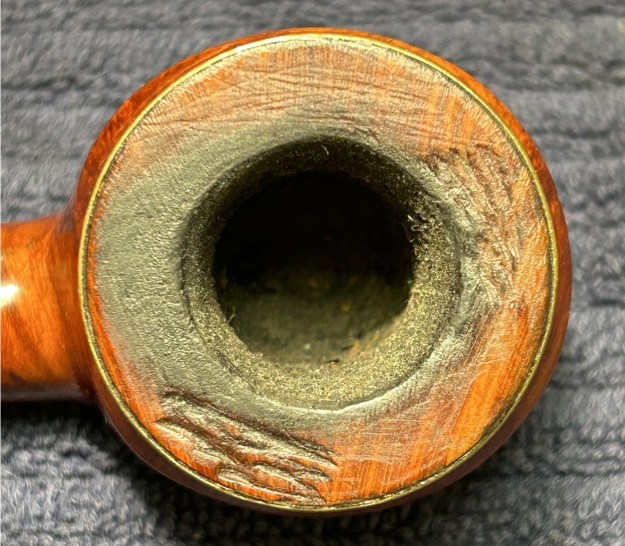
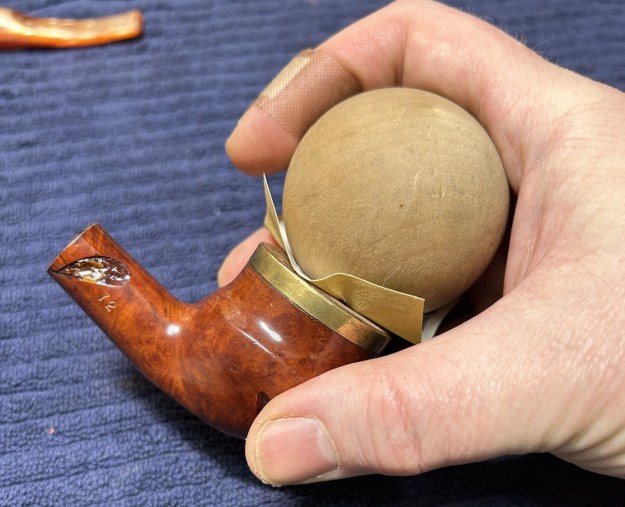
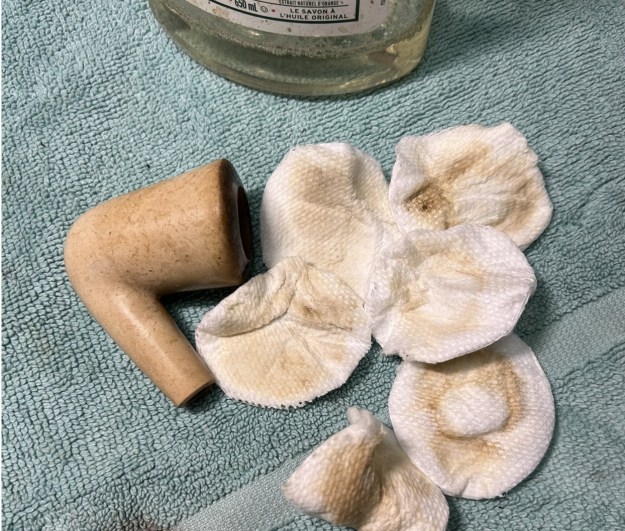
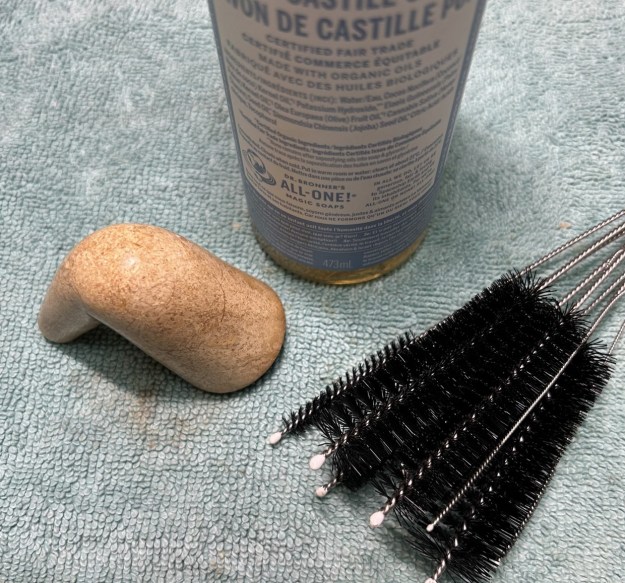
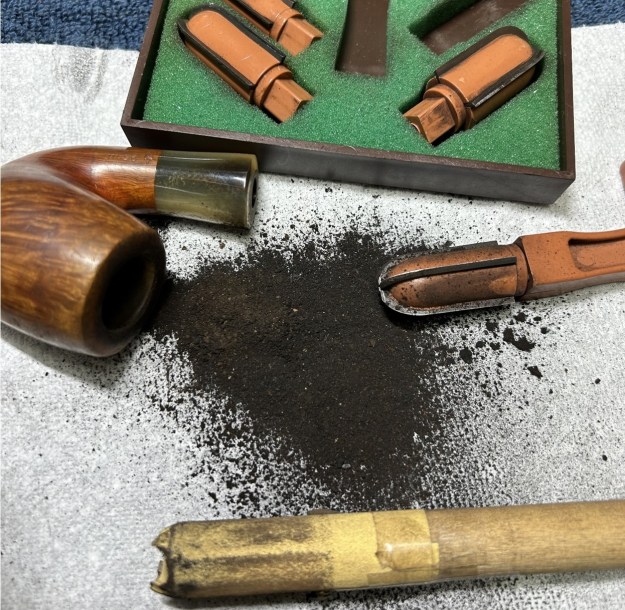
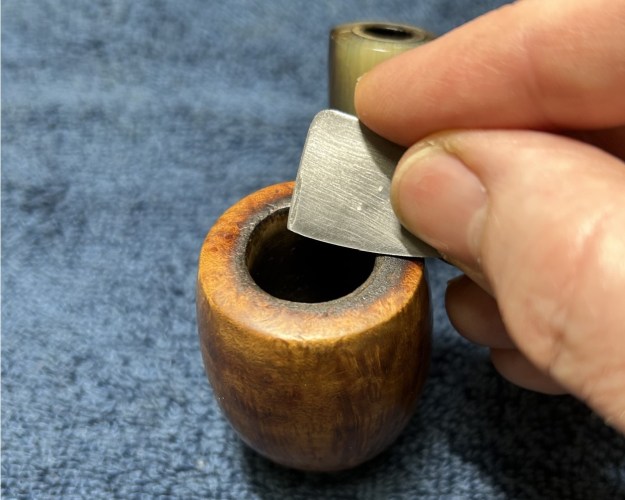
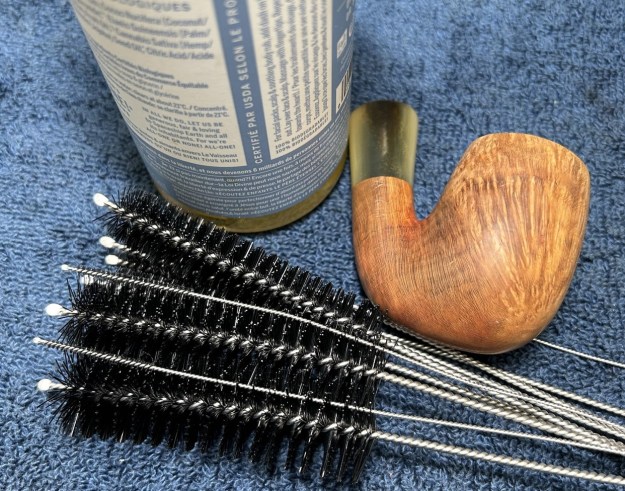
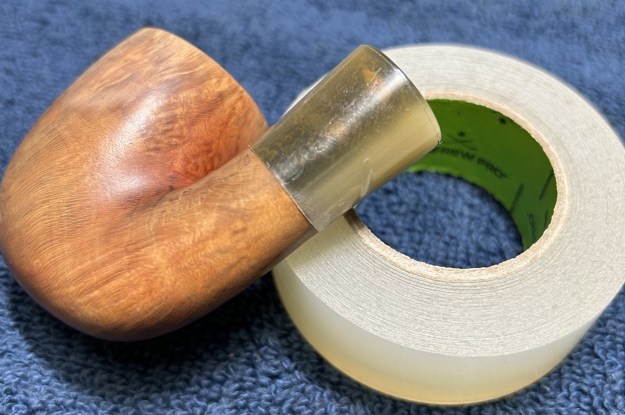
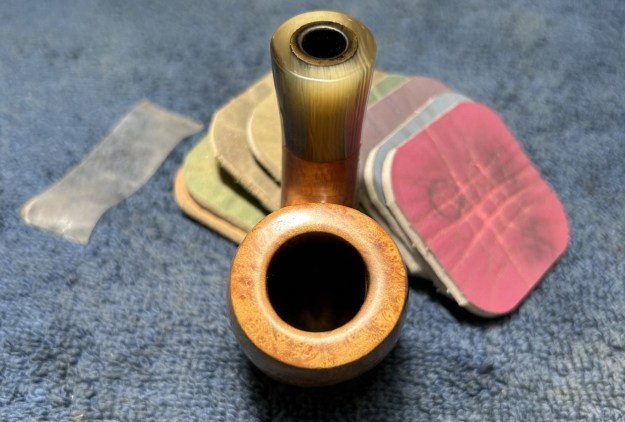
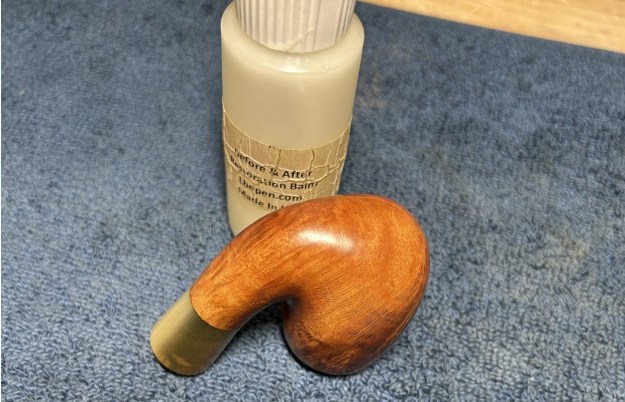
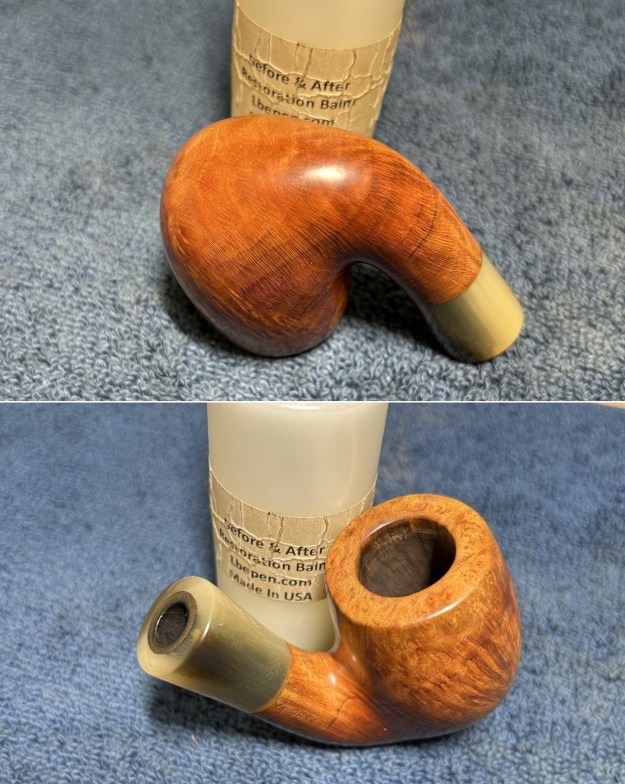
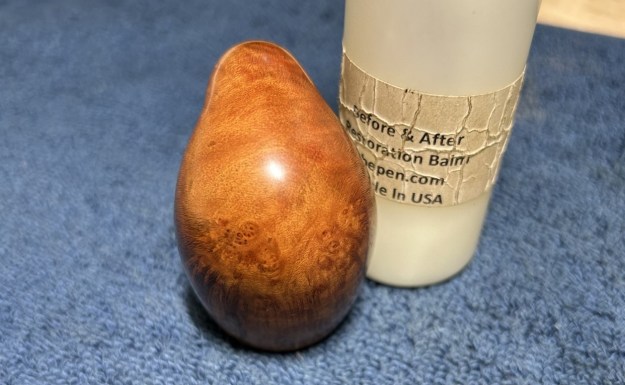
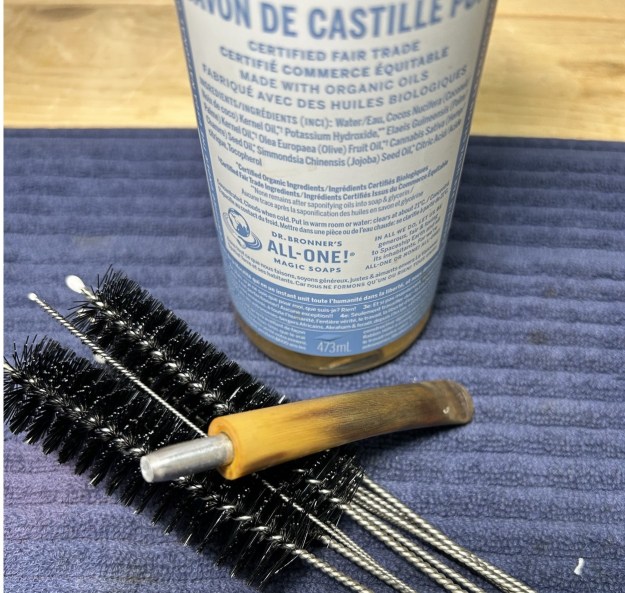
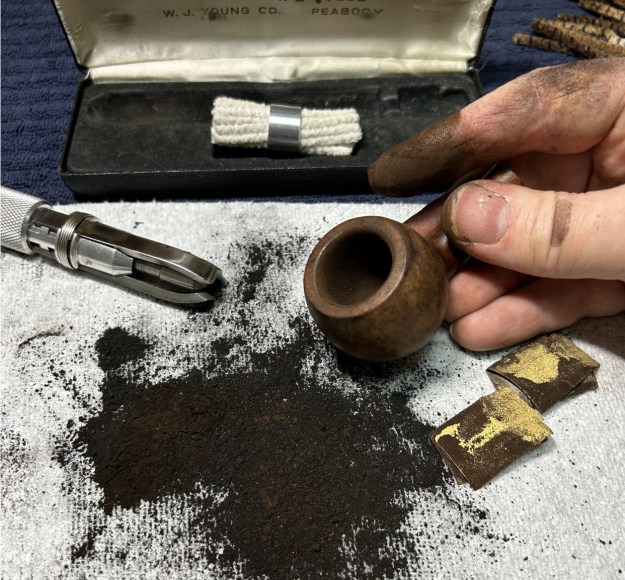
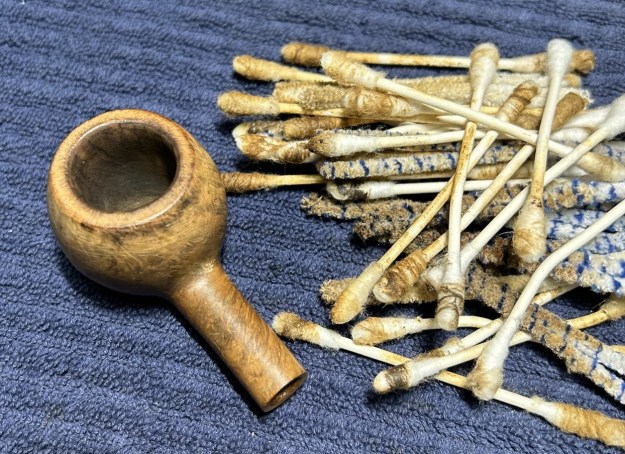
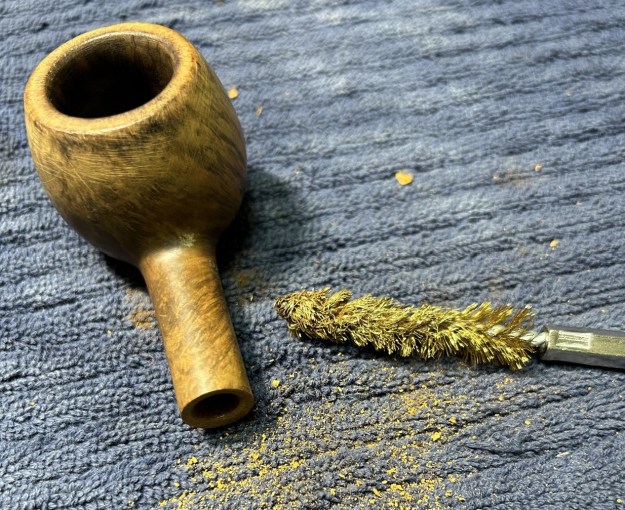
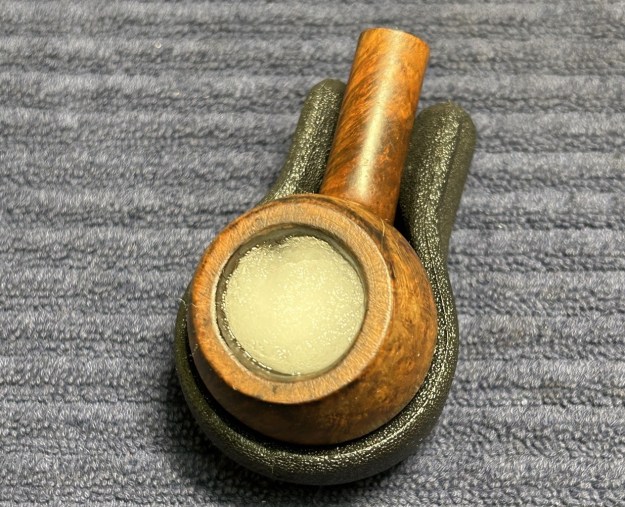
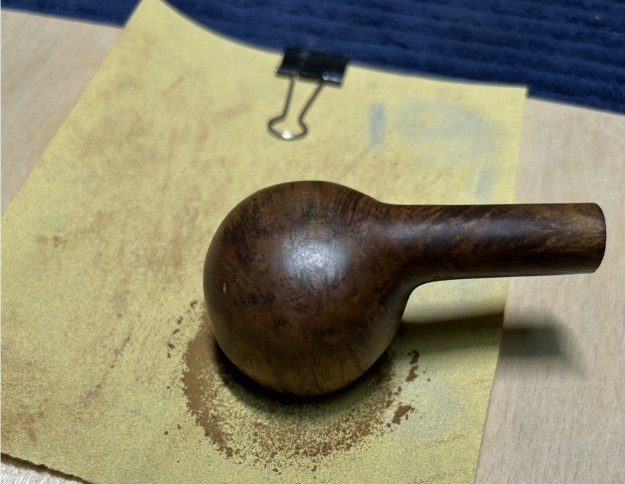
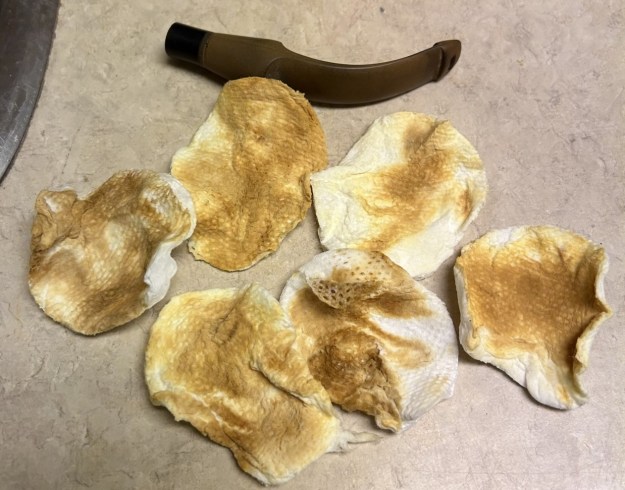
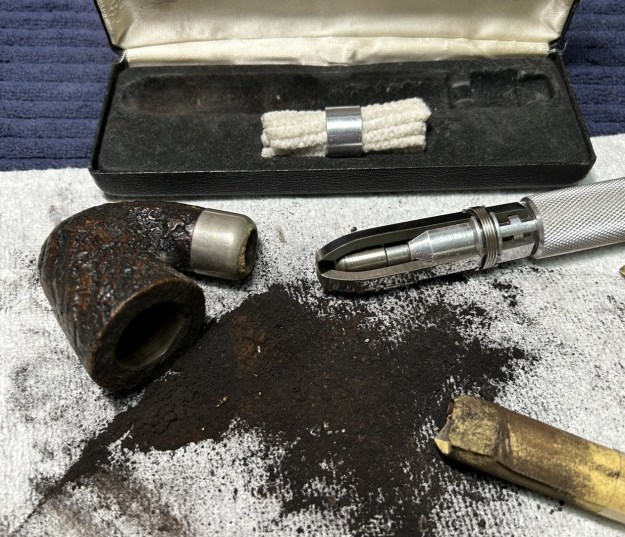
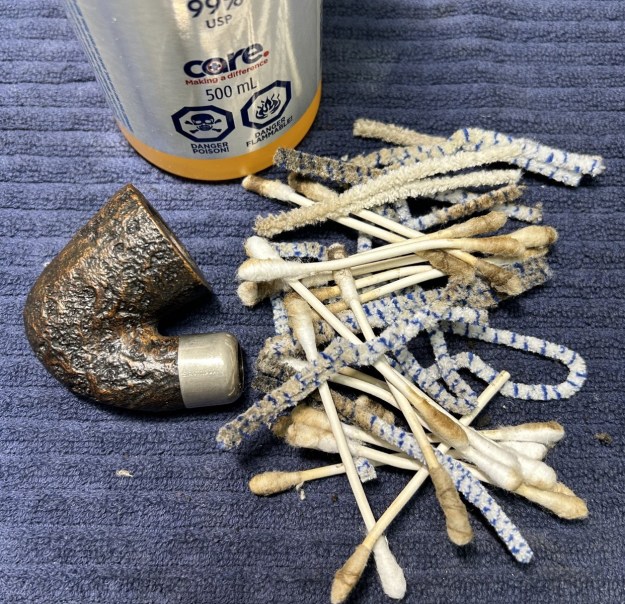
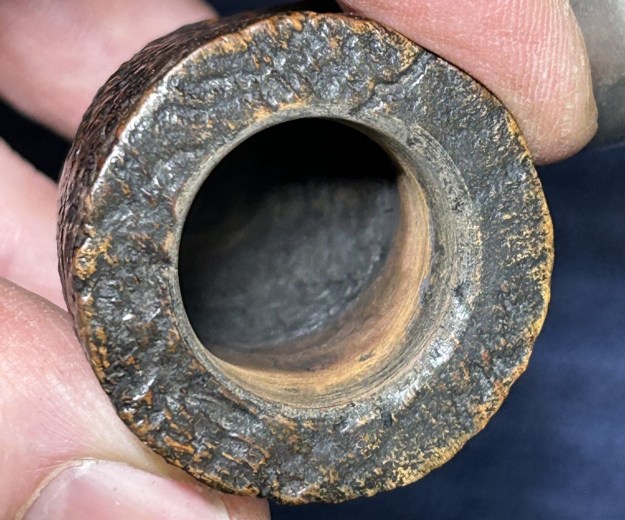
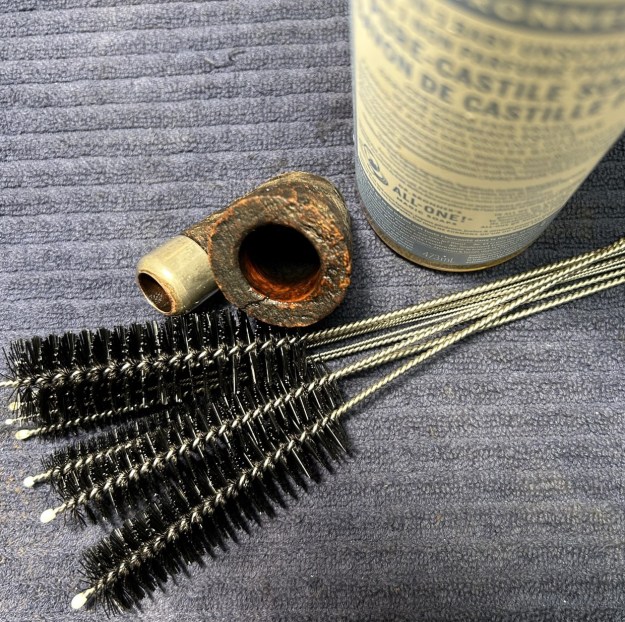
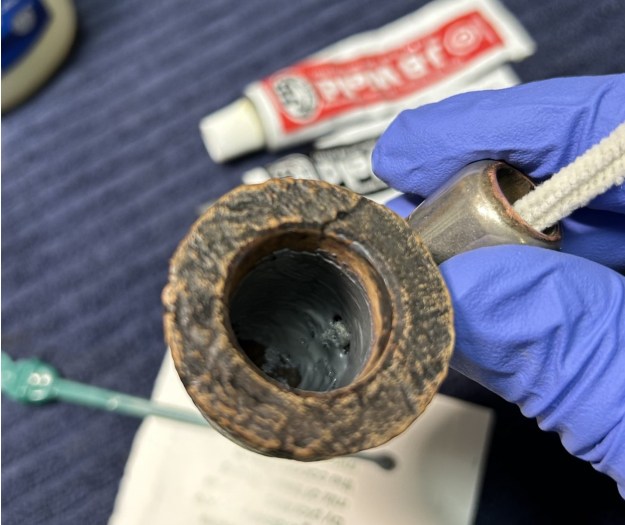
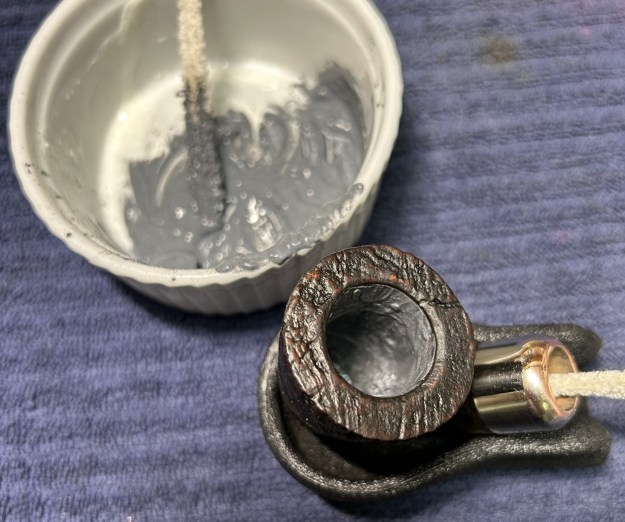
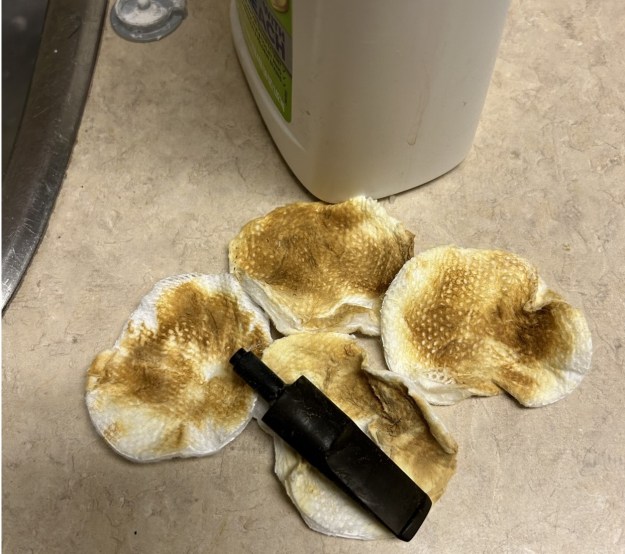
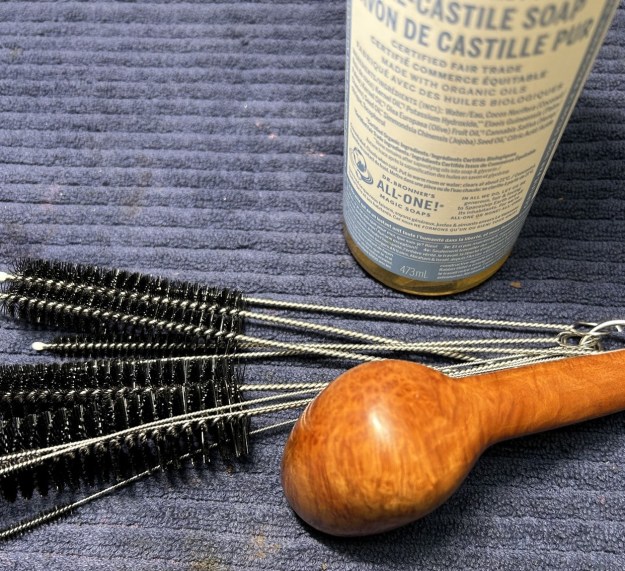
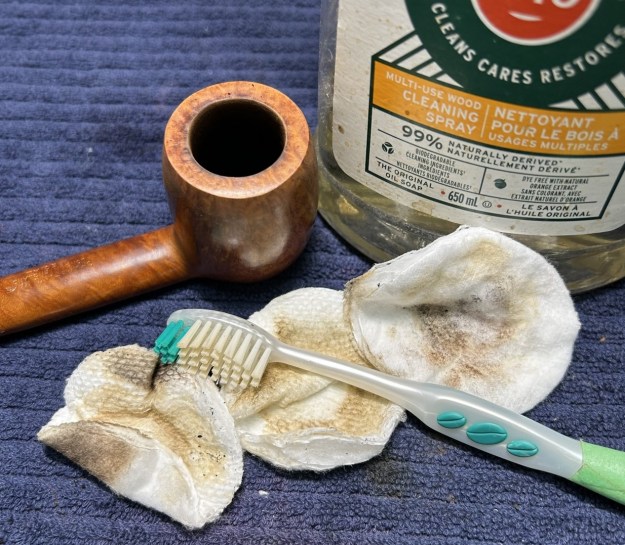
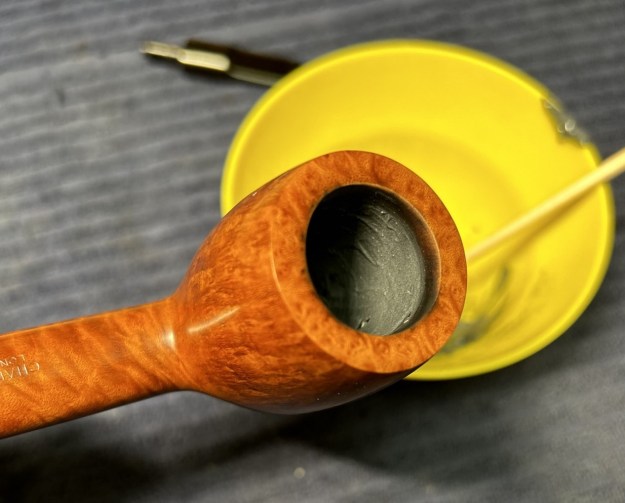
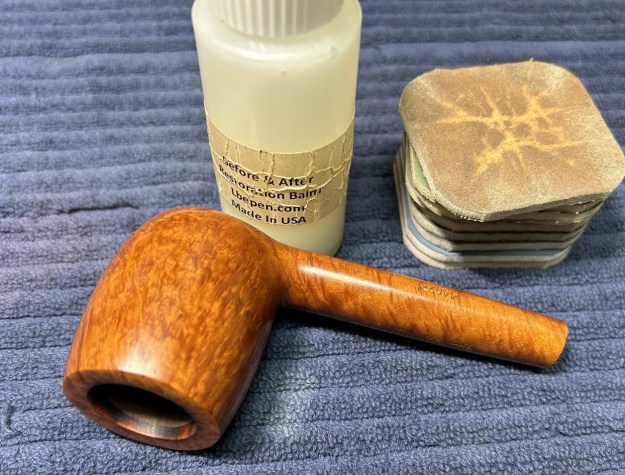
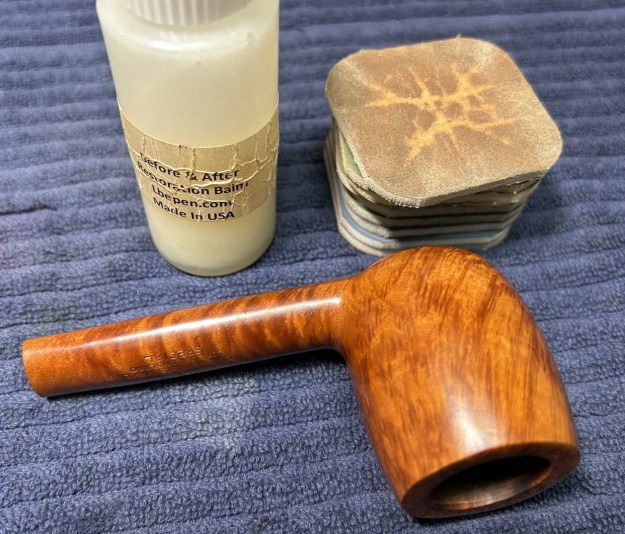
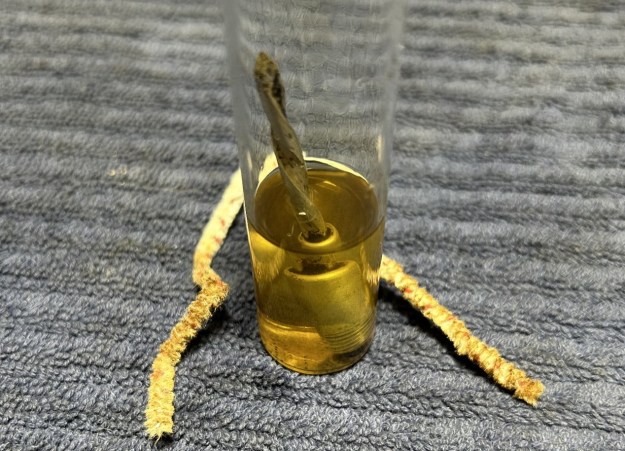
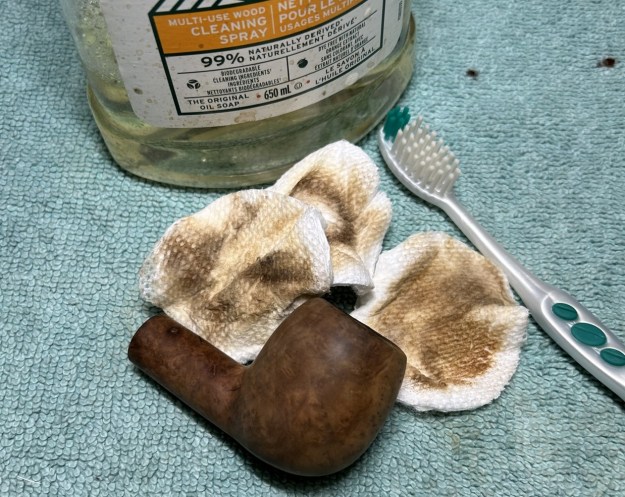
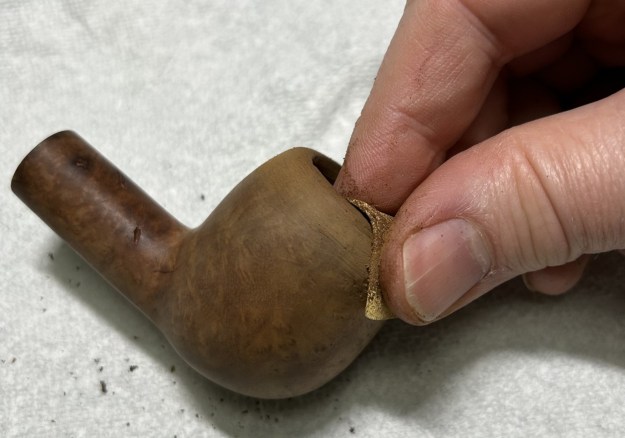
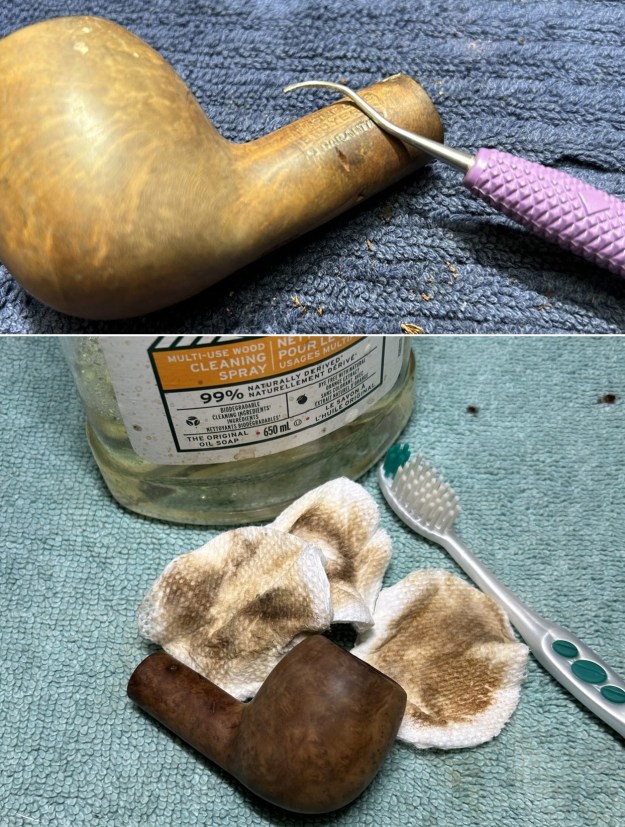
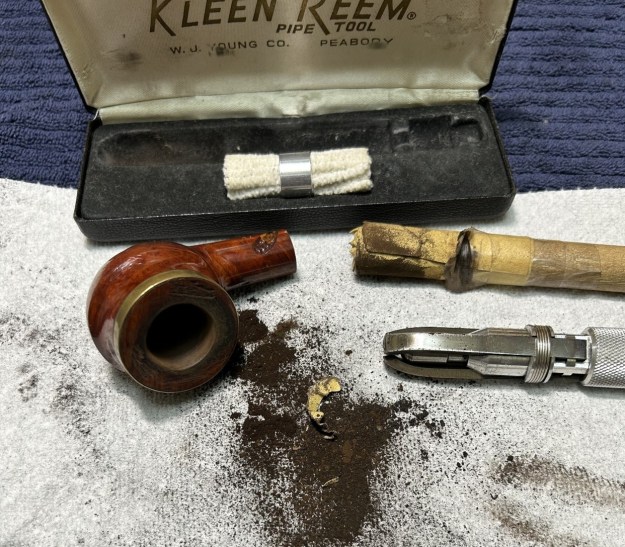
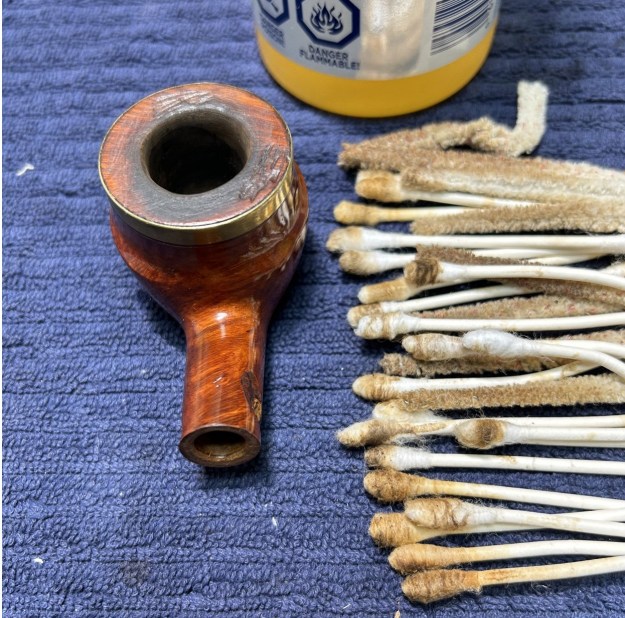
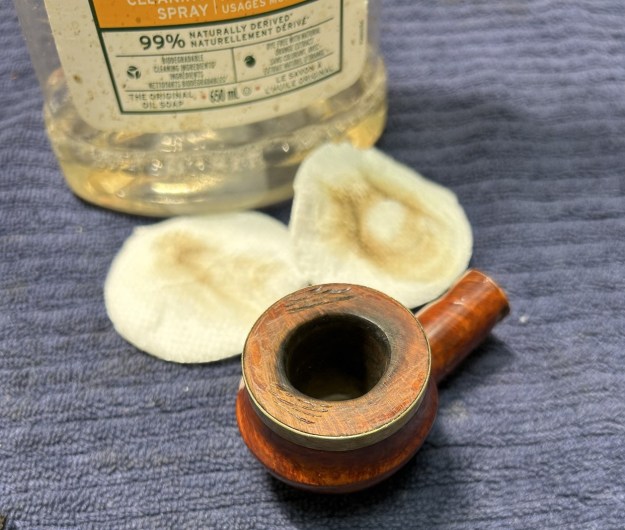
Now for the stummel. I reamed out the bowl to remove the built-up cake and followed that with 220-grit sandpaper taped to a dowel to eliminate as much as I could. I took the chamber down to bare briar, as I wanted to ensure there were no hidden flaws in the wall. Fortunately, there were none.I then proceeded to clean out the insides of the shank with Q-tips, pipe cleaners, and lemon-infused isopropyl alcohol. There was quite a bit of filth inside this stummel and it took a fair amount of cotton to get it clean. I used cotton rounds and some Murphy’s Oil Soap to wipe the outside of the stummel. I also used my toothbrush on the rim to see if I could lift some the burn marks there. Only so much was cleaned up. I followed that up by cleaning the insides of the stummel with some Castile soap and tube brushes. Next, I decided to de-ghost the pipe in order to remove any lingering smells of the past. I thrust cotton balls into the bowl and the shank and saturated them with 99% isopropyl alcohol. I let the stummel sit overnight. This caused any remaining oils, tars and smells to leach out into the cotton. The bowl was nice and clean after this.In order to safely remove the damage on the rim, I used a piece of 220-grit sandpaper wrapped round a wooden sphere. This effectively removed the damage, without altering the look of the pipe. This worked very well and I was pleased with the results. I tidied up some of the lost colour with one of my furniture pens. Then I sanded the rim down with all nine Micromesh pads (1,500 through 12,000 grit). I also made sure to use the Micromesh pads on the brass ring, in order to remove some scratches and bring back its shine. Finally, I applied some Before & After Restoration Balm and buffed it with a microfiber cloth. I then took the pipe to my bench polisher and buffed it with White Diamond and a few coats of carnauba wax. Wow – the pipe looks much improved.This unusual Paradis Star 72 Freehand Pot will suit the buyer very well and I’m sure that he will enjoy smoking it for many years to come. I hope you enjoyed reading the story of this pipe as much I as I did restoring it. If you are interested in more of my work, please follow me here on Steve’s website or email me directly at kenneth@knightsofthepipe.com. Thank you very much for reading and, as always, I welcome and encourage your comments.
Restoring a Handsome Tanganyika Meerschaum


Blog by Kenneth Lieblich

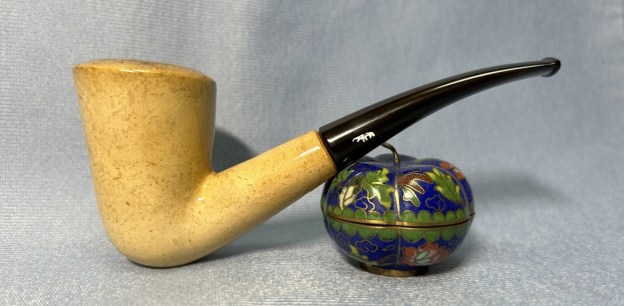
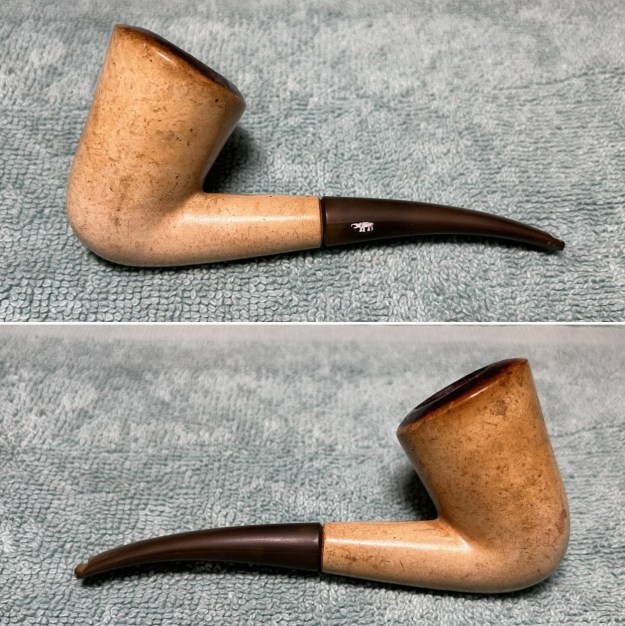
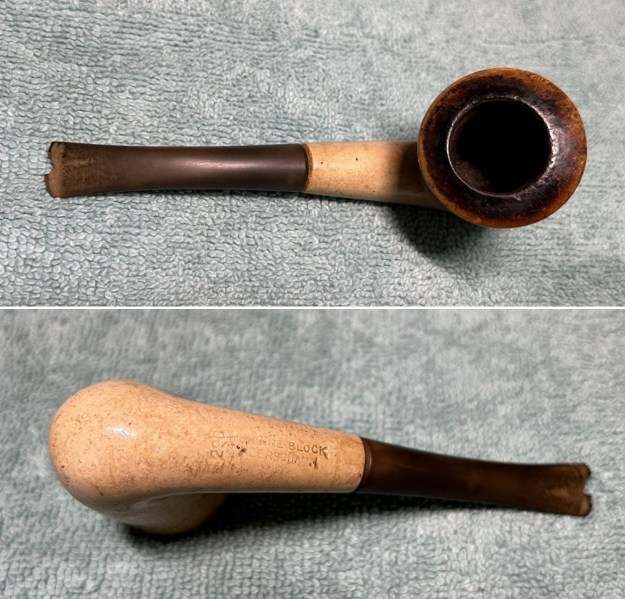
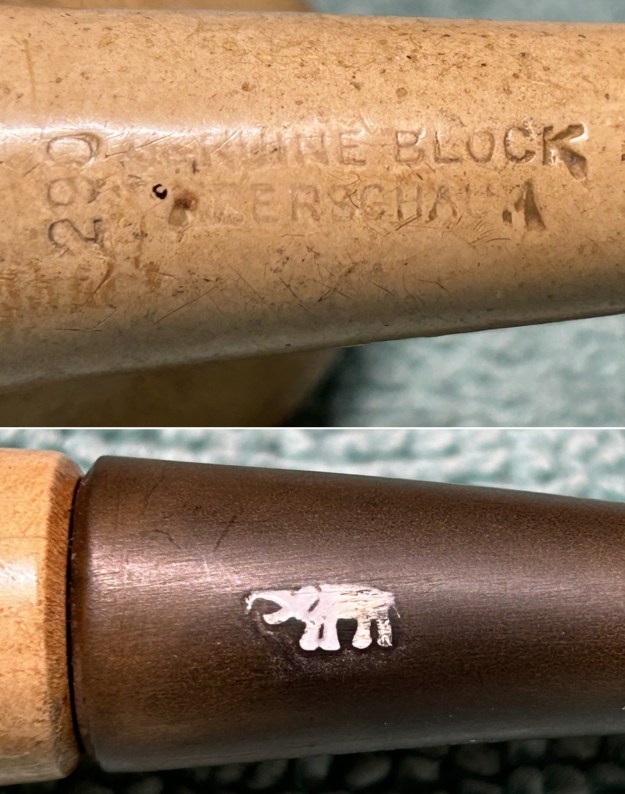
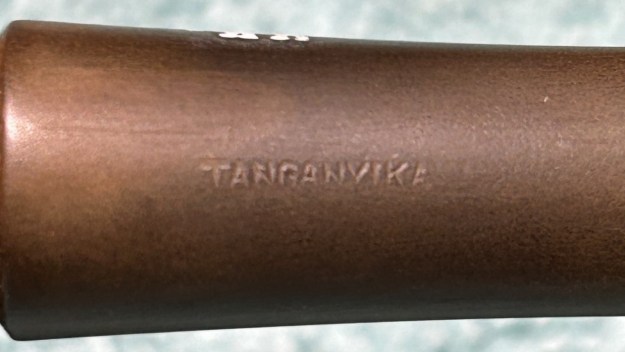
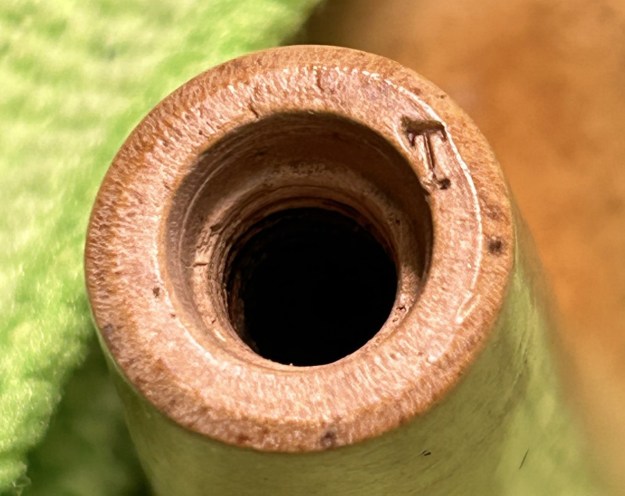
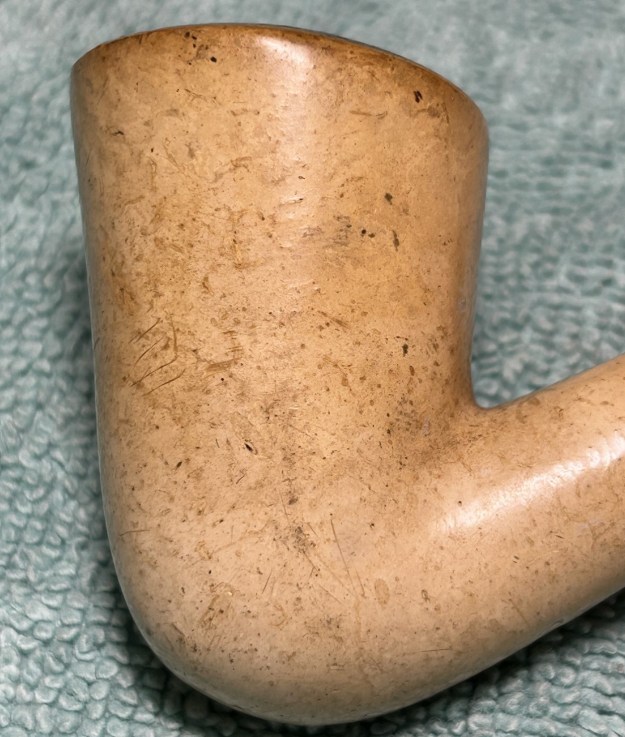
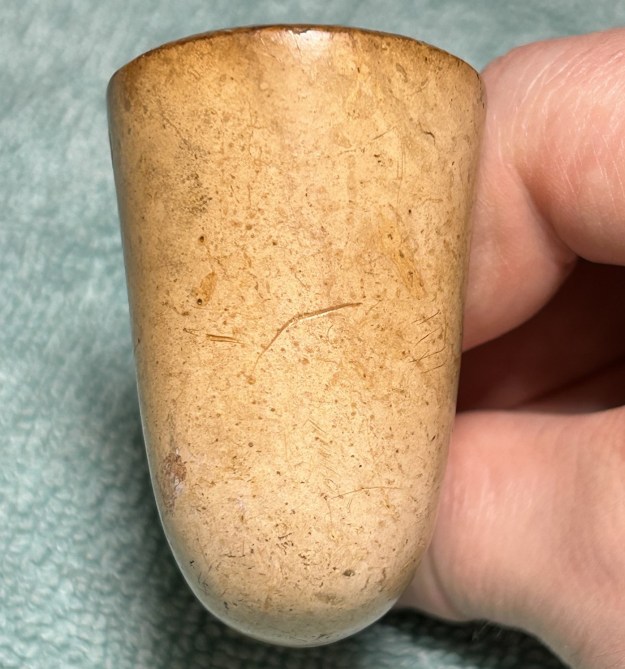
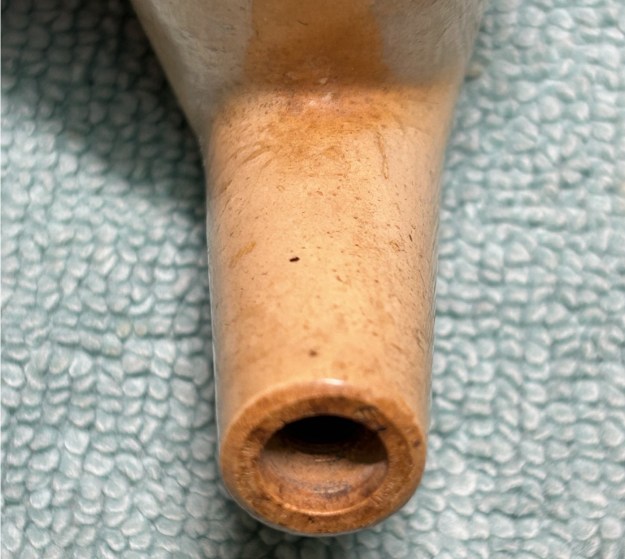
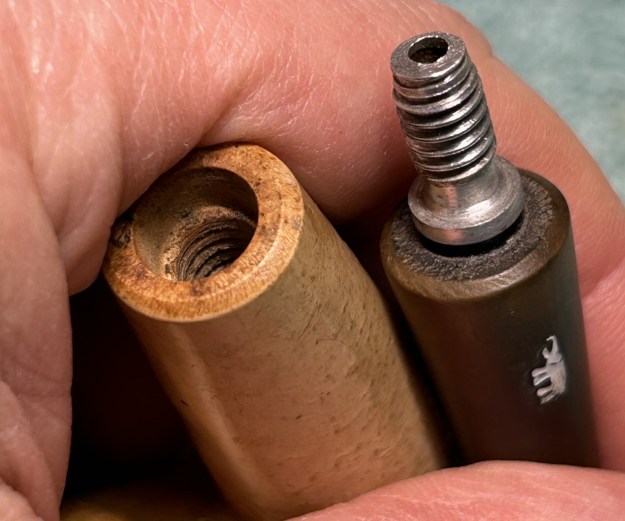
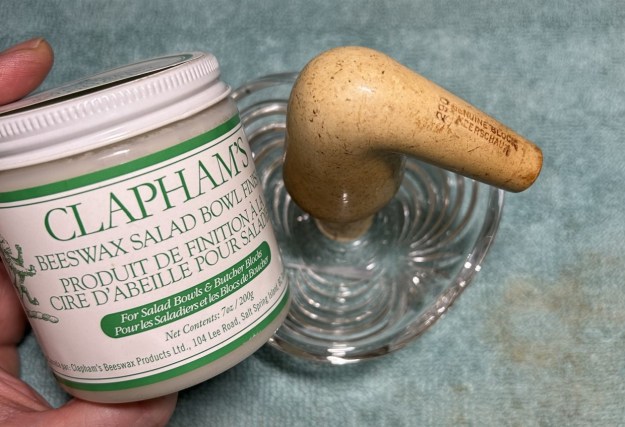
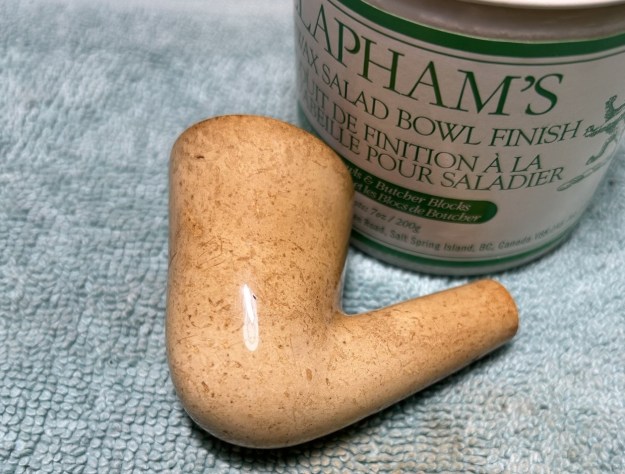
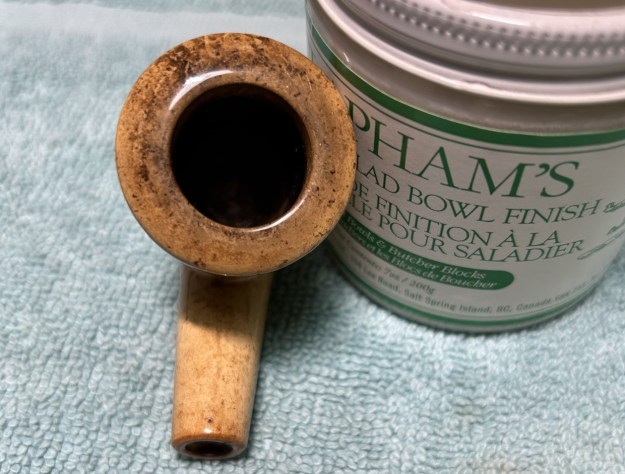
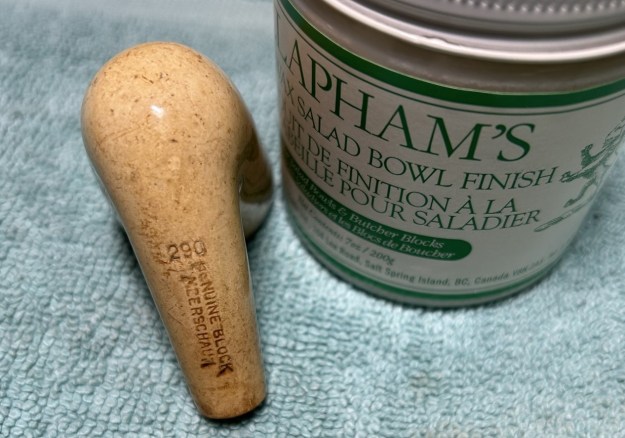
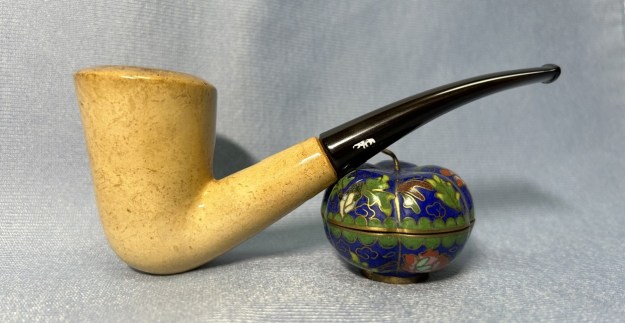
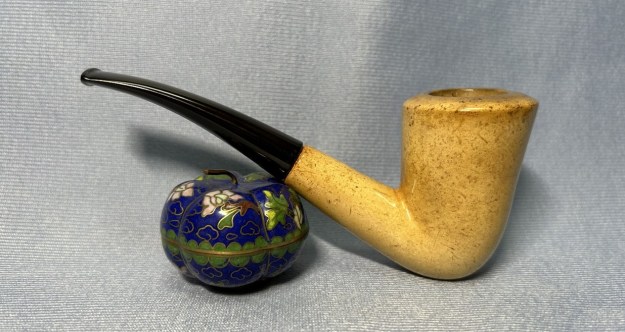
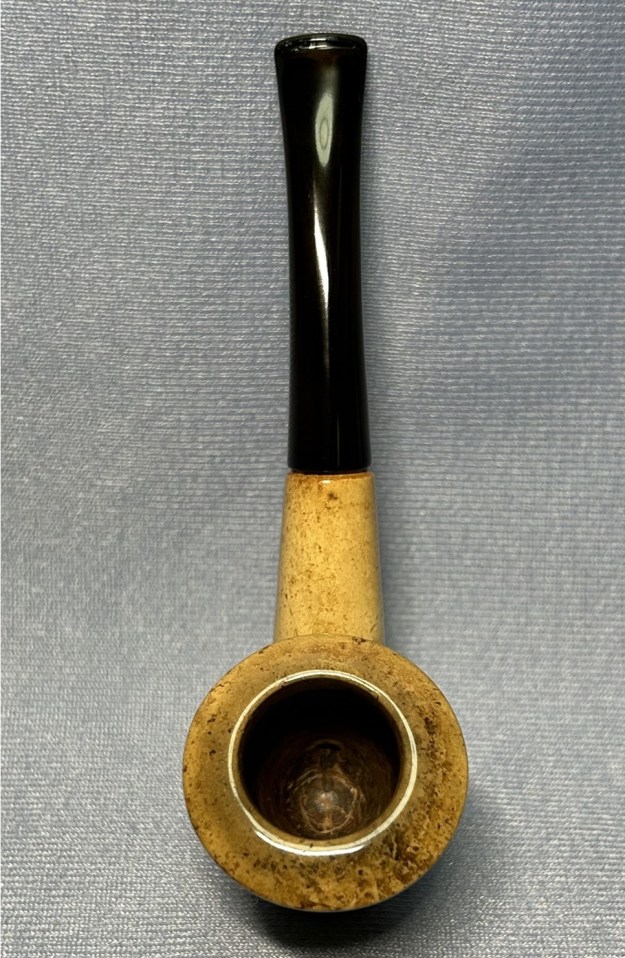
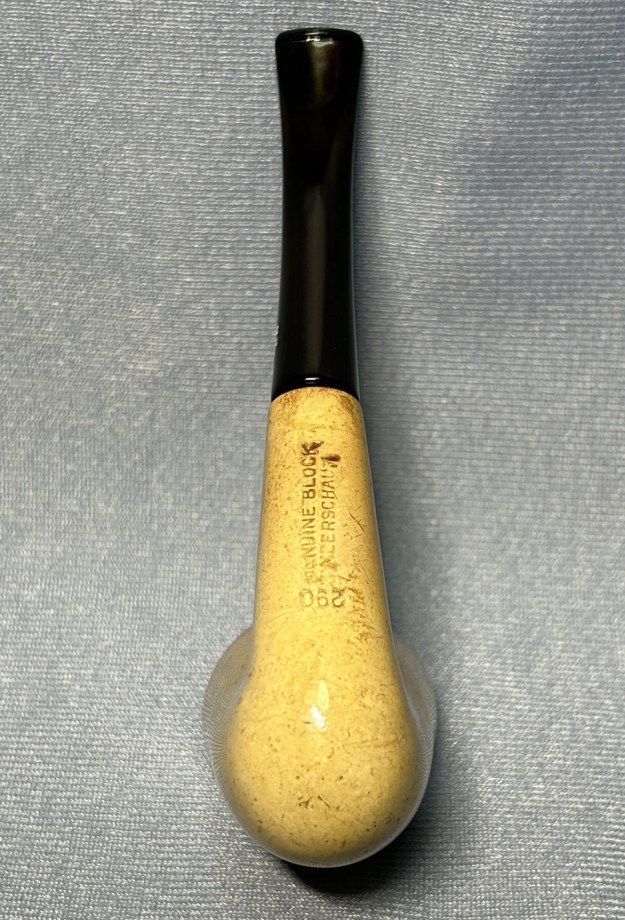
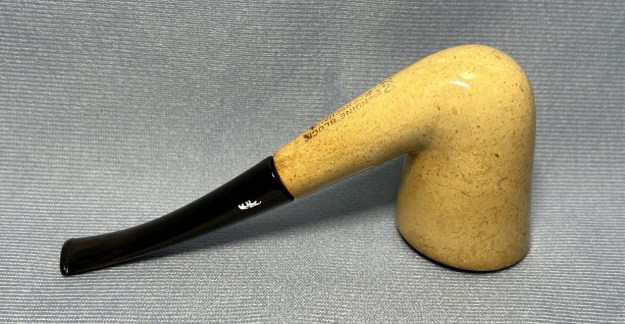
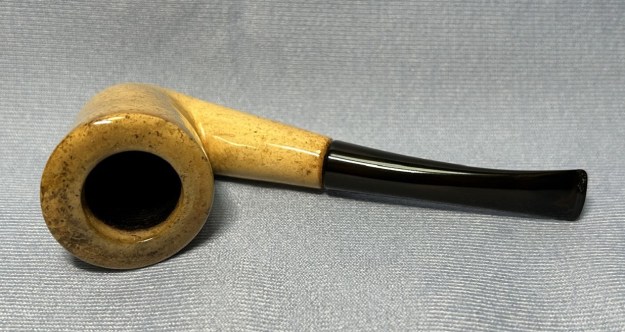
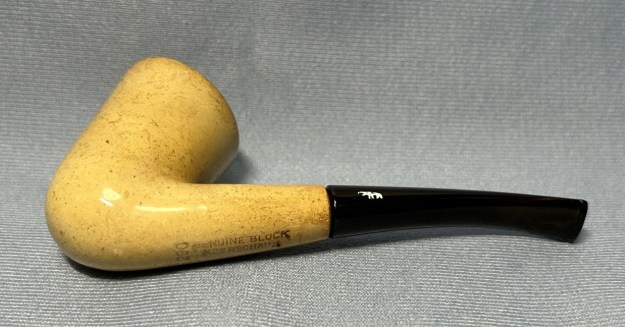
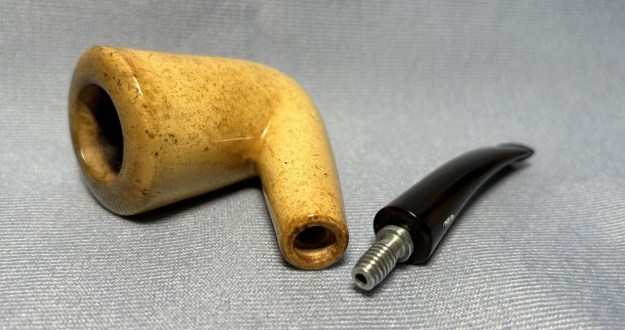
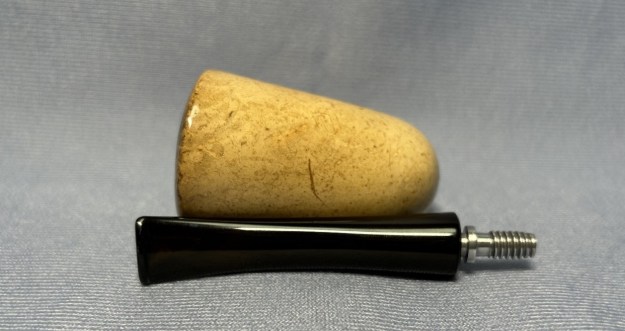
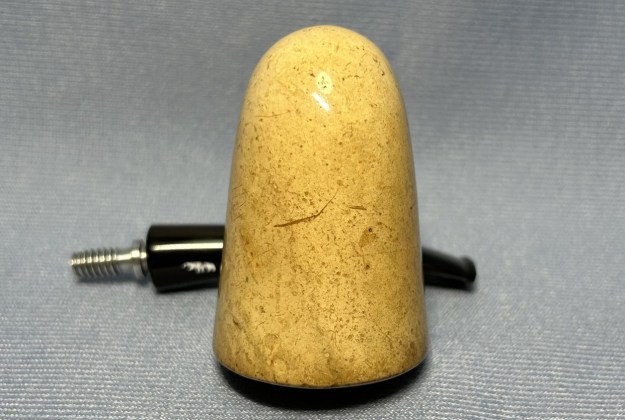
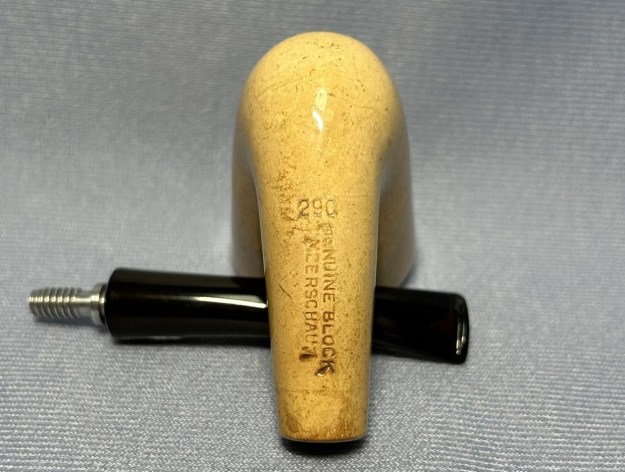
My cousin sent me a very good-looking pipe that he found in his meanderings and send it to me for some repairs. Naturally, I was happy to help, but this one provided some tough work. I like the tough ones though – makes me feel like an old timer has truly been saved. This is a Tanganyika Genuine Block Meerschaum 290 Bent Dublin. As soon as I saw it, I liked it. It looked like a really good smoker. The stummel was very handsomely cut – thick and robust. The stem had a metal tenon that screwed into the mortise. There were a few markings on the pipe. On the underside of the shank was engraved Genuine Block [over] Meerschaum. To the left of this (and perpendicular), was the number 290, the shape number. On the left side of the stem was the logo: a charming little elephant. Underneath the stem was the word Tanganyika – this stamping was very faint and I was worried about it. Finally, I wonder if there was something else. On the very end of the shank, was engraved what looked like a capital T. If that’s what it is, then presumably it stands for Tanganyika. If anyone has further information, please post it in the comments below. I looked in the book, Pipes: Artisans and Trademarks by José Manuel Lopes, to learn more about Tanganyika pipes. It had the following entry for the Tanganyika Meerschaum Corporation:

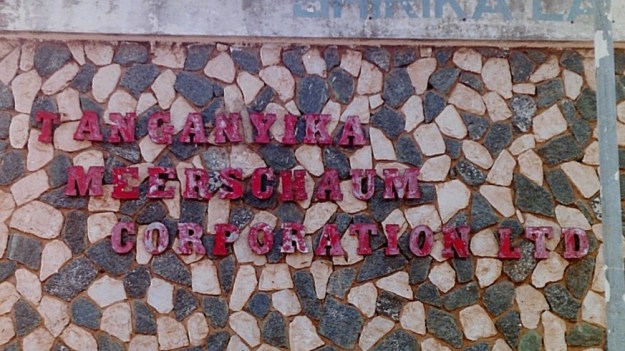
Company formed in 1955 by Kenyan businessmen from Nairobi after the discovery of a meerschaum mine relatively close to the surface on Kilimanjaro. The meerschaum is tougher, less porous, and cheaper than the Turkish variety. Another mine was soon discovered in Sinya, in the famous Amboseli Game Park. The company, previously based in Arusha (Tanzania), became an associate of a Belgium firm, but closed some years after. It produced the Caveman, Countryman, Kiko, Killimanjaro, Sportsman, Townsman, and Wiga brands. It maintained a link with GBD for the making of the GBD Block Meerschaum series, and after its closure, the English firms, London Meerschaum and Manx Pipes (Manx Meerschaum) continued producing with African meerschaum.Pipedia also included the above information, but also referred me to the page on Amboseli Pipes.

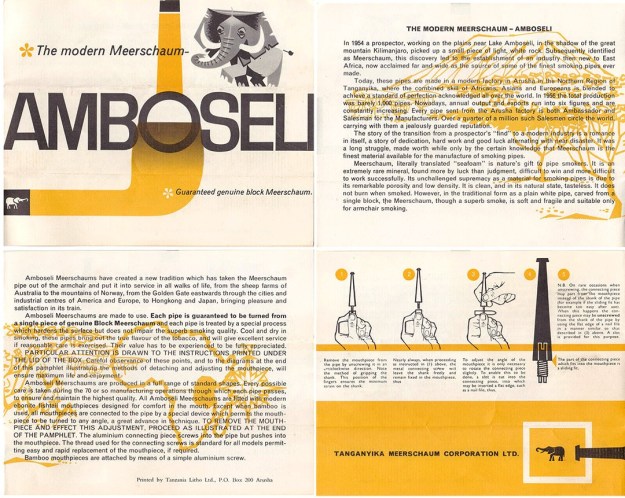
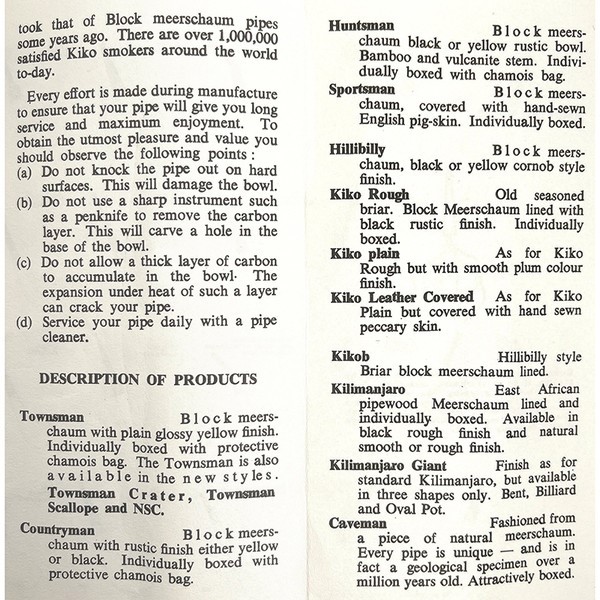
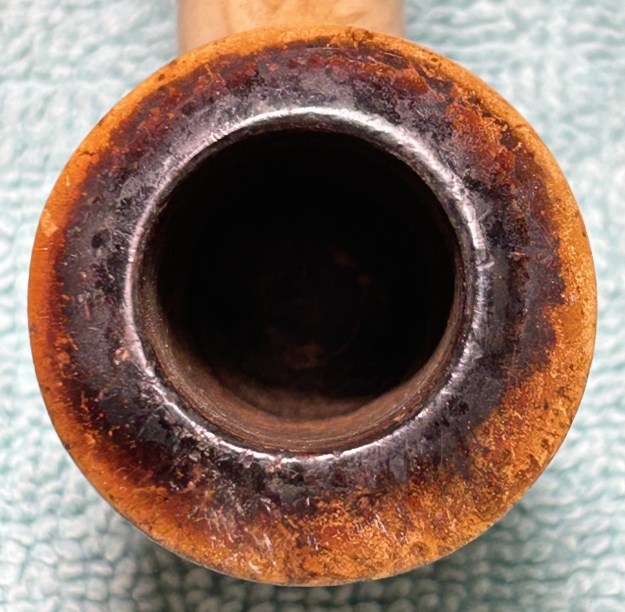
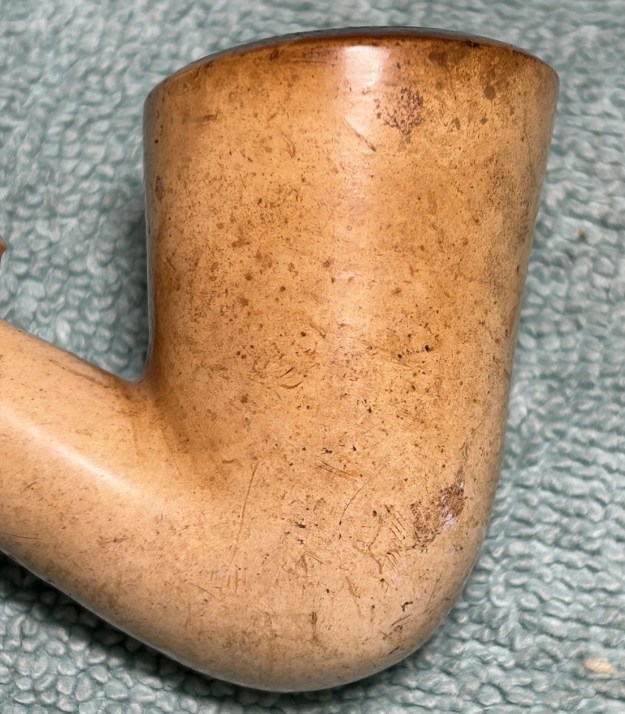
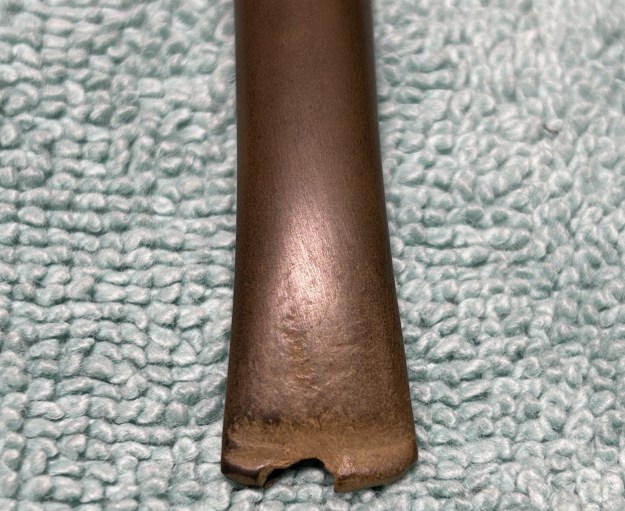
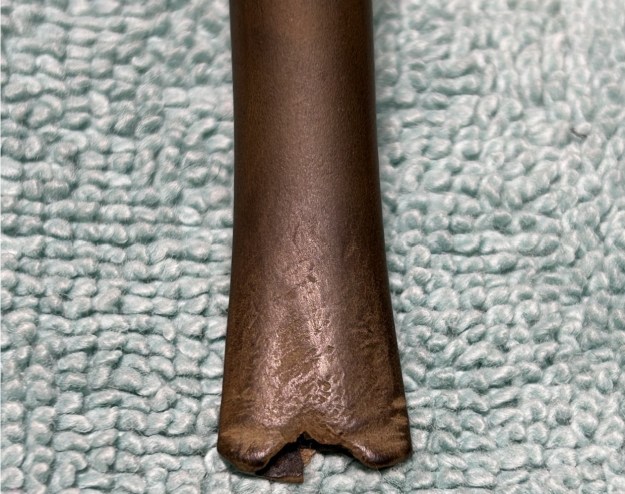
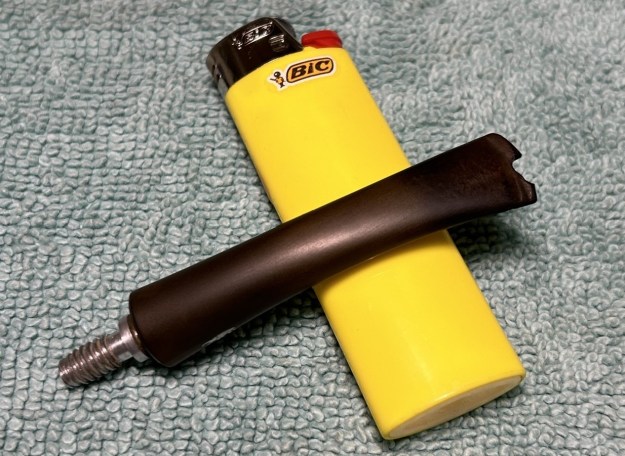
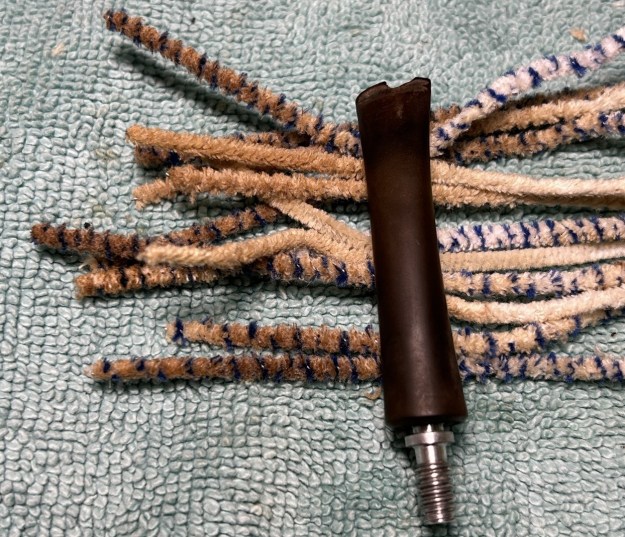
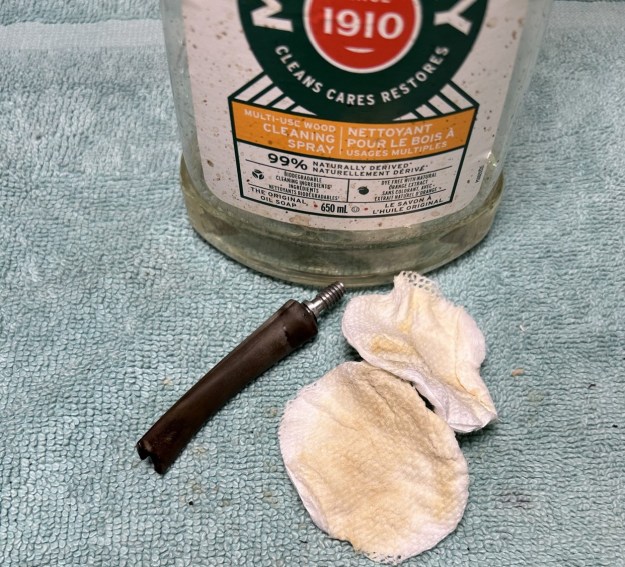
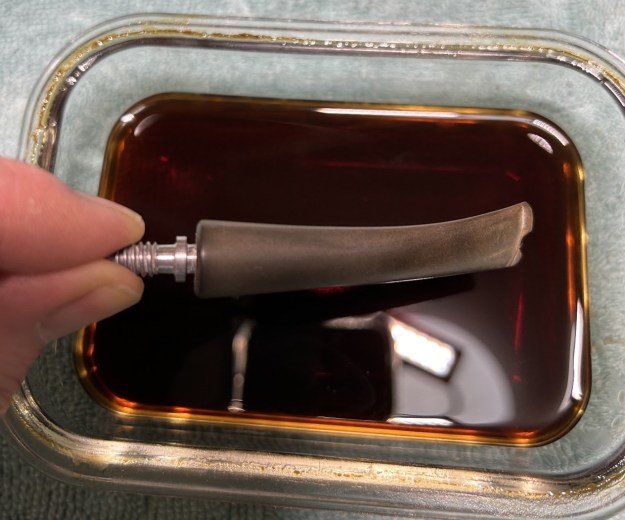
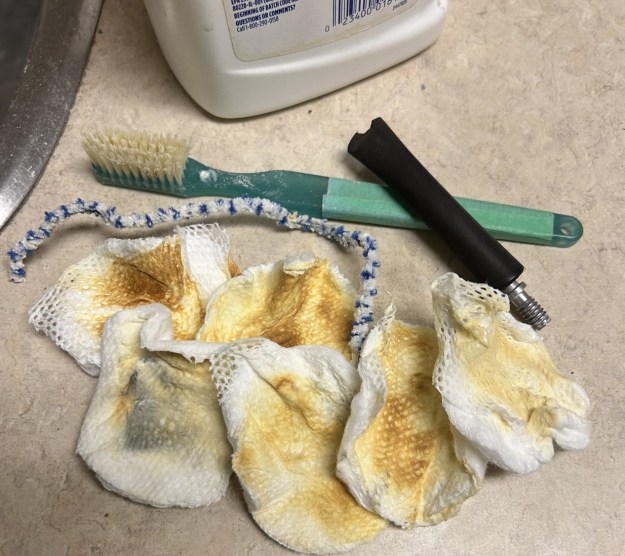
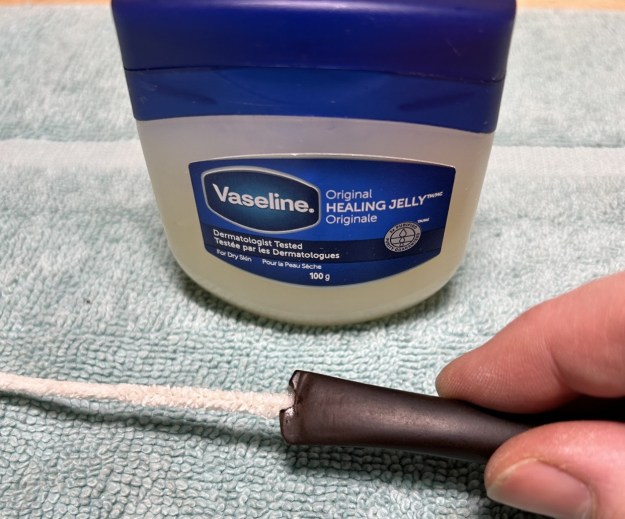
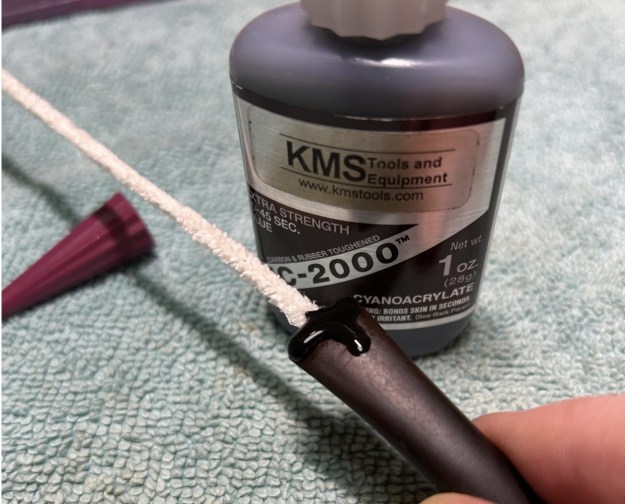
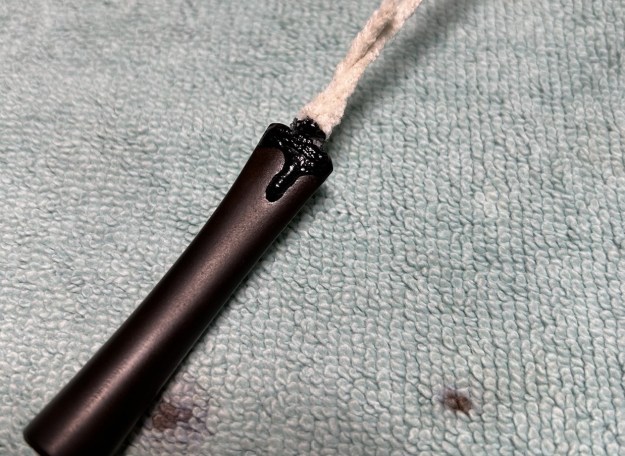
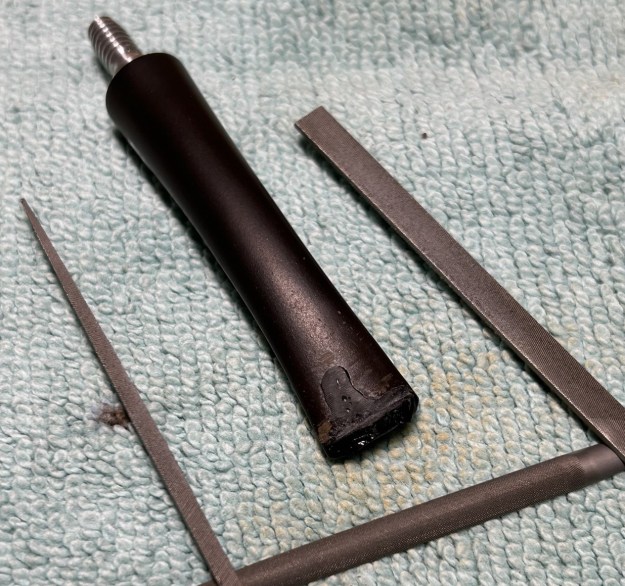
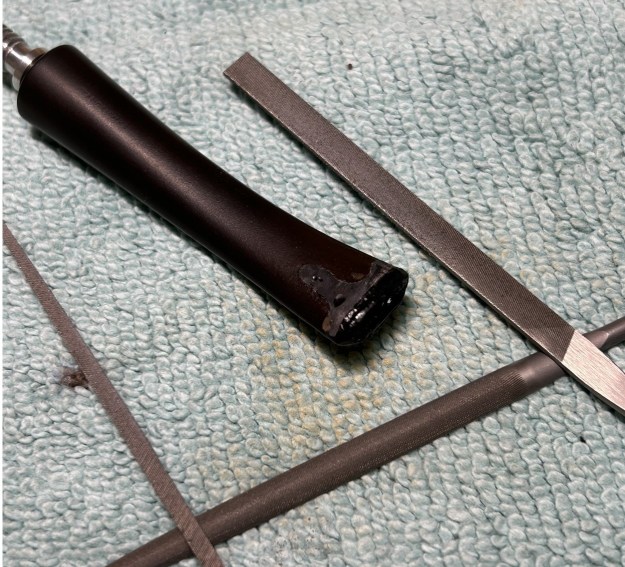
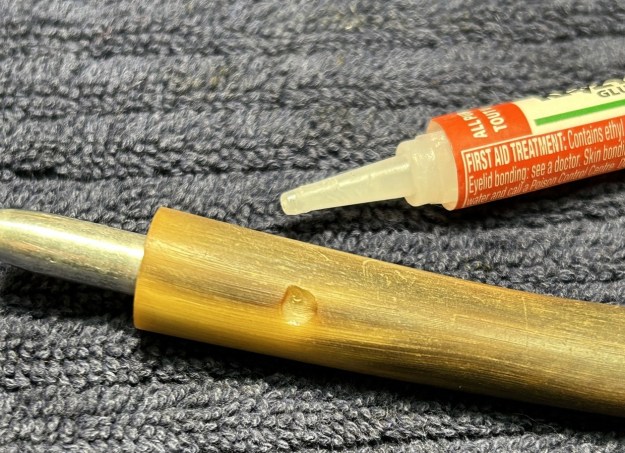
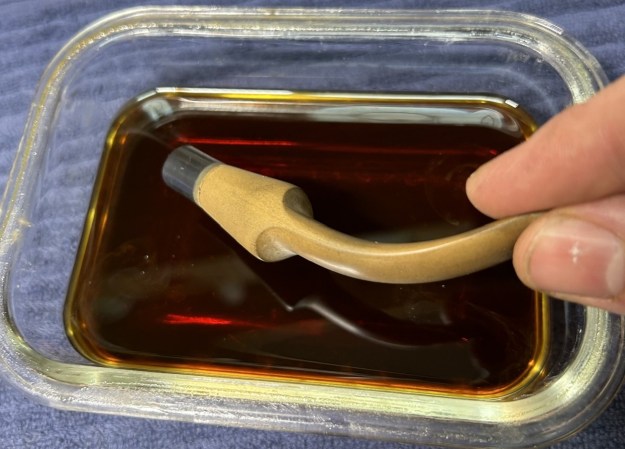
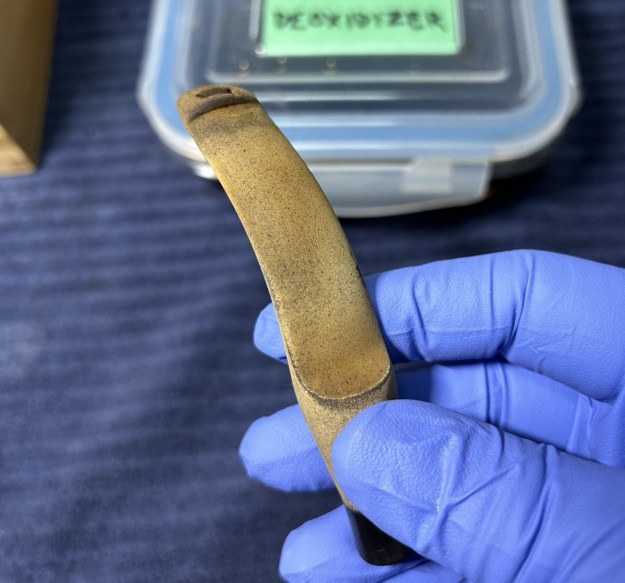
Amboseli Pipes made calabash and meerschaum pipes in Tanganyika. They moved to Arusha, Tanzania, and later closed. Countryman is one of the brands Amboseli produced. Its symbol is an elephant. Other brands include Hillbilly, Kiko, Kilimanjaro, London Meerschaum, Merlin, Sportsman, Tanganyika Meerschaum Corporation, and Tembo.Pipedia also seemed to direct all related pages to Kiko Pipes. This page did have the most information, but I wasn’t much closer to figuring out which brand of pipe this was. By comparing the descriptions from the Amboseli brochure below and various animal logos, I was able to eliminate some of the brands. I also looked at some previous articles here on rebornpipes. Therefore, this pipe is probably either a Caveman, Sportsman, or Townsman – without having that specific nomenclature on the pipe itself. But, truth be told, that is no more than an educated guess.Moving on. The stummel was in nice shape. The outside definitely had seem some wear and tear, but there were no major issues. Sure, it was dirty inside, but nothing more than what would be expected. I was pleased to see that the threaded mortise was in excellent condition. I had been concerned that the threads might have been damaged over the years, but no such damage was there. Meanwhile, the big problems lay with the stem. It was heavily oxidized, and thoroughly chewed. In fact, as the photos attest, the button was completely broken. A major rebuild would be required. Even though I would need to rebuild the stem, I wanted to save as much of the original as possible. So, I “painted” the stem with my BIC lighter in order to try and lift some of the bite marks all over the end of it. This worked reasonably well, but there was still a lot of damage.Next, I took some pipe cleaners and lemon-infused 99% isopropyl alcohol, and cleaned the revolting insides of the stem. The photo only shows a few of the pipe cleaners needed. It was pretty darn dirty. I also wiped down the outside with some Murphy’s on some cotton rounds. This removed some of the surface filth. As usual, I sent the stem for a swim in the deoxidizing fluid over night. I could tell even before this that the oxidation was deeply set into the vulcanite, but I needed to clean what I could. The following day, I wiped down the stem with SoftScrub cleanser and made sure to scrub hard. A lot of oxidation came off, but a lot of oxidation remained. I actually sent it for a second bath, and that helped, but not enough. Once it was a clean as I could get it, it was time to build up the damage. I brought out my black cyanoacrylate adhesive and I applied it to the bitemarks and such. The missing chunks would need far more work. I created a new button out of black cyanoacrylate, impregnated with carbon and rubber. I first plugged up the stem’s draught hole with a folded pipe cleaner, coated in petroleum jelly. This ensured that any of the glue would not accidentally plug up the air passage in the stem. This is always a tricky business and it took some patience to make it work. After I applied the cyanoacrylate, it looked pretty darn ugly, but I was expecting that. After the curing, I ended up sanding down the end of the stem to reduce some of the excess material. To carry this process on, I used some miniature files to further shape the button and make it suitable for sanding. I used another file on the inside to ensure there were no rough edges in the bore. I then sanded the stem down with sandpaper to keep the shape. I then used all nine Micromesh pads (1,500 through 12,000 grit) to smooth everything out. I also used Obsidian Pipe Stem Oil in between each pad scrubbing. It is worth noting that a repair this big on a stem will never be completely invisible – especially on this pipe. Finally, I used some 0000-grit steel wool on the aluminum tenon to make it shiny.

On to the stummel. Normally, at this point, I would use a reamer to remove the built-up cake inside the bowl, but meerschaum has the potential to crack in those circumstances. Instead, I simply used some sandpaper taped to a wooden dowel to scrape the bowl down. Fortunately, everything looked sound on the inside of the bowl. I then proceeded to clean out the shank with Q-tips, pipe cleaners, and isopropyl alcohol. There was a lot of nastiness inside this stummel and – boy-oh-boy – it took a lot of cotton to get this thing clean! I then moved on to cleaning the outside of the stummel with Murphy’s Oil Soap and some cotton pads. I also cleaned the insides with some Castile soap and tube brushes. Now in this case, I did it especially carefully because too much soaking can cause meerschaum to soften. In this case, I moved quickly, nothing softened, and everything turned out well. After this, I used my Micromesh pads to sand down and minimize the scratches in the meerschaum and make everything smooth. I then applied some Clapham’s Beeswax Finish to the meerschaum and let it sit for about 30 minutes. I then buffed it with a microfibre cloth. I repeated this process and left it – it sure was pretty! I took the stem (but not the stummel) to my buffing wheel and finished it with some White Diamond polish. Worked like a charm. This Tanganyika Genuine Block Meerschaum 290 Bent Dublin looks beautiful once again. I’m sure my cousin will love it. I hope you enjoyed reading the story of this pipe as much I as I did restoring it. The approximate dimensions of the pipe are as follows: length 5⅛ in. (131 mm); height 2¼ in. (58 mm); bowl diameter 1½ in. (39 mm); chamber diameter ⅞ in. (22 mm). The weight of the pipe is 1⅝ oz. (49 g). If you are interested in more of my work, please follow me here on Steve’s website or email me directly at kenneth@knightsofthepipe.com. Thank you very much for reading and, as always, I welcome and encourage your comments.

The Ghost of Tobaccos Past


by Kenneth Lieblich

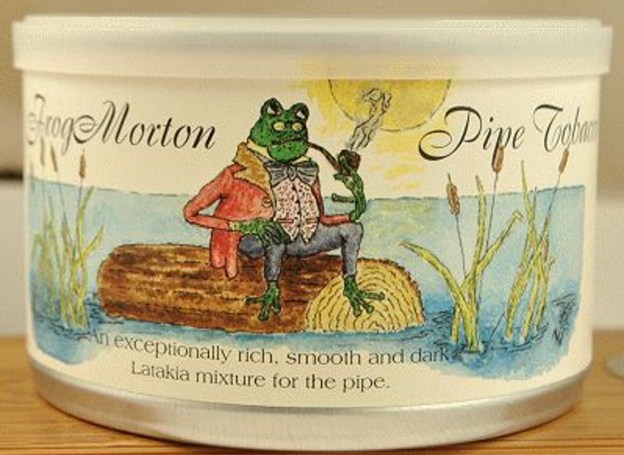
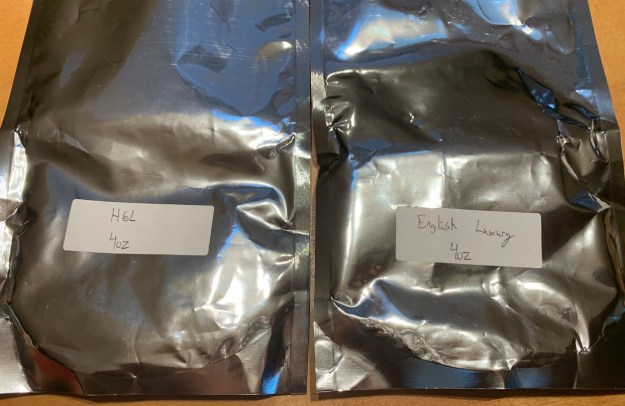
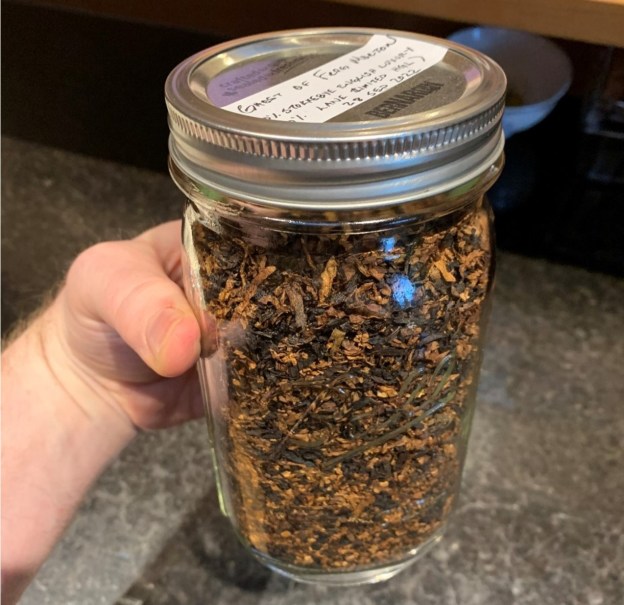
About fifteen months ago, I wrote a blog post here on my first attempt at blending tobacco. From some online forum, I had learned of a “recipe” to recreate McClelland’s Frog Morton tobacco, and this mix was (appropriately) called the Ghost of Frog Morton. This consisted of a 50-50 mixture of Peter Stokkebye English Luxury PS 17 and Lane Limited HGL. I was mildly concerned about the volume of Lane Limited HGL, as I’m not a strong aromatic fan, but figured it was worth a shot. At the time, I committed to jarring the stuff for a year (to let flavours blend) before trying it out. More than a year on, I’ve had some requests for an update on how it turned out and this is that update.

Let’s have a closer look at the two tobaccos that make us Ghost of Frog Morton. First, Peter Stokkebye English Luxury PS 17 is made with Georgian Virginias, black cavendish, Mexican burleys and Cyprian Latakia. This is a milder English blend than I tend to smoke (which is ok) and it has a certain sweetness to it. I’m not sure if this is a topping or not, but it is noticeable. Second, Lane Limited HGL is an American blend (not usually my style) made with toasted black cavendish, Latakia, white burley and golden Virginia. It is quite sweet. Despite the four components of each tobacco being the same, they are quite different as mixtures.I want to acknowledge that many sympathetic correspondents were correct in saying that this mixture bears little resemblance to the original Frog Morton. This has no bearing on whether the tobacco is enjoyable or not, but it’s worth noting that someone must have very odd tastebuds to think that Frog Morton and Ghost of Frog Morton were alike!

Upon opening a jar of the stuff a year on, I decided to try the tobacco in a corn cob for two reasons. First, I felt this would provide a neutral medium through which to try GoFM. Second, the blend smelled too “aromatic” for me and I didn’t want to ghost (pun intended) a briar with it, in case it wasn’t to my taste.Ghost of Frog Morton is a decent blend for those wanting a hybrid between English and aromatic tobaccos. I don’t claim any great expertise in either tasting or blending, but this is a bit too aromatic for me. I’m glad I tried it, but it is not really my thing. I like the idea of having a slightly hybrid tobacco on occasion, but I would lean towards something even less aromatic than this. If I tried this again, I would alter the Stokkebye/Lane ratio from 1:1 to 3:1 or even 4:1. For those who enjoy hybrids, I would recommend trying this blend. The base tobaccos are quite inexpensive and it is easy to produce.

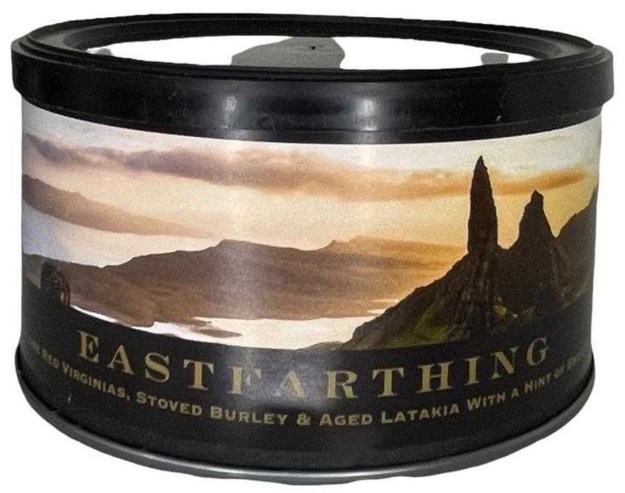
In the comments to my original post, Jack Gillespie suggested Sutliff’s Eastfarthing as a similar hybrid that suits him. I tried that too, and it was better than GoFM but still a bit too vanilla/aromatic for me. I guess I’m an inveterate English and Virginia man! I hope you enjoyed reading this brief review of Ghost of Frog Morton. If you are interested in my work, please follow me here on Steve’s website or email me directly at kenneth@knightsofthepipe.com. Thank you very much for reading and, as always, I welcome and encourage your comments.

A Savinelli Like No Other


by Kenneth Lieblich

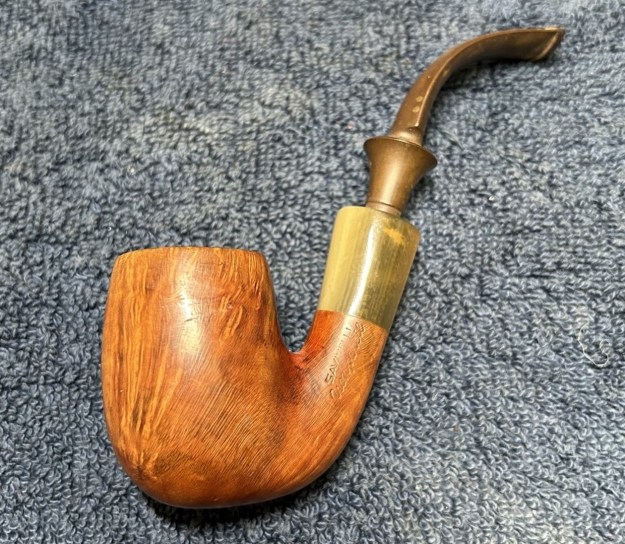
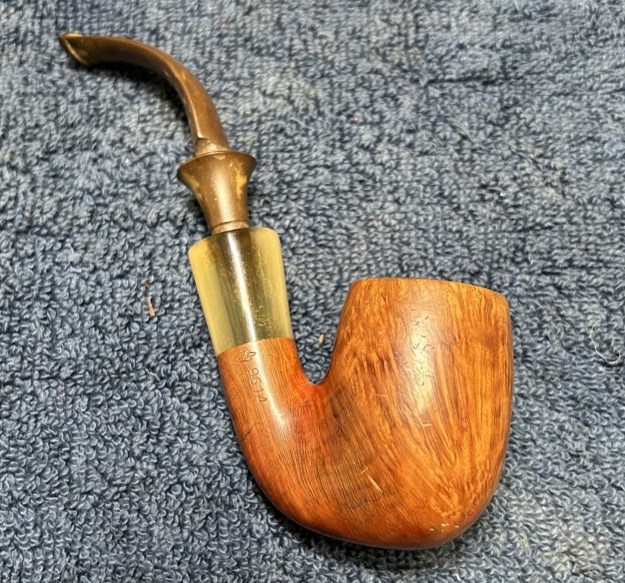
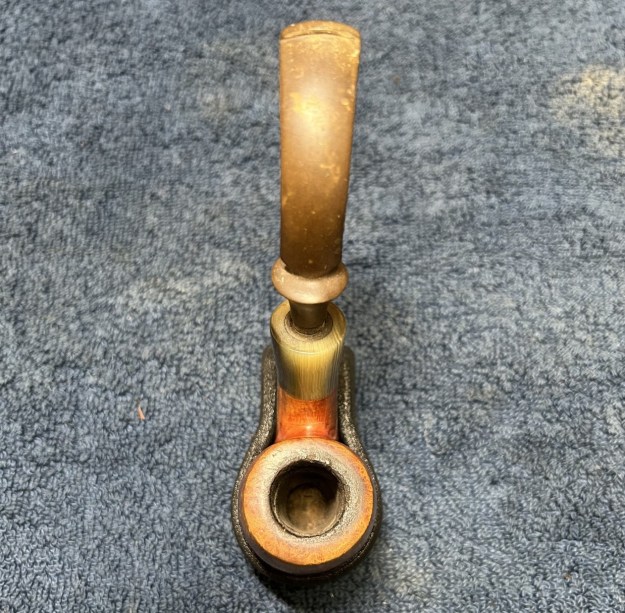
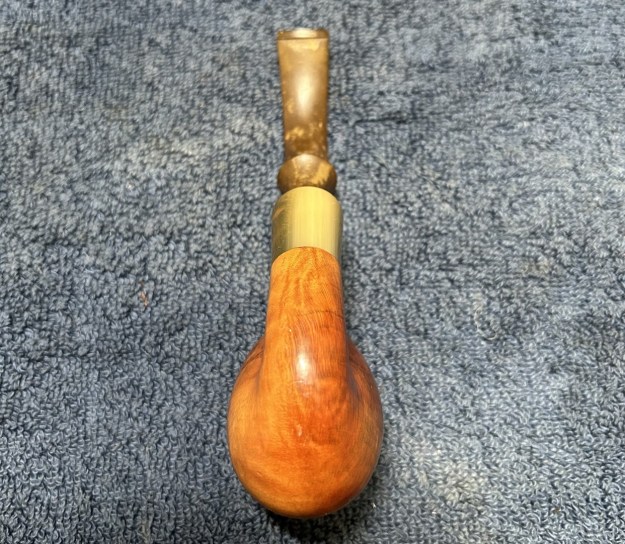
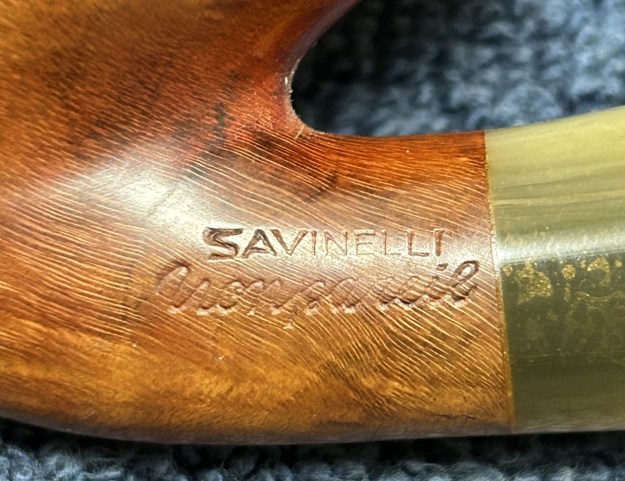
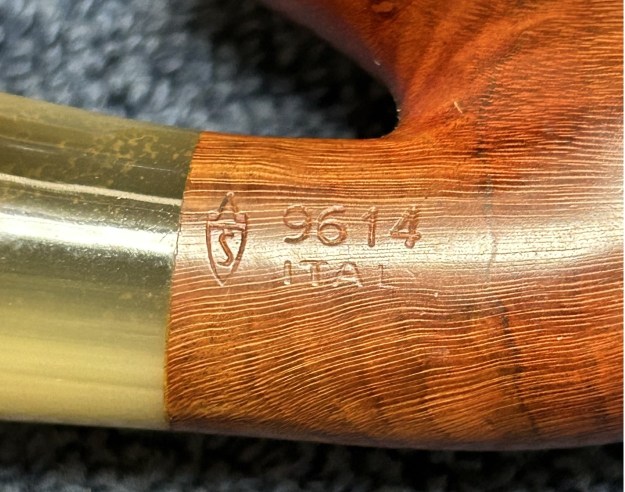
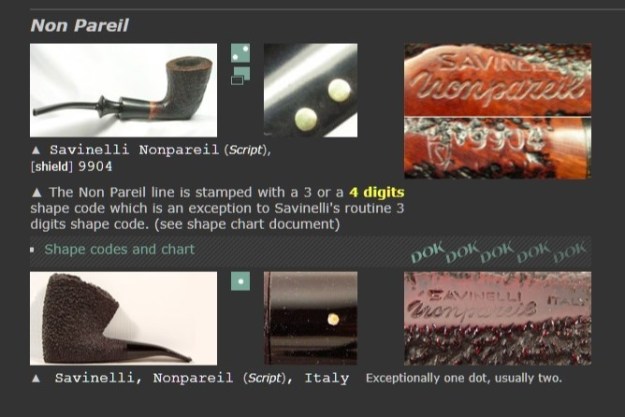
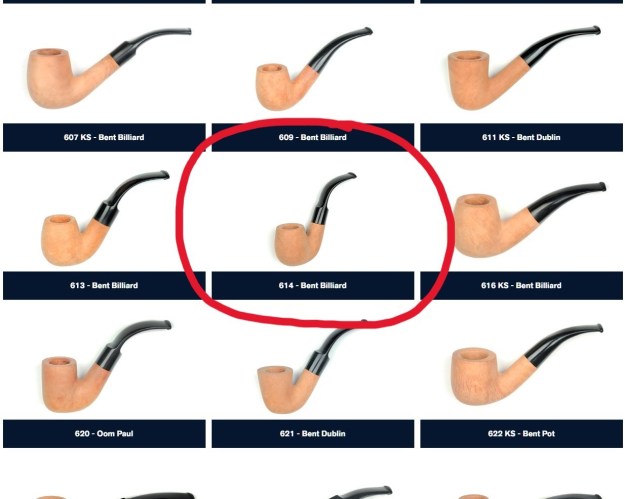
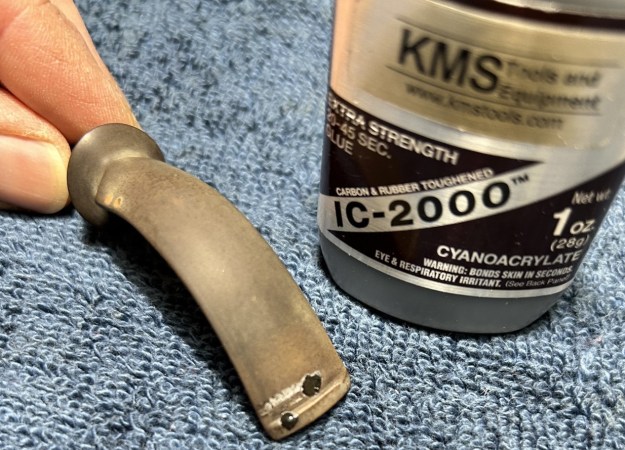
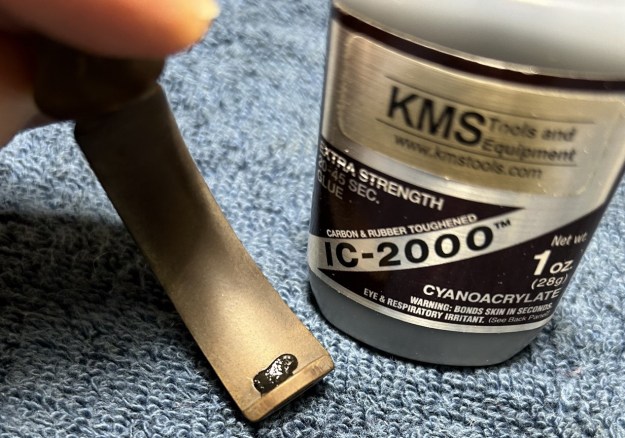
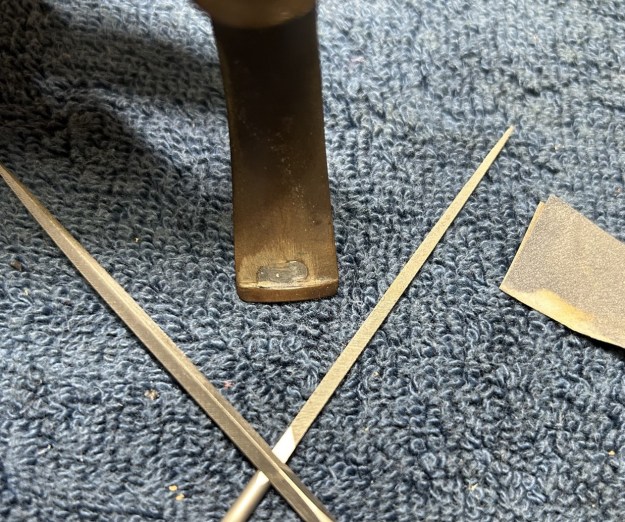
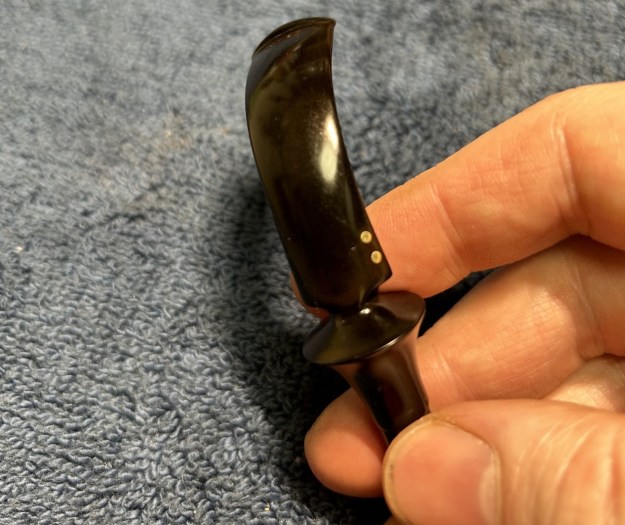
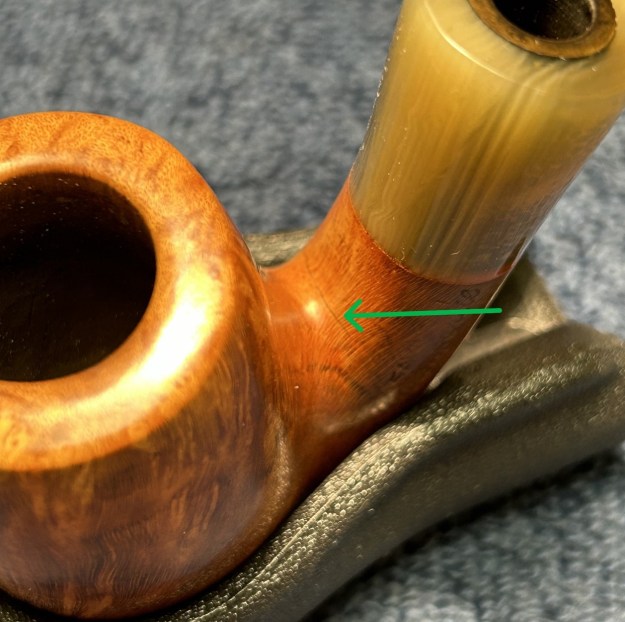
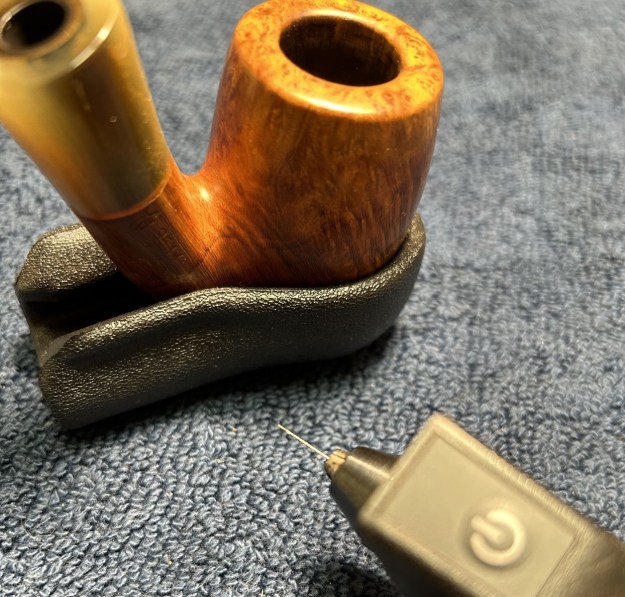
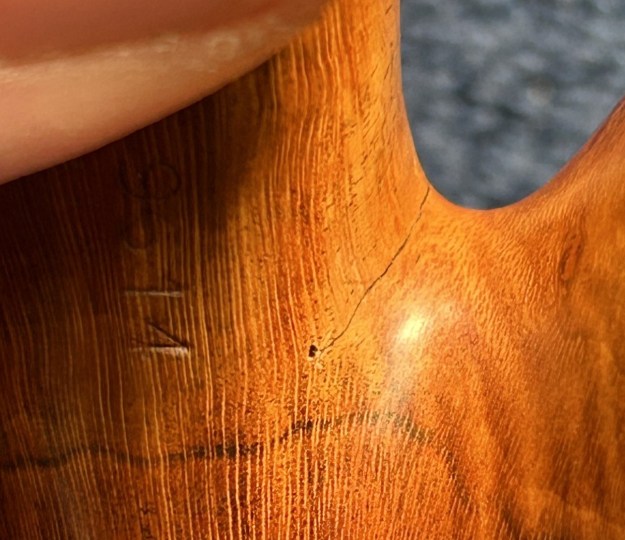
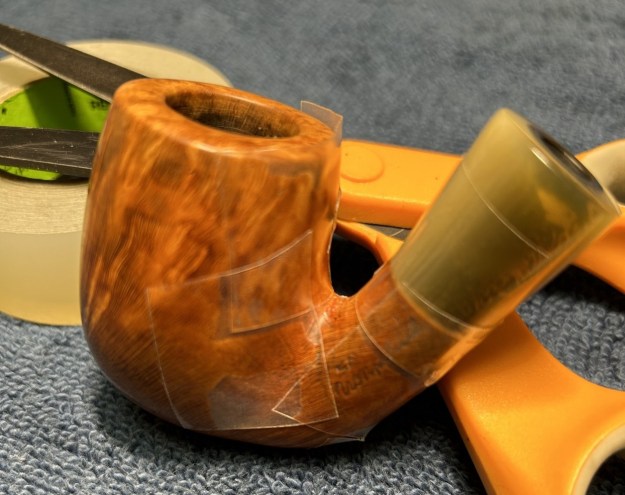
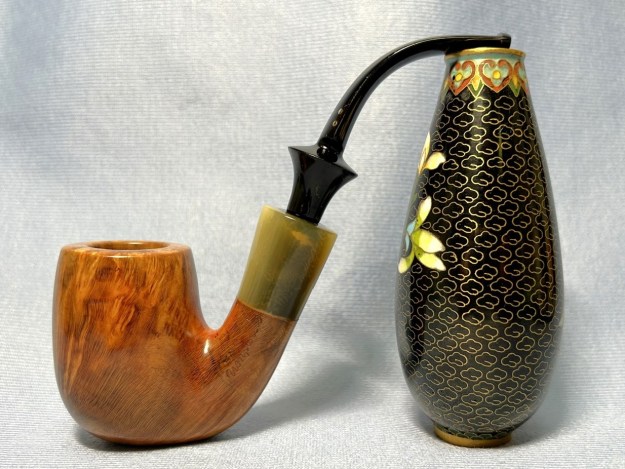
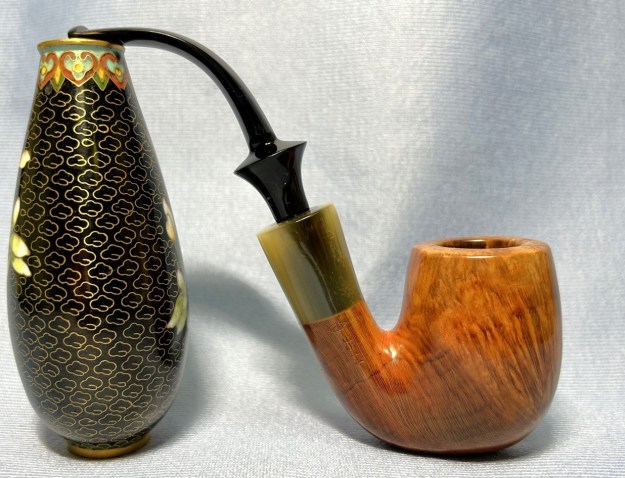
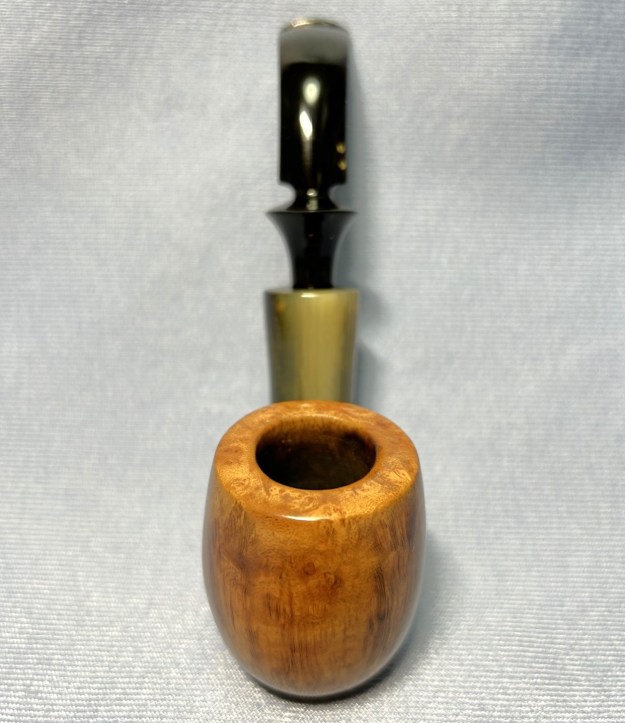
Say hello to this beautiful Savinelli Nonpareil 9614 bent billiard! It came to me in a lot of pipes I bought some time ago and it seemed right to bring this one back to life. At first, it seemed like a relatively straightforward restoration, but – wow – this pipe ended up taking an awful lot of work. You can now buy this pipe for your collection and enjoy the fruits of my labours. This pipe promises to be a great smoker, I figure. Let’s look at the markings. The left side of the shank reads Savinelli [over] Nonpareil. Despite Savinelli being an Italian company, the word nonpareil is French and means “without equal” – literally, “not the same”. On the left side of the shank is the lovely Savinelli crown, next to which are the marks 9614 [over] Italy. Naturally, the number refers to the shape. Finally, there are two brass dots on the left side of the stem – very nice touch. Savinelli is one of the most recognized names in pipe smoking and they have a long and storied history. You can read about them from their own website or from Pipedia’s article about them. However, I was particularly interested in learning more about the Nonpareil line. Sadly, Pipedia had nothing on this subject. I checked with Pipephil and they did have a bit of information, which I display below. I learned from Pipephil that old Savinellis used to have four-digit shape numbers, newer ones three. The exceptions to this rule, however, are the Nonpareil and Dry System lines.The stem on this pipe definitely shows signs of use. There were some tooth marks – dents and scratches – and plenty of calcification. Of course, there was also some oxidation, but I didn’t realize just how much until much later. The stummel was tired and drab. There were indications of lava on the rim and plenty of cake in the bowl. Also, the briar had a few little scratches from the years of love of its previous owner. Nothing to worry about – or so I thought. More on that later. Well, the usual cleaning procedures were in order for this pipe. I started on the stem by wiping it down with some Murphy’s on a cotton round. Then, I cleaned out the insides of the stem with pipe cleaners and lemon-oil isopropyl alcohol. At this point, I took a BIC lighter and ‘painted’ the stem with its flame in order to lift the tooth marks. This was moderately successful in raising the dents. Once that was done, the stem went for an overnight soak in the Before & After Hard Rubber Deoxidizer. After soaking, I cleaned off the de-oxidizing fluid with alcohol, pipe cleaners, et cetera. The oxidation had migrated to the surface and I used SoftScrub to work it off. I was surprised at how poorly this worked (as compared with other restorations), so I actually sent it for another soak in the deox fluid and repeated the same cleaning procedures afterwards. Once I got the stem looking vaguely deoxidized (and before I moved on to the Micromesh pads), I built up the tooth damage on the stem with black cyanoacrylate adhesive and let it fully cure. I used my miniature files to take down the majority of the dried glue. I then sanded it down with 400-grit sandpaper to meld seamlessly into the stem. I then used all nine Micromesh pads (1,500 through 12,000 grit) to bring out the lovely black lustre on the stem. But WAIT! I never made it through all nine pads because I could see that the oxidation was so stubborn, I would need to put in some extra work first. Recently, Steve kindly introduced me to a new type of sanding pad – more aggressive grit for more aggressive jobs. I’m going to refer to them as the ‘grey pads’ since that’s their colour. I used the grey pads to really attack the oxidation on the stem and they worked very well. I don’t have photos of this, but I’m pleased with the results. There are some small wounds remaining on the stem, but they are not an issue at all. Once done with the greys, I went back again to the Micromesh pads. I also used Obsidian Pipe Stem Oil in between each pad scrubbing. This also really made the brass dots pop! Putting the stem aside, I moved on to the stummel. I used the PipNet Reamer (and some sandpaper taped to a wooden dowel) to take the bowl down to bare briar, as I wanted to ensure there were no hidden flaws in the walls of the bowl. Fortunately, there were none. I then proceeded to clean out the insides of the shank with Q-tips, pipe cleaners, and isopropyl alcohol. There was a lot of nastiness inside this stummel and – boy-oh-boy – it took a lot of cotton to get this thing clean! I took a close look at the rim. In order to save as much of the rim as possible, I used a piece of machine metal to very delicately scrape away as much lava as I could. I do this before automatically jumping to my topping board. This worked well and the topping board was not needed.A de-ghosting session seemed like a good idea. This de-ghosting consisted of thrusting cotton balls in the bowl and the shank, and saturating them with 99% isopropyl alcohol. I let the stummel sit overnight. This caused the oils, tars and smells to leech out into the cotton. Finally, a relatively clean and fresh-smelling bowl emerged. I then moved on to cleaning the outside of the stummel with Murphy’s Oil Soap and some cotton pads. What a difference that made! I also cleaned the insides with some Castile soap and tube brushes.I examined the scratches and bumps in the briar. I dug out my iron and a damp cloth to try to raise them. The hot and moist steam can often cause the wood to swell slightly and return to shape. This worked quite well, but alas, I forgot to take pictures. After this, I used all nine Micromesh pads (1,500 through 12,000 grit) to remove the scratches in the wood and make everything smooth. Prior to that, however, I applied some clear hockey tape to the shank extension – it was already lovely and smooth, and I didn’t want to scratch it. This tape is fantastic because it is incredibly resistant to sanding yet comes off with no residue whatsoever. I applied some Before & After Restoration Balm and began to admire my work when my eyes saw something that was uncovered in my restoration: a thin craze line in the valley between the stummel and the shank. It was certainly not visible before, so the cleaning and sanding had revealed it. Even though the line was incredibly thin and seemingly shallow, I needed to address it. My first step was to ensure that the line would not continue to creep after I had repaired it. To that end, I took a micro-drill bit, inserted it in my Dremel, and very carefully drilled a hole in both ends of the line. That done, I carefully applied a tiny bead of cyanoacrylate adhesive to the tiny hole and the tiny line. Finally, I let it cure. This was a great success – I was really pleased with how the repair looked. I had to sand this area again, of course, so I applied my hockey tape all over the place (see photo) and went to work with some sandpaper and Micromesh pads. I then rubbed in some more Before & After Restoration Balm and finally saw the beauty of my work.Off to the bench polisher I went. I applied some White Diamond and a few coats of carnauba wax and they added the finishing touch. This Savinelli Nonpareil 9614 bent billiard was in need of a reminder of its beauty and Italian heritage. I am pleased to announce that this pipe is for sale! If you are interested in acquiring it for your collection, please have a look in the “Italy” pipe section of the store here on Steve’s website. You can also email me directly at kenneth@knightsofthepipe.com. The approximate dimensions of the Savinelli Nonpareil 9614 bent billiard are as follows: length 4¾ in. (121 mm); height 5⅛ in. (130 mm); bowl diameter 1⅝ in. (40 mm); chamber diameter ¾ in. (19 mm). The weight of the pipe is 1⅞ oz. (55 g). I hope you enjoyed reading the story of this restoration as much as I enjoyed restoring it. If you are interested in more of my work, please follow me here on Steve’s website or send me an email. Thank you very much for reading and, as always, I welcome and encourage your comments.

Restoring a Fascinating Peterson Deluxe 595


Blog by Kenneth Lieblich

This is a pipe belonging to the father of a good friend. He told me there was nothing especially wrong with it, but it did need some spiffing up. The gentleman in question is a fine pipe smoker and has been in the “briar brigade” (I just made that up) for many years. I was happy to help him out. He said that the pipe had been given to him by his then-girlfriend (now wife) when they were courting in the 1960s. It was the first pipe he ever owned. The pipe is a Peterson Deluxe 595 bulldog. It’s a really handsome pipe — very classic-looking, well-smoked, and well-cared for. The markings on the pipe read Peterson’s [over] DeLuxe on the left of the shank. On the right side is Made in the [over] Republic [over] of Ireland, and next to that, the shape number 595. On the left side of the stem is the beautiful, stylized P of the Peterson company. That P must have had some colouring in it at some point, but it was long gone. It was hard to find any information about the 595. I was trying to research it and ended up circling around to a blog post that Steve did in 2020 about a 595 he worked on. That pipe and this pipe are very similar, but there are two crucial differences which I’ll mention in a moment. In Steve’s article of May 2020, he quotes from some email correspondence he had with Peterson expert, Mark Irwin, from Peterson Pipe Notes. I quote Irwin here regarding the 595:

Hey Steve, this is from the 500 shape group, although I’ve not documented the 595 before. It’s an upsized-version of the 80s. Peterson would call this shape a Rhodesian, incidentally, saving bulldog for their round shanks. You can see more 500s at https://petersonpipenotes.org/the-peterson-500-shapes-and-new-old-stock/. The POY 2019 for Peterson was taken from this group as well. I make the argument in that blog post that these shapes were made in the late 1970s and early 1980s when they owned their own US distributor, Allied, and were going after the US market. c. 1980-85, so Late Republic Era, 1969-1990.

If you read Steve blog post (found here), you’ll notice the two differences. First, the pipe I’ve got has the three-line version of “Made in the Republic of Ireland,” whereas Steve’s says “Made in Ireland”. Second, the pipe I’ve got has the P on the stem, whereas Steve’s does not.

However, there’s another wrinkle in this story. As I indicated earlier, the gentleman received this pipe in the 1960s in Hong Kong! I have no doubt that he is telling the truth, but I wasn’t able to square it with the information above. Due to my own ignorance, I also emailed Mark Irwin to clarify what was confusing me. He very kindly responded with the clarifying information. Among other things, he wrote

The 595 goes back to at least 1947’s catalog, and perhaps even before. I’ve attached that catalog for you, where you’ll find your pipe on p. 5.

I have included that page below. Thanks to Mark (and the original owner), I can confirm that this pipe dates from the early to mid-1960s.Let’s have a look at the pipe. The stem had several tooth marks, plus some oxidation and calcification. Also, an extra bit of the end of the tenon was broken – I’d have to take a closer look at that. The stummel was in nice condition, no real scratches or damage — except on the rim. That had lots of lava, and what looked like considerable burning, but I’d have to check more closely later. Inside the bowl was a good amount of cake that would need to be cleaned out. On to work – I started with a BIC lighter and ‘painted’ the stem with its flame in order to lift the few bite marks and dents. This was not particularly successful in raising the damage, but did help a little.Next, I took a closer look at the broken tenon end. I’m not sure what happened there, but it was badly damaged and the only reasonable option was to remove it, as it could cause further problems. I then sanded down the end of the tenon to make it smooth and flat. Then I wiped the outside down with Murphy’s Oil Soap on some cotton pads and the inside with pipe cleaners and lemon-infused isopropyl alcohol. Once this process was done, the stem went for an overnight soak in the Pipe Stem Oxidation Remover. The next day, I wiped down the stem with SoftScrub cleaner and some cotton rounds to remove surface oxidation. After that, I used some gold Rub’n’Buff to fill in the P on the stem. This P would have been gold coloured originally.I also built up the tooth dents (pun intended) on the stem with cyanoacrylate adhesive and let them fully cure.  I then sanded the adhesive down – first with a small file, then with 400-grit sandpaper to meld seamlessly into the stem. I then used all nine Micromesh pads (1,500 through 12,000 grit) to bring out the lovely black lustre on the stem. I also used Obsidian Pipe Stem Oil in between each pad scrubbing. Moving on to the stummel, I used the PipNet Reamer to remove the built-up cake and followed that with 220-grit sandpaper taped to a dowel to eliminate as much as I could. I took the chamber down to bare briar, as I wanted to ensure there were no hidden flaws in the wall. Fortunately, there were none. Next, I took a dental tool and gently ran it along the grooves of the outside of the bowl to clear out any filth in there. In order to save as much of the rim as possible, I used a piece of machine metal to very delicately scrape away as much burnt material as I could. I do this before automatically jumping to my topping board; this gentle scraping revealed far more burn damage than I had anticipated, so it would need more work later.For now, I proceeded to clean out the insides of the shank with Q-tips, pipe cleaners, and lemon-infused isopropyl alcohol. There was quite a bit of filth inside this stummel and it took a fair amount of cotton to get it clean. That done, I decided to de-ghost the pipe in order to remove any lingering smells of the past. I thrust cotton balls into the bowl and the shank and saturated them with 99% isopropyl alcohol. I let the stummel sit overnight. This caused any remaining oils, tars and smells to leach out into the cotton. The bowl was nice and clean after this.I followed that up by cleaning the outside with Murphy’s and the insides with some Castile soap and tube brushes. After all this cleaning, I took a closer look at the damage to the rim. As the photo shows, the damage was considerable. At this point, I asked the owner if he wanted me to remove all the burn marks, which would entail significant removal of briar, or simply deal with the surface damage and leave the wood intact. He opted for the latter (correctly, in my view). The burns would remain on this pipe, but they are part of its story – and that is just fine.In order to remove some remaining burns on the rim, I did ultimately “top” the pipe – that is to say, I gently and evenly sanded down the rim on a piece of 220-grit sandpaper. This effectively removed the surface damage, without altering the look of the pipe.I also took a wooden sphere, wrapped a piece of 220-grit sandpaper around it, and sanded the inner side of the chamber. This achieved two things: first, it removed some of the burn marks on the inner edge of the rim; and second (and more importantly), the circular shape and motion of the sphere gradually returned the edge to a perfect circle.With all that done, I polished it up with all nine of my Micromesh pads. After that, a light application of Before & After Restoration Balm brought out the best in the stummel’s grain. Of course, the final step is buffing with some White Diamond and a few coats of carnauba wax.This is a beautiful pipe with an interesting history. I was delighted and honoured to be a part of it! I hope you enjoyed reading the story of this pipe as much I as I did restoring it. If you are interested in more of my work, please follow me here on Steve’s website or email me directly at kenneth@knightsofthepipe.com. The approximate dimensions of the pipe are as follows: length 5¼ in. (134 mm); height 1½ in. (37 mm); bowl diameter 1½ in. (39 mm); chamber diameter ¾ in. (18 mm). The weight of the pipe is 1⅛ oz. (34 g). Thank you very much for reading and, as always, I welcome and encourage your comments.

Spiffing Up a Handsome Churchwarden


Blog by Kenneth Lieblich

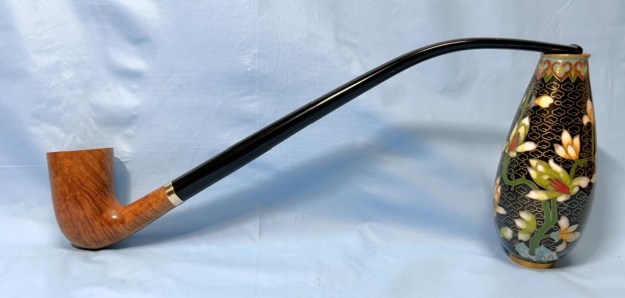
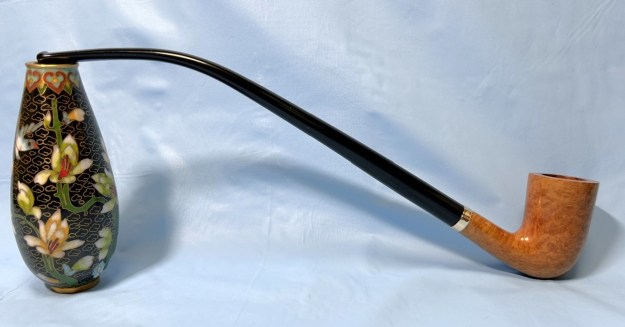
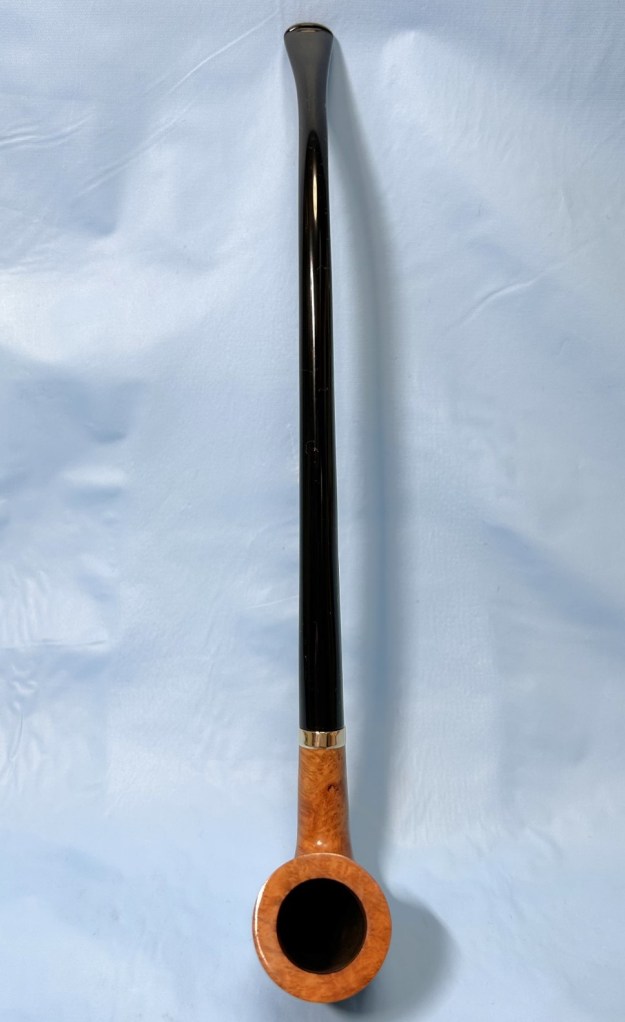
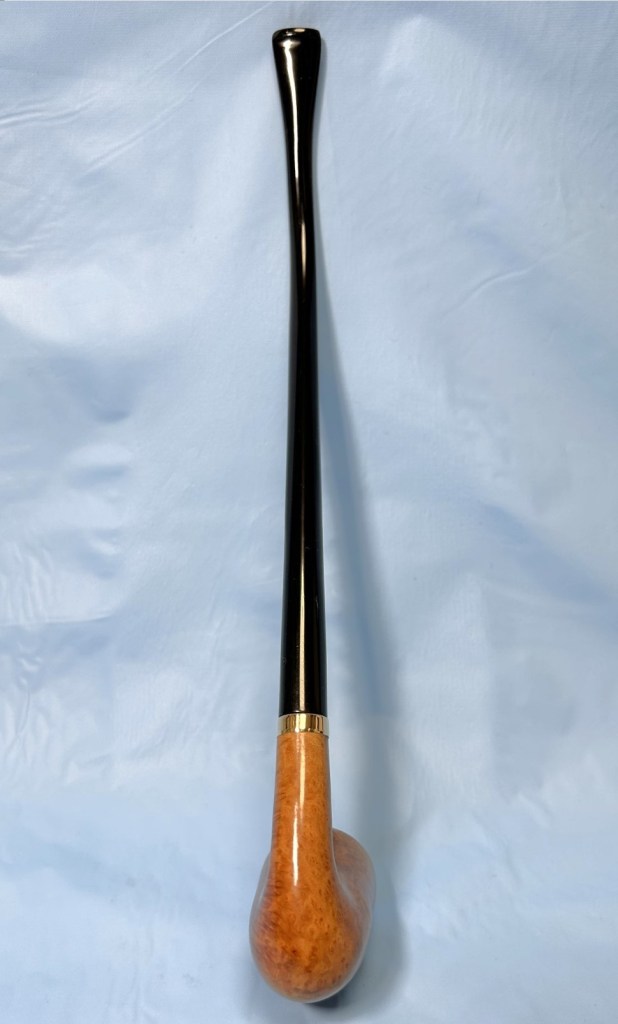
Next on the chopping block is a charming bent Dublin churchwarden (ten inches long), commissioned for a priest friend of mine. He expressly asked for a churchwarden (of course, he did). Fortunately, I had one on hand and I did a nifty restoration job on it. This is just a quick-and-dirty report for two reasons. First, I lost most of the photos I took of the restoration. Grrr. Second, this pipe has literally no markings on it, so I have no information to provide on its origins.The pipe was in decent condition. It had been well-smoked, but the bowl and shank were fairly clean. The bowl had notable cake on the inside and some lava on the rim. I felt that some burning was possibly there too. On the bottom of the stummel, there was a strange, hard, brown substance – possibly wood glue or putty. Not sure what it was, but it wasn’t supposed to be there! Similarly, the stem was relatively clean – not much oxidation to speak of, and what I would describe as “typical” tooth marks on the bit. The stem was slightly bent out of shape (in the yaw and roll axes) and would need to be corrected. The stem was first on my list. I wiped the outside down with Murphy’s Oil Soap on some cotton pads. I cleaned out the insides with lemon-infused isopropyl alcohol and some churchwarden pipe cleaners.

I then heated the stem with my heat gun and gently worked the twisted stem back into place. I have bent many stems before, but churchwardens always seem trickiest – perhaps because they’re so long. In the end, I got it looking just as it should.

I scrubbed the stem with SoftScrub on some cotton pads. I built up the remaining marks on the stem with black cyanoacrylate adhesive and then cured it with the aid of some CA glue accelerator. I then carefully sanded the adhesive down with 220- and 400-grit sandpapers to meld seamlessly into the stem. I then used all nine Micromesh pads (1,500 through 12,000 grit) to bring out the lovely black lustre on the stem. I also used Obsidian Pipe Stem Oil in between each pad scrubbing (from 3,600 onward).

Now for the stummel. I reamed out the bowl to remove the built-up cake and followed that with 220-grit sandpaper taped to a dowel to eliminate as much as I could. I took the chamber down to bare briar, as I wanted to ensure there were no hidden flaws in the wall. Fortunately, there were none.

I then proceeded to clean out the insides of the shank with Q-tips, pipe cleaners, and lemon-infused isopropyl alcohol. There was quite a bit of filth inside this stummel and it took a fair amount of cotton to get it clean. I used cotton rounds and some Murphy’s Oil Soap to scrub the outside of the stummel. I followed that up by cleaning the insides of the stummel with some Castile soap and tube brushes.
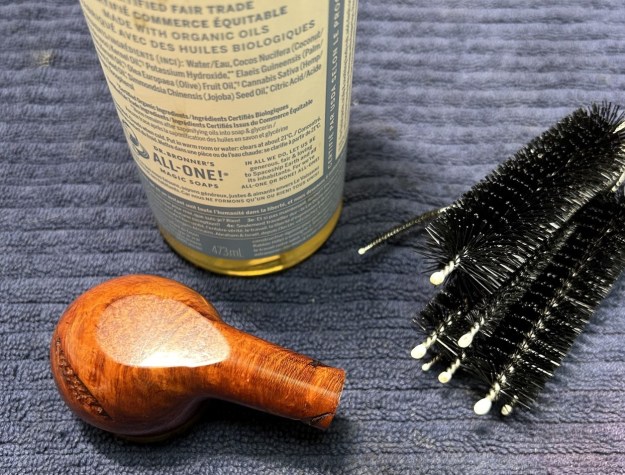
Next, I decided to de-ghost the pipe in order to remove any lingering smells of the past. I thrust cotton balls into the bowl and the shank and saturated them with 99% isopropyl alcohol. I let the stummel sit overnight. This caused any remaining oils, tars and smells to leach out into the cotton. The bowl was nice and clean after this.

In order to safely remove the damage on the rim, I “topped” the pipe – that is to say, I gently and evenly sanded down the rim on a piece of 220-grit sandpaper. This effectively removed the damage, without altering the look of the pipe. I used some 220-grit sandpaper to remove the brown stuff on the bottom. No harm done. Then I sanded the stummel down with all nine Micromesh pads (1,500 through 12,000 grit).

Finally, I applied some Before & After Restoration Balm and buffed it with a microfiber cloth. During the restoration, I noticed some previously repaired damage to the end of the shank. The repair was sound but ugly, so I decided to add a charming band to the shank. I think it suits the pipe quite well and brings a bit of “bling”.

I then took the pipe to my bench polisher and buffed it with White Diamond and a few coats of carnauba wax. Wow – the pipe really looks lovely.

This churchwarden will suit my priest friend very well and I know that he will enjoy smoking it for many years to come. I hope you enjoyed reading the story of this pipe as much I as I did restoring it. If you are interested in more of my work, please follow me here on Steve’s website or email me directly at kenneth@knightsofthepipe.com. Thank you very much for reading and, as always, I welcome and encourage your comments.

Resuscitating Prince Charming


by Kenneth Lieblich

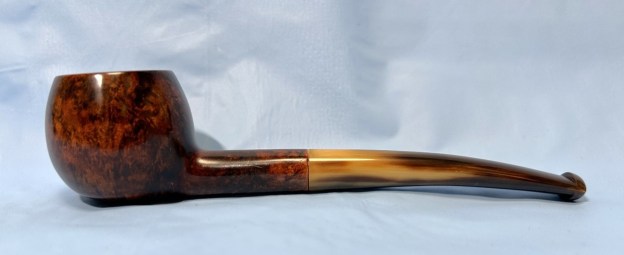
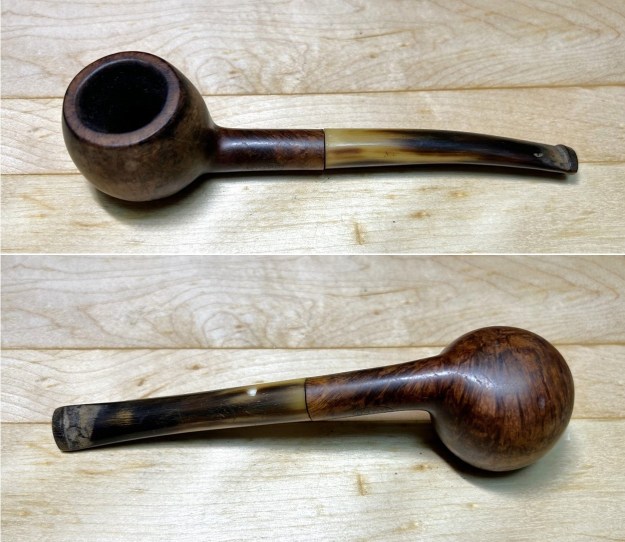
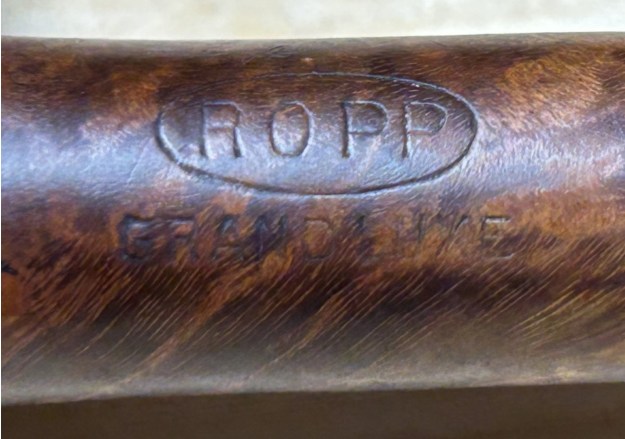
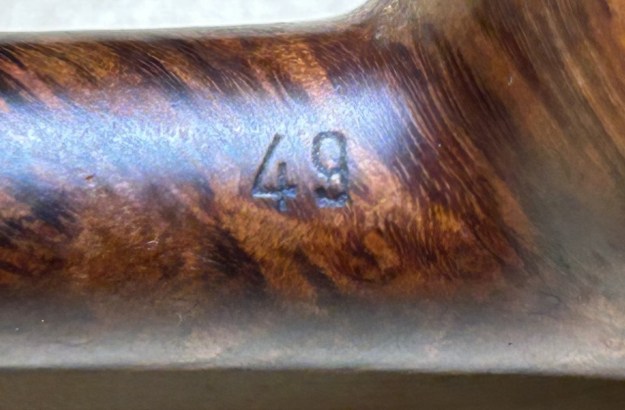
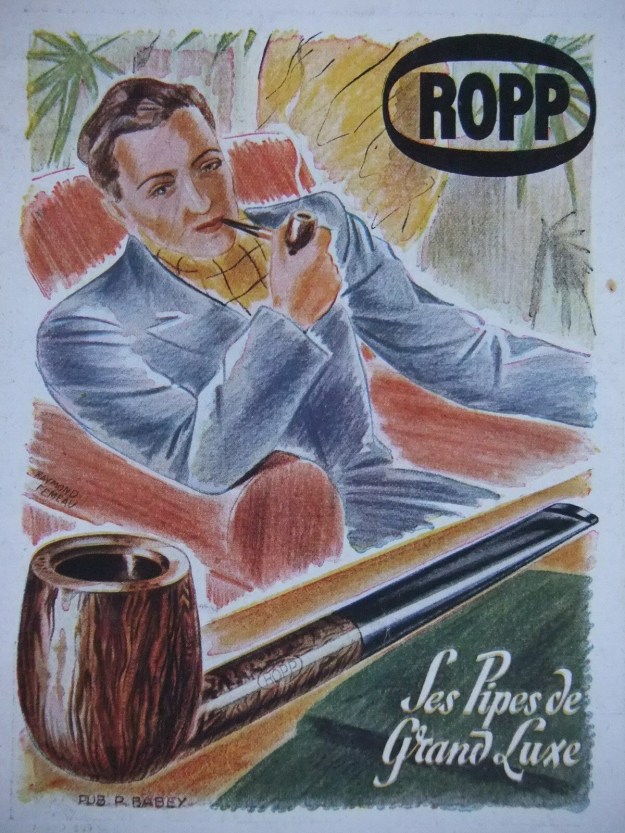
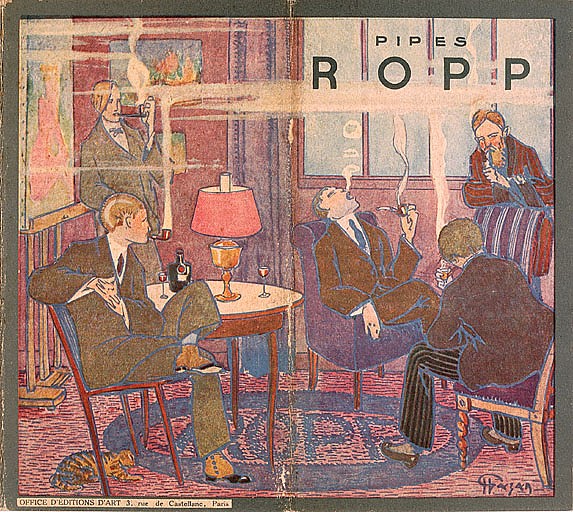
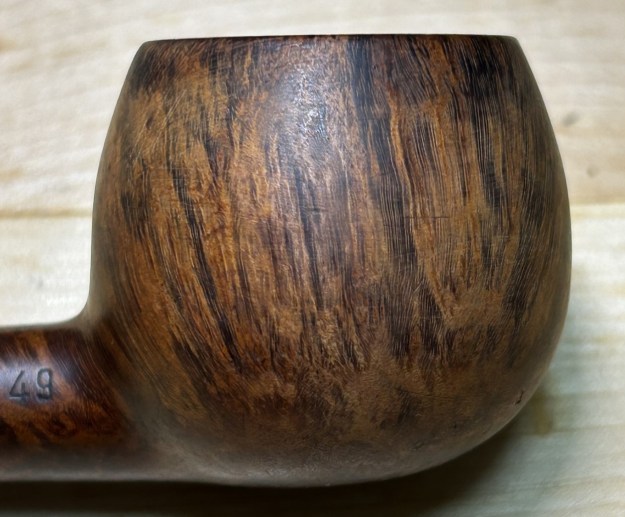
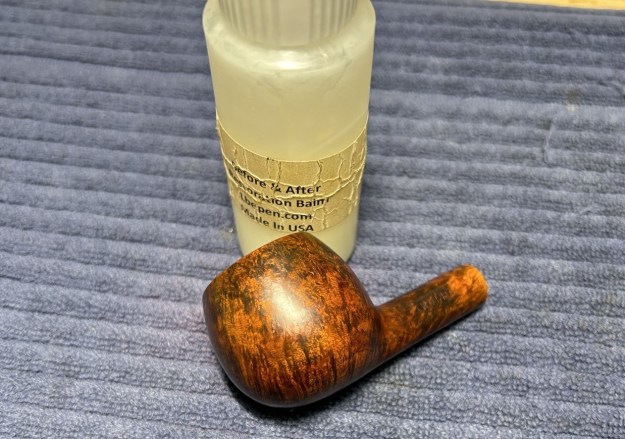
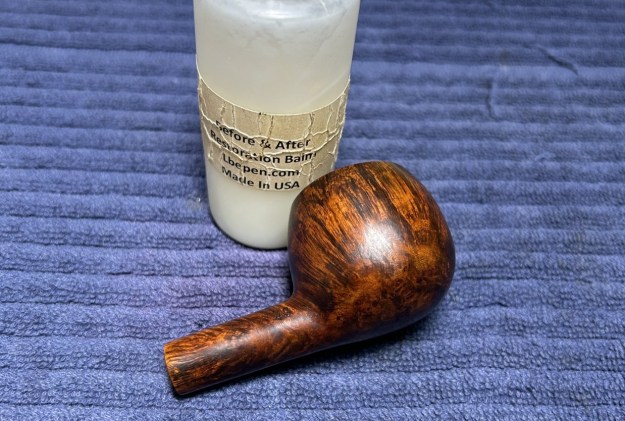
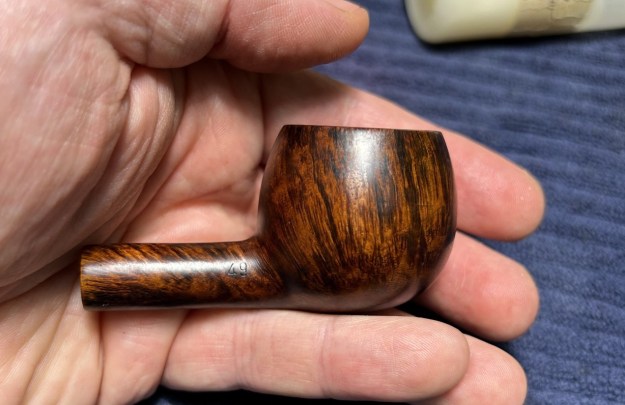
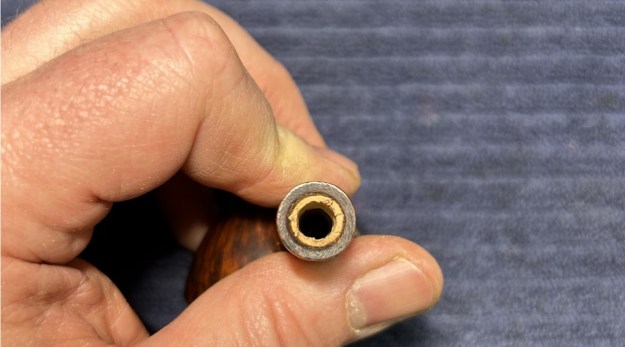
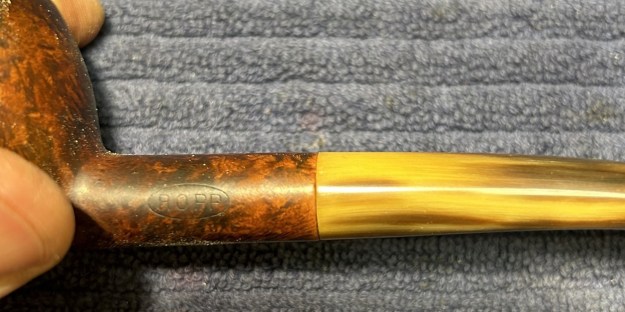
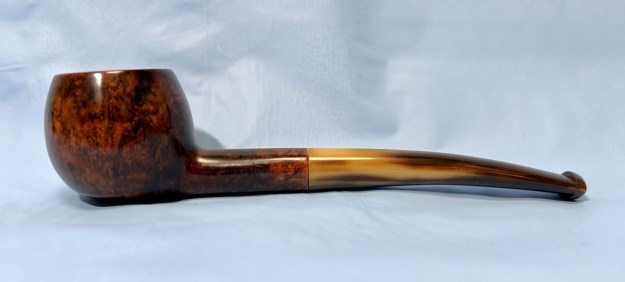
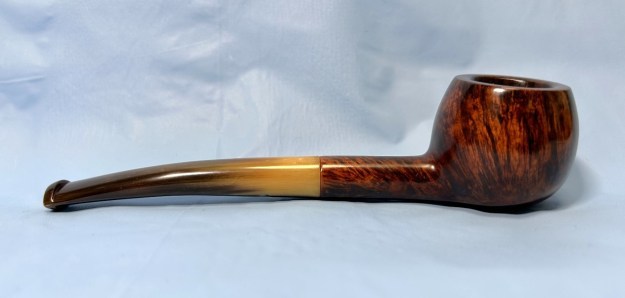
Next on the chopping block is this charming Ropp Grand Luxe 49. It is another pipe in my ongoing “French Collection” and it comes from a group of pipes I purchased recently. I have a particular interest in French pipes and pipeworks, and I grabbed this one to restore since I thought it was quite handsome. This is an old timer with a few wounds and needs just a little help to come back to life. This pipe was made by the venerable French pipe company, Ropp. Ropp has been around for a long time and their early pipes are really quite wonderful. The markings on the left-hand side of the shank read Ropp [over] Grand Luxe. The right-hand side of the shank reads 49, the shape number. There are no other markings. This pipe shape is a prince – a shape I love. This is a really pretty pipe and feels very comfortable in the hand. The stummel is a very nice piece of briar and the stem is made of buffalo horn – which tends to suggest an older piece. The stem has a tenon made of metal – not bone – and a cork-lined mortise. I remember Steve telling me that the fact the tenon is in metal (instead of bone) suggests a date around World War II. The stem has a normal, wide button – not an orific button. This all fits the date quite well.From Pipedia, here is a very brief history of the Ropp company:

Eugène-Léon Ropp (1830–1907) acquired a patent for the cherrywood pipe in 1869. In 1870, he established a workshop to manufacture such pipes in Bussang, in the Vosges mountains. Around 1893, his business moved into the former mill of Sicard (part of the community of Baume-les-Dames in Upper Burgundy. The pipes were a big success in export as well. Shortly before 1914, Ropp designated A. Frankau & Co. (BBB) to be the exclusive distributor in the UK and its colonies. Probably in 1917, a workshop in Saint-Claude in the rue du Plan du Moulin was acquired to start the fabrication of briar pipes. In 1923, another small building in Saint-Claude, serving as a workshop for polishing, was added. Cherrywood pipes were the mainstay of Ropp until the company finally closed down in September 1991. The company was taken over by Cuty-Fort Entreprises in 1994.I have been working on figuring out the dates of Ropp pipes, based on their logos. This is an ongoing project and I am far from done. However, the logo on this pipe suggests a date that in the interwar period.

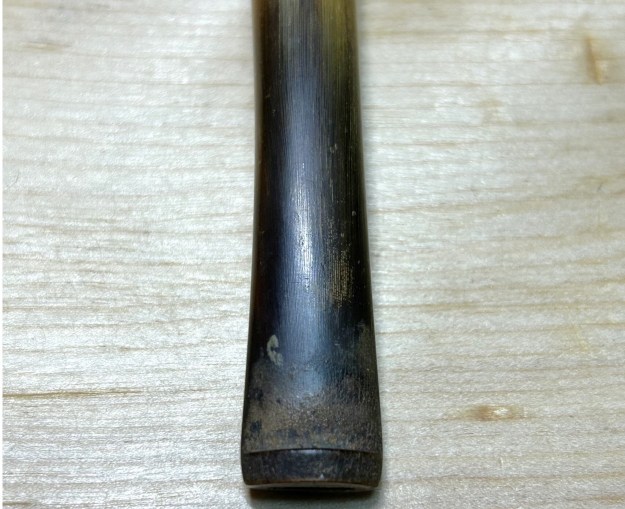
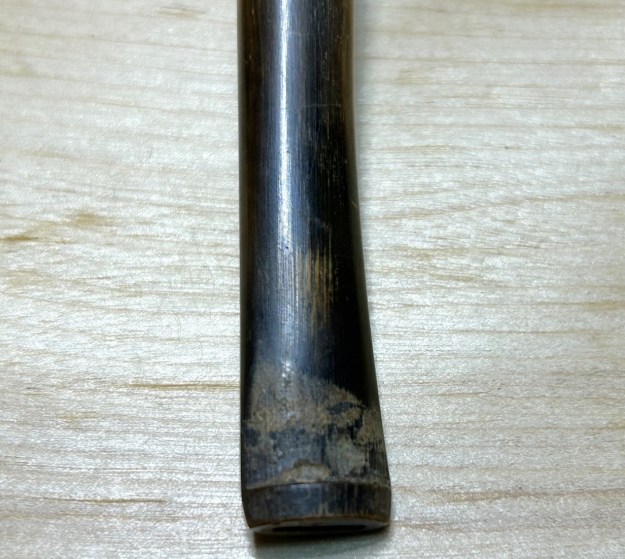
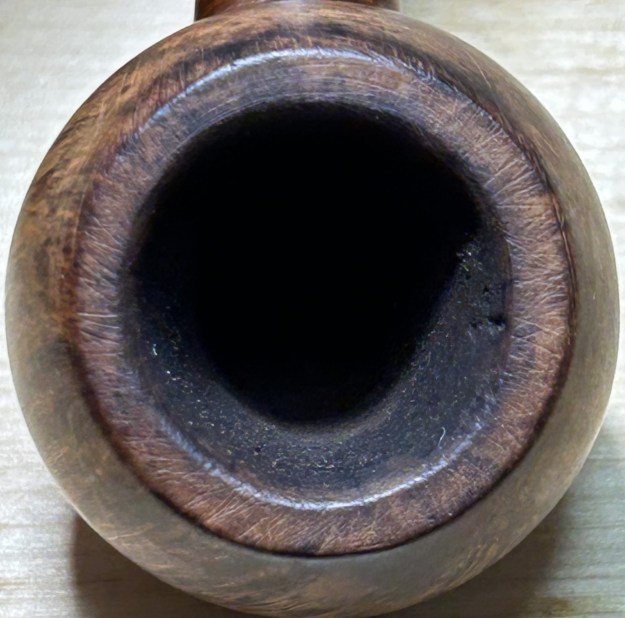
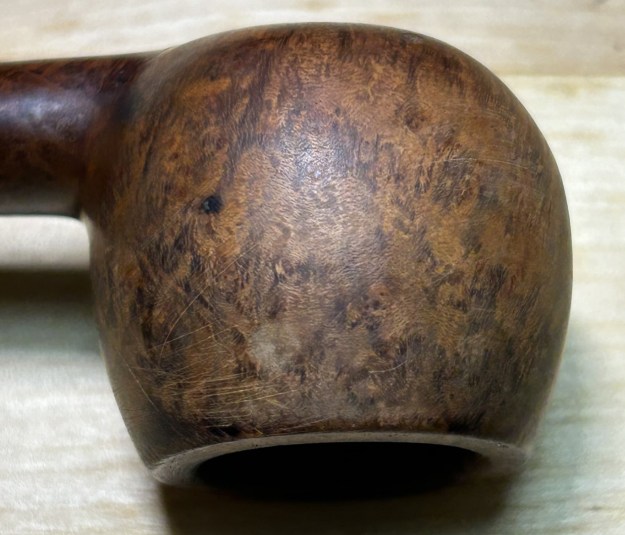
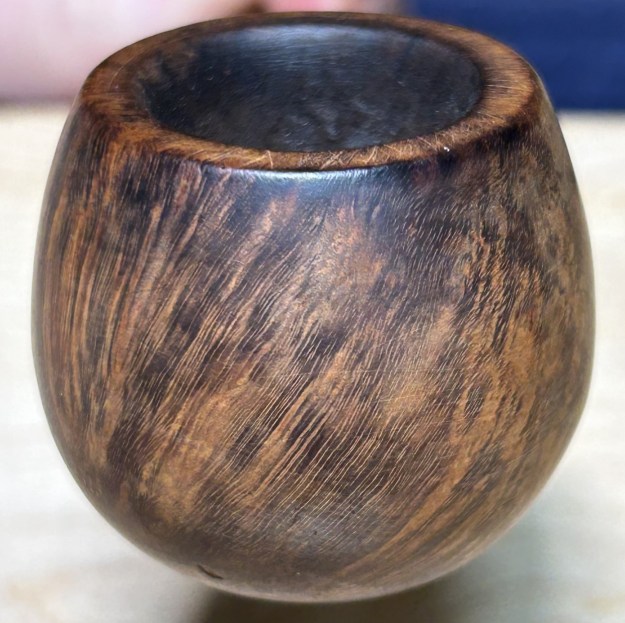
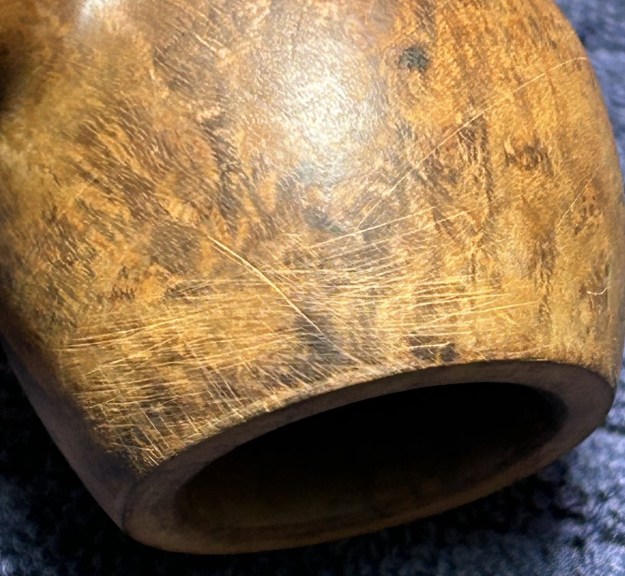
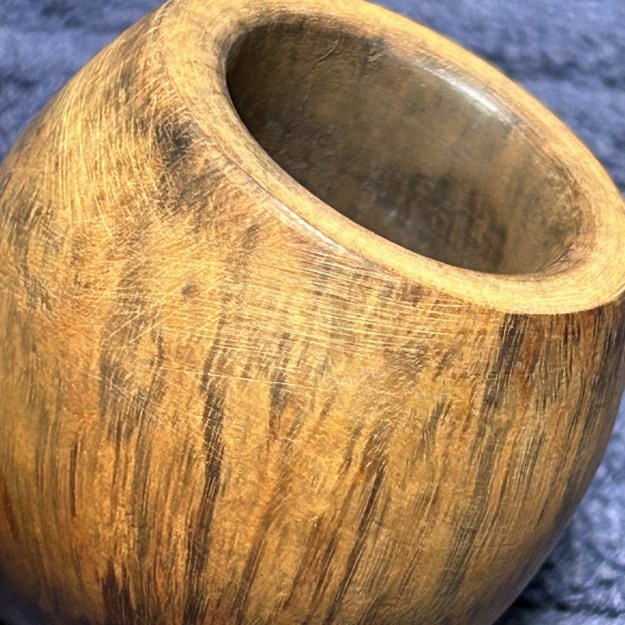
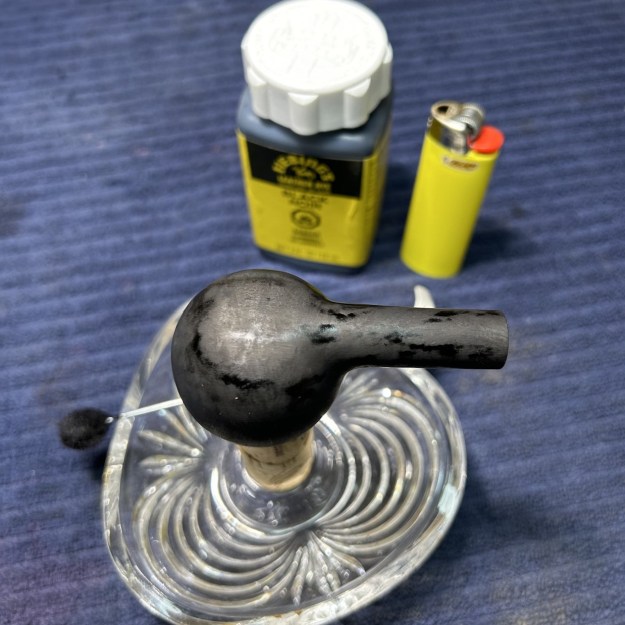
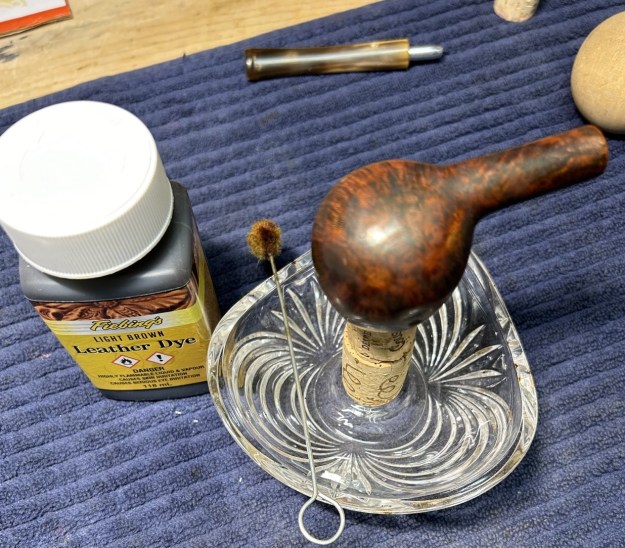
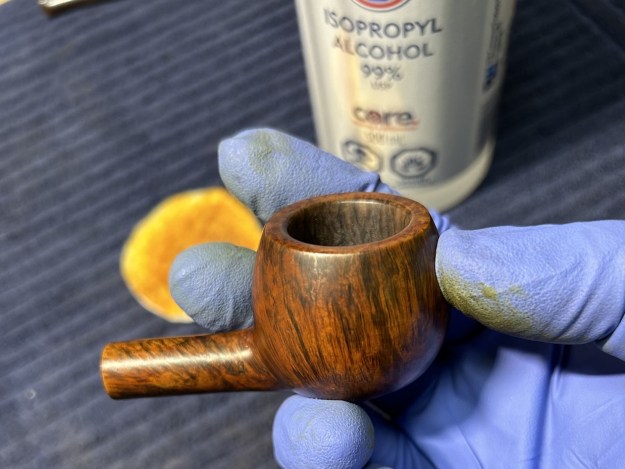
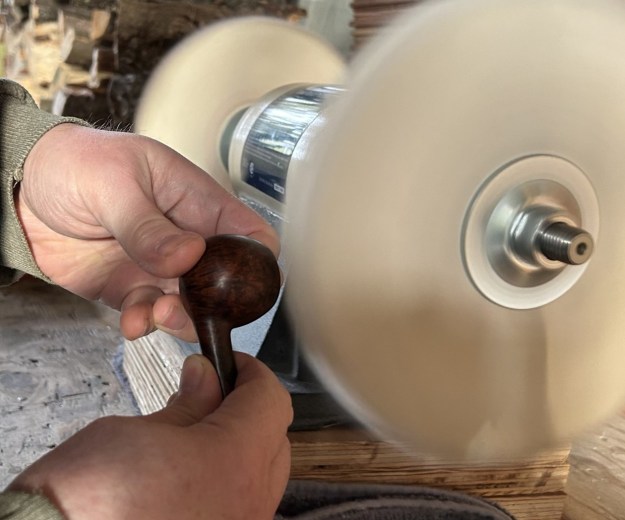
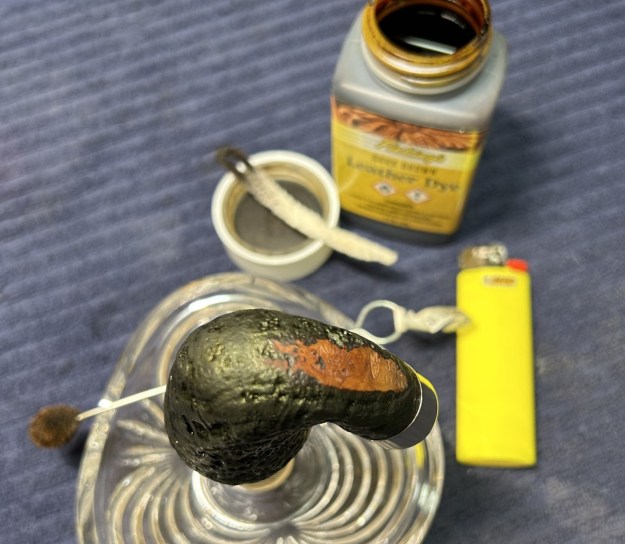
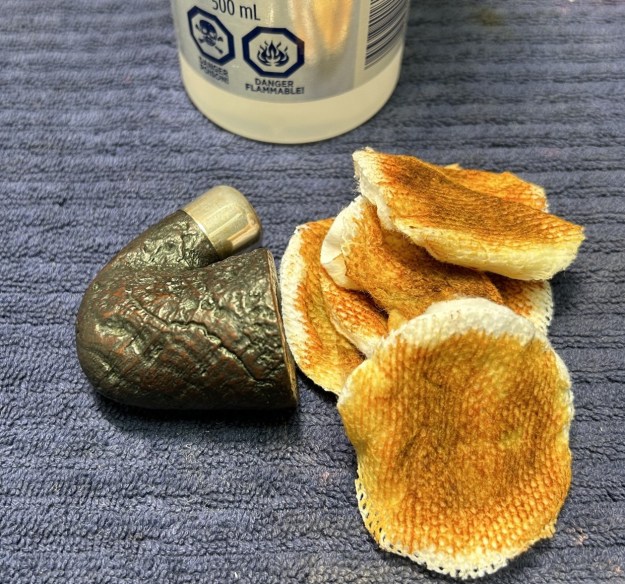
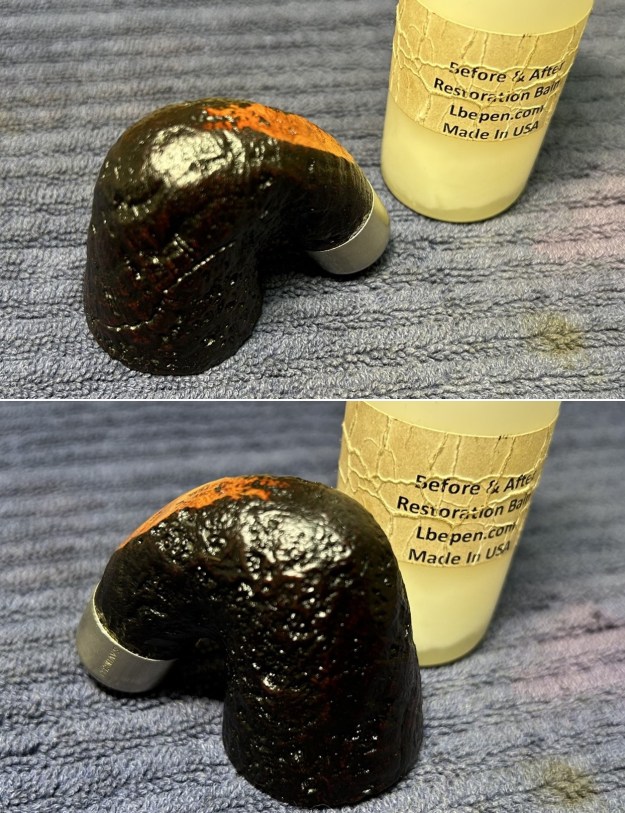
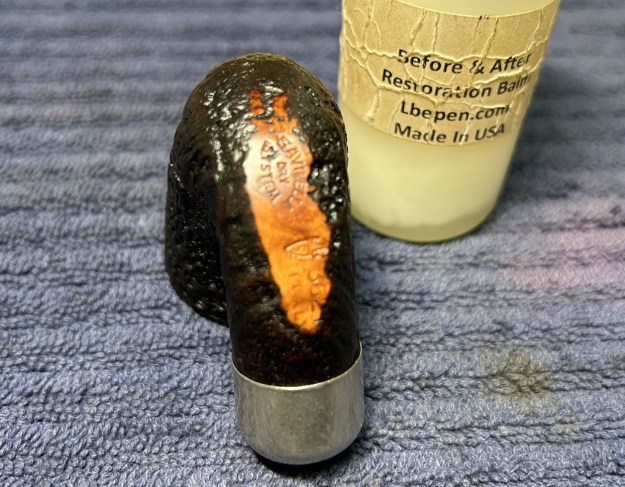
On to the pipe: it was in decent shape, but it had a few issues. The stem had a few bite marks, top and bottom. It also has a natural hole in the horn. The stummel also had a few issues. The rim and the outside of the bowl had some serious scratches. There was lava on the rim and some minor scorching. The inside was pretty dirty too – it would need a thorough cleaning. The stem was first on my list. This stem has a stinger in it – and it was being quite stubborn about coming out of the tenon! I opted to warm the stem and stinger with my heat gun and this didn’t work, surprisingly. I stuck it in the freezer for 20 minutes or so and that didn’t work either. I went back to the heat gun and tried again. Ugh. I successfully managed to break the stinger. Obviously, this wasn’t great, but it’s hardly the end of the world. I took a miniature file, shaped like a cylinder and sanded the hole in the tenon. I wanted to open the aperture a bit and remove the rough metal. Came out perfectly. I wiped down the outside of the stem with Murphy’s Oil Soap on some cotton pads. Then, I cleaned out the insides with pipe cleaners and isopropyl alcohol. It took an awful lot of work to get this clean! In fact, I also used some Castille soap and tube brushes on the inside of the stem. Not something I usually do. I built up the worm hole and tooth marks on the stem with some clear cyanoacrylate adhesive and let them fully cure. I then sanded the adhesive down with 220- and 400-grit sandpapers to meld seamlessly into the stem. I then used all nine Micromesh pads (1,500 through 12,000 grit) to bring out the lovely grain of the buffalo horn on the stem. I also used Obsidian Pipe Stem Oil in between each pad scrubbing. On to the stummel, and the usual cleaning procedures were in order for this pipe. This stummel was a bit of a mess inside, so I first decided to ream out the bowl. I used the KleenReem to remove the built-up cake and followed that with 220-grit sandpaper to eliminate as much as I could. I took the bowl down to bare briar, as I wanted to ensure there were no hidden flaws in the walls of the bowl. Fortunately, there none.I then proceeded to clean out the insides of the shank with Q-tips, pipe cleaners, and isopropyl alcohol. There was considerable filth inside this stummel and it took a lot of cotton to get it clean. I followed that up by cleaning the insides with some Castile soap and tube brushes. One of difficulties I encountered here was that this pipe had a cork-lined mortise and it was in very rough shape. Despite my best efforts, the cork was disintegrating and could not be saved. I took a wire drill bit and, but hand, scraped out the remaining bit of cork with it. I used some Murphy’s Oil Soap and some cotton pads on the outside of the stummel. That removed any latent dirt that blighted the wood. I moved on to de-ghost the bowl. I thrust some cotton balls into the bowl and the shank and saturated them with 99% isopropyl alcohol. I let the stummel sit overnight. This caused any remaining oils, tars and smells to leach out into the cotton. As the photos show, there were some rough scratches on the rim of this pipe. In order to remove them, I “topped” the pipe – that is to say, I gently and evenly sanded down the rim on a piece of 220-grit sandpaper. This effectively removed the damage, without altering the look of the pipe.There were a couple of very tiny pinholes in the wood. I dabbed a bit of cyanoacrylate adhesive and let them cure. I sanded the repairs down with 400-grit sandpaper. I also sanded out the scratches with the same. I felt that this pipe’s wood needed some revivification. In order to accentuate the external beauty of this pipe, I opted for aniline dye. I applied some of Fiebing’s Black Leather Dye. I applied flame from a BIC lighter in order to set the colour. I didn’t want to make the pipe black – I wanted the dye to accentuate the grain of the wood. So I used all nine Micromesh pads (1,500 through 12,000 grit) on the stummel to sand off the majority of the dye and then smooth the wood.I then added a coat Fiebing’s Light Brown Leather Dye to act as a beautiful contrast. I wiped it down with isopropyl alcohol to lighten it a bit. What a difference that made! It looked so much better with a fresh coat of stain. After that, I applied some Before & After Restoration Balm and let it sit for 15 minutes before polishing with a microfibre cloth. There is some beautiful wood after all. It is a lovely pipe! Before finishing up, I needed to address the mortise. Having removed the disintegrated cork, the tenon no longer fit in the mortise. Thanks to Steve’s advice, I fashioned a new cork lining from an old wine-bottle cork. I drilled out a hole through the middle of the cork and then used my Dremel to whittle down the cork until it fit – very tightly – in the mortise. I tested the tenon and it fit perfectly. I was delighted! Then it was off for a trip to the buffer. A dose of White Diamond and a few coats of carnauba wax were just what this pipe needed. The lovely shine made the wood very attractive. This is a very handsome pipe and will provide many years of smoking pleasure. This is a wonderfully crafted pipe and has a very elegant feel to it. It took some work, but I am proud of it. I am pleased to announce that this pipe is for sale! If you are interested in acquiring it for your collection, please have a look in the “France” pipe section of the store here on Steve’s website. You can also email me directly at kenneth@knightsofthepipe.com. The approximate dimensions of the Ropp Grand Luxe 49 Prince are as follows: length 6 in. (153 mm); height 1½ in. (36 mm); bowl diameter 1⅝ in. (40 mm); chamber diameter ¾ in. (20 mm). The weight of the pipe is 1⅛ oz. (36 g). I hope you enjoyed reading the story of this restoration as much as I enjoyed restoring it. If you are interested in more of my work, please follow me here on Steve’s website or send me an email. Thank you very much for reading and, as always, I welcome and encourage your comments.
Resurrecting a Savinelli Dry System


by Kenneth Lieblich

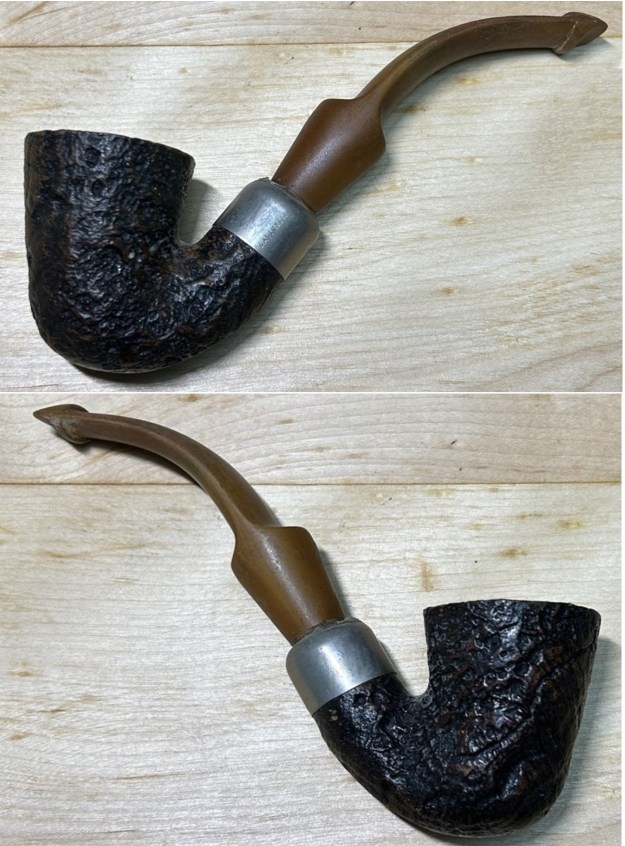
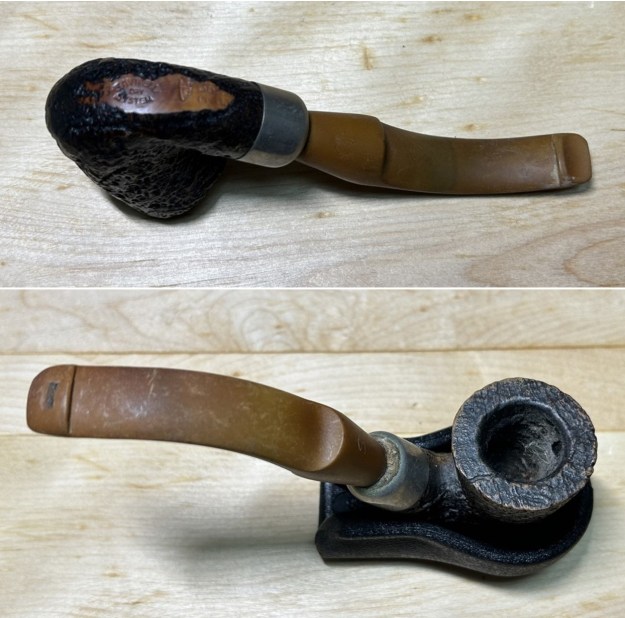
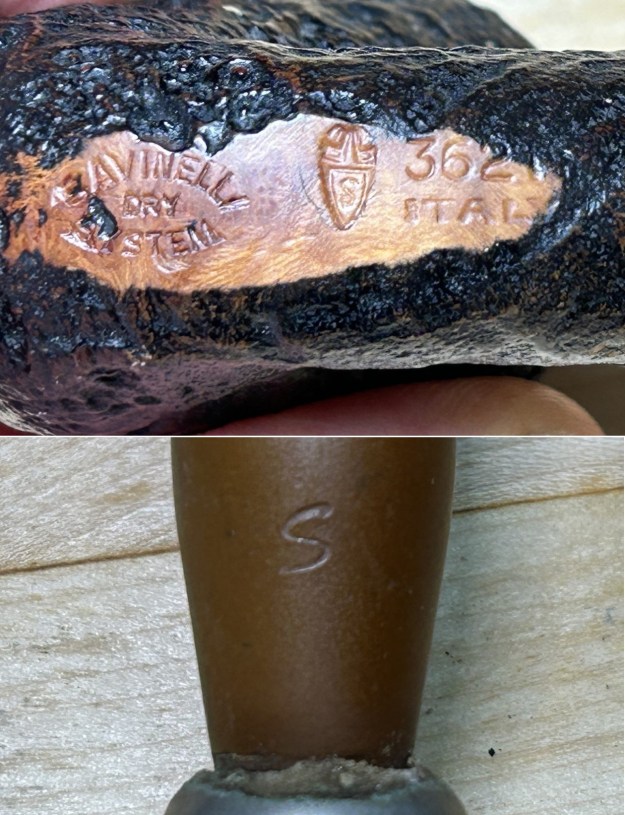
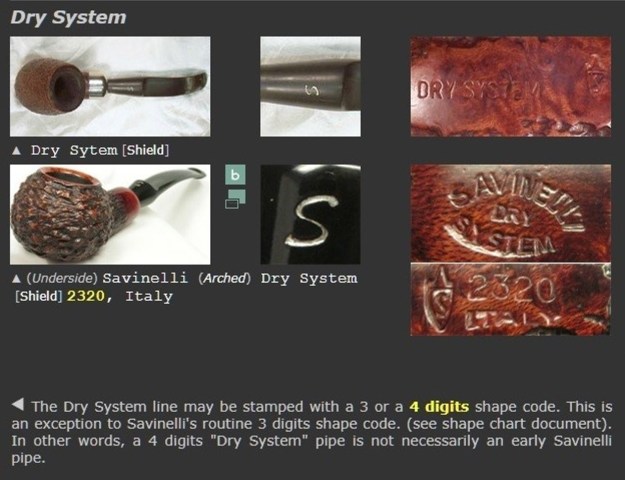
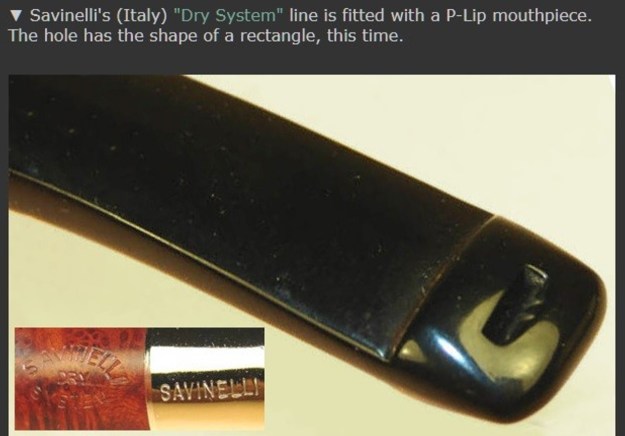
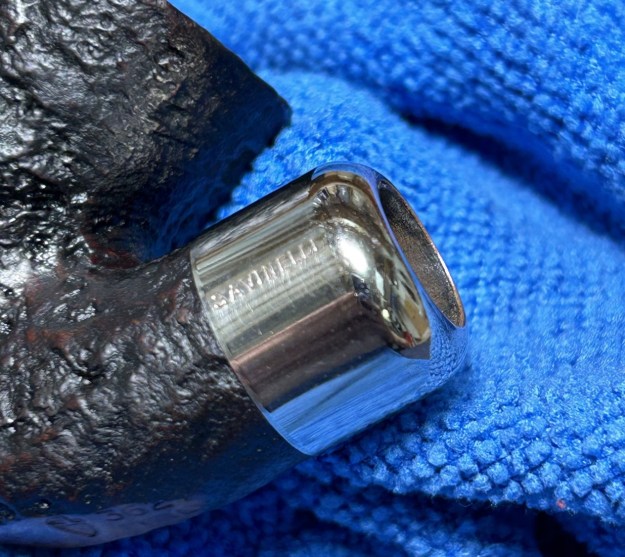
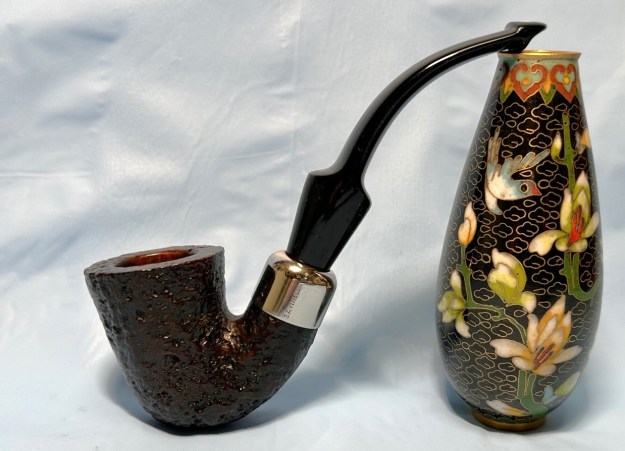
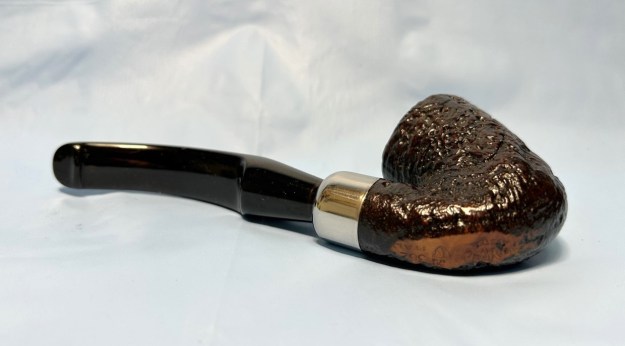
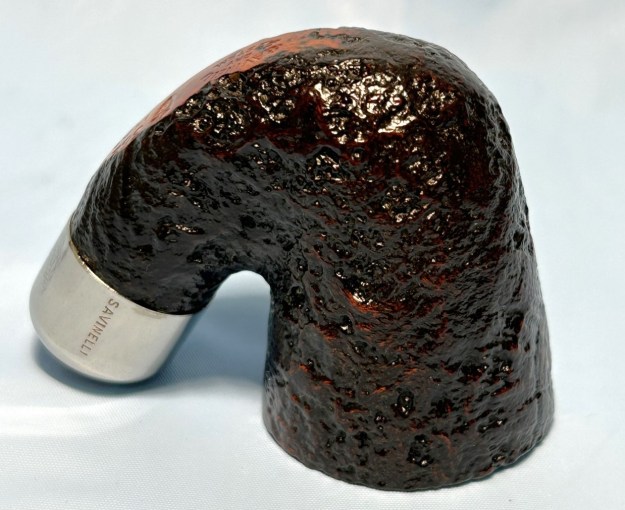
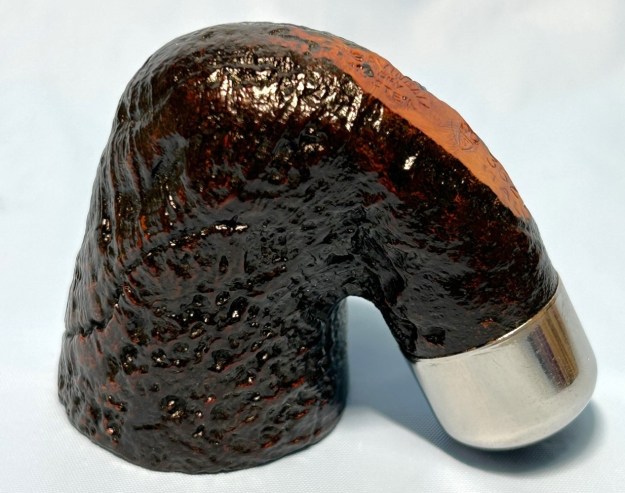
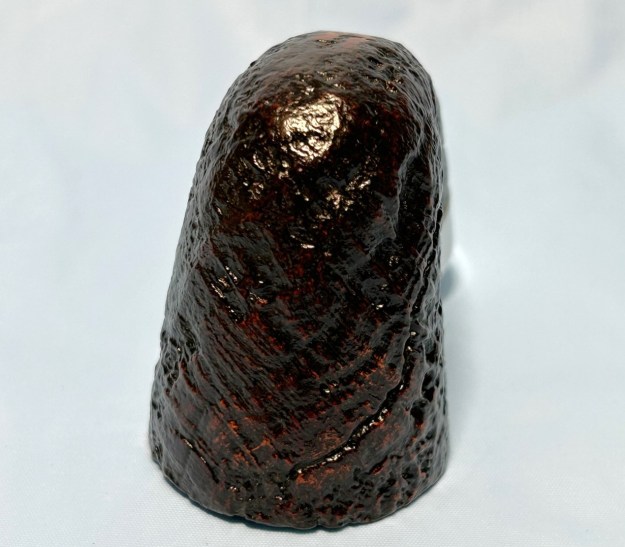
Next on the old chopping block is a wonderful Savinelli Dry System 3621 Bent Dublin. It’s a really good-looking pipe and I understand that this is a popular and well-loved series. I got it recently in a lot of pipes and it called out to me for some help. I suppose this pipe is meant to be reminiscent of the Peterson system pipes – it even has a sort of P-lip button! It’s a terrific-looking pipe, with a bit of a rough history. The main markings of the pipe are on the underside of the stummel. On the left it reads Savinelli [over] Dry [over] System. Next to that is the Savinelli crown and “S” logo. And next to that is 3621 [over] Italy.  The shank has a nickel cap with Savinelli stamped on it. Finally, the stem has a worn, but still readable, stylized “S” on the top.Savinelli is one of the most recognized names in pipe smoking and they have a long and storied history. You can read about them from their own website or from Pipedia’s article about them. However, I was particularly interested in learning more about the Dry System. Sadly, Pipedia had nothing on this subject. I checked with Pipephil and they did have a bit of information which I provide here below:However, the definitive word on the Dry System comes from Savinelli’s own website. It provided some very useful information.

In 1981, after several years of research, Savinelli launched the “Dry System”, combining trap and filter. The name “Dry” comes from the introduction of the balsa “filter” into the traditional system pipe – the “System” being the presence of the built-in moisture trap in the shank. The balsa mops up the moisture in the smoke hence the term “Dry” system, and if the pipe is smoked without the balsa all that will happen is that this moisture will condense and collect in the trap. It can then either be mopped up with a folded pipe cleaner, or flicked out.

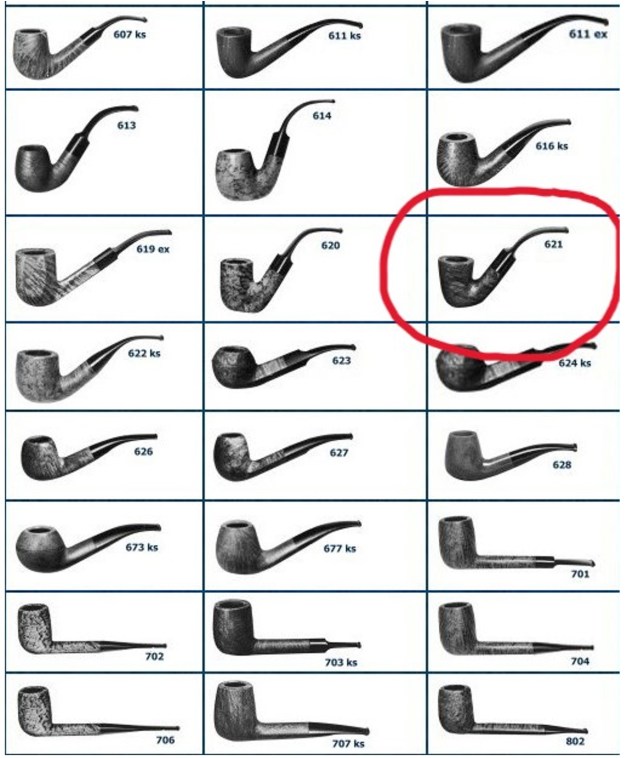
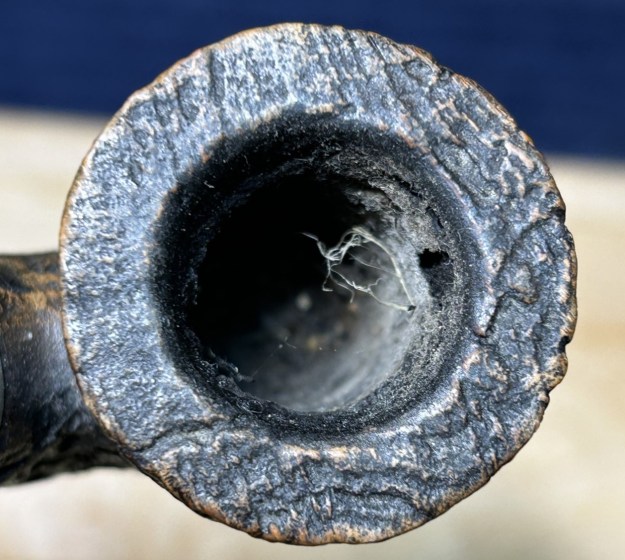
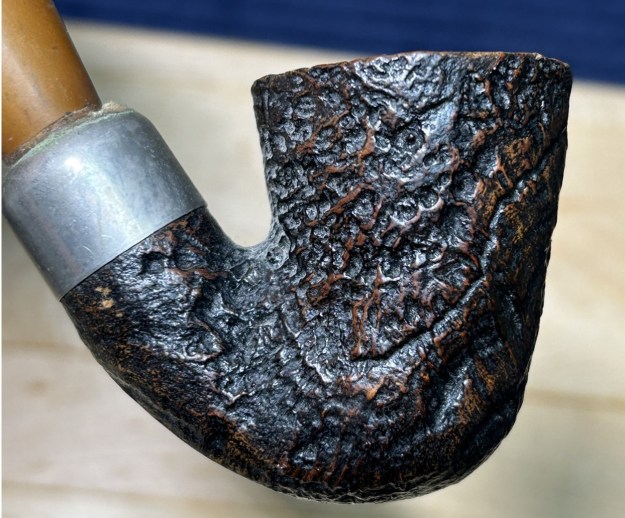
Finally, here’s an image of the pipe from an old Savinelli shape chart:This was obviously a terrific smoker, as the wear and tear on this pipe shows. The stummel was quite dirty – both inside and out – and even appeared to have some dust-bunnies inside the bowl (not to mention all the cake). The finish was well worn and would need to be addressed. The nickel cap had some mess on it too. The stem, however, was from another planet. Have you ever seen such oxidation on a pipe stem? In fact, my wife asked me if the stem was actually meant to be brown. “No” was my emphatic answer! Aside from that, the stem had some tooth marks and nicks. I could tell that this stem was going to be a bear to deal with. This pipe is always going to retain some marks from its hard life, but it is my job to make sure this pipe looks as good as possible. It’s a wonderful pipe and it deserves to be part of someone’s collection again.

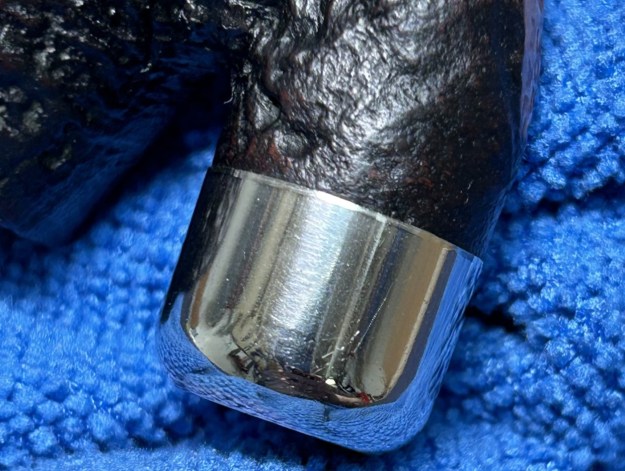
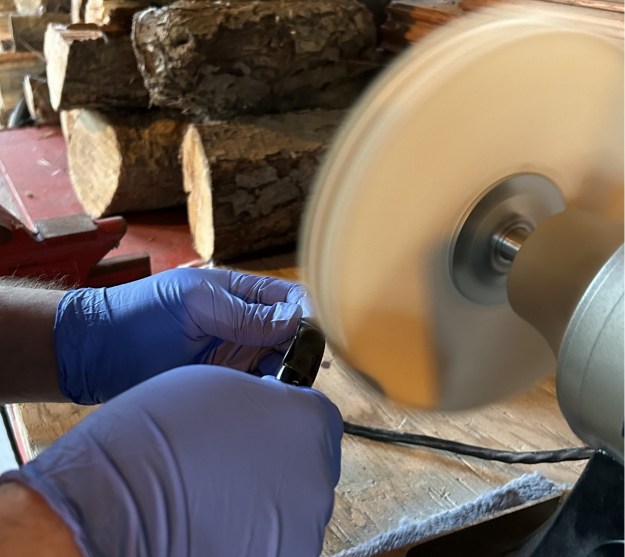
The stem is going to take a lot of work, so let’s get started. I took up the stem and cleaned it off with Murphy’s Oil Soap. It was quite dirty and needed some scrubbing. I then cleaned out the insides of the stem with pipe cleaners and lemon-infused isopropyl alcohol, and, as you can see, if was pretty dirty inside. I also took a BIC lighter and ‘painted’ the stem with its flame in order to lift the tooth marks. This was only moderately successful in raising the dents.Now to tackle the epic oxidation. Next, I scrubbed (and scrubbed and scrubbed) the stem with some SoftScrub cleanser and then put the stem in my container of deoxidizing fluid overnight. This works to draw the oxidation to the surface of the stem, so that it can be cleaned off again with more SoftScrub. As you can see, this worked in the sense that it drew out the oxidation, but there remained a lot of labour ahead. In fact, I repeated the process of scrubbing and soaking overnight, because the situation was so dire. Eventually, I got to a point where the stem was something I could work with. Before I moved on to sanding, I built up the tooth marks on the stem with black cyanoacrylate adhesive and let them fully cure. I then sanded them down with sandpapers to merge a bit better into the stem. I also added some nail polish to the ‘S’ on the stem. At this point, it was clear that more than the ‘usual’ sanding was going to be required here. I took two sanding sponges (220- and 320-grit) and worked the stem hard. I needed to sand out the remaining oxidation to get this stem the best chance of looking decent again. I then used all nine Micromesh pads (1,500 through 12,000 grit) to bring out the lovely black lustre. I also used Obsidian Pipe Stem Oil in between each pad scrubbing. As I mentioned before, there are still hints of its past life, but I’m pretty pleased with how the stem came out. On to the stummel and the usual cleaning procedures were in order for this pipe. I used the KleenReem to remove the cake in the bowl and I followed up by sanding the walls down with some 220-grit sandpaper attached to a wooden dowel. I took it down to bare briar, as I wanted to see if there were any issues in the walls of the bowl. There was some charring and some slight fissures, but nothing serious. I then proceeded to clean out the insides of the shank with Q-tips, pipe cleaners, and isopropyl alcohol. There was some nastiness inside this stummel and it took a lot of cotton to get this thing clean. I decided to de-ghost the bowl to be on the safe side. I thrust some cotton balls into the bowl and the shank and saturated them with 99% isopropyl alcohol. I let the stummel sit overnight. This caused any remaining oils, tars and smells to leach out into the cotton. I then moved on to cleaning the outside of the stummel with Murphy’s Oil Soap and a toothbrush. What a difference that made! I followed that up by cleaning the insides with some dish soap and tube brushes. As I mentioned earlier, there were some minor issues to fix inside the bowl. The solution to this problem is an excellent one: epoxy. I prepared some J.B. Weld epoxy and smeared the walls, ensuring that the epoxy was evenly spread. Once done, a good 24 hours was needed to ensure that the epoxy was properly cured. After that, I gently sanded the inside of the bowl to provide a rough surface for what was to come later. I coated the entire inside of the bowl with a mixture of activated charcoal and my wife’s homemade yogurt. Once hardened, this provides a good, slightly rough surface for a new cake to build. Due to the pipe’s hard life, it was clear to me that the pipe needed to be stained. I applied some Fiebing’s Dark Brown Leather Dye. I flamed it with a BIC lighter and let it set. I then removed the excess with isopropyl alcohol on a cotton round. It looked so much better after this. I then rubbed some Before & After Restoration Balm into the wood. I gently brushed it into the rustication grooves and let the balm sit for fifteen minutes or so. The BARB works so well at bringing out the best in the wood. I brushed it with a horsehair brush and buffed it with a microfibre cloth. Beauty! I rubbed the nickel band with 0000 steel wool. This is the least abrasive grade of steel wool and I wouldn’t use anything harsher than that. I then used a few MicroMesh pads to make the metal shine. Later, I went to the bench buffer and applied some White Diamond to the stummel and stem. Then the final polish! The rusticated surface meant that I didn’t use carnauba wax – it gets gummed up in the grooves. Instead, I used Lee Valley Conservator’s Wax which worked like a charm. This was a nifty restoration and I had fun with it. I think the result is terrific and it’s a very handsome pipe once again. I am pleased to announce that this pipe is for sale! If you are interested in acquiring it for your collection, please have a look in the “Italy” pipe section of the store here on Steve’s website. You can also email me directly at kenneth@knightsofthepipe.com. The approximate dimensions of the Savinelli Dry System 3621 Bent Dublin are as follows: length 5 in. (126 mm); height 4 in. (101 mm); bowl diameter 1⅜ in. (36 mm); chamber diameter ¾ in. (19 mm). The weight of the pipe is 1⅛ oz. (35 g). I hope you enjoyed reading the story of this restoration as much as I enjoyed restoring it. If you are interested in more of my work, please follow me here on Steve’s website or send me an email. Thank you very much for reading and, as always, I welcome and encourage your comments.

Restoring a BIG, Beautiful Charatan


Blog by Kenneth Lieblich

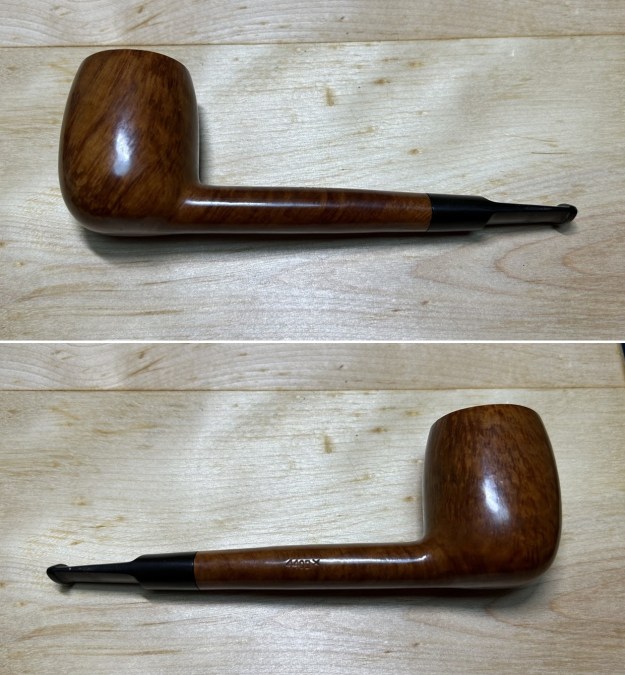
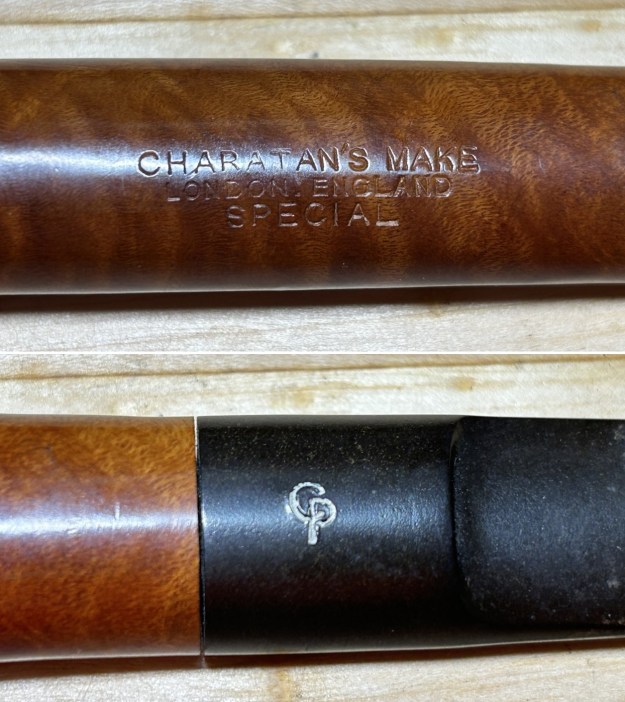
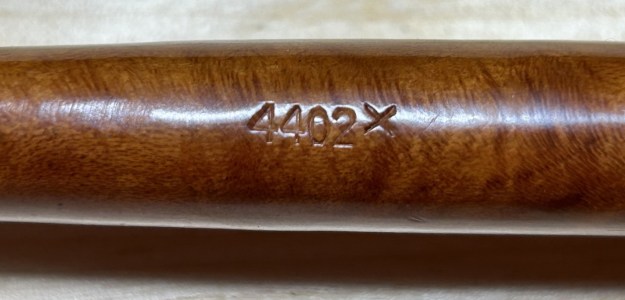
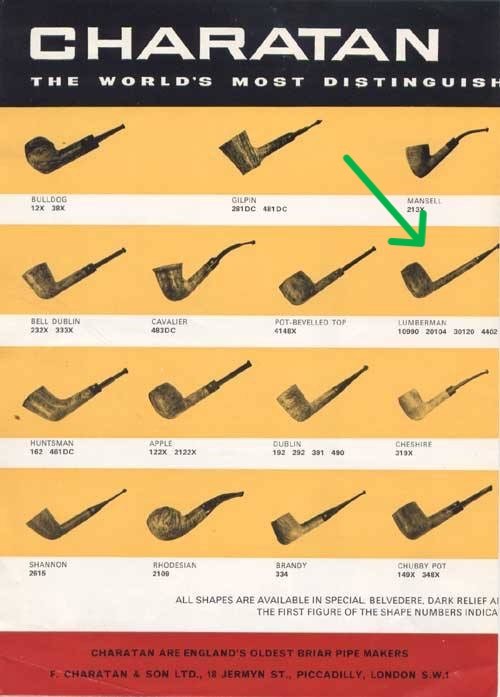
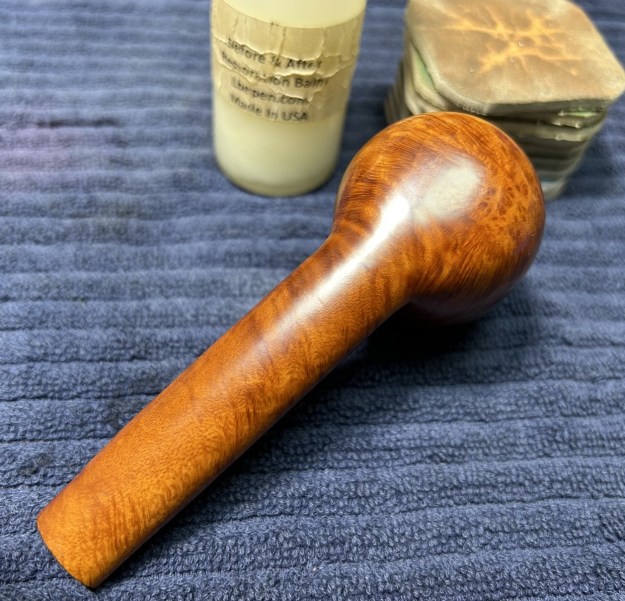
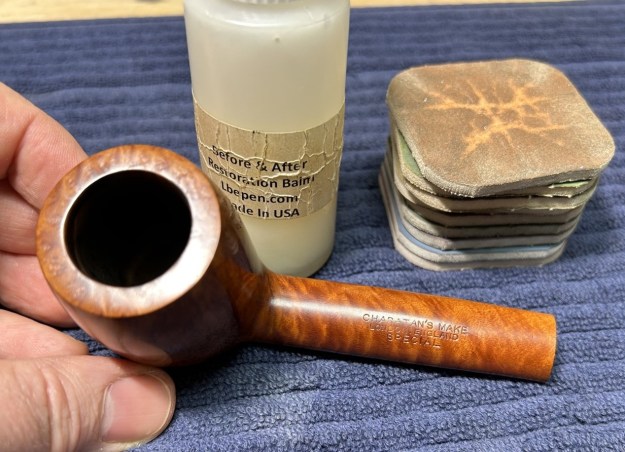
Next on the chopping block is a Lumberman-shaped Charatan, from the family of a local gentleman who had passed away. It’s great-looking pipe, with a large bowl and a long, lovely shank. The stem is a handsome saddle – not the “double comfort” version. I’m looking forward to getting this one fixed up and available for sale. On the top of the shank, it says “Charatan’s Make [over] London, England [over] Special”. Nothing on the left side of the shank, but on the right side it reads the shape number “4402 X”. On the stem, there was the traditional “CP” of the Charatan company. The Lumberman is a member of the Canadian family of pipe shapes, and this one is a real beauty. Let’s do some research and see what we find. First of all, a search of Charatan shape numbers provides this nugget:

“402 Outsize Lumberman”

And that fits this pipe to a T. Now let’s see if we can date this pipe. I went to Pipedia and found an excellent article on dating Charatans. Here are some relevant quotations for this pipe:

“From 1863 to 1960 the mouthpieces have a normal shape, saddle or tapered. From 1961 they use the ‘Double Comfort’ style still used today. By the way there are some saddle bits (without the double comfort) used in pipes that date after 1960 but these models are always characterized by a X (in the place of the DC) engraved after the shape number on the shank. This means that if a pipe has a tapered mouthpiece instead of a double comfort one, it is definitely a pre-Lane pipe before 1960. While if a pipe has a normal saddle bit stem, it could belong to every era. Nevertheless the pipe is pre 1961 if the shape code does not include an X, and is a pipe from after 1960 if the X is engraved.”

So this tells us that this pipe dates from after 1960. But there’s more!

“The CP logo on the stem is stamped in a different shape according the era it was used. Some differences are less obvious than others, however the glaring differences are detectable in 4 phases…. From 1961 to 1977 the CP logo is more pronounced and the C penetrates the P.”

So this tells us that this pipe dates from after 1960, but before 1977. And, again, there’s even more!

“Presence of the writing “CHARATAN’S MAKE LONDON ENGLAND” on 2 lines.”

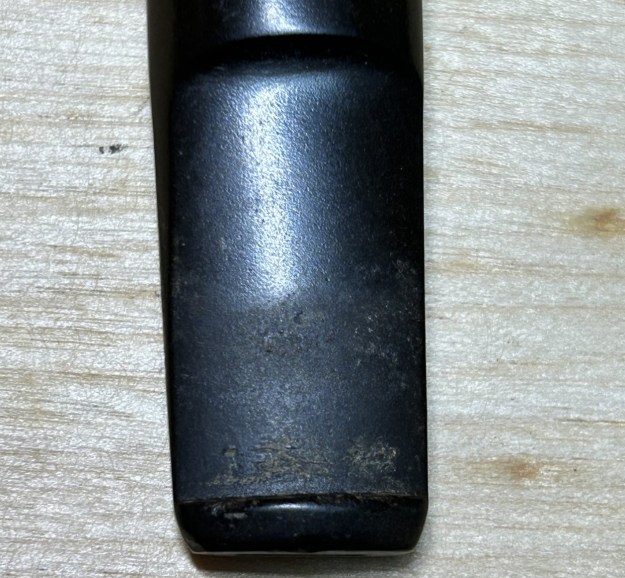
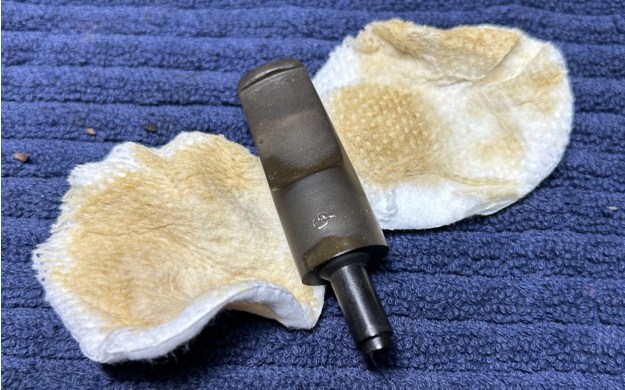
This is the clincher. It confirms that this comes from the “First Lane era, 1961-1965”. After this date, that specific writing on the shank changes from 2 to 3 lines. So this pipe dates from approximately 60 years ago. One important note: from 1955 all the pipes imported into the USA (and presumably Canada?) by Lane has a stylized “L” (to indicate Lane’s proprietorship). This pipe does not have the stylized “L”, so was likely acquired in England. Here’s an image of the pipe in question, from a 1964 catalogue: On to the pipe itself. It arrived in fairly good shape – no major problems to report. Just needs some TLC and it will look fantastic. The stem has a few minor bite marks and a good bit of oxidation, but nothing serious. The stummel had a few very minor nicks on the bowl, plus there was a good amount of lava on the rim and some charring. Most of the stummel, however, was in excellent condition – especially for 60 years old. Time to get to work! The stem was first on my list. I wiped the outside down with Murphy’s Oil Soap on some cotton pads. I also took a BIC lighter and ‘painted’ the stem with its flame to lift the few bite marks and dents. Then I cleaned out the inside with pipe cleaners and isopropyl alcohol. It was minorly dirty and I only went through a few pipe cleaners. I then wiped down the stem with SoftScrub cleaner to remove surface oxidation. Once this process was done, the stem went for an overnight soak in the Pipe Stem Oxidation Remover. This allows me to clean the oxidation off in a couple of ways: by applying a mild cleaner to the surface and sanding the stem. The next day, I used SoftScrub again with some cotton rounds. After this, I used some acrylic paint to restore the logo on the stem. I painted the area carefully and let it fully set before proceeding. I built up the dents on the stem with black cyanoacrylate adhesive and let them fully cure. I then sanded the adhesive down with 220- and 400-grit sandpapers to meld seamlessly into the stem. I then used all nine Micromesh pads (1,500 through 12,000 grit) to bring out the stem’s lovely black lustre. I also used Obsidian Pipe Stem Oil in between each pad scrubbing. With the stem shiny and clean, I set it aside and moved on to the stummel. Firstly, I decided to ream out the bowl. I used the PipNet Reamer to remove the built-up cake and followed that with 220-grit sandpaper taped to a dowel to eliminate as much as I could. I took the chamber down to bare briar, as I wanted to ensure there were no hidden flaws in the wall. There were a few thin, wispy heat fissures inside the bowl, but nothing serious. That’s easily dealt with – later. I then proceeded to clean out the insides of the shank with Q-tips, pipe cleaners, and lemon-infused isopropyl alcohol. There was a bit of filth inside this stummel and it took a fair amount of cotton to get it clean. I followed that up by cleaning the insides with some dish soap and tube brushes. I decided to de-ghost the pipe to remove any lingering smells of the past. I thrust cotton balls into the bowl and the shank and saturated them with 99% isopropyl alcohol. I let the stummel sit overnight. This caused any remaining oils, tars and smells to leach out into the cotton. The bowl was nice and clean after this.Even though the nicks on the stummel were slight, I dug out my iron and a damp cloth to try to raise them. The hot and moist steam can often cause the wood to swell slightly and return to shape. This worked quite well, but alas, I forgot to take pictures.
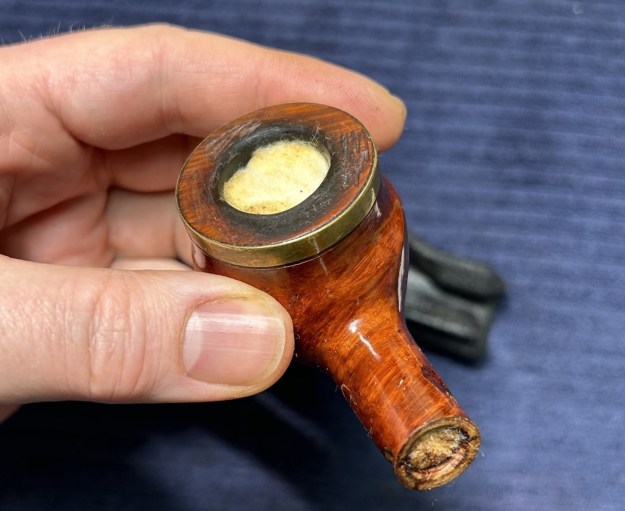
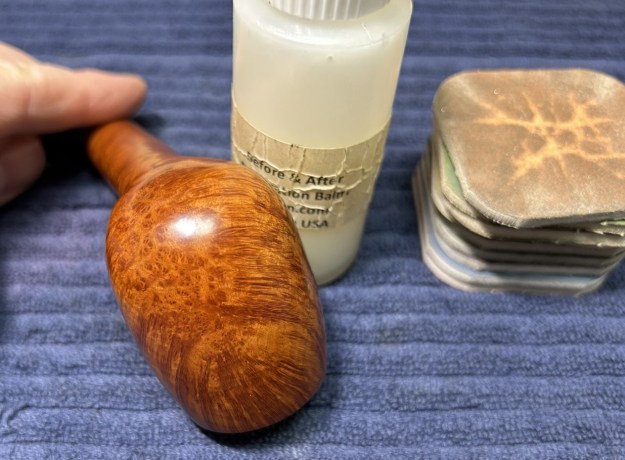
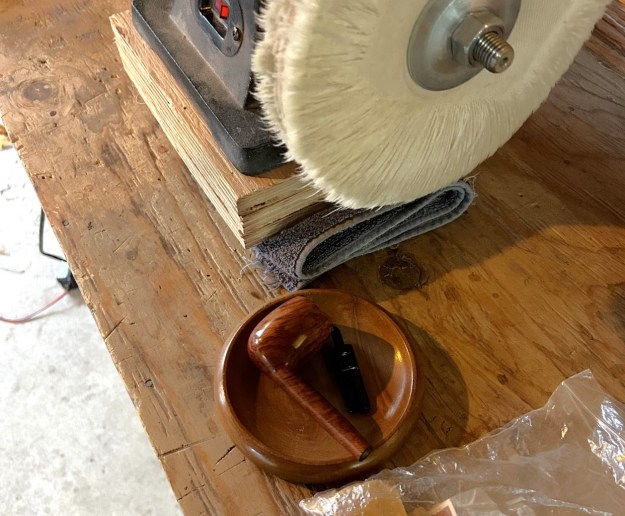
I used cotton rounds and some Murphy’s Oil Soap to scrub the outside of the stummel. I decided it wasn’t necessary to top this pipe. I felt that I could remove the charring without removing any patina. I used a piece of machine steel to gently and carefully scrape away the lava on the rim, before using a toothbrush with Murphy’s to get rid of the rest. So, I opted for just the Micromesh pads to finish things up. Since the pipe was in such good condition, I only used the 3200-grit and up.I addressed the small fissures in the bowl, by coating the entire inside of the bowl with a mixture of activated charcoal and my wife’s homemade yoghurt. Once hardened, this provided a good, slightly rough surface for a new cake to build. I applied a light application of Before & After Restoration Balm. This stuff works wonders in bringing out the beauty of wood. I make use of the stuff in every restoration. Then it was off to the buffer. I used White Diamond and carnauba wax to make this pipe super spiffy.This Charatan looks amazing and is ready to be enjoyed by the next owner! I am pleased to announce that this pipe is for sale! If you are interested in acquiring it for your collection, please have a look in the British Pipemakers section of the store here on Steve’s website. You can also email me directly at kenneth@knightsofthepipe.com. The approximate dimensions of the pipe are as follows: length 6¼ in. (160 mm); height 2 in. (53 mm); bowl diameter 1⅝ in. (42 mm); chamber diameter 1 in. (24 mm). The weight of the pipe is 1¾ oz. (52 g). I hope you enjoyed reading the story of this pipe’s restoration as much as I did restoring it. If you are interested in more of my work, please follow me here on Steve’s website or send me an email. Thank you very much for reading and, as always, I welcome and encourage your comments.

My Grandfather’s Apple


Blog by Kenneth Lieblich

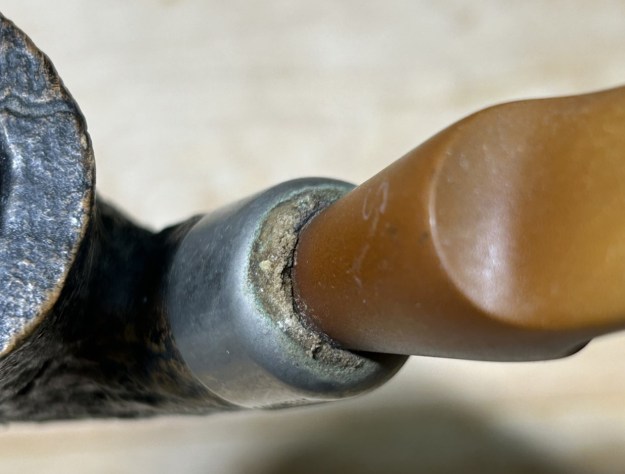
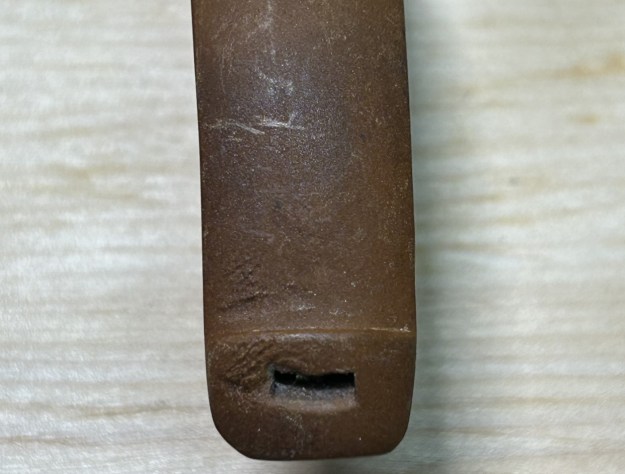
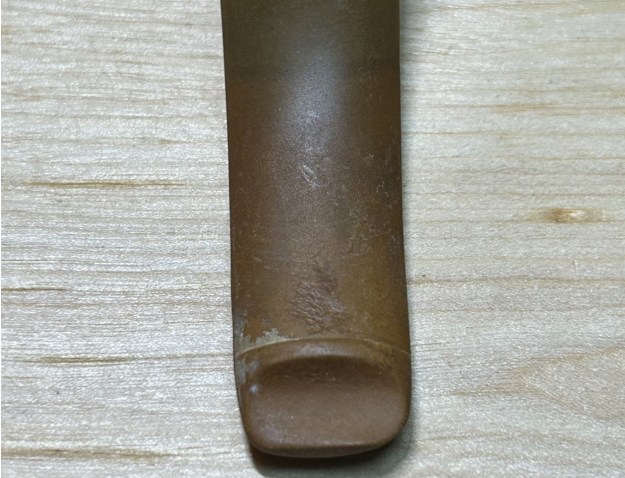
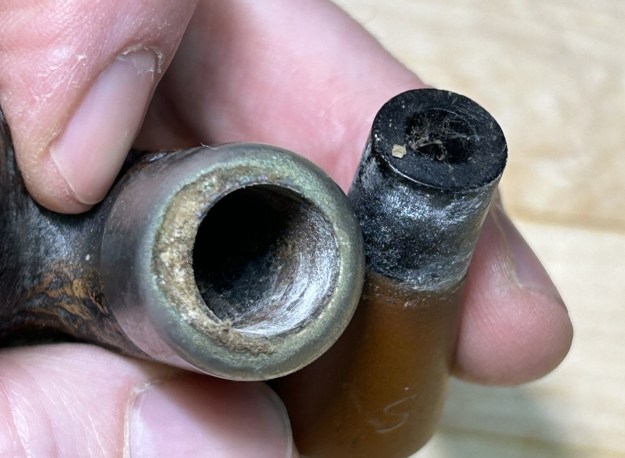
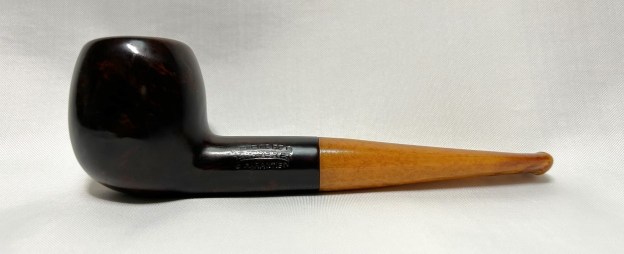
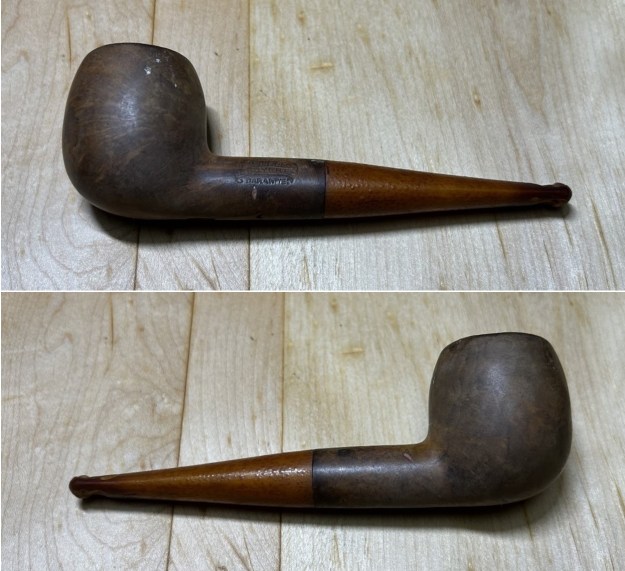
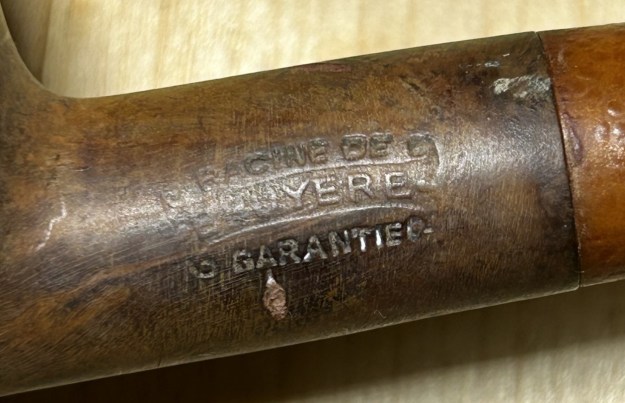
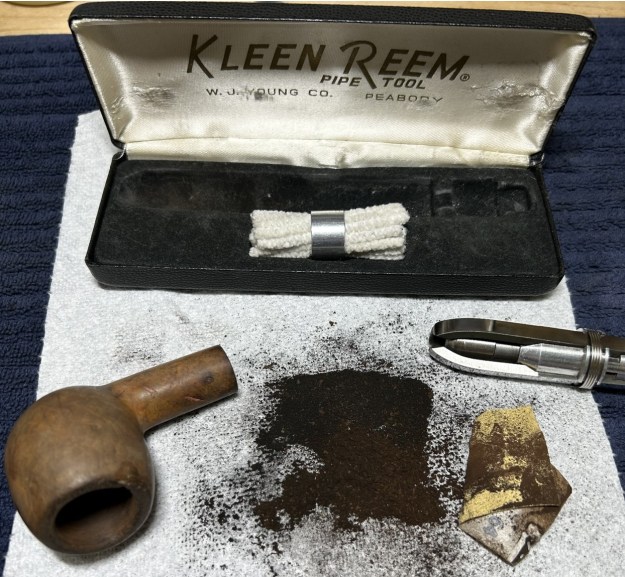
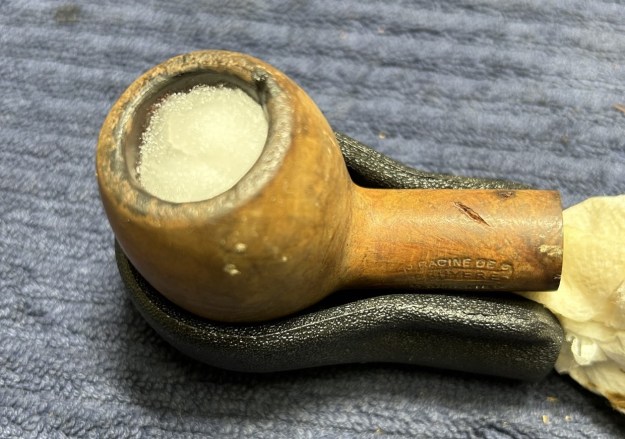
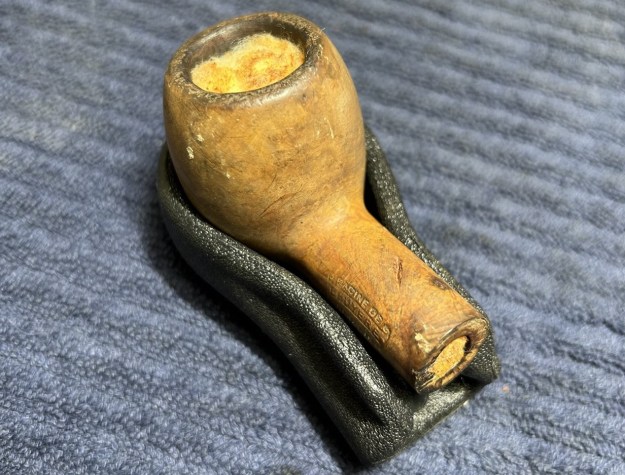
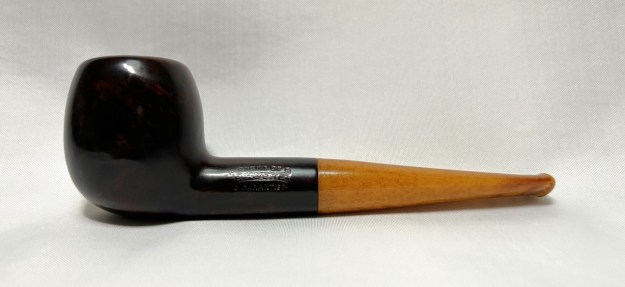
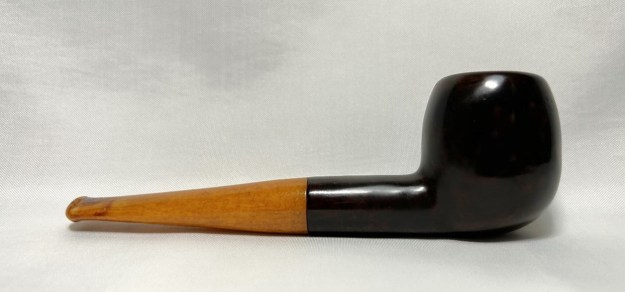
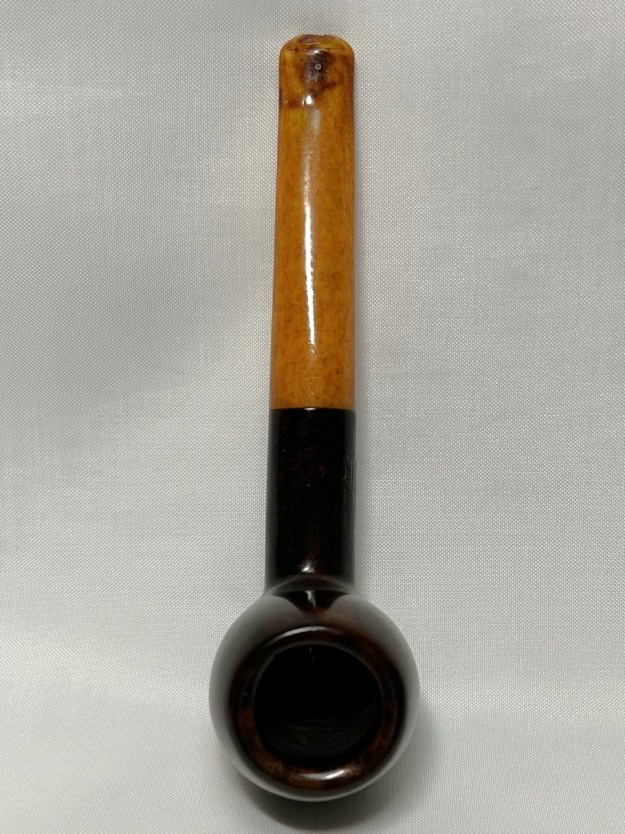
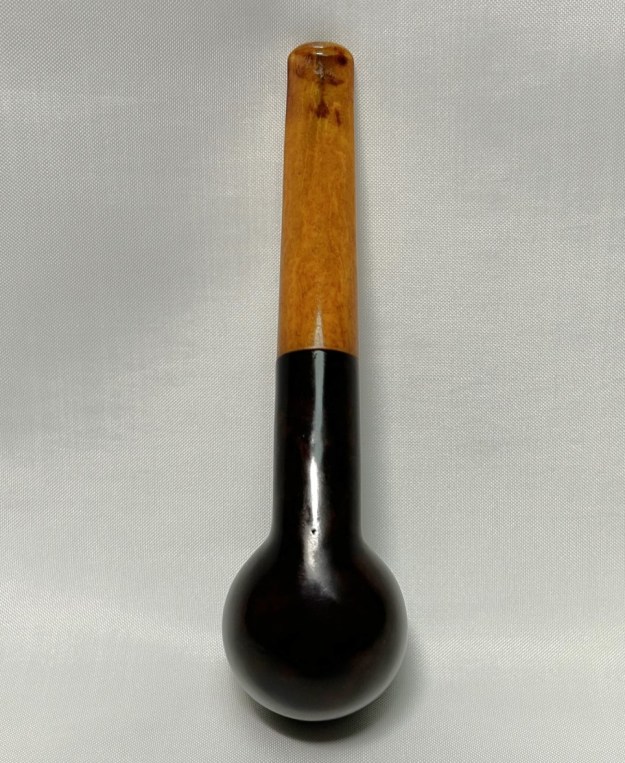
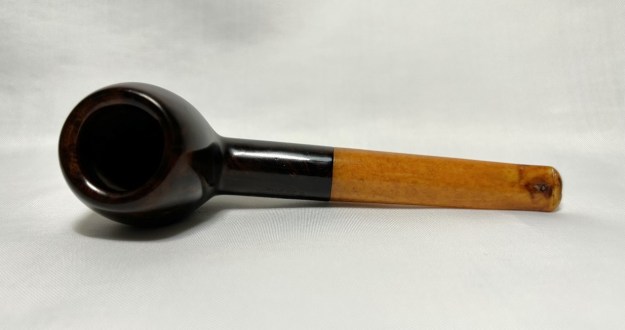
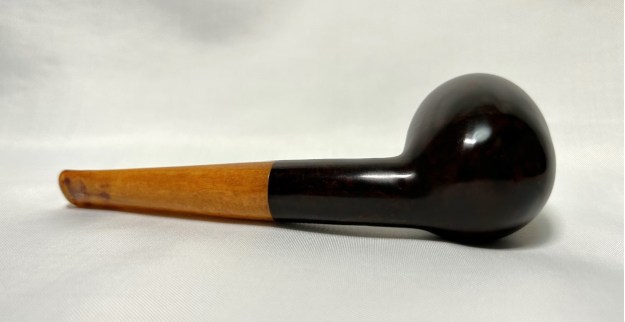
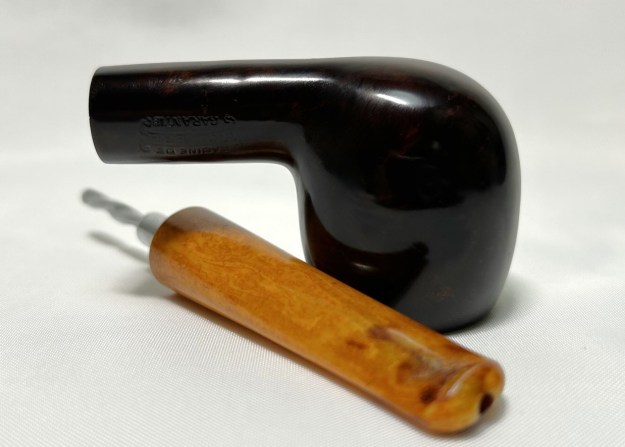
Next on the chopping block is a personal pipe – and one that is staying in my collection. This pipe is a charming apple shape with a straight stem of what I assume is amberoid – and not real amber. I do not know where my grandfather acquired it (or under what circumstances), but I suppose it does not ultimately matter. My grandfather was an enthusiastic pipe smoker and he clearly enjoyed this one. I am definitely looking forward to cleaning this one up. It has a value well beyond dollars. As the photos show, this pipe has a stem that tapers towards the button. In addition to this, it also has an orific button. These two facts suggest a pipe from the pre-WW2 era. For more information on the orific button, take the time to read Steve’s interesting article on the subject. This type of button is a feature that apparently disappeared by the 1930s, but the metal tenon suggests a date that is more likely in the 1940s. The pipe’s markings read Racine de [over] Bruyere [over] Garantie (on the left side of the shank). Alas, there are no other markings to be found. As you may know, Racine de Bruyere Garantie means “Guaranteed Briar Root”. This indicates that the pipe almost certainly comes from St Claude, France, but gives no indication of who made it. As previously mentioned, I do not know the exact date of the pipe, but it is likely from the 1940s.Anyway, on to the pipe – and it’s a pipe that just makes you smile. There is something wholesome and comforting about the look of the pipe. I must admit, however, that I may be thinking of my grandfather more than the pipe!

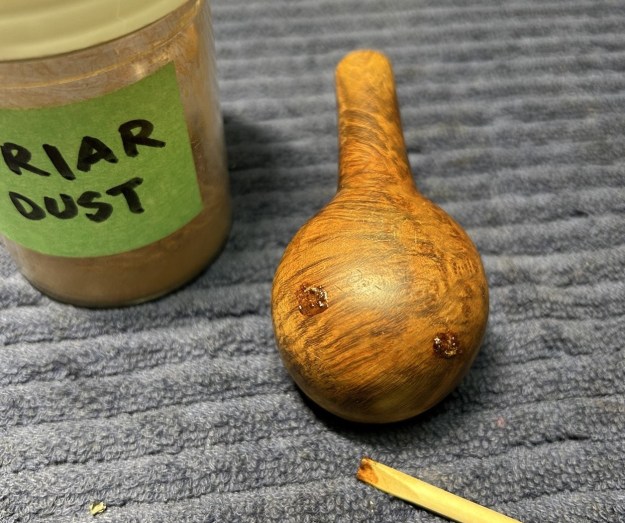
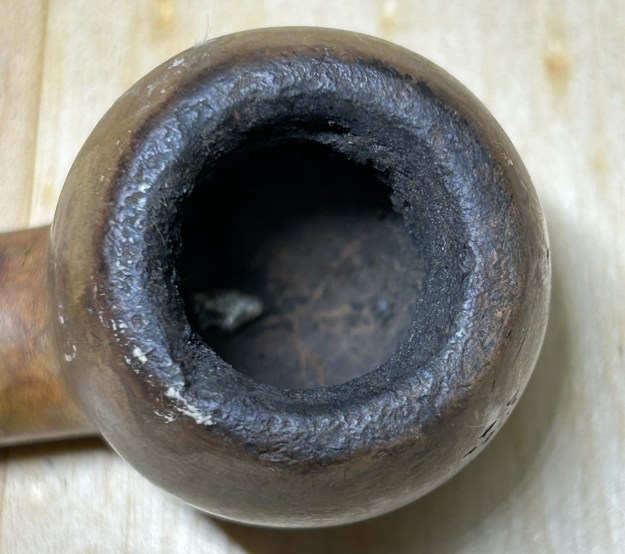
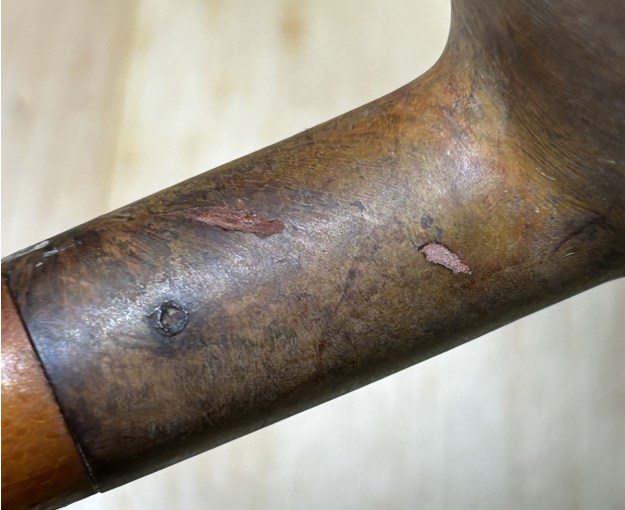
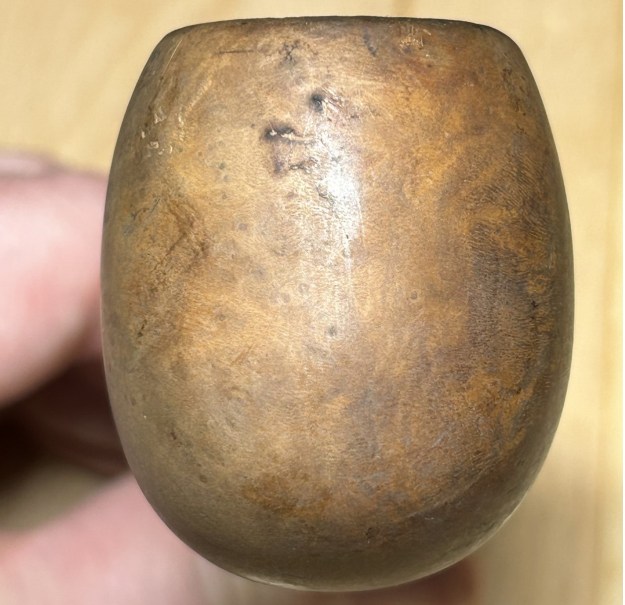
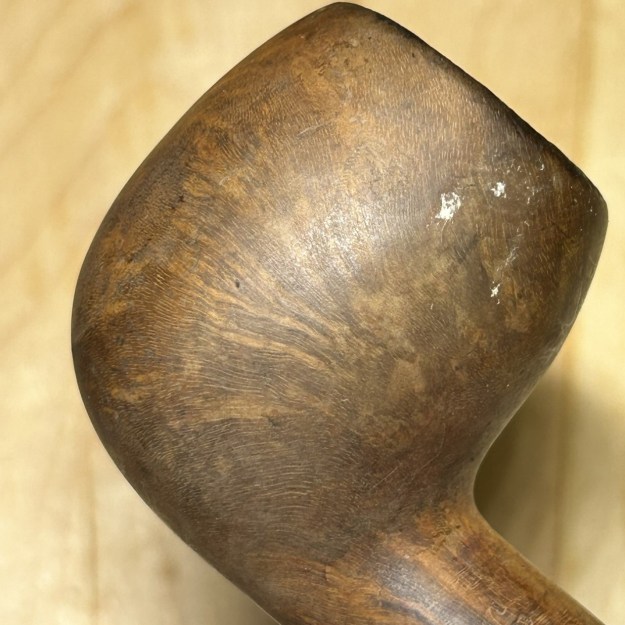
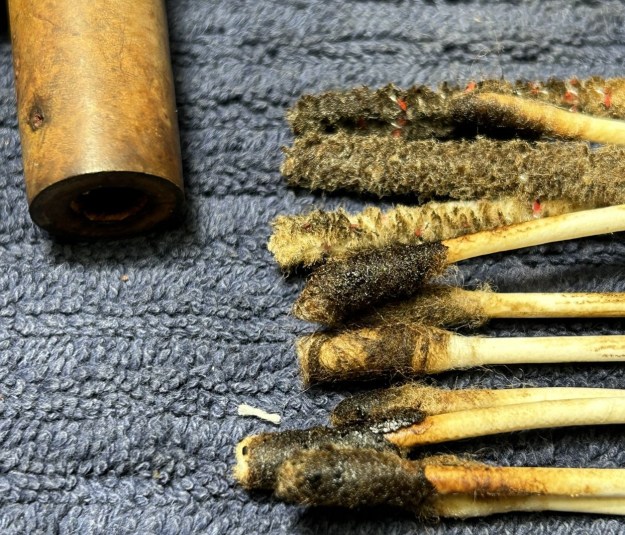
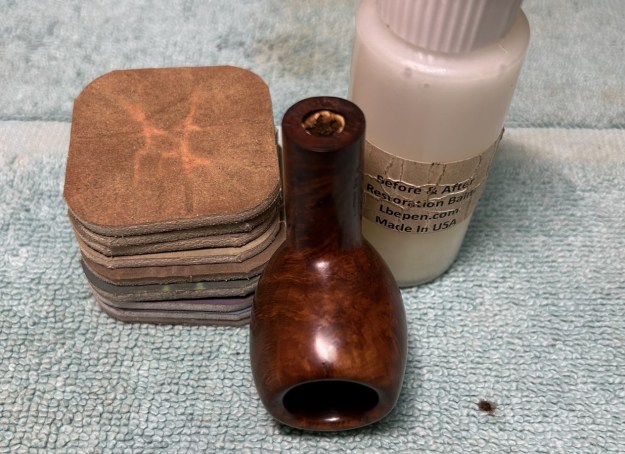
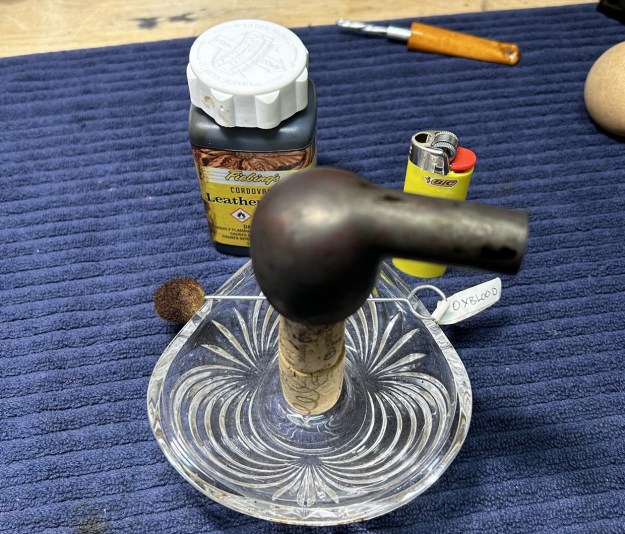
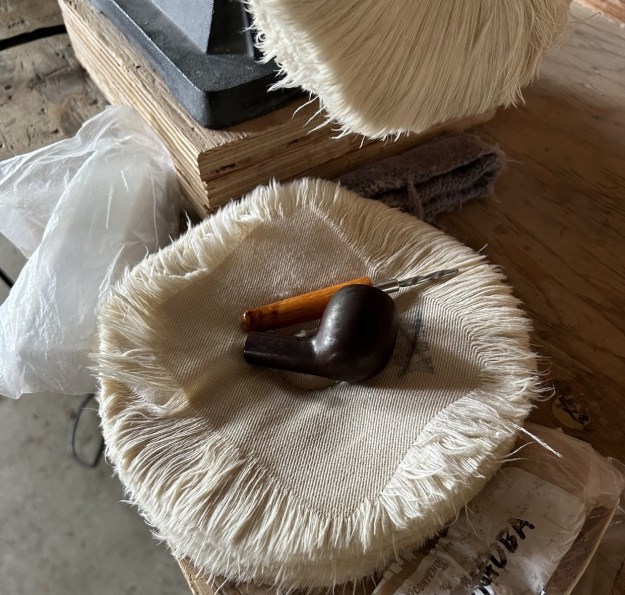
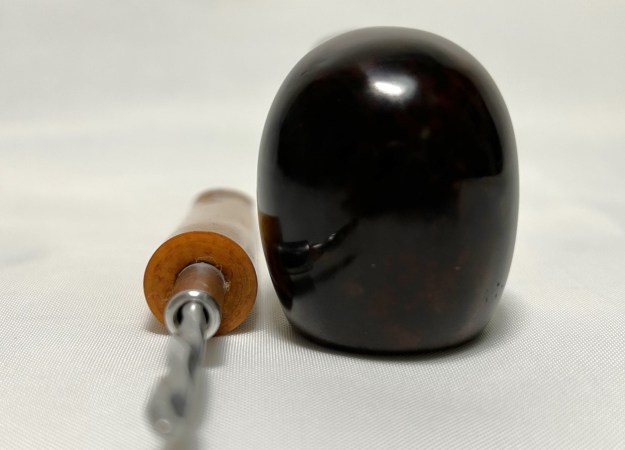
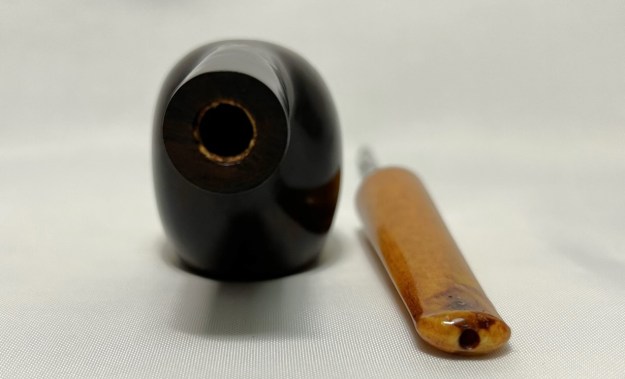
This poor pipe was not without its issues. The stummel had the following problems: lava on the rim, charring to the rim, a bashed rim, plenty of cake in the bowl, a few substantial and ugly fills, and a tired, worn-out colour of wood. By the way, some of the strange “marks” on the bowl are, in fact, old bits of newspaper. After my grandfather died, the pipes were wrapped in newspaper and stuck in a box. The newspaper got wet at some point in the intervening years. Meanwhile, the stem had its own set of problems: major tooth marks and dents, a bite-through, and a filthy stinger. The stem was first on my list. The stinger actually screwed into the tenon – and it was being quite stubborn about coming out! I opted to warm the stinger with a heat gun and this provided just enough softening of the internal goo to allow me to pull it out. The stinger then went for a soak in some lemon-infused isopropyl alcohol. I let it set for several hours and then cleaned it off and it looked much improved. I then finished it with some 0000-grit steel wool, greased the threads with some petroleum jelly and moved on. I wiped down the outside of the stem with Murphy’s Oil Soap on some cotton pads. Then, I cleaned out the insides with pipe cleaners and isopropyl alcohol. As I mentioned earlier, I think this stem is made from amberoid. This is a synthetic of small pieces of amber, pressed together under great pressure and high heat.Now it was time to make a fix the damage. I tried desperately hard to clean the discoloration inside and outside the stem, but this met with limited success. I ended up filing the dents etc. with clean cyanoacrylate adhesive. I first plugged up the stem’s draught hole with a pipe cleaner coated in petroleum jelly. This ensured that any of the cyanoacrylate would not accidentally plug up the air passage in the stem. I then used a miniature file to shape the button and make it suitable for sanding. I then sanded the stem down with 220- and 400-grit sandpapers to meld seamlessly into the stem. This ensures that it keeps its shape and looks like it should. I then used all nine Micromesh pads (1,500 through 12,000 grit) on the stem to make look as much like amber as possible. I also used Obsidian Pipe Stem Oil in between each pad scrubbing. It is worth noting that a repair this big on a stem will never be invisible, but I was pleased with how the stem finished up. On to the stummel, and the usual cleaning procedures were in order for this pipe. I used the KleenReem to remove the built-up cake, and followed that with 220-grit sandpaper to remove as much as I could. I wanted to take the bowl down to bare briar to ensure there were no hidden flaws in the walls of the bowl. Fortunately, there were none. I then proceeded to clean out the insides of the shank with cotton swabs, pipe cleaners, and isopropyl alcohol. There was quite a bit of filth inside this stummel – it took many pipe cleaners et cetera to clean it out. Have a look at the photos – disgusting! I decided that a de-ghosting session would be a good idea. I thrust cotton balls into the bowl and the shank and saturated them with 99% isopropyl alcohol. I let the stummel sit overnight. This caused the oils, tars and smells to leach out into the cotton. The bowl was nice and clean after this. One interesting point of note is that the mortise on this pipe is lined with cork (another sign of the pipe’s age). This complicated the cleaning process, as I needed to ensure that the alcohol etc. didn’t degrade the cork. I worked carefully and it turned out alright.I followed that up by cleaning the insides with some Castile soap and tube brushes. I then moved on to cleaning the outside of the stummel with Murphy’s Oil Soap and some cotton pads. That removed the bits of aforementioned newspaper and any remaining dirt. I also soaked the rim in Murphy’s for a while, then used a toothbrush to loosen up the lava.There were several notable dents and nicks on the rim. Normally, I would top the pipe on a piece of 220-grit sandpaper. I didn’t do that this time because I wanted to maintain the rounded profile of the rim. I still used 220-grit sandpaper, but made sure to keep the look of the pipe.Having completed that, I was able to address the fills on the stummel. I used a dental tool to dig out the old, crumbly putty. I filled the divots with a mixture of cyanoacrylate adhesive and briar dust – then let it cure. Now, with the nicks filled, it was time to sand down the stummel. I used all nine Micromesh pads (1,500 through 12,000 grit) to sand everything smooth.After that, a light application of Before & After Restoration Balm brought out the best in the stummel’s grain. What a difference that made! I felt that this pipe really needed some colour for two reasons: some dark colour would contrast nicely with the orange of the stem and it would help obscure some of the dreadful fills. I applied Fiebing’s Cordovan Leather Dye with a cotton dauber. I flamed it with my Bic lighter, let it set, then coated it again with dye, flamed it again, and let that set too. I decided to let the pipe sit overnight. Upon the morrow, I used isopropyl alcohol to wipe down the pipe and remove excess stain. I am very happy with the results.Then it was off for a trip to the buffer. A dose of White Diamond and a few coats of carnauba wax were just what this pipe needed. The lovely shine made the wood look absolutely beautiful.This is a wonderfully crafted pipe and has a very elegant feel to it. It took a lot of work, but I am proud of it and the final product is (hopefully) worthy of my beloved grandfather’s memory. Obviously, this is one pipe that I am keeping for myself and adding to my collection. I am sure that I will be enjoying this one for many years to come. I hope you enjoyed reading the story of this pipe as much I as I did restoring it. The approximate dimensions of the pipe are as follows: length 5⅜ in. (136 mm); height 1⅝ in. (43 mm); bowl diameter 1⅜ in. (37 mm); chamber diameter ¾ in. (19 mm). The weight of the pipe is 1¼ oz. (40 g). If you are interested in more of my work, please follow me here on Steve’s website or email me directly at kenneth@knightsofthepipe.com. Thank you very much for reading and, as always, I welcome and encourage your comments.