Tag Archives: acrylic stem

A Terrific American-Canadian Pipe from Mark Tinsky


by Kenneth Lieblich

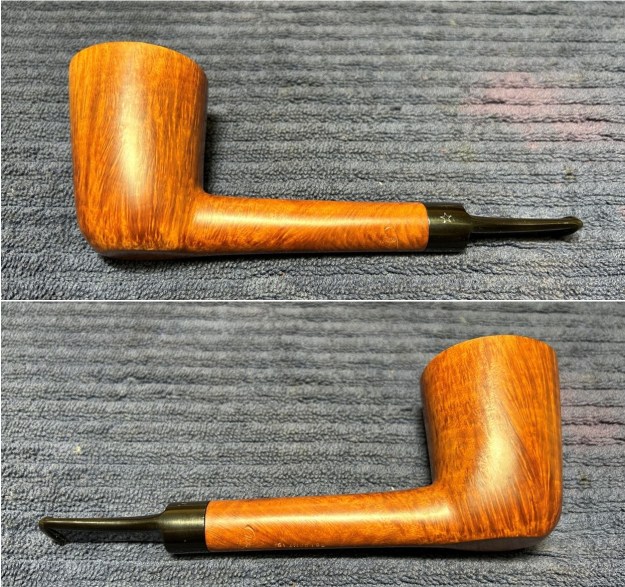
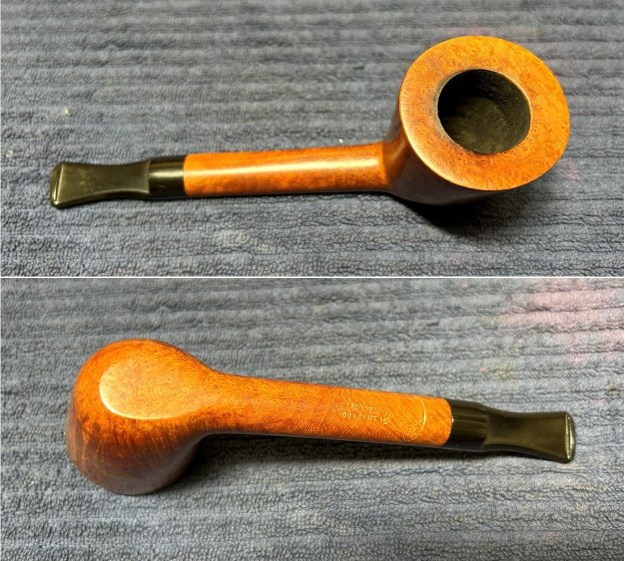
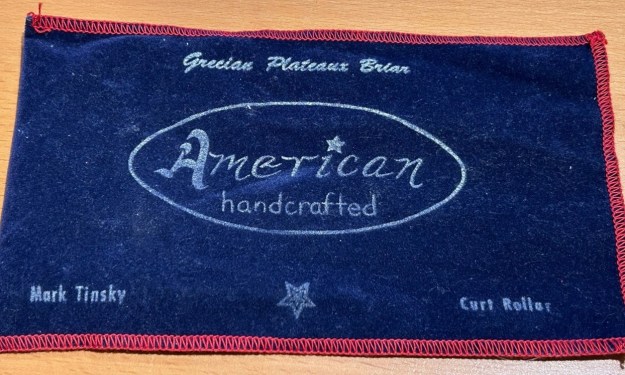
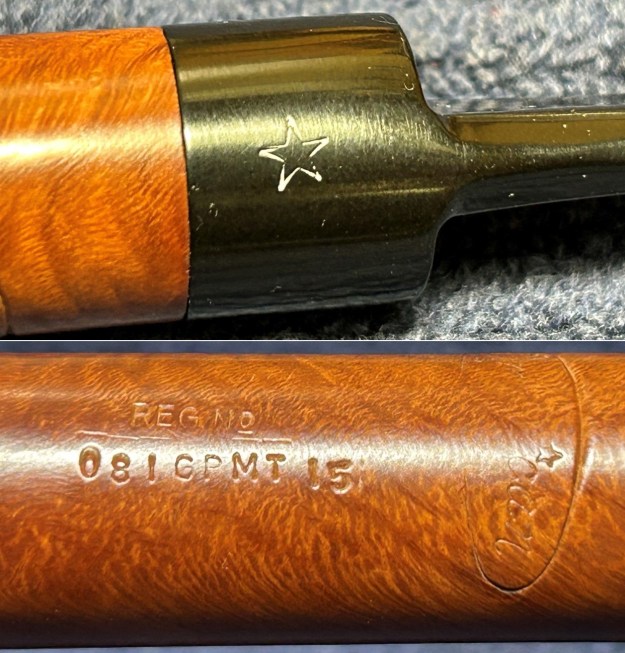
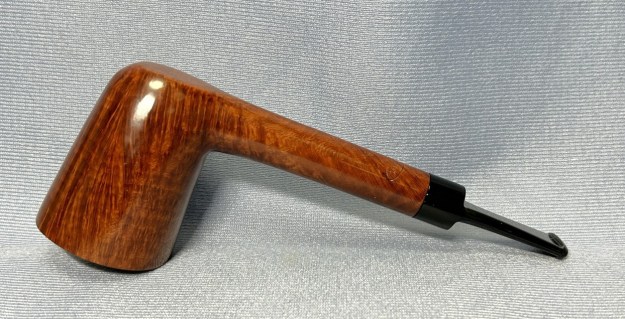
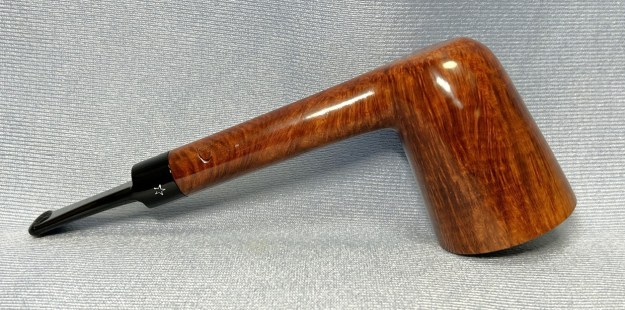
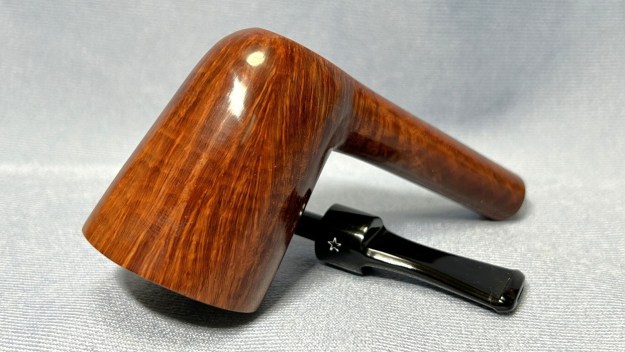
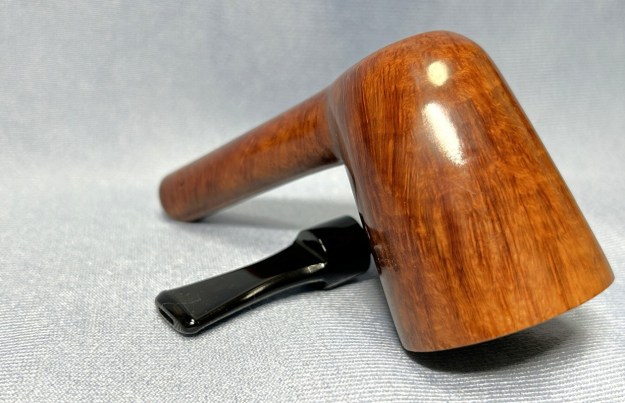
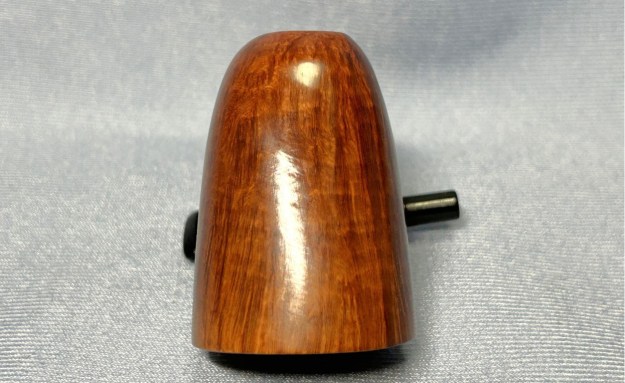
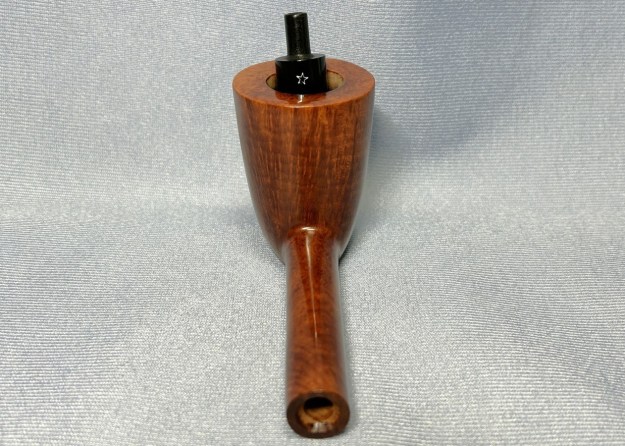
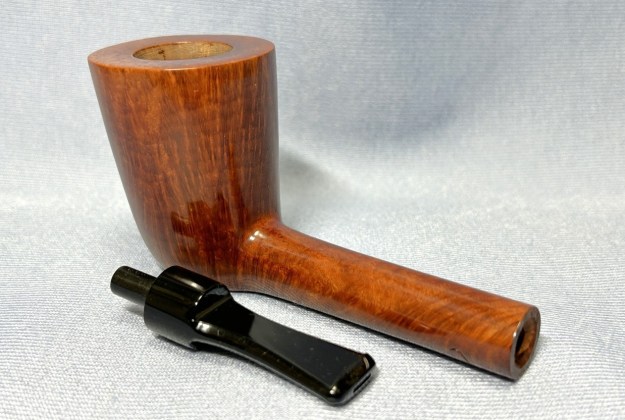
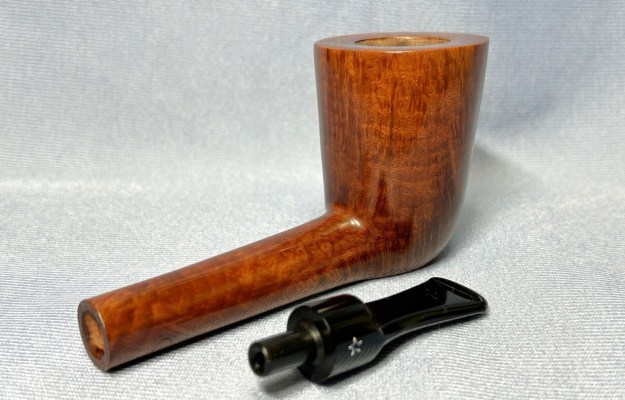
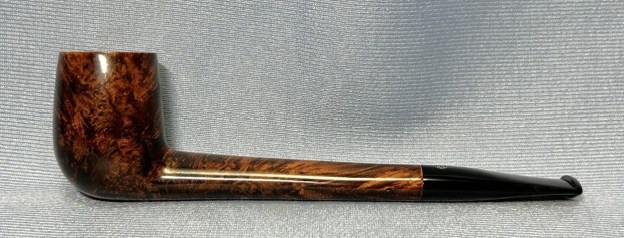
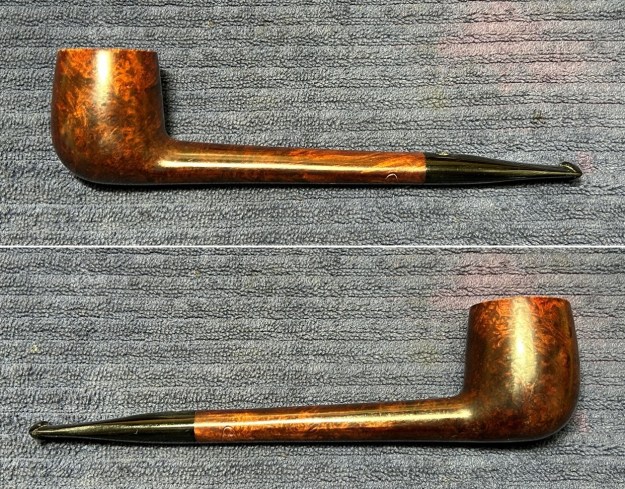
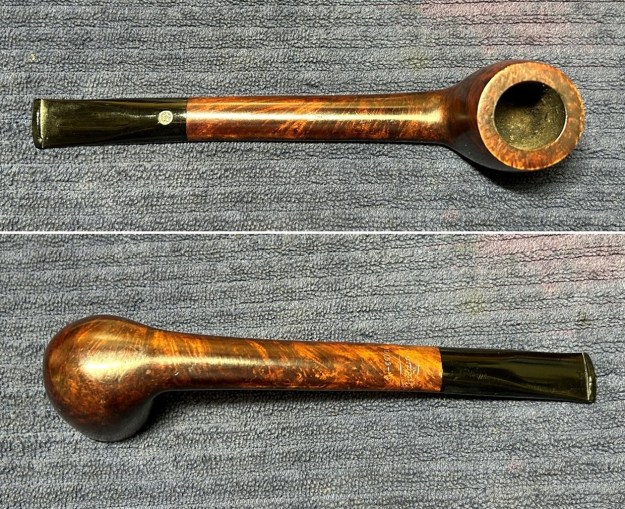
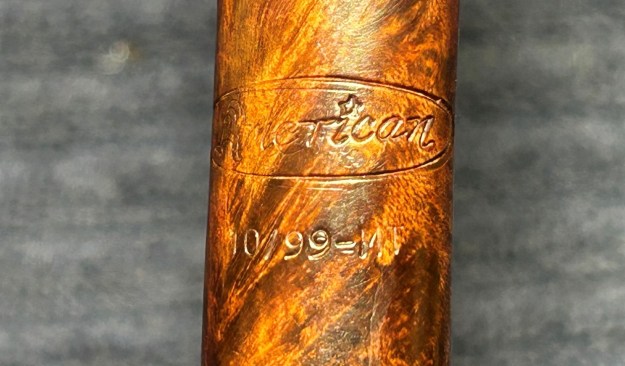
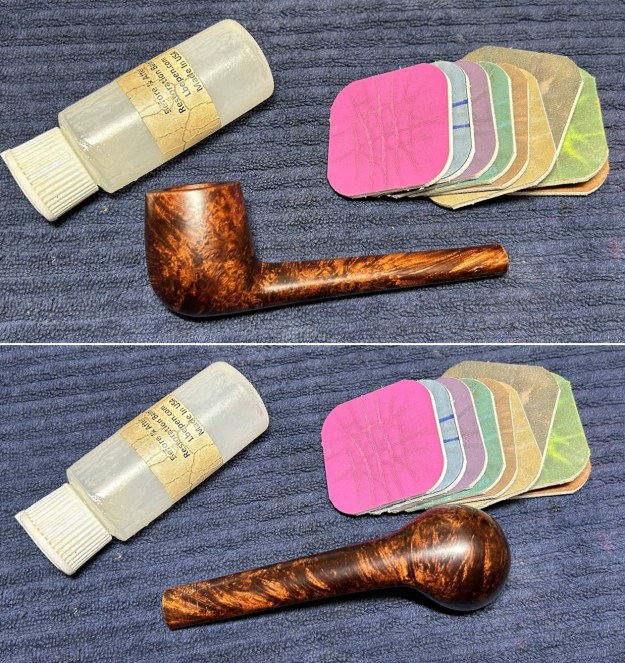
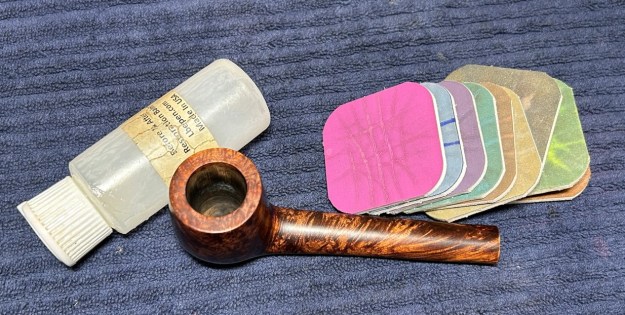
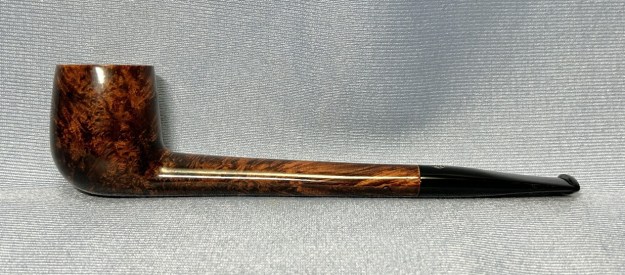
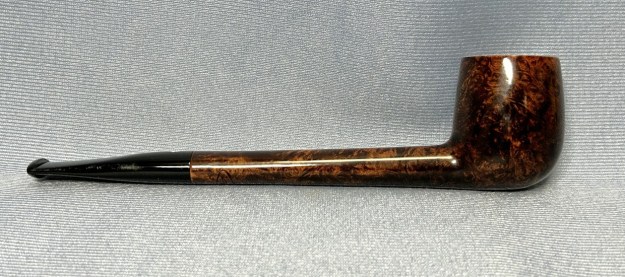
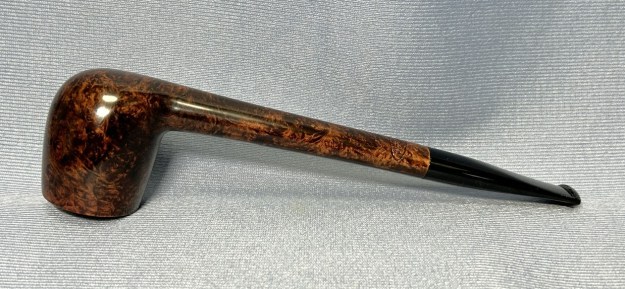
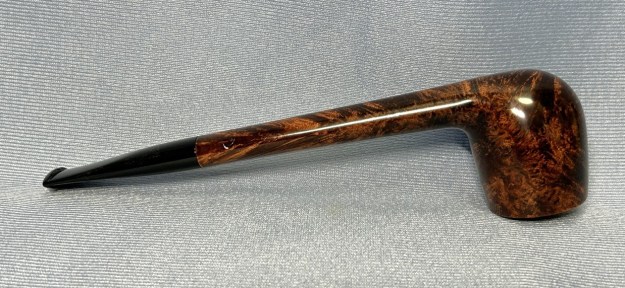
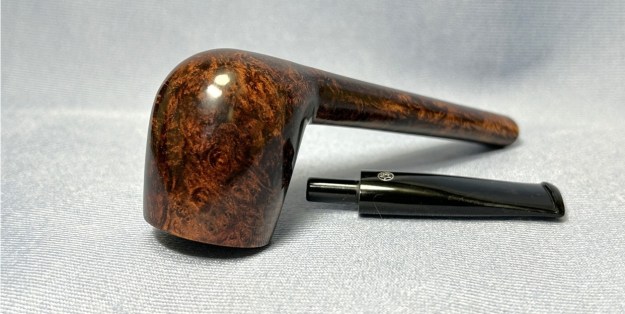
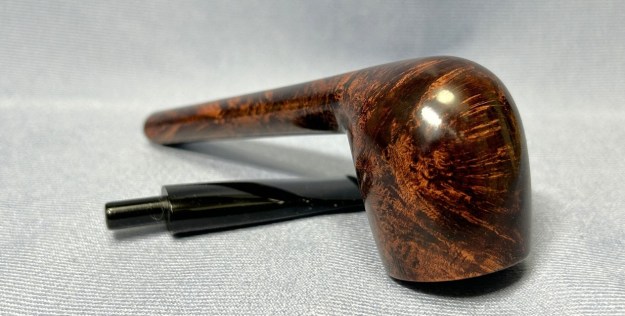
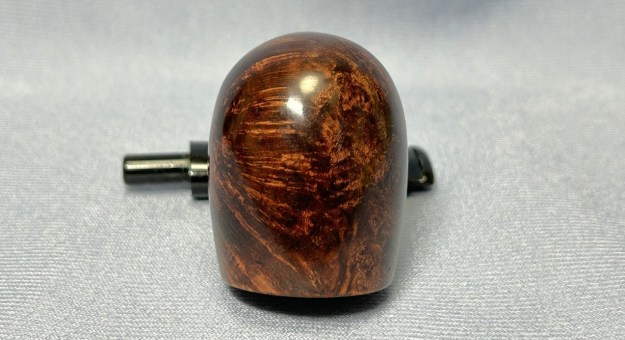
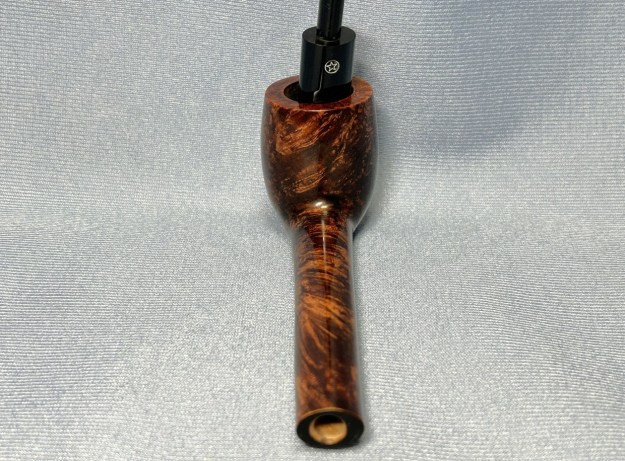
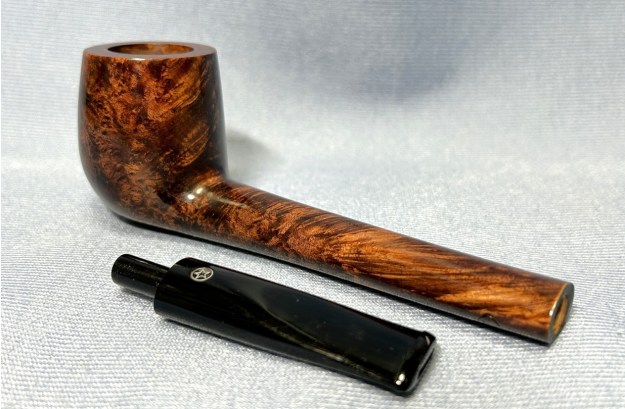
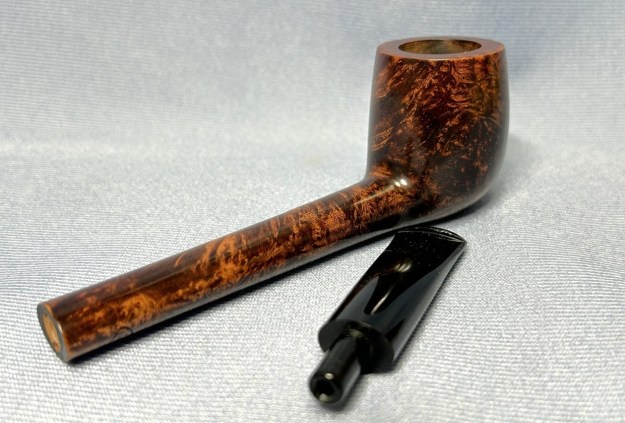
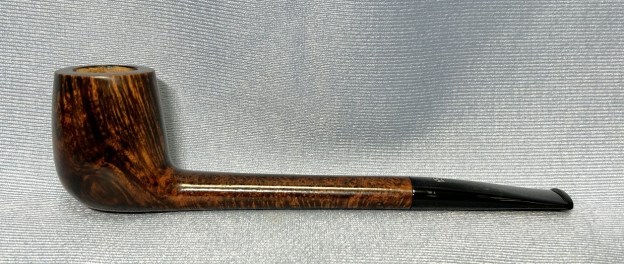
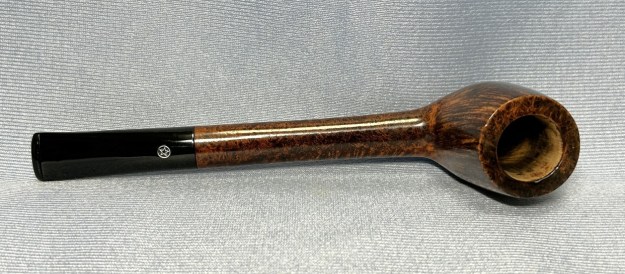
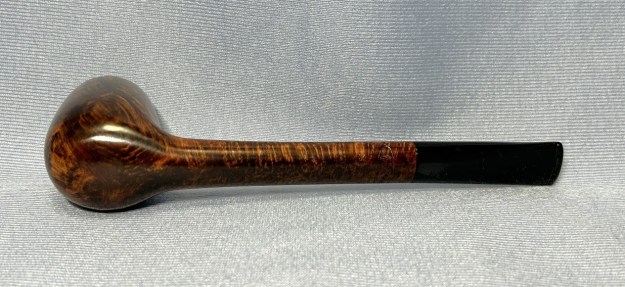
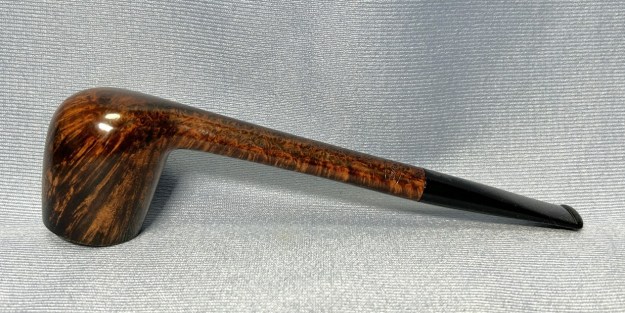
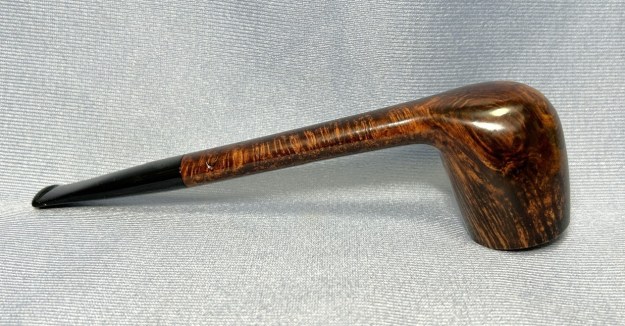
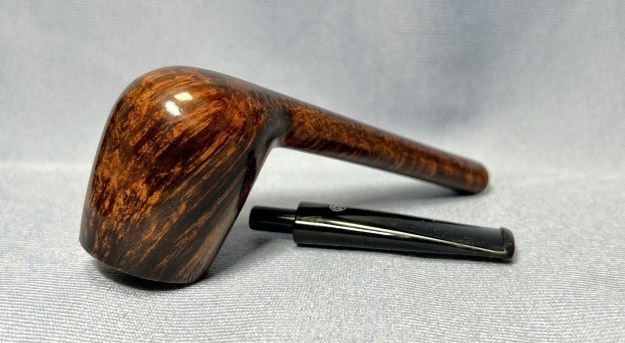
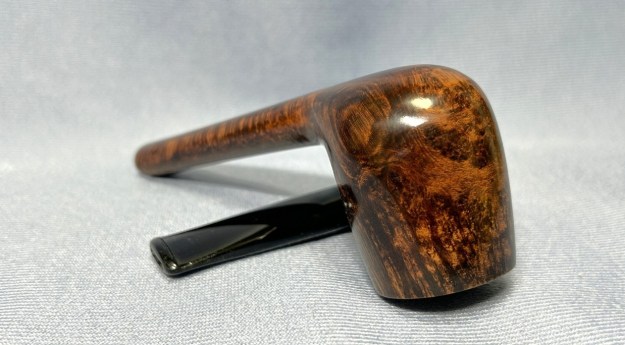
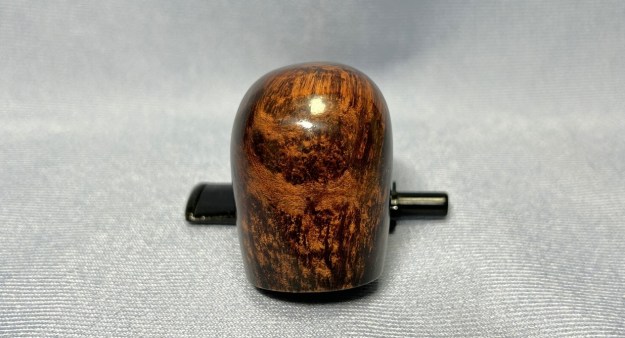
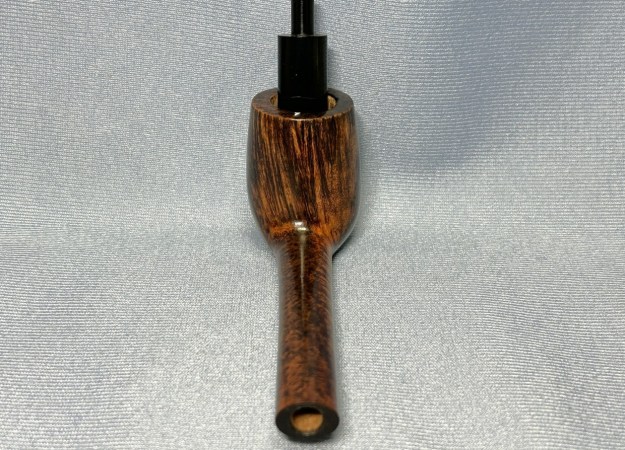
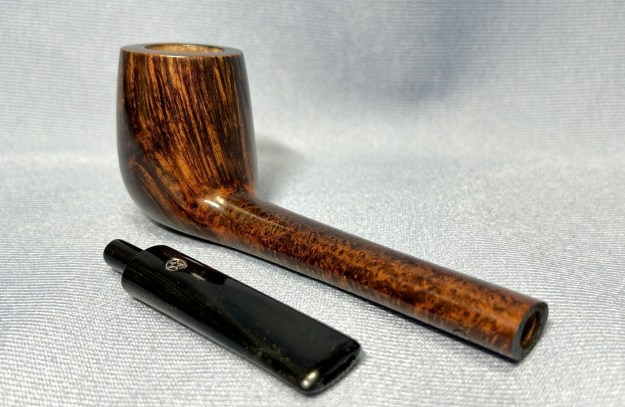
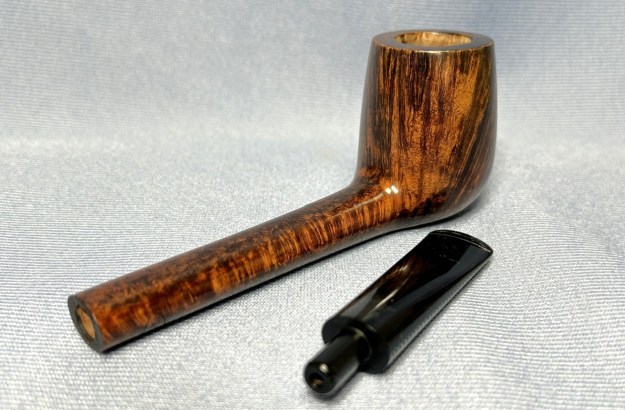
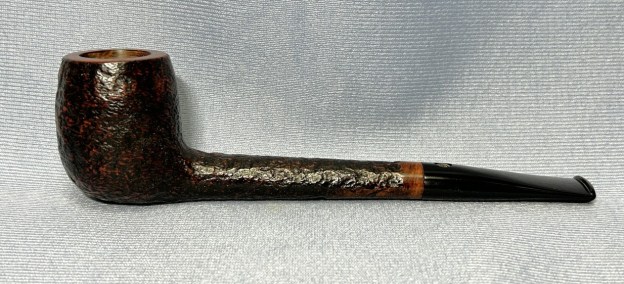
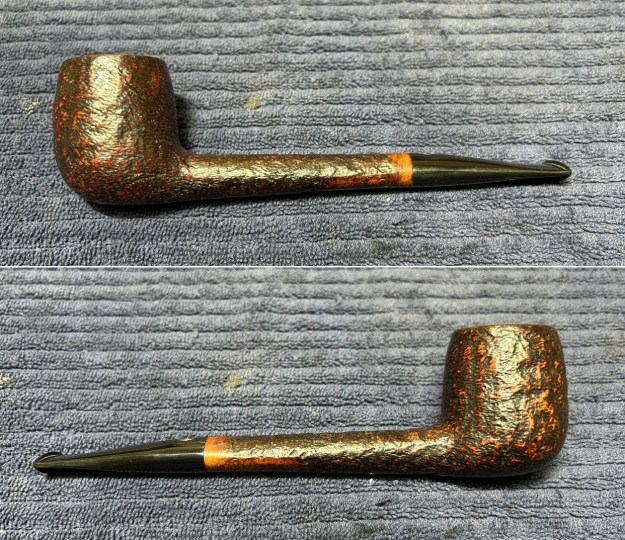
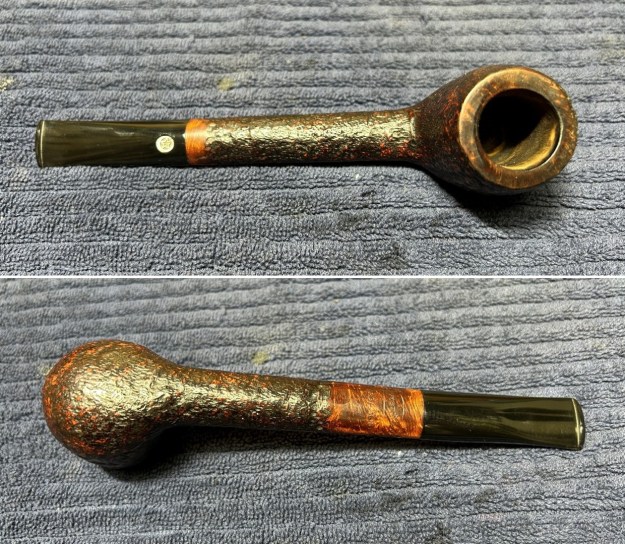
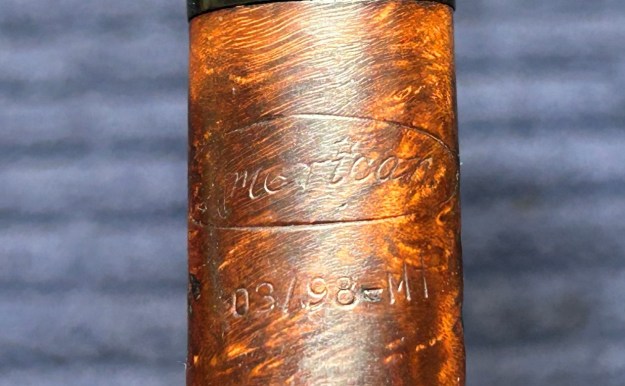
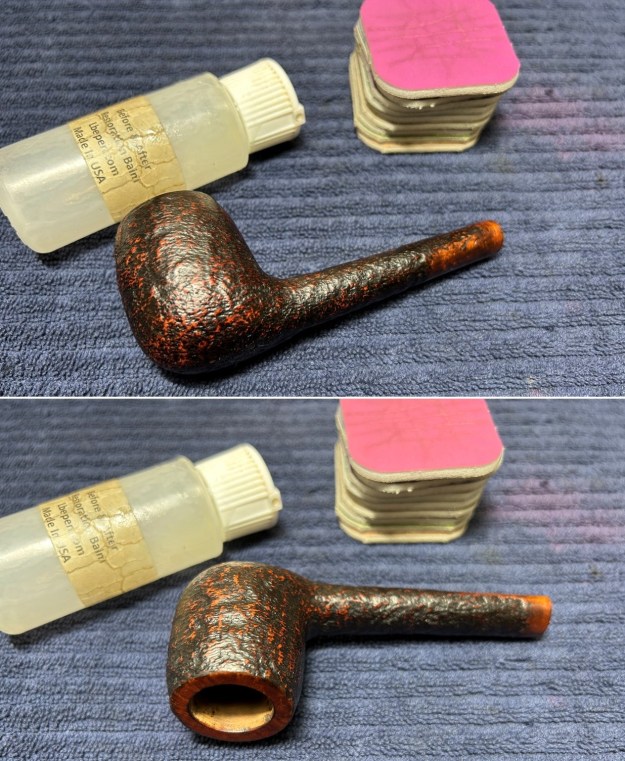
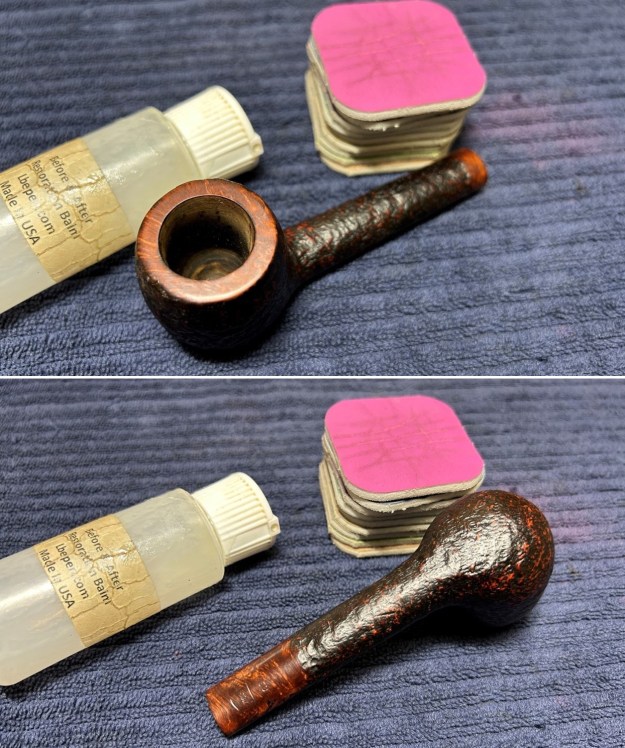
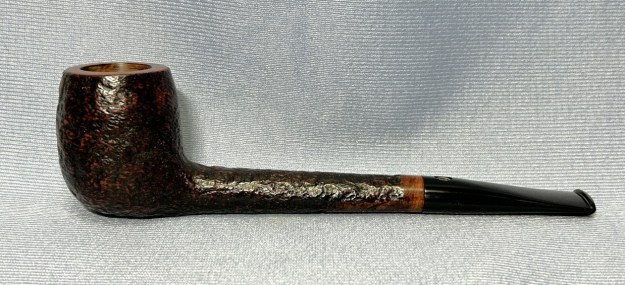
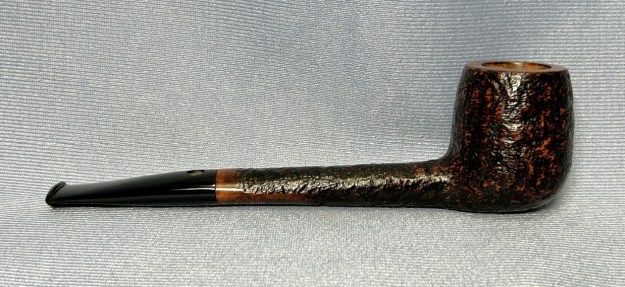
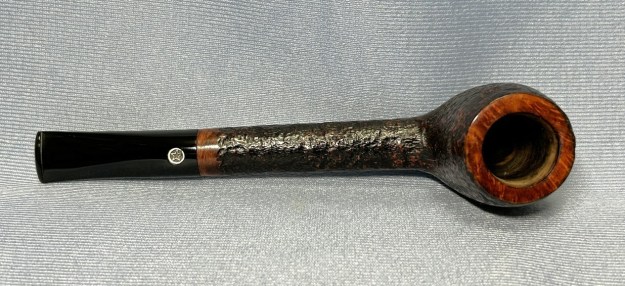
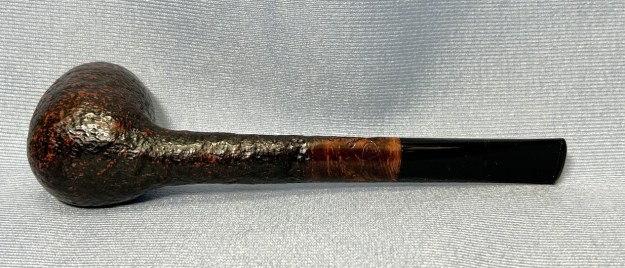
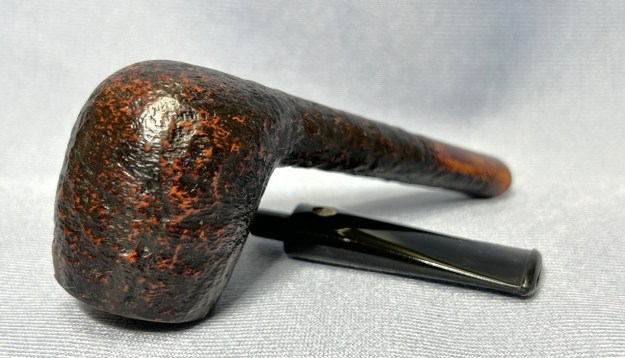
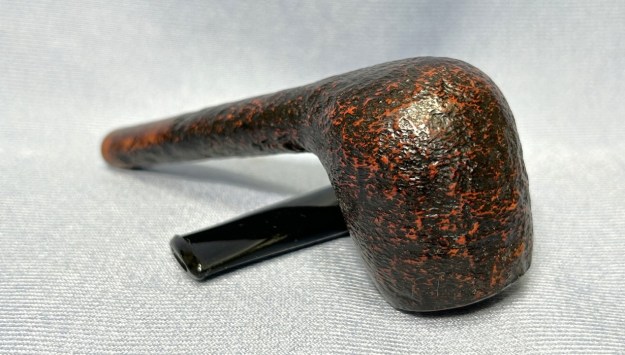
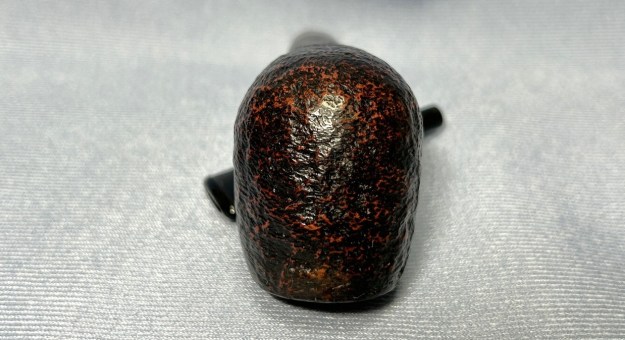
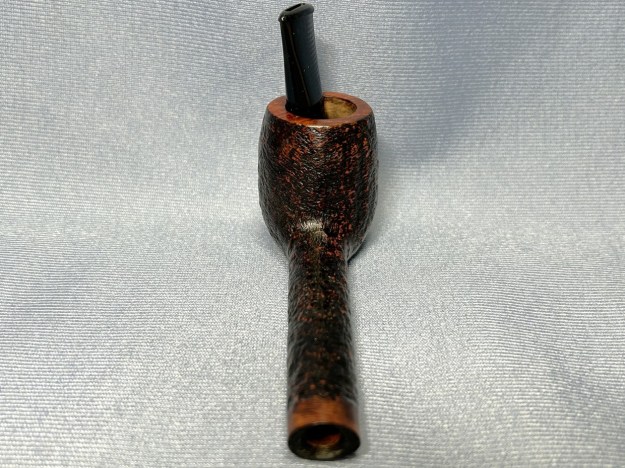
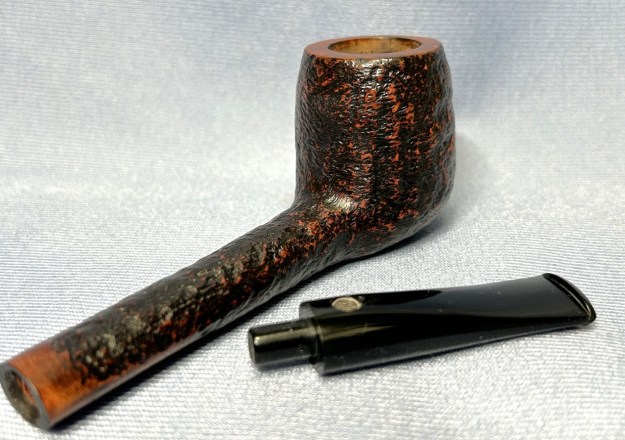
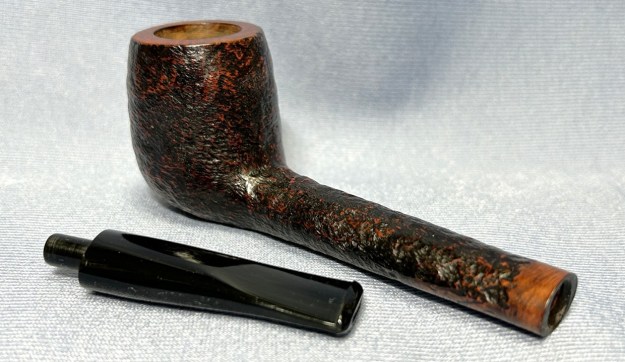
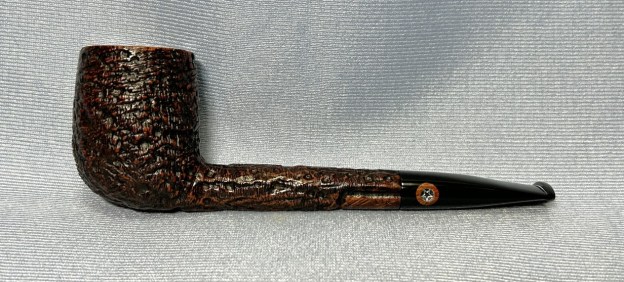
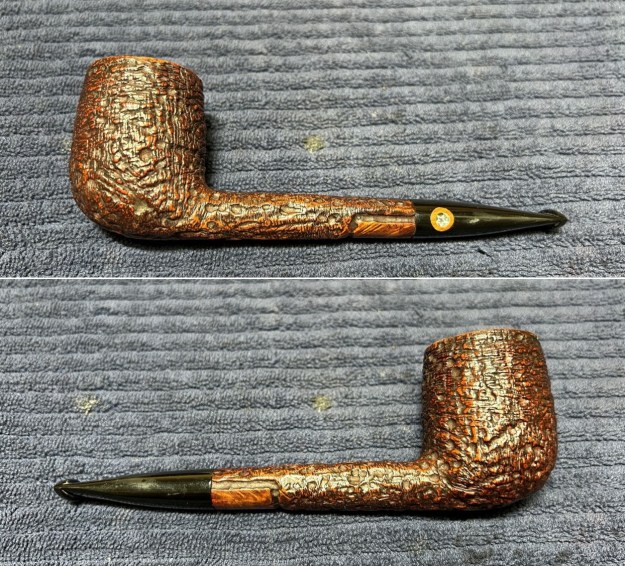
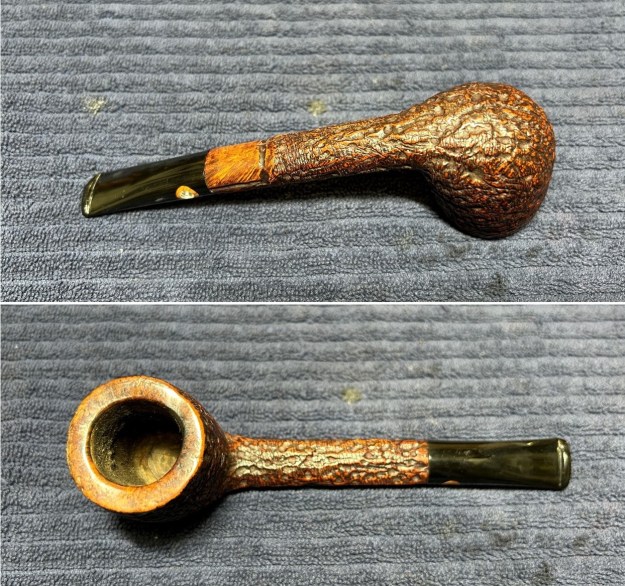
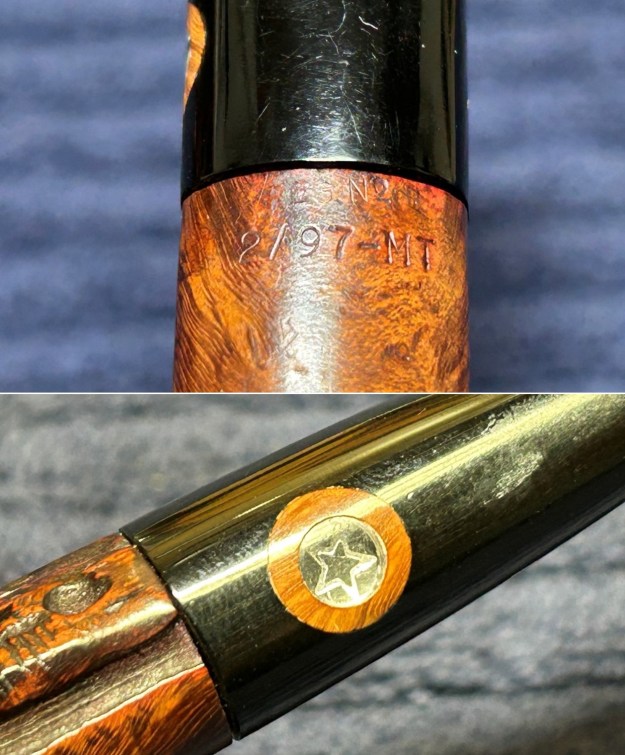
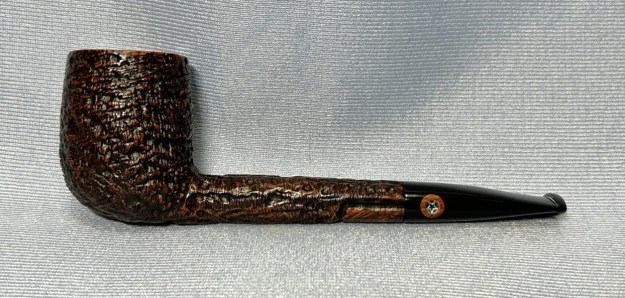
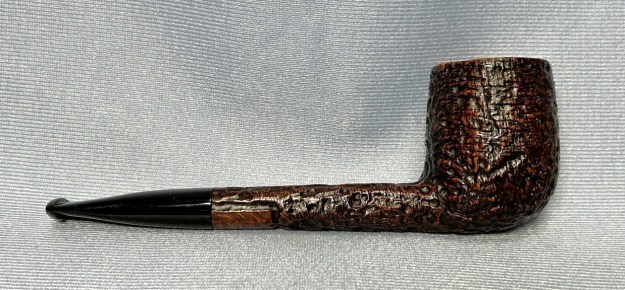
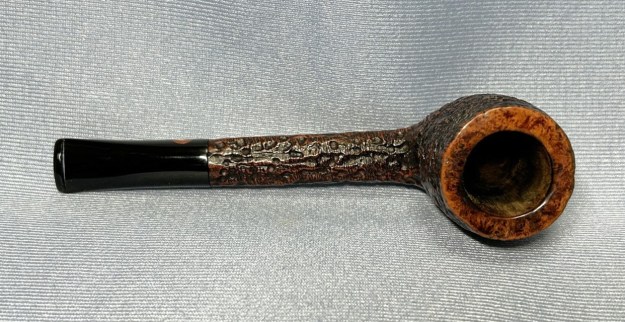
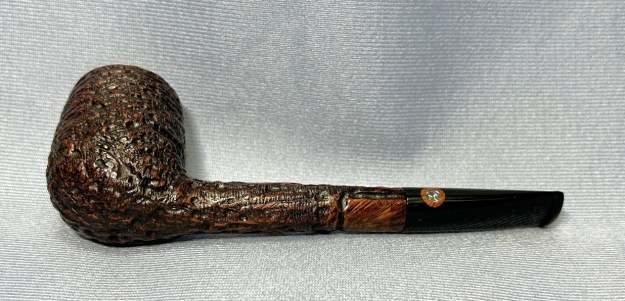
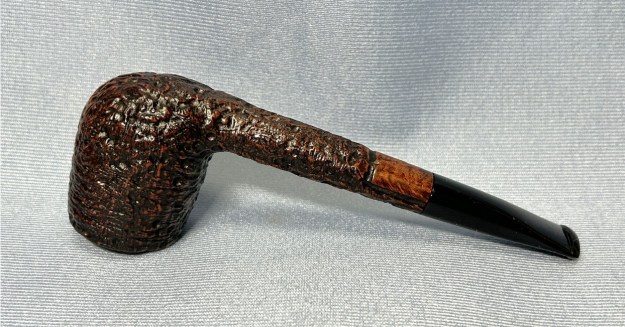
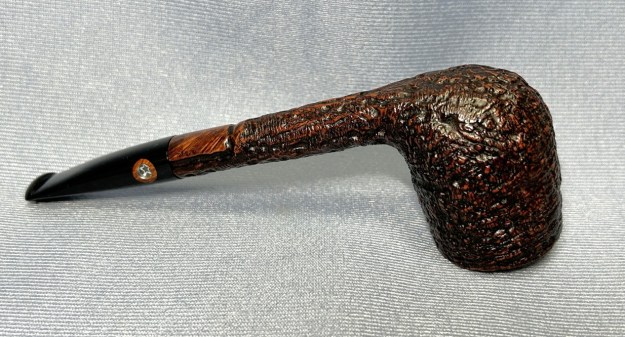
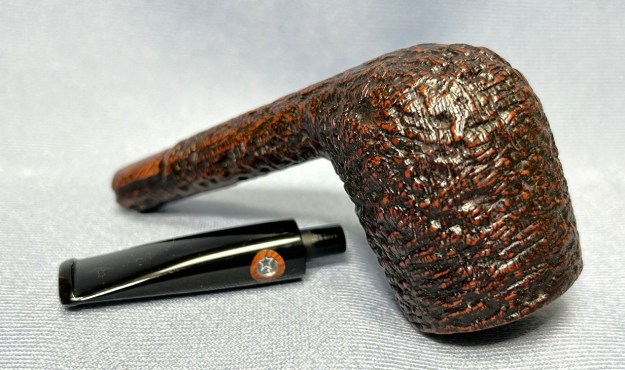
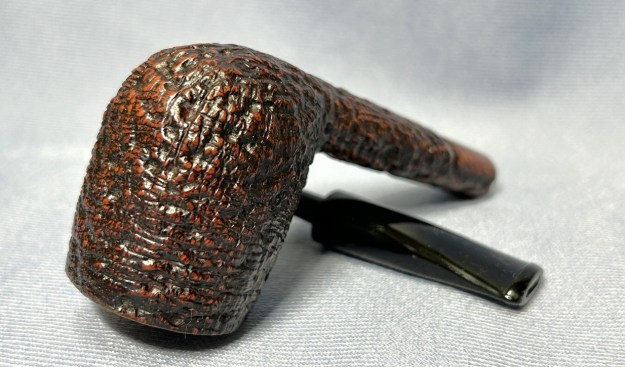
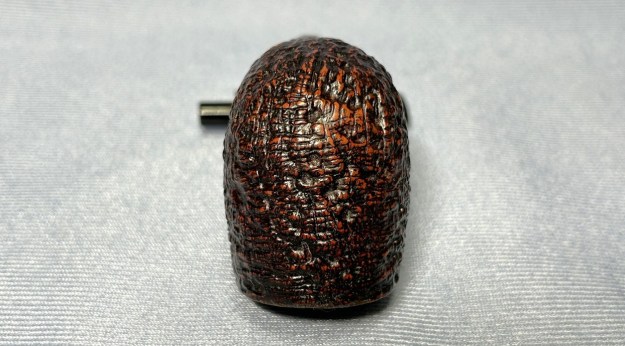
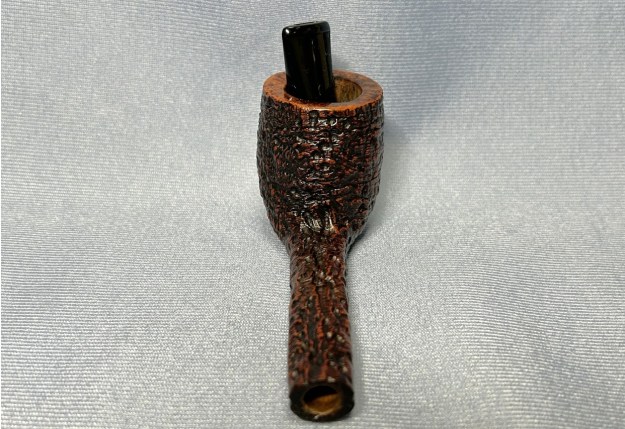
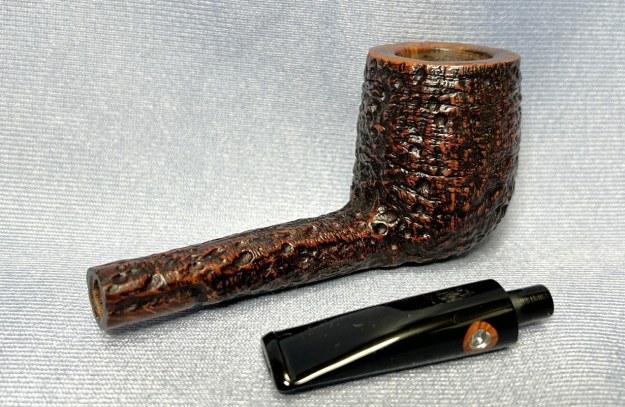
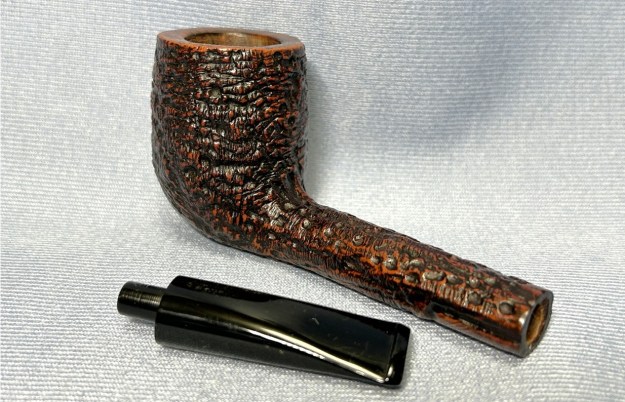
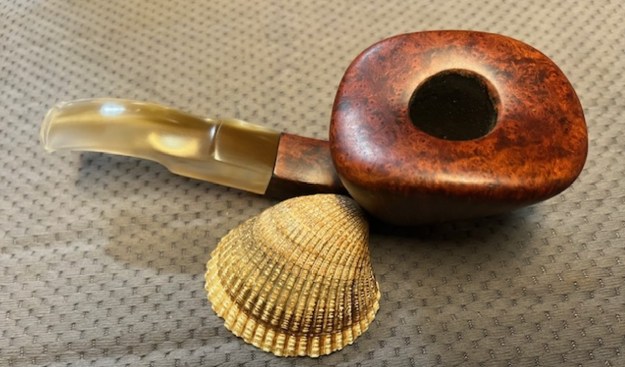
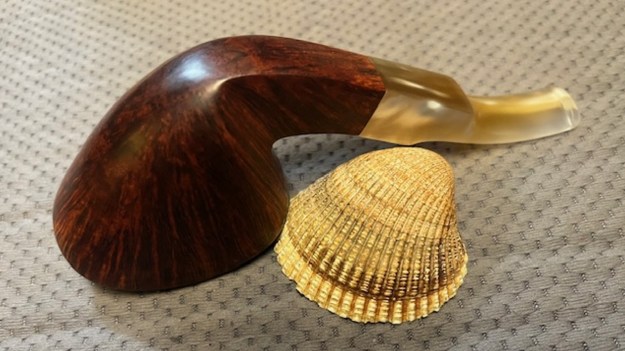
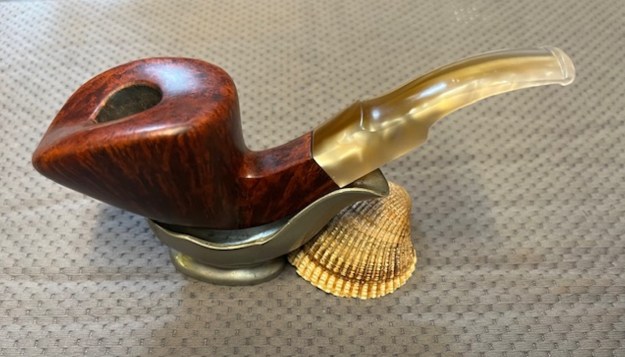
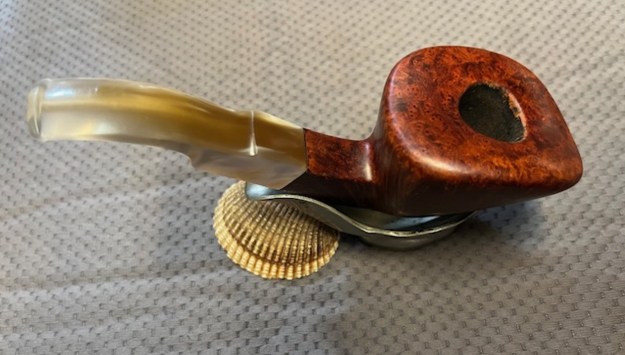
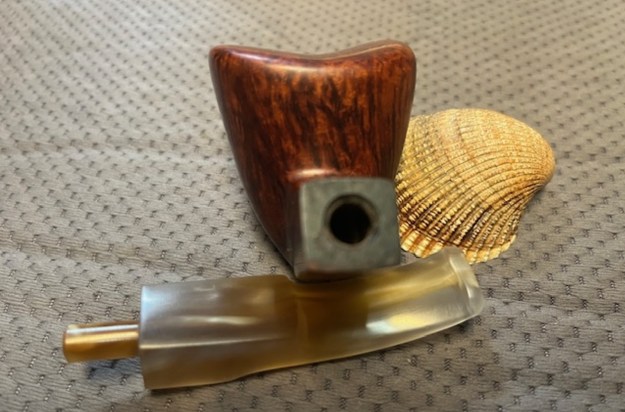
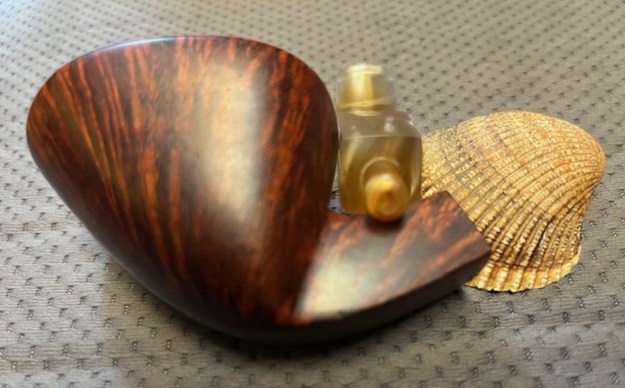
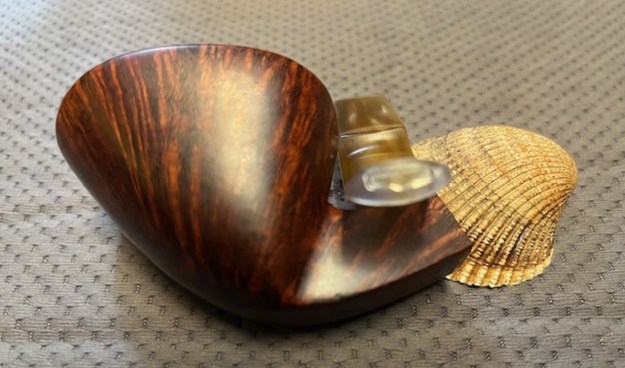
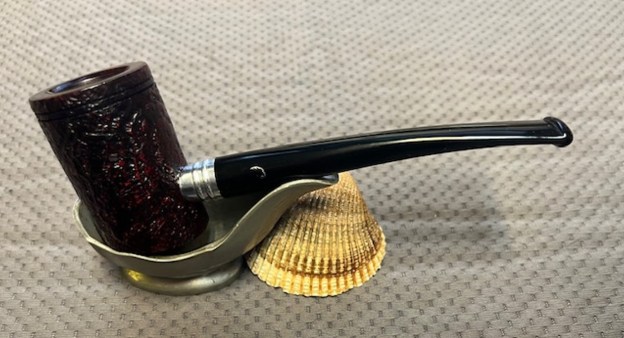
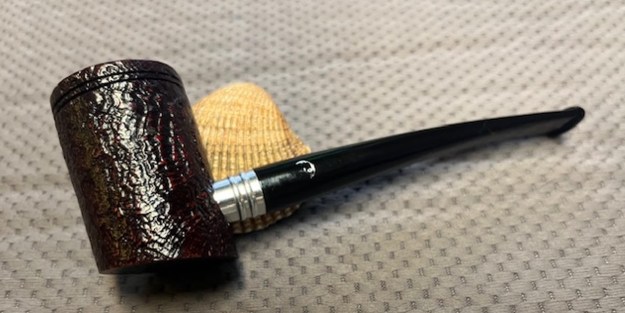
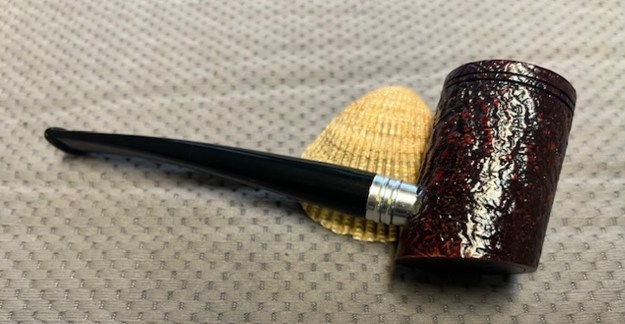
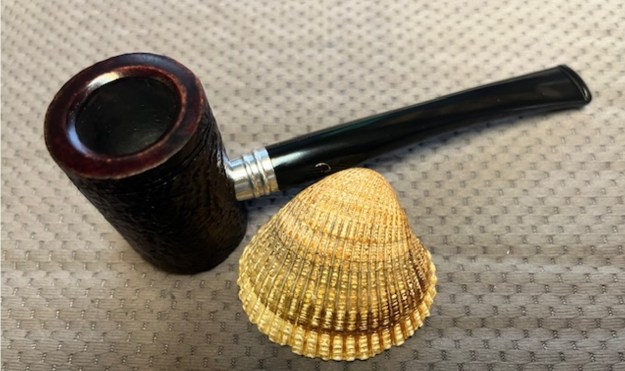
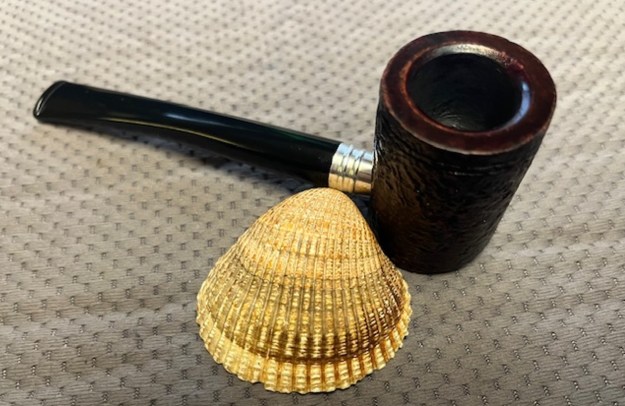
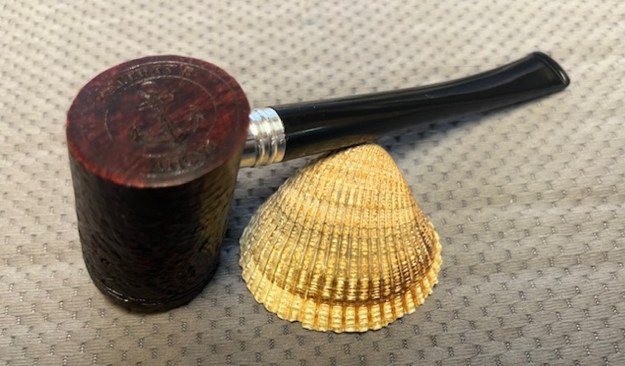
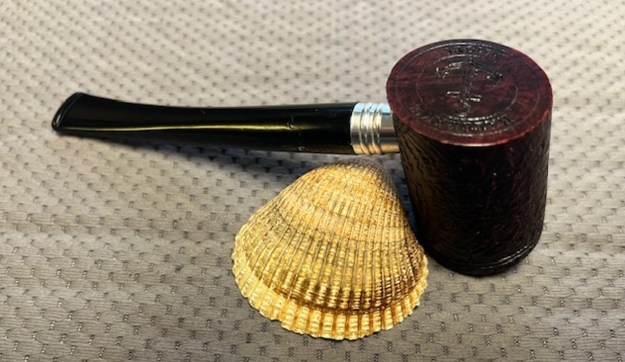
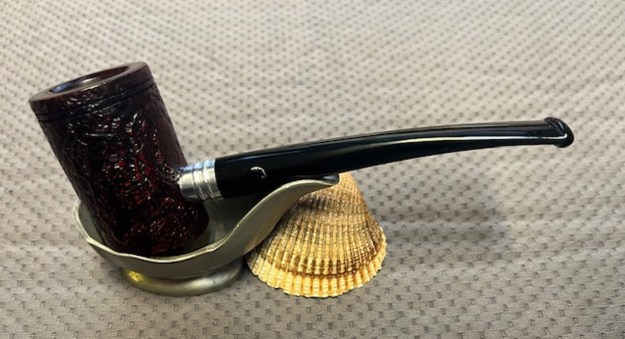
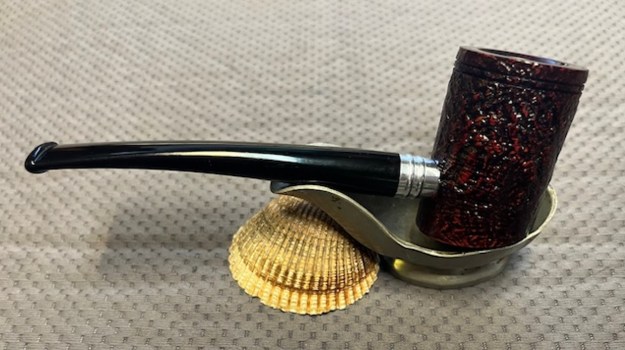
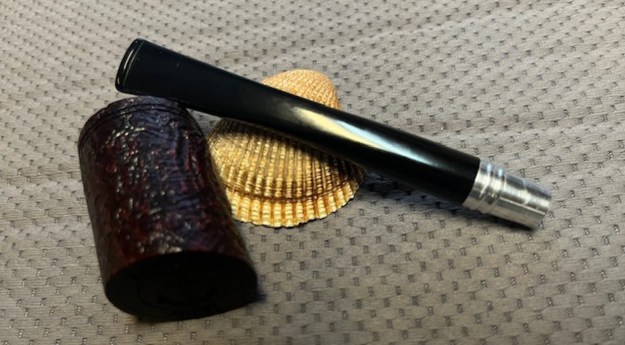
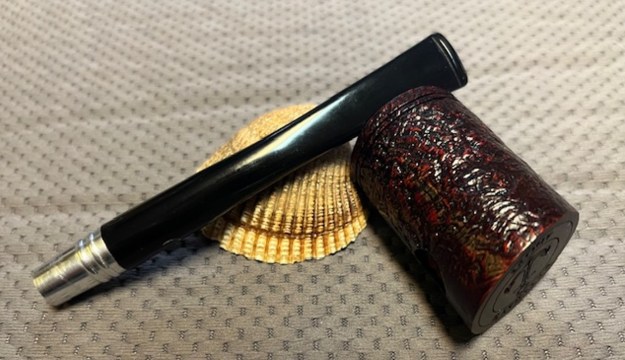
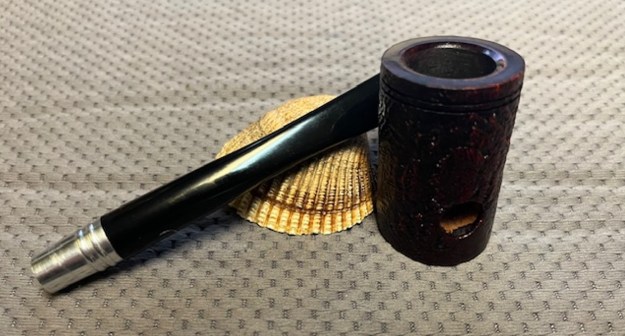
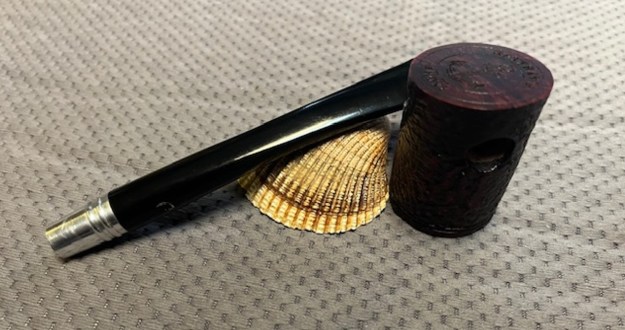
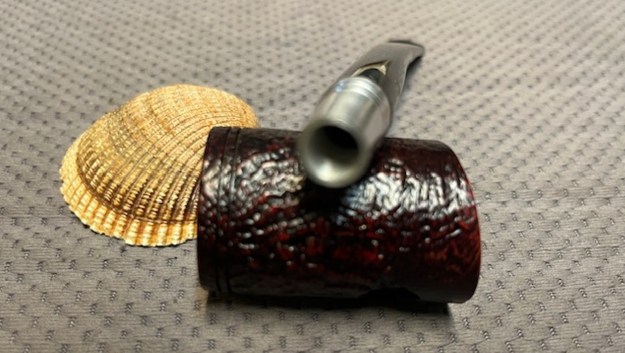
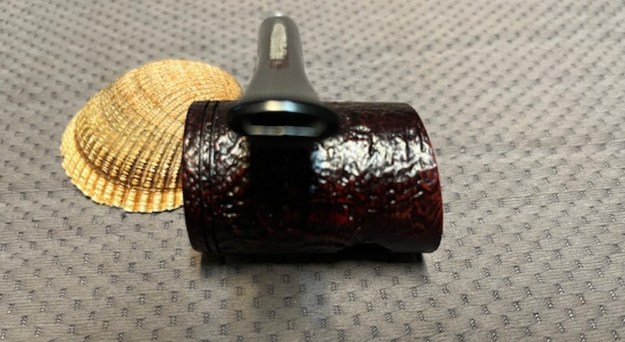
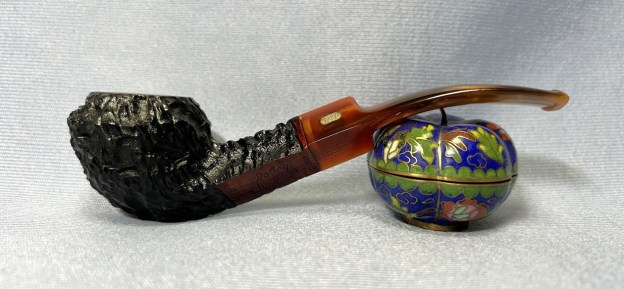
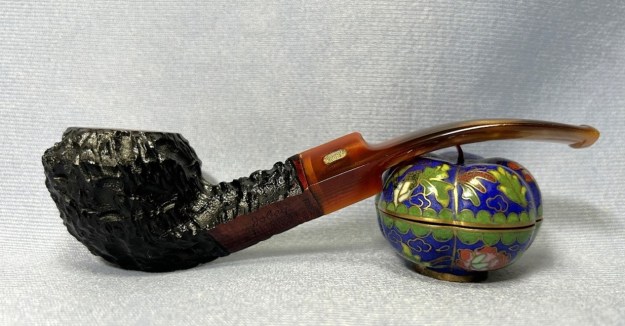
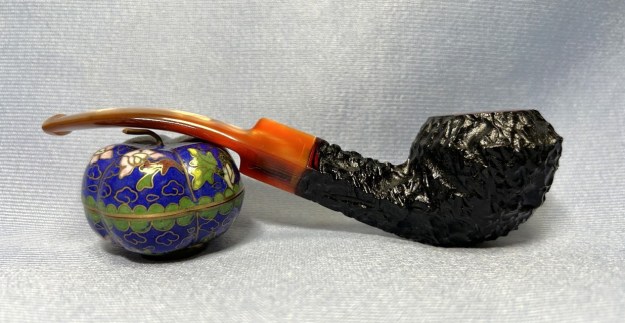
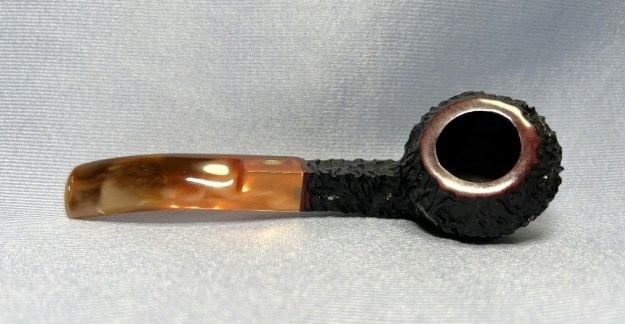
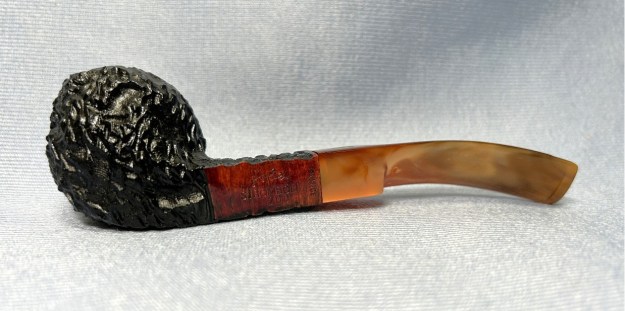
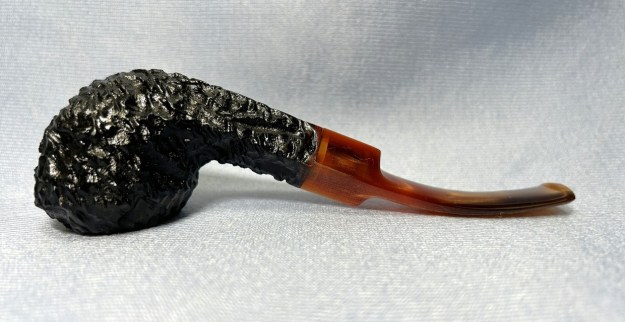
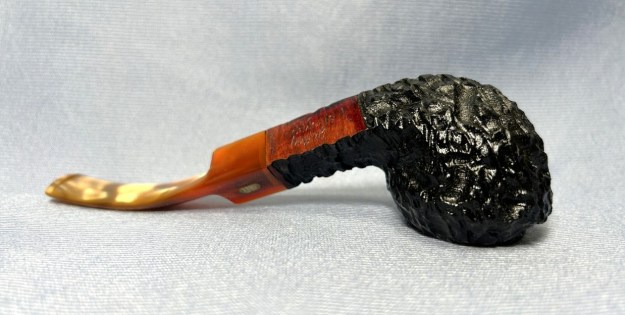
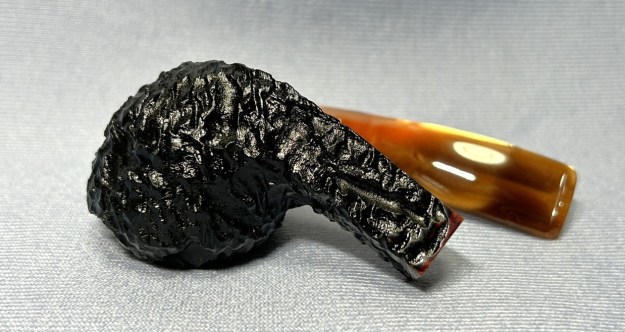
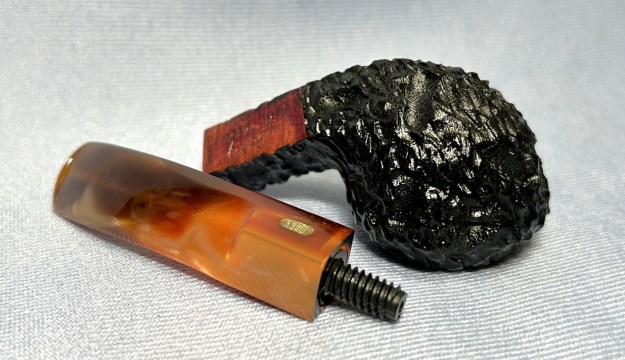
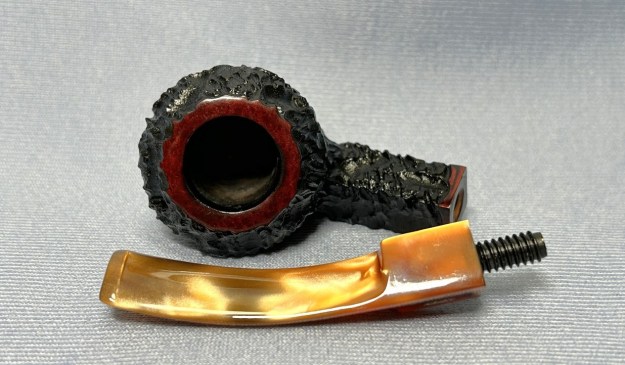
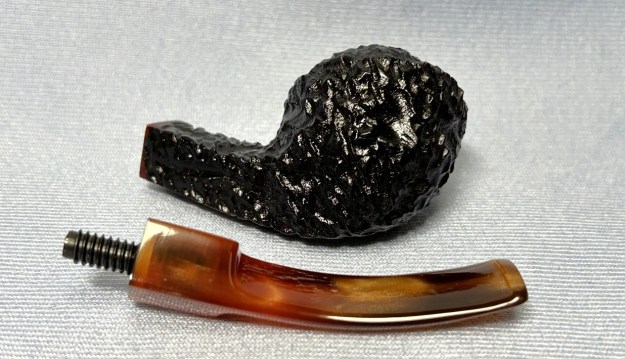
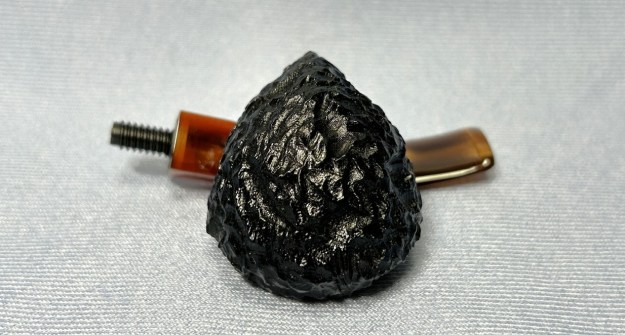
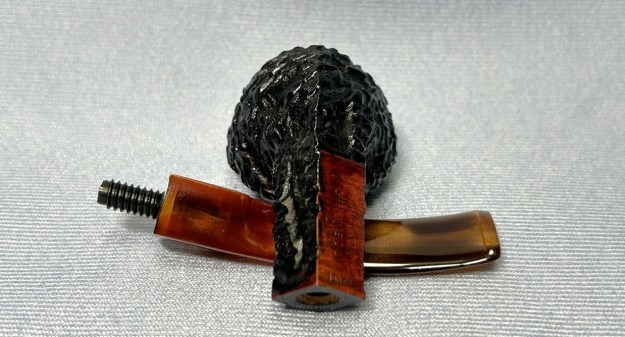
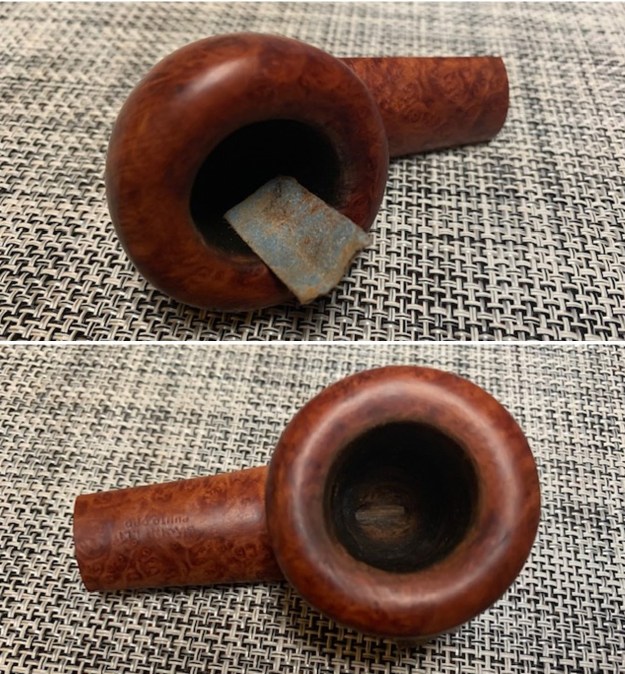
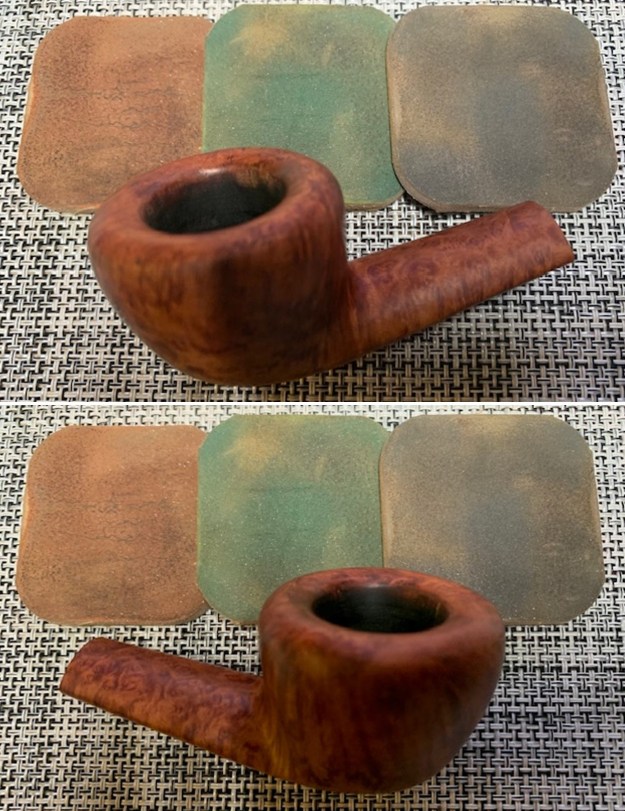
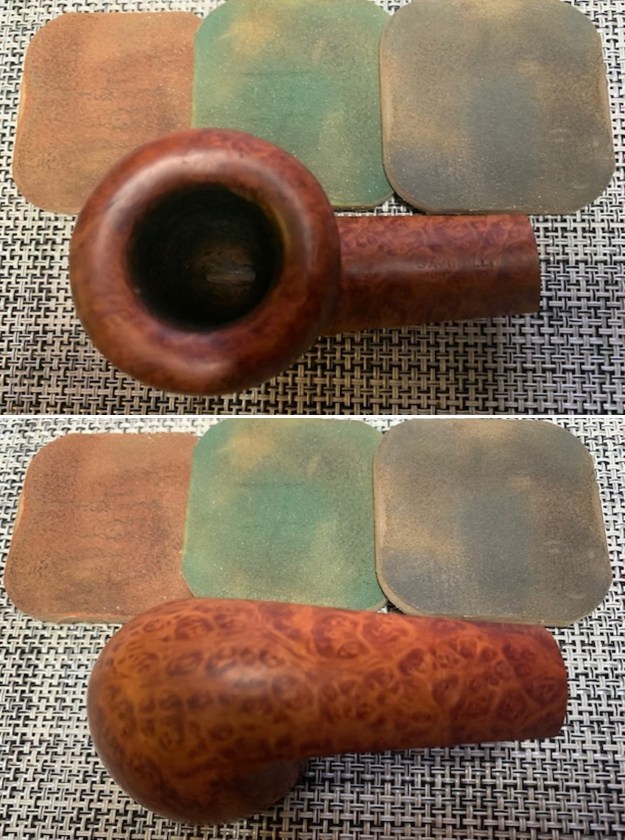
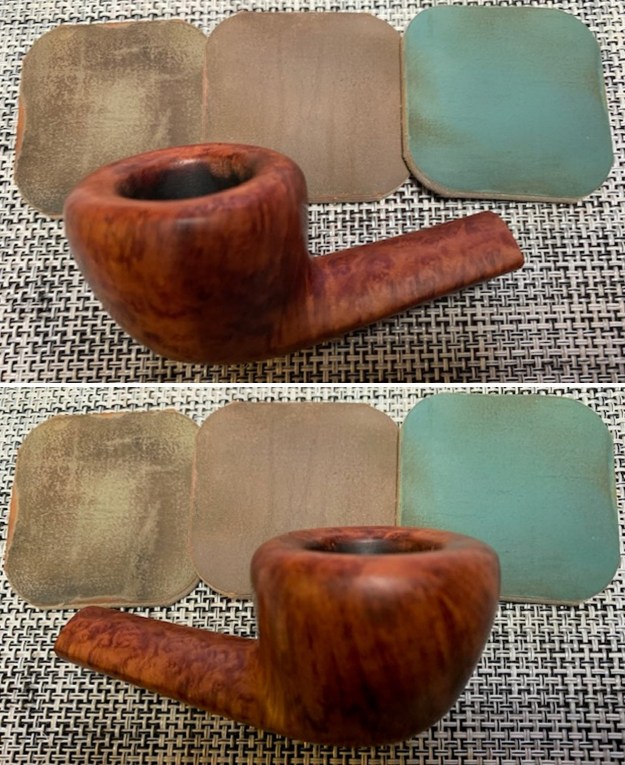
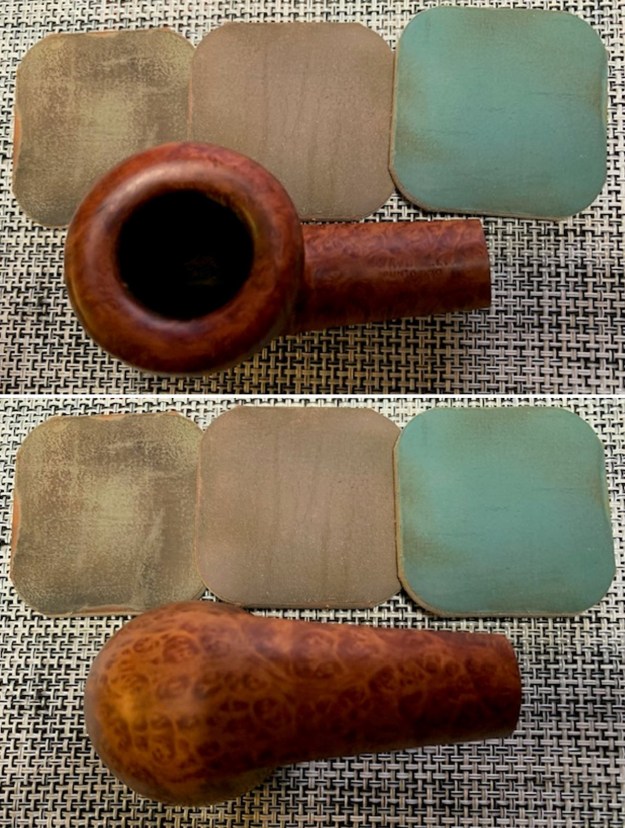
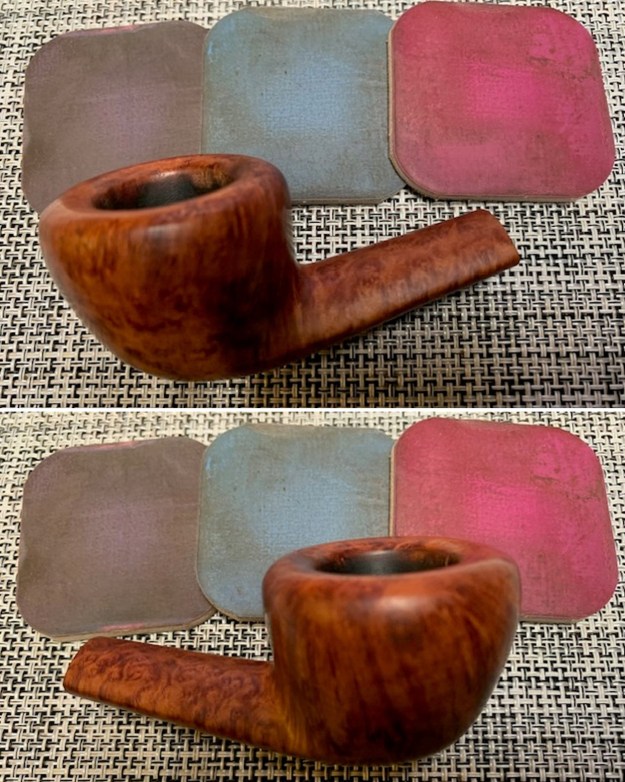
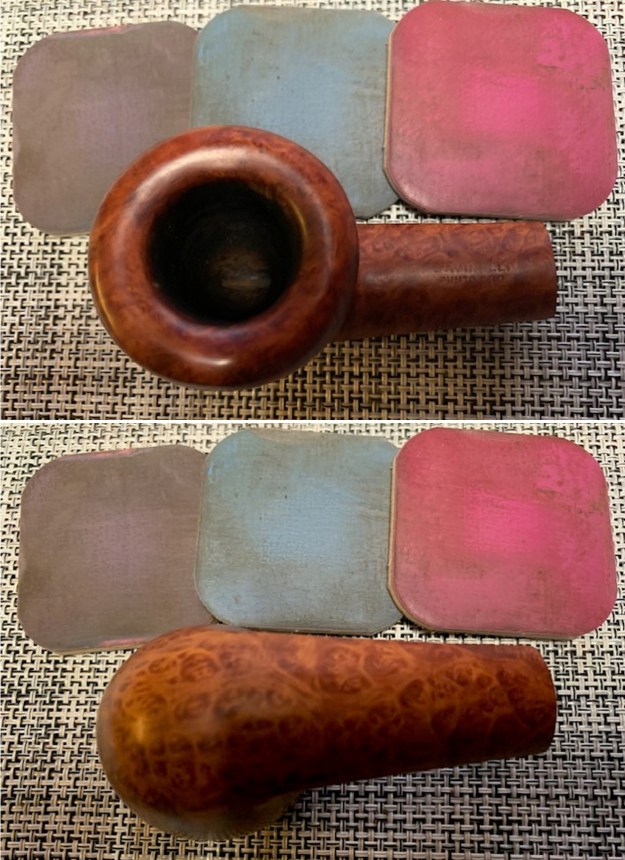
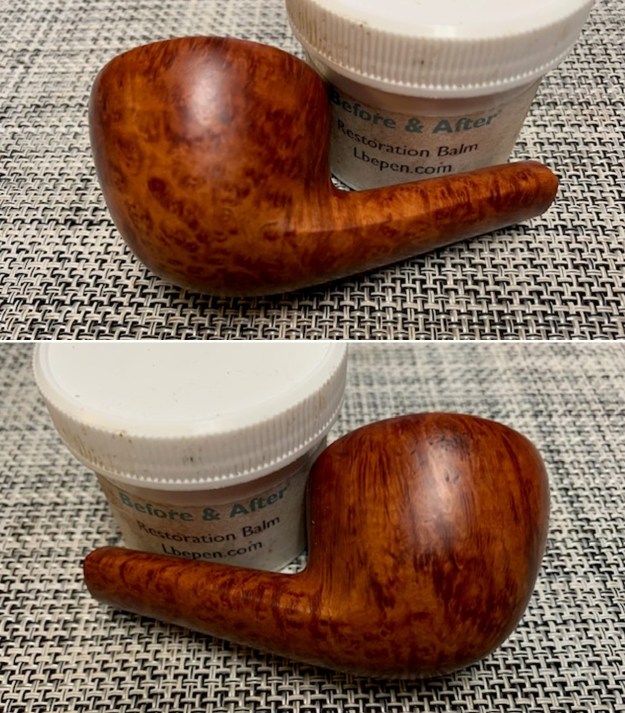
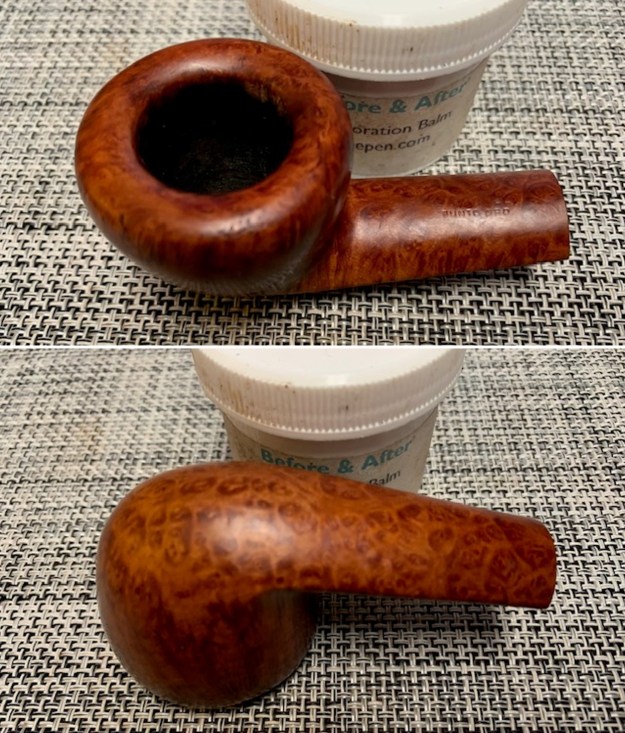
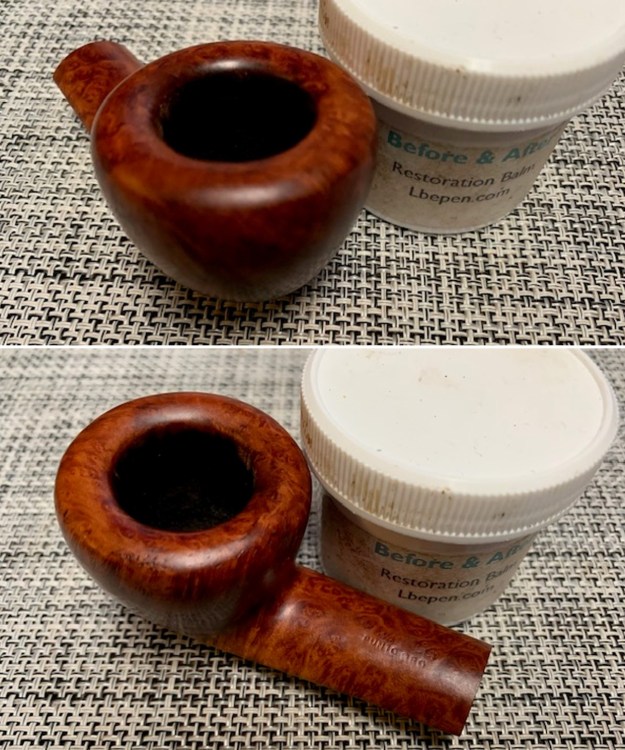
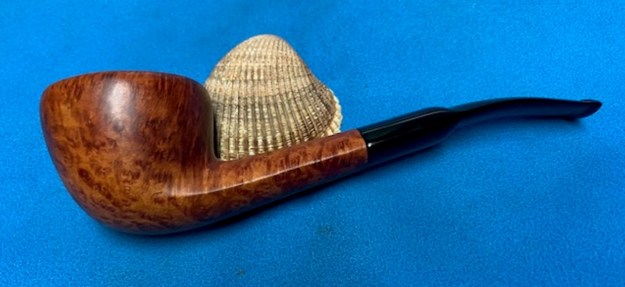
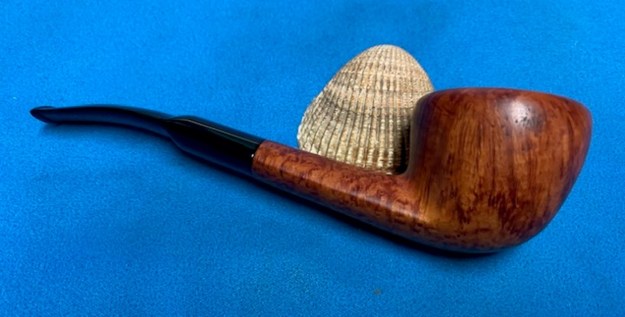
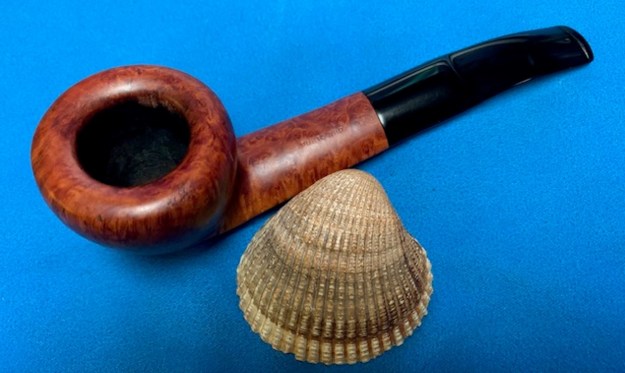
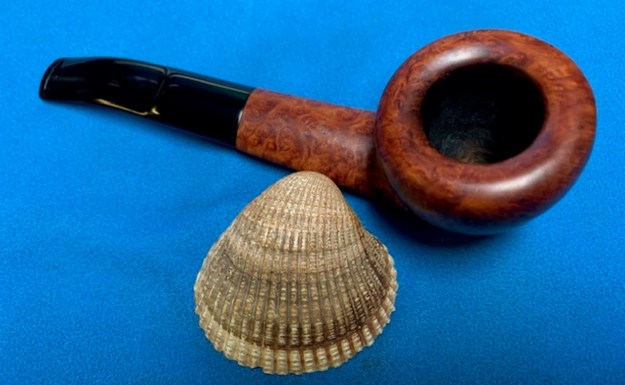
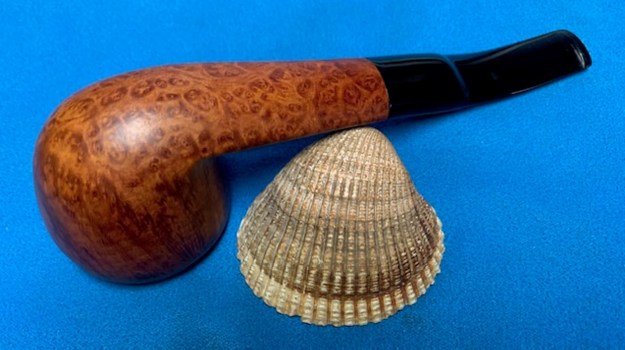
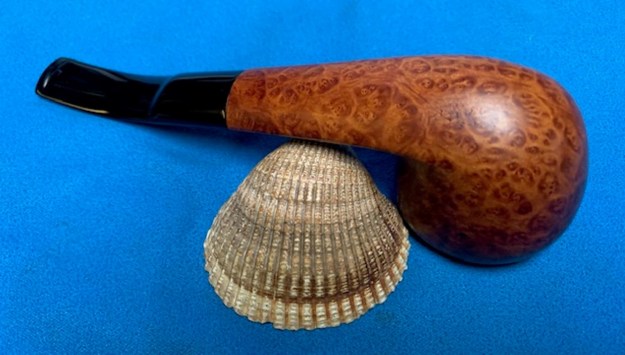
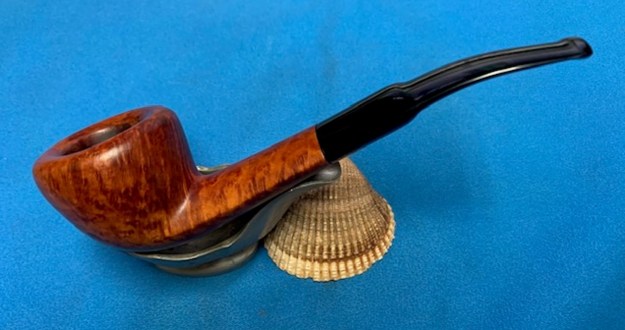
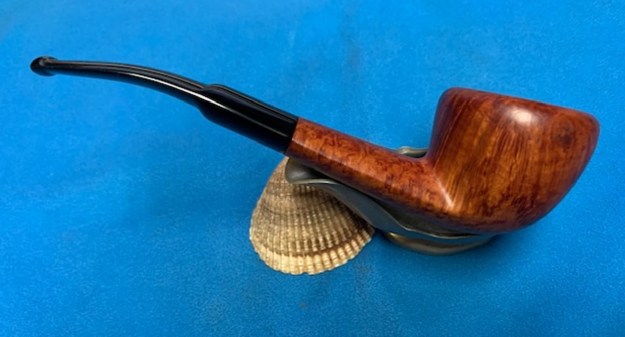
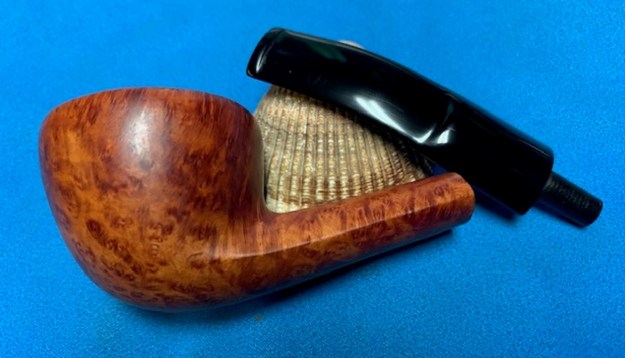
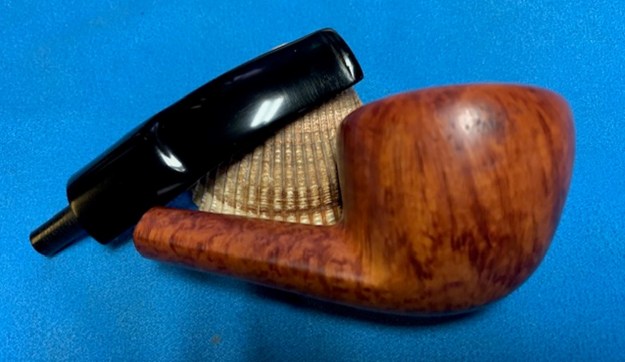
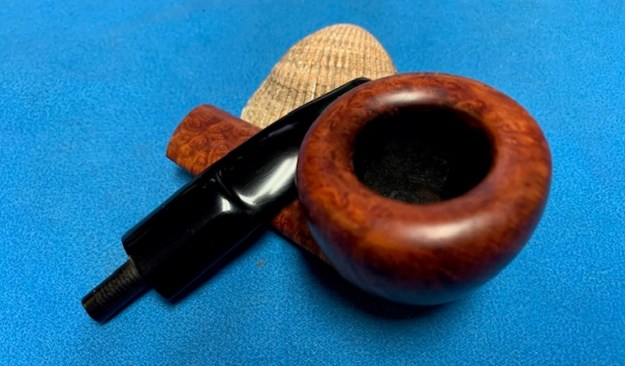
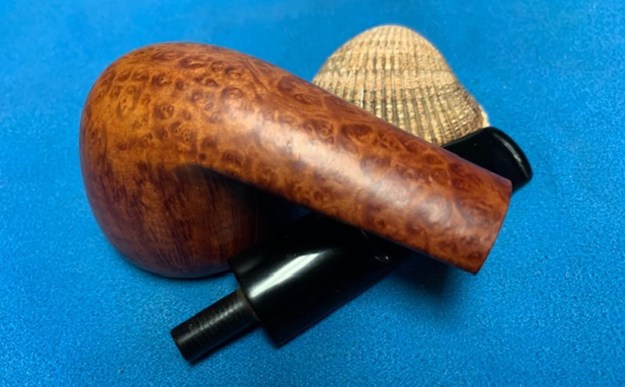
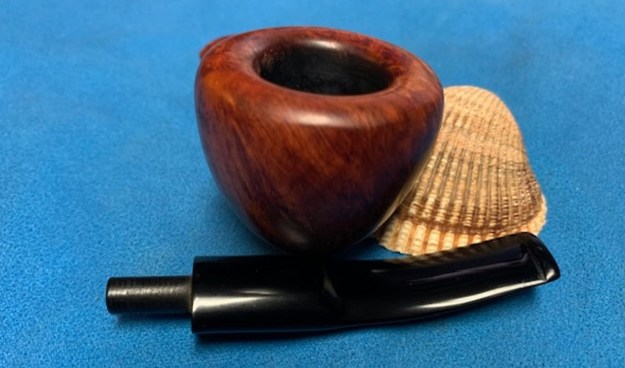
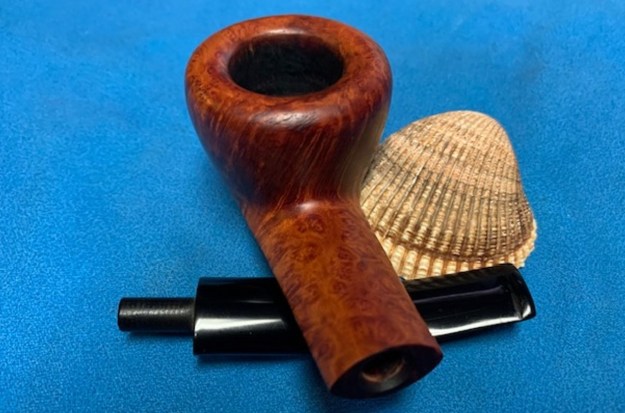
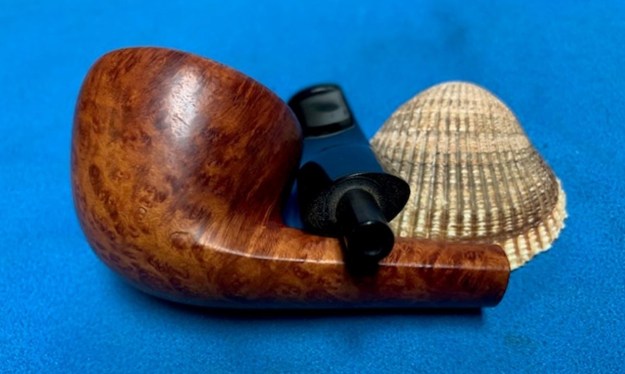
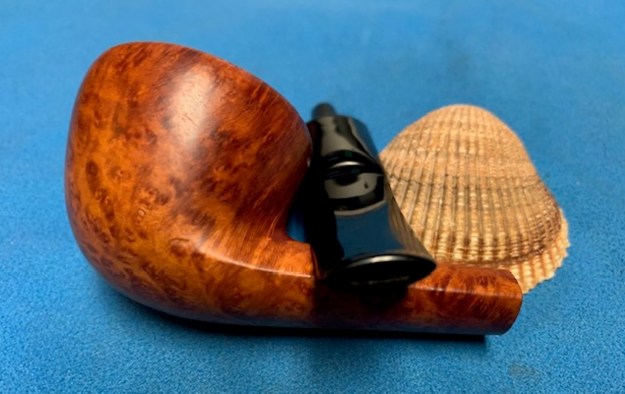
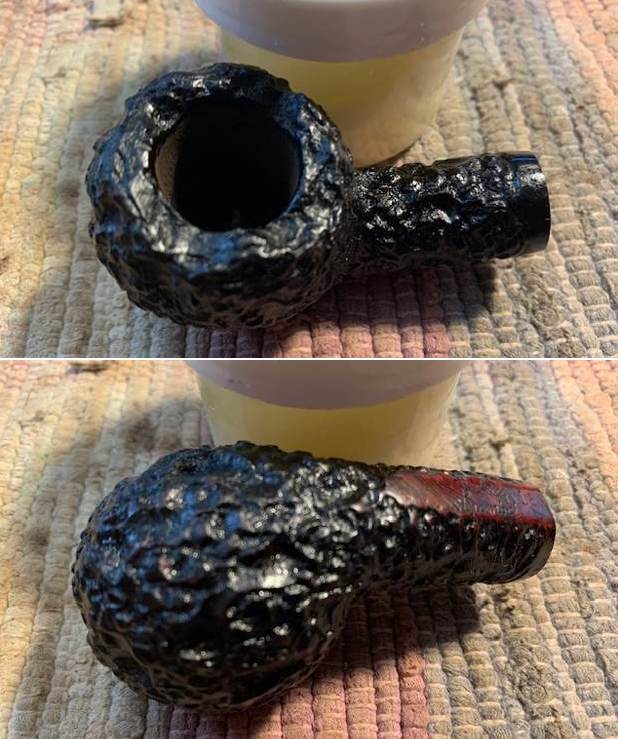
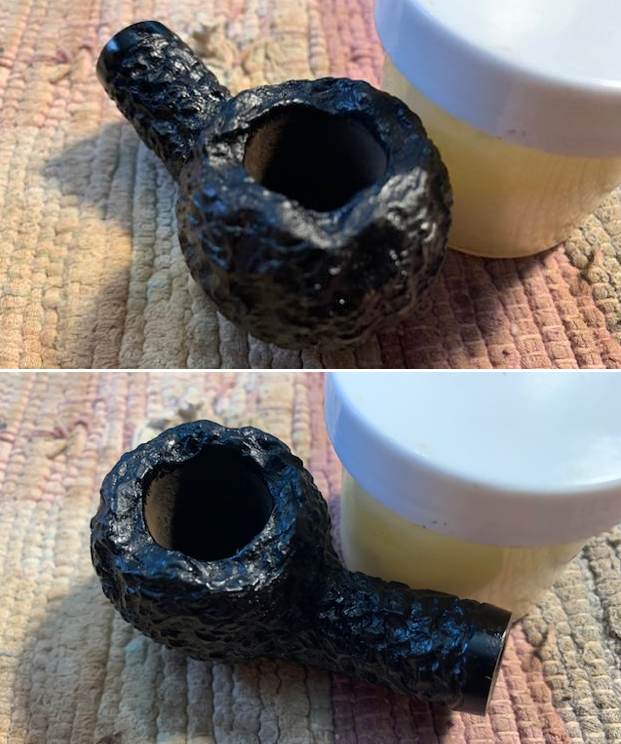
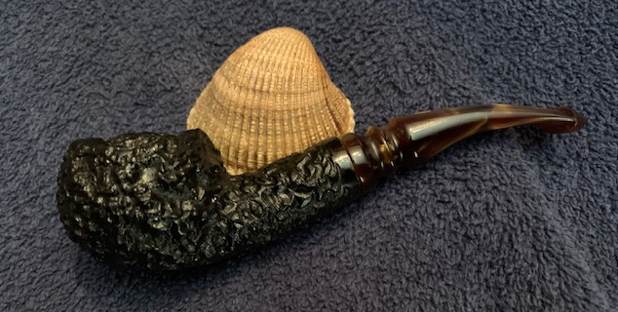
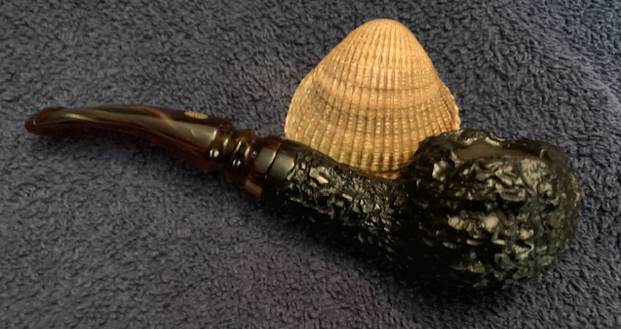
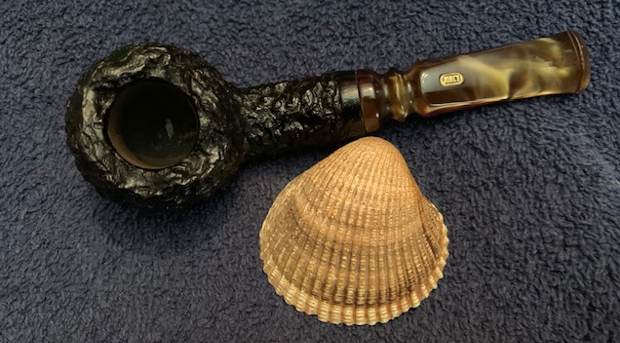
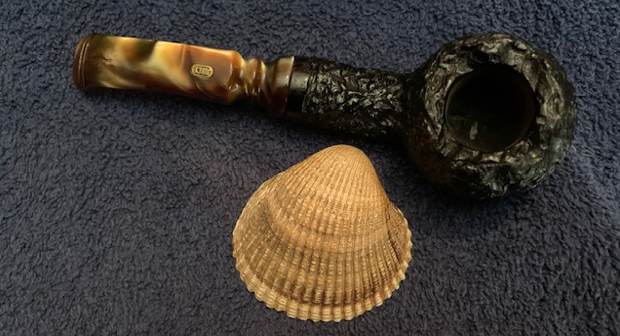
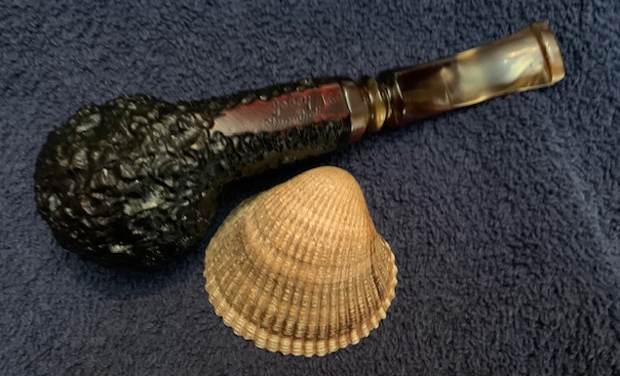
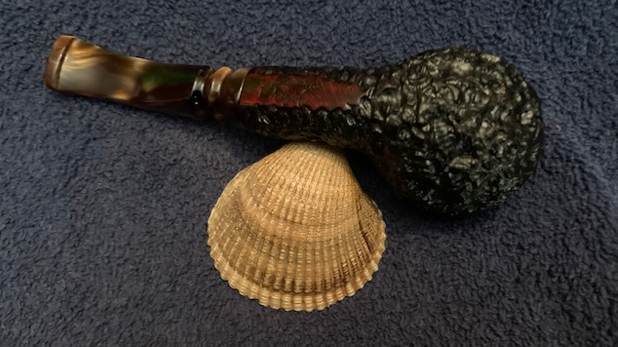
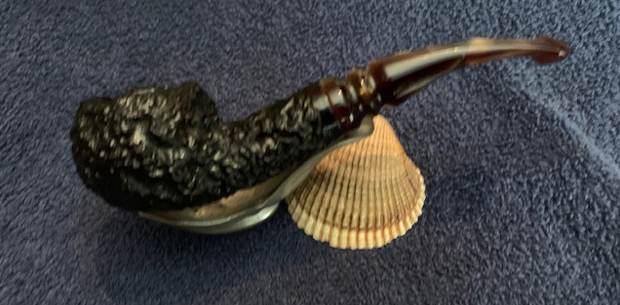
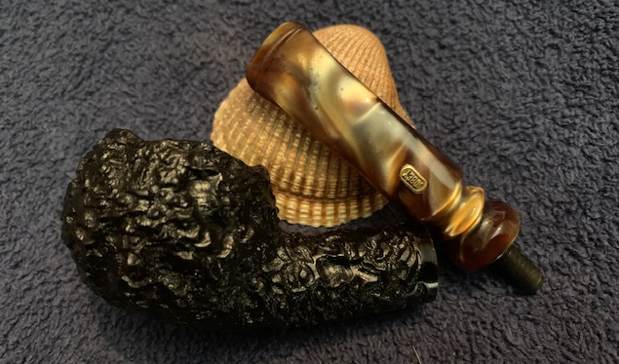
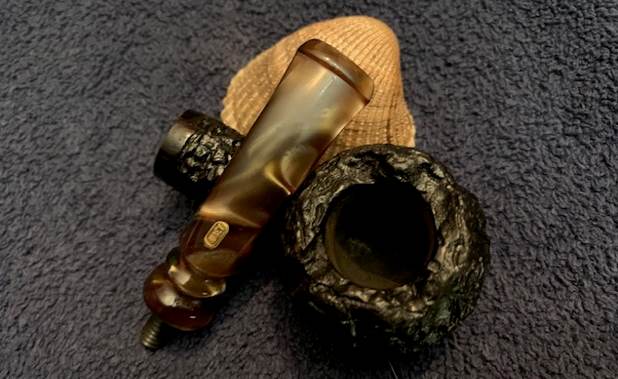
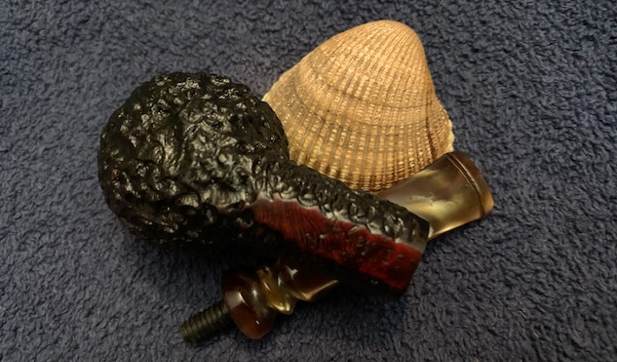
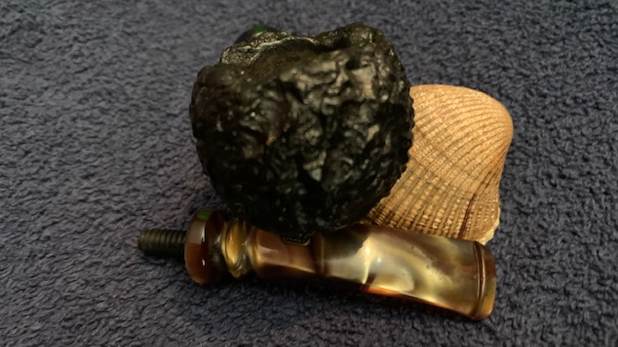
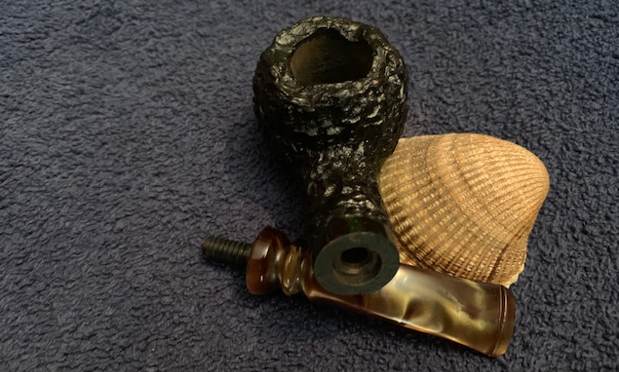
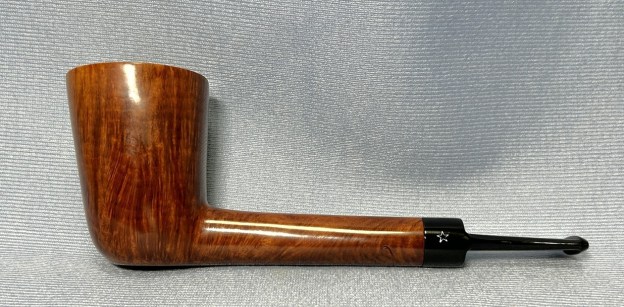
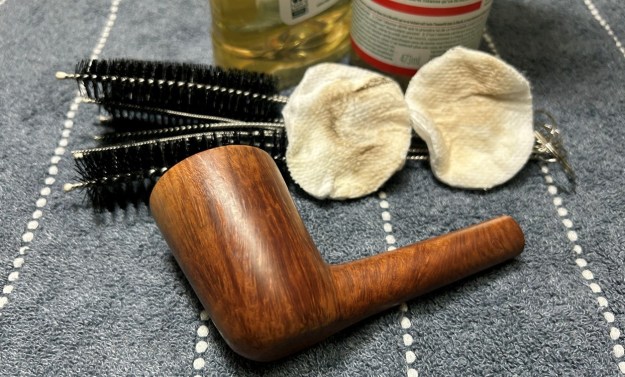
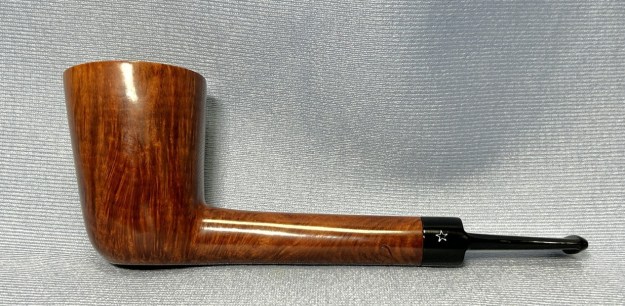
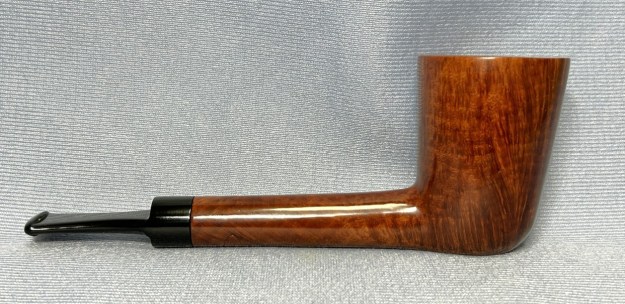
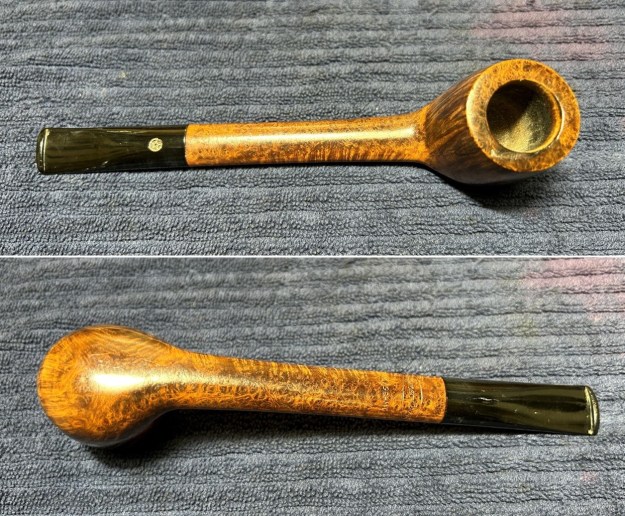
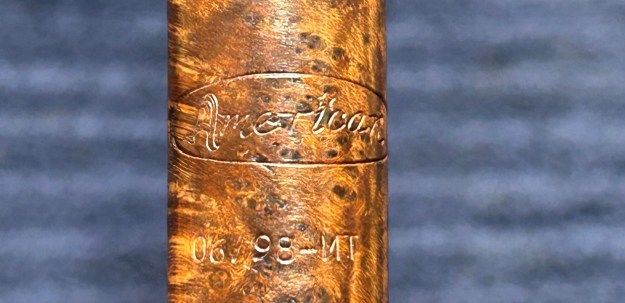
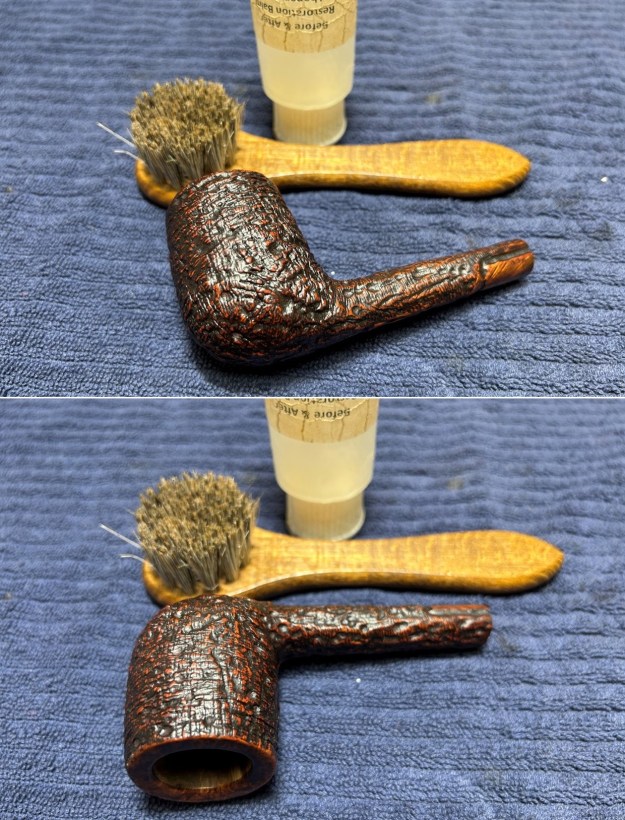
Recently, I was given the opportunity to purchase a small group of pipes by master pipemaker, Mark Tinsky. How could I say no? The answer, of course, is that I could not and I happily acquired them. There are some real beauties here and I am going to restore them all and then turn them over to you. Interestingly, all of the pipes are of the Canadian family of pipe shapes. I’m sure you’ll enjoy seeing them, so – in no particular order – let’s get started with the first one. This is a beautiful Canadian – well-proportioned bowl with a long, oval shank and a handsome taper stem made from acrylic. It has a finish that Steve calls ‘blasticated’ – sort of a hybrid of sandblasted and rusticated. There is a lovely star logo on the side of the stem, encircled with inlaid briar. Under the shank are the markings and they read: Reg. No. [over] 2/97-MT. This tells us that the pipe was made in February 1997 by Mark Tinsky himself.As I’m sure you know, Mark Tinsky is one of the great names in American pipe making. He is best summed up in this quotation from Erwin Van Hove:

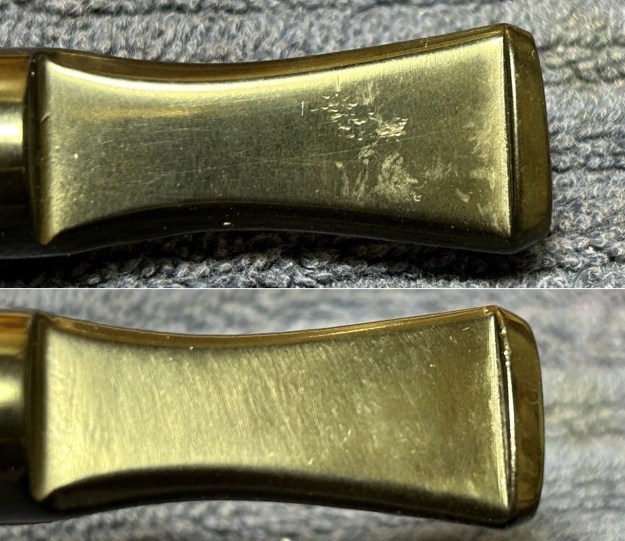
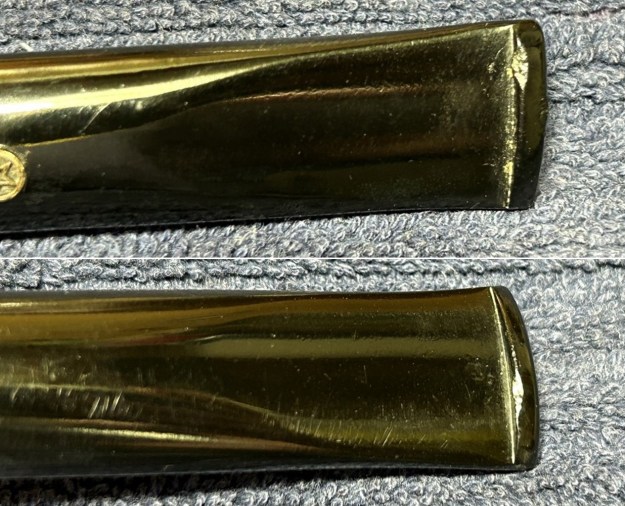
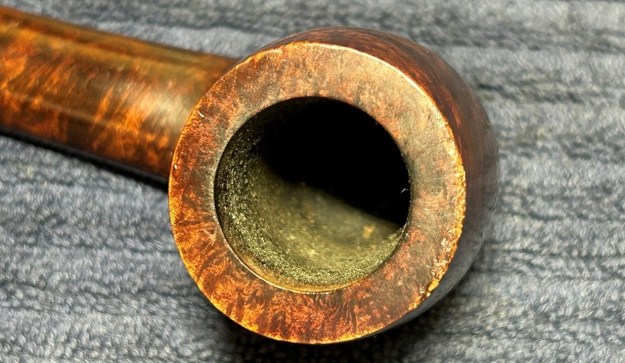
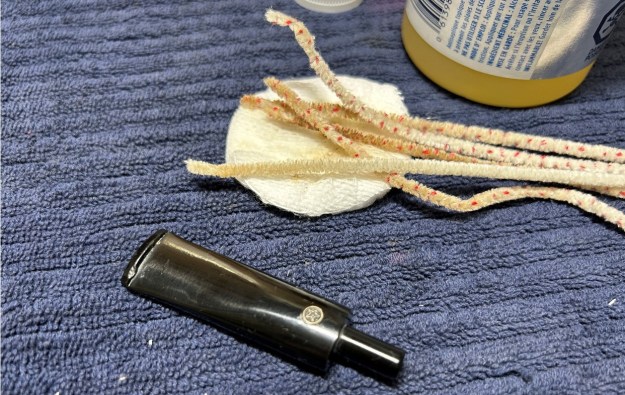
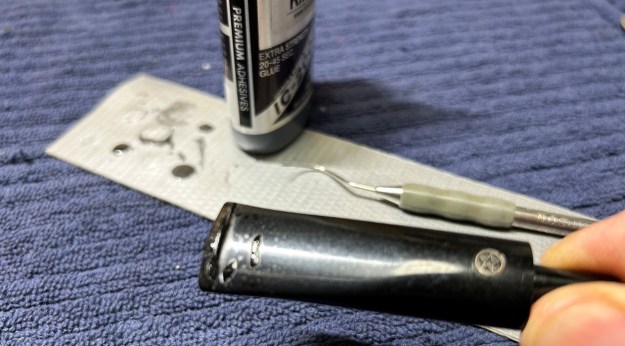
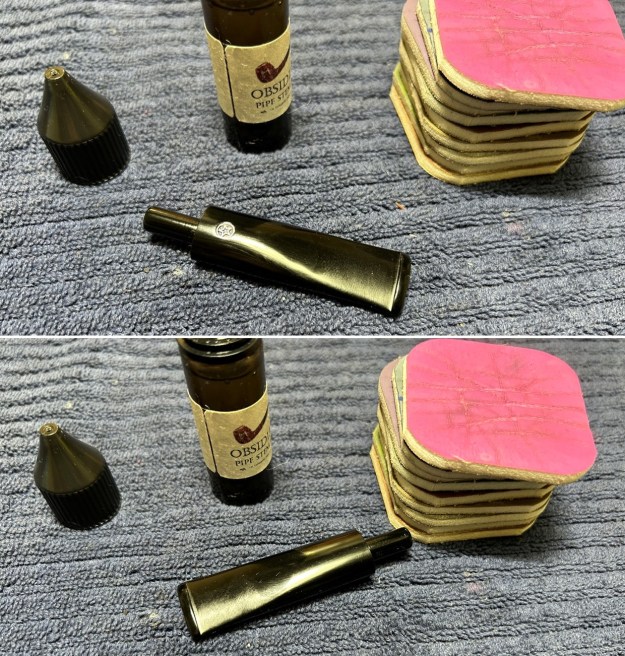
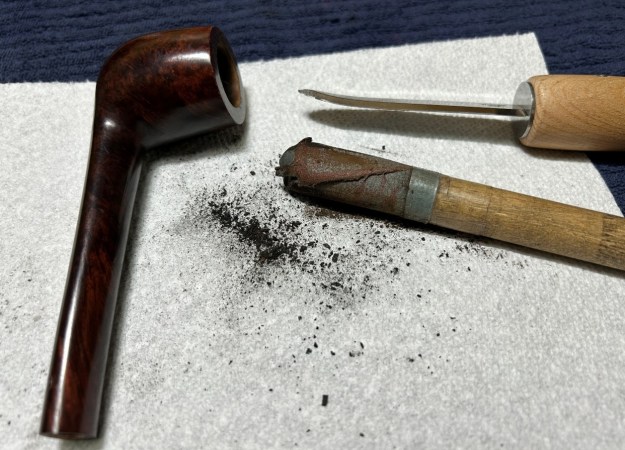
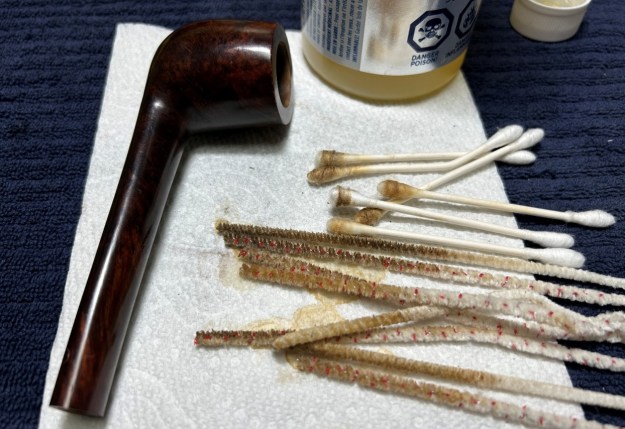
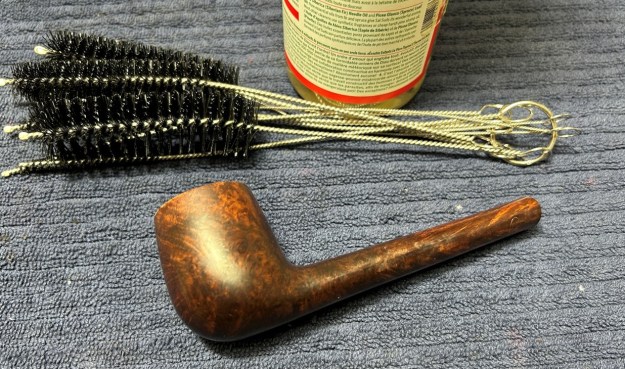
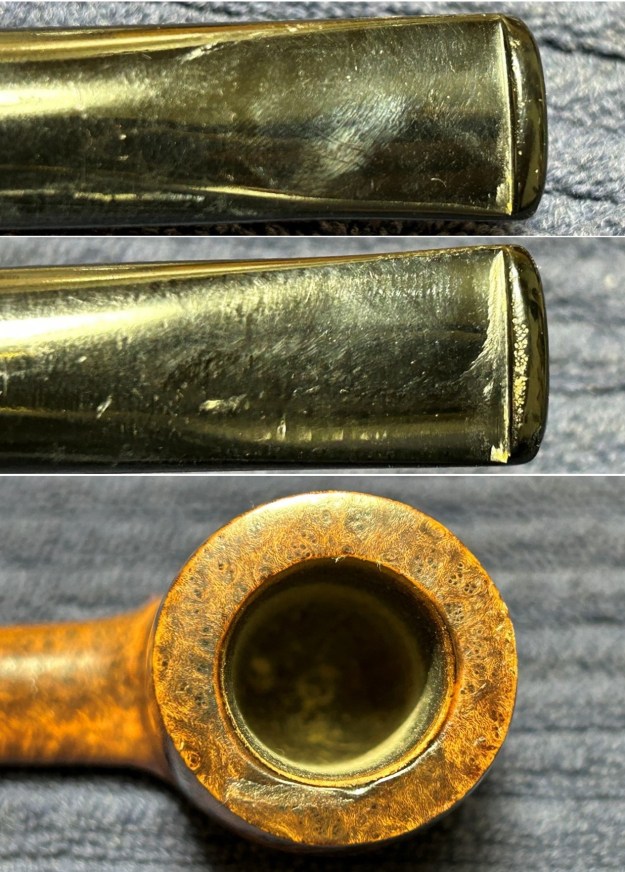
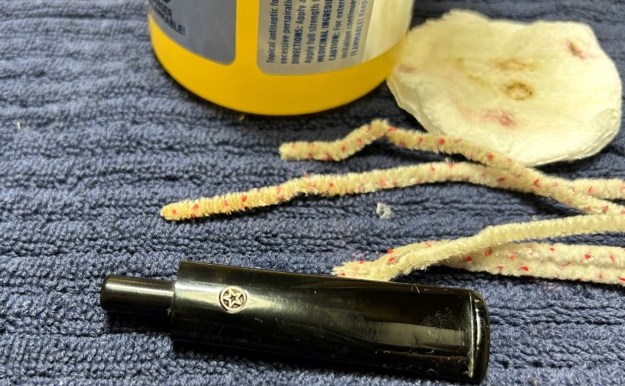
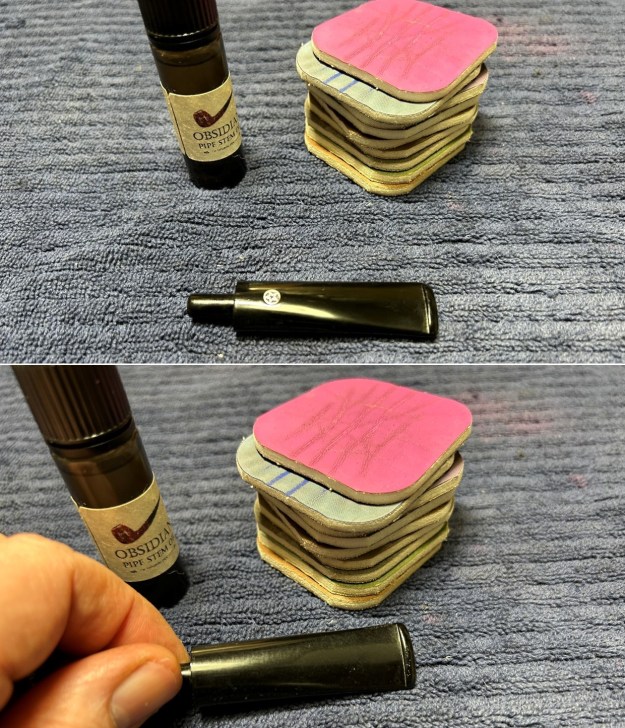
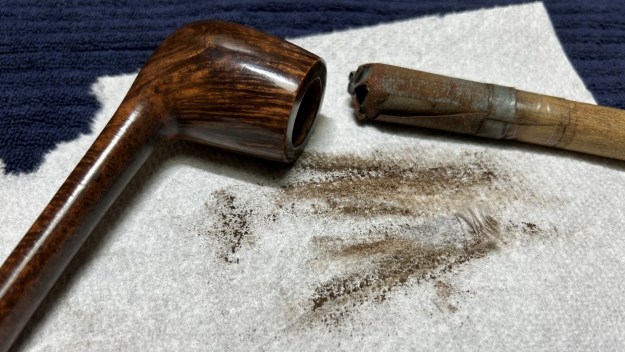
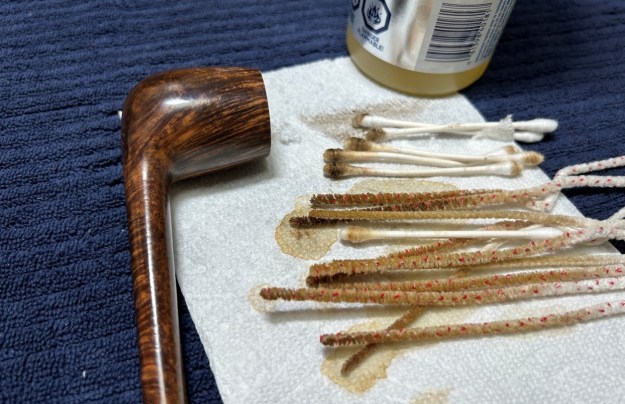
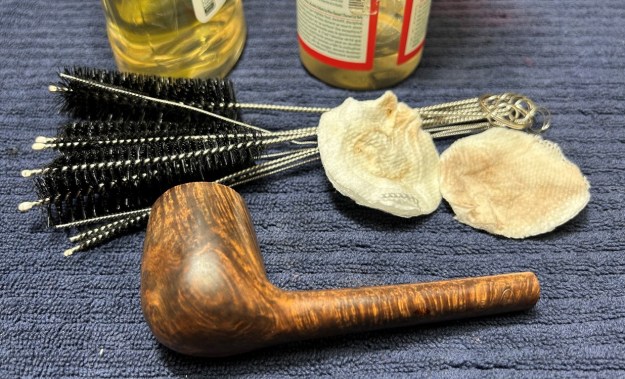
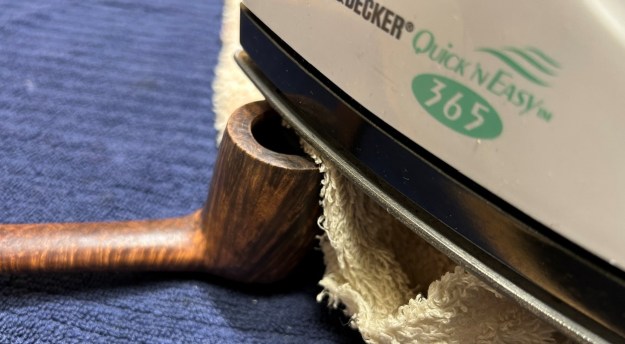
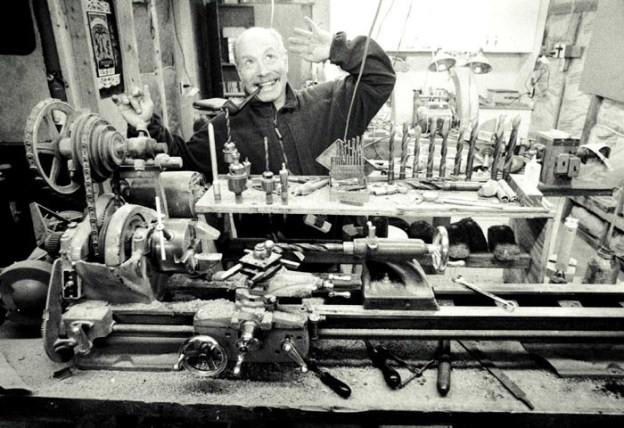
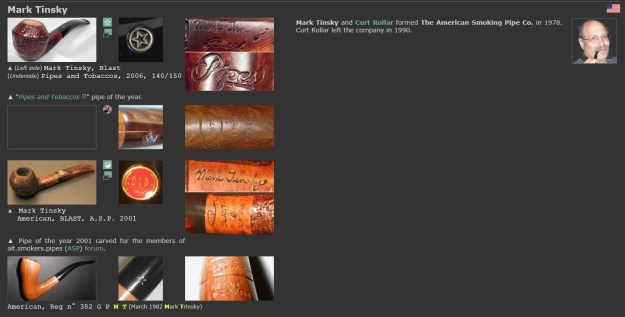
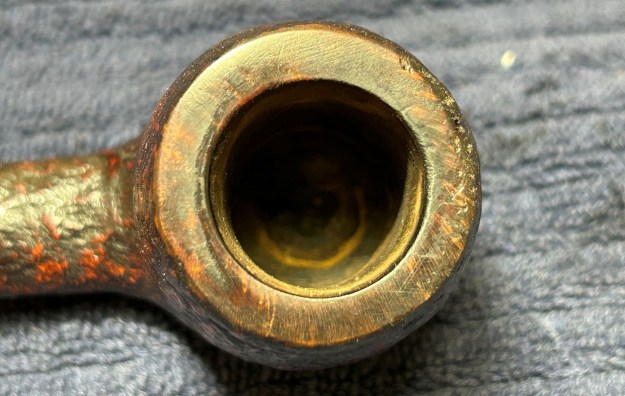
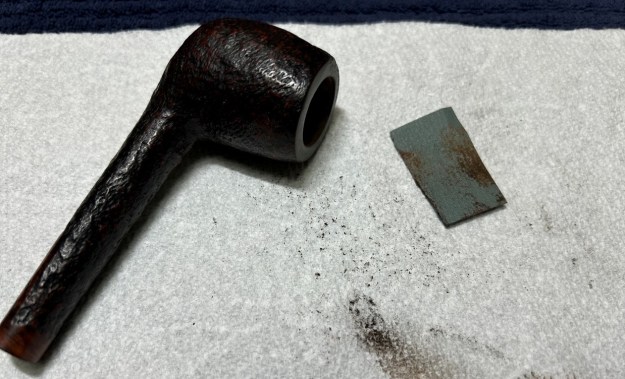
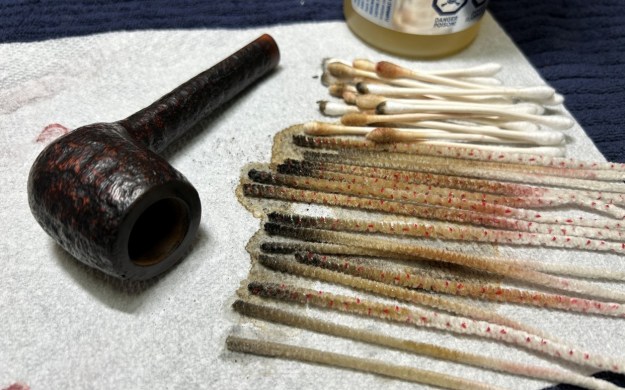
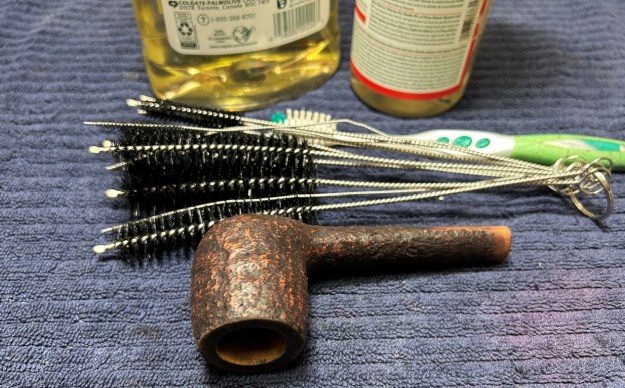
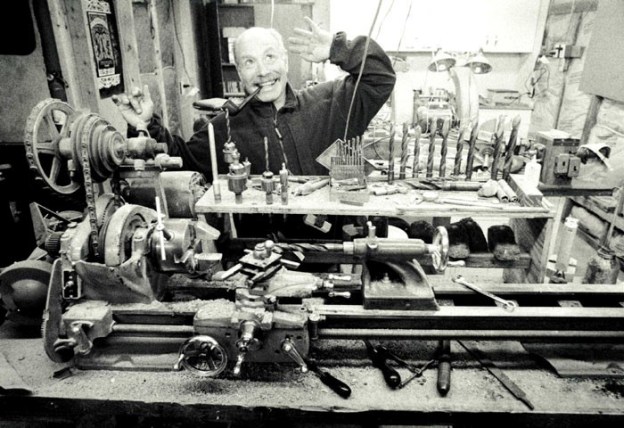
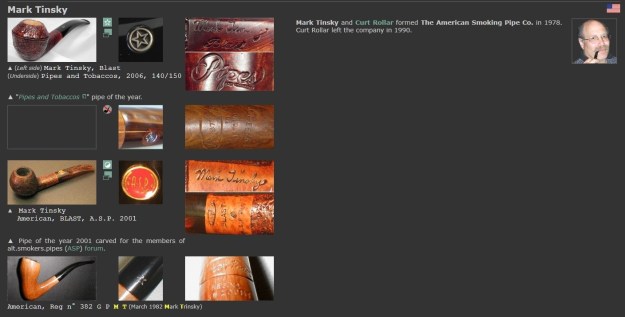
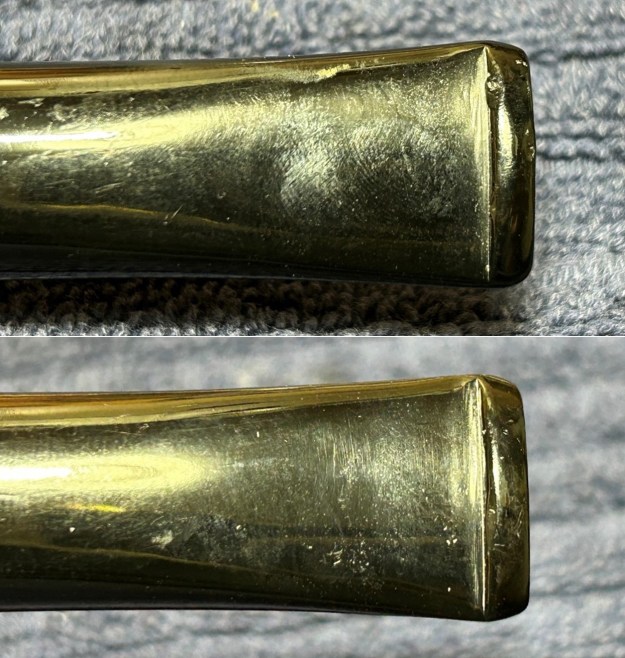
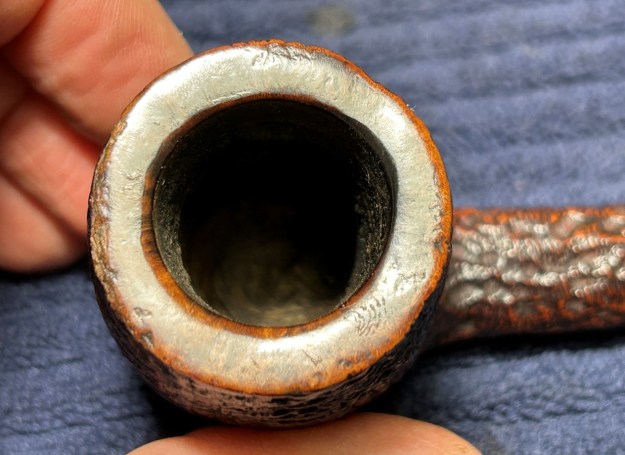
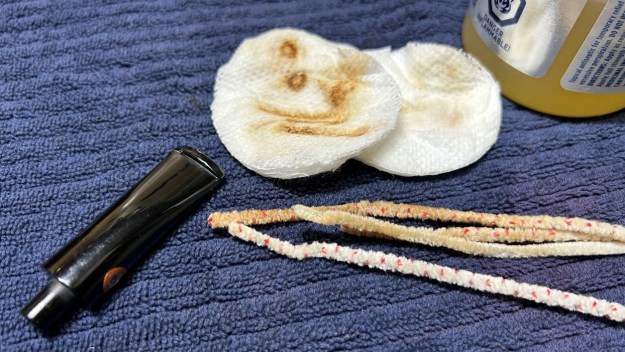
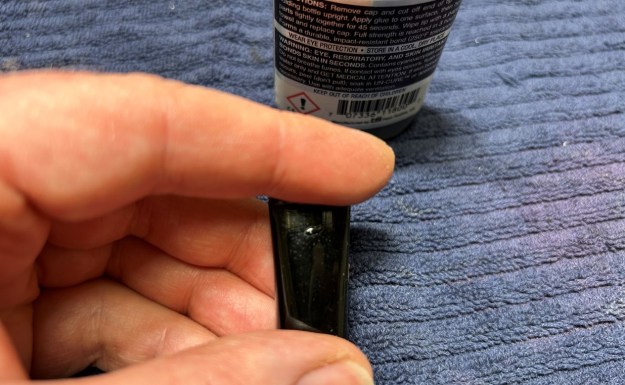
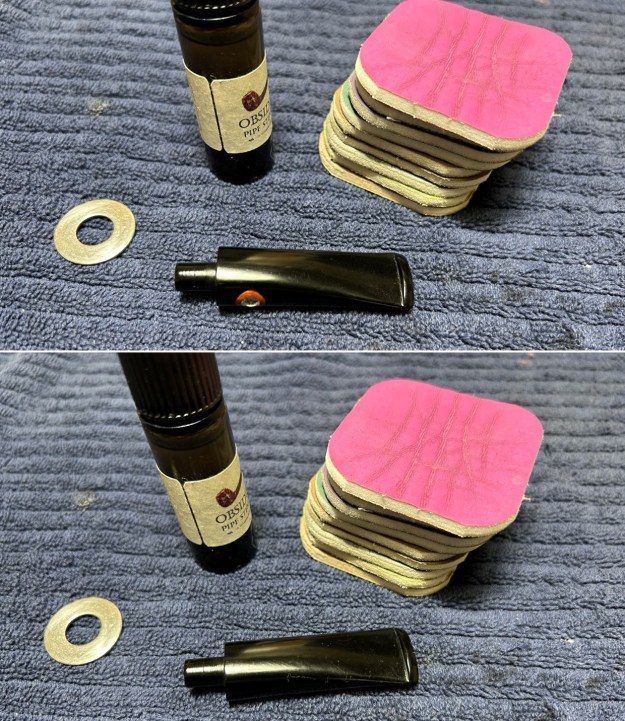
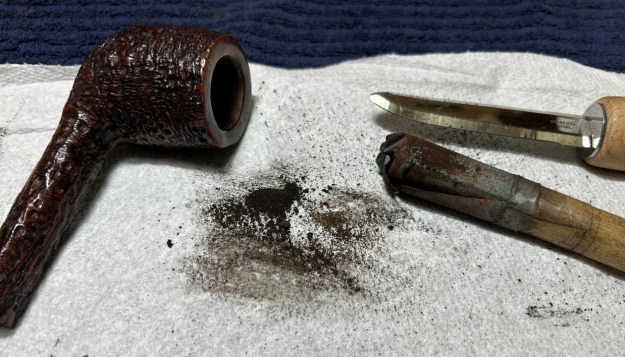
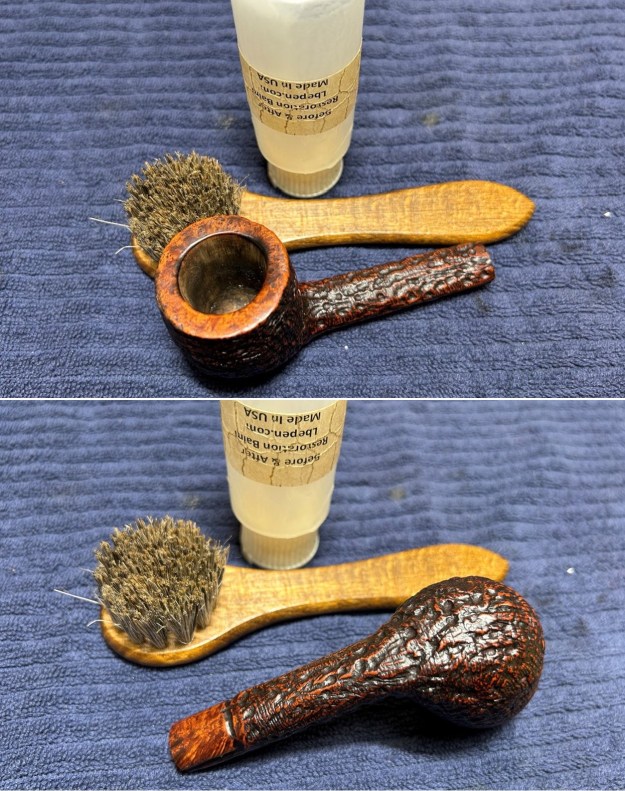
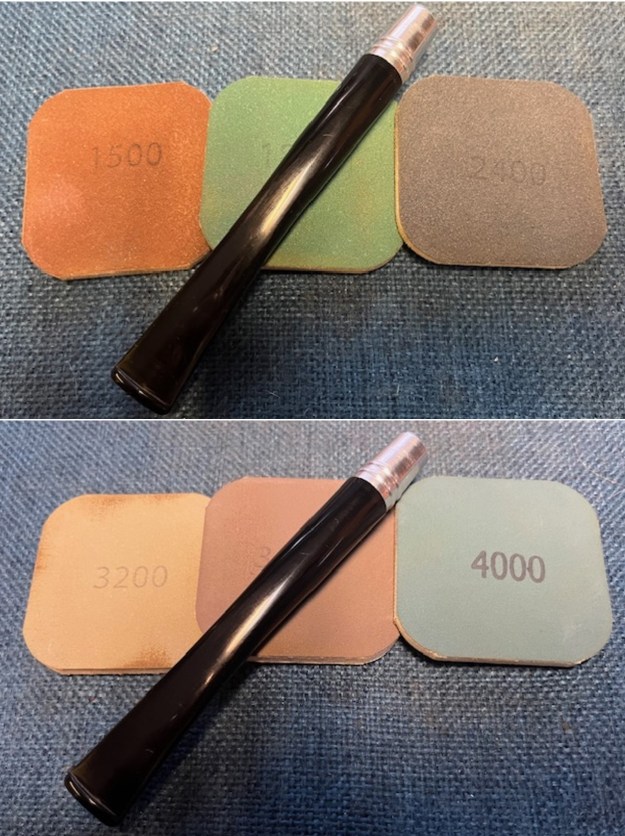
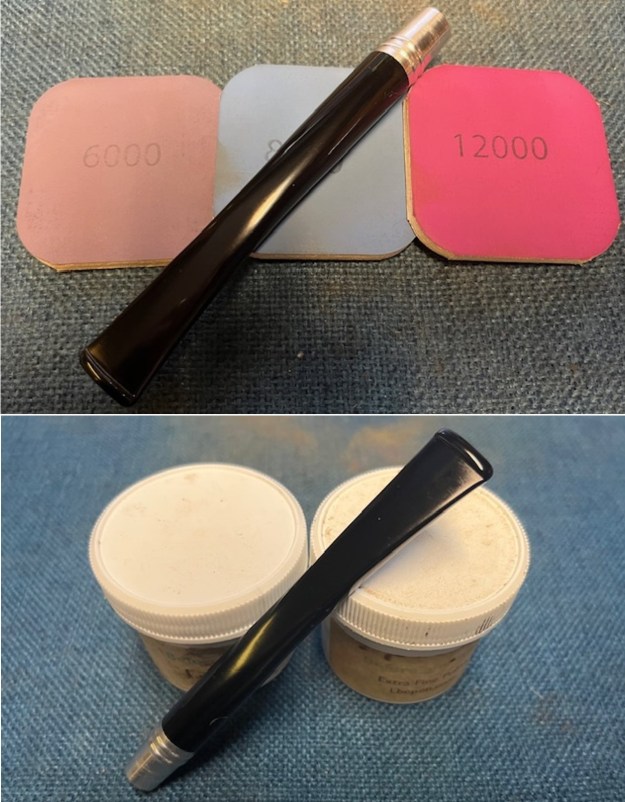
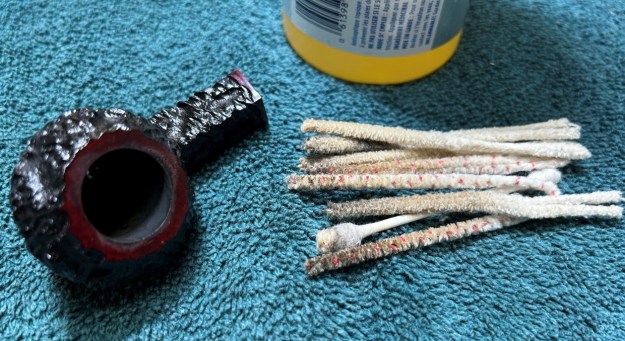
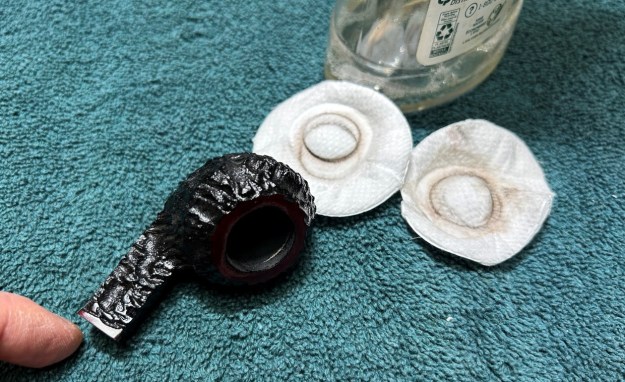
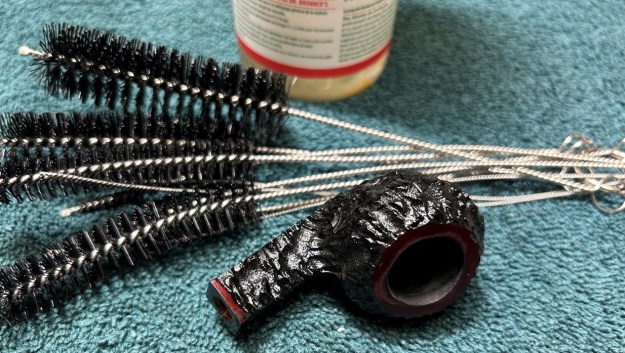
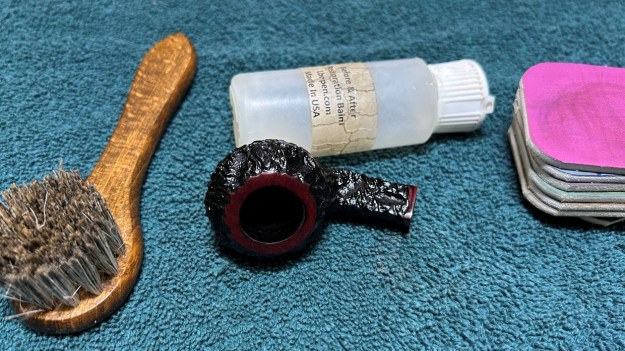
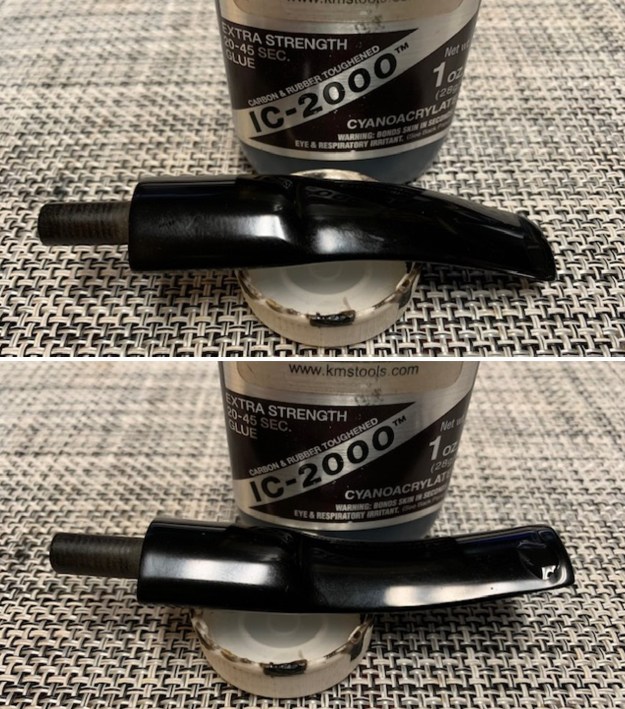
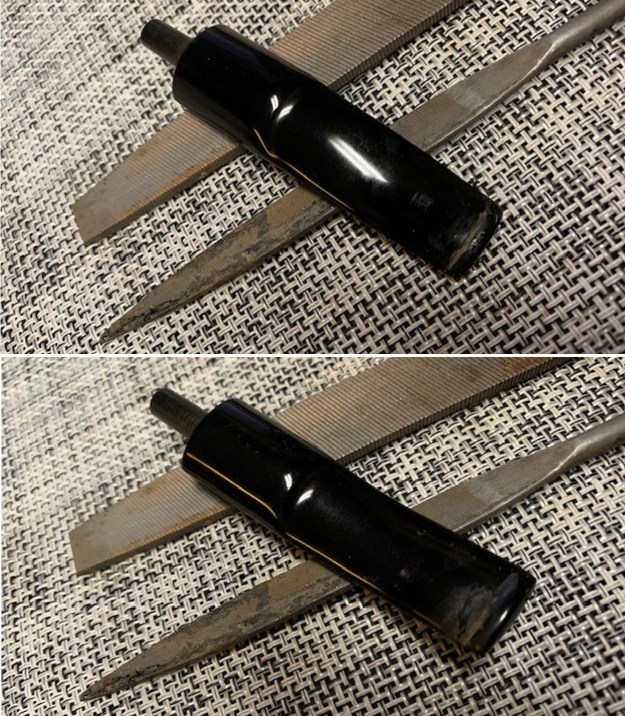
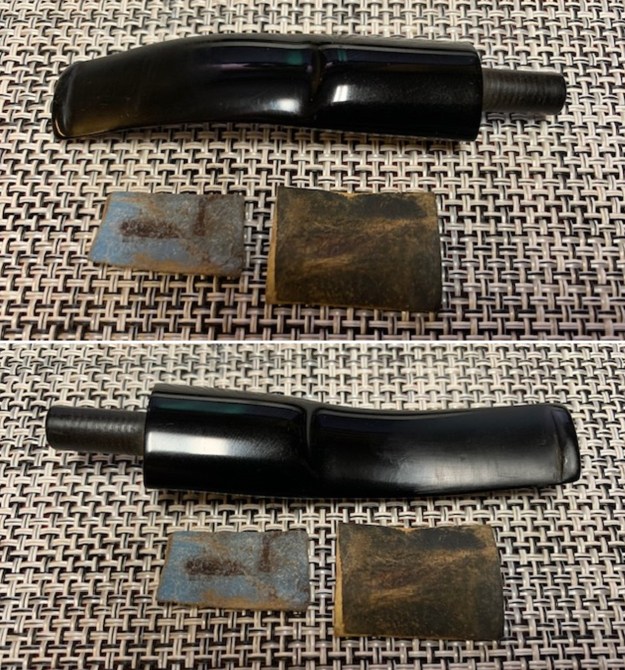
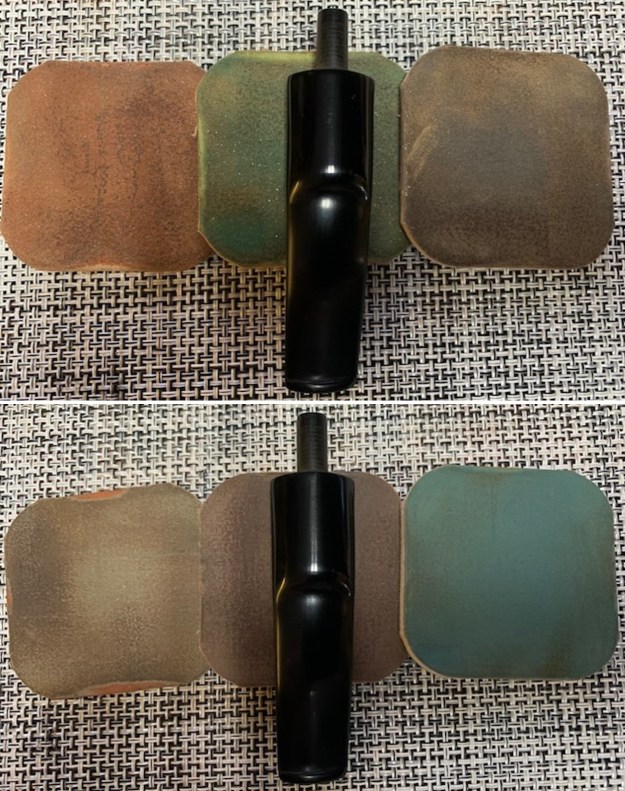
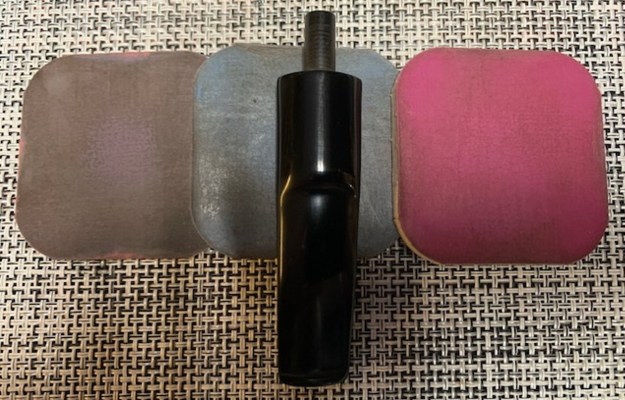
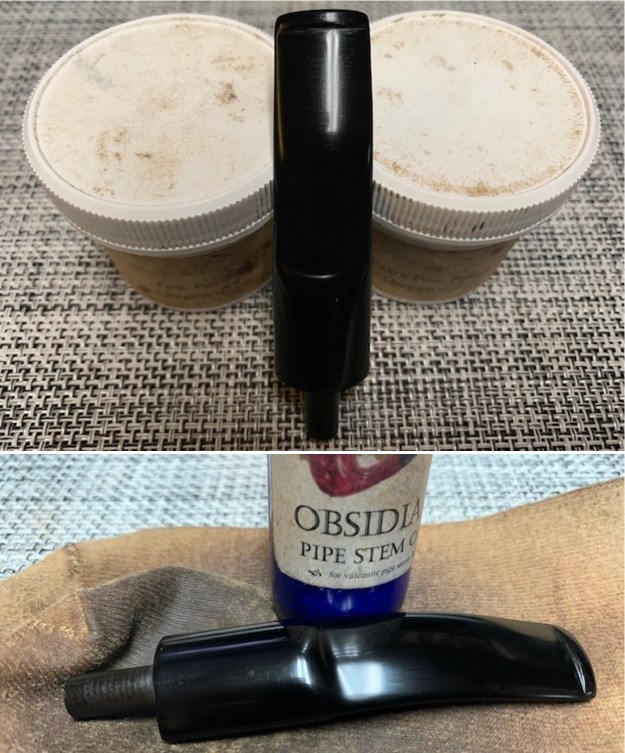
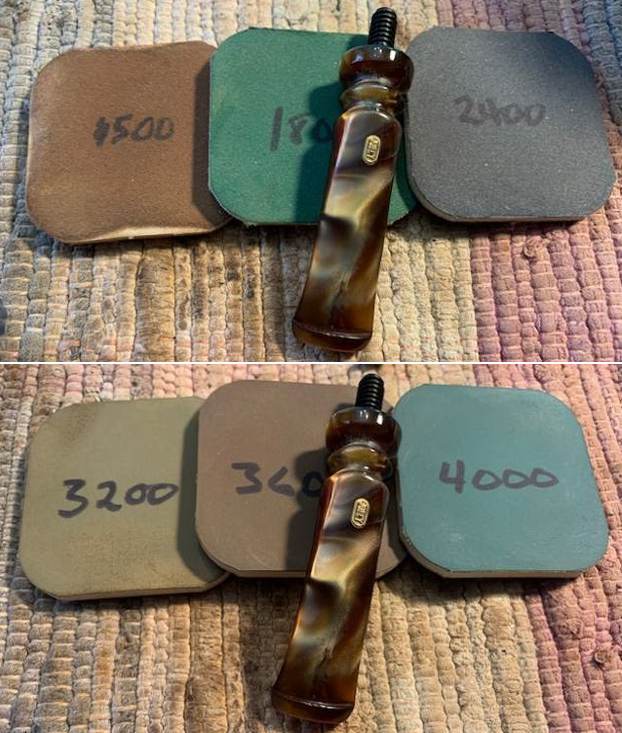
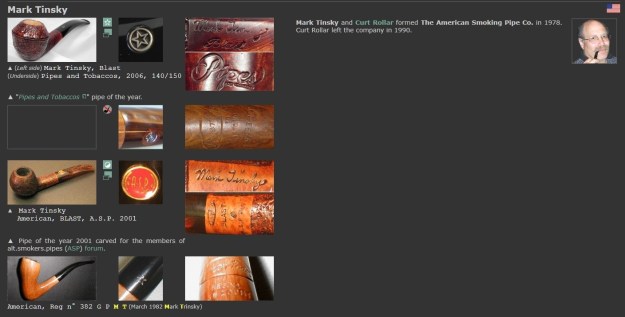
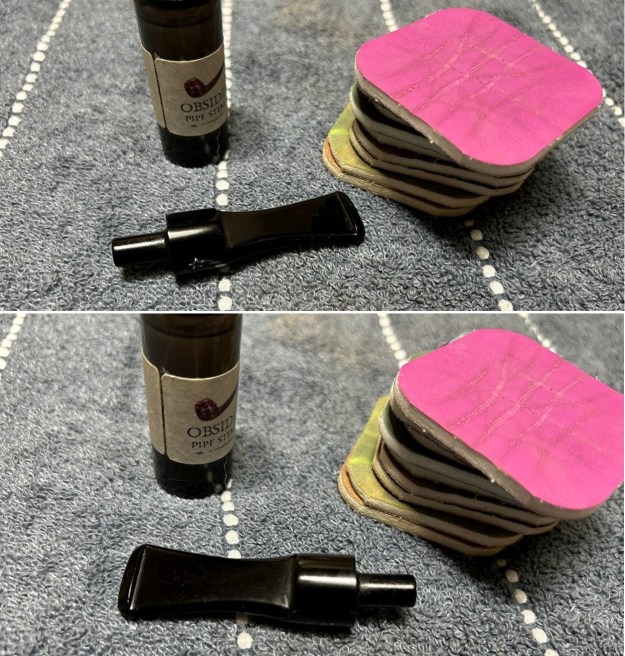
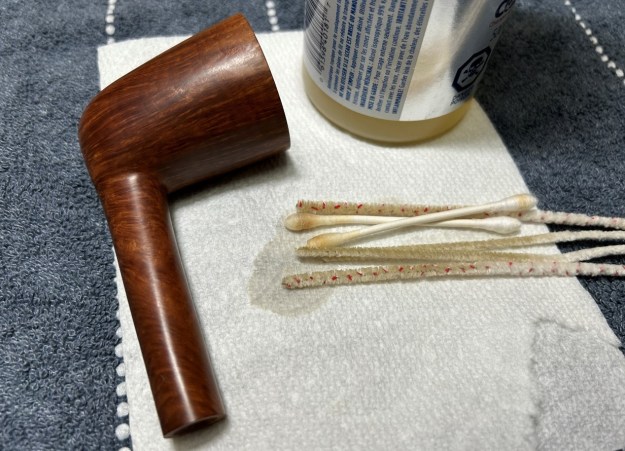
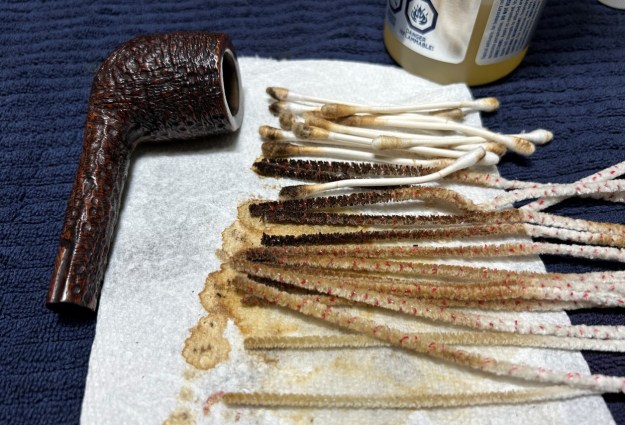
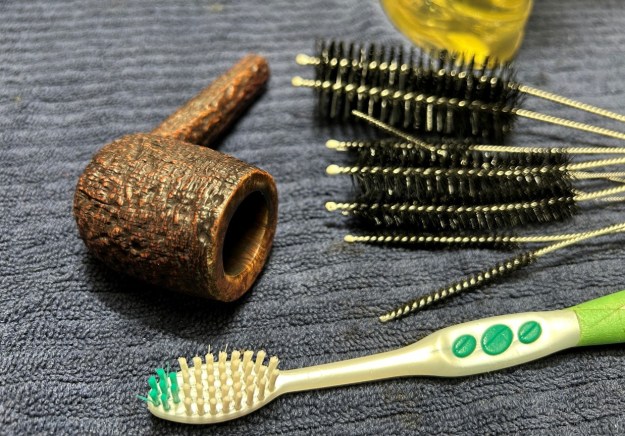
His more than reasonable prices, and his good-natured personality, have made Mark [Tinsky] the favorite of many Americans. It is difficult to find an amateur who does not possess at least one pipe made by the American Smoking Pipe Company, that Tinsky founded in 1978 with his friend Curt Rollar. In 1990, after the departure of his associate, Tinsky continued on by himself building a solid reputation using quality briar from Greece and stem blanks imported from Italy, offering collectors a vast assortment of models and finishes. In short, his pipes are beautiful and well-made pieces that produce a taste beyond reproach. Neither off-the-shelf nor haute couture, they are solid hand mades for an affordable price.There is a wonderful and extensive article on Tinsky, Rollar, and the American Smoking Pipe Company at Pipedia. I highly recommend reading it here. You can also visit his website: http://www.amsmoke.com/. There’s also a small blurb about him at Pipephil:This pipe was in generally very nice shape and didn’t require too much work. I used oil soap on a few cotton rounds and wiped down the stem to provide an initial cleaning before moving on to the next steps. The primary cleaning came next. I disinfected the inside of the stem with both pipe cleaners and cotton swabs dipped in lemon-infused 99% isopropyl alcohol. I scrubbed thoroughly to make sure the interior was very clean.As the stem was now clean and dry, I set about fixing the marks and dents in the acrylic. This was done by filling those divots with black cyanoacrylate adhesive, impregnated with carbon and rubber. I left this to cure and moved on.The penultimate step for the stem is sanding. First, with my set of needle files, I reduced the bulk of the cyanoacrylate repairs. I removed the excess adhesive as near to the surface as possible, without cutting into the acrylic. Following that, I used all nine of the micromesh sanding pads (1,500 through 12,000 grit) to sand out flaws, even out the acrylic, and provide gentle polishing of the finished surface. I also applied pipe-stem oil while using the last five micromesh pads. There was a wonderful, deep black shine to the stem when I was done.As the stem was (nearly) complete, I moved on to the stummel. The first step was to ream out the bowl – that is to say, remove all the cake inside the bowl. This accomplished a couple of things. First (and most obviously), it cleaned the bowl and provided a refurbished chamber for future smoking. Second, when the old cake was removed, I could inspect the interior walls of the bowl and determine if there was damage or not. I used a pipe knife and a piece of sandpaper taped to a wooden dowel. Collectively, these ensured that all the debris was removed.Similar to the stem, I then cleaned the stummel with both pipe cleaners and cotton swabs dipped in lemon-infused 99% isopropyl alcohol. It took quite a while and much cotton to get clean.To tidy up the briar, I also wiped down the outside with some oil soap on cotton rounds and used a toothbrush in the crevices. This did a good job of cleaning any latent dirt on the surface of the briar. The last step of the cleaning process was to scour the inside of the stummel with some soap and tube brushes. This was the culmination of a lot of hard work in getting the pipe clean.I used all nine micromesh pads (1,500 through 12,000 grit) to sand the smooth rim and the smooth part of the shank. This sanding minimizes flaws in the briar and provides a beautiful smoothness to the wood. I rubbed some LBE Before & After Restoration Balm into the briar and let it sit for 30 minutes or so. The balm moisturizes the wood and gives a beautiful depth to the briar. I then buffed the stummel with a microfibre cloth. For the final step, I took the pipe to my bench polisher and carefully buffed it with three coats of conservator’s wax. This procedure makes the pipe look its best – the stummel sings and the stem glows.
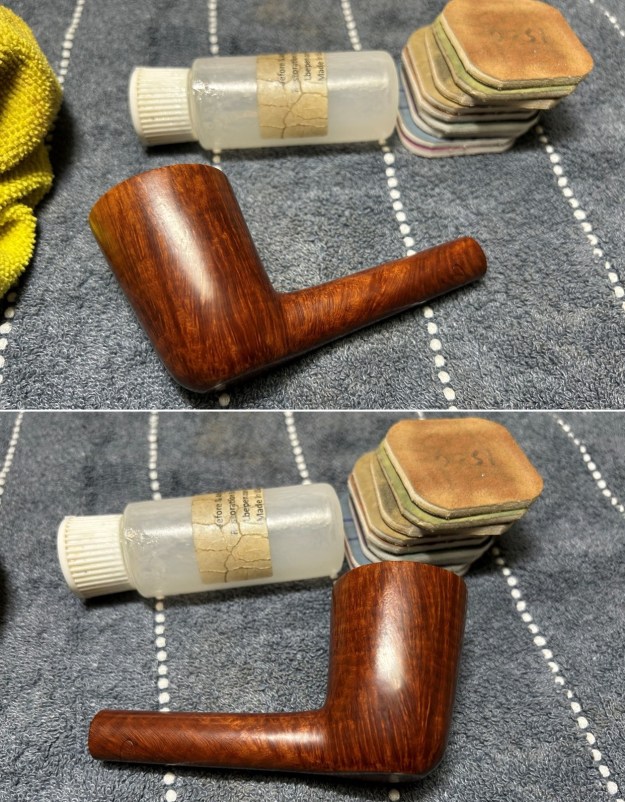
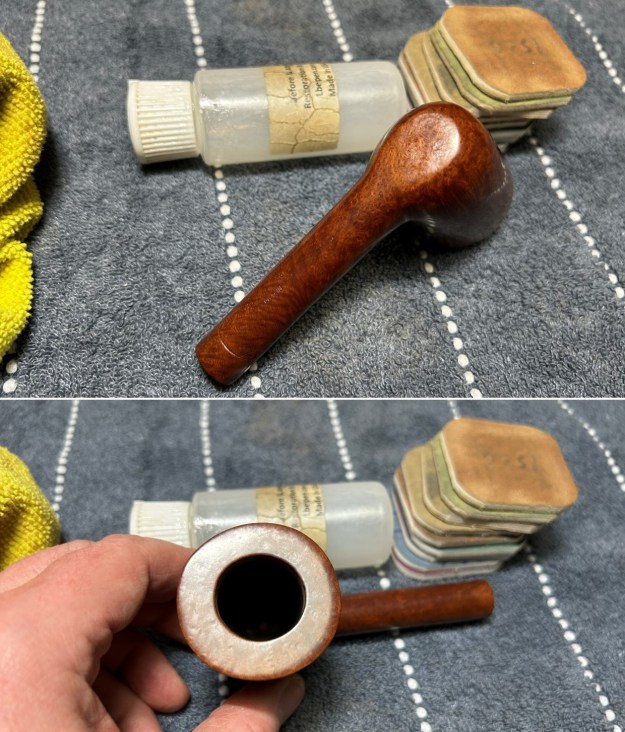
All done! This Mark Tinsky 02-97 Canadian looks fantastic again and is ready to be enjoyed by its next owner. I am pleased to announce that this pipe is for sale! If you are interested in acquiring it for your collection, please have a look in the ‘American’ section of the store here on Steve’s website. You can also email me directly at kenneth@knightsofthepipe.com. The approximate dimensions of the pipe are as follows: length 6⅛ in. (156 mm); height 2 in. (52 mm); bowl diameter 1⅝ in. (41 mm); chamber diameter ⅞ in. (23 mm). The weight of the pipe is 1¾ oz. (54 g). I hope you enjoyed reading the story of this pipe’s restoration as much as I enjoyed restoring it. If you are interested in more of my work, please follow me here on Steve’s website or send me an email. Thank you very much for reading and, as always, I welcome and encourage your comments.
Restoring a Danish Mr. Andersen Hand Crafted 3 Freehand with acrylic saddle stem


by Steve Laug

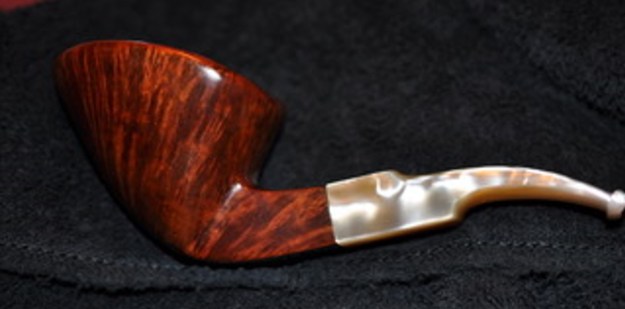
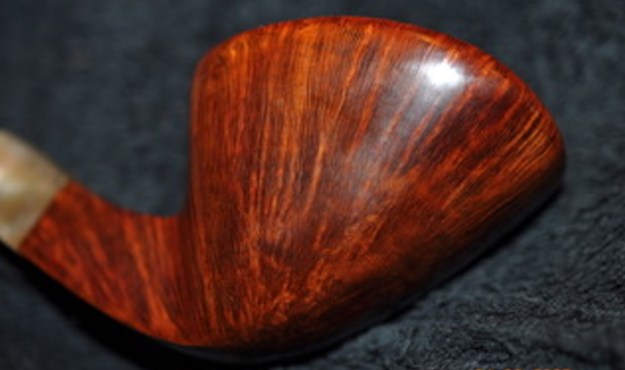
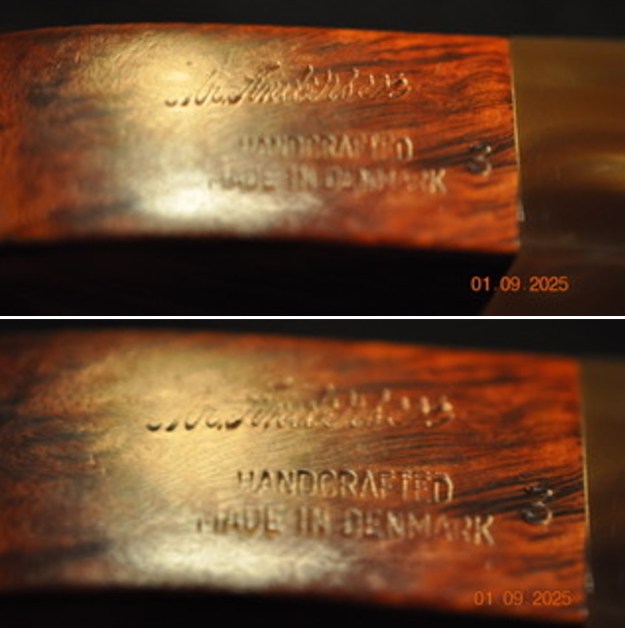
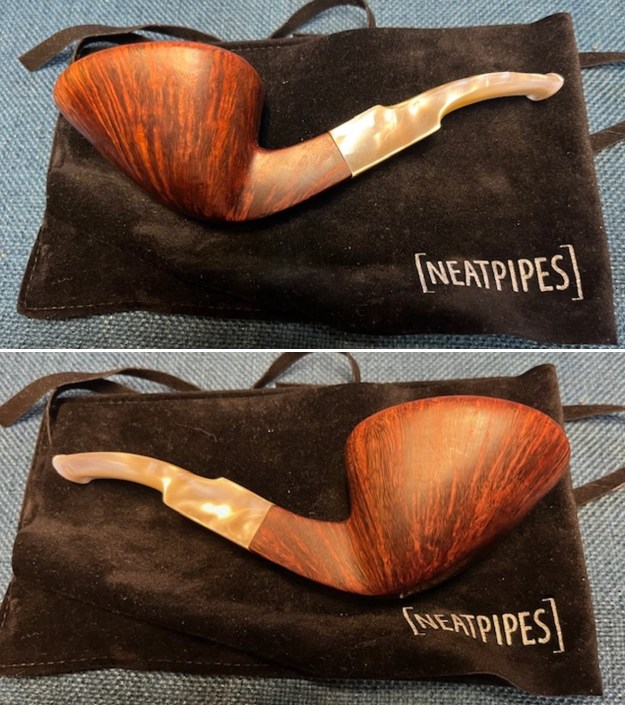
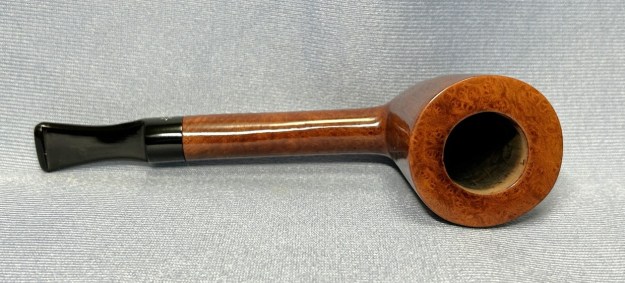
The next pipe on the table is a beautiful freehand in a brand we had not seen before. We picked the pipe up from a seller in Wellsville, Kansas, USA on 12/09/2024. Probably the fact that it is a Danish and Hand Crafted caught our eye on this one. It is stamped on the underside of the shank and reads Mr. Andersen in script [over] Hand Crafted [over] Made in Denmark followed by the number 3. It is a nice looking Freehand “Dublinesque” Freehand that had great grain around the bowl and shank. The rim top was smooth and rectangular with a bit of scoop running from front to back of the bowl. The finish looked good other than the usual dust. The bowl had been recently reamed and the rim top was quite clean other than some oils. The edge of the bowl looked to be in good condition. The acrylic saddle was a bit off at the shank end in terms of a smooth transition between the shank and stem and there was tooth chatter and light tooth marks on both sides near the button. There is no logo stamp on the stem. The surface of the button looks very good on both sides. Jeff took some photos of the pipe to show the general condition of the pipe before he started his clean up. Jeff took photos of the rim top and stem to show the general condition of the pipe. The bowl is clean and the rim top looks good. The inner edge of the bowl is in excellent condition. The stem has some fitting issues at the shank and there is light tooth chatter and marks on the top and underside near the button. Jeff took photos of the bowl sides and heel to show the condition of the smooth finish around this bowl. The grain is quite beautiful and it is a nice looking pipe. He took photos of the stamping on underside of the shank. It is clear and readable as noted above. I removed the stem and took photos of the part to give a sense of the look of the pipe.Before I started working on the pipe I wanted to get a sense of the provenance of the pipe. It was a brand with which I was unfamiliar. I turned first to Pipephil’s site and there was nothing on that brand. I turned then to Pipedia (https://pipedia.org/wiki/Mr._Andersen). The was some interesting information on the brand and help with the carver of the pipe. I quote:

It had previously been reported that Jørgen Larsen made Mr. Andersen pipes. However David Field, the importer for Larsen states, “Jørgen Larsen never made Mr. Andersen pipes to my knowledge.”

As it turns out, there are two Jørgen Larsens making pipes!

Søren Eric Andersen writes, “the brand MR: ANDERSEN was introduced by Remo Sørensen, a well known pipe dealer in Copenhagen. The pipes were made by several pipemakers, although I personally only knew one of them, Jørgen Larsen, formerly with Larsen & Stigart. It is unlucky that there are TWO Jørgen Larsens in this small trade, but the name is rather common in Denmark. I was not happy with [them using] that brand [name] for obvious reasons, but Andersen is quite a common name too. With my best regards, Søren Eric Andersen.”

José Manuel Lopes states in Pipes, Artisans and Trademarks that these pipes were also made by Jarl and Chieftan.

Nikolaj Nielsen, proprietor of The Danish Pipes Shop reports that Finn Andersen was the maker (or perhaps one of the makers) of Mr. Andersen pipes for Remo Sørensen. It is unclear if this Finn Andersen, is Finn Meyan Andersen, who was instrumental in setting up the machinery at the Briar Workshop, but that seems possible, if not likely.

Now I knew the pipe was probably sold by Remo Sorensen a well known pipe dealer in Copenhagen. Jorgen Larsen of Larsen & Stigart was probably the carver. Now it was time to work on the pipe.

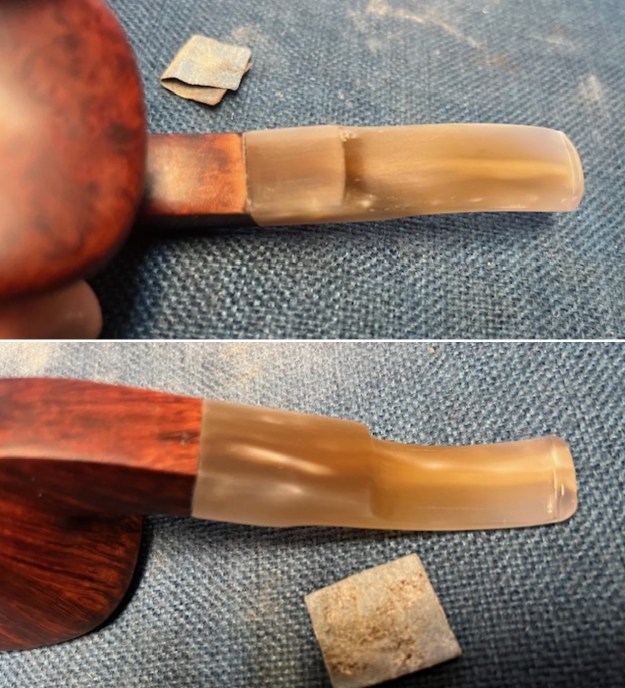
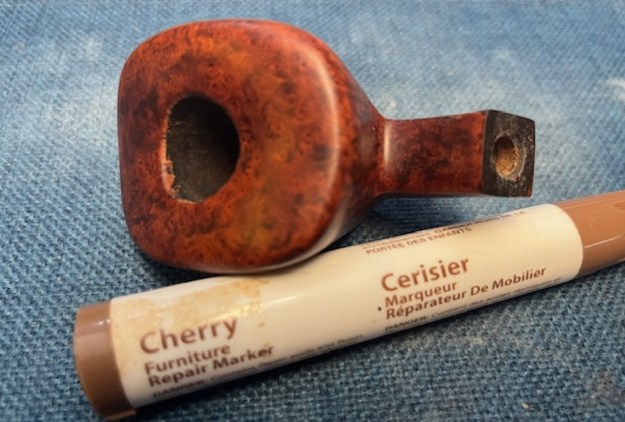
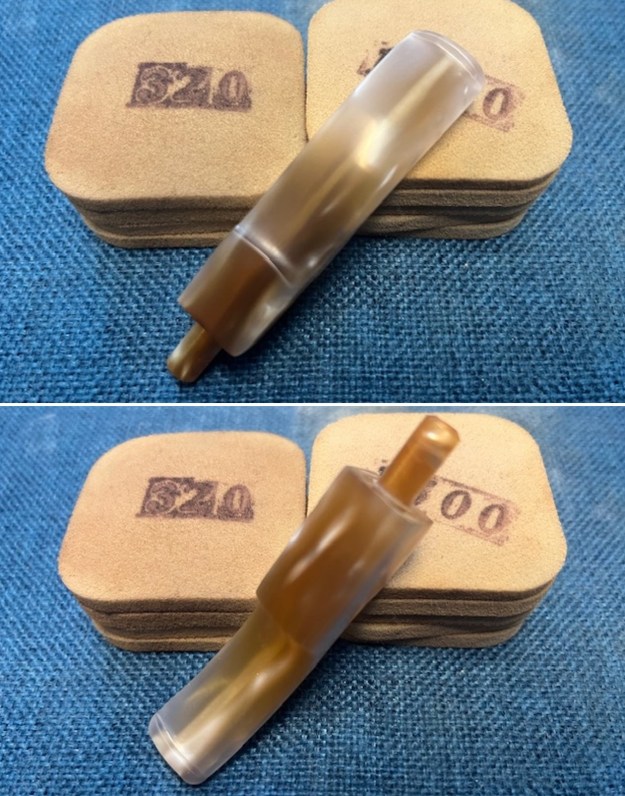
Armed with that information I turned my attention to the pipe itself. Jeff had cleaned the pipe with his usual penchant for thoroughness that I really appreciate. He cleaned up the reaming with a PipNet pipe reamer and a Savinelli Fitsall Pipe Knife. He scrubbed out the internals with alcohol, pipe cleaners, shank brushes and cotton swabs until the pipe was clean. He scrubbed the exterior of the bowl with undiluted Murphy’s Oil Soap and a tooth brush to remove the grime and grit on the briar and the light lava on the rim top. The finish looks very good with good looking grain around the bowl and shank. He cleaned the acrylic stem alcohol and pipe cleaners to remove the oils and tars. He scrubbed the surface with some Soft Scrub to clean up the surface. When the pipe arrived here in Vancouver for the second stop of its restoration tour it looked very good. I took photos before I started my part of the work. I took close up photos of the bowl and rim top as well as the stem. You can see the condition of the rim top and bowl in the first photo. Jeff was able to remove all of the dust and oils on the top and the edges of the bowl. It looked very good. The stem had a sloppy fit to the shank and there was light tooth chatter on both sides ahead of the button.I took a photo of the stamping on the shank sides to show the condition. The stamping was clear and readable as noted above. I removed the stem and took a photo to show the parts of the pipe. It is a beauty.I polished the briar with 1500-12000 grit sanding pads. I wiped down the bowl with a damp cloth to remove the sanding debris and dust. The bowl began to look amazing. I worked some Before & After Restoration Balm into the surface of the briar with my fingertips to clean, enliven and protect it. I let the balm sit for a little while and then buffed with a cotton cloth to raise the shine. The following photos show the bowl at this point in the restoration process. I am very happy with the results. I worked on the fit to the shank with a folded piece of 220 grit sandpaper. I was able to smooth the stem on the sides and underside to match the flow of the shank. The topside took a bit more work to flatten the transition and smooth the flow. I smoothed out the sanded area with 320-3500 grit sanding pads. Once it was smooth I stained the top of the shank with a Cherry Stain pen.I sanded the stem with 320-3500 grit sanding pads. I wiped the stem down with an Obsidian Oil cloth after each sanding pad. The tooth marks and chatter had disappeared.I polished the stem with micromesh sanding pads – wet sanding with 1500-12000 grit sanding pads. I wiped it down after each sanding pad Obsidian Oil. I finished by polishing it with Before & After Pipe Stem Polish both fine and extra Fine and then wiped it down with a final coat of Obsidian Oil. This is a beautiful Mr. Andersen Hand Crafted Freehand Dublin with a square shank and square acrylic saddle stem. It has a great look and feel. The shape of the bowl, the scooped rim top and the cut of the briar work well to highlight the grain around the bowl sides. I polished stem and the bowl with Blue Diamond polish on the buffing wheel. I gave the bowl and the stem multiple coats of carnauba wax. I buffed the pipe with a clean buffing pad to raise the shine. I hand buffed it with a microfiber cloth to deepen the shine. The Mr. Andersen Freehand Dublin polished up pretty nicely. The grain took on life with the buffing. The rich stains work well with the polished vulcanite stem. The finished pipe has a rich look that is quite catching. Have a look at it with the photos below. The shape, finish and flow of the pipe and stem are very well done. The dimensions are Length: 6 inches, Height: 2 inches, Outside diameter of the bowl: 1 ¾ inches wide x 2 ½ inches long, Chamber diameter: ¾ of an inch. The weight of the pipe is 2.33 ounces/66 grams. It is a beautiful pipe. I will be putting it on the rebornpipes store shortly in the Danish Pipemakers Section if you are interested in adding it to your collection. Thanks for walking with me through the restoration.

Repairing a Damaged Rattray’s Ahoy Sandblast pipe


by Steve Laug

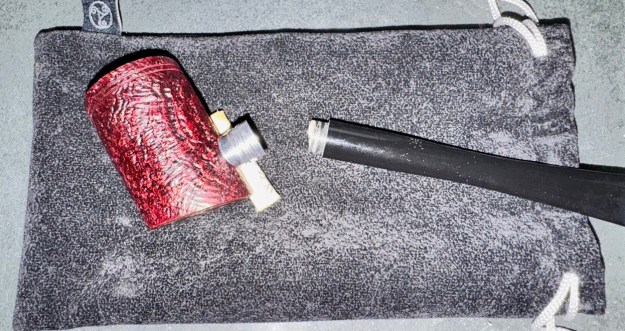
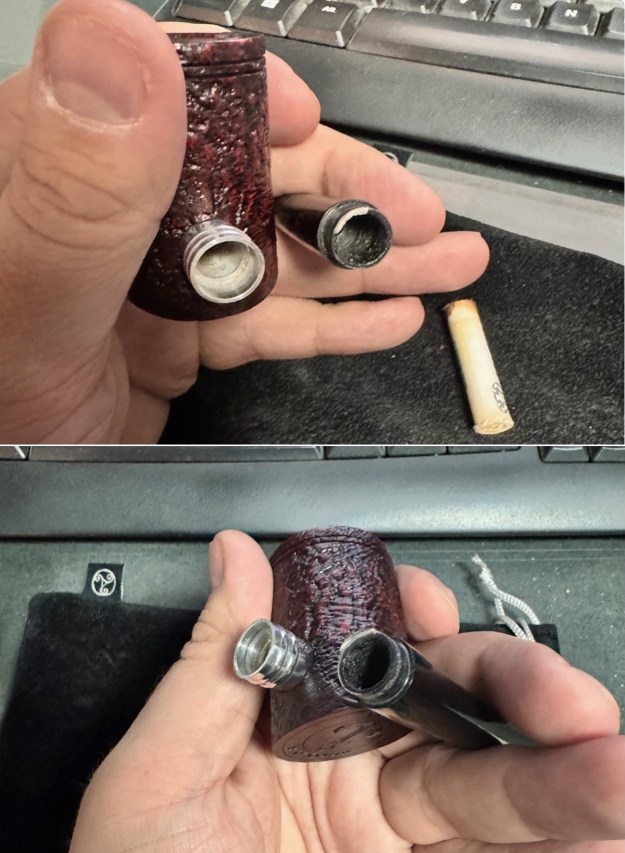
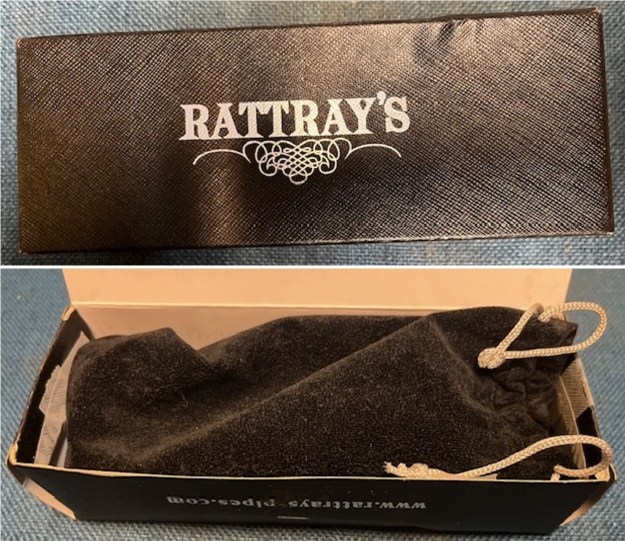
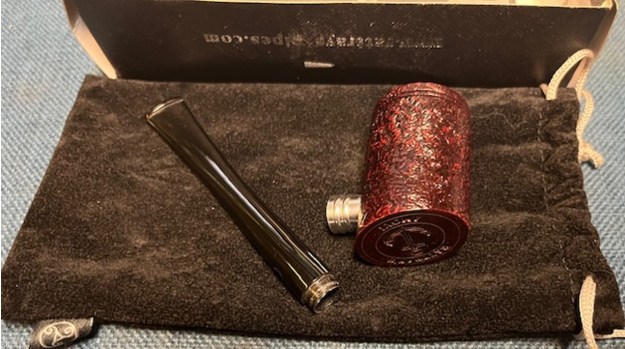
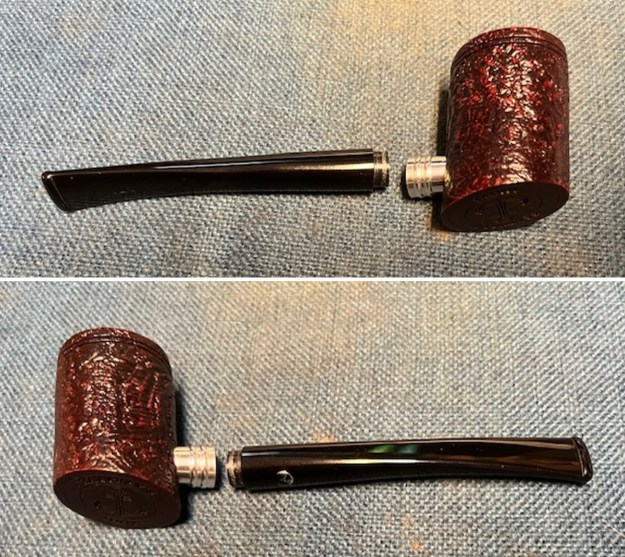
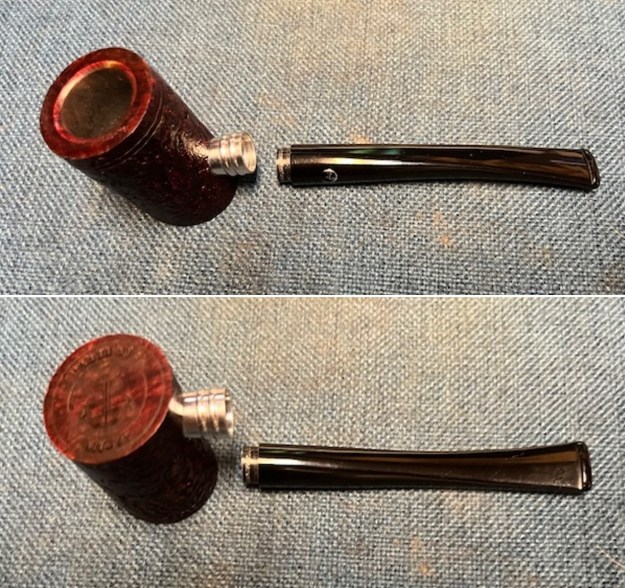
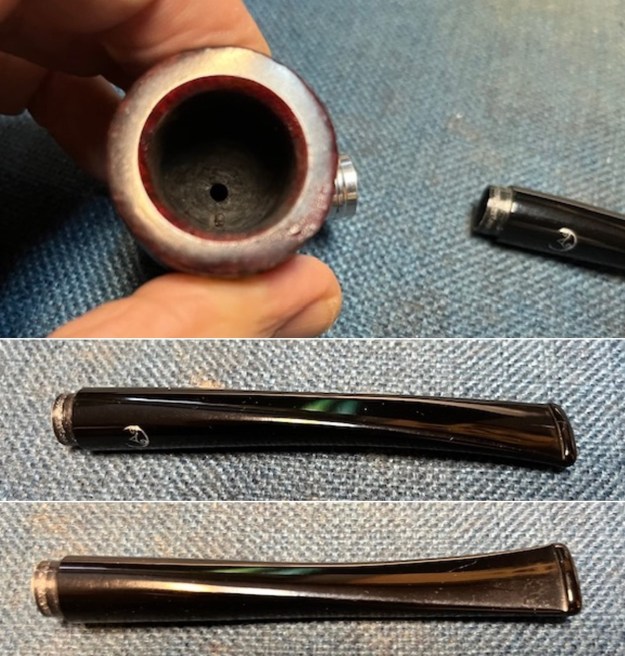
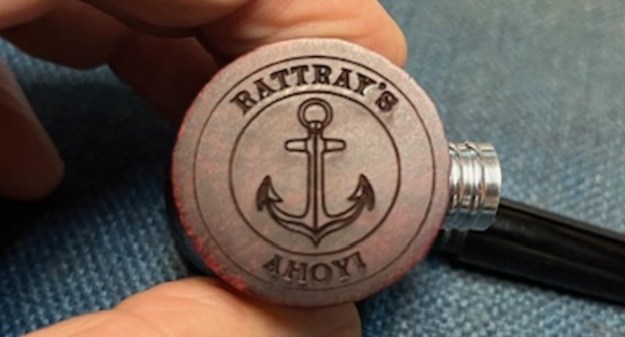
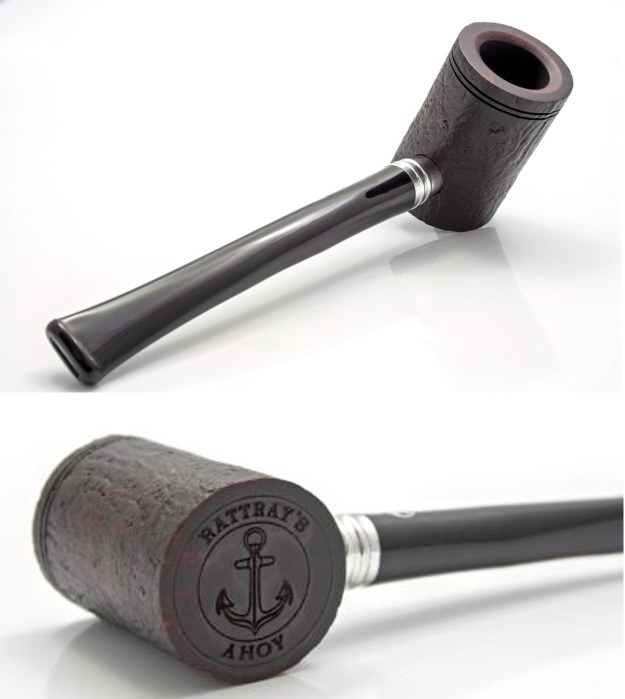
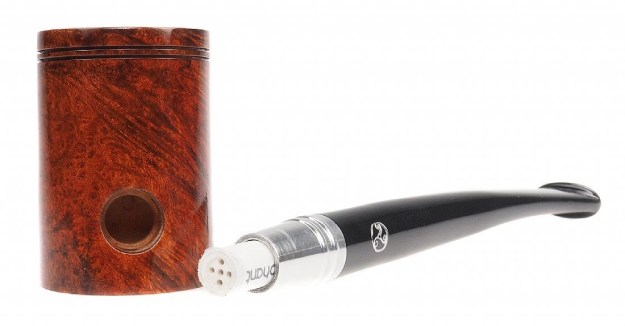
On the weekend I got a call from the local pipe/cigar shop. They had a customer break the stem on his new Rattray’s Ahoy sandblast pipe. I asked the clerk to email me some photos of what had happened as I expected worst. In my mind when someone tells me they broke the stem I visualize many different things but as I had never seen or worked on a Rattray’s Ahoy I had no idea what was going on. He sent me the following photos. The first one spooked me a bit as it looked almost as if the tenon that fit the metal fitment on the bowl side had broken off. I was looking forward to seeing it in person. The second and third photos helped understand a bit better. It looked as if the customer had pulled the stem out of the fitment. The combination of the fitment and stem held a 9mm filter. I was ignorant of the system but I kind of figured that the fitment would slip out of the bowl in order to change the filter easily. When he dropped it off I would be able to figure it out. When Joe dropped the pipe off today I was not sure what to expect. When he handed it to me it was in its original Rattray’s box and inside was a cloth pipe sock that held the parts of the pipe. I opened the box, took out the pipe sock and removed the broken pipe. I breathed a sigh of relief as it was clear what had happened. The fellow had literally twisted the stem out of the metal fitment. I checked the fitment and it was securely stuck in the bottom of the bowl. I took the pipe to my work desk and took photos of the piece before I started my work on it. The pipe had been smoked at least once and there was a spot of bubbling on the rim top where the varnish had bubbled when heated. The bowl had some darkening and ash. The fitment on the bottom of the bowl that held the stem was stuck in place and it appeared to be slightly dirty from ash. The bowl was surprisingly shallow – maybe 2/3 of the height of the bowl. The airway entered the bowl at the bottom and was centered. The stem seemed plastic though maybe acrylic. It was drilled for a 9mm filter. There was hardened glue around the tenon end where it had been glued into the metal fitment/shank. It would need to be scraped clean. The stem itself was also a little dirty from the smoking and would need to be cleaned out. I was grateful that the pipeman who had smoked the pipe had not chomped the bit at all so it was quite clean. The photos show the approximate lay of the parts of the pipe showing the sandblast around the bowl, the smooth rim top and heel of the poker. It is a very lightweight kind of pretty little pipe. I took a close up photo of the rim top and bowl to show the condition of the bowl and top. You can see the airway entering at the bottom of the bowl. It is actually centered very well even though in the photo it appears to be toward the left. The bowl is ashy and I will need to wipe it out. The rim top shows the bubbles I referred to above on the back left of the bowl just above my thumb in the photo. You can also see the Rattray’s logo is incomplete on the stem on the right side of the photo. I also took photos of the top and underside of the stem to show their very clean condition in terms of bite or chatter marks. You can also see the residue of the original glue that held it in the metal fitment.I took a photo of the laser engraved stamping on the heel of the bowl. It is well done and very readable. There is an anchor in the centre of the heel encircled with two rings. Between the rings on the left side (top in the photo below) it reads RATTRAY’S and on the right side (bottom in the photo below) it reads AHOY!.I decided to turn to the Rattry’s Pipes site to see what I could learn about the pipe from the seller themselves (https://www.rattrays-pipes.com/en/Rattray-s-Ahoy-Natural). I quote what they included in their description of the pipe.

Ready for the next adventure? You defy the wind and the cold, conquer the waves. The lighthouse guides you around the cliffs, and the sun rises from the sea.

The next port promises a cozy fire in the harbour tavern, where the liquid luck pours down the throats. Compensation for the long weeks at sea. Soon the journey continues, only one destination in mind. Home.

Rattray’s Ahoy! A small sized Poker shape with a lasered bottom for a short smoke.

I also included the Description or Vitals that were listed for the pipe:

Description: Vitals

Surface


 Sandblast

Series Ahoy
Application  

Metal


Chamber Diameter  

19 mm


Drilling 9mm
Mouthpiece  

Acrylic


Limited Edition No
Shape  Straight – Poker
Style  

Classic series


Bowl Height 50 mm
 Material Briar
Weight  

30-39 gram


Length 140 mm

The site also had photos of the various finishes the pipe that were available. I turned to the sandblast finish Ahoy and took some photos of the pipe as it was (at least in the factory photos). Perhaps the most important photo on the site was found in the photos of the smooth version of the pipe. It confirmed what I had assumed about the metal fitment being connected to the stem portion and pressure fit into the side of the bowl. This gave me the direction I needed for repairing the stem! Thank you internet and Rattray’s for the detailed photos.Now it was time to work on the pipe. I tried to wiggle the metal fitment in the bowl and it was solidly stuck in place. I used an old trick – putting it in the freezer for about 10 minutes. The chill air affects the metal and the briar differently. When I removed the bowl from the freezer the metal fitment easily came out of the bowl. It was clean an undamaged. I used a qtip/cotton swab and some isopropyl alcohol to cleanup the inside of the metal and the stem end to remove all of the residual glue. I used a tooth pick to paint the stem end with black rubberized CA glue and pressed the fitment onto the stem. I wiped off the excess glue that oozed out with a alcohol dampened cloth. Once it was ready I set it aside to let the glue cure.I cleaned out the airway in the stem and the mortise with isopropyl alcohol, cotton swabs and pipe cleaners. I used a cotton pad and alcohol to clean out the inside of the bowl. It removed the tobacco smell and the oils from the bowl and shank.To remove the bubbling finish on the top of the rim top I polished it with 1500-12000 grit micromesh sanding pads. I removed the damage on the rim top with the pads. I wiped it down with a damp cloth to remove the sanding debris on the surface. I worked some Before & After Restoration Balm into the surface of the briar with my fingertips and a shoe brush. It works to clean, enliven and protect the briar. I let it sit for 15 minutes then buffed it off with a soft cloth and raised the shine. The bowl looks great at this point. I polished the stem, carefully avoiding the remaining Rattray’s stamp on the left side of the stem. I appeared to be almost a decal but I am uncertain so I avoided all contact with it. I used 1500-12000 grit micromesh sanding pads. I wiped the stem down with an Obsidian Oil cloth after each sanding pad. It looked very good. I fit the stem with a 9mm filter and reinserted the stem in the bowl. It was ready to go back.This Rattray’s Ahoy! Sandblast Poker with an acrylic military bit is a great looking pipe now that it has been restored. The rich browns and blacks of the contrasting stains came alive with the polishing and waxing. The acrylic stem had a nickel cap on the end of the stem that really shone and went will with the black of the stem. I put the stem back on the bowl and carefully buffed the pipe with Blue Diamond on the buffing wheel using a light touch on the briar. I gave the bowl and the stem multiple coats of carnauba wax on the buffing wheel and followed that by buffing the entire pipe with a clean buffing pad. I hand buffed the pipe with a microfiber cloth to deepen the shine. The finished Rattray’s Ahoy! Poker is a beauty and fits nicely in the hand and looks very good. Give the finished pipe a look in the photos below. The dimensions of the pipe are Length: 5 ½ inches, Height: 2 inches, Outside diameter of the bowl: 1 ¼ inches, Chamber diameter: ¾ of an inch. The weight of the pipe is 1.38 ounces/40 grams. This beauty will be going back to the Pipe & Cigar store shortly. Thanks for reading this blog and my reflections on the pipe while I worked on it. There are many more to come!

Cleaning Up a Terrific Jobey Stromboli 200 Bulldog


by Kenneth Lieblich

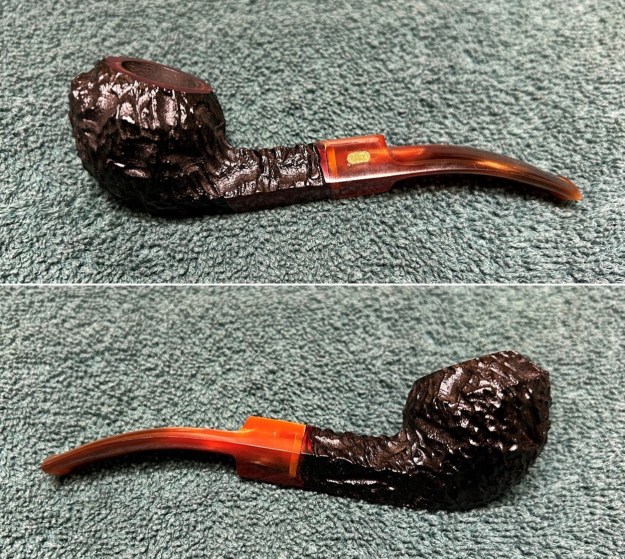
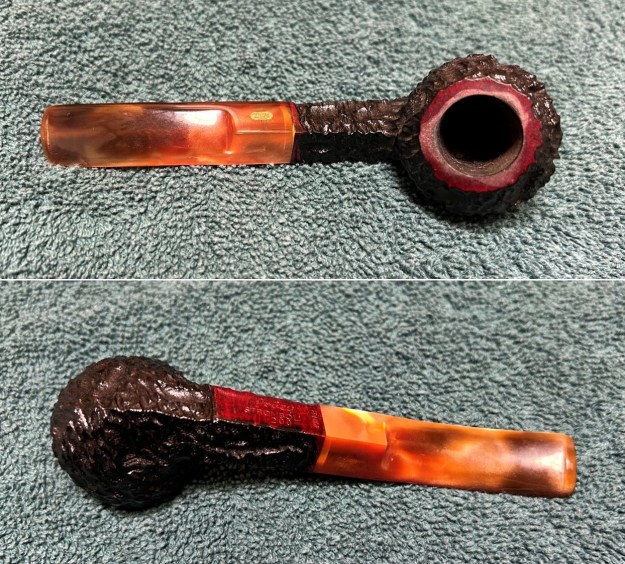
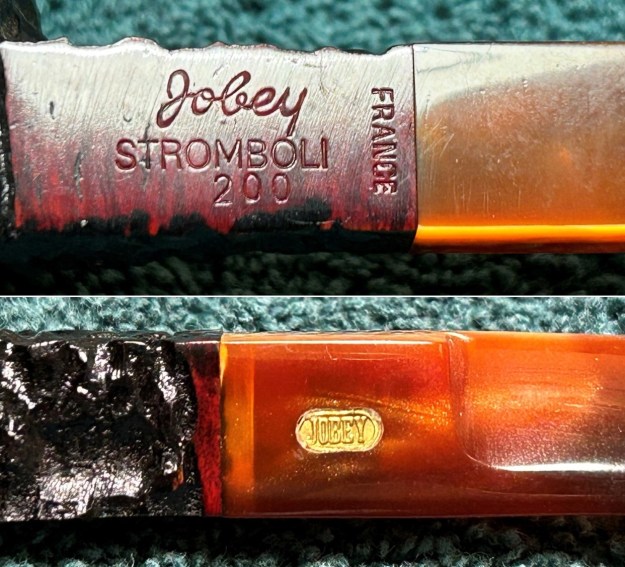
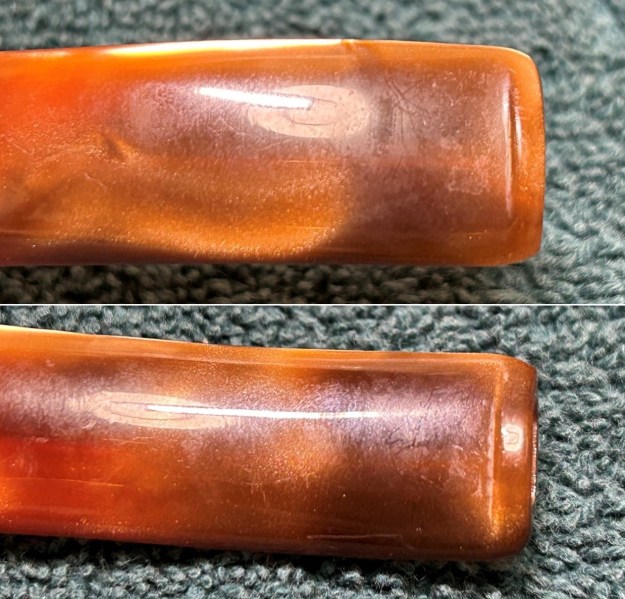
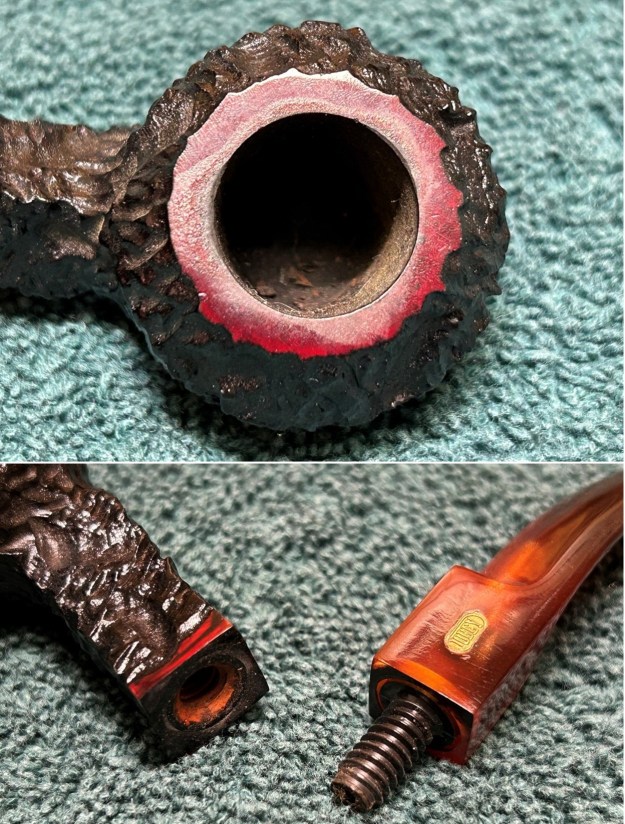
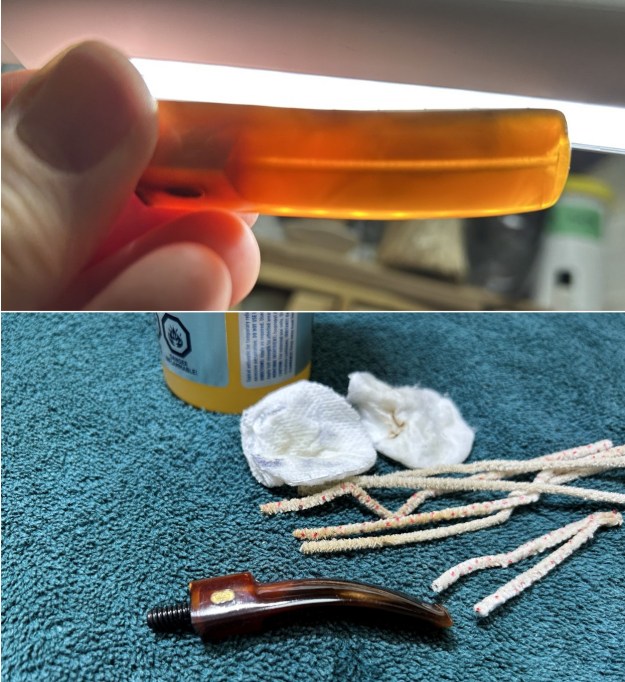
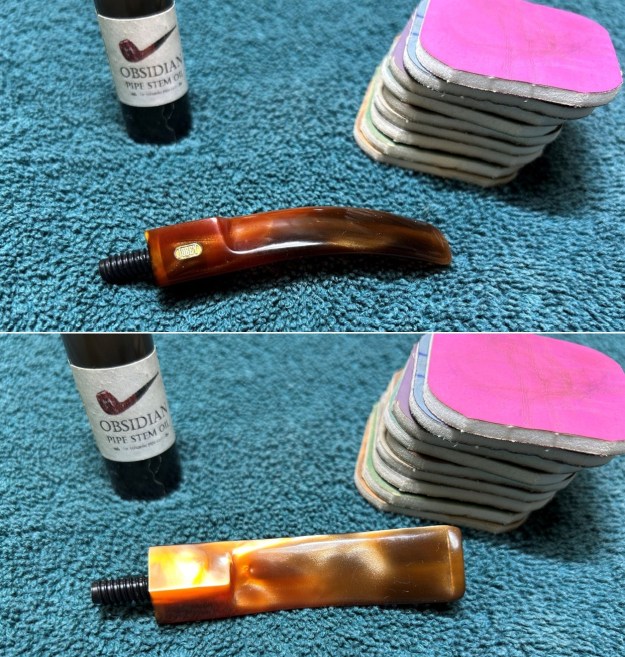
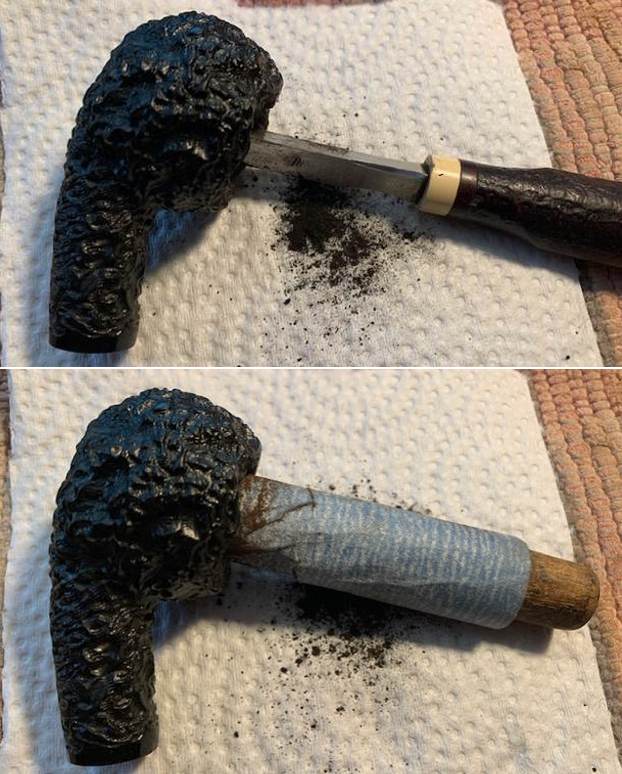
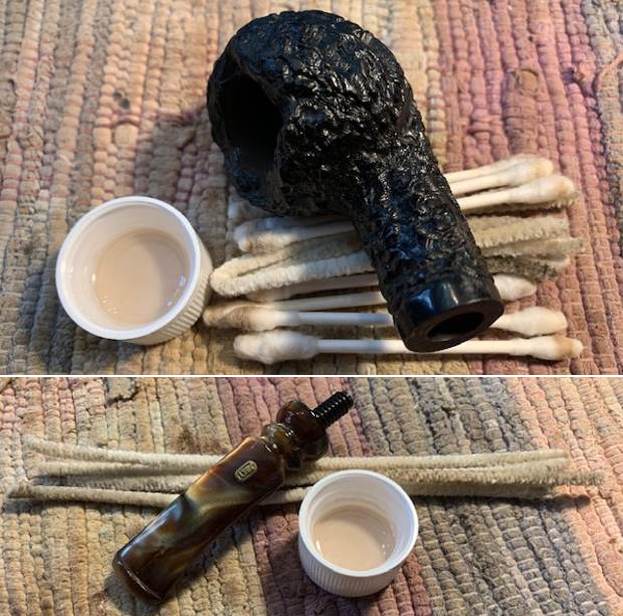
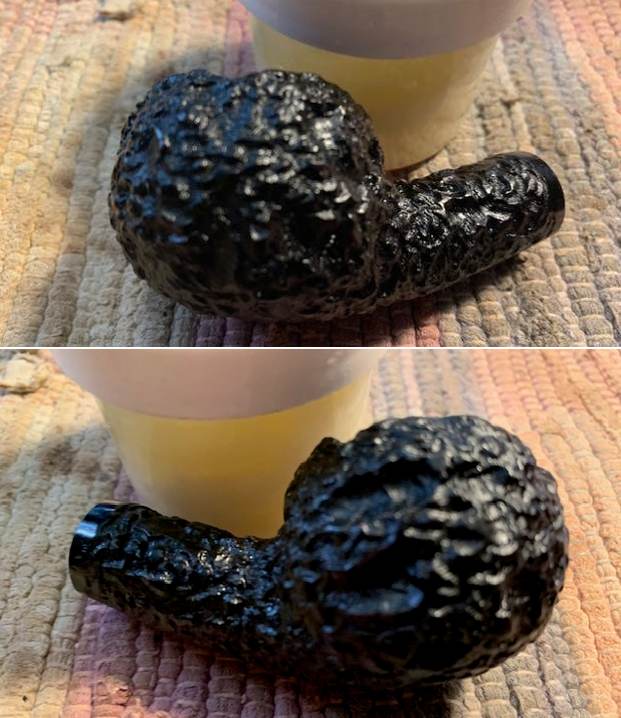
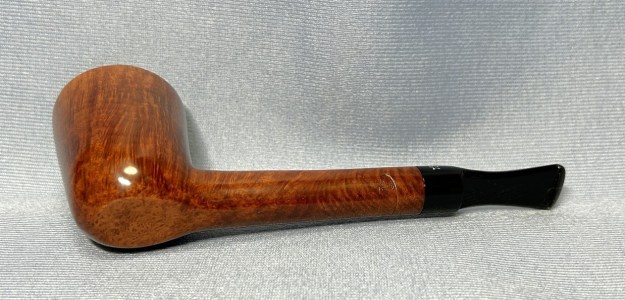
Ah, there’s something awfully satisfying about a really rugged rustication – the craggy, rock-like formation is a very fine thing. This Jobey Stromboli 200 bent bulldog has that great rustication in spades. The pipe had a precise diamond shank and a beautiful acrylic stem with a Jobey link system screw tenon. I acquired this pipe in a lot, where most of the pipes had been very well cared for. This was no exception and looked like a fun pipe to restore. On the underside of the shank were the markings. They read Jobey [over] Stromboli [over] 200. To the right of that, at a 90-degree angle from the other text, was the word France. Finally, on the stem was the Jobey logo in a brass oval. Regarding Jobey, Pipephil tells us that “These pipes are made in St Claude (France) by Butz-Choquin (Berrod-Regad group) since 1987. Before this date some were manufactured in England and Denmark (Jobey Dansk).”This Jobey was in very good condition and didn’t require much work – as the photos attest. The stem had only minimal wear and was hardly dirty. The stummel was equally clean, but the rim had been lit a bit aggressively. Perhaps a cigar lighter was foolishly used – who knows? Moving on… Since the stem is acrylic, there is no issue with oxidation. I used oil soap on a few cotton rounds and wiped the stem down to provide an initial cleaning before moving on to the next steps. The primary cleaning comes next. I cleaned the inside of the stem with both pipe cleaners and cotton swabs dipped in 99% lemon-infused isopropyl alcohol. I scrubbed thoroughly to make sure the interior was clean. Actually, it was quite clean to start with. Holding the stem to the light, you can see how clean it is – if it was heavily smoked, this would be very dark. Now that the stem is clean and dry, I set about fixing the few marks in the acrylic. This is done by filling those divots with clear cyanoacrylate adhesive. I left this to cure and moved on. The penultimate step for the stem is sanding. First, with my set of needle files, I reduce the bulk of the cyanoacrylate repairs. I want to remove the excess adhesive as near to the surface as possible, without cutting into the acrylic. Following that, I use all nine of the micromesh sanding pads (1,500 through 12,000 grit) to sand out flaws and provide gentle polishing of the finished surface. I also apply pipe-stem oil while using the last five micromesh pads. There was a wonderful shine to the stem when I was done. Now that the stem is (nearly) complete, I can move on to the stummel. The first step for me is to ream out the bowl – that is to say, remove all the cake inside the bowl. This accomplishes a couple of things. First (and most obviously), it cleans the bowl and provides a refurbished chamber for future smoking. Second, when the old cake is removed, I can inspect the interior walls of the bowl and determine if there is damage or not. The pipe was so seldom used that I only used a piece of sandpaper taped to a wooden dowel. This ensured that all the debris is removed.My next step was to remove the lava on the rim. For this, I took a piece of machine steel and gently scraped the lava away. The metal’s edge is sharp enough to remove what I need, but not so sharp that it damages the rim. This work revealed that some minor scorching had occurred. It wasn’t serious, but I would have to repair it. Similar to the stem, I then cleaned the stummel with both pipe cleaners and cotton swabs dipped in 99% lemon-infused isopropyl alcohol.To tidy up the briar, I also wiped down the outside with some oil soap on cotton rounds (and a toothbrush). This does a good job of cleaning any latent dirt on the surface of the briar.The last step of the cleaning process is to scour the inside of the stummel with some soap and tube brushes.In order to lessen the burns on the rim, I ‘topped’ the pipe – that is to say, I gently and evenly sanded the rim on a piece of 220-grit sandpaper. This effectively minimizes the damage, without altering the look of the pipe. I used all nine micromesh pads (1,500 through 12,000 grit) on the rim to finish it off. This sanding minimizes flaws in the briar and provides a beautiful smoothness to the wood. After that, the bare wood needed to be tinted in the same colour as the rest of the stummel. I used some of my furniture pens (which is simply dye in pen form) to match the colours. I rubbed some Before & After Restoration Balm into the briar and let it sit for 20 minutes or so. The balm moisturizes the wood and gives a beautiful depth to the briar. I then buffed it with a microfibre cloth and a horsehair brush. For the final step, I took the pipe to my bench buffer and carefully polished it with three coats of conservator’s wax. This procedure makes the pipe look its best – the stummel sings and the stem glows.All done! This Jobey Stromboli 200 Bulldog looks fantastic again and is ready to be enjoyed by its next owner. I am pleased to announce that this pipe is for sale! If you are interested in acquiring it for your collection, please have a look in the ‘French’ section of the store here on Steve’s website. You can also email me directly at kenneth@knightsofthepipe.com. The approximate dimensions of the pipe are as follows: length 5⅔ in. (144 mm); height 1½ in. (39 mm); bowl diameter 1⅔ in. (42 mm); chamber diameter ¾ in. (19 mm). The weight of the pipe is 1¼ oz. (37 g). I hope you enjoyed reading the story of this pipe’s restoration as much as I enjoyed restoring it. If you are interested in more of my work, please follow me here on Steve’s website or send me an email. Thank you very much for reading and, as always, I welcome and encourage your comments.
Restoring a Savinelli Punto Oro 316KS


Blog by Steve Laug

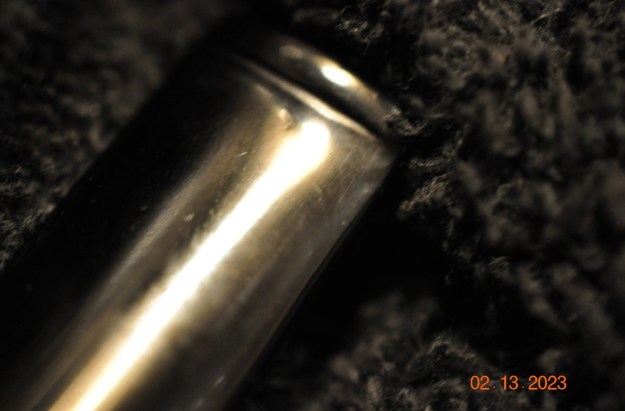
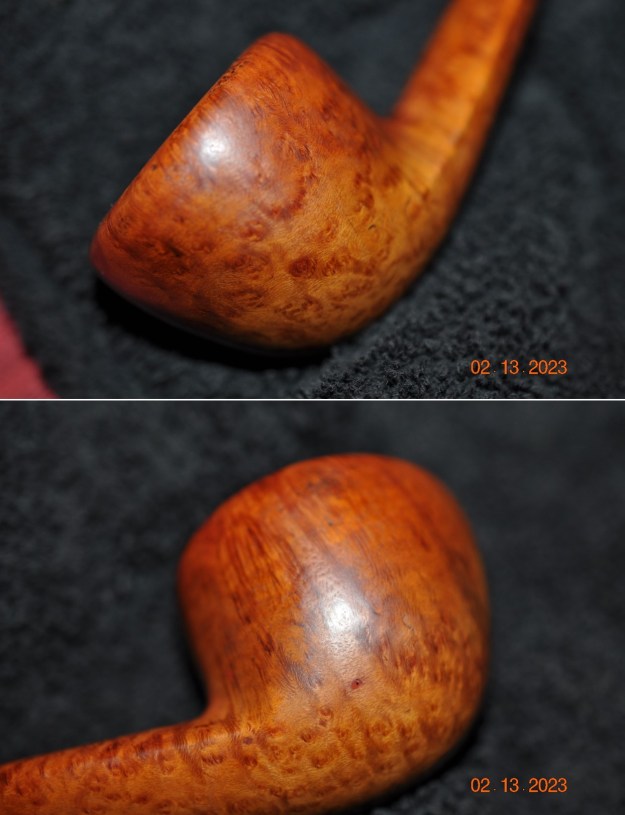
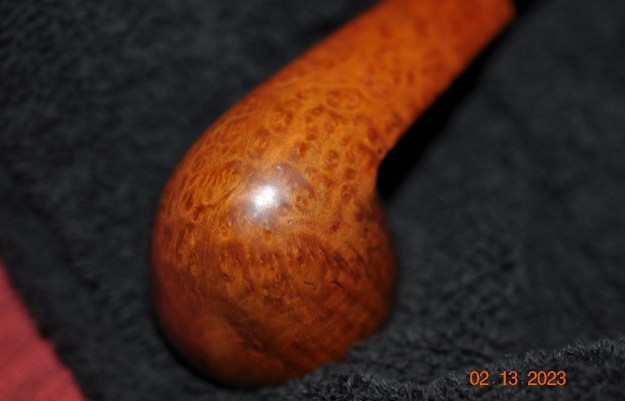
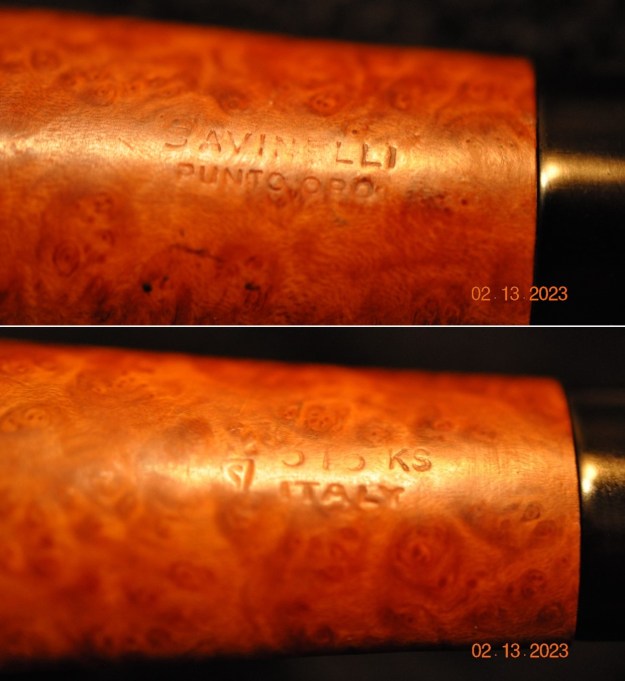
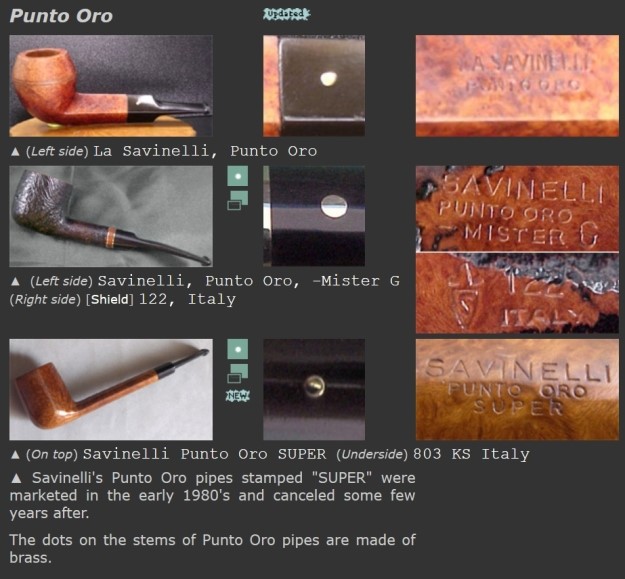
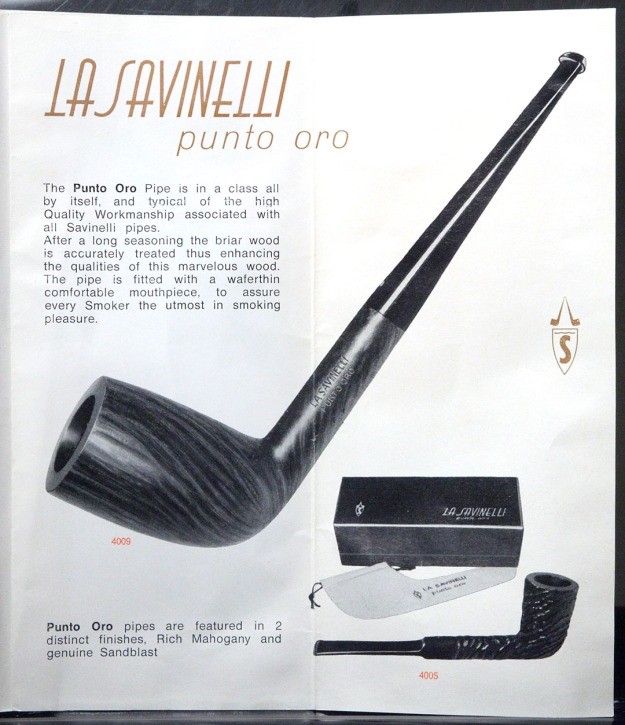
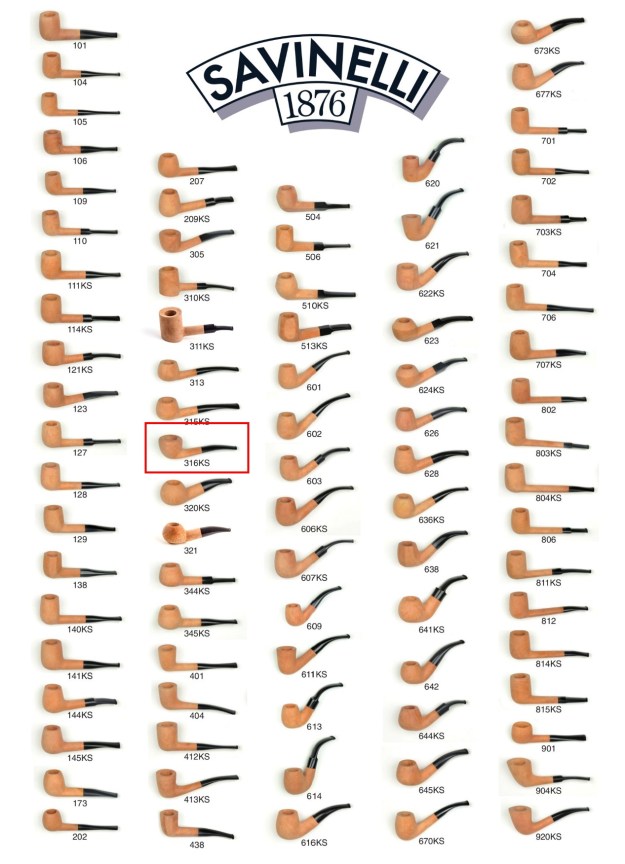
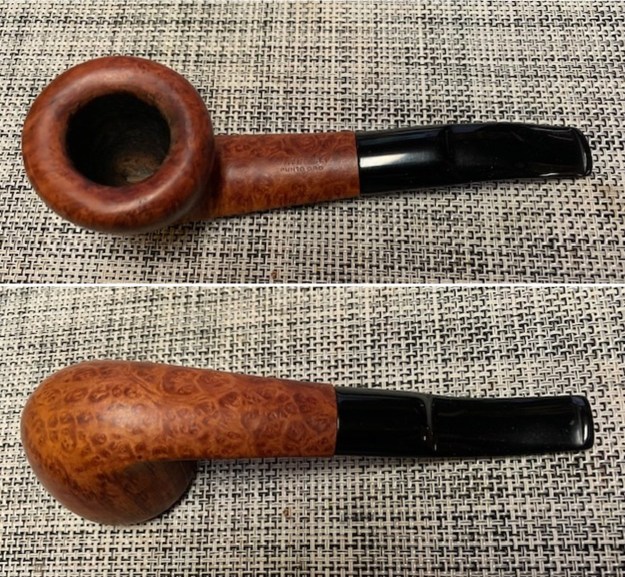
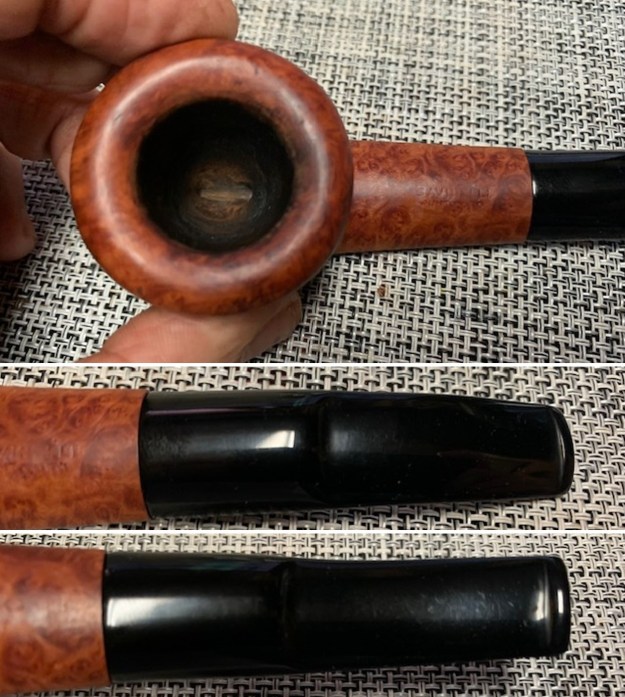
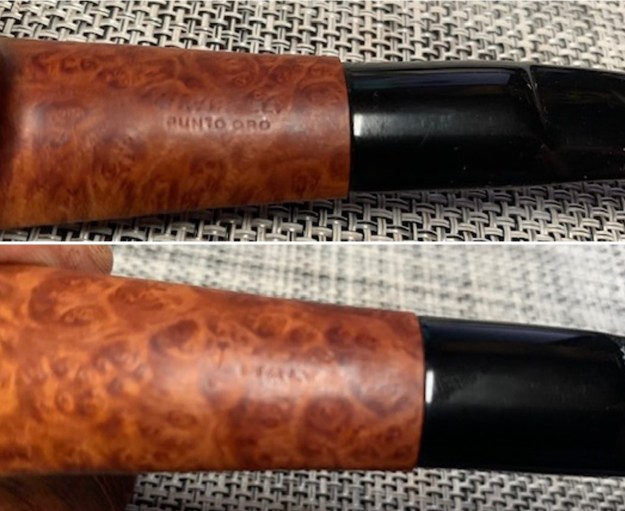
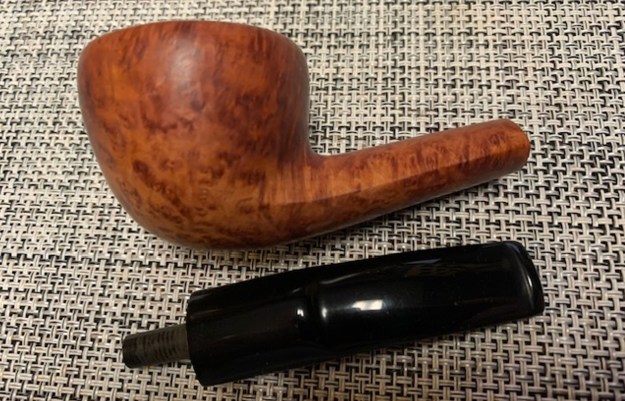
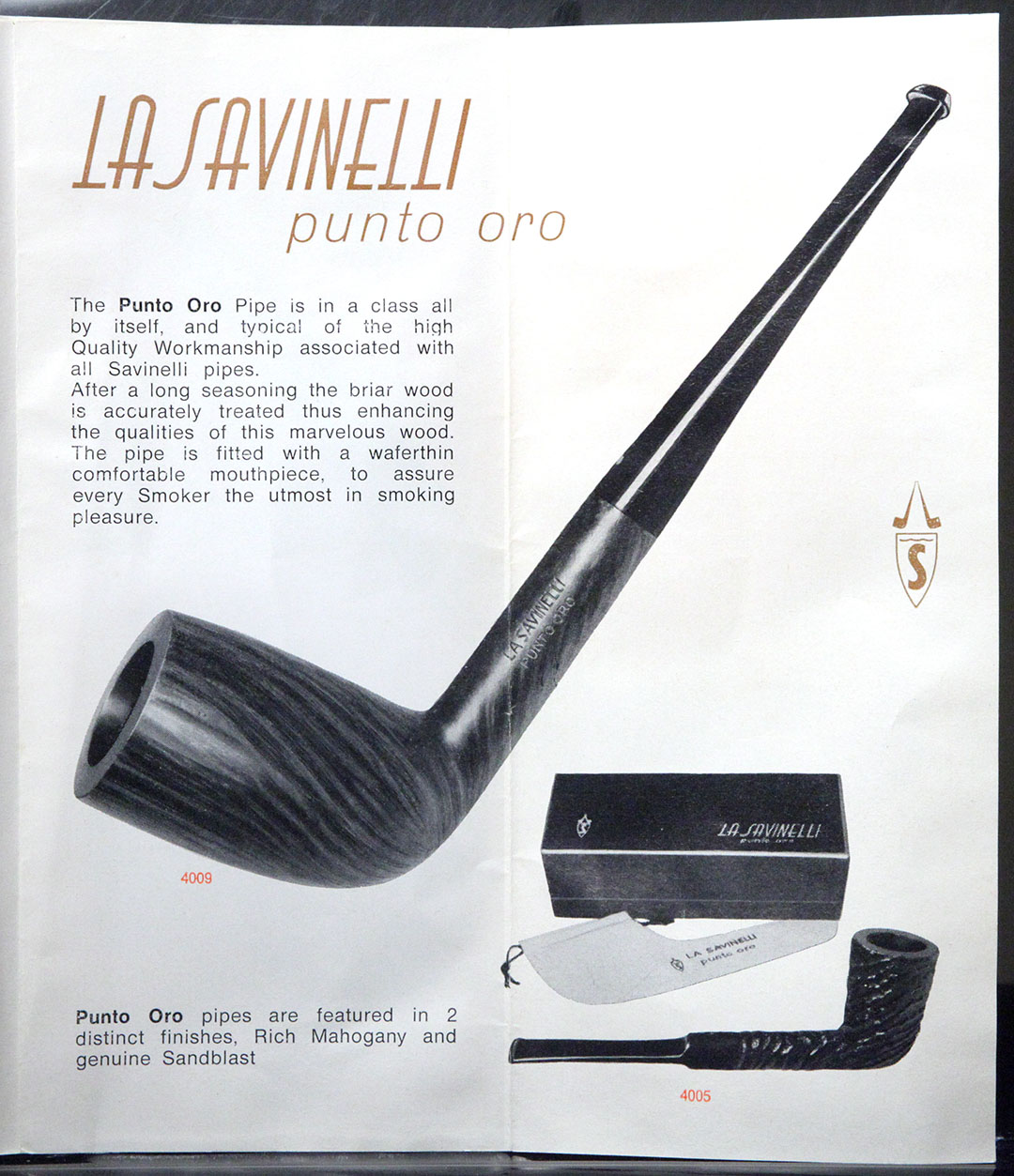
The next pipe on the work table is an interesting Diplomat shaped pipe that we obtained in a trade from a fellow in Japan 01/12/2023. It was stamped on the top side of the shank and read Savinelli [over] Punto Oro. On the underside of the shank it was stamped with a Savinelli S shield followed by the shape number 316KS [over] Italy. It has a smooth finish with beautiful grain patterns around the bowl and shank that is covered with a lot of oils, debris and grime. The bowl was quite clean and appeared to have been recently reamed and cleaned. The top and edges of the rim looked very good with some light darkening on the back inner edge of the crowned rim top. There was a very beautiful pipe underneath all of the buildup of years of use. The stem was an acrylic replacement that was not a perfect fit to the shank with a slightly smaller diameter crosswise to the shank so it would not be changed in the restoration. As it was acrylic there was no issue with oxidization or calcification on the stem. There were light tooth marks and chatter on both sides near the button. Jeff took photos of the pipe before he started his cleanup work on it. Jeff took photos of the bowl and rim top to show the condition of the bowl and the rim top. It looked very good and there was some darkening on the back inner edge of the crowned rim top. Jeff took photos of the top and underside of the stem showing the light tooth marks and chatter on both sides. Jeff took photos of the sides and heel of the bowl to show the condition of the finish. You can see the grime around the sides of the bowl and shank. Even under the dirt and debris of the years it looked very good. Jeff took photos of the stamping on the top and underside of the shank. The stamping was faint but readable as you can see from the photos. It read as noted above. I turned to Pipephil’s site to get a feel for the Punto Oro line. All of the previous Punto Oro pipes that I have worked on were smooth finish with great grain. This was a sandblast one and I do not recall working on one before. Here is the link (http://www.pipephil.eu/logos/en/logo-savinelli3.html). I have included a screen capture of the pertinent information on the line below. It appears the line came out in both smooth and sandblast finishes.I turned to Pipedia to look at what information they had on the brand. I found a catalogue page on the Punto Oro which confirmed what I had surmised about the line having both smooth and sandblast finished pipe (https://pipedia.org/images/d/db/Sav_Punto_Oro.jpg). I have included a screen capture of the page below. It says that the line was available in 2 distinct finishes – a rich Mahogany smooth finish and a genuine sandblast.The Savinelli shape number was 310KS so I turned to the Savinelli Shape Chart on Pipedia and included a screen capture (https://pipedia.org/images/4/41/Sav_Shape_Chart_2017.jpg). I have drawn a red box around the 316KS shape in the photo below. Armed with that information I turned to work on the pipe itself. Jeff had done a great job cleaning up the pipe as usual. He cleaned up the inside of the bowl with a PipNet reamer and a Savinelli Fitsall Pipe Knife. The bowl walls looked very good. He scrubbed the interior of the bowl and shank with pipe cleaners, cotton swabs and alcohol to remove the tars and oils. He scrubbed the exterior of the pipe with Murphy’s Oil Soap and a tooth brush to remove the grime from the finish. He worked on the rim top lava and darkening with the soap and tooth brush. He scrubbed the inside of the stem with alcohol and pipe cleaners. He scrubbed the exterior with Soft Scrub and then soaked it in Briarville’s Pipe Stem Deoxidizer. He washed it off with warm water to remove the deoxidizer. The pipe looked far better. I took photos of the pipe when I received it before I started working on it. I took photos of the bowl and rim top to show how clean it was. You can see the darkening on the inner edge of the rim and the top.  The stem looks clean of oxidation and the tooth marks and chatter are very clear in the photos.I took photos of the stamping on the top and the underside of the shank. The stamping is faint in spots but it is still readable. I took a photo of the pipe with the stem removed to show the overall look of stem, tenon and profile of the pipe. I decided to start my work on the pipe by cleaning up the rim top and inner edge of the bowl with a folded piece of 220 grit sandpaper. I removed the darkening and nicks on the inner edge. It looked significantly better.  I polished the briar with micromesh sanding pads – dry sanding it with 1500-12000 grit sanding pads. I wiped it down with a damp cloth after each sanding pad to remove the dust. The briar was really shining by the final pad. I rubbed the bowl and rim down with Before & After Restoration Balm. I worked it into the surface of the briar with my fingertips to clean, enliven and protect it. I let the balm sit for 10 minutes and then buffed with a cotton cloth to raise the shine. I really like watching the Balm do its magic and bring the briar alive. There are still small nicks in the briar but I have decided to leave them as part the pipe’s story. I built up the rounded edge of the button on the top side with black, rubberized CA glue. I filled in the deep marks on the stem with clear CA glue and set it aside to cure. Once it cured I used a file to flattened the repairs and redefine the button edge. I sanded the stem with 220 grit sandpaper to further blend in the repairs. I started polishing it with 600 grit wet dry sandpaper. I polished the stem with micromesh sanding pads – wet sanding with 1500-12000 grit pads. I wiped the stem down after each sanding pad with Obsidian Oil. I polished it with Before & After Pipe Stem Polish – both Fine and Extra Fine. I gave it a coat of Obsidian Pipe Stem Oil. It works to protect the stem from oxidizing. I set it aside to dry. I put the stem back on the Savinelli Punto Oro 316KS Oval Shank Dublin and buffed the pipe with Blue Diamond on the buffing wheel. I polished the briar and the vulcanite of the stem until there was a rich shine. This classic Savinelli shape and finish really highlights a proportionally well carved pipe. Once I buffed the pipe the briar came alive as the grain just popped with polishing. The black acrylic saddle stem has a rich glow. This Punto Oro 316KS fits well in the hand and sits right in the mouth. Have a look at it with the photos below. The dimensions are Length: 6 inches, Height: 1 ½ inches, Outside diameter of the bowl: 1 ¾ inches, Chamber diameter: 7/8 of and inch. The weight of the pipe is 1.66 ounces/47 grams. This beauty will be going on the rebornpipes online store in the Italian Pipemakers Section. If you are interested let me know. Thanks for walking through the restoration with me as it was a pleasure to work on.

As always, I encourage your questions and comments as you read the blog. Thanks to each of you who are reading this blog. Remember we are not pipe owners; we are pipe men and women who hold our pipes in trust until they pass on into the trust of those who follow us.

Moving another one of my own – a Jobey Stromboli 160 Bent Author


Blog by Steve Laug

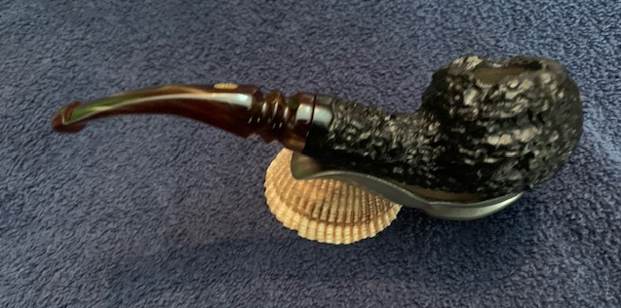
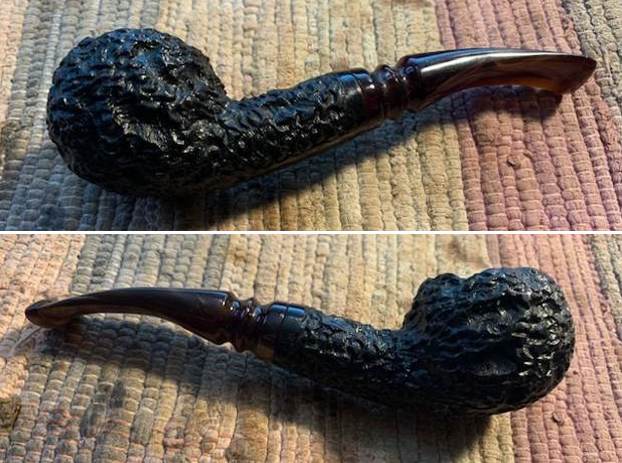
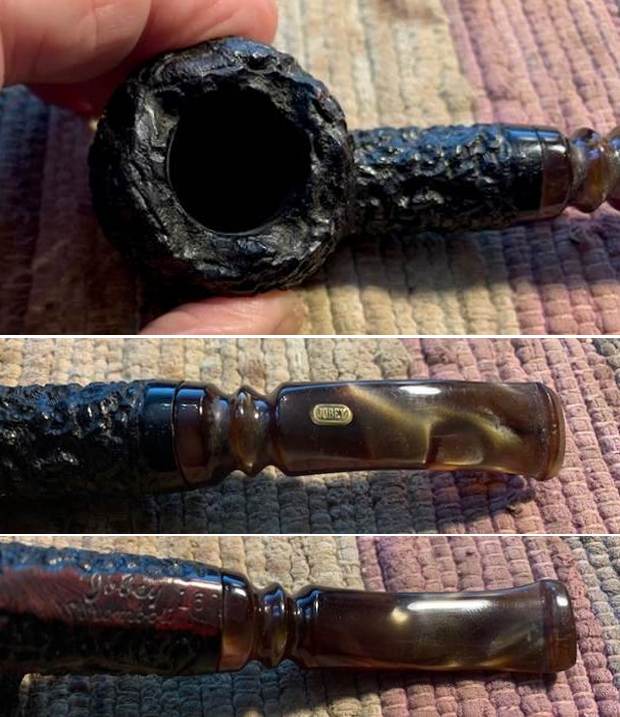
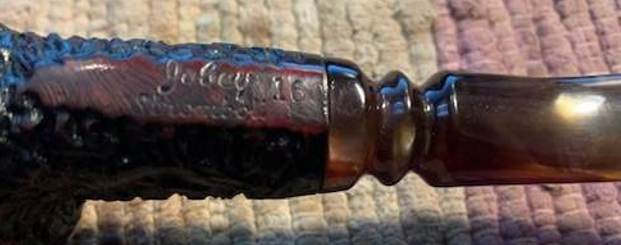
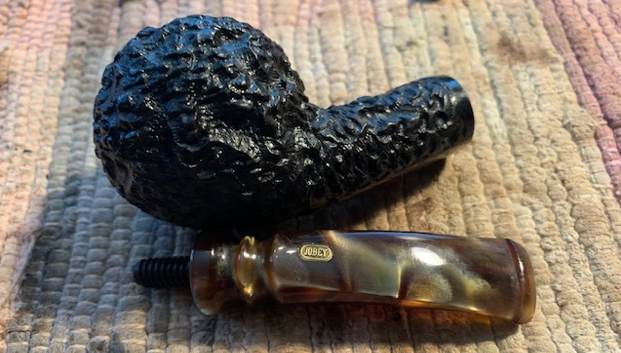
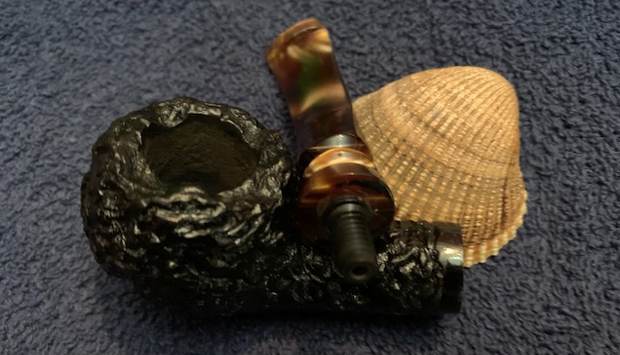
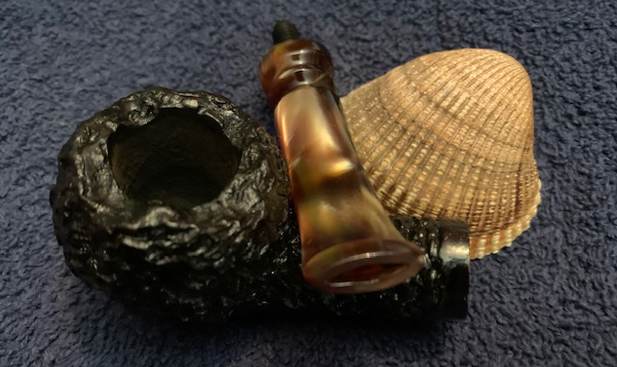
This is another pipe that I have taken out of my personal collection as I just do not use enough to warrant keeping it. This pipe was given to me in a group of pipes and I used it a bit when it came in. It is from a period of my journey where I smoked solely Virginia tobaccos so it is quite clean. The airway in the shank and the mortise were quite clean. The rusticated finish and rim top were in excellent condition. It is stamped on the underside of the shank and reads Jobey in script [over] Stromboli. The shape number 160 follows that. There was a light cake in the bowl but the top and inner edge of the bowl clean. The Jobey link system is in the shank and the stem slides on to it. The variegated brown/tan/gold acrylic stem is in good condition with some light tooth chatter ahead of the button on both sides. I took photos of the pipe before I did my clean up work on it. I took a photo of the bowl and rim top to verify the description above. I also took photos of the stem surface showing the light chatter on either side.I took a photo of the stamping on the underside of the shank. It is clear and readable as noted above.  I took the stem off the bowl and took a photo of the pipe to give a sense of proportion of the pipe. You can also see the deep and rugged rustication on the briar and it is a beauty.Now it was time to work on the pipe. I cleaned up the light cake in the bowl with a Savinelli Fitsall Pipe Knife. I sanded the bowl walls with a piece of dowel wrapped in 220 grit sandpaper.I cleaned the mortise and airways in the shank and stem with cotton swabs, pipe cleaners and isopropyl alcohol to remove the debris and tars from my smoking. You can see that it was not too bad as I tend to keep my pipes clean. The bowl was in such good condition that decided to give the bowl and shank a coating of Before & After Restoration Balm. I worked it into the surface of the briar with my fingertips and a horsehair shoe brush to clean, enliven and protect the briar. I let the balm sit for 15 minutes and then buffed with a cotton cloth to raise the shine. The photos show the bowl at this point in the restoration process. Since the stem was in quite good condition other than tooth chatter I polished out the chatter with micromesh sanding pads – dry sanding with 1500-12000 grit pads. I rubbed it down between pads with Obsidian Oil. I polished it with Before & After Fine and Extra Fine Pipe Stem Polish. I wiped it down with some Obsidian Oil and buffed it off. It is a beautiful stem. I am excited to put the final touches on this great looking Jobey Stromboli Rusticated Author. I put the pipe back together and buffed the stem with Blue Diamond on the buffing wheel. I gave the bowl multiple coats of Conservator’s Wax and the stem multiple coats of carnauba wax. I hand buffed the pipe with a clean buffing pad to raise the shine. It is fun to see what the polished bowl looks like with the rugged rustication all around it. Added to that the polished brown/ gold/tan acrylic stem combined with the bowl and make a stunning pipe. This rusticated Jobey Stromboli is great looking and the pipe feels great in my hand. It is light and well balanced. Have a look at it with the photos below. The dimensions are Length: 5 ½ inches, Height: 1 ½ inches, Outside diameter of the bowl: 1 ½ inches, Chamber diameter: ¾ of an inch. The weight of the pipe is 43 grams/1.52 ounces. It is a beautiful pipe that I will soon be putting on the rebornpipes store in the American Pipe Makers Section. If you are interested in adding it to your collection send me an email or a message. Thanks for walking through the restoration with me as I worked over this pipe. Thanks to each of you who are reading this blog.

This Castello Sea Rock Briar KKKK 65 Ticks All of My Boxes


Blog by Steve Laug

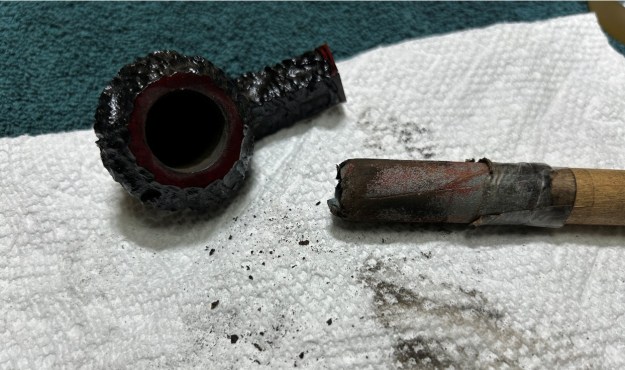
It is another hot day in Vancouver with just some afternoon meetings. After a long week I decided to take bit of time this morning for myself. It is hot enough that I went to the cool of the basement to work on pipes. The next pipe on the table is another one that came to us from the auction in Gonzales, Louisiana, USA. The first one, a Castello Sea Rock Briar KKK16 Billiard, I cleaned up and wrote a blog about yesterday (https://rebornpipes.com/2021/06/24/i-really-love-these-castello-sea-rock-briar-pipes-a-sea-rock-briar-kkk16/). This next one is a Castello Sea Rock Briar and it is what Castello calls a Bent Billiard shape though to me it is like a bent egg. It is a pipe that I like so well that I am cleaning it up for myself. It is stamped on the smooth shank bottom and reads Castello [over] Sea Rock Briar followed by KKKK65. That is followed by Made in Cantu [over] Italy followed by an oval containing the name Carlo Scotti next to the stem shank union. The Castello “diamond” inset is on the left side of the saddle stem letting me know this was a pipe made for US import. On the underside of the stem it is stamped Hand Made [over] Castello with no number. The bowl had a heavy cake and there was thick lava overflow on back top side and inner edge. It was hard to know if there was burn damage on the smooth rim top because of the lava but after cleaning it we would know for sure. The rusticated finish was pretty dirty with dust and grime when we got it but still showed promise. The acrylic stem had deep tooth marks and chatter on both sides near the button. The edges of the button were also marked. Jeff took the following photos of the pipe before he worked his magic on them. The pipe must have been a terrific smoker because the bowl was so heavily caked with the thick lava flowing over the rim top. In its condition it was going to take some work to clean out that bowl and be able to see what the rim looked like underneath the layer of lava. The acrylic/Lucite stem was in good condition other than the deep tooth marks and chatter on both sides of the stem just ahead of the button and on the button surface itself. The rest of the bowl looked dirty but the photos give an idea of what Jeff saw before his cleanup revealed the condition of the pipe. The next photos try to capture the stamping on the flat panel on the underside of the shank. It read as I have noted above. The stem also bears a Hand Made Castello stamp on the underside. Jeff cleaned the pipe with his usual regime that many who read this probably have memorized. He reamed the bowl with a PipNet pipe reamer and cleaned up the remnants with a Savinelli Fitsall Pipe Knife. He scrubbed the internals of the bowl, shank and stem with alcohol, cotton swabs and pipe cleaners. He scrubbed the exterior with Murphy’s Oil Soap to clean off the dust and grime on the rusticated Sea Rock finish. The smooth rim top looked very good under the thick lava coat. The inside of the bowl itself looked great. He scrubbed the stem with Soft Scrub cleanser to remove the grime and grit. The stem was in great shape other than the tooth marks on both sides. It really is a beautiful looking rusticated pipe. I took photos of the pipe when it arrived here. I took some close up photos of the rim top, bowl and stem to show what they looked like after Jeff’s cleanup. It is a startling difference. The rim top looks very good. The stem also looks very good.I took a photo of the stamping on the underside of the shank and the stem. It is clear and readable as noted above.I removed the stem from the shank and took a photo of the pipe to show the proportions of the bowl/shank and the stem length. I cannot seem to retain the details on Castello pipes in my head for long for some reason. The stamping on them – Castello and the Carlo Scotti stamp were things that I wanted to makes sure I understand before I began to work on the pipe. I turned to Pipephil’s site to get a quick summary (http://www.pipephil.eu/logos/en/logo-castello.html). I quote:

Castello PIPA CASTELLO di Carlo Scotti & C. was founded in 1947 by Carlo Scotti (†1988). Franco Coppo (AKA “Kino”) who married Carlo Scotti’s daughter Savina, manages (2012) the corporate since 1985.

The site also gave a good summary of the grading and sizes of the pipes. I quote that in full.

Sizes (ascending):

1K to 4K, G (Giant) and GG (Extra large)

Rusticated grading: SEA ROCK, OLD SEA ROCK, NATURAL VIRGIN,

Sandblasted grading: ANTIQUARI, OLD ANTIQUARI

Smooth grading (ascending): TRADEMARK, CASTELLO, COLLECTION

Other stampings: Great Line (Non-standard or freestyle) Fiammata (Straight grain)

Production (2012): ~4000 pipes / year

I also found a note on the page that the Rhinestone logo was originally on pipes for the US market. It is occasionally used now.

I turned then to Pipedia for more information on the brand (https://pipedia.org/wiki/Castello). The majority of the information was what was already quoted above in abbreviated form. However there was a link to an article by Bob Hamlin that gave some interesting bits of information that I found helpful (http://www.pipes.org/BURST/FORMATTED/196.016.html). I quote in part from that article.

SEA ROCK [Carved Black or dark brown]:  This is the lowest grade of the Castello line and is the most common in the USA.  Sea Rocks are produced by taking a smooth bowl that has not been “final finished” and surface carving the finish with tools. This “carved” finish is then evened out using a steel wire brush, stained and then waxed. The Natural Vergin carved finish is left unstained and unwaxed as a rule, although we have seen waxed and partially waxed “Vergins”.

All carved Castello pipes are graded by the number of K’s that are stamped on each piece and are K-graded by SIZE.  1K is the smallest and fairly rare, 2K is small to medium, with 3K or 4K being the most common and ranges from medium to medium large. Large pieces are stamped “G” for giant and extra large pieces are stamped “GG” for double giant.  In addition to the number of K’s on a carved Sea Rock piece the shape number is almost always added.  As a rule a Sea Rock Castello is stained Black, although recently there have been quite a few coming in stained deep brown and still stamped “Sea Rock”.  American Logo’d Sea Rocks are all priced the same to the consumer, although most are 2 or 3 K’ed models.  G/GG models are charged at a higher price on American pieces and are basically the same as their European counterparts.
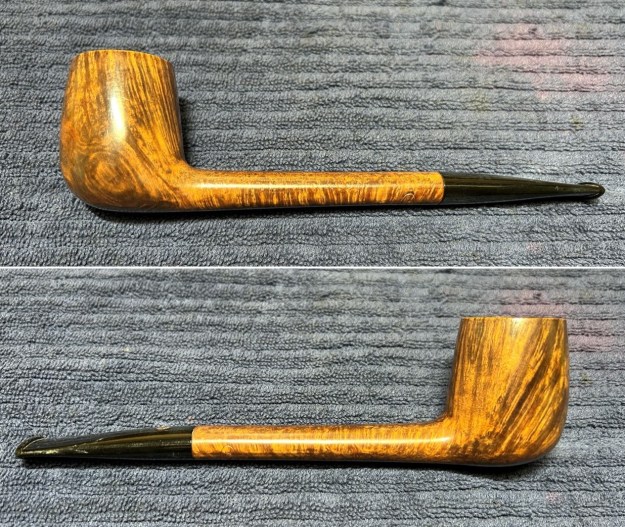
The Castello Sea Rock briar I was working on had the 4Ks of a Medium Large sized pipe. It definitely was made for the American Market with the Rhinestone in the stem. It had the black/dark brown finish. The 4K stamp told me that it came out in the late 1960s onward and was a mid-large sized pipe from that time period. The number 65 makes it a Bent Billiard.

I decided to work on the stem first and try to remove and repair the tooth marks on both sides of the acrylic stem. Since acrylic does not have “memory” like vulcanite I did not try painting the stem surface. I sanded down the chatter in preparation for repairing the tooth marks. I filled in the tooth marks with clear CA glue. Once the repairs cured I used a small file to flatten them out and recut the sharp edge of the button. To blend in the repairs I sanded the stem with 220 grit sandpaper and started the polishing with 400 grit wet dry sandpaper. I polished the stem with 1500-12000 grit pads. I dry sanded it with the pads and wiped it down with a damp cloth after each sanding pad. I finished polishing the stem with Before & After Pipe Polish – both Fine and Extra Fine polishes. I wiped the stem down with a damp cotton pad afterwards and buffed it with a soft microfiber cloth. I set the stem aside and turned my attention to the bowl. I polished the smooth rim top with micromesh sanding pads -1500-12000 grit pads. I wiped the rim top down with a damp cloth between each sanding pad. The rim top began to really shine. I worked some Before & After Restoration Balm into the rusticated Sea Rock finish on the bowl and the rim top. I worked it into the surface of the briar with my fingertips and a horsehair shoe brush to clean, enliven and protect the wood. Once the bowl was covered with the balm I let it sit for about 20 minutes and buffed it off with a soft cotton cloth and the shoe brush. I polished it with a microfiber cloth. I took photos of the pipe at this point in the process to show what the bowl looked like at this point. I put the bowl and stem back together on this beautiful Castello Sea Rock Briar KKKK 65 Bent Billiard. I polished the stem with Blue Diamond to polish out the scratches in the Lucite. I gave the bowl multiple coats of Conservator’s Wax and the stem multiple coats of carnauba wax. I buffed the pipe with a clean buffing pad to raise the shine. I hand buffed it with a microfiber cloth to deepen the shine. The pipe polished up pretty nicely. The contrast of the blacks and dark browns of the briar with the polished black acrylic/Lucite is quite stunning. The dark, coral like rustication around the bowl and shank is quite remarkable and gives the pipe an incredible tactile presence that only improves as it heated from a smoke. The finished pipe is shown in the photos below. The dimensions of the pipe are Length: 5 inches, Height: 2 ¼ inches, Outside diameter of the bowl: 1 ½ inches, Chamber diameter: ¾ of an inch. The pipe weighs 67grams/2.36oz. This is a beauty that will be staying with me as it ticks off all the boxes of a Castello that I have been watching out for. Thanks for walking through the restoration with me. I always enjoy working on Castello pipes. Cheers.
New Life for a Charatan Lonsdale 87X Cutty


Blog by Steve Laug

The next pipe in the queue is yet another interesting pipe from the Michigan lot – a well-made Charatan Cutty with plateau on the rim top and shank end. The entire pipe had some beautiful cross grain on the front and rear of the bowl and the top and underside of the shank. It had some great birdseye grain on both sides of the bowl and shank. The bowl has a forward cant to it that defines the cutty shape. The pipe has a natural briar finish that really makes the grain on the pipe pop. The carver did a great job utilizing the block of briar to maximize the grain. The pipe is stamped on the left side of the shank. It reads Charatan’s Make (over) London, England (over) SPECIAL. There is the circle cursive L identifying the pipe as a Lane era made Charatan. To the right of the stamping is the shape number 87X. The stem is an obvious replacement and is Lucite rather than the original vulcanite and has no marking or stamping on it. It is given a unique saddle shape that looks good with the Cutty pipe. This is another nice looking piece much like the rest of those in this 21 pipe Michigan pipe lot. The Charatan’s Make I am working on is shown on the top shelf of the rack pictured below. It is the third pipe from the right and I put a red box around it to make it easy to identify.Jeff took some photos of the pipe when he received them to show the general condition of the pipe before he started his cleanup work. Like the rest of the pipes from the Michigan collection this pipe was very dirty and well used. There was a thick cake in the bowl and lava overflowing onto the plateau rim top. It was hard to know if the edges of the bowl were damaged or not because of the cake and lava. The exterior of the briar was dirty with grease and oils from being held. The Lucite stem is dirty and had bite marks but still had a gloss to it. There were deep tooth marks on both sides of the stem at the button edge and some wear on the button edge itself. The photos below tell the story and give a glimpse of the beautiful canted Cutty shape. Jeff took a photo of the bowl and rim to capture the condition of the pipe before he started his cleanup work. There was a thick coat of lava on the rim and the cake in the bowl. It shows the mess this pipe was in when we received it. The thick lava overflow on the rim top made it hard to know what the inner edges of the bowl looked like. The outer edges had some damage from knocking the bowl out against a hard surface. There is also a general accumulation of grease and grime ground into the finish on the rest of the bowl and shank.He also took a photo of the right and underside of the bowl and shank to show the interesting grain around the bowl and shank. The finish is very dirty but the grain is visible in the photos.Jeff took a photo of the stamping on the left side of the shank. It reads as noted above and is clear and legible.The next two photos show the stem surface. They show the tooth marks and chatter on both sides near the button. There are also some marks on the sharp edge of the button. The stem is dirty and is covered in scratches. I wanted to know where the Special fit in the Charatan Hierarchy so I turned to Pipedia to get a grasp of the order of the various pipes that were made. Here is the link(https://pipedia.org/wiki/Charatan). I did a screen capture of the poster to the left showing that the SPECIAL is just below the strain grain and was noted for perfection in grain and had a natural finish.

I thus knew I was dealing with a higher grade Charatan’s Make pipe. It also has the circled L which was the Lane Trademark. Pipedia said that:

The Lane Trademark serif and circled L indicates the pipe is from the “Lane Era” (approx. 1955 to 1979 -1984?), however it appears that both the English factory or Lane themselves sometimes, or perhaps even often forget to stamp the L on a pipe. The Charatan factory was known for inconsistencies, especially in stampings. Therefore, although an L on the pipe definitely defines it as a Lane Era pipe, the lack of it could simply mean the pipe missed receiving the stamp from the factory. The lack of the trademark could also mean the pipe was destined for the European market.

From there I turned to do some reading in a link on Pipedia to a 1951 Charatan Catalogue. I wanted to be able to do some more reading on the “Natural Finish” noted above and also to see if I could identify the shape 87X that was stamped on the left side of the shank at the stem/shank junction. Here is the link (https://pipedia.org/images/3/37/CHARATAN_1951.pdf). I did a screen capture of pertinent parts of the catalogue. The first is the concept of their Natural Bruyere. The second gives a listing of the hierarchy of pipes. Note in that clipping that the SPECIAL pipes were Premier quality pipes, cut in “cross grain” or “bird’s eye” graining. In paging through the catalogue, I found what I was looking for in terms of shape designations. I had looked on various shape charts and had not found the shape 87 number. In this catalogue not only did I find the shape number but a drawing of the shape with the original’s stem. The pipe is what Charatan called the Lonsdale with the 87 being the larger Lonsdale shape.Jeff reamed the bowl with a PipNet pipe reamer and followed up with a Savinelli Fitsall pipe knife to remove the cake. He scrubbed out the mortise and the airway in the shank and the stem with alcohol, cotton swabs and pipe cleaners. He scrubbed the exterior of the bowl, rim, shank and stem with a tooth brush and Murphy’s Oil Soap to remove the oils and tars on the rim and the grime on the finish of the bowl. He rinsed it under running water. He dried it off with a soft cloth. He was able to remove the lava build up on the rim top and you could see the overall condition of the bowl top and edges of the rim. He scrubbed the stem with soap to remove the grime on the surface. I took photos of the pipe to show its condition before I started work on it. I took a close up photo of the rim top to show the darkening on the top and the burn damage on the front and right inner edge. Jeff had done an amazing job cleaning off the lava buildup. The outer edge of the rim has some deep nicks on the front of the bowl. The bowl is slightly out of round on the right rear inner edge. The Lucite saddle stem photos show the tooth marks and the wear on the button surface on both sides.I decided to start my work on the pipe by addressing the darkening and damage to the rim top and edges. I topped the bowl on a topping board with 220 grit sandpaper to remove the damage and minimize the outer and inner edge damage. I was able to remove much of the damage. To address the burn on the front edge and the area on the right rear edge making the bowl out of round I used a folded piece of 220 grit sandpaper to give the rim edge a slight bevel. The bevel worked to hide the damage and bring the bowl back into round. I polished the bowl sides and rim top with micromesh sanding pads. I wet sanded with 1500-2400 grit pads and dry sanded with 3200-12000 grit pads. I wiped the bowl and rim down with a damp cloth after each pad. As I polished it the sanded rim top began to shine and blend in with the rest of the briar. I worked some Before & After Restoration Balm into the surface of the briar with my fingertips to clean, enliven and protect it. I let the balm sit for a little while and then buffed with a cotton cloth to raise the shine. The following photos show the bowl at this point in the restoration process. The bowl and the rim top look really good. The finish looks very good with the rich finish on the bowl and rim. I am very happy with the results. I used a folded piece of 240 grit sandpaper to blend the repairs into the surface of the stem. Once the surface was smooth I sanded out the scratch marks and started the polishing of the stem with a folded piece of 400 grit sandpaper. I wiped the stem down with Obsidian Oil and took the following photos.I polished the stem with micromesh sanding pads – wet sanding it with 1500-2400 grit pads and dry sanding it with 3200-12000 grit pads. I wiped the stem down with a damp cloth after each pad. I wiped it down with a coat of Obsidian Oil and set it aside to dry. I put the stem back on the bowl and polished them both with Blue Diamond polish on the buffing wheel. I gave the bowl and stem multiple coats of carnauba wax. I buffed the pipe with a clean buffing pad to raise the shine. I hand buffed it with a microfiber cloth to deepen the shine. The pipe polished up pretty nicely. The natural brown briar that had darkened over time came alive with the buffing. The replacement Lucite stem had an interesting asymmetrical saddle that looked very good with the stem. Have a look at it with the photos below. The dimensions are Length: 6 inches, Height: 2 inches, Outside diameter of the bowl: 1 1/4 inches, Chamber diameter: 3/4 of an inch. This beauty will soon be on the rebornpipes store. It would make a a beautiful addition to somebody’s pipe rack. Thanks for walking through the restoration of this uniquely carved Charatan from the Lane Era with me it was a pleasure to work on.
 

Repairing a Hole in an Acrylic Stem


Blog by Greg Wolford

A couple of weeks ago I received an IM from a Facebook friend; he’s a pipe collector and reseller. He attached the following photos of an acrylic stem with a hole in the underside.
IMG_1623.JPG

IMG_1622.JPG

IMG_1624.JPG

He had seen photos of some of my work bad wanted to know if I could repair this stem for him; he said the top of the stem and the stummel were pristine and this was the only problem with the pipe. I said I could fix it so he told me the stem would be in the mail in a couple of days.

A week later I found a box in the mail from a sender I didn’t recognize and I wasn’t expecting any packages so I was eager to see what was inside. When I opened the box I found a beautiful large Radice (I forget the model name and didn’t remember to photograph it) inside – with a big hole in the stem; apparently the seller sent the pipe directly to me first and, after repairing it, I would forward it to my friend.

The hole was larger than it appeared in the pictures. And it was a bit “ragged”, too. So I picked it with my dental pick and smoothed it with a round needle file to have a good surface to work with. I bent a pipe cleaner to make it triple-width to fit the slot and greased it with vegetable shortening; I’ve had trouble with petroleum jelly in past not keeping the glue in place real well and have started using the shortening instead.

I began by applying a drop or two of black super glue to the hole an pd then setting it aside to cure; it was going to take several layers to fill this hole so it would be a waiting game. Later that evening I applied a few more drops and left it overnight to cure.

In the morning I found the patch had shrunken, as expected, and needed more glue. I applied two more patches that day, once in the morning and another that evening and allowed it to cure overnight again.

It was at this point I began to have some fairly dramatic vision problems due to diabetes, which I’d been recently diagnosed with. (More on that can be found here if you are inclined to read about it.) So I sent my friend a message telling him what was going on and it might be several more days before I could finish the repair. His reply was no problem, make sure I took care of me first.

Several days later my son and I stopped into the local Hobby Lobby to pick up some new micro mesh pads. As we browsed I found a small “spray bottle” labeled adhesive accelerator; I immediately wondered what kind of adhesive it was for and began to read the label, with my son’s help, since my vision was still not clear. It was for most glues so I thought it might be a similar product to Stewart-McDonald’s super glue accelerator – but only $3.99 – so I bought it. I was now even more anxious to work on that Radice stem!

I experimented on an old stem, vulcanite, with a large hole first, not wanting to “play” with someone else’s pipe. The results were great: the super glue set up hard in about 15 minutes and it looked just like it normally would, with no adverse effects from the overspray. Next I’d try it on the Radice.

It was, indeed, a few more days before I could see well enough, long enough to work on the repair. I sprayed the patch with the accelerator, applied the final drips to the patch, sprayed it again and set it aside for 30 minutes. I then filed, sanded (220/320/400/600 grits) and wet-polished with micro mesh 1500-12,000 grits, a final polish with McGuire’s Scratch X 2.0 and hand waxed and buffed the stem with Halcyon II wax; I don’t like buffing acrylic stems, especially when they aren’t mine and are expensive! This is the final repair:

IMG_1620.JPG

IMG_1621.JPG

He is thrilled with the results, as am I. And I’m even happier to find a local source, and less expensive alternative, for the accelerator. If you have a Hobby Lobby nearby you, I highly recommend you grabbing a bottle and giving it a try; you’ll save yourself a lot of time and a few bucks to boot.

IMG_0258.JPG