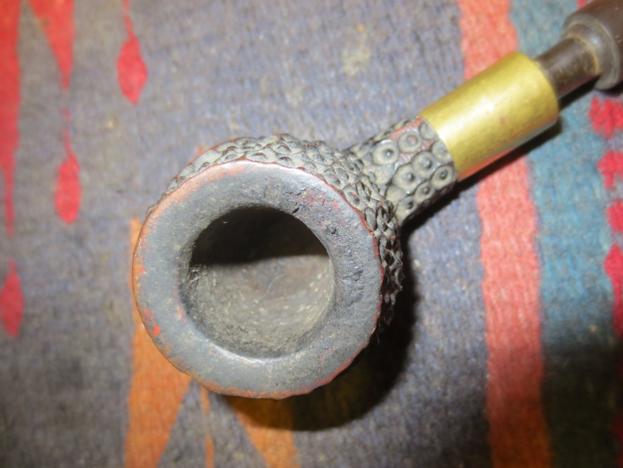
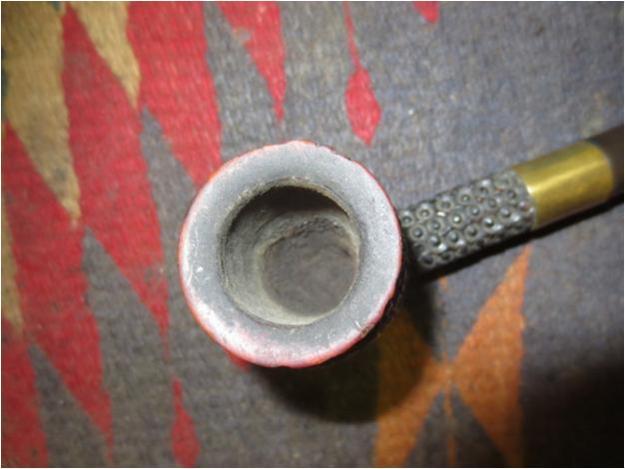
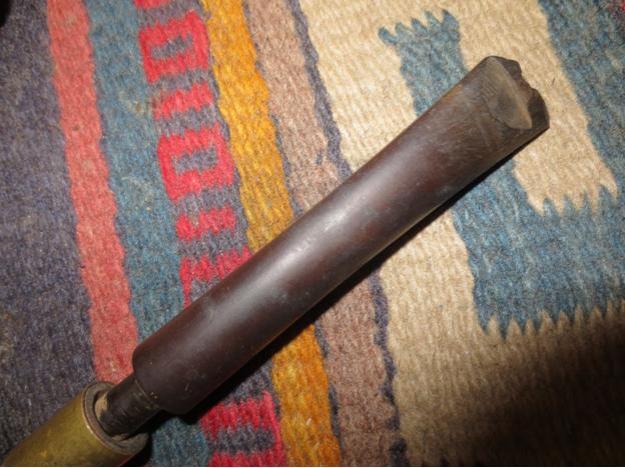
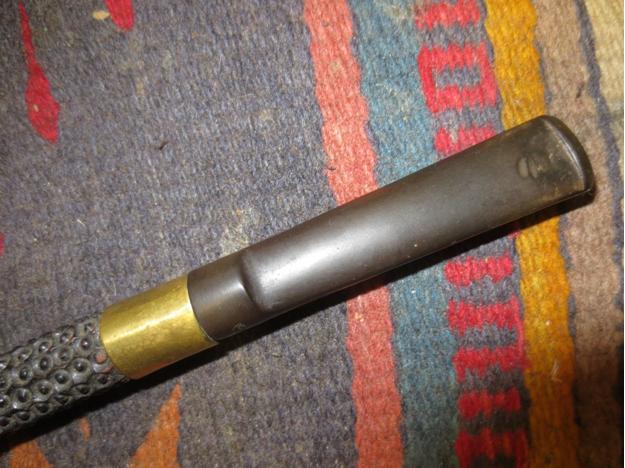
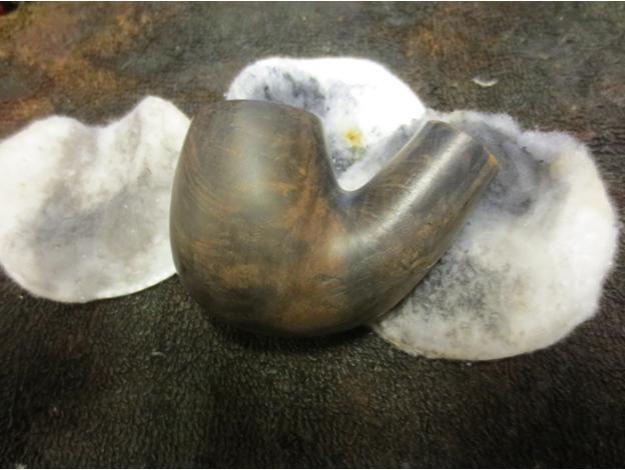
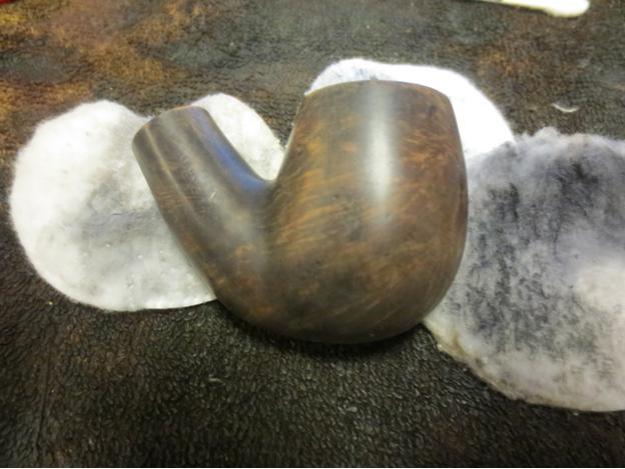
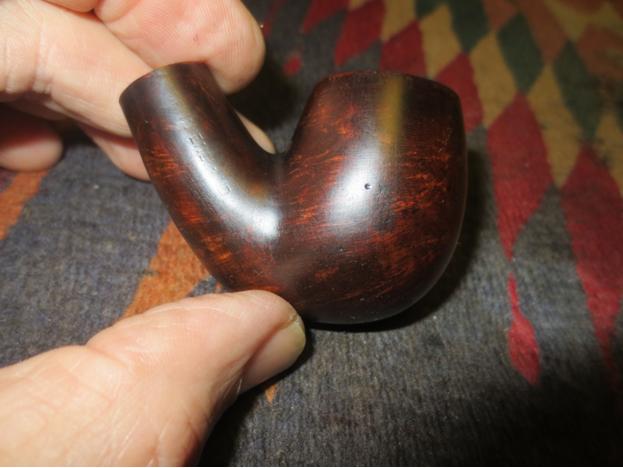
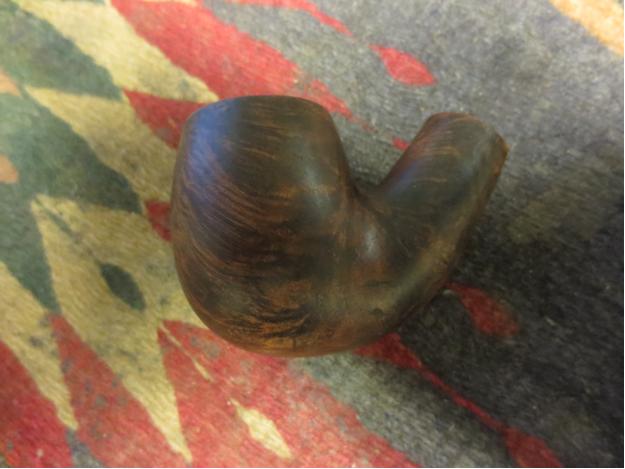
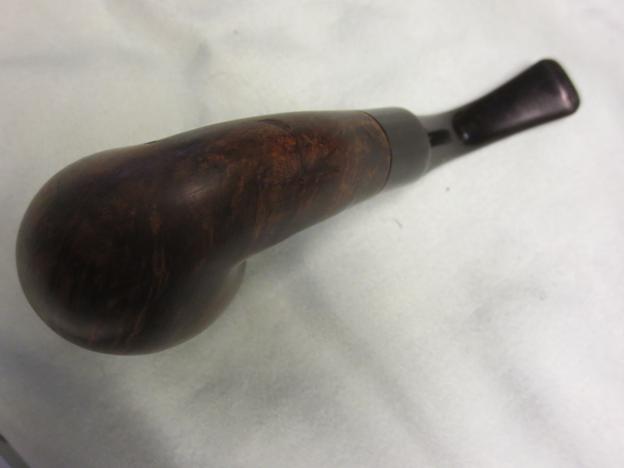
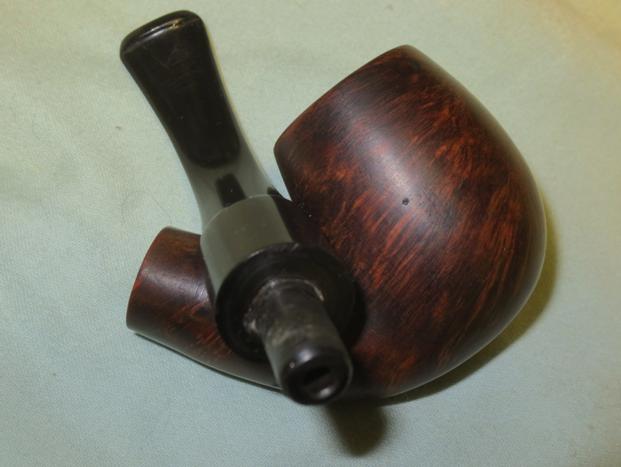
Putting a New Stinger and Tenon on a Kaywoodie Super Grain Apple 33


Blog by Steve Laug

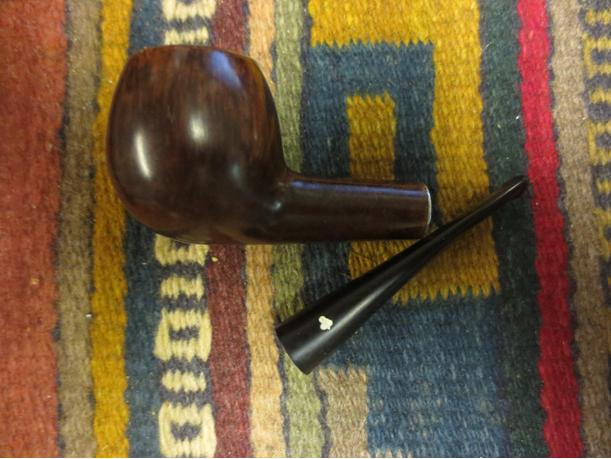
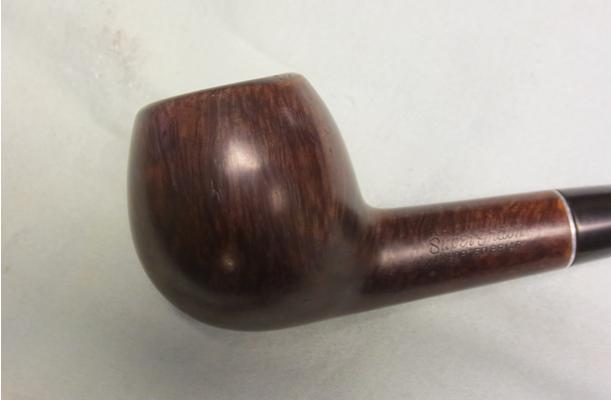
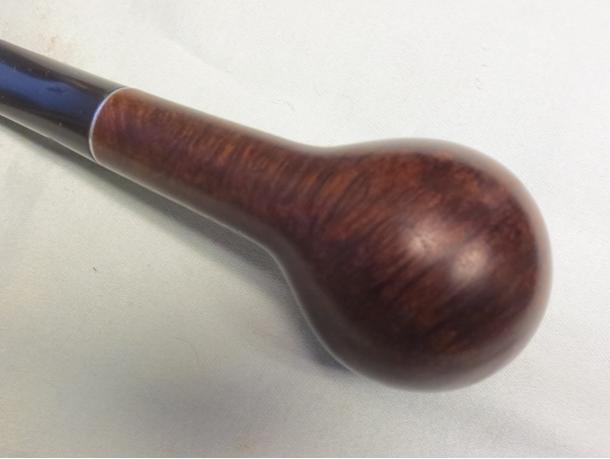
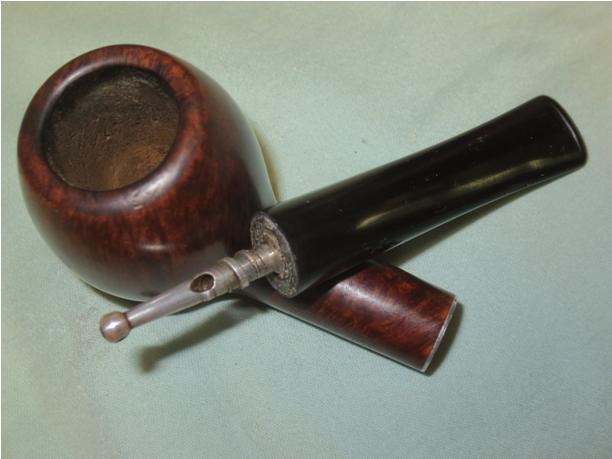
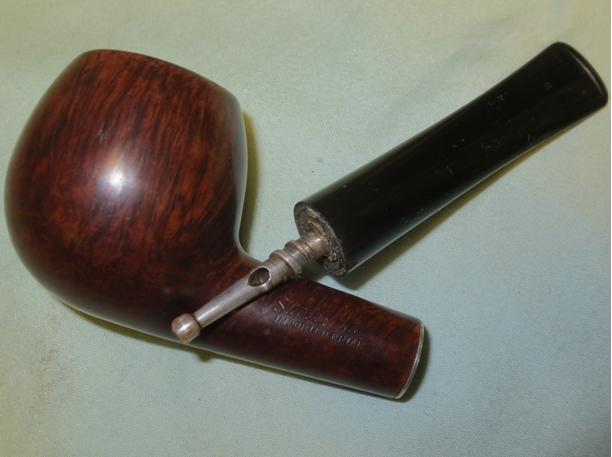
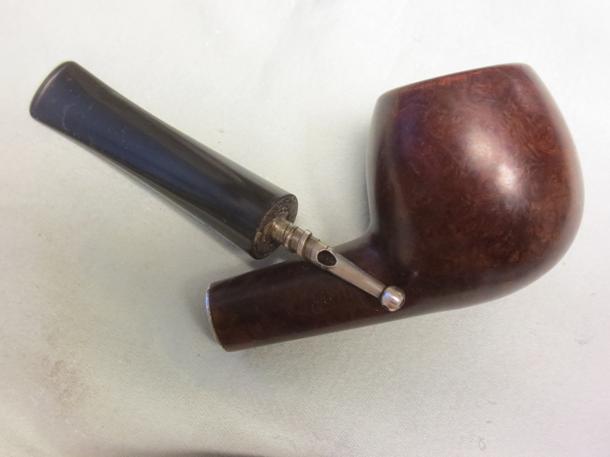
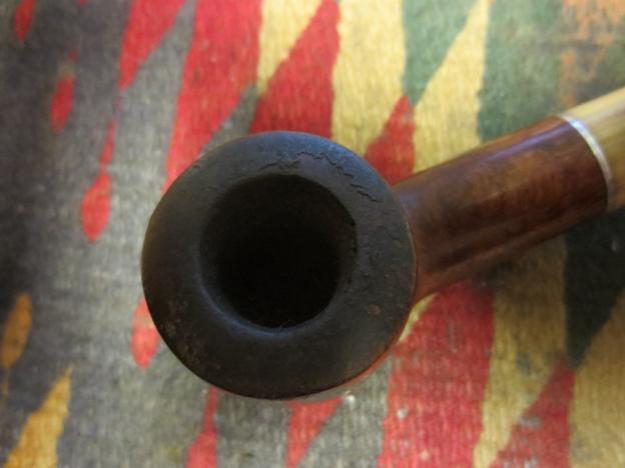
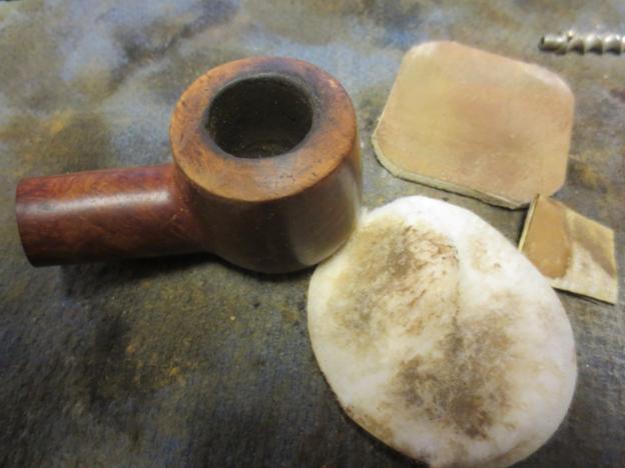
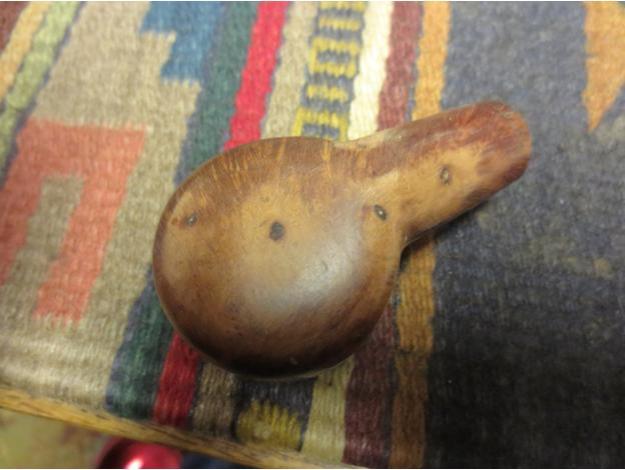
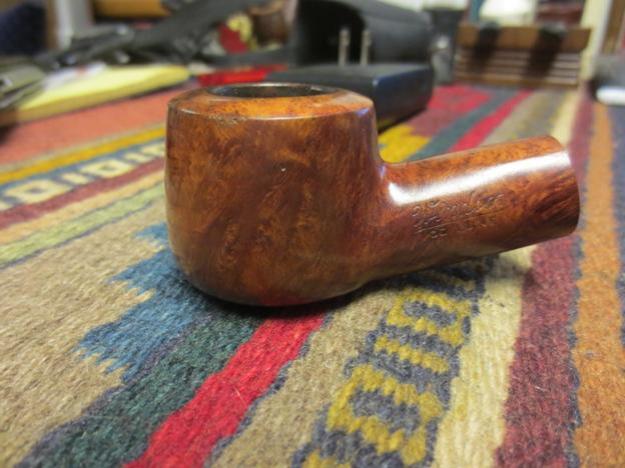
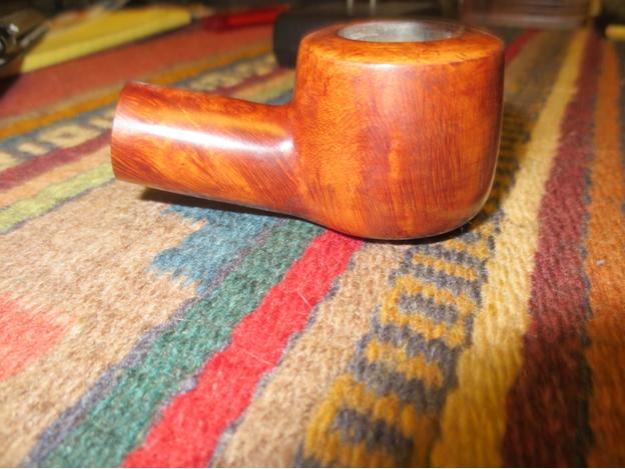
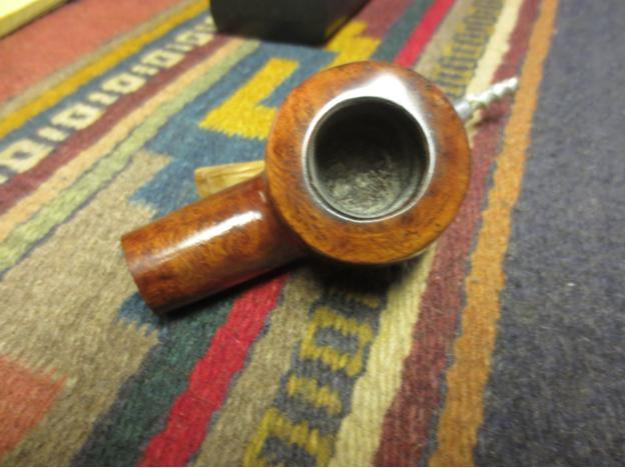
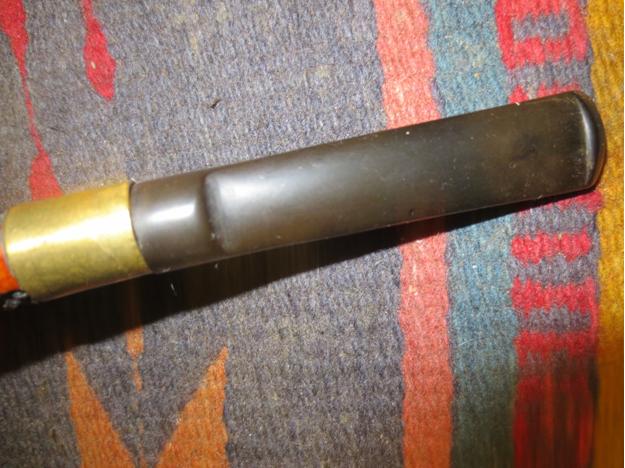
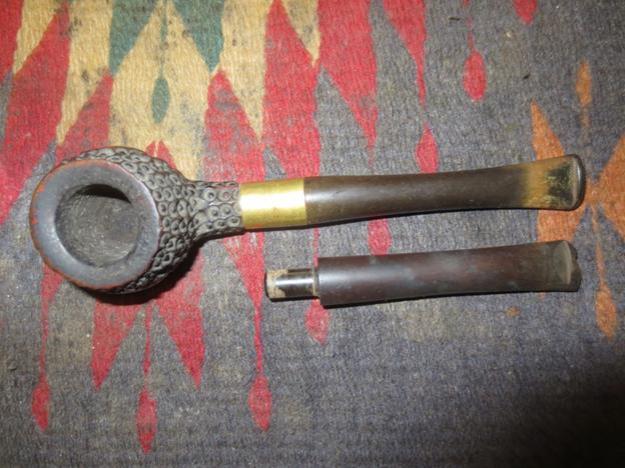
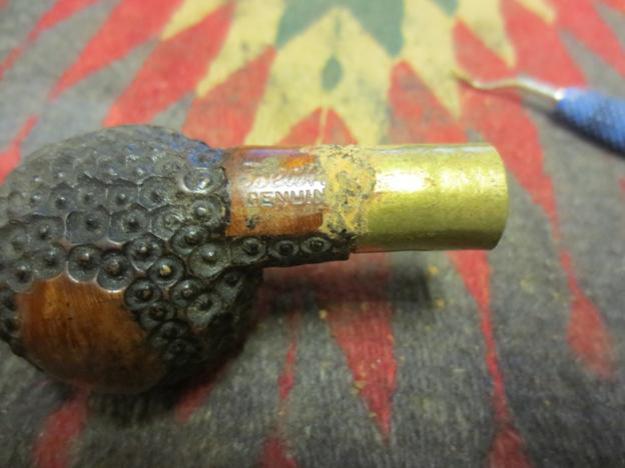
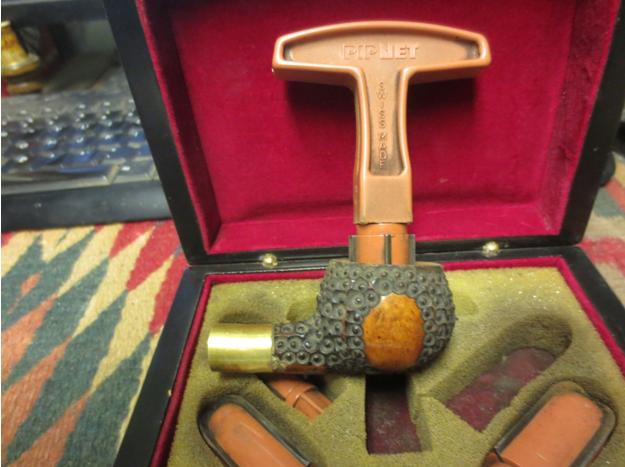
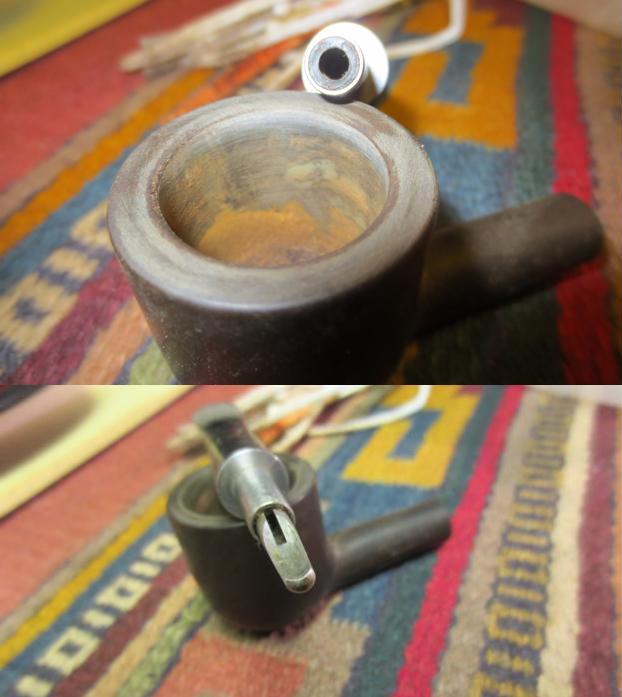
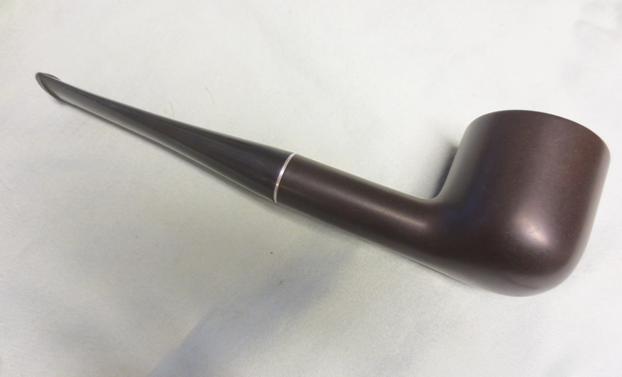
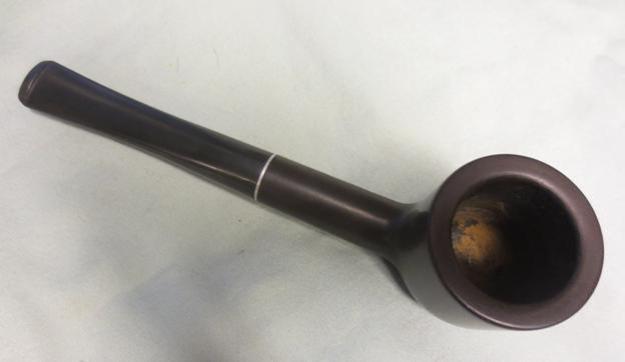
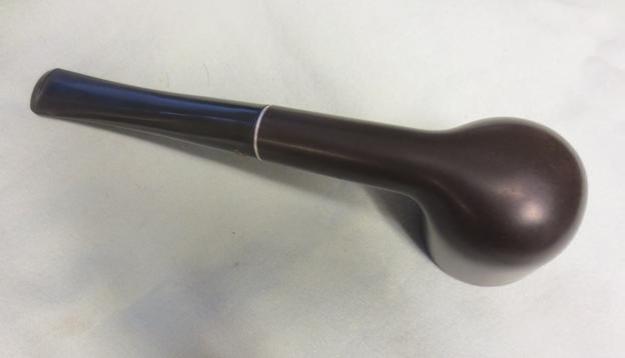
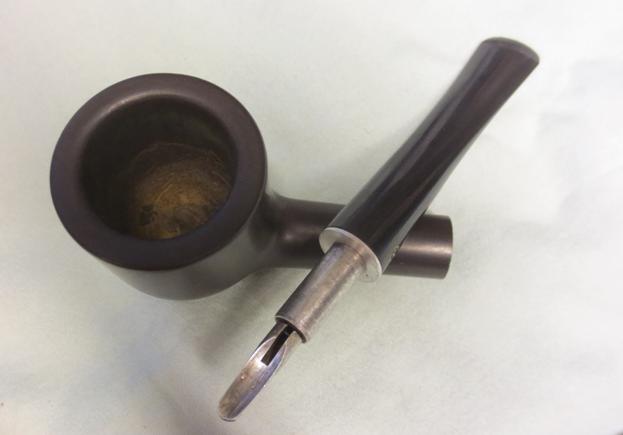
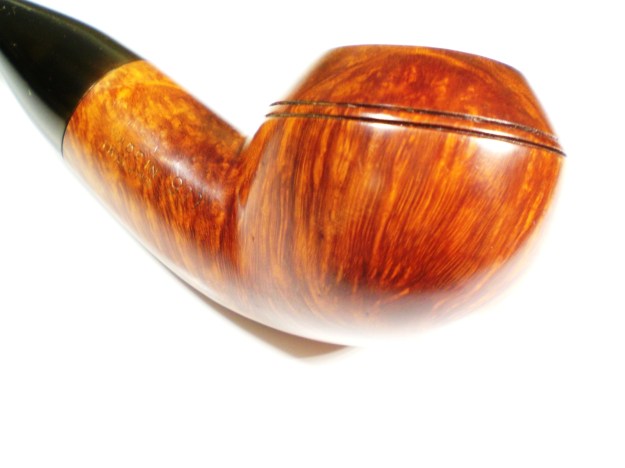
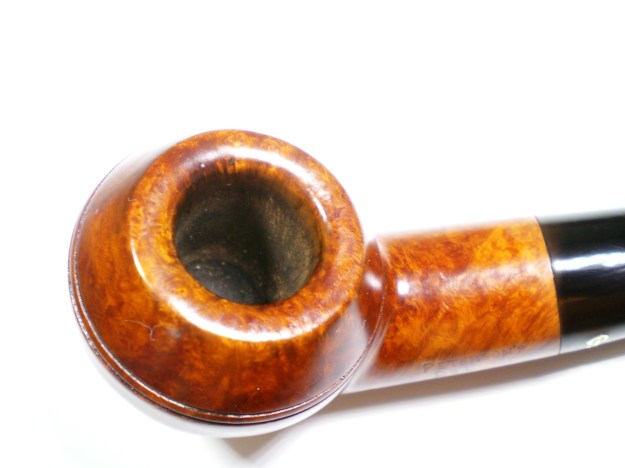
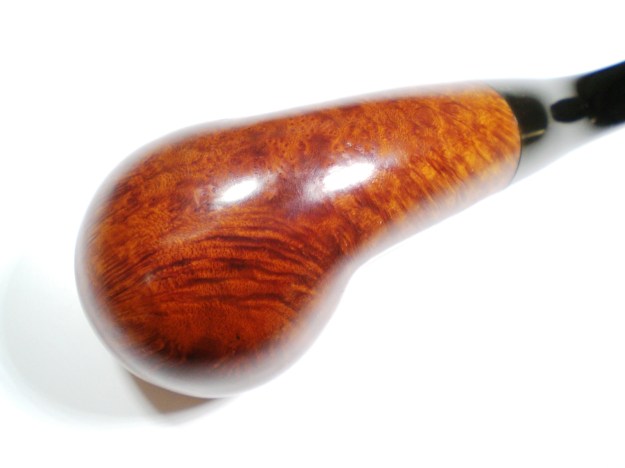
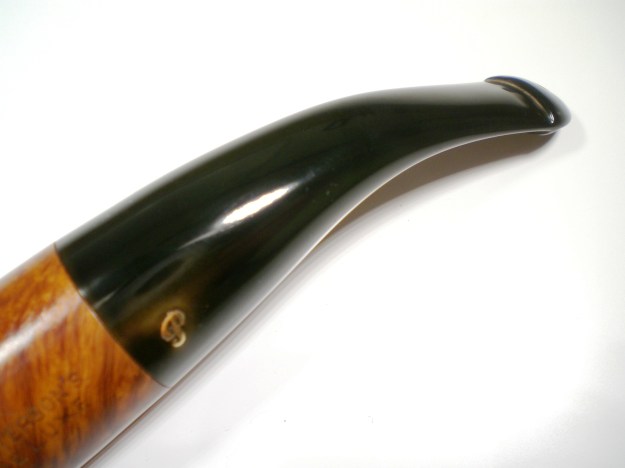
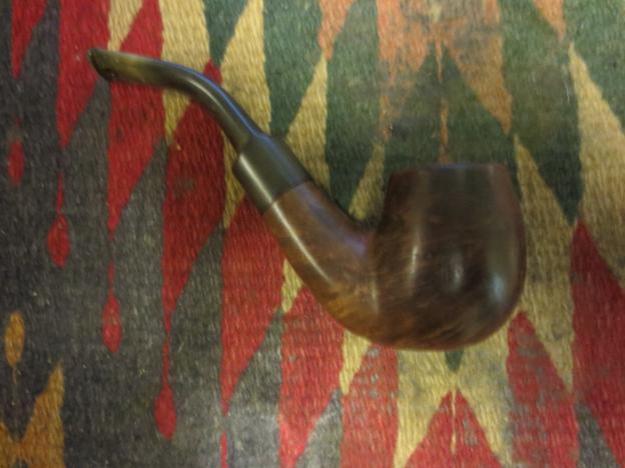
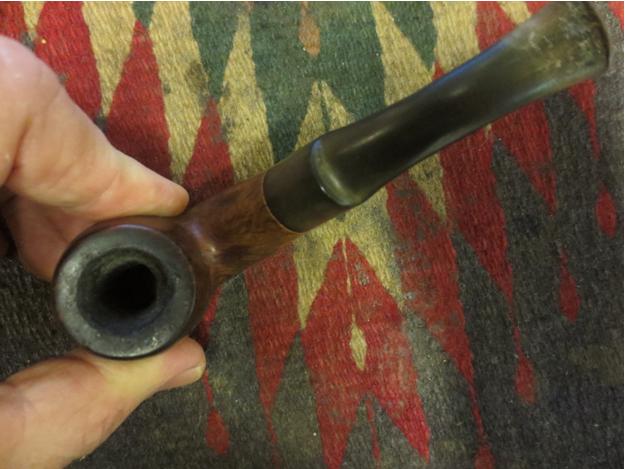
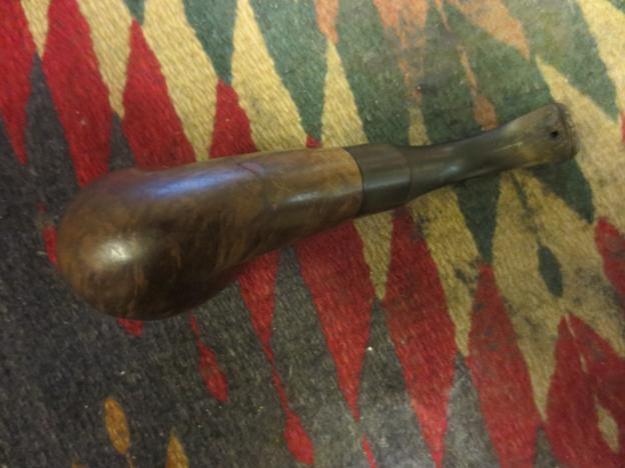
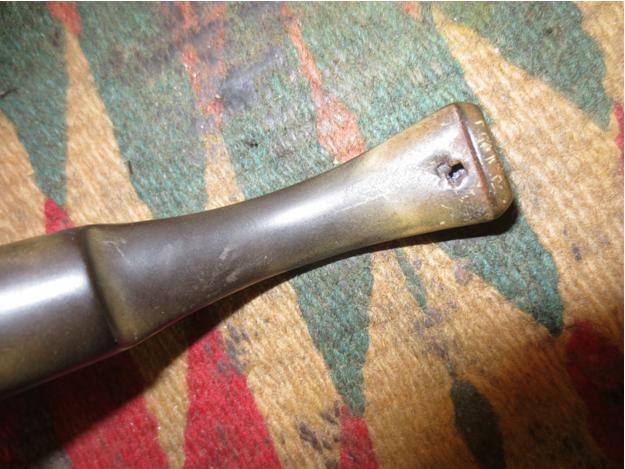
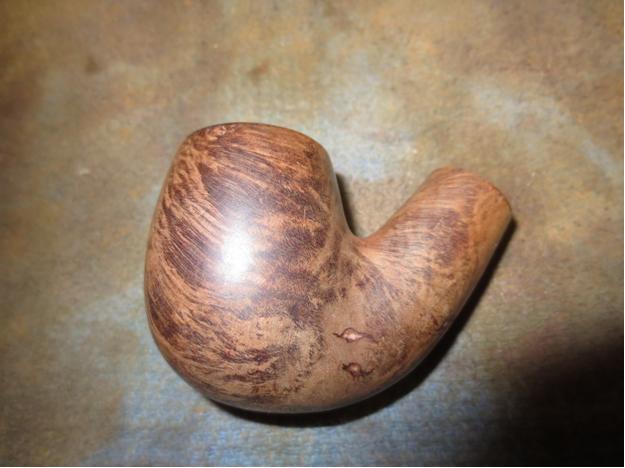
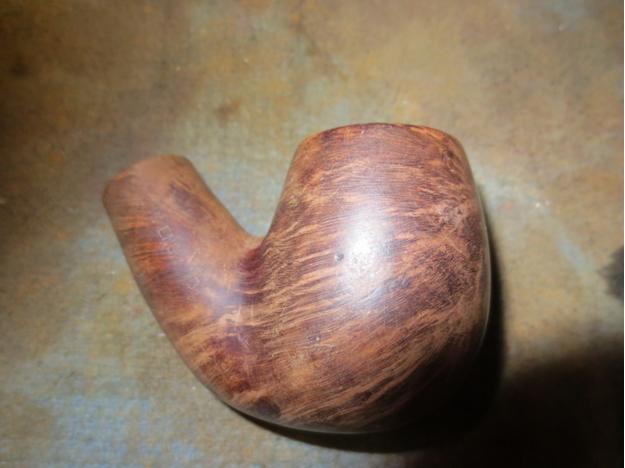
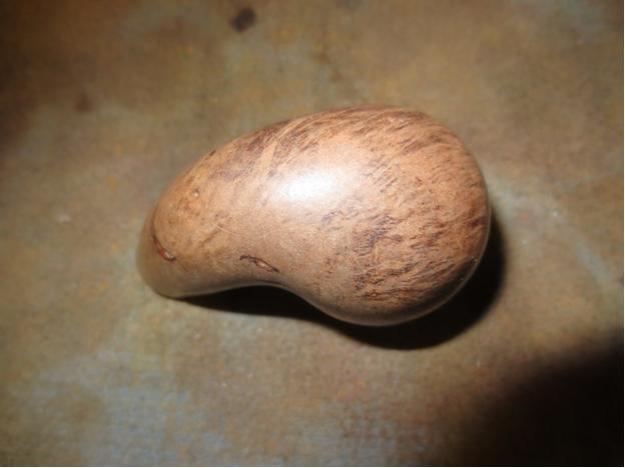
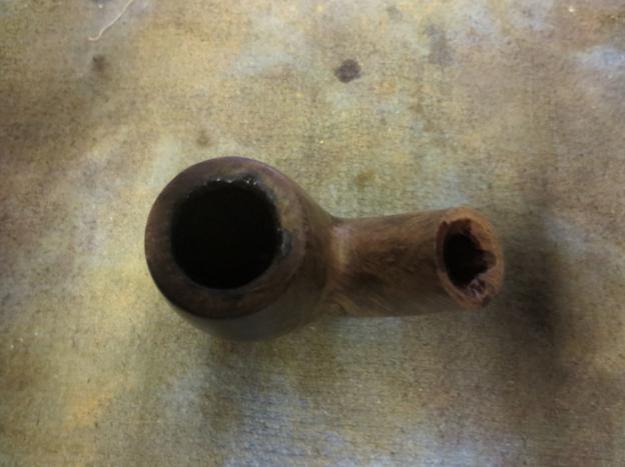
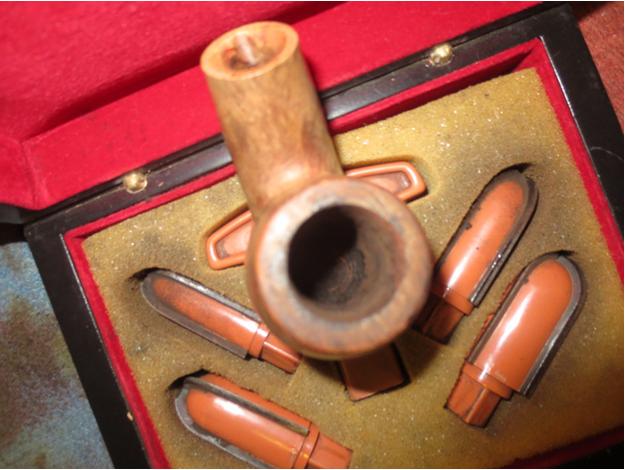
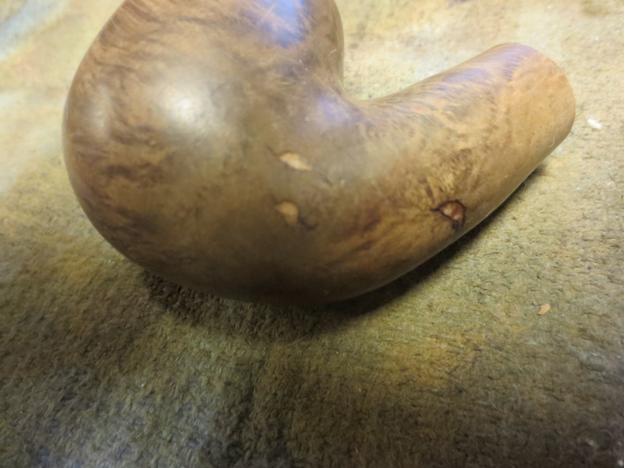
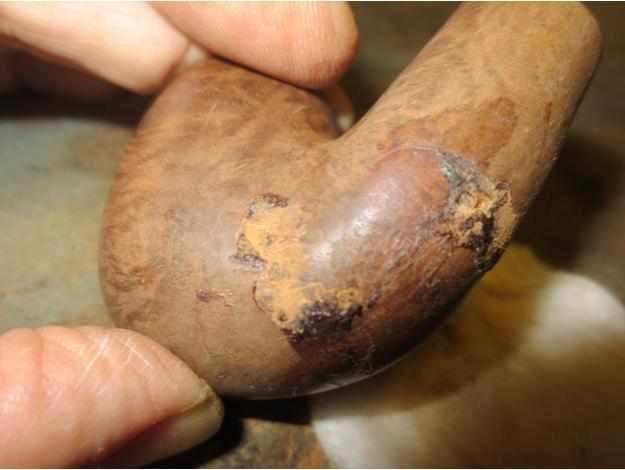
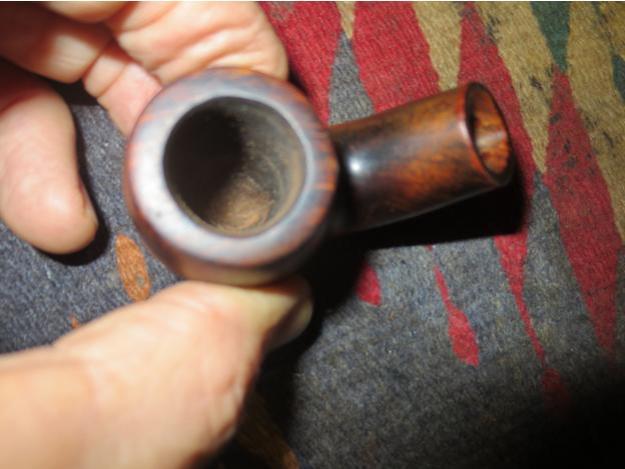
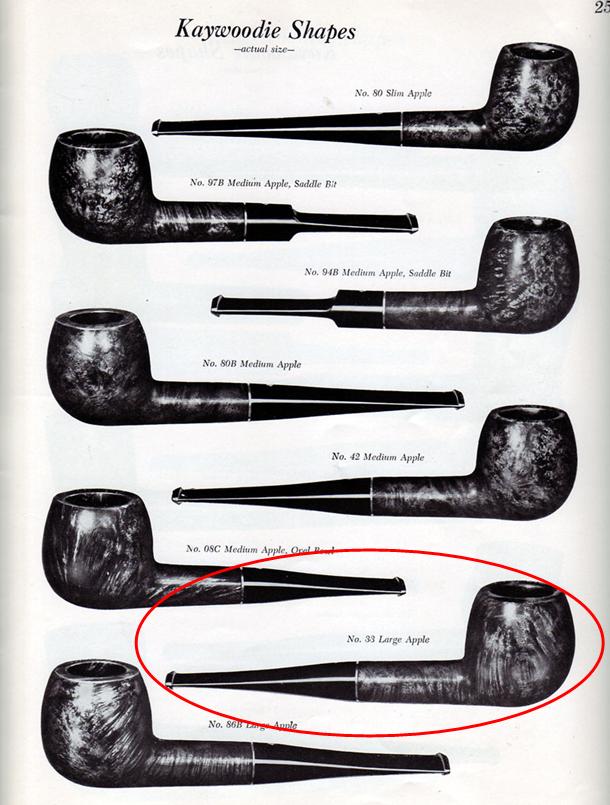
In a trade with Dave Gossett I acquired this Kaywoodie Super Grain Apple. The bowl was in really great shape other than a few nicks and dents here and there. The finish was clean and the bowl had been cleaned and reamed. There were some small pin pricks on the back left side of the outer edge of the rim that looked to me were made when the pipe was dropped. They had been sanded a little so that the outer edge was no longer even around the bowl but sagged at this spot. The top of the rim was clean and smooth. The pipe was stamped on the left side of the shank with the words Kaywoodie over Super Grain over Imported Briar. The right side is stamped with the shape number 33. In looking through the various shape charts I found that the 33 was the stamping for a Large Apple (see the first photo below). The aluminum stinger had been broken off in the stem. It was hard to tell if I was dealing with what had originally been a four hole stinger or a three hole stinger. I know that many can tell the age on these KW’s by the stamping but I am not one of them. I knew that the three hole stinger/tenon apparatus was pressure fit in the stem and the four hole was threaded and screwed into the stem. Once I was able to drill out the broken stinger I would have a better idea regarding the type of stinger it had. The stem itself was fairly clean. There were some ripples in the stem on both the top and the bottom of the stem near the button. This told me that there were tooth marks that someone had either tried to buff out or sand out. These would need to be smoothed out. The interior of the stem and the shank were clean of debris and tar.KW1 The next three photos show the broken metal tenon in the stem and the state of the stem and bowl when it arrived. The briar has some beautiful straight grain and birdseye.KW2
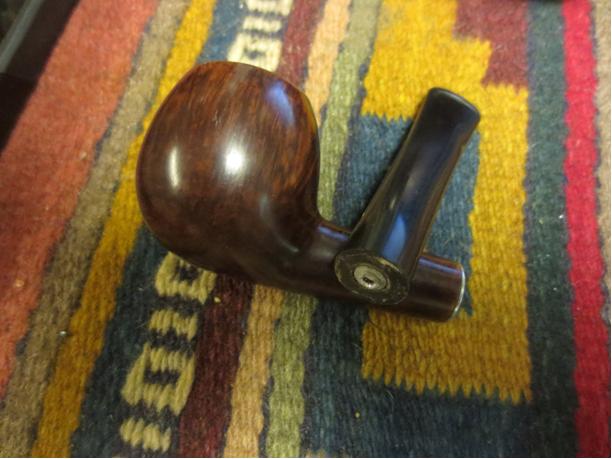
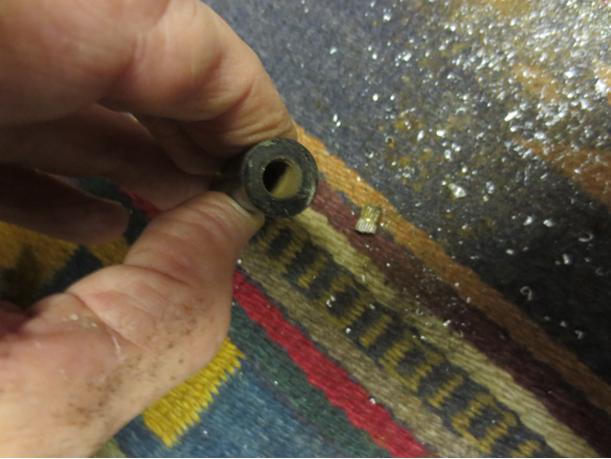
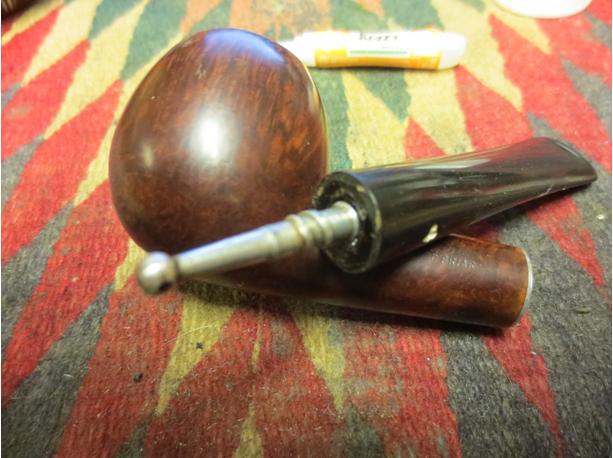
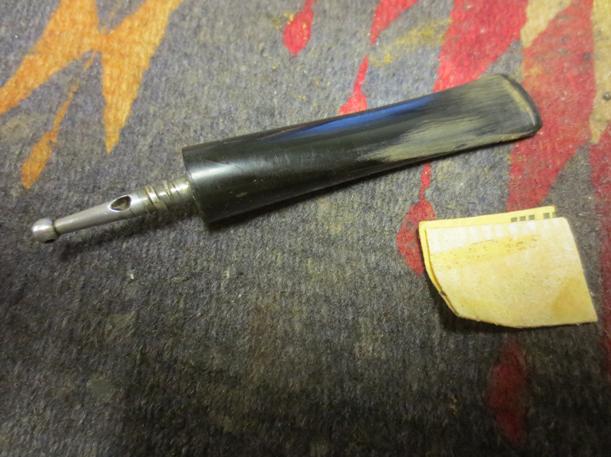
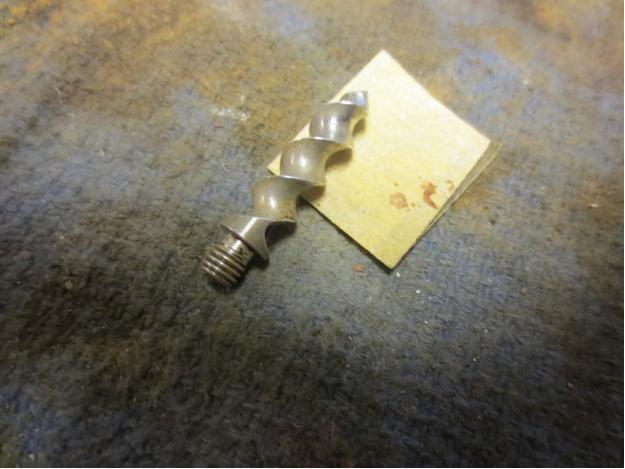
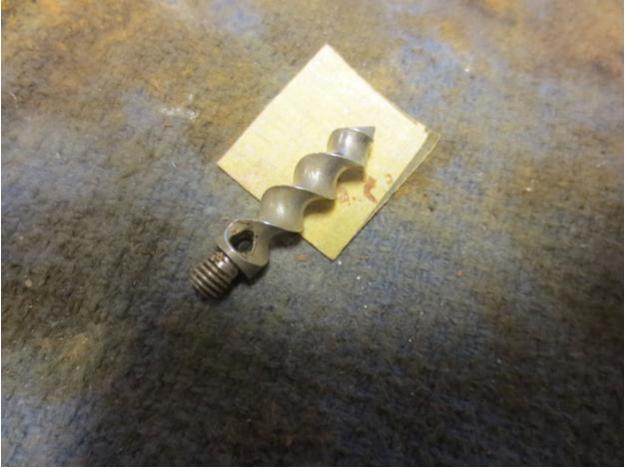
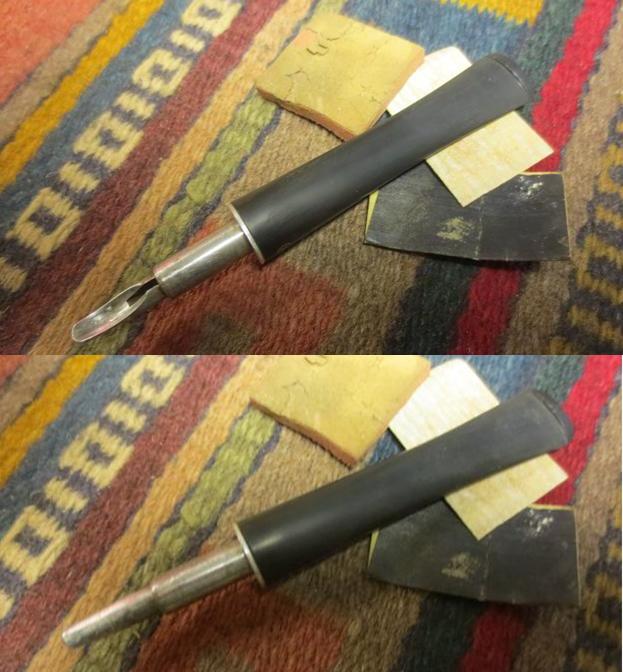
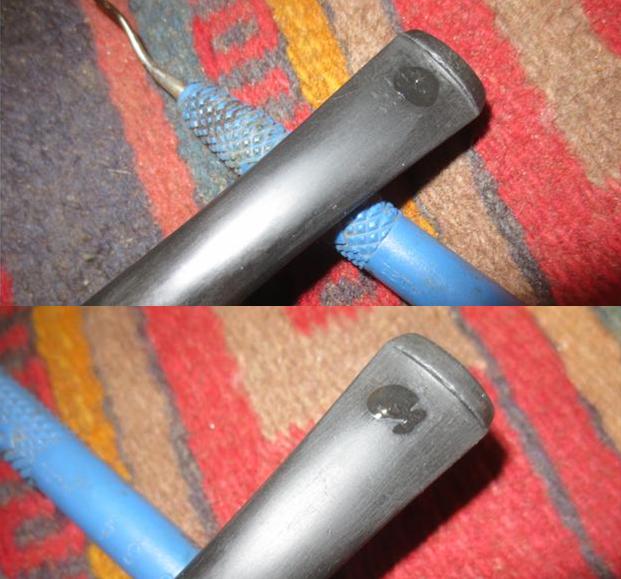
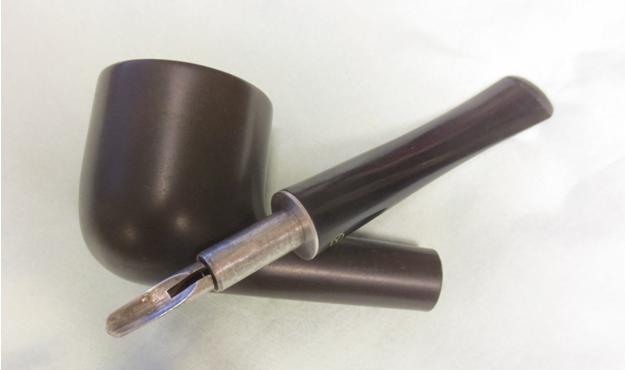
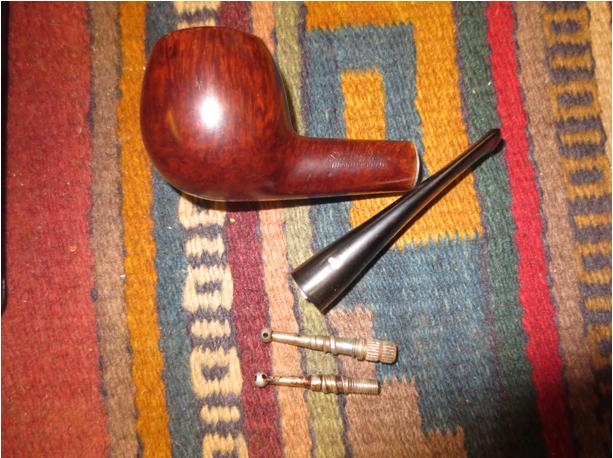
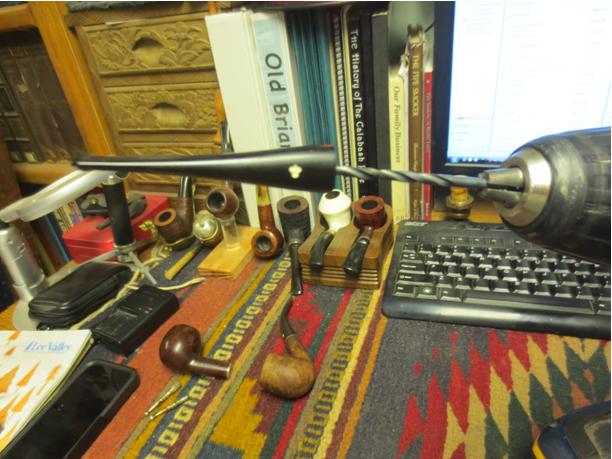
KW3 I had several broken Kaywoodie stems in my can of stems that I cannibalized the stingers from. In the photo below the top stinger is the three hole one with the pressure fit end that fit in the stem. The bottom stinger is the four hole one that is threaded and screwed into the stem. What made it a bit interesting for me is that both stingers came from stems that had the same white clover leaf as the stem I was working on.KW4 I used my cordless drill to act as a holder for the drill bit and turned the stem onto the bit to begin to remove the broken tenon/stinger. I started with a bit slightly larger than the airway on the broken part. I worked my way up to a size that finally grabbed a hold of the broken tenon piece in the stem and when I twisted the bit out brought metal piece with it. The second photo below shows the broken tenon piece amongst the bits of aluminum. I had my answer it was the pressure fit three hole stinger/tenon apparatus. (I should have done this with a paper down to catch the bits and bobs of metal but did not so I ended up having to vacuum up my mess.)KW5
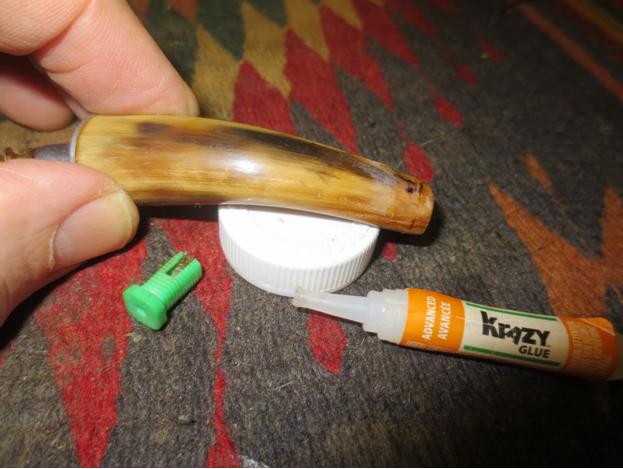
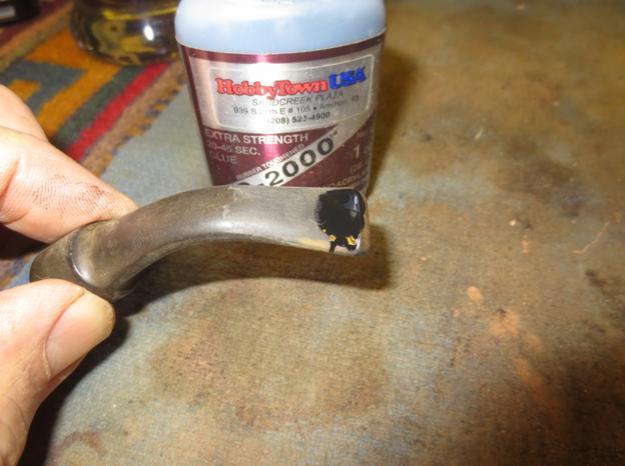
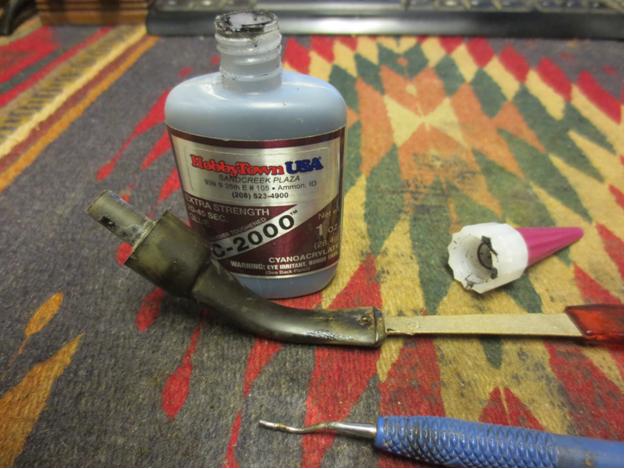
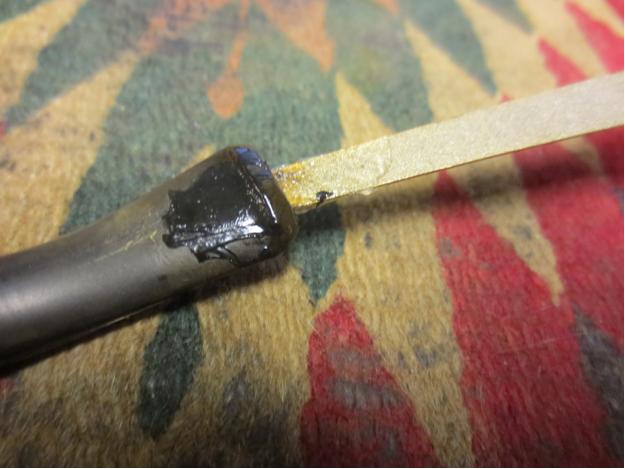
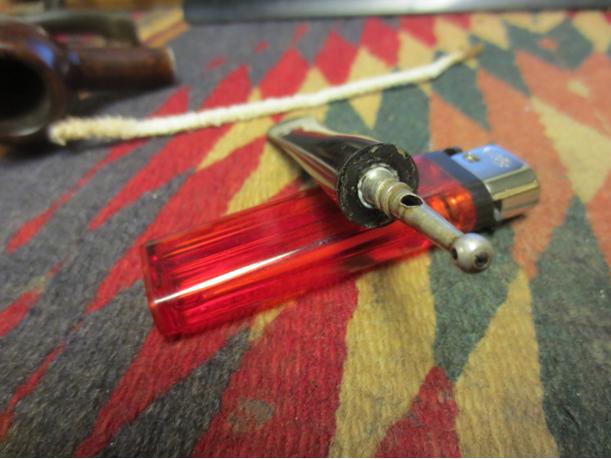
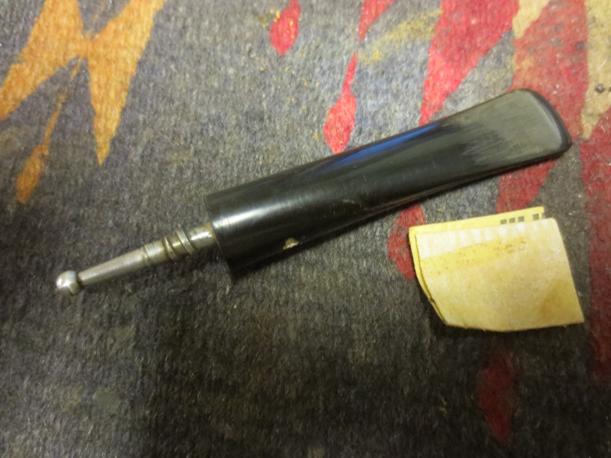
KW6 I cleaned out the inside of the stem with pipe cleaner and alcohol and the drilled out end with cotton swabs and alcohol. I cleaned the new stinger/tenon the same way and polished it with 0000 steel wool. I applied twisted the tenon into the mortise and then applied glue to the end that would go into the hole in the stem. I pushed the stem in place on the glued part and let is set. I unscrewed the stem and set it aside to let the glue cure. I used an all purpose white glue to set the tenon in place because I wanted to be able to adjust the fit with heat. I topped up the glue around the end with some clear super glue.KW7
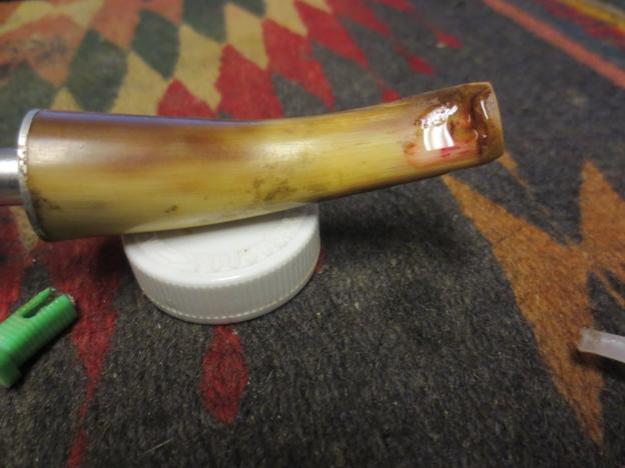
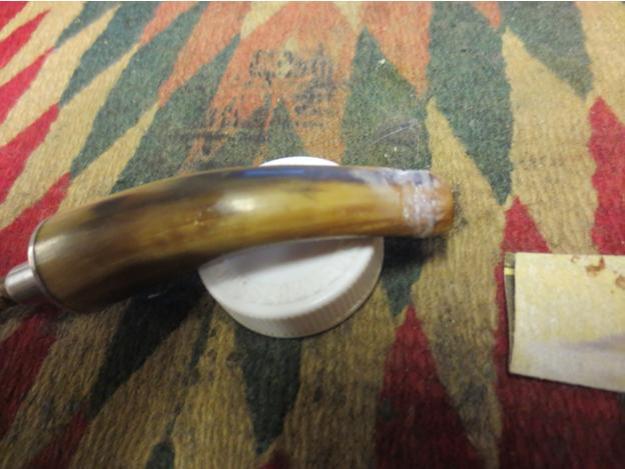
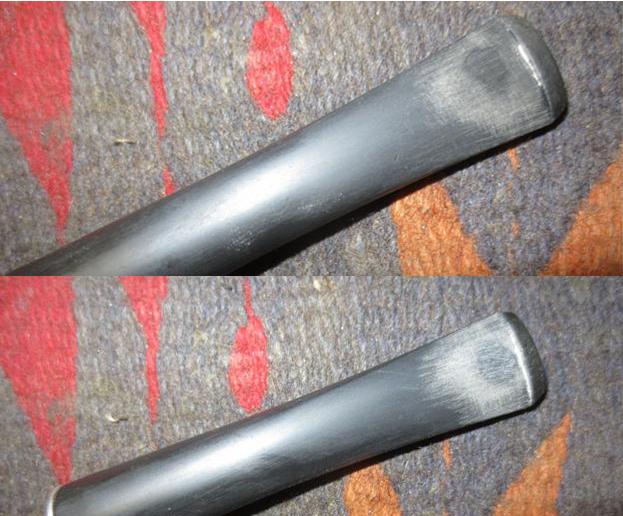
KW8 With the tenon in place it was time to clean up the damage to the stem. I sanded it with 220 grit sandpaper to remove the wavy lines and clean up the residual tooth marks. There was also a nick in the side of the stem on the underside so I cleaned up the taper there as well. I then sanded it with a medium and a fine grit sanding sponge to minimize the scratching.KW9
KW10

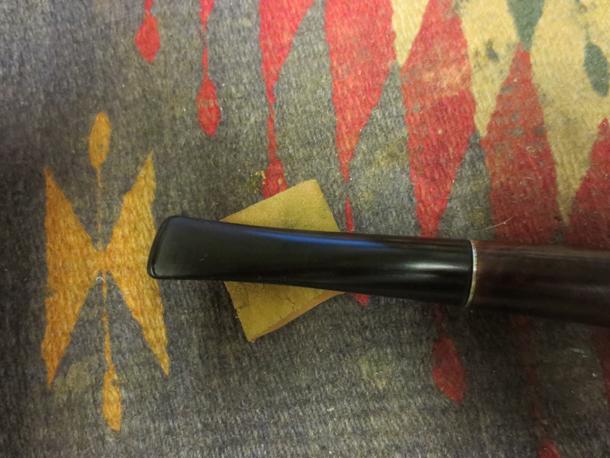
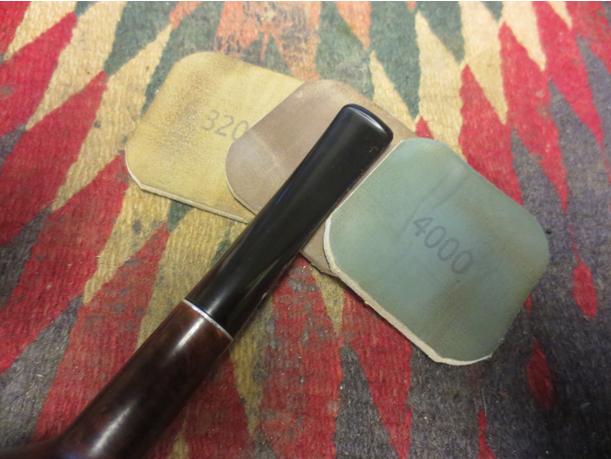
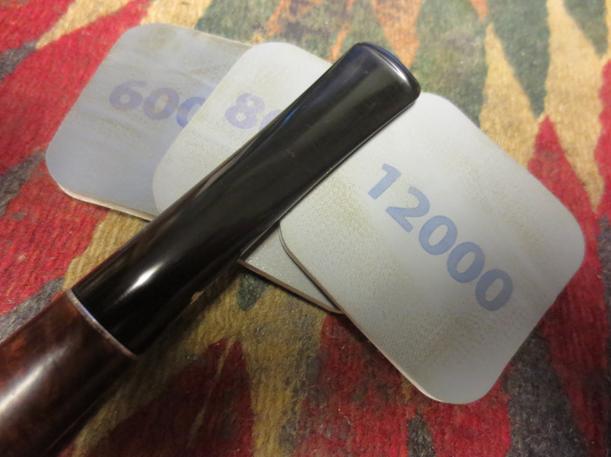
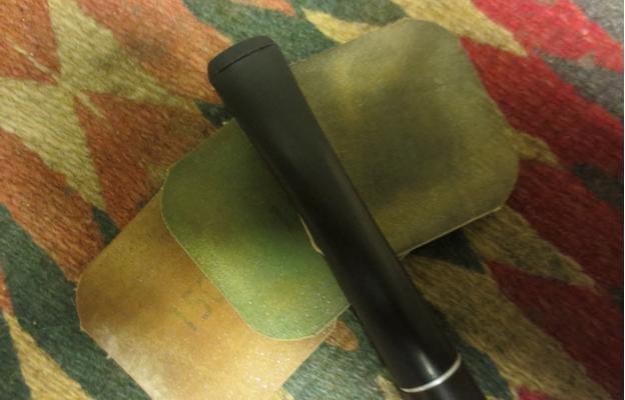
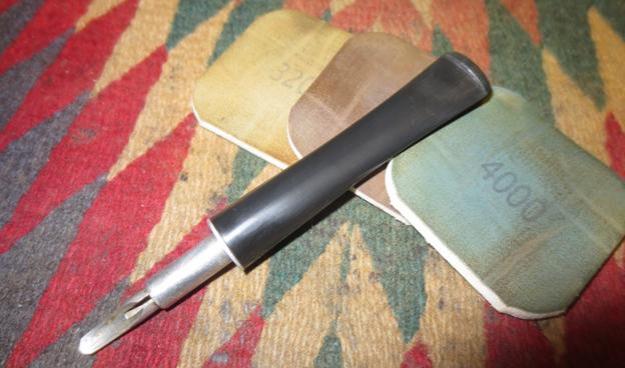
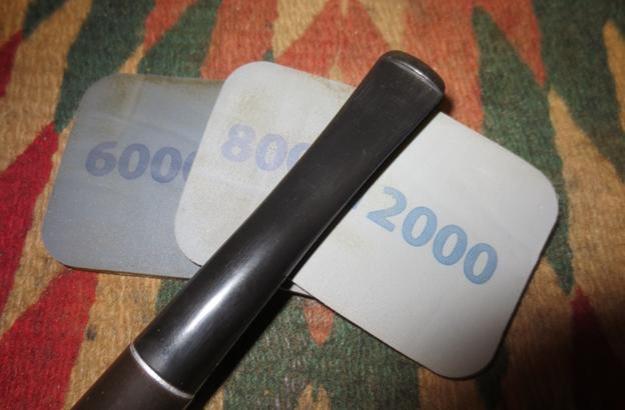
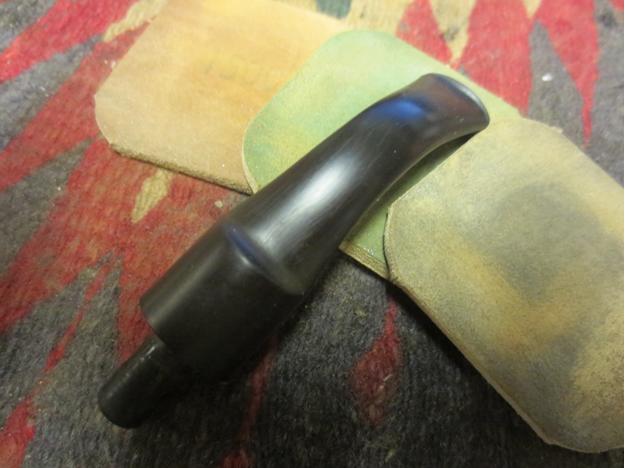
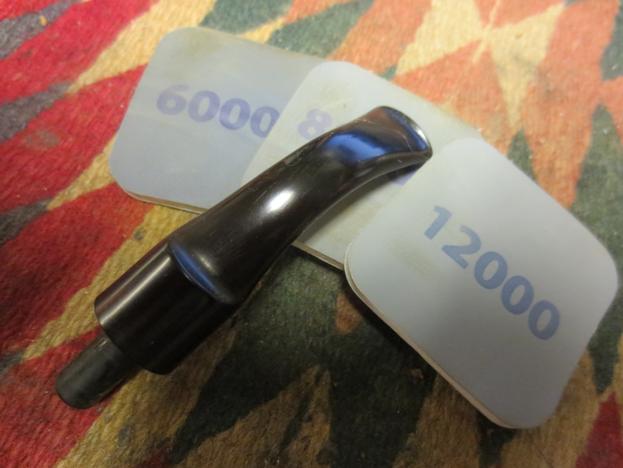
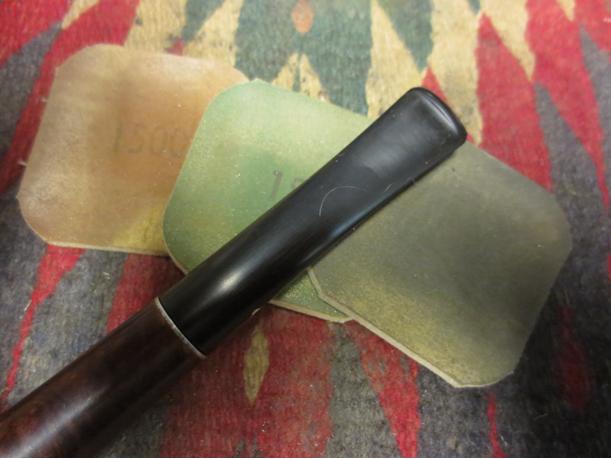
KW11 With the stem surface smooth it was time to polish it with micromesh sanding pads. I wet sanded the stem with 1500-2400 grit pads. I rubbed it down with Obsidian Oil before going on to dry sand with 3200-4000 grit pads. I gave it another coat of oil and then sanded it with 6000-12000 grit pads. I rubbed it down a final time with Obsidian Oil and let it dry.KW12
KW13

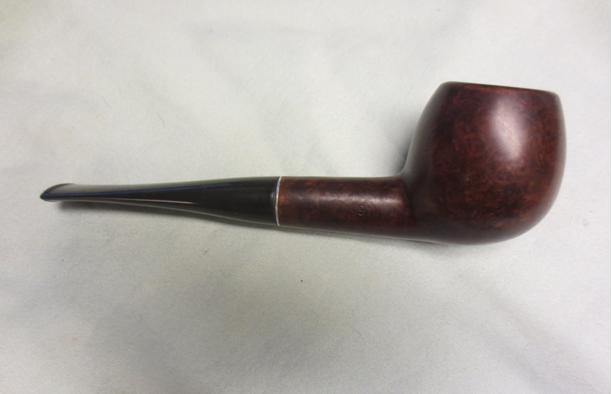
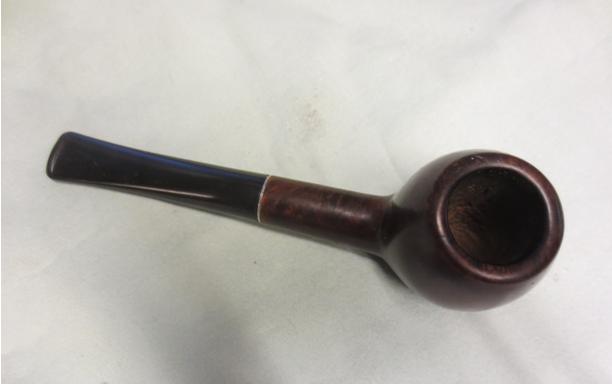
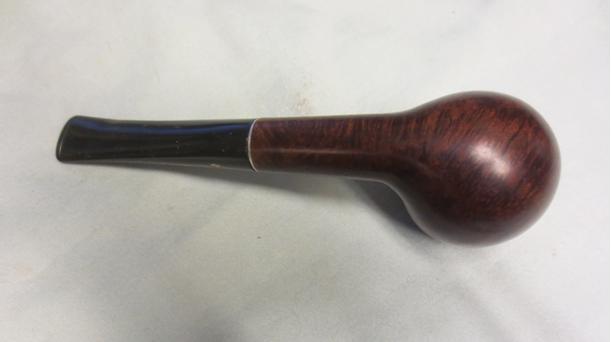
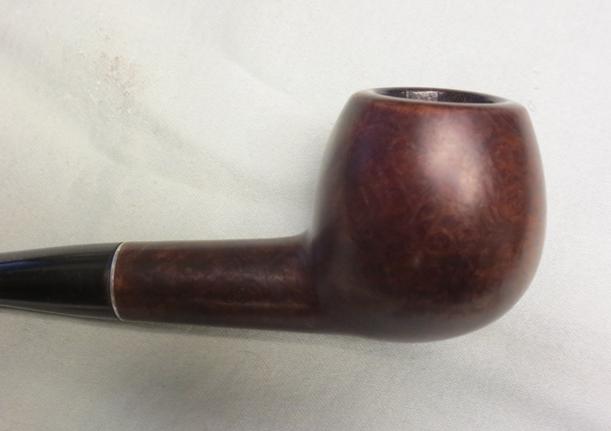
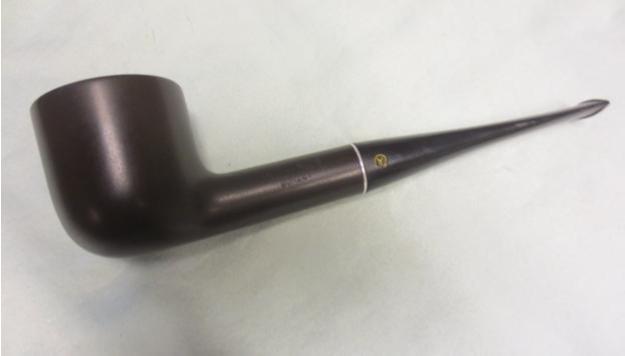
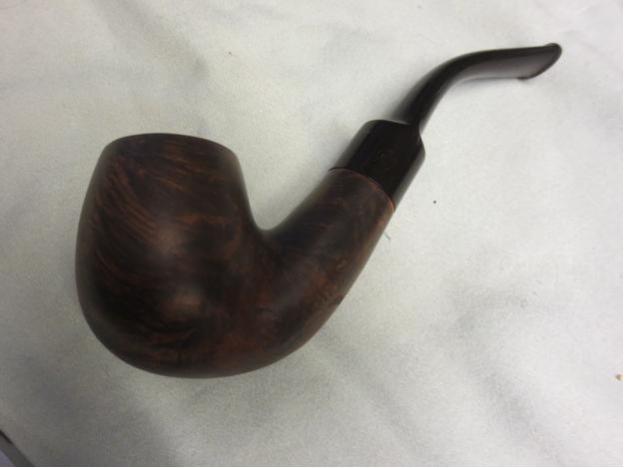
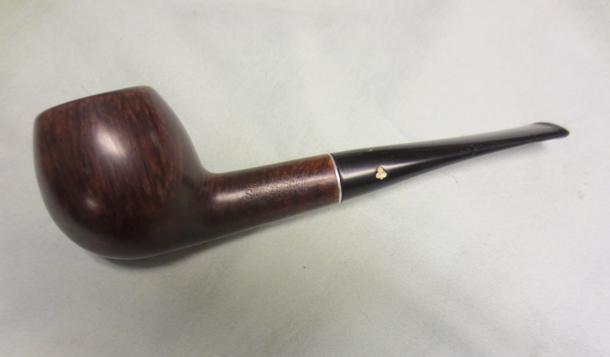
KW14 I sanded the bowl with 4000-12000 grit micromesh sanding pads to smooth out the outer rim edge and the sides of the bowl. I wiped the bowl down with some pipe polish. I buffed the bowl and stem with Blue Diamond polish and then gave it multiple coats of carnauba wax. I buffed it with a clean flannel buff and then hand buffed it with a microfibre cloth. The finished pipe is shown in the photos below. Thanks Dave for the opportunity to restem this beauty. It was a fun one to work on. Thanks for looking.KW15
KW16

KW17

KW18

KW19

KW20

KW21

KW22

KW23

KW25

A New Coat for a Big-Ben Bent Bulldog


I am glad to see the work you did on this one. I like the overall look far better than what it was when I sent it to you. Great job.

Charles Lemon's avatar

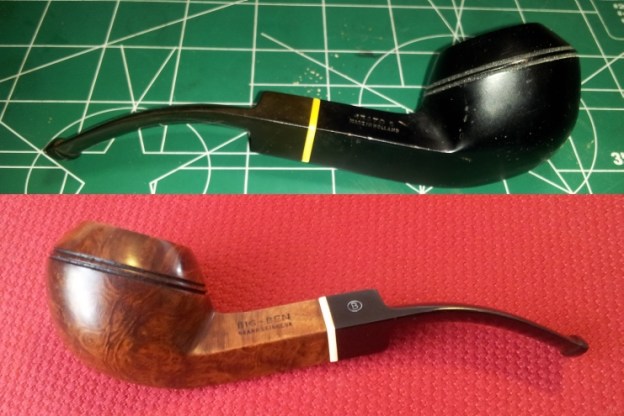
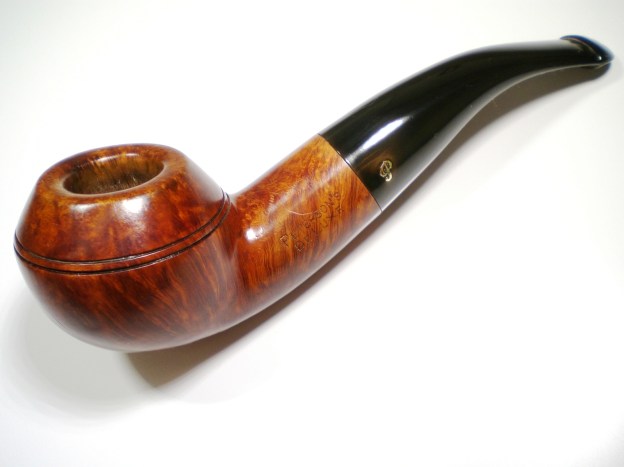
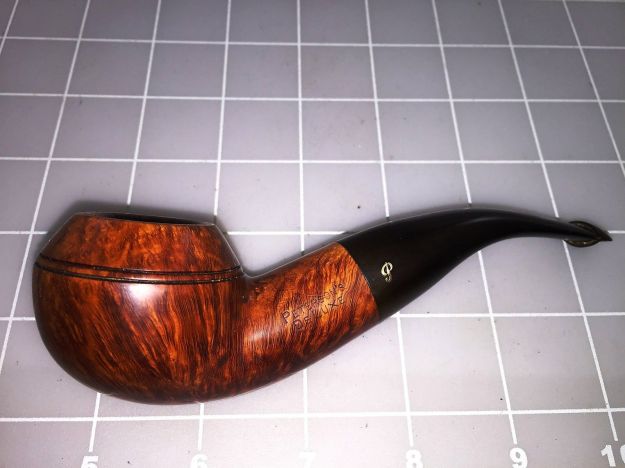
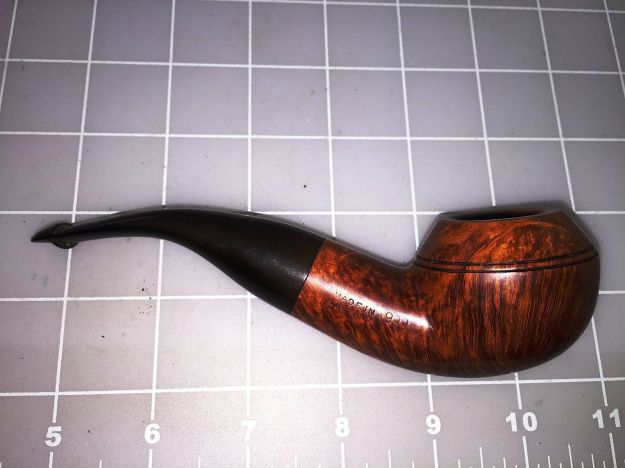
I acquired this Dutch-made bent bulldog from Steve Laug of RebornPipes in a recent trade. It was in pretty good shape to start, which is a nice change from some of the estate pipes in my refurb box. It is stamped “Big-Ben” over “Grand Seigneur” on the left face of the diamond shank, and “15479S” over “Made in Holland” on the right shank. The stem is stamped with a “B” in a circle.

Here’s the pipe as received:

As the pics show, the pipe had been used but not abused. The stem was not oxidized, but had one deeper tooth dent that would need attention. The obvious flaws in the stummel were two medium-large factory fills that had shrunk and would need replacement. On a painted pipe like this, replacing fills means completely stripping and refinishing the stummel, as it would be very tricky to try to make spot-repairs.

I started…

View original post 898 more words

Restoring a Windsor De Luxe 13106 Unique with a Horn Stem


Blog by Steve Laug

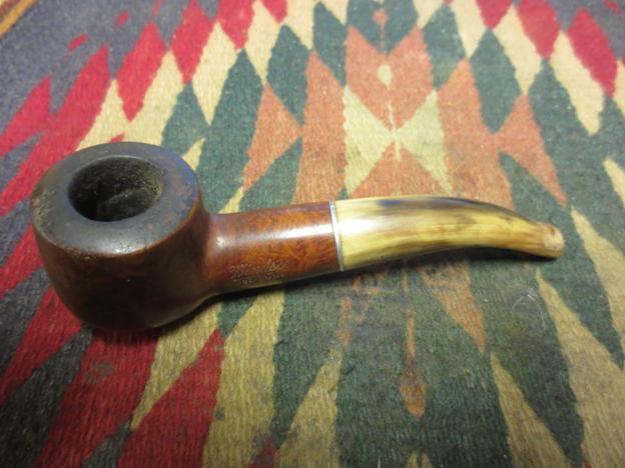
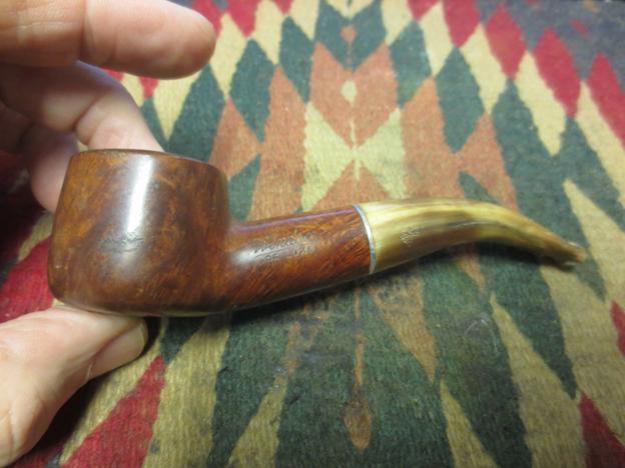
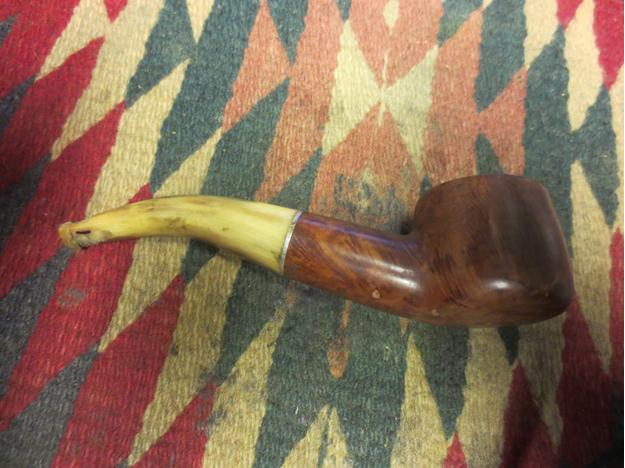
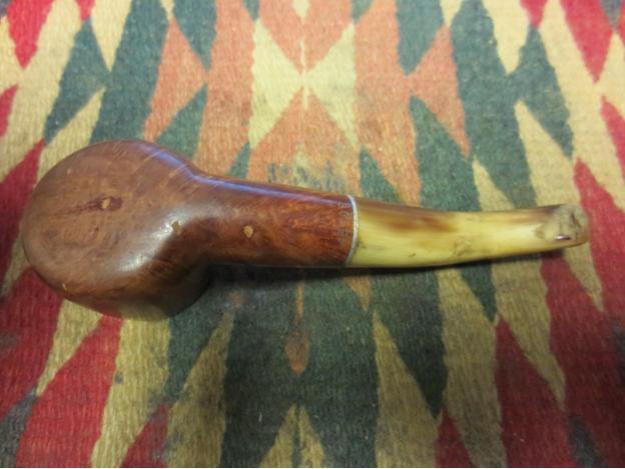
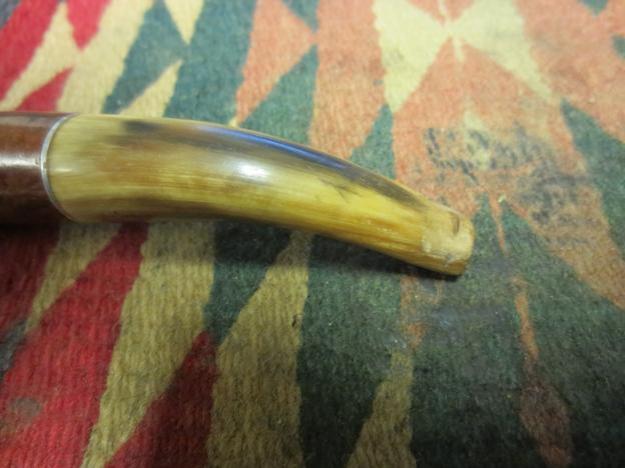
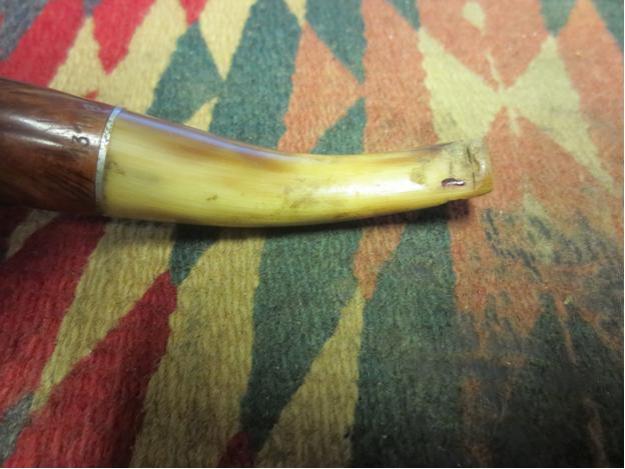
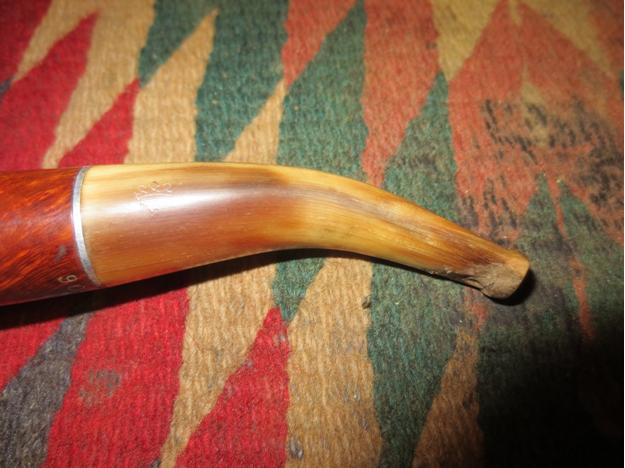
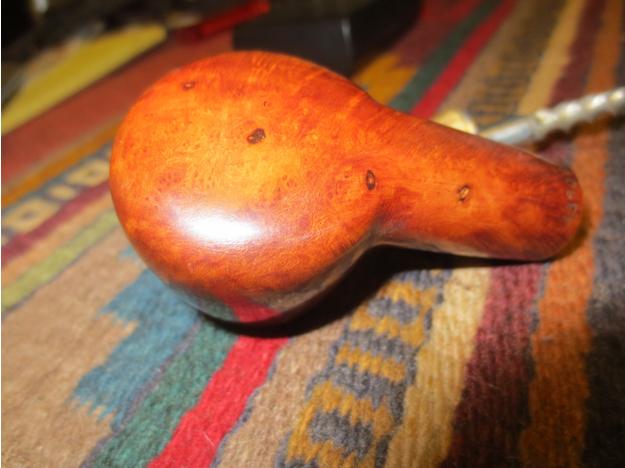
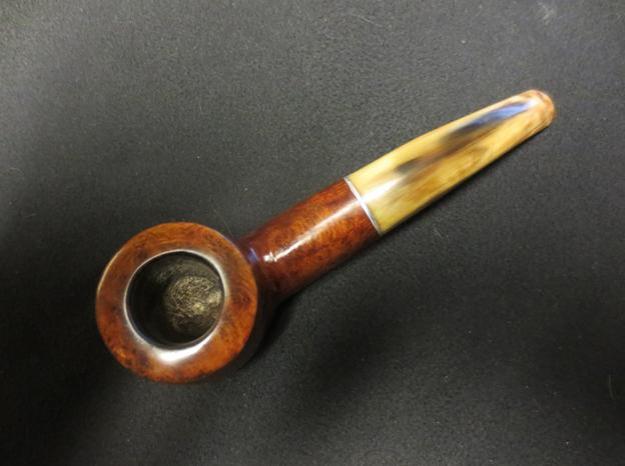
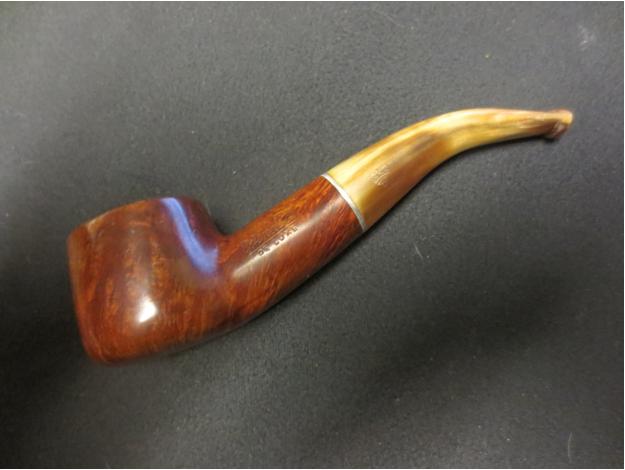
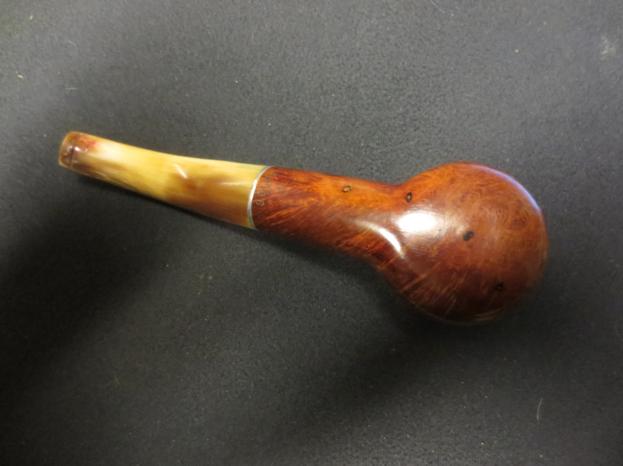
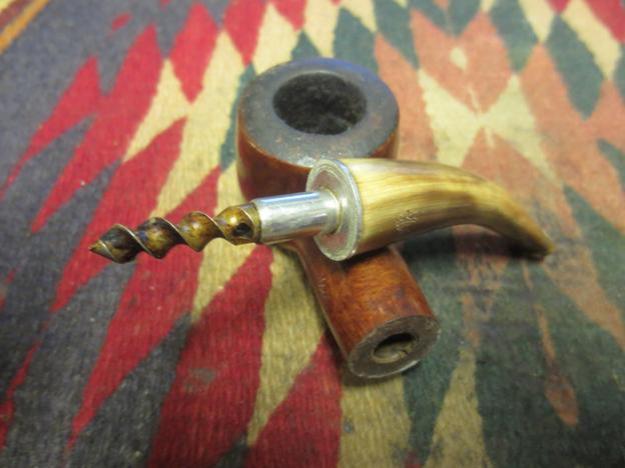
When I saw this old horn stem pipe on Ebay UK I immediately put in a bid and I won the pipe. It had a great striated horn stem that had lots of deep colours. The area in behind the button on the top and the bottom of the stem was really damage with large chunks of horn missing. On the underside of the stem there was a dark red stain in the striations of the horn near the button. The stem has a metal push tenon with a twisted stinger apparatus screwed into the end of the tenon. The metal ring between the shank and the stem was attached to the stem. The stem had a faint crown stamped in the horn. The bowl had a thick cake and the rim was heavily covered with lava that flowed over from the bowl. The underside of the bowl had a half-dozen fills in it that were shrunken and filled with white putty. The stamping on the shank said Windsor in a script with a flouring line underneath. Stamped under that was De Luxe. On the underside of the shank next to the stem it was stamped 13106. I have no clue as to the provenance of the pipe – WMTP says that there are several makers in England that made the brand. All have stamping that is slightly different. The finish on the bowl looked to be in decent shape under the grime and build up on the sides of the bowl. (Anyone have any ideas on the maker let me know).horn1

horn2

horn3

horn4 I took close up photos of the stem to give an idea of the damage that I would be working with on this pipe. On both sides of the stem there was serious damage in the form of missing chunks of horn. These chunks were missing in the sharp edge of the button and in the surface of the horn itself. The first and second photos show the top and bottom sides of the stem. In the second photo below there is a dark line at the bottom edge of the stem next to the button – that is the red mark that was in the surface of the horn. The third photo below shows the profile of the stem and clearly shows the missing chunks in the horn.horn5

horn6

horn7 The close up photo of the rim below shows the overflow of lava on the surface that would need to be removed to assess damage to the bowl and rim.horn8 The twisted aluminum stinger apparatus was hefty and at first glance seemed to be stuck in the tenon. I tried to turn it and pull it and it would not budge. I would need to heat it to see if I could loosen the tars that bound it to the tenon.horn9

horn10 I decided to work on the stem first. I enjoy working on and repairing horn stems. I find great satisfaction in bringing them back to life and bringing out the rich glow that come from a polished piece of horn. In this case I sanded out the damaged areas with 220 grit sandpaper to smooth the edges of the holes and to clean up the debris. I wiped it down with a cotton pad and alcohol to clean off all the debris. I decided to add a little colour to the horn before filling in the hole so that the darker striation would continue to the button. I used a black permanent marker to colour in a stripe from the place it ended on the undamaged portion back to the button. I filled in the damaged areas on the surface of the stem and on the button with clear super glue. The area on the underside where the red spot was cleaned up a bit but the red bled through. I added multiple coats of the glue to build up the areas. I overfilled them so that I had material to work with in reshaping the button and the stem surface.horn11

horn12

horn13

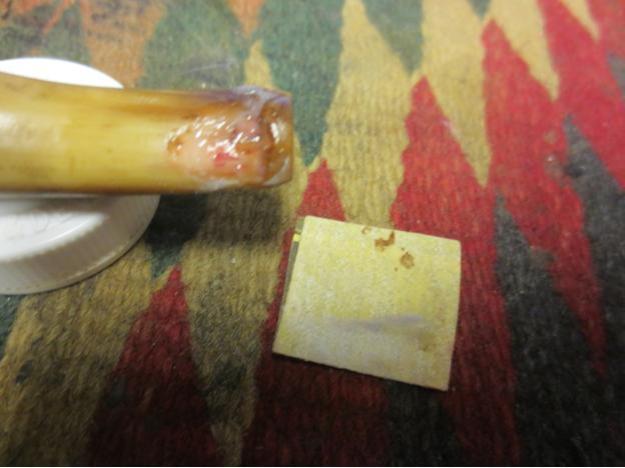
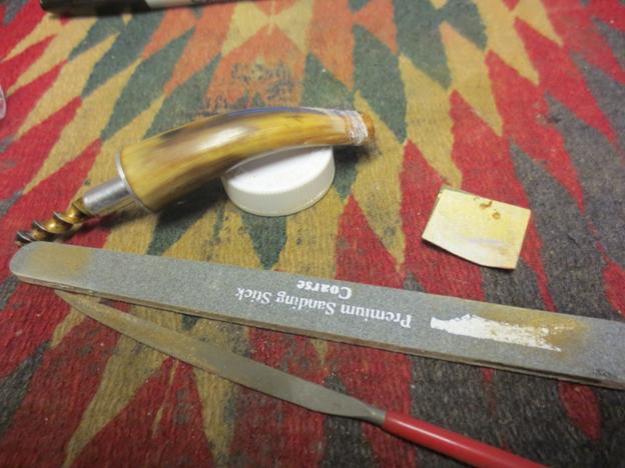
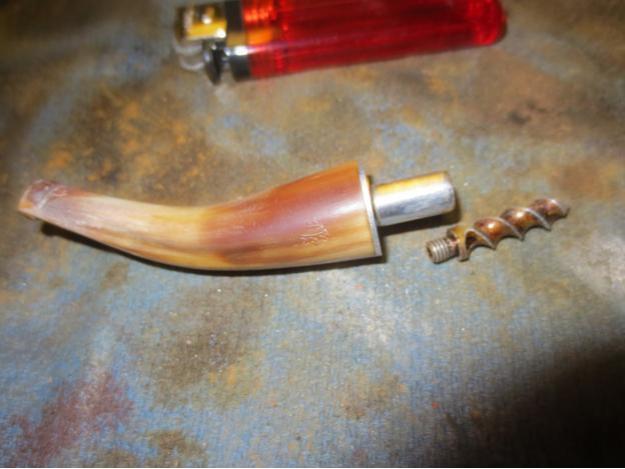
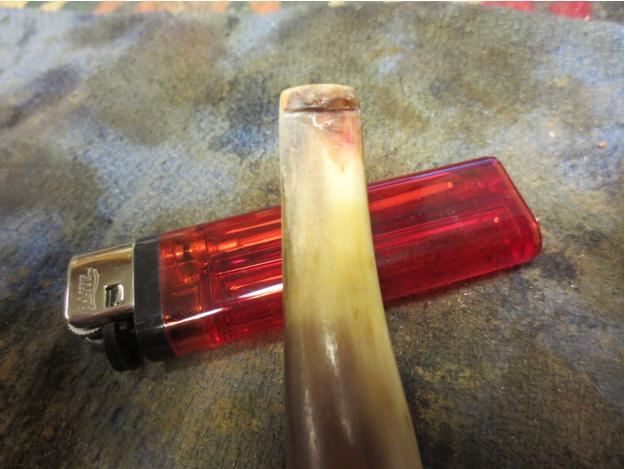
horn14 Once the glue dried I used a needle file and a coarse sanding stick to recut the edge of the button and clean up the top face of the button. I wanted a clean defined area that matched the undamaged part.horn15 I sanded the entire stem, carefully avoiding the area of the stamping with 220 grit sandpaper to blend the repair into the surface of the stem and to shape the button. I heated the metal tenon with a lighter and was able to unscrew the stinger from the end.horn16 I worked on the shape of the button and the flow into the button with sandpaper and sanding sticks. The shiny areas in the photo below next to the button are the patches of superglue. Much polishing still remains to be done at this point but the surface is smooth to the touch.horn17

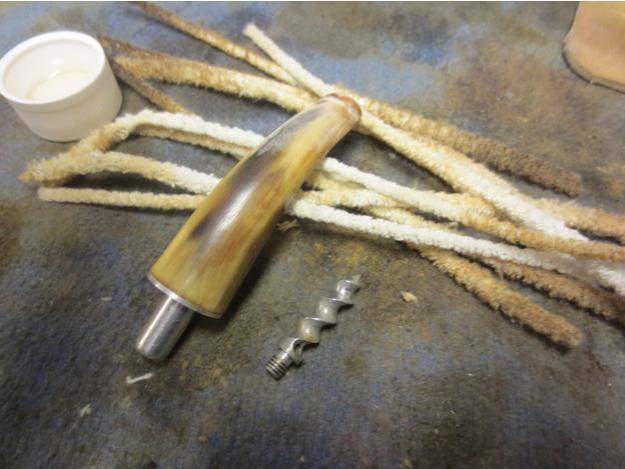
horn18 I cleaned up the stinger with 0000 steel wool to remove the tars and tarnish. I cleaned out the inside of the stinger with pipe cleaners, cotton swabs and alcohol.horn19

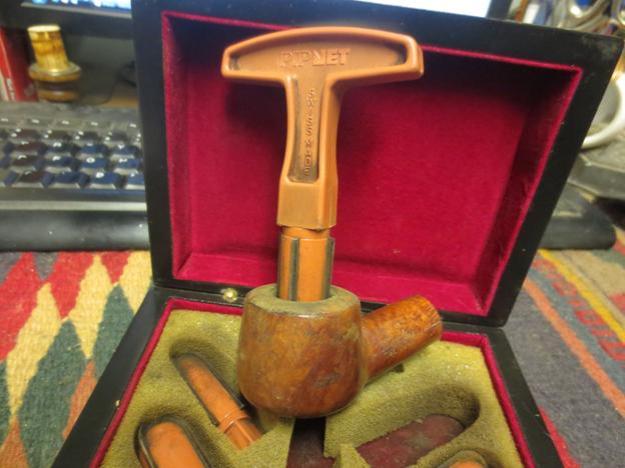
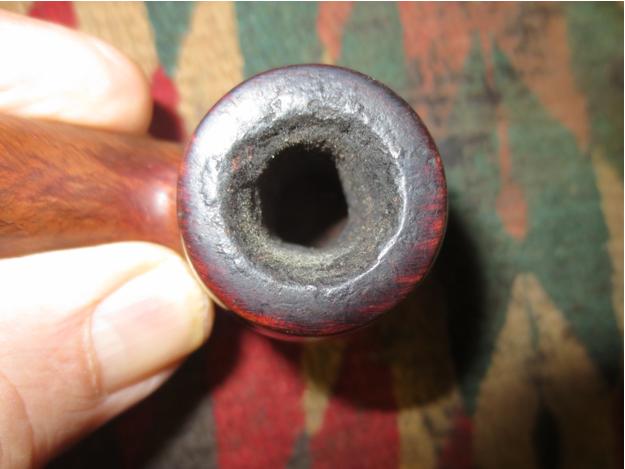
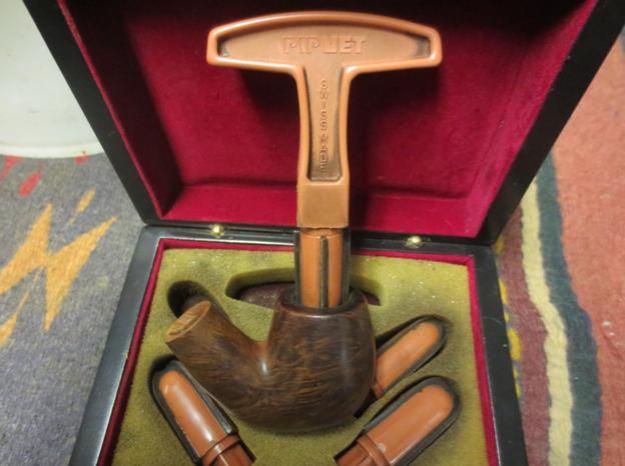
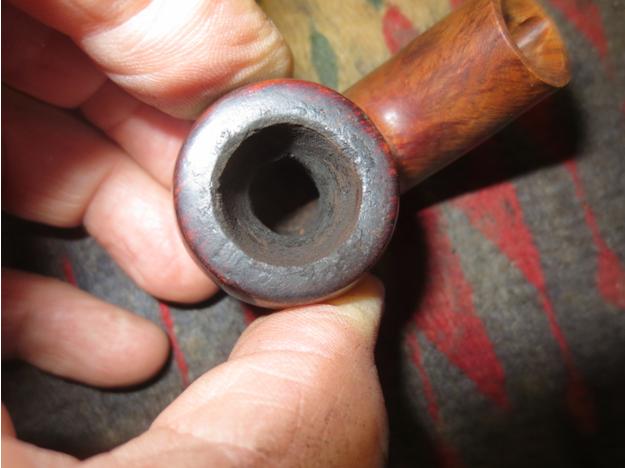
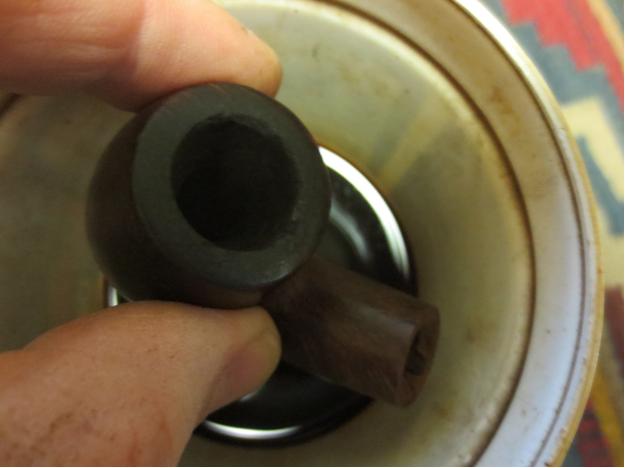
horn20 I reamed the bowl with the PipNet reamer and took the cake back to bare wood. I wanted to check out the inside of the bowl for damage or cracks. Fortunately it was very clean.horn21

horn22 I scrubbed the rim with alcohol and cotton pads to remove the tars. It was very hard so I also used a 1500 grit micromesh sanding pad. I was able to get most of the build up off the rim. There was some darkening that I would need to sand with a more aggressive grit of sandpaper. I scrubbed the exterior of the bowl down with acetone on cotton pads as well to remove the grime and old finish.horn23With the basic work done on the exterior I cleaned out the shank and the airway in the stem. I also scrubbed out the inside of the bowl with alcohol, cotton swabs and pipe cleaners.horn24

horn25 I put the pipe back together to get a look at how things were coming along. I wanted to see what the repaired stem looked like. In the photos below you can see the new look of the stem from all angles. I am pleased with the overall repair of the stem.horn26

horn27

horn28

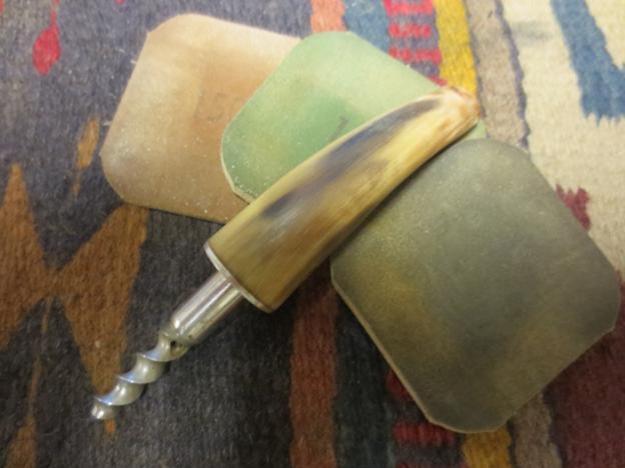
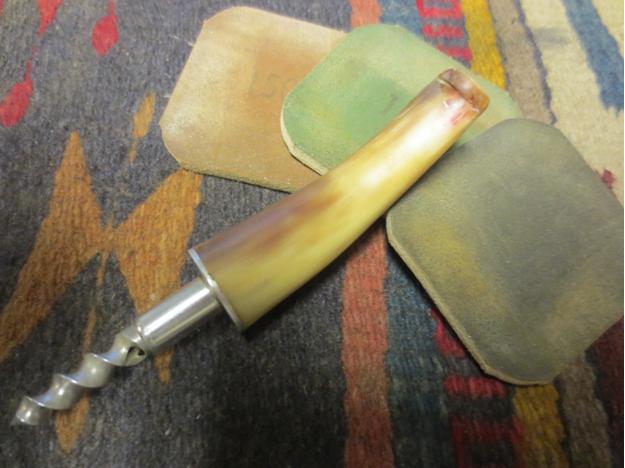
horn29 I took the stem off the pipe and worked on it with the micromesh sanding pads – wet sanding with 1500-2400 grit pads and dry sanding with 3200-12000 grit pads. I rubbed the stem down with Obsidian Oil between each pad as I have found when working with horn that the oil gives it a better bite into the material and helps raise the shine.horn30

horn31

horn32

horn33

horn34 I lightly buffed the stem with Blue Diamond and then gave it several coats of carnauba wax. I buffed it with a soft flannel buff and then hand buffed it with a microfibre cloth.

With the stem done I turned to the finish on the bowl. I used a dental pick to remove the putty fills from the bottom of the bowl and shank. I wiped the bottom of the bowl down with alcohol and then packed briar dust into the holes where I had removed the putty. Once the dust was packed in I put a drop of clear super glue on top of the dust and then packed it down with the pick. I added more briar dust to top up the fill.horn35

horn36 When the patches had dried I sanded them with 220 grit sandpaper to remove the excess material and blend the surface of the patch into the bowl surface.horn37 I heated the briar and then stained it with a medium brown aniline stain. I flamed the stain to set it in the briar. I buffed the bowl with Blue Diamond on the wheel and then gave it several coats of carnauba wax to give it a shine. I hand buffed it with a microfibre cloth.horn38

horn39

horn40

horn41 I pushed the stem back in place and gave the entire pipe a final coat of wax and then buffed it with a clean flannel buff. I finished by buffing it by hand with the cloth. The finished pipe is shown in the photos below. It is a beautiful pipe and the horn just shines. I am looking forward to enjoying it in the days ahead. What would you call this shape? Any ideas?horn42

horn43

horn44

horn45

horn46

horn47

horn48 Thanks for looking.
A Blast From the Past – 2 Unopened Boxes of Kentucky Club White Burley Tobacco


Blog by Steve Laug

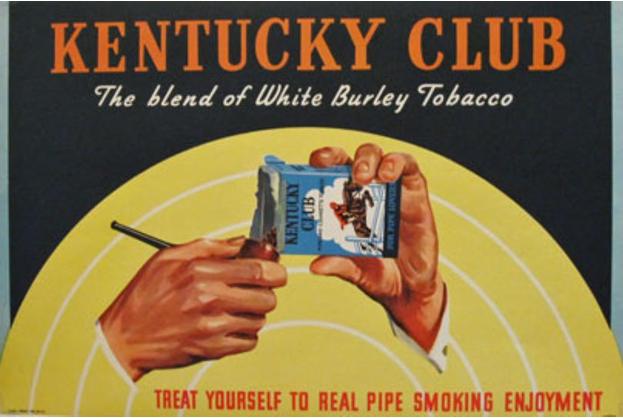
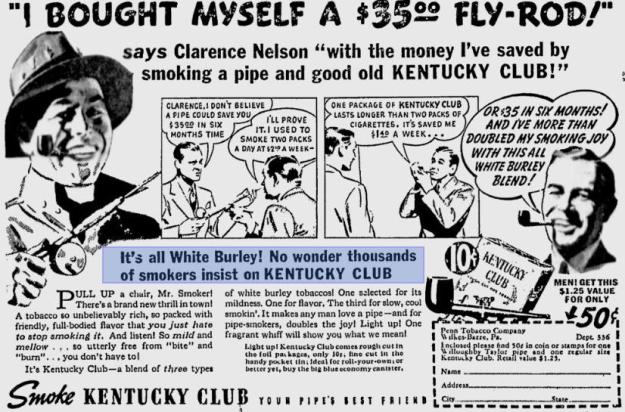
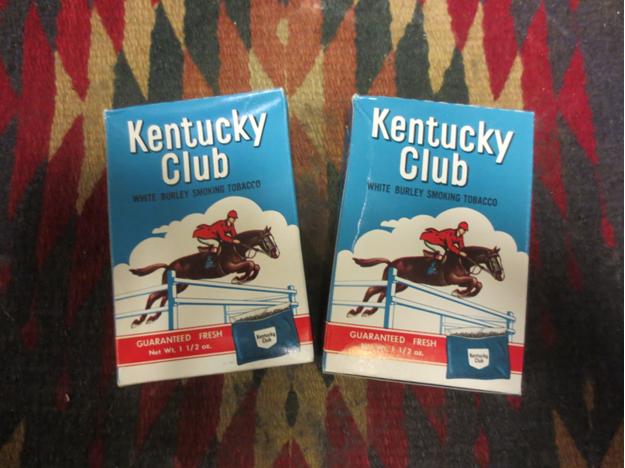
I am always on the lookout for aged tobacco, whether it is in tins, boxes or foil pouches. I love the look of the old packaging and trying the old tobacco. On a recent trip to Idaho Falls I came across this pair of packets of Kentucky Club in one of the antique malls I visited. From a bit of research I found that the Original Kentucky Club pipe mixture was a mild blend of high grades of White Burley from Tennessee and Bright Virginias from Carolina and Georgia districts. The next two photos are advertisements for Kentucky Club that give a bit of feel for the age of the brand. I don’t what the age of the tobacco I found is but the fellow who sold it to me with two pipes thought it was from the 50s. So it has a bit of age on it.KC

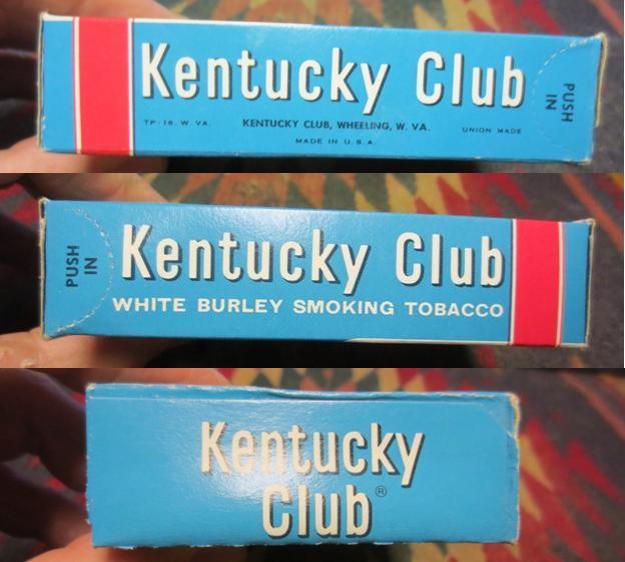
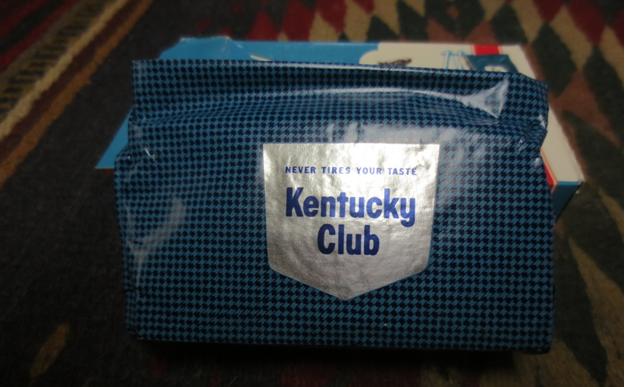
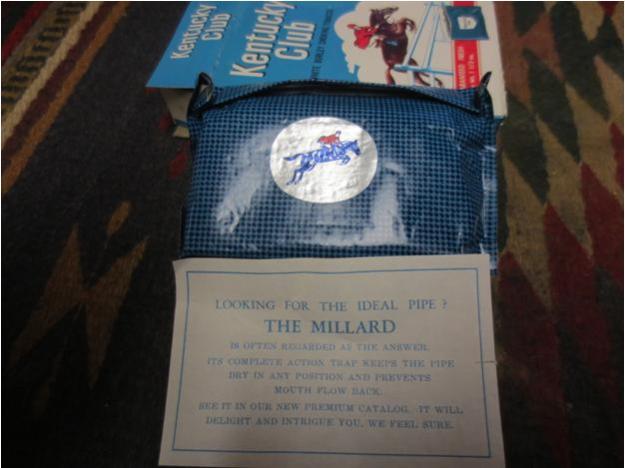
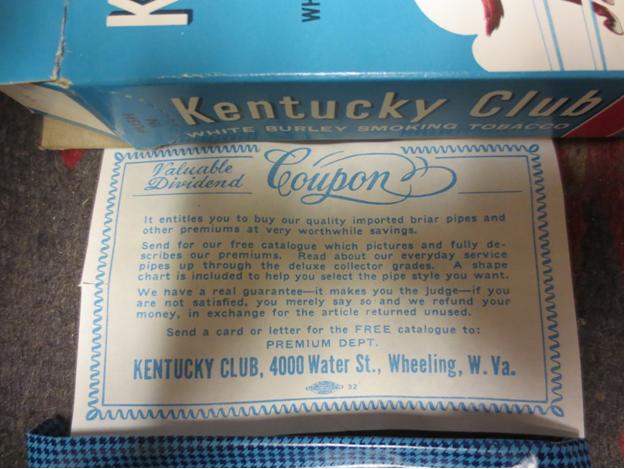
KC4 The two boxes were wrapped together in a torn brittle plastic package. When the shopkeeper gave them to me the plastic fell off. The two cardboard boxes are printed in basically three colours so it is not a modern printing process. The packaging makes me think the seller was correct in his thinking it came from the 50s. I picked up the two unopened boxes for about $8.KC5 The boxes are printed Kentucky Club White Burley Smoking Tobacco with a picture of a jumping horse. At the bottom of the box cover it says Guaranteed Fresh Net Wt. 1 ½ oz. with a picture of a blue pouch with the Kentucky Club logo. This is on both the front and the back of the box. On one of the long edges it reads Kentucky Club over TP-16, W. VA. Kentucky Club, Wheeling, W. Va. Union Made. Under that it reads Made in USA. There is a perforated PUSH IN tab on the top edge. On the other long edge it reads Kentucky Club over White Burley Smoking Tobacco. This side also has the PUSH IN tab at the top. On the top and bottom of the box it read Kentucky Club.KC6 I opened one of the boxes to look at the contents. Inside was a foil pouch of tobacco. The pouch is checker board black and blue. On one side is a silver medallion that has the words Never Tires Your Taste over Kentucky Club. On the other side it has a jockey and horse jumping inside a silver circle like the logo of the tobacco. The tightly sealed foil pouch let none of the aroma of the tobacco escape. That in itself was a good sign. The contents were a little dry as the tobacco was crunchy. Around the outside of the pouch was wrapped a coupon for a Millard Pipe.KC7

KC8 The one side of the insert read: “Looking for the ideal pipe? The Millard is often regarded as the answer. Its complete action trap keeps the pipe dry in any position and prevents mouth flow back. See it in our new premium catalog. It will delight and intrigue your, we feel sure.”

On the other side it reads: “Valuable Dividend Coupon. It entitles you to buy our quality imported briar pipes and other premiums at very worthwhile savings. Send for our free catalog which pictures and fully describes our premiums. Read about our everyday service pipes up through the deluxe collector grades. A shape chart is included to help you select the pipe style you want. We have a real guarantee – it makes you the judge – if you are not satisfied, you merely say so and we refund your money, in exchange for the article returned unused. Send a card or letter for the free catalogue to: Premium Dept. Kentucky Club, 4000 Water St., Wheeling, W. Va.”

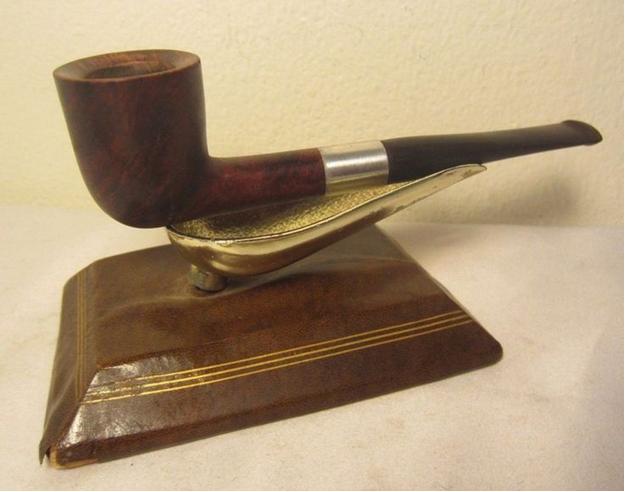
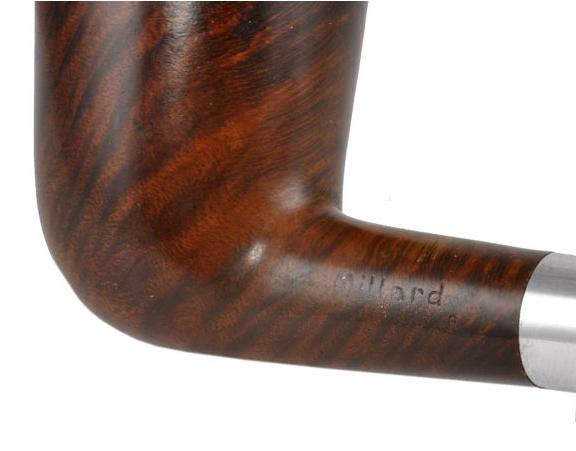
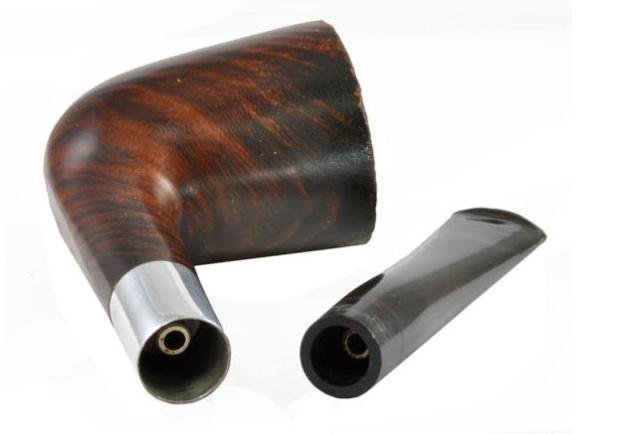
The combination of the design of the pouch, the packaging and the insert make me even more certain that the seller was correct in his general assessment of the age of this tobacco.KC9 I did a bit of digging to find out about The Millard Pipe – which seemed to have been a type of system pipe. I was able to find a Millard pipe through Google photos and it turns out that it was a pipe with a design very similar to a Keyser Hygienic Patent Pipe. The inner tube in the shank and a similar tube in the stem with a military mount stem. Now I am going to have to hunt down one of these Millard Pipes.KC10

KC11

KC12

How a Real Dad’s Pipe and Some Old Phone Numbers Helped Date an Unexpected Trove of Historical Brigham Pipe Info


Some great information from Charles’ site. Have a look.

Charles Lemon's avatar

I recently had the opportunity to investigate a small collection of vintage Brigham Pipes advertisements that came to me from one of my brothers, along with one of my dad’s Brigham pipes that my brother wanted me to clean up for him. I wrote about the pipe refurb itself here; in this post I’d like to take a closer look at the Brigham advertising.

First a quick pic of the entire contents of the cigar box my brother handed to me with the pipe.

20151109_182257

As you can see in the pic above, there were four Brigham documents. The leaflet second from the right in the pic came in the pipe box with the pipe. They make for interesting reading in and of themselves, especially to Brigham pipe fans like me, but none were dated. I wondered whether I could establish a rough chronology for the documents based on other…

View original post 863 more words

Cleaning up Two Sisters – A pair of Beaver Cut Genuine Briar Pipes


Blog by Steve Laug

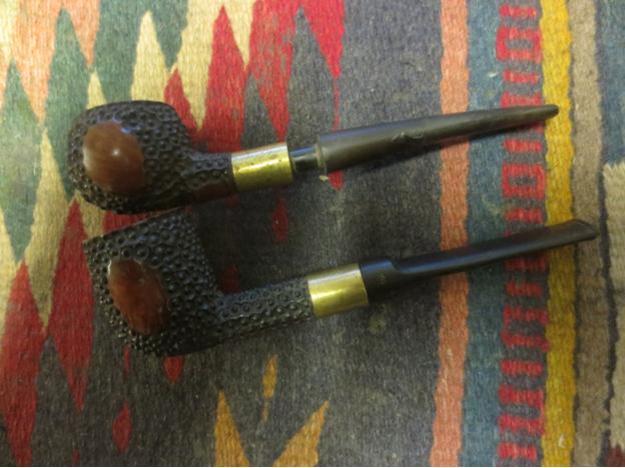
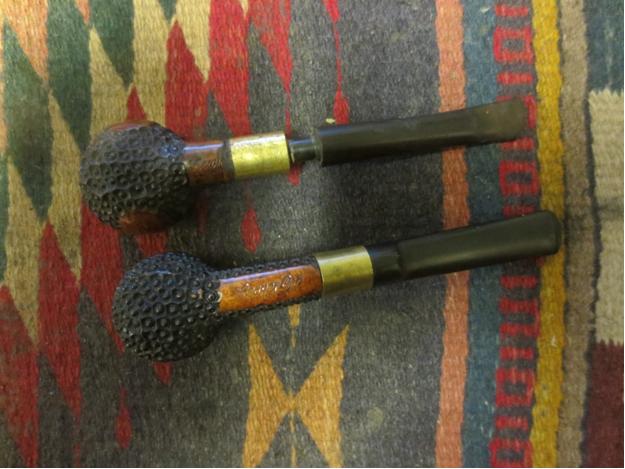
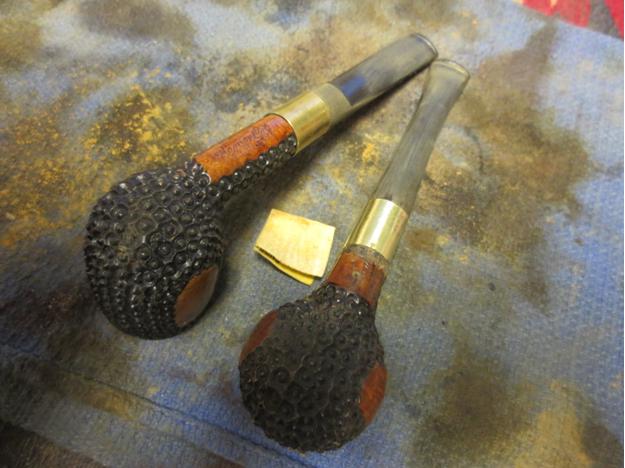
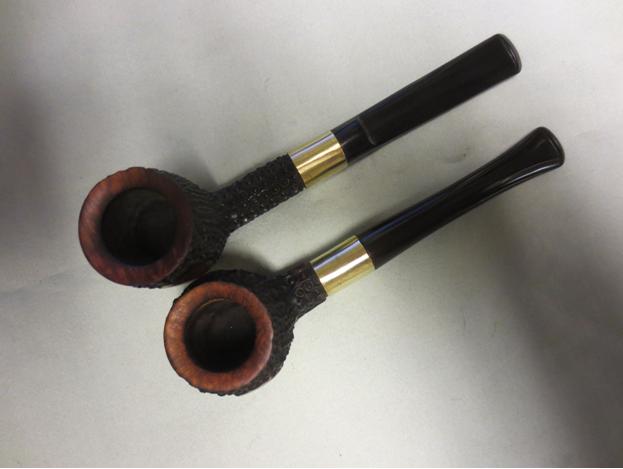
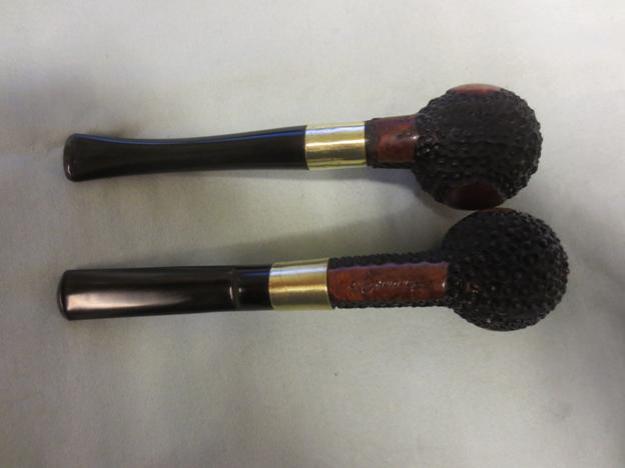
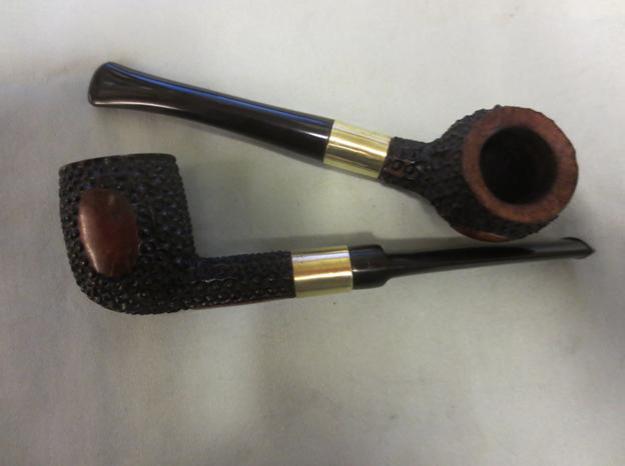
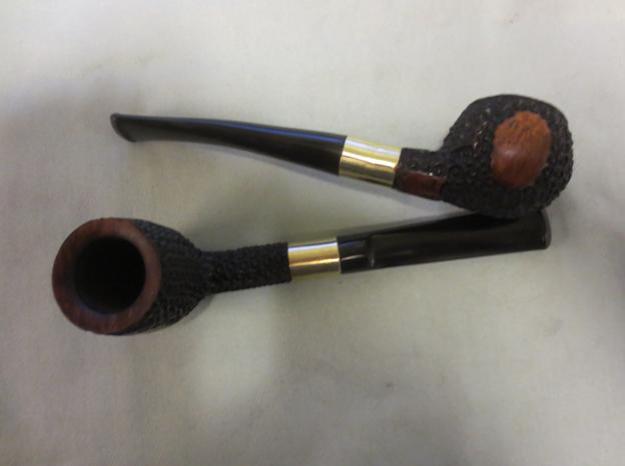
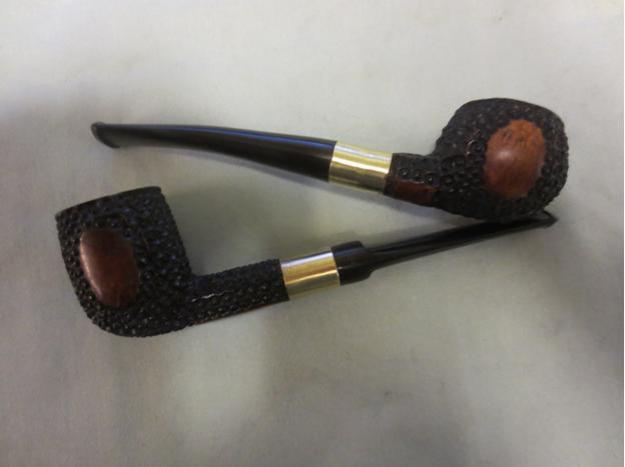
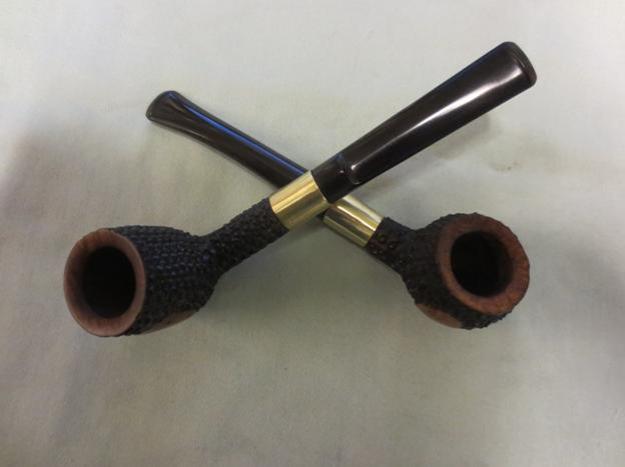
I received this pair of pipes from Charles Lemon of Dad’s Pipes Blog. He picked them up as part of an estate from London, Ontario, Canada. They are both stamped on the bottom of the shank on a smooth surface with the words Beaver Cut in script over a block script Genuine Briar. He did some hunting on the web and could find nothing that gave any sense of history of the brand. When I got them I did the same and found absolutely nothing. The Genuine Briar stamping tells me it is post WW2 and is made in the USA. I found another Beaver Cut for sale on Worthpoint but it also did not have any information. From what I can find that is the extent of the information available.

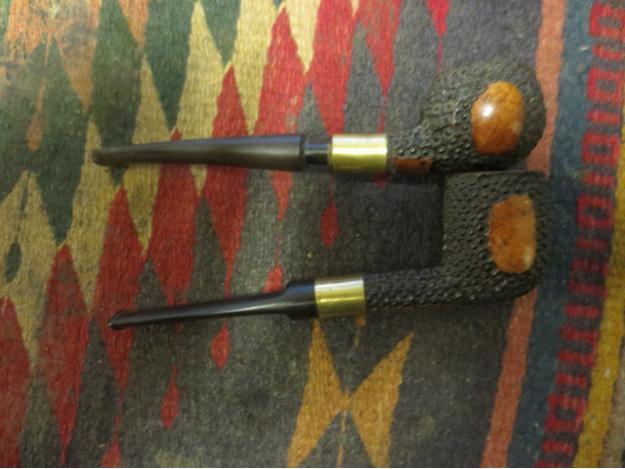
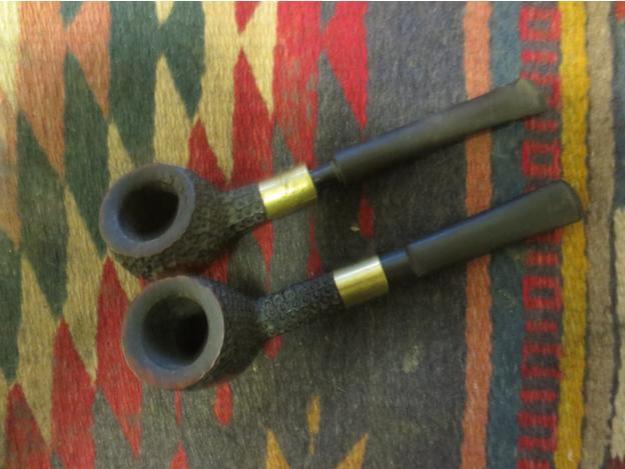
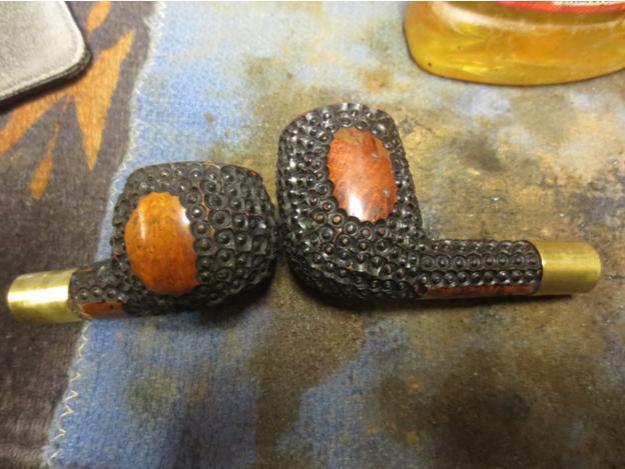
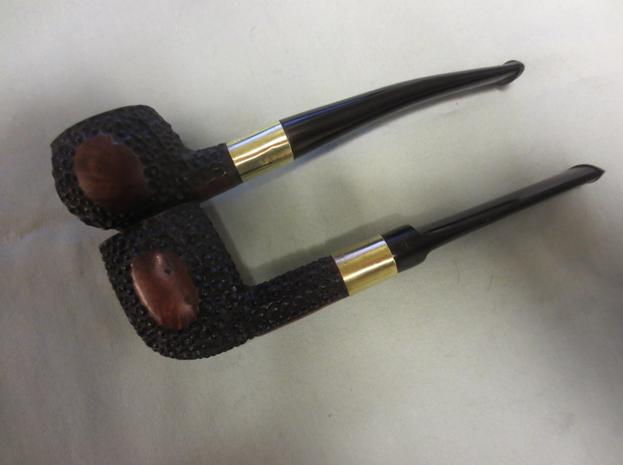
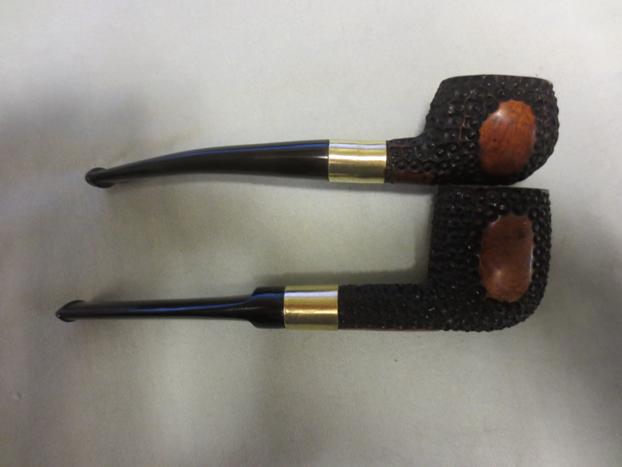
The top pipe in the photo is Prince. The rustication was dirty and a lot of dirt and debris had collected in the grooves. It had a rustication pattern that I had not seen before. It is like rows and rows of birdseye cuts in the surface of the briar. There is a smooth patch on both sides and on the bottom of the shank. The bowl had a thick cake and the shank had a lot of debris and oils in it. The rim had an overflow of lava and oils on the top of the bevel. The inner and outer edge of the rim was in great shape and the bowl was still in round. The brass band on the shank appeared to be factory as it was on both pipes and was identical. It was scarred and had tarnished. When it was installed the installer had made a mess of the shank. He had cut the shank back farther than the length of the band so that when it was installed it left a groove between the edge of the band and the rustication on the shank. It looked almost as if the band was an afterthought. I am pretty certain that it was sent out from the factory with that look. The stamping had been cut in two by the chopping of the briar to fit the band. The stem did not fit the shank due to the buildup internally. The stem was also missing a large chunk on the right side near the button and someone had cut a groove in the top of the stem to begin cutting a new button but had not finished the work.

The lower pipe is a Billiard with the exact same grain pattern. It was in a bit better shape than the Prince. The grooves in the unique rustication were actually clean. There was a varnish coat on the smooth parts of the bowl even though there were several sandpits in each smooth spot. The bowl had a thick cake and the rim had an overflow of tars and lava which obscured the bevel. The fit of the band to the shank on this one was better though looking at it from the end of the mortise it was clear that the shank was out of round. The brass was also scratched and marred on this pipe. The stamping on this one was clean and deep. The stem diameter extended further on the right side than on the left though the stem was of equal diameter all the way around. There were some light tooth marks on the top and the bottom of the stem near the button and there was tooth chatter. The stem was oxidized but was faintly stamped with a B in a circle.Beaver1

Beaver2

Beaver3

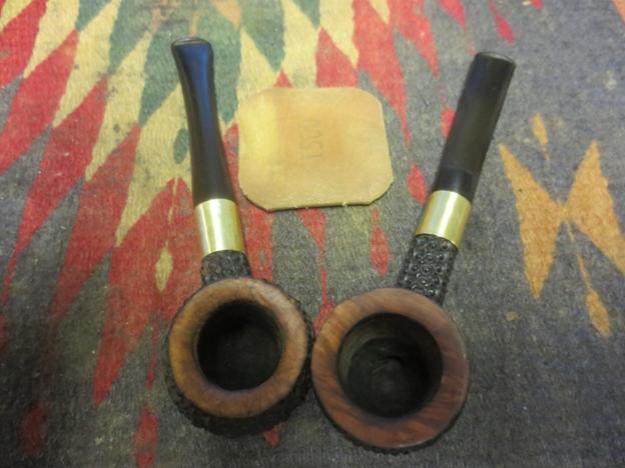
Beaver4 I took a close up photo of the rim on each of the pipes. The first photo below shows the rim on the Prince and the second shows the rim on the Billiard. The buildup and the uneven cake are visible in both pipes. It is hard to see the bevel on the rim in the Prince but it matches the one on the rim of the Billiard.Beaver5

Beaver6 I also took some close up photos of the stems on both pipes to show the state of the stem. The first two photos show the stem on the Prince. You can see the damage of the broken area on the side of the button and the cut off button. You can also see the groove or divot that had been cut in the stem to make the pipe useable. The third and fourth photos show the stem on the Billiard and you can see the tooth marks and chatter on the stem surface. It is also clear that it does not fit well against the side of the band.Beaver7

Beaver8

Beaver9

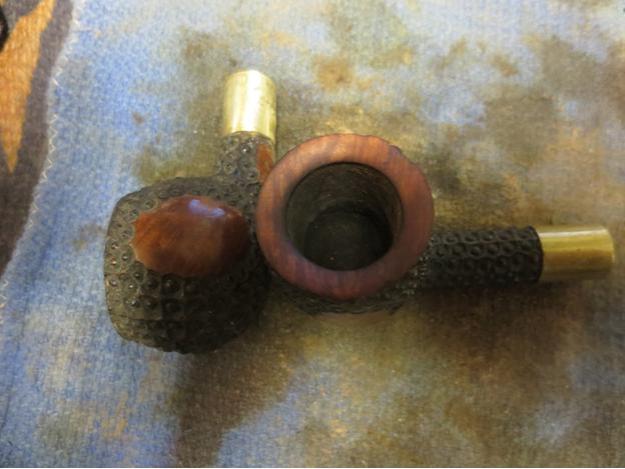
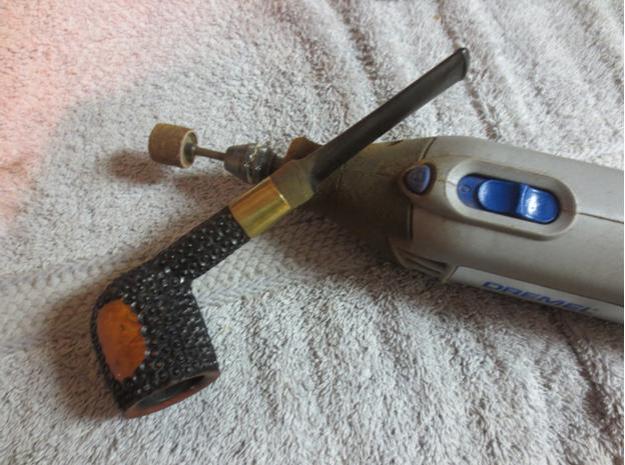
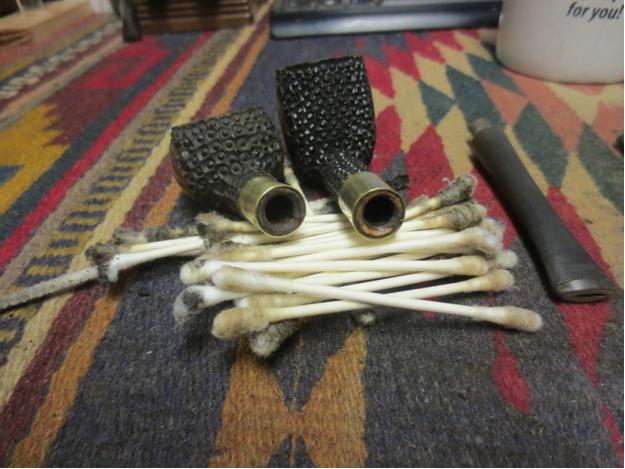
Beaver10 I decided to restem the Prince so I found a stem in my can of stems that was the same diameter as the shank and slightly longer than the broken stem to account for the missing button. I turned the tenon with a sanding drum on a Dremel to get a close fit and then hand sanded until it push snuggly into the mortise.Beaver11 To deal with the badly fit shank band I cleaned the area with a dental pick and then pressed briar dust into the groove just ahead of the band. I dripped clear super glue into the briar dust and then as it settled add more glue and more briar dust. I wanted the transition between the shank and the band to be smooth. I sanded the repair with a folded piece of 220 grit sandpaper and then with a medium and a fine grit sanding sponge to smooth out the scratches in the surface.Beaver12 I reamed both bowls back to bare wood with a PipNet reamer. I sanded the beveled rim on the Prince to clean off the oils and lava and to show the bevel. More work would need to be done on both rims.Beaver13

Beaver14

Beaver15 I worked on the bevel of the rims with 220 grit sandpaper to remove the buildup and also to smooth out the bevel. It took quite a bit of sanding on both rims to get the angle consistent all the way around the bowl and also to remove the burn damage on the inner edge of both. I sanded both with a medium and fine grit sanding sponge to finish the cleanup.Beaver16 I stained the newly cleaned surfaces of the rim with a light brown stain pen to approximate the colour on the smooth portions on the bowl sides and bottom of the shank.Beaver17 I sanded them both with 400 grit wet dry sandpaper to smooth out the remaining scratches that showed up with the stain. It also lightened the stain enough that the match was perfect.Beaver18

Beaver19

Beaver20

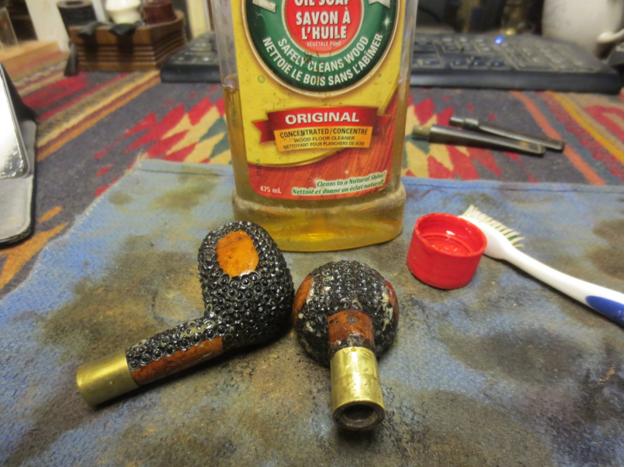
Beaver21 With the rims finished it was time to scrub the rustication. I used Murphy’s Oil Soap and a tooth brush to scour the rustication pattern on both bowls. I scrubbed them and then rinsed them under warm running water.Beaver22

Beaver23

Beaver24 To address the difference in diameter of the stem and the band on the shank on the Billiard I used a Dremel and sanding drum to take down the top, bottom and right side of the saddle stem. I repeatedly checked the fit until I had it very close then I finished adjusting the fit by hand with 220 grit sandpaper. I sanded the stem on the Prince with 220 grit sandpaper to remove the oxidation and the calcification on the end of the stem.Beaver25

Beaver26

Beaver27 With the fit finished on the stems it was time to clean out the internals of the stems and shanks. I used alcohol, cotton swabs and pipe cleaners to scrub the insides until they were clean.Beaver28

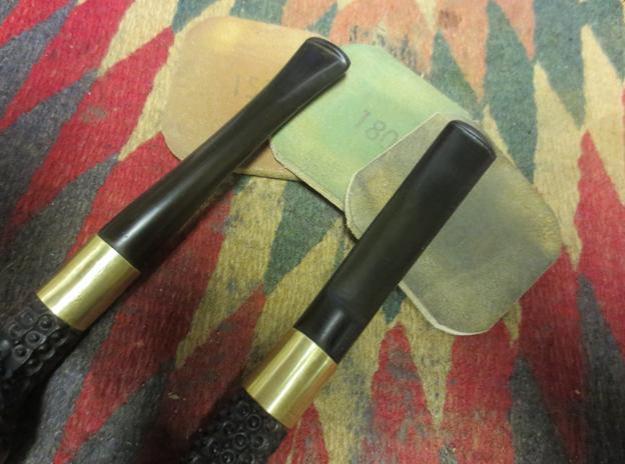
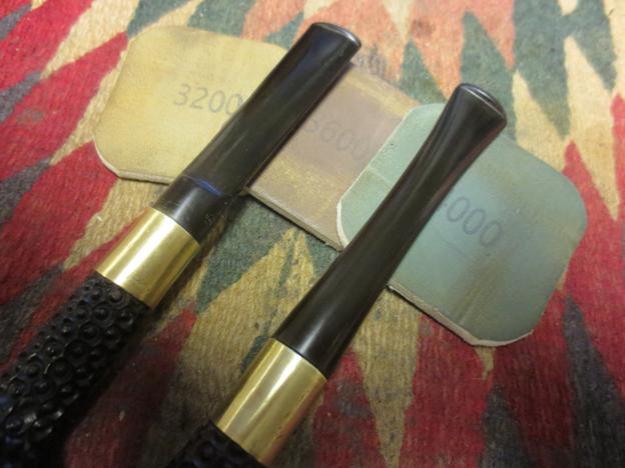
Beaver29 I wet sanded the stem and the brass with a 1500 grit micromesh sanding pad for the first round of sanding on both. It worked to remove many of the scratches and marks in the brass and the vulcanite.Beaver30 I worked on the stem with the micromesh sanding pads – wet sanding with 1500-2400 grit pads and dry sanding with 3200-12000 grit pads. I rubbed the stem down with Obsidian Oil between each set of three pads. When I finished sanding with the 12000 grit pad I let the oil dry on the stem.Beaver31

Beaver32 In the final sanding I sanded the brass and it carried over onto the top portion of each stem giving it a bit of a brown look in the next photo. This all came off when I buffed the stem with red Tripoli and White Diamond.Beaver33 I heated the stem on the Prince and gave it a slight bend to give it a more finished looked. I buffed the stems and rims with White Diamond and Blue Diamond and then gave them multiple coats of carnauba wax. I also waxed the smooth portions on the bowl sides, shank bottoms and the rims. I buffed these with Blue Diamond as well. I wiped the rustication down with a light coat of olive oil to bring some life back to the briar. The finished sisters are shown below.Beaver34

Beaver35

Beaver36

Beaver37

Beaver38

Beaver39

Beaver40

Beaver41 Thanks for looking. Does anyone have any information about this brand? It would be great to be able to get a little information. Please post anything you know in the comments below. Thanks.

A Real DadsPipe – Cleaning Up My Father’s Brigham 203 Billiard


I love these old Brighams. They are well made and I have yet to find one that was not a great pipe. Well done Charles.

Charles Lemon's avatar

My father died in an accident back in 1975 when my brothers and I were just kids. He was a pipe smoker, with a modest collection started with a humble One-Dot Brigham billiard back in the late 1950’s. He must have liked it well enough, because by the early 1970’s the bulk of his pipes were Brighams, interspersed with a few meers. When we got old enough, my mother split up the pipe collection among the five of us boys, though the lion’s share of the pipes seems to have come to me. Indeed, it became the heart of my collection, the starting point of my pipe restoration journey, and the inspiration for this blog.

So when offered the chance to work on another of Dad’s pipes, I jumped at the opportunity. One of my brothers was visiting and saw my collection of refurbished estate pipes. He said he thought…

View original post 754 more words

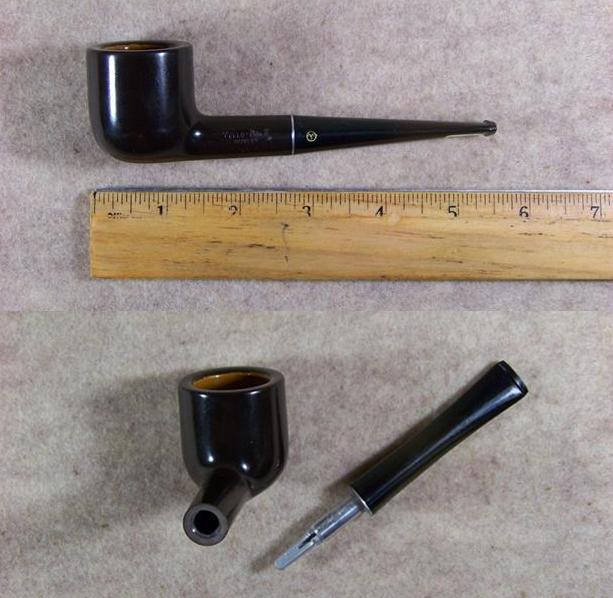
Breathing New Life into a Yello-Bole Burley Pot


Blog by Steve Laug

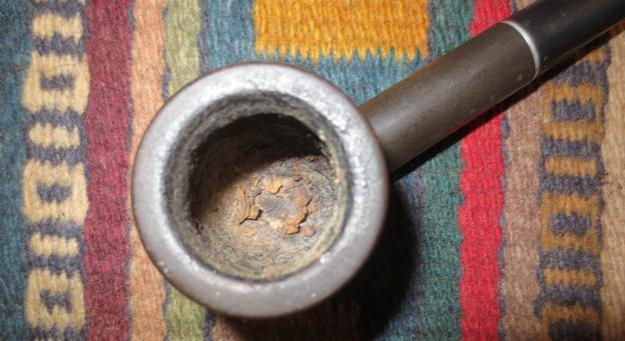
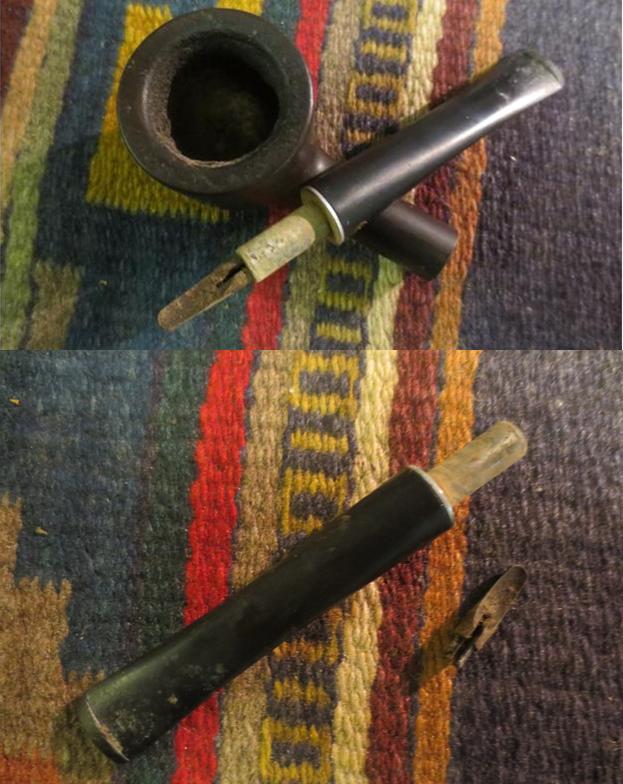
In one of the antique malls in Idaho Falls I found a pipe that I had not seen before. I have had Medico Brylon pipes and other pipes from manmade materials but I had not seen one of these before. This pipe was stamped on the left side of the shank with the words Yello-Bole over Burley with a ® trademark symbol. It appeared to be made of the same material as a Medico that I picked up the day my eldest daughter was born – Brylon. I was sure that the Medico and the Yello-Bole were made by the same company. I was not sure but thought it would be worth picking up as I had not seen one of these before. Besides the price was right – I think it was $8 or so. The bowl had a fairly thick cake at the top and some remnants of the last tobacco smoked in the bottom of the bowl. The stem was stuck in the stem and took a little effort to move it as it was inserted upside down. When I got it out of the shank the aluminum tenon was badly oxidized and there was some corrosion on the surface. The shovel scoop stinger that is a hallmark of Yello-Bole pipes was black with tars and it was stuck in the tenon. The pipe had a heavy smell of English tobacco that made me wonder if it had ever met a pipe cleaner.Burley1

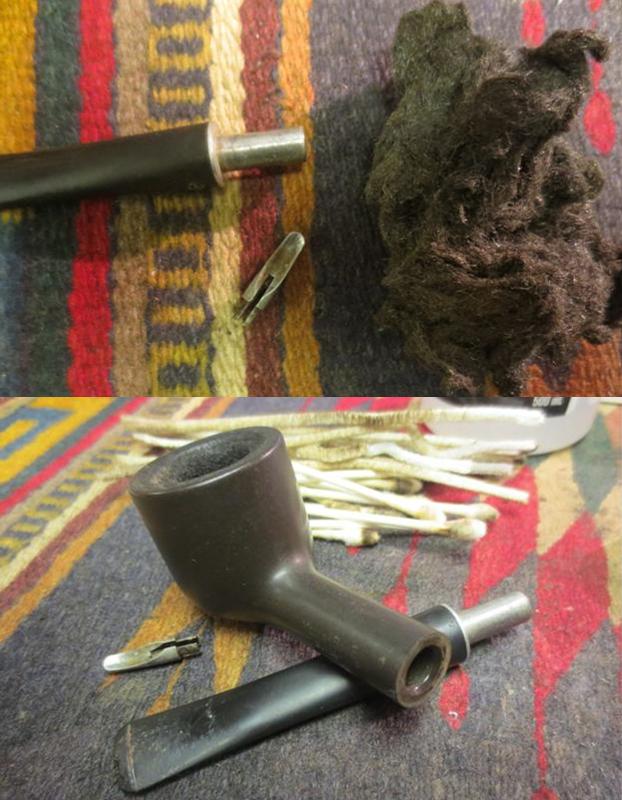
Burley2 I took some close up photos of the bowl and the tenon and shovel stinger apparatus when I got the stem off the shank. The first photo shows the thick cake on the inside of the bowl, the remnants of tobacco and the tars on the rim. It takes a long time (from my experience) and lots of smoking to build up a cake like this in a Brylon pipe. The second photo shows the corroded metal tenon as well as the dirty shovel stinger apparatus. The stem also had some tooth marks and a lot of tooth chatter on both sides of the stem at the button. I was able to wiggle the stinger out of the tenon with a little effort the third photo shows the tenon and stinger.Burley3

Burley4 Since I had not heard of the brand before I did some research before I cleaned up the pipe. I found a link to Pipedia that gave a short history of the brand and I found out that Brylon was developed by SM Frank and Company in 1966. It was a combination of resins and briar dust and was a synthetic that was cheaper alternative to briar. It is virtually indestructible and I have read other place that folks used to throw them in the dishwasher to clean them… The one I had certainly had never met this fate and I would not resort to that method in cleaning it. Here is a portion of the quote from Pipedia with a photo of the Brylon pipe. It also gives information regarding the four lines of Brylon that SM Frank sold.Burley5“This material was immediately used for Yello-Bole pipes, and millions of these pipes have been sold in the decades since then. They continue to be part of the Yello-Bole and Medico brands. At the moment Yello-Bole offers:
• 4 lines of Brylon pipes: Ebony, Nova, Burley and Standard (Prices $15.95 – $18.95) and
• 4 lines of Briar pipes: Spartan, Pug, Checker and Imperial (Prices $19.95 – $24.95).
The Yello-Bole Burley was billed as a great pipe delivering top-notch Brylon quality for just a few bucks. Featuring a push-bit with an aluminum scoop, this no-nonsense pipe is a great starter, or knock-around pipe. http://pipedia.org/wiki/Yello-Bole

I also found another link that lead on tobaccopipes.com that gave a little more history of the Yello-Bole line. I cite from that article below. http://www.tobaccopipes.com/yello-bole-pipes-history/

Yello Bole Changes Hands -Throughout the 1950s the brand changed hands a few times, finally coming to rest with S.M. Frank & Company in 1955. The brand has been made by this corporation ever since. Brylon, a synthetic pipe material, first began to be used after S.M. Frank took control and is still used today.

Affordable tobacco pipes – Today Yello Bole pipes are made of both Brylon and briar and are made to be an affordable tobacco pipe for the every-man.

Today Yello Bole tobacco pipes come in eight different lines. The Brylon pipes are Ebony, Nova, Burley, Standard and Spartan series. The smoking pipes made from briar wood include Pug, Checker and Imperial lines.

Brylon pipes are generally less expensive than briar wood pipes, generally costing only a little more than a corn cob pipe. All Brylon pipes come with a push bit and scoop. The scoop helps to trap hot flakes of tobacco. It is removable for those who don’t care for this device.

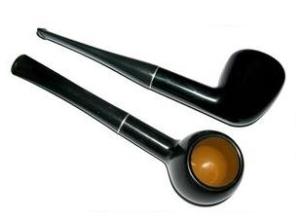
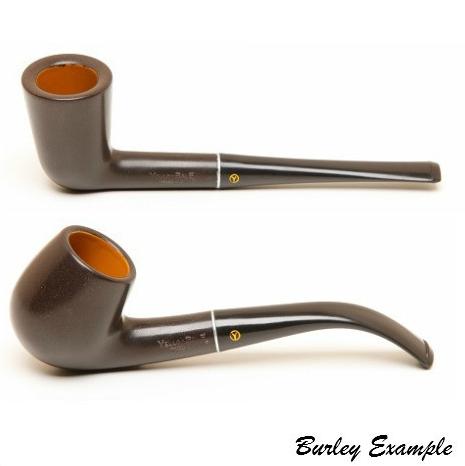
I also found several pictures of the pipe online. The first is one that I include to show the look of the pipe when it was new. The second and third photos show the same model of Burley that I had found. The pipe has a jaunty look to it that catches the eye. The one I have must have been a good smoking pipe as it was heavily used.Burley6

Burley7 I scrubbed the tenon and the stinger with 0000 steel wool to remove the corrosion and grime. It did not take much scrubbing before it was shiny and clean. I cleaned out the inside of the shank and the stem with alcohol, cotton swabs and pipe cleaners. There is a rubber grommet inside the end of the tenon that holds the shovel stinger tightly in place.Burley8 I reamed the bowl with a PipNet reamer using the largest cutting head. I was able to get most of the cake out of the bowl. I also sanded the inside of the bowl to finish removing the buildup. It was fascinating to find some of the Yello-Bole bowl coating underneath the cake on the bottom half of the bowl.Burley9

Burley10 The next photo shows the cleaned and sanded bowl and the cleaned rubber grommet in the end of the tenon. The second photo shows the shovel inserted in the grommet.Burley11 I scrubbed the exterior of the Brylon with a cotton pad and alcohol to remove the grime and build up on the rim. With the bowl finished I worked on the stem. I sanded it with 220 grit sandpaper, 400 grit wet dry sandpaper and with a fine grit sanding sponge to minimize the scratches. On both the top and the bottom side I was able to get rid of most of the tooth chatter but there were some deeper tooth dents that would need some more work.Burley12 I cleaned the surface of the stem with alcohol and then used clear super glue to fill the deeper dents on both surfaces.Burley13 I resanded the stem with 220 grit sandpaper and with 400 grit wet dry sandpaper to smooth out the repairs and blend them into the surface of the stem. I sanded it with a medium and a fine grit sanding sponge.Burley14 The nylon stems are a pain to work on and it takes a lot of sanding to get rid of the scratches. I wet sanded with 1500-2400 grit micromesh and paid a lot of extra attention to the repaired areas. I avoided the stamping on the stem so as not to damage that. I rubbed the stem down with Obsidian Oil and while it was still wet sanded the stem with 3200-4000 grit micromesh sanding pads. I gave it another coat of oil and sanded it with 6000-12000 grit pads.Burley15

Burley16

Burley17 I buffed the pipe and stem with Red Tripoli very lightly to raise a shine on the stem and then finished buffing it with Blue Diamond plastic polish. I gave the bowl and stem several coats of carnauba wax and buffed it with a clean flannel buff. I finished by hand buffing it with a microfibre cloth to deepen the shine. The finished pipe is shown in the photos below.Burley18

Burley19

Burley20

Burley21

Burley22

Burley23

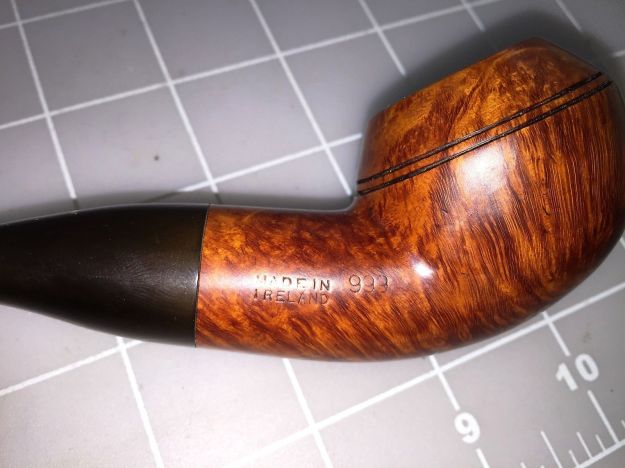
Peterson 999 Deluxe Restoration


By Al Jones

The Peterson 999 is an iconic Rhodesian shape and one of my favorites. I prefer the chubbier, pre-Republic versions of that shape and have a pre-Republic “Sterling” 999 in my collection. This pipe was found on eBay and appeared to in great condition.

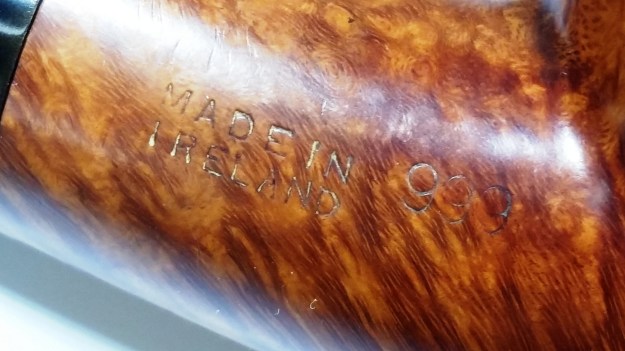
I enjoy reading Mark Irwins “The Peterson Pipe Connoisseur & Collector” blog. The entry linked below, reviews nomenclature on pre-Republic pipes makes it easy to get a date range on a particular piece. Because Peterson used older stamps throughout various eras, only silver hallmarked pipes can be dated to a specific year. This pipe has the stacked “Made In Ireland” which was used between 1922 and 1938.

Mark Irwins Pre-Republic Blog Entry

Prior to 1920 it was rare for a country of origin to be stamped on the pipe, just Peterson’s Dublin on the band. After 1921/22,If it is stamped “MADE IN IRELAND” and the “Made in” is stacked over “Ireland” or “MADE IN EIRE” or several other forms, it was made between 1922 and 1938.

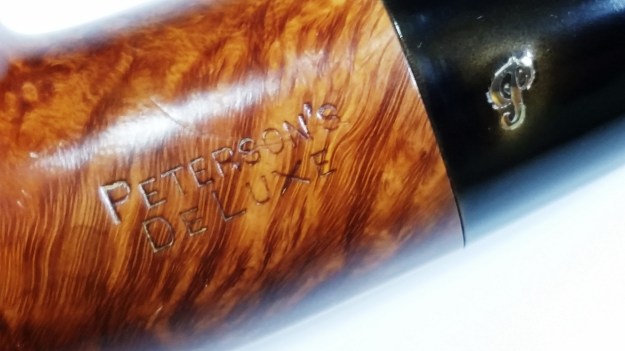
The Deluxe grade was the highest grade Peterson for that era and this one has some nice grain.

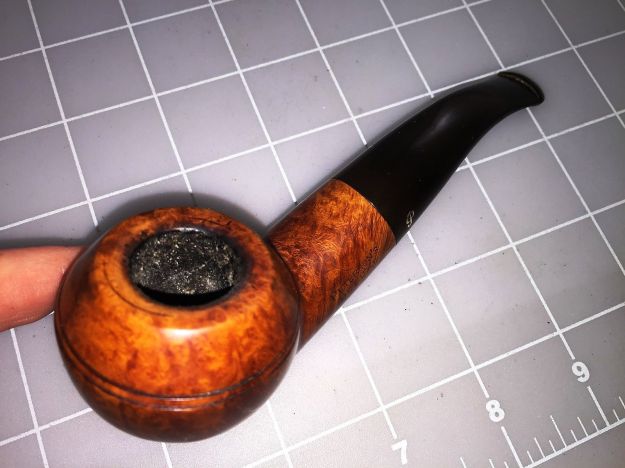
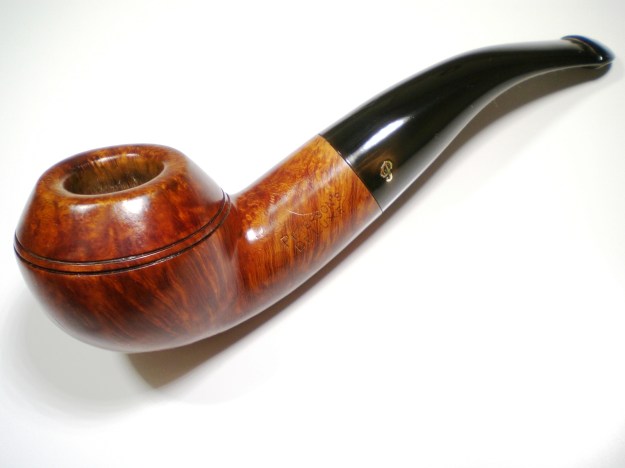
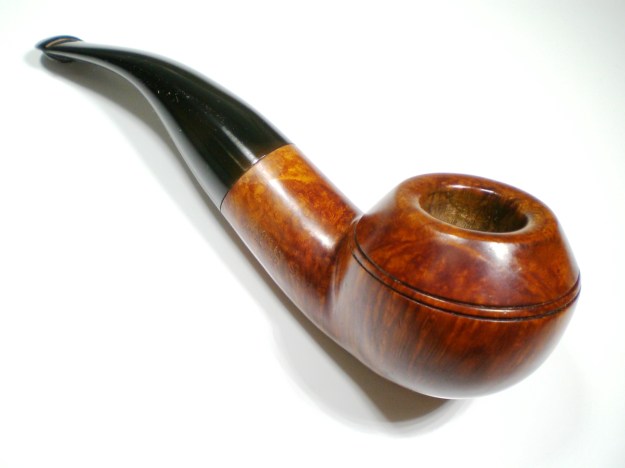
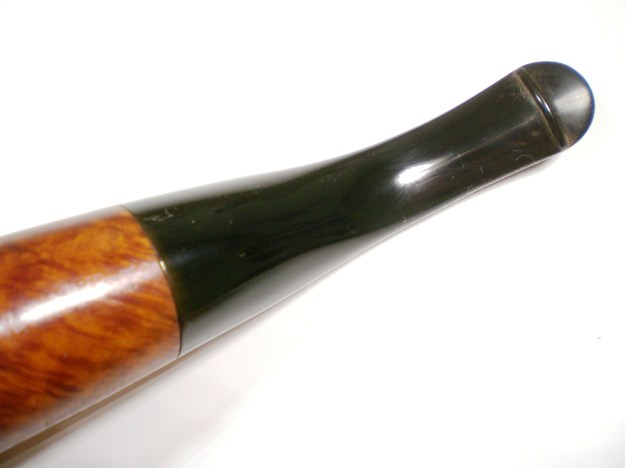
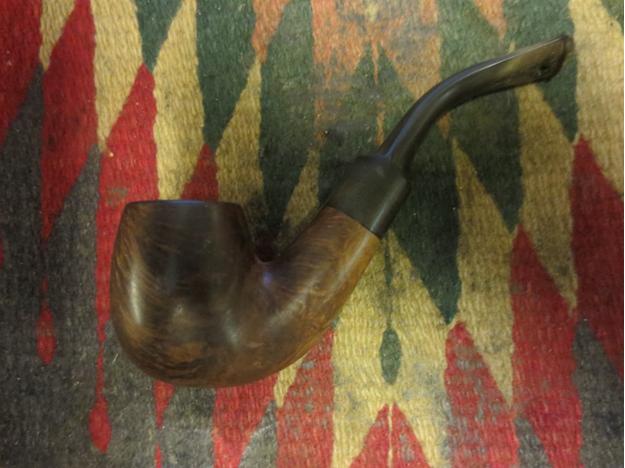
The photos from the seller were very good and I didn’t bother to take any “before” pictures of my own. The stem had some oxidation, but appeared to be free of any teeth marks. The gold “P stem logo looked perfect. The bowl had a few nicks and some circular marks on the bowl top that I hoped could be removed. The nomenclature was in great condition. Below is the pipe as advertised.

Peterson_999_Deluxe_eBay

Peterson_999_Deluxe_3eBay

Peterson_999_Deluxe_4eBay

Peterson_999_Deluxe_6eBay

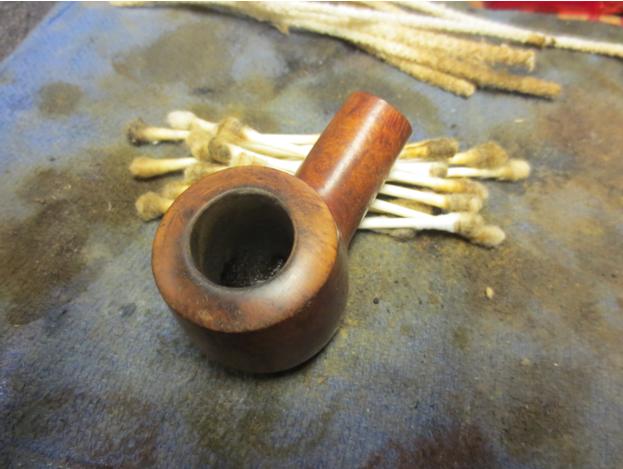
There was a small amount of cake, which was reamed and then the bowl was soaked with alcohol and sea salt. I used some 2000 grit paper to remove the marks on the bowl top, which lightened the stain. I applied some diluted Fieblings Medium Brown to the bowl top, just above the top ring. The stain blended in nicely with the factory finish.
The oxidation on the stem was heavier than it appeared. I started with 800 grit wet paper and then moved down thru 1500 and 2000 grades. 8000 and 12000 grade micromesh was used next. The stem was buffed lightly with White Diamond and then Meguiars Plastic polish. I was careful around the gold “P” logo and didn’t want to damage it. That made it tricky to remove the oxidation in that area and I wasn’t able to get all of it. I may go back later and revisit that section of the stem. The stem is threaded for the “chimney” but it is missing.
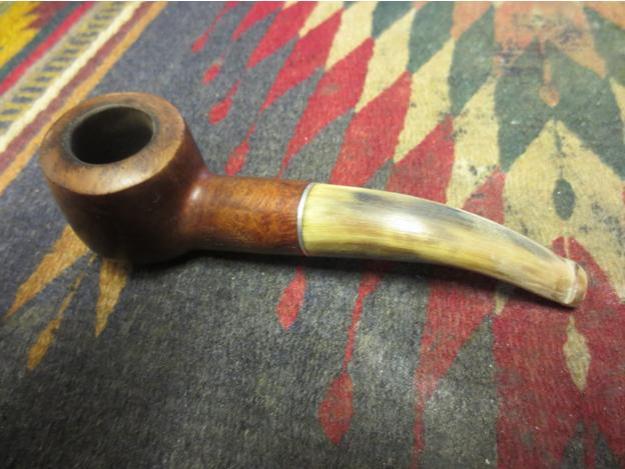
The bowl was buffed with White Diamond (staying away from the nomenclature areas) and then several coats of Carnuba wax.
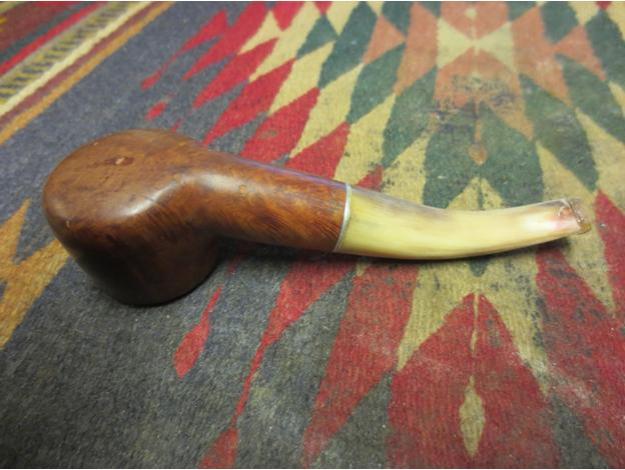
Below is the finished pipe.
Peterson_999_Deluxe_Gallery

Peterson_999_Deluxe_Final (4)

Peterson_999_Deluxe_Final (6)

Peterson_999_Deluxe_Final (5)

Peterson_999_Deluxe_Final (3)

Peterson_999_Deluxe_Final (8)

Peterson_999_Deluxe_Final (9)

Peterson_999_Deluxe_Final (7)

?

?

?

?

Peterson_999_Deluxe_Gallery

A Mysterious Little Bent Billiard Brought to Life


Blog by Steve Laug
This is another pipe I picked up at the antique mall in Idaho Falls. It is a bit of a mystery pipe in that the stamping is faint on the left side of the shank. On the right side it is stamped Made in England. On the right side it is missing some of the first letters but is stamped _ ANTE_ over London. Searching through Who Made That Pipe the best option I found for that combination of letters was a CANTERBURY. The brand was made by Comoy’s. There is a very faint C in a Circle on the stem that also matches the CANTERBURY stamping so I think that may well be the stamping on this mystery pipe. The pipe was in pretty rough shape. The previous owner was in the antique mall when I bought it and he walked me through its deficiencies as he saw them. He had wrapped a piece of Teflon tape around the tenon to hold it in the shank. The stem itself had deep bite marks on the top and a large bit through on the underside near the button. The bowl had some fills on the left side and the underside that were quite large. The finish was shot and was dirty with lots of dents and dings. The rim was smooth but had tars and lava overflow. The bowl was heavily caked and the cake was as hard as rock. The inner edge of the rim was slightly damaged and out of round. The outer edge was clean with a small fill on the front of the bowl near the rim.Cant1

Cant2

Cant3

Cant4 I took the next photos to give a clear picture of the bite through on the underside of the stem and a close up of the thick cake in the bowl.Cant5

Cant6 I tried to ream the bowl with a PipNet reamer and barely made a dent in it. It was very hard. I decided to let it soak in an alcohol bath to soften the cake. I left it in the bath overnight.Cant7

Cant8

Cant9 When I took it out of the bath the finish was clean. The briar looked pretty good. The grain was quite nice. The fills softened and were white putty that would need to be removed and refilled.Cant10

Cant11

Cant12

Cant13 The softened cake came out easily with the PipNet reamer and then I scraped it further with a pen knife. The next photo shows the cleaned out bowl. I wiped down the rim with a soft cloth to remove the tars.Cant14 I lightly topped the bowl with a medium and fine grit sanding block to clean up the rim surface. The cleaned up rim looked very good.Cant15

Cant16 I cleaned out the bowl and shank with alcohol, cotton swabs and pipe cleaners.Cant17 I picked out the putty fills with a dental pick. I filled in the holes with briar dust and then covered that with super glue. I added more briar dust to smooth out the repairs.Cant18

Cant19 I sanded the bowl repairs with 220 grit sandpaper and then with a medium and a fine grit sanding sponge. I forgot to take photos after sanding the bowl.

I set the bowl aside and worked on the stem. I cleaned out the bite marks on the top of the stem and the underside with a dental pick, alcohol and cotton swabs. Once they were clean I put some charcoal powder and black superglue on the bite marks on the top of the stem and leveled the repair with the edge of the dental pick. I set it aside to dry.Cant20 Once the topside repair was cured I put Vaseline on the point of an old nail file that I use to repair bite throughs. I inserted it in the slot on the button. I mixed some black super glue and charcoal powder and filled the hole in the stem with the mixture. I spread it and leveled it with a dental pick. When the repair was finished I set the stem aside to cure once again.Cant21

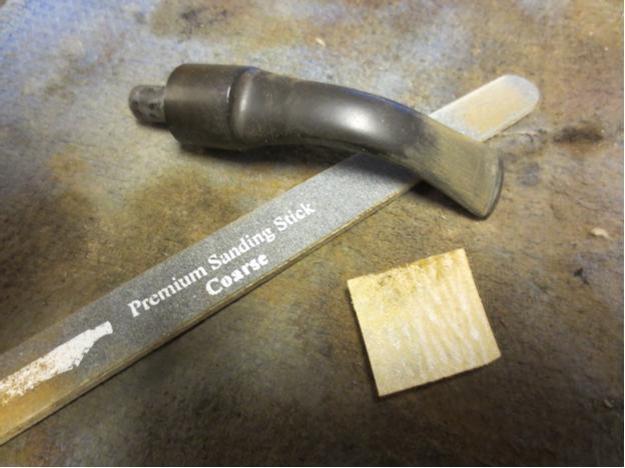
Cant22 The next morning I sanded the repairs on the top and bottom of the stem with 220 grit sandpaper and with a series of sanding sticks to smooth out the surface. The sanding sticks allowed me to get a good angle on the sharp edge of the button. I started with the coarse stick and worked my way up to the fine stick.Cant23

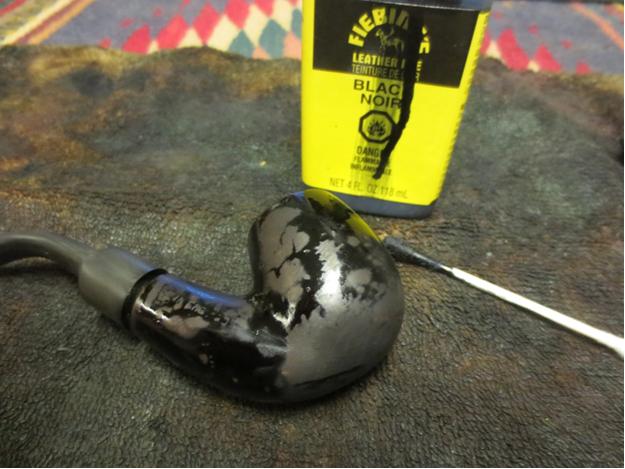
Cant24 I cleaned out the inside of the stem to remove the Vaseline and the dust from sanding using alcohol, pipe cleaners and cotton swabs. I heated the tenon with a lighter and inserted an ice pick in the airway in the tenon to expand the tenon enough to get a good solid fit in the shank.Cant25 With the stem repair complete and the pipe clean inside and out I decided to do some contrast stain work on the bowl. I stained it with a black aniline dye for the first coat. I wanted to blend in the fills a bit and also highlight the grain. I was aiming for a darker colour in the finished product so this was the first step.Cant26 I applied the stain and then flamed it. I wiped it off with alcohol on cotton pads to lighten the surface coat while leaving the black in the grain and the fills.Cant27

Cant28 I sanded the bowl with micromesh sanding pads to remove more of the finish and then gave it a top coat of a medium brown stain. I applied it and flamed it before hand buffing it.Cant29

Cant30 The colour of the pipe was still too dark to really make the grain pop so I sanded it with a medium and a fine grit sanding sponge to further remove some of the dark colour and to also minimize the scratches in the briar. I wiped it down with acetone to lighten it further.Cant31

Cant32

Cant33

Cant34 With the finish on the bowl complete I sanded the stem with micromesh sanding pads. I wet sanded with 1500-2400 grit pads and dry sanded with 3200-12000 grit pads. Between each set of three pads I rubbed the stem down with Obsidian oil. On the last rub down I let it sit until it was absorbed.Cant35

Cant36

Cant37 I buffed the pipe with Red Tripoli and White Diamond to further lighten the top coat of stain and to polish the stem. I then buffed the pipe with Blue Diamond and gave it multiple coats of carnauba wax. The finished pipe is shown below.Cant38

Cant39

Cant40

Cant41

Cant42

Cant43

Cant44