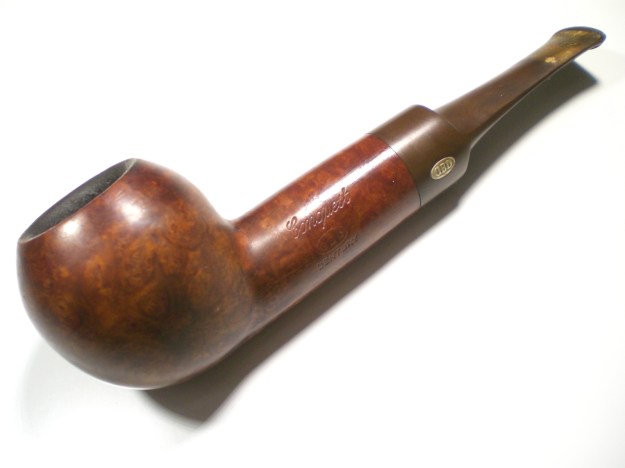
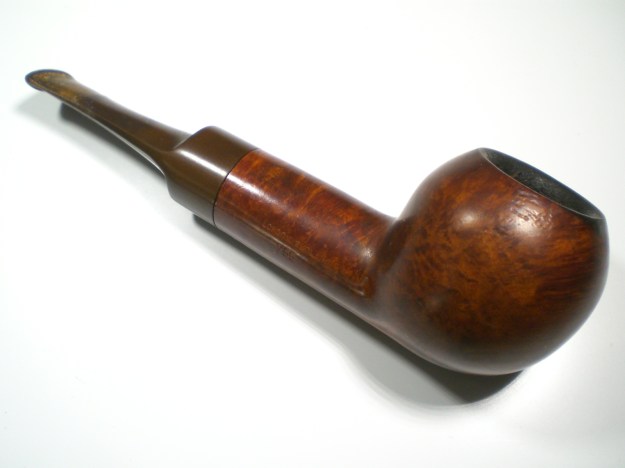
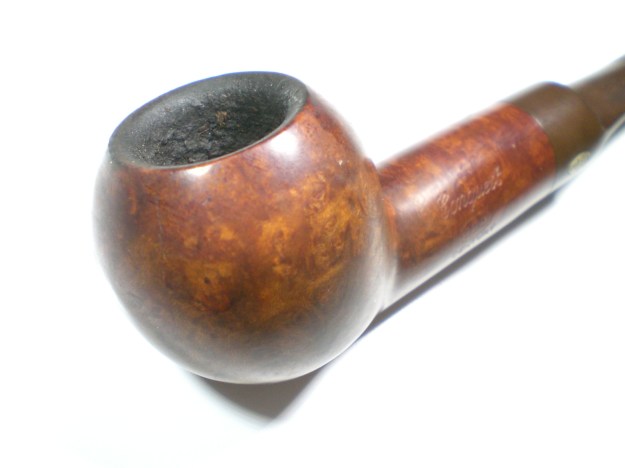
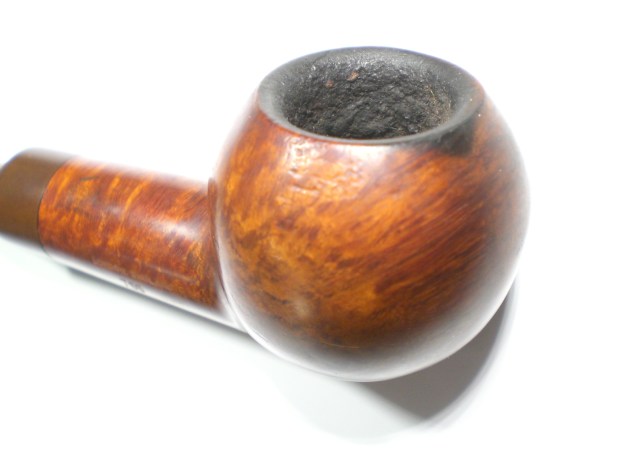
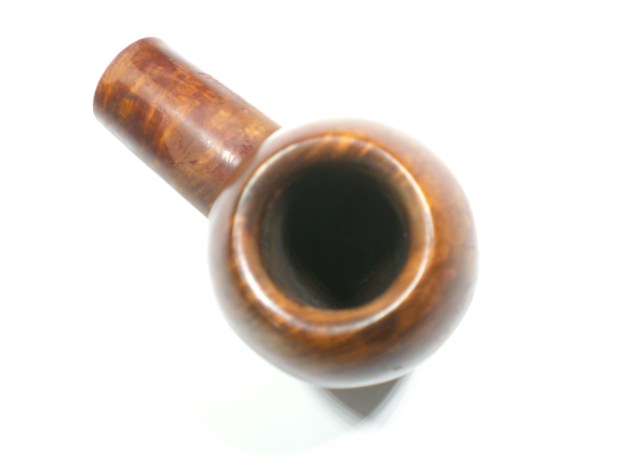
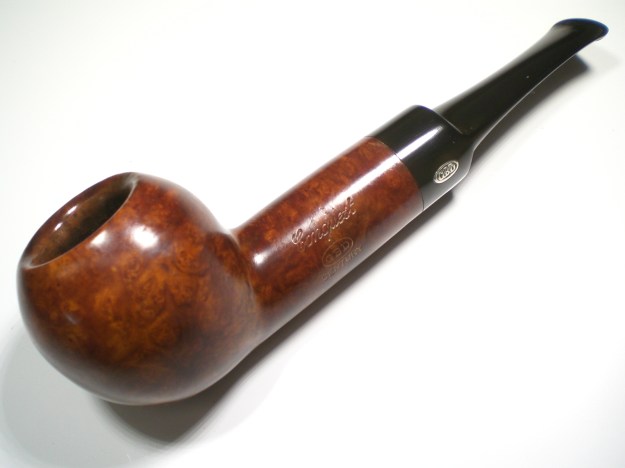
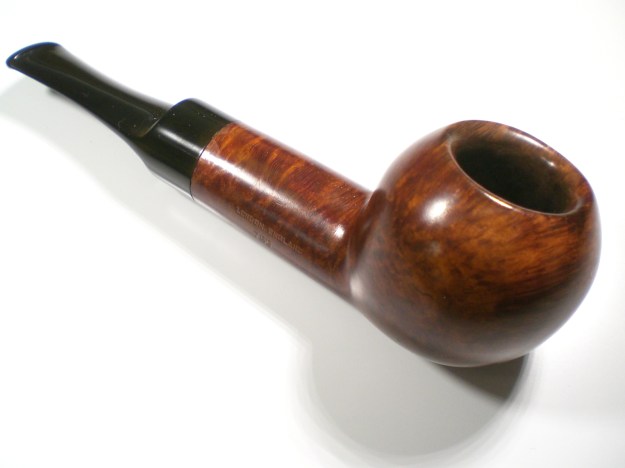
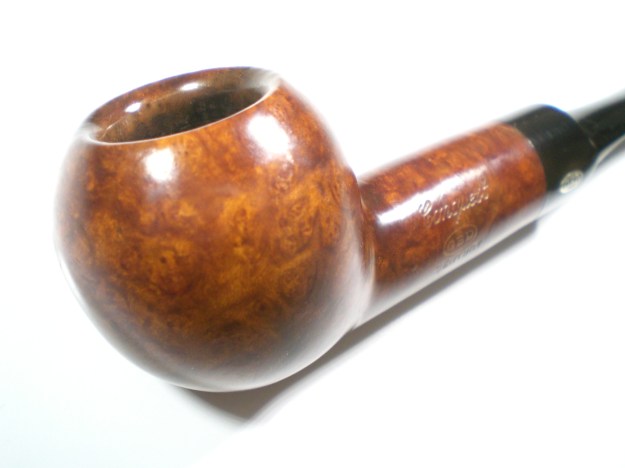
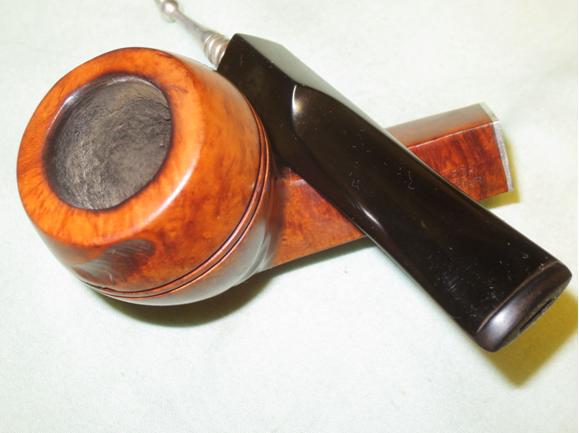
The Rebirth of a GBD Pedigree Regent Billiard


Charles and I are guest blogging on each others sites this weekend. If you haven’t yet, wander over the DadsPipes to read the full post!

Charles Lemon's avatar

Blog by Steve Laug

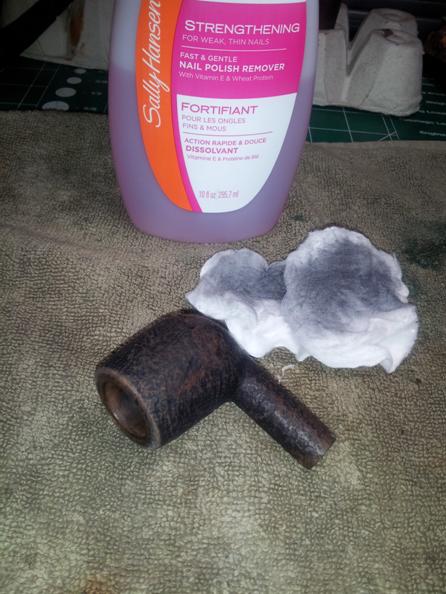
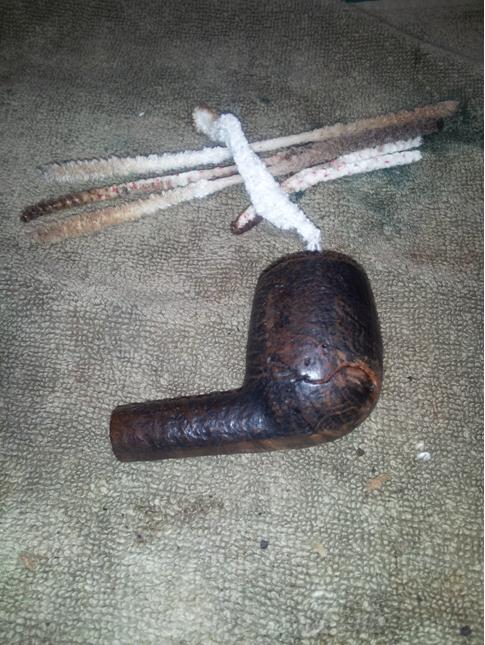
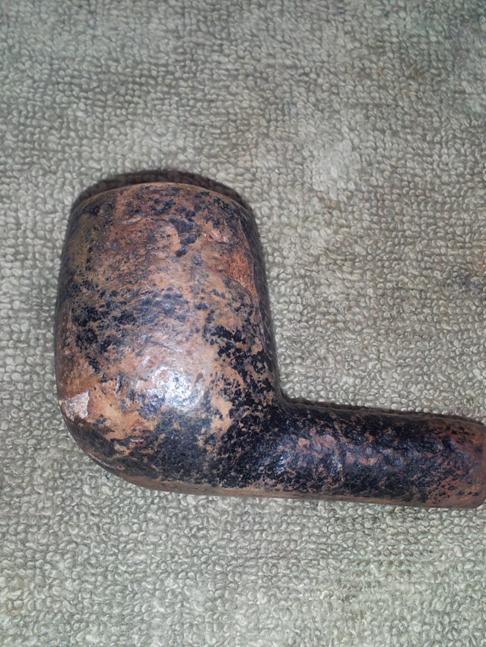
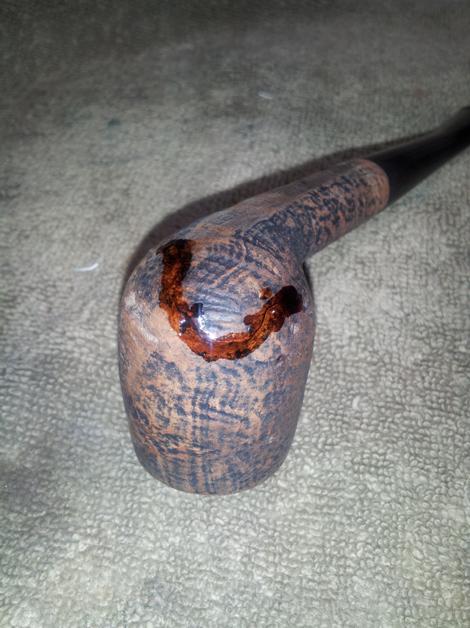
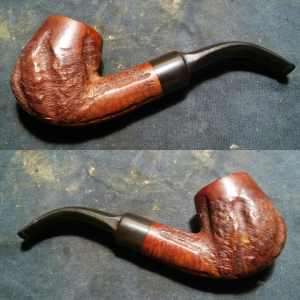
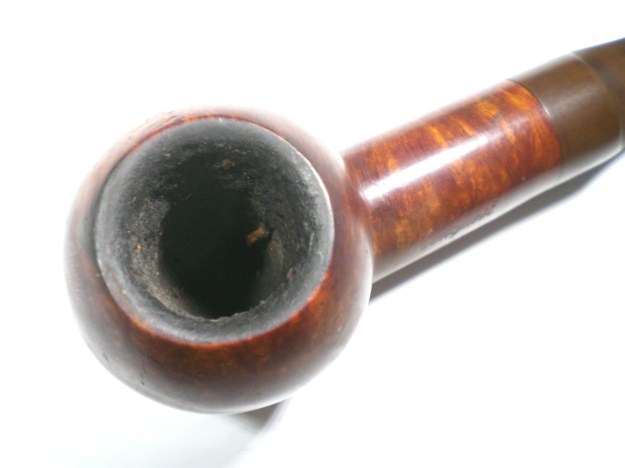
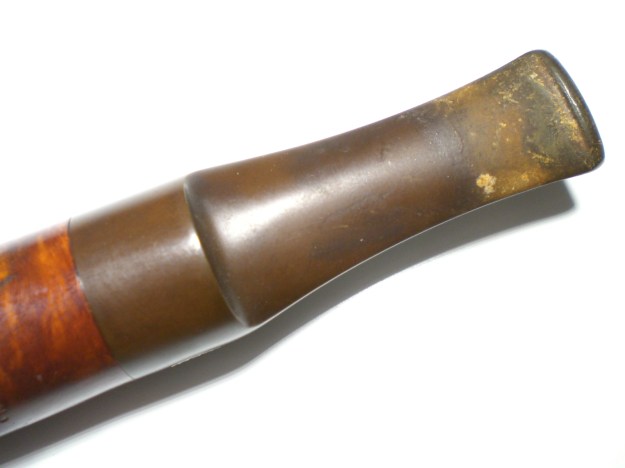
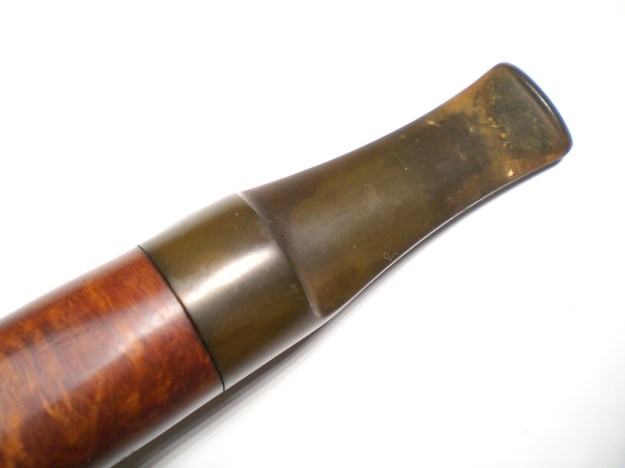
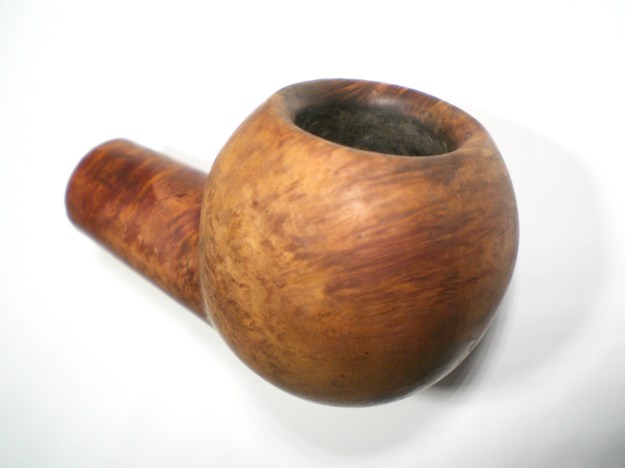
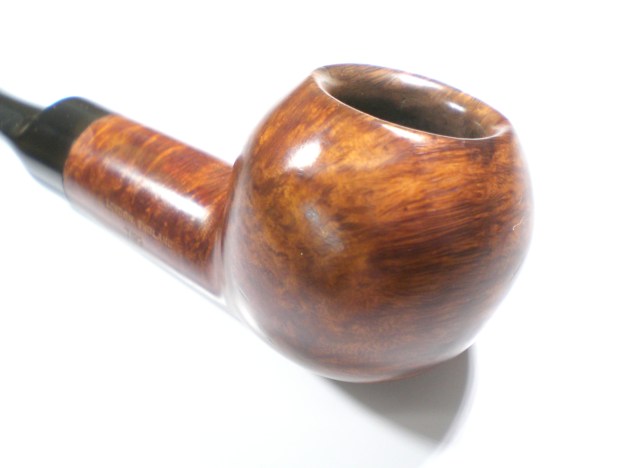
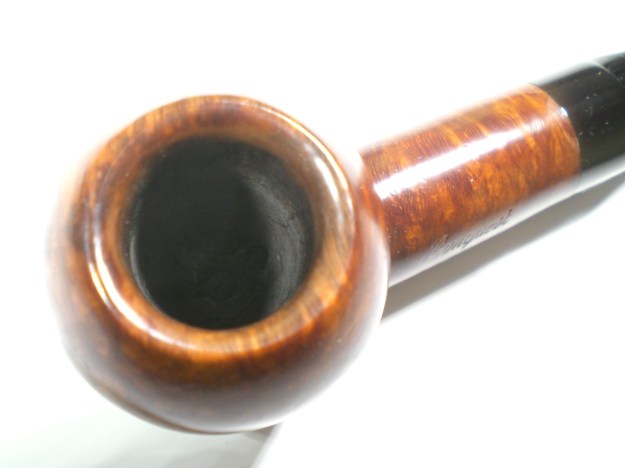
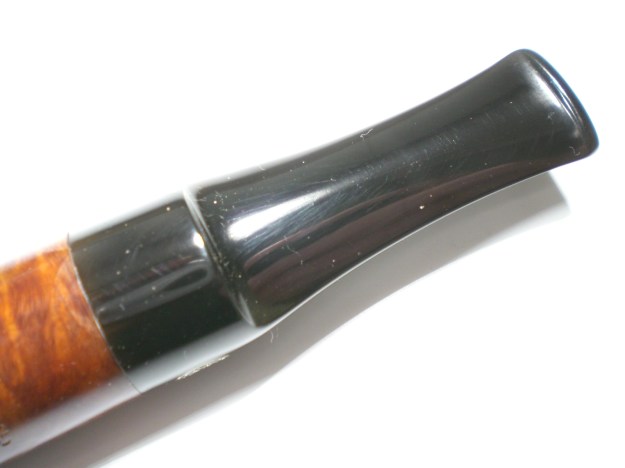
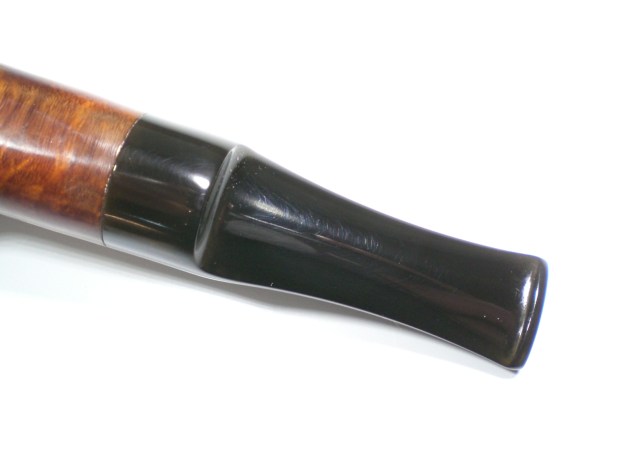
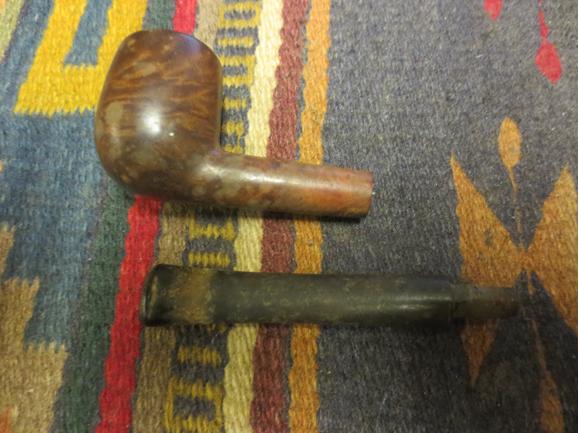
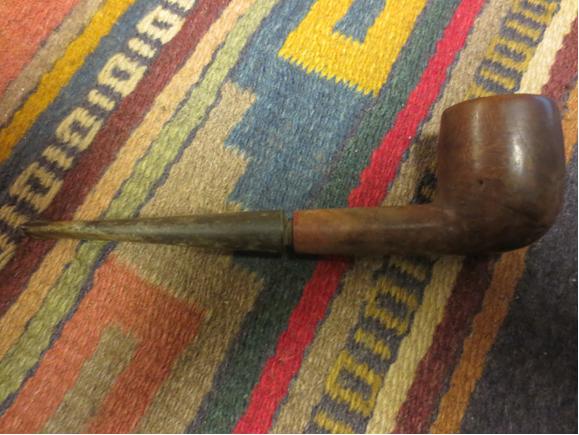
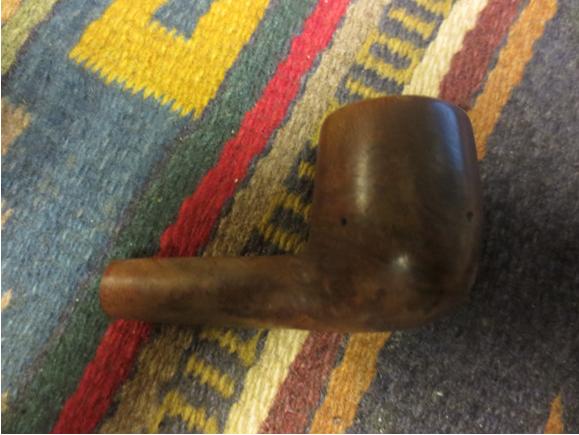
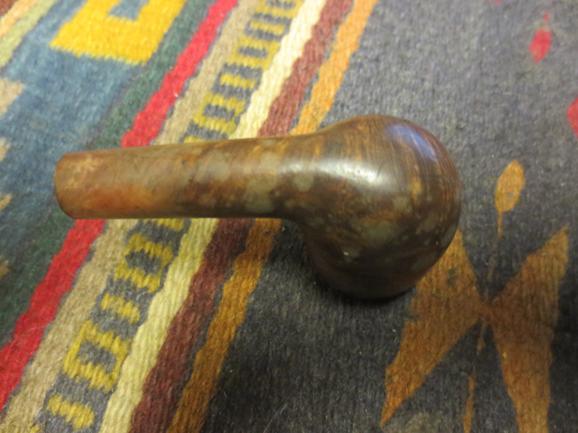
Charles Lemon of DadsPipes and I thought it would be cool to do a guest blog post on each other’s blog. Charles sent me his post yesterday and I posted it last evening. Now it was my turn to send one to him. I chose this little nondescript pipe bowl to restem and restore before I knew that I was working on something more than it appeared. As a bowl it epitomizes what I love doing with these tired, worn pipes at rebornpipes. Thank you Charles, for the opportunity of putting a post on your blog. Enjoy the rebirth. — Steve

Yet another mystery pipe from the Ebay purchase of bowls. I had no idea what the stamping was when I first received it and figured it must be one that had the finish so worn that I would never be able to tell. Today under…

View original post 869 more words

Quick Clean up , Pre-Transition Sasieni two dot 73


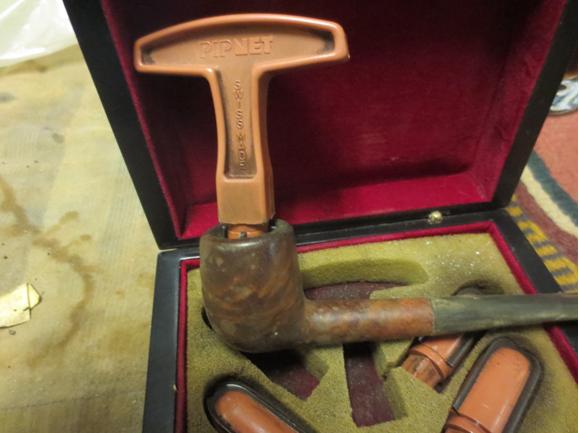
Nicely done. I love the finished look of this one. I have had both reamers and have been using a PipNet for many years now. It wins hands down in terms of longevity and cutting.

pipesrevival's avatarPipesRevival

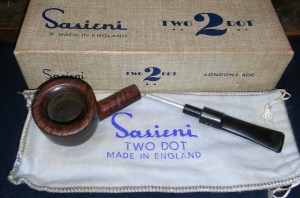
Pre-Transition Sasieni Two Dot 73
(1961-1979)

20160107_135420~2

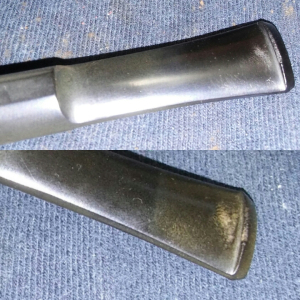
The baby blue dots,
I’ve always been a fan of Sasieni pipes and there history. In fact the kick off to my estate refurbishing and collecting stated with a lot of pipes from a friends fathers estate. Included was nine or ten boxed smoked and Un-Smoked Sasieni two dot pipes. Many had the dreaded pink filler but a few I could never figure out why they were two dot and not four . I have two left in my collection , one Un-smoked Two Dot Oom Paul 80sxs with one small spot of filler and the one I’m writing about a thick walled, stubby Two dot 73. For life of me I cannot find one flaw, its been in the rack about three years now and with winter here I thought I could use a nose warmer. 

The unappreciated subject
PhotoGrid_1452201260114PhotoGrid_1452201373889PhotoGrid_1452201308354

She was redone five…

View original post 489 more words

A DadsPipe is Reborn! – Reinventing a Fletcher Billiard


Blog by Charles Lemon

I was just putting the finishing touches on this pipe refurb when Steve Laug invited me to write a guest blog for rebornpipes. Timing couldn’t have been better, as the restoration of this old Fletcher billiard epitomizes for me the spirit of rebornpipes – taking an old, worn pipe and creating from it a beautiful and functional smoking companion.

Thanks for having me drop in on rebornpipes, Steve. I hope you and your readers enjoy this restoration journey.
– Charles
—–
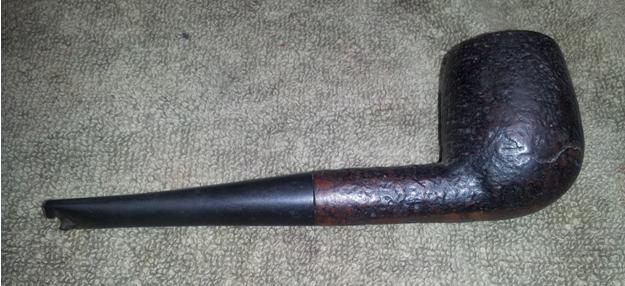
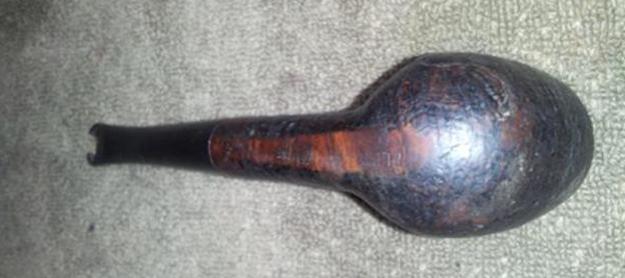
I’ve had this old billiard pipe in my refurb box for a while now, so I decided that it was time to do something with it. It’s stamped “Fletcher, Genuine Briar, 4” on the flat bottom. A search online turned up absolutely nothing about the brand, though I can surmise that it was made somewhere in the USA circa 1950 to 1970 or so.

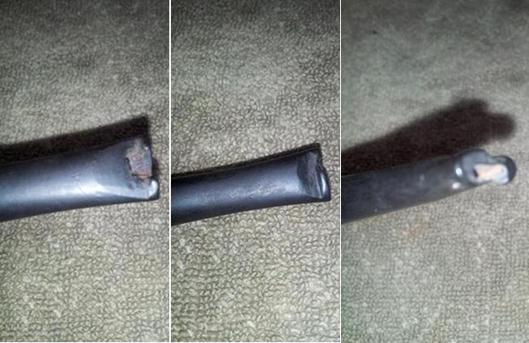
The bowl had a worn sandblast finish, and though covered in dirt, appeared to be in decent shape. There was a bit of cake buildup and tar on the rim that would clean up easily enough, but the stem was another matter. At some point in its history, the button had broken or been bitten off, and the remaining stem had been crudely “MacGuyvered” to allow the piper to continue smoking it. A file had been used to roughly gouge a line across the top and bottom of the broken bit to give at least some purchase in the teeth, and it had been left like that until the piper again bit through the stem, this time removing a chunk from the bottom of the “new bit”. This guy was a real pitbull! Charles1
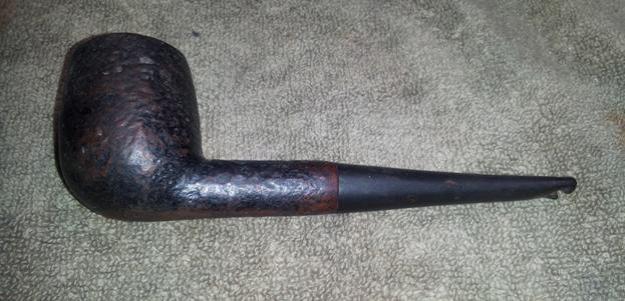
Charles2

Charles3

Charles4

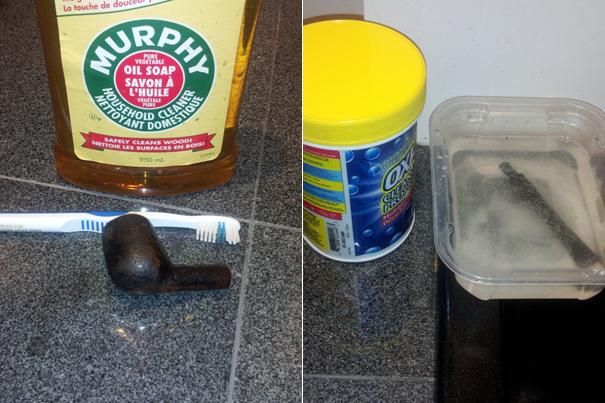
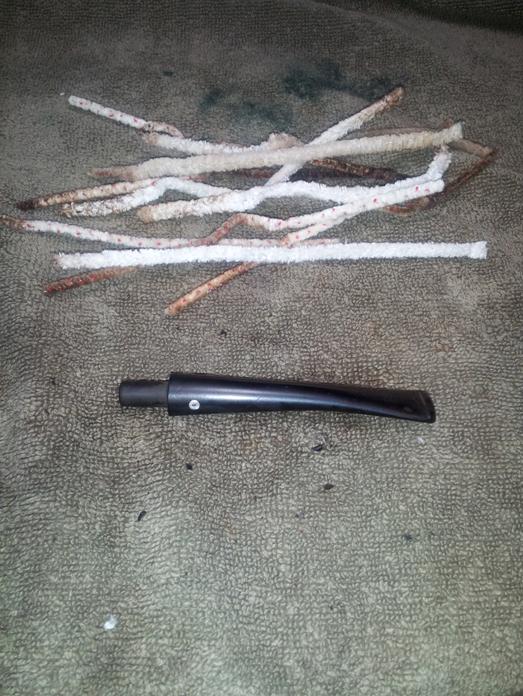
Charles5 I decided that, with about 3/4 of an inch missing, the mangled stem was too far gone to attempt to save it so I dug about in my stem box and came up with a replacement that fit the bill. This stem is brother to the one I used on my first parts pipe. They were both salvaged from estate pipes with ruined bowls, and both have the large silver dot on the side.Charles6 The tenon on the replacement stem needed only a bit of tweaking with sandpaper to fit snugly in the mortise. As you can see in this pic, the shank diameter is a bit larger than that of the stem, so there will be some reshaping to do to get the flow right from bowl to button, but I like the shape of things to come.Charles5a With the stem problem sorted, I got to work cleaning both stem and stummel before I got too far ahead of myself. I used my Castleford reamer to take the cake in the bowl back to bare wood. Luckily there was no damage hiding underneath, so I moved to the exterior, scrubbing the sandblast finish with Murphy’s Oil Soap and an old toothbrush. This lifted an inordinate amount of gunk from the stummel, leaving the briar quite patchy in places. I decided that a complete stripping of the old finish was in order, so I dropped the stummel into an alcohol bath, the stem into a Oxyclean bath, and left them to soak overnight.Charles7
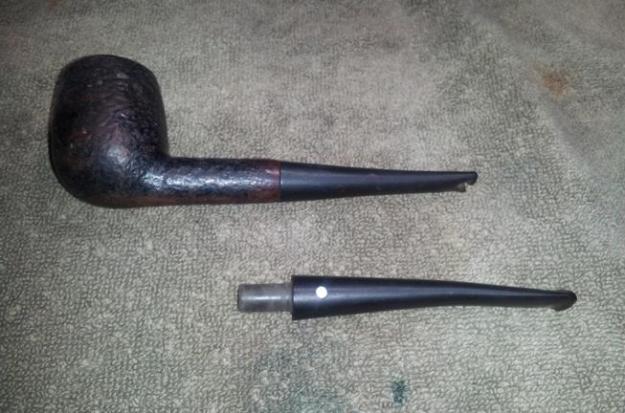
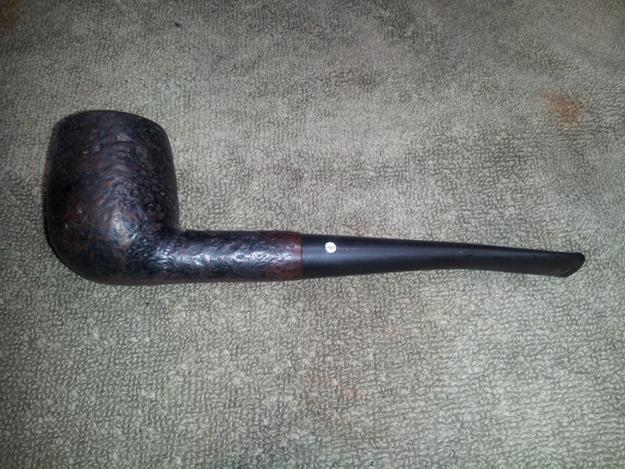
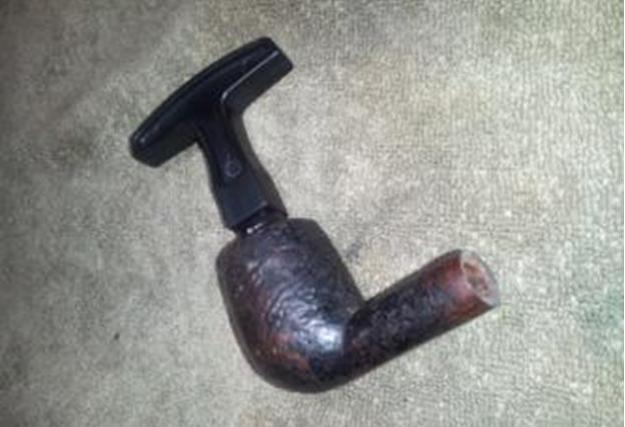
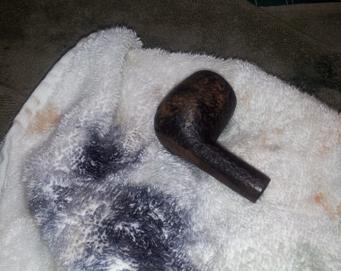
Charles8 The following day I retrieved the stummel from its soak and rubbed it in an old towel. To my surprise, most of the black topcoat came off on the towel! My guess is that our intrepid DIY piper “fixed” his pipe’s worn finish with a liberal application of black shoe polish….. I wiped the stummel down with acetone to remove as much of the loose colour as I could and then finished the basic cleanup of the stummel by scrubbing the airway and shank with alcohol & pipe cleaners.Charles9
Charles10

Charles11

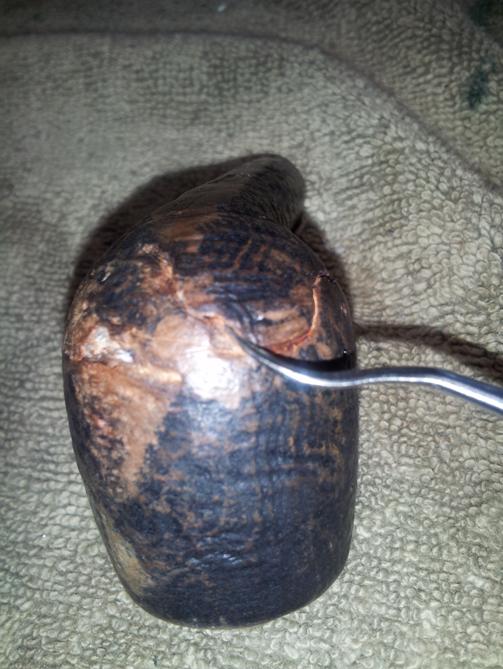
Charles12 The stem cleaned up easily enough after its Oxyclean soak with a run of 600 – 2000 grit wet sandpapers and a few pipe cleaners dipped in alcohol.Charles13 Removing the built-up wax and dirt from the stummel had revealed a flaw in the briar. A “fault line” of sorts wound its way across the lower front face of the bowl. There was no indication that the flaw extended through to the tobacco chamber, but I flowed some CA glue into the line anyway. This may or may not have been necessary, but at least this way I hope that the line won’t expand to a crack the first time I light the pipe.Charles14
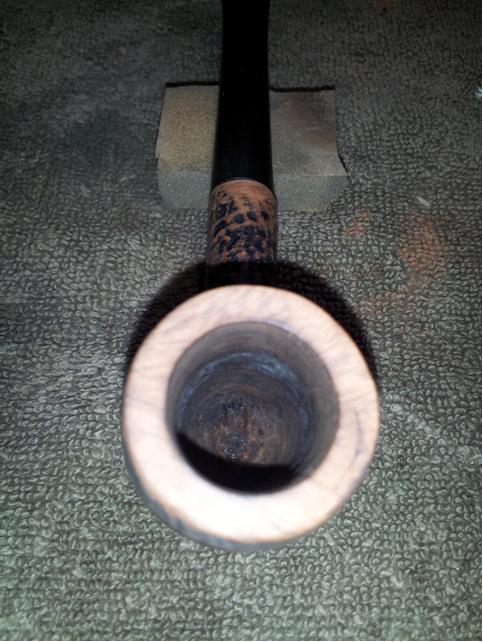
Charles15 I also found a small flaw in the rim, which I filled with CA glue and briar dust. I topped the bowl lightly after the fill cured to sand it down flush with the rim and remove a few small rim dents at the same time.Charles16
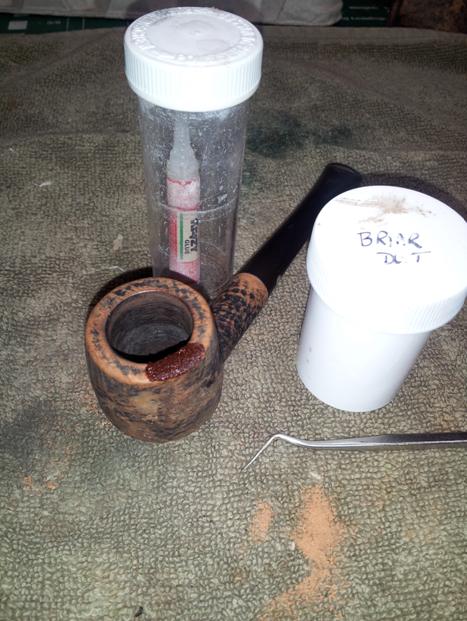
Charles17

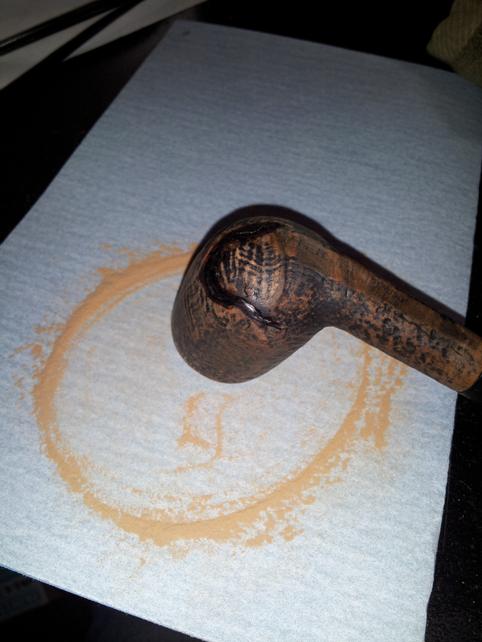
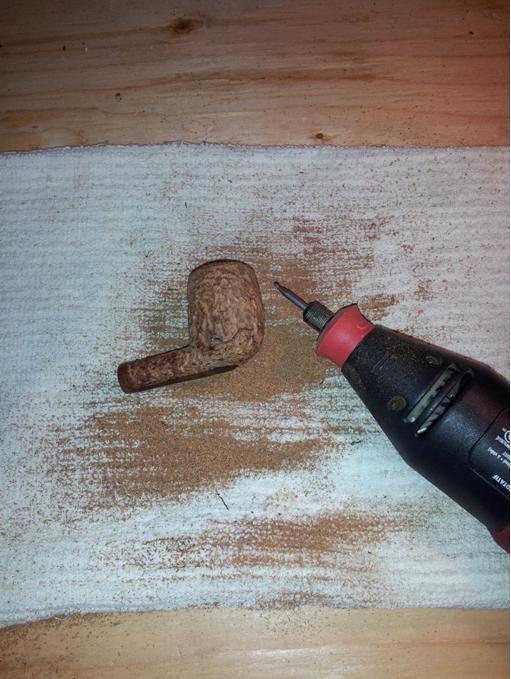
Charles18 As I pondered how to refinish the pipe, I worked on the shank with various grades of sandpaper to reduce the diameter to match that of the stem and generally improve the flow of the shape from shank to stem. This smoothed out the sandblast on the shank, so I decided to rusticate the entire stummel to replace the texture and hopefully disguise the stabilized fault line on the bowl face. For this I used a round carving burr mounted in my rotary tool, working my way around the stummel until the entire surface had been carved, eradicating the sandblast. I then made a second pass with the burr, carving deeper lines and pits into the briar to give a chunkier finish and help blend in a few deeper pits left from the sandblasting process. I finished up the new rusticated finish by going over the entire stummel very lightly with a wood rasp to knock off a few sharp points and rough edges.Charles19

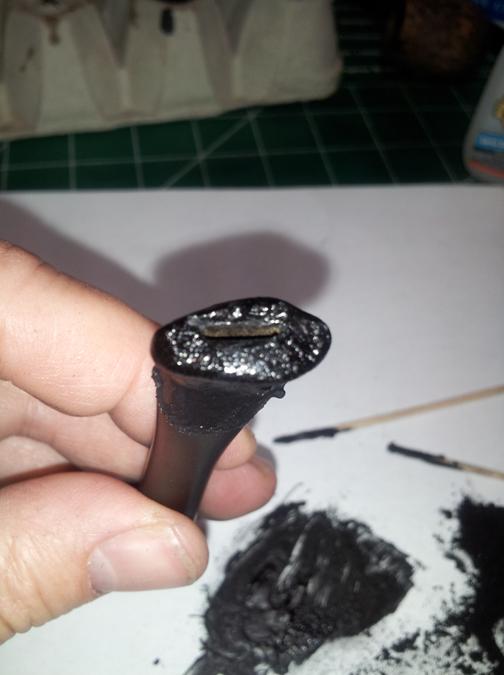
Charles20 I left the stummel at this point and went back to the stem to address a few issues there. The bite area had several deep tooth dents top and bottom and the button was quite worn. I dealt with both issues by mixing up some CA glue and activated charcoal powder and layering this mixture onto the stem, filling the tooth dents and building up enough material to carve a new button.Charles21
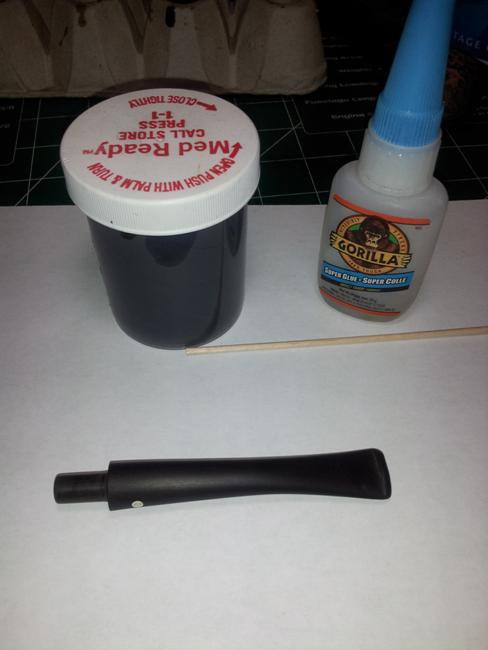
Charles22

Charles23 This repair always looks plain nasty at this point, but quickly improves once the CA has cured and I can get at the rough lumps of material with a file. I start by cutting the sharp leading edge of the button. This establishes the demarcation point between button and stem. After I have a nice sharp line all the way around the stem, I use files and sandpaper to remove excess material and create an even button height that matches the curvature of the stem.Charles24

Charles25

Charles26 Now in the home stretch of this restoration, I cleaned up the dust generated by the stem repair and set up my workbench for staining the pipe. I applied a two-step finish to the briar, starting with a diluted mixture of Fiebing’s Saddle Tan and Brown leather dyes. This matched the original colour of the smooth area on the bottom of the stummel, which will help tie this area in with the new smooth area on the bowl rim. When the first stain coat was dry, I rubbed off the excess colour with an old towel and applied a topcoat of stain made with Dark Brown and a little Black dye mixed together. I let this dry fully before scrubbing the stain off the high areas with 0000 steel wool. This exposed the lighter tan colour underneath, but left the black in the low areas of the rustication.

I finished the staining by wiping the stummel with mineral oil to add depth to the finish and moisturize the briar. Then it was off to the buffer for a run of White Diamond and several coats of Carnauba wax. This old Fletcher pipe is unrecognizable as the pipe I started with. I rather like the chunky rustication and the new stain. The grain on the rim and flat bottom really pops. A side benefit of old briar like this is the light weight. The pipe tips the scales at a mere 32 grams or 1.1 ounce. This rejuvenated old soul will be a comfortable all-day companion to its next piper. Here’s the finished pipe:
Charles27

Charles28

Charles29

Charles30

Charles31

Charles32

Custombilt Bent Billiard (rich era)


This by far is one of my favourites that you have done. Very good work. Thought I would share this on rebornpipes.

pipesrevival's avatarPipesRevival

The scoundrel Pipes

The pipes I received from fellow blogger Clint of Pipe Scoundrel are complete. They have a new home and are ready to be enjoyed once again. This trio of Bilts has been an eye opener, I believe there will be many more Rich era Custombilts in my future.

The last pipe as received

20160104_222830~2

The nomenclature was stamped unevenly but I could still make out the tell tail (S) of Eugene Rich era Bilts.

PhotoGrid_1451965163069PhotoGrid_1451965201323PhotoGrid_145196517494120160104_222954~2

The last of the trio a large bent billiard. Much like the last shes in pretty descent shape. The cake is a little thicker, the tennon would need tightening, rim tar&char, there is a little filler present and light chatter.

20160105_080059~220160105_111226~2

I started off with the smallest attachment of my Castleford reamer and moving on to the largest that the chamber would except in this case it was one up from the first. I finished…

View original post 786 more words

GBD 755 Century “Conquest” Restoration


By Al Jones

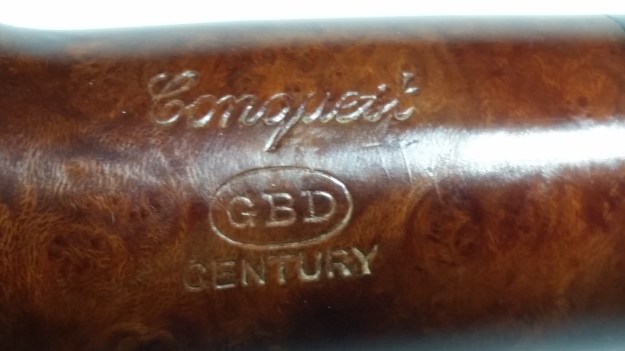
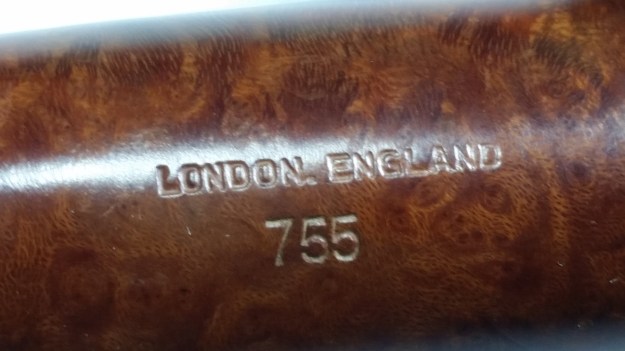
A member of the PipesMagazine.com forums brought my attention to this pipe, which was being sold on Etsy. While this shape is not in my typical wheelhouse, it was one that I had not seen previously. The 755 shape is not listed on the old shape chart but I found another one sold by SmokingPipes. To this point, I’ve not seen this GBD Shape. The “Century” finish was seen in GBD catalogs starting in 1950, which was also the year they celebrated 100 years of pipe making. The catalog describes the finish as “”A golden finish created to celebrate over a century of manufacturing the finest briar pipes.” I would call this shape a Lovat.

The “Conquest” script stamp denoted a plus-sized GBD pipe. Conquest is the smallest of the three plus sizes, followed by Collector and Colossus sizes.

The pipe had some issues with the bowl, including what looked like scorch mark on one part of the rim. There were a few dents on another part of the bowl. The stem, while oxidized was in very good overall condition. The nomenclature was in excellent shape.

GBD_755_Century_Conquest_Before (1)

GBD_755_Century_Conquest_Before (5)

GBD_755_Century_Conquest_Before (2)

GBD_755_Century_Conquest_Before (6)

GBD_755_Century_Conquest_Before (3)

GBD_755_Century_Conquest_Before (4)

GBD_755_Century_Conquest_Before (7)

The build-up on the rim came off nicley using a piece of 6000 grit micromesh and then a light buff with Tripoli on the wheel. The scorch mark was also greatly minimized. Not completely, but not enough remained to cause the bowl to need stripped and restained. The dents on the bowl were removed using steam on a wet cloth using an iron set on “High”.

GBD_755_Century_Work-Bowl (1)

GBD_755_Century_Work-Bowl (2)

The bowl was then reamed and soak with alcohol and sea salt. Following the soak, the bowl was buffed with White Diamond and several coats of carnuba wax. The interior of the bowl was in excellent shape and it is drilled perfectly.

While doing work to the bowl, the stem was soaked in a mild Oxy-Clean solution. I put a dab of grease on the GBD stem logo. Mounting the stem back to the bowl, I removed the oxidation with some 800 grit wet paper. This was followed by 1500 and 2000 grade paper, then 8,000 and 12,000 grade micromesh sheets. The stem was then buffed with White Diamond and Meguiars Plastic Polish.

Here is the finished pipe. I initially bought this one to clean and resell, but there’s something about the shape that now, I’m not sure that it will be sold.

GBD_755_Century_Conquest_Finish (1)

GBD_755_Century_Conquest_Finish (5)

GBD_755_Century_Conquest_Finish (2)

GBD_755_Century_Conquest_Finish (6)

GBD_755_Century_Conquest_Finish (4)

GBD_755_Century_Conquest_Finish (7)

GBD_755_Century_Conquest_Finish (3)

GBD_755_Century_Conquest_Finish (8)

GBD_755_Century_Conquest_Finish (11)

GBD_755_Century_Conquest_Finish (12)
GBD_755_Century_Conquest_Finish (1)

Custombilt Clean up (Rich era)


Great job again. got to love those old CB pipes. They are great smoking machines. Well done

pipesrevival's avatarPipesRevival

The scoundrel Pipes

Two down one to go it seems fitting to keep plugging away at the pipes I received from fellow blogger Pipe Scoundrel.

20160103_105200~2

Custombilt Eugene Rich Years.

1946-1952

My original impressions of Custombilt pipes was anything post Mincer was not worth my time or efforts but I’ve been wrong before. The change of hands did not necessarily mean a change in quality, yes the dash was eliminated and the rustication was not quiet as deep but big , thick and chunky they still are. I now have four in my ever-growing collection drilled perfect and not one ounce filler to be found. Eugene J Rich INC definitely did the Custombilt name justice.

Pipe As Received

PhotoGrid_1451839361020PhotoGrid_1451839409791PhotoGrid_1451839430908

The next was in beautiful used condition and unlike the first was lacking any paint which would make for an easier start. A Little rim tar&char , thin cake and light stem…

View original post 692 more words

Happy New Year and Happy New Life for a Brigham 613


This is an educational one for me – never tried re-pegging a Brigham. Charles does a great job and shows how it is done. Thanks Charles

Charles Lemon's avatar

It’s 2016! May it be a great year for all of you and yours. I thought I’d start the year off right with a restoration that gives many new years to a classic Canadian-made pipe.

This restoration was easily one of the most ambitious and challenging pipe refurbishments I have undertaken to date. A fellow member of the Brothers of Briar pipe forum contacted me before the Holidays asking for help with a Brigham pipe bowl he had found in a local antique shop. He had just the stummel, no stem, but the bowl was stamped “Brigham” over “Made in Canada” on the left shank and “613” on the bottom shank. He had stumbled across a rather rare find – a 6-Dot Brigham Straight Grain carved in Toronto before Brigham moved production to Italy. The “Made in Canada” stamp places the pipe somewhere in the earlier post-Patent Era (from 1955…

View original post 1,034 more words

Breathing New Life into a mystery pipe and in the process finding out that it is a GBD


Blog by Steve Laug

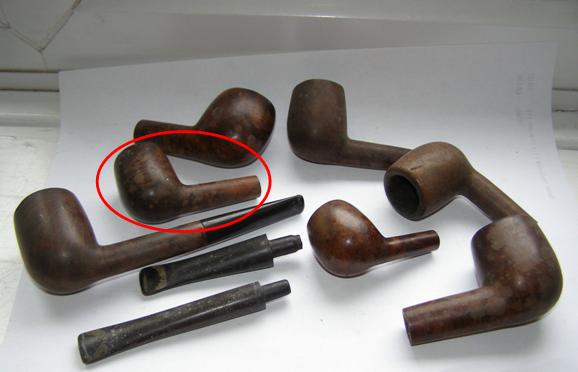
I picked up this bowl in a purchase of bowls on EBay recently. All of them had a broken tenon in the shank and this one was no different. All of the bowls had stamping that was pretty unreadable or not present at all. This one had very faint stamping. When I first looked at it I put it aside and was in no rush to restem another bowl. Yesterday I took it out of the box and had a look at it through a lens with a bright light. I was pretty surprised to see that there was a faint GBD in an oval and underneath that it was stamped PREMIER and under that London Made. The shape number on the other side of the shank and any other stamping was gone. In the next three photos below it is circled in red – in the first it is the second bowl down in the left hand column. In the second it is the second one down and in the third it is at the top of the photo in the middle.GBD1

GBD2

GBD3 It was in pretty rough shape but underneath the grime there was a classic shaped billiard that was just waiting to be reborn. The finish on the bowl was worn, tired and water spotted. The rim was very rough from tapping out and was rounded on the edges. The bowl was caked but it also had about a half bowl of unsmoked tobacco. It also had the tenon broken off in the shank of the pipe. It almost looked as if the owner had dropped it mid smoke and the stem broke off and he just laid it aside. There were some serious deep gouges in the bottom right side of the bowl. It looked as if it was part of the fallout when the pipe was dropped. The photos below show what the pipe looked like when I received it. You can also see why I missed the stamping on the side of the shank.GBD4

GBD5

GBD6 When it arrived I used my usual process and pulled the broken tenons from all of the shanks. I used a screwdriver, pliers and a drywall screw. I thread the screw into the airway on the broken tenon and then use the pliers to wiggle it free. You can see how it works in the photos below. I removed five broken tenons in a matter of moments.GBD7

GBD8 At this point I put all five bowls away and did not look at them for almost a month. The past two days I have been through them and already restemmed the tiny apple. This one came out next from the box. I wet the stem and looked at it through a lens with a bright light. That is when I discovered that the mystery pipe was a GBD. There was no shape number but it was a petite billiard. I had a stem in my stem can that was nearly perfect for the pipe. It did not have a GBD logo but it fit really well. I only needed to shorten the length of the tenon and the left side of the stem to get a perfect fit.GBD9

GBD10 I wiped down the bowl with acetone to see what I was working with under the grime. I took a few photos of the bowl to show what it looked like.GBD11

GBD14

GBD13

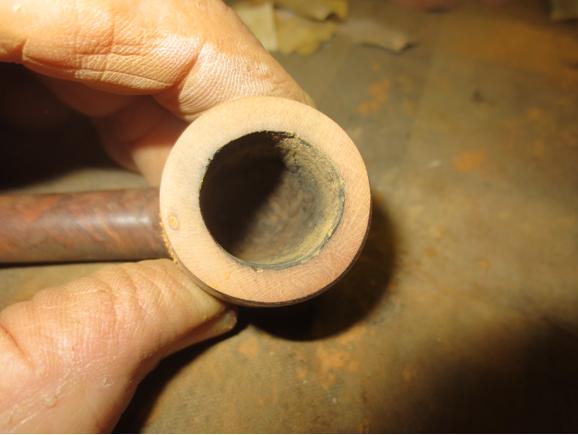
GBD12 I shortened the tenon and the fit was great against the shank. Now all that remained was to sand and clean the stem.GBD15 I used a dental pick to remove the dottle from the bowl. You can see the amount of unburned tobacco that remained in the bowl. I think my theory of being dropped mid smoke was pretty accurate. I reamed the bowl with a PipNet reamer and took the cake back to bare briar. The bowl was between the smallest sized cutting head and the second one so I could only do a part of the job with the reamer. The round bowl made it not feasible to work with the KLEENREEM reamer. I cleaned up what remained with a pen knife to smooth out the walls of the pipe.GBD16

GBD17

GBD18 In the photo above shows the damage to rim top and the inner and outer edge of the rim. I decided to top the bowl to clean up as much as possible of the rim damage.GBD19

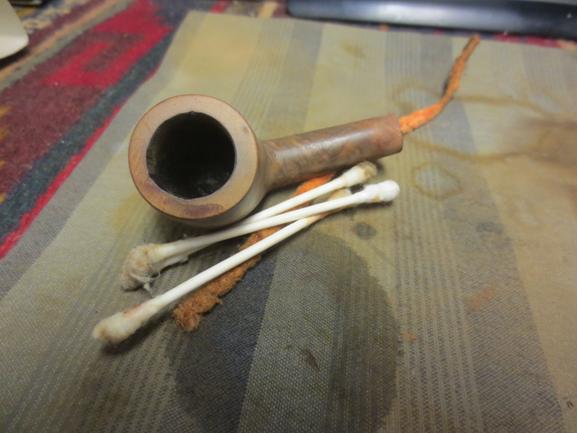
GBD20 I repaired the deep gouges on the right side of the bowl with superglue and briar dust. I would have tried to steam them out but they had sharp edges on all of the marks and steaming would not have raised them. I sanded the dried repairs with 220 grit sandpaper to blend them into the surface of the briar. You will see in later picture what that looked like.GBD21 I started to clean out the shank and stem with pipe cleaners, cotton swabs and alcohol and soon began to realize that it was far dirtier than I initially expected.GBD22

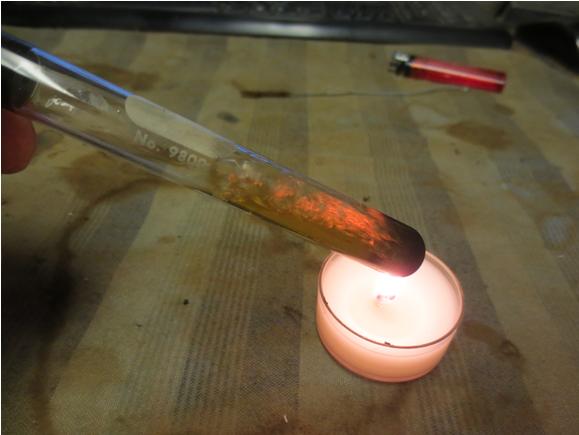
GBD23 I put the stem on the shank and set up the pipe retort. I boiled three test tubes of alcohol through the bowl and stem until it finally came out clear. The second photo is a cool picture of the boiling alcohol. I had to include it!GBD24

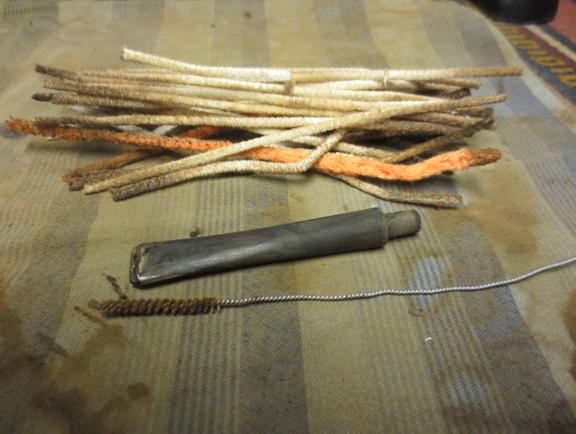
GBD25 I ran pipe cleaners, a shank brush, cotton swabs and alcohol through the stem and shank to remove what was left behind by the retort and was pleased to see how clean it was. One surprise to me was the red stain that came out of the shank. Evidently the pipe had originally been stained with a oxblood stain. You would never have guessed that looking at what I started with. Now that the internals were clean I took a series of photos of the pipe to show where it stood at this point. In these photos you can see the repairs on the right side of the bowl.GBD26

GBD27

GBD28

GBD29 Now it was time to polish the stem and work on the finish of the pipe. I worked on the stem with 220 grit sandpaper and a medium and fine grit sanding sponge to remove the grime and the oxidation on the stem. I don’t know what was on this stem but it was tacky, gummed up the sandpaper and was hard to clean. I wiped it down with alcohol and then repeated the sanding. I was able to remove the oxidation and the tooth chatter at the button. I sanded the stem with micromesh sanding pads – wet sanding with 1500-2400 grit pads and then giving the stem a coat of Obsidian Oil. I dry sanded with 3200-4000 grit pads and gave it another coat of oil. I finished with 6000-12000 grit pads and gave it a final coat of the oil. I let that dry.GBD30

GBD31

GBD32 I sanded the bowl with 1500-4000 grit micromesh to smooth out the sanding marks. I wiped the bowl down with a tack cloth and then gave it a coat of Cherry stain mixed with Danish Oil. I buffed it by hand and gave it a second coat. I set it aside to dry. Once it was dry I buffed it by hand with a soft microfibre cloth.GBD33

GBD34

GBD35

GBD36 I put the stem on the pipe and then buffed the stem and bowl with Blue Diamond on the wheel and then gave the bowl and stem several coats of carnauba wax. I buffed it with a clean flannel buff to raise the shine. I hand buffed it with a microfibre cloth to give a deeper shine to the pipe. The finished pipe is shown in the photos below.The cherry stain brings out the grain and at the same time hides the repairs. While the pipe will never win any contests for beauty or perfection that must have once accompanied the PREMIER it is nonetheless fully functional and should deliver the next pipe man who owns a decent smoke at a decent price. Thanks for looking.GBD37

GBD38

GBD39

GBD40

GBD41

GBD42

GBD43

Cleaning an American Made Selected Bulldog


Blog by Steve Laug

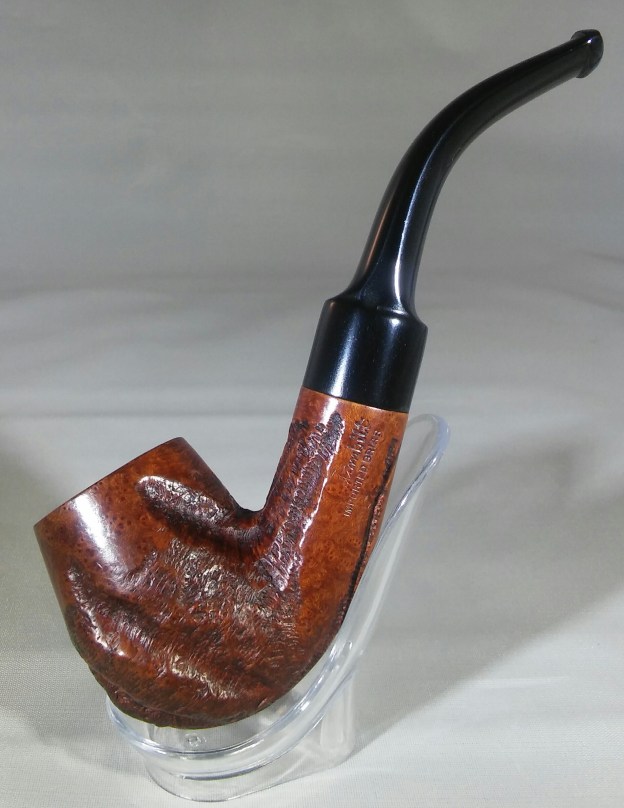
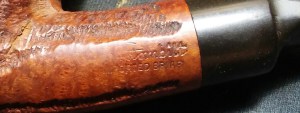
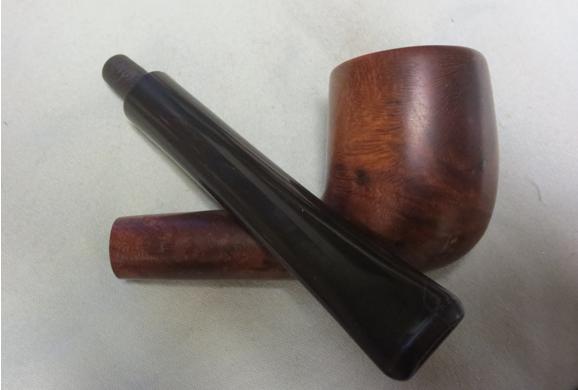
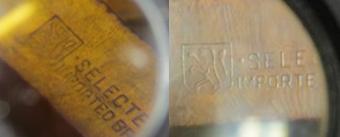
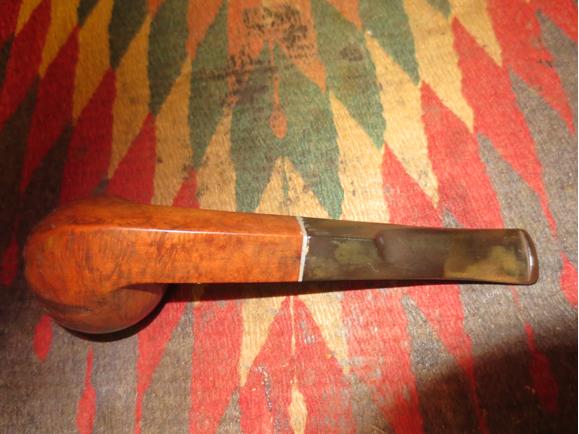
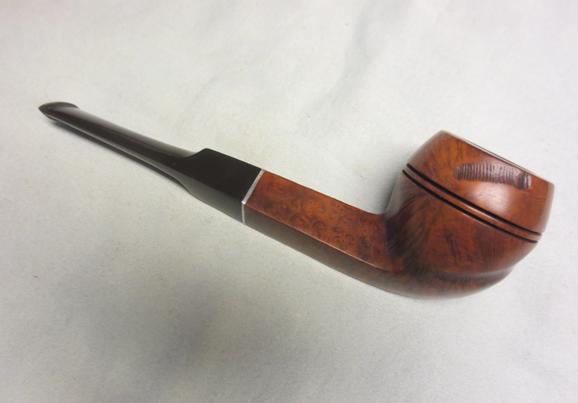
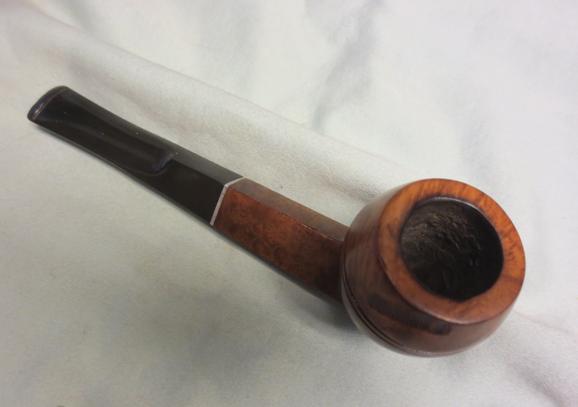
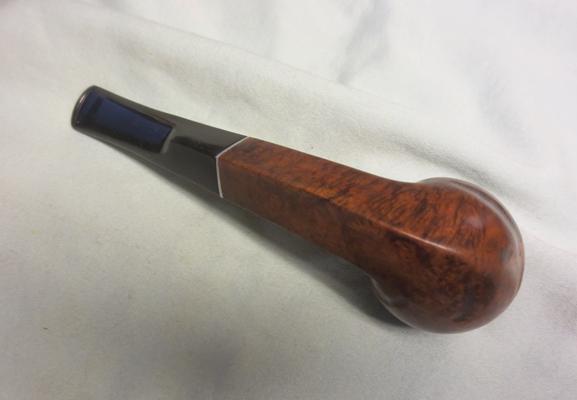
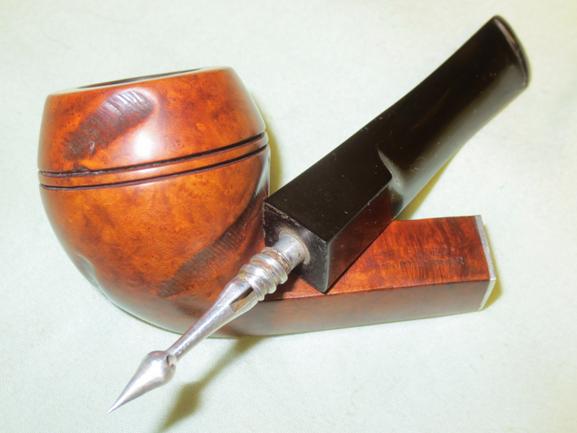
I have had a straight bulldog in the refurbishing box for a long time now. It is an interesting older pipe that has the characteristic worm trail rustication on the sides of the bowl and cap but total only 5 trails. The rest of the bowl is a nice piece of briar. The shank is smooth with no rustication. It appears to be unstained and natural or if stained a light tan colour. The trails on the bowl sides and cap are slightly darker in colour. The bowl was lightly smoked and the bottom half still clean briar. There was no cake in the bowl. There was some burning on the inner edge of the rim on the back left side of the bowl. The stamping on the shank of this bulldog is standing lion inside of a shield and next to that – SELECTED – over Imported Briar. I have searched on the web and in my books for this logo and cannot find it or the company it refers to. Any help would be appreciated. select1 The stem was in good shape with a little oxidation but no teeth marks except for two on top of the button itself. There was an internal stinger apparatus and a metal threaded tenon. The tenon screwed into a metal insert in the shank. The airway from the mortise to the back of the bowl was quite open to give room for the stinger apparatus. I took the following photos of the pipe when I brought it to the work table this morning.Select2

Select3

Select4

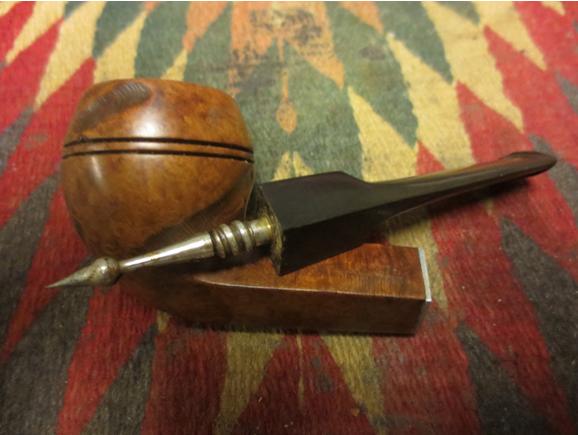
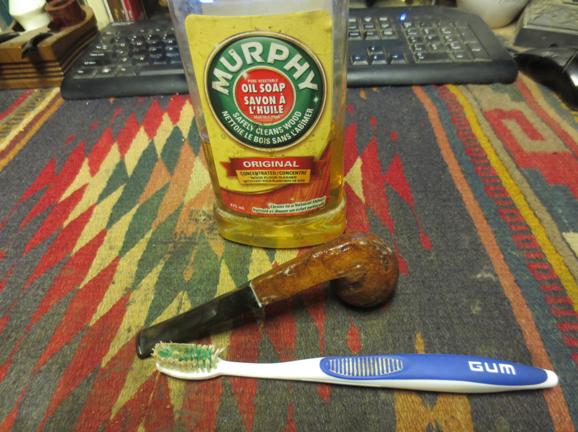
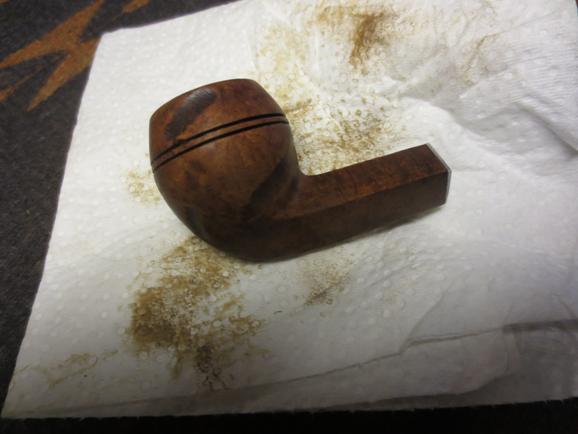
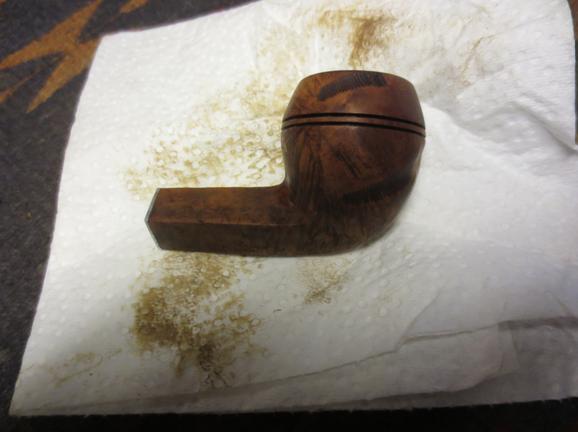
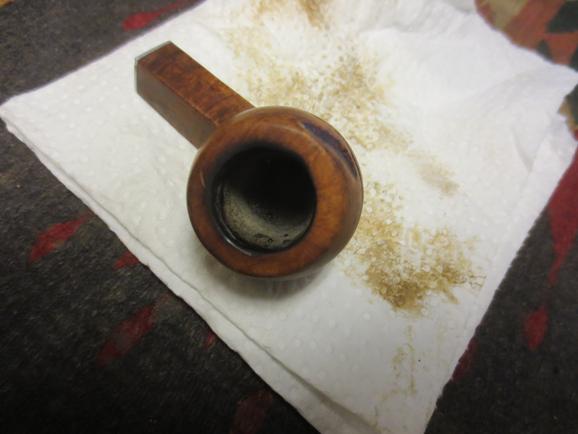
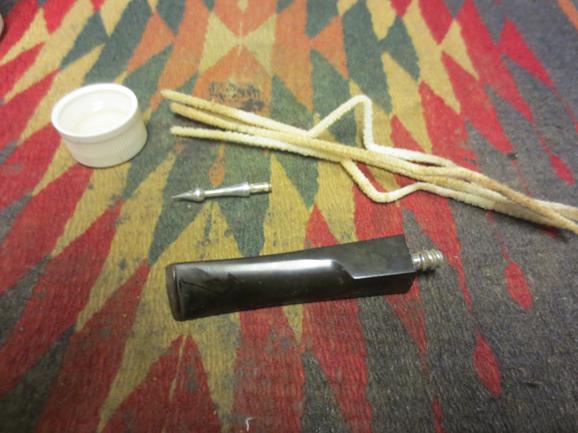
Select5 I took the pipe apart to show the inner apparatus on the stinger. It is unusual in terms of shape. The spear end is very sharp! It is pressure fit into the stem so it should come out for a thorough cleaning of the stem.Select6 The briar was dirty and had what appeared to be the gum from a price tag stuck to it in several places. I scrubbed the bowl and rim with a tooth brush and Murphy’s Oil Soap to clean off the grime.Select7 I wiped it down with a paper towel. A lot of grit and grime came off. I rinsed it with warm running water and dried it off with a towel. The photos below show the grime on the paper towel and the clean bowl.Select8

Select9

Select10

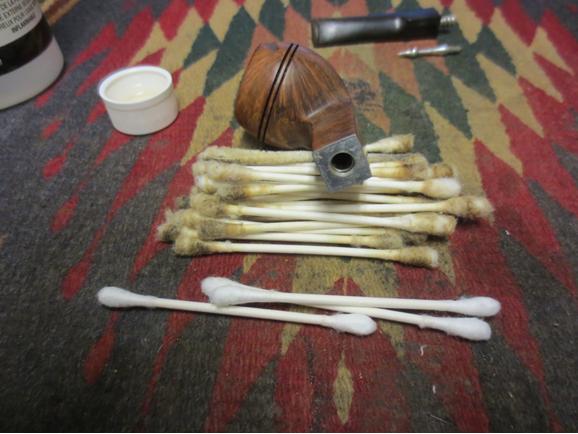
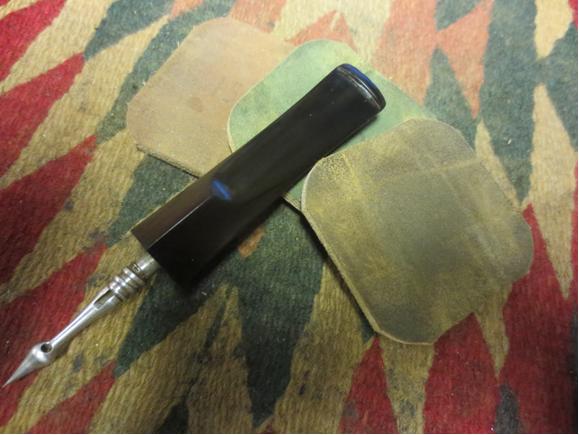
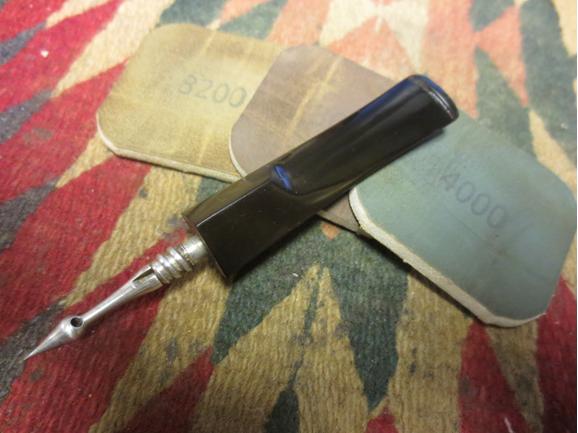
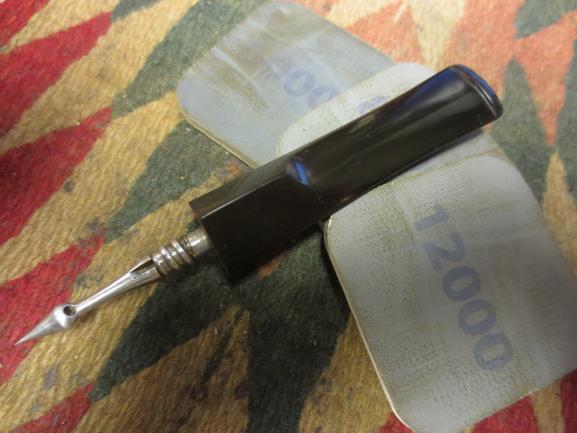
Select11 I heated the stinger with a lighter to soften the tars that held it in the threaded tenon. Once it was warmed I wiggled the stinger free and was able to clean it and the tenon.Select12 I scrubbed the inside of the tenon and the airway in the stem with pipe cleaners and alcohol. I used a brass bristle brush to clean the stinger and the threads on the tenon.Select13 The inside of the shank was wide open and served as a chamber for the stinger. It worked like a condensation chamber to collect the moisture before the smoke move through the holes and slot in the stinger and up the stem. Because of that it was very dirty. I cleaned the bowl and the shank with pipe cleaners, cotton swabs and alcohol until no more grime would come out. The photo below shows the first batch of swabs. There were about that many more used before it was clean.Select14 I lightly sanded the stem with 220 grit sandpaper to break up the oxidation and then with a medium and a fine grit sanding sponge. I wet sanded it with 1500-2400 grit micromesh sanding pads and then gave it a coat of Obsidian Oil. I dry sanded the stem with 3200-4000 grit micromesh pads and then gave it another coat of oil. I finished sanding with 6000-12000 grit pads and gave it a final coat of Obsidian Oil. I set it aside to dry.Select15

Select16

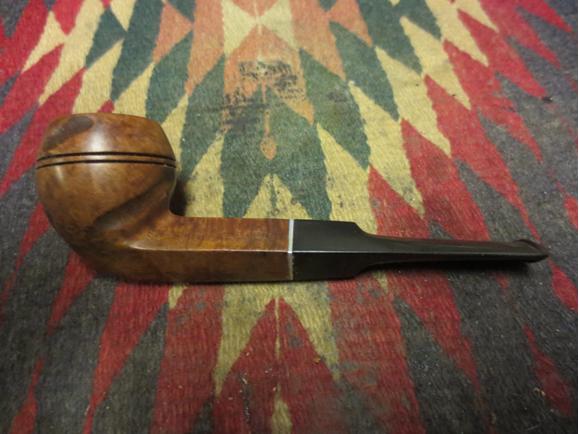
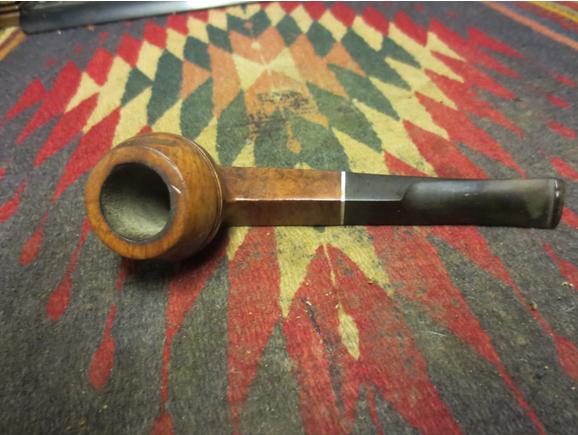
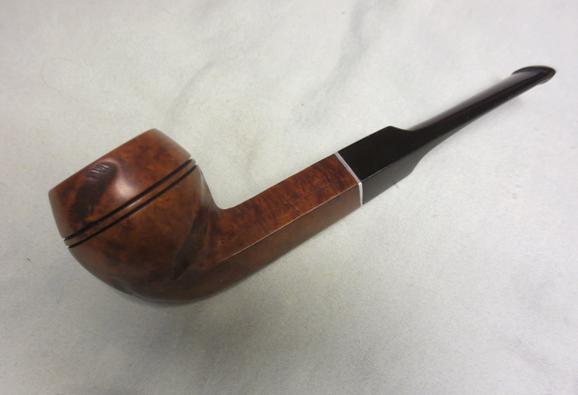
Select17 I put the pipe back together and buffed it on the wheel with Blue Diamond and gave it several coats of carnauba wax. I buffed it with a clean flannel buff to give it a shine. I brought it back to the work table and hand buffed it with a microfibre cloth. The finished pipe is shown below. Thanks for looking.Select18

Select19

Select20

Select21

Select22

Select23