Great information that I wanted to pass on to rebornpipes readers.
The Peterson Flat Bottom Shapes: A Visual History
1 Reply

Great information that I wanted to pass on to rebornpipes readers.
Blog by Steve Laug
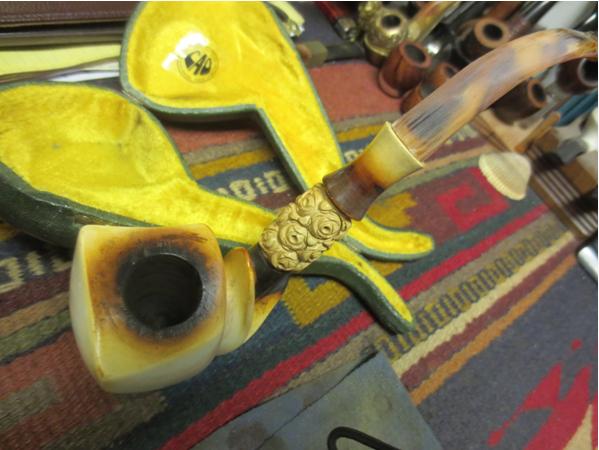
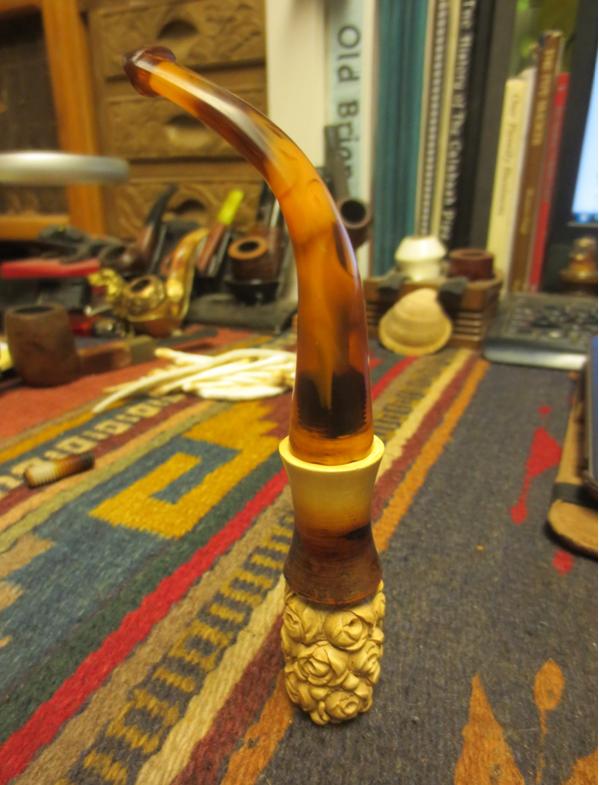
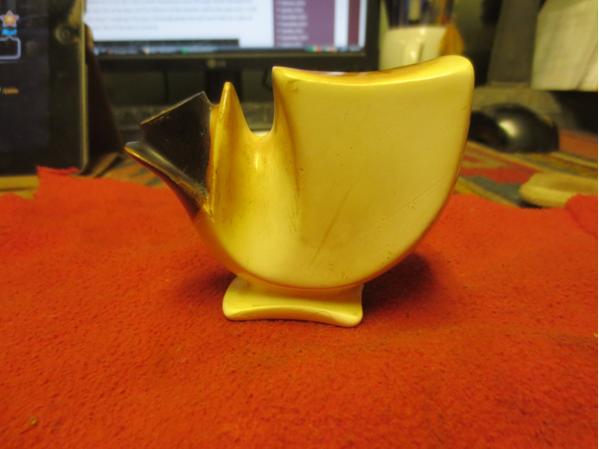
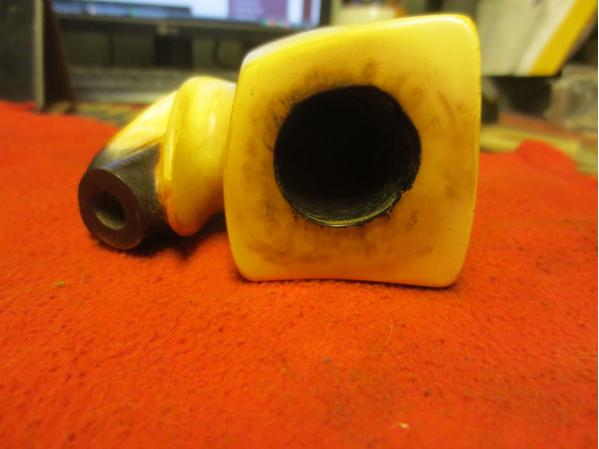
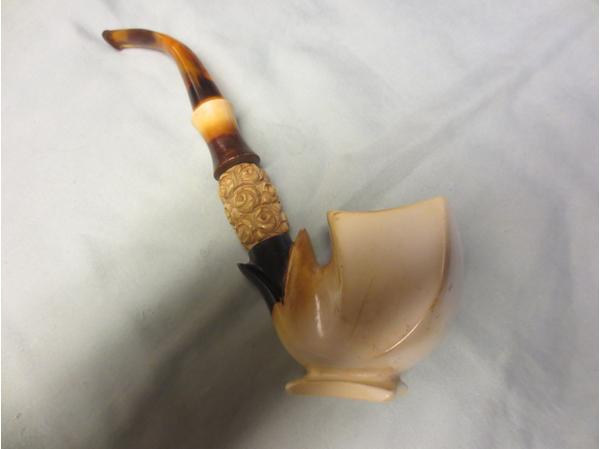
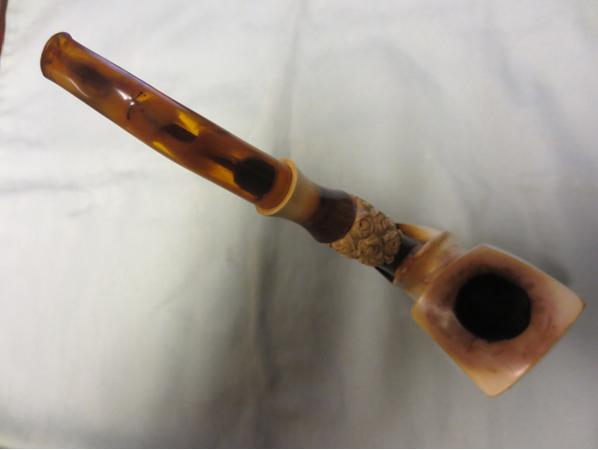
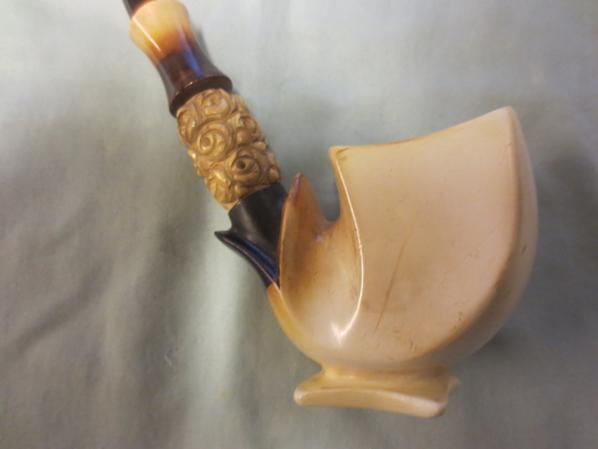
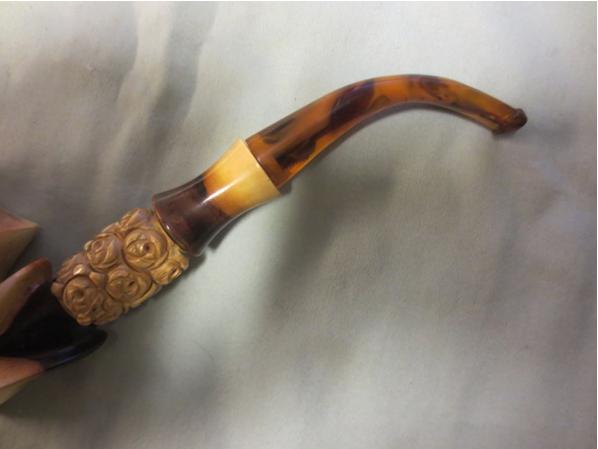
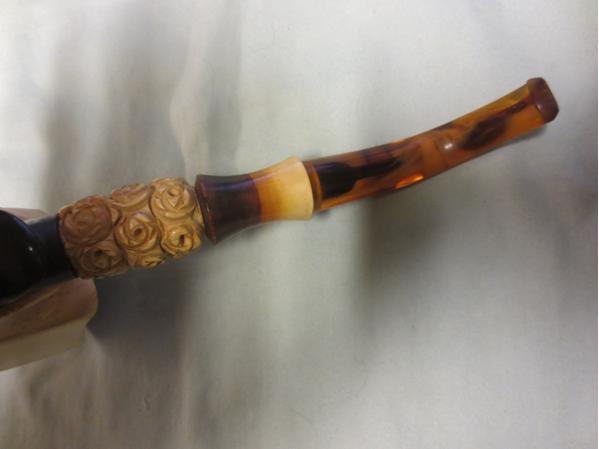
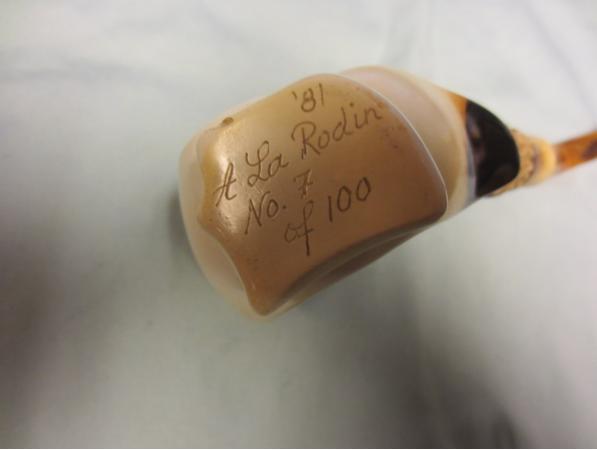
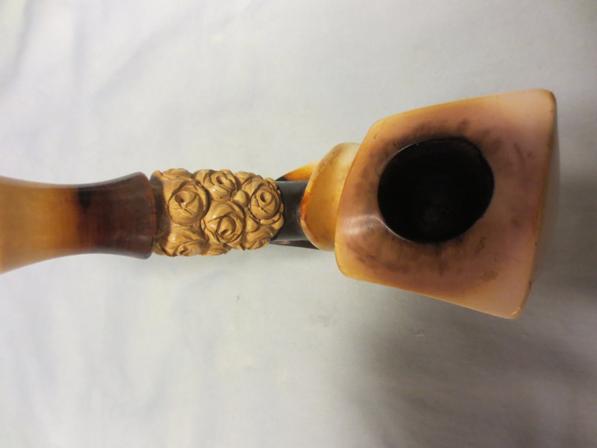
A fellow Canadian contacted me about working on a Bekler that he had picked up. He said it was pretty rough. He sent me these photos for a quick look. I loved the look of this pipe. It is stamped CAO Bekler on the darkened shank. On the foot it is stamped ’81 over A La Rodin no. 7 of 100. Above the darkened shank is an insert of carved roses. Above that is a bi-colour spool. The stem was pushed into the spool. There are threaded connectors between each piece of the shank. 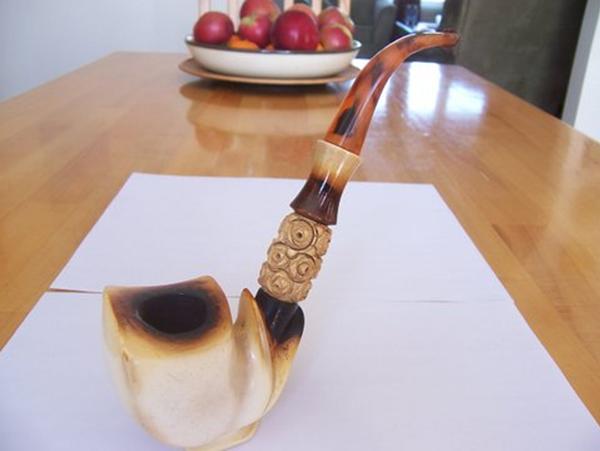
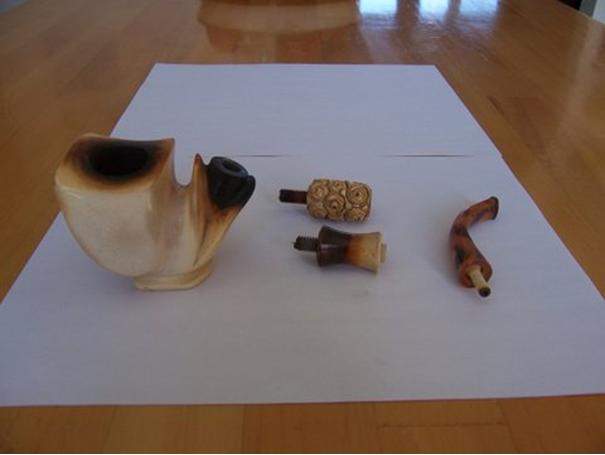 When the pipe arrived it was in worse shape than I had expected. Joe had said that the stem needed work but I did not expect the mess that came. Someone had hacked the stem with files and left behind an uneven surface with many deep file marks and scratches. Some of the flaws were raised and some were indents. It looked as if they had tried to thin the mouthpiece down and narrow the width of the stem. The button was intact but had file marks. The file marks went every direction across the stem. The slot in the end of the stem was off centre with the drilling in the slot slightly to the left. The stem itself was twisted to the left as well. The inside of the stem had a dark sludge in it that pretty well hid the tortoise shell look of the Lucite. The bowl and shank were badly scratched and the rim was a mess. The bowl was out of round and the same person had used the file on the rim leaving behind deep gouges in the top of the rim. On top of the scratches there was a thick coat of lava that covered the top from the inner edge out to about the middle of the top. The foot had some nicks out of it. This would take some tedious work to clean up.
I took some photos after I initially sanded the stem. I wanted to document the condition of the pipe.
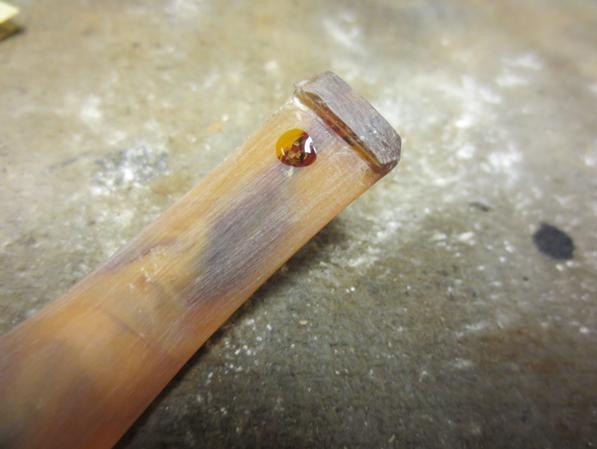
 I sanded the stem with 220 grit sandpaper to smooth out all of the cuts and file marks. It took a lot of sanding and shaping to smooth out the stem surface. I found that under the file marks there were some tooth marks in the underside of the stem. I sanded that surface smooth and wiped it clean. I used a clear super glue to fill in the divots.
 Once the glue dried I sanded the entire stem once again and blended the patch into the surface of the Lucite. I reshaped the button and the edge with the sandpaper and cleaned up the slot with needle files.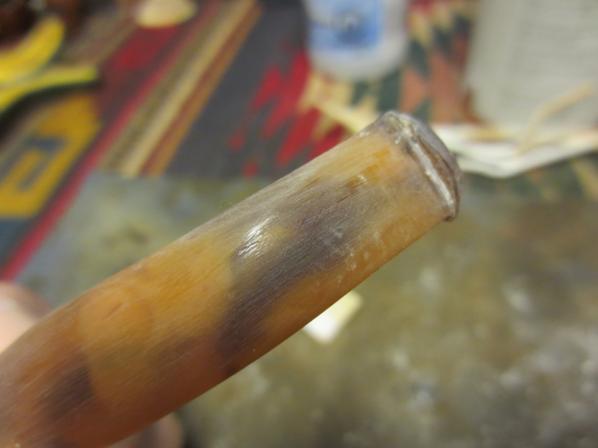
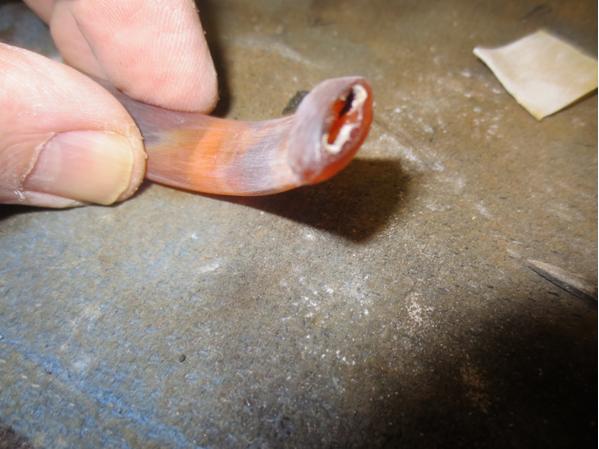 Once the surface was smooth I cleaned out the inside of the stem with pipe cleaners and alcohol. I scrubbed the interior with both smooth and bristled pipe cleaners. I was able to clear out the darkening and tar in the airway.
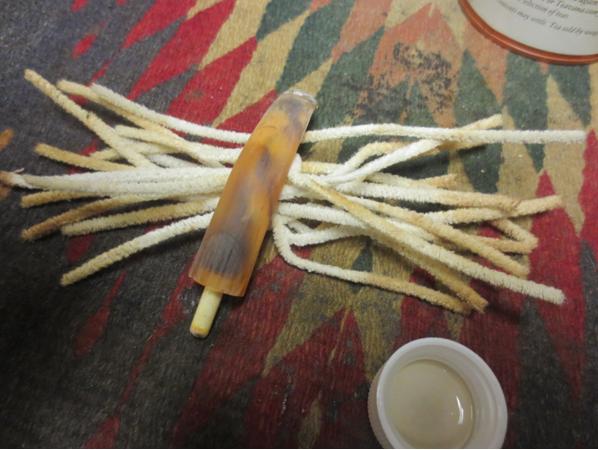 With the stem cleaned up and the surface smooth I took a picture of all of the parts on this pipe. The connectors look rough but upon examination I found that they were solid and needed to be cleaned up. You can also see the file marks on the top of the rim and the tars and lava that filled them.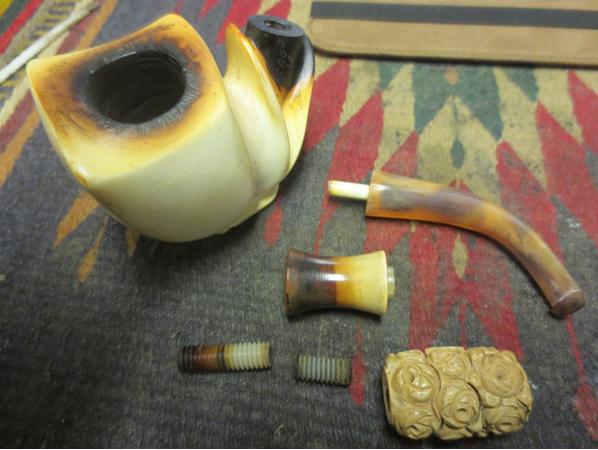
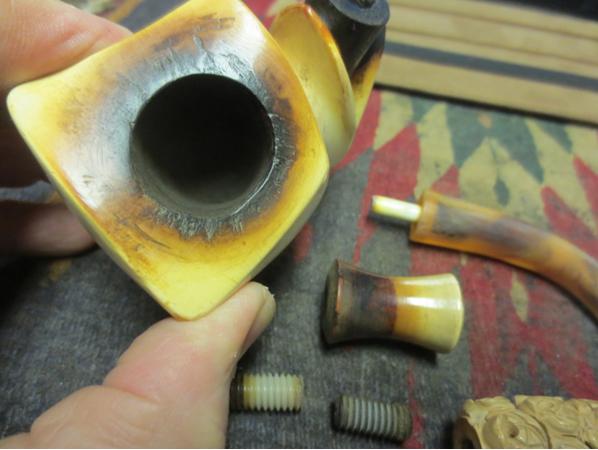 I scrubbed the spool insert with Murphy’s Oil Soap and then rinsed it off with water.
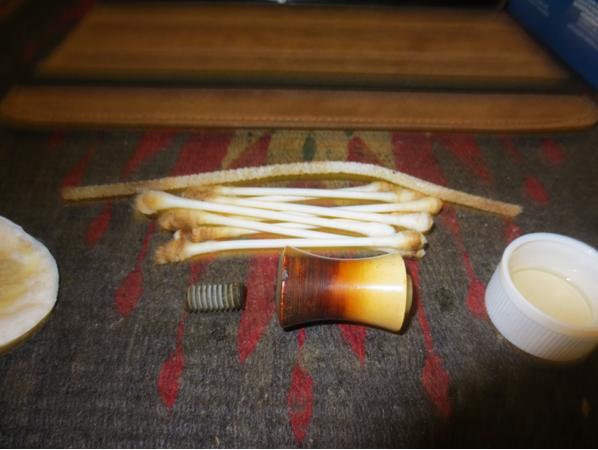
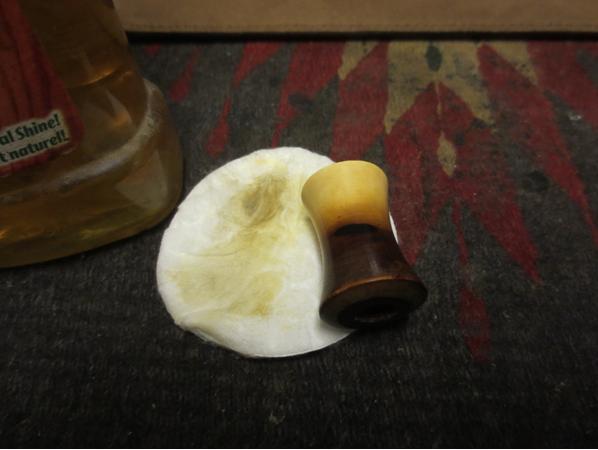 I cleaned out the inside of the spool and the threaded connector with alcohol, cotton swabs and pipe cleaners. I used a topping board to clean up the ends of the connector as it was poorly done. It looked like someone had shortened it with a pair of cutters and left the residual chips and flakes on the connector. The tars had caught on them giving the end a rough look. The threads were also caked with tars and oils.
 I scrubbed the next shank insert, the carved rose piece with the Oil Soap and a tooth brush and rinsed it with water. I cleaned out the interior with pipe cleaners, cotton swabs and alcohol. I also cleaned the longer connector inside and out. I used a dental pick to clean out the threads. I also used the topping board to smooth out the ends.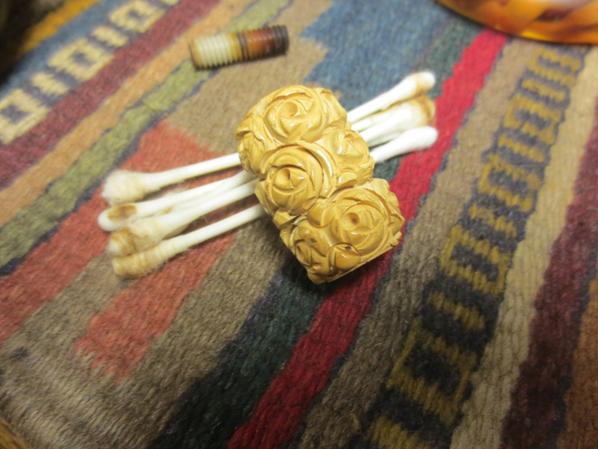
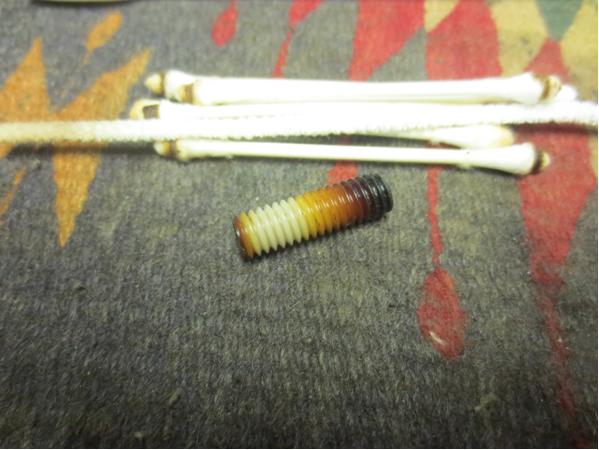 The next photo shows the two shank inserts joined together with the smaller of the two connectors. I gave them a light coat of Conservator’s Wax and buffed them with a shoe brush to raise a shine.
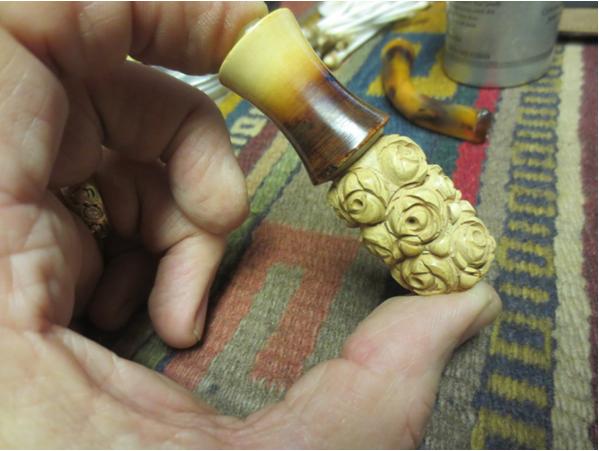 I decided to work on the stem with the micromesh pads to see what the surface looked like with some shine. I find that the first three grits of micromesh pads – 1500-2400 – tell a lot. I could see the spots that I needed to still work on but I could also see the lovely tortoise shell Lucite beginning to show its colours.
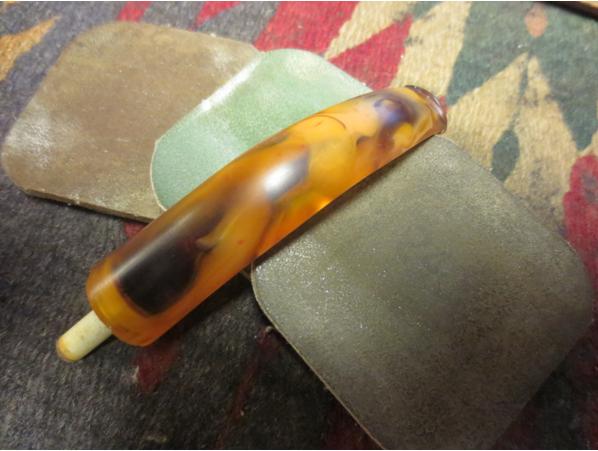 I put the stem on the two inserts to get a feel for the look of this part of the pipe. I took the next two photos to show the progress. The stem was getting there. I still needed to heat it and straighten out the twist in the bend and bend it slightly more as it did not fit snugly in the case. Before I heated the stem I examined it carefully. There was a small flaw in the swirls of the material on the top surface of the stem at the bend so I would need to be careful in the heating and bending. Fortunately the flaw did not go too deeply into the stem material but sat on the surface. I heated the tip of the stem and straightened out the twist in it as I bent it slightly to match the case. I repaired the flaw with super glue and sanded it with 20 grit sandpaper to smooth out the repair.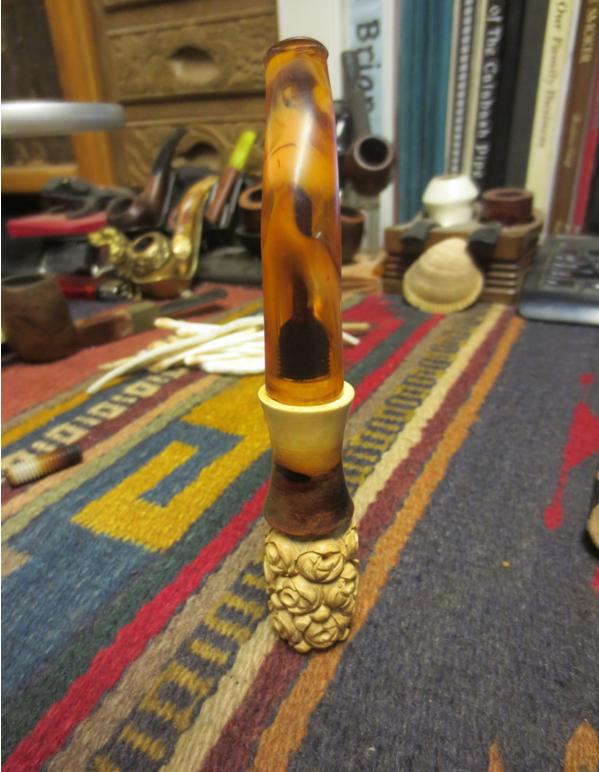
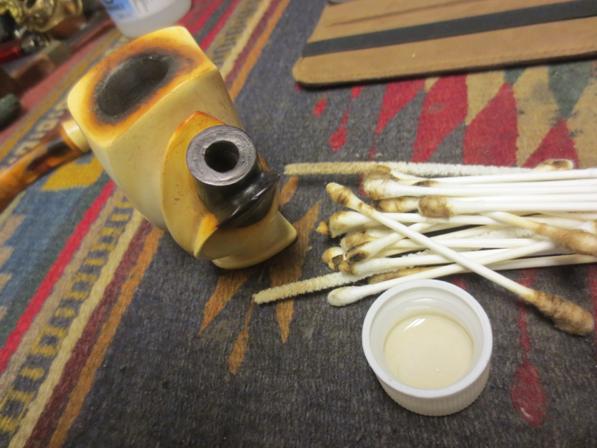
 I cleaned the interior of the bowl and shank with pipe cleaners, cotton swabs and alcohol.
 I set the bowl aside to dry out and I sanded the stem with micromesh sanding pads. I wet sanded with 1500-2400 grit pads and rubbed the stem down with Obsidian Oil. I dry sanded it with 3200-4000 grit pads and gave it another coat of oil. I finished with dry sanding it with 600-12000 grit pads and gave it one last coat of oil.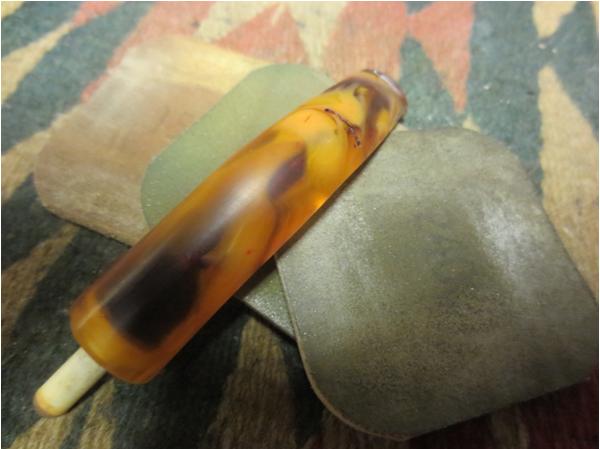
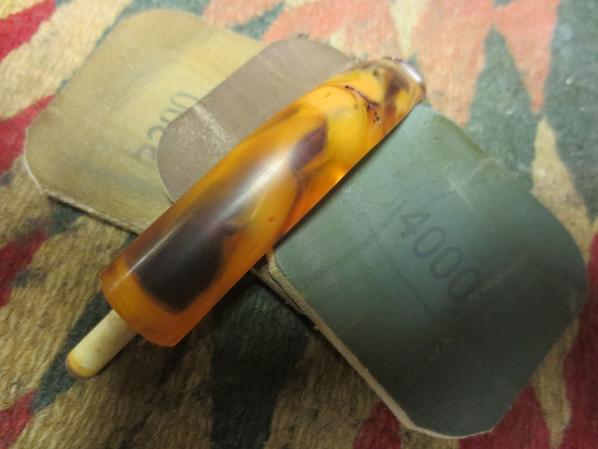
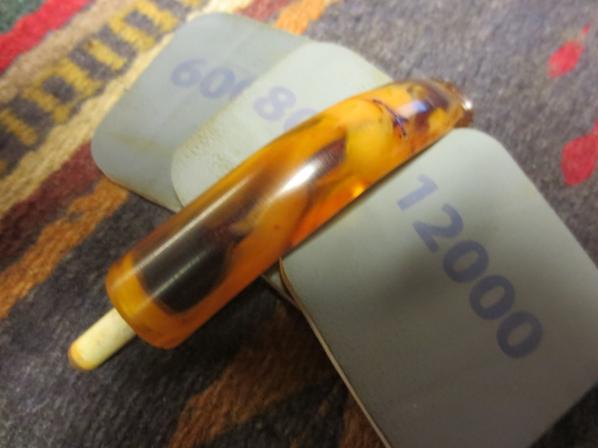 I polished the stem with Meguiars Scratch X2.0 and then gave it several coats of wax.
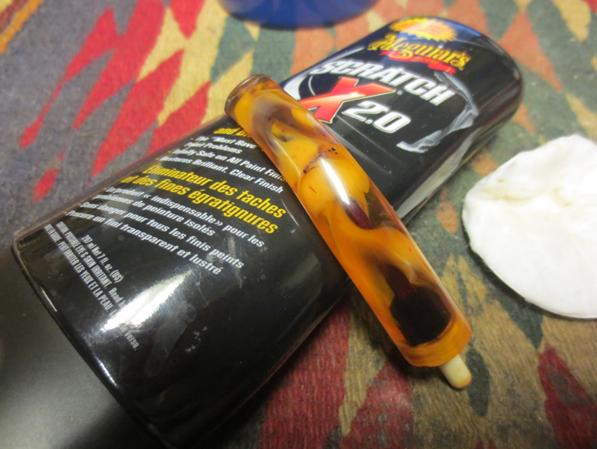 I scrubbed the surface of the bowl with the Scratch X2.0 and hand buffed it with a cloth.
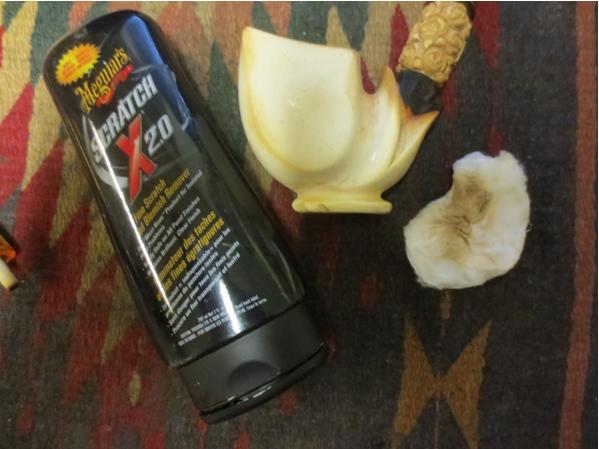 I sanded the file marks on the rim to bring it back to smooth. The deep gouges were blackened and took quite a bit of sanding to remove them. I started sanding with 220 grit sandpaper and worked on the surface of the rim. I was careful to not change the profile of the bowl or the angles of the rim.
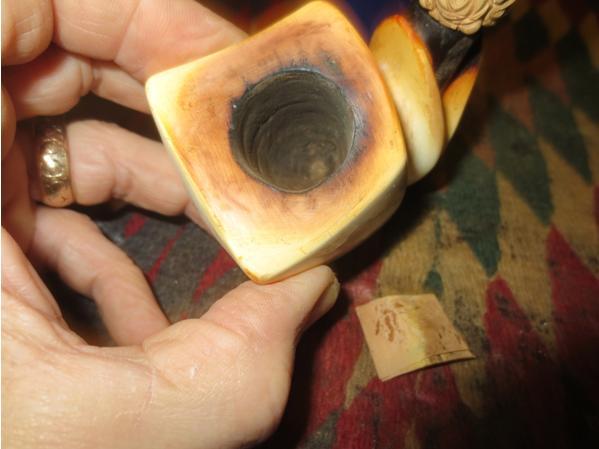 I sanded the rim with micromesh pads from 1500-12000 grit to smooth out the surface and give it a shine. I gave the bowl several coats of Clapham’s Beeswax Polish and buffed it by hand with a cloth.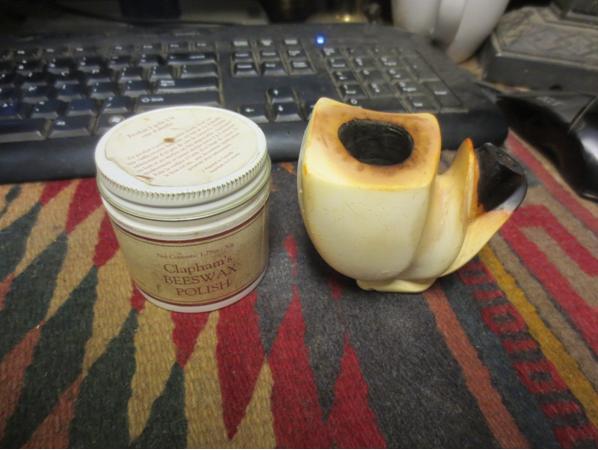

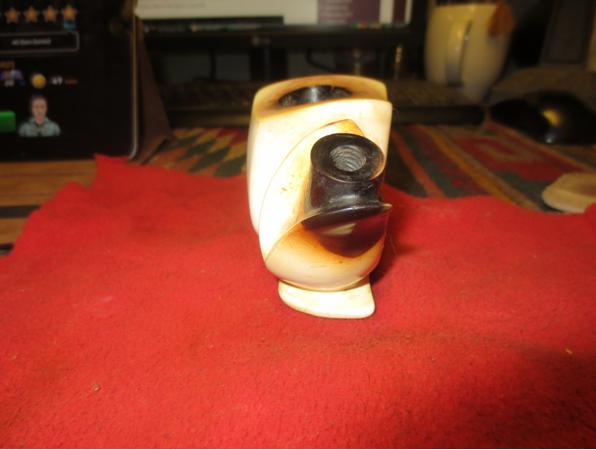
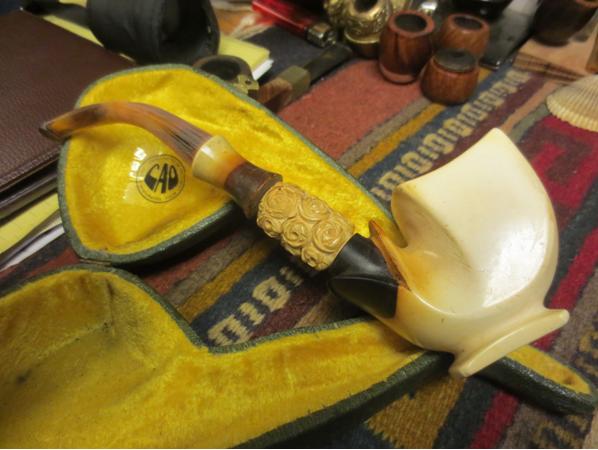
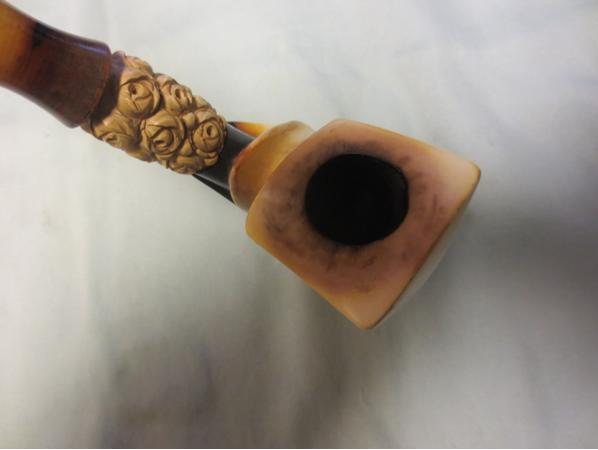
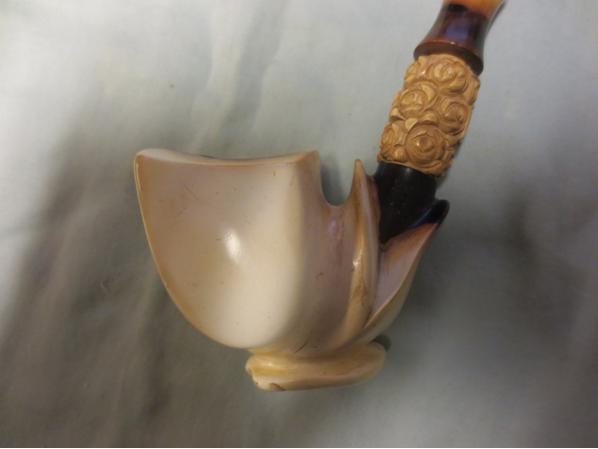
 With the buffing the bowl began to shine. The carving on the foot of the bowl stood out clearly. The rim surface looked far better than when I began.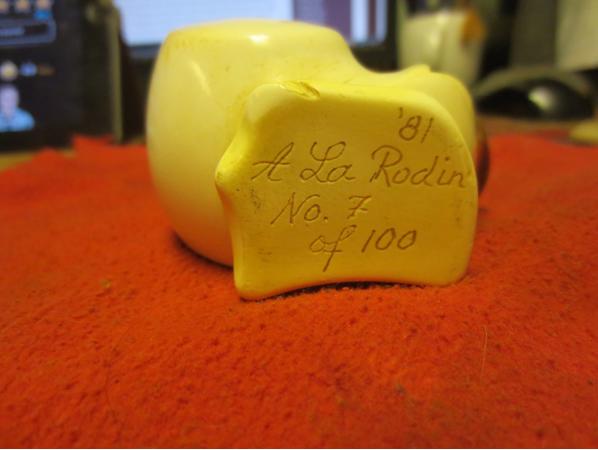
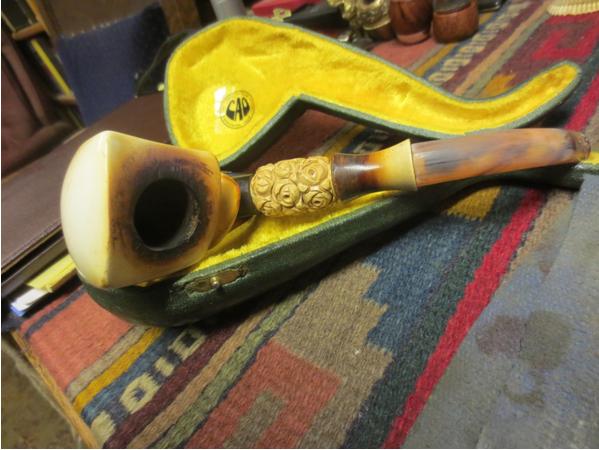
 I lightly buffed the bowl with Blue Diamond on the wheel being careful around the blackened shank. The shine rose in the meerschaum and the pipe looked good. Though there were still nicks and scratches they now looked like marks of honour and age rather than abuse. To me it is always a fine balance between restoring a pipe and reworking a pipe. On a beautiful pipe like this one I opted to work on the big issues and leave some of the war wounds on the sides of the bowl. To me the pipe has been around long enough to earn those marks. I want a pipe that is finished to look better than when I started but I am not aiming at making a 35+ year old pipe look new. I want it to look cared for and well smoked. The finished pipe is shown in the photos below.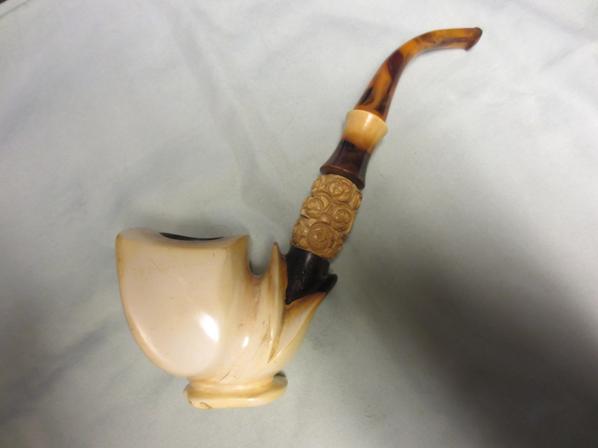



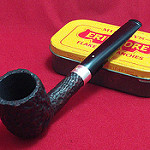
Charles just posted his work on this one on his blog. It is an old early Dunhill Shell. Some innovative techniques and some patient fussing brought an old wreck back to life. Well done.
An email pinged into my inbox a few weeks ago, sent by a fellow member of the Briars & Bull Pipe Club here in Kitchener. He had, he said, an old Dunhill pipe he’d like to have cleaned up, and would I be interested in tackling the project for him?
I said yes, of course, and soon after I had the patient in hand. The owner was right – it was an OLD Dunhill, though exaclty how old would take a bit of research. At first glance, the pipe looked good, but in the way that an old, well-worn tuxedo looks good – far from pristine, a bit thin at collar and cuffs, but still a great suit. Someone had given this old suit – er, I mean pipe – a brushing up. The stummel had been polished up, and the replacement stem showed a few tooth dents but fit well…
View original post 1,917 more words
Blog by Dutch Holland
I had been looking for a small Dunhill Bulldog and recently found this one. It’s a 1962, style 148, Bruyere, Group 3 in need of some TLC. It’s quite petite, almost delicate compared to th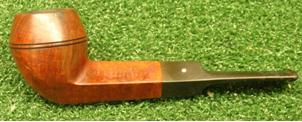 e GBD Rhodies I’m usually drawn to but the price was right so I pulled the trigger and several days later it arrived. Although not in really bad shape, it had some issues that would need attention. The bowl top hadn’t seen a cleaning in some time, carbon build-up had migrated onto the upper outside of the bowl and the tobacco chamber had a significant build-up of cake. At some point the pipe had apparently been dropped because there was a nasty crease and some dents surrounding it on the front. The shank had several tones of color, the cause is uncertain. After cleaning the rim area I discovered a number of edge scars and some charring on one side that made the inner edge look out of round. There would be no saving the finish, a stripping would be necessary. The nomenclature was clear and strong so attention to method would be important to preserve it. Dave G’s stripping formula worked out exceptionally well but who would expect anything less?
 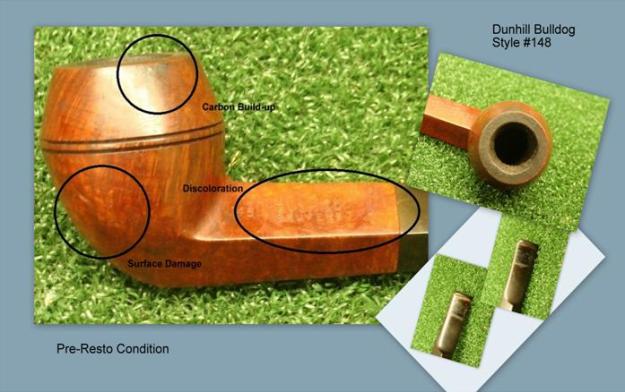 I slightly topped the rim after beveling the inner edge to minimize the amount that needed removal. Topping was done with 1000 grit sandpaper on a flat surface following the application of some steam. The steam had all but eliminated the edge scars and a little softening of the outer edge did the rest. Treating the inner edge with a slight bevel took out the majority of the scorch so almost nothing needed to be removed. Preserving that classic profile was important. That came at the expense of giving the top a somewhat different look. One that seems to better compliment the delicate style of this pipe but that’s just a personal opinion.
The crease and dents on the front were steamed out and the entire pipe stripped of wax and stain. I really wanted something darker than the original stain so I mixed 2 parts of medium brown with 1 part oxblood and applied it. After the color set I buffed it to a rich dark mahogany and then applied four coats of carnauba wax, giving each a chance to harden in between. The stem was worked with Micro-Mesh and then a final buff with white diamond to bring up the gloss. 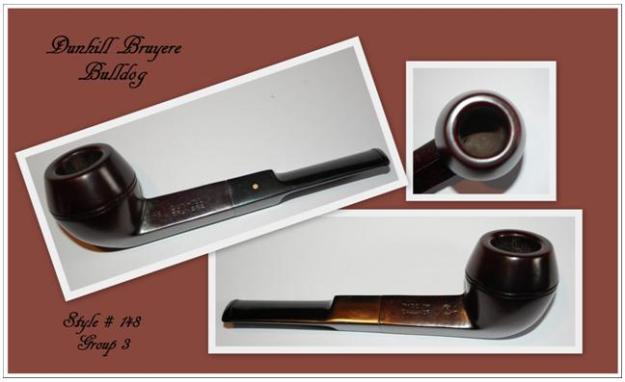 There are some who would consider changing the color of a Dunhill to be heretical but I’m not so constrained. This one’s for my pleasure, the next guy can restore it for authenticity. I really like the color and overall the pipe looks better than it did at the start so I don’t feel the slightest bit guilty. Burn me at the stake if you like, I’m unrepentant.
Blog entry by Al Jones
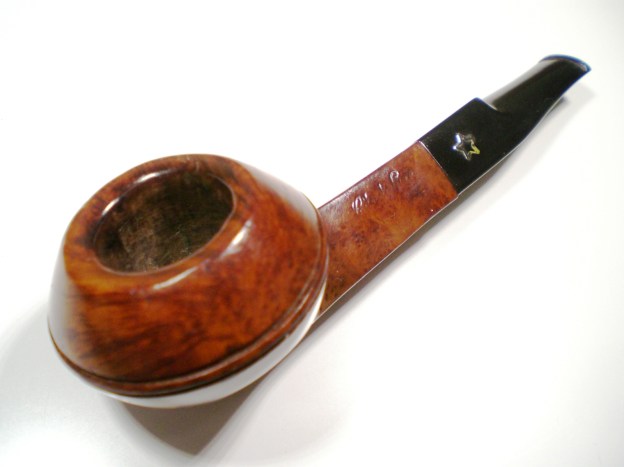
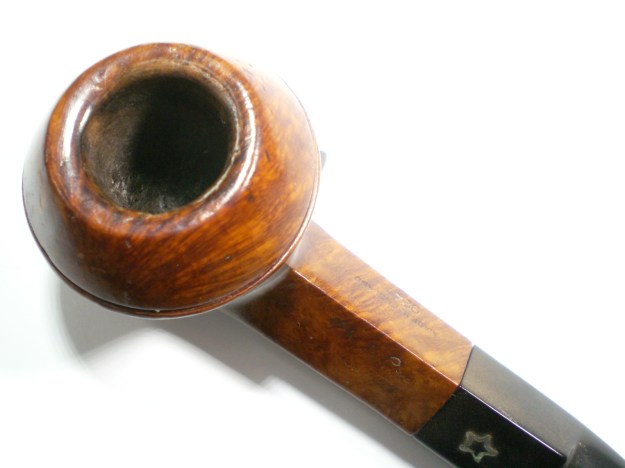
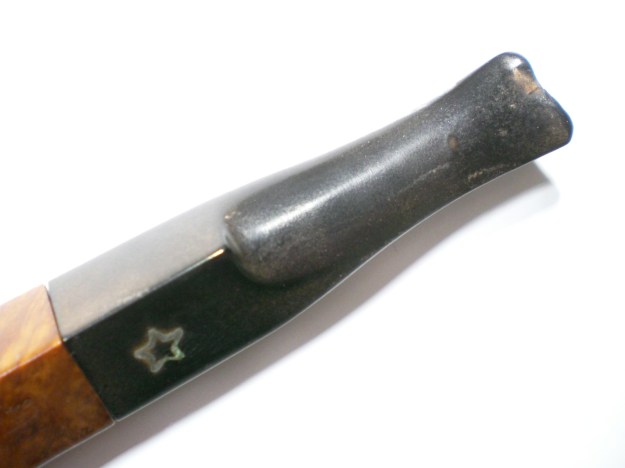
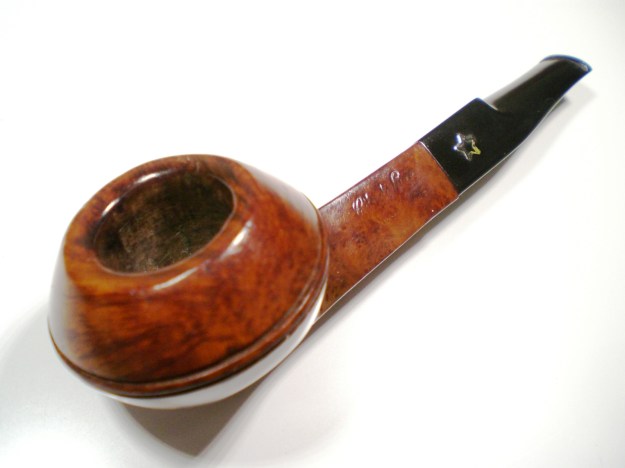
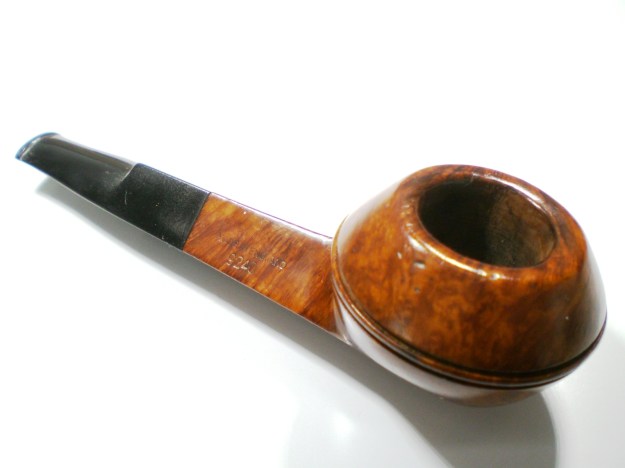
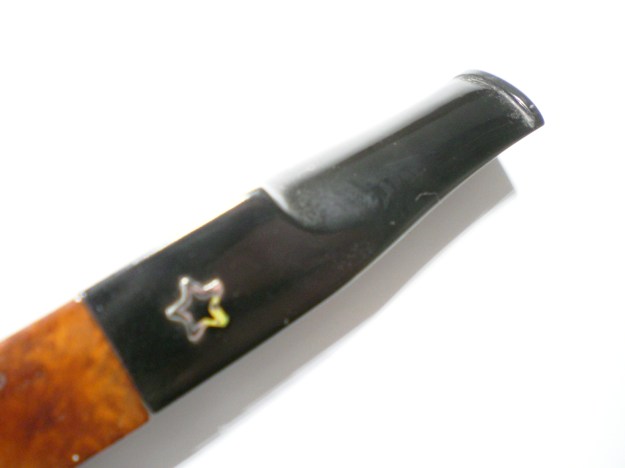
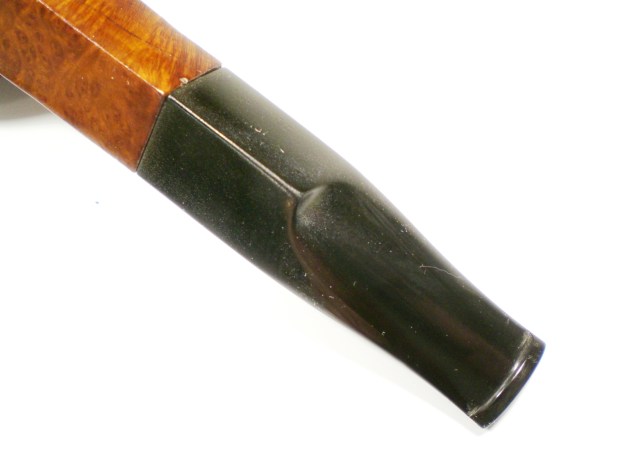
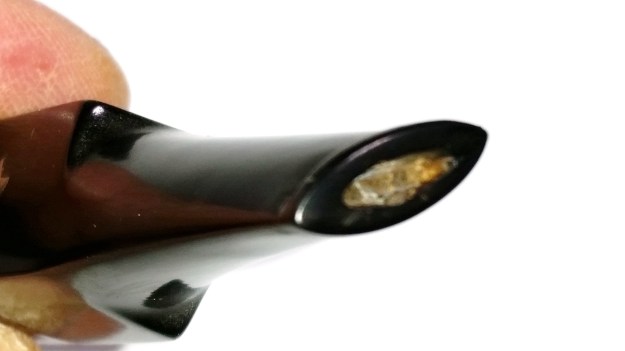
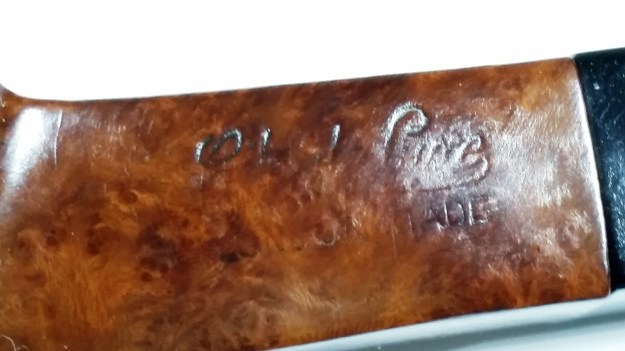
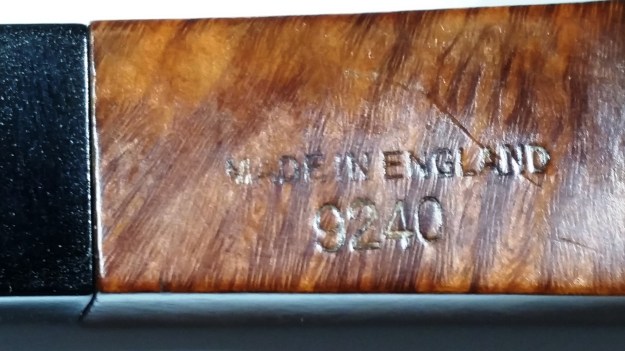
This City deLuxe short, shape 9240, squat bulldog came in a group of pipes I found on Ebay. I thought it had the most promise of the trio. As with most City deLuxe pipes, this one came with a twin-bore stem, they called the “Tuscan Lip”. Unfortunately the pictures didn’t disclose the damage to the button end. The white plastic fill bit was missing and one of the bore holes was cracked thru to the fill inset.
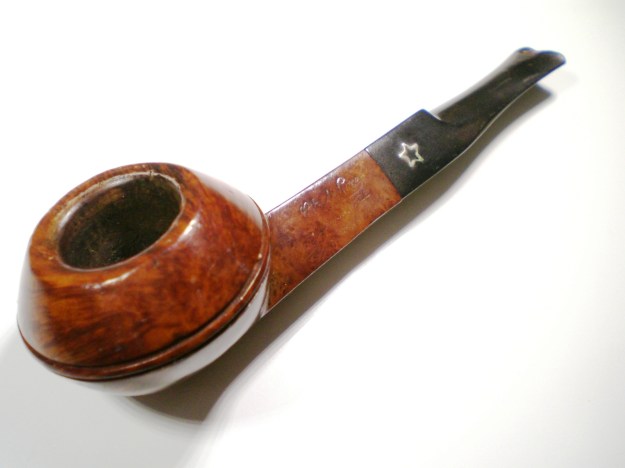
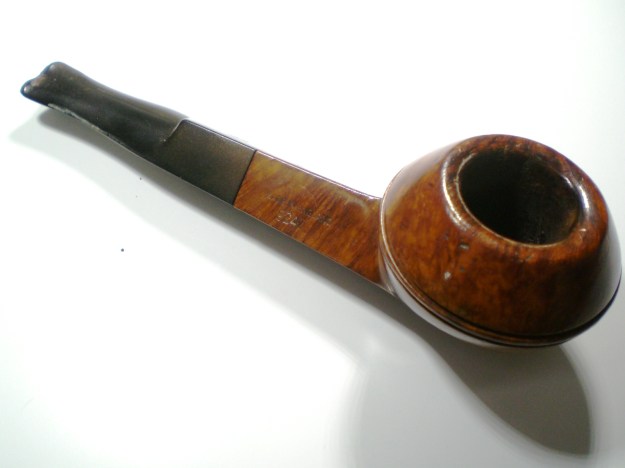
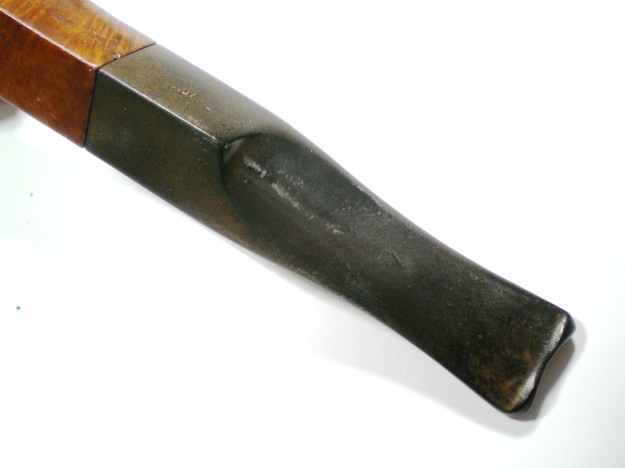
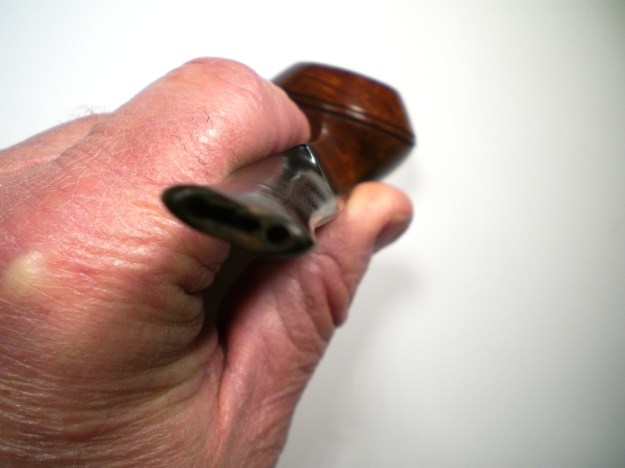
My first attempt to the repair the button was to completely fill in the button holes. My plan was to re-drill the draft hole. After numerous attempts with the black superglue, I was unsuccessful. When I attempted to re-drill the draft hole, using a 1/16″ drill but, the repair portions kept flaking off.
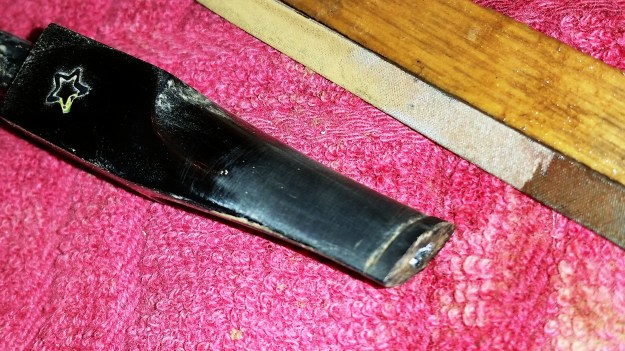
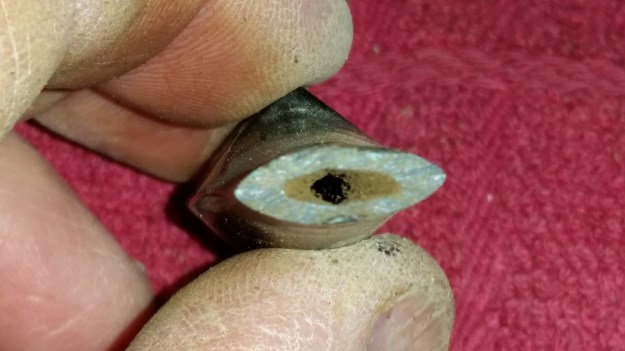
I finally gave up and decided to cut off the broken button and shape a new button. I used a fine-tooth hobby saw to make a clean cut. I cut in a new button using a flat needle file. With 400 grit paper wrapped around the needle file, I tapered the stem up to the new button. That was finished with 800, 1500 and 2000 grit paper. At this time, I removed the oxidation from the rest of the stem. The brass star logo was in great shape. I used another needle file to funnel the draft hole. The stem was mounted and buffed with White diamond rouge and Meguiars Plastic Polish. Below are two shot taken as the new button was shaped.
?
The bowl was reamed and then soaked with alcohol and sea salt. I scrubbed the shank with a bristle brush dipped in alcohol. There were some dents on the briar. I used an electric iron set on high and a wet cloth to stem them out. Not all of them were removed, but I don’t mind a little patina on my pipes, those marks were all earned. The bowl was then buffed with White Diamond and several coats of Carnuba wax.
Below is the finished pipe.
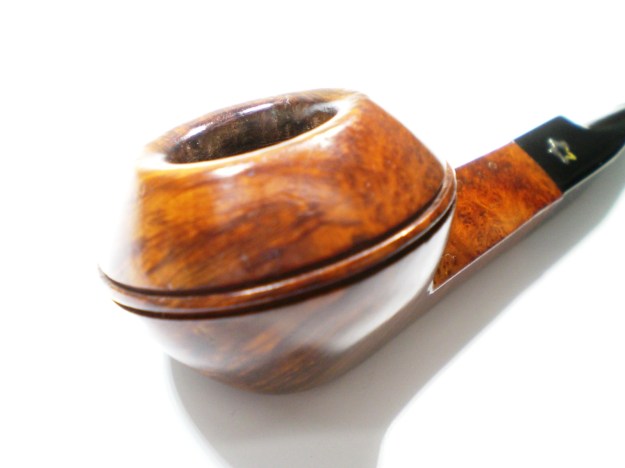
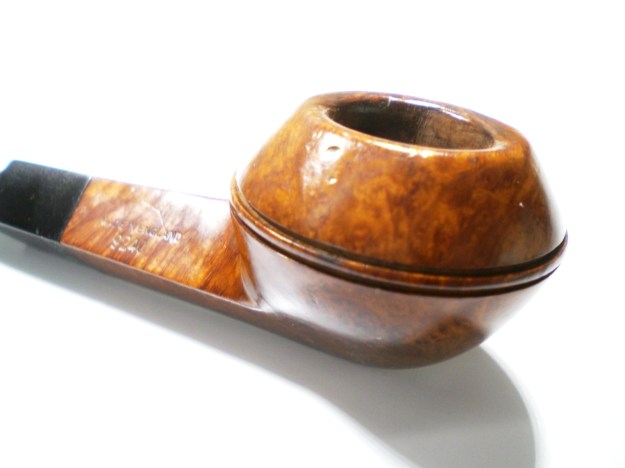
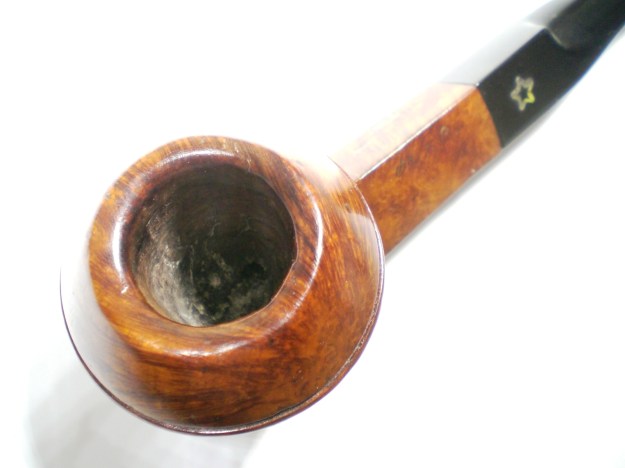
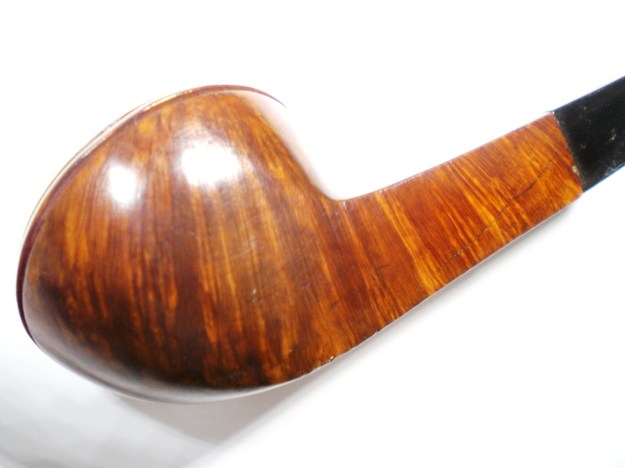
?
?
?
Blog by Steve Laug
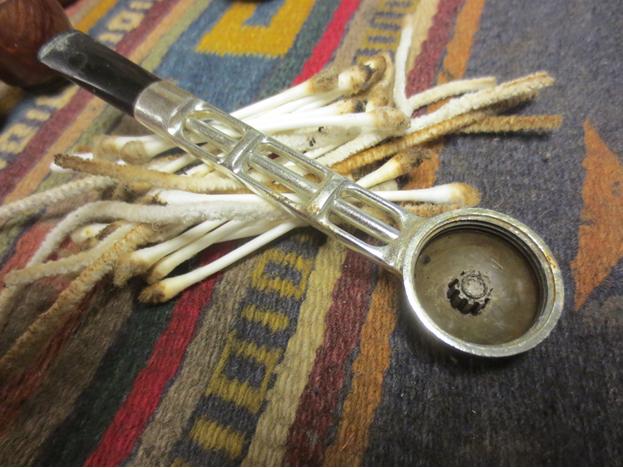
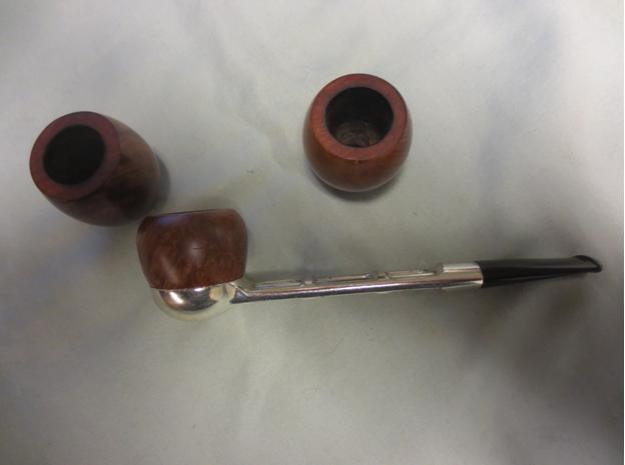
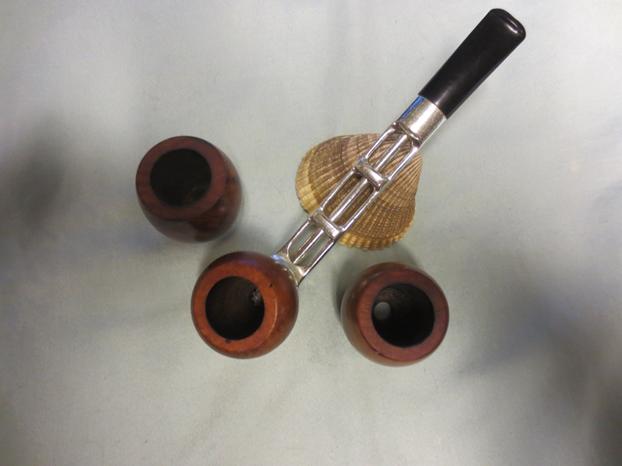
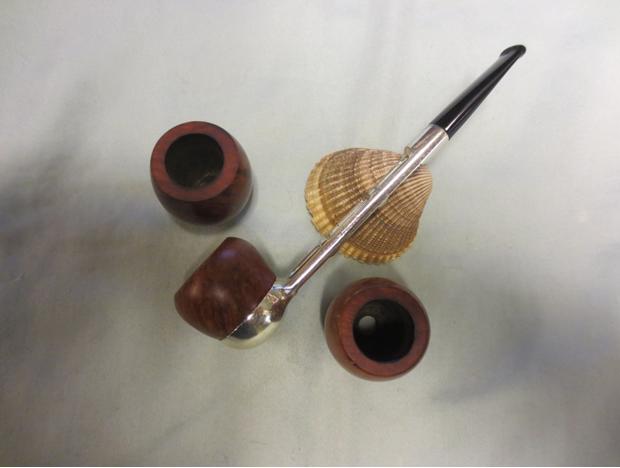
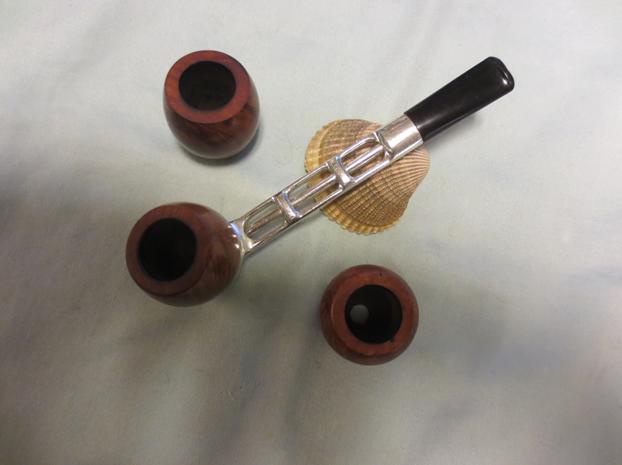
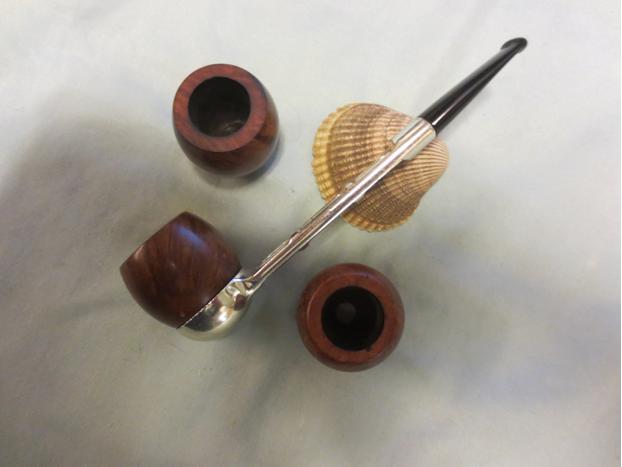
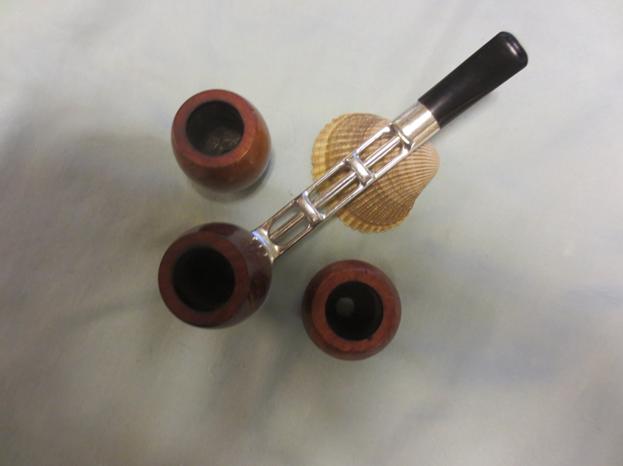
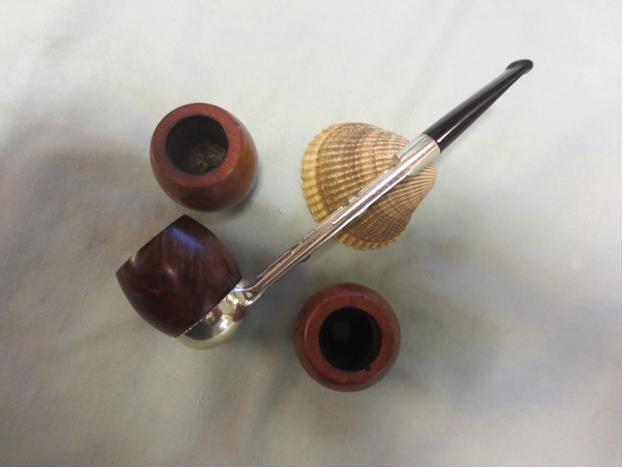
This older Dr. Grabow Viking came to me as a gift from a Facebook friend. He gave it to me along with some other pipes for me to enjoy restoring. This one is stamped next to the heel of the metal base – Viking Pat. Pend. The metal is sparkling metallic silver. It has flecks throughout the paint that make it sparkle and shine. When it came it was together in a plastic sandwich bag. The base unit was tired and dirty. The bowl on the base was caked with an over flow of lava onto the rim. The other two bowls had been reamed and cleaned. The finishes on all three were dirty and dull. The rims on all three bowls show damage from burns or being knocked out on a hard surface. When I removed the bowl the interior of the base was caked with the thick lacquer of the juices of tobacco as it burns. It looked to me like it had not been cleaned in a long time and the black thick oils had hardened like rock in the base. The airway was clogged with debris. The stem had collapsed from being bitten on. The tooth marks were deep but did not go through into the airway. The sharp edge of the button was worn almost smooth. I was not able to push a pipe cleaner through the airway from the button or from the airway in the bottom of the base.
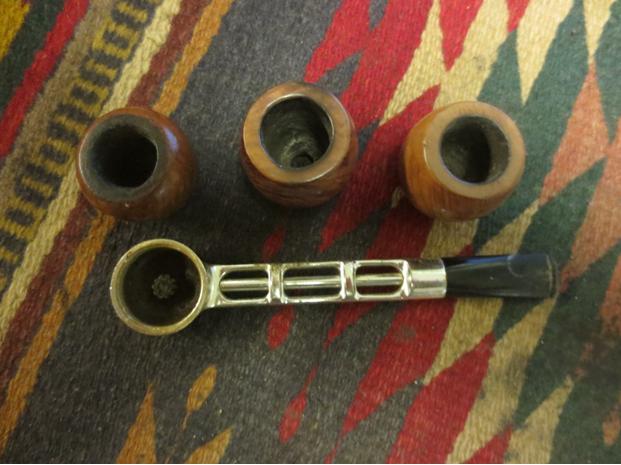
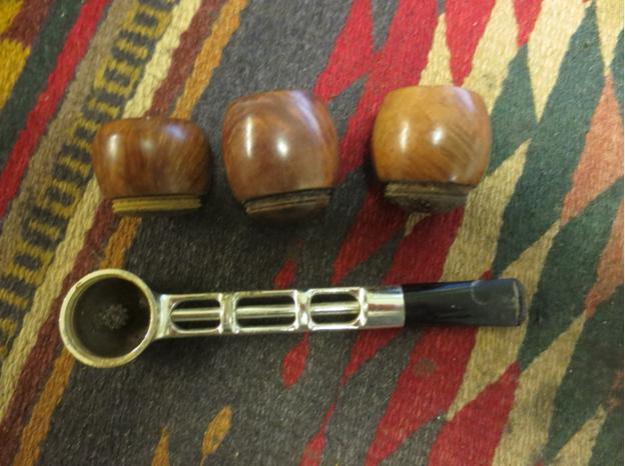
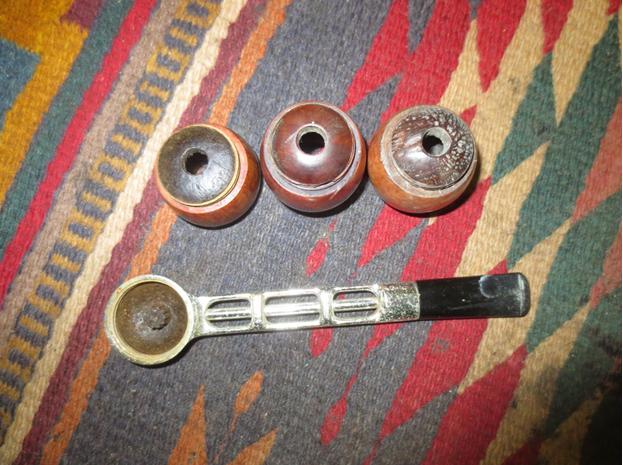
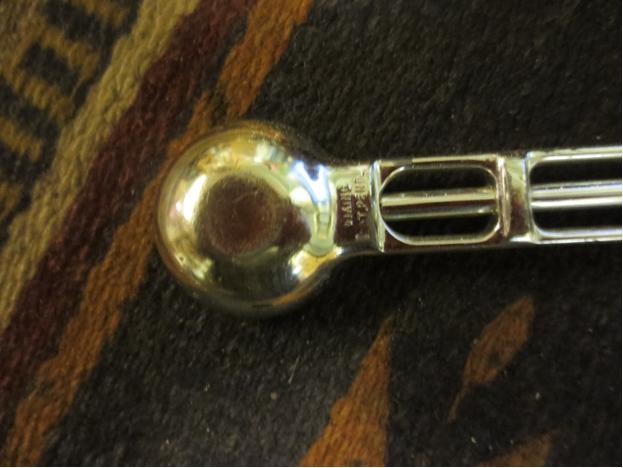
I took a few close-up photos. The first shows the inside of the base and the build up there. The second and third show the bite marks on the stem. The second photo shows the top of the stem and the bite mark on that surface, though not looking bad in the photo, collapsed the airway and made it impossible for a pipe cleaner to pass through. The fourth photo below shows the stamping on the bottom of the base.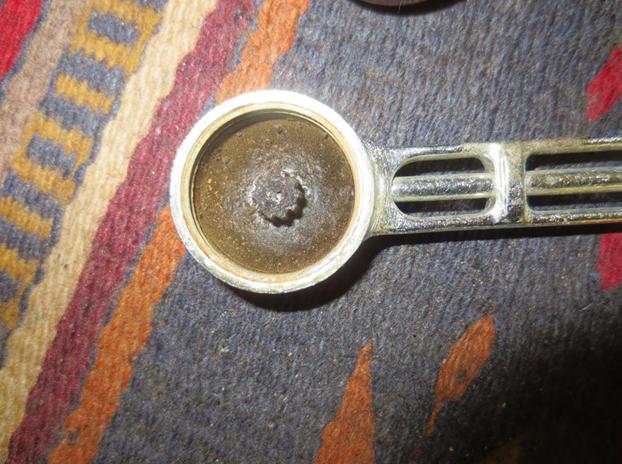
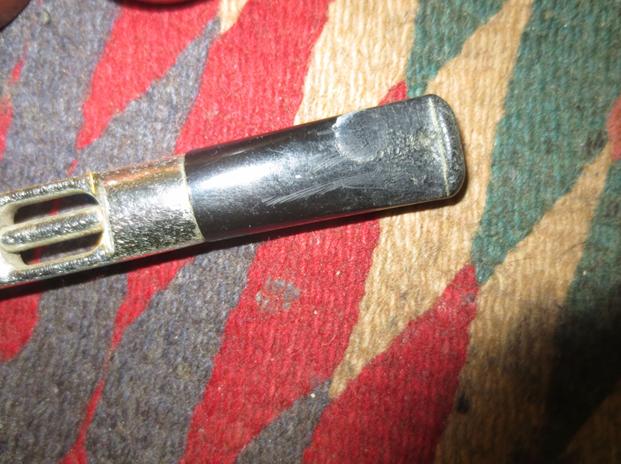
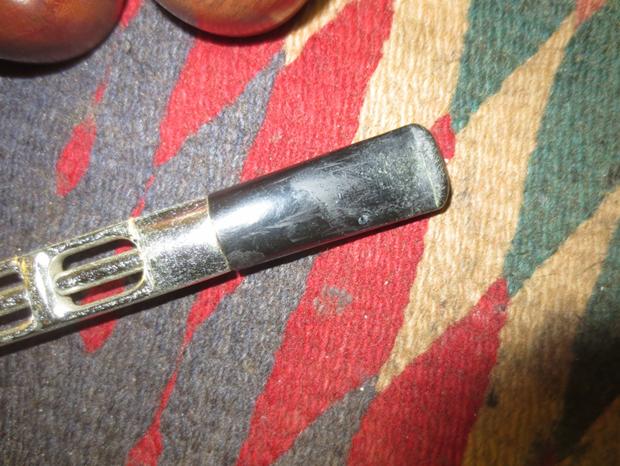
I scrubbed out the inside of the base with pipe cleaners, cotton swabs and alcohol. I also used a brass bristle brush. I opened the slot and airway in the stem with a flat needle file. I inserted the needle file and pushed the indentation on the top of the stem upward to clear the airway. It took a lot of fiddling with the file to open the slot completely. I cleaned the airway and stem with pipe cleaners and alcohol.
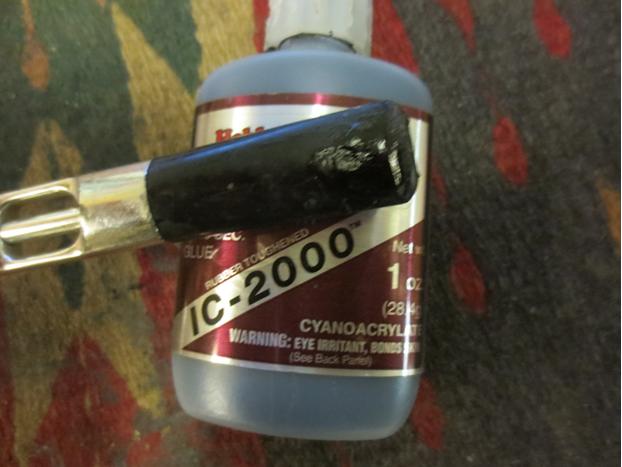
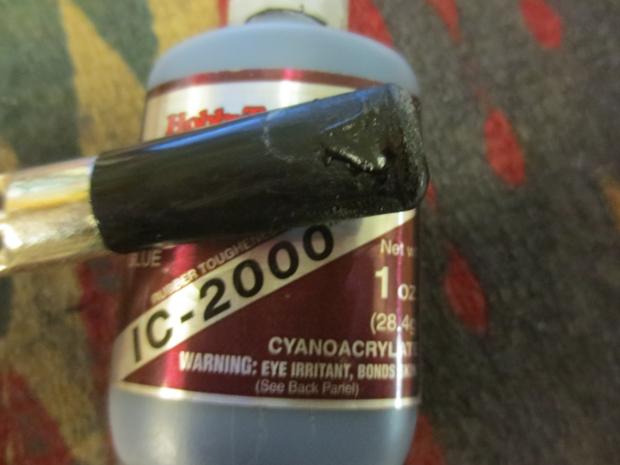
I repaired the tooth marks with black super glue and set the pipe aside for the evening to allow the glue to cure. I have not had good luck with this kind of fill using the accelerator as it tends to cause air bubbles in the dried glue.
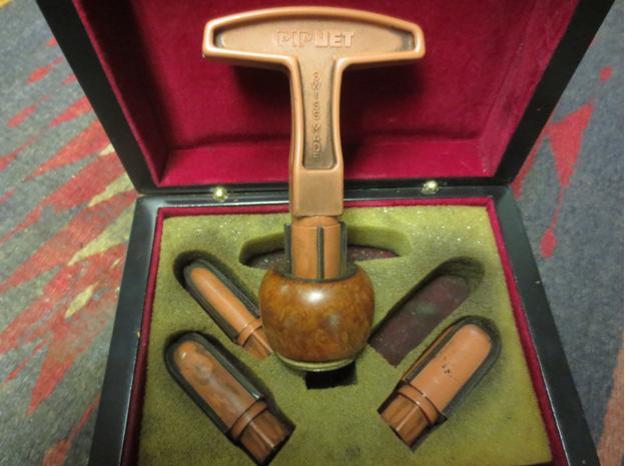
I reamed the cake in the one bowl with a Pipnet reamer and took the cake back to bare briar.
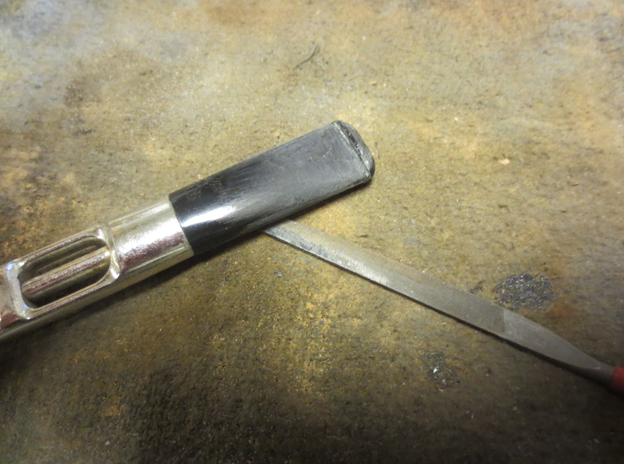
In the morning I sanded the repairs on the stem with 220 grit sandpaper to smooth the surface of the repair and blend it with the stem. I used a needle file to sharpen the edges on the button.
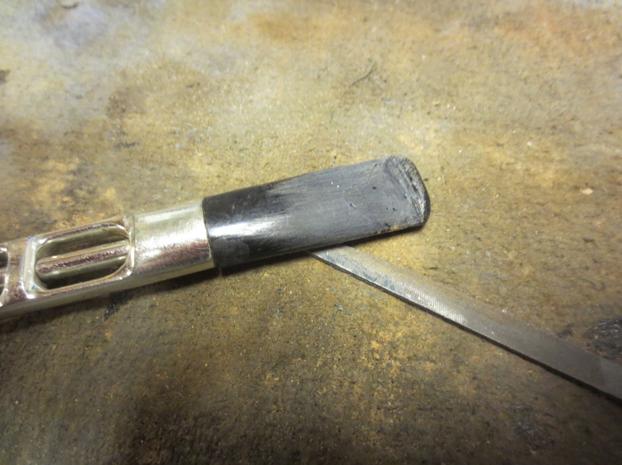
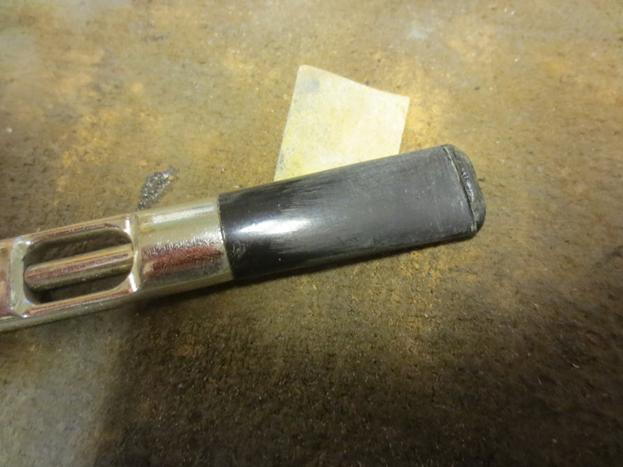
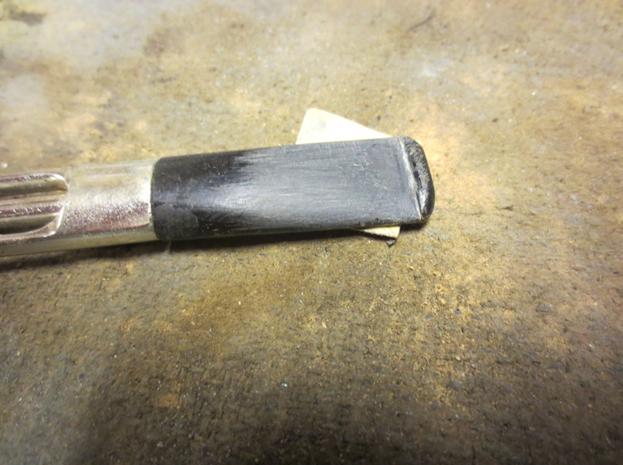
Once I had the surface smooth I sanded the stem with micromesh sanding pads. I wet sanded the stem with 1500-2400 grit pads and then rubbed it down with Obsidian Oil. I dry sanded the stem with 3200-4000 grit pads and gave it another coat of oil. I finished dry sanding it with 6000-12000 grit pads and gave it a final coat of Obsidian Oil. I set it aside to dry.
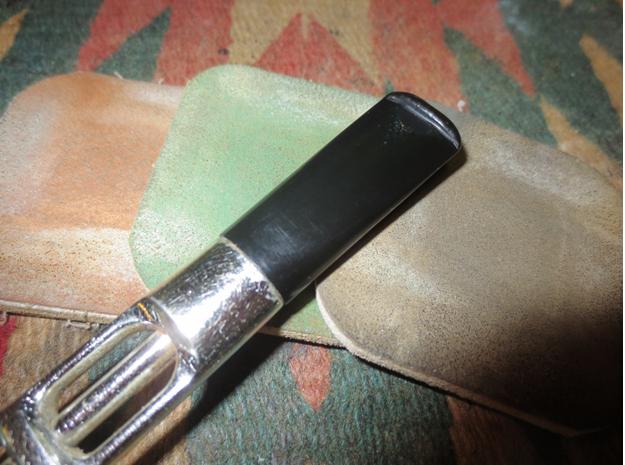
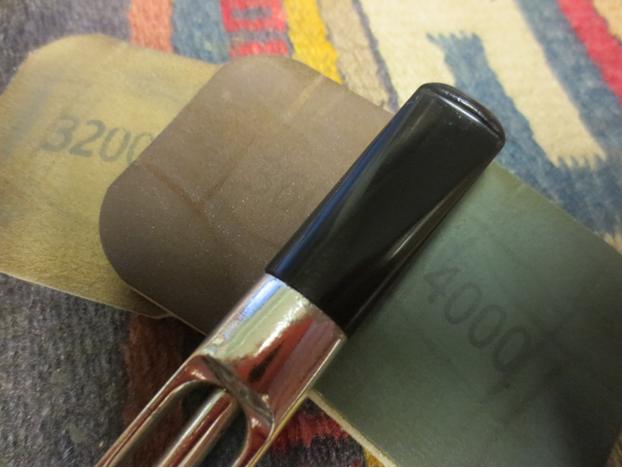
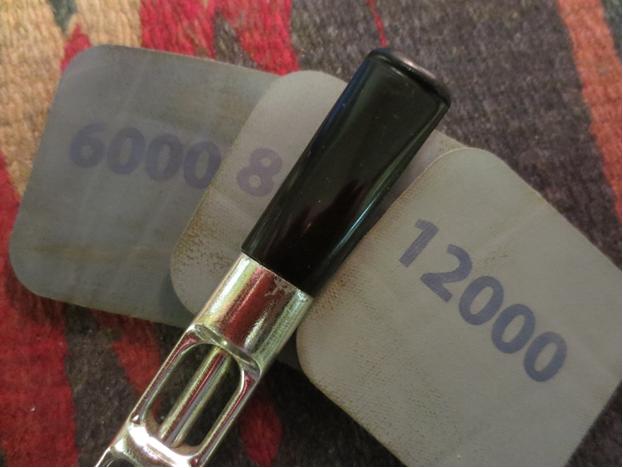
With the base finished I set it aside and turned my attention to the bowls. I topped all three bowls on the topping board. The short bowl that I reamed had some dents and rim damage. The other two had burn marks and rounded edges that needed to be cleaned up.
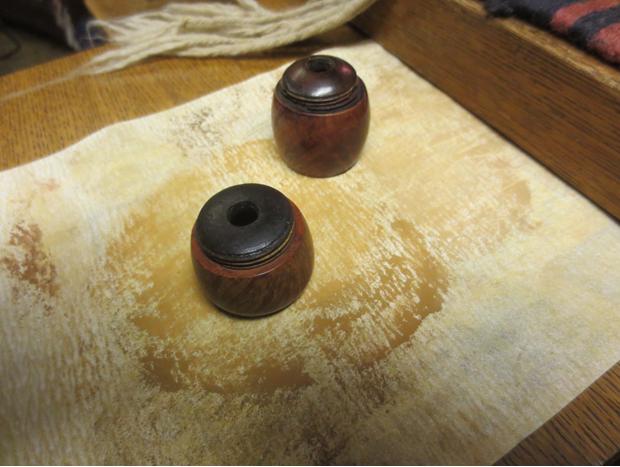
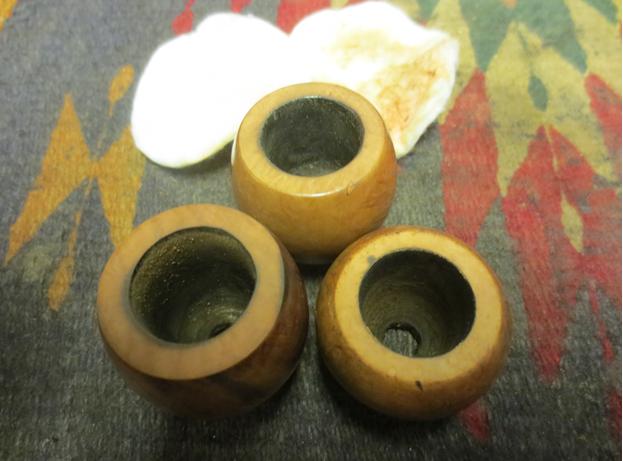
I wiped the bowls down with acetone on cotton pads to remove the finish and the grime.
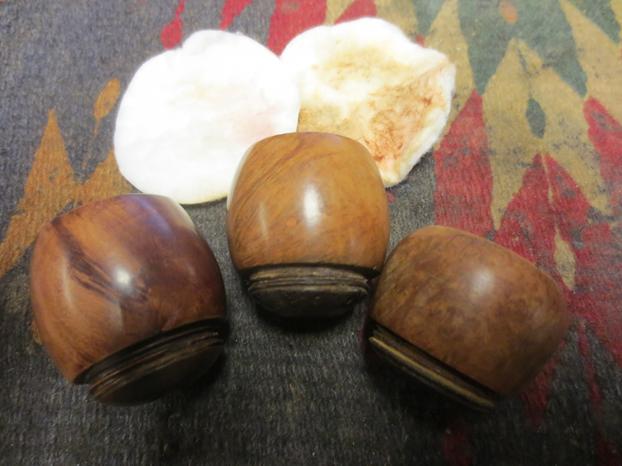
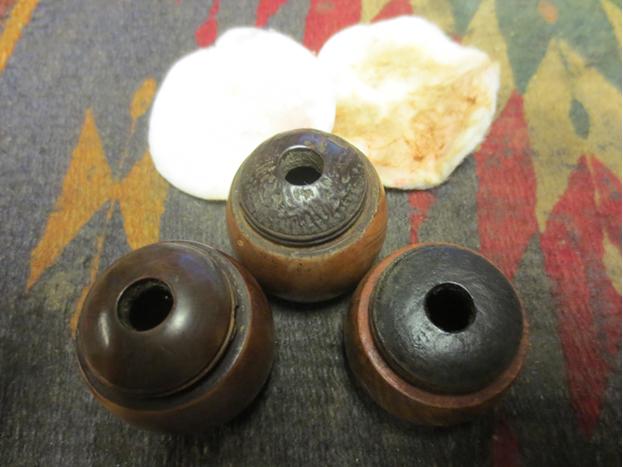
I stained all three rims with the light brown stain pen for the first coat. I then gave all three bowls several coats of Cherry stain Danish Oil and buffed them to a shine.
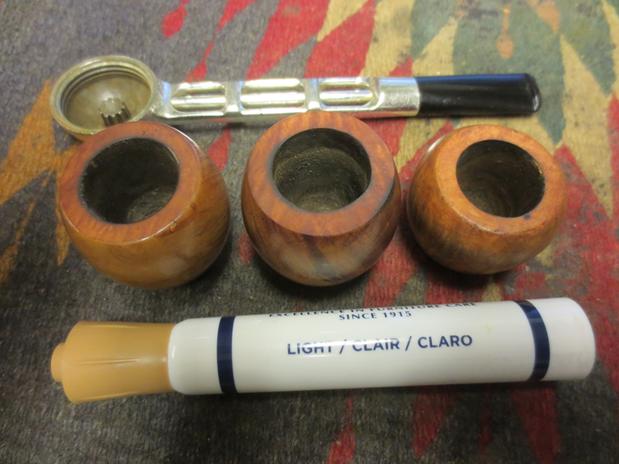
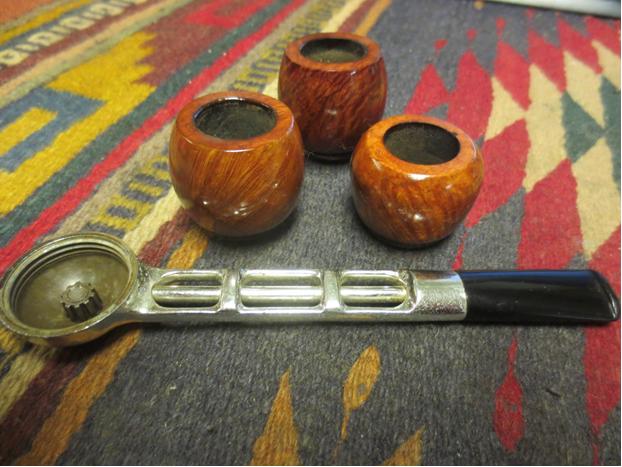
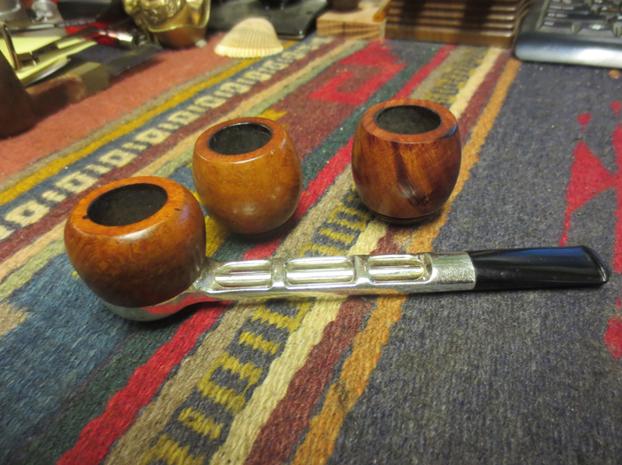
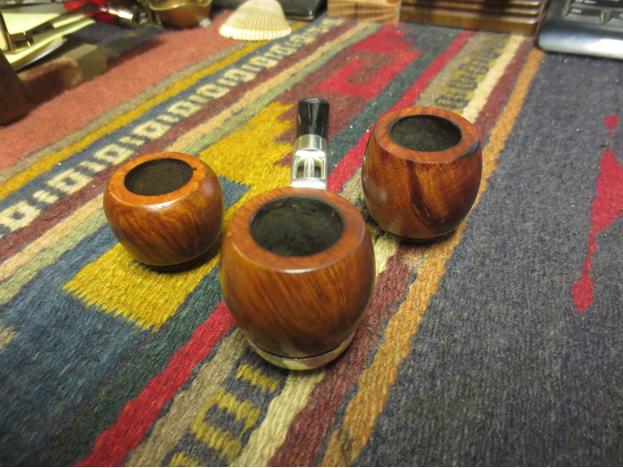
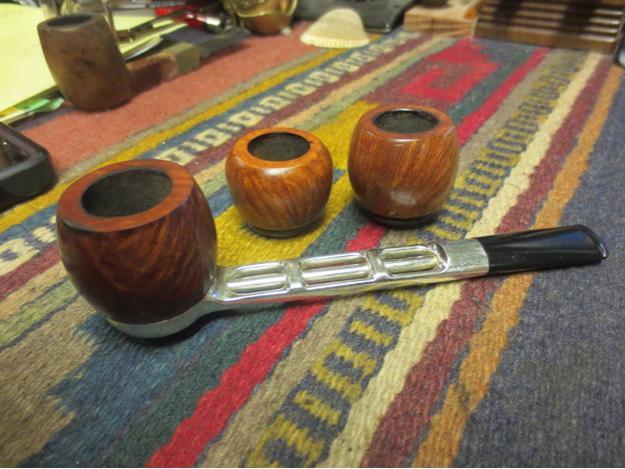
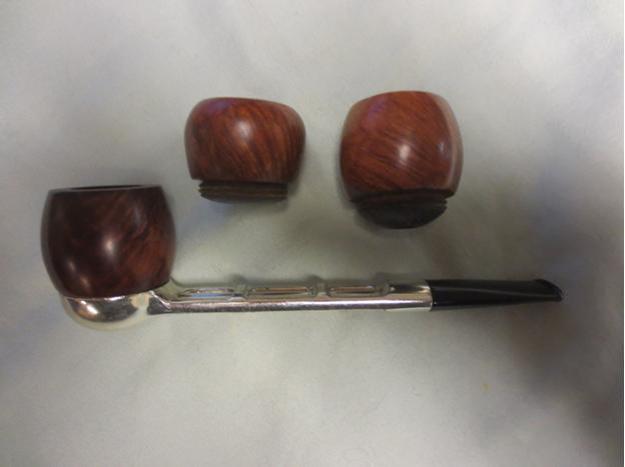
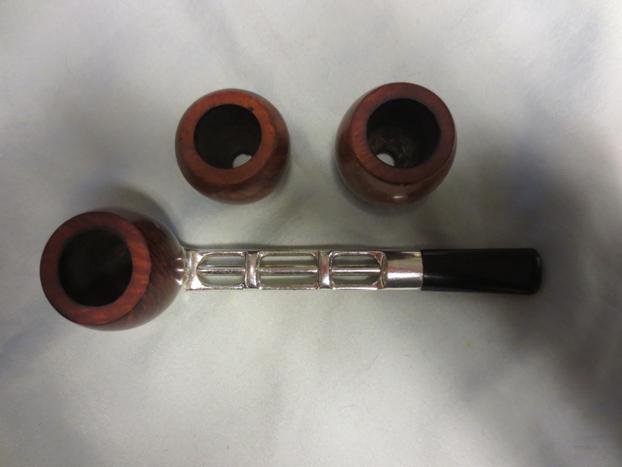
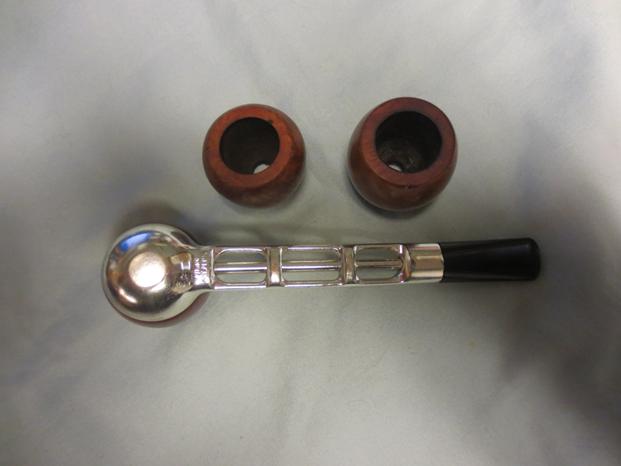
I finished the restoration by buffing the bowls with Blue Diamond and then giving the bowls and the stem several coats of carnauba wax. I buffed the whole pipe with a clean buff and then with a microfibre cloth to raise the shine. The finished pipe is shown in the photos below. Each photo shows a different angle and includes the base with all of the bowls in place.
Blog by Steve Laug
When I saw this pipe on eBay when my brother and I were searching for pipes in the estate pipe area I thought it would be a simple restoration. The briar appeared to be in decent shape and the finish looked very good. The rim was dirty but looked undamaged under the grime and tars. The horn stem did not look too damaged and should also be an easy repair. When the pipe arrived at my brother’s home he took the following photos and sent them to me to have a look at the pipe. It still looked pretty straight forward to me.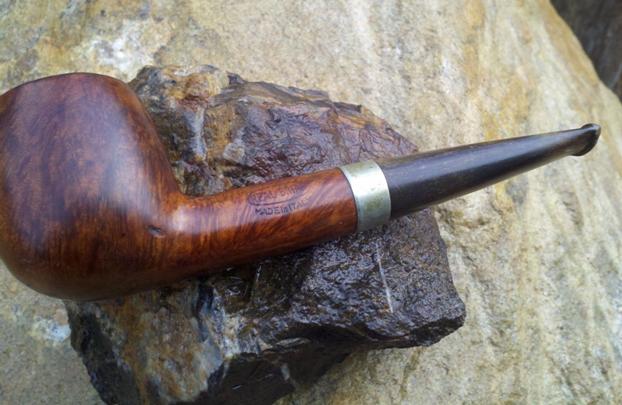
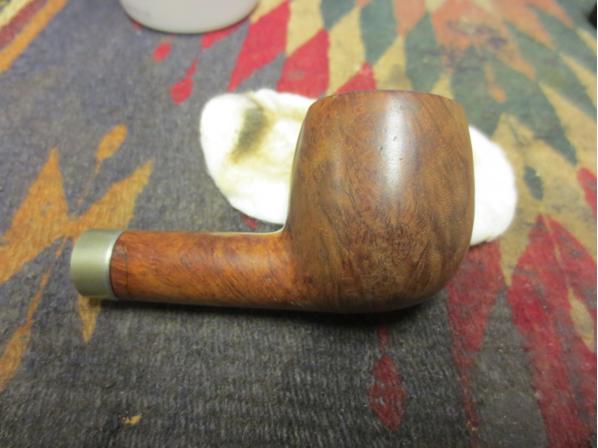
 When the pipe arrived here in Canada I was in for a surprise. It definitely looked good but the more I dug deeper the more issues that I found. The rim was tarred and covered with lava and underneath the outer edges were rounded over. The bowl had a light cake at the top and half way down and a deep groove had been cut in the bottom of the bowl by aggressive insertion of the pipe cleaner. The groove or pit was below the airhole entry to the bowl. The shank had been repaired and the crack that I noted in the pictures had been well repaired and the band put in place to strengthen the shank. It would not take much to clean it up. The finish which at first glance looked good had deep gouges in the bottom of the bowl and on the left side of the bowl near the shank union. These were sharp cuts and could not be steamed out. There was a large fill on top of the shank where it met the bowl. It appeared to be pink putty but it was solid and tight. The stem was also nicked quite a bit on the top mid stem and on the left side near the band. The top and bottom sides had some deep tooth marks on them that I could not see from the photos. The stem was very tight in the shank and took some persuasion to remove.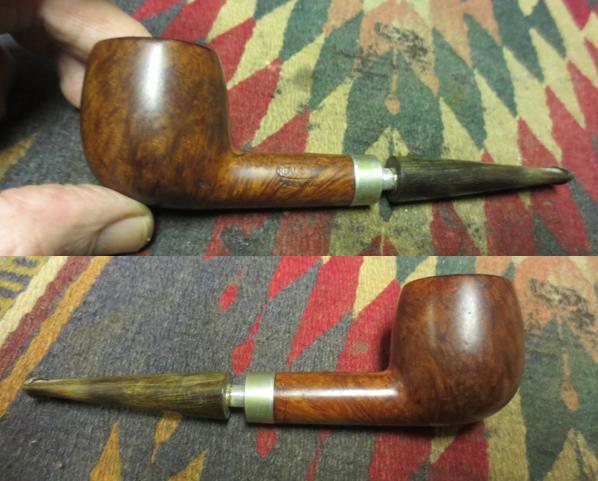
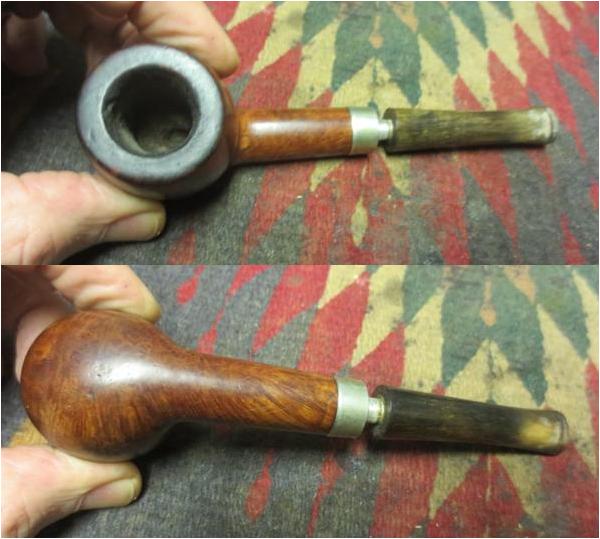 The next two photos show the repair work on the underside of the shank. It was very well done and would not need to be further dealt with. The third photo shows the rim with the rounded outer edge.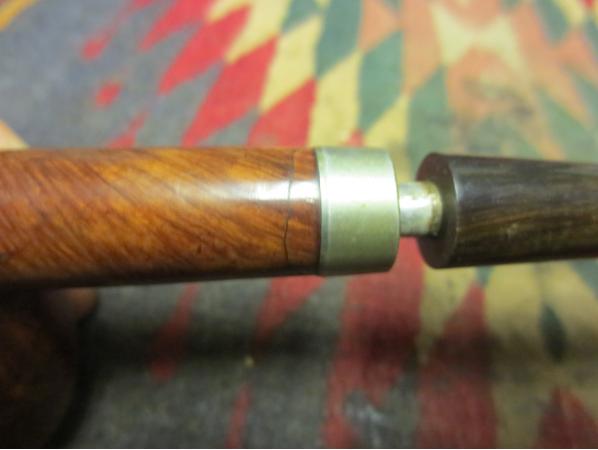
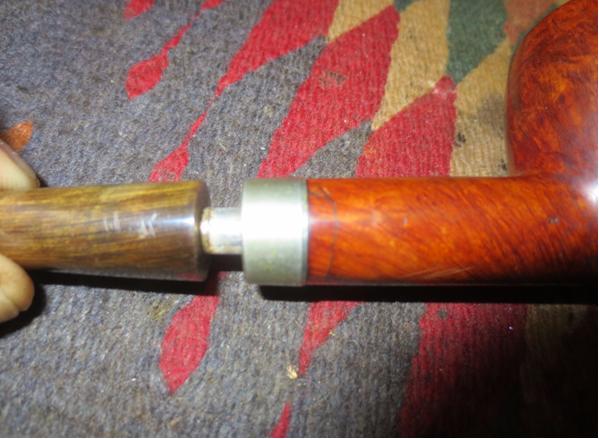
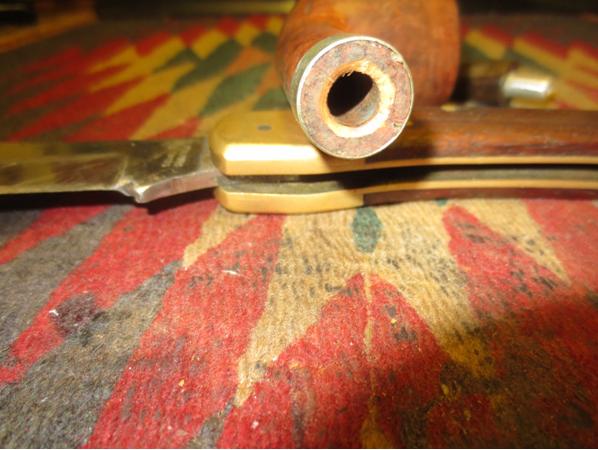
 I removed the stem from the shank with a bit of pulling and found that the metal tenon was covered with tar and had been stuck in the shank by the tars.
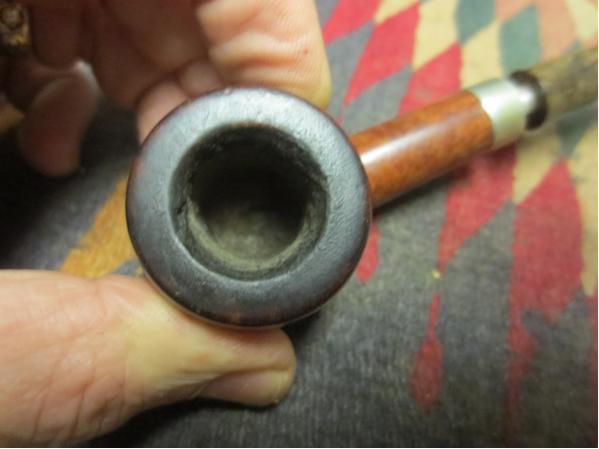
 I reamed the bowl back to bare wood to bring the rest of the bowl in line with the bottom half. I used a PipNet reamer with the second cutting head. In the second photo you can see the deep pit in the bottom of the bowl.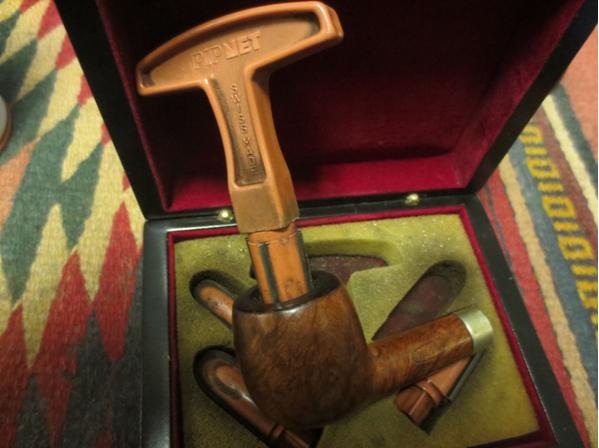
 I cleaned out the stem and the tenon with alcohol, cotton swabs and pipe cleaners.
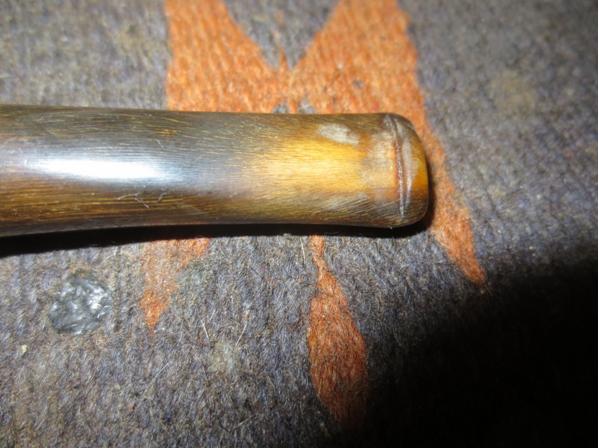
 The next two photos show the tooth marks on both sides of the stem. They are quite deep and they will need to be repaired.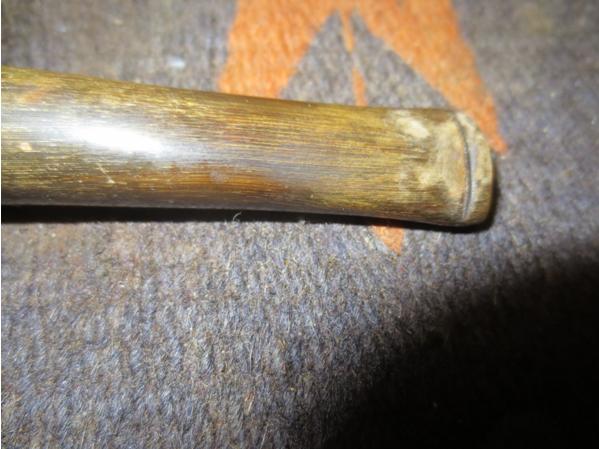
 I wiped down the stem with a cotton pad and alcohol and then put drops of super glue in the tooth marks. I sprayed them with accelerator.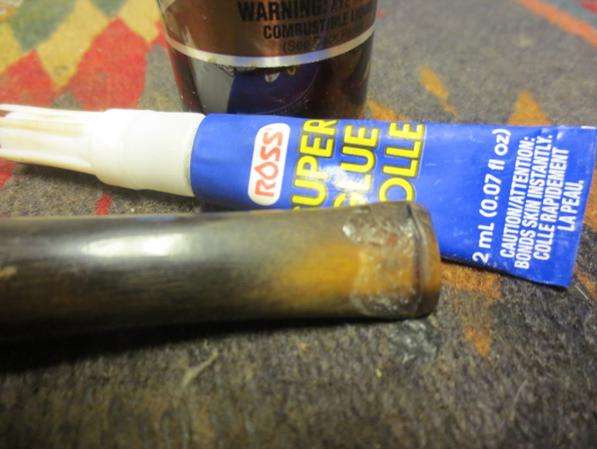
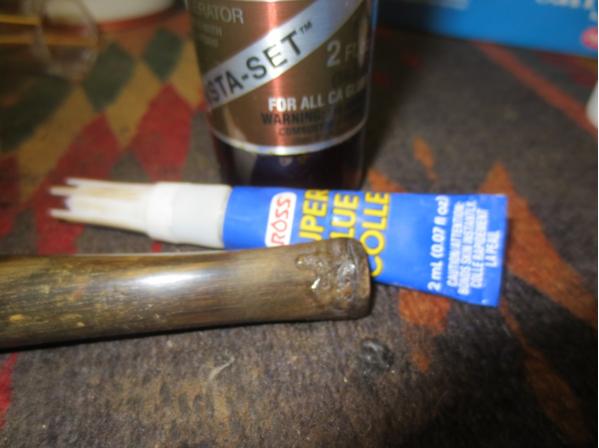 I scrubbed out the mortise, shank and bowl with alcohol, pipe cleaners and cotton swabs. I scrubbed until the pipe cleaners and cotton swabs came out clean.
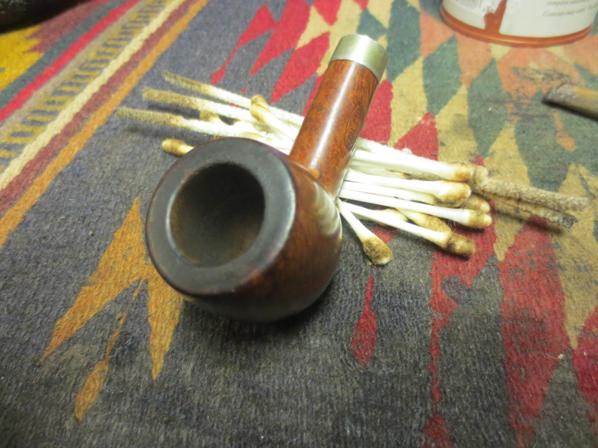 I topped the bowl to remove the damage to the bowl top and to clean up the round outer edge of the rim. Once again, note the deep pit in the bottom of the bowl that is visible in the second photo.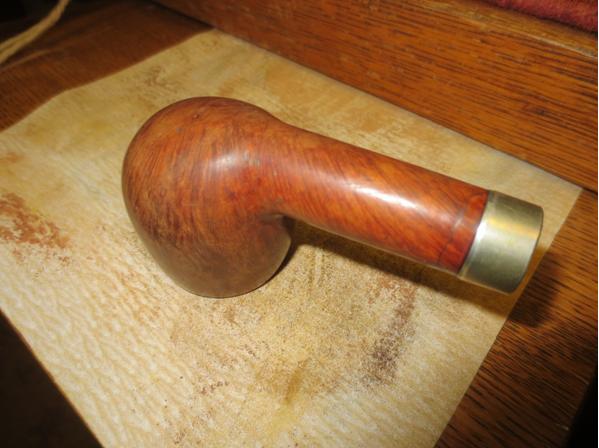
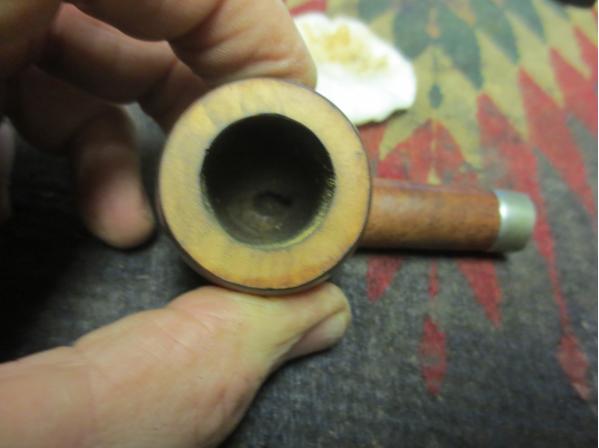 I scrubbed the exterior of the bowl with cotton pads and acetone to remove the finish and the grime that was ground into the briar. I was going to need to do some work on the gouges on the bowl sides and bottom so I wanted it clean.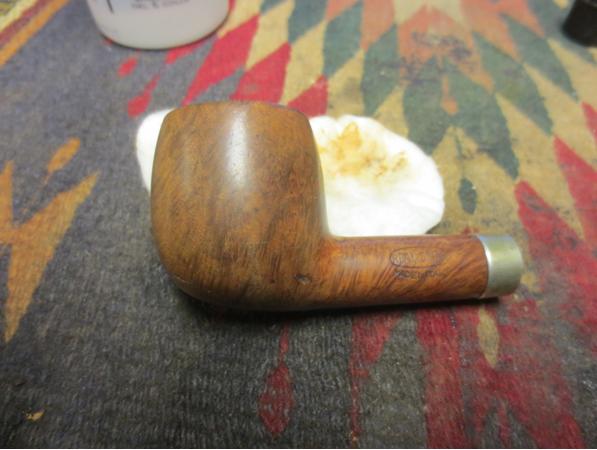
 The stem never sat completely tight against the shank so I beveled the inner edge of the mortise to accommodate the tenon/stem junction.
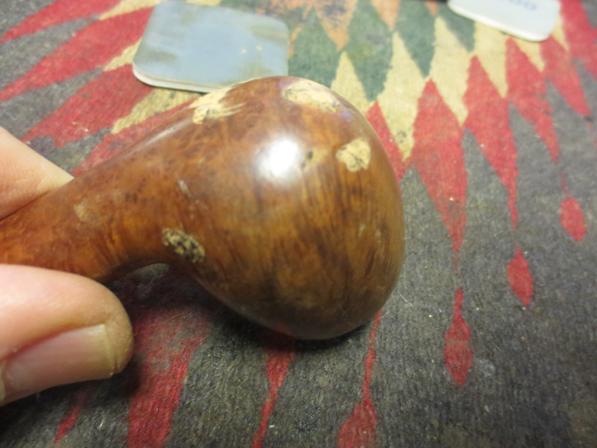
 With the externals cleaned I decided to do the repairs on the gouges on the bowl side and bottom. I put a drop of clear super glue in the divot and then pressed briar dust into the hole with a dental spatula. I pressed the dust deep into the glue to get a good fill. The second photo below shows the bowl side and bottom with what looks like a pox. The briar dust and glue fills are dry at this point and ready to sand. I sanded them with 220 grit sandpaper and then with 1500-2400 grit micromesh sanding pads.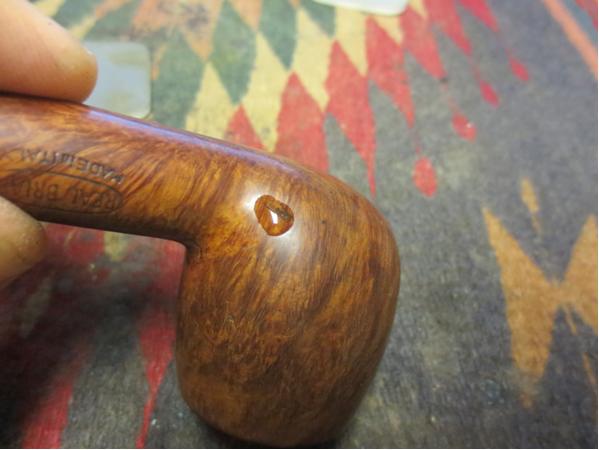
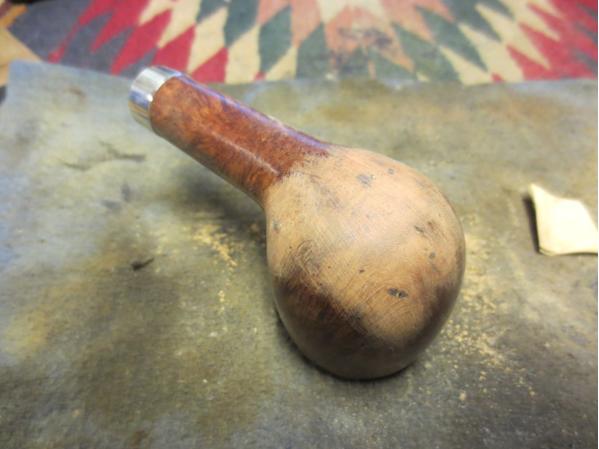
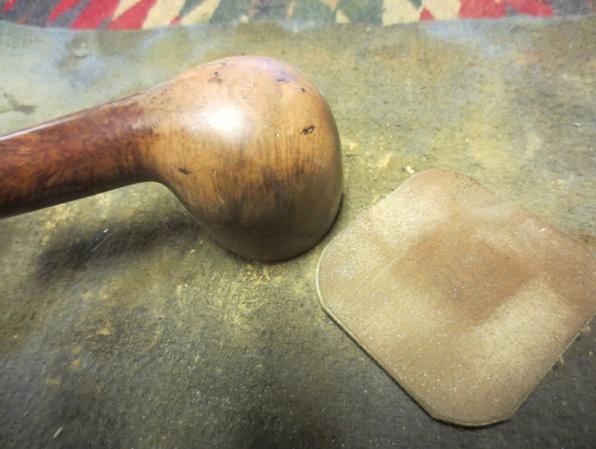 I used a light brown stain pen to give the fresh sanded briar on the bowl bottom and the rim an initial coat. I then stained the entire bowl with a dark brown aniline stain, flamed it and repeated the process. I set it aside to dry for about 30 minutes before buffing with Blue Diamond on the wheel.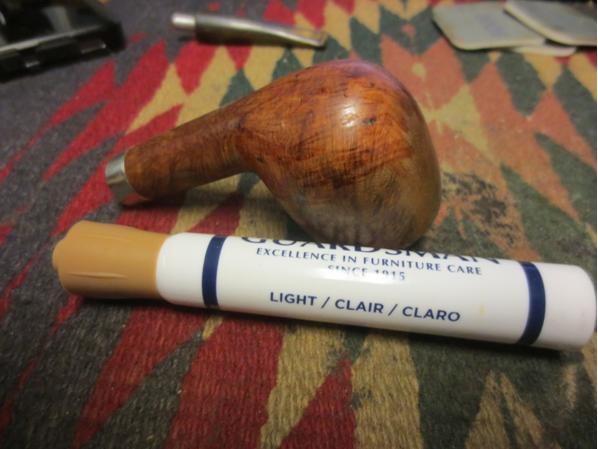
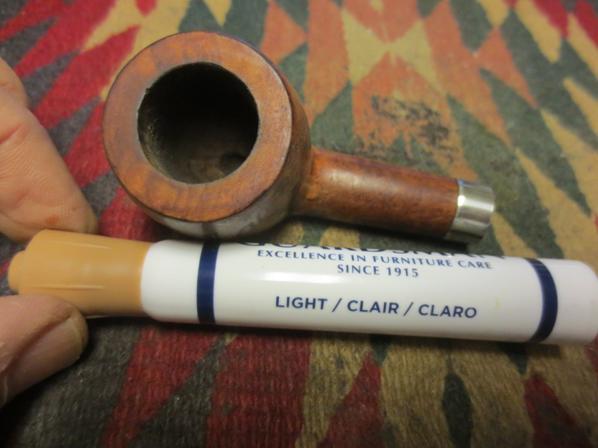
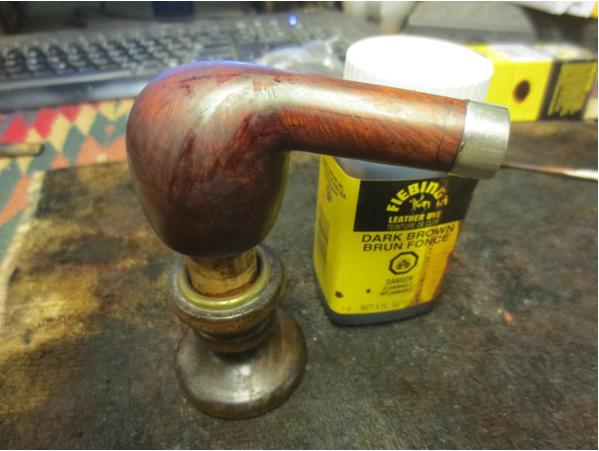
 I mixed a batch of pipe mud (cigar ash and water) to fill the pit in the bottom of the bowl. I put a pipe cleaner in the airway with just the tip extending into the bowl. I used the spatula to put the mud in the bottom of the bowl and pressed it into the pit with the hand of the spatula. I added the pipe mud until the bowl bottom was level.
 I set the bowl aside to so that the pipe mud would cure and worked on the stem. I sanded the stem with 220 grit sandpaper to smooth out all of the nicks and scratches as well as blend in the super glue fills. It took a lot of sanding to smooth out the stem surface and remove as many of the scratches and dents as I could and still keep the profile. The super glue dried hard and the clear glue looks shiny and raises colour in the horn so it is very visible at this point.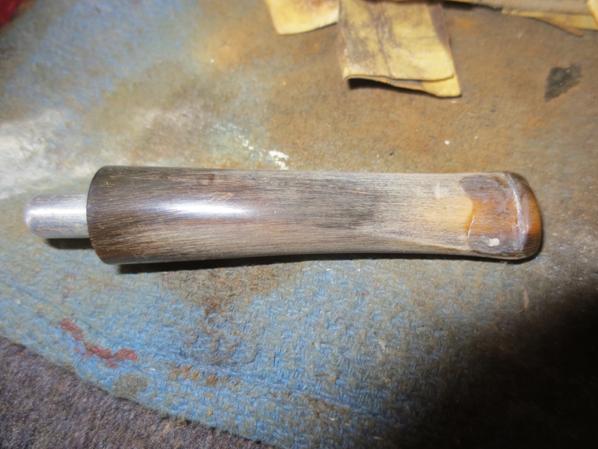
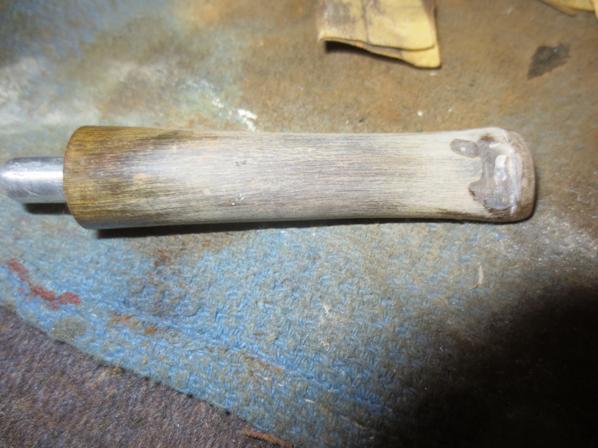 When I had smoothed out the surface of as many flaws as possible I worked on it with micromesh sanding pads. I wet sanded it with 1500-2400 grit pads. The repairs are starting to blend in. They will never be invisible but they are smooth. I rubbed the stem down with Obsidian Oil before continuing.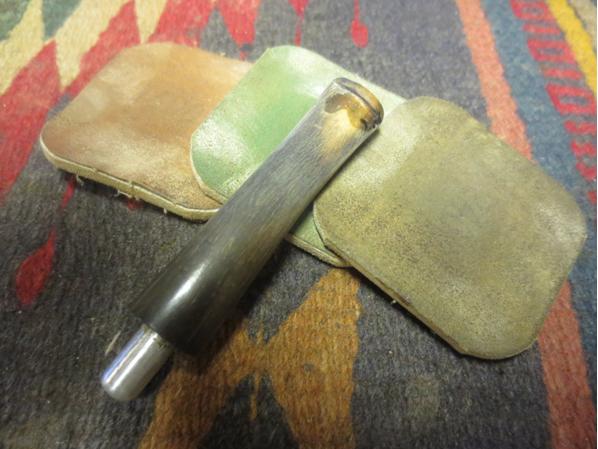
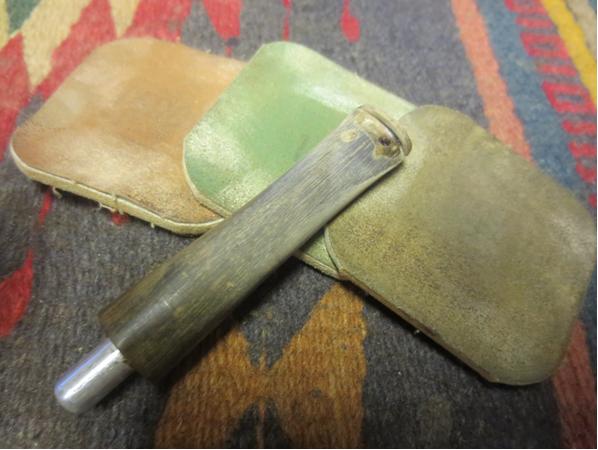 I wet sanded the stem with 3200-4000 grit micromesh and then dry sanded with the same grit pads. I gave it another coat of the oil.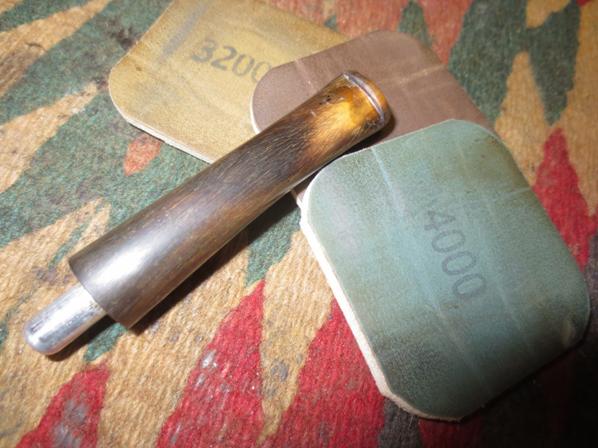
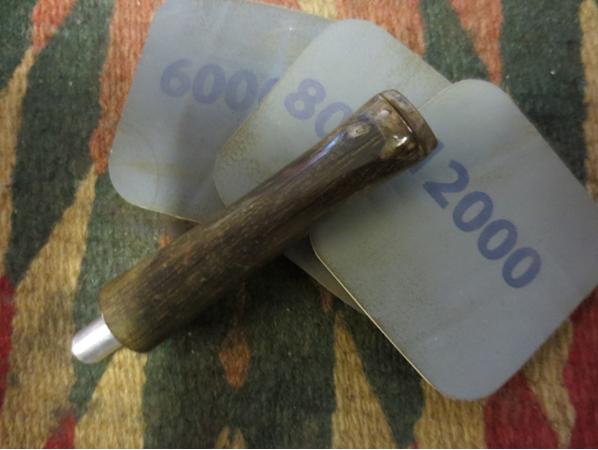
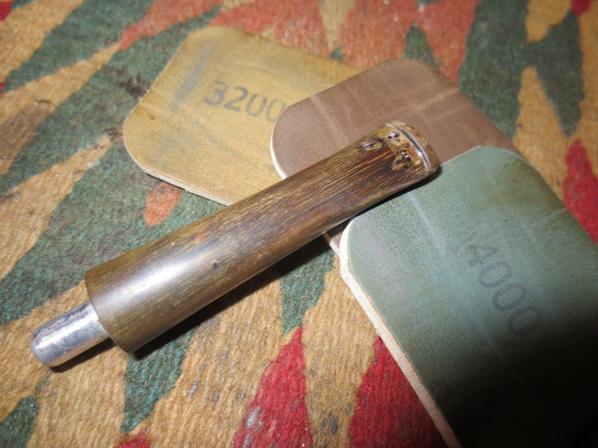 I finished by dry sanding the stem with 6000-12000 grit micromesh sanding pads and then buffing the stem with Blue Diamond on the wheel. I gave it a final coat of Obsidian Oil and set it aside to dry.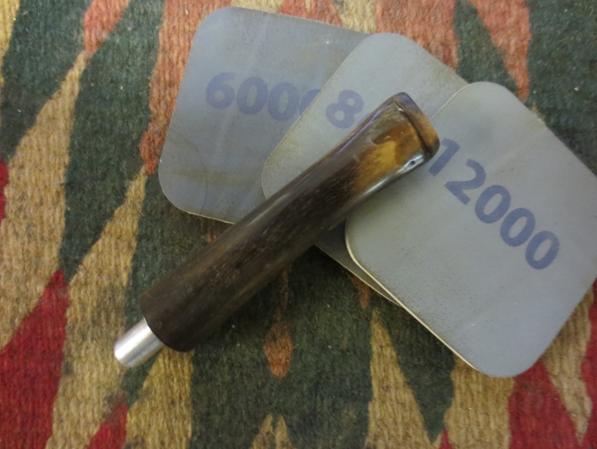
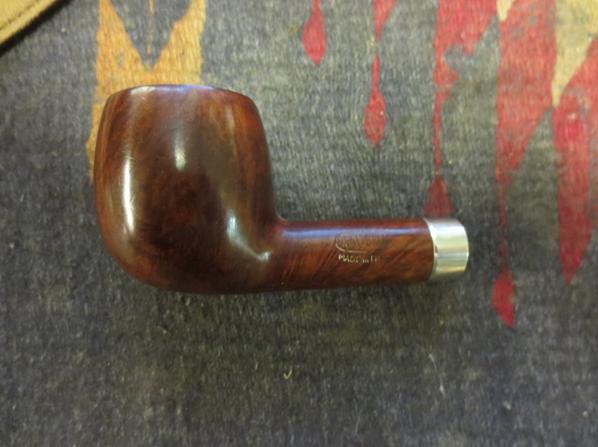
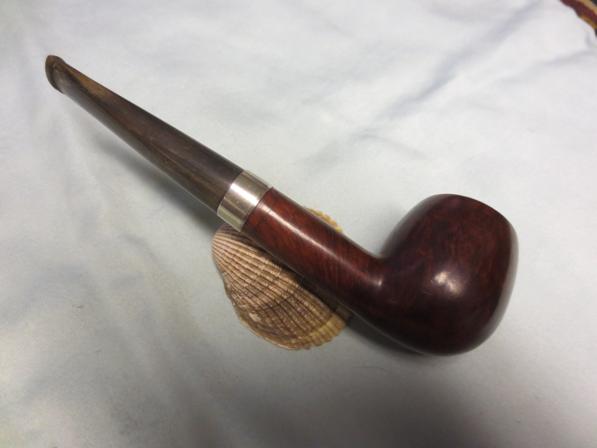
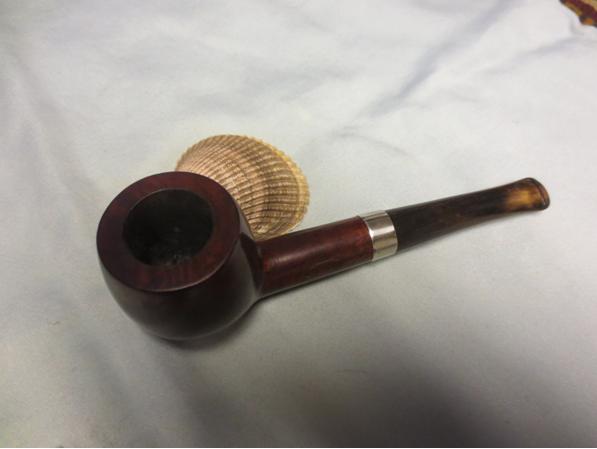
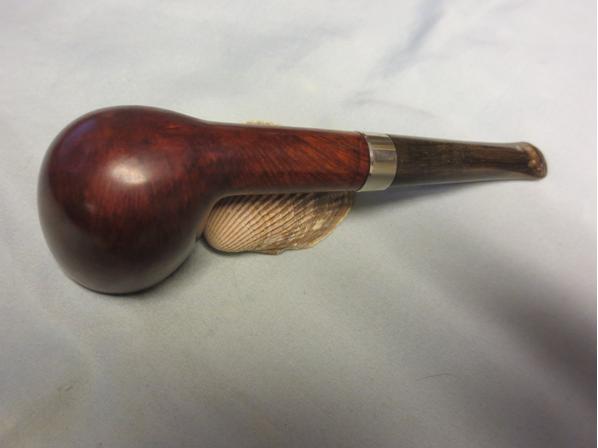
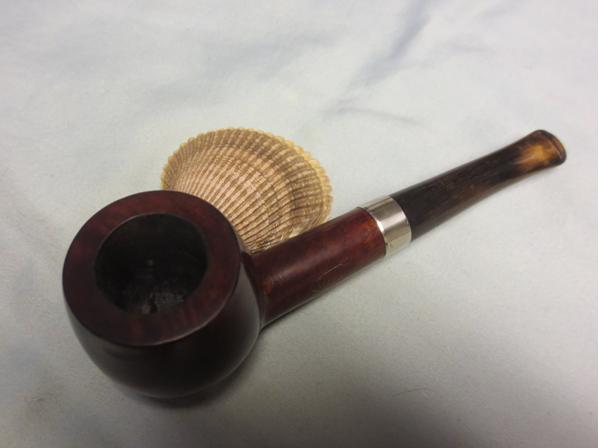
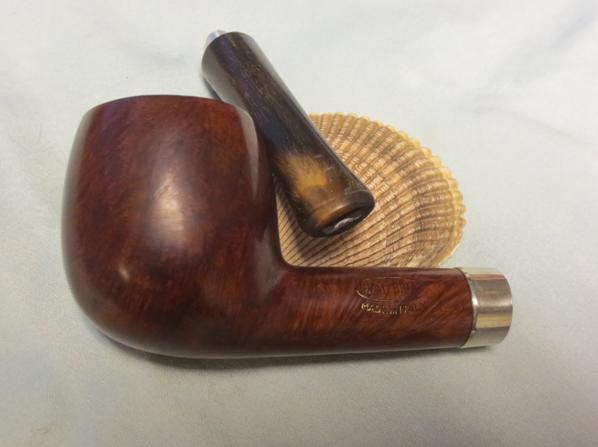
 I polished the silver band with silver polish and brought the parts together. I gave the pipe a final buff on the wheel and gave it multiple coats of carnauba wax. I buffed it with a clean buff and the with a microfibre cloth to raise the final shine. The finished pipe is shown in the photos below. While the patches in the stem still show they are shiny and smooth to the touch and will give protection to the stem. The repairs to the cuts and gouges in the bowl look really good and virtually disappear under the stain and the polish. The pipe should live through at least another life time before it needs this kind of attention again.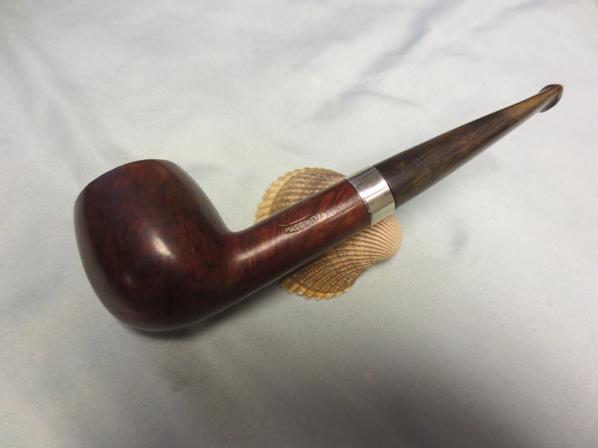


Blog by Steve Laug
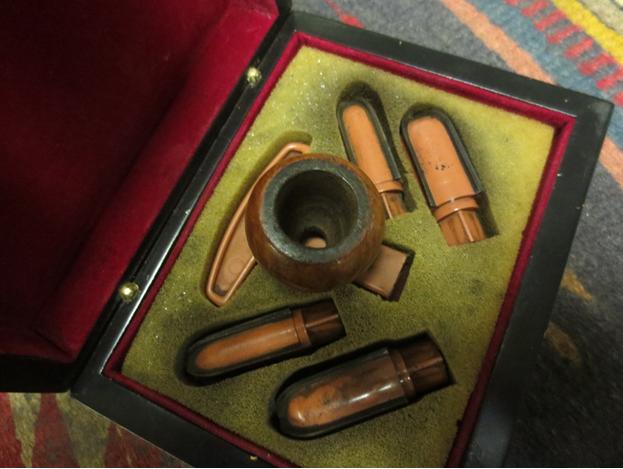
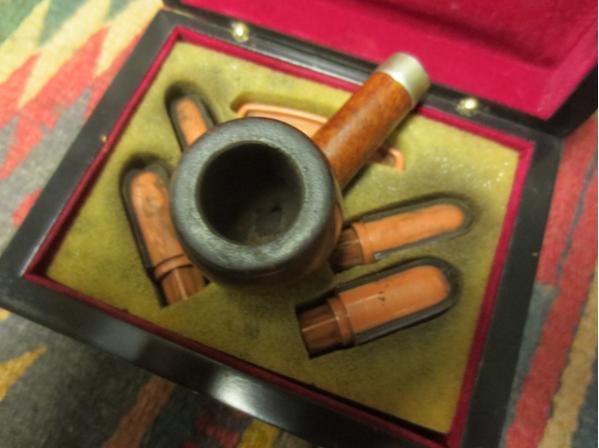
Okay, that may be overstating the case but needless to say for this pipe restorer/refurbisher new tools that I can add at different times that make my life easier and give me a chance at matching a finish or a rustication always are met with excitement. I am on the prowl for tools and methods of restoration like I am on the prowl for pipes. My newest addition came a little late for the two Savinelli pipe rims that I rusticated but they will be used soon. I have a few others that I need to work on and these will see some use. I picked up a cased assortment of burrs at a tool liquidator near my house. Just look at all the tip shapes and lengths. Can you imagine the kind of patterns that can be cut with them from the various angles I use – vertical, horizontal and diagonal? I can’t wait to see what I can do with these. Until then they go in my kit for rusticating rims and bowls with my Dremel. Had to share them with folks who might be interested. My wife and kids think it is one more step in my downward slippage into dotage. Thanks for looking and even taking a moment to let me think that it matters!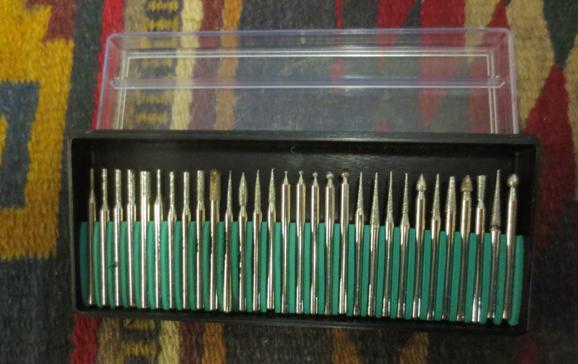
Blog by Steve Laug
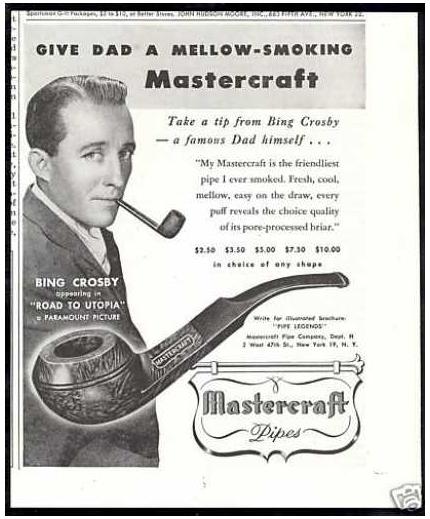 Over the years I have cleaned up quite a few Mastercraft pipes. My brother picked one up on Ebay for me recently. It looked like a good one when he sent me the photos of the pipe. I could not wait for it to arrive and I could begin to work on it. In one of my earlier blogs I wrote a bit about the history of the brand (https://rebornpipes.com/2014/06/22/learned-a-bit-of-american-pipe-history-mastercraft-executive-choice-pot-restored/). In that article I made the connection of the brand to Bing Crosby. I posted this old advertisement for the pipes with the old crooner himself.
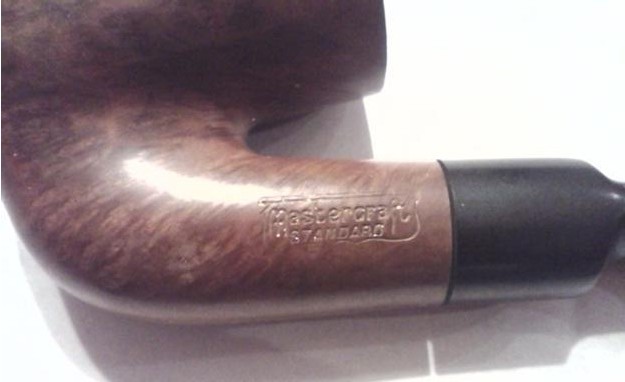
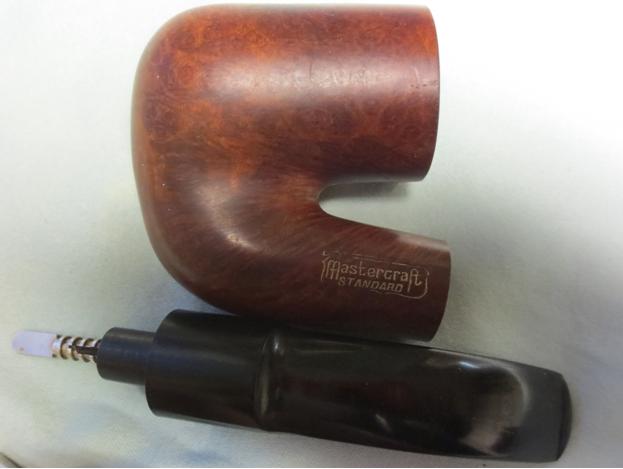
The connection between the pipe in this advert and the Oom Paul I received from my brother. They both bear the same stamping. The both had the shield on the left side of the shank and then bore the same stamping. The Oom Paul was stamped Mastercraft over Standard in the shield. On the right side of the shank it was stamped I continued through the Google list for Mastercraft and one of the next listing was in Pipedia. http://pipedia.org/wiki/Mastercraft
It doesn’t appear that Mastercraft was ever a manufacturer and bought pipes from multiple factories — mostly French and English. It survived briefly the post war recovery and then was acquired by Grabow. As an importer of finished pipes M/C worked with many of the world’s foremost pipe makers and had in inventory finished product from the likes of… England: Hardcastle and Orlik. France: Ropp, Jeantet, Jean LaCroix. Italy: Lorenzo, Gasparini, Federico Rovera, Emilio Rovera, GIGI Pipe, Brebbia, Santambrogio, Fratelli Rossi. Israel: Shalom and Alpha. Plus all the tools, pouches and lighters from Hong Kong and Japan. The list of suppliers is enormous.
I had also found some older RTDA Almanac pages on Chris’ Pipe Pages site. http://pipepages.com/index.html. The first one of these shows the Mastercraft Standard. It sold for $3.50 and was a midrange pipe value as shown on the list below.The first of these shows the address of the Mastercraft Pipe Company in New York which was where they were prior to moving to North Carolina. I clipped this image from the 1949 RTDA Almanac. It is an early catalogue listing, since the brand was created in 1941.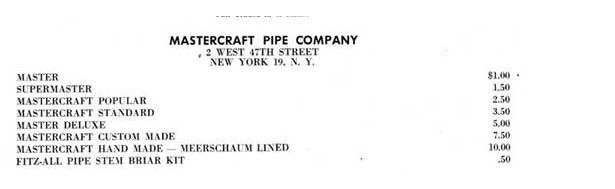 My guess, judging from the previous advertisement and the 1949 RTDA Almanac clipping above, is that the pipe I have is from the period between the beginning of the company and the publication of this catalogue (1941-1949). After that period in the 50’s and 60’s the names of the pipes changed and I was not able to find the Mastercraft Standard in later catalogues.
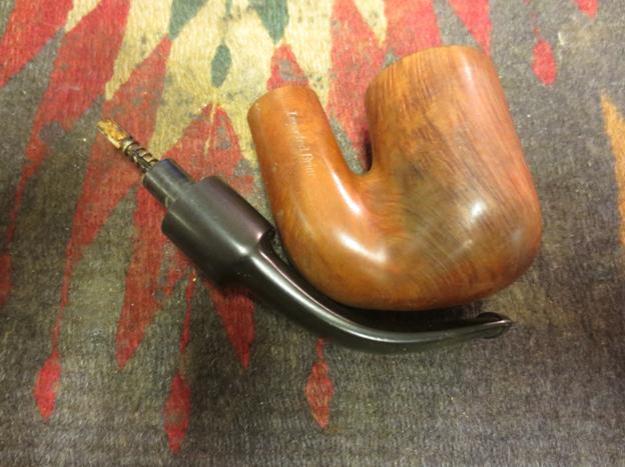
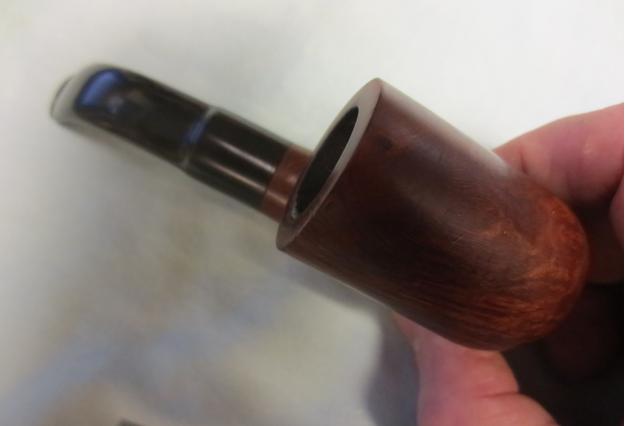
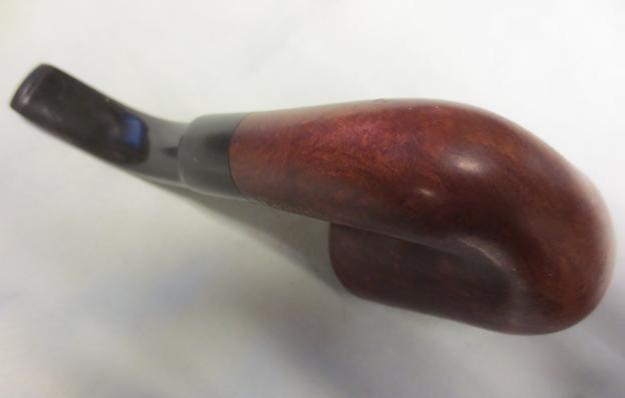
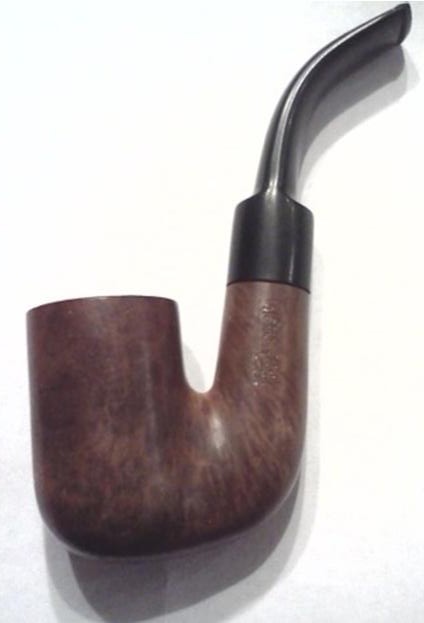 The photo to the left and the next two photos that follow are the ones my brother sent to me before I received the pipe. They give a good idea of the condition of the pipe when I received it. The pipe had a natural finish, no stain on the briar. Over the years the briar takes on a richer colour. This one had taken on a reddish tint. The stamping on the left side still showed the gold stamping in some of the grooves. There were specks of white paint on the bowl, shank and stem. There was also some darkening on the sides at the shank junction with the bowl from oils and soiling from the previous pipe man’s hands. The rim was thickly tarred with lava overflow. The bowl had a thin cake on the top 2/3 and the bottom 1/3 was still fresh briar showing raw briar. The pipe obviously had not been smoked to the heel. The stem was quality rubber and did not show signs of metal fragments in the mix that seem to appear in many of the war year pipes. There was little oxidation but there were tooth marks on the top and underside of the stem near the button. There was tooth chatter on both sides. The stem did not fit tight against the end of the shank.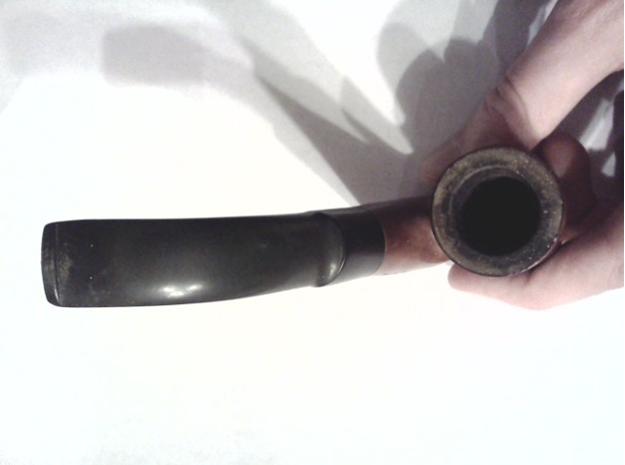
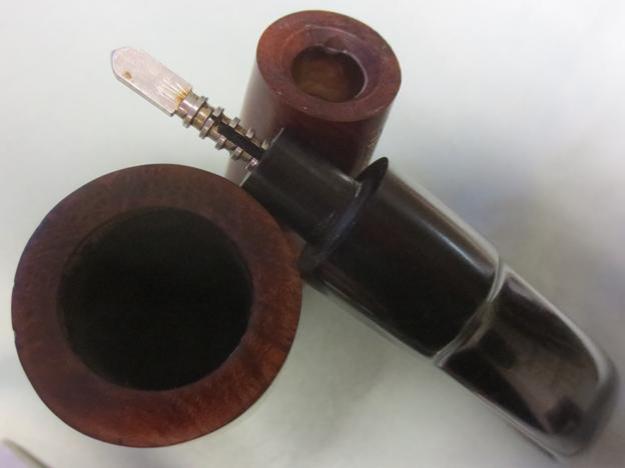
 When the pipe arrived I put it in my refurbishing box and would eventually get to it. Today I took it out of the box to work on it. I removed the stem and was a bit surprised to see the interesting and unusual stinger apparatus in the end of the tenon. It had a flat blade that ended in a point. It was almost a spear point. It sat down in the sump of the shank. It ended at a spiral cylindrical piece with a slot in the last half of the cylinder. It fit into tenon by pressure and was easily twisted free.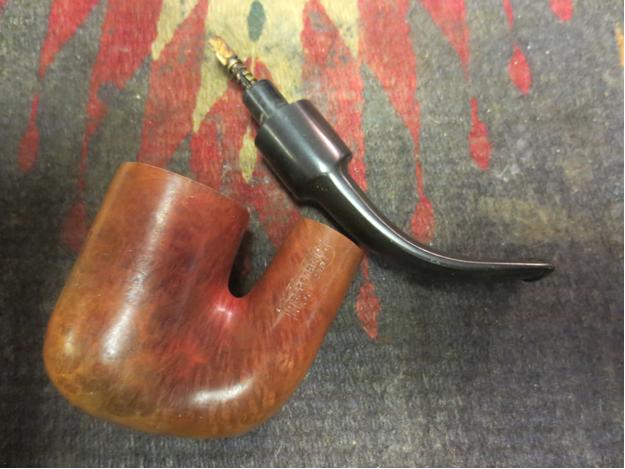
 I scrubbed the bowl with acetone on cotton pads to remove the grime and soil in the briar and the white flecks of paint on the bowl and shank. I scrubbed the rim with the acetone as well to try to remove the lava overflow that was present. I used a pen knife and scraped at the lava between wipes of acetone and was able to remove the buildup without damaging the finish on the rim. I did not need to top the bowl!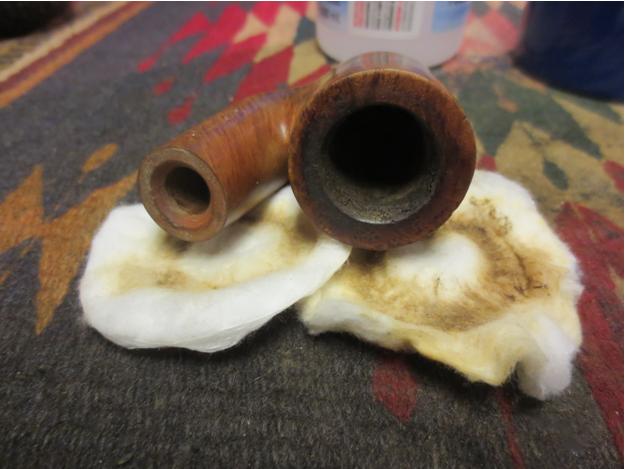
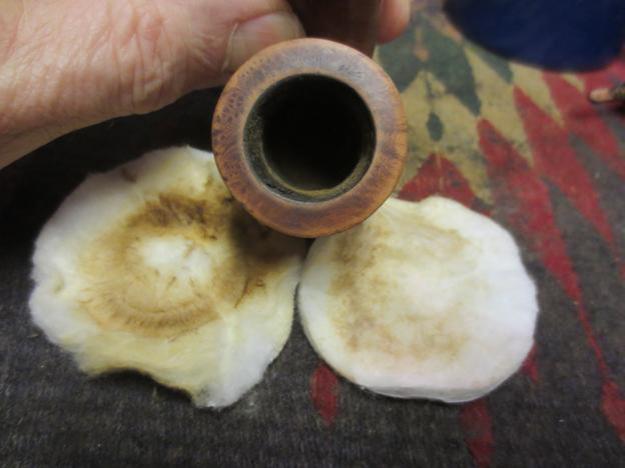 The acetone removed the grime from the briar and all of previous coats of wax that had given it a dull finish.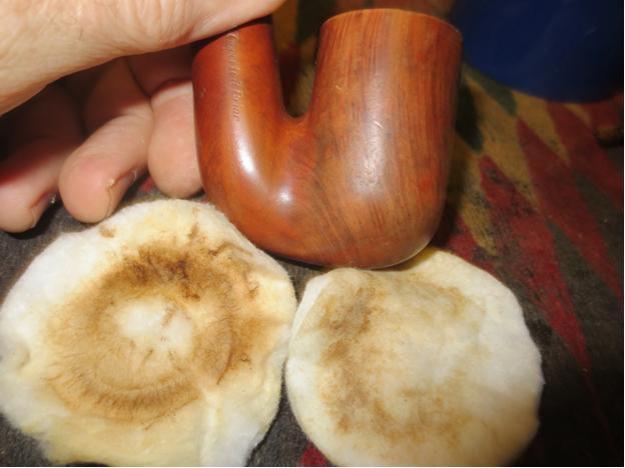
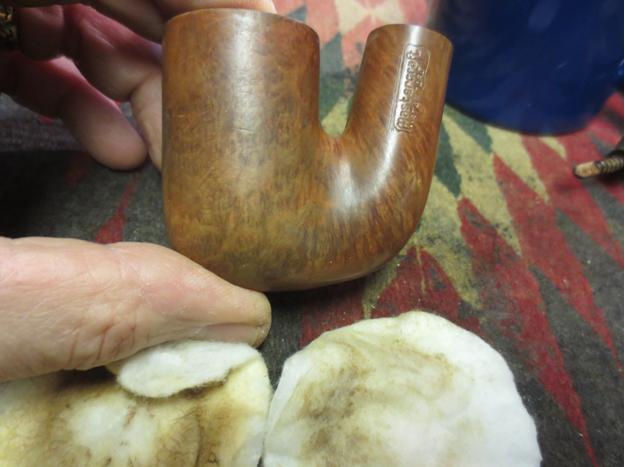
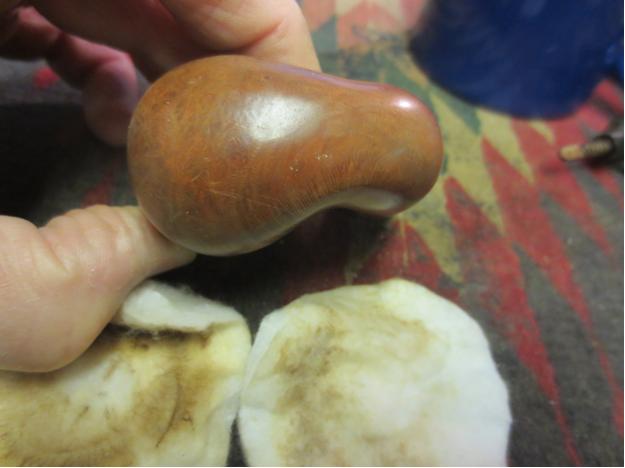 Once I had cleaned the finish of the bowl and shank with the acetone I washed it down with alcohol and dried it off. I used some antique gold Rub ‘n Buff to restore the stamping to its previous look.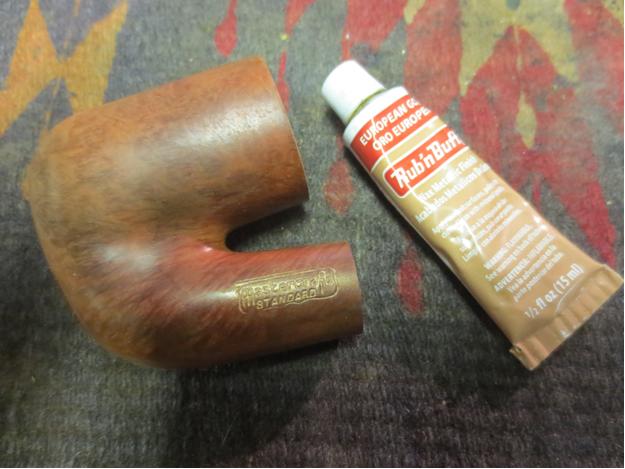
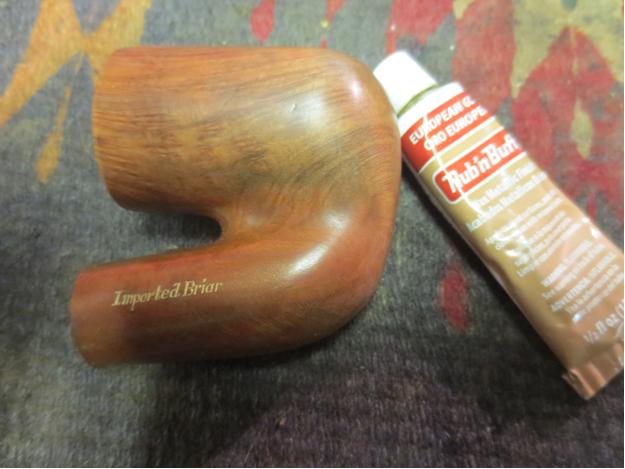 I hand buffed the bowl with a shoe brush and a little Conservator’s Wax to protect it during the rest of the clean up. Though I probably should have done the next step before the work on the stamping I did not do so. But such is the way things go. I reamed the bowl with a PipNet reamer using the third cutting head to take back the cake to bare briar. Since the bottom 1/3 of the bowl was uncaked I wanted the transition between the sides of the bowl from top to bottom to be smooth.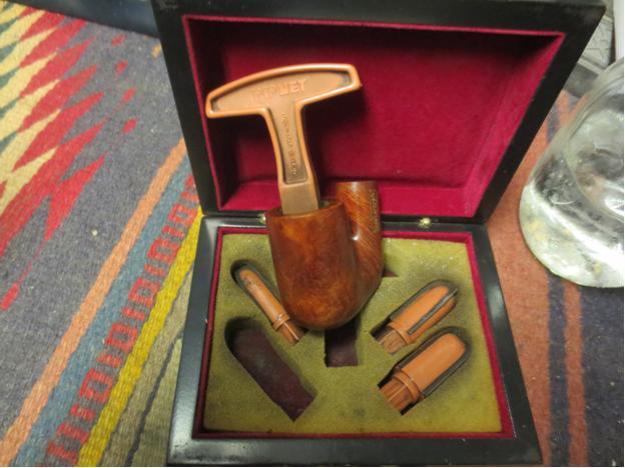
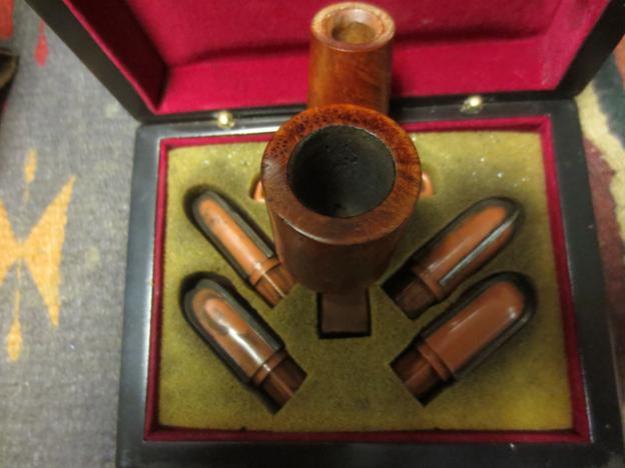 I scrubbed the stinger with alcohol and cotton swabs to remove the grime. I also scrubbed it with a brass tire brush.
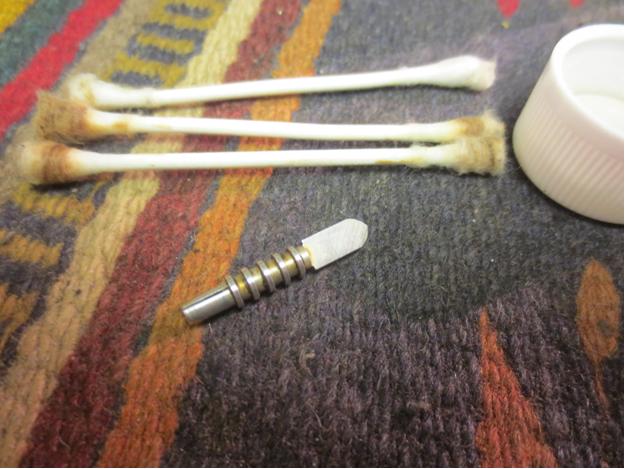 I cleaned out the airway in the stem with pipe cleaner, cotton swabs and alcohol to remove the tars and oils. I was surprised to find that the tenon was lined with an aluminum tube. The stinger pressed against the sides of the tube when it was inserted. I think it was also an attempt to strengthen the tenon.
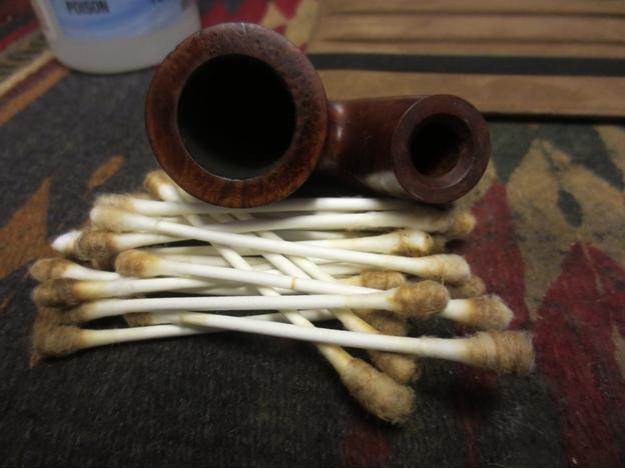
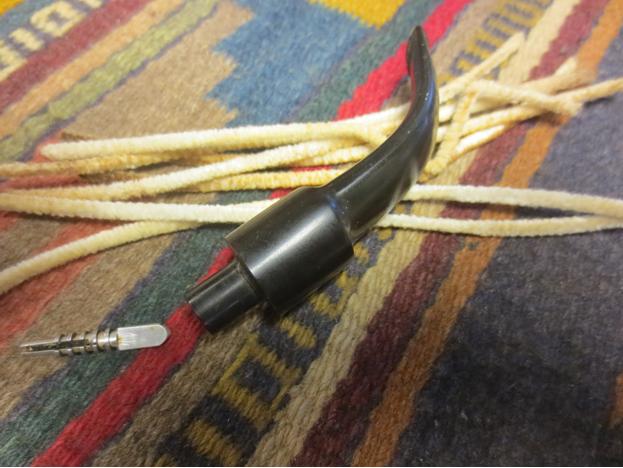 I scrubbed out the mortise, sump and airway on the bowl with cotton swabs, pipe cleaners and alcohol until they came out clean.
 I sanded the tooth chatter and tooth marks on the top and bottom of the stem with 220 grit sandpaper to remove them as they were not too deep.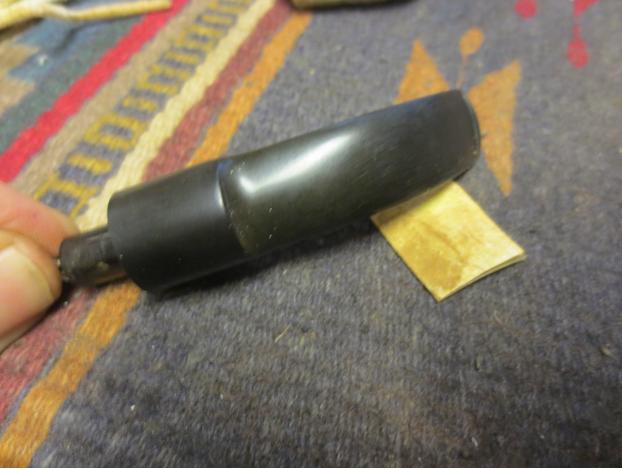
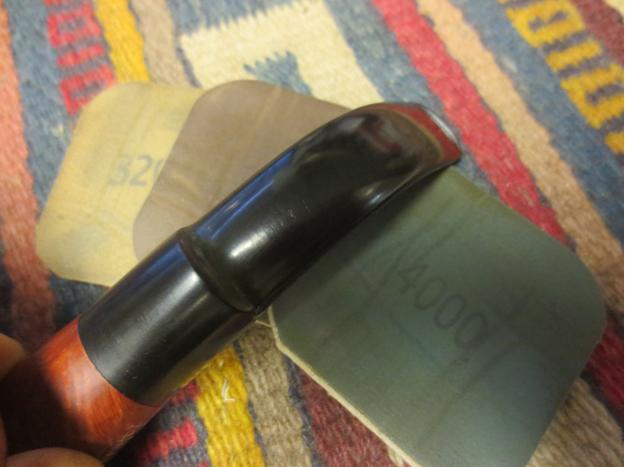
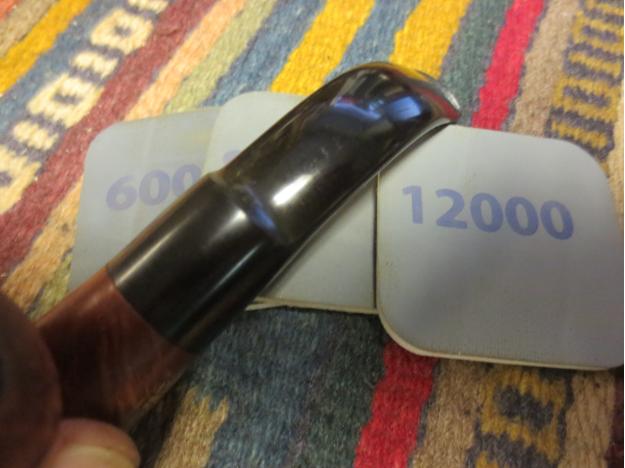
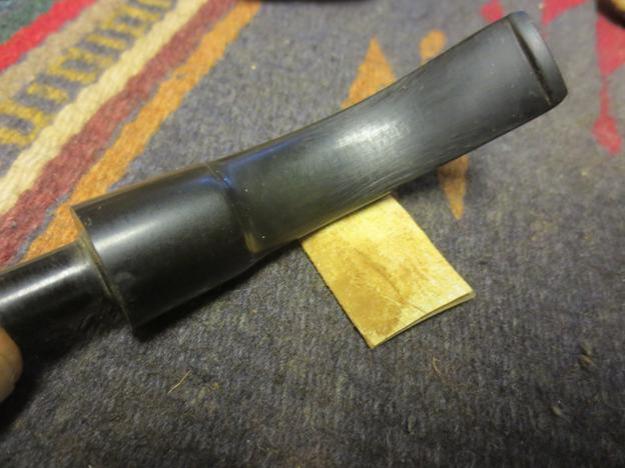 I wet sanded the stem with 1500-2400 grit micromesh sanding pads and rubbed the stem down with Obsidian Oil. I dry sanded it with 3200-4000 grit pads and gave it another coat of oil. I finished sanding it with 6000-12000 grit pads and gave it a final coat of oil, then left it to dry.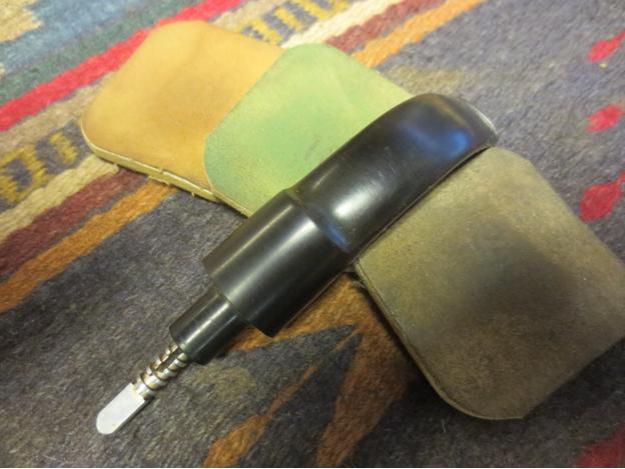
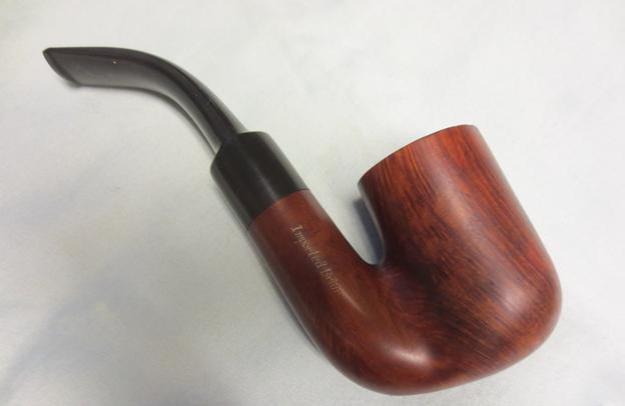
 I rubbed down the bowl with a light coat of olive oil and then buffed it with Blue Diamond. I gave the bowl and stem multiple coats of carnauba wax and then buffed it with a clean buffing pad. I gave it a final buff with a microfiber cloth to raise the shine. The finished pipe is shown in the photos below. It should provide many years of service to the next pipe man whose rack it graces. It will likely outlive both that pipe man and me and be passed on it trust to the next person who will enjoy it companionship for the years that they have it in trust. These old pipes always outlive the pipe man who keeps them company if they are well cared for (and even sometimes when they are not!).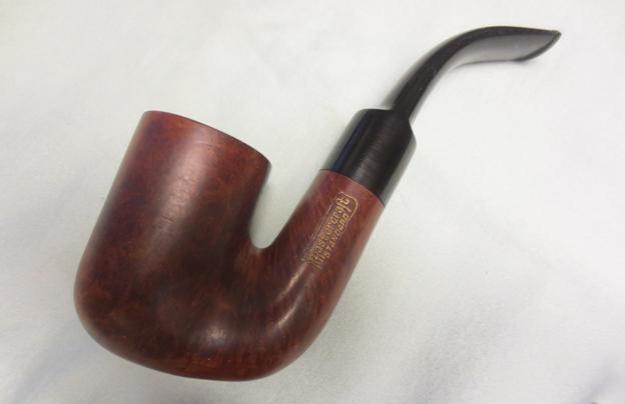
Blog by Steve Laug
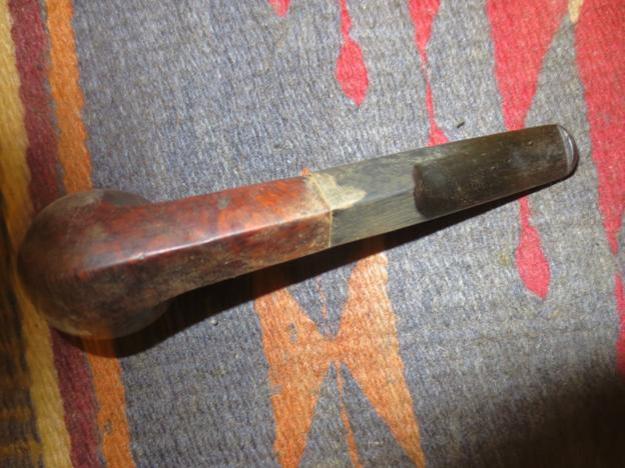
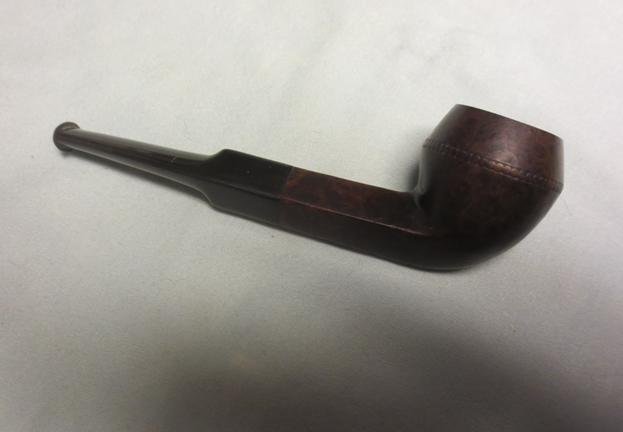
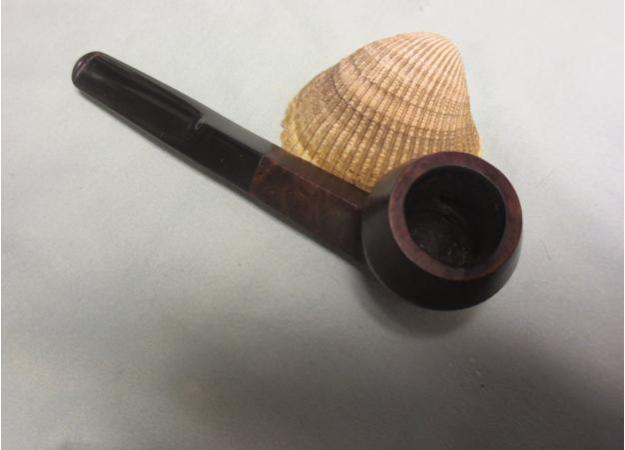
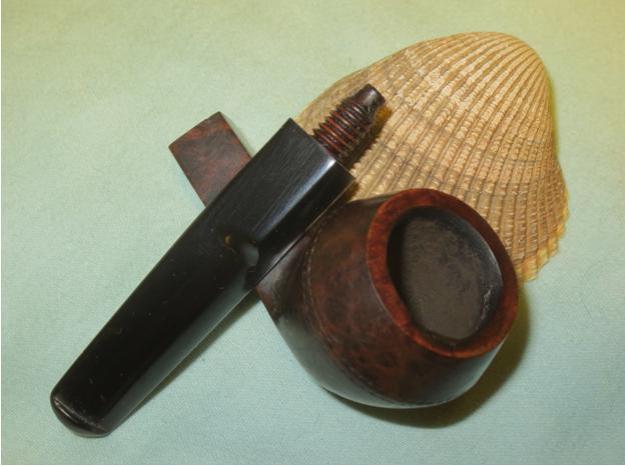
When I found this old bulldog on EBay I was drawn to it and immediately put in a bid. I won it as no one else saw the charm in this one. It was a hard to see the stamping in the photos and many of the photos the seller included were out of focus which even made it harder to figure out the state of the pipe. The seller identified the pipe as a GC Bulldog. The seller’s photos that I have chosen below show the condition of the pipe. The finish is dirty and there are definitely dings and nicks in the briar. The bead around the cap of the bowl is a nice touch and it too is worn. The stem is oversized and is larger in diameter than the bowl so it makes one wonder if it is original. The threaded bone tenon in the stem fits perfectly in the shank with the alignment matching. The angles of the shank and the stem match. The vulcanite stem is just slightly larger than the shank on the left side of the pipe but works on the right side. The button is rounded and has an orific opening that shows that it is the proper age for this pipe. All that I saw was enough for me.
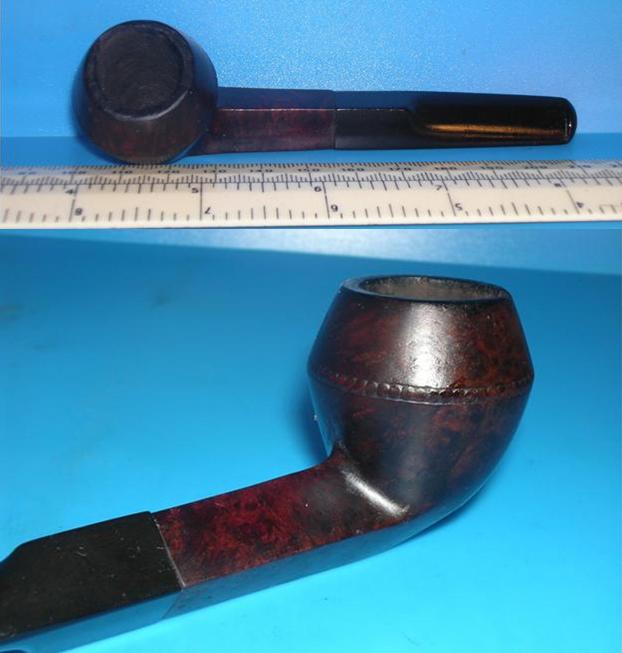
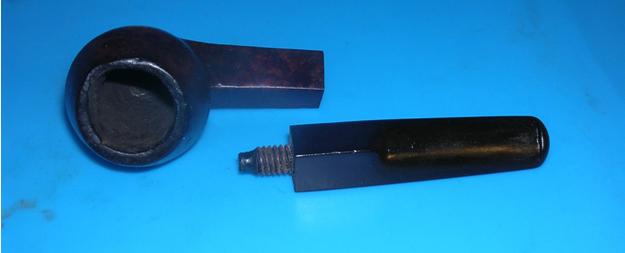 When the pipe arrived my assessment from the photos was correct. The stem was a good fit but it was larger than the shank on the left side. The bone tenon was in excellent shape with no wear and tear on it. It was stained with the tobacco juices of the long smoking. The shank was dirty and the airway in the stem was dirty. The airway in the bowl was clogged so no air would go through it no matter how hard I blew on the shank. The rim had serious damage on the right side front. There was a chunk of briar missing from the inner edge of the bowl and there was a scar running part way down below that. The rim had a divot at that point and also on the front itself that looked to have been caused by overzealous lighting from the exact same point every time the pipe was smoked. The bowl had been reamed and looked clean and smooth other than the damage on the right top side. The finish was dark and dirty. The stem had tooth marks on the underside near the button and tooth chatter on the top side. The next four photos show the pipe when I brought it to the work table.

 The next photo is a close-up of the rim to show the damage. I decided to top the bowl so I used the topping board and 220 grit sandpaper to remove the top surface damage to the rim edge. When I had topped as much as I could without changing the profile of the bowl it was time to decide how to address the damage. I set that aside for a bit and worked on the fit of the stem.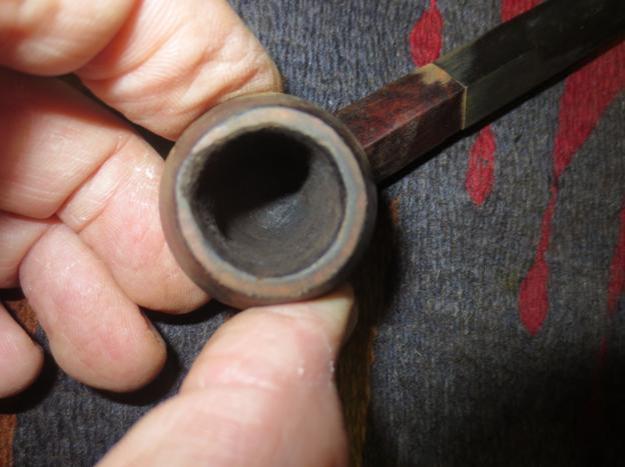

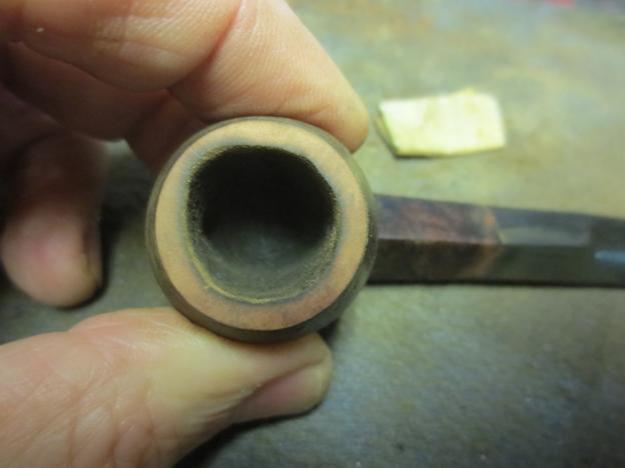 I sanded the stem sides with 220 grit sandpaper to bring it to the same height and dimensions as the shank. It took work on the left sides and some adjustments to the right side. I also needed to work over the points of the diamond to make the alignment straight and flowing. I sanded the tooth marks and tooth chatter at the same time and was able to remove it.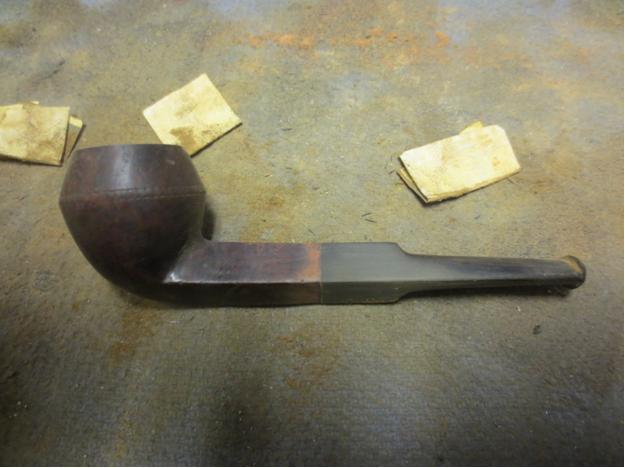

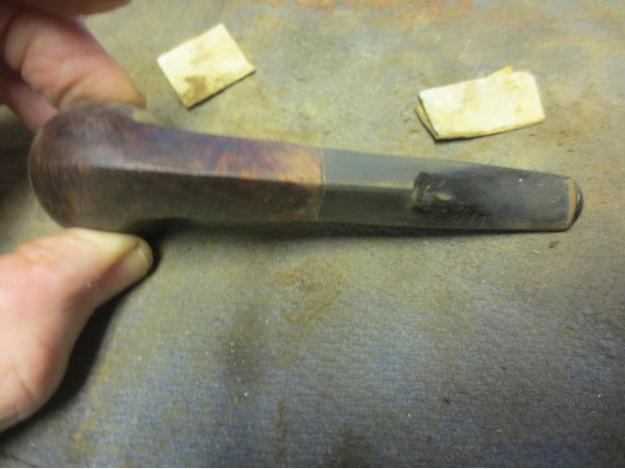
 I wiped the bowl down with acetone on cotton pads to remove the damaged and dirty finish that remained on the bowl. With these old finishes the grime and some of the clouded top coat disappears and the grain begins to poke through as the bowl is scrubbed.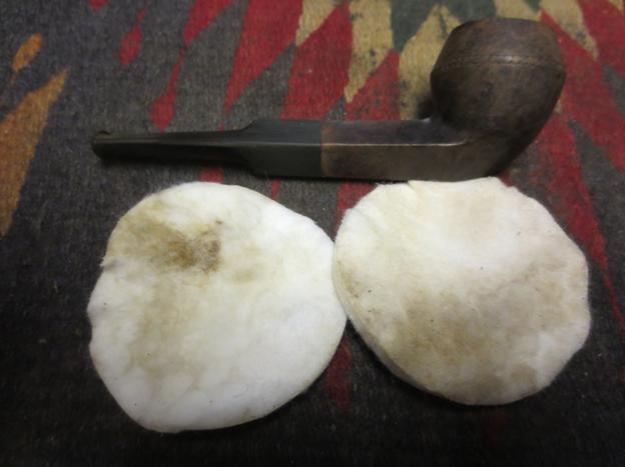
 I worked on the internals of the mortise, airway and the airway in the stem. Since the airway in the mortise was plugged I used a round dental pick to push through the grime that plugged the airway. I reamed out the airway with the pick and then scrubbed it with pipe cleaners and a shank brush until it was clean. I scrubbed out the mortise with pipe cleaners, cotton swabs and alcohol until it was clean and smelled fresh. I swabbed out the inside of the bowl with cotton swabs and alcohol. I used pipe cleaners and alcohol in the stem airway and cleaned the threads on the bone tenon with cotton swabs.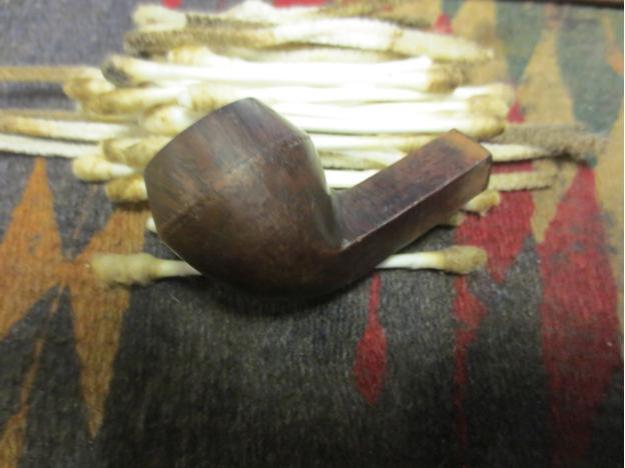

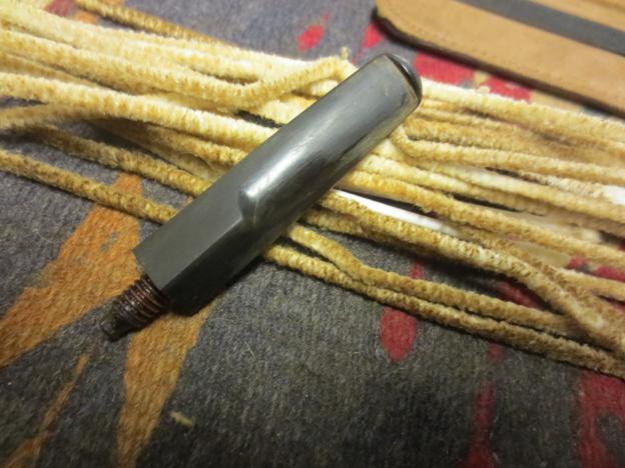 With the interior of the bowl clean I lightly sanded the inner edge of the bowl in the damaged area. I put some small drops of super glue on the rim and inner edge and used a dental spatula to press briar dust into the glue.
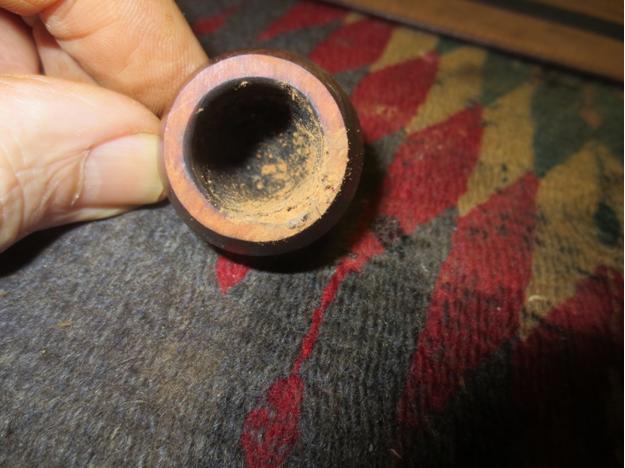 I retopped the bowl to smooth out the repair and sanded the inside with a folded piece of 220 grit sandpaper to smooth out the curve of the inner edge.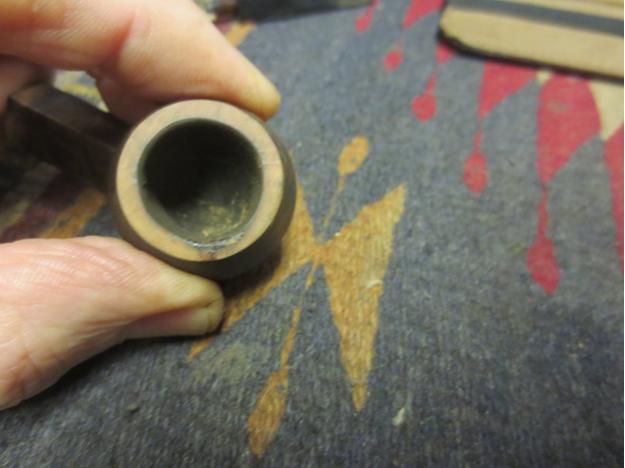
 I sanded the top and rim edge with 400 grit wet dry sandpaper and then with 1500 grit micromesh in preparation for staining. I stained the areas where I had sanded the shank to match the stem and the rim with a dark brown stain pen.

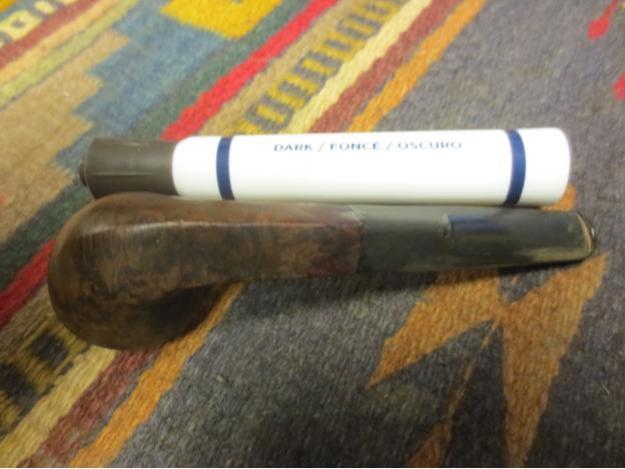 I hand buffed the stained areas and the rim and took the following photos.


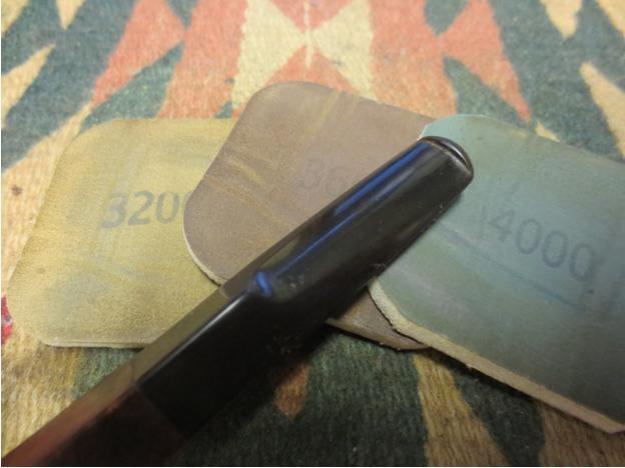
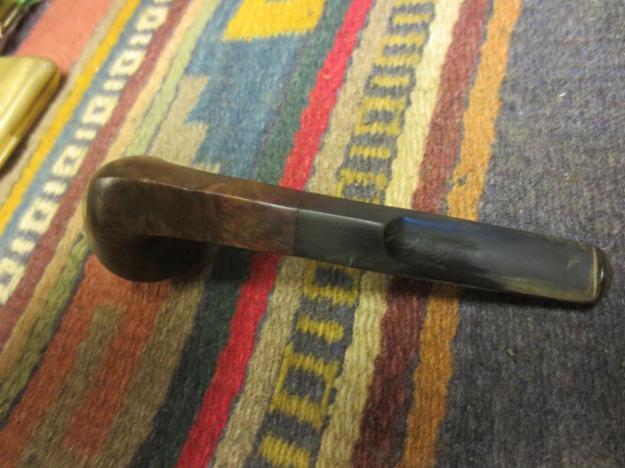 I wet sanded the stem with 1500-2400 grit micromesh sanding pads and then rubbed the stem down with Obsidian Oil. I dry sanded the stem with 3200-4000 grit pads and gave it another coat of oil. I finished sanding with 6000-12000 grit pads and gave it a final coat of oil. I set the stem aside until the oil dried.
 I gave the bowl and stem several coats of Conservator’s Wax and hand buffed the pipe and stem with a shoe brush and a microfibre cloth to raise the shine. The finished pipe is shown in the photos below. There are still some dents and dings on the sides of the shank and bowl that I chose to leave there. Some of them are the very faint stampings that remain on the right and left topside of the diamond shank. Some of them are beauty marks that came with the long life and hard travel of this little pipe. I chose to leave them as they were and imagine the stories that go along with them. Thanks for looking.



 rebornpipes