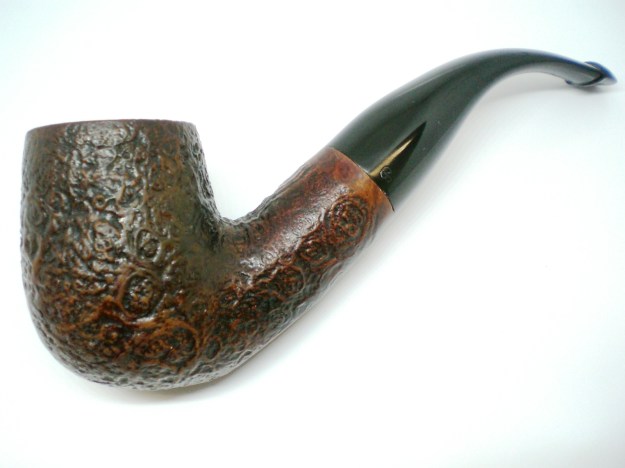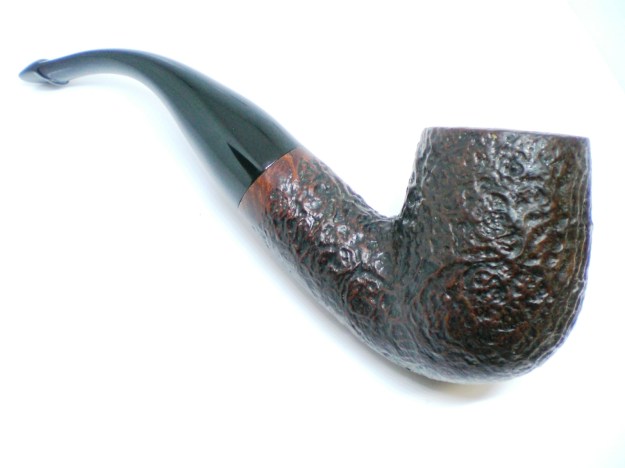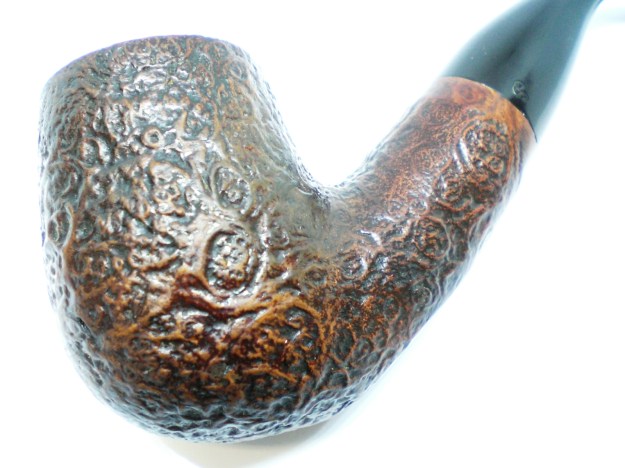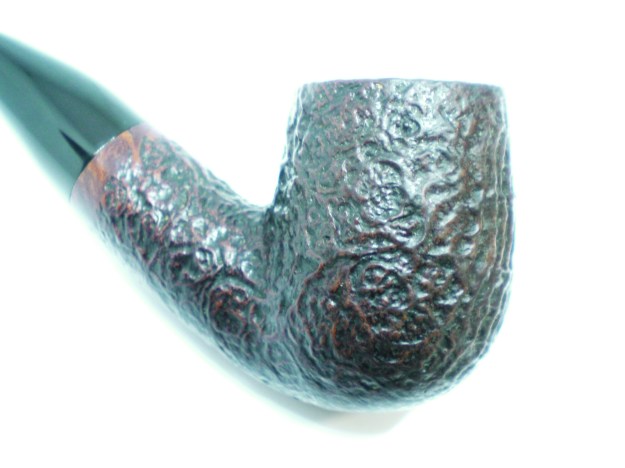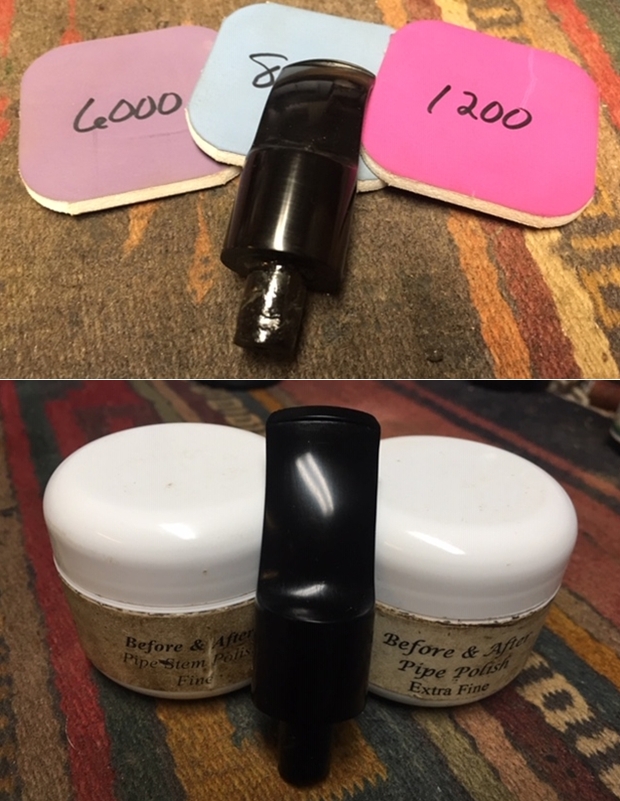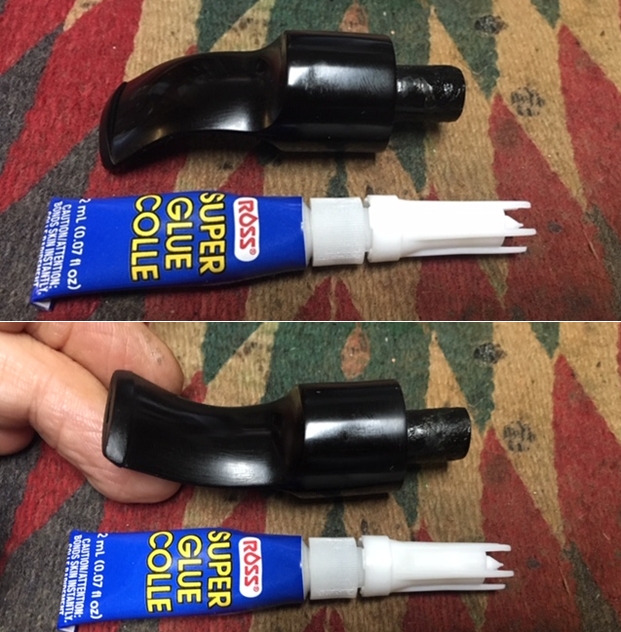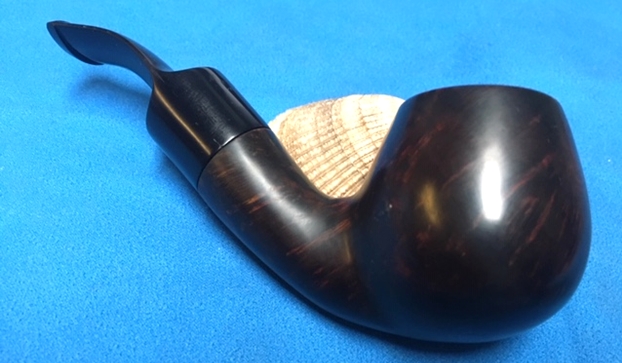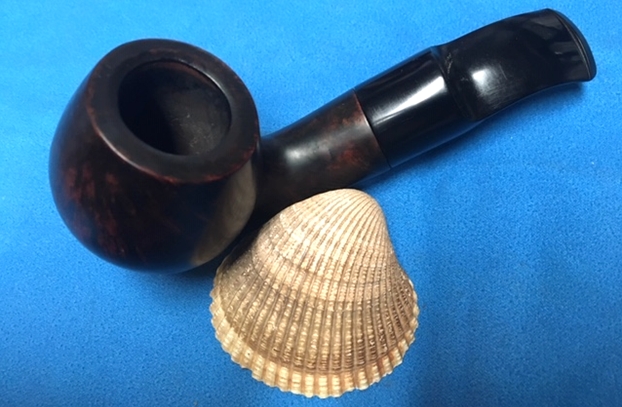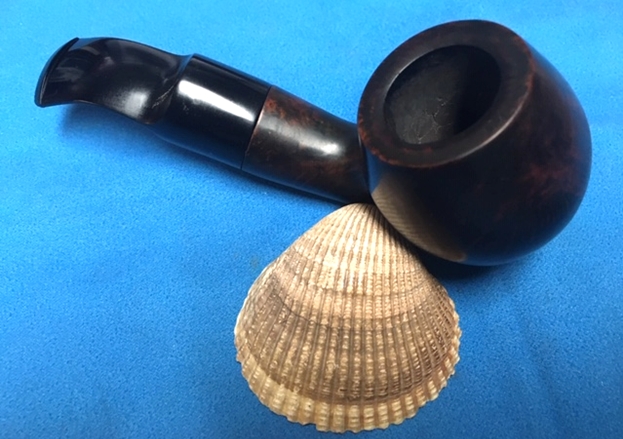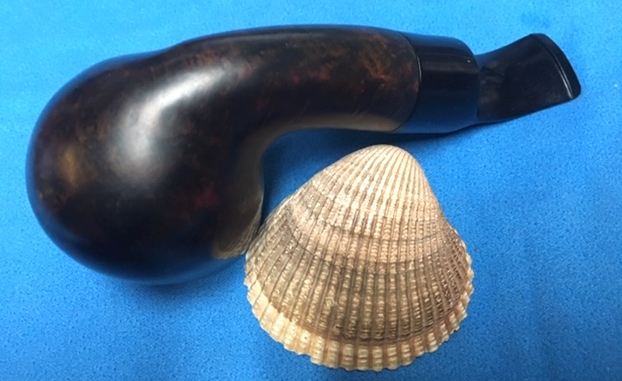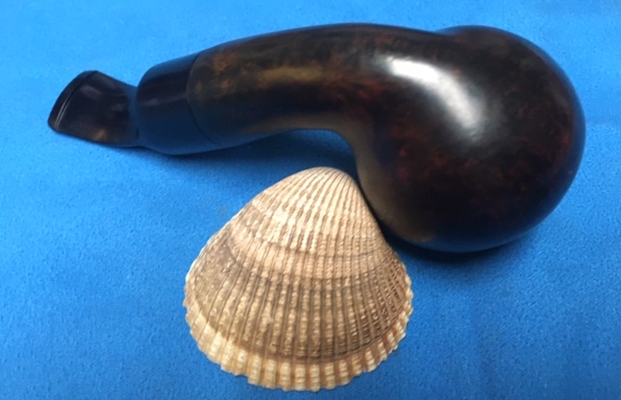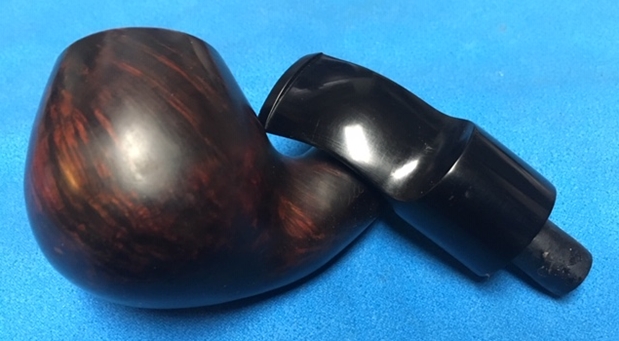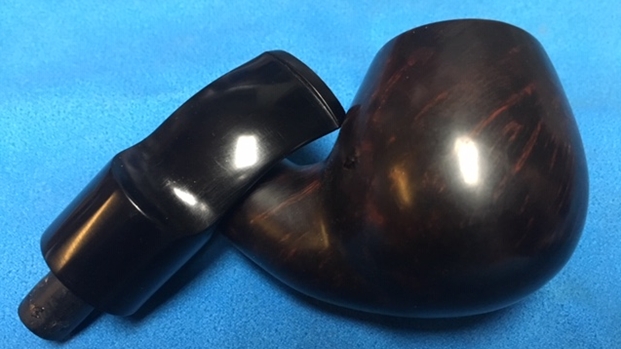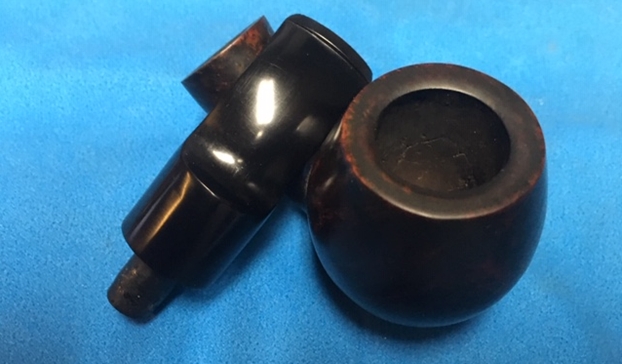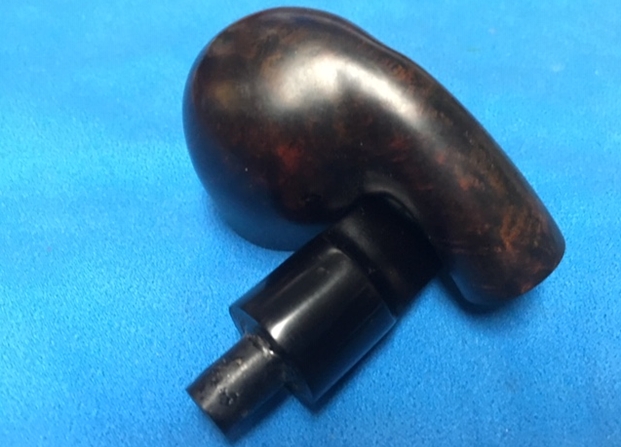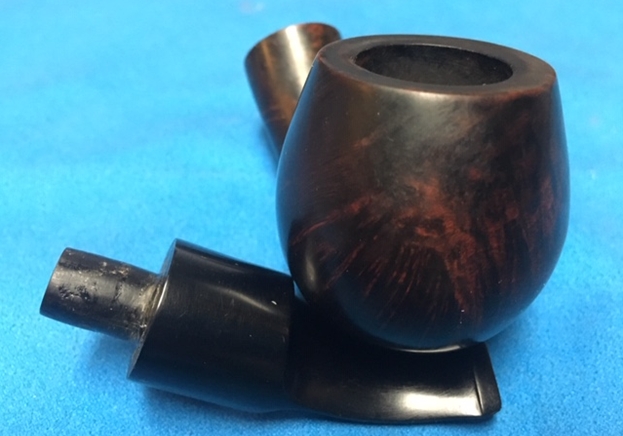
Restoring another Schoenleber Hand Made – A 5 Pot


Blog by Steve Laug

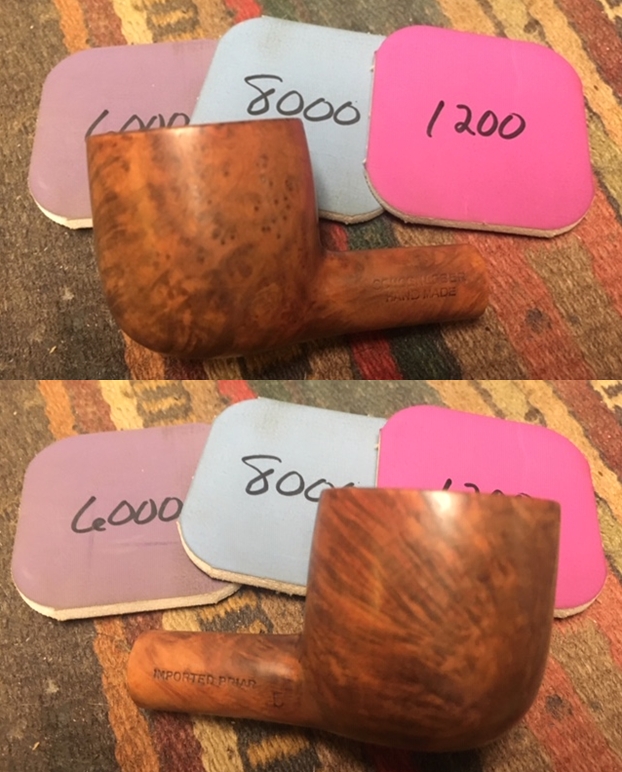
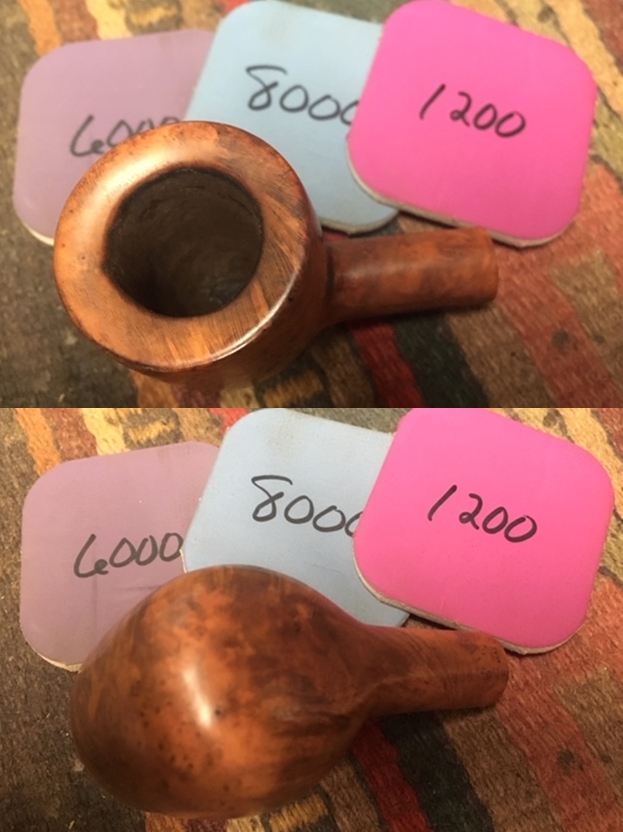
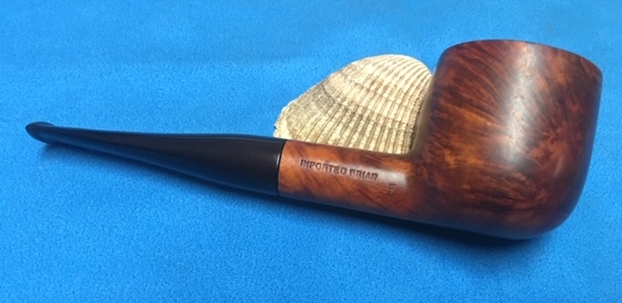
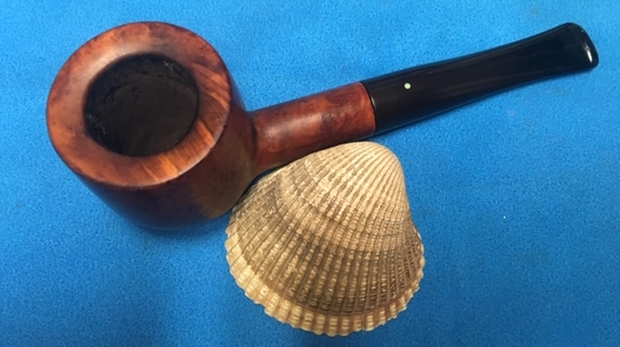
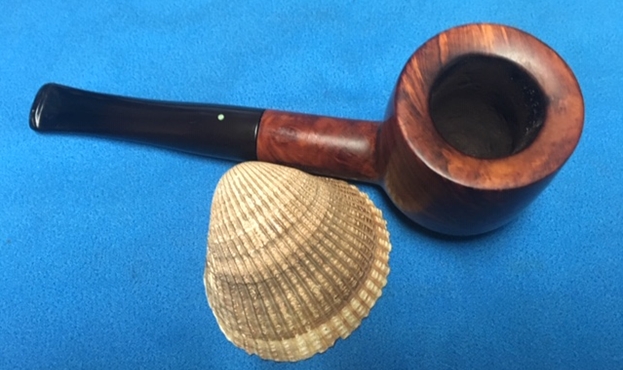
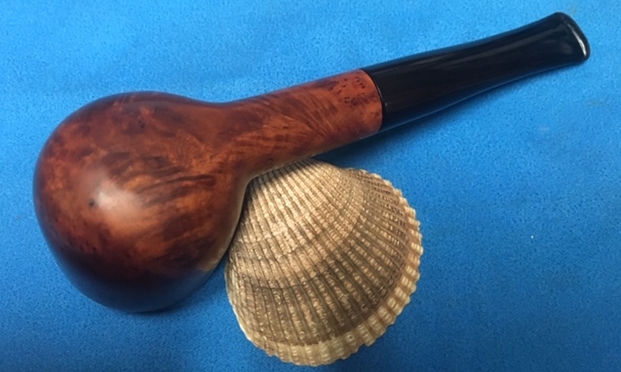
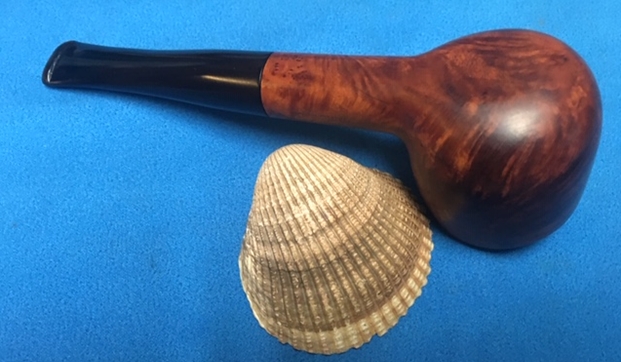
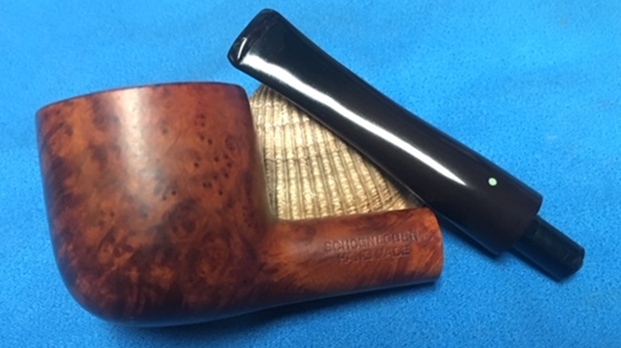
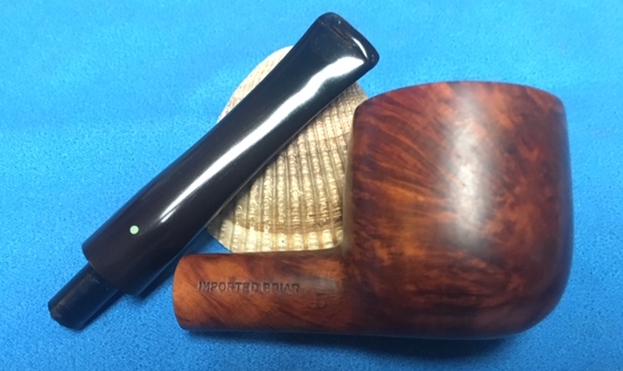
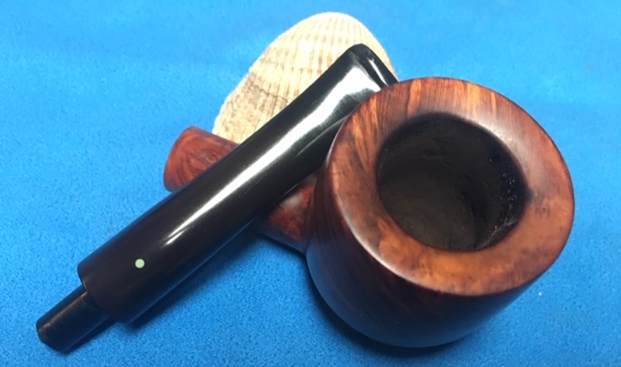
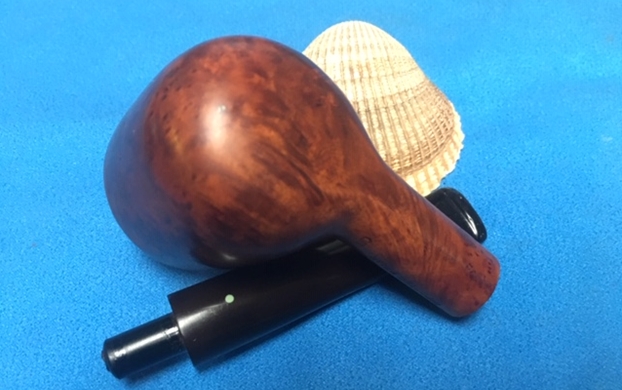
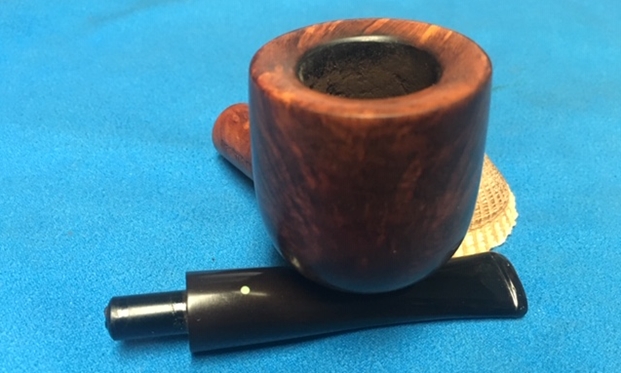
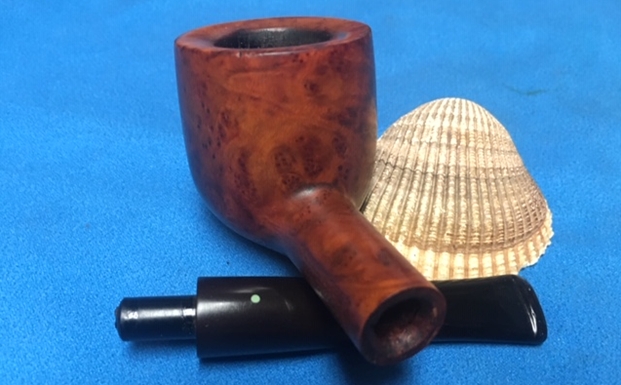
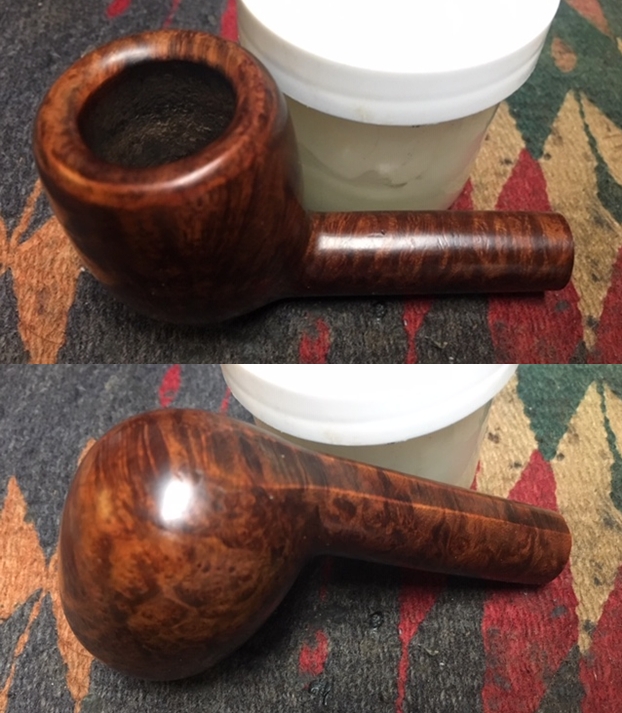
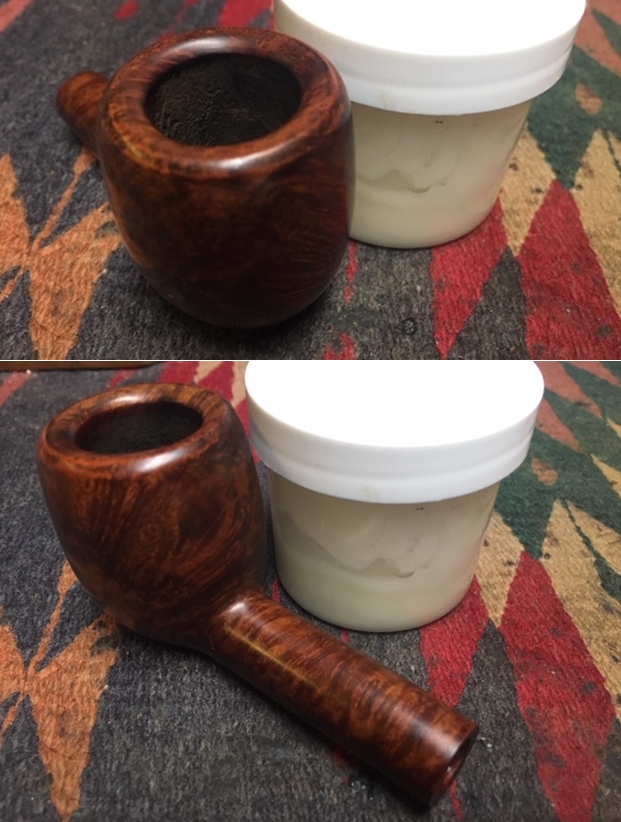
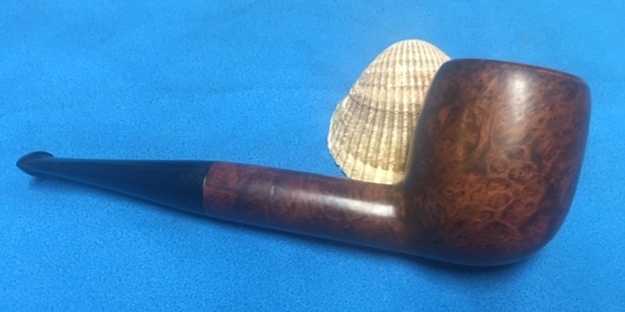
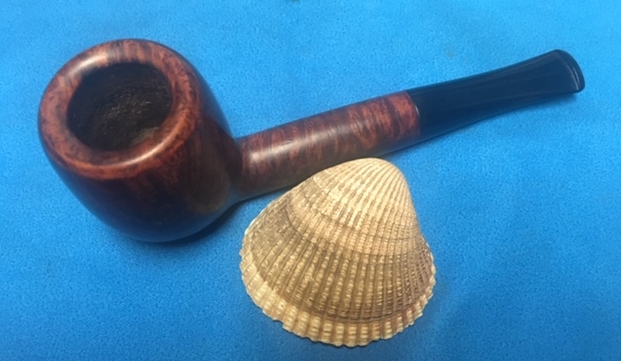
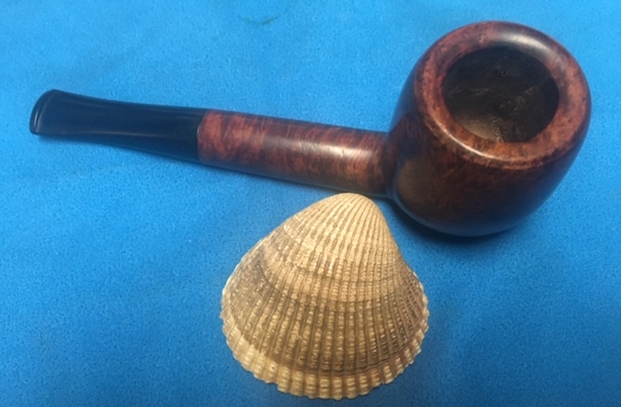
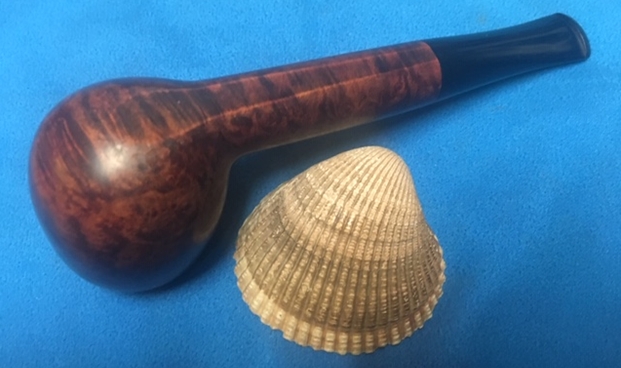
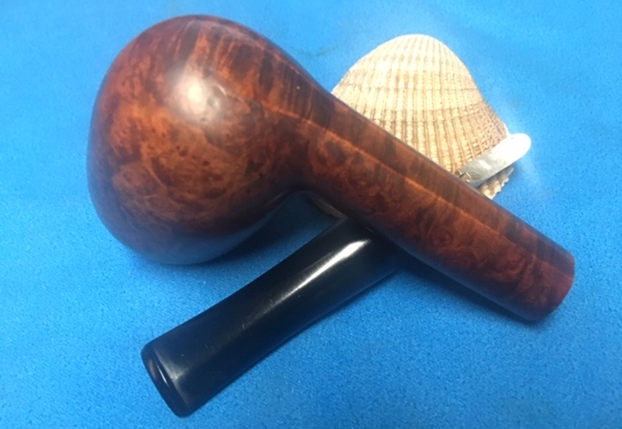
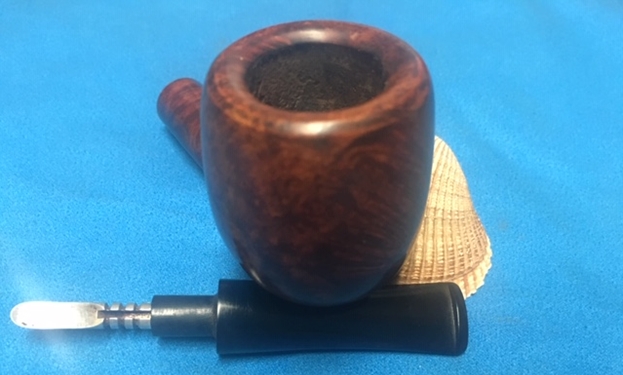
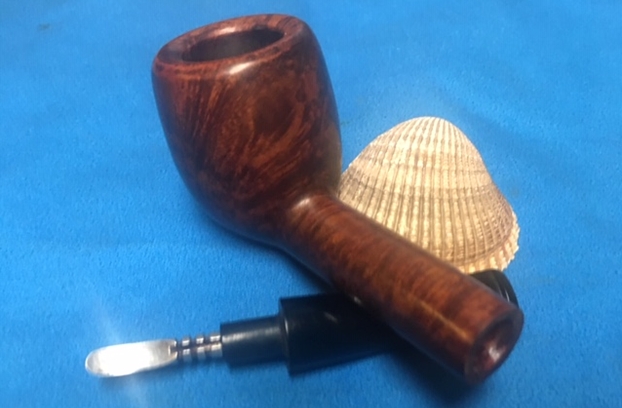
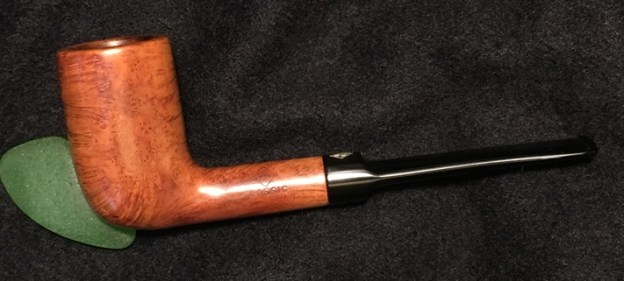
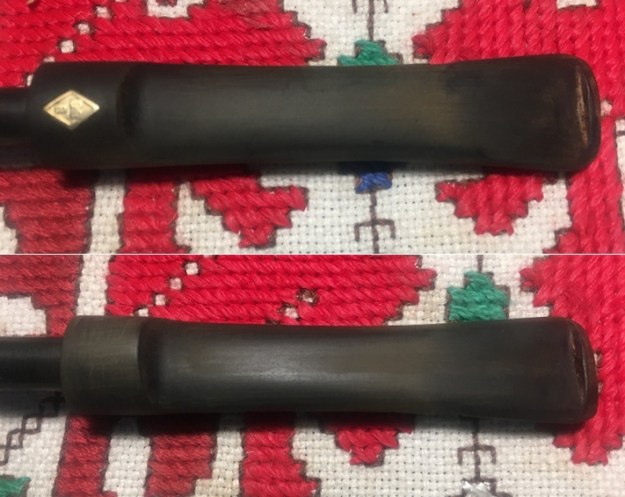
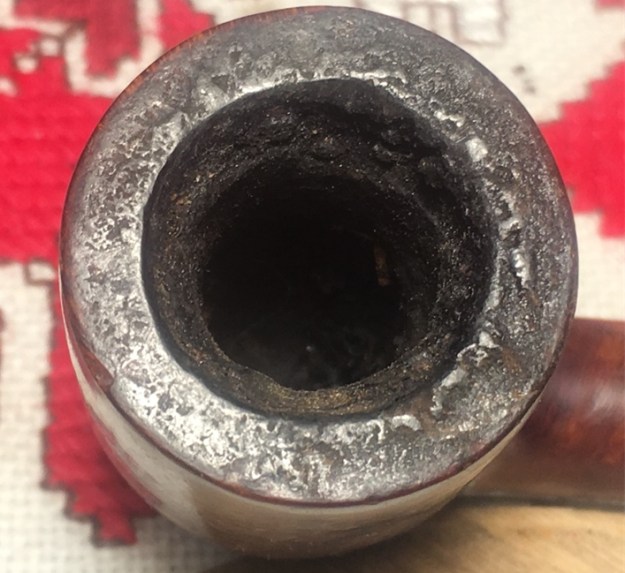
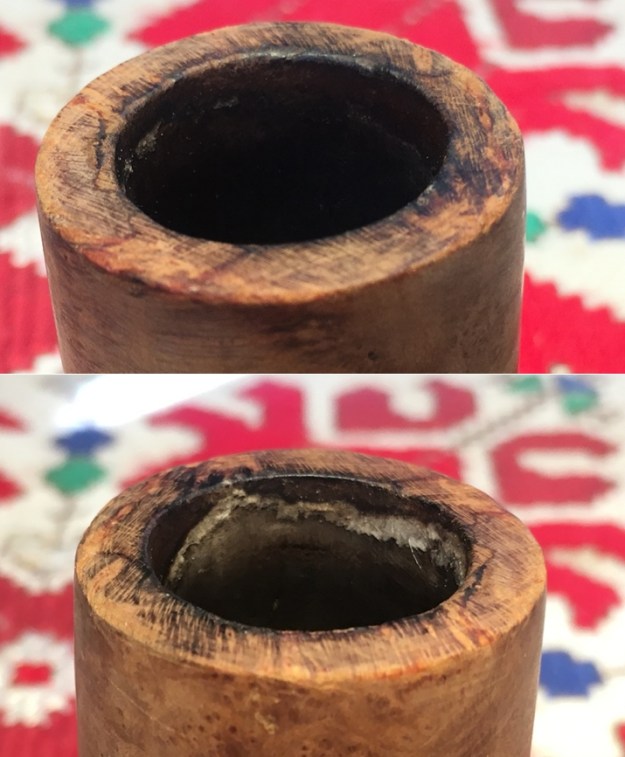
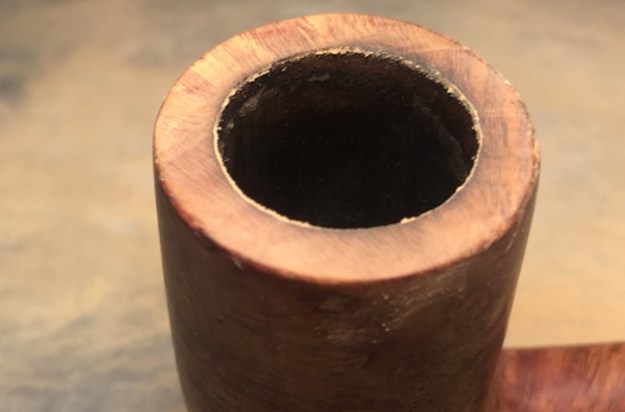
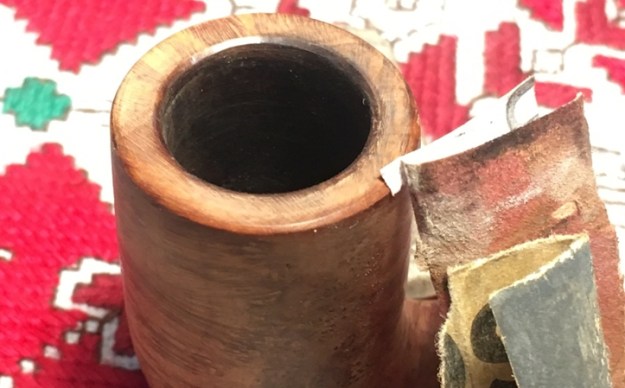
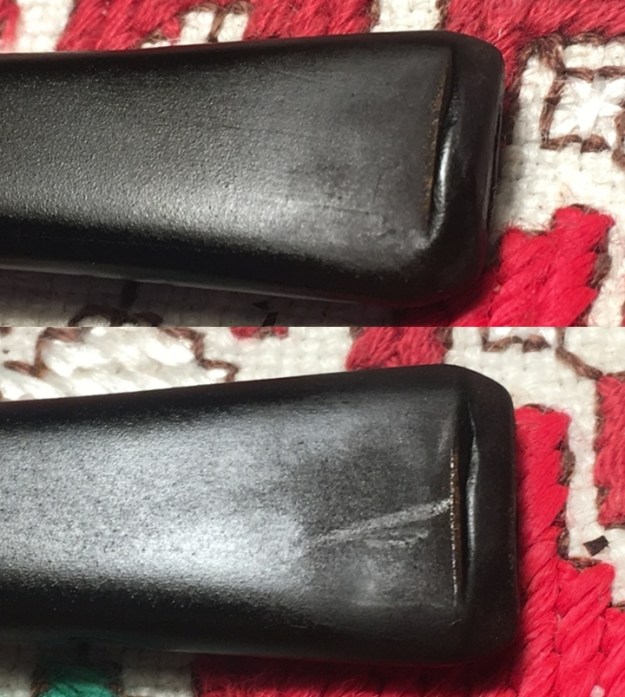
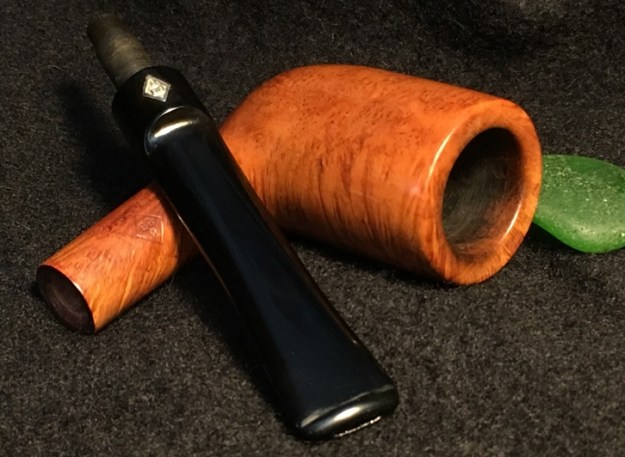
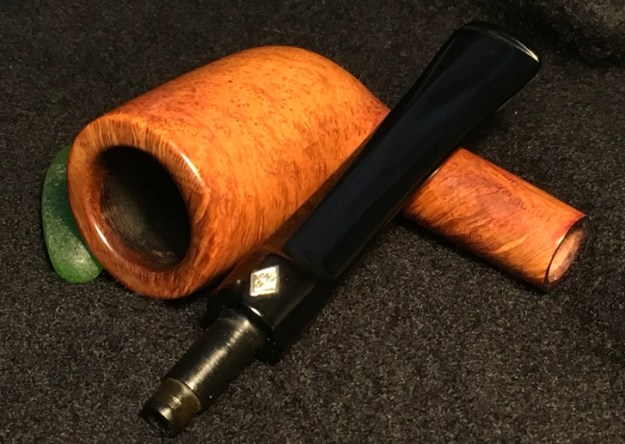
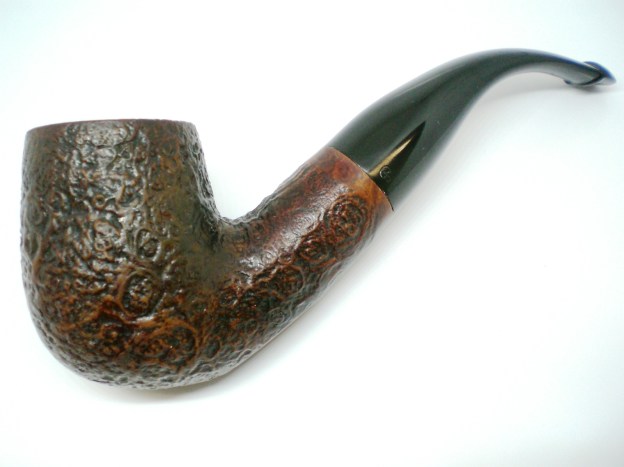
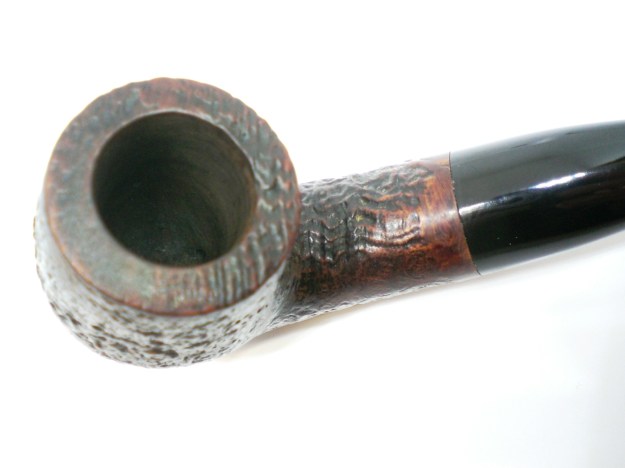
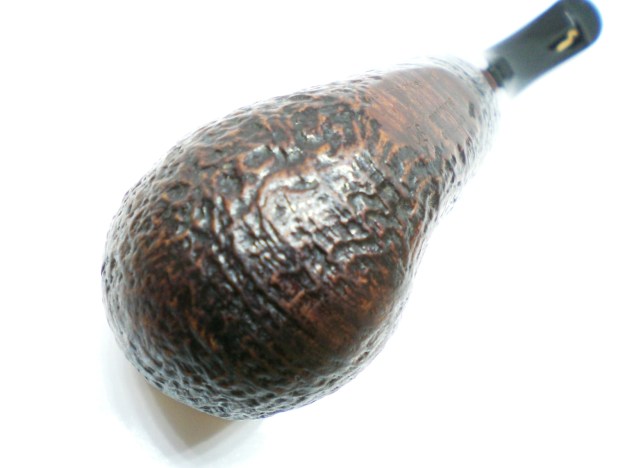
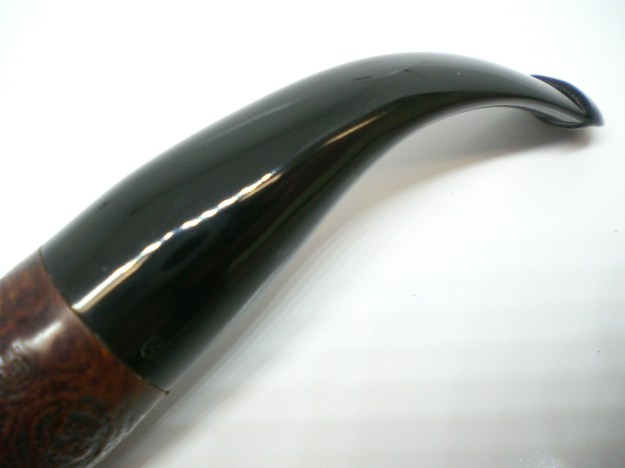
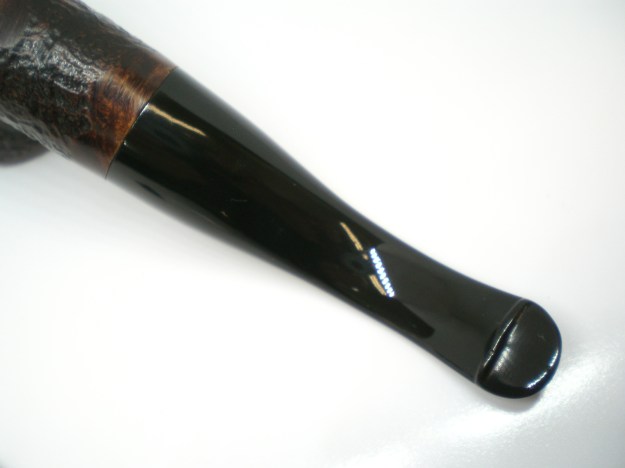
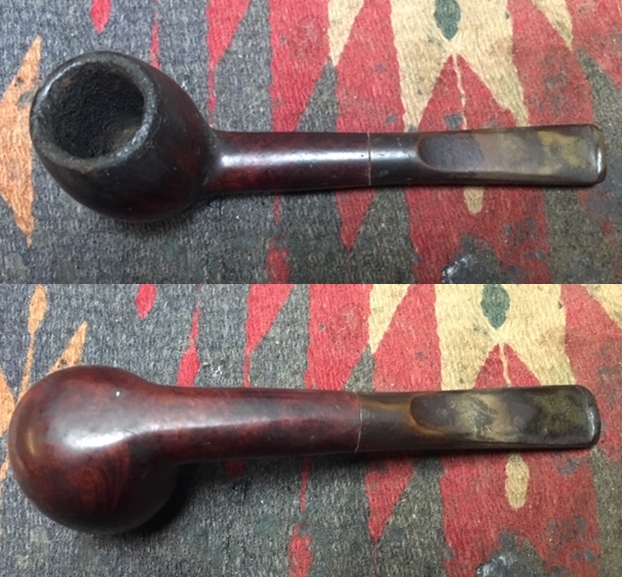
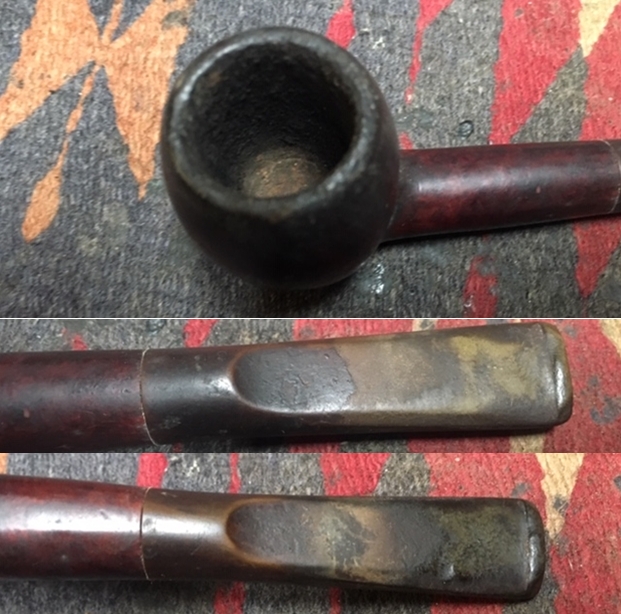
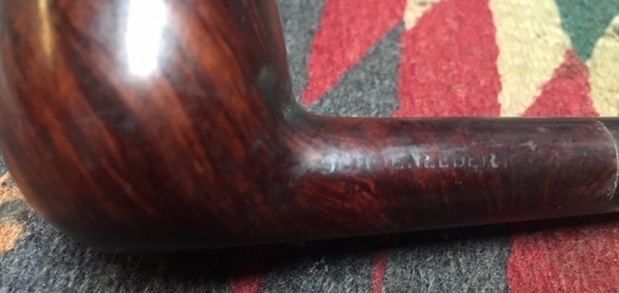
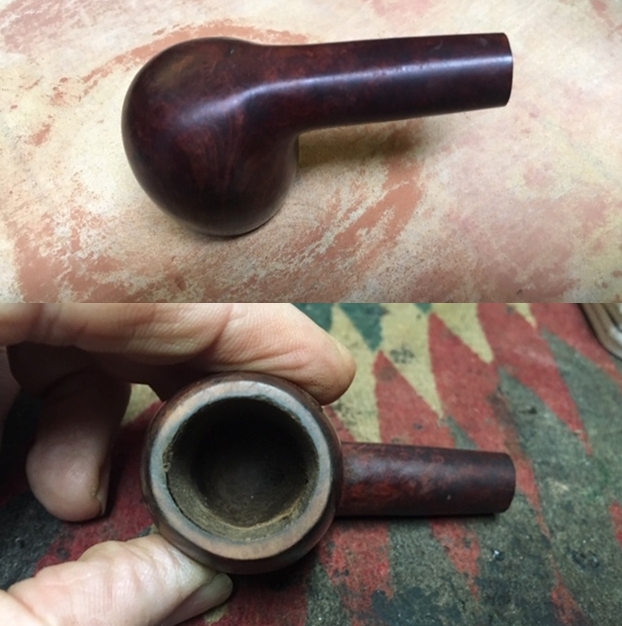
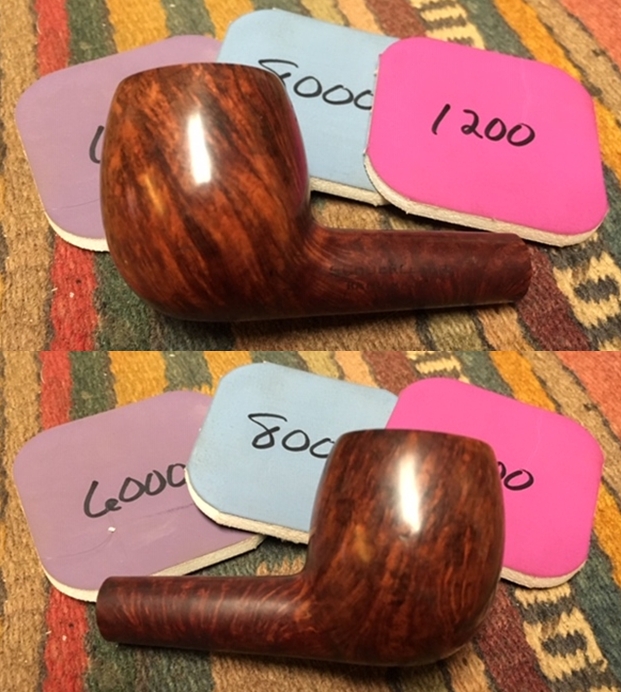
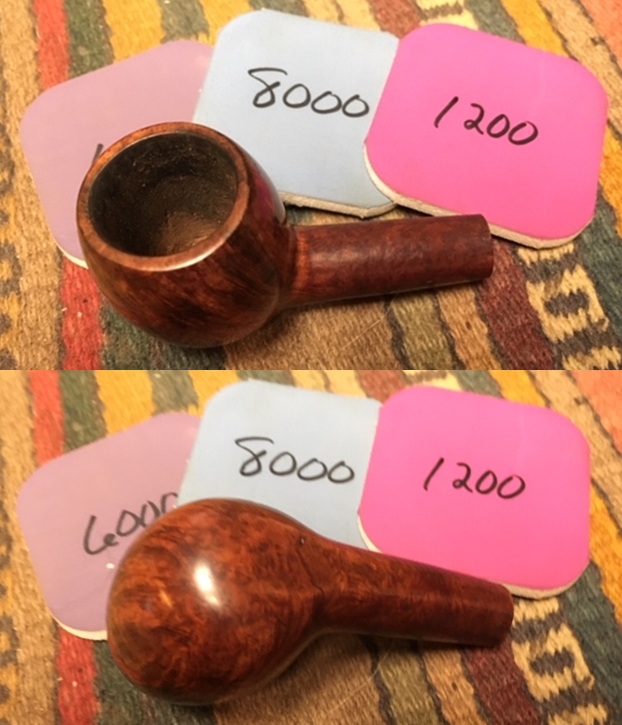
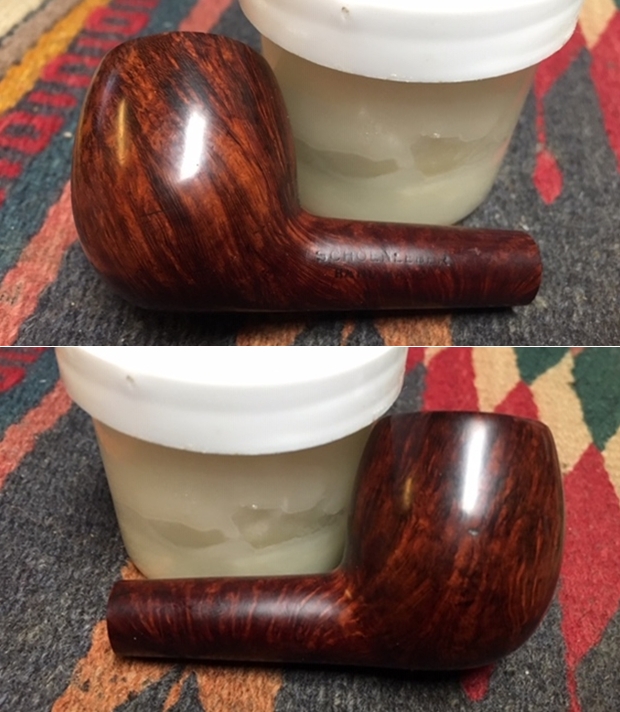
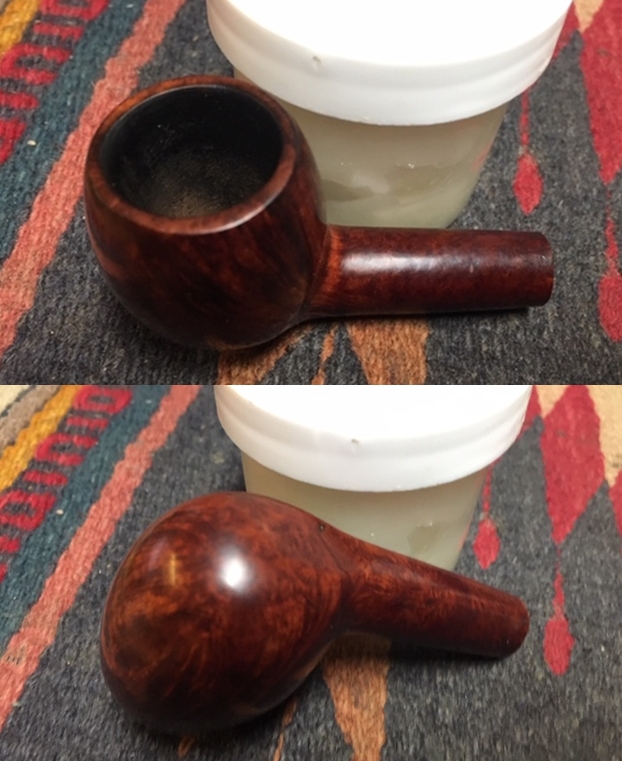
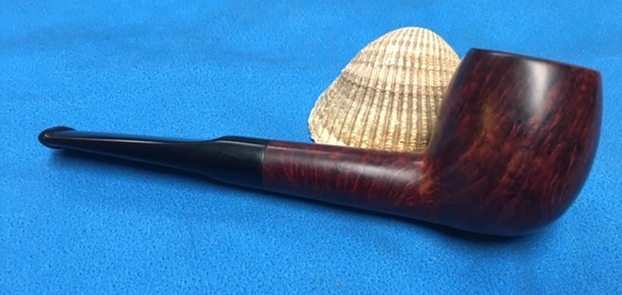
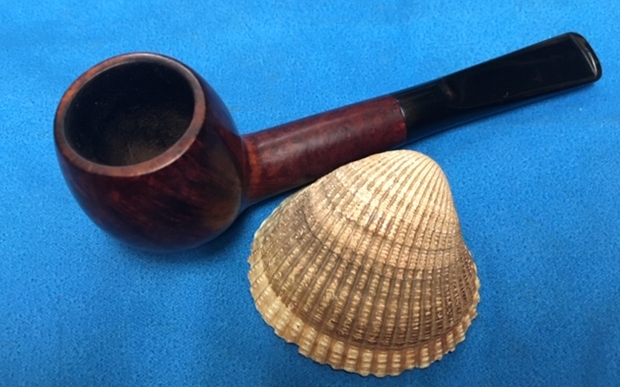
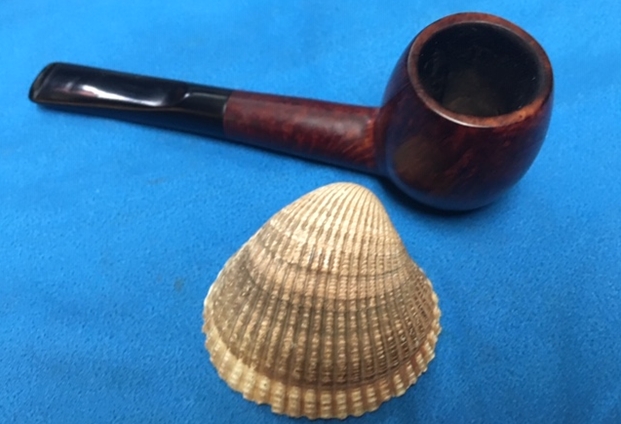
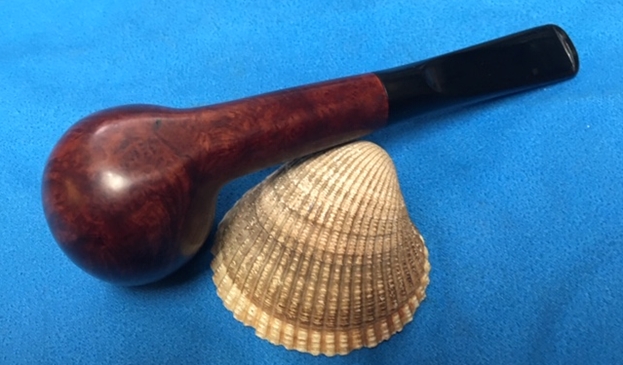
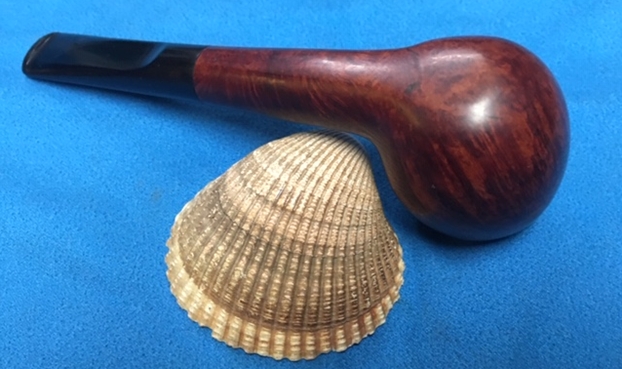
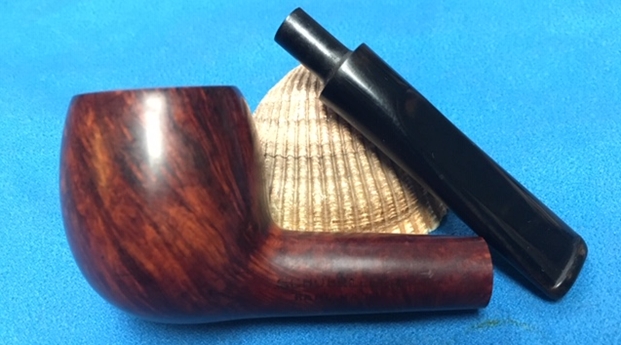
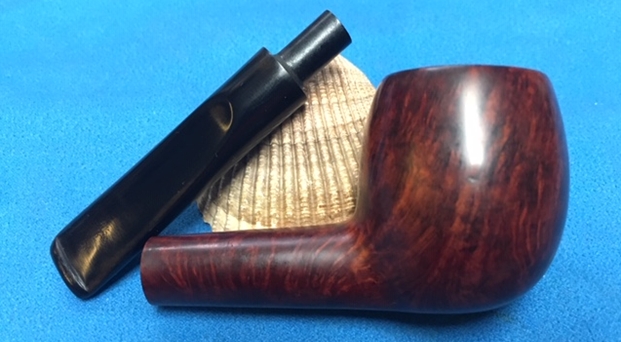
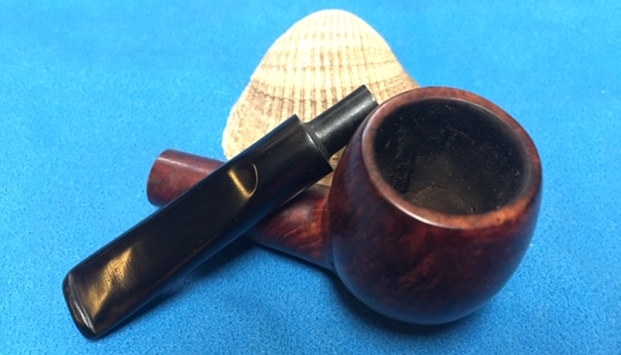
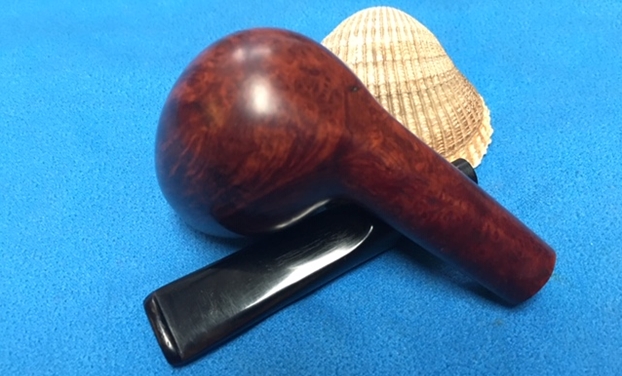
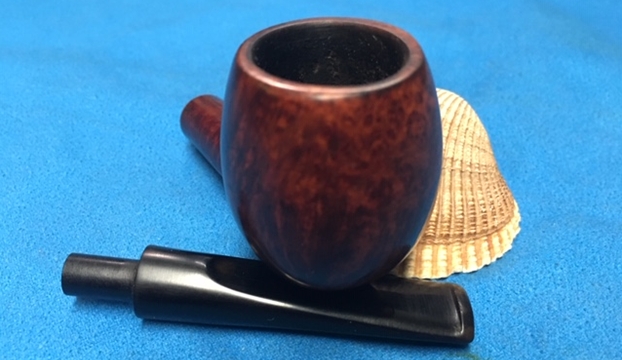
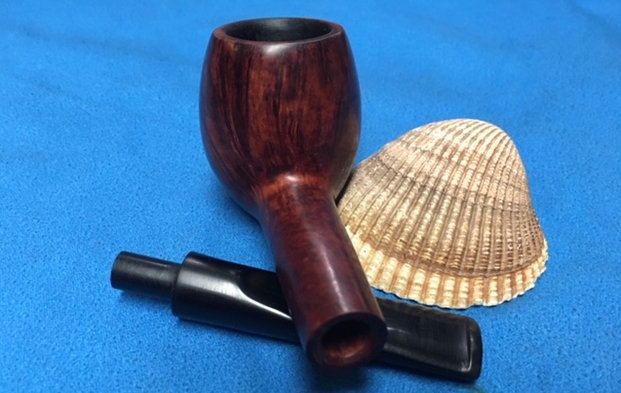
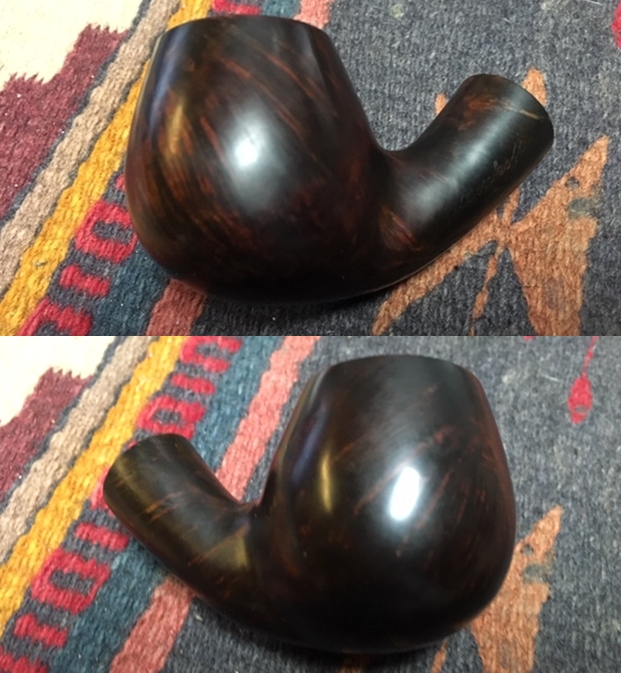
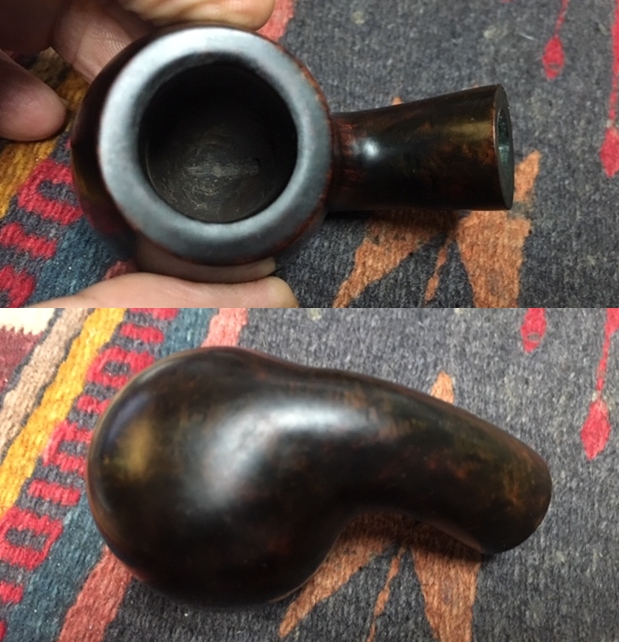
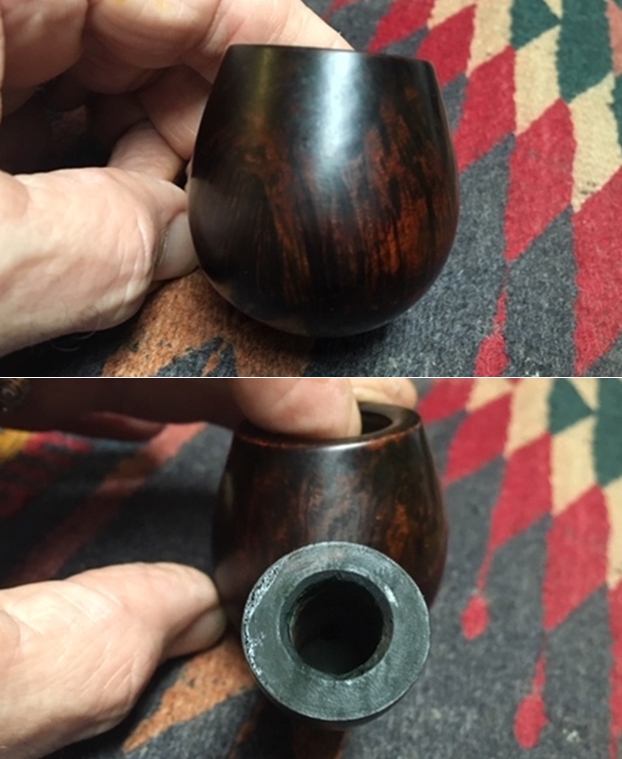
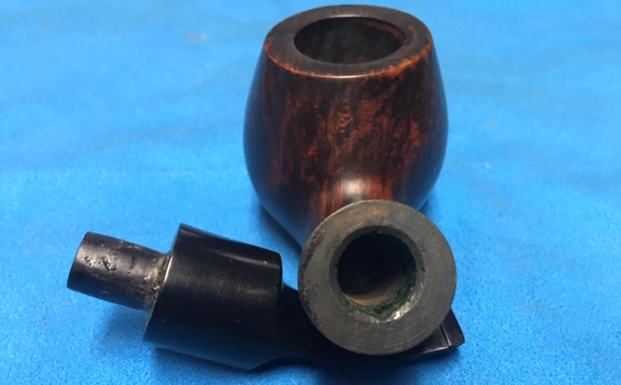
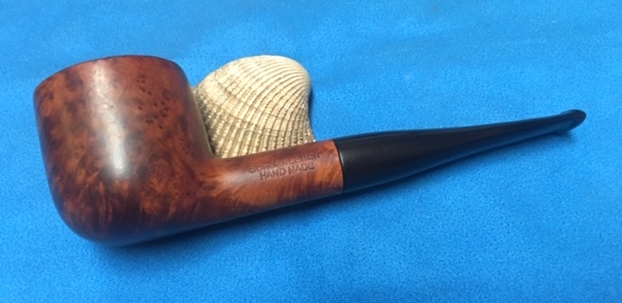
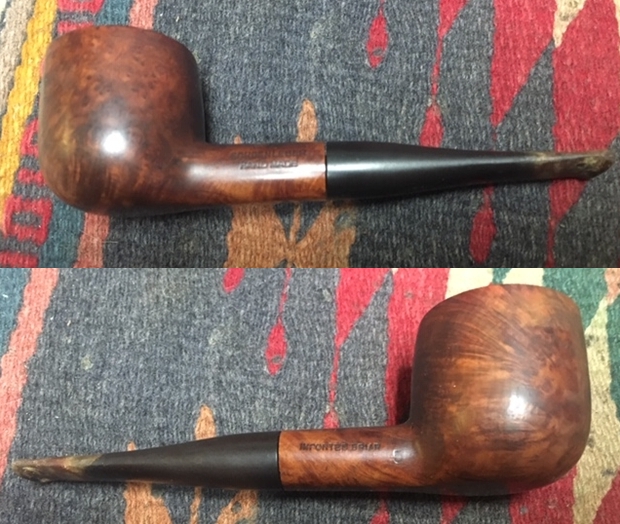
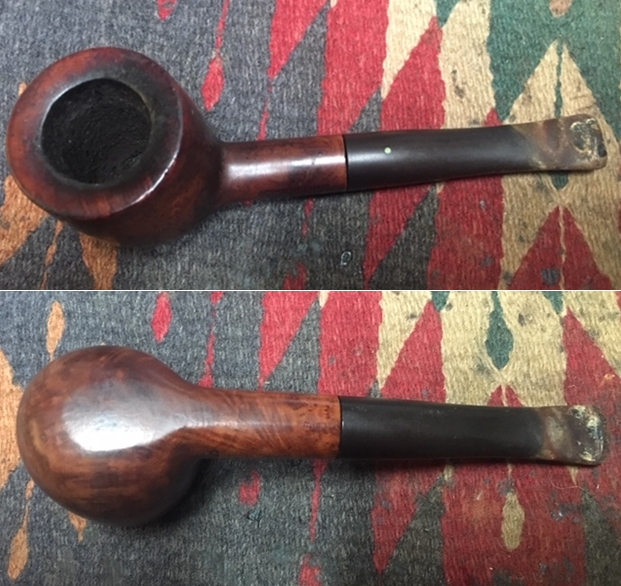
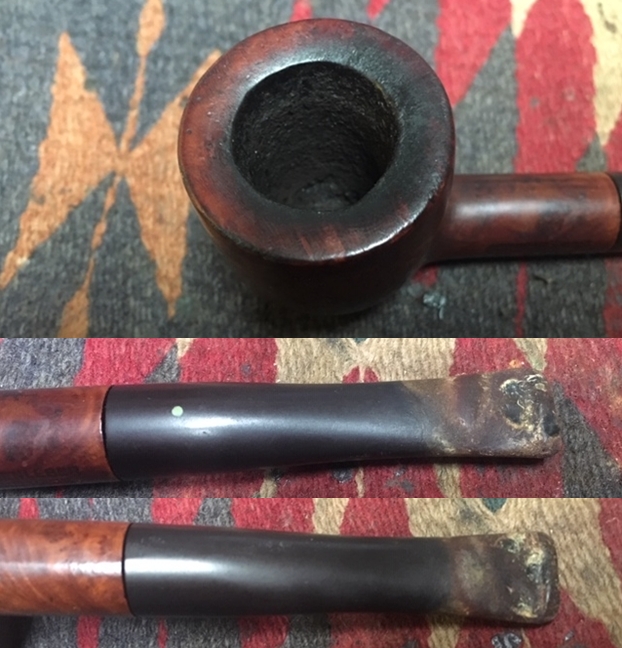
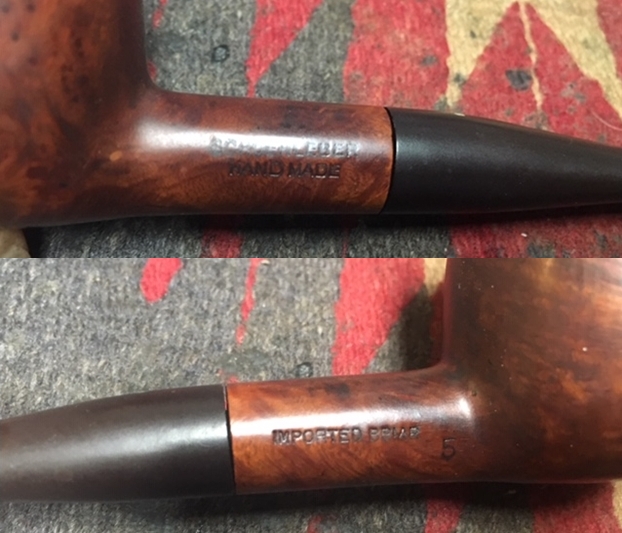
The next pipe in the queue is another pipe from the batch of pipes I am cleaning up for Alex – this one is another Schoenleber Hand Made – a straight shank Pot shaped pipe with some beautiful grain around the bowl and shank. The pipe does not appear to have been stained but sports the same look as the Malaga pipes that I have been working on. The carver did a great job utilizing the block of briar to maximize the grain. The pipe is stamped on the left side of the shank and reads Schoenleber over Hand Made. On the right side of the shank it is stamped Imported Briar. On the right side next to the bowl/shank junction there is a number 5 which is either a shape number or size designation. The taper stem is vulcanite and has no marking or stamping. This is another nice looking piece much like many of the pipes Alex is picking up. The bowl had a thick cake and lava flow and some darkening on the rim top. The exterior of the briar was dirty with grime and dust. The stem had deep tooth marks and chatter on both sides near the button. The stem was oxidized and there was a thick coat of calcification on the stem for the first inch ahead of the button. The photos below give a glimpse of the pipe before clean up. I took a photo of the bowl and beveled rim top to capture the condition of the pipe before I started my cleanup work. There was significant darkening on the top of the inwardly beveled rim at the back of the bowl. The bowl had a thick cake that flowed over the rim top. The inner edge appeared to have some damage but the outer edge of the bowl appeared to be in excellent condition. The stem was in rough condition with deep tooth chatter and deep tooth marks on both sides of the stem near the button and on the button. I also took a photo of the right side of the shank to show the stamping. The stamping is readable in the photo below and is as noted above – Schoenleber over Hand Made. On the opposite side it reads Imported Briar. There is also a 5 at the shank/bowl junction on the right side. When I was working on the other Schoenleber pipes in Alex’s collection I had looked up information on the brand. I am quoting that information once again on the blog for this pipe. I quote the article in full (https://pipedia.org/wiki/Schoenleber).
Louis Schoenleber lived in North Arlington N.J. and was an Austrian immigrant and skilled artisan in pipe making. His hand carved pipes were available in his shop, ‘Schoenleber’s Newark Pipe Shop’, at 26 Branford Pl., Newark NJ, thought to open in the 1920’s. Schoenleber’s carried a full line of tobaccos as well as related pipe smoking accessories. It’s thought the shop operated until the late 1960’s, and Louis Schoenleber died in 1976. It’s also fairly certain they may have sold to other brands such as Jelling, also in Newark and are very similar in design and finish.

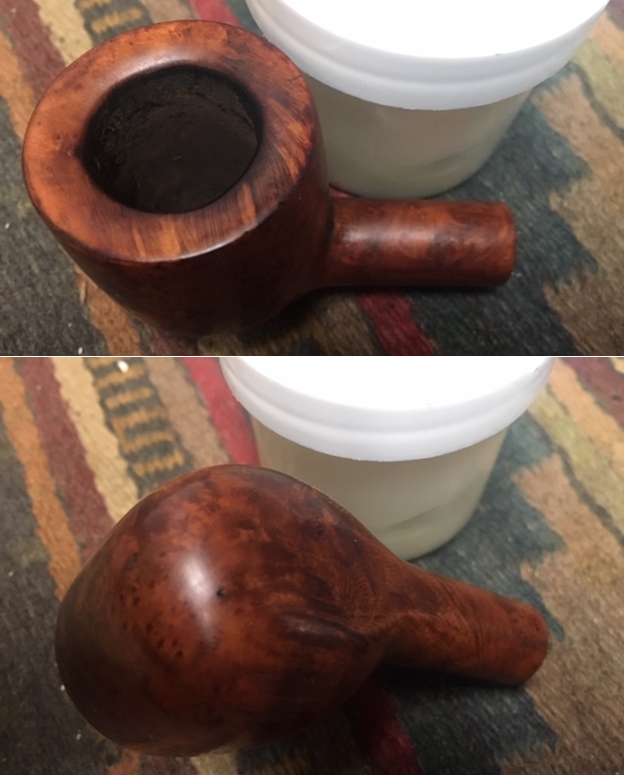
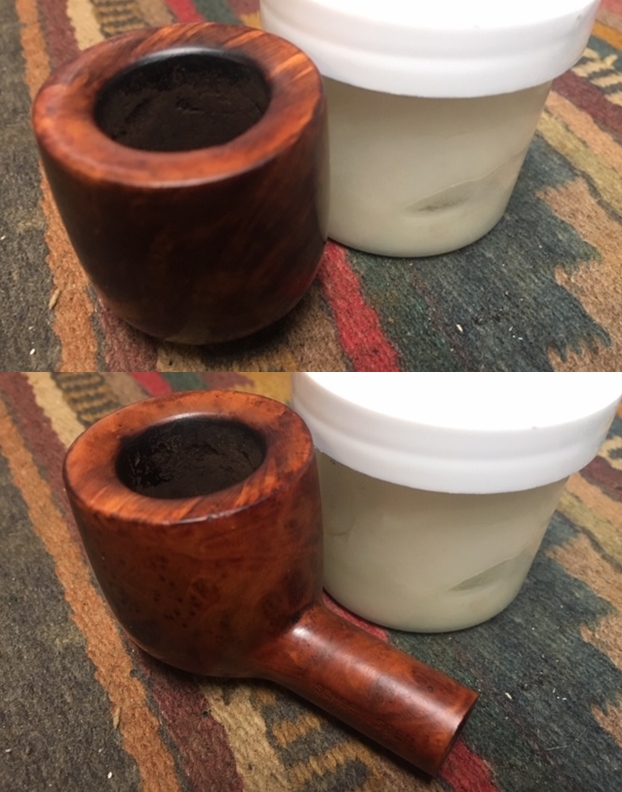
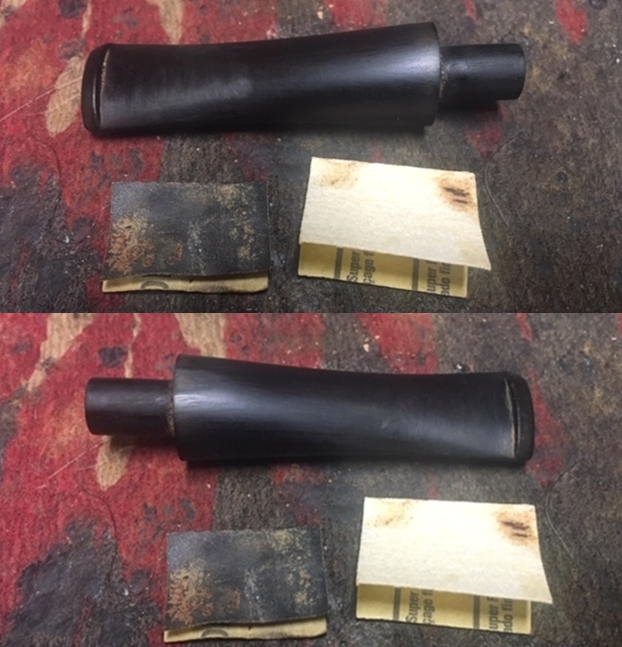
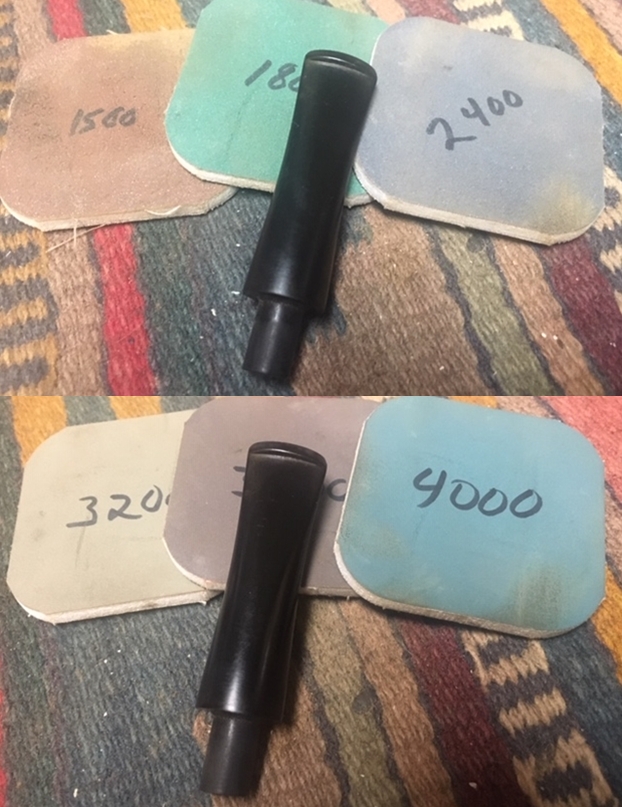
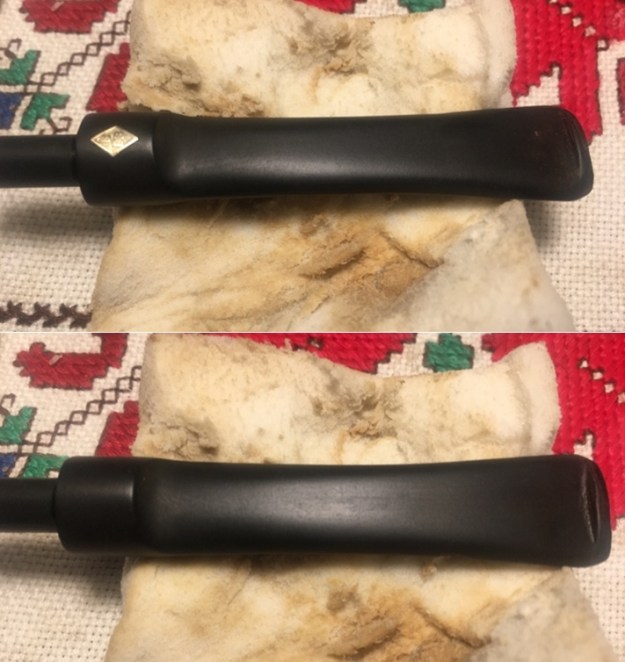
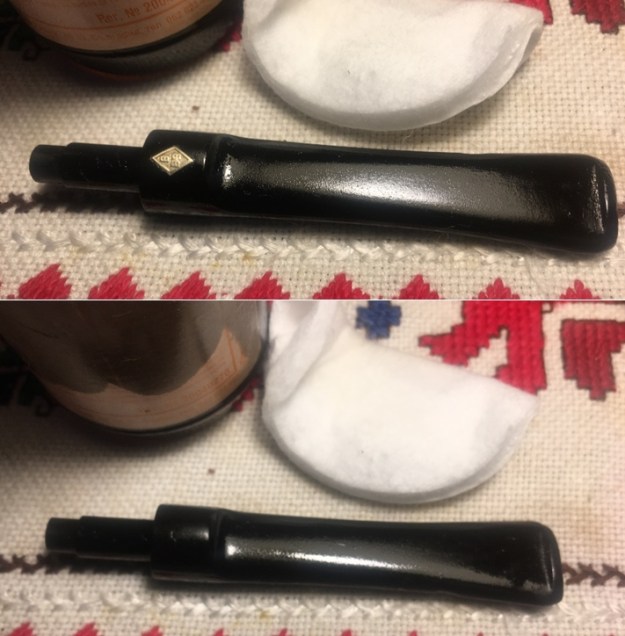
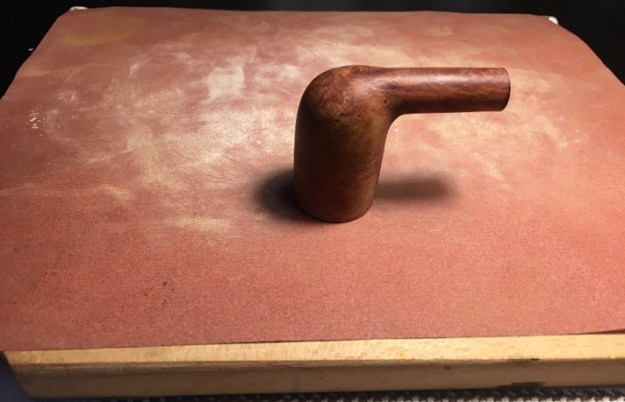
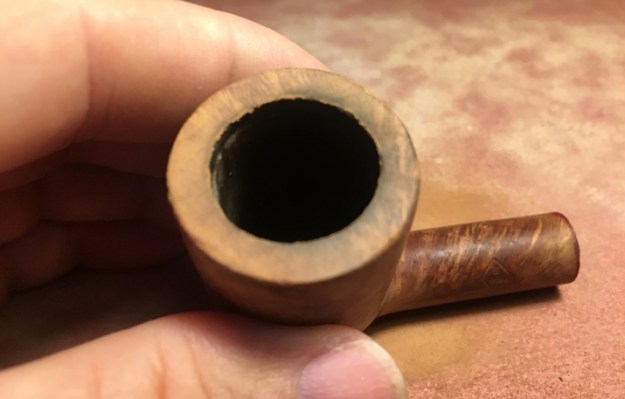
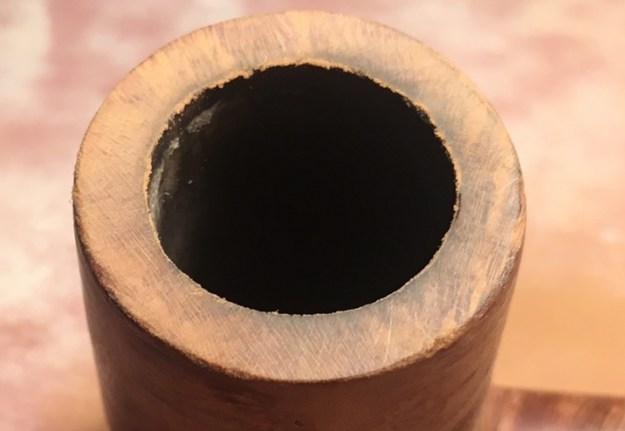
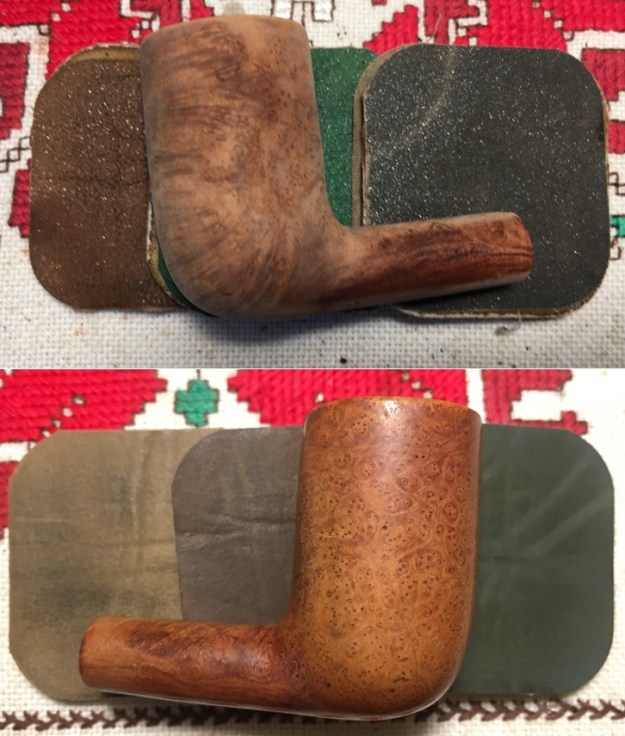
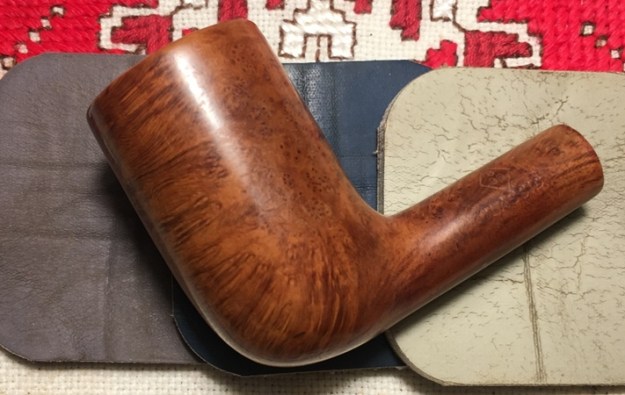
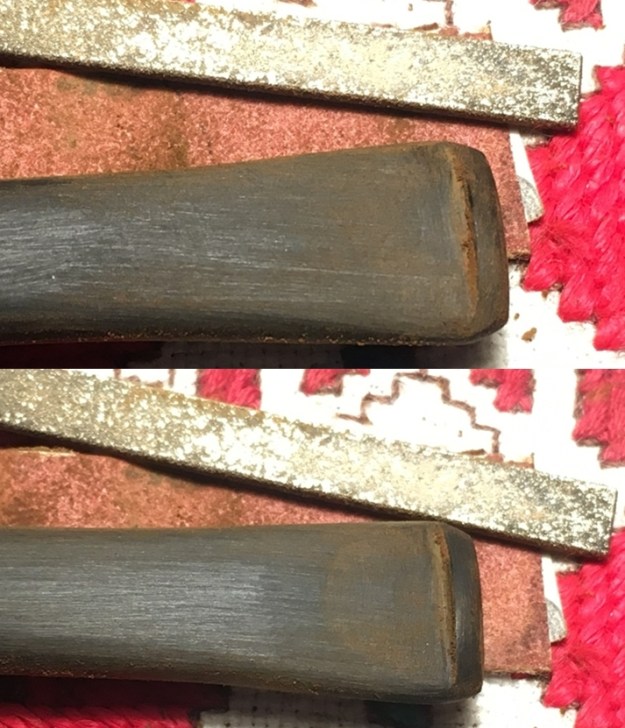
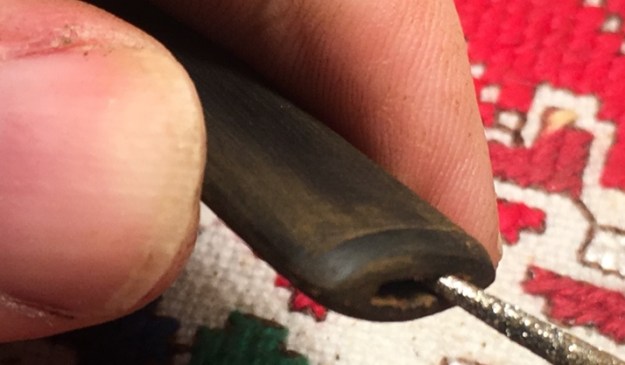
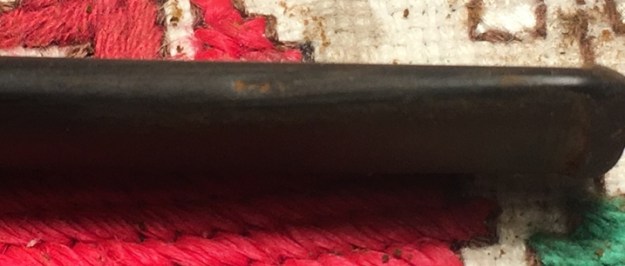
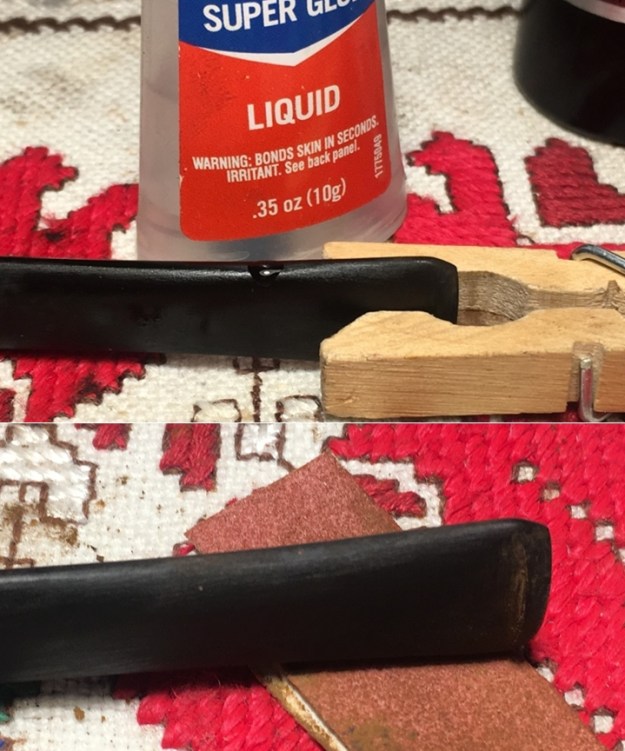
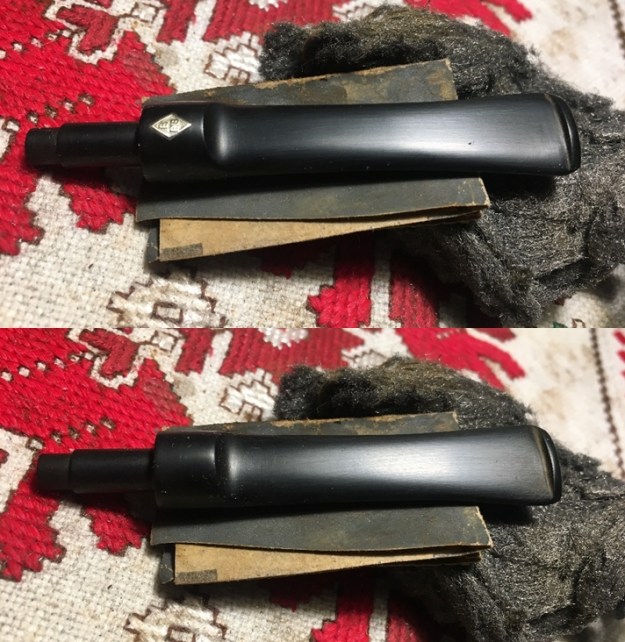
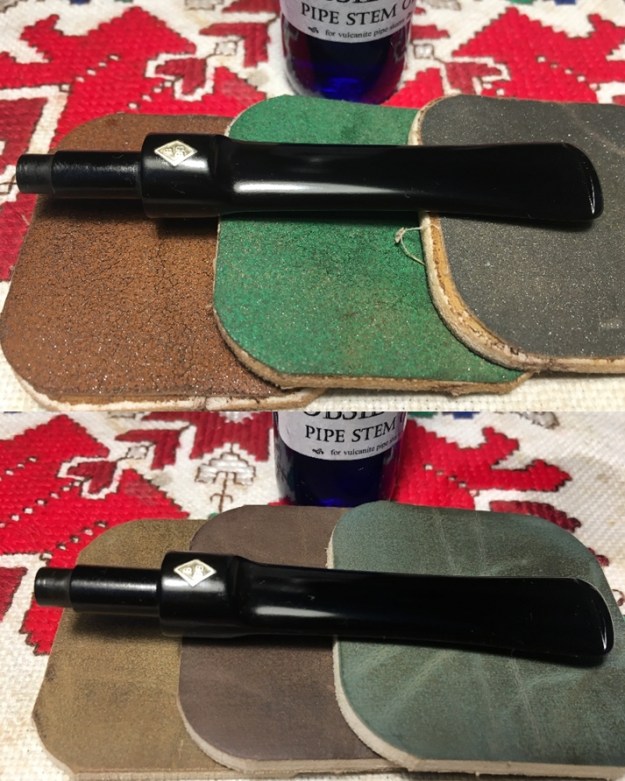
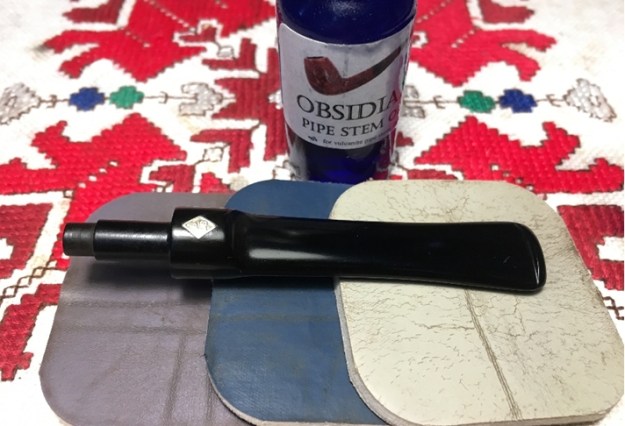
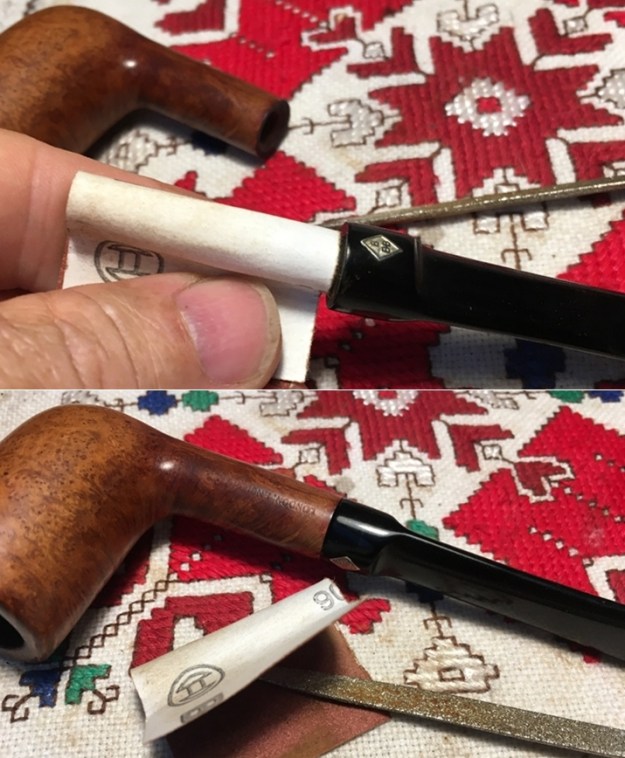
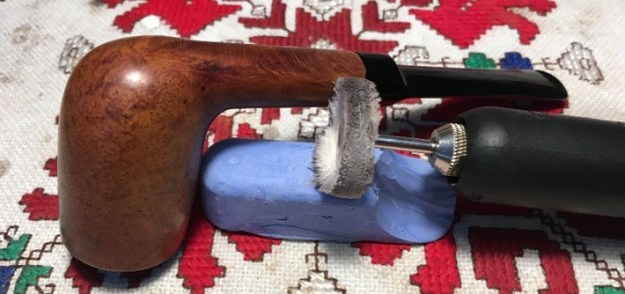
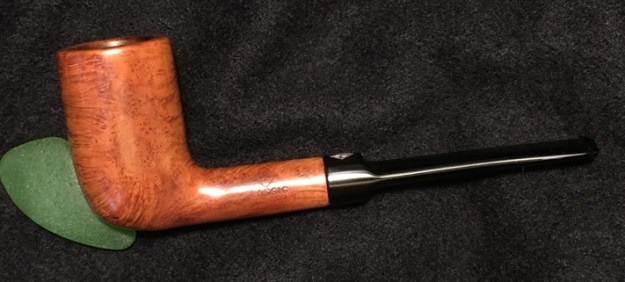
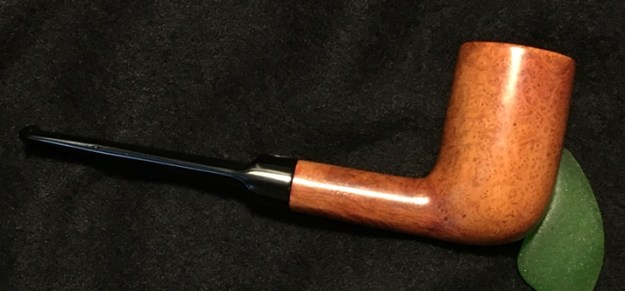
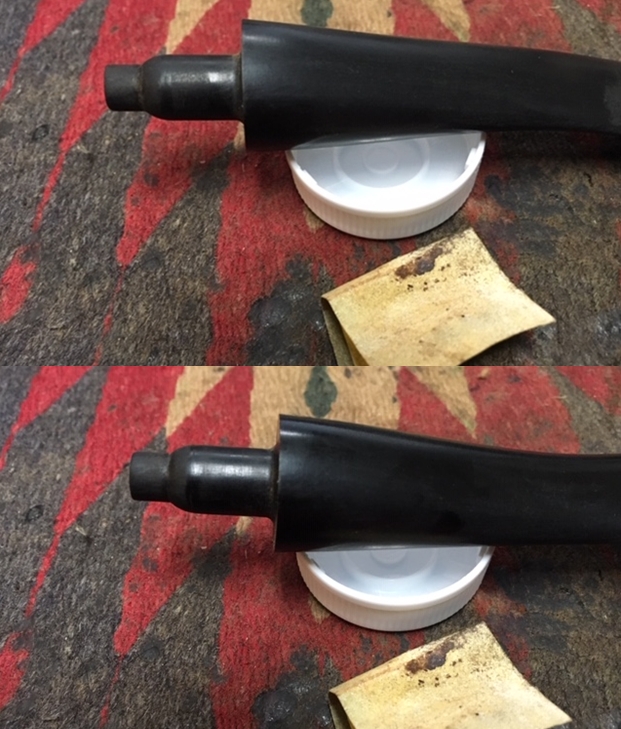
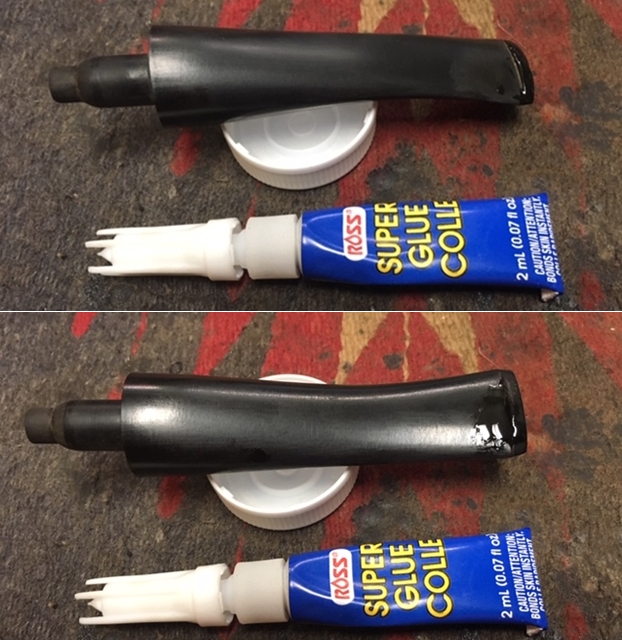
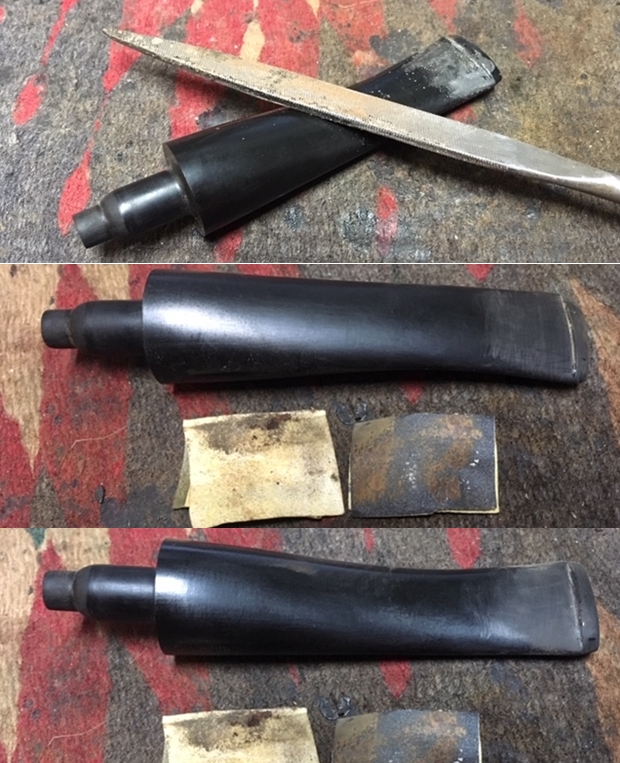
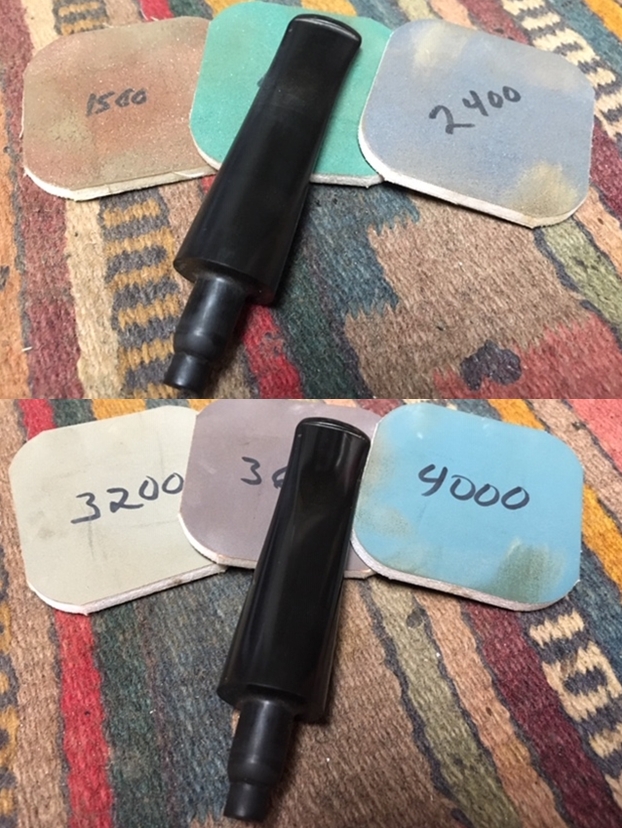
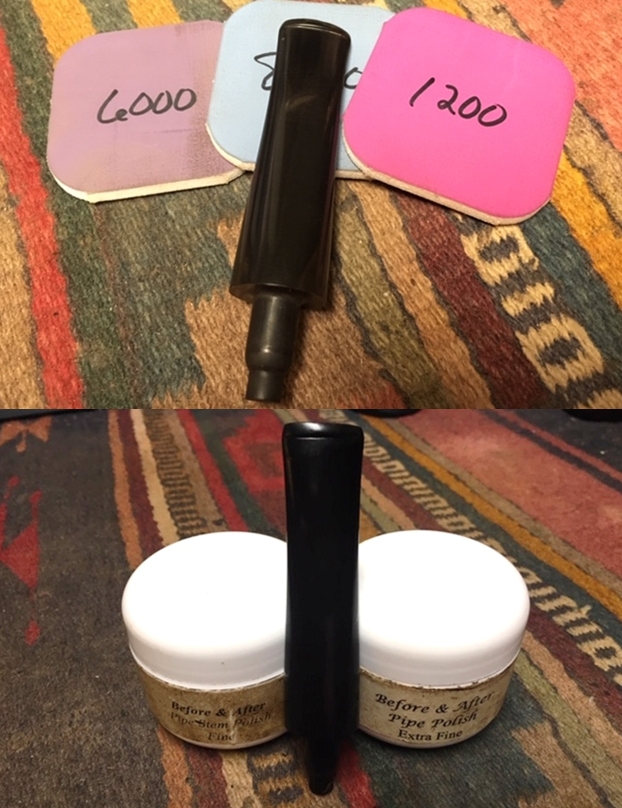
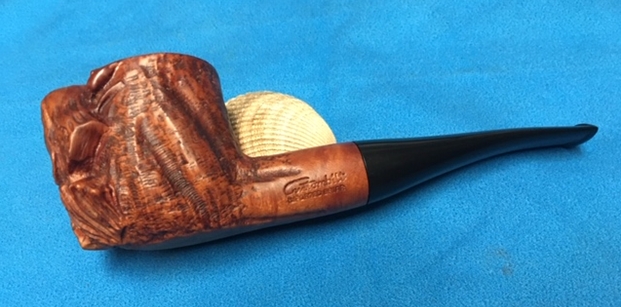
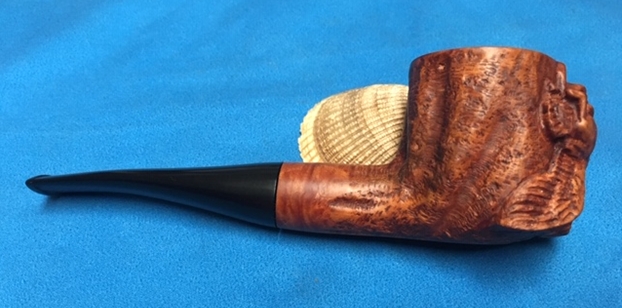
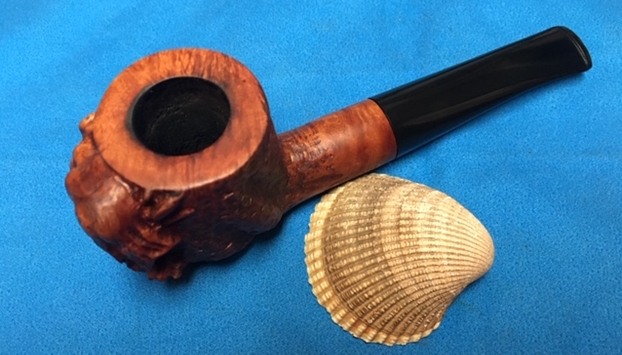
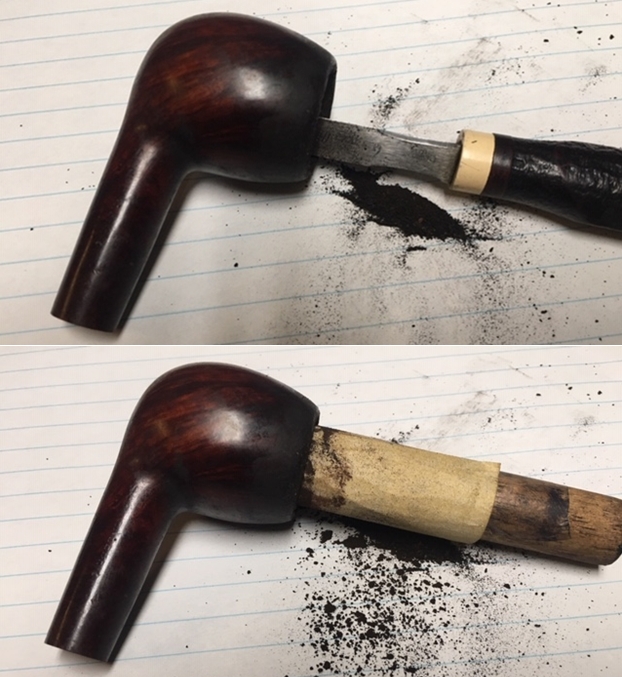
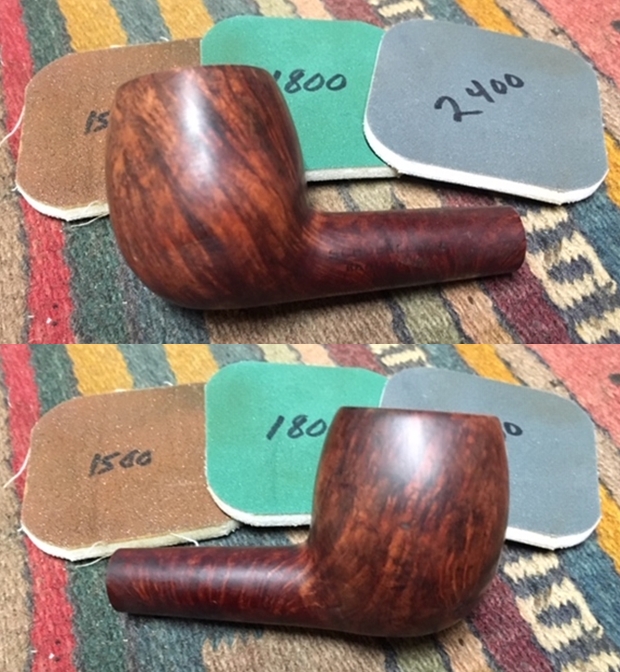
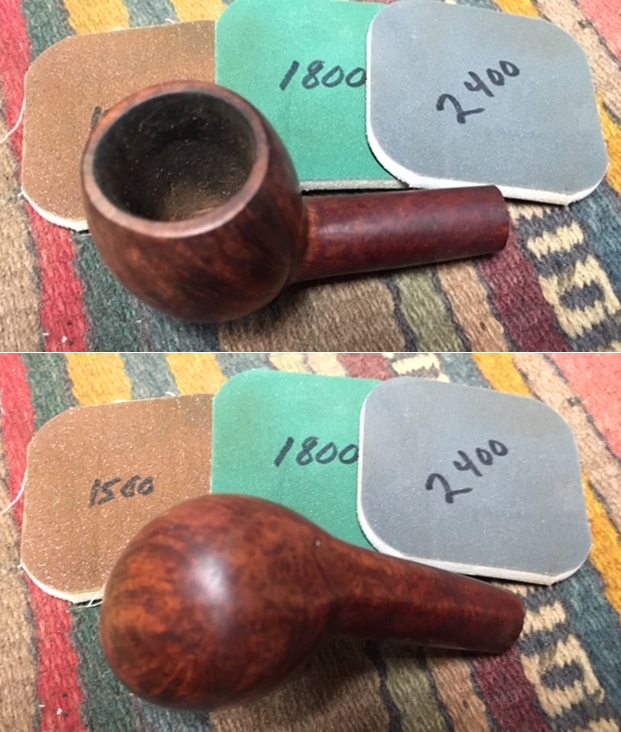
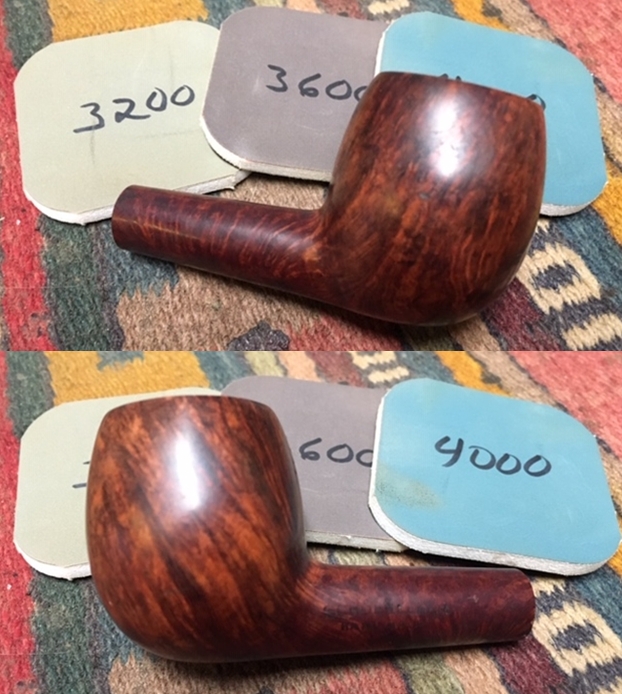
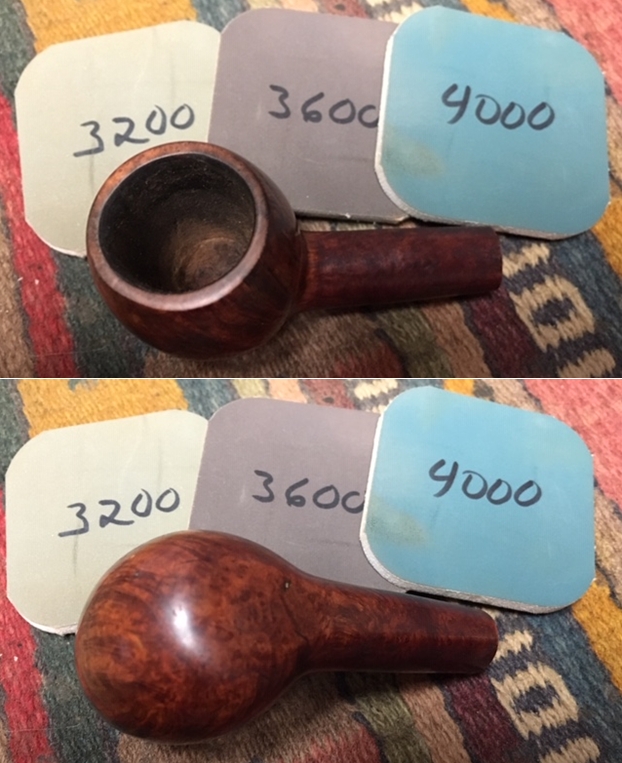
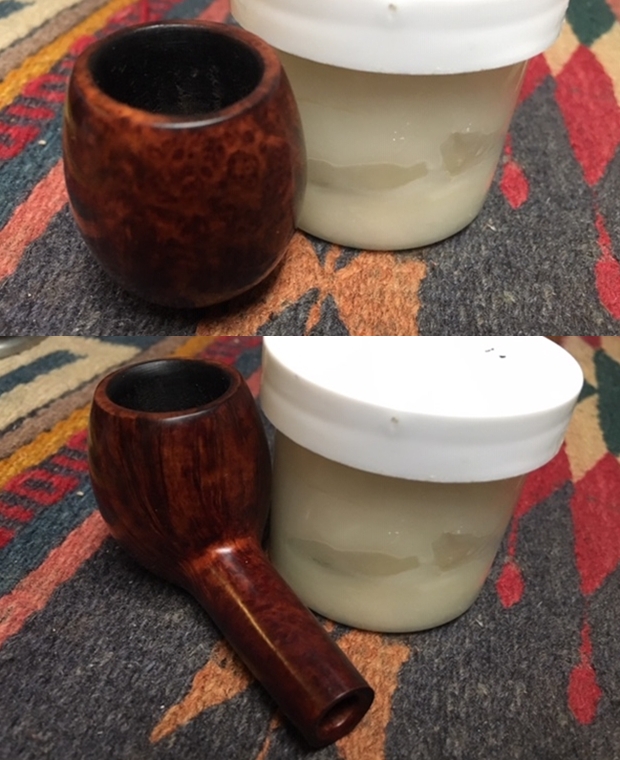
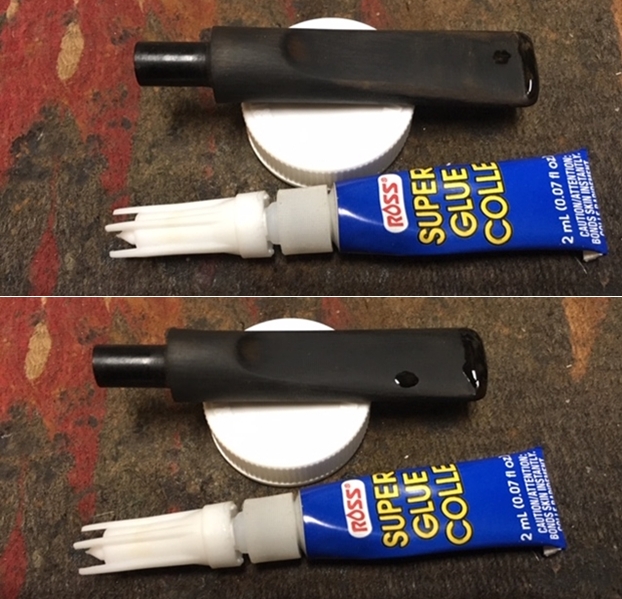
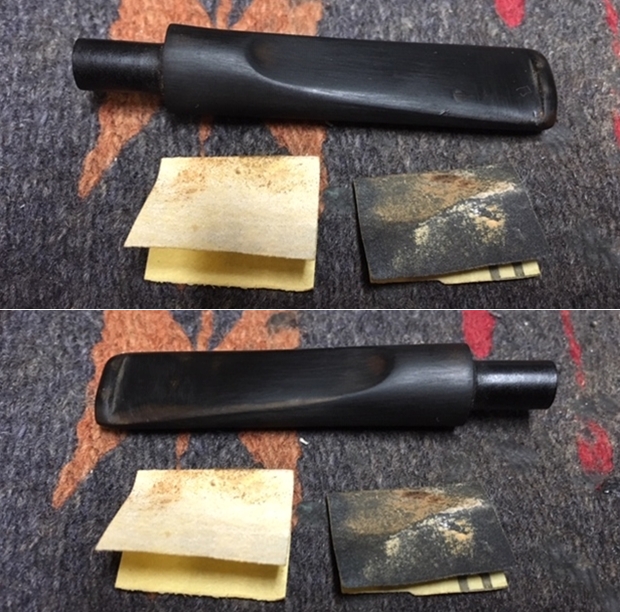
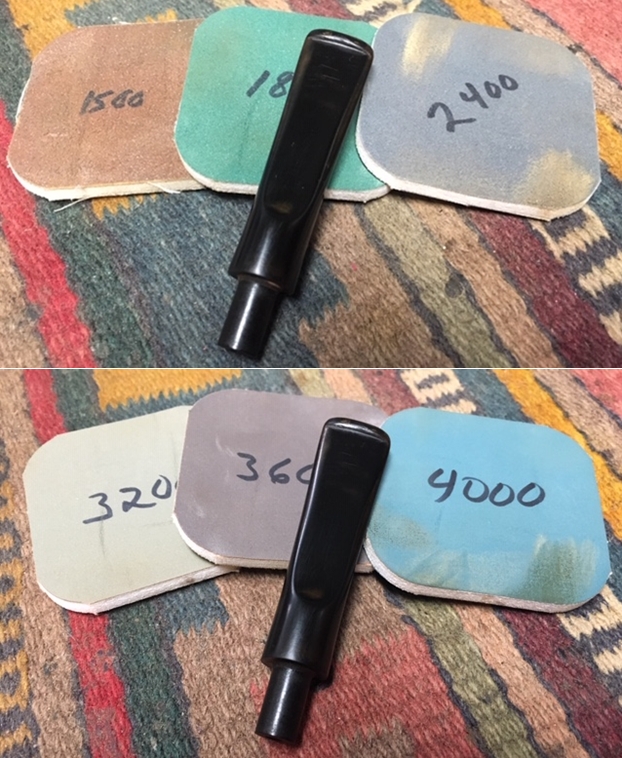
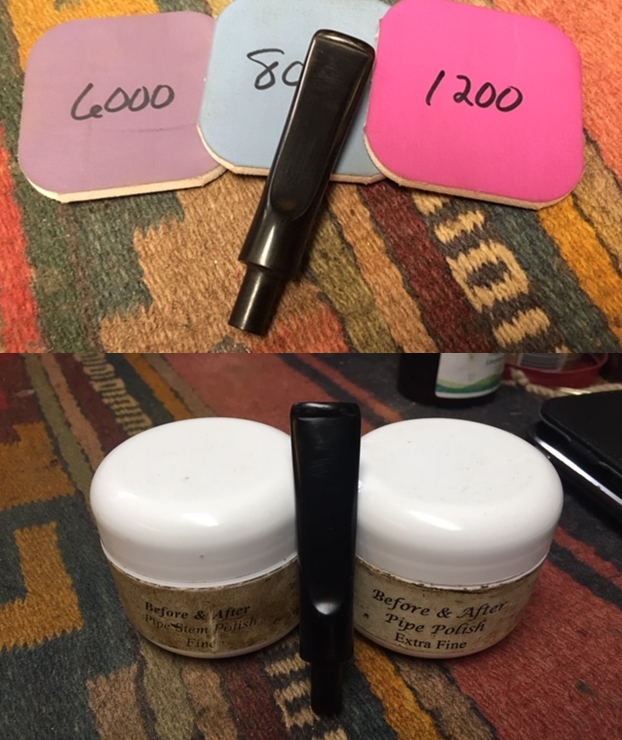
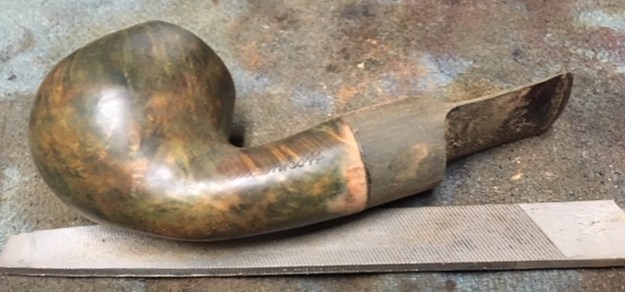
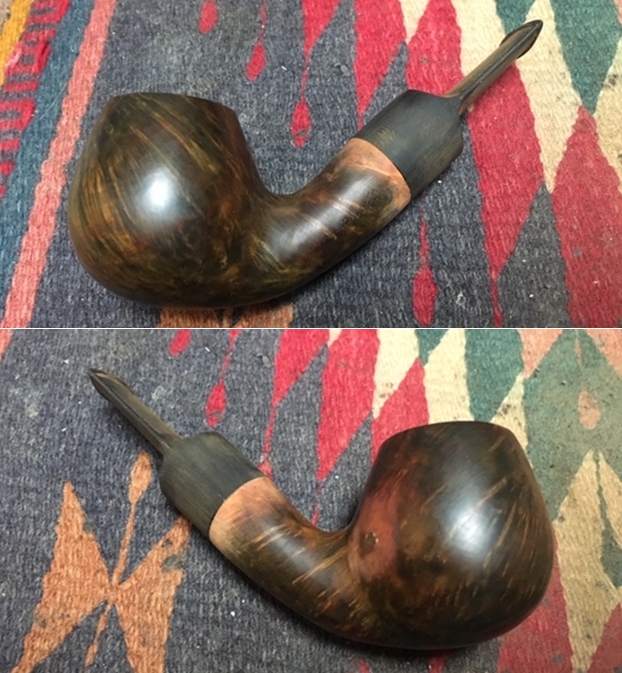
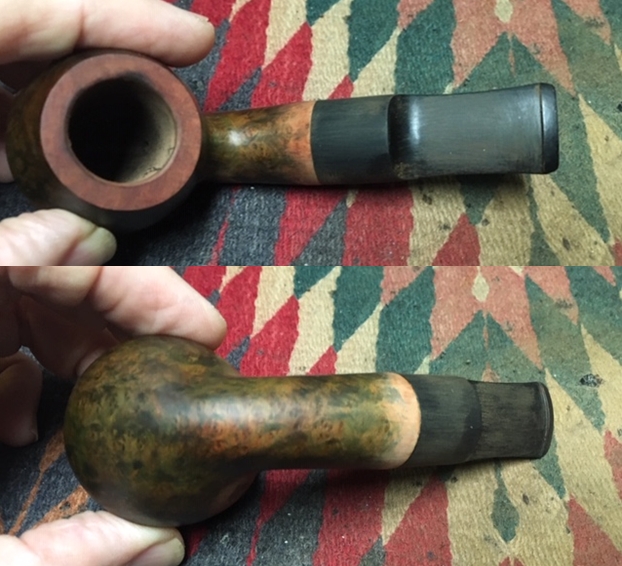
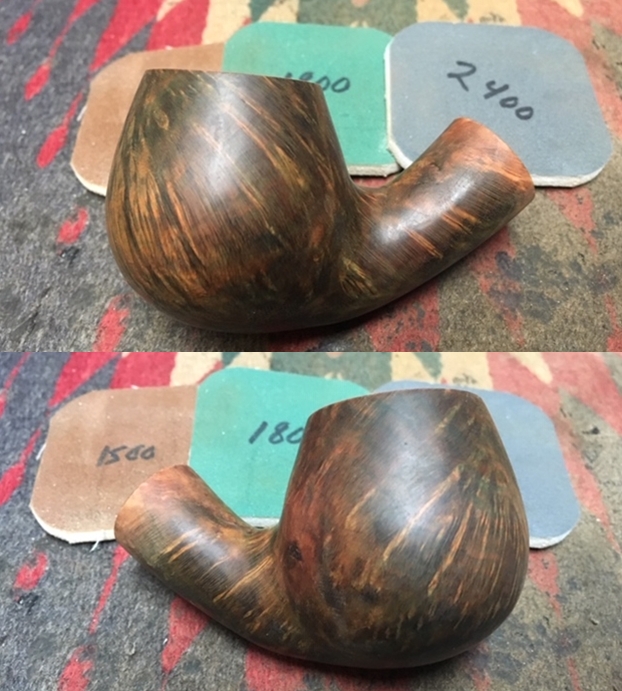
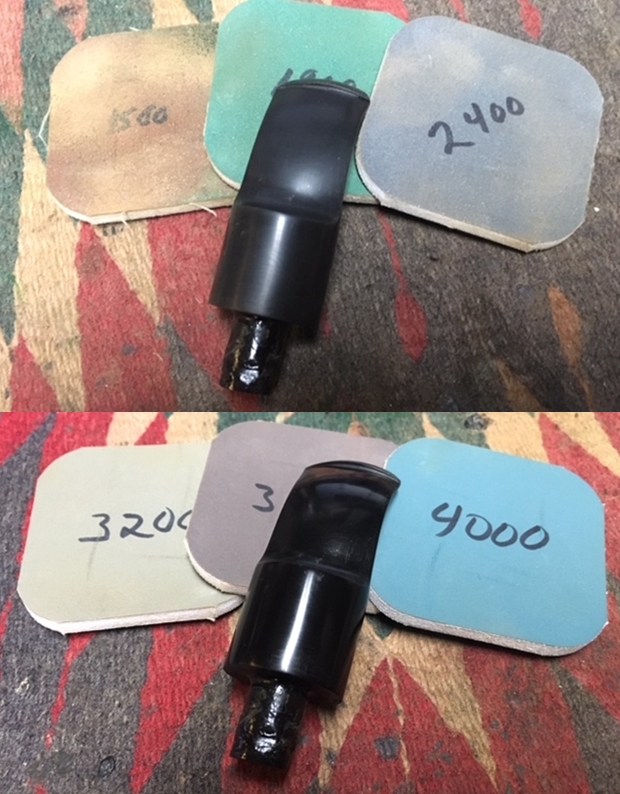
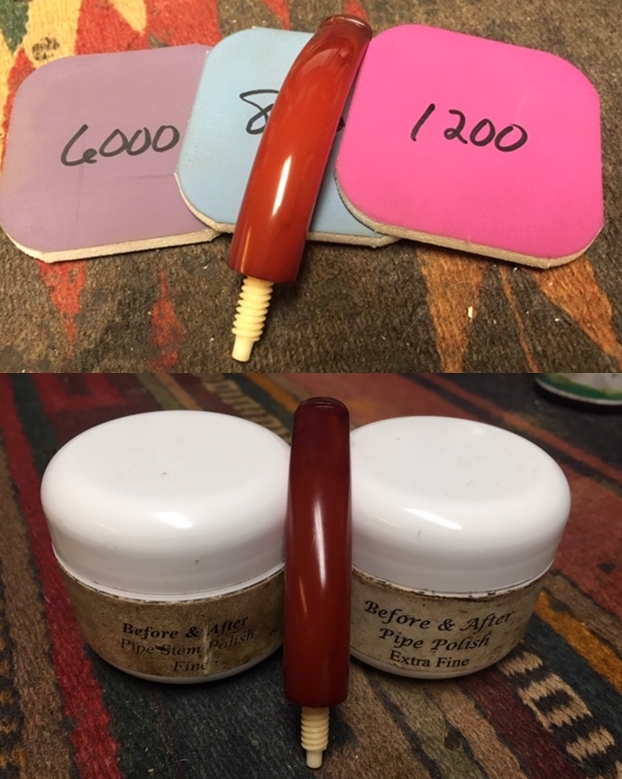
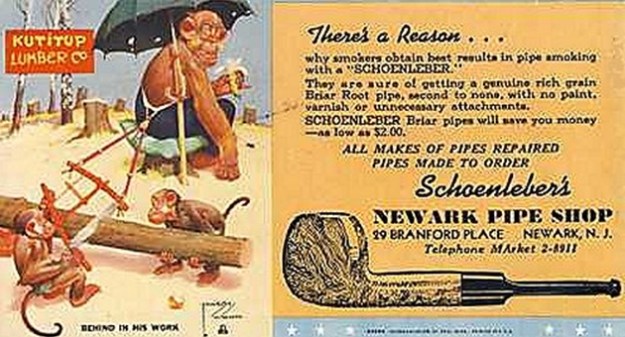
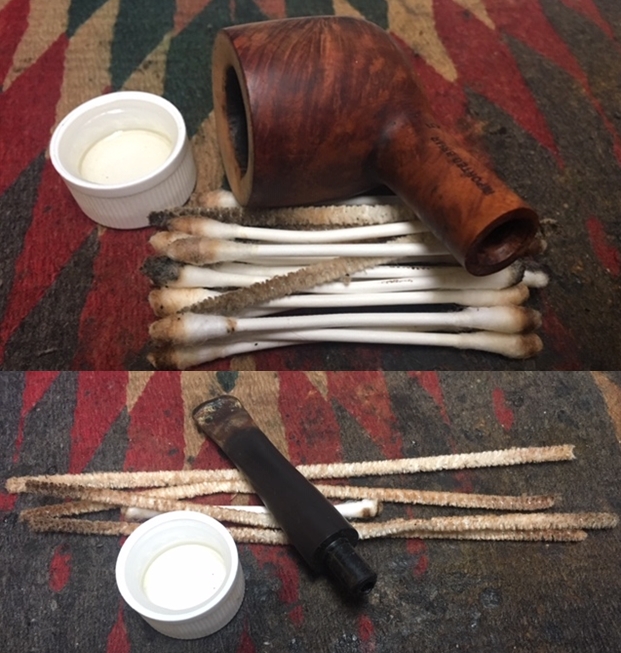
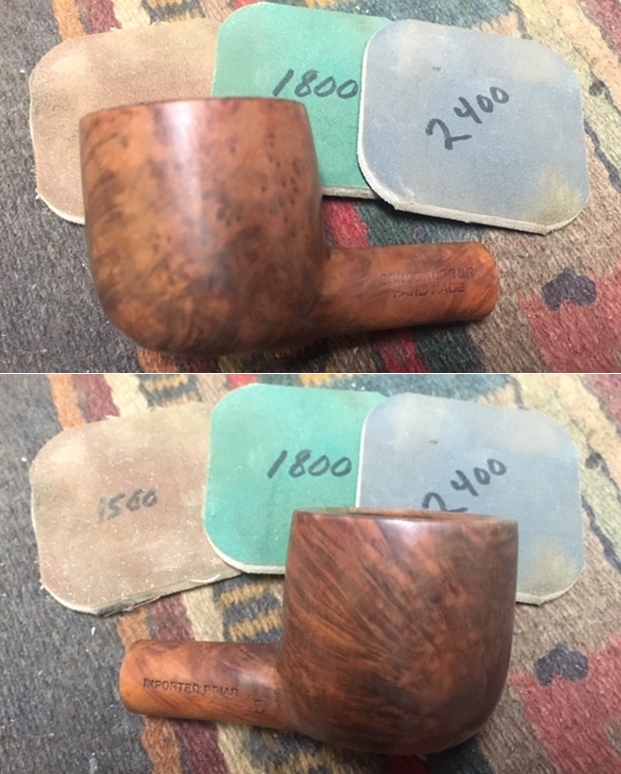
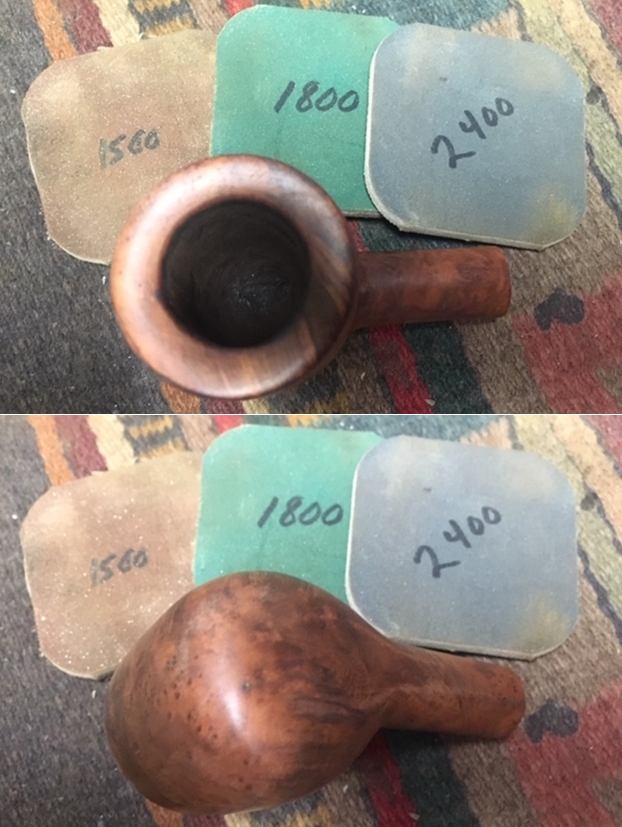
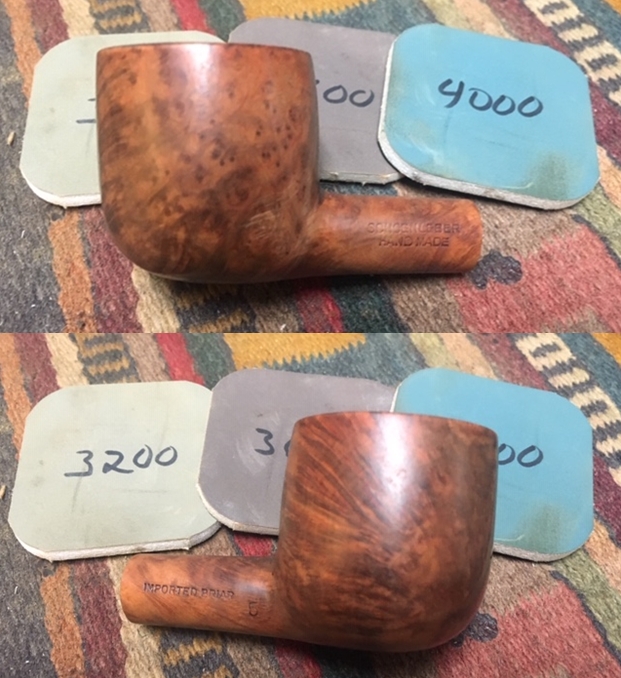
There was also an advertising card on the site that I have included below. It speaks to my assumptions about the curing process and the finishing process on the pipe. It also connects the pipe to Schoenleber’s Newark Pipe Shop in Newark, N.J. It also has a comment on the fact that pipes were made to order.I started the restoration by reaming the bowl with a PipNet pipe reamer and took the cake back to bare briar. I sanded the interior walls with 220 grit sandpaper wrapped around a piece of dowel.I scraped the rim top with the sharp edge of a pen knife to remove the thick lava coat. I sanded the remaining lava and darkening to the rim top rim with 220 and 400 grit sandpaper. I was able to remove the darkening and smooth out the rim top. I cleaned the mortise and the airway in both the shank and the stem with alcohol, cotton swabs and pipe cleaners. I scrubbed the mortise and airway until it was very clean and the pipe cleaners and cotton swabs came out clean.I polished the bowl and rim with micromesh sanding pads – wet sanding with 1500-12000 grit pads. I wiped the bowl down with a damp cloth pad after each pad to remove the sanding debris. I worked some Before & After Restoration Balm into the surface of the briar with my fingertips to clean, enliven and protect it. I let the balm sit for a little while and then buffed with a cotton cloth to raise the shine. With the bowl finished I set it aside and turned my attention to the stem. I painted the tooth marks in the stem with a Bic lighter to try to raise the deep marks. I scraped the surface with a knife and removed the buildup of calcified spittle and oxidation. I sanded it with 220 grit sand paper and wiped down the tooth marks and chatter with a cotton swab and alcohol. I dried it off with a cotton swab. I filled in the remaining tooth marks with black super glue and set it aside to dry.Once the repairs cured, I used a needle file to file the button edge to redefine it and give it a sharp edge. I lightly filed the button top and bottom to give it a smoother definition. The filing made the sanding a bit simpler as it took the excess material down to the surface.I sanded the filed stem surface with 220 grit sandpaper to remove the filing marks on both sides of the stem. I am happy with the stem surface once that was done. I started the polishing of the surface with 400 grit wet dry sandpaper. I polished the stem with micromesh sanding pads – wet sanding it with 1500-12000 grit pads. I wiped the stem down with a damp cloth after each pad. I further polished it with Before & After Pipe Polish – both Fine and Extra Fine. I wiped it down with a coat of Obsidian Oil and set it aside to dry. With both parts of the pipe finished I put the pipe back together and polished the bowl and the stem with Blue Diamond polish on the buffing wheel. I gave the bowl and the stem multiple coats of carnauba wax. I buffed the pipe with a clean buffing pad to raise the shine. I hand buffed it with a microfiber cloth to deepen the shine. The pipe polished up pretty nicely. The rich oil cured finish and the grain came alive with the buffing. The finish on the briar works well with the polished black vulcanite stem. The finished pipe is a well-proportioned, nicely grained ¼ straight Pot shaped pipe. Have a look at it with the photos below. The dimensions are Length: 5 1/2 inches, Height: 1 1/2 inches, Outside diameter of the bowl: 1 1/2 inches, Chamber diameter: 7/8 of an inch. This Schoenleber Hand Made 5 Pot will be going back to Alex soon to join his growing collection of American made pipes. Thanks for walking through the restoration with me on another of Alex’s pipes.
I just had to work on this one next – A Wally Frank Ltd. Liverpool


Blog by Steve Laug

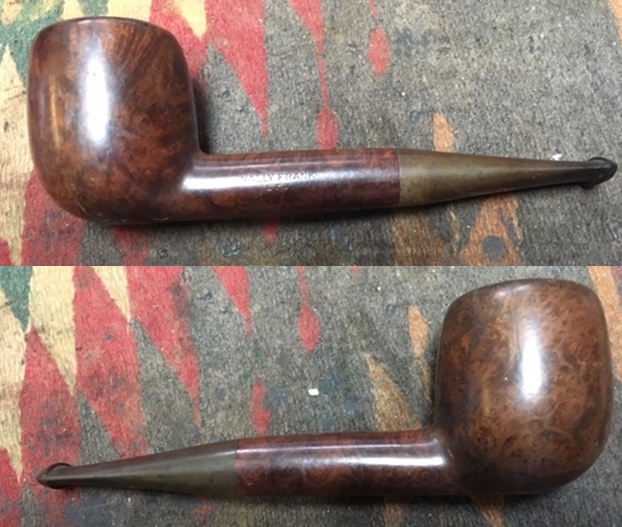
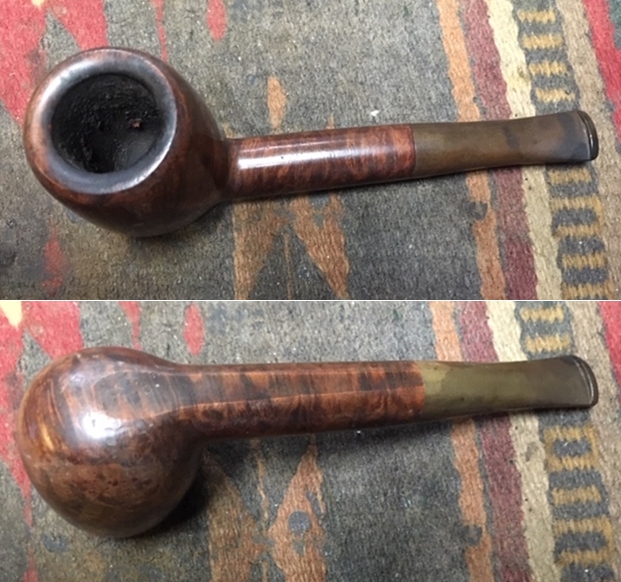
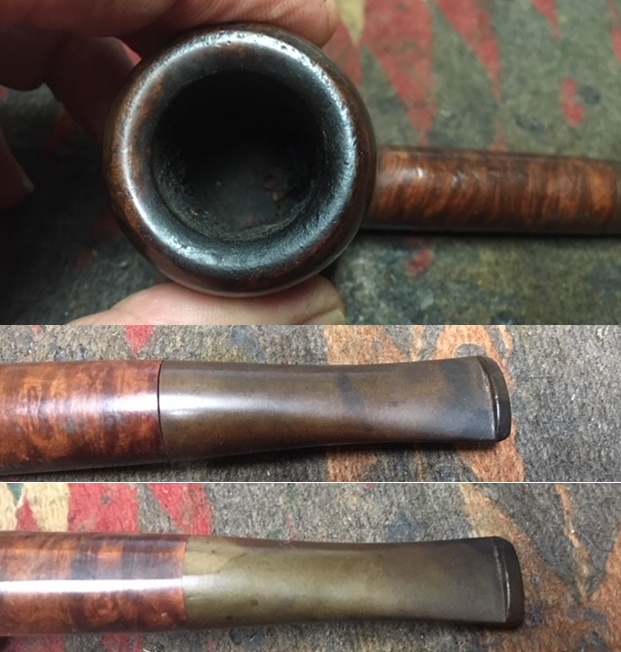
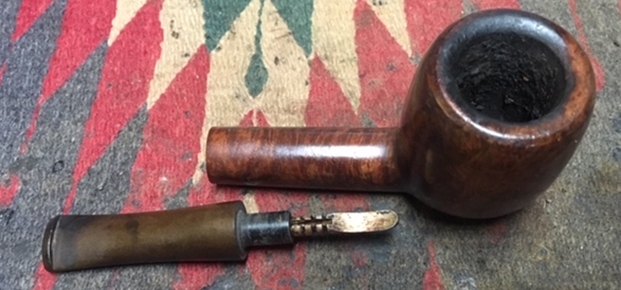
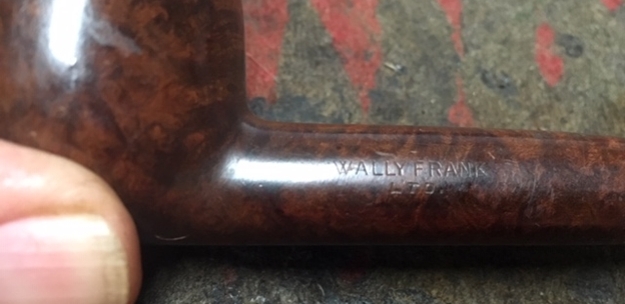
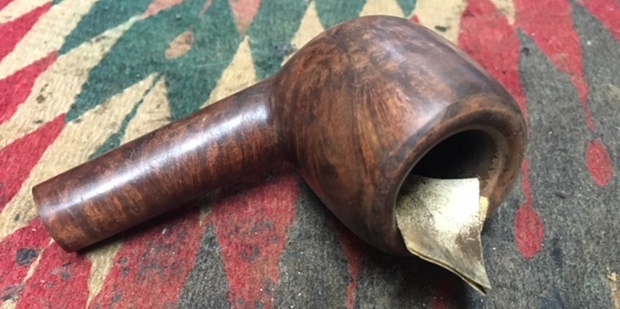
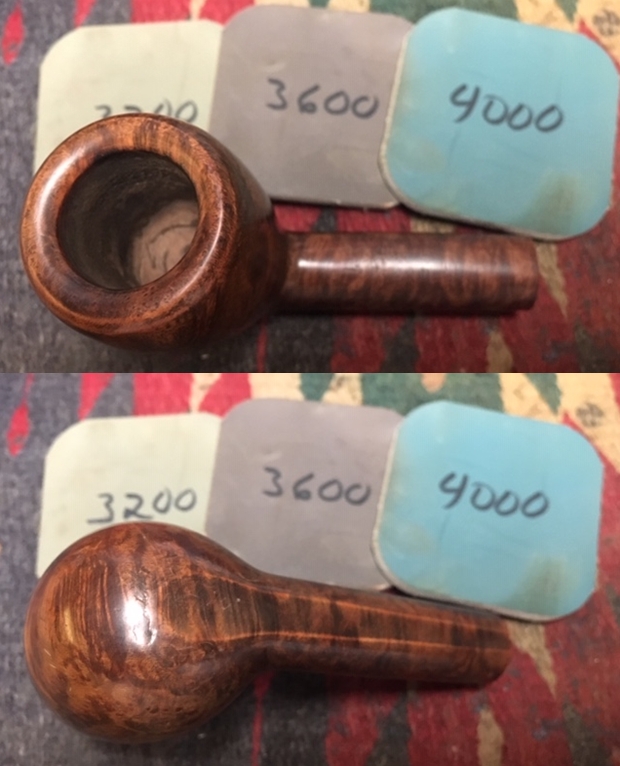
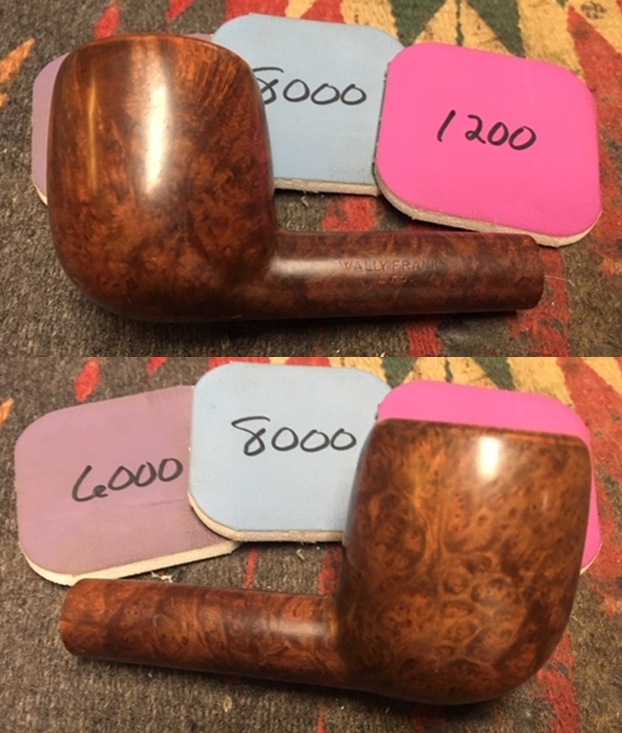
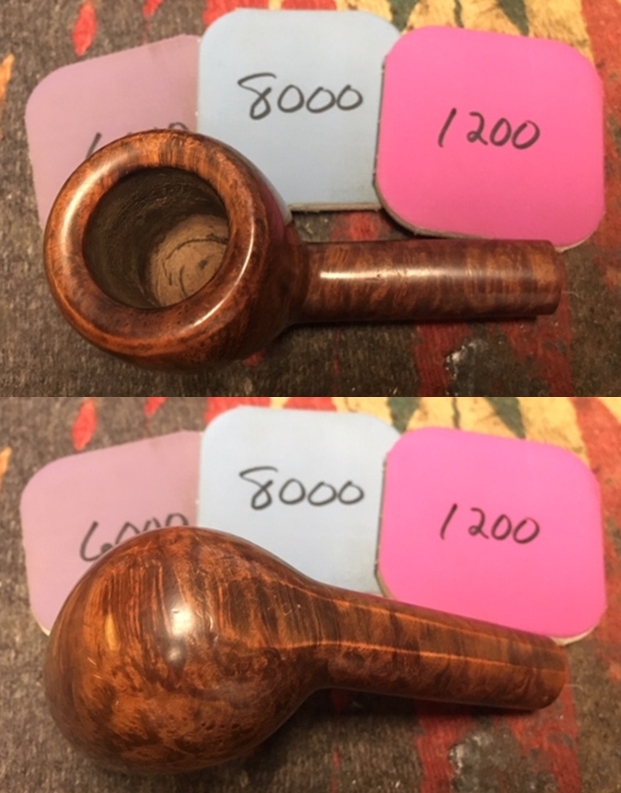
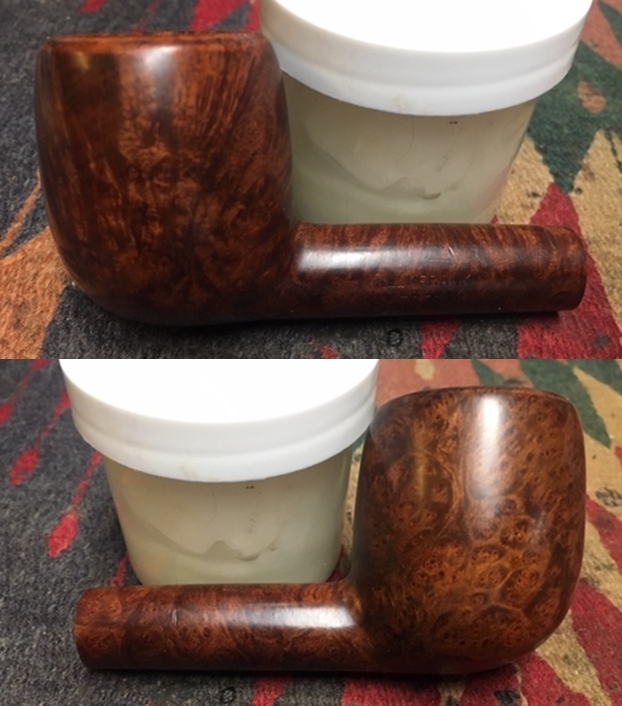
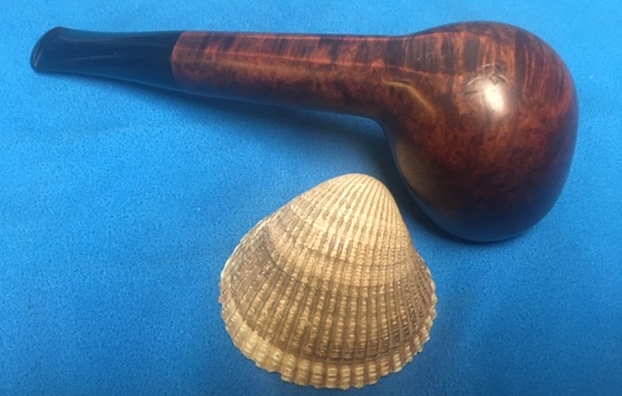
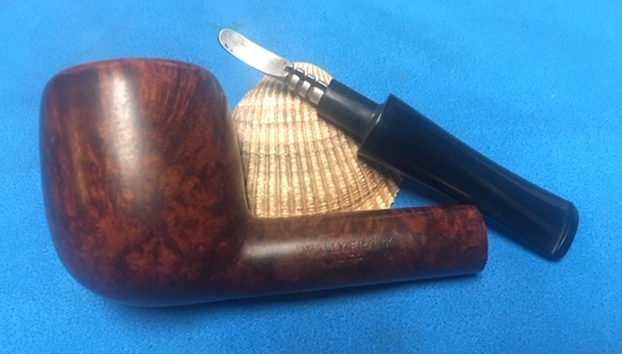
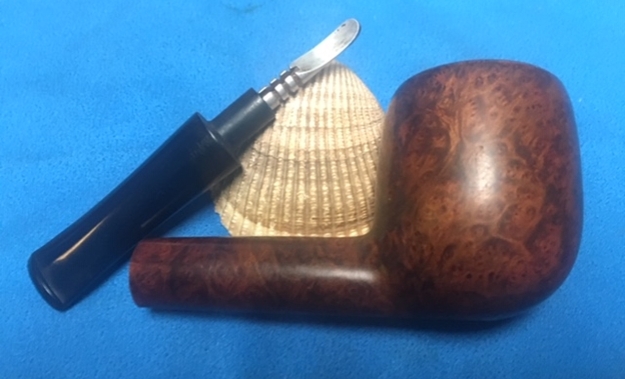
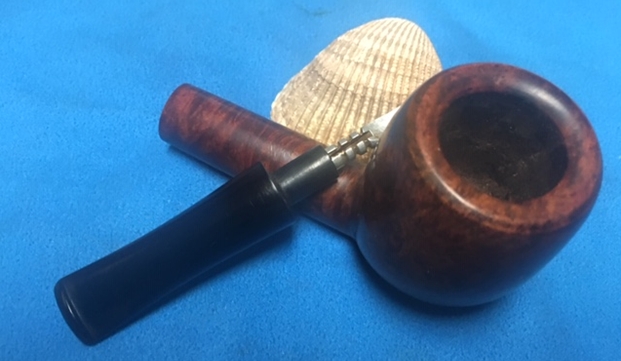
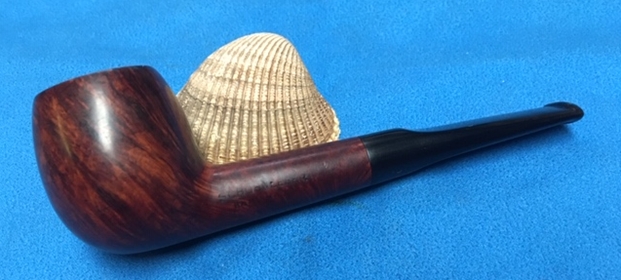
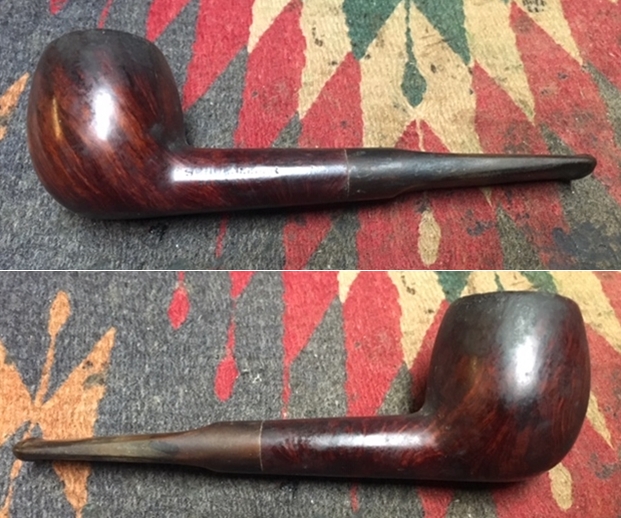
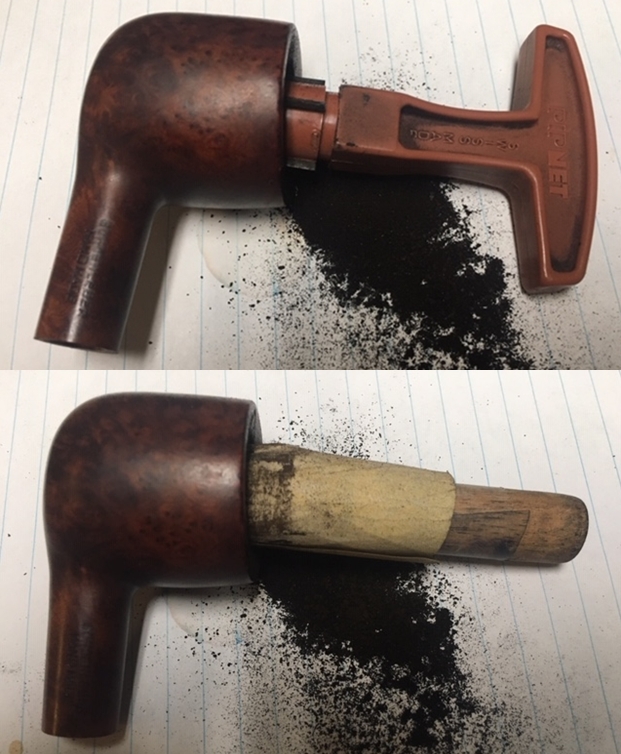
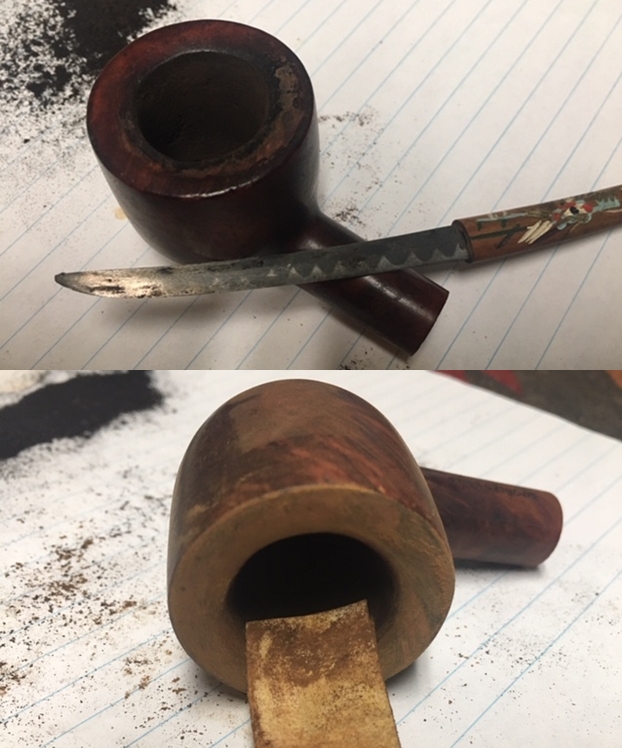
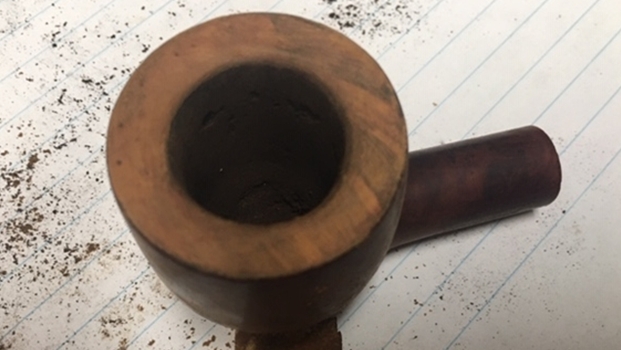
The next pipe in the queue is the second pipe that I found on my recent Bellingham pipe hunt this week. I had a some fun cleaning up the Custombilt Figural carved by Hetzer Hartsock (https://rebornpipes.com/2019/07/25/new-life-for-a-rich-era-custombilt-carved-figural-billiard/) so I figured I might as well clean up the Wally Frank Ltd. Liverpool as well. It is a great looking pipe with some beautiful grain – birdseye, straight and flame grain around the bowl and shank. The pipe was filthy with overflowing lava but the grain peaked out under the grime. The carver did a great job utilizing the block of briar to maximize the grain. The pipe is stamped on the left side of the shank. It reads Wally Frank over Ltd. The tapered stem is vulcanite and has no marking or stamping. Some would probably call it a long shank Billiard but it really suits the Liverpool Designation – longer shank and a short tapered stem. The bowl has a thin cake inside but the tars cover the crowned rim top. There some darkening on the rim top. The exterior of the briar was dirty and dull looking – lifeless after sitting unused for years. The oxidized vulcanite stem was surprisingly clear of chatter or tooth marks. When I removed the stem there was an interesting stinger apparatus pressure fit in the tenon. The photos below tell the story and give a glimpse of the pipe before clean up. I took a photo of the bowl and rim to capture the condition of the pipe before I started my cleanup work. There was significant darkening on the rim top and a cake in the bowl flowing over as lava on the top edge. The inner and outer edges of the bowl appeared to be in good condition, but I would only be sure once I removed the lava. The stem was in decent condition under the thick oxidation on the surface. There was none of the usual tooth chatter and tooth marks on the stem.I took the stem off the shank and took a photo of the stem and stinger apparatus in the tenon. It was pressure fit and firmly stuck in place by the tars and oils.I took a photo of left side of the shank to show the stamping. The stamping is readable in the photo below and is as noted above – Wally Frank over LTD. I remembered a a lot about the brand in that Iknew it was an old US pipe and tobacco store in and around New York City. I also knew that they did not make their own pipes but had others carve them from a variety of well known pipe making companies. I wanted to double check and seek more information on the brand before I went to work on this one. To me it certainly looked very British but other than that I had no idea.

I turned first to the Pipephil website (http://www.pipephil.eu/logos/en/logo-w1.html). There was some information on the various stampings and lines of the brand but not one of them matched this one. I did find out though that the… brand started in 1930. The pipes came from English, French, Danish, Italian and even US companies.

That was a good start but I turned to Pipedia for more information and found some helpful clues regarding the pipe (https://pipedia.org/wiki/Wally_Frank). I quote:

Wally Frank, Ltd. was one of America’s oldest and most respected names in pipes and tobaccos, beginning in the early 1930’s. Wally Frank operated a chain of tobacco stores in New York City (the flagship store was in Lexington Avenue) and had a vast catalog business for pipes and pipe tobaccos. Their numerous private-label pipes were made by many makers, including Charatan, Sasieni, Weber, and many others. Wally Frank, Ltd. also owned the Pioneer brand of meerschaum pipes, made from both Turkish and African meerschaum. In addition to importing pipes, he had many pipes made in his own name and also employed pipemakers like Peter Stokkebye, Svend Bang, and Ed Burak (who later became the owner of Connoisseur). As a result, each Wally Frank pipe must be individually evaluated on its own merit.

In 1952, Wally Frank was on a buying trip in Italy and “discovered” pipe maker Carlo Scotti. Frank liked Scotti’s pipes, but there was the small problem of Scotti’s pipes bearing the same trademark or logo as one of Wally Frank’s pipe lines, the White Bar. The two men decided on creating a new logo for pipes sold in the U.S.: a hole drilled in the stem and with a piece of silver foil inserted in the hole and covered with clear Lucite.

Wally Frank (the person) wrote the forward to Georges Herment’s 1954 book “The Pipe.”

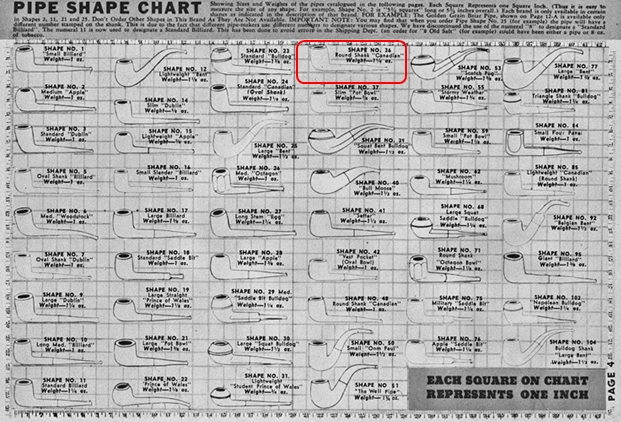
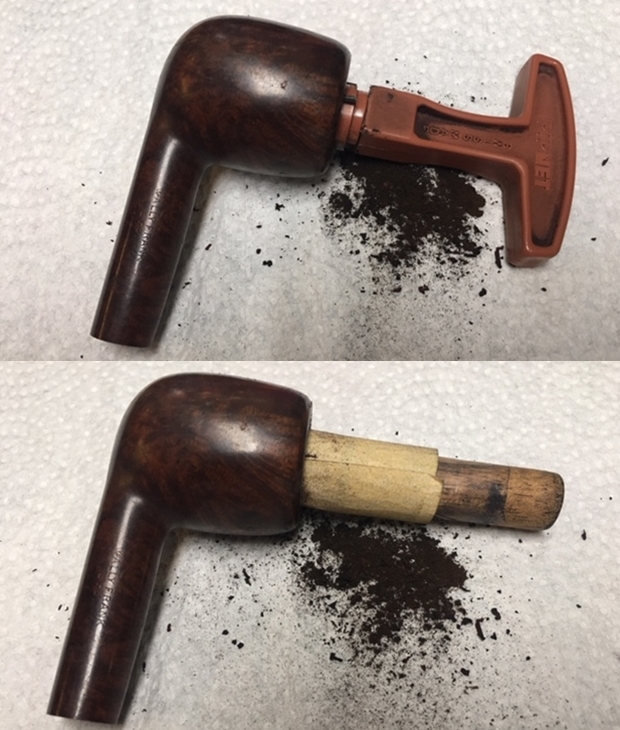
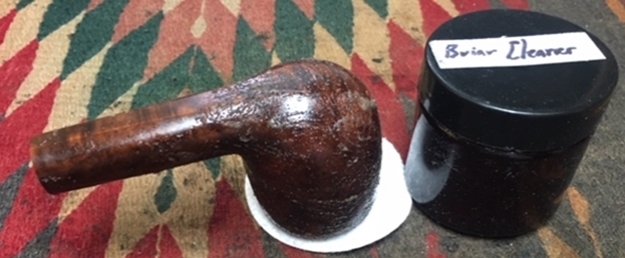
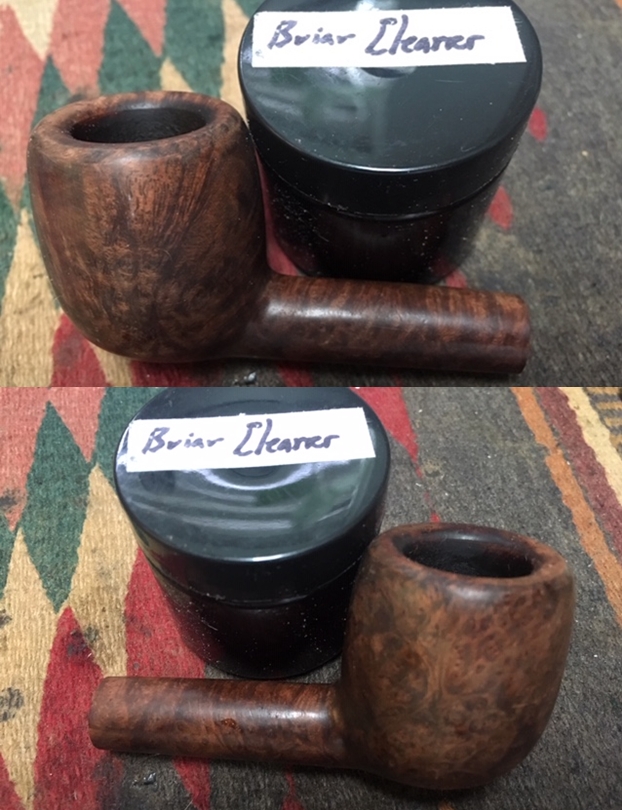
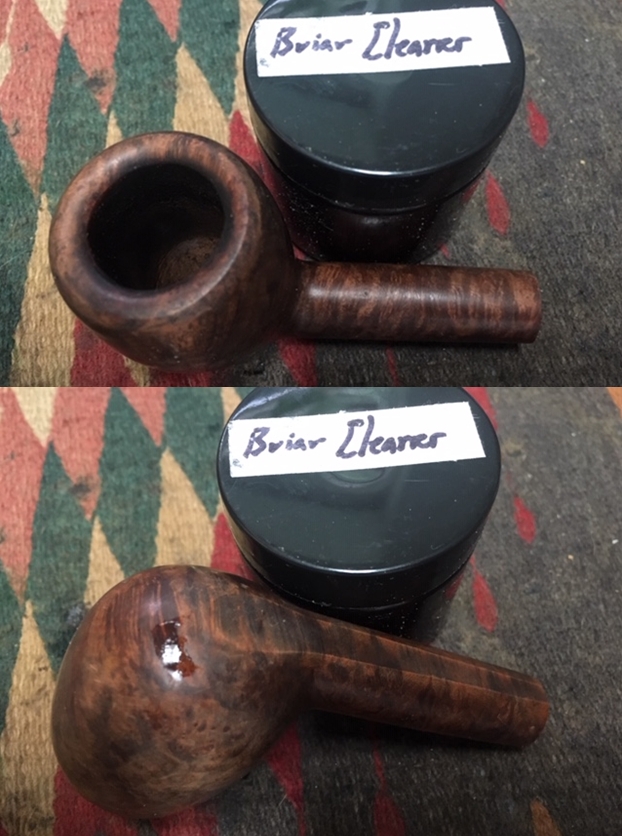
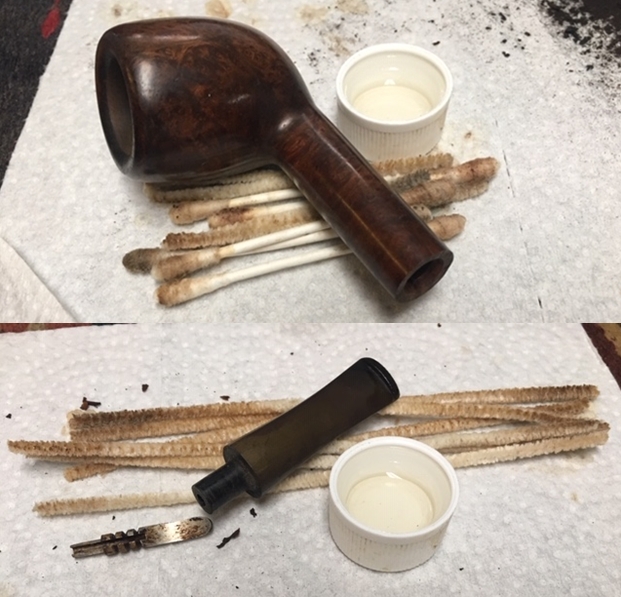
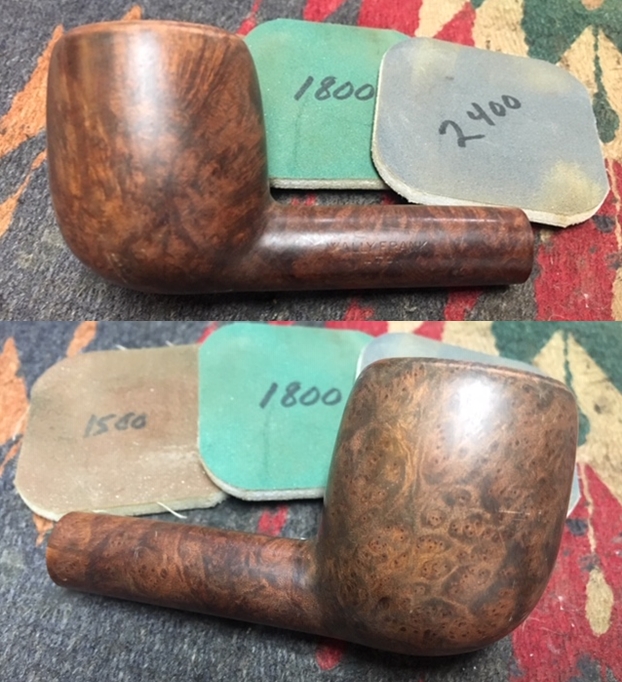
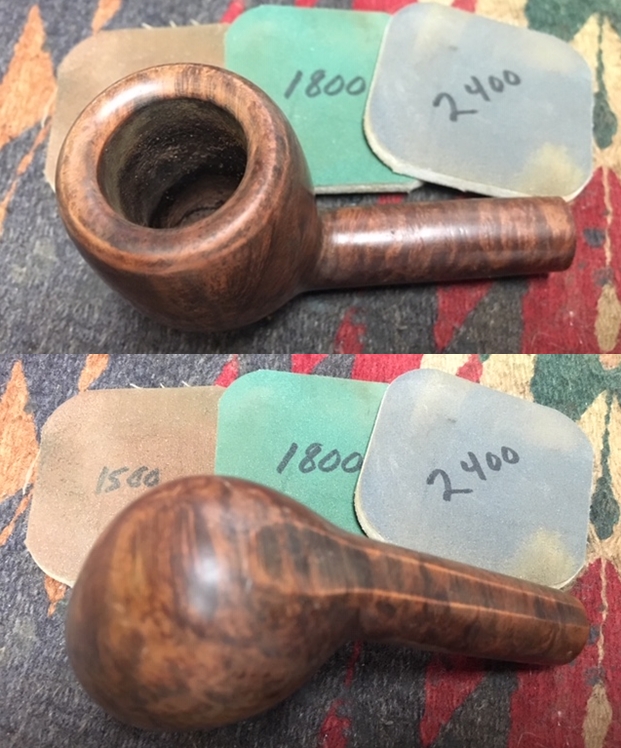
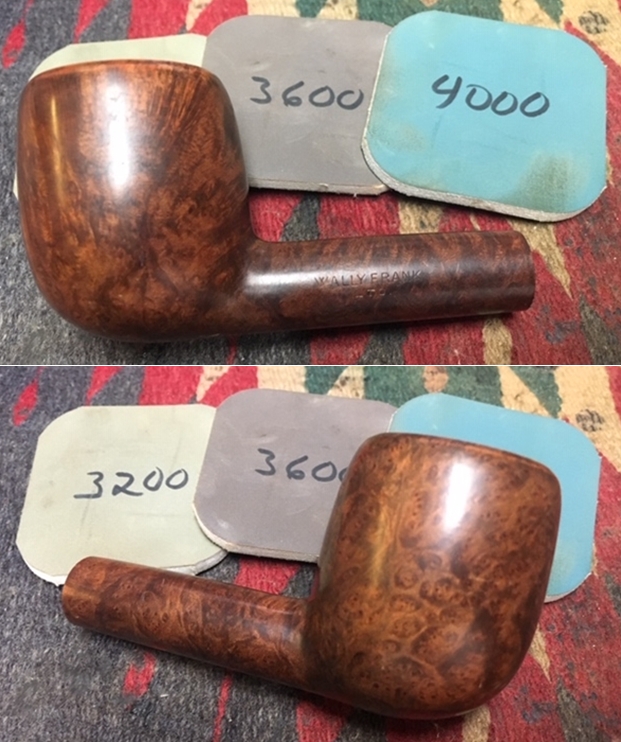
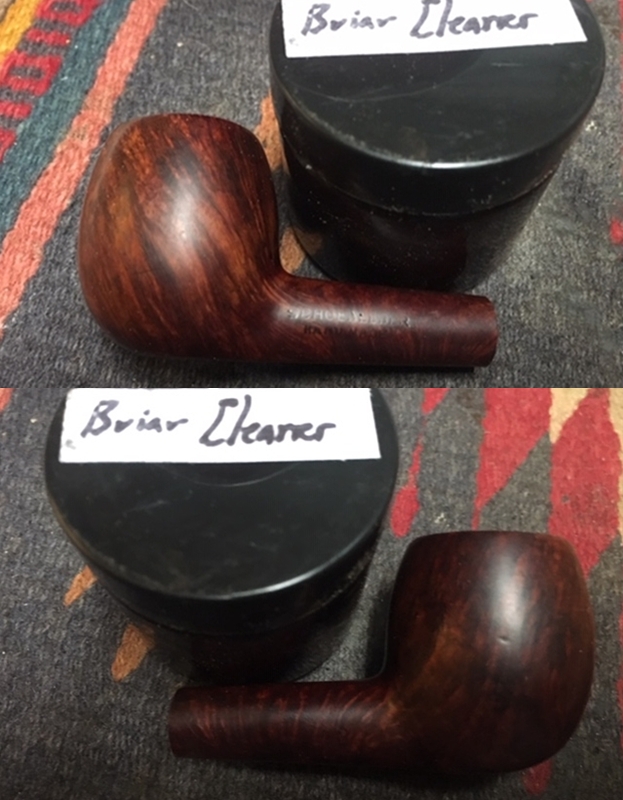
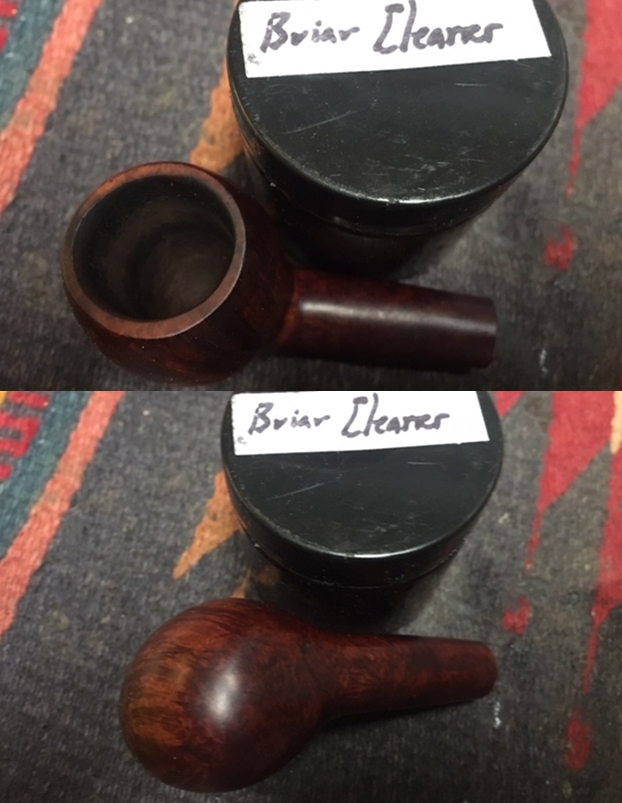
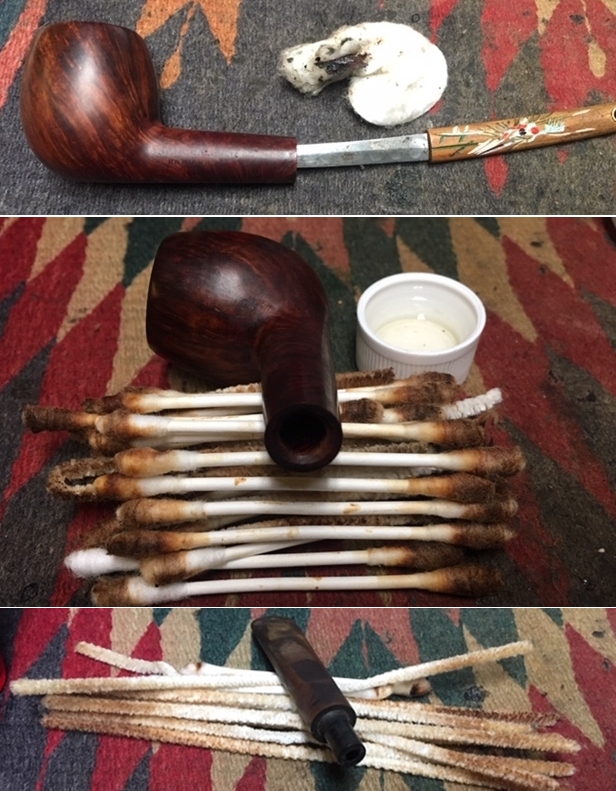
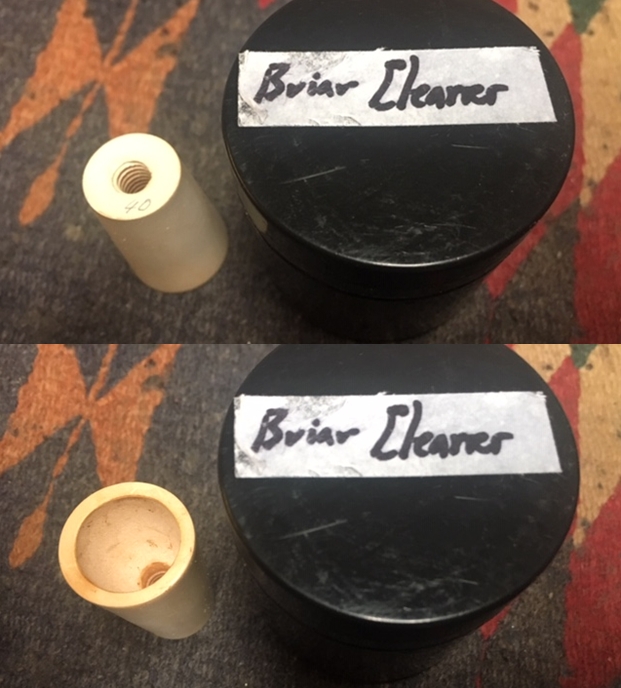
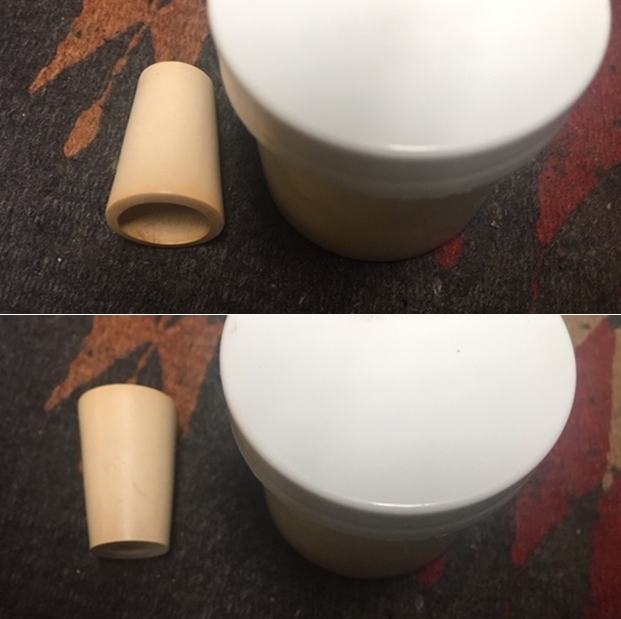
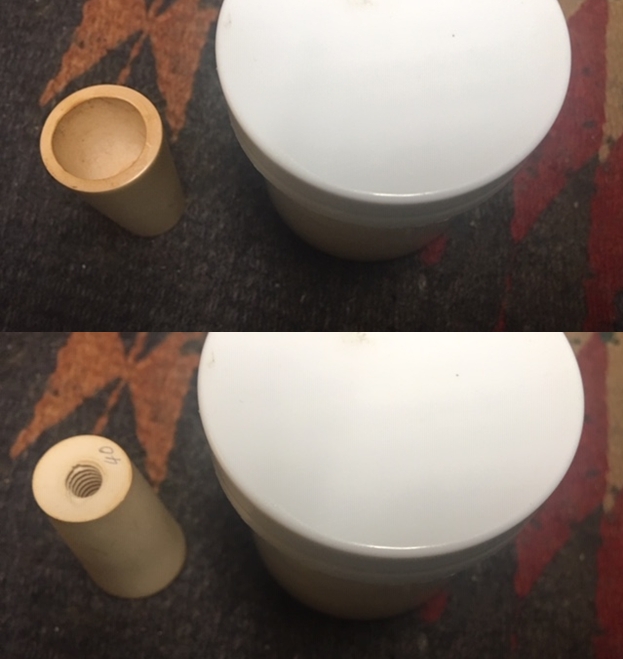
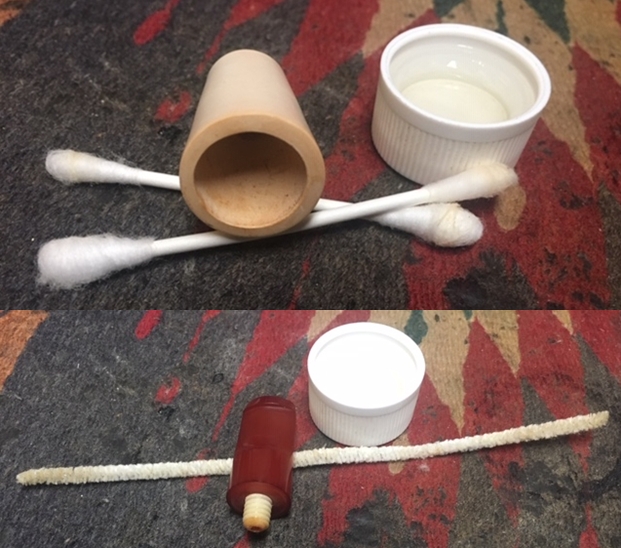
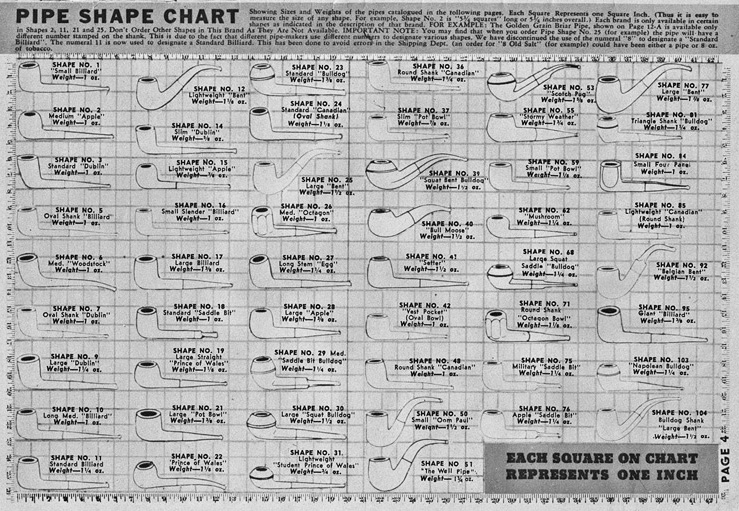
There was also a great pipe shape chart on the site that I thought was helpful (https://pipedia.org/images/d/d2/1943WallyFrankPipes.jpg). They labeled the pipe as a “Round Shank Canadian”. I have drawn a red box around it in the photo below. I reamed the bowl with a PipNet Pipe reamer to take the cake back to bare briar. The cake was thin but the lava over flow on the rim was heavy and dark. The rim top looked pitted and damaged. I sanded the internal walls of the bowl with 220 grit sandpaper wrapped around a piece of dowel. The filthy exterior of this pipe was perfect for me to continue experimenting with a new product from Mark Hoover of Before & After Products. This one is a product he labels briar cleaner and it has the capacity of absorbing grime and dirt from the surface of briar. I rubbed the bowl down with some of his Briar Cleaner to see how it would work in this setting. In speaking to Mark he noted that the product is completely safe to use. The main product is even FDA approved edible. I rubbed it onto the bowl and rim top with my finger tips and worked it into the grime and grit on the bowl. I let it sit on the pipe for about 5 minutes before I rubbed it off with a microfibre cloth. I rinsed it under warm running water to remove the residue. I was pleasantly surprised by how clean the surface on the bowl looked when I was finished. The mortise and the airway in the shank was filthy. There was a thick build up of tar and oils on the inside of the shank. I scraped the shank walls with a thin bladed knife until the briar was bare. I scrubbed the walls of the mortise and the airway in the shank and stem with pipe cleaners, cotton swabs and isopropyl alcohol until they were clean. The inner edge of the rim still had a bit of darkening on the bevel so I carefully sanded it with a worn piece of folded 220 grit sandpaper to remove the darkening. I polished the bowl and rim with micromesh sanding pads – wet sanding with 1500-12000 grit pads. I wiped the bowl down after each pad to remove the sanding debris. My goal was to further remove the darkening on the both the rim top and the first half inch of the bowl. I worked some Before & After Restoration Balm into the surface of the briar with my fingertips to clean, enliven and protect it. I let the balm sit for a little while and then buffed with a cotton cloth to raise the shine. Mark Hoover’s Balm is a product that I have come to appreciate and one I use on every pipe I have been working on. With the bowl finished I set it aside and turned my attention to the stem. Fortunately the stem was quite clean and other than oxidation there were no other issues. I sanded the surface of the stem with 220 grit sandpaper to remove the oxidation. I started the polishing of the surface with 400 grit wet dry sandpaper. I polished the stem with micromesh sanding pads – wet sanding it with 1500-12000 grit pads. I wiped the stem down with a damp cloth after each pad. I further polished it with Before & After Pipe Polish – both Fine and Extra Fine. I wiped it down with a coat of Obsidian Oil and set it aside to dry. I cleaned the stinger with alcohol and a cotton pad and then scrubbed the grooves out with a brass bristle brush to remove the debris. Once I was finished I put it back in the stem. It is easily added and removed so the choice will belong to the next pipeman or woman who takes the pipe in trust.With both parts of the pipe finished I put the pipe back together again and I polished the bowl and the stem with Blue Diamond polish on the buffing wheel. I gave the bowl and the stem multiple coats of carnauba wax. I buffed the pipe with a clean buffing pad to raise the shine. I hand buffed it with a microfiber cloth to deepen the shine. The pipe polished up pretty nicely. The rich finish and the grain came alive with the buffing. The finish on the briar works well with the polished black vulcanite stem. The finished pipe is a well-proportioned, nicely grained Classic Liverpool. Have a look at it with the photos below. The dimensions are Length: 5 ½ inches, Height: 1 7/8 inches, Outside diameter of the bowl: 1 ½ inches, Chamber diameter: 3/4 of an inch. This beautiful Wally Frank Ltd. Liverpool will soon be taking it place on the rebornpipes store. If you are interested in it be sure to let me know. Thanks for walking through the restoration with me.
 

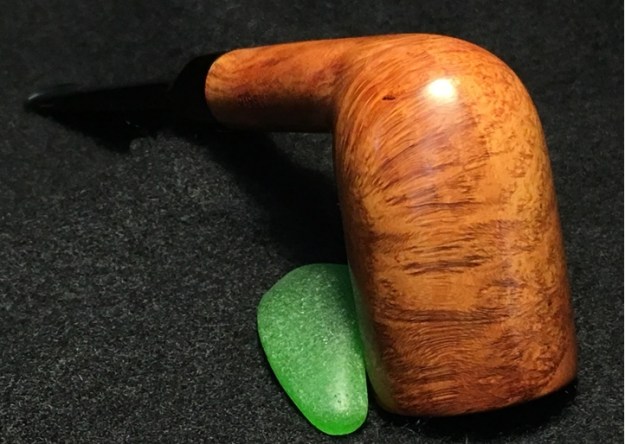
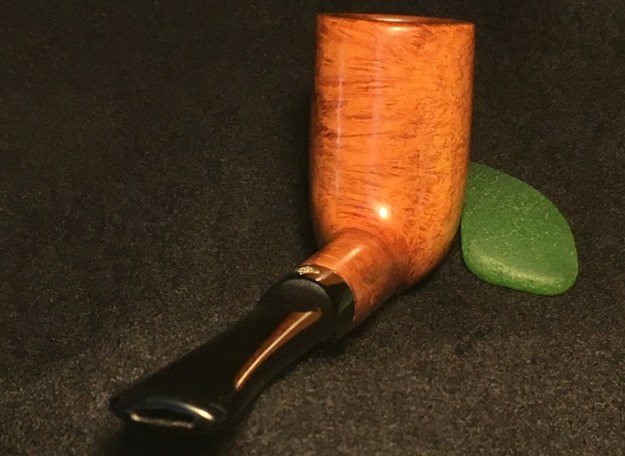
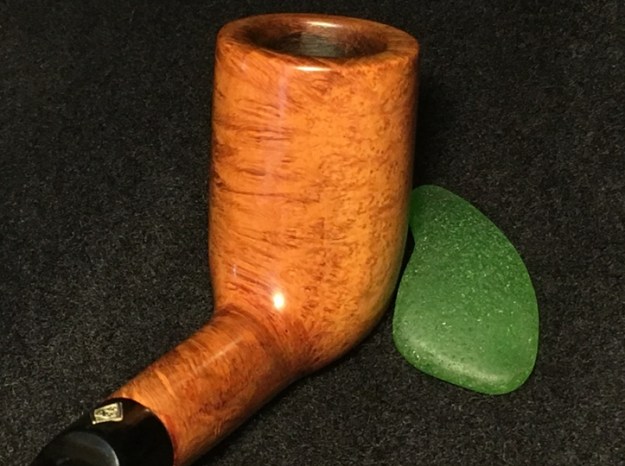
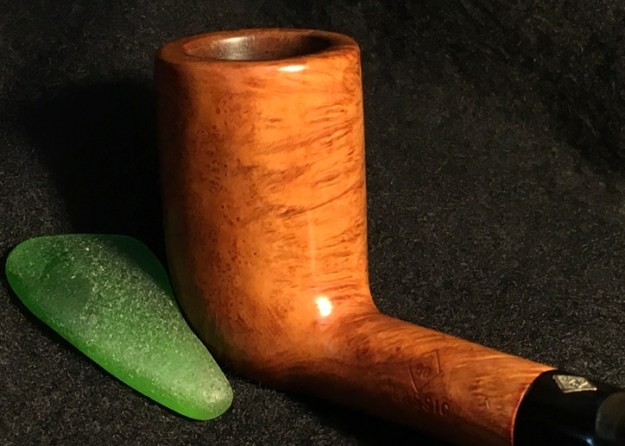
Recommissioning a Sharp BBB Classic London England 106S Chimney


Blog by Dal Stanton

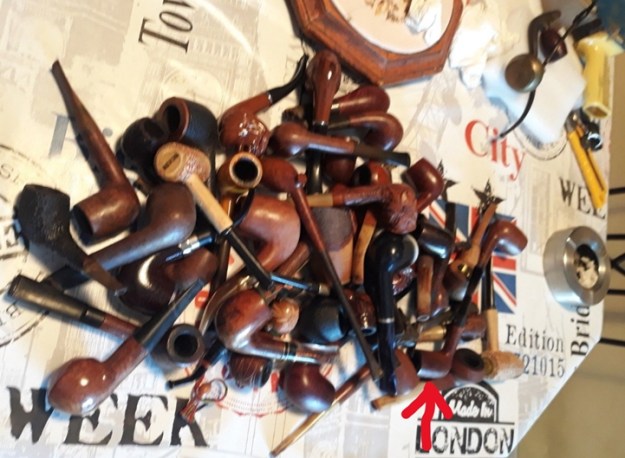
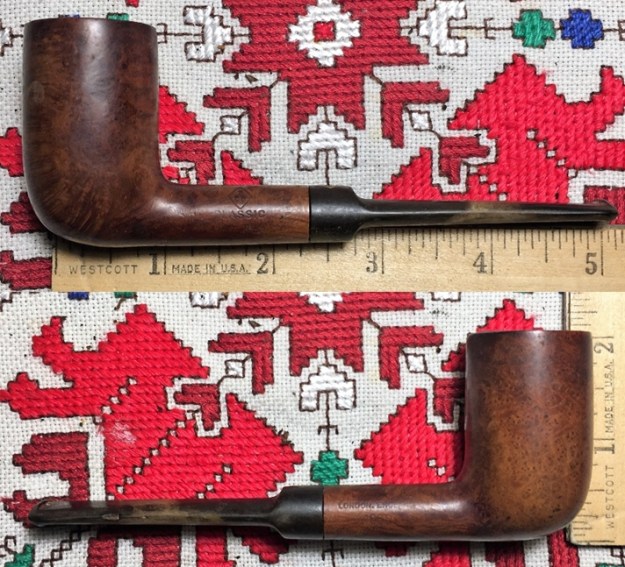
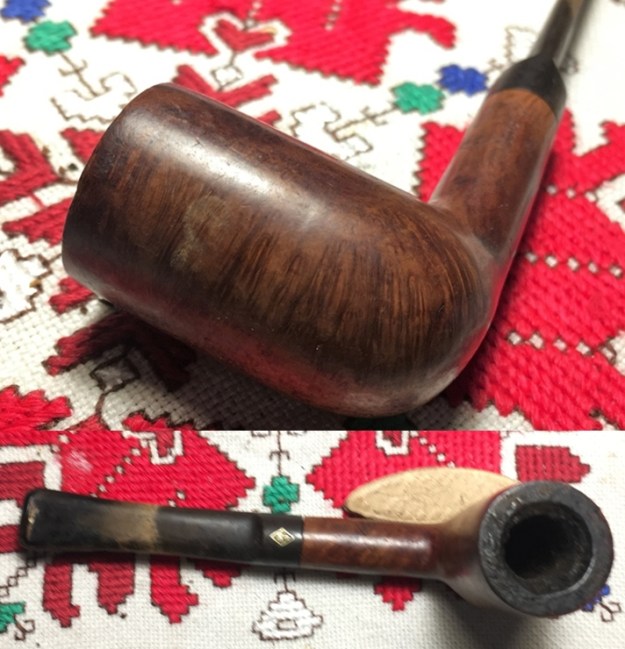
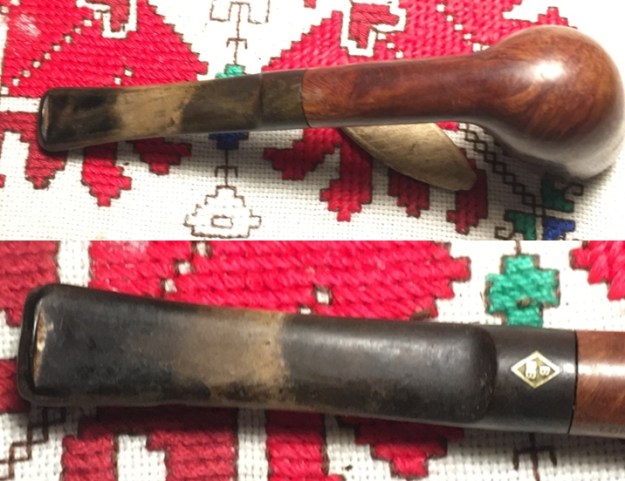
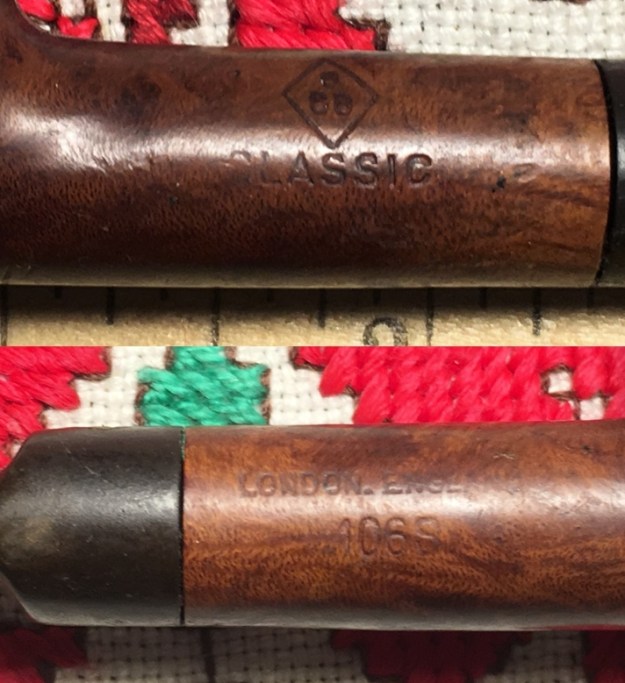
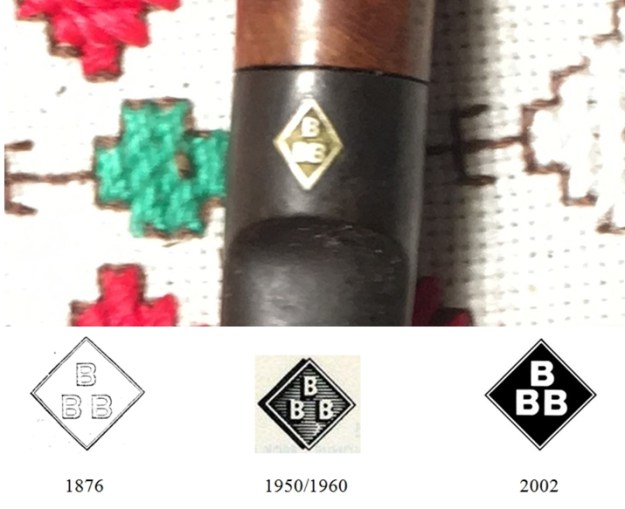
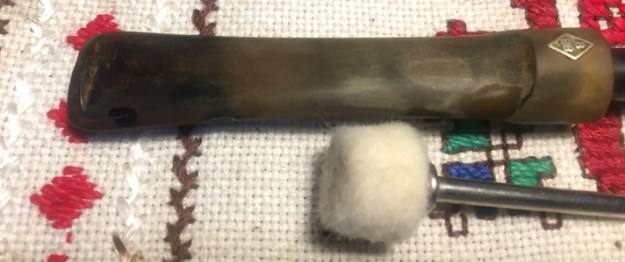
This very classy looking BBB I acquired with the French Lot of 50 that I won on the French eBay auction block along with several other treasures that I’ve enjoyed restoring for new stewards benefiting our work here in Bulgaria with the Daughters of Bulgaria.  Along with a few other pipes commissioned by my friend in India, Paresh saw this BBB in the For “Pipe Dreamers” Only! collection and was interested in adding it to his BBB collection.  I’ve marked the BBB in the pile of pipes that I acquired.  I love looking at ‘pipe piles’ 😊.With the pipe now on my worktable here in Sofia, Bulgaria, I take more pictures to show what got Paresh’s attention.  In prototypical English style, the pipe is on diminutive side measuring, Length: 5 3/8 inches, Height: 1 7/8 inches, Rim width: 1 1/8 inches, Chamber width: 3/4 inches, and Chamber depth: 1 3/4 inches. The left side of the shank is stamped with the classic ‘BBB’ ensconced in the rhombus [over] ‘CLASSIC’.  The right side of the shank is stamped, ‘LONDON, ENGLAND’ [over] 106S – what I’m assuming is the BBB shape number designation.  The shape of the stummel I would label as a Chimney sporting a saddle stem.  In my research I could unearth no BBB Shapes Chart that corroborates my designation matching the 106S.I love the look and feel of this pipe and its distinctive brass rondel embedded on the topside of the stem placing this ‘Best British Briar’ Classic in the 1950s and 1960s.  Below is pictured the evolution of the BBB stem markings which is included in an extensive article on the History of BBB Pipes by Fiona Adler that Steve reposted in rebornpipes after translating from the original French.Pipephil provides a very brief description of ‘BBB’:

BBB: ” Best British Briar” is now a brand of the Cadogan Company (Oppenheimer group). American rights to use the brand name were sold to Wally Frank in 1980.
Founder of the brand in 1847: Louis Blumfeld. The oldest pipe brand name in the UK has been registered in 1876 (Blumfeld Best Briar)
Grading (ascendant): Own Make, Bold Grain, Best Make, Rare Grain

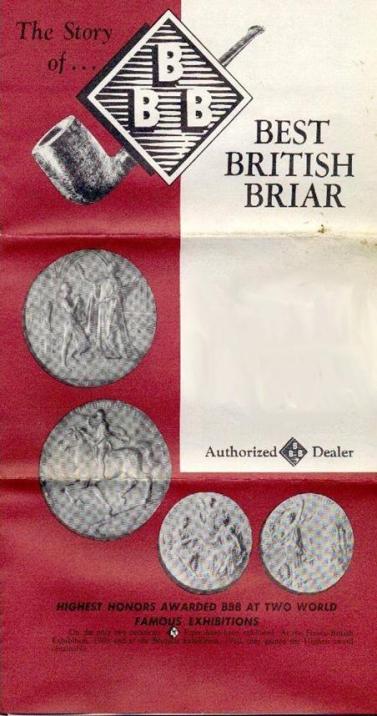
With the dating of this pipe giving it a 50s/60s vintage, I was hopeful to find the ‘Classic’ line in some of the catalogs that Steve acquired from Victor C. Naddeo who is the administrator of the FB Group, Pipe Club of Brasil. I enjoy it when catalogs are posted but unfortunately, I found neither the ‘Classic’ line mentioned or the shape number 106S in the 60s catalog (See: Best British Briar Catalog to see the whole posting).The Chimney stummel is in very good condition – the grain pattern shows great promise after the stummel is cleaned of normal dirt and grime buildup.  The chamber has a thick cake and the lava overflow matches the fact that this pipe was well smoked and served his steward well.  I will remove the cake to give the briar a fresh start and to inspect the chamber walls for heating problems.  The saddle stem has heavy oxidation but very little tooth chatter on the bit.  I’m looking forward to seeing how the very nice-looking BBB Classic Chimney cleans up.

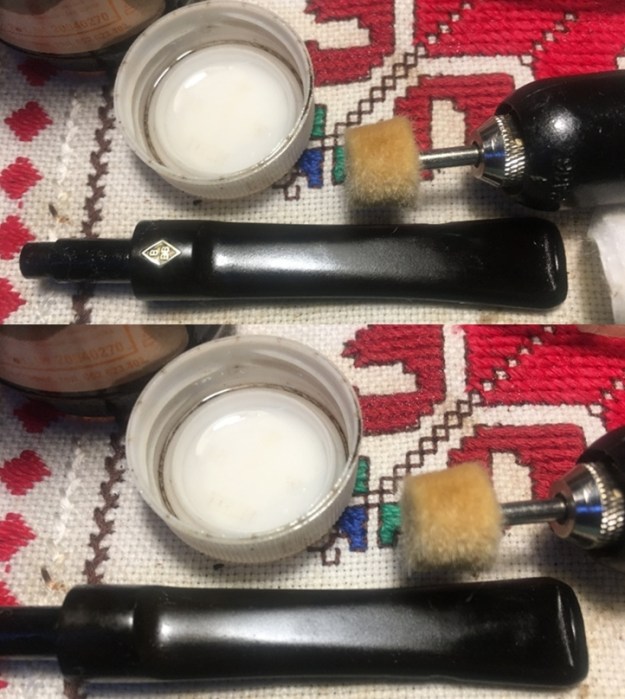
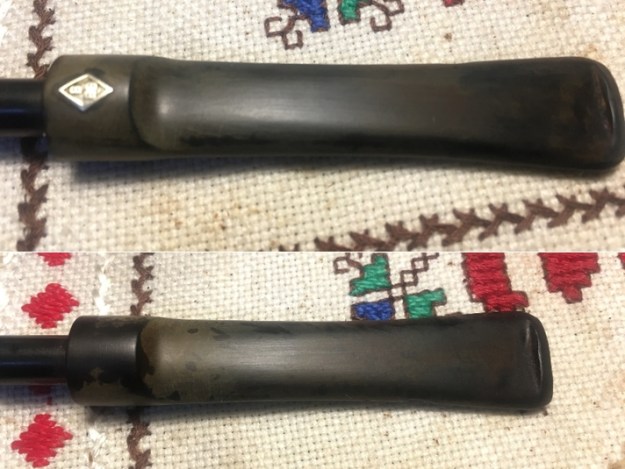
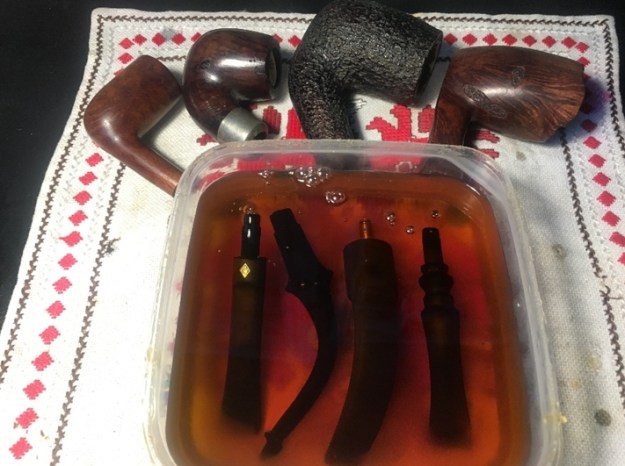
I start by trying something that I haven’t tried before.  The oxidation in the stem is a lot and very deep.  My experience with Before & After Deoxidizer is that it is not able to remove very strong oxidation fully.  It can address some of the issue, but not thoroughly – in my experience.  I try to break up the oxidation by using a small felt buffing wheel mounted on the Dremel set to the lowest speed.  I start first with simply the felt wheel, but I’m concerned that it is too hot on the vulcanite.  I add paraffin oil to the mix.  I wet the felt wheel with the mineral oil and buff the stem trying to break up the oxidation in anticipation of putting the stem in the B&A Deoxidizer soak.After buffing, I wipe the stem down with a cloth and put it aside and allow it to dry.  After drying, the next two pictures show that the buffing did help, but there is still oxidation.I continue by cleaning the airway of the stem with a pipe cleaner wetted with isopropyl 95%.  Once clean, I add it to a bath of Before & After Deoxidizer with other pipes in the queue.  I’m hopeful that the Deoxidizer will now be more efficient after the aggressive buffing I did. After some hours in the Deoxidizer soak, I fish out the BBB saddle stem and after draining off the excess Deoxidizer, I use cotton pads wetted with isopropyl to wipe off the raised oxidation.  I also run a pipe cleaner wetted with alcohol to clean the airway of the fluid.  The pictures show improvement, but I’m not satisfied.Next, I employ Mr. Clean Magic Eraser to address the oxidation further.  I’m satisfied with the results – the vulcanite appears to be free of the oxidation.To rejuvenate the stem, I apply paraffin oil to the vulcanite with a cotton pad and put the stem aside to absorb and dry.  I’m pleased with the results.Turning now to the BBB stummel, I take a few pictures to show the heavy build up both in the chamber and the rim.  I use only the smallest of the Pipnet Reaming Kit’s blade heads to ream the carbon cake out of the chamber. This will give the briar a fresh start.  I transition to the Savinelli Fitsall Tool to do the fine tuning by scraping the chamber walls more, and then wrap 240 grade paper around a Sharpie Pen and sand the chamber to clean it further of carbon cake residue.  Finally, I wipe the chamber with a cotton pad wetted with alcohol to rid the chamber of carbon dust.  I take a final picture of the cleaned chamber and after inspection, I see know problems in the chamber with heating cracks or fissures. Turning now to the external briar cleaning, I use undiluted Murphy’s Oil Soap with a cotton pad to scrub the surface.  I also work on the rim using my thumbnail to scrape the rim to remove the buildup and then with a brass wire brush.  I then take the stummel to the sink and using a bristled toothbrush I brush and further clean the surface under the warm water.  Using shank brushes and anti-oil dish liquid soap as well I clean the internals of the stummel rinsing with warm water.Next, using pipe cleaners and cotton buds wetted with isopropyl 95%, I continue the internal cleaning.  I also scrape the mortise walls with a small dental spoon.  This does a great job removing the thicker tars and oils that are hanging on.  After a time, the cotton buds begin to emerge cleaner.To continue the internal cleaning process, I use the kosher salt and alcohol soak.  To form a ‘wick’ to draw out the tars and oils, I twist and pull a cotton ball to form the wick.  A stiff wire helps to insert and push the wick into the mortise.  Then the bowl is filled with kosher salt, which leaves no aftertaste and freshens the bowl, and I set the stummel in an egg crate to keep it steady.  A large eyedropper is used to fill the chamber with isopropyl 95% until it surfaces over the salt.  After a few minutes, I top the alcohol off after it has absorbed into the internals. I set the stummel aside for it to soak through the night.  It’s late, I also turn out the lights! The next morning, the kosher salt and isopropyl 95% soak has done the job.  The wick and salt are soiled having drawn more tar and oils from the internal cavity.  I thump the expended salt into the waste and wipe the chamber with a paper towel as well as blow through the shank to remove expended salt crystals.  To make sure the internals are clean, I use a few more cotton buds dipped in isopropyl 95%.  As hoped and expected, they come out clean and I move on.With the cleaning complete, I turn my attention to the rim’s condition.  The cleaning did a great job removing the grime and lava over the rim, but the discoloration and skins and nicks on the edge of the rim remain.  I take a couple close-ups picturing both sides of the rim and nicking is evident.To address the rim condition, I bring out the chopping board and put 240 grade paper on it to serve as a topping board.  I top the stummel very lightly – just enough to clean the rim and allow me to erase the rim edge nicks with a simple, inconsequential beveling.After a few rotations on the board I take a picture.After a few more rotations, I’m satisfied with the 240 topping.  On the lower right of the rim you can see the remaining rim edge issues that I’ll rectify with a gentle beveling or sanding.To smooth the rim further, I exchange the 240 paper for 600 grade paper and go a few more rotations.Next, I introduce outer and inner edge bevels to erase the remaining damage and to give the Chimney’s top a smoother softer appearance.  I use 240 grade then 600 grade papers rolled to do the beveling.  I think it looks great.With the rim repair completed, I take the stummel through the full regimen of 9 micromesh pads.  First, I wet sand using pads 1500 to 2400 then dry sand using pads 3200 to 4000 and 6000 to 12000.  I take a picture between each set of 3 pads to mark the change in the briar.  It amazes me how the grain emerges.  This BBB Classic’s grain is striking.  As I track the grain around the bowls, the horizontal grain gradually transitions to bird’s eye grain as the stummel position pivots.  There are no fills in the stummel that I can see – a beautifully crafted block of briar! Before returning to the stem to catch it up with the stummel, I’m anxious to apply Before & After Restoration Balm to this BBB Classic Chimney stummel.  I place some Balm on my fingers, and I work it into the briar thoroughly.  The Balm starts with a cream-like consistency but then thickens into more of a wax-like consistency.  I like the Balm because it seems to draw out the deeper tones of the briar – nothing earth shattering, but the subtle enhancement of the natural briar grain is what I like most.  After applying the Balm, I put the stummel aside for about 20 minutes before wiping off the excess and then buffing it up with a micromesh cloth.  The picture shows the Balm at work.Next, I turn back to the BBB saddle stem.  The tooth chatter is minimal, but the button has some compressions.  The skin of the stem is rough as well.I begin by refreshing the button lips using a flat needle file.  I also work on the bit with 240 grade paper sanding out the imperfections. The slot is also a bit out of shape.  I use a sharp needle file to file the edges to balance the slot.While sanding, I see a pit on the edge of the stem that I didn’t see before.  I try sanding it out, but soon realize is too deep.  I remedy the situation quickly using a spot-drop of regular CA glue on the pit after cleaning it with a cotton pad and alcohol.  I use an accelerator to quicken the curing process and then sand it with 240 grade paper. I then wet sand the entire stem with 600 grade paper and follow by applying 000 steel wool to the whole stem.  The next step is applying the regimen of micromesh pads to the stem starting by wet sanding using pads 1500 to 2400.  This is followed by dry sanding with pads 3200 to 4000 and 6000 to 12000.  Between each set of 3 pads a coat of Obsidian Oil is applied to further enrich and condition the vulcanite.  The freshly sanded pop of the vulcanite contrasted with the embedded BBB Rondel is great!  While trying to reunite the stem and the stummel before applying Blue Diamond compound, it becomes evident that the cleaning of the stummel has expanded the briar making the fit of the tenon in the mortise a bit too tight and forcing the issue could easily result in a cracked shank!  Nothing desired at this point.  To remedy this, utilizing a combination of filing the mortise with a half-circle needle file and sanding the tenon down by wrapping a piece of 240 grade paper around the tenon and rotating the paper does the trick.  The combination approach now allows the tenon fit to be snug but not too tight.With the BBB Classic stem and stummel reunited, after mounting a cotton cloth buffing wheel onto the Dremel, and setting the speed at about 40% full power, Blue Diamond compound is applied to the stem and stummel.After the application of Blue Diamond compound, I wipe the pipe with a felt cloth to remove the compound dust in preparation of applying the wax.  Then, after mounting another cotton cloth buffing wheel on the Dremel, and maintaining the speed at 40%, carnauba wax is applied to the stem and stummel.  The restoration is finished with a hand buffing using a microfiber cloth to raise the shine.

I’m very pleased with results.  This BBB Classic London, England Chimney is a beautiful pipe.  The block of briar is exquisite, with no fills and a landscape of grain transformation as you track it around the bowl.  There is a striking tight patch of bird’s eye grain on the right flank of the bowl that holds the eyes.  As a 1950s/60s vintage BBB, even though the ‘Classic’ line could not be fully identified, there is little doubt as to the quality of this BBB Classic Chimney.  Paresh commissioned this pipe which benefits the Daughters of Bulgaria – women and girls who have been trafficked and sexually exploited and he will have the first opportunity to adopt this BBB from ThePipeSteward Store and bring it home.  Thanks for joining me!

Peterson Shape 56 Mystery – Solved!


By Al Jones

July 31,2019 UPDATE:
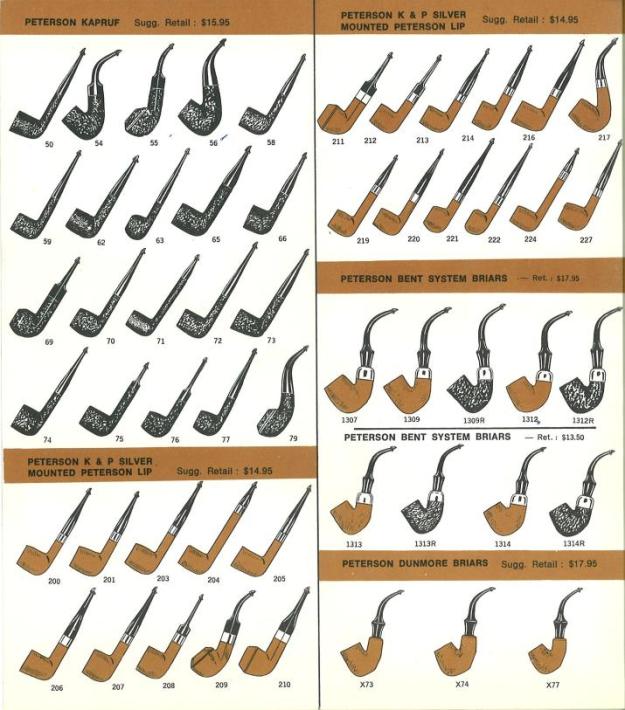
Well, the Shape 56 mystery is now resolved. Despite all my google efforts, I yielded only two other hits on the Shape 56, as detailed below. Mark Irwin was also stumped but came up with the theory below, that the Shape 56 was for the British market only. Well, further sleuthing from the worlds foremost Peterson authority yielded an answer – which came directly from a blog entry here on Reborn Pipes, by our very own Steven Laug. In 2015, Steve posted a catalog from Canadian importer, Genin, Trudeau & Co. which shows their unique numbering system. I even comment that the Shape 56 looks like a 9BC! So, all the while, the answer was hiding on this blog! Below is that brochure page showing the Shape 56. Steven comments that the postal code used in the address dates the brochure to between 1962 and 1969. I guess not many Canadians appreciated the shape, so they are pretty uncommon. Thanks to Mark Irwin for his superior memory and to Steve for making this type of ephemera available, you never know when it will come in handy.

Genin, Trudeau & Co. Brochure

Original Entry:

If you read any of my posts here or on the PipesMagazine forum, you’ll quickly learn that I am partial to a few select pipe shapes, primarily the Rhodesian. But my all-time favorite shape is the Peterson 9BC, chubby bent billiard. I learned about this shape several years ago on Mark Irwins blog, “Peterson Pipe Notes”.

Peterson Pipe Notes

Mark is a great friend and incredible resource for all things Peterson. He is also the co-author of The Peterson Pipe, a must have for anyone who enjoys and collects Peterson pipes.

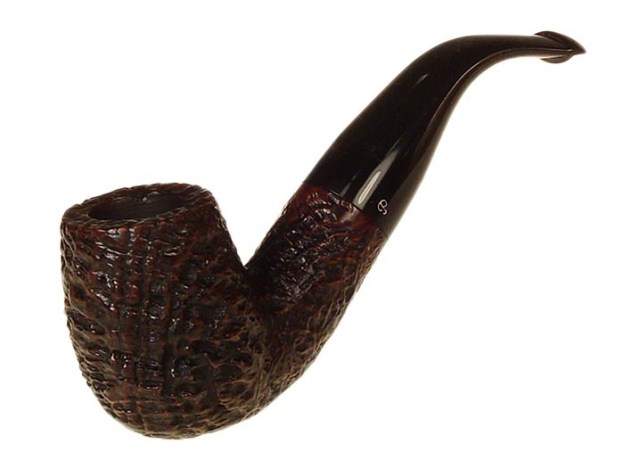
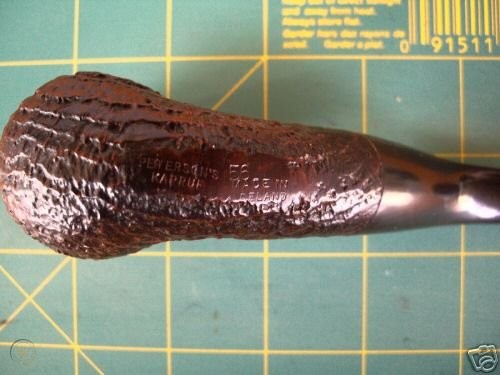
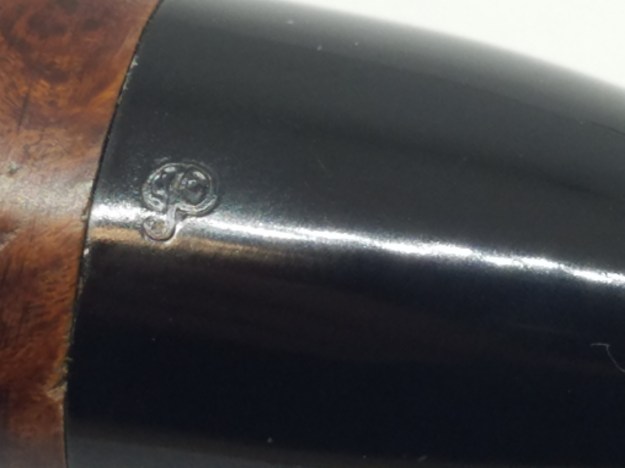
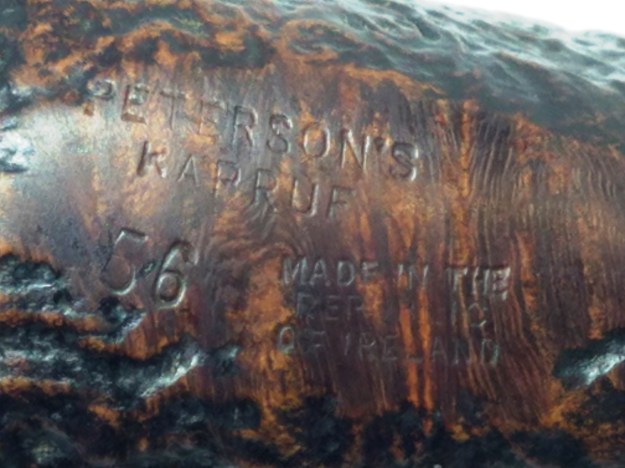
Over the past few years, I’ve acquired several 9BC’s in various finishes, including a Shamrock that I featured in this blog a few months ago. I can usually spy a 9BC, despite the way it may be listed. I found this pipe advertised as a Shape 56 Kapruf, which puzzled me, as I never encountered this shape number. It definitely looked like a 9BC or the modern version, the XL90. However the nomenclature did indeed look like it was a “56”. The 9BC is a pre-Republic shape and this pipe was stamped “Made in the Republic of Ireland”, so I assume it was made after 1949. It’s not too often that I get a thrill from an estate pipe. However working on a shape I’ve never encountered definitely gets me excited.

When the pipe arrived, sure enough, it was identical to my 9BC’s in all aspects, save one. The button was significantly slimmer than those on either my 9BC’s or XL90. The stem had what looked like a factory P stamp. I searched thru my old catalog scans and pored over Mark’s new book, looking for this shape number, but to no avail. I then spent a good bit of time Googling the Peterson Shape 56 and I found only two other examples. One theory I had about the shape was that it was a transition piece, between the 9BC and XL90. However, that theory didn’t hold as one of those two found also had pre-Republic stamping.

One Republic era Shape 56 Kapruf was sold by Smokers Haven. It had an incredible blast, pictured below.

The other was from an undated Ebay ad, and it was advertised as belonging to noted collector, Barry Levin. This one had pre-Republic stamping.

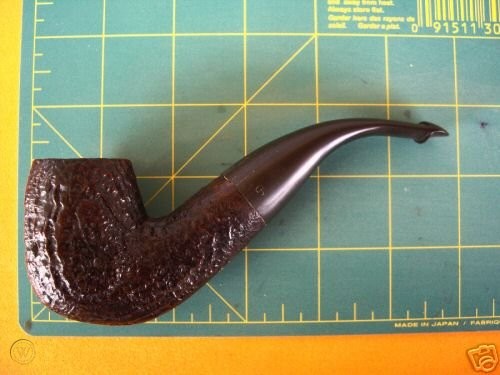
These pictures show the slim button of the 56 versus the 9BC, which flares out at the P-lip. It is also shown with my 9BC Shamrock, and as you can see, they are nearly identical. This includes a flat nomenclature panel. I suppose the original owner could have sent the pipe back to Peterson for a replacement stem, which might explain the slimmer button profile. The other two shapes above, don’t show this detail, so I have no comparison.

The pipe was in very good condition, but had some curious damage marks on the stem. It appeared as though someone had pierced the stem in two places with a hot nail, creating gouge-like marks. The bowl interior looked terrific, with very little cake. There were a few shallow dents on the underside of the button and just a small amount of oxidation. Below is the pipe as it was received. The sandblast was terrific, particularly on the cross-grain section, which had a lunar landscape like appearance.

This picture shows the most severe of the two gouge marks.

I used some 320 sandpaper to remove the very slight cake reside from the bowl and filled it with sea salt and isopropyl alchohol and let it soak for several hours. While the bowl was soaking, I used a heat gun to warm the two gouge marks and I was able to work some of the rubber back into the mark. After the soak, I removed the salt/alcohol and cleaned the shank. The stem was mounted and the gouge marks smooth with 400 grit wet paper, then 1500, and 2000 grades. One mark all but disappeared and the other had only a slight mark remaining. It was underneath, so I left well enough alone. I worked around the P stamp. The stem was then buffed with White Diamond and Meguiars Plastic Polish. I used some Halycon wax on the briar to bring up the luster.

After the repair and buff, the gouge mark was barely visible.

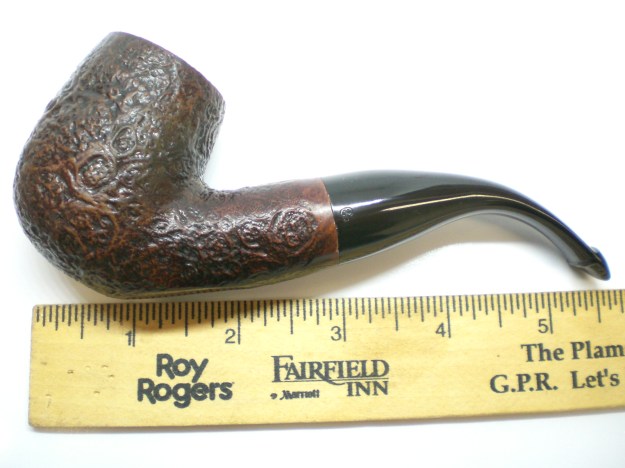
I’m hopeful that Mark might be able to dig out some additional information about this mystery shape, and I’m quite pleased to add it to my collection. I’m particularly interested in how the slim button smokes, as a smaller profile button is typically my preference. Below is the finished pipe.

UPDATE – July 28, 2019:
Mark Irwin did get back to me with a theory about this shape. He noticed that the 9BC shape is only listed in US or Rogers catalogs. I noticed in the recent 1939 Peterson/Rogers catalog recently shared thru his blog that that the Kapruf finish is described “the earthy finish of Kapruf is achieved by a special carving proceess”. In the 1940 Peterson catalog scan he shared several years ago, the Kapruf finish is described as sandblasted. He further comments below.

I thought I’d figured it out, but my best guess at this point has to do with the two-digit shape numbers assigned to Classic Range pipes through the 1950s. None of the catalogs I have shows a 56, of course, but there the 1955 London & Dublin catalogs shows a 65, 69 and 70 bent billiard. I’m speculating that the 56 was part of that numbering system, which may explain why you found the button slightly different than the 9BC. I also believe the 9BC to be a US-market Rogers Imports number, as I don’t see it in any of the European or non-Rogers catalogs.
Oh well, a brilliant pipe and a wonderful problem to have. Whatever they used to do the blast is also quite singular. I have an 02 Shamrock that’s close, with those circular, almost lunar patterns, but how they achieve that is shrouded, as is so much in our hobby, in pipe smoke and mystery.

?

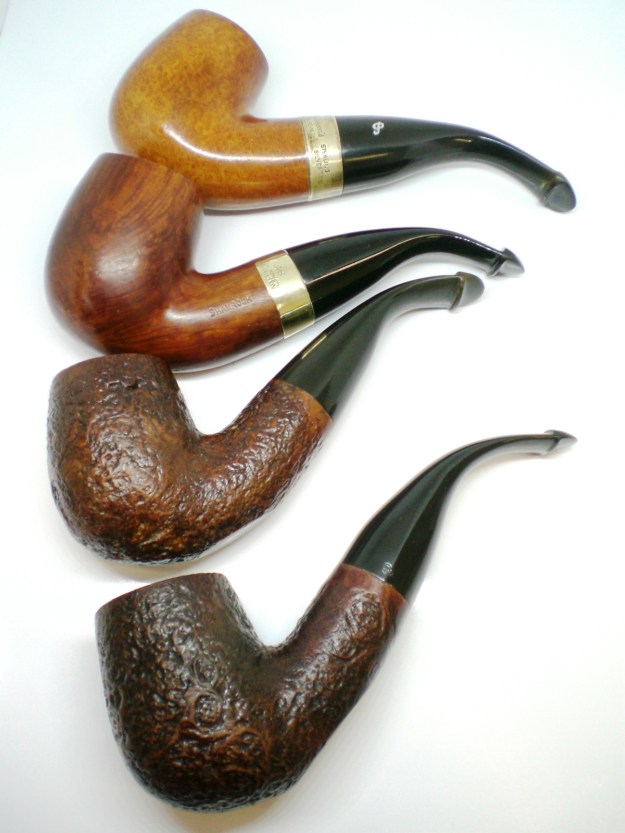
Pictured below is a group comparison shot, from top to bottom:
XL90 Supreme
9BC Shamrock
9BC Kapruff
56 Kapruff

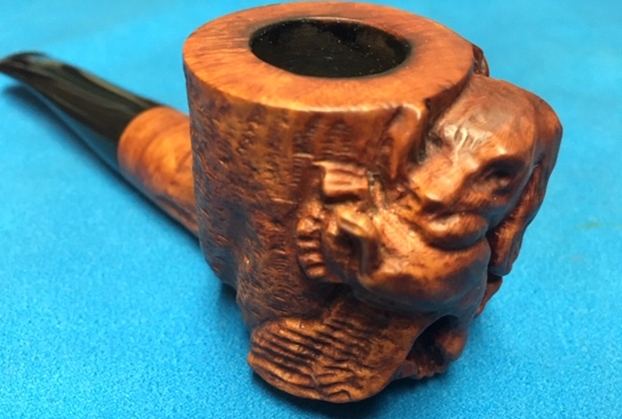
New Life for a Rich Era Custombilt Carved Figural Billiard


Blog by Steve Laug

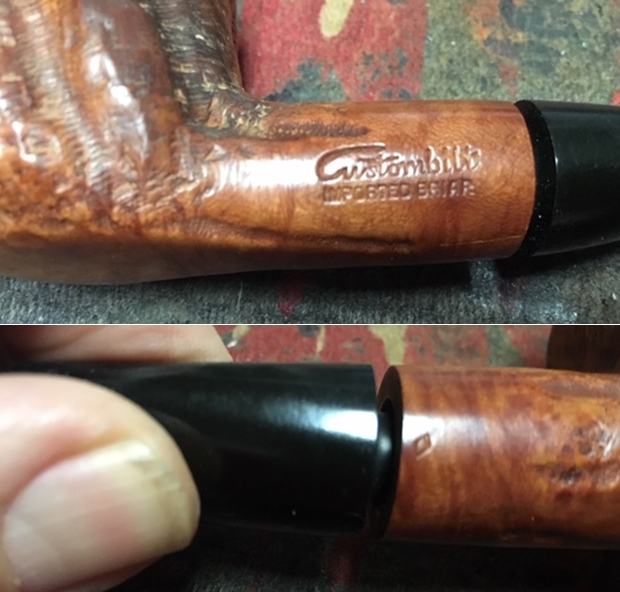
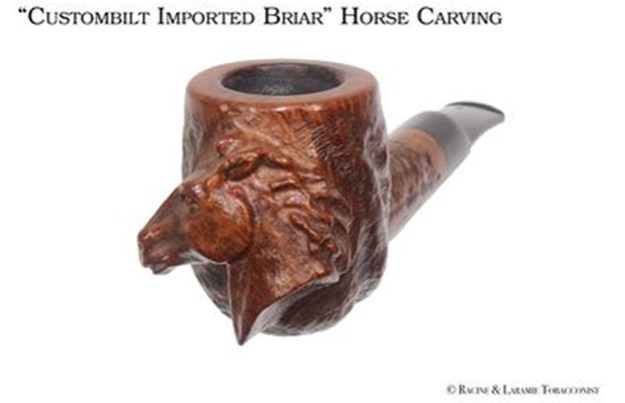
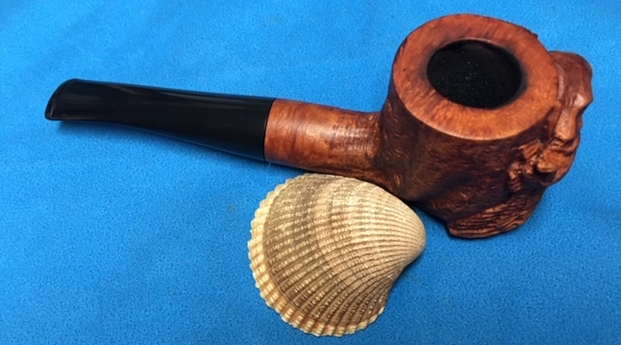
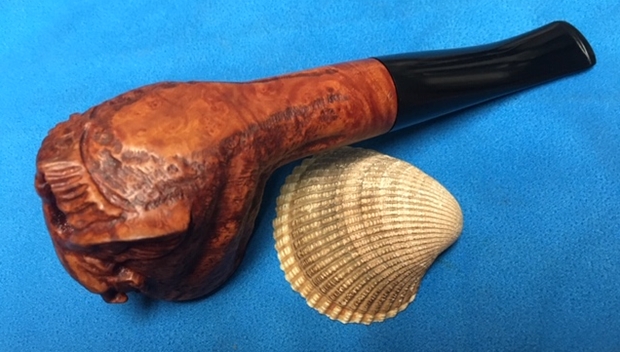
I am not much of a figural pipe guy – whether meerschaum or briar. So I have left a lot of figurals behind on my hunts – bull pipes, horses, elk etc. So when I saw this one sitting in the display case, if you knew my predilection you would have expected me to leave it and walk away. But why didn’t I walk away? Well the answer is kind of complex. It truly has nothing to do with aesthetics because my dislike of figurals has not changed. But when I saw the stamping on the shank – Customobilt over Imported Briar and I saw the carved front of the bowl I knew I was dealing with a pipe that I had not seen before. In all the years that I have been hunting for pipes and restoring them I have never run across one of these. The “rarity” for me was the first thing that caught my eye. I knew nothing about the carver and to be honest I was not sure of the era of the pipe. I just thought, “Hmmm not seen that before” and grabbed it.

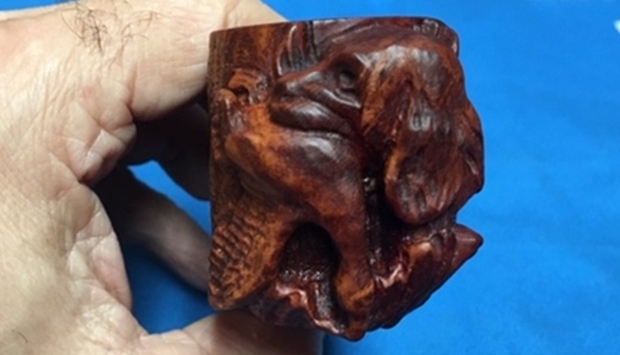
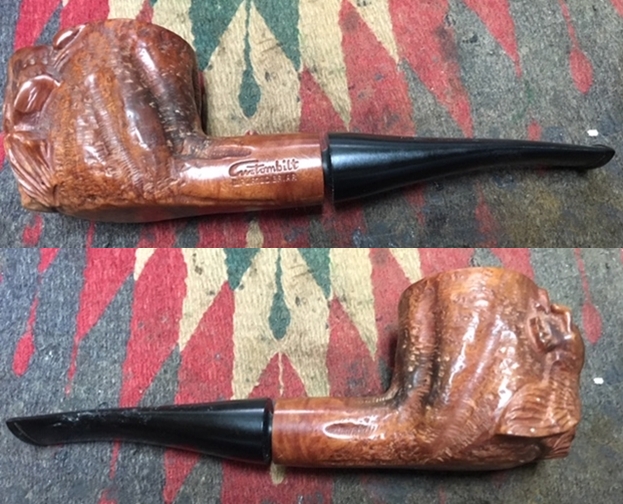
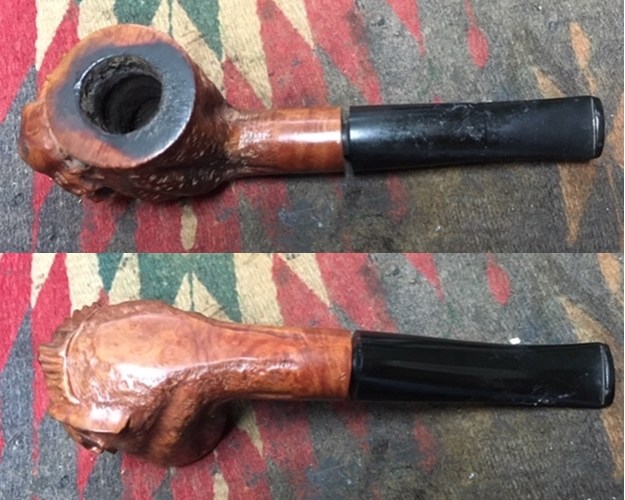
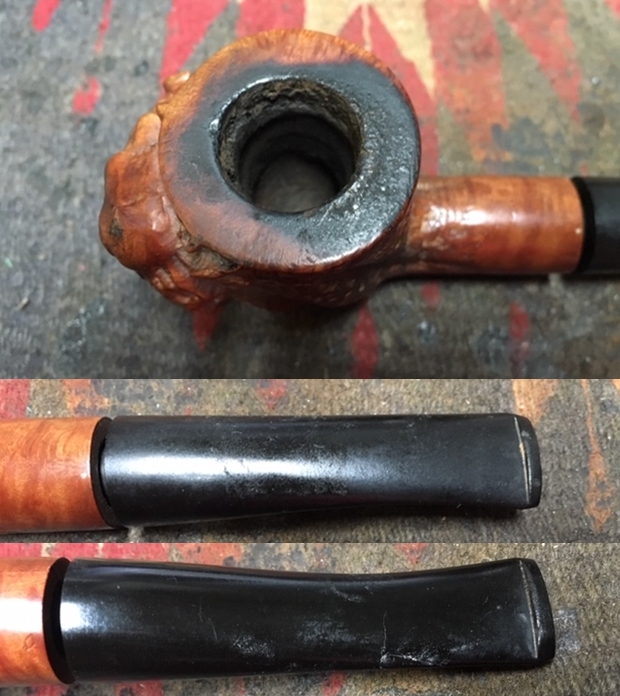
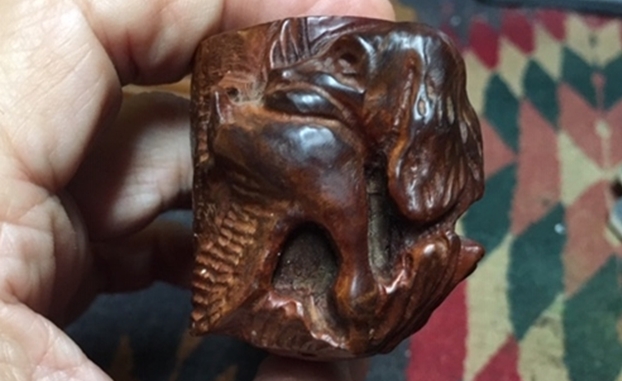
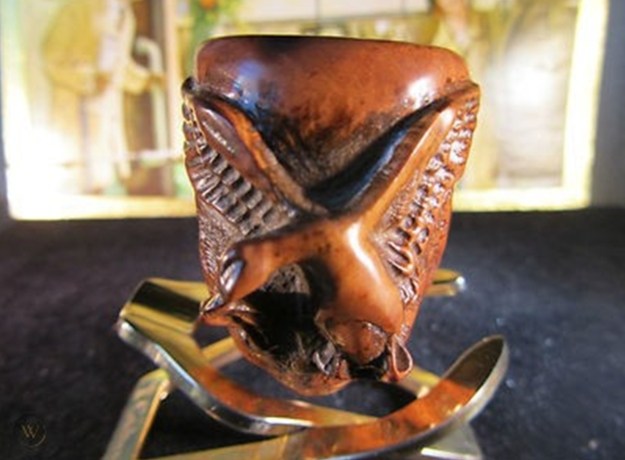
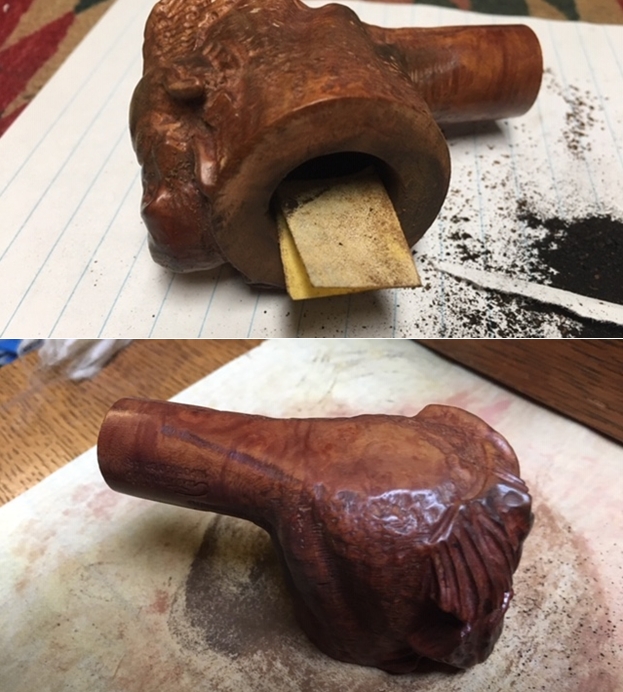
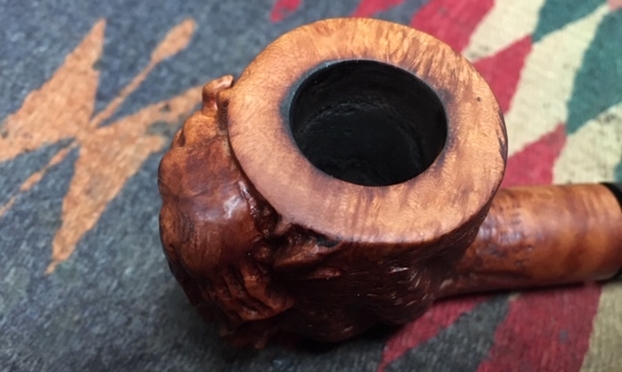
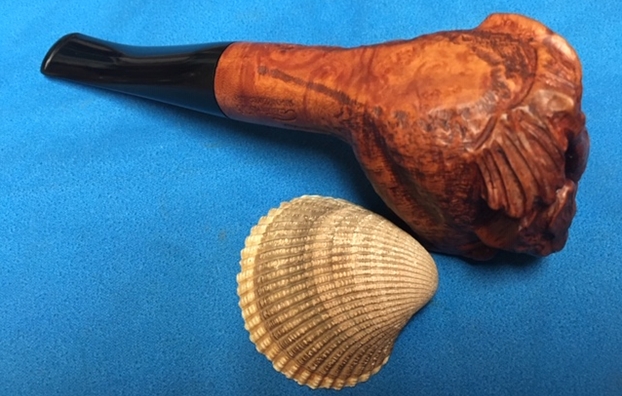
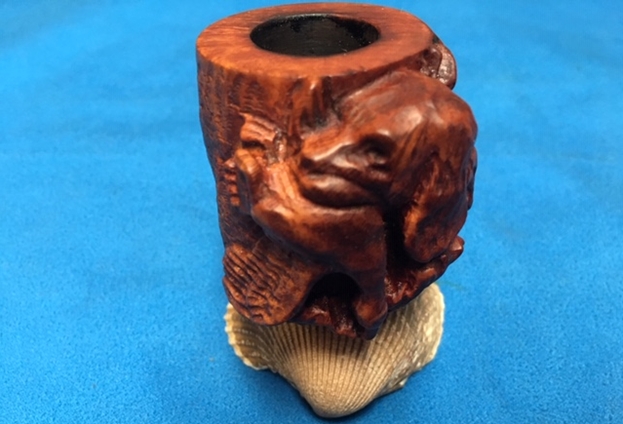
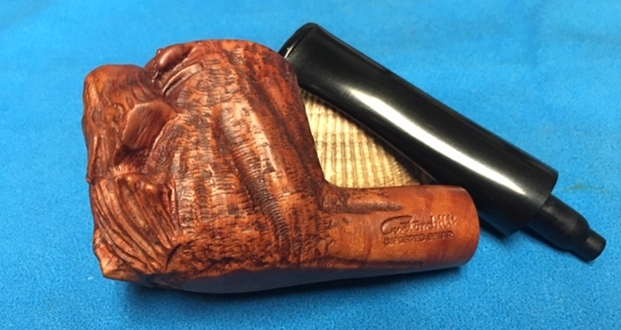
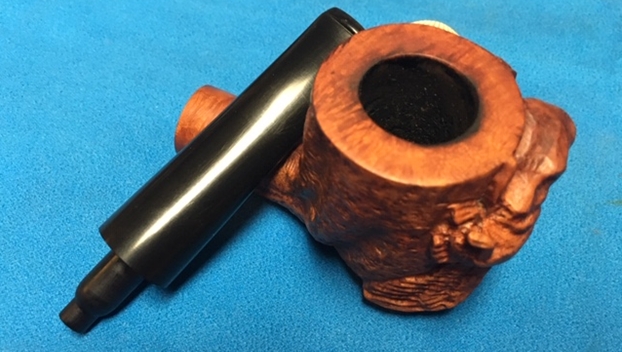
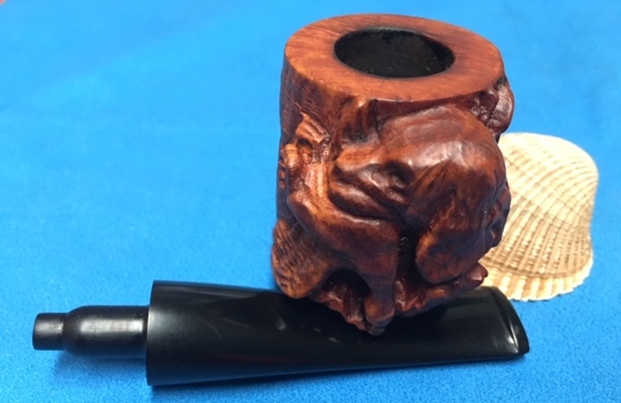
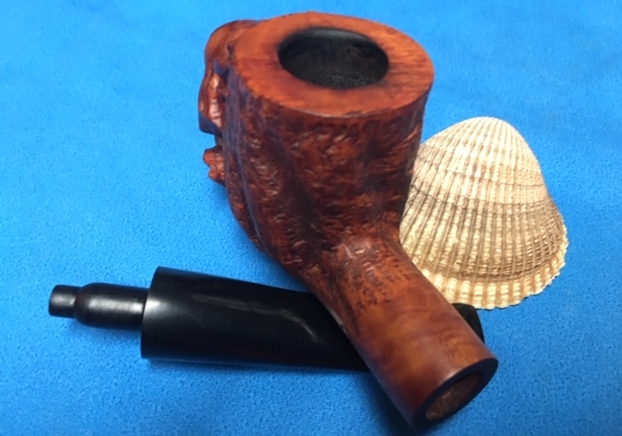
Here is what I saw with the pipe. The finish was dirty and oils and grime were deep in the rustication around the bowl. The carving on the front was dirty with dust in the crevices. The bowl had a thick cake and there was lava overflow on the back side of the rim top. There were some nicks and lava on the front portion as well. The finish had a bit of shine left to it, particularly on the shank – almost like a shellac or varnish coat. The stem did not fit all the way into the shank due to the tars and oils built up on the walls of the mortise. The stem was in good condition with just a few small tooth marks on the top and underside. It was dirty but not oxidized. I took some close up photos of the rim top, bowl and stem to show the condition of the pipe before I started the cleanup work. The bowl has a thick crumbly cake in it and the lava overflow is very thick. You can also see damage on the front inner edge of the bowl. The stem is not oxidized but is dirty and has some tooth marking on the top and underside near and on the button surface. The carving on the front of the bowl is very nicely done. It is a hunting dog with a duck in its mouth. The carving has enough detail to be interesting but is not over done.I also took a photo of left side of the shank to show the stamping. The stamping is readable in the photo below and is as noted above – Custombilt over Imported Briar. On the underside there is a small diamond at the shank/stem junction.I decided to pause and do a bit of research on the pipe to figure out when the figurals were carved and what era of Custombilt pipe making this one was made. It was a pretty simple project really as I have worked on quite a few over the years. I went first to a friend of mine from Holysmoke pipes from New York. He is a great resource on these 20th Century pipes. Here is what he said about the pipe:

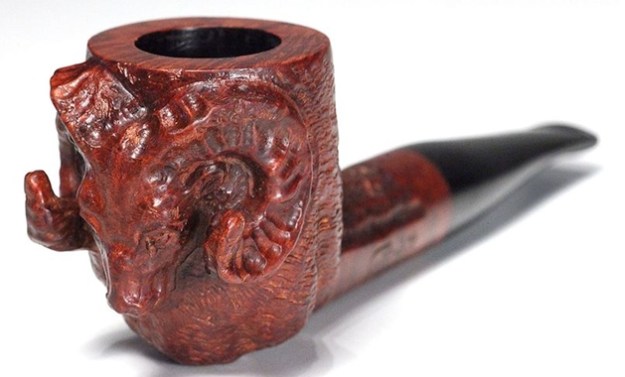
During the Rich era, CB had a carved animal line. The diamond as well as other figures is one of the CB mysteries. Presumably, they were earlier pieces. Actually, the carved animal line was a bit cheaper in price than the regular CB line, costing in those days $7.50, while the regular ones were $10 or more. Most of these carvings were done by Hetzer Hartsock, who also did the super expensive special order carved ones. He was a famous carver in those days.

There was the lead I needed. A potential date and a name to check out. I turned to Pipedia to check out the stamping and confirm the era of manufacture (https://pipedia.org/wiki/Custom-Bilt). I quote from the pertinent section of the article.

In 1946, the name was changed to Custombilt after Mincer began an association with Eugene J. Rich, Inc. There were some big changes in advertising and distribution. The slogan “AS INDIVIDUAL AS A THUMBPRINT” began at this time as well.

This confirmed the information from Holysmokes Pipes and also gave me a starting date for the making of this pipe. It was made after 1946. Now it was time to get a read on the figural carvings. In the same article there was a great paragraph giving more information on Hetzer Hartsock.

A most interesting discussion in this chapter is the discussion of Hetzer Hartsock’s carved pipes, which included a special ‘Stalin/Roosevelt’ pipe. Hartsock also did carved heads and other figures. Carved head and other such pipes were very popular at the time. One 5 pipe set of Hartsock special carvings was “valued” at $5,000. Also during the Rich era, Custombilt had a carved animal line which were relatively inexpensive at $7.50 as compared to the regular line. There were also special orders available that cost up to $500.00. One wonders what difference could have caused such a radical change in price.

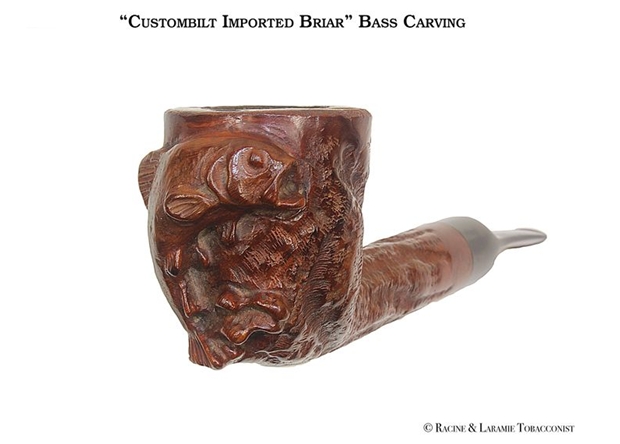
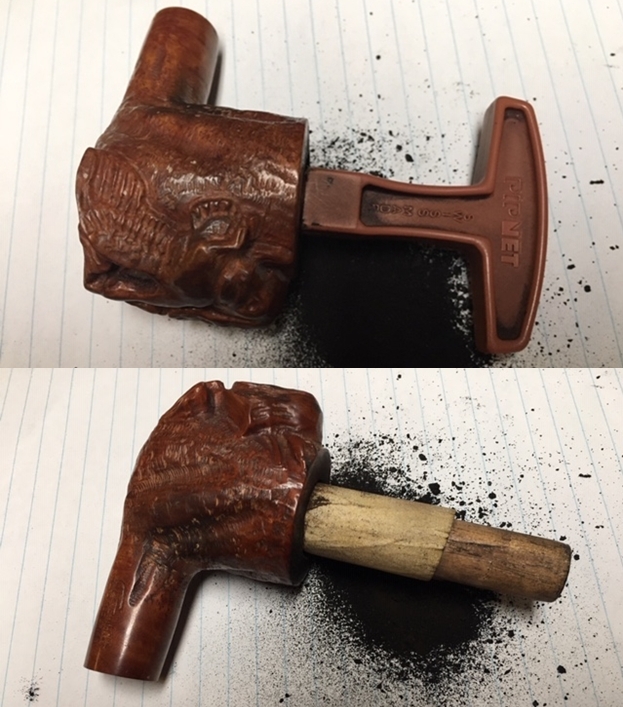
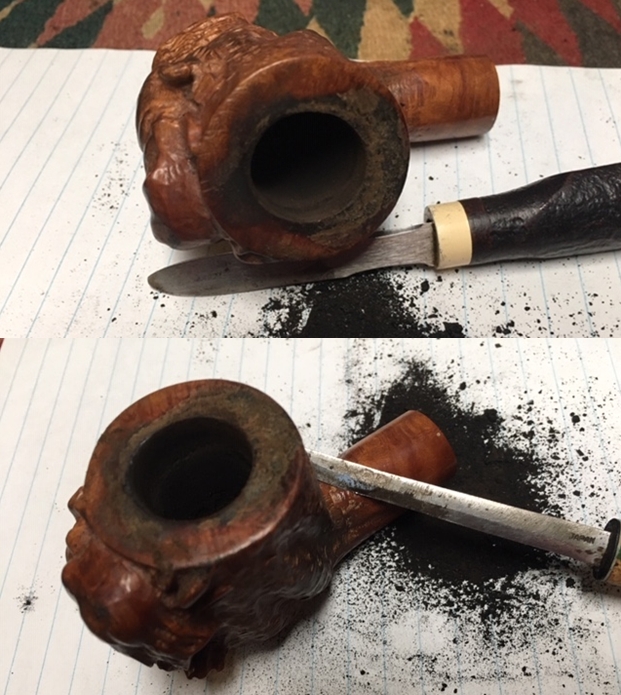
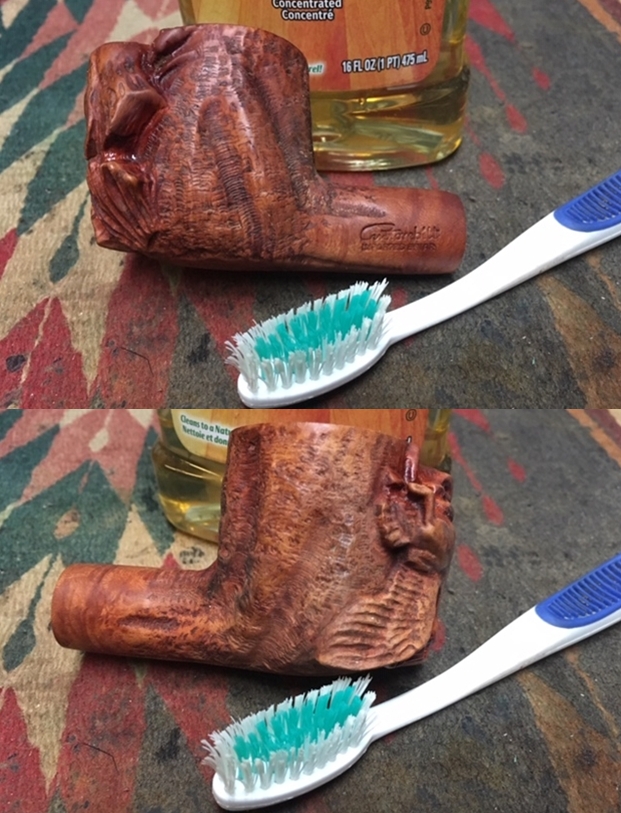
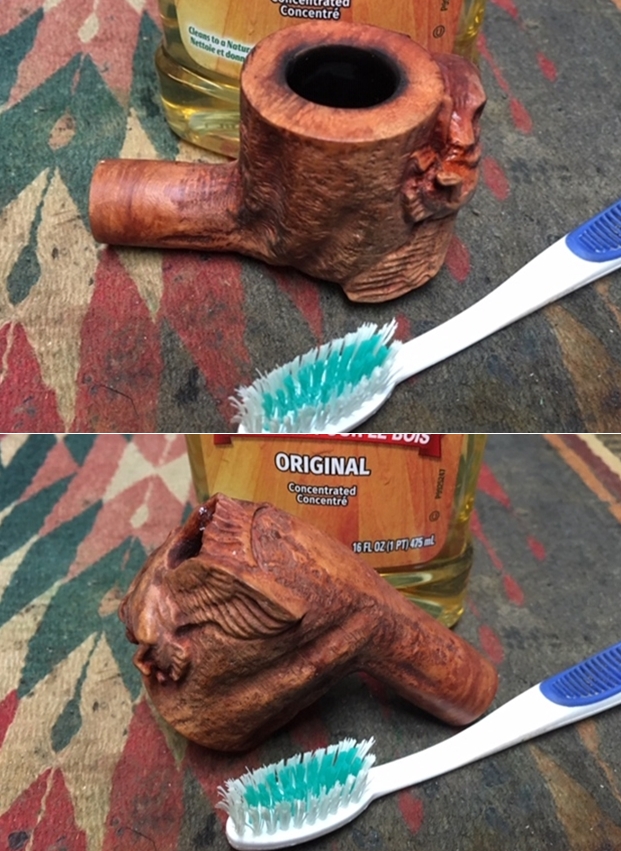
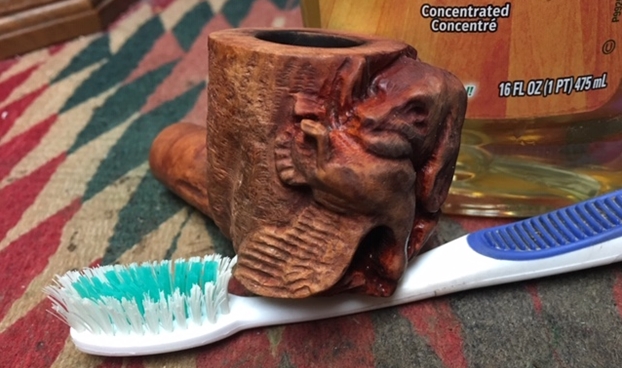
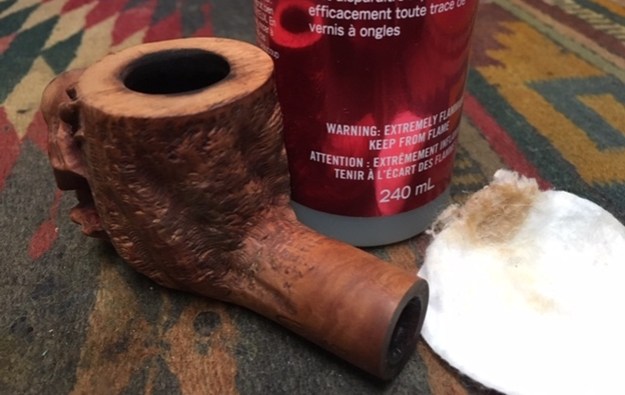
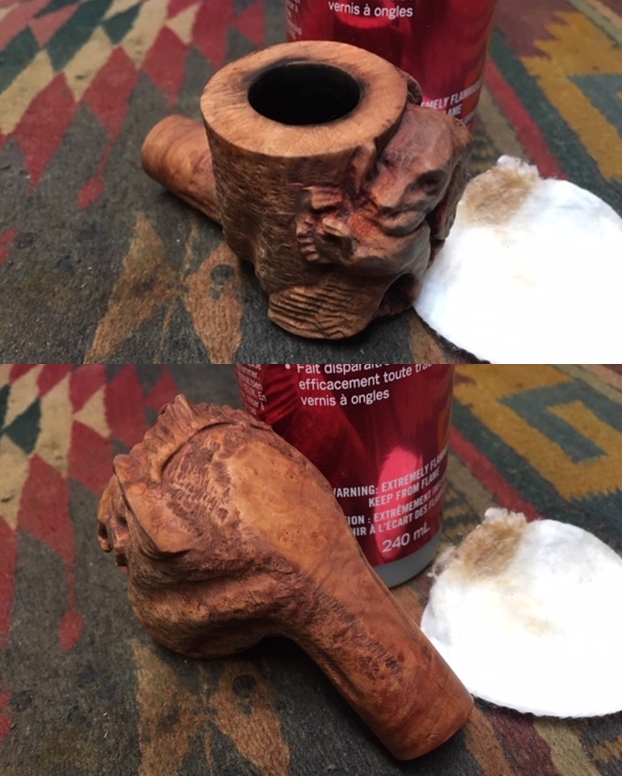
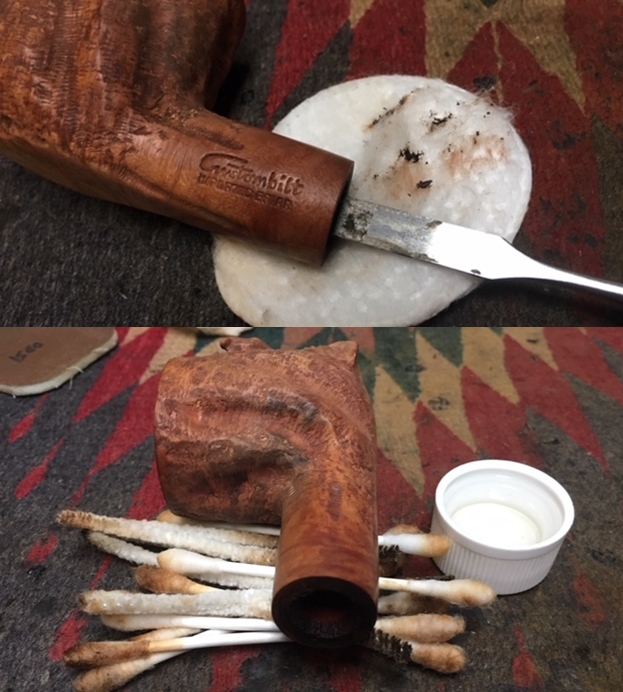
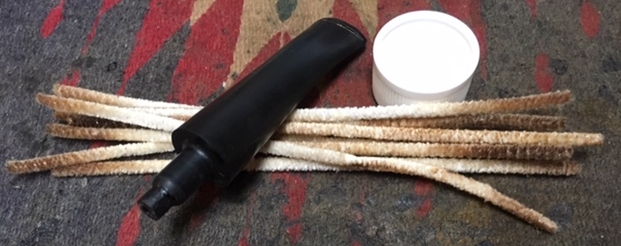
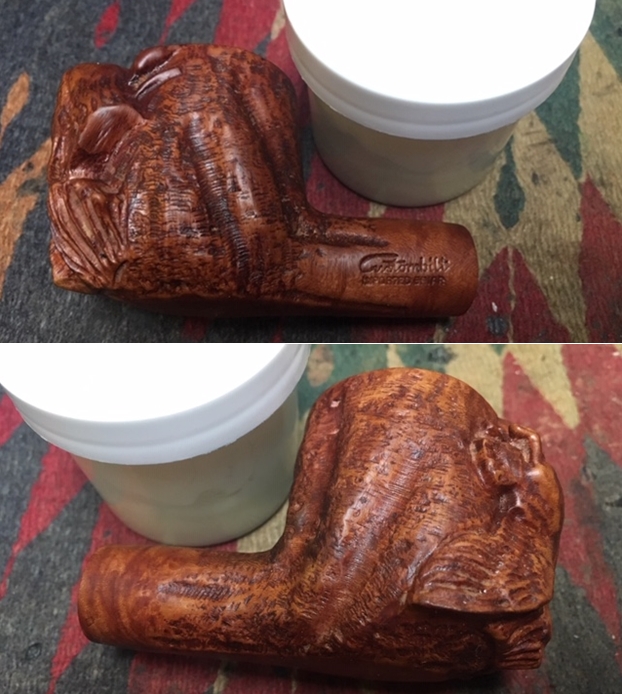
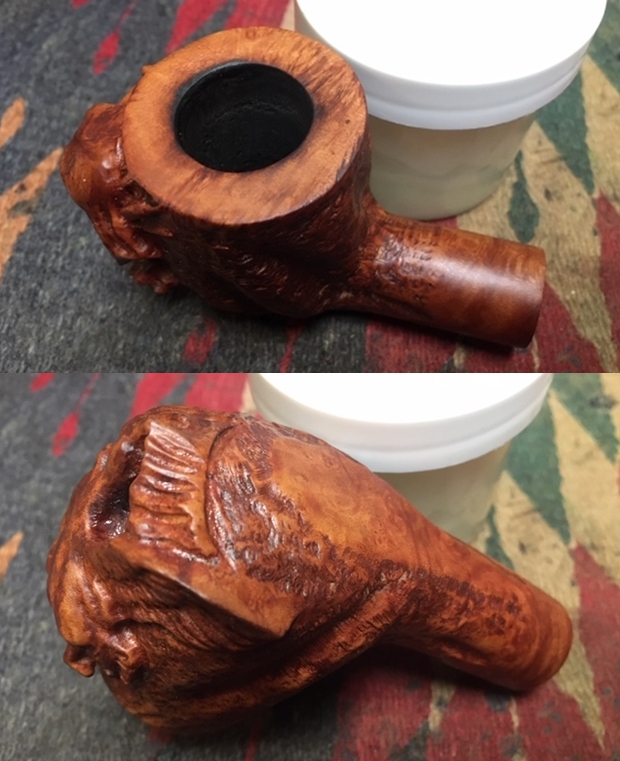
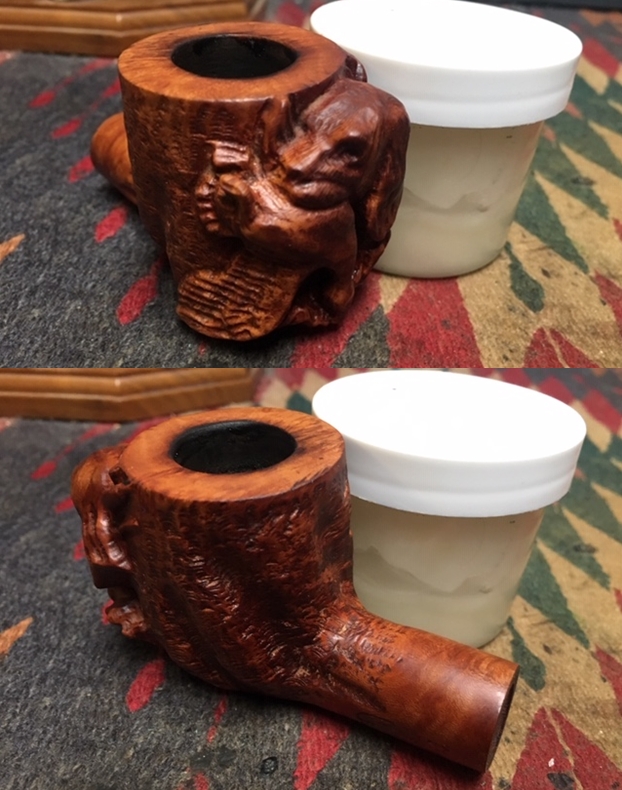
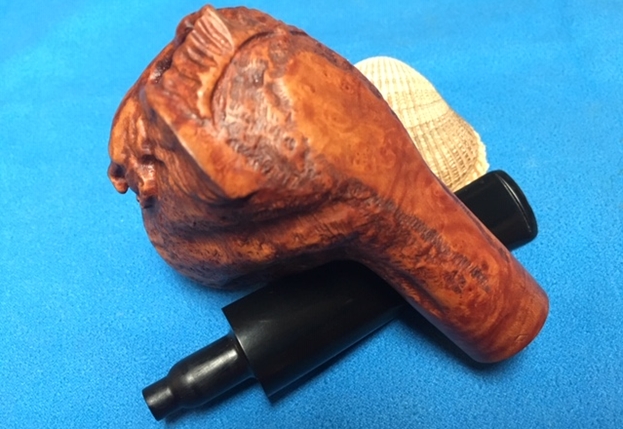
I am also including a few of the pipes that were shown as carved by Hartsock. They are unique and well carved. With that information in hand I was ready to start on this Hetzer Hartsock carved Custombilt Billiard. It is a hefty pipe and interesting to work on. I reamed the bowl with a PipNet pipe reamer to take the cake back to bare briar. I sanded it smooth with a piece of 220 grit sandpaper wrapped around a dowel.I used the Savinelli Fitsall Knife and a sharp pen knife to scrape the thick lava coat off of the rim and try to assess the damage.I used a small folded piece of 220 grit sandpaper to smooth out the inner edge of the rim and work on the remnant of lava on the rim top. Finally to remove the remaining lava I topped the bowl very gently on a topping board and 220 grit sandpaper then polished it with some 400 grit wet dry sandpaper. I scrubbed the rough briar with a tooth brush and undiluted Murphy’s Oil Soap. I worked it into the nooks and crannies – the crevices of the carving on the front of the bowl until the entire pipe had been scrubbed. I rinsed it under warm water and scrubbed as I removed the soap and the grime with it. I wiped down the spots of shiny varnish and white paint flecks on the briar with acetone on a cotton pad. At this point the bowl was looking pretty clean on the outside. With the externals cleaned and ready to work on further I took a break and cleaned out the interior. I scraped the inside of the mortise with a dental spatula to remove the tarry buildup on the walls. I scrubbed the mortise and the airway in the shank and stem with alcohol, cotton swabs and pipe cleaners. With both the inside and outside clean it was time to move on to rubbing the bowl down with Before & After Restoration Balm. I worked it into the surface of the briar with my fingertips and a horsehair shoe brush to clean, enliven and protect it. I let the balm sit for a little while and then buffed with a cotton cloth and shoe brush to raise the shine. Mark Hoover’s Balm is a product that I have come to appreciate and one I use on every pipe I have been working on. I set the bowl aside and turned my attention to the stem. The stem still did not fit correctly against the shank. In examining the mortise it appeared that it had a slightly different taper than the nozzle end on the tenon. I had to sand the tenon down at the step down to make it fit tight against the end of the mortise. I filled in the tooth marks on the top side of the button and the tooth mark on the underside near the button with clear super glue. When the repairs had cured I recut the edge of the button with a needle file. I sanded the repaired areas with 220 grit sandpaper to blend them into the surface. I started polishing using 400 grit sandpaper. I polished the stem with micromesh sanding pads – wet sanding it with 1500-12000 grit pads. I wiped the stem down with a damp cloth after each pad. I further polished it with Before & After Pipe Polish – both Fine and Extra Fine. I wiped it down with a coat of Obsidian Oil and set it aside to dry.  With both parts of the pipe finished I put the pipe back together. It really is an interesting old pipe carved around 1949 by Hetzer Hartsock. He did an amazing job capturing the dog holding the downed duck in its mouth ready to deliver it to the hunter. Very nicely done! I polished the stem and the majority of the briar (minus the carving) with Blue Diamond polish on the buffing wheel. I carefully gave the bowl multiple coats of Conservator’s Wax and the stem multiple coats of carnauba wax. I buffed the pipe with a clean buffing pad to raise the shine. I hand buffed the carved area with a shoe brush and the rest of the pipe with a microfiber cloth to deepen the shine. The pipe polished up pretty nicely. The rich finish and the grain came alive with the buffing. The finish on the briar works well with the polished black vulcanite stem. The finished pipe is a well-proportioned, large billiard with the unique carving on the front. Have a look at it with the photos below. The dimensions are Length: 6 inches, Height: 2 inches, Outside diameter of the bowl: 1 1/2 inches, Chamber diameter: 3/4 of an inch. This Custombilt carved figural is staying with me for a little while so I can take in and enjoy the carving. Thanks for walking through the restoration with me on this piece of Custombilt history. 

Rebirthing another Schoenleber Hand Made – A Petite Straight Apple


Blog by Steve Laug

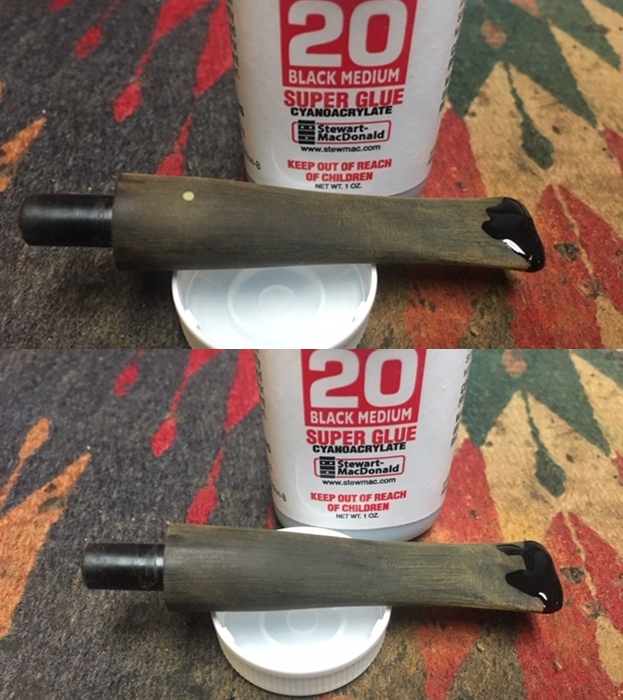
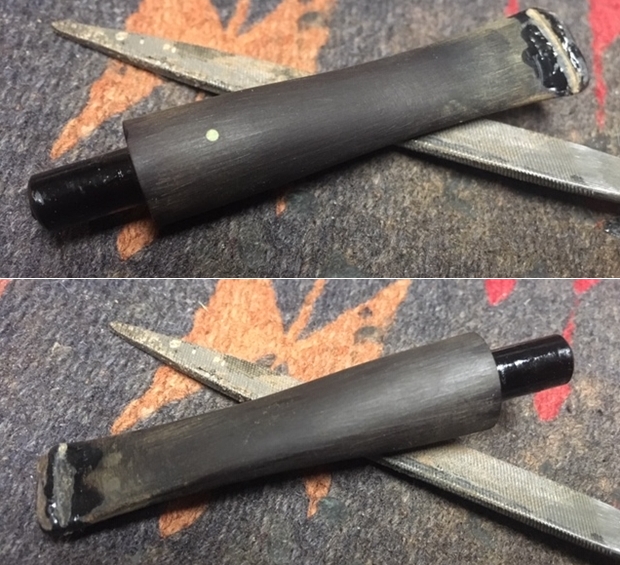
The next pipe in the queue is another one from the batch of pipes I am cleaning up for Alex – this one is another Schoenleber Hand Made – a petite straight shank Apple with some beautiful grain around what appears to be an oil cured bowl and shank. The entire pipe has some beautiful birdseye, straight and flame grain around the bowl and shank. The pipe was filthy with overflowing lava but the grain peaked out under the grime. The carver did a great job utilizing the block of briar to maximize the grain. The pipe is stamped on the left side of the shank. It reads Schoenleber over Hand Made. On the right side next to the bowl/shank junction there is a number 3 which is either a shape number or size designation. The tapered stem is vulcanite and has no marking or stamping. This is another nice looking piece much like many of the pipes Alex is picking up. The bowl has a thin cake inside the bowl but the tars cover the thin rim top and run down the sides of the bowl. There some darkening on the rim top. The exterior of the briar was dirty with grime and dust. The oxidized vulcanite stem tooth marks and chatter on both sides near the button. The photos below tell the story and give a glimpse of the pipe before clean up. I took a photo of the bowl and rim to capture the condition of the pipe before I started my cleanup work. There was significant darkening and damage on the rim top and a thin cake in the bowl flowing over as lava on the thin top edge. The outer edge of the bowl appeared to be in good condition I would only be sure once I removed the lava. The stem was in decent condition under the thick oxidation and calcification on the surface. There was also some tooth chatter and tooth marks on both sides of the stem near the button. The button is also damaged by tooth marks.I also took a photo of left side of the shank to show the stamping. The stamping is readable in the photo below and is as noted above – Schoenleber over Hand Made. On the opposite side there is a 3 at the shank/bowl junction.I remember working on a Schoenleber pipe in the past and had a memory of the pipe being made for a shop in the New York area but could not remember much more than that. I quickly googled the brand to see what I could learn and found a link on Pipedia. Here is that link. I quote the article in full (https://pipedia.org/wiki/Schoenleber).

Louis Schoenleber lived in North Arlington N.J. and was an Austrian immigrant and skilled artisan in pipe making. His hand carved pipes were available in his shop, ‘Schoenleber’s Newark Pipe Shop’, at 26 Branford Pl., Newark NJ, thought to open in the 1920’s. Schoenleber’s carried a full line of tobaccos as well as related pipe smoking accessories. It’s thought the shop operated until the late 1960’s, and Louis Schoenleber died in 1976. It’s also fairly certain they may have sold to other brands such as Jelling, also in Newark and are very similar in design and finish.

There was also an advertising card on the site that I have included below. It speaks to my assumptions about the curing process and the finishing process on the pipe. It also connects the pipe to Schoenleber’s Newark Pipe Shop in Newark, N.J. It also has a comment on the fact that pipes were made to order.I reamed the bowl with a Savinelli Fitsall Pipe Knife to take the cake back to bare briar. The cake was thin but the lava over flow on the rim and down the bowl was heavy and dark. The rim top looked pitted and damaged. I sanded the internal walls of the bowl with 220 grit sandpaper wrapped around a piece of dowel.I lightly topped the bowl on a topping board with 220 grit sandpaper to remove the damage to the rim top and smooth out the thick lava coat. It did not take too much sanding to remove the damaged briar. I still need to smooth out the inner edge of the rim but the bowl looks pretty good.The filthy exterior of this pipe was perfect for me to continue experimenting with a new product from Mark Hoover of Before & After Products. This one is a product he labels briar cleaner and it has the capacity of absorbing grime and dirt from the surface of briar. I rubbed the bowl down with some of his Briar Cleaner to see how it would work in this setting. In speaking to Mark he noted that the product is completely safe to use. The main product is even FDA approved edible. I rubbed it onto the bowl and rim top with my finger tips and worked it into the grime and grit on the bowl. I let it sit on the pipe for about 5 minutes before I rubbed it off with a microfibre cloth. I rinsed it under warm running water to remove the residue. I was pleasantly surprised by how clean the surface on the bowl looked when I was finished. The mortise and the airway in the shank was filthy. There was a thick build up of tar and oils on the inside of the shank. I scraped the shank walls with a thin bladed knife until the briar was bare. I scrubbed the walls of the mortise and the airway in the shank and stem with pipe cleaners, cotton swabs and isopropyl alcohol until they were clean.I turned to polishing the bowl and rim with micromesh sanding pads – wet sanding with 1500-12000 grit pads. I wiped the bowl down after each pad to remove the sanding debris. My goal was to further remove the darkening on the both the rim top and the first half inch of the bowl. I worked some Before & After Restoration Balm into the surface of the briar with my fingertips to clean, enliven and protect it. I let the balm sit for a little while and then buffed with a cotton cloth to raise the shine. Mark Hoover’s Balm is a product that I have come to appreciate and one I use on every pipe I have been working on. With the bowl finished I set it aside and turned my attention to the stem. I sanded it with 220 grit sandpaper to remove as much of the oxidation as possible. I was also able to remove much of the damage to the surface of the stem on each side. There was a remaining tooth mark on the top and underside of the stem. The button surface also had some tooth marks. I forgot to take photos of the stem after sanding and before repairing. I wiped the stem surface down with a damp cloth and then filled in the tooth marks with clear super glue. I also rebuilt the top and underside of the button surface with clear super glue. Once the repairs cured, I sanded the filed stem surface with 220 grit sandpaper to blend the repairs into surface of the stem. I am happy with the stem surface once that was done. I started the polishing of the surface with 400 grit wet dry sandpaper. I polished the stem with micromesh sanding pads – wet sanding it with 1500-12000 grit pads. I wiped the stem down with a damp cloth after each pad. I further polished it with Before & After Pipe Polish – both Fine and Extra Fine. I wiped it down with a coat of Obsidian Oil and set it aside to dry. With both parts of the pipe finished, I polished the bowl and the stem with Blue Diamond polish on the buffing wheel. I gave the bowl and the stem multiple coats of carnauba wax. I buffed the pipe with a clean buffing pad to raise the shine. I hand buffed it with a microfiber cloth to deepen the shine. The pipe polished up pretty nicely. The rich finish and the grain came alive with the buffing. The finish on the briar works well with the polished black vulcanite stem. The finished pipe is a well-proportioned, nicely grained Classic Apple. Have a look at it with the photos below. The dimensions are Length: 5 inches, Height: 1 1/2 inches, Outside diameter of the bowl: 1 inch, Chamber diameter: 3/4 of an inch. This Schoenleber Hand Made Classic Straight Apple will be going back to Alex soon to join his growing collection of American made pipes. Thanks for walking through the restoration with me on another of Alex’s pipes.
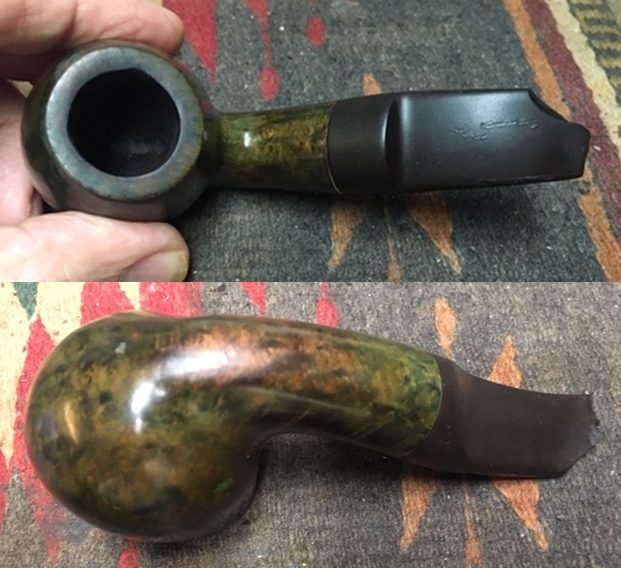
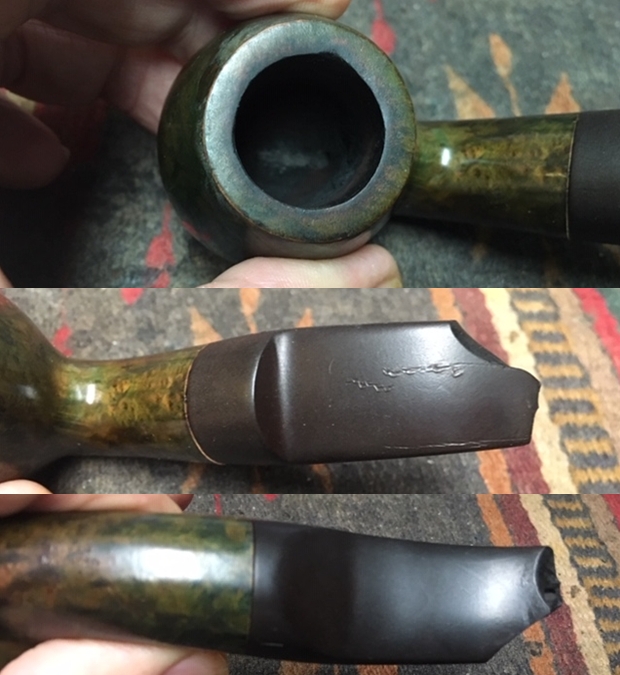
A Nightmare Restoration of an Oldenkott Munchen Huber Filter Pipe


Blog by Steve Laug

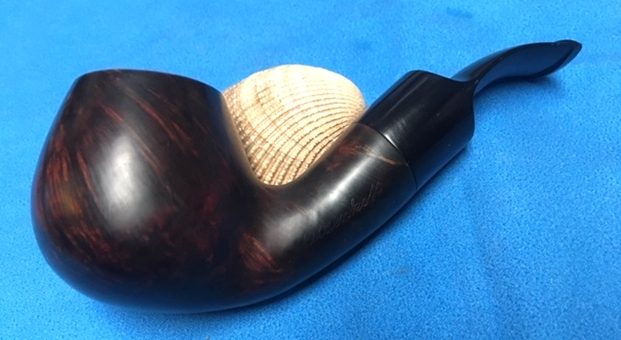
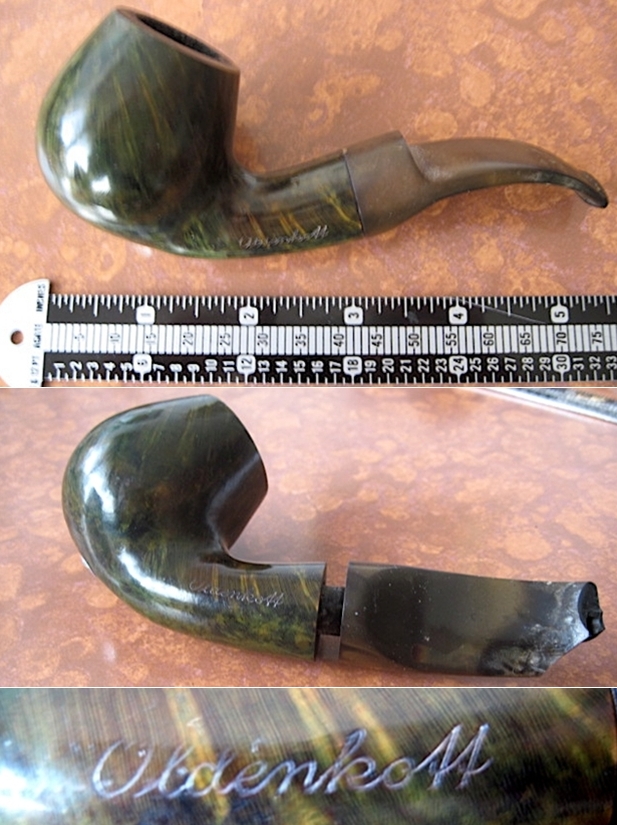
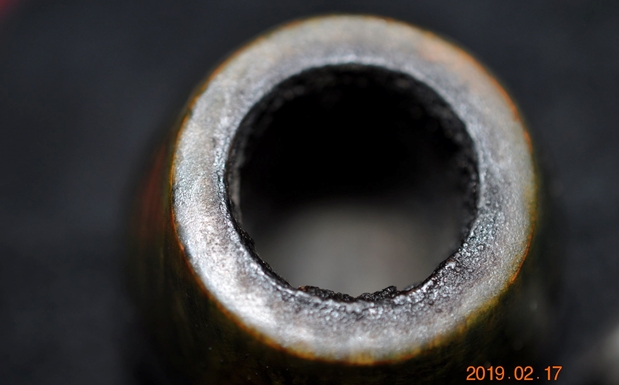
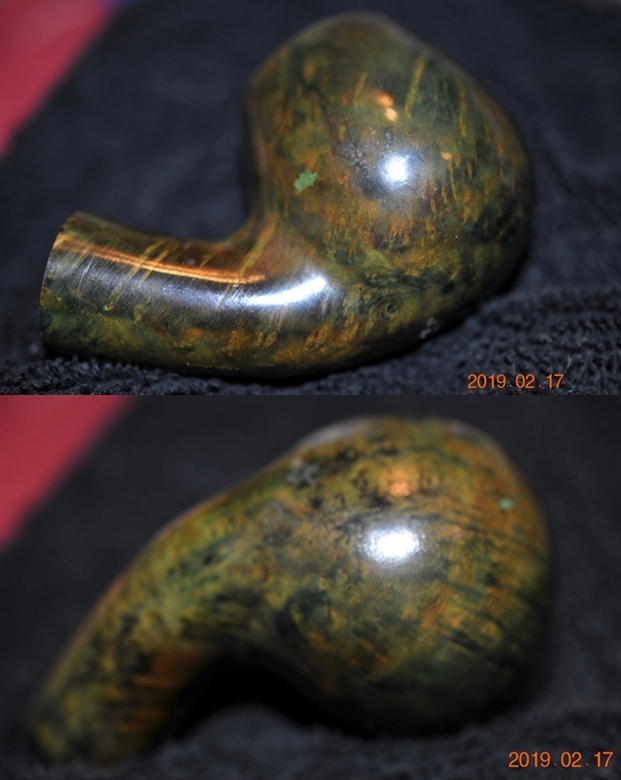
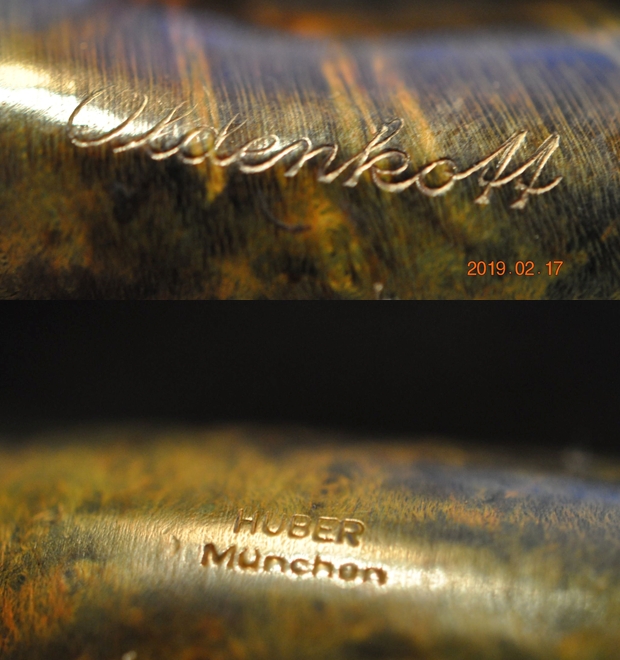
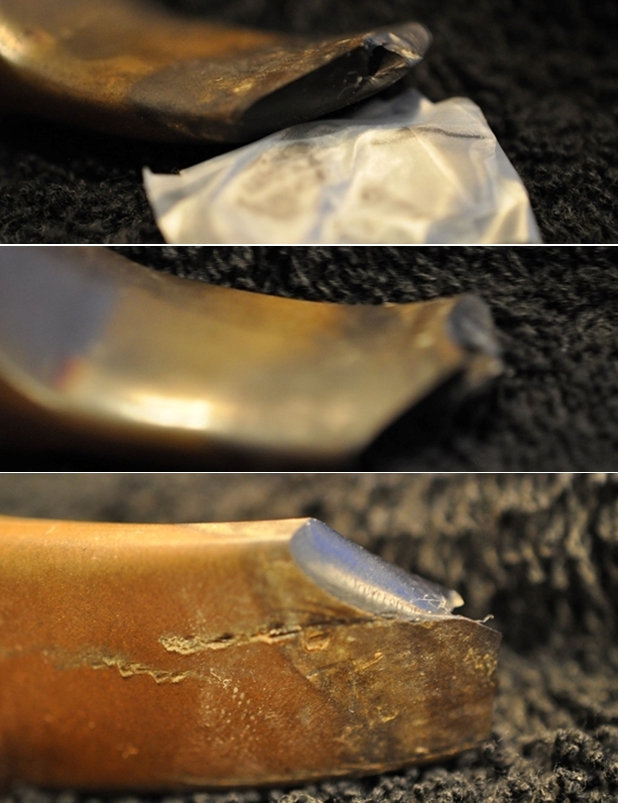
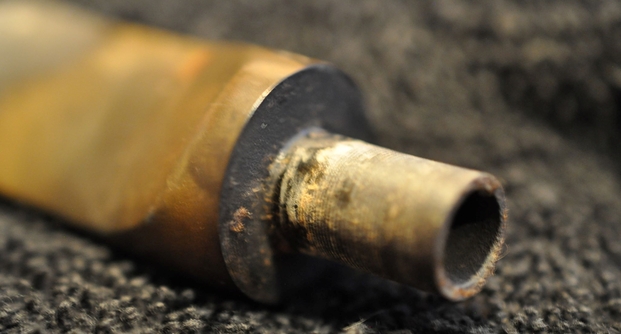
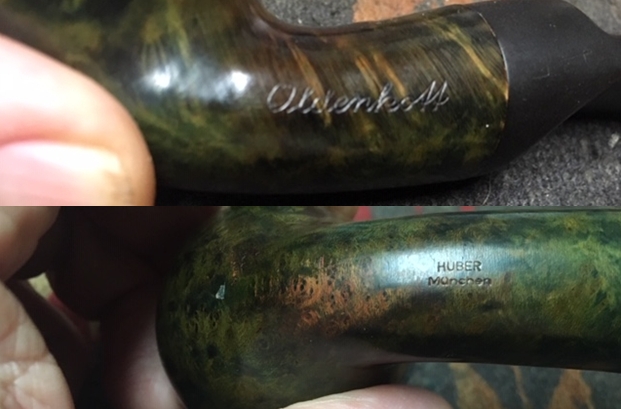
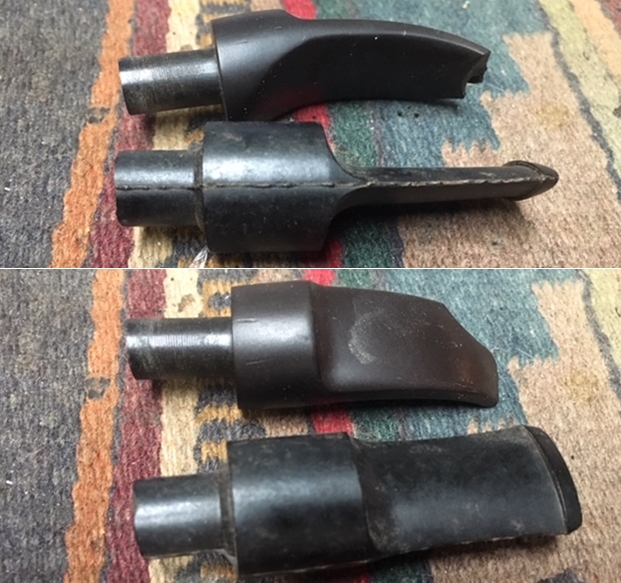
I have had this old pipe kicking around in my box for refurbishing for a long time now. I have picked it up numerous times and put it back as I just had no desire to do anything with it. That changed yesterday. I took it out and looked at it to think about what needed to be done to it. The stem was a mess – it had shattered when the guy who owned it tried to take it off. He sent me these photos of the pipe. It was green which did nothing for me and there was nothing about it that called my name. It was an Oldenkott pipe – a brand that I had worked on before but not a shape that I was interested in. The stem was broken and the pipe was a mess. After seeing the photos below, I had declined purchasing it as it really was not interesting to me. But even my declining it did not matter much – He had mailed it as part of a group of pipes that Jeff and I had purchased from him them.The pipes had been sent to Jeff and in the box was this one. Jeff opened the box and showed me this pipe and really it was in even worse shape than I imagined. The pipe came with the stem pretty well stuck in the shank and a small plastic bag with stem pieces was rubber banded to the tenon. Jeff chucked it in the freezer and the stem came off easily enough. It was a mess and it was a filter pipe! The bowl had a thick in it and a thick lava overflow on the rim top. It was hard to know the condition of the inner edge of the rim because of this. The bowl had a lot of bright green fills around the sides and heel. The stem was a disaster – broken off and shattered at the same time. It was definitely one for the garbage. He took photos of the pipe before he started working on it so I could see what he was dealing with. He took a photo of the rim top and bowl to try to capture the mess of both. The thick cake in the bowl and the overflow of lava are both visible. The cake was thick and hard and the lava overflow was a thick band around the bowl. One consolation is that considering the mess it was in, this must have been a great smoking pipe.The next photos show the side and bottom of the bowl and give a clear picture condition of the green stain. It was spotty and worn. The fills in the bowl were very green spots, like painters green tape and stood out like a sore thumb to me. They were just ugly and almost obscured the interesting grain around the bowl for me. Hopefully you get a feel for why I just kept putting it back in the restoration “to do” box.Jeff took photos of the stamping to capture the clarity of it even under the grime. The Oldenkott name is stamped on the left side of the shank. On the underside it is stamped Huber over Munchen. Jeff took photos of the stem to show the shattered condition. It really was not redeemable even by such a stalwart stem rebuilder as Paresh Deshpande! It was also a 9mm filter stem and to me that also was another strike against it. It was useless in my opinion. I knew I was dealing with a German pipe from previous ones that I had worked on. I had been told that the brand was the German equivalent of Dunhill pipes in England. This one certainly did not make a case for that assumption. I turned first to Pipephil to see if I could get a brief review (http://www.pipephil.eu/logos/en/logo-oldenkott.html). The site gave various lines that had been made by the factory before its closure in 1992.

I went on to Pipedia knowing that there would be some more detailed information and I was correct in that assumption (https://pipedia.org/wiki/Oldenkott). I quote in full from that article.

Very little is known about the company. According to the albums the company was founded in 1760 in Amsterdam as Hermann Oldenkott, and in 1819, a subsidiary in Ahaus (Germany). There were likely other factories as well, as in 1838 August Kersten from Rees (Germany) bought the factories from Heinric Oldenkott in Elten (Germany) and Weesp (Holland), although it is not clear whether these were part of the of the original Oldenkott company. The German company increased rapidly and became one of the largest German tobacco companies. In 1929 the factories from Hermann Oldenkott in Ahaus and Neuss (Germany) were bought by the German Oldenkott company. The German company produced pipes starting in 1932. In 1972 the German company was bought by the Dutch company Niemeijer. Tobacco production ceased in 1974 and only pipes were made afterward. In 1987 the German pipe company was bought by the Kersten family again, but closed in 1992.
The pipes were machine made and in general of mediocre quality. The most important pipes of Oldenkott were the so called “Porsche” design pipe. The bowl was turned like the motor block of a racing car and was lacquered with a silver-grey color. Today these special pipes are very rare and expensive.

In spite of the apparent quality of both Oldenkott and VAUEN pipes, they are known as good smokers.
The site also quotes from the book “Pipes, Artisans and Trademarks, by José Manuel Lopes’ –“Oldenkott is an early 20th century German brand by Henry Oldenkott. His factory in Hallen closed in April 1982, with some of the workder moving to VAUEN. Oldenkott made ipes with and without filters. It was in this company that Porsche pipes were produced.”
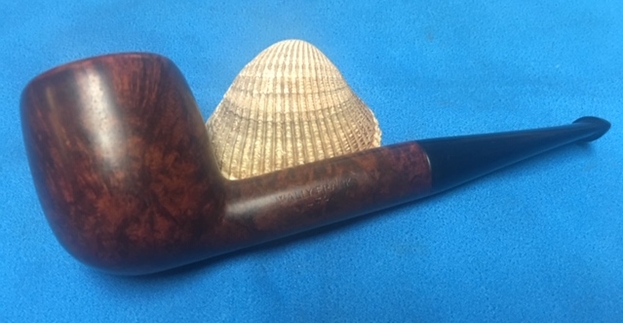
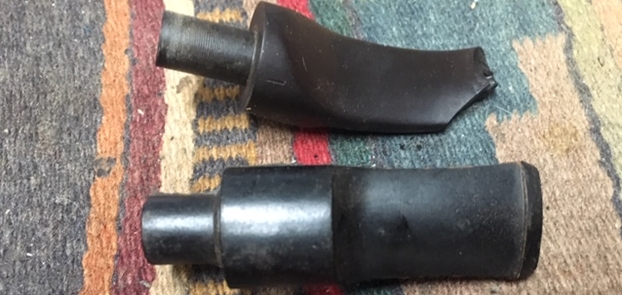
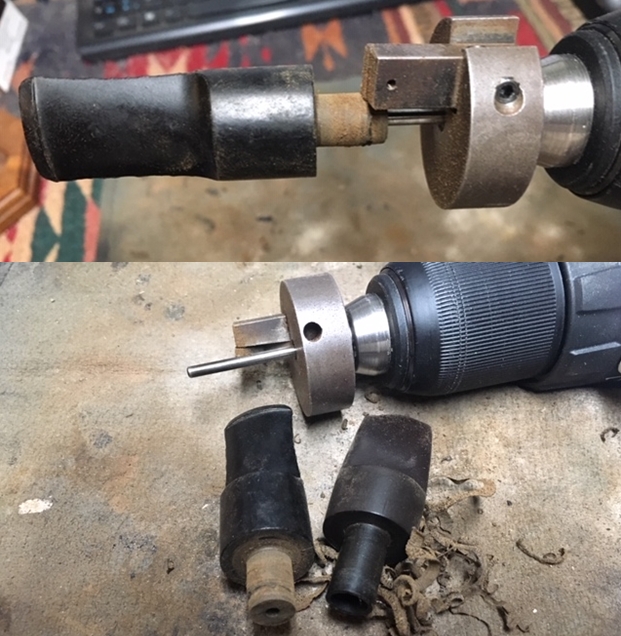
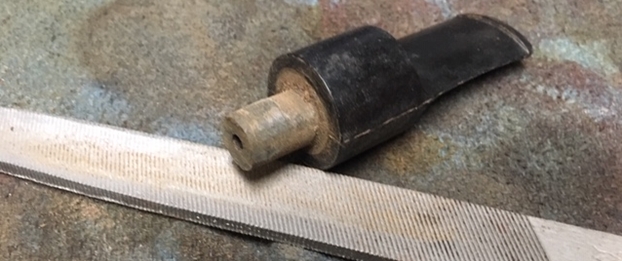
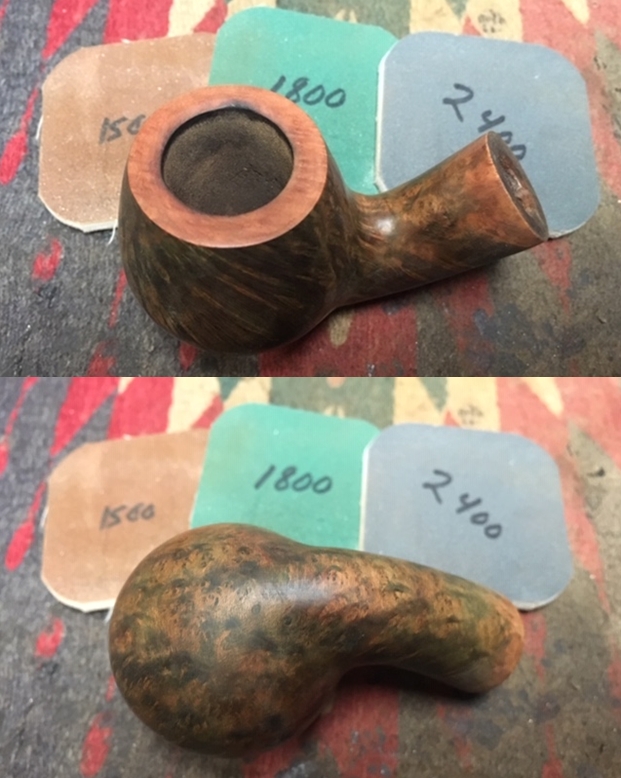
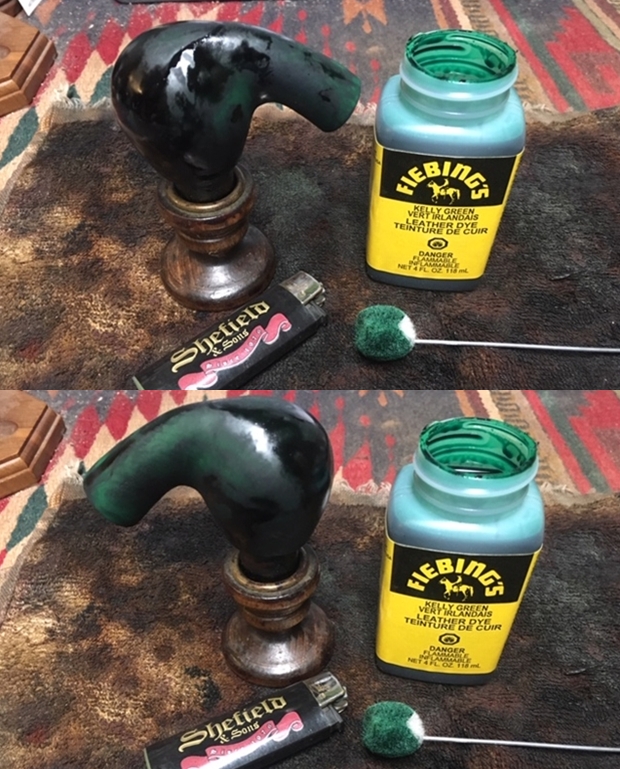
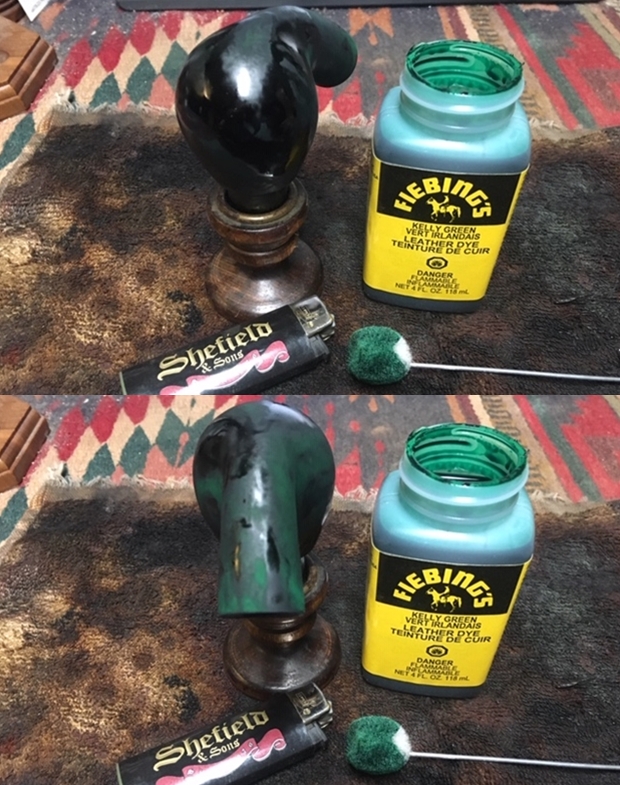
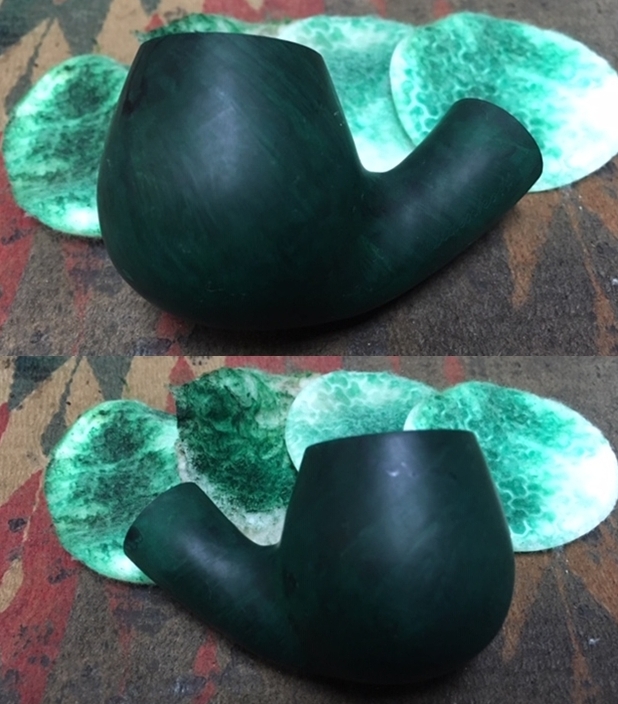
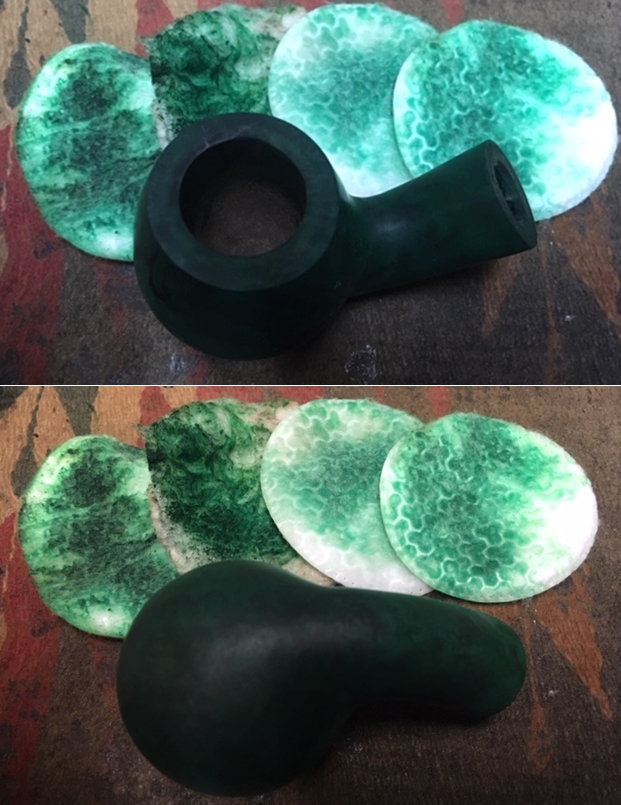
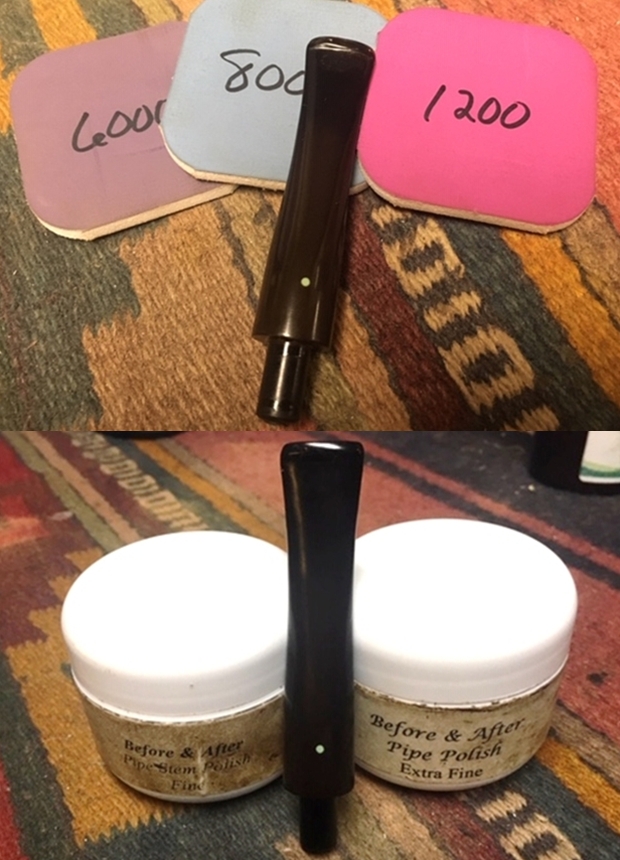
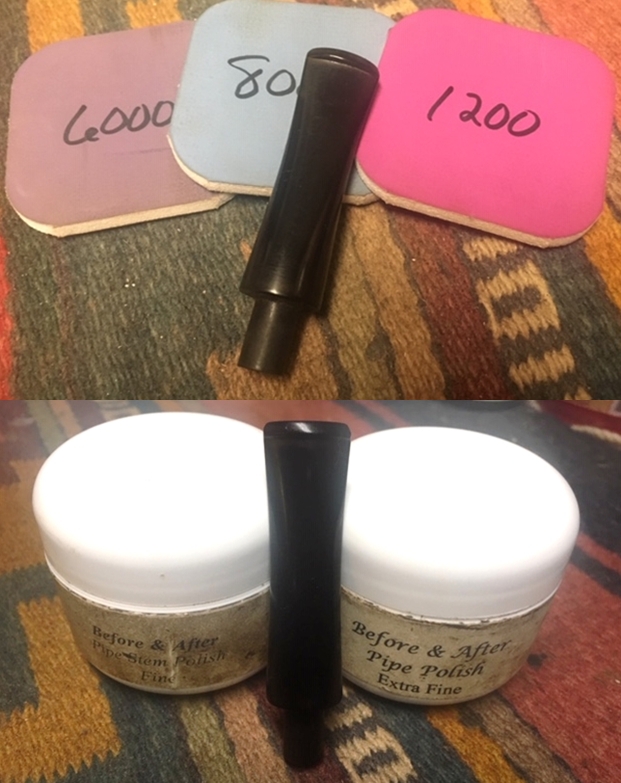
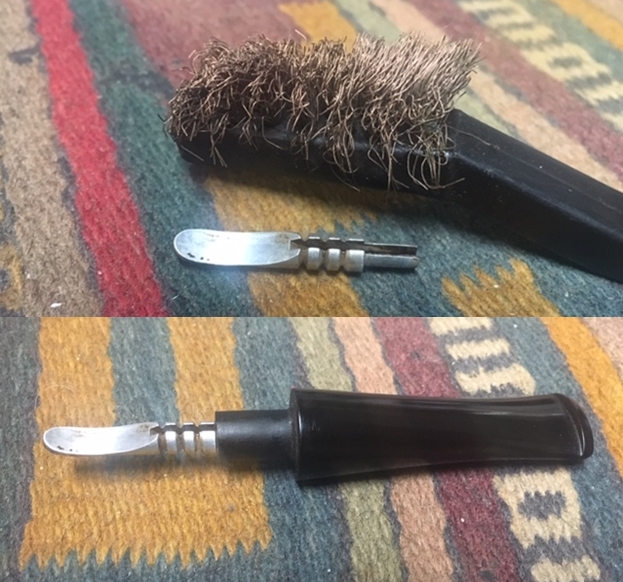
Armed with that information I turned to address the pipe itself. Jeff had cleaned up the pipe before sending it to me. He reamed the bowl with a PipNet pipe reamer and cleaned it up with a Savinelli Fitsall Pipe Knife. He scrubbed the exterior with Murphy’s Oil Soap and a tooth brush to clean off the grime off the finish and the heavy overflow of lava on the rim top. He cleaned up the internals of the shank, mortise and stem with pipe cleaners, cotton swabs and alcohol to remove all of the oils and tars in the pipe. He cleaned up the stem so that it did not stink and soil the other clean pipes he sent me. When it arrived here in Vancouver it was a clean pipe and I knew what I had to work with. I took photos of it before I started my part of the restoration. I took a close up photo of the bow and rim to capture the burn damage on the right side inner edge of the bowl. I also took photos of the shattered stem to show the extent of the damage.I took a photo of the left side and the underside of the shank to show the stamping on the pipe. It read as noted above. After the cleanup it was still readable.I decided to address the broken stem first. I went through my can of stems and found a suitable saddle stem that was roughly the same length as the broken one. It had a different saddle arrangement but to be honest I like the new one better. It was a new cast stem that I had picked up from a fellow who was selling out his father’s refurbishing supplies. I measured the diameter of the tenon on the broken stem and set the PIMO Tenon Turning Tool to crank out a tenon on the new stem that would match. I turned it carefully and once I took it off the tool and measured both were identical in diameter – BUT (and this part is very irritating to me) the new tenon though identical and in size was loose in the mortise!!!I filed out the nubs left behind from the tool and the new stem was now functional. I would need to expand the tenon to get a good snug fit but it was done. I gave the tenon a coat of clear fingernail polish to snug up the fit in the mortise. I set it aside to dry. While the stem was drying I decided to work on the damage to the inner edge of the bowl on the right side. I topped it on a topping board with 220 grit sandpaper and removed as much of the damaged area as possible.I knew that I needed to deal with the uneven green stain coat on the bowl so that I could smooth it out. I also needed to deal with the fills in the bowl. I wiped it down with acetone on a cotton pad to evenly remove the stain. I picked out the largest fill on the right side of bowl with a dental pick. Under the bright green top coat the fill was bright white putty. Once I picked it out wiped it down with alcohol. I filled in the hole with briar dust and clear super glue to replace the fill. I put the stem on the shank and worked on the fit against the shank. I used a wood fill to reduce the diameter on the stem giving it a bit of a conical shape to match the flow of the shank. I also worked on the shank diameter because like everything else that is a bit of a deficit on this pipe the shank was not perfectly round and the stem had to be hand fit to the shank. I sanded the shank and stem with 220 grit sandpaper to smooth out and shape the shank and stem union. I also sanded the repaired fill on the right side of the bowl to blend it into the surface. The stem was looking pretty good as was the new fill. I wiped the bowl down with a damp cloth to have a look at it at this point. I removed the stem and worked on polishing the bowl with 1500-2400 grit micromesh sanding pads. I wiped the bowl down after each pad. I decided to only use these three grits because I had decided to experiment with staining this pipe GREEN once again. (I have to tell you this was an experiment and in many ways a failed one. But I get ahead of the story!). Here is where the restoration took a horrible turn for me. I should have left well enough alone but I wanted to tryout the Kelly Green stain that I had picked up earlier for some Peterson’s St. Patrick’s Day pipes that I have not dealt with yet. I figured this would be a good place to learn about the idiosyncrasies of green stain. I heated the briar and stained and flamed the pipe to set the stain in the wood. I looked at it and just shook my head. The stain set really well. I wasn’t sure how the fills received it and was a bit worried when I saw them shining through the dark green stain. I set the bowl aside to let the stain cure. Once the stain was dry I moved to my next “normal” step which is to wipe the bowl down with alcohol on cotton pads to make it more transparent and make the grain stand out more. Here is where my next issue rose – I wiped it down with four pads and alcohol and kept repeating the wipe down and it did not become more transparent. All that happened was that the fills turned white. I touched them up with green but there was no remedy to the issue. I like the pipe better before I stained it green. Now what was I going to do to make it LESS GREEN? At this point the experiment was a failure in my opinion. The GREEN NOT ONLY SET IN THE GRAIN BUT IN THE WHOLE PIECE OF BRIAR. I have to admit that at this point it crossed my mind that I probably could have thinned the stain a lot and made a green wash but after thought is too late. I buffed the pipe with Red Tripoli to try to remove it from the briar but it really had little effect. I was getting pretty frustrated and know from experience it is time to change things up a bit before I make things worse!
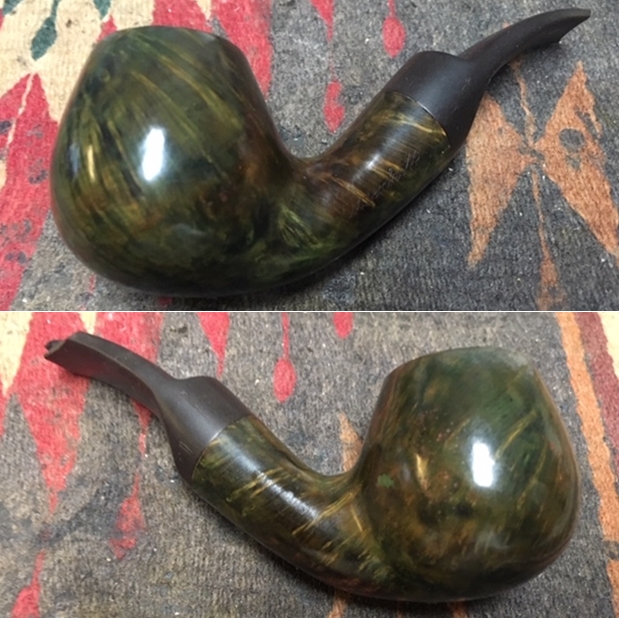
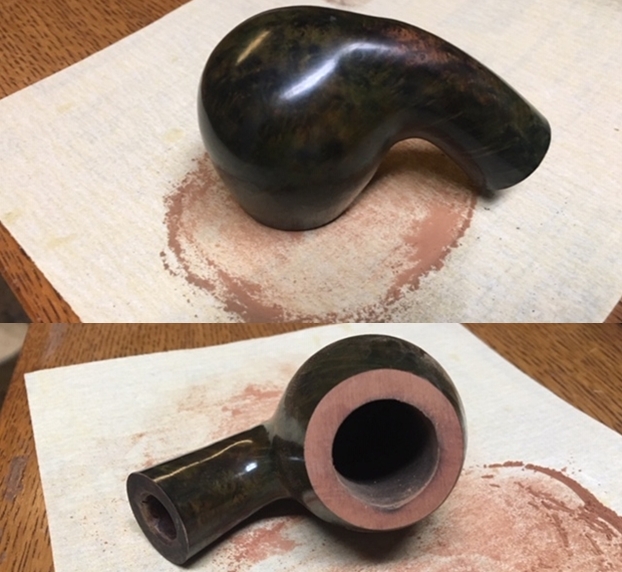
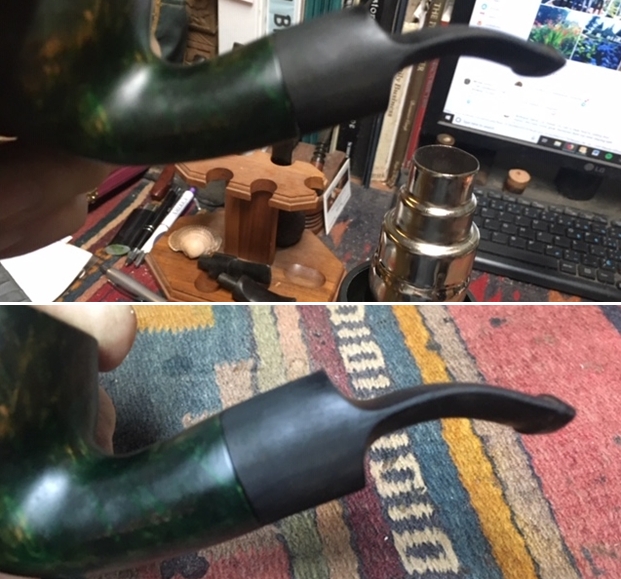
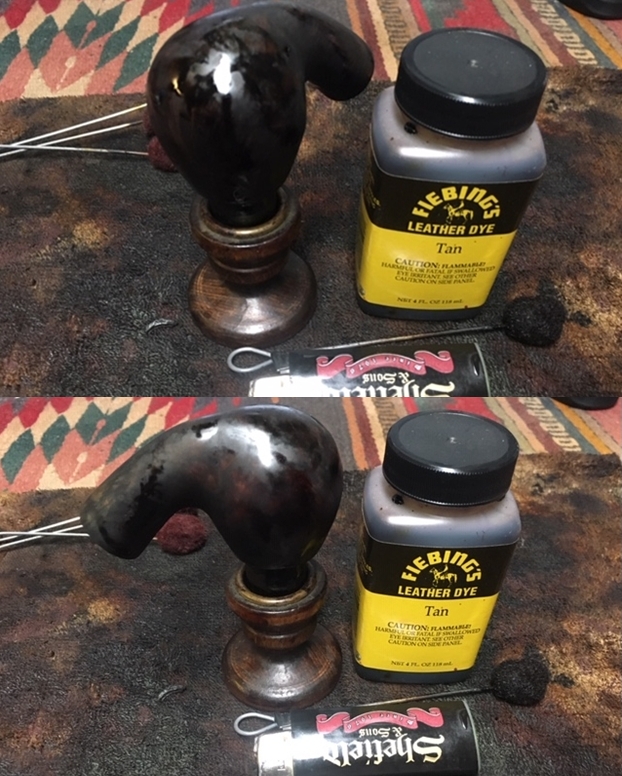
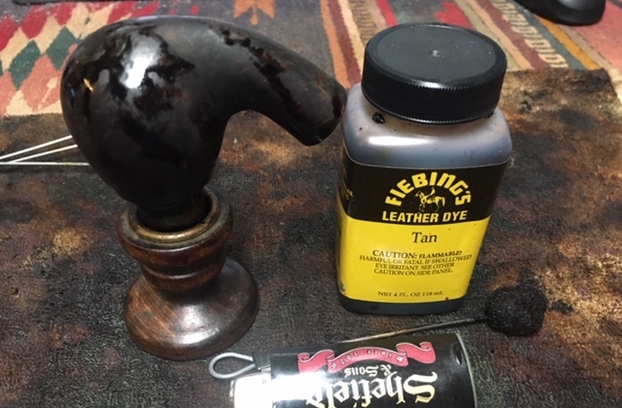
So I decided to address the stem for a while instead of the bowl. I put the stem on the shank and heated it with my heat gun until it was soft. I bent it to match the angles of the bottom of the bowl and set the bend with cool water. It was a good diversion from the GREEN bowl.I took the stem off and went back to work on the bowl. I wiped it down with acetone to try to reduce the green stain and while it partially worked it still was too green to my liking. I sanded the bowl and shank with 1500-2400 grit micromesh sanding pads to further reduce it. I still was not happy with the results. The green was just not to my liking. It needed to go. I restained the bowl with Tan stain and flamed and repeated the process until the coverage was good. I set it aside to cure and went to lunch with a friend. After lunch I buffed the bowl with Red Tripoli to unveil with the bowl looked like at this point. The tan stain had worked together with the Green stain to create a colour that I really liked. I buffed it with Blue Diamond to further polish it. I like the way the bowl looked at this point. I still needed to polish it and wax it but I wanted to finish the stem as well. I wet sanded it with 1500-12000 grit micromesh sanding pads to polish it. I wiped the stem down with Obsidian Oil after each pad. I finished polishing it with Before & After Pipe Polish – both Fine and Extra Fine. I gave it a final coat of Obsidian Oil and set it aside to dry. In looking at the photos above you can see a few nicks in the tenon. I filled them in with clear super glue to smooth them out and set the stem aside to dry. I sanded them smooth with 1500-2400 grit micromesh sanding pads. I wiped it down with Obsidian Oil and again let it dry.  With the parts finished it was time to polish up this nightmarish experiment that took me far longer than it rightly should have taken. I learned a ton in terms of Green stain – such as using it as a wash instead of as it comes in the bottle. I learned that it sinks deep into all of the grain not just the softer parts. I found that it is very hard to remove once it is once it is on the briar. Learning all of that I was finally glad that it was time to finish this pipe. I put the stem and bowl back together and buffed the pipe with Blue Diamond on the buffing wheel. I polished the briar and the minute scratches still in the vulcanite of the stem until there was a rich shine. This Oldenkott turned out better than I expected and has some nice grain showing through. The finish really highlights the grain and hides the fills on a proportionally well carved pipe. Once I buffed the pipe the briar came alive and the mixture of grain popped with polishing. The black vulcanite replacement stem had a rich glow. The finished pipe is a beautiful grained bent Apple. The dimensions are Length: 5 1/4 inches, Height: 1 3/4 inches, Outside diameter of the bowl: 1 1/4 inches, Chamber diameter: ¾ of an inch. Thanks for walking through the long, experimental restoration with me as it was a learning experience for me.

Restoring an Old Cased Set of Aristocrat Meerschaums – Part 4


Blog by Steve Laug

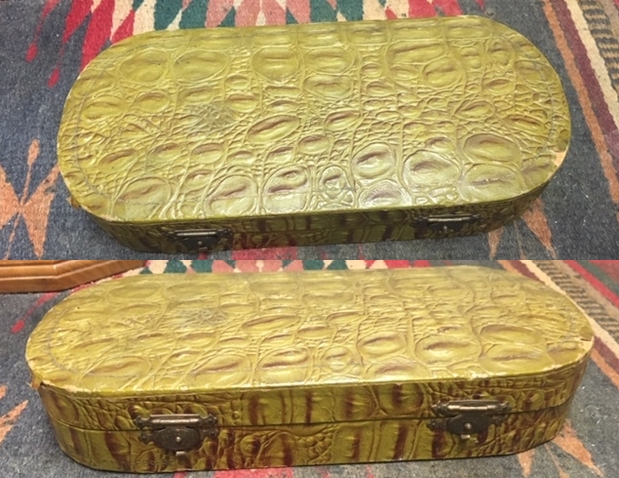
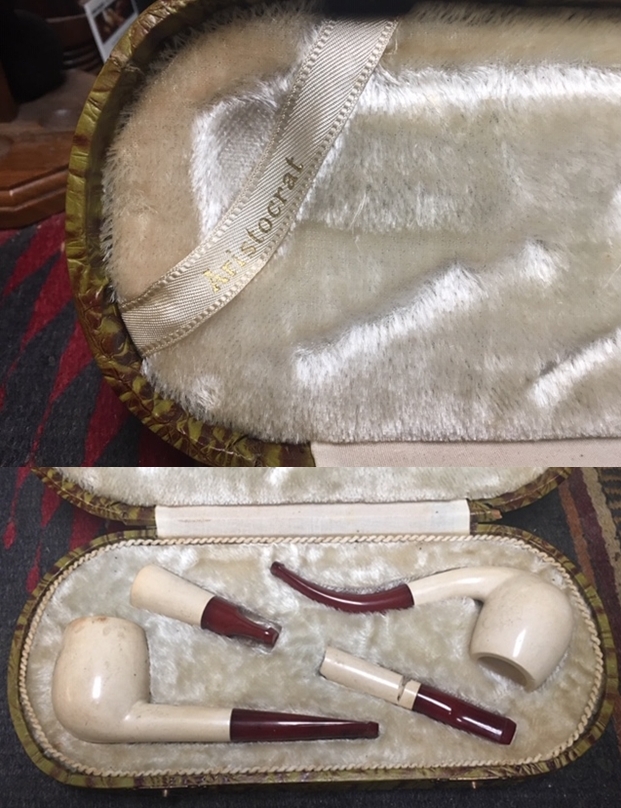
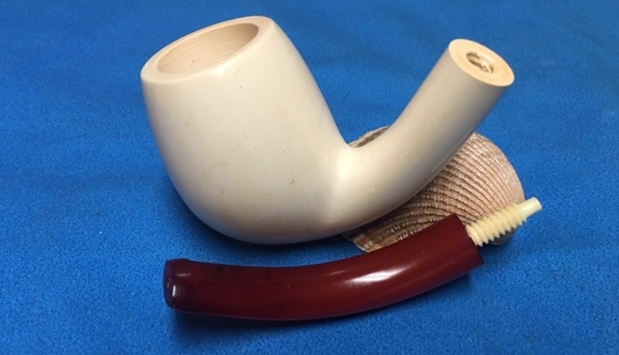
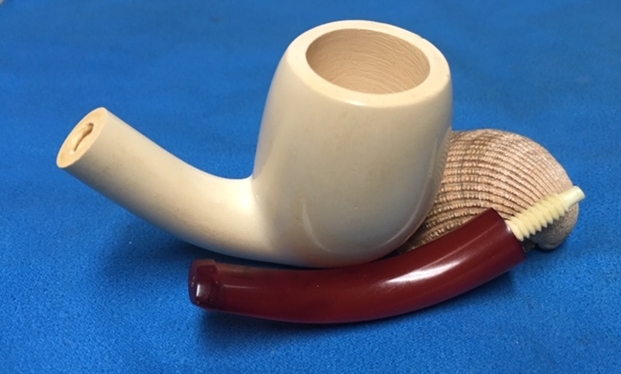
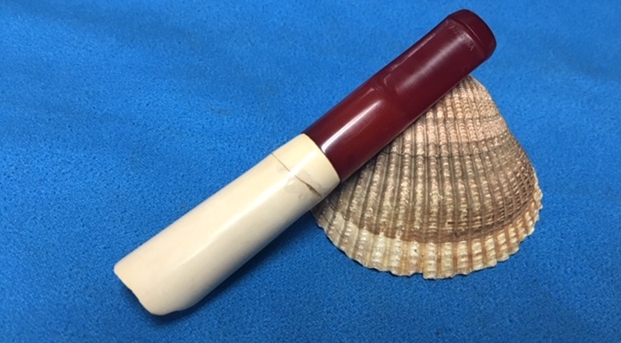
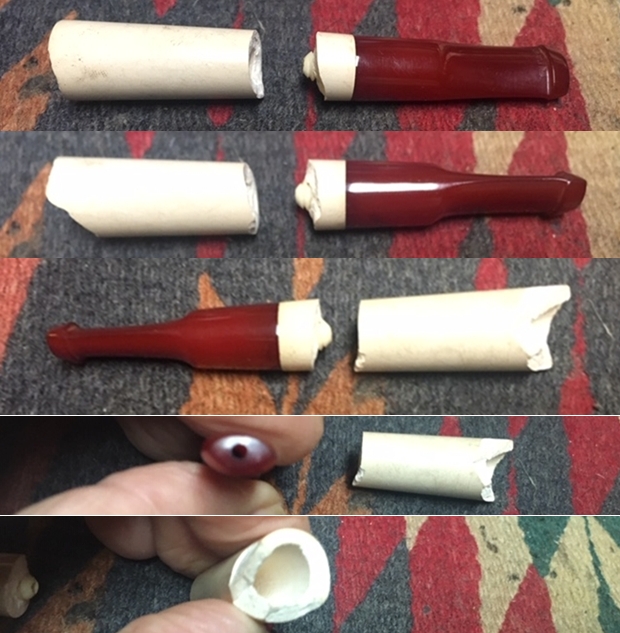
I finished the first pipe, the cigar holder and the cigarette holder in the cased set of meerschaum pipes and holders made by Aristocrat (https://rebornpipes.com/2019/07/21/restoring-an-old-cased-set-of-aristocrat-meerschaums-part-1/). This set included a straight billiard, a bent billiard a cigar holder and a broken cigarette holder. All were smooth meerschaum with red Bakelite or Redmanol stems. All had bone tenons directly screwed into threaded mortises in the meerschaum. There was no stamping on the pipes and holders or the stems. The box itself was covered in what looked like alligator skin with brass hinges and clasps. On the inside the case was lined in an off white preformed velveteen fabric. There was a corner ribbon across the left side of the lid that read Aristocrat. The straight billiard has been restored and looks very good. The second pipe has not been looked at yet and will be the last piece from the set to be restored. The cigar holder has been restored and looks very good. The cigarette holder was broken and two parts and the stem remained. There was a missing piece from the front of the holder. It was unused and broken.  I took photos of the case and the pipes and holders before I started my work on it. Now it is time to work on the final unsmoked pipe. I took photos of each of the pieces in the collection. The first set of photos shows the smoked straight billiard. I cleaned up this pipe and have written the blog on it (https://rebornpipes.com/2019/07/21/restoring-an-old-cased-set-of-aristocrat-meerschaums-part-1/). Give the blog a read and you will see the story of the restoration.

I have also cleaned up the cigar holder and written a blog on it if you want to check it out (https://rebornpipes.com/2019/07/21/restoring-an-old-cased-set-of-aristocrat-meerschaums-part-2/).

I have finished cleaning up and repairing the cigarette holder. I wrote a blog on it if you want to check it out (https://rebornpipes.com/2019/07/22/restoring-an-old-cased-set-of-aristocrat-meerschaums-part-3/).

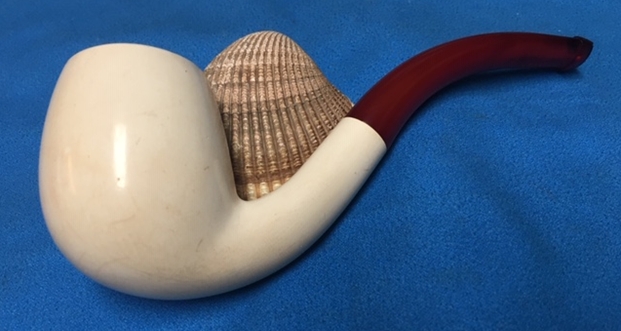
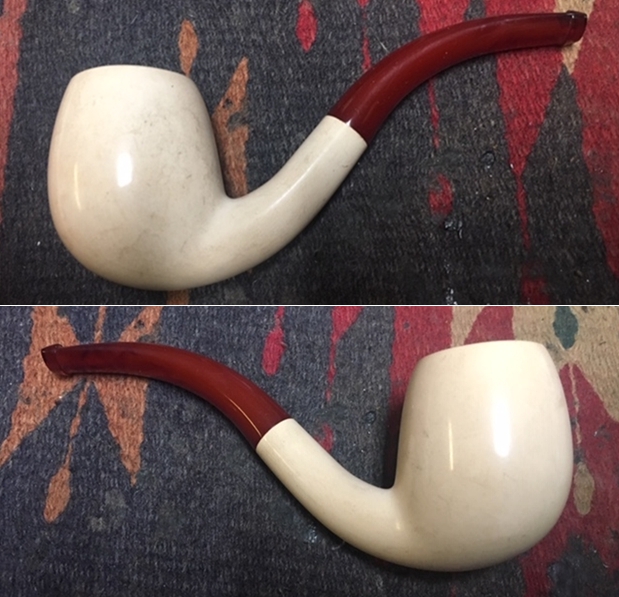
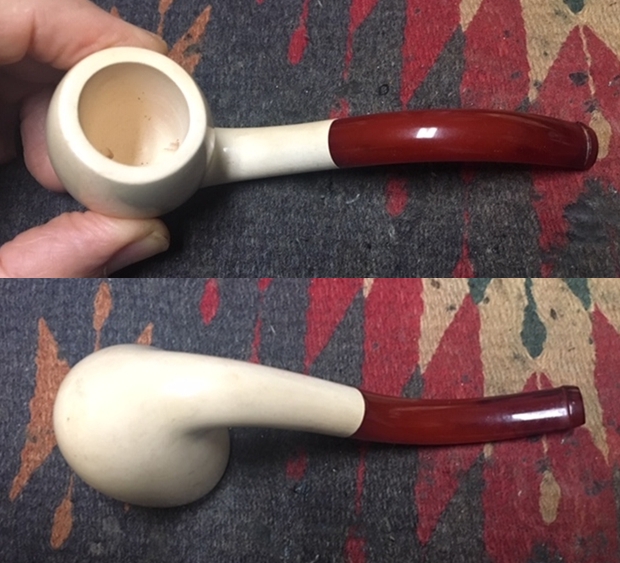
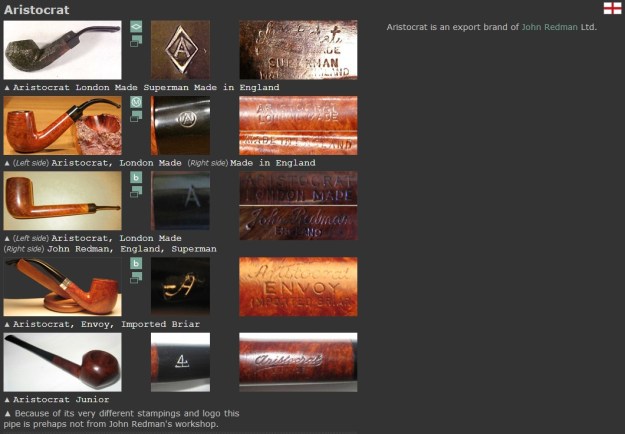
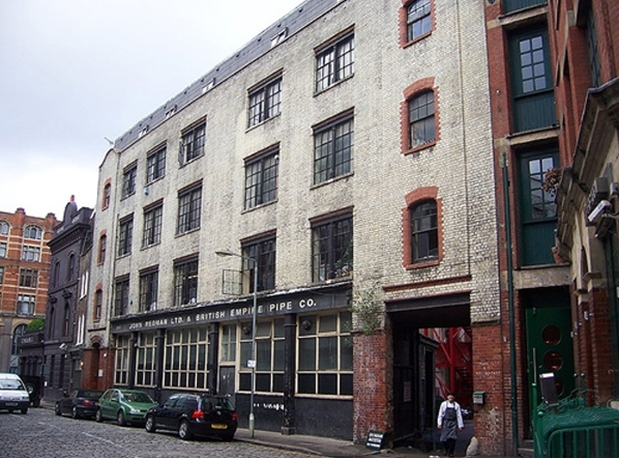
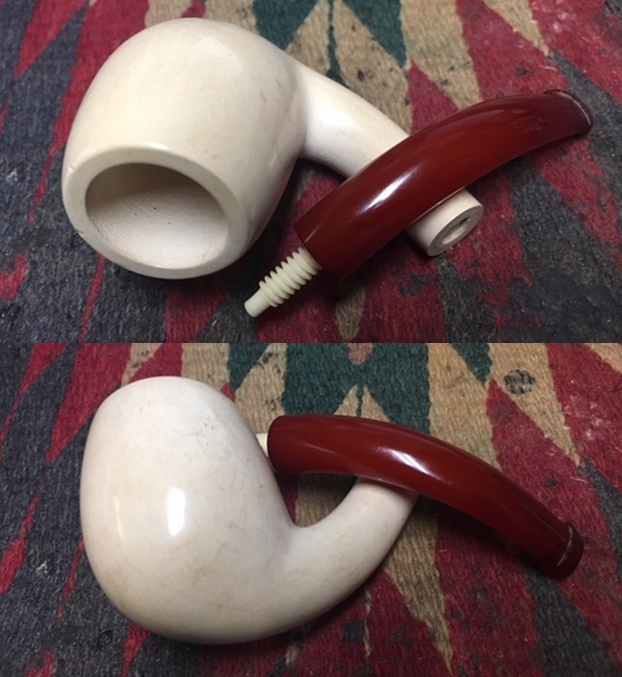
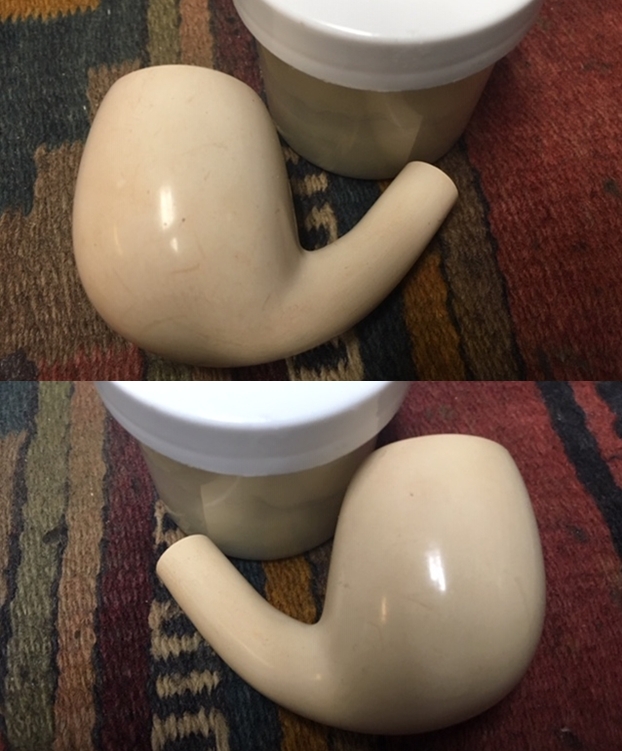
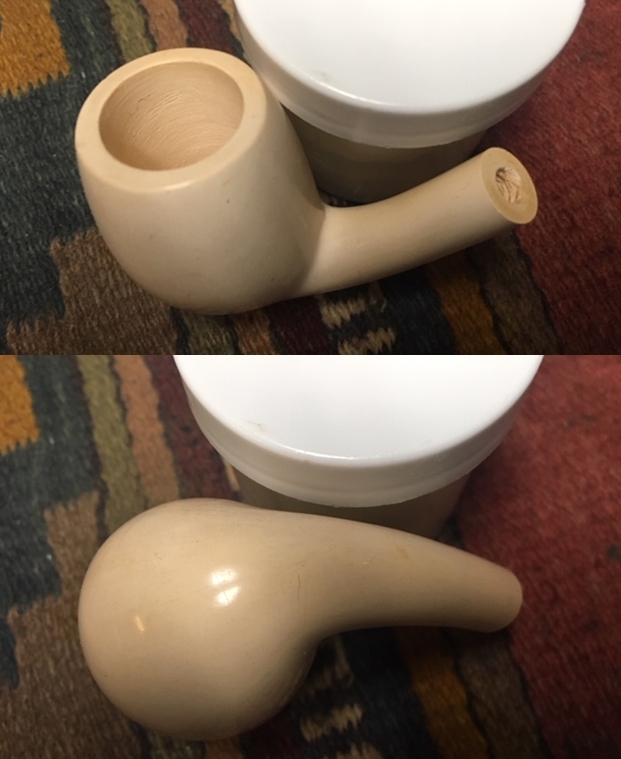
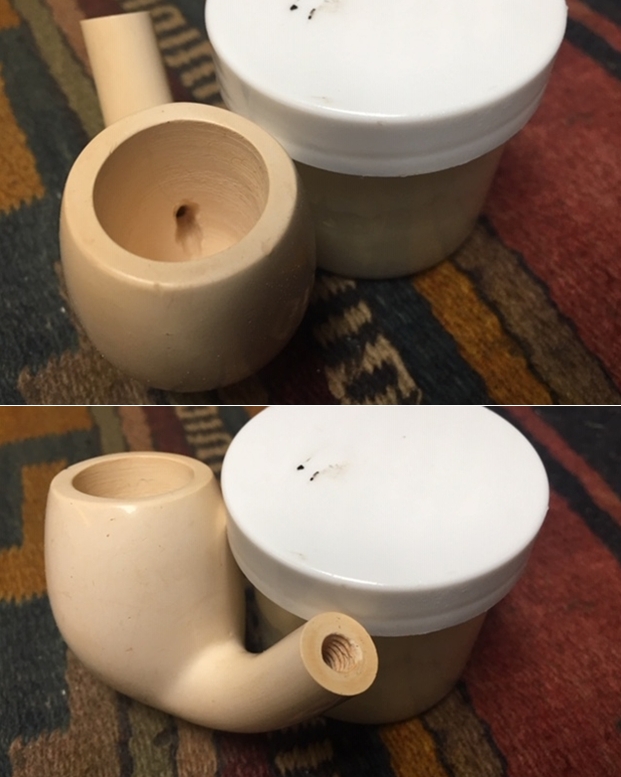
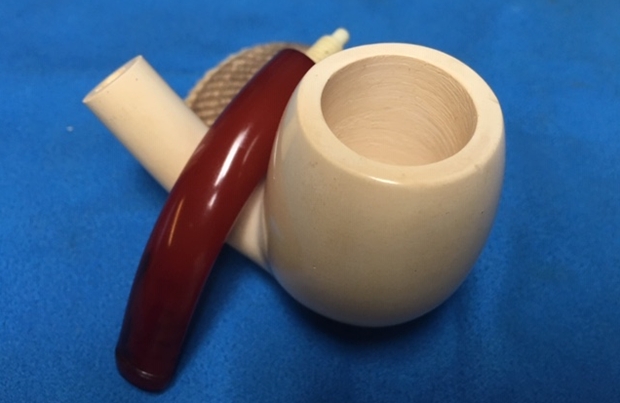
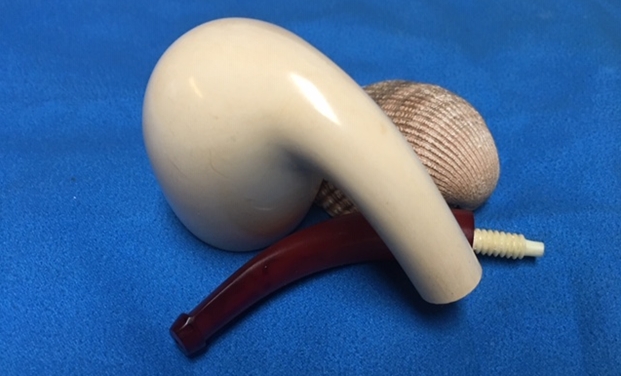
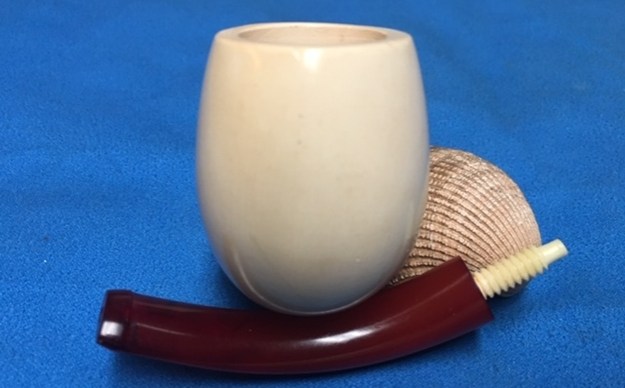
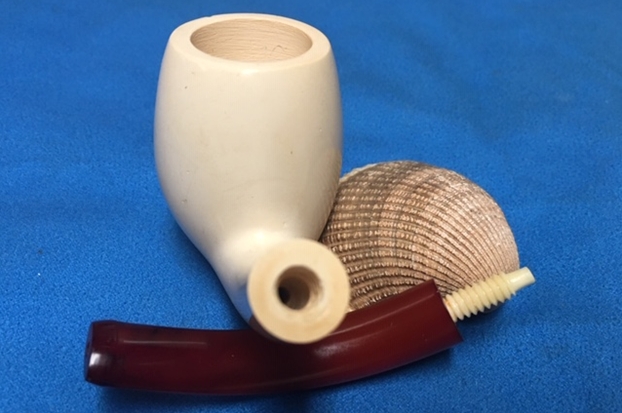
The next piece I chose to work on was the final unsmoked bent billiard meerschaum pipe shown in the photos below. It was unsmoked and other than external wear and tear from sitting and an overturned stem it was in decent condition. I am leaving the information on the brand in case you have not read the background info in the first blog. From what I could find on Pipephil’s site I found a listing for Aristocrat linking it to John Redman Ltd. in England (http://www.pipephil.eu/logos/en/logo-a7.html). The site says that it was an export brand from the company. In looking at the various stampings in the photos below I found that the Aristocrat stamping on the ribbon on the case above matches the second and third photo below.The photo below was a link on the site that took me to a photo of the John Redman LTD. and British Empire Pipe Com on Westland Place, Hackney, London, England. I think it is a nice historical touch to be able to include the photo.I turned to Pipedia (https://pipedia.org/wiki/John_Redman_Ltd./British_Empire_Pipe_Co.) to see if I could learn a bit more about the company. I quote the full article below:

John Redman Ltd. and British Empire Pipe Co. Other lines include Aristocrat, Buckingham, Buckingham Palace, Canberra, Captain Fortune, Dr John, Golden Square, Redonian, Richmond (not Sasieni), Twin Bore.

From these two sources it appears to me that this set of meerschaum pipes and holders was made for export by John Redman Ltd. I am not sure of the date as neither source gave clues to that information.

I am enjoying working on this set of meers from John Redman Ltd. and really like the obvious connection to them with the Redmanol stems. I worked on the final unsmoked pipe next as it was the only piece in the set that was both unbroken and unsmoked.

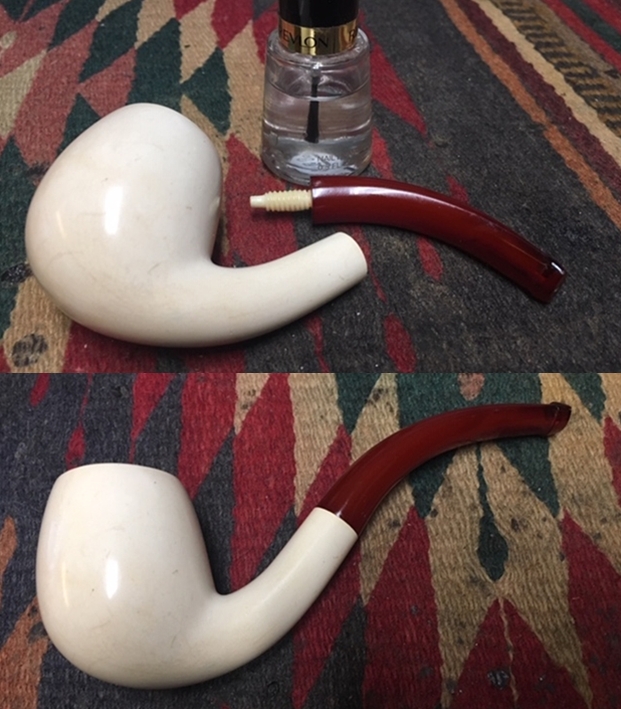
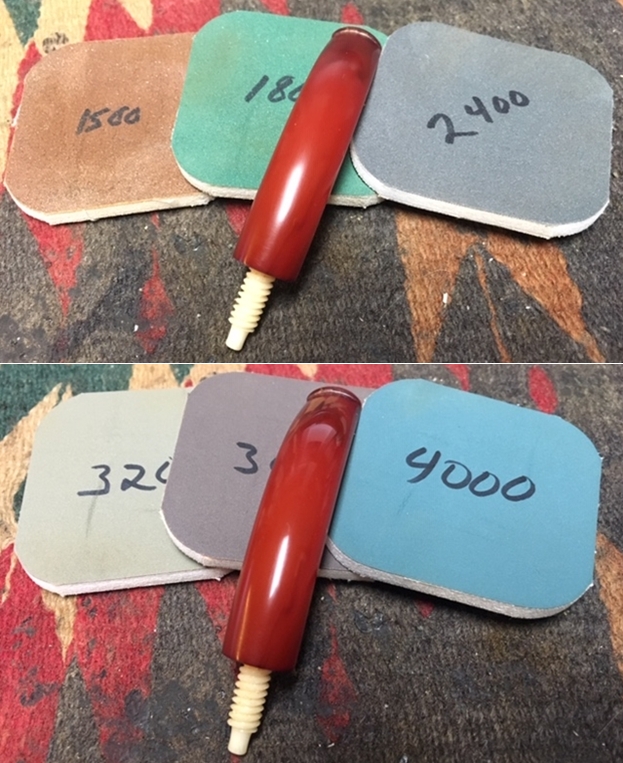
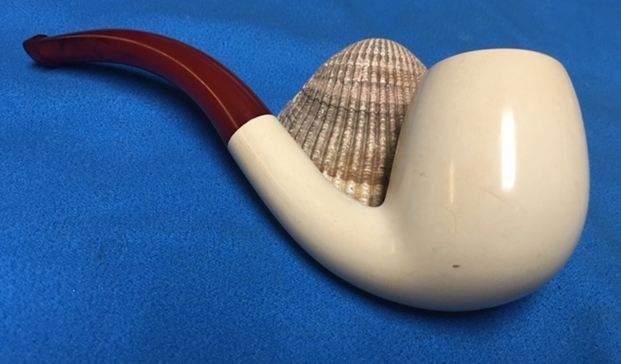
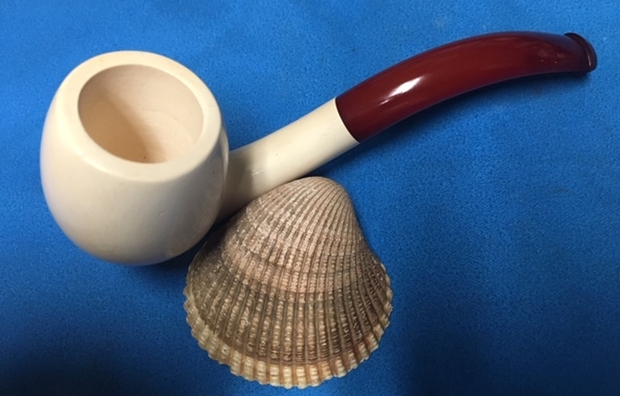
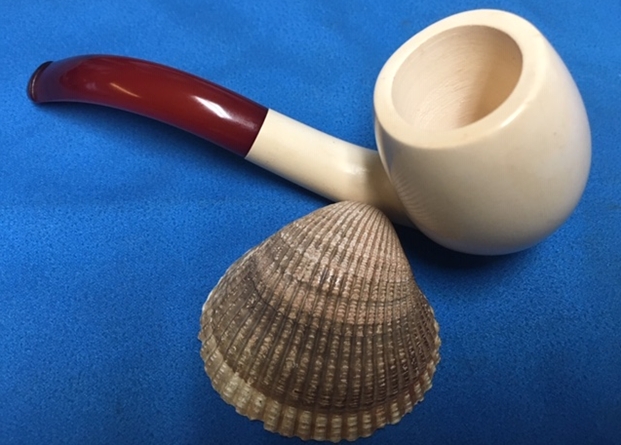
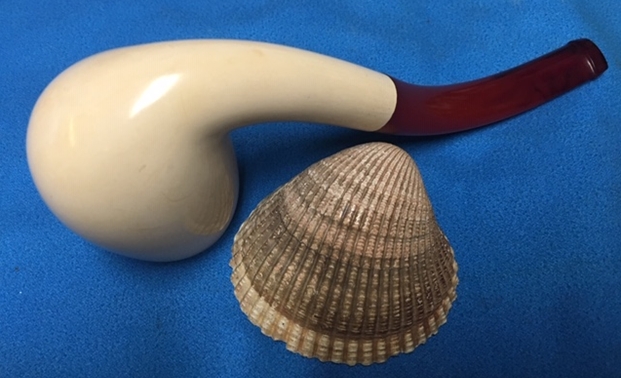
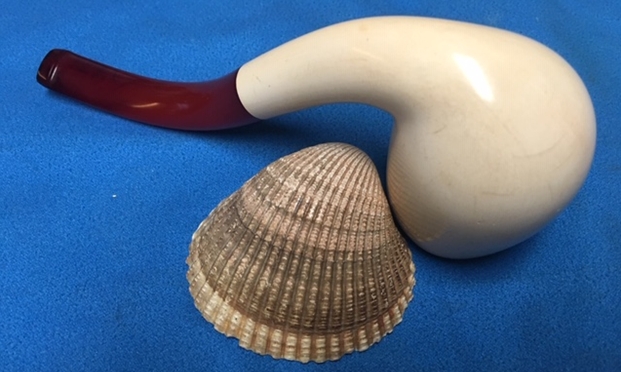
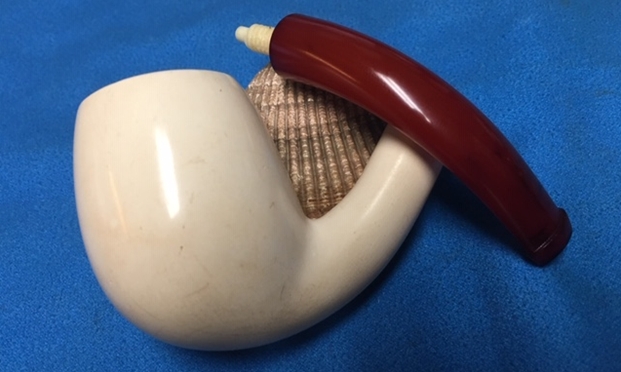
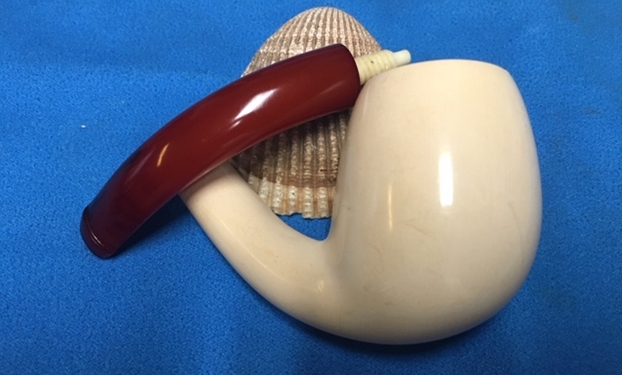
I took close up photos of the bowl and rim top as well as both sides of the Bakelite stem to show the condition that the pipe was in when I started. The bowl was very clean and unsmoked. The stem was clean and without tooth chatter or marks on the top and underside ahead of the button.I took the stem off the shank and took photos of the parts to show the unsmoked bowl and the clean bone tenon – no stains and no use.To correct the overturned tenon I painted it with clear fingernail polish. The idea was to build it up enough to correct the overturning. It took two coats of polish to add enough to the threads to correct the problem. Once it had cured I put the stem back on the bowl.I continued my experiment with a new product from Mark Hoover of Before & After Products. This one is a product he labels briar cleaner and it has the capacity of absorbing grime and dirt from the surface of briar. I have been using it with some success on this set of meerschaum pipes and holders. I rubbed the meerschaum tip down with some of his Briar Cleaner to see how it would work in this setting. In speaking to Mark he noted that the product is completely safe to use. The main product is even FDA approved edible. I rubbed it onto the bowl and rim top with my finger tips and worked it into the grime and grit on the bowl. I let it sit on the pipe for about 5 minutes before I rubbed it off with a microfibre cloth. I rinsed it under warm running water to remove the residue. I was pleasantly surprised by how clean the bowl looked when finished. Since the cleaner had worked so well I decided to try out the Restoration Balm on the meerschaum as well. I rubbed the bowl down with Before & After Restoration Balm. I worked it into the meerschaum and let it sit for a short time. I buffed it off with a microfibre cloth to bring it some life. Once again I was very surprised at how well it worked. I sent Mark Hoover a note about this experiment. He was pretty amazed at the results and said he had not thought of using it for meerschaum but was not surprised as it was made to absorb grit and grime from the surface of a pipe. Since the stem was unsmoked it had no issues with tooth chatter or marks. It was just dull from lack of use and sitting in storage. I wet sanded the stem with 1500 -12000 grit micromesh pads to polish it. I wiped it down with Obsidian Oil on a cloth after each sanding pad. I further polished it with Before & After Pipe Polish – both Fine and Extra Fine. After that I wiped the stem down a final time with Obsidian Oil and set it aside to dry. I put the bowl and stem back together. I polished the pipe with Blue Diamond to remove the remaining minute scratches in the briar and the Bakelite. I gave the bowl and stem several coats of Conservator’s Wax and buffed the pipe with a clean buffing pad to raise the shine. I hand buffed it with a microfiber cloth to deepen the shine. The pipe polished up pretty nicely. The contrast of the beautiful clean meerschaum with light colouring of age and the polished red Bakelite/Redmanol stem looked amazing. This older, beautiful, well made Meerschaum bent billiard will only get better with age. The finished pipe is shown in the photos below. The dimensions of the pipe are Length: 5 1/2 inches, Height: 2 inches, Outside diameter of the bowl: 1 1/4 inches, Chamber diameter: 3/4 of an inch. This is the second pipe from the Aristocrat pipe set in the photos at the beginning of this blog. It is also the last of the set to be cleaned and restored. Thanks for walking through the restoration with me. Cheers. 

Restoring an Old Cased Set of Aristocrat Meerschaums – Part 3


Blog by Steve Laug

I finished the first pipe and the cigar holder in the cased set of meerschaum pipes and holders made by Aristocrat (https://rebornpipes.com/2019/07/21/restoring-an-old-cased-set-of-aristocrat-meerschaums-part-1/). This set included a straight billiard, a bent billiard a cigar holder and a broken cigarette holder. All were smooth meerschaum with red Bakelite or Redmanol stems. All had bone tenons directly screwed into threaded mortises in the meerschaum. There was no stamping on the pipes and holders or the stems. The box itself was covered in what looked like alligator skin with brass hinges and clasps. On the inside the case was lined in an off white preformed velveteen fabric. There was a corner ribbon across the left side of the lid that read Aristocrat. The straight billiard has been restored and looks very good. The second pipe has not been looked at yet and will be the last piece from the set to be restored. The cigar holder has been restored and looks very good. The cigarette holder was broken and two parts and the stem remained. There was a missing piece from the front of the holder. It was unused and broken.  I took photos of the case and the pipes and holders before I started my work on it. Now it is time to work on the broken cigarette holder. I took photos of each of the pieces in the collection. The first set of photos shows the smoked straight billiard. I cleaned up this pipe and have written the blog on it (https://rebornpipes.com/2019/07/21/restoring-an-old-cased-set-of-aristocrat-meerschaums-part-1/). Give the blog a read and you will see the story of the restoration.

I have also cleaned up the cigar holder and written a blog on it if you want to check it out (https://rebornpipes.com/2019/07/21/restoring-an-old-cased-set-of-aristocrat-meerschaums-part-2/).

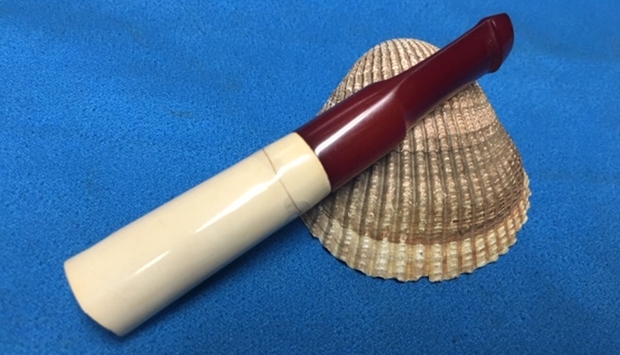
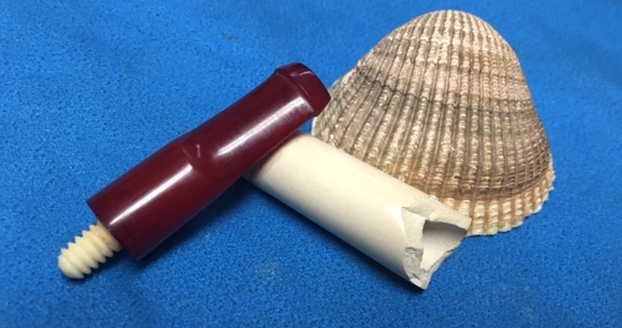
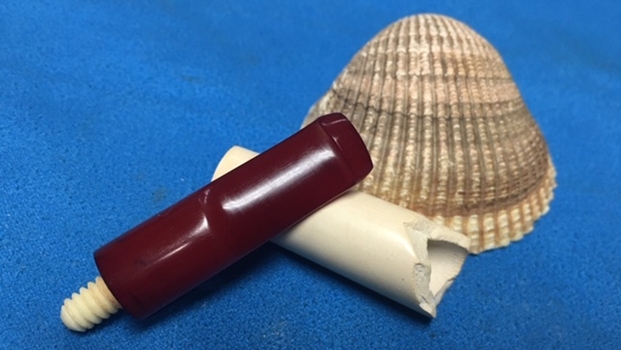
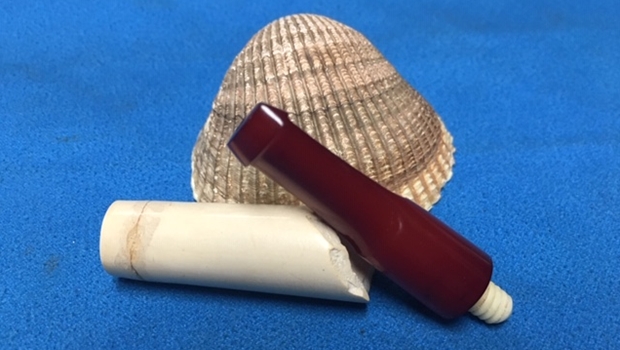
The next piece I chose to work on was the broken Aristocrat Cigarette Holder shown in the photos below. It was unsmoked and broken. It was also missing part of the meerschaum. I am leaving the information on the brand in case you have not read the background info in the first blog. From what I could find on Pipephil’s site I found a listing for Aristocrat linking it to John Redman Ltd. in England (http://www.pipephil.eu/logos/en/logo-a7.html). The site says that it was an export brand from the company. In looking at the various stampings in the photos below I found that the Aristocrat stamping on the ribbon on the case above matches the second and third photo below.The photo below was a link on the site that took me to a photo of the John Redman LTD. and British Empire Pipe Com on Westland Place, Hackney, London, England. I think it is a nice historical touch to be able to include the photo. I turned to Pipedia (https://pipedia.org/wiki/John_Redman_Ltd./British_Empire_Pipe_Co.) to see if I could learn a bit more about the company. I quote the full article below:

John Redman Ltd. and British Empire Pipe Co. Other lines include Aristocrat, Buckingham, Buckingham Palace, Canberra, Captain Fortune, Dr John, Golden Square, Redonian, Richmond (not Sasieni), Twin Bore.

From these two sources it appears to me that this set of meerschaum pipes and holders was made for export by John Redman Ltd. I am not sure of the date as neither source gave clues to that information.

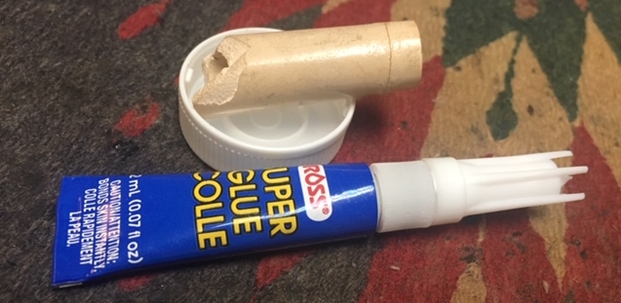
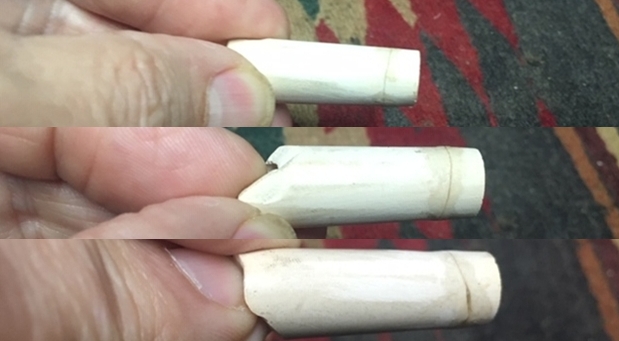
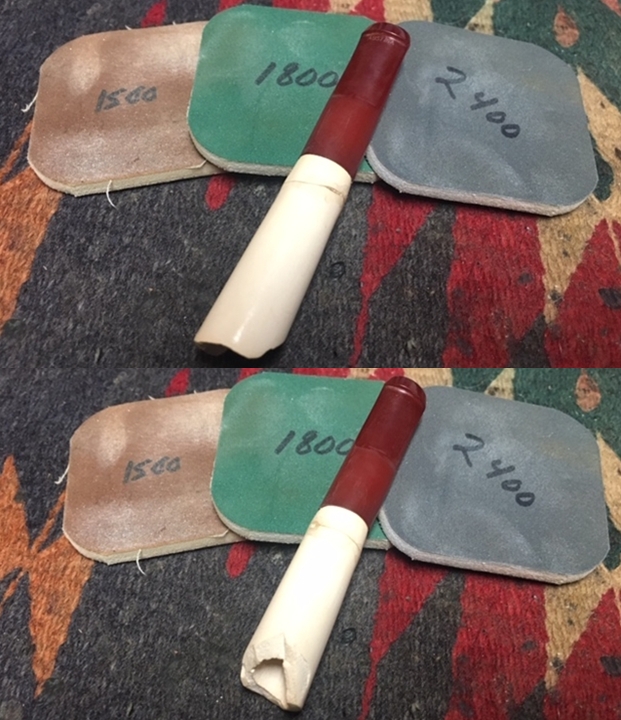
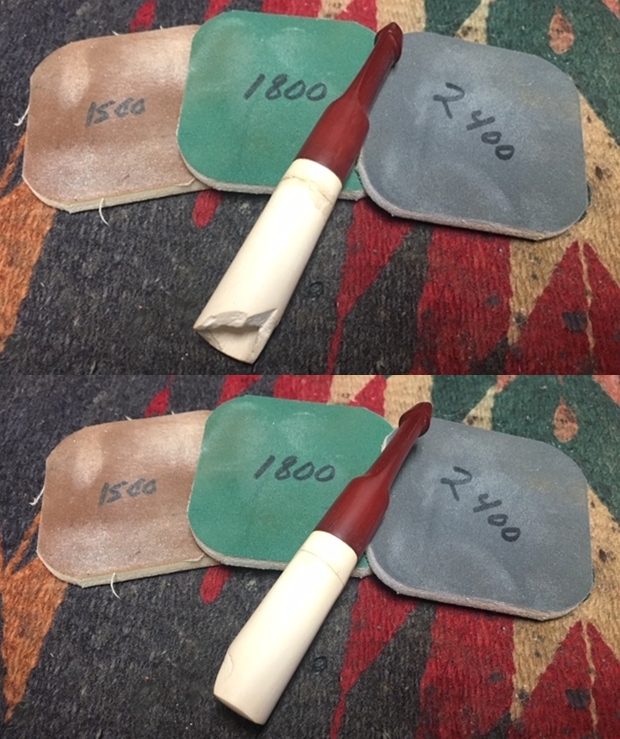
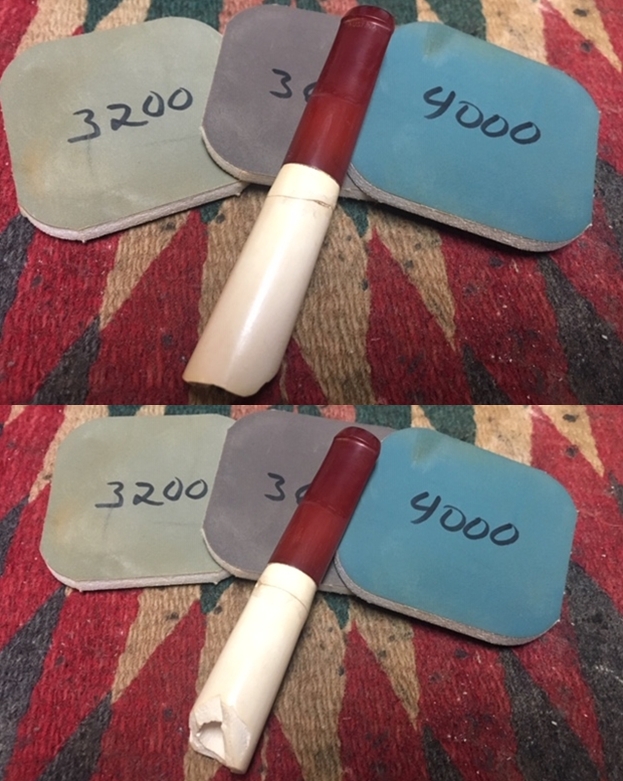
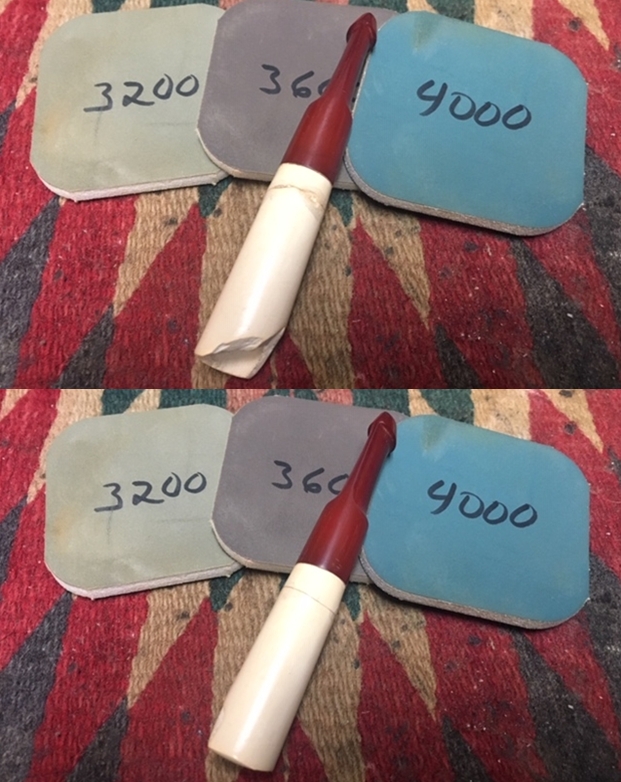
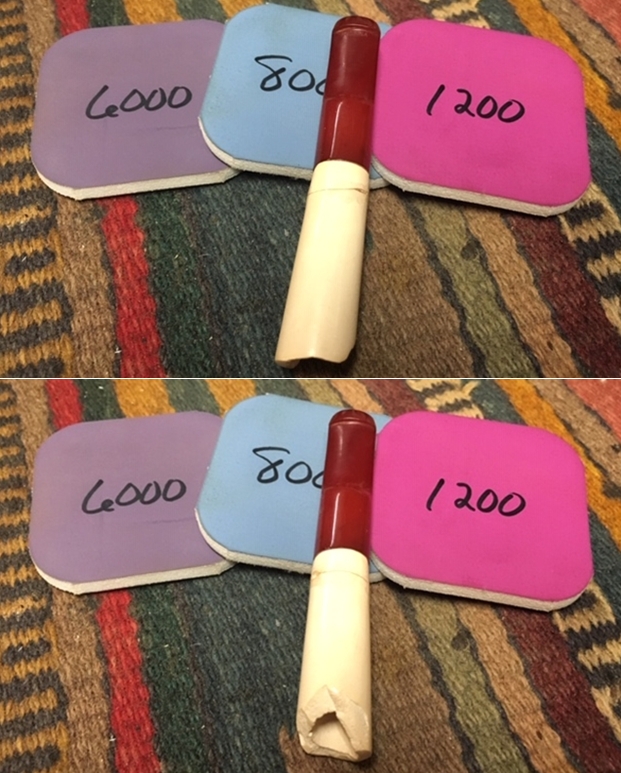
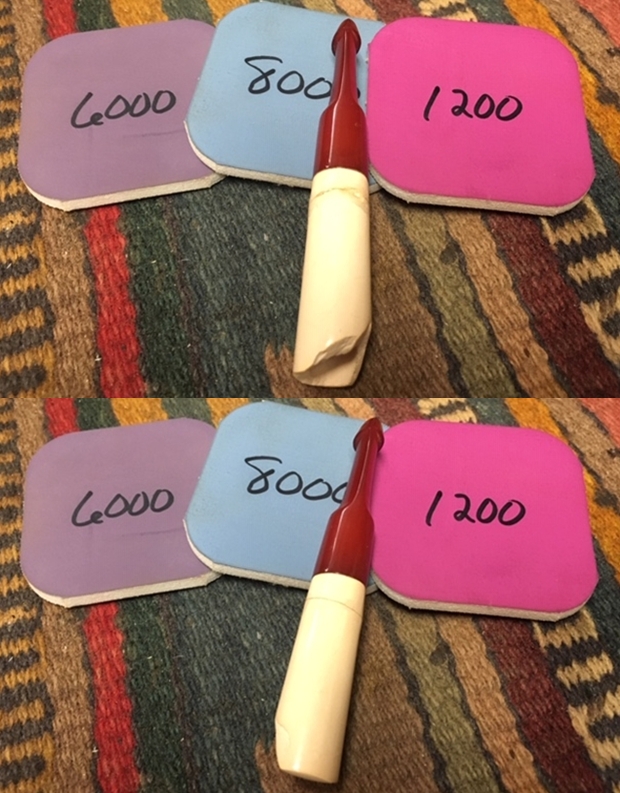
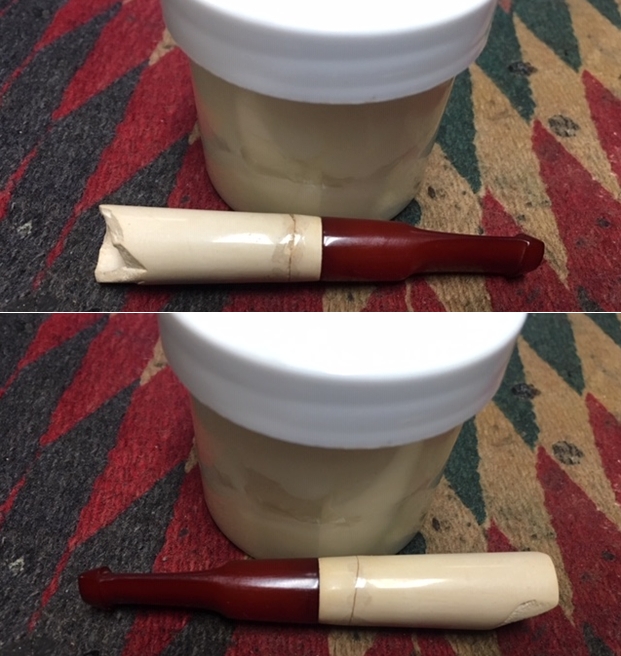
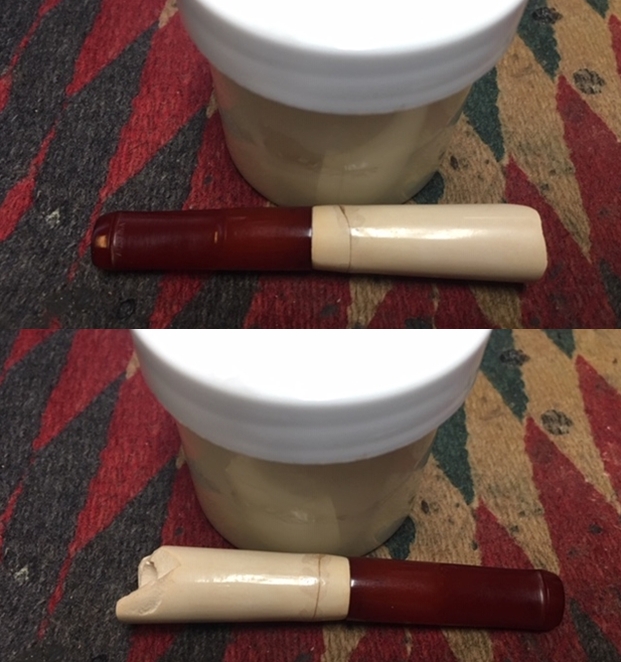
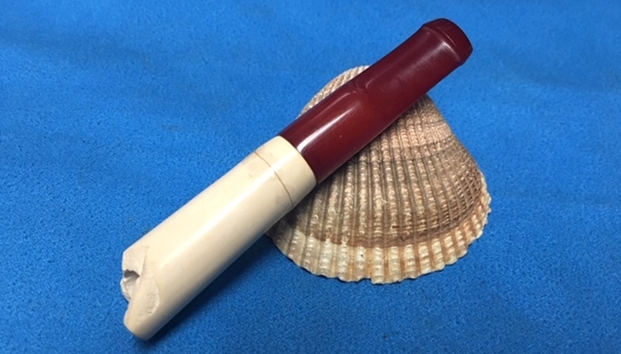
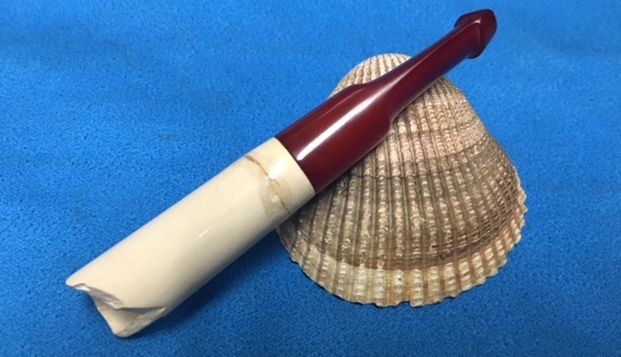
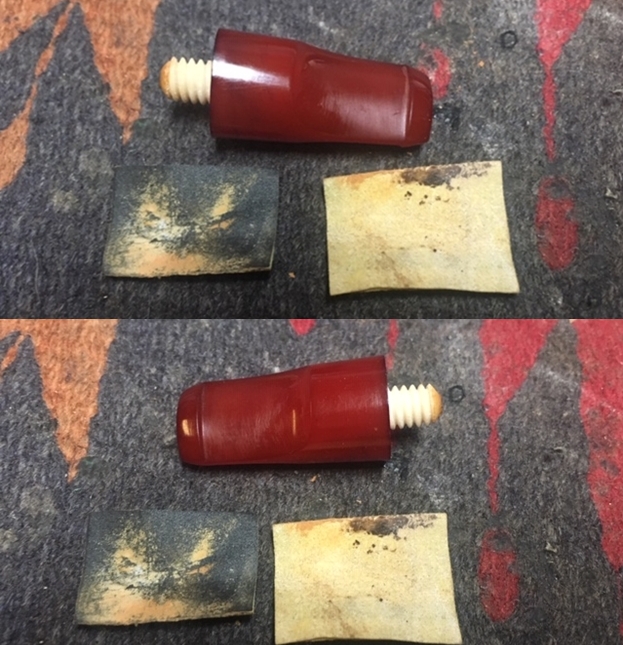
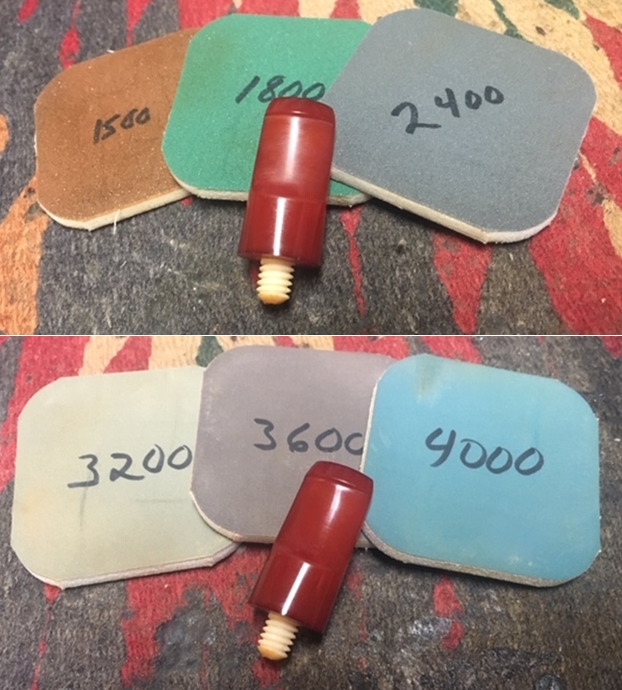
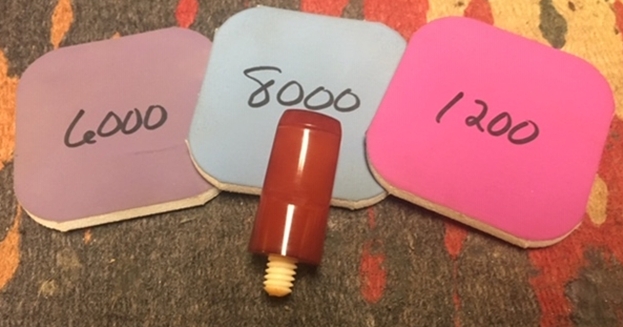
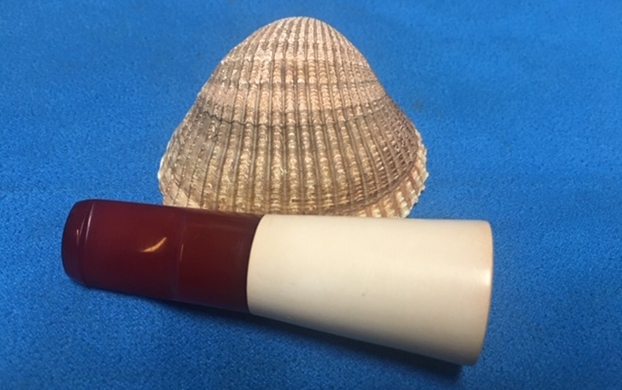
I am enjoying working on this set of meers from John Redman Ltd. and really like the obvious connection to them with the Redmanol stems. I worked on the cigarette holder next as it was the only broken piece in the set. I was not sure what I could do with it knowing that there was a missing piece of meerschaum but it was worth a try. (See the above photos.)

I cleaned around the edges of the two parts of meerschaum that remained to prepare them for gluing back together. Due to the porosity of meerschaum I knew that whatever glue I used it would be absorbed into the meerschaum along the joint so I chose clear super glue. I put glue on each side of the break, aligned the parts and held it in place until the glue set. The break, though visible did look a lot better.Once the glue had set I continued my experiment with a new product from Mark Hoover of Before & After Products. This one is a product he labels briar cleaner and it has the capacity of absorbing grime and dirt from the surface of briar. I have been using it with some success on this set of meerschaum pipes and holders. I rubbed the meerschaum tip down with some of his Briar Cleaner to see how it would work in this setting. In speaking to Mark he noted that the product is completely safe to use. The main product is even FDA approved edible. I rubbed it onto the bowl and rim top with my finger tips and worked it into the grime and grit on the bowl. I let it sit on the pipe for about 5 minutes before I rubbed it off with a microfibre cloth. I rinsed it under warm running water to remove the residue. I was pleasantly surprised by how clean the surface on the holder looked when I was finished.I polished the meerschaum repair with micromesh sanding pads – wet sanding with 1500-12000 grit pads and wiping down the surface with a damp cloth.after each sanding pad. It is looking pretty decent. The repair is definitely visible but at least it is not broken. At the same time I wet sanded the stem with 1500 -12000 grit micromesh pads at the same time. I wiped it down with Obsidian Oil on a cloth after each sanding pad. After the 12000 grit pad I wiped the stem down a final time with Obsidian Oil and set it aside to dry. I rubbed the cigarette holder down with Before & After Restoration Balm. I worked it into the meerschaum and let it sit for a short time. I buffed it off with a microfibre cloth to bring it some life. Once again I was very surprised at how well it worked. I sent Mark Hoover a note about this experiment. He was pretty amazed at the results and said he had not thought of using it for meerschaum but was not surprised as it was made to absorb grit and grime from the surface of meerschaum. I put the meerschaum holder and stem back together. I carefully polished the cigarette holder with Blue Diamond to remove the remaining minute scratches in the briar and the Bakelite. I gave the holder and stem several coats of Conservator’s Wax and buffed it with a clean buffing pad to raise the shine. I hand buffed it with a microfiber cloth to deepen the shine. It polished up pretty nicely. The contrast of the beautiful clean meerschaum with light colouring of age and the polished red Bakelite/Redmanol stem looked amazing. This older, beautiful, well made Meerschaum Cigarette Holder, though broken is still workable and it will only get better with age. If a person wanted they could easily turn it into a pipe tamper and repurpose it. The finished holder is shown in the photos below. The dimensions of the pipe are Length: 3 1/4 inches, Height: 1/2 inches, Outside diameter of the bowl: 1/2 inches, Chamber diameter: 1 ½ inches. This is the third piece from the Aristocrat set in the photos at the beginning of this blog. The restoration of the remaining pieces in the set – the other pipe will be shown in a future blog. Thanks for walking through the restoration with me. Cheers. 

Restoring an Old Cased Set of Aristocrat Meerschaums – Part 2


Blog by Steve Laug

I finished the first pipe in the cased set of meerschaum pipes and holders made by Aristocrat (https://rebornpipes.com/2019/07/21/restoring-an-old-cased-set-of-aristocrat-meerschaums-part-1/). This set included a straight billiard, a bent billiard a cigar holder and a broken cigarette holder. All were smooth meerschaum with red Bakelite or Redmanol stems. All had bone tenons directly screwed into threaded mortises in the meerschaum. There was no stamping on the pipes and holders or the stems. The box itself was covered in what looked like alligator skin with brass hinges and clasps. On the inside the case was lined in an off white preformed velveteen fabric. There was a corner ribbon across the left side of the lid that read Aristocrat. The straight billiard had been smoked pretty heavily and there was a cake in the bowl and the rim top had a thick lava coat. The exterior of the bowl was dirty. The stem had tooth marks and chatter on both sides near the button. The second pipe – the bent billiard was unsmoked but dirty with dust and debris of time. The cigar holder had been lightly smoked and there were tooth marks and chatter on in near the button. The cigarette holder was broken and two parts and the stem remained. There was a missing piece from the front of the holder. It was unused and broken.  I took photos of the case and the pipes and holders before I started my work on it. Now it is time to work on the cigar holder. I took photos of each of the pieces in the collection. I cleaned up the straight billiard on the left side of the photo above and have written the blog on it (https://rebornpipes.com/2019/07/21/restoring-an-old-cased-set-of-aristocrat-meerschaums-part-1/). Give the blog a read and you will see the story of the restoration. The next piece I chose to work on was the Aristocrat Cigar Holder shown in the photos below. It had also been smoked – lightly but still it was used. There was some darkening in the bowl and the stem had a lot of  tooth marks and chatter on both sides at the button.I am leaving the information on the brand in case you have not read the background info in the first blog. From what I could find on Pipephil’s site I found a listing for Aristocrat linking it to John Redman Ltd. in England (http://www.pipephil.eu/logos/en/logo-a7.html). The site says that it was an export brand from the company. In looking at the various stampings in the photos below I found that the Aristocrat stamping on the ribbon on the case above matches the second and third photo below.The photo below was a link on the site that took me to a photo of the John Redman LTD. and British Empire Pipe Com on Westland Place, Hackney, London, England. I think it is a nice historical touch to be able to include the photo.I turned to Pipedia (https://pipedia.org/wiki/John_Redman_Ltd./British_Empire_Pipe_Co.) to see if I could learn a bit more about the company. I quote the full article below:

John Redman Ltd. and British Empire Pipe Co. Other lines include Aristocrat, Buckingham, Buckingham Palace, Canberra, Captain Fortune, Dr John, Golden Square, Redonian, Richmond (not Sasieni), Twin Bore.

From these two sources it appears to me that this set of meerschaum pipes and holders was made for export by John Redman Ltd. I am not sure of the date as neither source gave clues to that information.

Given the information that I have in hand, I decided to start the restoration work on the cigar holder as it was the second piece in the set that had been smoked. I decided to continue experimenting with a new product from Mark Hoover of Before & After Products. This one is a product he labels briar cleaner and it has the capacity of absorbing grime and dirt from the surface of briar. I decided to try it out set of meerschaum pipes and holders. I rubbed the meerschaum tip down with some of his Briar Cleaner to see how it would work in this setting. In speaking to Mark he noted that the product is completely safe to use. The main product is even FDA approved edible. I rubbed it onto the bowl and rim top with my finger tips and worked it into the grime and grit on the bowl. I let it sit on the pipe for about 5 minutes before I rubbed it off with a microfibre cloth. I rinsed it under warm running water to remove the residue. I was pleasantly surprised by how clean the surface on the bowl looked when I was finished. Since the cleaner had worked so well on the other meerschaums I decided to try out the Restoration Balm on this meerschaum cigar holder as well. I rubbed the bowl down with Before & After Restoration Balm. I worked it into the meerschaum and let it sit for a short time. I buffed it off with a microfibre cloth to bring it some life. Once again I was very surprised at how well it worked. I sent Mark Hoover a note about this experiment. He was pretty amazed at the results and said he had not thought of using it for meerschaum but was not surprised as it was made to absorb grit and grime from the surface of meerschaum. I cleaned out the internals of the airway in the cigar holder and the stem. I used alcohol, cotton swabs and pipe cleaners to remove the grime. There was not much grime and it cleaned up quickly. I set the meerschaum holder aside and worked on the stem. I sanded the tooth chatter and marks on both sides of the stem with a folded piece of 220 grit sandpaper and polished out the scratches from the sandpaper with a folded piece of 400 grit wet dry sandpaper. I wiped the stem down with Obsidian Oil and set it aside to dry out.I wet sanded the stem with 1500 -12000 grit micromesh pads to polish it. I wiped it down with Obsidian Oil on a cloth after each sanding pad. After the 12000 grit pad I wiped the stem down a final time with Obsidian Oil and set it aside to dry. I put the meerschaum holder and stem back together. I polished the cigar holder with Blue Diamond to remove the remaining minute scratches in the briar and the Bakelite. I gave the holder and stem several coats of Conservator’s Wax and buffed it with a clean buffing pad to raise the shine. I hand buffed it with a microfiber cloth to deepen the shine. It polished up pretty nicely. The contrast of the beautiful clean meerschaum with light colouring of age and the polished red Bakelite/Redmanol stem looked amazing. This older, beautiful, well made Meerschaum Cigar Holder will only get better with age. The finished holder is shown in the photos below. The dimensions of the pipe are Length: 2 5/8 inches, Height: 1 inches, Outside diameter of the bowl: 3/4 inches, Chamber diameter: 1/2 of an inch. This is the second piece from the Aristocrat set in the photos at the beginning of this blog. The restoration of the remaining pieces in the set – the other pipe and the broken cigarette holder will be shown in future blogs. Thanks for walking through the restoration with me. Cheers.