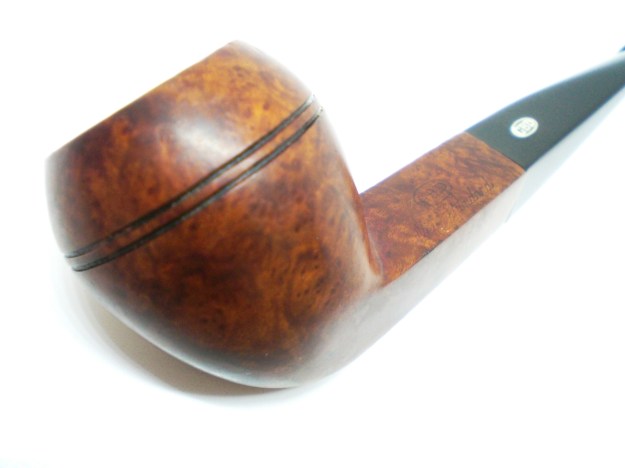
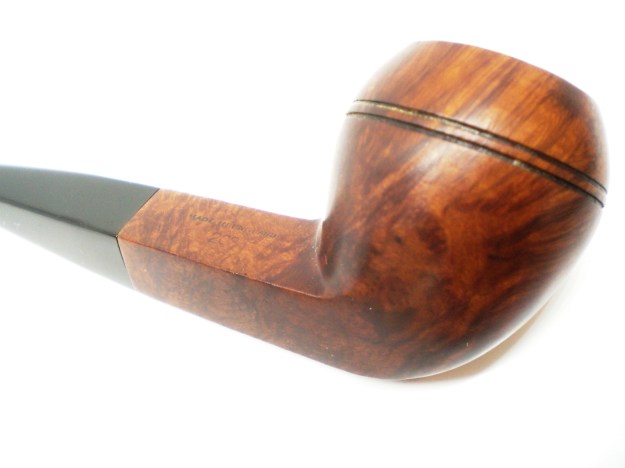
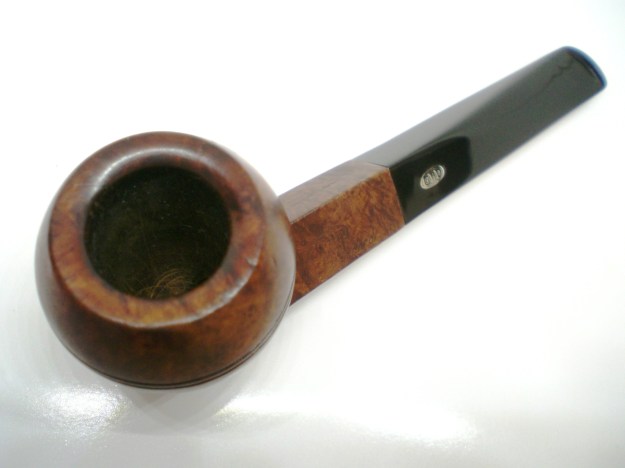
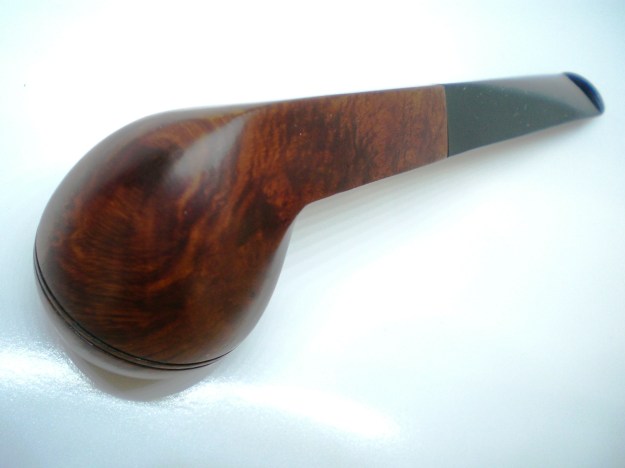
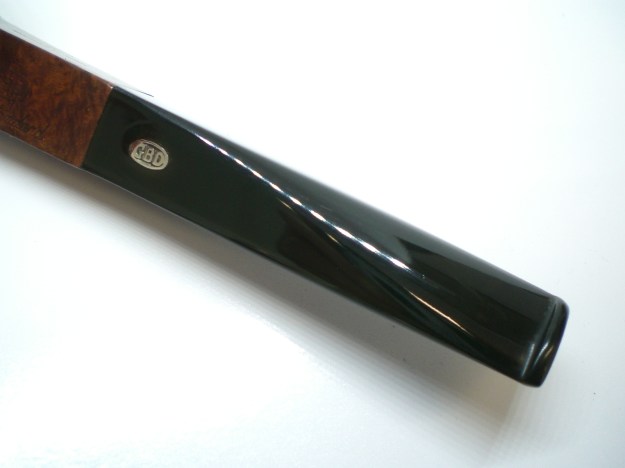
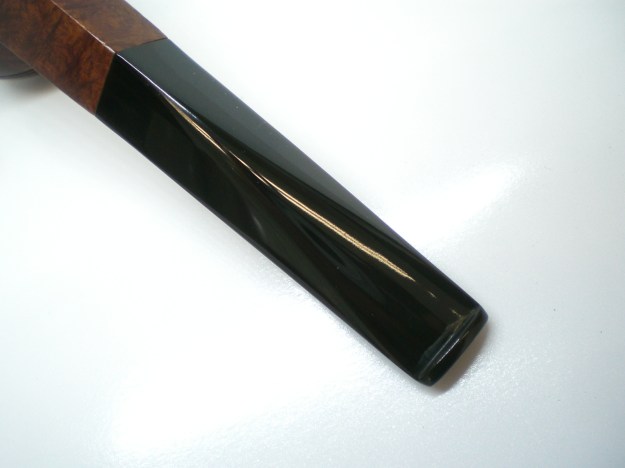
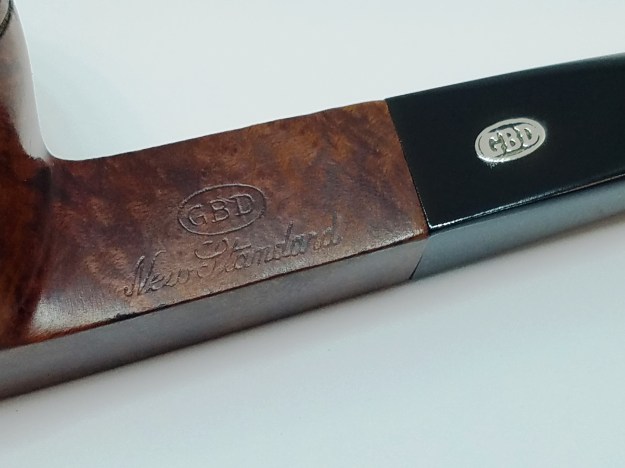
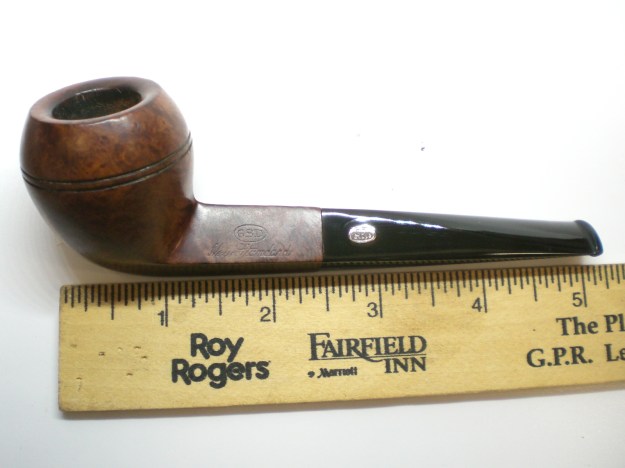
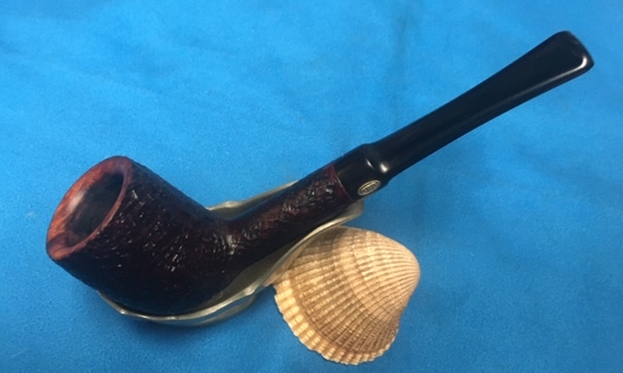
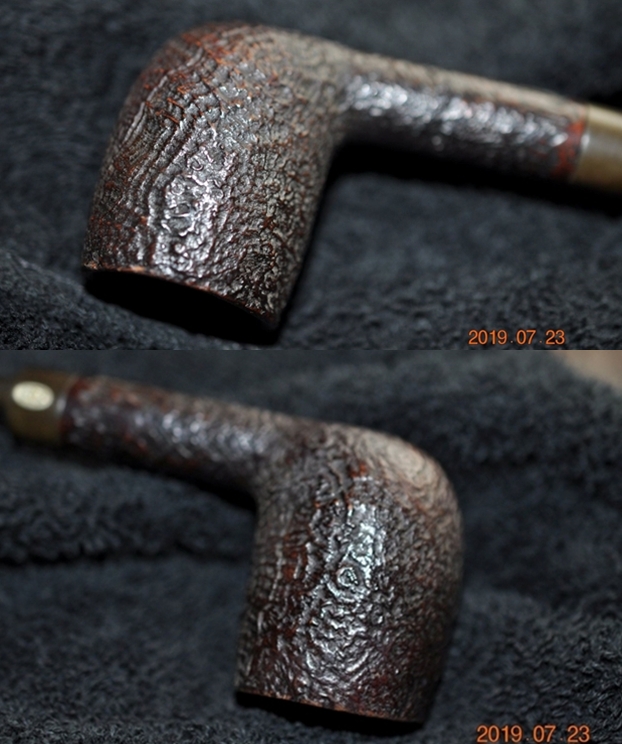
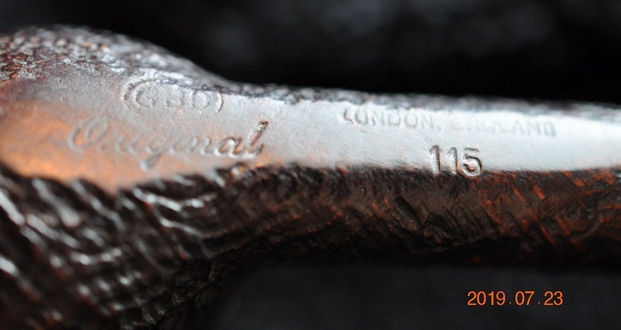
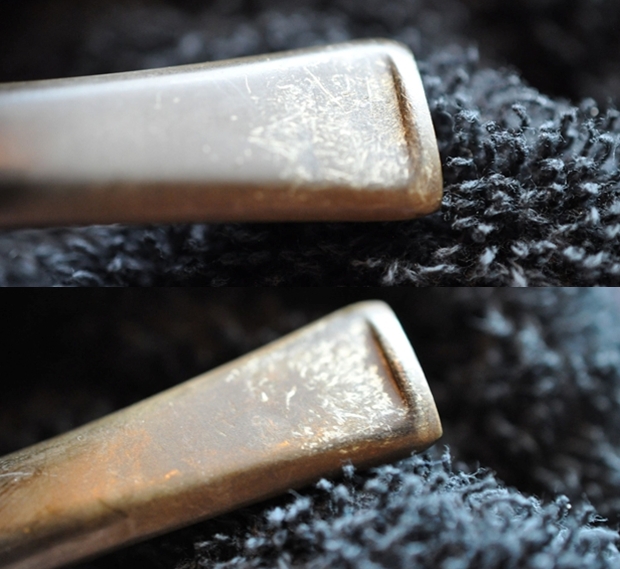
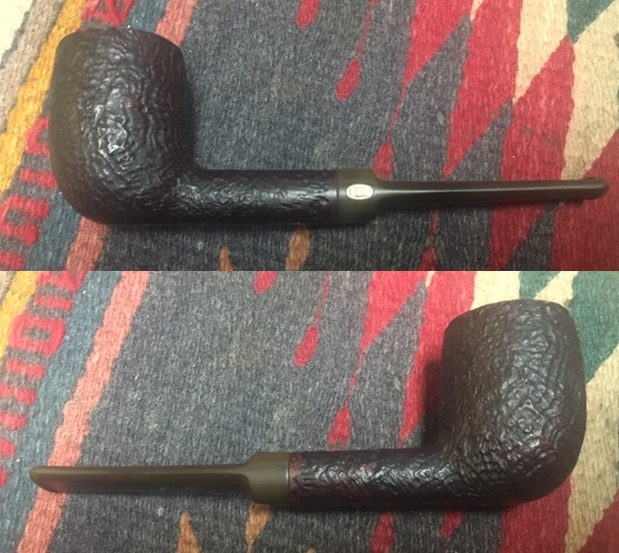
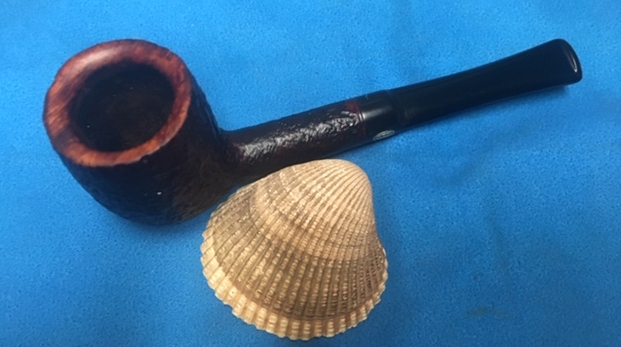
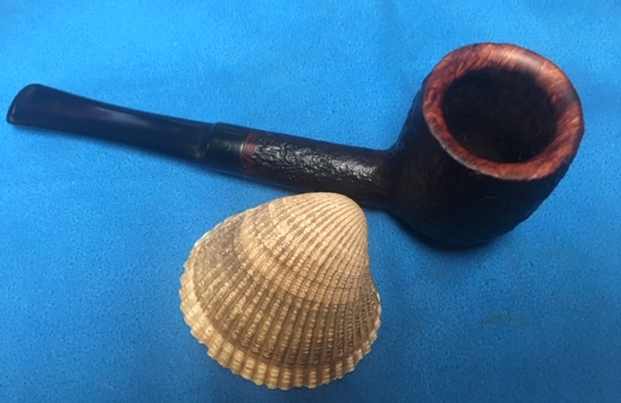
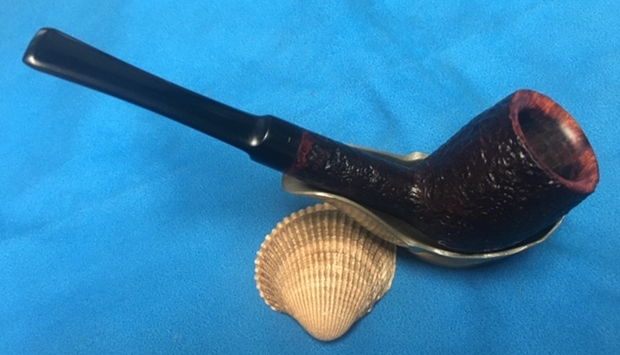
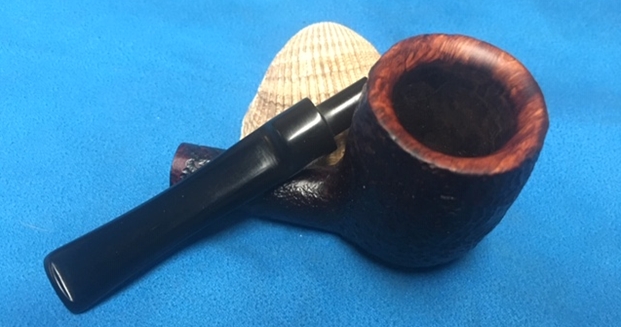
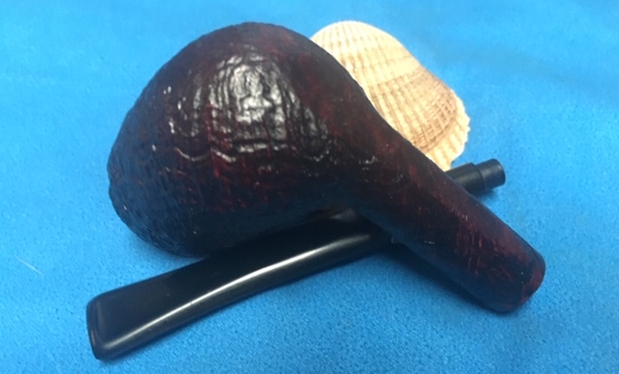
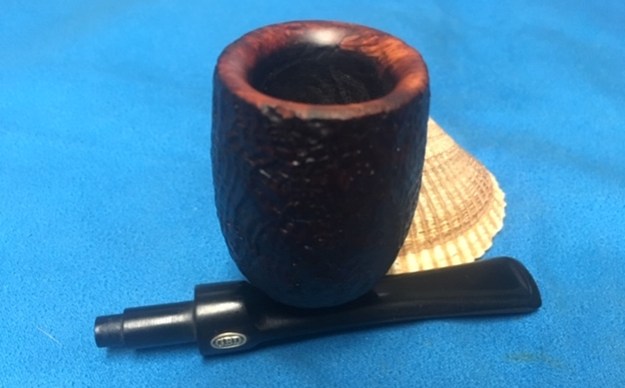
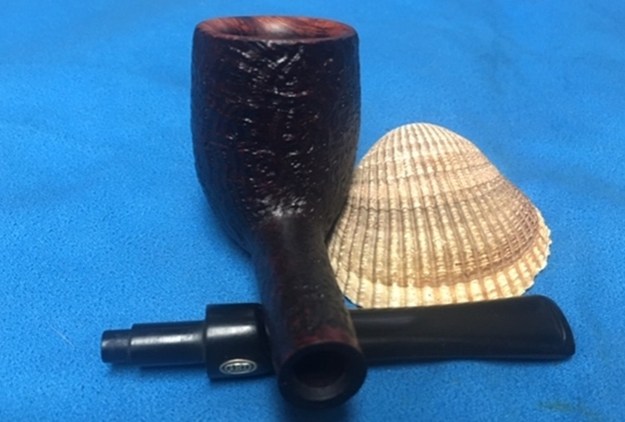
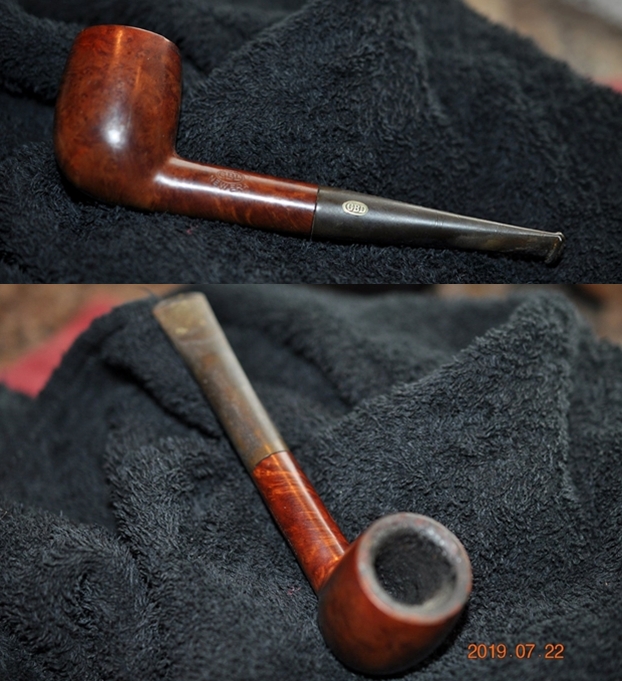
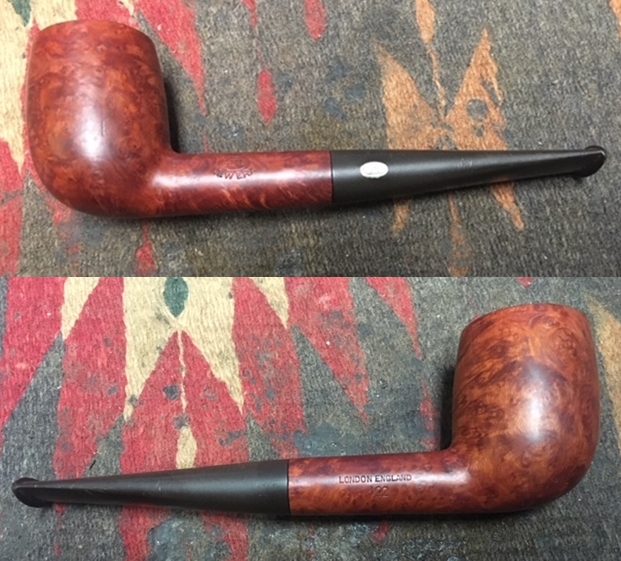
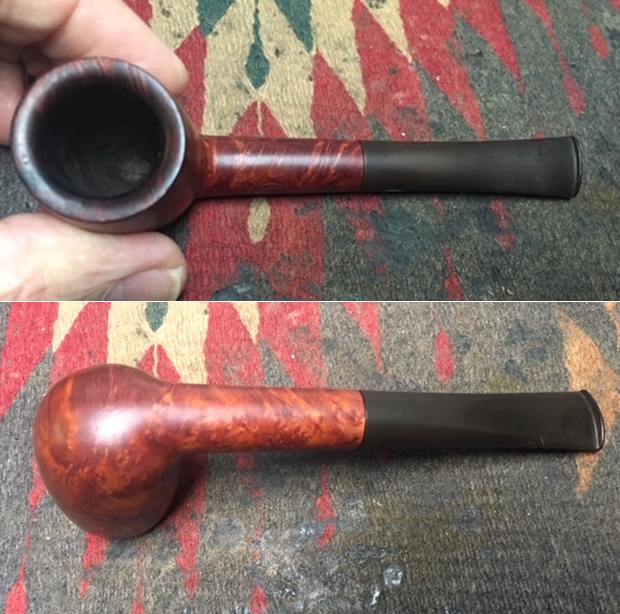
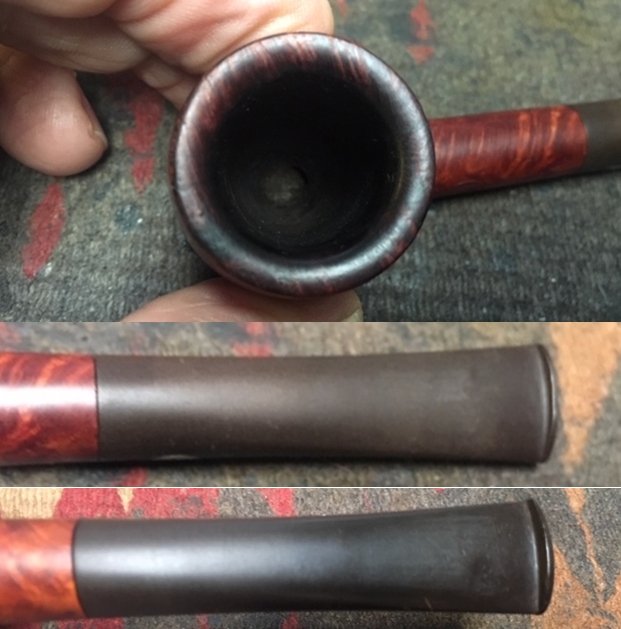
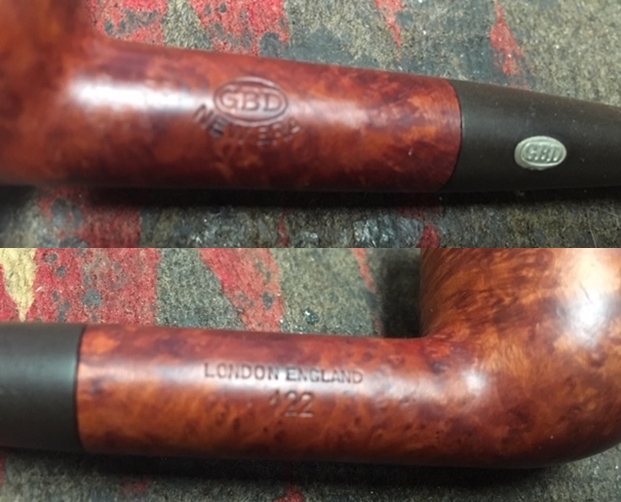
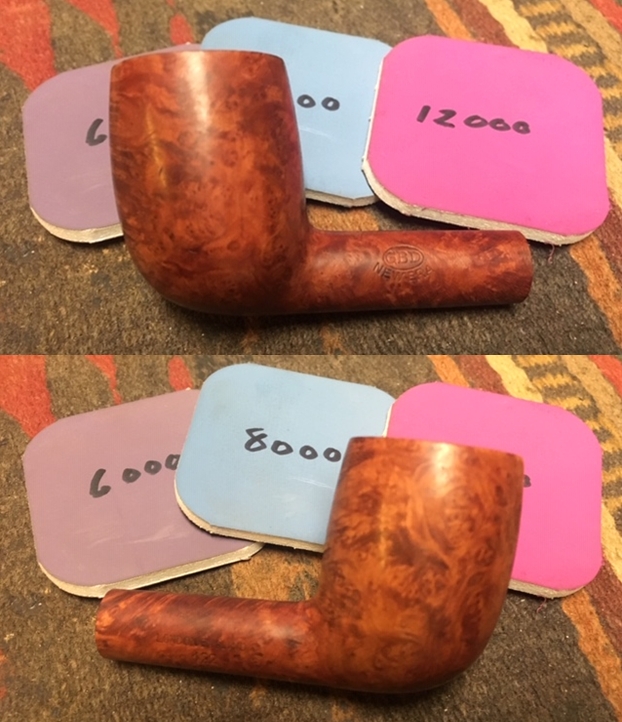
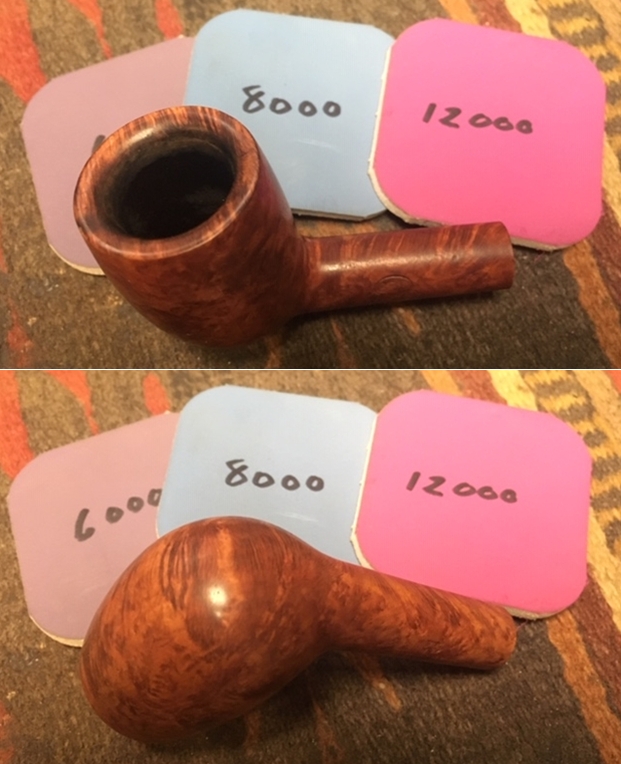
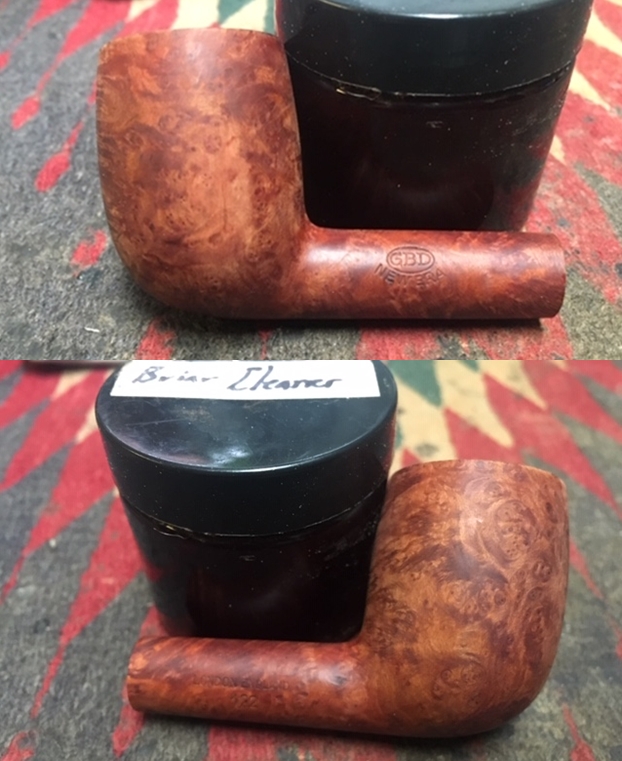
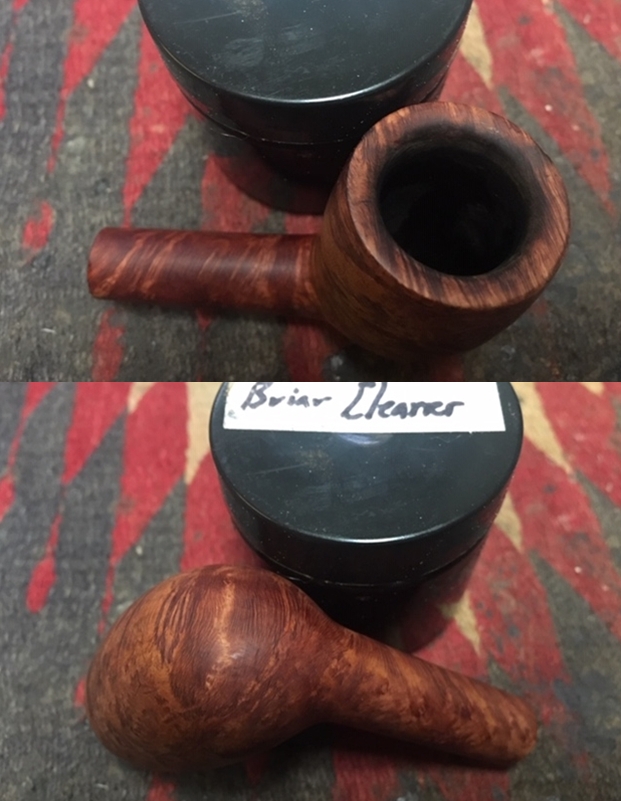
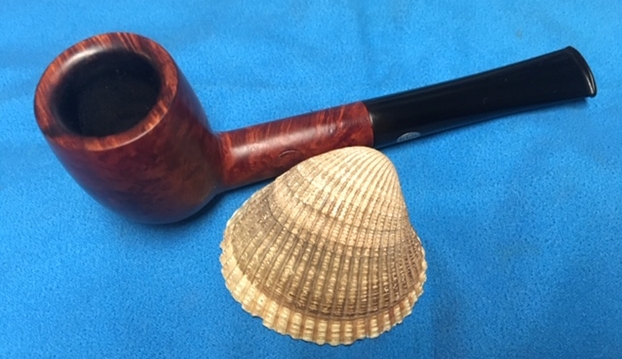
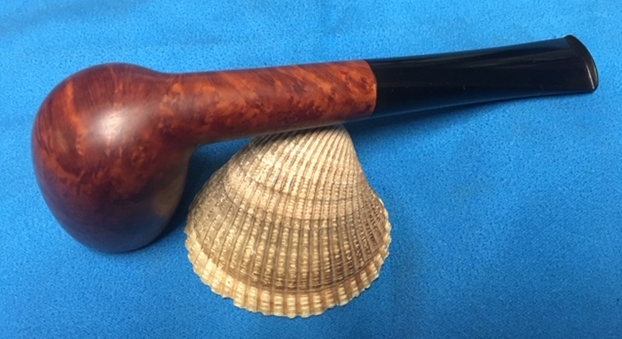
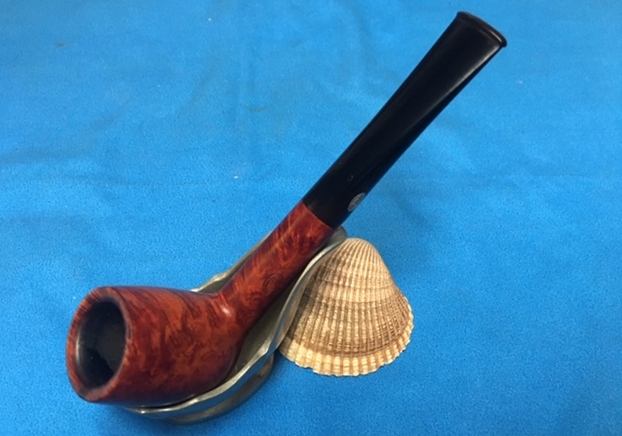
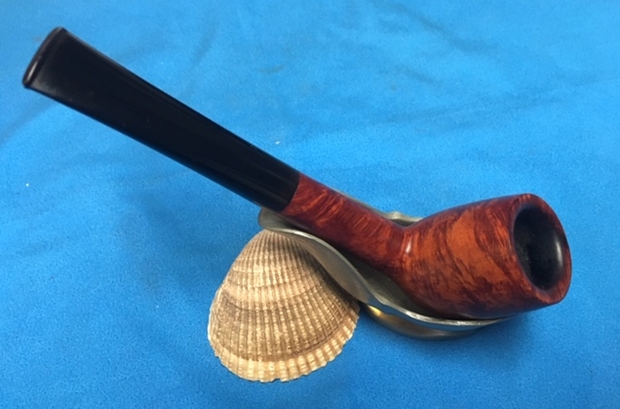
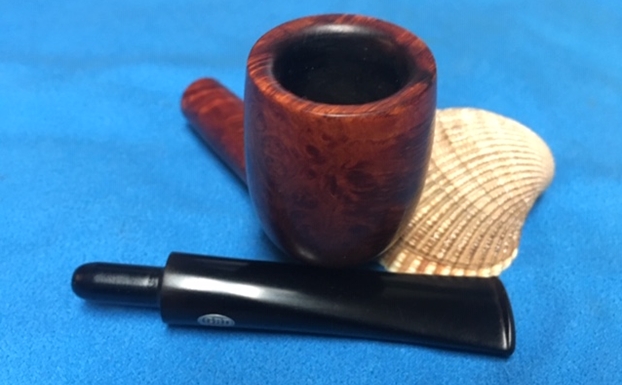
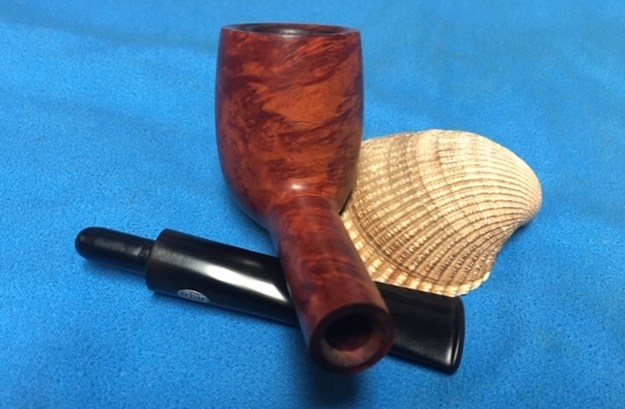
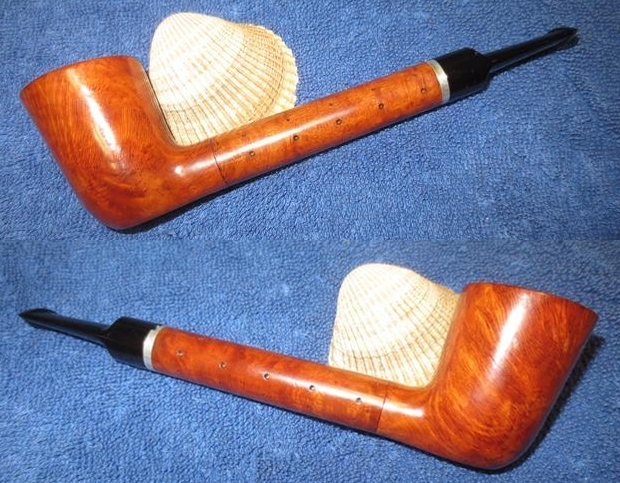
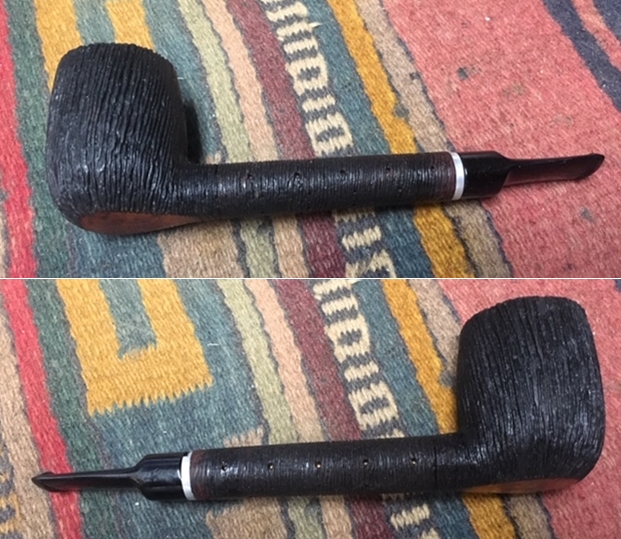
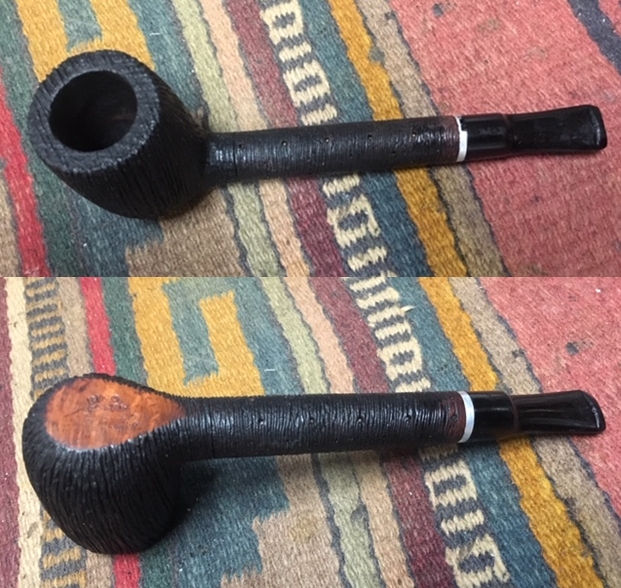
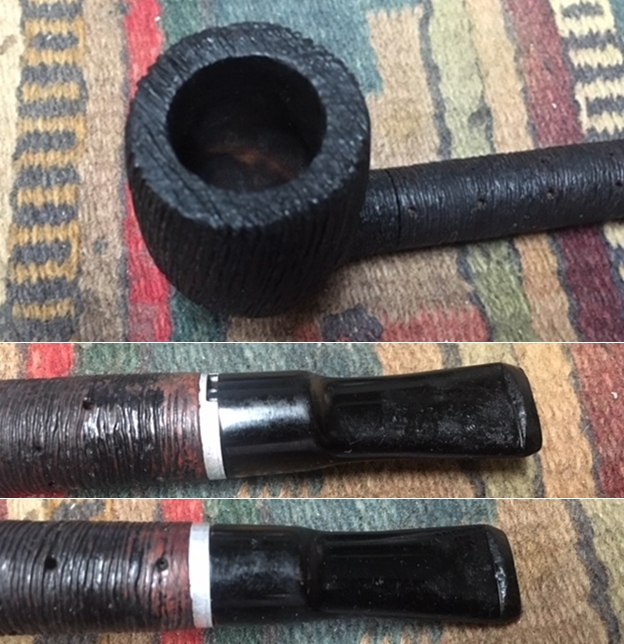
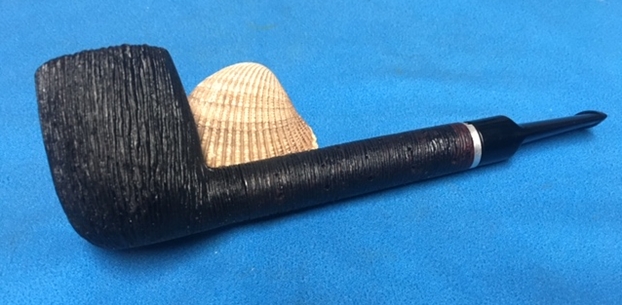
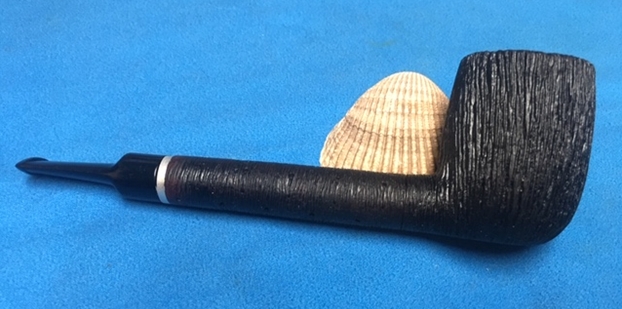
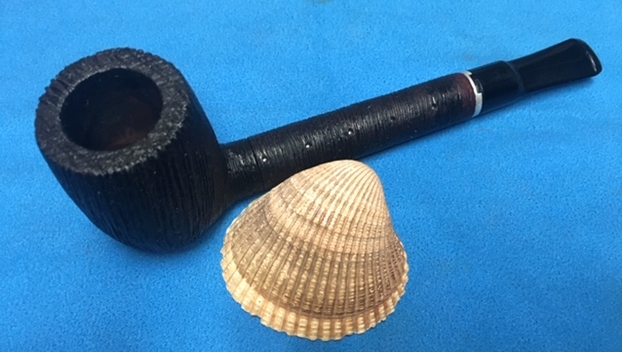
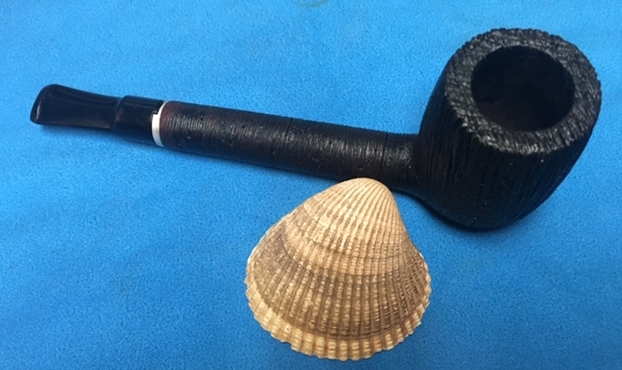
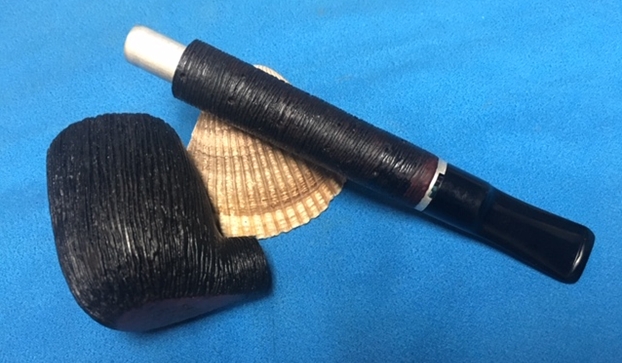
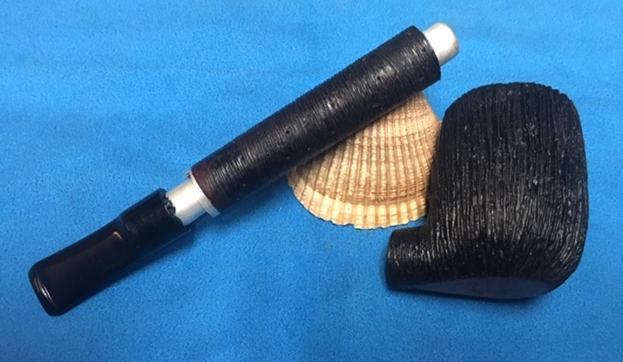
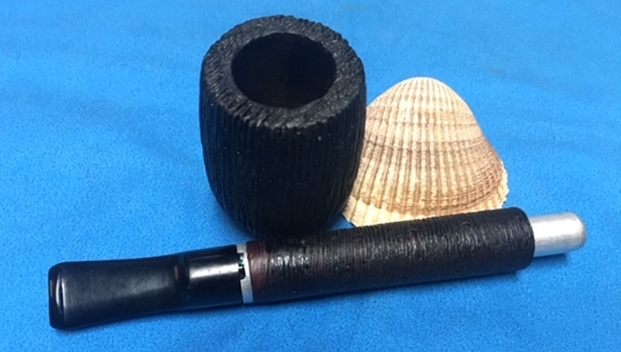
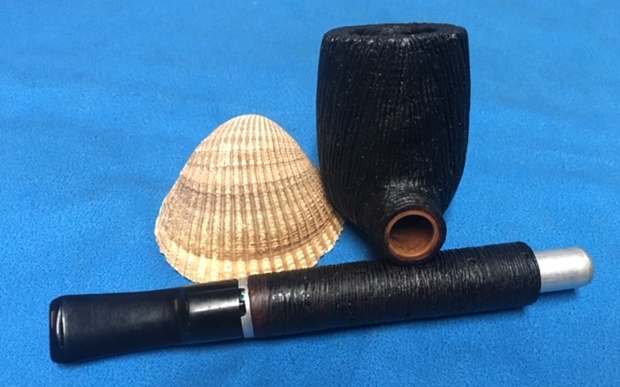
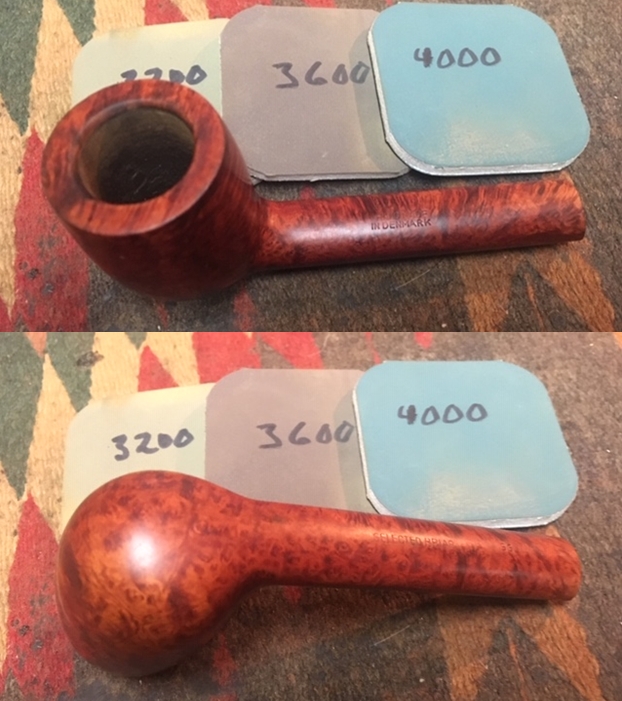
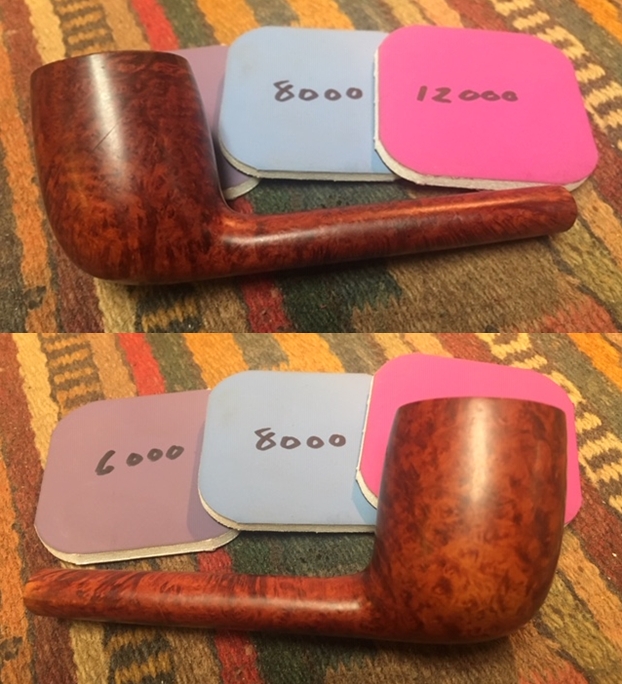
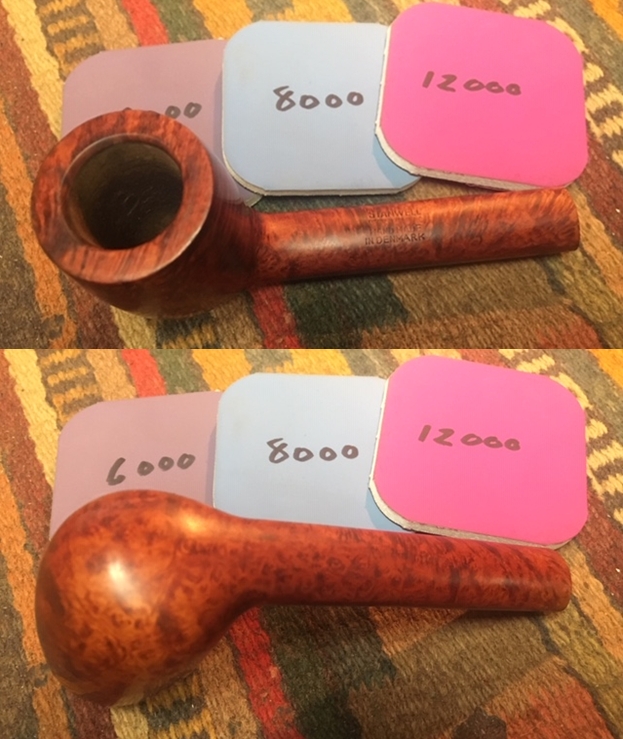
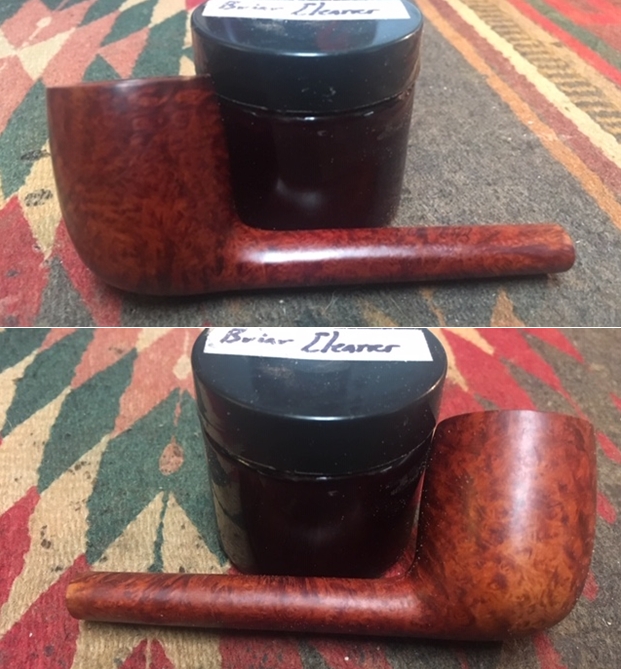
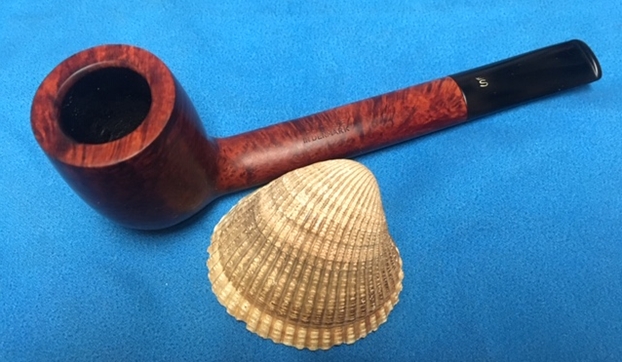
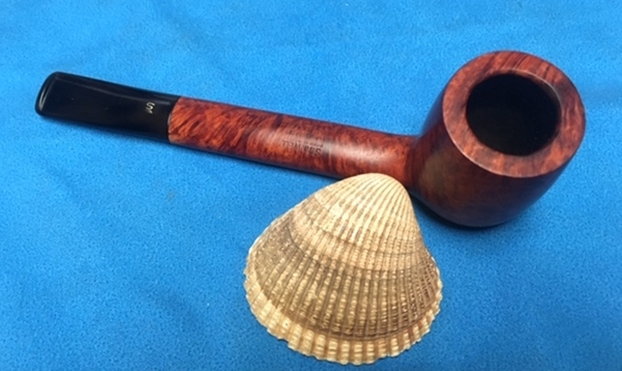
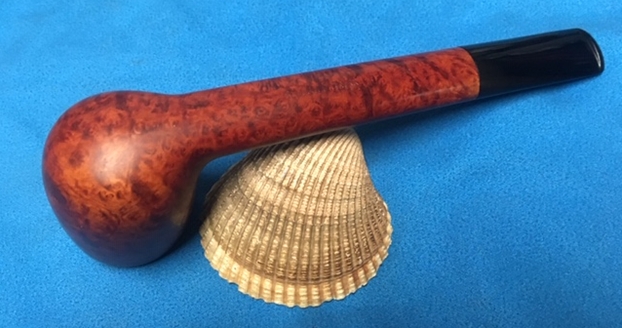
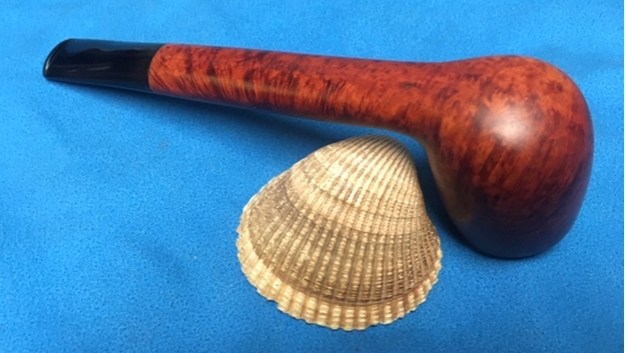
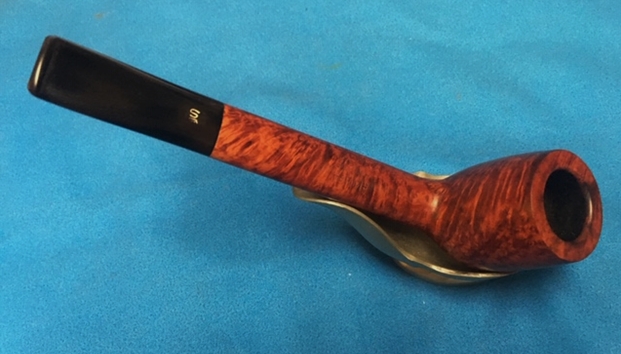
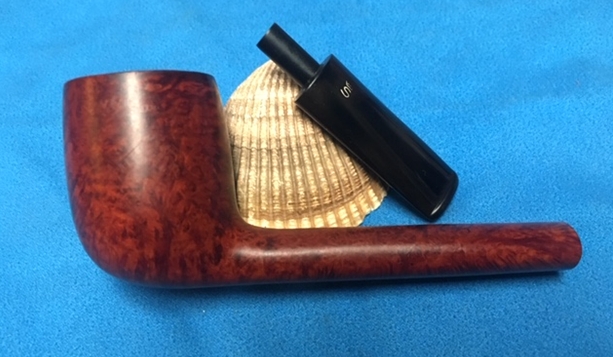
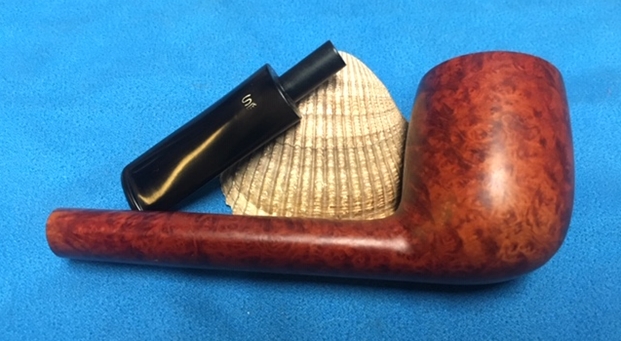
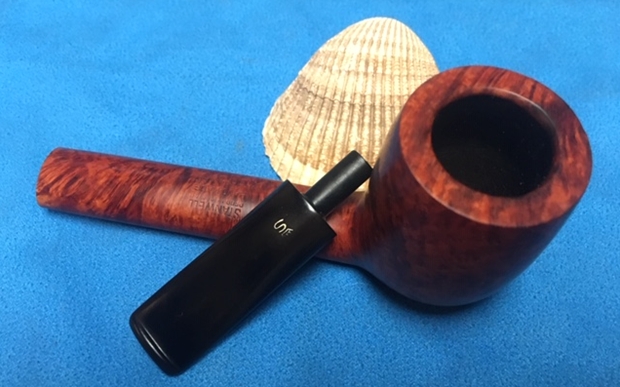
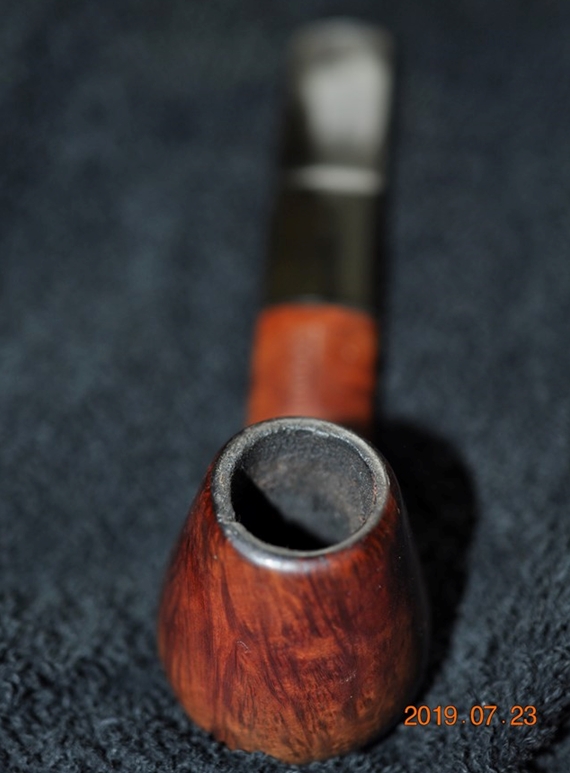
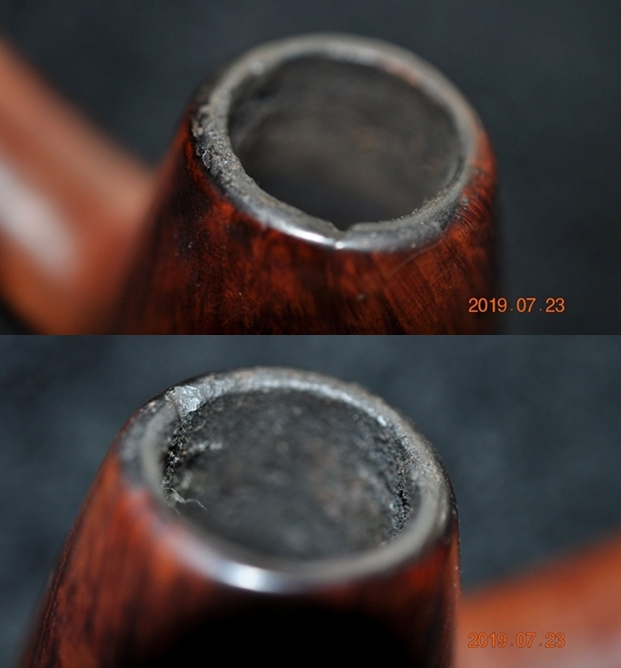
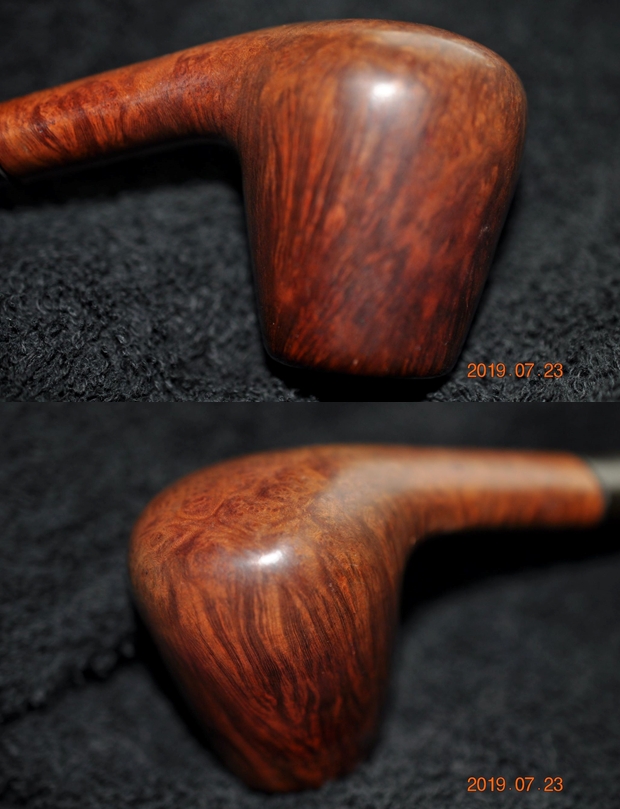
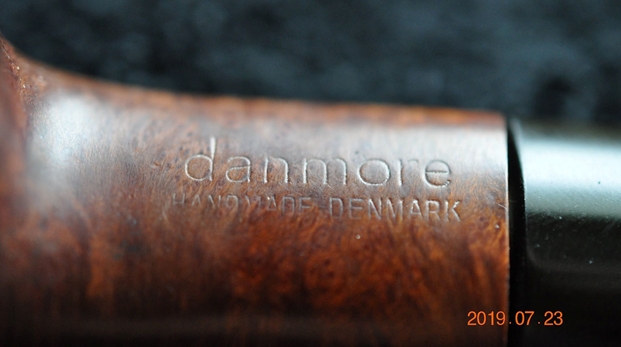
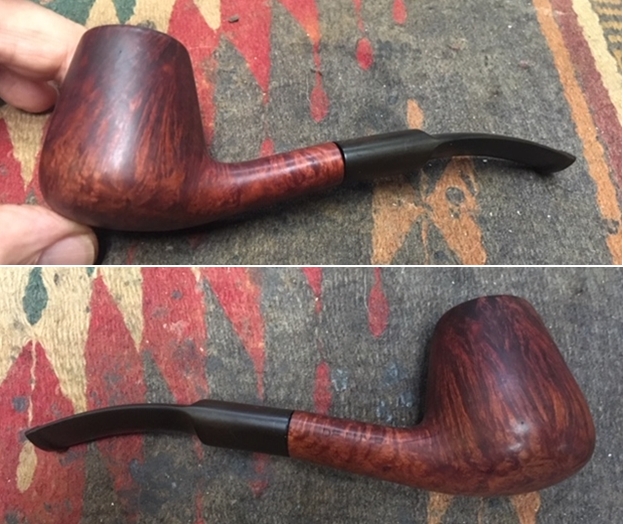
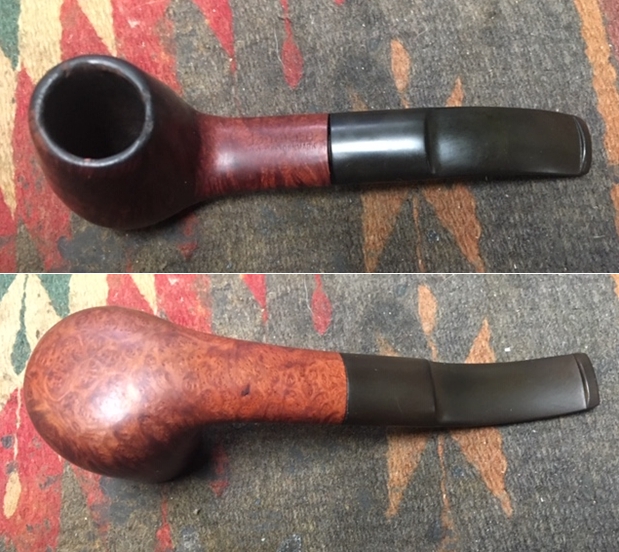
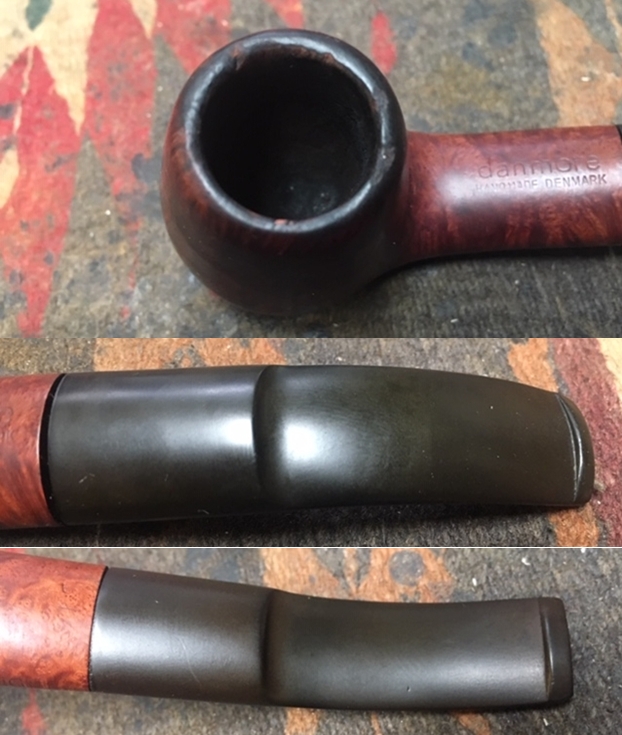
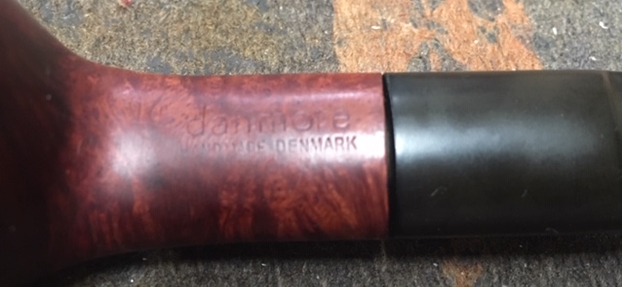
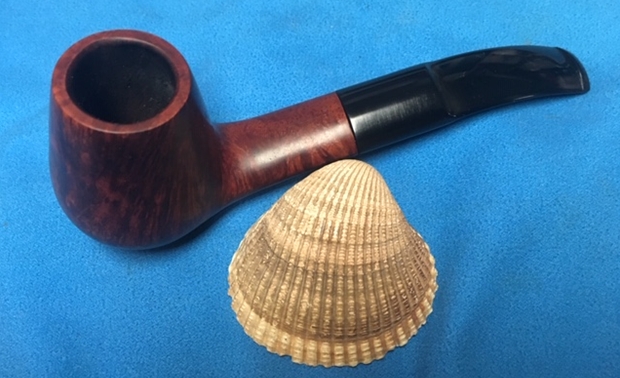
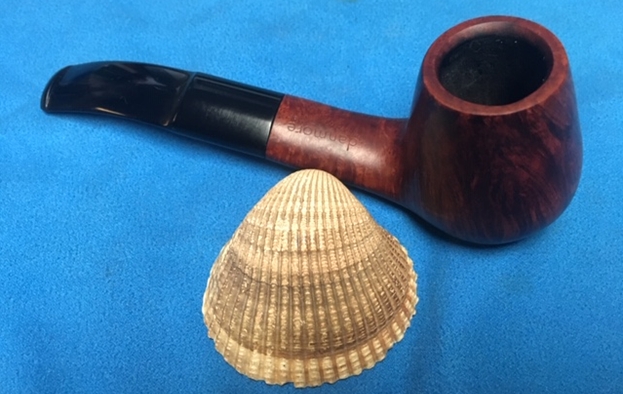
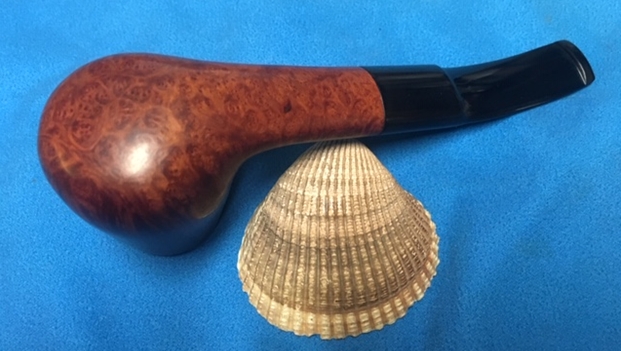
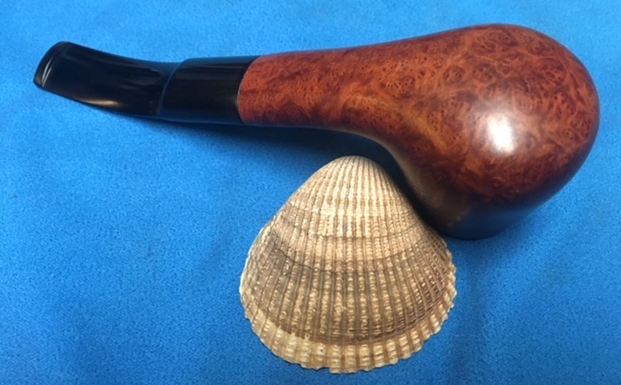
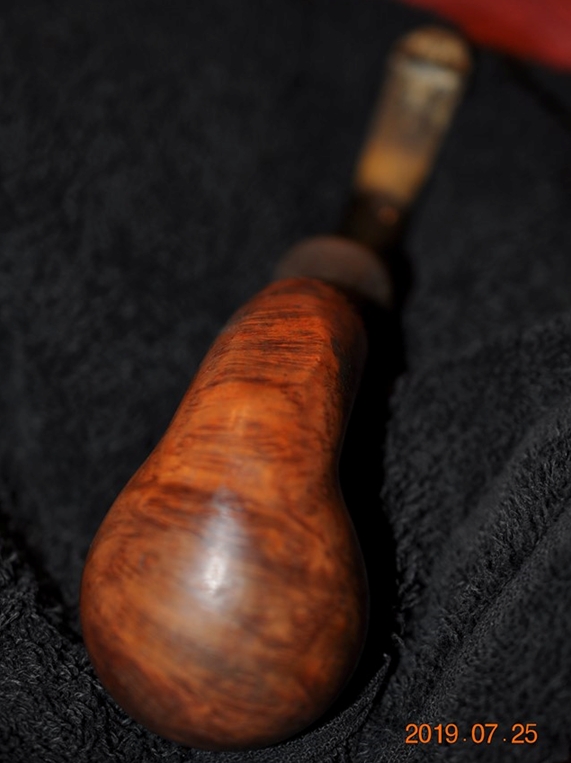
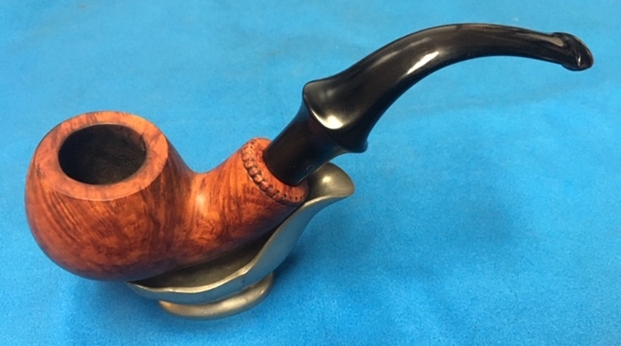
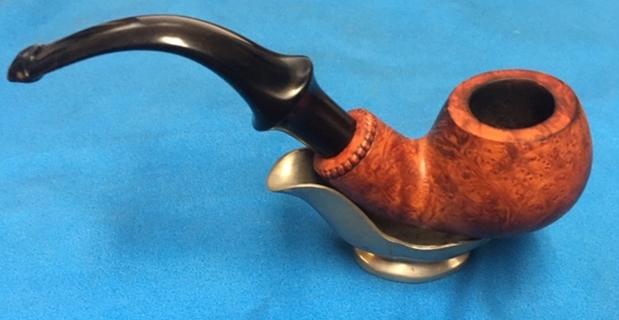
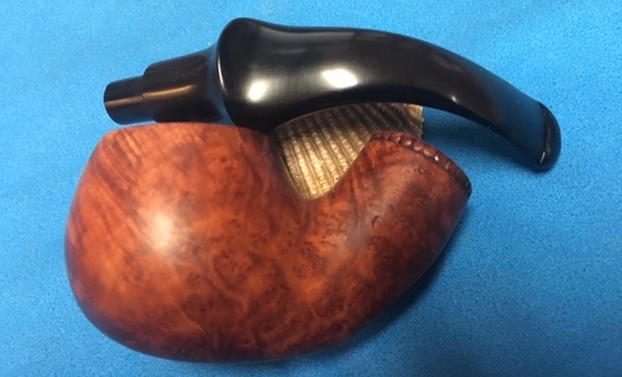
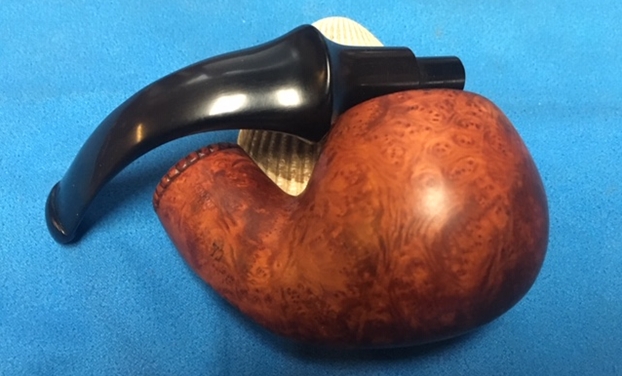
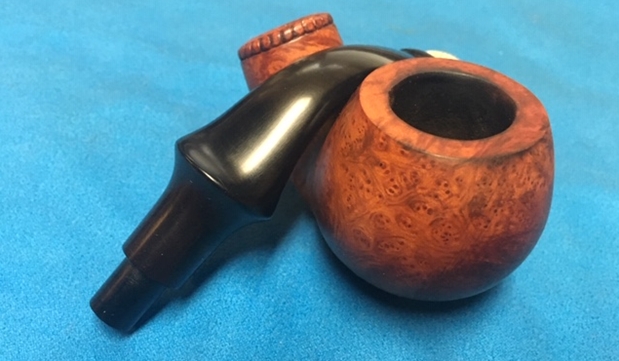
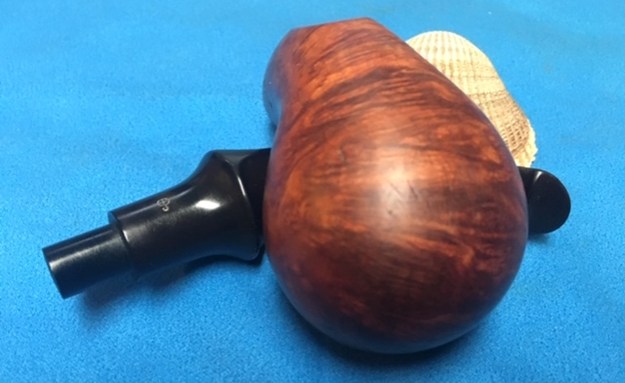
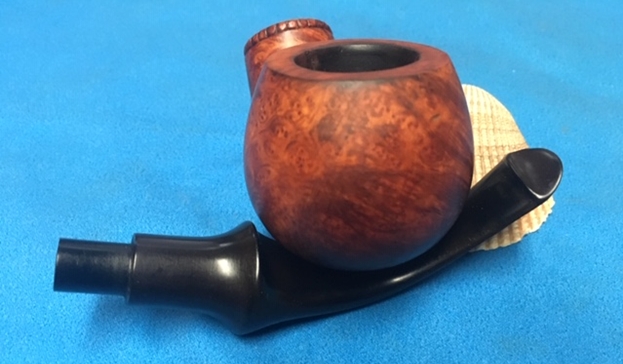
GBD 206 New Standard Bulldog Restoration


By Al Jones

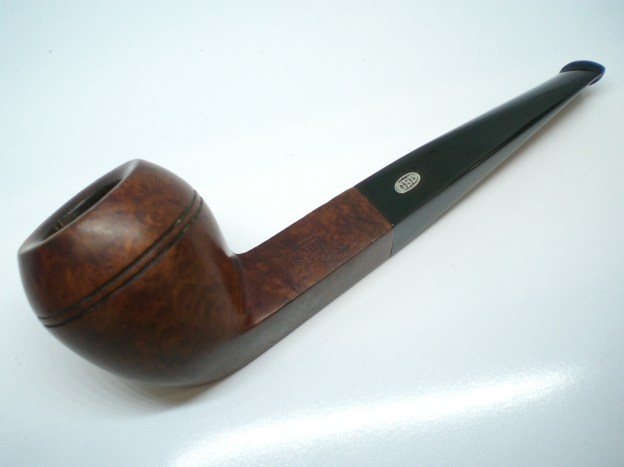
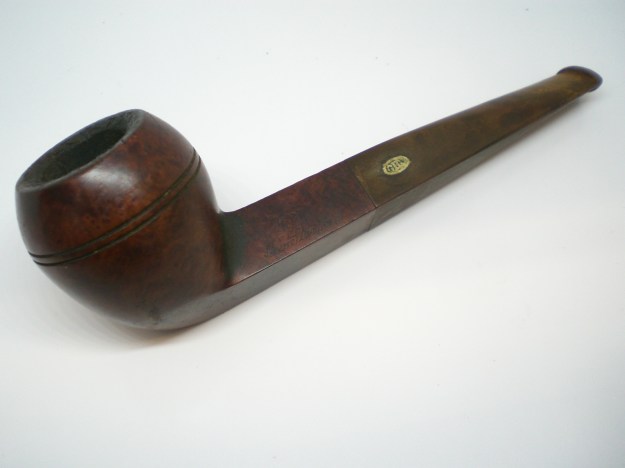
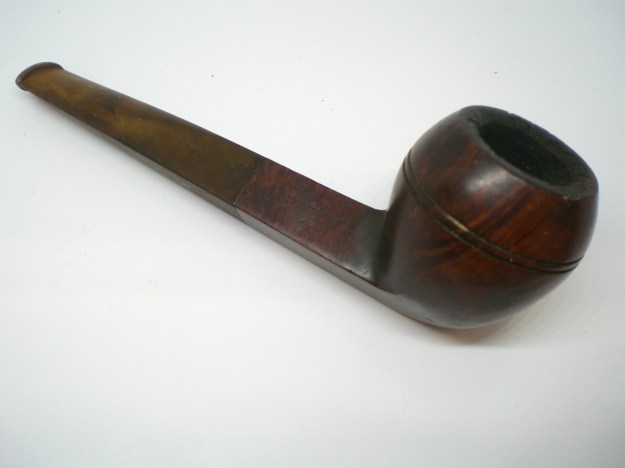
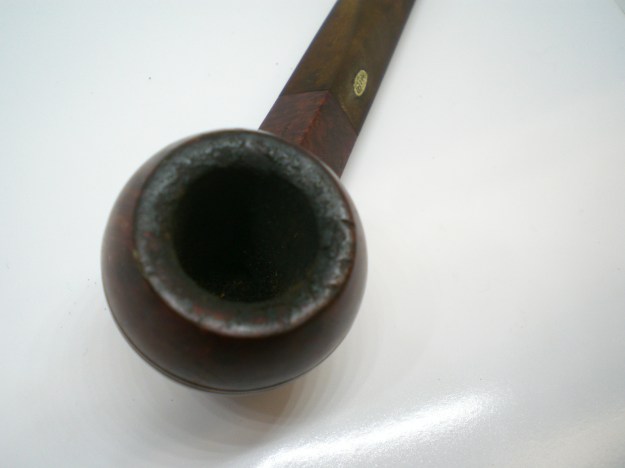
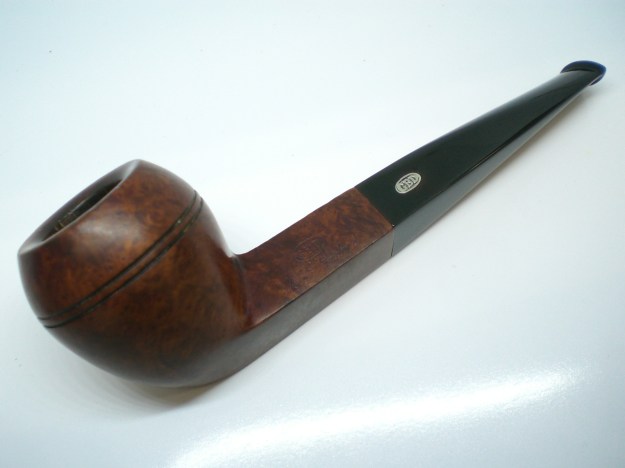
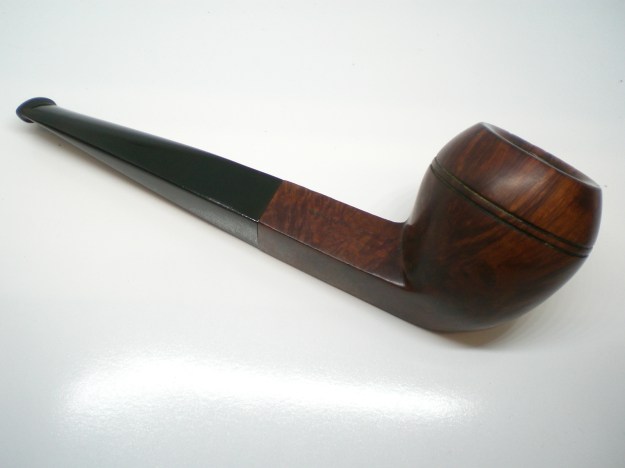
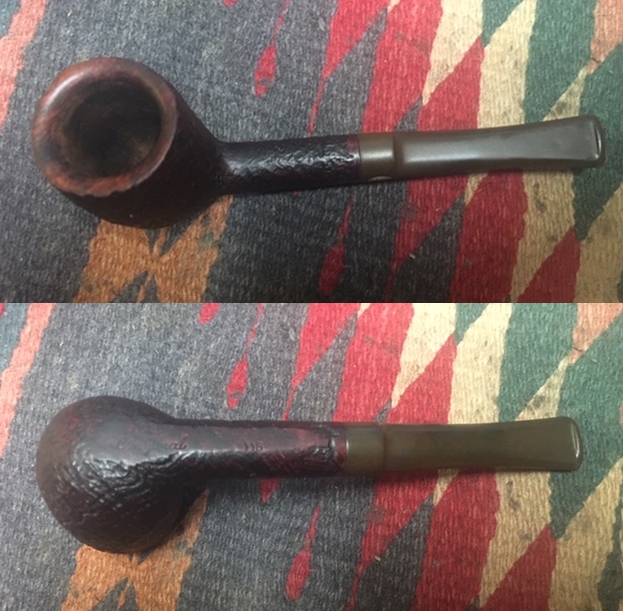
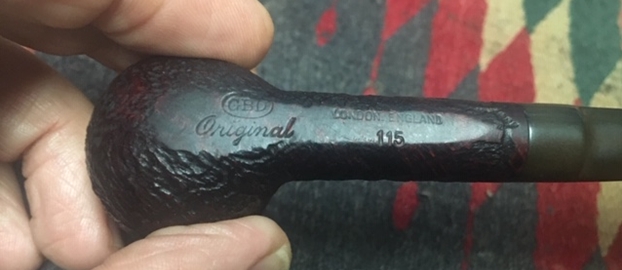
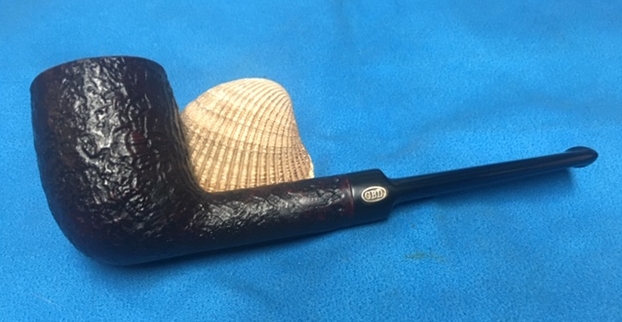
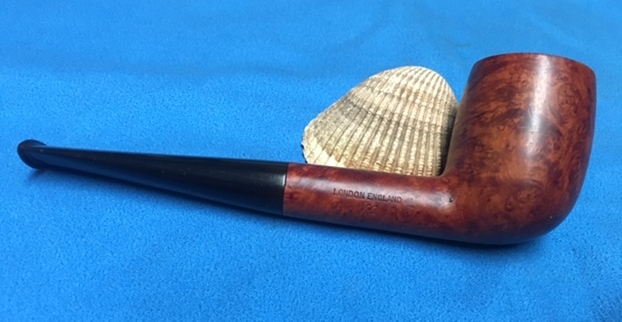
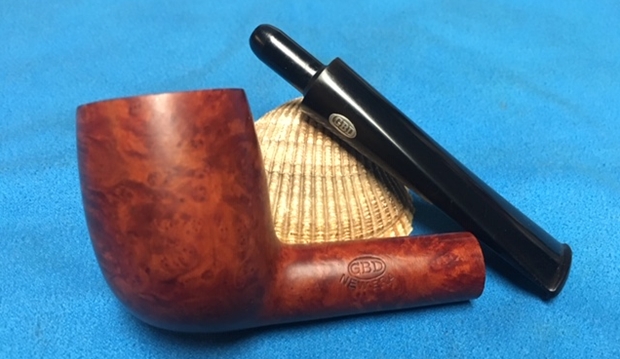
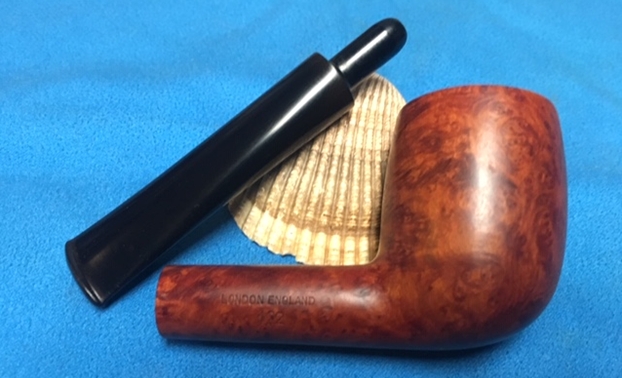
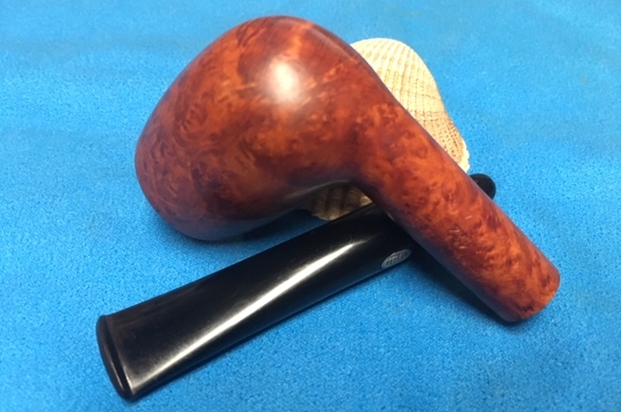
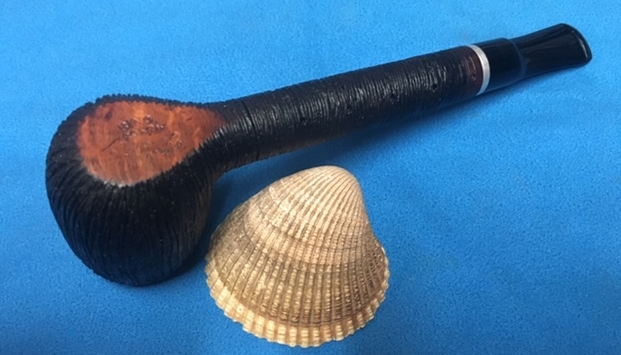
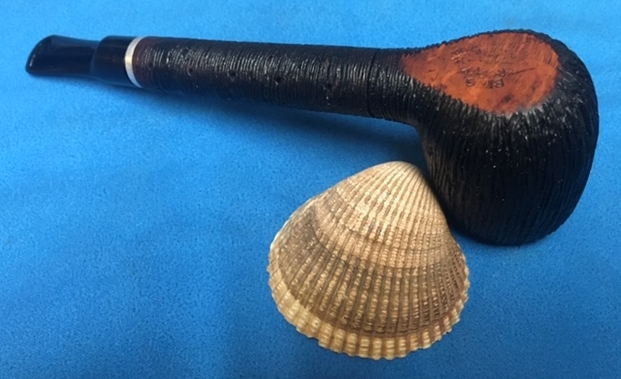
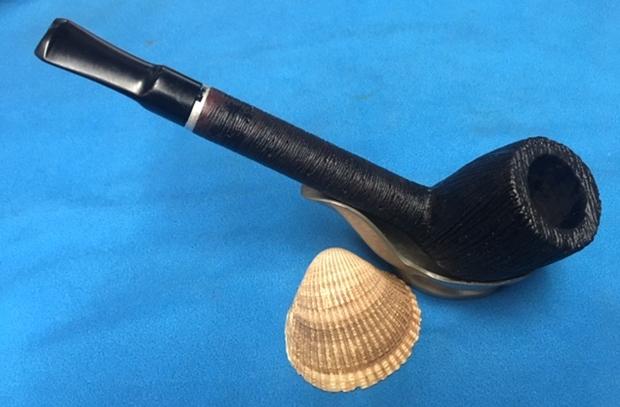
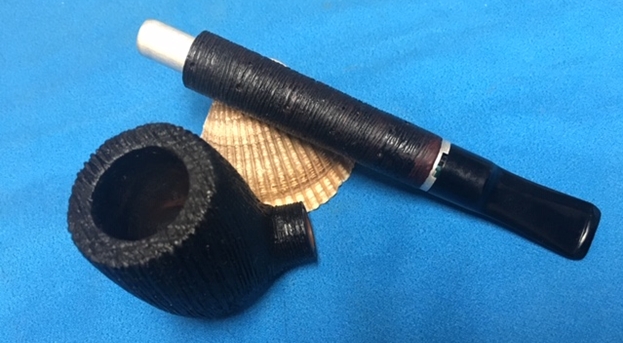
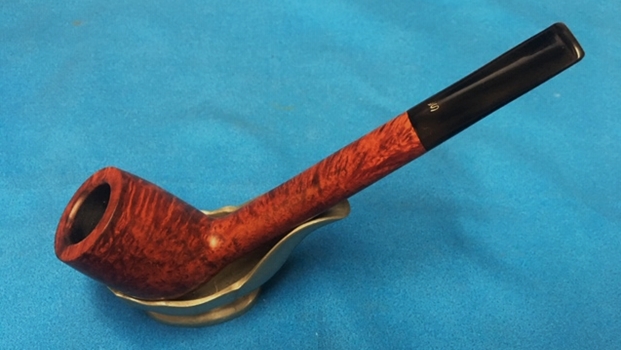
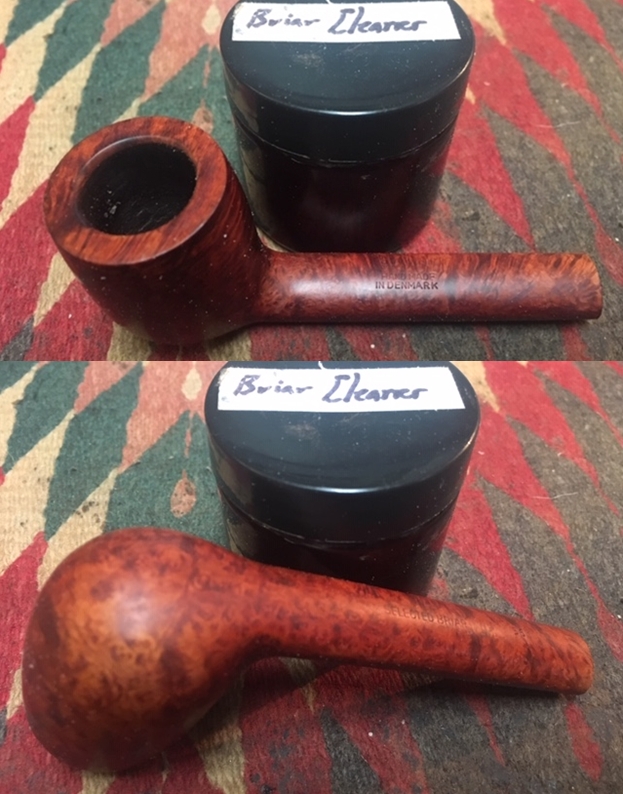
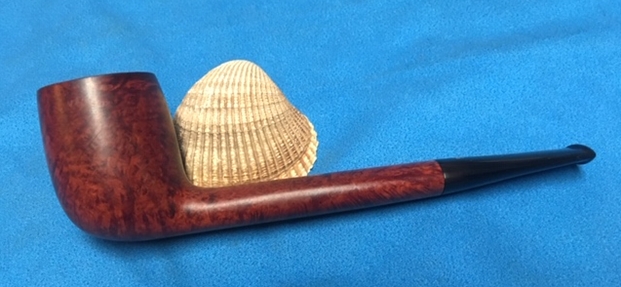
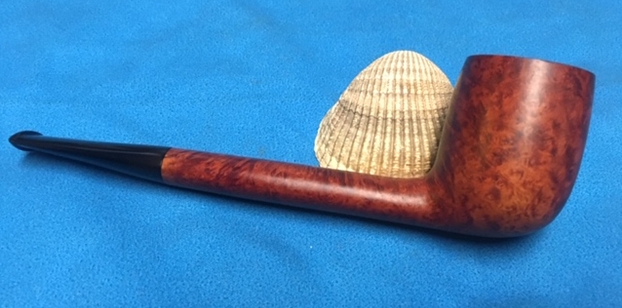
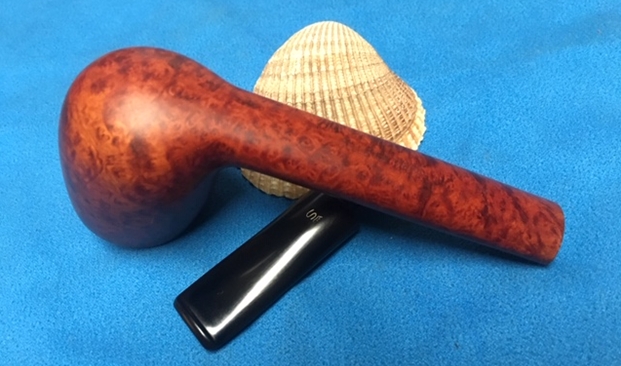
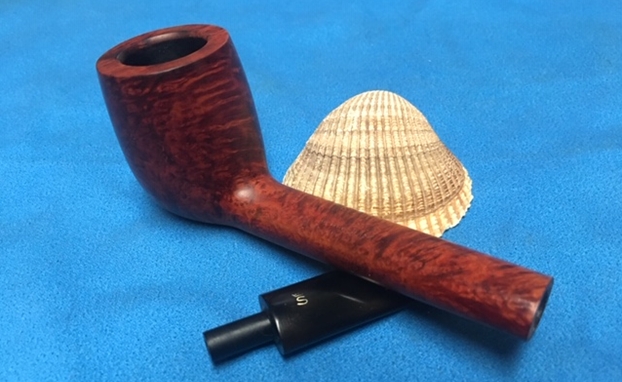
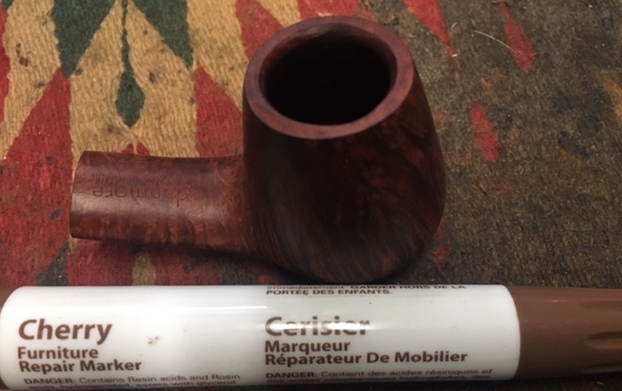
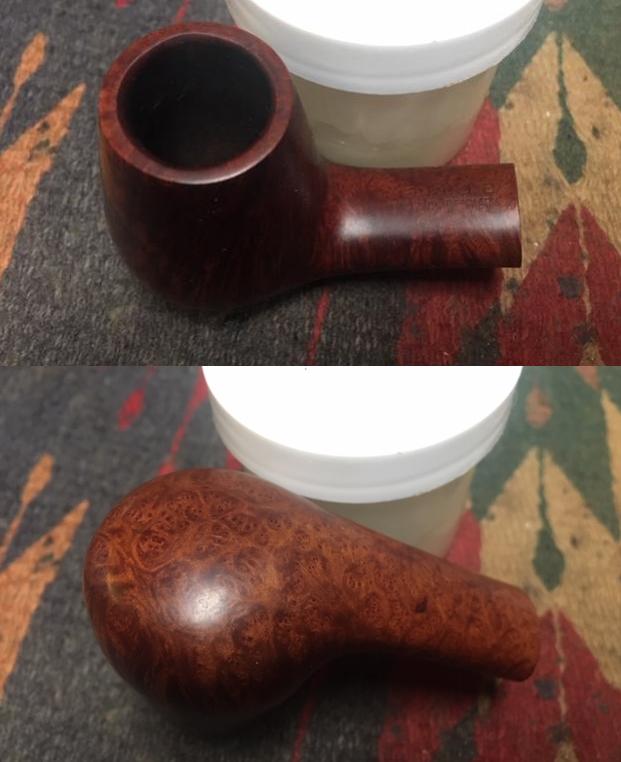
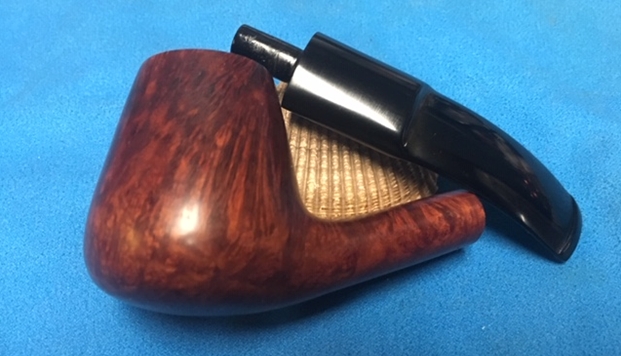
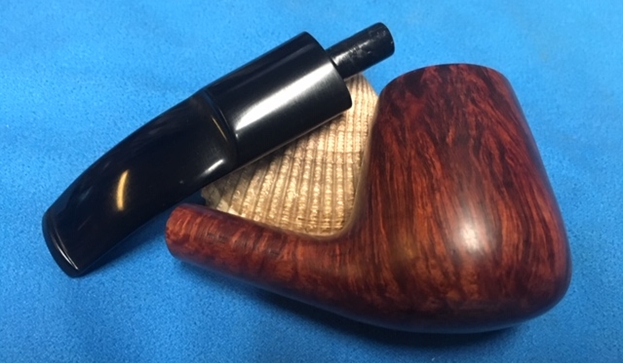
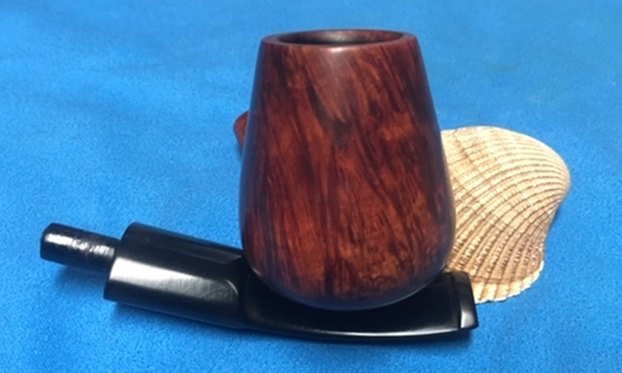
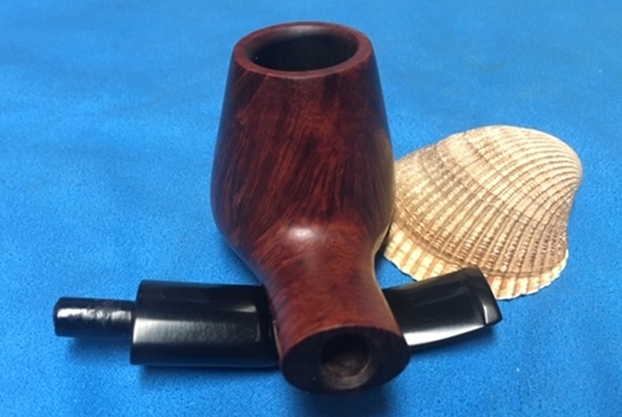
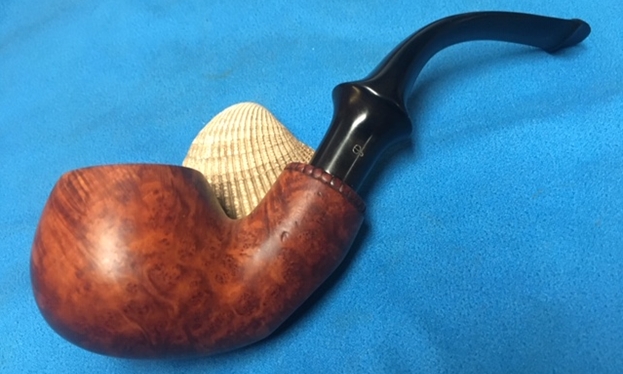
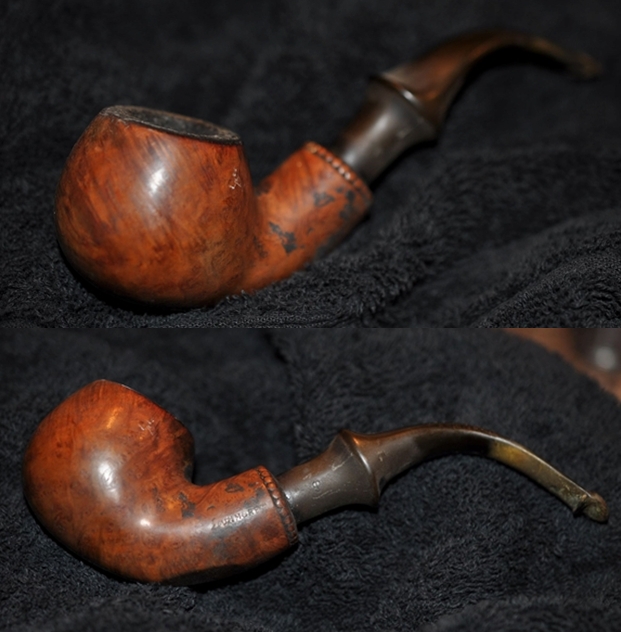
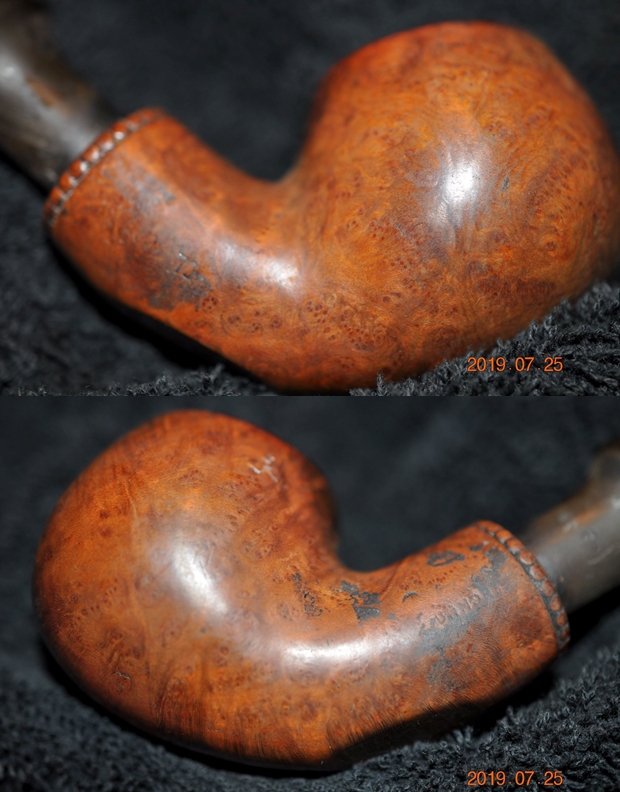
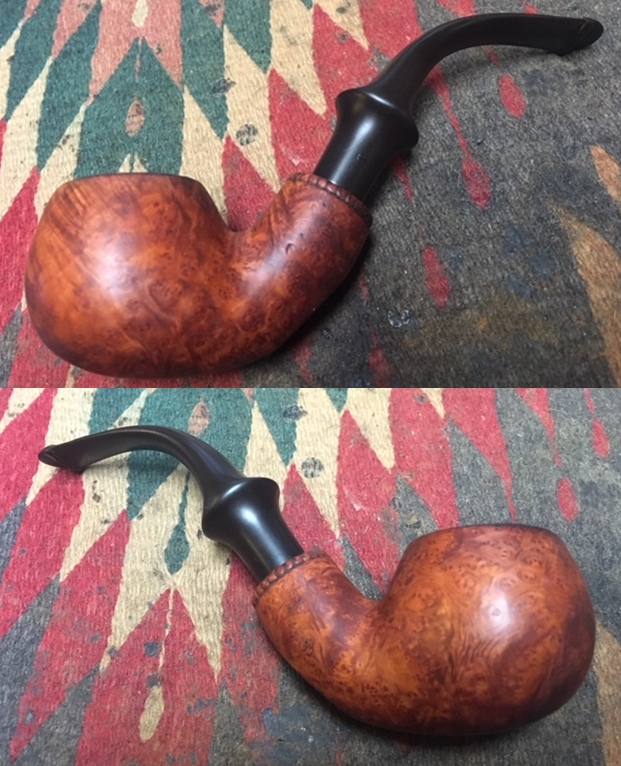
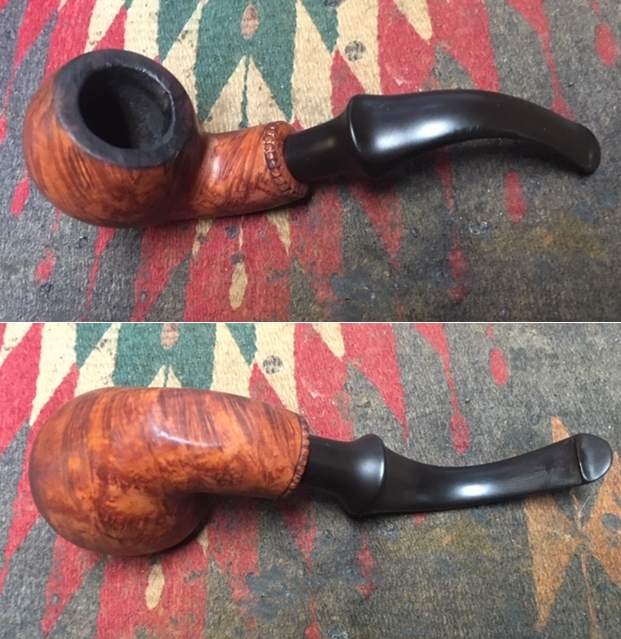
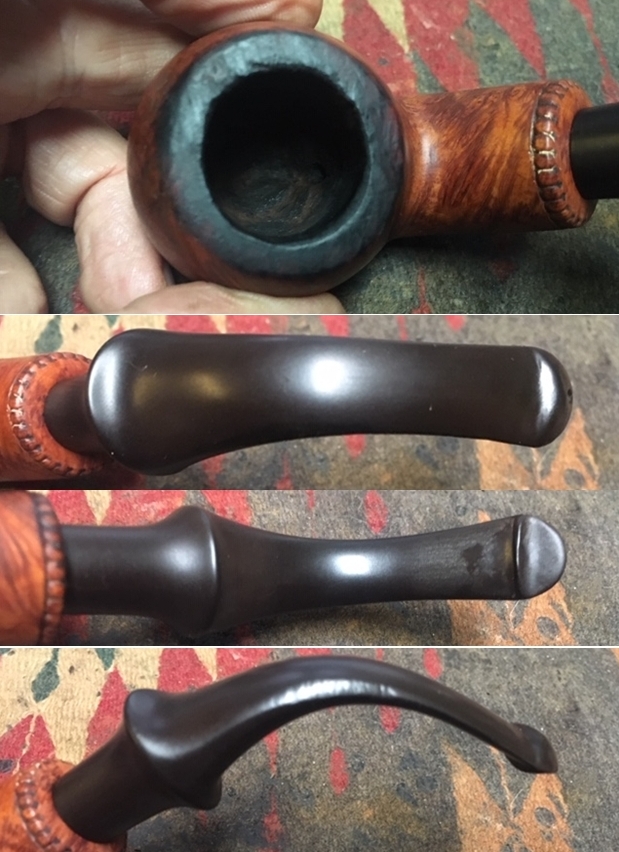
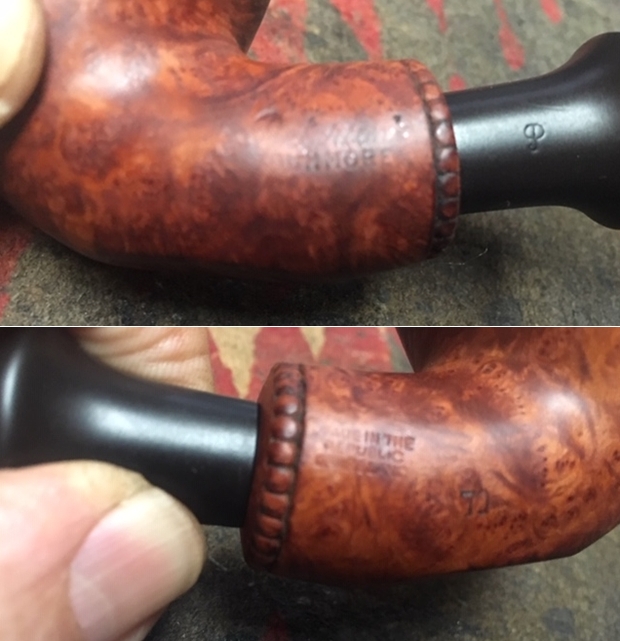
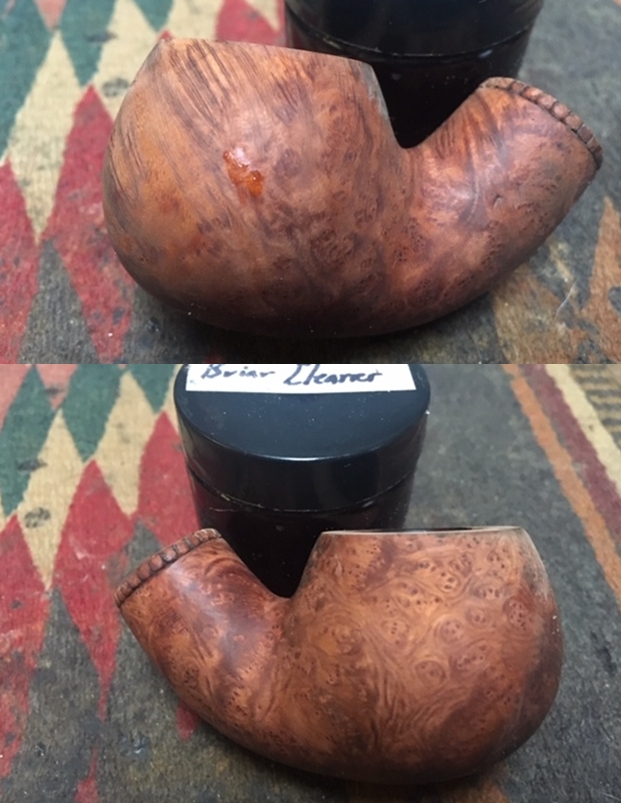
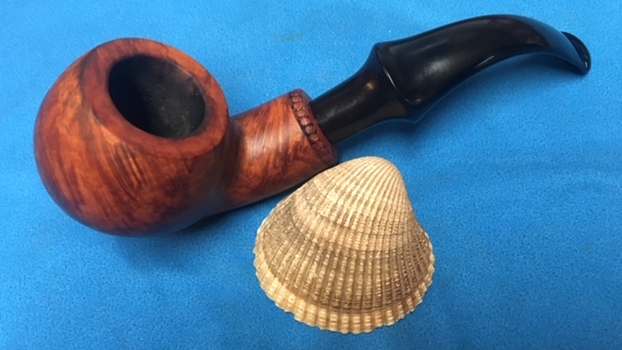
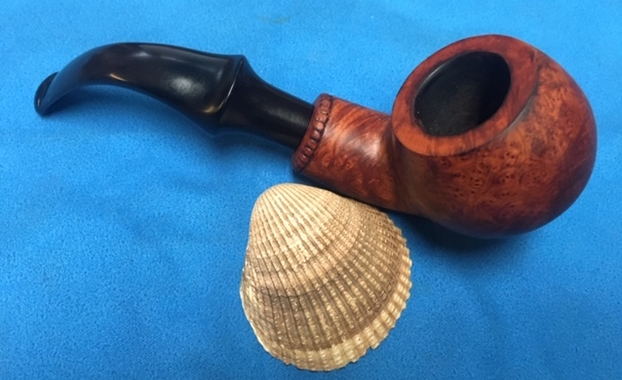
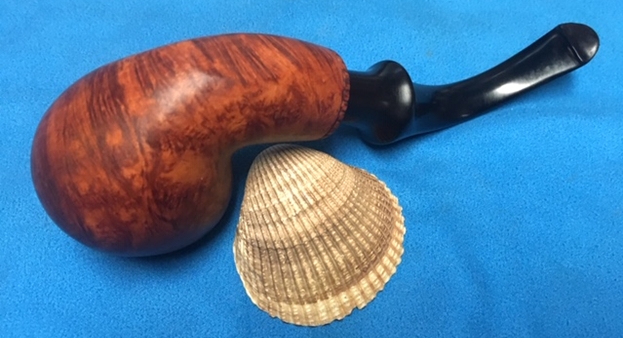
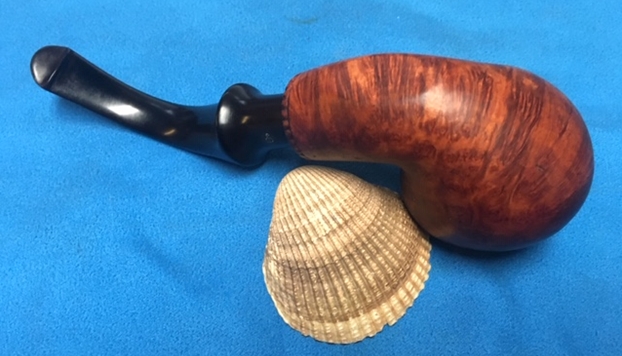
This is yet another GBD shape that was new to my work bench. I thought for certain that it was a 2006, that was incorrectly listed. But on arrival, it was indeed a 206. I didn’t find many examples of the shape on the web, but learned that it was a smaller profile bulldog shape

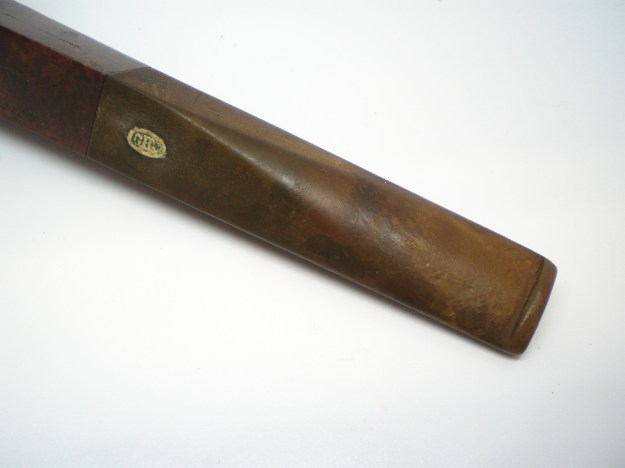
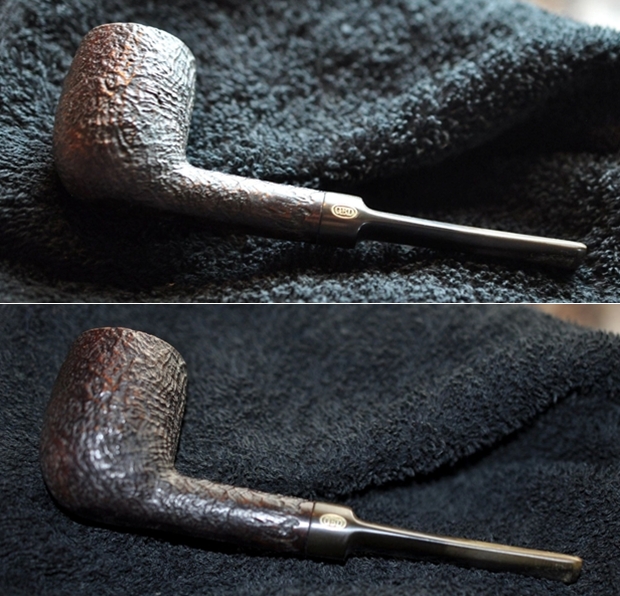
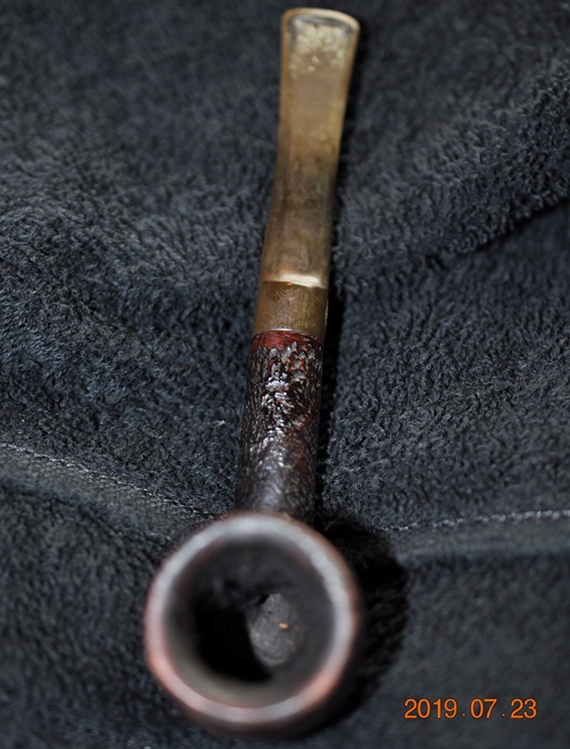
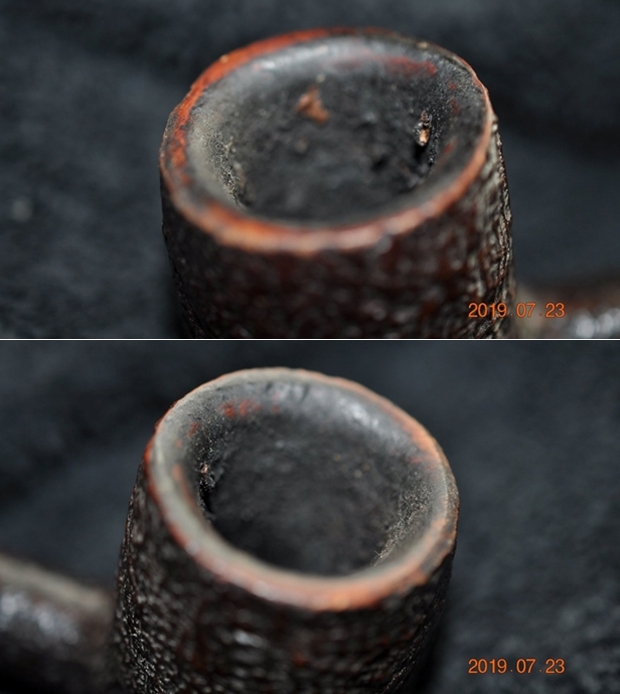
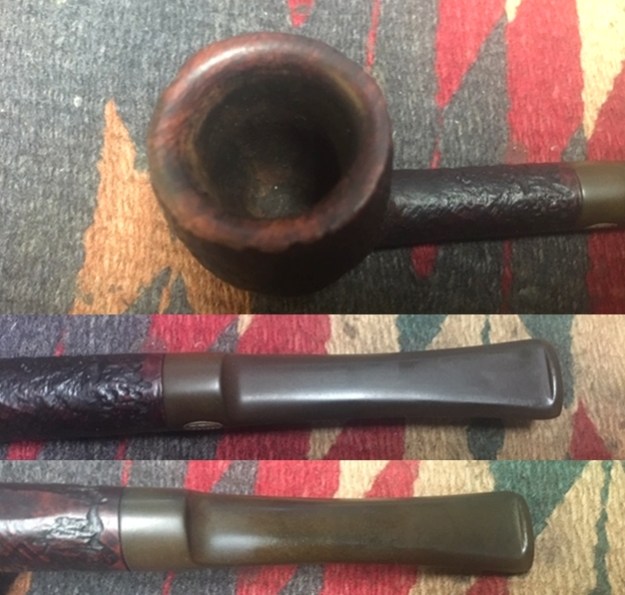
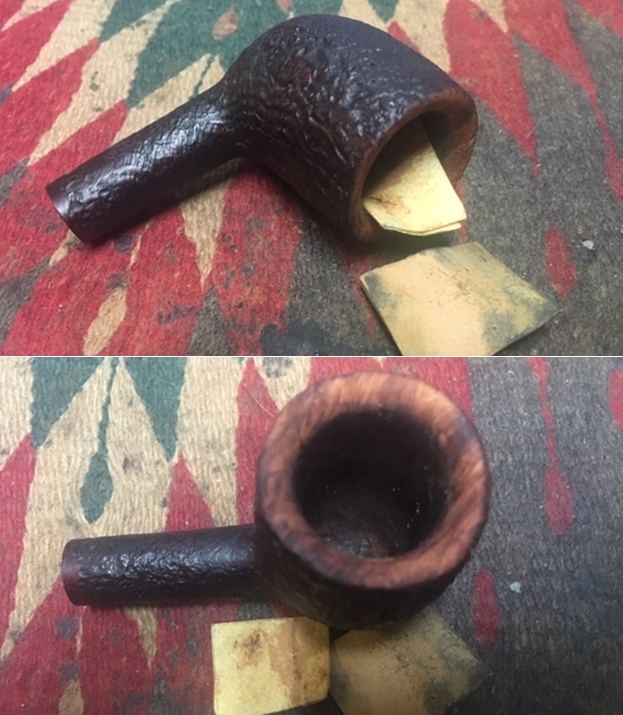
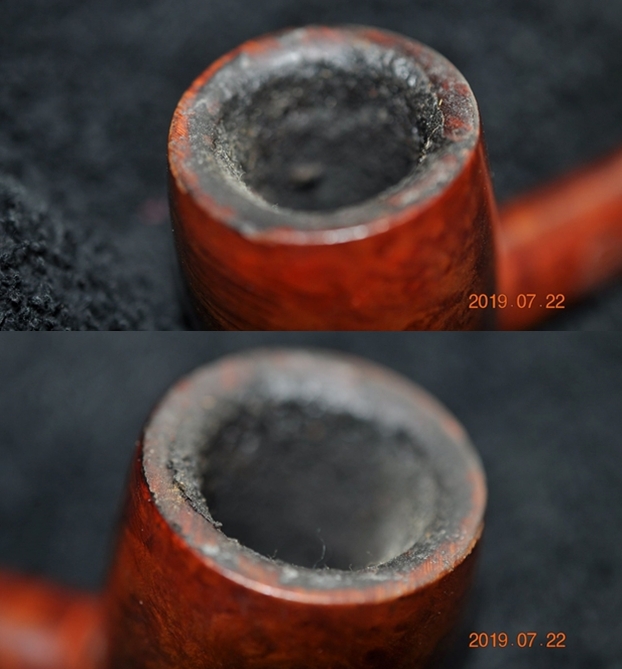
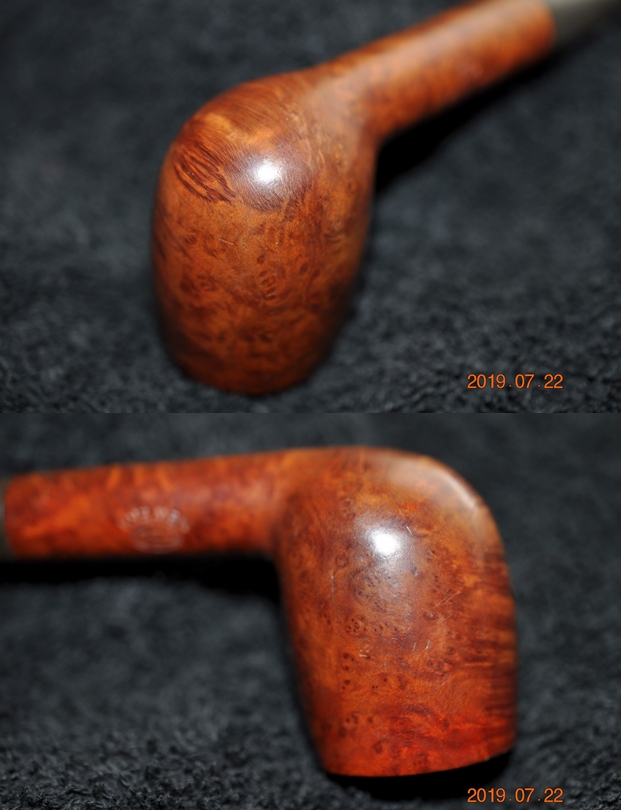
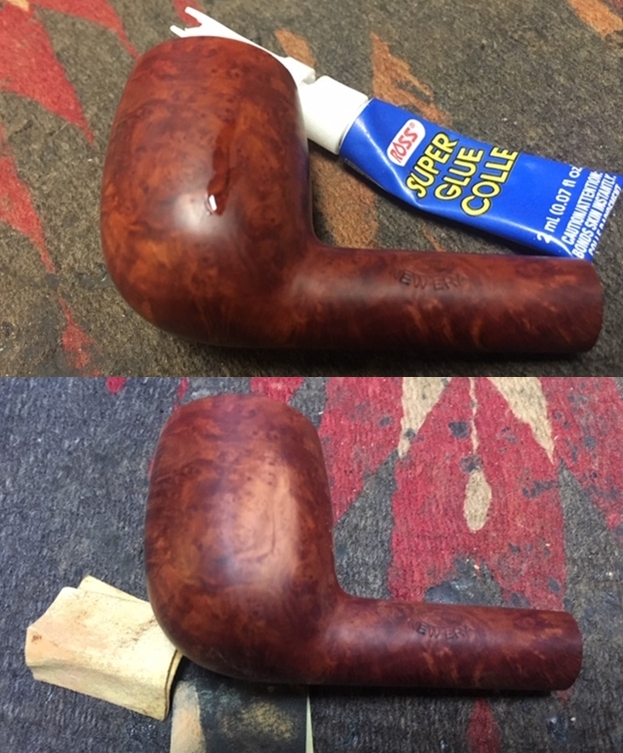
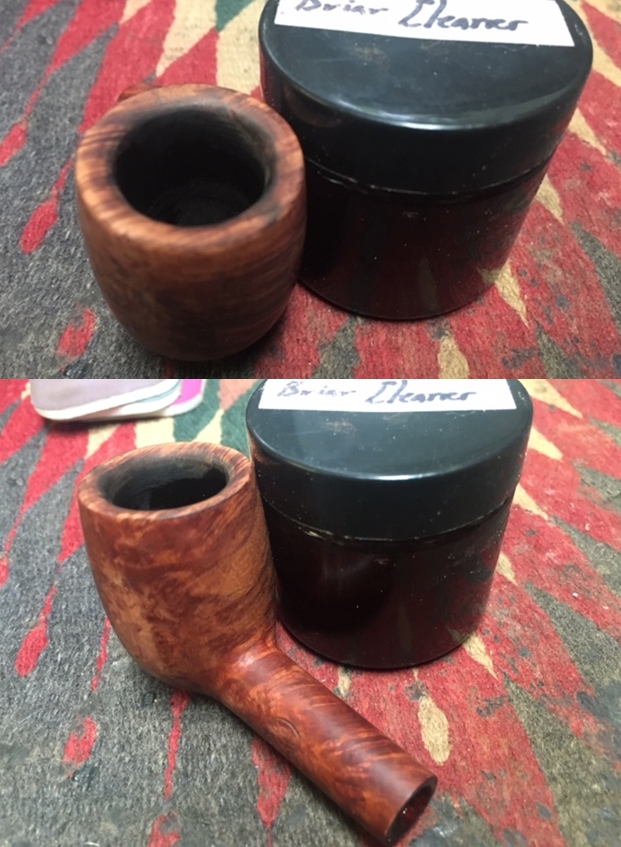
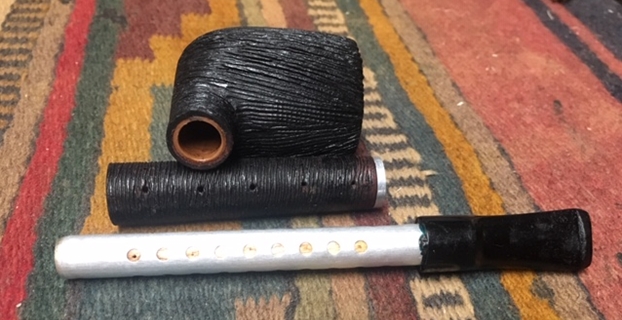
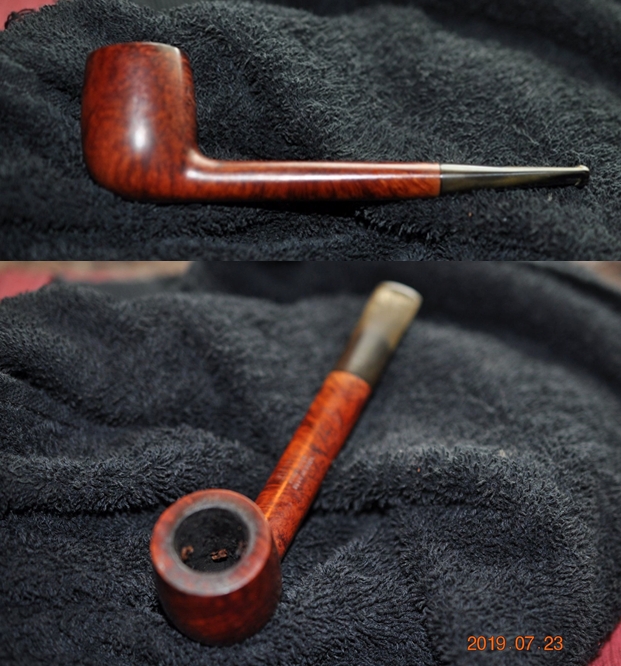
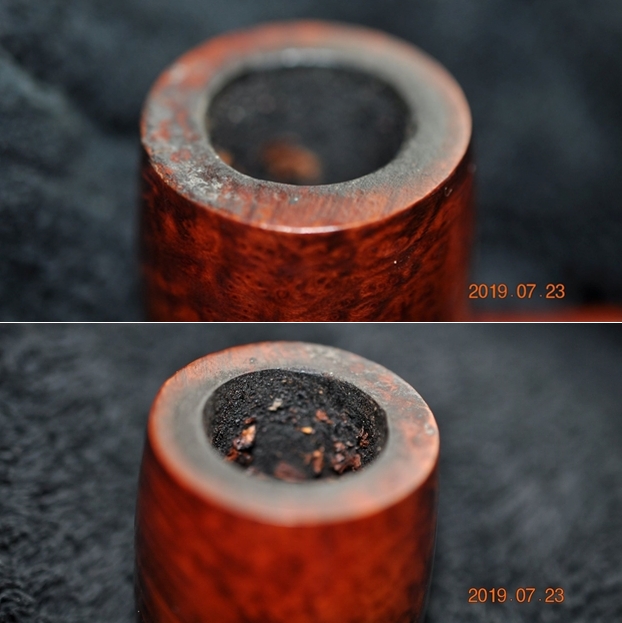
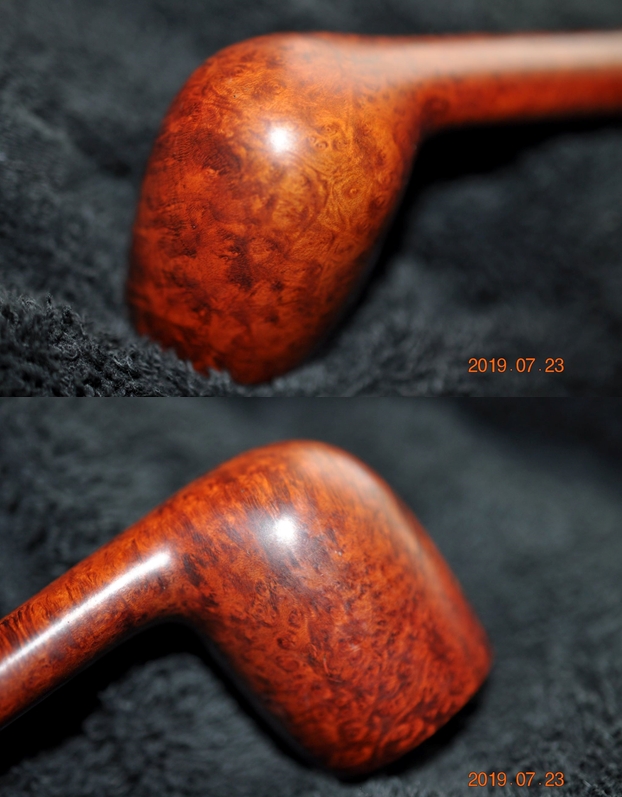
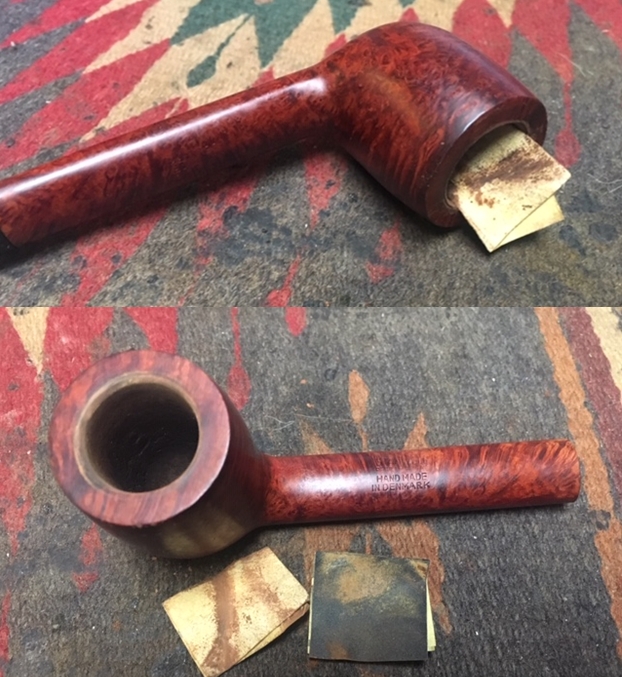
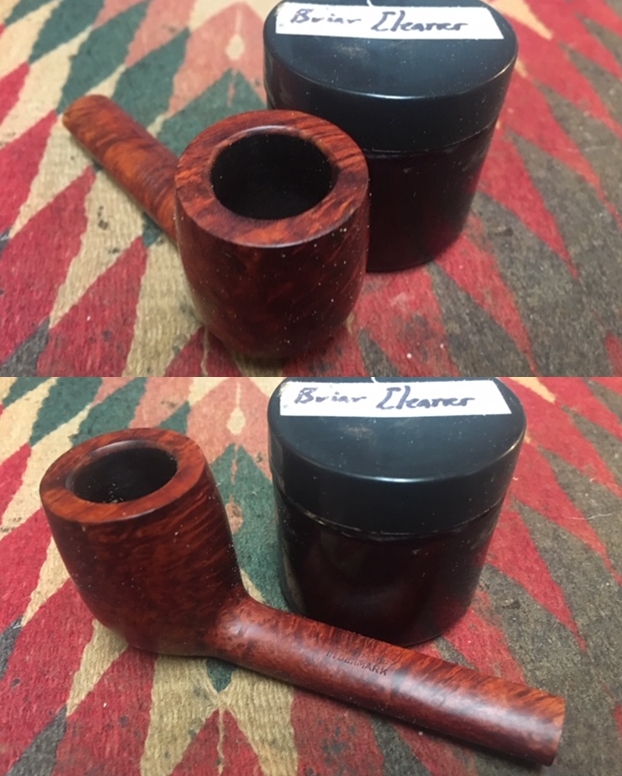
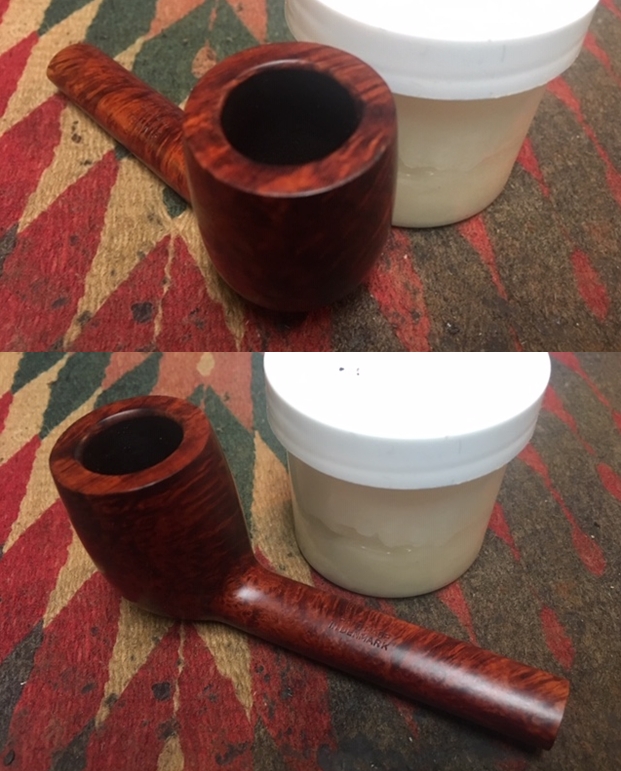
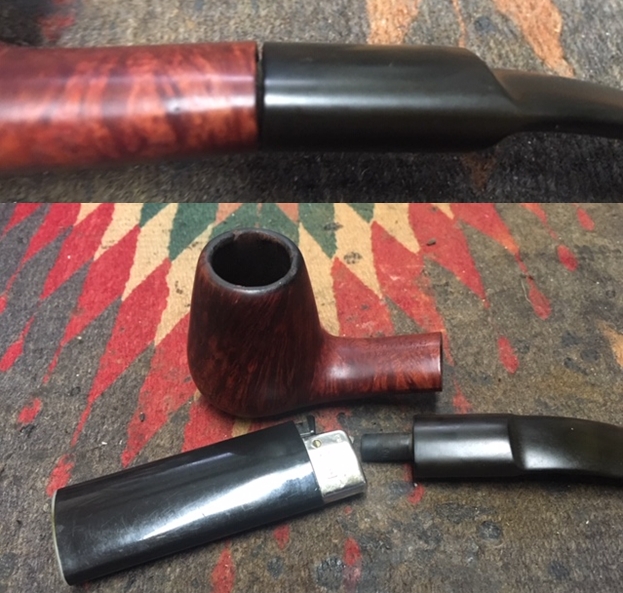
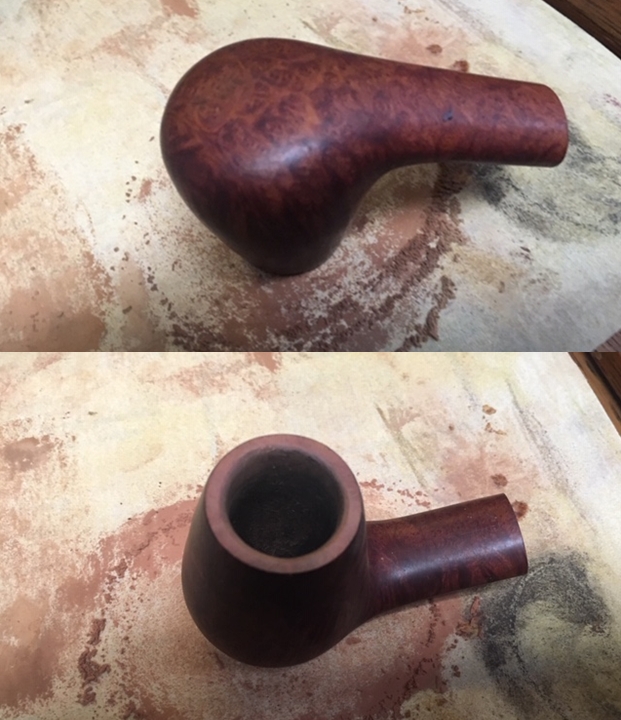
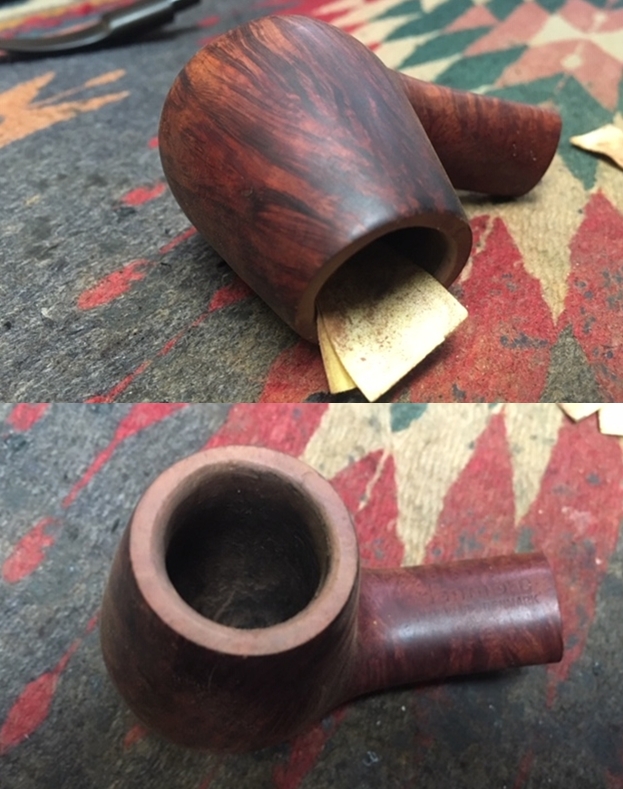
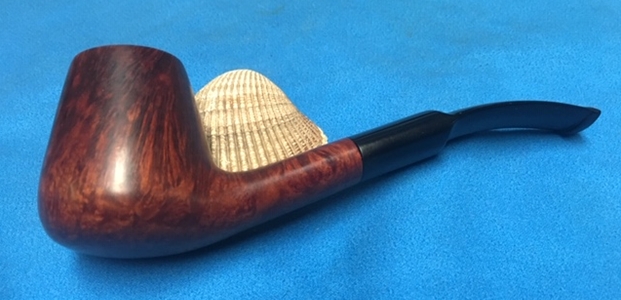
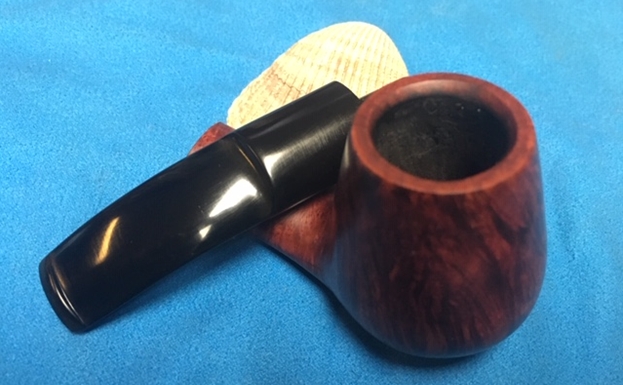
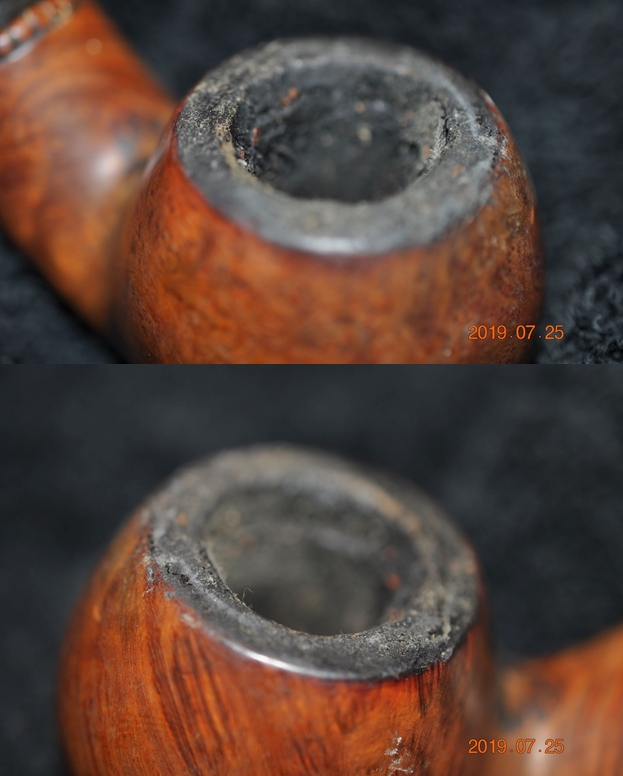
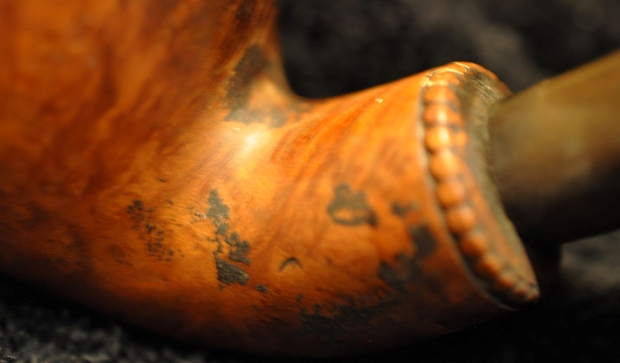
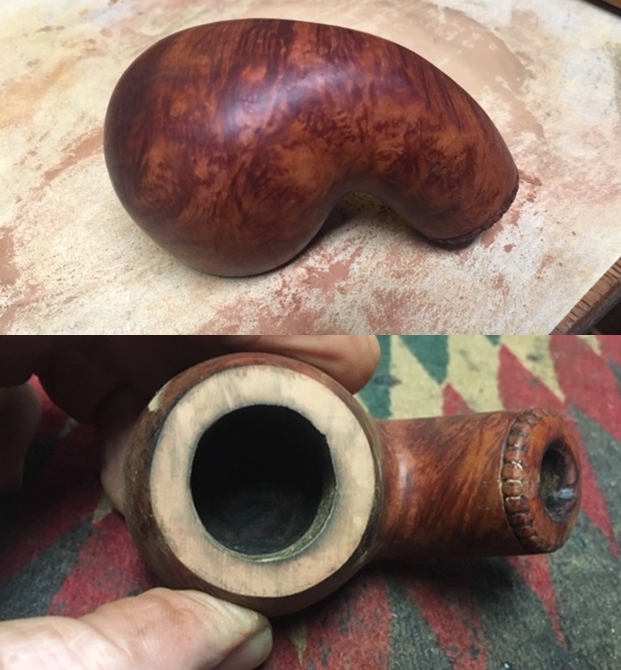
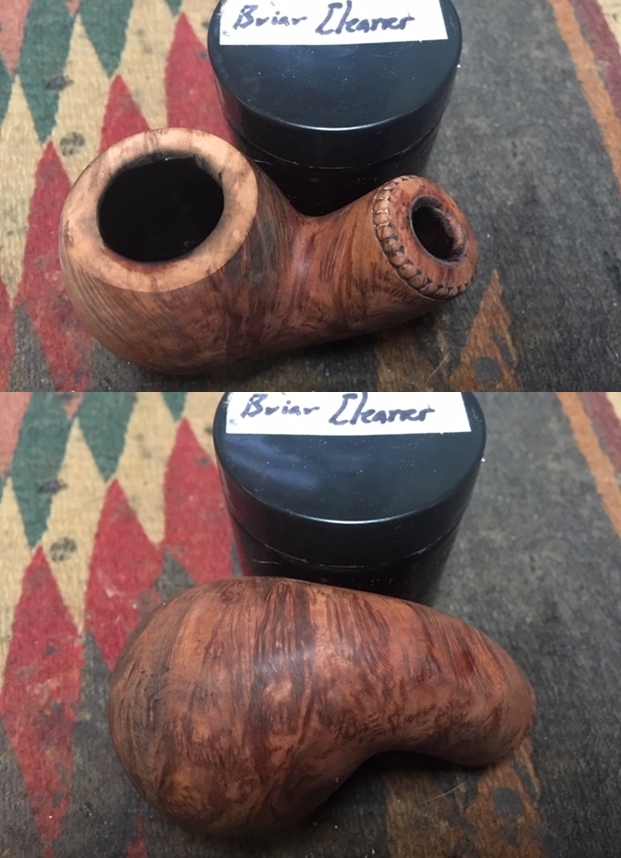
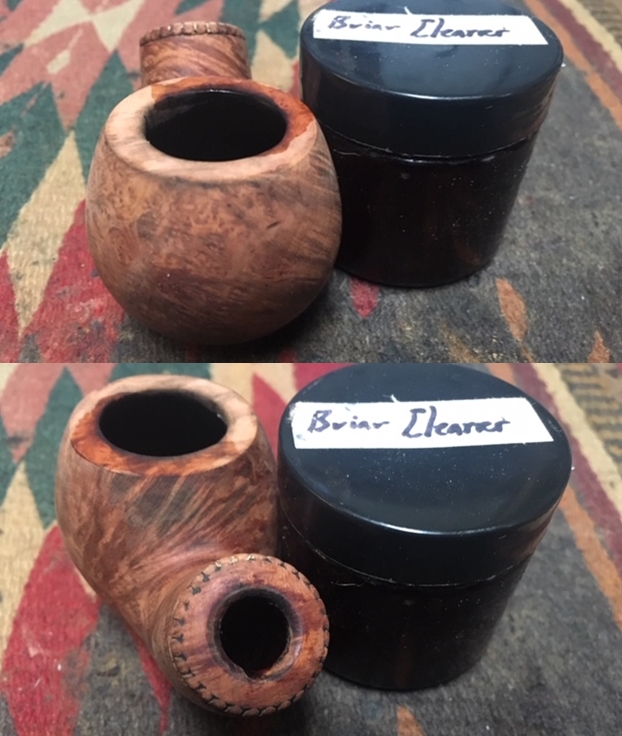
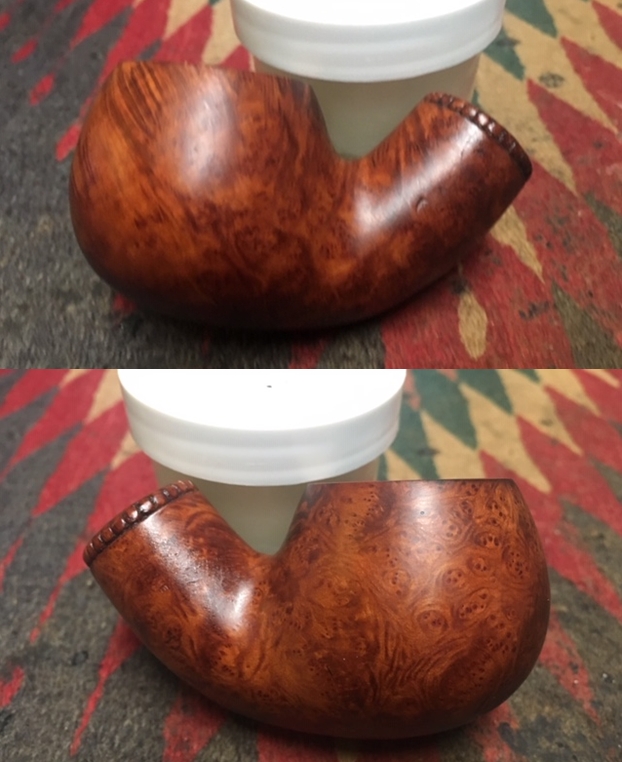
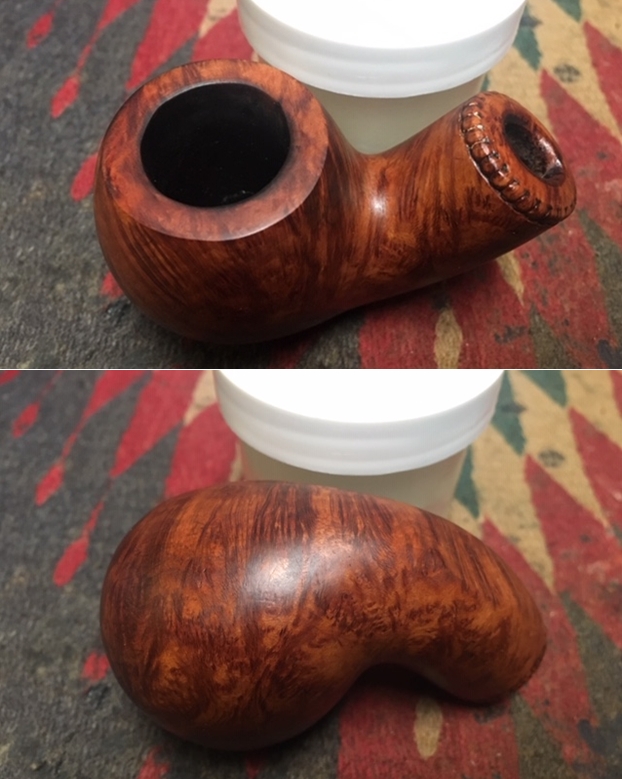
The pipe was in decent shape, with a heavily oxidized stem (but great fitment), with the typical bowl-top build-up and a mild cake. The brass rondell had some fuzz on it, but was in otherwise great shape. Below is the pipe as it was received.

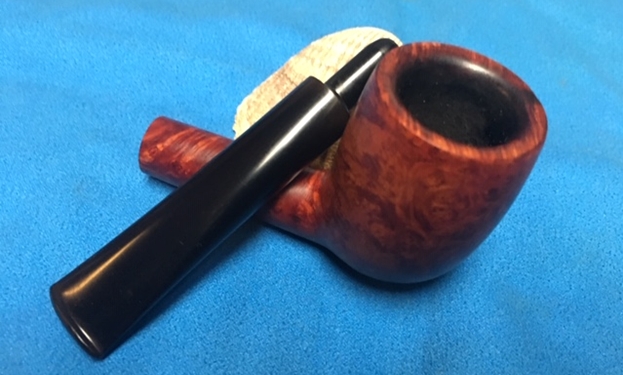
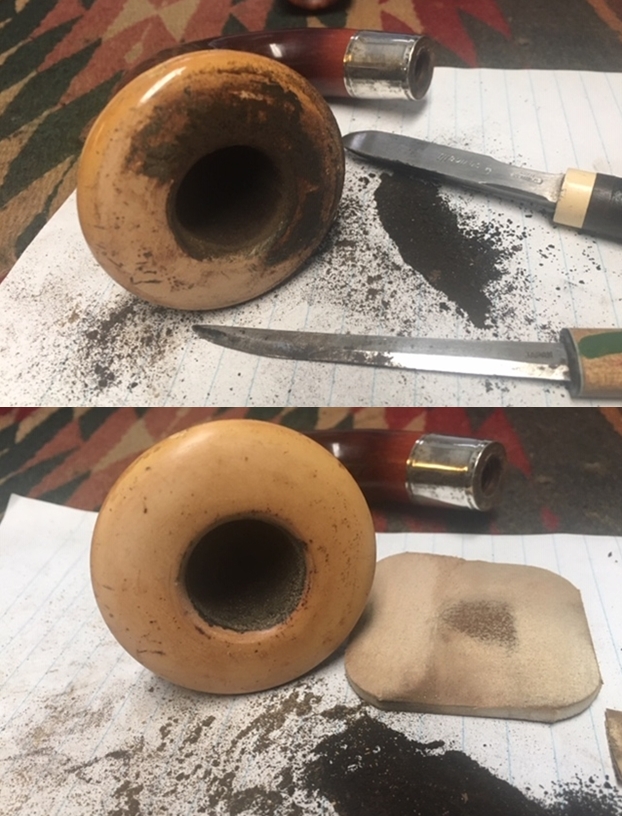
I reamed the cake with my Pipenet set and used a piece of worn Scotchbrite on the build-up. Once removed, a nicely beveled bowl top was revealed but it had a few dents and nicks. I used an electric iron on High, with a wet cloth to steam out some, but not all of the dings. Oh well, they add a little character.

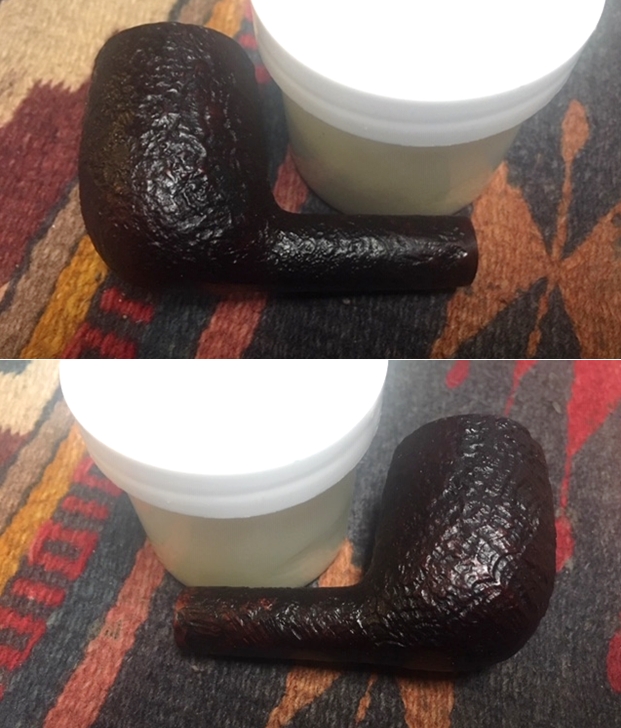
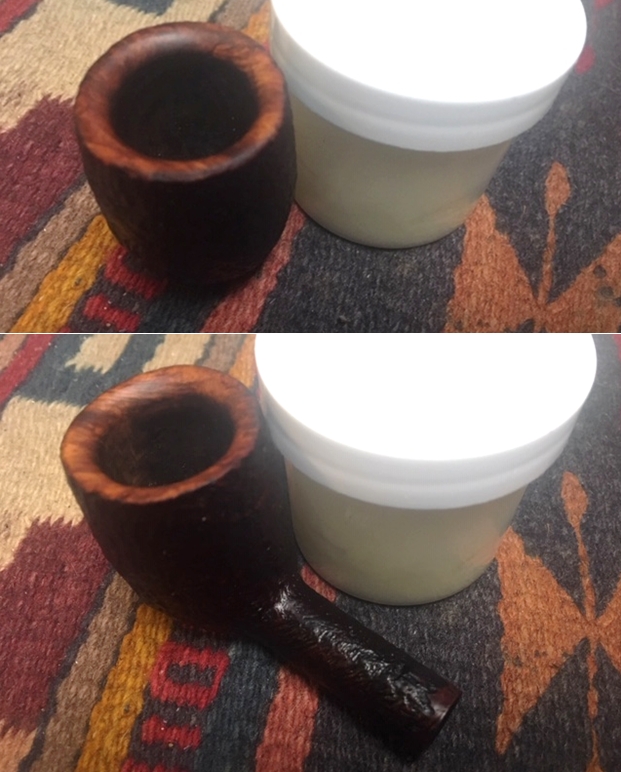
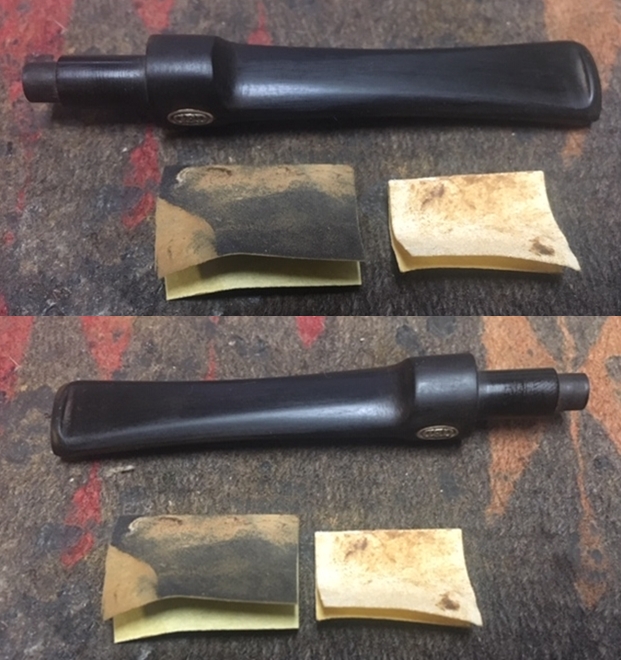
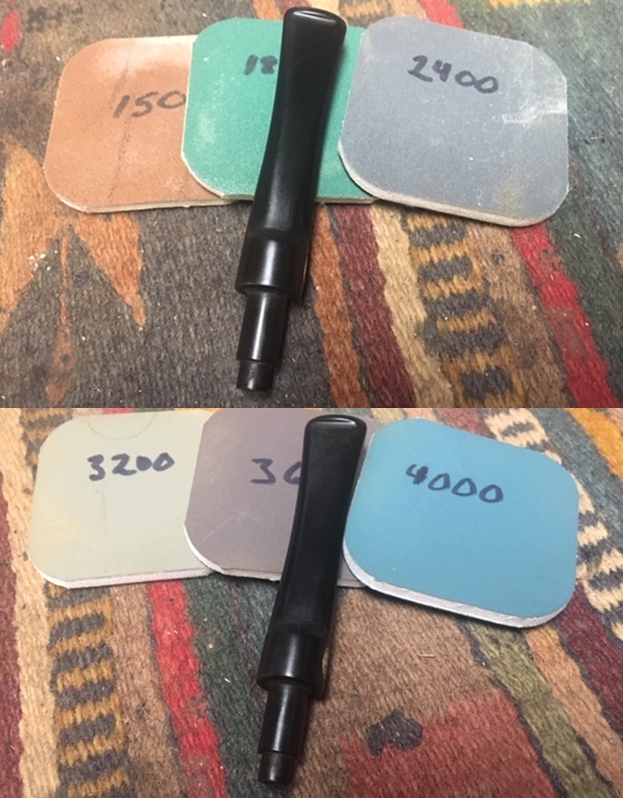
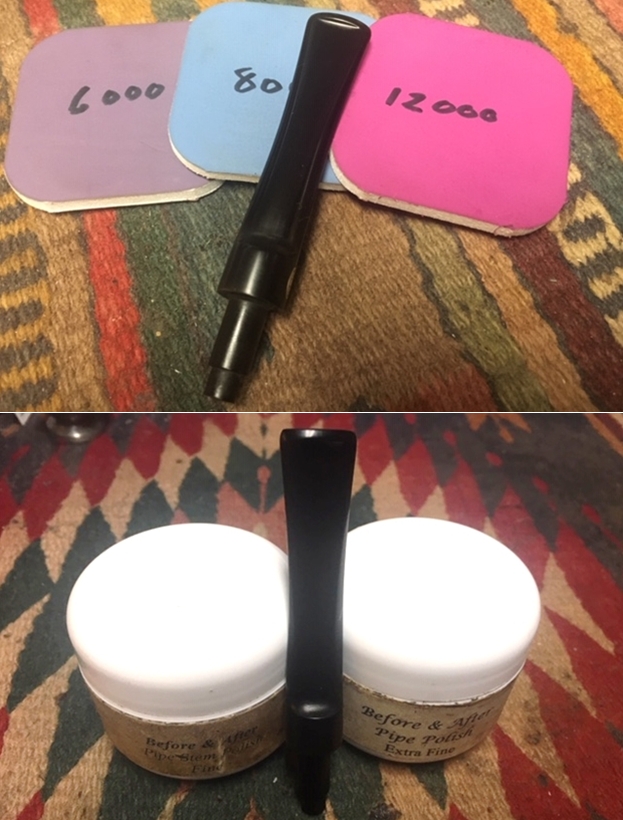
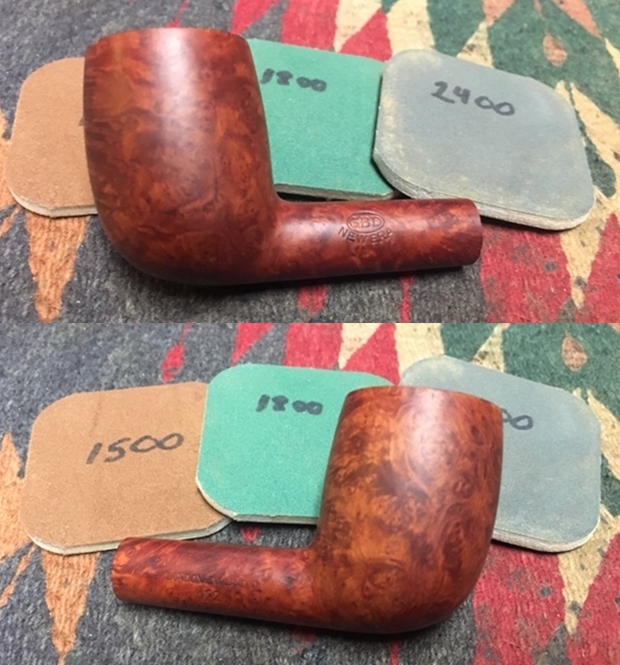
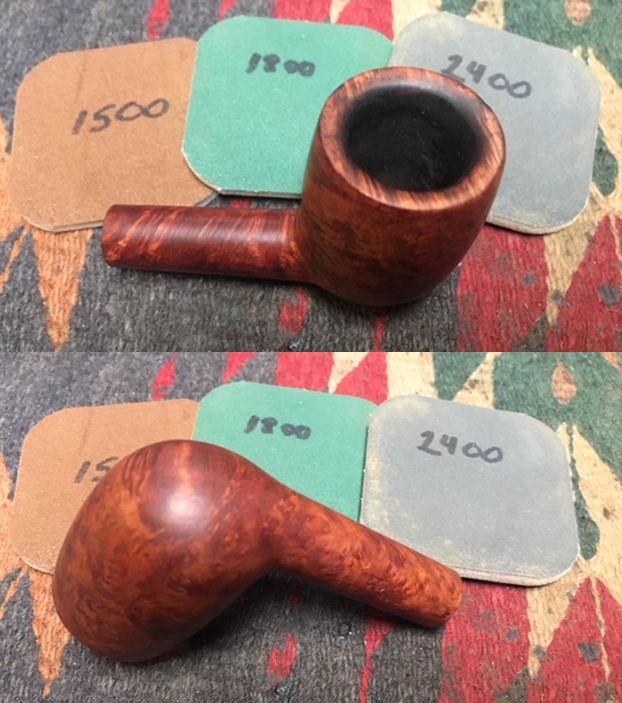
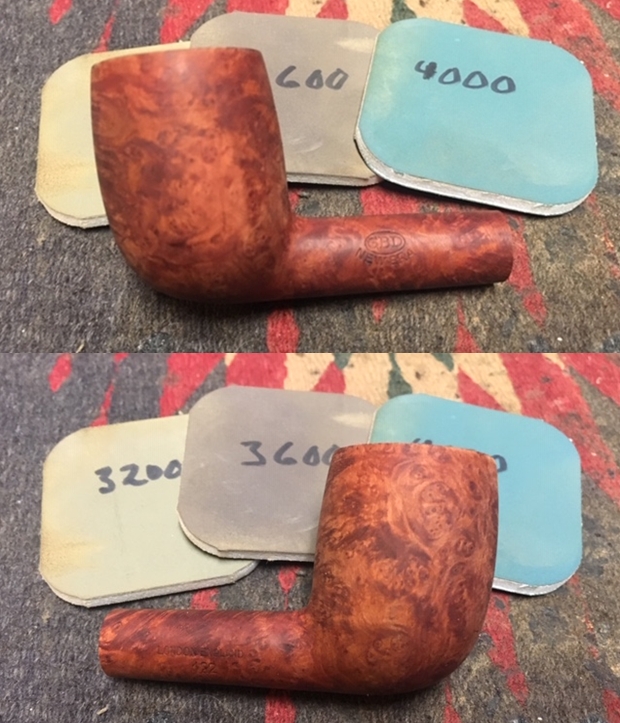
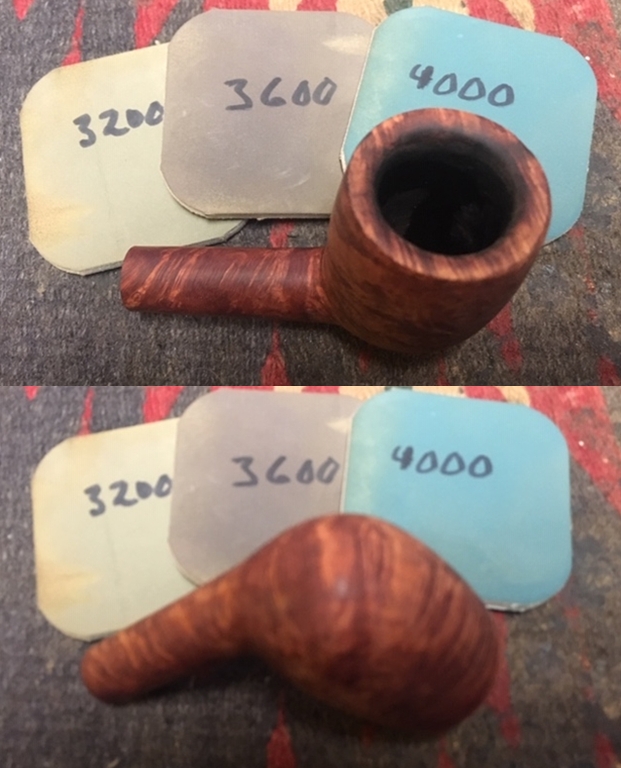
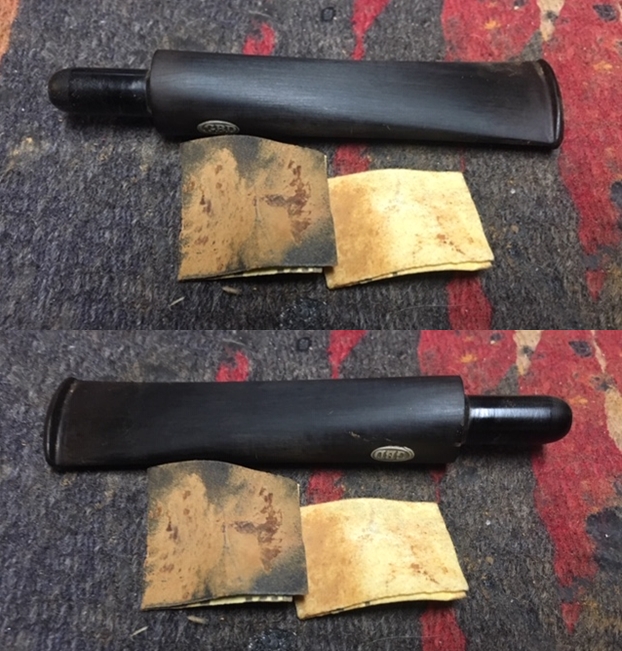
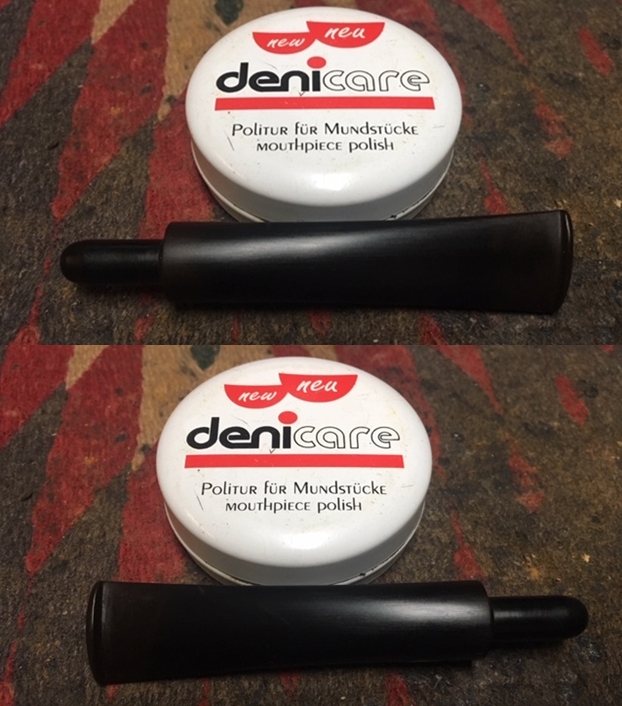
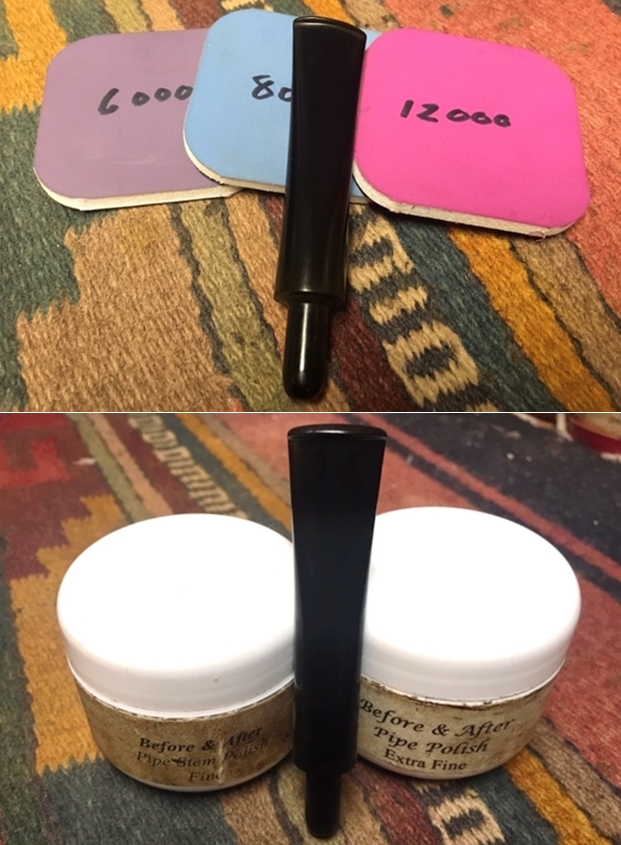
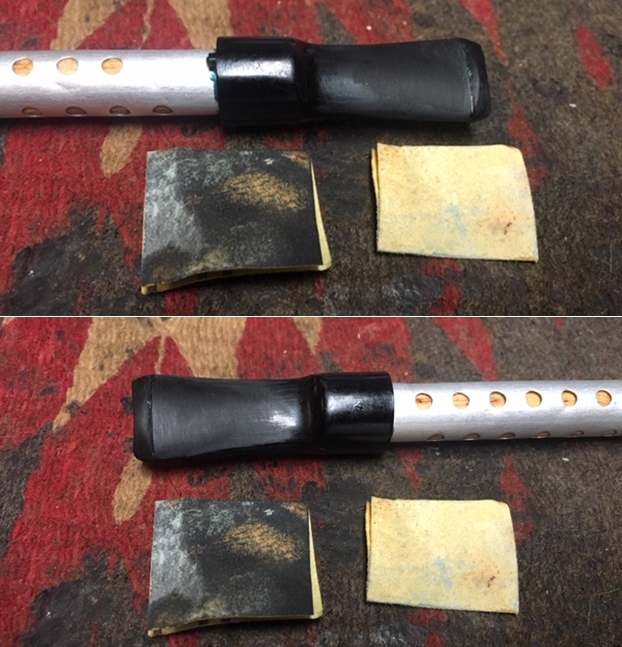
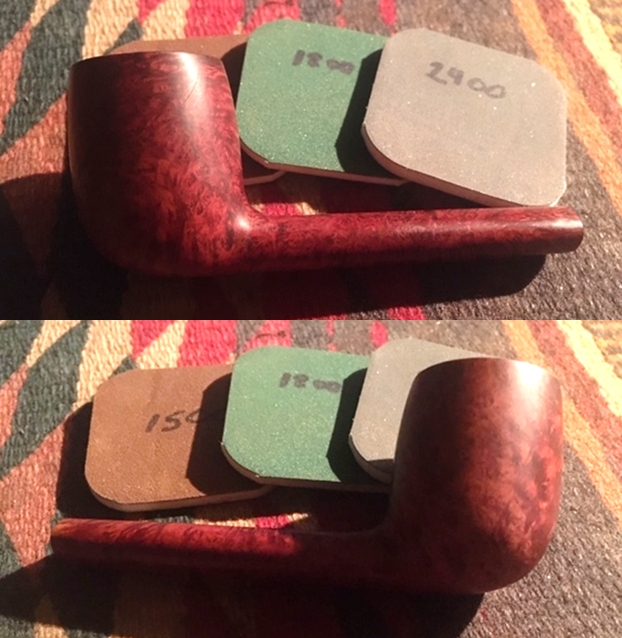
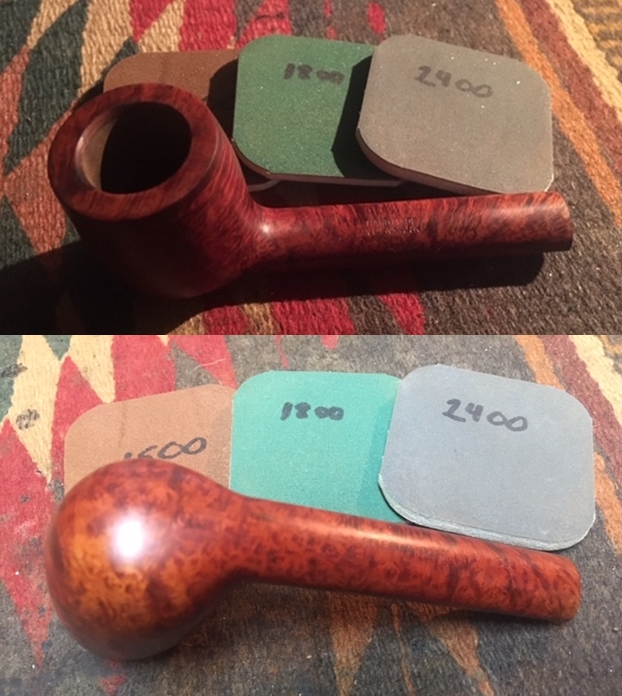
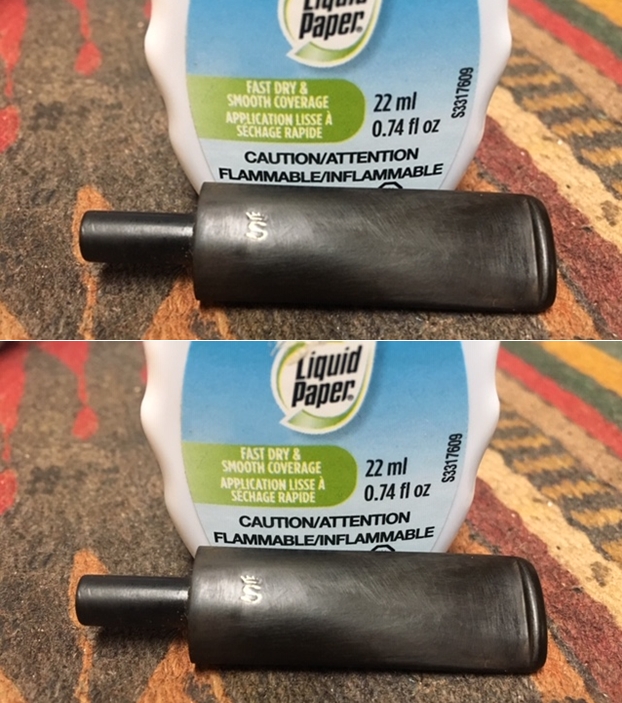
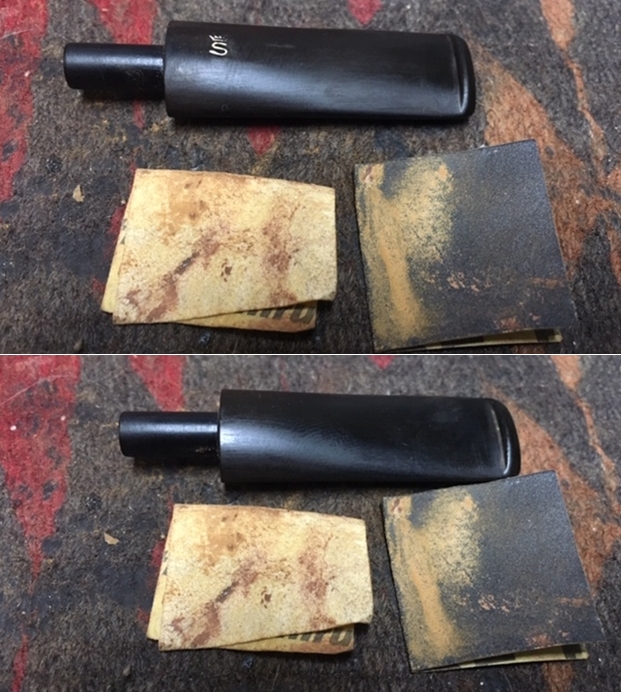
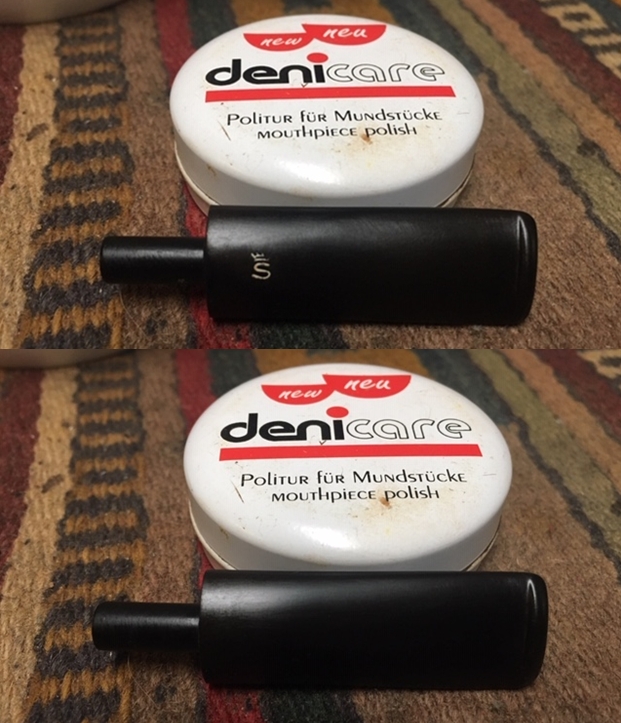
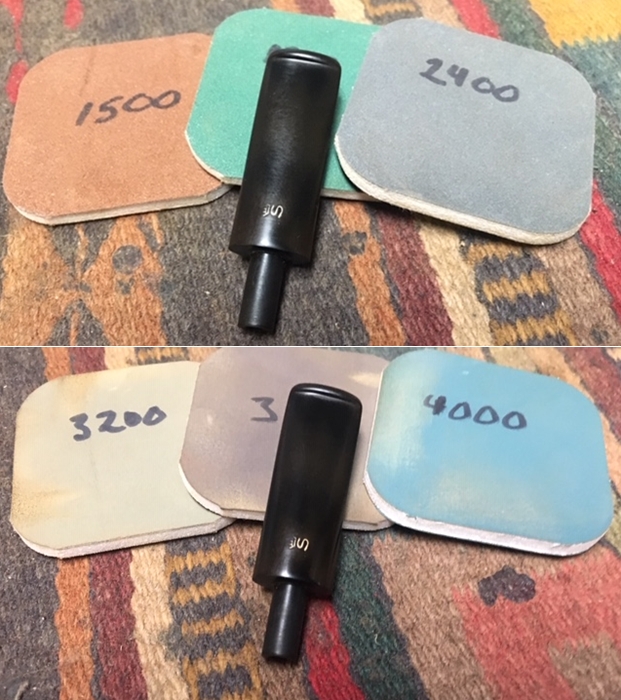
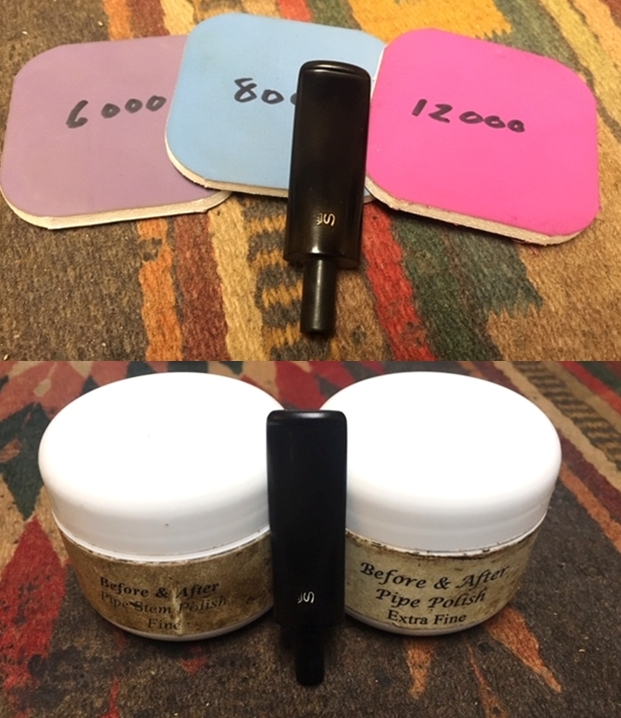
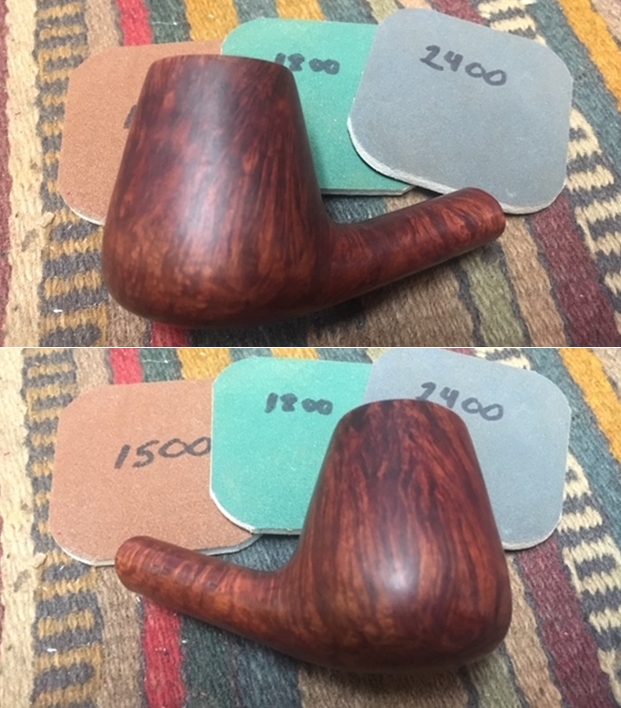
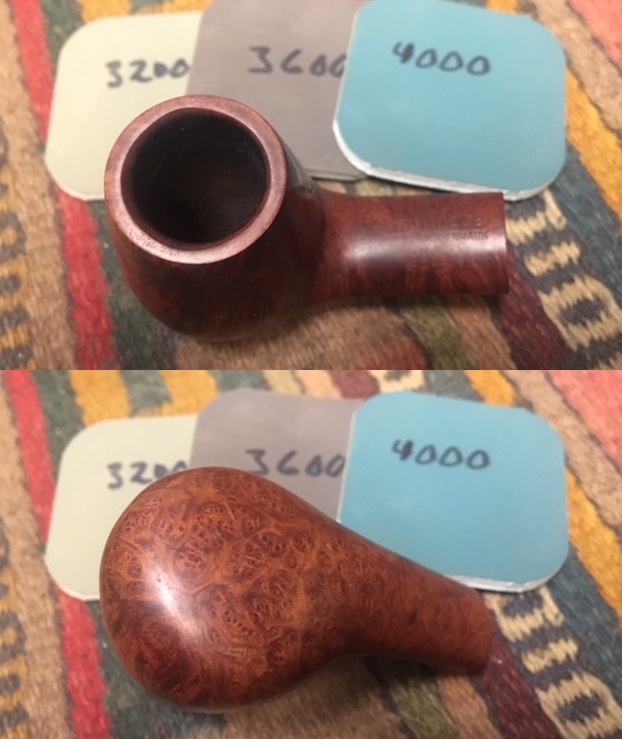
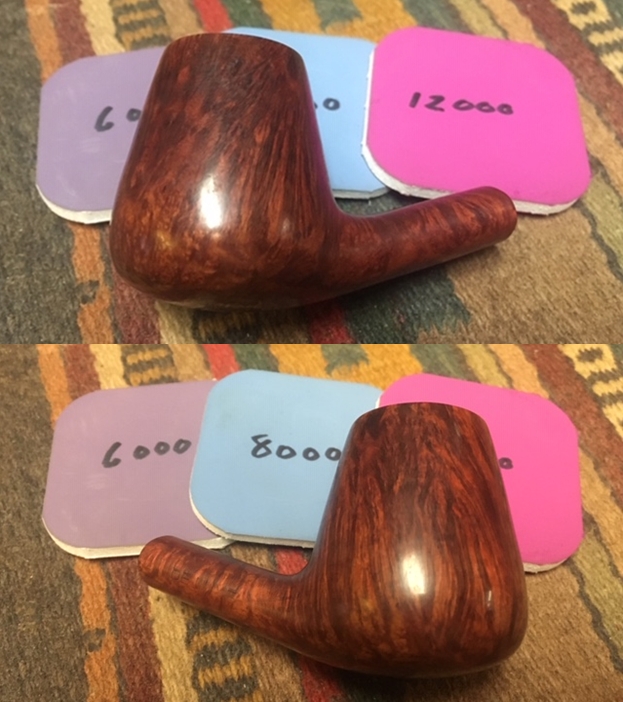
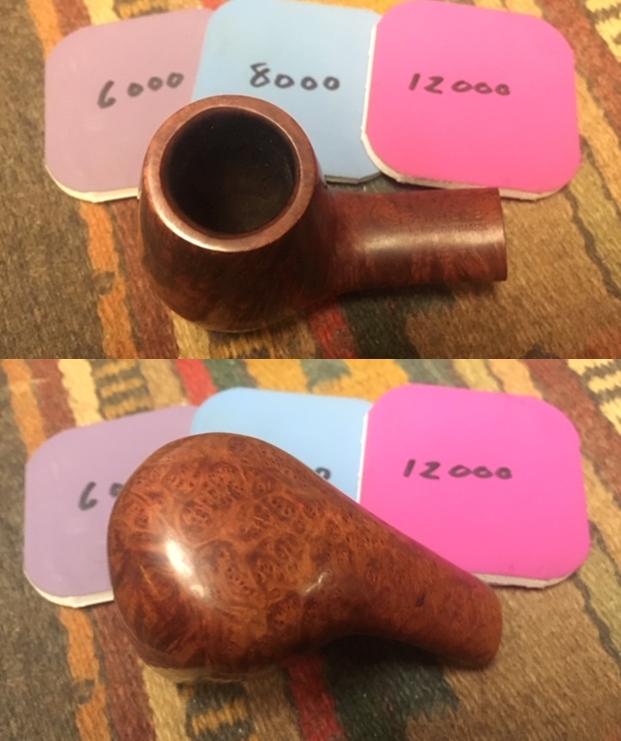
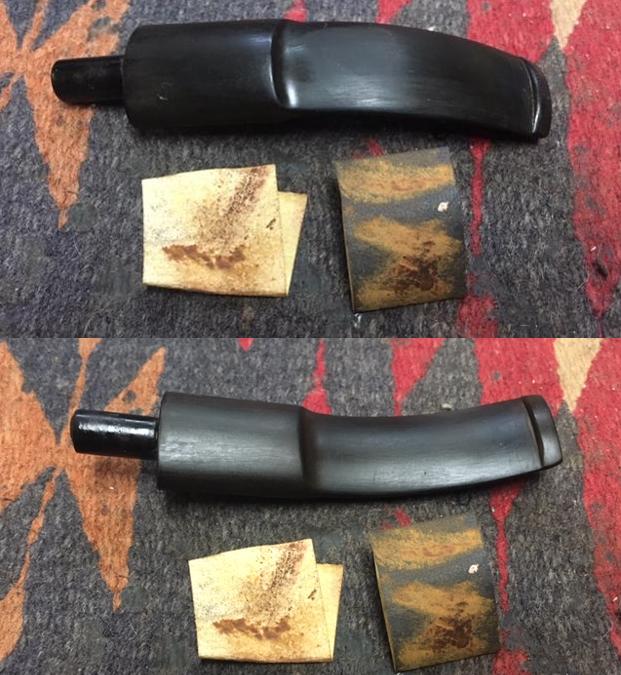
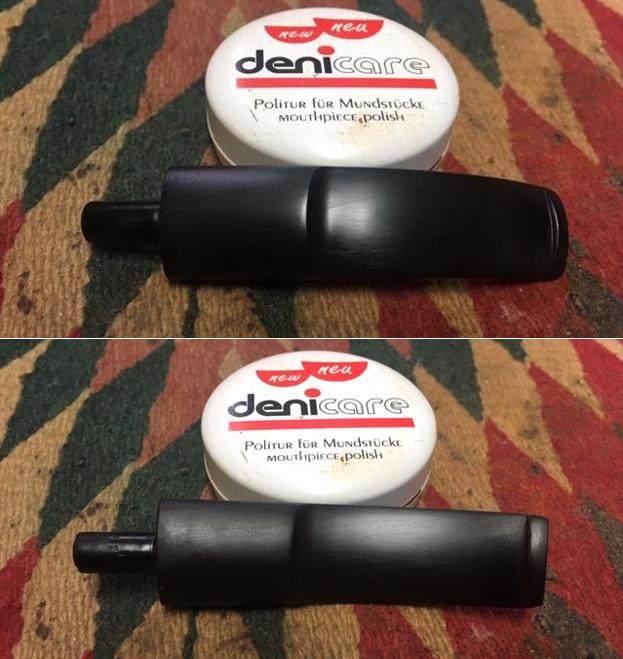
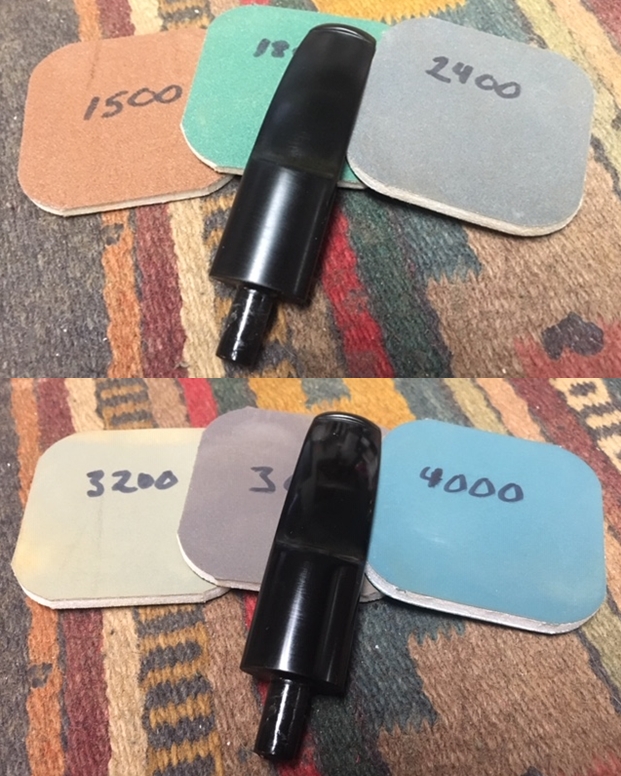
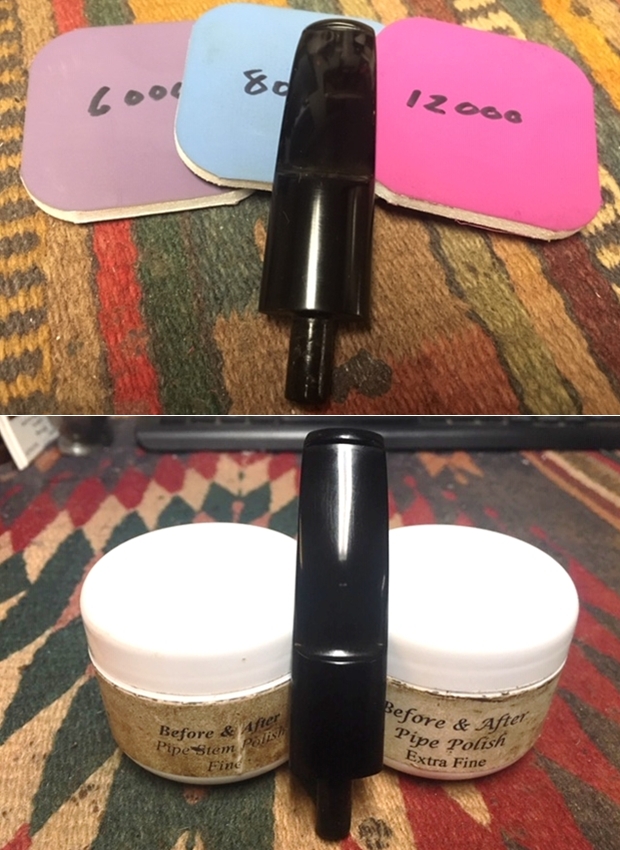
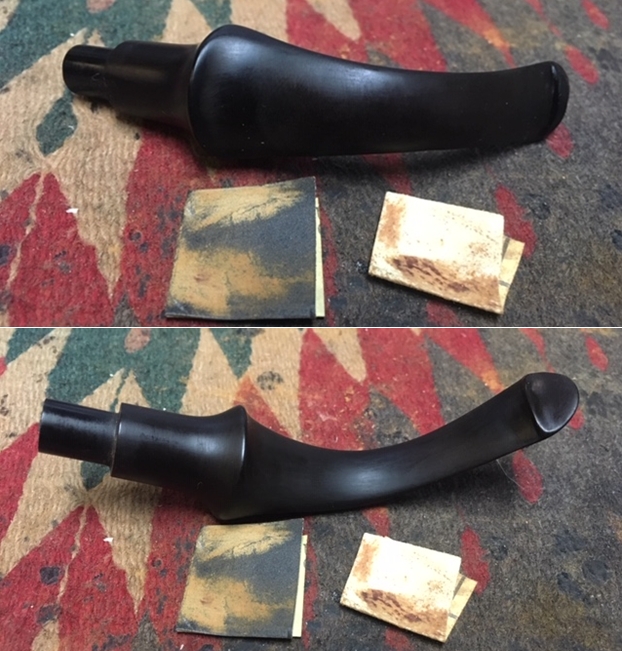
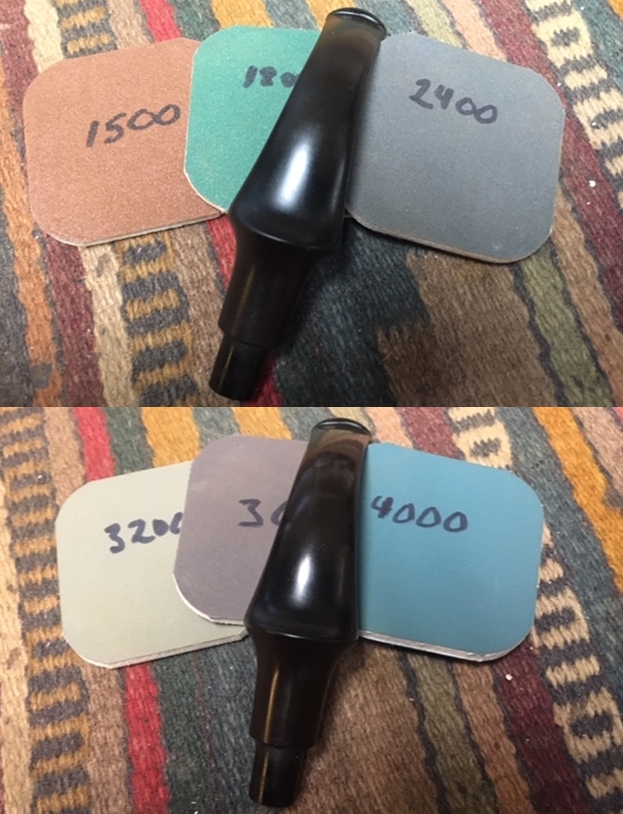
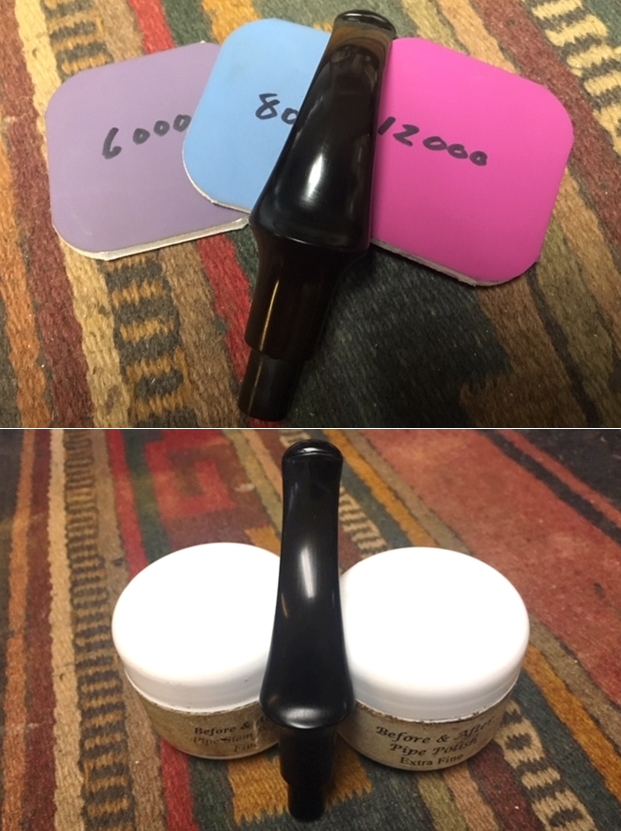
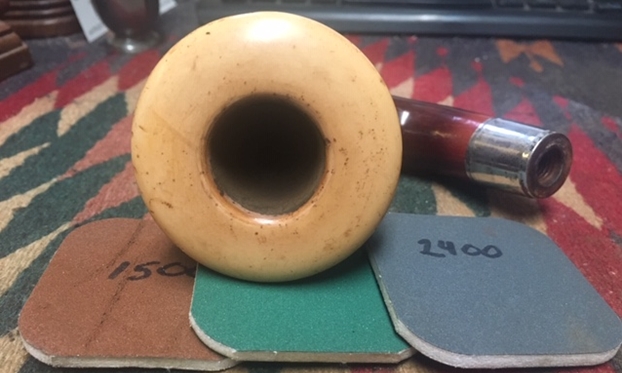
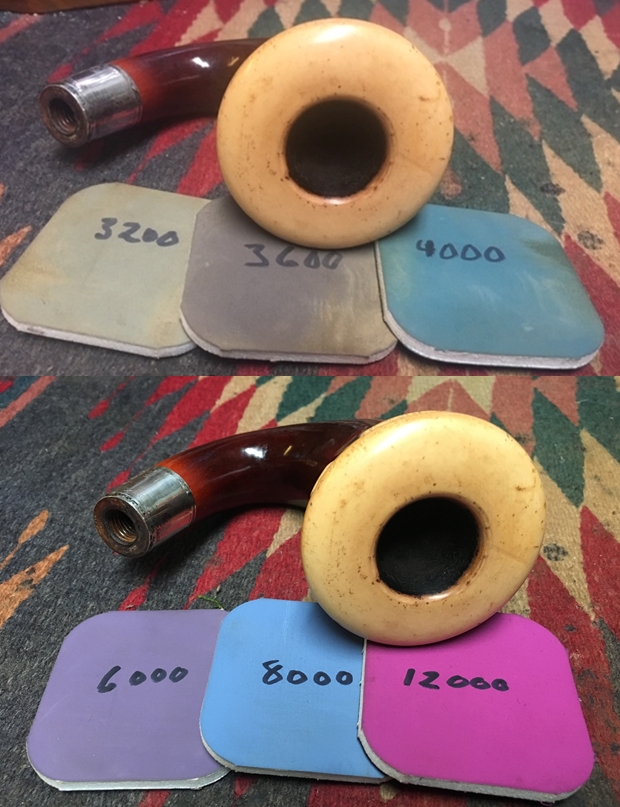
The bowl was then soaked in Sea Salt and alcohol. While the bowl was soaking, I soaked the stem in a mild Oxy-clean solution, with a dab of heavy grease on the rondell. Following the soak, I used a bristle brush and alcohol to clean the shank. The stem was mounted and I used 800, 1500 and 2000 grade wet paper to remove the oxidation. This was followed by 8,000 and 12,000 micromesh sheets. The stem was then buffed with White Diamond and Meguiars Plastic Polish.

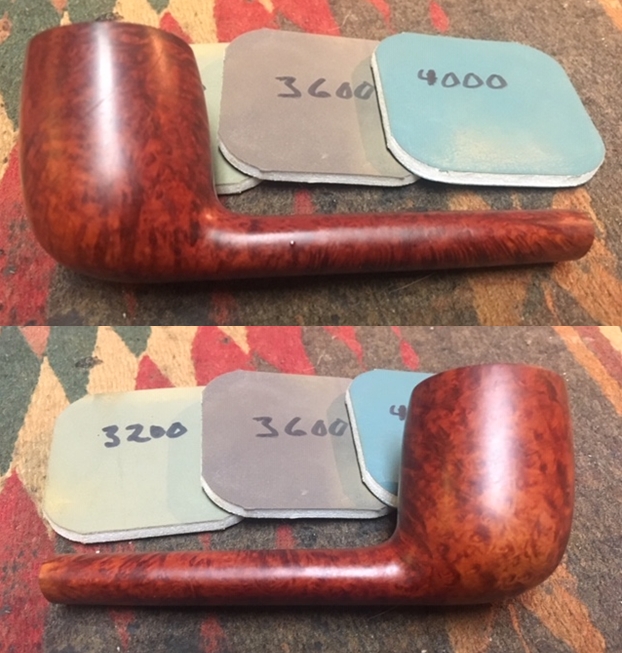
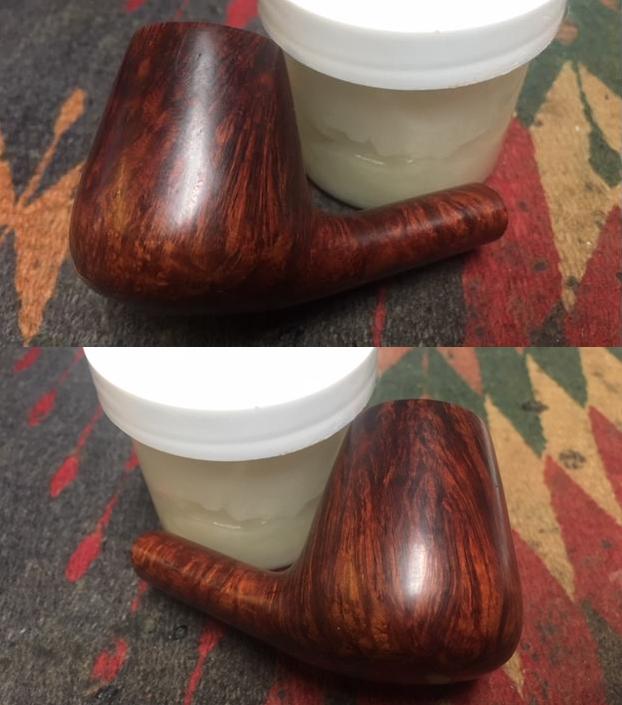
The bowl was buffed with White Diamond and several coats of Carnuba wax.

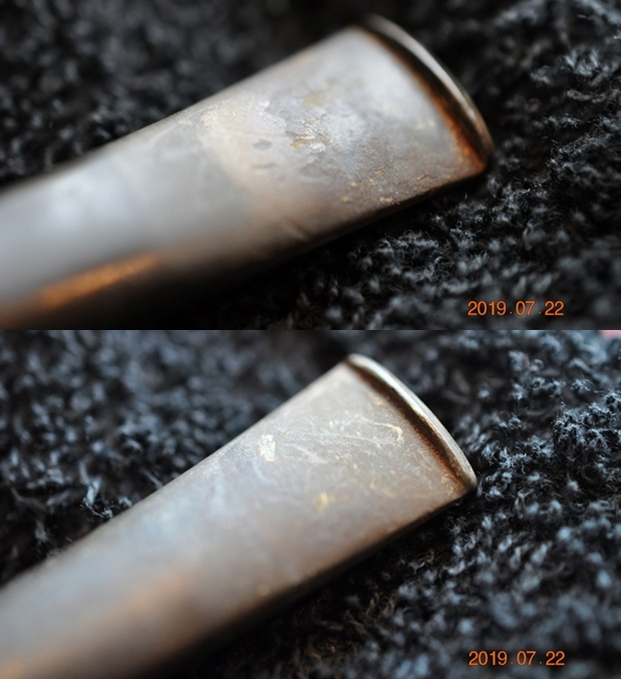
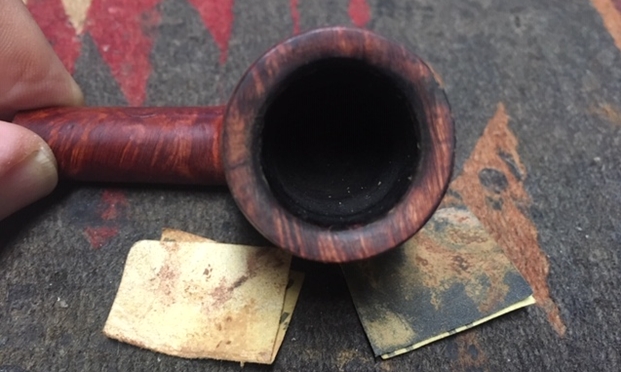
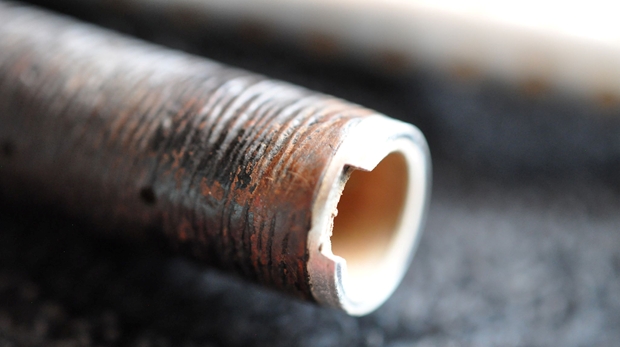
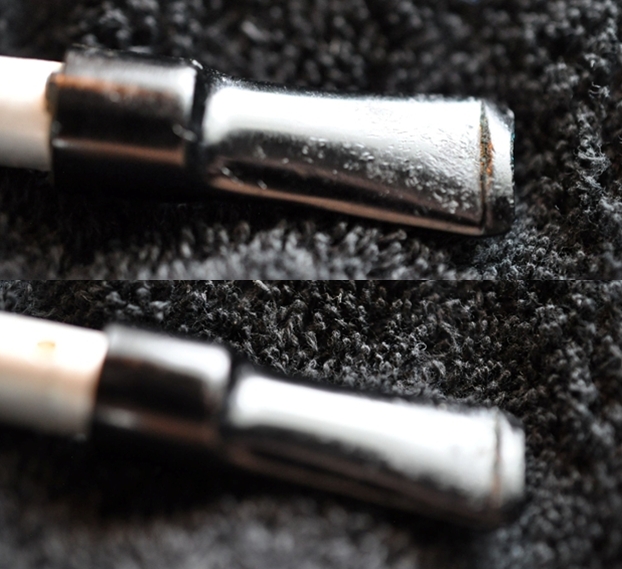
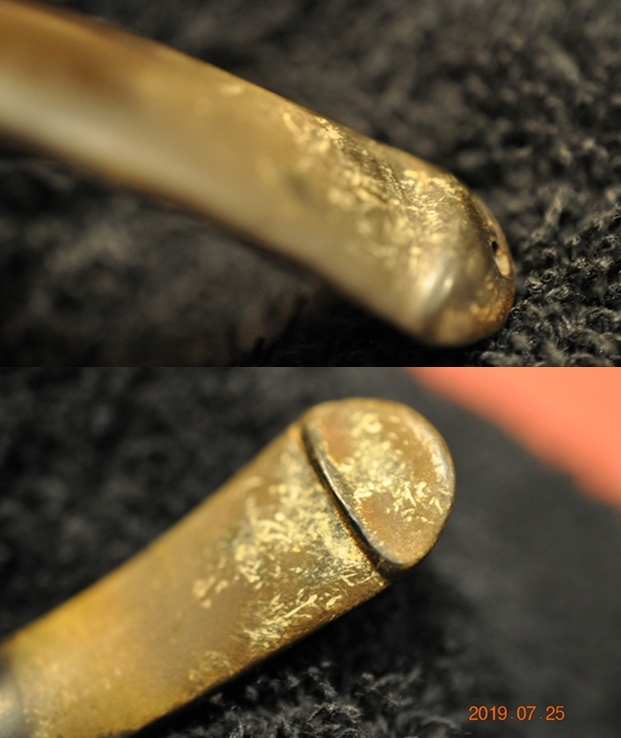
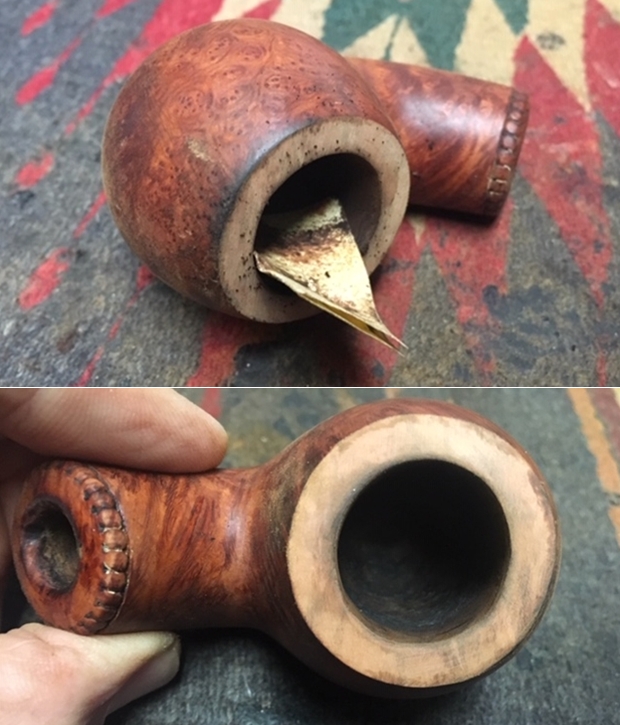
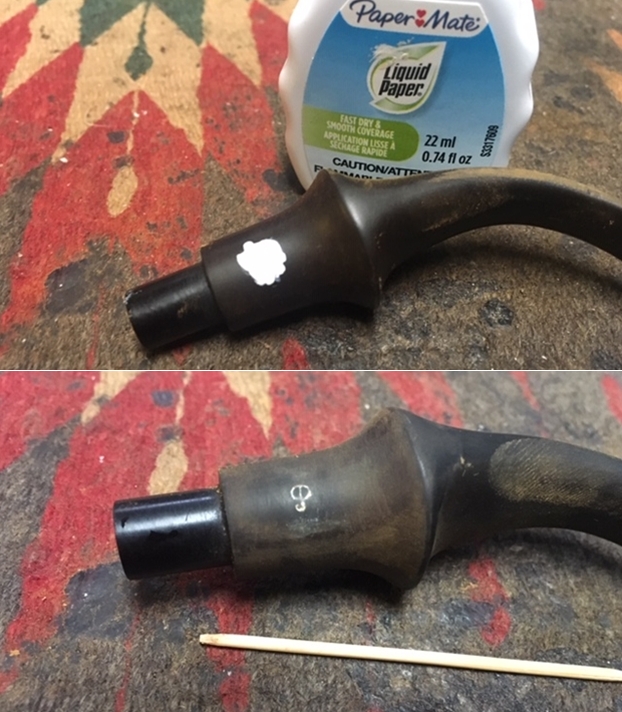
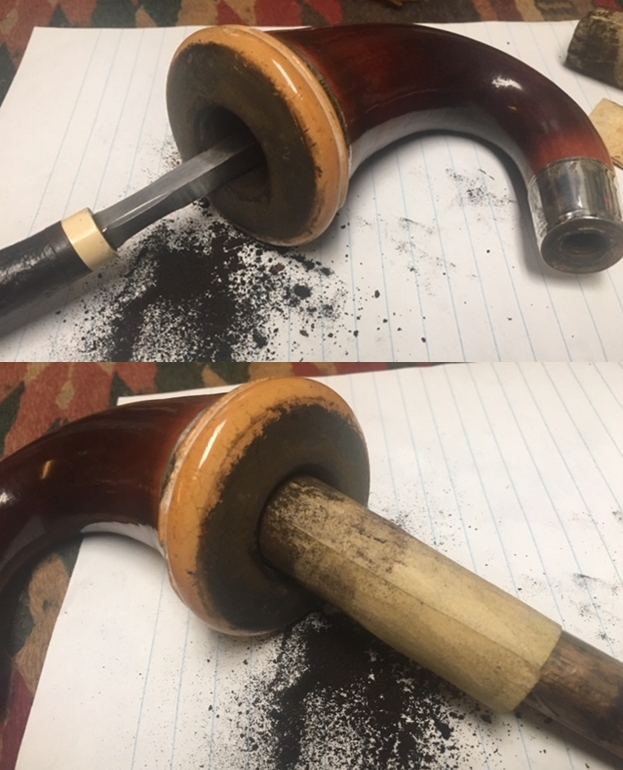
I found one curious item in the stem. While running thru a bristle cleaner soaked in alcohol, it seemed to hang up in the stem. On closer inspection, I could see metal inside the stem. I used a series of drill bits to work the metal out of the stem. It appeared to be perhaps a stinger that had broken off inside. I’ve never seen a GBD with a stinger, so I assume a previous owner may have tried to insert some homemade remedy. Thankfully, it came right out.

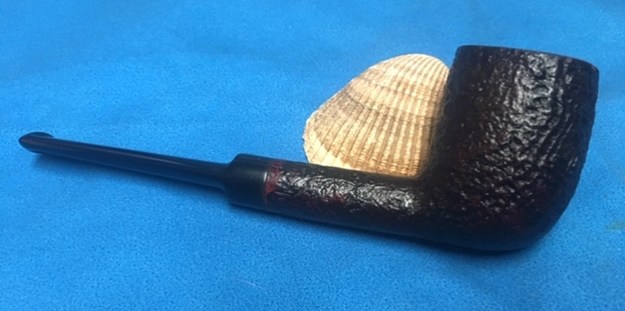
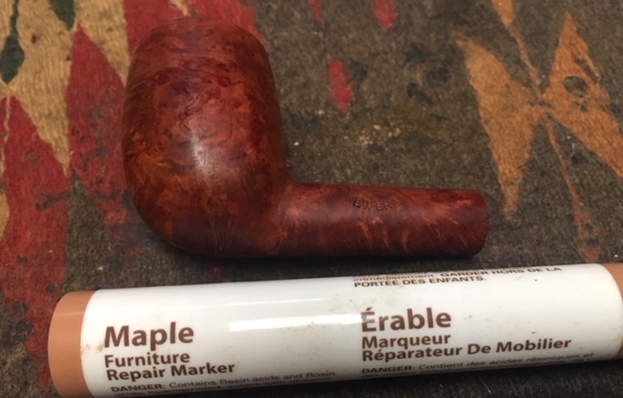
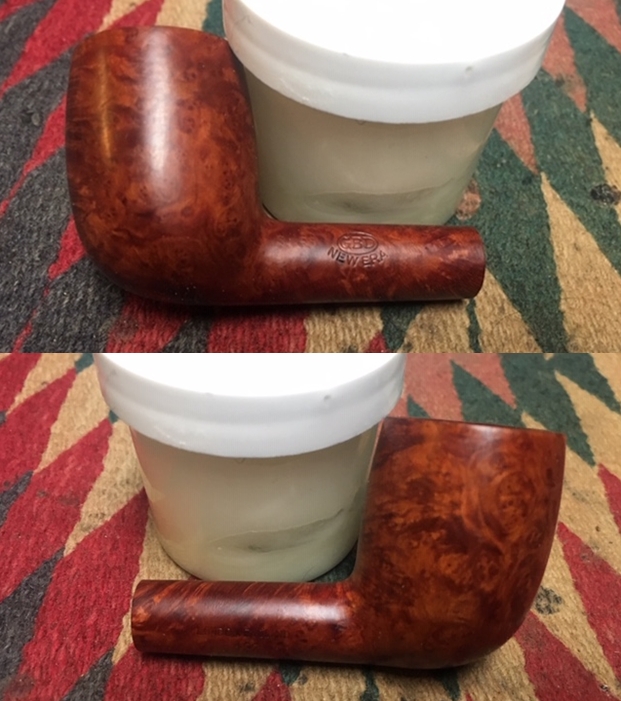
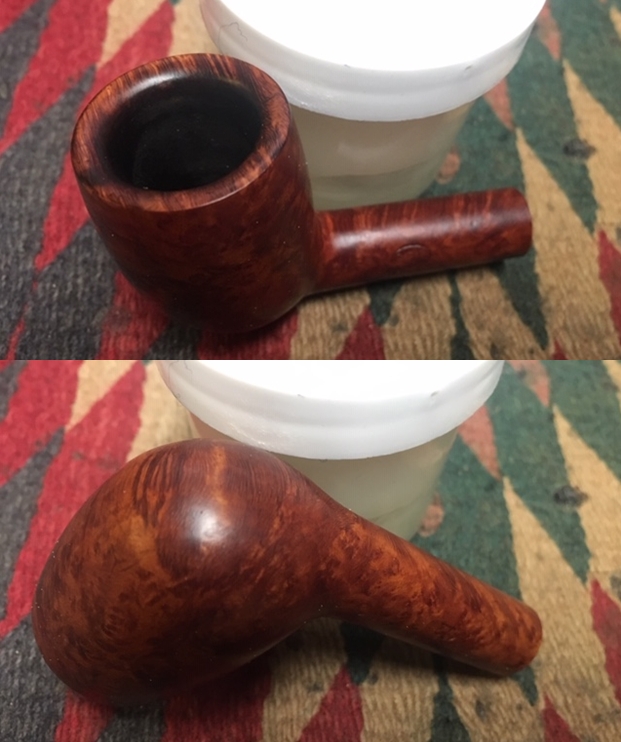
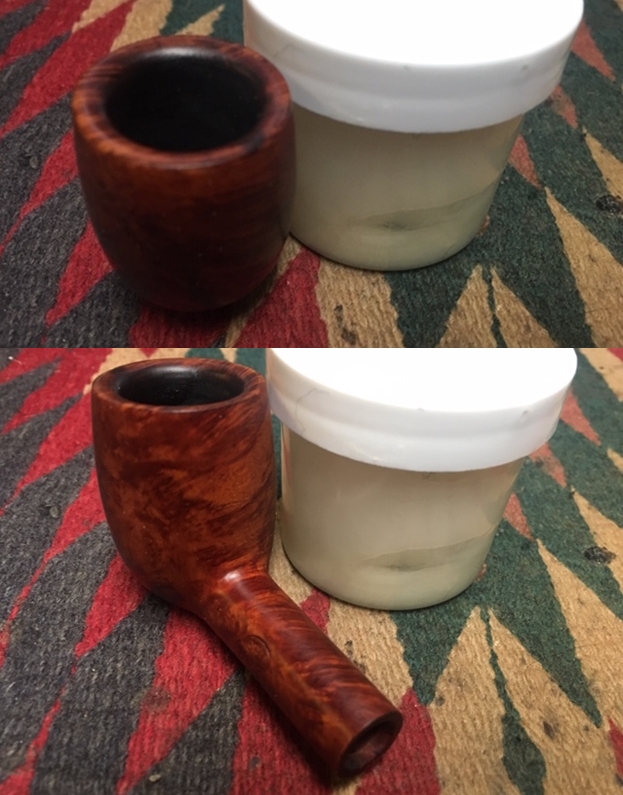
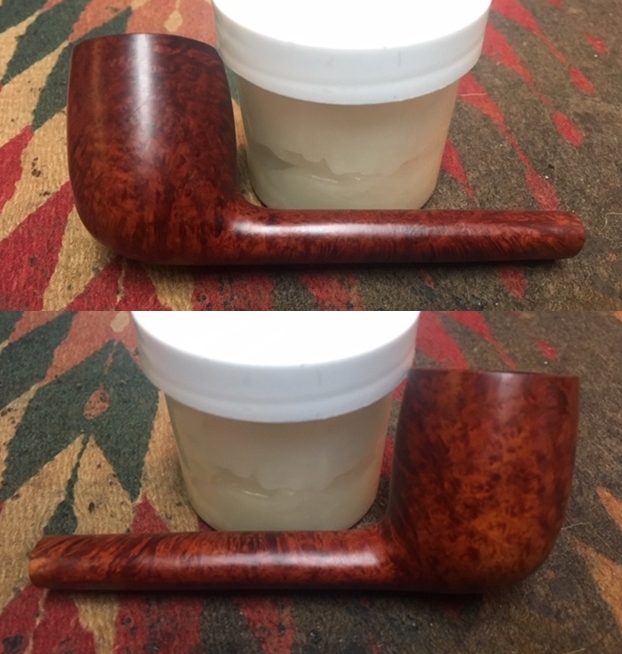
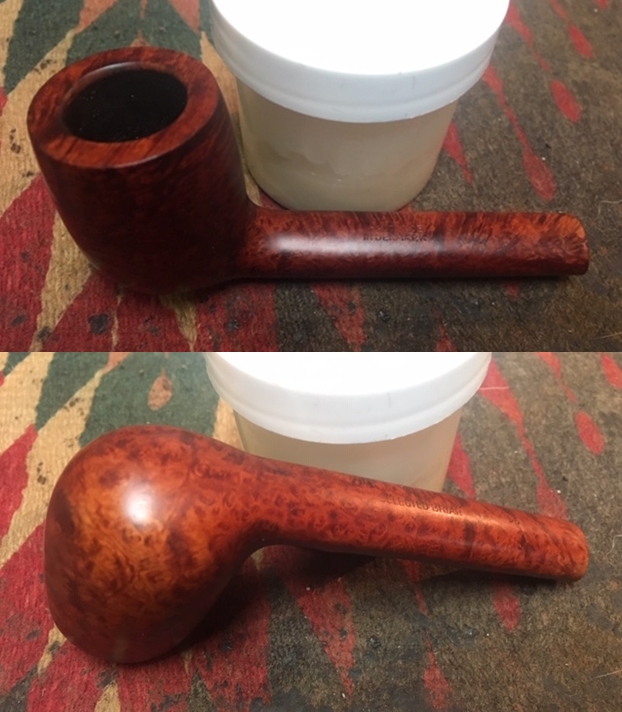
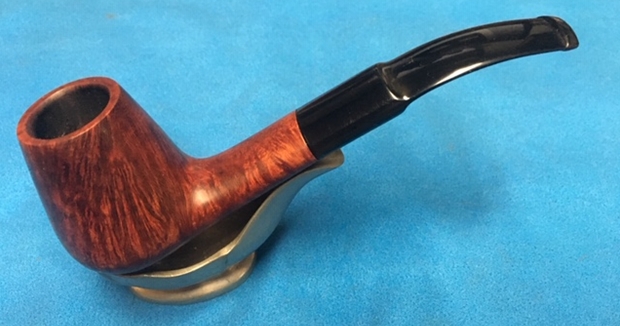
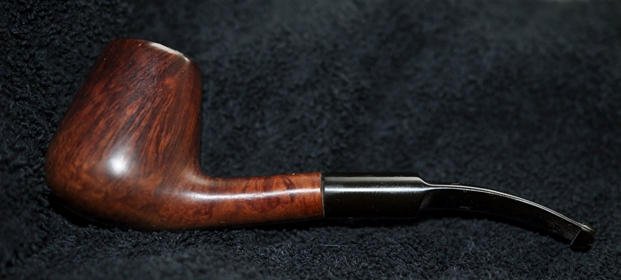
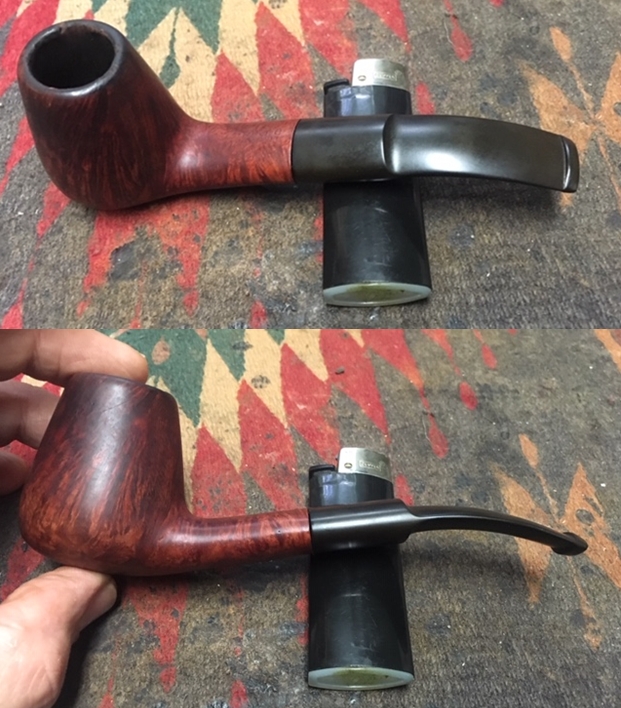
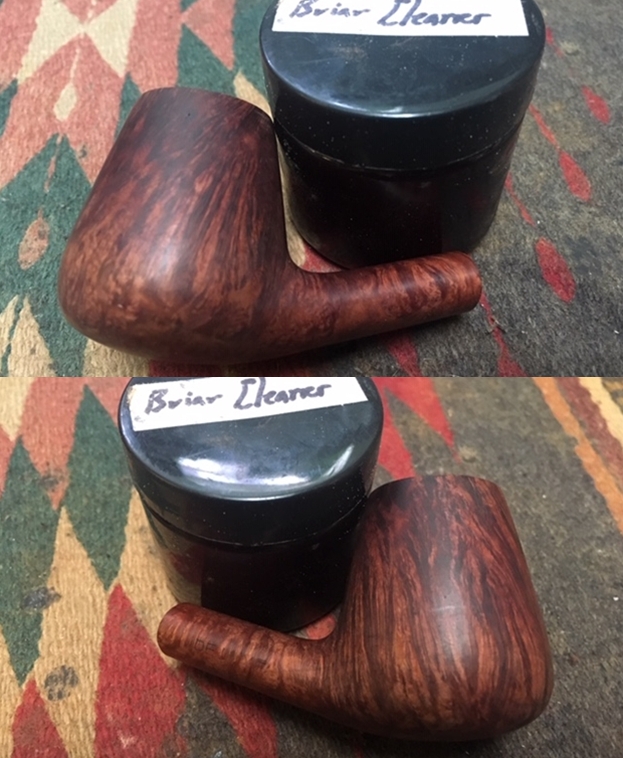
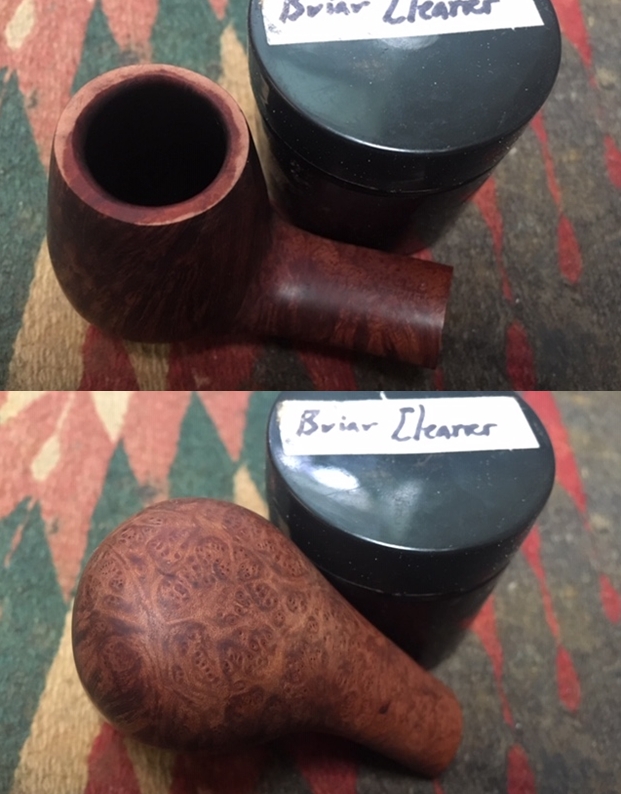
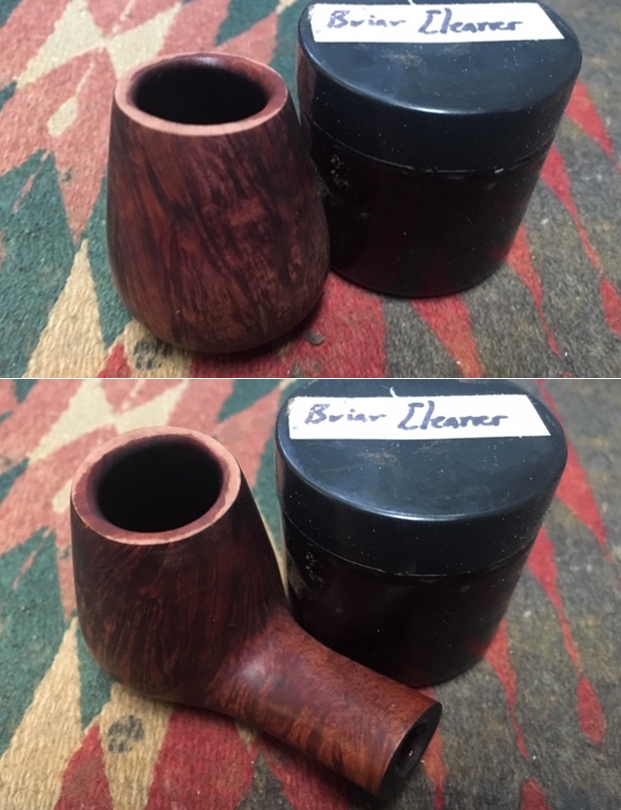
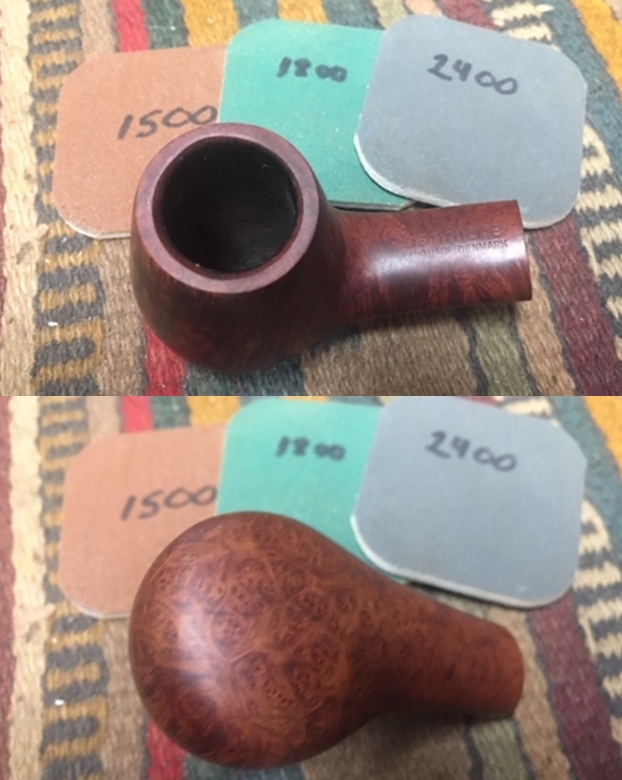
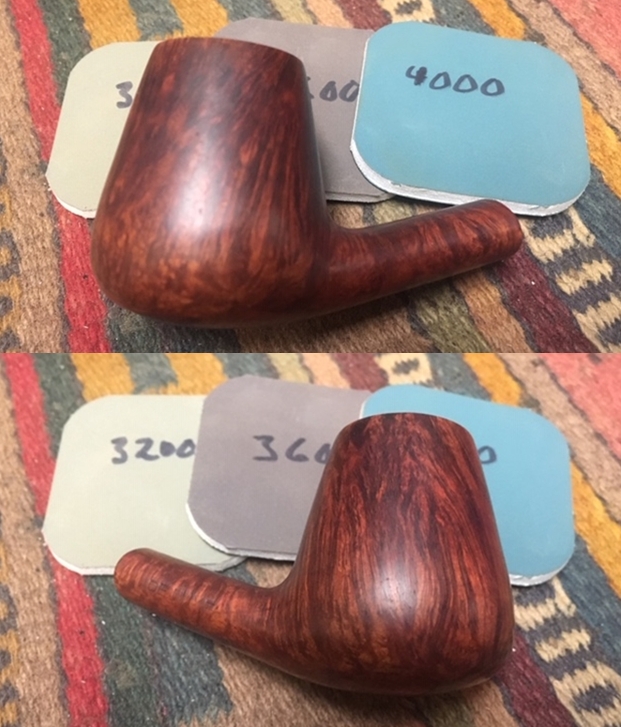
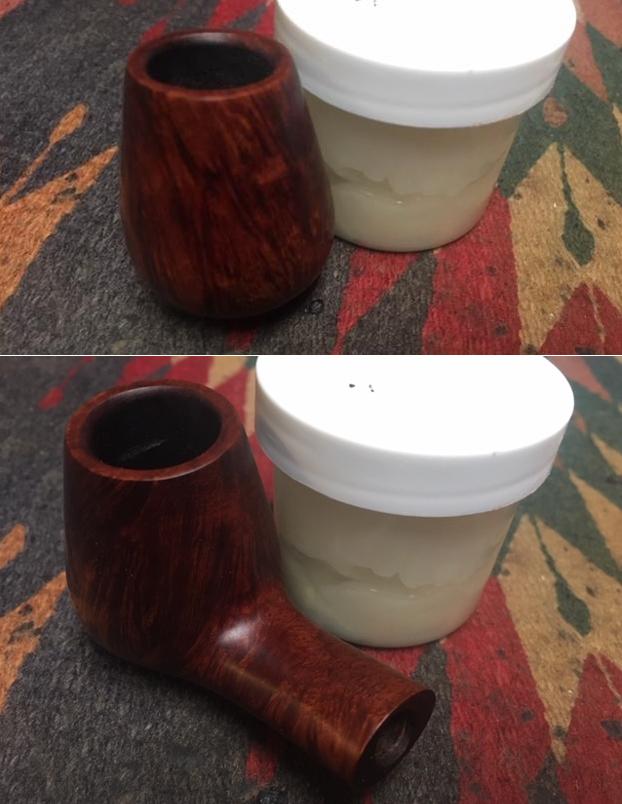
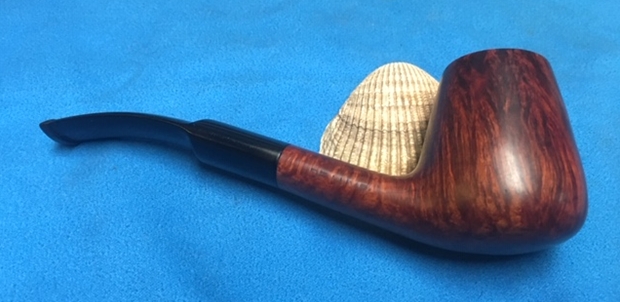
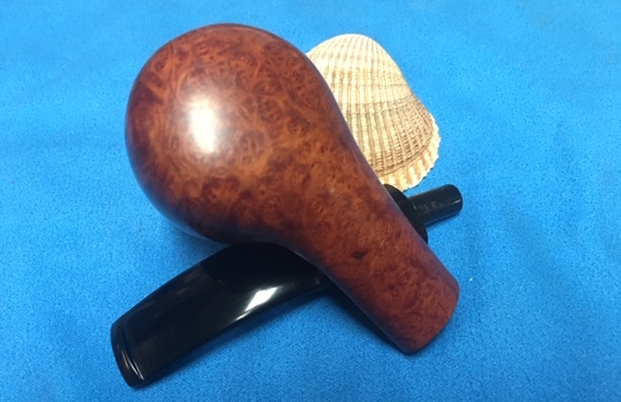
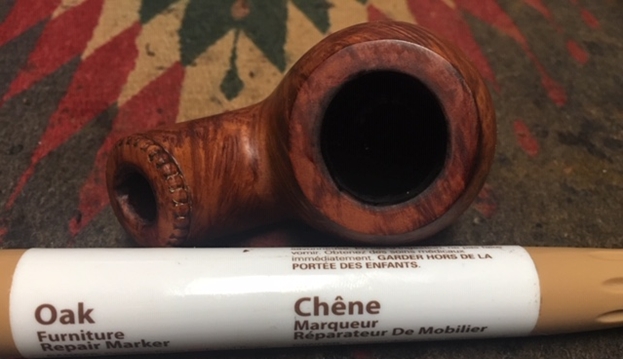
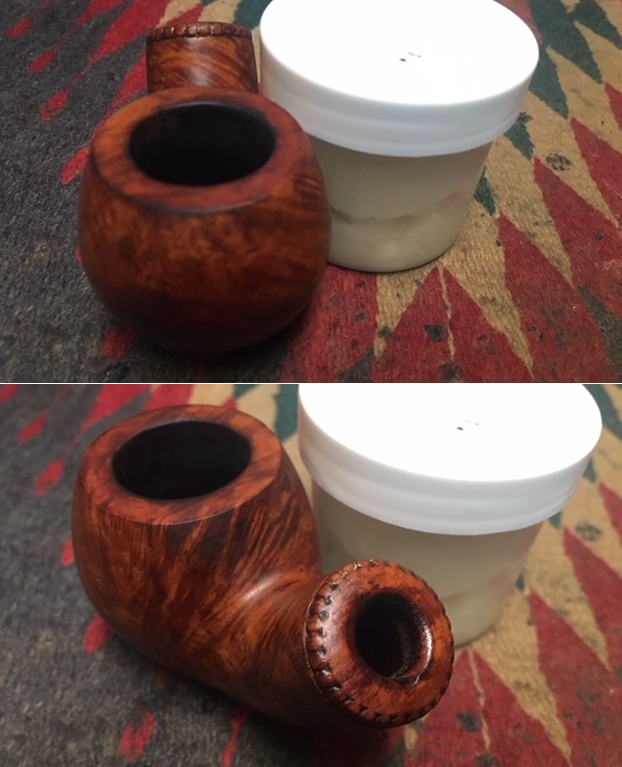
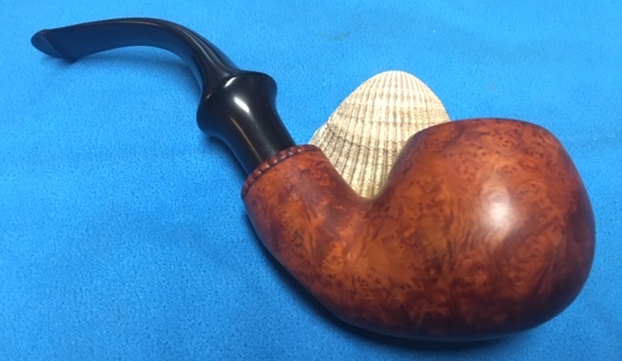
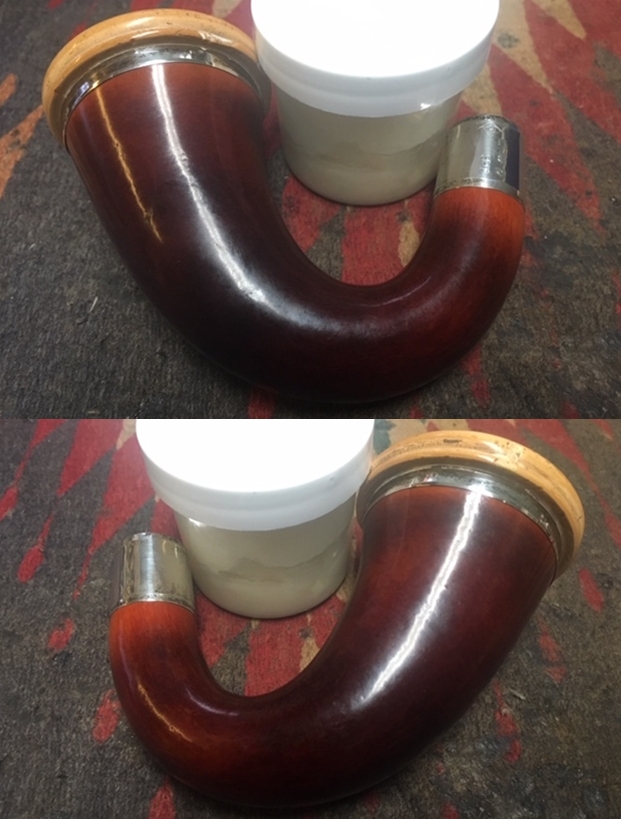
Below is the finished pipe.

?

Breathing New Life into a BBB Gourd Calabash with an Ambroid Stem


Blog by Steve Laug

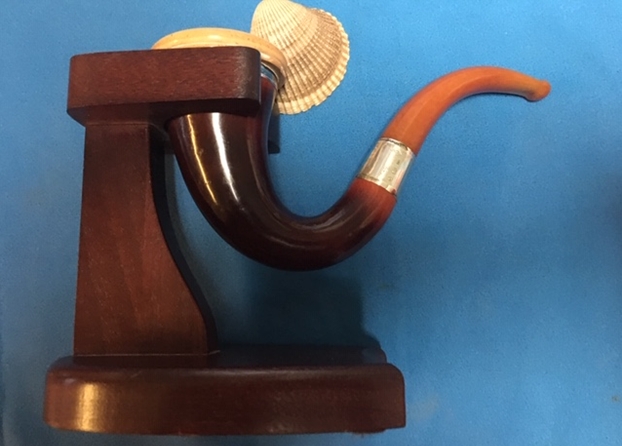
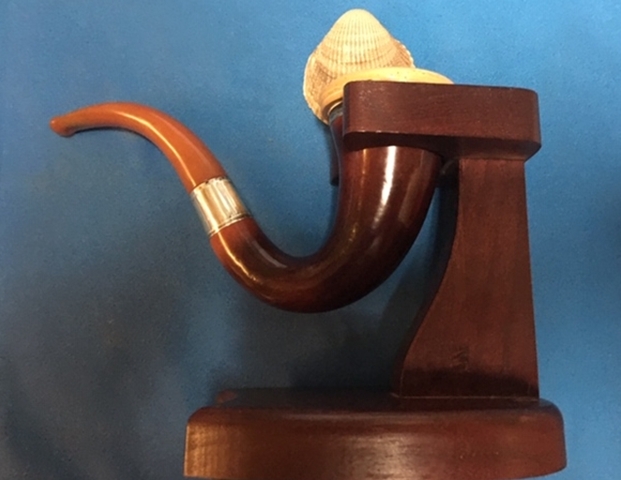
Not long ago I received an email from a lady named Pat on Vancouver Island about some pipes that she had that had belonged to her late husband as well as an old Gourd Calabash with a Meerschaum bowl that had belonged to her Great Grandfather. She sent me photos of the pipes and they were definitely interesting to me. There were some John Calich pipes and three other lower end pipes from her late husband and the cased Gourd Calabash. I was hooked and ready to be reeled in! After a few email exchanges we made a deal that was acceptable to us both. The payment was e-transferred to Pat and the pipes were shipped to me in Vancouver. Pat sent me two photos of the pipe before she shipped them to me.

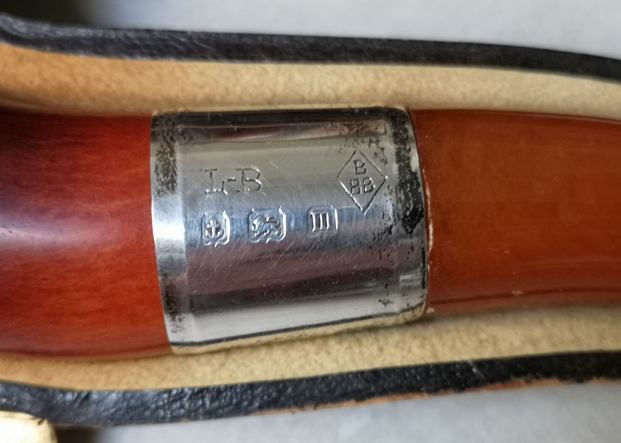
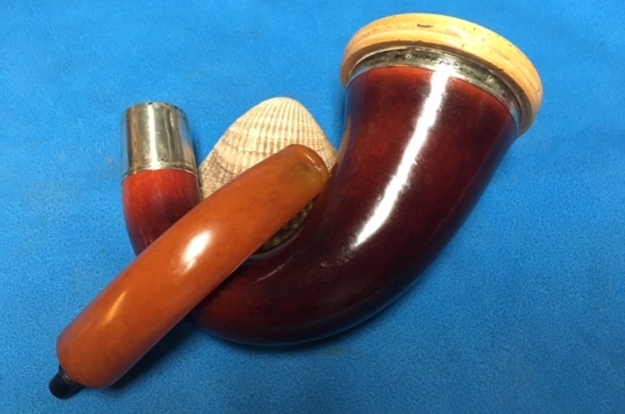
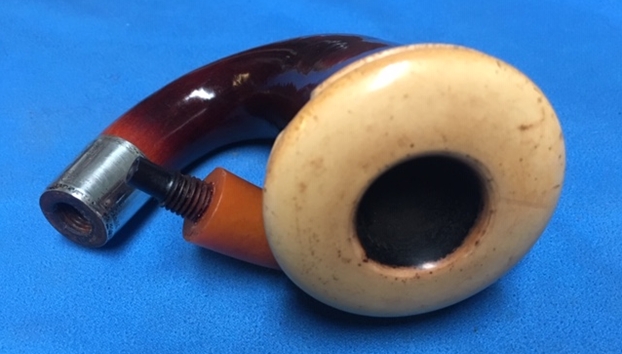
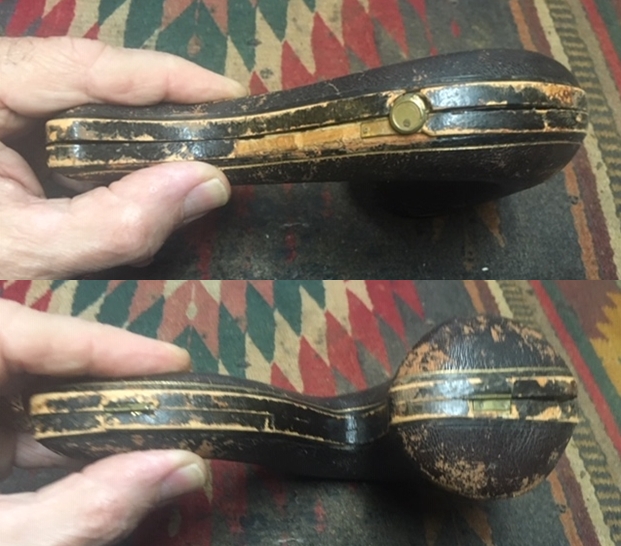
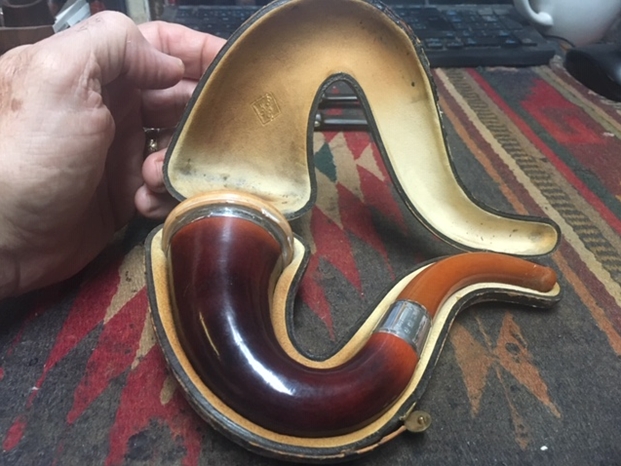
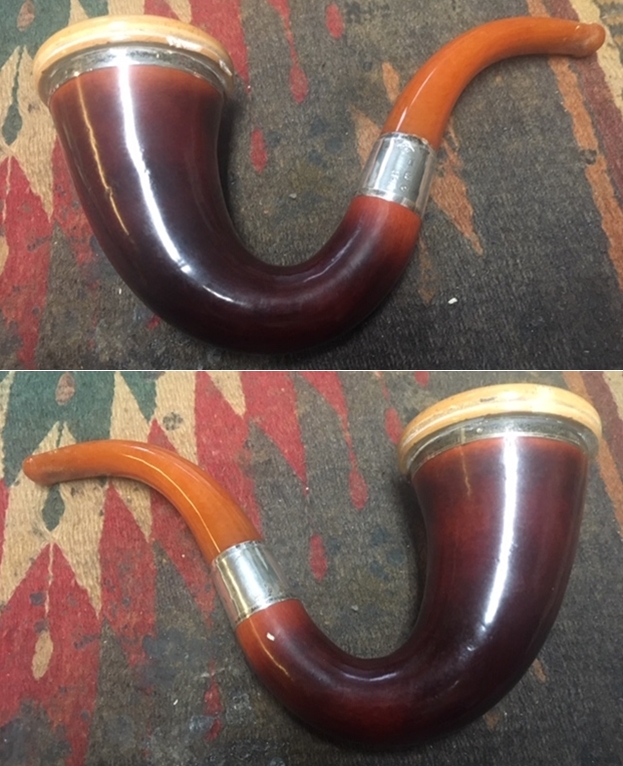
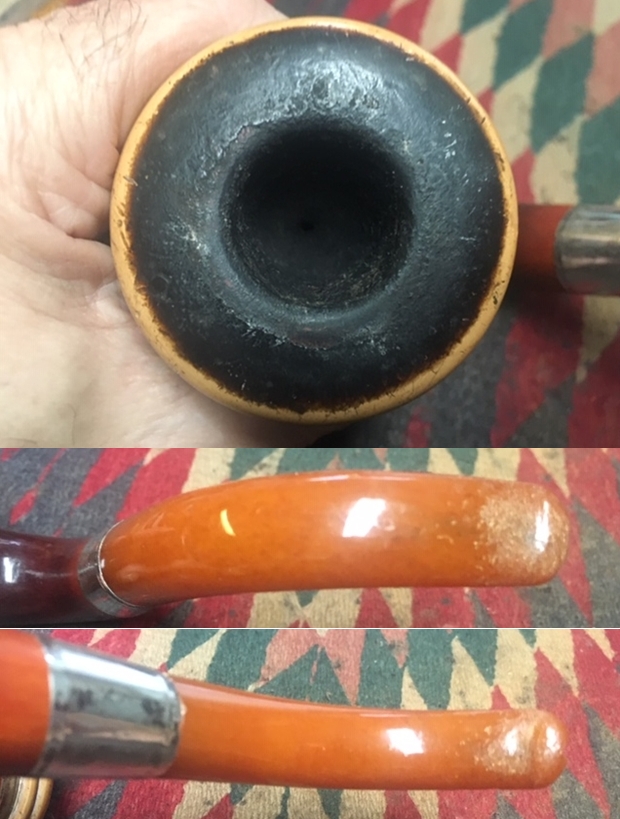
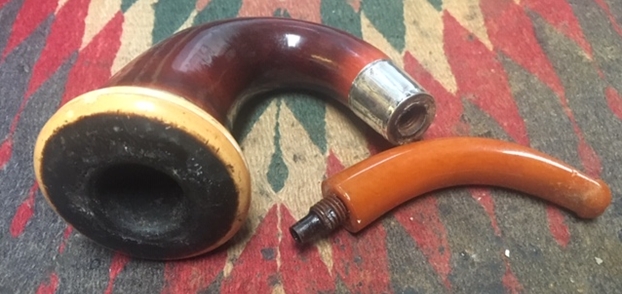
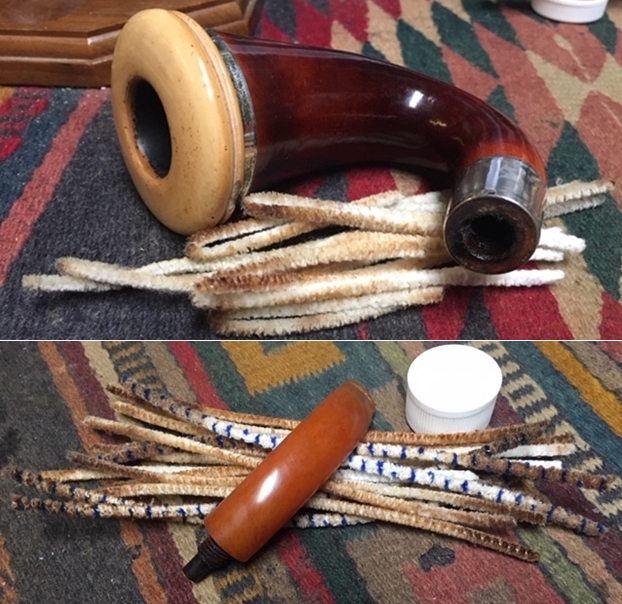
The first photo shows the cased pipe. The Gourd Calabash was a BBB as can be seen by the triangle stamped in gold on the cover of the case and the silver band in the photos below. The Gourd had some beautiful patina and had turned a rich reddish brown colour. There was a silver band on the shank with what looked like hallmarks. There was also a silver band around the top of the gourd under the meerschaum bowl insert. The bowl had a lot of colour and it had a ring around the meerschaum bowl. There were a couple of chipped areas on the lower ring of the bowl. The amber coloured stem looks intact and does not show any obvious damage. The colour of the stem and the cloudiness of the material makes me wonder if it truly amber or some form of ambroid. I will know soon enough.

The second photo is a close up that shows the silver band on the shank of the pipe. It is in good condition and lightly tarnished. The stamping is very readable and it clearly showed the following marks: L-B and BBB in a triangle. There were also three hallmarks on the band. The first was an Anchor (which is the symbol for the Birmingham Assay Office). The second was a rampant lion (which is the symbol for .925 silver). The third one was the lower case letter “m” (which is the date letter that I would use to date the pipe as I worked on it). I did some searching through the British Silver Hallmark Charts that are online. I went through them comparing them to the “m” stamp on the band. I found two possible dates for the stamp. On the shape charts that I use most of the time when I am looking for information on the date stamps there was a lack of clarity as to whether the “m” stamp pointed to 1853 or to 1911. I wanted to see if I could get any clarity from others who were familiar with silver bands on BBB pipes.

I sent a quick message to a Facebook Messenger Group that I am part of that includes others who collect BBB pipes. I posted a picture of the band with the hallmarks that I included above on the group. Both Paresh Deshpande and Victor Nadeo immediately answered that the pipe was from 1911 from the charts that they use. I responded with my question as to the shape of the cartouche (the frame) around the “m”. Pretty quickly after that Victor sent me the link to the chart that he uses and included a screen capture of the list from 1900-1917 shown to the left (http://www.silvercollection.it/englishsilverhallmarksBIR.html).

I quote Victor’s response: I think the frame (cartouche) is only slightly erased. But I’m pretty sure it’s really 1911. They’d hardly miss anything like that, as they passed an Assay Office, such a serious government agency. And in view of the frame around the other hallmarks, I think they leave no doubt that it’s a 1911.

That set the date for me. It also worked well with the L-B stamp which stood for Louis Blumfeld. That L-B stamp fits that time frame perfectly. Now I knew that the pipe was hallmarked to 1911 and that it was an old timer. I could not wait to see it once it arrived in Vancouver.

While I waited for Canada Post to deliver it I did a bit of reviewing on the history of the brand from Pipedia (https://pipedia.org/wiki/BBB). I quote some of the pertinent parts of the article below:

The initials once stood for Blumfeld’s Best Briars after Louis Blumfeld, who took over the management of the Adolph Frankau Company in 1856. After his death, the BBB gradually became known as Britain’s Best Briars. Soon to be the oldest English trademark in current use and the first pipe ever to have a registered trade mark. “Britain’s Best Briars”, often called BBB, is one of the oldest brands still in production and has always been the most popular foreign brand in Denmark. Earlier pipes included a metal rondel with a diamond shape including BBB imbedded in the stem top, and later post-Cadogan went to a stamped on logo, similar to the GBD pipes…

…Adolph Frankau & Co Ltd In 1847, Adolph Frankau arrived in London and quickly understood opportunities that the market of tobacco presented, in full expansion. He created the company “Adolph Frankau & Co” and became an importer of meerschaum pipes and supplies in connection with the tobacco. It takes under its wing young a 14 year old boy, Louis Blumfeld. The business thrives quickly until the death of Adolph Frankau in 1856. His widow prepares to sell the company.

Enter in scene Thomas Carlyle (1795-1881), author of “Hero and worship of the heroes”. This last advises with Mrs. Frankau not to sell, but to entrust the future of the company to the hands of the young person Louis Blumfeld, then 18 years old. Carlyle was to have a very high opinion of the Louis young person, and this confidence was justified by its assumption of responsibility of the business, its enthusiasm and its inexhaustible energy. Louis realizes quickly, like others, great potential of briar, from which the interest comes to be recognized.

Louis Blumfeld develops from the very start of important international trade, with a particular success in Canada, in Australia, in Zealand News, India and in the extrème Is Europe, in Switzerland and, with a special mention, in Denmark…

I took out my Briar Books Press reproduction of the Adolph Frankau & Co. BBB Catalogue XX from 1912 and did a bit of reading to see what I could find out from the source. Sure enough I found the pipe in the catalogue. It is marked as a Style X Genuine South African Calabash Pipe. Underneath the print of the pipe it reads First Quality, Picked Bowls, Push Cups, Best Ambroid Mouthpieces, Hall-Marked Silver Mounts in best Leather Case. You can see the two rings around the bowl insert, the silver band around top of the gourd and the silver band on the shank. It is also clear that the stem is marked as an Ambroid mouthpiece. The leather case is the same one as the one I am working on with the BBB logo on the top side of the case and the same latch setup as the case I have.I now had a verification that the L-B stamp stood for Louis Blumfeld as I expected. He took over the company at the death of Adolph Frankau in 1856. He took the brand to its zenith as BBB (Blumfeld’s Best Briars and later Britain’s Best Briars). That time table fit the dating of this pipe very well. The 1912 Pipe Catalogue has the same pipe for sale. Now it was time to work on the pipe itself.
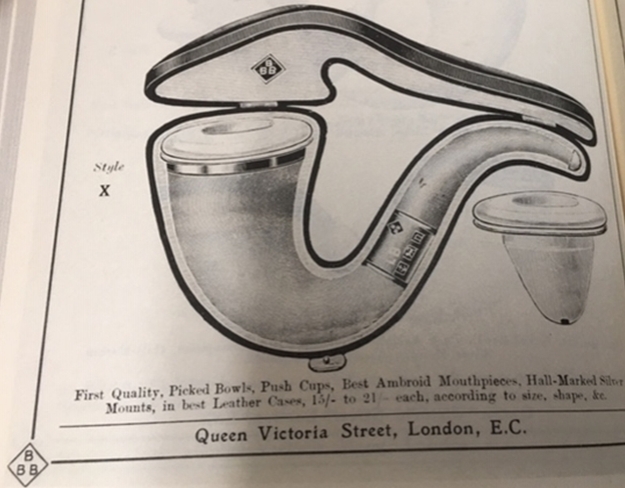
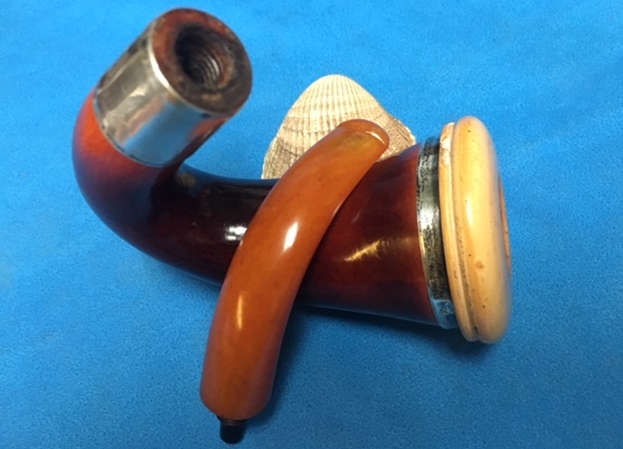
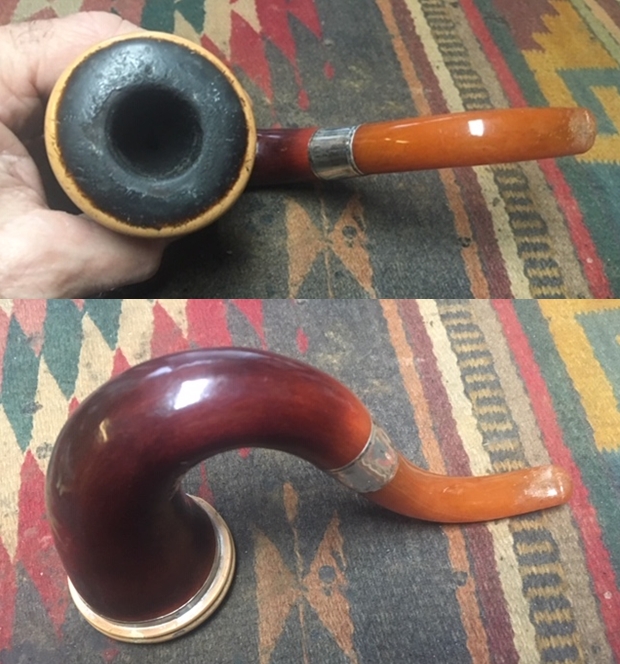
I brought the worn leather clad case to my work table and took some photos of it before I opened it and took out the pipe. It was worn but well made. Some of the leather was peeling but the brass hinges on the back edge and the flip clasp on the front were all in good order. I took photo of the unopened case to give you a sense of my own expectancy. I opened the case and took a photo of the pipe in the case. You can see the gold embossed stamp on the inside of the case – a triangle with BBB against the cream coloured lining.I took the pipe out of the case and did a quick assessment of the condition of the pipe. The gourd calabash was in excellent condition and showed a patina of solid use for the 100+ years that it has been in Pat’s family. The silver band around the top of the gourd and the band on the shank are clean but oxidized. The one around the rim top is more oxidized than the shank band. I think the shank band was polished for the photo that Pat sent me. The edges of the meerschaum cup looked very good except for two chipped areas on the bottom ring of the bowl. The upper edges of the bowl appeared to be in very good condition. The stem is in good condition other than tooth marks and chatter on the top and underside near the button. The rest of the stem is in excellent condition. As I examine the stem I am becoming convinced that it may not be amber.    I took photos of the top of the bowl. There was a thick cake in the bowl that overflowed onto the rim top. It appears to me that the bowl was never cleaned during life of the pipeman who held in trust. The buildup of lava on the rim top was very thick and extended to the downward curve of meer cup on the edges. You can also see the tooth marks on the top and underside of the stem.I took some close up photos of the bowl and rim to show the thickness of the cake and the lava on the rim top. The lava top was thick and you can see the layers and flakes on the top photo below. I also took close up photos of the stem to show the tooth marks and chatter in the surface of the stem. There is also some serious wear on the button edge. The look of the damage on the stem surface made me more uncertain that it was amber. I unscrewed the stem from the shank and took a photo. The threaded bone tenon was anchored in the stem and screwed into the shank. The threads tenon was in excellent condition even though they were darkened from the tars of the tobacco.Once I had the date figured out and had a chance to look the pipe over I wrote a quick note to Pat and asked her if she would be willing to write a brief piece on her Great Grandfather. She was quick with her answer and sent me brief sketch, a photo and an article about her Great Grandfather. I include those now.
Hi Steve,

My great grandfather’s pipe was always a mystery. No one ever smoked it after he died, yet it got passed down through the generations. I always imagined it had magical powers like Sherlock Holmes’s pipe. When I was young, it sat beside my bed as I read The Hound of the Baskervilles. It has journeyed with me until your received it.

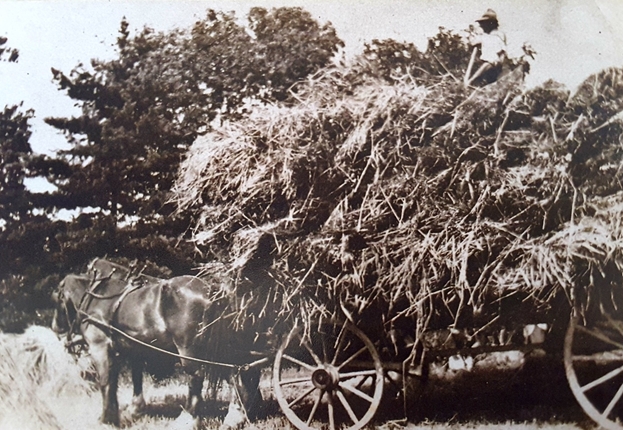
My great grandfather, John Milne Senior, immigrated to Canada from Scotland around 1875. He had a good sized farm on the edge of Toronto, Ontario in Weston (now a suburb), where he farmed and raised prize winning livestock, and raised 6 children. He was generous with extended family and neighbours supplying food during hard times in depression, and fresh garden produce for the local hospital during Second World War.

Attached is the only photo I have of him on top of his hay wagon on the farm. Also attaching an article written during the Second World War with details about the air show beside his farm, and his and my grandmother’s first flights in their 80’s. From all accounts he was a good hearted man that didn’t shy away from adventure.

Cheers,

Pat Now that I had a pretty clear picture of John Milne Senior I was ready to start working on his pipe. As noted above in Pat’s email the pipe had been sitting unsmoked since his death. It was time to bring it back to life. I carefully reamed the bowl with a Savinelli Fitsall Pipe Knife. I scraped the cake back to the bare walls. I sanded the walls with a piece of dowel wrapped with 220 grit sandpaper to smooth out the interior of the bowl.I carefully scraped the rim top with the edge of the Savinelli Fitsall Pipe Knife and a sharp pen knife. It took a while to scrape back the cake until I got to the meerschaum cap. I followed that up with a 1500 grit micromesh sanding pad to remove the remaining bits that were left on the top of the rim.  I scrubbed the cap of the bowl with Before & After Briar Cleaner. I have used it in the past on meerschaum and found that it does a great job removing the grime but leaving the patina in good condition. I polished the cap and edges of the meerschaum bowl with micromesh sanding pads – wet sanding it with 1500-12000 grit pads. Each successive grit pad gave the meerschaum finish more of a shine. There were some nicks and scratches in the meer that I decided to leave as they are fitting of a pipe of this age. I rubbed the Gourd Calabash bowl down with Before & After Restoration Balm. I worked it into the surface of the gourd with my fingertips to clean, enliven and protect it. I let the balm sit for a little while and then buffed with a cotton cloth to raise the shine. Mark Hoover’s Balm is a product that I have come to appreciate on a variety of bowls – briar, meer and gourd. I polished the silver on the rim of the gourd and the silver band on the shank with a jeweler’s polishing cloth until it removed the black tarnish that had built up around the silver. There are small silver brads holding the band around the top of the gourd.   With the externals cleaned it was time to work on the internals. I was not able to remove the meerschaum bowl so I left it in place and cleaned the gourd through the hole in the bottom of the bowl and up the shank. I used alcohol and pipe cleaners to remove the grime that was built up and worked on it until the cleaners came out clean and the gourd smelled fresh.The more I handled and worked on the stem the more I was certain that I was dealing with something other than amber. From the BBB Catalogue from 1912 I knew that I was dealing with Ambroid which is in essence manmade amber. My first thought was that the Ambroid was Redmanol so I turned Pipephil to have a look at that product to see if they made material for BBB (http://www.pipephil.eu/logos/en/logo-r3.html). I found in a note below the photos said that BBB used Redmanol stems. I have included a screen capture of the section on pipephil’s site.I also noted there that L&H Stern used Redmanol as well. I turned to an article on Pipedia about about LHS pipes (https://pipedia.org/wiki/LHS). I found a picture of the exact stem colour as the BBB that I was working on. I quote:
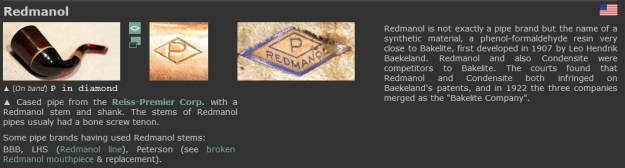
LH Stern is known to every important wholesaler and jobber in the country. LHS manufactures a complete line of briar pipes. Ginmetto wood pipes are also made, as well as Redmanol goods, the man-made amber. The first substitute for amber. Everything, even down to the sterling silver and other metal trimmings are made under one roof.
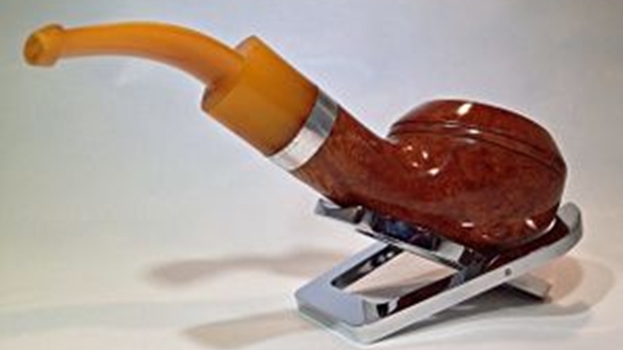
Example with Redmanol Stem (man-made amber)

I checked the dates on Redmanol and it was developed and was linked to an article on Bakelite on Wikipedia (https://en.wikipedia.org/wiki/Bakelite).

Bakelite (/ˈbeɪkəlaɪt/ BAY-kəl-eyet; sometimes spelled Baekelite) or polyoxybenzylmethylenglycolanhydride was the first plastic made from synthetic components. It is a thermosetting phenol formaldehyde resin, formed from a condensation reaction of phenol with formaldehyde. It was developed by the Belgian-American chemist Leo Baekeland in Yonkers, New York, in 1907.

Bakelite was patented on December 7, 1909. The creation of a synthetic plastic was revolutionary for its electrical nonconductivity and heat-resistant properties in electrical insulators, radio and telephone casings and such diverse products as kitchenware, jewelry, pipe stems, children’s toys, and firearms.

It seems that the inventor of Bakelite ended up merging his company with Redmanol who developed a similar product. I now knew that the stem I was working on was Redmanol/Bakelite. The more I worked on it the more apparent it became that I was dealing with a manmade product rather than natural amber.

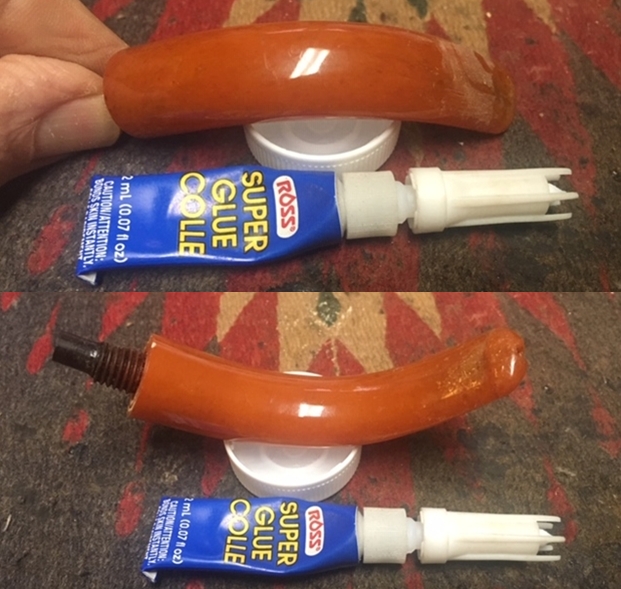
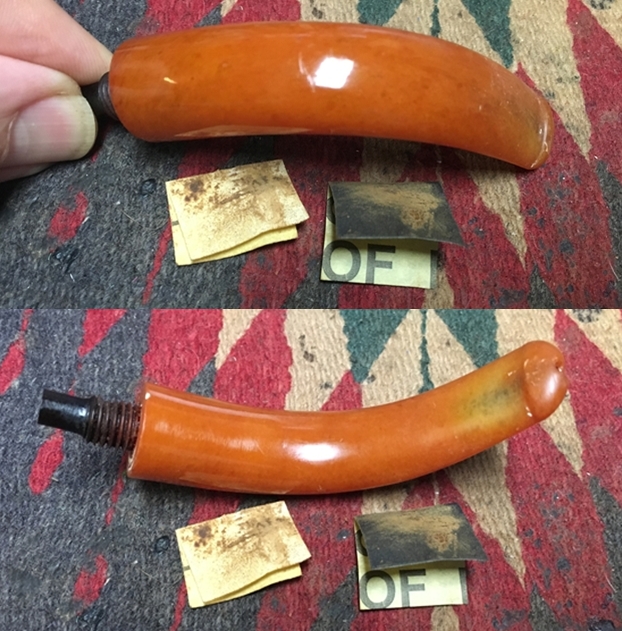
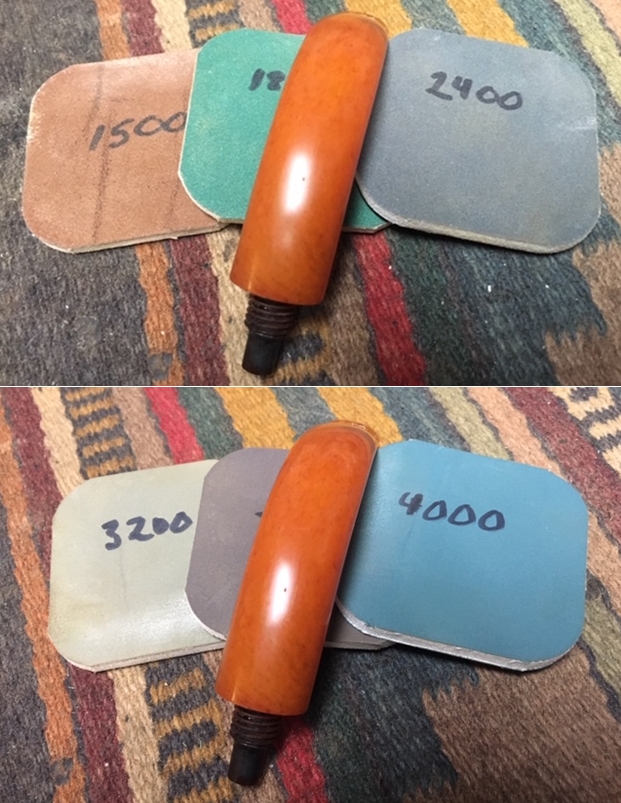
Armed with that information I turned my attention to the stem. I wiped the stem surface down with soap and water to remove any oils on the stem surface. I filled in the tooth marks with clear super glue and set the stem aside until the repairs had cured.When the repairs had cured I sanded them smooth to blend them into the surface with 220 grit sandpaper and polished it with 400 grit wet dry sandpaper.     You can see the discolouration of the stem material from the sanding. It is pretty typical of Redmanol and Bakelite stem… I went on to polish the stem with micromesh sanding pads – wet sanding 1500-12000 grit sanding pads. I wiped the stem down after each sanding pad with Obsidian Oil. I gave it a final coat of Obsidian Oil after the last sanding pad.  BBB pipes have always been a favourite of mine. I love firing up a bowl in one and I love feel and craftsmanship that went into each of them. This 1911 Gourd Calabash is a beautiful example of the craftsmanship that went into each of the pipes that came out of Louis Blumfeld’s BBB factory. These calabash pipes put together the gourd from South Africa with a meerschaum cup from Turkey and a stem supplied by Redmanol. It is truly an international pipe that ended up in Canada on the farm of a Scottish immigrant and lived far beyond his life time in the hands of his granddaughter who cherished it and cared for it. I am honoured to carry on the trust of this noble calabash. I put the bowl and stem back together.
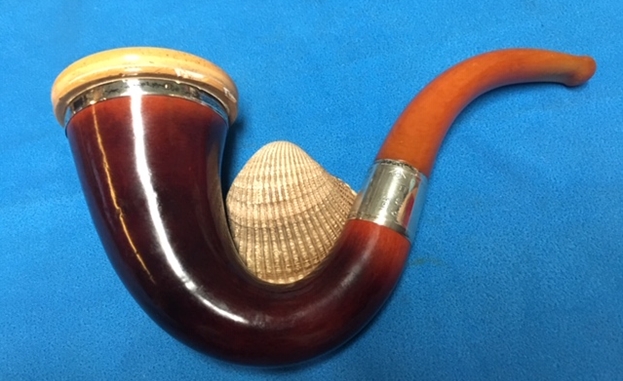
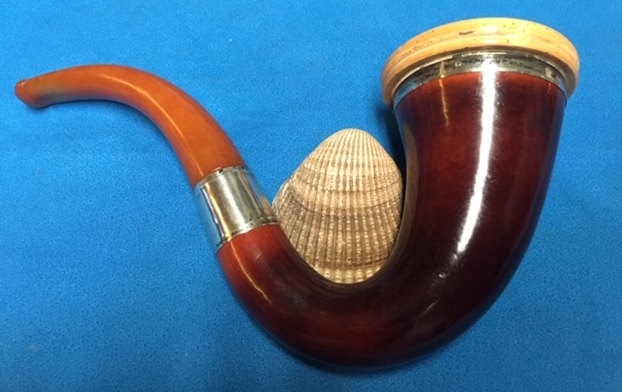
I carefully polished the bowl, the meer cap and stem with Blue Diamond to polish out the scratches in the briar and the vulcanite. I gave the gourd and stem multiple coats of carnauba wax. I buffed the pipe with a clean buffing pad to raise the shine. I hand buffed it with a microfiber cloth to deepen the shine. The pipe polished up pretty nicely. The rich reddish brown patina of the gourd, the shine of the aging meer, the silver band and ring and the Redmanol stem really popped with buffing showing the contrast colours of the pipe. The polished Redmanol stem went really well with the colours of the bowl. The rim top, though slightly damaged looked very good. This old BBB Gourd Calabash was another fun pipe to work on. It is an old timer that will hold a place in my BBB collection. The finished pipe is shown in the photos below. The dimensions of the pipe are Length: 7 inches, Height: 4 inches, Outside diameter of the bowl: 2 ¼ inches, Chamber diameter: ¾ of an inch. Thanks to John Milne Senior for his care of his pipe. Thanks to Pat for her care of it through the years and for passing it on to me to hold in trust as the next pipeman to own it. Thanks for reading this blog and my reflections on the pipe while I worked on it. This is an interesting estate to bring back to life. 
Working on a GBD Historic 115 Sandblast Billiard from Bob Kerr’s Estate


Blog by Steve Laug

I am continuing to work through Bob Kerr’s estate. The next pipe on the table is a GBD Historic Billiard, sandblasted bowl and shank and a smooth panel on the underside of the shank with the stamping. It is a Prehistoric with a black vulcanite stem. I am continuing to cleanup Bob’s estate for his family and moving them out into the hands of pipemen and women who will carry on the trust that began with Bob and in some pipes was carried on by Bob. In the collection there were a total of 125 pipes along with a box of parts. This is the largest estate that I have had the opportunity to work on. I put together a spread sheet of the pipes and stampings to create an invoice. I was taking on what would take me a fair amount of time to clean up. I could not pass up the opportunity to work on these pipes though. They were just too tempting.

I have been collecting and restoring GBD pipes for as long as I have worked on pipes. This one also has a beautiful mix of grain under the grime on the sandblast finish. It is quite beautiful! The pipe is stamped GBD in an oval over Historic on the underside of the shank. That is followed by stamping London, England and the shape number 115. It had a rich mix of black and dark brown stain that does not look too bad. There was a thick cake in the bowl with remnants of tobacco stuck on the walls. There was a lava overflow on the rim. The inner edge of the rim and top are dirty and had a thick lava coat. The edges appear to have a bit of burn damage on the front inner edge and the front outer edge has a bit of wear damage. It was a beautiful pipe that was dirty and tired looking. The stem was oxidized and calcified toward the end. Again, surprisingly did not have the tooth marks that I have come to expect from Bob’s pipes. Jeff took photos of the pipe before he started his cleanup work on it. Jeff took photos of the bowl and rim top to show the cake in the bowl and the lava build up on the edges of the bowl. It was thick and hard but hopefully it had protected the rim and edges from damage. There appears to be a little damage on the left front inner and outer edges of the bowl. Otherwise it looks pretty good. Jeff took photos of the sides and heel of the bowl to show the condition of the finish. You can see the beautiful grain through the sandblast – both birdseye and cross grain. The finish was very dirty.   Jeff took photos of the stamping on the smooth panel on the underside of the shank. The stamping was readable as you can see from the photos. On the underside it read GBD in an oval over Historic. That was followed by London, England over the shape number 115. On the left side of the saddle stem was an inlaid GBD rondel.Jeff took photos of the top and underside of the stem showing the tooth chatter, scratching and oxidation on the stem surface and wear on the edges of the button.       I turned to Pipedia’s article on GBD to see if I could find any information on the Historic line. I have heard of Prehistoric pipes but I have never seen one stamped Historic. It is another one that is a mystery in terms of the line. The article gives a lot in terms of the history of the brand (https://pipedia.org/wiki/GBD). There is nothing specific on the Historic line.

I also turned to the reference page on the site for GBD shapes and numbers and found the one for the 115 shape but it called it a Prince of Wales and said that the saddle stem had a 1/8 bend. To me a Prince of Wales is a Prince shape pipe and the one that I was working on is definitely a billiard (https://pipedia.org/wiki/GBD_Shapes/Numbers). The vagaries of clearly pinning down GBD Shapes is evident in this seeming contradiction. I also did a screen capture of the section and from the various Model information. That also was an interesting conundrum in that the pipe in my hand was not smooth but had a sandblast finish like the Prehistoric with a smooth beveled rim top. I combined the screen captures in one picture below (https://pipedia.org/wiki/GBD_Model_Information).  All of my research did not really help pin anything down. The shape number was a dead end contradiction as was the line description. I was dealing with a bit of anomaly – a Sandblast Billiard stamped Historic not Prehistoric with a straight thin bit stem. In terms of dating the pipe I can only guess that it fits in with the late 50s to late 60s of Bob’s other pipes but I cannot know for sure. Now it was time to work on the pipe.

With over 125 pipes to clean from Bob’s estate I took a batch of them to the states with me on a recent visit and left them with Jeff so he could help me out. Jeff cleaned the pipe with his usual penchant for thoroughness that I really appreciate. This one was a real mess and I did not know what to expect when I unwrapped it from his box. He reamed it with a PipNet pipe reamer and cleaned up the reaming with a Savinelli Fitsall Pipe Knife. He scrubbed out the internals with alcohol, pipe cleaners and cotton swabs until the pipe was clean. He scrubbed the exterior of the bowl with Murphy’s Oil Soap and a tooth brush to remove the grime and grit on the briar and the lava on the rim top. The finish looks very good with good looking grain around the bowl and shank. Jeff soaked the stem in Before & After Deoxidizer to remove the oxidation on the rubber. When the pipe arrived here in Vancouver for the second stop of its restoration tour it looked good. The stem still sported some deep oxidation but otherwise it was clean. I took photos before I started my part of the work. I took some close up photos of the rim top and also of the stem surface. I wanted to show what an amazing job Jeff did in the cleanup of the rim top. The rim top looks pretty good. There is some darkening on the top edge and a burn mark on the inner edge at the front. There is also some damage on the outer rim on the rim. The photos show a few small dents on the surface of the stem. You can also see the remaining oxidation on the stem surface.    I am going to keep posting the next paragraph because of the importance of protecting the stamping/nomenclature.

One of the things I appreciate about Jeff’s cleanup is that he works to protect and preserve the nomenclature on the shank of the pipes that he works on. The stamping on this one was very faint to start with so I was worried that it would disappear altogether with the cleanup. He was not only able to preserve it but it is clearer than shown in the earlier photos. I took some photos to show the clarity of the stamping. I have noticed that many restorers are not careful to protect the stamping in their cleaning process and often by the end of the restoration the nomenclature is almost destroyed. I would like to encourage all of us to be careful in our work to preserve this as it is a critical piece of pipe restoration!   Since this is another pipe Bob’s estate I am sure that some of you have read at least some of the other restoration work that has been done on the previous pipes. You have also read what I have included about Bob Kerr, the pipeman who held these pipes in trust before I came to work on them (see photo to the left). Also, if you have followed the blog for long you will already know that I like to include background information on the pipeman whose pipes I am restoring. For me, when I am working on an estate I really like to have a sense of the person who held the pipes in trust before I worked on them. It gives me another dimension of the restoration work. I asked Brian if he or his wife would like to write a brief biographical tribute to her father, Bob. His daughter worked on it and I received the following short write up on him and some pictures to go along with the words including one of Bob’s carvings. Once again I thank you Brian and tell your wife thank you as well.

I am delighted to pass on these beloved pipes of my father’s. I hope each user gets many hours of contemplative pleasure as he did. I remember the aroma of tobacco in the rec room, as he put up his feet on his lazy boy. He’d be first at the paper then, no one could touch it before him. Maybe there would be a movie on with an actor smoking a pipe. He would have very definite opinions on whether the performer was a ‘real’ smoker or not, a distinction which I could never see but it would be very clear to him. He worked by day as a sales manager of a paper products company, a job he hated. What he longed for was the life of an artist, so on the weekends and sometimes mid-week evenings he would journey to his workshop and come out with wood sculptures, all of which he declared as crap but every one of them treasured by my sister and myself. Enjoy the pipes, and maybe a little of his creative spirit will enter you!

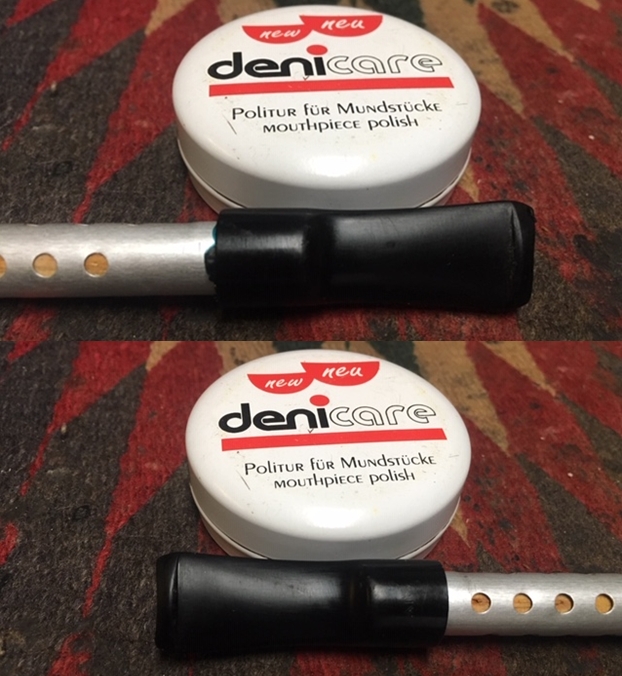
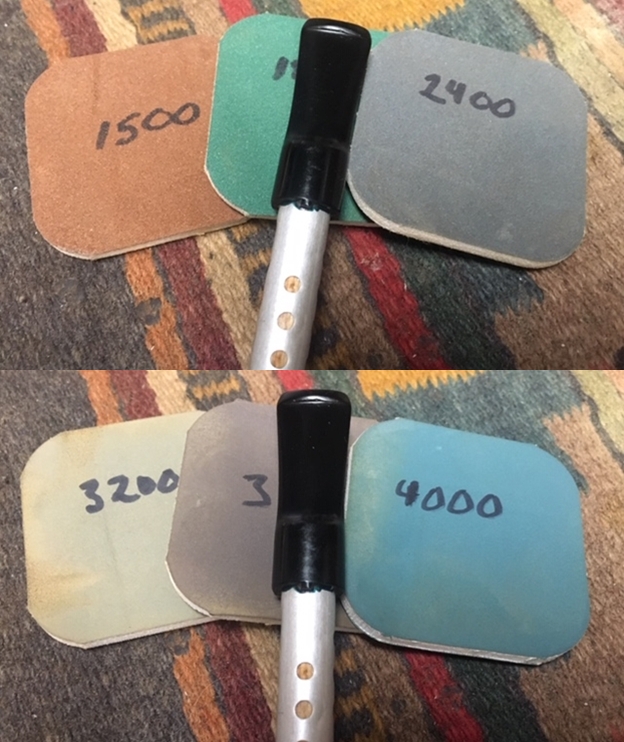
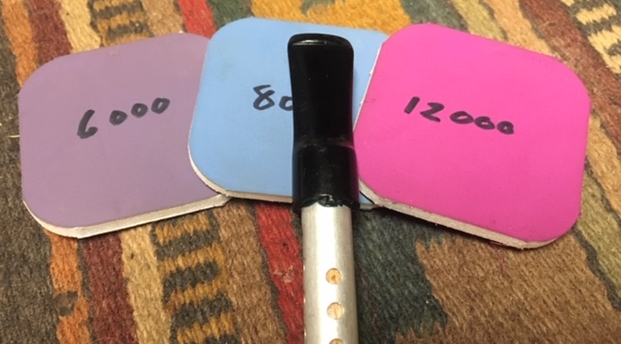
Now, on to the rest of the restoration on this GBD Historic 115 Billiard. Since Jeff had done such an amazing clean up job on the bowl it was going to be a very easy job for me. There was some darkening and damage on the inner edge of the rim that needed to be addressed. I sanded it with a folded piece of 220 grit sandpaper to remove and minimize the damage to the edge. I continued by starting to polish it with 400 grit wet dry sandpaper. I wiped the rim edge down with a damp cloth to remove the sanding dust on the briar. The finished rim top looked much better than when I started. I was able to minimize the damage on the front inner edge of the rim. It is still damaged but it looks considerably better. Once I clean it and stain it the rim edge will look better.  I stained the rim top and edges with a Walnut and Black stain pen. I blended the colours to match the rest of the bowl colour. I also stained the shank end with the two pens to blend them into the flow of the colour on the shank and bowl.     I rubbed the bowl down with Before & After Restoration Balm. I worked it into the surface of the briar with my fingertips and a horsehair shoe brush to clean, enliven and protect it. I let the balm sit for a little while and then buffed with a cotton cloth and shoe brush to raise the shine. Mark Hoover’s Balm is a product that I have come to appreciate and one I use on every pipe I have been working on.      I set the bowl aside and turned my attention to the stem. I sanded the stem with 220 grit sandpaper to break up the oxidation. I started the polishing with 400 grit wet dry sandpaper to remove the scratching. It is starting to look good.       I have one more tin of Denicare Mouthpiece Polish left from a few that I have picked up over the years. It is a coarse red pasted that serves to help remove oxidation. I polished the stem with that to further smooth out the surface of the vulcanite (and to be honest – to use it up).      I polished the stem with micromesh sanding pads – wet sanding with 1500-12000 grit pads. I wiped the stem down after each sanding pad with Obsidian Oil. I polished it with Before & After Pipe Stem Polish – both Fine and Extra Fine. Once I had finished the polishing I gave it final coat of oil and set it aside to dry.    I can’t tell you how great it feels to be moving through these 125 pipes – about 35 done so far! It seemed like an overwhelming task that can only be achieved one pipe at a time. So each time I finish one of the pipes from Bob Kerr’s Estate I look forward to what it will look like when it is put back together, polished and waxed. I put the bowl and stem back together. I polished the bowl and stem with Blue Diamond to polish out the scratches in the briar and the vulcanite. I gave the bowl and stem multiple coats of carnauba wax. I buffed the pipe with a clean buffing pad to raise the shine. I hand buffed it with a microfiber cloth to deepen the shine. The pipe polished up pretty nicely. The rich dark brown and black sandblast finish really popped with buffing showing the contrast colours of stain on the pipe. The polished thin black vulcanite stem went really well with the colours of the bowl. The sandblast rim top, though slightly damaged looked very good. This old GBD Historic Sandblast 115 Billiard was another fun pipe to work on thanks to Jeff’s cleanup work. It really has the classic GBD Billiard shape that is very recognizable. The combination of various stains really makes the pipe look attractive. It is another comfortable pipe to hold in the hand. The finished pipe is shown in the photos below. The dimensions of the pipe are Length: 5 ½ inches, Height: 1 ¾ inches, Outside diameter of the bowl: 1 ¼ inches, Chamber diameter: ¾ of an inch. If you are interested in carrying on Bob’s legacy with this pipe send me a message or an email. I have a lot more to work on of various brands. Perhaps one of those will catch your attention. Thanks for reading this blog and my reflections on the pipe while I worked on it. This is an interesting estate to bring back to life.
Working on a GBD Original 115 Beveled Rim Billiard from Bob Kerr’s Estate


Blog by Steve Laug

I am continuing to work through Bob Kerr’s estate. The next pipe on the table is a GBD Original Billiard, sandblasted bowl and shank with a smooth beveled rim and a smooth panel on the underside of the shank with the stamping. I am continuing to cleanup Bob’s estate for his family and moving them out into the hands of pipemen and women who will carry on the trust that began with Bob and in some pipes was carried on by Bob. In the collection there were a total of 125 pipes along with a box of parts. This is the largest estate that I have had the opportunity to work on. I put together a spread sheet of the pipes and stampings to create an invoice. I was taking on what would take me a fair amount of time to clean up. I could not pass up the opportunity to work on these pipes though. They were just too tempting.

I have been collecting and restoring GBD pipes for as long as I have worked on pipes. This one also has a beautiful mix of grain under the grime on the sandblast finish. It is quite beautiful! The pipe is stamped GBD in an oval over Original on the underside of the shank. That is followed by stamping London, England and the shape number 115. It had a rich mix of black and dark brown stain that does not look too bad. There was a thick cake in the bowl with remnants of tobacco stuck on the walls. There was a lava overflow on the rim. The inner beveled edge of the rim and top are dirty and had a thick lava coat. The edges look pretty pristine under the grime. It was a beautiful pipe that was dirty and tired looking. The stem was oxidized and calcified toward the end. Again, surprisingly did not have the tooth marks that I have come to expect from Bob’s pipes. Jeff took photos of the pipe before he started his cleanup work on it. Jeff took photos of the bowl and rim top to show the cake in the bowl and the lava build up on the edges of the bowl. It was thick and hard but hopefully it had protected the rim and edges from damage. The edges look pretty good.     Jeff took photos of the sides and heel of the bowl to show the condition of the finish. You can see the beautiful grain through the sandblast – both birdseye and cross grain. The finish was very dirty.     Jeff took photos of the stamping on the smooth panel on the underside of the shank. The stamping was readable as you can see from the photos. On the underside it read GBD in an oval over Original. That was followed by London, England over the shape number 115. On the left side of the saddle stem was an inlaid GBD rondel.  Jeff took photos of the top and underside of the stem showing the tooth chatter, scratching and oxidation on the stem surface and wear on the edges of the button. I turned to Pipedia’s article on GBD to see if I could find any information on the Original. It was a line of GBD pipes that was new to me. The article gives a lot in terms of the history of the brand (https://pipedia.org/wiki/GBD). There is nothing specific on the Original line.

I also turned to the reference page on the site for GBD shapes and numbers and found the one for the 115 shape but it called it a Prince of Wales and said that the saddle stem had a 1/8 bend. To me a Prince of Wales is a Prince shape pipe and the one that I was working on is definitely a billiard (https://pipedia.org/wiki/GBD_Shapes/Numbers). The vagaries of clearly pinning down GBD Shapes is evident in this seeming contradiction. I also did a screen capture of the section and from the various Model information. That also was an interesting conundrum in that the pipe in my hand was not smooth but had a sandblast finish like the Prehistoric with a smooth beveled rim top. I combined the screen captures in one picture below (https://pipedia.org/wiki/GBD_Model_Information).     All of my research did not really help pin anything down. The shape number was a dead end contradiction as was the line description. I was dealing with a bit of anomaly – a Sandblast Original Billiard with a straight thin bit stem. In terms of dating the pipe I can only guess that it fits in with the late 50s to late 60s of Bob’s other pipes but I cannot know for sure. Now it was time to work on the pipe.

With over 125 pipes to clean from Bob’s estate I took a batch of them to the states with me on a recent visit and left them with Jeff so he could help me out. Jeff cleaned the pipe with his usual penchant for thoroughness that I really appreciate. This one was a real mess and I did not know what to expect when I unwrapped it from his box. He reamed it with a PipNet pipe reamer and cleaned up the reaming with a Savinelli Fitsall Pipe Knife. He scrubbed out the internals with alcohol, pipe cleaners and cotton swabs until the pipe was clean. He scrubbed the exterior of the bowl with Murphy’s Oil Soap and a tooth brush to remove the grime and grit on the briar and the lava on the rim top. The finish looks very good with good looking grain around the bowl and shank. Jeff soaked the stem in Before & After Deoxidizer to remove the oxidation on the rubber. When the pipe arrived here in Vancouver for the second stop of its restoration tour it looked good. The stem still sported some deep oxidation but otherwise it was clean. I took photos before I started my part of the work.    I took some close up photos of the rim top and also of the stem surface. I wanted to show what an amazing job Jeff did in the cleanup of the rim top. The rim top looks good. There is some darkening on the top edge and a few light nicks and scratches on the surface. The bowl looked very good. I also took close up photos of the stem to show the few small dents on the surface of the stem. You can also see the remaining oxidation on the stem surface.       I am going to keep posting the next paragraph because of the importance of protecting the stamping/nomenclature.

One of the things I appreciate about Jeff’s cleanup is that he works to protect and preserve the nomenclature on the shank of the pipes that he works on. The stamping on this one was very faint to start with so I was worried that it would disappear altogether with the cleanup. He was not only able to preserve it but it is clearer than shown in the earlier photos. I took some photos to show the clarity of the stamping. I have noticed that many restorers are not careful to protect the stamping in their cleaning process and often by the end of the restoration the nomenclature is almost destroyed. I would like to encourage all of us to be careful in our work to preserve this as it is a critical piece of pipe restoration!Since this is another pipe Bob’s estate I am sure that some of you have read at least some of the other restoration work that has been done on the previous pipes. You have also read what I have included about Bob Kerr, the pipeman who held these pipes in trust before I came to work on them (see photo to the left). Also, if you have followed the blog for long you will already know that I like to include background information on the pipeman whose pipes I am restoring. For me, when I am working on an estate I really like to have a sense of the person who held the pipes in trust before I worked on them. It gives me another dimension of the restoration work. I asked Brian if he or his wife would like to write a brief biographical tribute to her father, Bob. His daughter worked on it and I received the following short write up on him and some pictures to go along with the words including one of Bob’s carvings. Once again I thank you Brian and tell your wife thank you as well.

I am delighted to pass on these beloved pipes of my father’s. I hope each user gets many hours of contemplative pleasure as he did. I remember the aroma of tobacco in the rec room, as he put up his feet on his lazy boy. He’d be first at the paper then, no one could touch it before him. Maybe there would be a movie on with an actor smoking a pipe. He would have very definite opinions on whether the performer was a ‘real’ smoker or not, a distinction which I could never see but it would be very clear to him. He worked by day as a sales manager of a paper products company, a job he hated. What he longed for was the life of an artist, so on the weekends and sometimes mid-week evenings he would journey to his workshop and come out with wood sculptures, all of which he declared as crap but every one of them treasured by my sister and myself. Enjoy the pipes, and maybe a little of his creative spirit will enter you!

Now, on to the rest of the restoration on this GBD Original 115 Billiard. Since Jeff had done such an amazing clean up job on the bowl it was going to be a very easy job for me. There was some darkening on the inner beveled edge of the rim that needed to be addressed. I sanded it with a folded piece of 220 grit sandpaper to remove and minimize the damage to the bevel. I continued by starting to polish it with 400 grit wet dry sandpaper. I wiped the rim edge down with a damp cloth to remove the sanding dust on the briar. The finished rim top looked much better than when I started.I rubbed the bowl down with Before & After Restoration Balm. I worked it into the surface of the briar with my fingertips and a horsehair shoe brush to clean, enliven and protect it. I let the balm sit for a little while and then buffed with a cotton cloth and shoe brush to raise the shine. Mark Hoover’s Balm is a product that I have come to appreciate and one I use on every pipe I have been working on.     I set the bowl aside and turned my attention to the stem. I sanded the stem with 220 grit sandpaper to break up the oxidation. I started the polishing with 400 grit wet dry sandpaper to remove the scratching. It is starting to look good.    I have one more tin of Denicare Mouthpiece Polish left from a few that I have picked up over the years. It is a coarse red pasted that serves to help remove oxidation. I polished the stem with that to further smooth out the surface of the vulcanite (and to be honest – to use it up).    I polished the stem with micromesh sanding pads – wet sanding with 1500-12000 grit pads. I wiped the stem down after each sanding pad with Obsidian Oil. I polished it with Before & After Pipe Stem Polish – both Fine and Extra Fine. Once I had finished the polishing I gave it final coat of oil and set it aside to dry.   I can’t tell you how great it feels to be moving through these 125 pipes – about 35 done so far! It seemed like an overwhelming task that can only be achieved one pipe at a time. So each time I finish one of the pipes from Bob Kerr’s Estate I look forward to what it will look like when it is put back together, polished and waxed. I put the bowl and stem back together. I polished the bowl and stem with Blue Diamond to polish out the scratches in the briar and the vulcanite. I gave the bowl and stem multiple coats of carnauba wax. I buffed the pipe with a clean buffing pad to raise the shine. I hand buffed it with a microfiber cloth to deepen the shine. The pipe polished up pretty nicely. The rich dark brown and black sandblast finish really popped with buffing showing the contrast colours of stain on the pipe. The polished thin black vulcanite stem went really well with the colours of the bowl. The smooth beveled rim top really stood out and gave the pipe a bit of class. This old GBD Original Sandblast 115 Billiard was another fun pipe to work on thanks to Jeff’s cleanup work. It really has the classic GBD Billiard shape that is very recognizable. The combination of various stains really makes the pipe look attractive. It is another comfortable pipe to hold in the hand. The finished pipe is shown in the photos below. The dimensions of the pipe are Length: 5 ½ inches, Height: 1 ¾ inches, Outside diameter of the bowl: 1 ¼ inches, Chamber diameter: ¾ of an inch. If you are interested in carrying on Bob’s legacy with this pipe send me a message or an email. I have a lot more to work on of various brands. Perhaps one of those will catch your attention. Thanks for reading this blog and my reflections on the pipe while I worked on it. This is an interesting estate to bring back to life.

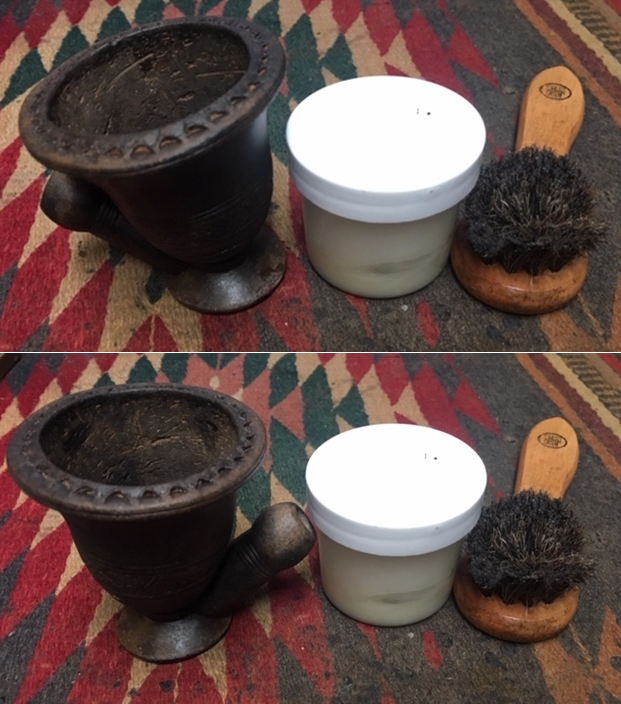
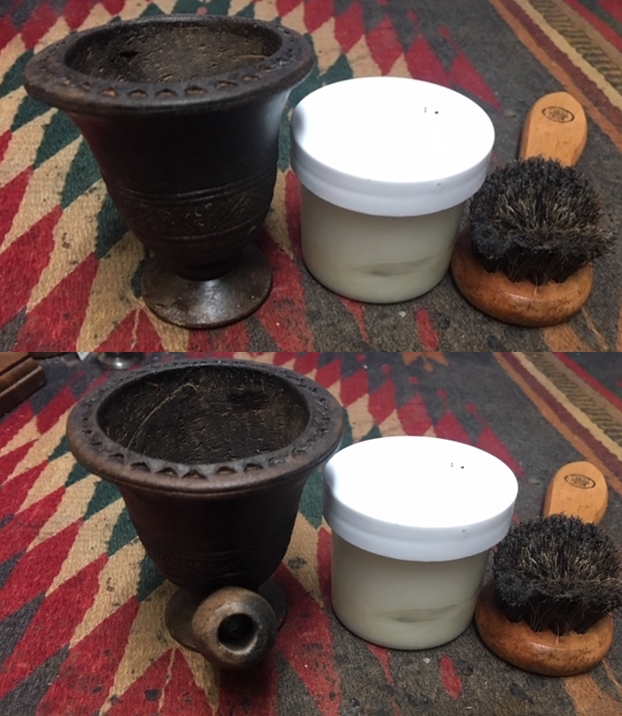
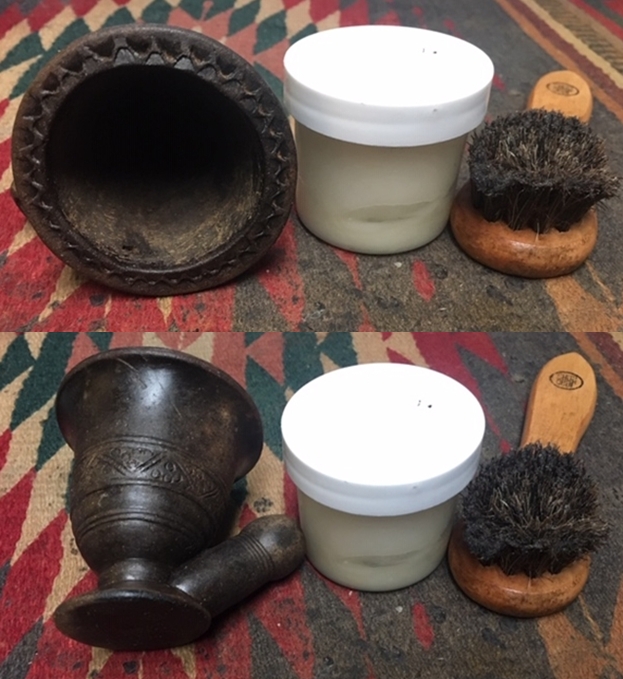
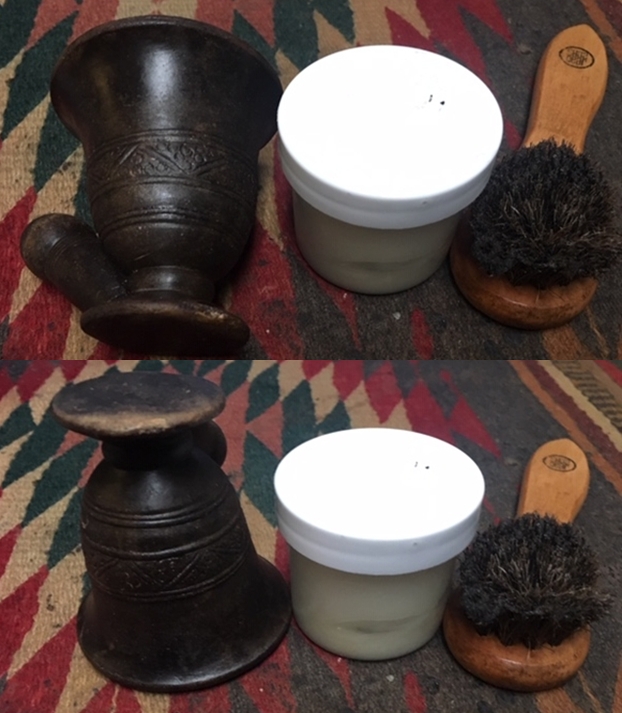
A Mystery Pipe Bowl – Turns out it could be an Ottoman Style Chibouk


Blog by Steve Laug

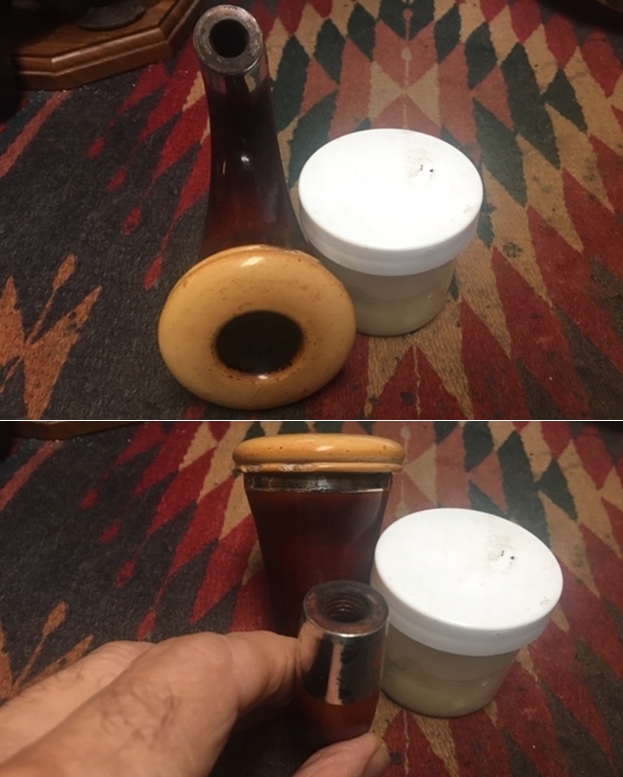
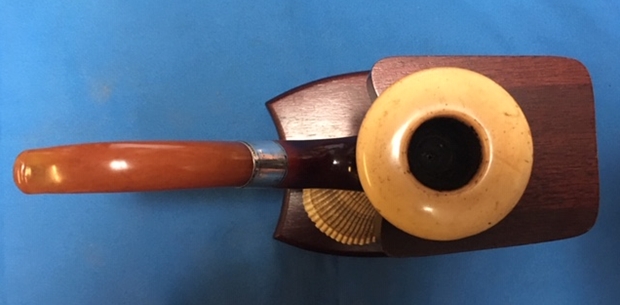
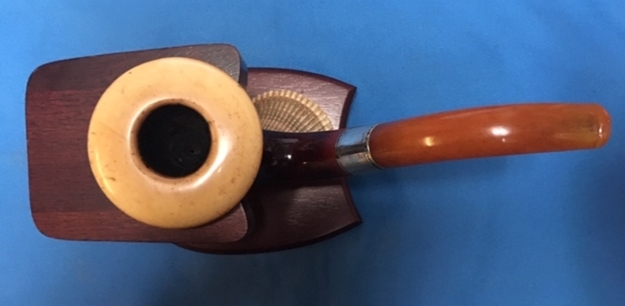
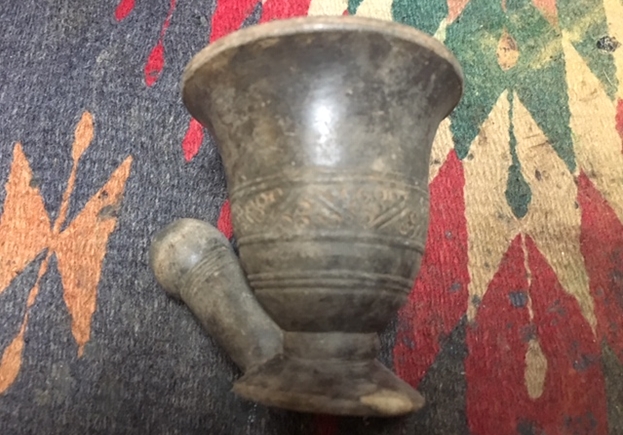
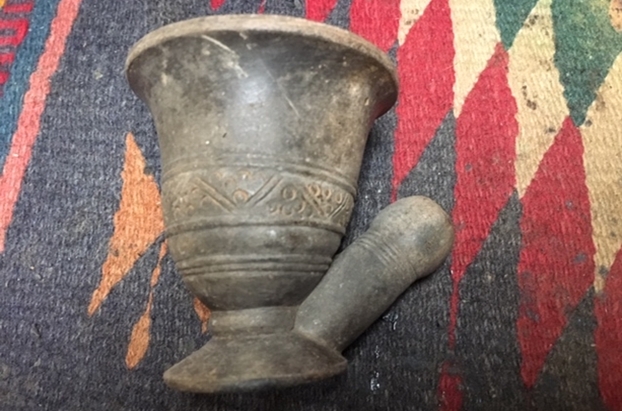
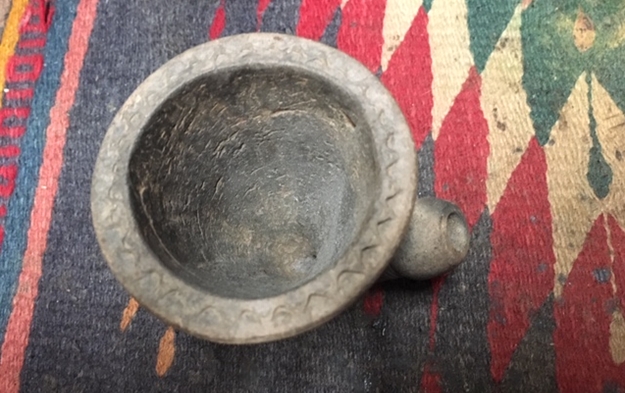
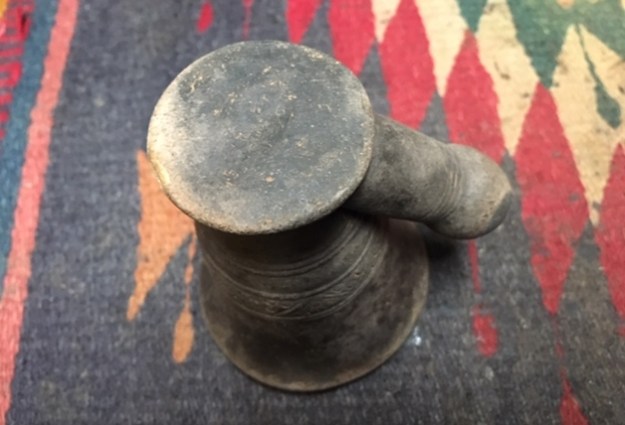
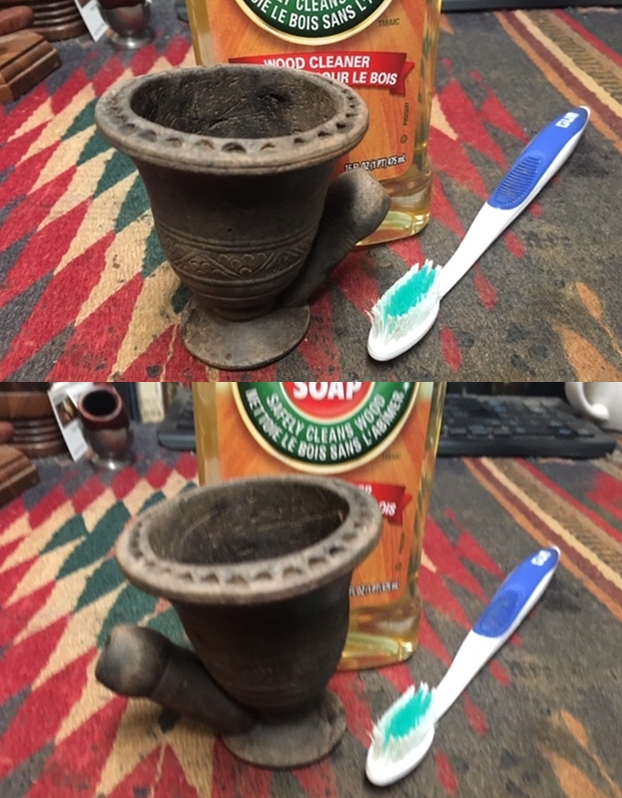
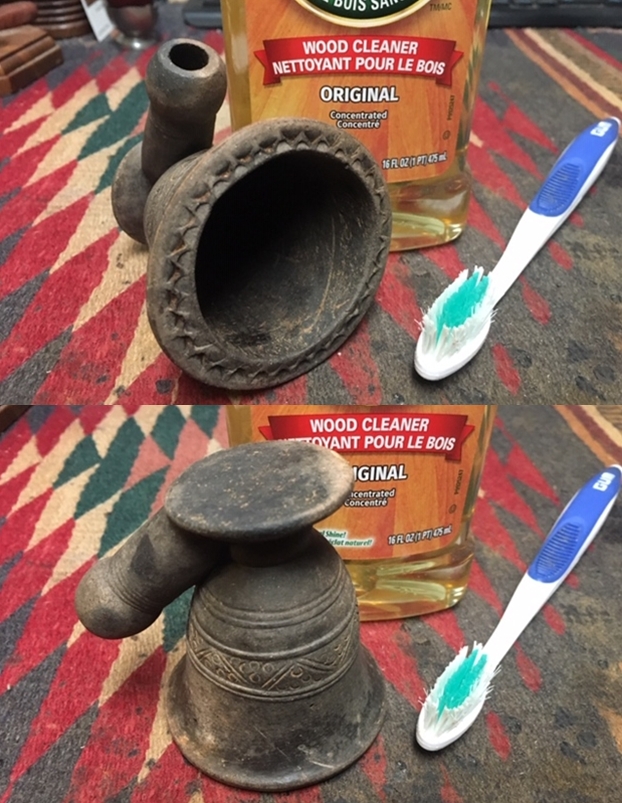
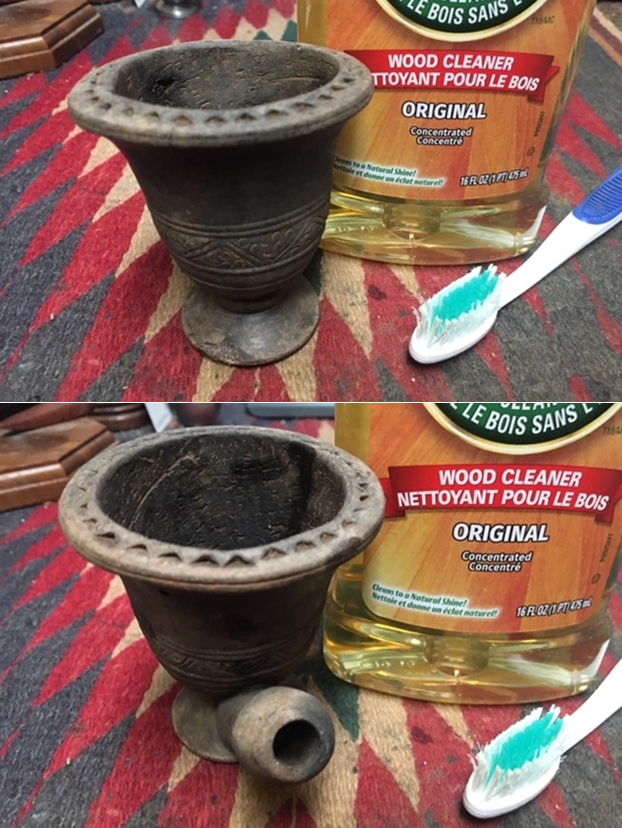
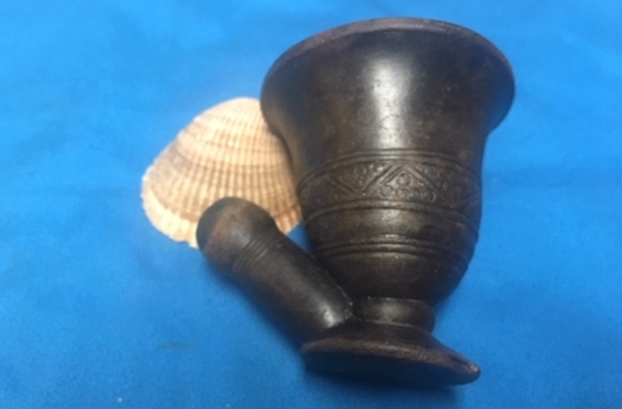
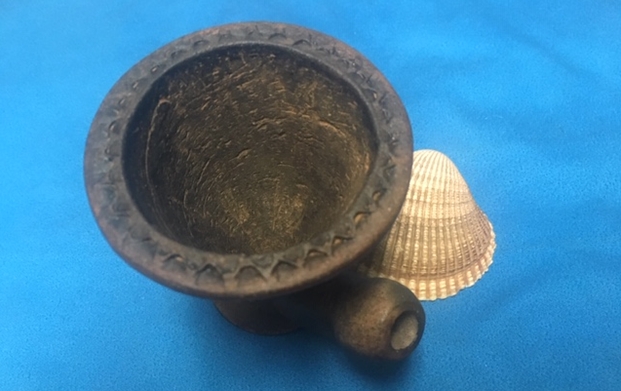
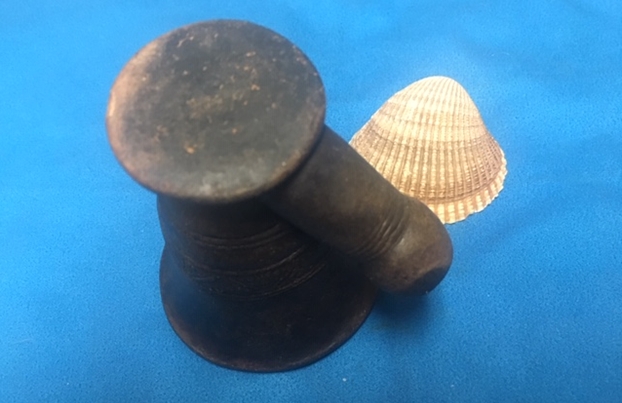
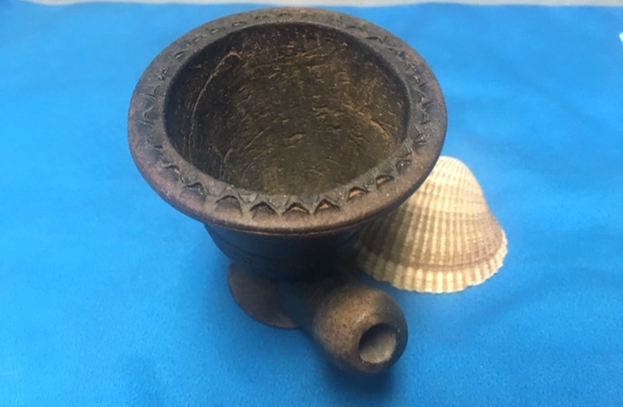
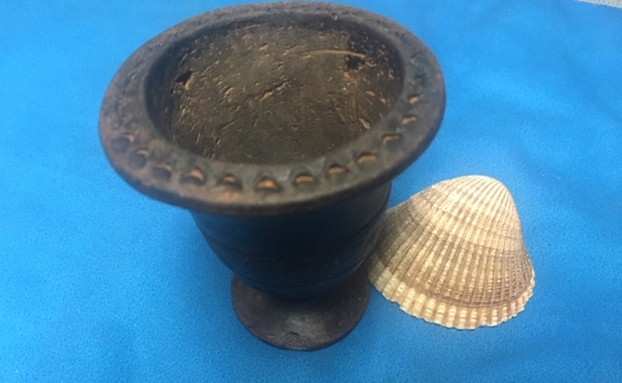
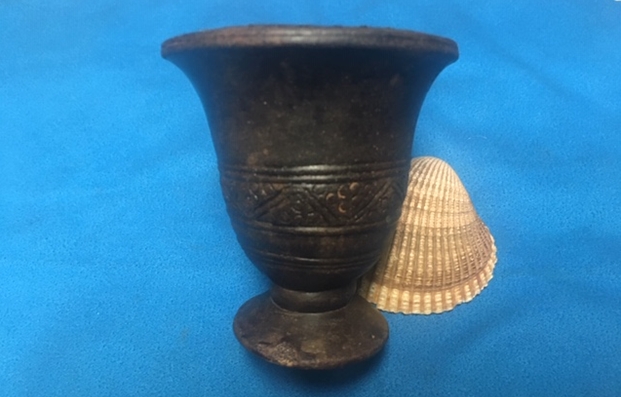
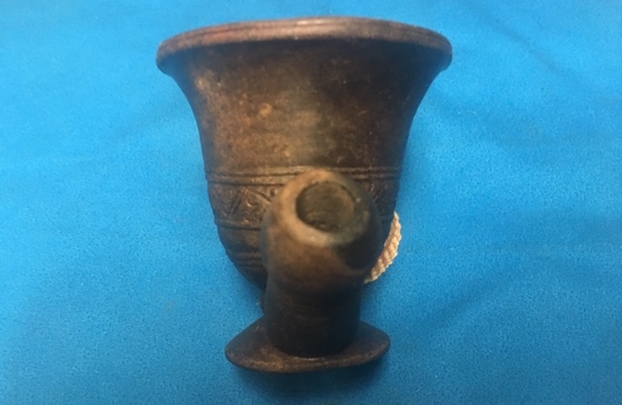
A few months ago Jeff sent me an interesting bowl in one of the boxes of pipes he mailed to me. The bowl itself is quite big and it has a flat base on it so that it readily stands up. We had no idea what it had originally looked like but the patterns on the bowl and base made it an interesting piece. I figured I might use it for holding matches, cotton swabs or pipe cleaners. It was made of clay and was dark – I am not sure what the original colour of the bowl was but it was unique enough that I wanted to hang on to it. I put it on the shelf above my work desk and honestly forgot about it. Then one day a couple of weeks ago I moved it to get a customs declaration form that I needed and got captured by it once more. I decided to take some photos of the bowl and post them on the Tobacco Pipe Restorers Group on Facebook and see if anyone there could help me identify the pipe and give me any information. Here are the photos that I posted there. I received an answer from a fellow pipe restorer on the group going by the name Etienne Spasm. He wrote: For me it looks like a Chibouk. It was a kind of clay pipe with long wood stem used in the Ottoman Empire. Try to google it, you’ll see.

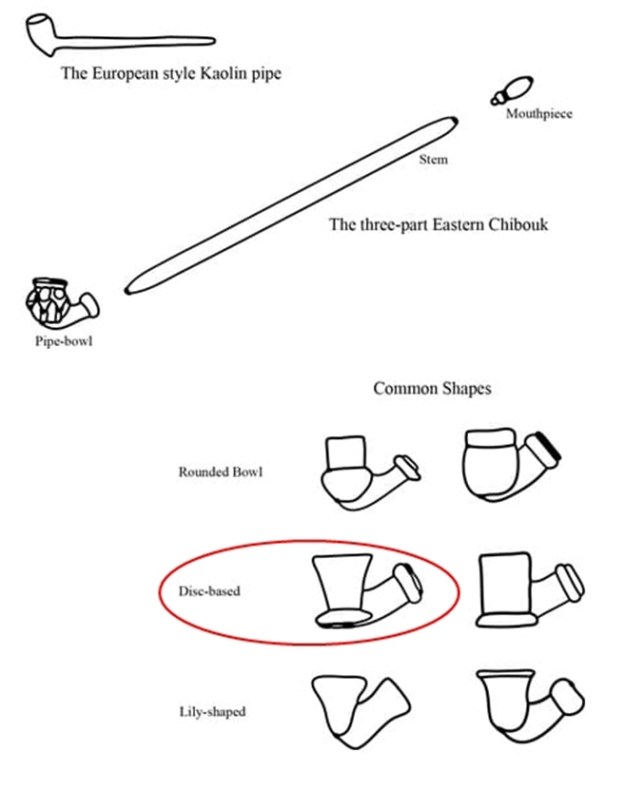
A lot of back and forth interchanges went on with regard to what was smoked in the pipe. Some said pot. Some said Opium. But another fellow going by the name of Lighthouse Pipes wrote this: I disagree that this pipe was meant for opium, the bowl is far too big. So, it’s a lily shaped bowl this could mean that is from Syria and it has a disk base this could mean that is from the Ottoman period – but not Venetian, because Venetian clay pipe with the disk base would have 3 holes from the bowl to the shank. (He included an interesting and informative link referencing page 11 of the document: http://philippe.gosse.pagesperso-orange.fr/Chio…/intro.pdf)

Encouraged by the response I went on Google and looked the Chibouk pipe.

https://en.wikipedia.org/wiki/Chibouk A chibouk (French: chibouque; from the Turkish: çıbık, çubuk (English: “stick”) (Bosnian: “Čibuk”); also romanized čopoq, ciunoux or tchibouque) is a very long-stemmed Turkish tobacco pipe, often featuring a clay bowl ornamented with precious stones. The stem of the chibouk generally ranges between 4 and 5 ft., much longer than even Western churchwarden pipes. While primarily known as a Turkish pipe, the chibouk was once popular in Iran, as well.

I suppose I may never know for sure the provenance of this old clay pipe but I like to think it is indeed a Chibouk Pipe. I don’t know if I will ever make a long shank and mouth piece like the one in the photo above but it is an interesting piece of pipe history. I decided to clean it up and post the process photos. I cleaned the exterior of the bowl with Murphy’s Oil Soap and a tooth brush. I scrubbed it and rinsed it under warm water and watched the grime and dirt go down the drain in a swirl. I decided to rub the clay bowl down with Before & After Restoration Balm. I worked it into the surface of the clay with my fingertips and a horsehair shoe brush to clean, enliven and protect it. I let the balm sit for a little while and then buffed with a cotton cloth and shoe brush to raise the shine. It was definitely experimental to try it on clay but it worked. Mark Hoover’s Balm is a product that I have come to appreciate and one I use on every pipe I have been working on. This was a very interesting historical piece that gave me some enjoyment doing the research. To know that somehow the pipe made it from Turkey or Iran to the east coast of the US and then to Idaho in the west and up to Vancouver, BC on the west coast of Canada is fascinating. It is another one of those times that I wish it could talk to me. Someday perhaps I will find a suitable stem and shank for the pipe but until then it will occupy a spot in my pipe cabinet holding matches. I polished the bowl with a soft microfiber cloth to raise the shine. The old clay pipe polished up pretty nicely. The rich dark brown and grey finish looked pretty good. The carved features on the bands around the rim top, bowl and shank look very nice. This old Chibouk was another fun pipe to work on because of the rich history that is holds. Its unique shape and size make it quite an interesting piece of tobacciana. The dimensions of the pipe are Length: 3 inches, Height: 3 inches, Outside diameter of the bowl: 2 ¾ inches, Chamber diameter: 2 inches. If you have any more information on the pipe please let me know in the comments below. Thanks for reading this blog and my reflections on the pipe while I worked on it. This is an interesting piece to bring back to life. Perhaps one day I can put a shank and stem on it and smoke a bowl.

Working on a GBD New Era 122 Beveled Rim Billiard from Bob Kerr’s Estate


Blog by Steve Laug

I am continuing to work through Bob Kerr’s estate. The next pipe on the table is a GBD New Era Billiard. I am continuing to cleanup Bob’s estate for his family and moving them out into the hands of pipemen and women who will carry on the trust that began with Bob and in some pipes was carried on by Bob. In the collection there were a total of 125 pipes along with a box of parts. This is the largest estate that I have had the opportunity to work on. I put together a spread sheet of the pipes and stampings to create an invoice. I was taking on what would take me a fair amount of time to clean up. I could not pass up the opportunity to work on these pipes though. They were just too tempting.

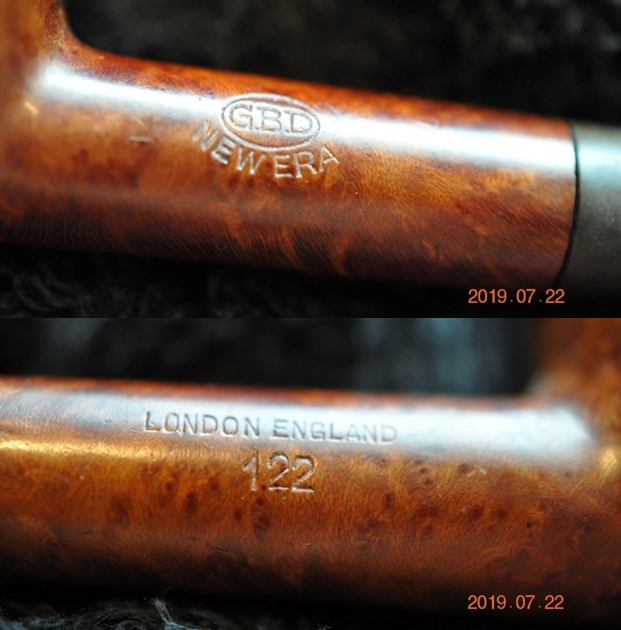
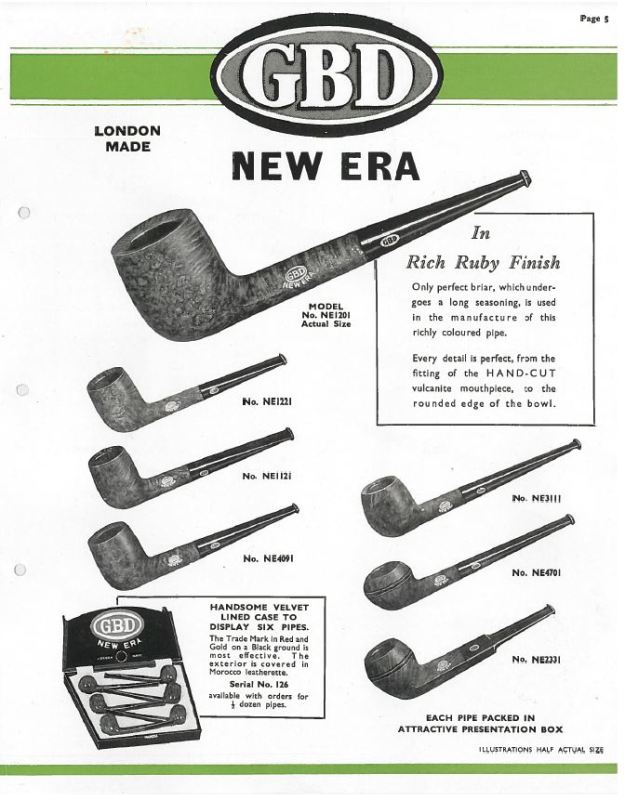
I have been collecting and restoring GBD pipes for as long as I have worked on pipes. This one also has some beautiful mixed grain underneath the grime. It is quite beautiful! The pipe is stamped GBD in an oval over New Era on the left side of the shank. On the right side it is stamped London, England over the shape number 122. It had a rich medium brown stain that does not look too bad. There was a thick cake in the bowl with remnants of tobacco stuck on the walls. There was a lava overflow on the rim. The inner beveled edge of the rim and top are dirty and had a thick lava coat. The edges look pretty pristine under the grime. It was a beautiful pipe that was dirty and tired looking. The stem was oxidized and calcified toward the end. Again, surprisingly did not have the tooth marks that I have come to expect from Bob’s pipes. Jeff took photos of the pipe before he started his cleanup work on it.Jeff took photos of the bowl and rim top to show the cake in the bowl and the lava build up on the edges of the bowl. It was thick and hard but hopefully it had protected the rim and edges from damage. The edges look pretty good.      Jeff took photos of the side and heel of the bowl to show the condition of the finish. You can see the beautiful grain – both birdseye and cross grain. The finish was very dirty.    Jeff took photos of the stamping on the smooth panel on the underside of the shank. The stamping was readable as you can see from the photos. On the left side it read GBD in an oval over New Era. On the right side it is stamped London, England over the shape number 122. On the left side of the tapered stem was an inlaid GBD roundel. Jeff took photos of the top and underside of the stem showing the tooth chatter, scratching and oxidation on the stem surface and wear on the edges of the button.    I turned to Pipedia’s article on GBD to see if I could find any information on the Popular. It was a line of GBD pipes that was new to me. The article gives a lot in terms of the history of the brand (https://pipedia.org/wiki/GBD). I have included a paragraph from the site below as well as a page from a catalogue.

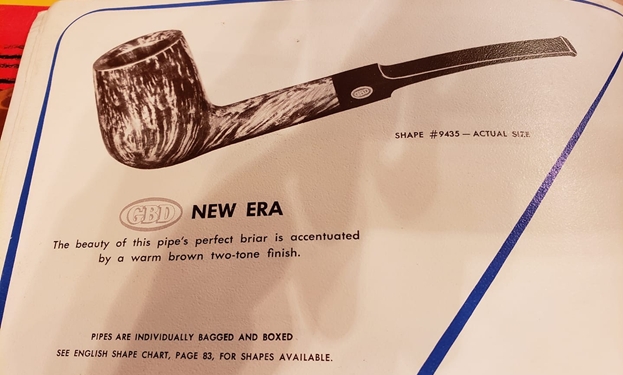
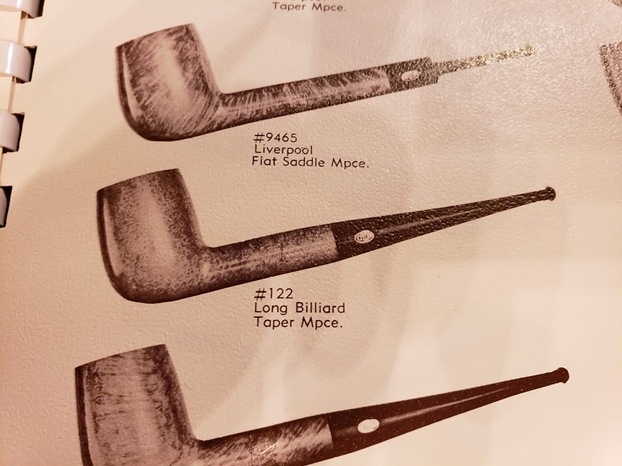
The claims after the 1st World War demanded further distinctions. First of all was the London Made, which became the Standard London Made, followed by the New Era– in 1931 the top model asking 12½ Shilling. The Pedigree, although sketched around 1926, was not produced until the later 1930s. The New Standard was introduced in order to give the popular Standard of the 20s a higher rank in value. The Prehistoric, a deeply sandblasted black pipe, that still carried the small GBD Xtra stamp, was entirely new and unusual.There was a fellow on Facebook Tobacco Pipe Restorers Group who picked up some booklets and pamphlets on GBD pipes. I messaged him and asked him to send me info on the New Era line. This photo gives a pretty good description. Combined with the one above it is an interesting mystery. The first document above says that the pipe has “a rich ruby finish” while the one below says it is “accentuated by a warm brown two-tone finish.” The pipe I am working on definitely sits somewhere between these two descriptions – it has a reddish brown finish.I also turned to the reference page on the site for GBD shapes and numbers and found the one for the straight bulldog that I was working on (https://pipedia.org/wiki/GBD_Shapes/Numbers). I did a screen capture of the section and from the various Model information. I combined them below (https://pipedia.org/wiki/GBD_Model_Information).   The fellow on Facebook also included the next photo that shows the shape and description of the 122. GBD calls it a Long Billiard with a Taper Mouthpiece.I now knew I was dealing with a well-made hand chosen piece of briar that had gone through a period of long seasoning. In terms of dating the pipe I figure that it fits in with the late 50s to late 60s of Bob’s other pipes but I cannot know for sure. Now it was time to work on the pipe.

With over 125 pipes to clean from Bob’s estate I took a batch of them to the states with me on a recent visit and left them with Jeff so he could help me out. Jeff cleaned the pipe with his usual penchant for thoroughness that I really appreciate. This one was a real mess and I did not know what to expect when I unwrapped it from his box. He reamed it with a PipNet pipe reamer and cleaned up the reaming with a Savinelli Fitsall Pipe Knife. He scrubbed out the internals with alcohol, pipe cleaners and cotton swabs until the pipe was clean. He scrubbed the exterior of the bowl with Murphy’s Oil Soap and a tooth brush to remove the grime and grit on the briar and the lava on the rim top. The finish looks very good with good looking grain around the bowl and shank. Jeff soaked the stem in Before & After Deoxidizer to remove the oxidation on the rubber. When the pipe arrived here in Vancouver for the second stop of its restoration tour it looked very good. I took photos before I started my part of the work.     I took some close up photos of the rim top and also of the stem surface. I wanted to show what an amazing job Jeff did in the cleanup of the rim top. The rim top looks good. There is some darkening on the top edge and a few light nicks and scratches on the surface. The bowl looked very good. I also took close up photos of the stem to show the scratches and lack of tooth marks on the stem. You can also see the remaining oxidation on the stem surface.     I am going to keep posting the next paragraph because of the importance of protecting the stamping/nomenclature.

One of the things I appreciate about Jeff’s cleanup is that he works to protect and preserve the nomenclature on the shank of the pipes that he works on. The stamping on this one was very faint to start with so I was worried that it would disappear altogether with the cleanup. He was not only able to preserve it but it is clearer than shown in the earlier photos. I took some photos to show the clarity of the stamping. I have noticed that many restorers are not careful to protect the stamping in their cleaning process and often by the end of the restoration the nomenclature is almost destroyed. I would like to encourage all of us to be careful in our work to preserve this as it is a critical piece of pipe restoration!Since this is another pipe Bob’s estate I am sure that some of you have read at least some of the other restoration work that has been done on the previous pipes. You have also read what I have included about Bob Kerr, the pipeman who held these pipes in trust before I came to work on them (see photo to the left). Also, if you have followed the blog for long you will already know that I like to include background information on the pipeman whose pipes I am restoring. For me, when I am working on an estate I really like to have a sense of the person who held the pipes in trust before I worked on them. It gives me another dimension of the restoration work. I asked Brian if he or his wife would like to write a brief biographical tribute to her father, Bob. His daughter worked on it and I received the following short write up on him and some pictures to go along with the words including one of Bob’s carvings. Once again I thank you Brian and tell your wife thank you as well.

I am delighted to pass on these beloved pipes of my father’s. I hope each user gets many hours of contemplative pleasure as he did. I remember the aroma of tobacco in the rec room, as he put up his feet on his lazy boy. He’d be first at the paper then, no one could touch it before him. Maybe there would be a movie on with an actor smoking a pipe. He would have very definite opinions on whether the performer was a ‘real’ smoker or not, a distinction which I could never see but it would be very clear to him. He worked by day as a sales manager of a paper products company, a job he hated. What he longed for was the life of an artist, so on the weekends and sometimes mid-week evenings he would journey to his workshop and come out with wood sculptures, all of which he declared as crap but every one of them treasured by my sister and myself. Enjoy the pipes, and maybe a little of his creative spirit will enter you!

Now on to the rest of the restoration on this GBD New Era Billiard. Since Jeff had done such an amazing clean up job on the bowl it was very easy for me. There was some darkening on the inner beveled edge of the rim that needed to be addressed. I sanded it with a folded piece of 220 grit sandpaper to remove and minimize the damage to the bevel. I continued by starting to polish it with 400 grit wet dry sandpaper. I wiped the rim edge down with a damp cloth to remove the sanding dust on the briar. The finished rim top looked much better than when I started.There was a deep cut or groove in the briar on the left side of the bowl. It looked like someone had scratched it against hard surface leaving a deep gouge. I filled in the gouge with clear super glue. Once the glue had dried I sanded it smooth with 220 grit sandpaper and blended it with 400 grit wet dry sandpaper.  I used a Maple stain pen to touch up the sanded area to match the rest of the bowl. It looked very good and would completely blend once the bowl was polished with micromesh.I polished the briar with micromesh sanding pads to blend in the stain and to polish the briar and remove the scratches in the surface of the bowl, heel and shank. I wet sanded with 1500-12000 grit pads and wiped the bowl down between each pad with a damp cloth.   I decided to clean the briar with Mark Hoover’s Before & After Briar Cleaner to clean up the sanded surface of the briar and blend sanded rim edge. I rubbed it into the surface of the briar and let it sit for 10 minutes. I rinsed the bowl off with warm running water to remove the product and the grime.       I rubbed the bowl down with Before & After Restoration Balm. I worked it into the surface of the briar with my fingertips to clean, enliven and protect it. I let the balm sit for a little while and then buffed with a cotton cloth and shoe brush to raise the shine. Mark Hoover’s Balm is a product that I have come to appreciate and one I use on every pipe I have been working on.     I set the bowl aside and turned my attention to the stem. I sanded the stem with 220 grit sandpaper to break up the oxidation. I started the polishing with 400 grit wet dry sandpaper to remove the scratching. It is starting to look good.    I have one more tin of Denicare Mouthpiece Polish left from a few that I have picked up over the years. It is a coarse red pasted that serves to help remove oxidation. I polished the stem with that to further smooth out the surface of the vulcanite (and to be honest – to use it up).   I polished the stem with micromesh sanding pads – wet sanding with 1500-12000 grit pads. I wiped the stem down after each sanding pad with Obsidian Oil. I polished it with Before & After Pipe Stem Polish – both Fine and Extra Fine. Once I had finished the polishing I gave it final coat of oil and set it aside to dry.       I am excited to be finishing another one of Bob Kerr’s Estate pipes and as usual I look forward to what it will look like when it is put back together, polished and waxed. I put the bowl and stem back together. I polished the bowl and stem with Blue Diamond to polish out the scratches in the briar and the vulcanite. I gave the bowl and stem multiple coats of carnauba wax. I buffed the pipe with a clean buffing pad to raise the shine. I hand buffed it with a microfiber cloth to deepen the shine. The pipe polished up pretty nicely. The rich reddish brown finish really popped with buffing showing the contrast colours of stain on the pipe. The polished black vulcanite stem went really well with the colours of the bowl. This old GBD New Era 122 Billiard was another fun pipe to work on thanks to Jeff’s cleanup work. It really has the classic GBD Billiard shape that is very recognizable. The combination of various stains really makes the pipe look attractive. It is a comfortable pipe to hold in the hand. The finished pipe is shown in the photos below. The dimensions of the pipe are Length: 5 ¼ inches, Height: 1 ¾ inches, Outside diameter of the bowl: 1 ¼ inches, Chamber diameter: ¾ of an inch. If you are interested in carrying on Bob’s legacy with this pipe send me a message or an email. I have a lot more to work on of various brands. Perhaps one of those will catch your attention. Thanks for reading this blog and my reflections on the pipe while I worked on it. This is an interesting estate to bring back to life.

I knew I had seen this brand before – another Bing Crosby Thermostatic Filtration System Pipe


Blog by Steve Laug

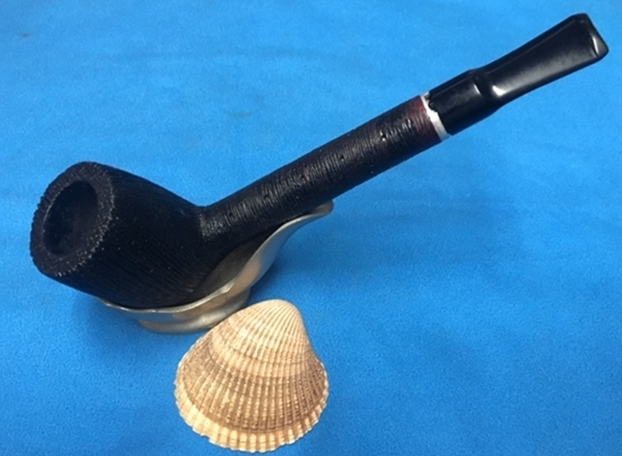
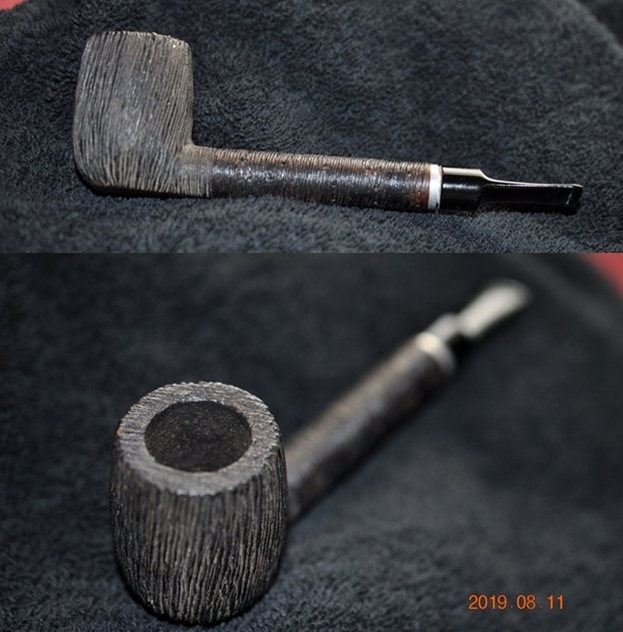
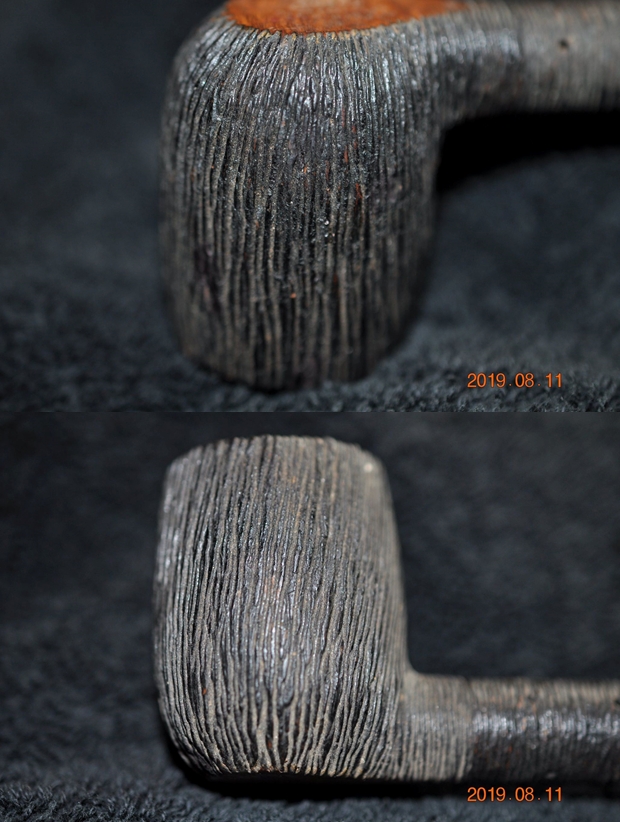
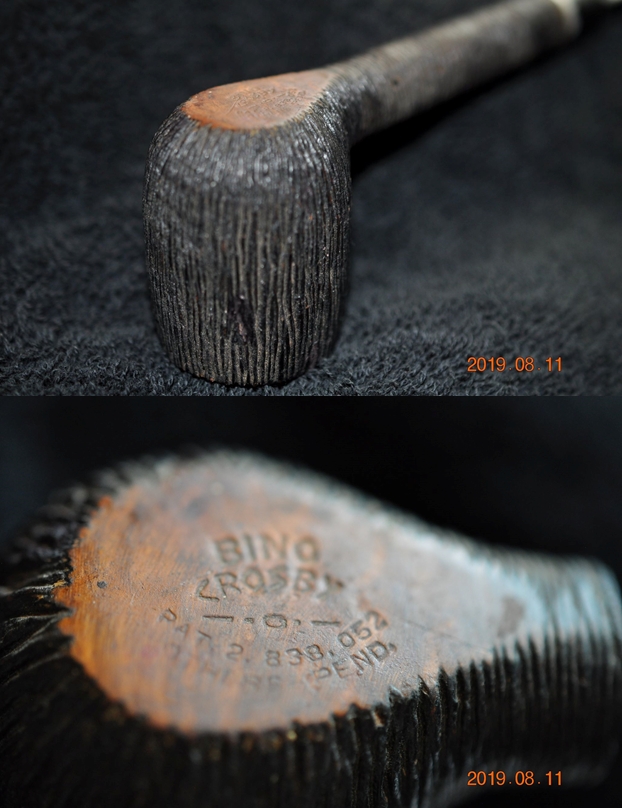
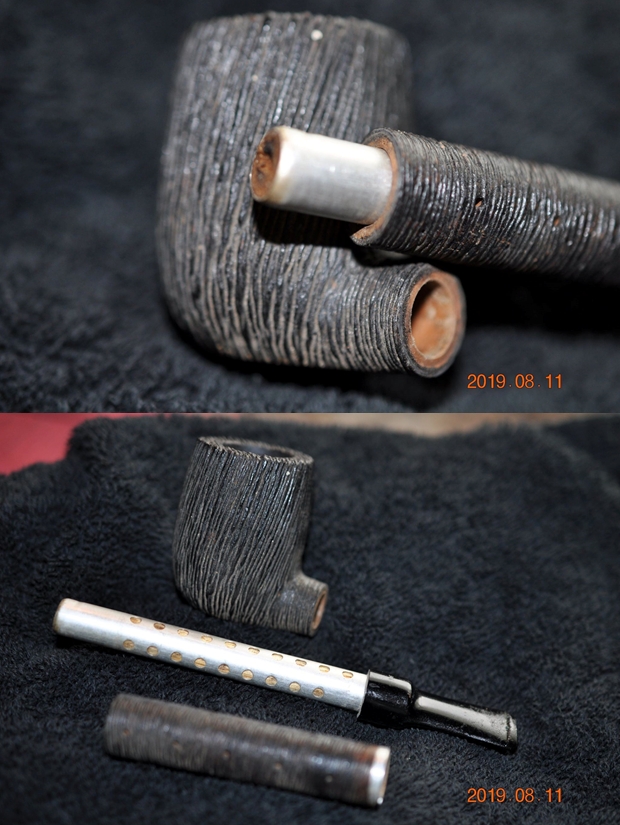
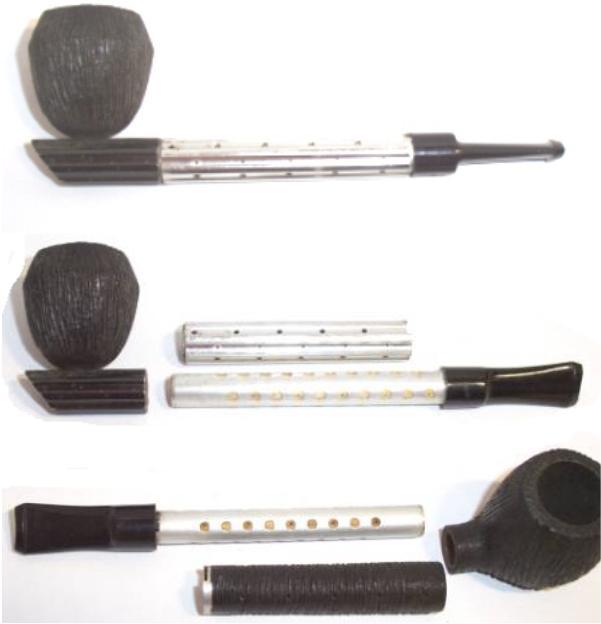
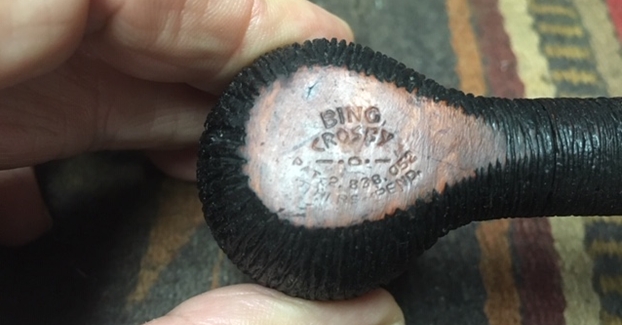
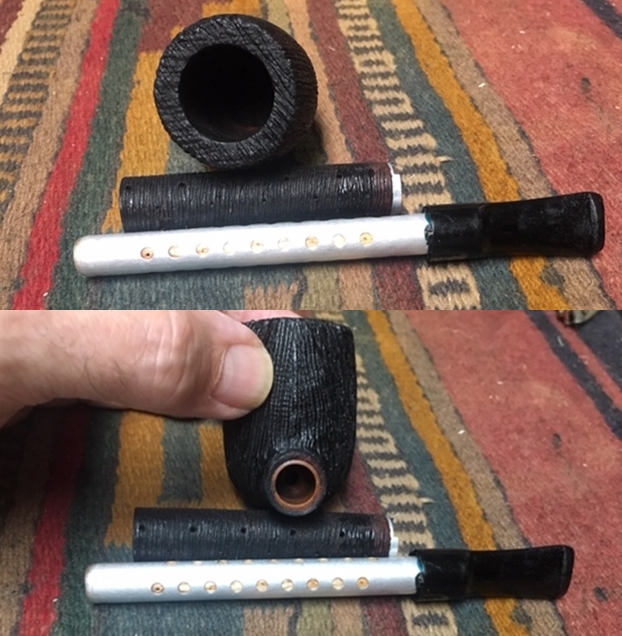
Jeff’s pipe package arrived last evening and I opened it and went through the pipes in the package. There were a lot of interesting pipes but it is hard to set them aside and keep working on Bob’s pipes. There was one that Jeff showed me on Facetime that had my attention and I wanted to work on it. The deal was clinched when I saw this pipe in person for the first time. There was something very familiar about it. I recognized both the style of the pipe and the Bing Crosby Thermostatic Filtration System. A quick search of rebornpipes revealed why it was familiar (https://rebornpipes.com/2017/07/18/a-unique-bing-crosby-thermostatic-filtration-system-pipe/). Here is a photo of the pipe I had restored before – it is an interesting Dublin. I reread the blog to remind myself of the history and background on the brand before I started work on it.Jeff took the following photos before he cleaned it up. The wire rusticated finish on the bowl and shank were filthy and filled in with grime and dust. The bowl had a thick cake lining the walls and there was some tobacco stuck in the cake. The rim top also had some lava overflow into the grooves of the rustication. The finish on the shank was also very dirty and some of the varnish was peeling off the wood. Many of the air holes in the shank were plugged. The aluminum end to the shank was in good condition. The shank slides off the stem and tube that is inside the shank. The internals were dirty but they were a Balsa wood filter that was connected to the stem. Surrounding the filter was an aluminum tube. The stem was oxidized with tooth chatter on both sides. The stem twists from side to side allowing the pipe smoker to adjust the airflow. With some clean up this rusticated Lovat will make a great partner to the long shank Dublin shown above.Jeff took photos of the bowl and rim top to show the cake in the bowl and the lava build up on the edges of the bowl. The grime and grit in the wire rusticated finish were heavily built up but even so the inner and outer edges looked very good.    Jeff took photos of the sides and heel of the bowl to show the condition of the rusticated finish. There is a lot of dust and grime on the surface of the briar but it looks pretty interesting.  Jeff took a long view photo of the smooth heel on the bowl to give a feel for the overall look of the stamped area. He also took a photo of the stamping on the heel. It reads Bing Crosby over -0- over PAT.2.838.052 over Other Pats. Pend.   Jeff took the pipe apart and took pictures of the pipe. You can see the debris in the end of the filter in the first photo. The photos that follow show different shots of the pipe parts.   Jeff took photos of the top and underside of the stem showing the tooth chatter and marks on the stem surface and wear on the edges of the button. The stem is not vulcanite if it is like the other. It seems like a mixture of rubber and plastic of some kind. Before I picked up my part of the restoration I went back and reread the pertinent parts of the blog mentioned above. I was particularly interested in the background information I had previously found on the brand and on the patent number itself.

I had found that one of my favourite go to sites, SmokingMetals had information on the brand during my previous research (http://www.smokingmetal.co.uk/pipe.php?page=114). I have included the information from the site and some photos from there as well.

Several variants, but basically the inner stem consists of a filtering device integral with the bit. The outer sleeve comes in several designs. Twisting the perforated outer stem alters the smoke flow/air mixture. These examples here under the Bing Crosby name, but another derivative came under the name of Trailblazer, by “Pipes by Lee Inc.”. The Medico Ventilator appears to incorporate the same principle.In the previous blog I dug a little deeper in the web and found that there was a thread on the Pipesmokers Forum. Here is the link if you would like to follow the entire discussion on the thread. https://pipesmokersforum.com/community/threads/a-bing-crosby.45689/.  I quote two of the respondents regarding the pipe.

It’s my understanding that the “Swiss cheese stem” was designed to give the pipe a cooler smoke. When you twist the pipe shank it either closes the holes or opens them – thus providing a cooler or warmer smoke. I am more interested in knowing if Bing really had a hand in its design or if the whole thing was a gimmick

…SO – the filtration system is called “thermostatic” – and the wood inside the aluminum sleeve on mine definitely looks to be balsa wood. Now if I could just get one of those magnetic drying chamber thingies.

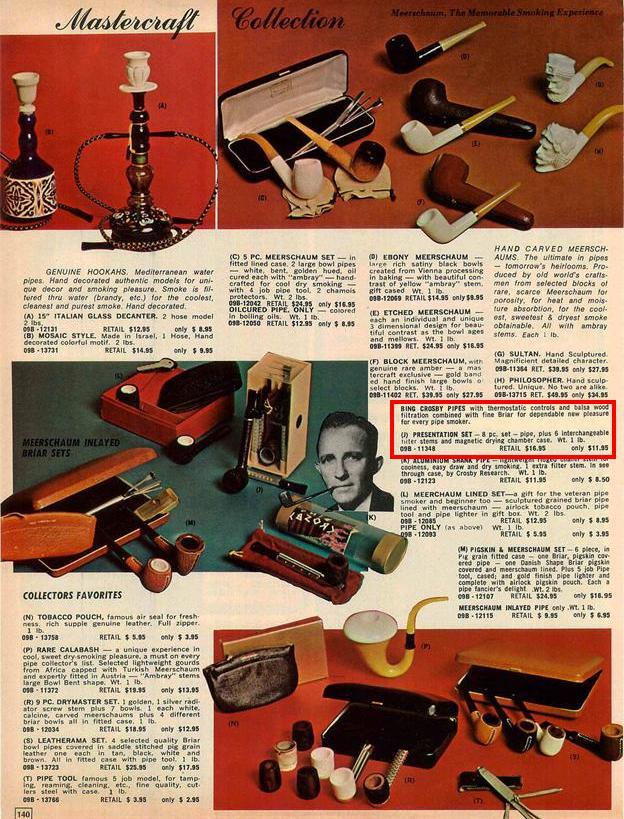
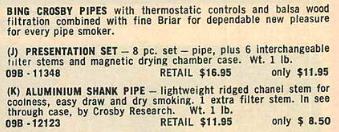
I was excited again with this pipe. In the thread quote above there were several links in the thread referring to articles and information on Bing Crosby himself and one that took me to an advertisement that appears to come from a Mastercraft Pipe Catalogue or from a magazine that included this pipe along with a selection of Mastercraft pipes. http://www.ebay.ca/itm/1971-ADVERTISEMENT-Bing-Crosby-Smoking-Pipes-Rolls-Royce-Bank-Tie-Rack-/151568646383?rmvSB=true. I have included the catalogue page and highlighted specific pipe with a red box. I included a blow up of that portion of the page so you can read it more clearly.You can see it to the left. It reads: Bing Crosby pipes with thermostatic controls and balsa wood filtration combined with fine Briar for dependable new pleasure for every pipe smoker. In the photo item (J) and (K) show variations on the Crosby Pipe. The first is a presentation set with a pipe and 6 interchangeable filter stems and a magnetic drying chamber case where the stems and filters can be stored. Interestingly both sets bear the designation that the pipes are offered by Crosby Research.

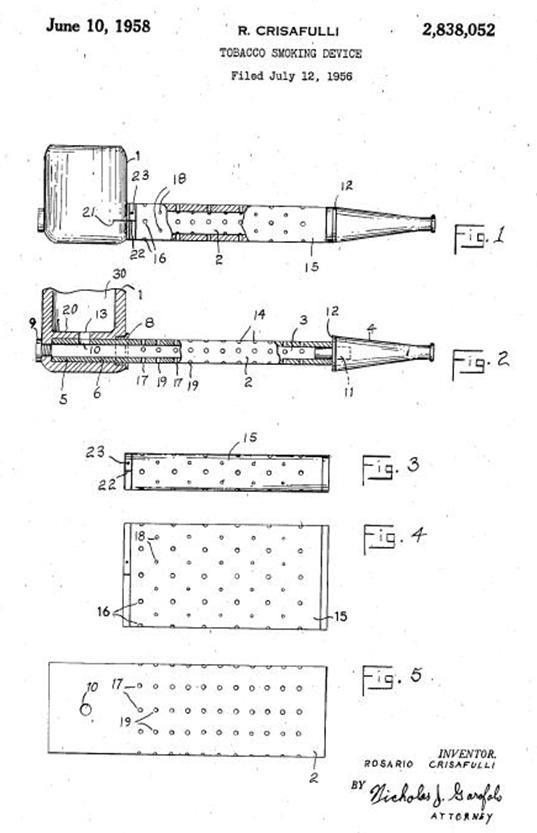
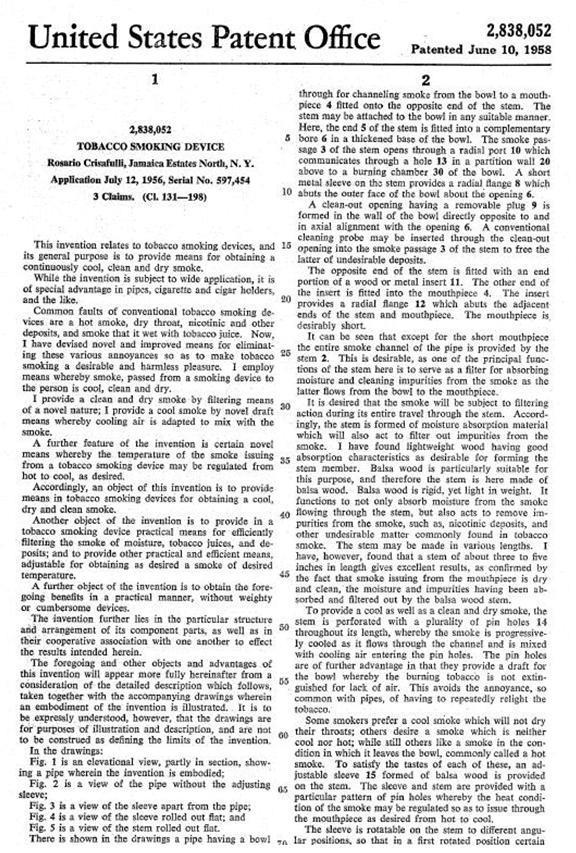
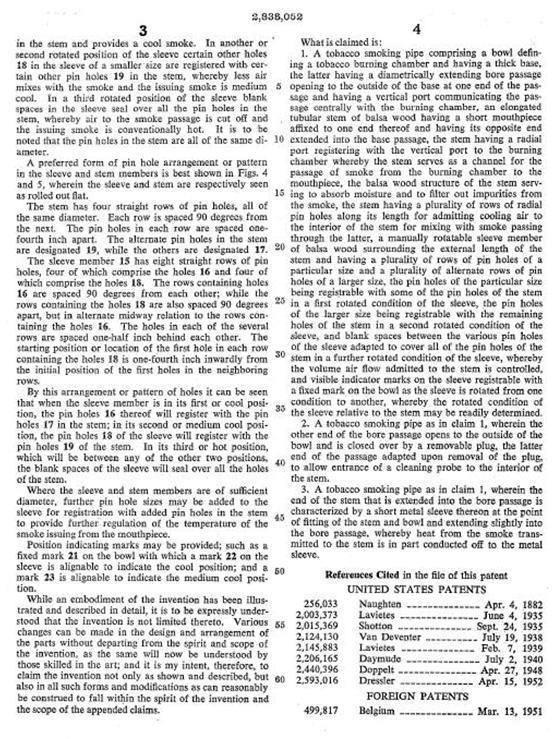
I had also previously used the patent number on the bottom of the bowl to hunt down the patent on the US Patent website. I have included the patent drawing and documentation that was submitted with the descriptions of the innovations of this pipe. The pipe was invented by Rosario Crisafulli of Jamaica Estates North, New York and was filed with the US Patent Office on July 12, 1956. The patent was granted almost two years later on June 10, 1958. Having reread the above information and more I moved on to work on the pipe. I took some close up photos to confirm the condition of the pipe. The first shows the bowl, rim top and edges. They were in pretty good shape. There was some minor denting on the rim top. The second shows the stamping on the bottom of the bowl, confirming the information that was given above. Jeff cleaned the pipe with his usual penchant for thoroughness that I really appreciate. This one was a real mess and I did not know what to expect when I unwrapped it from his box. He reamed it with a PipNet pipe reamer and cleaned up the reaming with a Savinelli Fitsall Pipe Knife. He scrubbed out the internals with alcohol, pipe cleaners and cotton swabs until the pipe was clean. He scrubbed the exterior of the bowl with Murphy’s Oil Soap and a tooth brush to remove the grime and grit on the briar and the lava on the rim top. The finish looks very good with good looking grain around the bowl and shank. Jeff soaked the stem in Before & After Deoxidizer to remove the oxidation on the stem. When the pipe arrived here in Vancouver for the second stop of its restoration tour it looked very good. I took photos before I started my part of the work. The next photos show the rim top and the stem surfaces. The rim top cleaned up amazingly and looks very new with no damage to inner or outer edges. The stem cleaned up well but the tooth chatter and marks cover both surfaces and the button. It will need to be cleaned and reshaped.One of the things I appreciate about Jeff’s cleanup is that he works to protect and preserve the nomenclature on the shank of the pipes that he works on. The stamping on this one was very faint to start with so I was worried that it would disappear altogether with the cleanup. He was not only able to preserve it but it is clearer than shown in the earlier photos. I took some photos to show the clarity of the stamping. I have noticed that many restorers are not careful to protect the stamping in their cleaning process and often by the end of the restoration the nomenclature is almost destroyed. I would like to encourage all of us to be careful in our work to preserve this as it is a critical piece of pipe restoration!The shank encloses an aluminum tube with matching perforations to the shank. It is an integral part of the stem. Inside of the tube is a hollow balsa wood filter much like the hard maple filter found in Brigham pipes. In this case the smoke is drawn through the shank and air from outside is mixed with the smoke to either keep it warm or cool it so a clean dry smoke is enjoyed by the pipe smoker. In the earlier noted advertisement the stem and filter unit were one unit and were sold with replacements. The next photos show the pipe taken apart. I rubbed the bowl down with Before & After Restoration Balm. I worked it into the surface of the briar with my fingertips and a horsehair to clean, enliven and protect it. I let the balm sit for a little while and then buffed with a cotton cloth to raise the shine. Mark Hoover’s Balm is a product that I have come to appreciate and one I use on every pipe I have been working on. I set the bowl aside and turned my attention to the stem. I sanded the stem with 220 grit sandpaper to break up the oxidation. I started the polishing with 400 grit wet dry sandpaper to remove the scratching. It is starting to look good. I rubbed the stem down with Denicare Mouthpiece Polish. I have a few tins of this laying around so I am trying to use them up. It does a pretty good job polishing the stem.I polished the stem with micromesh sanding pads – wet sanding with 1500-12000 grit pads. I wiped the stem down with Obsidian Oil after each pad and set the stem aside to dry after the final wipe down with oil.    I put the bowl, shank and stem back together. I polished the bowl and stem with Blue Diamond to polish out the scratches in the briar and the stem. I gave the bowl and the stem multiple coats of carnauba wax. I buffed the pipe with a clean buffing pad to raise the shine. I hand buffed it with a microfiber cloth to deepen the shine. The pipe polished up pretty nicely. The wire rustication on the bowl and shank looked really good with the polished black stem. This Bing Crosby Thermostatic Filtration Lovat was another fun pipe to work on thanks to Jeff’s cleanup work. It really has an interesting and unique look that catches the eye. The combination of various brown stains really makes the pipe look attractive. It is another comfortable pipe to hold in the hand. The finished pipe is shown in the photos below. The dimensions of the pipe are Length: 6 inches, Height: 2 inches, Outside diameter of the bowl: 1 ¼ inches, Chamber diameter: ¾ of an inch. This pipe is joining the Bing Crosby Dublin in my own collection. Thanks for reading this blog and my reflections on the pipe while I worked on it.

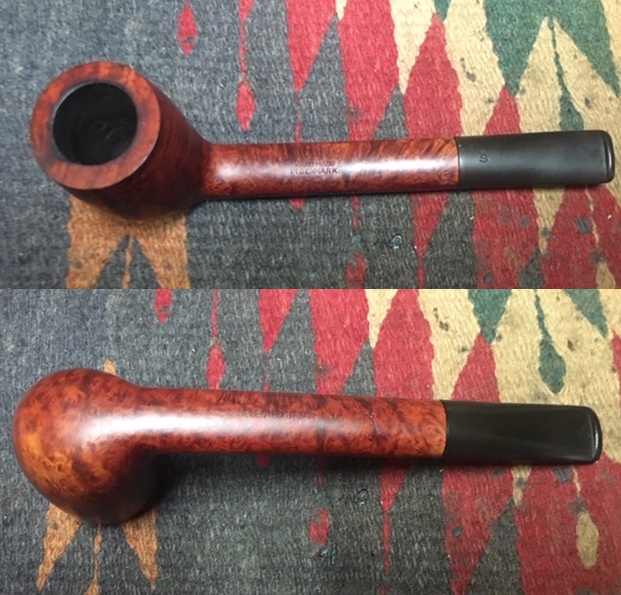
Restoring a Handmade Denmark Stanwell Selected Briar Canadian 56 Regd. No. 969-48


Blog by Steve Laug

The next pipe I chose to work on from Bob Kerr’s estate is part of his collection of Danish made pipes. I have worked on the restoration of others in this collection including a Stanwell Jubilee Shape 118 (https://rebornpipes.com/2019/08/11/another-bob-kerr-estate-a-stanwell-jubilee-1942-1982-shape-118/); a Stanwell de Luxe Shape 812 (https://rebornpipes.com/2019/08/10/back-to-bob-kerrs-estate-changing-up-and-working-on-a-danish-made-stanwell-de-luxe-812-billiard-regd-no-969-48/); a WO Larsen (https://rebornpipes.com/2019/01/13/restoring-pipe-17-from-bob-kerrs-estate-a-w-o-larsen-super-15-bent-stack/); a Danish Sovereign Bulldog variation (https://rebornpipes.com/2019/08/11/another-bob-kerr-estate-a-danish-sovereign-305-bulldog-variant/) and a Danmore Deluxe Volcano (https://rebornpipes.com/2019/08/20/restoring-a-petersons-dunmore-70-bent-apple-sitter-from-bob-kerrs-estate-2/).

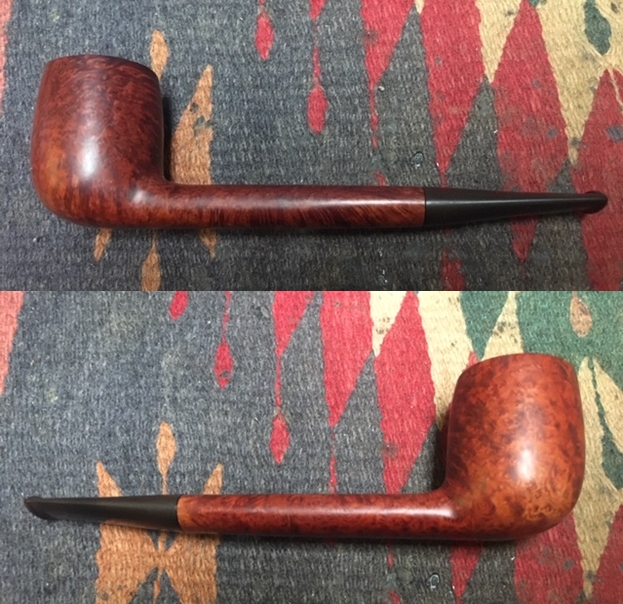
To this list of Danish pipes I am adding the next – a Handmade in Denmark Stanwell Selected Briar Canadian 56 Regd. No. 969-48. Like the others it is part of Bob’s estate that the family asked me to clean up and move out to others who will carry on the trust that began with Bob. In the collection there were BBBs, Peterson’s, Dunhills, Comoy’s and Barlings as well many others – a total of 125 pipes. This is the largest estate that I have had the opportunity to work on. I created a spread sheet to track the pipes, restoration and sales. This job would take a fair amount of time to clean up. I could not pass up the opportunity to work on these pipes and help the family.

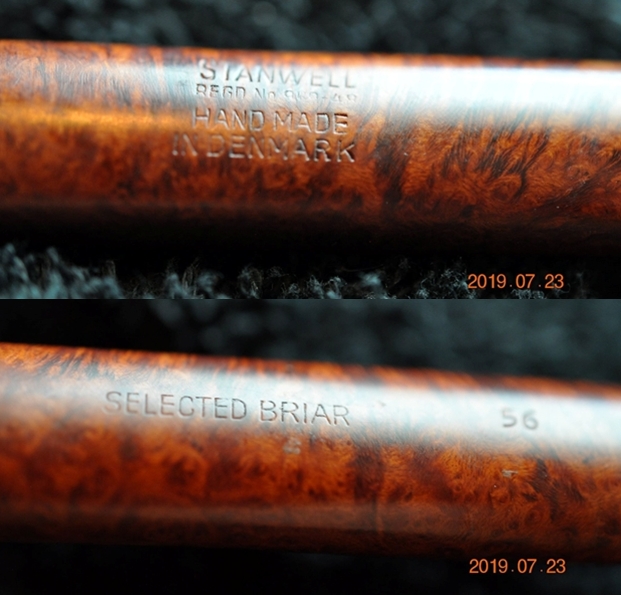
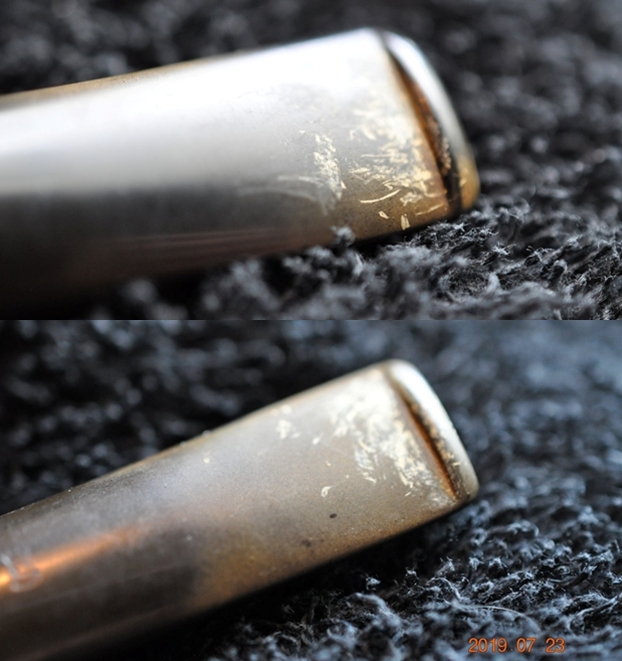
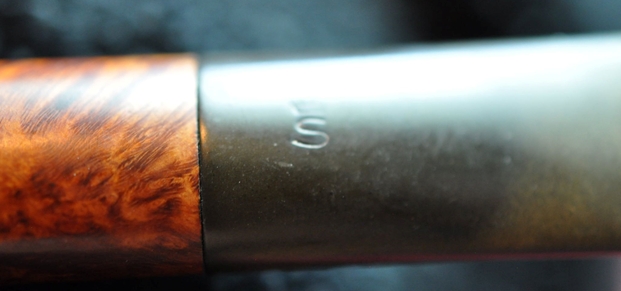
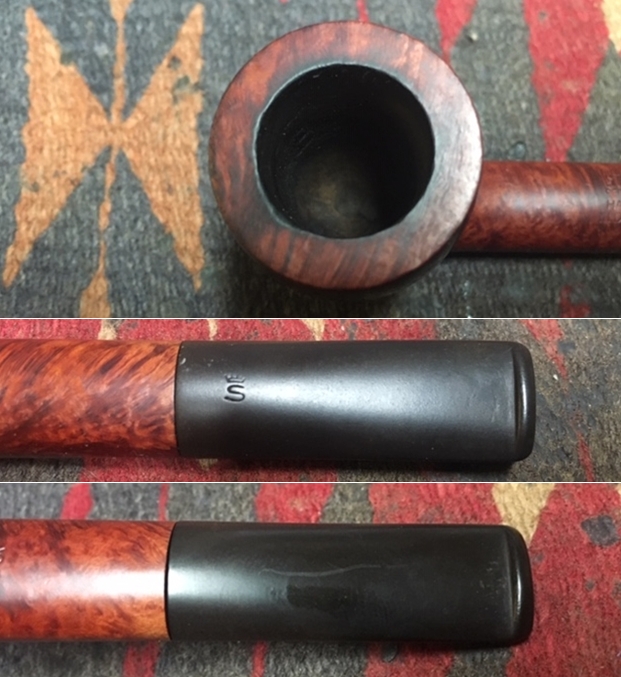
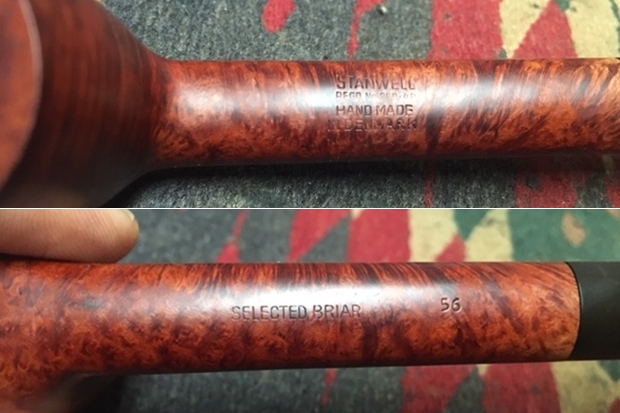
When I took the Stanwell Handmade Canadian out of the box of cleaned up pipes that Jeff sent back I could see that it was stamped Stanwell over the Regd. No. 969-48 over Handmade in Denmark on the topside of the shank and Selected Briar followed by the shape number 56 on the top side of the shank. It has birdseye on the sides of the bowl and cross grain on the front and rear of the bowl. The grain mixes on the heel and the shank. The finish was dirty like the rest of the pipes in this estate. There was a thick cake in the bowl with remnants of tobacco stuck on the walls. There was an overflow of lava on the rim. The top and edges of the rim were dirty. I could see a beautiful pipe underneath all of the grime and buildup of years of use. The stem was oxidized with tooth chatter on both sides. There was an S with a Crown on the topside of the taper stem. Surprisingly it had none of the deep tooth marks that I have come to expect from Bob’s pipes. Jeff took photos of the pipe before he started his cleanup work on it.   Jeff took photos of the bowl and rim top to show the cake in the bowl and the lava build up on the edges of the bowl. It was thick and hard but hopefully it had protected the rim and edges from damage. The edges look pretty good.    Jeff took photos of the sides and heel of the bowl to show the condition of the finish. You can see the beautiful swirls of the birdseye. There is a lot of dust and grime on the surface of the briar.    Jeff took photos of the stamping on the top and the underside of the shank. The stamping was readable as you can see from the photos. It read Stanwell Regd. No. 969-48 Handmade in Denmark. On the underside it reads Selected Briar and the shape number 56.    Jeff took photos of the top and underside of the stem showing the tooth chatter, scratching and oxidation on the stem surface and wear on the edges of the button. The Crown “S” on the stem was in good condition. The crown was a little worn on the right side.   I turned first to Pipephil’s site to get a quick idea of when this pipe was made by reference to the Regd. No. on the underside of the shank (http://www.pipephil.eu/logos/en/logo-stanwell.html). I quote what I found there. The “Regd. No.” stamping discontinued in late 1960s to very early 1970s.

I also turned to Pipedia’s article on Stanwell but it did not add any further information. It is a great read in terms of the history of the brand (https://pipedia.org/wiki/Stanwell).

With that information in hand I knew what I was dealing with in terms of the stamping and the age of this pipe. I knew from the information from Pipephil that the Regd. No. stamping was discontinued in the late 60s to very early in the 70s. Most of Bob’s pipes were purchased between the 50s and late 60s so my guess is that this pipe fits that time frame. Now it was time to work on the pipe.

With over 125 pipes to clean from Bob’s estate I took a batch of them to the states with me on a recent visit and left them with Jeff so he could help me out. Jeff cleaned the pipe with his usual penchant for thoroughness that I really appreciate. This one was a real mess and I did not know what to expect when I unwrapped it from his box. He reamed it with a PipNet pipe reamer and cleaned up the reaming with a Savinelli Fitsall Pipe Knife. He scrubbed out the internals with alcohol, pipe cleaners and cotton swabs until the pipe was clean. He scrubbed the exterior of the bowl with Murphy’s Oil Soap and a tooth brush to remove the grime and grit on the briar and the lava on the rim top. The finish looks very good with good looking grain around the bowl and shank. Jeff soaked the stem in Before & After Deoxidizer to remove the oxidation on the rubber. When the pipe arrived here in Vancouver for the second stop of its restoration tour it looked very good. I took photos before I started my part of the work. I took some close up photos of the rim top and also of the stem surface. I wanted to show what an amazing job Jeff did in the cleanup of the rim top. The rim top looks very good. The sandblast finish is very nice. The bowl looked very good. I also took close up photos of the stem to show the lack of tooth marks and the remaining oxidation on the stem surface.   One of the things I appreciate about Jeff’s cleanup is that he works to protect and preserve the nomenclature on the shank of the pipes that he works on. The stamping on this one was very faint to start with so I was worried that it would disappear altogether with the cleanup. He was not only able to preserve it but it is clearer than shown in the earlier photos. I took some photos to show the clarity of the stamping. I have noticed that many restorers are not careful to protect the stamping in their cleaning process and often by the end of the restoration the nomenclature is almost destroyed. I would like to encourage all of us to be careful in our work to preserve this as it is a critical piece of pipe restoration! Since this is another pipe Bob’s estate I am sure that some of you have read at least some of the other restoration work that has been done on the previous pipes. You have also read what I have included about Bob Kerr, the pipeman who held these pipes in trust before I came to work on them (see photo to the left). Also, if you have followed the blog for long you will already know that I like to include background information on the pipeman whose pipes I am restoring. For me, when I am working on an estate I really like to have a sense of the person who held the pipes in trust before I worked on them. It gives me another dimension of the restoration work. I asked Brian if he or his wife would like to write a brief biographical tribute to her father, Bob. His daughter worked on it and I received the following short write up on him and some pictures to go along with the words including one of Bob’s carvings. Once again I thank you Brian and tell your wife thank you as well.

I am delighted to pass on these beloved pipes of my father’s. I hope each user gets many hours of contemplative pleasure as he did. I remember the aroma of tobacco in the rec room, as he put up his feet on his lazy boy. He’d be first at the paper then, no one could touch it before him. Maybe there would be a movie on with an actor smoking a pipe. He would have very definite opinions on whether the performer was a ‘real’ smoker or not, a distinction which I could never see but it would be very clear to him. He worked by day as a sales manager of a paper products company, a job he hated. What he longed for was the life of an artist, so on the weekends and sometimes mid-week evenings he would journey to his workshop and come out with wood sculptures, all of which he declared as crap but every one of them treasured by my sister and myself. Enjoy the pipes, and maybe a little of his creative spirit will enter you!

Now on to the rest of the restoration on this Stanwell Selected Briar 56 Canadian! I decided to begin the restoration of the bowl by addressing the inner edge surface itself. There was some burn damage on the front inner edge of the bowl. I used a folded piece of 220 grit sandpaper to bevel the edge inward to take care of the damage and thin the rim edge to its earlier dimensions. I followed that by sanding the rim top and edge with 400 grit wet dry sandpaper. I polished the briar with micromesh sanding pads to blend in the stain and to polish the briar and remove the scratches in the surface of the bowl, heel and shank. I wet sanded with 1500-12000 grit pads and wiped the bowl down between each pad with a damp cloth.  I cleaned the briar with Mark Hoover’s Before & After Briar Cleaner to remove the debris left behind by the sanding of the rim top and to blend the repairs into the briar. I rubbed it into the surface of the briar and let it sit for 10 minutes. I rinsed the bowl off with warm running water to remove the product and the grime. The grain really began to stand out clearly. It was a beautiful piece of briar.     I rubbed the bowl down with Before & After Restoration Balm. I worked it into the surface of the briar with my fingertips to clean, enliven and protect it. I let the balm sit for a little while and then buffed with a cotton cloth to raise the shine. Mark Hoover’s Balm is a product that I have come to appreciate and one I use on every pipe I have been working on.   I set the bowl aside and turned my attention to the stem. I wiped the stem down with some alcohol to clean off any debris and then I used liquid paper to fill in the Crown S stamp on the top of the tapered stem. I applied it with a tooth pick and scraped of the excess with the same tooth pick.    I sanded the stem with 220 grit sandpaper to break up the oxidation. I started the polishing with 400 grit wet dry sandpaper to remove the scratching. It is starting to look good. I carefully worked my way around the Crown S stamp. You can see the worn portion on the crown to the right of the S.  I rubbed the stem down with Denicare Mouthpiece Polish. I have a few tins of this laying around so I am trying to use them up. It does a pretty good job polishing the stem.    I polished the stem with micromesh sanding pads – wet sanding with 1500-12000 grit pads. I wiped the stem down after each sanding pad with Obsidian Oil. I polished it with Before & After Pipe Stem Polish – both Fine and Extra Fine. Once I had finished the polishing I gave it final coat of oil and set it aside to dry.   Once again I am excited to be on the homestretch with another of Bob’s pipes. This is the part I look forward to when it all comes back together, polished and waxed. I put the bowl and stem back together. I polished the bowl and stem with Blue Diamond to polish out the scratches in the briar and the vulcanite. I gave the bowl and the stem multiple coats of carnauba wax. I buffed the pipe with a clean buffing pad to raise the shine. I hand buffed it with a microfiber cloth to deepen the shine. The pipe polished up pretty nicely. The birdseye and mixed grain on the smooth finish look really good with the polished black vulcanite. This Stanwell Select Briar 56 Canadian with a Regd. No. was another fun pipe to work on thanks to Jeff’s cleanup work. It really has that classic Stanwell look that catches the eye. The combination of various brown stains really makes the pipe look attractive. It is another comfortable pipe to hold in the hand. The finished pipe is shown in the photos below. The dimensions of the pipe are Length: 5 ¾ inches, Height: 1 ¾ inches, Outside diameter of the bowl: 1 ¼ inches, Chamber diameter: ¾ of an inch. If you are interested in carrying on Bob’s legacy with this pipe send me a message or an email. I have a lot more to work on of various brands. Perhaps one of those will catch your attention. Thanks for reading this blog and my reflections on the pipe while I worked on it. This is an interesting estate to bring back to life.

Restoring a Danmore Deluxe Volcano from Bob Kerr’s Estate


Blog by Steve Laug

The next pipe I chose to work on from Bob Kerr’s estate is part of his collection of Danish made pipes. I have worked on the restoration of others in this collection including a Stanwell Jubilee Shape 118 (https://rebornpipes.com/2019/08/11/another-bob-kerr-estate-a-stanwell-jubilee-1942-1982-shape-118/); a Stanwell de Luxe Shape 812 (https://rebornpipes.com/2019/08/10/back-to-bob-kerrs-estate-changing-up-and-working-on-a-danish-made-stanwell-de-luxe-812-billiard-regd-no-969-48/); a WO Larsen (https://rebornpipes.com/2019/01/13/restoring-pipe-17-from-bob-kerrs-estate-a-w-o-larsen-super-15-bent-stack/) and a Danish Sovereign Bulldog variation (https://rebornpipes.com/2019/08/11/another-bob-kerr-estate-a-danish-sovereign-305-bulldog-variant/).

To this list of Danish pipes I am adding the next  – a Danmore Handmade in Denmark Deluxe Volcano. Like the others it is part of Bob’s estate that the family asked me to clean up and move out to others who will carry on the trust that began with Bob. In the collection there were BBBs, Peterson’s, Dunhills, Comoy’s and Barlings as well many others – a total of 125 pipes. This is the largest estate that I have had the opportunity to work on. I created a spread sheet to track the pipes, restoration and sales. This job would take a fair amount of time to clean up. I could not pass up the opportunity to work on these pipes and help the family.

When I took the Danmore out of the box of cleaned up pipes that Jeff sent back I could see that it was stamped Danmore Handmade Denmark on the topside of the shank and Deluxe on the right side of the shank. It has straight and flame grain around the bowl and the oval shank and birdseye on the heel of the bowl and shank. The finish was dirty like the rest of the pipes in this estate. There was a thick cake in the bowl with remnants of tobacco stuck on the walls. There was an overflow of lava on the rim. The top and edges of the rim were dirty and there appears to be a deep chip on the front of the bowl edge. I could see a beautiful pipe underneath all of the grime and buildup of years of use. The stem was oxidized with tooth chatter on both sides. Surprisingly it had none of the deep tooth marks that I have come to expect from Bob’s pipes. Jeff took photos of the pipe before he started his cleanup work on it. Jeff took photos of the bowl and rim top to show the thick, hard cake in the bowl and the lava build up on the top of the rim and the edges of the bowl. You can see the chip on the rim top and inner edge of the bowl on the right side. There is some lava flowing down the outside of the bowl.   Jeff took photos of the sides and heel of the bowl to show the condition of the finish. You can see the beautiful mix of straight, flame and birdseye grain underneath the dirt and debris of the years. The birdseye grain on the heel was beautiful.    Jeff took photos of the stamping on both sides of the bowl and shank. The stamping on the topside was readable as you can see from the photos. It read danmore over Handmade Denmark. The stamp on the right side read Deluxe but Jeff did not take a photo of that stamp. You can see that the fit of the stem in the shank is off which tells me that the tenon is bent. Jeff took photos of the top and underside of the stem showing the tooth chatter, scratching and oxidation on the stem surface and wear on the edges of the button.    I turned first to Pipephil’s site to remind myself of the background of the Danmore brand. There was little information to be found there other than the factory was closed and third parties were making the pipes. I then turned to Pipedia’s article on the brand to see what I could garner from that information (https://pipedia.org/wiki/Danmore). I quote from there in full:

Danmore was founded by Hans Sørensen in the early 1970s, and produced pipes from that time until the early 1980s, at one point having up to 30 employees. The pipes were sold in the first Dan Pipe catalog. In the early 1980’s, however, production ceased in Denmark due to labor costs, and the company’s production was outsourced to Italy and Spain, and they began to also make pipecleaners and smokers articles.

Sørensen focused on the pipecleaner side of the concern, and eventually bought a share in the factory in the Far East making them. Today the company, owned by Hans’ sons Jesper and Lars Sørensen, no longer makes pipes, and instead makes only pipe cleaners under the name Danmore Hobby Aps, selling only to hobby and craftshops in Denmark and Scandinavia.

Hans Sørensen passed away in 2012. The Sørensen family continues to own the trademarks for the use of the Danmore name in relation to pipes, matches, and tobacco.

The article also included a Shape Chart that was courtesy of Doug Valitchka. I include that below as well. The shape of the pipe that I am working on is a variation on the 3014. It has a classic oval saddle stem rather than the more freehand looking one below. It also does not have the shank extension (https://pipedia.org/wiki/File:DanmoreCat.jpg). I have circled the shape in red to show which one is similar.I did a bit more searching online and found a copy of a brochure that was included in a box with a Danmore pipe on Redit in the archives. I was able to copy the photos of the pages of the brochure and have included them below. Have a look (https://www.reddit.com/r/PipeTobacco/comments/vclaj/does_anyone_know_much_about_danmore_pipes/). The Danmore I am working on is on the page labeled CORVETS. I have boxed in the pipe in red that I am working on. With that information in hand I knew what I was dealing with in terms of the stamping on the pipe. The pipe I have is the same shape as the one boxed in red – shape number 14 under section labeled CORVETS. The pipe was made for just a ten year period between early 1970s and the early 1980s. It seems that they have also been made since then by a third party. I believe this pipe was one from the original 10 year period by Hans Sørensen. Now it was time to work on the pipe.

With over 125 pipes to clean from Bob’s estate I am very glad for Jeff’s help cleaning them. He cleaned this filthy pipe with his usual penchant for thoroughness that I really appreciate. This one was a mess and I did not know what to expect when I unwrapped it from his box. He reamed it with a PipNet pipe reamer and cleaned up the reaming with a Savinelli Fitsall Pipe Knife. He scrubbed out the internals with alcohol, pipe cleaners and cotton swabs until the pipe was clean. He scrubbed the exterior of the bowl with Murphy’s Oil Soap and a tooth brush to remove the grime and grit on the briar and the lava on the rim top. The finish looks very good with great looking grain around the bowl and shank. Jeff soaked the stem in Before & After Deoxidizer to remove the oxidation on the rubber. When the pipe arrived here in Vancouver for the second stop of its restoration tour I was amazed it looked so good. I took photos before I started my part of the work.   I took some close up photos of the rim top and also of the stem surface. I wanted to show what an amazing job Jeff did in the cleanup of the rim top. I also wanted to show that the damage to the rim top was more extensive than I had originally thought. The thin rim top was burned and darkened with a few large nicks on the top and inner edge. The rim top was a nightmare of issues. I also took close up photos of the stem to show the lack of tooth marks and the light oxidation on the stem surface. You can also see gap between the stem and the shank end due to a bent tenon.        One of the things I appreciate about Jeff’s cleanup is that he works to protect and preserve the nomenclature on the shank of the pipes that he works on. The stamping on this one was very faint to start with so I was worried that it would disappear altogether with the cleanup. He was not only able to preserve it but it is clearer than shown in the earlier photos. I took some photos to show the clarity of the stamping. I have noticed that many restorers are not careful to protect the stamping in their cleaning process and often by the end of the restoration the nomenclature is almost destroyed. I would like to encourage all of us to be careful in our work to preserve this as it is a critical piece of pipe restoration! Since this is another pipe Bob’s estate I am sure that some of you have read at least some of the other restoration work that has been done on the previous pipes. You have also read what I have included about Bob Kerr, the pipeman who held these pipes in trust before I came to work on them (see photo to the left). Also, if you have followed the blog for long you will already know that I like to include background information on the pipeman whose pipes I am restoring. For me, when I am working on an estate I really like to have a sense of the person who held the pipes in trust before I worked on them. It gives me another dimension of the restoration work. I asked Brian if he or his wife would like to write a brief biographical tribute to her father, Bob. His daughter worked on it and I received the following short write up on him and some pictures to go along with the words including one of Bob’s carvings. Once again I thank you Brian and tell your wife thank you as well.

I am delighted to pass on these beloved pipes of my father’s. I hope each user gets many hours of contemplative pleasure as he did. I remember the aroma of tobacco in the rec room, as he put up his feet on his lazy boy. He’d be first at the paper then, no one could touch it before him. Maybe there would be a movie on with an actor smoking a pipe. He would have very definite opinions on whether the performer was a ‘real’ smoker or not, a distinction which I could never see but it would be very clear to him. He worked by day as a sales manager of a paper products company, a job he hated. What he longed for was the life of an artist, so on the weekends and sometimes mid-week evenings he would journey to his workshop and come out with wood sculptures, all of which he declared as crap but every one of them treasured by my sister and myself. Enjoy the pipes, and maybe a little of his creative spirit will enter you!

Now, on to the rest of the restoration of this beautifully grained Danmore Deluxe Volcano/Brandy. It was great that I did not need to clean the pipe. I decided to start the restoration process by addressing the poorly seated tenon. The first photo below shows the gap. I could see that the tenon itself had been bent and that caused the gap between the shank end and the face of the stem. I heated the tenon with a Bic lighter until the rubber was slightly flexible and then carefully inserted it in the mortise and adjusted the bend and fit. I held it in place until it cooled down. The fit was perfect. I took photos of the stem from the top and the side to show the repair.  I took the newly repaired stem off the shank and worked on the damage to rim top and the inner edge. From the extent of damage to the inner edge of the rim and the top of the bowl I decided I would need to top the bowl to remove as much of this damage as possible to restore the rim top back to a more pristine condition and bring the bowl back to round. I topped it on a topping board using 220 grit sandpaper. The photos show the topping process and the rim top after I had topped it to an acceptable point where the condition of the top and edges was good.  With the top cleaned up and repaired I moved on to address the inner edge surface itself. I used a folded piece of 220 grit sandpaper to bevel the edge inward to take care of the damage and thin the rim edge to its earlier dimensions. I followed that by sanding the rim top and edge with 400 grit wet dry sandpaper.I cleaned the briar with Mark Hoover’s Before & After Briar Cleaner to remove the debris left behind by the sanding of the rim top and to blend the repairs into the briar. I rubbed it into the surface of the briar and let it sit for 10 minutes. I rinsed the bowl off with warm running water to remove the product and the grime. The grain really began to stand out clearly. It was a beautiful piece of briar.  I stained the rim top and edges with a Cherry Stain pen to match the colour of the stain on the bowl. Once it was polished with micromesh sanding pads and Before & After Balm the stain would blend perfectly.I polished the briar with micromesh sanding pads to blend in the stain and to polish the briar and remove the scratches in the surface of the bowl, heel and shank. I wet sanded with 1500-12000 grit pads and wiped the bowl down between each pad with a damp cloth. I rubbed down the bowl with Before & After Restoration Balm. I worked it into the surface of the briar with my fingertips to clean, enliven and protect it. I let the balm sit for a little while and then buffed with a cotton cloth to raise the shine. Mark Hoover’s Balm is a product that I have come to appreciate and one I use on every pipe I have been working on. I set the bowl aside and worked on the stem. I sanded the stem with 220 grit sandpaper to break up the remaining oxidation and smooth out the file marks. I started the polishing with 400 grit wet dry sandpaper to remove the scratching. It is starting to look good.I have been using Denicare Mouthpiece Polish after sanding with 400 grit wet dry sandpaper for a while now as the grittiness of the product works to polish out the minor scratches in the vulcanite. I also have a few of these tins knocking around that I want to use up so it works for me to use it at this point.I polished the stem with micromesh sanding pads – wet sanding with 1500-12000 grit pads. I wiped the stem down after each sanding pad with Obsidian Oil. I polished it with Before & After Pipe Stem Polish – both Fine and Extra Fine. Once I had finished the polishing I gave it final coat of oil and set it aside to dry.   As usual at this point in the restoration process I am excited to be on the homestretch. I look forward to the final look when it is put back together, polished and waxed. I put the bowl and stem back together. I polished the bowl and stem with Blue Diamond to polish out the scratches in the briar and the vulcanite. I gave the bowl and the stem multiple coats of carnauba wax. I buffed the pipe with a clean buffing pad to raise the shine. I hand buffed it with a microfiber cloth to deepen the shine. The pipe polished up pretty nicely. The straight and flame grain really pop with the wax and polish. The shiny black vulcanite saddle stem is a beautiful contrast to the browns of the bowl. This Danmore Deluxe Volcano was another fun pipe to work on thanks to Jeff’s cleanup work. The pipemaker followed the grain in laying out this pipe to maximize the glory of the briar. The flow and feel of the pipe is appealing. The finished pipe is shown in the photos below. The dimensions of the pipe are Length: 5 ¾ inches, Height: 1 7/8 inches, Outside diameter of the bowl: 1 inch, Chamber diameter: ¾ of an inch. This beautiful pipe will be going on the rebornpipes store if you would like to add it to your collection and carry on Bob’s legacy. If not, I have a lot more of Bob’s estate to work on of various brands. Perhaps one of those will catch your attention. Thanks for reading this blog and my reflections on the pipe while I worked on it. This is an interesting estate to bring back to life.
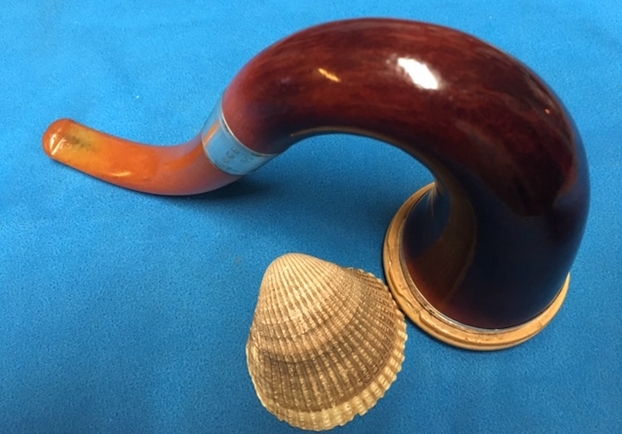
Restoring a Peterson’s Dunmore 70 Bent Apple Sitter from Bob Kerr’s Estate


Blog by Steve Laug

The next pipe I have chosen to work on from Bob Kerr’s estate is another one of his unique Peterson’s. I have restored two of the Canadian Imports from his estate – a Kapruf 54 sandblast bent billiard (https://rebornpipes.com/2019/08/09/back-to-bob-kerrs-estate-another-canadian-import-petersons-kapruf-a-54/) and a Kapruf 9BC 56 (https://rebornpipes.com/2019/08/09/back-to-bob-kerrs-estate-linking-petersons-kapruf-9bc-with-the-56-shape-number/). These were interesting in that they both had a unique numbering system for Peterson’s pipes that were specifically brought to Canada by the Canadian importer, Genin, Trudeau & Co. of Montreal, Quebec (https://rebornpipes.com/2016/09/13/petersons-pipes-brochure-from-genin-trudeau-co-montreal-quebec/). I restored an English Made Peterson’s System ‘0’ 1307 bent billiard a  (https://rebornpipes.com/2019/08/17/an-english-made-petersons-system-0-1307-bent-billiard-from-bob-kerrs-estate/) and a Republic Era Peterson’s Flame Grain Bent billiard with a fishtail stem (https://rebornpipes.com/2019/08/16/a-petersons-flame-grain-x220s-bent-billiard-from-bob-kerrs-estate/).

The next one on the table is of interest because it is a uniquely shaped Dunmore Bent Apple Sitter. It is part of the estate that I am cleaning up for the family and moving them out into the hands of pipemen and women who will carry on the trust that began with their father, Bob. In the collection there were 19 Peterson’s pipes along with a bevy of Dunhills, some Comoy’s and Barlings as well as a lot of other pipes – a total of 125 pipes along with a box of parts. This is the largest estate that I have had the opportunity to work on. I put together a spread sheet of the pipes and stampings to create an invoice. I was taking on what would take me a fair amount of time to clean up. I could not pass up the opportunity to work on these pipes though. They were just too tempting.

I really am enjoying working on the Peterson’s in the estate. This was another unique one. When I took it out of the box of cleaned up pipes that Jeff sent back I could see that it was stamped Peterson’s over Dunmore on the left side of the shank and Made in the Republic of Ireland followed by the shape number 70 on the right shank. It has some stunning grain around the bowl and shank under the thick grime and tarry spots. The shank is quite thick and the finish is probably the dirtiest of Bob’s pipes so far. There was a thick cake in the bowl with remnants of tobacco stuck on the walls. There was a fair lava overflow on the rim. The top and edges of the rim are dirty. I think that there was a beautiful pipe underneath all of the grime and buildup of years of use. The stem was oxidized and calcified toward the end with some hack marks on the left side mid stem. Again, surprisingly did not have the deep tooth marks that I have come to expect from Bob’s pipes but the button edges were worn. Jeff took photos of the pipe before he started his cleanup work on it.   Jeff took photos of the bowl and rim top to show the thick, hard cake in the bowl and the lava build up on the top of the rim and the edges of the bowl. It was hard to tell if there was any damage to the inner edge of the rim as it had a thick cake lining it. Hopefully it protected it. The lava flows down the outer edges so it will need to be cleaned in order to assess their condition.  Jeff took photos of the sides and heel of the bowl to show the condition of the finish. You can see the beautiful mix of swirled, flame and birdseye grain underneath the dirt and debris of the years. The cross grain on the heel was beautiful.    Jeff took photos of the stamping on both sides of the bowl and shank. The stamping on the left side was faint but readable as you can see from the photos. It read Peterson’s over Dunmore. The stamp on the right side read Made in the Republic of Ireland followed by the shape number 70. You can see that the beading around the shank end is almost filled in with the grime on the briar. Jeff took photos of the top and underside of the stem showing the tooth chatter, scratching and oxidation on the stem surface and wear on the edges of the button.    I turned first to Pipephil’s site to remind myself of the background of the Dunmore line. Unfortunately there was no information to be found there. I then turned to Pipedia’s article on Peterson pipes to see what I could garner from that information. It is a great read in terms of the history of the brand (https://pipedia.org/wiki/Peterson) but nothing specific to the Dunmore line of pipes.

I then turned to the book I should have consulted first, The Peterson Pipe, by Mark Irwin and Gary Malmberg. On page 298 there is an entry for Dunmore pipes. It reads as follows:

Dunmore (1971-c.1984 2006-10). Appeared first as Iwan Ries & Co. exclusive line “Dunmoor,” a Premier-grade in light-brown smooth or rustic red in all System shapes, with beading at the shank. Documented in the Associated Imports Catalog from 1973. Classic Range Dunmore shapes from ’78. A third Dunmore line (’06-10) featured standard and some B shapes, with beading around bowl instead of at shank-face, produced for European market.

On page 268 there is a shape chart that does comparison of the shapes in the various lines. There I found the following information:

In the Standard and Premier System it was shape 302. In the De Luxe System it was shape 25. In the Dunmore System (1977-1983) it was shape 70. In the Classic Lines it was shape 02/XL02. The production still continues. It is a Peterson Extra Large Size and was named an Extra Large Apple.

On page 165 there were also photos of pages from a catalogue with the  description: The unmounted Dunmore Premier debuted in both System and Classic Range shapes circa 1973 with a final appearance in the 1981 catalogue.

The information blurb on each page read: “Dunmore Briars.” Beautifully grained best quality briar in light-brown, matt or rustic finish. Often described as “Petersons Unmounted System” has all the advantages of the system range. Ten models each fitted with the Peterson Lip mouthpiece.

With that information in hand I knew what I was dealing with in terms of the stamping on the pipe. It is a Late Republic era pipe. It showed up in Peterson Catalogue in 1973 and from what I have learned about Bob’s other pipes this date fits well. Now it was time to work on the pipe.

With over 125 pipes to clean from Bob’s estate I am very glad for Jeff’s help cleaning them. He cleaned this filthy pipe with his usual penchant for thoroughness that I really appreciate. This one was a real mess and I did not know what to expect when I unwrapped it from his box. He reamed it with a PipNet pipe reamer and cleaned up the reaming with a Savinelli Fitsall Pipe Knife. He scrubbed out the internals with alcohol, pipe cleaners and cotton swabs until the pipe was clean. He scrubbed the exterior of the bowl with Murphy’s Oil Soap and a tooth brush to remove the grime and grit on the briar and the lava on the rim top. The finish looks very good with great looking grain around the bowl and shank. Jeff soaked the stem in Before & After Deoxidizer to remove the oxidation on the rubber. When the pipe arrived here in Vancouver for the second stop of its restoration tour I was amazed it looked so good. I took photos before I started my part of the work.     I took some close up photos of the rim top and also of the stem surface. I wanted to show what an amazing job Jeff did in the cleanup of the rim top. I also wanted to show that the damage to the rim top was more extensive than I had originally thought. The rim top was burned and darkened with nicks and notches around the inner edge. There was some darkening that ran down the front of the bowl as well. The rim top was a nightmare of issues. The outer edge of the bowl looks very good other than the burning and darkening. I also took close up photos of the stem to show the lack of tooth marks and the light oxidation on the stem surface. You can also see the wear to the button. The third stem photo shows the hatch marks on the left side of the stem. One of the things I appreciate about Jeff’s cleanup is that he works to protect and preserve the nomenclature on the shank of the pipes that he works on. The stamping on this one was very faint to start with so I was worried that it would disappear altogether with the cleanup. He was not only able to preserve it but it is clearer than shown in the earlier photos. I took some photos to show the clarity of the stamping. I have noticed that many restorers are not careful to protect the stamping in their cleaning process and often by the end of the restoration the nomenclature is almost destroyed. I would like to encourage all of us to be careful in our work to preserve this as it is a critical piece of pipe restoration! Since this is another pipe Bob’s estate I am sure that some of you have read at least some of the other restoration work that has been done on the previous pipes. You have also read what I have included about Bob Kerr, the pipeman who held these pipes in trust before I came to work on them (see photo to the left). Also, if you have followed the blog for long you will already know that I like to include background information on the pipeman whose pipes I am restoring. For me, when I am working on an estate I really like to have a sense of the person who held the pipes in trust before I worked on them. It gives me another dimension of the restoration work. I asked Brian if he or his wife would like to write a brief biographical tribute to her father, Bob. His daughter worked on it and I received the following short write up on him and some pictures to go along with the words including one of Bob’s carvings. Once again I thank you Brian and tell your wife thank you as well.
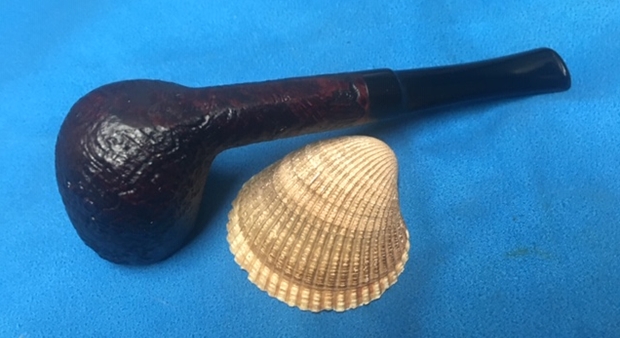
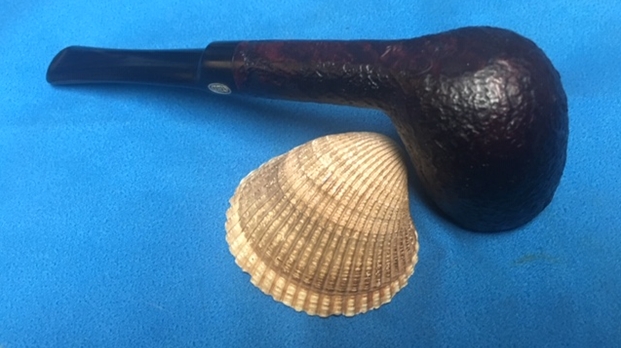
I am delighted to pass on these beloved pipes of my father’s. I hope each user gets many hours of contemplative pleasure as he did. I remember the aroma of tobacco in the rec room, as he put up his feet on his lazy boy. He’d be first at the paper then, no one could touch it before him. Maybe there would be a movie on with an actor smoking a pipe. He would have very definite opinions on whether the performer was a ‘real’ smoker or not, a distinction which I could never see but it would be very clear to him. He worked by day as a sales manager of a paper products company, a job he hated. What he longed for was the life of an artist, so on the weekends and sometimes mid-week evenings he would journey to his workshop and come out with wood sculptures, all of which he declared as crap but every one of them treasured by my sister and myself. Enjoy the pipes, and maybe a little of his creative spirit will enter you!

Now, on to the rest of the restoration of this beautifully grained Peterson’s Dunmore 70 Large Bent Apple. It was great that I did not need to clean the pipe. I decided to start the process by addressing the damage to rim top and the inner edge. From the extent of damage to the inner edge of the rim and the top of the bowl I decided I would need to top the bowl to remove as much of this damage as possible to restore the rim top back to a more pristine condition and bring the bowl back to round. I topped it on a topping board using 220 grit sandpaper. I took photos to show the slow process of repairing that damage. The photos show the topping process and the rim top after I had topped it to an acceptable point where the condition of the top and edges was good.    With the top cleaned up and repaired I moved on to address the inner edge surface itself. I used a folded piece of 220 grit sandpaper to remove the damage and bring the bowl back to round. I followed that by sanding the rim top and edge with 400 grit wet dry sandpaper.  I also sanded the darkening on the front of the bowl edge.   The bowl surface was quite smooth so I decided to forego polishing it with micromesh sanding pads. I cleaned the briar with Mark Hoover’s Before & After Briar Cleaner to remove the debris left behind by the sanding of the rim top and to blend the repairs into the briar. I rubbed it into the surface of the briar and let it sit for 10 minutes. I rinsed the bowl off with warm running water to remove the product and the grime. The grain really began to stand out clearly. It was a beautiful piece of briar. I stained the rim top and edges with an Oak Stain pen to match the colour of the stain on the bowl. Once it was polished with the Before & After Balm and buffed with a microfiber cloth the stain would blend perfectly.After the stain had cured, I rubbed it down with Before & After Restoration Balm. I worked it into the surface of the briar with my fingertips to clean, enliven and protect it. I let the balm sit for a little while and then buffed with a cotton cloth to raise the shine. Mark Hoover’s Balm is a product that I have come to appreciate and one I use on every pipe I have been working on. I decided to touch up the “P” stamp on the left side of the shank. I use PaperMate liquid paper for doing this. I worked it into the stamp with a tooth pick. Once the material had hardened I used the tooth pick to scrape off the excess material.  I reshaped the edge of the button and top of the P-Lip with a needle file to get a more defined shape and edge. Once I had the shape more defined I sanded the stem with 220 grit sandpaper to break up the remaining oxidation and smooth out the file marks. I started the polishing with 400 grit wet dry sandpaper to remove the scratching. It is starting to look good.   I polished the stem with micromesh sanding pads – wet sanding with 1500-12000 grit pads. I wiped the stem down after each sanding pad with Obsidian Oil. I polished it with Before & After Pipe Stem Polish – both Fine and Extra Fine. Once I had finished the polishing I gave it final coat of oil and set it aside to dry. As usual at this point in the restoration process I am excited to be on the homestretch. I look forward to the final look when it is put back together, polished and waxed. I put the bowl and stem back together. I polished the bowl and stem with Blue Diamond to polish out the scratches in the briar and the vulcanite. I gave the bowl and the stem multiple coats of carnauba wax. I buffed the pipe with a clean buffing pad to raise the shine. I hand buffed it with a microfiber cloth to deepen the shine. The pipe polished up pretty nicely. The grain really pops with the wax and polish. The bead around the shank looks very good. The shiny black vulcanite stem is a beautiful contrast to the browns of the bowl. This Peterson’s Dunmore 70 Large Bent Apple was another fun pipe to work on thanks to Jeff’s cleanup work. The beading around the shank gives this Peterson’s “Unmounted System” a unique look without the silver or nickel ferrule. It really is a quite stunning piece of briar whose shape follows the flow of the briar. The thick/chubby shank makes it a very comfortable pipe to hold in the hand. The finished pipe is shown in the photos below. The dimensions of the pipe are Length: 6 ½ inches, Height: 1 ¾ inches, Outside diameter of the bowl: 1 ½ inches, Chamber diameter: 7/8 of an inch. This beautiful large pipe will be going on the rebornpipes store if you would like to add it to your collection and carry on Bob’s legacy. If not, I have a lot more of Bob’s estate to work on of various brands. Perhaps one of those will catch your attention. Thanks for reading this blog and my reflections on the pipe while I worked on it. This is an interesting estate to bring back to life.