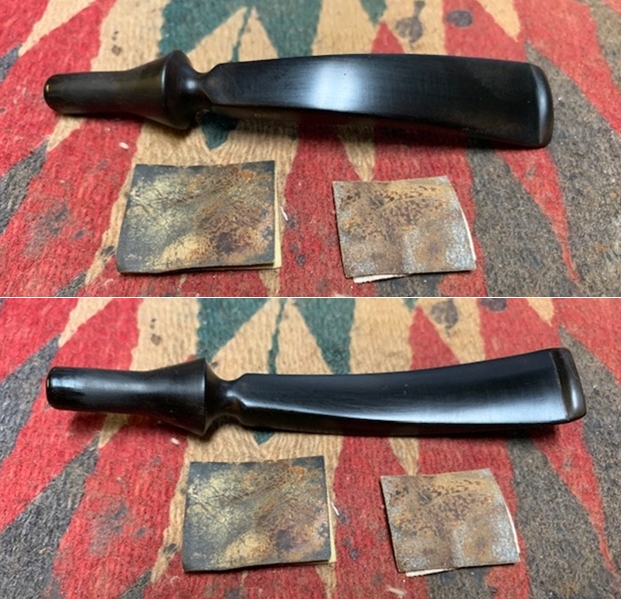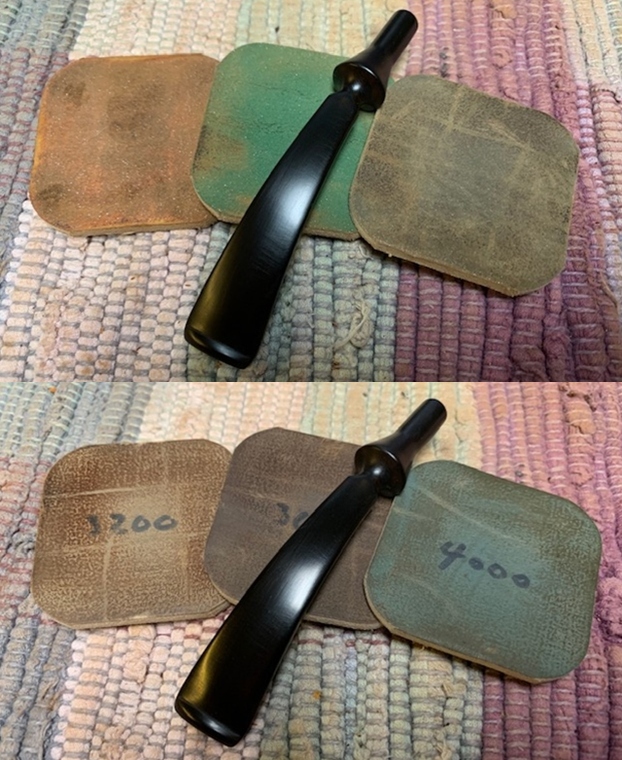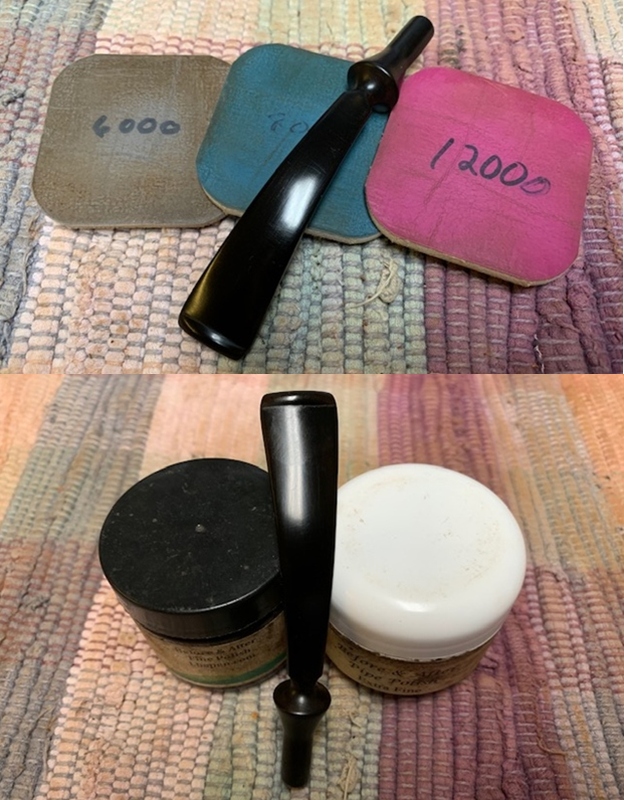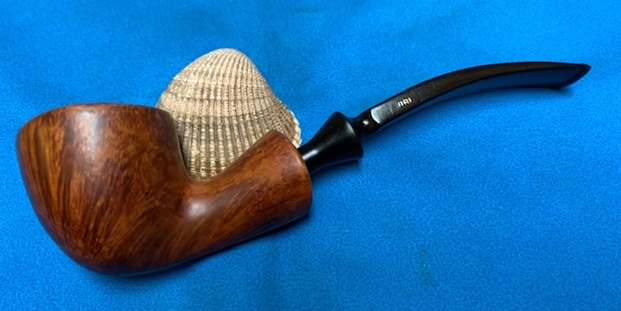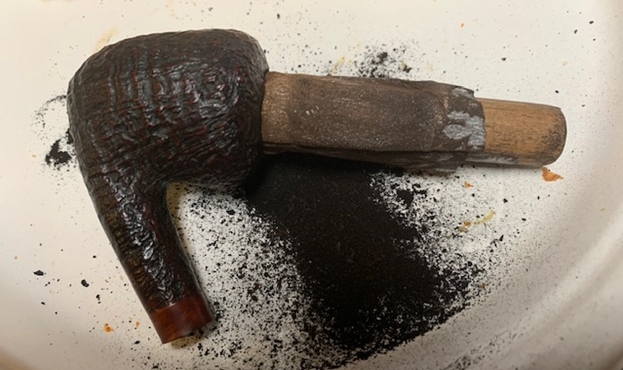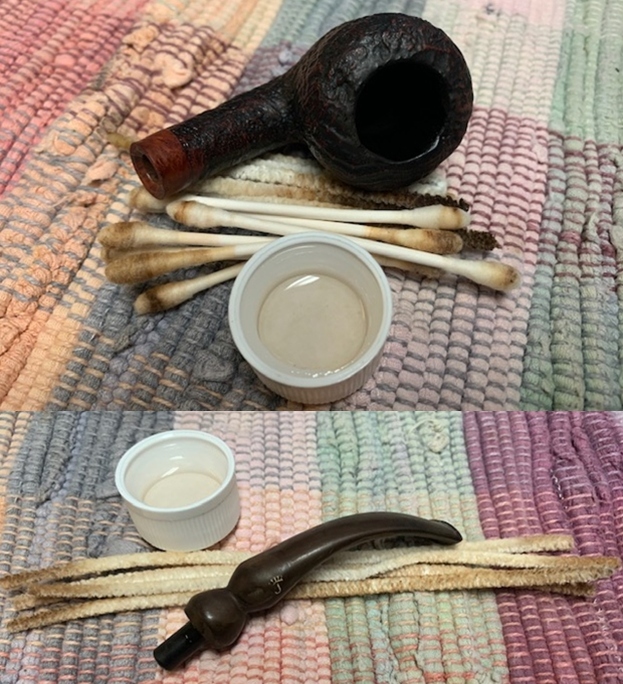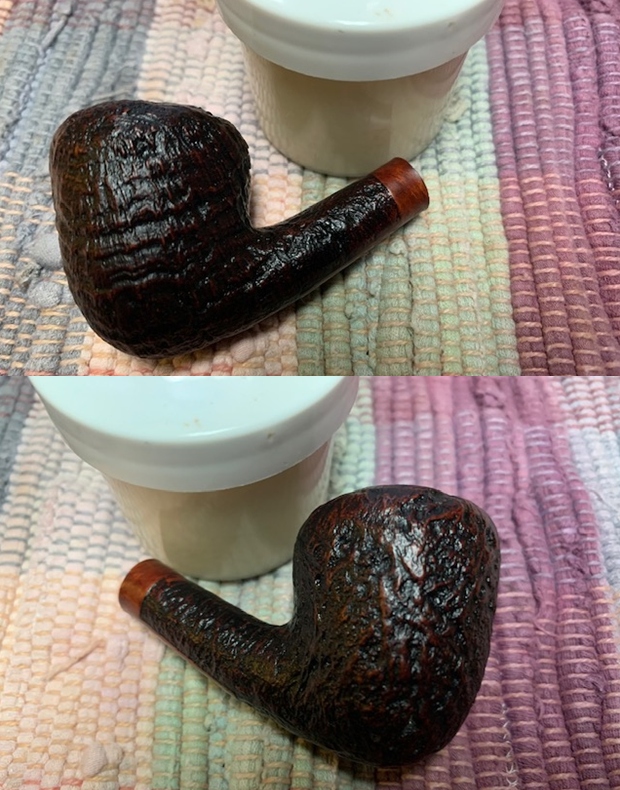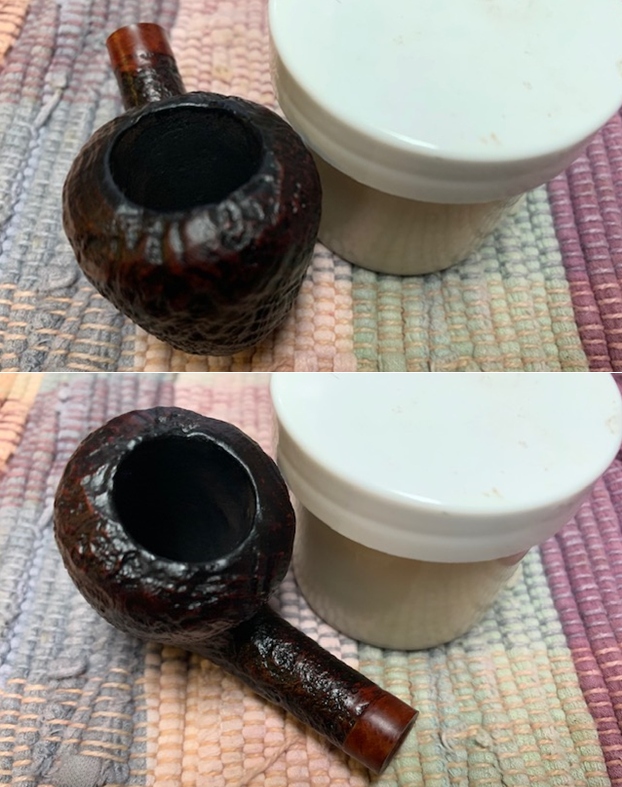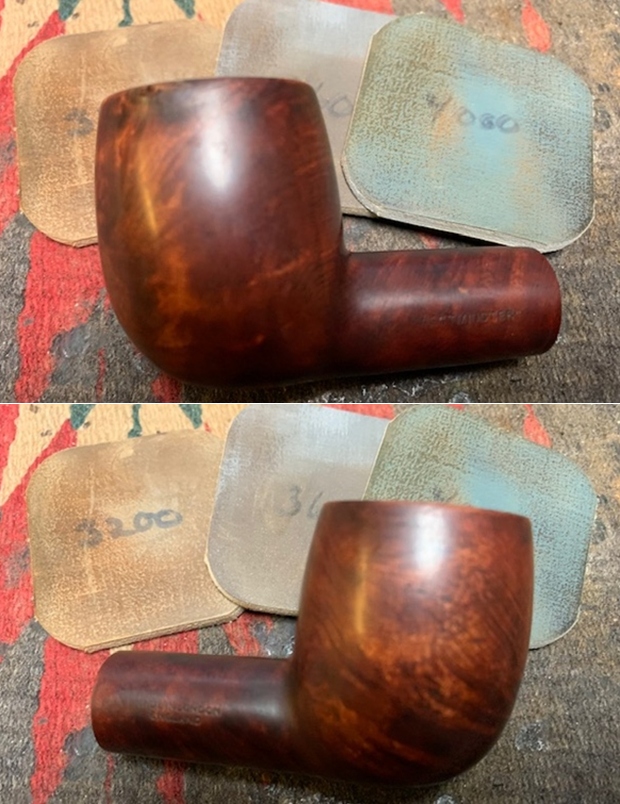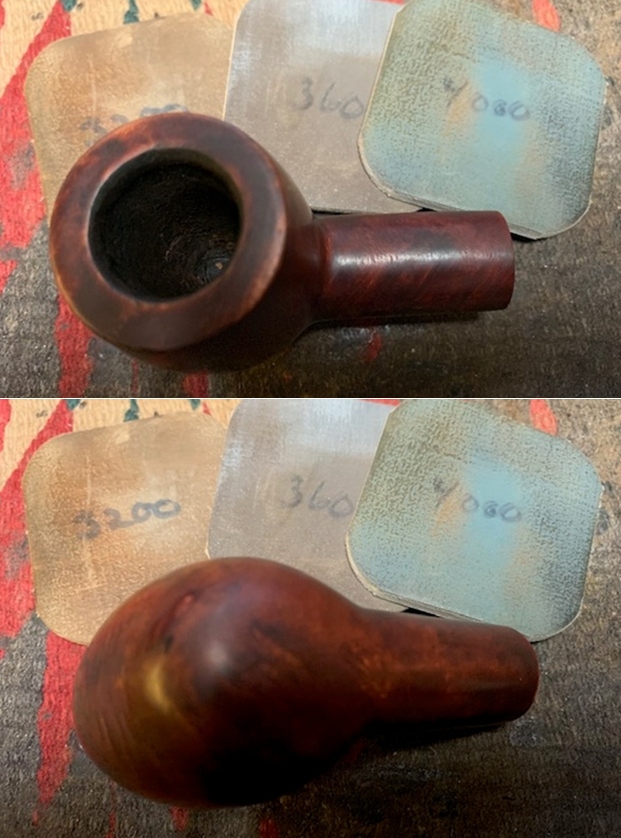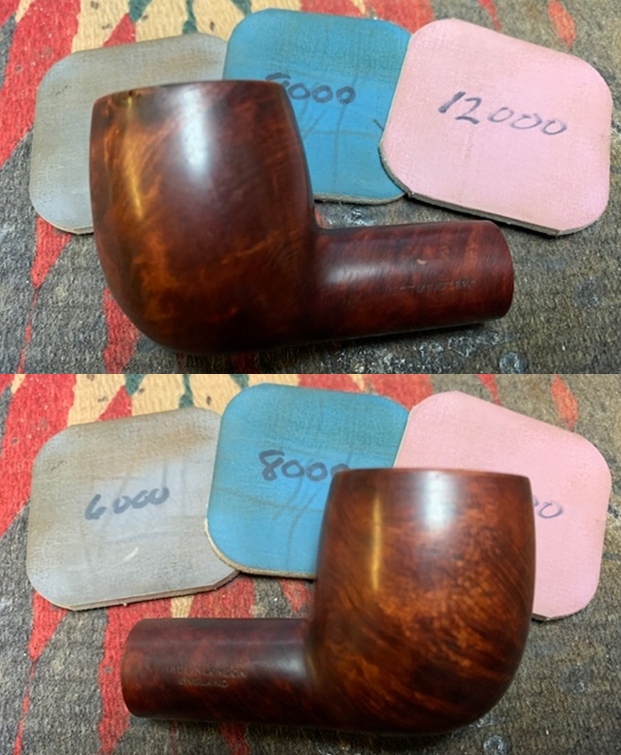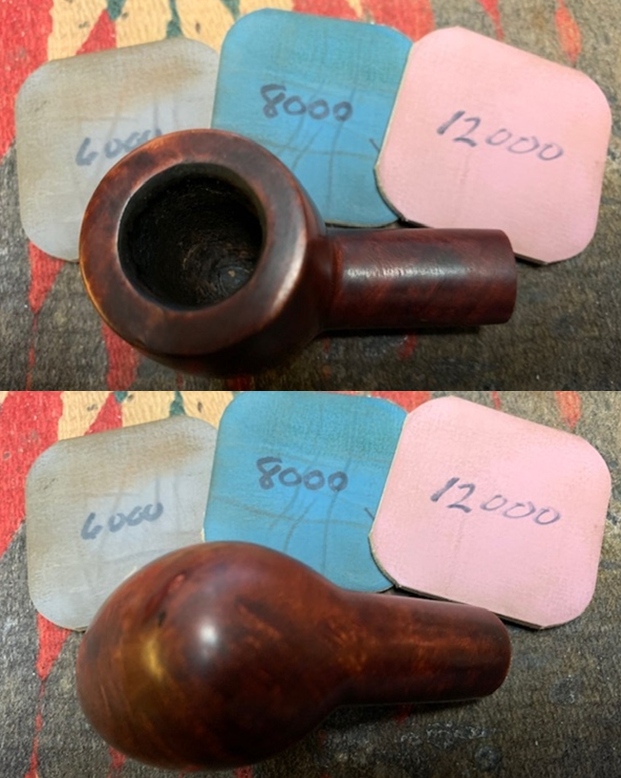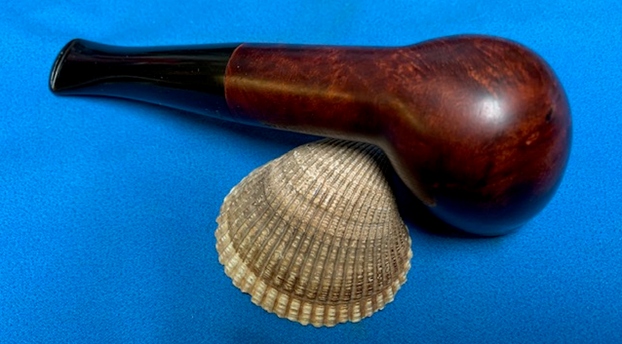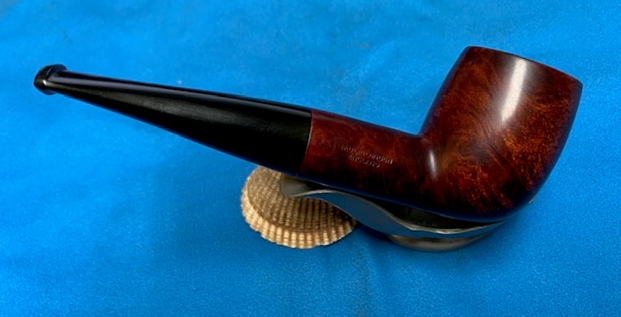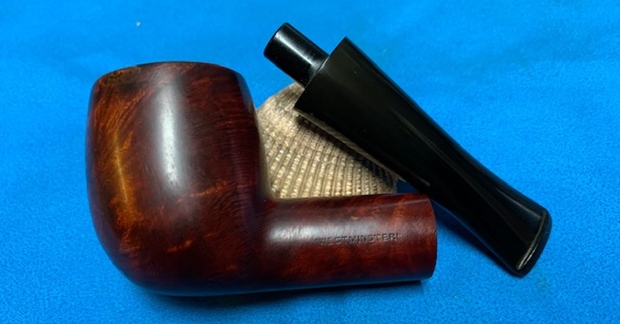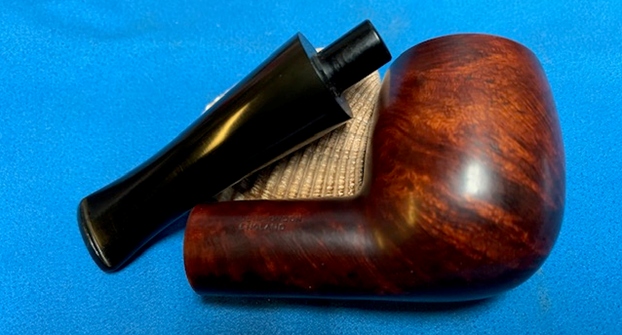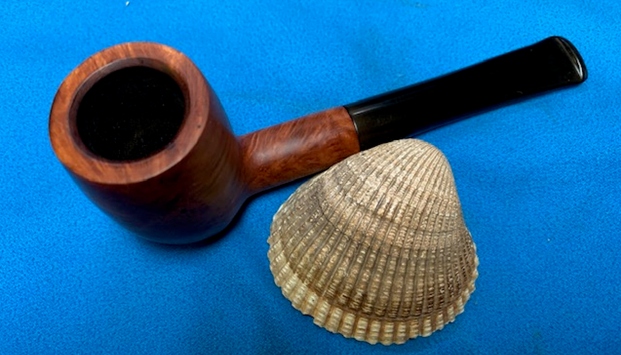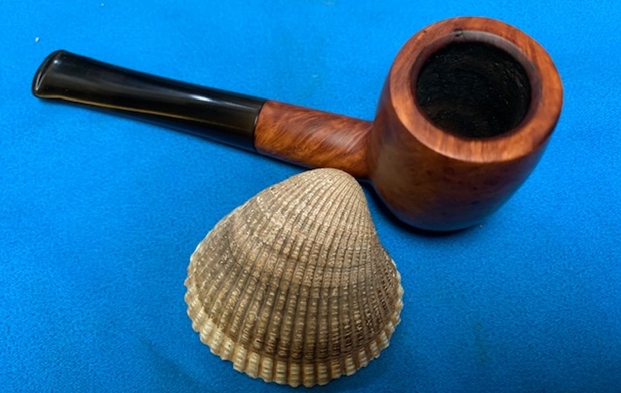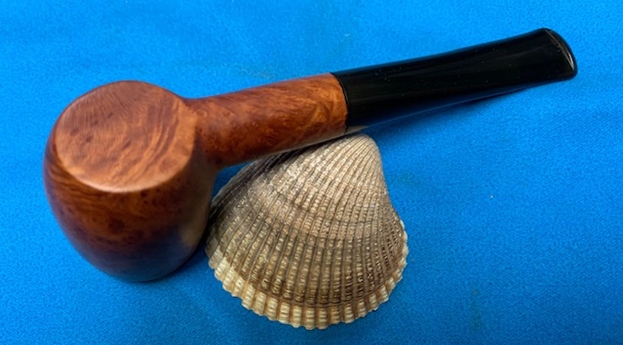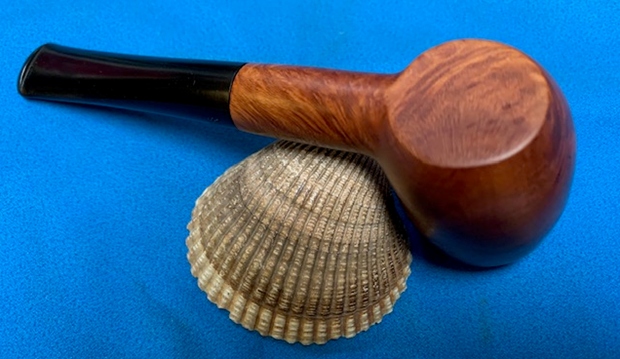
Monthly Archives: July 2020

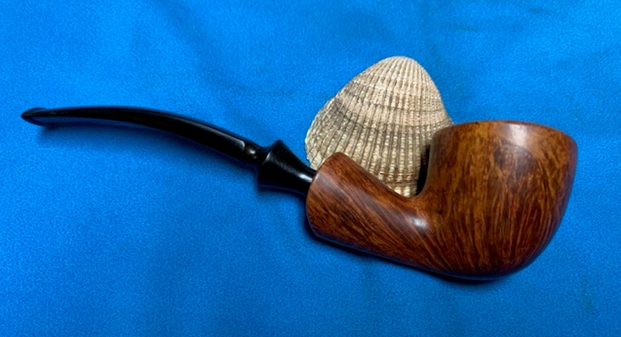
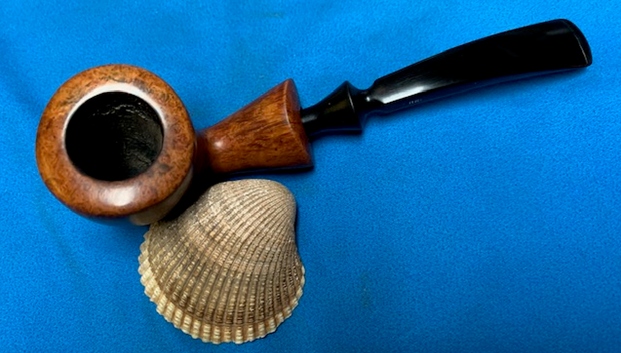
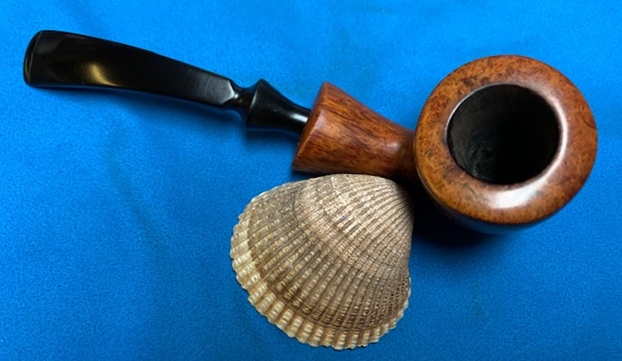
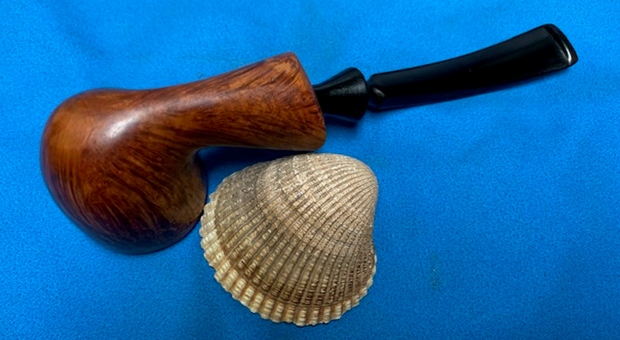
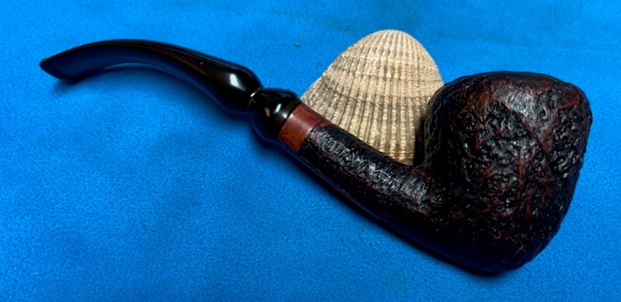
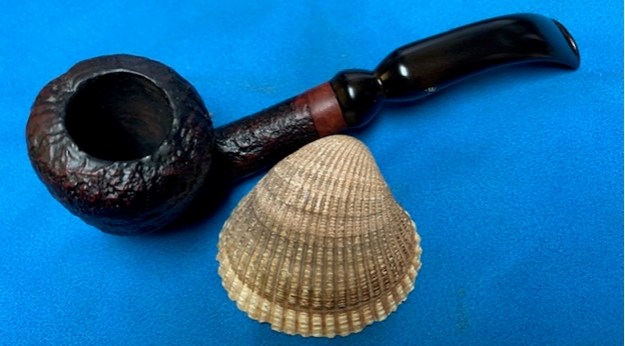
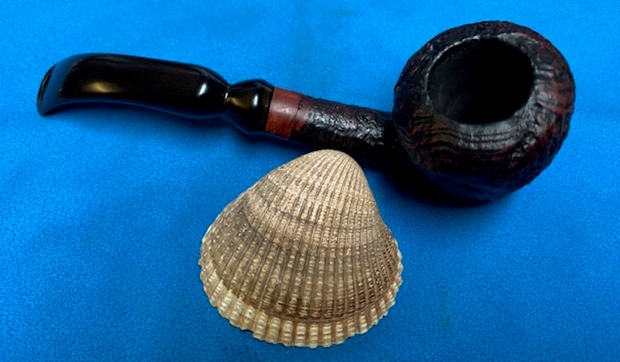
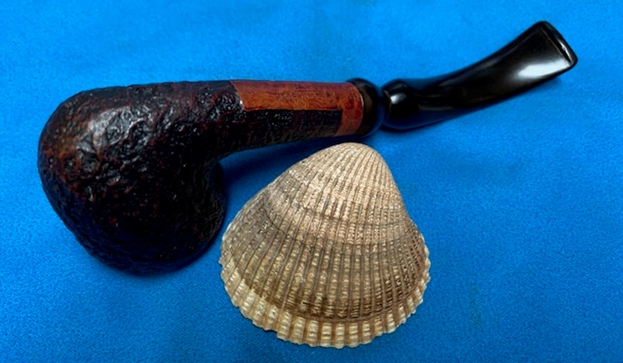
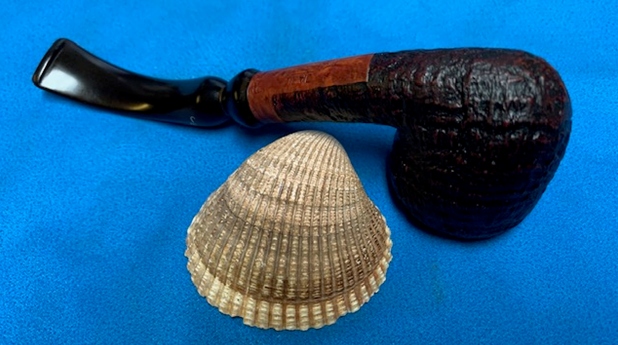
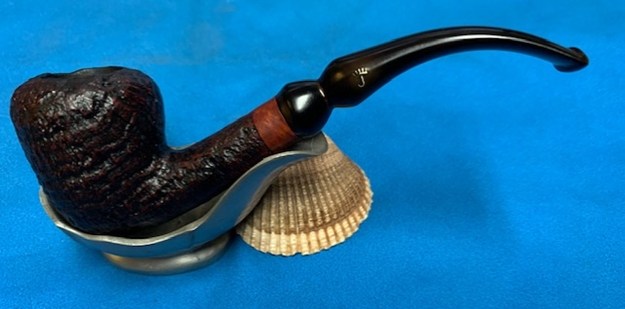
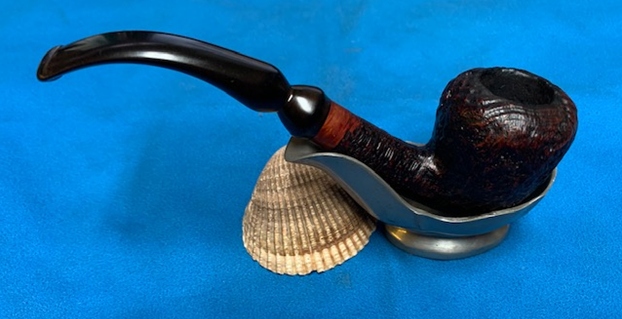
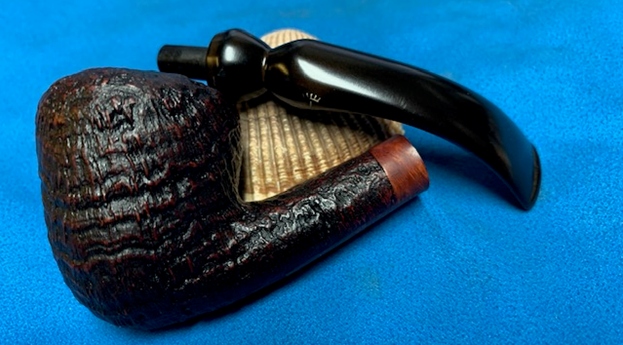
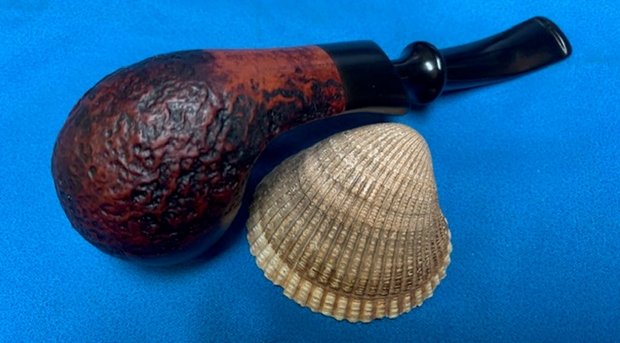
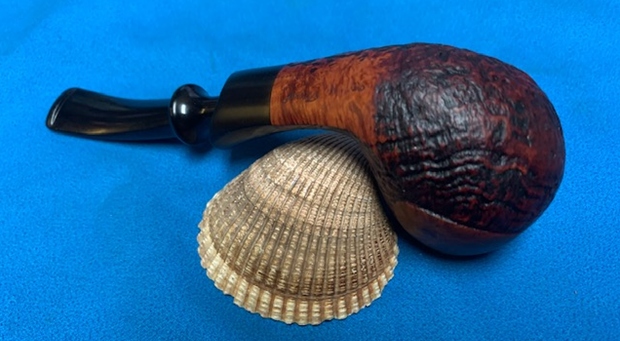
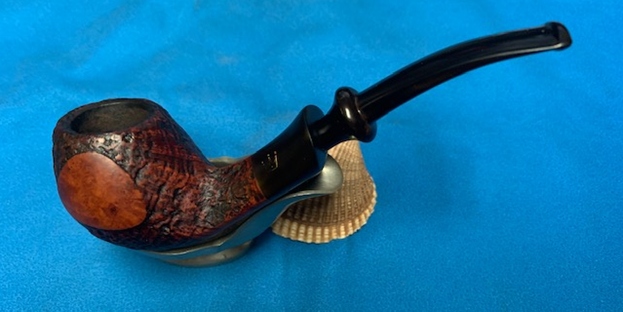
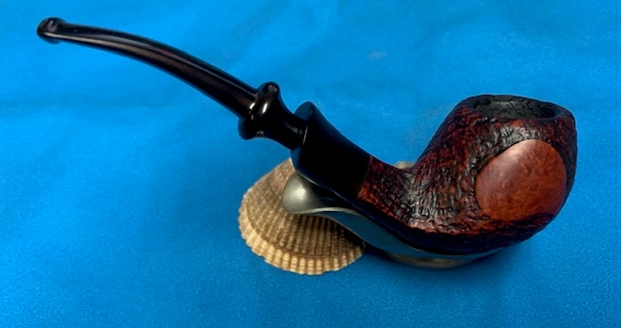
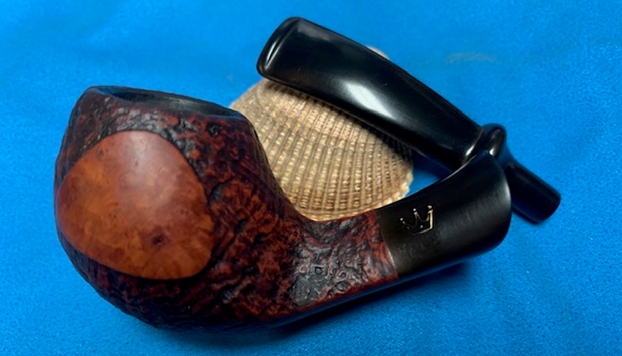
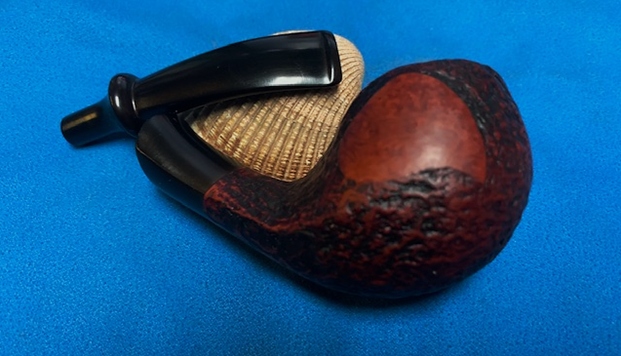
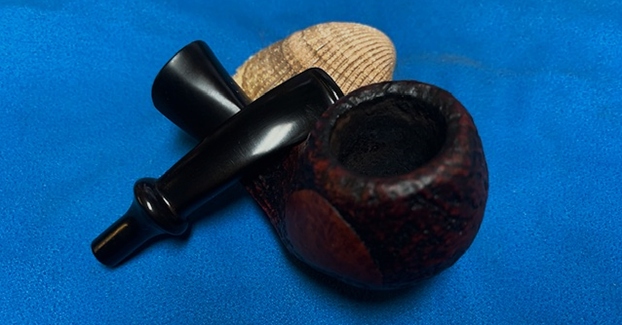
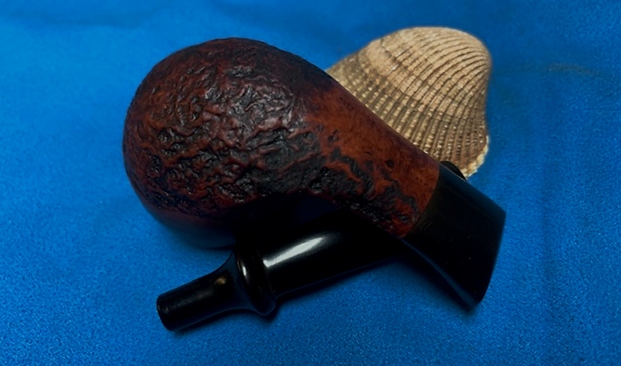
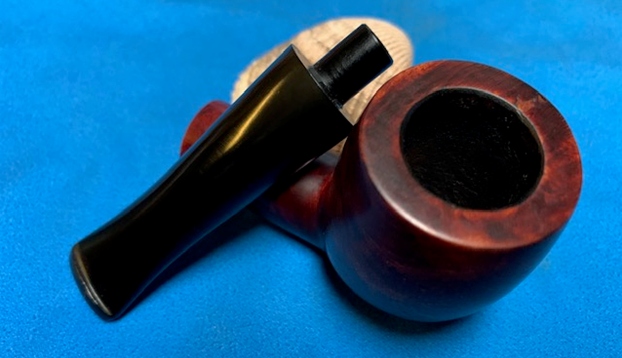
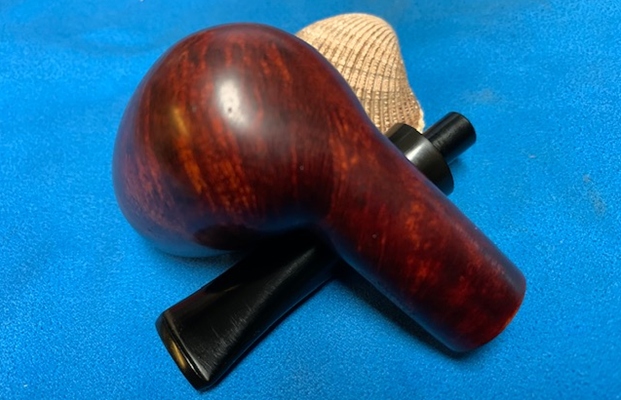
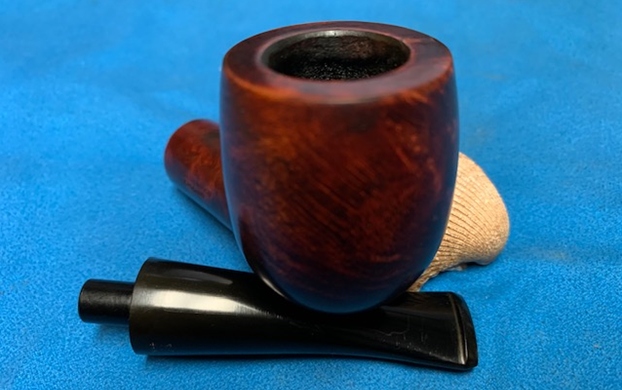
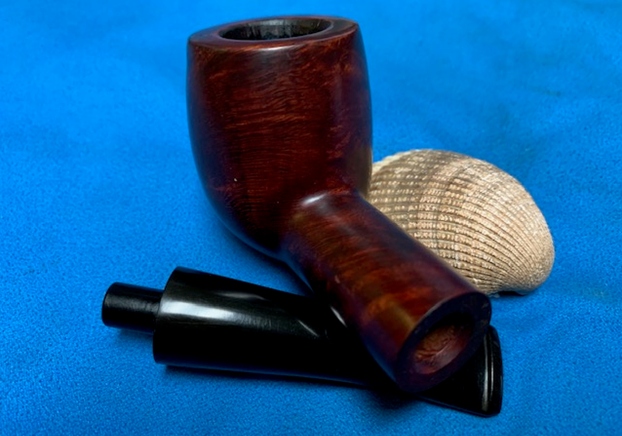
Cleaning up a Svendborg Danish Handmade Bark Inka Bent Apple 21


Blog by Steve Laug

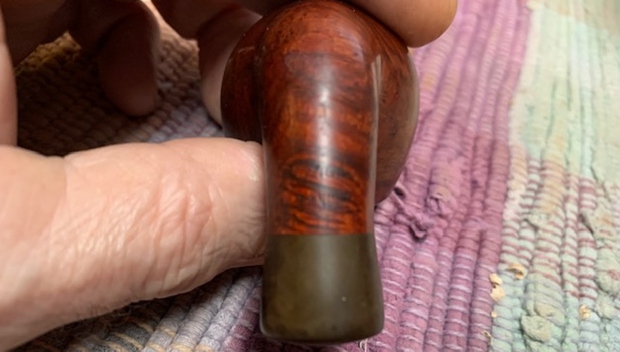
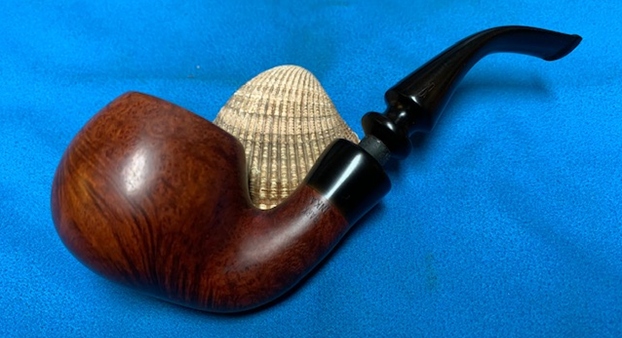
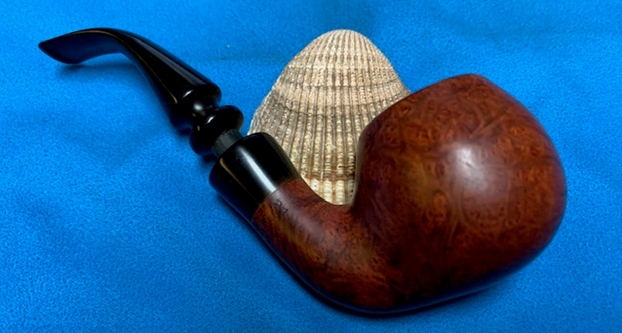
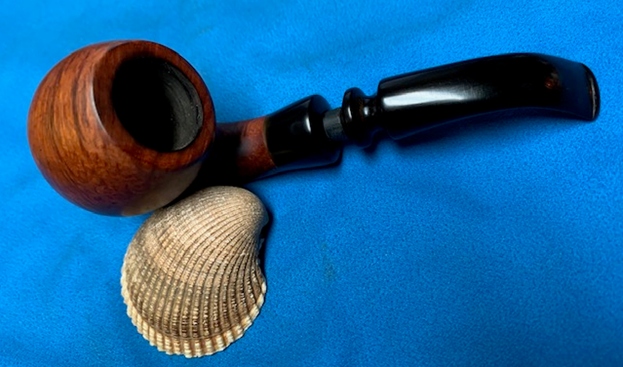
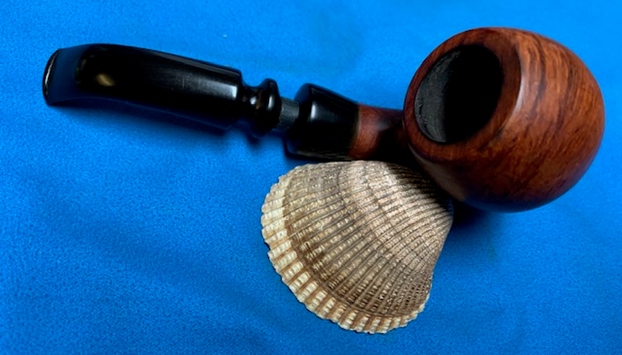
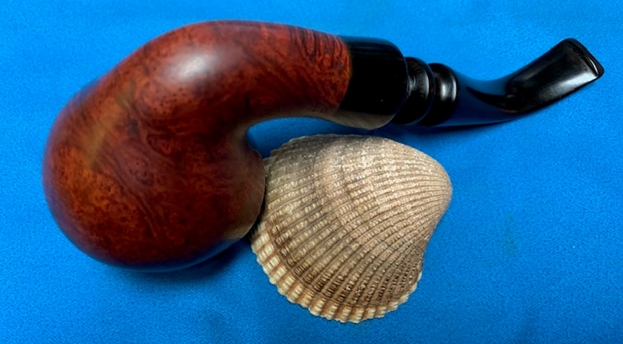
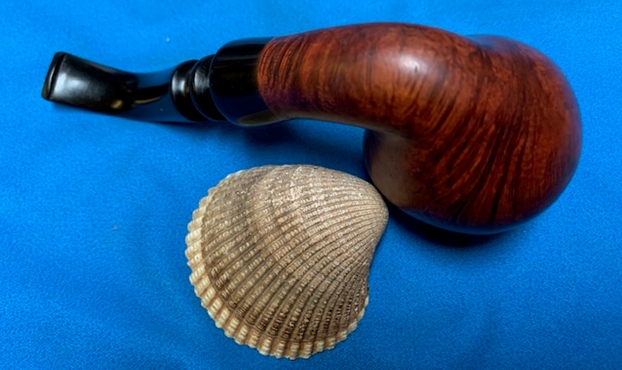
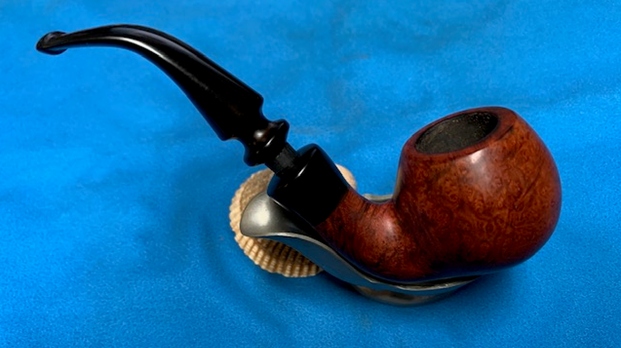
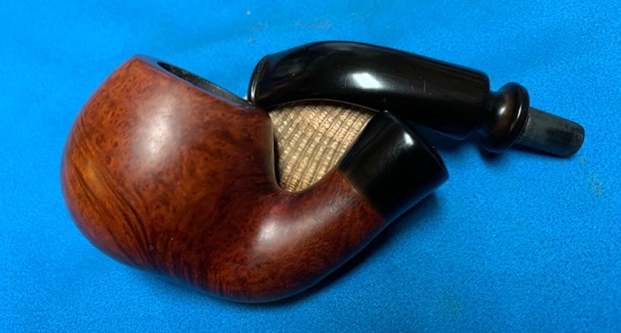
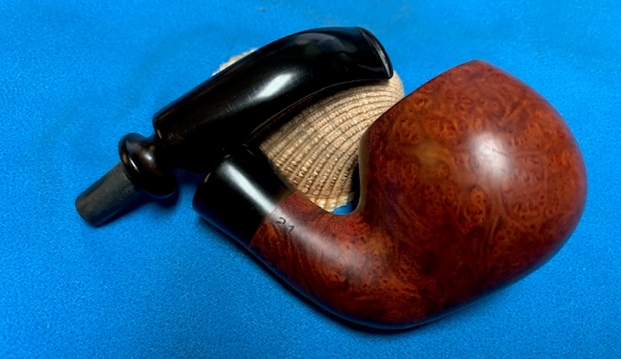
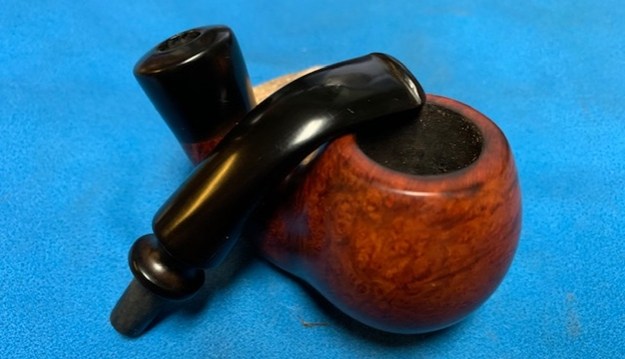
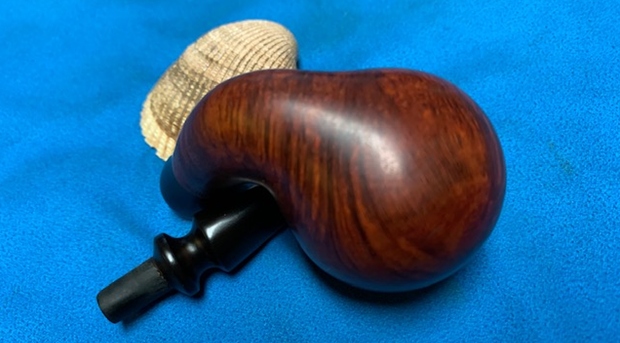
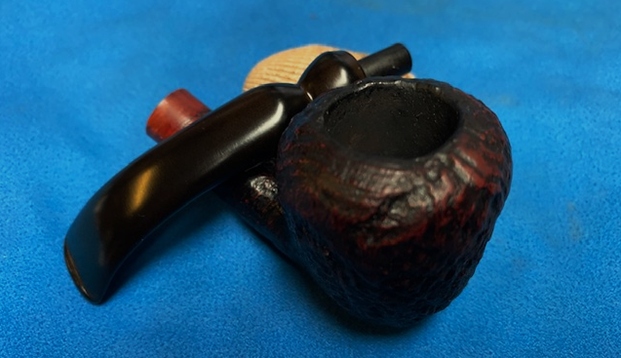
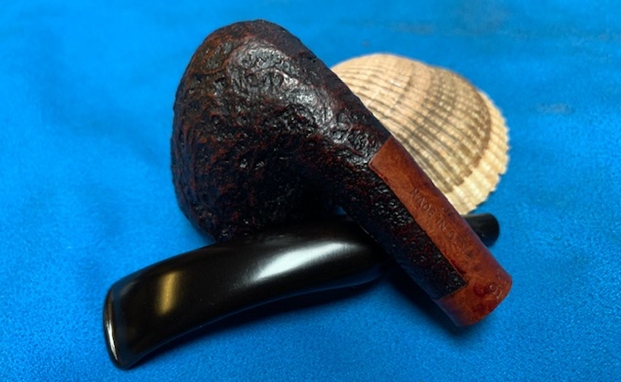
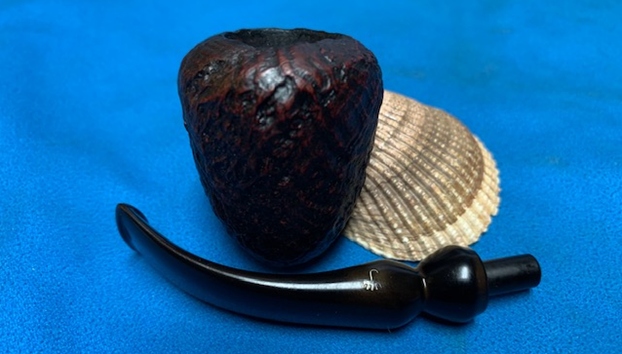
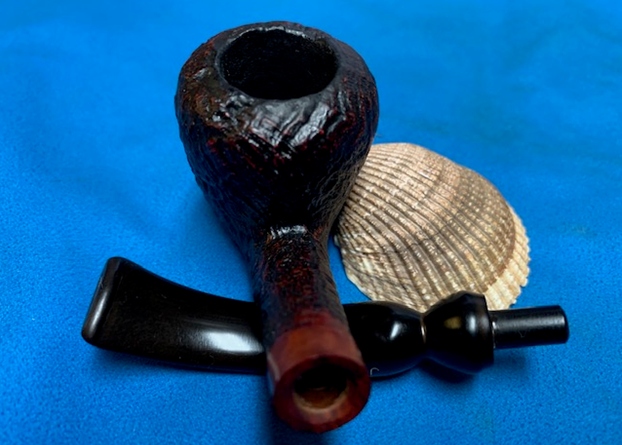
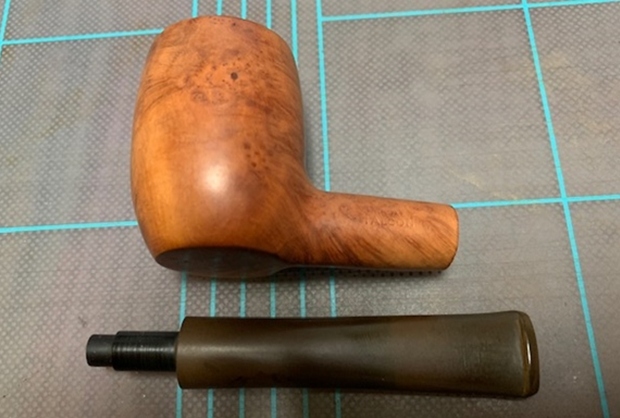
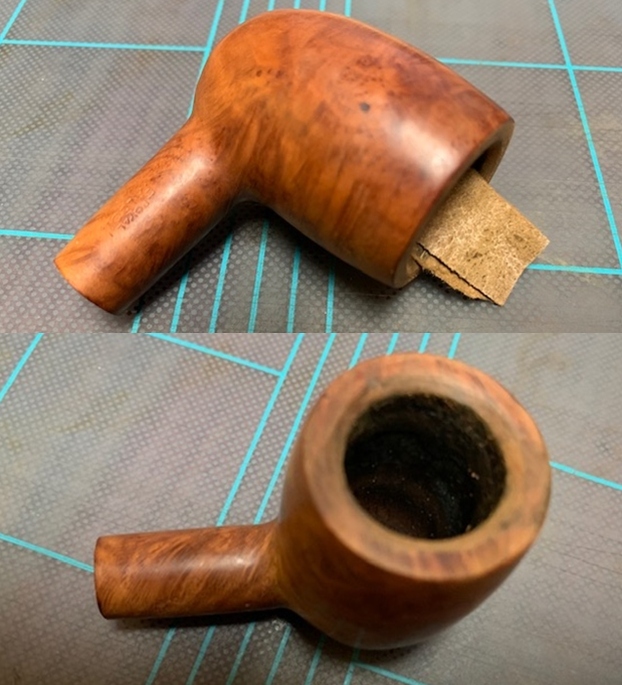
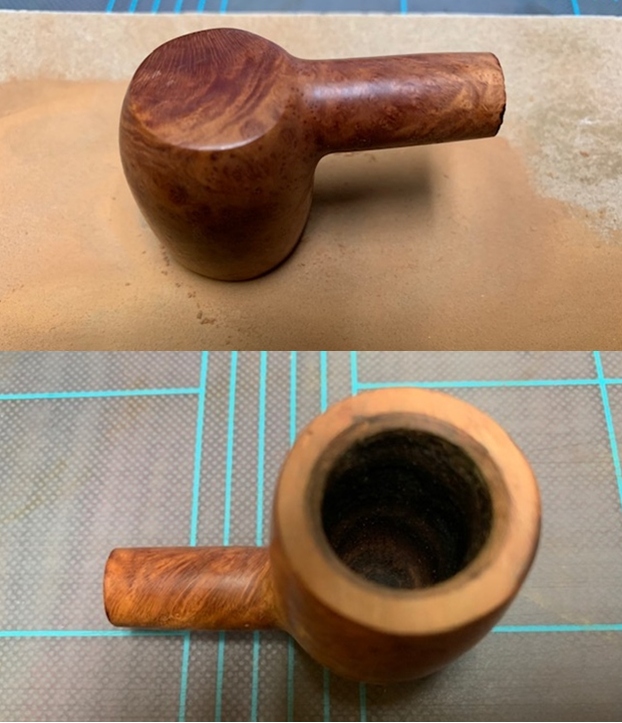
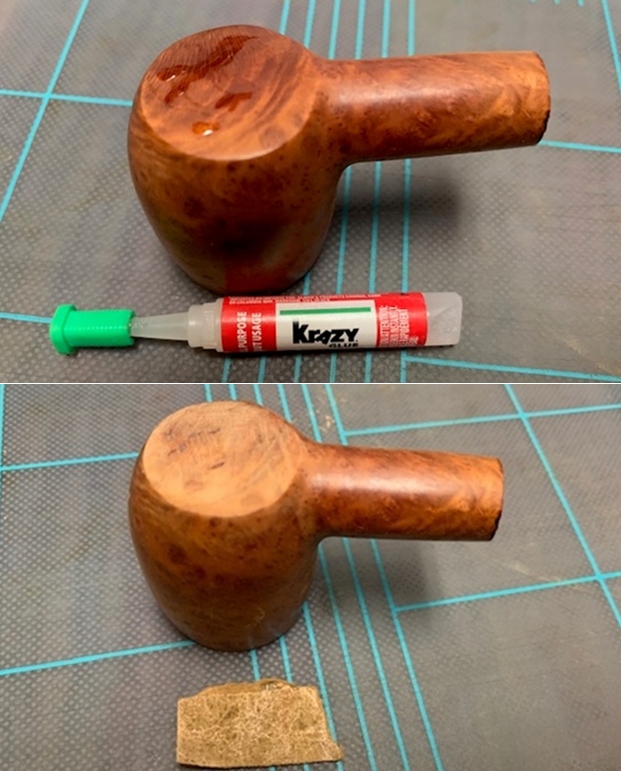
The next pipe on the work table is another one that is a bit of a mystery to me. It is obviously one that I picked up on one of my hunts or in a trade as it has not been cleaned at all. The mystery is that I have no recollection of finding the pipe so I have no way to connect it to a time period. I do know that it has been here for quite a while and I am just now getting to it. I try to eventually work the pipes we find into the restoration queue so that I can keep them moving. This one is a full bent apple shaped pipe. It has some nice mixed grain around the bowl and shank with a vulcanite shank extension. It was stamped on the underside of the shank and reads Svendborg [over] Danish Handmade. On the left side of the shank it is stamped Bark [over] Inka and on the right side is the shape number 21. The finish was dirty with dust and grime ground into finish. There was a cake in the bowl and some lava overflow on the rim top. The inner edge of the rim did not look too bad as far as I could tell. The vulcanite shank extension and stem were both oxidized. The stem was a mess of oxidation, calcification and grime with tooth marks and chatter ahead of the button on both sides. There was very faint Svenborg ∞ (infinity sign) logo on the left side of the fancy saddle stem.

Before I started working on it I did a bit of research on the brand to remind myself of what I knew of the maker. I turned to Pipephil’s site first (http://www.pipephil.eu/logos/en/logo-s14.html). I did a screen capture of the information on the site. I did a screen capture of the pertinent information and have included it below. I copied and pasted the side bar information below:
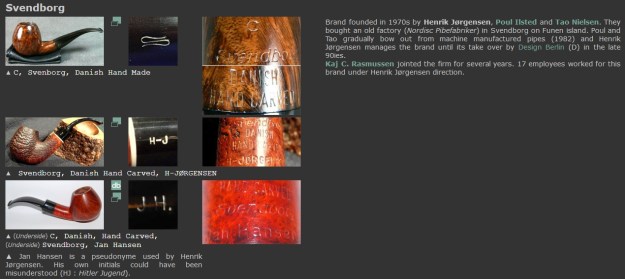
Brand founded in 1970s by Henrik Jørgensen, Poul Ilsted and Tao Nielsen. They bought an old factory (Nordisc Pibefabriker) in Svendborg on Funen Island. Poul and Tao gradually bow out from machine manufactured pipes (1982) and Henrik Jørgensen manages the brand until its takeover by Design Berlin (D) in the late 90ies. Kaj C. Rasmussen jointed the firm for several years. 17 employees worked for this brand under Henrik Jørgensen direction.

I then turned to Pipedia and found that an article on the brand that was helpful and interesting to read (https://pipedia.org/wiki/Svendborg). I have included the first part of the article below.

Jens Tao Nielsen and Poul Ilsted Bech met each other when working together for Erik Nørding and soon became close friends. Both felt a bit tired to make nothing but bizarre fancy shapes and agreed they wanted to produce pipes of more style and more classicism. They decided to establish their own brand “Tao & Ilsted” – But how to do it?

A good fortune brought them in contact with Henrik Jørgensen, a passionate pipe lover and a wealthy Copenhagen banker who was willing to retire from bank business and change his career to become a pipemaker. The trio joined in 1969 and decided to start a new pipe brand together. Nielsen and Ilsted started to search for a suitable workshop while Jørgensen took care of the finances. In early 1970 the partners found an old, closed down pipe factory in Svendborg on Funen, and bought it shortly after for a mere 16.500 Danish Kroner. It was the earlier Nordic Pipe Factory – Nordisc Pibefabriker – maybe the oldest Danish pipe factory. And now it became the home of Svendborg Piber.

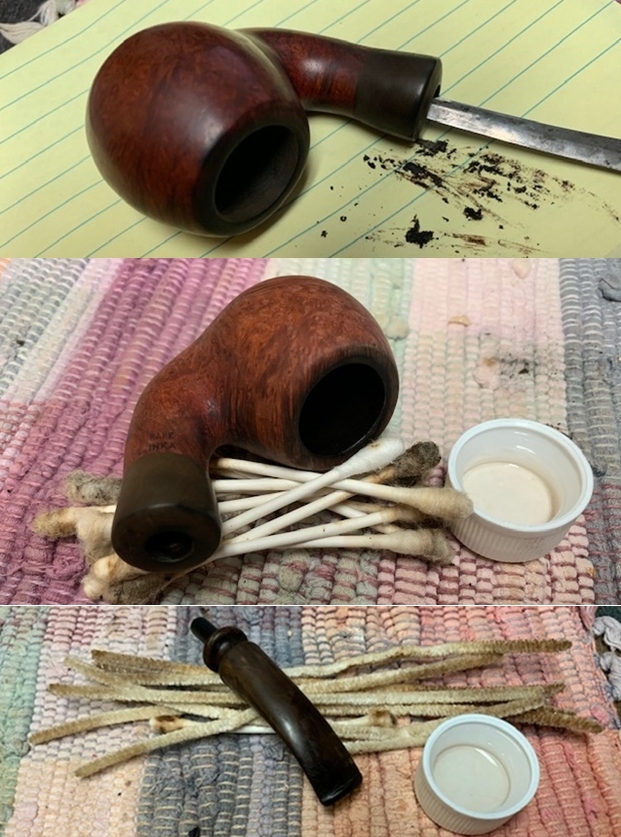
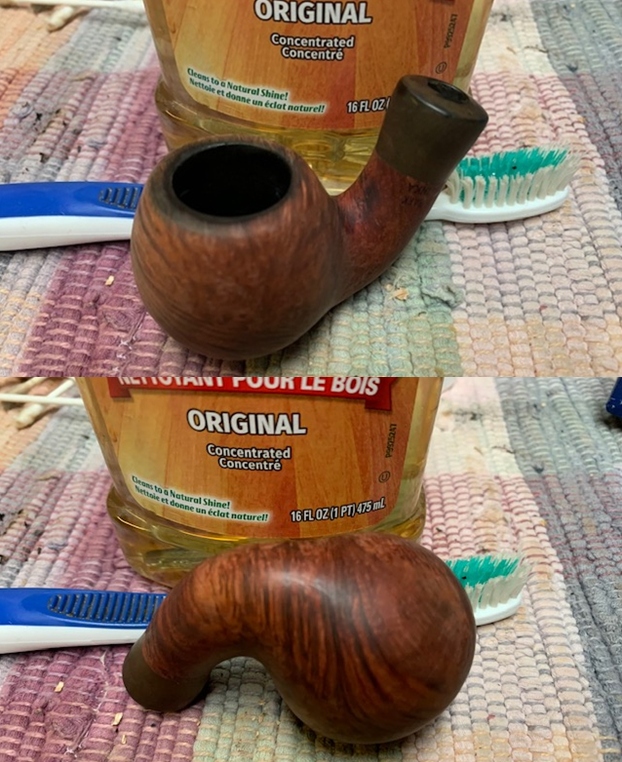
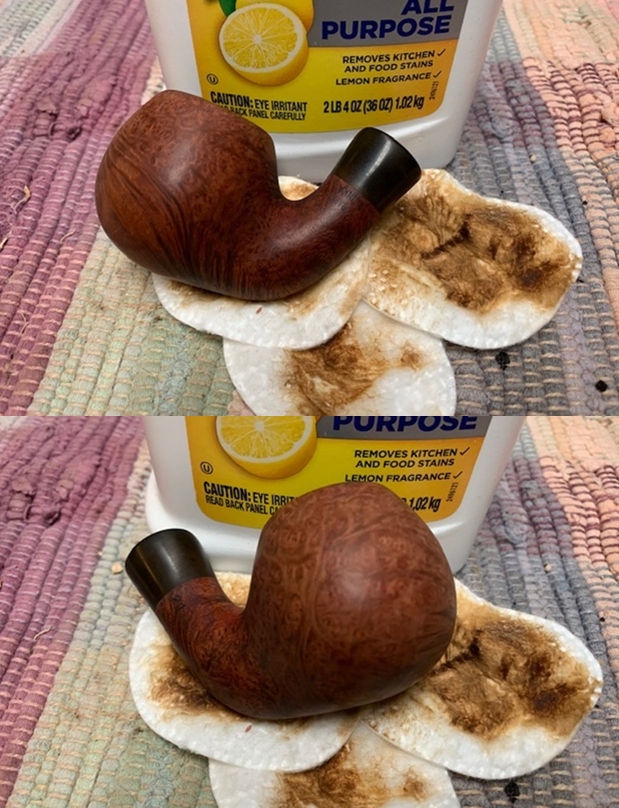
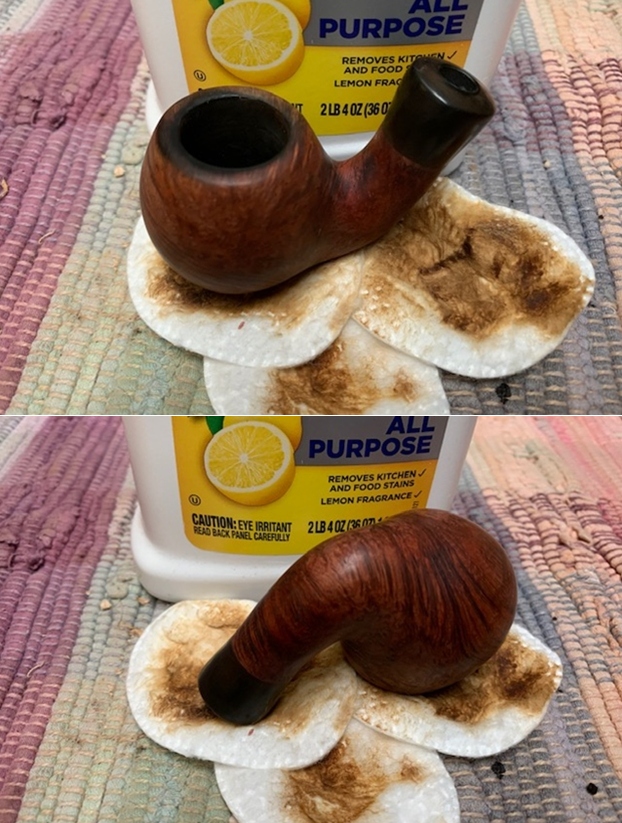
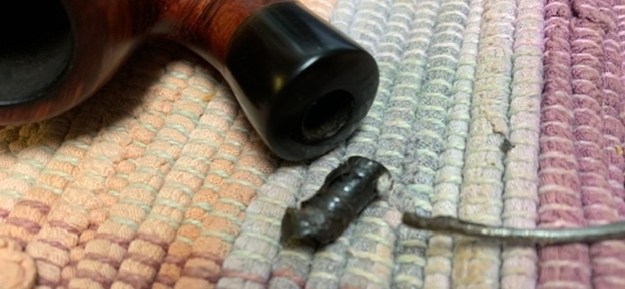
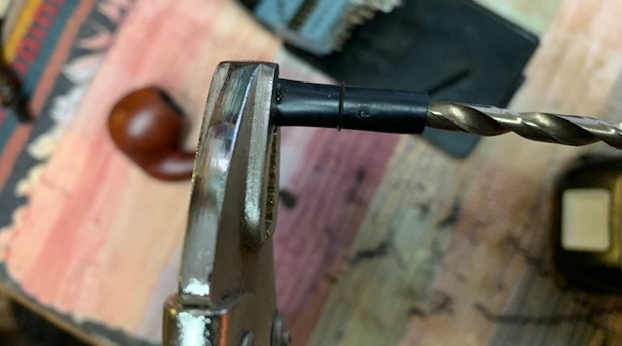
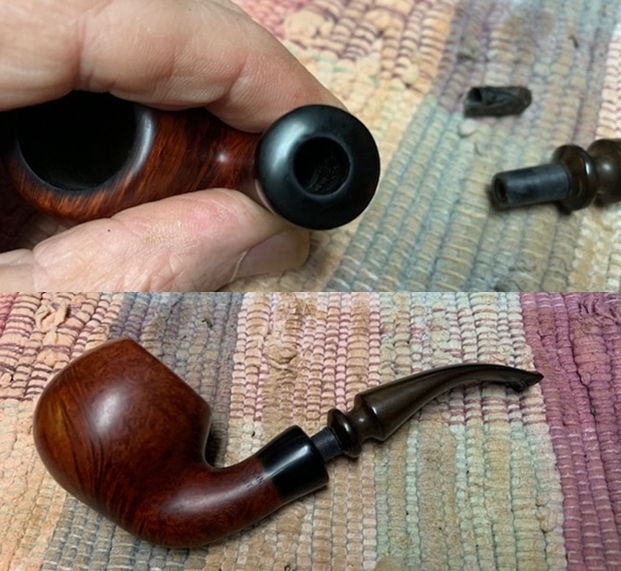
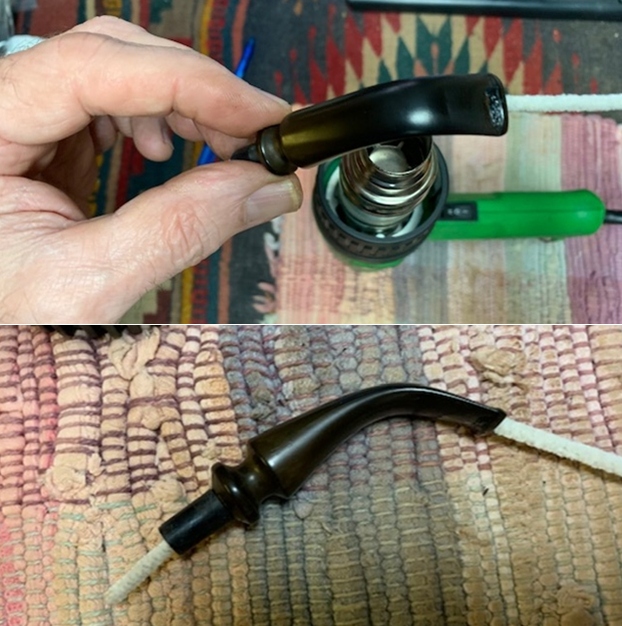
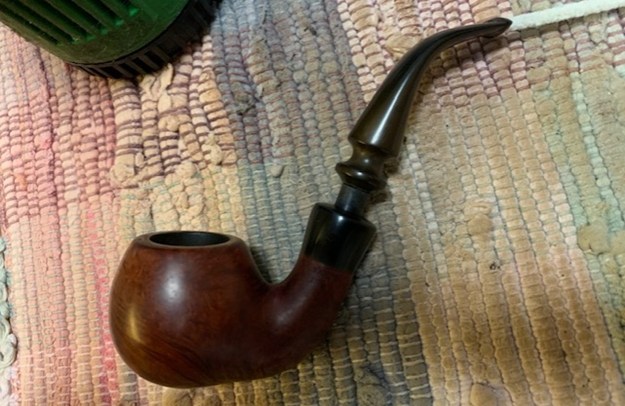
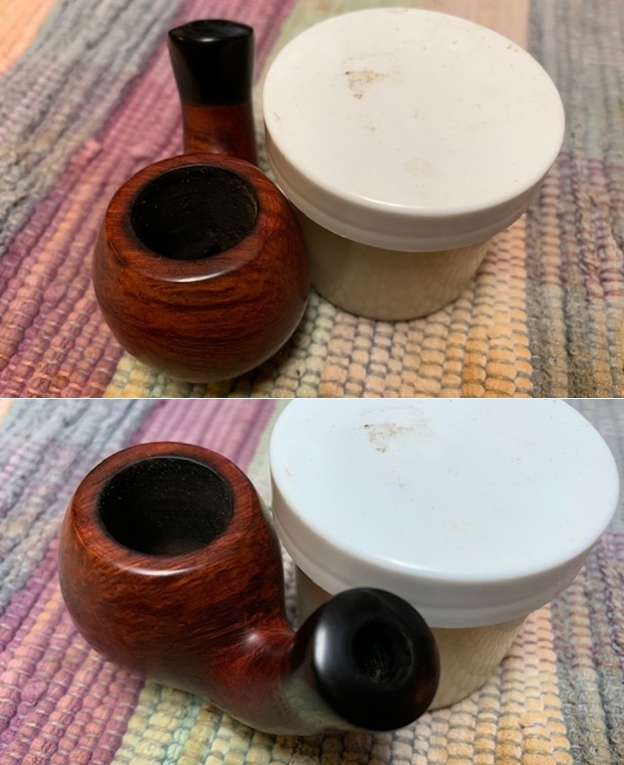
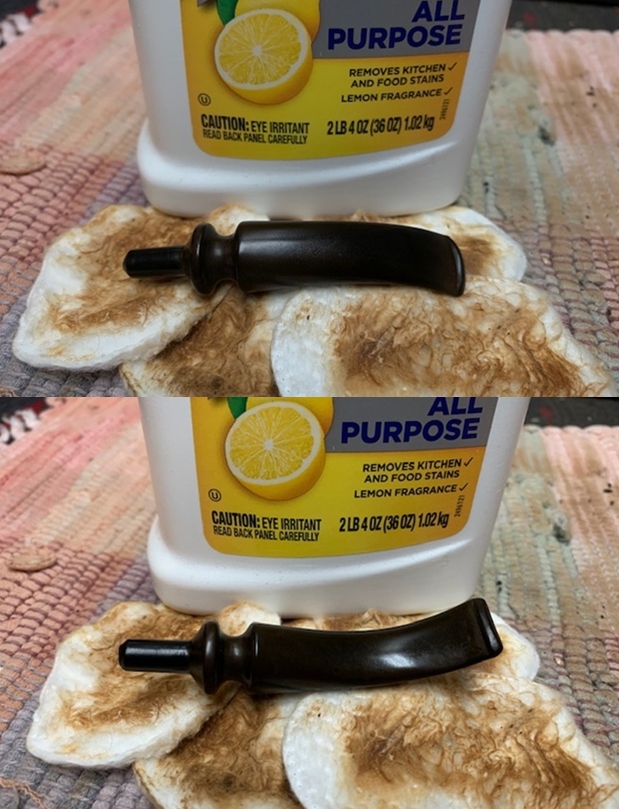
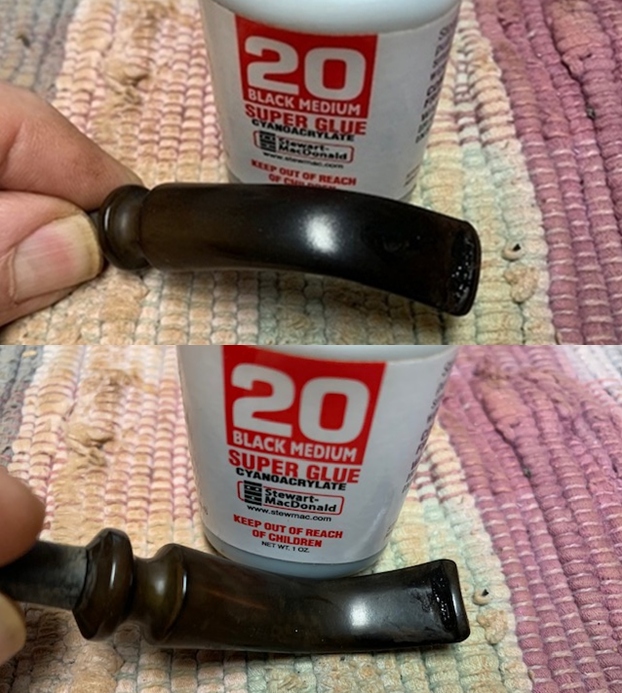
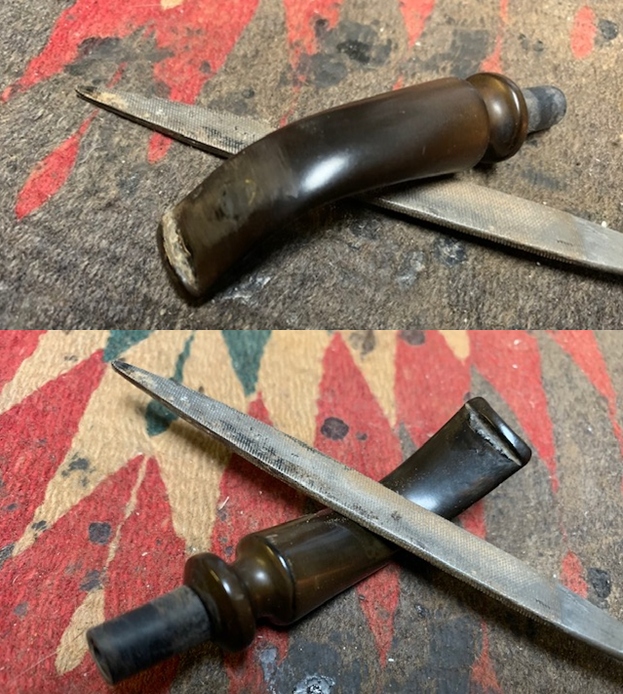
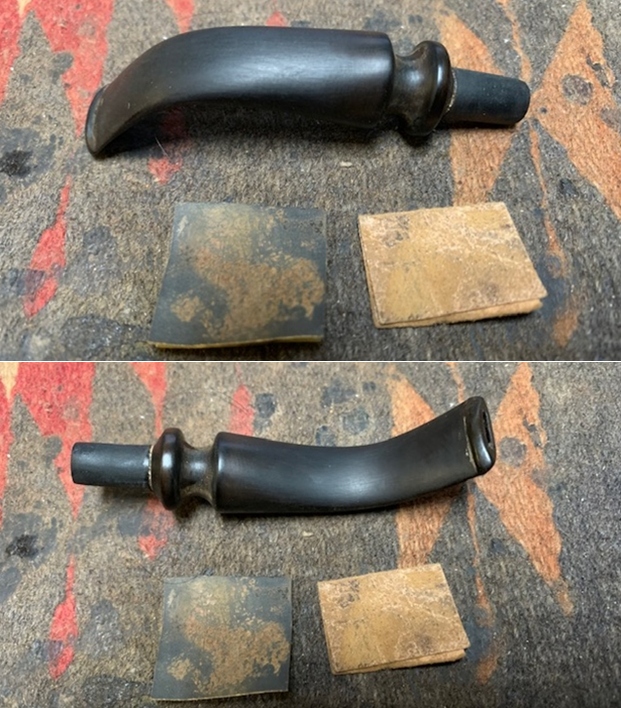
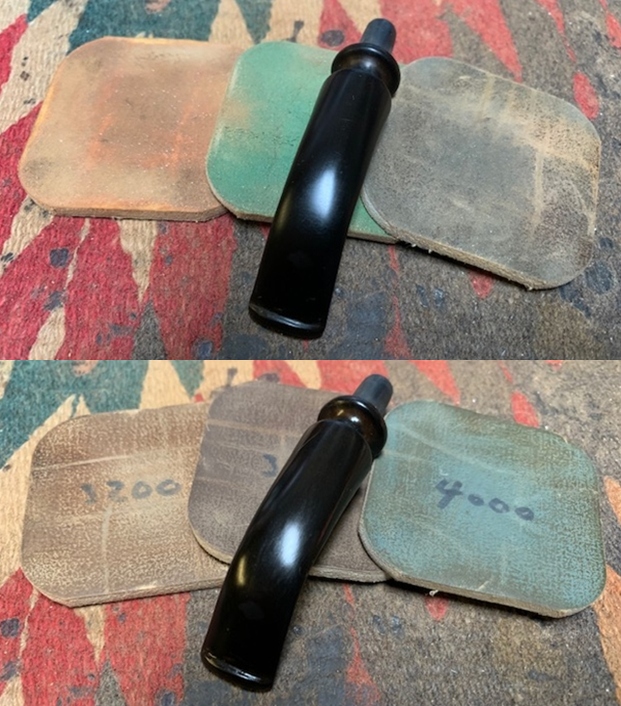
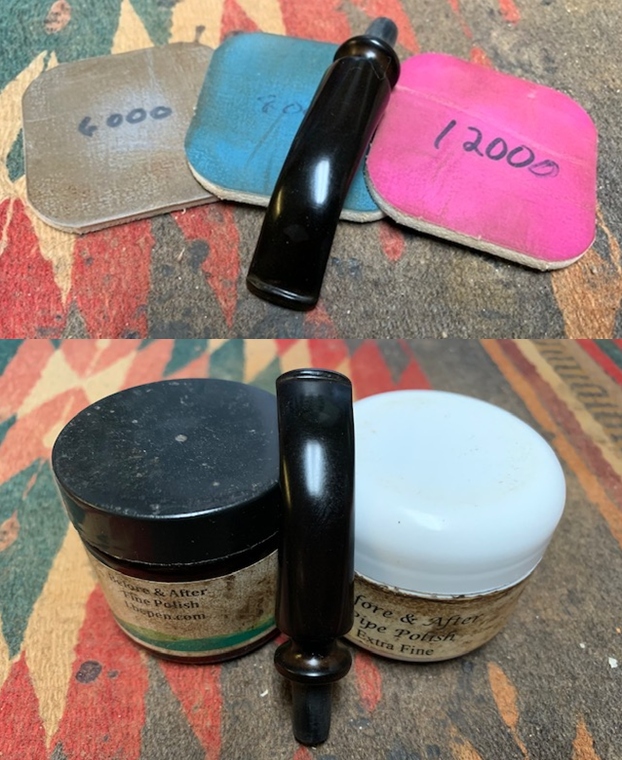
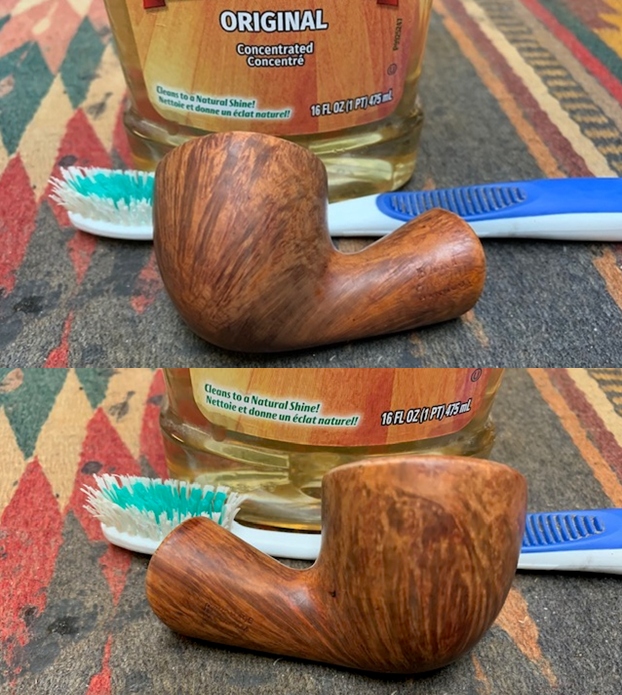
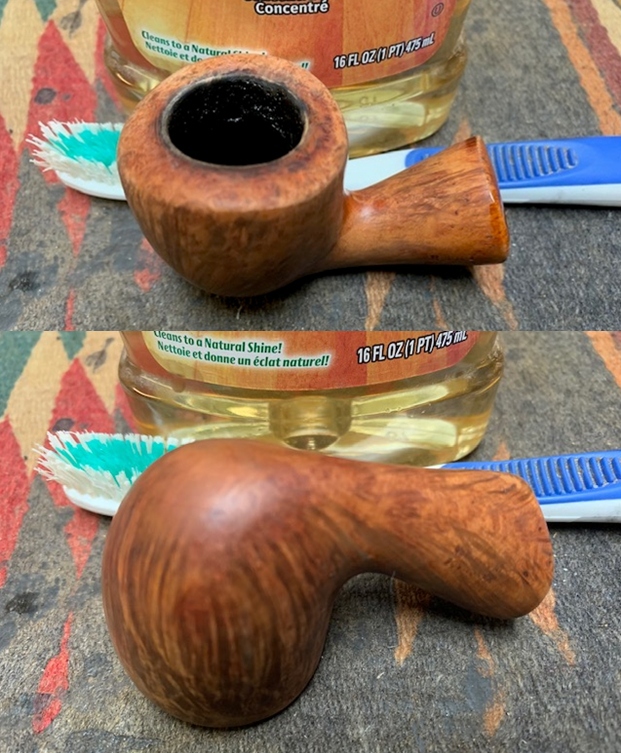
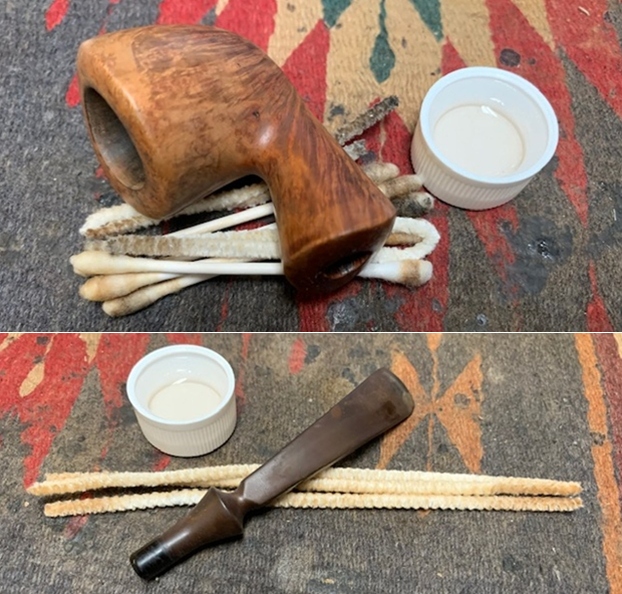
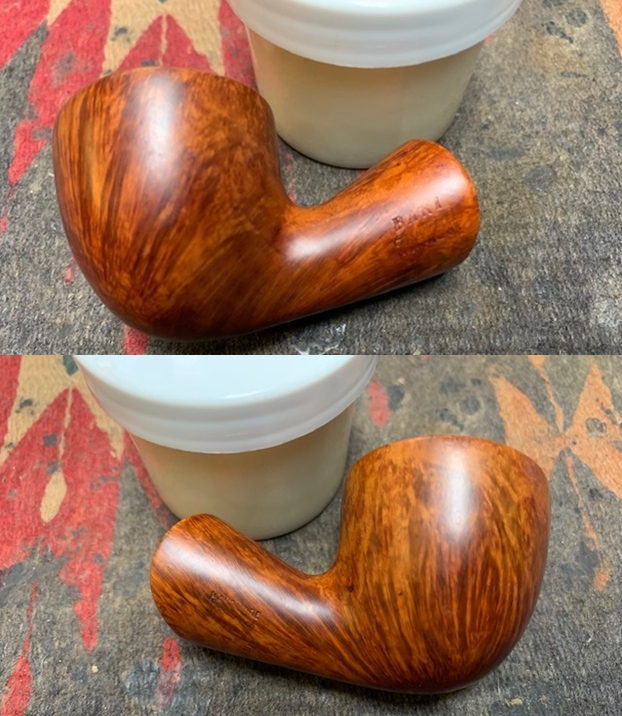
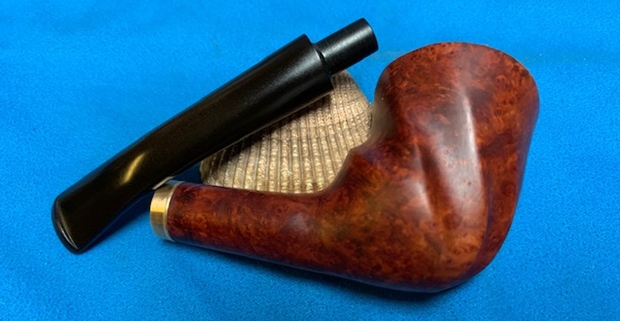
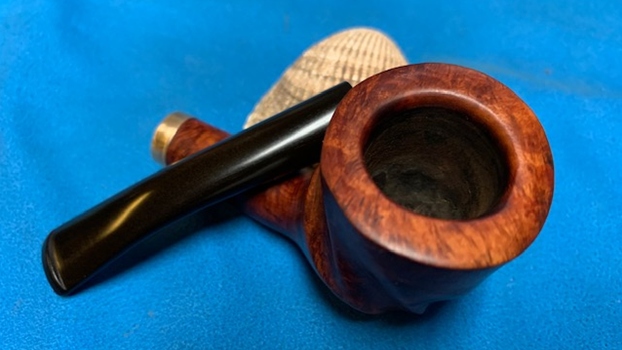
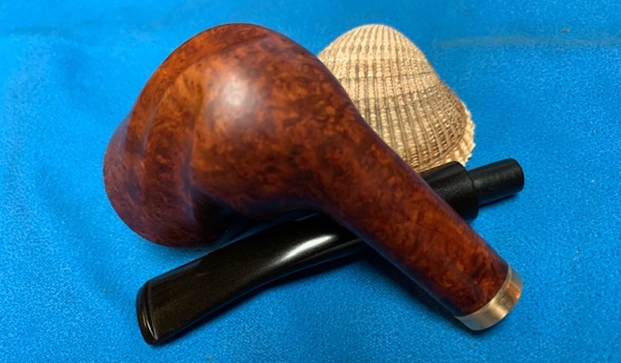
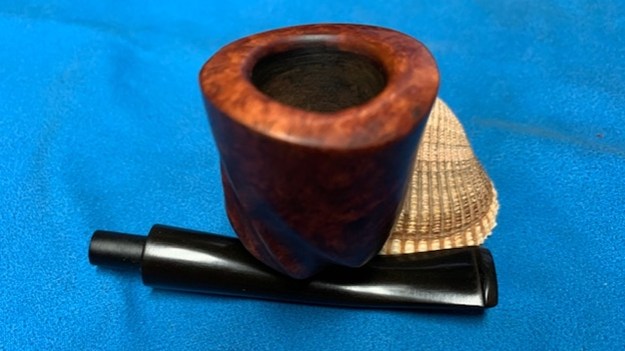
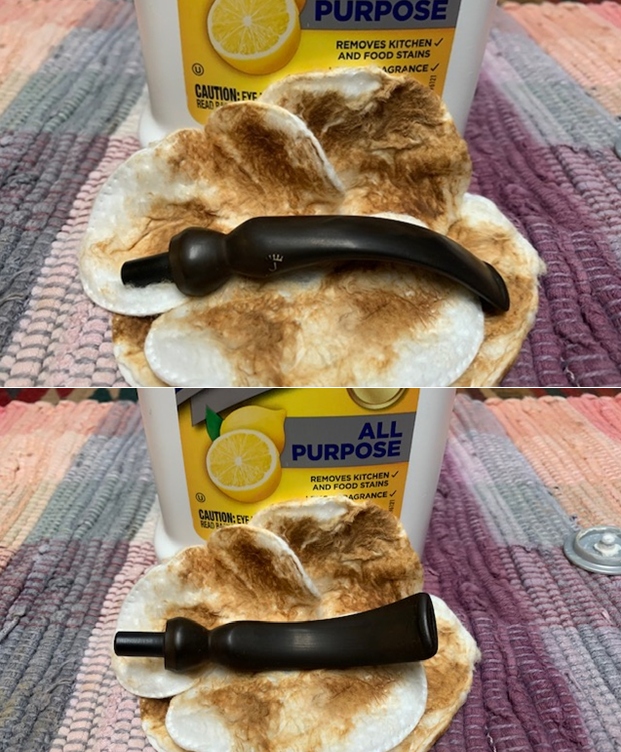
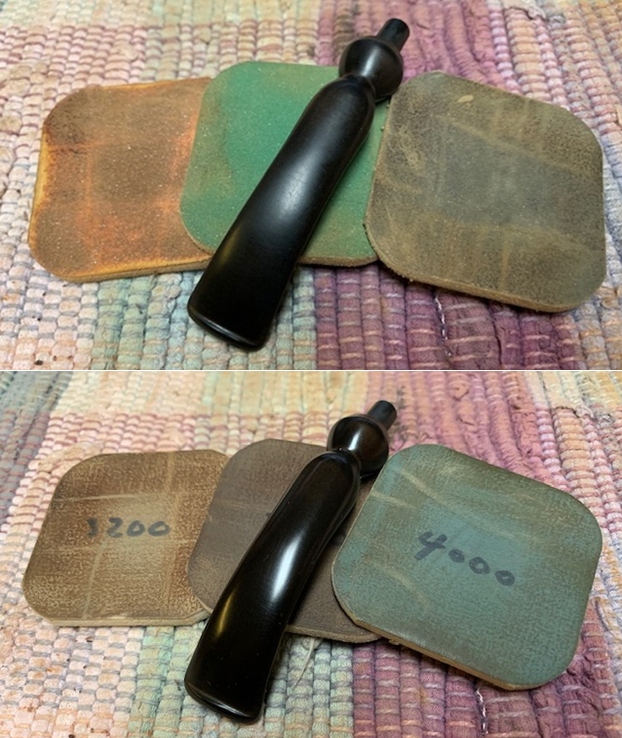
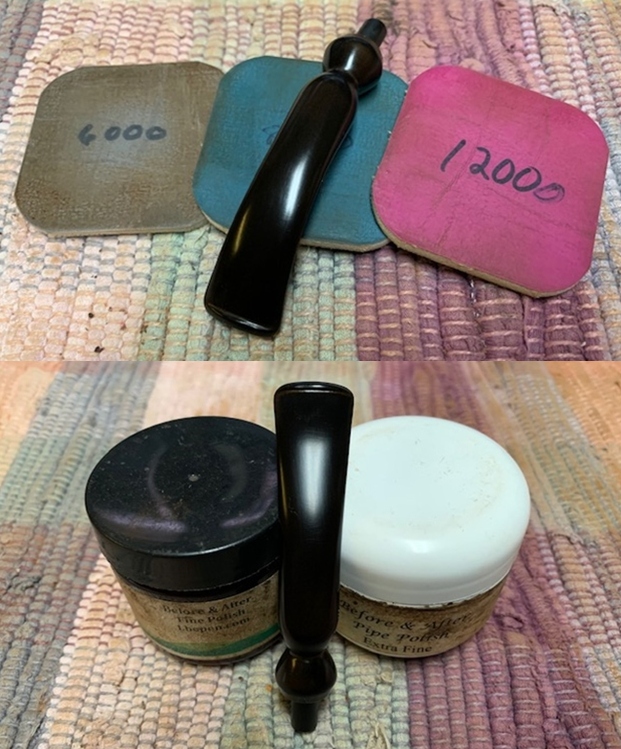
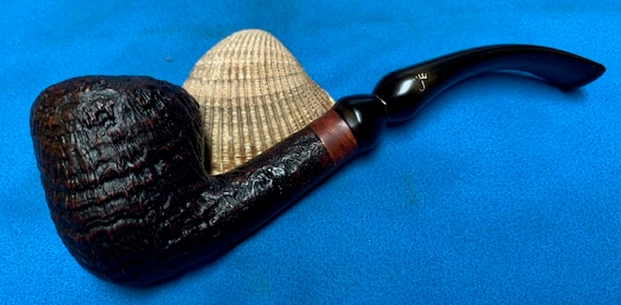
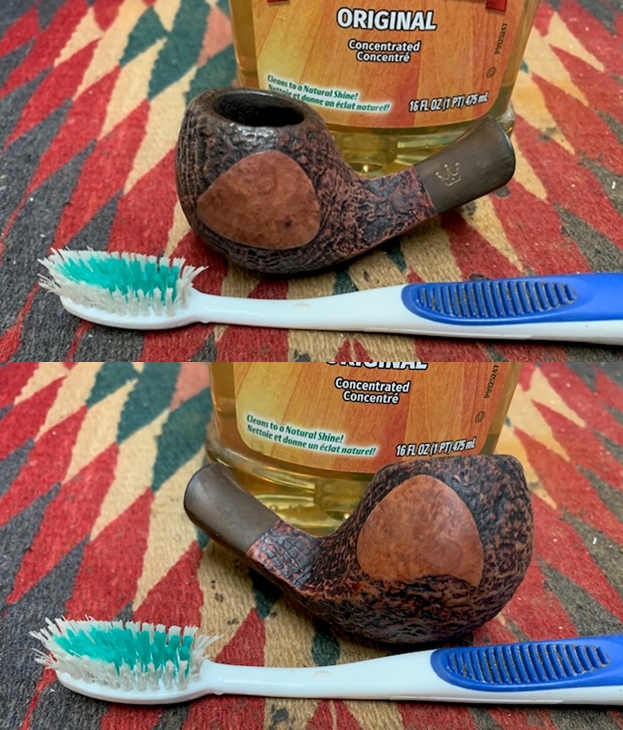
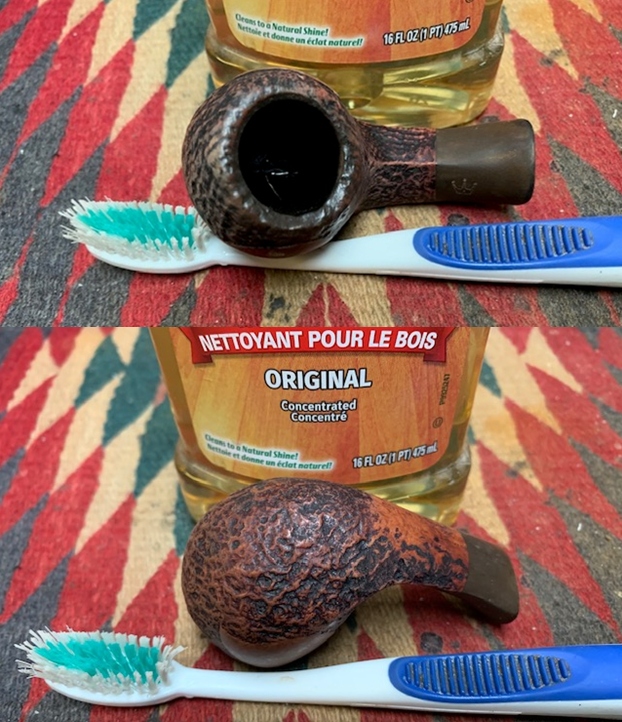
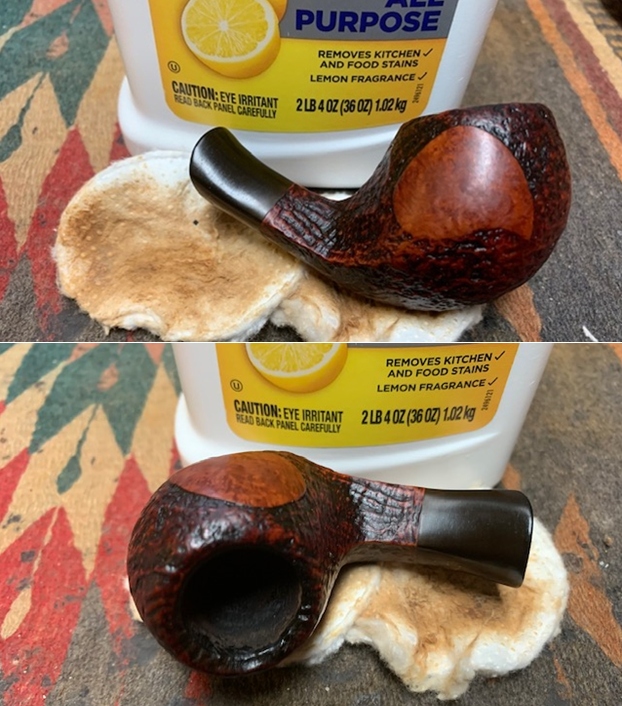
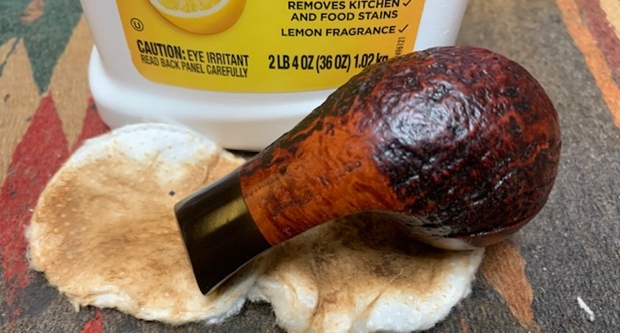
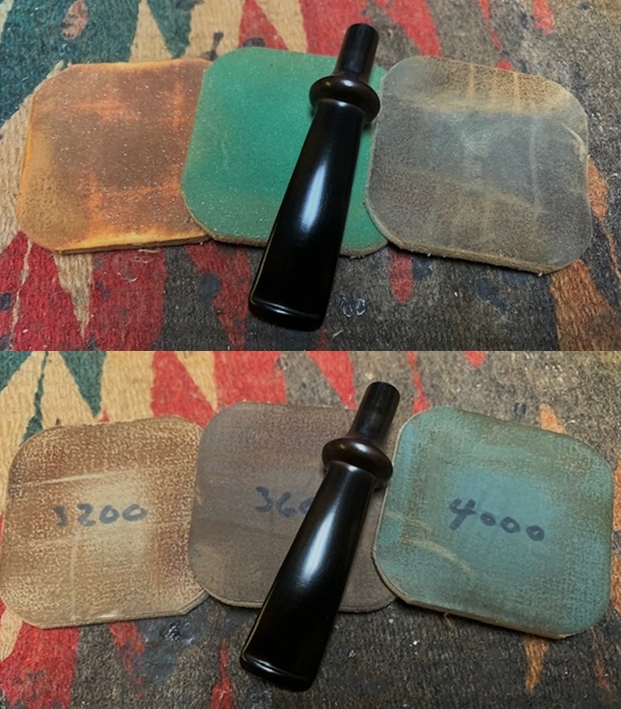
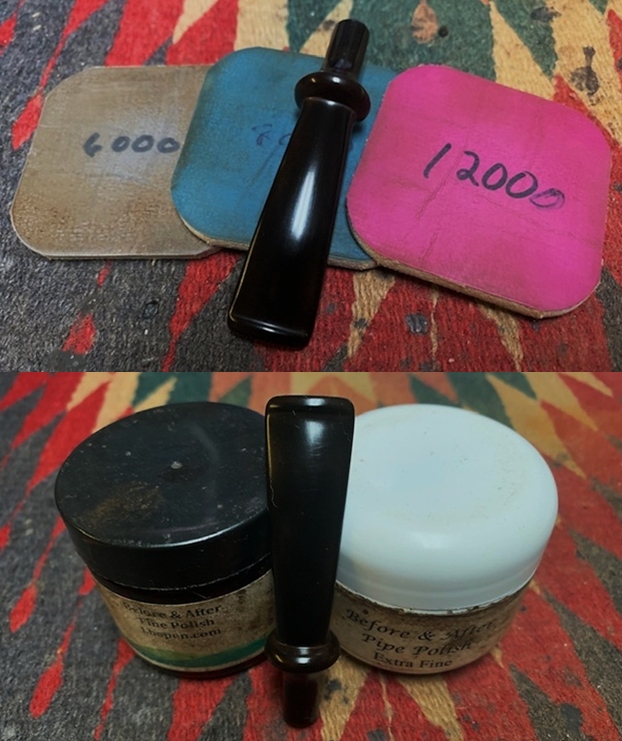
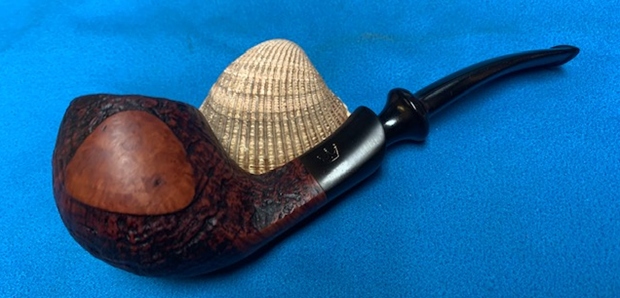
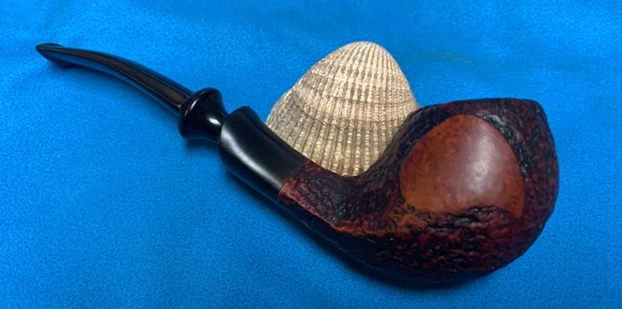
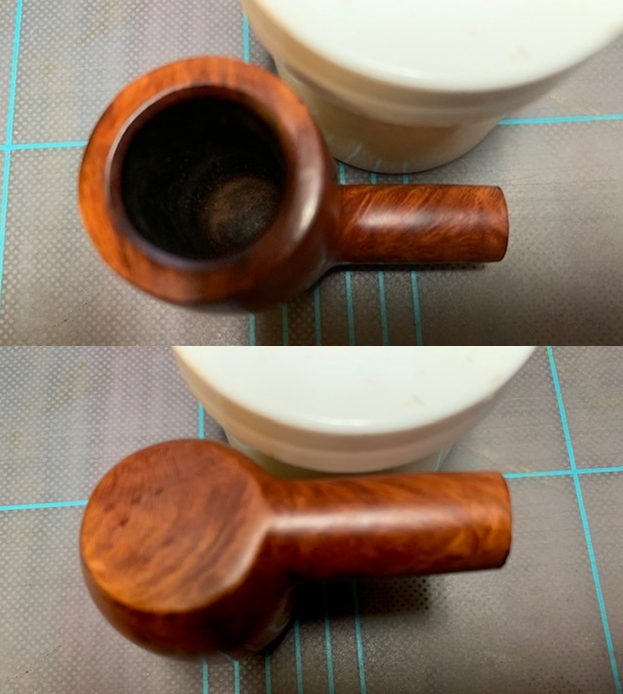
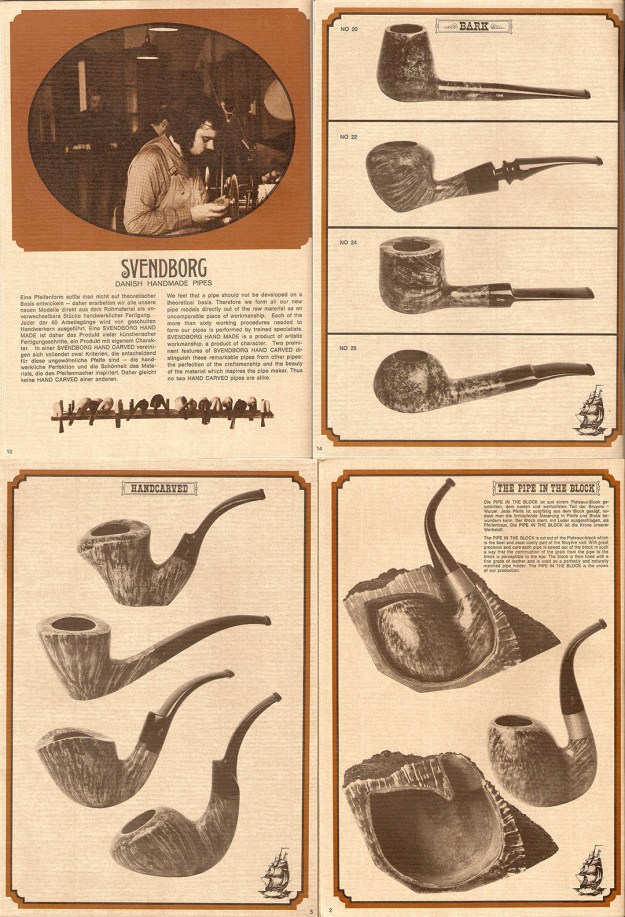
The article also included this set of pages from a catalogue that were interesting as they included the Bark line. The philosophy that drove the brand is also there to read.Now it was time to clean up this pipe and get it restored. I cleaned the pipe with the methodology that Jeff and I have developed. The pipe was a mess when I took it out of my box here so I was curious to see how well it would cleanup. I took some photos of the pipe before I started my work on it. You can see that it is filthy but has some great grain in the blast and on the smooth portions. It has a really nice sandblast that is deep and rugged. I took some close up photos of the rim top and the stem surface. I wanted to show the condition of the cake in the bowl and look of the rim top and lava overflow. I also took close up photos of the stem to show the tooth marks and the calcification, oxidation and generally condition of the stem surface.    I took a photo of the stamping on the underside of the shank and it is faint but readable under the grime. It is stamped as noted above. It is also stamped on both sides of the shank.I removed the stem for the shank and took a photo of the bowl and stem to give a picture of what it looked like. It is a great looking pipe under the grime.I decided to start my restoration by getting rid of the cake in the bowl and cleaning up the rim top. I reamed it with a Savinelli Fitsall Pipe Knife. I sanded the inside of the bowl with 220 grit sandpaper wrapped around a piece of dowel. Once I finished the bowl was smooth and clean. I was glad to see that there was no internal damage.  I scraped the inside of the tenon with a pen knife to remove the buildup of tars. I followed that by scrubbing out the internals of the shank and the airway in the stem with alcohol, pipe cleaners and cotton swabs until the pipe was clean.  I was not able to push a pipe cleaner through the shank to the bowl. There was some obstruction in the way that impeded the airflow.      I scrubbed the exterior of the bowl with Murphy’s Oil Soap and a tooth brush to remove the grime and grit on the briar and the lava on the rim top. The finish looks very good with good looking grain around the bowl and shank. Once it is polished it will come to life. I scrubbed the oxidized shank extension with Soft Scrub All Purpose scrub and cotton pads to remove the oxidization. It took a bit of elbow grease and hard scrubbing to remove the oxidation but it looked very good.      I decided to pause and try to clean out the shank and try to remove what was clogging the airway in the shank. I could not push a pipe cleaner through the shank it was blocked and when I blew air through it and it was very constricted. I probed the shank with a dental pick and was surprised when this piece of plastic wrap came out of the shank. It explained the buildup I took off the tenon when I first clean it. It appeared that something had been glue to the tenon and now I knew what it was.  Without it the airway and flow was unobstructed.With the obstruction out of the airway the tenon was far too loose in the shank. Something would need to be done to make the tenon fit snug in the shank. I decided to make a Delrin sleeve for the tenon. I thought about making Delrin insert for the vulcanite shank extension but decided to do it this way. I drilled out a replacement tenon with a variety of drill bits. I held it in a set of vise grips and opened the tenon.Once it was open I pressed it onto the existing tenon.  The fit on the tenon was perfect and the fit in the shank was much better than originally. I would clean up the new tenon adapter so that the fit in the shank would be snug but smooth.  The tenon was wide open and excellent airflow. I put the newly sleeved tenon in the shank and took a photo of the pipe at this point.   The stem needed to be bent to fit the profile of the bowl and to hang well in the mouth. I put a pipe cleaner in the stem and heated it with a heat gun until the vulcanite had softened. Once it had softened I bent it to the correct angle. I put the stem on the pipe and took a photo of the new bend. I rubbed the bowl down with Before & After Restoration Balm. I worked it into the surface of the briar with my fingertips and a horsehair shoe brush to clean, enliven and protect it. I let the balm sit for a little while and then buffed with a cotton cloth and shoe brush to raise the shine.    I set the bowl aside and turned my attention to the stem. I scrubbed the stem with Soft Scrub polish to remove the oxidation. While it did not take it all out it removed much of the oxidation. I filled in the small tooth dents next to the button with Black Super Glue and set the stem aside to let the glue cure. Once it cured I smoothed it out with a needle file and sharpened the edges of the button.   I sanded the stem surface with 220 grit sandpaper to remove the remaining oxidation and to blend the repairs into the surface of the stem. I started the polishing with 400 grit wet dry sandpaper.I polished the vulcanite with micromesh sanding pads – 1500-12000 grit pads. I wiped it down with a damp cloth after each sanding pad. I used Before & After Pipe Polish – both Fine and Extra Fine to further polish the stem.  I left a little oxidation around the stamp so as not to damage it more. This restored Svendborg Handmade Bark Inka 21 Bent Apple is a nice looking pipe. The contrasting brown stains on the pipe worked really well with the polished vulcanite shank extension and fancy turned vulcanite stem. I put the stem back on the bowl and carefully buffed the pipe with Blue Diamond on the buffing wheel. I gave the bowl and stem multiple coats of carnauba wax on the buffing wheel keeping a light touch on the buffing wheel for the bowl. I followed that by buffing the entire pipe with a clean buffing pad. I hand buffed the pipe with a microfiber cloth to deepen the shine. The finished Svendborg Bent Apple fits nicely in the hand and feels great. Give the finished pipe a look in the photos below. The dimensions of the pipe are Length: 5 ½ inches, Height: 1 ½ inches, Outside diameter of the bowl: 1 ¼ inches, Chamber diameter: ¾ of an inch. If you are interested in carrying on the previous pipe man’s legacy with this pipe send me a message or an email. I have more to work on of various brands. Perhaps one of those will catch your attention. Thanks for reading this blog and my reflections on the pipe while I worked on it.
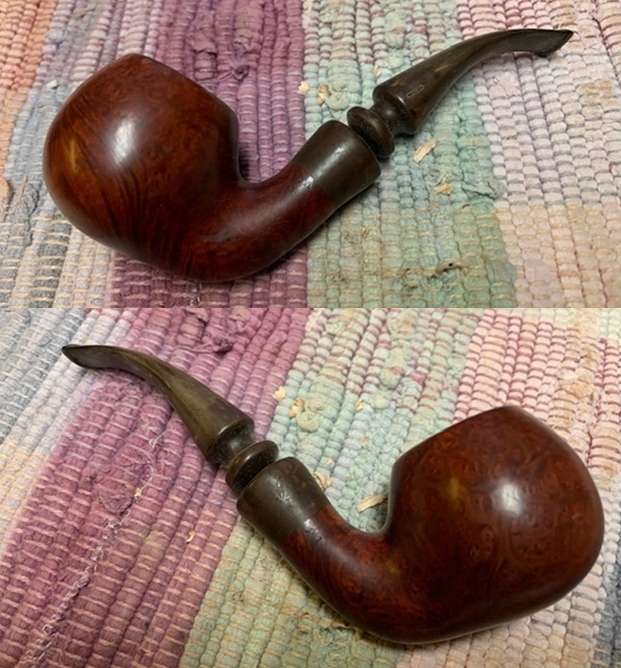
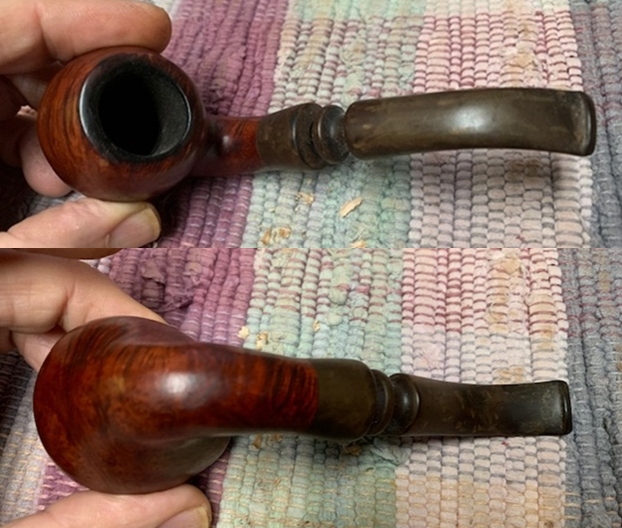
Comoy’s Shape 42 Sandblast Restoration


By Al Jones

It’s been over two months since I’ve had a pipe on my work bench, life, work and the pandemic have made life somewhat hectic.

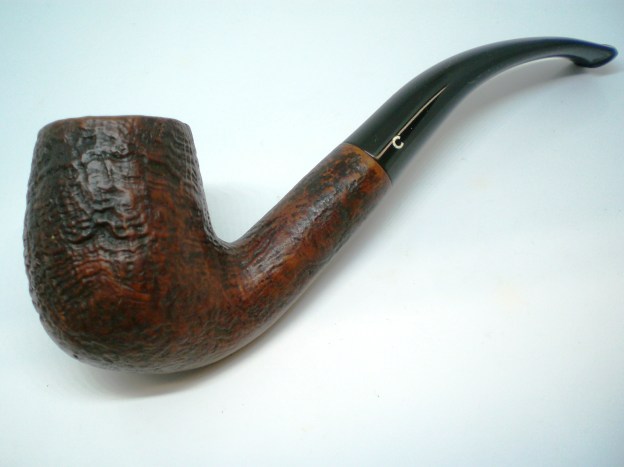
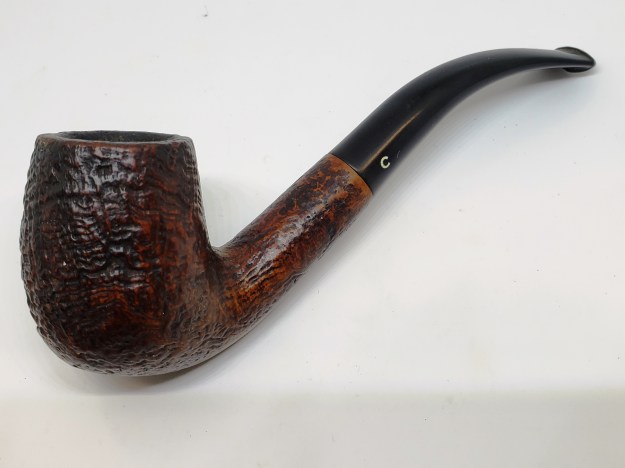
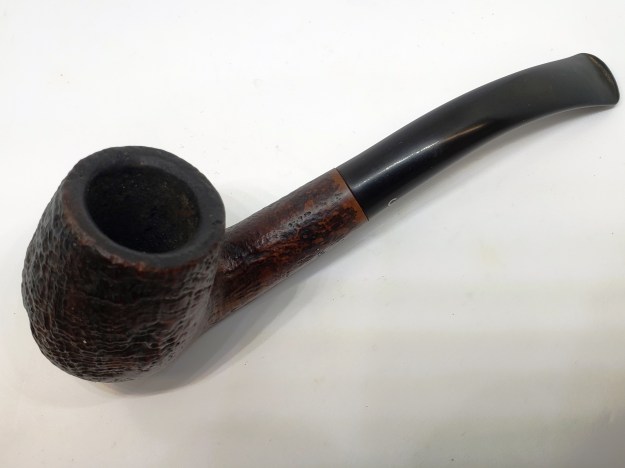
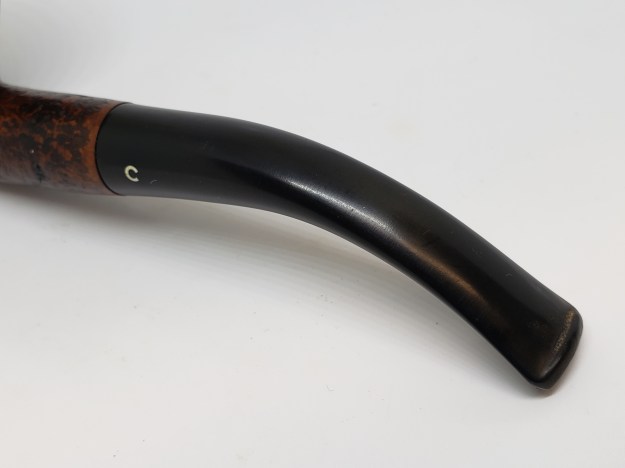
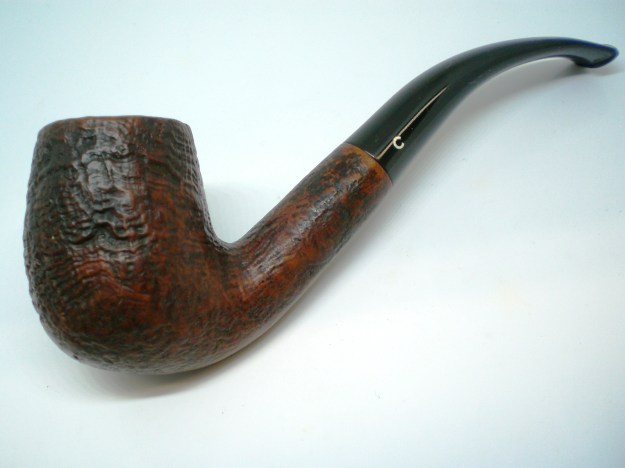
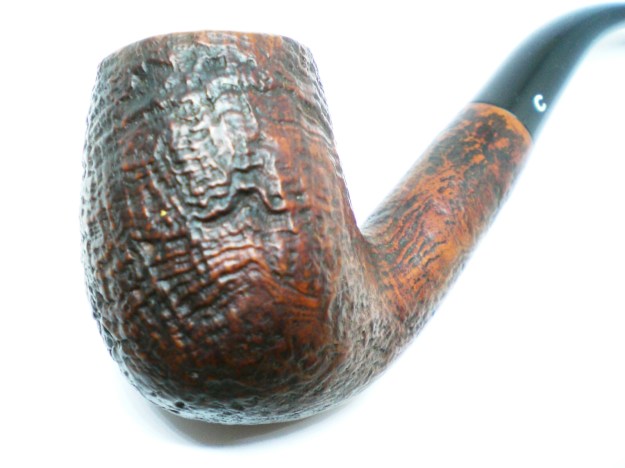
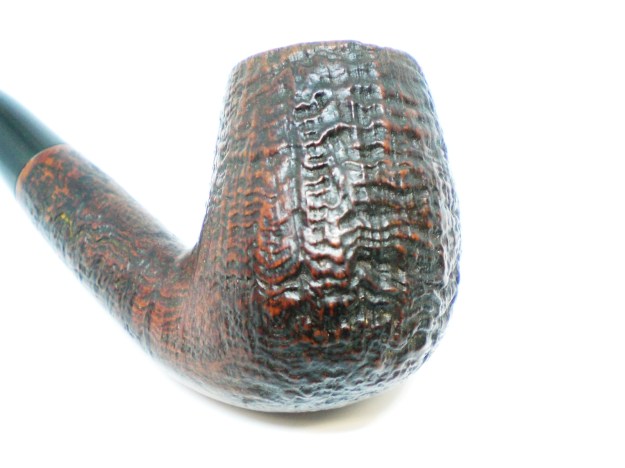
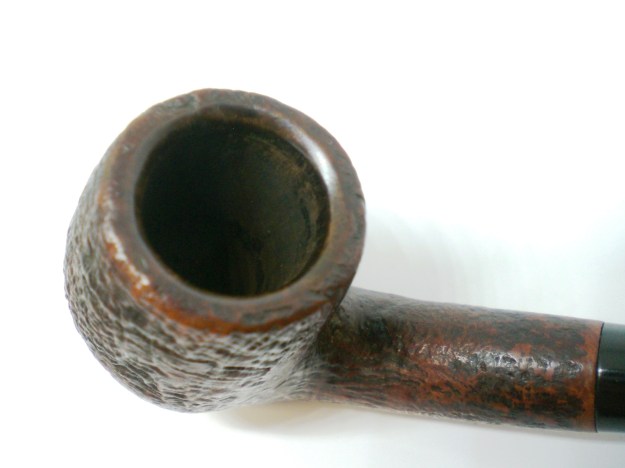
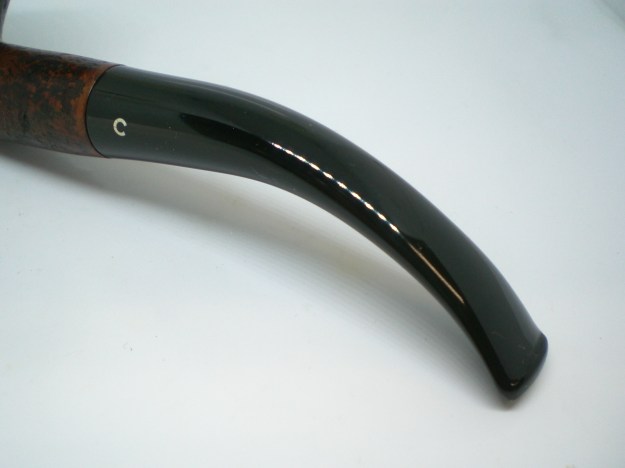
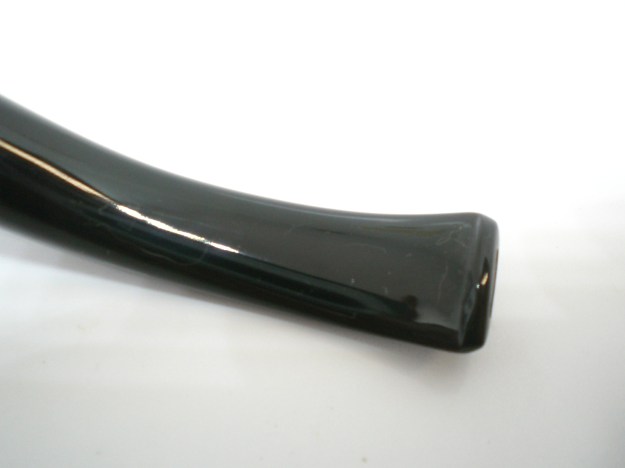
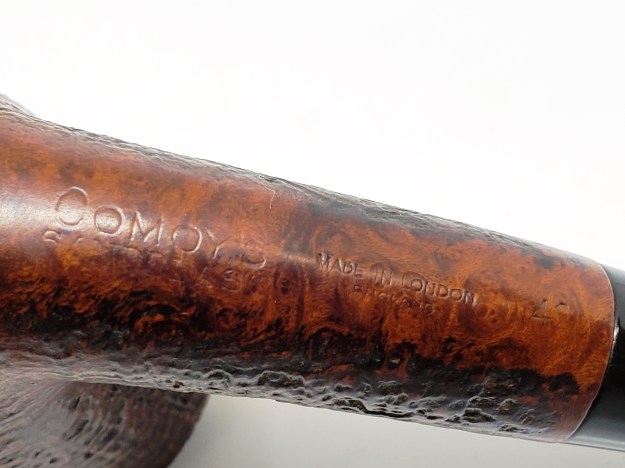
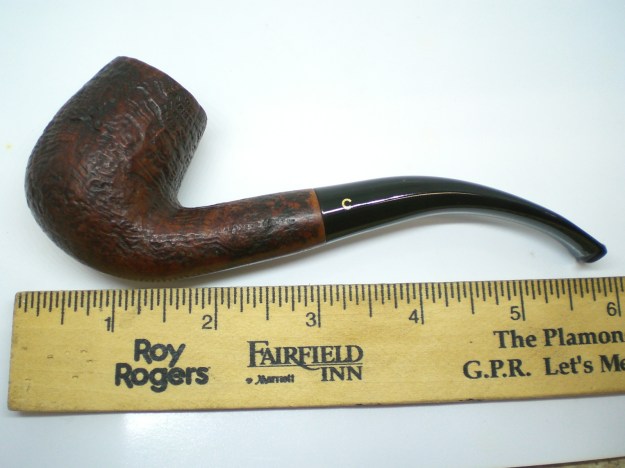
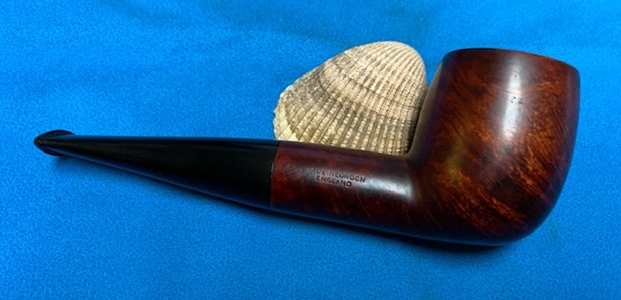
The shape 42, is the classic Comoy’s medium size bent billiard.  This one had the 3 piece stem stem logo, denoting a pipe made before the merger in 1981.  The pipe only made mild oxidation on the stem, some build-up on the bowl top and a few minor teeth indentions.

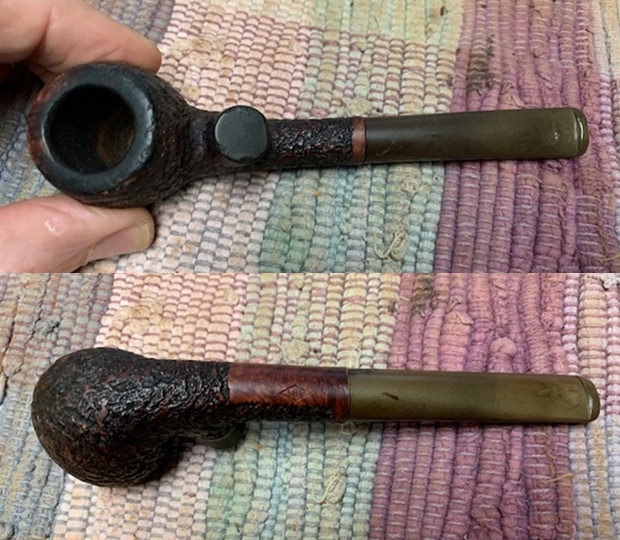
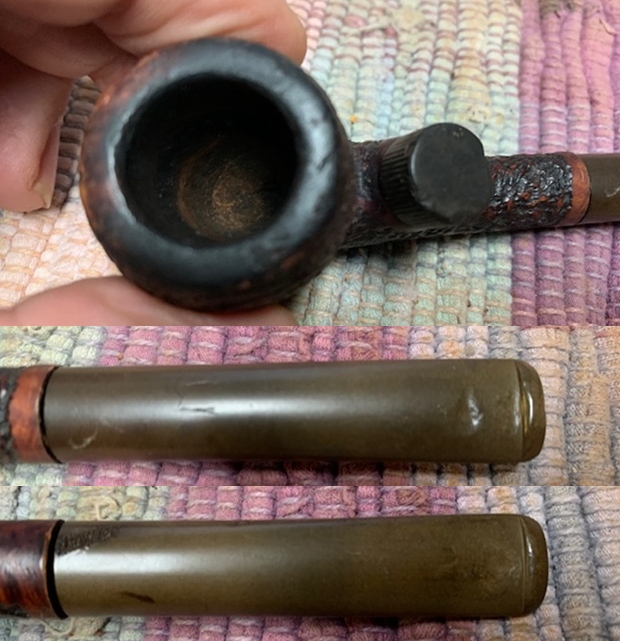
Below is the pipe as it was received.

I used a heat gun to work out the teeth indentions.   A worn piece of Scotch-brite was used to remove the build-up on the bowl top.  I used a piece of 2000 grit wet paper to revive the polished, beveled bowl edge.  The pipe was reamed of the modest cake and soaked with sea-salt and alcohol.

Following the soak, the shank was thoroughly cleaned with alcohol on a small bristle brush and twisted up paper towels, till they came out clean.  A bristle pipe cleaner was used to clean the inside of the stem.

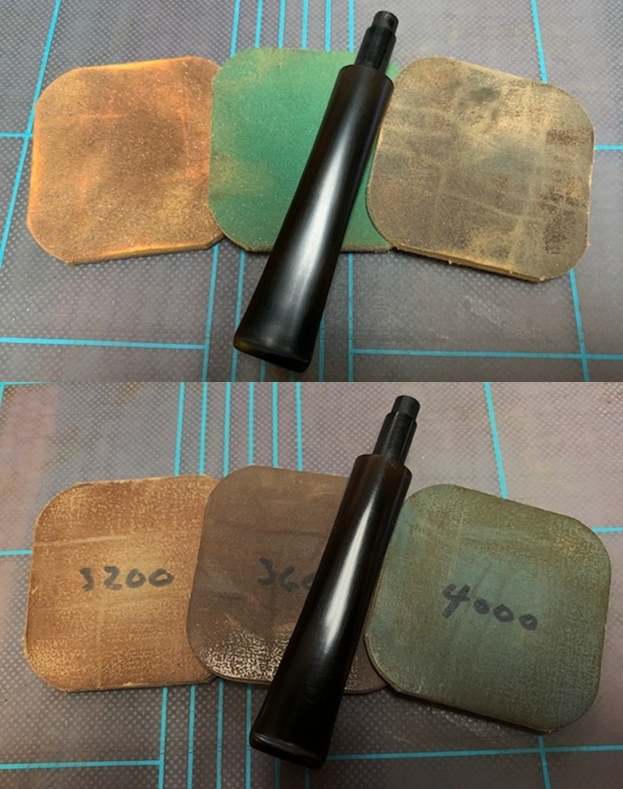
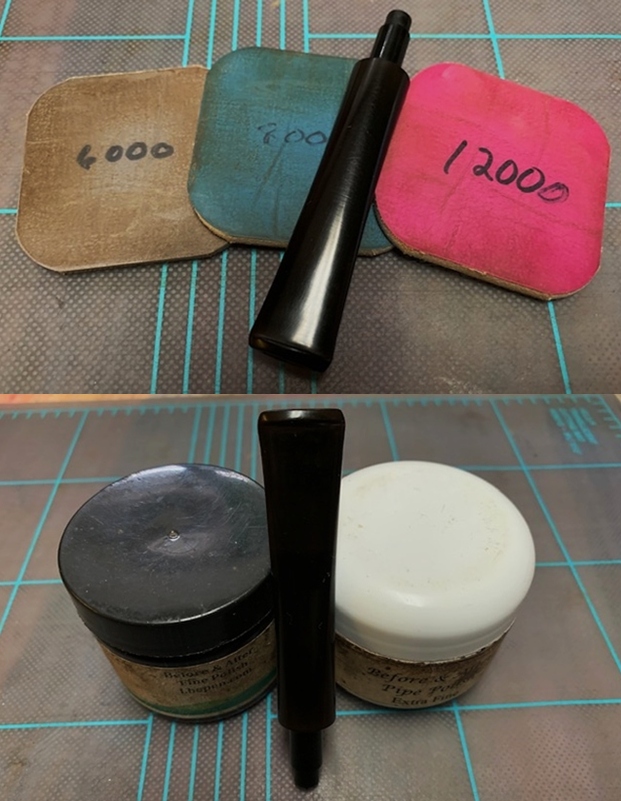
The stem was mounted and oxidation removed with 800, 1,500 and 2,000 grade wet paper.  This was followed by 8,000 and 12,000 micromesh sheets.  The stem was then polished with White Diamond and Meguiars Plastic Polish.

The bowl was hand polished with Halycon wax.

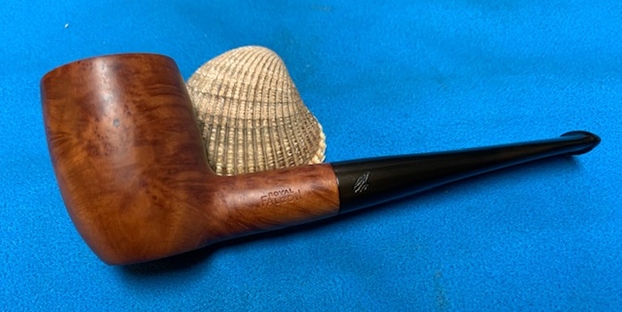
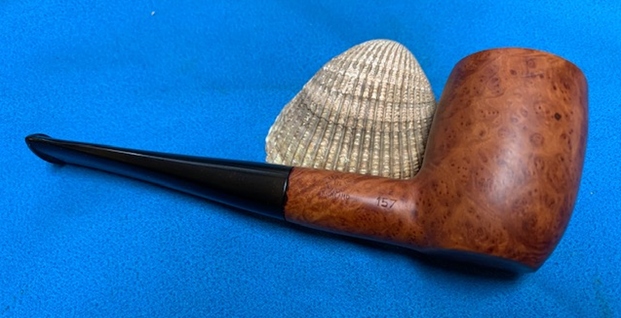
Below is the finished pipe.


Restoring a Odd LH Stern System Pipe with a Sump and a Cleanout


Blog by Steve Laug

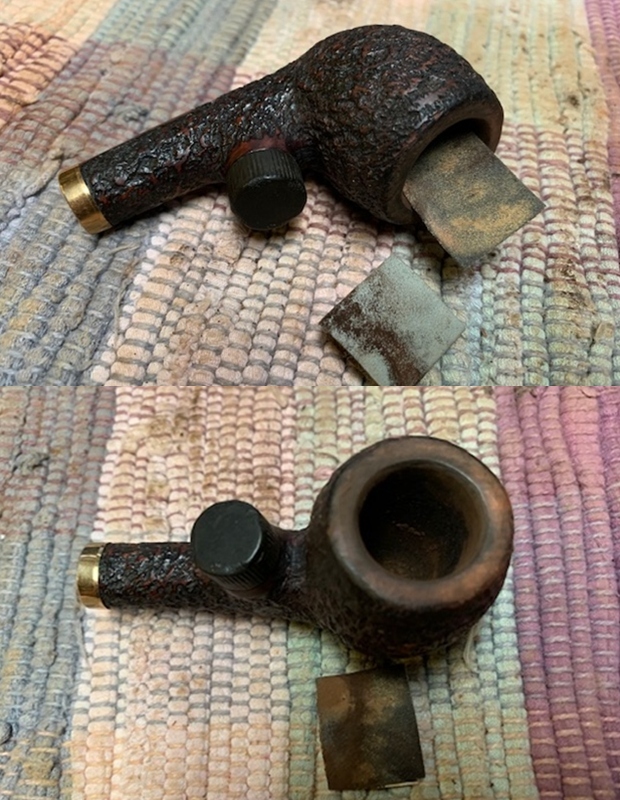
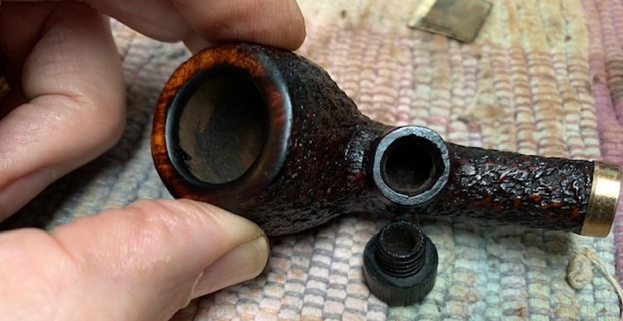
The next pipe on the work table is an odd one that I have looked at several times over the years and then put back in the box or pipes to be restored. We picked it up on EBay in 2016 and it has been sitting here since then. To me it is a pipe that characterizes the perpetual hunt for the perfect flavourful and cool smoke. Today I decided to bring it to the table and work on it. This one is an oddity made by LHS. It has a smooth rim, shank band and panel on the underside of the shank. The rest of the pipe is very nice tight rustication that almost looks like a sandblast. The top of the shank has opening with a threaded vulcanite cap that forms an entry into the airway. It is just ahead of the bowl shank junction. There was a crack in the shank on the right side that had spread enough that the stem no longer fit in the shank. It was stamped on the smooth underside of the shank. It reads Italian Briar [over] LHS in a Diamond (the LHS logo). There is no other information on the shank in terms of a line of pipes or a shape number. The pipe was dirty with grime ground into the finish. There was a thick cake in the bowl and lava overflow on the rim top. The inner edge of the rim was covered so thickly in lava it was hard to know what was underneath. The vulcanite stem was oxidized and had a burn mark on the right underside and deep tooth marks and chatter ahead of the button on both sides. Jeff took photos of the pipe as it was when he received it from the EBay seller. Jeff took photos of the bowl and rim top to give an idea of the thickness of the cake in the bowl and the lava overflow on the rim top. The pipe was a mess and it would take a lot of work. He also took photos of the condition of the stem surface. You can see the oxidation and tooth marks in the stem on both sides as well as the burn mark in the third photo of the stem. He took a photo of the stamping on the underside of the shank. It is clear and readable as noted above.Jeff took photos of the sides of the bowl and the condition of the exterior of the bowl and the vulcanite cap that was on top of the shank. It really is an odd looking pipe. I am anxious to see what the drilling is like once I receive it in Vancouver. The edges on the cap are worn and damaged and I was wondering if it would be stuck in the shank and unmovable. But it seems that with a little work Jeff was able to unscrew it and took some photos of the shank with the cap removed to show me what it looked like.    You can see the threads in the opening and on the cap itself. They are in great condition. What is not visible in the photos to me is critical. What did the airway do with the opening? Did it go straight through or how did enter or leave the opening? I would learn. There was a lot of debris on the cap and in the opening. It was a mess.Before I started working on it I did a bit of research on the brand to see if I could find anything mentioned in the two sites I regularly check for background information. I turned first to Pipephil’s site (http://www.pipephil.eu/logos/en/logo-lhs.html). There was a great summary of the history of the brand but nothing on this particular unique pipe. I include that summary below:

The L&H Stern Inc. was established by Ludwig Stern (1877-1942) in 1911. His brother Hugo (1872-?) acted as vice-president & secretary. The firm moved to 56 Pearl St. Brooklyn in 1920. It closed down in the 1960s. LHS was one of the main pipe suppliers for US soldiers during WWII.

I did a quick look at Pipedia (https://pipedia.org/wiki/LHS) and there was a longer version of the same information as well as lot of photos of the wide range of LHS produced pipes. It is well worth a visit however there was no information on this particular odd pipe.

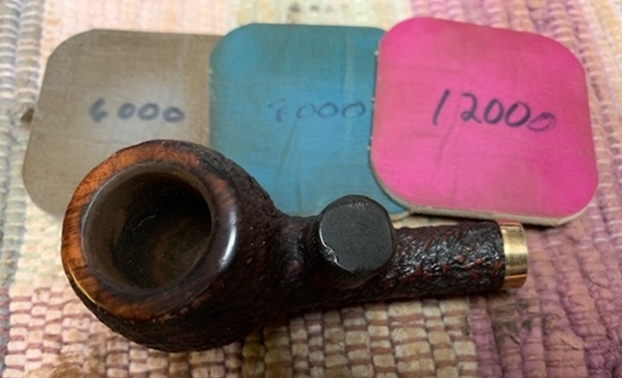
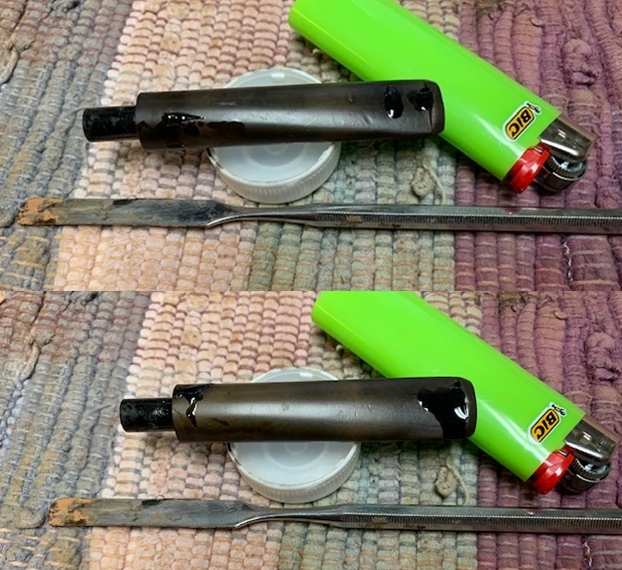
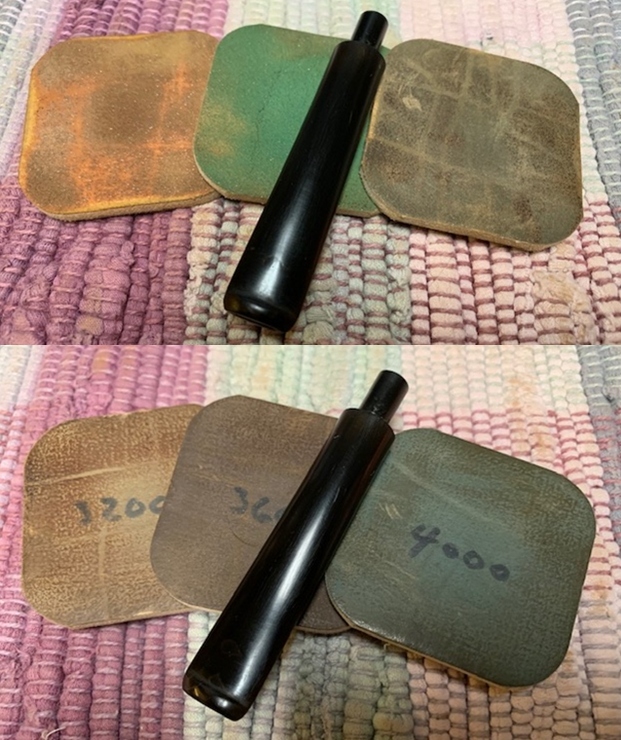
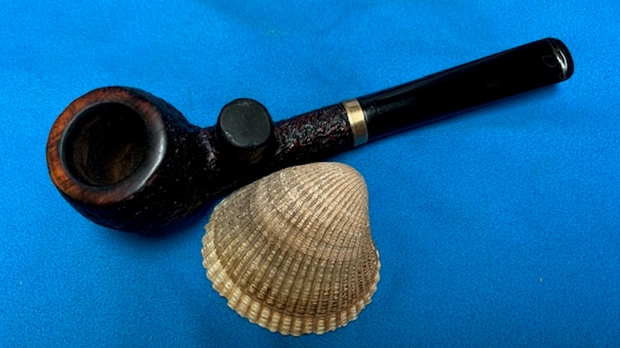
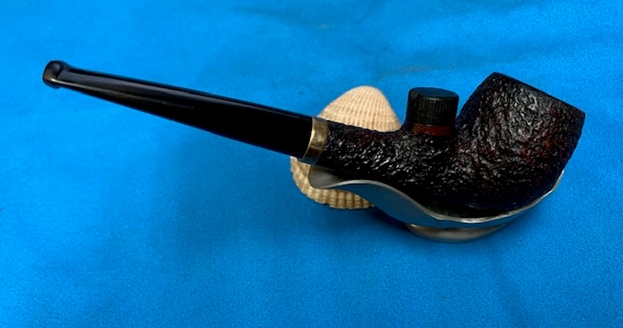
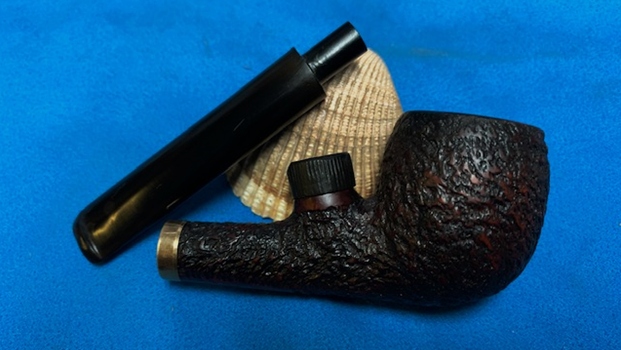
Now it was time to work on the pipe. Given the horrible condition of the pipe shown above I was wondering what it would look like after the cleanup. Jeff did an amazing job on this one. With odd airway and capped sump it was a lot of detail work to get it clean. He reamed the bowl with a PipNet Reamer and cleaned it up with a Savinelli Fitsall pipe knife. He cleaned out the internals of the shank and airway in the stem with alcohol, cotton swabs and pipe cleaners. He soaked the stem in Before and After Deoxidizer and rinsed off the remnants of the product and cleaned out the airway once more. The pipe looked a lot better than when he started. Internally it was spotless and smelled clean. I took some photos of the pipe before I started my work on it. I took some close up photos of the rim top and the stem surface. I wanted to show the condition of the rim top and edges of the bowl. The outer edges were in okay condition. The inner edges had burn marks on the back half of the bowl and nicks and chipping on the front half. There were nicks and gouges in the top of the rim and it was slightly crowned. I also took close up photos of the stem to show the deep tooth marks, burn mark on the underside as well as the calcification, and oxidation on the stem surface. I took a photo of the stamping on the smooth panel on the underside of the shank is faint but readable. It is stamped as noted above.   I took a photo of the right side of the shank to show the crack in the shank at the stem shank joint. It is ragged and goes into the rustication for about ½ inch.I decided to start my restoration on this old timer by addressing the cracked shank. I went through my thin brass bands and found one that would work well and not interfere with the stamping. I wanted it to be tight enough that it would pull together the cracked surface. I ran a line of clear super glue in the crack and squeezed it together and lined up the band. I pressed the band in place on the shank and the crack disappeared.     I moved on to deal with the damage to the inner edge and the rim top. I sanded the edge with a folded piece of 220 sandpaper to bring it back into round. I gave it a light bevel to take care of the burn damage. Because the rim top had a slight crown I could not top it on the topping board to I sanded the rim top carefully with the same piece of folded sandpaper to remove the damage to the surface.  I polished the rim top and edges with micromesh sanding pads. I wet sanded with 1500-12000 grit pads and wiped the rim top off after each pad with a damp cloth. The shine began to look very good.     I wanted to get a sense of the airflow from the bowl to the shank so I unscrewed the cap from the top of the shank. It turns out that the shank has a sump under the cap for capturing tars and liquid much like a Peterson System pipe. The airway enters the top of the sump at the bottom of the threads toward the bowl and leaves at the top just below the threads on the shank end. It is ½ inch deep from the top of the opening to the bottom of the shank. With the cap on the shank is a little over an inch thick at that point from the top of the cap to underside of the shank. I inserted a pipe cleaner into the airway on each side of the sump to show the flow. If you can picture it the shape is like a U. The system is in essence a sump and a clean out. I rubbed the bowl down with Before & After Restoration Balm. I worked it into the surface of the rusticated briar with my fingertips and a horsehair shoe brush to clean, enliven and protect it. I let the balm sit for a little while and then buffed with a cotton cloth and shoe brush to raise the shine.         I set the bowl aside and turned my attention to the stem. I “painted” the surface of the stem to lift the tooth marks on both sides of the stem. I filled in the remaining tooth marks and the burn mark on the underside of the stem with black super glue.    Once the repairs cured I used a needle file to flatten the repaired areas and to recut and shape the edge of the button on both sides.    I sanded the repair with 220 grit sandpaper to blend them into the surface of the surrounding vulcanite. I started polishing process with 400 grit wet dry sandpaper.      I polished the vulcanite with micromesh sanding pads – 1500-12000 grit pads. I wiped it down with a damp cloth after each sanding pad. I used Before & After Pipe Polish – both Fine and Extra Fine to further polish the stem.      This restored LHS (LH Stern) Italian Briar System Pipe is a good looking pipe (I think I can call this oddity good looking). The unique sump and clean out system makes it interesting to me. The contrasting brown stains on the pipe worked really well with the polished vulcanite stem. The brass band I put on the cracked shank was a great contrast with the briar and the black vulcanite. I put the stem back on the bowl and carefully buffed the pipe with Blue Diamond on the buffing wheel. I gave the bowl multiple coats of Conservator’s Wax and the stem multiple coats of carnauba wax on the buffing wheel keeping a light touch on the buffing wheel for the bowl. I followed that by buffing the entire pipe with a clean buffing pad. I hand buffed the pipe with a microfiber cloth to deepen the shine. The finished LHS Italian Briar sits well in the hand and should be an interesting smoke. Give the finished pipe a look in the photos below. The dimensions of the pipe are Length: 5 ½ inches, Height: 1 ½ inches, Outside diameter of the bowl: 1 ¼ inches, Chamber diameter: ¾ of an inch. This unique piece of American pipe history will be joining my collection of oddities that all were a part of the search for the perfect smoke. Thanks for reading this blog and my reflections on the pipe while I worked on it.

Cleaning up a Danish Made Bari Special Handcut B Dublin Freehand


Blog by Steve Laug

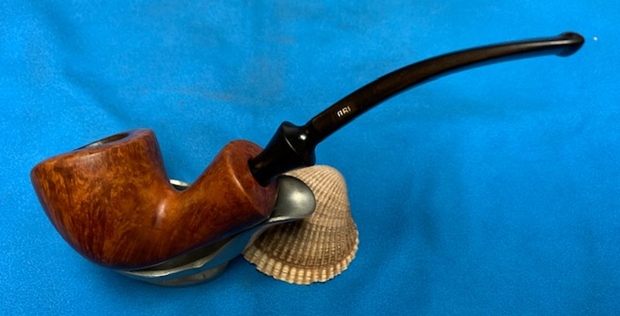
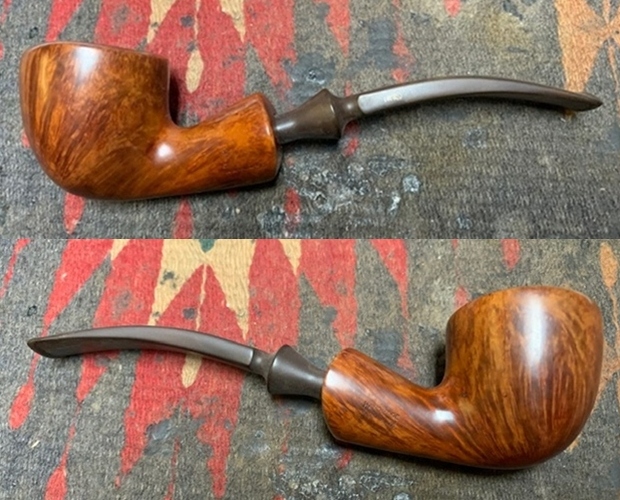
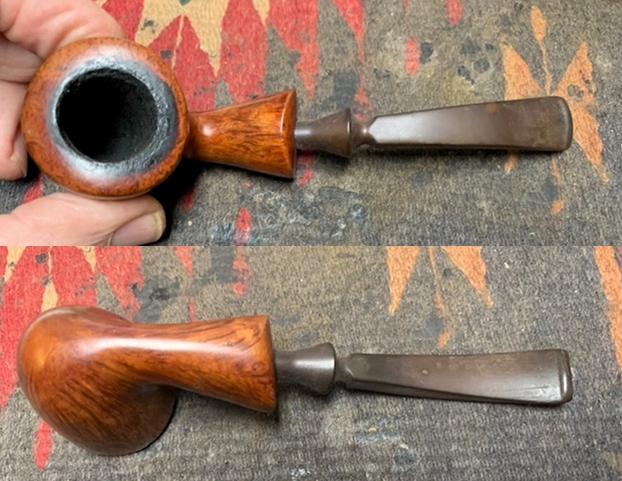
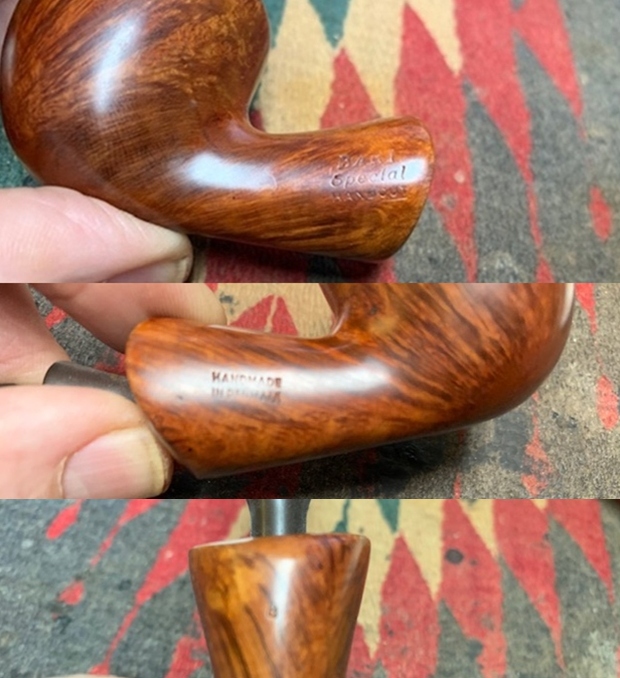
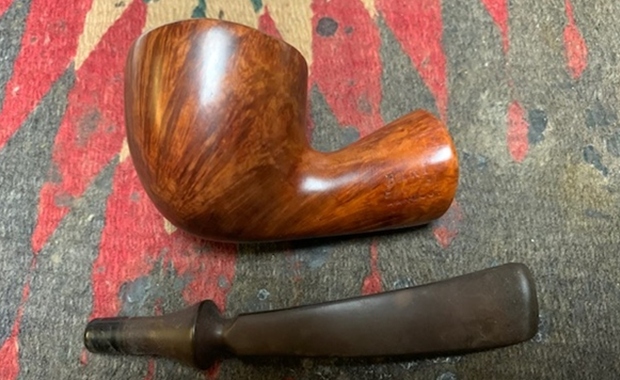
The next pipe on the work table is one that I picked up from a fellow in Alberta with several other Bari pipes. It has been here for a while and I am just now getting to it. I try to eventually work the pipes we find into the restoration queue so that I can keep them moving. This one is a Bari Special Handcut Dublin. It has a really mix of flame and straight grain around the bowl and shank. It was stamped on the sides of the shank. On the left side it reads Bari [over] Special [over] Handcut. On the right side it reads Handmade [over] in Denmark. On the underside of the shank it is stamped with the letter “B”. The pipe was dirty with grime ground into the finish. There was a thick cake in the bowl and lava overflow on the rim top. The inner edge of the rim was covered so thickly in lava it was hard to know what was underneath. The vulcanite stem was oxidized and had tooth marks and chatter ahead of the button on both sides. BARI was stamped on the left side of the fancy saddle stem but the B had been buffed out.

Before I started working on it I did a bit of research on the brand to remind myself of the maker. I have worked on quite a few Bari’s in the past so rather than rework all of that I am including the information I found while working on a Bari De Luxe Freehand. I quoted a section from Pipedia on Bari pipes (https://pipedia.org/wiki/Bari). It is good to be reminded of the fact that Viggo Nielsen was the pipe maker.

Pipedia states that Bari Piber was founded by Viggo Nielsen in Kolding, Denmark around the turn of 1950/51. His sons Kai and Jørgen both grew into their father’s business from a very young age and worked there till 1975. Both have become successful pipe makers.

Bari successfully adapted the new Danish design that had been started mainly by Stanwell for its own models. Bari was sold in 1978 to Van Eicken Tobaccos in Hamburg, Germany though the pipes were still made in Denmark. From 1978 to 1993 Åge Bogelund and Helmer Thomsen headed Bari’s pipe production.

Helmer Thomson bought the company in 1993 re-naming it to “Bari Piber Helmer Thomsen”. The workshop moved to more convenient buildings in Vejen. Bogelund, who created very respectable freehands of his own during the time at Bari got lost somehow after 1993. Bari’s basic conception fundamentally stayed the same for decades: series pipes pre-worked by machines and carefully finished by hand – thus no spectacular highgrades but solid, reliable every day’s companions were what they turned out. The most famous series are the smooth “Classic Diamond” and the blasted “Wiking”.

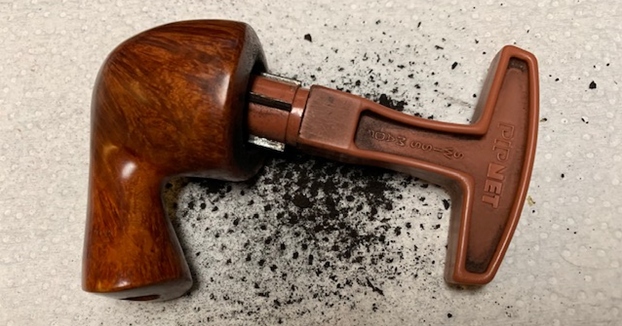
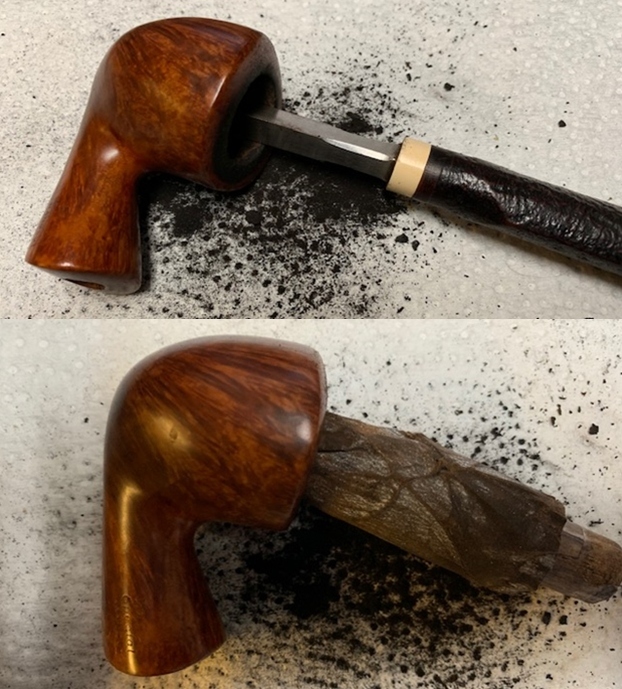
I did a quick look at Pipephil’s site (http://www.pipephil.eu/logos/en/logo-b1.html) and did a screen capture of the section on Bari pipes.Now that I was reminded about the Viggo Nielsen connection it was time to work on the pipe on my end. The pipe was a mess when I took it out of my box here so I was curious to see how well it would cleanup. I took some photos of the pipe before I started my work on it. You can see that it is filthy but has some great grain around the sides of the bowl.     I took some close up photos of the rim top and the stem surface. I wanted to show the condition of the cake in the bowl and look of the rim top and lava overflow. I also took close up photos of the stem to show the tooth marks and the calcification, oxidation and generally condition of the stem surface. I took photos of the stampings around the sides of the shank are faint but readable under the grime. It is stamped as noted above. I removed the stem for the shank and took a photo of the bowl and stem to give a picture of what it looked like. It is a great looking pipe under the grime.I decided to start my restoration by getting rid of the cake in the bowl and cleaning up the rim top. I reamed it with a PipNet pipe reamer and cleaned up the reaming with a Savinelli Fitsall Pipe Knife. I sanded the inside of the bowl with 220 grit sandpaper wrapped around a piece of dowel. Once I finished the bowl was smooth and clean. I was glad to see that there was no internal damage.   I scrubbed the exterior of the bowl with Murphy’s Oil Soap and a tooth brush to remove the grime and grit on the briar and the lava on the rim top. The finish looks very good with good looking grain around the bowl and shank. Once it is polished it will come to life. I scrubbed out the internals of the shank and the airway in the stem with alcohol, pipe cleaners and cotton swabs until the pipe was clean. I rubbed the bowl down with Before & After Restoration Balm. I worked it into the surface of the briar with my fingertips and a horsehair shoe brush to clean, enliven and protect it. I let the balm sit for a little while and then buffed with a cotton cloth and shoe brush to raise the shine.    I set the bowl aside and turned my attention to the stem. I sanded to loosen the oxidation on the vulcanite. I used a needle file to sharpen the edges of the button and redefine the shape.   I scrubbed the stem with Soft Scrub polish to remove the oxidation. While it did not take it all out it removed much of. What was left I would minimize more with 220 grit and 400 grit sandpaper and then would polish out with micromesh sanding pads.I sanded out the scratching and the tooth dents with 220 grit sandpaper and starting the polishing process with 400 grit wet dry sandpaper.    I polished the vulcanite with micromesh sanding pads – 1500-12000 grit pads. I wiped it down with a damp cloth after each sanding pad. I used Before & After Pipe Polish – both Fine and Extra Fine to further polish the stem.  I left a little oxidation around the stamp so as not to damage it more.        This restored Bari Danish Made Special Handcut Dublin is a nice looking pipe. The contrasting brown stains on the pipe worked really well with the polished vulcanite fancy stem. I put the stem back on the bowl and carefully buffed the pipe with Blue Diamond on the buffing wheel. I gave the bowl and stem multiple coats of carnauba wax on the buffing wheel keeping a light touch on the buffing wheel for the bowl. I followed that by buffing the entire pipe with a clean buffing pad. I hand buffed the pipe with a microfiber cloth to deepen the shine. The finished Bari Special Dublin fits nicely in the hand and feels great. Give the finished pipe a look in the photos below. The dimensions of the pipe are Length: 6 inches, Height: 1 ¾ inches, Outside diameter of the bowl: 1 ½ inches, Chamber diameter: ¾ of an inch. If you are interested in carrying on the previous pipe man’s legacy with this pipe send me a message or an email. I have more to work on of various brands. Perhaps one of those will catch your attention. Thanks for reading this blog and my reflections on the pipe while I worked on it.
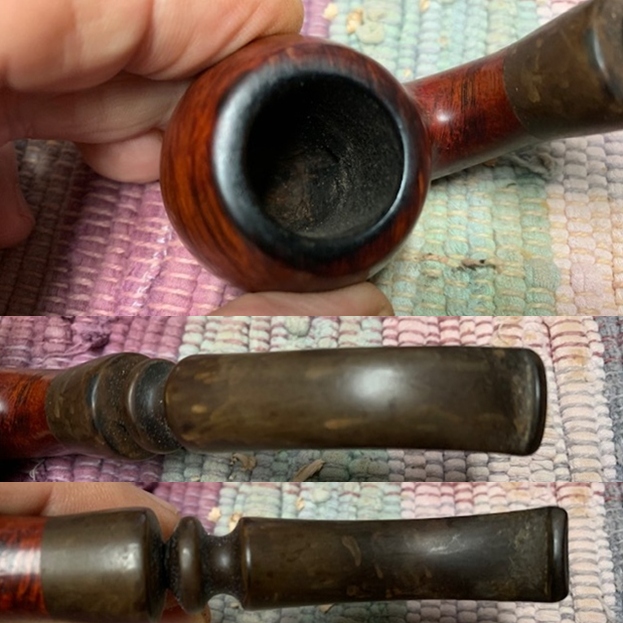
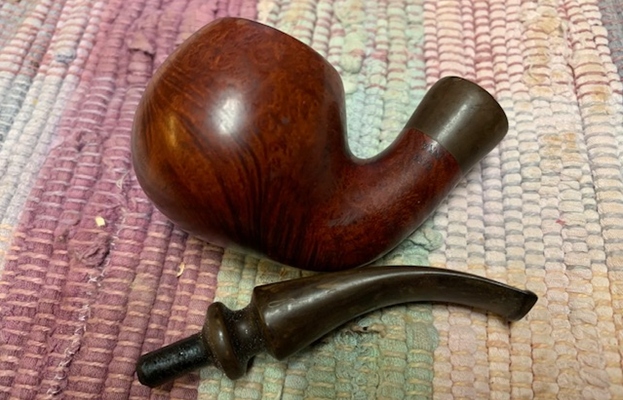
New Life for a “Malaga” Twisted Billiard with a Damaged Shank


Blog by Steve Laug

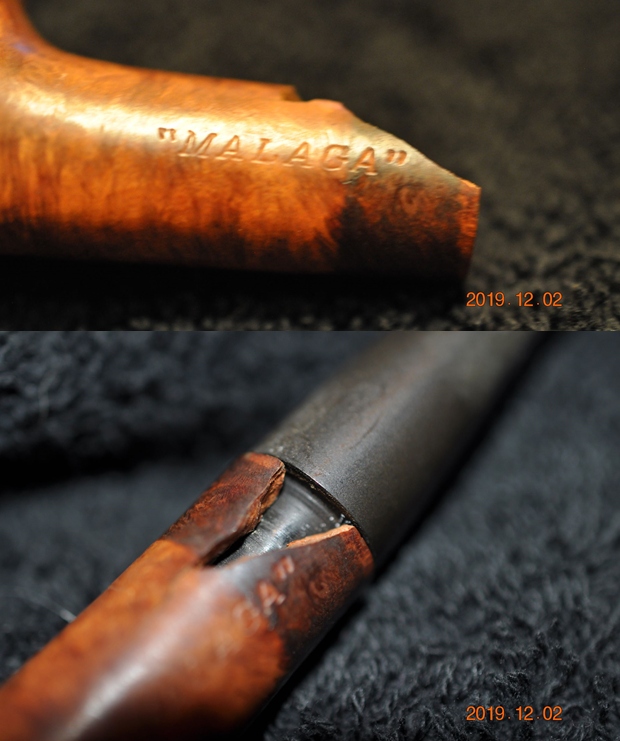
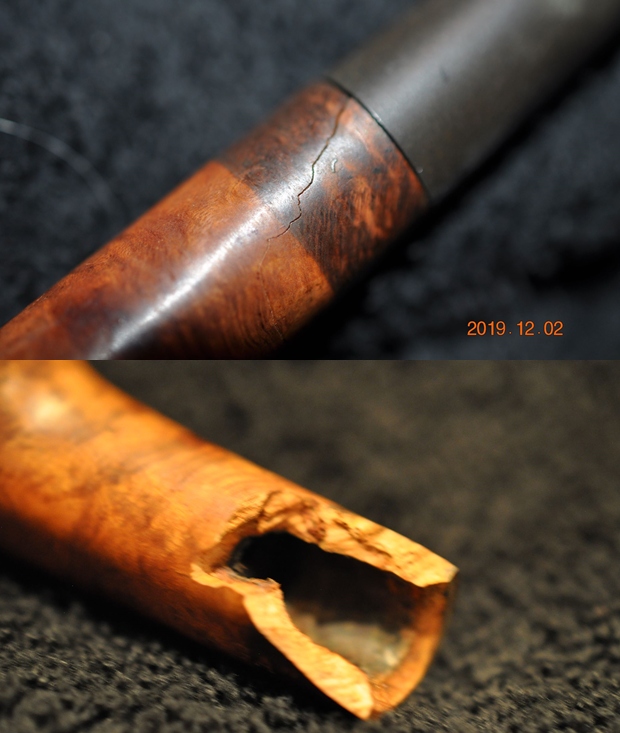
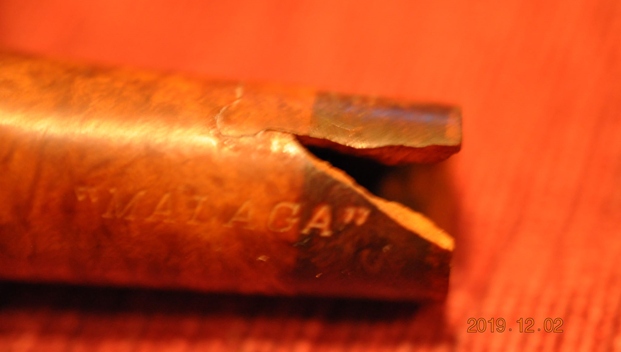
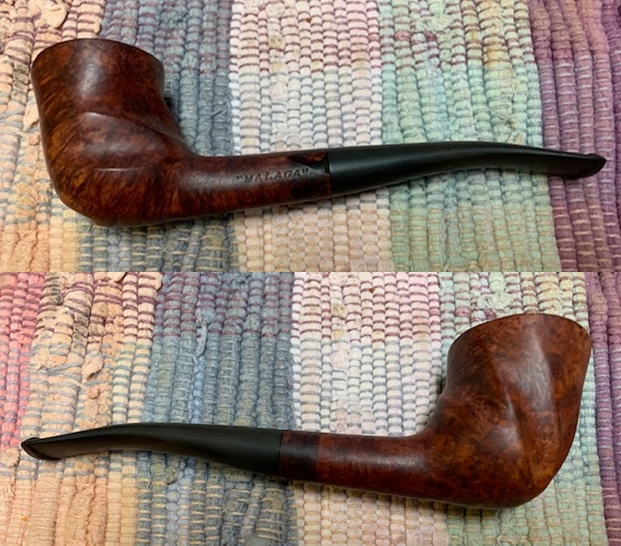
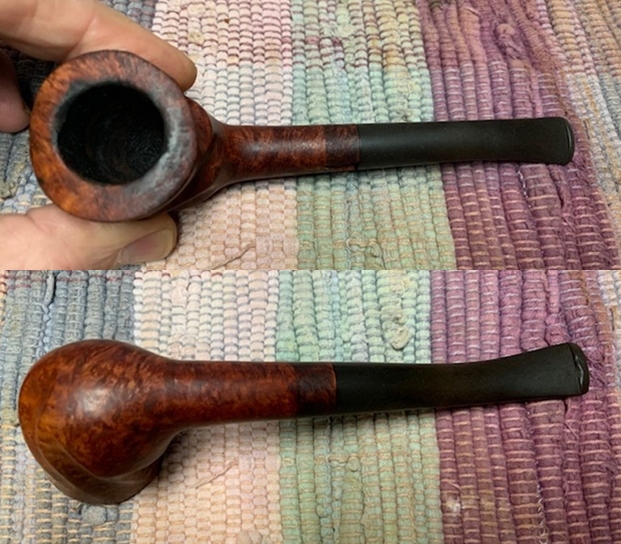
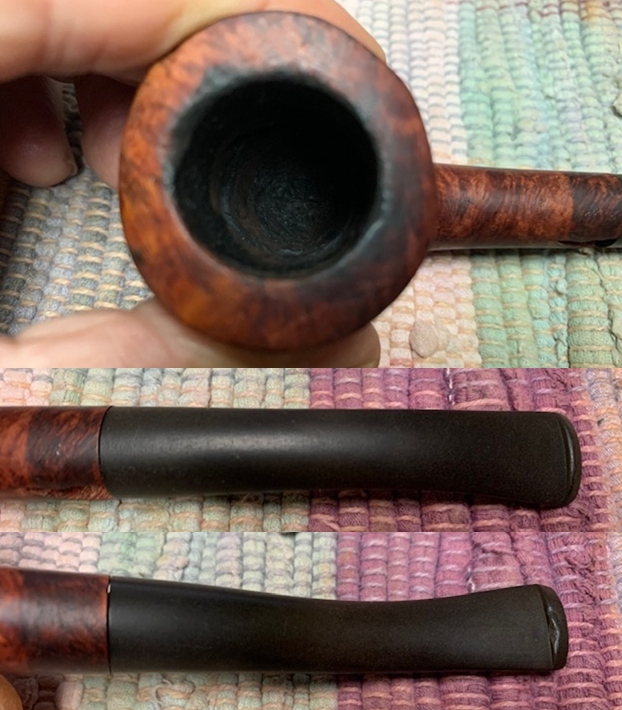
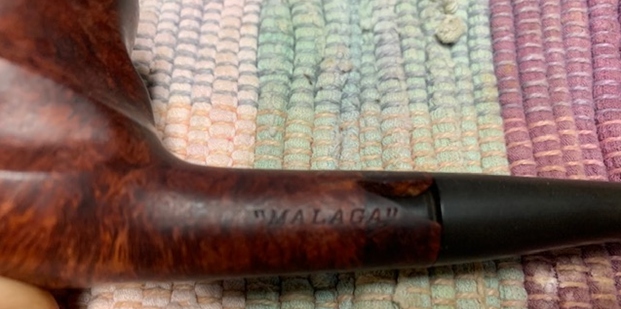
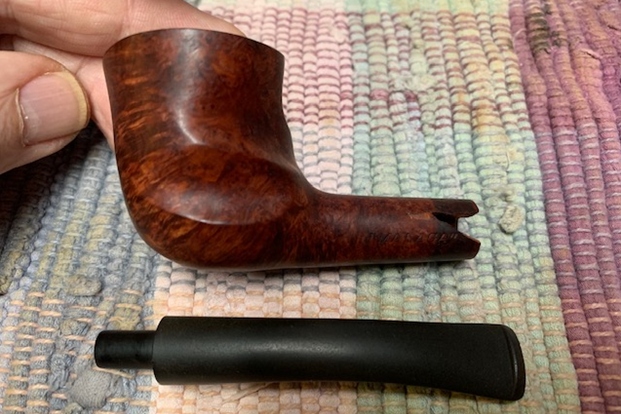
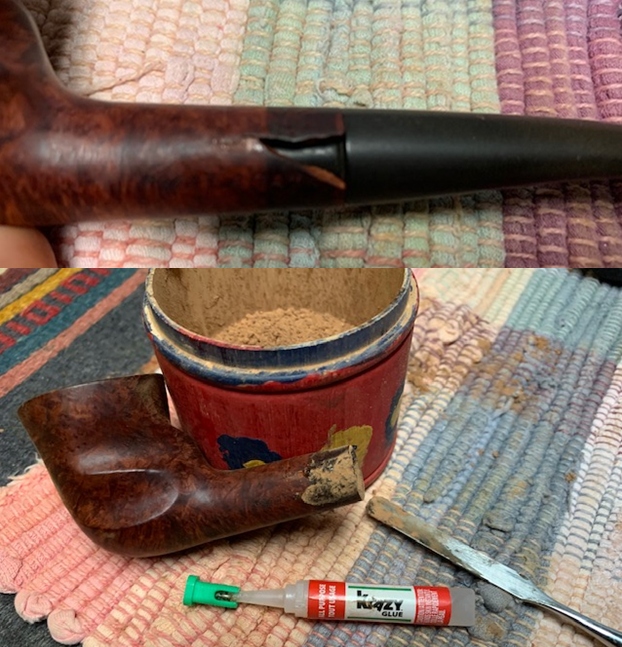
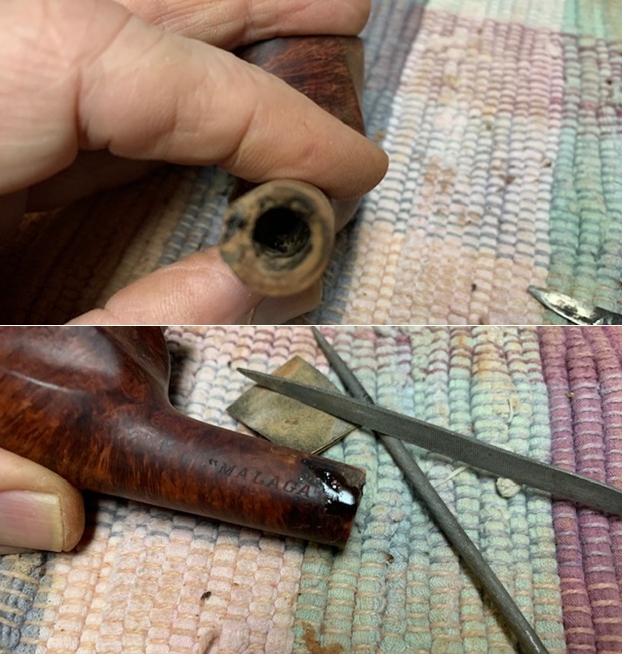
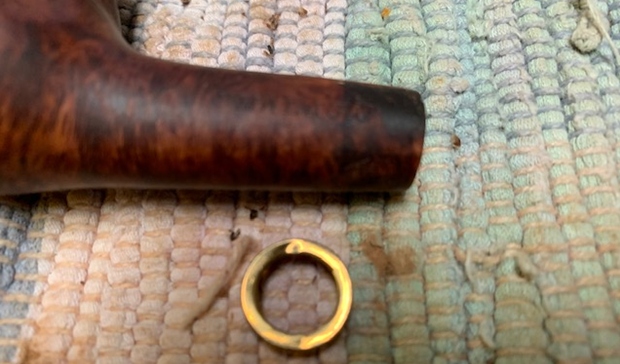
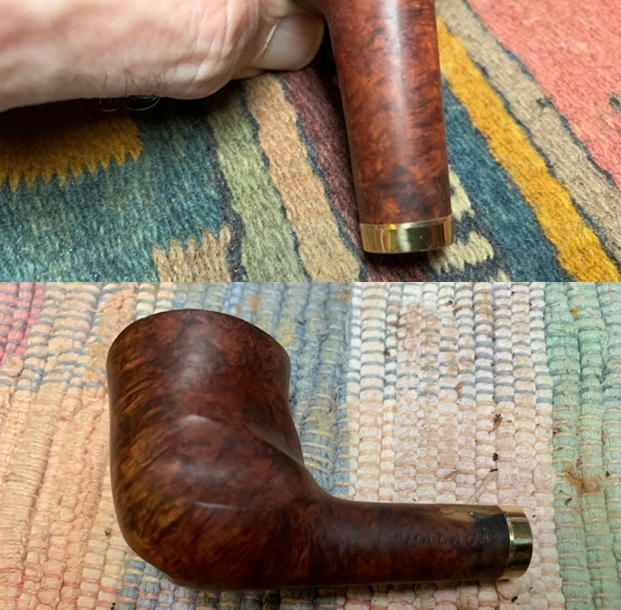
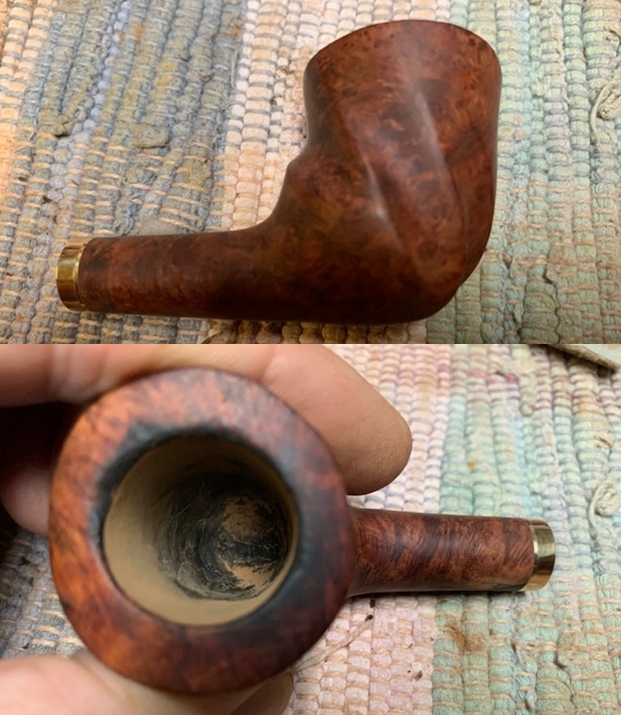
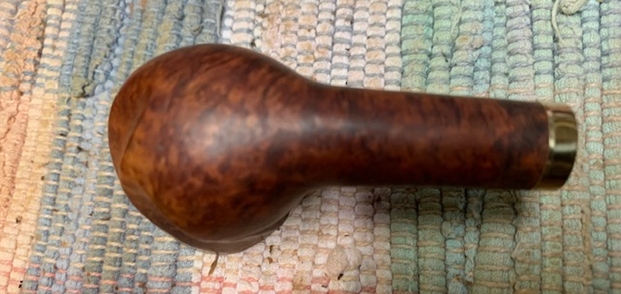
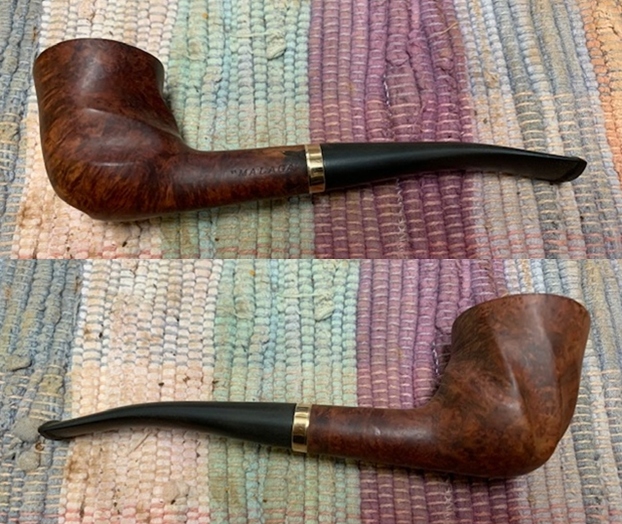
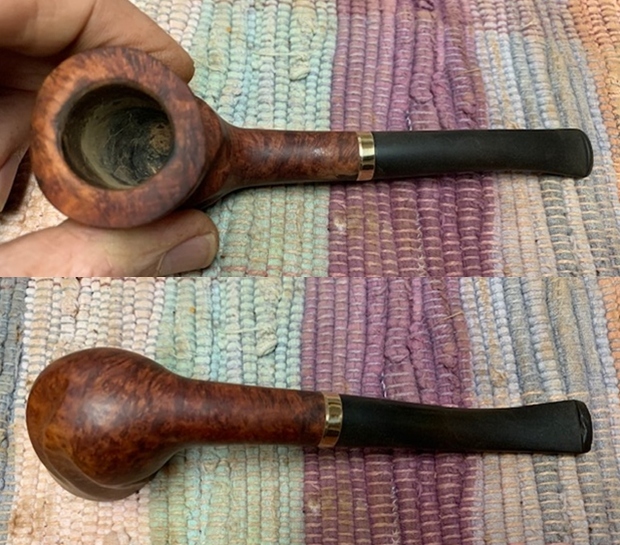
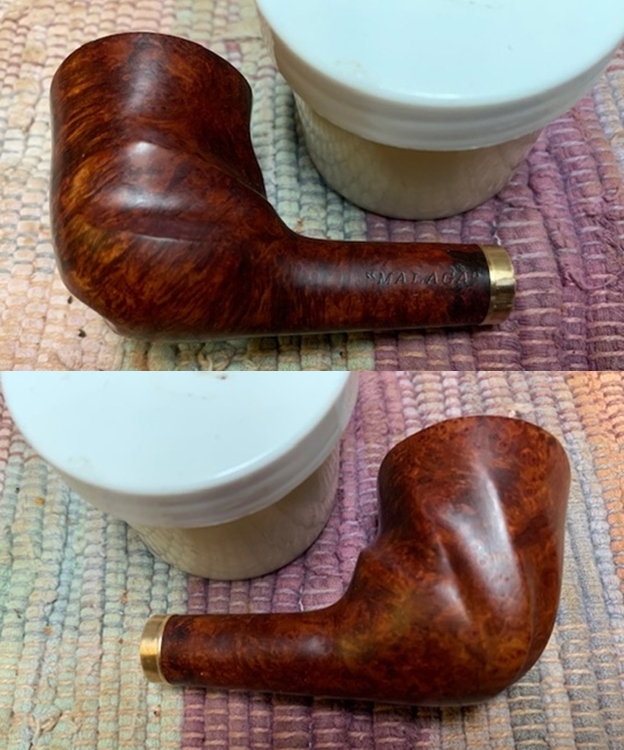
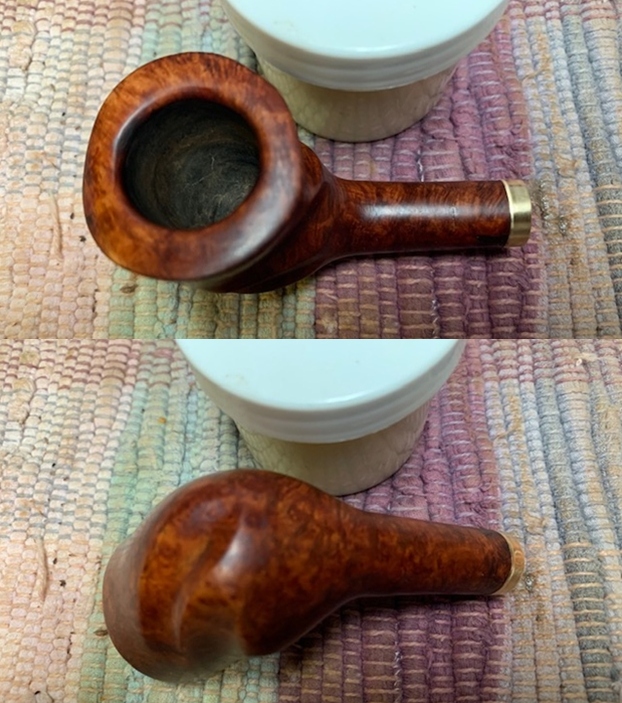
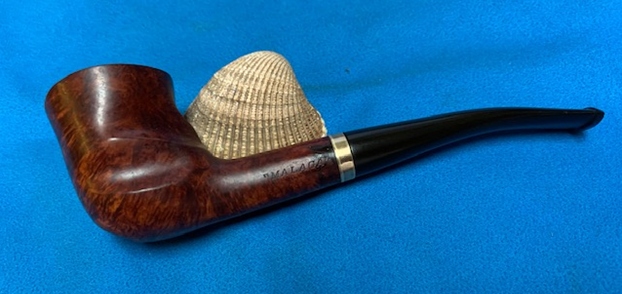
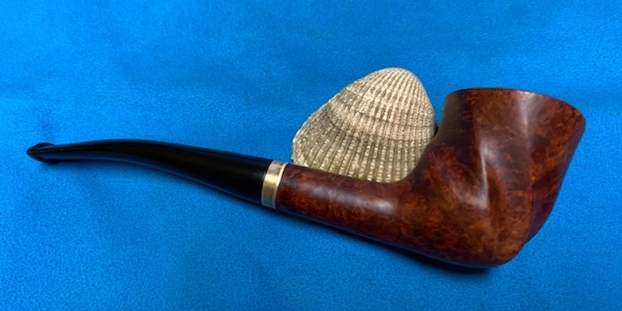
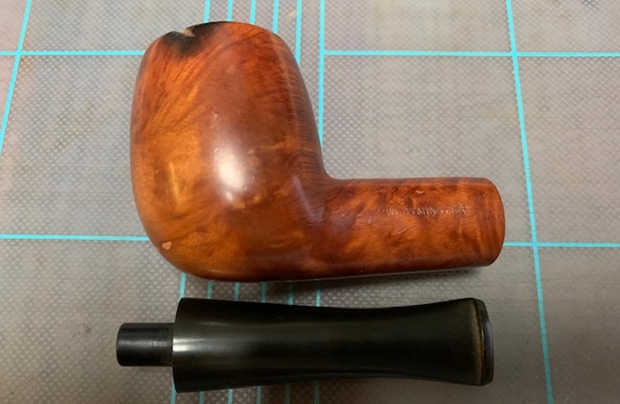
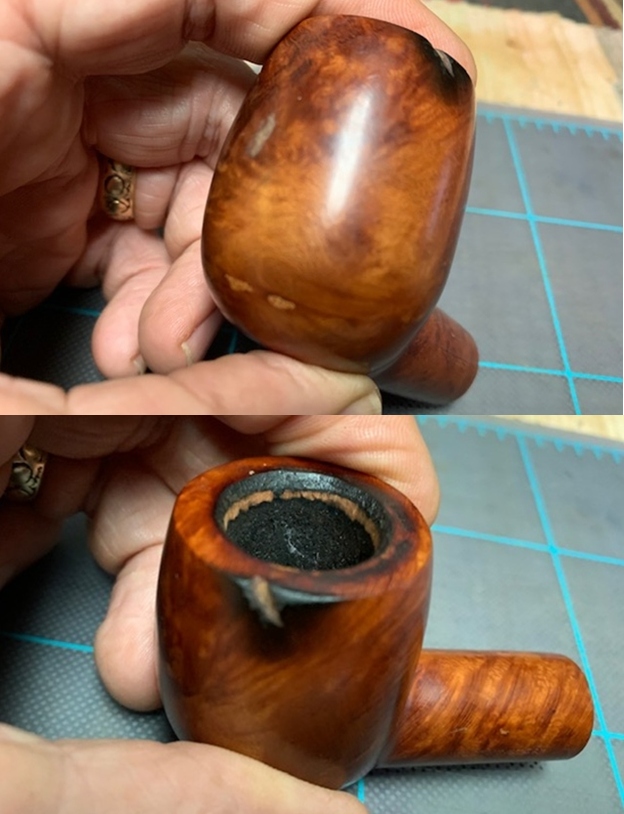
The next pipe on the table is a “Malaga” pipe that is made in a shape that I would define as a twisted billiard. It has some great cross and birdseye grain and a tapered vulcanite stem with a quarter bent. The grain around the bowl and shank combined with the stem make it a stunning pipe. The issue is that it has a huge chunk. The carver did a great job of uniquely shaping the pipe to follow the grain on the briar. The twists and turns in the bowl are well done. The bowl had a thick cake that overflowed with lava onto the rim and there was significant burn damage on the top front inner of the bowl. The sides of the bowl and shank are very dirty with grime and oils from prolonged use. The stamping on the left side of the shank read “MALAGA” with the ending quotation just ahead of the missing chunk of briar. Someone had obviously banded the pipe somewhere along the way to hide the damaged shank. By the time it came to us the band was missing and it left behind a darkened shank end on the briar. The vulcanite stem had light tooth dents and chatter on the top and the underside of the stem. The button was worn on both sides. Jeff took these photos before he started the cleanup work on the pipe. Jeff took a close up photo of the bowl and rim to capture the condition of the pipe before he started his cleanup work. The rim top had some lava overflow and darkening on the back of the bowl and some serious burn damage to the inner edge on the bowl front. The burn marks appeared to be quite deep on the inner edge on the right front side of the grimy pipe. The stem is oxidized and dirty and there is tooth damage on the button edges and surfaces. He also took photos of the sides and bottom of the bowl and shank to show the beautiful grain around the bowl. The photos show the general condition of the bowl and wear on the finish. It is very dirty but this is another beautiful pipe. Jeff took a photo to capture the stamping on the shank. The photos show the stamping “MALAGA” on the left side of the shank. The stamping is very readable. The break in the shank fortunately happens after the quotation marks on the stamping. He also took photos of the cracked and damaged shank so you can see the extent of the damages.  I am also including the link to a blog that I wrote that gives some of the history of the Malaga brand and the Malaga Pipe Shop in Royal Oak, Michigan in the USA. I have written an earlier blog to give a little history of the Malaga Brand and the pipemaker, George Khoubesser. Here is the link – https://rebornpipes.com/tag/malaga-pipes/.That blog also includes links to a catalogue and the history of the pipemaker George Khoubesser. Follow the link to get a feel for the brand and the pipemaker.

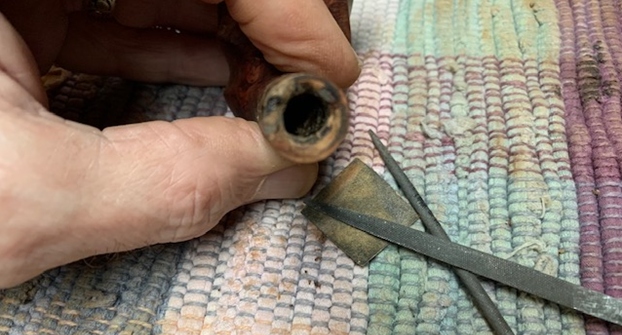
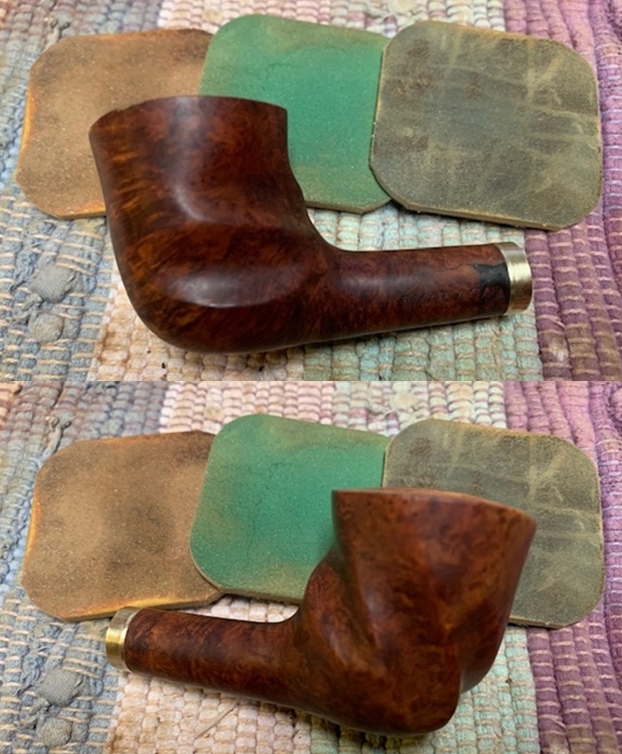
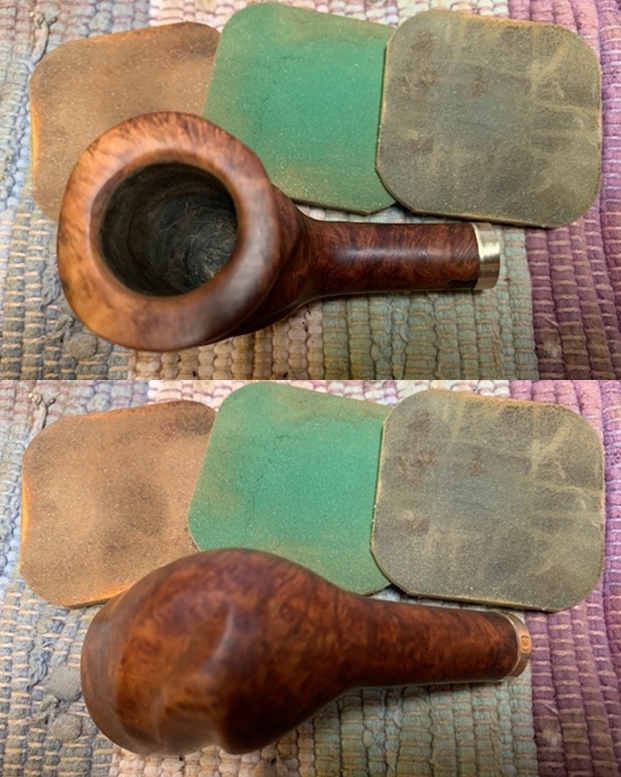
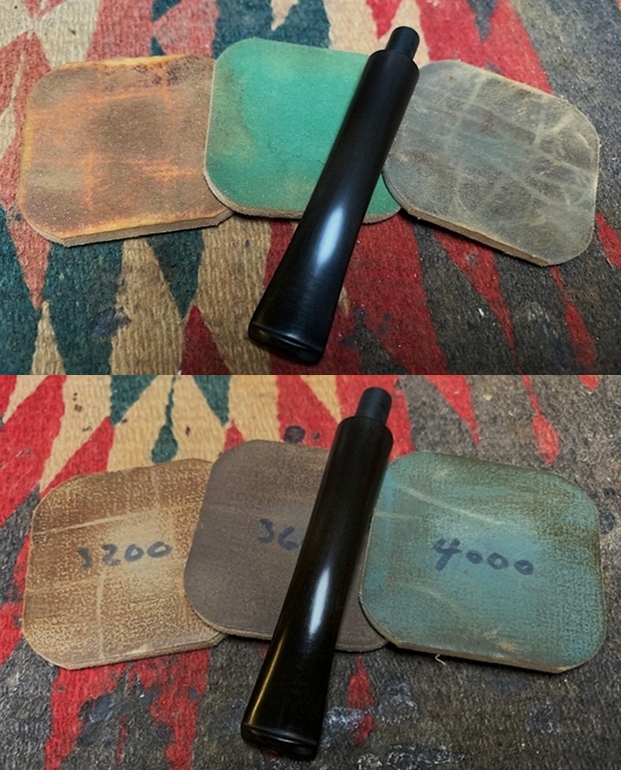
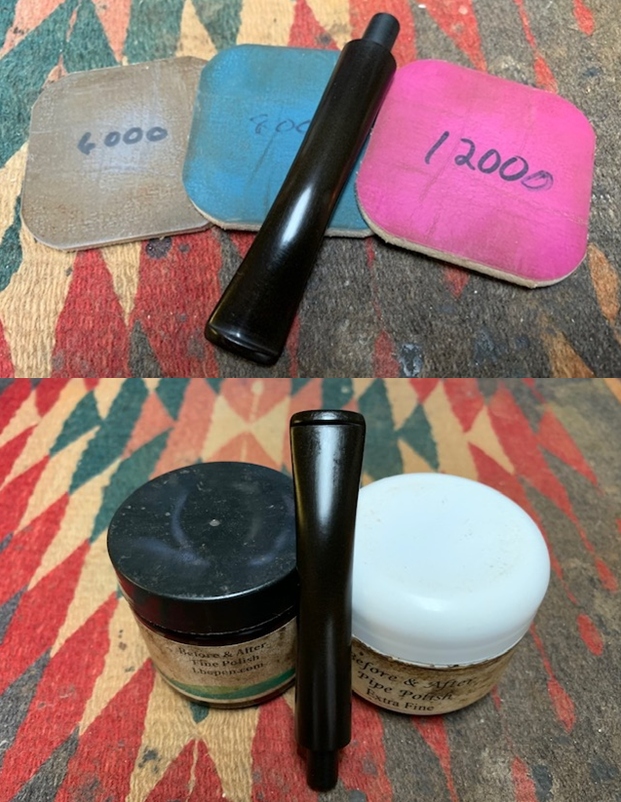
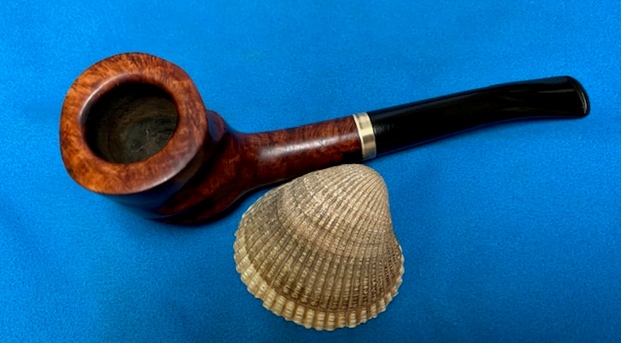
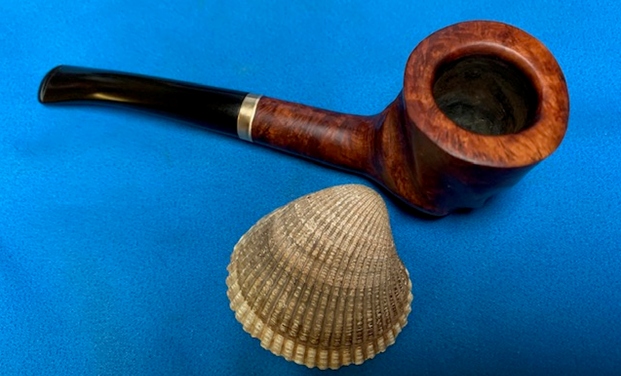
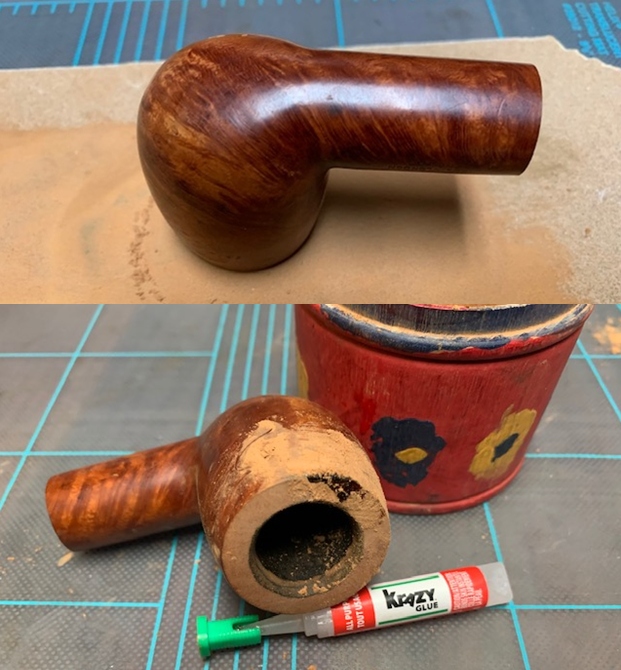
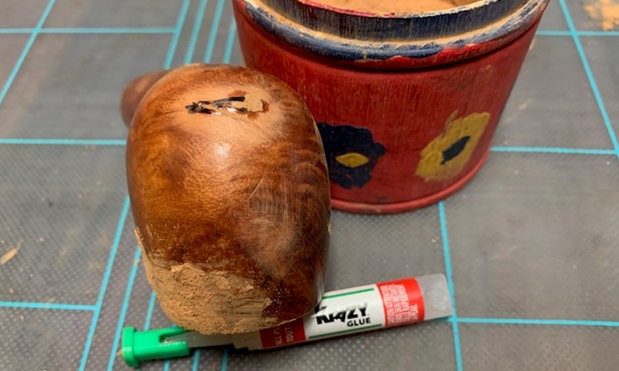
Jeff reamed the bowl with a PipNet pipe reamer and followed up with a Savinelli Fitsall pipe knife to remove the cake. He scrubbed out the mortise and the airway in the shank and the stem with alcohol, cotton swabs and pipe cleaners. He scrubbed the exterior of the bowl, rim, shank and stem with a tooth brush and Murphy’s Oil Soap to remove the oils and tars on the rim and the grime on the finish of the bowl. He rinsed it under running water. He dried it off with a soft cloth. He was able to remove the lava build up on the rim top and the flat surface of the rim looked very good. The inner edge of the rim has some serious burn damage on the front inner edge. The outer edge looked very good. He soaked the stem in Before & After Deoxidizer and rinsed it with hot water. I took photos of the pipe to show its condition before I started my work on it. I took close up photos of the bowl and rim top as well as the stem. You can see the condition of the rim top and bowl in the first photo. Jeff was able to remove all of the tar and oils but you can now see the damage on the inside rim edge. The edge is out of round. There is a burn mark that extends across the front and the back edge of the rim top at that point leaving the bowl edges out of round. The vulcanite stem had tooth chatter on both sides near and on the button surface.I took a photo of the stamping on the shank to show how good the condition is. It shows the “MALAGA” stamp on the left side. The stamping is very legible. You can see the large chip of briar out of the left side of the shank.I took a photo of the pipe with the stem removed to give a clear picture of the character of the pipe.I decided to start the restoration bu dealing with the cracked shank. I have repaired these several ways in the past. I have cut out a chunk of briar and carved it to fit the damaged area. I have also built up the area with briar dust and super glue I the past. I chose to use the briar dust and super glue method this time. I coated the edges of the cut with super glue and used a dental spatula to layer on the briar dust. I gave it a layer of glue and another lay of briar dust until I had filled in the damaged area.The repair was solid. It was thicker than necessary but it was exactly what I wanted. I would need to reshape it and bring it back into round with files and sandpaper. I shaped the inside of the shank with a needle file to bring it to round and allow the tenon to fit in the shank. Once I had the finish roughed in I smoothed it out with 220 grit sandpaper to smooth out the exterior of the finish and blend it into the surrounding briar. I went through my bands to find a brass band that would fit the shank. I wanted to band it after it was repair to protect the repaired shank and cracks from further damage with the insertion of the stem.I painted glue on the shank end pressed the band in place. The band is thin enough to protect the stamping on the shank and thick enough to protect the repair. I took photos of the bowl from various angles to show the look of the repaired and banded shank. I slipped the stem in the shank and took photos of the repaired and banded shank with the stem in place.The bowl had a wave in it so it was not possible to top it on a topping board. I used a folded piece of 220 grit sandpaper to clean up the damage on the top and on the front inner edge of the bowl. I gave the inner edge a slight bevel to repair the damage. I polished the edge with 400 grit wet dry sandpaper. The rim top and edges really looked better. There was still more work to do but it was looking better.  I polished the rim top and the briar with micromesh sanding pads. I wet sanded the bowl with 1500-2400 grit sanding pads to prepare the rim top for staining. I wiped the bowl down after each pad with a damp cloth to remove the sanding dust. I restained the rim top and edges with a Maple Stain Pen. I was able to blend it into the rest of the bowl. Polishing it with the rest of the micromesh pads would make the blend perfect. I worked some Before & After Restoration Balm into the surface of the briar with my fingertips to clean, enliven and protect it. I let the balm sit for a little while and then buffed with a cotton cloth to raise the shine. The following photos show the bowl at this point in the restoration process. I am very happy with the results. I turned to the stem to address the issues on the surface of both sides at the button. I reshaped the button edges with 220 grit sandpaper and a needle file. Once it was shaped I polished the stem with micromesh sanding pads – wet sanding with 1500-12000 grit sanding pads. I wiped it down after each sanding pad Obsidian Oil. I finished by polishing it with Before & After Pipe Stem Polish both fine and extra Fine and then wiped it down with a final coat of Obsidian Oil. This Malaga Twisted Billiard with a vulcanite tapered stem turned out to be a real beauty. It has a great grain around the bowl and the carver really maximized that with the shape of the pipe. The repaired shank looks quite good and the brass band is a nice addition to the look of the pipe. Everything about the pipe – the shape of the bowl, the beveled rim top and the cut of the briar work well to highlight the grain around the bowl sides. I polished stem and the bowl with Blue Diamond polish on the buffing wheel and the grain just popped and came alive. I gave the bowl and the stem multiple coats of carnauba wax. I buffed the pipe with a clean buffing pad to raise the shine. I hand buffed it with a microfiber cloth to deepen the shine. The pipe polished up pretty nicely. The grain took on life with the buffing. The rich oil cured colour works well with the polished vulcanite stem. The finished pipe has a rich look that is quite catching. Have a look at it with the photos below. The shape, finish and flow of the pipe and stem are very well done. The dimensions are Length: 6 inches, Height: 1 ¾ inches, Outside diameter of the bowl: 1 ½ inches, Chamber diameter: 7/8 of an inch. I will be adding the pipe to the rebornpipes store shortly. If you are interested in adding this pipe to your rack send me an email or message on Facebook. Thanks for walking through the restoration with me as I worked over another estate pipe.

Cleaning up a Danish Made Jarl 626 Acorn


Blog by Steve Laug

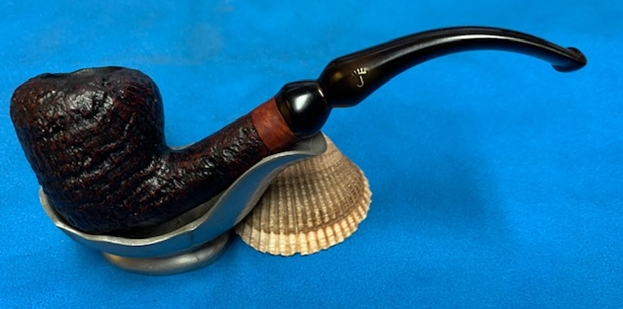
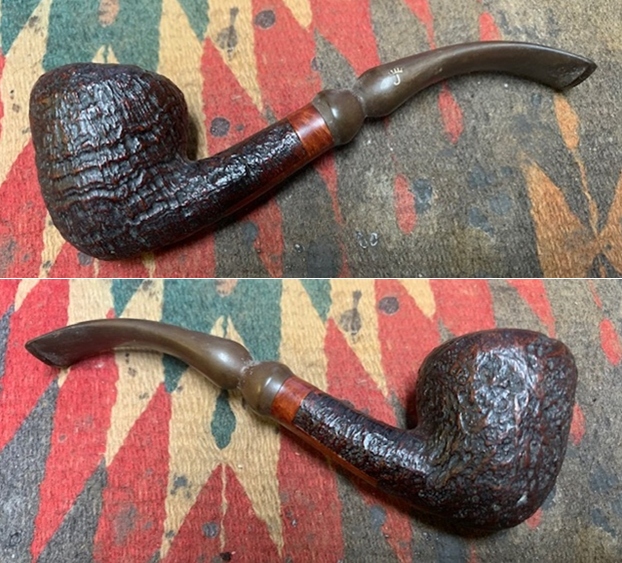
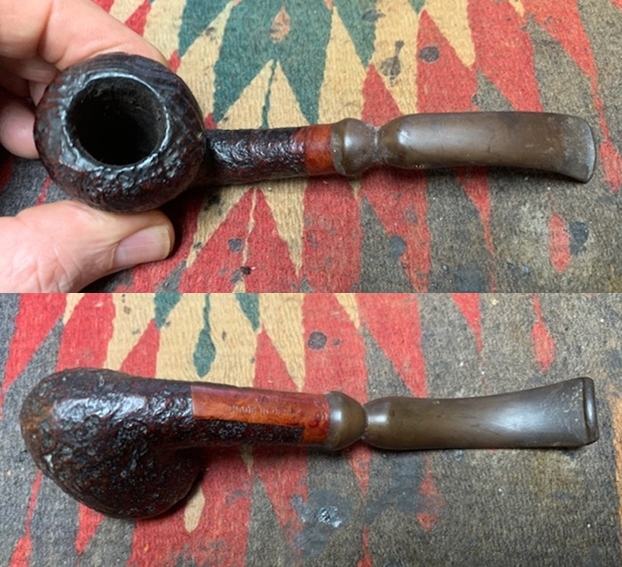
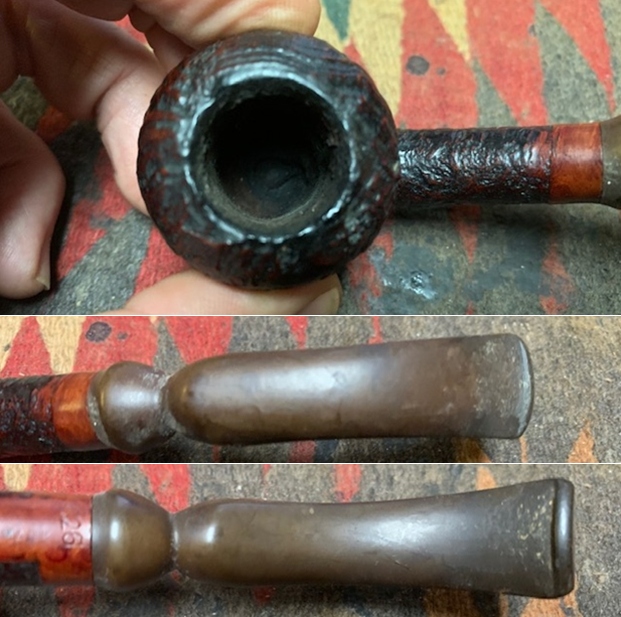
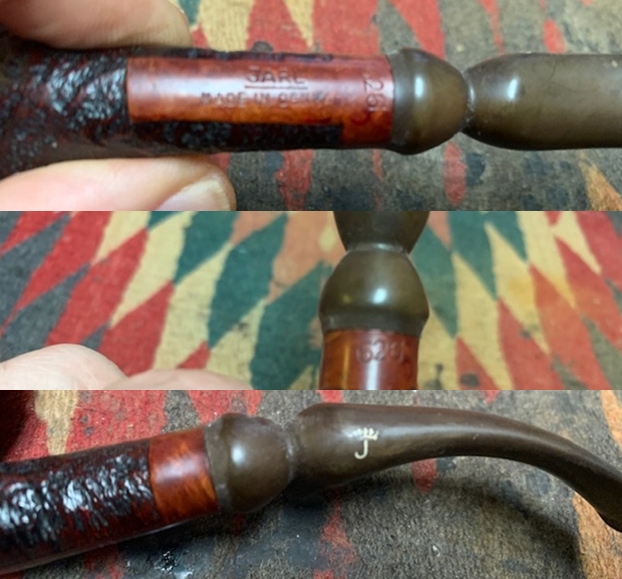
The next pipe on the work table is another one that is a bit of a mystery to me. It is obviously one that I picked up on one of my hunts or in a trade as it has not been cleaned at all. The mystery is that I have no recollection of finding the pipe so I have no way to connect it to a time period. I do know that it has been here for quite a while and I am just now getting to it. I try to eventually work the pipes we find into the restoration queue so that I can keep them moving. This one is a Jarl Acorn shaped pipe. It has a really nice and rugged sandblast finish around the bowl and shank with a smooth band on the shank end and panel on underside of the shank. It was stamped on the underside of the shank on a smooth panel. It reads Jarl [over] Made in Denmark. On the smooth band around the shank end the shape number 626 is stamped on the underside. The finish was dirty with dust and grime ground into the nooks and crannies of the sandblast finish. There was a thick cake in the bowl and some lava overflow on the rim top. The inner edge of the rim was covered so thickly in lava it was hard to know what was underneath. The vulcanite stem was oxidized and had tooth marks and chatter ahead of the button on both sides. There was the classic Jarl Crowned “J” on the left side of the fancy saddle stem.

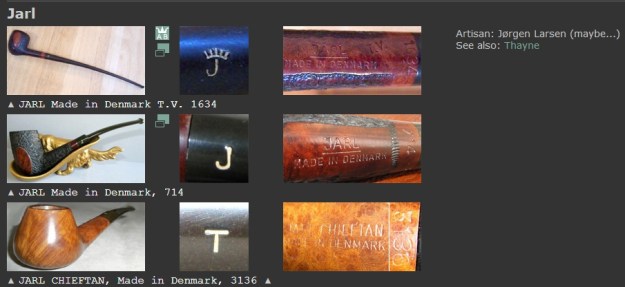
Before I started working on it I did a bit of research on the brand to remind myself of what I knew of the maker. I turned to Pipephil’s site first (http://www.pipephil.eu/logos/en/logo-j1.html#jarl). I did a screen capture of the information on the site. I did a screen capture of the pertinent information and have included it below.I then turned to Pipedia and found that a very short article that confirmed that the pipes were made by Niels Mogens Jorgensen (https://pipedia.org/wiki/Jarl). I have included the article in its entirety below.

In December of 2010 Ellen Jarl wrote that Jarl pipes were made by her grandfather, Niels Mogens Jørgensen in a little factory in the town of Bramdrupdam, just outside Kolding, Denmark. We have no reason to doubt that Niels Mogens Jørgensen is the maker of these pipes.

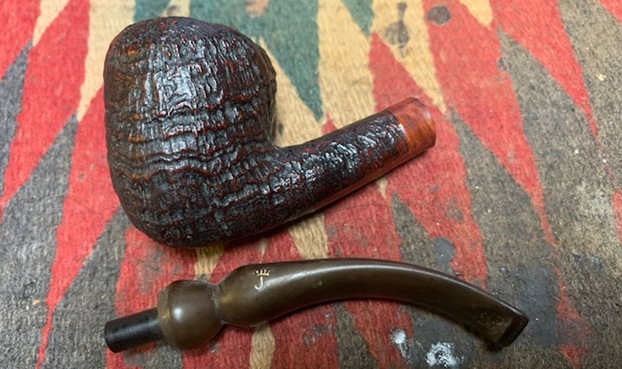
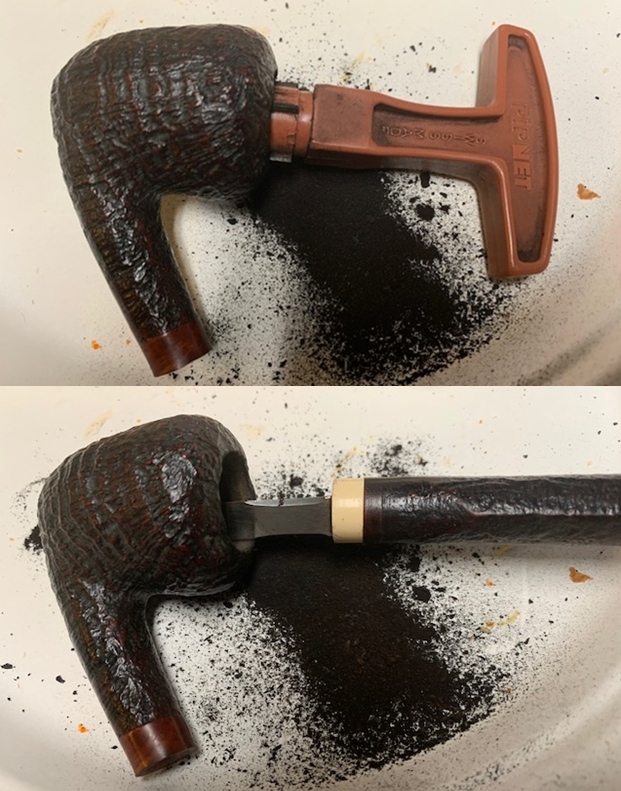
Now it was time to clean up this pipe and get it restored. I cleaned the pipe with the methodology that Jeff and I have developed. The pipe was a mess when I took it out of my box here so I was curious to see how well it would cleanup. I took some photos of the pipe before I started my work on it. You can see that it is filthy but has some great grain in the blast and on the smooth portions. It has a really nice sandblast that is deep and rugged. I took some close up photos of the rim top and the stem surface. I wanted to show the condition of the cake in the bowl and look of the rim top and lava overflow. I also took close up photos of the stem to show the tooth marks and the calcification, oxidation and generally condition of the stem surface.       I took photos of the stamping on the smooth panel on the underside of the shank and it is faint but readable under the grime. It is stamped as noted above. The Crown “J” logo is visible on the left side of the stem. I removed the stem for the shank and took a photo of the bowl and stem to give a picture of what it looked like. It is a great looking pipe under the grime.I decided to start my restoration by getting rid of the cake in the bowl and cleaning up the rim top. I reamed it with a PipNet pipe reamer and cleaned up the reaming with a Savinelli Fitsall Pipe Knife. I sanded the inside of the bowl with 220 grit sandpaper wrapped around a piece of dowel. Once I finished the bowl was smooth and clean. I was glad to see that there was no internal damage.    I scrubbed the exterior of the bowl with Murphy’s Oil Soap and a tooth brush to remove the grime and grit on the briar and the lava on the rim top. The finish looks very good with good looking grain around the bowl and shank. Once it is polished it will come to life. I scrubbed out the internals of the shank and the airway in the stem with alcohol, pipe cleaners and cotton swabs until the pipe was clean.   I rubbed the bowl down with Before & After Restoration Balm. I worked it into the surface of the briar with my fingertips and a horsehair shoe brush to clean, enliven and protect it. I let the balm sit for a little while and then buffed with a cotton cloth and shoe brush to raise the shine.      I set the bowl aside and turned my attention to the stem. I scrubbed the stem with Soft Scrub polish to remove the oxidation. While it did not take it all out it removed much of. What was left would polish out with micromesh sanding pads.     I polished the vulcanite with micromesh sanding pads – 1500-12000 grit pads. I wiped it down with a damp cloth after each sanding pad. I used Before & After Pipe Polish – both Fine and Extra Fine to further polish the stem.  I left a little oxidation around the stamp so as not to damage it more.         This restored Jarl 626 Sandblast Acorn is a nice looking pipe. The contrasting brown stains on the pipe worked really well with the polished vulcanite fancy stem. I put the stem back on the bowl and carefully buffed the pipe with Blue Diamond on the buffing wheel. I gave the bowl and stem multiple coats of carnauba wax on the buffing wheel keeping a light touch on the buffing wheel for the bowl. I followed that by buffing the entire pipe with a clean buffing pad. I hand buffed the pipe with a microfiber cloth to deepen the shine. The finished Jarl Acorn fits nicely in the hand and feels great. Give the finished pipe a look in the photos below. The dimensions of the pipe are Length: 5 ½ inches, Height: 1 ¾ inches, Outside diameter of the bowl: 1 ½ inches, Chamber diameter: ¾ of an inch. If you are interested in carrying on the previous pipe man’s legacy with this pipe send me a message or an email. I have more to work on of various brands. Perhaps one of those will catch your attention. Thanks for reading this blog and my reflections on the pipe while I worked on it.

Cleaning up a Stanwell Royal Danish 907M Sandblast Scoop


Blog by Steve Laug

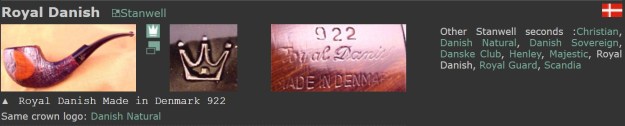
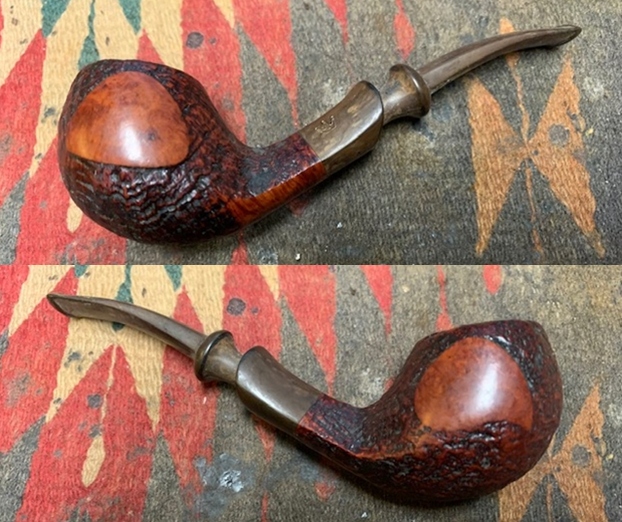
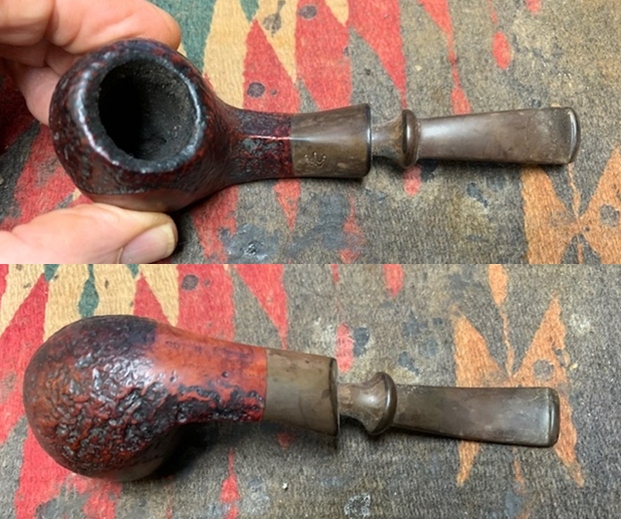
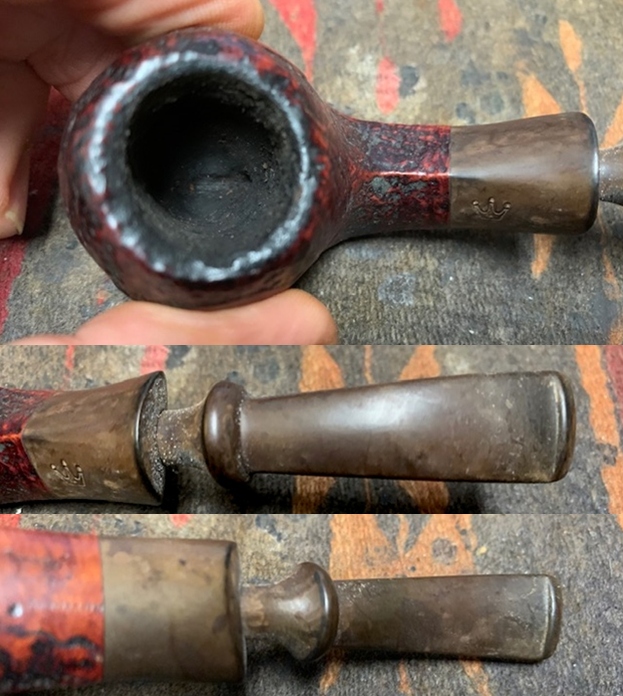
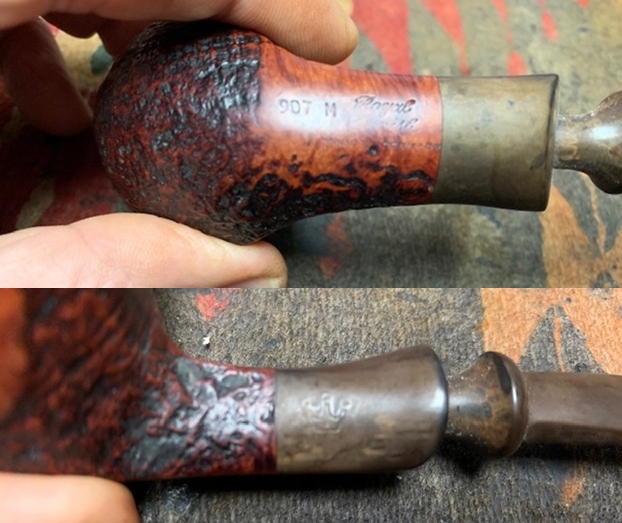
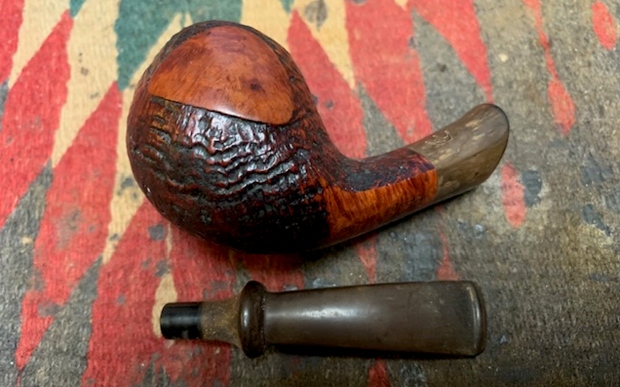
The next pipe on the work table is one that is a bit of a mystery to me. It is obviously one that I picked up on one of my hunts or in a trade as it has not been cleaned at all. The mystery is that I have no recollection of finding the pipe so I have no way to connect it to a time period. I do know that it has been here for quite a while and I am just now getting to it. I try to eventually work the pipes we find into the restoration queue so that I can keep them moving. The one is obviously a Stanwell from just looking at it. It has a mix of sandblast finish around the bowl with smooth panels on the sides. The shank extension is vulcanite and has a large Crown stamped in the left side. It was stamped on the underside of the shank on a smooth panel. The shape number 907M is stamped near the heel of the bowl and the M identifies it as having a military mount stem. Following that it reads Royal [over] Danish [over] Made in Denmark. The finish was dirty with dust and grime ground into the nooks and crannies of the sandblast finish. There was a thick cake in the bowl and lava overflow on the rim top. The inner edge of the rim was covered so thickly in lava it was hard to know what was underneath. The vulcanite stem was oxidized and had tooth marks and chatter ahead of the button on both sides. There was no identifying stamp on the stem surface though the shape says that it is definitely Stanwell stem.

Before I started working on it I did a bit of research on the brand to get a feel for where it fit in the Stanwell line. I was pretty sure that it was a second but wanted confirmation. I turned to Pipephil’s site to see if I could get a feel for it (http://www.pipephil.eu/logos/en/logo-r6.html). I did a screen capture of the information on the site. I found that the brand was indeed made by Stanwell and was one of many second lines that they made. I did a screen capture of the pertinent information and have included it below.I then turned to Pipedia and found that it was also listed as a second or a sub-brand made by Stanwell (https://pipedia.org/wiki/Stanwell#Sub-brands_.2F_Seconds). I have included the list of seconds from the site below. I have highlighted the Royal Danish in blue in the text.

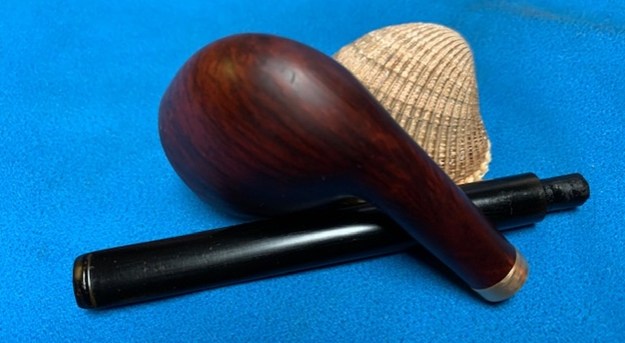
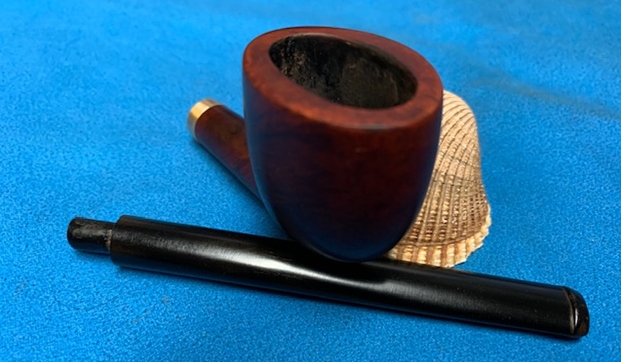
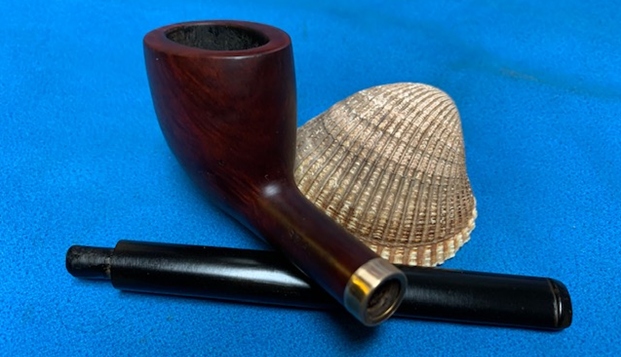
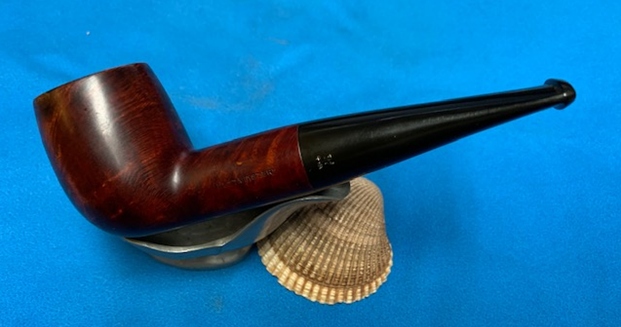
Sub-brands / Seconds – Bijou (discontinued), Danish Quaint, Danish Sovereign, Danske Club,    Henley (discontinued), Kong Christian (discontinued), Majestic, Reddish (discontinued),  Royal Danish, Royal Guard, Royal Sovereign, Sailor (discontinued), Scandia, Sorn (discontinued), Svendson.

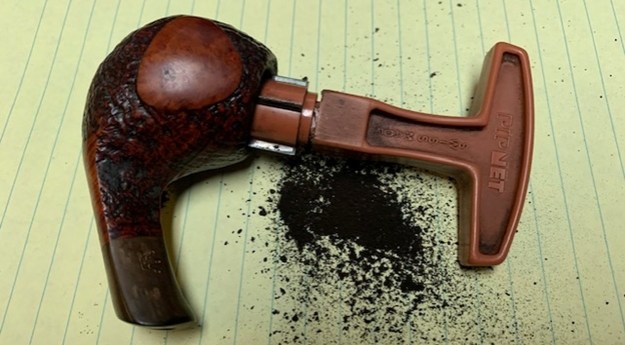
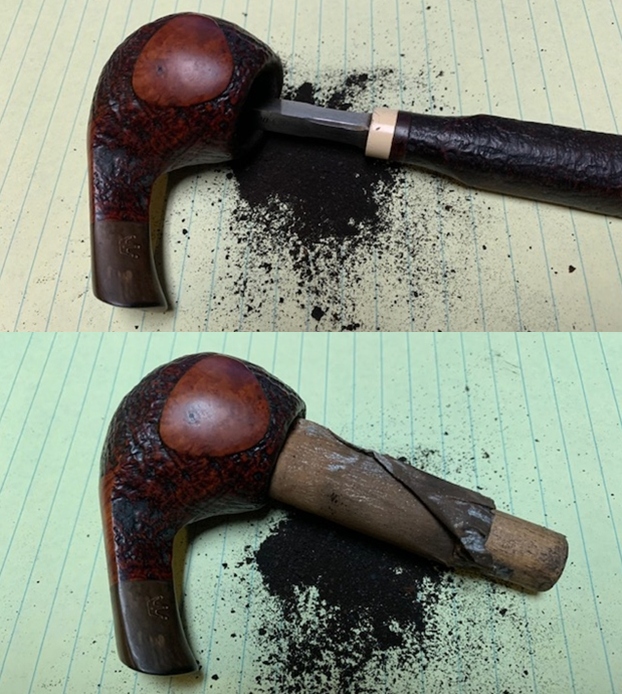
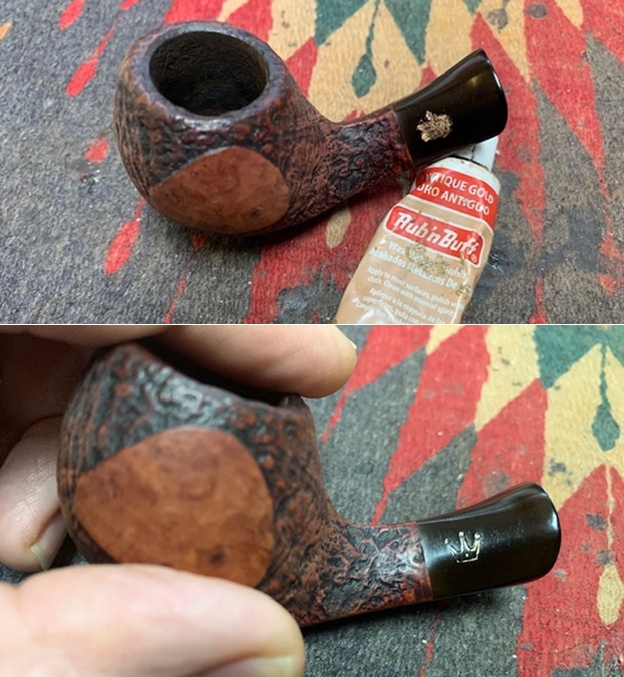
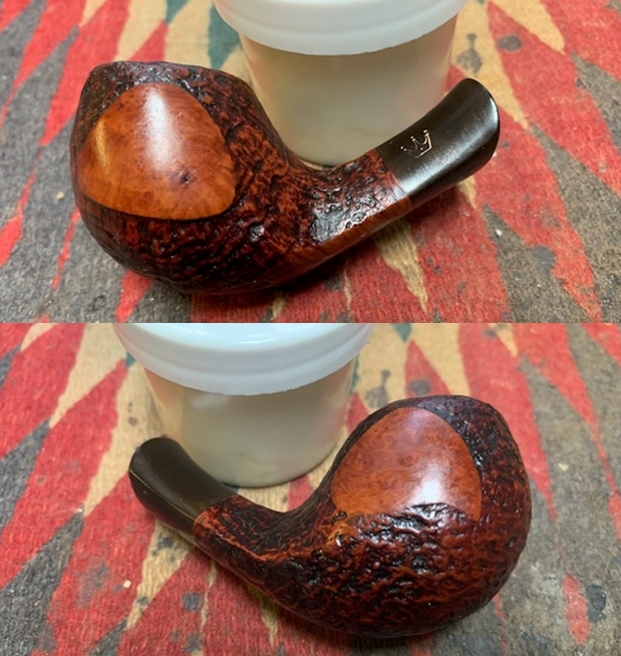
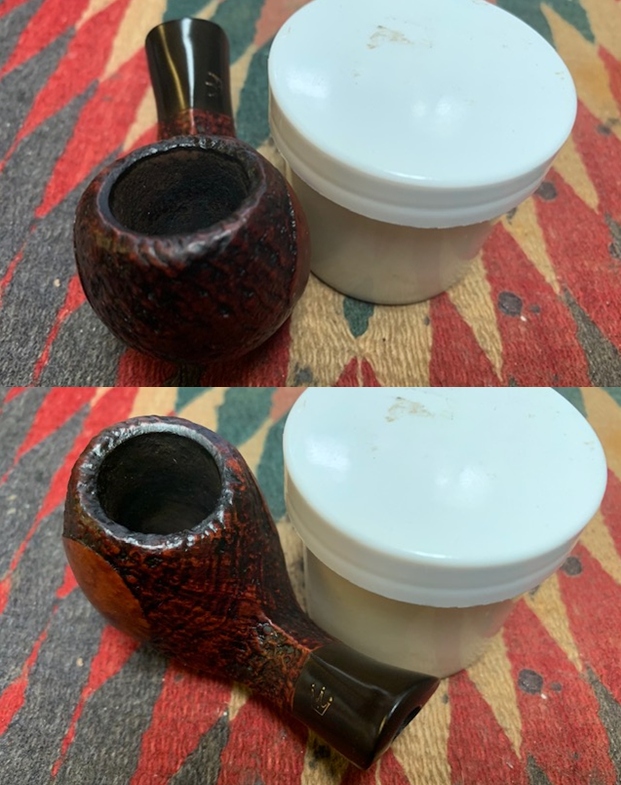
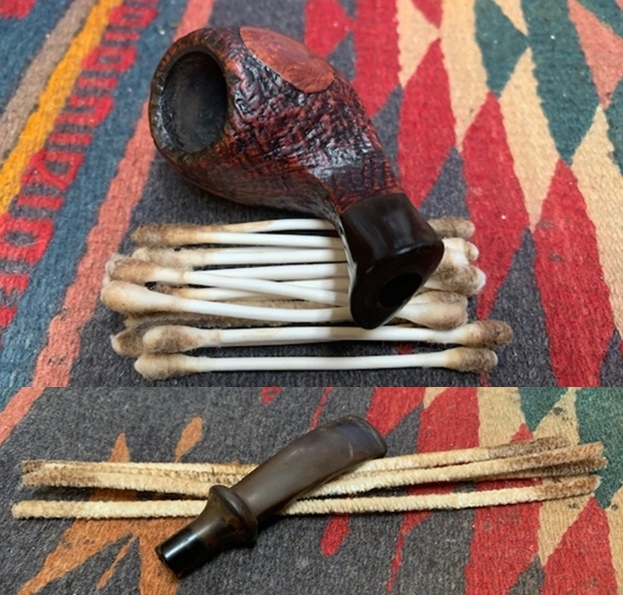
Now it was time to clean up this pipe and get it restored. I cleaned the pipe with the methodology that Jeff and I have developed. It was a mess when I took it out of my box here so I was curious to see how well it cleanup. I took some photos of the pipe before I started my work on it. You can see that it is filthy but has some great grain in the blast and on the smooth panels. It is also an intriguing shape. I took some close up photos of the rim top and the stem surface. I wanted to show the condition of the cake in the bowl and look of the rim top and lava overflow. You can also see the heavily oxidized shank extension and the faint Crown stamp showing through on the left side. I also took close up photos of the stem to show the tooth marks and the calcification, oxidation and generally condition of the stem surface.    I took photos of the stamping on the smooth panel on the underside of the shank and it is faint but readable under the grime. It is stamped as noted above. The Crown logo is visible on the left side of the shank extension. I removed the stem for the shank and took a photo of the bowl and stem to give a picture of what it looked like. It is a great looking pipe under the grime.I decided to start my restoration by getting rid of the cake in the bowl and cleaning up the rim top. I reamed it with a PipNet pipe reamer and cleaned up the reaming with a Savinelli Fitsall Pipe Knife. I sanded the inside of the bowl with 220 grit sandpaper wrapped around a piece of dowel. Once I finished the bowl was smooth and clean. I was glad to see that there was no internal damage. I scrubbed the exterior of the bowl with Murphy’s Oil Soap and a tooth brush to remove the grime and grit on the briar and the lava on the rim top. The finish looks very good with good looking grain around the bowl and shank. Once it is polished it will come to life. I scrubbed the vulcanite shank extension with Soft Scrub on cotton pads to remove the oxidation. With a lot of scrubbing and rubbing it down the oxidation slowly but surely gave way to dark rubber. In the process the oils from my hands from the cotton pads and Soft Scrub gave the briar some life that would come out more as I polished it.   I wiped it down with a cotton pad and some alcohol to remove the oils on the vulcanite and the briar. I touched up the gold Crown stamp with Antique Gold Rub’n Buff. I worked it into the stamp with a tooth pick and buffed it off with another pad.I rubbed the bowl down with Before & After Restoration Balm. I worked it into the surface of the briar with my fingertips to clean, enliven and protect it. I let the balm sit for a little while and then buffed with a cotton cloth and shoe brush to raise the shine.       I scrubbed out the internals of the shank and the airway in the stem with alcohol, pipe cleaners and cotton swabs until the pipe was clean.    I set the bowl aside and turned my attention to the stem. I scrubbed the stem with Soft Scrub polish to remove the oxidation. While it did not take it all out it removed much of. What was left would polish out with micromesh sanding pads.  I polished the vulcanite with micromesh sanding pads – 1500-12000 grit pads. I wiped it down with a damp cloth after each sanding pad. I used Before & After Pipe Polish – both Fine and Extra Fine to further polish the stem.  I left a little oxidation around the stamp so as not to damage it more.         This Stanwell made Royal Danish 907M Scoop is known as a Stanwell second but for all intents and purposes to my eye it is not much different in cut, blast or finish to a regular Stanwell. The only thing I see is a small sand pit on the underside of the shank otherwise is a nice looking pipe. The restored Royal Danish turned out to be a great looking pipe. The contrasting brown stains on the pipe worked really well with the polished vulcanite shank extension and the taper stem. I put the stem back on the bowl and carefully buffed the pipe with Blue Diamond on the buffing wheel. I gave the bowl and stem multiple coats of carnauba wax on the buffing wheel keeping a light touch on the buffing wheel for the bowl. I followed that by buffing the entire pipe with a clean buffing pad. I hand buffed the pipe with a microfiber cloth to deepen the shine. The finished Royal Danish Scoop fits nicely in the hand and feels great. Give the finished pipe a look in the photos below. The dimensions of the pipe are Length: 5 ½ inches, Height: 1 ¾ inches, Outside diameter of the bowl: 1 ¼ inches, Chamber diameter: ¾ of an inch. If you are interested in carrying on the previous pipe man’s legacy with this pipe send me a message or an email. I have more to work on of various brands. Perhaps one of those will catch your attention. Thanks for reading this blog and my reflections on the pipe while I worked on it.
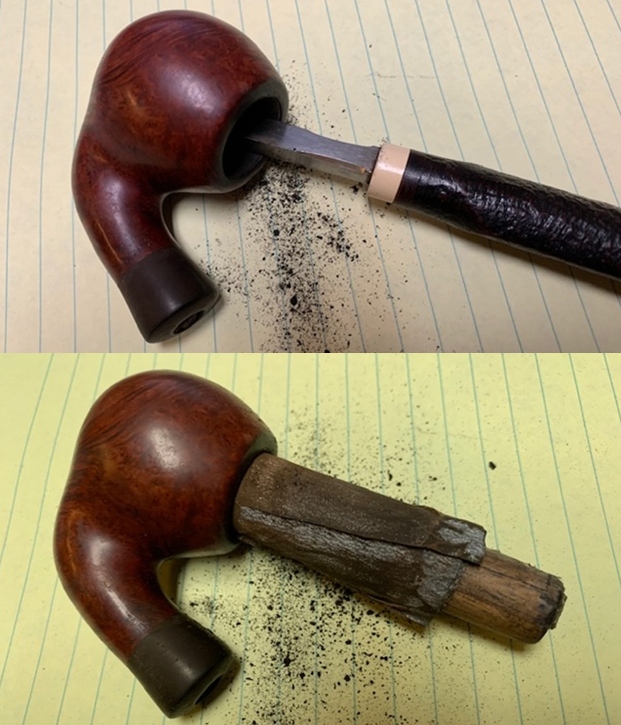
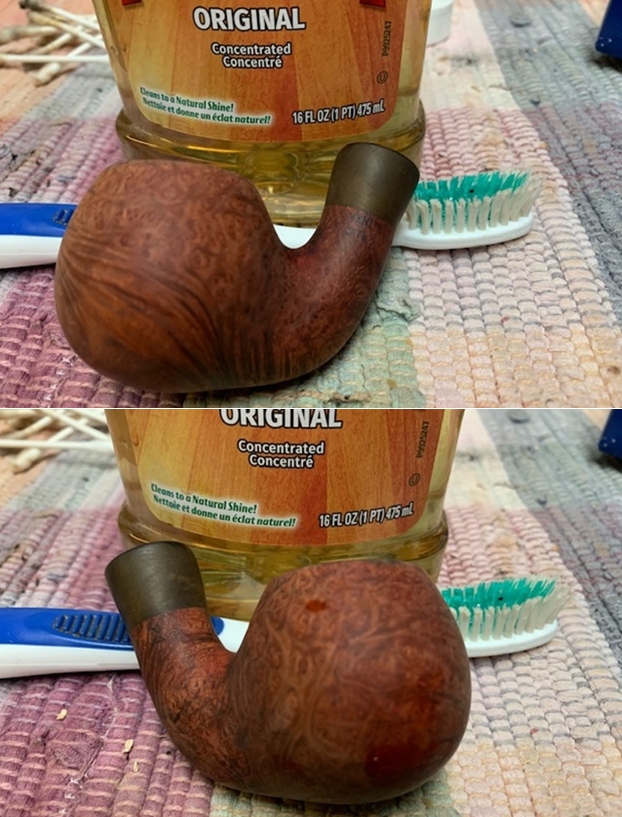
Cleaning up a Real Briar Root Opera Pipe with a long stem


Blog by Steve Laug

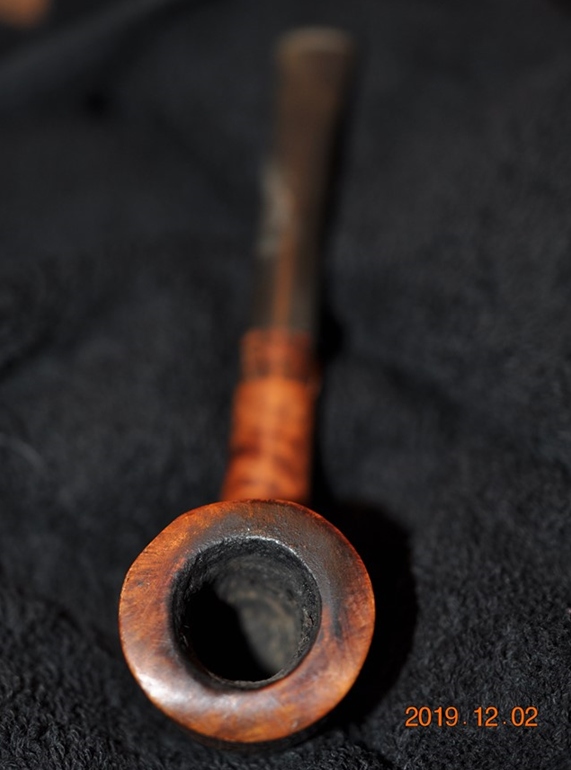
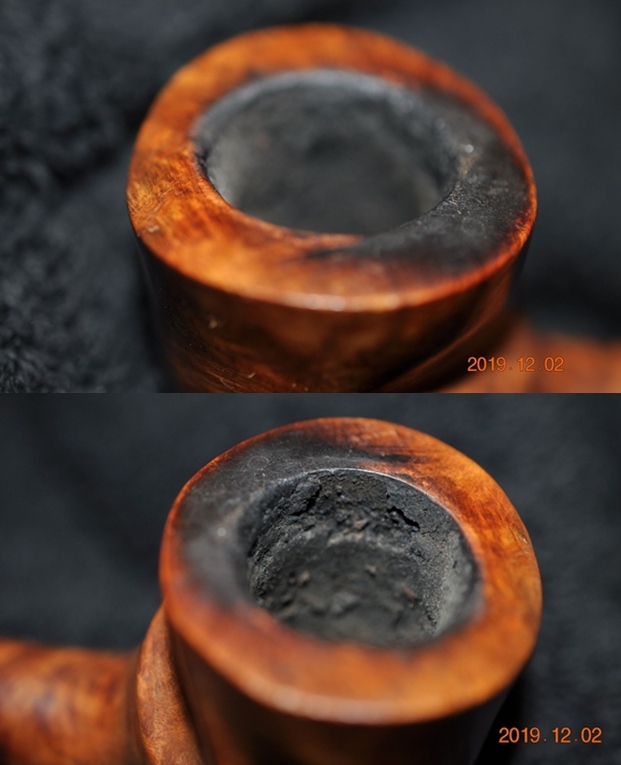
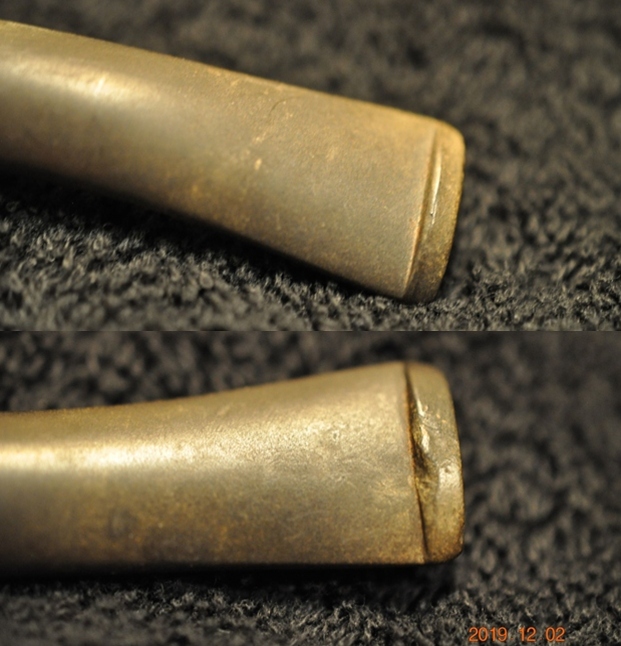
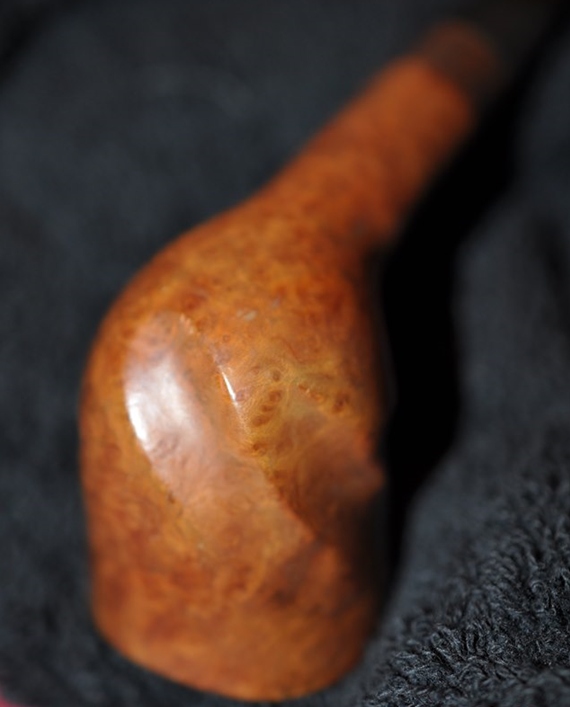
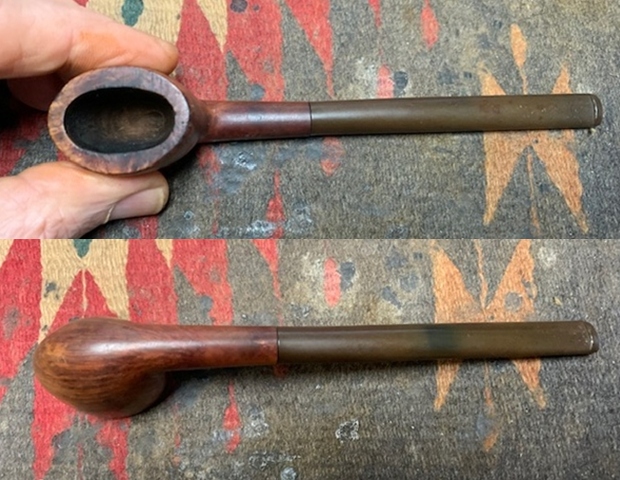
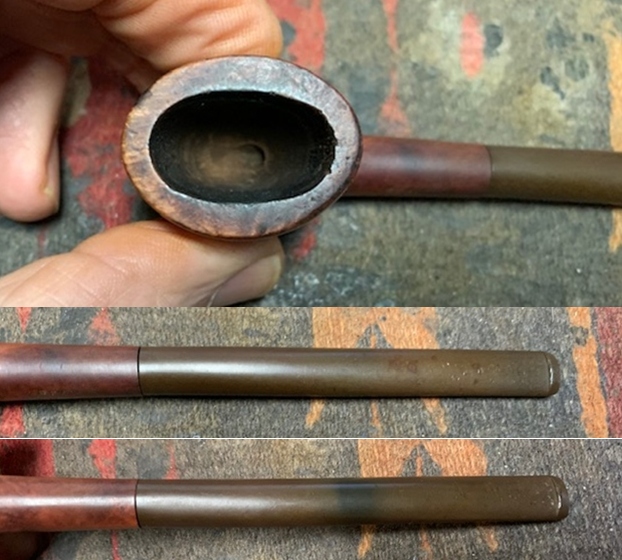
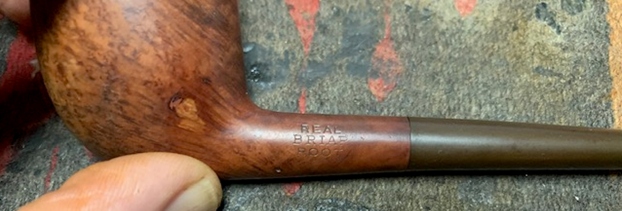
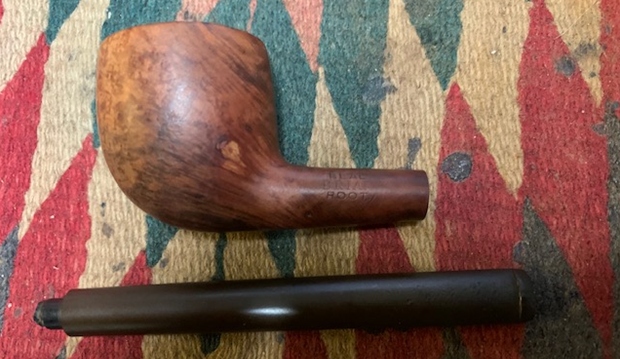
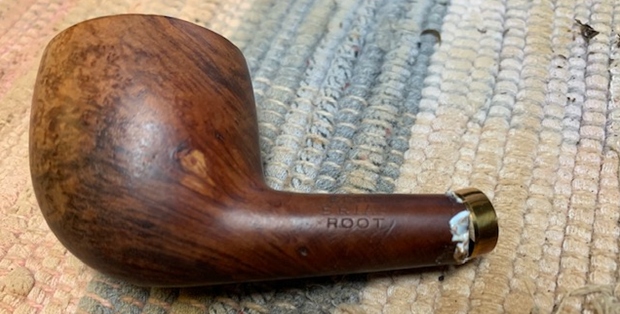
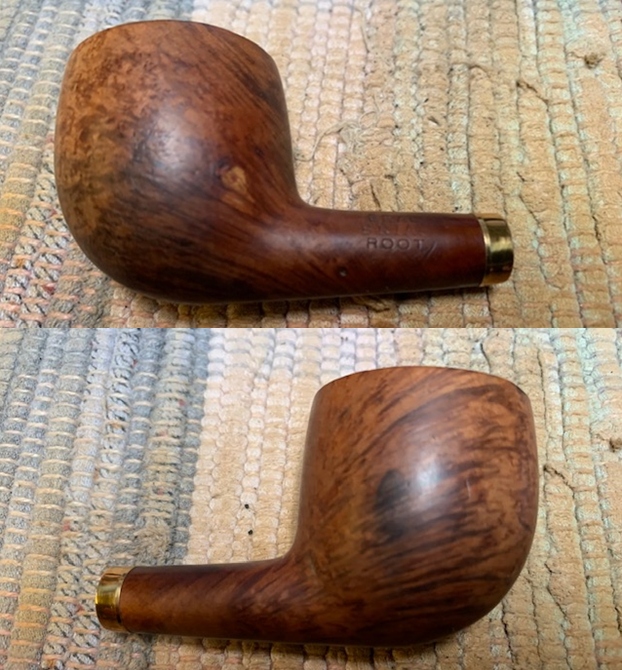
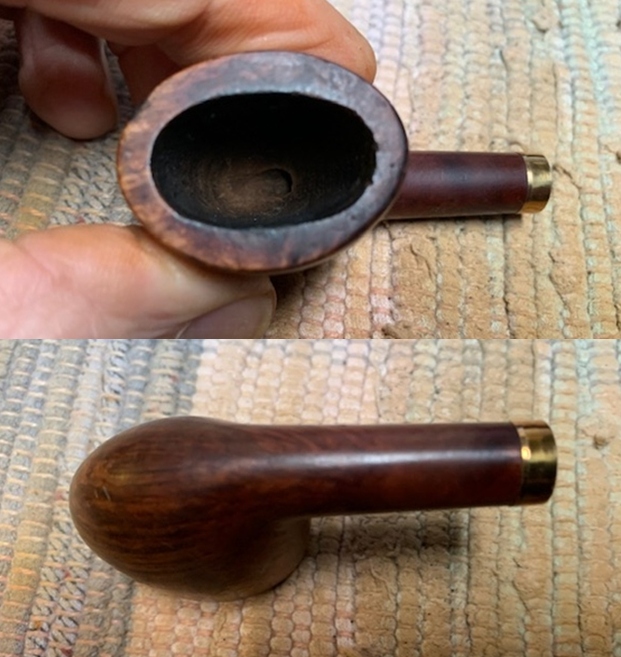
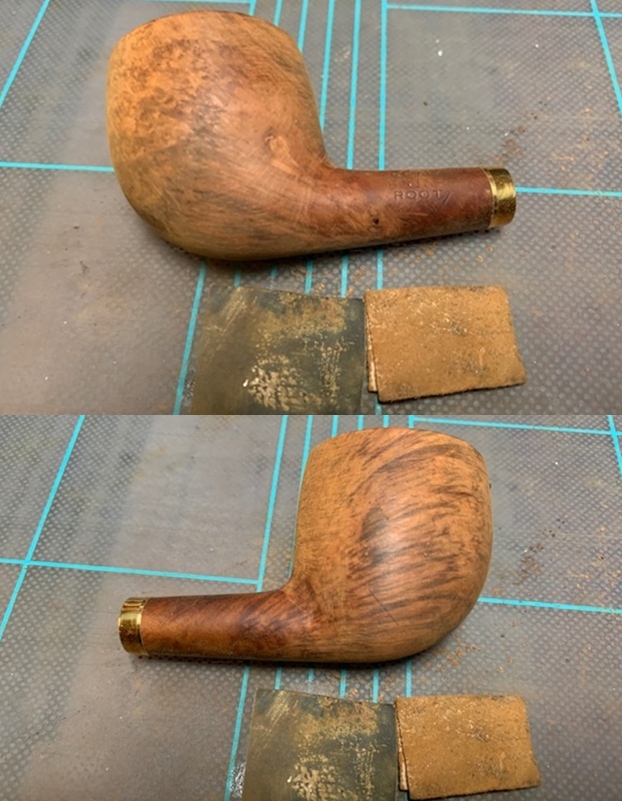
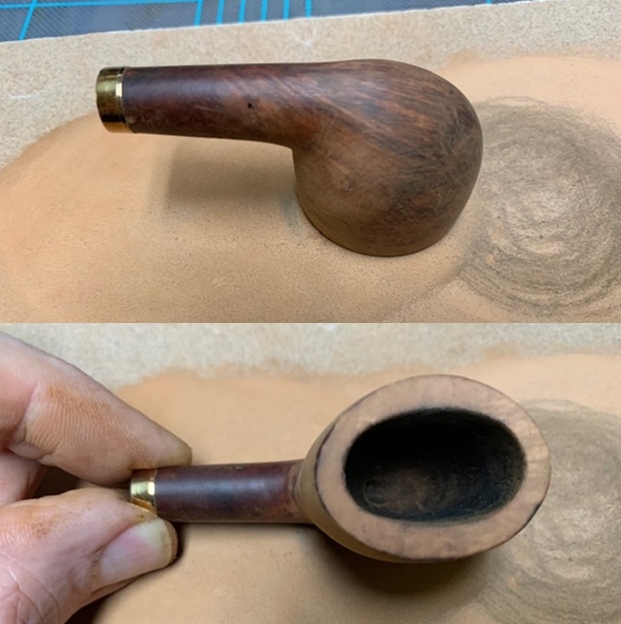
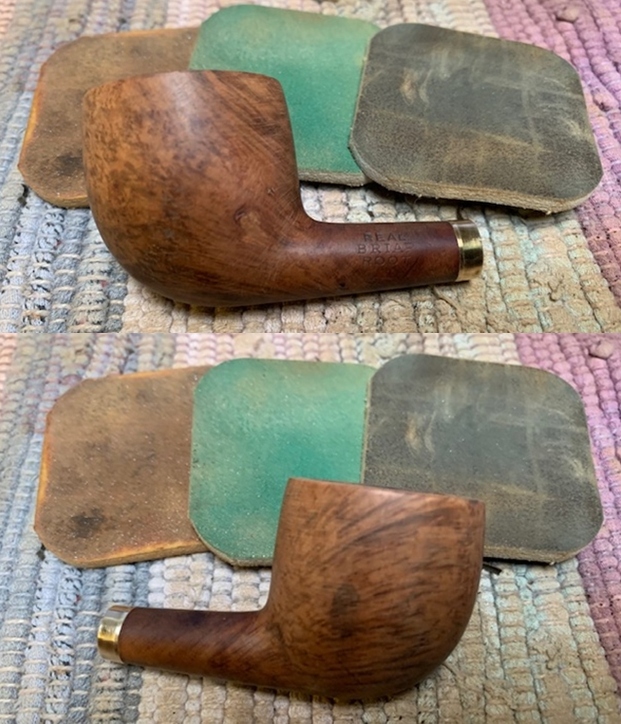
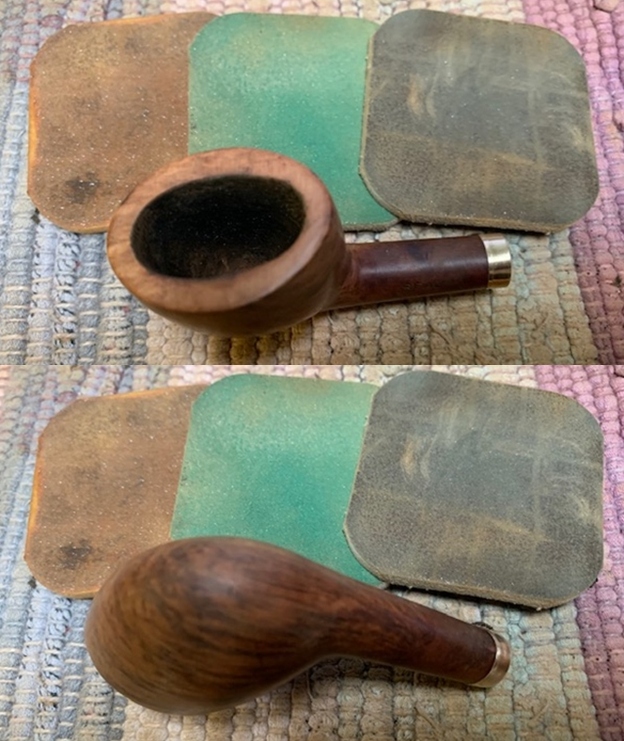
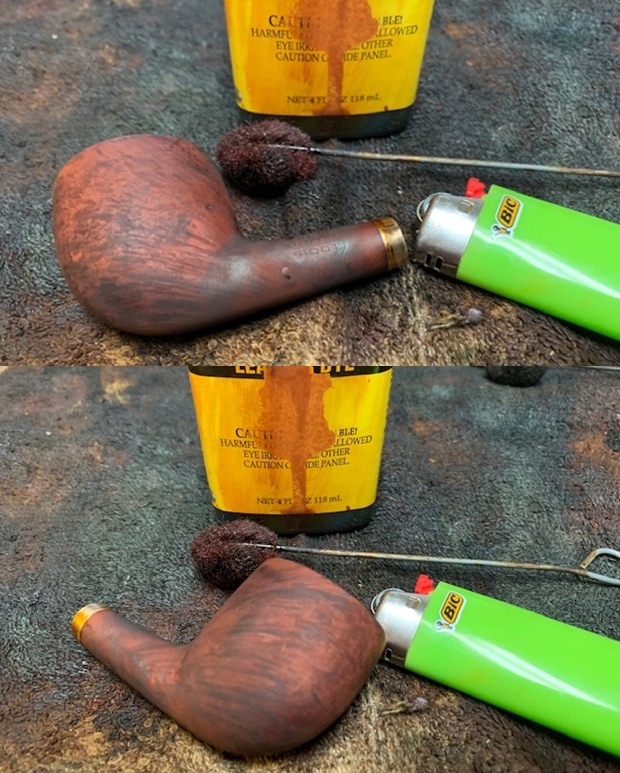
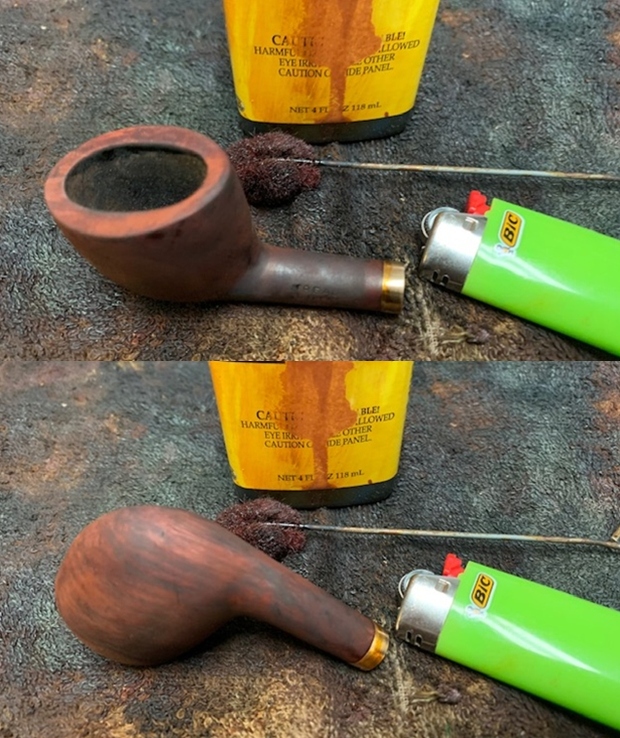
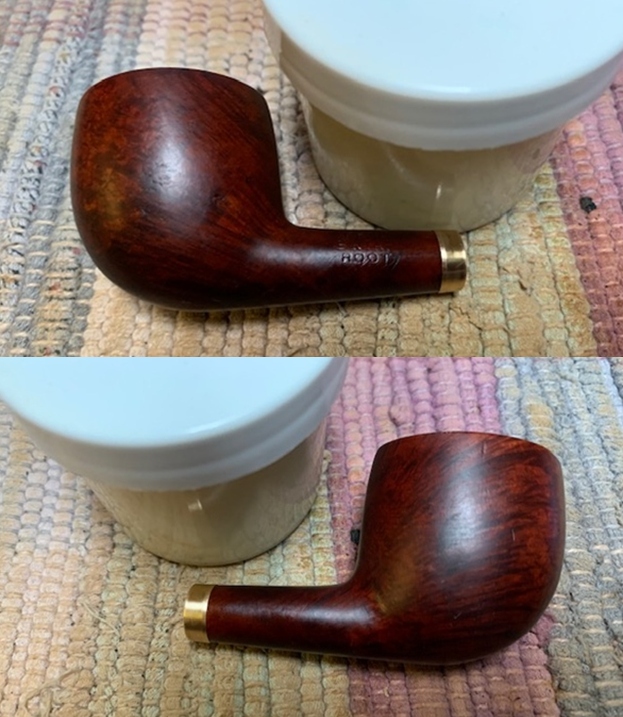
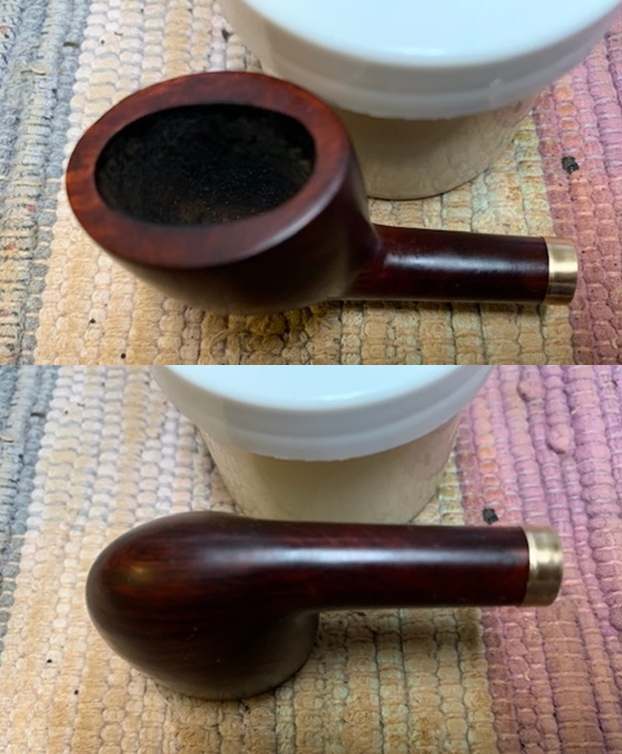
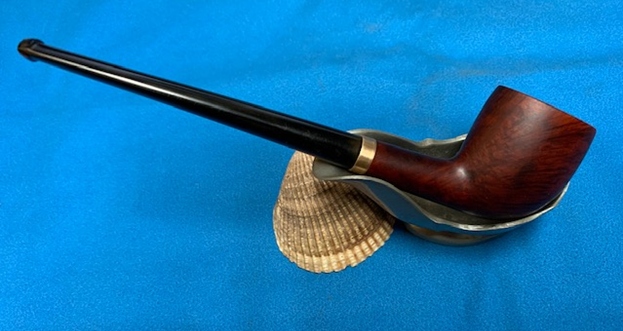
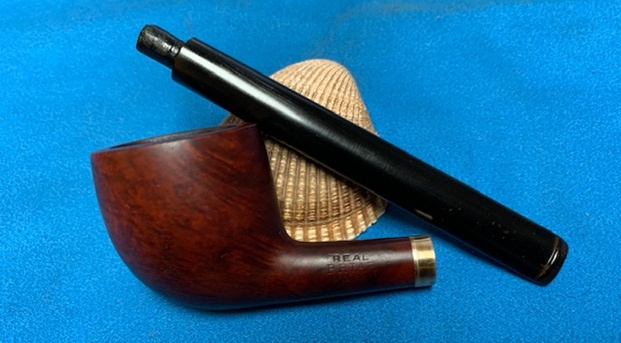
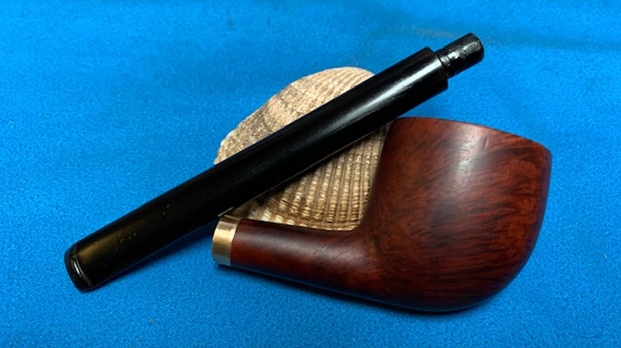
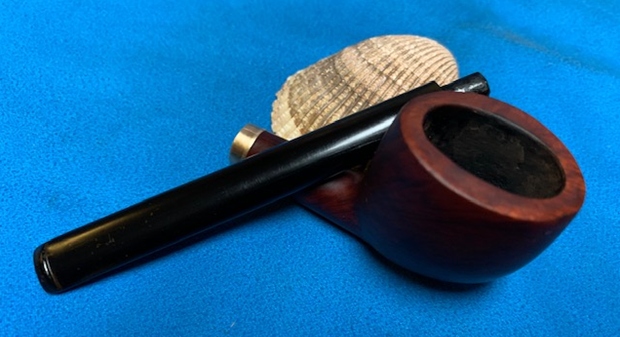
The next pipe on the work table came to us from one of Pipe Hunts. Between us we pick up quite a few pipes for restoration. I try to work them into the restoration queue so that I can keep them moving. The next one is an interesting long stemmed Opera pipe. The oval bowl on the pipe is typical of the Opera pipe but the long stem is atypical. These pipes were made to fit nicely in the pocket of the Opera goer but the stem on this one makes that unlikely. It seems more like a “Bing Crosby” style Opera pipe. There is a mix of grains around the bowl and a fill on the lower left side of the bowl. It was stamped on the left side of the shank. It is stamped Real [over] Briar [over] Root. The right side was unstamped. The finish was dirty with dust and grime ground into the bowl sides. There was a thick cake in the bowl and lava overflow on the rim top. The inner edge of the rim had some darkening and damage. The vulcanite stem was oxidized and had tooth marks and chatter ahead of the button on both sides. The tenon had been broken and filled to fit the shank.  I did some searching on Pipedia and Pipephil’s site to hunt down the Real Briar Root brand but there was nothing on that brand on either site.

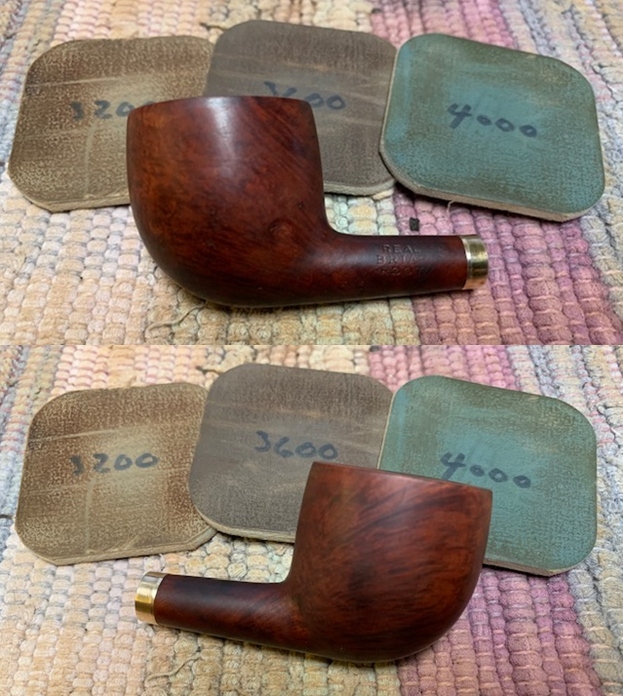
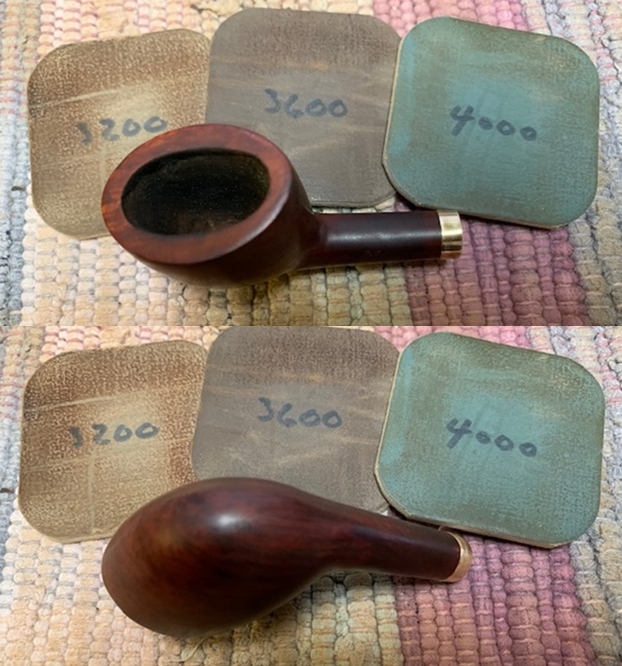
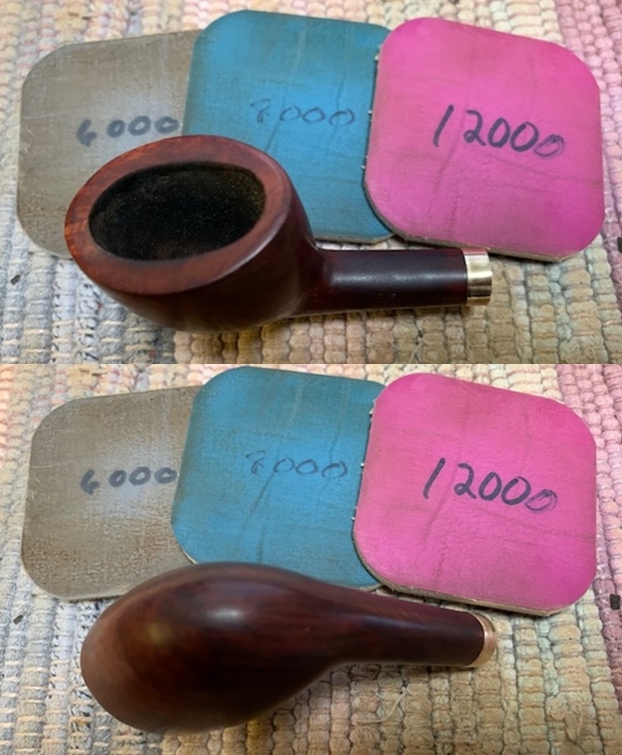
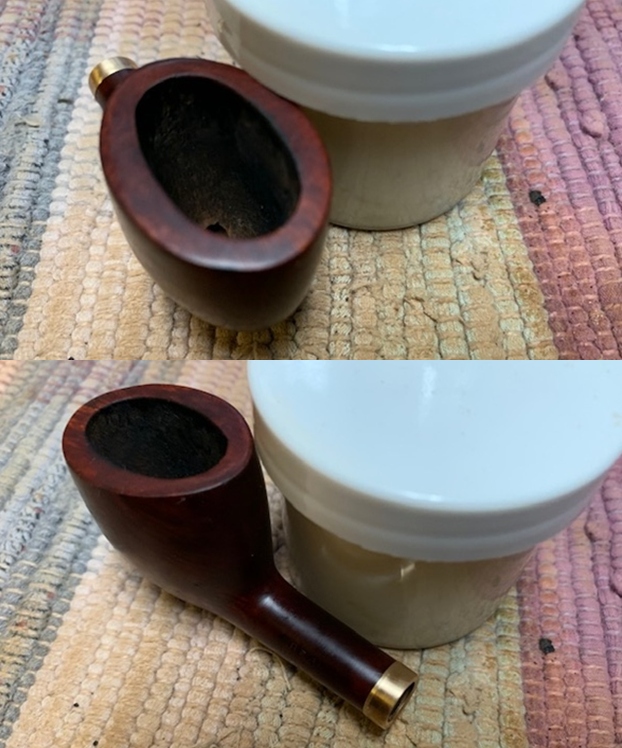
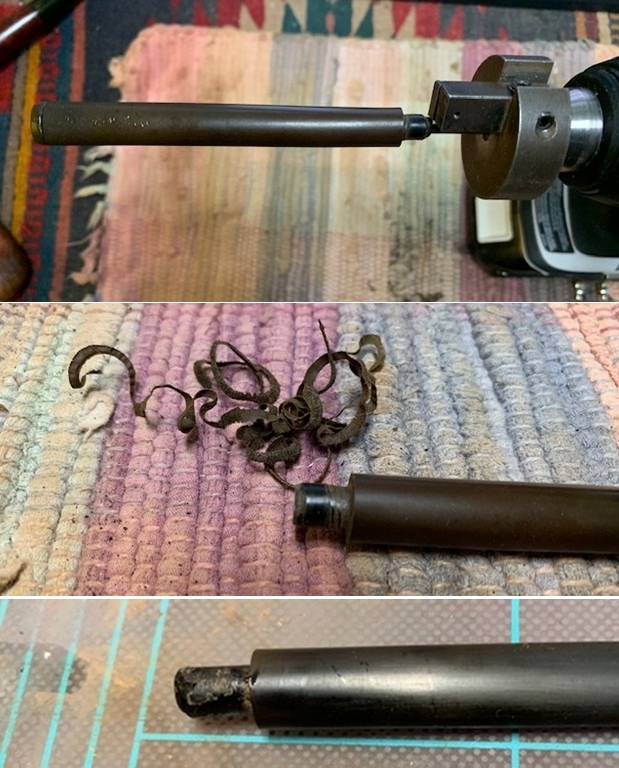
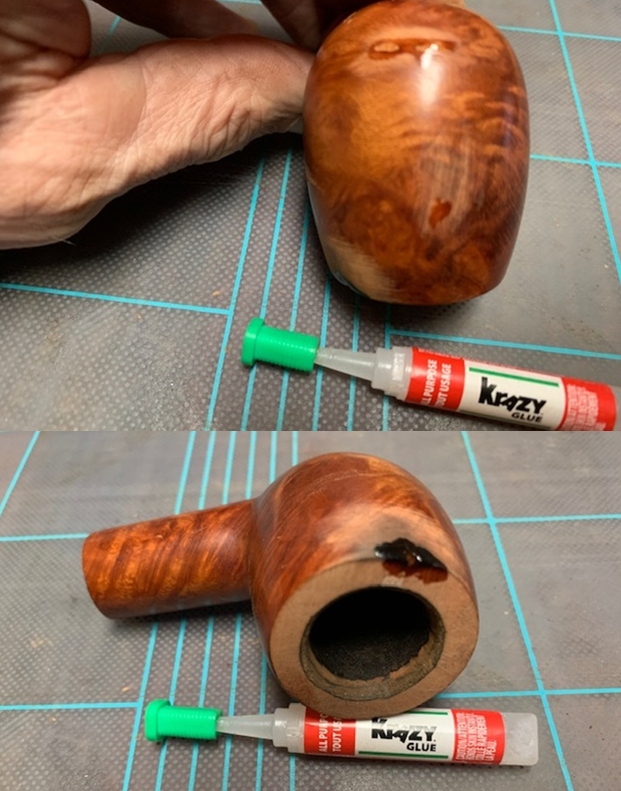
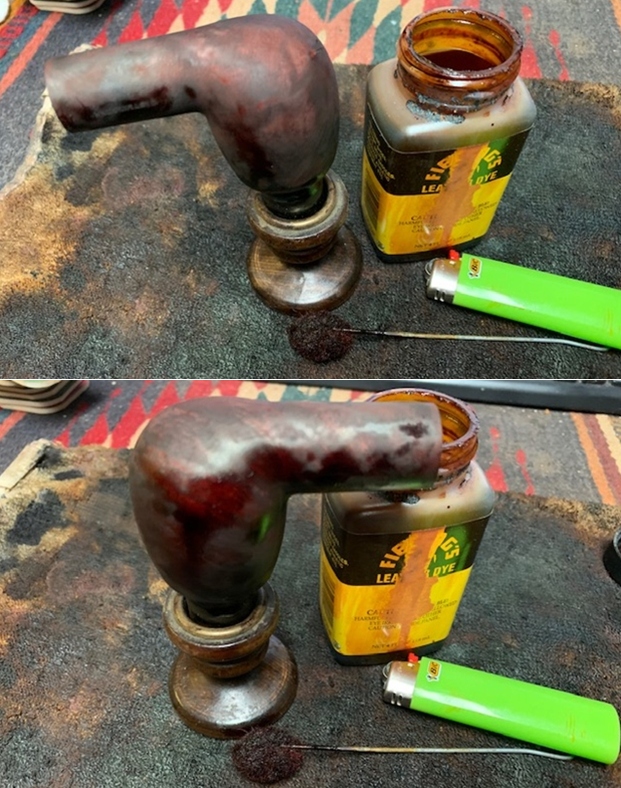
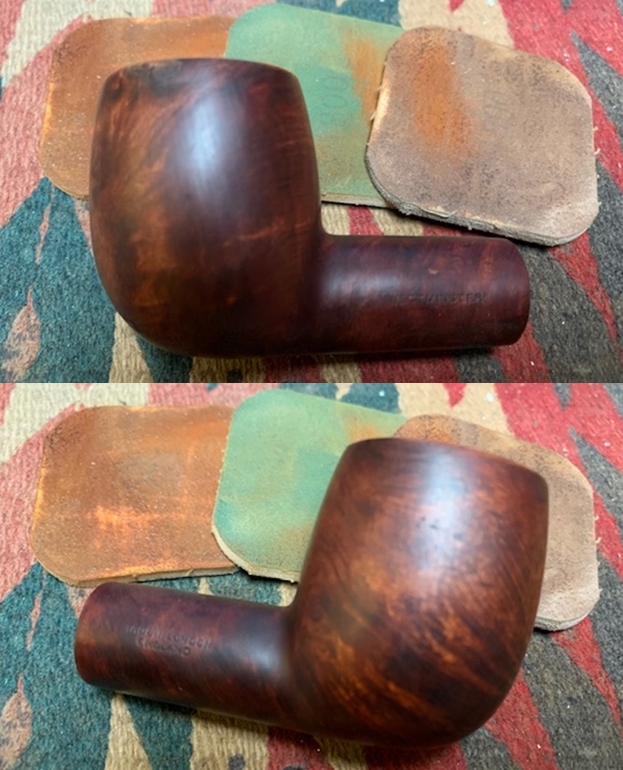
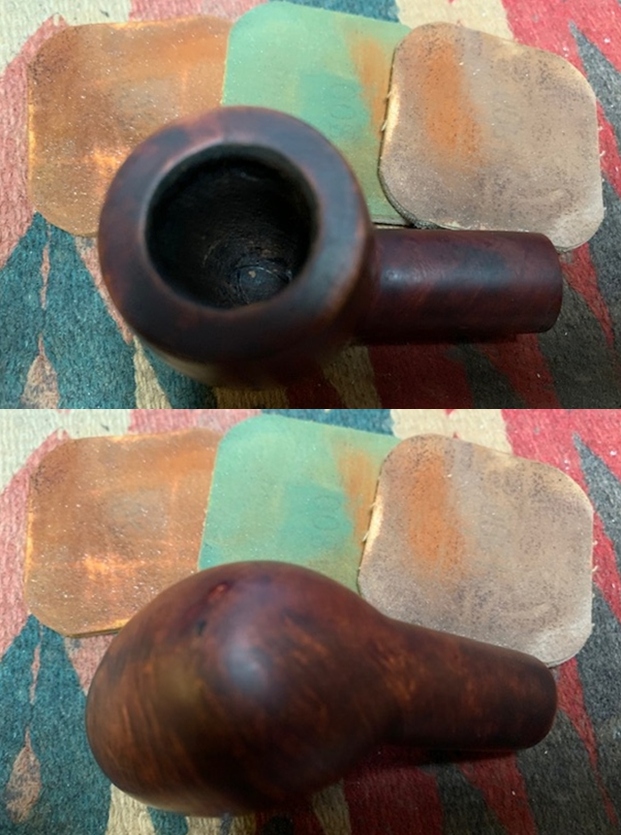
Jeff cleaned the pipes with his usual penchant for thoroughness that I really appreciate. This one was filthy so I was surprised to see how well it turned out. He reamed it with a PipNet pipe reamer and cleaned up the reaming with a Savinelli Fitsall Pipe Knife. He scrubbed out the internals with alcohol, pipe cleaners and cotton swabs until the pipe was clean. He scrubbed the exterior of the bowl with Murphy’s Oil Soap and a tooth brush to remove the grime and grit on the briar and the lava on the rim top. The finish looks very good with good looking grain around the bowl and shank. Jeff scrubbed it with Soft Scrub and soaked it in Before & After Deoxidizer to remove the oxidation on the rubber. When the pipe arrived here in Vancouver for the second stop of its restoration tour it looked a lot better. I took photos before I started my part of the work. I took some close up photos of the rim top and the stem surface. I wanted to show what cleaned bowl and rim top looked like. The rim top shows some damage on the inner edge of the bowl and on the left outer edge and rim top. I also took close up photos of the stem to show the tooth marks and the remaining oxidation on the stem surface.    I took a photo of the stamping on the left side of the shank and it is clear and readable. It is stamped as noted above. I removed the stem for the shank and took a photo of the bowl and stem to give a picture of what it looked like.When I examined it with a lens I could see that there was a crack in the shank on the right side. I cleaned up the area around the crack and put a drop of glue in the crack and clamped it together until it dried. I put a line of all-purpose glue on the shank end and pressed a brass end cap/band on the shank end. I sanded the inner edge of the bowl with a folded piece of 220 grit sandpaper to smooth out the rough edges. I sanded the briar with 220 git sandpaper to smooth out the filled area and then polish it with a piece of 400 grit wet dry sandpaper.I topped the bowl with 220 grit sandpaper to remove the damaged on the rim top and outer edges of the bowl.I sanded the bowl with micromesh sanding pads – wet sanding with 1500-2400 grit pads to prepare it for staining. I wiped the briar down with a damp cloth after each sanding pad.  I stained the pipe with a dark brown aniline stain. I applied the stain with a dauber and flamed it with the flame of a Bic lighter. I applied it and repeated the process until I had a good coverage on the briar. I continued polishing the stained briar with 3200-12000 micromesh pads. By the time I had worked through the sanding pads the bowl began to take on a shine and the pipe looked much better. The fill on the left side of the bowl was still visible but blended in better than before. I rubbed the bowl down with Before & After Restoration Balm. I worked it into the surface of the briar with my fingertips to clean, enliven and protect it. I let the balm sit for a little while and then buffed with a cotton cloth and shoe brush to raise the shine. With the bowl finished I set it aside and turned my attention to the stem. The tenon was broken off and damaged but the stem was long enough to allow me to turn the tenon on the stem. I used a PIMO tenon turning tool to add another quarter inch to the depth of the tenon.  The second photo shows the first turn on of the stem. I turned it further until I had a full ½ inch deep tenon.I sanded the stem with 220 grit sandpaper and started polishing it with 400 grit wet dry sandpaper. It did not take too much to remove the tooth marks and chatter.I polished the vulcanite with micromesh sanding pads – 1500-12000 grit pads. I wiped it down with a damp cloth after each sanding pad. I used Before & After Pipe Polish – both Fine and Extra Fine to further polish the stem.  I left a little oxidation around the stamp so as not to damage it more.    This long stemmed Real Briar Root Opera is a beauty. The restored and reworked Opera turned out to be a great looking pipe. The dark brown stain on the pipe worked really well with the polished vulcanite taper stem. I put the stem back on the bowl and carefully buffed the pipe with Blue Diamond on the buffing wheel. I gave the bowl and stem multiple coats of carnauba wax on the buffing wheel and followed that by buffing the entire pipe with a clean buffing pad. I hand buffed the pipe with a microfiber cloth to deepen the shine. The finished Opera is thin and fits well in the hand. The feel of the pipe in hand is good and I think as it heats up it will be even better. Give the finished pipe a look in the photos below. The dimensions of the pipe are Length: 6 ¼ inches, Height: 1 ½ inches, Outside diameter of the bowl: 1 inch wide x 1 ¼ inches long, Chamber diameter: ½ inch wide x 1 inch long. If you are interested in carrying on the previous pipe man’s legacy with this pipe send me a message or an email. I have more to work on of various brands. Perhaps one of those will catch your attention. Thanks for reading this blog and my reflections on the pipe while I worked on it.

Cleaning up a Westminster Made in London England Chunky Billiard


Blog by Steve Laug

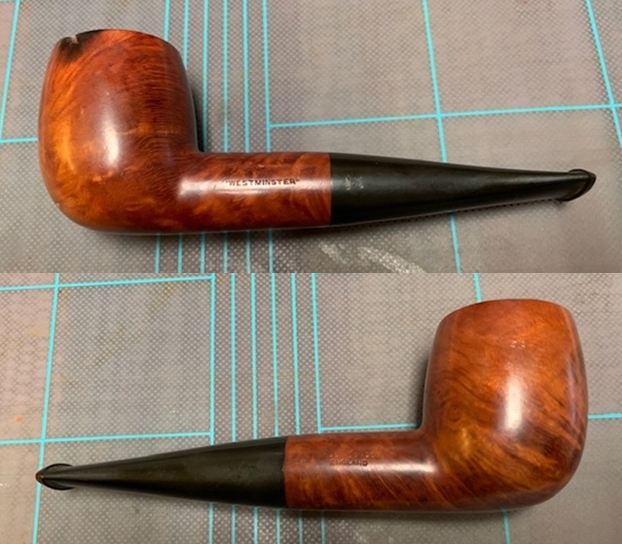
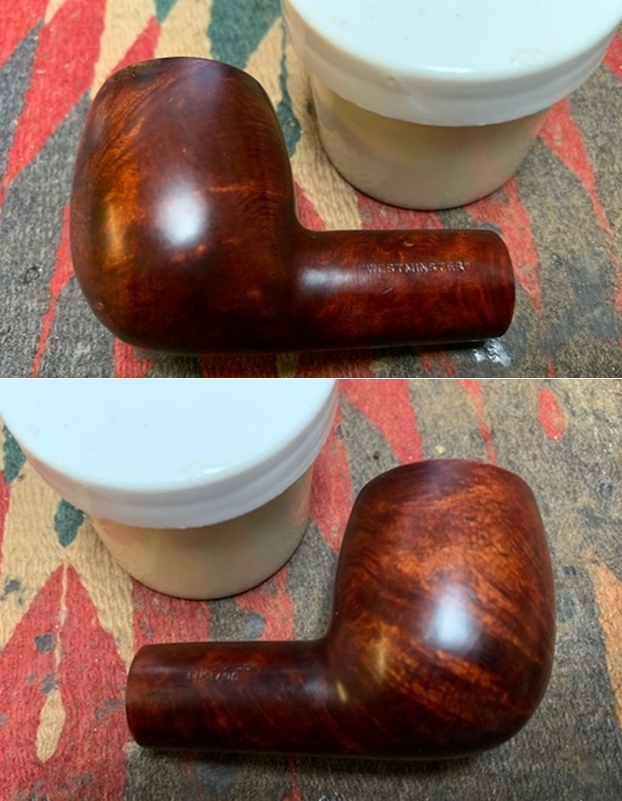
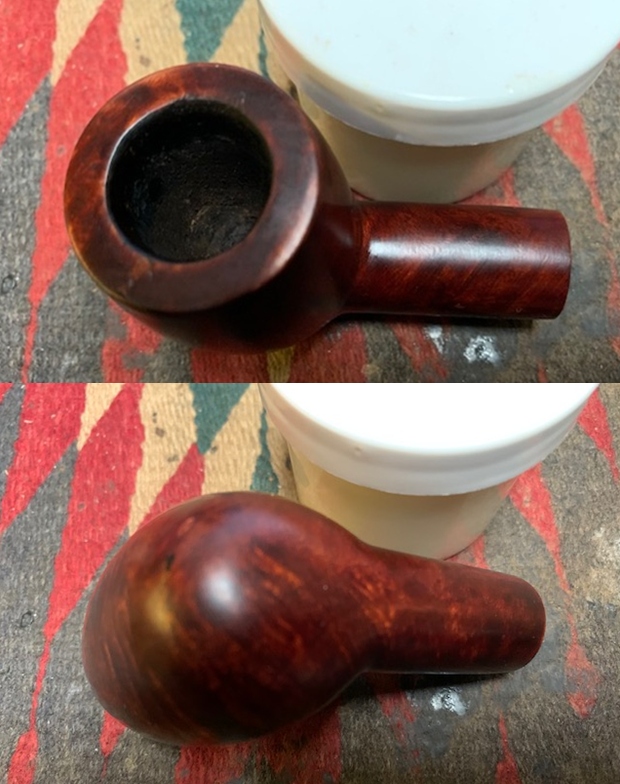
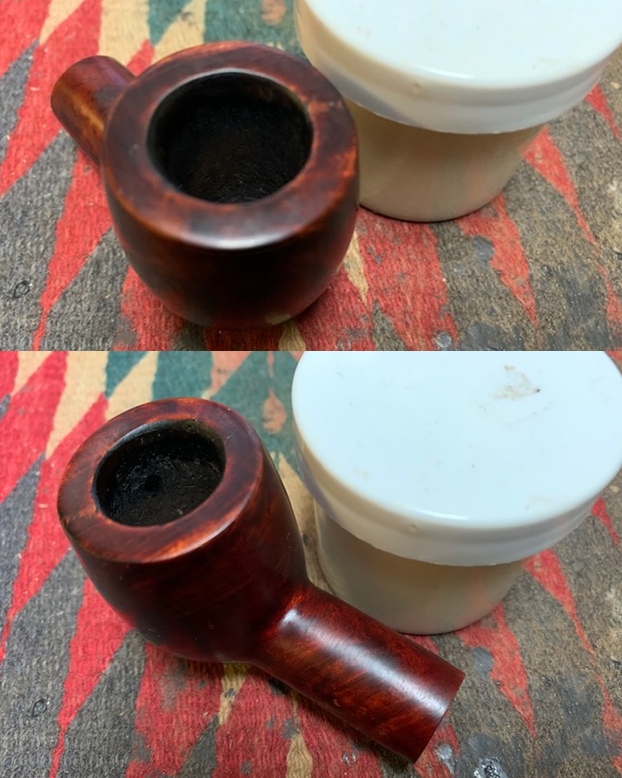
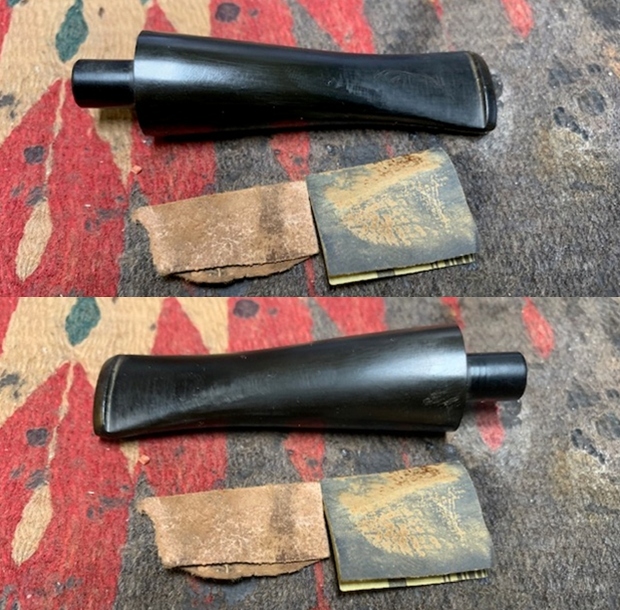
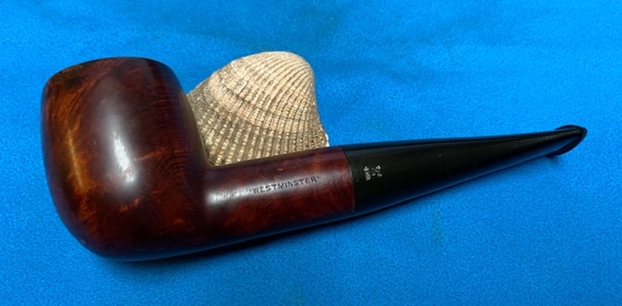
The next pipe on the work table came to us from one of our finds from a Southern Idaho Pipe Hunt. Between us we pick up quite a few pipes for restoration. I try to work them into the restoration queue so that I can keep them moving. The next one is interesting chunky billiard with a mix of grains around the bowl and some issues on the left side of the rim and top. It was stamped on both sides of the shank. On the left side it is stamped “Westminster”. On the right side it Made in London England. The finish was dirty with dust and grime ground into the bowl sides. There were large fills on the front heel of the bowl and a large burned area and fill on the left top edge. There was a thick cake in the bowl and lava overflow on the rim top. The beveled inner edge of the rim had some darkening and there were issues with nicks on the rim top and outer edges as well. The vulcanite stem was oxidized and had tooth marks and chatter ahead of the button on both sides.

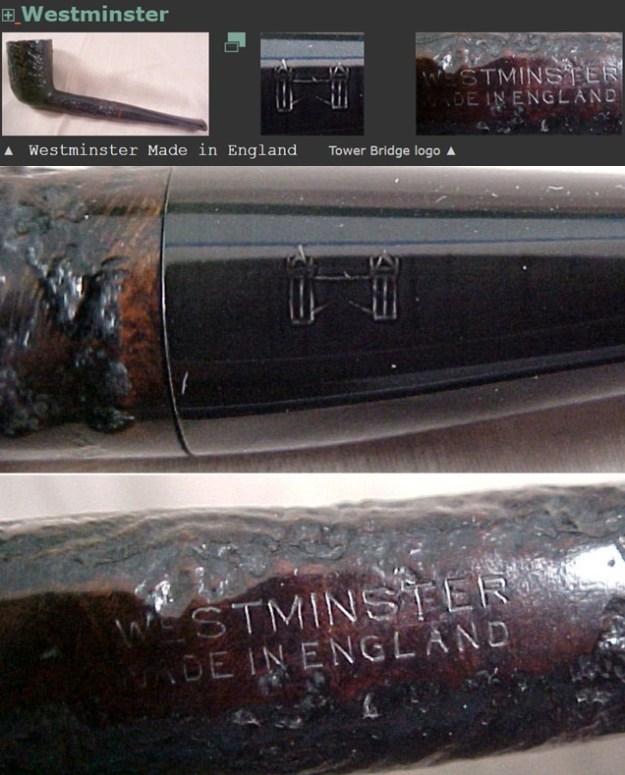
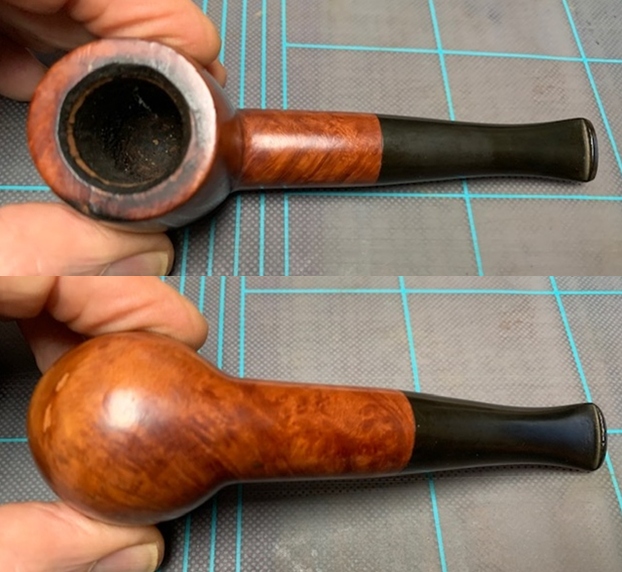
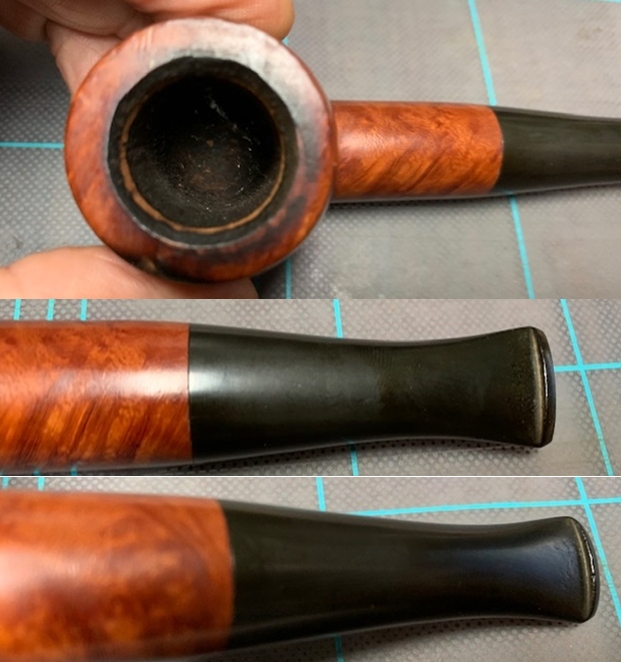
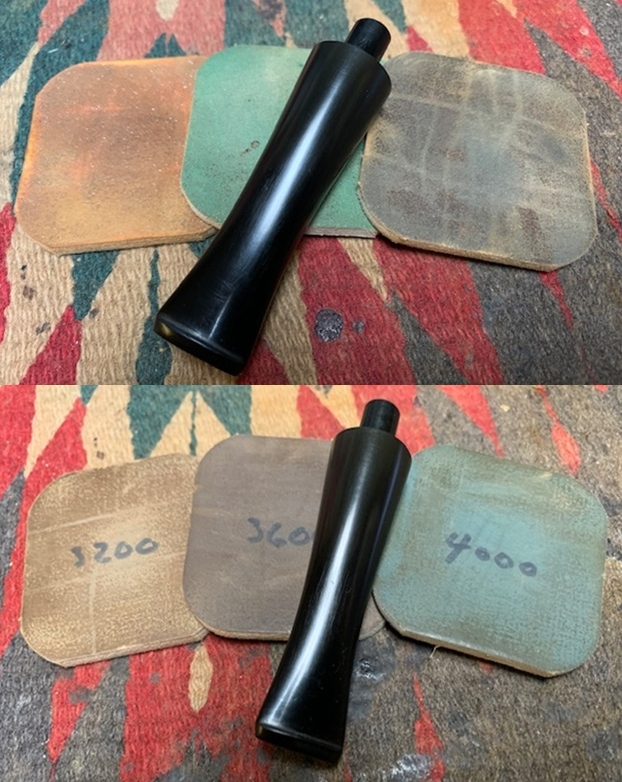
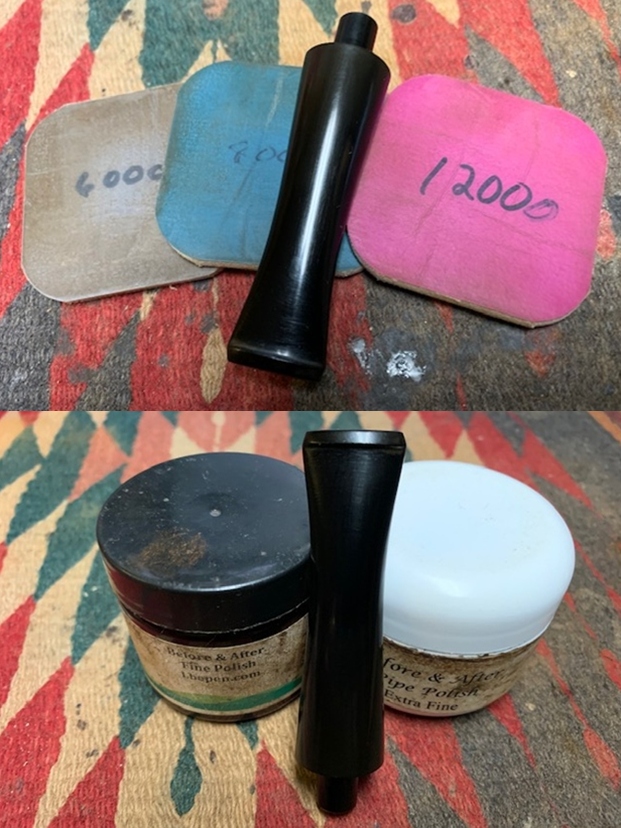
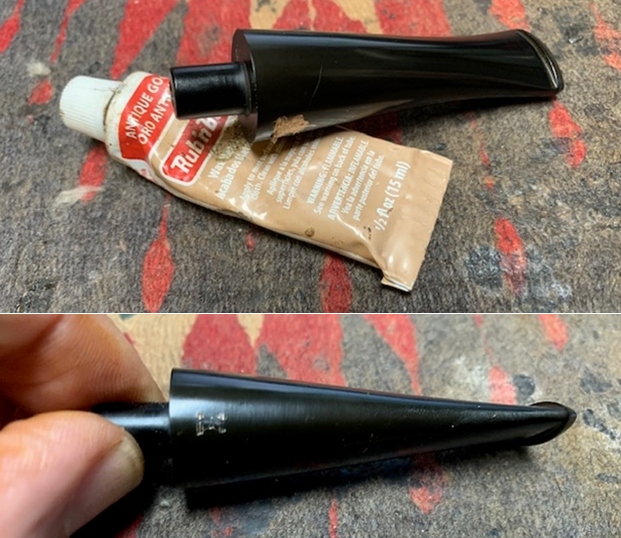
There was something very British about the shape and look of the bowl but I was not familiar with the Westminster brand mark so before I started working on it I did a bit of research on the brand. I turned to pipephil’s site to have a look at the brand and see if I could get a feel for the brand (http://www.pipephil.eu/logos/en/logo-w2.html). I did a screen capture of the information on the site. I found that the brand either came from Comoys or from John Redman Ltd. There were two variations of the brand in the pictures – one with the Tower Bridge logo on the stem and another with a crown logo. I did a screen capture of the pipe with the Tower Bridge logo and included the photo of the stamping on the stem side and the shank.We picked this pipe up in 2017 and it has been sitting here since Jeff mailed it after cleaning it. He cleaned the Billiard with his usual penchant for thoroughness that I really appreciate. Once he finished he shipped them back to me. It was a mess when we found it so I was surprised to see how well it turned out. He reamed it with a PipNet pipe reamer and cleaned up the reaming with a Savinelli Fitsall Pipe Knife. He scrubbed out the internals with alcohol, pipe cleaners and cotton swabs until the pipe was clean. He scrubbed the exterior of the bowl with Murphy’s Oil Soap and a tooth brush to remove the grime and grit on the briar and the lava on the rim top. The finish looks very good with good looking grain around the bowl and shank. Jeff scrubbed it with Soft Scrub and soaked it in Before & After Deoxidizer to remove the oxidation on the rubber. When the pipe arrived here in Vancouver for the second stop of its restoration tour it looked a lot better. I took photos before I started my part of the work. I took some close up photos of the rim top and the stem surface. I wanted to show what cleaned bowl and rim top looked like. The rim top shows some damage on the beveled inner edge of the bowl and on the left outer edge and rim top. I also took close up photos of the stem to show the tooth marks and the remaining oxidation on the stem surface.     I took photos of the stamping on the sides of the shank and it is clear and readable. It is stamped as noted above. The Tower Bridge logo is visible on the left side of the shank.I removed the stem for the shank and took a photo of the bowl and stem to give a picture of what it looked like. The burn mark on the left topside of the bowl and chip is very visible.I took some photos of the fills on the front and sides of the bowl and the damaged areas on the outer edge of the rim. There is also damage on the beveled inner edge of the rim.  Now, on to the restoration of this chunky Billiard. I decided to clean up the damaged rim top and edges of the bowl. I cleaned up the inside of the bowl edges with a folded piece of 220 grit sandpaper. Once I was finished the edge looked a lot better. I gave the bowl a light topping to clean up the damage on the outer edge and the rim top. I then sanded the burned area on the left side of the bowl and built up the damage with super glue and briar dust. I sanded the repaired areas with a folded piece of 220 grit sandpaper then touched up the fills with clear super glue. I re-topped the bowl to smooth out the repaired rim top.I sanded the bowl with a medium and a fine grit sanding sponge and polished out the some of the scratches with 1500-2400 grit sanding sponges to prepare it for staining. I stained it with a dark brown aniline stain and flamed it with a lighter to set the stain. I repeated the process of staining and flaming the stain to set it.I sanded the bowl with micromesh sanding pads – wet sanding with 1500-12000 grit pads to remove the excess stain. I wiped the briar down with a damp cloth after each sanding pad.  By the time I had worked through the sanding pads the bowl began to take on a shine and the pipe looked much better. The repairs were still visible but blended in better than before. I rubbed the bowl down with Before & After Restoration Balm. I worked it into the surface of the briar with my fingertips to clean, enliven and protect it. I let the balm sit for a little while and then buffed with a cotton cloth and shoe brush to raise the shine.   I set the bowl aside and turned my attention to the stem. I sanded the stem with 220 grit sandpaper and started polishing it with 400 grit wet dry sandpaper. It did not take too much to remove the tooth marks and chatter.      I polished the vulcanite with micromesh sanding pads – 1500-12000 grit pads. I wiped it down with a damp cloth after each sanding pad. I used Before & After Pipe Polish – both Fine and Extra Fine to further polish the stem.  I left a little oxidation around the stamp so as not to damage it more.    I touched up the Tower Bridge logo with Antique Gold Rub’n Buff. I worked it into the stamp with a tooth pick and rubbed and buffed it off with a cotton pad.This thick shank Billiard made by either Comoy’s or John Redman is a beauty. The restored and reworked Westminster Chunky Billiard turned out to be a great looking pipe. The dark brown stain on the pipe worked really well with the polished vulcanite taper stem. I put the stem back on the bowl and carefully buffed the pipe with Blue Diamond on the buffing wheel. I gave the bowl and stem multiple coats of carnauba wax on the buffing wheel and followed that by buffing the entire pipe with a clean buffing pad. I hand buffed the pipe with a microfiber cloth to deepen the shine. The finished Chunky Billaird fits nicely in the hand and feels great. Give the finished pipe a look in the photos below. The dimensions of the pipe are Length: 5 ¼ inches, Height: 1 ¾ inches, Outside diameter of the bowl: 1 ¼ inches, Chamber diameter: ¾ of an inch. If you are interested in carrying on the previous pipe man’s legacy with this pipe send me a message or an email. I have more to work on of various brands. Perhaps one of those will catch your attention. Thanks for reading this blog and my reflections on the pipe while I worked on it.
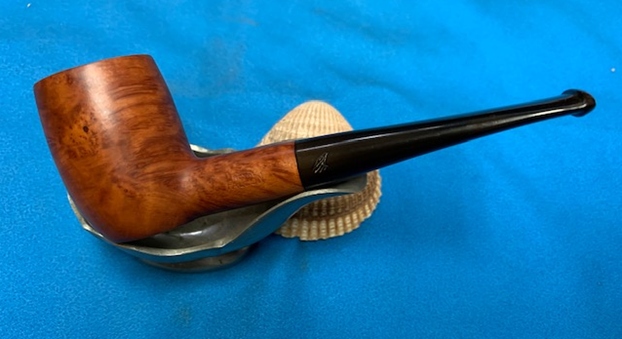
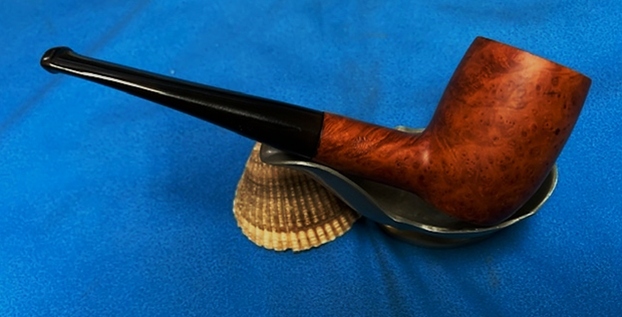
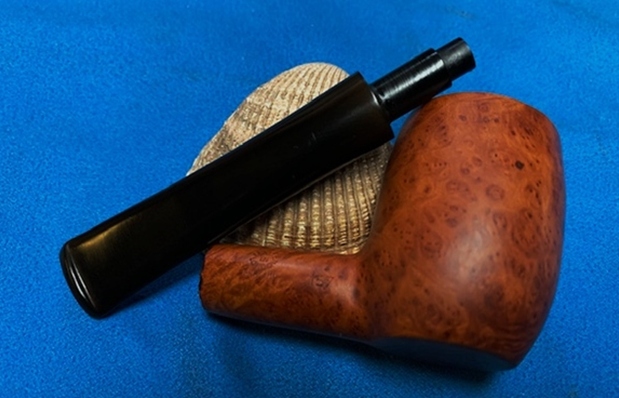
A Rebirth for a Comoy’s Made Royal Falcon 157 Tankard


Blog by Steve Laug

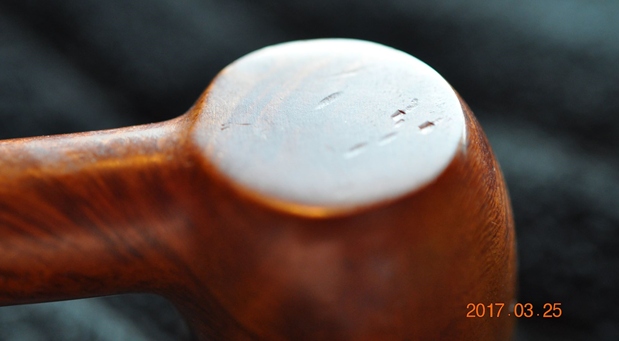
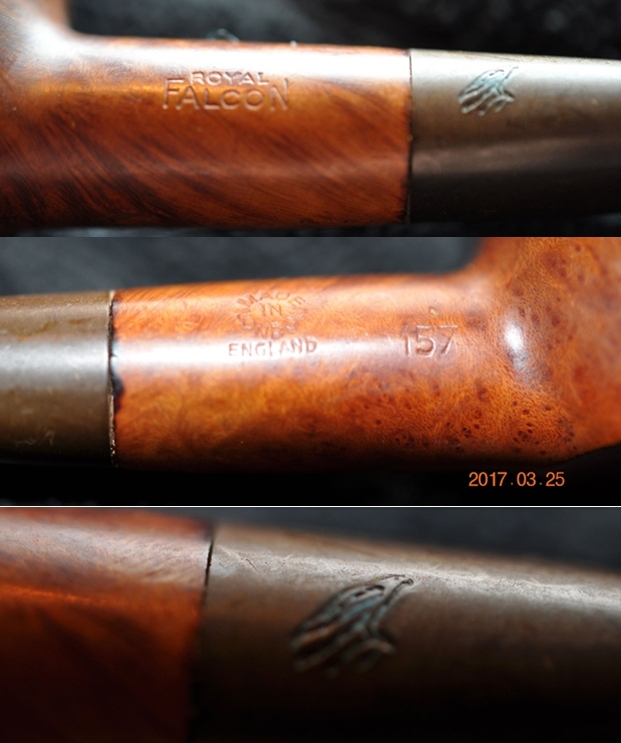
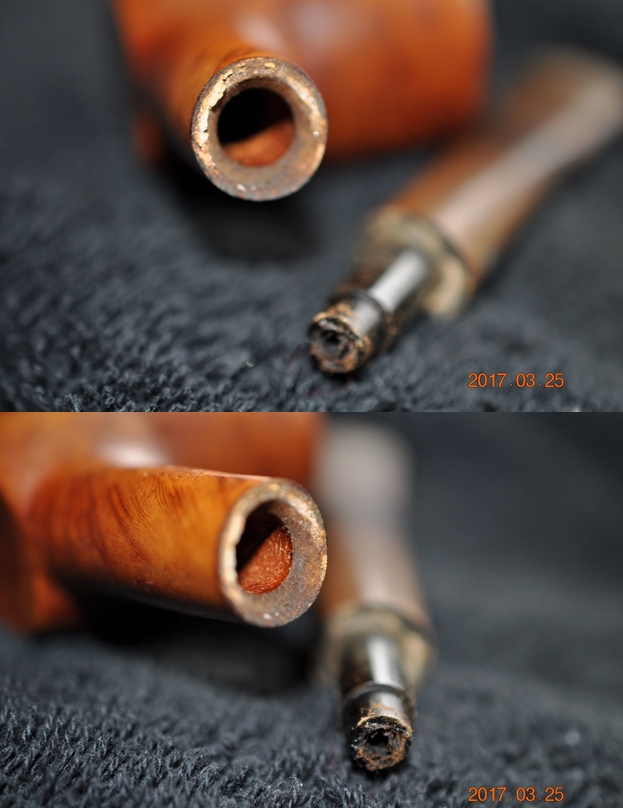
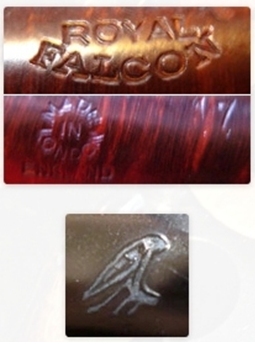
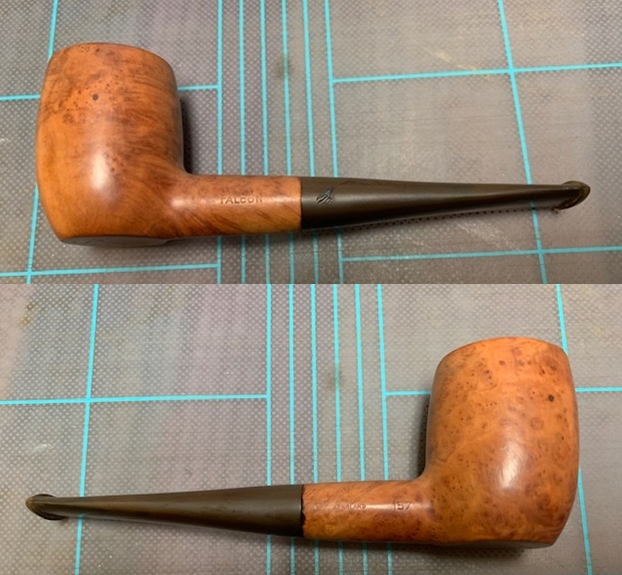
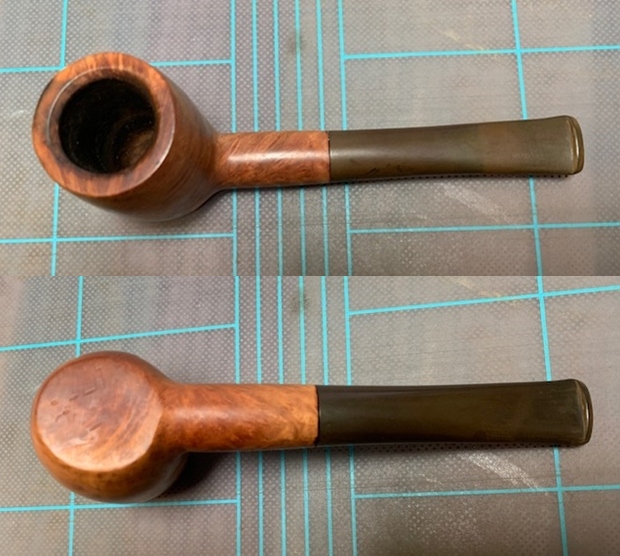
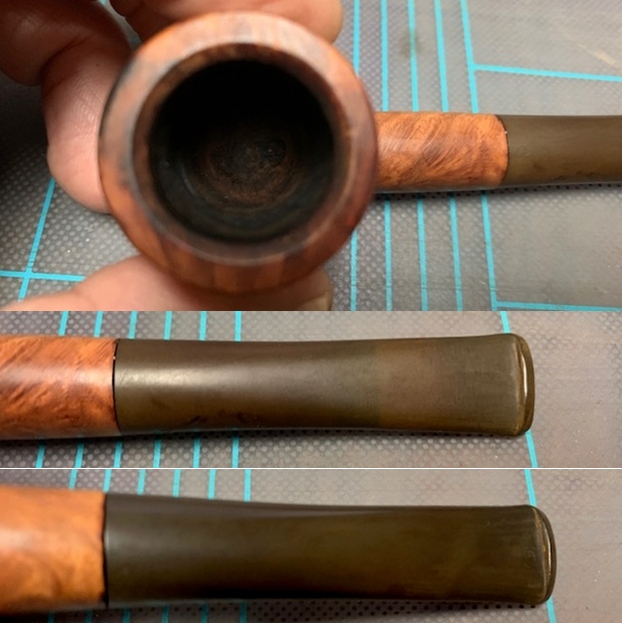
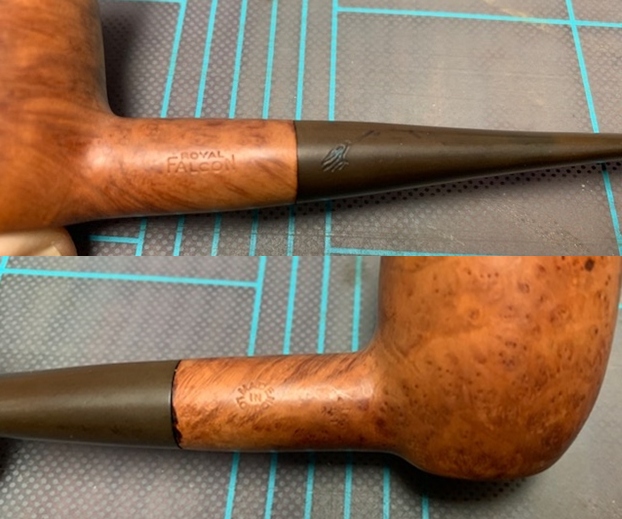
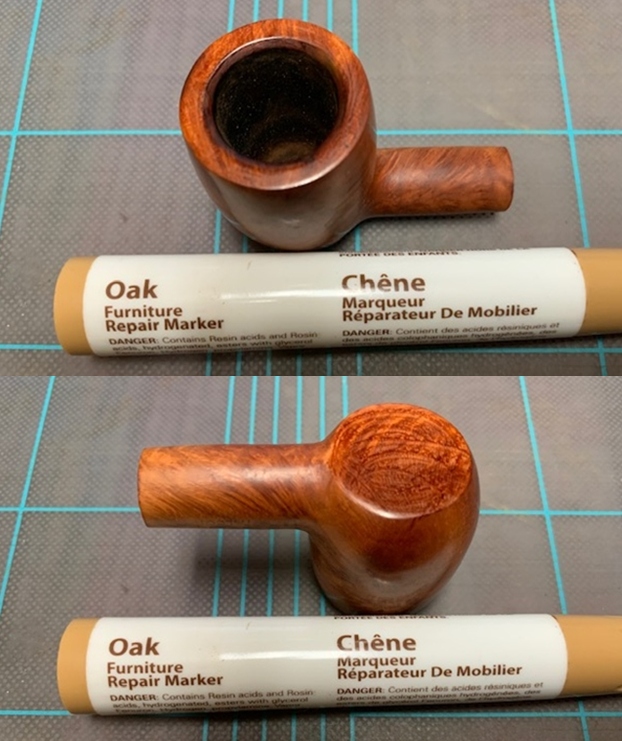
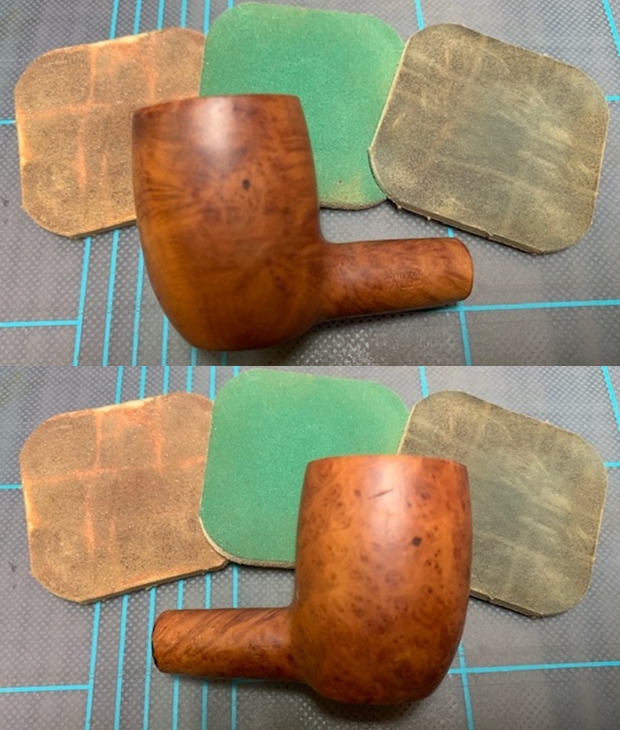
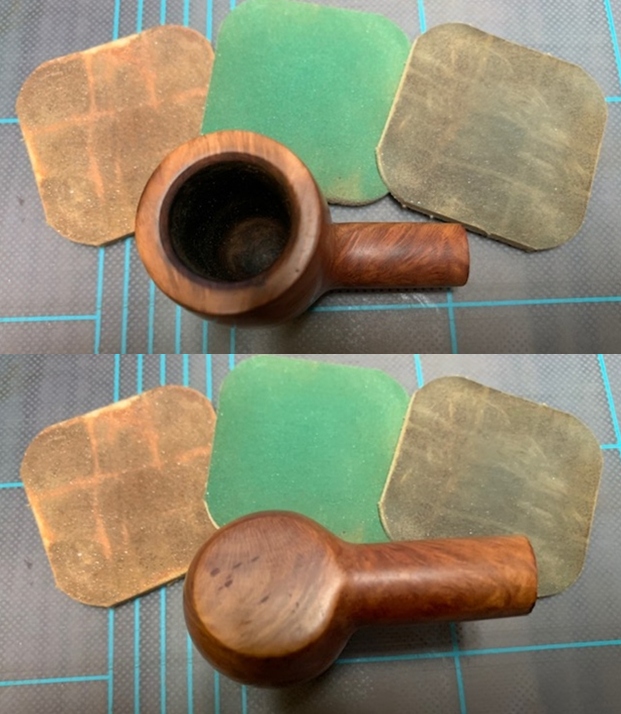
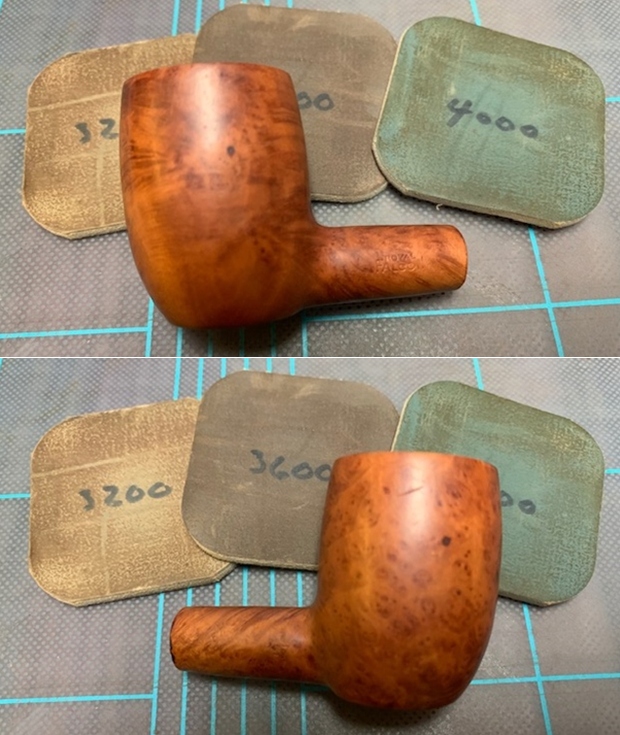
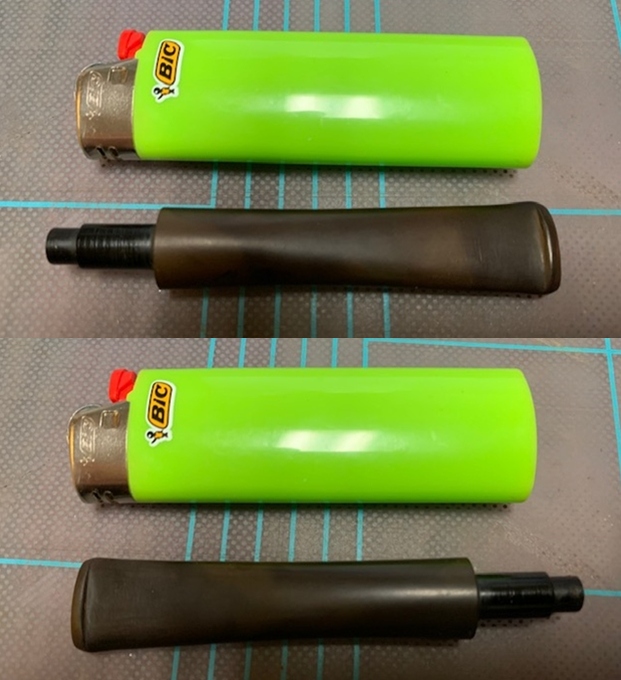
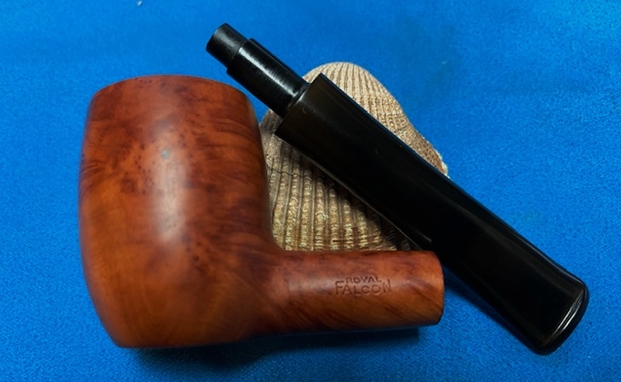
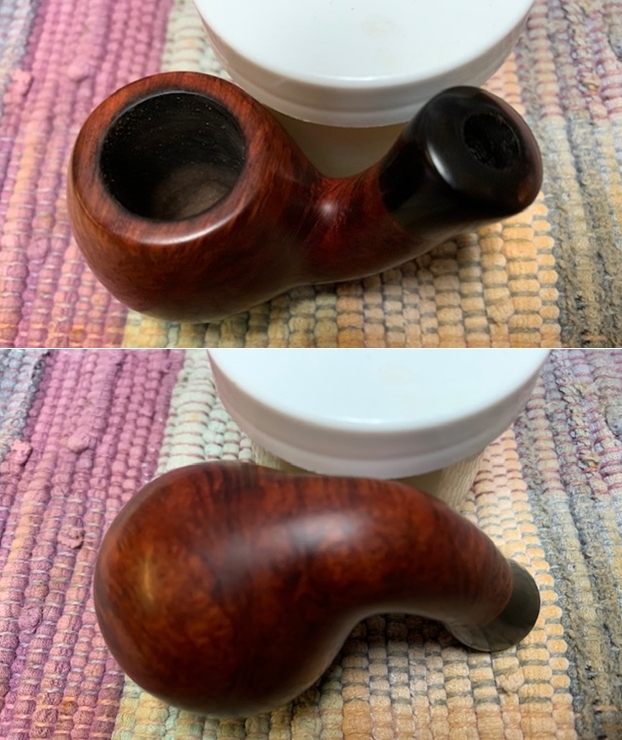
The next pipe on the work table came to me from one of our estate purchases. Between us we pick up quite a few pipes for restoration. I try to work them into the restoration queue so that I can keep them moving. The next one is interestingly shaped Tankard with a mix of grains around the bowl. It was stamped on both sides of the shank. On the left side it is stamped Royal [over] Falcon. On the right side it has the shape number 157 next to the bowl shank junction and to the left of that it has Made in London in a circle [over] England COM stamp. The finish was dirty with dust and grime ground into the bowl sides. There was a thick cake in the bowl and lava overflow on the rim top. The vulcanite stem was oxidized and had tooth marks and chatter ahead of the button on both sides. Jeff took photos of the pipe to show its general condition before he did his cleanup.  As I mentioned above the exterior of the pipe was very dirty – grime and grit ground in from years of use and sitting. The rim top was covered with a coat of thick lava that overflowed from the thick cake in the bowl. It was hard to know what the rim edges looked like because of the lava.  The stem was dirty, calcified and oxidized with tooth chatter and marks on the top and underside of the stem at the button.  Jeff took photos of the sides and the heel of the bowl to give a better feel for the condition of the briar around the bowl. You can also see some of the few fills in the briar in the photos.   The next photos show the stamping on the sides of the shank and it is very readable. It reads as noted above. You can also see the Falcon head logo on the left side of the stem.  Jeff took photos of the pipe with the stem of the shank showing the staining and buildup on the shank end and tenon. It was a real mess. The pipe is stamped on the left side of the shank, Royal over Falcon as pictured to the left. On the right side it is stamped Made in London in a Circle over England. Next to that is stamped shape number 157 which is a Comoy’s number. In checking on Pipephil’s site on the Royal Falcon brand (http://www.pipephil.eu/logos/en/logo-r6.htmlit) it is clear that the pipe is definitely a Comoy’s brand. The stem has the same logo as Phil shows on his site though the pipe in hand has much fainter stamping.

I turned to Pipedia’s article on Comoy’s pipes and scrolled down to the section on seconds and the brand is listed there (https://pipedia.org/wiki/Comoy%27s). There was also was a photo of a Comoy’s made Royal Falcon on the site. Underneath it is written the following: Early Comoy’s Royal Falcon with circular Made in England stamp. Thin pencil shank pipe. 1930’s? The pipe I am working on is stamped with the same Made in England circular stamp.

From the above information I knew that I was working on an early Comoy’s made Royal Falcon. Perhaps as early as the 1930s!

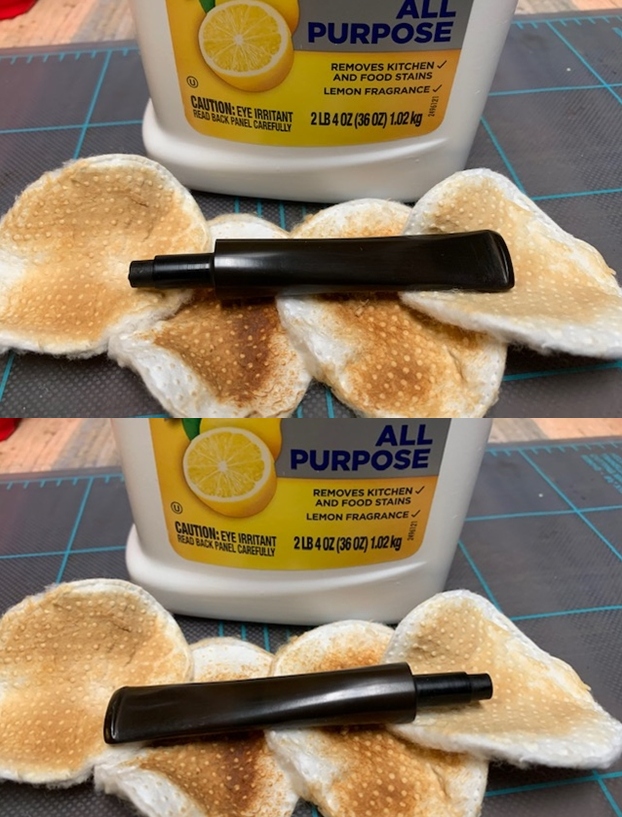
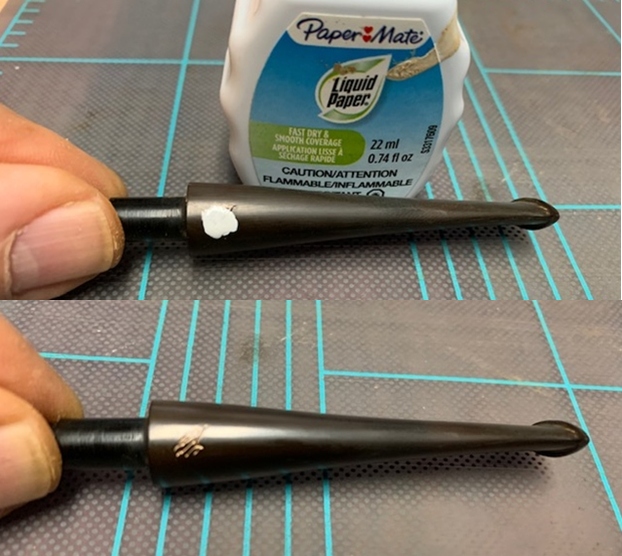
Jeff cleaned the pipes with his usual penchant for thoroughness that I really appreciate. Once he finished he shipped them back to me. Bob’s pipes were generally real mess and I did not know what to expect when I unwrapped it from his box. I was surprised to see how well it turned out. He reamed it with a PipNet pipe reamer and cleaned up the reaming with a Savinelli Fitsall Pipe Knife. He scrubbed out the internals with alcohol, pipe cleaners and cotton swabs until the pipe was clean. He scrubbed the exterior of the bowl with Murphy’s Oil Soap and a tooth brush to remove the grime and grit on the briar and the lava on the rim top. The finish looks very good with good looking grain around the bowl and shank. Jeff scrubbed it with Soft Scrub and soaked it in Before & After Deoxidizer to remove the oxidation on the rubber. When the pipe arrived here in Vancouver for the second stop of its restoration tour it looked a lot better. I took photos before I started my part of the work. I took some close up photos of the rim top and the stem surface. I wanted to show what cleaned bowl and rim top looked like. The rim top shows some damage on the outer edge of the bowl on the right front and on the inner edge at the top of the bevel and rim top. I also took close up photos of the stem to show the tooth marks and the remaining oxidation on the stem surface.    I took photos of the stamping on the sides of the shank and it is clear and readable. It is stamped as noted above. There is some staining around the shank end.     I removed the stem for the shank and took a photo of the bowl and stem to give a picture of what it looked like. The heavy oxidation is very visible.Now, on to my part of the restoration of this Comoy’s made Royal Falcon Tankard. I decided to clean up the damaged rim top and inner edge of the bowl. I cleaned up the inside of the bowl edges with a folded piece of 220 grit sandpaper. Once I was finished the edge looked a lot better. I gave the bowl a light topping to clean up the damage on the outer edge and the rim top.    I filled in the flaws and marks on the flat heel of the bowl with clear super glue. Once the repairs cured I sanded them with a folded piece of 220 grit sandpaper to blend them into the surface of the bowl.     I stained the rim top with an Oak Stain pen to blend the repairs on the rim top and the heel of the bowl into the surrounding briar.     I polished the top of the bowl and the entirety of the bowl with micromesh sanding pads – wet sanding with 1500-12000 grit pads and wiping the briar down with a damp cloth after each sanding pad. I rubbed the bowl down with Before & After Restoration Balm. I worked it into the surface of the briar with my fingertips to clean, enliven and protect it. I let the balm sit for a little while and then buffed with a cotton cloth and shoe brush to raise the shine.   I set the bowl aside and turned my attention to the stem. I used a Bic lighter to “paint” the surface of the stem with the flame to lift the tooth marks on both sides of the stem. The heat lifted the tooth marks and the surface was smooth.      I scrubbed the surface of the stem with Soft Scrubb All Purpose scrub. It removed the oxidization from the stem. It took a lot of scrubbing with cotton pads and the surface was clean.  I touched up the Royal Falcon, Falcon Head log with PaperMate Liquid Paper. Once it was dry I scraped it off and buffed the stem.I polished the vulcanite with micromesh sanding pads – 1500-12000 grit pads. I wiped it down with a damp cloth after each sanding pad. I used Before & After Pipe Polish – both Fine and Extra Fine to further polish the stem.  I left a little oxidation around the stamp so as not to damage it more.       This Comoy’s Made Royal Falcon 157 Tankard turned out to be a great looking pipe. The mixed stain brown finish on the pipe is in great condition and works well with the polished vulcanite taper stem. I put the stem back on the bowl and carefully buffed the pipe with Blue Diamond on the buffing wheel. I gave the bowl and stem multiple coats of carnauba wax on the buffing wheel and followed that by buffing the entire pipe with a clean buffing pad. I hand buffed the pipe with a microfiber cloth to deepen the shine. The finished Royal Falcon Tankard fits nicely in the hand and feels great. Give the finished pipe a look in the photos below. The dimensions of the pipe are Length: 5 inches, Height: 1 ¾ inches, Outside diameter of the bowl: 1 ¼ inches, Chamber diameter: ¾ of an inch. If you are interested in carrying on the pipe man’s legacy with this pipe send me a message or an email. I have more to work on of various brands. Perhaps one of those will catch your attention. Thanks for reading this blog and my reflections on the pipe while I worked on it.