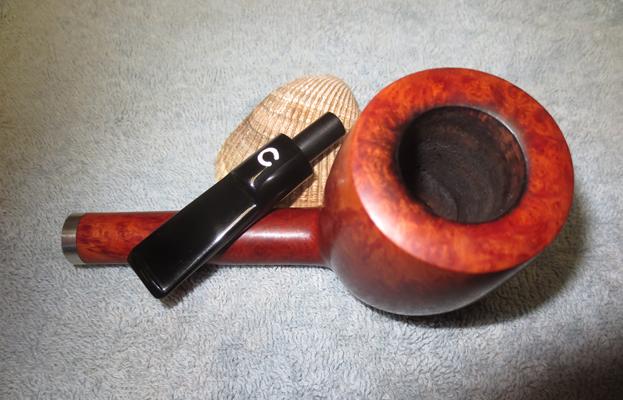
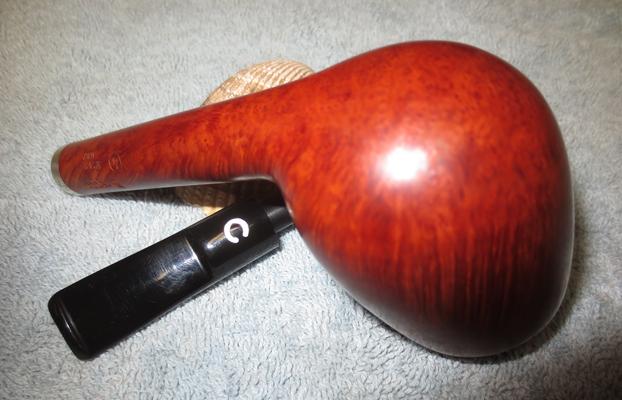
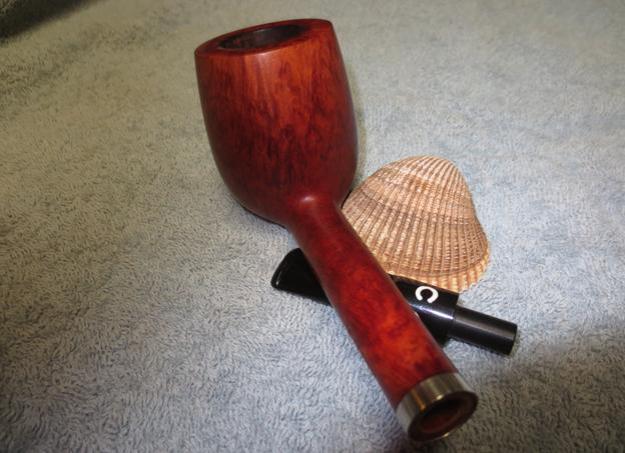
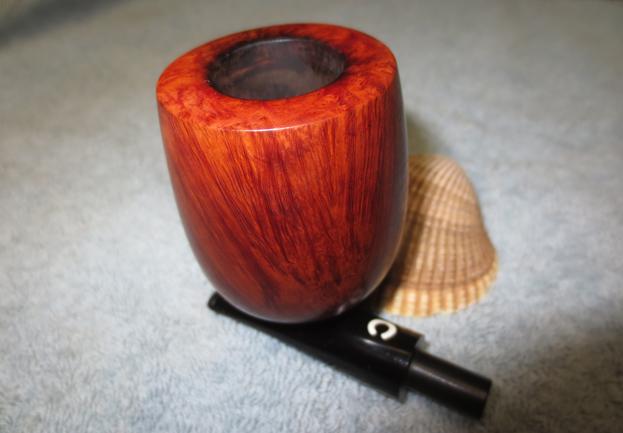
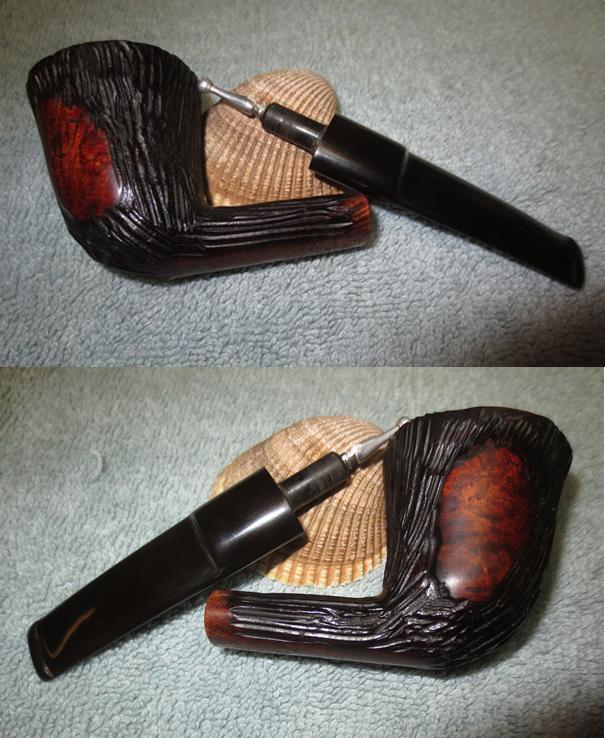
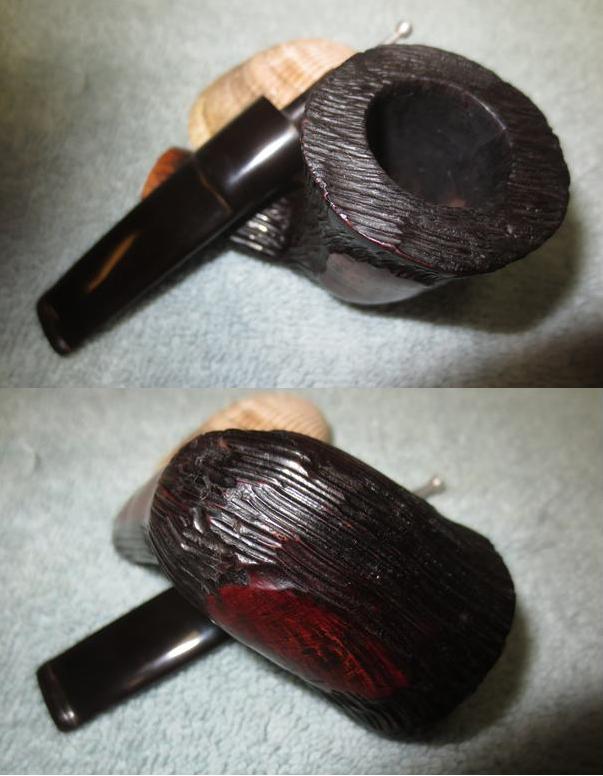
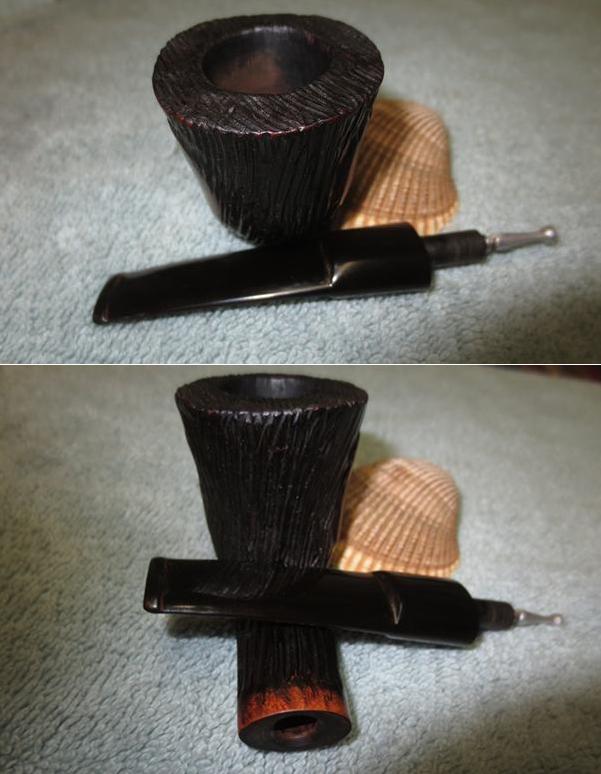
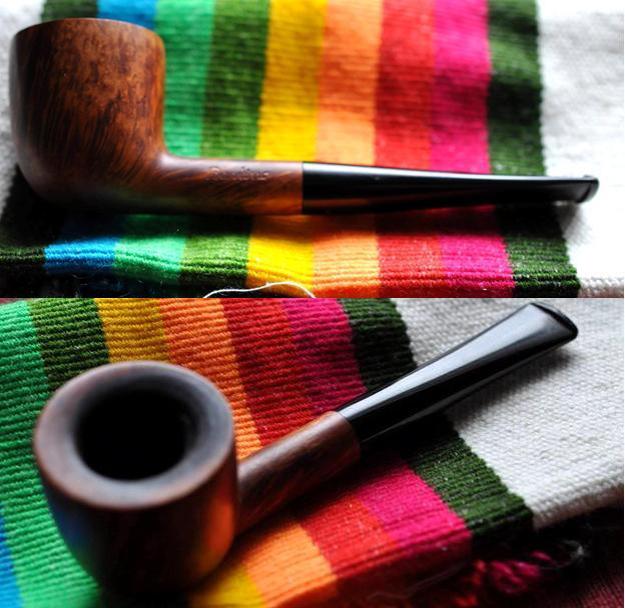
Monthly Archives: May 2017

Restoring a beautiful Barling Vintage 6279 Pot


Blog by Steve Laug

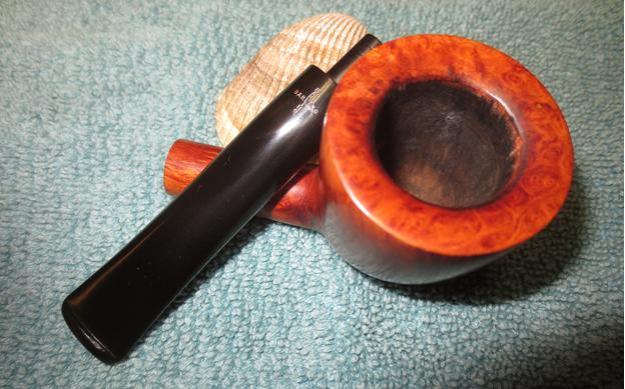
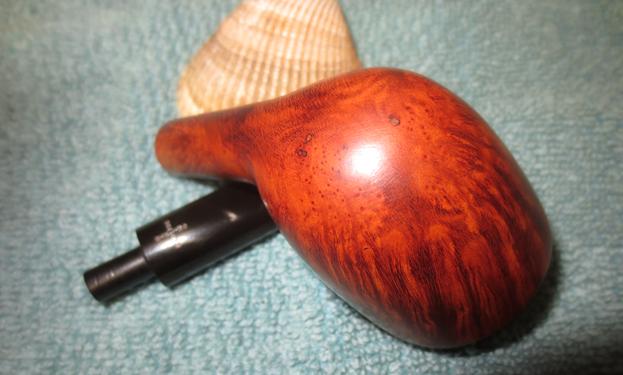
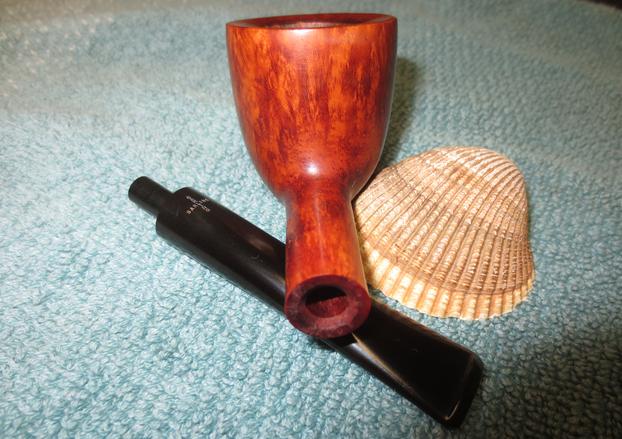
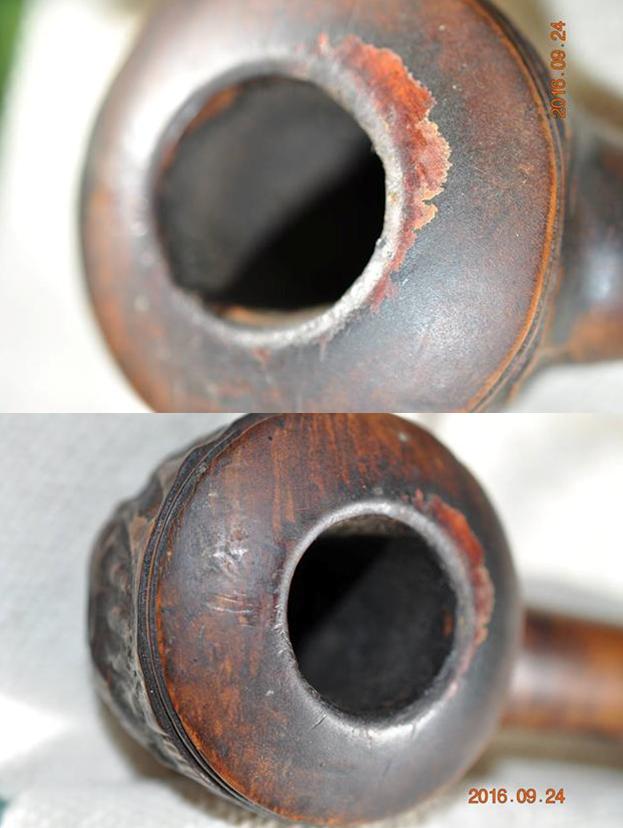
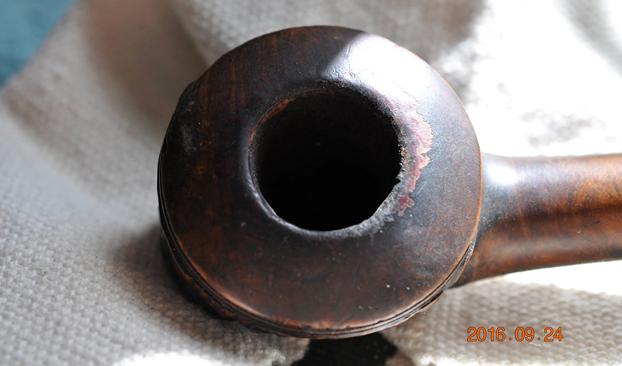
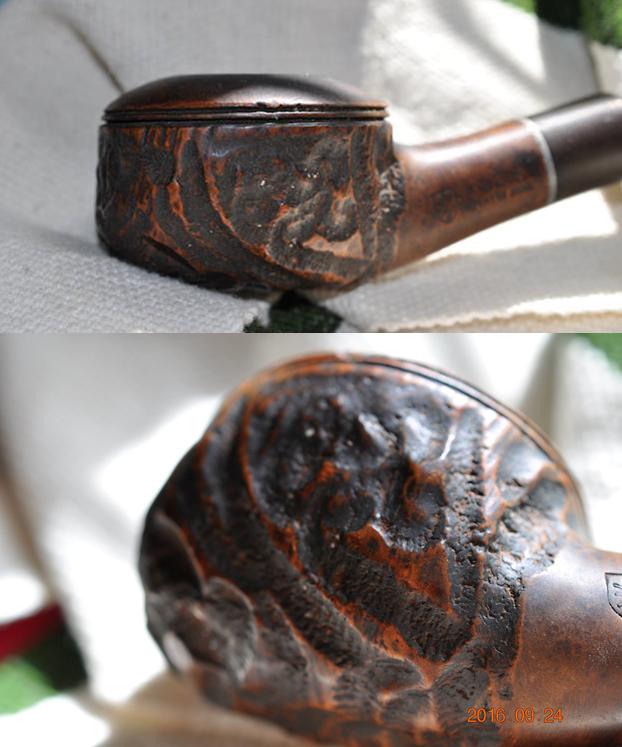
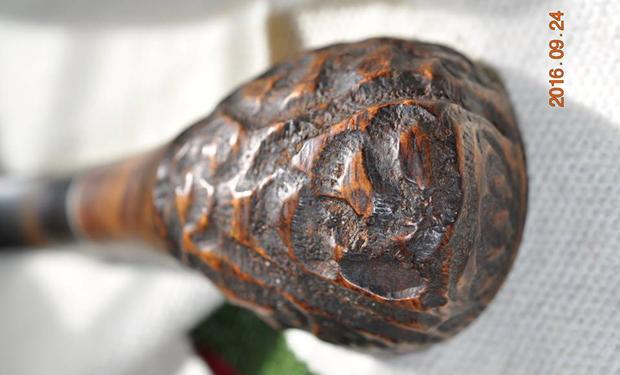
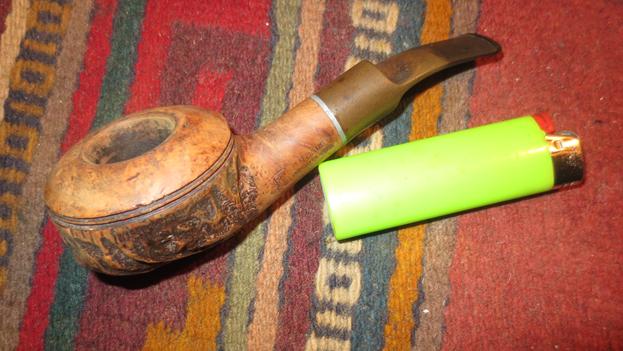
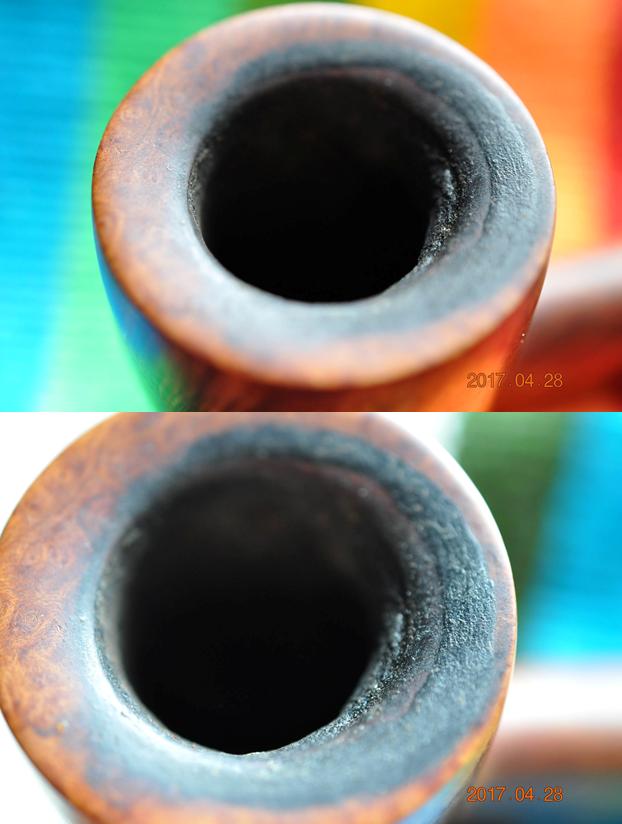
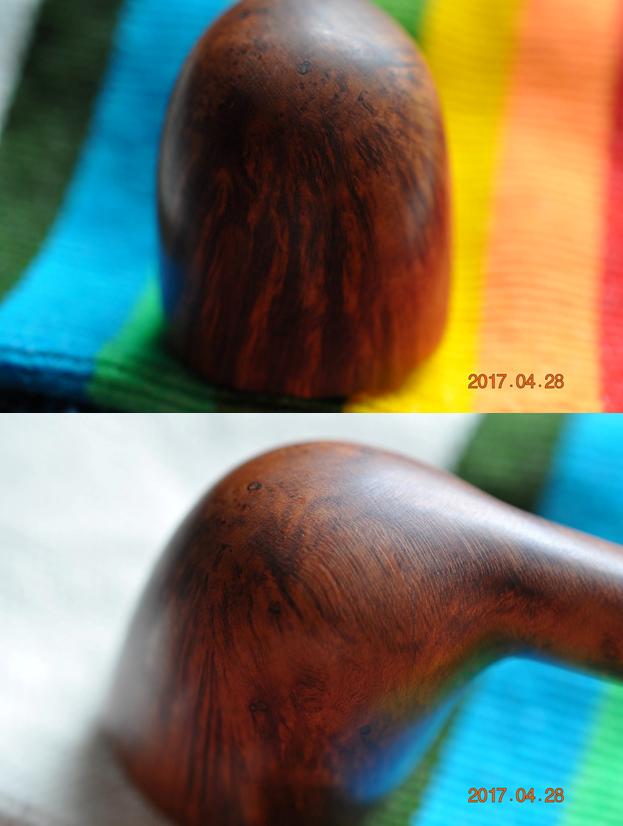
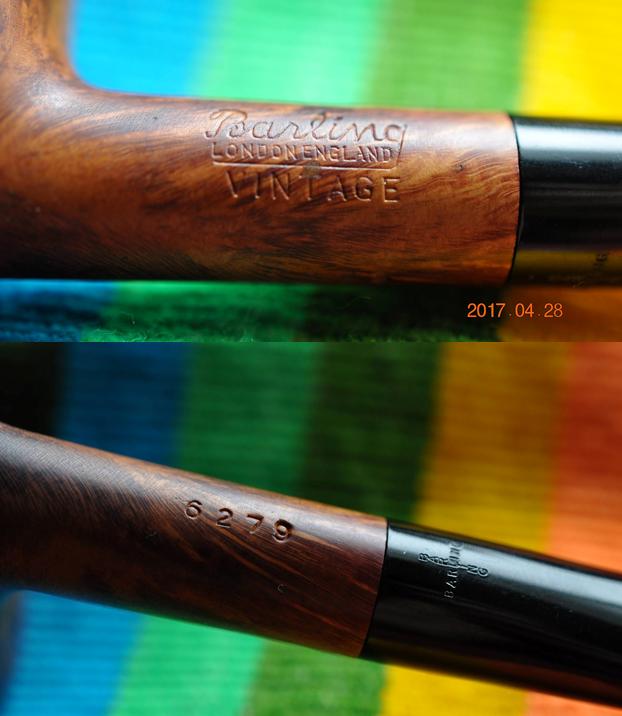
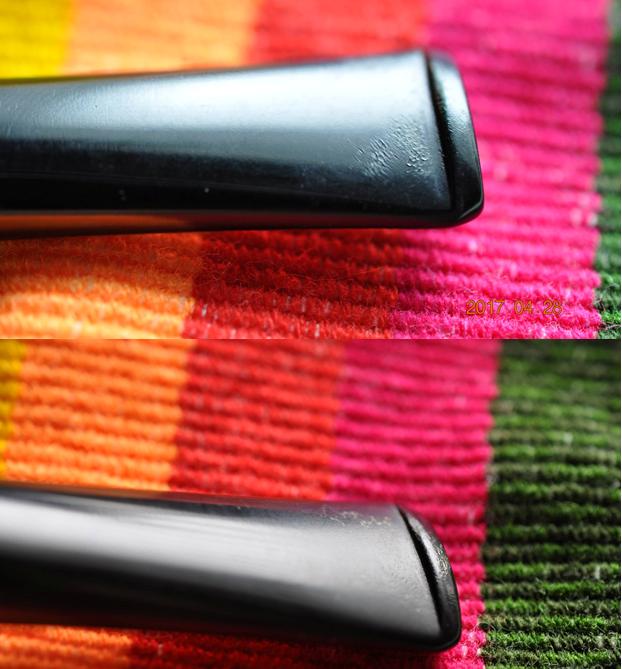
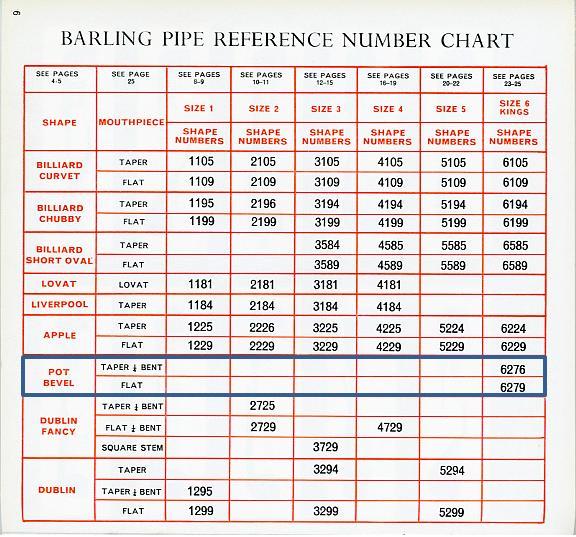
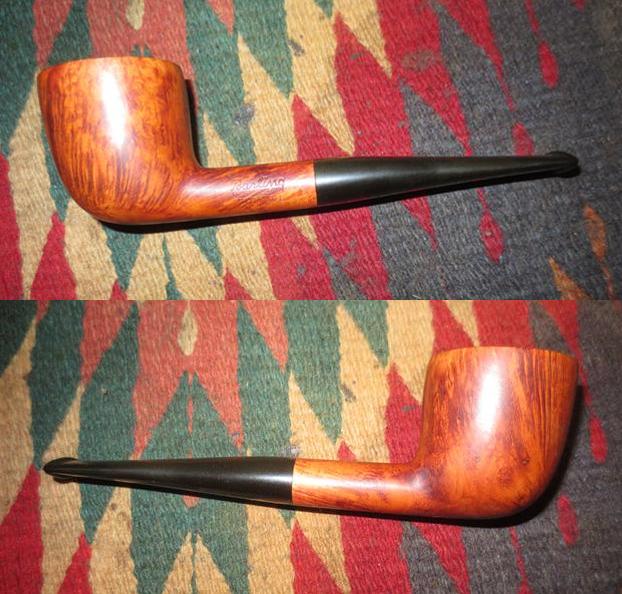
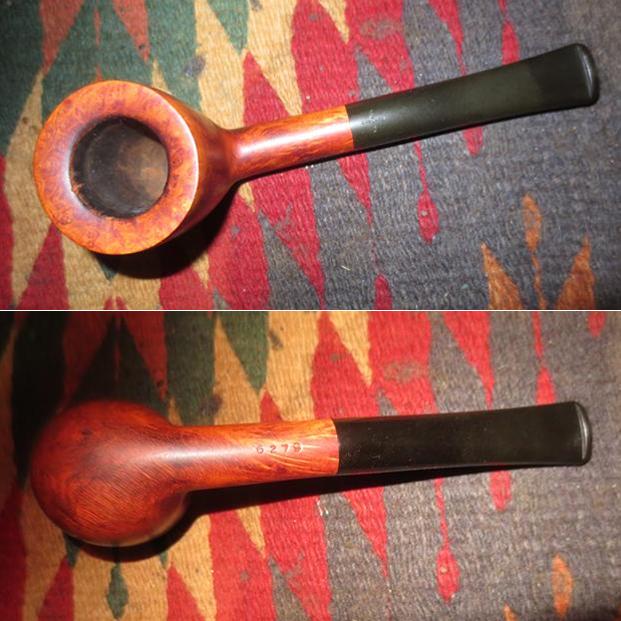
The next pipe from the estate lot my brother found and sent to me was a Barling Pot. It is stamped on the left side of the shank Barling over London England there is a thin line and under that it reads Vintage. On the underside of the shank it is stamped 6279 which is the shape number. My brother took the following photos of the pipe when he got home from the estate sale. These document the state of the pipe before he started his cleanup.Jeff took some photos of the rim top and the condition of the bowl. The bowl had a thick cake in it and it had overflowed onto the beveled rim top with a thick coat of lava.The next two photos show the grain on the pipe. There was one small sandpit on the bottom front of the bowl and another on the right side of the bowl. Both have been filled with tan putty that blends in really well with the stain on the briar.The next two photos show the stamping on the pipe. The first shows the left side and the second shows the underside of the shank. My brother had also turned the stem over to show the Barling cross on the stem. It had faded and the white paint that is usually in it was gone.The last two photos showed the now familiar tooth chatter and marks on the top and underside of the stem next to the button. Fortunately these were not too deep in the vulcanite either and should be able to be cleaned up quite easily.Dating Barling pipes always proves interesting to me. I get all of the eras confused and find that pinning down some dates is difficult if not nigh on impossible (at least for me). The four digit shape number was the first thing I checked out. I found a catalogue page from a 1962 Barling Catalogue on Pipedia’s post on Barling Pipes that gave me a listing of shape numbers. The 6279 shape is a Pot Bevel with a flat stem according to the chart. The pipe I have indeed a Pot shape with a beveled rim top. However, it did not have a flat stem. It had a taper stem. That was the first anomaly I found regarding this pipe. I like the taper stem on this one. It works well with the shape. (I have outlined the shape of this pipe with a blue box in the photo below.)I did some more work on the internet to try to figure out when the Vintage finish pipes were made and sold. I read several articles but found nothing specific until I found another article on Pipedia under the following heading. I quote that section of the article in full.
Lines and Nomenclature (https://pipedia.org/index.php?title=Barling)

During the late 1970’s additional lines of pipes were introduced and the Company was restyled as Barling of England. In the late 1970’s production of Barling pipes was shifted to Denmark where Eric Nording manufactured Barling pipes for Imperial. There may have been other factories, but as of this writing, none has been identified. Nording stated that he made approximately 100.000 pipes for Imperial.
It was at this point that Ronald Harden, general manager of Barling, stepped in to attempt to save the brand from extinction. Through the efforts of Mr. Harden, Bucktrout and Company bought the rights to the Barling name and at this point operations were moved to the Isle of Man with Mr. Harden as chairman. The company was renamed Barling Pipes Ltd. From that point on, the goal was to restore the old tradition of pipemaking from the family era. New equipment was installed and pipes were made following the Pre-Transition patterns. In 1980, rather than becoming a footnote in pipemaking history, the new line of Barling pipes was introduced.

Some of the Pre-Transition nomenclature was restored, such as the old SS thru EXEXEL size system even though the pipes continued to be stamped with a 4-digit number that also included a size designation. The use of a “Barling’s Make” block letter logo was reintroduced on the 1978 series of pipes, though the logo is on one line with no arched lettering. And both the “Ye Olde Wood” and “TVF” stamping was brought back.

Barling was established as a mid market level pipe and remained such through a portion of the 1990’s. Most recently inexpensive pipes bearing the Barling name, but made by Peterson have been available for sale in the US.

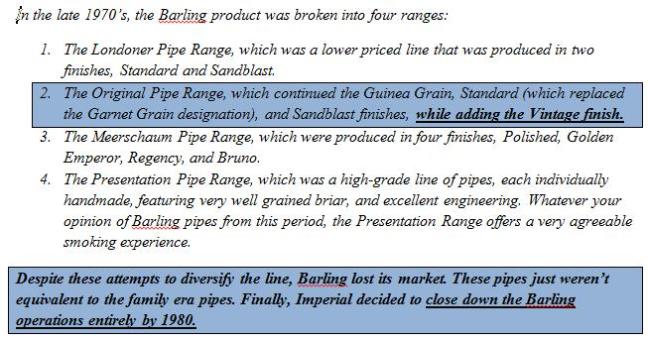
The first highlighted box above gives the information on the Vintage finish Barling in the part of the quoted article that notes the four ranges. The one I had was found in Number 2 above. The information included there gave me a starting date of the late 1970’s for the manufacture of the Barling that I was working on. In the second highlighted box I found a date of 1980 when Imperial closed down Barling operations entirely. This gives a 5-7 year window when the pipe could have been made. So I am working on either a 40-42 year old pipe or a 30-32 year old pipe. I was actually successful in finding the information on the little Barling Vintage Pot that was on my work table. Better informed than when I began, I could turn my attention to working on the pipe itself.

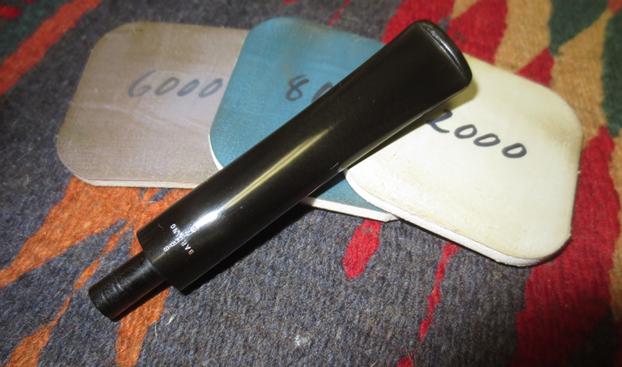
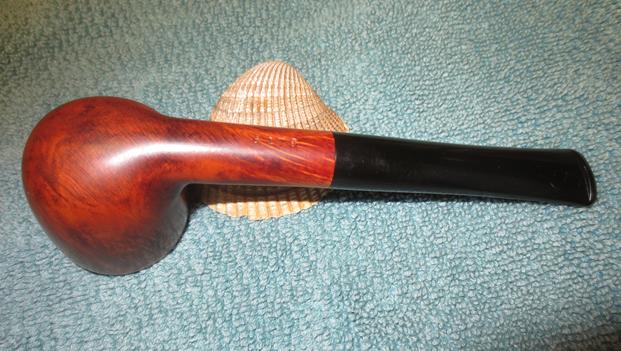
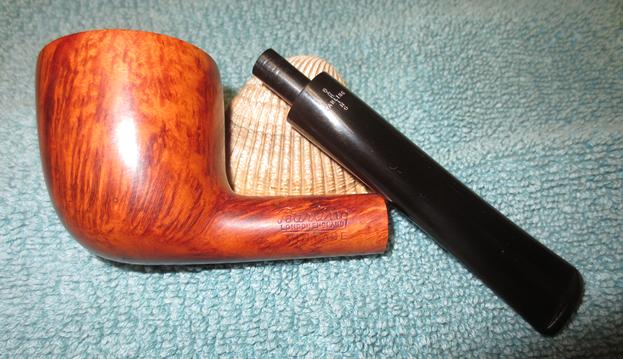
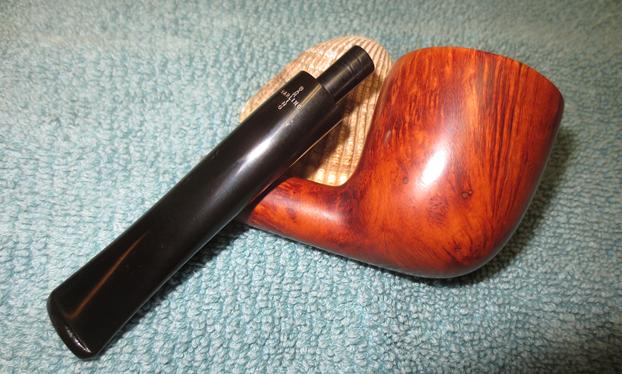
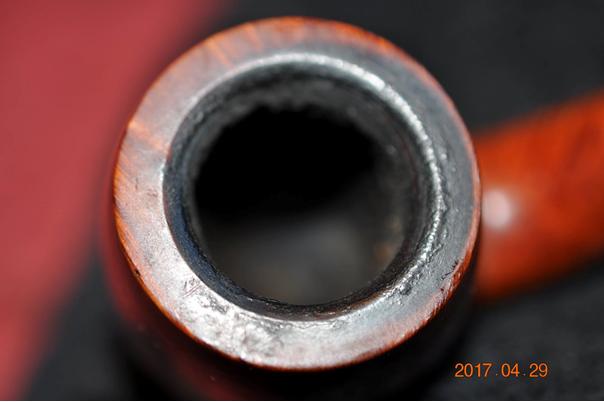
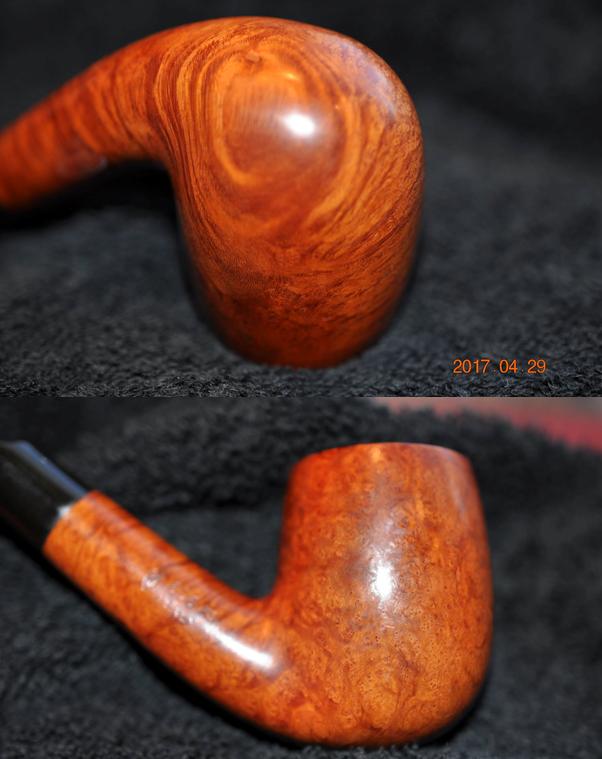
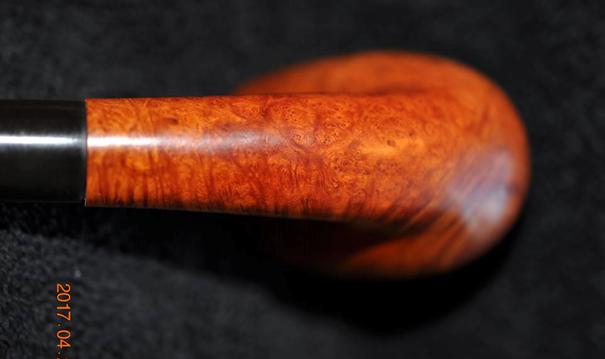
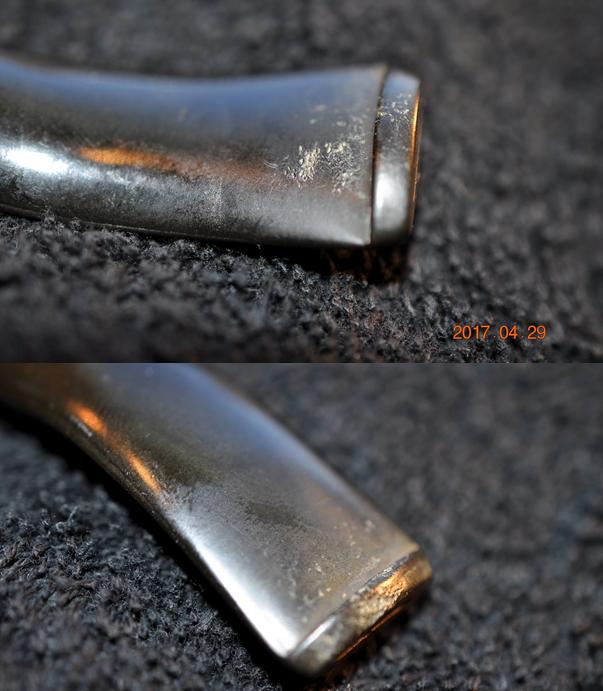
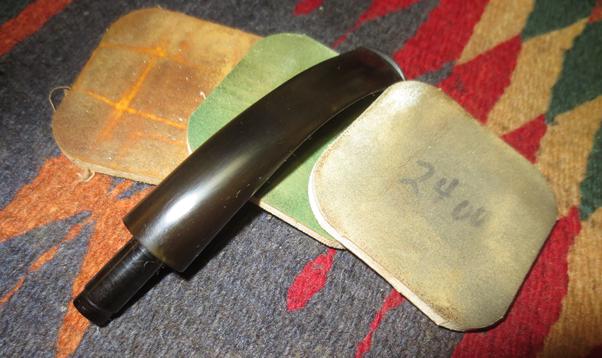
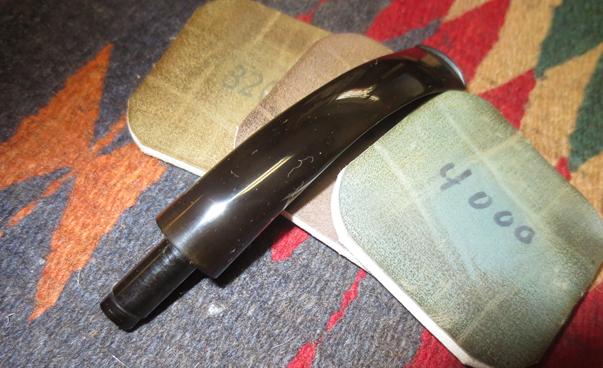
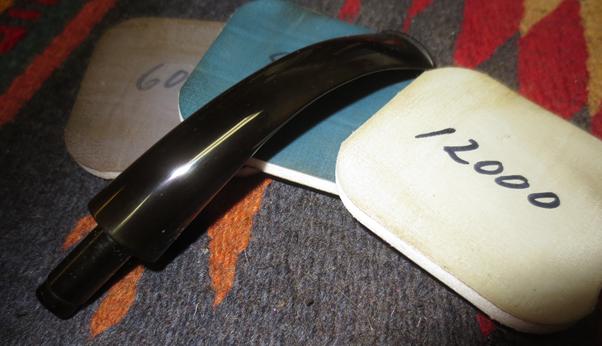
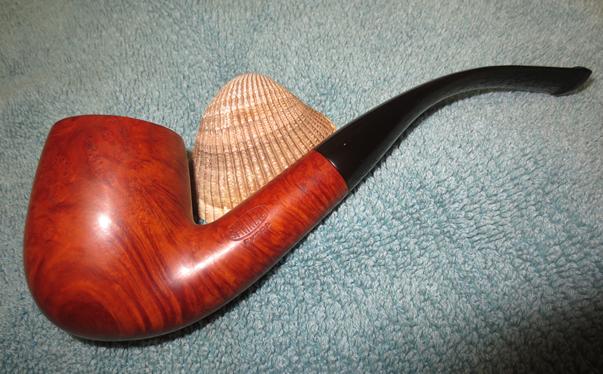
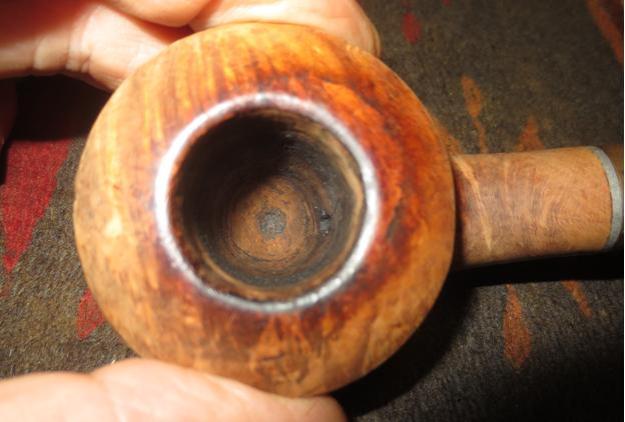
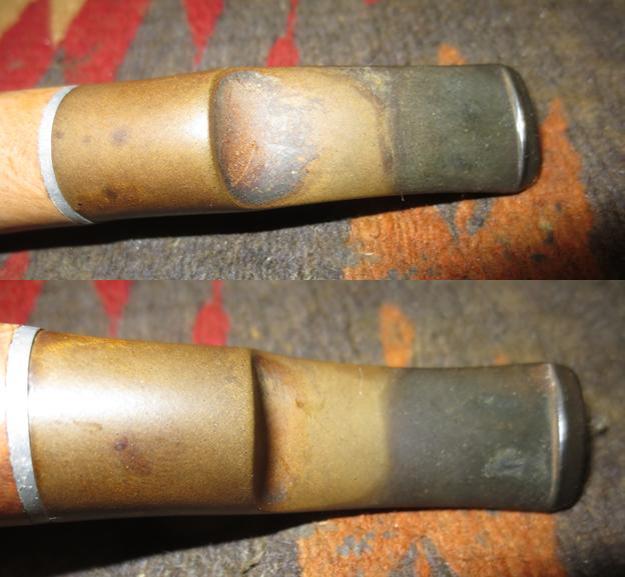
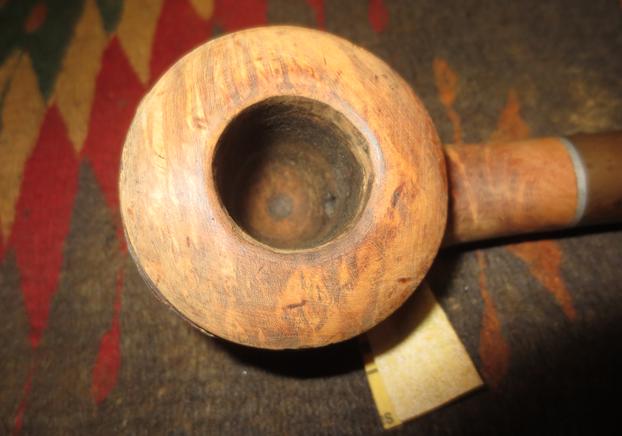
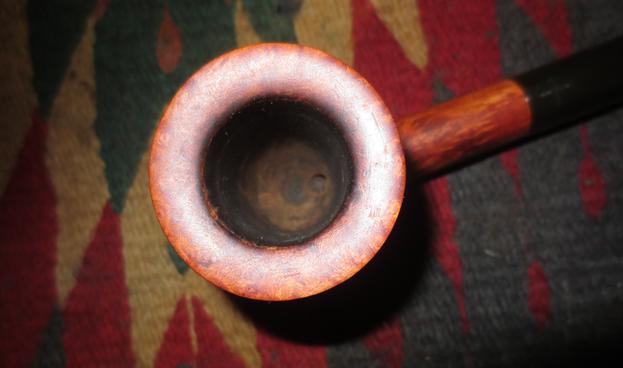
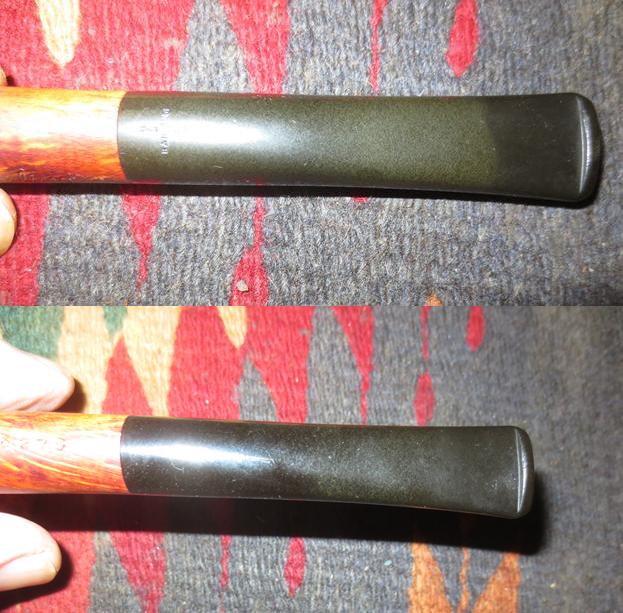
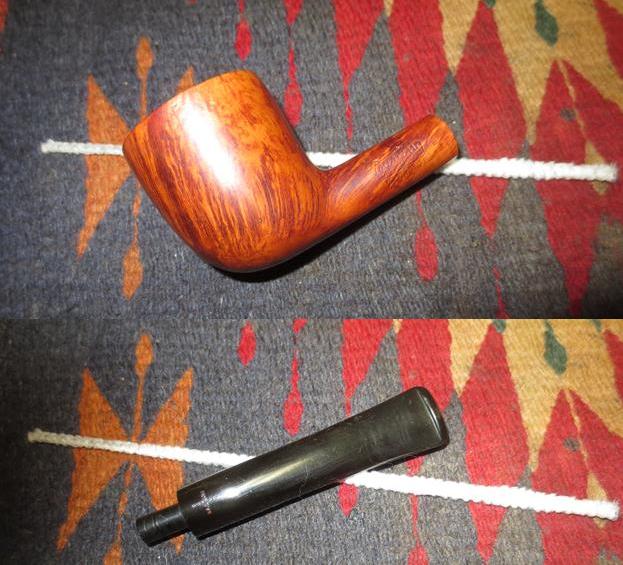
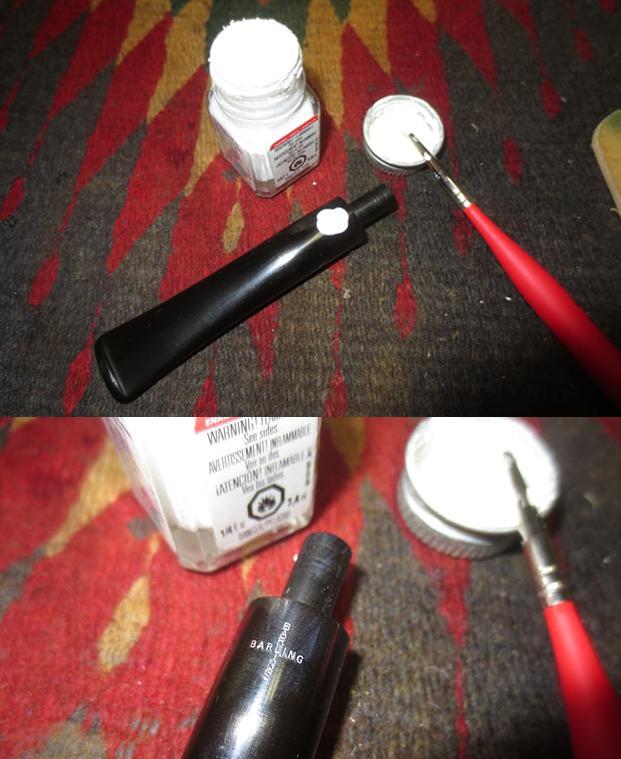
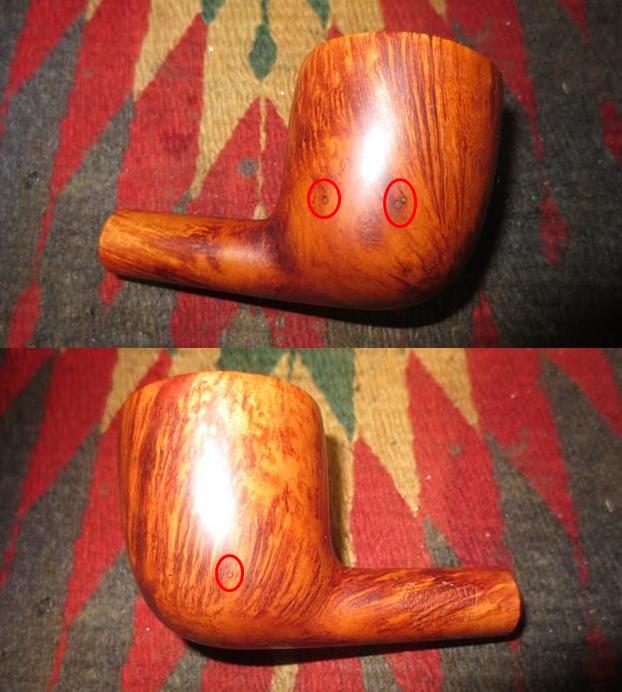
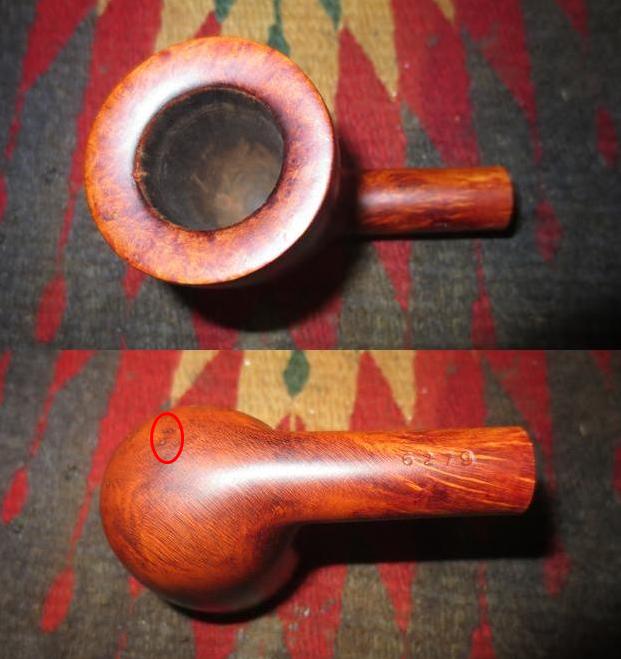
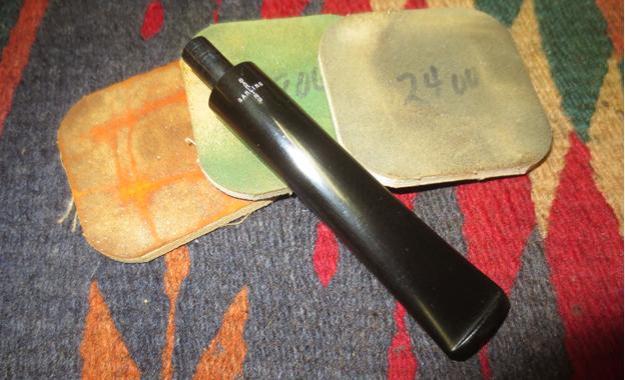
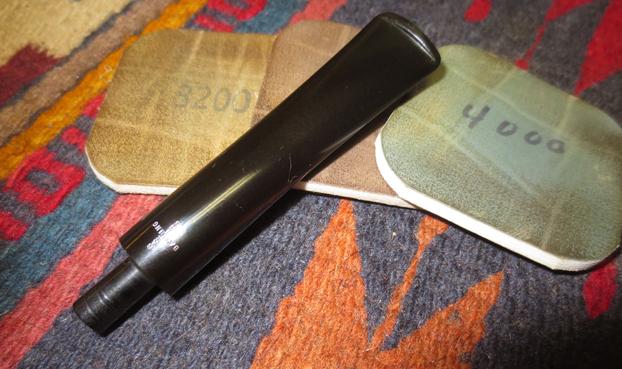
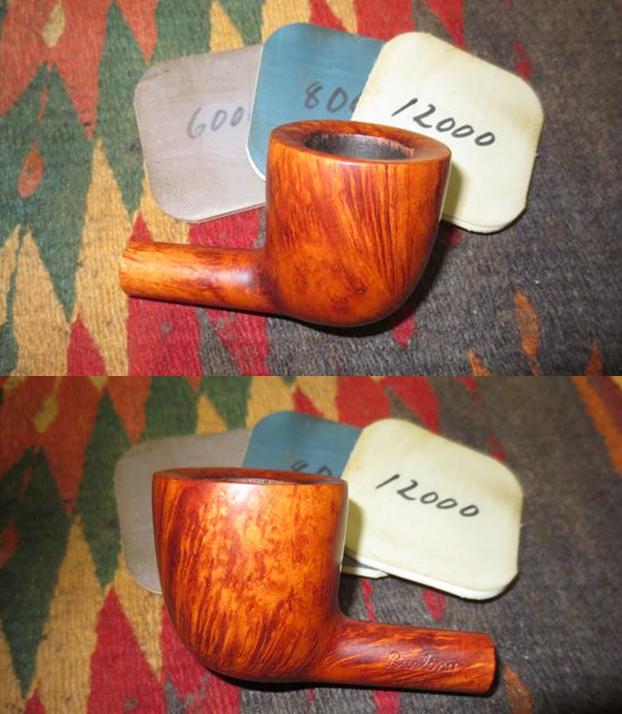
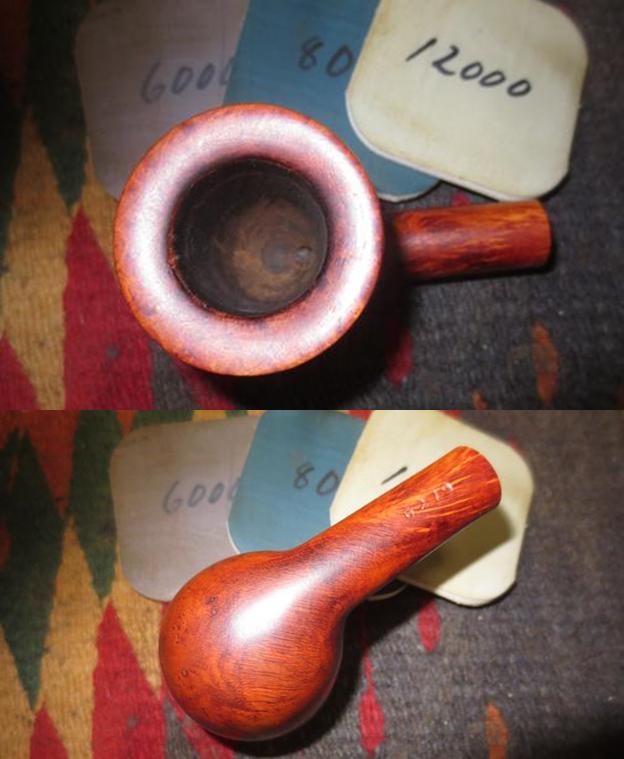
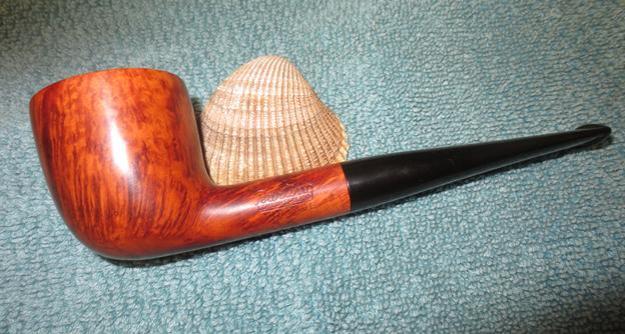
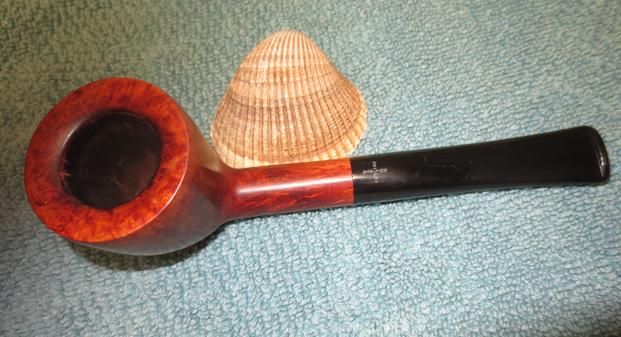
I took the next four photos of the pipe when it arrived in Vancouver. My brother had done an exceptional job cleaning it up. The pipe looked really good. The finish was clean and the rim was spotless. I took a close up photo of the rim to show the condition it was in when it came. Jeff had reamed it really well and had cleaned off all of the lava on the rim. Somehow the lava had protected the beveled rim from damage or burn marks. It was in excellent shape.The stem showed oxidation as well as tooth chatter and marks on the top and underside near the button. The Barling cross on the stem was faded but it was well stamped and could be repainted.I ran a pipe cleaner and alcohol through the airway in the stem and the shank and cleaned out the mortise with a cotton swab and alcohol to remove any remaining tars or oils in those areas. The pipe was really clean as I expected.I buffed the stem with red Tripoli and wiped it down with a damp cotton pad to remove the dust and grit that remained in the Barling Cross. I painted that area on the stem with white acrylic paint to fill in the vertical and horizontal Barling name that was crossed on the top side of the stem near the tenon end. I pushed the paint into the letters and wiped off the excess with a soft, dry cotton pad.I buffed the bowl with Blue Diamond on the buffing wheel to polish the briar. You can see the three small filled sandpits in the first photo and the one toward the bottom of the bowl in the second photo. The fourth photo shows three small fills on the bottom of the bowl. I circled the fills in red in the photos. These fills showed me what I was expecting in a pipe from this era. In the second highlighted portion of the Pipedia article that spoke of closing the pipe, it noted that:“Despite these attempts to diversify the line, Barling lost its market. These pipes just weren’t equivalent to the family era pipes.” I set the bowl aside and turned my attention to working on the stem. I polished the stem with micromesh sanding pads. I wet sanded it with 1500-2400 grit pads and rubbed it down with Obsidian Oil. I buffed the stem with red Tripoli to further remove the oxidation on the stem. I dry sanded it with 3200-12000 grit pads to polish it further. I rubbed it down with Obsidian Oil after each sanding pad to enliven the vulcanite. I gave it a final coat after the 12000 grit pad and set it aside to dry. I polished the briar with micromesh sanding pads as well. I wet sanded it with 1500-2400 grit sanding pads and wiped it down with a damp cotton pad. I dry sanded it with 3200-12000 grit pads and wiped it down after each set of three sanding pads. The more I polished the briar the more the fills on the right side and the front began to blend into the briar. Notice how they are disappearing in the following photos. After polishing with the final three pads (6000-12000 grit) the briar really shined and the fills though still present did not stick out so much. I put the stem back on the bowl and buffed the pipe with Blue Diamond on the buffing wheel. I gave both multiple coats of carnauba wax and buffed it with a clean buffing pad to raise a shine. I hand buffed it with a microfibre cloth to deepen the shine. The finished pipe is shown in the photos below. It is a beautiful pipe. Even the small fills that are around the sides and bottom of the bowl do not detract from the great shape and look of the pipe. This Barling Vintage pipe will soon be on sale on the rebornpipes store. It will make a great addition to someone’s rack and should be a good smoker as the mechanics are really well done. The dimensions are Length: 5 ¾ inches, Height: 1 ¾ inches, Outside bowl diameter: 1 ½ inches, Chamber diameter: 7/8 inches. Check it out there and if you are interested email me at slaug@uniserve.com or send me a message on Facebook and the pipe can be yours. Thanks for looking.
Refreshing a Nording Hand Made Freehand Pipe


Blog by Steve Laug

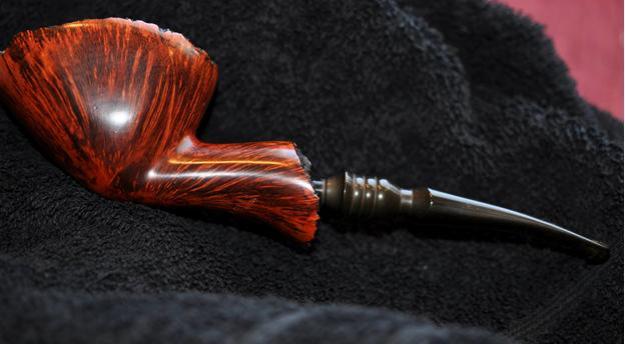
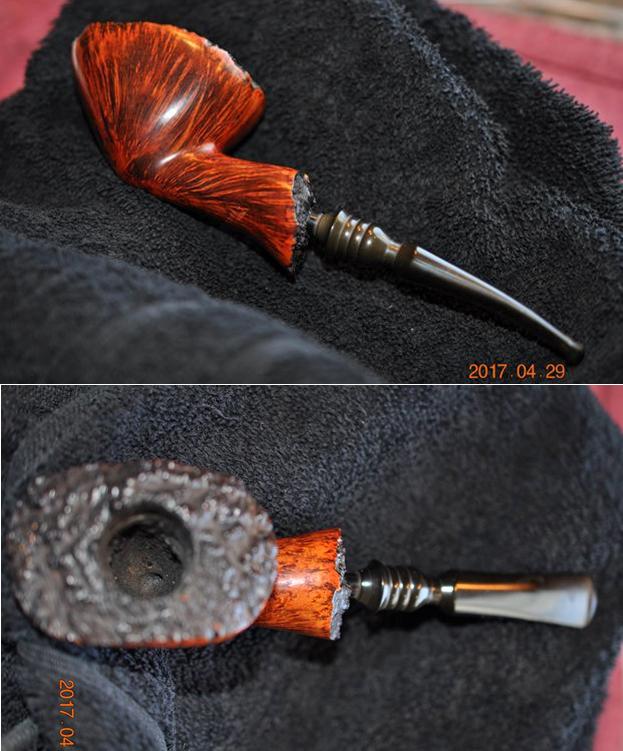
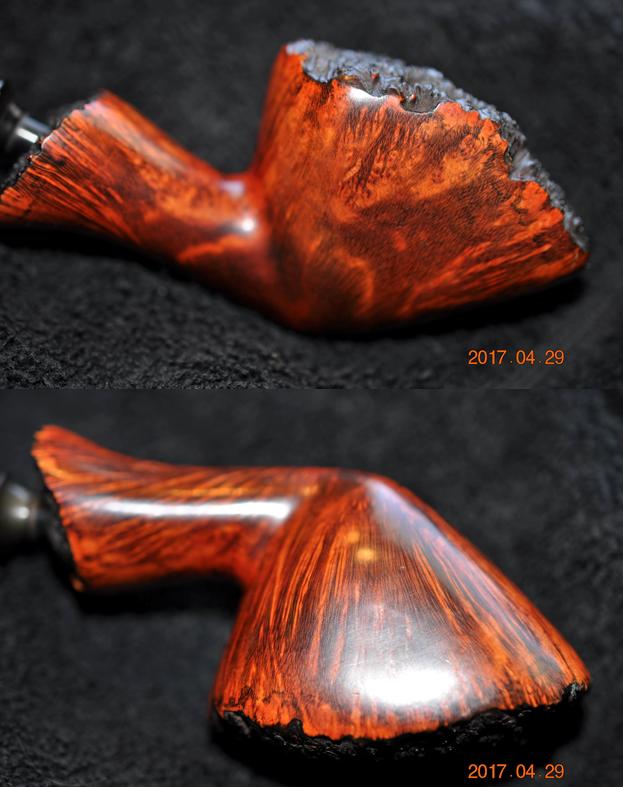
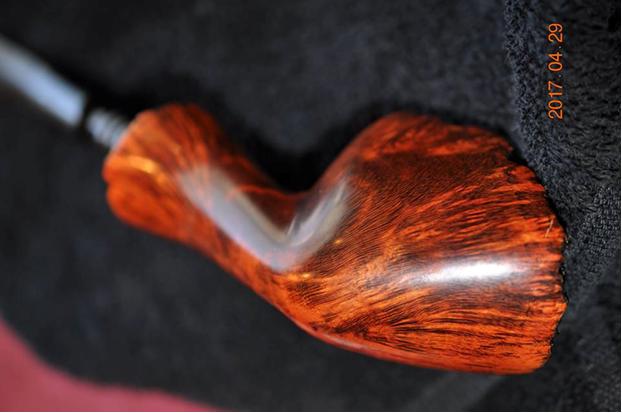
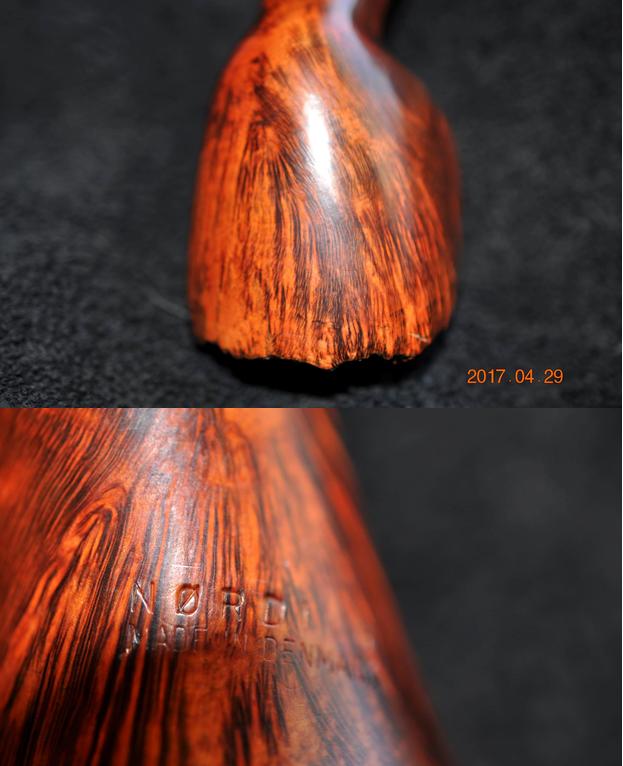
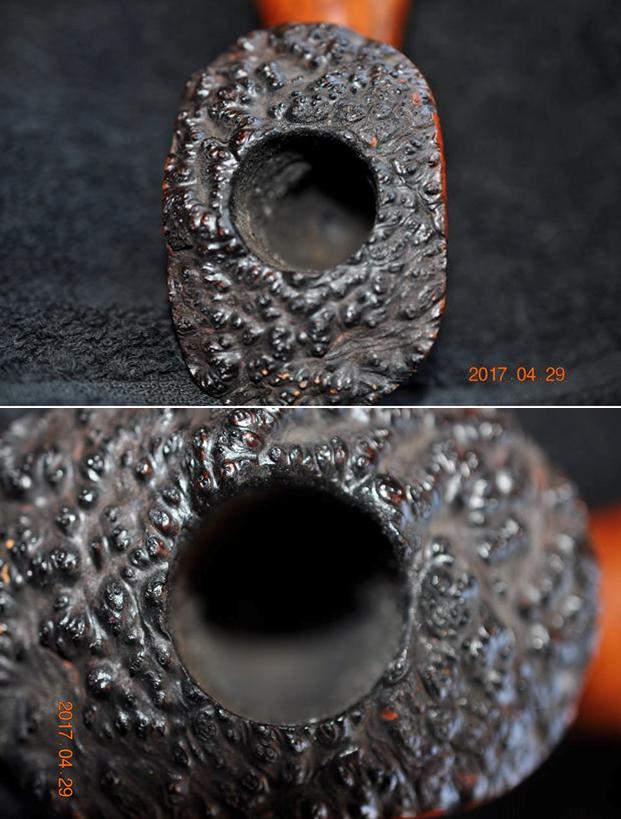
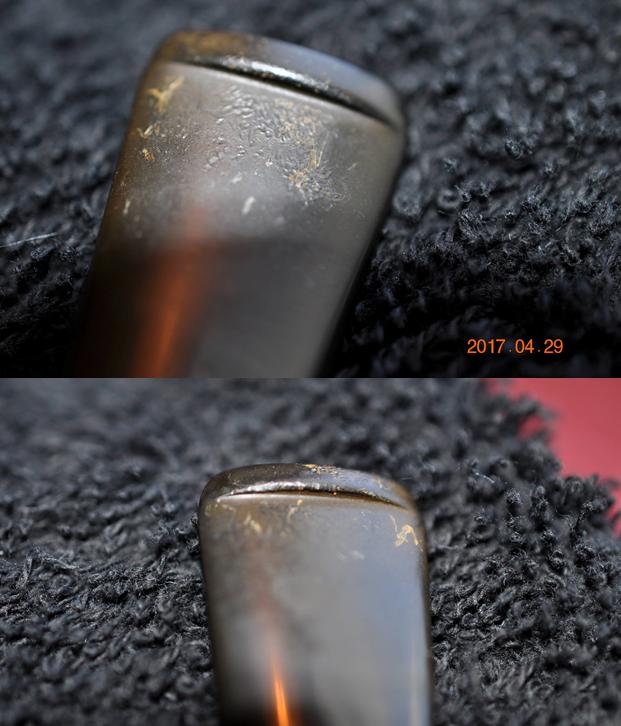
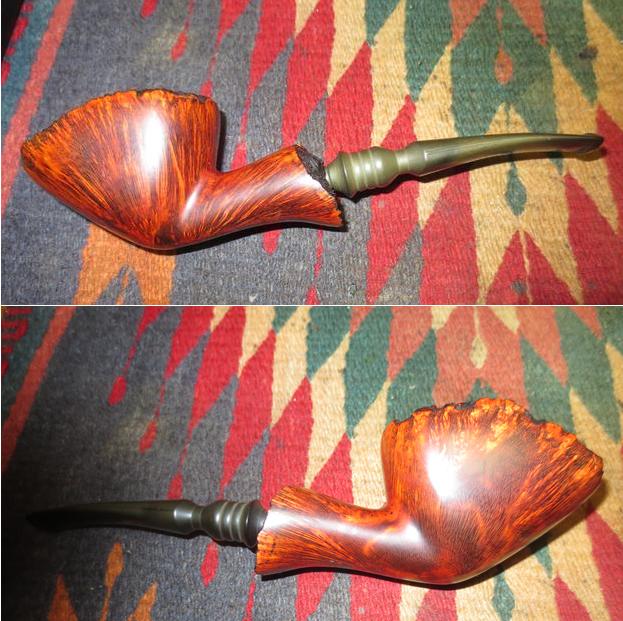
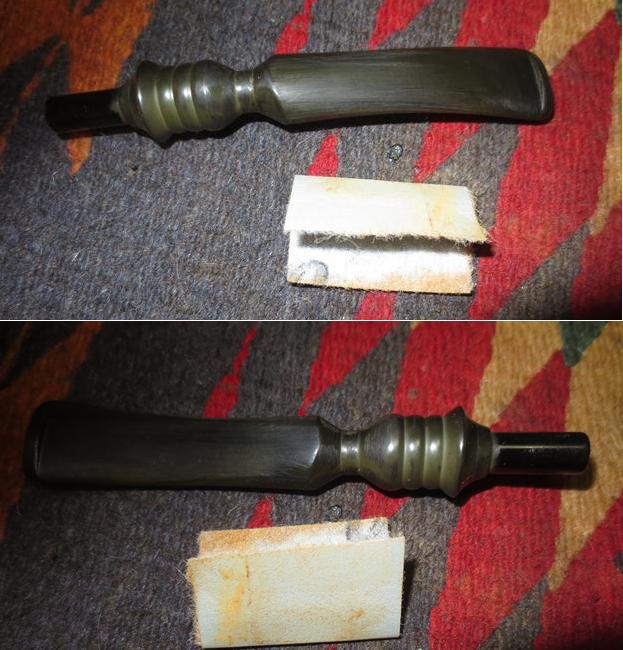
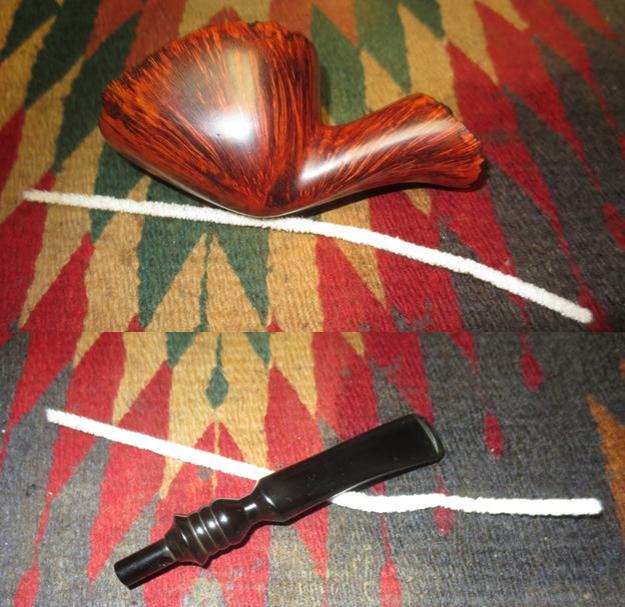
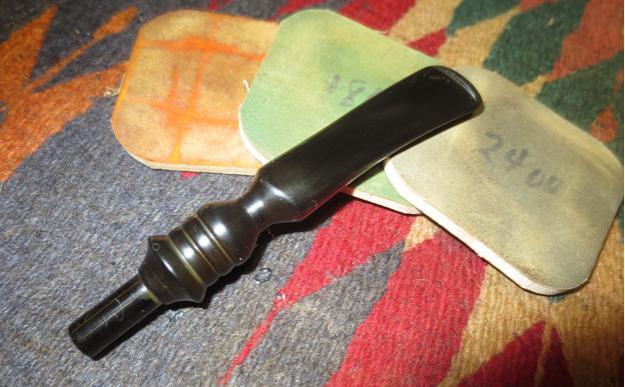
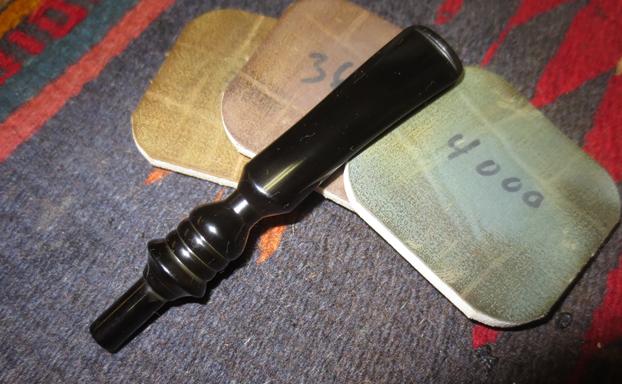
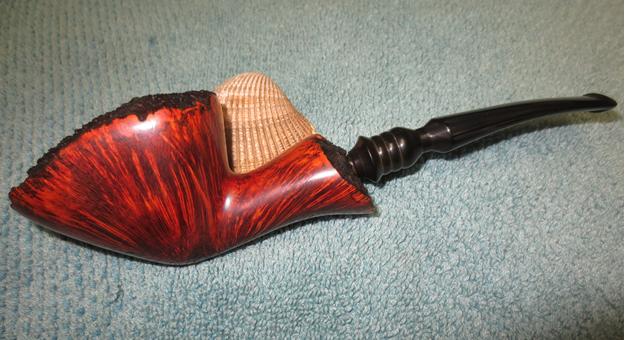
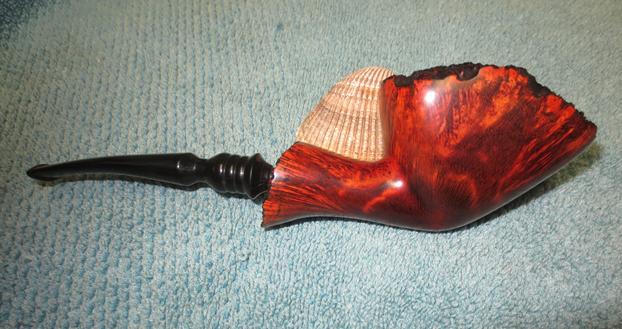
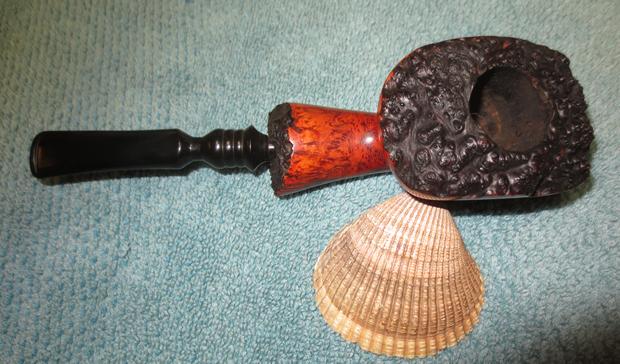
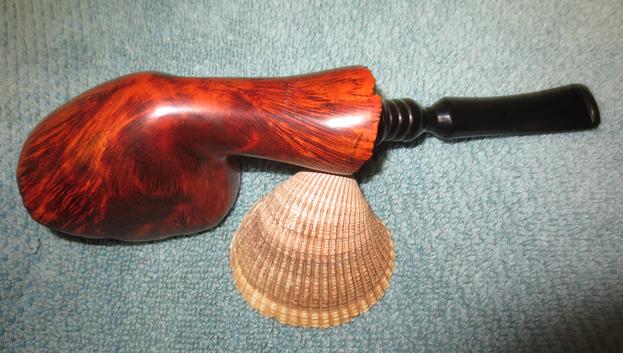
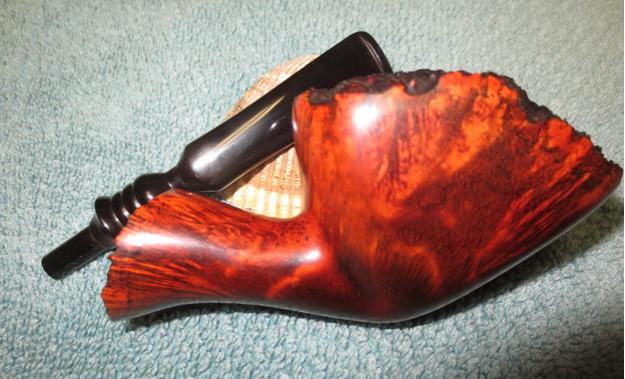
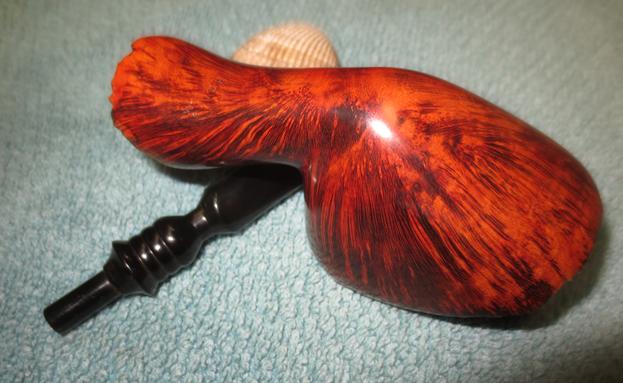
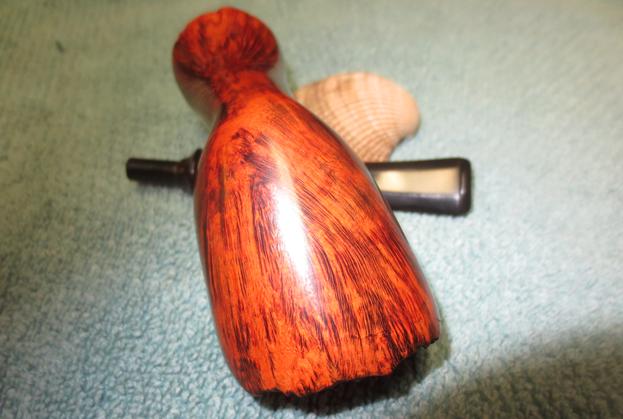
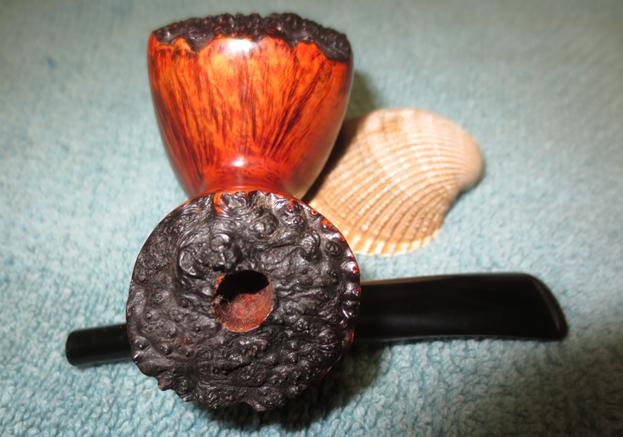
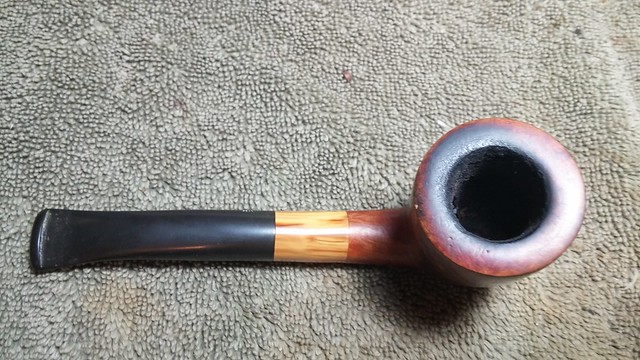
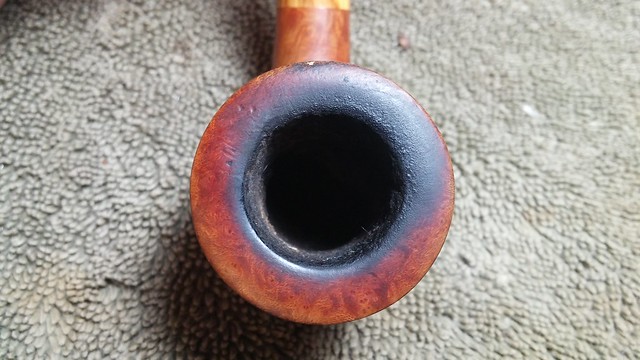
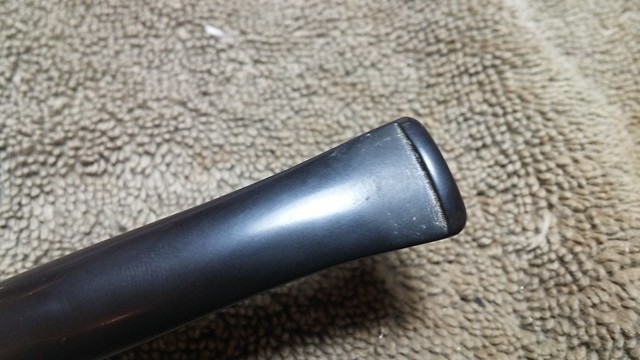
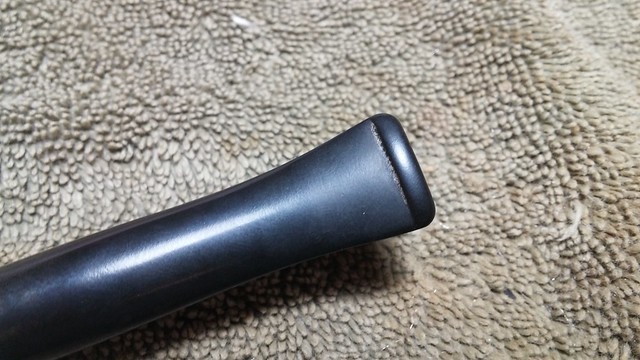
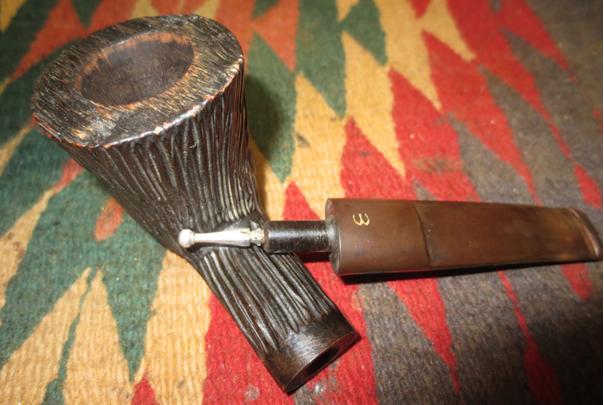
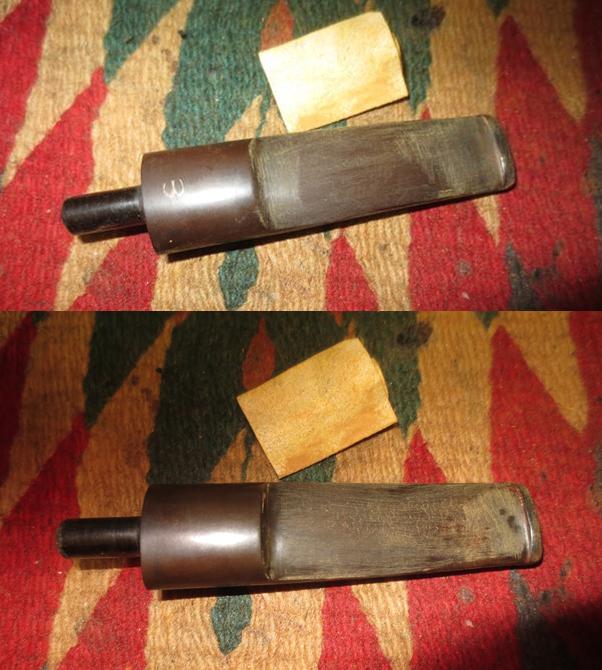
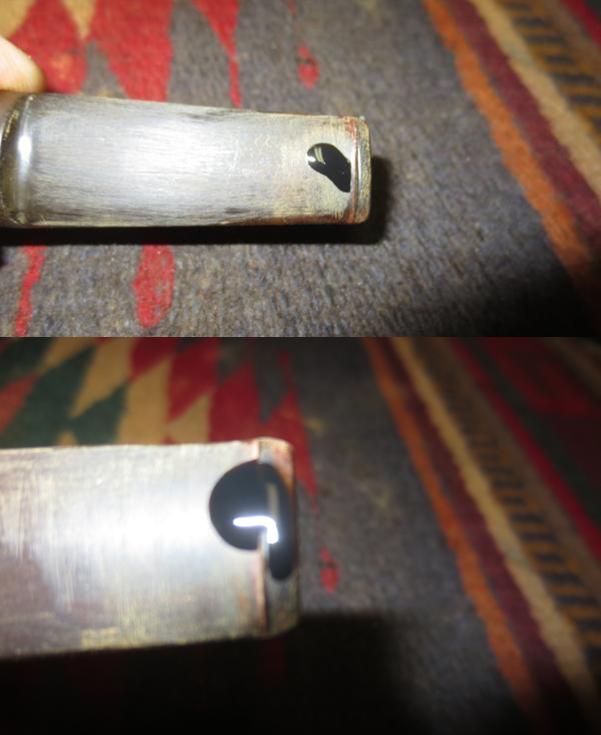
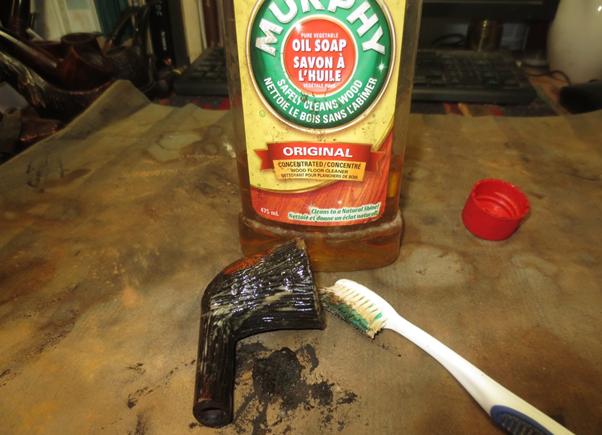
One of the most unusual pipes in the estate pipes that my brother Jeff purchased and sent to me recently was a freehand that is stamped on the underside of the shank with the words NORDING over MADE IN DENMARK. The plateau on the top of the bowl and the end of the shank is black in colour and is rough to the touch. It is a nice contrast to the cherry and brown stain of the rest of the bowl and shank. The smooth portions are stained with a contrast of a dark stain and a red cherry stain. The contrast is very beautiful and makes the grain pop. The stem is a nicely turned freehand style stem. There is a barrel at the end of the tenon that has several turns that make it look barrel like. There is then a pinched area above the barrel and then a tapered stem.The plateau on the rim and the shank end were dirty with dust and grime. The smooth portion of the bowl and shank was grimy but undamaged. There was also no damage to the plateau portions of the bowl. There was a light cake in the bowl. My brother took the photo above and the rest of the photos that follow to show the condition of the pipe when he brought it home.He took some photos from a variety of angles around the bowl to show the grain that covered the bowl sides, bottom and the shank sides, top and bottom. The last photo shows the Nording over Made in Denmark stamping on the underside of the shank. He took some close up photos of the rim top to show the condition of the plateau. It was undamaged but dirty. You can see the condition of the cake in the bowl in these photos.The stem was oxidized and had the now familiar tooth chatter and tooth marks in the vulcanite on both sides near the button. They were also on the top and bottom sides of the button.My brother did his usual good job cleaning the inside and the outside of the pipe. He reamed it with a PipNet reamer and cleaned out the mortise and the airway in the shank and the stem. He scrubbed the finish with Murphy’s Oil Soap and a tooth brush to clean out the dust from the plateau on the rim and the shank end. He scrubbed the stem as well. The pipe was impeccably clean when it arrived in Vancouver. I took the following four photos to show the condition before I finished the restoration. I took a close up photo of the rim top. There were some spots on the rim that needed to be touched up with black stain. The bowl was very clean.The next two photos show the stem on both sides. The oxidation is more evident on the top than the bottom. The tooth chatter and tooth marks are on both the top and the bottom of the stem near the button.I touched up the spots on the rim top with a black Sharpie pen and then waxed the plateau on the rim and the shank end with Conservator’s Wax and buffed it with a shoe brush to raise the shine.I lightly buffed the bowl with Blue Diamond on the buffing wheel and hand polished it. I took photos of what the bowl looked like at this point in the process. I laid the bowl aside and worked on the stem. I sanded the stem with 320 grit sandpaper to break up the oxidation on the surface. I worked the sandpaper into the grooves in the tenon end of the stem. The oxidation still remained but it was much softer and closer to the surface.I wiped the stem down with some Obsidian Oil and then cleaned out the airway in the stem and cleaned the airway in the shank and the mortise at the same time. The interior was very clean so it took no effort to clean it out.I polished the stem with micromesh sanding pads – wet sanding with 1500-2400 grit pads and starting the process of polishing it. I rubbed it down with Obsidian Oil and then took it to the buffer and buffed it with red Tripoli. I worked on all the rings and surfaces of the stem with the Tripoli and the wheel to remove more of the oxidation. I polished it more by dry sanding it with 3200-1200 grit pads to further remove the oxidation and bring the shine to the surface. I gave it several more coats of Obsidian Oil and set it aside to let the oil be absorbed in to the vulcanite. I buffed the finished pipe with Blue Diamond polish on the wheel carefully avoiding the plateau areas. I polished the minute scratches out of the sides of the bowl and from the surface of the stem. I gave the smooth portions of the bowl and shank and the stem multiple coats of carnauba wax and buffed it with a clean buffing pad to raise the shine. I hand buffed the entire pipe with a soft microfibre cloth to deepen the shine. The finished pipe is shown in the photos that follow. It is a beautiful piece of briar and the stains on the plateau portions and the smooth provide a good contrast. The plateau portions and the black of the vulcanite stem highlight the dark striations of the grain on the bowl sides. The dimensions of the pipe are Length: 7 inches, Height: 2 inches, Diameter of the outer bowl: 1 ¾ inches, Chamber diameter: 7/8 inches. This pipe is available to any of you who want to add it to their collection. It is just a bit large for my liking or I would keep it myself. I will post it on the rebornpipes store shortly. Send me an email to slaug@uniserve.com or a private message on Facebook. Thanks for looking.
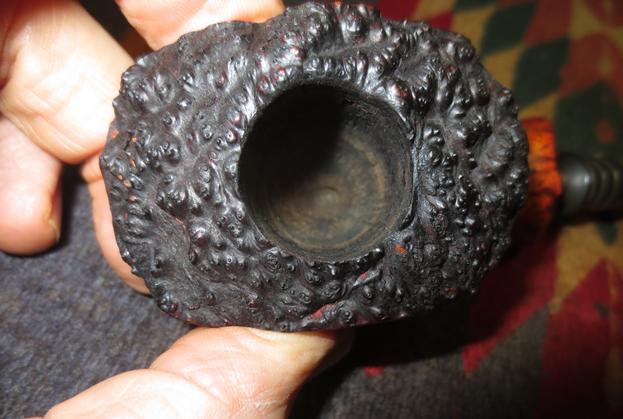
Finally: Comoy’s Old Bruyere 256 Restoration


By Al Jones

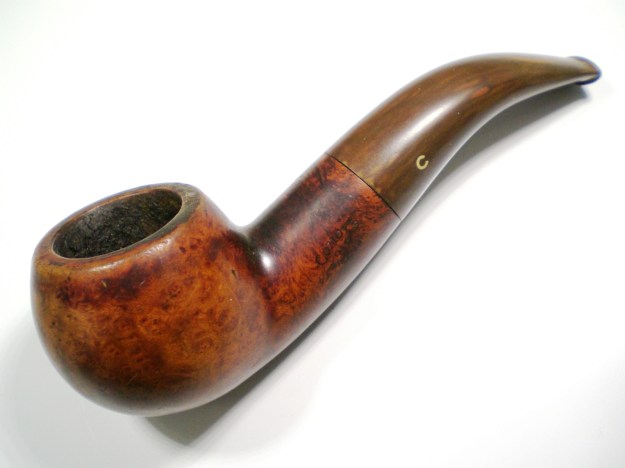
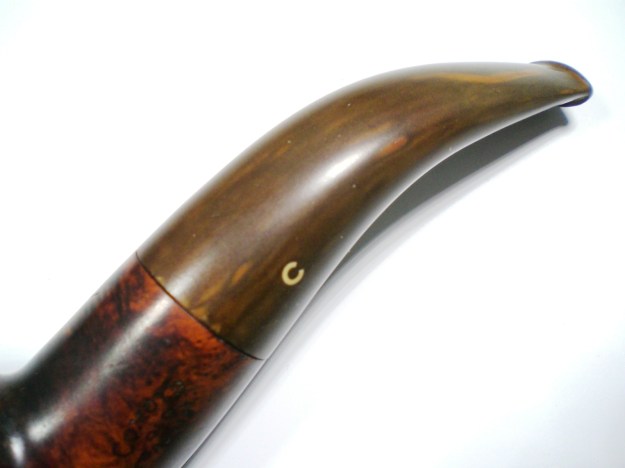
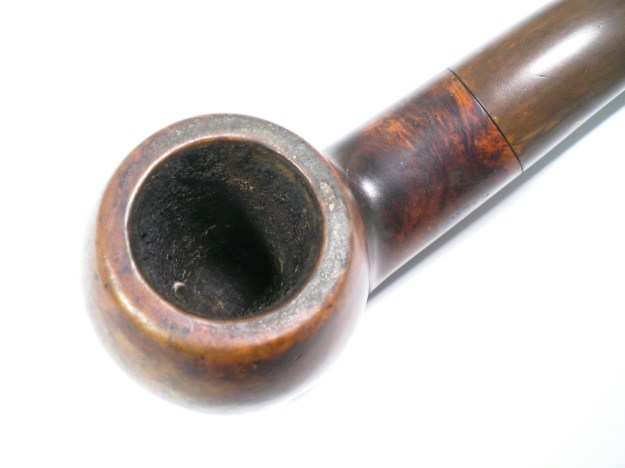
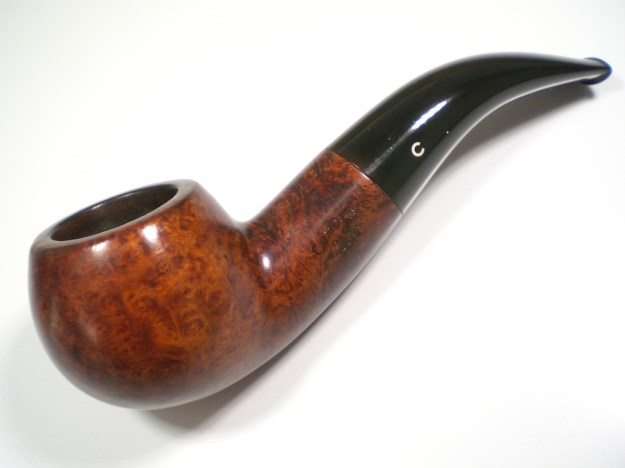
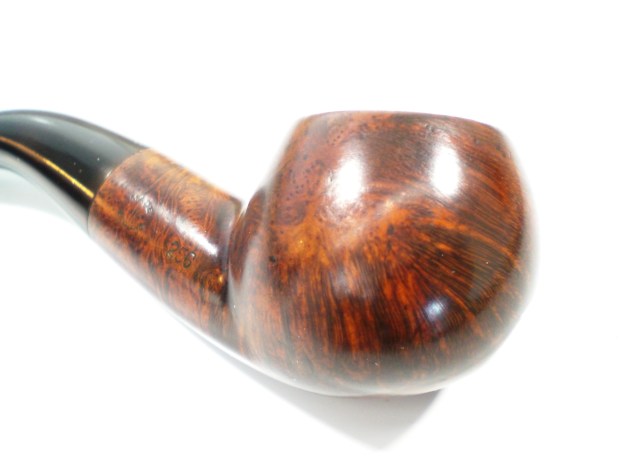
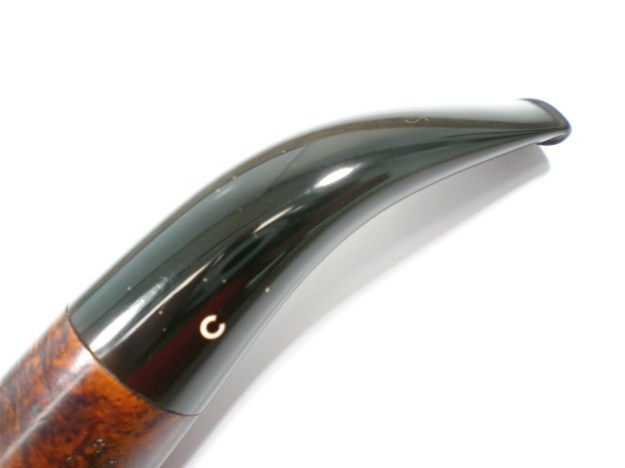
If you follow my contributions to this blog, you’ve heard me mention my “Holy Grail” list. I started this list six years ago and it was made up of specific brand shapes. Most were Rhodesians, Authors or Bulldogs. The list grew to fifteen pipes, with all British marquees, save for two Castellos. I’ves slowly but surely been able to find all but one piece. A few years ago, it appeared that securing a Comoy’s shape 256, the Author; was going to be challenging. Several shape 256 Comoy’s seconds were sold last year, but I was holding out for a Comoy’s with the beautiful 3-piece drilled “C” stem logo. The last Comoys 256 I can find on Ebay appears to have been sold in 2013.

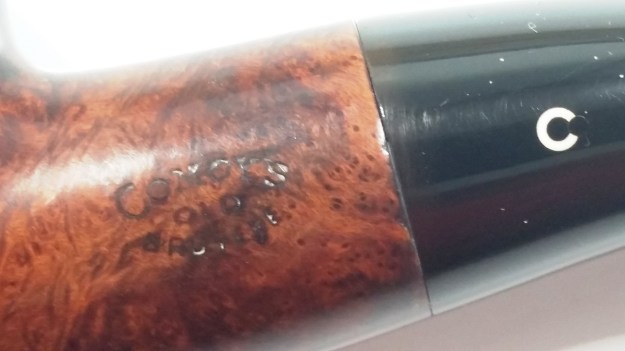
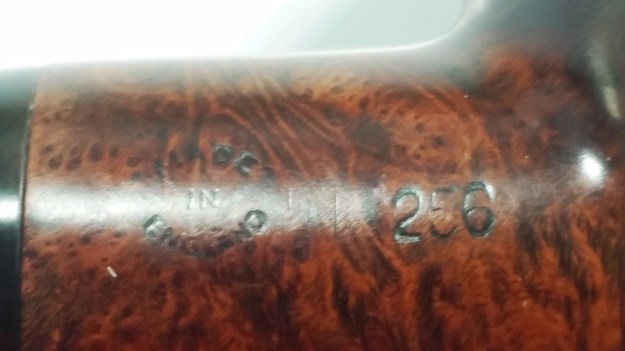
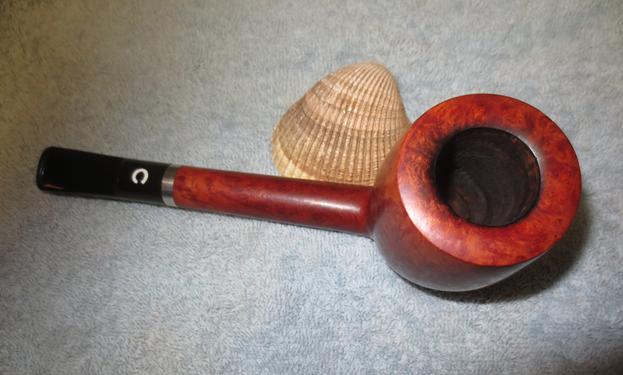
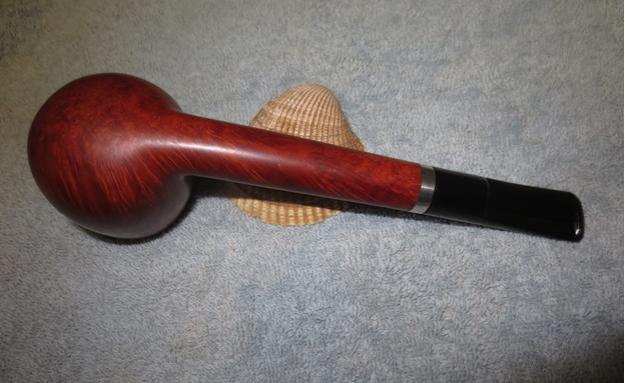
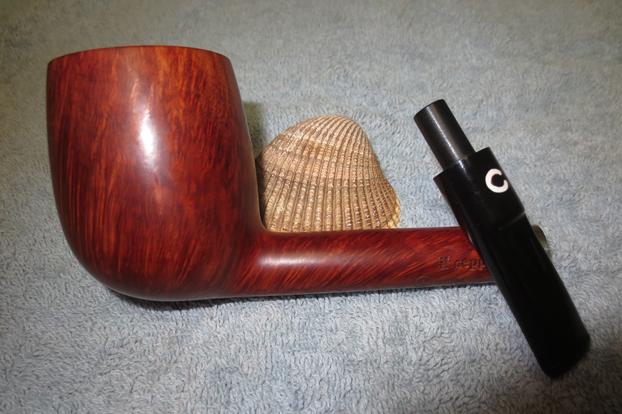
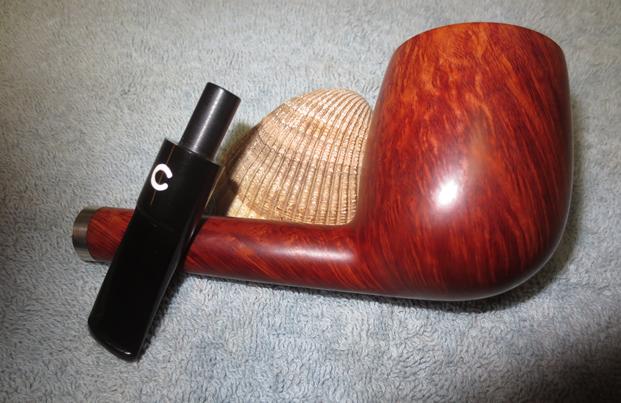
The Comoy’s logo and the country of manufacture mark indicate that the pipe was made between the early 1920’s and the 1930’s. Pipepedia describes the football (rugby) shaped COM as:

Made in England

This is stamped in a circle with “MADE” at the top, “IN” in the middle, and “ENGLAND” forming the bottom of the circle. This can be seen on a Cecil as early as 1910 and on an Old Bruyere of 1921 and more frequent from the 1930s. It can also appear as “MADE” arched, “IN” below, and “ENGLAND” arched the other way. These stamps are in an oval rugby-ball shape rather than a circle round shape.

In the Pipedia article on Comoy’s, the Old Bruyere finish is described as:

Old Bruyere. I have two Old Bruyeres dated 1921 and a 1931 sales leaflet that states, “Out of every gross of Bruyere pipe bowls made, only 4 are good enough to be called Comoy’s Old Bruyere.” At this time, therefore, it was definitely a high grade.

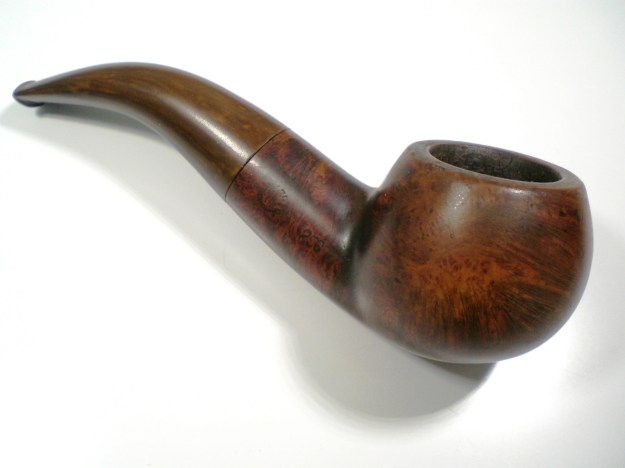
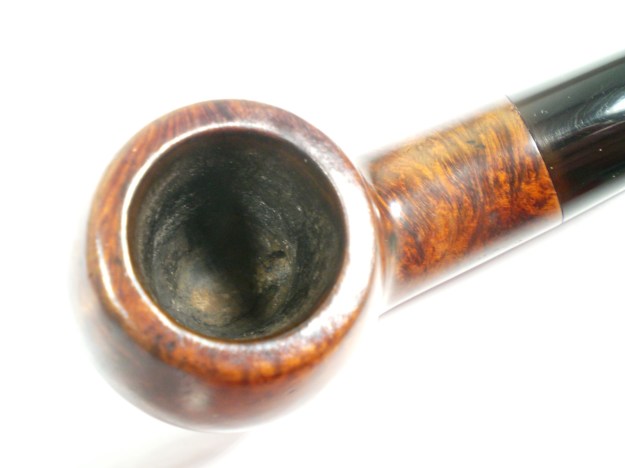
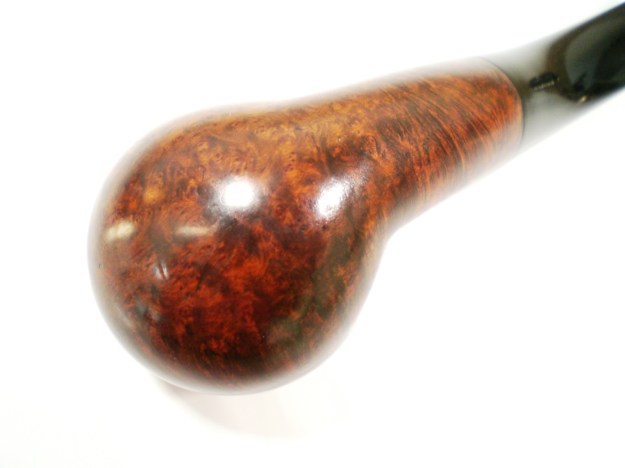
The pipe was heavy oxidized, but the stem looked to be in pretty decent shape. There was some build-up on the rim and a mild cake build-up. The briar was covered in grime but the nomenclature was legible. The pipe appeared to have been left in direct sunlight, as portions of the stain were faded.

Using my Pipenet reamer, I carefully removed the cake. To finish, I wrapped a piece of 320 grit paper around a suitable bit, which is my preferred method of finishing a bowl. The bowl was in excellent shape, with no damage. I used a cloth with warm, mildy soapy water to remove the grime from the exterior of the briar. 6000 grade micromesh was used to remove the build-up on the bowl top. The bowl was filled with sea salt and alcohol, and left to soak for several hours.

While the bowl was soaking, I put a dab of grease on the “C” stem logo and soaked it in a mild Oxy-Clean solution.

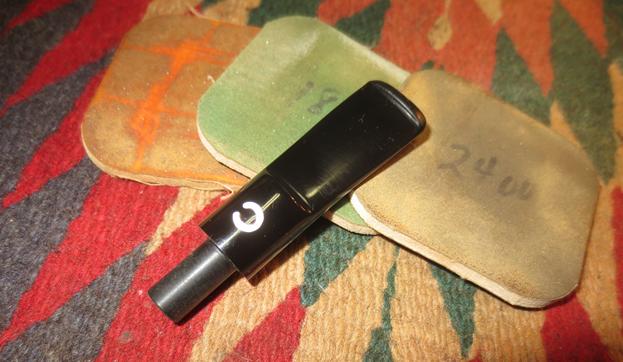
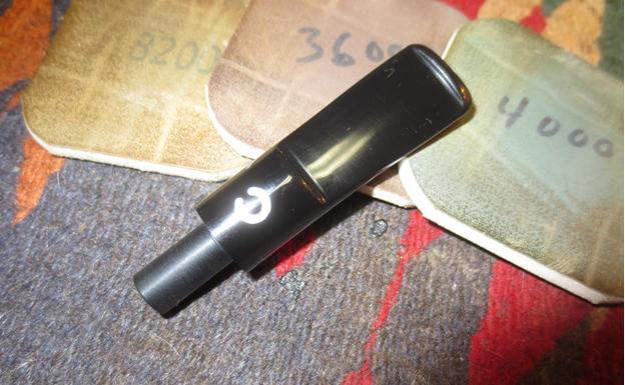
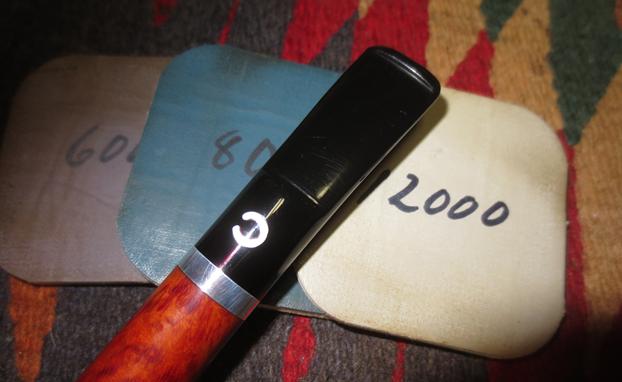
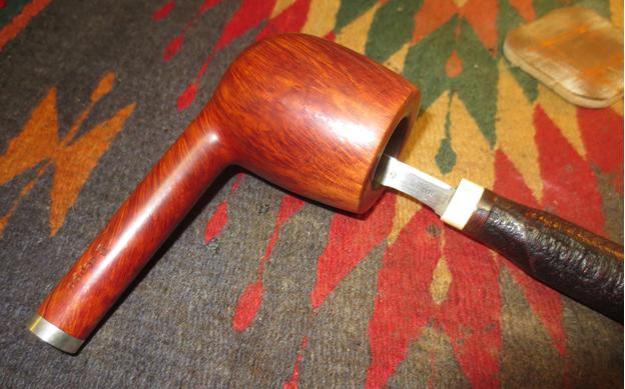
Following the soaks, I used a bristle brush to clean the shank and then mounted the stem to begin to use oxidation. I used a plastic colllar to get close to the stem edge and also to keep too much water from leaking over to the briar, which could further lighten the stain. There were a few teeth indentions and nearly all responded to heat from a lighter to raise them. I then used 400 grade wet paper to remove the heavy oxidation, then 800 grade, followed by 1500 and 2000 grade paper. 8,000 and 12,000 micromesh was then used as a final prep. The stem was then buffed with White Diamond and Meguiars Plastic polish. The briar was buffed with White Diamond, being careful to stay away from the nomenclature. This was followed by several coats of Carnuba wax.

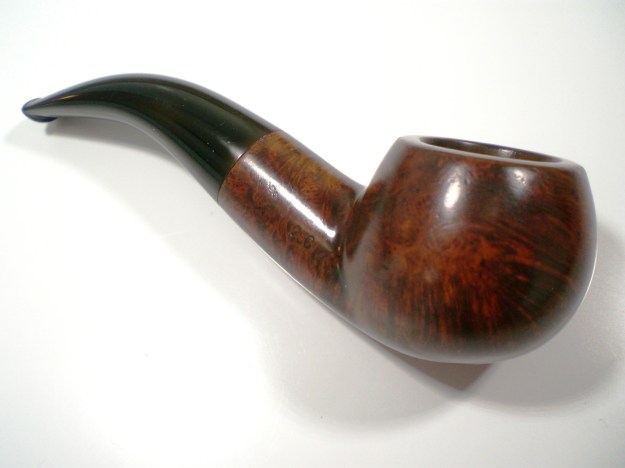
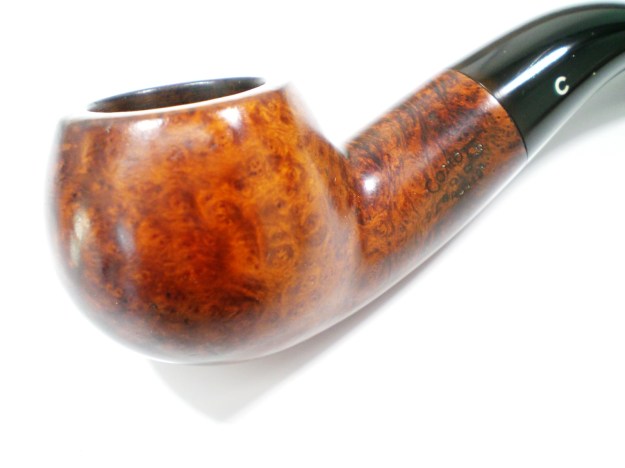
Below is the finished pipe, which will see regular use on my watch.

Restoring a Savinelli Extra 606KS with an Accidental Stem


Blog by Steve Laug

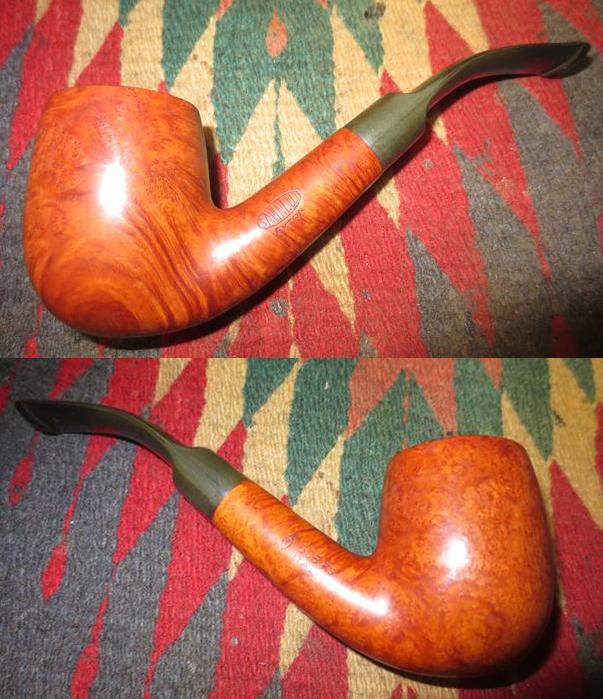
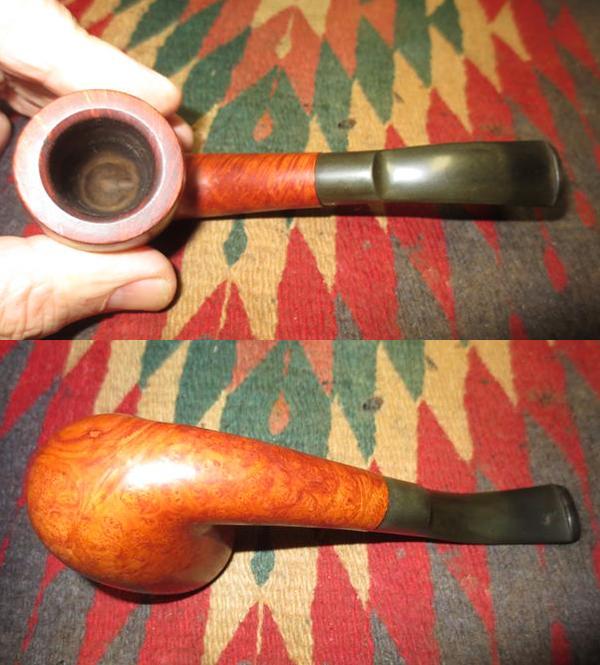
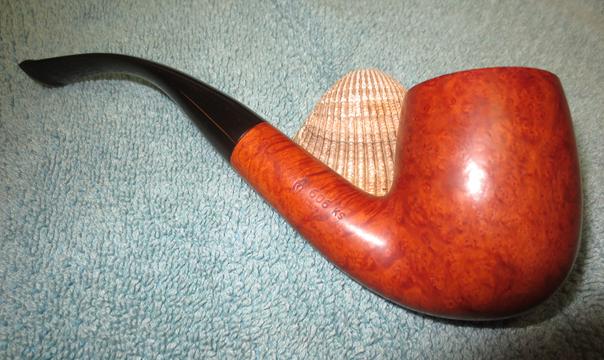
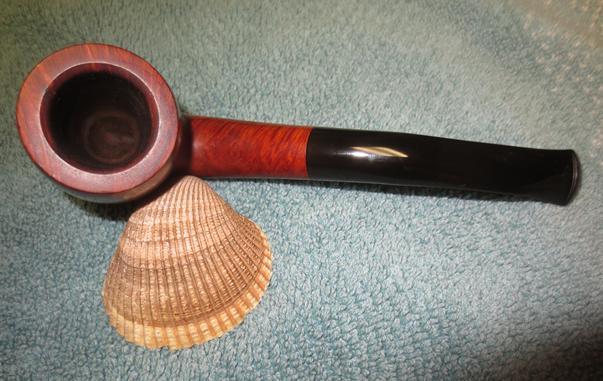
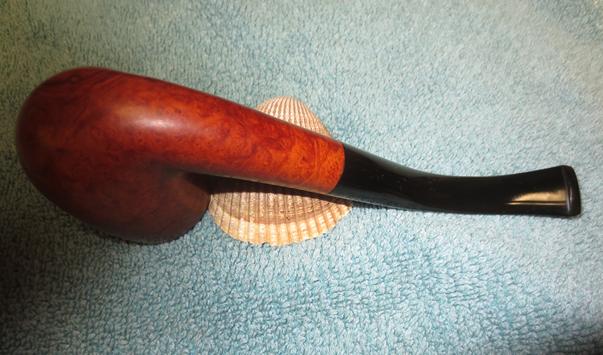
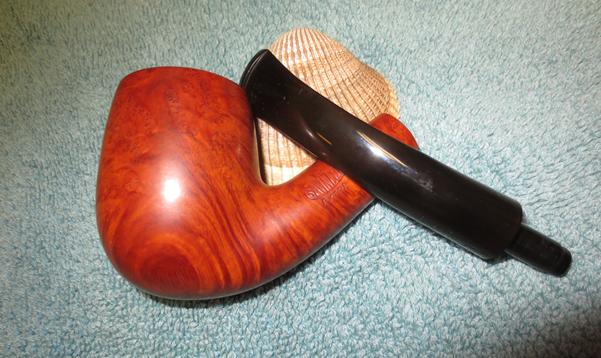
The next pipe from the estate lot that I brought to my work table was a Savinelli Extra Bent Billiard. It is stamped Savinelli in an oval over Extra on the left side of the shank and on the right side was the Savinelli shield with an S inside and to the left of that was the shape number 606KS over Italy. It was a great looking piece of briar with swirled grain on the left side of the bowl and birdseye on the right side and cross grain and mixed grain around the shank and the front and back of the bowl. Even the rim has some nice grain.

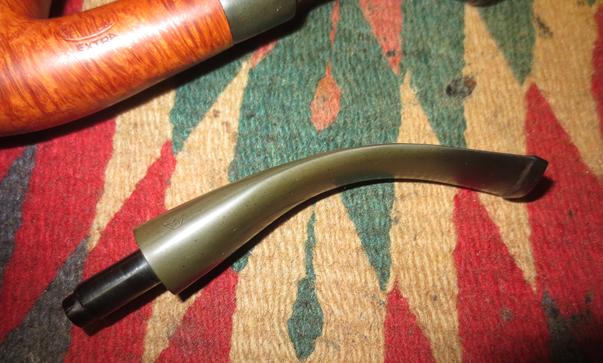
The odd thing was that the stem that was on the pipe was obviously not the right one. The diameter of the shank and the stem did not match. It was a saddle stem and was a little shorter than the original one. It was obvious that the estate owner had put the stem in place on the shank and used it on this pipe because it had the same tooth chatter and marks as the rest of the lot.

My brother took photos of the pipe before he cleaned it up. I have included those here. There was a cake in the bowl and the lava had overflowed onto the rim top. The lava was heavier on the back side of the rim top. The inner bevel and the outer edge of the bowl were protected and they looked to be in good shape under the grime.He took some close up photos of the bowl sides and bottom of the bowl to show the grain and the condition of the pipe. The next photos show the tooth chatter and tooth marks on both sides of the stem near the button. Even though it was the incorrect stem it was definitely the one that had been used by the owner of the rest of the pipes.My brother did a thorough cleaning of the pipe – the bowl had been reamed and the finish scrubbed with Murphy’s Oil Soap to remove the grime and the tarry build up on the rim top and beveled inner edge. The inside had been scrubbed clean as well. When the pipe arrived in Vancouver it was very clean. I took the next four photos to show the condition of the pipe when it arrived here. I took a close up photo of the rim and the inside of the bowl to show how clean both were. He had really done a great job on the bowl and rim.The next two photos show the condition of the stem but what you should notice is how the diameter of the shank and the stem do not match. The stem is slightly smaller in diameter than the shank. The joint is circled in red in both photos below. Look at the difference in the shank and the stem diameter inside the red circle.My brother has picked up my habit of picking up loose stems along with pipes and he saw a stem sitting at the sale. It was priced high so he left it and went back the next day to pick it up half price. He bought it, cleaned it and put it in the box of cleaned pipes that he sent to Vancouver. When I unpacked the box I put the stem on the top of my work table. When I was working on this pipe I happened to glance at the stem on the table. It looked like it was the correct diameter stem for the Savinelli. There was a faint Savinelli Crown stamp on the left side of the stem. I was pretty sure that this was the right stem for the pipe. I removed the incorrect stem from the shank and put the new stem in place there. The fit was perfect and it looked really good. The new stem also had the characteristic tooth chatter and marks as all of the other stems. They are on both sides of the stem near the button. The stem was also lightly oxidized.I sanded the tooth marks and chatter with 320 grit sandpaper to remove them from the surface of the vulcanite. Fortunately like the other stems the tooth marks and chatter were not too deep in the stem surface.I ran a pipe cleaner and alcohol through the airway in the shank and stem and folded it and wiped the inside of the mortise clean. The pipe was spotless on the inside.I cleaned up the remnants of cake in the bowl with a Savinelli Fitsall Pipe Knife. I scraped the cake back to bare briar and smoothed out the bowl walls.I polished the stem with micromesh sanding pads – wet sanding with 1500-2400 grit pads. I rubbed the stem down with Obsidian Oil. At this point the light of the flash revealed more oxidation on the stem.I put the stem in the shank and buffed the pipe with red Tripoli to remove more of the oxidation from the stem surface. I polished it again with 3200-4000 grit micromesh pads and rubbed it down with another coat of Obsidian Oil. It is definitely improving but there is still oxidation that is showing through in the flash.I buffed it hard with Blue Diamond with the stem in the shank and was able to remove the remaining oxidation. I polished it with 6000-12000 grit pads and gave it another coat of Obsidian Oil.I buffed the bowl and stem with Blue Diamond a final time to polish it and remove the small minute scratches. I gave the bowl and stem multiple coats of carnauba wax and buffed it with a clean buffing pad to raise the shine. I hand buffed it with a microfibre cloth to deepen the shine in the stem and briar. The finished pipe is shown in the photos below. It is a beautiful grained piece of briar and with the correct stem it looks much like it must have looked the day it left the factory. The dimensions of the pipe are Length: 6 inches, Height: 2 inches, Outer bowl diameter: 1 ¼ inches, Chamber diameter: ¾ inches. This beauty will also be going on the rebornpipes store and can be added to your collection. If it interests you contact me by email at slaug@uniserve.com or by private message on Facebook.

Freshening up a GBD Topaz 559 Bulldog


Blog by Steve Laug

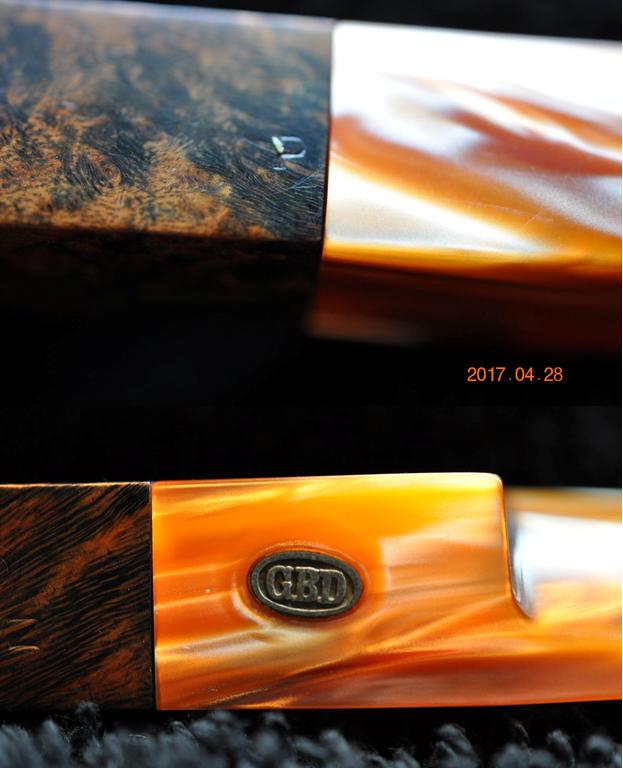
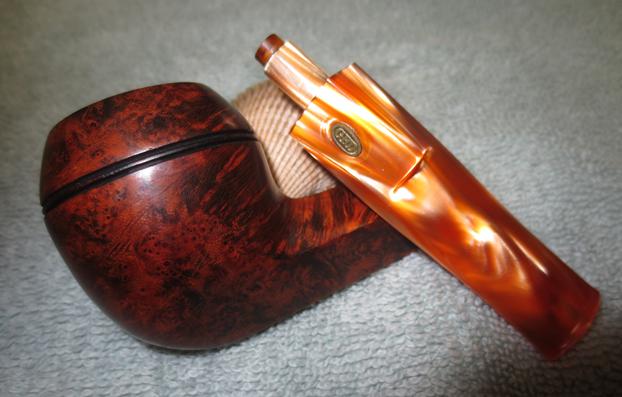
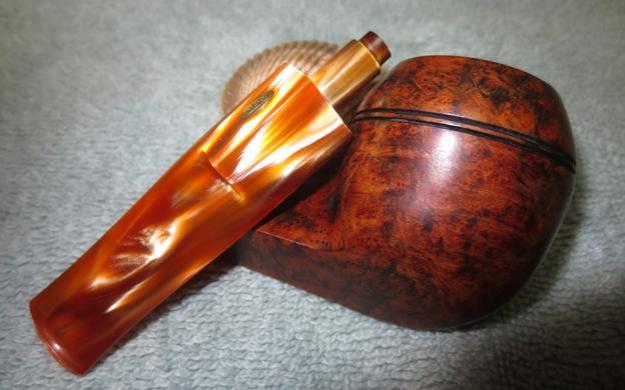
This is another of the pipes that came from that estate sale that my brother picked up recently. It is a classic GBD shape. It is stamped GBD in an oval over TOPAZ on the left side of the shank and London, England over 559 on the right side of the shank. On the left underside of the shank next to the stem/shank junction it is stamped with a P. The Topaz line was introduced in about 1980. From a Pipedia link with a list of GBD lines I quote: “Probably the most perfect harmony of combining the soft beige tones of the Hand Cut Acrylic mouthpiece with complimentary shades of brown in the Briar.” This GBD is probably made after the merger by Cadogan, who also makes Comoys, Dr. Plumb’s Perfect Pipes, BBB, and Orlik Pipes. Since the merger in 1981 GBD pipes are not considered to be of the same quality that they were originally. Though the brass rondels were discontinued after the merger they once again reappeared on new production GBD’s. (https://pipedia.org/wiki/GBD_Model_Information, https://pipedia.org/wiki/GBD_Model_Information#List_of_GBD_Models.)

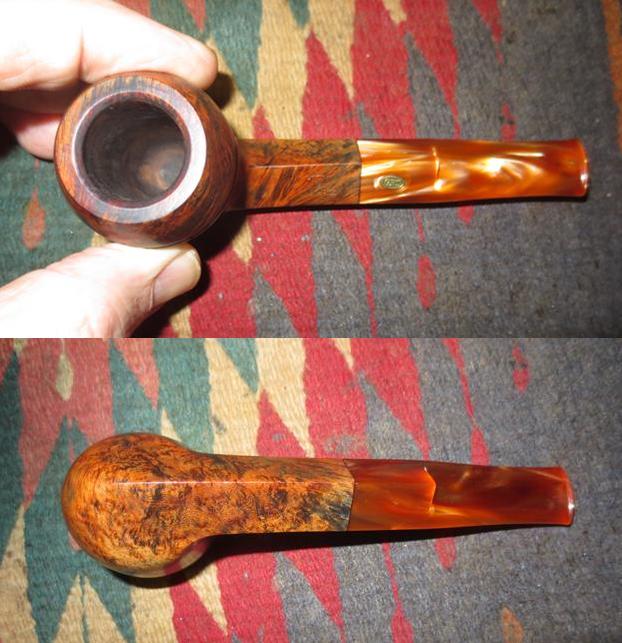
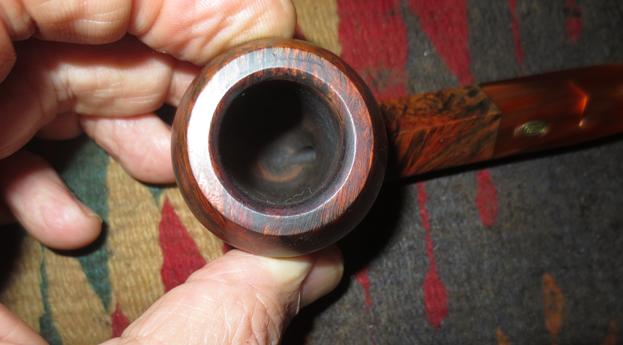
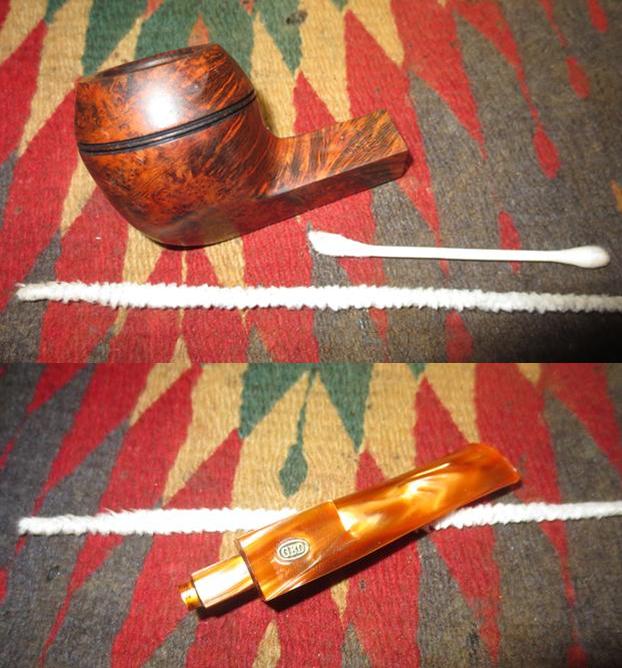
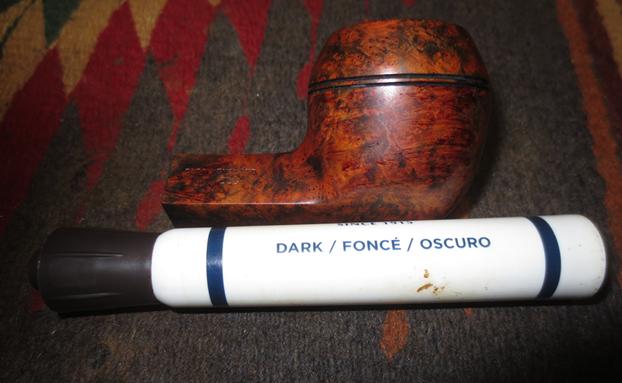
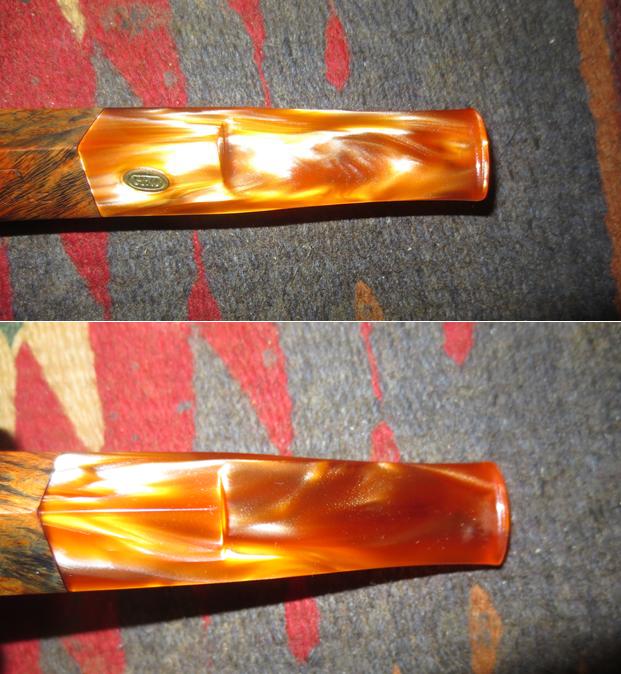
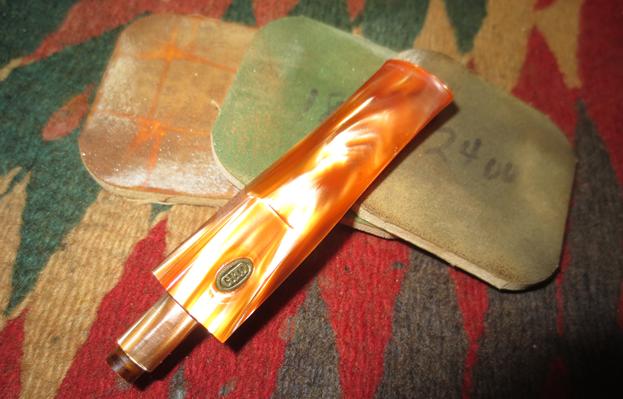
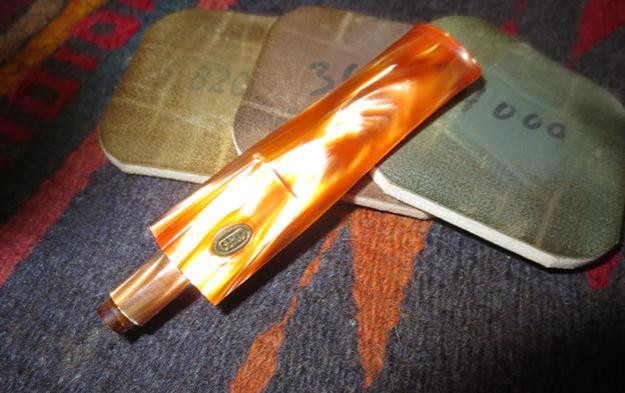
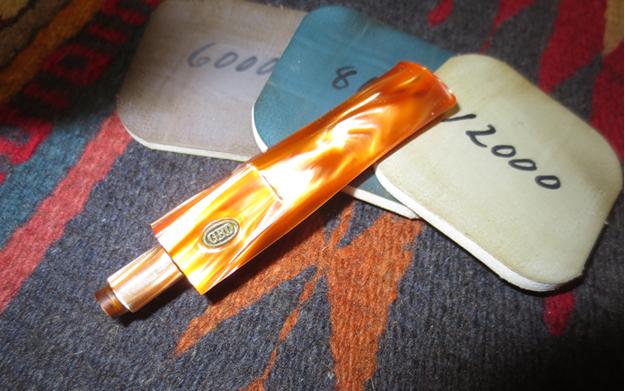
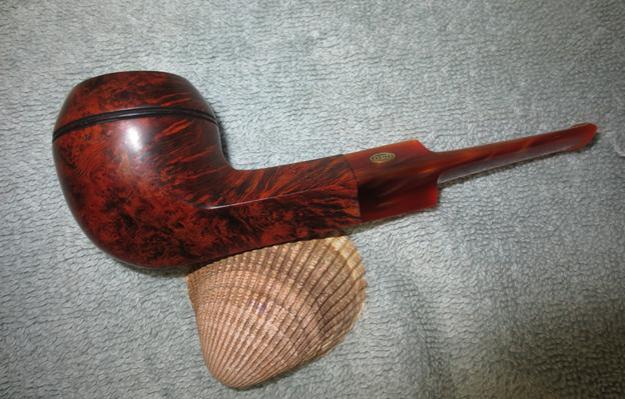
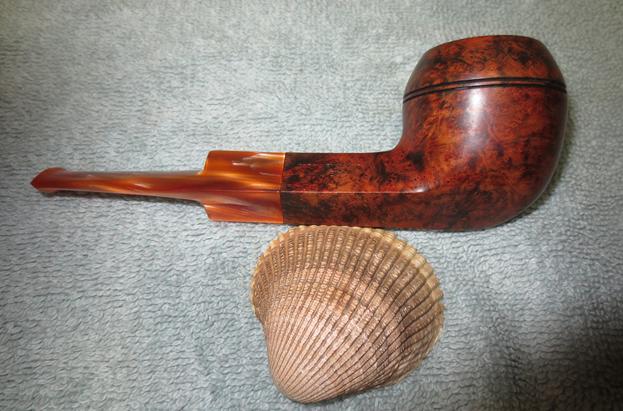
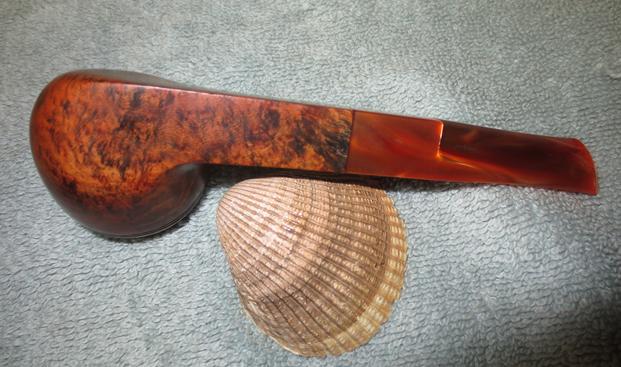
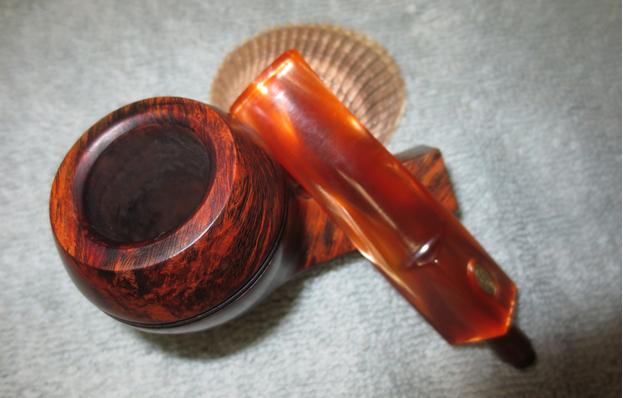
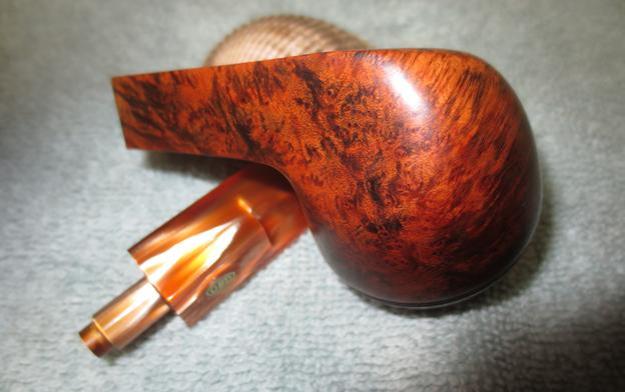
My brother sent me the following photos of the pipe before he cleaned it up to send to me. (I have to say by the way that I really like working on clean pipes. It makes the job so much easier for me. Thanks Jeff.) He took some close up photos of the sides of the bowl and the rim to give an idea of the condition when he brought it back from the estate sale. The bowl had a thick cake that had overflowed onto the beveled rim and top leaving a nice coat of lava. I was hoping that once he removed it that we would find that the lava protected the bowl rim from damage. He took some photos of the stamping that I noted above. The stamping was sharp and readable. The P stamp on the underside of the stem on the left was readable as well. I am not clear what the stamp means however. Do any of you know what the meaning of it is? The brass roundel is not worn and is very clean. It is a little hard to see from the photos of the stem shown below but this pipe had the same kind of tooth chatter and marks that the rest of the pipes in this estate had. They were worse on the underside of the stem but they were present on the top as well.My brother did a very thorough job reaming and cleaning this pipe. The internals and externals were very clean. The bowl looked well reamed and showed that the pipe had never been smoked to the bottom of the bowl – there was still fresh briar at the bottom ¼ of the bowl. The next four photos show what the pipe looked like when it arrived in Vancouver and I brought it to the work table. I took a close up photo of the rim to show the change from the caked and dirty pipe that Jeff started with. It is amazing how well the lava protected the bevel and the rim top.I ran a pipe cleaner through the airway in the stem and the shank and they were very clean. I used a cotton swab to clean around the step down on the tenon and in the mortise. These too were clean.The right side of the bowl had a lightened area where the stain had worn away from the original owner’s hand. I touched it up with a dark brown stain pen. It blended very well. When it dried I hand buffed it and gave the bowl a coat of Conservator’s Wax to protect it.I took some photos of the stem to try to capture the tooth damage and chatter on both sides. It is hard to see with the copper Lucite but it is very present. You can see a bit of it showing up toward the bottom of the second photo.I sanded out the tooth marks and chatter with 320 grit sandpaper. It did not take much sanding to remove all of the marks and chatter as they were not too deep in the acrylic. I polished the acrylic with micromesh sanding pads – wet sanding with 1500-2400 grit pads and dry sanding with 3200-12000 grit pads. I wiped the stem down with a damp cotton pad between each sanding pad to remove the dust and check the progress. The photos below tell the story. I put the stem back in place on the bowl and buffed the pipe with Blue Diamond on the buffing wheel. I polished out the minute scratches in the briar and Lucite with that buffing. I gave the pipe and stem multiple coats of carnauba wax and buffed it with a clean buffing pad to raise the shine. I hand buffed it with a microfibre cloth to deepen the shine. The finished pipe is shown in the photos that follow. It is a beautiful pipe with a lot of character. The dark stain and the copper coloured variegated Lucite stem work really well together. The contrast is really stunning. The dimensions are Length: 5 ½ inches, Height: 1 ¾ inches, Outer diameter of the bowl: 1 ¼ inches, Chamber diameter: ¾ inches. The pipe is ready to pass on to its next pipe man. It should serve the next owner for a long time. If you are interested in adding it to your rack email me at slaug@uniserve.com or send me a private message on FaceBook. I will be putting this one on the rebornpipes store shortly. Thanks for looking.
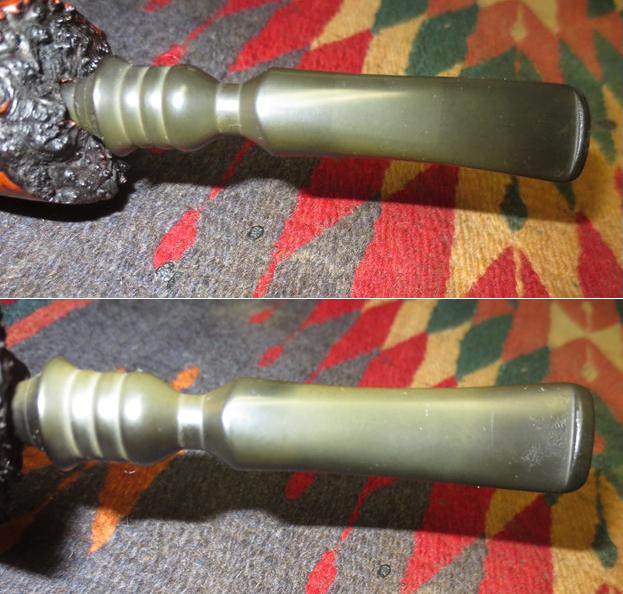
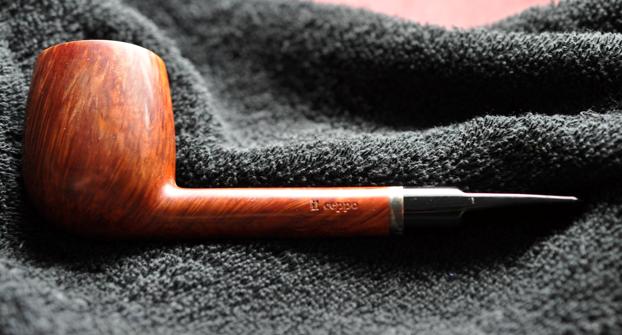
Cleaning up a Beautiful Il Ceppo Lumberman


Blog by Steve Laug

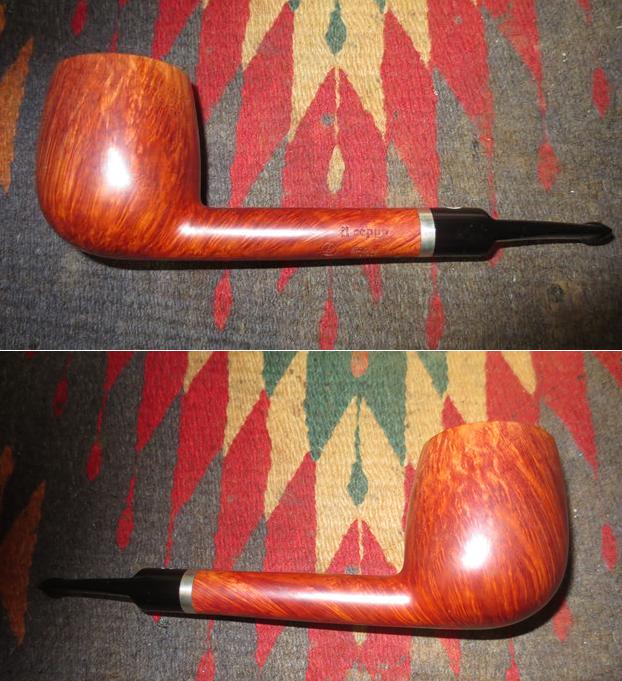
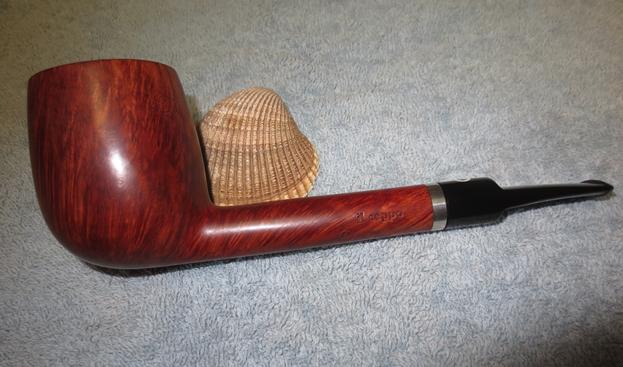
The next pipe on the worktable from the lot that my brother picked up at an estate sale recently is a beautifully grained Il Ceppo Lumberman. It is a large pipe, which is well laid out with the grain of the briar. The look of the briar and the stem contrast beautifully and accent the beauty of the pipe. The shape is part of the Canadian shape family. It is similar to the smaller Lovat (saddle stem) and Liverpool (taper stem) in that it has a round shank unlike the oval shank of a Canadian.I am pretty much a novice when it comes to the world of mid to high end Italian pipes. I have a few a couple of nice Castellos and a Le Nuvole but other than that, I know next to nothing about Italian pipes. It is fascinating that in this batch of estates most of them are Italian made and toward the mid to high end range. Over the past years of pipe repair and restoration I have read of the Il Ceppo brand but this is the first one that I have seen up close. I did some research on the brand on the internet so that I could learn a bit of the history and possibly identify the maker of this particular pipe. I found quite a bit of information. I have digested it below for quick reference.

I found that RD Field give a great summary of the history of the brand. You can read it at the following link: http://www.rdfield.com/Il%20Ceppo/il_ceppo.htm or you can read the part that I have included here. The IL CEPPO brand has been in production since the late 1970’s but, in spite of its overall good value, is not well known in all parts of the United States. Partly this is because of a limited supply of pipes and partly because the brand has not been put in front of the pipe smoking public through a national venue.

The Il Ceppo brand is made in Pesaro, Italy and is part of the famous Pesaro school of design that has also produced Mastro de Paja and Ser Jacopo. That all three brands have similar characteristics can be seen at a glance, but they all have significant differences as well.

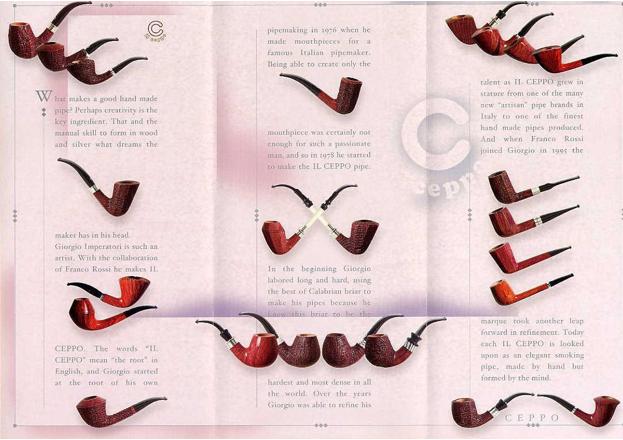
Giorgio Imperatori, an architect, had a passion for pipes and in 1978 begun to design and make IL CEPPO. Always considered a good value and very good for smoking the brand did not make folks stop and take notice until 1995 when Franco Rossi joined the firm. He brought with him a true elegance of design and a unique flair that now helps IL CEPPO stand apart. Giorgio has retired to his farmhouse and the pipes are now all made by Franco and his sister Nadia.

I found this Il Ceppo Leaflet online as well and have included it here for reference. Be sure to click on it and read it. There is some great information included.I looked on Marty Pulvers site http://sherlocks-haven.com/italian.html and found some more brief and interesting information. I quote here: They consistently have some of the finest grained sandblasts in the field. They use top notch, well aged briar and are made and overseen by just one artisan, Franco Rossi. The problem? Possibly the name, which may suggest “cheap” to some (it simply refers to the briar burl from which pipes are made) or the unfortunately large, and to some reversed “C” logo on the stem. (Marty has a sandblast pipe on his site for sale for $275.)

I read in Jose Manuel Lopes, “Pipes, Artisans and Trademarks” brief article on the brand that Mario Lubinski formed the company in 1978. Franco Rossi arrived in 1995 and the name was changed to Il Ceppo (the root). Grading: “9” (rustic), “1” (sandblast), “2” (semi rustic) “3” (semi sandblast) “4” to “7” (smooth), with Fiammata being the top of the range. There I learned a couple of interesting facts that help me place this pipe. It came after the name change in 1995 and that the pipe was made by Franco Rossi. I also learned a bit about the grading system of the pipes.

Further searching found a great digest of the Grading System. I found it on the PipePhil website: http://www.pipephil.eu/logos/en/logo-i.html. I have included the summary of the grading of the pipes during the two periods of Il Ceppo pipe history. I also found a retail price list from March 2008 that I have included to give an idea of the range of prices for the various grades of pipes in the Il Ceppo line.

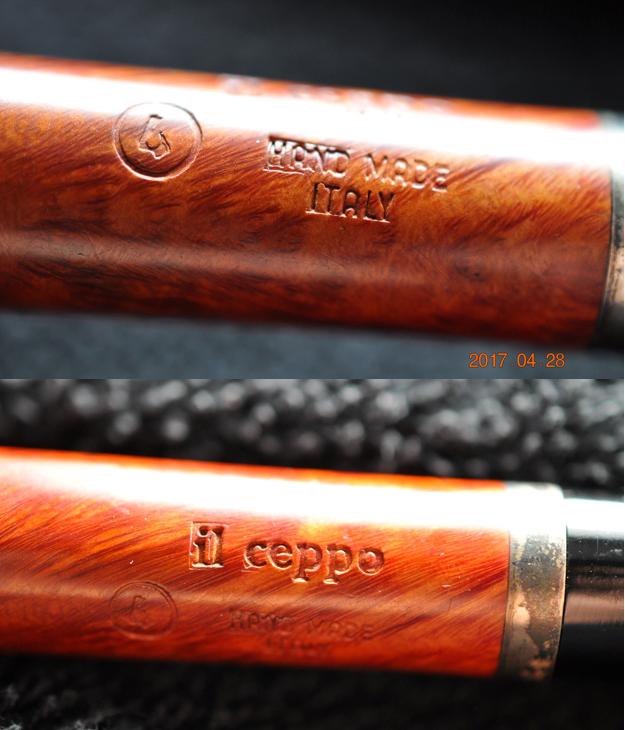
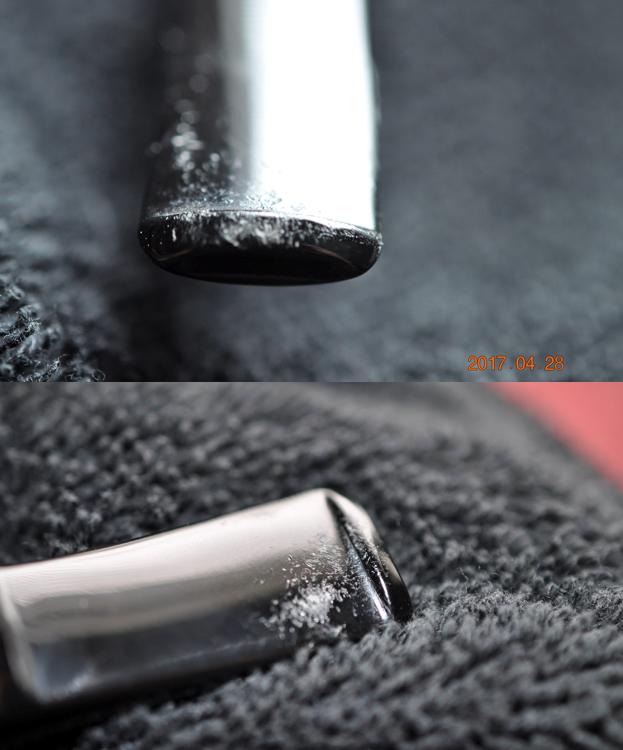
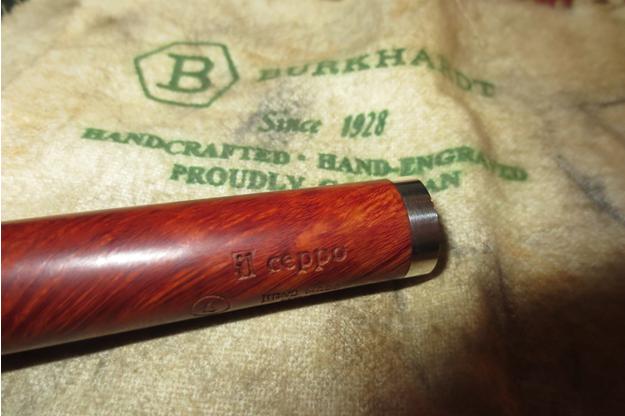
The pipe is excellent condition with a very well done finish on the bowl. The Lucite stem has a lot of tooth chatter and tooth marks on both sides of the stem near the button. The stamping on the left side of the shank reads Il Ceppo with the number 4 in a circle. Next to that, it reads Hand Made over Italy.

From the first chart to the left, I could determine both the period and the Grade of the pipe I had. It was from the second period (1995-Present) and it was a Grade 4 smooth. From the second chart I had a pretty good idea that the pipe sold for $430 US in 2008.

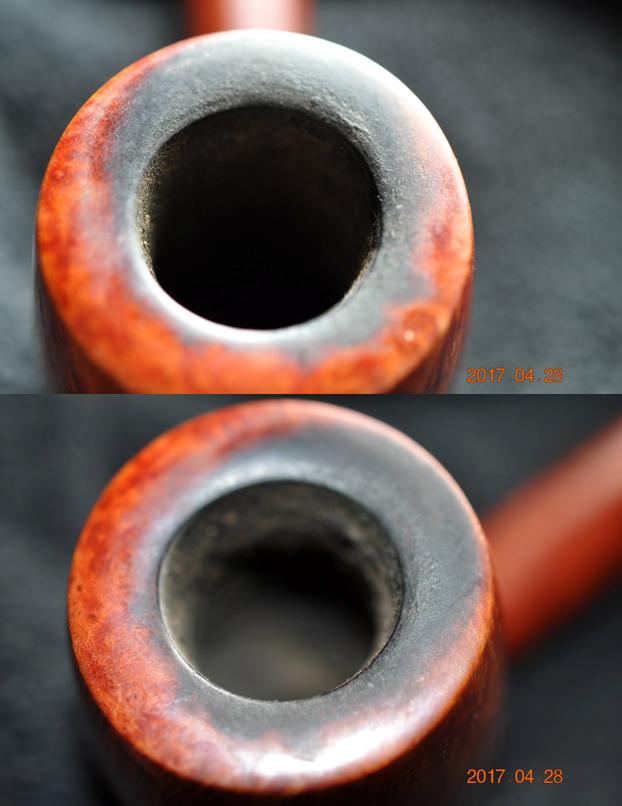
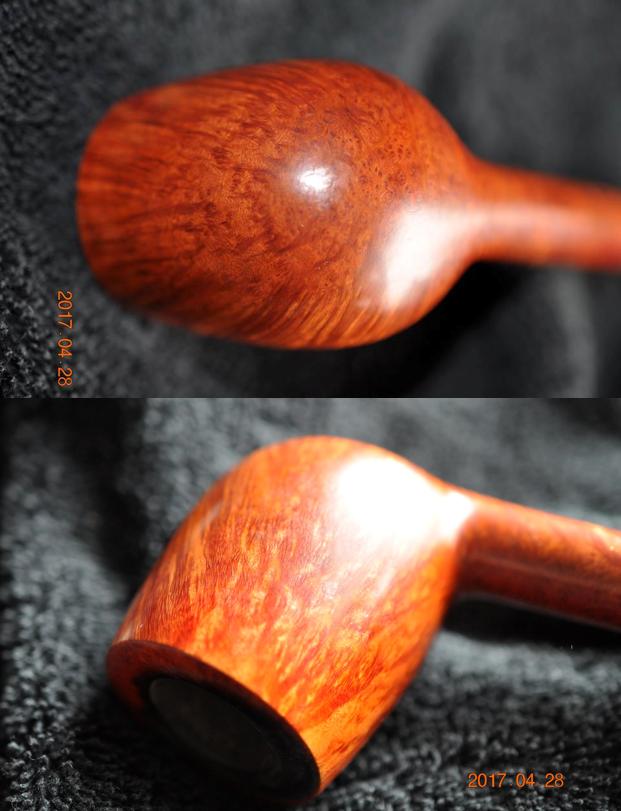
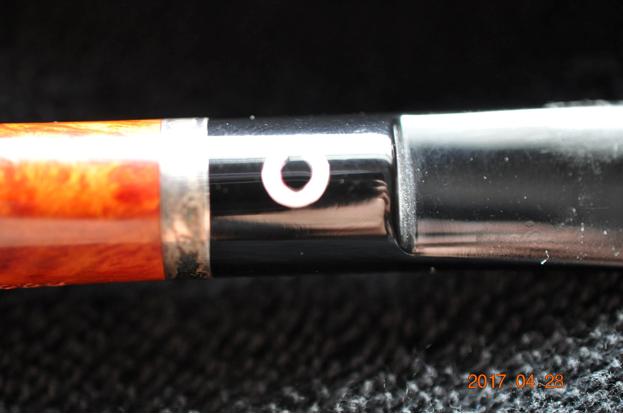
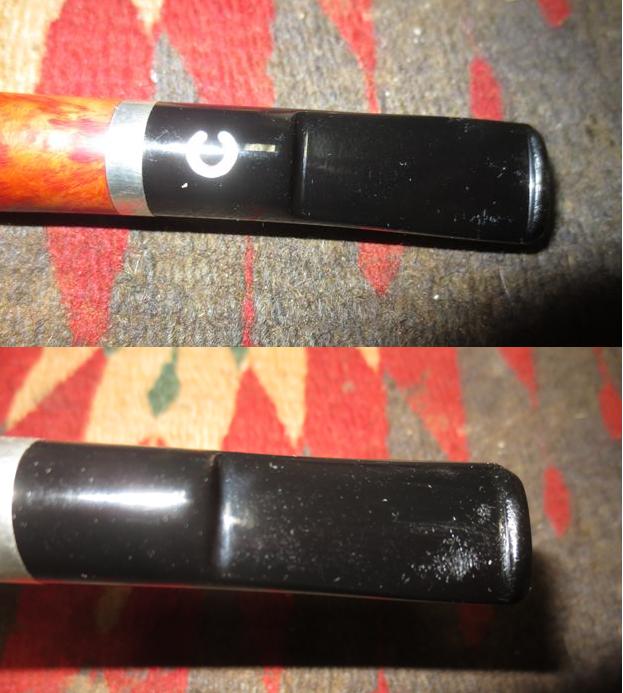
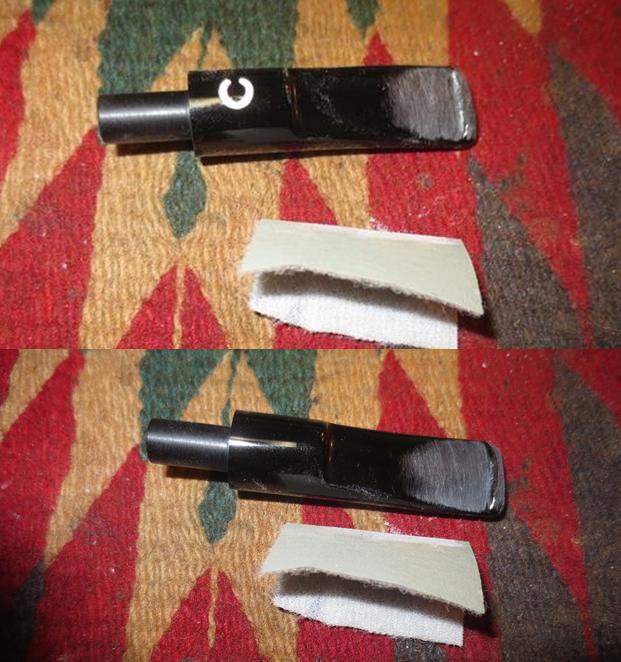
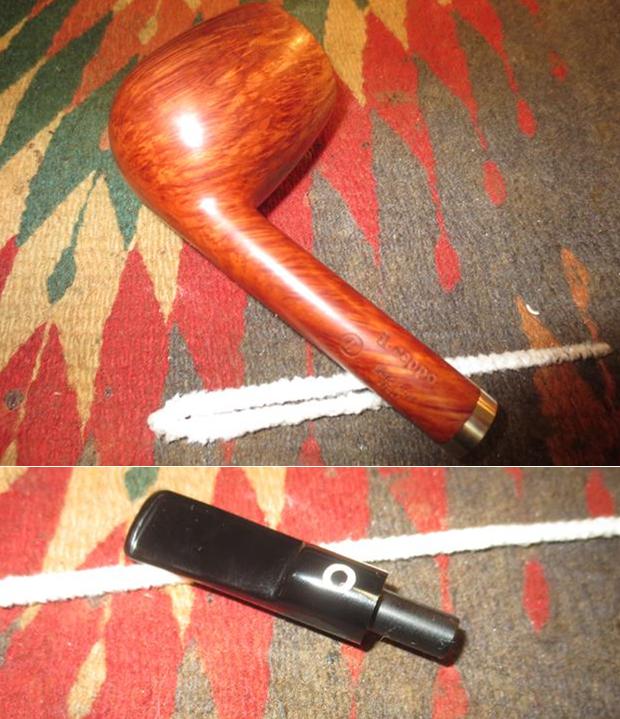
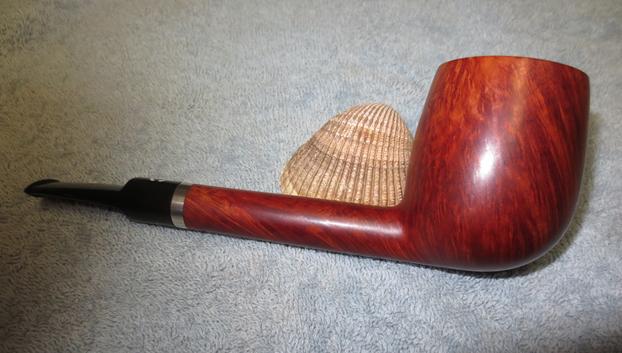
My brother took the first photo above and the following photos to show the condition of the pipe before he cleaned it up to send to me. It really is a beautiful pipe underneath the grime and dirt. The next two photos show the rim top and the cake in the bowl from two different angles. There was a fairly thick cake in the bowl and the lava flowed over the rim top. It was thicker toward the back of the bowl but did go all the way around the bowl. It would need to be cleaned up before I would know if there was any damage to the inner edge of the rim.The next two photos show the grain on the bowl sides and bottom. It is a very pretty piece of briar and the pipe is laid out to maximize the grain.The shank is stamped on the left side with il ceppo and underneath that it read Hand Made over Italy. There was a stylized 4 in a circle to the left of the stamping. The thin silver band is oxidized.The saddle portion of the Lucite stem had a large white C on the top side. It was in really good shape and showed no wear or tear.The next two photos show the tooth marks and chatter on the topside and underside of the stem. The first photo shows the top. Notice the chatter on the top of the button as well as the stem just in front of the button. The second photo shows the underside and the chatter and tooth marks at that point.I took the next four photos of the pipe when I brought it to my worktable. My brother had done a great job reaming and cleaning the interior and the exterior of the pipe. It was pretty spotless by the time I worked on it. The photo below of the rim top shows the cleaned top with a bit of darkening toward the back of the bowl.My brother’s cleaning job highlighted the tooth chatter and marks on both sides of the stem.I sanded out the tooth chatter and marks with 320 grit sandpaper to remove all of the marks. It did not take too much to remove the marks because they were not very deep in the surface of the Lucite.I polished the stem with micromesh sanding pads – wet sanding with 1500-2400 grit pads and dry sanding with 3200-12000 grit pads. I wiped down the stem with a damp cotton pad after sanding with each grit of micromesh. The process is shown in the photos below. I gently cleaned up the remaining cake in the bowl with a Savinelli Fitsall Pipe Knife. I wanted to clean up the little bits of remaining cake on the bowl walls.I polished the silver band with a jeweler’s cloth to polish off the tarnish.I ran a pipe cleaner through the mortise in the bowl and the airway in both the stem and shank. It was very clean so it did not take too much.I buffed the stem and bowl with Blue Diamond on the buffing wheel to remove the last of the light scratches that were still in the briar and the Lucite. I gave them both several coats of carnauba wax and buffed it with a clean buffing pad to raise a shine. I hand buffed it with a microfiber cloth to deepen the shine. The finished pipe is shown in the photos below. It is a beautiful piece of briar with a bowl that flows with the grain. The dimensions of the pipe are Length: 6 inches, Height: 2 inches, Outer diameter of the bowl: 1 ½ inches, Inner chamber diameter: ¾ inches. This pipe will make a great addition to someone’s pipe rack. It is available on the rebornpipes store. Email me at slaug@uniserve.com or send me a private message on FaceBook. Thanks for looking.
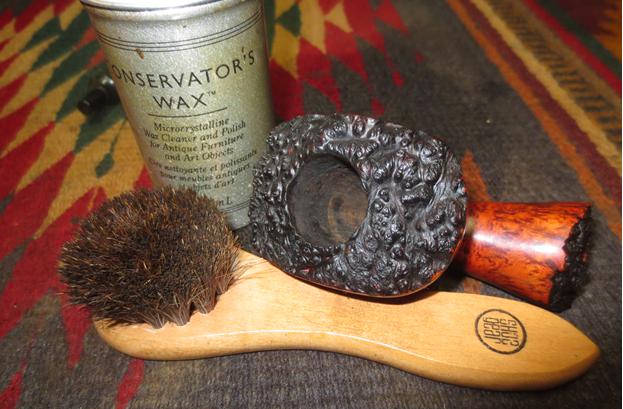


Repairing a Cracked Horn Shank Extension on a Stanwell Buffalo


Good tutorial on repairing a split horn stem and a good recovery after the unexpected issue. Thanks Charles

Charles Lemon's avatar

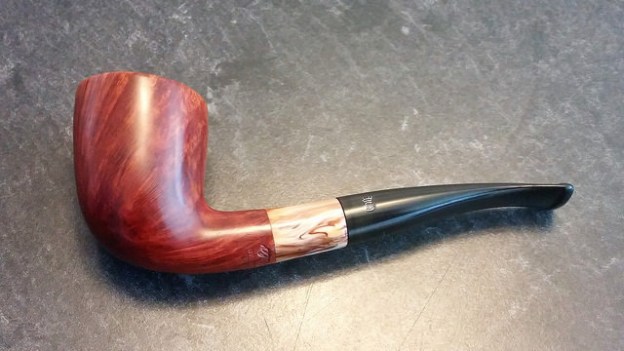
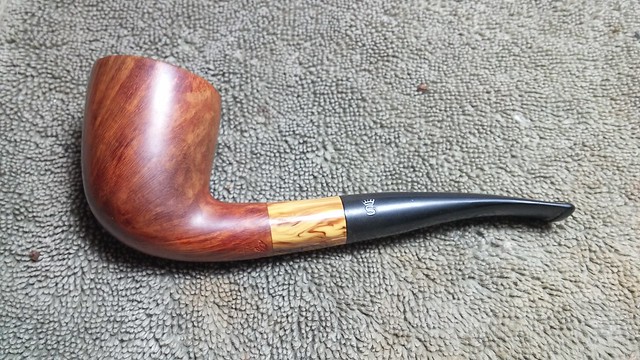
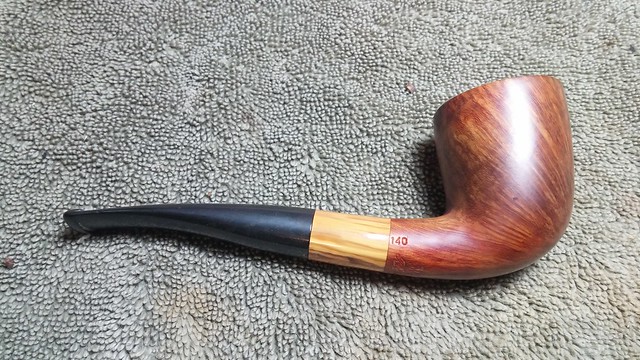
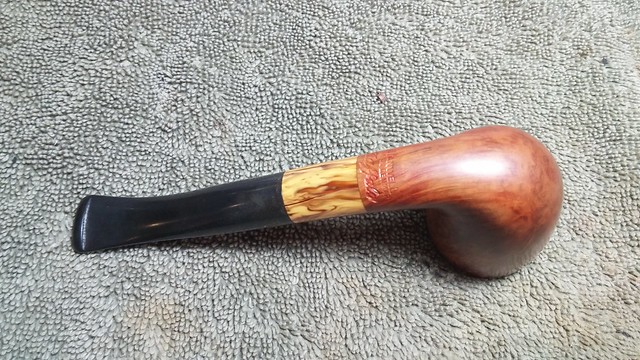
Needing a break from all the Brigham and Blatter pipes I’ve worked on lately, I dug down through my box of estate pipes and came up with this Stanwell Buffalo. It is a Shape # 140, which Bas Steven’s list of Stanwell shapes identifies as a “Small freehand, slightly bent, full mouthpiece by Jess Chonowitsch”. I’m not very familiar with Chonowitsch’s designs, but I quite like this Dublin-esque freehand.

Out of the refurb box, the pipe looked to be in very good condition. It had obviously been smoked, as the rim was partially obscured by a thin crust of lava, and the mouthpiece showed some light tooth chatter. There was a decent amount of cake in the bowl, and a few dents and dings around the outside edge of the crowned rim.

20170414_11274620170414_112750
20170414_11275520170414_112802
20170414_11280920170414_112943
20170414_112947

The pipe is stamped “Stanwell” over “Made in Denmark” over “Buffalo” on the underside of the shank near…

View original post 828 more words

Breathing Life into an Antique Imported Briar Bull Moose


Blog by Steve Laug

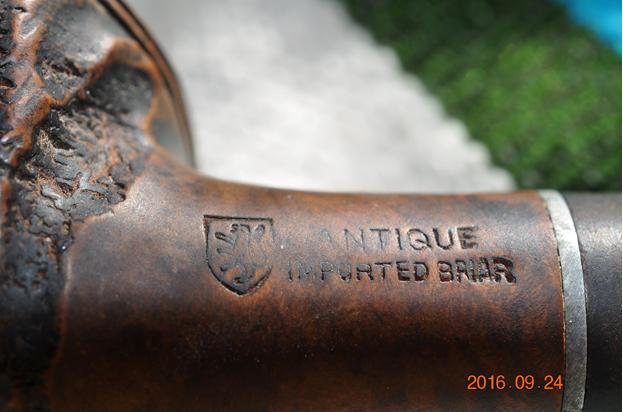
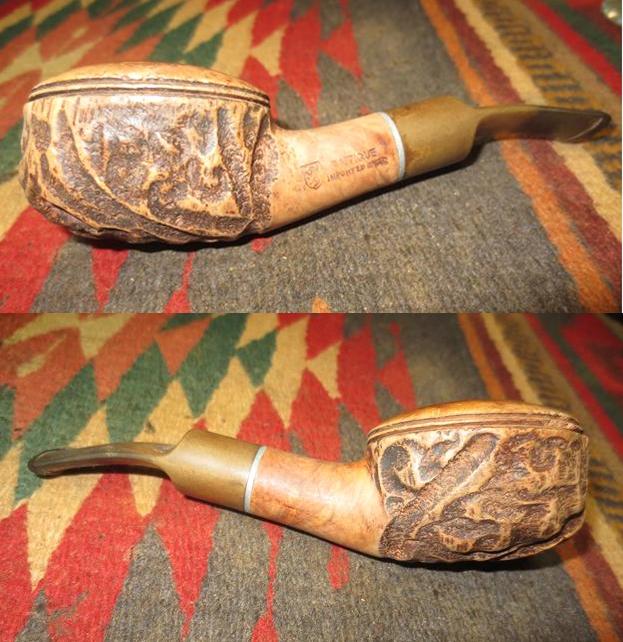
There is something about these older Mincer style pipes that grabs my attention. I am drawn to their rustic appearance and feel in the hand. This one was a Bullmoose shape – though the “nose” on it is much more conservative than many of these that I have seen. The stamping on the left side of the shank is a standing lion inside of a shield and next to that ANTIQUE over Imported Briar. I have searched on the web and in my books for this logo and cannot find it but I did find a listing for the ANTIQUE in Who Made That Pipe for a company called Heritage Pipes Inc. NYC. The company is to be distinguished from the Heritage line made by Kaywoodie as a high end alternative to Dunhill pipes. I have looked for information on the company online but so far have not found any. Anyone have any information on the brand?

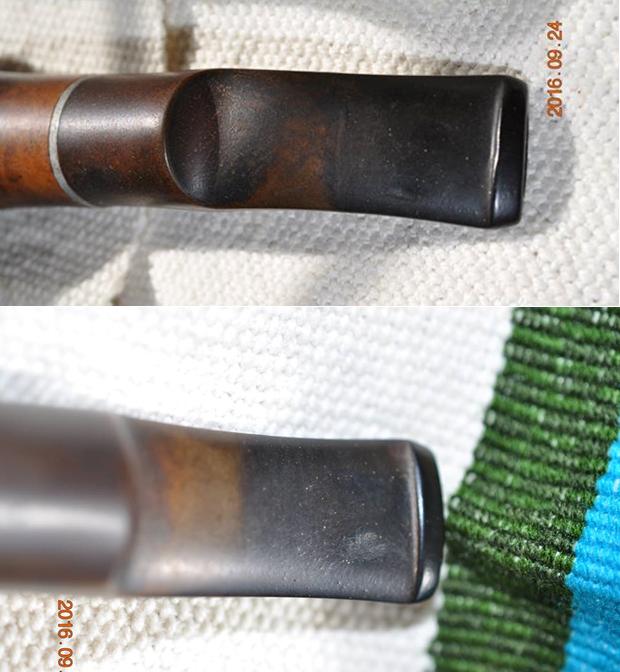
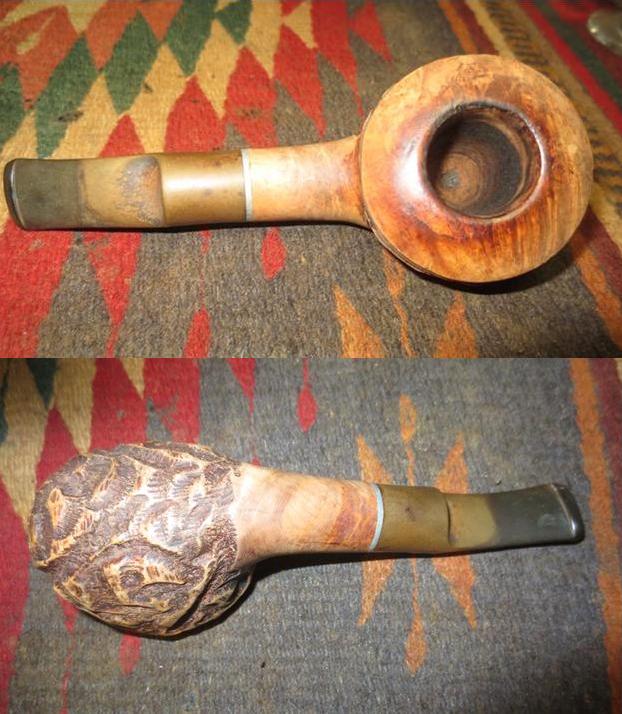
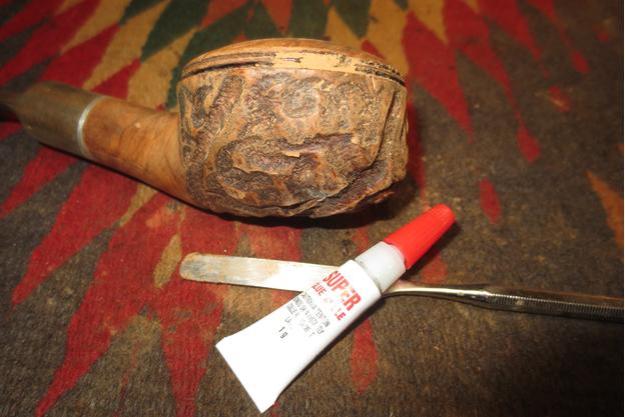
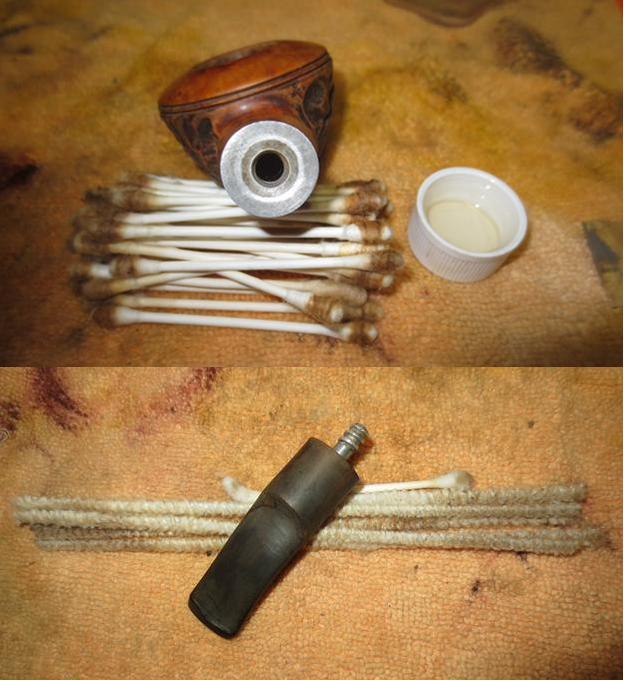
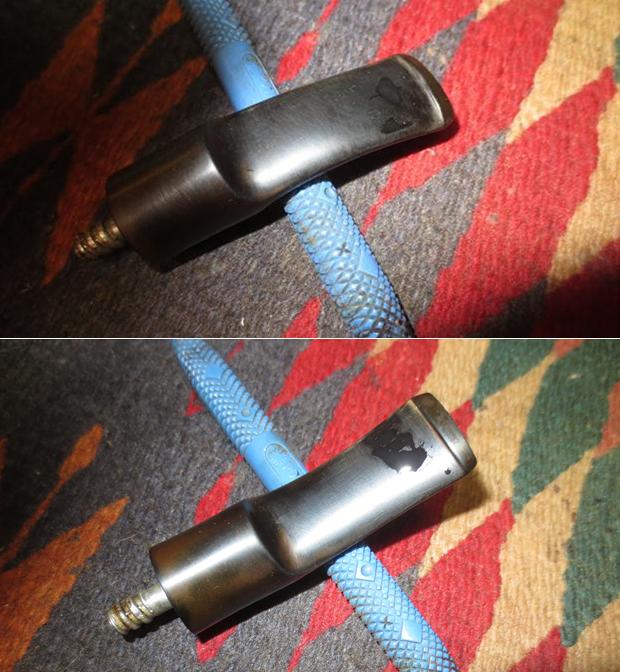
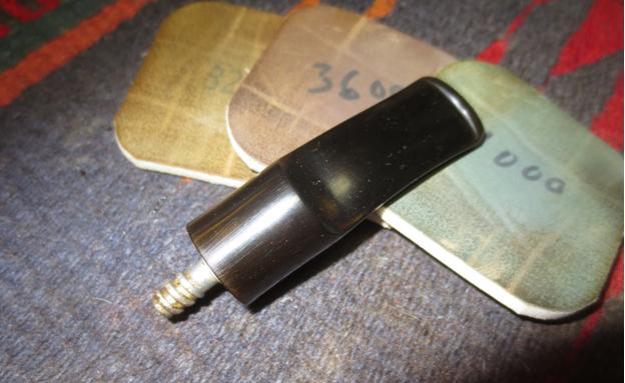
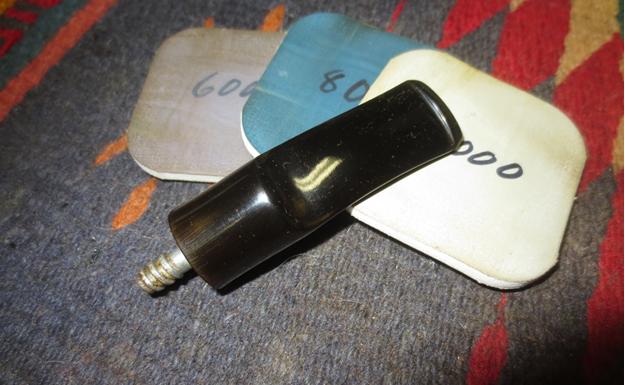
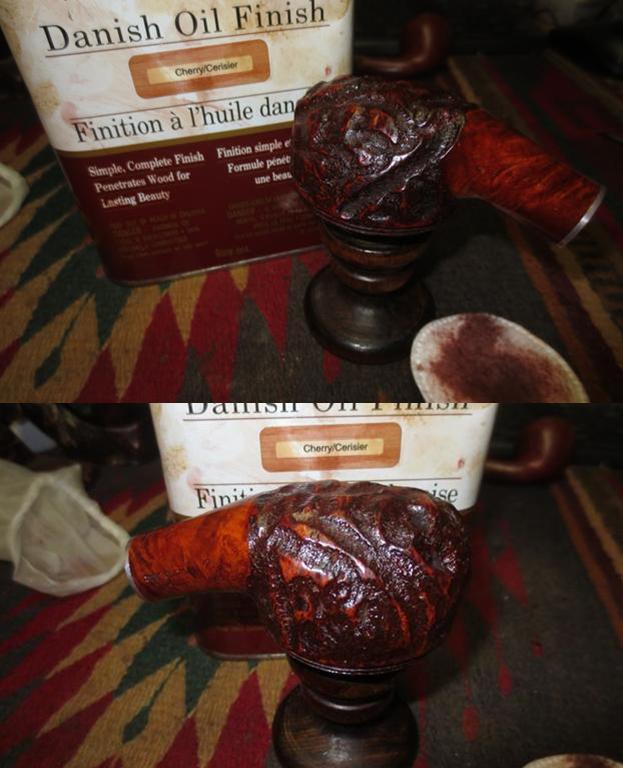
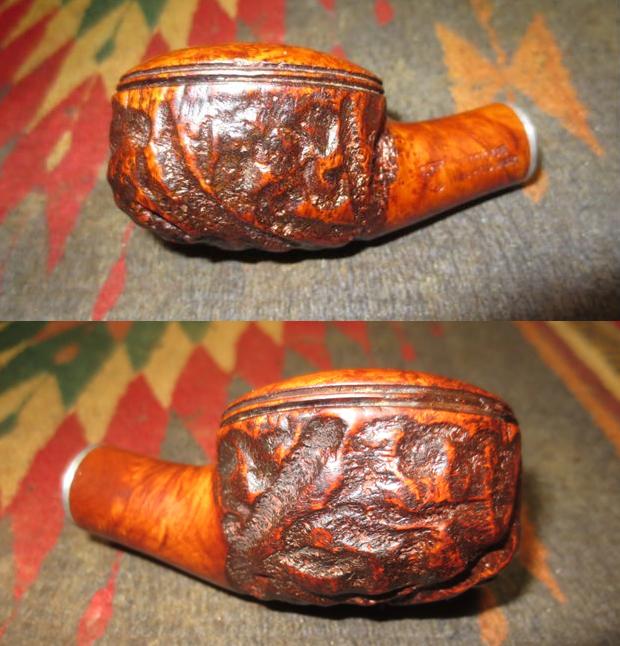
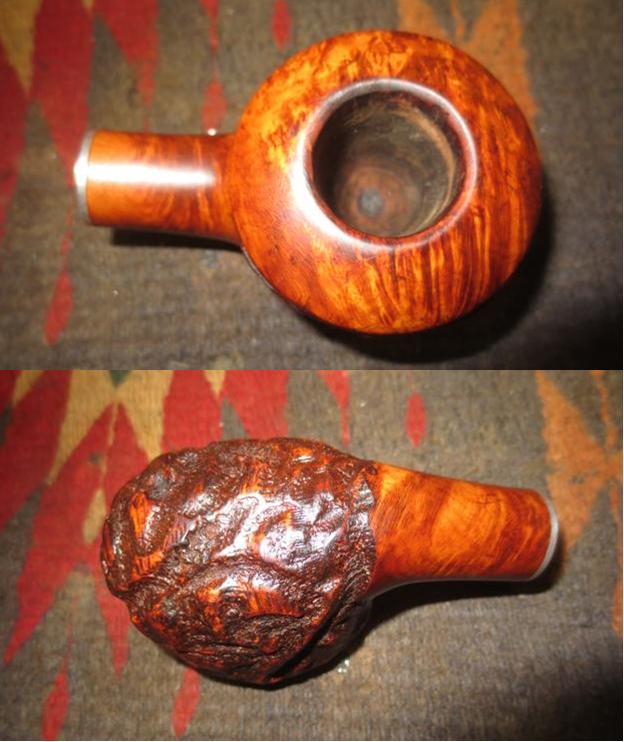
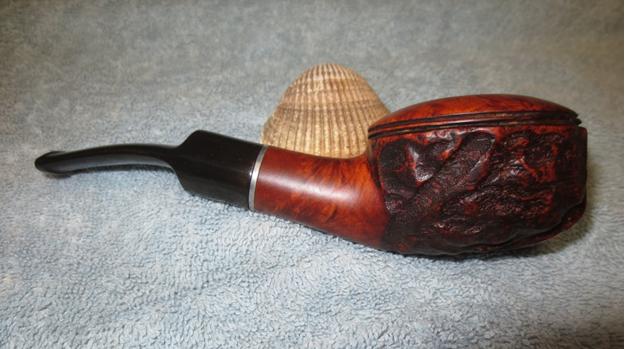
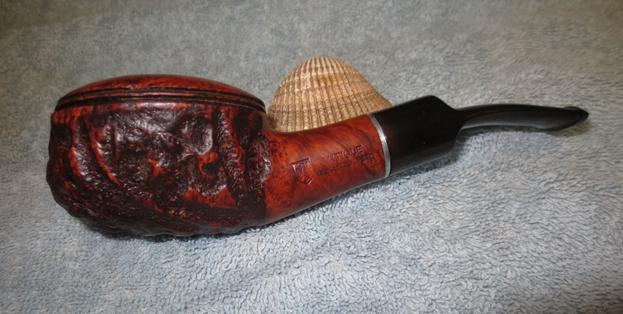
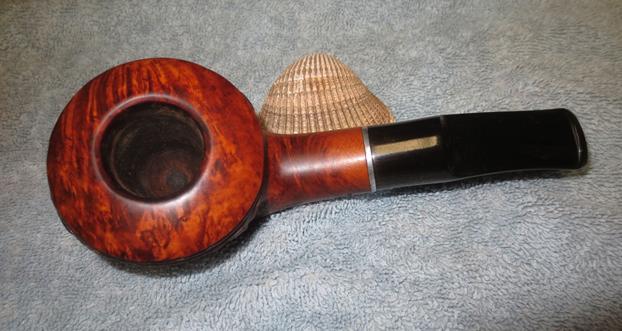
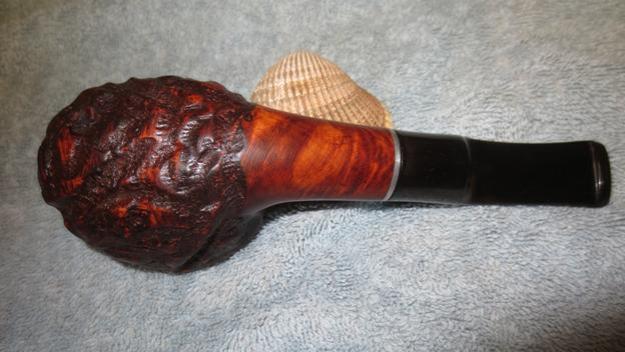
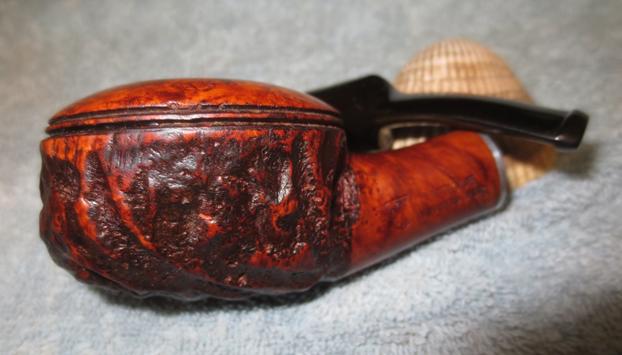
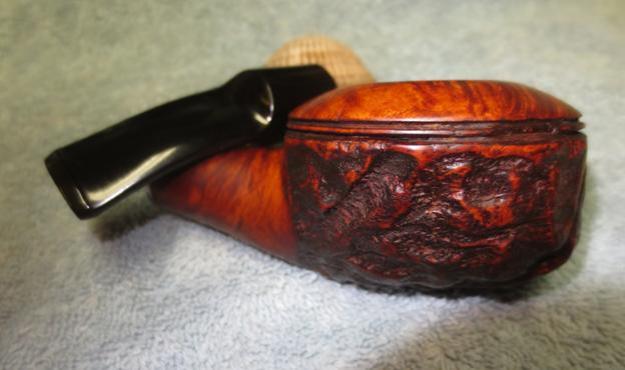
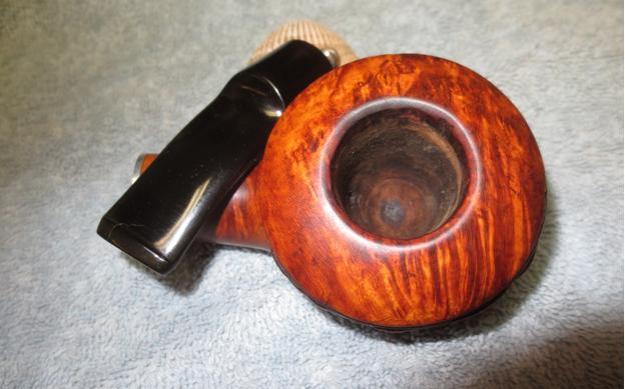
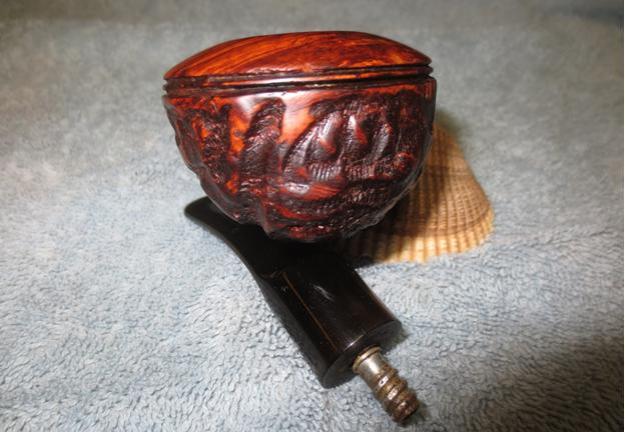
My brother took photos of the pipe before he cleaned it up. I have included those photos below. It is an interesting pipe.The next photos of the pipe show the damage on the rim top. The three different photos show the damaged areas from different angles. The rim top looked like it was damaged on the inner and outer edges of the bowl. The top looked like the finish was peeling but I would know more about it once I had it in hand. He took photos of the rusticated bowl sides. The smooth portions show grain. The double rings around the bowl cap have nicks and chips out of the top and bottom edges of the rims as well as the centre spacer. The next photo shows the stamping on the left hand side of the shank. Metal shank insert that separates the stem from the shank is oxidized.The stem is oxidized and has tooth chatter and tooth marks on both sides near the button. It is also overclocked making the stem sit crooked in the shank.My brother reamed the bowl with a PipNet reamer and cleaned out the insides. Pipes with the threaded metal mortise hold a lot of grime and tars so I will need to clean it further. The exterior was scrubbed with Murphy’s Oil Soap and a tooth brush and the grime and deteriorating finish was removed completely. The stem oxidation came to the surface in the cleaning. The next four photos show the condition of the pipe when I received it. I took a close up photo of the rim to show what it looked like when it arrived. Fortunately the areas on the rim that looked like flaking in the early photos was only lava buildup and it was gone. I breathed a sigh of relief when I saw that.The next two photos show the stem. The tooth chatter was lighter on the top of the stem than the underside. There were two deep tooth marks on the underside. The button edge on the topside was dented from teeth as well.I took the stem off the shank and was surprised that the conical stinger apparatus was gone. I heated the metal tenon with a lighter until the glue softened and twisted the stem around in the mortise until it lined up straight on the shank.I sanded the rim top and the inner beveled edge of the bowl with 220 grit sandpaper to remove the damage and the darkening. It did not take too much work to smooth out the dents and nicks and clean out the darkened inner edge of the bowl.To repair the chip out of the ring around the cap on the bowl on the right side I filled in the gap with briar dust and put drops of clear super glue on top of the dust. I used a dental spatula and a knife to recut the twin rings around the cap. Once it dried I sanded the repaired area on the ring and the rim top with a medium and fine grit sanding sponge and with 1500-6000 grit micromesh sanding pads to smooth out the scratches left behind by the paper.I cleaned out the inside of the mortise and the airway in the shank and stem with pipe cleaners, cotton swabs and alcohol until the cleaners came out white.I sanded the stem with 220 grit sandpaper to remove the oxidation and then used black super glue to fill in the tooth marks on the top edge of the button and the underside of the stem.When the glue dried I sanded the stem with 320 grit sand paper and polished it with micromesh sanding pads. I wet sanded it with 1500-2400 and dry sanded it with 3200-12000 grit pads. I rubbed the stem down after each pad with Obsidian Oil. After sanding it with the 4000 grit pad I buffed it with red Tripoli on the buffing wheel then finished polishing it with the final three grits of micromesh. I gave it a final coat of oil and set it aside to dry. I stained the bowl with Cherry Danish Oil and wiped it down to give it a shine. I wanted to highlight the red colours in the briar. The colour came out really well and the grain shines through on the rim and the smooth portions of the bowl and shank. I buffed it lightly with a shoe brush. The photos below show the staining and the finished bowl. I buffed the stem some more with red Tripoli and with Blue Diamond on the buffing wheel to polish out the oxidation that still remained at the junction of the stem and shank. I gave the stem multiple coats of carnauba wax and gave the bowl several coats of Conservator’s Wax. I buffed the bowl with a clean buffing pad to raise the shine and hand buffed it with a microfibre cloth to deepen the shine. The dimensions on the pipe are Length: 5 1/2 inches, Height: 1 1/2 inches, Outer diameter: 2 inches, Chamber diameter: 7/8 inches. The finished pipe is shown in the photos below. It really is a nice looking older piece of pipe history and should make a great addition to someone’s pipe rack. It will go on the rebornpipes store shortly. If you would like to purchase it contact me via private message on Facebook or through my email at slaug@uniserve.com. Thanks for looking.
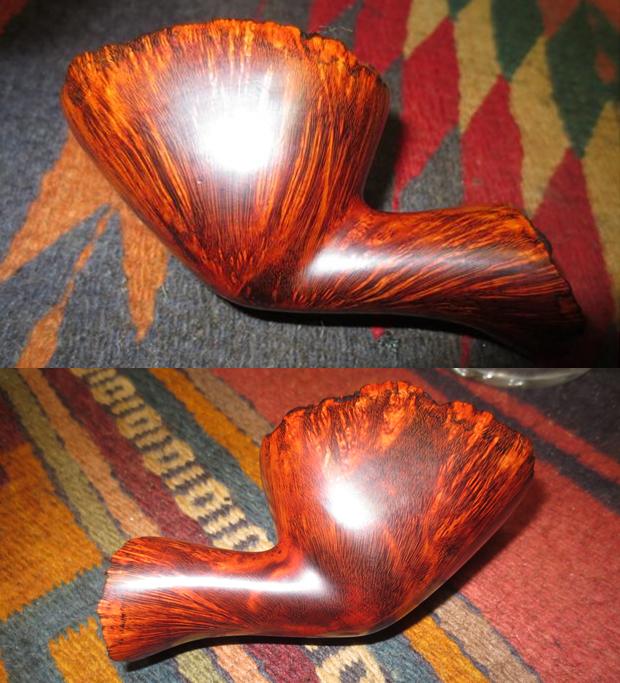
 

A Beautiful Italian Hand Made DiMonte Classica 991


Blog by Steve Laug

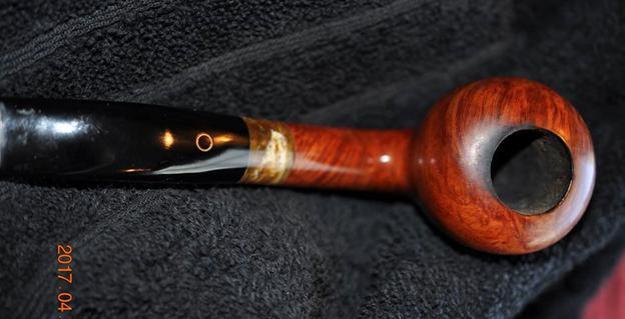
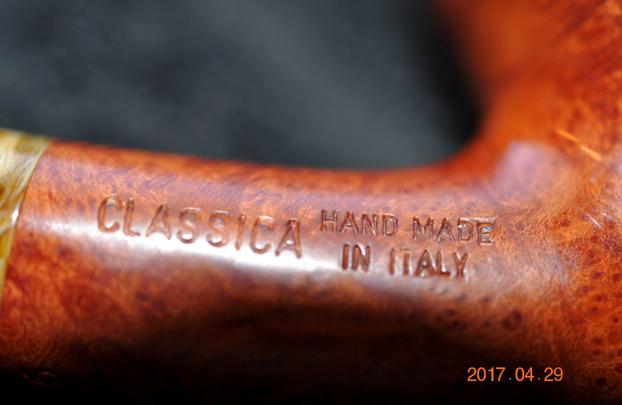
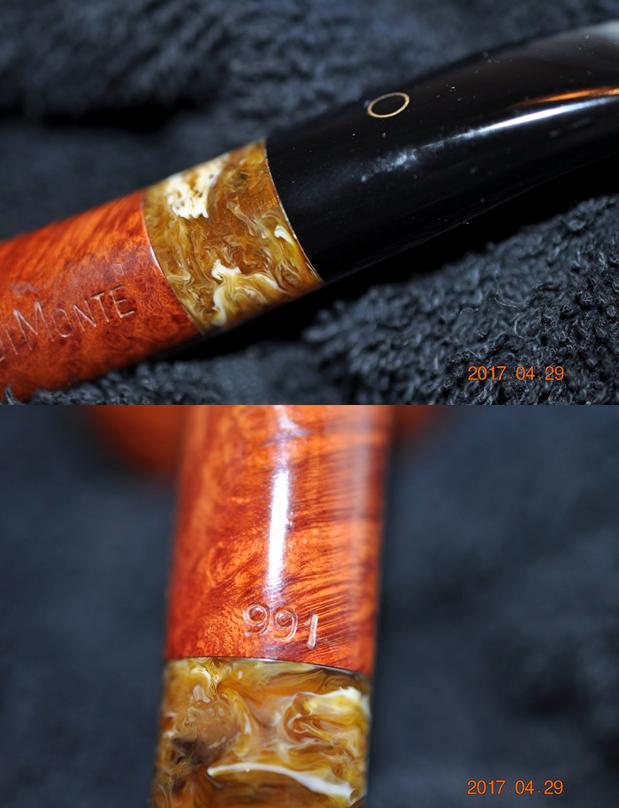
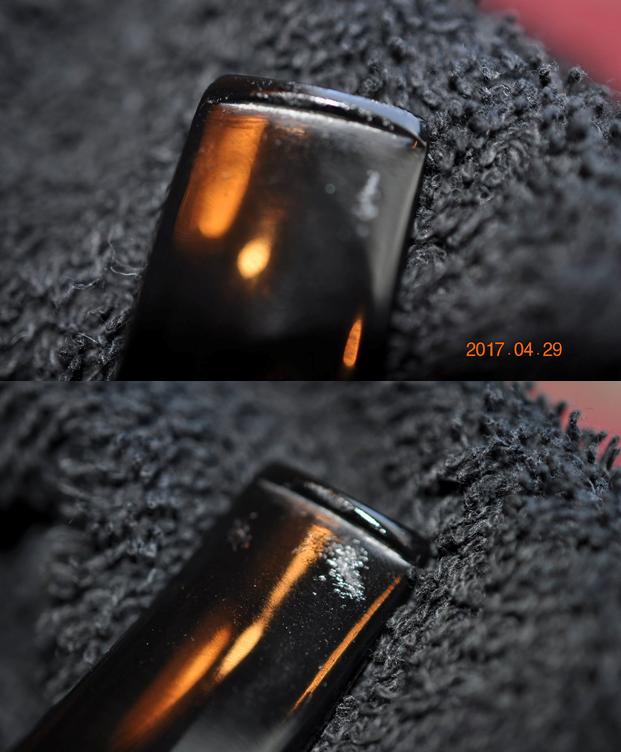
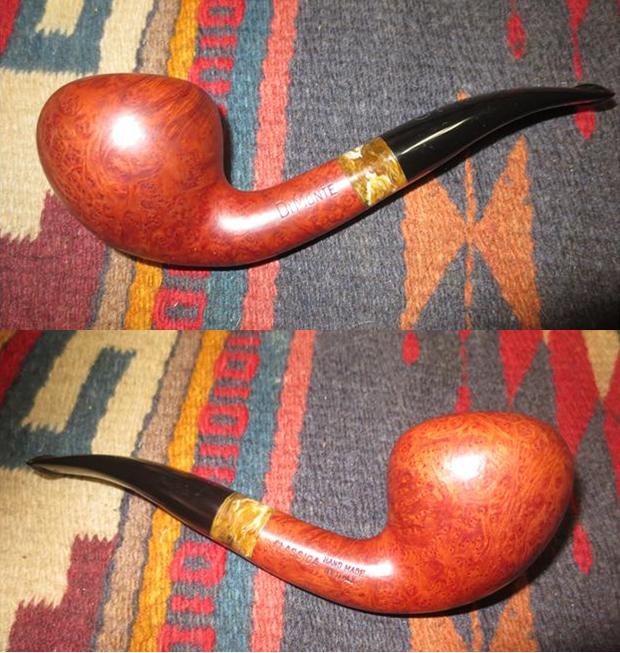
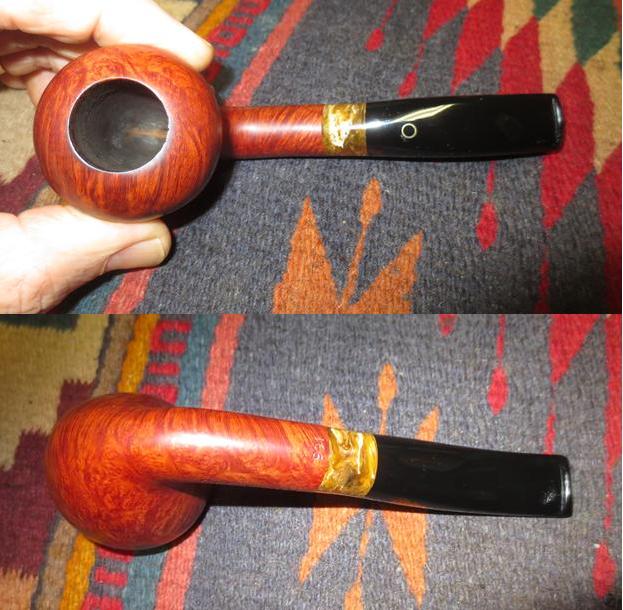
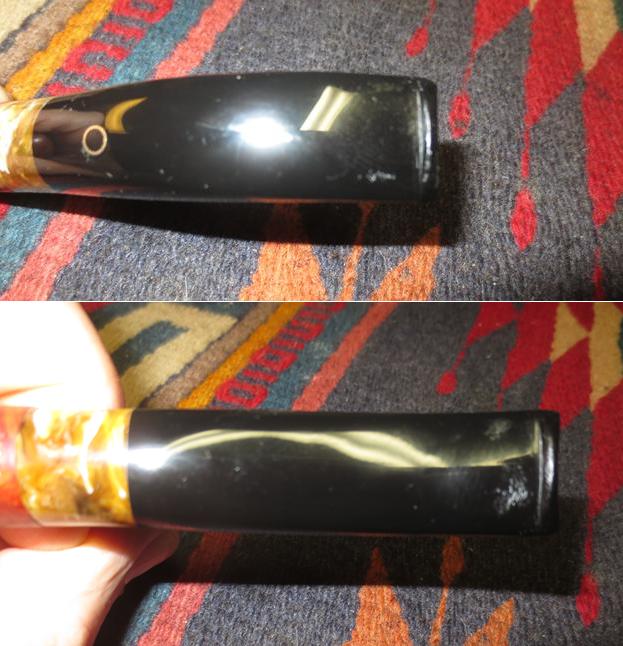
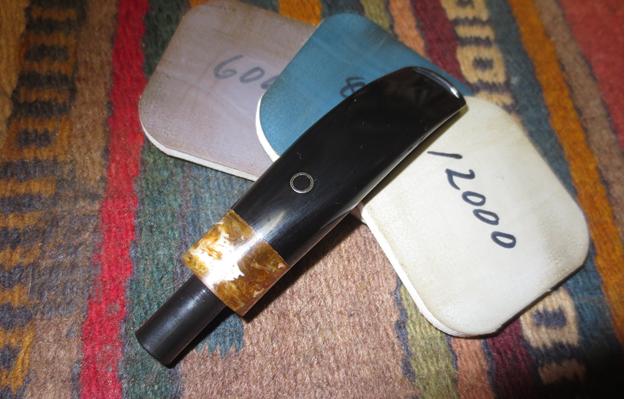
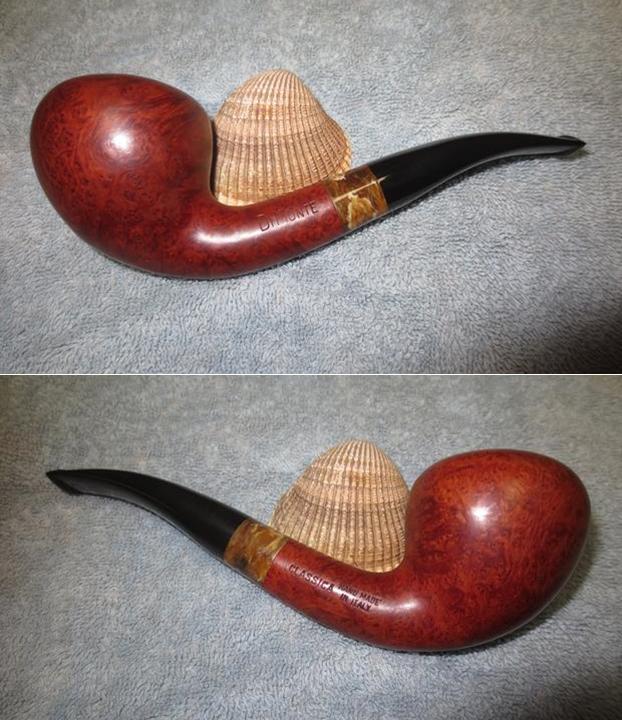
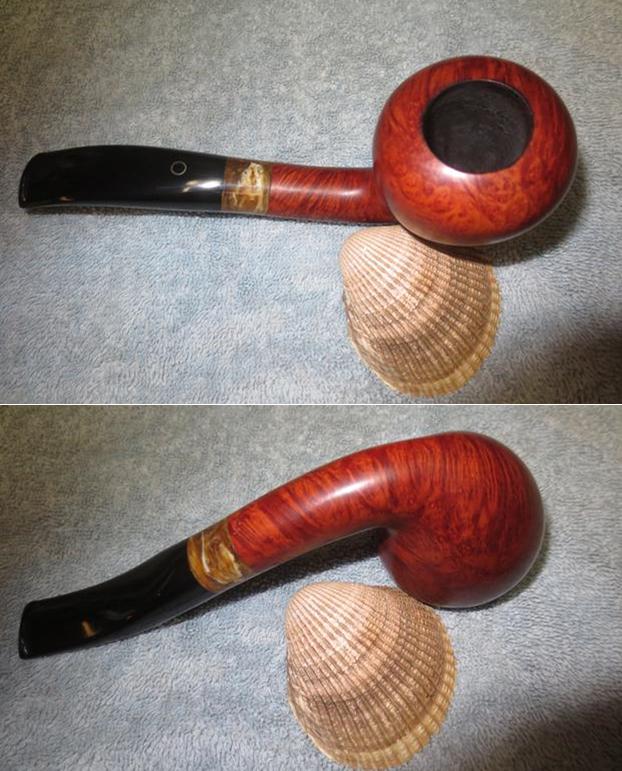
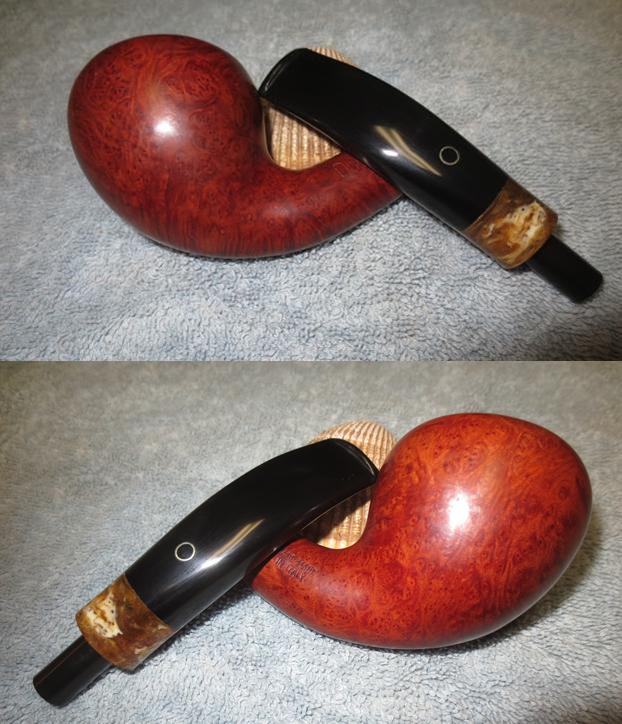
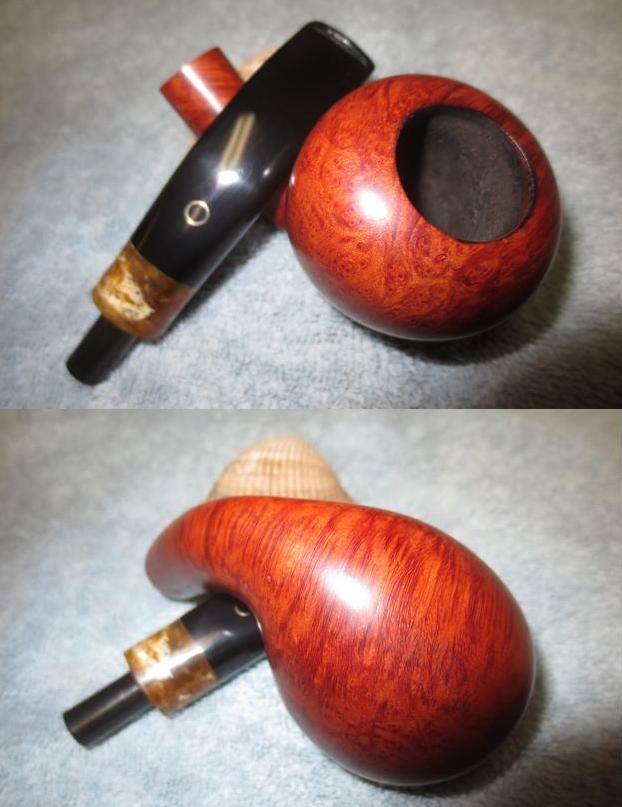
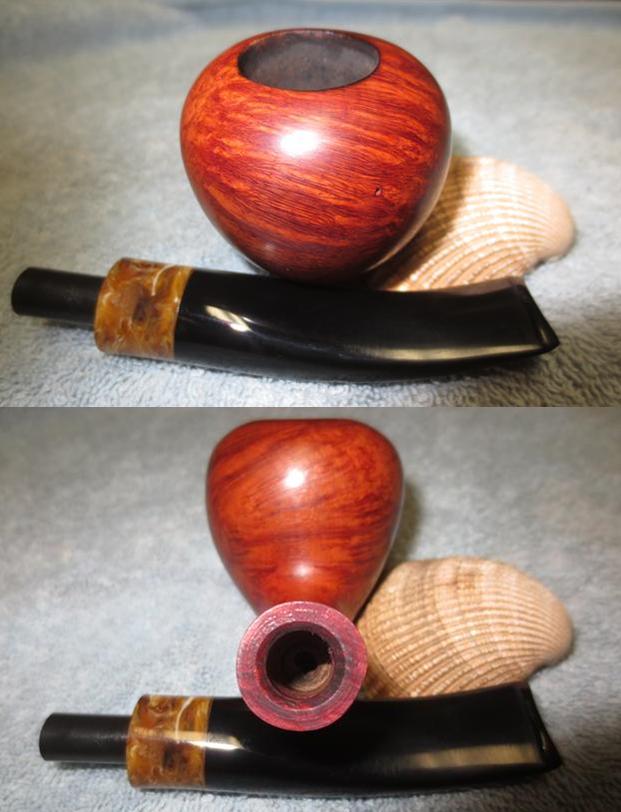
The next pipe in the lot that my brother picked up at the latest estate sale is stamped DiMonte on the left side of the shank. On the right side it is stamped Classica and next to that Hand Made in Italy. The pipe is a beauty. It is a natural or light tan coloured briar with a Lucite stem. There is a mottled yellow acrylic insert on the stem that separates the black of the Lucite from the natural colour of the briar. The shape is an acorn with an under-slung stem. My brother took photos of the pipe before he cleaned it and sent them to me. He sent some close up photos of the bowl rim and top along with photos of the bowl sides to give a clear picture of both the condition of the pipe and also the beautiful grain that flowed with the shape of the bowl. The rim top had some overflow from the cake in the bowl. It covered most of the inner edge of the bowl and extended on to the rim top. There is a great combination of birdseye on the sides of the bowl and cross grain on the front and back. There are a few very minute sandpits in the briar that in no way detract from the beauty of the pipe. The next photo shows the stamping on the right side of the bowl and gives a clear picture of the look of the stamp.The next two photos show a bit of the stamping on the left side of the shank and the underside with the shape number 991. The mottled yellow acrylic stem insert is also shown in the photos.Like the other pipes in the lot from the estate sale the stem had a lot of tooth chatter on the stem near the button on both sides and also some wear on the edge of the button itself. The slot in the end of the stem was in really good shape and was well formed.I knew nothing about the DiMonte brand. My first thought was it was an Italian Hand Made pipe somewhere between Savinelli and Castello. The quality of the craftsmanship and the hand made stem and briar work made me think that it was more toward the Castello side of the scale. This is a beautiful pipe. I did some searching on the web and found a link to a post on alt.smokers.pipes. It was a response to a fellow who posted a question about the brand. I have included the link to the thread as well as the informative response regarding the history of the brand and its place of origin. Here is the link: https://pipesmokersforum.com/community/threads/info-on-this-pipe-brand.20964/

Hello Pappy, here’s a bit of information that I found from an alt.smokers.pipes post in 02/10/2003 that reads:

DiMonte was originally Arlington Briar Works, a pipe factory in New York. It went out of the pipe-making business, and sold off its machinery, I think in the 1970s. Maybe later. Mark Tinsky could probably give you an accurate date on when, if that is of concern.

Recently (2003), the family has decided to get back into pipes, and has been having them made under contract in Italy and importing them. The few I have seen so far seem to be good value for the money, but nothing to rave about. I have one. Wood is good, combustion chamber and shank both properly drilled, good quality mouthpiece. Some of the digits in the nomenclature look as if stamped by a dyslexic (and perhaps were — upside down 8, other minor things), and the finishing touch in fine details was not apparent in all instances.

If you find one and like it, I would expect it to be a good smoker. But if you worry about nit-picks, examine the pipe carefully before buying. You might find some…

One more comment: The old pipes from Arlington Briar Works that I have picked up at estate sales have been of lesser quality wood and a touch on the small side, but craftsmanship and attention to detail was great. The new pipes from Italy have better wood, size is generally larger (better, for me), but attention to detail is not always what it might be. As smokers, I rate the newer ones higher, because wood is so important, but in fit and finish things ain’t what they used to be…”

It appears when Arlington attempted to re-enter the pipe market, they contracted with an unknown Italian outfit, who manufactured these pipes under the DiMonte label. However, Arlington once again soon went out of business.

However, I’m sure there must be some knowledgeable pipers here that may have more information for you. Hope this helps you a smidge more…

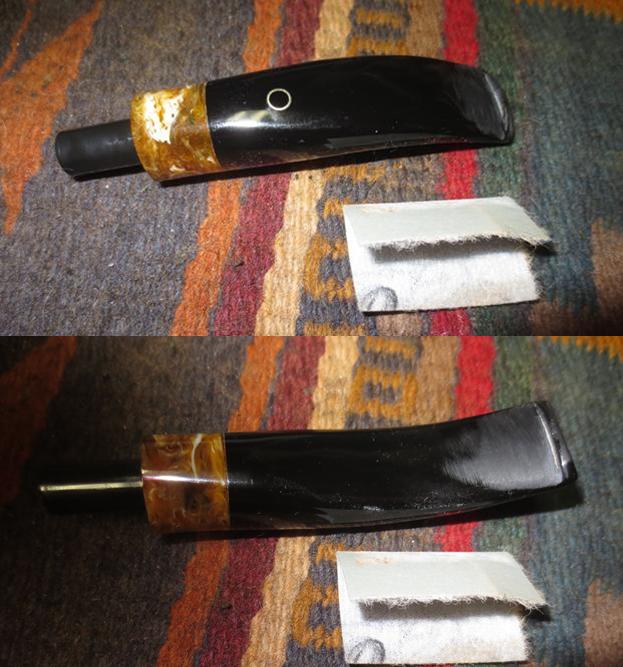
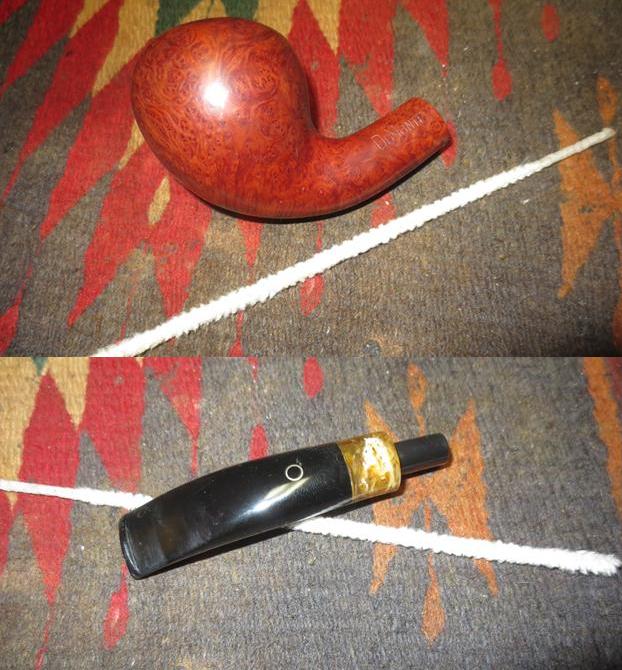
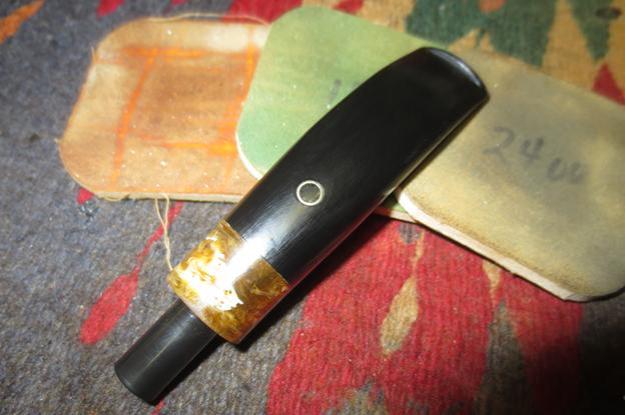
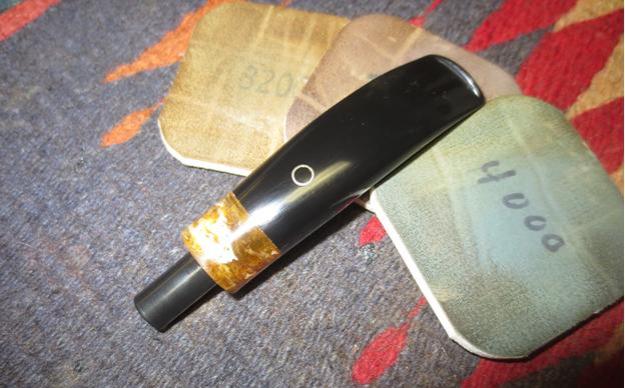
When I brought the pipe to my work table I took the next four photos to show the condition of the pipe when I received it. My brother had done a great job cleaning up the bowl cake and the overflow on the rim. The rim surface was clean and smooth. He did a thorough cleaning of the internals of the pipe. The next close up photo shows the inside of the bowl and the cleaned and restored rim top.The stem was clean but it had a lot of tooth chatter on both sides of the stem that would need to be sanded out.I sanded out the tooth marks and reshaped the button edges with 320 grit sanding pads and was able to remove all of the chatter and the marks. Fortunately they were not too deep in the Lucite so sanding them out was quite simple. I sanded them without damaging the profile of the stem.I ran a pipe cleaner through the mortise and the airway in the shank and stem. The airway was very clean.I polished the stem with micromesh sanding pads – wet sanding it with 1500-2400 grit pads to remove the scratches and dry sanding with 3200-12000 grit pads. I wiped the stem down with a damp cotton pad after each grit to remove the sanding dust. Each successive grit of pad brought more of a shine to the surface of the Lucite. I put the stem back in place in the shank and buffed the pipe with Blue Diamond on the buffing wheel. I gave the stem and bowl multiple coats of carnauba wax and buffed it with a clean buffing pad to raise a shine. I hand buffed it with a microfibre cloth to deepen the shine. The finished pipe is shown in the photos that follow. It is a beautiful pipe and that fits well in the hand and the mouth. The draught on the stem is open and flowing. The briar is lovely and a rich patina will develop as it is smoked. The dimensions of the pipe are: length 6 inches, height 2 inches, outer diameter 1 5/8 inches, chamber diameter 3/4 inches. It should provide a great smoke for whoever adds it to his/her collection. I will be posting the pipe on the rebornpipes store soon. If you are interested in purchasing it email me at slaug@uniserve.com or send me a private message on FaceBook. Thanks for looking.


New Life or an Oval Shank Whitehall Saratoga Dublin


Blog by Steve Laug

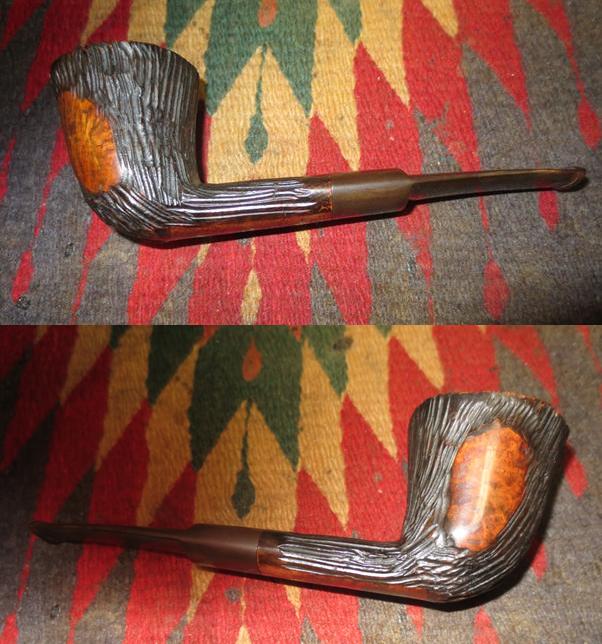
Not long ago I received and email from Dave, a reader of the blog, asking about a couple of pipes that he had picked up. This is the second of the two pipes – the Whitehall Saratoga. I have included part of his email below. He gives his assessment regarding the pipes and what he wanted done.
Steve… I have recently been gifted 2 estate pipes that I would love to have reincarnated by your hands? I am not sure of the cost and wanted to speak with you first… The 2 pipes in question are not in bad shape, just have some age, cake and minimal wear; one is a Whitehall rusticated with saddle stem and the other a Pear shaped Dr. Grabow Westbrook… I have attached some images with this email so that you have some idea of how they look. If you need additional images please let me know. Thank you for your time and consideration.

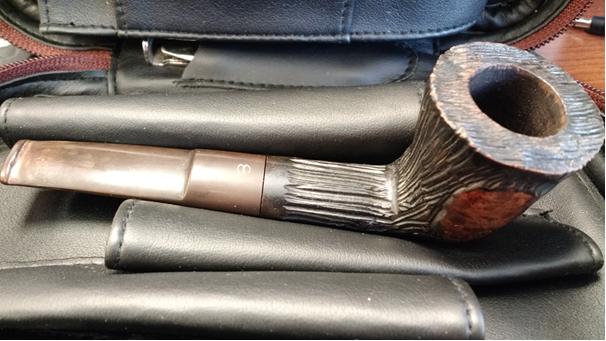
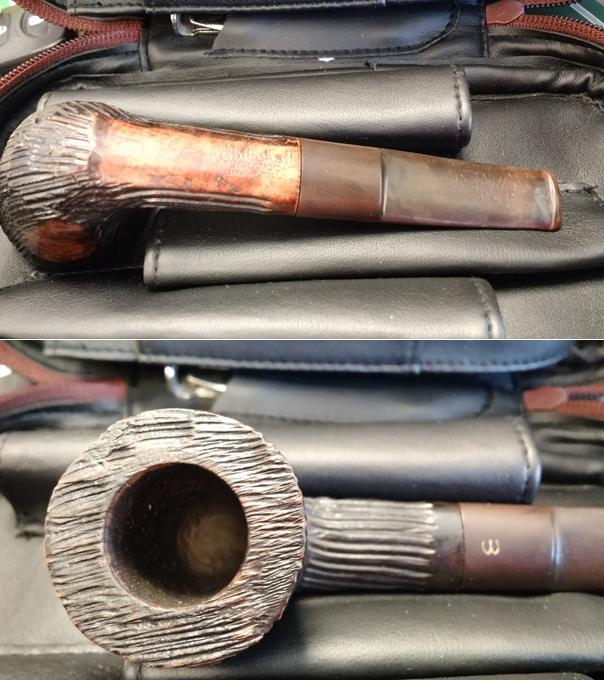
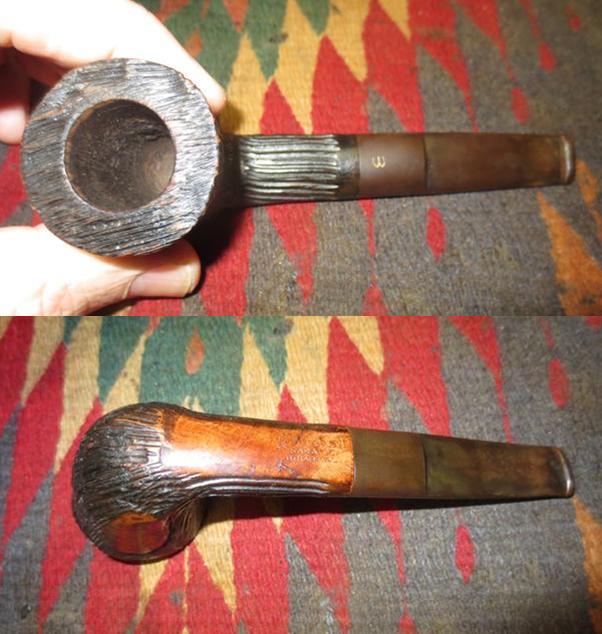
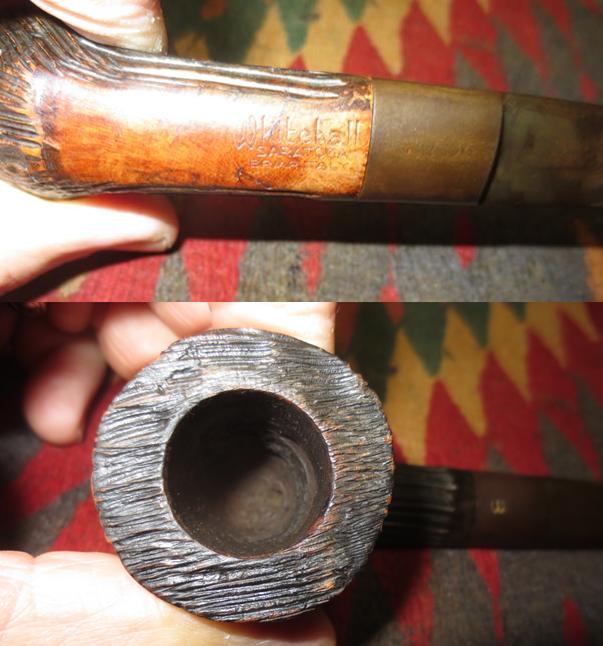
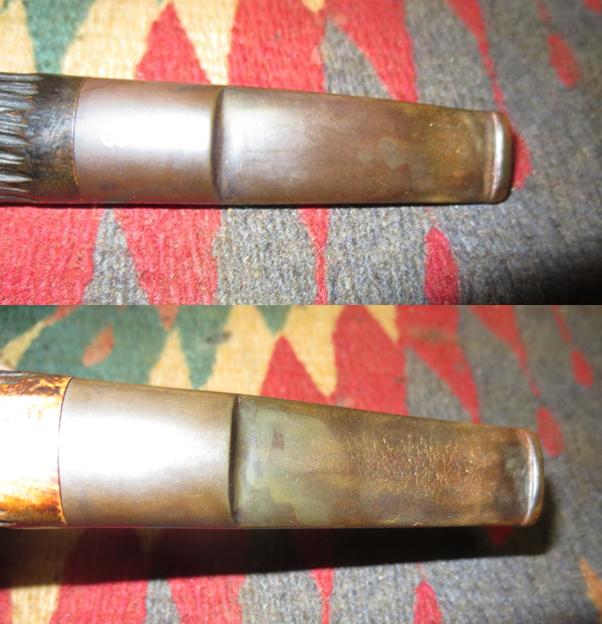
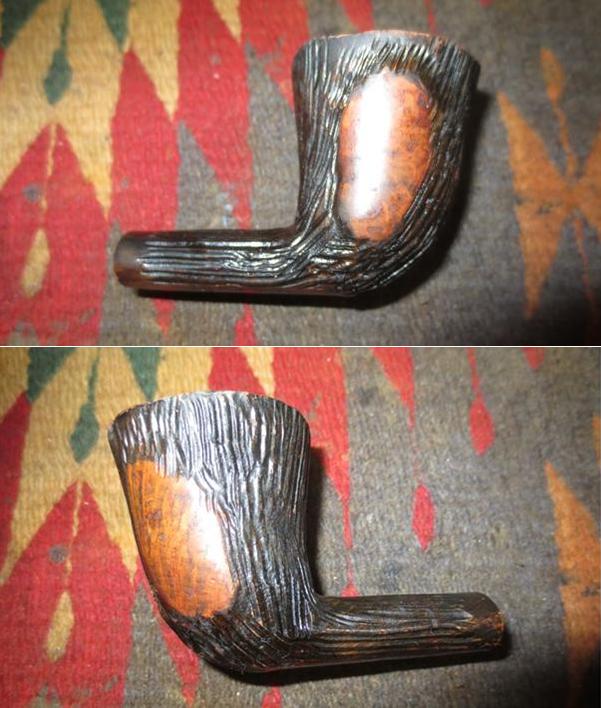
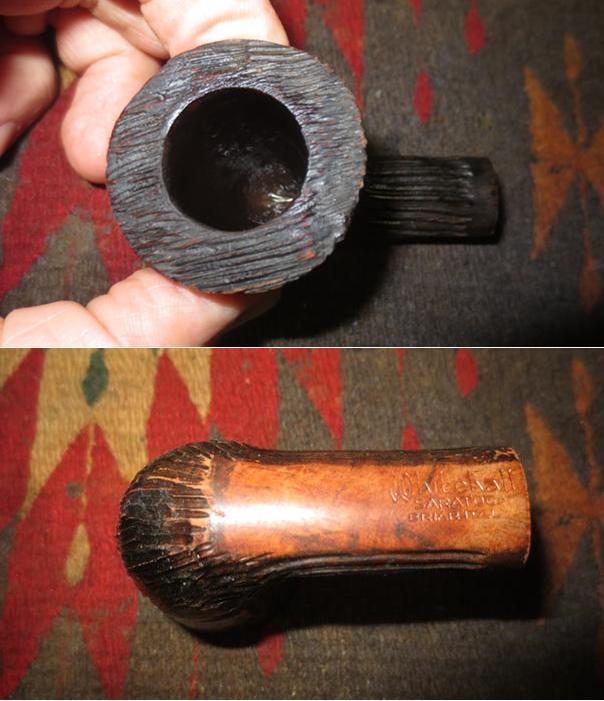
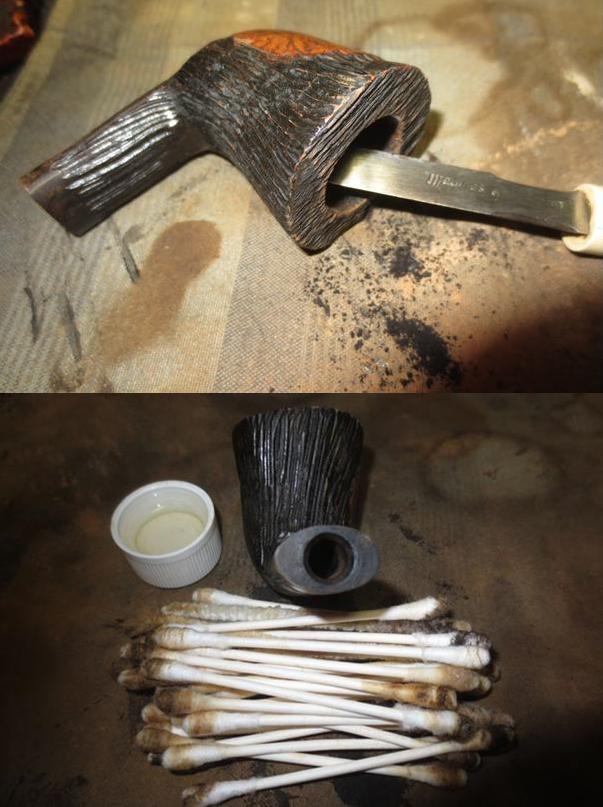
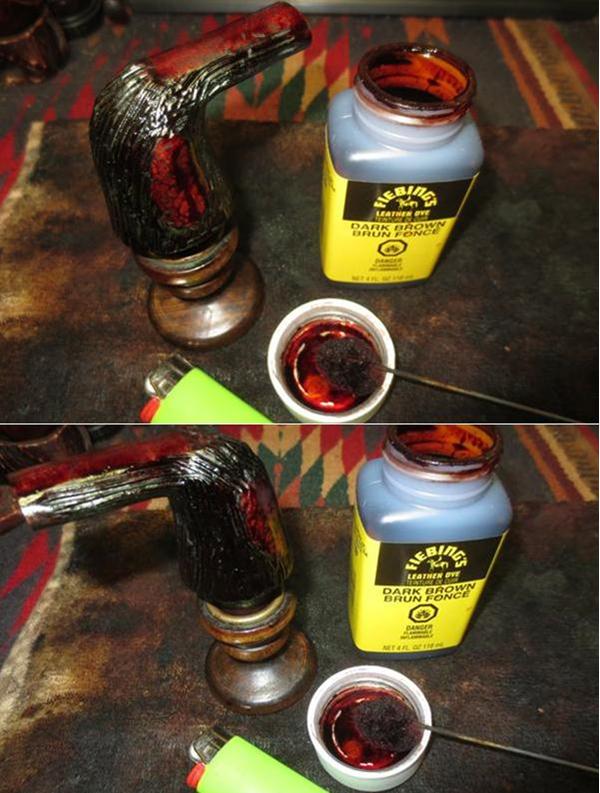
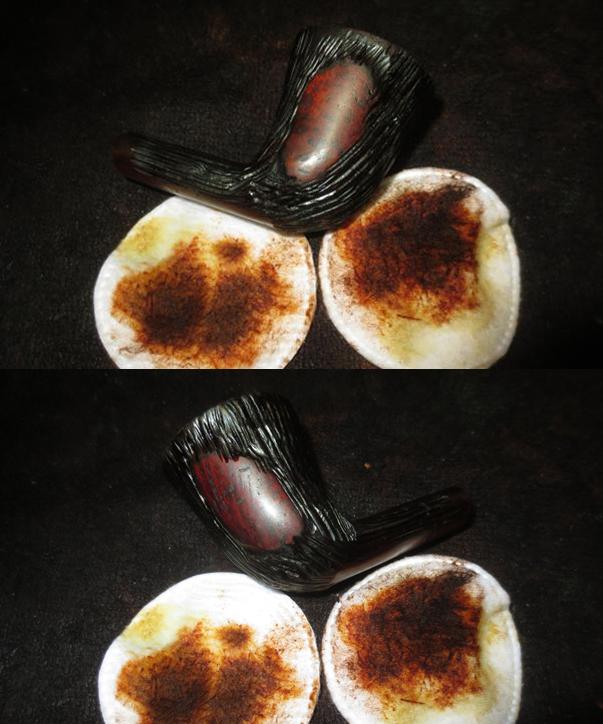
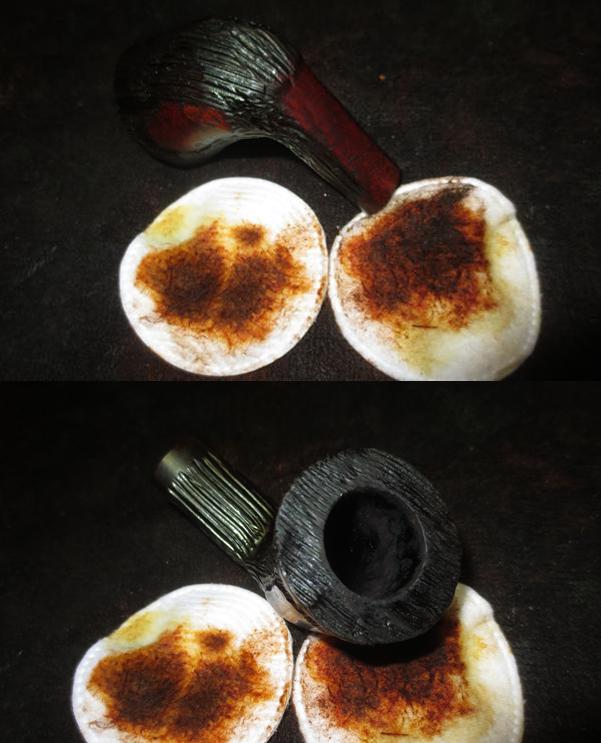
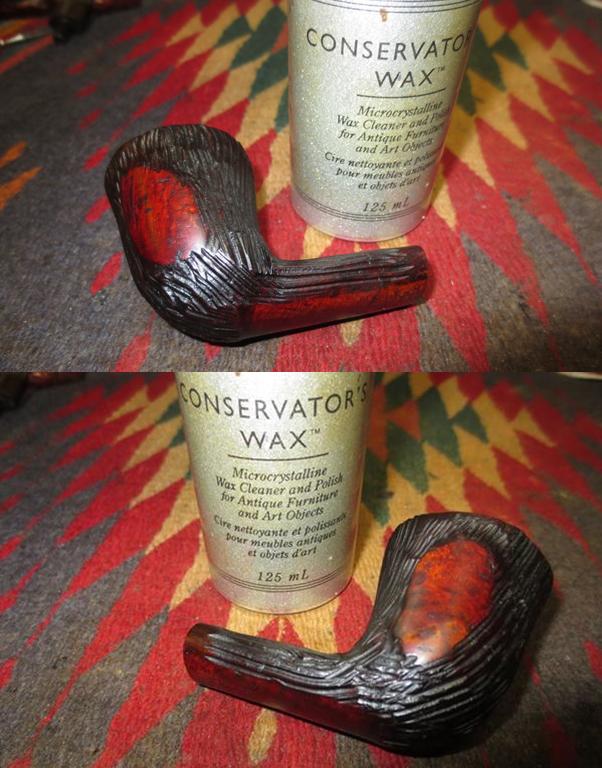
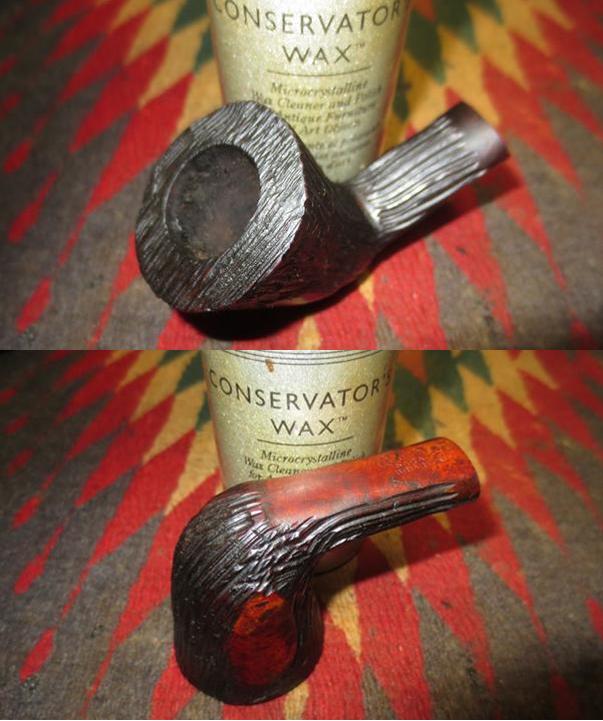
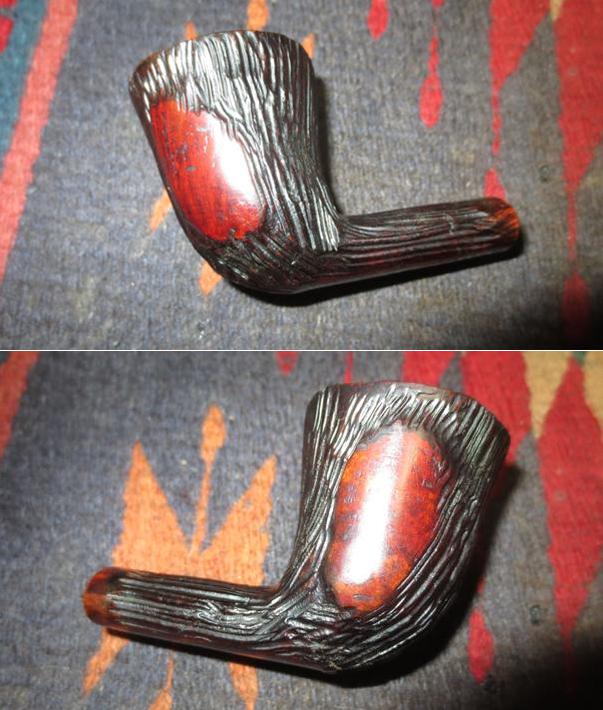
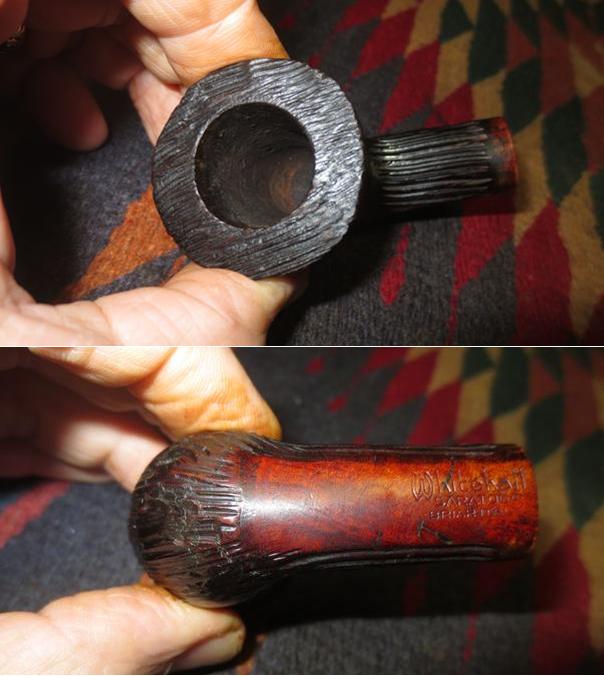
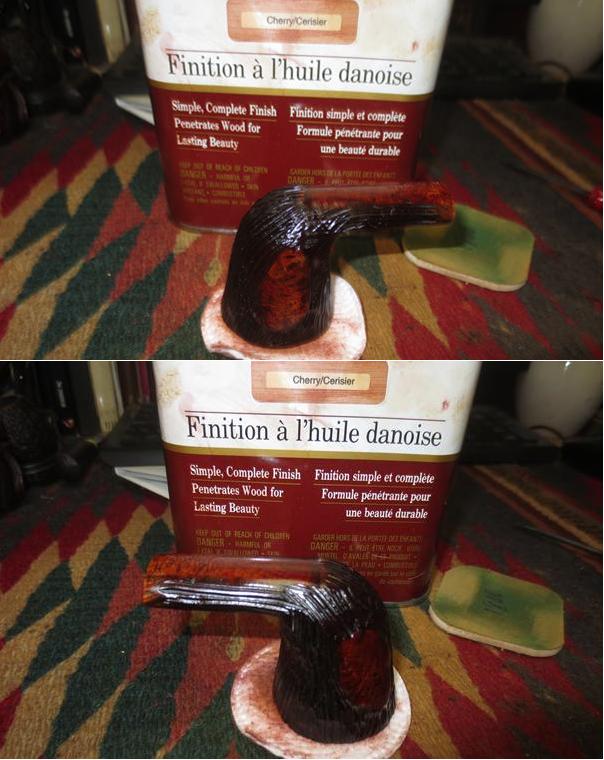
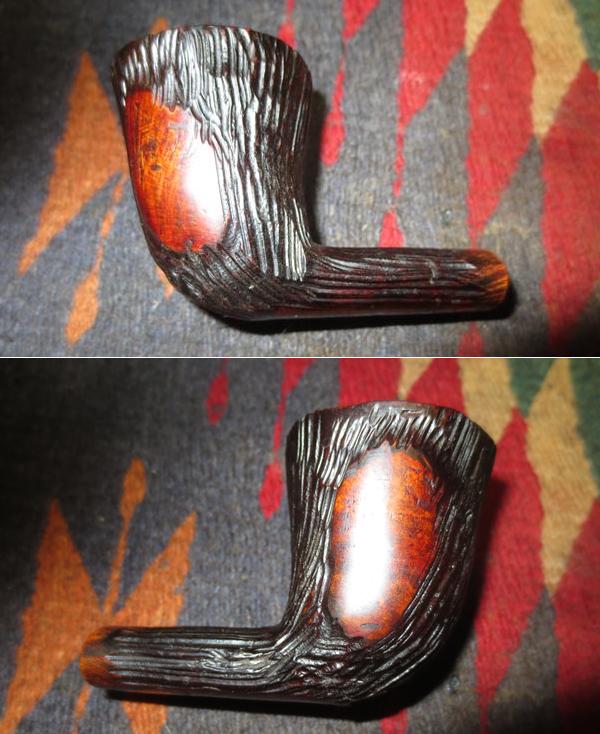
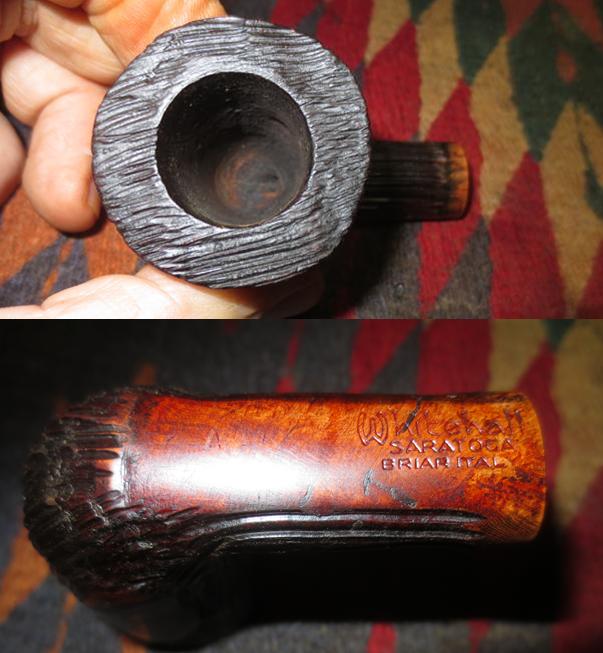
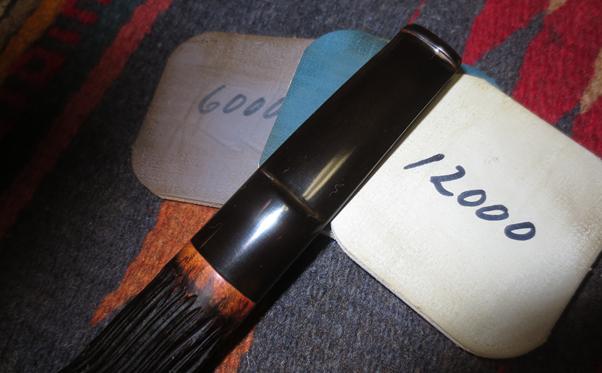
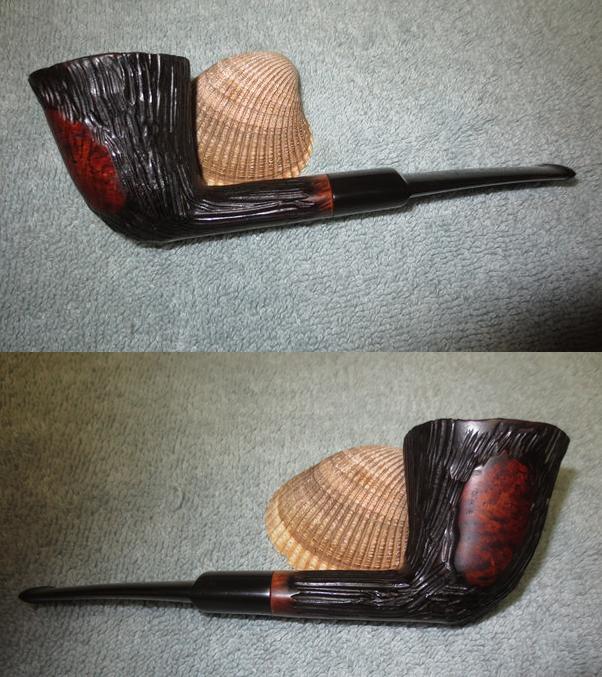
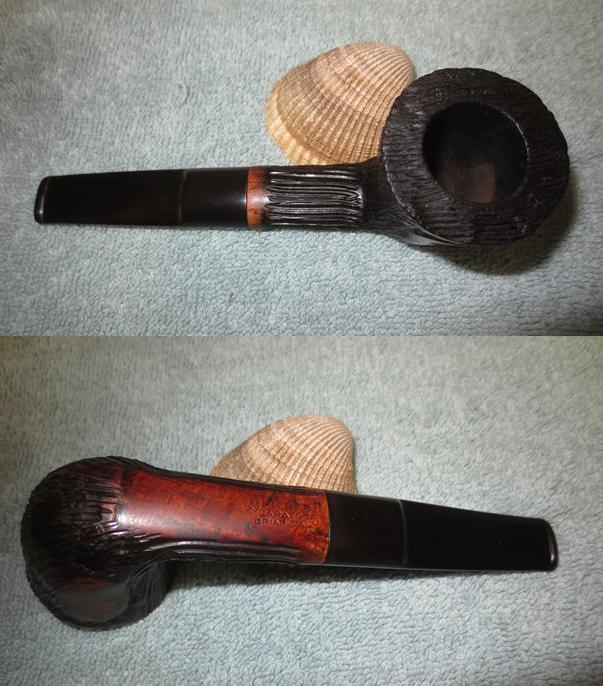
Regards, Dave The pipe was in pretty decent shape over all. The rim was dirty but the inner and outer edges were in good shape. The finish was worn and dirty but the carved striations looked good. The smooth patches around the shank, the underside and the two panels on the bowl sides were scratched but otherwise clean. The stem was oxidized and had some deep tooth marks on both the top and underside near the button. The W stamp on the top of the saddle was faint and worn. I would need to be careful in cleaning the oxidation not to damage the logo stamp. The photos below show the condition of the pipe when I received it. I took a close up photo of the stamping on the shank. The stamp is clearly legible and reads Whitehall over Saratoga over Briar Italy. The second photo shows the rim and bowl condition. There was still a light cake that would need to be scraped out but it was really quite nice.I took photos of the stem. It is hard to see the tooth dents in the photos below but they are present. There was a W on the top of the saddle stem that was a decal and it was coming off. The button is worn from use. The oxidation is quite deep.When I took the stem out there was a small stinger in the tenon. It was dirty but was easily removed and would be polished and put back in place.I sanded the stem with 220 grit sandpaper to break up the oxidation on the stem and reshape the button. I sanded out the shallower tooth marks to remove them. I wiped down the stem and repaired the deeper marks with black super glue. I set the stem aside to let the repairs cure. I turned my attention to the bowl. I scrubbed it with a tooth brush and Murphy’s Oil Soap to remove the grime from the grooves in the briar on the bowl and rim. I rinsed the bowl down with warm water and dried it off with a towel. The freshened pipe is shown in the photos below. I reamed out the bowl to remove the last of the cake with a Savinelli Fitsall Pipe Knife. It did not take too long to smooth out the remnants of the cake in the bowl. I scrubbed out the mortise and the airway in the shank and stem with pipe cleaners, cotton swabs and alcohol to remove the tars and oils. I went through a lot of pipe cleaners and cotton swabs before they came out clean.I restained the bowl with a dark brown aniline stain and flamed it with a lighter. I repeated the process until the coverage was even and I was happy with the results. I wiped down the bowl with alcohol on cotton pads to lighten the stain and make the contrast between the rusticated part and the smooth ones more obvious. I gave the pipe a coat of Conservator’s Wax and buffed it with a shoe brush to give it a shine and check out what the colour looked like. I took some photos of the polished bowl to show how it looked at this point in the process. The pipe is beginning to look really good. I sanded the top of the shank to remove the dark colour and make it more transparent at the stem shank junction. Note the nicks in the smooth portions of the bowl and shank. They are deep so I will not be able to sand them out. They actually act like marks of history of the journey of this pipe. It was not quite right. I wanted a little more red in the finished briar. I wiped the bowl down with alcohol on a cotton pad to remove the wax so I could do a bit of a contrast stain. For the second coat I rubbed down the bowl with a coat of Cherry Danish Oil to highlight the red colour in the briar. The combination of stains gives a nice contrast look to the pipe. I polished it with a soft cloth and took photos of the finished bowl. I set the bowl aside and turned my attention to the stem. I talked with Dave regarding the W decal on the saddle and we decided to remove it as it was worn and kept me from removing the oxidaiton on the saddle while trying to protect it. I resanded the with 220 grit sandpaper to remove the oxidation and the remnants of the decal. I polished it with micromesh sanding pads. I wet sanded it with 1500-2400 grit pads and rubbed it down with Obsidian Oil between each pad. I dry sanded it with 3200-12000 grit pads and repeated the oil treatments. I buffed the stem with red Tripoli on the buffing wheel and followed that with Blue Diamond polish. I gave the stem several coats of carnauba wax and polished it by hand. I buffed the stem with Blue Diamond to polish out some of the minute scratches in the surface. I gave the stem several coats of carnauba wax to protect and give it a shine. I hand waxed the bowl with Conservators Wax and buffed the bowl and stem with a clean buffing pad to raise the shine. I hand buffed it with a microfibre cloth to deepen the shine. The finished pipe is shown in the photos below. I will be packing it up soon and sending it back to Dave so he can fire up a bowl and give this beauty a smoke. Thanks for looking.