Monthly Archives: August 2015

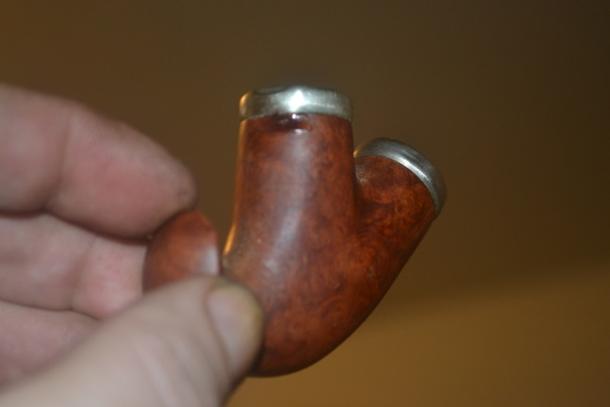
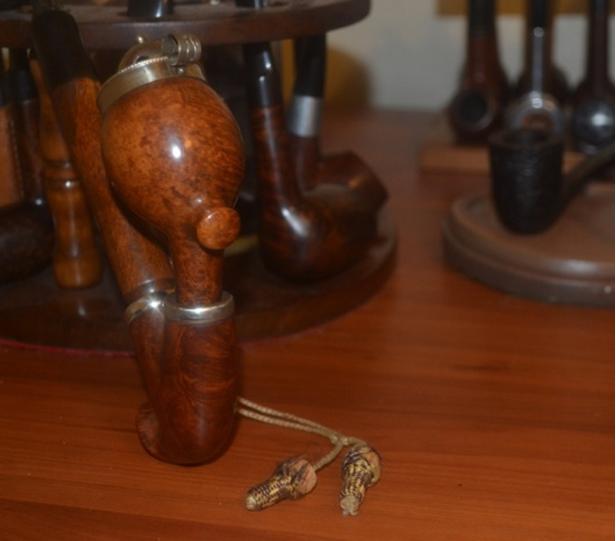
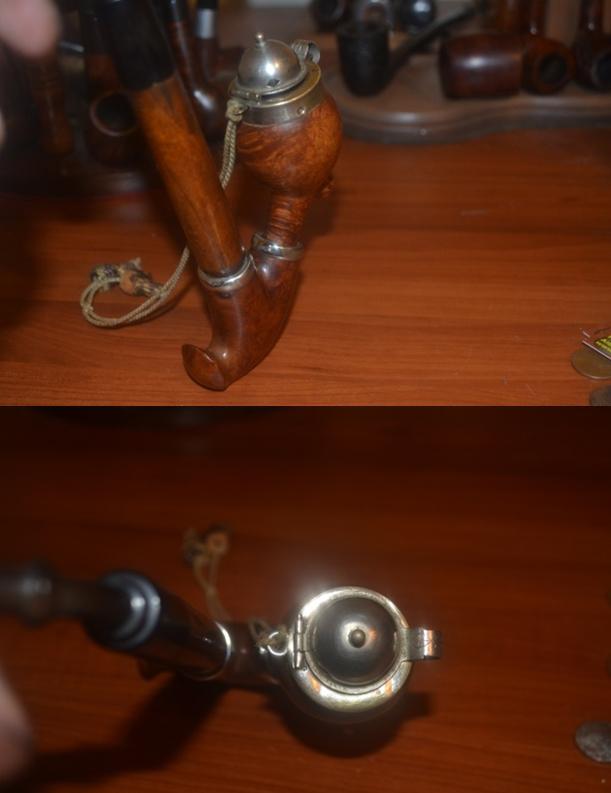
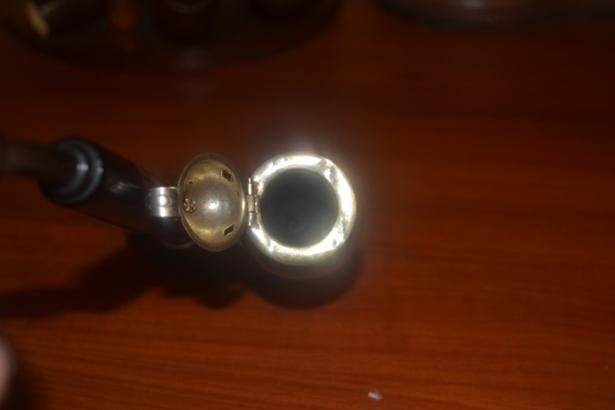
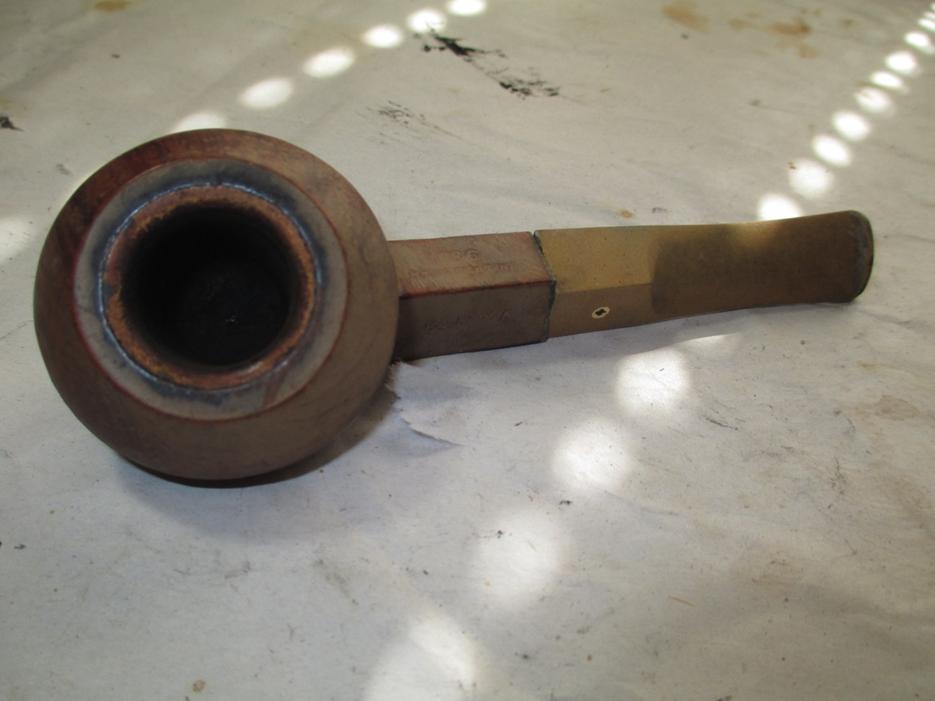
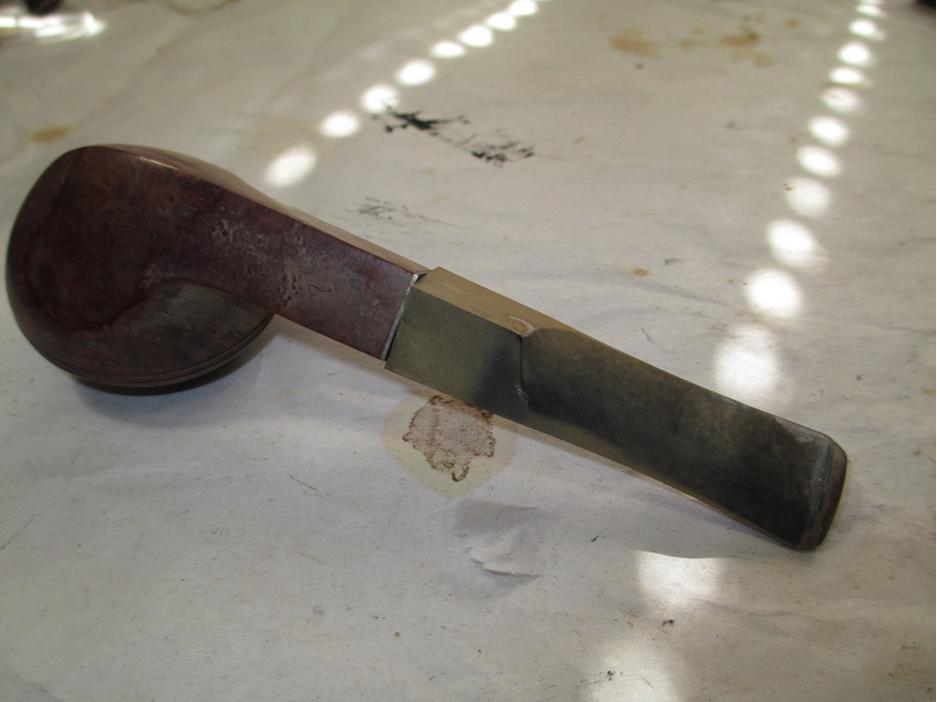
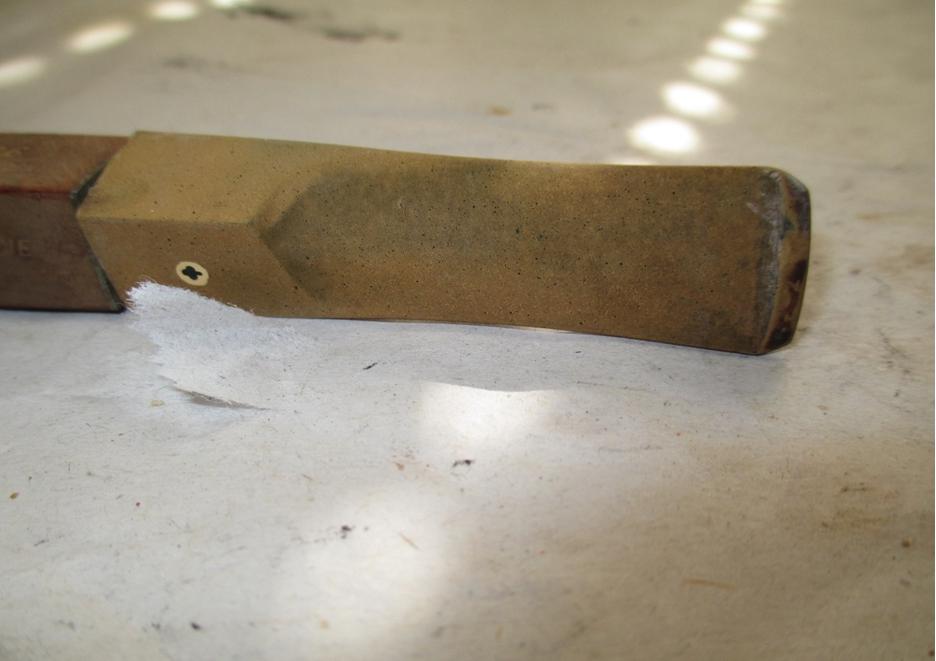
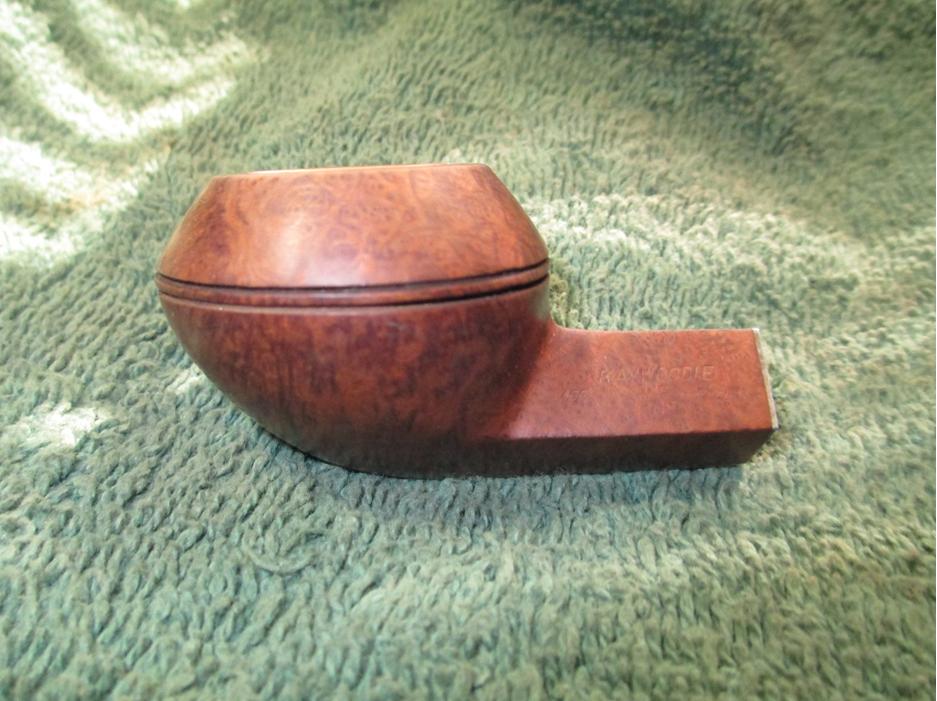
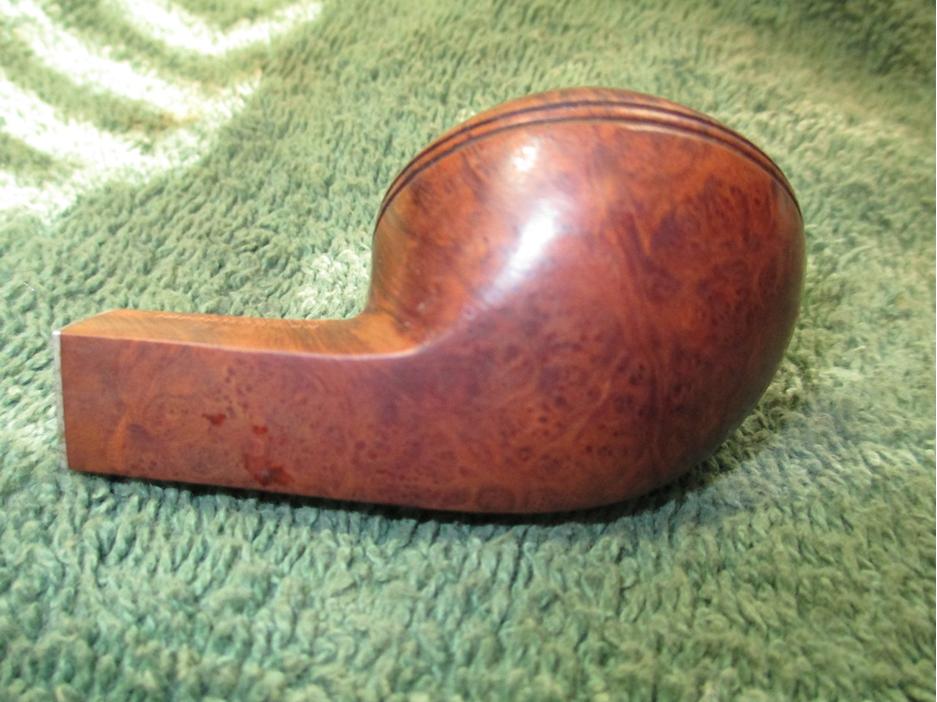
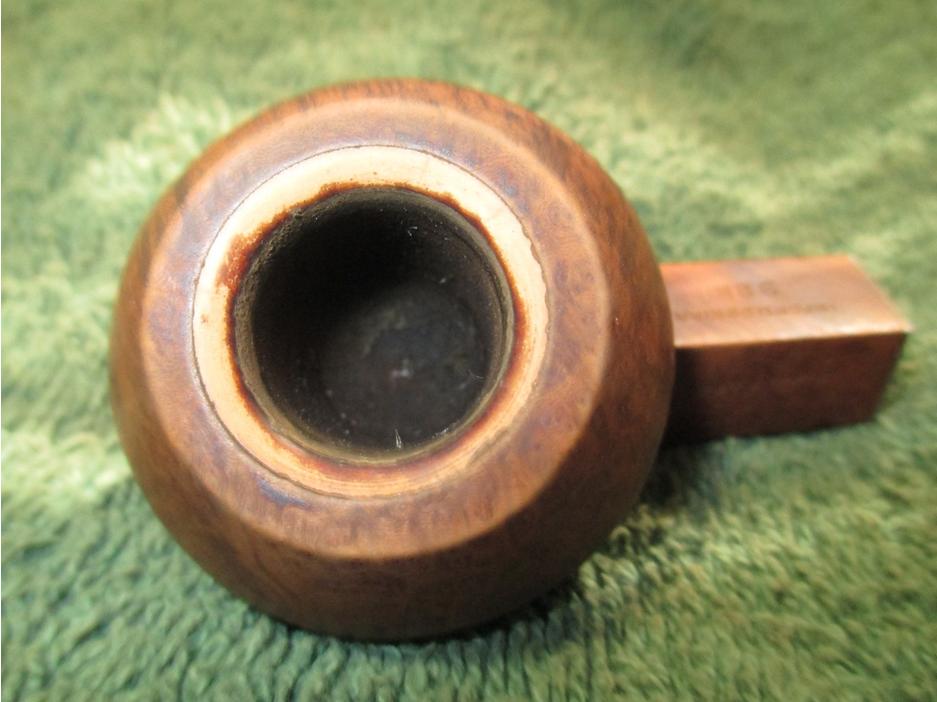
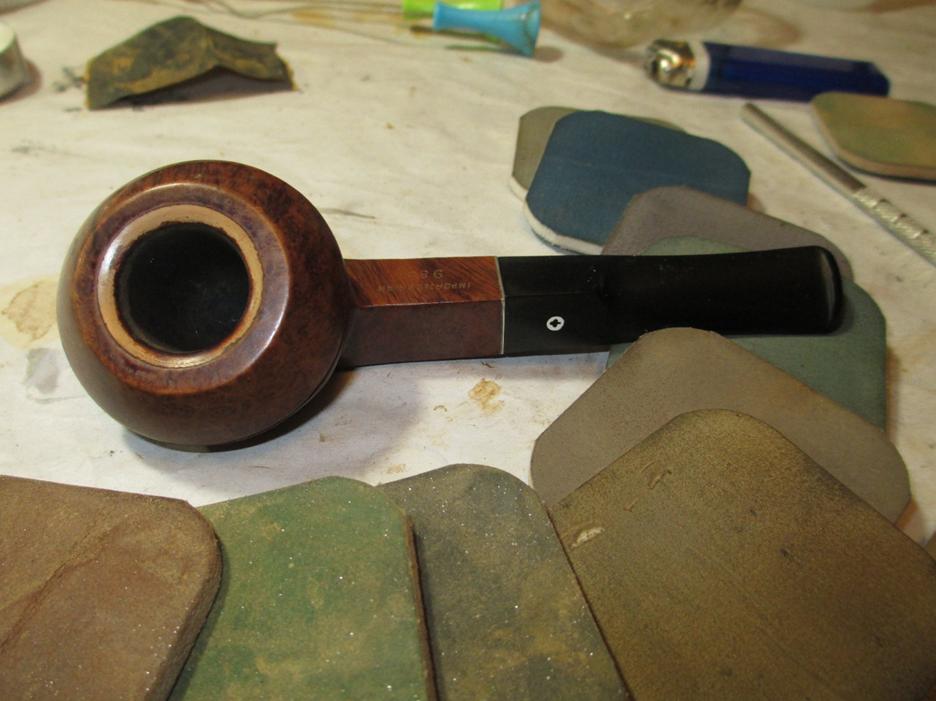
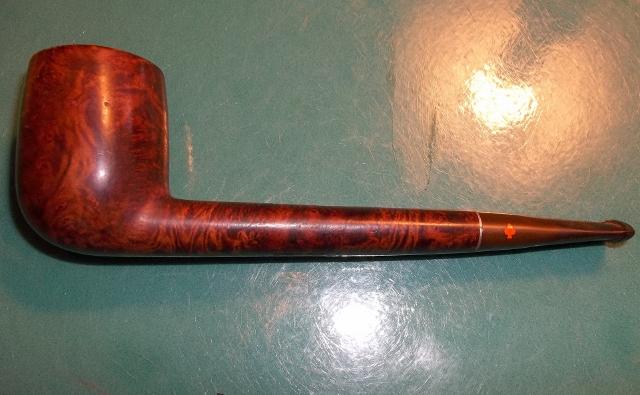
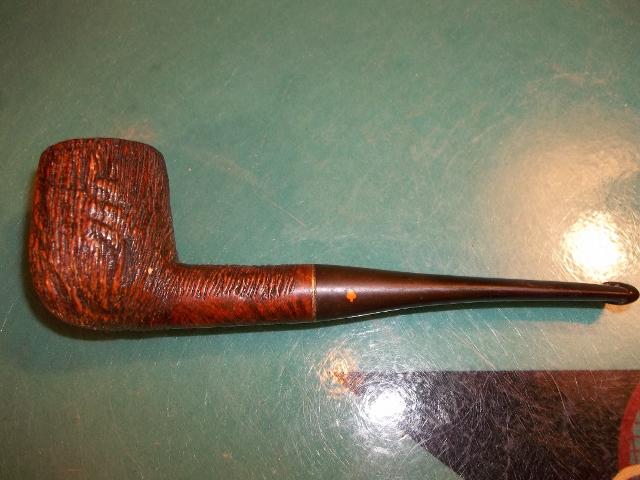
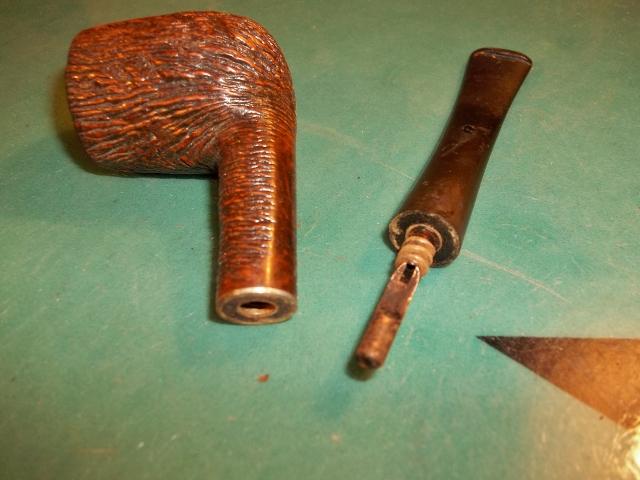
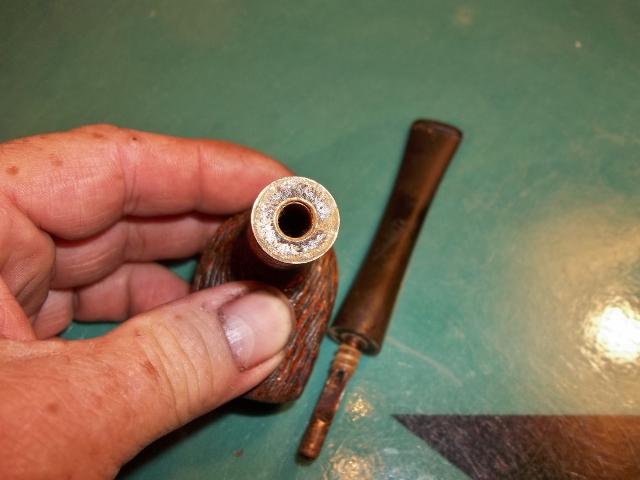
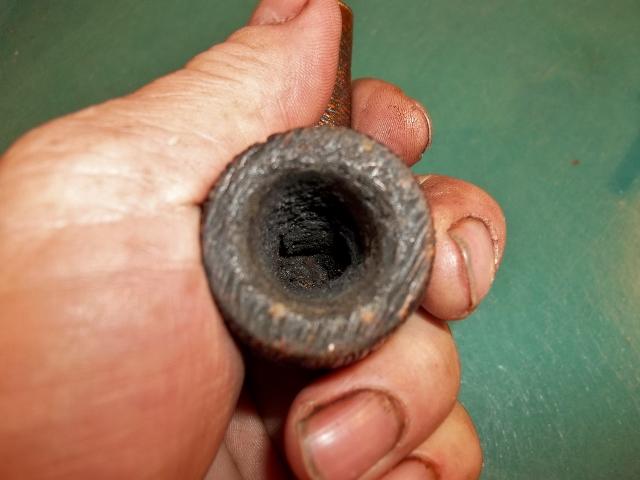
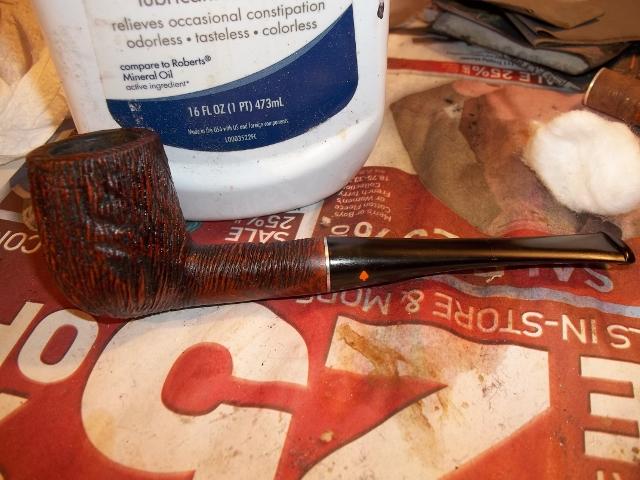
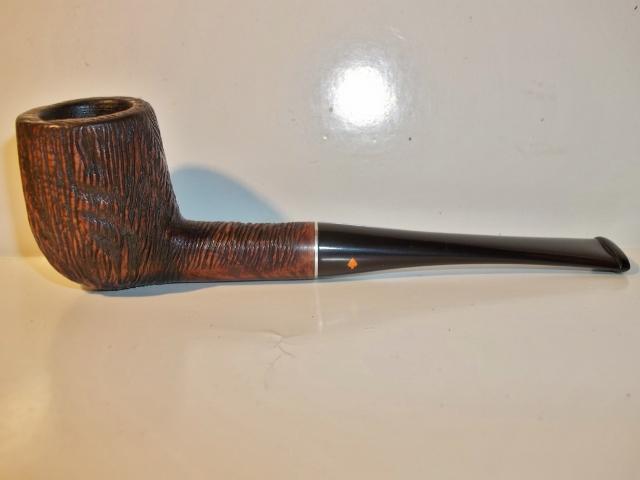
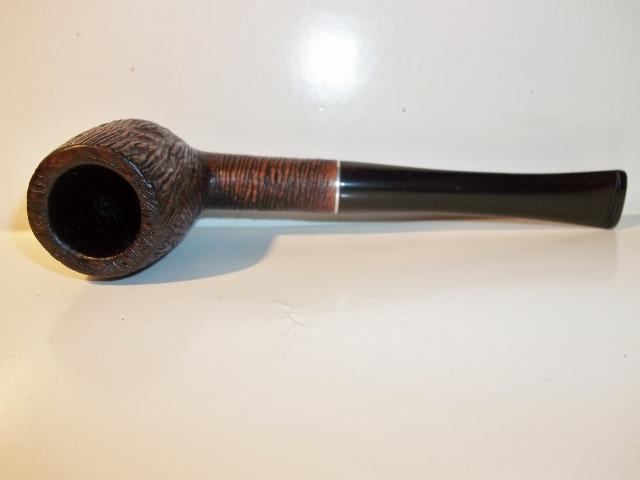
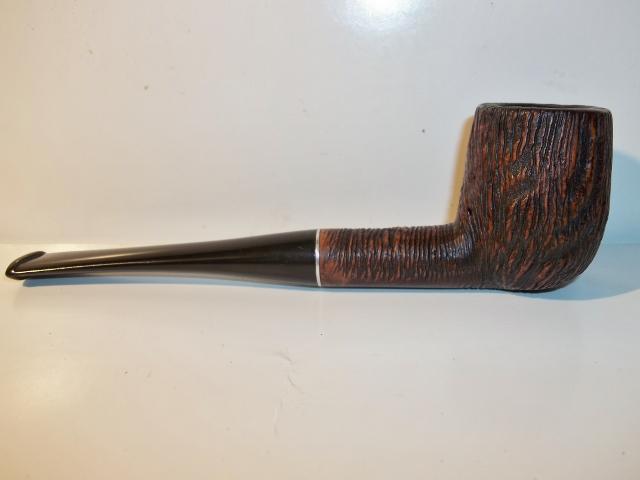
“Plain Jane” KB&B Yello Bole 2807 billiard with a unique surprise .


Another blog post of Troy’s on a unique Yello Bole pipe. Well done Troy.

Troy W's avatarBaccy Pipes

I purchased this KB&B Yello Bole off Ebay .

I was looking for another 07 billiard as i own a couple and very much like the large bowl, the way they smoke  and classic shape of them . This one was listed as a four digit (2807) with the “Honey Cured Briar ” stamping , which made it a pre 1936 Yello Bole .
I thought ,excellent !  I did not have a early four digit 07 as of yet .

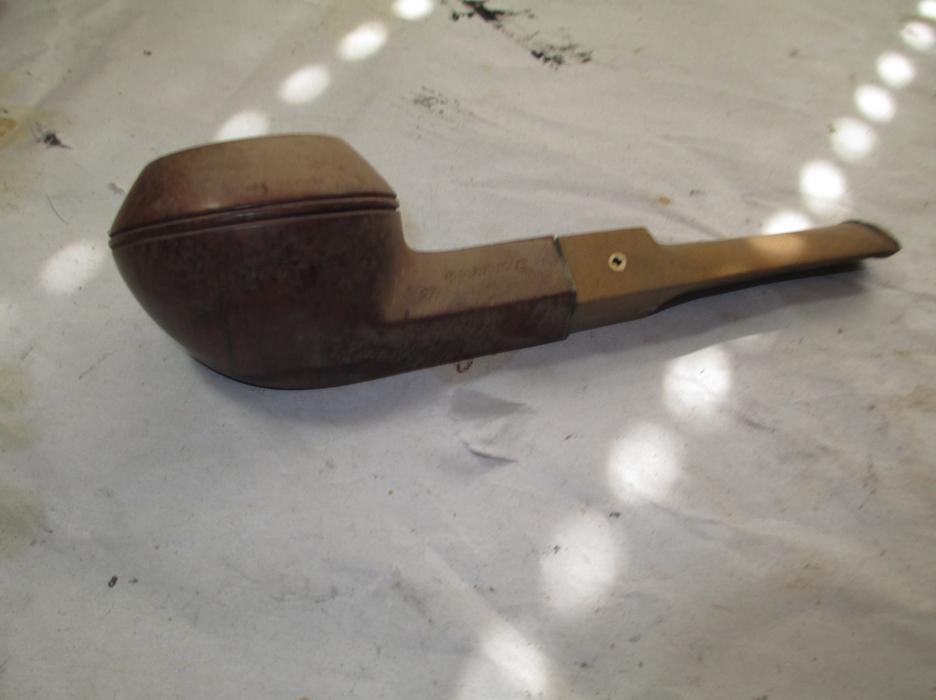
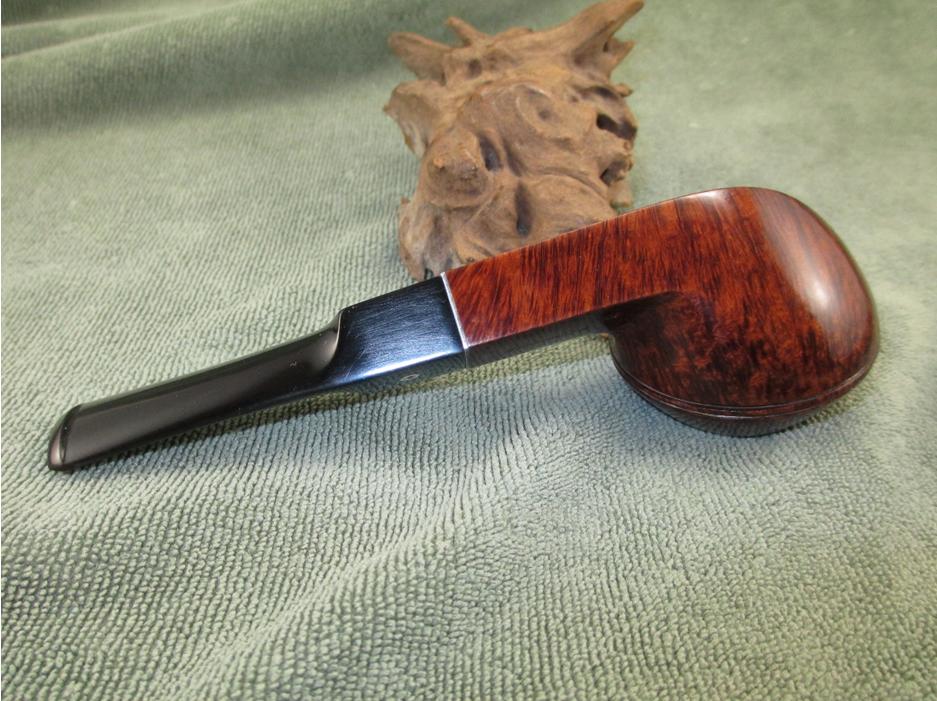
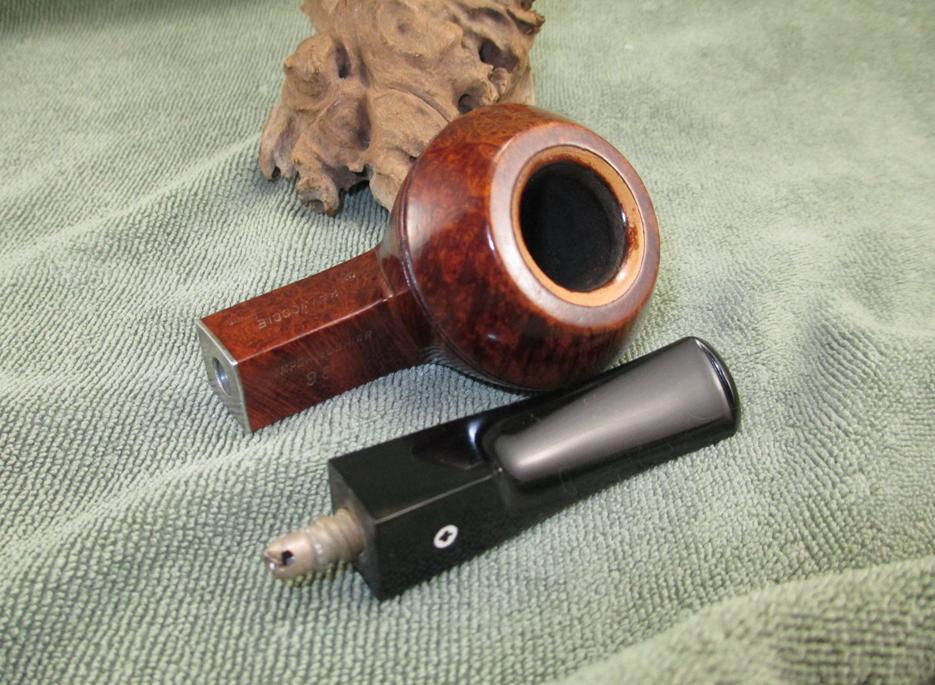
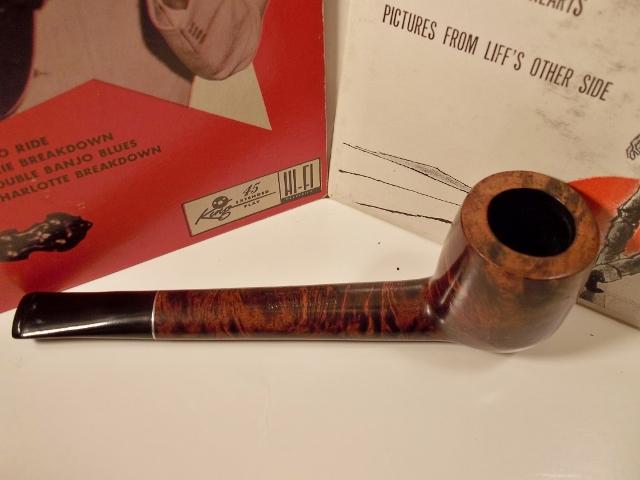
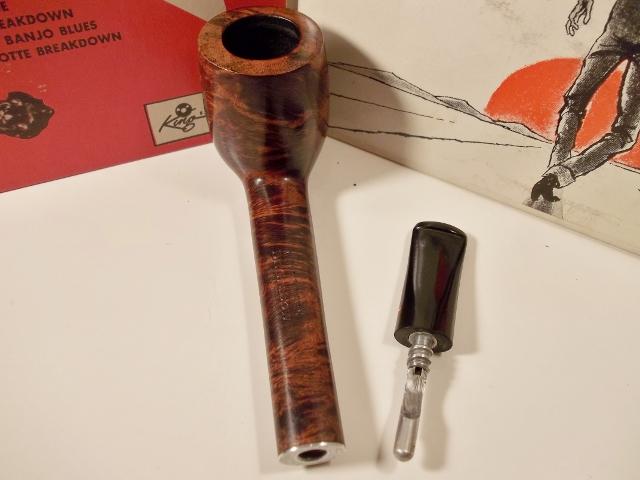
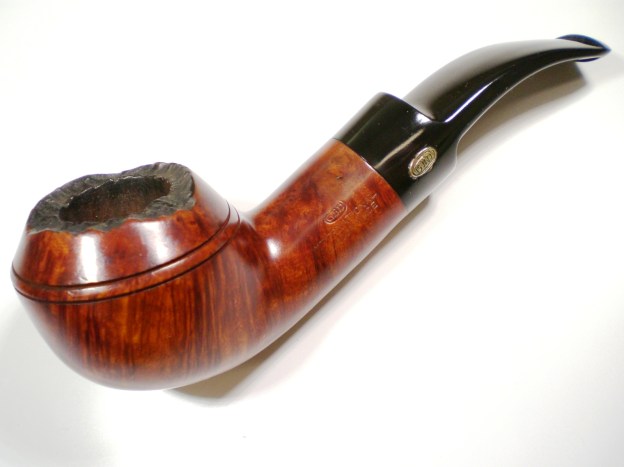
Here is one of the Ebay pictures ,

The pipe looked in excellent condition for its age but i did notice a couple of odd things about it . The band was wider than normal and after looking up the 28 two digit code it should have been stained dark . From the other pics of the pipe that was on the listing the grain was very bland and…

View original post 1,522 more words

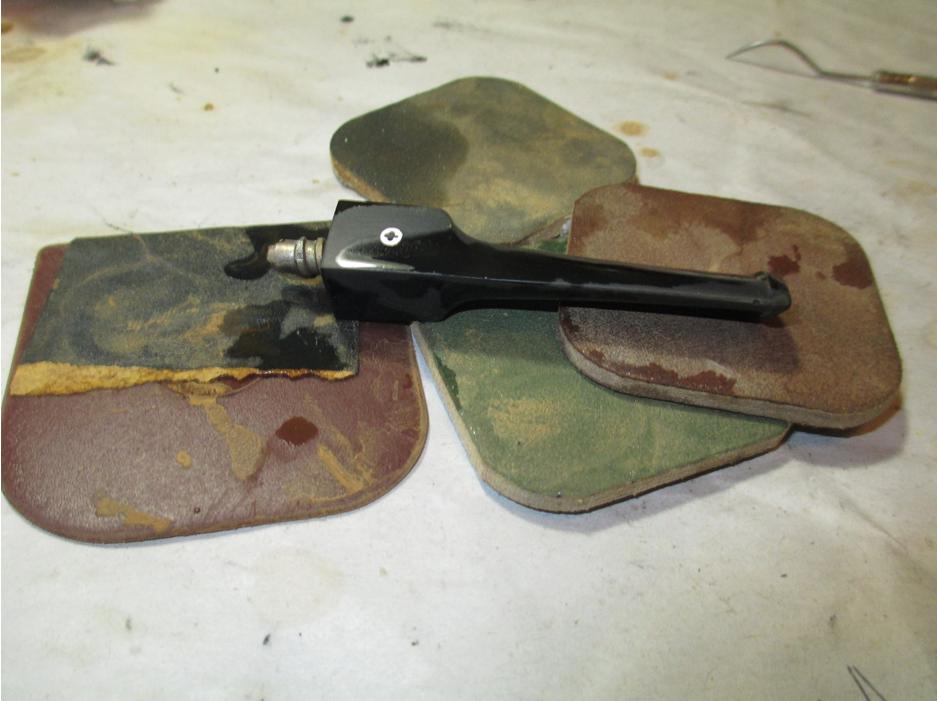
LHS Purex Superfine #15 Poker Reurbish and Stem Repair.


Troy started a Blog on refurbishing. This is one of his posts and it is well done. If you enjoy his work then you will want to follow this blog as well. Good job Troy.

Troy W's avatarBaccy Pipes

I was sent this hard to find LHS poker as a gift from Fletch . He is a fellow member of the Dr.Grabow Collectors Forum ,

He picked up the pipe in a lot he acquired at the Kansas City pipe show not long back . He knew i was looking for a LHS Poker and was kind enough to think of me .

Upon arrival i was happy to see it was a larger poker at just a hair under two inches tall. The bowl was in very nice shape with just some minor dings and such . The stem needed some work though as a corner of it was missing from a previous owner chewing on it . The LHS bar emblem was missing on the stem also .


I knew fixed and cleaned this would be a really nice poker .

The pipe did not have much…

View original post 429 more words

Rescuing a Kaywoodie Flame Grain Meerschaum Lined Doggie


Blog by Andrew Selking

To paraphrase Samuel Clemmons, reports that I’m no longer messing with pipes are greatly exaggerated. Between a cross country move, a new house, renovations to said house, and trying to figure out what I want to be when I grow up, I have not spent as much time working on pipes as I would like. I did manage to squeeze in this nice Kaywoodie Flame Grain Meerschaum lined doggie.

According to a Kaywoodie brochure from the era, Flame Grain pipes were made from “200 to 400 year-old briar burls…the last of their kind to be found in the world.” The meerschaum inlaid Flame Grain is a “superb Flame Grain Kaywoodie with an inlaid inner bowl of imported Turkish meerschaum. This pipe combines the outstanding qualities of the two best materials in the world in which to smoke tobacco.” This pipe represents the pinnacle of American pipe making. As a point of reference, in 1947 this pipe would sell for $12.50 while Dunhill pipes started at $10.00.

As you can see, it took some imagination to see a pipe that might compete with a Dunhill.KW1

KW2

KW3

KW4 The stem was under-clocked and heavily oxidized. The bowl had very thick cake and a buildup of tar on the rim. There was some kind of protective finish on the bowl that left a film after the alcohol bath. Additionally, the stinger was cut. On the plus side, I could see some really nice grain and the stem was virtually unmolested.

The first thing I did was soak the bowl in alcohol. I was hesitant to do that, because I was afraid the alcohol would cause the meer lining to deteriorate. At the same time I was also worried that if I didn’t soften the cake first, just using the reamer might damage the lining as well. I compromised and soaked it for about two hours and the cake came out nicely.

While the bowl was soaking, I used Oxyclean and warm water to soak the stem. Since it was missing the end of the stinger, it was easy to get the worst of the gunk out with a pipe cleaner. As I mentioned, the stem was under-clocked. To fix this problem I usually heat the stinger with my heat gun until I can easily rotate back into place. As the tip of the stinger heats up it transfers heat into the stem and loosens the glue. The whole heat transfer thing wasn’t working very well with this pipe, so I stuck a small nail in the stinger.KW5 That worked like a charm.

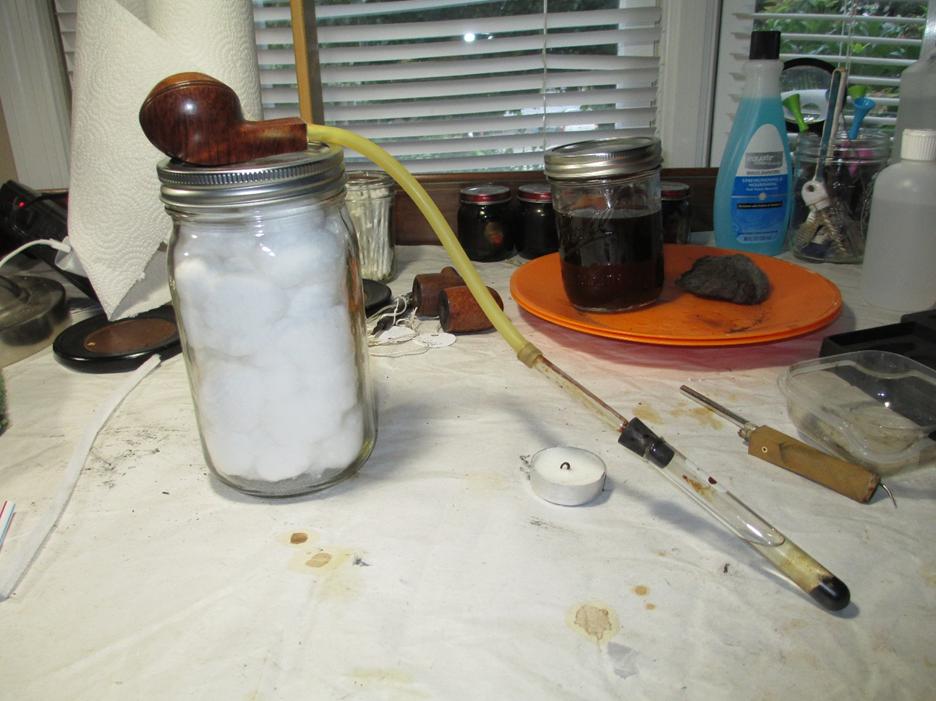
Next I did a retort on the bowl and stem.KW6

KW7 After scrubbing the insides with brushes, q-tips, and pipe cleaners, it was time to tackle the exterior issues. I used 0000 steel wool with acetone to remove the tar build up on the rim.KW8

KW9 I continued with the 0000 steel wool over the rest of the bowl to remove the film on the finish. After cleaning the bowl, I used 3200-12000 grit micro mesh to polish the bowl. This is what it looked like afterwards.KW10

KW11

KW12 I used 400 grit wet/dry with water to remove the oxidation from the stem, followed by 1800-2400 grit micro mesh with water.KW13 I finished the stem with a progression of 3200-12,000 grit micro mesh.KW14

KW15

KW16 I set up my buffer and polished the bowl with white diamond and carnauba wax. I used my variable speed rotary tool with white diamond and carnauba wax for the stem. Here is the finished pipe. Thanks for looking.KW17

KW18

KW19

KW20

KW21

Ashton Old Church – Re imagined by George Dibos


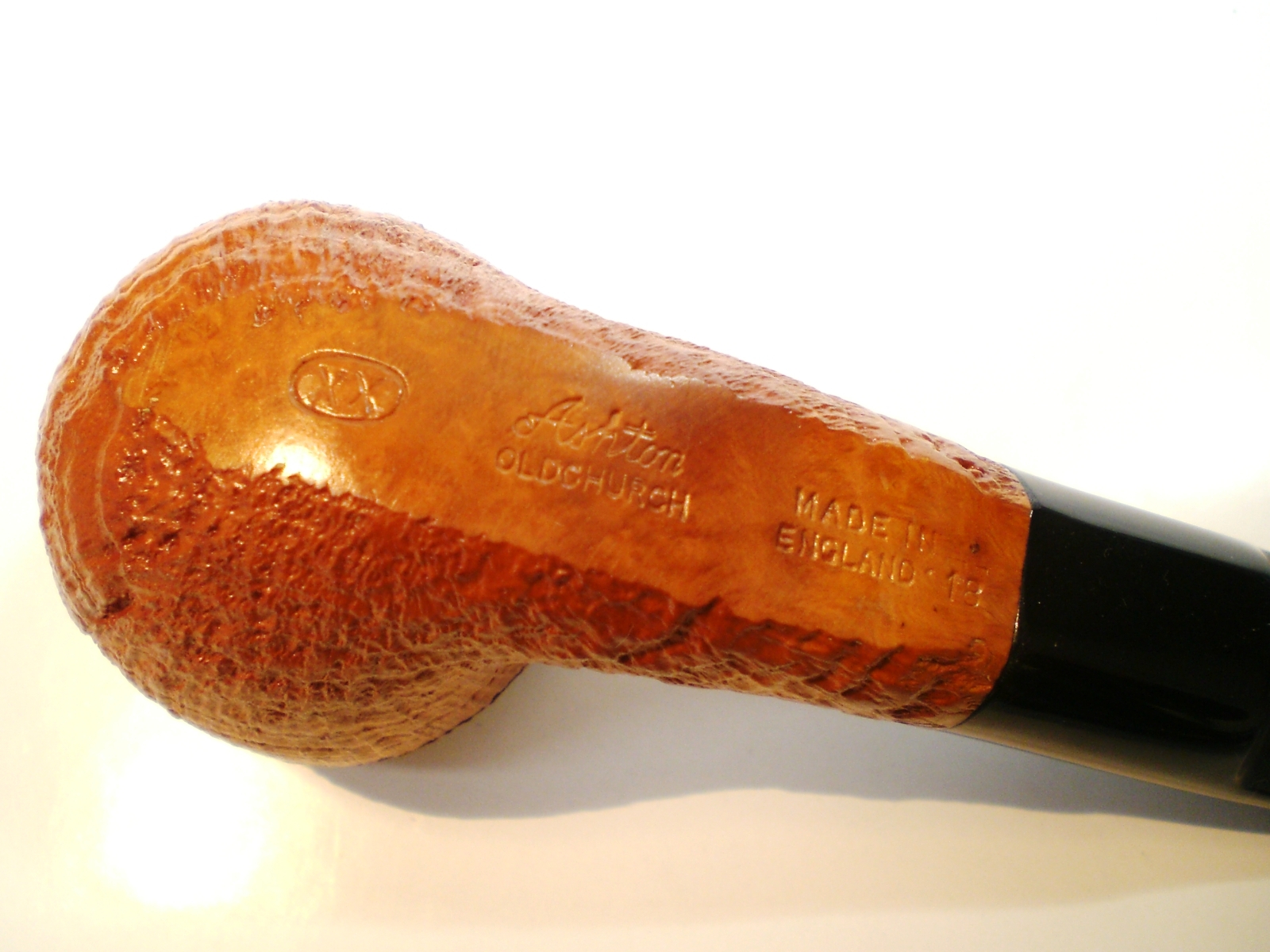
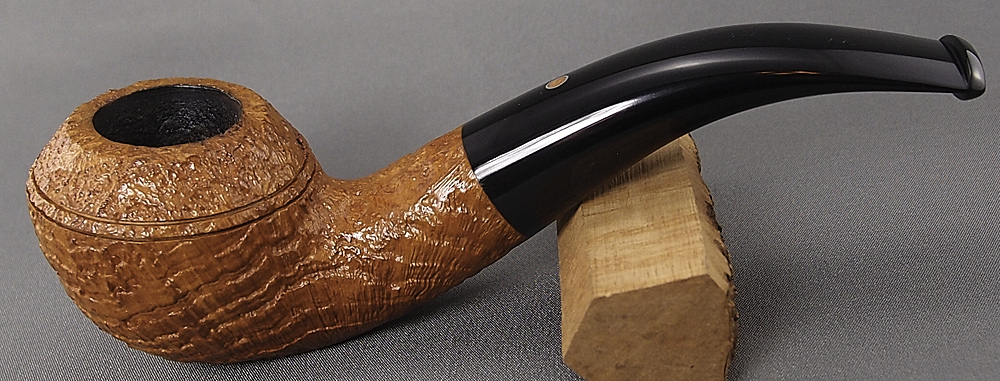
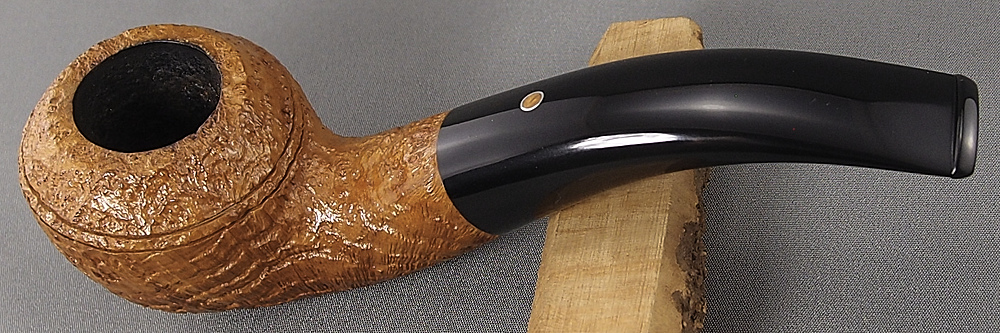
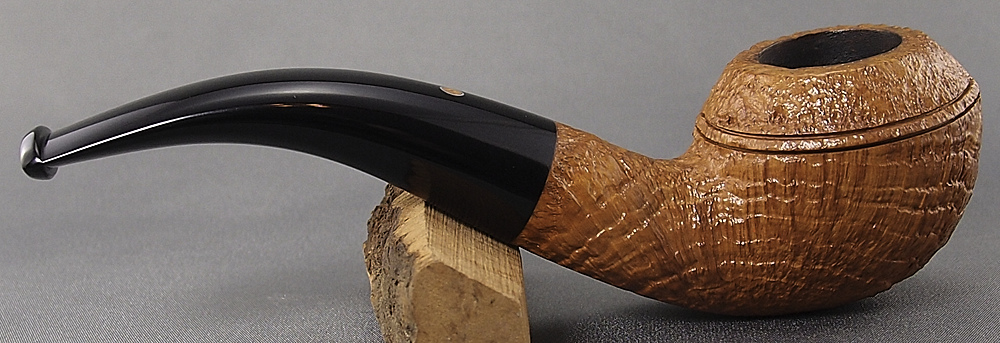
I have two, Bill Taylor, XX size Ashton Rhodesians, both with saddle stems. The stem on my Old Church finish pipe always seemed a little ungainly and my preference is for a taper stem. Recently, pipe repairman, George Dibos of Precision Pipe Repair in Kansas has posted several re-stemmed classic pipes on the PipesMagazine.com forums. Last week, he posted the identical Old Church Rhodesian with a new, tapered profile stem. The change and improvement, to my eye was dramatic. So, I sent him my Old Church for the similar treatment. George can even replicate the briar in silver iconic Ashton stem logo.

In email exchanges regarding the work, George told me that getting the proper bend in a fat, taper stem take time and effort. Going with the saddle stem is typically the most efficient way of creating a the stem.

This morning, George posted pictures of the new stem on the forum, which was surprising as he had just received the pipe the day before. My pipe had the added challenge because the nomenclature panel was flat and that feature transferred up to the saddle part of the stem. George had to finesse the transition into a taper stem.

Ashton_Old_Church_XX_98_Gallery

Ashton_Old_Church_XX_98 (3)

And the finished pipe below. I joked with George that he actually saved me money, as a tapered Stem, Old Church XX Rhodesian was still on my “Holy Grail” list.

I consider George Dibos to be one of the best stem guys in the business. If you wish to contact him, he can be reached thru his website:

http://www.precisionpiperepair.com/

I can’t wait to get this one back in my rotation

Ashton_Old_Church_George_Dibos_Stem2

Ashton_Old_Church_George_Dibos_Stem3

Ashton_Old_Church_George_Dibos_Stem

Ashton_Old_Church_George_Dibos_Stem4

Ashton_Old_Church_George_Dibos_Stem5

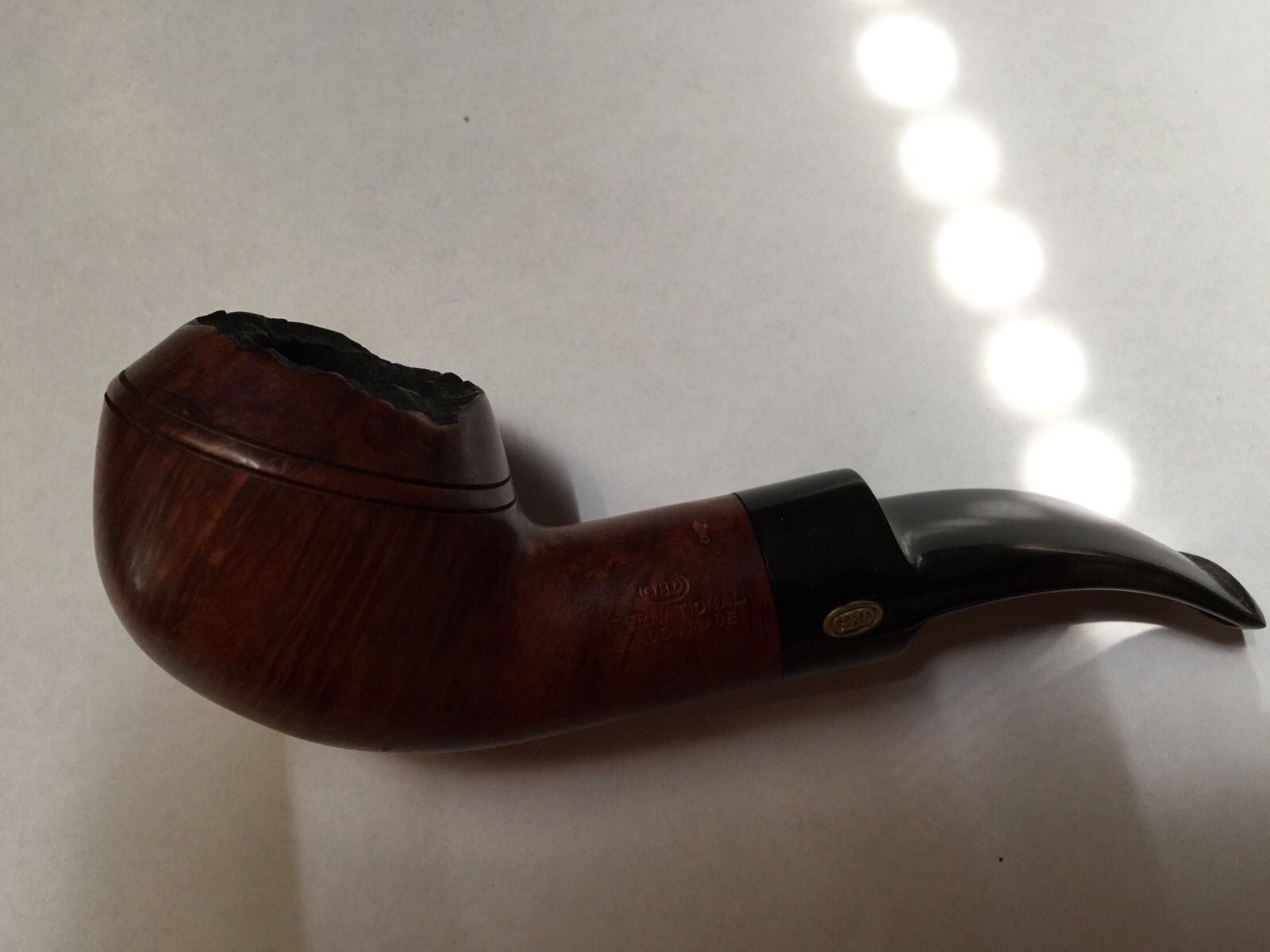
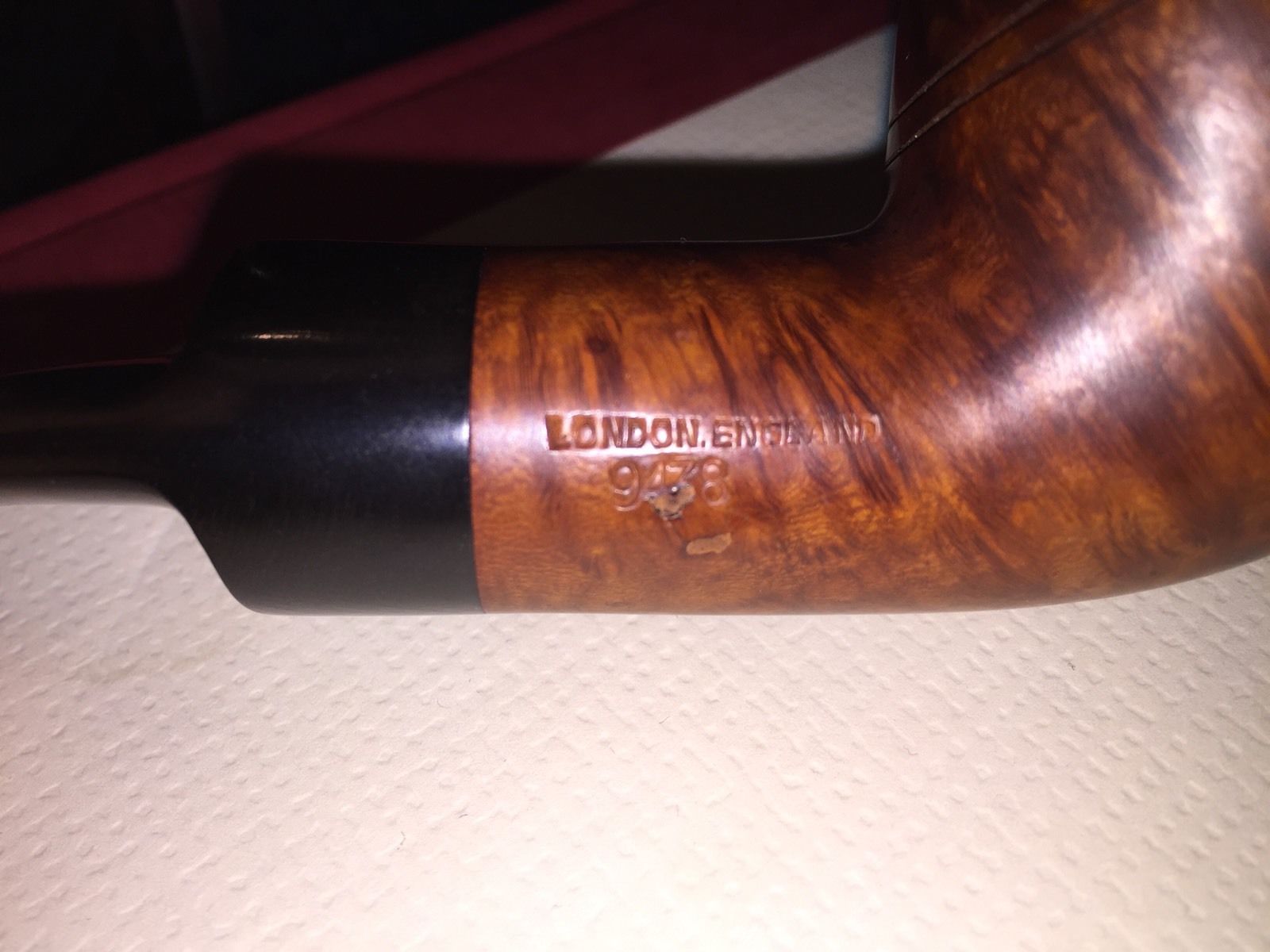
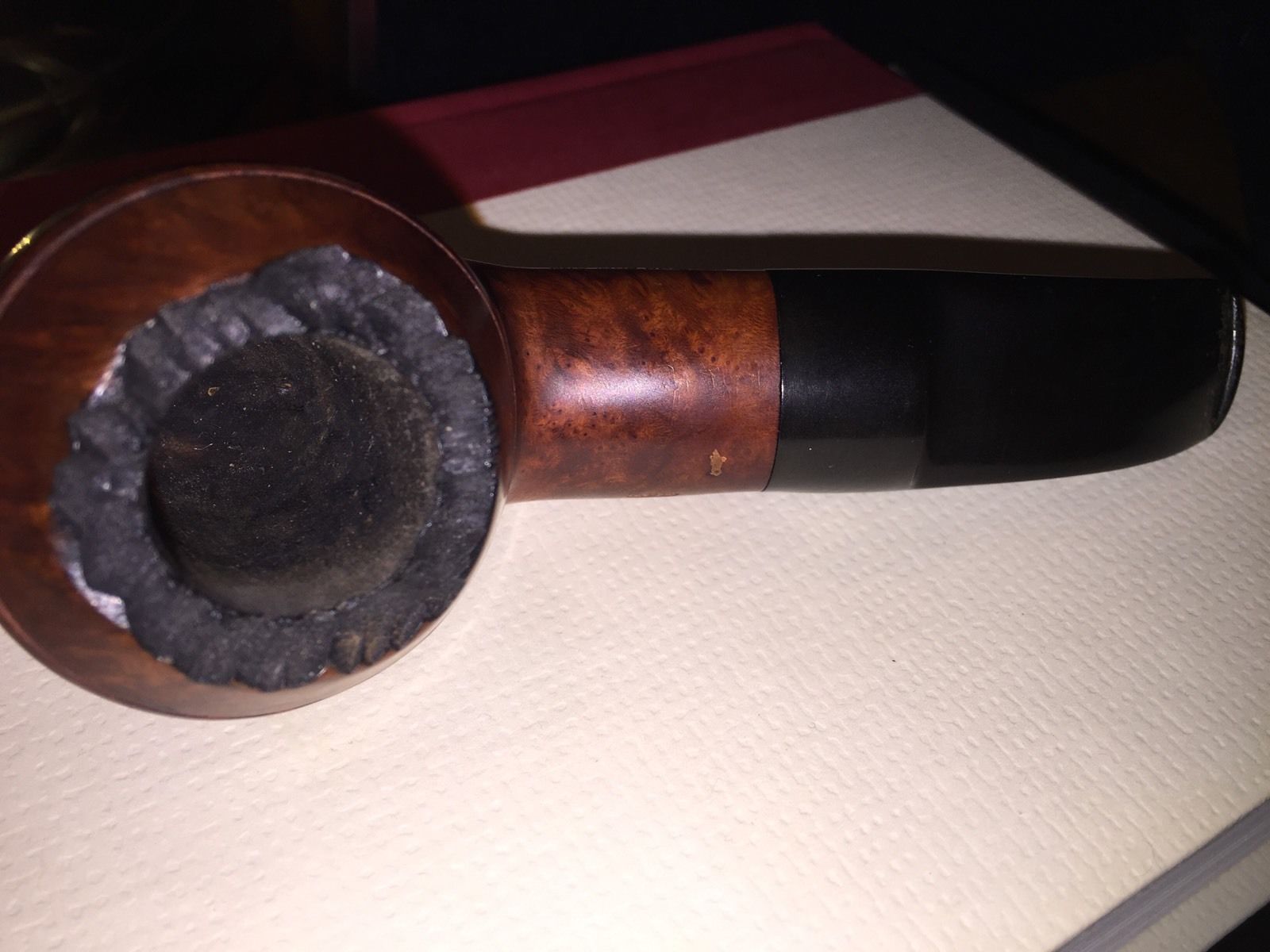
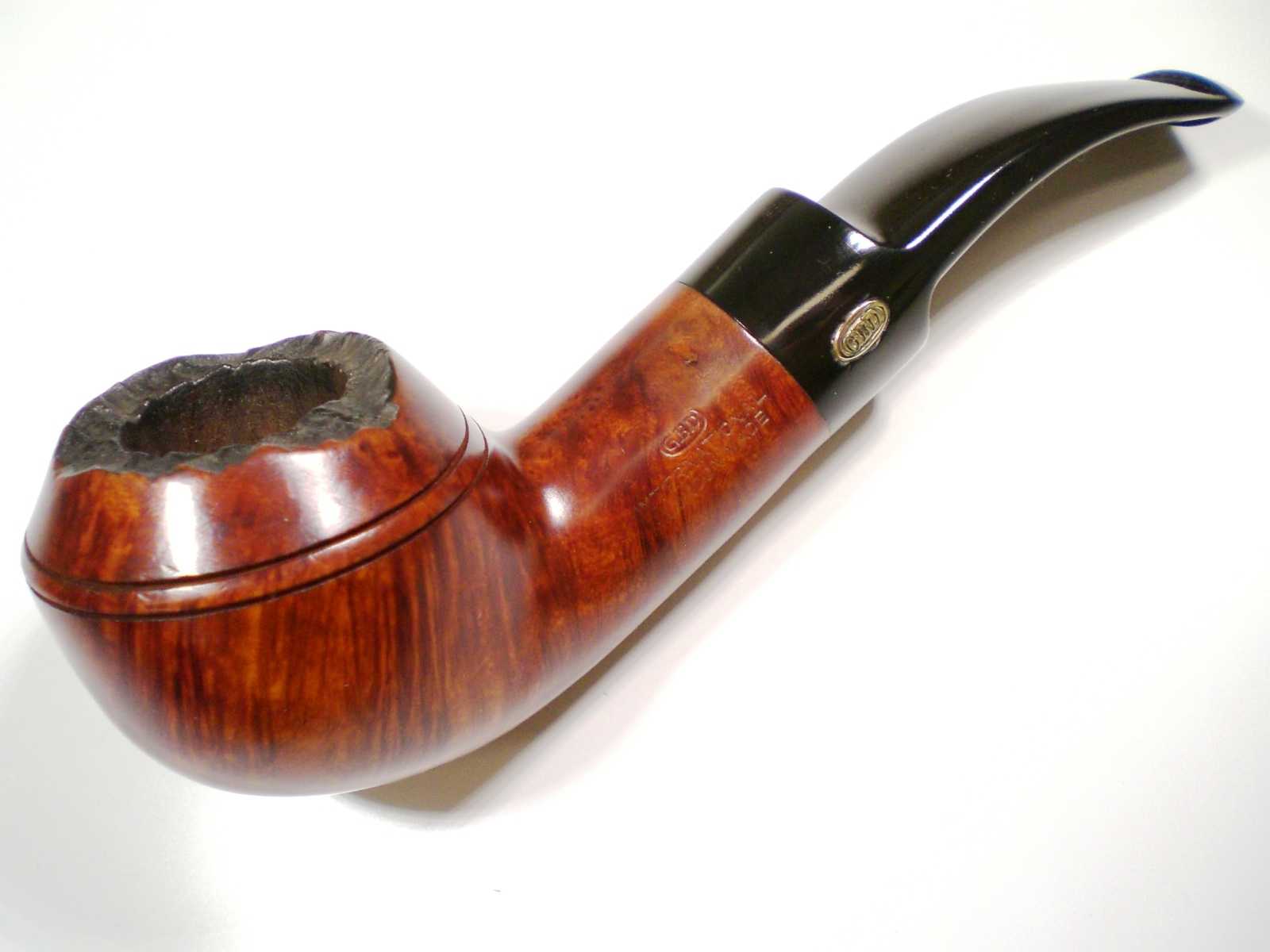
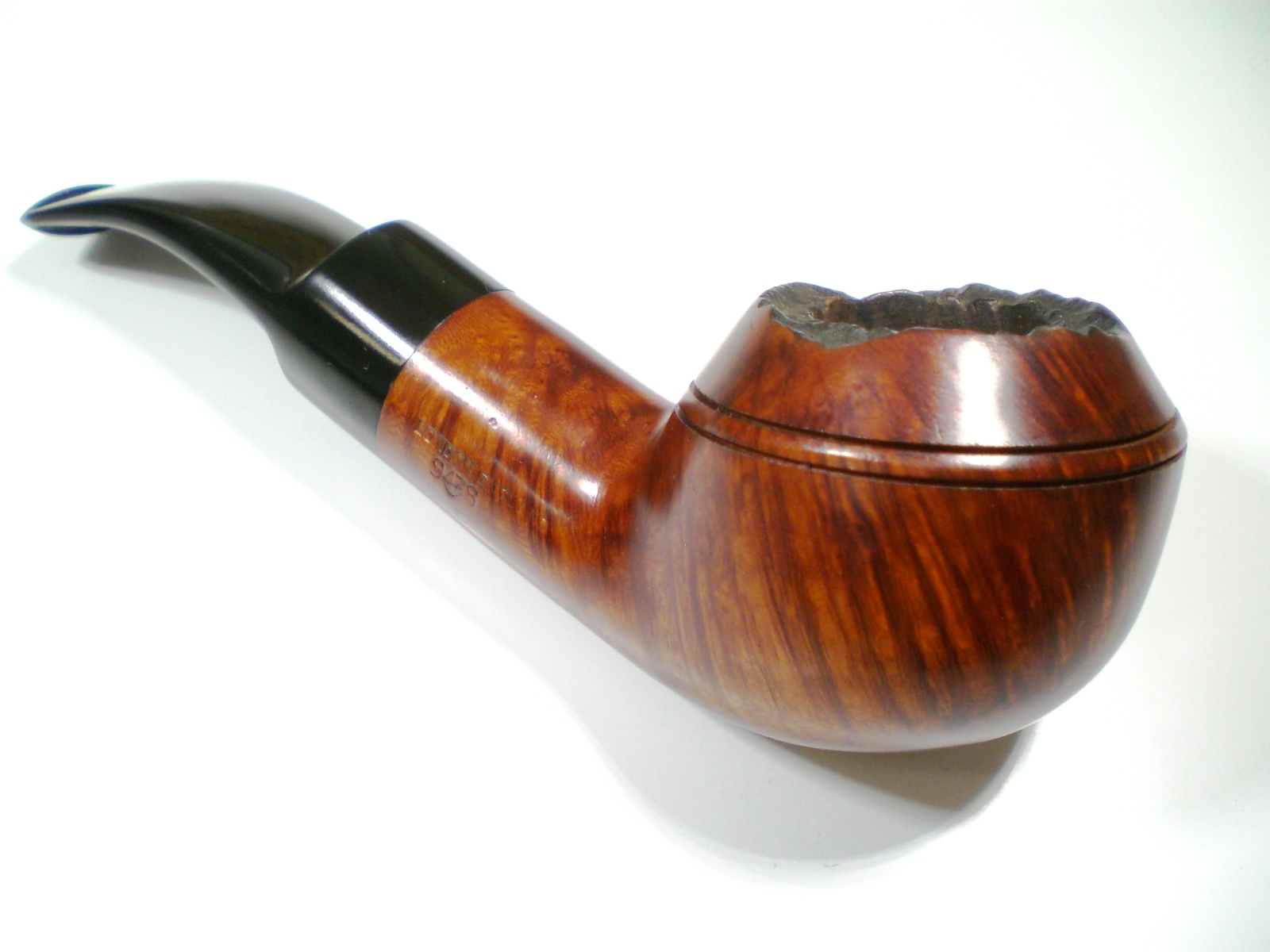
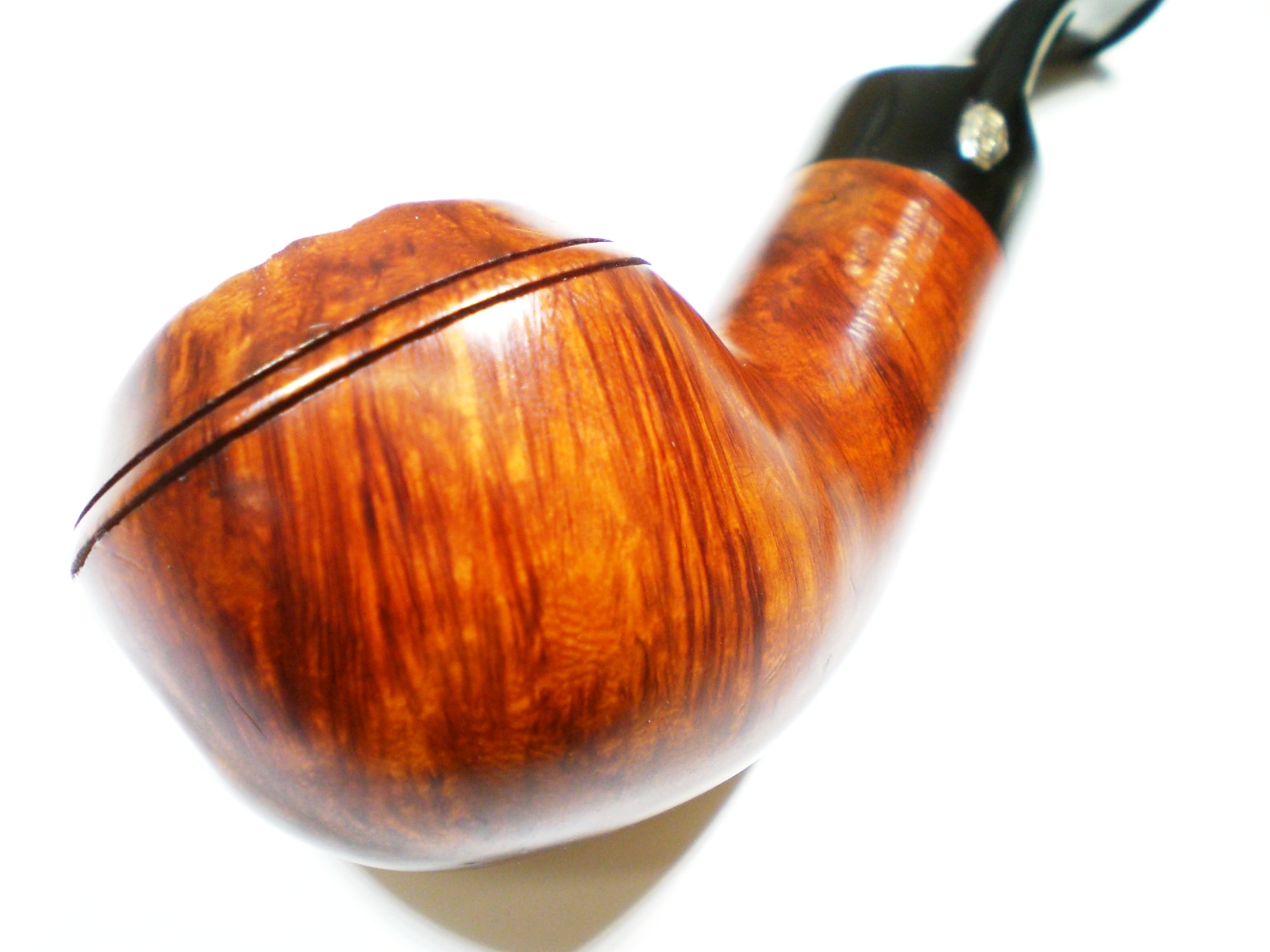
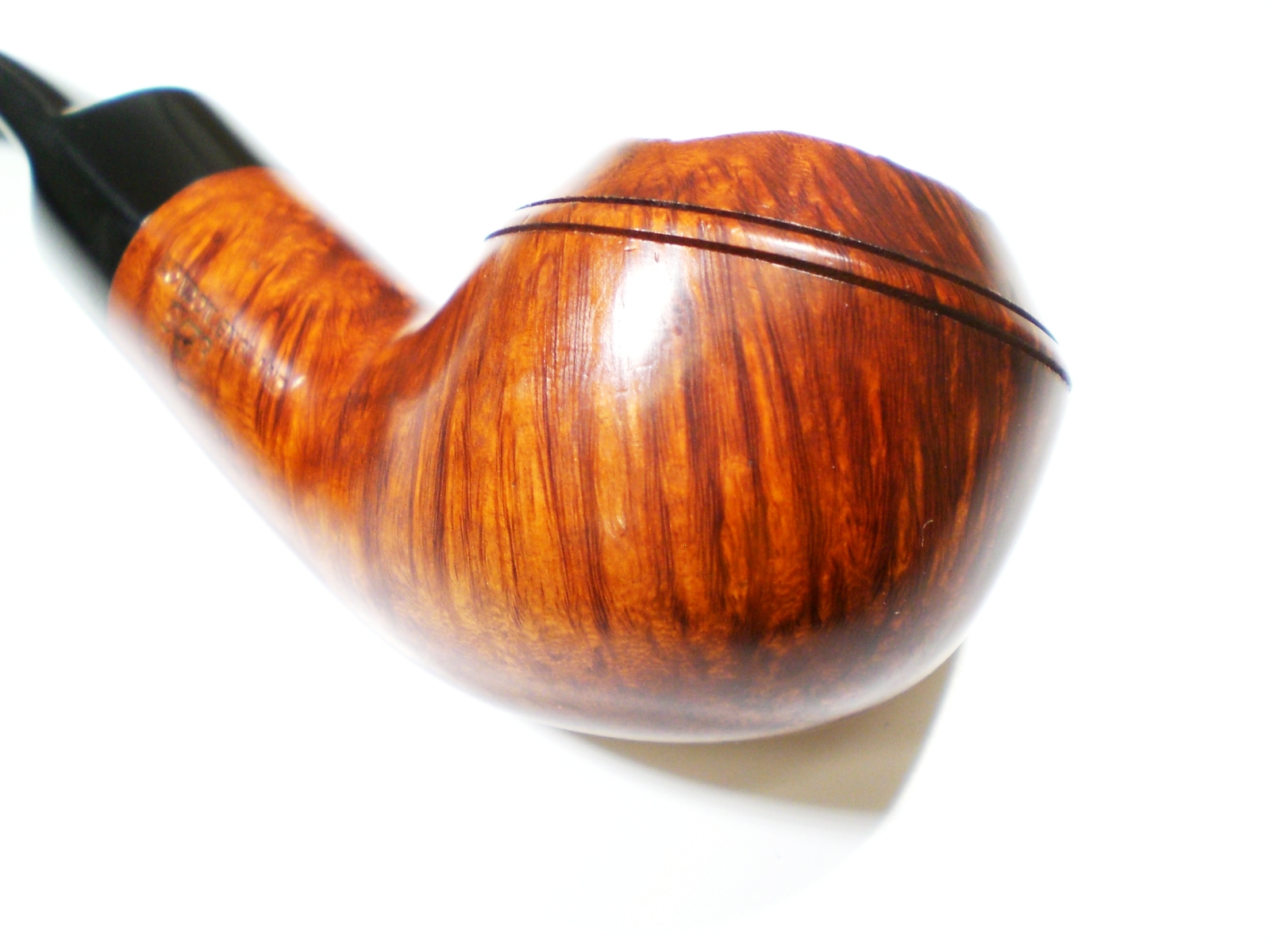
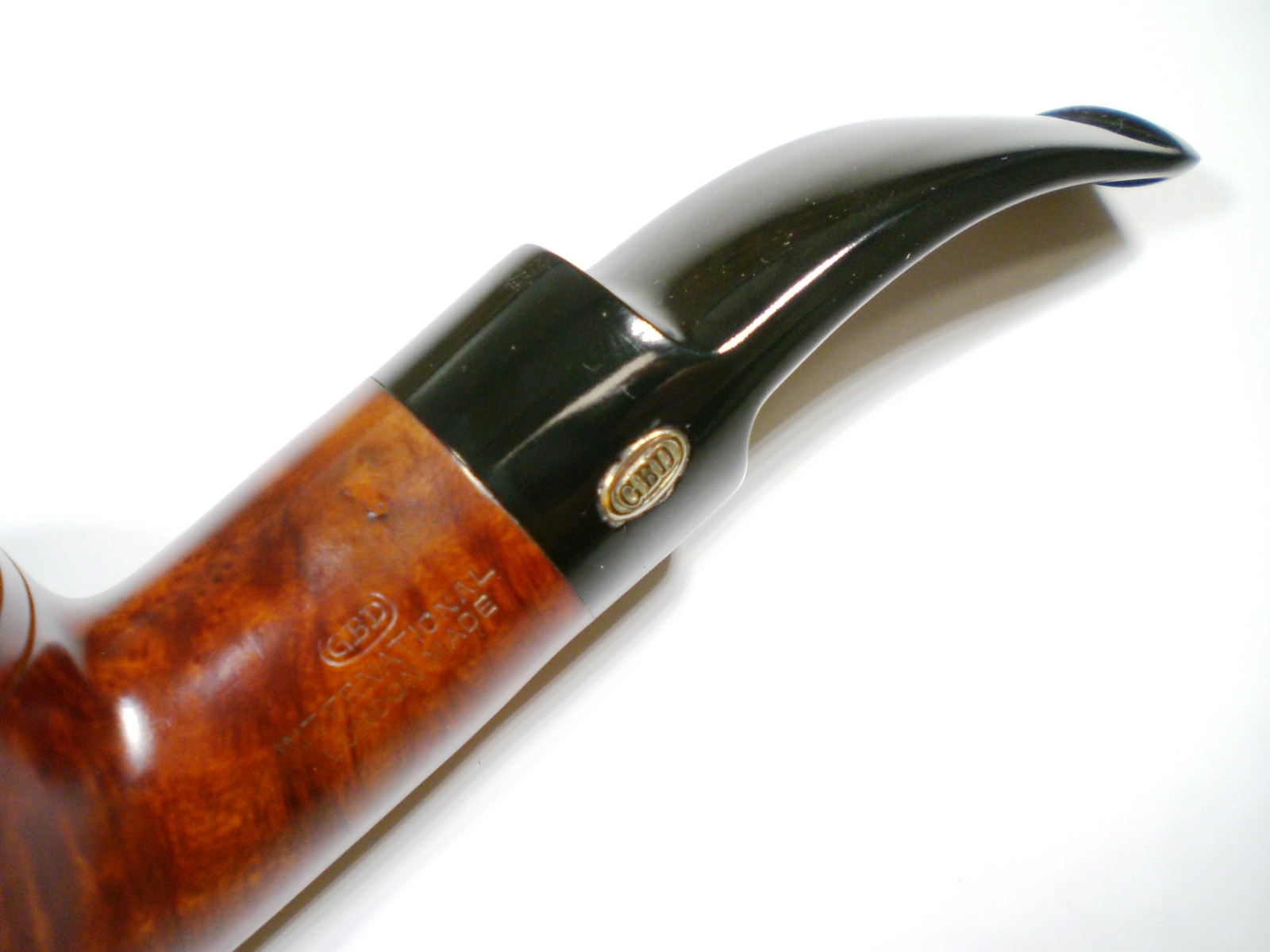
GBD 9438 International Clean-up


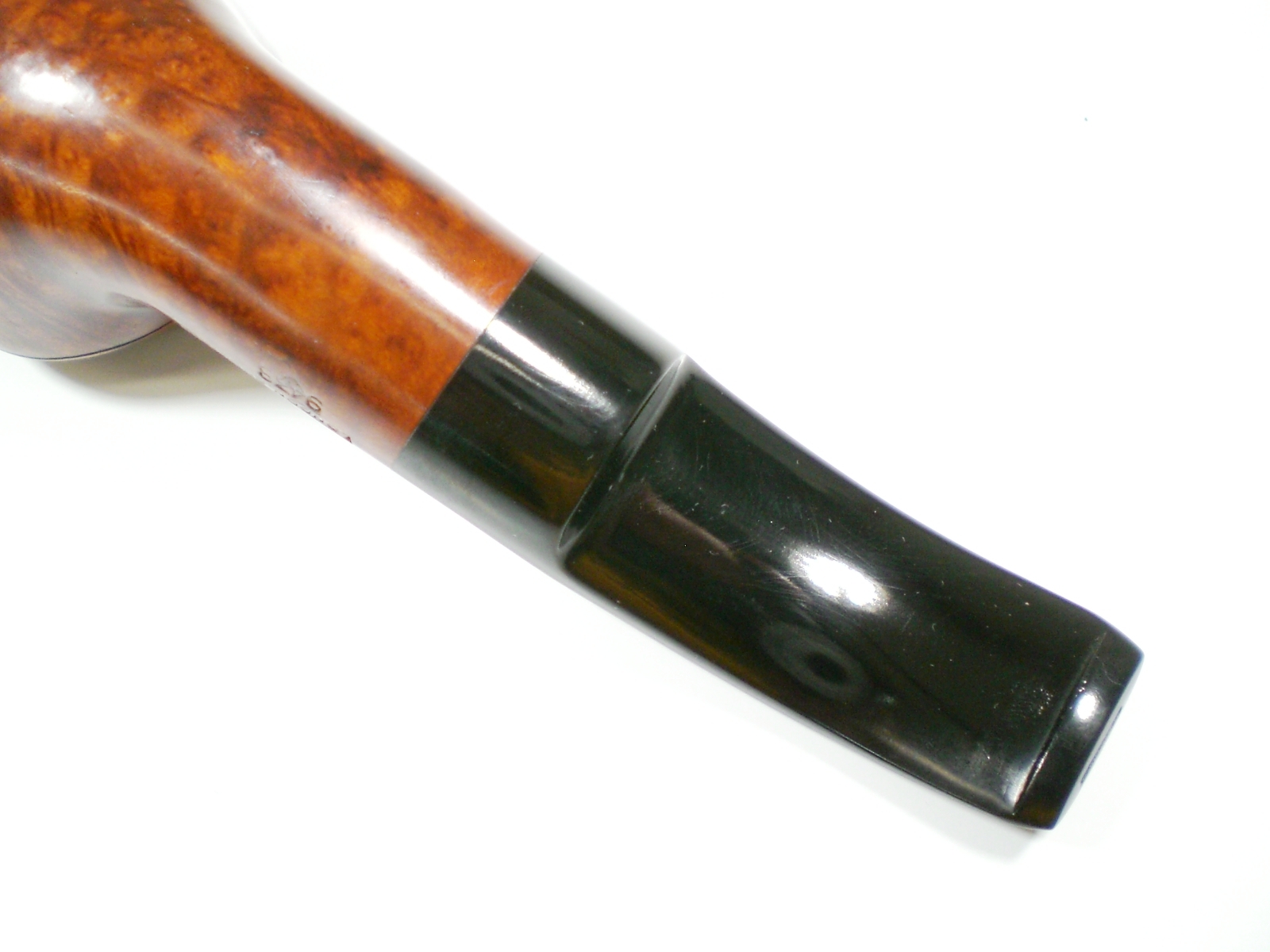
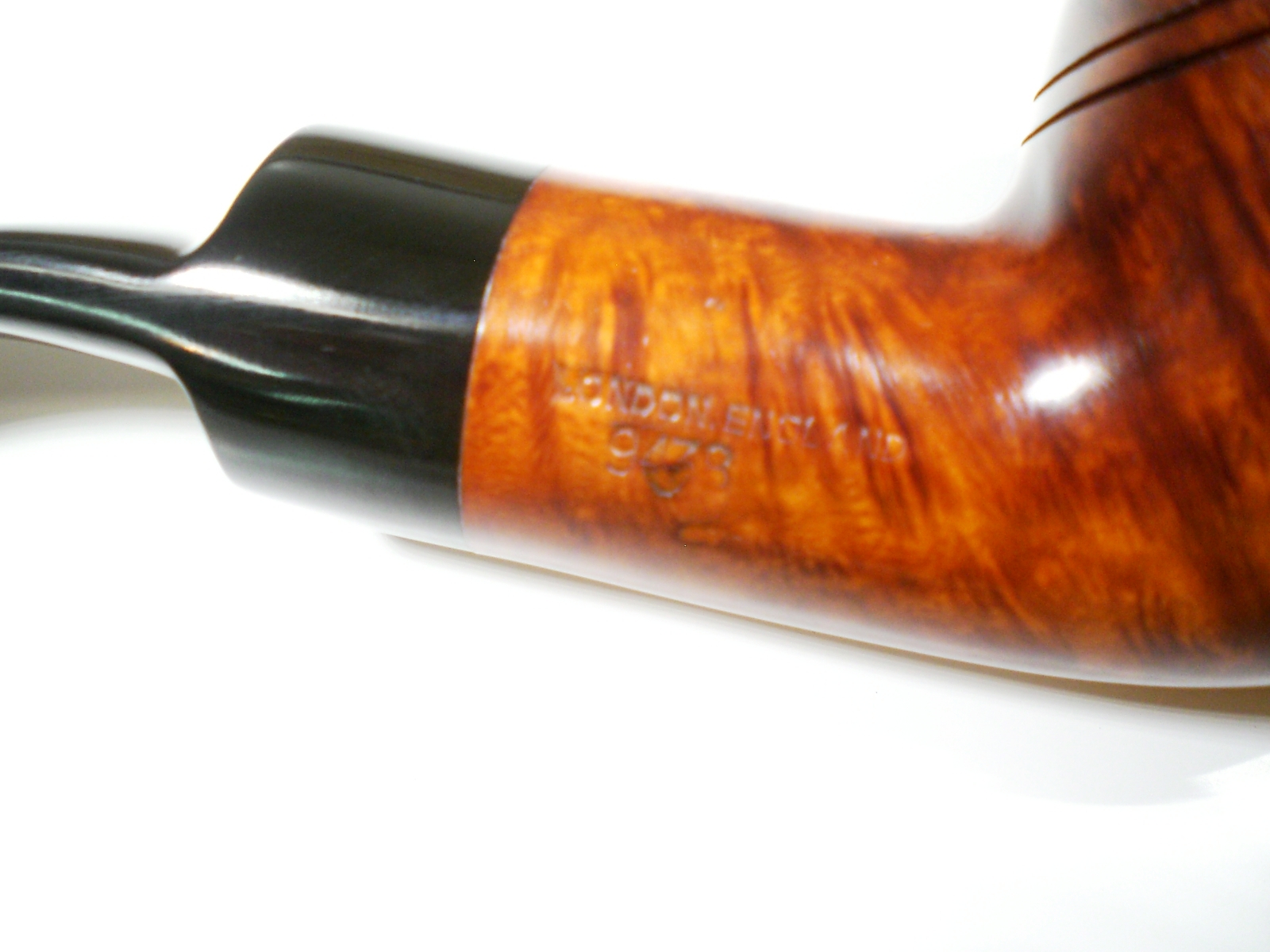
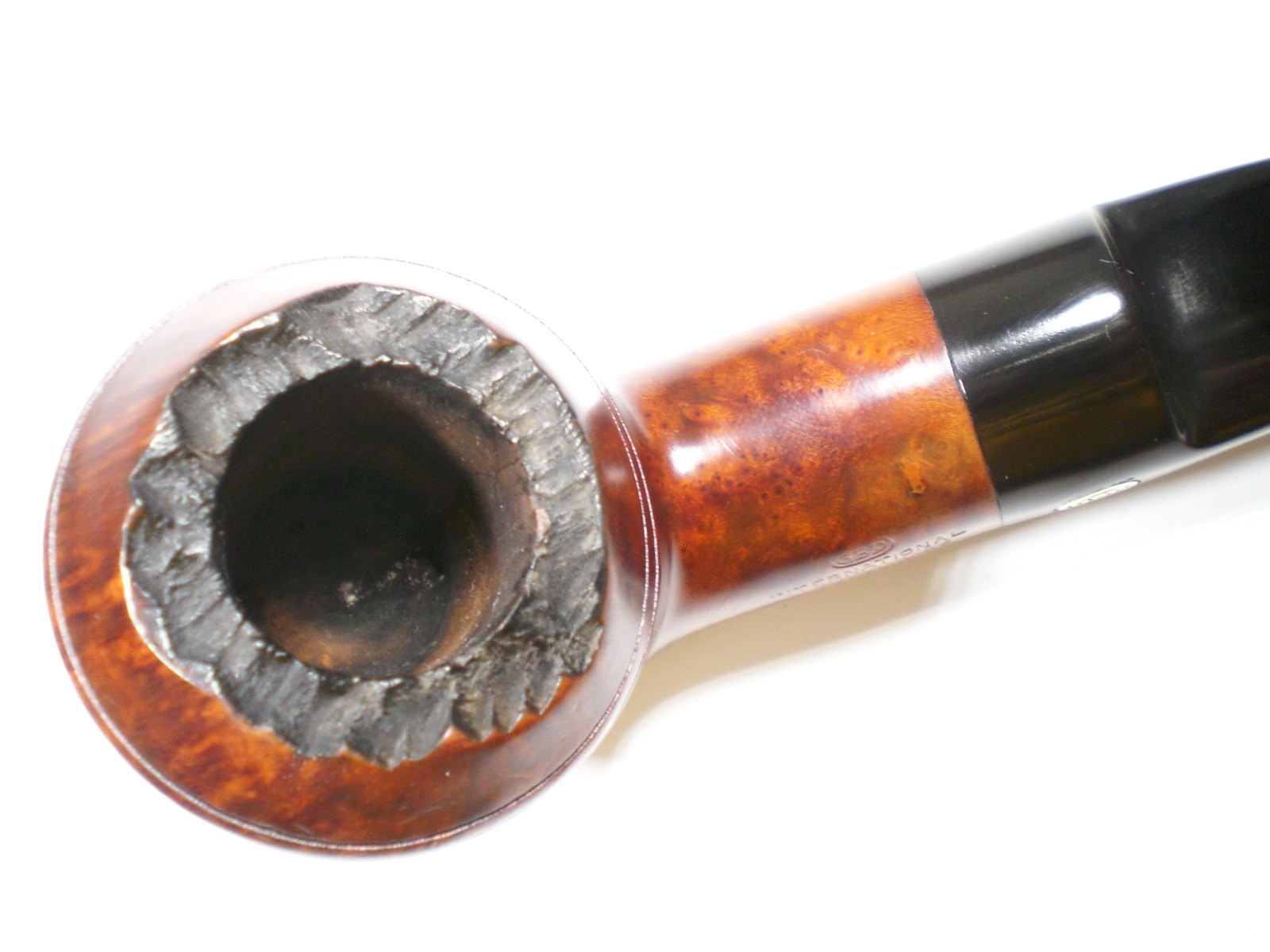
This is another example of an Ebay ad that had poor pictures and an inaccurate listing. This pipe didn’t sell on several attempts and was listed as a 9478.The price was right on the 3rd listing but from the pictures, I thought it needed a major restoration, including a re-stain. Here’s some pictures from the Ebay listing. The pipe has pre-Cadogan “London, England” stamping and a brass rondell. I’ve not yet seen a 9438 with a plateau or rusticated bowl top.

GBD_9438_International_ebay

GBD_9438_International_ebay3

GBD_9438_International_ebay2

When the pipe arrived, I was surprised to find it in very good condition. There were some nicks in the briar, but I felt they would blend in nicely and the stem was near mint. The pipe was also very clean and appeared to have only been lightly smoked.

I reamed the slight cake and soaked the bowl in sea salt and alcohol. I put a dab of grease on the brass rondell and soaked it in a mild solution of Oxy-Clean.

The stem was mounted, and shined with 800>1500 and 2000 grit wet paper, followed by 8000 and 12000 grade micromesh papers. It was then buffed with White Diamond and Meguiars Plastic Polish.

I buffed the briar lightly with some Tripoli, which softened the two nicks nicely. This was followed by a buff with White Diamond and several coats of Carnuba wax. Below is the finished pipe. It is on it’s way to its new owner, friend from the PipesMagazine forums. I had a hard time boxing up this one, a 9438 typically isn’t found with such nice grain.

GBD_9438_International_Finish (1)

GBD_9438_International_Finish (3)

GBD_9438_International_Finish (7)

GBD_9438_International_Finish (6)

GBD_9438_International_Finish (2)

GBD_9438_International_Finish (4)

GBD_9438_International_Finish (5)

GBD_9438_International_Finish (8)

Refurbishing a Dr. Grabow Westbrook 84L Smooth Canadian


Blog by Troy Wilburn

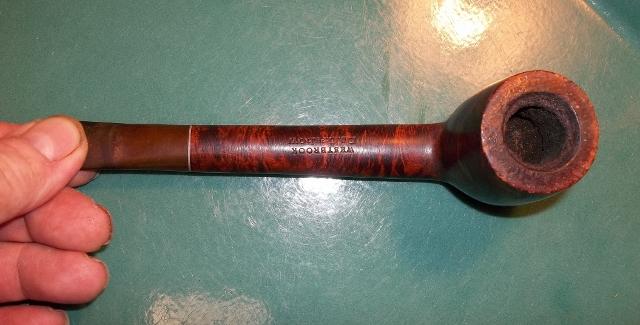
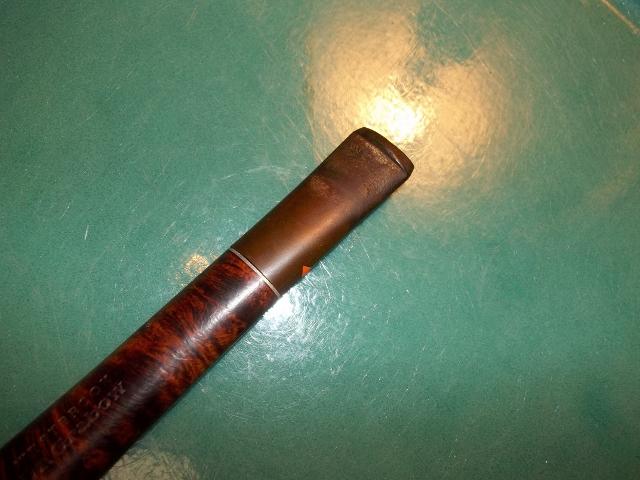
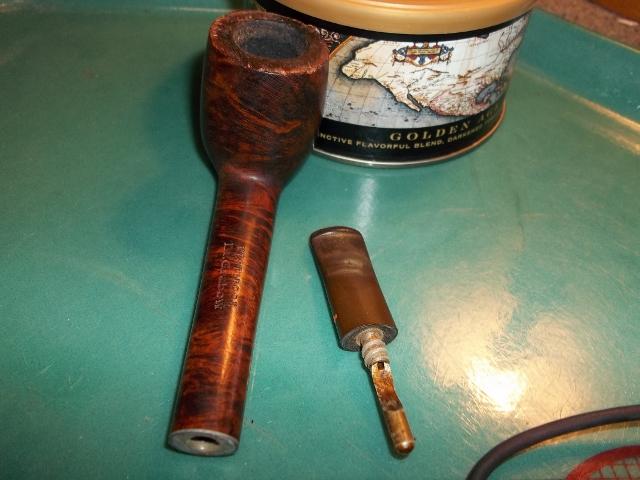
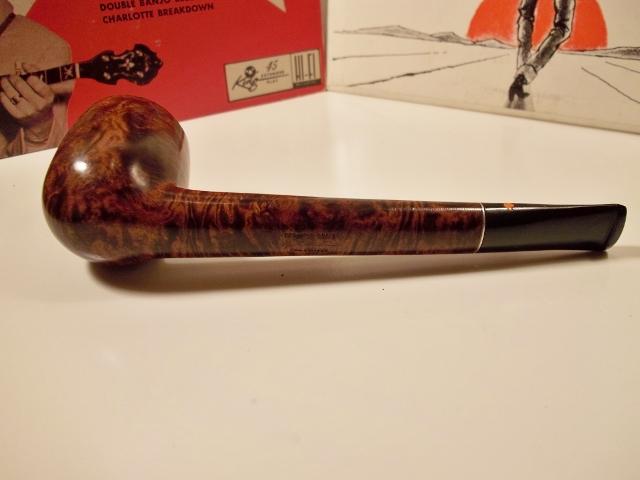
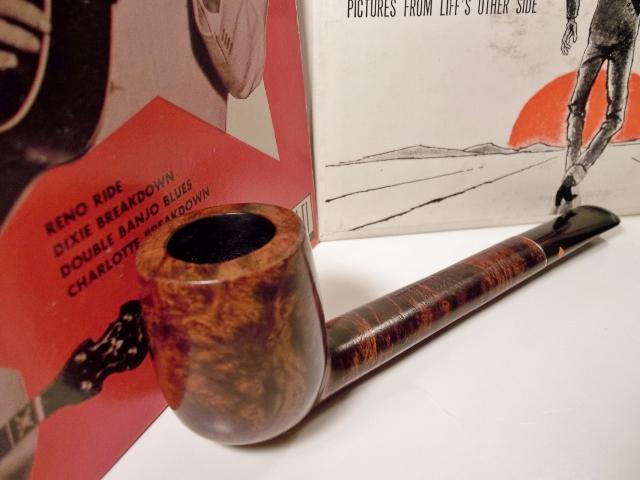
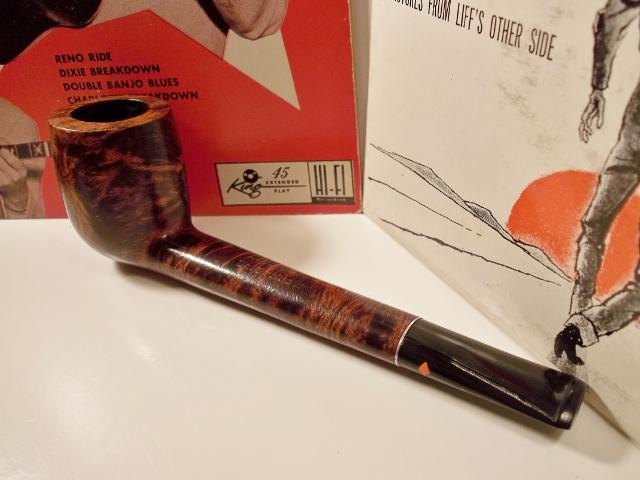
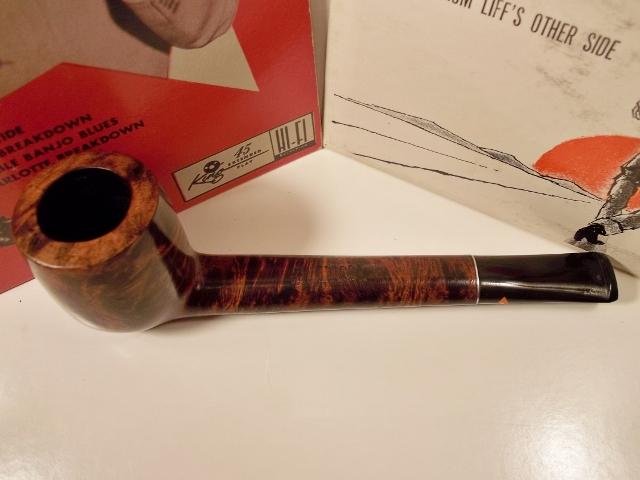
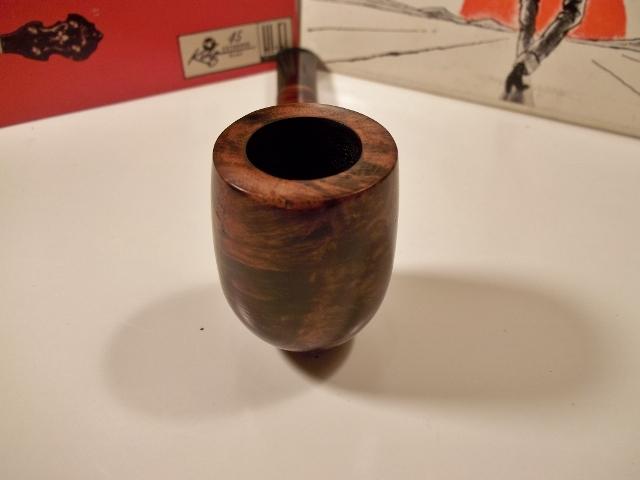
I got this pipe in a trade. I was pleasantly surprised when it showed up it was an 84L and not a regular 84. The stampings are crisp. The rim did have some dings so I had to lightly top it and restain it. There are still some very light dings on pipe but I let them go as the factory finish and color was excellent. So I just cleaned and buffed it other than rim. The stem still has some teeth marks I could not get out fully. The old bowl cake came out easy and the shank was not that dirty and I’m glad because these Canadian shanks are a pain to clean lol. It has zero fills too, which on that much briar was a nice surprise. All and all I’m very happy with it.

Here is the pipe when it arrived.West1

West2

West3

West4

West5 I took pics of it after I had finished restoring it with a couple of my favorite 45 EPs .

After: West6

West7

West8

West9

West10

West11

West12

West13

West14

West15

West16

West17

West18

Revamping a Bavarian Folk Wine Pipe Made in Italy


Guest Blog by Robert M. Boughton
Member, North American Society of Pipe Collectors
http://www.naspc.org
http://www.roadrunnerpipes.com
http://about.me/boughtonrobert
Photos © the Author

“Voters in the southern German state of Bavaria [April 7, 2010] voted for Germany’s strongest smoking ban, meaning lighting up in bars, restaurants and beer tents at Munich’s famous Oktoberfest will be ‘verboten.’”
― David Levitz, journalist, Agence France-Presse

INTRODUCTION
Who would have dreamed that those crazy, fun-loving Bavarians who have been hosting the annual Oktoberfest since October 12, 1810, the day Crown Prince Ludwig (later King Ludwig I) married Princess Therese von Sachsen-Hildburghausen; the culinary health scoffers who gave to the world such artery-hardening treats as Weisswurst, Schweinshaxe, schnitzel and spaetzle, and for snacks and dessert, laugen pretzels, apfelstrudel, Baverische crème and zvetchgenkuchen – would ban smoking in all public buildings just months before the bicentennial of the world’s biggest excuse to get betrunken?

Bavarians are even so fond of beer and schnapps that they have a great little saying: Saufen bis zum Verlust der Muttersprache, or drink until you forget your mother tongue. And if you’ve ever seen many German tourists, how many of them didn’t look like triple bypass candidates? Of course, everyone knows smoking kills more people than drinking and/or diet-related maladies…right?

One 31-year-old Garden Grove, California woman who lost her job and started a blog, and has written a book but is still searching for a publisher, has a particularly active gift of gab. She blogged, “Bavaria’s cuisine is a monster truck. It crumples the delicate-by-comparison culinary offerings of Spain, Italy, and France like tiny little Fiats and Peugots in its path… It is rich and doughy and filling and is the only thing on the planet that can soak up German beer. Every other fare will simply hide in the corner of your stomach, petrified at the sheer awesomeness of the brew that resides in there with it, and it will never get digested.” Perhaps the most succinct line from this particular blog is, “Germans do it with bigger sausages.” [http://www.everywhereist.com/7-badass-bavarian-foods-you-must-try/] I, for one, can’t wait until the book comes out.

If the world is going mad as far as singling out tobacco as the great evil, then Bavaria may now be the capitol for the insanity. Maybe all that ice bockbier and apfelstrudel have saturated their bodies and have nowhere left to go but the brains.

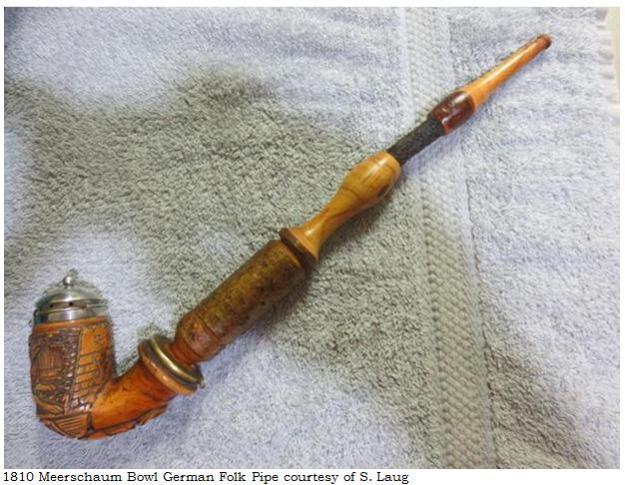
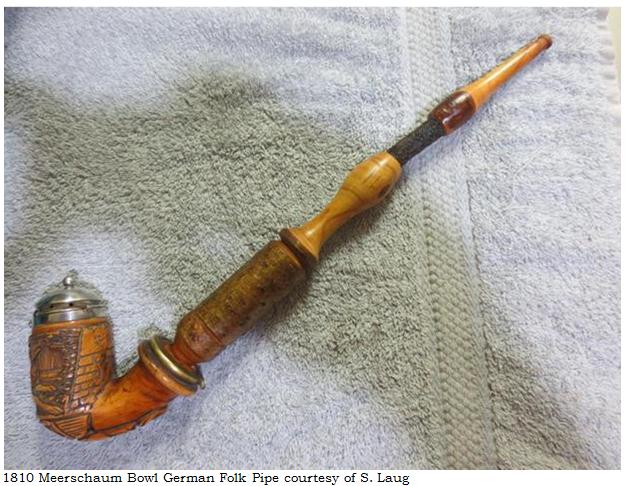
At any rate, there remains for those of us who still appreciate the virtues of pipes and their tobaccos the glorious contributions of German craftsmanship in general and Bavarian in particular.Rob1 And more along the lines of the subject of this blog:Rob2
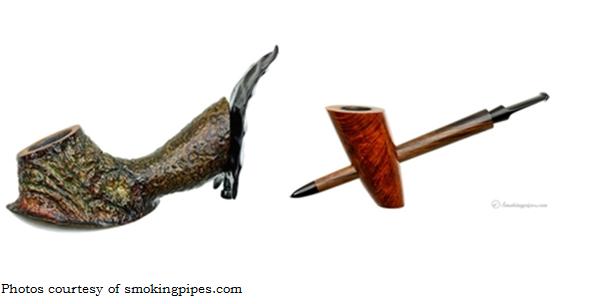
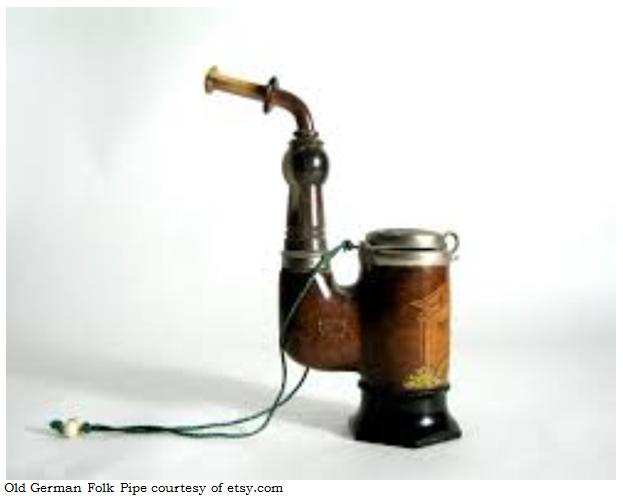
Rob3 When I emailed Steve a few photos of my new acquisition from eBay, for less than $11, I was happy as usual to receive a response but, I must admit, a little disheartened to hear of the 20 hours he spent restoring the 1810 Meerschaum Bowl masterpiece above. Then I considered the facts that his folk pipe was part meerschaum, and of course suspected he had, as his masterful skills and (if I may be so bold) somewhat obsessive creative bent allow, more than just restored it. He had in fact, of course, re-worked parts of it, as I learned when I read with pleasure his July 7 account. I mentioned the conjecture that Steve is a born pipe maker to my mentor, Chuck Richards, who with not an inkling of surprise to me that Steve has made a few pipes in his time. I therefore hereby suggest a blog by our host on these endeavors, which I am certain I am not alone in my curiosity to hear about and see.

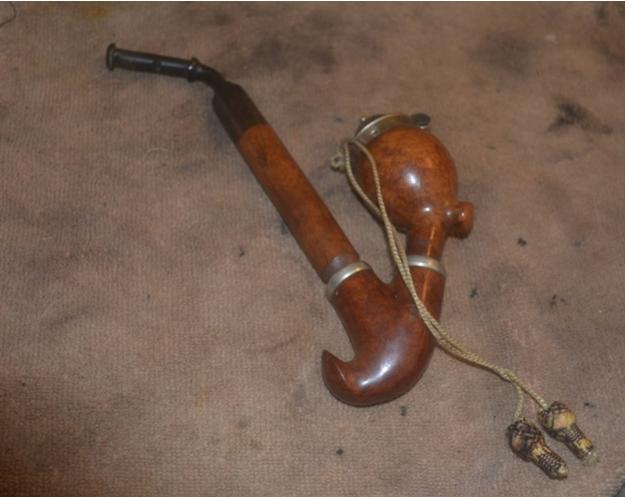
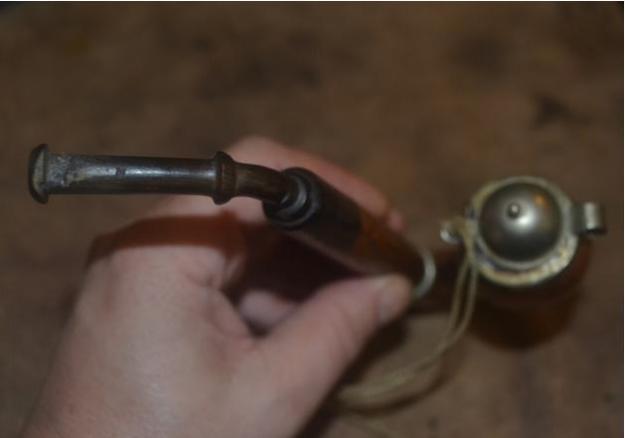
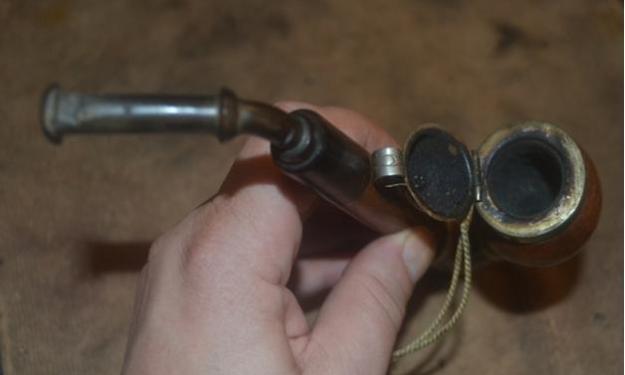
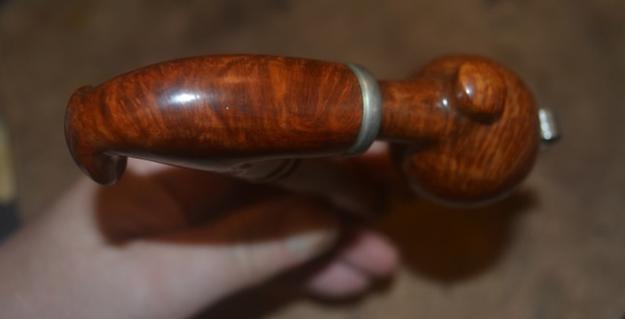
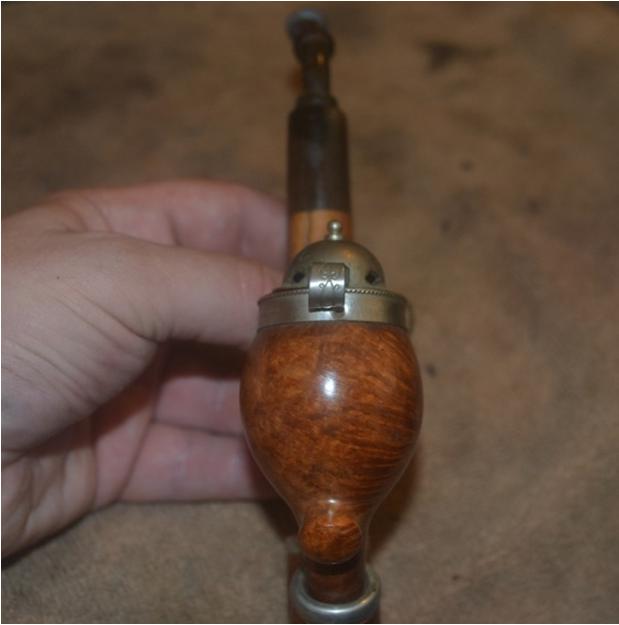
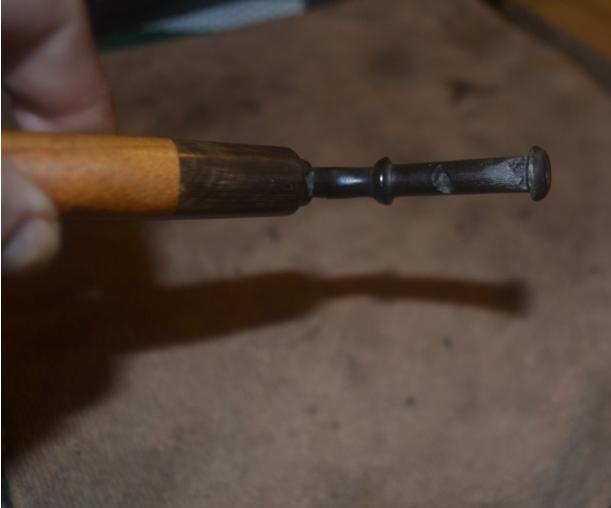
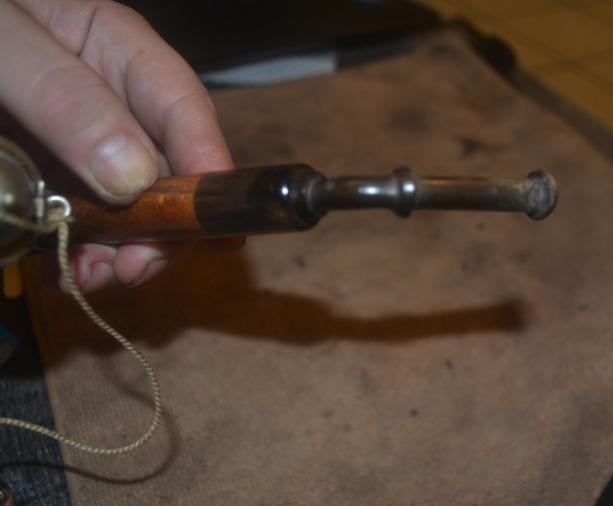
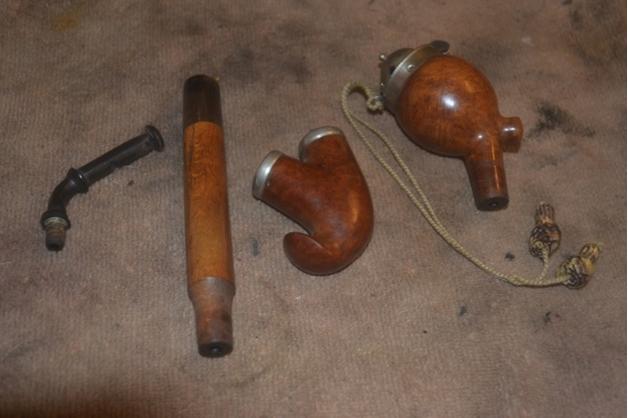
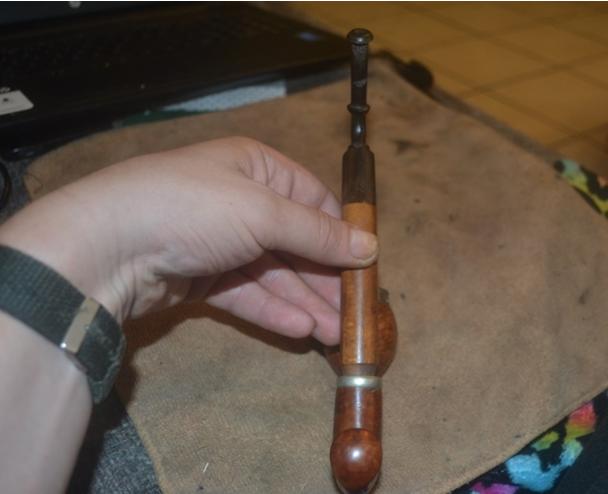
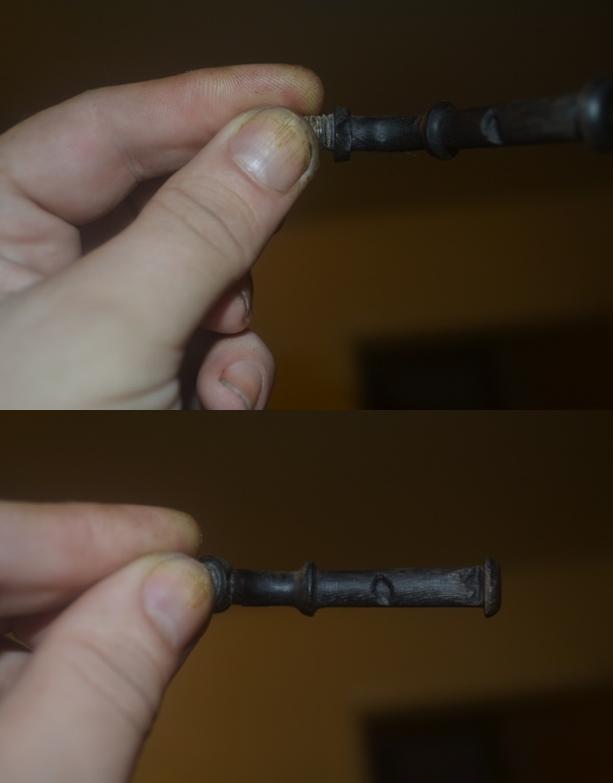
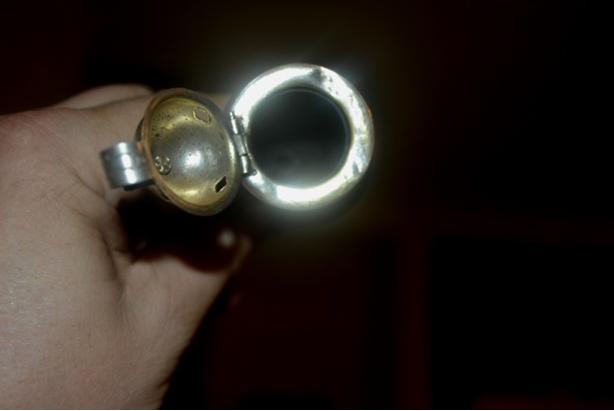
Alas, as shall be seen, my Bavarian Three-Piece Folk Wine Pipe – not counting the screw-in bit – pales in comparison, although it did present problems I had not before encountered. Starting with the bit, the eBay photos revealed one gash that appeared to be so deep that it must have pierced the air hole. As Lady Luck provided, however, such was not the case. On the other hand, there turned out to be three bad divots in the bit, not counting the severe wounds just below the lip, top and bottom, from grinding teeth. Then there were the countless scratches on every piece; the well-caked chamber; scorching of what I believe is the ornate but aluminum wind cap; a serious cleft in the alternative wood shank, the variety of which I have not yet determined, and a hole in the bottom piece, where the wine is placed, too deep for any fix other than wood putty.

All of these complications, I knew, would be nothing compared to the task of cleaning and sanitizing a pipe with a form that defied retorting. Noting this anticipated cleaning conundrum with a quip, “That’s entirely rhetorical,” in fact, was the reason for Steve’s second reply to my email where he mentioned the time he spent on his folk pipe.

By the way, I owe a final nod to Steve, as well as the owner of my local tobacconist who confirmed his assessment, for identifying my Bavarian folk pipe (which turns out to be a no-name Italian version) as being designed to add wine.

RESTORATION Rob4 This, as it happens, is how I decided to approach the restoration: piece by piece.Rob5
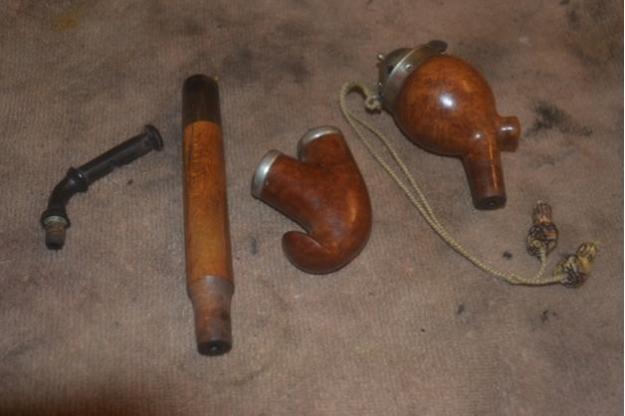
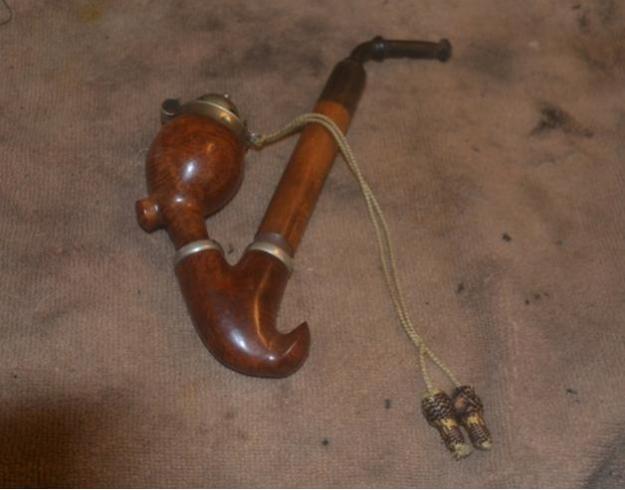
Rob6

Rob7

Rob8

Rob9

Rob10 Without thinking – you might say a bit compulsively on my own part – I already cleaned and polished the wind cap before snapping the last shot above.Rob11
Rob12

Rob13 Other than the almost unconscious cleaning and shining of the wind cap, inside and out, with Everclear-soaked cotton cloths, super fine steel wool and mostly 500-grit paper except for a few tough spots requiring 320, I saw no reason not to dive in with the bit. After all, filling the crevasses – and I can only imagine the drunken stumbling about that caused them – would take several days of layering with black Super Glue and drying time in between. The remainder of the restore was finished in a day and a half of intense work. I gave the bit a good soak in an OxiClean solution to start and cleaned out the mess inside with about six bristly cleaners dipped in Everclear before they came out clean.Rob14
Rob15

Rob16 With that process begun and the pipe disassembled, I returned to the main tobacco chamber (remember, this three-parter has a second chamber at the bottom for wine) and used my Senior Reamer to take out most of the fairly even though excess cake. After that I swabbed it out with some alcohol-soaked cotton gun cleaner squares and finished the removal of char and smoothing with 200-, 320- and 500-grit paper.Rob17 The yellowing of the cap’s inside area is the fault of my photography, not lack of attention. I know nothing of body work on cars, which is the kind of detail work the metal rim requires, and despite my restoration of this pipe for my own enjoyment, any tips on eliminating dings in metal, preferably without removing the entire rim piece, will be appreciated. Since the pipe is staying in my own collection, after all, I have a long time to work out that part.
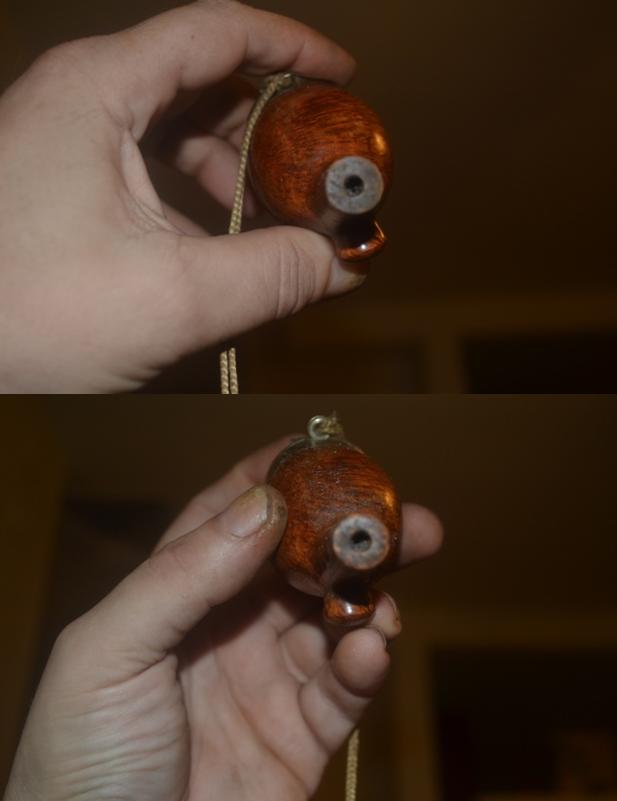
I turned my attention to the outer bowl, first scrubbing out the draught hole with bristly cleaners soaked in alcohol – quite a few, in fact. Then I used 320-grit paper to remove both the old finish and the scratches, starting with the rough, un-sanded opening of the draught hole showing before and after below.Rob18
Rob19

Rob20 From 1500-4000 micromesh, I prepped the bowl for buffing. I liked the natural, lighter shade of the briar and chose not to re-stain it, proceeding straight to the buffer wheels. I used white Tripoli, White Diamond and carnauba.Rob21
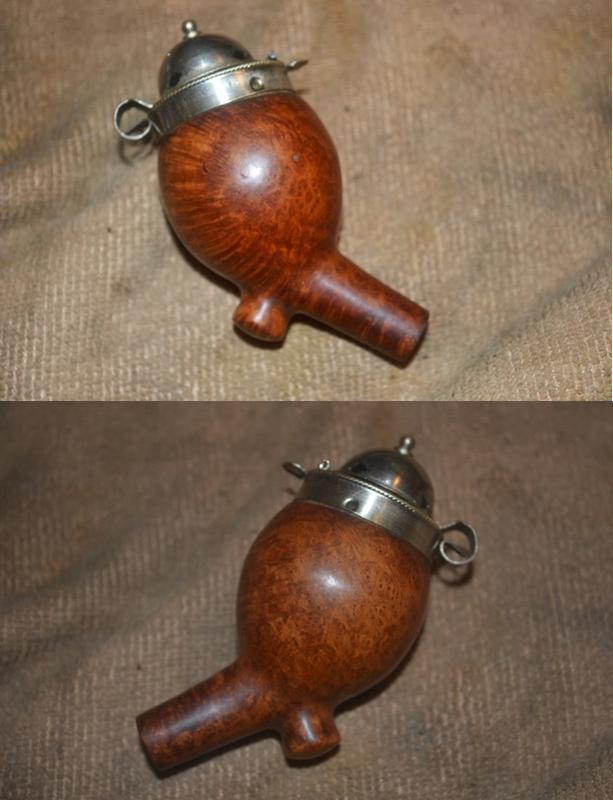
Rob22 The shank was what I expected would take most of the work, and I was right. I sanded the wood with 200 and 320 paper, deciding the cleft in the unknown wood gave it a certain character. Besides, it wasn’t going anywhere without the kind of serious reshaping Steve is into.Rob23 I sanded it again with 500-grit paper and micro-meshed all the way.Rob24 The ferrule was dull and scratched.Rob25 I used micromesh on it and then Lincoln black boot stain, which I flamed, let cool and wiped clean with 4000 micromesh.Rob26 Finally, I used Lincoln brown stain on the shank’s wood and used 4000 micromesh to take off the ash.Rob27 I buffed it with white Tripoli, White Diamond and carnauba, and used red and white Tripoli on the ferrule.Rob28 Onto the final stage – the bottom chamber where the wine is added. Here it is after sanding with 320-grit paper.Rob29
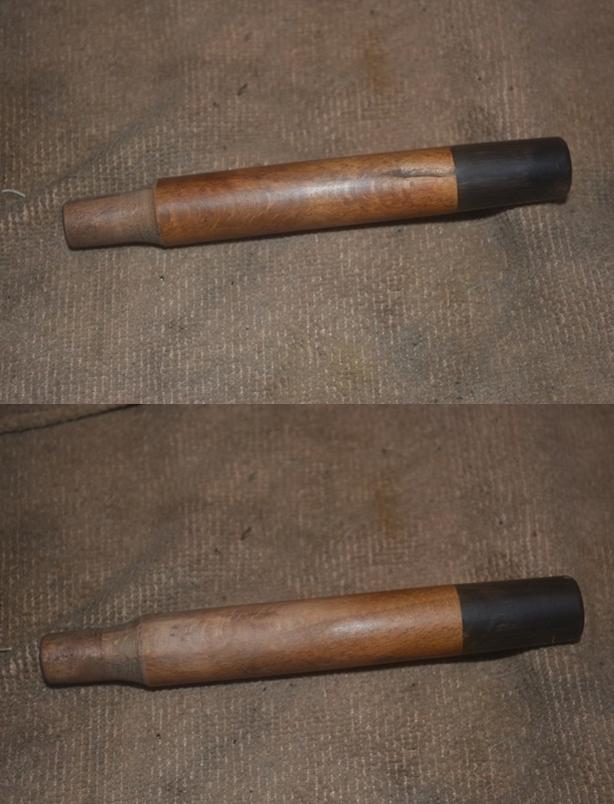
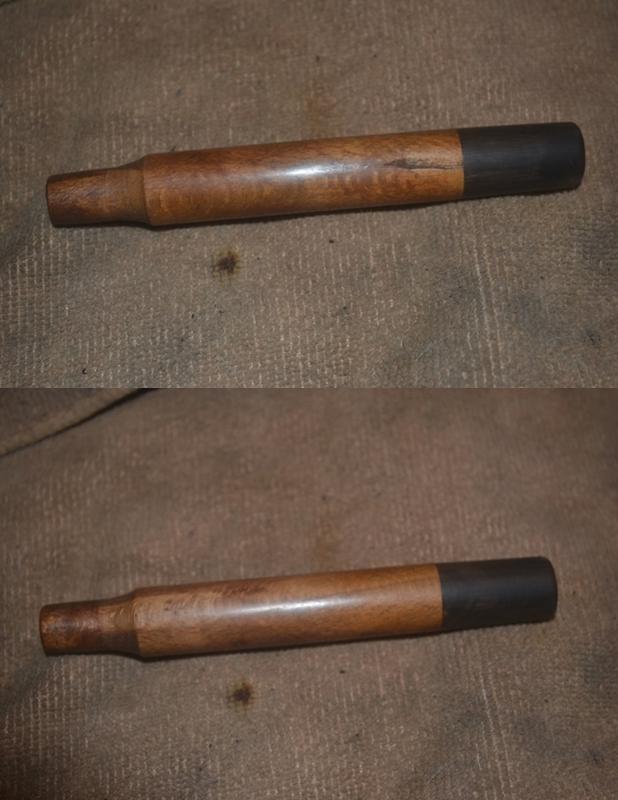
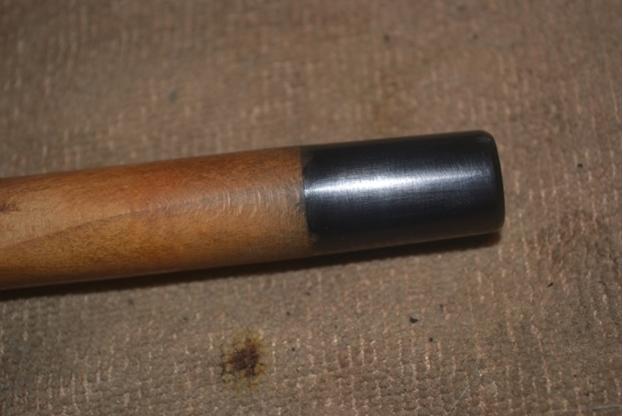
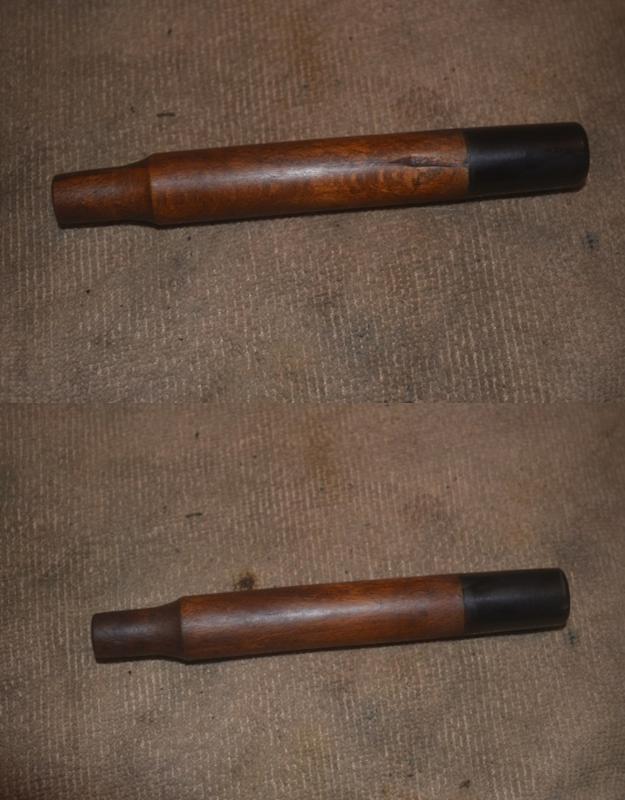
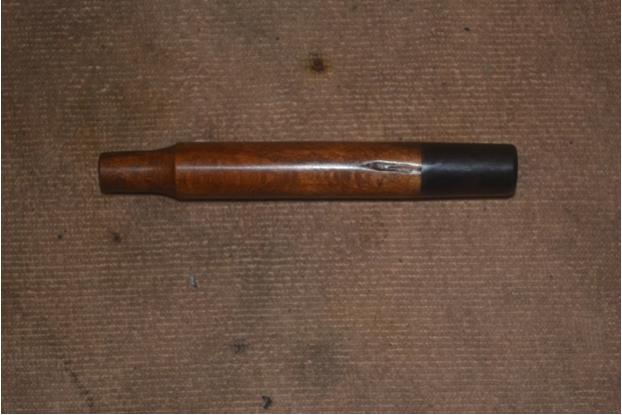
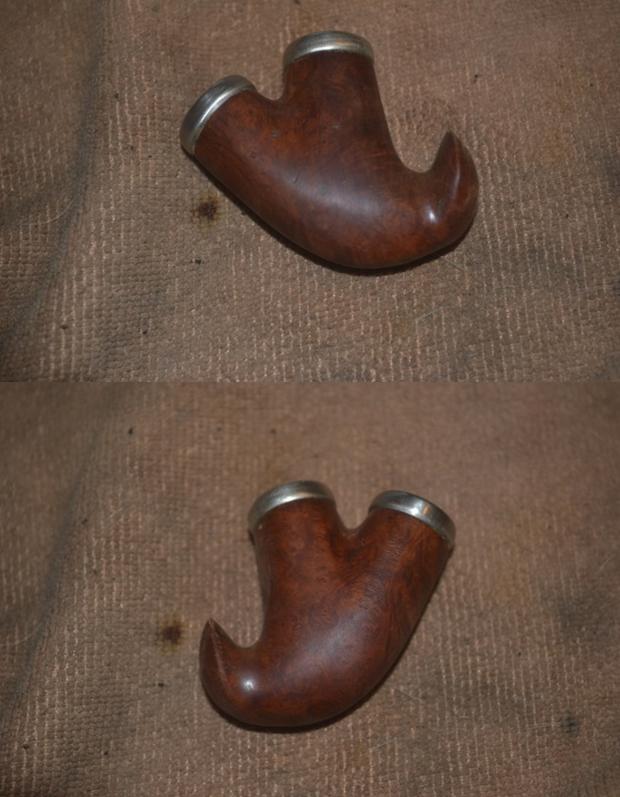
Rob30

Rob31

Rob32 By the time I cleaned it out with bristly cleaners and Everclear, when added to those used for the other parts, I had a pile about as high as Steve’s from his meerschaum bowl folk pipe, only much grimier except for the last that came out clean.

Now take a closer look at the right side, first with the small hole that could neither be sanded away nor ignored, then filled with a dab of wood putty. I let it sit and harden until the next day, when I colored the putty with an indelible brown marker and squeezed a drop of Super Glue over the mark.Rob33
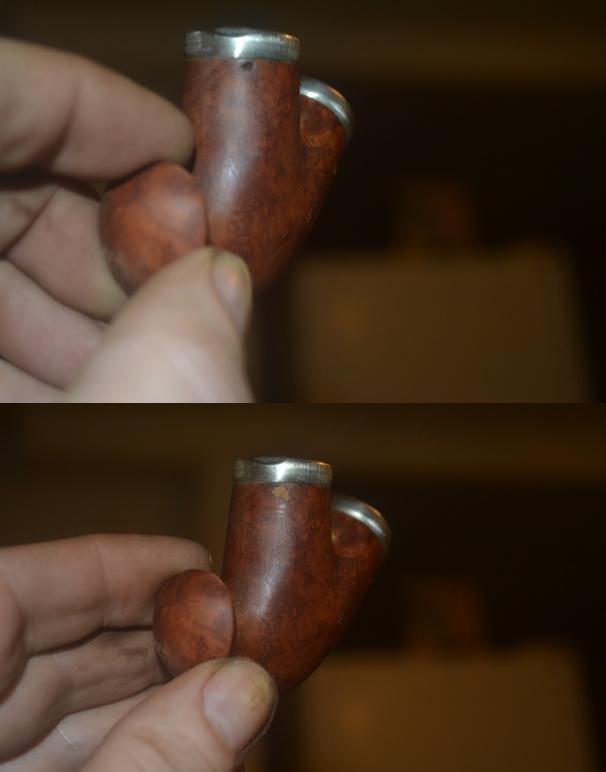
Rob34 Late that night, I sanded off the roughness of the dried Super Glue and smoothed the whole piece with micromesh. And here is the finished, waxed result, without re-staining.Rob35 At last, I was ready to assemble the separately restored parts and wipe it all down with a soft cotton rag.Rob36
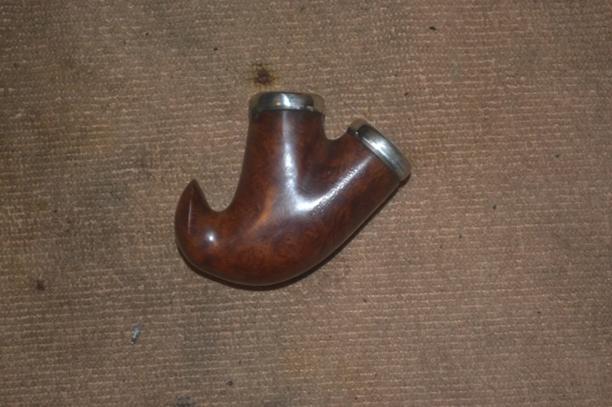
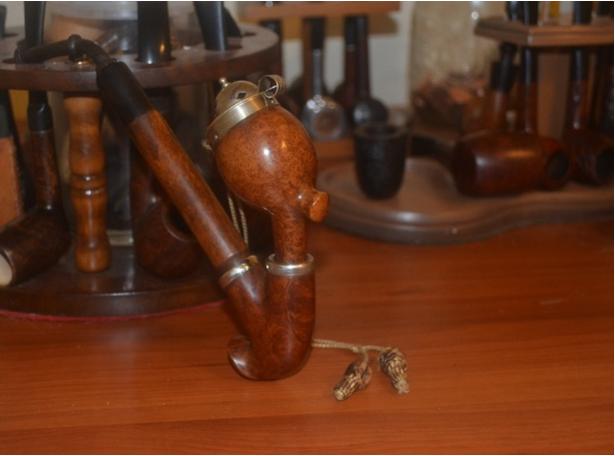
Rob37

Rob38

Rob39

Rob40

Rob41

Rob42 The only nomenclature, just under the bottom ring in the last photo, reads Imported Briar over Made in Italy.

CONCLUSION
This restoration involved two firsts for me: filling a hole with wood putty, as basic as that is, and more significantly, the importance of considering each independent part of the whole. Never before had I encountered a pipe with more than a bit connected to a shank that in turn attached to the bowl. The simple addition of a second chamber for wine with two openings – one for the shank and the other for the regular tobacco chamber – forced me to approach the project from an angle that was novel to me. The ultimate restoration was a unique pleasure for me, and I am happy to report that the finished folk pipe smokes quite well, even without wine. I look forward to seeing how it works with Martinelli’s Sparkling Cider.

Now I have just a few final words on the Bavarian tobacco ban. It seems they tried the same thing in 2008, but the result was a scoff law that the authorities didn’t even try to enforce. Let’s hope that all of the pipe smokers in the southern German state of Bavaria unite to overcome the 61% of voters who decided to deny them the right to run their own lives.

Restoring a Westbrook 36 – A Long & Detailed Explanation for New Refurbishers


Blog by Troy Wilburn

Troy originally wrote this simple step by step methodology for refurbishing pipes for the Dr. Grabow Collectors Forum. Troy’s method is straight forward and he gives great photos to help along the way. I thought it might be helpful for those who are just starting in this hobby of ours. It also may give pause for thought to us who have been doing this for a long time. I firmly believe that there is always something new to be learned from each other as we work to restore old pipes and give them new life. Thanks Troy for this great how to piece. – Steve

I’ve had a few PMs by the newer member asking questions on refurbishing pipes. So I decided to make a more detailed way of what I do on refurbing pipes. Now this is what I prefer and what works for ME. Everyone has their own twist and preferred methods.
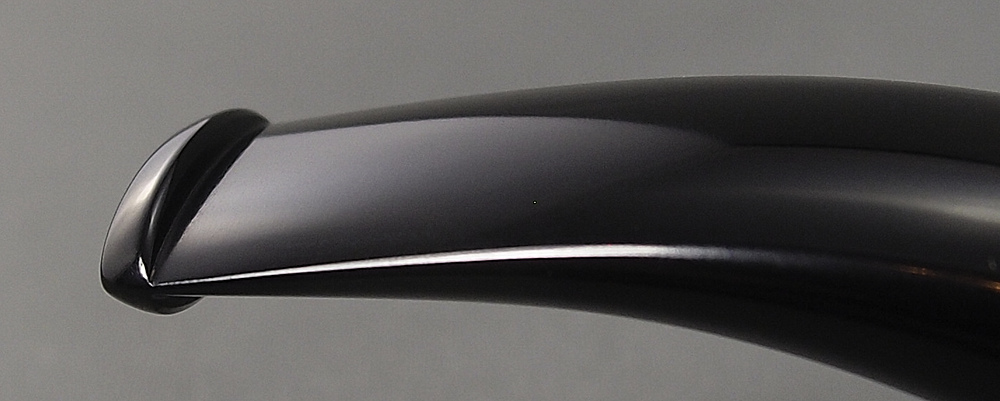
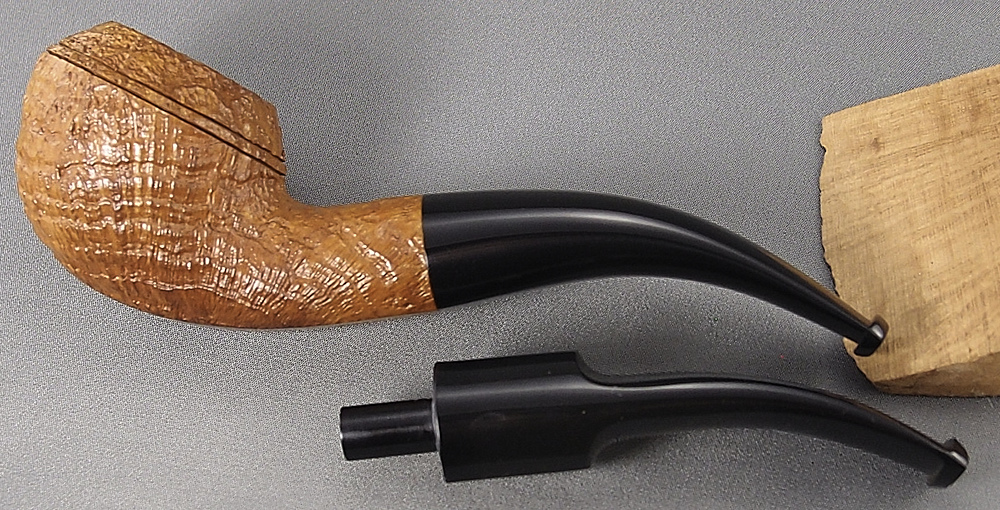
The first thing is to pick the right pipe. This to me is very important especially when doing your first pipes. You want one that’s inexpensive and an easy clean up. So ones with holes in stems and rims that look like they were used to hammer walnuts with might be ones to pass until you get a few under your belt. Not having to sand it a lot and restain is a plus.
Now we are not making a show pipe or restoring a rare pipe that you want to keep original. We are going to bang out a good clean pipe for smoking pleasure. I can do a pipe like this in good condition in 2 hours or less start to finish. This pipe will be smoked and smoked a lot so it doesn’t need to be so glossy you need to put sunglasses on to pick it up. Just a good dependable pipe for low cost. The lower the cost the more pipes you can get .
Ok so the pipe I picked is a good old trusty Westbrook Billiard, still a plentiful pipe, easy to refurbish and can be found cheap. They are good quality, tough as nails and extremely fine smokers.

I got this one for 5 dollars and with shipping; I got right under 10 dollars in this pipe. The seller wanted 9.99 but after watching it for a while I took advantage of the best offer and got it for the 5 bucks. It was in good shape from pictures with no stem damage and bowl not banged up. Once cleaned it will smoke just as good as any new pipe you can get today from 20-100+ dollars. I do like to drill out my pipe shanks a little larger diameter so that will help the smoking of it some.

OK now on to the pipe. This is a #36 Westbrook Double Carved coupon pipe.

Before…. The pipe is dirty and has plenty of cake in bowl.Grabow1

Grabow2

Grabow3

Grabow4 The refurbish
Not getting too detailed about how to clean out bowl. All you need if you don’t have a reamer is a dull pocket knife and some coarse sandpaper. I used to use salt baths and or soak them overnight with cotton balls soaked in alcohol (91%), but is not necessary if you do the way I’m going to show you. Be careful not to get over zealous in this as you don’t want to dig gouges in the inner walls of pipe. Just light scrapes to get out biggest part of cake. Most of the time the heavy build up pops right out. After this just roll up your coarse sandpaper in a tight funnel shape and work it up and down and around in bowl. Check progress often as to not take out too much of inner bowl.

Bowl cleaned to right amount and cake removed. Leave a thin coat still in bowl.Grabow5

Grabow6

Grabow7 Cleaning out shank and stem. My advice is to buy a few of those shank brushes as they will save you a small fortune in pipe cleaners.Grabow8 Soak stem and bowl in some 91 % ISO (if it’s a smooth and you want to save finish then don’t soak bowl just clean it with a Scotch Brite pad with 91% very lightly). With these Westbrook double carved you don’t have to worry about as you can just buff them with no staining and they will look fine. Plus I like to soak the bowls on these deep carving to get rid of years of handling with someone else hands. It’s hard to tell what has accumulated in the recess of them carving over the years. Run the shank brush through the shank and stem until (soaked in 91%) until it stops coming out black and gunky.Grabow9 Rinse out the bowl while it is soaking and a good brushing with an old tooth brush over everything including inside bowl. Also rub the bowl with a Scotch Brite pad as it will take off old wax and grime but not so rough you have to sand behind it. After this is done just keep running pipe cleaners in shank and stem with clean ISO until they are coming out clean. I use a combination of the coarse cleaners and regular pipe cleaners. After a good brushing with shank brushes it shouldn’t take too many.

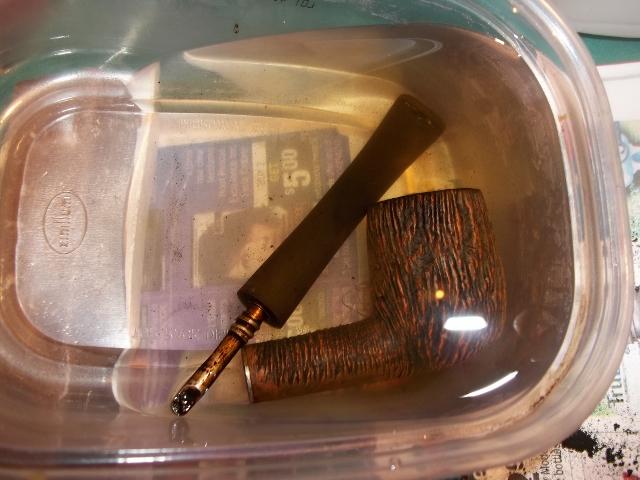
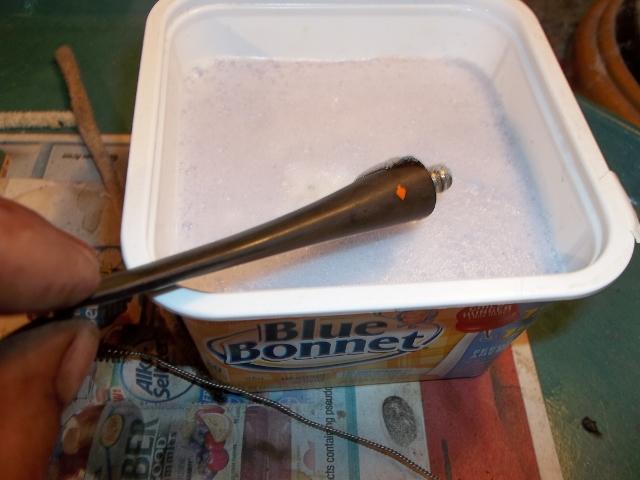
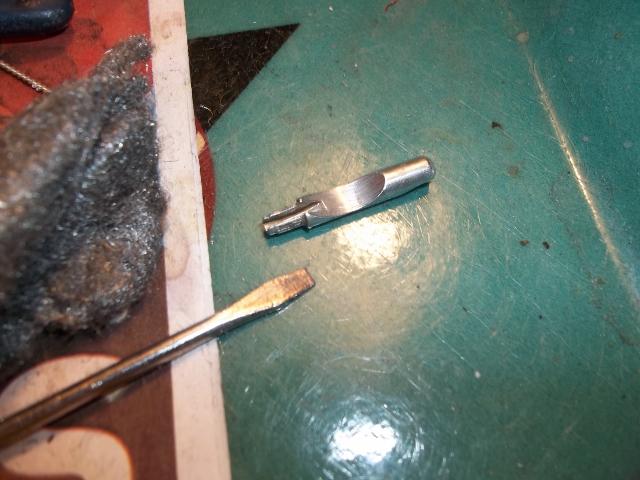
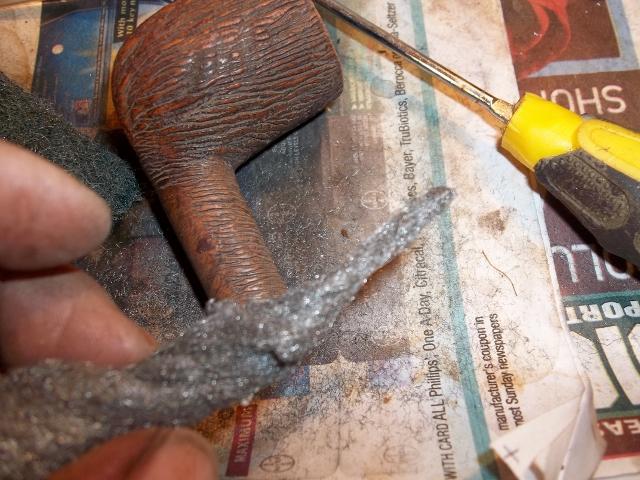
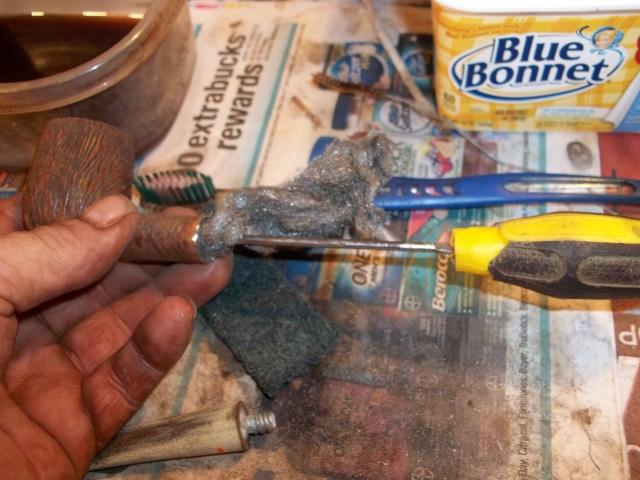
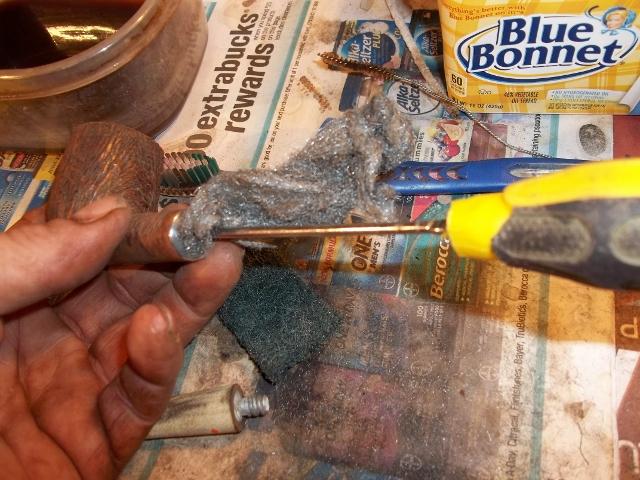
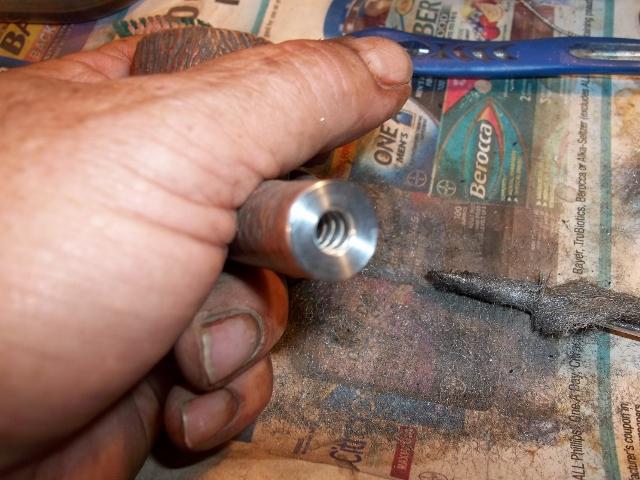
After this I usually place stem in oxy clean and warm water (about half to full scoop that provided in container) and let soak for about 30-40 minutes. It can soak while I work on cleaning the stinger and Adjustomatic female shank.Grabow10 I put the old stinger in an old stem I have to help hold it after it soaked in ISO with bowl and stem. Take some 000 steel wool and just rub it briskly getting into every little part. Take a small screwdriver to use it to push it through the small air trench.Grabow11 Take some steel wool and make it into a long skinny shape.Grabow12 Run it up in shank a little way then take a small screwdriver and run it up alongside. Then twirl the bowl as it will screw the 000 into the threads. Then unscrew it, most of times it will come out but sometimes it will break apart and you will have to push it out with a cleaner or a stiff piece of wire. A small long screwdriver will work also.Grabow13

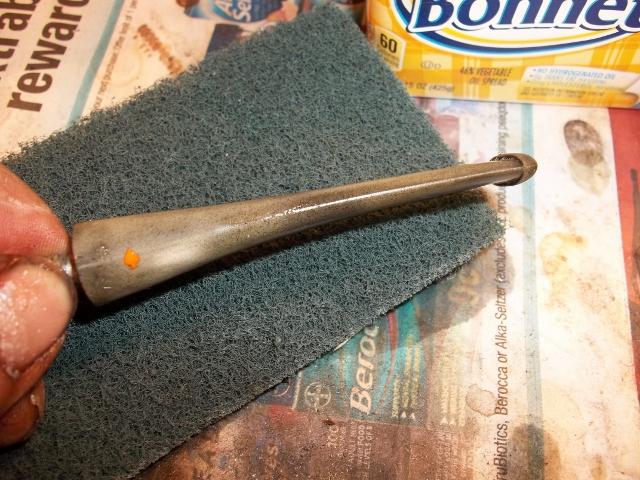
Grabow14 You might have to do this a couple of times to get it good and clean. Be sure to blow out all the fine pieces of steel wool afterwards.Grabow15 Now we can take the stem out of Oxy Clean bath.Grabow16 Take a Scotch Brite pad and dip into the oxy water and rub the stem. I know people say use Magic Erasers but to me this is much easier and cheaper. It’s a lot less rubbing and faster. Work smarter not harder is what I was taught :). Here it is half done, took maybe 5 seconds.Grabow17

Grabow18 All oxidation that oxy clean bought to the surface is scrubbed off now. Took like a minute.Grabow19 After the oxy bath I take clean water and wipe off bowl and stem with clean water and tooth brush or ISO 91%, your choice, to remove any residue left from the alcohol and oxy clean. I use water because it’s cheaper.Grabow20 Go ahead and run a few pipe cleaners through stem with ISO to remove any debris and residue left behind from oxy bath. The stem is ready for wet sanding. As this stem is in such good shape it won’t take long to wet sand. If it had tooth marks and or heavy scratches you need to sand it more of course. I’m going to use 400, 600, 800 and 1200 grit sandpaper. Any finer grit to me is overkill for this pipe as I said it’s a daily working pipe and not a show pipe. Sand it lightly with each grit of sandpaper, being careful not to over sand it and make it not register with the shank properly. Being ultra careful where the stem goes into the shank as not to take off too much material. As most all the oxidation has been removed it doesn’t need to be sanded too much as we are just trying to make it smooth. Just a few light strokes with the coarse paper is all you need then using the finer grit a little more will do the trick. I have a piece of an old shank that broke off a bowl to use as a holder for Adjustomatic stems. It makes holding them during sanding a lot easier.Grabow21 Ok the pipe bowl is cleaned and scrubbed and the stem sanded.Grabow22 At this point I like to rub the pipe down with Mineral Oil. Some like to use olive oil but Mineral oil is odorless and tasteless. It doesn’t have the danger of turning sour like a type of vegetable oil can. Plus it helps to bring out grain in wood.

Any defects and or oxidation (brown spots in stem) will show up and allow you the luxury of fixing it before you apply wax. I apply the oil with a cotton ball and take a tooth brush and get into all the recesses. It will also show you pretty much what the color of the pipe will look like after buff and wax.Grabow23

Grabow24

Grabow25 The photo below shows the pipe after the Mineral Oil has been wiped and dry, ready for buffing.Grabow26 I use a buffing wheel and compounds but I know some who read this do not have this. I will not get into this as it will take too long and I’m still learning myself. I used to do all hand buffing. At this point you can just apply hand coats of various waxes you can buy that come in paste form and it will look fine.

Well I hope this can be a help to anyone that wants to start refurbing their own pipes. It’s a lot of fun and can save you a lot of money. Dave Whitney also sells a book that I would suggest getting it is called “OLD BRIAR” and it is a book on restoring and trading estate pipes. It is available via Amazon for Kindle.

Here is after pics.Grabow27

Grabow28

Grabow29

Grabow30

Grabow31

Grabow32

Grabow33

Grabow34

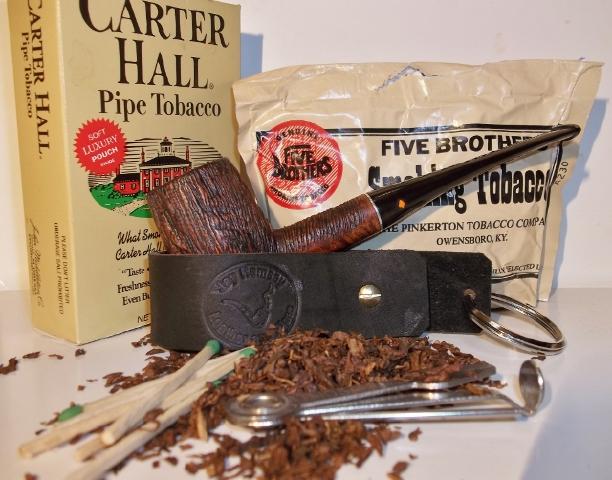
Grabow35 After about a 24 hour rest to let the alcohol evaporate out it will be ready for smoking. This is my favorite combination for breaking in a refurbed pipe: 50% Carter Hall and 50% 5 Brothers. It will be build cake fast and burn out any reminisces of a ghost left behind. It is a strong burley combination and has a good nicotine hit so be warned.Grabow36 Now you don’t have to pick a Westbrook as this is just a guide to help you get started. But I would suggest starting on rusticated pipes as they seem to be an easier pipe to refurbish to me. You can always add your own twist to the pipes you do. Now on occasion a problem does pop up like a frozen Adjustomatic or a stuck stem etc…. That’s pretty rare occurrence from the pipes I’ve done. But if it happens, just post your questions here on the Dr. Grabow Collectors forum (or even here on rebornpipes for that matter). Help and advice is something our forum is not lacking in . Or you can just send me an email and I’ll help you best I can or send you in the right direction to someone who can.

Heritage Heirloom 02 Poker


Blog by Troy Wilburn

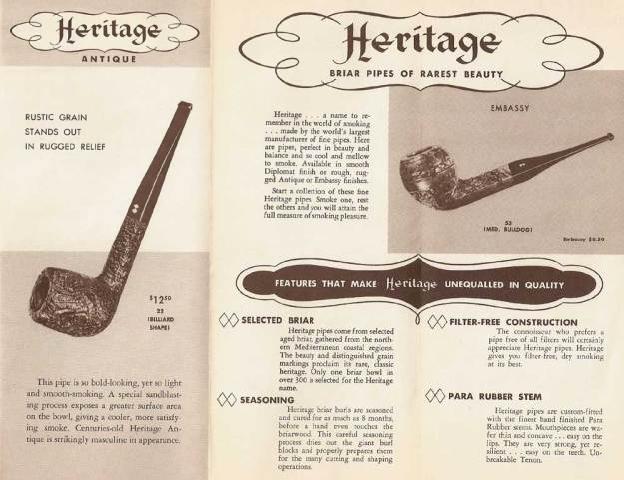
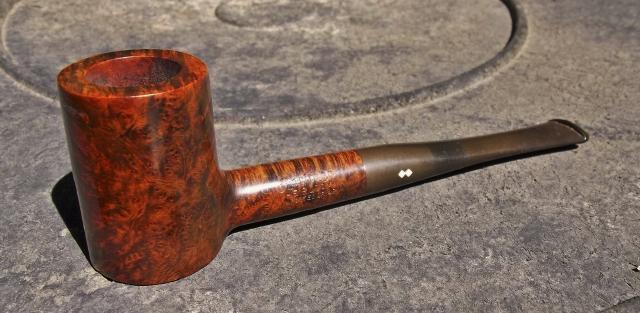
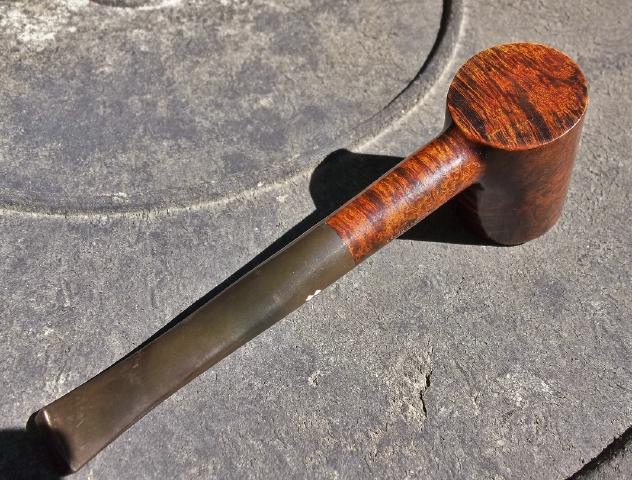
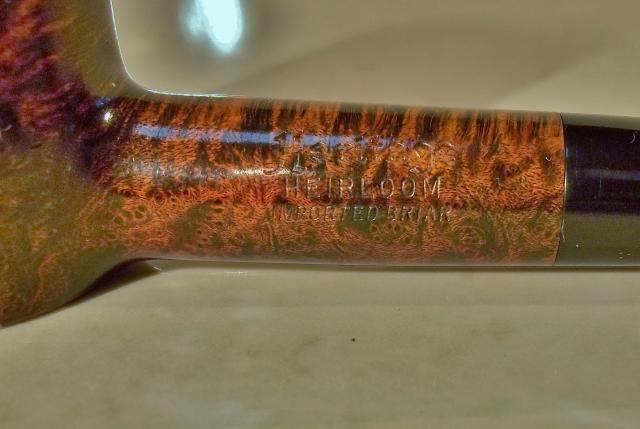
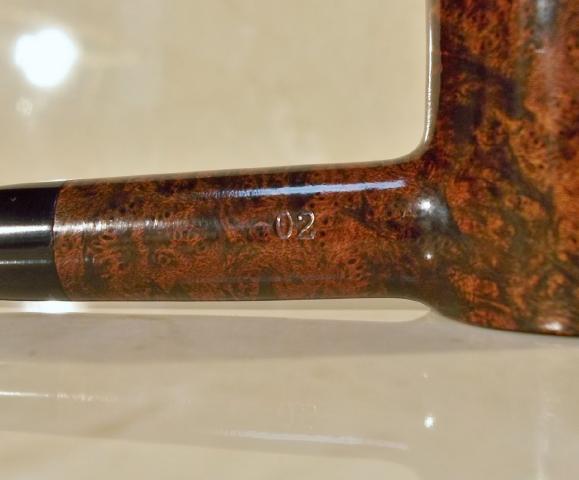
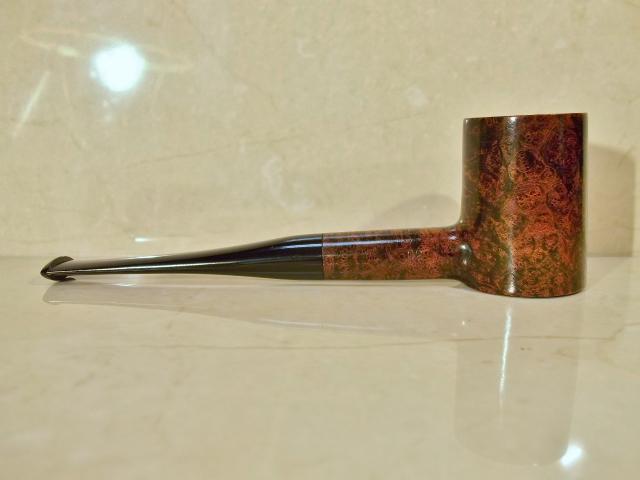
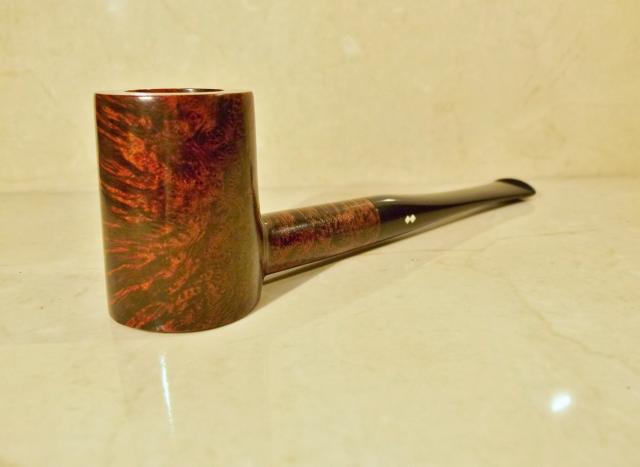
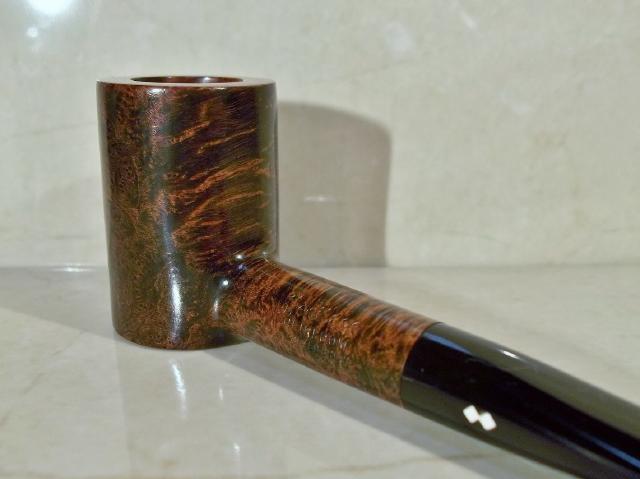
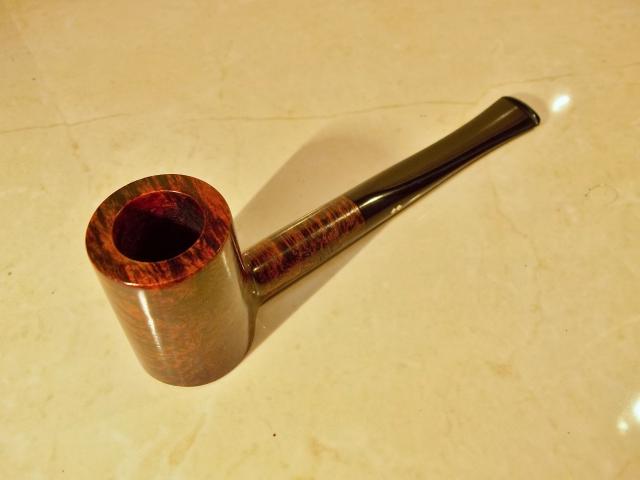
My latest addition to my American factory made poker collection is a Heritage Heirloom made by Kaywoodie. They were made during the 1960’s and production stopped in 1970. Heritage Heirlooms were Kaywoodie’s high end pipes headed up by an ex-Dunhill employee name Stephen Ogdon. Something like only 1 in over 300 pieces of briar was good enough to use in the Heritage Heirloom line. They used top of the line Para rubber on the stems and all briar was seasoned well, before being made into a pipe. Here is part of a brochure about it.heritage2_zps0d4dc760 Here is another part of the same brochure with the 02 poker shape shown.heritage4_zpsdc6295ef I purchased the Heritage Heirloom from a fellow member of the Dr. Grabow Collectors Forum. The pictures I saw of it truly did not do it justice. When I got it in hand I was amazed at the excellent condition the pipe was in. Other than the stem being oxidized I could not see any issues at all with the pipe.Heritage3

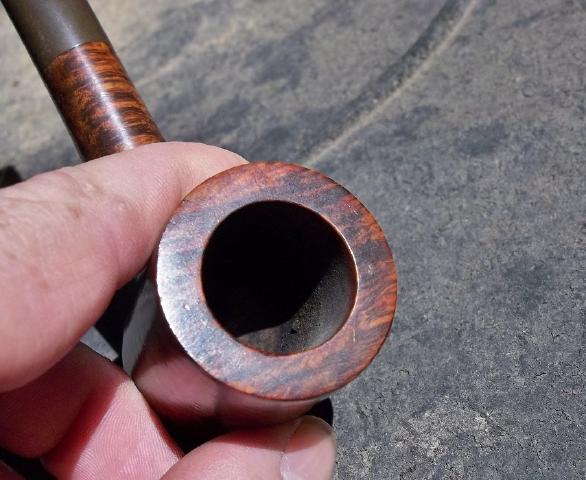
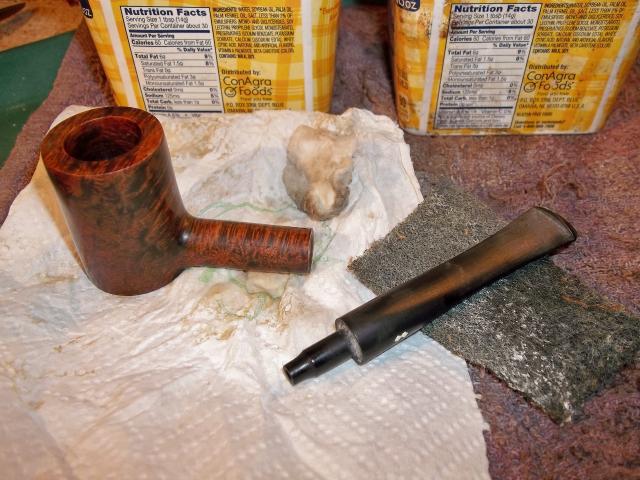
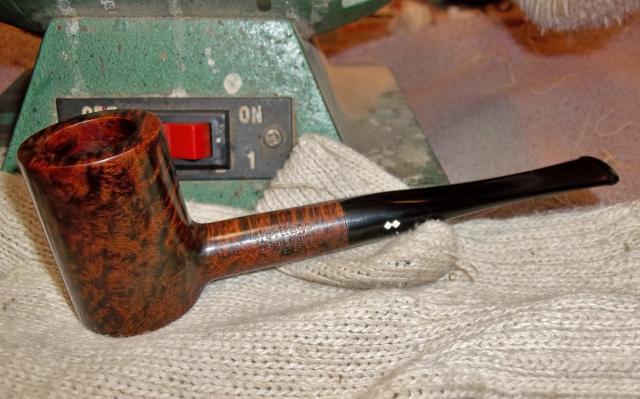
Heritage4 The pipe was barely smoked and still had raw briar showing in the bowl. It looks as though someone stated breaking in the pipe with quarter bowl increments and stopped after the second bowl.Heritage5 The pipe needed very little work. There was not heavy tar to clean out of the stem or shank so just a light swab with a pipe cleaner was all that was needed. I soaked the stem in OxyClean then scrubbed the top layer of oxidation with a green pad and wiped the bowl down with a cotton ball damp with Dawn soap and warm water. I wiped it dry with a clean paper towel.Heritage6 I gave the stem a light sanding.Heritage7 Afterwards I gave the pipe a good wipe with mineral oil and wiped it dry with a clean cloth for the next step of a light buff and wax.Heritage8 Here is the finished pipe.Heritage9

Heritage10

Heritage11

Heritage12

Heritage13

Heritage14

Heritage15

Heritage16

Heritage17

Heritage18

Heritage19 I have smoked a full bowl out of it since I finished it and it’s a very fine smoking pipe that will only get better with some more seasoning and cake.Heritage20

A Very Simple Cleanup on a Dr. Grabow Regal Dublin


Blog by Steve Laug

This pipe came to me in a box of pipes that a friend brought by for me. He was getting rid of a bunch of the pipes that he no longer smoked and thought I might enjoy cleaning them up. This one is stamped on the left side Regal over Dr. Grabow and on the right side, Imported Briar over Adjustomatic over Pat. 2461206. When I took it out of the box it had a half stem. The rest of it had been broken off and it was about 1 ½ inches long. I took it off and put the bowl back in the box. I have no idea what I did with the old stem; I have looked for it for a while now as I wanted to pirate the Adjustomatic tenon from the stem. It will show up when I least expect it and I will deal with it then. Yesterday I took the bowl out of the box and was looking it over. It was in very decent shape. The finish was clean. There were some lighter marks on the back right outside edge of the rim but other than it was clean. There was no cake in the bowl. It was worth a little time to see what I could do with it.

I went through my can of stems and found a Dr. Grabow stem that was the proper diameter. It was in decent shape. There were tooth marks on the top and underside of the stem next to the button. The button itself had some tooth dents. There was some calcification on the surfaces as well. The tenon and stinger were black with tars and oils but would clean up easily enough. The only thing with this stem and tenon is that it was not an Adjustomatic stem but it would do.Dr1

Dr2

Dr3

Dr4

Dr5 I cleaned out the shank and mortise with cotton swabs, pipe cleaners and alcohol. The shank was pretty clean and it did not take much to remove the little that was there. I removed the stinger and cleaned out the stem with alcohol. It too was not in to bad of shape on the inside. I cleaned the stinger and tenon with alcohol and 0000 steel wool.Dr6

Dr7 I heated the stem and raised the tooth dents as much as possible and then sanded them smooth with 220 grit sandpaper. One of the divots was a little too deep to raise so I filled it with a small batch of black super glue and sanded it smooth.Dr8

Dr9 I used a needle file to redefine the sharp edge of the button and make a clean line on both sides of the stem.Dr10 I sanded it with a medium and a fine grit sanding sponge to remove the scratches from the vulcanite and then wiped the stem down with Obsidian Oil.Dr11 I sanded the stem with micromesh sanding pads – wet sanding with 1500-2400 grit pads and then wiping down the stem with Obsidian Oil. I dry sanded with 3200-4000 grit pads, gave it another coat of oil and then continued with 6000-12000 grit pads. Each successive grit of pad made the patch disappear and blend into the surface of the stem. I gave the stem a final rub down with Obsidian Oil and let it dry.Dr12

Dr13

Dr14 I buffed the pipe with Blue Diamond polish on the wheel and then gave it multiple coats of carnauba wax. I buffed it with a clean flannel buff on the wheel and then hand buffed it with a microfibre cloth for a final deep shine. The following photos show the finish pipe. It should work well for many years to come. This one is for sale should anyone wish to add it to their rack. Email me and let me know.Dr15

Dr16

Dr17

Dr18

Dr19