Monthly Archives: July 2014

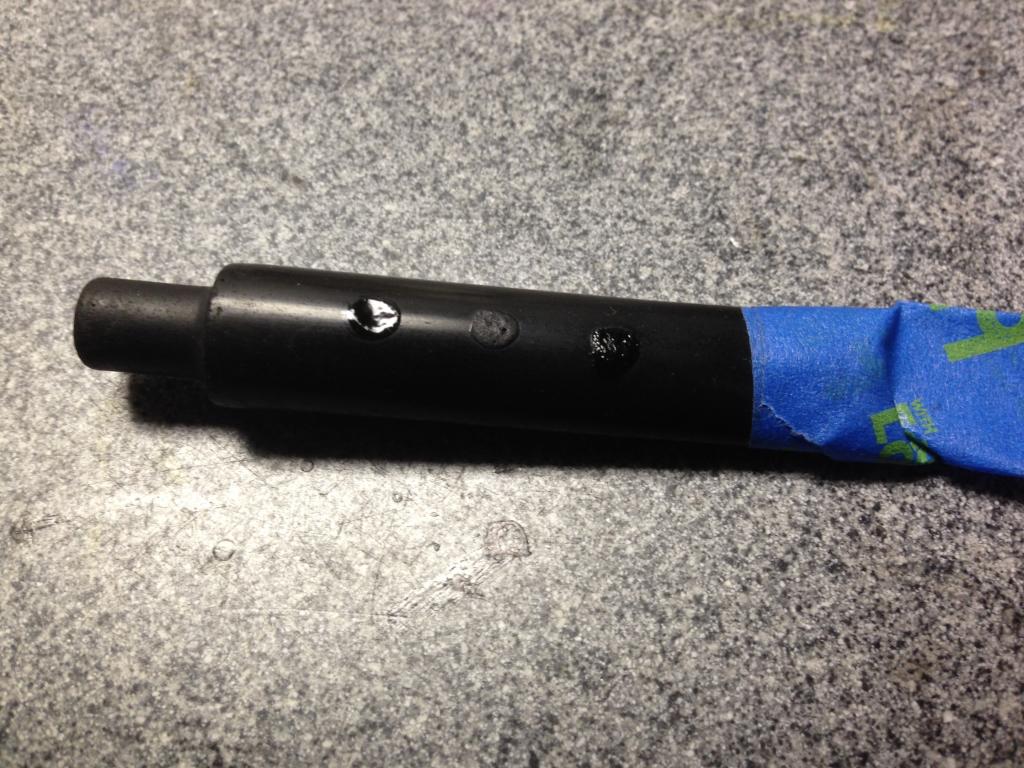
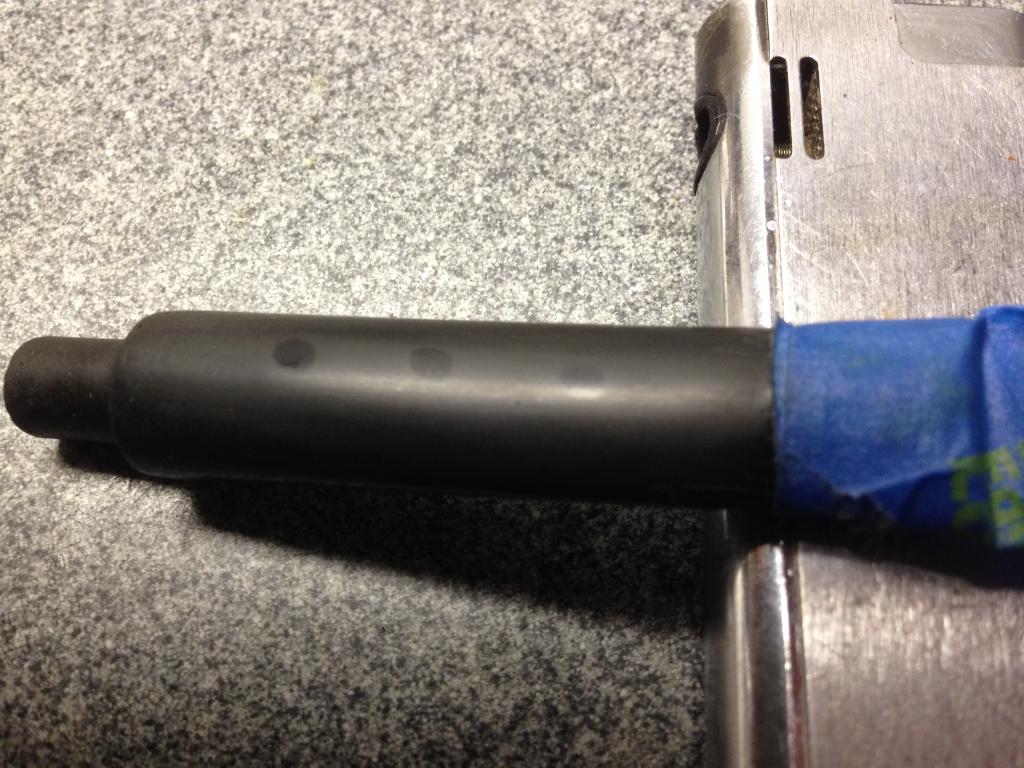
Yellow Acrylic Stem Patch – Part 2 – Joyal Taylor (aka holymolar)


Blog by Joyal Taylor

Earlier I posted a You Tube video that Joyal posted about patching this yellow acrylic stem https://rebornpipes.com/2014/07/08/stem-patch-using-amber-super-glue-joyal-taylor-aka-holymolar/ It is part of an ongoing work in progress where Joyal is experimenting with different mixture to patch a bite through in an acrylic yellow stem. This is Part 2 of the ongoing experiment. Thanks Joyal for taking us with you in this experiment.

Since the amber superglue didn’t work well on this stem, I’m trying other things.

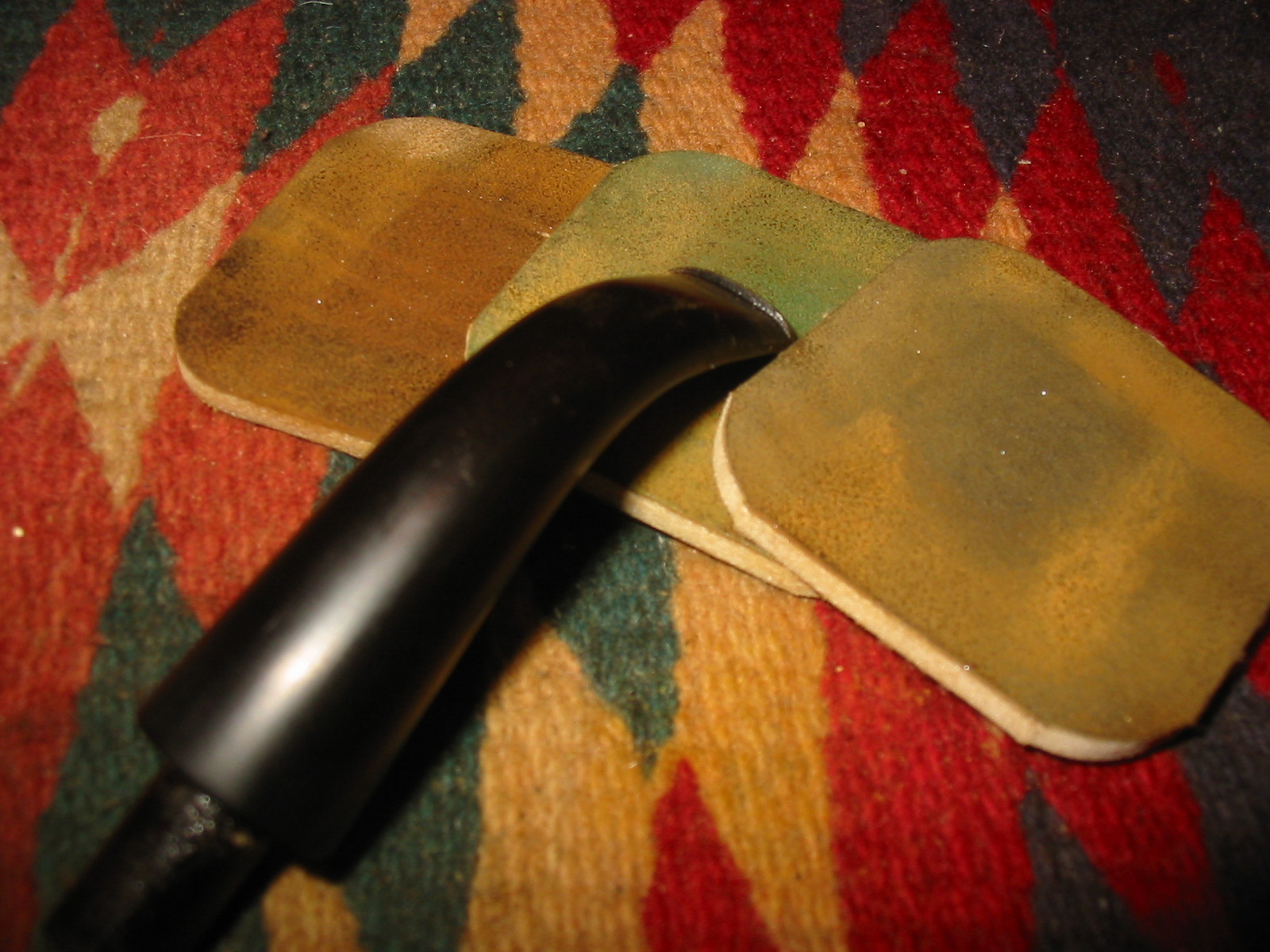
I tried mixing yellow and orange Fiebing’s Leather Dye with clear superglue, but the dye caused the glue to set instantly, even before I could mix it.

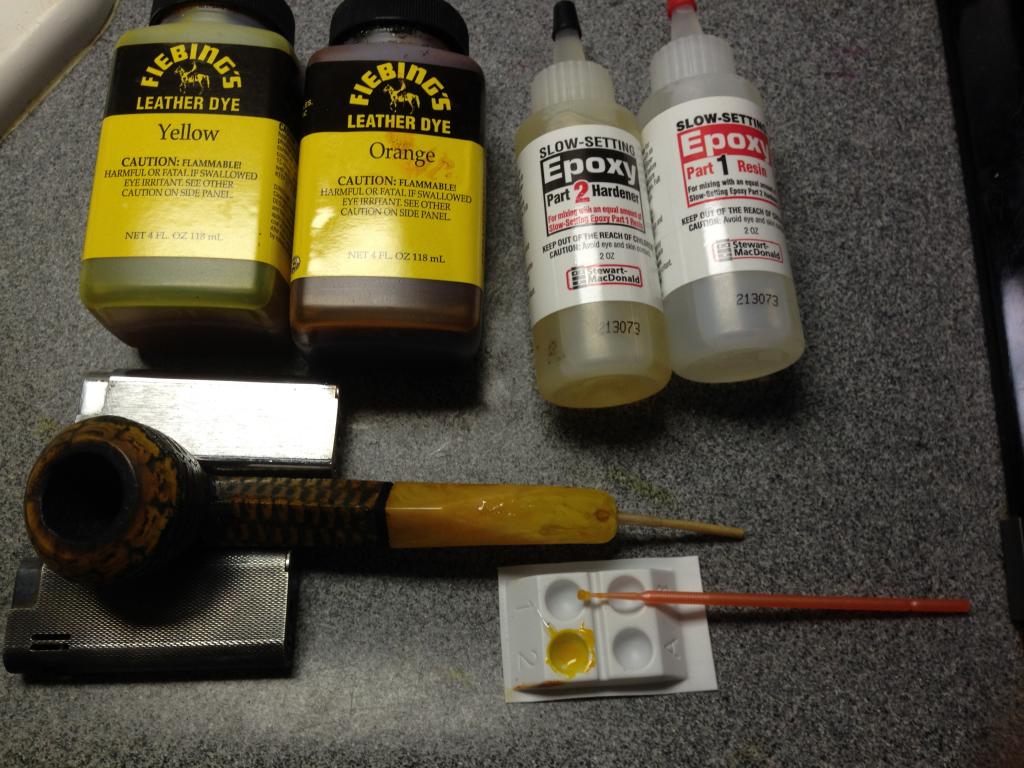
Next, I tried StewMac 2 part clear epoxy with Fiebing’s yellow and orange dyes, which mixed well.

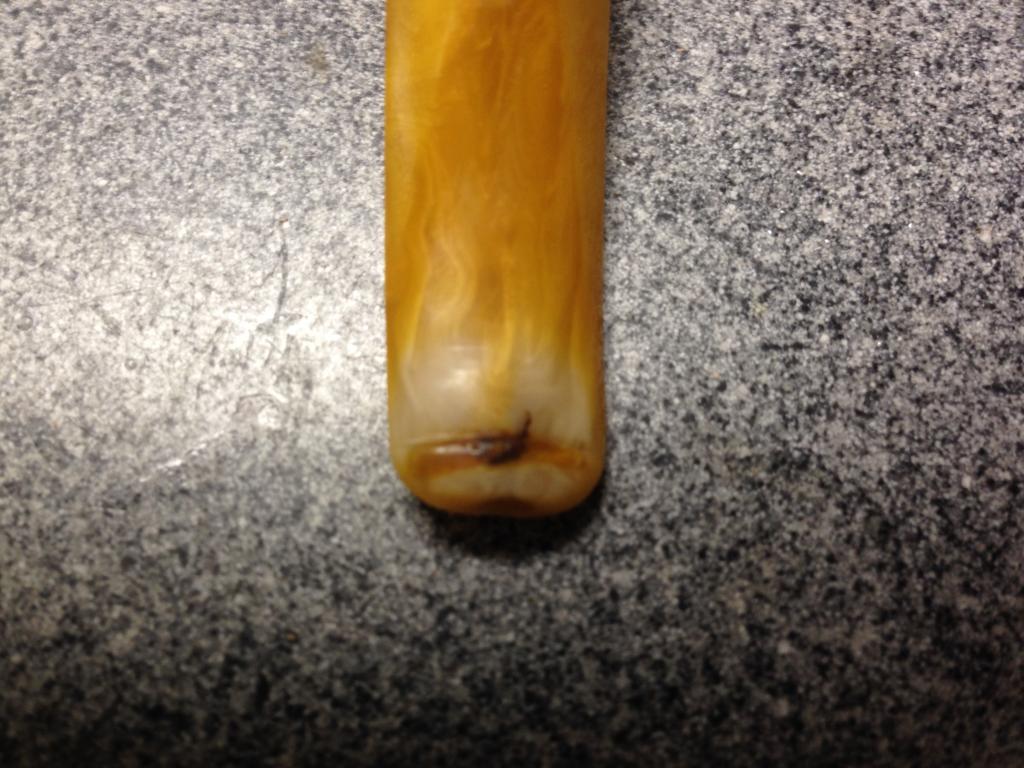
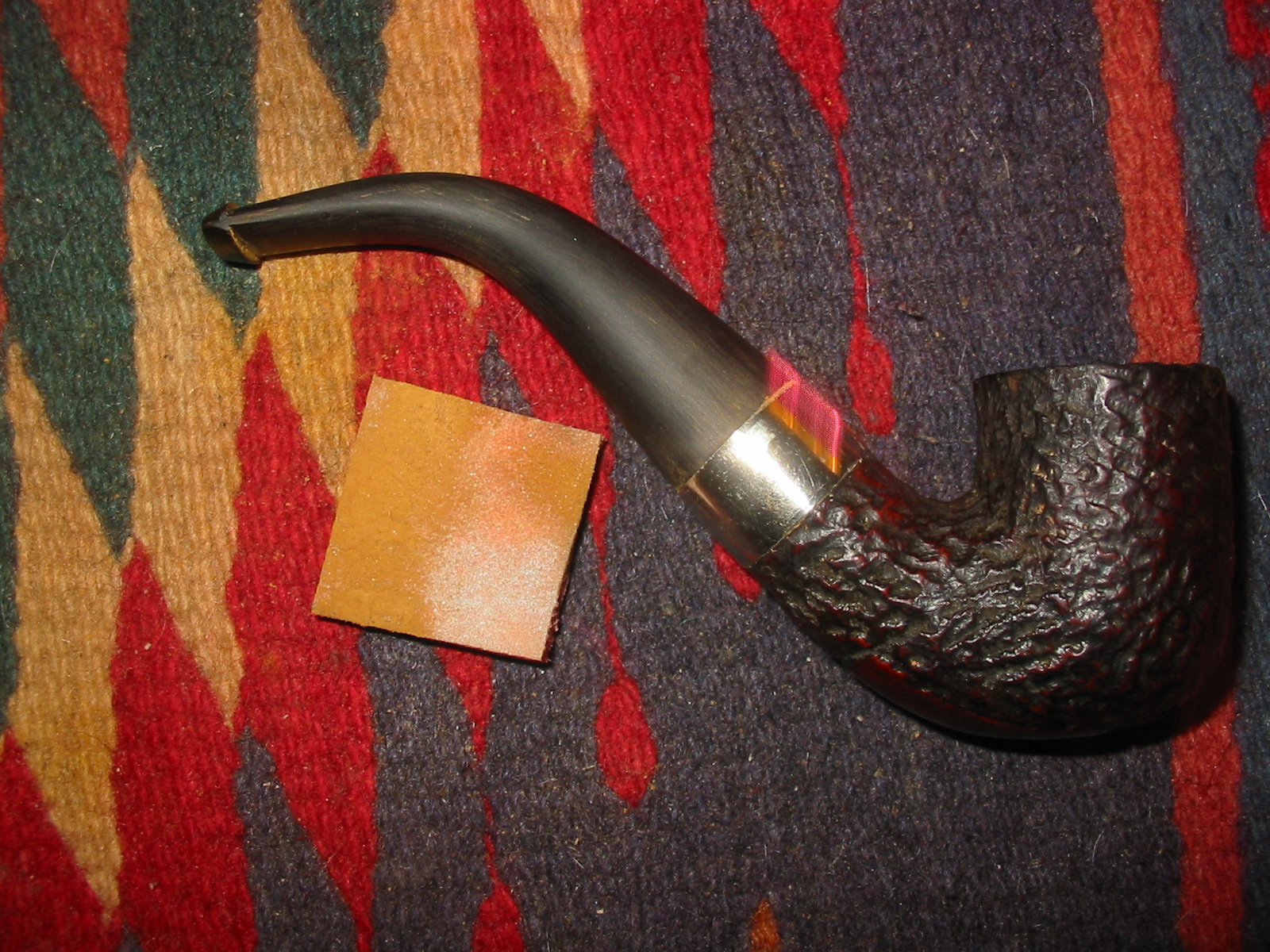
Before photo of only one side of the stem, but I worked on both sides:
Photo #1
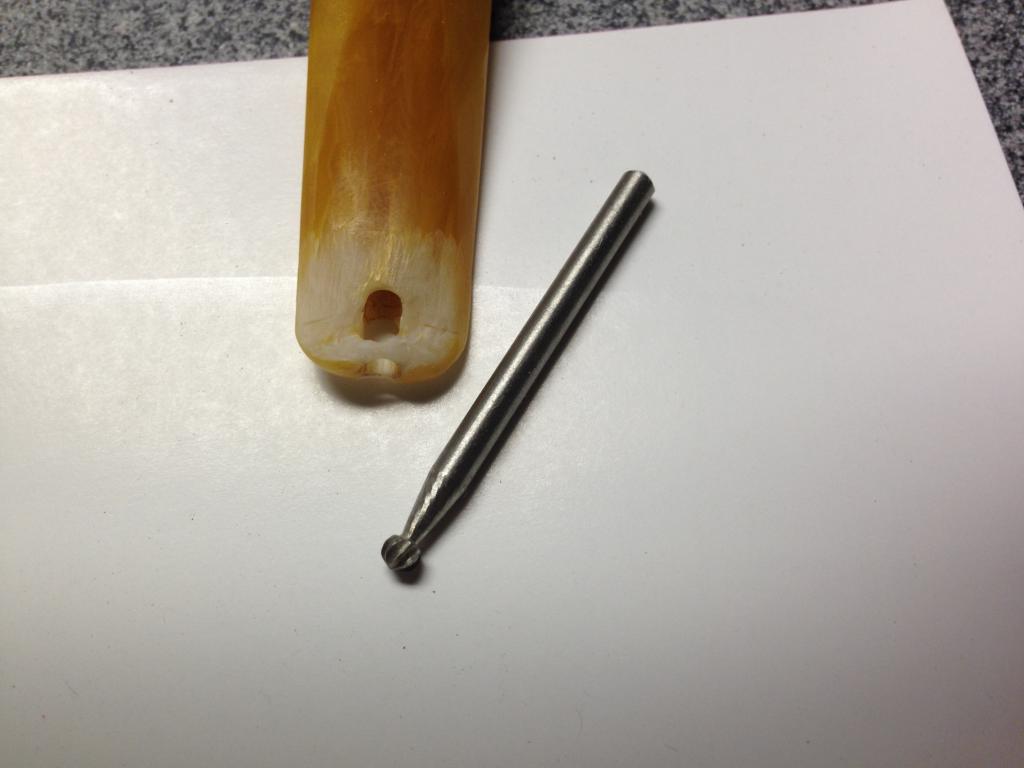
I used a round bit in my dremel to remove the previous amber superglue patch and discoloration. Also, I roughen-up the area in front of the bit to try to re-color that area.
Photo #2
I tried several combinations of yellow and orange dye until I got close to the color of the stem
Photo #3
Close up photo looks like it may work
Photo #4
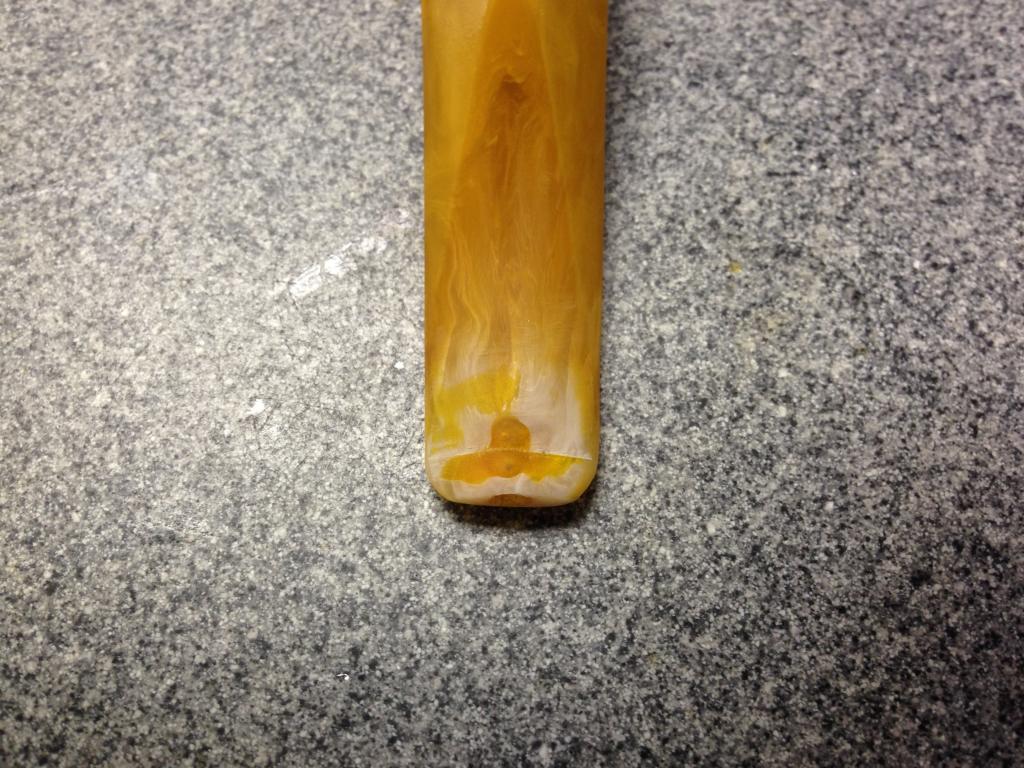
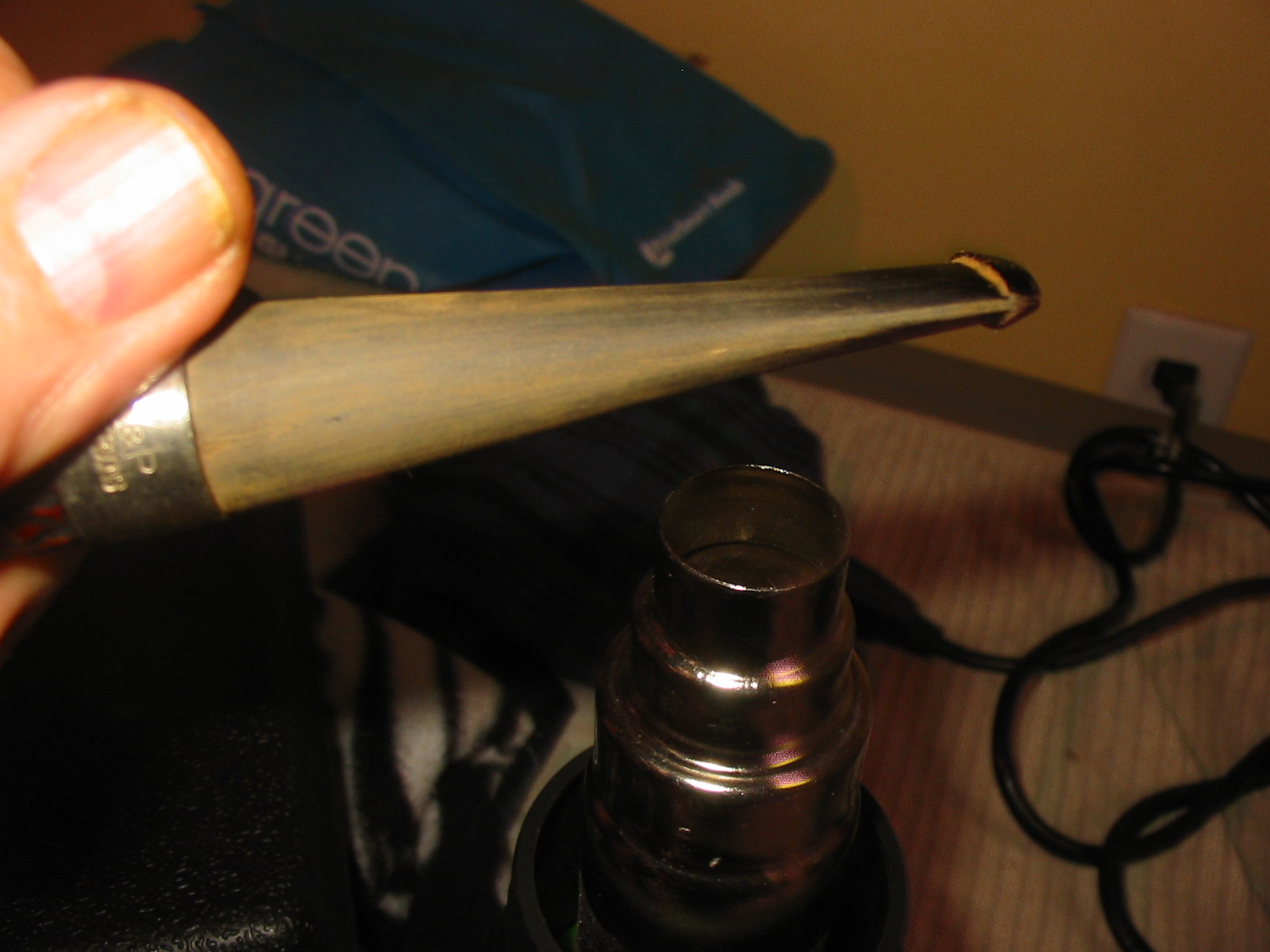
After shaping the bit with needle files and sanding/micromesh the epoxy.
Photo #5
This didn’t work out so well, either. Not only the color isn’t good but, also, the epoxy feels soft and rough to my teeth and lips.

We learn from our mistakes, so I’m going to continue experimenting with this.

Next, I’m going to remove the epoxy and try patching a third time by mixing dye powders with clear superglue.

I would appreciate it if anyone has other ideas to try for this stem repair.

Stem Patch Using Amber Super Glue, Part 1 – Joyal Taylor (aka holymolar)


In a conversation with Joyal about patching a stem that had a yellow/orange tint I suggested that he try the amber super glue from Stew Mac. He replied that he had tried it and done a video on it on You Tube. He said it was too clear and not opaque enough for a good match. He sent me the link to his You Tube video on using the Stewart MacDonald Amber coloured super glue.

Since You Tube is not something I have ever done, I was intrigued with it. I thought it would be great to post the link here for you to have a look at.

The amber super glue Joyal is using is available online at:
http://www.stewmac.com/Materials_and_Supplies/Glues_and_Adhesives/Glues/StewMac_Super_Glues/StewMac_Tinted_Super_Glue.html

Part 2 is a continuation of this work and is found under the title “Yellow Acrylic Stem Patch – Part 2 – Joyal Taylor (aka holymolar)” can be read at this link https://rebornpipes.com/2014/07/08/yellow-acrylic-stem-patch-part-2-joyal-taylor-aka-holymolar/

Converting a Kaywoodie Bakelite Cigarette Holder into a Tamper


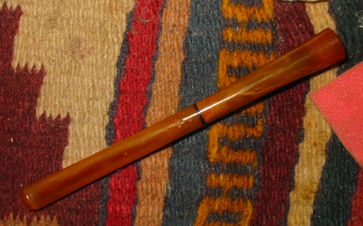
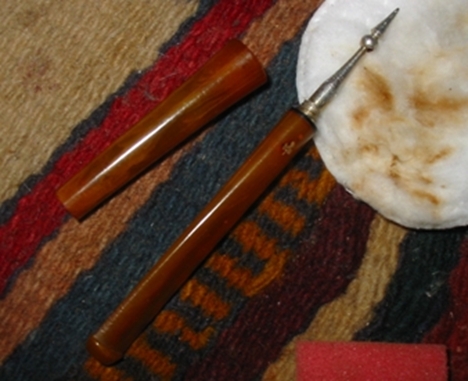
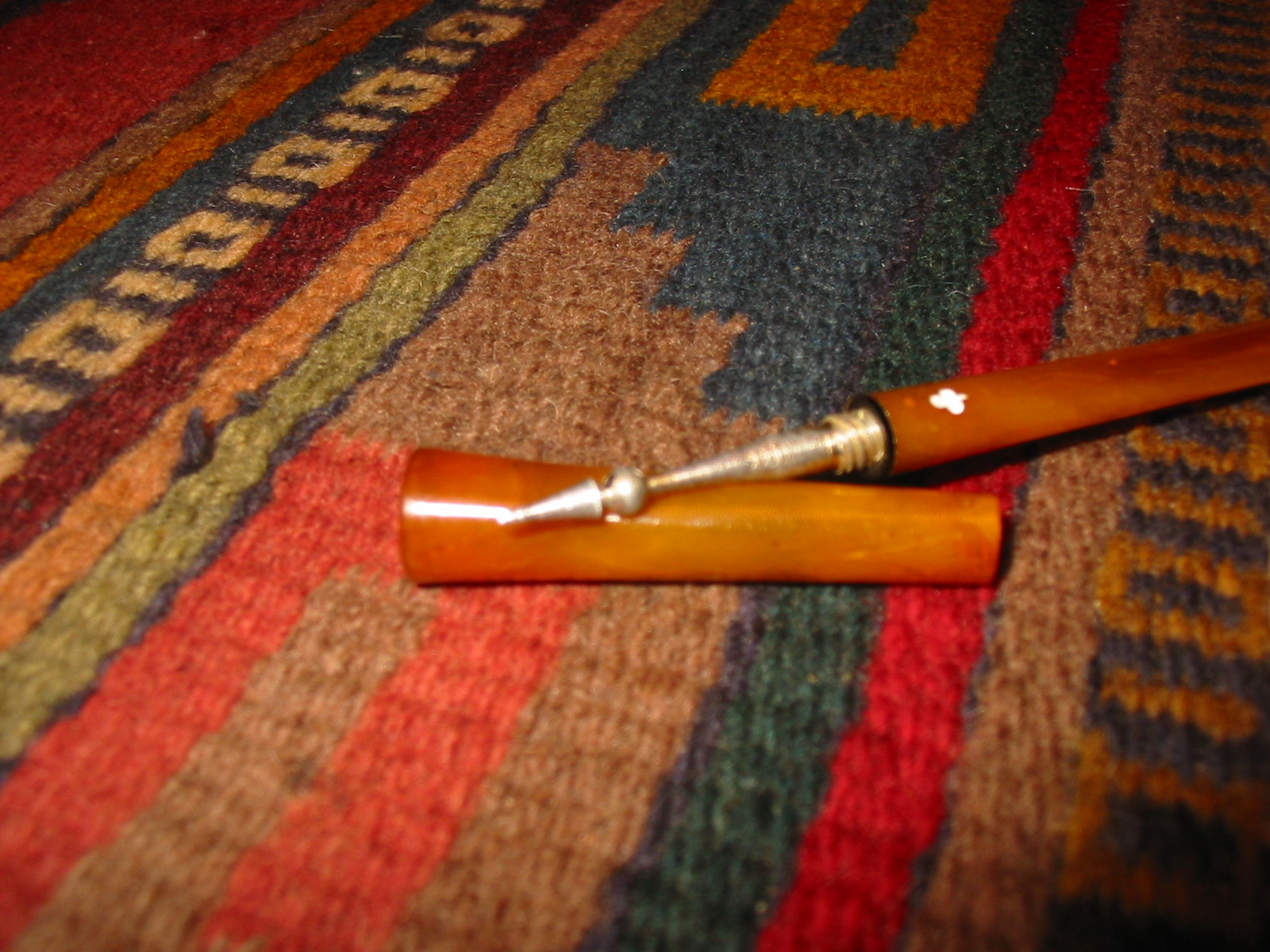
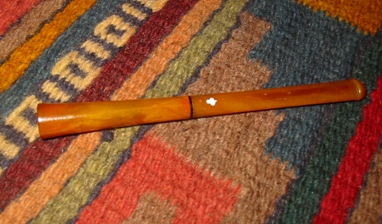
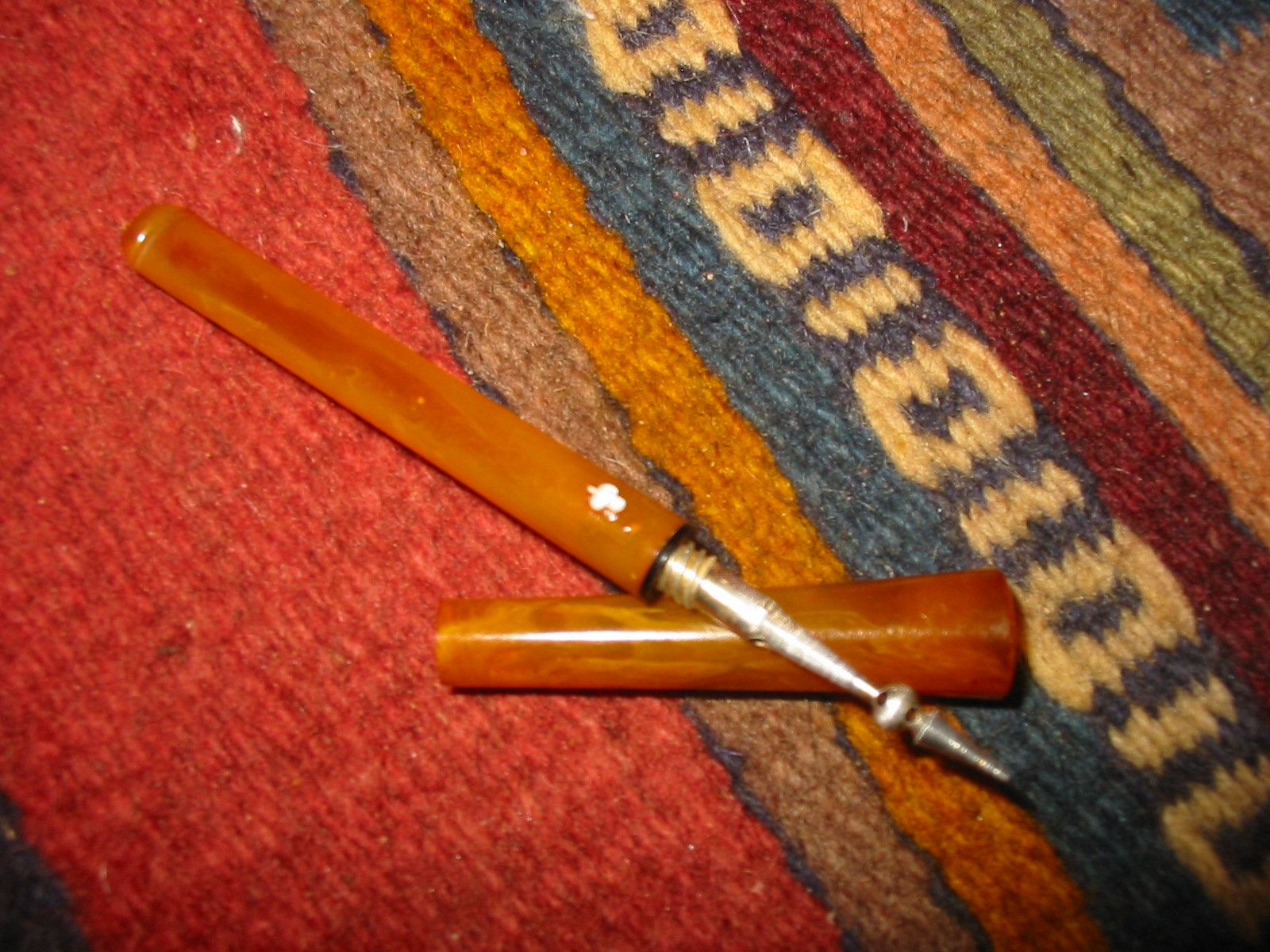
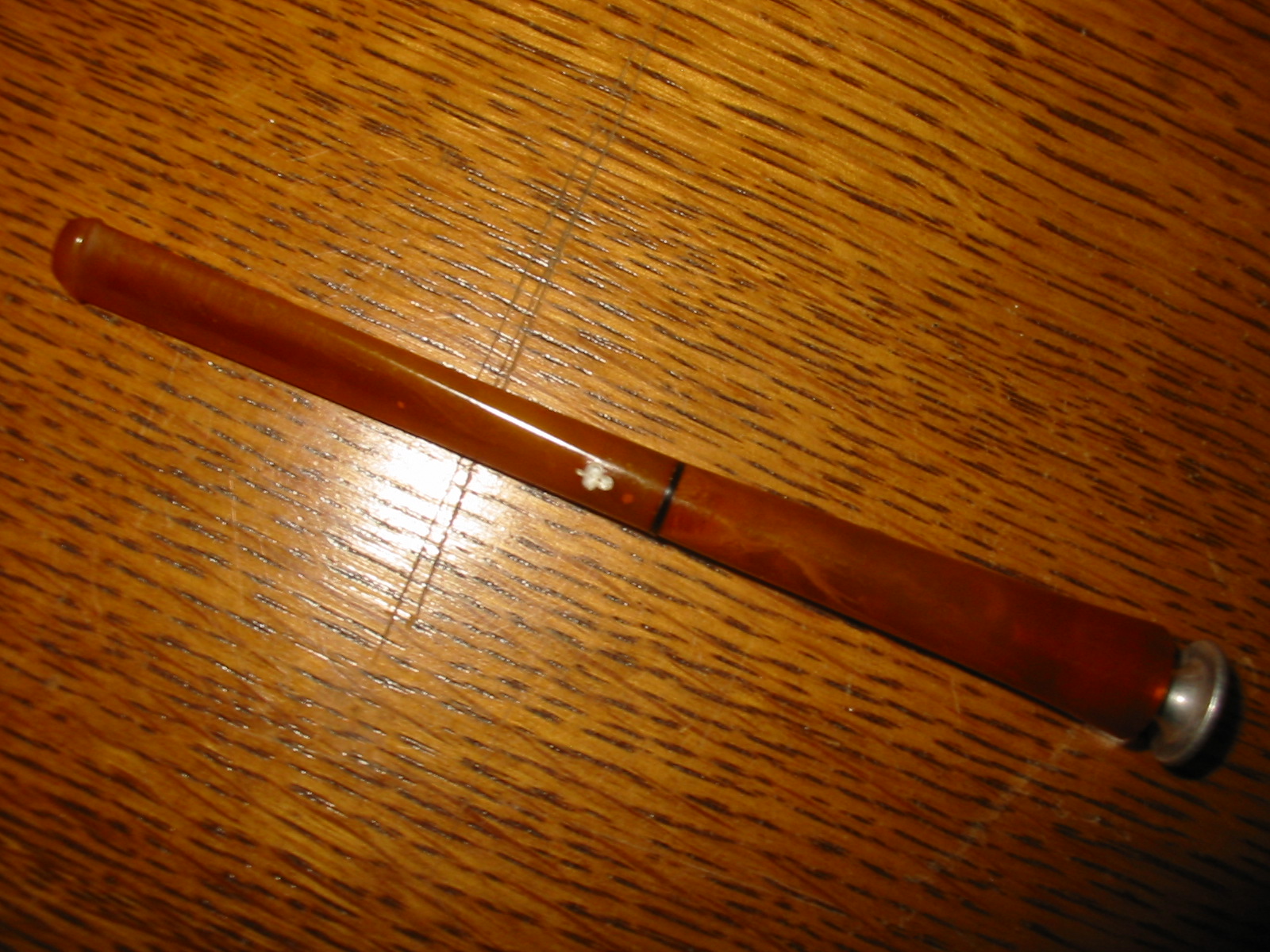
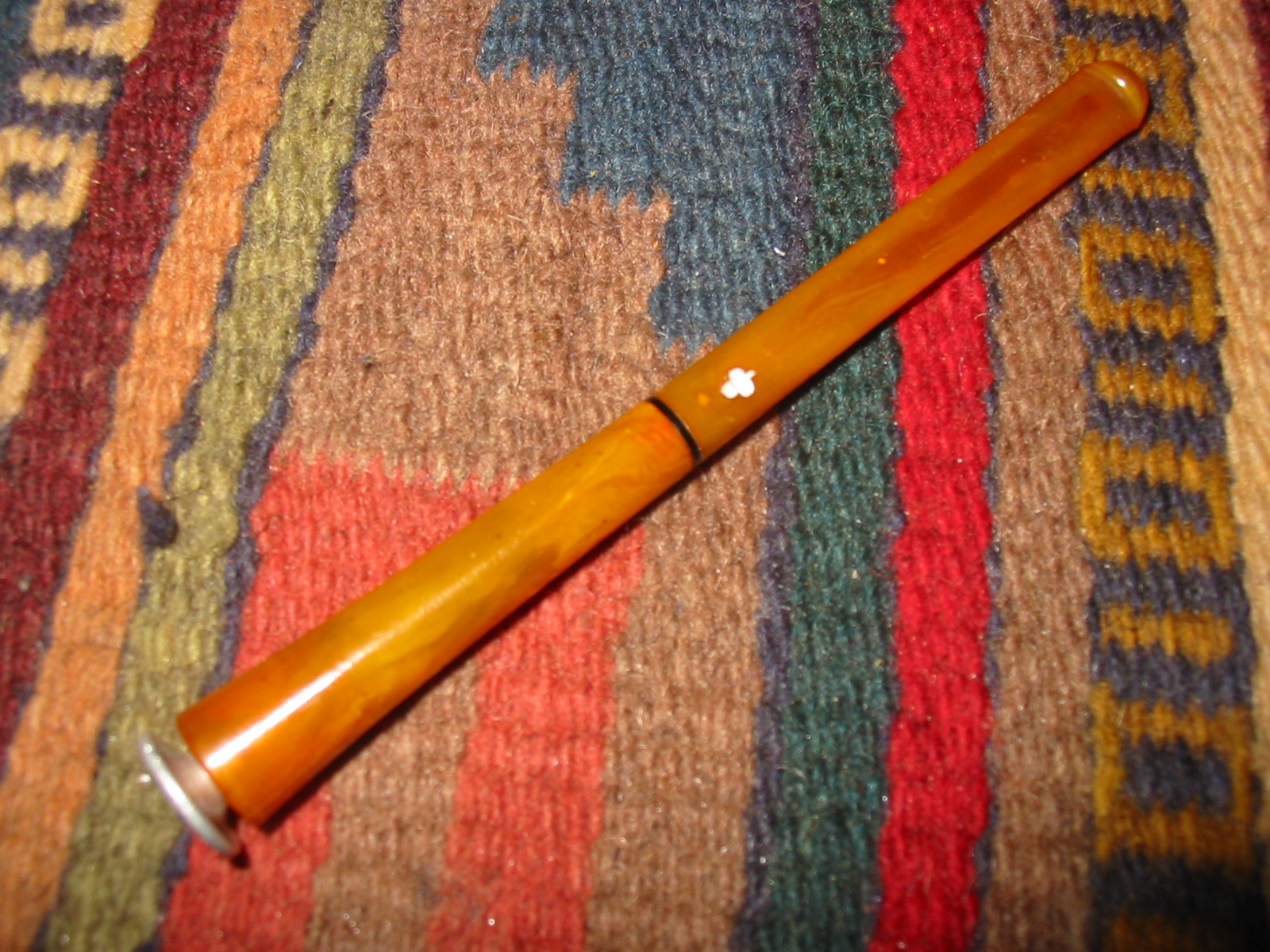
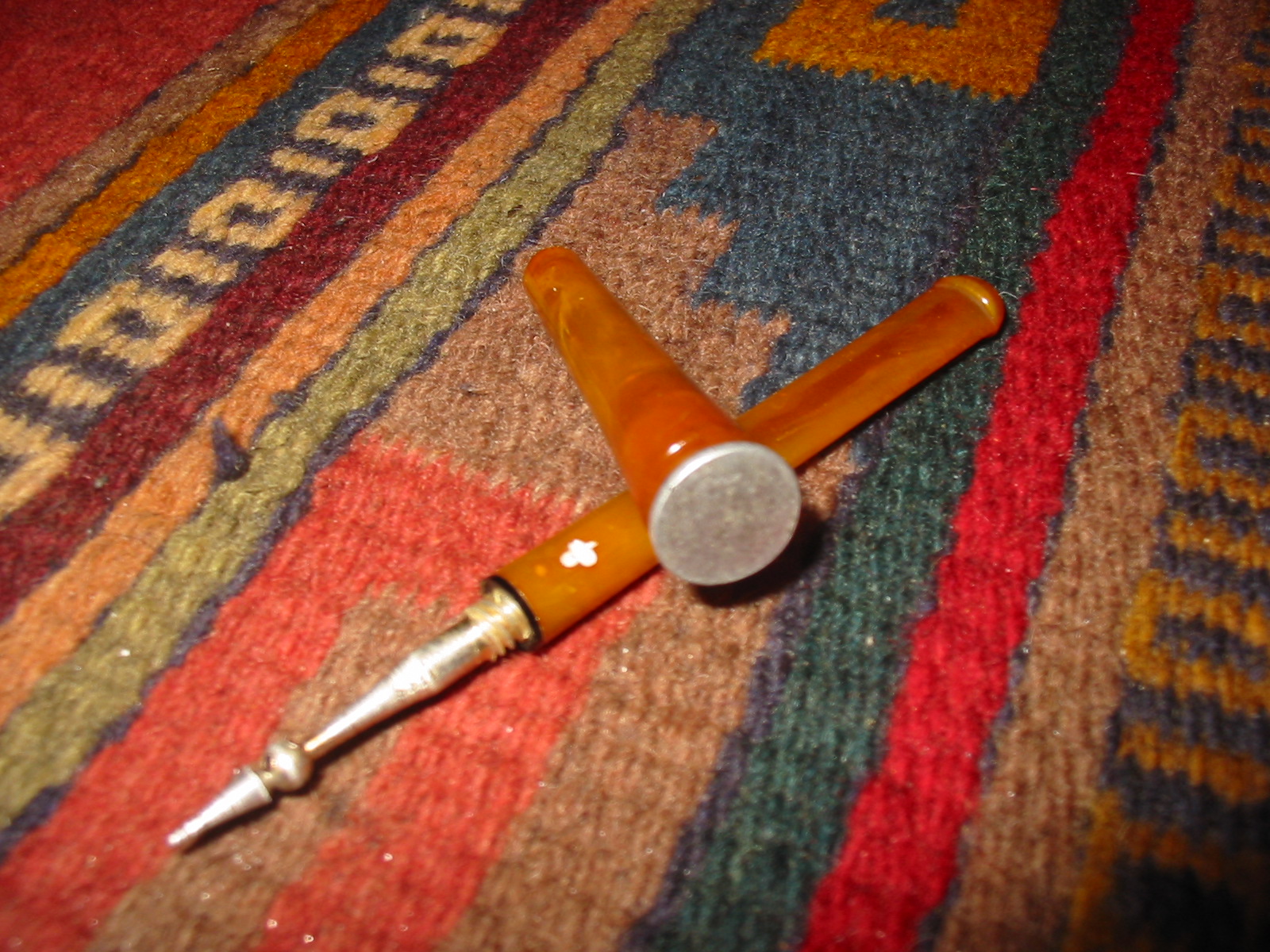
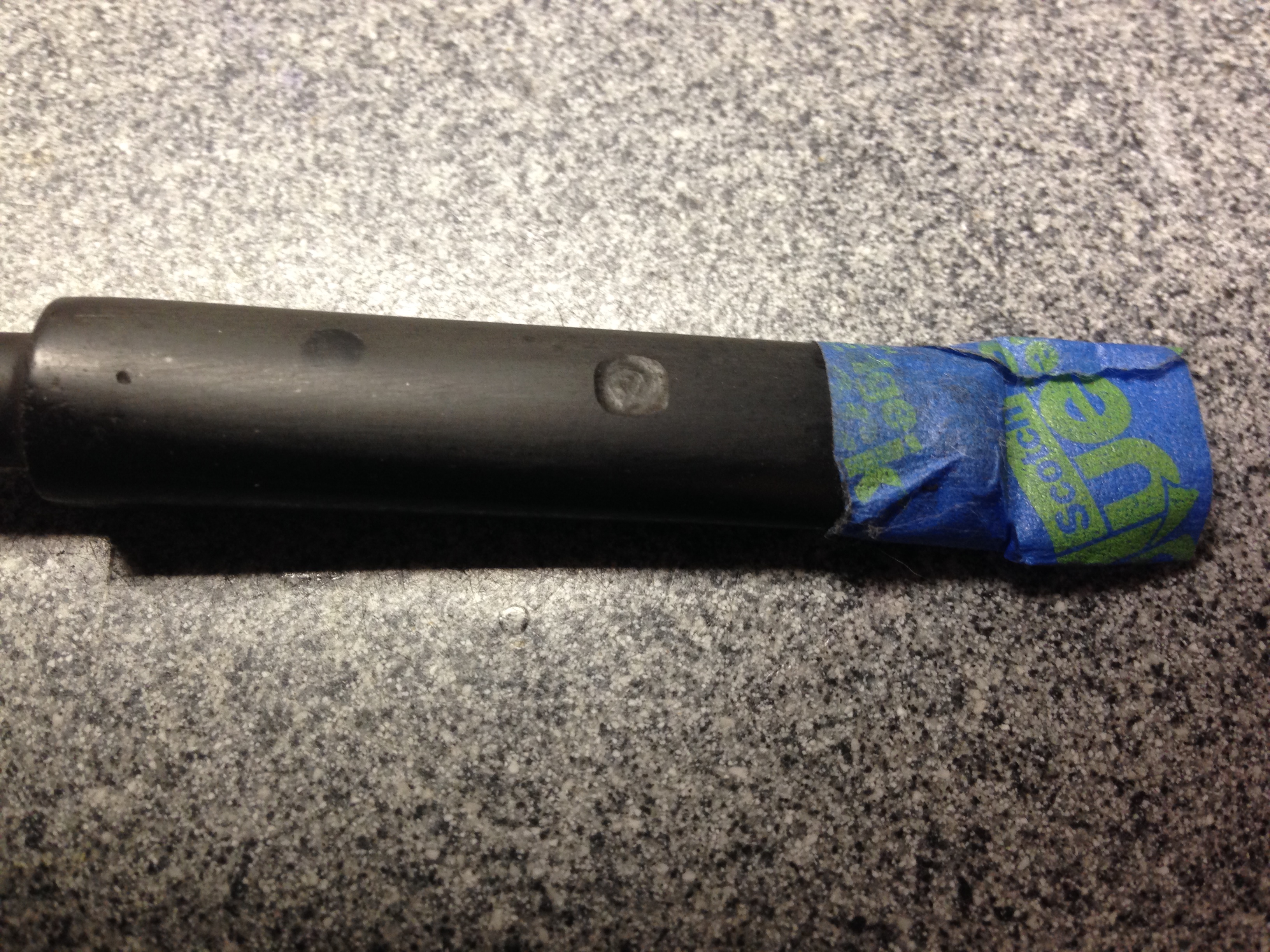
I don’t remember where I picked up this older DRINKLESS Kaywoodie Bakelite cigarette holder. I remember at the time writing to Bill Feuerbach at Kaywoodie and asked him about it to try to get a date. I remember that we exchanged several emails and pictures but never came to any conclusions. I was originally going to make a tamper out of it and I still may well do that. It is a two piece Bakelite holder. The front half is flared like a trumpet to hold the cigarette. It unscrews at the center. When the trumpet it removed there is the typical Drinkless four-hole stinger apparatus. It is different than the one in a pipe in that ball has a point on the end of it. There is a small black band on the end of the mouthpiece. It serves as a separation marker on the mouthpiece. The mouthpiece itself was clean and undamaged – no tooth marks or chatter. The Kaywoodie clover logo on top of stem was missing. The drilling/setting on the mouthpiece portion had fallen out. I am not sure if it was white or black. I have not seen one like this in all of my years of hunting for tobacciana. Approximate measurement: 4 1/4″ Length x 3/8″ Width at the end where the cigarette is inserted. The closest I can date this piece is that it was made in the 1930’s to 1940’s. It is in very good condition.
IMG_7193
I took it apart and cleaned the stinger with alcohol on a cotton pad. I sanded the stinger with a fine grit sanding pad as it was badly pitted.
IMG_7191

IMG_7203
I used white out liquid to fill the space on the stem to replace the Kaywoodie clover logo. Once it was dry I sealed it with a drop of clear superglue.
IMG_7197
I cut off approximately 1 inch of a pipe nail to insert in the end of the holder. I wanted to have it extend slightly beyond the end of the holder so that it would not melt when it came in contact with the tobacco.
IMG_7204
I had an idea that the stinger would work to loosen the dottle from a bowl when I had finished smoking the pipe. In the cigarette holder end I was thinking of inserting a cut pipe nail head and pressing it into place.
IMG_7205
Once I cut the nail head off I ground the end slightly with a Dremel and sanding drum to get a smooth fit in the shank of the holder. I pressed it into place to see if it would hold and took the photo below.
IMG_7206
I found that it was not a tight enough fit to stay in place and was concerned I would lose the head when I carried it around. I decided to put a drop of super glue on the cut off end of the nail and insert it in place. When the glue set the nail would be permanent.
IMG_7208
The final photo shows the tool with both of its parts – the poker for cleaning out the bowl and the tamper head for tamping the bowl. I think that the repurposing of this old cigarette holder went well and I have a functional tool to use in my pipe routines.
IMG_7209
Now it is time to go and give it a try. I have a bowl of a tobacco sample sent to me by Robert ready to fire up. I have the tamper in hand and now it time to see if it works! Cheers.

Resuscitating a Peterson Donegal Rocky 338 Bent Billiard


A few weeks ago one of the EBay sellers that I have bought several pipes from over the years had three Peterson bowls, sans stems listed for sale. They were in rough shape but I decided I wanted to give refurbishing them all a try. Besides one of them was a 999S and I love the 999 shape. That alone would have pushed me to make a bid on this lot. I ended up buying the threesome for more than I usually pay for pipe bowls but I figured it was worth the effort. This is the photo of the threesome from the sale listing.

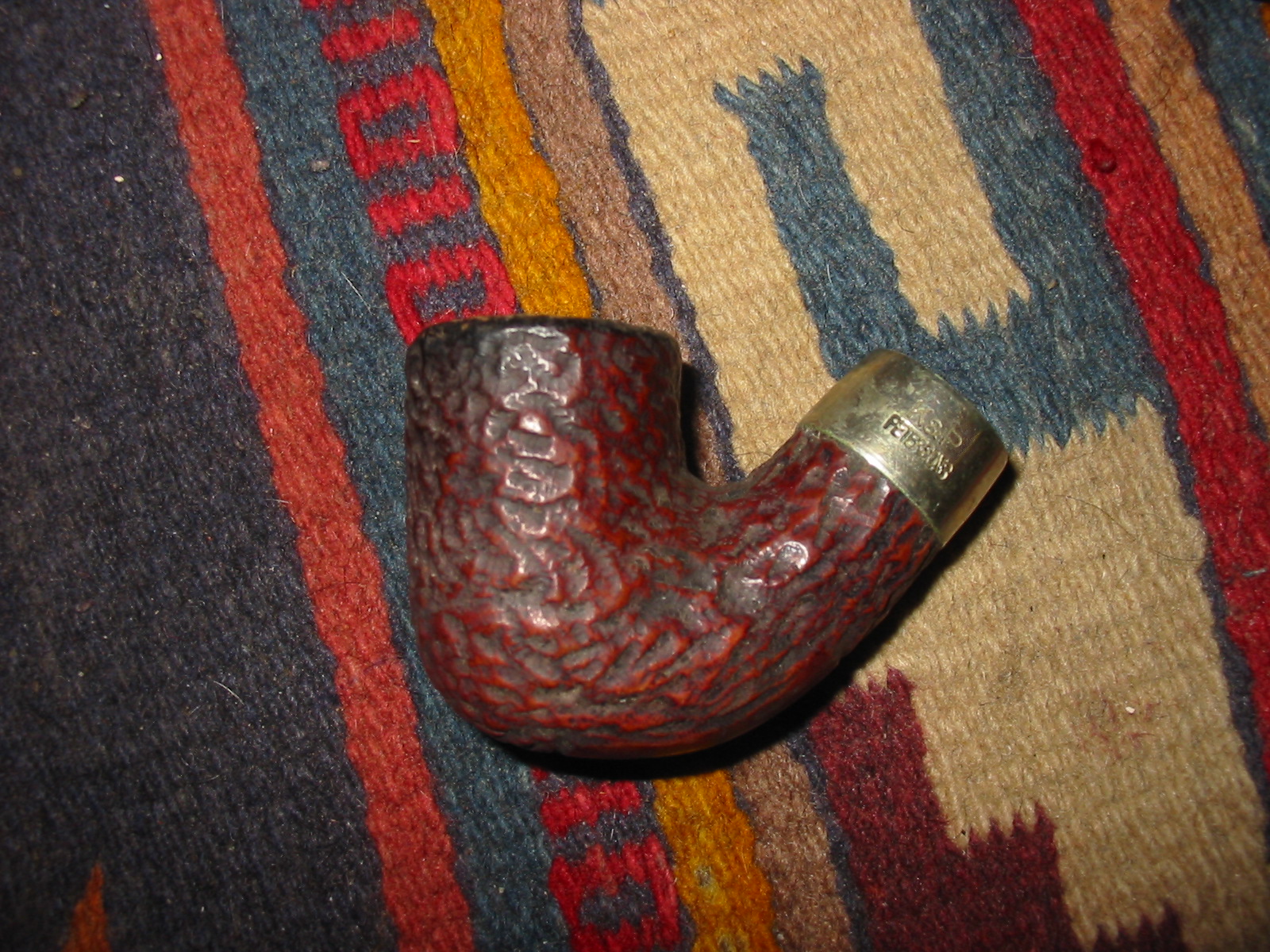
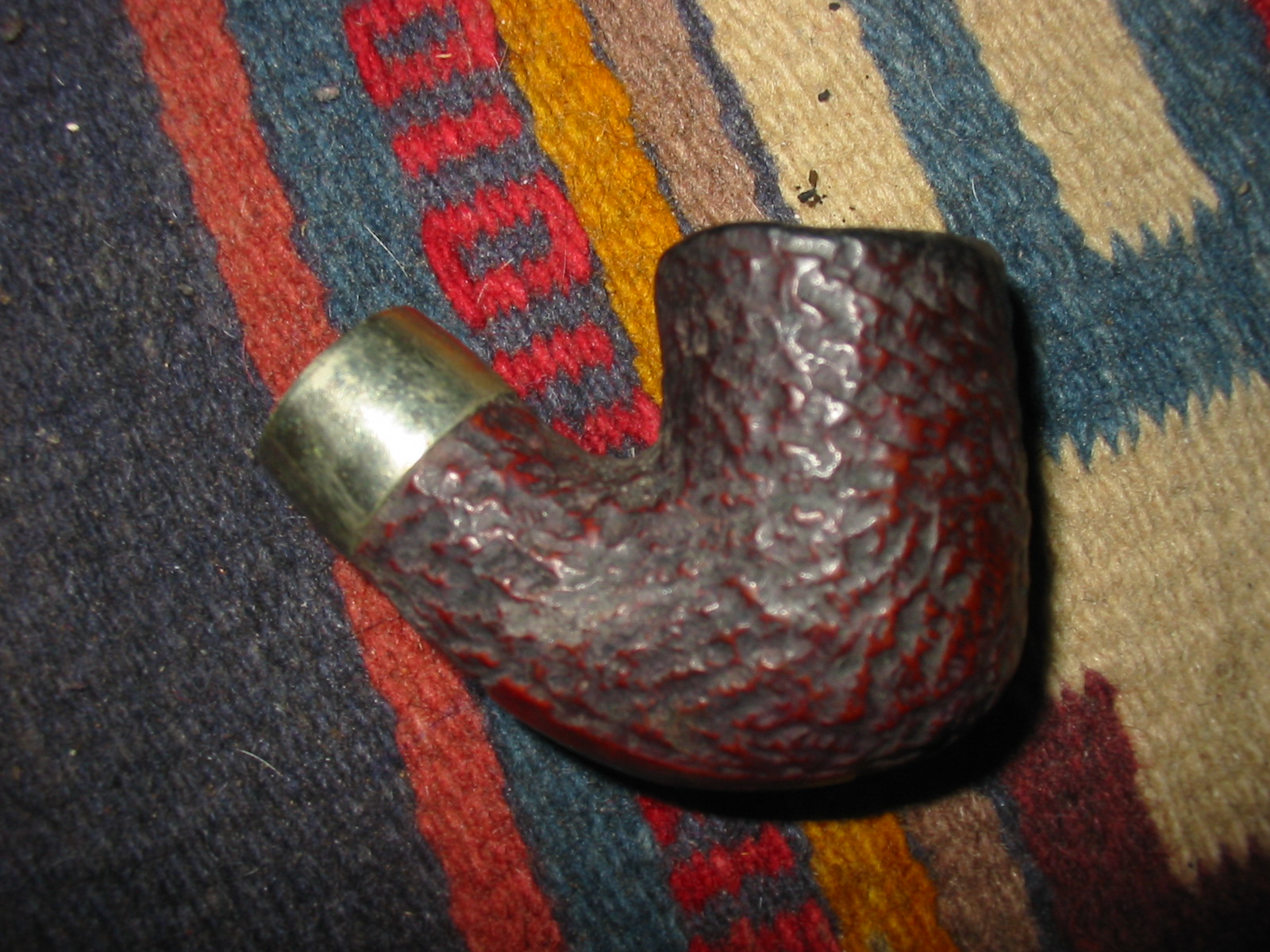
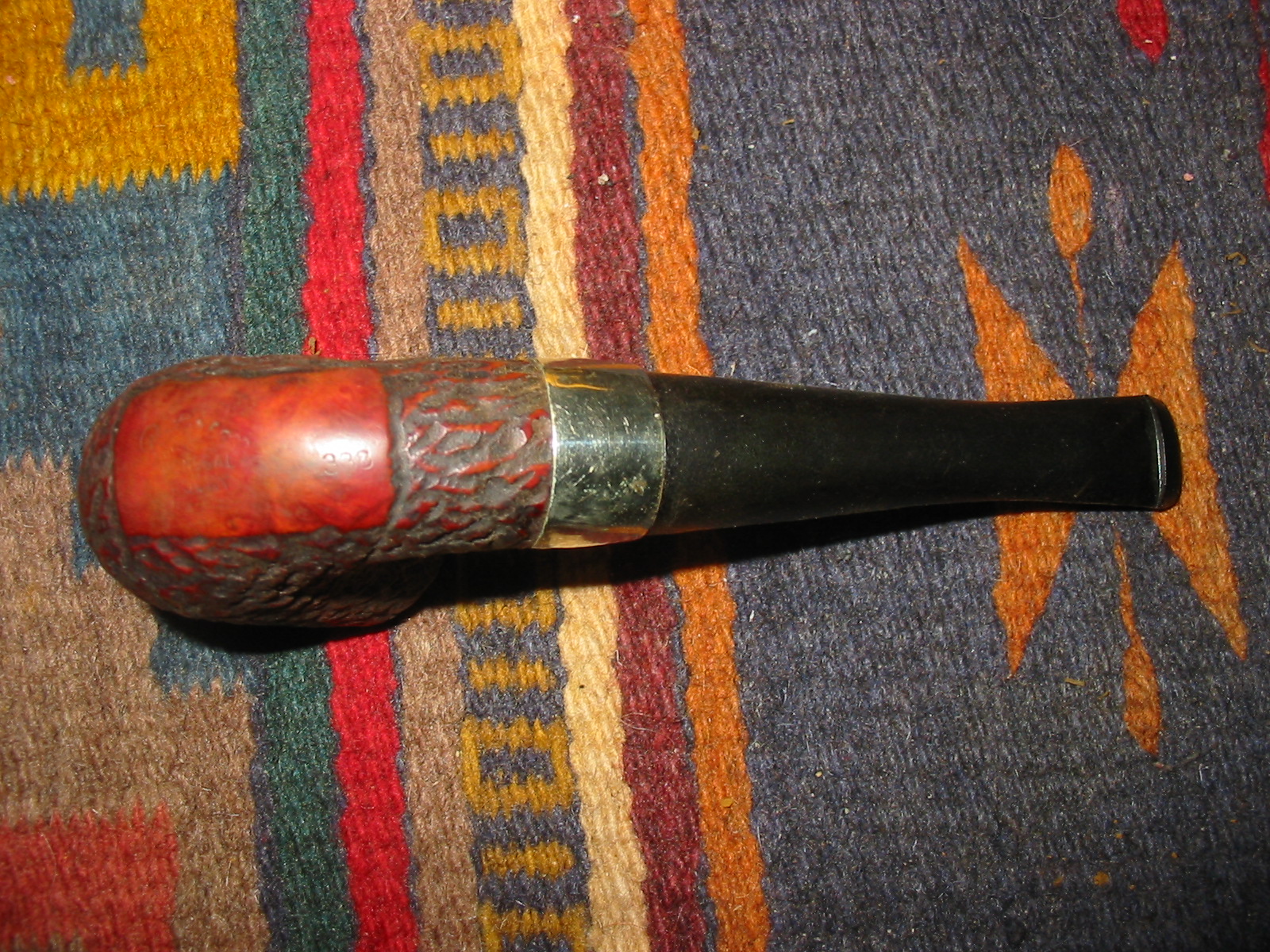
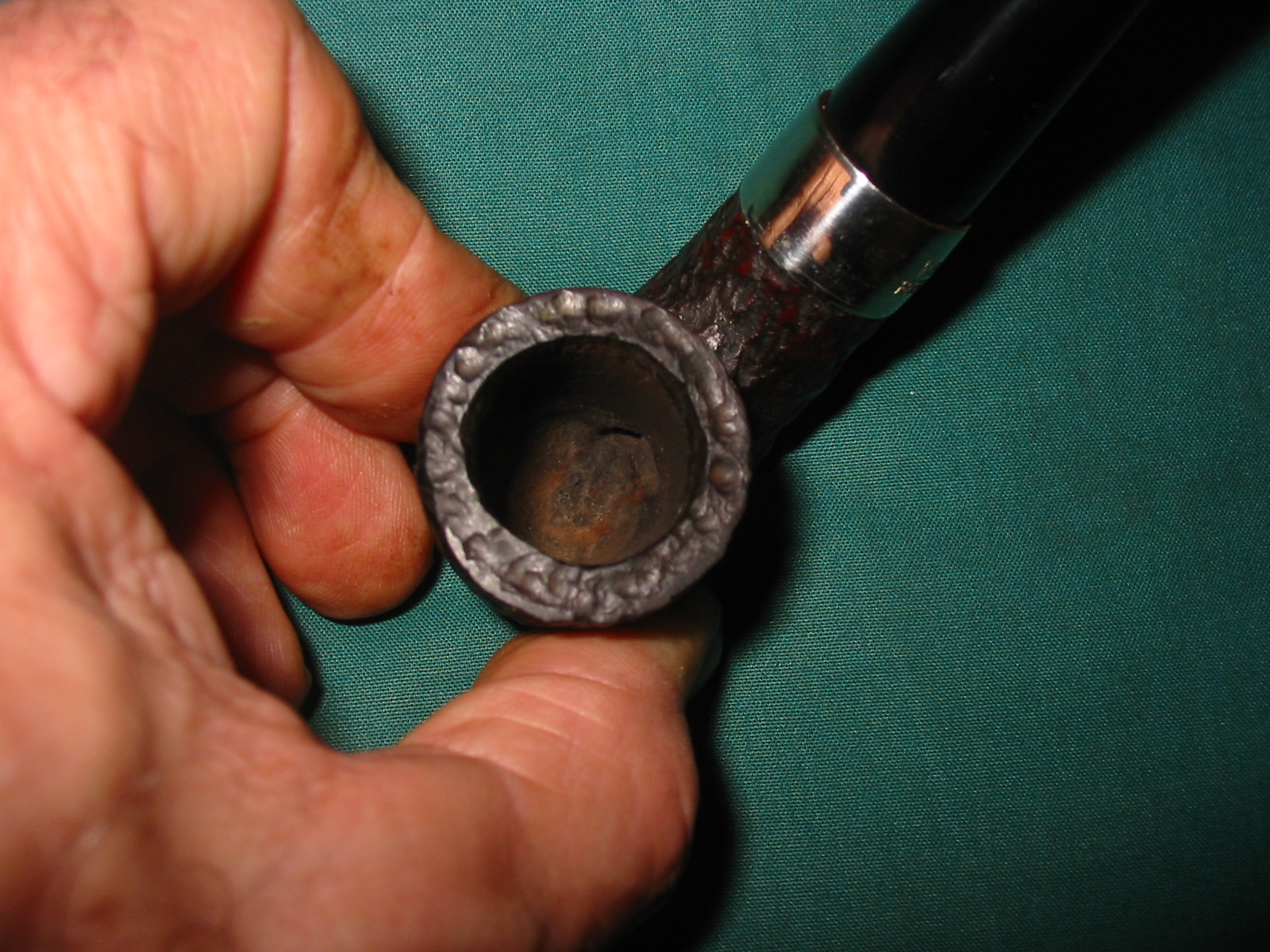
The first of the three Peterson bowls is on the worktable at the moment. The finish was very rough on the pipe. It had built up grime in all of the grooves of the rustication. The inside of the bowl was caked almost to the top of the rim. The shank was one of the foulest things I think I have seen before. It was caked with oily tars from just inside the edge of the mortise to the bottom of the mortise. The rim was badly damaged with the front edge burned down lower than the rest. The rim was ragged looking and uneven all the way around. It looked to be solid though underneath the damage. The stamping on the underside of the shank said Petersons Donegal Rocky with the shape number 338. All the stamping is quite faint but still readable with a lens.
IMG_7098

IMG_7099
I cleaned and reamed the bowl. It is funny how short and easy that sounds but in this case that was not true. The cake in the bowl was like concrete and had totally closed off the bottom half of the bowl. The remaining top half had a slight slice to the airway but that effort was useless as the shank was completely clogged and no air could go through. I reamed as much of the bowl as I could with a PipNet reamer, not even getting as low as the airway. This stuff was very hard. I cleaned the shank with alcohol and cotton swabs. I tried to push a pipe cleaner through the clogged airway in the shank and was unable to get it to through. I decided to throw the bowl in an alcohol bath to soak for several hours to loosen things up.
IMG_7100

IMG_7111
When I took it out of the bath the alcohol soak had done its work. I was able to ream the rest of the way to the bottom of the bowl and completely remove the cake. I was able to push a wire through the airway and then cleaned out the airway and shank with cotton swabs and some assorted dental tools (thanks Joyal).
IMG_7112

IMG_7108
I scrubbed the rusticated finish of the bowl with Murphy’s Oil Soap and a tooth brush. I used a soft brass bristle brush to work on the rim and clean up the loose build up. Once I had scrubbed it I rinsed it with warm water. I dried it off and still had to do some more scrubbing. I cleaned the inside of the bowl and shank with the dental tools and cotton swabs and alcohol.
IMG_7125

IMG_7127
The rim was so badly damaged and uneven with the burned area that I topped it using the topping board and 220 grit sandpaper until it was flat.
IMG_7121

IMG_7123

IMG_7124
I went through my stem can and found a three inch long stem that was approximately the same shape and length as the original stem. I turned the tenon with the PIMO Tenon Turning tool and removed the castings on the sides and the end of the stem. I further shaped it with the Dremel and sanding drum.
IMG_7128

IMG_7129

IMG_7131

IMG_7132

IMG_7133
I wanted the top of the bowl to have the same rustication that it originally had before all the rim damage. It had a pattern that was similar to the rustication on the bowl itself. I looked on line to find photos of the rim of a Donegal Rocky that would be a pattern for me to copy. I put a dental bur that Joyal has given me on a Dremel tool and set the speed to a slow speed and used it to rusticate the rim to match the pattern in the photo of the bowl.
IMG_7134
I wiped the bowl down with a cotton pad and alcohol to clean off the dust from the rustication and then stained the whole bowl with a dark brown aniline stain. In the photos below the rim is obviously much lighter in colour than the rest of the bowl so it took five coats of stain before it matched the bowl. I applied the stain and flamed it with a lighter to set the stain repeatedly until the coverage was correct.
IMG_7135

IMG_7136
The brown was very dark and the original contrast look on the Donegal Rocky was not evident. I wiped the bowl down with acetone on cotton pads to lighten it and bring back some contrast to the rusticated finish. In the photos below the properly darkened rim is visible.
IMG_7137

IMG_7138

IMG_7139
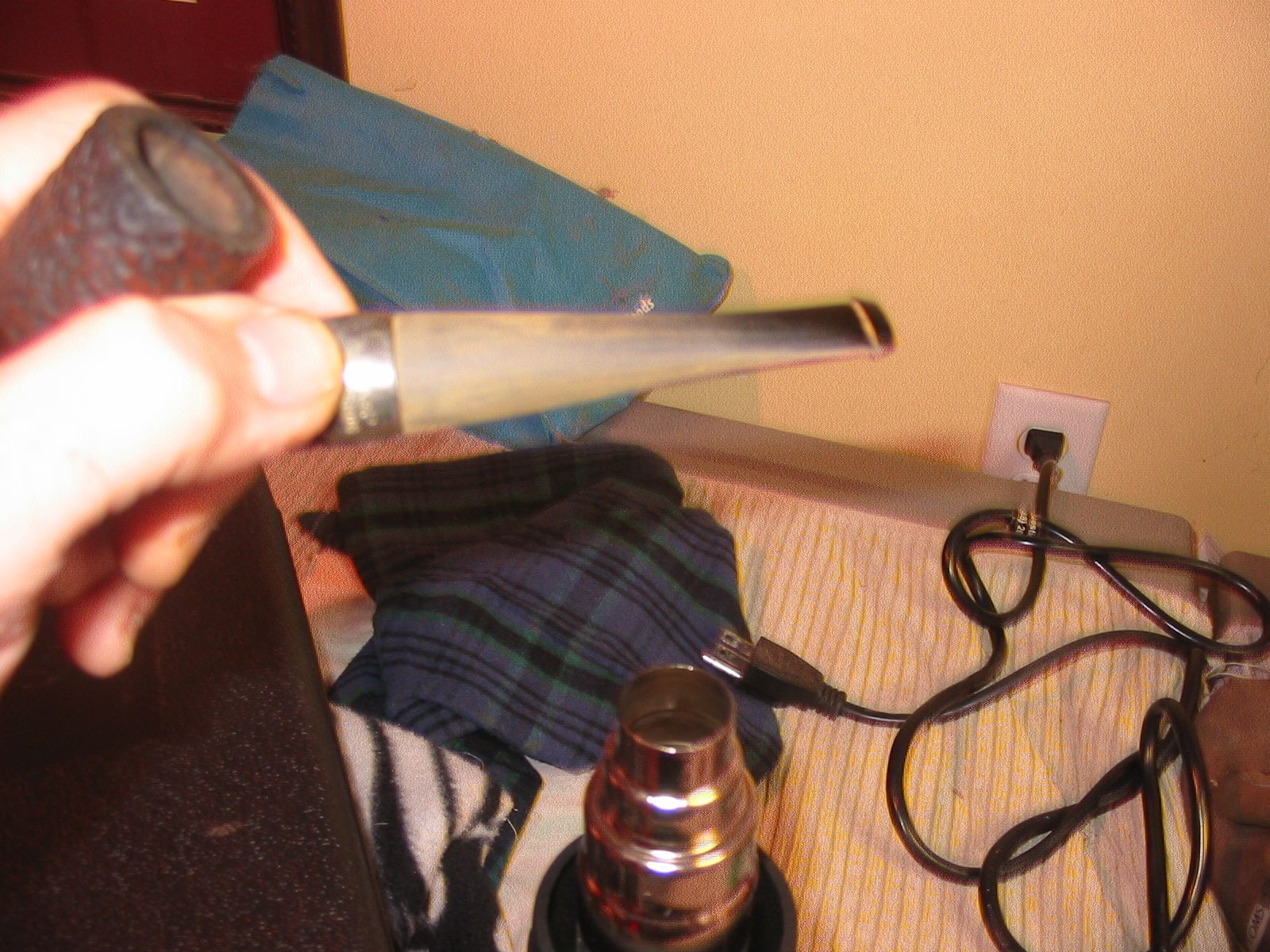
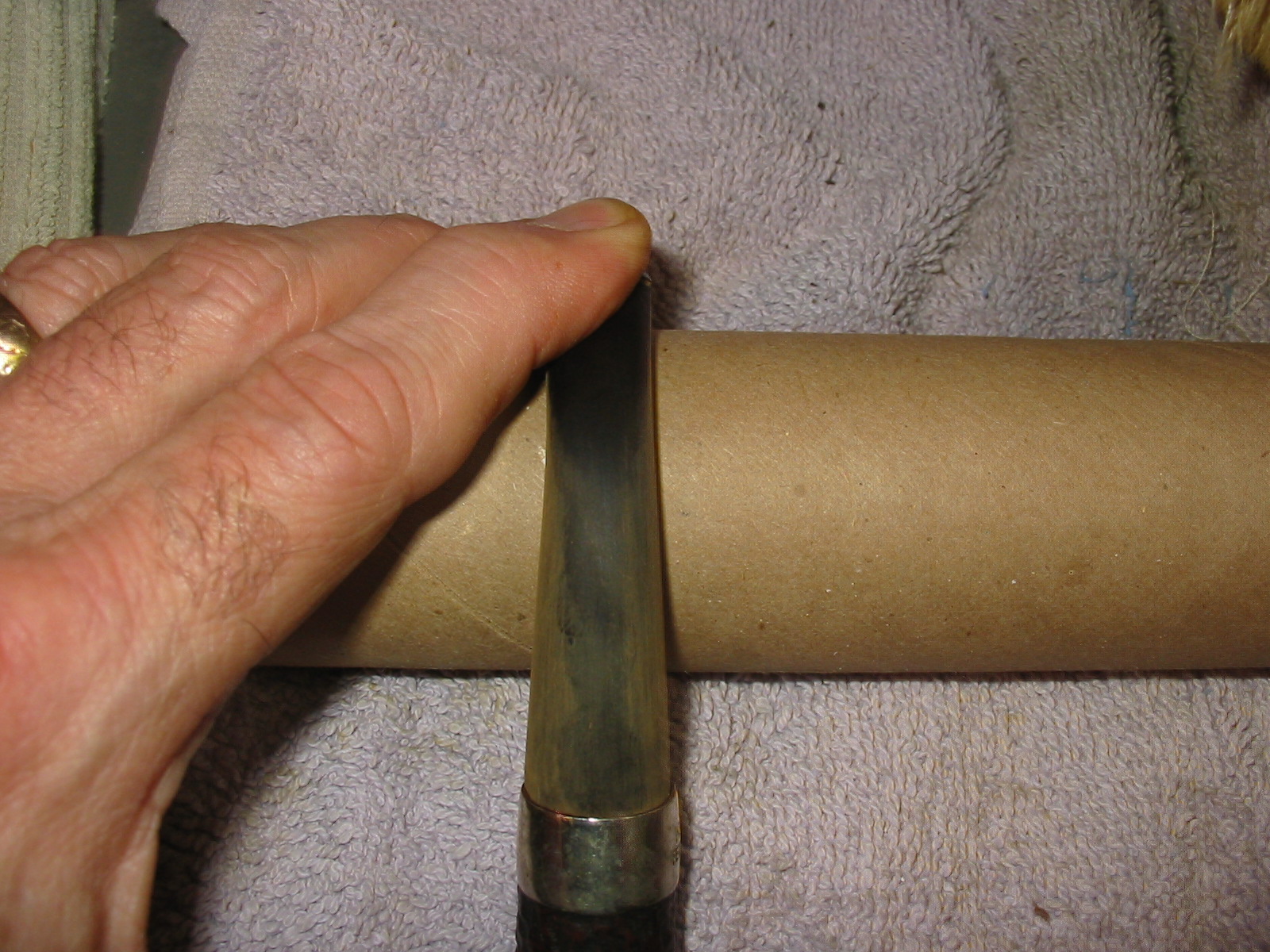
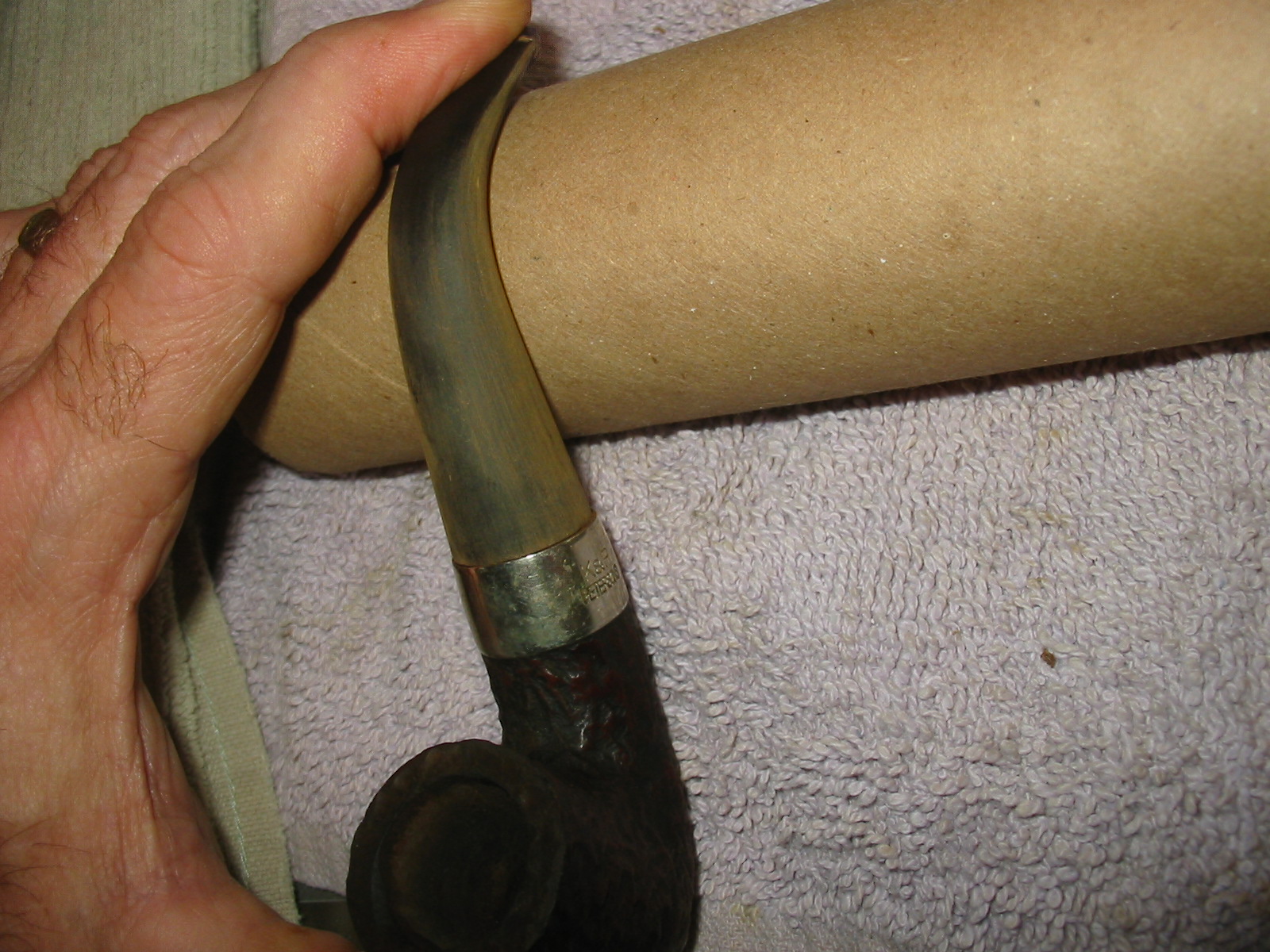
I lightly buffed the bowl and rim with White Diamond and then applied some Halcyon II wax on both and then buffed with a soft flannel buff. I knew that I would have to wax it again once I had finished but I always put a coat of wax on the bowl to protect the finish when I give it a more thorough clean. I sanded the stem with 220 grit sandpaper to smooth out the casting marks and the Dremel marks. Once I had the initial sanding finished I decided to bend the stem. I heated it over a heat gun until it was pliable and bent it over and old rolling pin. I used a photo of 338 I found on the net as a template for the bend in the stem. I made the photo life sized and laid the pipe against the computer screen to match the bend. Once I had the bend correct the rest of the stem work could begin.
IMG_7140

IMG_7141

IMG_7142

IMG_7143

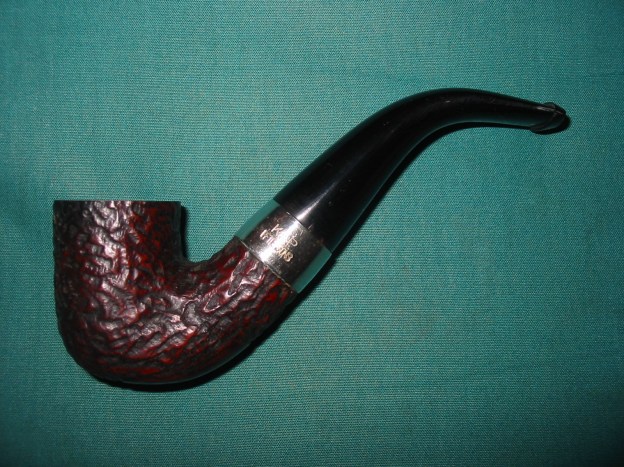
0003284_sterling-silver-338_430

IMG_7144

IMG_7145

IMG_7146

IMG_7147
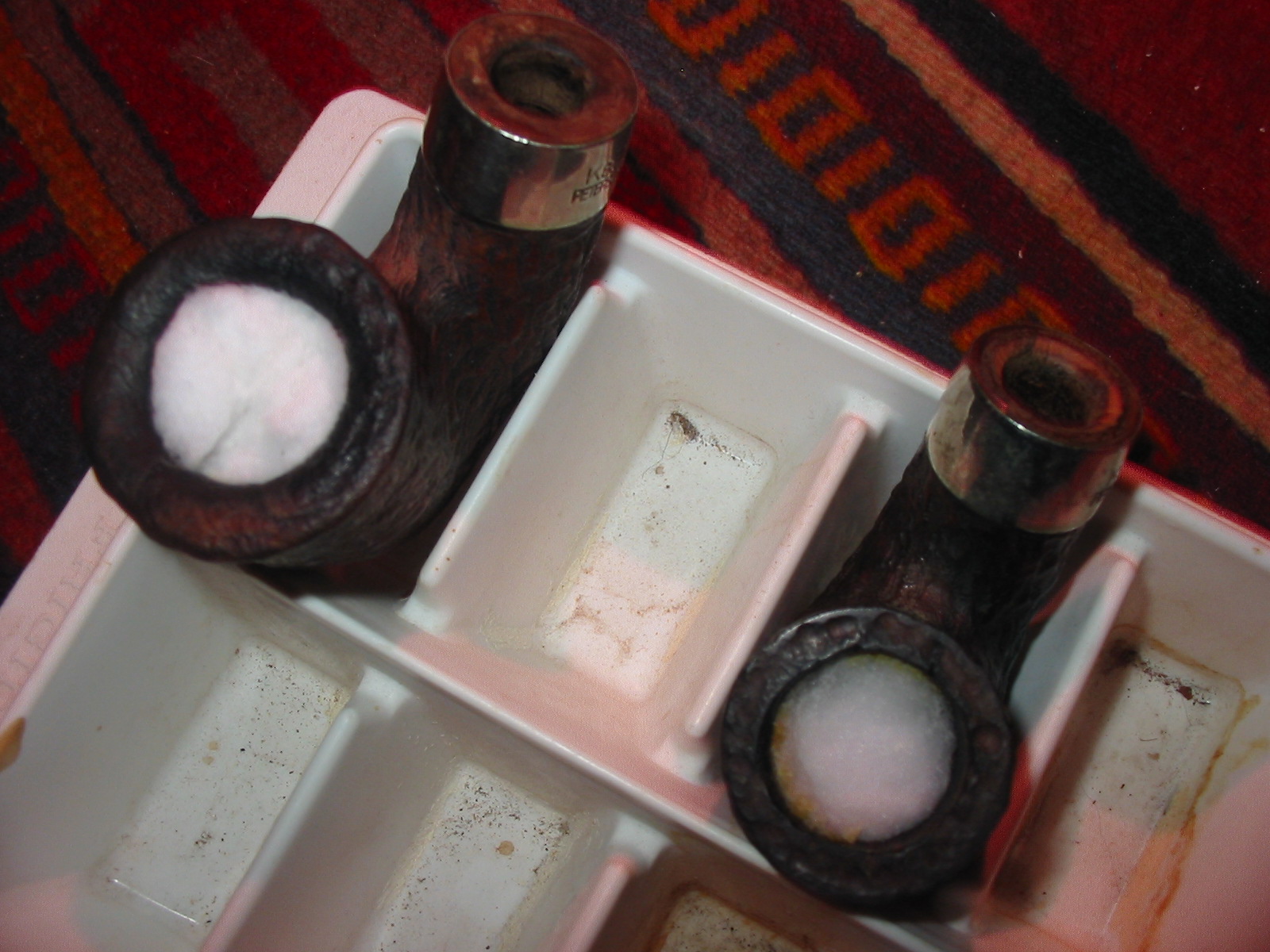
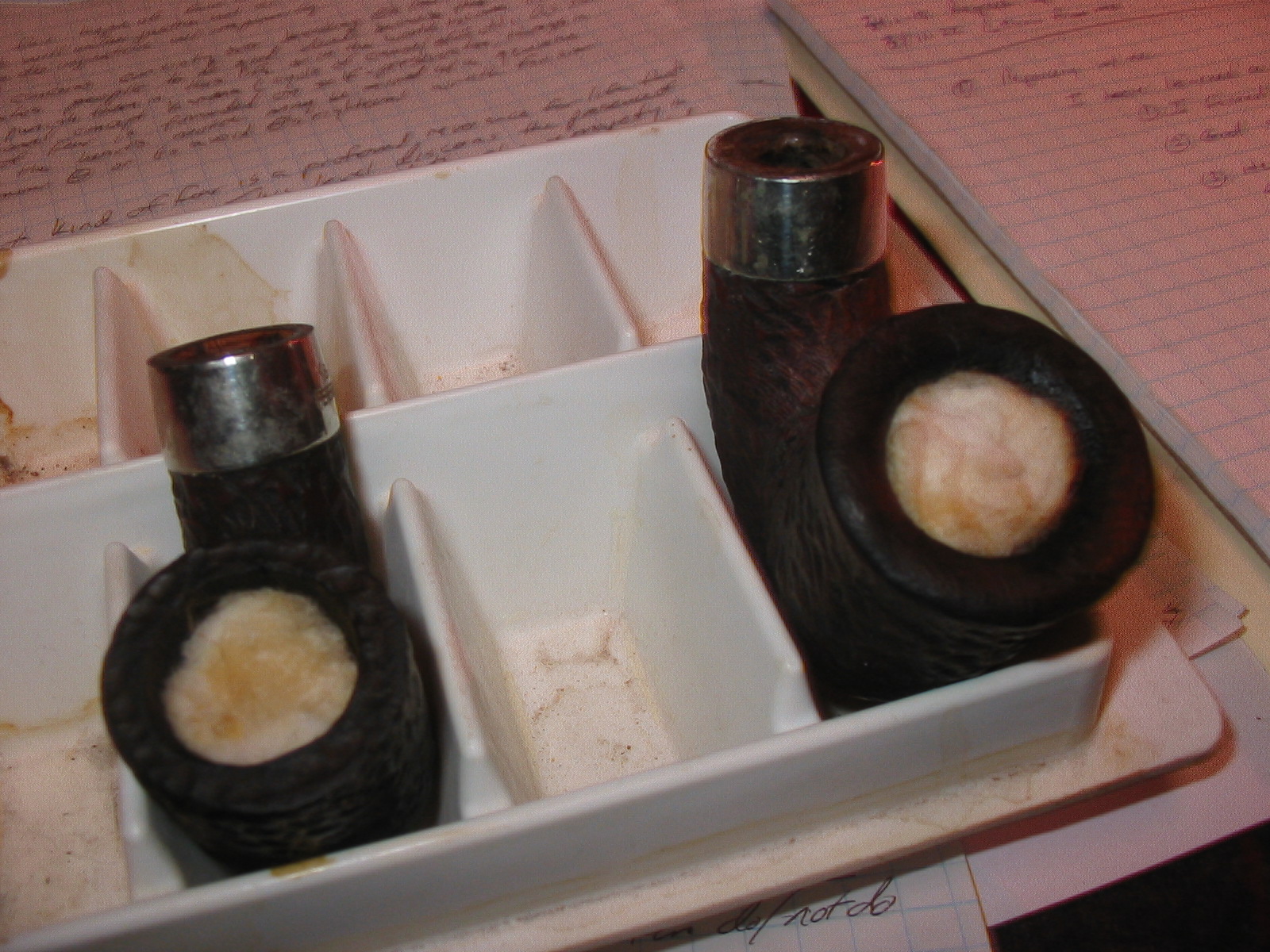
I removed the stem from the bowl, stuffed cotton bolls in the bowl of the pipe and used an ear syringe to fill the bowl with isopropyl alcohol. I set the bowl in an old ice cube tray that keeps the bowl upright. I set the tray aside to let the alcohol sweeten the pipe and draw out the oils in the bowl and shank.
IMG_7149
Four hours later the alcohol had begun to pull out the tars and oils into the cotton.
IMG_7152
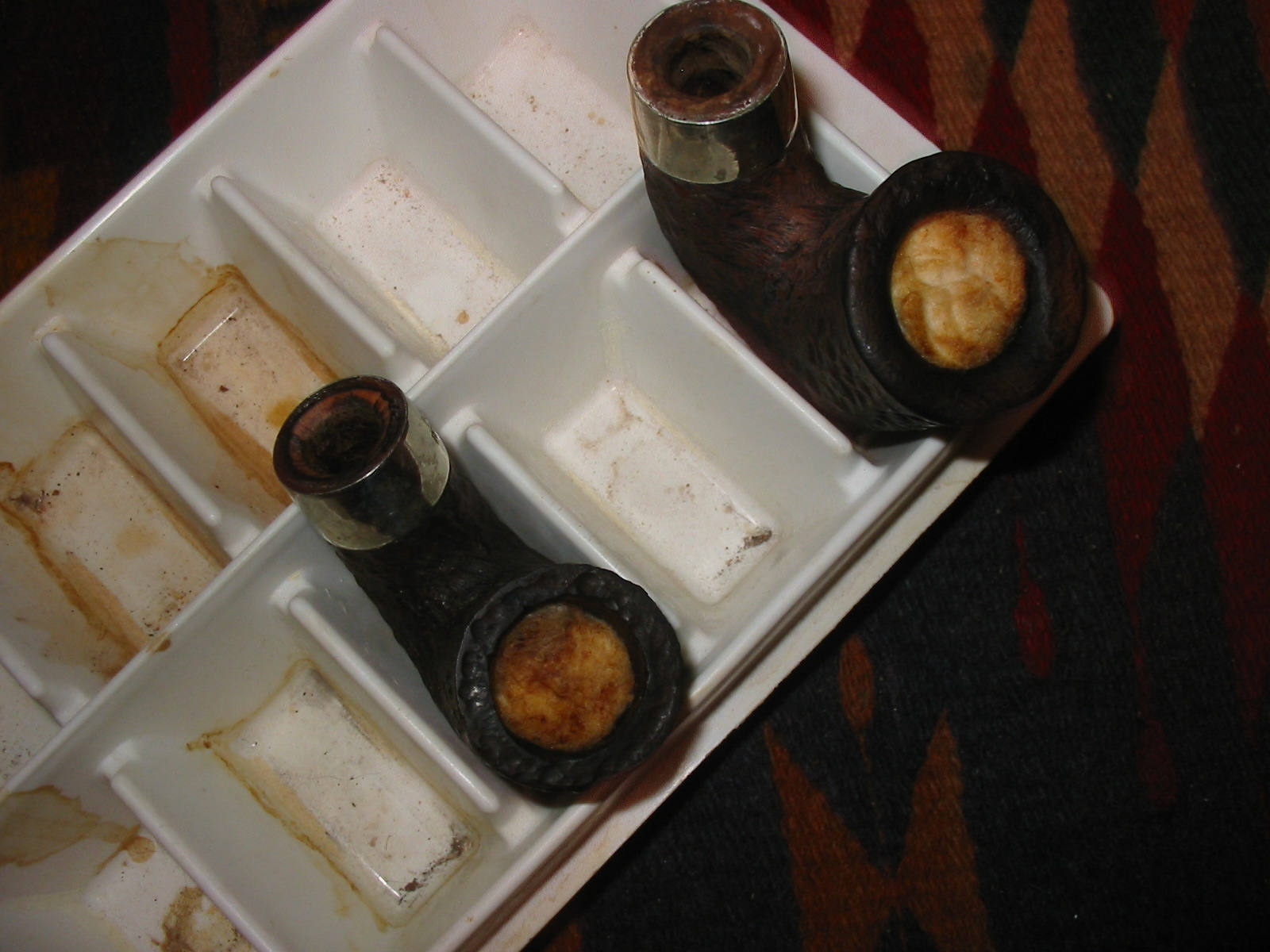
Twelve hours from the starting time, the cotton was a dark brown and most of the alcohol had evaporated. I pulled the cotton out of the bowls and wiped them dry with a cotton swab soaked in clean alcohol and they came out clean other than a little bit of the detritus that had collected in the bottom of the bowl. I swabbed out the shank and airway as well with pipe cleaners and cotton swabs dipped in alcohol and the shank was clean. The pipe smelled sweet and ready to smoke.
IMG_7153
I turned my attention to the stem and sanded it with a medium and a fine grit sanding sponge. It removed the majority of scratches from the surface of the stem left behind by the 220 grit sandpaper (I believe these sponges are equivalent to 400 and 600 grit wet dry sandpaper).
IMG_7154

IMG_7155
The rustication that I did on the top of the bowl rim is very clear in the next photo.
IMG_7156

IMG_7157
I sanded the stem with micromesh sanding pads – wet sanding with 1500-2400 grit pads and dry sanding with 3200-12,000 grit pads. Between each set of three grits I wiped the stem down with Obsidian Oil and let it soak into the vulcanite.
IMG_7160

IMG_7161

IMG_7162
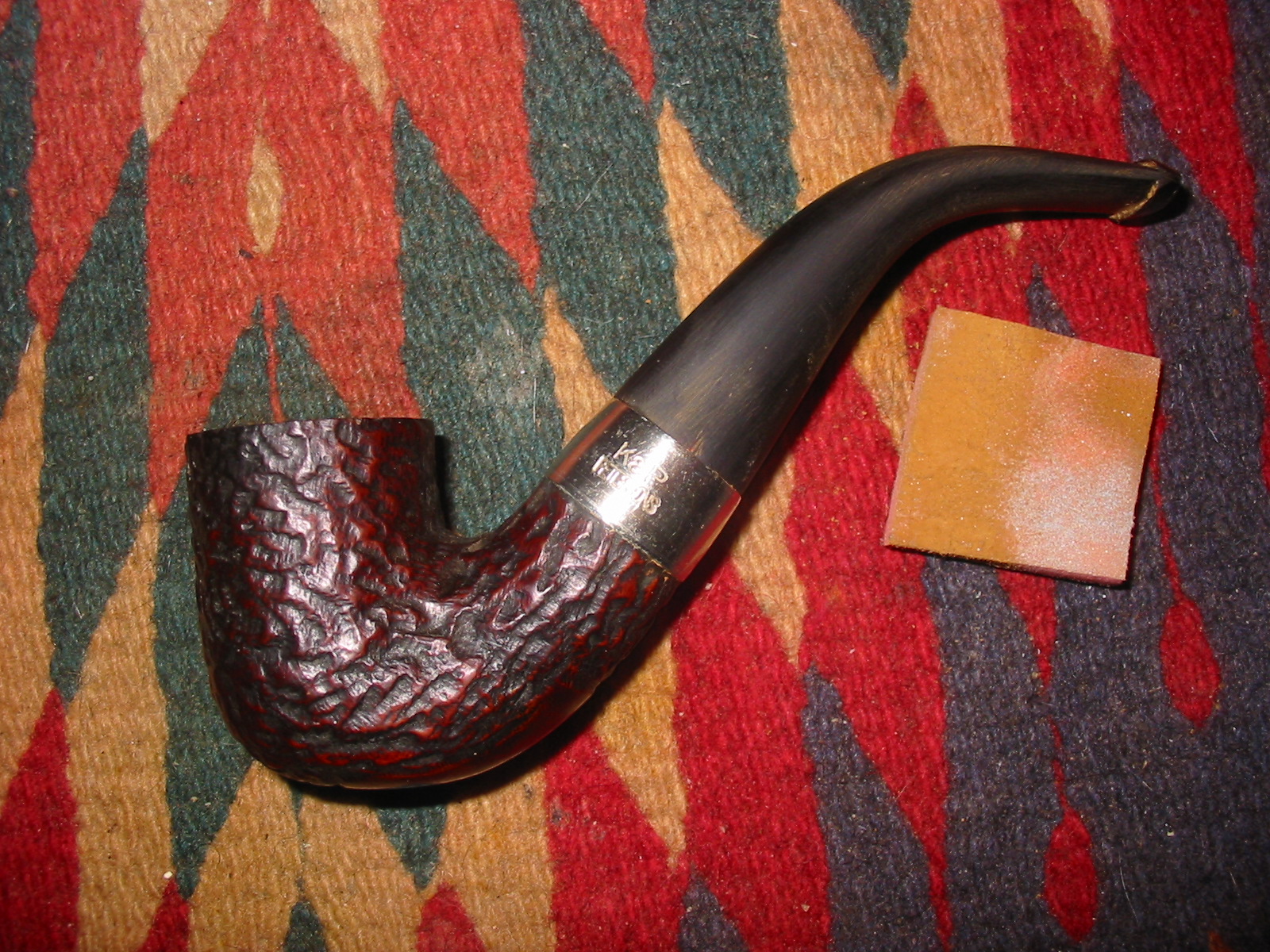
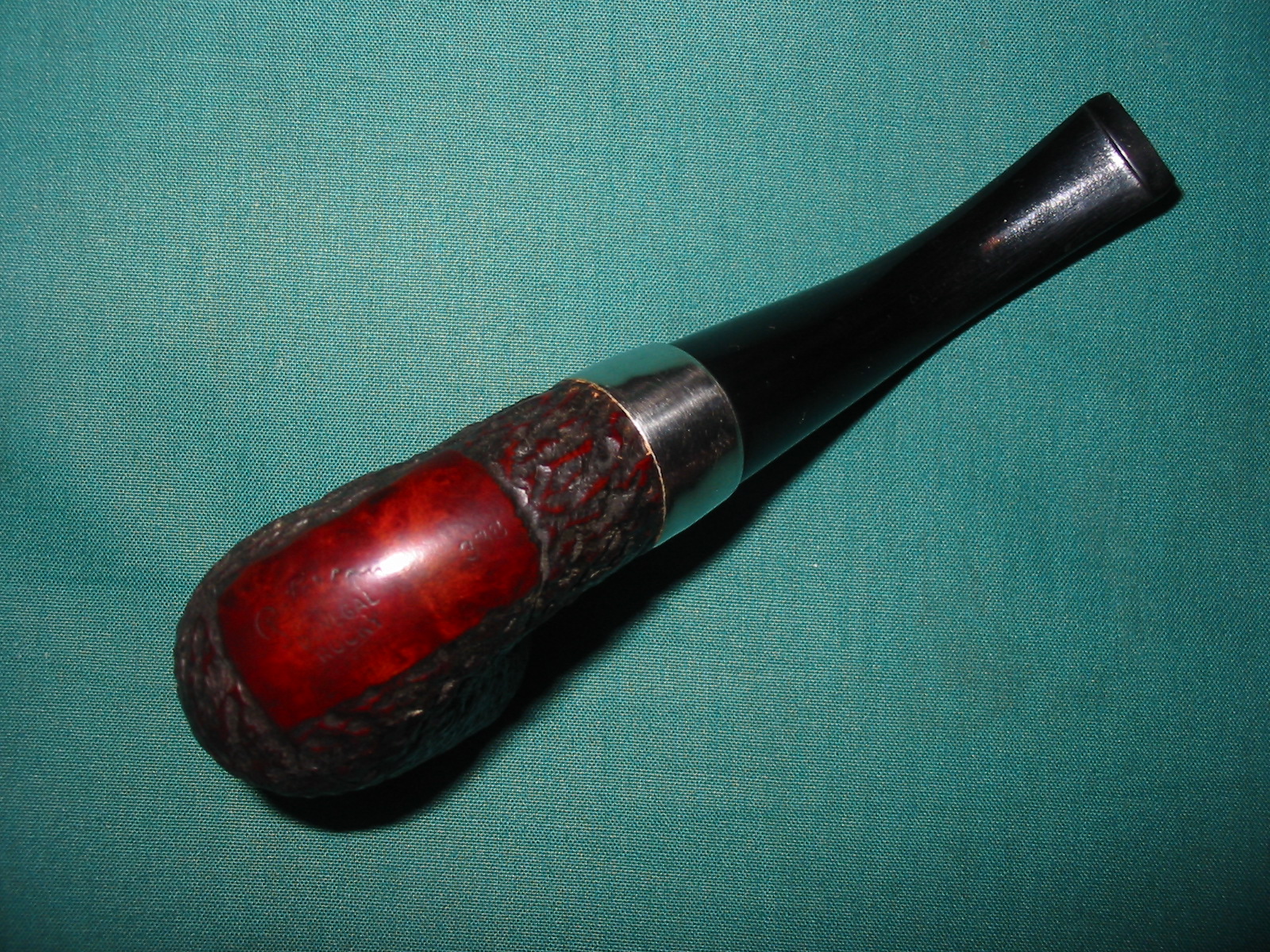
When I had finished sanding with the 12,000 grit pad I rubbed it down with a final coat of Obsidian Oil and when it had dried buffed the stem with White Diamond and a Blue Plastic buffing compound. I then gave the stem multiple coats of carnauba wax, buffing with a soft flannel buff between coats. I waxed the bowl with Halcyon II wax and hand buffed it with a soft bristle shoe brush and a cotton buffing cloth. I used the 6000, 8000 and 12,000 grit micromesh pads to polish the nickel band and then gave it a buff with a silver polishing cloth. This old Peterson 338, that must have been an incredible smoke to have been smoked as hard as it was, is now ready to enter the next era of its life and provide the same kind of service to me. I look forward to smoking it later in the week once I am sure the alcohol in the bowl and shank has all evaporated. I have to tell you, I am looking forward to having a bowl in this old timer.
IMG_7163

IMG_7164

IMG_7165

IMG_7167

IMG_7166

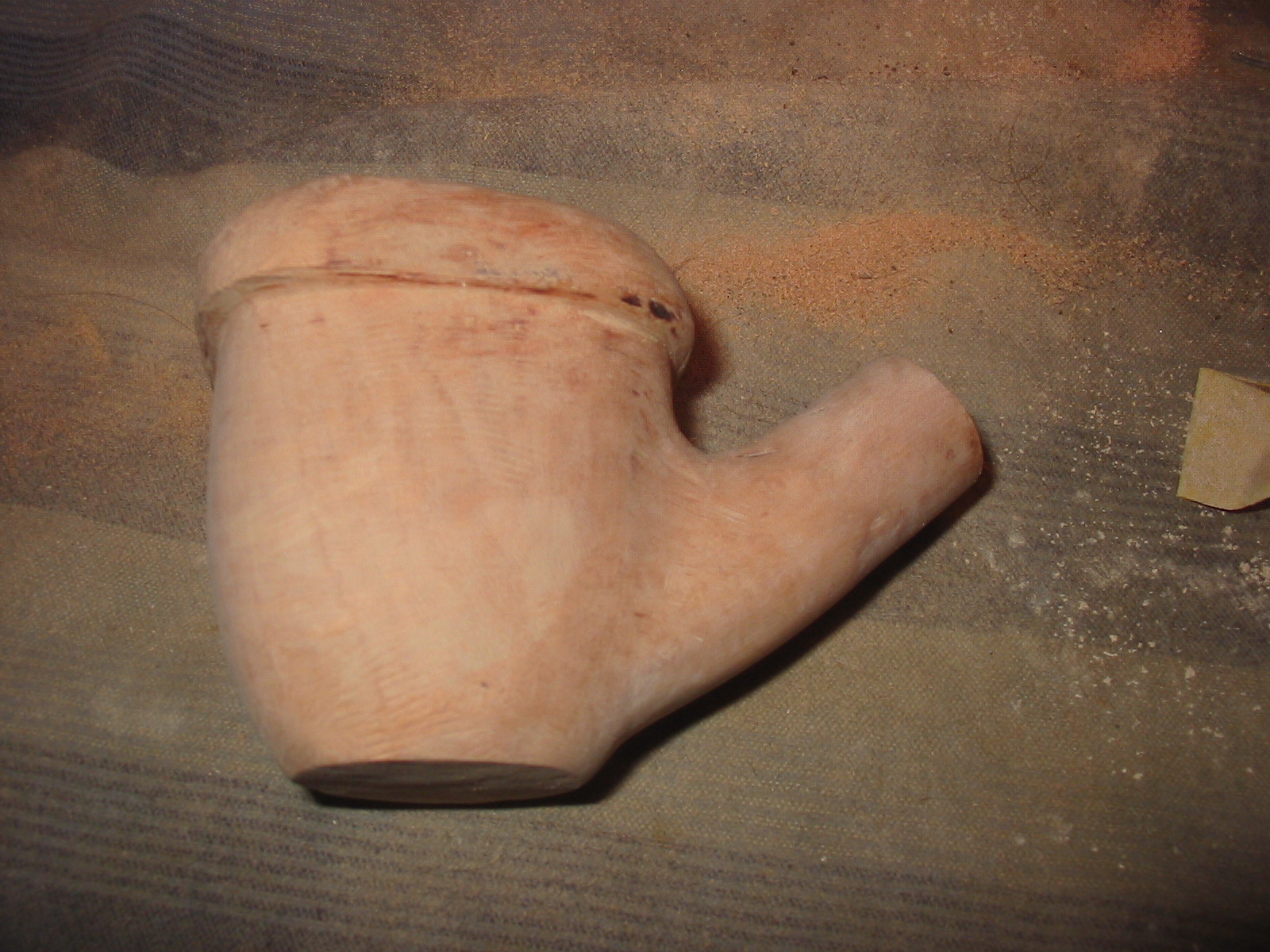
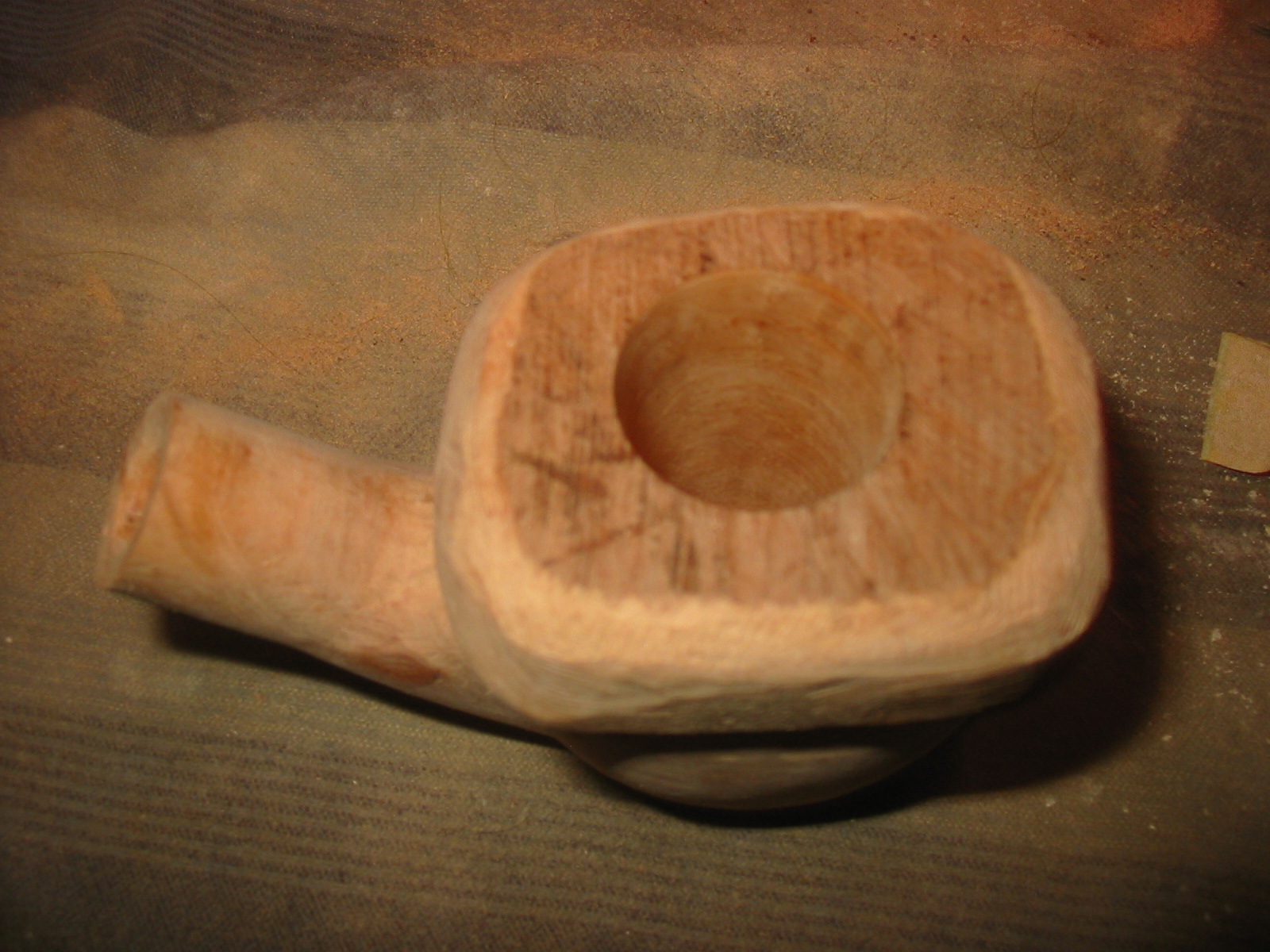
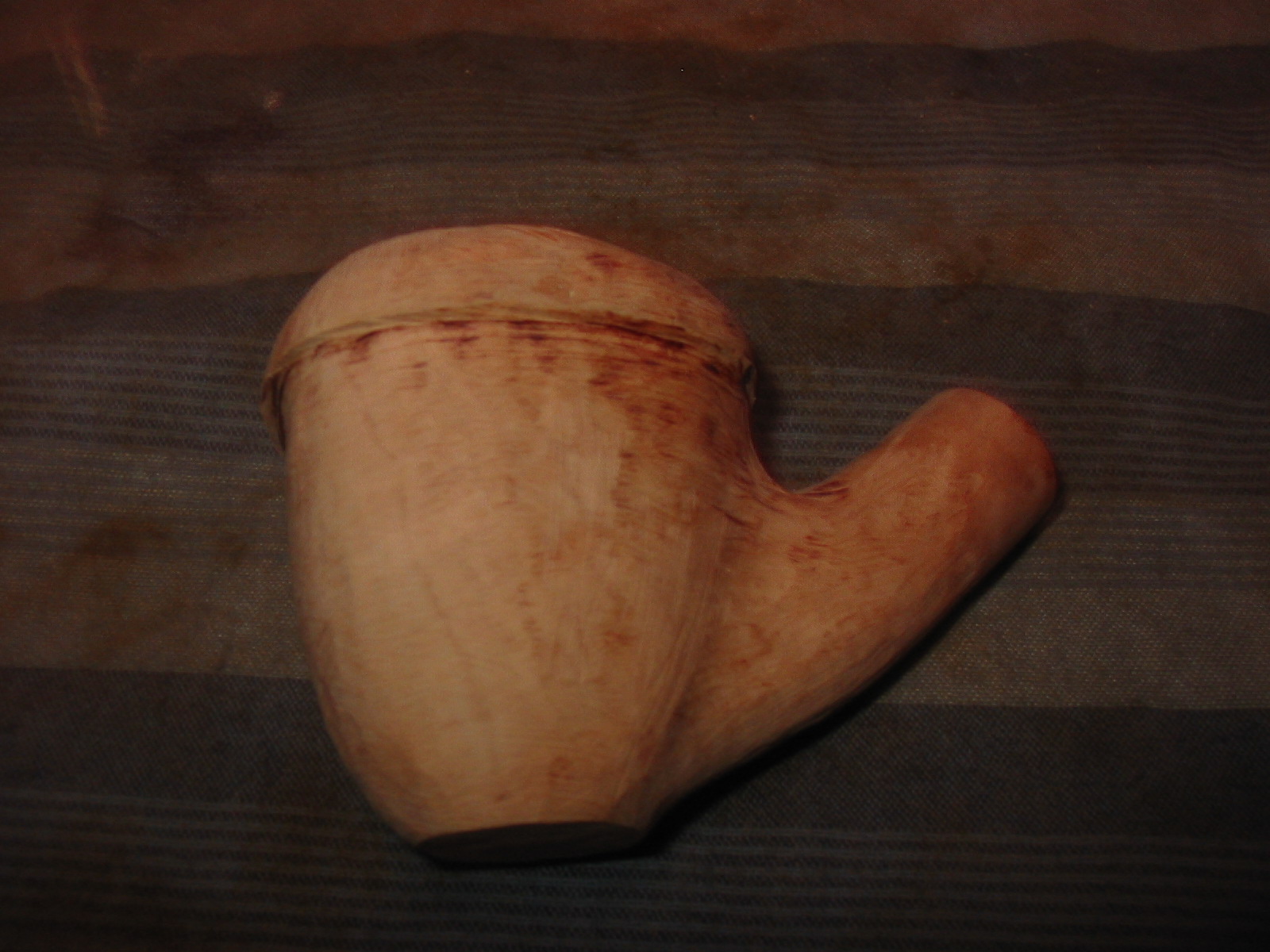
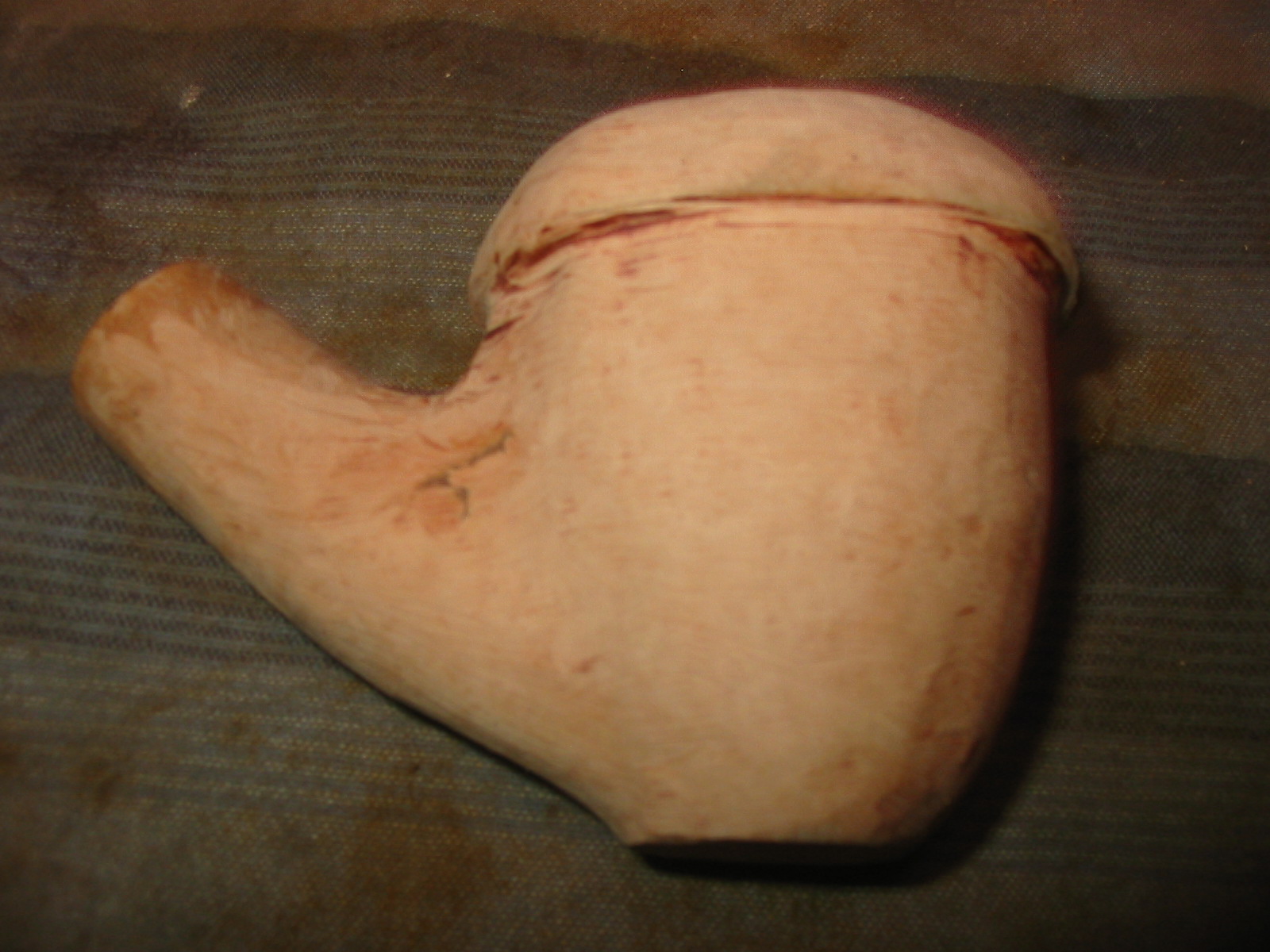
Carving Another One from a Pre-Drilled Kit


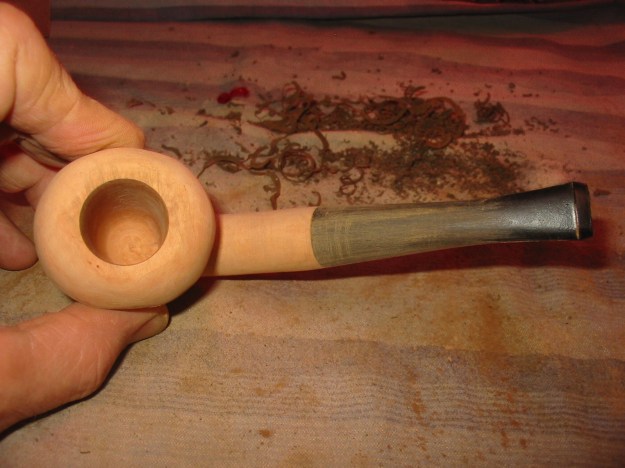
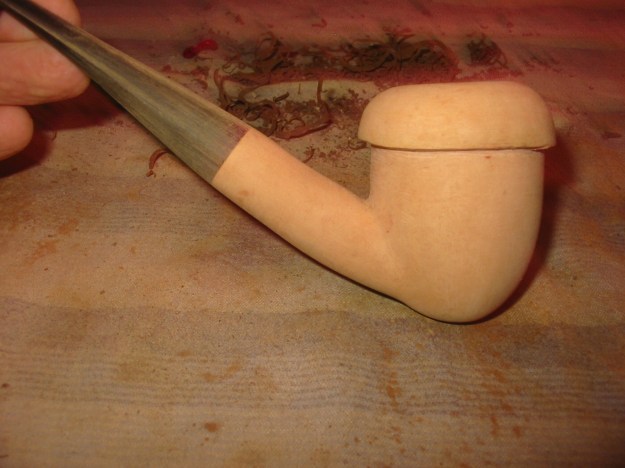
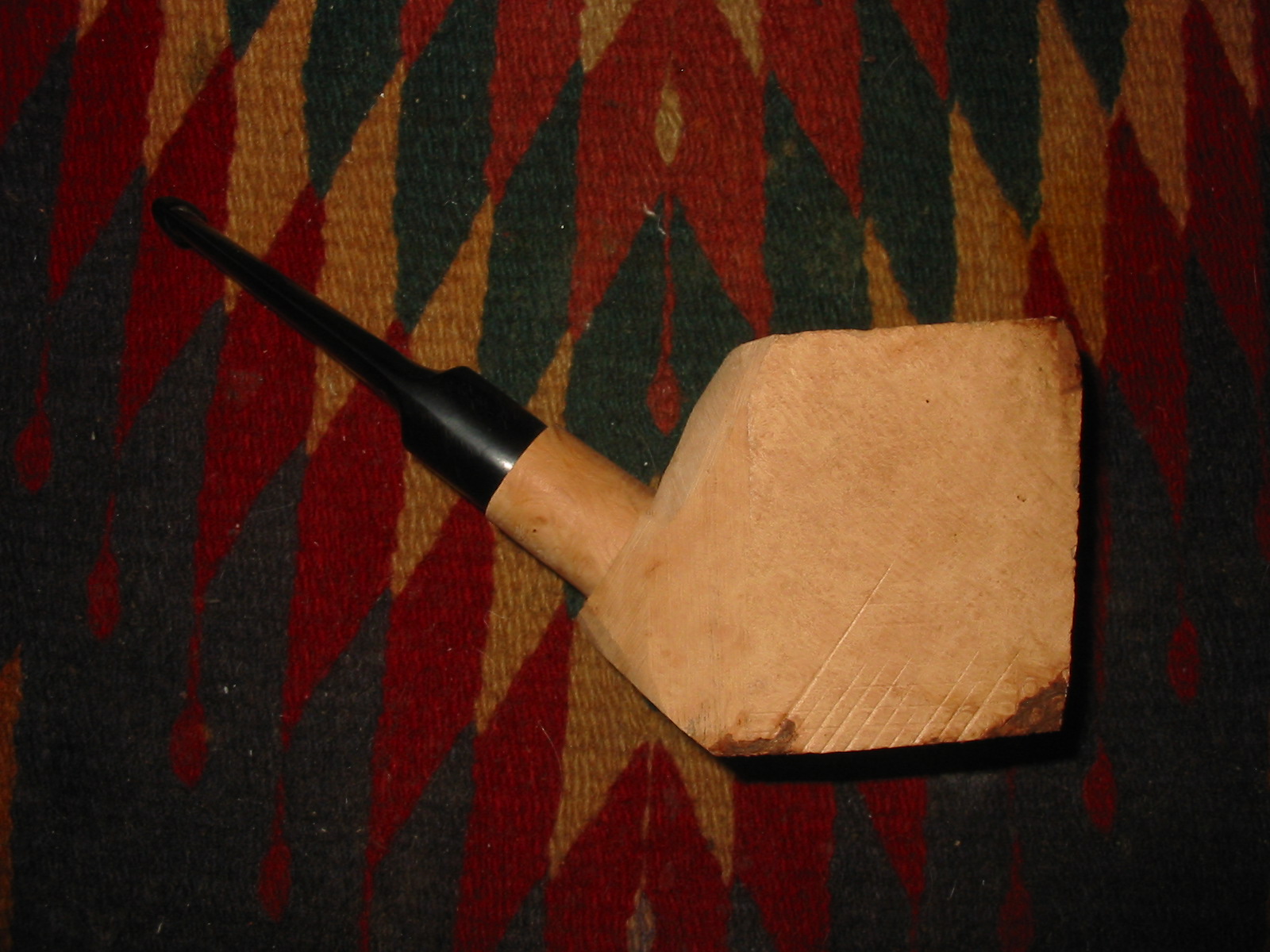
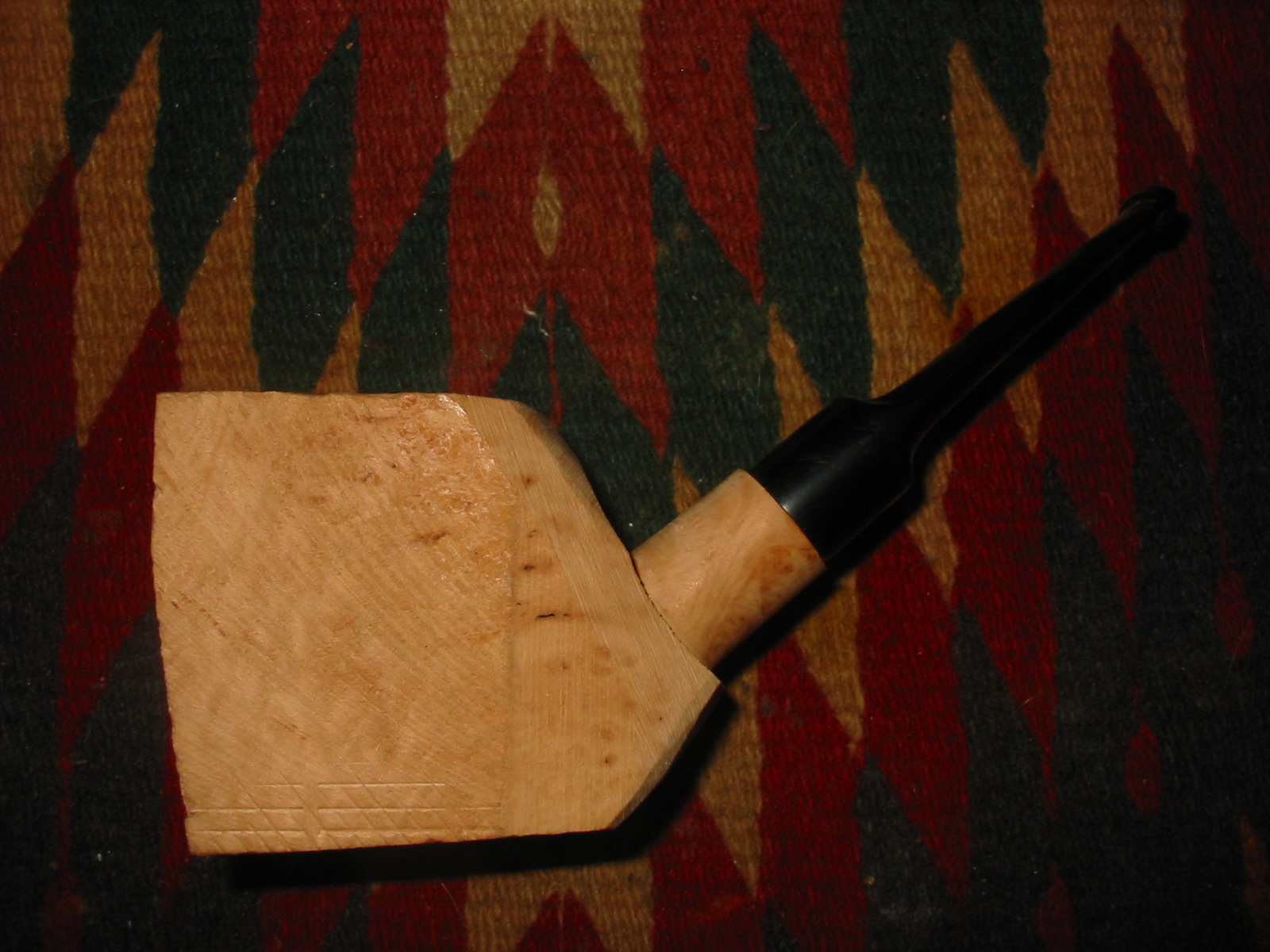
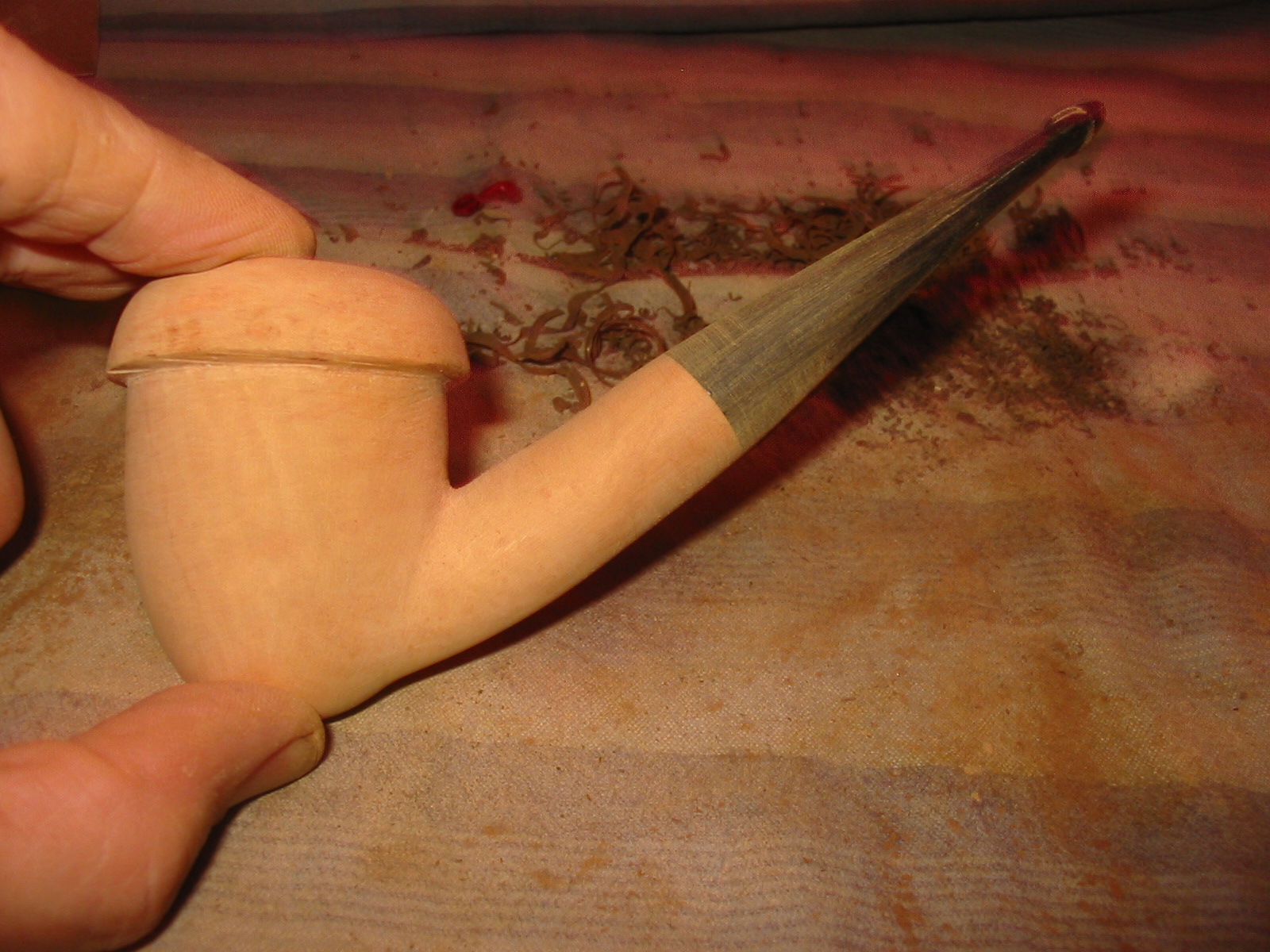
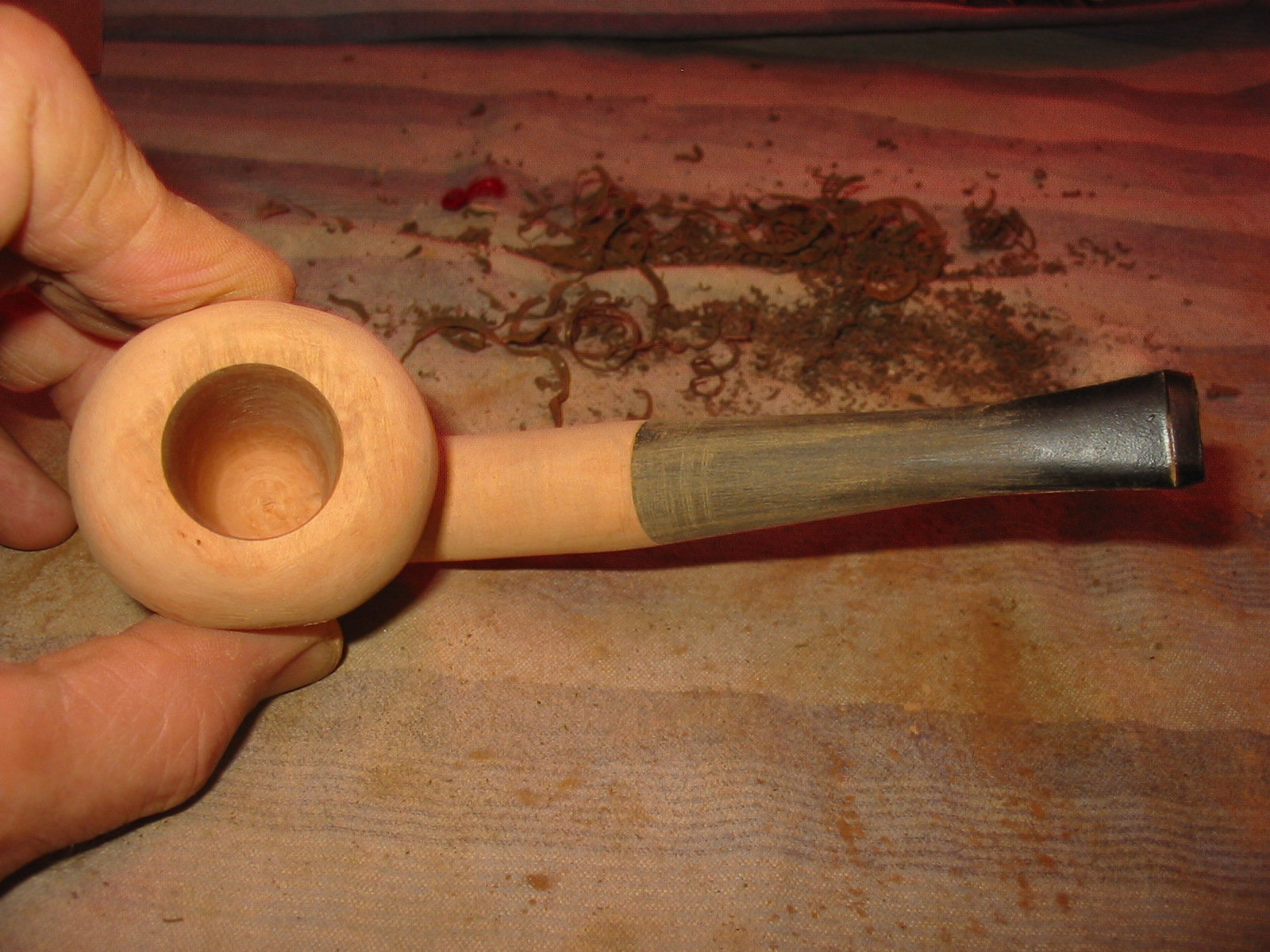
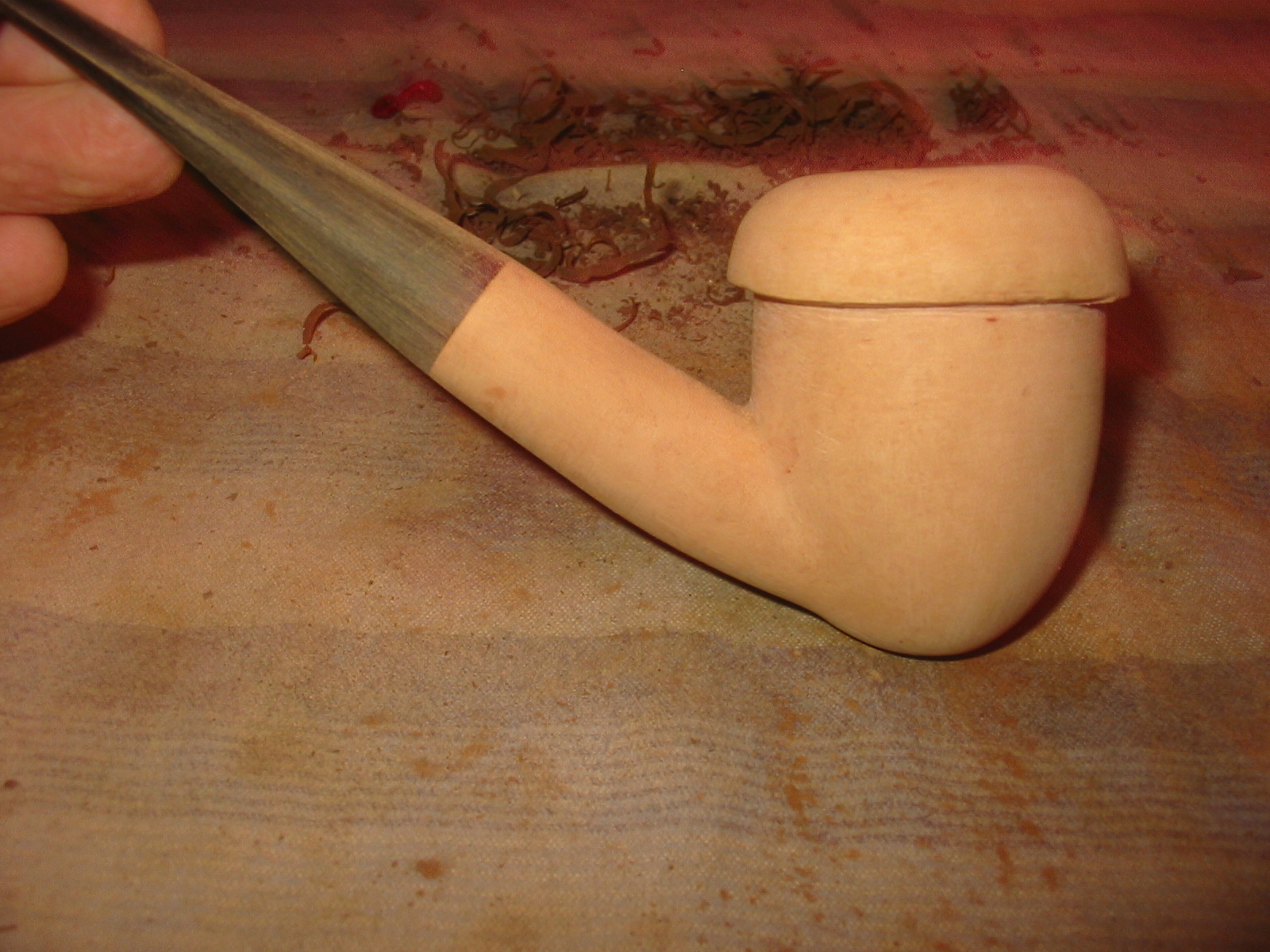
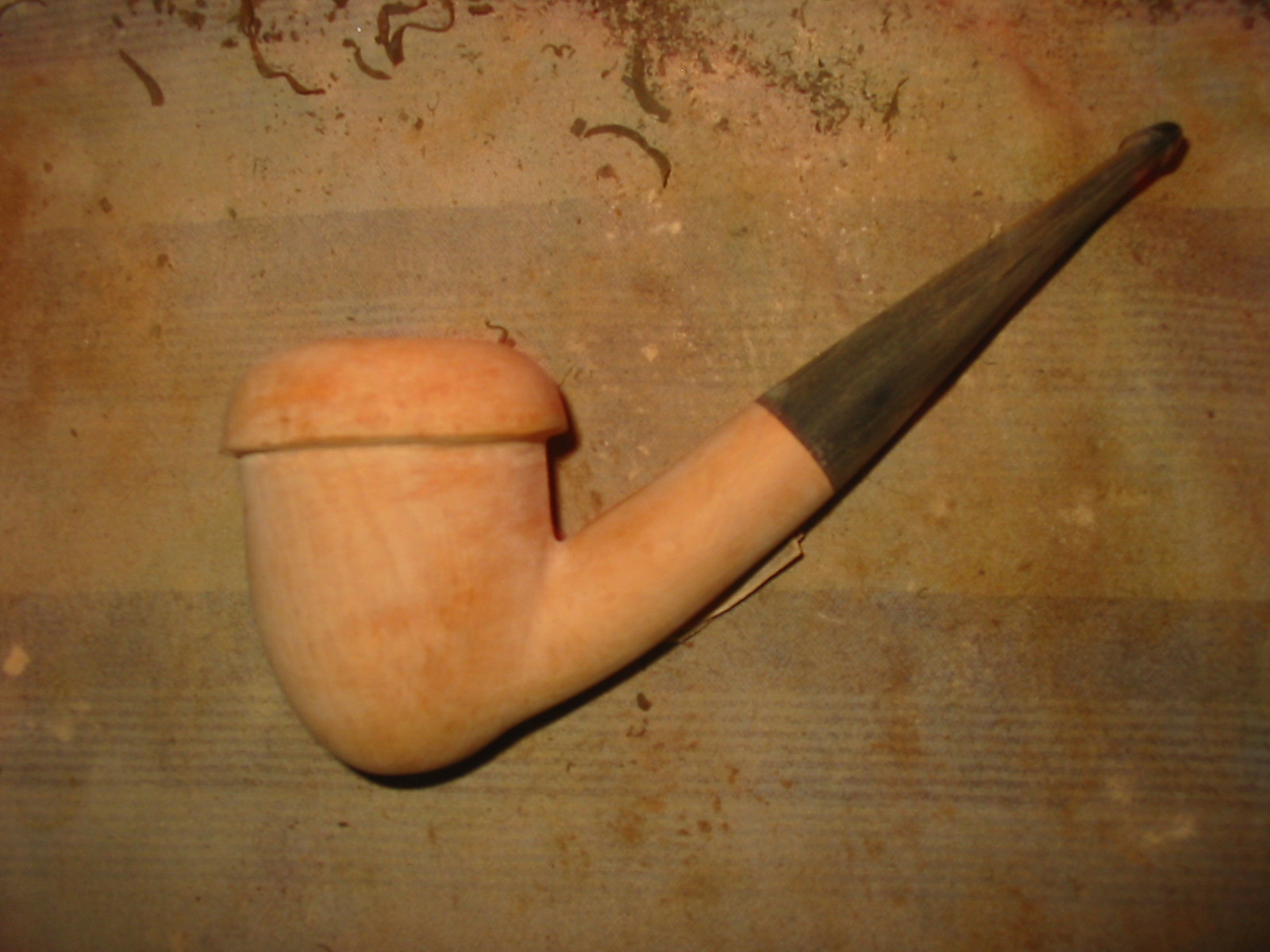
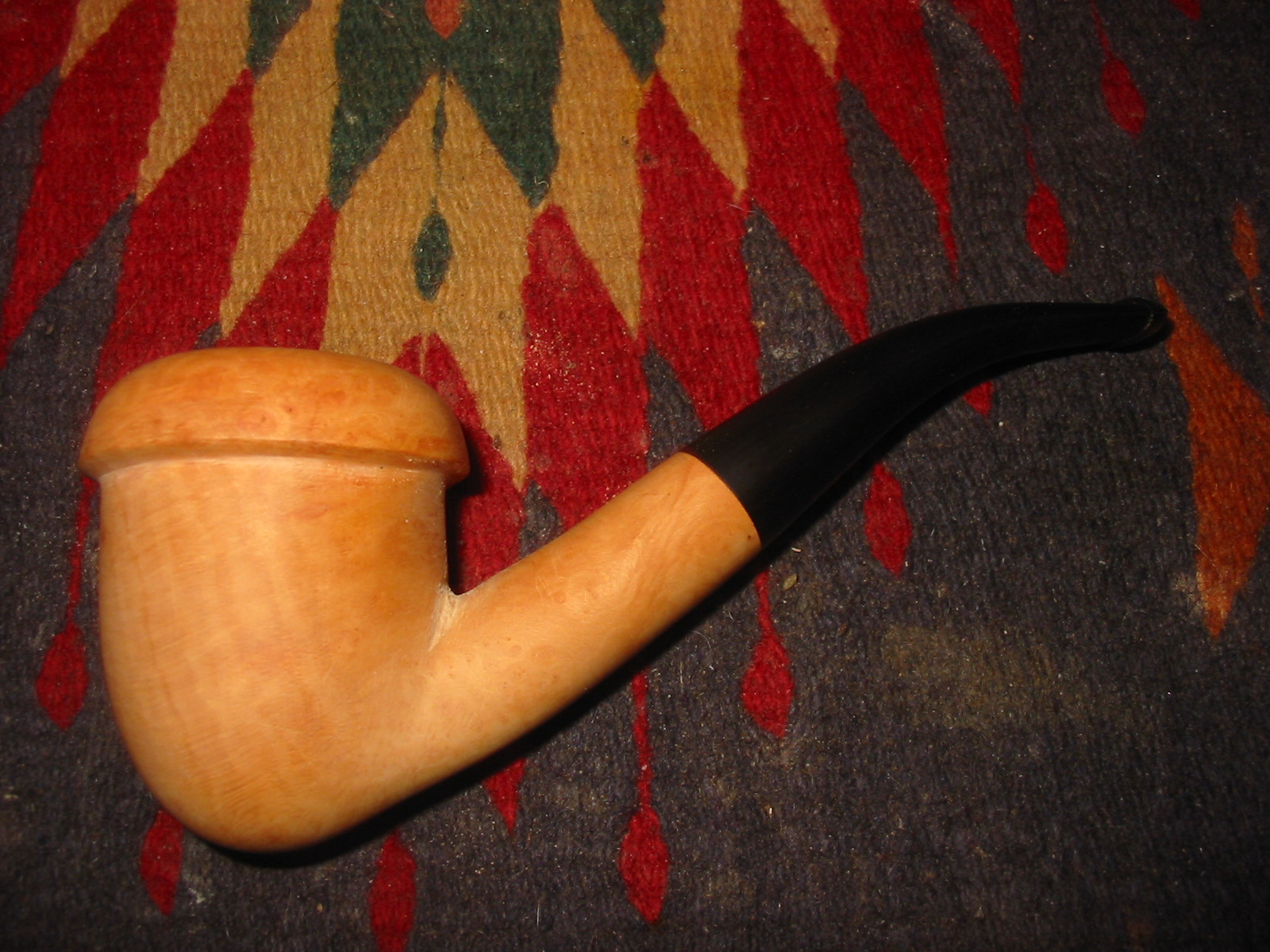
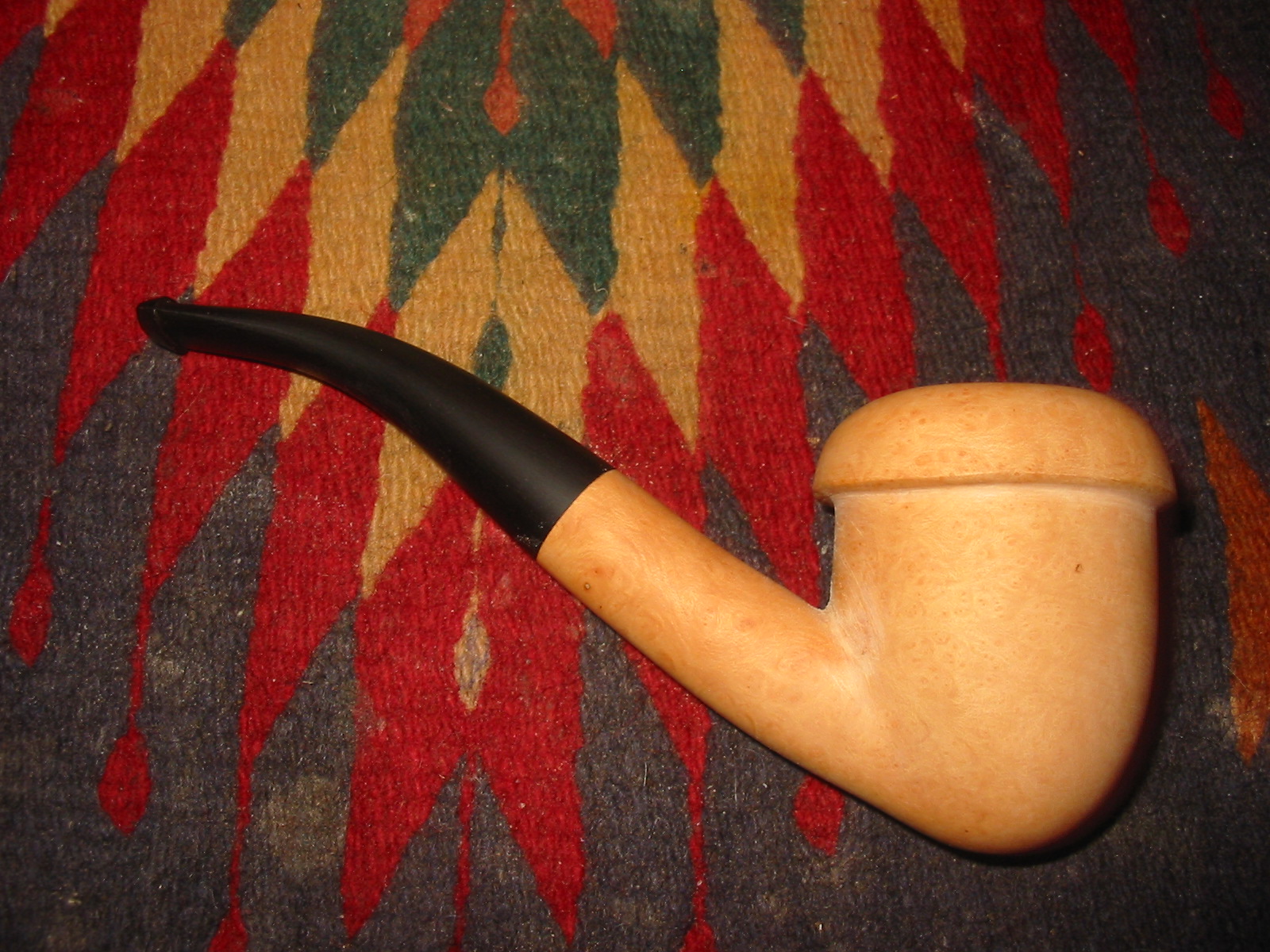
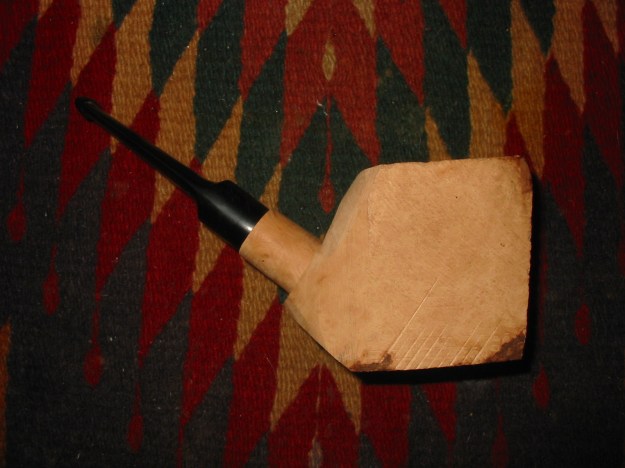
When I was traveling in the early spring I stopped by Burlington on Whyte Tobacconist in Edmonton, Alberta, Canada to pick up some tobacco and have a look at their stock. In the past I had purchased a pipe kit from them and found it to be a pretty decent piece of briar. It was the last pipe I had carved for myself. I looked through the lot and found one I like this time as well. I purchased it and carried it home. It sat on my desk for the past several months while I tried to figure out what I wanted to do with it. It was drilled to be a three-quarter bent pipe and had a vulcanite stem this time. The last one I has purchase had a Lucite stem. I thought it had potential and I just needed time to let it marinate in my brain until I decided what to carve.
IMG_6970

IMG_6971

IMG_6972

IMG_6973
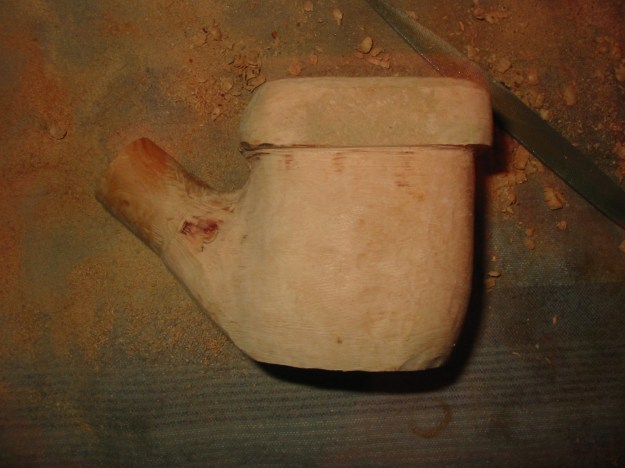
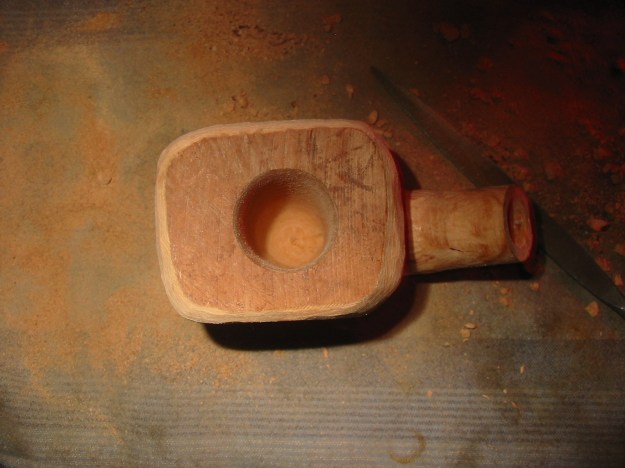
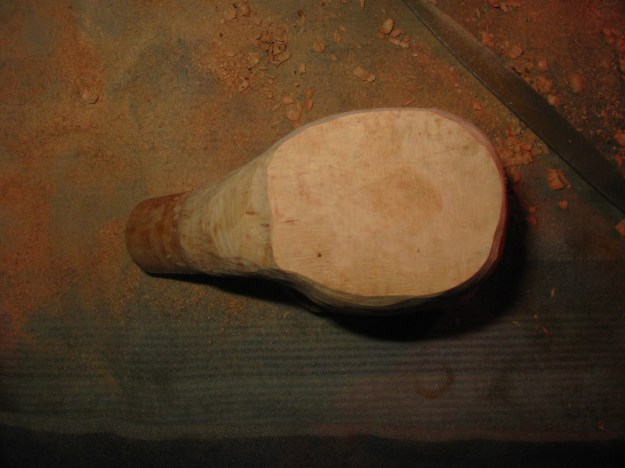
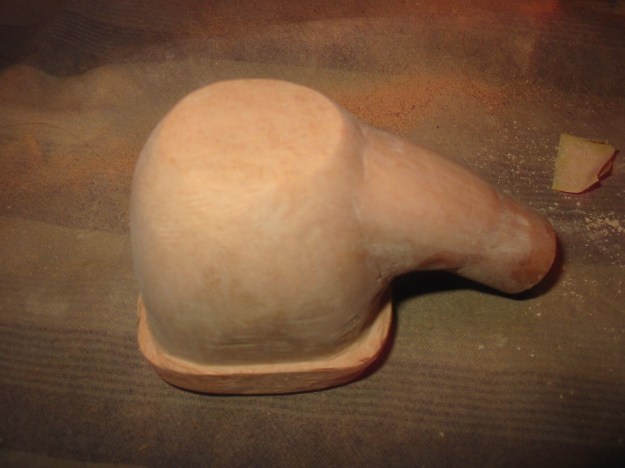
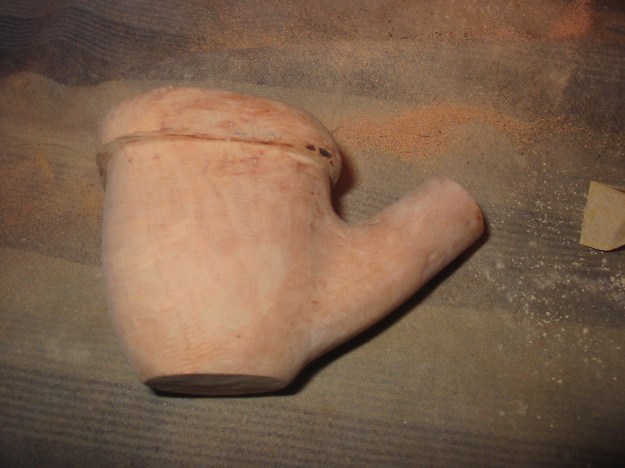
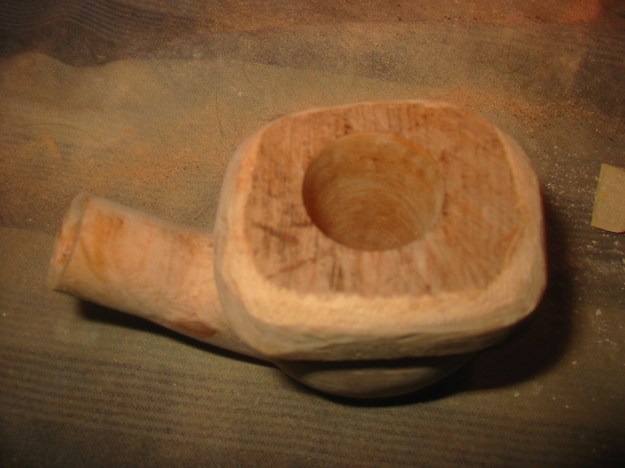
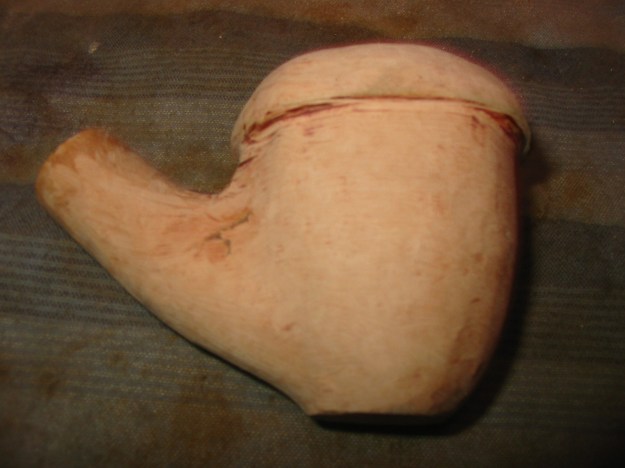
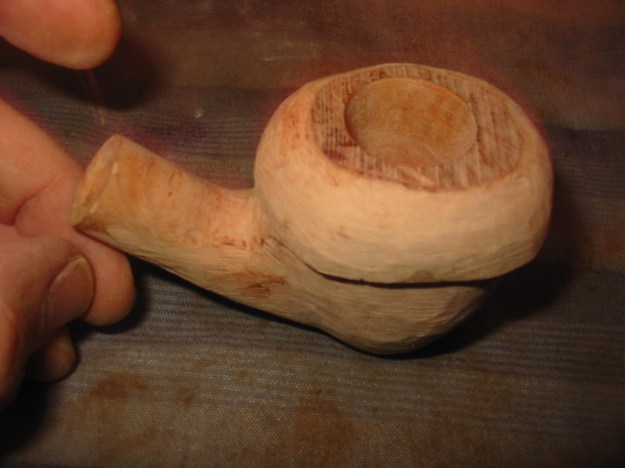
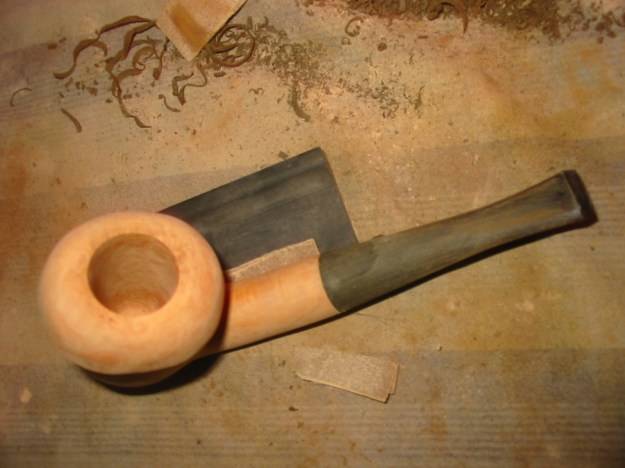
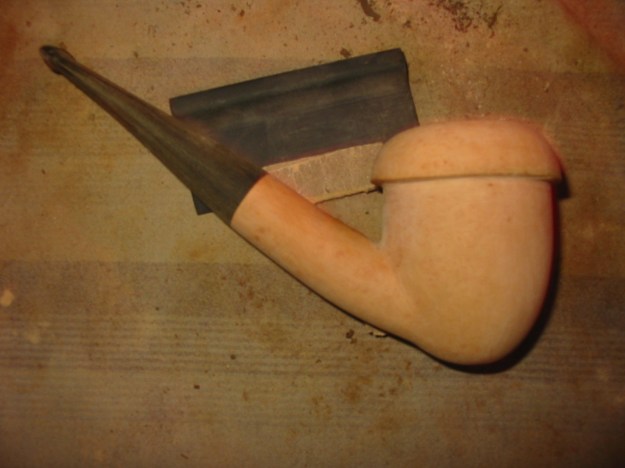
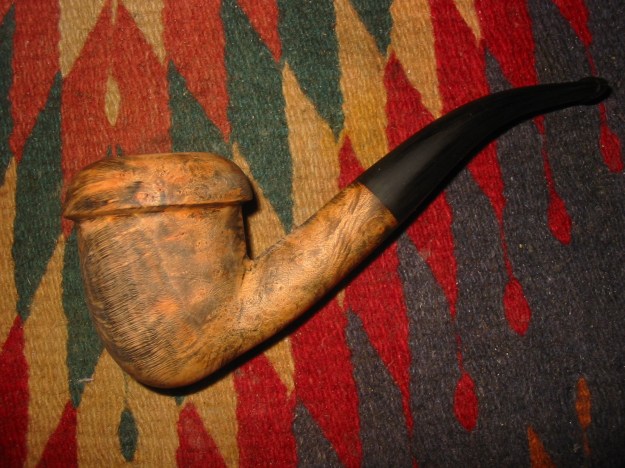
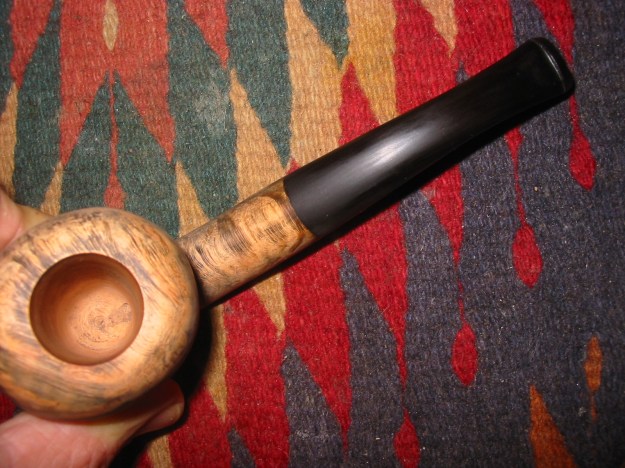
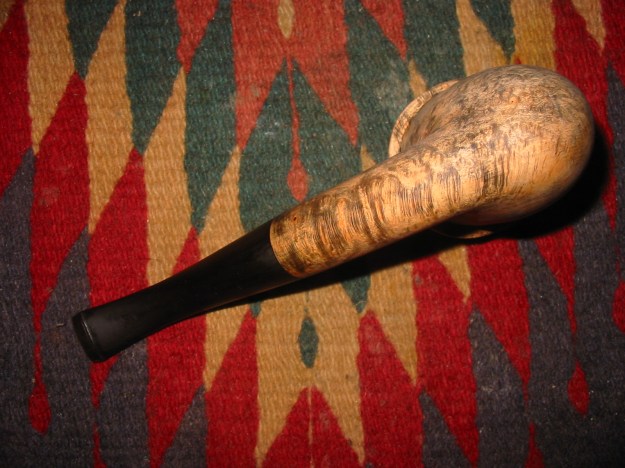
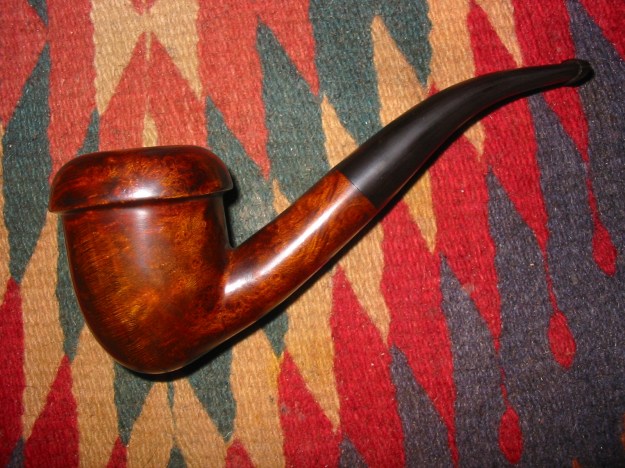
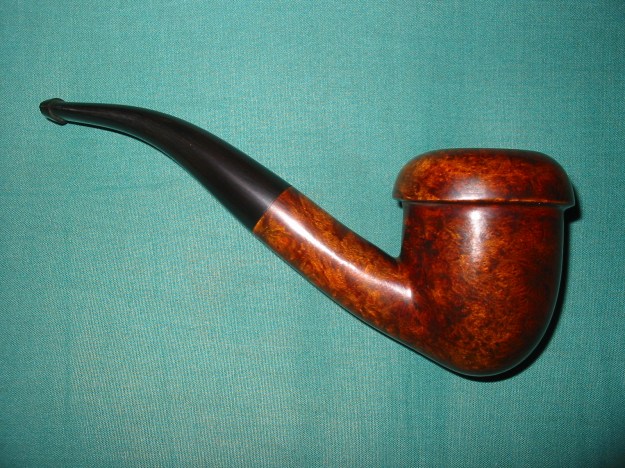
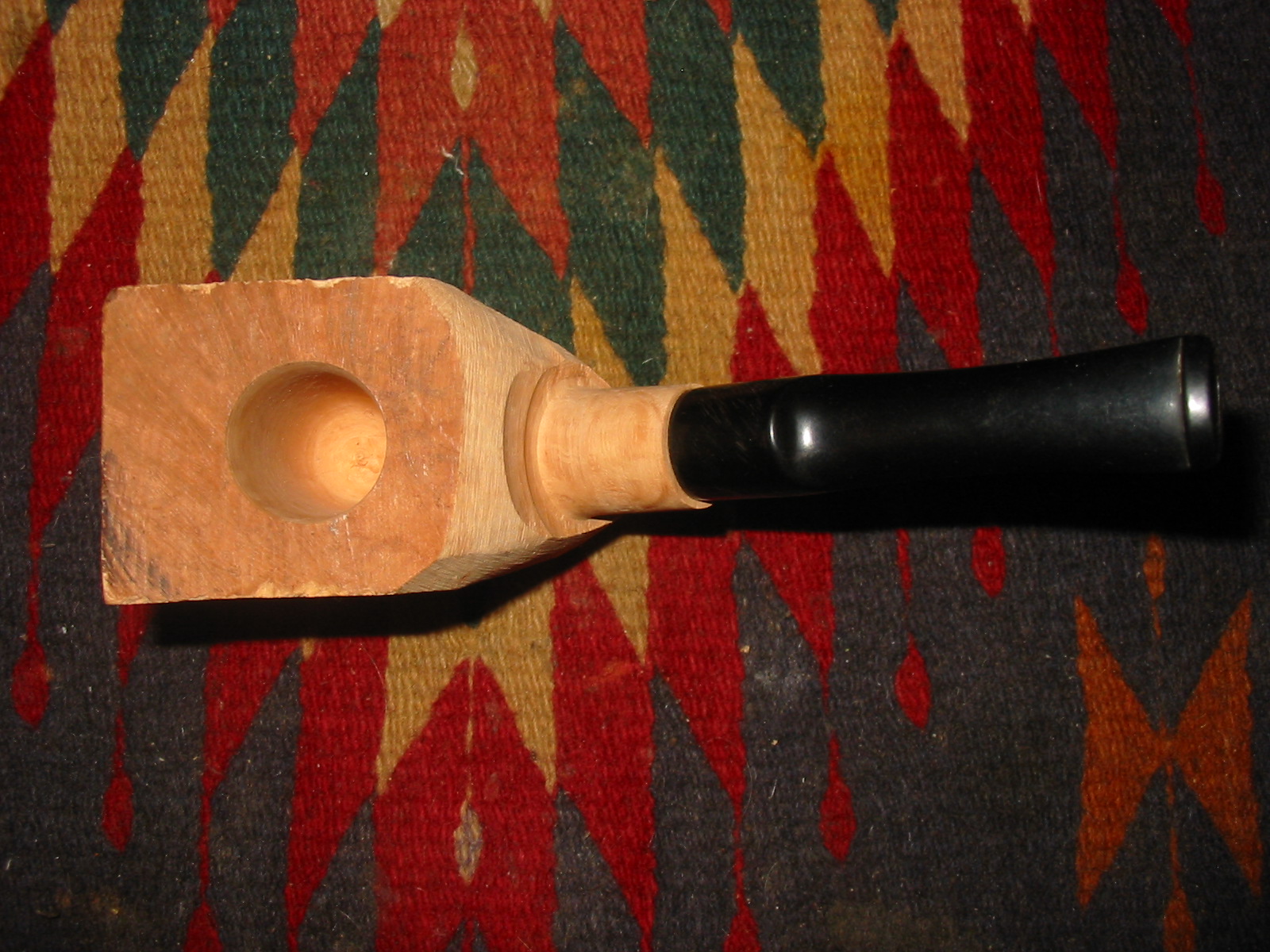
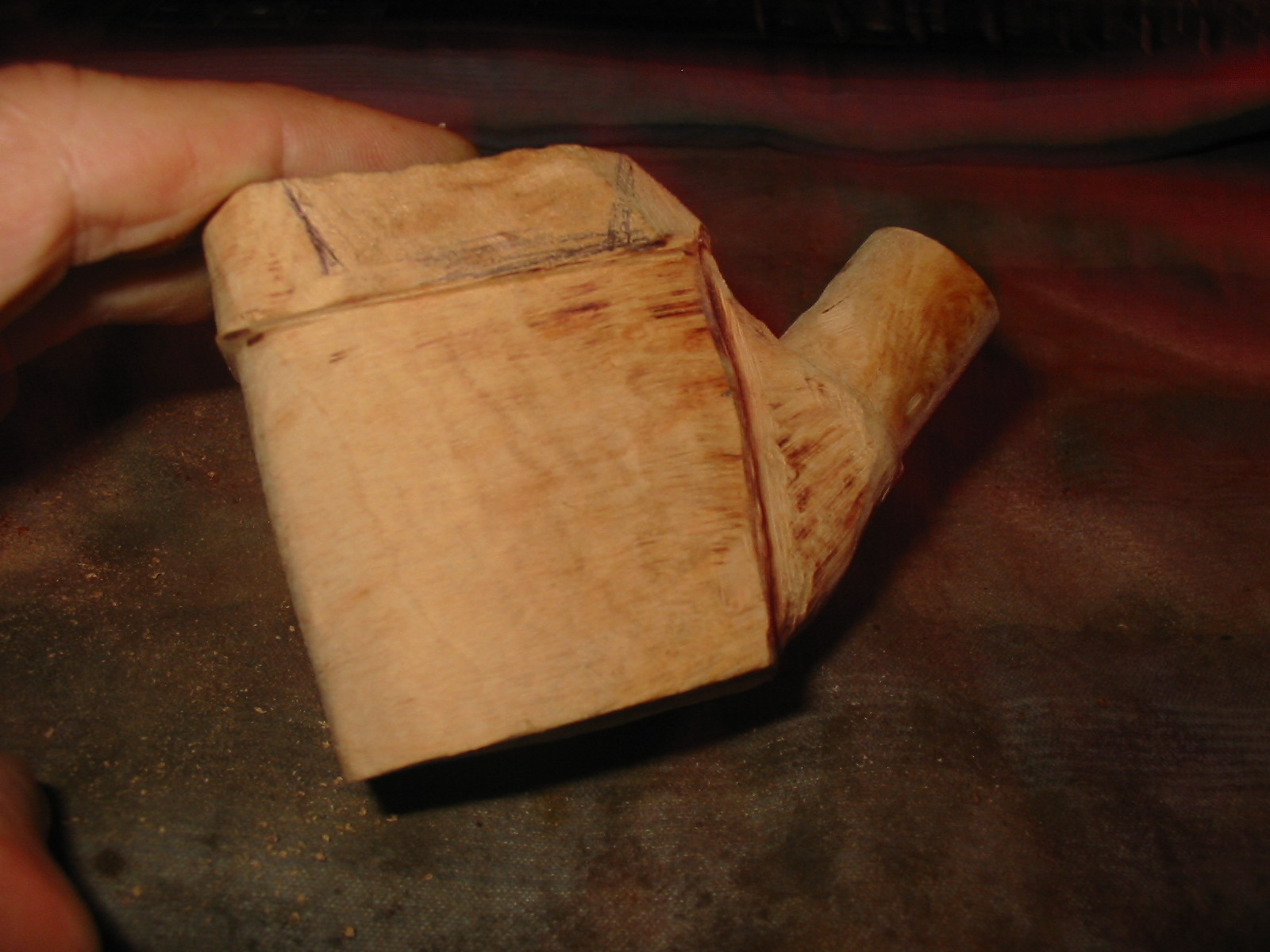
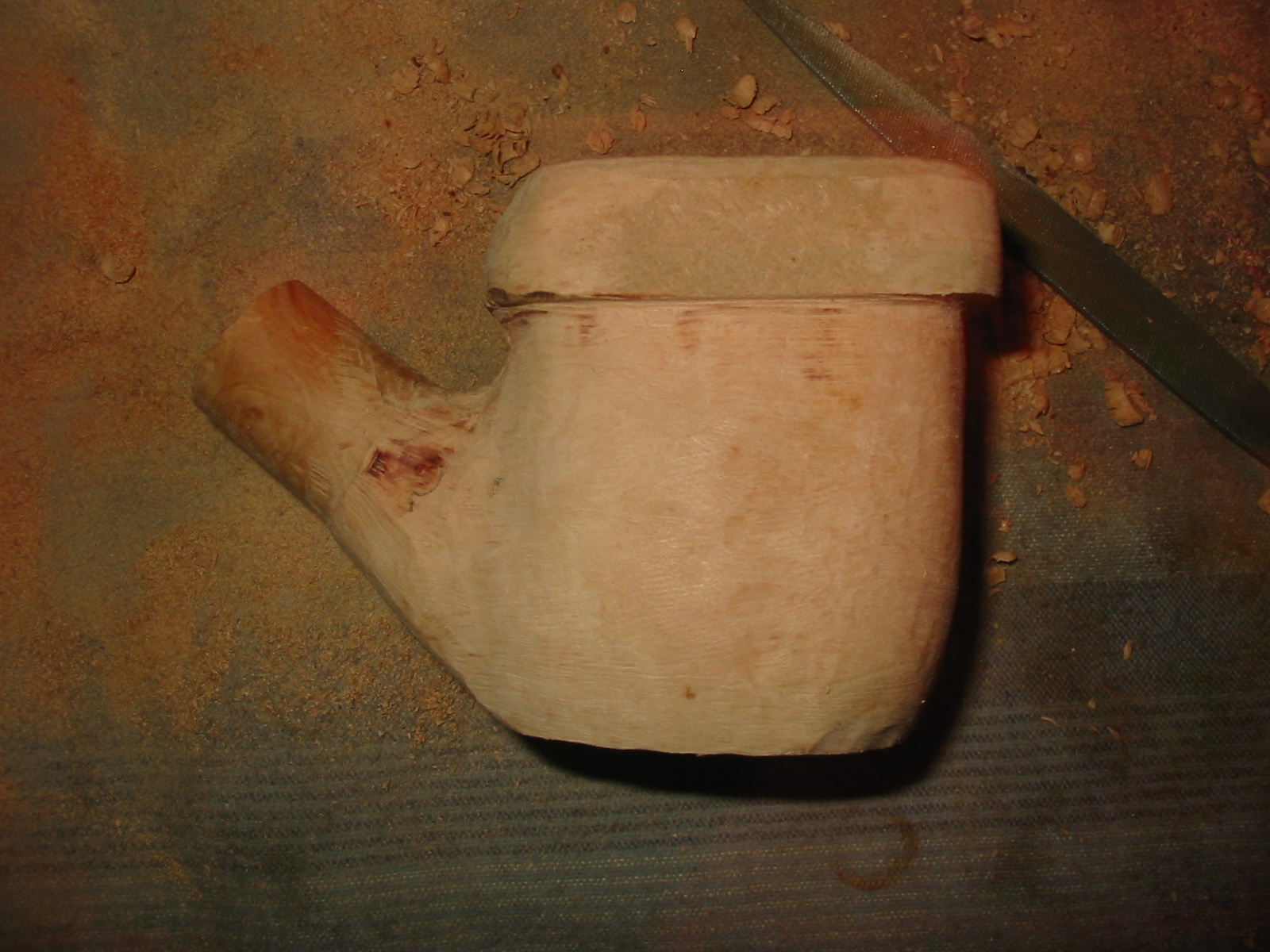
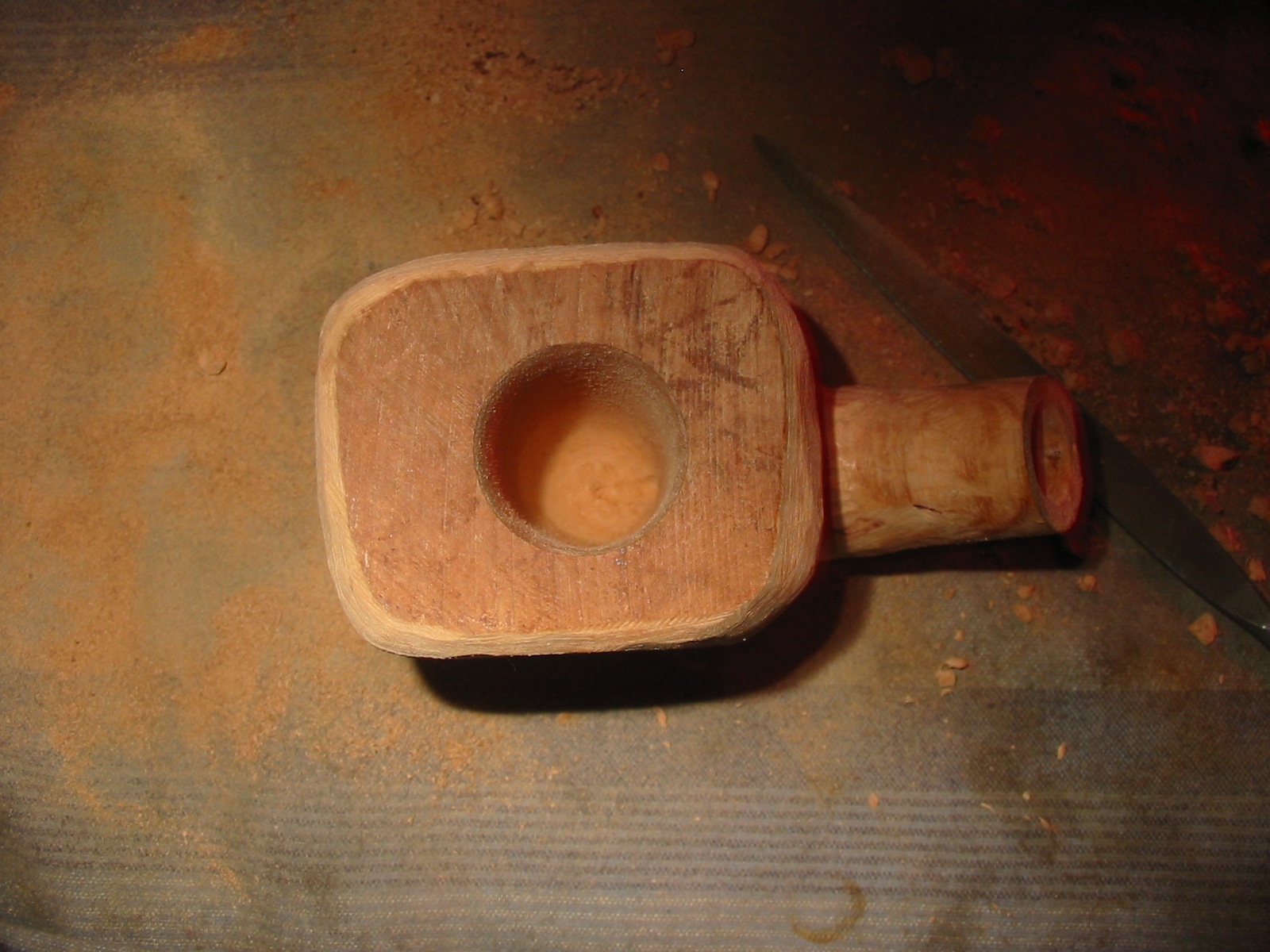
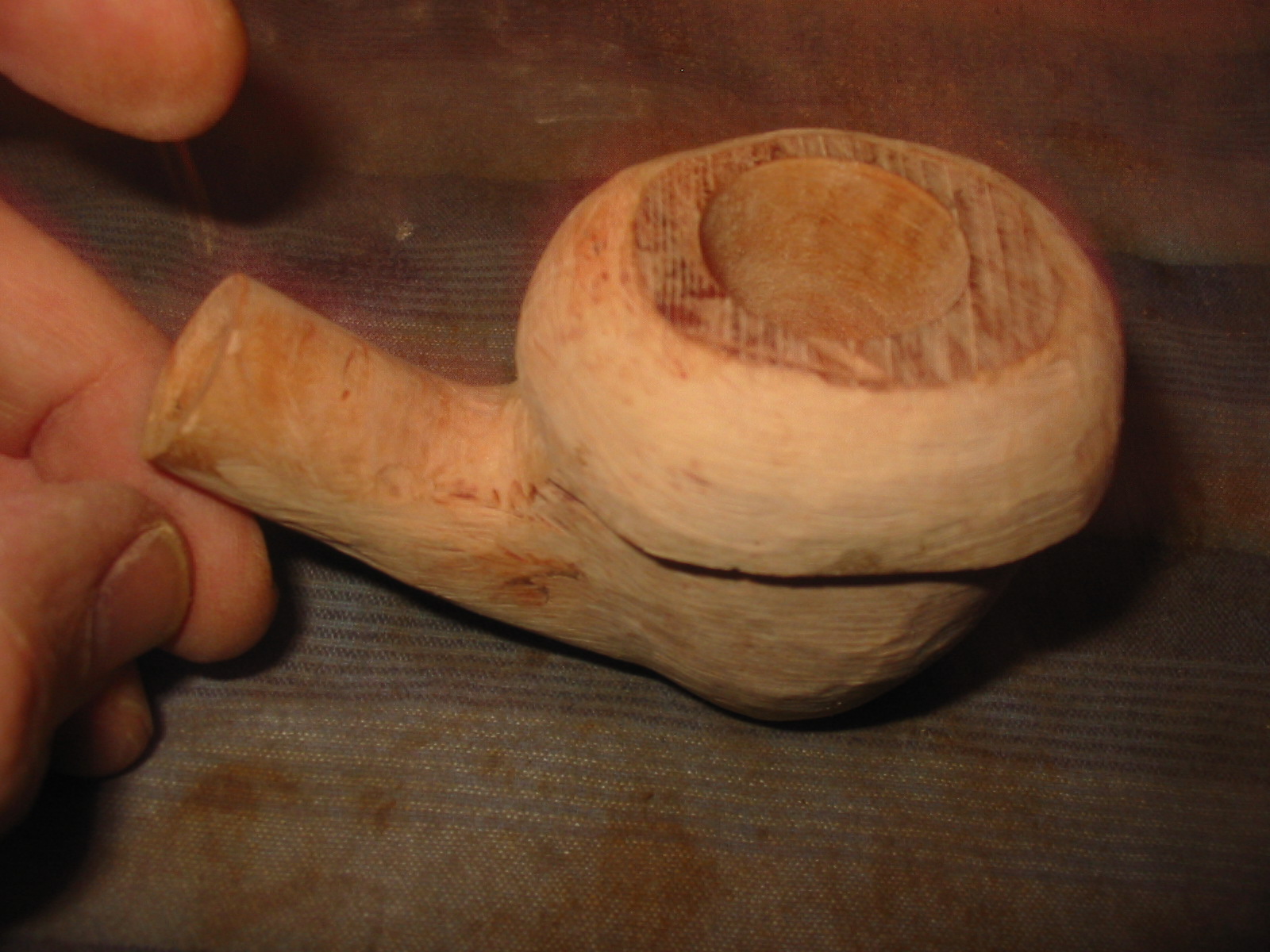
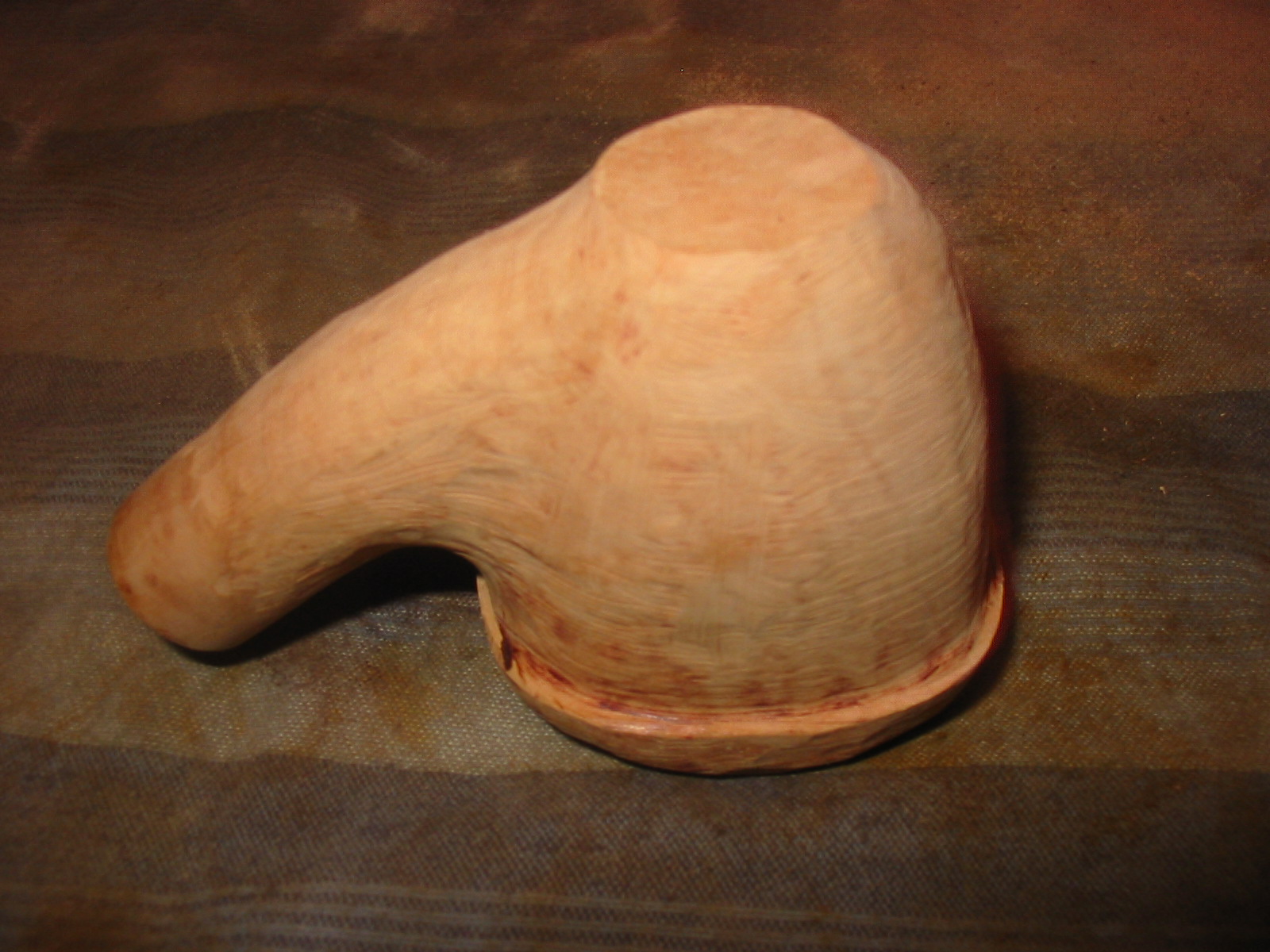
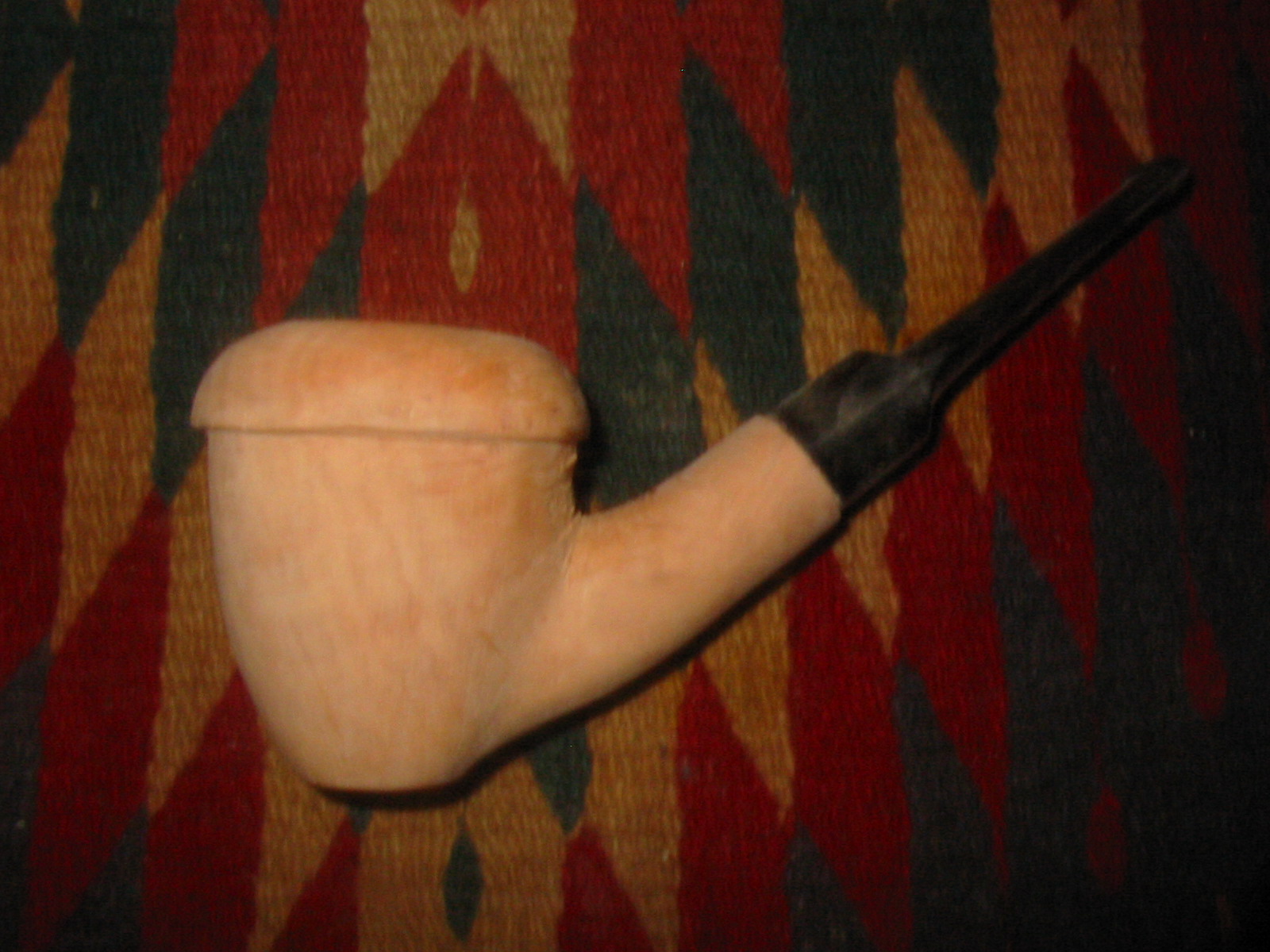
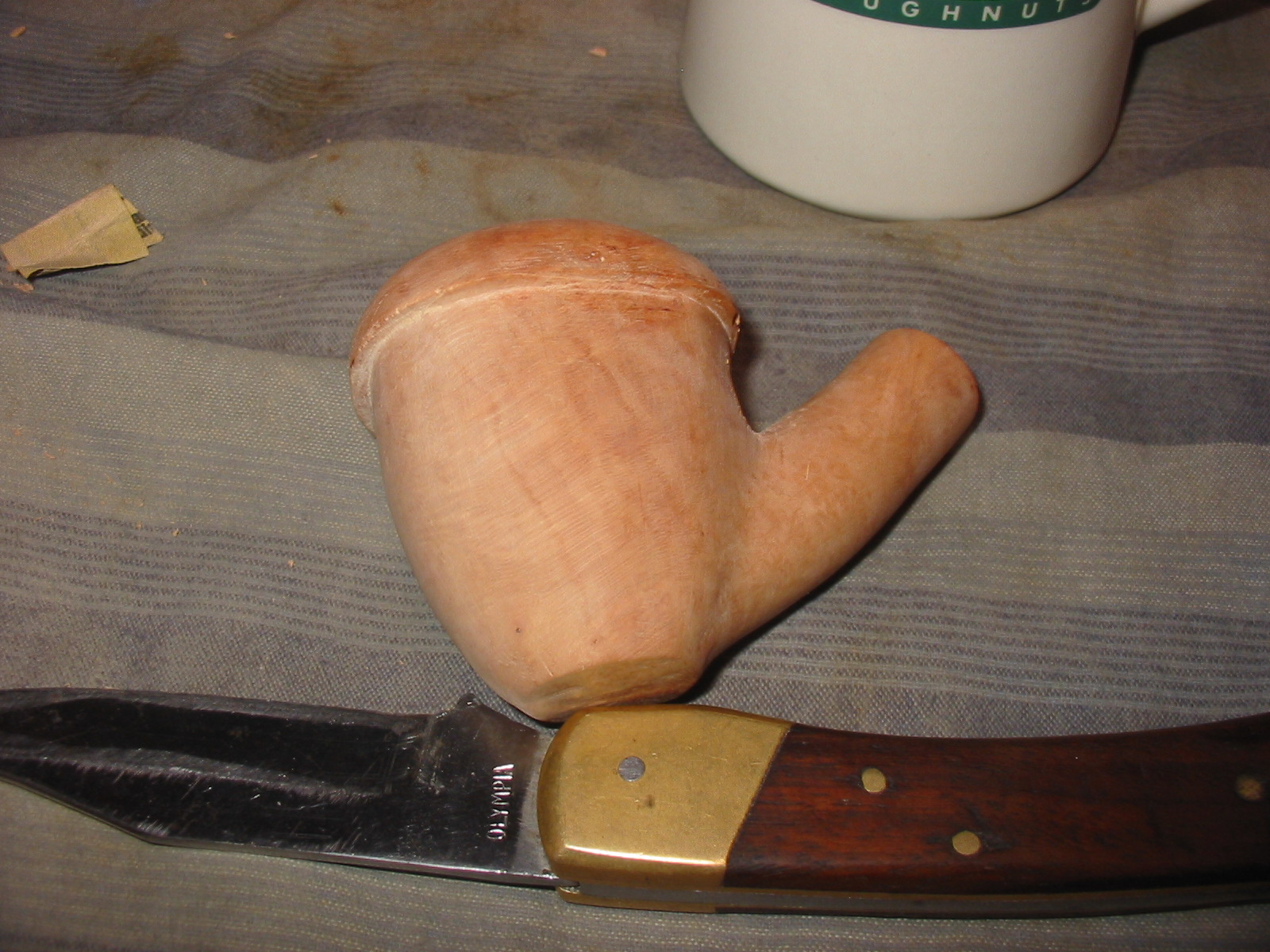
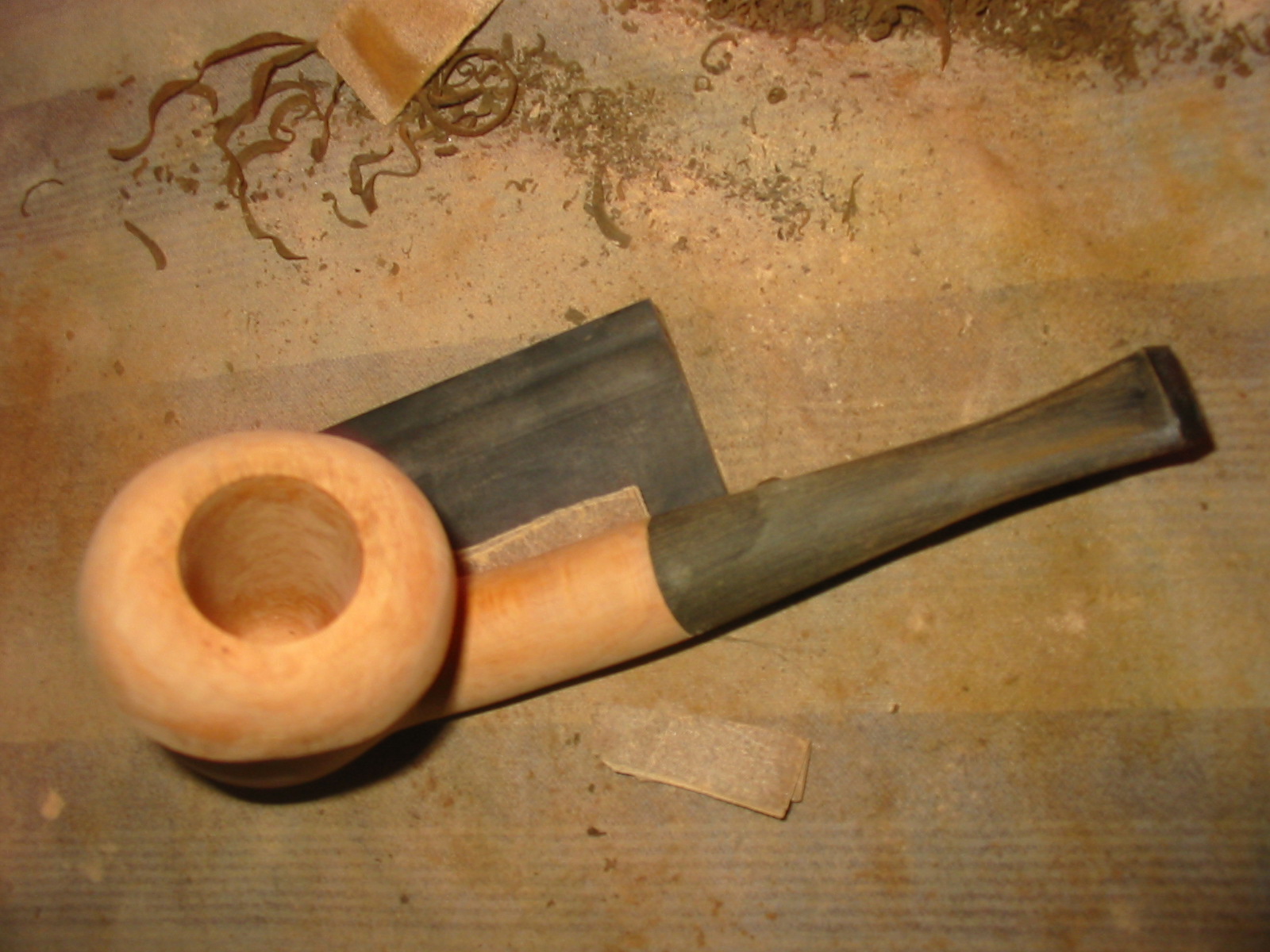
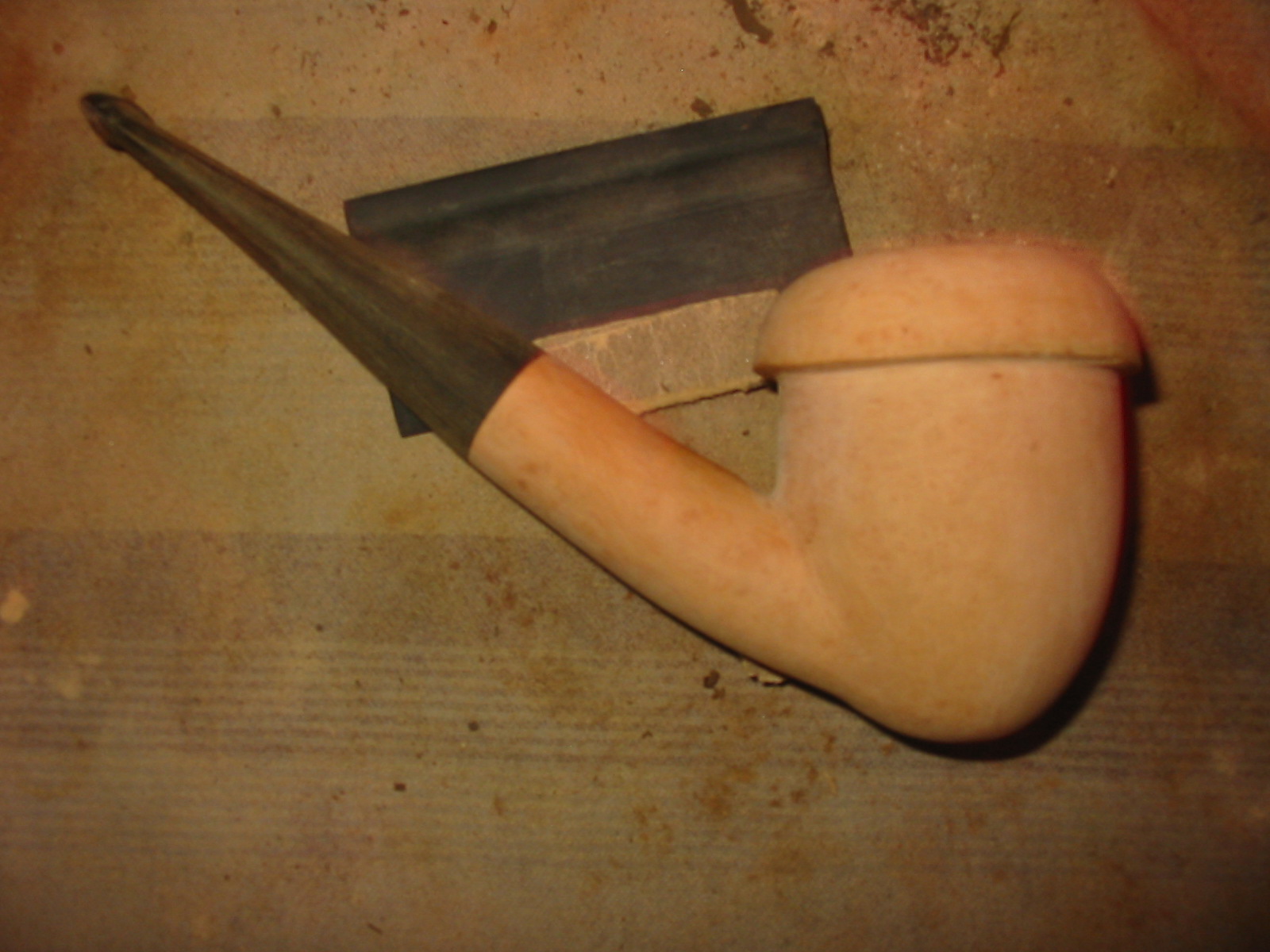
I had a long weekend with rainy days forecasted for the entire time so it was a perfect opportunity to work on the block and see what I could carve. I don’t have many power tools in terms of facilitating carving but I do have files, knives and a Dremel with many sanding drums. I sketched out an idea on the block and began to sand away the excess briar with the Dremel. I had drawn a calabash/acorn shaped pipe. I have an old 100+ year old oak tree in my front yard and every fall I fight the squirrels in picking up the acorns. I was cleaning up around the tree recently and came across one they had dropped. I had the thought that an acorn shape including the cap would make an interesting looking pipe. With that in mind I attacked the work of shaping the briar. I find that I always am reticent to remove briar because I know I cannot put it back once it is gone so it takes me awhile to get the pipe walls and shank the proper shape and thinness. This one was going to be a bit thicker that I wanted when I realized that the shank was drilled for a 9mm filter. That would mean that the diameter of the shank would be larger than I had hoped.

In the photos and words below I plan on taking you with me on the journey from block to pipe. You might well have made different decisions than I did in the shaping of the block. And you probably would use better/different tools to work the shape. However, I worked with the tools I had and really wanted to show that the shaping can be done with a few tools, persistence and lots of hard hand work. Thanks for coming along with me on this journey. If you want to skip the words, feel free to do so and enjoy the process shown in the photos.
IMG_7030
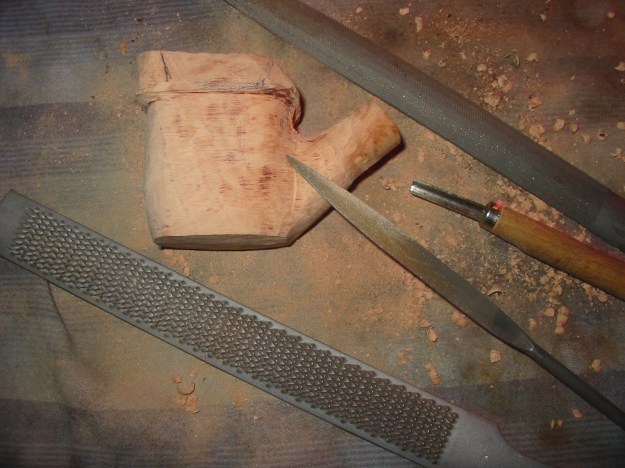
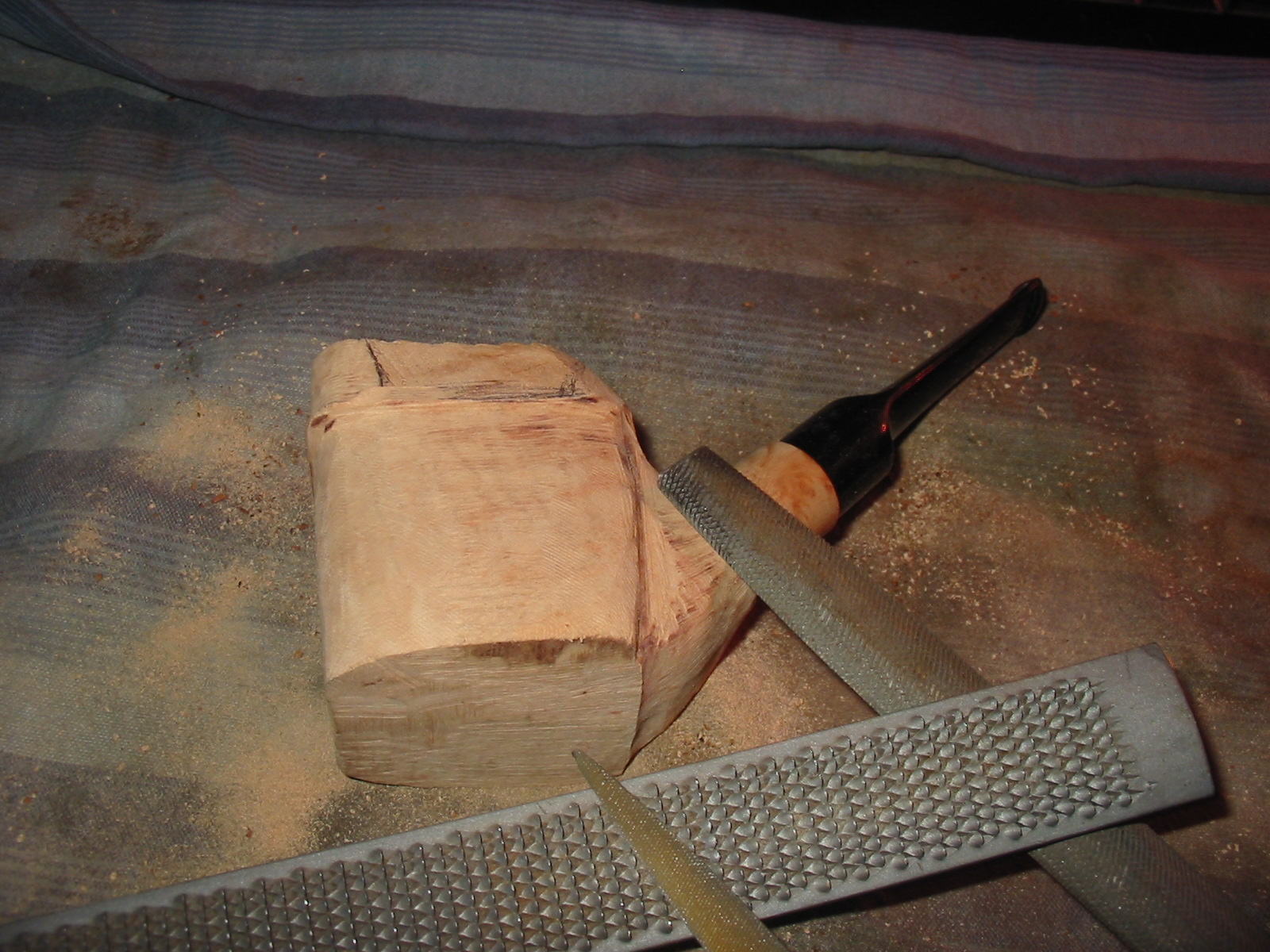
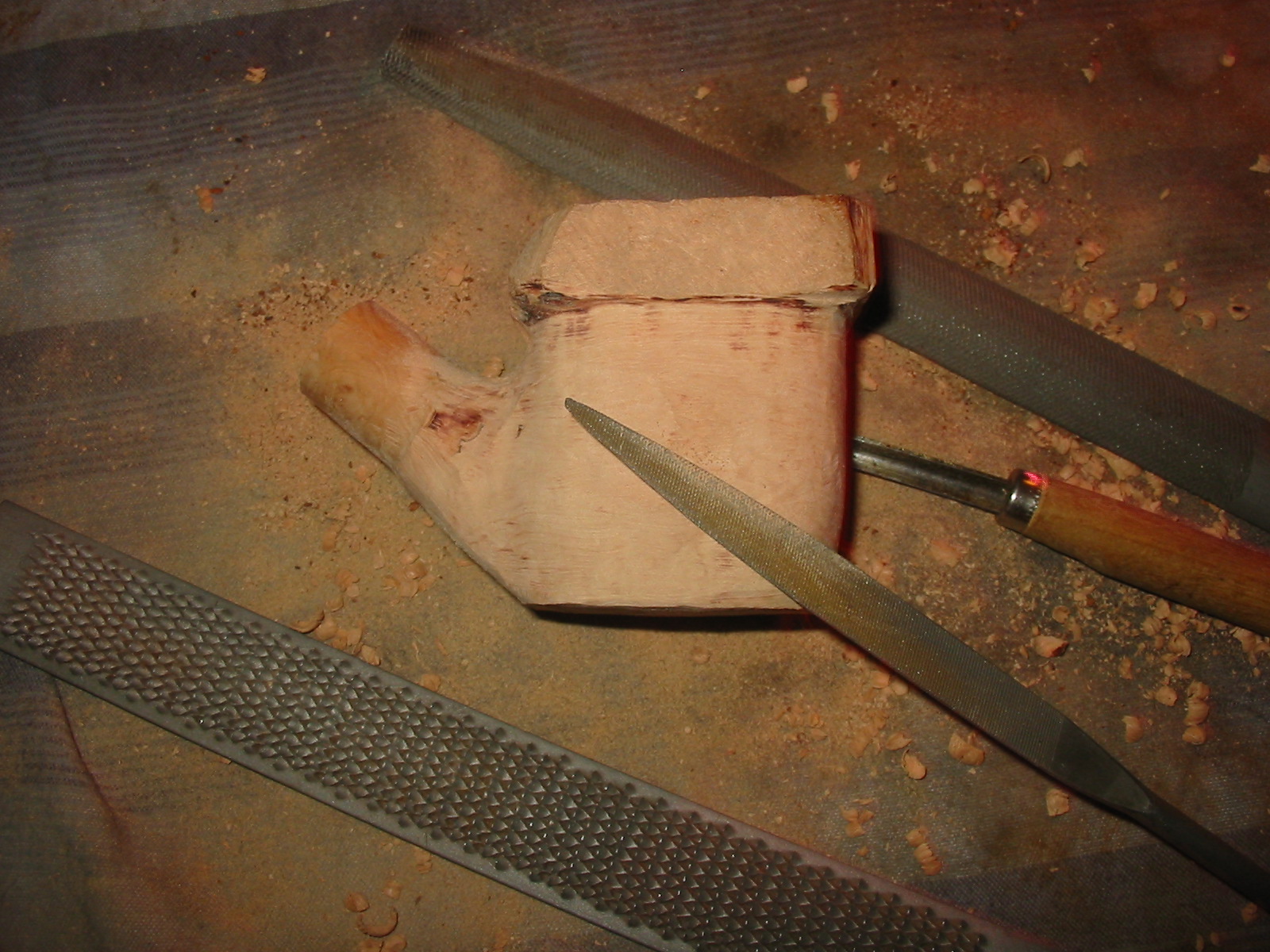
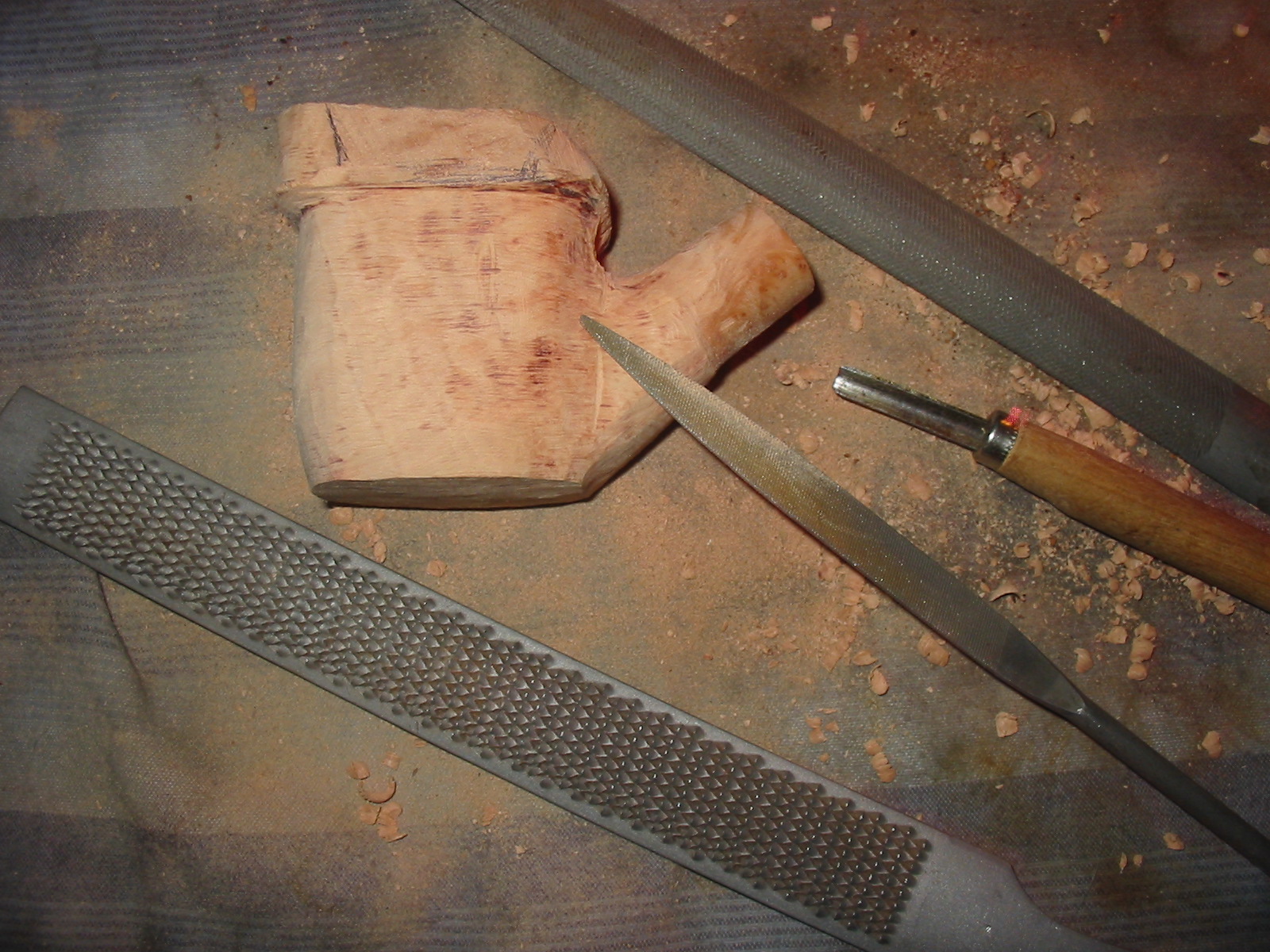
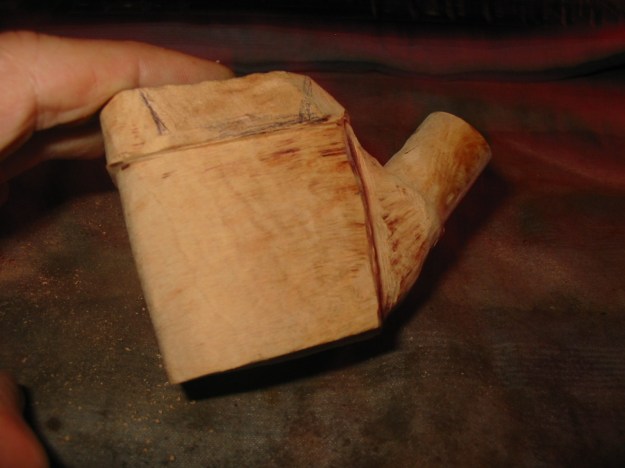
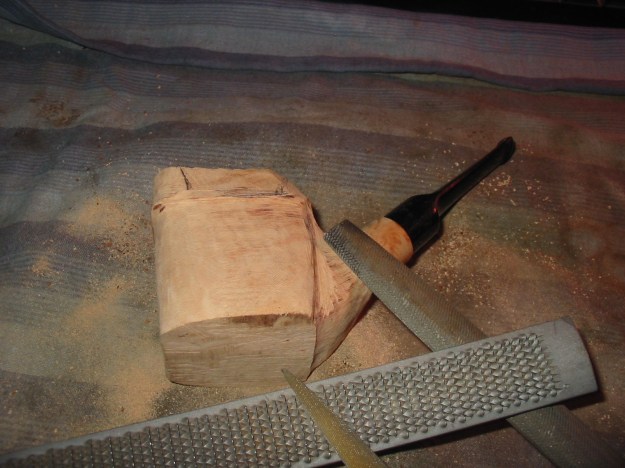
I used a Dremel tool with a sanding drum, several different wood rasps and files to cut away the excess material. I find that the Dremel works fairly quickly in removing the briar and the files and rasps work well in the area where the shank joins the bowl. In the past I have tried to do that work with sandpaper and sanding sponges and was not happy with the overall results. The files and rasps facilitate a more defined junction. I also used several carving knives that I have to further define the angles of the junction.
IMG_7031

IMG_7033

IMG_7035

IMG_7037

IMG_7032

IMG_7034

IMG_7036
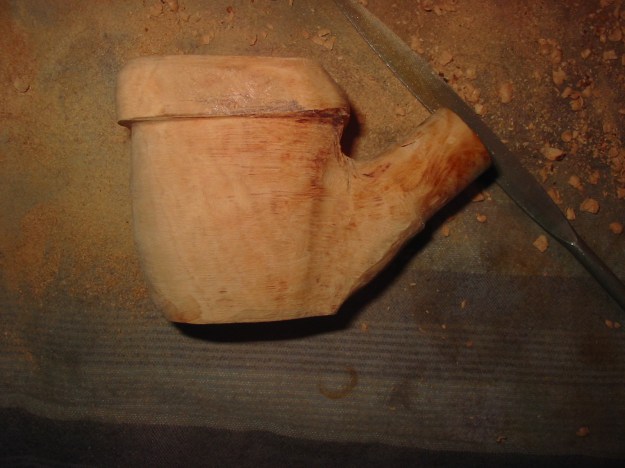
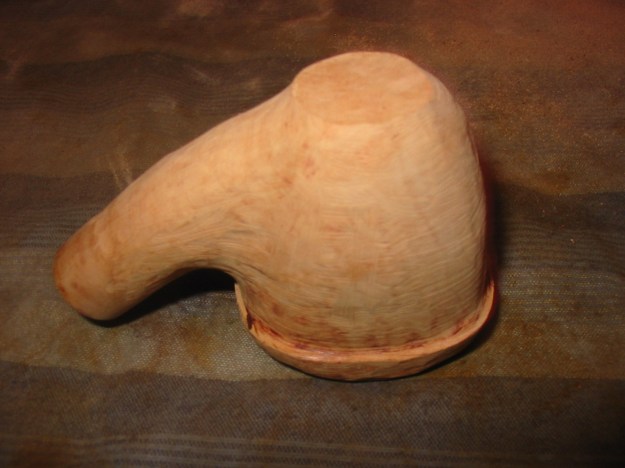
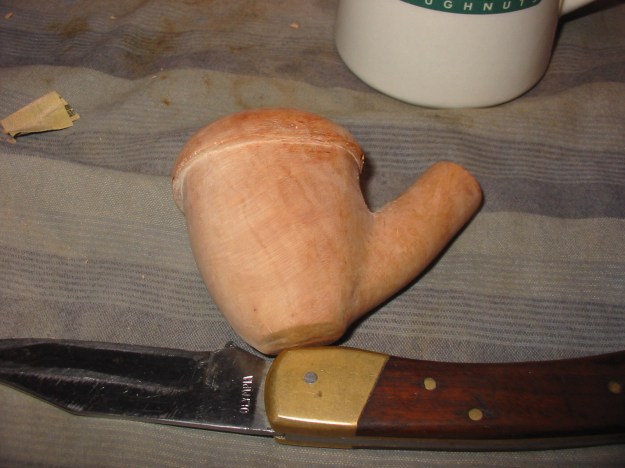
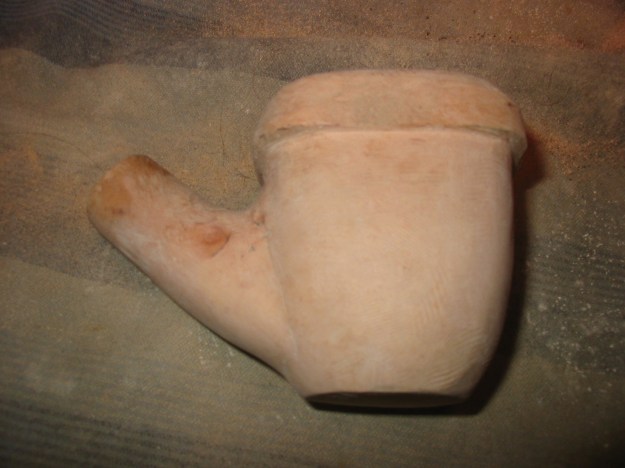
It took a lot of sanding with the Dremel and sanding drum to round out the corners on the block and remove the excess material around the shank. I worked to taper the bowl into the point at the bottom of the acorn and files and the Dremel to cut in the edge of the cap on the top of the bowl. I had spent approximately two hours to get the bowl to this point in the process. The photos below show that the shape is beginning to emerge from the block.
IMG_7039

IMG_7041

IMG_7038

IMG_7040
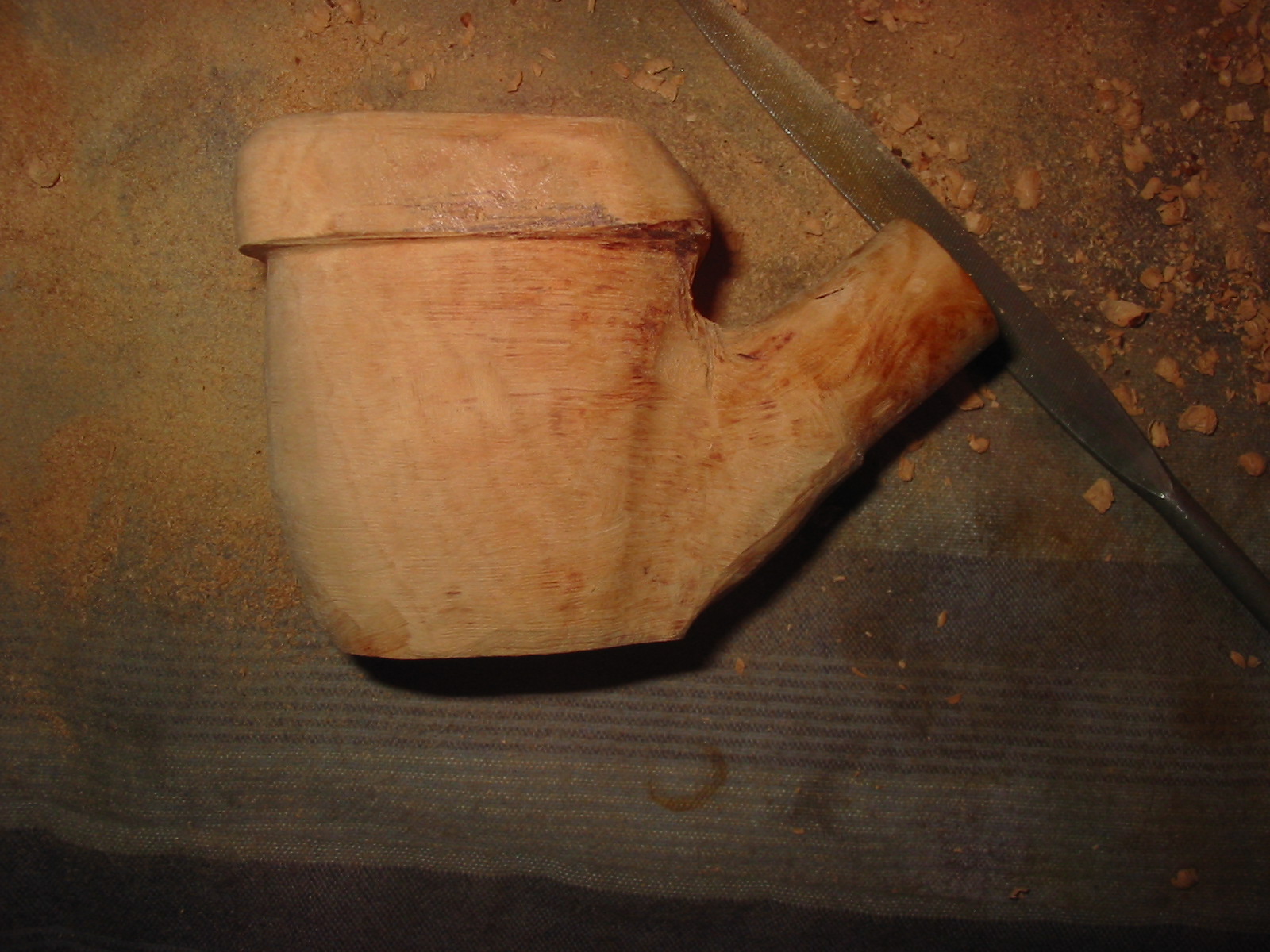
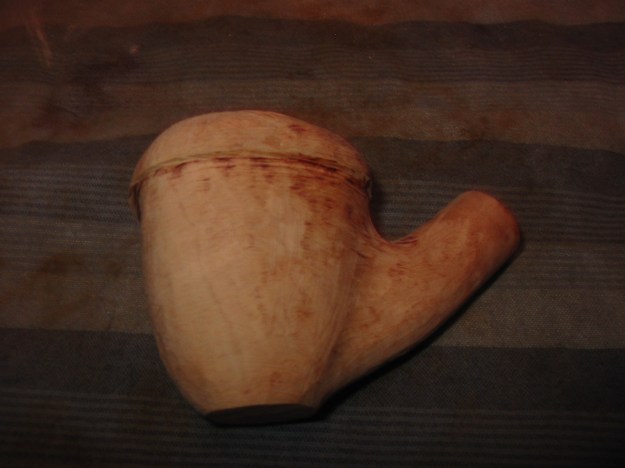
I worked on defining the shape of the bowl and differentiating the shank from the bowl. I continued to use the Dremel and sanding drum to taper the bowl and further define the shank/bowl junction. I also used it to increase the depth of the line between the cap and the body of the acorn as well as the curves of the cap. I was trying to shape the curves to resemble a meerschaum cup in a calabash.
IMG_7042

IMG_7043

IMG_7044

IMG_7045
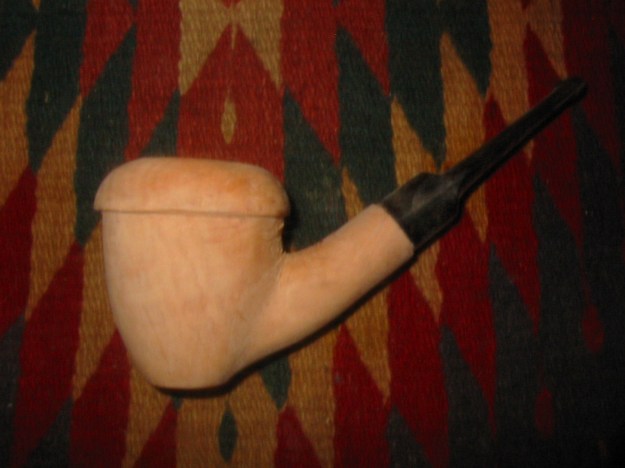
I worked on the block with 100 grit sandpaper to further refine the angles and shape. I used a sharp knife to clean up the shank and bowl junction and give it even a clearer definition.
IMG_7046

IMG_7049
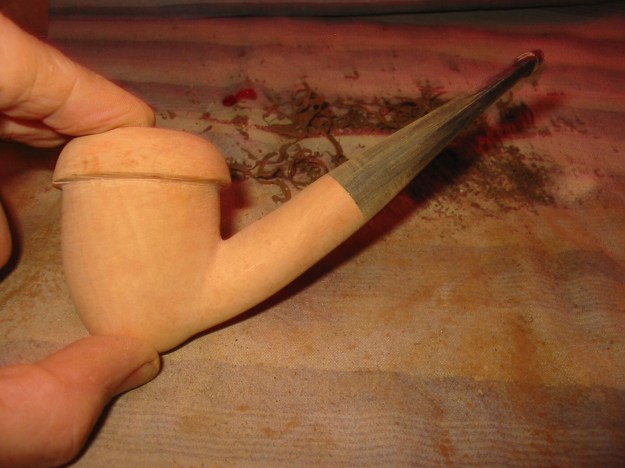
Before I took down more of the thickness of the shank I decided to make a new stem for the pipe. I wanted to get rid of the 9mm stem and put a tapered stem on the shank instead of the saddle stem. I turned the tenon with a PIMO tenon turning tool on a cordless drill and then hand fit it to the mortise. Once I had a good fit I sanded the shank and stem to get a smooth transition between the two materials. I used 100 grit sandpaper and then 220 grit to smooth it out. I continued to take down the taper on the bowl and round out the bottom of the bowl and the edges around the cap with the 100 grit and 220 grit sandpaper. The bowl was starting to take shape at this point in the process. It was still too thick to my liking and the cap was too blocky. A lot more sanding waits for me.
IMG_7050

IMG_7051

IMG_7052
I used the Dremel and sanding drum to remove more of the briar and then hand sanded with the 100 grit sandpaper to further refine the shape. I used a sanding wedge to work on the angle at the junction of the shank and bowl and clean up the carving marks. I also want to flatten the bottom of the bowl slightly and minimize the dip at the shank and bowl on the bottom.
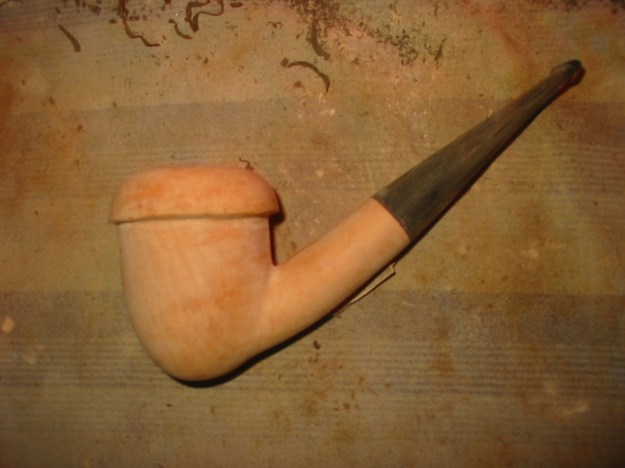
IMG_7053

IMG_7054

IMG_7056
I continued to remove diameter from the shank and also work on the bottom of the bowl to give it a more rounded look and feel. I used 100 grit sandpaper to work on these areas. I sanded the stem as well to keep the taper and flow even between the two materials. I also sanded the curve on the cap to makes the angles less sharp.
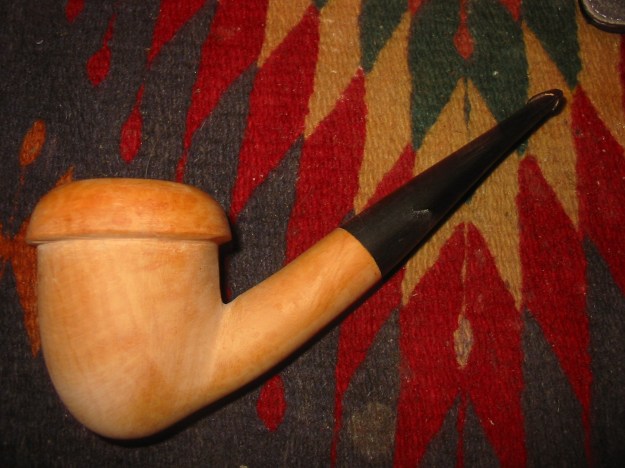
IMG_7057
I used a heat gun to heat the stem and bent it over an old rolling pin I use for bending stems. I wanted the angle of the stem to approximate the angle of the curve on the bottom of the bowl so I needed to do a bit more sanding on the bowl. The next three photos show the progress on reducing the point on the bottom of the bowl.
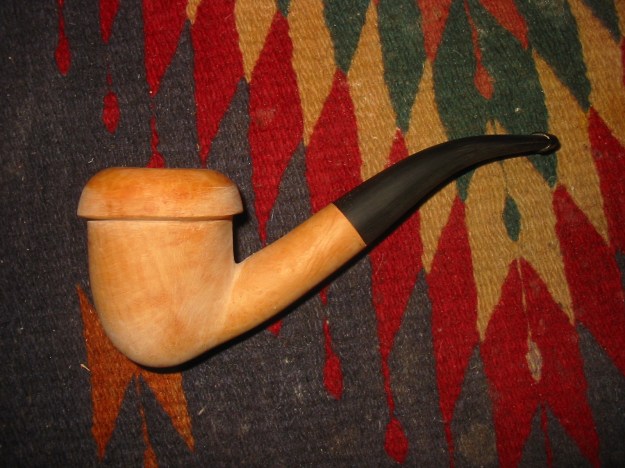
IMG_7058

IMG_7061

IMG_7062
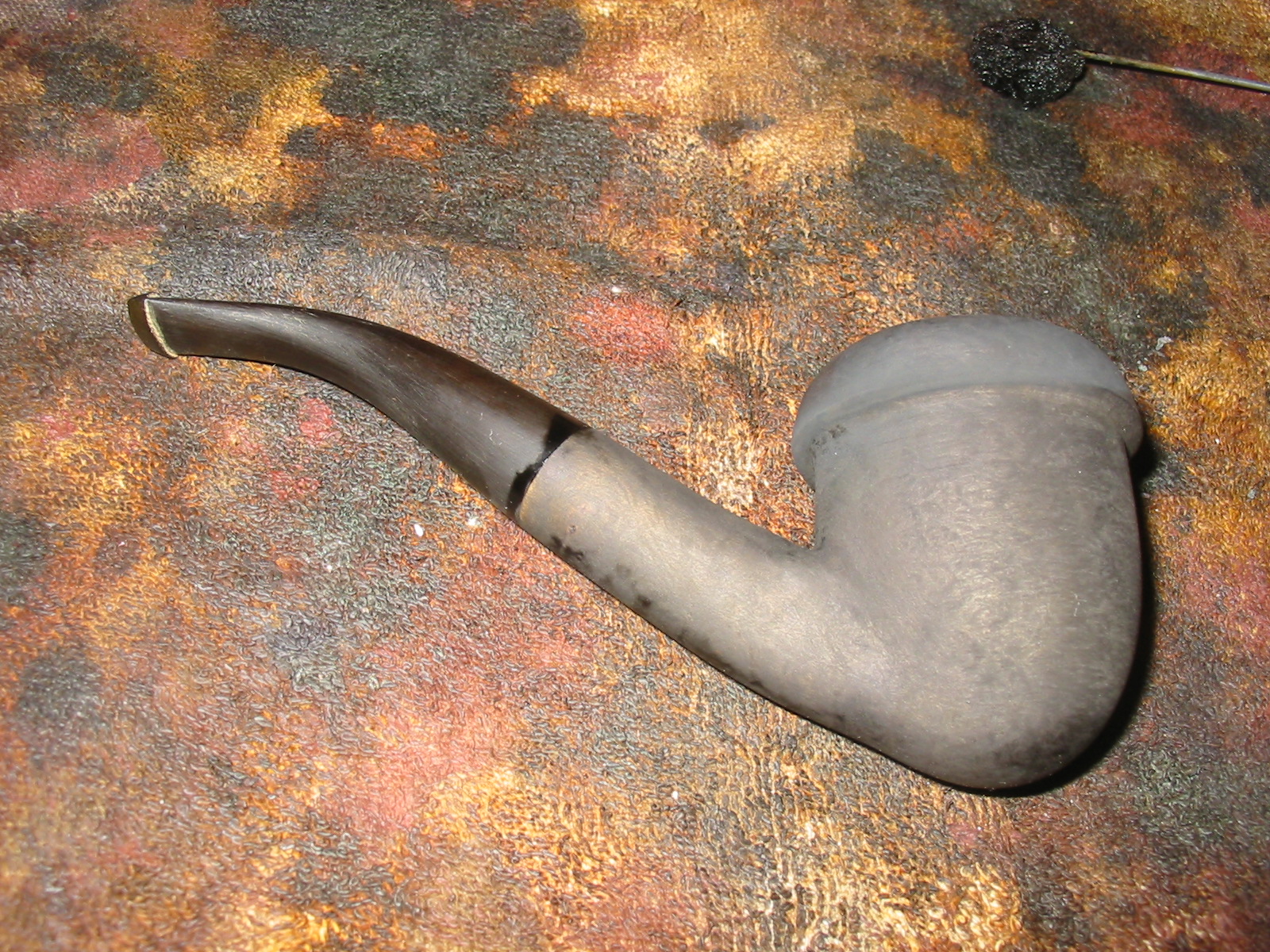
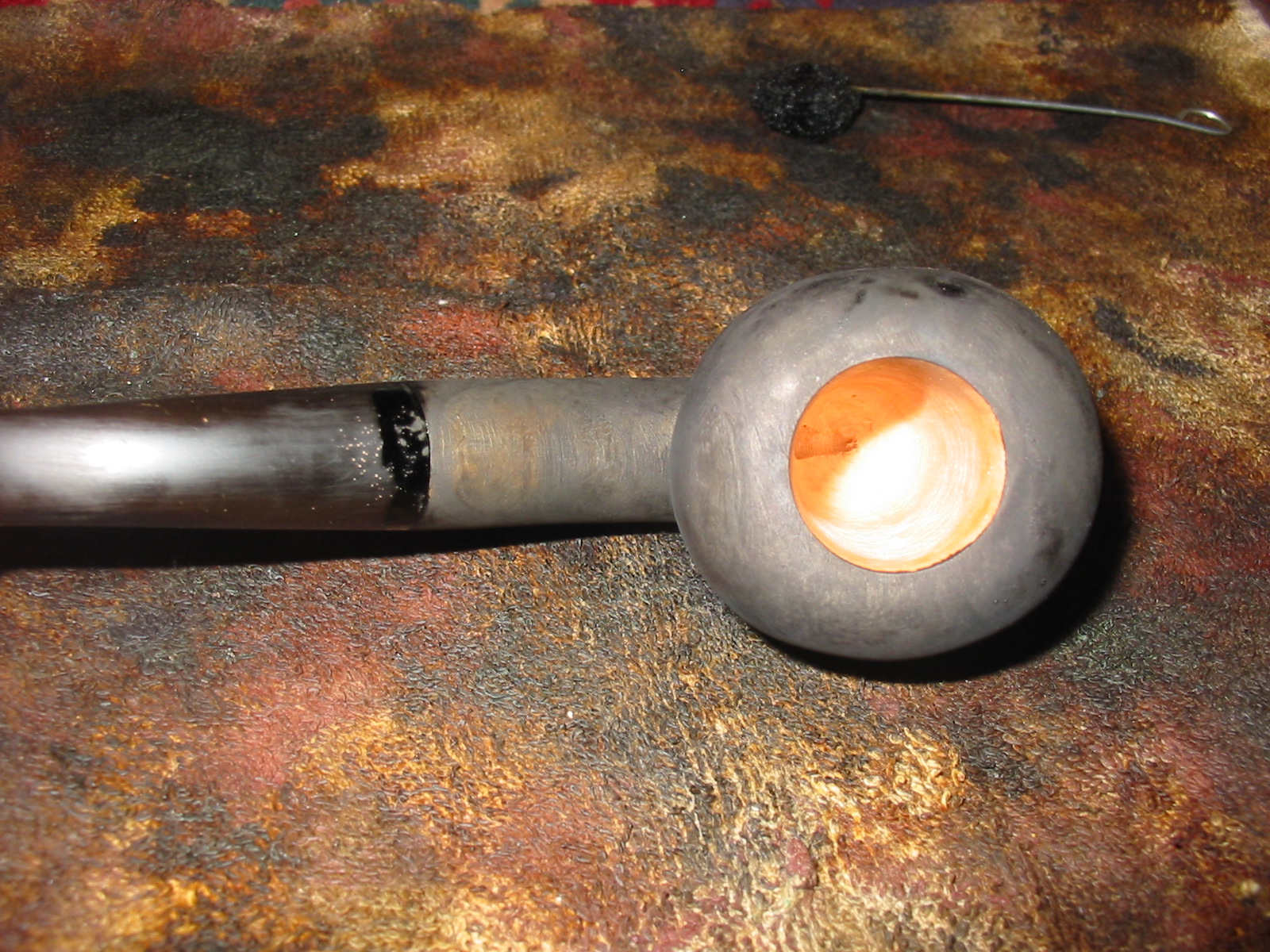
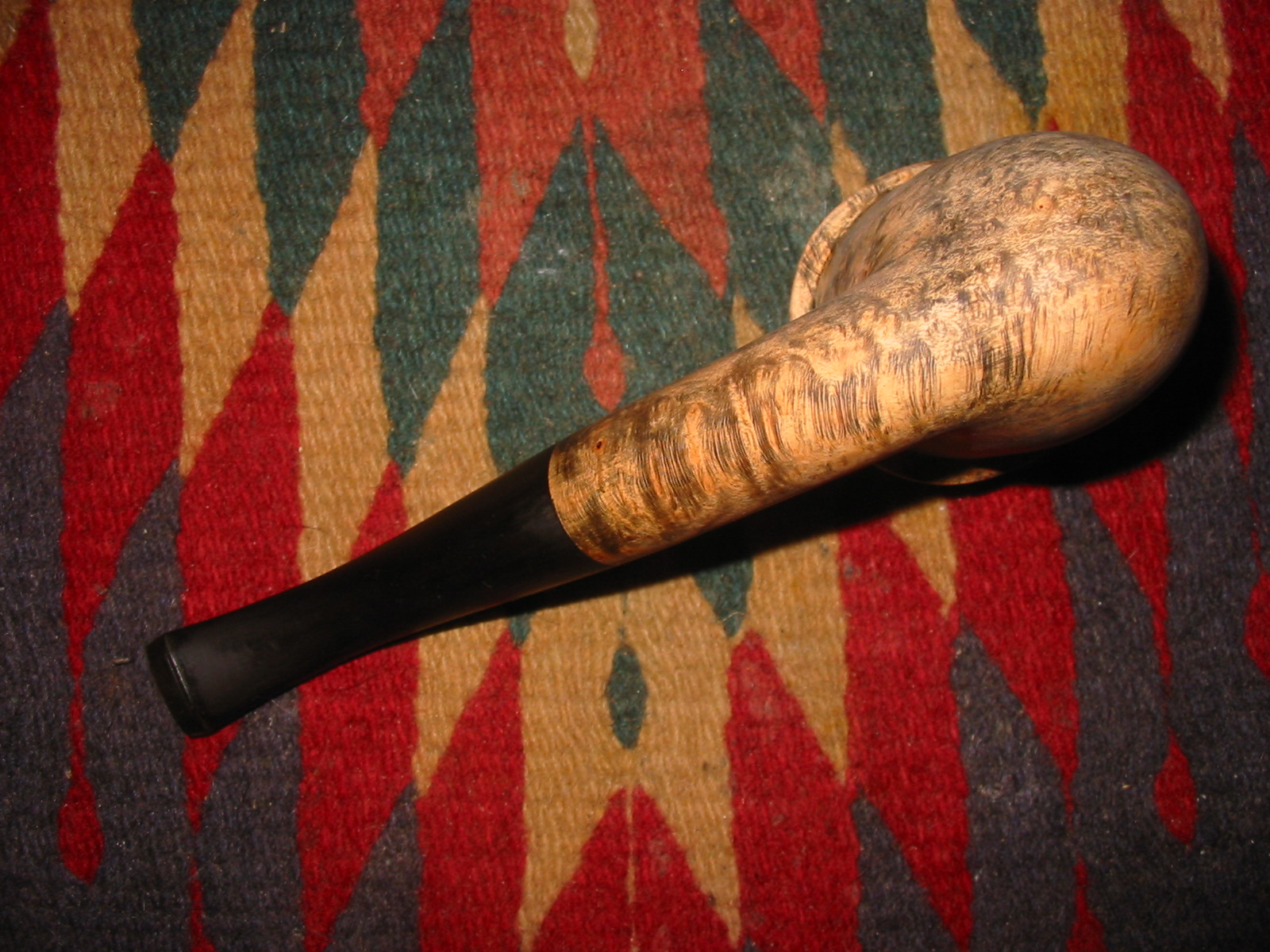
I decided to give the bowl a black under stain to highlight the grain. The right side of the bowl and shank had some great birdseye grain and the top and bottom of the shank had cross grain. The left side of the bowl had a mixed grain pattern but it was still quite nice. The black stain would permeate the grain and make it stand out. I heated the briar with the heat gun and applied a coat of black stain, flamed it and reapplied it repeating the pattern until the coverage was even. Once it had dried I wiped it down with acetone on cotton pads to remove the stain from the harder briar where it had not gone into the grain.
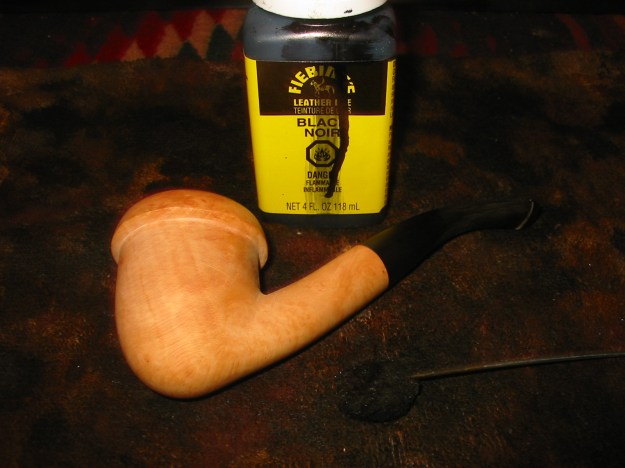
IMG_7065

IMG_7066

IMG_7067
I sanded the bowl with a medium grit sanding pad to remove more of the stain and to help highlight the contrast between the grain and the lighter portions of the briar. I buffed it with red Tripoli. The photos below show the bowl as it stood after the buffing. There was still sanding to do to remove the dark scratch marks in the finish and further remove the black stain.
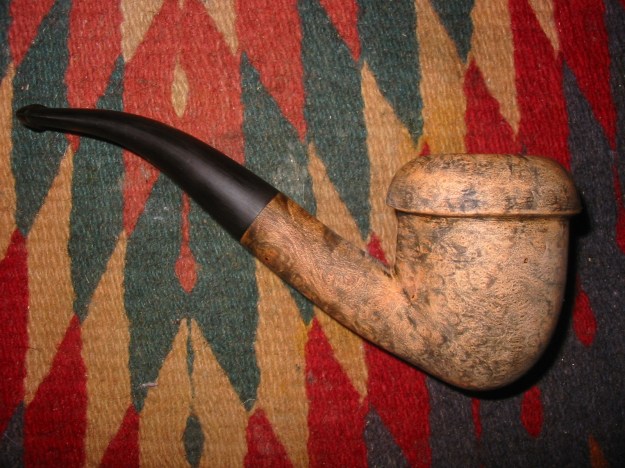
IMG_7074

IMG_7075

IMG_7076

IMG_7077
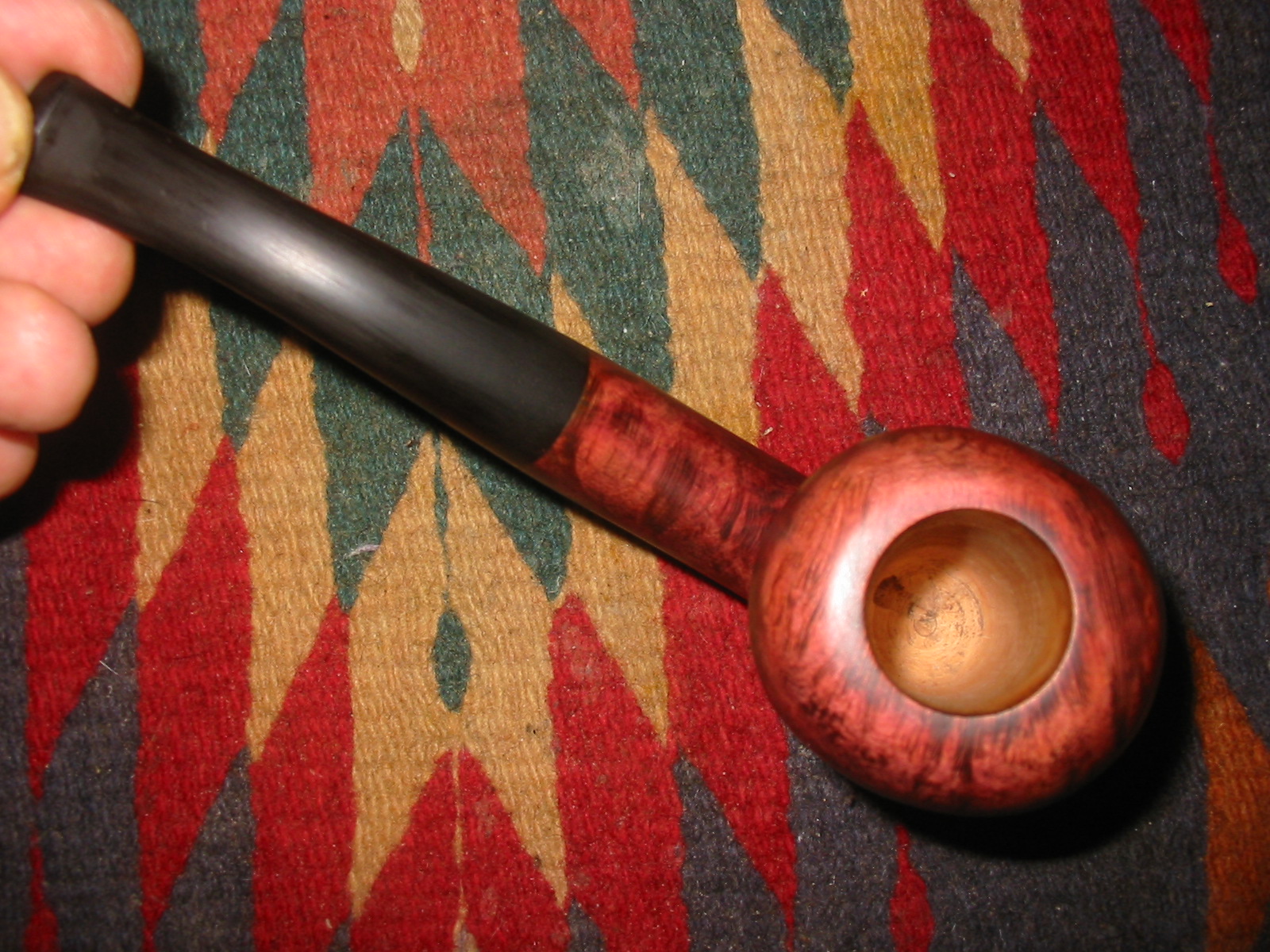
I wanted to add to the contrast of the grain so I stained the pipe with oxblood aniline stain and then buffed it with White Diamond. The contrast was evident and the grain stood out nicely against the second coat of stain but it was just too red for my liking. I wanted more of a reddish brown colour than the red it was after the stain.
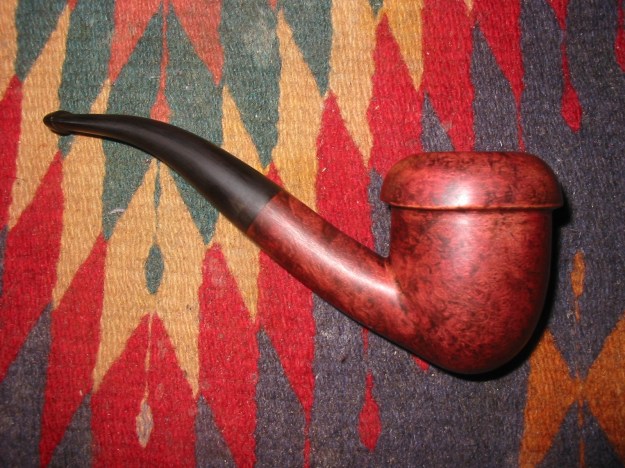
IMG_7079

IMG_7080

IMG_7081

IMG_7082
I rubbed bowl down with a cherry stain to lighten the red. It was still too red for me. The pipe in the photo below shows the cherry stain over coat on the oxblood.
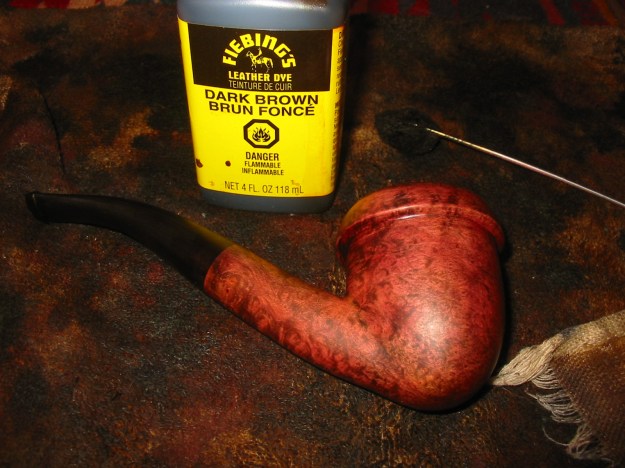
IMG_7083
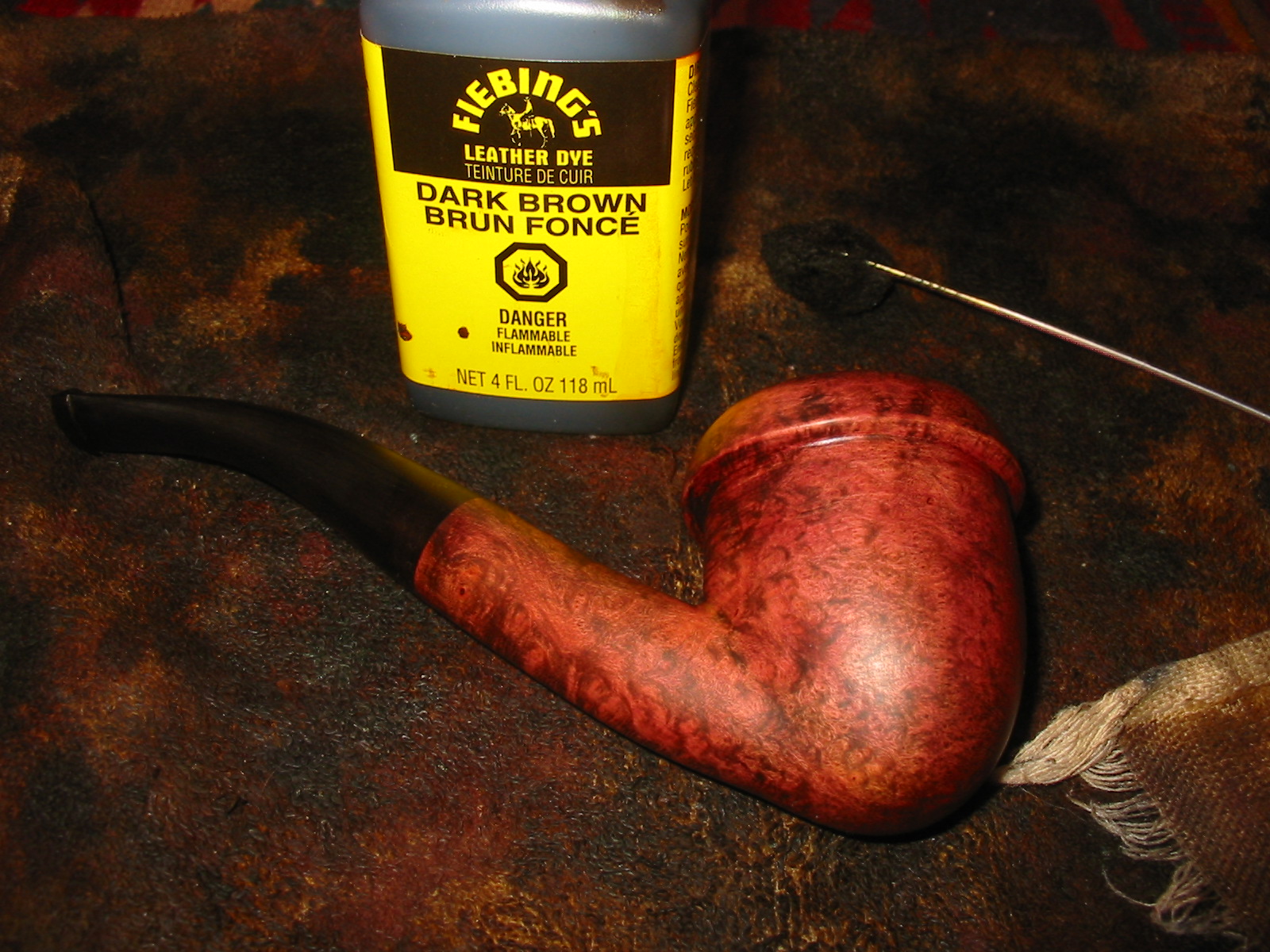
I decided to add a coat of dark brown stain to the bowl and give it a deeper, richer colour. I applied the dark brown stain and flamed it, reapplied, flamed it again and then buffed the bowl with White Diamond to polish it and make it more transparent. I wanted the grain to pop through the finish but I wanted it to be less obtrusive than the above photos.
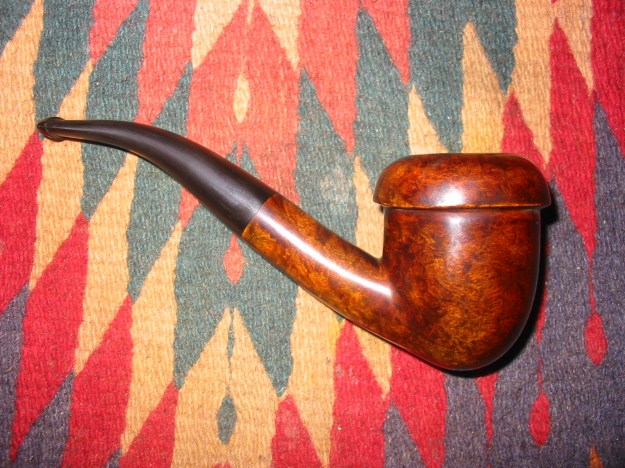
IMG_7090

IMG_7091

IMG_7092

IMG_7093
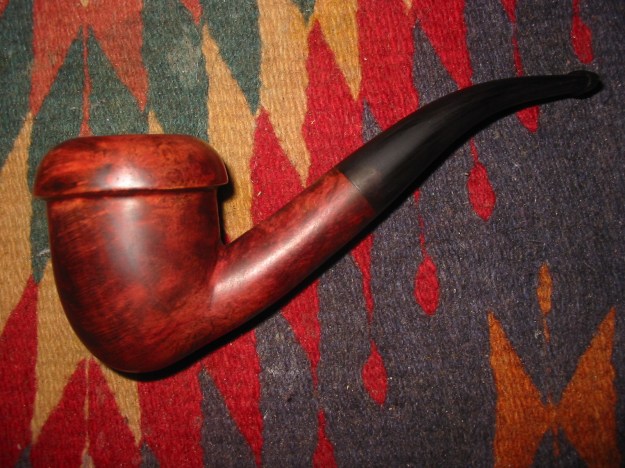
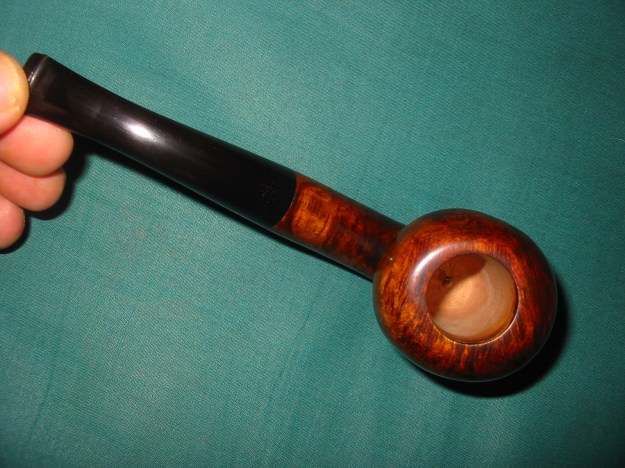
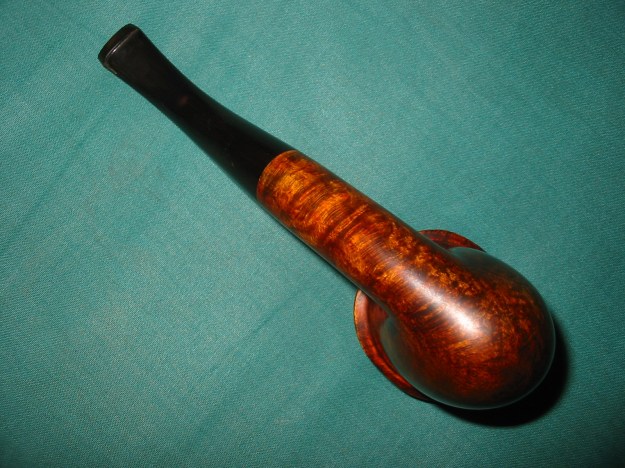
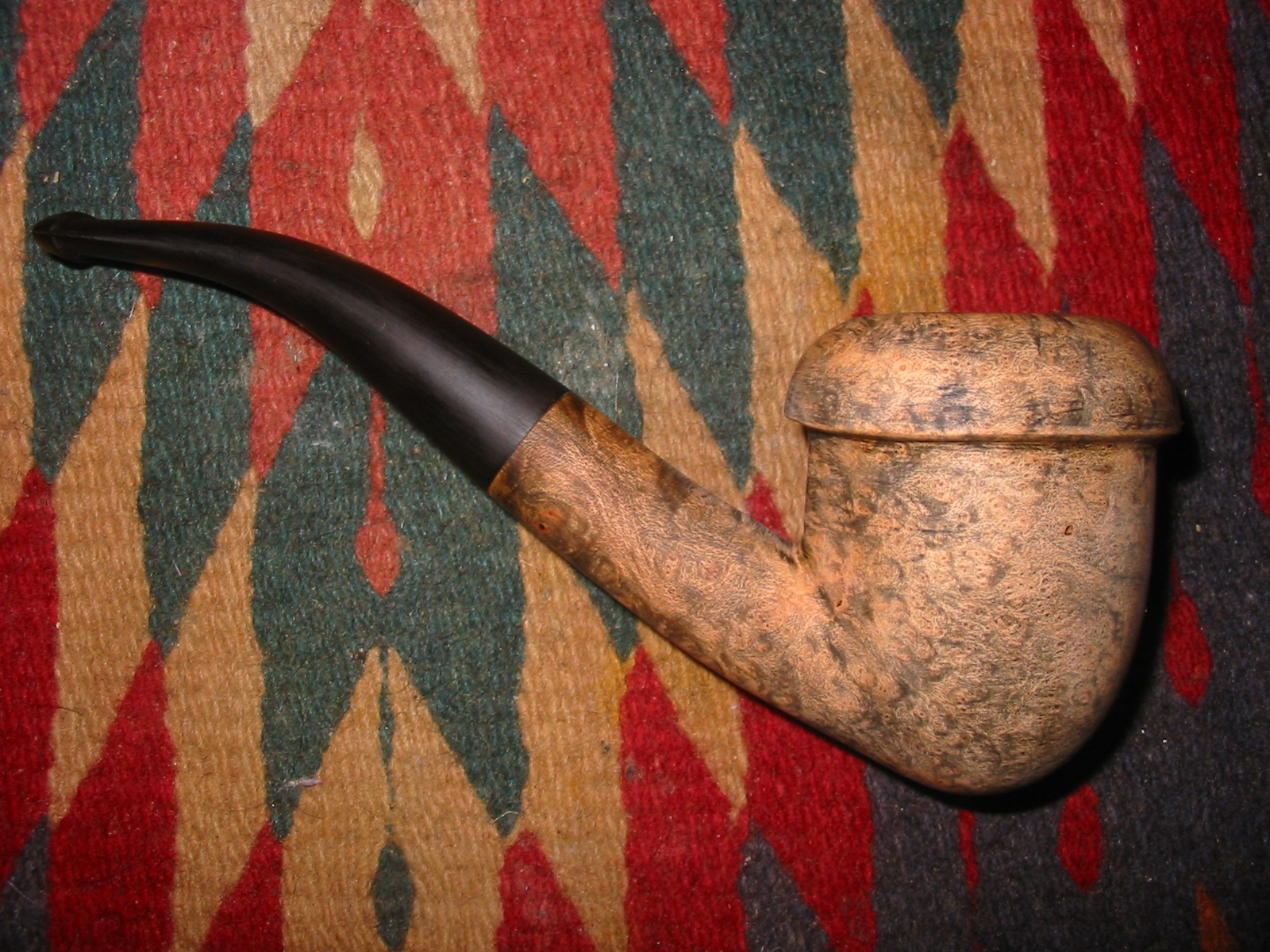
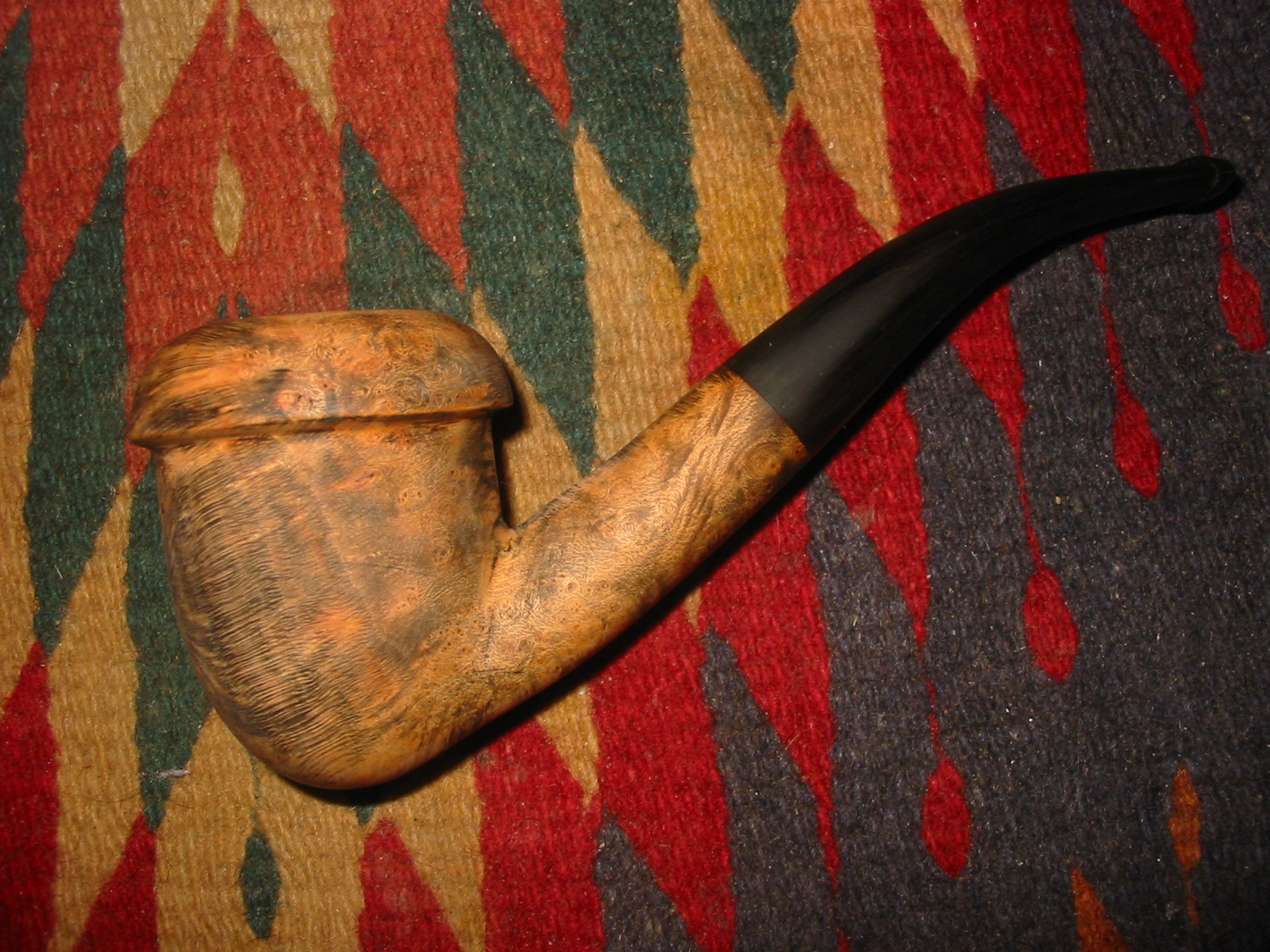
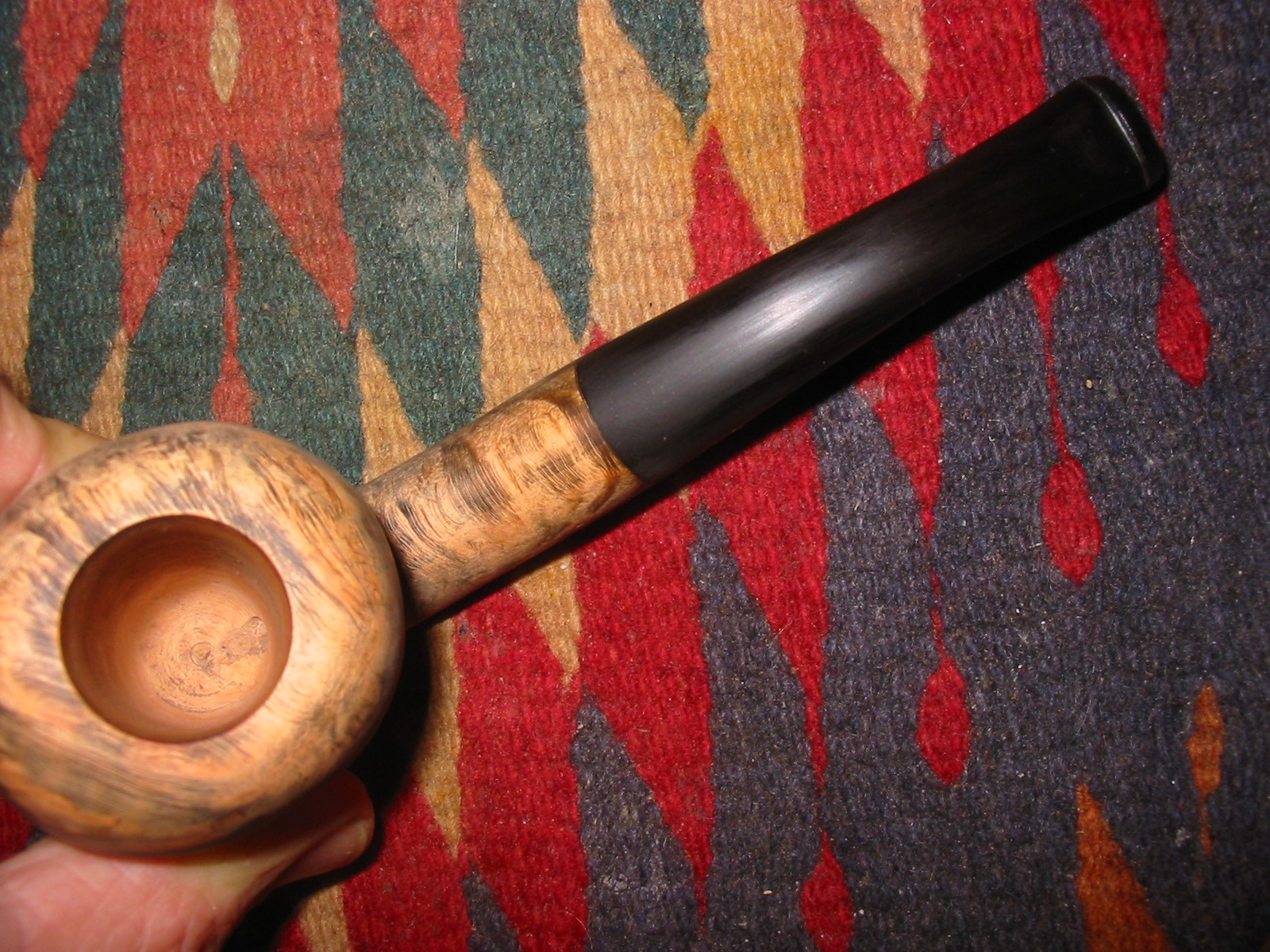
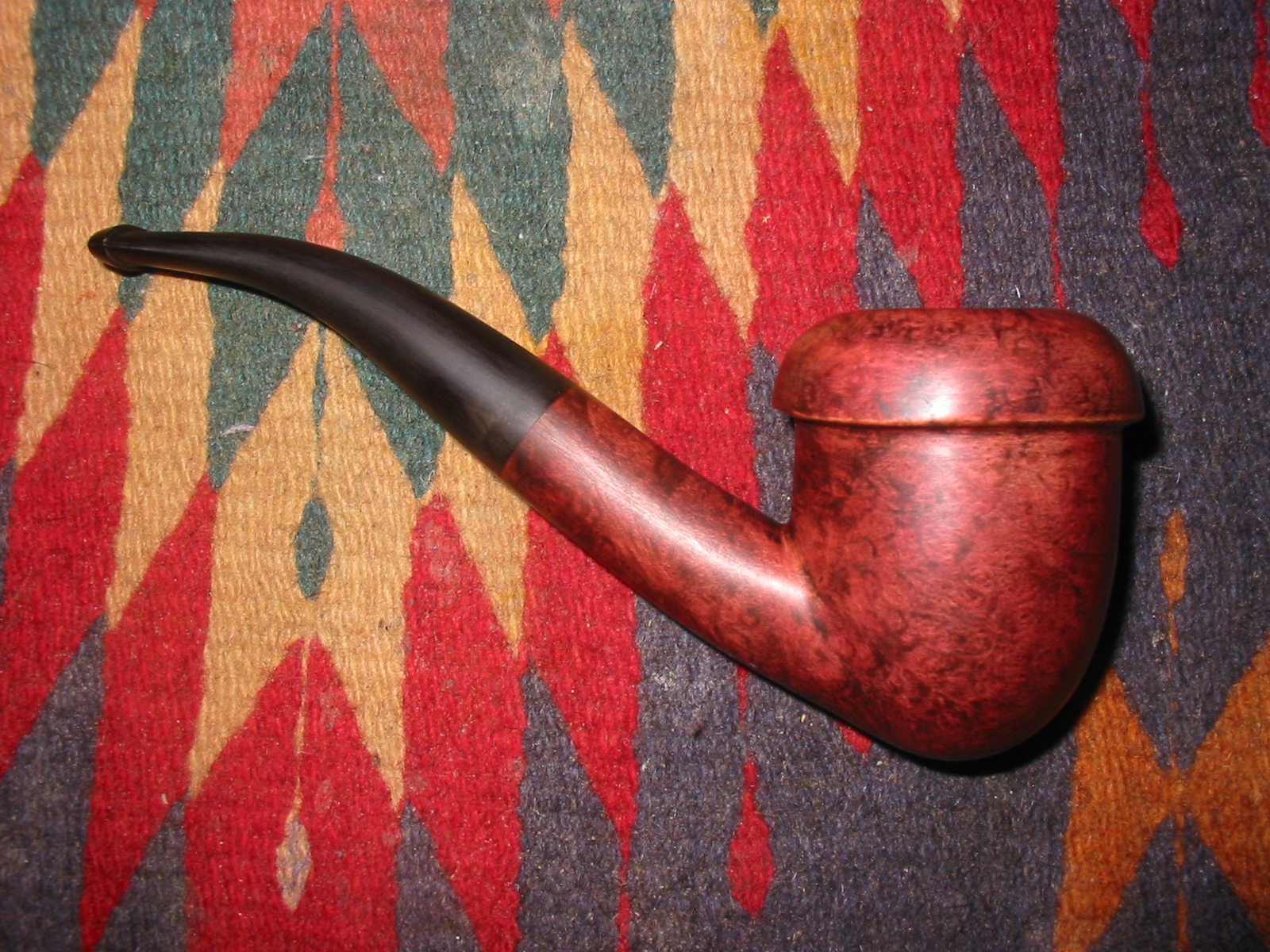
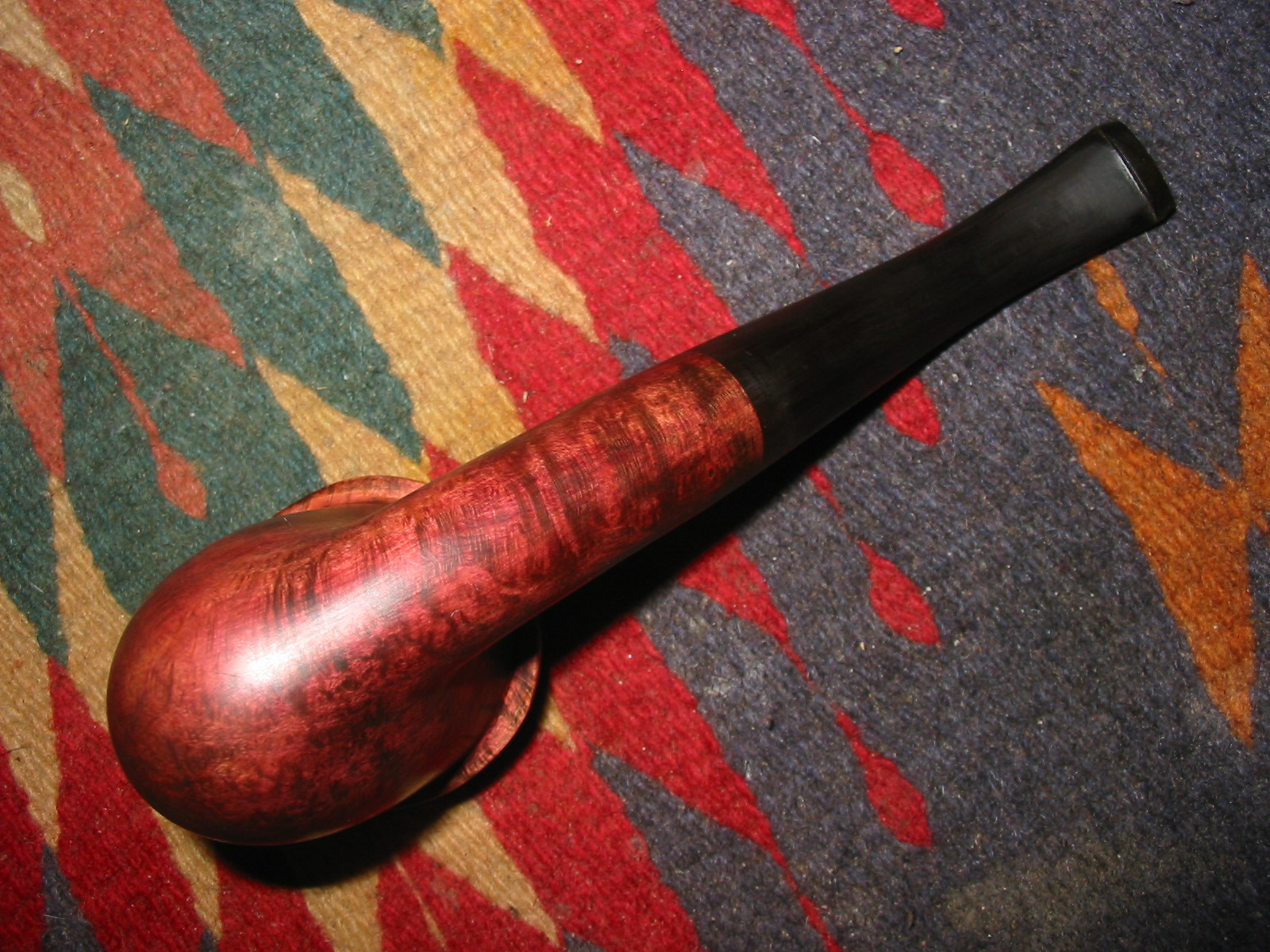
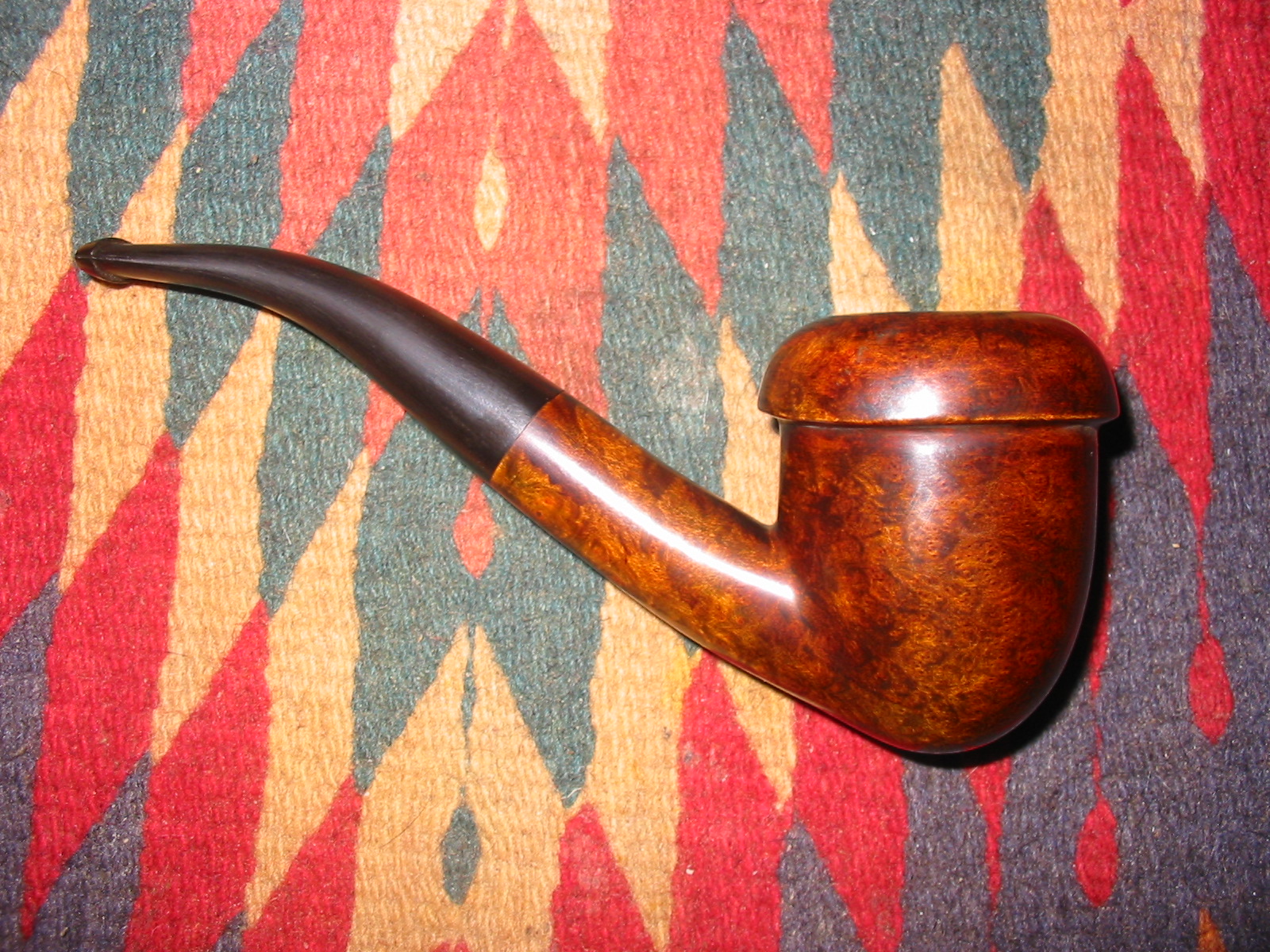
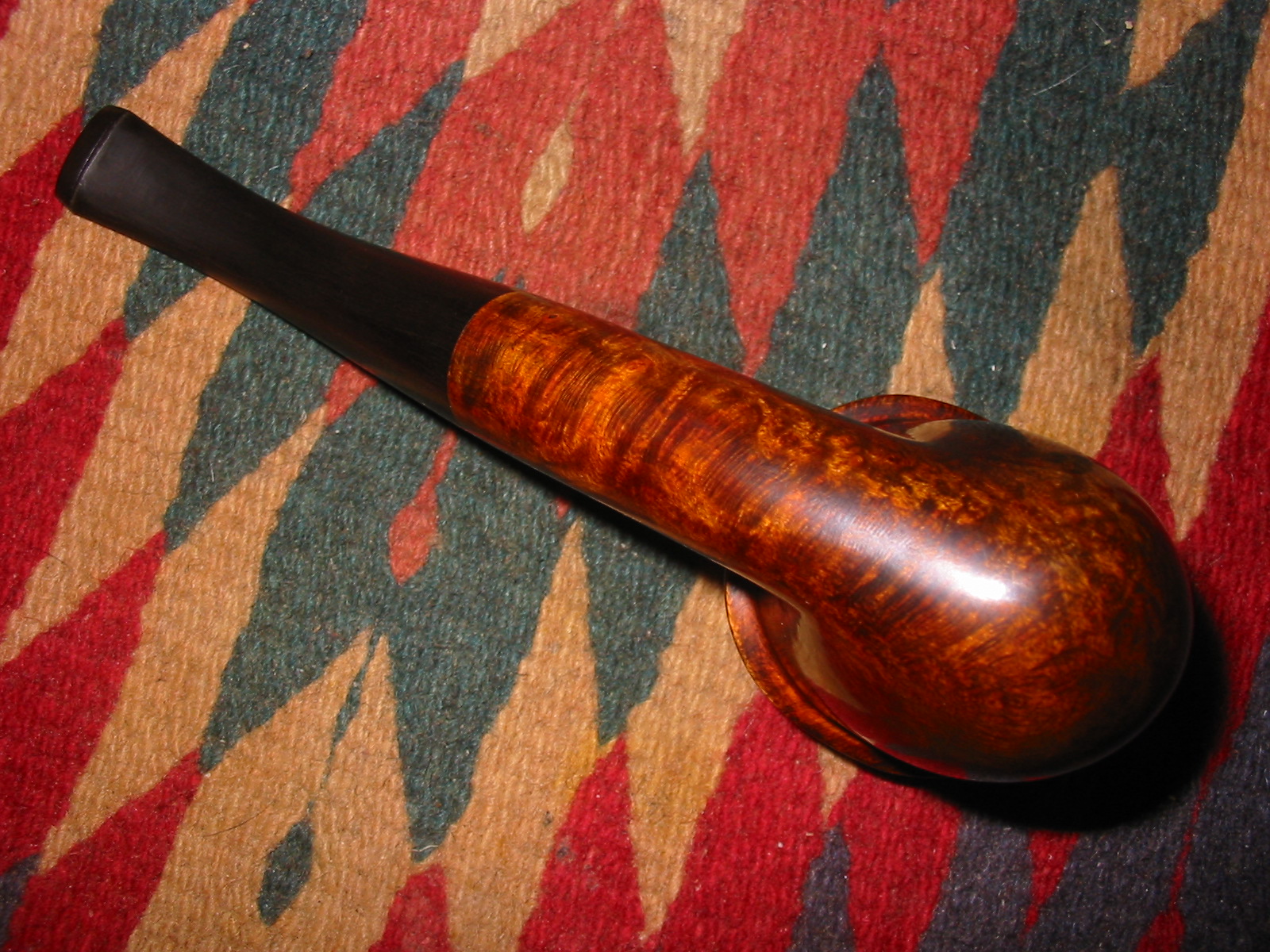
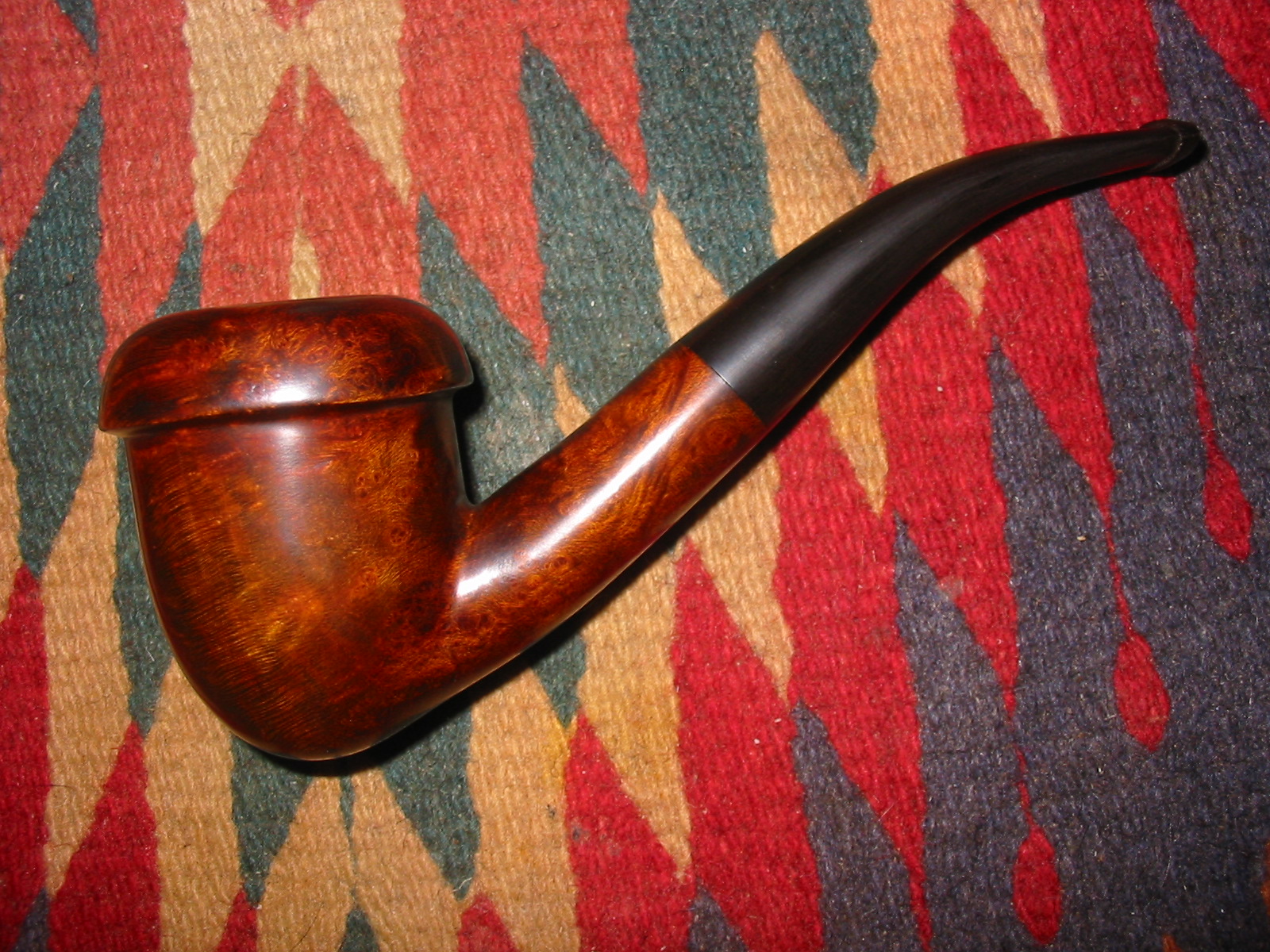
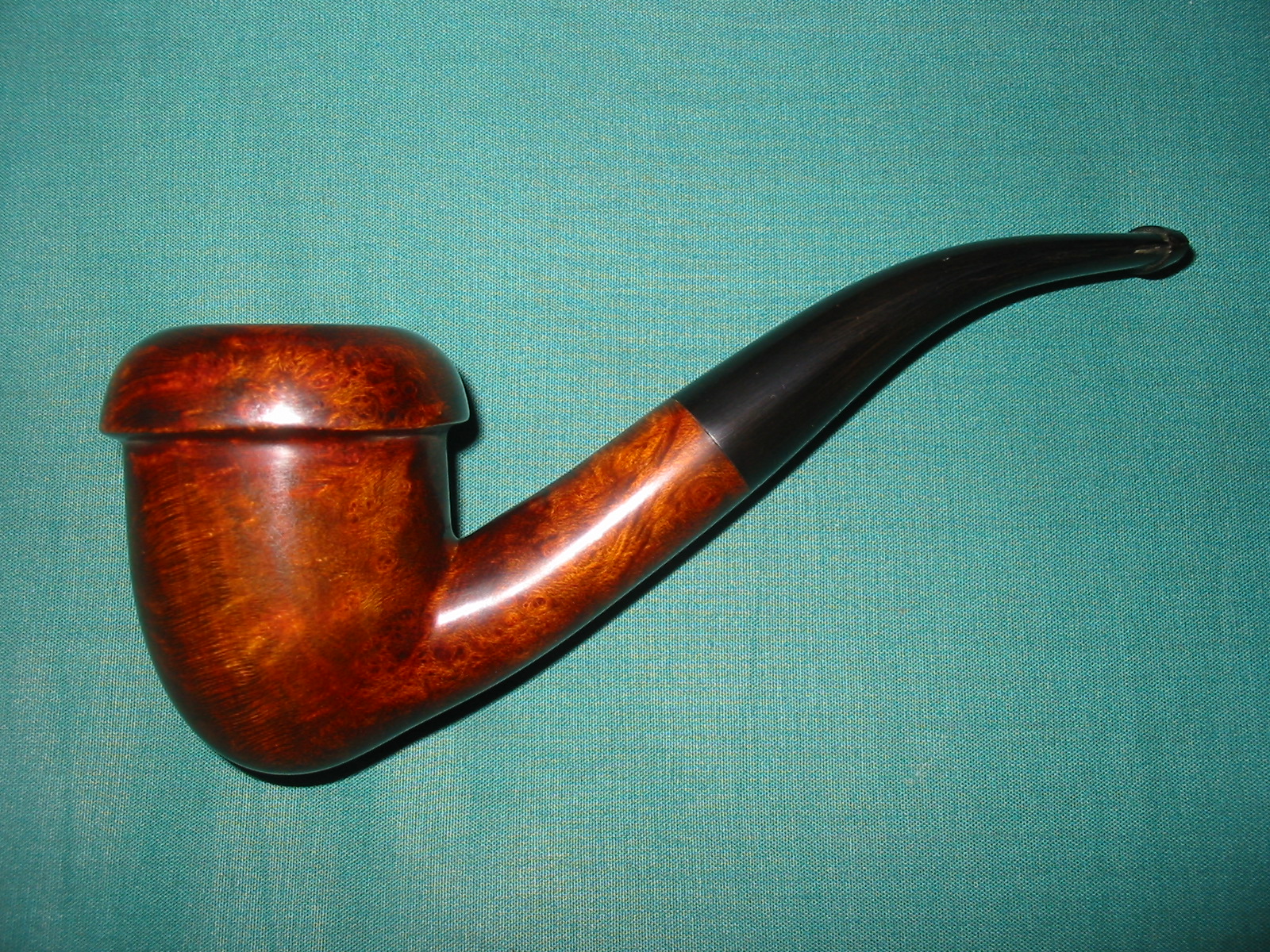
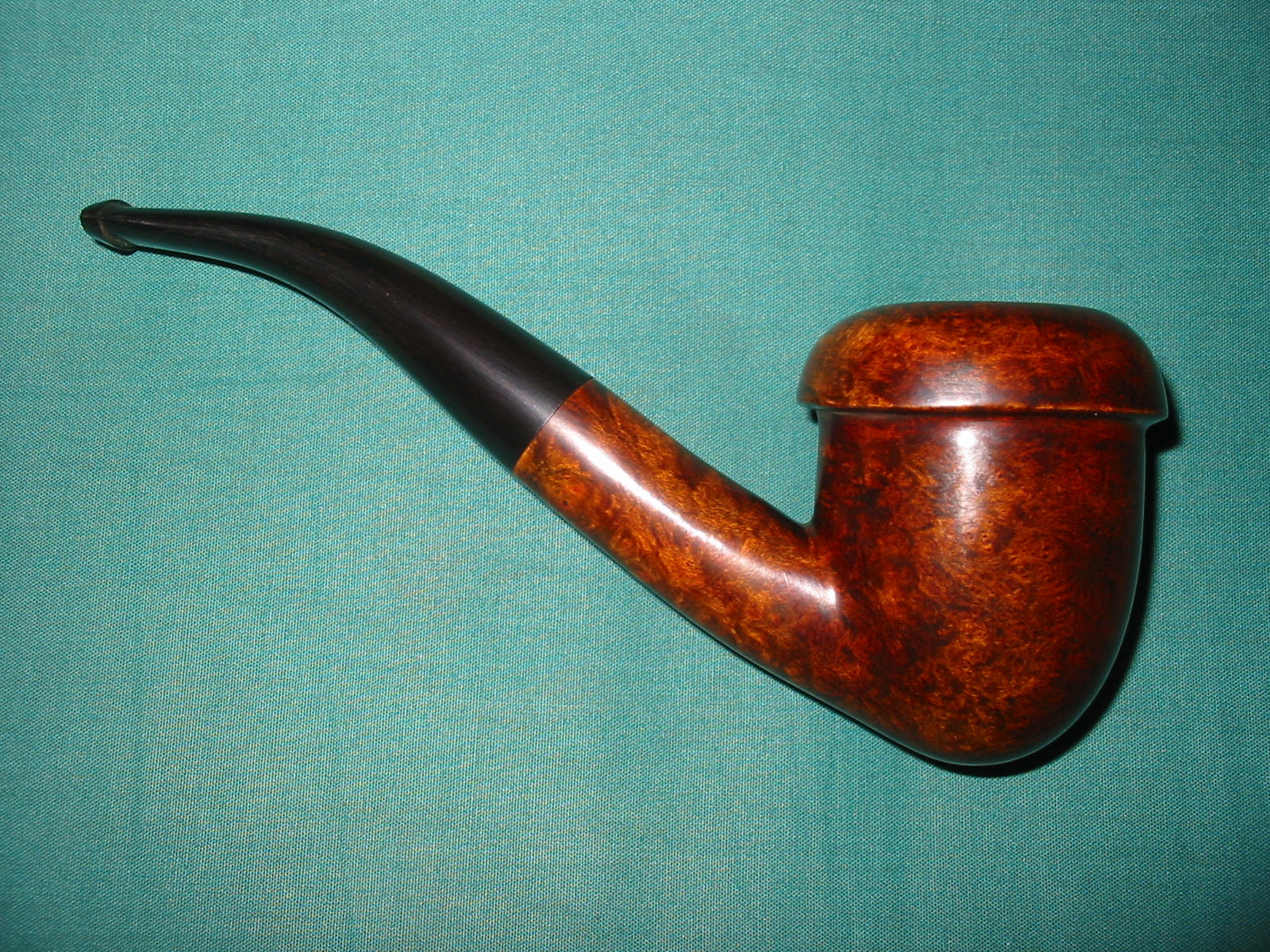
I sanded the bowl with micromesh sanding pads using 3200-6000 grit pads to even out the dark and light portions. I also wanted to polish the finish more before calling it finished. I buffed the bowl with White Diamond and gave it several coats of carnauba wax to give a shine. I polished the stem with the micromesh pads – wet sanding with 1500-2400 grit pads and dry sanding with 3200-12,000 grit pads. I rubbed the stem down with Obsidian Oil and when dry I buffed the pipe with White Diamond. I gave the bowl and stem multiple coats of carnauba wax, buffing with a soft flannel buff between applications of wax. The finished pipe is shown below. (However, there is one disclaimer – with any pipe I have made in the past I have always gone back after a time and changed the look. The odds are thus quite high that I will modify this one as well somewhere down the road.)
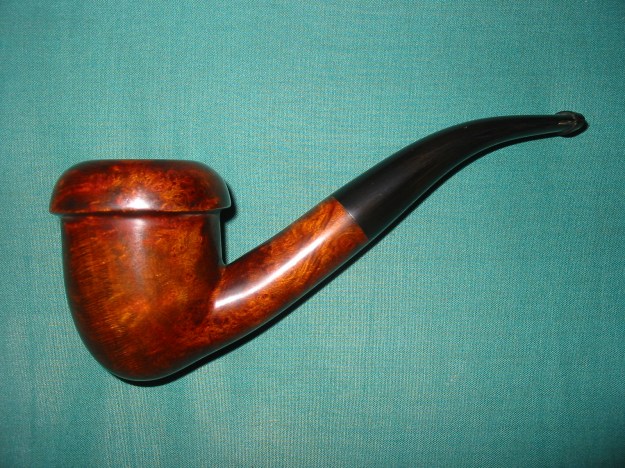
IMG_7094

IMG_7095

IMG_7096

IMG_7097
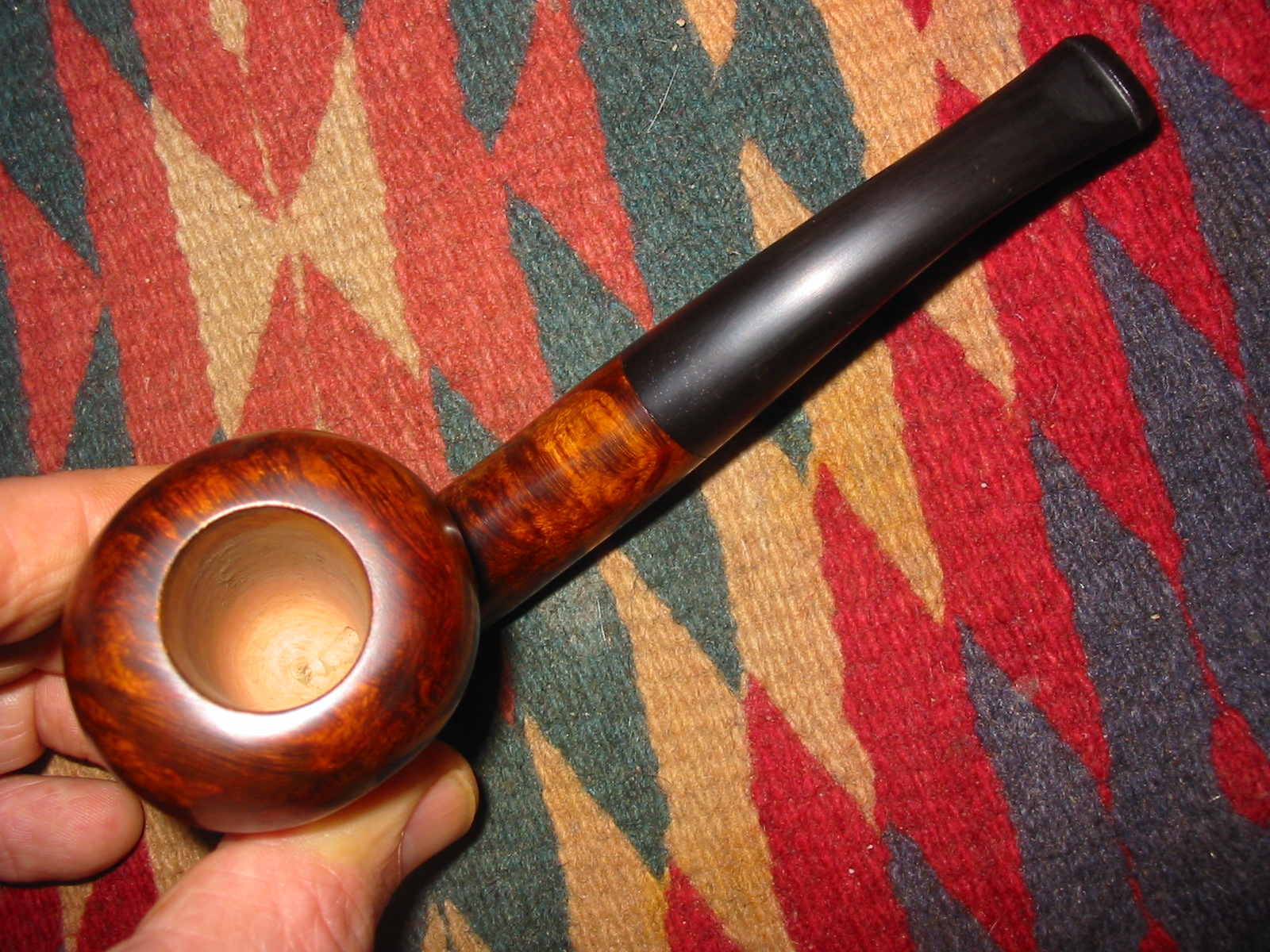
I took the new pipe with me to work yesterday and planned to take a walk and fire it up at my lunch hour. It actually worked out that I did just that! I packed a bowl of Hearth and Home Louisiana Red and enjoyed a good walk and contemplative time. The bowl got warm but not hot, the draw was very good and the feel in the hand and mouth was comfortable. It is bigger than the pipes I usually smoked but surprisingly it is not very heavy.

Thanks for taking the journey with me from block of briar to pipe.

Black Superglue Experiments – Joyal Taylor (aka holymolar)


Blog by Joyal Taylor

I have been waiting for this article since the product was mentioned on Pipe Smokers Unlimited Forums. Mark Domingues (who contributes on the blog) and Joyal both ordered the powder to try out. Both said they would experiment with it and report back. Joyal spoke with Mark and they agreed that he would post the results of his experiments. I have used Black Super Glue for a long time now in patching tooth marks and bite throughs on stems. I have dealt with the shrinkage and the long curing times and lived with them. Joyal has done all of us a service in doing this experiment and writing up the process and results of his work. Thanks Joyal for taking the time to work through this and document your process. It is well worth a read.

Experiment #1 – Black Superglue with Accelerator:

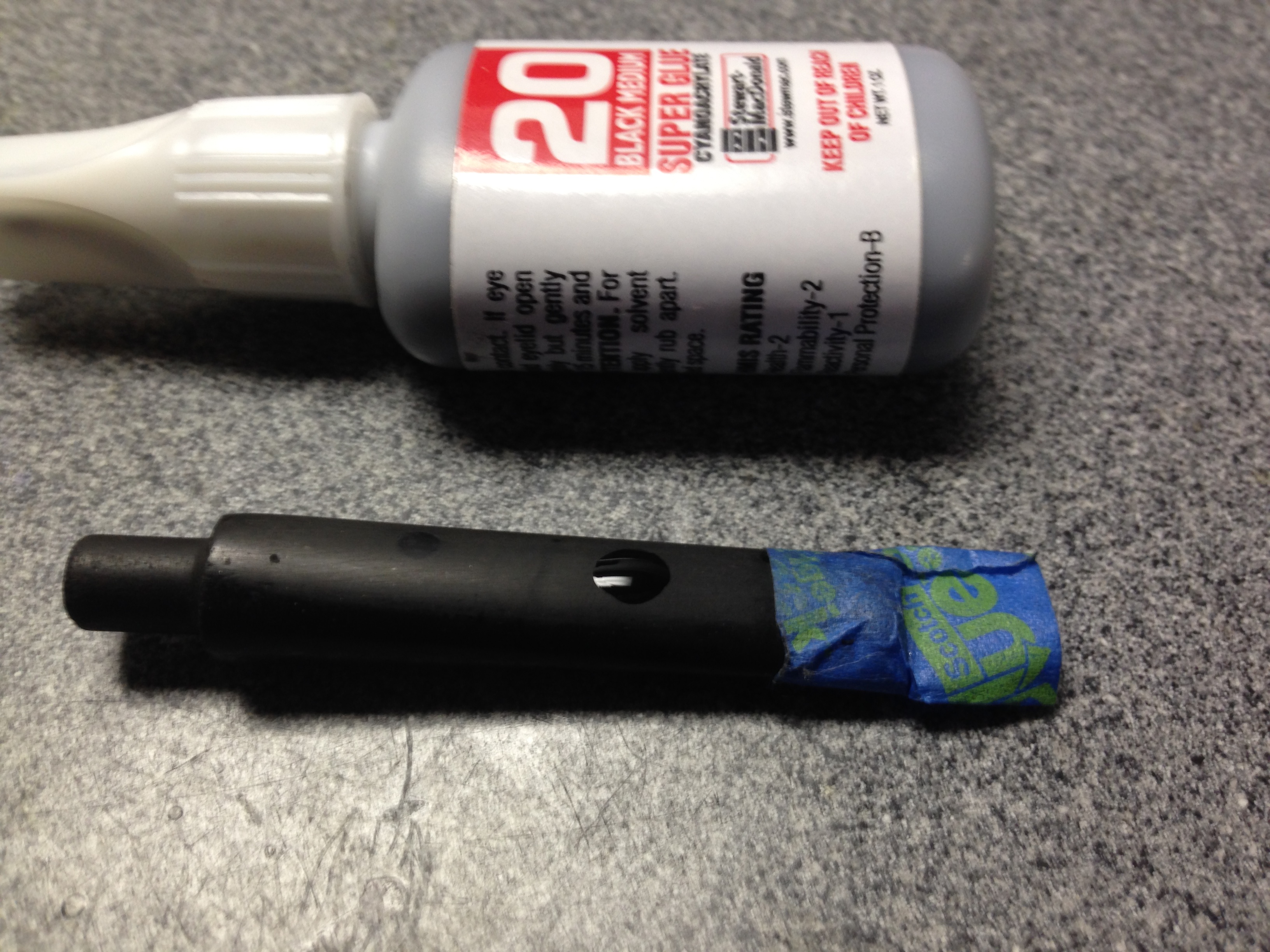
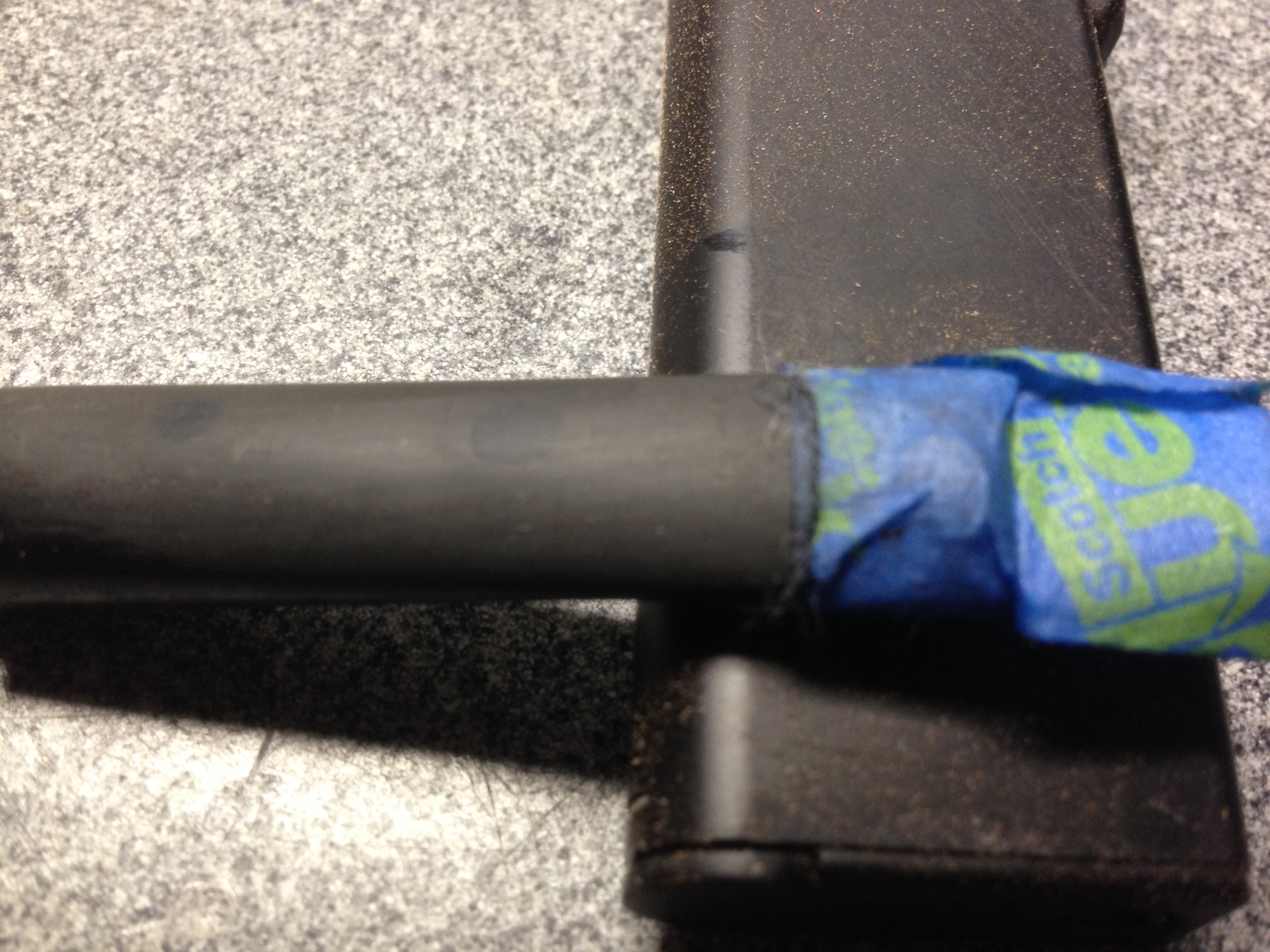
I used a round Dremel bur to cut a divot in a vulcanite stem, to simulate tooth marks.
Photo #1.JPG
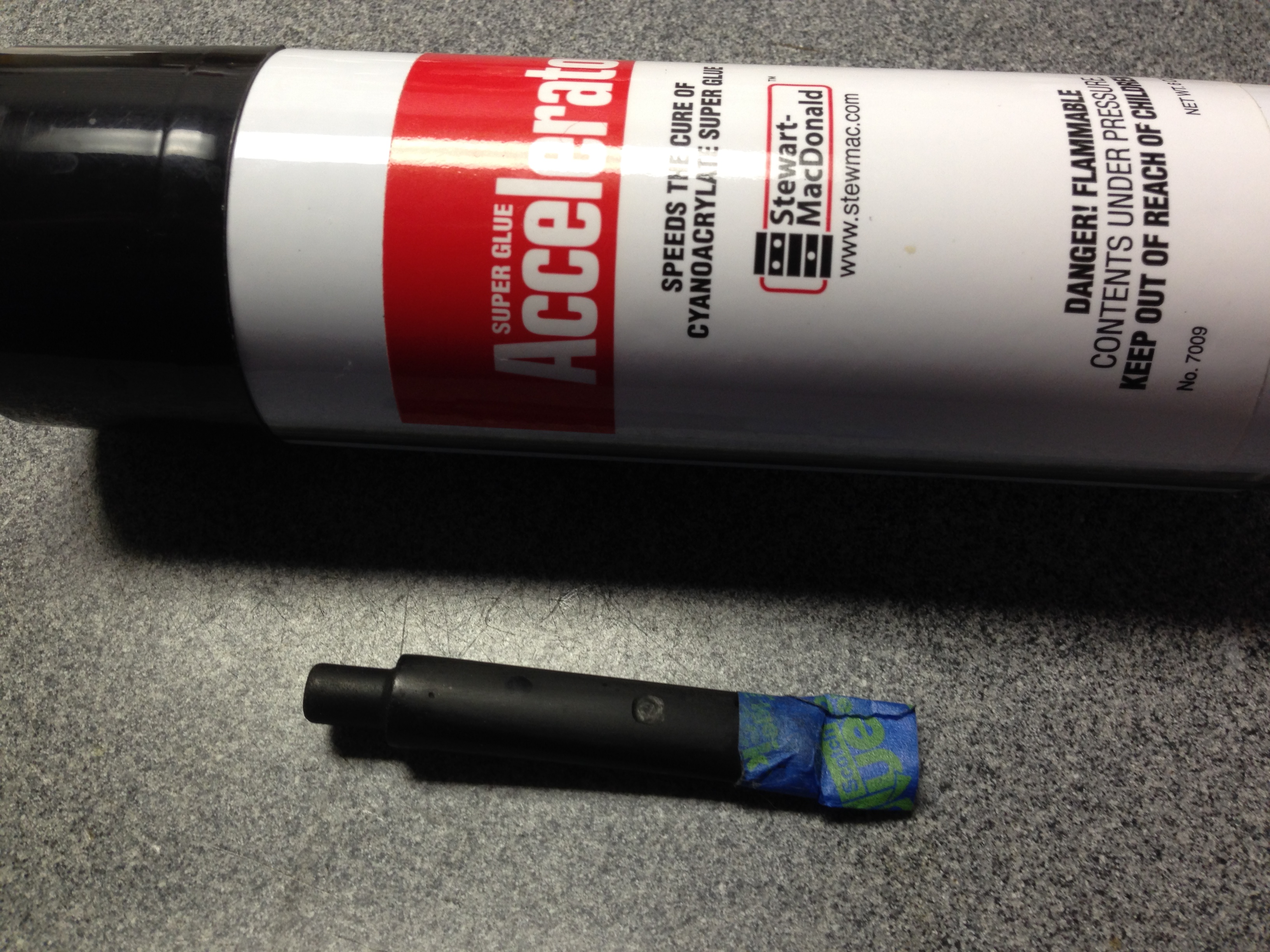
I sprayed the area with accelerator and allowed it to dry for 5 minutes before adding superglue
Photo #2.JPG

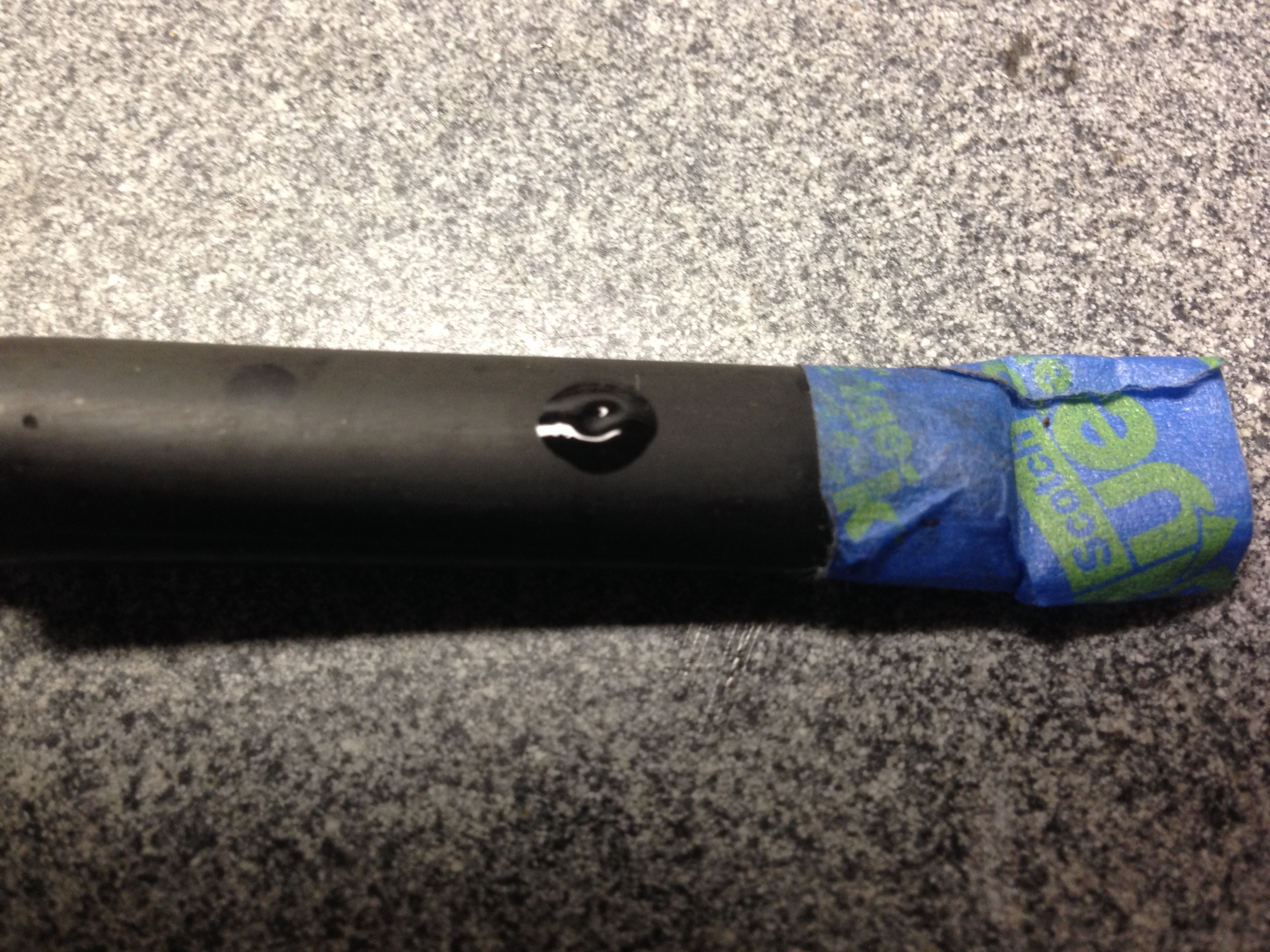
Photo #3.JPG
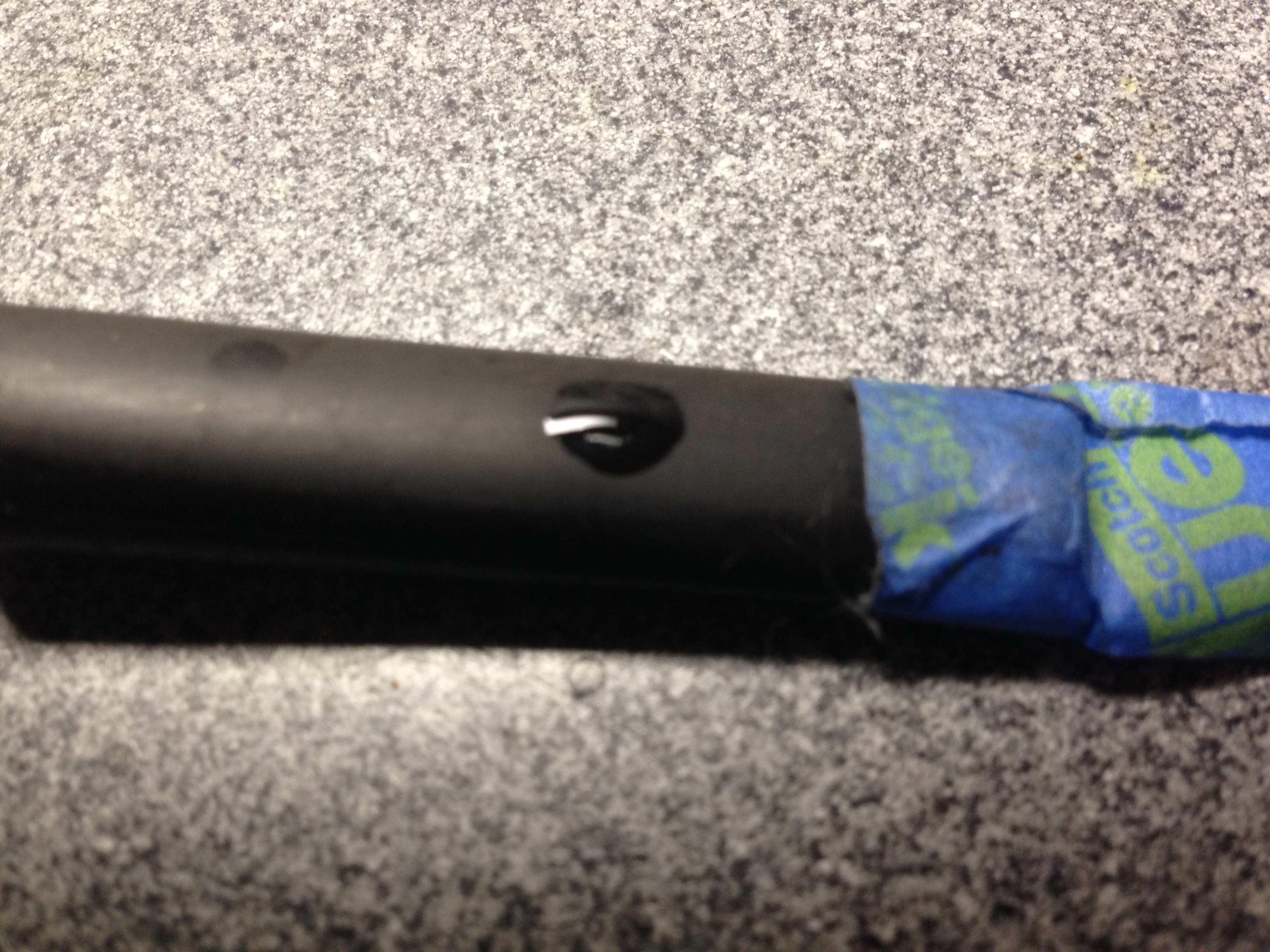
I let the superglue cure for 30 minutes. As expected, the glue shrunk.
Photo #4.JPG
I sprayed more accelerator on the area and added another coat of superglue.
Photo #5.JPG
Then I sanded the patch with wet sandpaper (220 – 600 grit).
Photo #6.JPG
Later, I used micromesh pads (1500 – 12000 grit) and polished with white diamond and carnauba wax. It polished and shined so well that I couldn’t get a decent photo because of the camera flash.

Experiment #2 – Black Superglue with Plastex, as well as Behlen’s Furniture Powder:

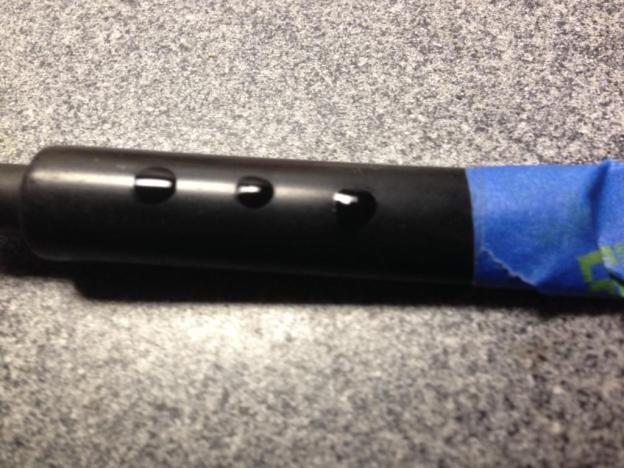
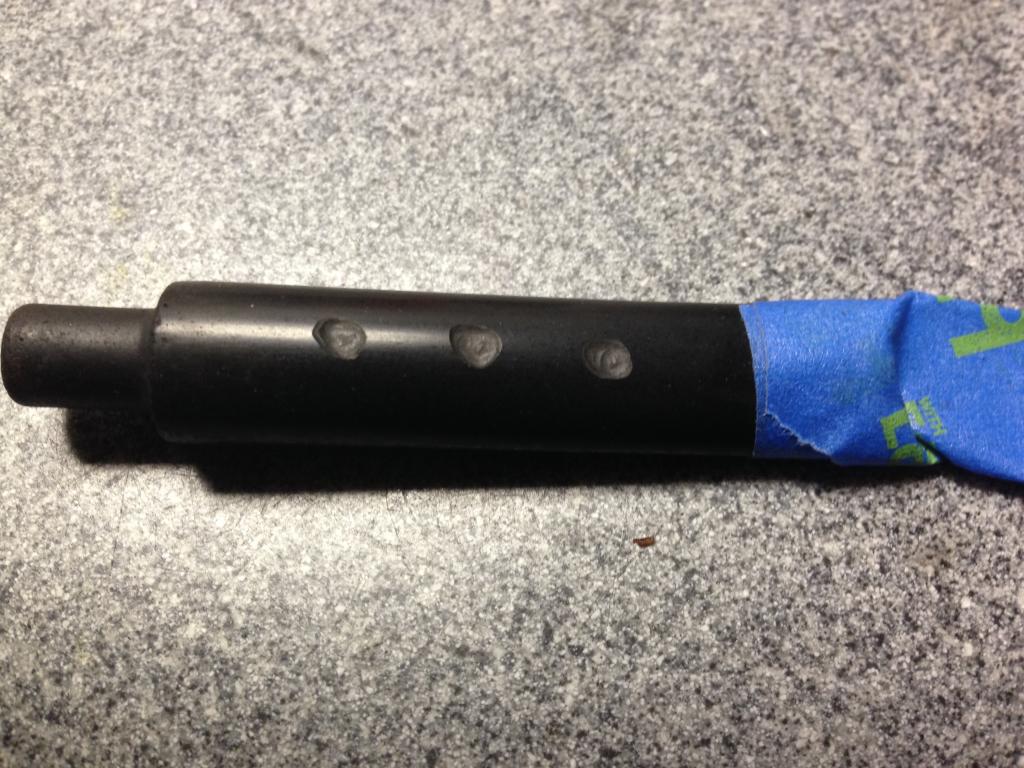
I used a round dremel bur to cut three divots in a vulcanite stem, to simulate tooth marks.
Photo #7
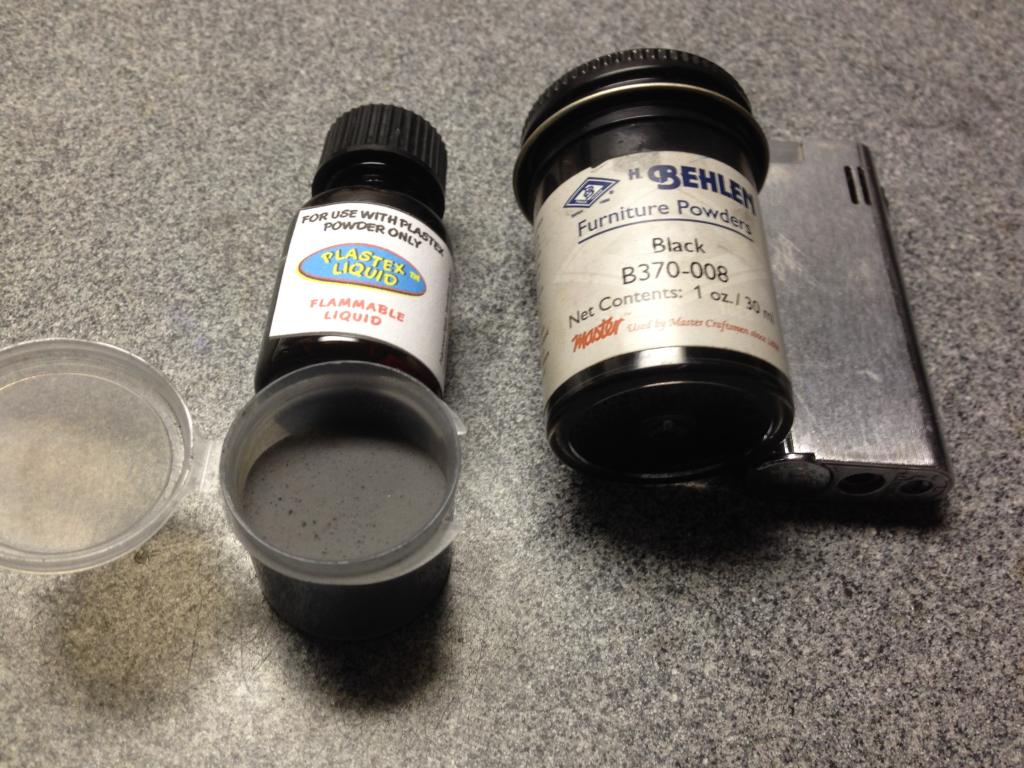
Black Plastex and Behlen’s Black Furniture Powder.
Photo #8
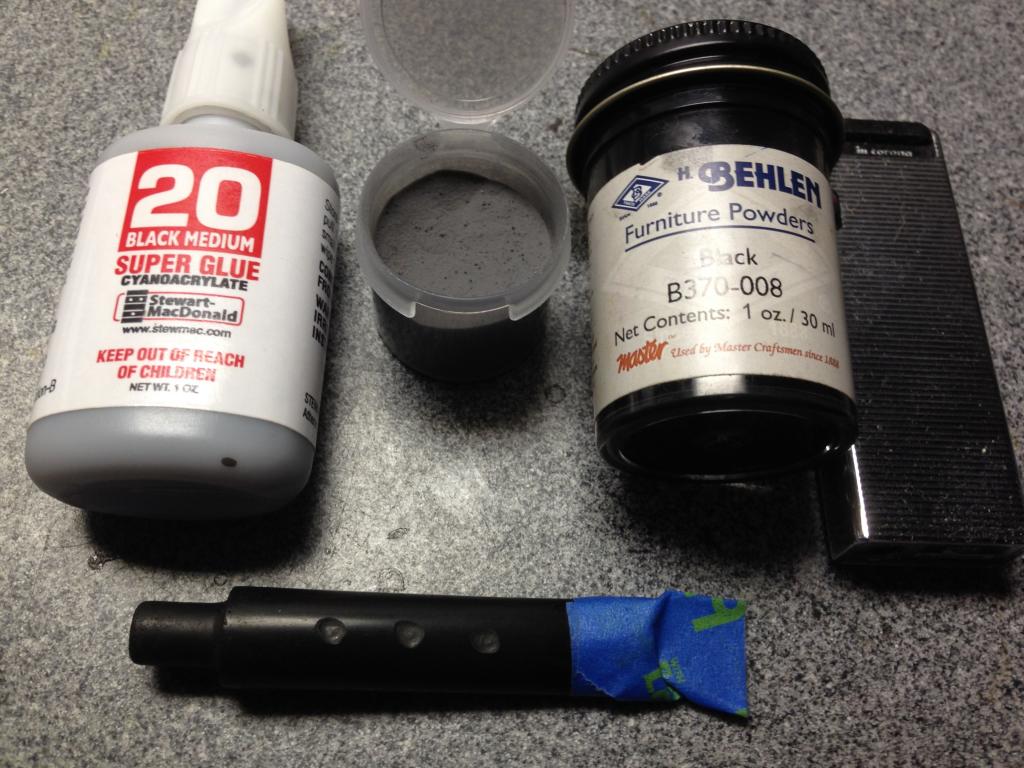
Will use from left to right
Patch 1 – Black Superglue only
Patch 2 – Black Superglue w/ Black Plastex
Patch 3 – Black Superglue w/ Black Behlen Furniture Powder
Photo #9
Patch 1 – cured for 8 hrs, it shrunk. Added 2 additional layers and let the final layer cure for 24 hrs.
Patch 2 – cured for 8 hrs, no shrinkage but the surface was pitted
Patch 3 – cured very quickly, 5 minutes, but the surface was pitted
Photo #10

Photo #11
Sanded the patches with wet sandpaper (220 – 600 grit). Fortunately, I had overfilled Patches 2 & 3 and the sanding smoothed out the surfaces. Extra layers were not necessary.
Photo #12
Later, I used micromesh pads (1500 – 12000 grit) and polished with white diamond and carnauba wax. The patches polished and shined so well that I couldn’t get a decent photo because of the camera flash.

Discussion:
Adding Plastex to Superglue reduced the curing time (it didn’t shrink and one layer filled it up). Also, the Plastex adds strength to the patch and could be good for large patches and holes.

Adding Behlen Furniture Powder could be used if you’re impatient (it has something in it that causes the Superglue to cure very quickly). Too much powder will cause the glue to cure so quickly that there isn’t enough time to place it into the divot.

I haven’t tried it yet, but using the Accelerator first, then Black Superglue with Plastex could be a good way to go.

Plastex can be ordered from: http://www.plastex.net/
Behlens Furniture Powder can be ordered from: http://www.shellac.net/furniture-powder.html or http://www.highlandwoodworking.com/b…owders1oz.aspx

Waxing a Pipe Using Only a Dremel – Bill Tonge


Those who have read Bill’s previous two articles you have seen what he accomplishes with his refurbs. He does beautiful work. This third article that he has written is one that he wrote to me about. I was excited to read what he wrote as it challenges the common thinking of buffing with a Dremel. Thanks Bill for the interesting piece. Well done.

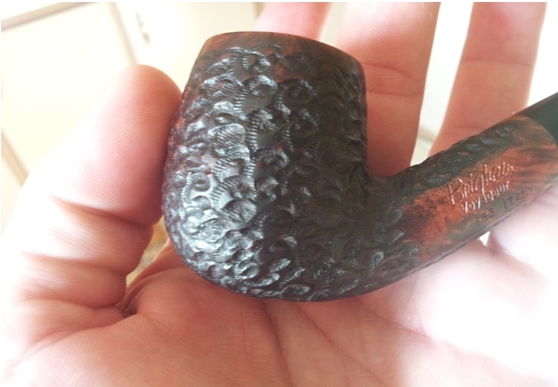
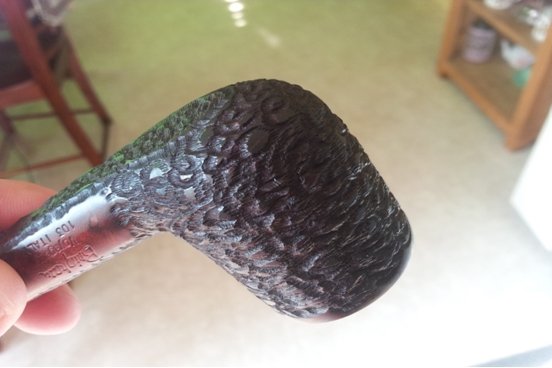
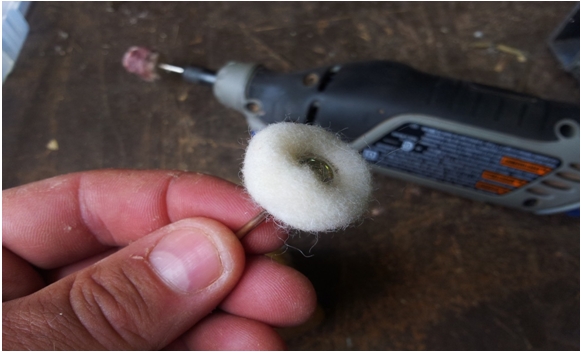
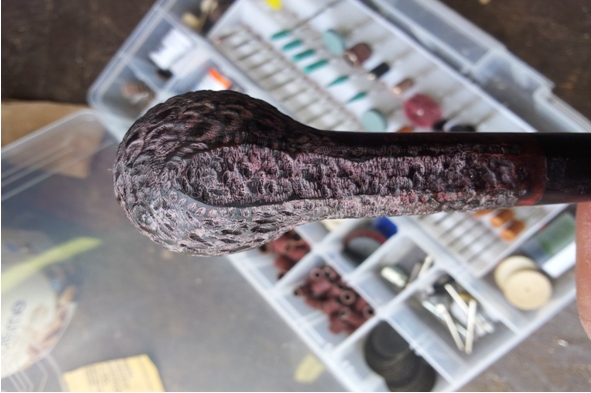
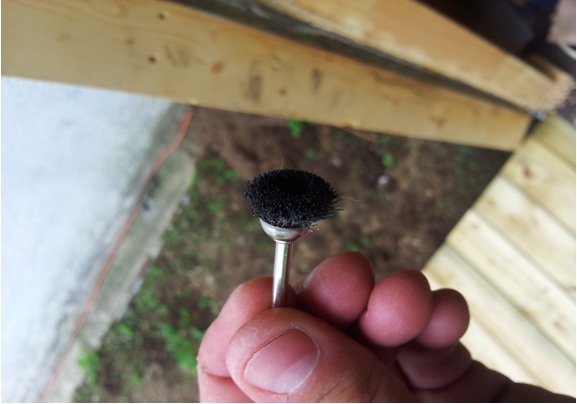
I thought I would ask Steve if I could do a little write up about waxing a pipe using only a Dremel, wool ball, fibre brush and Carnauba wax. I know there has been many a discussion about waxing this way and people say that you absolutely do not wax with a Dremel.

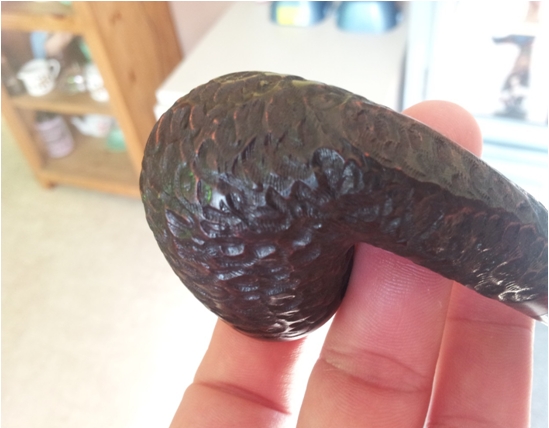
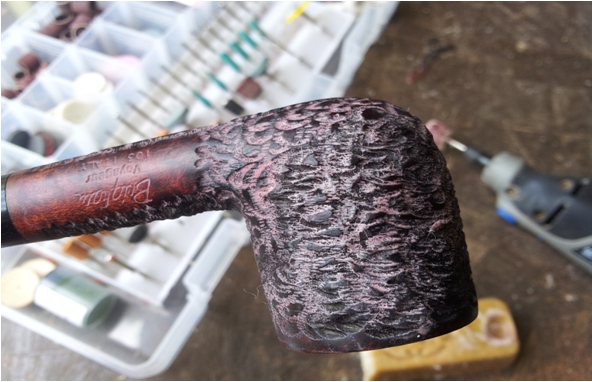
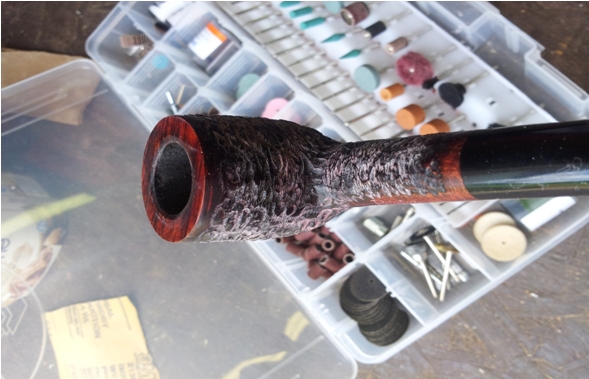
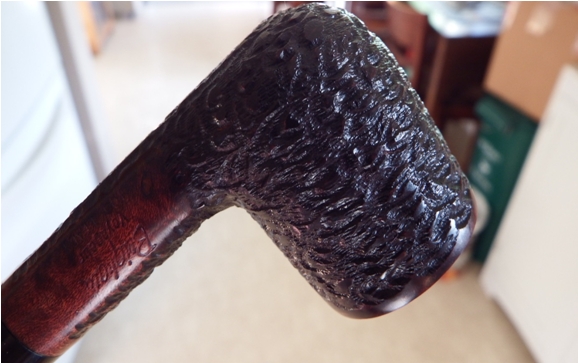
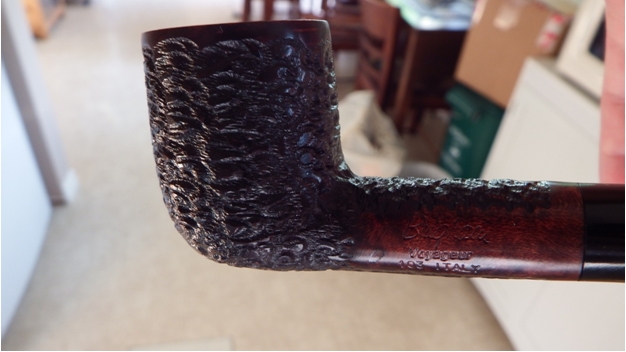
I want to show that with a little time, lots of patience and a steady hand, waxing any pipe especially a rusticated pipe is possible with a Dremel. This method may not be for everyone and please don’t try this for the first time on a good pipe. The first time I did this I melted an indent in a pipe stem. Practice, steadiness and constantly moving are the key. Do not worry about a build-up of wax because the step with the fibre brush will take care of that. Pictures are hard to show sometimes but hopefully you can see the difference from before to end. I am using a Brigham 103 Italy that I bought from Greg Wolford a little while back.
Billl1

Billl2

Bill3
I take the wool ball and run it into the carnauba wax until the ball is layered. I then run it across the rusticated and smooth parts reapplying wax to the ball as needed.
Bill4

Bill5

Bill6

Bill7

Bill8
Don’t be worried by the reddish colour on my pipe. Some of the Brigham’s pipes are known to bleed their colour.

The next step is to take the fibre brush attachment and use it to remove the excess wax, hair from the wool ball and leave a nice shine. Afterwards you can hand polish with a clean rag and if necessary re-buff with the fibre brush after it has been cleaned. I use hot water &Oxi-Clean for soaking the fibre brush to clean it.
Bill9

Bill10

Bill11

Bill12

Bill13
I use the Dremel set to the lowest speed. The wool balls are fairly cheap to buy. I bought a 15 pack on eBay from China for around $6.00 with free shipping.

I know there will still be people that say you can’t do it, but I say you can..…just have patience.

Reviving an Unknown Pipe – Bill Tonge


It is a pleasure to post this second blog piece by Bill Tonge. In this particular refurb what makes it of interest to me is that it was a pipe that I sent him. I figured it might be a good project for him to play around with. It had solid bones and a new stem that I had fit to the shank. There were definitely some issues with the pipe but I figured Bill would come up with something creative. And he certainly did. This reworking of a pipe epitomizes what I quoted Bill as saying in his first post. I am quoting it again here as it is very apropos to his old pipe: “As a person that is economically challenged, I enjoy fixing up the ugly ducklings. I take pride in taking that $5.00 pipe that no one else wants and converting it to something that fits beautifully in a pipe collection.” Here is Bill’s article on reviving or reimagining an old pipe. I think that he has indeed taken an ugly duckling and created something to be proud of. Thanks so much Bill, for sharing your work with us yet again.
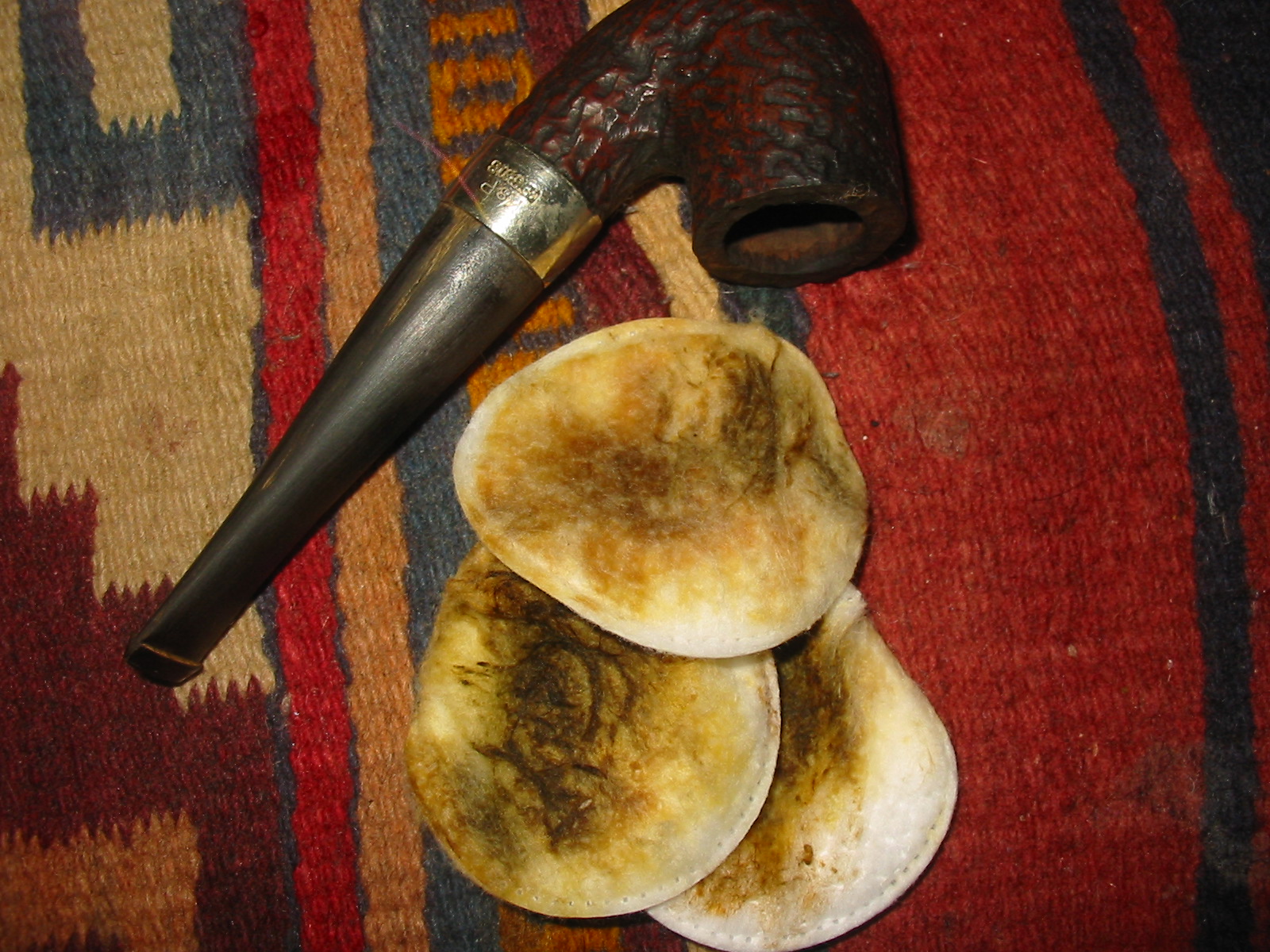
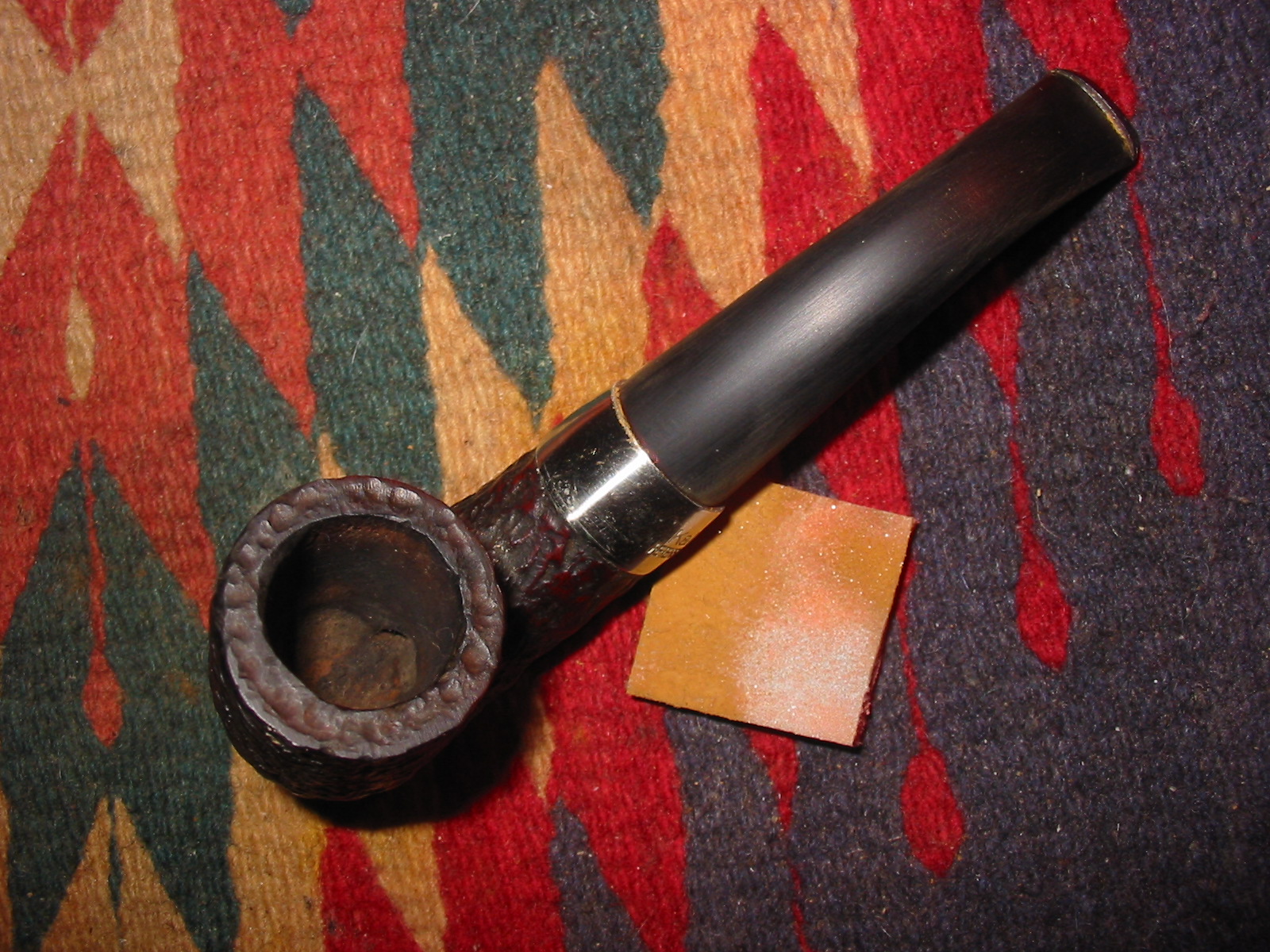
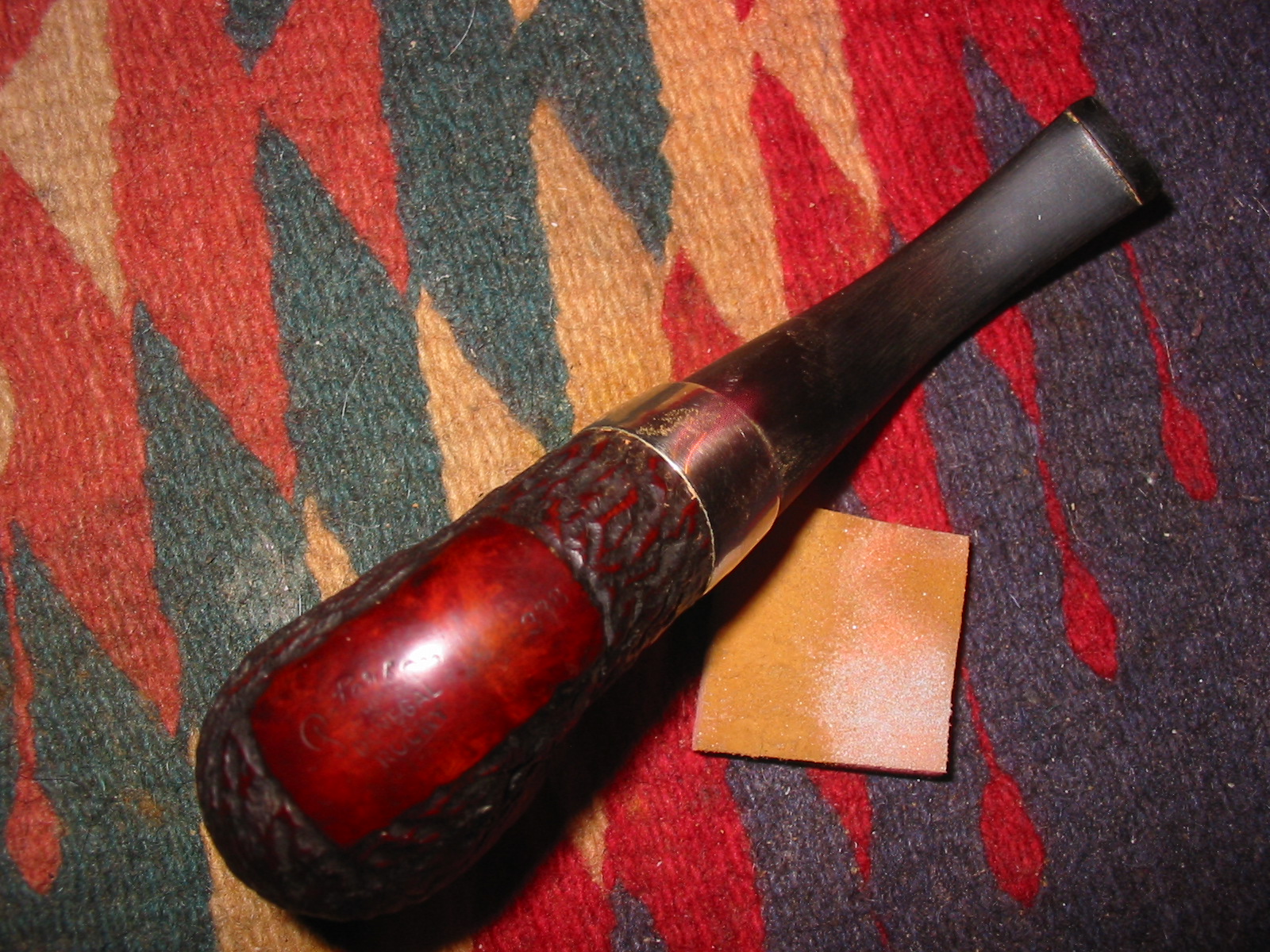
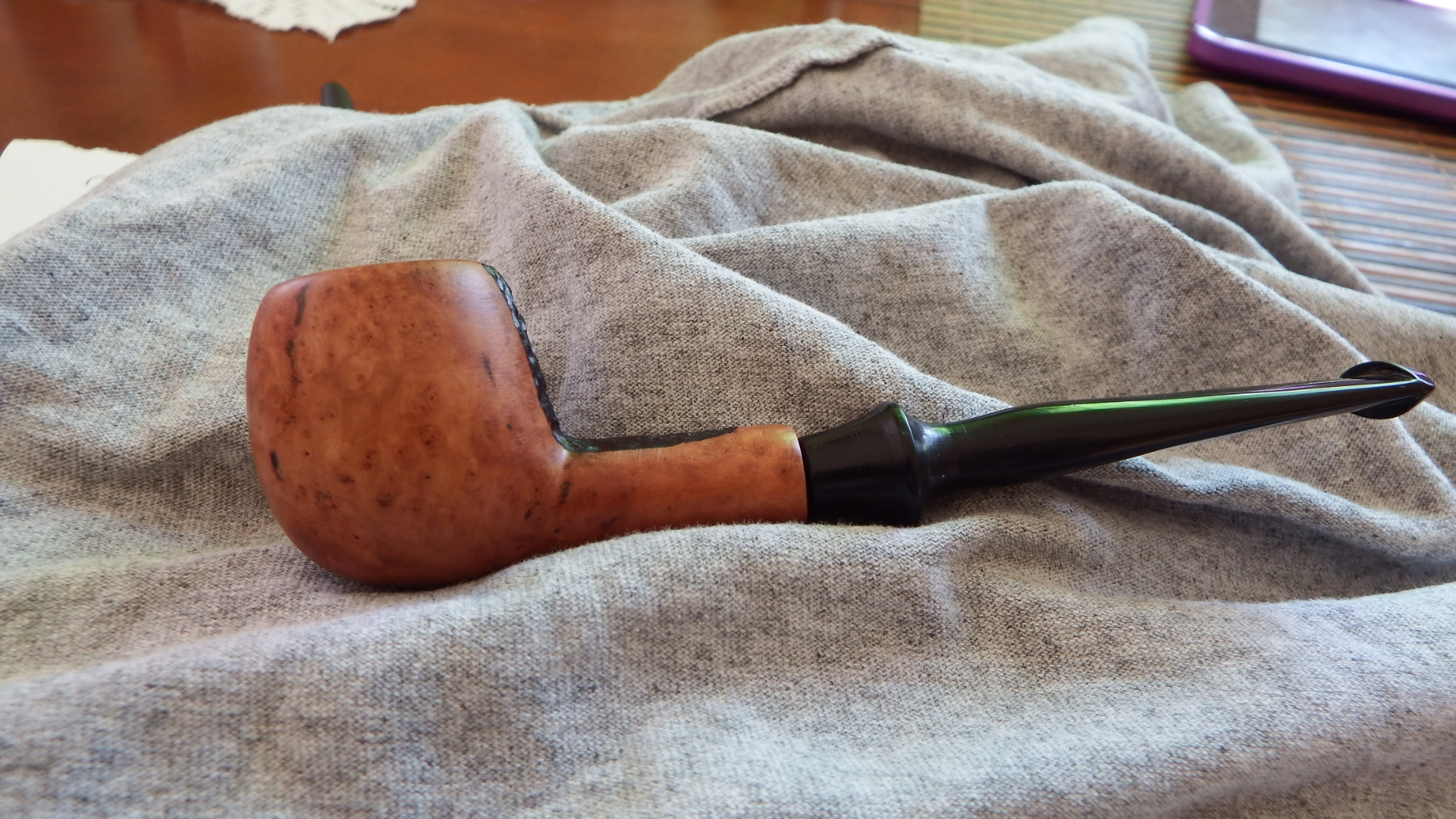
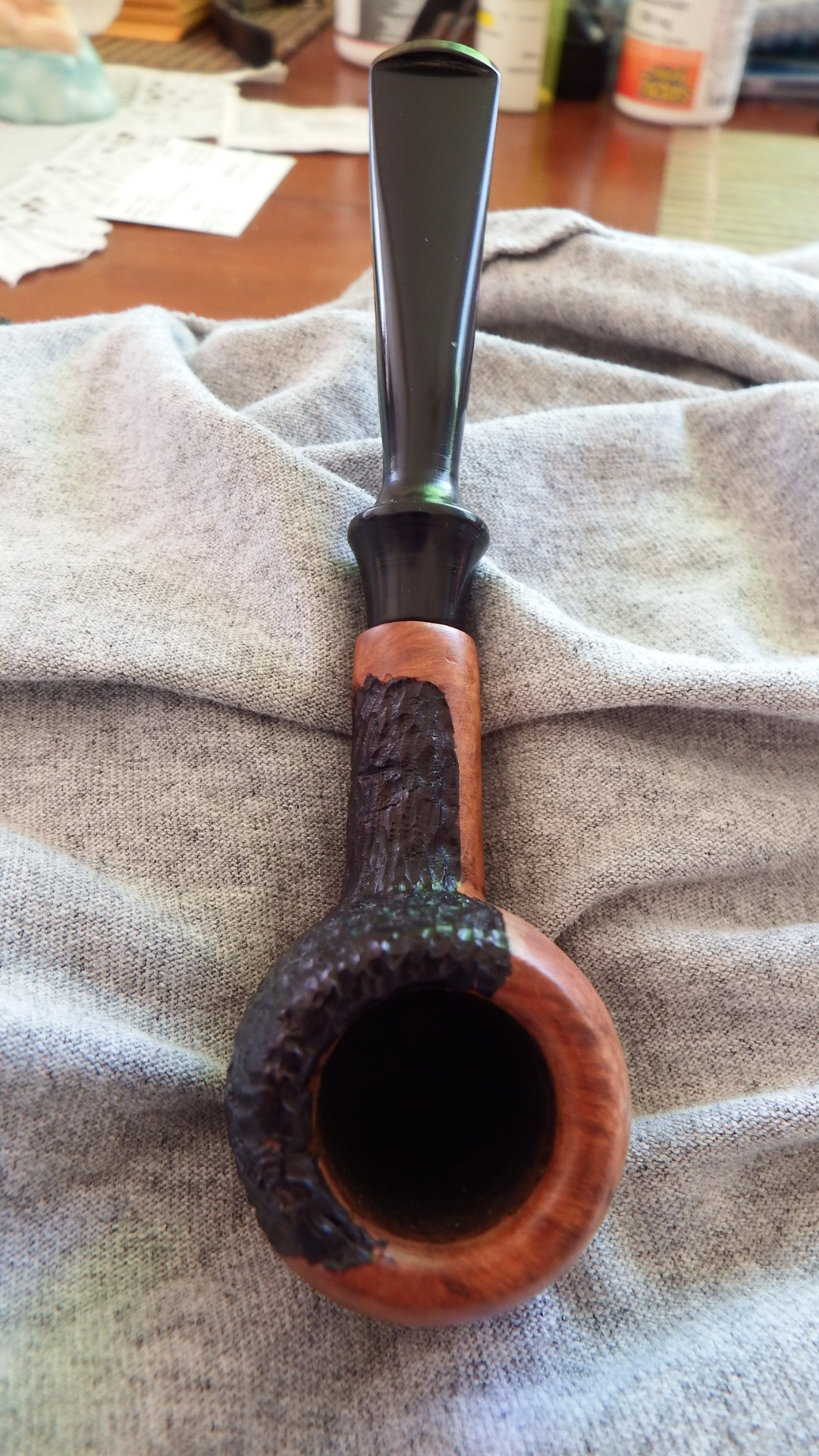
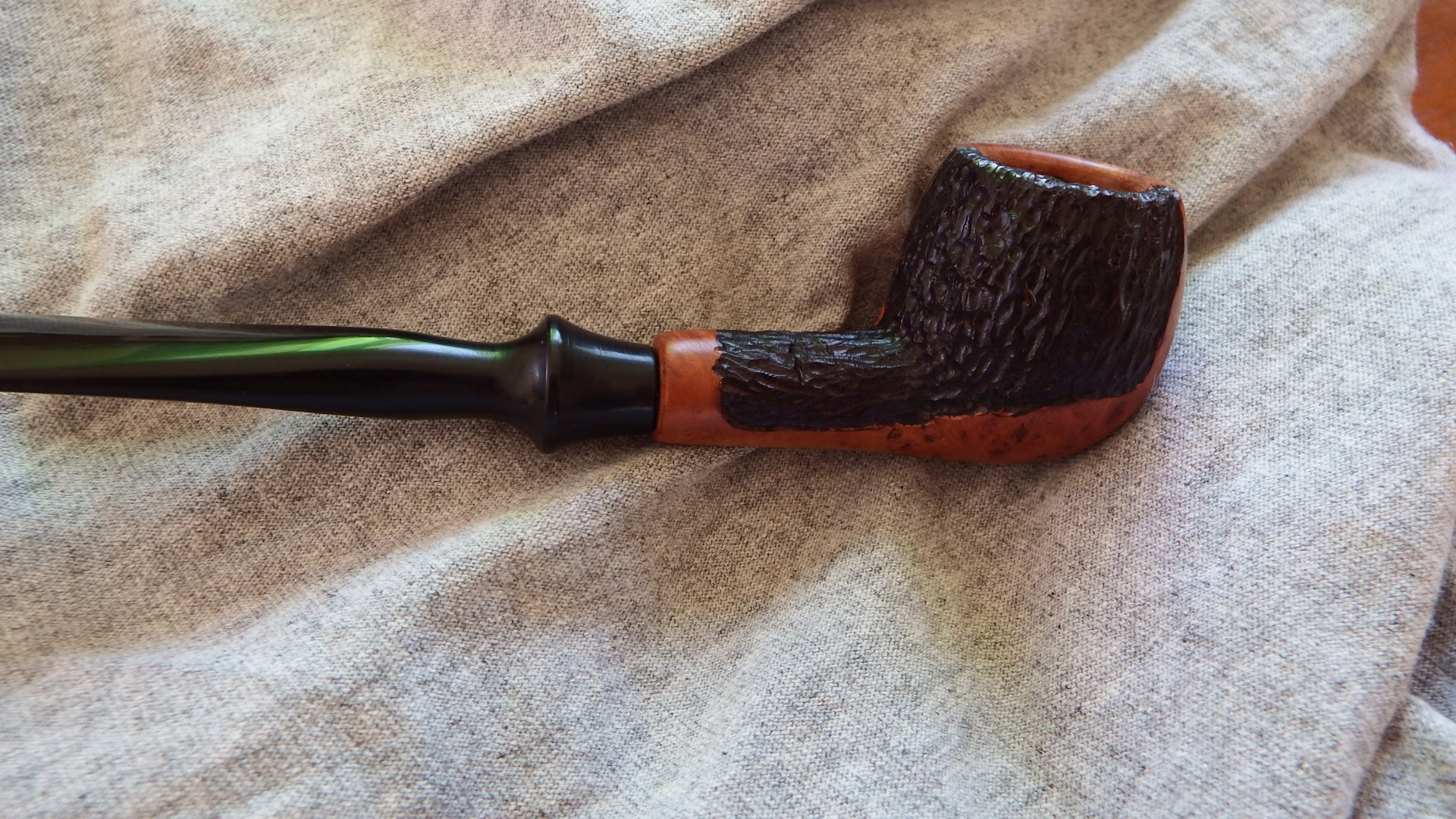
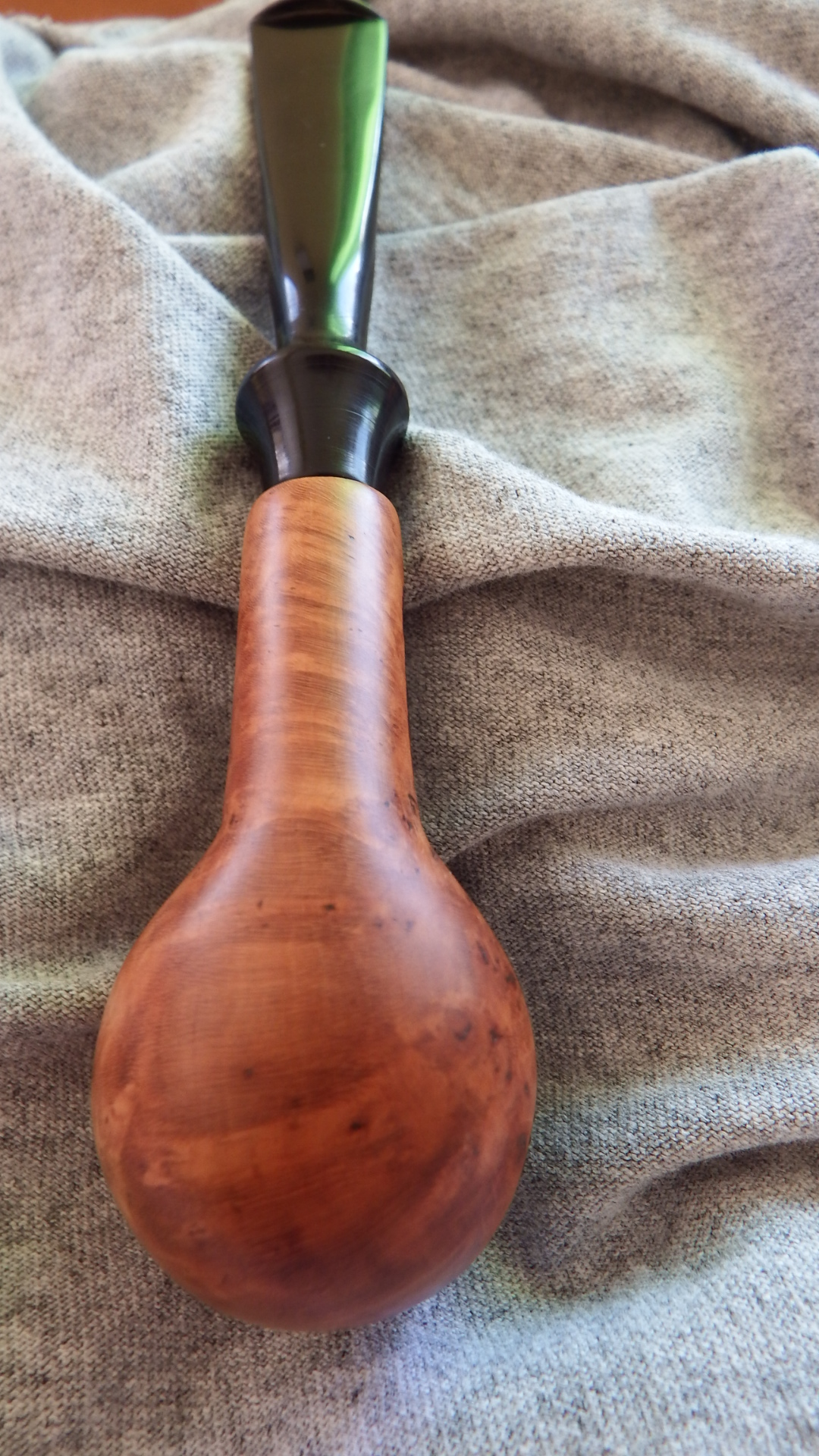
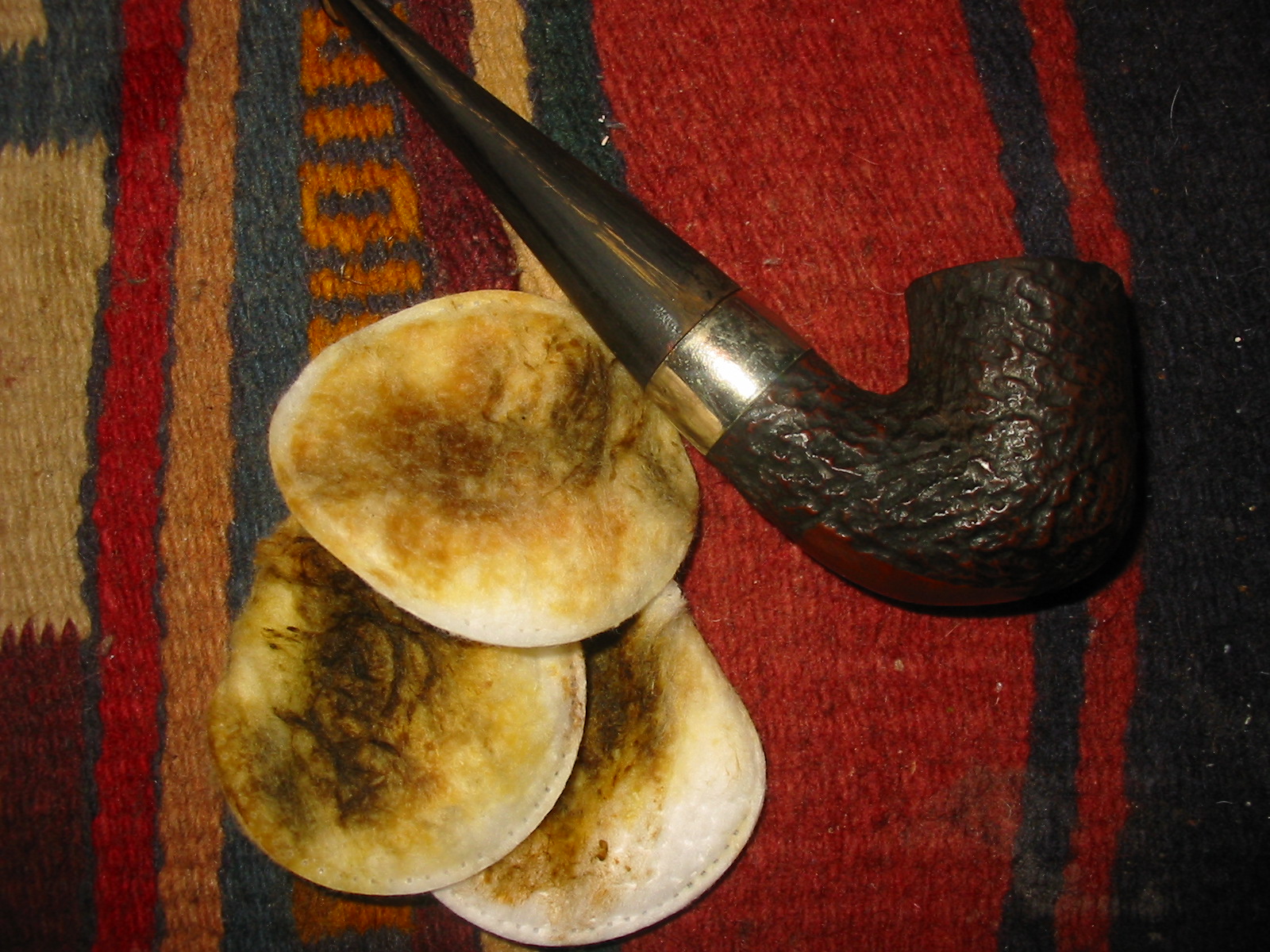
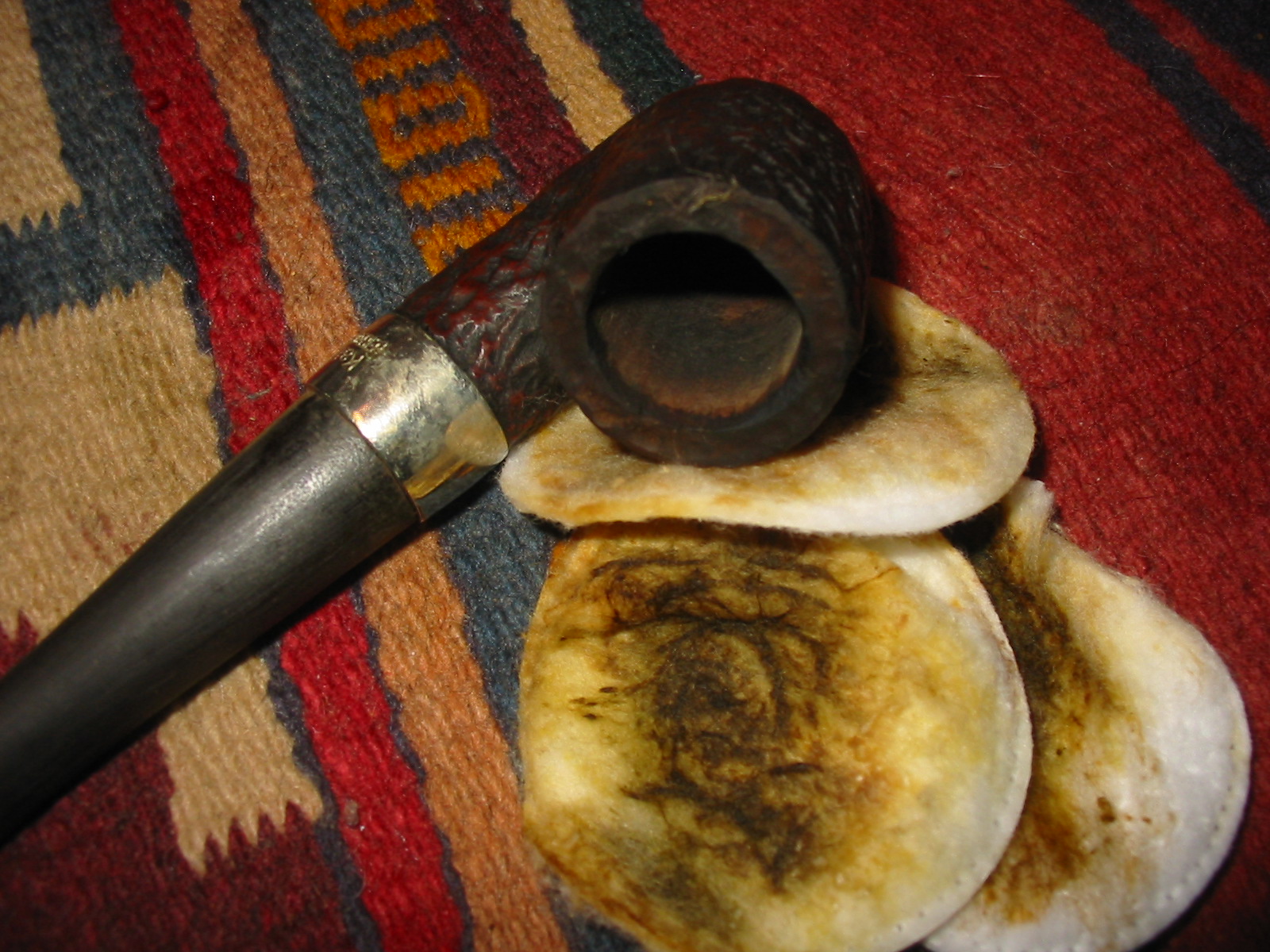
I received this pipe in the mail from Steve. He thought it was an interesting project. He had turned a new stem as well as cleaned the bowl and shank.

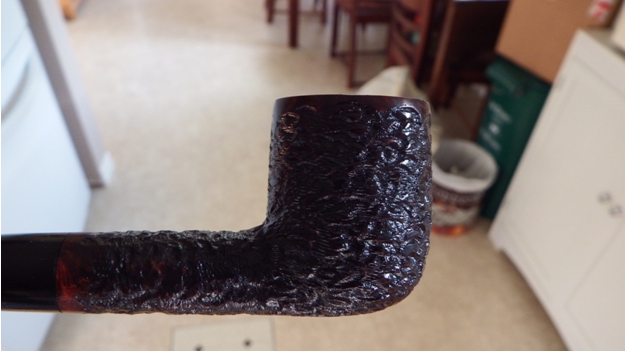
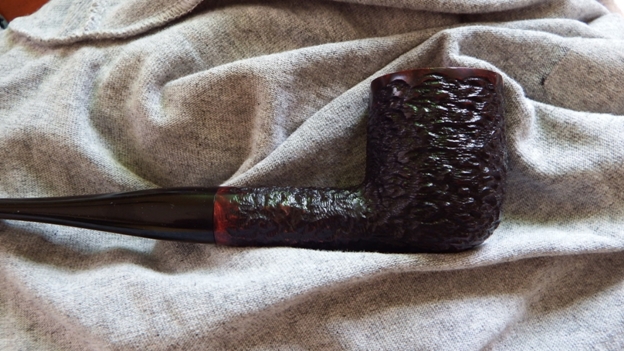
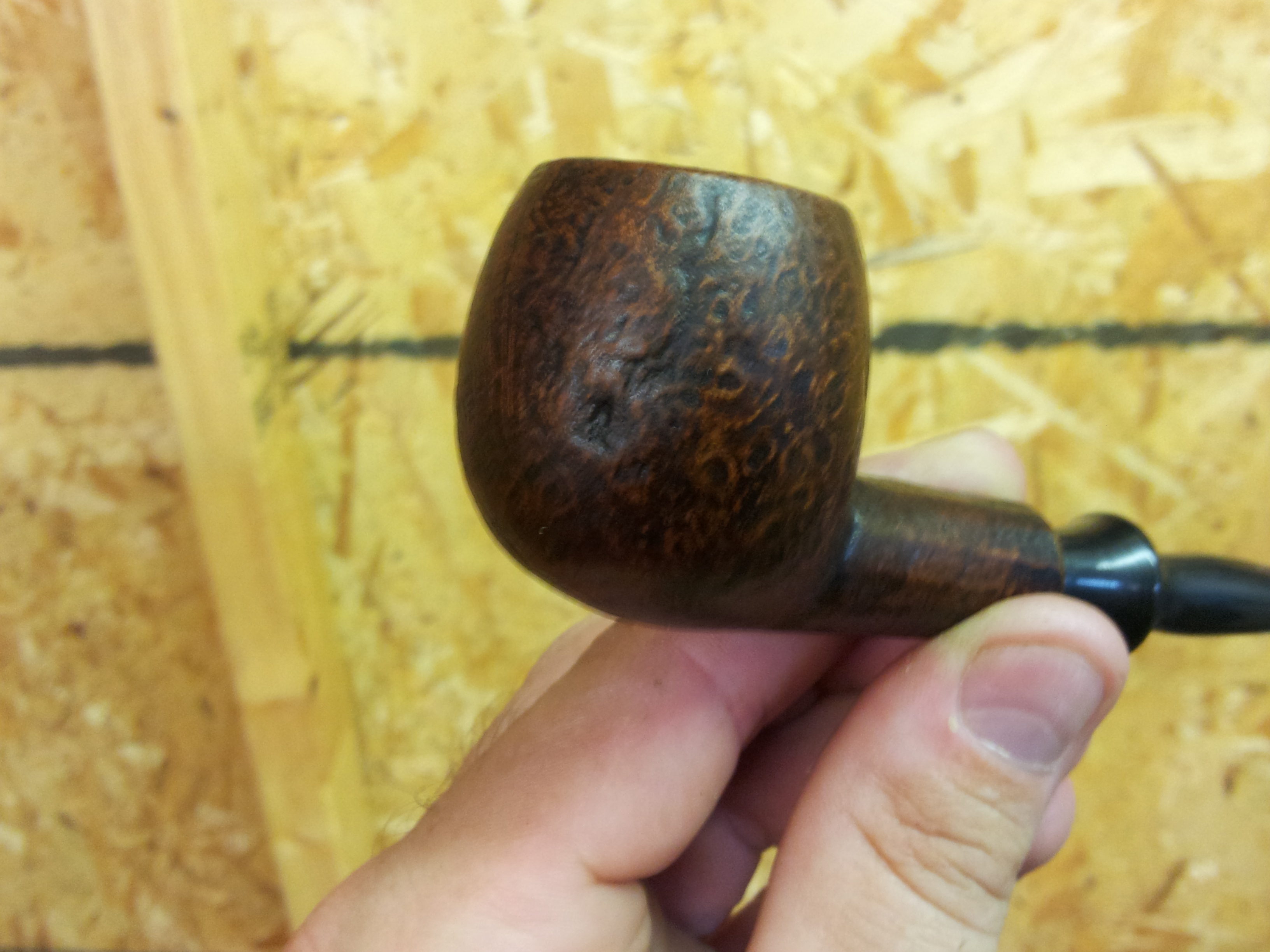
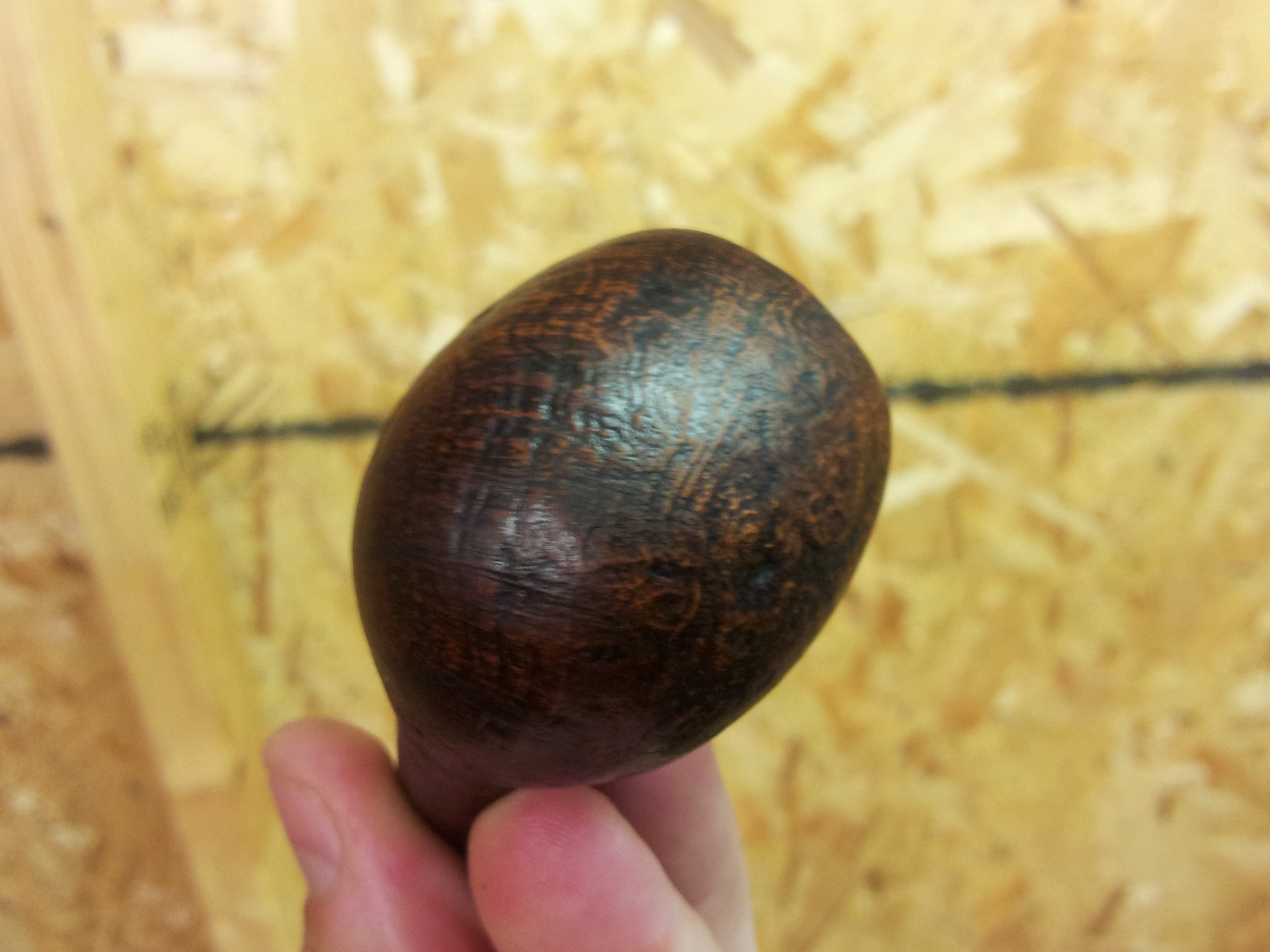
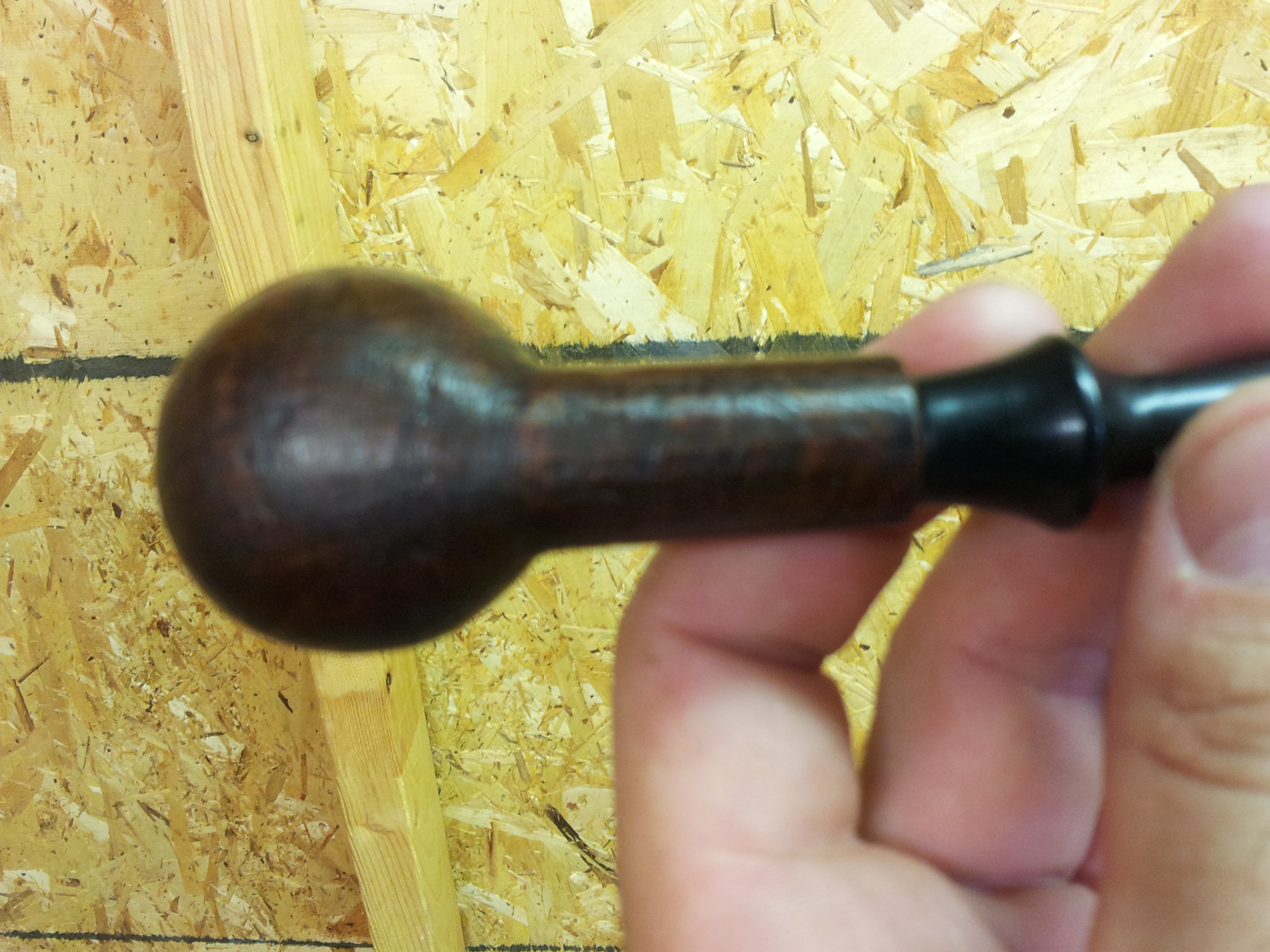
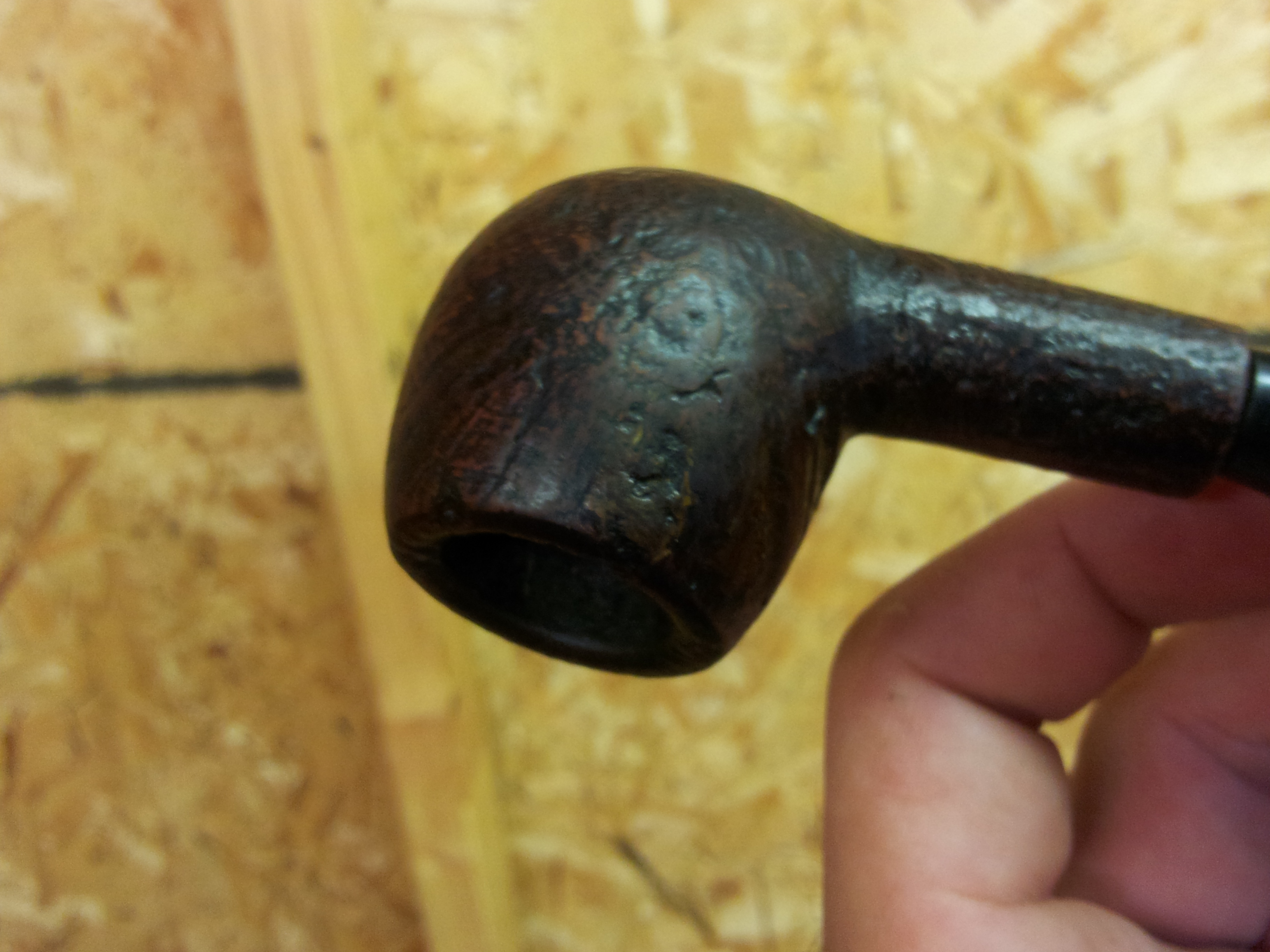
This pipe had quite a rough texture on the outside, some very deep crevices, as well as what turned out to be a crack about a quarter of the way down the bowl.
20140630_134359

20140630_134405

20140630_134345

20140630_134412

20140630_134425
So I decided to sand this pipe down as smooth as it would go and then fill the crevices. After sanding it I filled the crevices with a Gorilla Glue & wood dust mixture. After it set up I sanded down the creviced area and applied the rustication. I then proceeded to sand the whole pipe down in stages starting at 100 grit and finishing with 1000 grit. Then I put the micro mesh pads to it and finished up with a wax and buff again only using a Dremel to apply the wax.
DSCF0614

DSCF0616

DSCF0619

DSCF0617

bill6
I have to say that I like the way this pipe turned out and that the other small blemishes add character to this pipe. I also like the grain on the bottom of the pipe. For anyone that is interested I do not own any dyes but rather use either a Sharpie marker or food colouring to colour my rusticated areas.
Thanks to Steve for the interesting pipe.