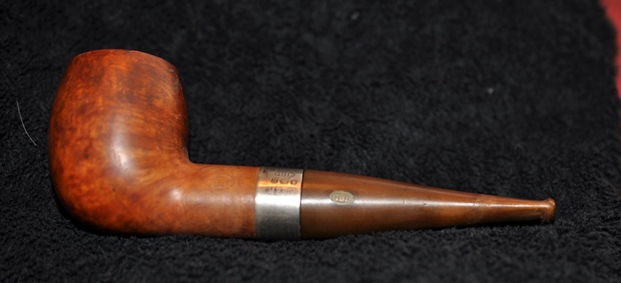
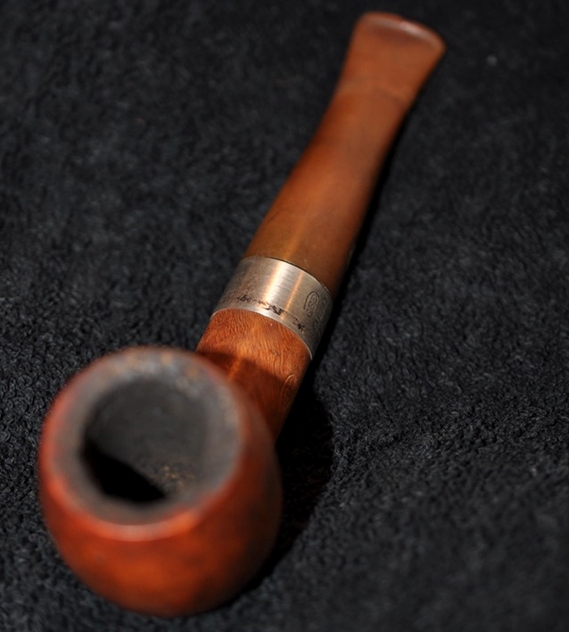
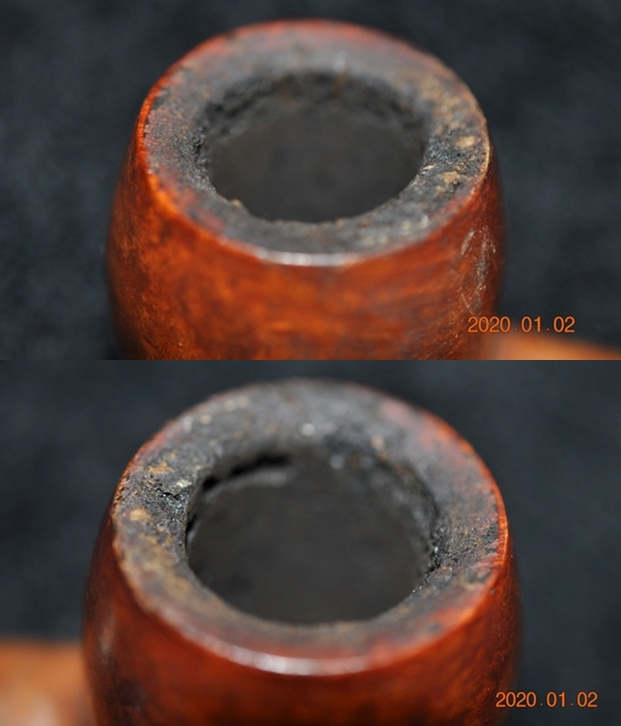
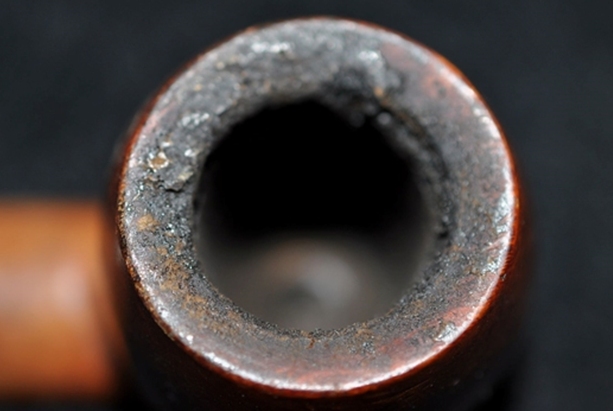
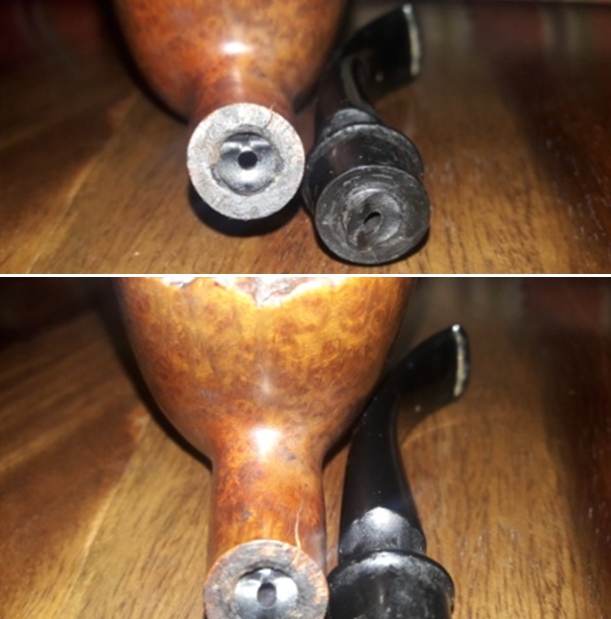
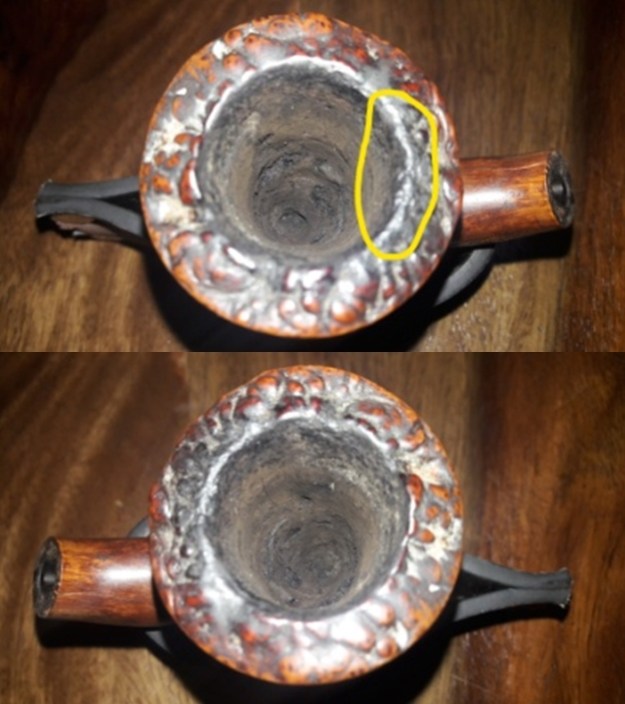
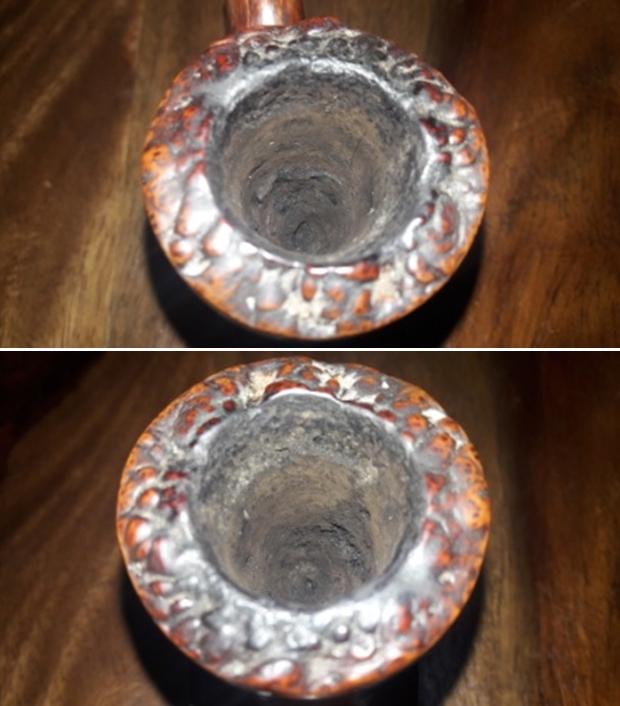
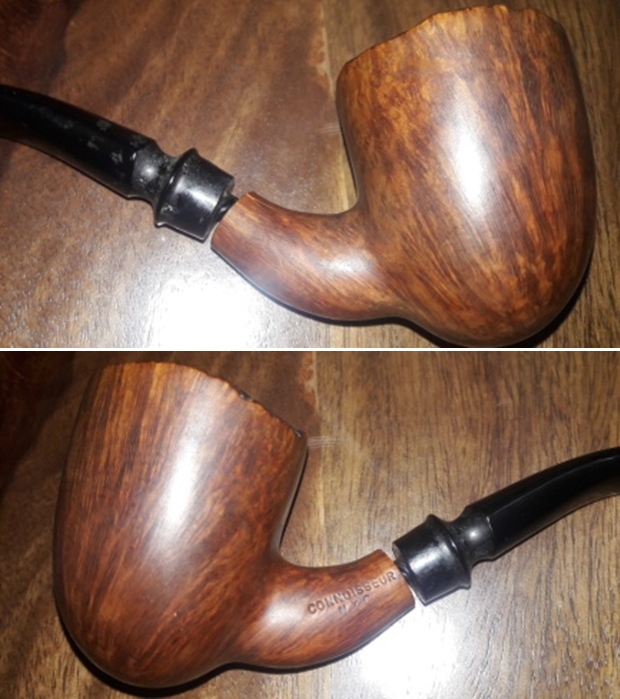
Tag Archives: vulcanite

Bringing to Life a Unique Kaywoodie Natural Burl 33 – Another Legacy Pipe of a Great Grandfather


Blog by Dal Stanton

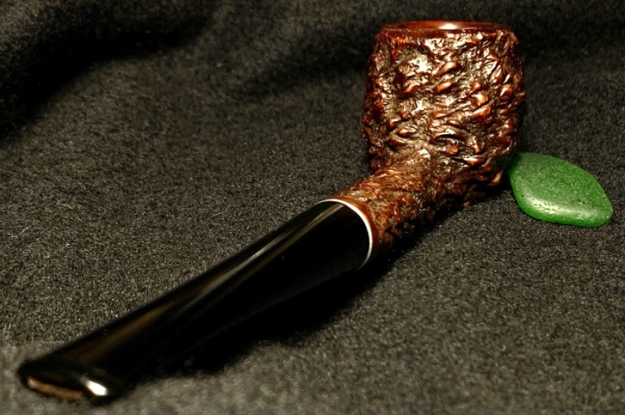
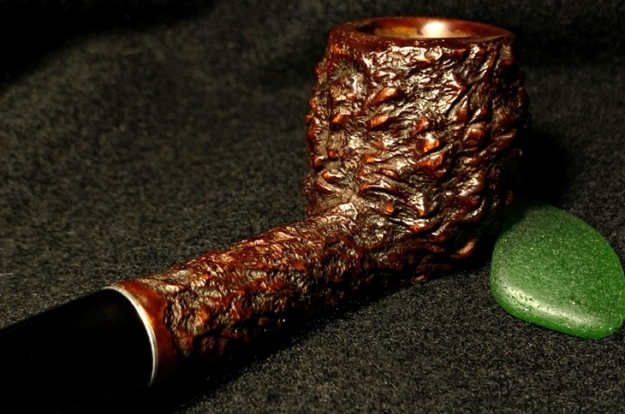
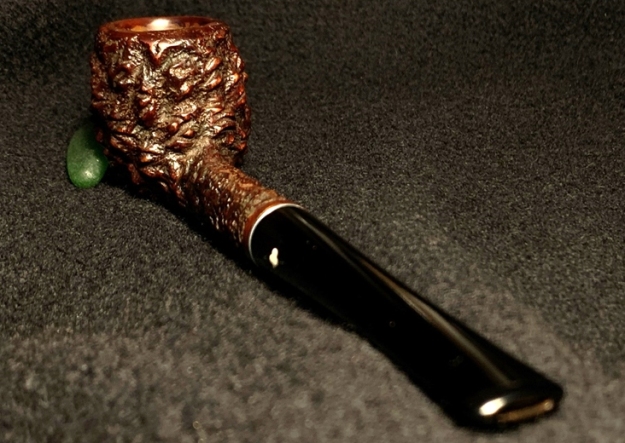
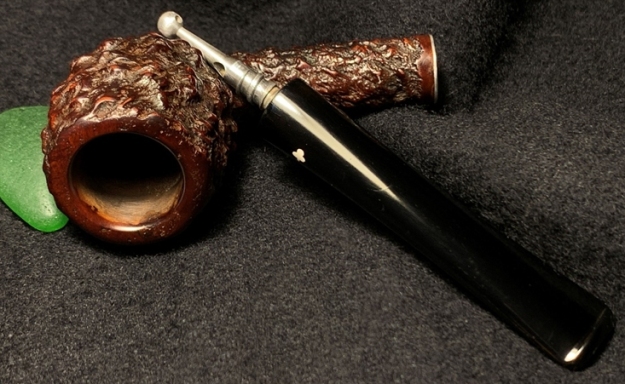
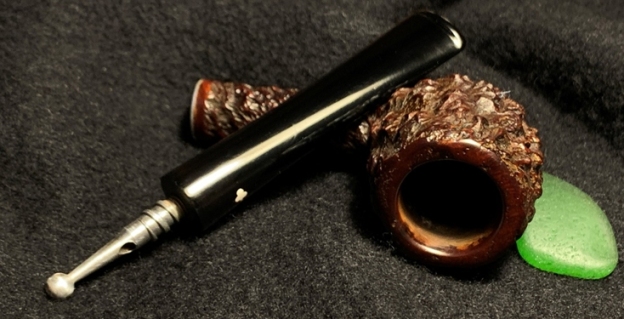
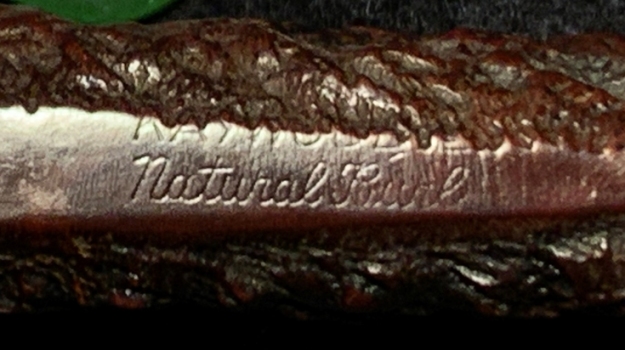
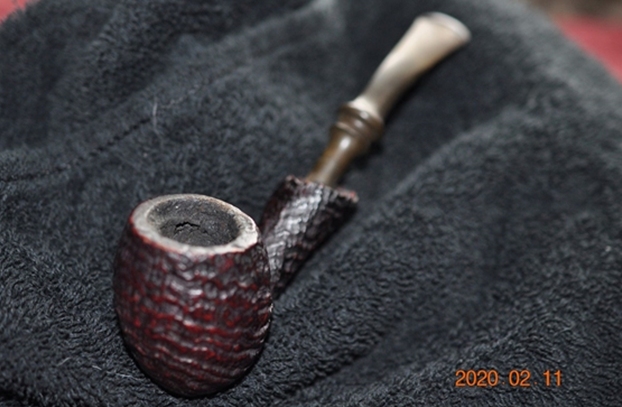
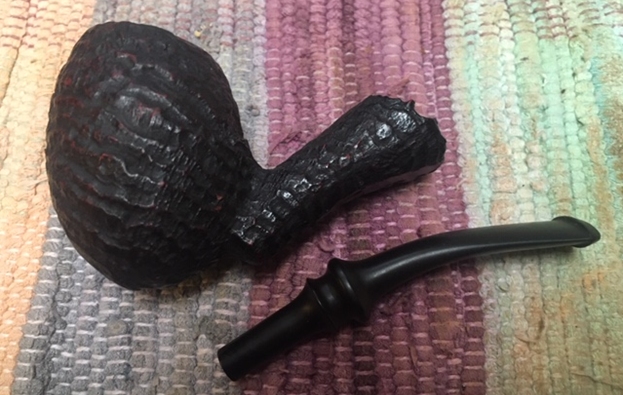
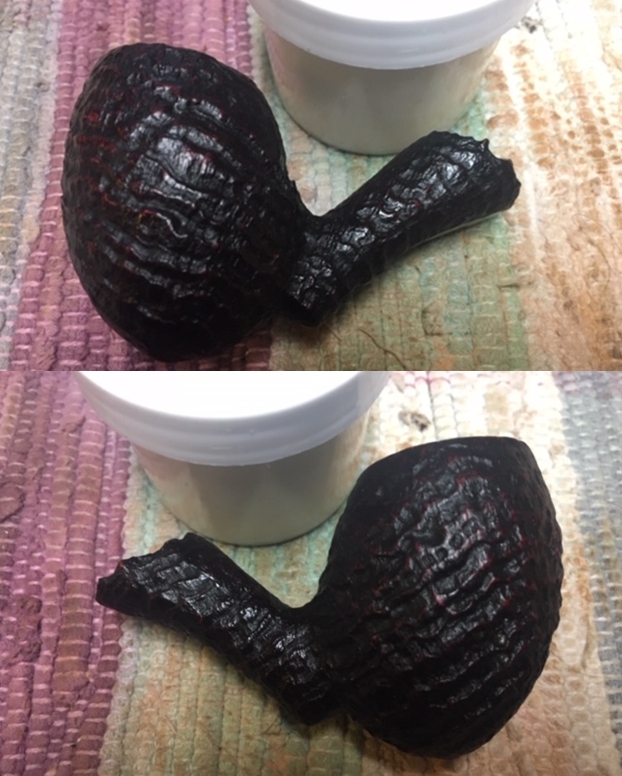
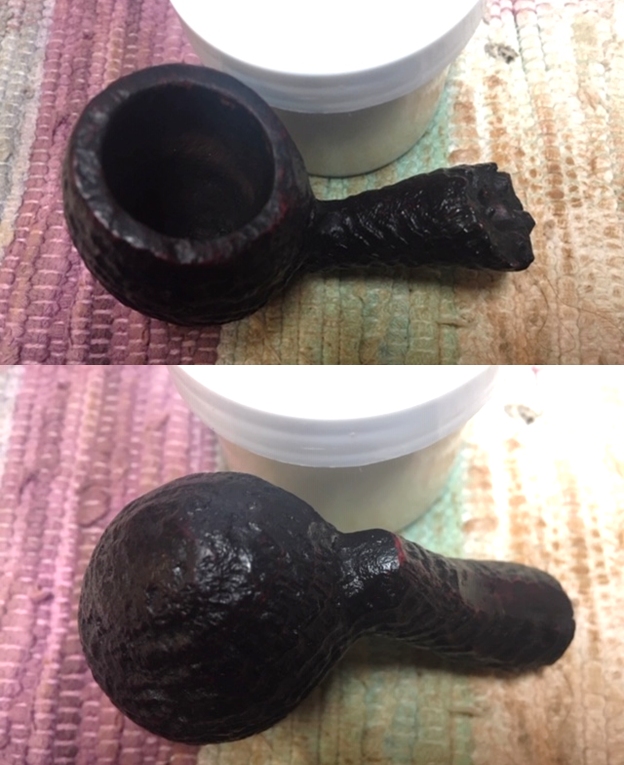
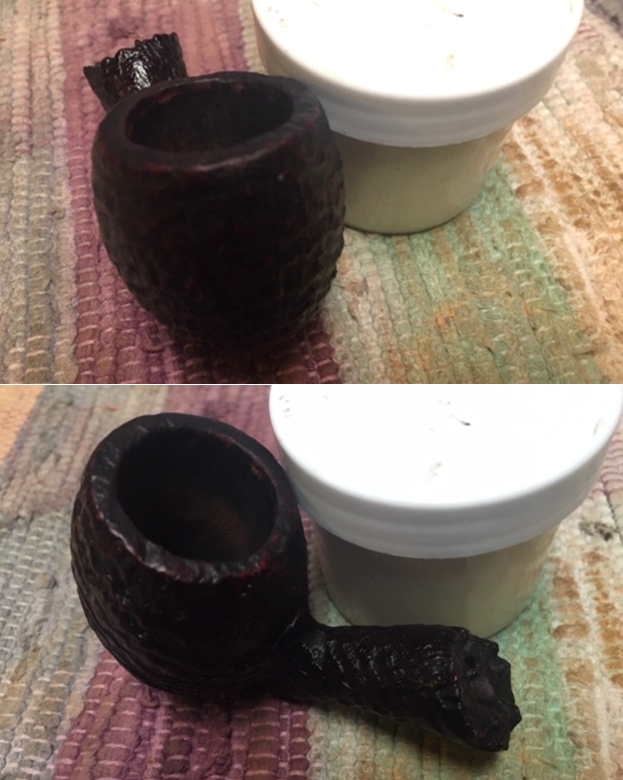
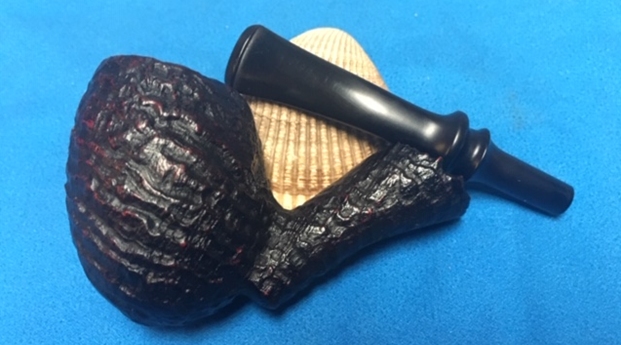
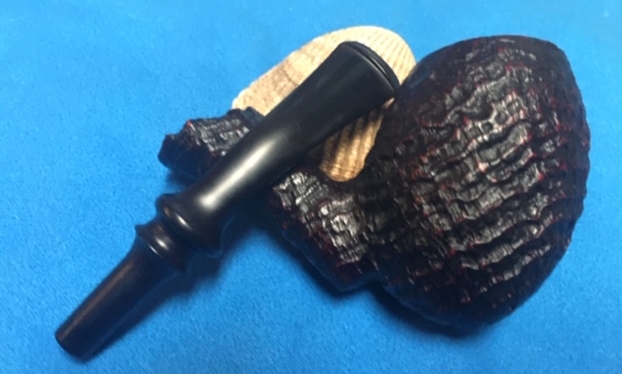
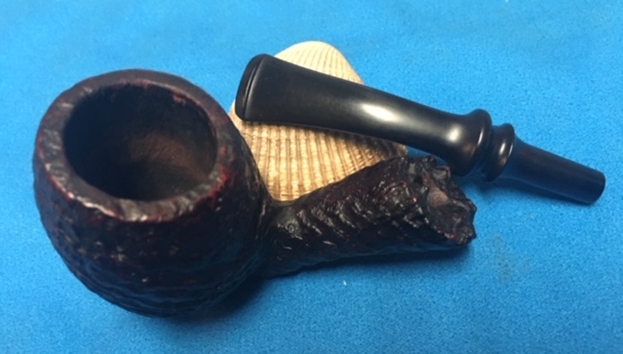
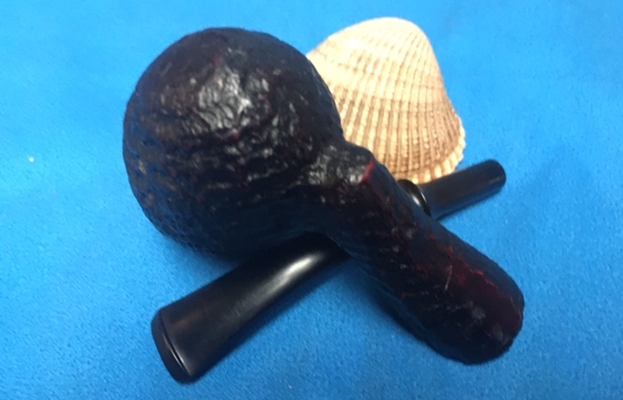
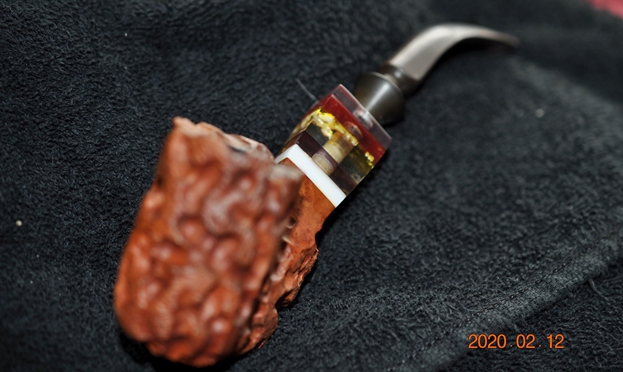
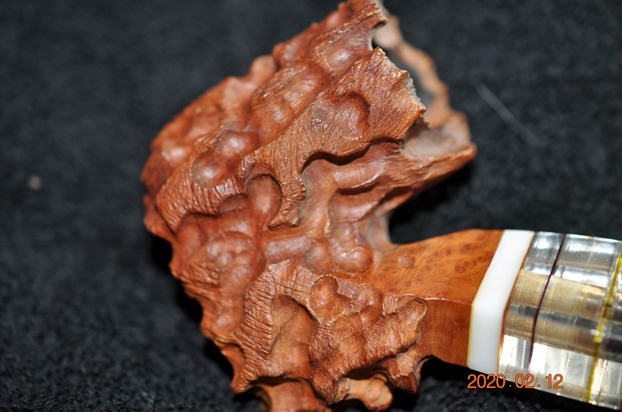
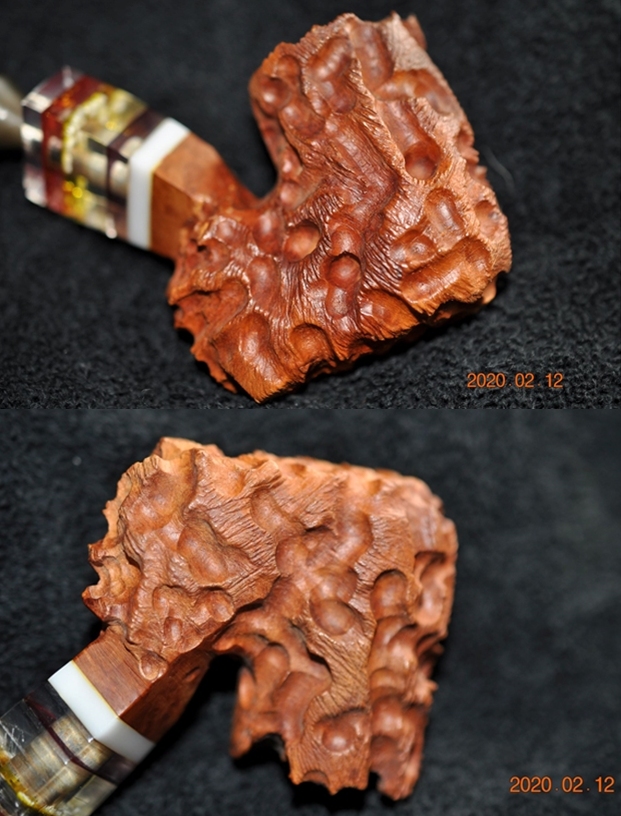
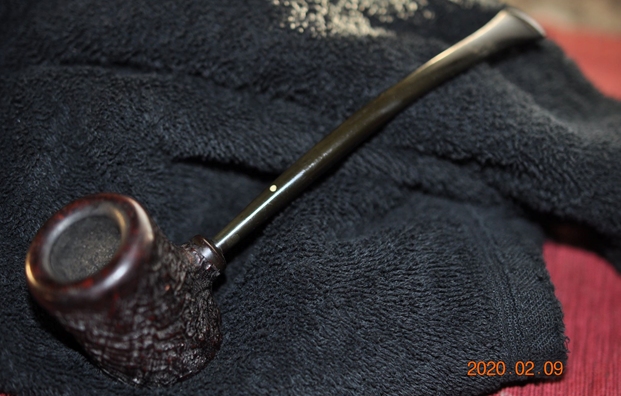
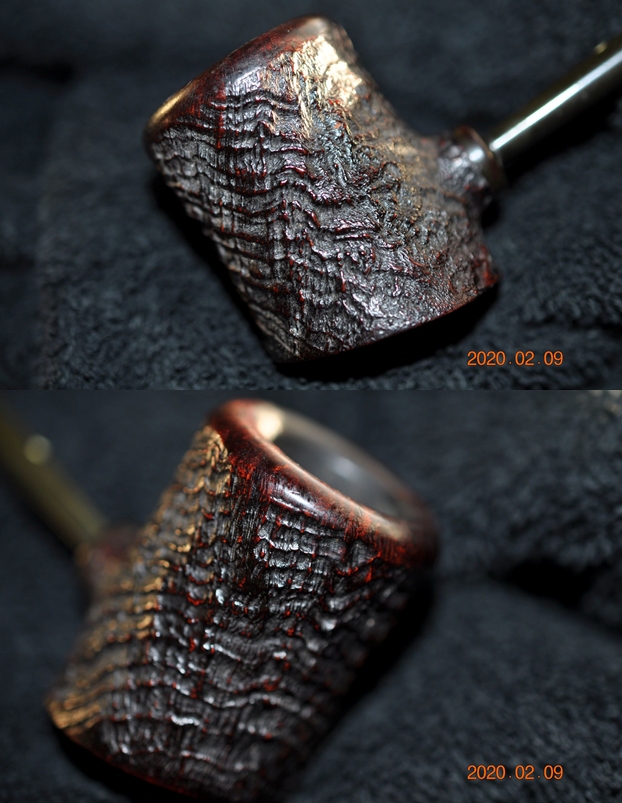
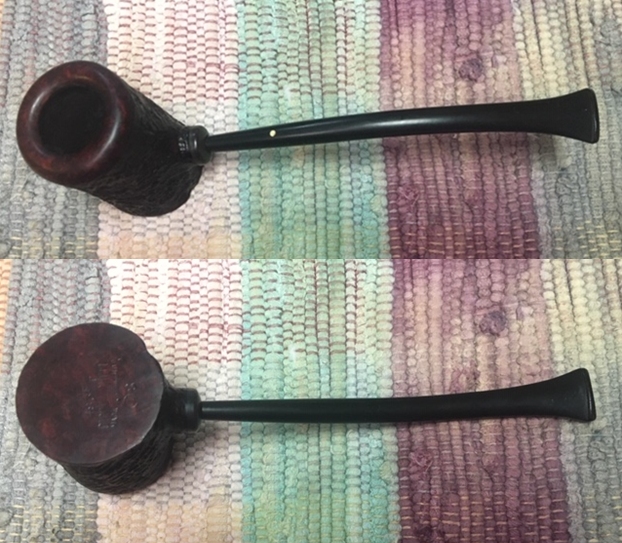
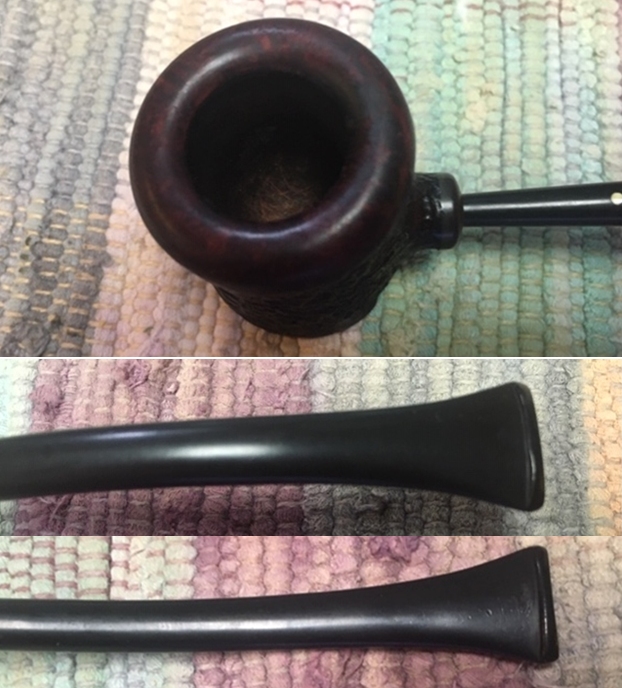
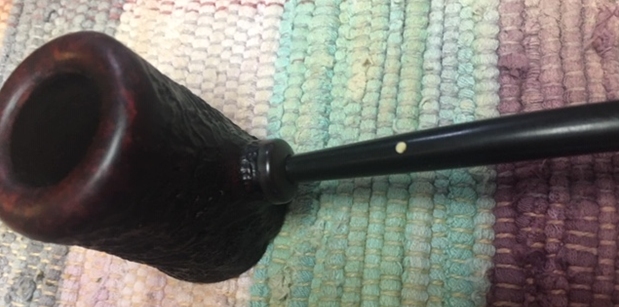
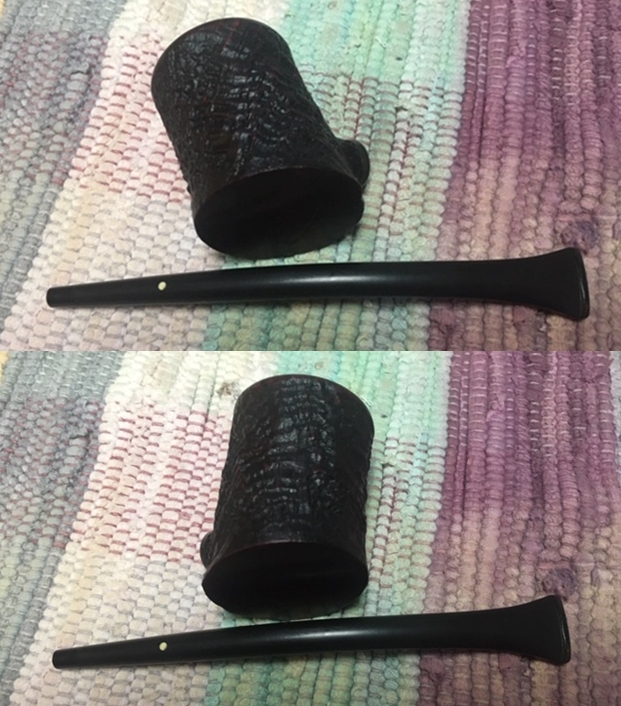
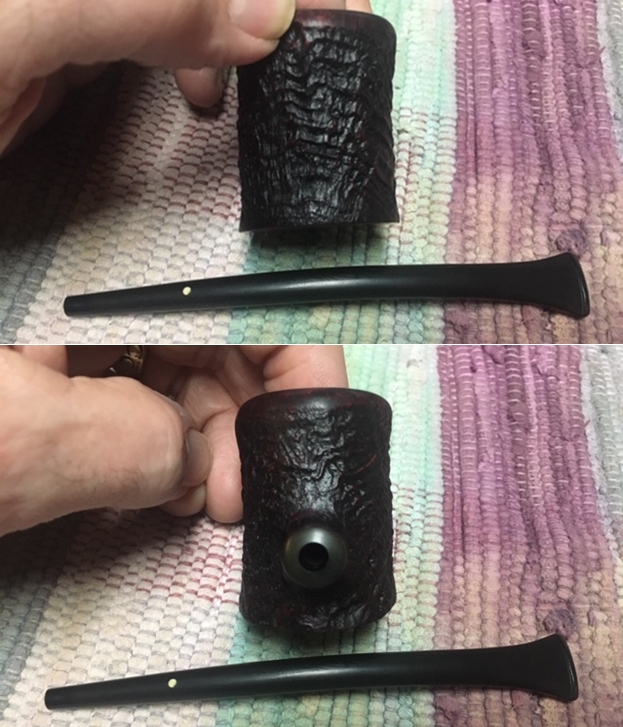
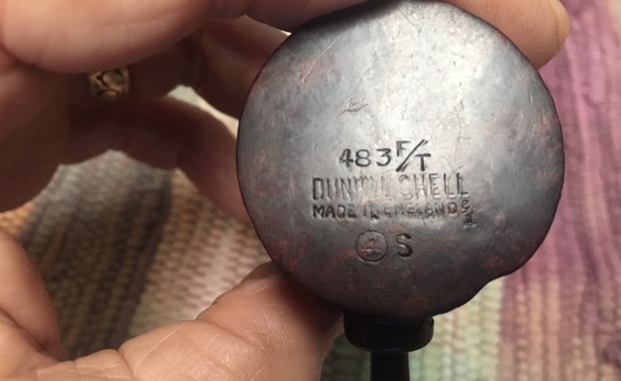
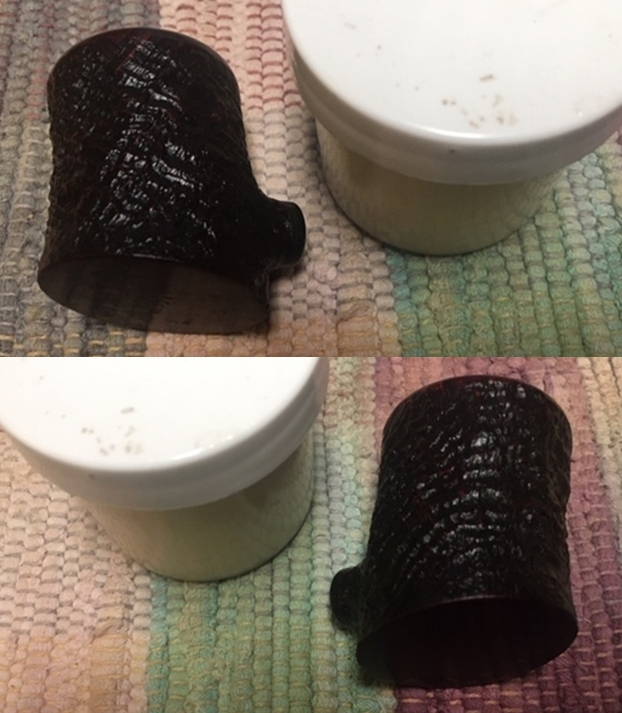
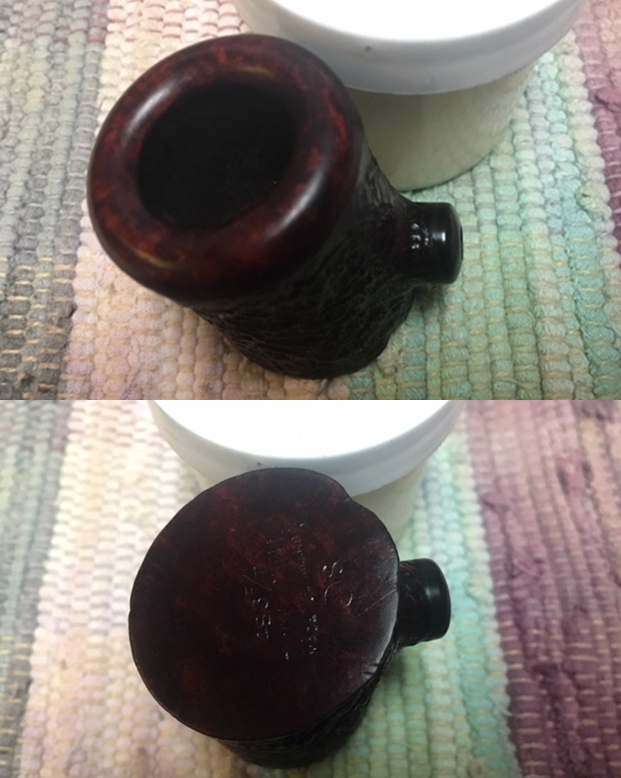
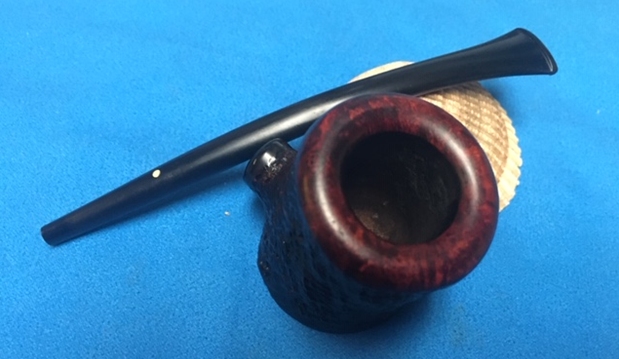
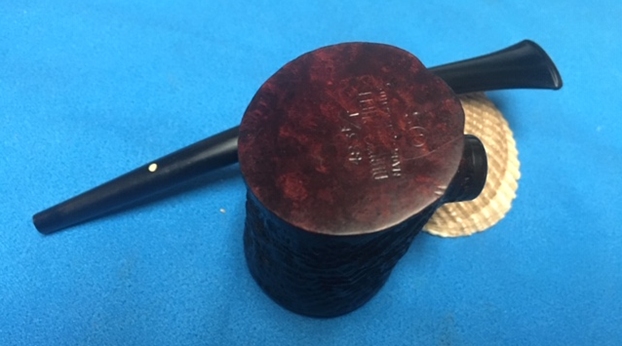
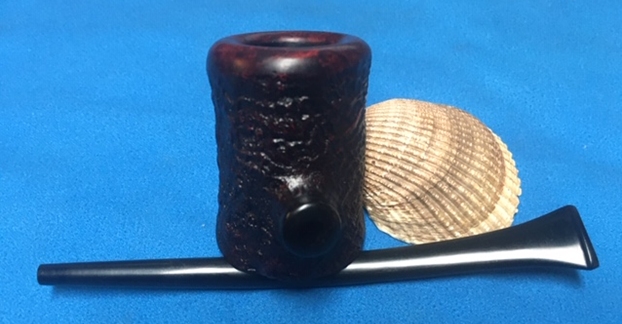
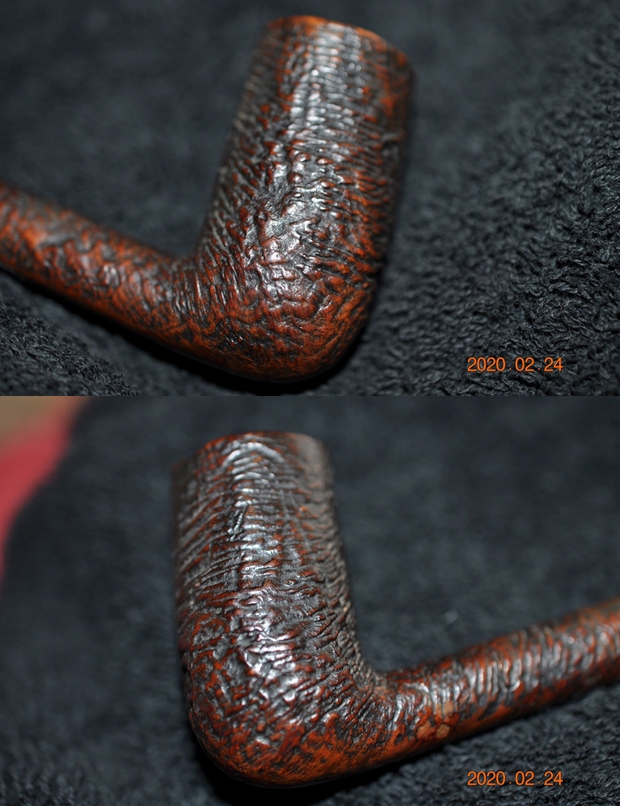
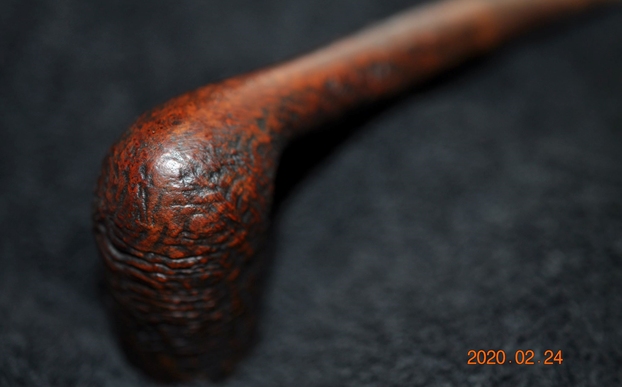
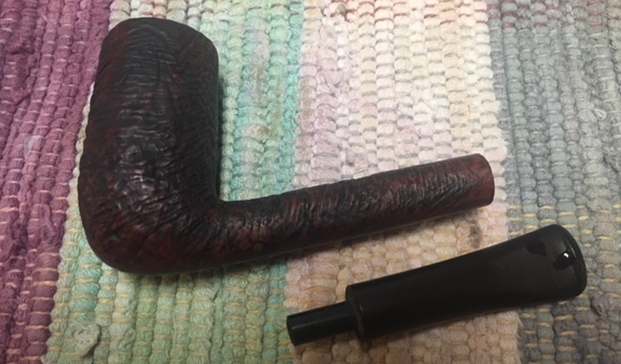
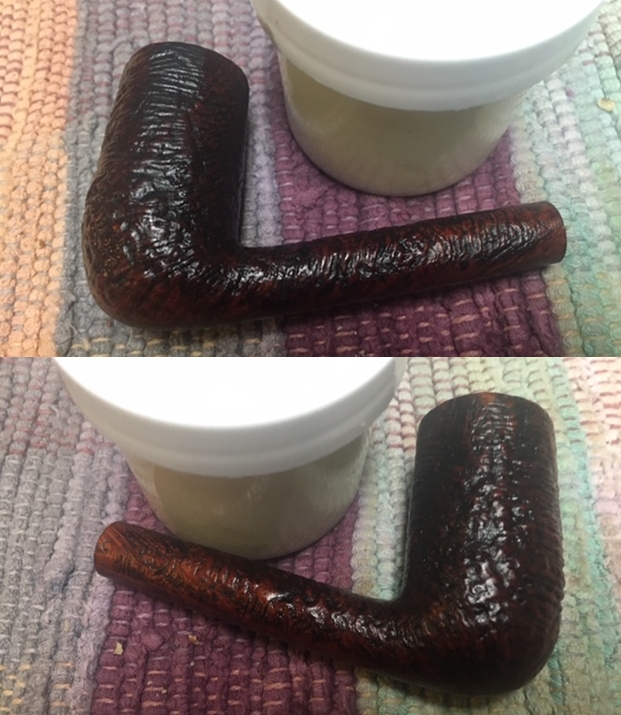
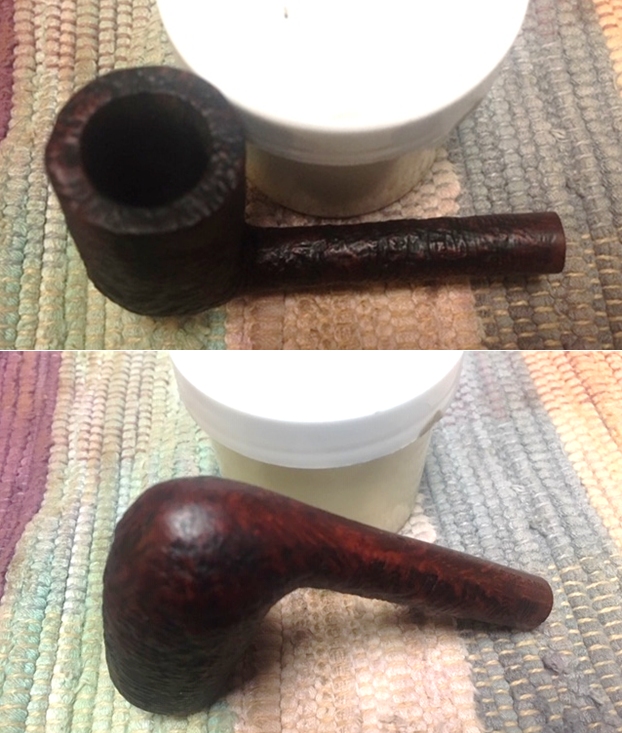
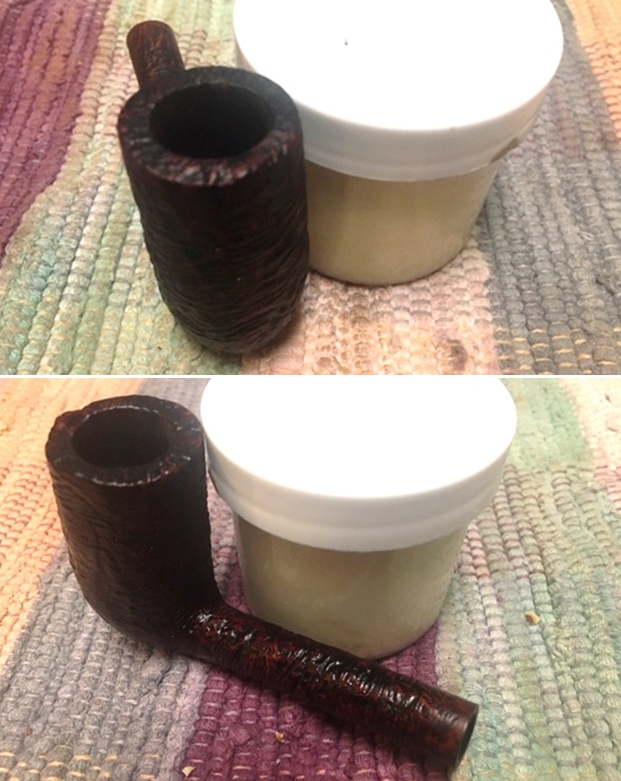
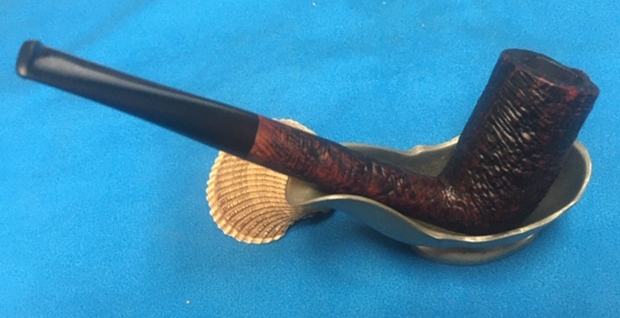
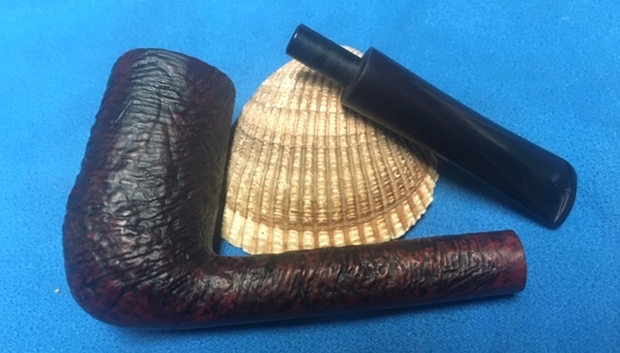
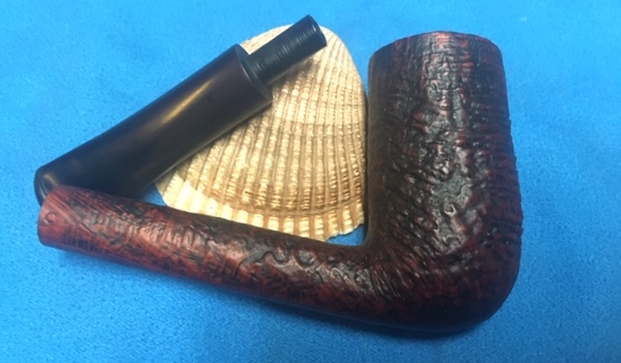
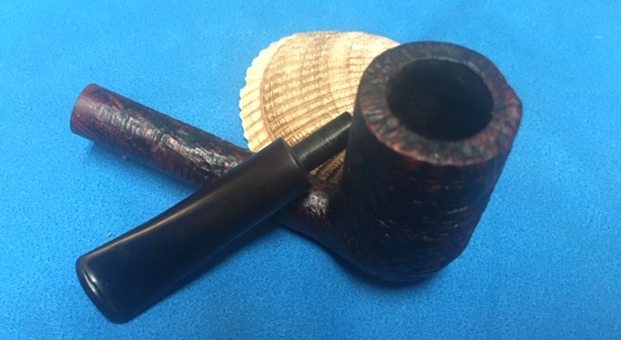
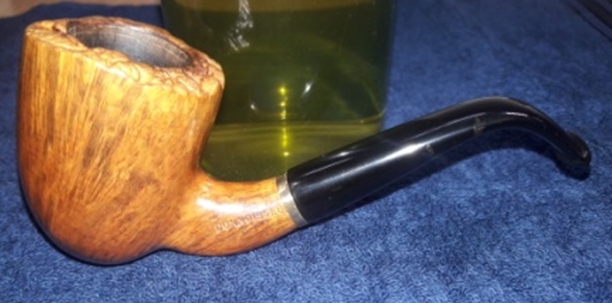
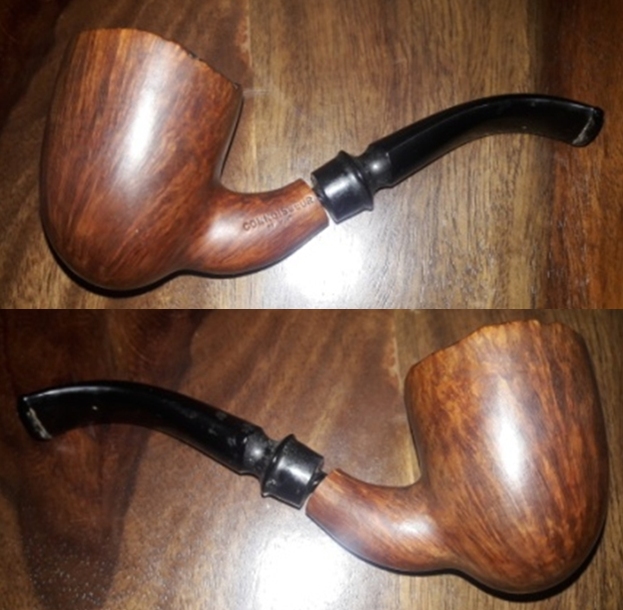
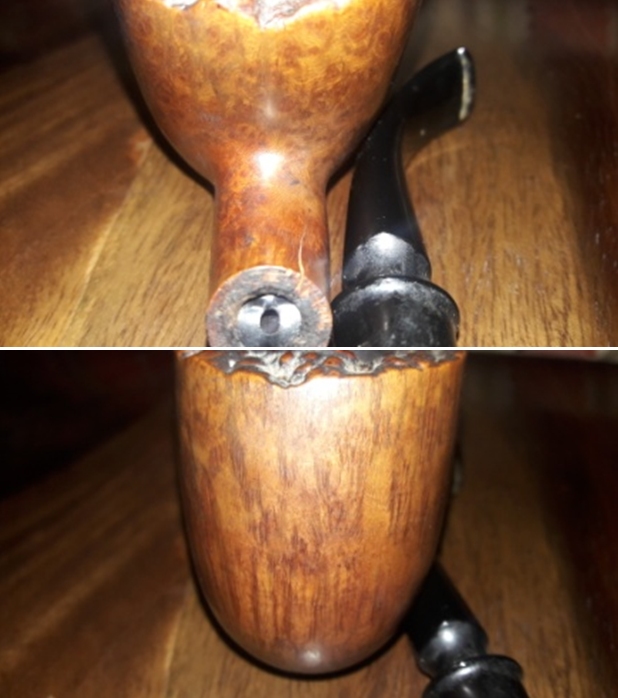
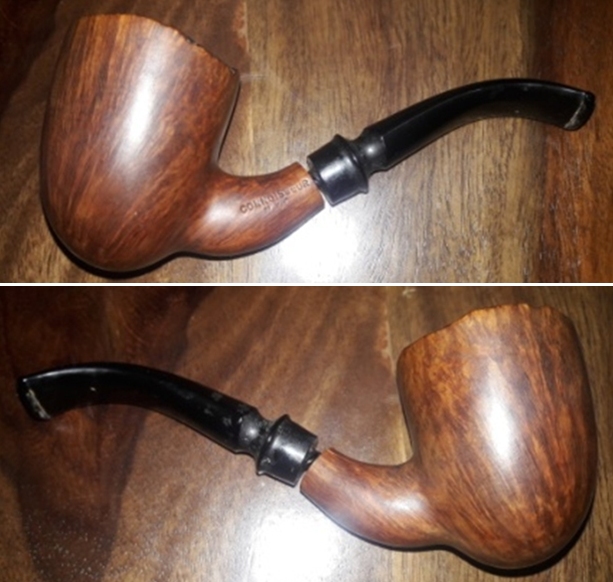
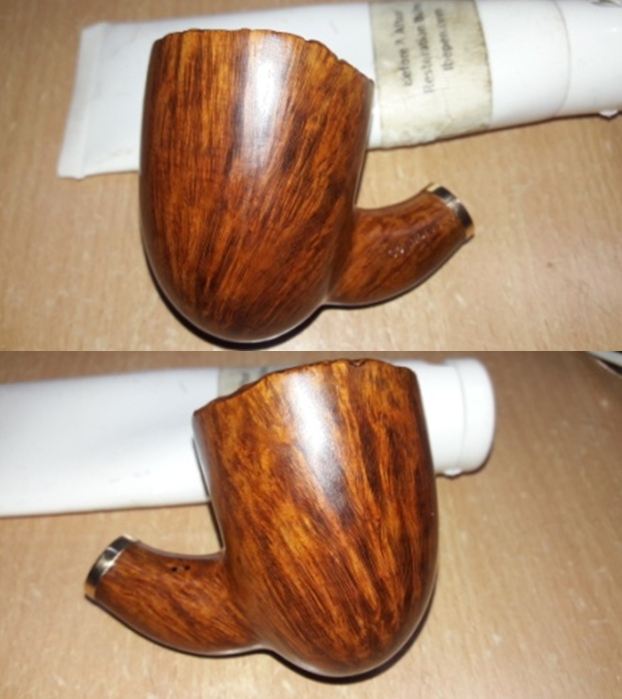
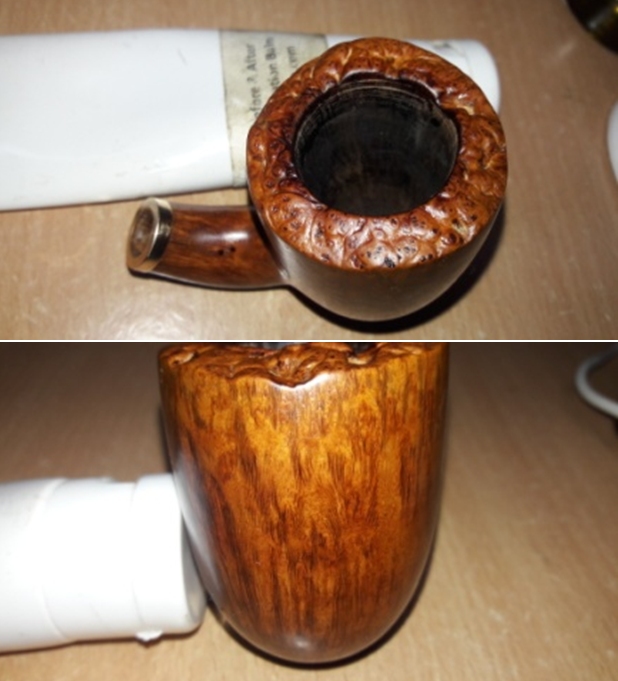
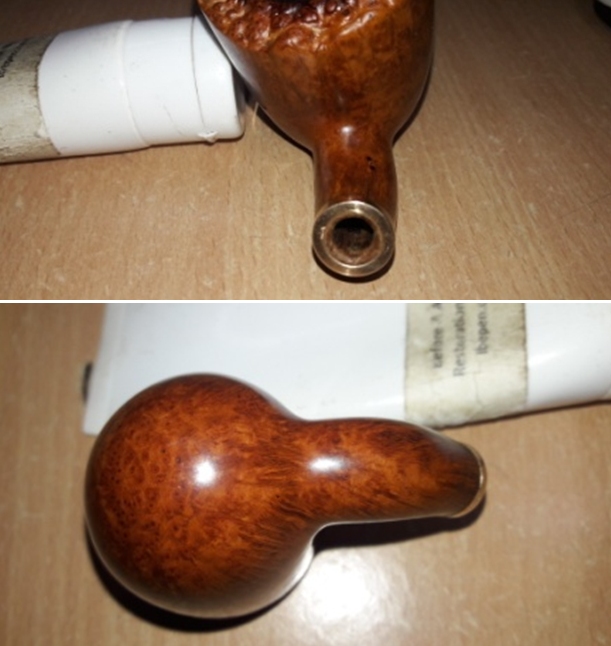
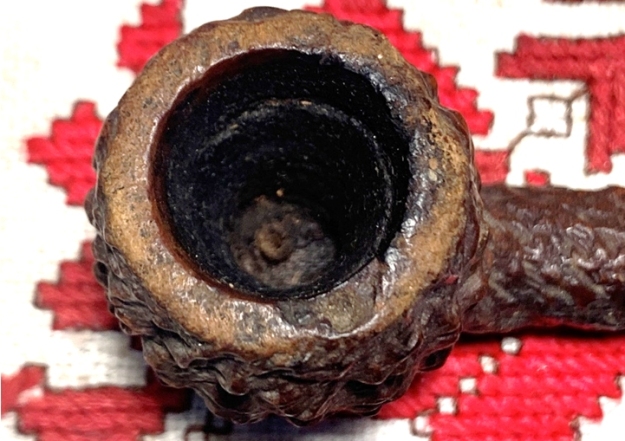
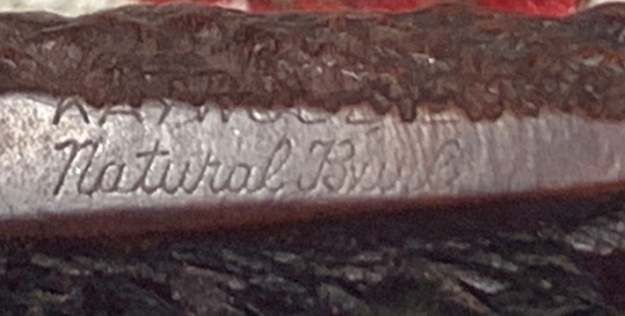
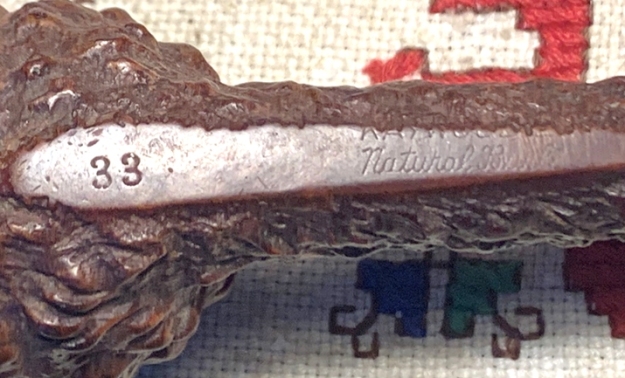
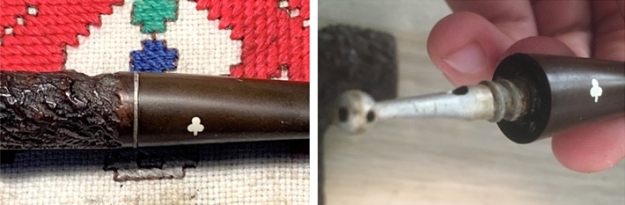
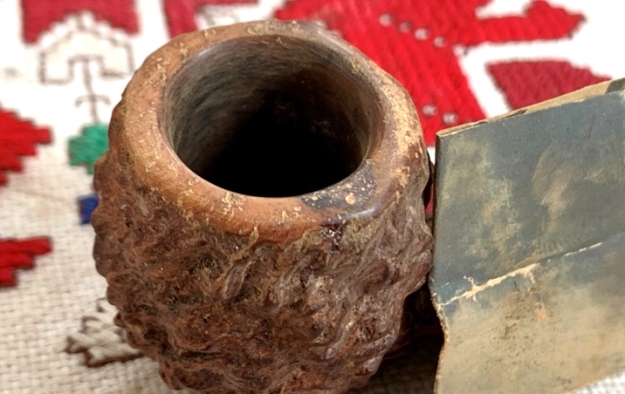
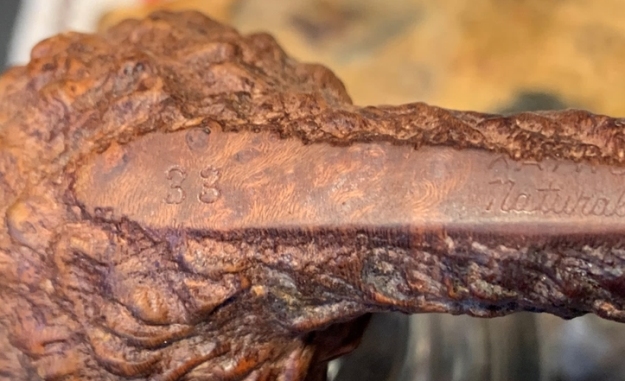
This is the second of 3 of Paw’s pipes that Joe sent to me from Athens, Greece, where he and his wife, Hannah, live and work.  Paw is Hannah’s great grandfather who left behind several pipes that Joe has asked me to restore for the family.  Paw, also known as, ‘2-Page Sam’ by those who knew him as a salesman of over 40 years of the tobacco giant, Brown & Williamson Tobacco, Corp, has a fascinating story that was described in an article in B&W’s company magazine that I included in the write up of Paw’s Medico Apollo Brylon, which I just completed that turned out well (See: Another Legacy Pipe of a Great-Grandfather: Challenges Working with ‘Brylon’ on a Medico Apollo).  Next, two Kaywoodies remain to be restored – a Kaywoodie “500” and the one on my worktable now, a Kaywoodie Natural Burl 33.  Here are pictures to take a closer look. The nomenclature is on the underside of the shank’s smooth briar panel with ‘KAYWOODIE’ (as most of it is not legible as the upper half of ‘Kaywoodie’ bleeds into the craggy rusticated landscape) [over] ‘Natural Burl’ in fancy cursive script. To the left of the nomenclature is stamped the Kaywoodie shape number of 33.  In Pipedia’s listings of Kaywoodie shape numbers, 33 is listed as: “Large apple, rounded top” that was used as a shape designator from 1937 to 1972.The dating indicators of this Kaywoodie are good.  The Natural Burl has a 4-holed stinger which were phased out at the end of the 1950s, though they still show up some in the 60s according to Pipephil.eu’s discussion about Kaywoodie’s stinger evolution.  The inlaid white shamrock also points to an earlier period.I found nothing specific in Pipedia or Pipephil.eu about Kaywoodie’s ‘Natural Burl’ line.  Expanding my search, I did find very helpful anecdotal information in a February, 2013, thread by ‘kwguy’ on a Kaywoodie discussion group on Tapatalk.com:
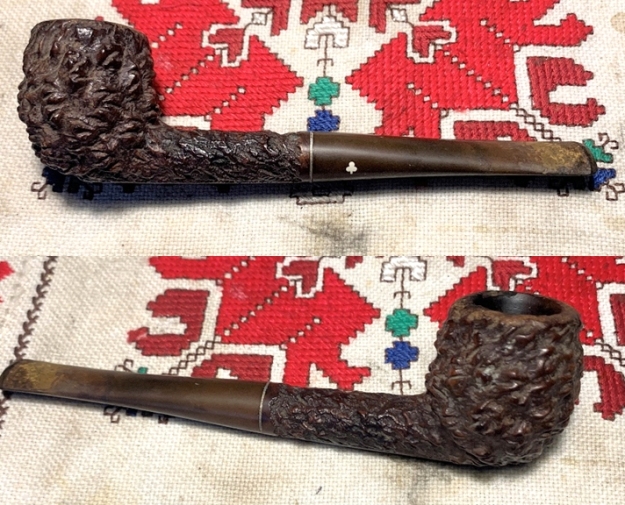
Natural Burls are in the catalogs from 1957 to 1962. They were $4.00 when they first came out and $5.00 by the time they were discontinued.  They were basically a stained version of the Coral White Briar, which also debuted in 1957.  The overall rough texture was described in the catalogs as having a rough texture like the outside of the burl.  The rough texture in theory would create more surface area for a cooler feeling bowl.  Carving of this type was done on bowls of less desirable grain and with excessive surface imperfections.  On the lower side of the quality scale, Natural Burls would have had the white cloverleaf.  There may have been the occasional higher grade pipe that was downgraded during production and hence would have the round logo, but I think you’ll mostly see them with the white logos.

Based upon the information of this thread, the Natural Burl Apple before me dates from 1957 to 1962, when they were featured in Kaywoodie catalogs. I looked for a catalog during this period online, but unfortunately, I was unable to find one.  The rusticated or carved surface theoretically provides a cooler feeling bowl.  This pipe fits Sam’s low budget approach to his pipes.  When the Natural Burl Apple first hit the market, it was in a working man’s modest budget range, $4!  I’m hopeful that after I’ve completed working on Paw’s vintage Kaywoodie it will look like a million bucks!

The above thread from ‘kwguy’ also mentions that the ‘Natural Burl’ line was featured in Kaywoodie catalogs from 1957 to 1962.  There are Kaywoodie catalogs and adds referenced on Pipedia and the Chris Keene Directory of Pictures, but I could find nothing in these ‘go-to’ places for catalogs or listing between 57 and 62.  Emails to Steve and rebornpipes contributor, Al Jones, also came up empty.  However, Al encouraged me to reach out to Bill Feuerbach, the current president of S.M. Frank with Kaywoodie production in New York.  Al said that Bill had always been helpful and had seemed to enjoy providing info.  Nothing like going to the top of the pipe food chain!  I sent a note to Bill through the S.M. Frank website as well as to the ‘kwguy’ in the Natural Burl thread with the hope of getting a response and perhaps a historical Natural Burl add!

Al’s suggestion to me paid off!  In a few days I received a response from Bill Feuerbach, president of S.M. Frank since taking over the role from his father in 1990 as the fourth generation of Feuerbachs overseeing the company.  Bill’s note to me:

Dal 

I’d love to be able to help you out with that. I’ve looked through what I have at the shop and most of those catalogs are later 60’s to later 70’s.  I’m sure I’ll have those older catalogs from that range at home.  I’ll try and check tonight.

Best regards

Bill

After arriving home that night, Bill sent an additional note that he hadn’t found anything at his home and would redouble his efforts the following day at the shop to find the sought after ’57 to 62’ catalog pages.  Then, this note came in and the treasure hunt ended with success!

Dal

Success!!  I found the catalogs at home.  They were in a storage tub in the downstairs closet. Funny I don’t remember putting them there. It’s probably been 4 years since I referenced them. It is hell getting old, CRS is kicking in.

Anyway, I’ve attached three images from the 1958, 1960 and 1962 catalogs.  I was only using my phone to take pictures and it was difficult not to get any flash or glare.  Are they ok?  You can tell the year by the retail prices for the Natural Burl.

1958- $4.00

1960- $5.00

1962- $5.95

Let me know when you’ve posted this and the link. I’d like to take a look.  If you have any other questions let me know. If in the future you need other images from the catalogs, let me know.

Best regards

Bill

The images Bill sent were great depicting the Kaywoodie presentation of the Natural Burl line.  Both the 1960 and 1962 pages, second and third below, showcase the Large Apple on my worktable.  The pictures and descriptions are great helping to wrap Paw’s pipe in its historical context! I appreciated the help of Bill Feuerbach, president of the S. M. Frank Co. & Inc. based in New Windsor, New York.  The Frank website not only showcases the Kaywoodie, Yello-Bole and Medico brand lines, but has other interesting information as well.  In my email response to Bill, I offered to digitize the ‘treasure tubs’ of Kaywoodie catalogs and adds if I only lived a bit closer to his neighborhood!  Oh my….
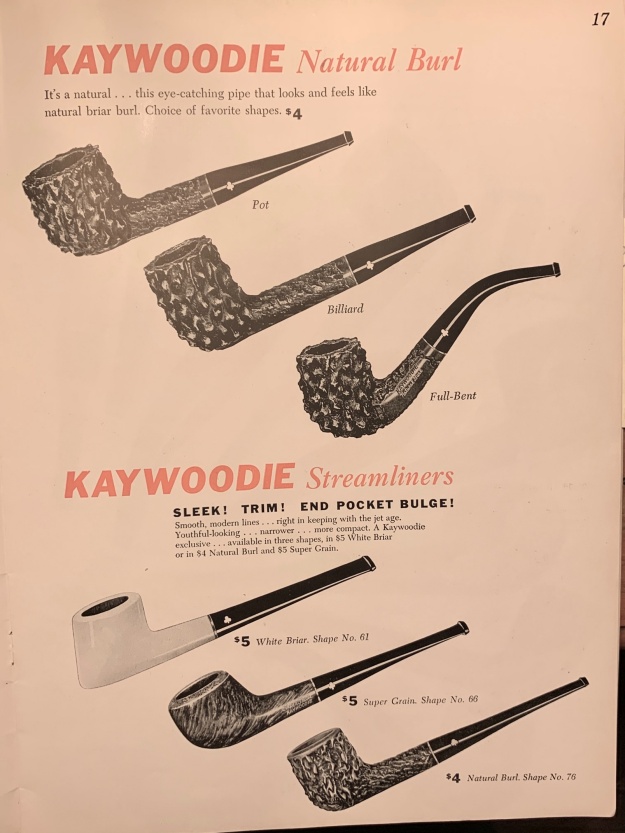
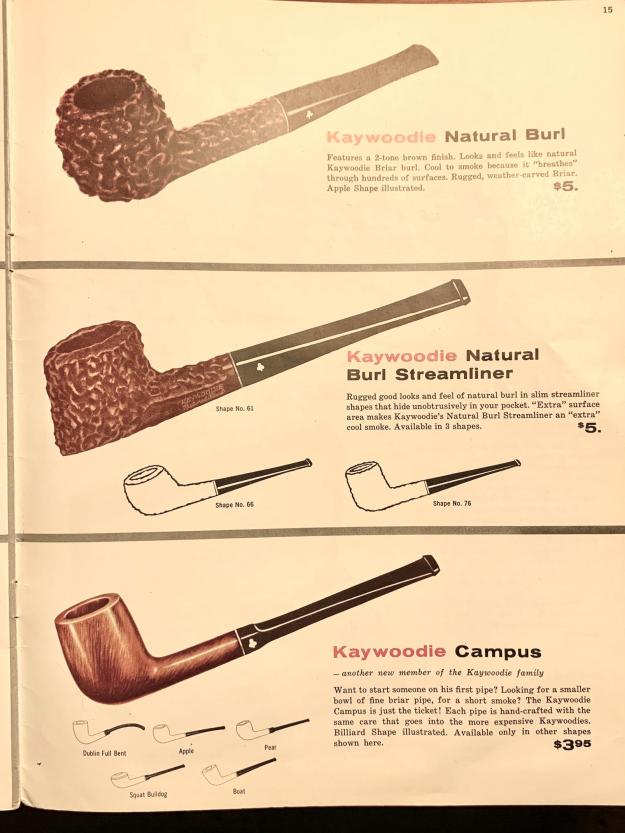
As I was waiting for word from Bill before he found the catalogs, I reread the Pipedia article on the S.M Frank Co. and discovered at the bottom of the article a reference to Brian Levine’s interview of Bill on the Pipes Magazine Radio Show.  I tuned in to learn more about Bill and the Kaywoodie name.  I was interested to hear in the interview that not only is Bill the CEO of the company, but he is an accomplished freehand pipe maker himself, likes single malts and owns and enjoys pipes in his rotation other than Kaywoodies!  It was a great interview and I encourage readers to tune in too!

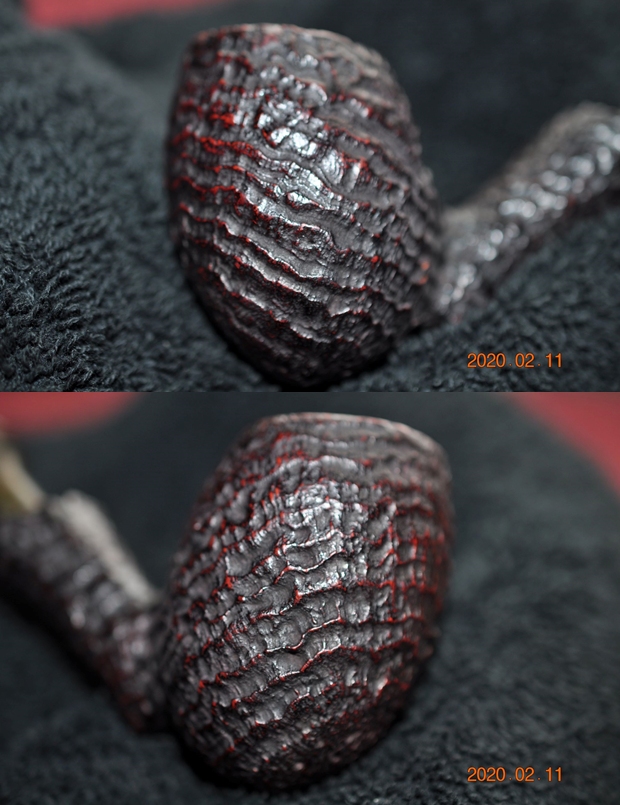
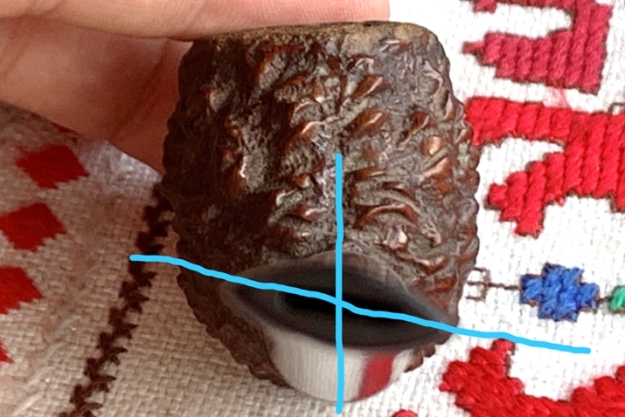
The name for this Kaywoodie series, ‘Natural Burl’, harkens back to a pipe’s origins – or at least its bowl.  The Natural Burl adds above from Bill describe the ‘rugged, weather-carved briar’ that breathes more because of the increased surface of the bowl.  Briar comes from a bush-like plant that grows in arid lands.  The Kaywoodie motif focuses on the rough state of the burl in its natural form sporting rusticated or carved bowls to emulate a natural harvested burl.  The burl is the base of the briar bush that is cut into blocks, each becoming the raw material for fashioning each unique bowl. I found this example online of the burl texture which looks very much like the pipe on my worktable! This interesting information was added about the process at the WorthPoint site:
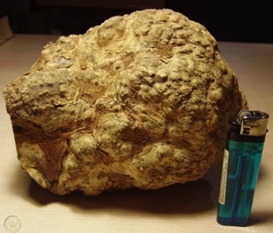
The mother of briar is Erica Arborea, an evergreen bush / tree, that grows in all forests of the Mediterranean area, preferring acid soils (Cyprus, Greece, Italy, Spain, France, Portugal, Morocco, Algeria- these are the countries where it is found). The bush has a typical height of 3 – 12 feet. But not the visible parts are the wanted ones, the ball-like roots are the pipe makers desire. These are the raw material for the briar wood, which is cut in blocks (plateaux and ebauchons) by real specialists. After a long process of boiling them in clear water and drying periods, these briar blocks will be ready for the experienced hands of a pipe maker.

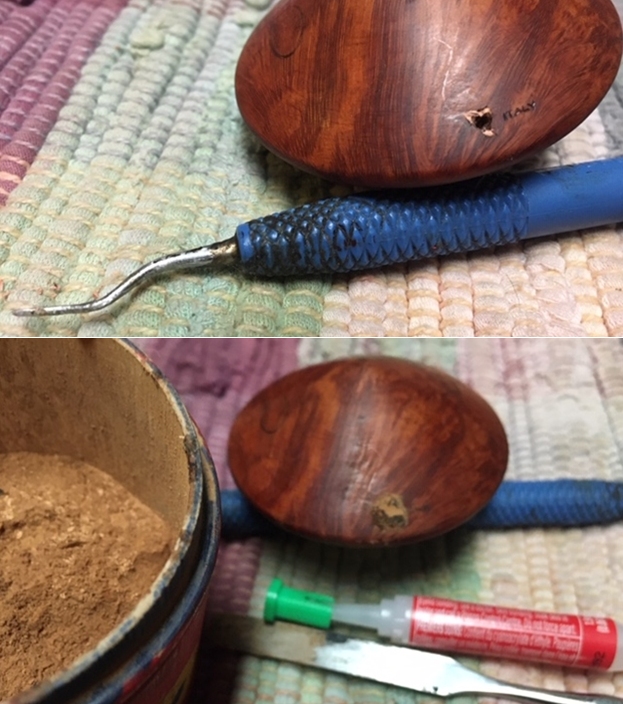
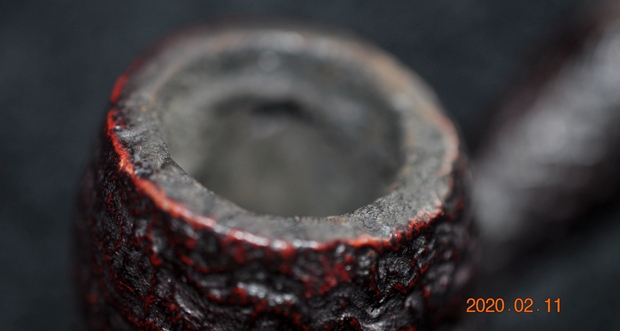
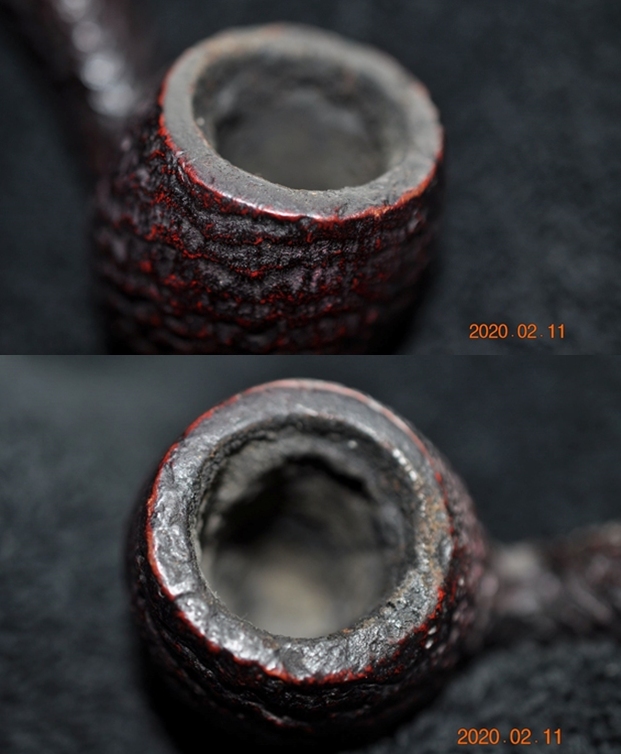
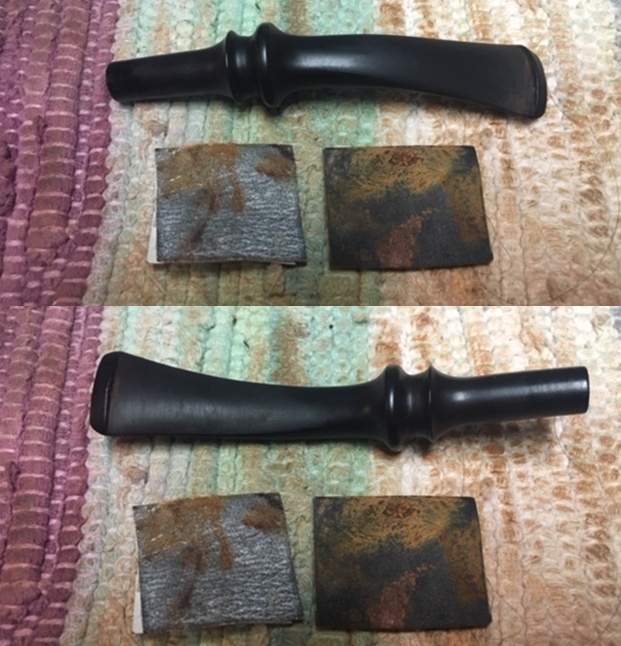
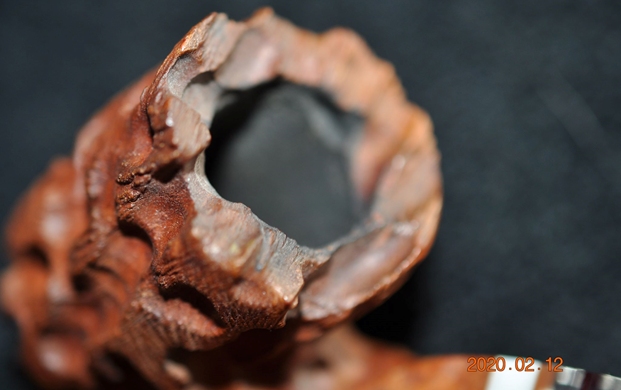
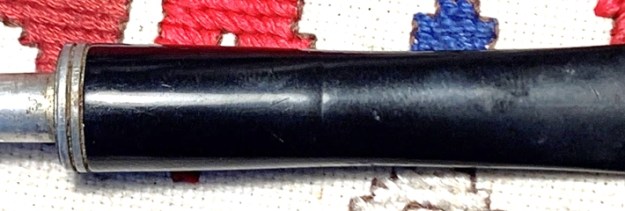
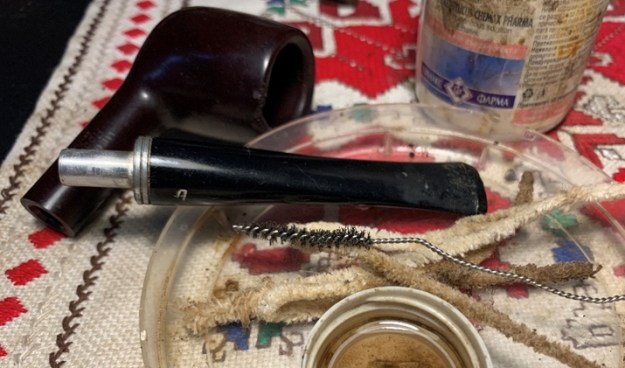
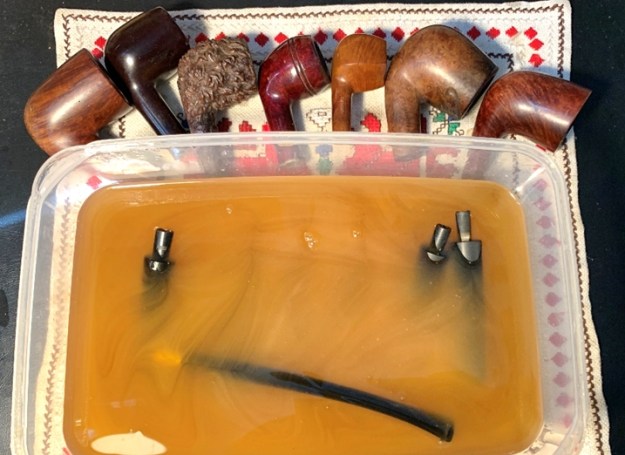
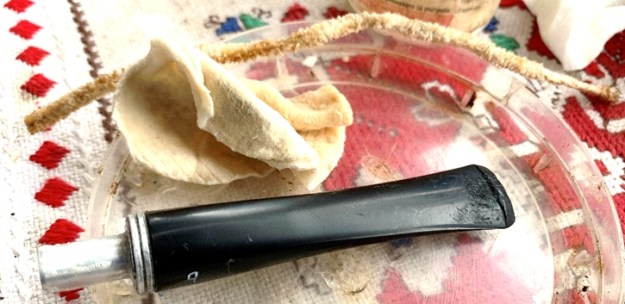
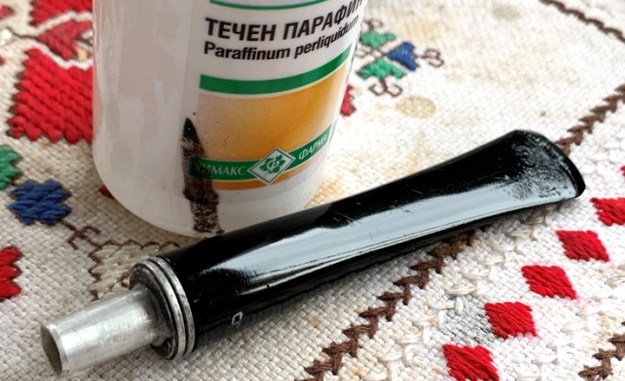
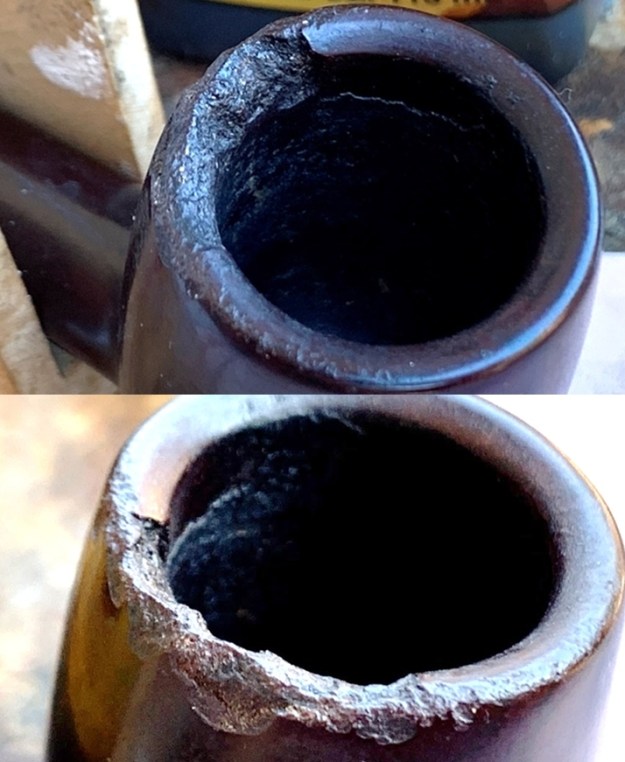
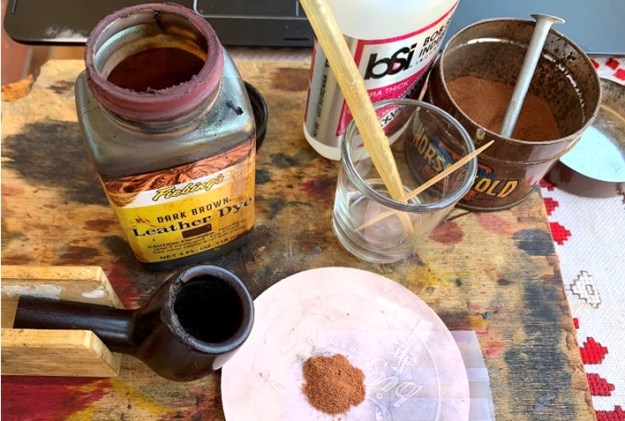
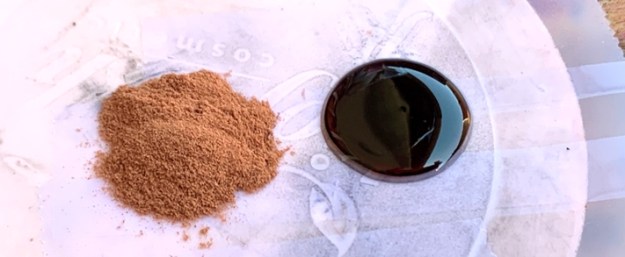
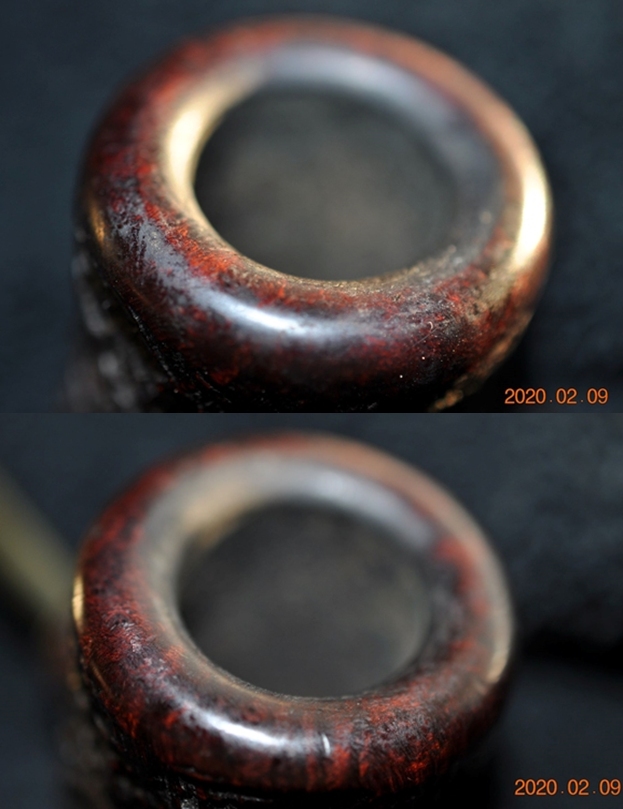
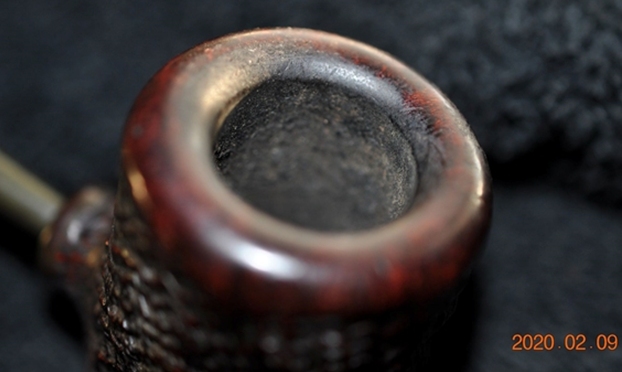
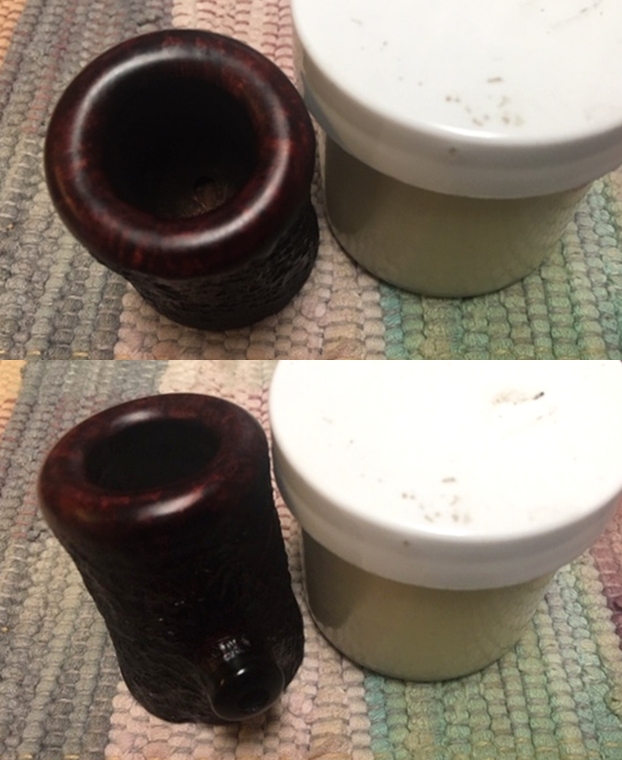
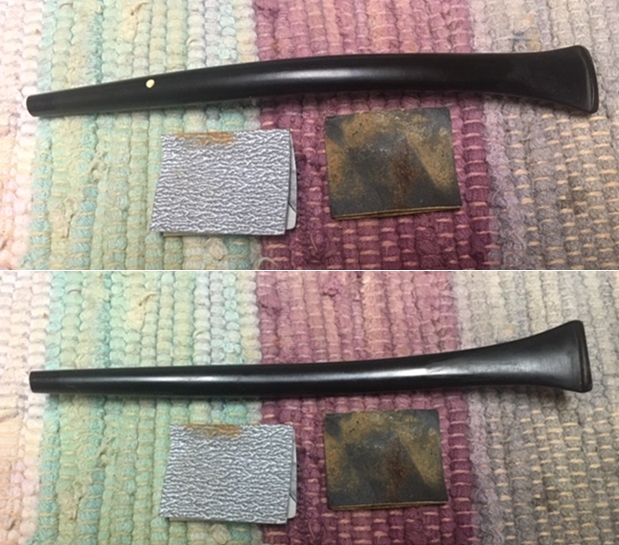
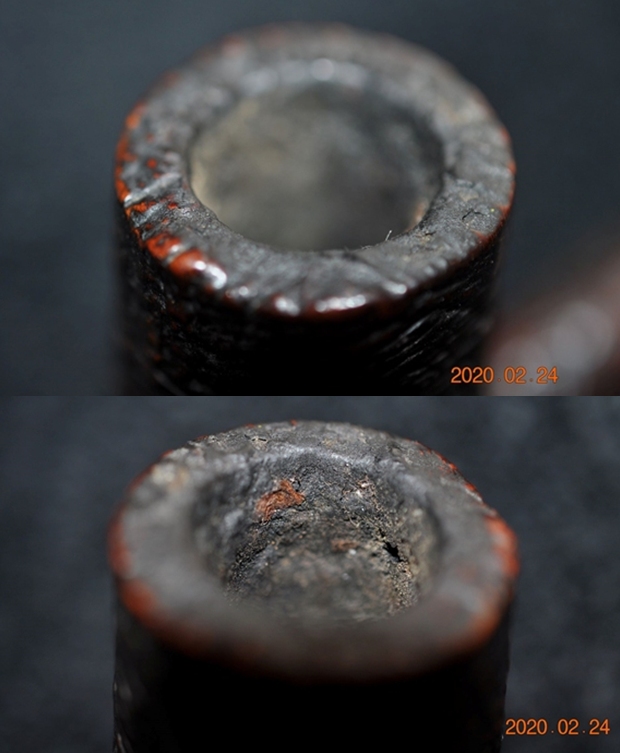
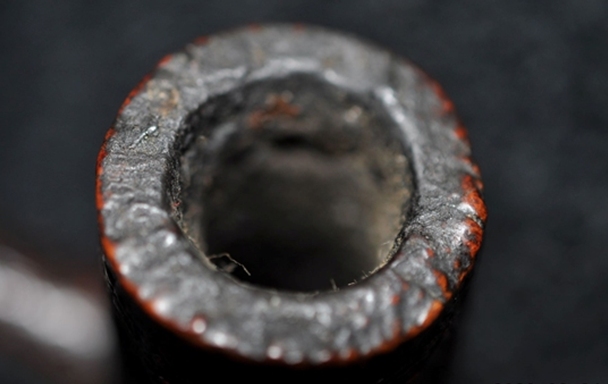
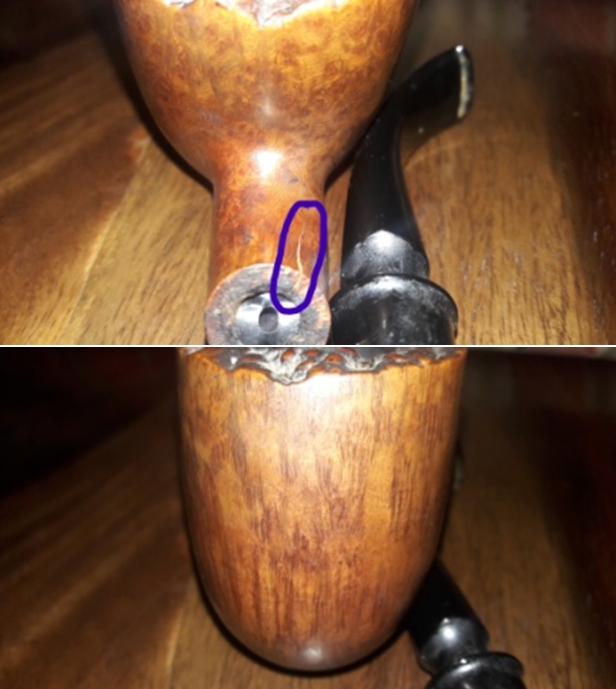
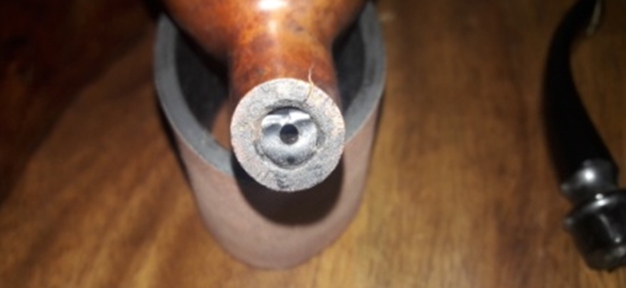
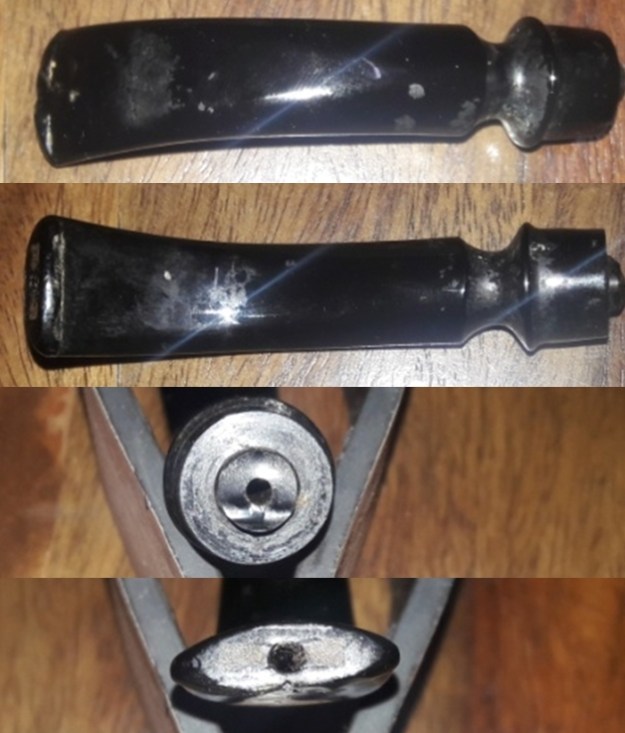
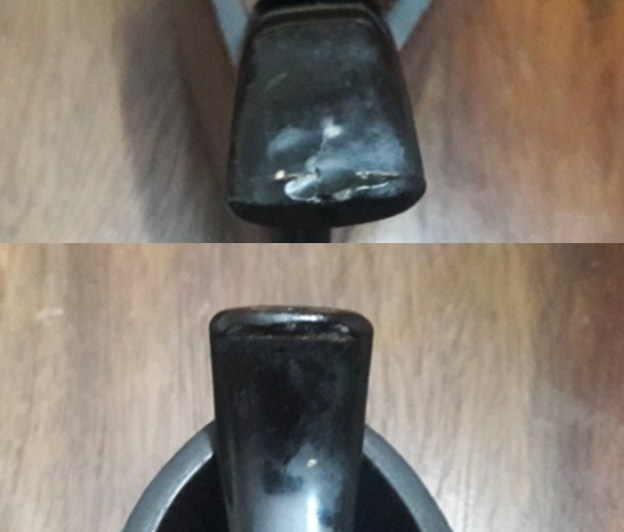
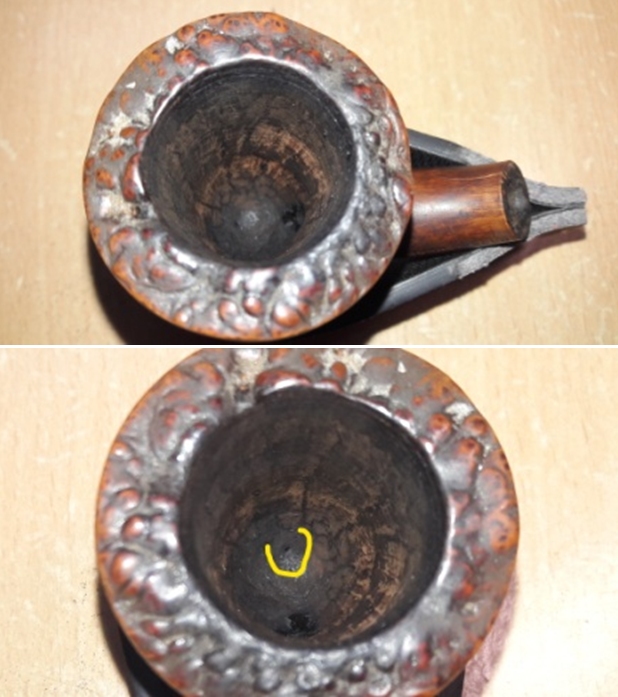
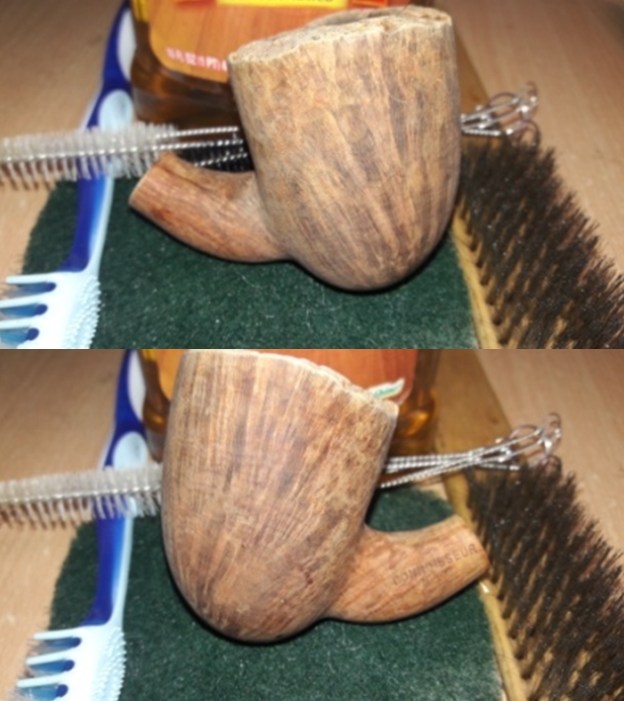
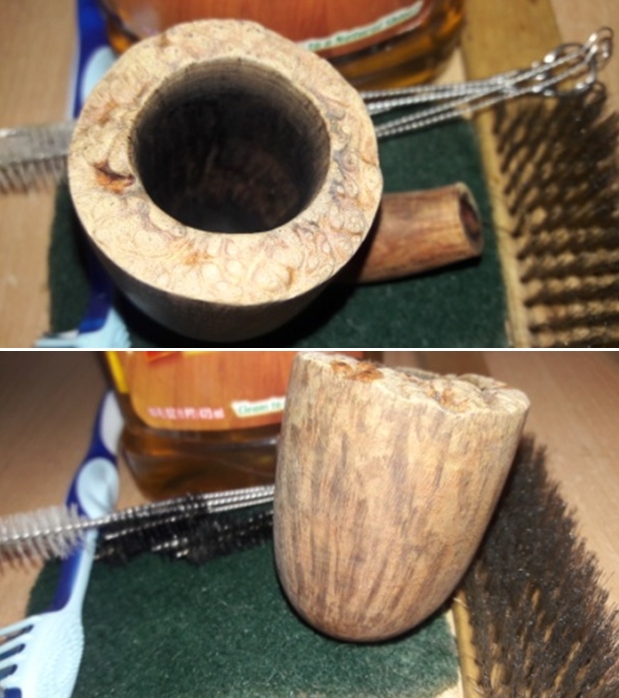
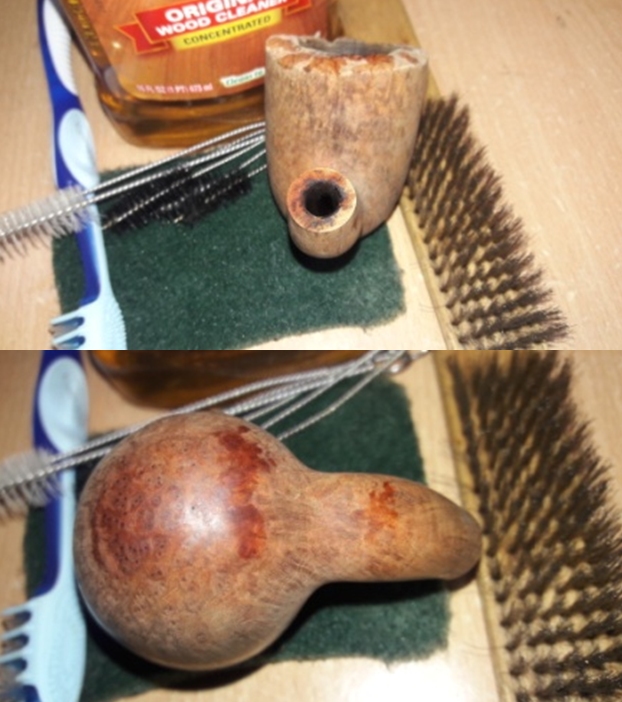
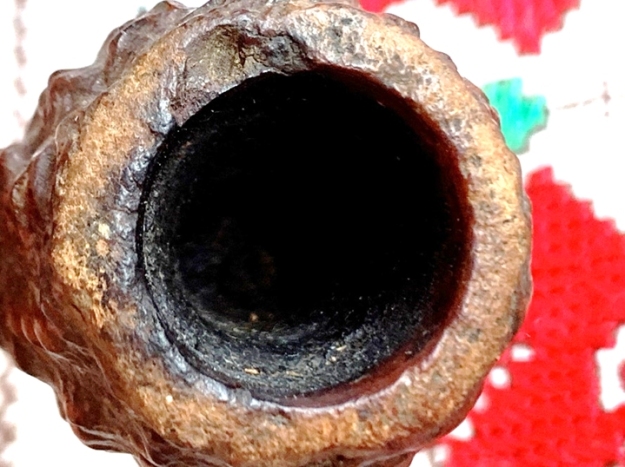
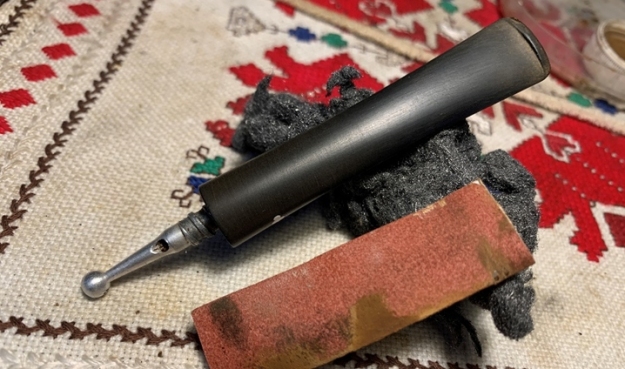
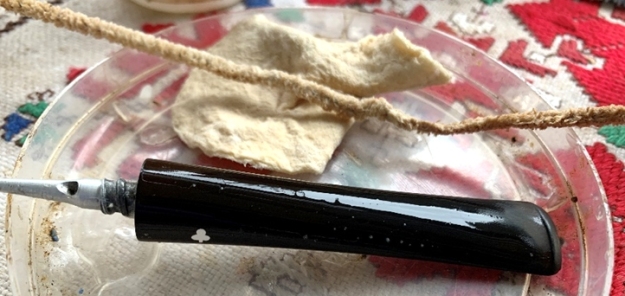
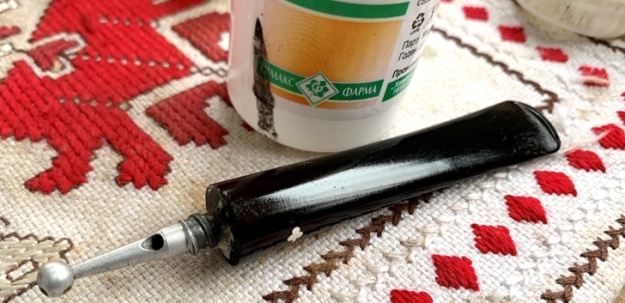
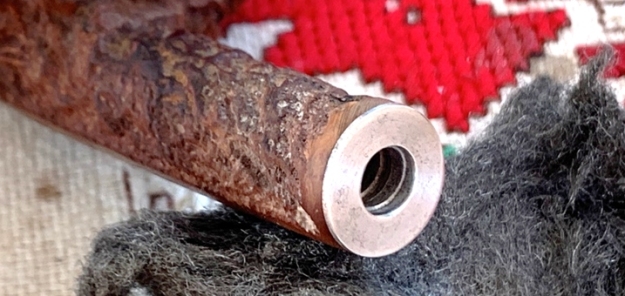
With a deepened understanding and appreciation for Paw’s Kaywoodie on my worktable, I look more closely at the issues it brings from its years of service. As one would expect, the craggy Burl bowl is full of grime.  The chamber has thickening cake as you go down toward the floor.  This needs to be cleaned out as well to inspect the chamber wall and to give the briar a fresh start. The rim has evidences of Sam’s penchant for knocking the stummel on the back side of the rim.  It is worn and tapers away from the chamber. The rim was fashioned to be somewhat rough complementing the craggy bowl motif, but there is a large chip or divot out of the rim that will need to be filled and then blended. The bowl itself, along with the rim, is faded and skinned up.  I suspect that the original finish bent toward a light brown, but it is now thin and will need refreshing with new dye to blend the rim and bowl.  The 1962 add above describes a ‘2-tone brown finish’ characterizing the ‘Natural Burl’ line.  This is helpful information that hints at the depth of the final finish.The stem is in rough shape.  The oxidation is thick and deep.  The bit has calcium caked on it and some lower tooth compressions – not as bad as I’ve seen on Paw’s previous pipes! The stem orientation is also over-clocked which is a normal phenomenon with Kaywoodie screw in stems that happens over years of use with repeated loosening and tightening.  This will need to be adjusted as well. I begin the restoration of Paw’s Kaywoodie Natural Burl Large Apple by addressing the severe oxidation in the stem.  Before placing the stem in a soak of Before & After Deoxidizer, I get a head-start on removing the oxidation by pre-sanding the stem.  I use both 240 grade sanding paper and 000 grade steel wool to sand the stem to remove as much oxidation and caked calcium as possible.  The nickel 4-hole stinger also is cleaned up with the steel wool.After the sanding, the stem joins other pipes in the queue in a soak of Before & After Deoxidizer. After a few hours, the Kaywoodie’s stem is extracted from the Deoxidizer and after draining, I squeegee the liquid off the stem with my fingers.  I then run a pipe cleaner wetted with isopropyl 95% through the airway to clear the Deoxidizer.  Using a cotton pad and alcohol, the stem is wiped to remove the raised oxidation resulting from the soak.After cleaning the stem, paraffin oil is applied to help condition the vulcanite.  I put the stem aside to absorb the oil.  The stem looks great compared to where it started. It’s cleaning up nicely.Next, I turn the attention to the stummel.  I begin by reaming the Kaywoodie’s chamber to remove the cake.  Using the Pipnet Reaming Kit, I use two of the four blade heads available in the Kit.  I don’t know how long this cake has been waiting to be removed, but it is as hard as a brick.  I’m careful not to force the blades beyond their torque endurance level – simply allowing the scraping action to wear away the brick cake.  When both blades do what they can, the Savinelli Fitsall Tool continues the scraping of the chamber walls. Finally, to remove the last remaining carbon remnants, a 240 grade sanding paper is wrapped around a Sharpie Pen to sand the chamber getting down to fresh briar. After wiping the chamber with a cotton pad wetted with alcohol, and inspection reveals a perfectly healthy chamber.  The picture on the 10th floor Man Cave balcony where I’m working, does not allow a very good picture of the chamber, but it looks good.  Moving on.Next, using undiluted Murphy’s Oil Soap, I go to work on the wonderfully craggy but grime-filled surface of the Natural Burl bowl.  I use a cotton pad a bit, but transfer to using a bristled toothbrush which gets into the nooks and crannies of the landscape much more effectively.Next, after transferring the bowl to the kitchen sink, I continue to clean the surface and use shank brushes and liquid anti-oil dish soap and warm water to work on the internals.  After rinsing thoroughly, back on the worktable I take some pictures of the results.  The cleaning has totally removed what was left of the old finish – not unexpected.  The cleaning reveals some white fills on the right side of the stummel which are fully embraced in the craggy landscape cover and seem to be solid after testing them with a sharp dental probe.Next, I focus again on the internal cleaning using pipe cleaners and cotton buds wetted with isopropyl 95%.  Cleaning Kaywoodie pipes tends not to be easy.  Working through the threaded metal shank facing makes access to the mortise difficult.  Along with pipe cleaners and buds, the full arsenal added the use of shank brushes, and a dental spoon to scrape the mortise walls.  After quite a bit of time and effort, the buds start to emerge lighter and a cease fire is called. I’ll continue the cleaning later with a kosher salt and alcohol soak to work through the night to further clean and freshen the internals of the Kaywoodie stummel.Turning now to the rim, the next step is to fill the divot, or perhaps, the crater on the rim.  I go along with the ‘rough’ motif of this Kaywoodie Natural Burl.  The rim is rough and the only repair I plan for the stummel is this divot.  The damage of Paw’s knocking will remain – it simply adds to the rough rustic look and will be a remembrance of Paw when it is put into service by the family.I place a small mound of briar dust on the mixing palette that I’ve covered with scotch tape for ease of cleaning.  Next to the briar dust a small amount of BCI Extra Thick CA glue is puddled.Using the toothpick, briar dust is pulled into the glue and mixed as it is added.  As more is added, the resulting briar dust putty thickens.  When it reaches the thickness of molasses, with the toothpick the putty is troweled to fill the rim divot.With the briar putty applied, I place the stummel aside for several hours for the putty to cure.Turning now to the stem, the upper bit is in good shape after the ‘pre-sanding’ that was done before putting the stem into the Deoxidizer.  The lower bit, pictured below, has some compressions and a button bite compression that need addressing.I start by using the heating method with a Bic lighter.  Using the flame of a Bic lighter, I paint the bit using a back and forth motion heating the vulcanite.  As the vulcanite heats, it also expands to regain the disposition of the stem before the compressions were made by Paw.  The picture below is after the heating and the process has helped the bit compressions so that only sanding should be needed to remove the damage.  However, the button is still in need of additional steps.To fill the button lip bite, after wiping the area with alcohol to clean it, I spot drop black CA glue on the compression and put the stem aside for the patch to cure.The patch on the rim is now ready for filing.  I use both the flat and half-rounded needle files to remove the excess putty and to shape the internal curve of the rim. I put a stop on sanding and further cleaning the rim because the hour is late, and through the night I want to use a kosher salt and alcohol soak to advance the cleaning of the internals of the stummel.  I first fashion a cotton ball into a ‘wick’ by pulling and twisting it.  It is then inserted down the mortise into the airway with the help of a stiff wire. The wick helps to draw out the latent residue of tars and oils.The bowl is then filled with kosher salt, which leaves no aftertaste as with regular iodized salt.  After placing it in the egg carton to keep it stable, I then fill the chamber with isopropyl 95% until it surfaces over the salt. After a few minutes, as the alcohol is drawn into the stummel, the alcohol is topped off and it is set aside to work through the night. The next morning, the salt and wick are slightly soiled which hopefully means that the internals are already clean from earlier. After dumping the expended salt and wiping the bowl with a paper towel, I blow through the mortise to make sure all the salt crystals have been dislodged. To make sure that the internals are clean, and nothing has been left behind after the soak, I use only one pipe cleaner and cotton bud as confirmation of the cleaning. Moving on.I return now to the rim.  I plan to apply a fresh color to the stummel and the only preparation for applying the new stain to the stummel is on the rim.  I plan to leave it in the rough motif of the Natural Burl line, but I want the rim cleaned.  I lightly sand the internal rim edge as well as lightly around the rough external rim edge as it transitions into the Burl landscape.  I’m looking for ‘rough’ and ‘rustic’ but ‘fresh’ to give this unique Kaywoodie a fresh start.I follow the 240 paper with 600 grade paper with the same approach – keep the rustic but refresh the rim.Before moving to the next step, I notice that the nickel shank facing after the cleaning had not been spruced up.  A quick revolution of 000 steel wool takes care of this.  This is the only bling this Kaywoodie has and I’m making the most of it!As I think about applying a fresh color to Paw’s Kaywoodie, I have only one picture of another Natural Burl online and it is no help in hinting at the original 2-toned brown coloring Kaywoodie used.  The best clue I have is on Paw’s pipe. The smooth briar panel on the underside of the shank holding the nomenclature holds a clue.  To guard the stamping on the panel I’ve not sanded it – only cleaned with the rest of the stummel.  I’m guessing that the coloring of the panel leans toward a light brown.  I’m thinking that Kaywoodie’s approach was straightforward with this less expensive line of pipes.  Yet, the craggy surface now is so dry and bare, showing pristine briar, that applying even a light brown dye will probably darken considerably as the thirsty briar drinks it in.Looking at the craggy landscape in the picture above brings the next question in my mind about applying a new finish.  My normal way of staining with aniline dye is to flame it to combust the alcohol which encourages a deeper embrace of the dye by the briar grain.  My normal follow-up to this is then to apply compounds to remove the crusting the combustion creates and to further shine the surface with the fine abrasives of Tripoli and Blue Diamond compounds.  The roughness of this stummel causes me to question my normal approach.  My concern is that if compounds are used on this craggy rough surface, I will forever be trying to clean out the compound residue lodged in the rough surface!  I think I can utilize buffing wheels on the Dremel without too much problem, but without compounds.  I decide in the end to apply a dye wash instead of flaming the dye because of this concern.
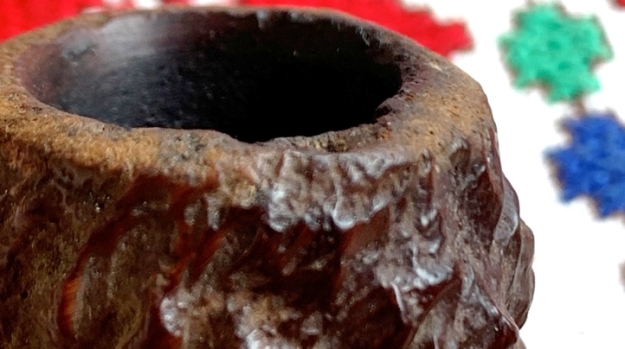
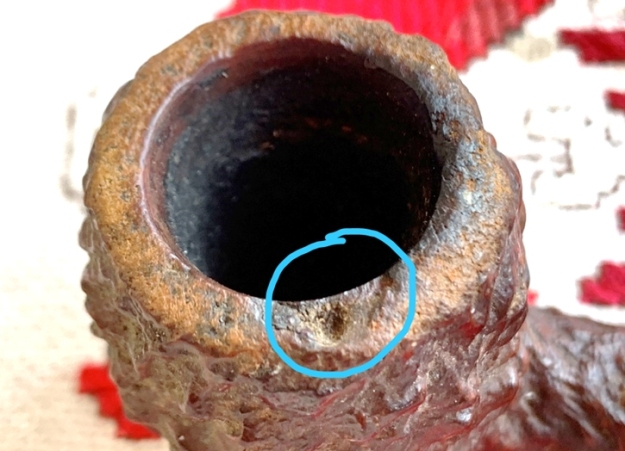
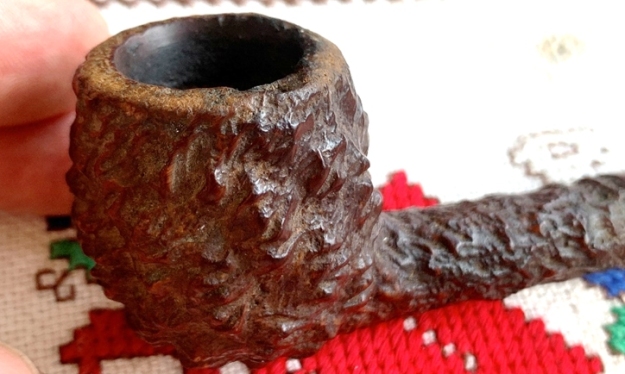
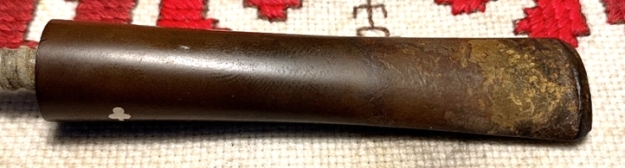
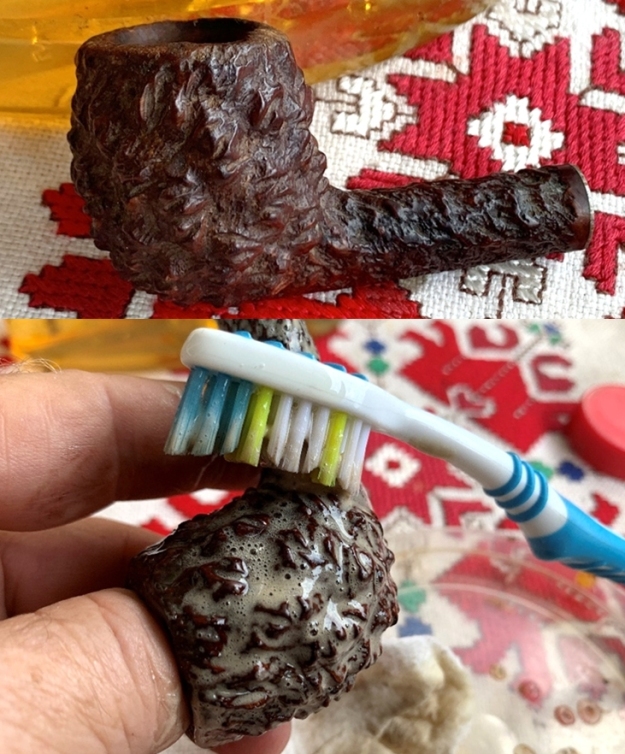
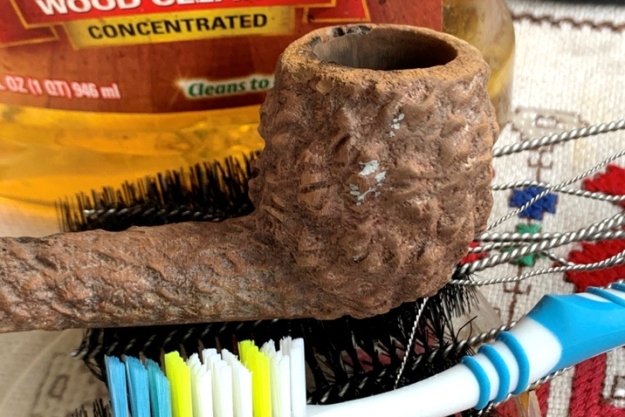
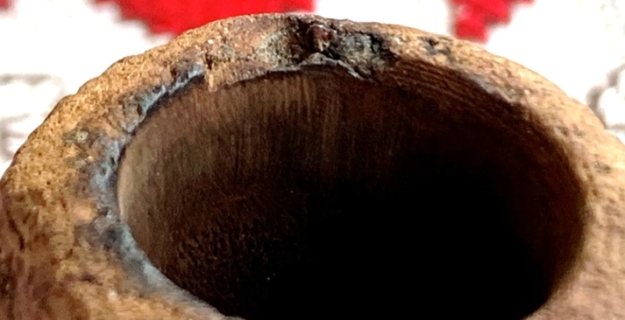
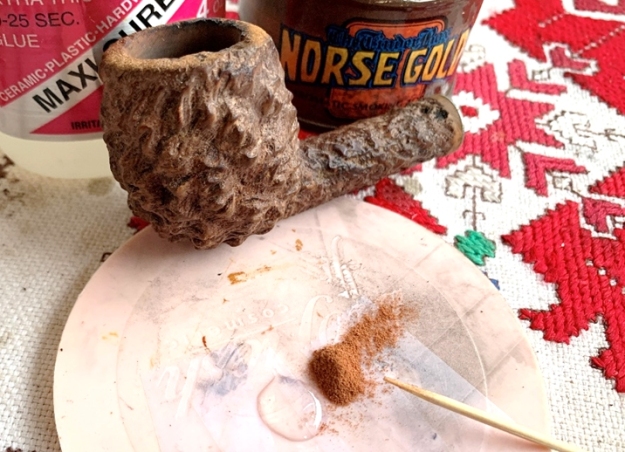
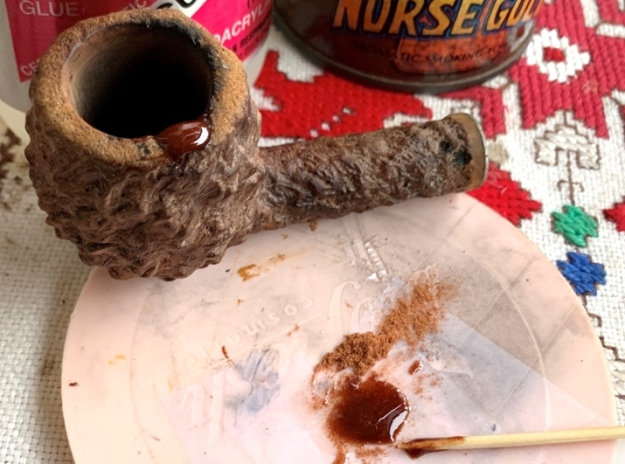
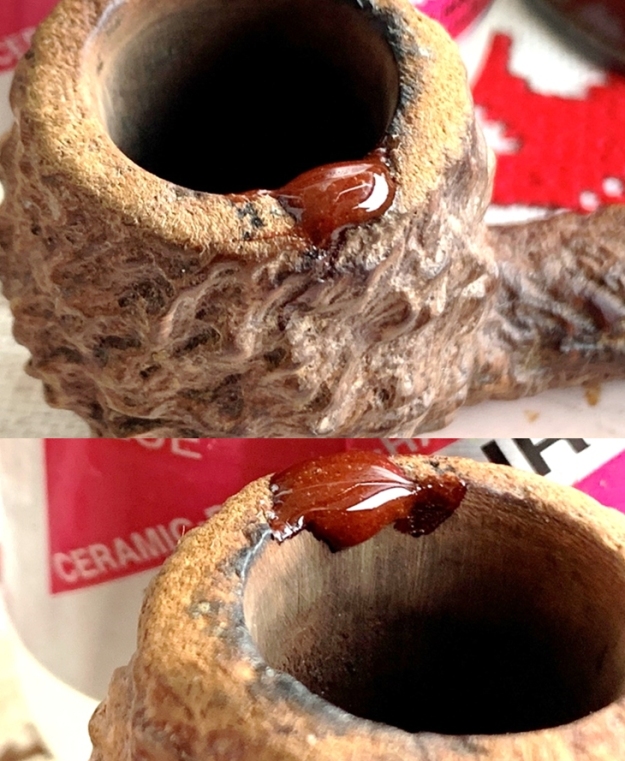
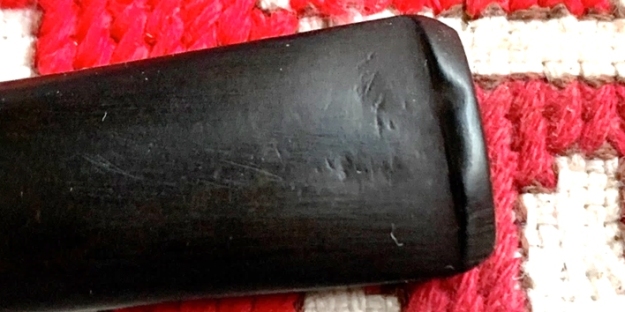
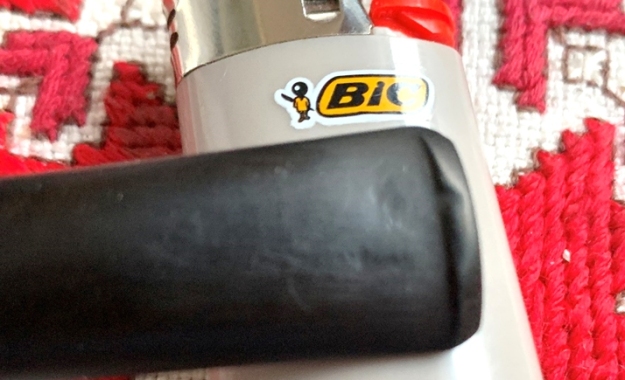
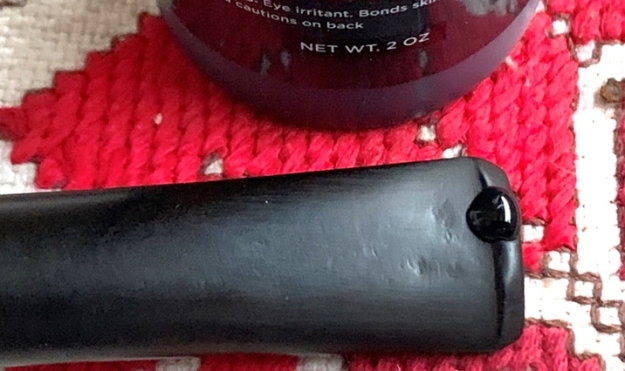
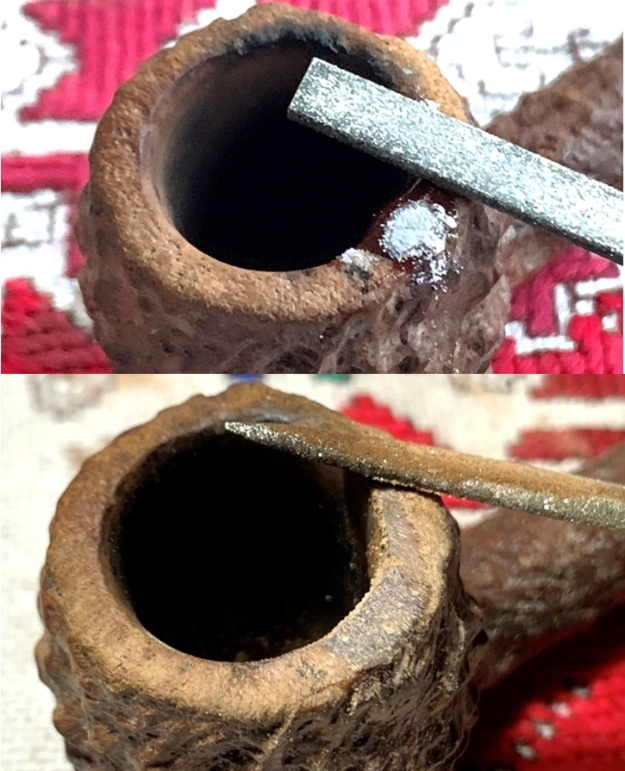
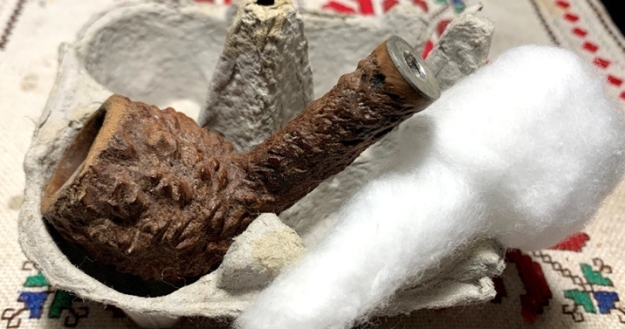
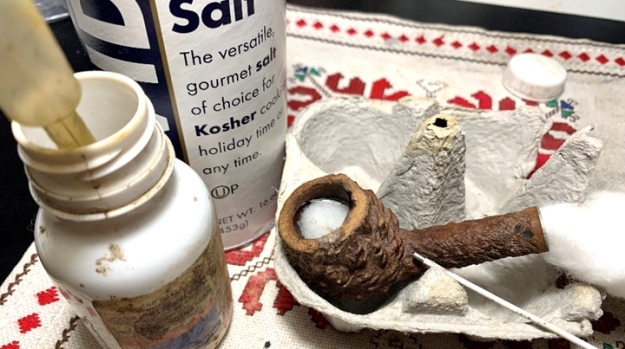
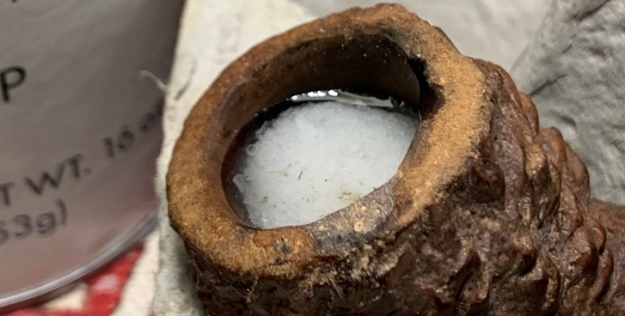
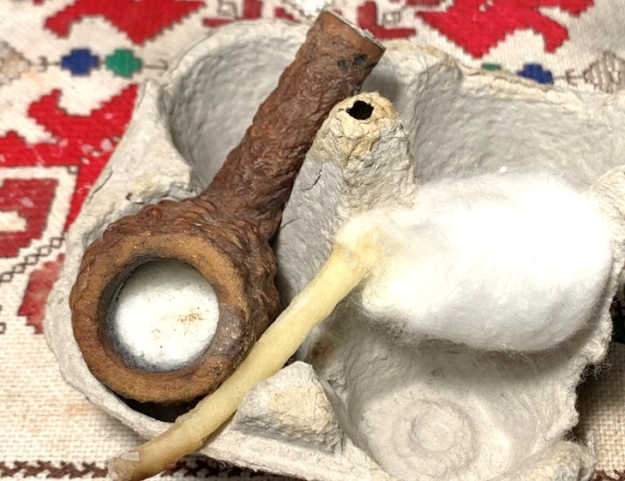
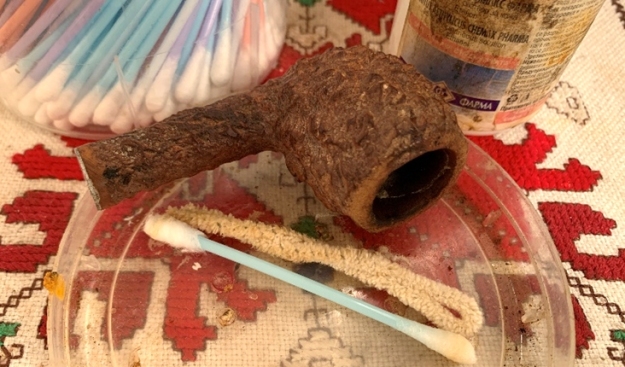
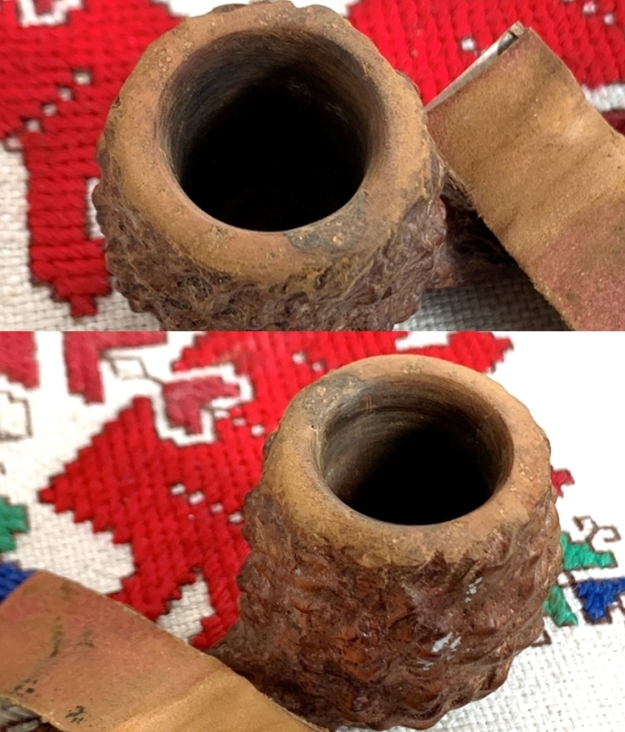
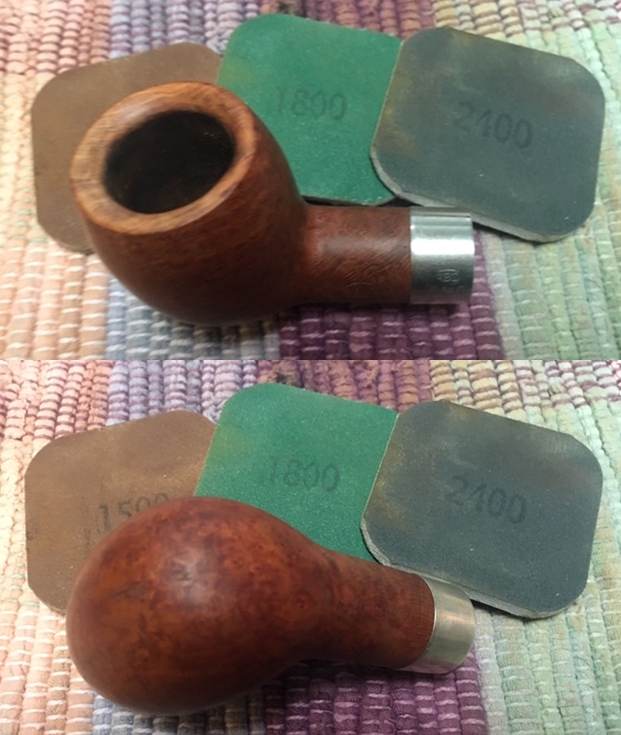
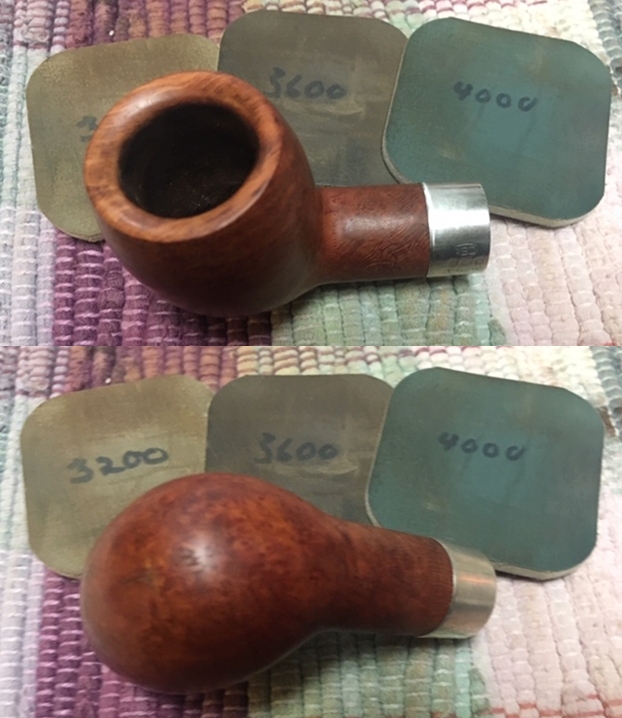
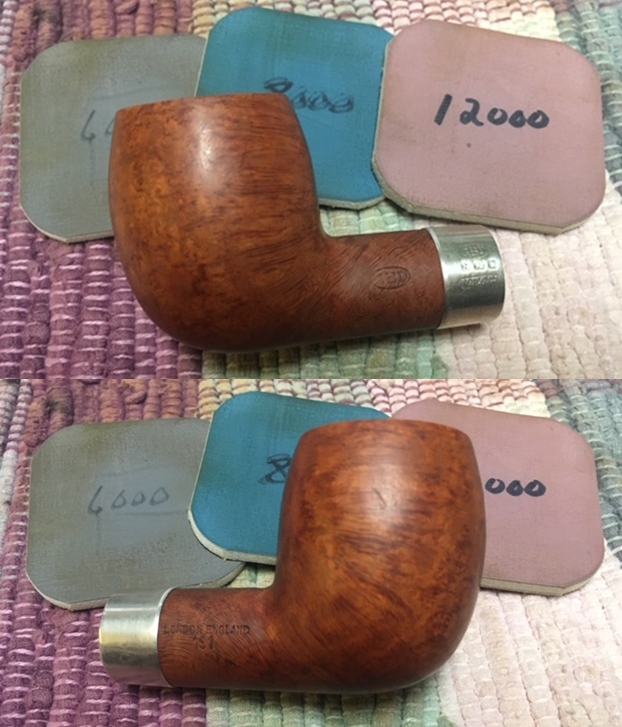
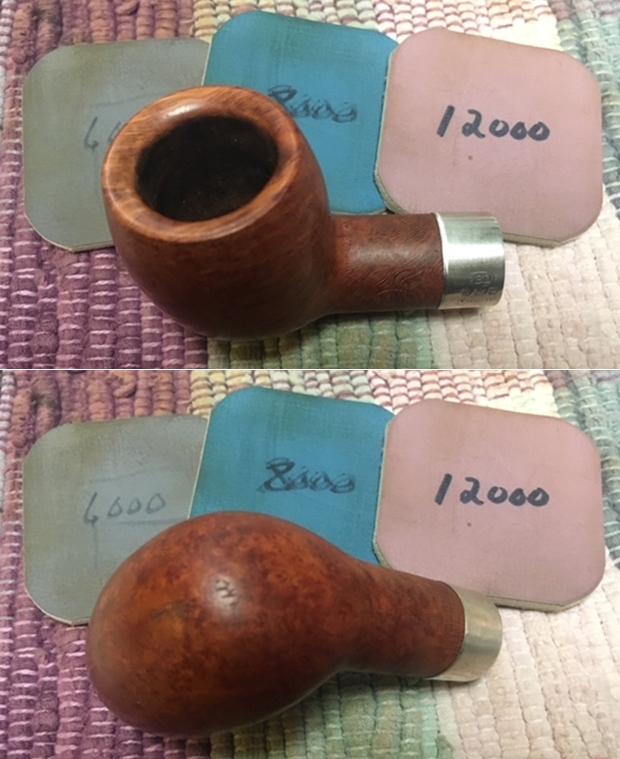
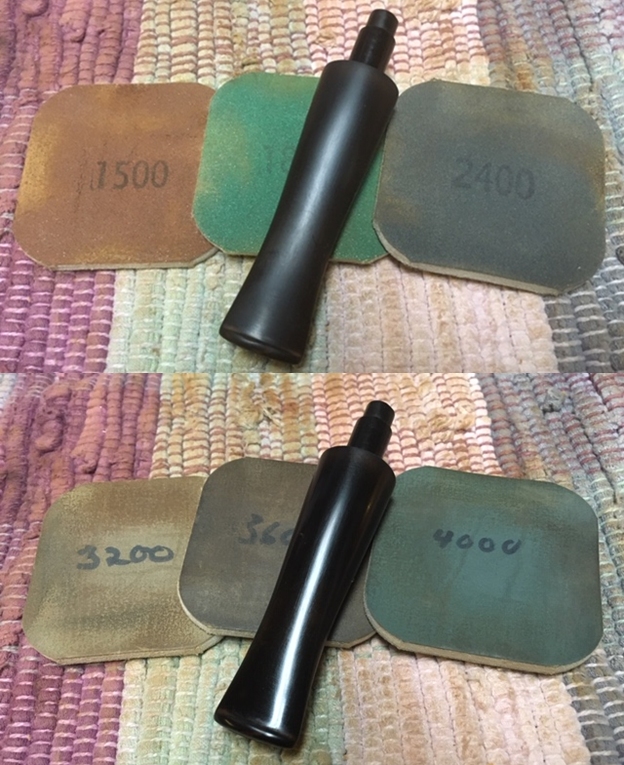
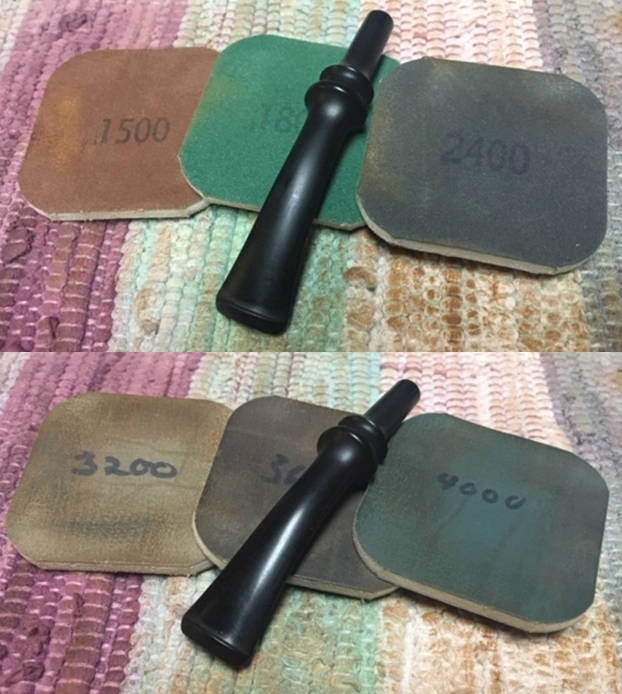
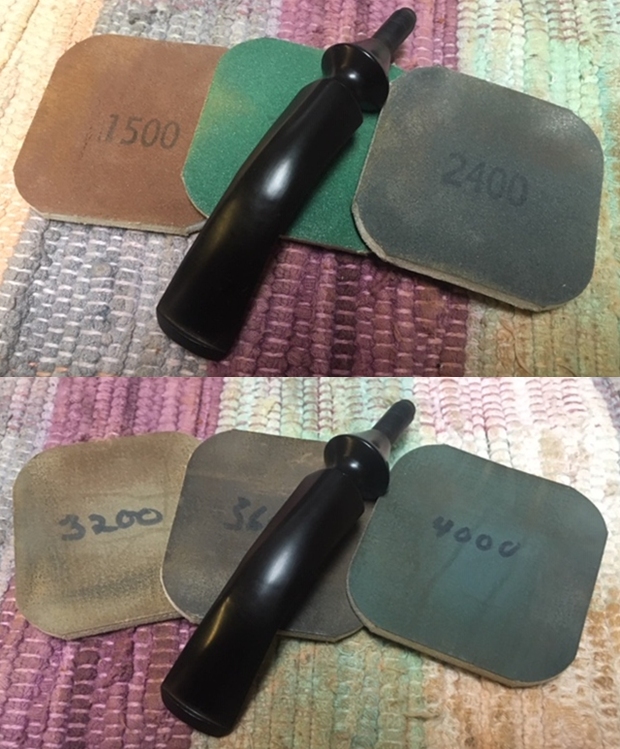
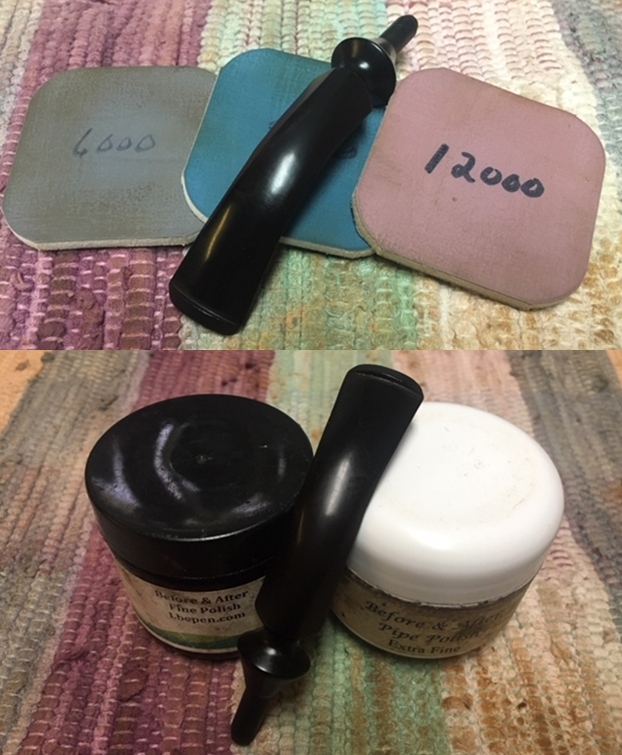
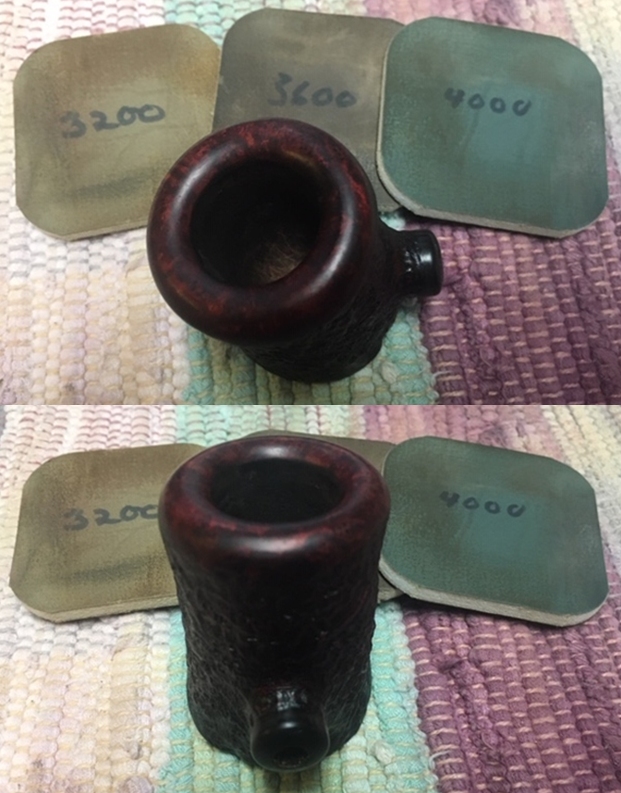
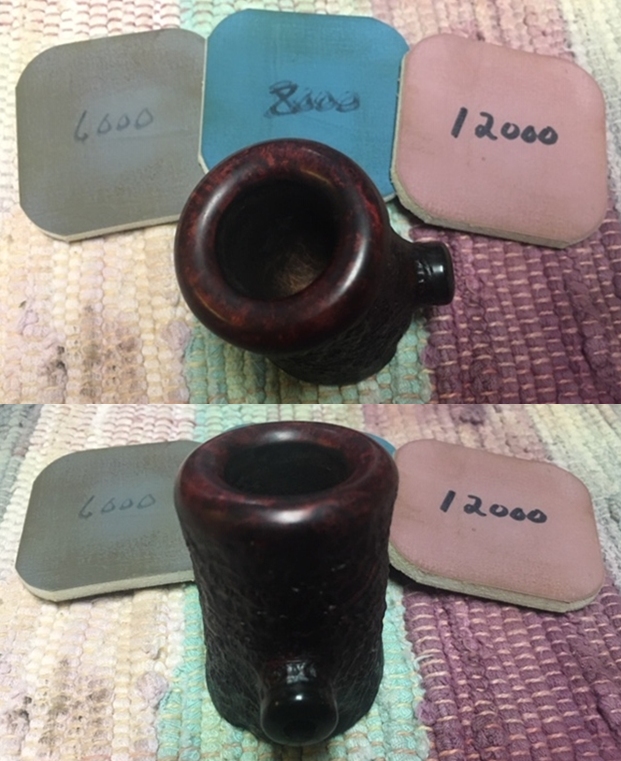
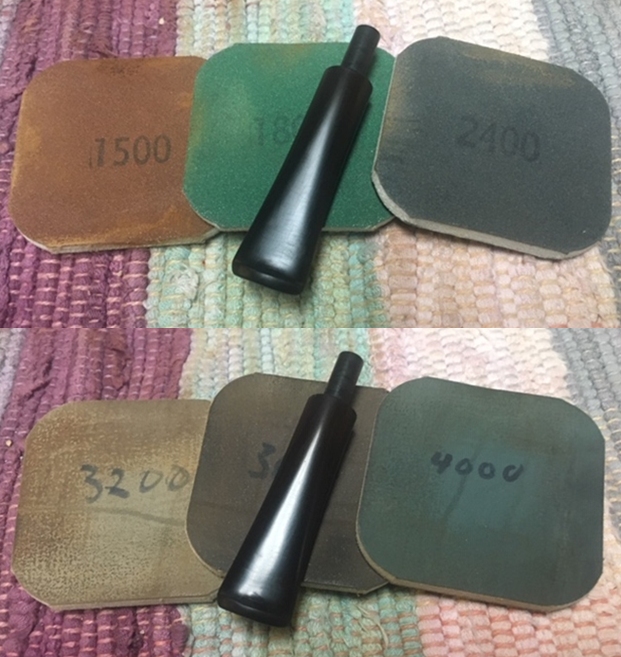
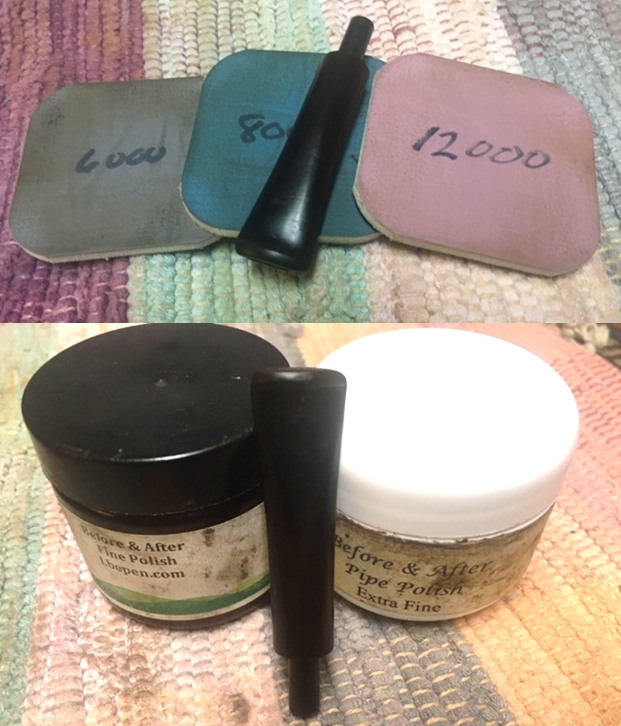
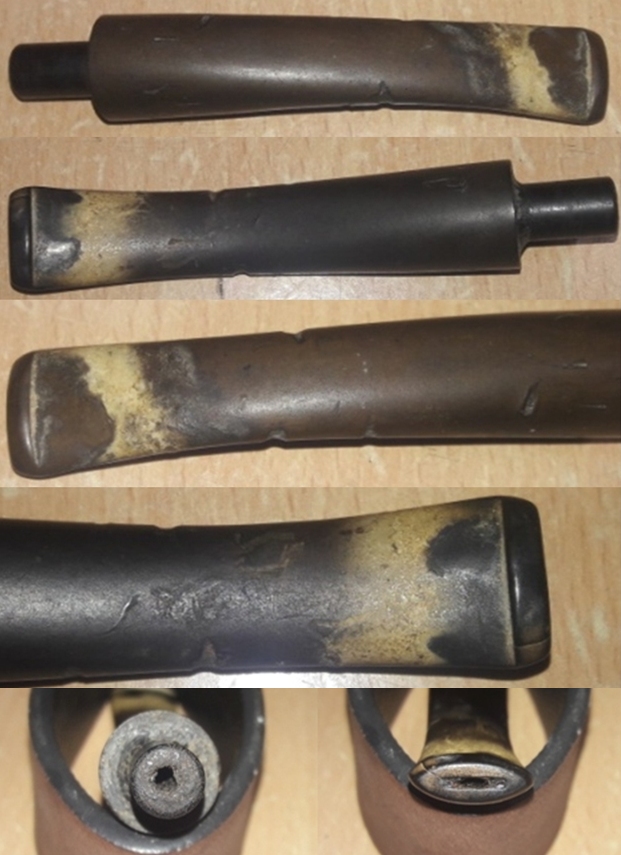
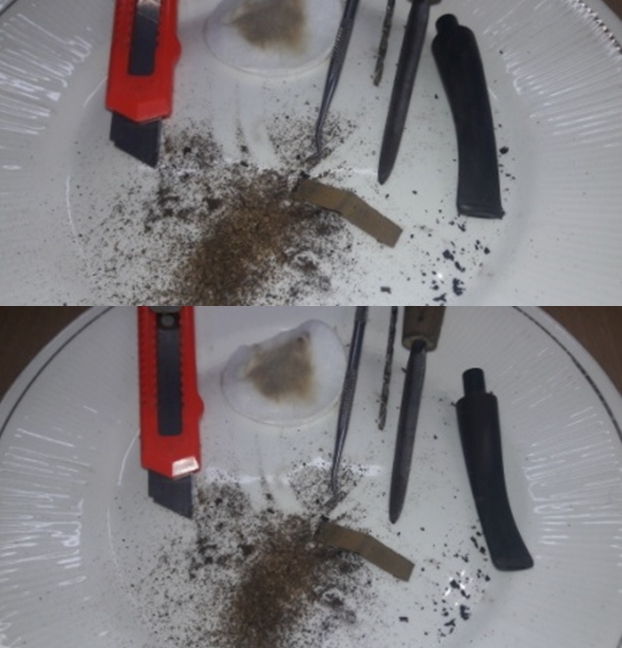
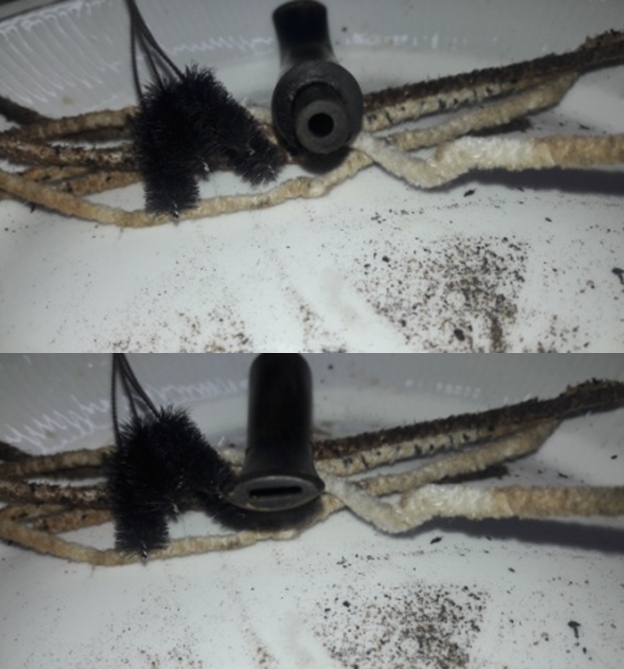
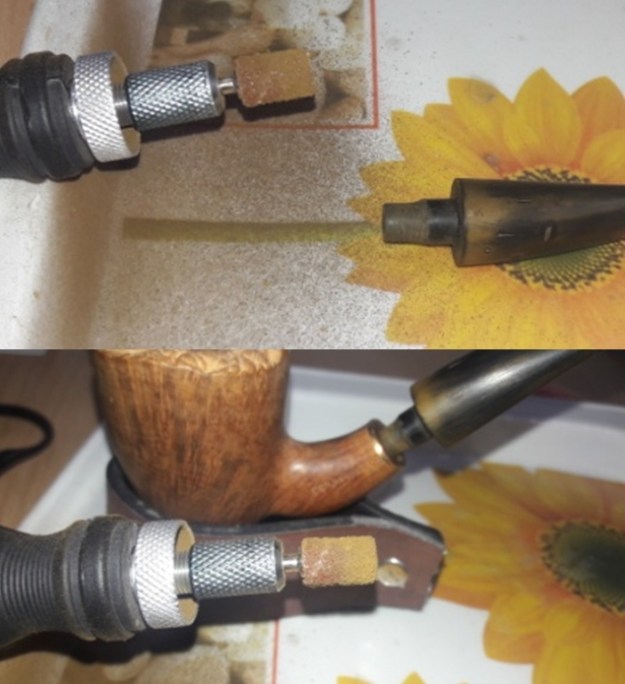
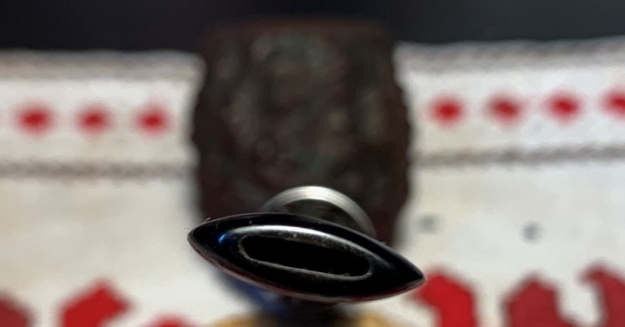
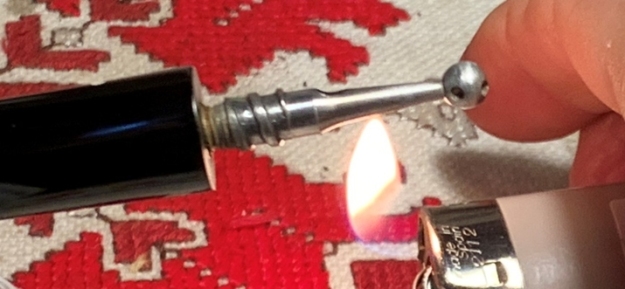
After wiping the stummel down with a cloth and alcohol to clean it the best I could, the stummel is heated with the hot air gun to open the briar.Then, with the use of a folded pipe cleaner, the surface is painted with Fiebing’s Light Brown Leather Dye.  I make sure the dye is getting into all the cracks, crevasses, nooks and crannies.  The rim also receives the dye.After the dye is applied, the stummel is set aside to rest for several hours before continuing with the next steps of finishing.  This ‘rest’ helps the new dye to stabilize in the briar.Turning back to the stem, the patch applied to the lower button lip is cured and I use a flat needle file to remove the excess patch material and to shape and refresh the button lip.  I also file the bit area to remove any residual tooth compression.Flipping over to the upper bit, I file residual compressions as well as refresh the button lip.  Refreshing the button lip is helpful to allow a better ‘hang’ grip of the pipe without biting and clenching, and extreme chewing!Continuing now with 240 grade sanding paper on the upper side, the file scratches are removed, and the button is smoothed further.  The same is done on the lower bit and to further blend the button patch.   I expand the 240 sanding to the entire stem to make sure that residual oxidation has been addressed. Following the 240 sanding, I wet sand the entire stem with 600 grade paper and follow with applying 000 steel wool. The nickel stinger is also a benefactor of the steel wool polishing again.Moving on, the full regimen of 9 micromesh pads are applied by first wet sanding with pads 1500 to 2400 and dry sanding with pads 3200 to 4000 and 6000 to 12000.  Between each set of 3 pads, Obsidian Oil is applied to condition the vulcanite and to guard against oxidation. I love the glossy pop of newly micromeshed vulcanite! I had observed earlier that the Kaywoodie screw in stem was over clocked a few degrees.  This happens over time with tightening and loosening.To correct this problem and to bring the stem back to an accurate orientation, a Bic lighter is used to heat the nickel 4-hole stinger.  Since the stinger is gripped by the vulcanite of the stem, the goal is to warm the stinger so that the vulcanite gripping the stinger heats and loosens its grip allowing the stinger to rotate. After heating the stinger, I quickly re-screw the stem into the threaded shank facing and when it tightens to the orientation pictured above, I continue to apply clockwise pressure and the heated vulcanite releases its grip and it allows me to turn the stem one full revolution to line it up correctly.  I had to heat the stinger twice as the first try did not loosen the grip.  After lining the stem orientation correctly, I leave the stem in place and as the vulcanite cools, the grip on the stinger is re-engaged holding the stem again in the proper orientation.Time to address the dyed stummel.  It has been resting for several hours to help stabilize the dye in the briar.I use a cotton pad wetted with alcohol to wipe down the dyed stummel.  I do this to remove excesses of dye on the surface and to lighten and blend the new dye.Next, I mount a cotton cloth buffing wheel onto the Dremel and simply buff the stummel.  I do not use any compounds so that the compound dust does not fowl up the surface getting lodged in the plethora of hiding places on the Burl surface causing me to have to clean it!  The Dremel is a great tool for getting into the nooks and crannies of the Natural Burl landscape. I’m able to rotate and move up and down ridges and to reach into crevasses.  The newly dyed surface responds well to the buffing wheel.  The coloring of the wheel shows that new dye is leeching out of the surface.  The more I’m able to remove now, less likely to come off on hands later!Next, I use the 1500 grade micromesh pad and lightly sand over the Burl surface.  The aim is to ‘scalp’ the peaks of the mountain tops on the craggy surface to lighten them.  The lightening of the peaks creates more contrast and depth definition to the landscape.  I follow the scalp sanding by running the Dremel’s buffing wheel over the surface again.  This, I believe, achieves the ‘2-toned’ look of Kaywoodie’s design for the ‘Natural Burl’ line.In the homestretch – next, I mount another buffing wheel onto the Dremel setting the speed at about 40% full power.  After reuniting the Kaywoodie’s stem and stummel, Blue Diamond compound is applied to the rim and smooth briar surface on the underside and end of the shank.  The compound is also applied to the stem.  After applying the Blue Diamond compound, the pipe is buffed with a felt cloth to remove the compound dust from the areas on the stummel and from the stem.  Next, another cotton cloth buffing wheel is mounted and set at the same speed and carnauba wax is applied to the entire pipe.  I’m careful to apply with a very light touch of wax to the Natural Burl surface not to allow wax to build up in the crannies.  Wax is applied to both stummel and stem and then the pipe receives a rigorous hand buffing with a microfiber cloth to raise the shine.
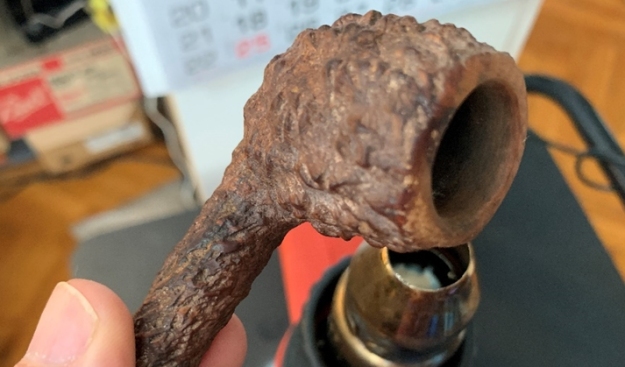
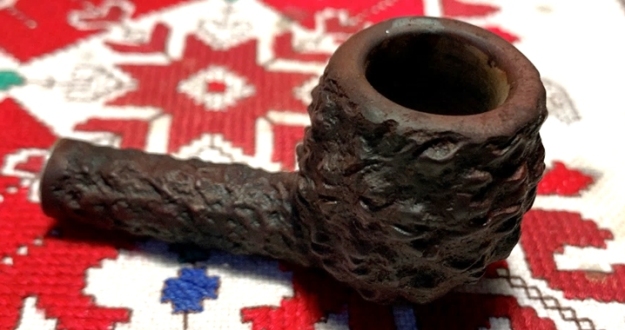
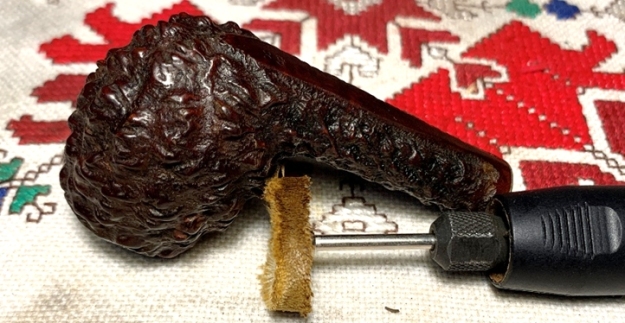
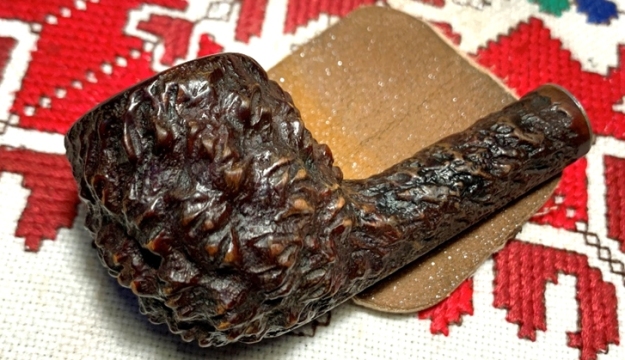
Wow!  I’m very pleased with how this Kaywoodie Natural Burl Apple shaped up.  The brown craggy finish is flecked with shade differences that give it a depth and warmth – a rustic knobby feel.  I always enjoy the contrast nuances that the coalescing of rough and smooth briar creates. The smooth briar underside and shank ring alongside of the Burl texture is nice.  I’m amazed that this pipe occupied the lower shelf on Kaywoodie’s offerings back in the day when Sam chose it and added it to his rotation of pipes.  The TLC it has received has enhanced the briar presentation with this unique Natural Burl finish. I appreciate the collaborative help from Bill Feurbach who even as the president of the S.M. Frank Co., was not hindered from helping with the recommissioning of this one vintage Kaywoodie – a pipe man at heart.  Thanks, Bill!  I like the Natural Burl a lot and I trust that Joe likes it too.  Paw’s Kaywoodie Natural Burl 33 – Large Apple, that was put into production in the mid-50s/early 60s, is a venerable 60-year-old(!), and is starting a new lifetime in the loving care and stewardship of Paw’s family.  Adding frosting to the Kaywoodie cake, Joe’s commissioning of this restoration of Paw’s Natural Burl also benefits the Daughters of Bulgaria – women and girls who have been trafficked and sexually exploited.  Thanks for joining me!
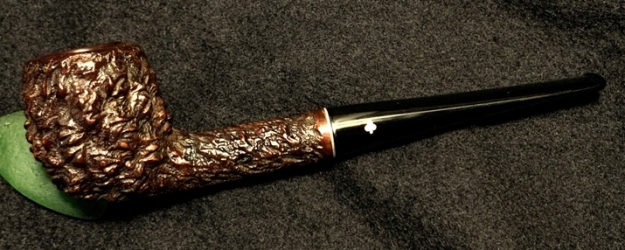
Next on the table – A Strange Saucer Shaped Pipe Stamped Flying Disc


Blog by Steve Laug

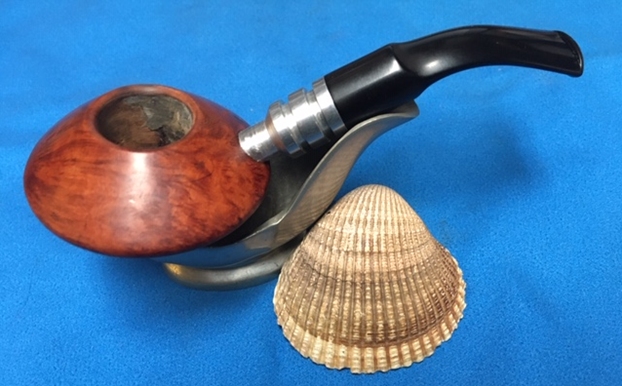
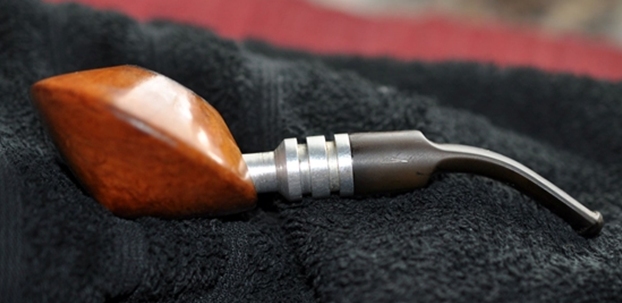
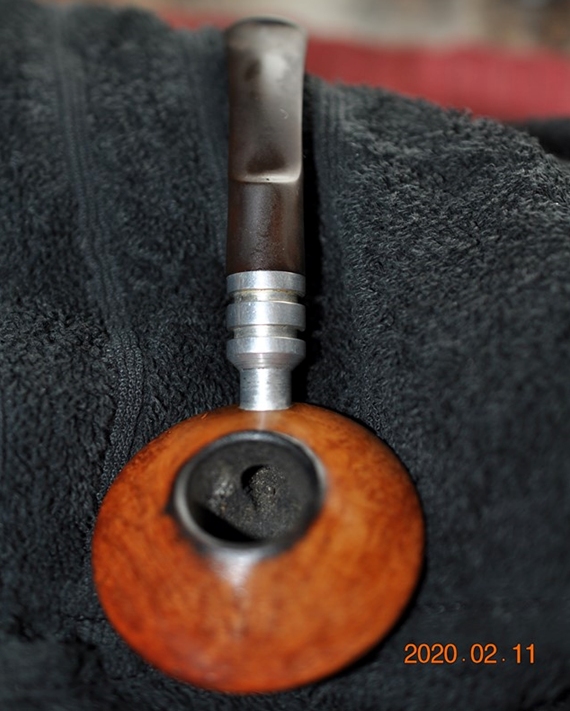
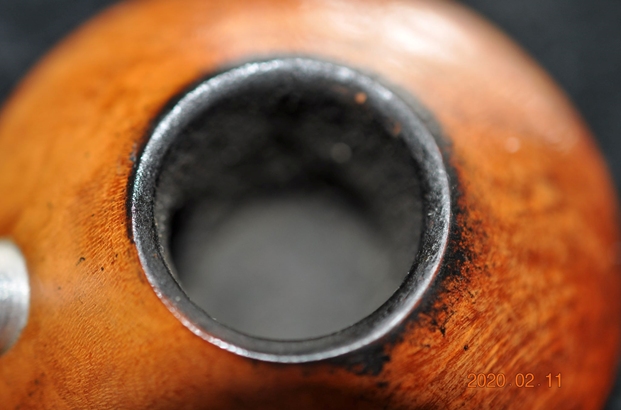
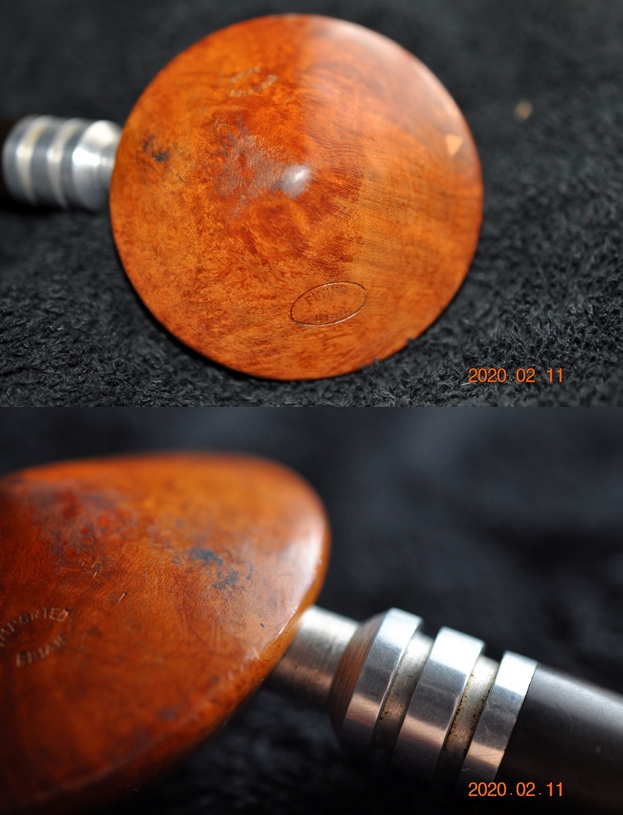
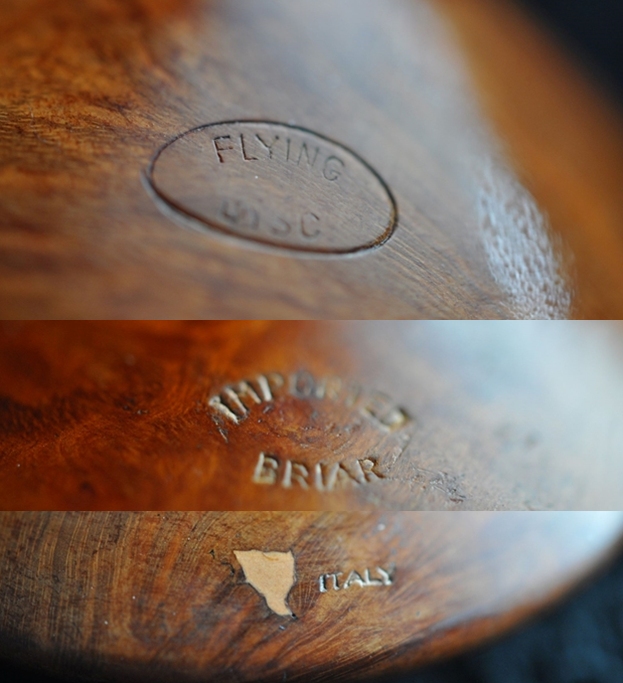
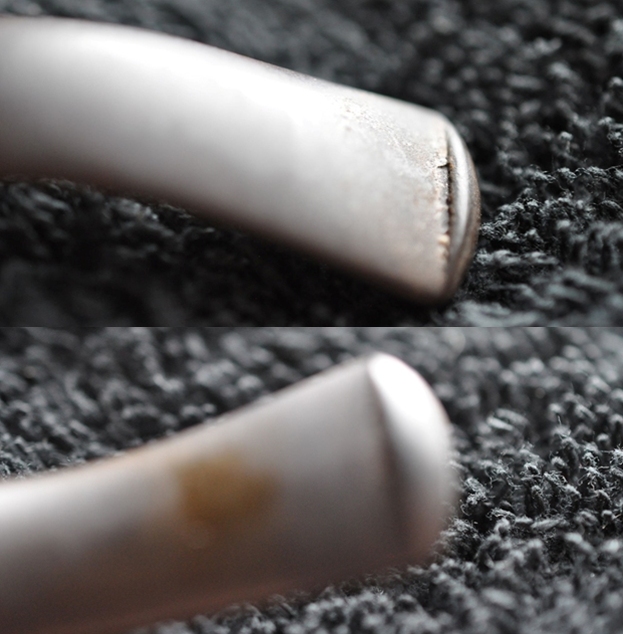
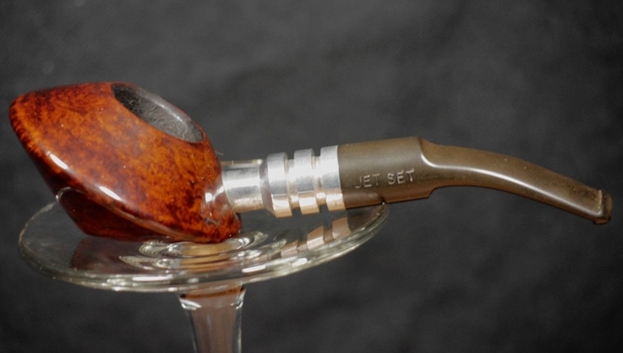
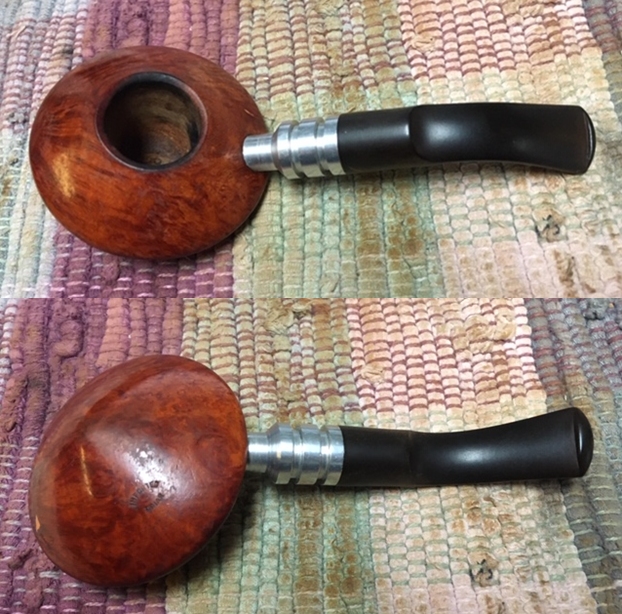
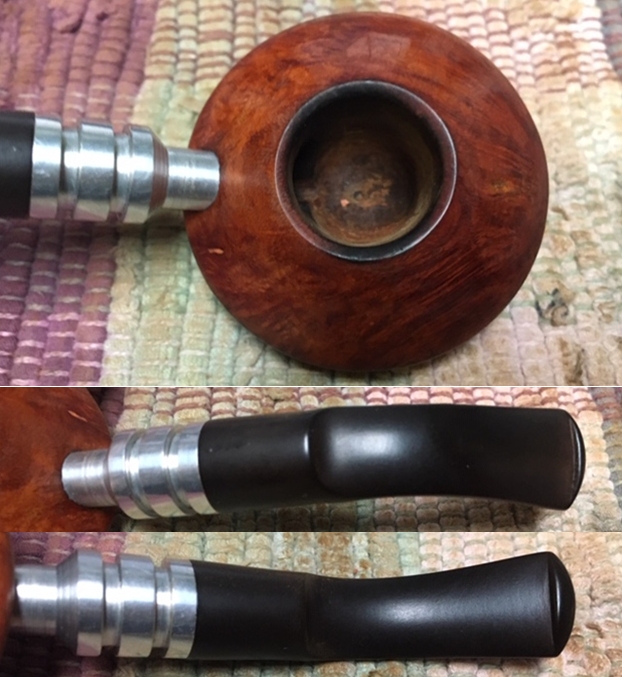
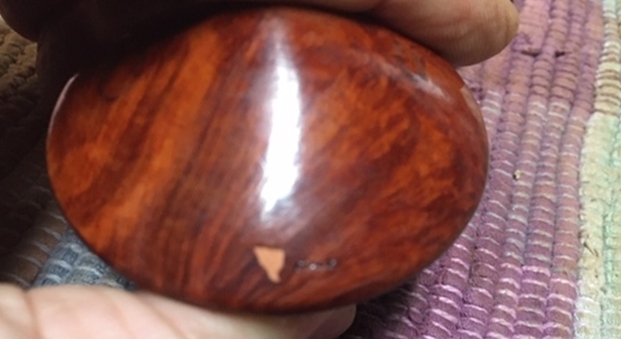
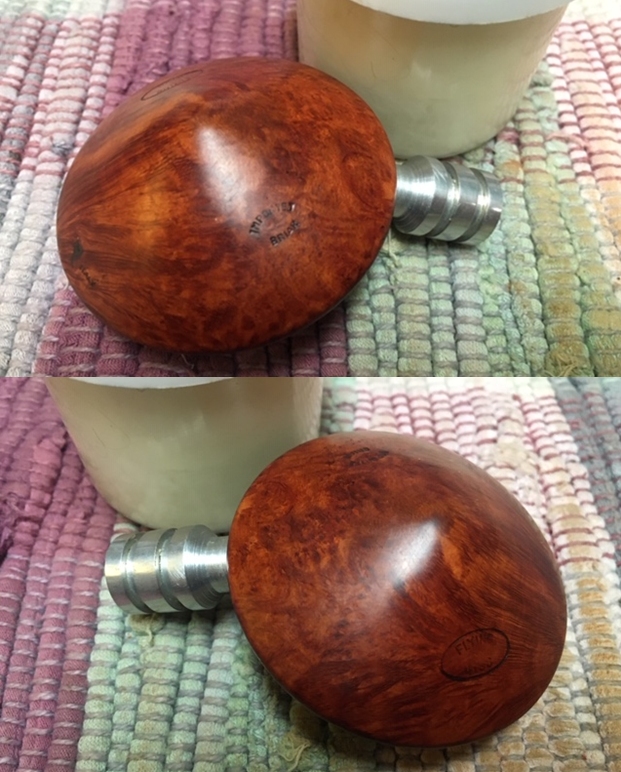
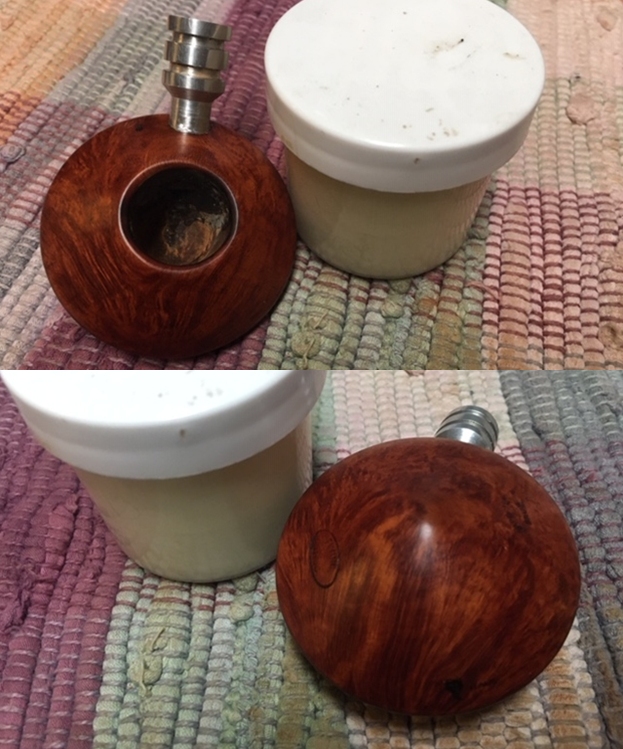
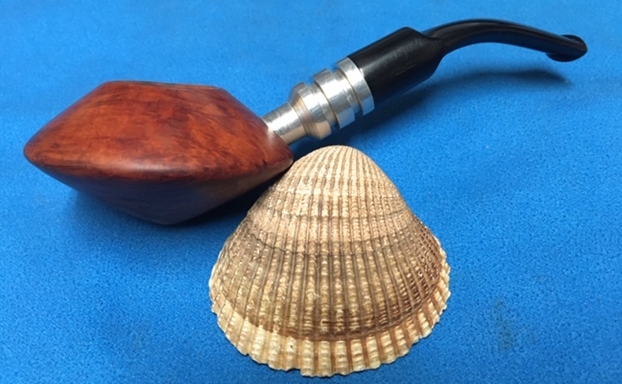
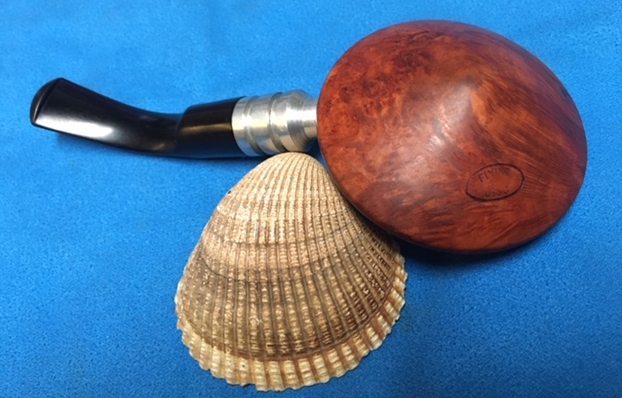
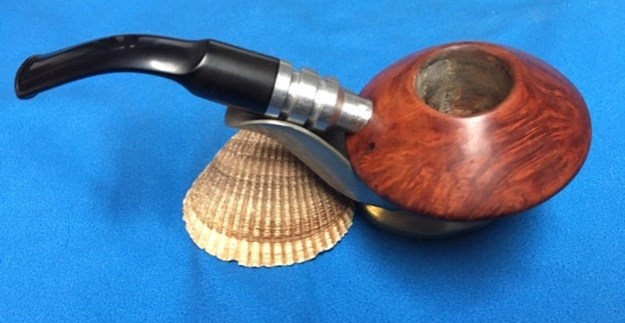
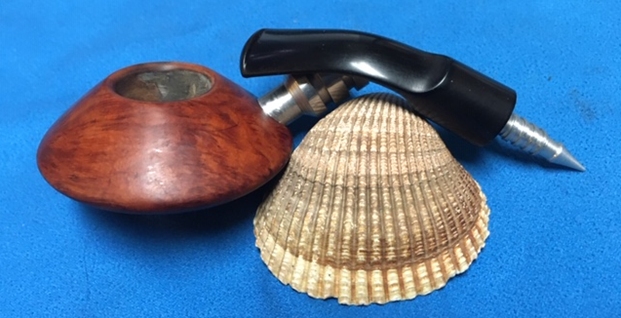
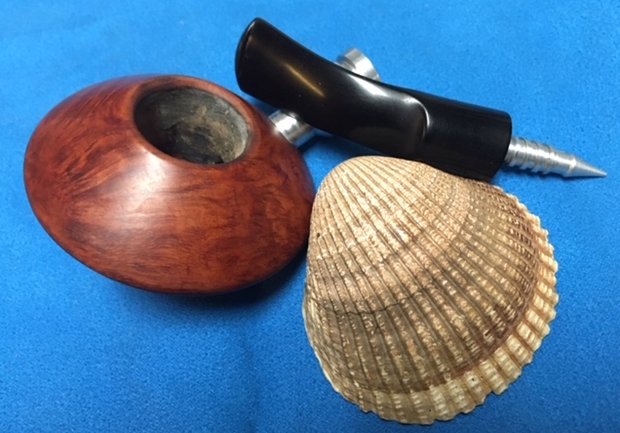
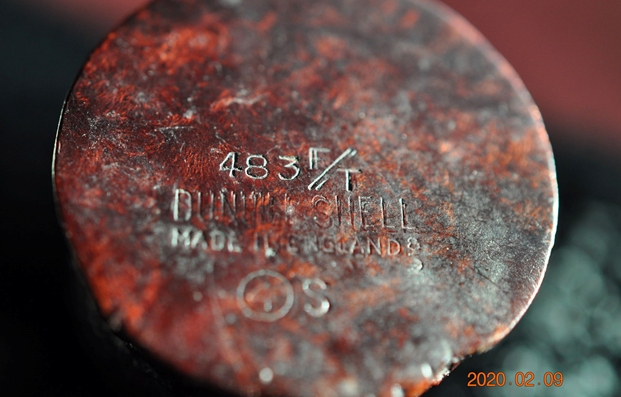
The next pipe on my worktable is a really different one! I am not sure where Jeff picked this one up but it is different. It is shaped like a little flying saucer. I have never seen one like this in all of my restorations. I have seen squashed Tomato shaped pipes that are almost disk shaped but nothing like this one. It has a pretty normal sized bowl on it and it was well smoked. The pipe had thick peeling varnish coat on the bowl that looked rough and there were a few fills around the bowl. It was another dirty pipe with a briar bowl, and aluminum stationary shank and screw in vulcanite stem. There was something uniquely charming about this strange little pipe. The bowl is heavily caked and the beveled rim has lava overflow and may have some damage. Hard to tell with the cake. There appears to be damage internally around the entrance of the airway into the bowl as it is a large cavern. The stamping on the heel of the bowl was interesting as it was all over the bowl. It read Flying Disc in an oval in one spot, Imported briar in another and next to a large fill it was stamped Italy. The vulcanite stem was oxidized and there was light tooth chatter on both sides near the button. It was also under turned and would not align properly in the shank. Jeff took the following photos before he started his cleanup work on the pipe. He took close-up photos of the bowl and rim top from various angles to capture the condition of the bowl and rim top edges. You can see the lava overflow and debris the edges of the bowl an on the rim top. You can see the thick cake in the bowl. This was a dirty pipe for sure but it must have been someone’s favorite judging from the condition of the bowl! Jeff took photos of the sides and heel of the bowl to show the grain around the bowl and the condition of the finish. You can see the peeling varnish as well as the fills in the photos. Jeff took a photo of the stamping on the heel of the bowl. You can see the various stamping clearly and they read as noted above. Note the large fill next to Italy is a pink putty.The next two photos show the top and underside of the stem. The oxidation, calcification and the light tooth chatter on both sides near the button are visible in the photos. I did a search on Pipephil and came up with nothing on the brand. I searched the brand online and came up with a link to a discussion on the pipe on Pipesmagazine forum. I am including that link and the original and concluding post (https://pipesmagazine.com/forums/threads/who-made-that-pipe.46221/). I am also including a photo of the pipe the questioner on the forum spoke of.…There are more than one of these flying disc shaped UFO pipes around. Some are stamped “Jet Set” on the left side of the vulcanized bit (see pic), & some have the Mastercraft logo there instead (pic from Pipephil). Jet Set is listed as one of the seconds for Mastercraft; Mastercraft being owned by Lane Ltd. On the bottom of the bowl stamped inside an oval is “Flying Disc”. Other stampings are “Italy” & “Imported Briar”…

…Lorenzo didn’t go into business as a brand until 1946. Using Google Translator (since I don’t speak French) the translation can sometimes be rough, but here is the confirmation that these Jet Pipe pipes were made by Lorenzo for Mastercraft:

“Both Jet Pipe pipes were manufactured by Lorenzo for the brand Mastercraft in the 60’s as well as pipes sparkless in this chapter pipes cigarette.”

It is pure speculation on my part then that Lorenzo either acquired Jet Pipe after making pipes for them or registered the name Jet Set and designed the Flying Disc pipe on their own for Mastercraft. Either way, Lorenzo is the maker of the Flying Disc pipe.

It became clear that the pipe had been made for Mastercraft in the US by Lorenzo. It probably was made in the 1960s. It reminded me of something from my childhood limited television cartoon watching – the Jetsons!

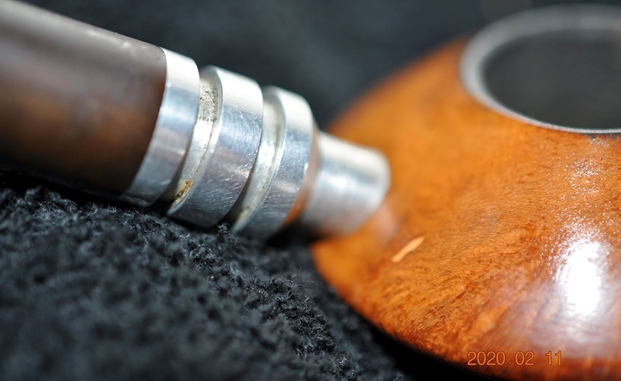
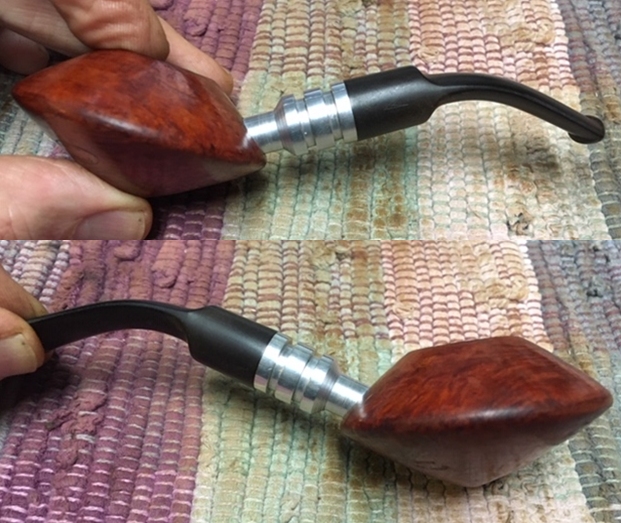
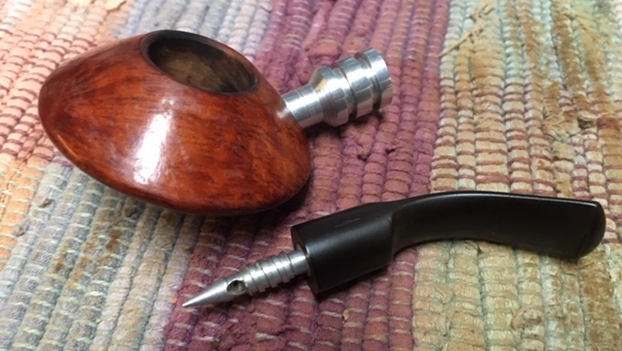
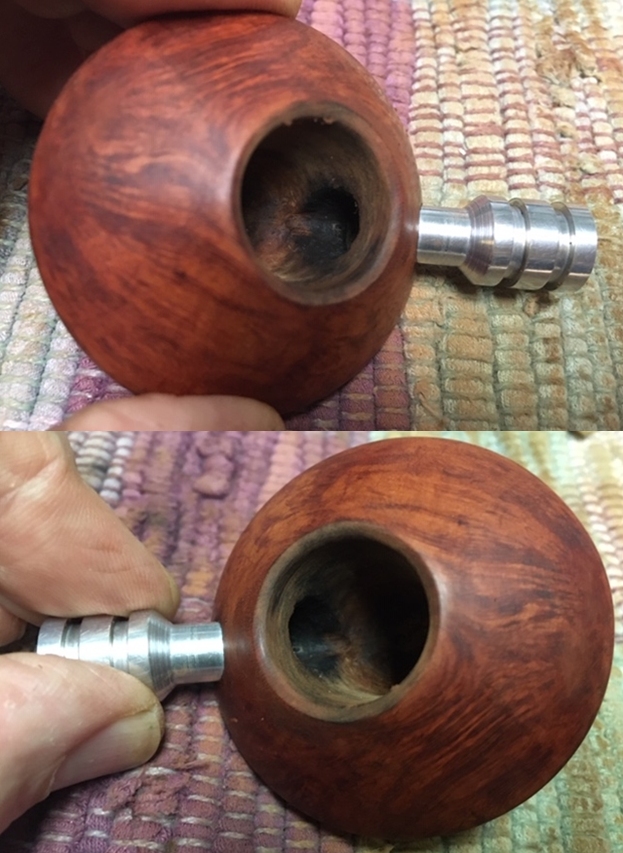
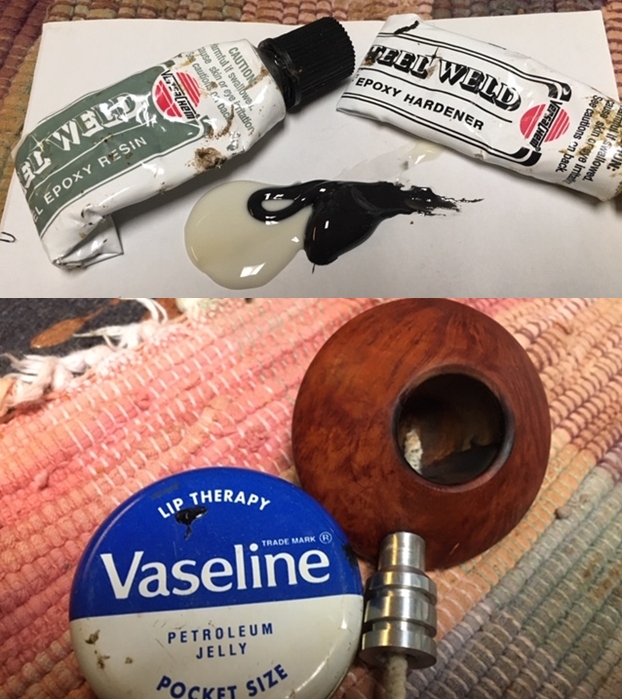
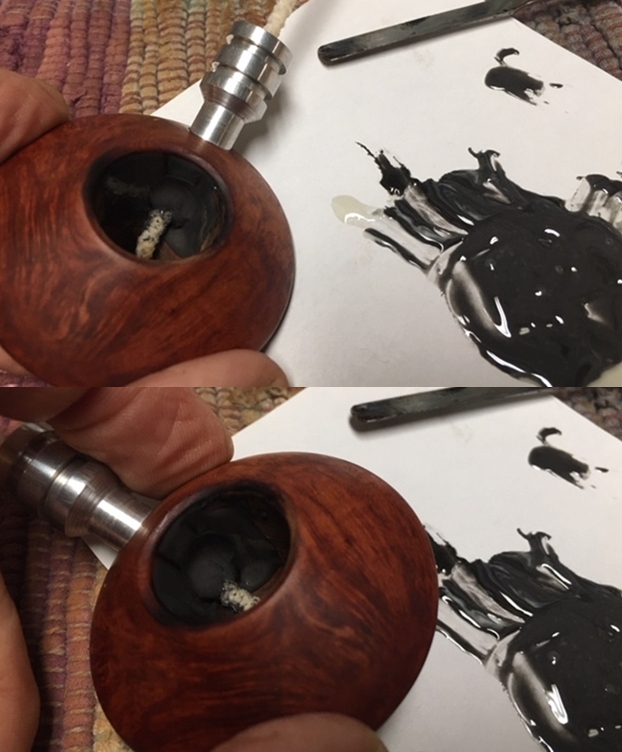
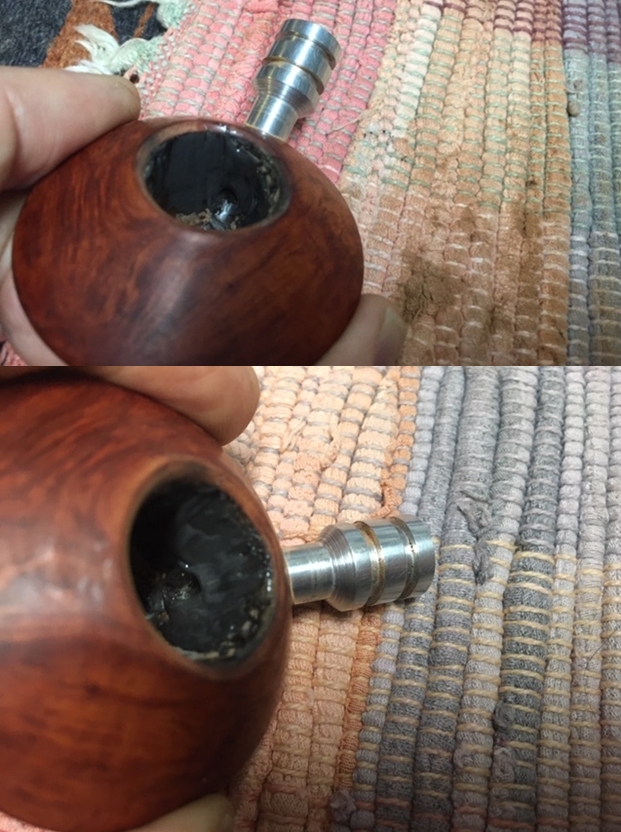
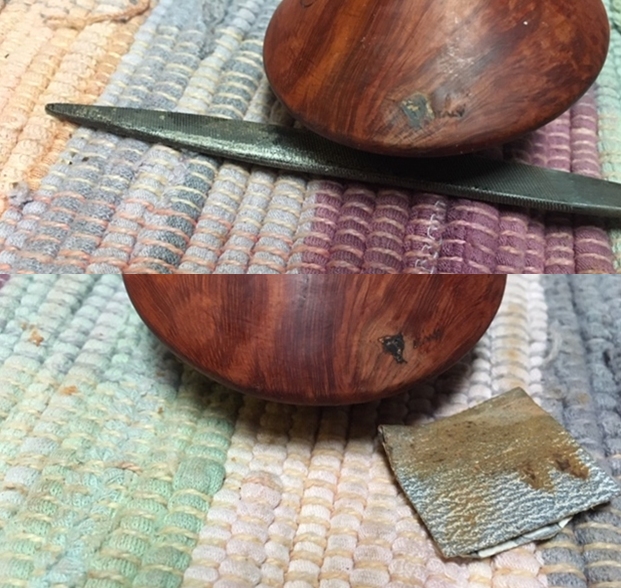
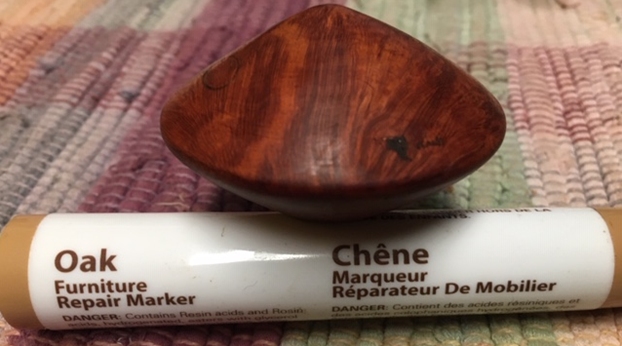
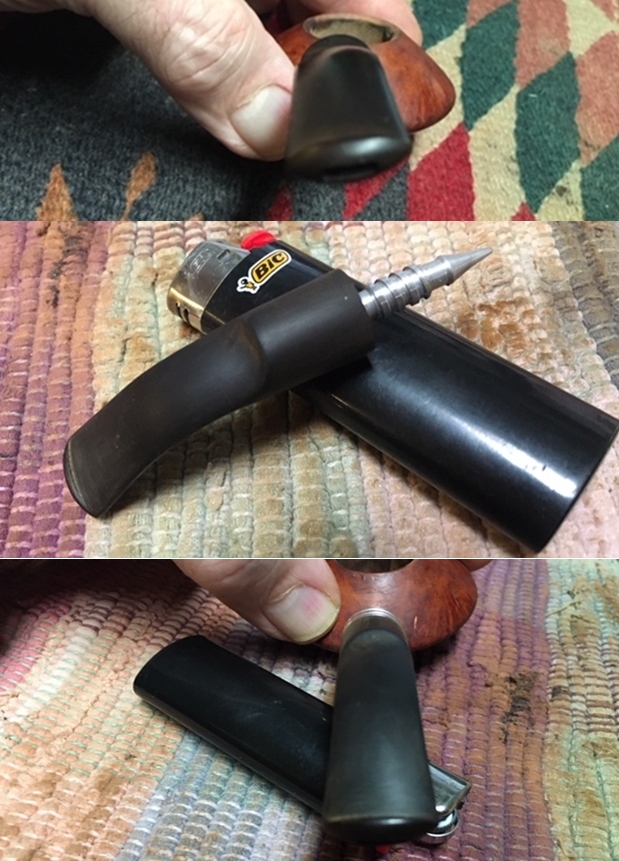
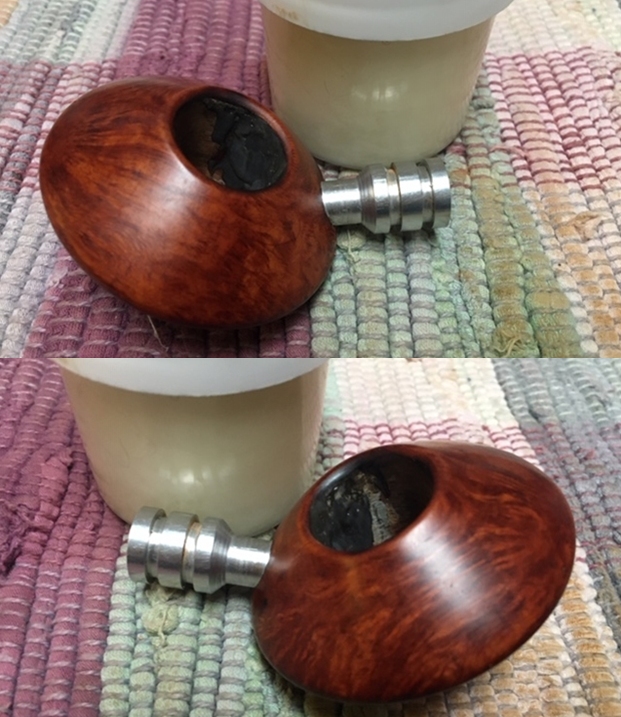
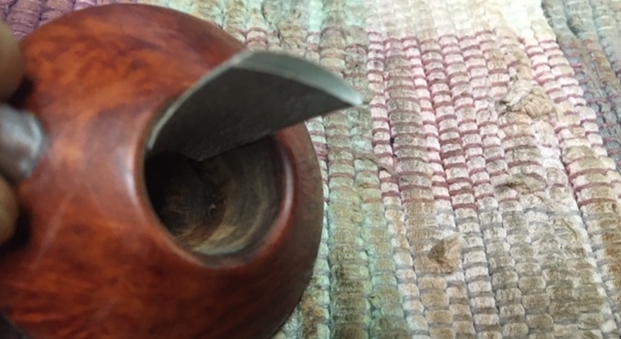
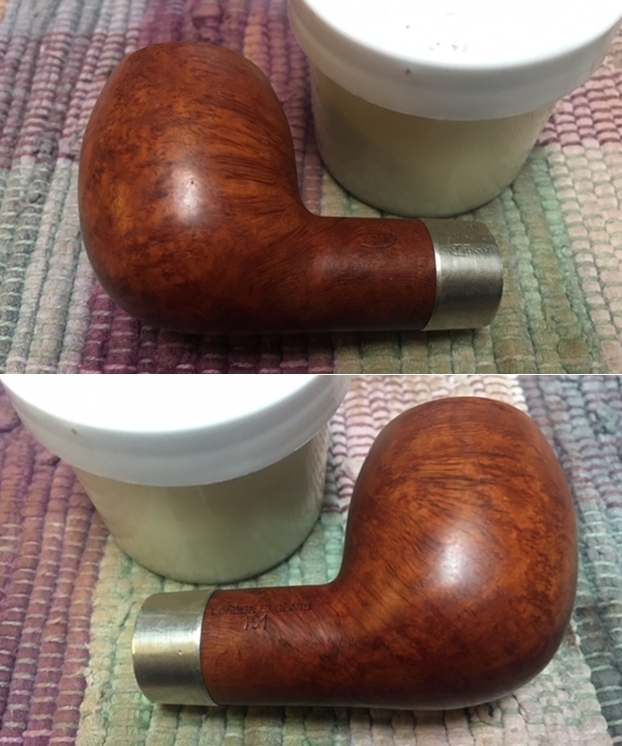
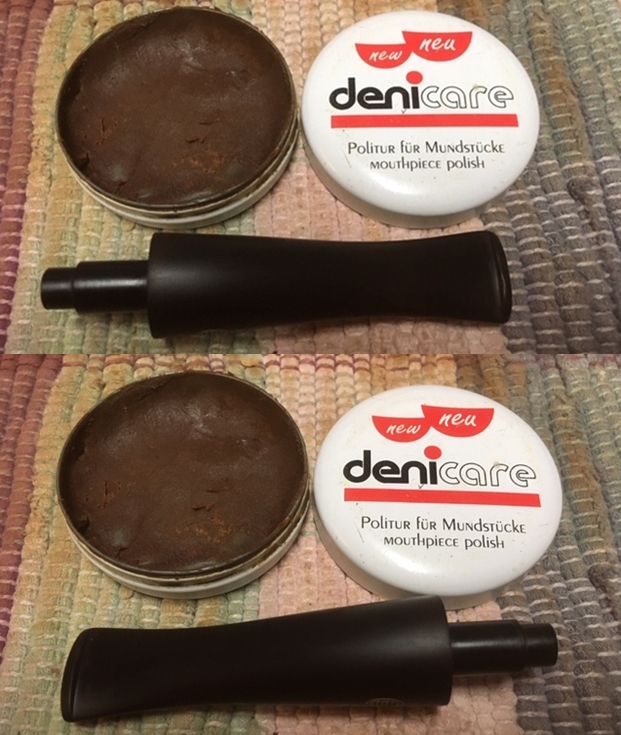
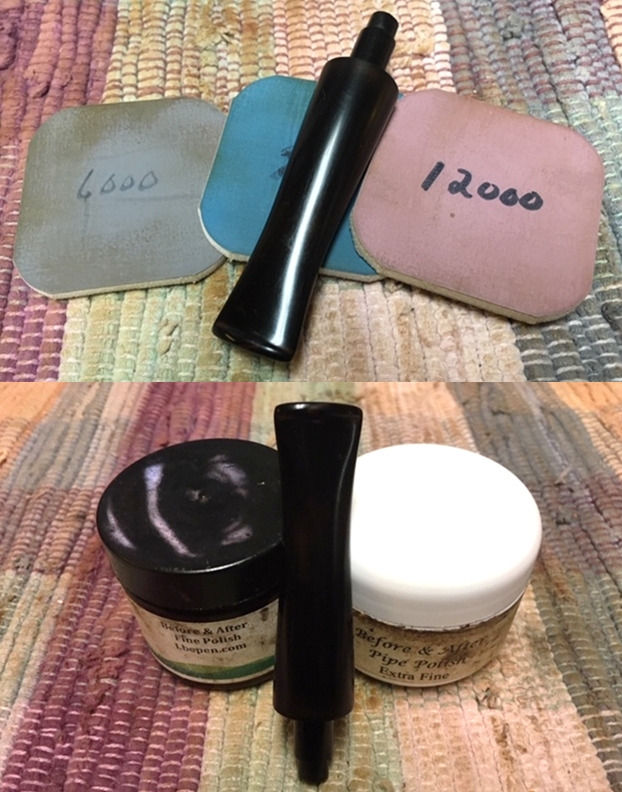
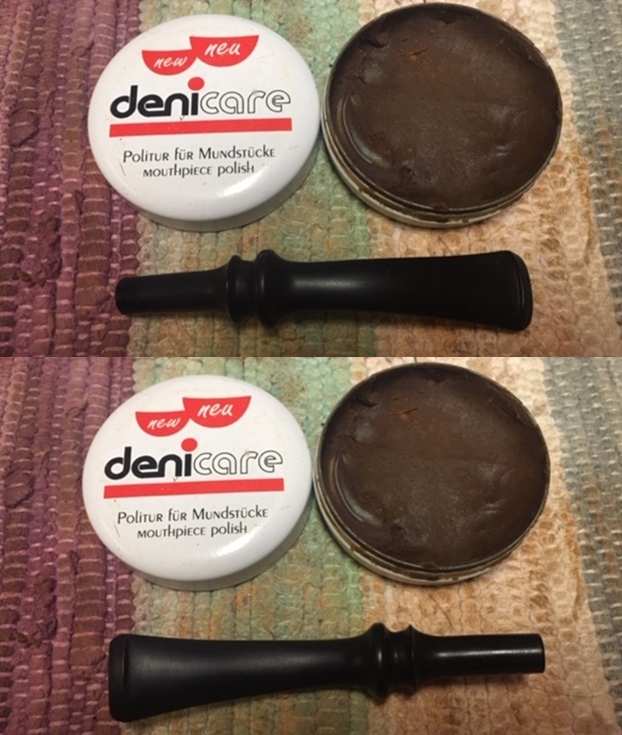
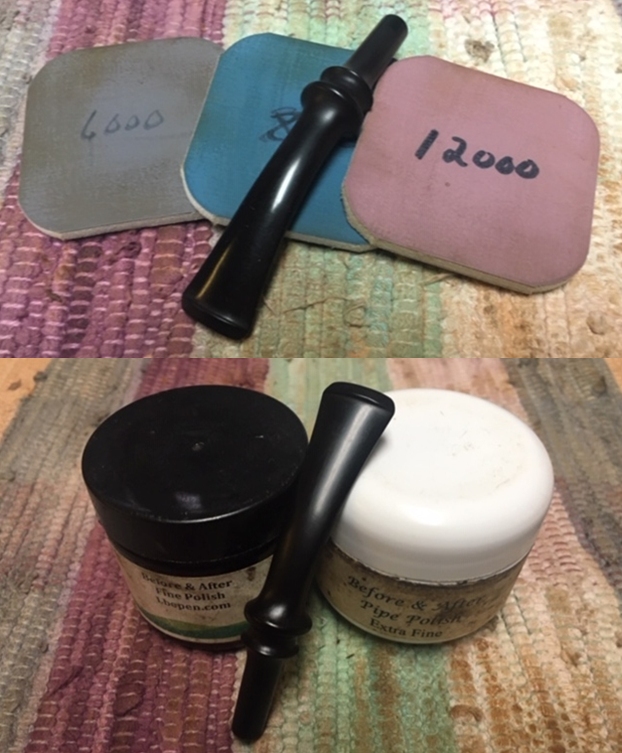
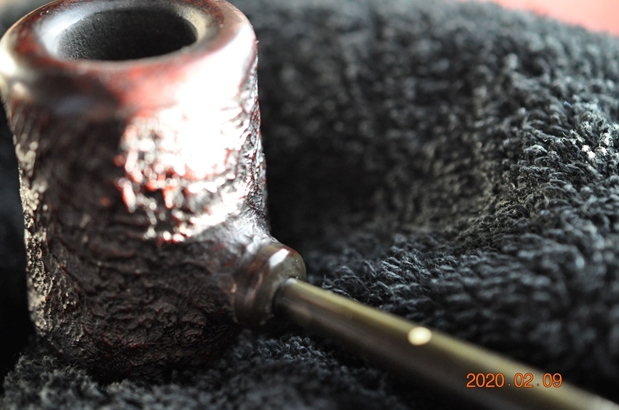
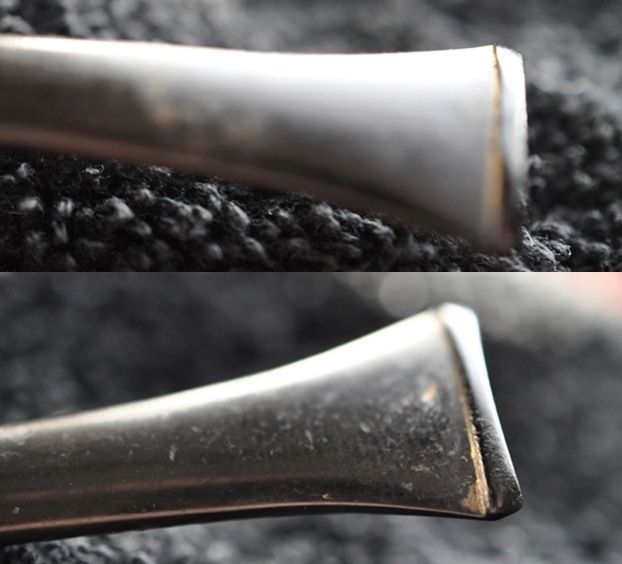
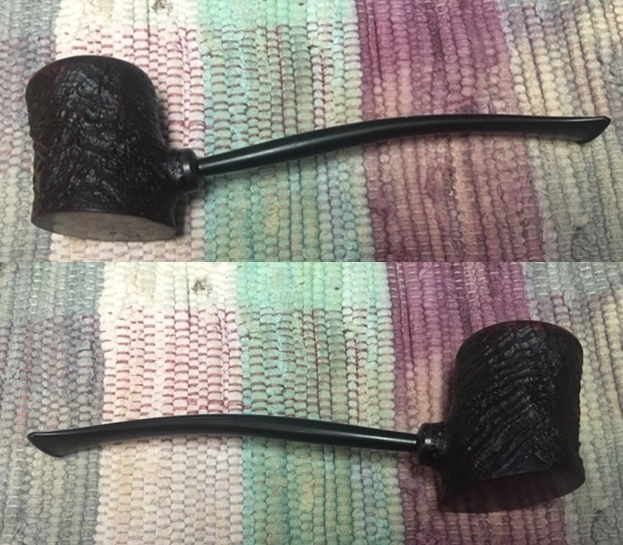
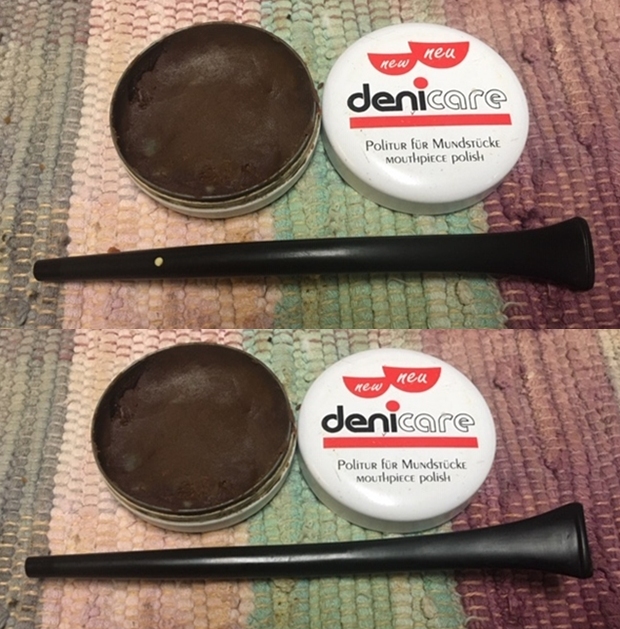
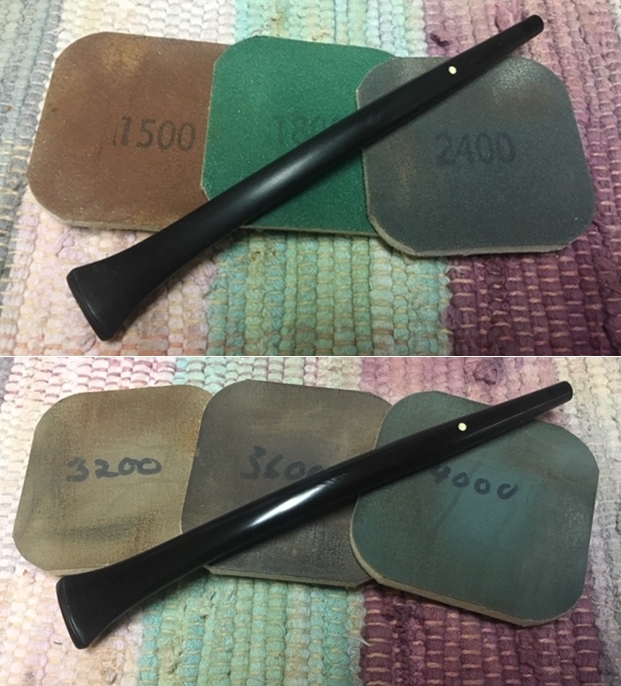
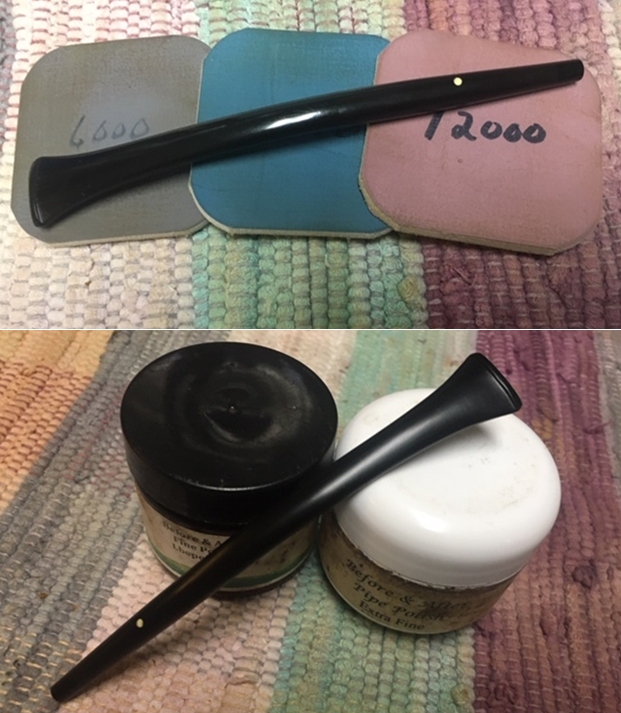
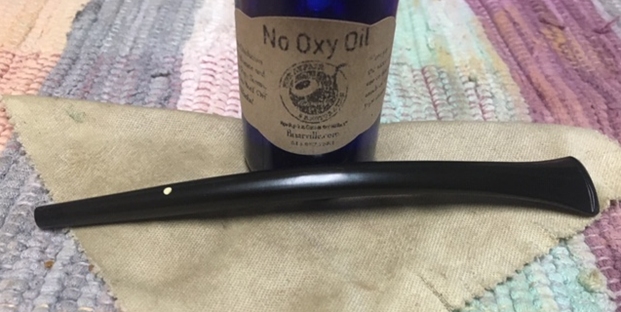
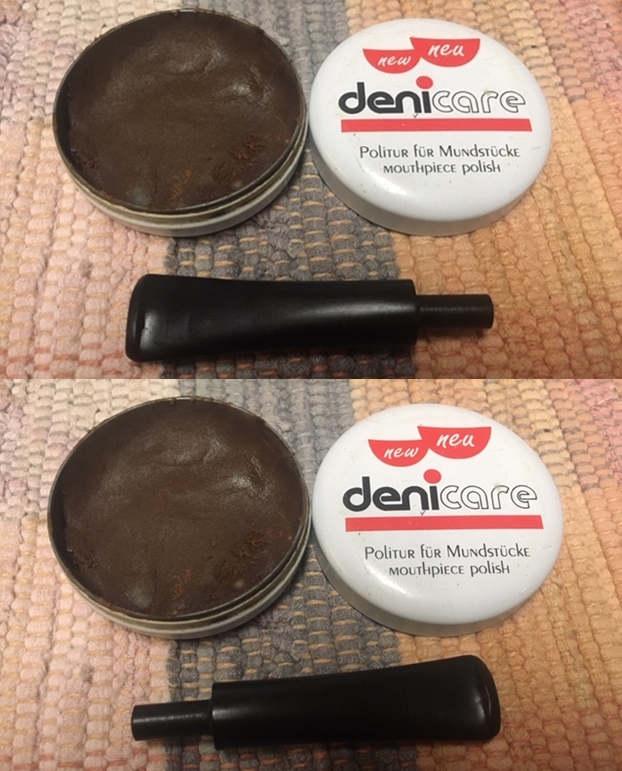
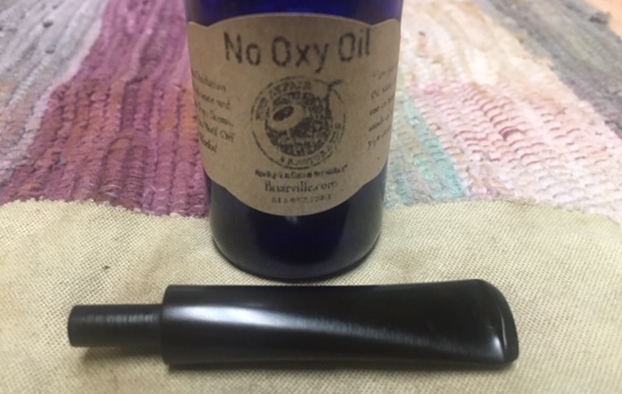
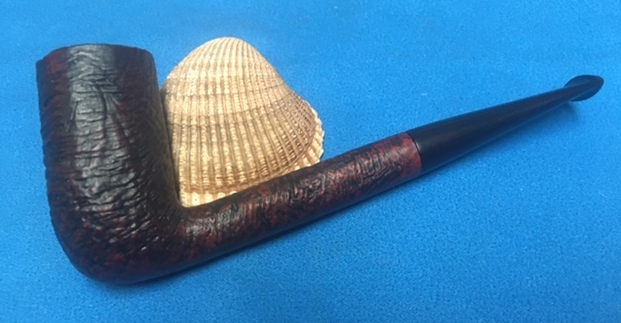
Now it was time to look at it up close and personal. Jeff had done an amazing job in removing all of the cake and the thick lava on the rim top. He had reamed the bowl with a PipNet Pipe Reamer and cleaned up the remnants with a Savinelli Fitsall Pipe Knife. He took the cake back to bare briar so we could check the walls for damage. He scrubbed the exterior of the bowl with Murphy’s Oil Soap and a tooth brush to remove the grime on the bowl and rim and was able to remove the lava and dirt. He cleaned out the interior of the bowl and shank with pipe cleaners, cotton swabs and alcohol until they came out clean. The rim top looked amazing when you compare it with what it looked like before he started. He cleaned the stem with Soft Scrub to remove the grime on the exterior and cleaned out the airway with alcohol, cotton swabs and pipe cleaners. I took some photos of the pipe as I saw it. To show how clean the rim top and stem really was I took a close-up photo of the rim and stem. The bowl was clean and cake free. The rim top is very clean with no residual lava in the sandblast finish. The inner edges of the rim show some darkening on the right and the left side. The black vulcanite stem looks cleaned up nicely. The surface had some light tooth marks but the button edge looked really good.I took photos of the stamping on the under side of the bowl. They are literally all around the bowl bottom. You can see that from the photos below. I removed the stem from the bowl and took photos of the parts. The “plumbing” on this pipe is quite unique. Look at the stinger apparatus that extends through the aluminum shank.Now it was time to start addressing issues with this pipe. I sanded the exterior of the bowl with 1500 grit micromesh sanding pads to remove the peeling varnish from the bowl. I worked on the rim edge a bit and paused as I examined the cavernous entry of airway into the bowl. It was badly burned and enlarged. I wonder if the metal stinger tip heated too much and burned the surrounding airway. I took two photos to try to capture the large cavernous opening.As I examined the area I had very few choices in terms of addressing the issue. I could carve and insert briar, glue it in place and hope that the burnout would not reoccur. The other option would be to build up the area with some JB Weld which dries inert and is basically burn proof and would preserve the airway area from further damage. I chose to use the JB Weld repair. I mixed a batch of the resin and hardener and inserted a Vaseline greased pipe cleaner in the airway so as not to close it off during the repair.I applied the mixture to the surface area around the pipe cleaner with a dental spatula. I pressed it into the cavernous pit. I knew that I would need to do this several times as it was a deep pit. I gave the first coat to the wall of the bowl and set the bowl aside overnight.This morning I filled in a few spots where the repair shrunk as it cured. The entrance to the bowl is now the size of a pipe cleaner. Once it has cured I will sand it smooth and even out the back of the bowl. I set the bowl aside and had some lunch!Once the repair had hardened to touch I worked on the underside of the bowl. There was a large pink fill next to the Italy stamp. It was damaged and hard so I picked it out with a dental pick and cleaned up the edges until all of it was gone. I wiped it out with a cotton swab and alcohol and then filled it in with a mix of clear super glue and briar dust. I know that Dal mixes the two into a putty and presses them in place. I have never succeeded in getting his putty mixture as it always hardens to quickly. Instead I layer the mix into the area to be filled. I start with glue, then briar dust pressed in with a dental spatula, then another layer of glue and some more dust. I finish it with a top layer of glue and let it dry.Once the repair has cured I used a needle file to flatten it as much as possible to the surface of the briar. I followed up by sanding it with a small corner of folded 220 grit sandpaper to blend it into the surrounding briar. Once it was smooth I buffed it lightly with 1500 grit micromesh and then stained it with  an Oak Stain pen to blend it into the bowl. At this point in the process I set the bowl aside for awhile to let the bowl cure some more and turned my attention to the stem. The first issue with the stem was the fact that it was under-turned almost a quarter turn. I removed the stem and heated the metal stinger with the flame of a Bic lighter. The heat softens the glue holding the stinger in the stem. After a few minutes I screwed the stem back in the shank and corrected the under-turned stem. Once I had it aligned I set it aside and let it cool off while in place.I moved on to addressing the remaining oxidation on the stem and the tooth chatter and marks. I sanded out the tooth marks on both sides of the stem with a folded piece of 220 sandpaper and sanded out the remaining oxidation. I started polishing with 400 grit wet dry sandpaper. I rubbed the stem down with Denicare Mouthpiece Polish – a red gritty paste a lot like Tripoli to polish it after the 400 grit sandpaper. I rub it on with my fingertips and work it into the vulcanite and buff it off with a cloth. It does a great job before I polish it further with the micromesh pads.I polished the stem with micromesh sanding pads – dry sanding with 1500-12000 grit sanding pads. I wiped the stem down after each sanding pad with a cloth containing some Obsidian Oil. I finished polishing it with Before & After Pipe Stem Polish – both Fine and Extra Fine and buffed it off with a cotton cloth. I gave it a final rub down with Briarville’s No Oxy Oil to preserve and protect the vulcanite stem. I set the stem aside and went back to work on the bowl. The bowl looked very good so I did not need to do any further work on it. I rubbed the bowl and shank down with Before & After Restoration Balm to deep clean the finish on the bowl and shank. The product works to clean, enliven and protect the briar. I worked it in with my fingers and with a horse hair shoe brush to get it into the deep nooks and crannies of the sandblast finish on the rim and bowl sides. I let it sit for 10 minutes to let it do its magic. I buffed it with a soft cloth. The briar really began to have a rich shine. I took some photos of the bowl at this point to mark the progress in the restoration. I sanded out the bowl with 220 grit sandpaper and a sanding drum on my Dremel to smooth out the walls on the bowl. With that finished the pipe was complete. I put the bowl and stem back together again and buffed the bowl and the stem with Blue Diamond on the buffing wheel. I gave the bowl and the stem several coats of carnauba wax. I carefully buffed the entire pipe with a clean buffing pad to raise the shine. I finished buffing with a microfiber cloth to deepen the shine. The finished pipe looks very good. The disc shaped pipe has a different feel in the hand. It is comfortable and light weight. The finished Flying Disc pipe is shown in the photos below. The dimensions of the pipe are Length: 5 inches, Height: 1 ½ inches, Outside diameter of the bowl: 2 ½ inches, Chamber diameter: ¾ of an inch. This unique looking Flying Disc/UFO pipe turned out very well. It should be a great pipe if the way it arrived to us was any indication. This one will go on the rebornpipes store shortly. If you are interested in it let me know. Thanks for reading this blog and my reflections on the pipe while I worked on it.

Next on the table – a 1948 MR&Co GBD 191 Chubby Billiard


Blog by Steve Laug

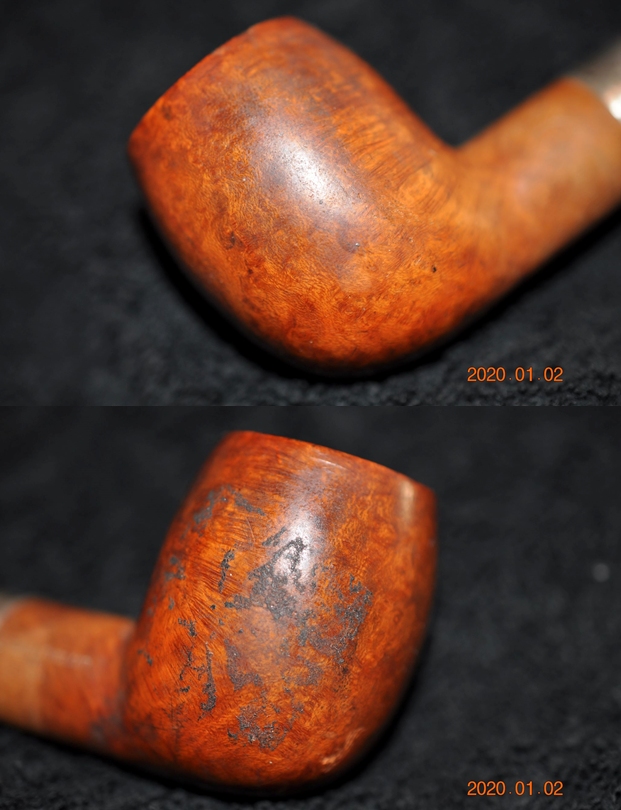
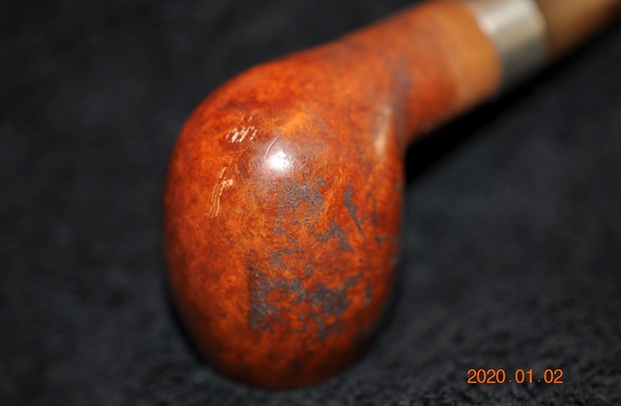
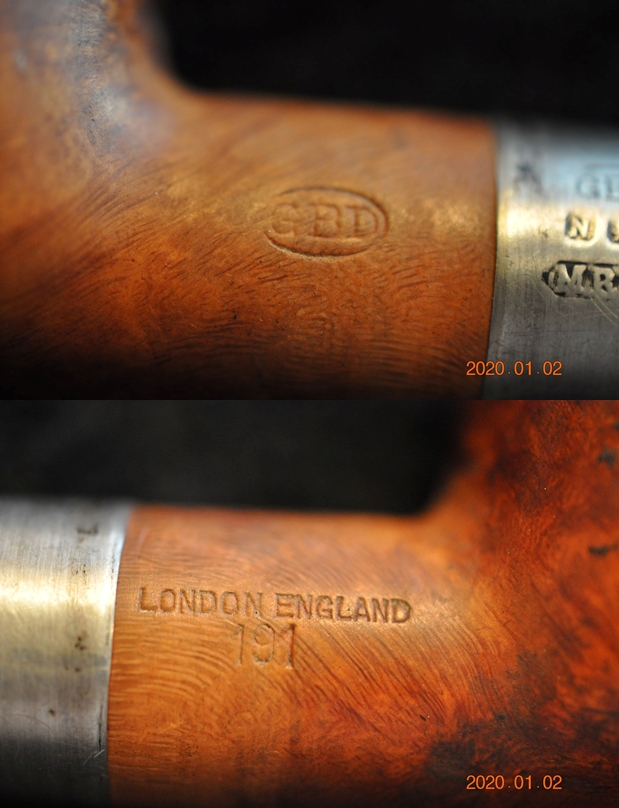
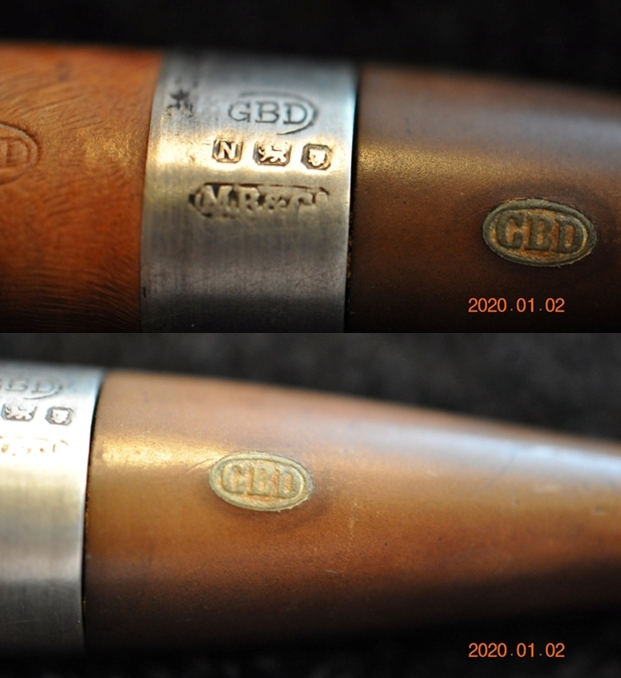
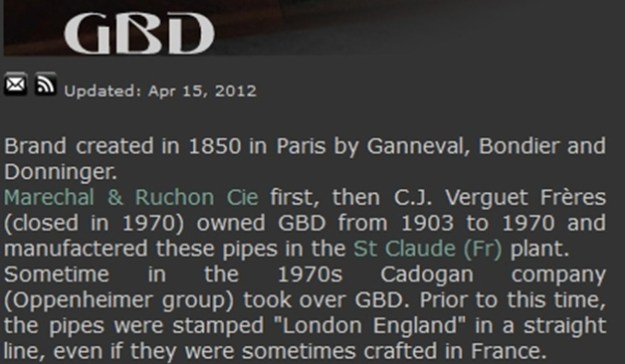
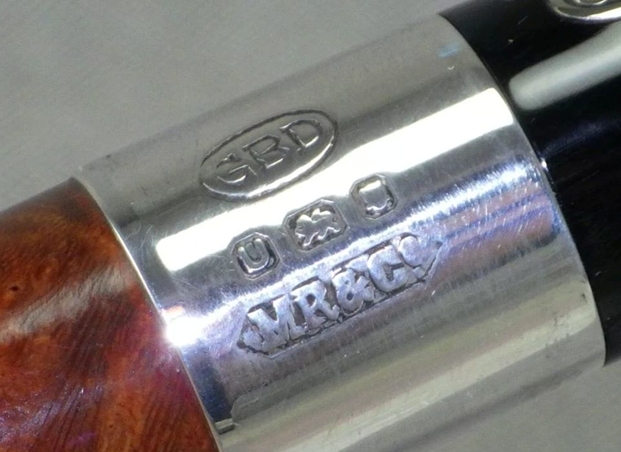
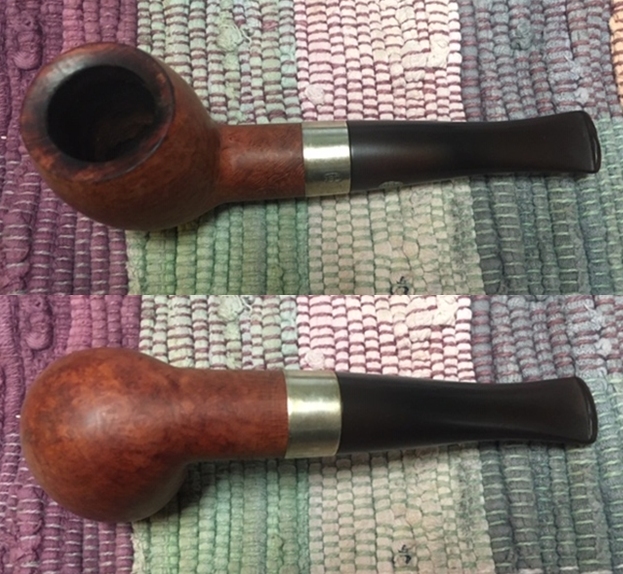
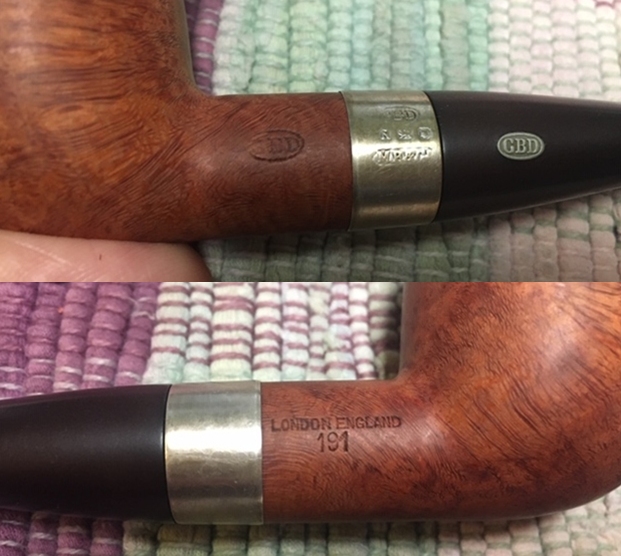
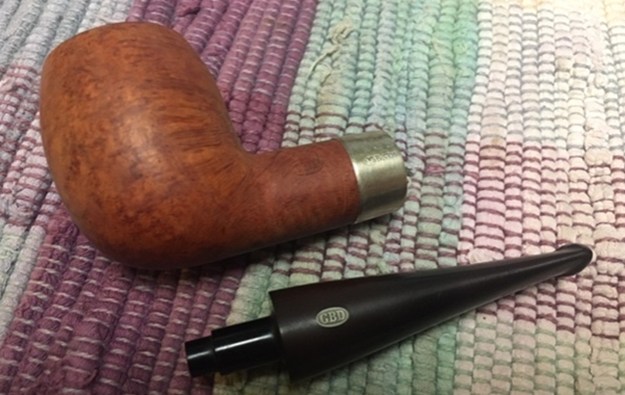
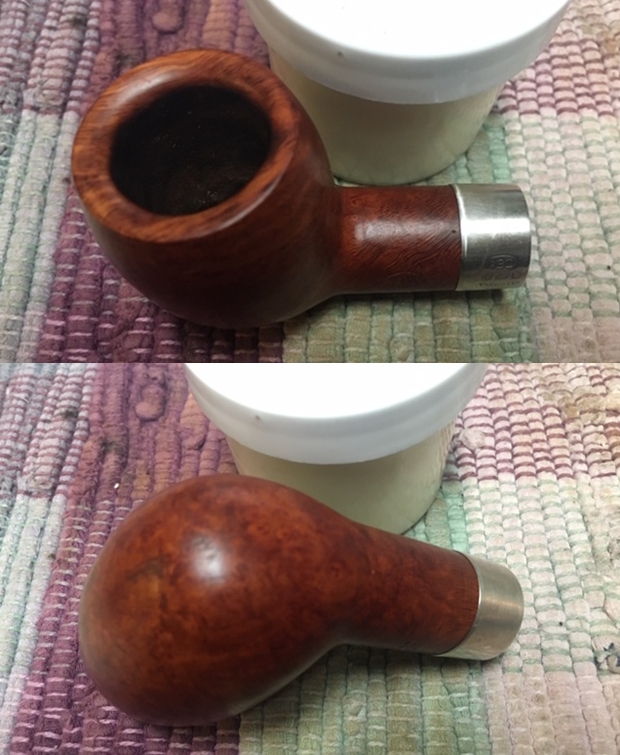
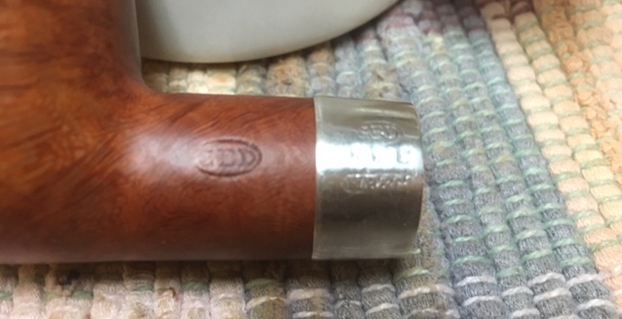
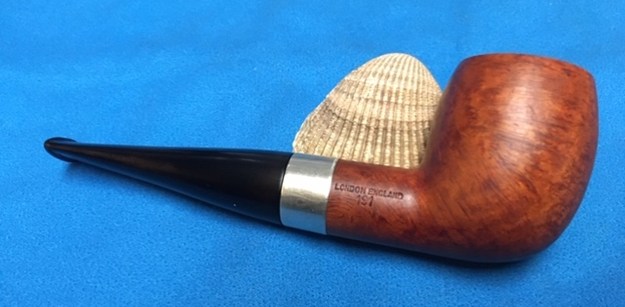
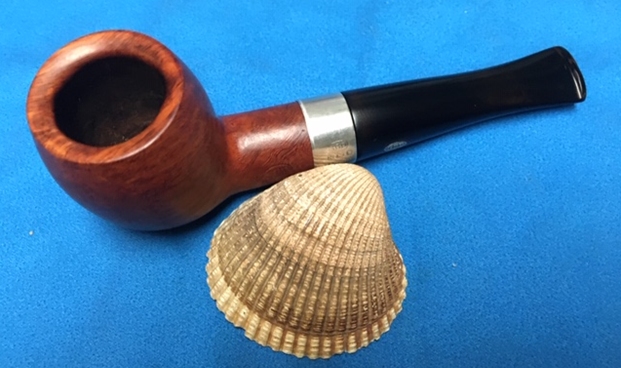
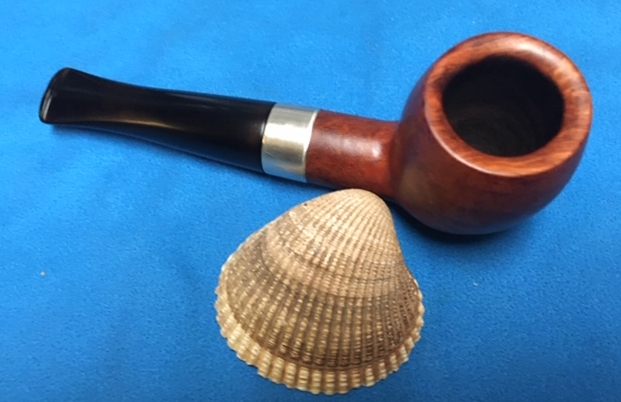
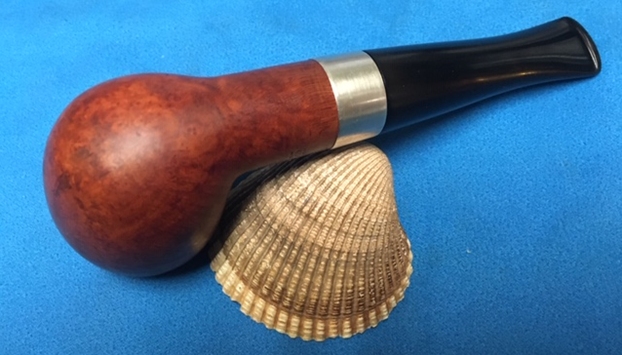
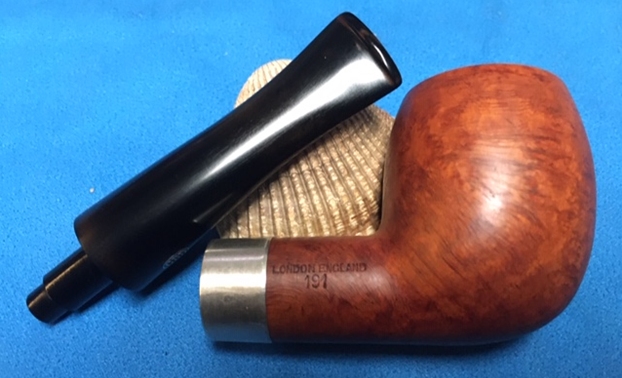
The next pipe on my worktable is an older GBD Chubby Billiard that Jeff and I picked up in a recent purchase of pipes. I have always loved older GBD pipes and the thick shank ones always have my attention. The pipe had some beautiful grain shining through the dust grime ground into the smooth finish. The finish was dull and lifeless and very dirty from sitting around. There was a thick cake in the bowl with lava flowing out of the bowl and over the beveled rim top. The cake and lava was thick enough that it was hard to know what the inner edge of the rim looked like. The pipe was stamped on both sides of the shank. The left side bore the GBD Oval logo stamp and nothing else. The right side read London England over the shape number 191. The tarnished band on the shank is Sterling Silver and bears the GBD Oval logo with three hallmarks underneath. There is also the MR&Co stamp below the hallmarks on the band. The thick tapered stem bore the GBD Oval Brass Roundel and was heavily oxidized and there was light tooth chatter and tooth marks on both sides near the button. The button surface also had some deep tooth marks that would need to be addressed.  Jeff took the following photos before he started his cleanup work on the pipe. He took close-up photos of the bowl and rim top from various angles to capture the absolutely filthy condition of the bowl and rim top edges. It is caked with a thick cake with tobacco debris in the bowl and the rim top is beveled but that can hardly be seen in the debris and overflow that has filled in the top. This was a dirty pipe for sure but it must have been a favourite of the pipeman who had held it in trust before it came to us. The next photos of the sides and heel of the bowl show the beautiful smooth mix of birdseye and cross grain around the bowl. It is quite stunning and you can see the grime and grit that is ground into the finish on the bowl sides. Did I say that this pipe was dirty? Perhaps that was a bit of an understatement. Jeff took photos of the stamping on the shank. The left side has the standard GBD Oval stamped into the briar. There is nothing else on the briar of the left side. The right side reads LONDON ENGLAND over 191 which is the shape number. He also took a photo of the band on the shank with its stamping as well as the GBD Oval Roundel on the left side of the stem. The next photos show a top view of the thick tapered stem as well as the top and underside. The oxidation, calcification and tooth marks and chatter on both sides near and on the button are visible in the photos. When the pipe arrived I turned to Pipephil (http://www.pipephil.eu/logos/en/logo-gbd.html) to see if he could help me with the MR&Co stamp on the shank band. There was some quick information the top of the page so I did a screen capture of the section and have included it below. It gave me the name behind MR&Co which I already knew – Marechal & Ruchon Cie. It simply said that MR&Co first, the CJ Verguet Freres owned GBD from 1903 to 1970 and manufactured the pipes in the St. Claude, France plant. I needed more specific information so I would do some more reading.I turned to Pipedia for more information MR&C – Marechal Ruchon & Cie. There was a specific listing for the company so I turned there https://pipedia.org/wiki/Marechal_Ruchon_%26_Cie.). I quote in full:

Marechal Ruchon & Cie. was a company owned by Auguste Marechal and Ferdinand Ruchon (“& Cie” is the french equivalent of “& Co”) which owned the GBD brand from the end of the 19th century until 1902 when they sold Marechal, Ruchon & Cie. to Oppenheimer Pipe, which in turn changed the name of the company to Marechal, Ruchon & Co., Ltd.. Upon the creation of Cadogan, however, the brand was no more, remembered only in the name of the GBD Marcee pipes made until just after the Second World War. For more information see GBD.

Since the GBD pipe that I was working on bore the MR&Co stamp in a extended rectangle with pointed ends that helped me know that it was made after MR&Cie sold the company in 1902 to Oppenheimer Pipe in 1902 who changed the name to Marechal, Ruchon & Co., Ltd. The stamp from that time forward matches the one on the GBD on my table.

I turned to the article on Pipedia on GBD itself and found some interesting additional information (https://pipedia.org/wiki/GBD). I quote:

…Meanwhile the GBD name was well established and thus retained. August Marechal and Ferdinand Ruchon led the firm into the 20th century. They were in charge of the company for more than 50 years….

This means that MR&Co led the firm from 1902-1970. Now I felt like I was on my way to dating this pipe and I have not even looked at the silver hallmarks yet.

I decided to turn to the hallmarks at this point. I knew that the marks were clear and read as follows from right to left. There was a Leopard’s Head without a Crown, a prancing or rampant Lion and the letter N. Each of them was in a square cartouche.

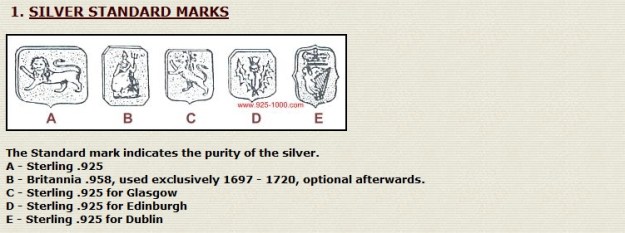
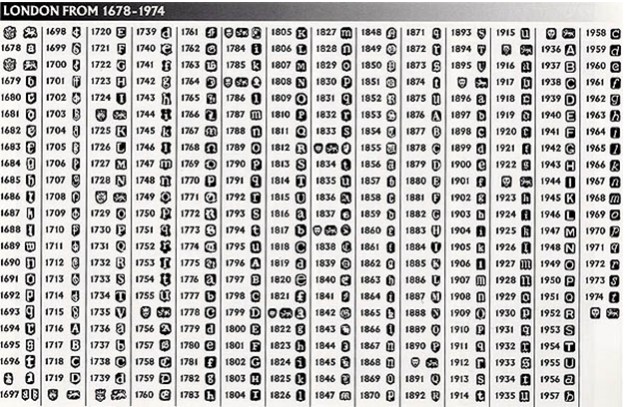
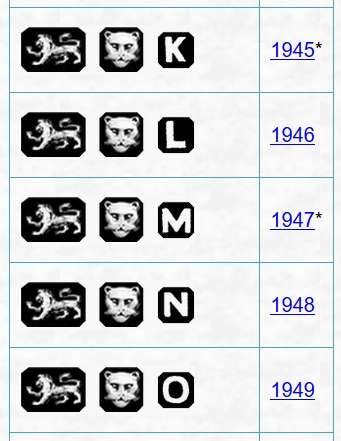
I turned to an internet site on British Silver Hallmarks to unpack the meaning of each of the hallmarks (https://www.925-1000.com/british_marks.html). The first screen capture below picks up the information on the Silver Standard Marks. The Rampant Lion is shown in letter A. It informed the buyer that the silver was Sterling .925.The second screen capture shows the Leopard Heads that were often on silver from London. They are the City Marks and I captured only the London section. The Leopard on this band is the one without the crown. The information on the screen capture is clear that the uncrowned Leopard was on silver from 1822 to the present.Now I knew the first two hallmarks on the band – It was a London Made Silver band made after 1822 and it was .925 Sterling. Now it was time to narrow down the dates on the band. I turned to another webpage that gave me the letter codes so that I could pin down the date on this pipe from that site (https://www.silvermakersmarks.co.uk/Dates/London.html). The large chart on that site covers the time period from 1544-2024. I include a screen capture of the section from 1698 to 1974 as it includes the stamp I am interested in.I have to thank John Fetter on the Facebook Tobacco Pipe Restorers Group for helping me nail this down. I posted the stamping on the shank band on the group with a potential date I was looking at and he posted a more accurate read. He included a photo of a pipe that he was waiting for from 1955 with similar hallmarks other than the “N” stamp that I have inserted below.I also checked the site for the 1948 date that he surmised and found that it matched perfectly to the stamping on the band on my pipe. I have included a screen capture of the section on the chart with the 1948 N stamp.

Now I knew that I was dealing with a GBD pipe made when Oppenheimer owned the company and operated as Marechal, Ruchon & Co. It was made in 1948 and bore the City of London mark in a band of .925 Sterling Silver. This was an old timer – 72 years old, just 7 years older than I am!

Now it was time to look at it up close and personal. I know I have said this before but I have to tell you this again. Jeff does an incredible job when he cleans these pipes. I know for a fact that I could not work on so many pipes without his cleanup work. He saves me an amazing amount of time with what he does. I receive these pipe cleaned and ready to work on with my part. I am very thankful for his help. He is a major part of rebornpipes.

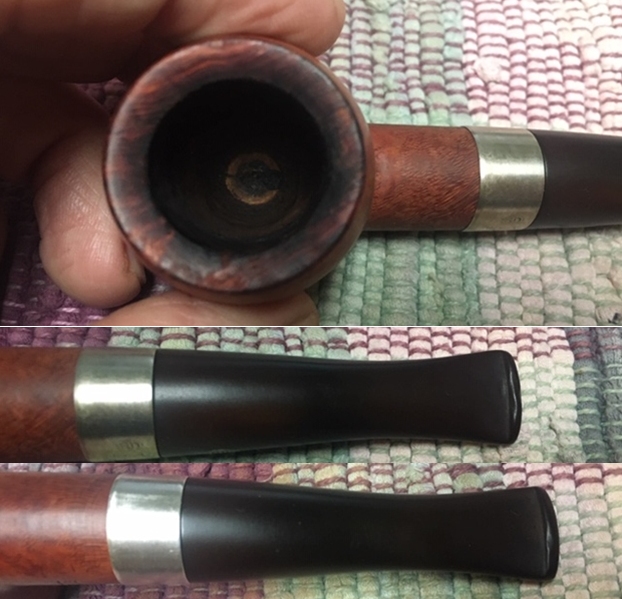
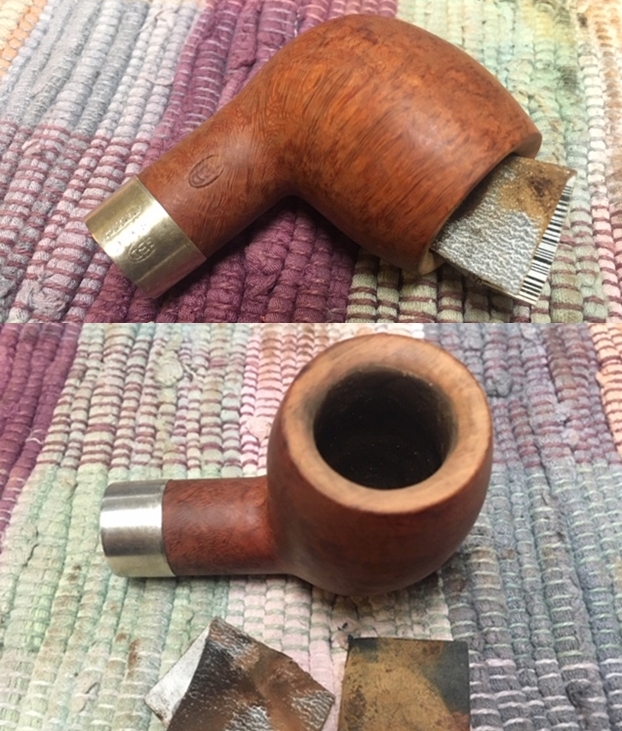
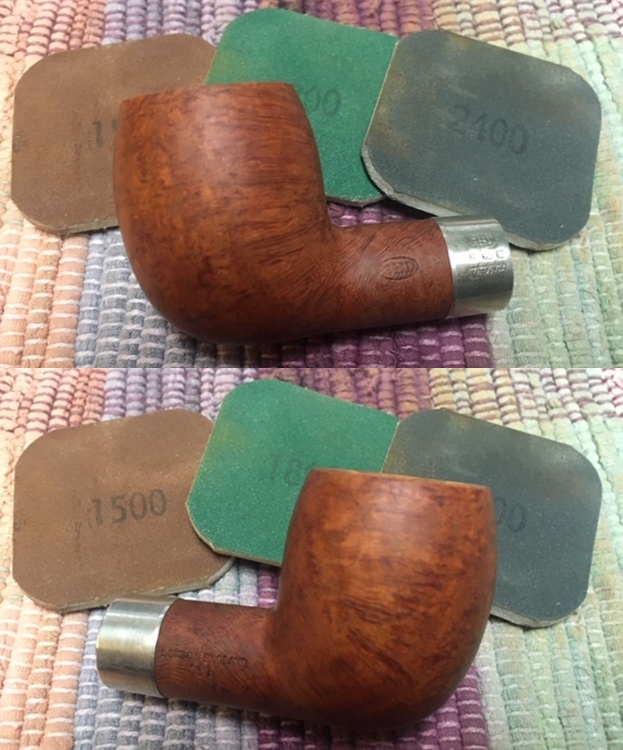
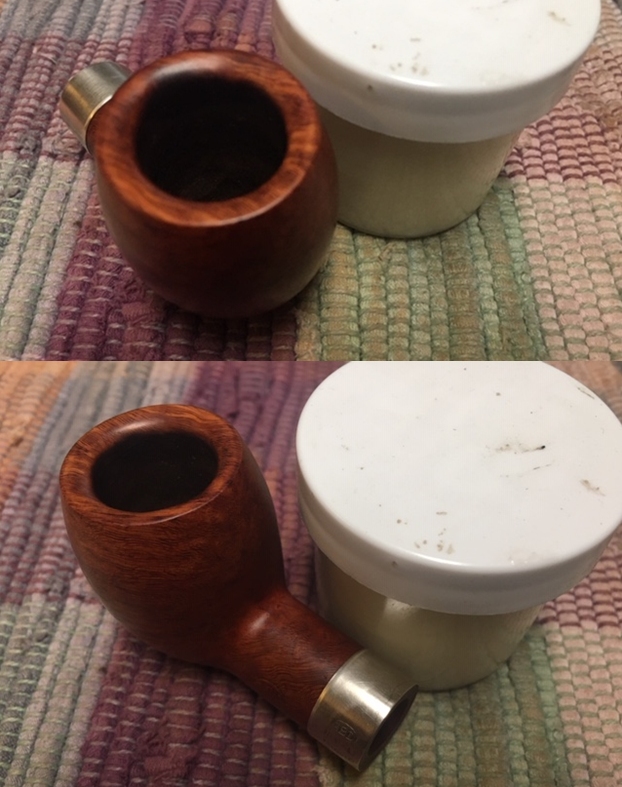
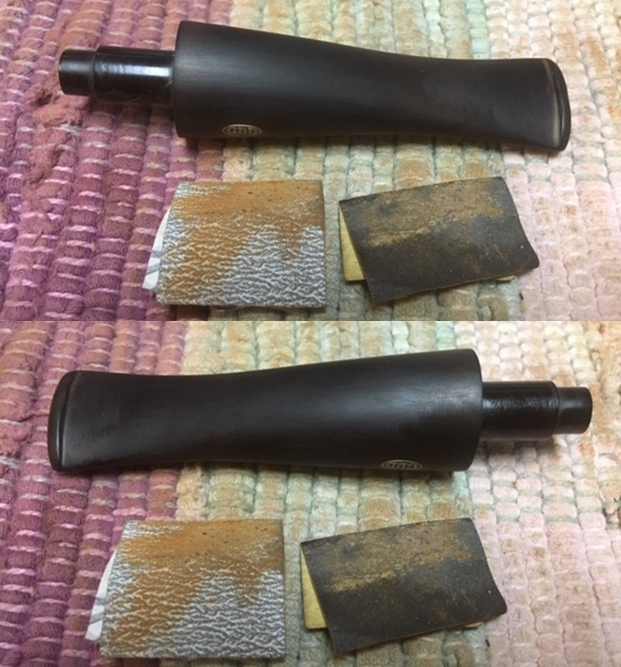
This pipe was nothing short of looking like a completely different pipe! He had a real job in removing all of the cake and the thick lava on the rim top. He had reamed the bowl with a PipNet Pipe Reamer and cleaned up the remnants with a Savinelli Fitsall Pipe Knife. He took the cake back to bare briar so we could check the walls for damage. He scrubbed the exterior of the bowl with Murphy’s Oil Soap and a tooth brush to remove the grime on the bowl and rim and was able to remove the lava and dirt. He cleaned out the interior of the bowl and shank with pipe cleaners, cotton swabs and alcohol until they came out clean. The rim top was clean when you compare it with what it looked like before he started. There was still some darkening on the top and inner edge of the bowl. There was one burned area toward the back of the inner edge and top.  He cleaned the stem with Soft Scrub to remove the grime on the exterior and cleaned out the airway with alcohol, cotton swabs and pipe cleaners. I took some photos of the pipe as I saw it. To show how clean the rim top and stem really were I took a close-up photo of them both. The bowl was clean and cake free. The rim top is very clean with no residual lava on the surface of the inward beveled rim top. There was some darkening in the finish on the top and the inner edges of the bowl. The black vulcanite tapered stem cleaned up nicely. There were still some deep spots of oxidation around the shank end and in the crease of the button. The surface had some light tooth marks and the button edge had a deeper mark on each side.I took photos of the stamping on both sides of the shank. You can see that it is very readable and clear on both sides.I removed the stem from the bowl and took photos of the parts. The taper vulcanite stem has the older style stepped down tenon end that extended beyond the end of the mortise into the first part of the airway.I started my part of the restoration by addressing the issues that remained on the rim top. I used a folded piece of 220 grit sandpaper to clean up the inner edges of the bowl and also sand the smooth portion of the inward bevel on the top. I worked it over to minimize the burn mark on the rear inner edge and remove the darkening from the rest of the edge and the rim top. I started the polishing with 400 grit wet dry sandpaper. I am happy with the results thus far. It definitely is an improvement. I would be able to polish it and blend it into the natural finish of the bowl.I polished the briar with micromesh sanding pads – dry sanding with 1500-12000 grit pads. I wiped the bowl down after each pad with a damp cloth. The grain really began to stand out and the finish took on a shine by the last sanding pad. The photos tell the story! The bowl looked very good. There were a few war wounds that I decided to leave in the briar as they were part of the story of the pipe. I rubbed the bowl and shank down with Before & After Restoration Balm to deep clean the finish on the bowl and shank. The product works to clean, enliven and protect the briar. I worked it into the smooth finish on the bowl with my fingertips. I let it sit for 10 minutes to let it do its magic. I buffed it with a soft cloth. The briar really began to have a rich shine and grain began to come alive in the finish. I took photos of the bowl at this point to mark the progress in the restoration. The bowl was finished so I set it aside and turned my attention to the stem. I sanded out the deeper oxidation that still remained in the vulcanite and the tooth marks on both sides of the stem with a folded piece of 220 sandpaper. I also reshaped the button surfaces with the sandpaper at the same time. I started polishing with a folded piece of 400 grit wet dry sandpaper.I rubbed the stem down with Denicare Mouthpiece Polish – a red gritty paste a lot like Tripoli to polish it after the 400 grit sandpaper. I rub it on with my fingertips and work it into the vulcanite and buff it off with a cloth. It does a great job before I polish it further with the micromesh pads.I polished the band with some tooth paste – rubbed it on with my fingertips and rubbed it off with a cotton pad. It really shone and gave a bit of pop to the shank and stem.I polished the stem with micromesh sanding pads – dry sanding with 1500-12000 grit sanding pads. I wiped the stem down after each sanding pad with a cloth containing some Obsidian Oil. I finished polishing it with Before & After Pipe Stem Polish – both Fine and Extra Fine and buffed it off with a cotton cloth. I gave it a final rub down with Briarville’s No Oxy Oil to preserve and protect the vulcanite stem. I put the bowl and stem back together again and buffed the bowl and the stem with Blue Diamond on the buffing wheel. I used a soft touch on the sandblast bowl so as not to fill in the blast with the product. I gave the bowl and the stem several coats of carnauba wax. I carefully buffed the entire pipe with a clean buffing pad to raise the shine. I finished buffing with a microfiber cloth to deepen the shine. The finished pipe looks very good. The grain patterns around the bowl are very nice and the chunky shape of the bowl and shank look great. The pipe feels great in the hand. It is comfortable and light weight for a pipe of its size. The finished GBD 191 London England Chunky Billiard is shown in the photos below. The dimensions of the pipe are Length: 5 ¼ inches, Height: 2 inches, Outside diameter of the bowl: 1 ¼ inches, Chamber diameter: ¾ of an inch. This 1948 GBD Billiard turned out very well. It should be a great pipe. This one will be joining my collection of older GBD pipes. Thanks for reading this blog and my reflections on the pipe while I worked on it.


Next on the table – an uncommonly beautiful sandblast Jesper of Denmark


Blog by Steve Laug

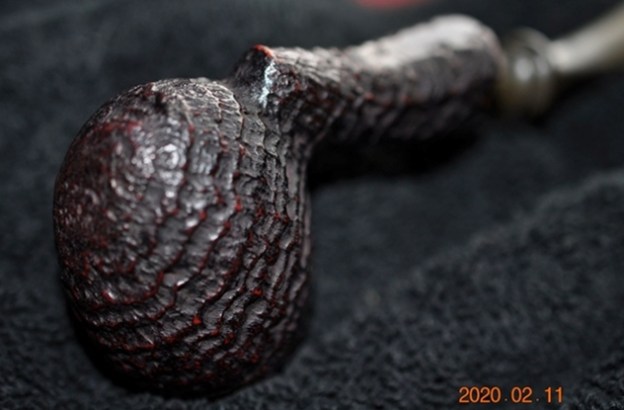
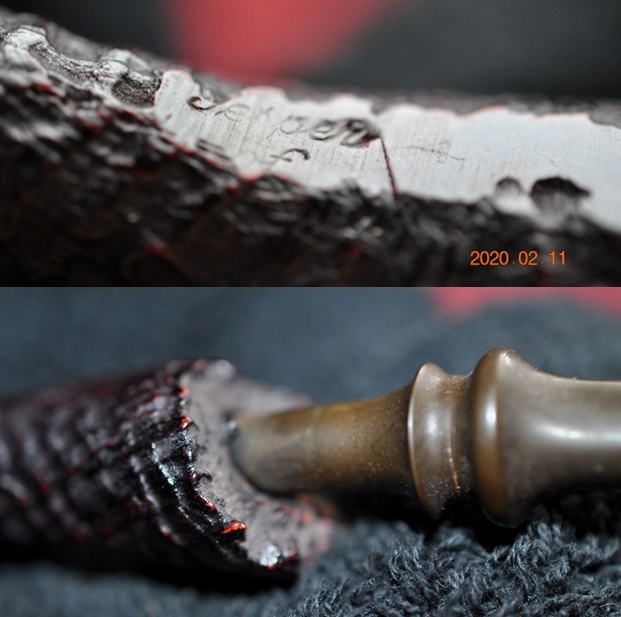
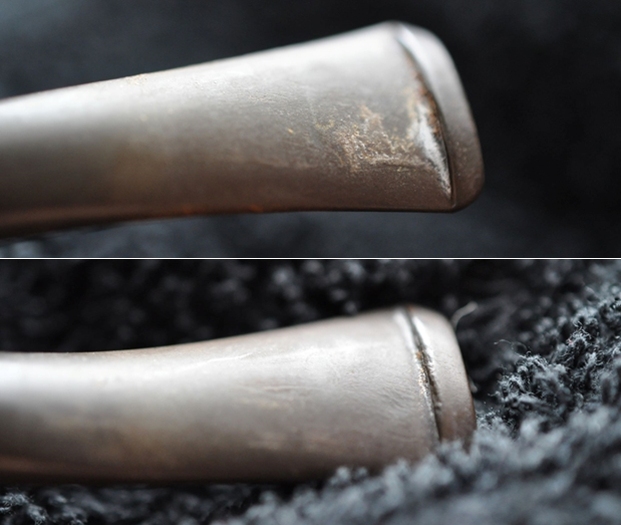
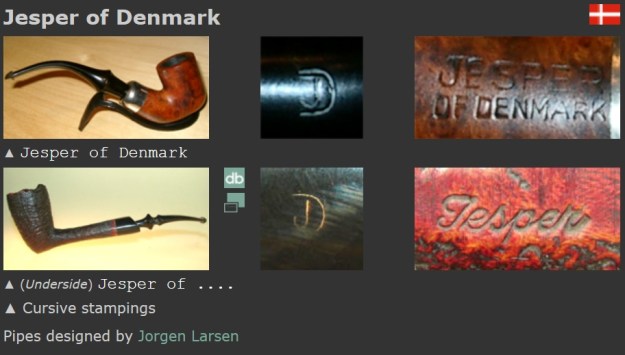
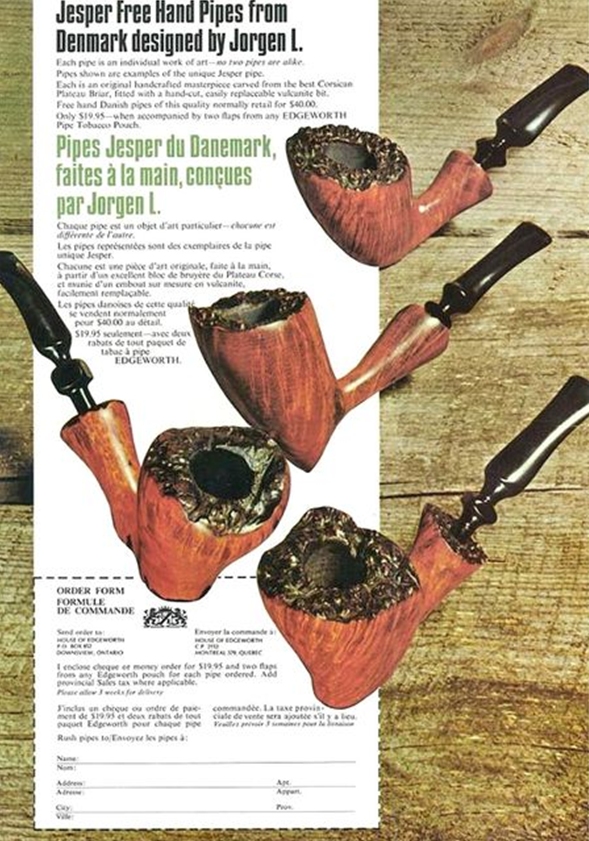
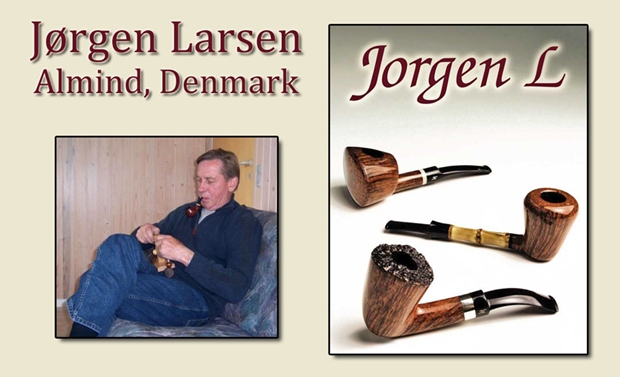
The next pipe on my worktable is an interesting smaller sandblast egg-shaped Freehand with a fancy vulcanite stem. The pipe had some beauty shining through the dust and debris in the valleys of the deep and rugged sandblast finish. The blast continued up the shank to the plateau finished shank end. The finish was dull and lifeless and very dirty from sitting around. There was a thick cake in the bowl with lava flowing out of the bowl and over the rim top. The lava had filled in the sandblasted finish on the rim top. The cake and lava was thick enough that it was hard to know what the inner edge of the rim looked like. The stamping on the shank appeared to read Jesper of Denmark but the major part of the second line was hidden in the sandblast. The fancy stem was oxidized and there was light tooth chatter on both sides near the button. Jeff took the following photos before he started his cleanup work on the pipe. He took close-up photos of the bowl and rim top from various angles to capture the condition of the bowl and rim top edges. You can see the lava overflow and debris in the sandblasted rim top. You can see the thick cake in the bowl. This was a dirty pipe for sure but it must have been a favourite of the pipeman who had held it in trust before it came to us. He took photos of the sides and heel of the bowl to show the beautiful deep and rugged sandblast around the bowl. It is quite uniform and you can see the dust and debris in the finish. It is an good looking sandblast. Jeff took a photo of the stamping on the shank. It looks like it reads Jesper of…the “Denmark” portion of the stamp is lost in the sandblast below it. The line at the end of the “r” is a deep carved line in the smooth panel. The second photo below shows the plateau shank end.The next two photos show the top and underside of the stem. The oxidation, calcification and the light tooth chatter on both sides near the button are visible in the photos. When the pipe arrived I turned to Pipephil (www.pipephil.eu/logos/en/logo-j2.html) to see if he included not only information on the Jesper of Denmark brand. Sure enough he quick information for me that identified the designer/carver as Jorgen Larsen.I turned to Pipedia for more information on Robert Eugene (Mic) Burns and the Micoli line of pipe that he carved (https://pipedia.org/wiki/Jesper_of_Denmark). The site confirms that the pipes were designed by Jorgen Larsen. Interestingly Pipedia included a photo of a catalogue page featuring Jesper of Denmark pipes and a picture of the carver himself. The catalogue page came through Doug Valitchka. Now it was time to look at it up close and personal. Jeff had done an amazing job in removing all of the cake and the thick lava on the rim top. He had reamed the bowl with a PipNet Pipe Reamer and cleaned up the remnants with a Savinelli Fitsall Pipe Knife. He took the cake back to bare briar so we could check the walls for damage. He scrubbed the exterior of the bowl with Murphy’s Oil Soap and a tooth brush to remove the grime on the bowl and rim and was able to remove the lava and dirt. He cleaned out the interior of the bowl and shank with pipe cleaners, cotton swabs and alcohol until they came out clean. The rim top looked amazing when you compare it with what it looked like before he started. He cleaned the stem with Soft Scrub to remove the grime on the exterior and cleaned out the airway with alcohol, cotton swabs and pipe cleaners. I took some photos of the pipe as I saw it. To show how clean the rim top and stem really was I took a close-up photo of the rim and stem. The bowl was clean and cake free. The rim top is very clean with no residual lava in the sandblast finish. The inner edges of the bowl look good. The plateau shank end also looks good. The black vulcanite fancy stem looks cleaned up nicely. The surface had some light tooth marks but the button edge looked really good.I took a photo of the stamping on the under side of the shank. You can see the name Jesper and the word “of” on the smooth panel.I removed the stem from the bowl and took photos of the parts. The fancy vulcanite stem worked really well with the sandblast egg shape and plateau shank.The bowl looked very good so I did not need to do any further work on it. I rubbed the bowl and shank down with Before & After Restoration Balm to deep clean the finish on the bowl and shank. The product works to clean, enliven and protect the briar. I worked it in with my fingers and with a horse hair shoe brush to get it into the deep nooks and crannies of the sandblast finish on the rim and bowl sides. I let it sit for 10 minutes to let it do its magic. I buffed it with a soft cloth. The briar really began to have a rich shine. I took some photos of the bowl at this point to mark the progress in the restoration. The bowl was finished so I set it aside and turned my attention to the stem. I sanded out the tooth marks on both sides of the stem with a folded piece of 220 sandpaper and started polishing with 400 grit wet dry sandpaper.I rubbed the stem down with Denicare Mouthpiece Polish – a red gritty paste a lot like Tripoli to polish it after the 400 grit sandpaper. I rub it on with my fingertips and work it into the vulcanite and buff it off with a cloth. It does a great job before I polish it further with the micromesh pads.I polished the stem with micromesh sanding pads – dry sanding with 1500-12000 grit sanding pads. I wiped the stem down after each sanding pad with a cloth containing some Obsidian Oil. I finished polishing it with Before & After Pipe Stem Polish – both Fine and Extra Fine and buffed it off with a cotton cloth. I gave it a final rub down with Briarville’s No Oxy Oil to preserve and protect the vulcanite stem. I put the bowl and stem back together again and buffed the bowl and the stem with Blue Diamond on the buffing wheel. I used a soft touch on the sandblast bowl so as not to fill in the blast with the product. I gave the bowl several coats of Conservator’s Wax and the stem several coats of carnauba wax. I carefully buffed the entire pipe with a clean buffing pad to raise the shine. I finished buffing with a microfiber cloth to deepen the shine. The finished pipe looks very good. The sandblast is deep and rugged look and feel in the hand. It is comfortable and light weight. The finished Jesper of Denmark Freehand is shown in the photos below. The dimensions of the pipe are Length: 5 ½ inches, Height: 2 inches, Outside diameter of the bowl: 1 ¼ inches, Chamber diameter: 7/8 of an inch. This great looking sandblast egg turned out very well. It should be a great pipe. There is something about this one that interests me. While I don’t have many freehand pipes this one may well stay with me. I will keep you posted. Thanks for reading this blog and my reflections on the pipe while I worked on it.

A surprise for me – a very rugged Oom Paul that looked like a Micoli and was!


Blog by Steve Laug

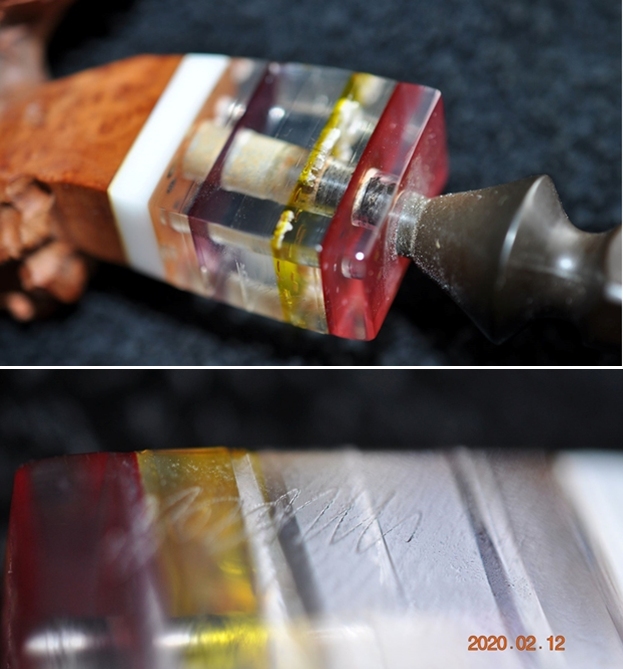
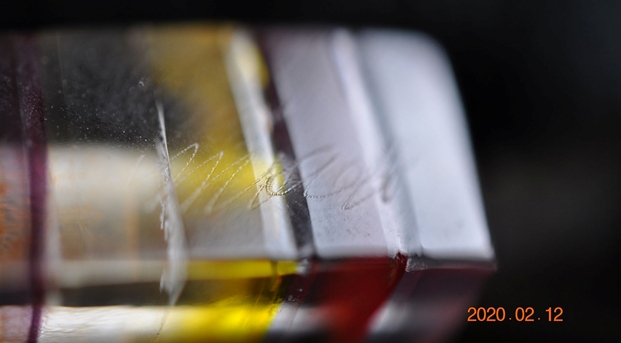
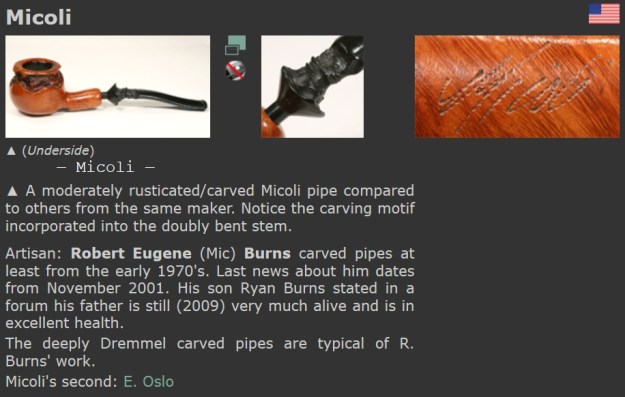
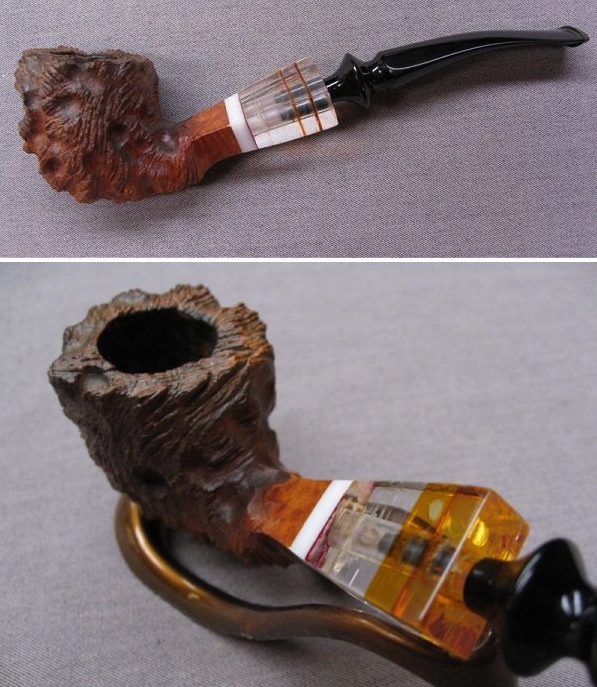
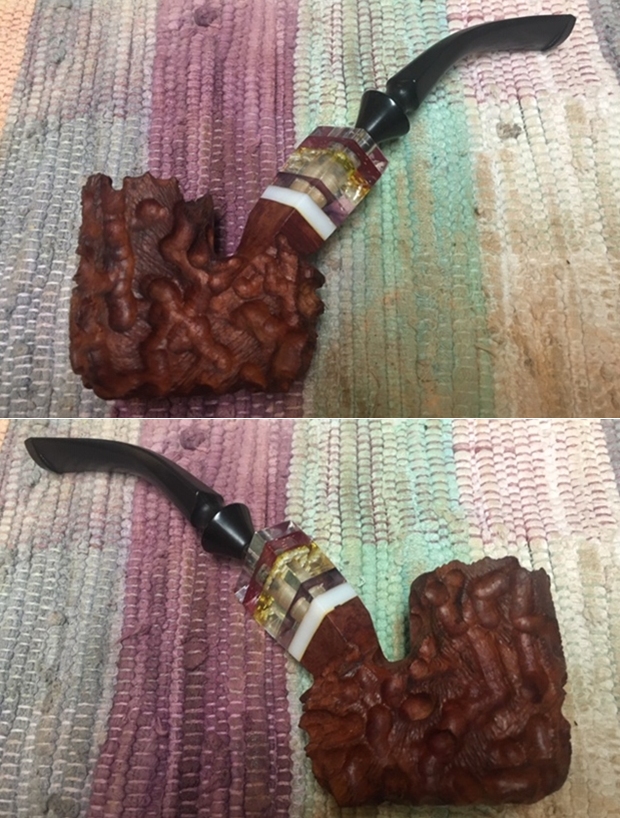
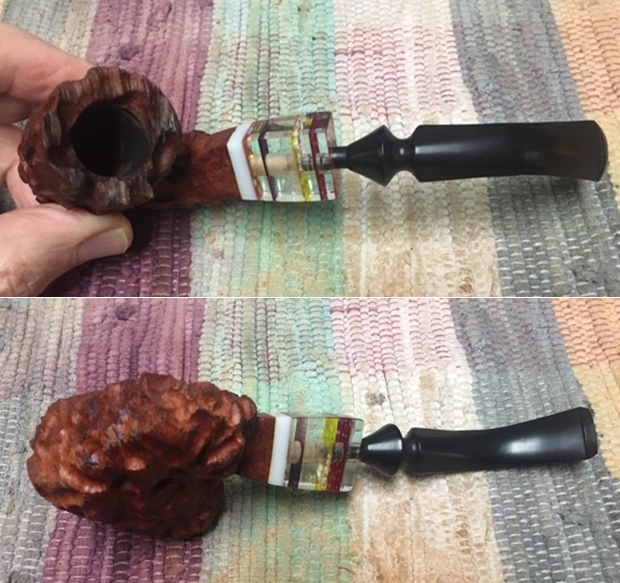
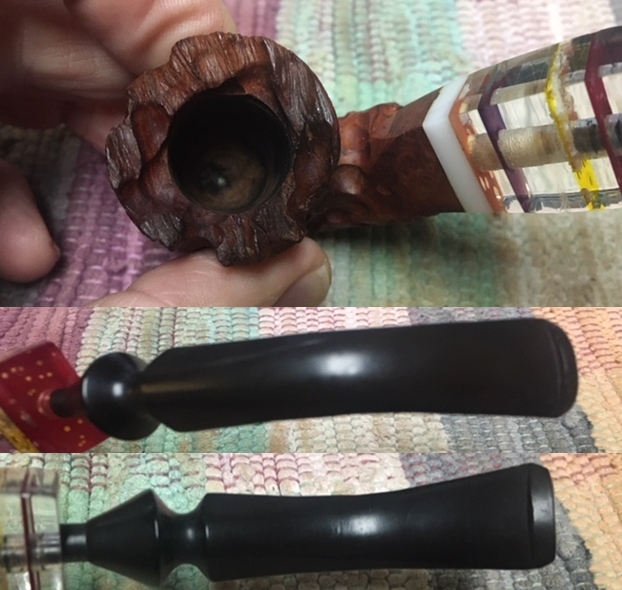
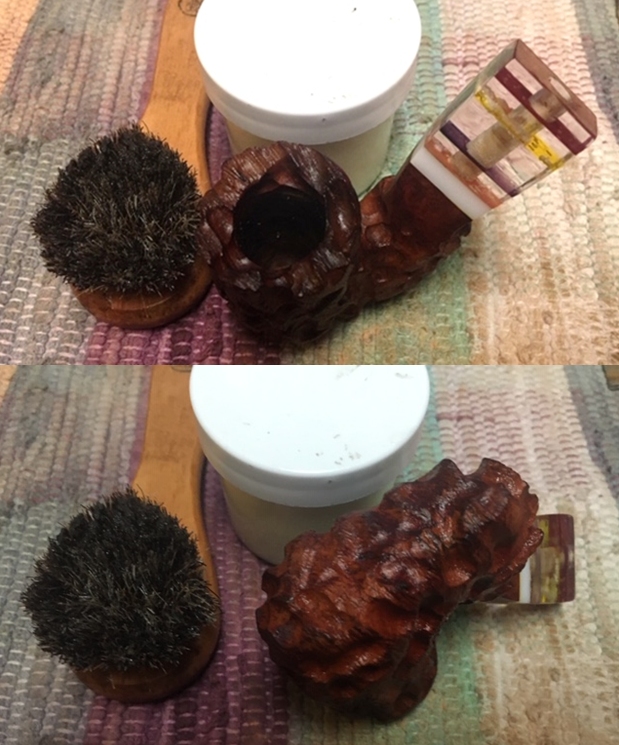
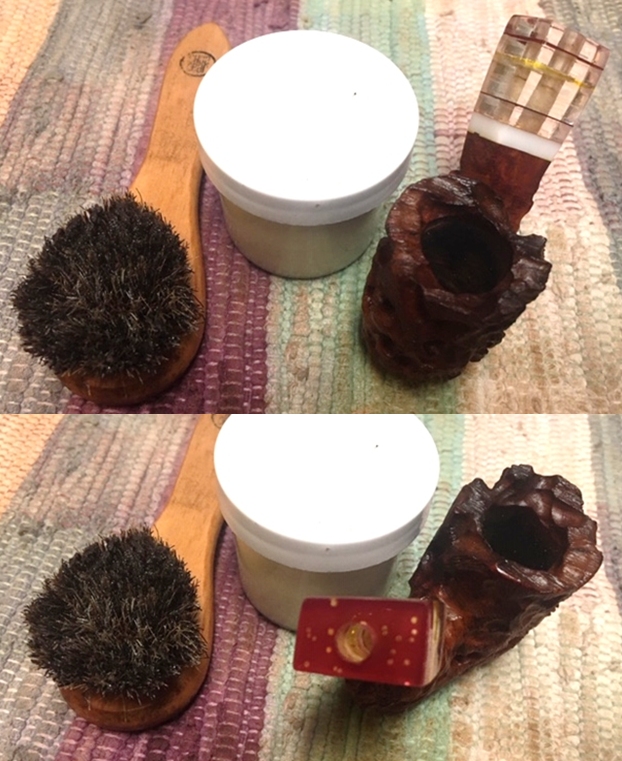
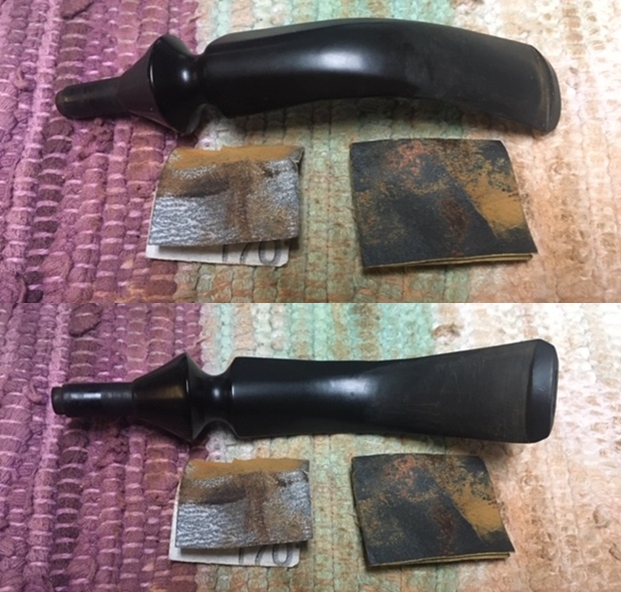
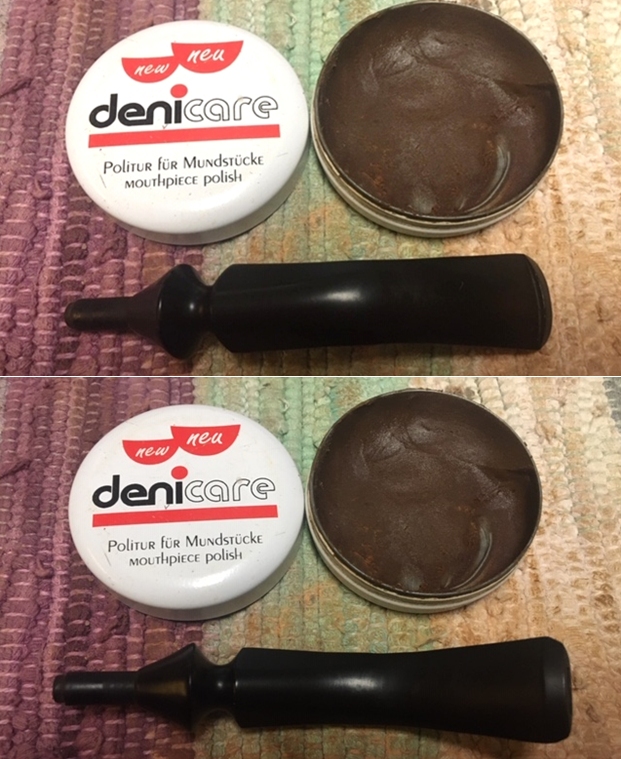
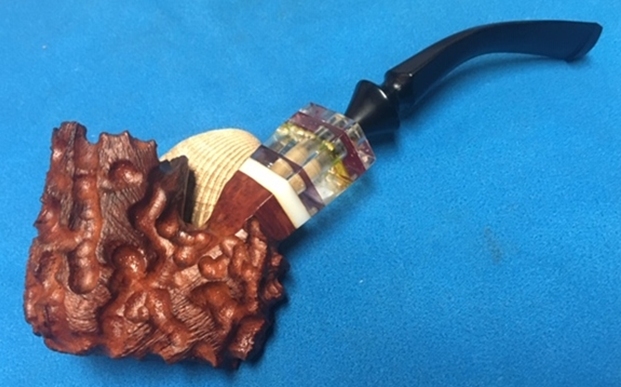
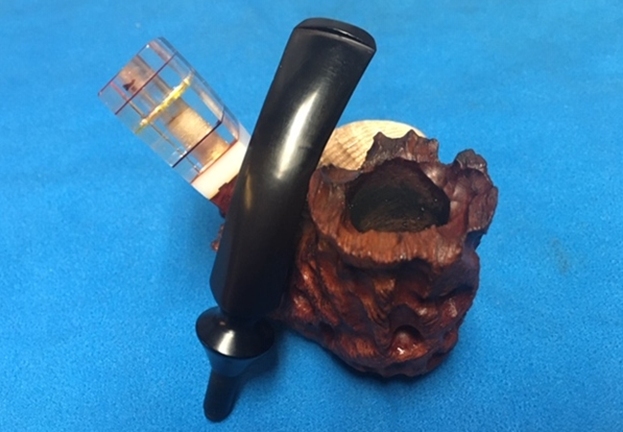
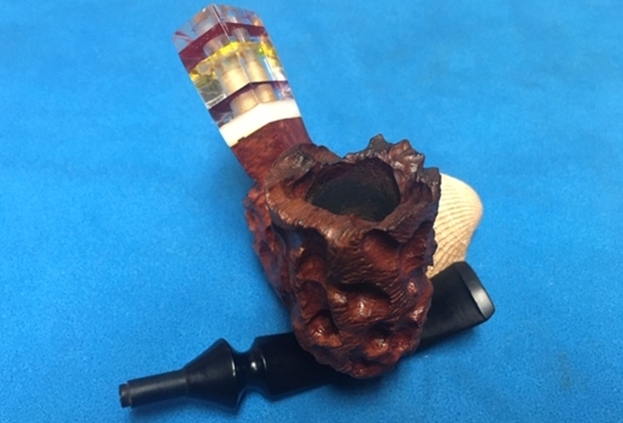
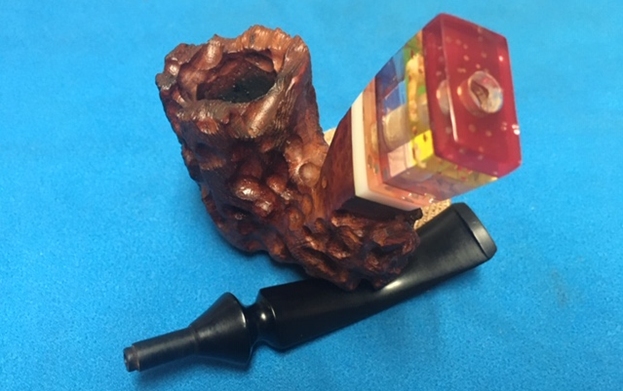
The next pipe on my worktable is very recognizable if you have been around for a while. There is only one original for this style and that is Micoli. The artisan behind the Micoli pipes is an American carver named Robert Eugene (Mic) Burns. I have worked on several Micoli pipes in the past but I have also worked on knockoffs or imitations of his work. When Jeff showed me the photos of this one I was not certain if it was an original Micoli or a knockoff. I would not be able to know until I had thoroughly examined it for his signature. The pipe was in overall good condition with dust and debris in the deep rustication craters. The shank extension is a stacked acrylic with lines of colour between the layers. It is rectangular and joins a rectangular shank that is tweaked to one side and set at an angle. The finish was dull and lifeless and a little dirty from sitting around. There was a medium cake in the bowl and some darkening around the inner edge of the rim. There also appears to be some tars and debris in the rustication of the rim top surface. The stamping on the shank was not visible though Jeff thought there may be some on the acrylic extension. The fancy stem was oxidized and there was light tooth chatter on both sides near the button. Jeff took the following photos before he started his cleanup work on the pipe. Jeff took a close-up photo of the bowl and rim top to capture the condition of the bowl and rim top edges. You can see the dust and debris in the rugged surface. There is some darkening around the inner edge of the rim but the edges look very good. You can also see the moderate cake in the bowl.He took photos of the sides and heel of the bowl to show the unique rustication that is on the bowl. There are deep worm trails randomly around the bowl and the high spots are also rusticated with lines and texture. It is an interesting and unique looking finish. Jeff took photos of the acrylic shank extension to show me in two of the  photos there appeared to be scratching that looked like a signature to me. I would need to confirm it once I had the pipe  in hand it looked suspiciously like a  Micoli signature. It was certainly unique enough to fit in the stable of his pipe that was for sure. The next two photos show the top and underside of the stem. The oxidation and the light tooth chatter on both sides near the button are visible in the photos. When the pipe arrived I turned to Pipephil (http://www.pipephil.eu/logos/en/logo-m5.html) to see if he included not only information on the brand  but also a picture of the Micoli signature on the pipes. Sure enough he had a photo of the signature and it matched the signature on the acrylic in the pipe I was working on. So I knew it was indeed a Micoli made pipe. I have included a screen capture of the pertinent section below.I turned to Pipedia for more information on Robert Eugene (Mic) Burns and the Micoli line of pipe that he carved (https://pipedia.org/wiki/Micoli). I quote it below.

Micoli or “Mic” as he is called by family and friends, has acquired the reputation of being one of the best American pipe makers. He is appreciated by the most prominent of collectors. Educated in the arts, He started this adventure in 1968. His craftsmanship and artistry were dedicated to over twenty years of full time pipe making, with no two alike. In the last twenty years plus he has been partially retired and limits carving to a few pipes a month. ​He has continued sculpting animals and other subjects from brair and other rare woods. Micoli is now 72 years old.​

The signature of Burns’ work is the specific way of rustication he worked out using a Dremel power tool. (The Dremel had been introduced to pipemaking by Teddy Knudsen.)

Burns/Micoli also made the E. Oslo pipes. These can be considered his entry-level pipes as he did not carve these from scratch but rather purchased run-of-the-mill standard shapes from Italian and English pipe makers, such as Savinelli and Comoy’s, and dremeled his signature magic on them.

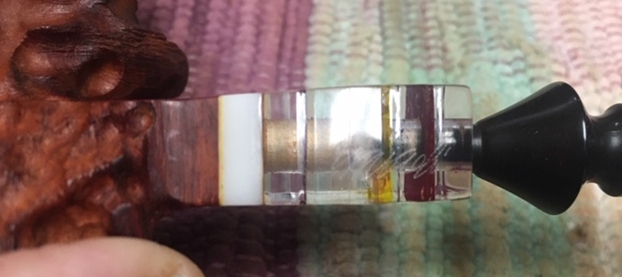
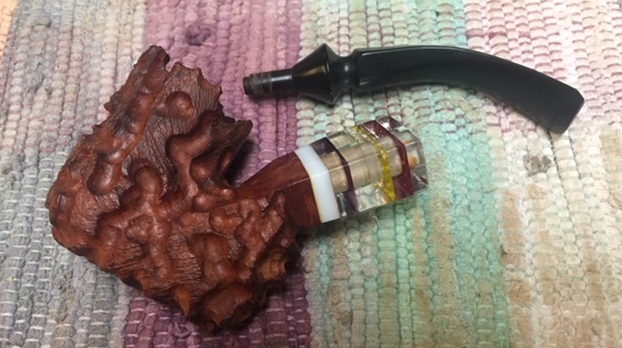
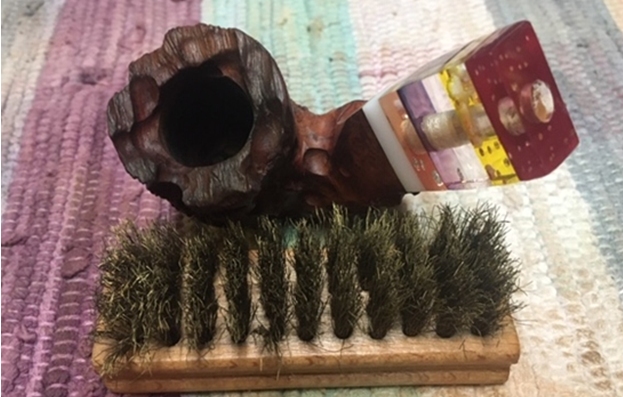
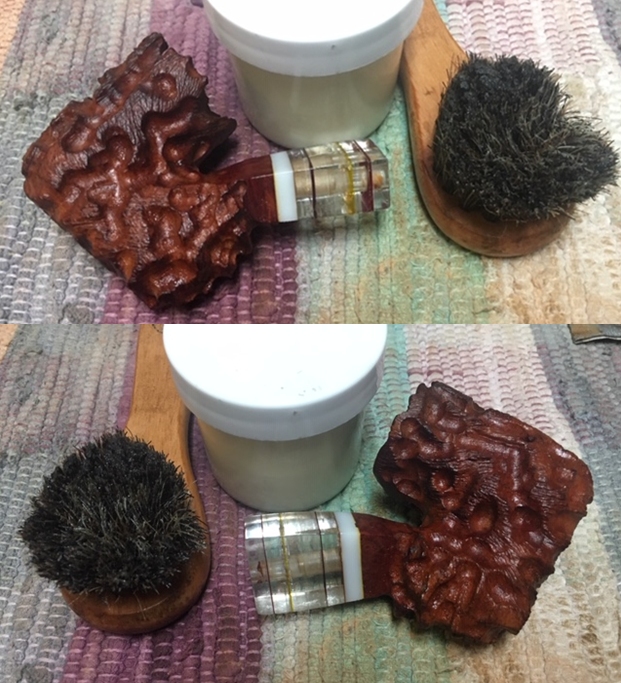
Interestingly Pipedia also had two photos of a similar pipe to the one that I am working on that would have confirmed that the one I had was a Micoli had I taken time to have a look before. I am including the photos below.Now it was time to look at it up close and personal. Jeff had great job in cleaning up this Micoli and that in itself was a trick given the deep rustication around the bowl. He had reamed the bowl with a PipNet Pipe Reamer and cleaned up the remnants with a Savinelli Fitsall Pipe Knife. He took the cake back to bare briar so we could check the walls for damage. He scrubbed the exterior of the bowl with Murphy’s Oil Soap and a tooth brush to remove the grime on the bowl and rim and was able to remove much of the grime and dirt. He cleaned out the interior of the bowl and shank with pipe cleaners, cotton swabs and alcohol until they came out clean. The rim top looked much better when you compare it with where it started. He cleaned the stem with Soft Scrub to remove the grime on the exterior and cleaned out the airway with alcohol, cotton swabs and pipe cleaners. I took some photos of the pipe as I saw it. To show how clean the rim top and stem really was I took a close-up photo of the rim and stem. The bowl was clean and cake free. The rim top is quite clean and the inner edges of the bowl good. The acrylic shank extension also looks good. The black vulcanite fancy stem looks very good. The surface had some light tooth marks but the button edge looked really good.I took a photo of the signature on the acrylic shank. It indeed reads Micoli. The signature is scratched into the acrylic surface and is clear like the material so capturing it with the photo was a trick!I removed the stem from the bowl and took photos of the parts. The stem was very tight in the shank and would need to be worked on to get a snug but better fit. I decided to see if I could remove any more of the darkening on the rusticated rim top. I used a brass bristle brush to work over the top and clean out the deep grooves. I was able to remove a little bit more of the darkening.The bowl looked very good so I did not need to do any further work on it. I rubbed the bowl and shank down with Before & After Restoration Balm to deep clean the finish on the bowl and shank. The product works to clean, enliven and protect the briar. I worked it in with my fingers and with a horse hair shoe brush to get it into the deep rusticated areas on the rim and bowl sides. I let it sit for 10 minutes to let it do its magic. I buffed it with a soft cloth. The briar really began to have a rich shine. I took some photos of the bowl at this point to mark the progress in the restoration. It is a very unique finish. The bowl was finished so I set it aside and turned my attention to the stem. I sanded the tenon down slightly and cleaned out the shank a little more to get a good fit. Once that was done I sanded out the tooth marks on both sides of the stem with a folded piece of 220 sandpaper and started polishing with 400 grit wet dry sandpaper.I rubbed the stem down with Denicare Mouthpiece Polish – a red gritty paste a lot like Tripoli to polish it after the 400 grit sandpaper. I rub it on with my fingertips and work it into the vulcanite and buff it off with a cloth. It does a great job before I polish it further with the micromesh pads.I polished the stem with micromesh sanding pads – dry sanding with 1500-12000 grit sanding pads. I wiped the stem down after each sanding pad with a cloth containing some Obsidian Oil. I finished polishing it with Before & After Pipe Stem Polish – both Fine and Extra Fine and buffed it off with a cotton cloth. I gave it a final rub down with Briarville’s No Oxy Oil to preserve and protect the vulcanite stem. I put the bowl and stem back together again and buffed the stem with Blue Diamond on the buffing wheel. I used a soft touch on the extension so as not to damage the signature. The bowl was just too deeply rusticated to buff with Blue Diamond. I gave the bowl several coats of Conservator’s Wax and worked it into the deep rustication with the shoe brush. I buffed the stem with carnauba wax. I carefully buffed the entire pipe with a clean buffing pad to raise the shine. I finished buffing with a microfiber cloth to deepen the shine. The finished pipe looks very good. It has a very tactile feel in the hand from the deep rustication. It is comfortable and light enough to be a clencher should you choose to use it that way. The finished Micoli is shown in the photos below. The dimensions of the pipe are Length: 5 ½ inches, Height: 2 ¼ inches, Outside diameter of the bowl: 1 ¼ inches, Chamber diameter: 5/8 of an inch. This highly collectible Micoli Rustic turned out very well. It should be a great pipe. It is one that I will be putting on the rebornpipes once I figure out a price for it. Contact me if you are interested. Thanks for reading this blog and my reflections on the pipe while I worked on it.

Another Legacy Pipe of a Great-Grandfather: Challenges Working with ‘Brylon’ on a Medico Apollo


Blog by Dal Stanton

It gave me a great sense of satisfaction when I received Joe’s response to reading and seeing the results of restoring the first of Paw’s pipes entrusted to me.   Joe and his wife, Hannah, who live in Athens, Greece, and are colleagues working in our organization, last year sent me a Kaywoodie “500” that I restored (See Link: Reclaiming Paw’s Kaywoodie “500” 04 Long Stem Billiard – A Great-Grandfather’s Legacy) as a gift for Hannah’s father, Ben, ‘Paw’s’ grandson.  The Kaywoodie was a special gift for Ben’s birthday.  Later, Joe wrote this letter:

Hello Dal,

My in-laws came to Athens to visit Hannah and I last month. I gave Ben the pipe. I showed him everything you wrote and documented about it. He absolutely LOVED how the pipe looked, and he was also deeply touched by the love, care, and respect you showed not just the pipe but his family. 

So many things you said in your blog triggered sentimental images for Ben about his grandfather, Sam Ellison. You called Sam (AKA Paw) a “knocker” and explained that based on some of the inner rim damage, that was from when Sam would knock out residual tobacco from the bowl, and Ben immediately could remember and visualize Sam doing that. 

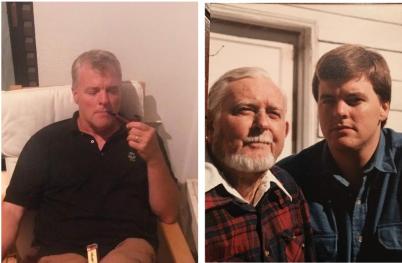
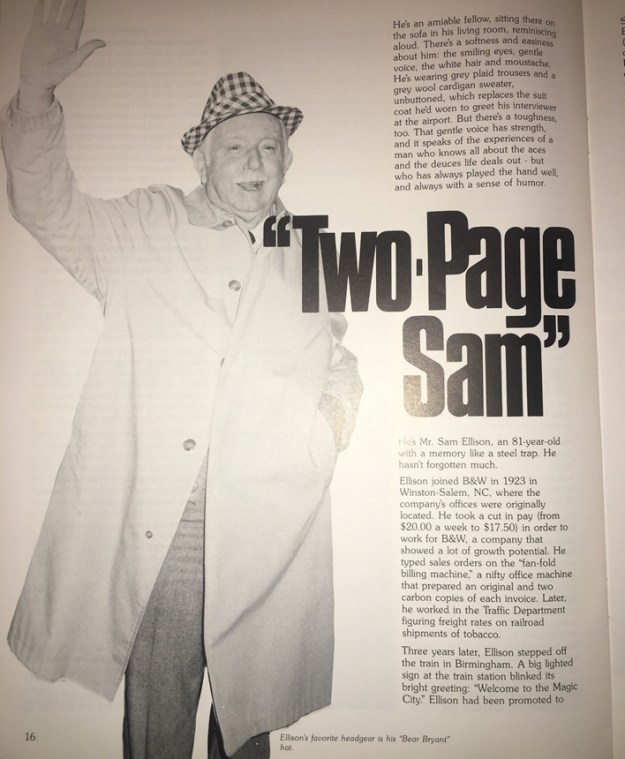
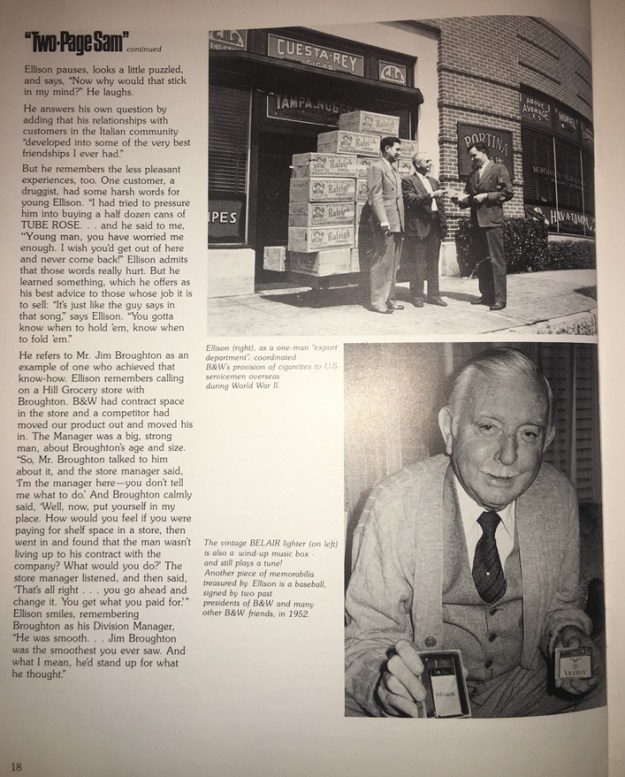
During Ben’s last few days in Athens, he lived in blissful nostalgia, thinking of Paw and sweet memories along with him. When Ben went back to Georgia, he went through the storage unit and found stacks of old pictures and articles. Unfortunately, he couldn’t find a picture of him smoking the pipe, but there are some pictures (that I will attach below) of Paw with some of his tobacco co-workers at Brown & Williamson Tobacco Corp, along with an article in the Brown & Williamson newsletter, “The Pipeline” about him called ‘Two page Sam’. 

Two pictures Joe included were of Ben, his father-in-law fellowshipping with Paw’s newly restored Kaywoodie “500” and reminiscing about his grandfather.  What I understood from Joe, was that Paw essentially was the one who raised Ben.  The other picture was Paw and Ben 45 years earlier….  This is why I love what I call my work, The Pipe Steward – pipes are passed on, but also the special memories those pipes uniquely bring with them are also passed on to the following generations.

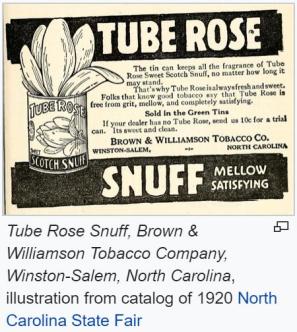
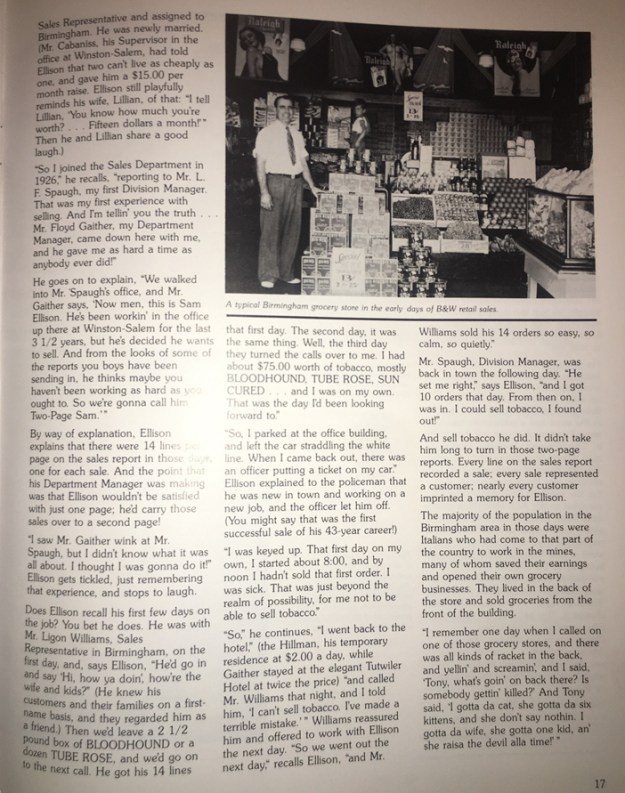
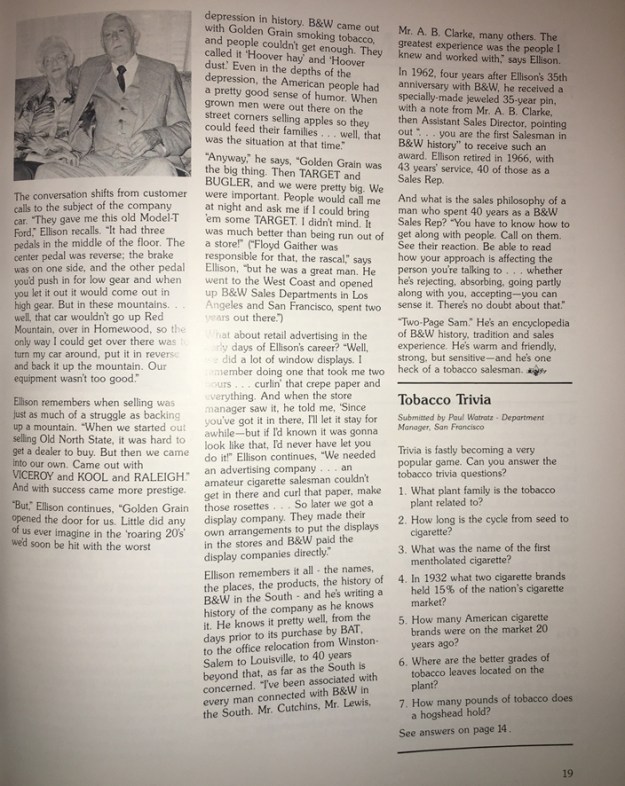
What was also of great interest to me in Joe’s letter, not only was Paw a pipe man, but he was also a tobacco man –  not just a tobacco man, but a tobacco SALES man for the Brown & Williamson Tobacco, Corp. and sent clips of an article of this tobacco company’s magazine about Paw, or as the rest of the world new him, ‘Two-Page Sam’!  When doing a restoration (and I will get to that!) it doesn’t get better than this regarding the story a pipe tells.  Doing a little research, I find out that B&W would be considered a ‘Big Tobacco’ company and Wikipedia described the beginnings in the latter 1800s:

B&W was founded in Winston (today’s Winston-Salem), North Carolina, as a partnership of George T. Brown and his brother-in-law Robert Lynn Williamson, whose father was already operating two chewing tobacco manufacturing facilities.[3] Initially, the new partnership took over one of the elder Williamson’s factories.[4] In February 1894, the new company, calling itself Brown & Williamson, hired 30 workers and began manufacturing in a leased facility.

In 1927, the Brown and Williamson families sold the business to London-based British American Tobacco. The business was reorganized as the Brown & Williamson Tobacco Corporation. Manufacturing and distribution were expanded, and work on a new B&W factory in Louisville was begun.

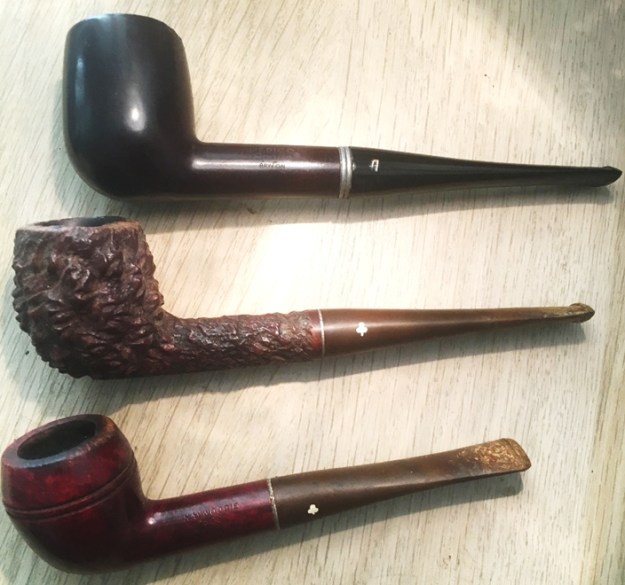
The Wiki article jumps a century from this earlier history to the 1990s which was a time rife with controversy regarding infamous ‘Big Tobacco’, congressional hearings, cover-ups and 60-Minutes TV pop-journalistic investigations – all low-hanging ripe story lines for a John Grisham novel and movie contracts!  As tantalizing as this later storyline was, I was drawn more to the story of ‘Two-Page Sam’, the article written about Paw’s life and relationships through the years that the Wiki article jumped over.  I include this story from the December 1984 article that Joe sent from B&W’s company magazine, ‘PIPELINE’.  The piece was subbed: “’Two-Page Sam’ – An 81-year old retiree, with a memory like a steel trap, about his 43-year career with B&W”. I enjoyed the read immensely as it not only tells of the life of Paw – aka, Two-Page Sam, but its portrayal of period perspectives revealing much about life and relationships when Sam started work for B&W in 1923 and later.  Enjoy! After the test run with Paw’s first pipe, Joe entrusted me with three more pipes to restore – two more Kaywoodies and a Medico.  Paw’s choice of pipes tells much about him!  One of the Kaywoodies is another of the “500” series, but this time, in addition to the long-shank Billiard from last time, a “500” Rhodesian is added.  Paw liked the “500”s – they are smaller pipes easier for hands-free fellowship (and chewed bits!) and work, as Sam went from vendor to vendor in his job selling tobaccos.  The other Kaywoodie is a Kaywoodie Natural Burl 33 – the finish is great!  Here is the lineup of Sam’s pipes that Joe sent:Along with the other Kaywoodie “500” its obvious that Sam stayed with American made pipes – pipes that would be considered ‘working men’s pipes’.  They are not high shelf purchases but would be found on many of the shelves of the tobacconists and ‘mom & pop’ stores he served through the years.  Affordable pipes that would be the kind a person who had known life through the Great Depression and Great Wars – as a child then as an adult – often called, the Great Generation.  With a deepening understanding of the man who was a steward of these pipes, I’m appreciative of the trust that Joe (and Hannah!) has placed in me to restore them as treasured family heirlooms.  What’s even better is that these restorations benefit the Daughters of Bulgaria – women and girls who have been trafficked and sexually exploited.

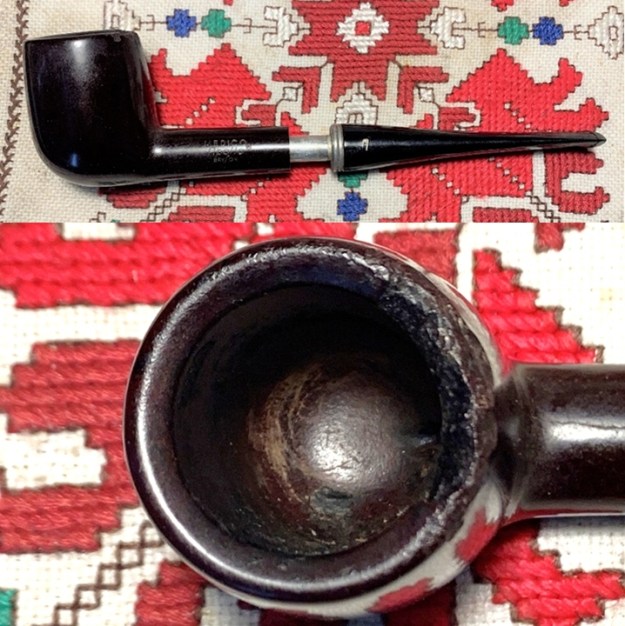
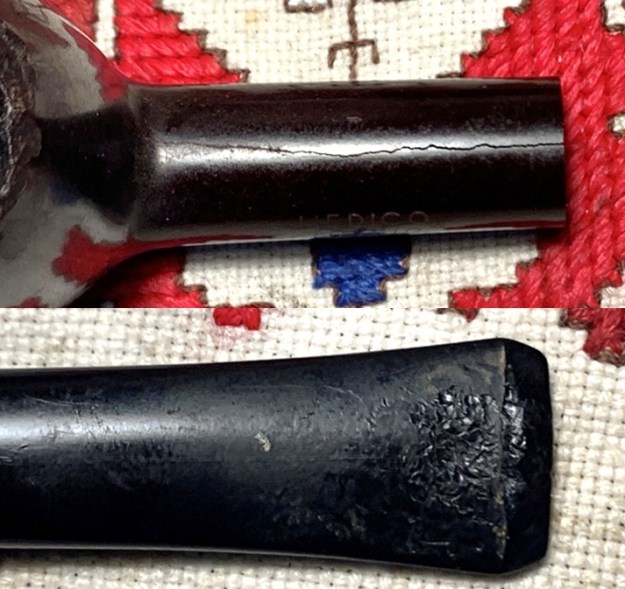
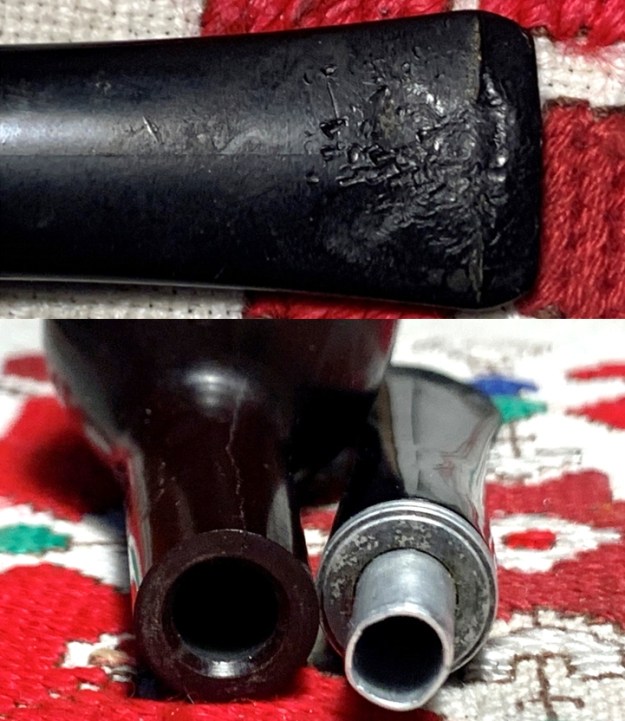
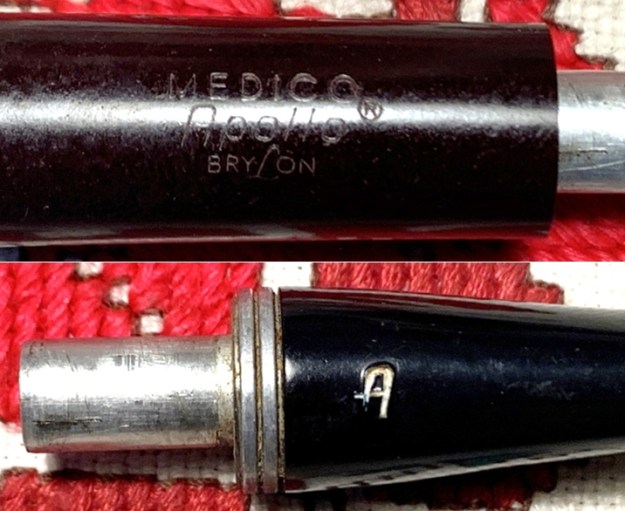
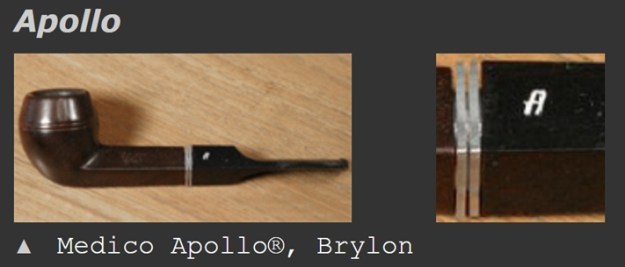
After looking over the pipes, I decided to start with the Medico Apollo Brylon – the most challenging.  With the Medico now on the worktable I take some pictures to get a closer look. The nomenclature found on left shank flank reads MEDICO [over] Apollo [over] Brylon (with circled ‘R’ for registered trademark).  The stem has a fancy, lopsided (or worn away) ‘A’ for Apollo pressed into the right side.During my communications with Joe about the conditions of the pipes he intended to send to me, I was assuming that this Medico was a briar that had dulled.  It wasn’t until I received the pipe and started to research the Apollo ‘Brylon’ line of Medico that I discovered the stummel was not made of briar but ‘Brylon’.  Pipephil.eu confirmed another Medico Apollo Brylon and the stem stamping but with no further information about the ‘line’ Brylon.Pipedia’s short introduction to the article about Medico provides this:

Medico was created in 1933, and is still produced by S.M. Frank. The brand is famous for its pipe filters, which were launched in the same year. Since 1966, some models have been made in Brylon, a synthetic material, and others in briar. The brand was also sold by the English company Cadogan and Oppenheimer Pipe.

I discovered very quickly that Brylon was not a line and that the Medico Apollo on the worktable was not briar!  In 1966, an innovation was introduced by S.M. Frank of fashioning bowls from a synthetic material.  At this point I’m thinking about Paw’s Apollo, whether I could repair it with the same procedures as with briars?  Rim?  Cracked shank? Blending repairs?  The same Pipedia article continued later with this additional interesting information about Brylon:

The company ended up buying some of their main competition in 1955. That year the Kaywoodie brands came under the S.M. Frank Company. The Medico brand continued production through this transition without many changes. The next big change for the brand came in the late 1960s. In 1966, the company developed a synthetic material that combined the traditional briar wood with resins. It is known as Brylon. At that time, all Medico pipes were made from imported briar wood. In order to keep production costs down, the company began offering some lines with Brylon. Today, that is still true…. In the Brylon, the line includes the Lancer, Apollo, Standard, Varsity, Conqueror, Medalist, Cavalier, and V.F.Q. As far as price, the briar wood pipes tend to be higher in cost than the Brylon ones. Courtesy TobaccoPipes.com

In another Pipedia discussion of various material and construction methods used in pipe production lines generally, Brylon is identified as a “High Temperature Resin with Wood Flour”:

In 1966, S.M. Frank developed a material called “Brylon” made of a high temperature resin combined with “wood flour”, which is pulverized wood of varying consistency. The pipes were cheaper and more durable, but heavier in the mouth and had a tendency to smoke hot and wet. They are still made today and favored by some for their inability to be burnt out or otherwise damaged without significant effort and the ease of cleaning the pipe. For more information see S.M. Frank.

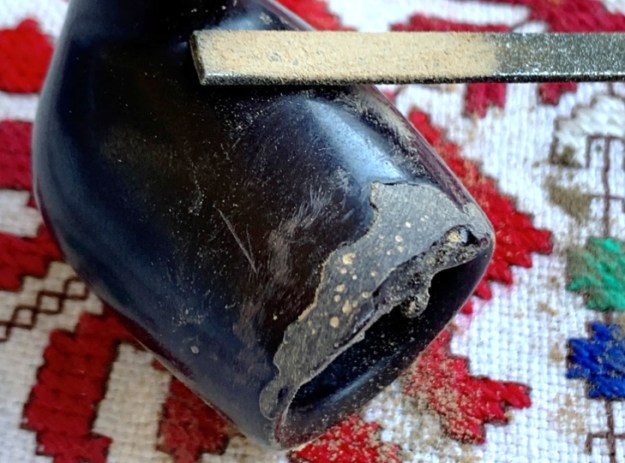
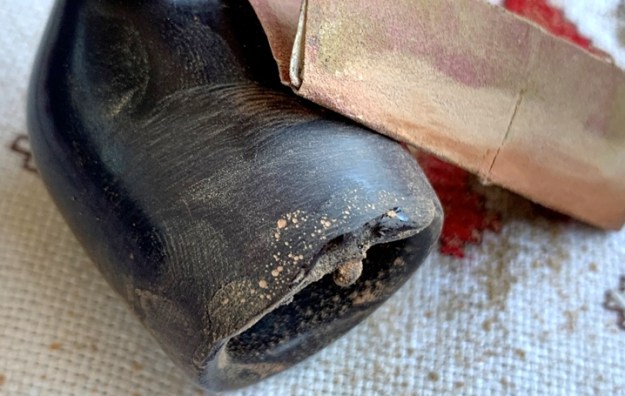
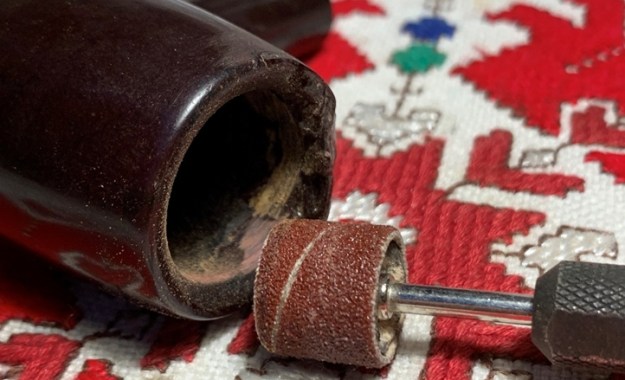
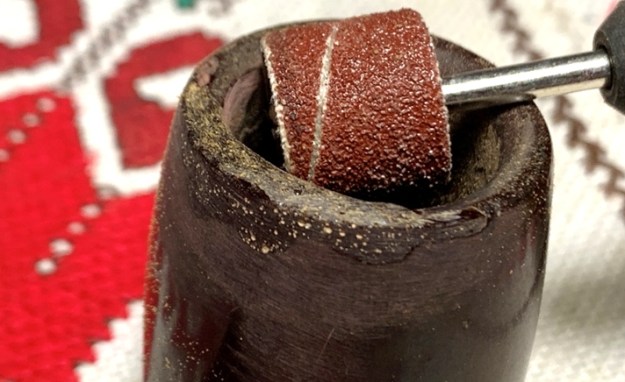
Well, the unique characteristics of Brylon are becoming more evident.  They are less expensive, have differing smoking behaviors compared to their briar brethren and purportedly to be less susceptible to burning and damage compared to their briar brethren, BUT, (I love the qualifier!) “without significant effort”.  I guess Paw’s proclivities were with significant efforts by the looks of his Apollo!  Wow!  I wonder if Sam took the durability billing of S.M. Frank as a challenge 😊?

The question now is whether the issues of this Medico Apollo are addressed differently than my normal briar restoration protocols?  The significant issues start with the rim damage.  With the restoration of the first of Paw’s Kaywoodies, he seems to have been a habitual bowl ‘knocker’ with consistent damage to the aft quadrant of the rim.  Using the stem as a handle, Paw seems to have inverted the pipe and thumped the bowl on something hard enough to dislodge the ash and dottle – probably on his way hurriedly to the car after visiting a client, having secured his sale of B&W product line working toward ‘2-Page’ success, and speedily transitioning his mind and body to the next visit! I take a few pictures to show the aft rim damage.The shank also has a huge crack starting on the top of the shank running to the bowl crook.  When I communicated with Joe before receiving the pipe, he commented about the stem’s metal filter housing being out of round.  When I received the pipe, the stem and stummel were joined.  When I gingerly extracted the stem from the mortise, I could see how the nickel had been bent.  When I tried to rejoin the stem and stummel, the fit was so tight that I decided to leave things like they were.  I began to question whether the stem was the original for this stummel and forcing it had caused the cracked shank?  Yet, the stem does have the Apollo ‘A’ stamping – probably, just bent so much that the mortise no longer can accommodate it.The stem’s condition I believe is confirmation that ‘2-Page Sam’ often had the Apollo in a hands-free mode with it clenched between his teeth while he filled out his orders!  The chewing of the bit is evident with severe chatter and bite compression.  The oxidation appears to be minor.There also is a pit and dent mid-way on the stem’s underside which will need addressing.To begin the restoration of Paw’s Medico Apollo, I work on cleaning the internal airway with pipe cleaners wetted with isopropyl 95%.  While cleaning, I discover that the pipe cleaners are obstructed at the bit-end of the stem.  I also use a shank brush to push through.  The shank brush does push through but what becomes evident is that the chewing of the bit appears have closed the airway to such a point, the pipe cleaners are hindered from functioning.  This is a problem for keeping the airway fully cleaned.  I’ll need to address this issue as well.  When the airway is as clean as I’m able to get it, the stem is added to a soak of Before & After Deoxidizer along with other pipes in The Pipe Steward queue, along with Paw’s other 2 Kaywoodies.After a few hours, the Apollo stem is removed from the Deoxidizer and I squeegee the liquid off with my fingers then wipe the stem with cotton pads wetted with alcohol to remove the resulting raised oxidation.Following this, paraffin oil is applied to the stem to condition the vulcanite and I put the stem aside for the oil to be absorbed.Turning my attention now to the Brylon stummel, the questions I asked earlier about how to proceed with the repairs have been clarified in my mind.  It was helpful to find a blog on Dad’sPipes, What the Heck is Brylon?? – A Yello Bole Standard Panel Billiard, where Charles Lemon had previously had the same questions regarding working on Brylon!  Charles’ blog mainly was focused on cleaning and polishing issues and not with actual repairs to the Brylon – the rim and shank in this case.  My note to Charles describes my proposed working approach with Brylon:

Charles, hope you and your family are well and staying clear of harm’s way during these difficult times. I read one of your blogs where you worked on Brylon. I’m working on a Medico Apollo Brylon that needs extensive rim work. I’ve attached a picture to give you an idea of the dark brown color. Of course, I’m thinking of briar dust and CA glue to do the patchwork. However, it will probably be lighter than the hue of this brown. Do you think adding a wee bit of dark brown aniline dye would work?  Do you have any best practices, beyond the blog I read 😊.  The default if patching doesn’t work is to top the stummel but that reduces the height.

Charles’ email reply came quickly: Hi Dal. Good to hear from you! I hope all is well with you and yours. I have not attempted to fill Brylon. To be honest I have avoided the stuff as there is limited resale value in it. I think you are right – briar dust will show paler against the brylon. Mixing in some dye may do the trick. If not, you can always top the bowl afterwards. Good luck with it. I’ll be interested to see the results!

Charles

Charles’ response was what I was hoping to hear regarding using a mixture of CA glue and briar dust, which is the main component of Brylon though briar is not specified as the wood component.  The issue is the coloring.  Fiebing’s Dark Brown Leather Dye, which is an aniline dye, I think might be a very close match, but I’ve never introduced dye to a CA glue before – what will it do?  The worst-case scenario is that the patch doesn’t work and I top the bowl, turning it into a Pot shape.  I’m thinking to first introduce just a small amount of the dark brown dye – a drop, to a puddle of CA glue and mix it thoroughly and see how the CA/dye mixture behaves.  Then, as with briar repairs, if the glue/dye mixture looks good, I’ll introduce briar dust and see what happens!  With this next day of quarantine in Bulgaria being beautiful, I work outside on my 10th floor Man Cave balcony.

The first two pictures are marking the start – looking at the inside of the rim and then the outside.After preparing my plastic mixing palette by covering it with some scotch tape to help in the cleaning later, I place a small mound of briar dust on the palette and next to it, a small puddle of BSI Extra Thick CA glue.Using an eye dropper, I place one drop of Fiebing’s Dark Brown Leather Dye in the middle of the CA puddle and it immediately expands through the puddle. Not able to take any additional intermediate pictures to chronicle the mixing – the clock starts ticking when the briar dust is introduced to the CA glue.  I used a toothpick to gradually pull briar dust into the CA/dye, mixing as I go. I noticed that the CA mixture thickened more rapidly than normal with the dye alone, but it didn’t solidify which was what I was concerned about.  When the mixing came to a point where the resulting putty was about the consistency of molasses, I troweled the putty to the rim to fully cover the damaged area. This picture shows the progress at this point and a bit of wind-blown briar dust on the Man Cave!I use an accelerator to hold the patch material to the rim – it did want to move a bit.  Examining the patch in the sunlight, I’m VERY pleased with the color.  It appears to be very, very close to the Brylon at this point in the process. With the same approach now as with briars, I start with the outer rim and file the patch mound down to near-flush with the Brylon surface. Before moving to the inside and top of the patch, I use 240 grade sanding paper on the external rim patch.  I’m anxious to see what it does.  As I sand, pockets do appear in the patch area in this rough state.Switching to the internal rim patch area, I mount a sanding drum to the Dremel and bring the patch down to flush.Carefully, I use the drum on the top as well. I do not want to be too aggressive by sanding below the plane of the rim with the more powerful mode of sanding. Following the sanding drum, continuing with 240 paper wrapped around a Sharpie Pen, the chamber is sanded to help blend the patch area and to clean the chamber.  Then 240 sanding paper is redeployed to fine tune the rim contours and to smooth the patch.  The color match is looking good but at this rough state, the patch area on the rim reveals the air pockets which I’ll work on masking in the later stages. Having reached this point in the repair on the rim, before doing more sanding to improve the rough patch area, I address the shank crack.  The question rolling around in my mind regarding Brylon is whether I should drill a counter-crack creep hole at the end of the crack?  The crack ends at the shank/bowl merger.  The two pictures show the crack and a closeup of the end of the crack.  Working on the Man Cave balcony, the best angle of sunlight to see the crack was in the flower box hanging over the edge of the balcony with signs of early spring sprouting in Bulgaria!Marking the end of the crack with an arrow, the crack has turned the vertical corner and is on the bowl side – just slightly.  Since this is the first time working on Brylon and I haven’t found others who have complied a list of ‘best practices’ working with Brylon, I decide to drill the hole to be on the safe side.  Earlier, I had decided not to reinsert the stem because it seemed that it was too tight and may have caused the crack.  I’m thinking that the best way to address the crack is first, to drill the counter-creep hole. Following this, carefully reinsert the tight stem and allow the nickel filter housing to expand the crack allowing thinner, regular CA glue to seep into the cavity assuring a stronger bond.  I’ll then remove the stem, closing the crack and hopefully removing the threat of the crack advancing.  I’ll be thinking about whether to use a band to protect the shank for future use.To prepare to drill, I use a sharp dental probe to create a guide hole for the drilling.  It took the use of a magnifying glass to identify the end of the crack.  Unfortunately, there was a bit of collateral damage, but nothing serious.  When I applied pressure to the dental probe to imprint the indentation for a guide, I discover the Brylon to be much harder than briar and with the additional pressure that was needed, the probe skidded off to scratch the stummel.  Ugh! – it will sand out later.Next, after mounting a 1mm drill bit onto the Dremel, I carefully drill a hole using the guide hole – a great help in keeping the hand-held drill bit from dancing around!  I’ve gotten better at drilling these holes freehand with the handheld Dremel extension – my main work tool.With the hole drilled, with fear and trembling I coax the filter housing into the mortise and as expected, the terribly tight fit helps expand the crack for a more effective application of CA glue.  I must be honest; I was bracing myself for the stummel to split, but thankfully it didn’t!  I will address the fit later after the shank is repaired and stabilized.With the crack expanded, a line of regular CA glue is run starting from the hole down the shank to the shank facing. After laying down the glue, the stem is extracted, and the crack again compresses with CA glue in the cavity.For some cosmetic help and to keep the glue in place, I sprinkled the glue line with briar dust. I put the stummel aside to allow the glue to cure.With the Brylon bowl on the sidelines, I turn my attention to the stem.  The first step will be to repair the chewed bit – Two-Page Sam’s trademark!  I take fresh starting pictures of the upper and lower bit to show the carnage.  After each of these, is the comparison picture after using the heating method to minimize the damage.  Using a Bic lighter the bit is painted with the flame heating the rubber and helping it to expand to regain some of its original disposition.  I think the heating definitely improved the minor chatter so that for the upper bit, sanding should be all that is needed with some filing to freshen the button. For the lower bit, again, chatter was minimized but patching will still be required for the compressions.Medium-Thick Black CA glue is used to do the fills.  After filling the deep compressions, I set the stem aside to allow the CA glue to cure.After the fills have cured, a flat needle file is used to file down the patch mounds and to shape and refresh the button.The upper bit also is the recipient of the filing to file out the more severe chatter and shape the button.After the filing, 240 grade paper is used to further smooth the upper and lower bit.  The repairs on the lower side are looking good. About mid-way on the lower side of the stem there is a dent and a divot.  I expand the 240 paper sanding to the entire stem to address these issues and to remove any oxidation hanging on.  I’m careful to guard the Apollo ‘A’ stamping from the sanding. Before going further with the fine sanding, I remembered that earlier that it was very difficult to clean the stem’s airway because the bit area was too compressed from Paw’s chewing the bit.  To address this, I start a new pipe cleaner down the airway while warming the bit with the hot air gun.  I warm it on the upper bit avoiding the fills that are on the lower bit.  I do this to avoid dislodging the fills which will not expand the same as the rubber.It works like a charm.  As the vulcanite warmed it becomes supple and I move the pipe cleaner gradually through the airway as the compressed area relaxes.  When the pipe cleaner is moving freely and normally, with the pipe cleaner remaining in the airway, I run the stem under cool tap water setting the expansion in the vulcanite airway.Next, the entire stem is wet sanded using 600 grade sanding paper followed by applying 000 grade steel wool as I normally do with briars. The nickel stem facing and filter housing also receive attention from the steel wool and clean up very nicely.Putting the stem aside, I focus on the shank repair.  The glue has cured, and I use 240 grade paper to clean away the excess patch material from the surface of the shank.  The half-rounded needle file helps to remove the thicker patch buildup at the crook of the shank and bowl.Charles Lemon’s blog on ‘Dad’s Pipes’ was helpful to know what to expect working on the sanding and polishing of Brylon – or, what NOT to expect.  He found that Brylon does not polish up like briar but remains somewhat speckled and a dulled finish.  With my repairs on the Brylon being more intrusive than Charles’ experience, my concern is for the overall blending of the surface.  Will the area of Brylon that has received more focused 240 sanding appear differently from the other areas in the end?  To avoid this, I decide to encourage overall blending beginning with wet sanding the entire bowl, including the patch, with 600 grade paper.  This is followed with applying 000 steel wool.  The following pictures show the result – a darkening of the Brylon finish and with the uniform blending that was my hope.  This result encourages me to continue the fine sanding on the Brylon surface but also to continue blending the patches.Before moving forward with sanding and polishing of either the stem or stummel, one more technical challenge has yet to be remedied: the fit of the stem into the mortise.  With the shank crack glued, the last thing I want to do is to crack it again!  The picture shows the irregular shaping of the nickel housing.  The starting place is to ‘re-round’ the housing.  I use needle-nose pliers to do this.  First, I heat the nickel with the hot air gun to encourage movement in the metal without splitting it.  After heated, with the closed needle-nose pliers inserted into the nickel housing, I slowly turn the stem and apply gentle pressure to coax the nickel into a more rounded orientation.  Patience is key! Not perfect, but much better.  I don’t want to put too much stress on the nickel, so I decide to stop.No surprise – I try a half-hearted attempt to engage the stem and stummel but fit remains too tight.  The next step is to relieve the internal mortise pressure. I find a drill bit small enough to accommodate being wrapped with 240 grade paper and able to navigate the mortise.  Once, I get the best fit, I sand the mortise and attempting to fit the stem as I go.  It becomes clear that the roundness, or lack therein, of the filter housing was continuing to cause problems with ‘high spots’ as I attempted to rejoin the stem.  After returning to the hot air gun and making further adjustments to the nickel housing, I achieved a round housing that fit BUT the adjustment now left the housing lose in the mortise…ugh.  The restoration nightmare – repairing a repair.The solution I decided on was to rebuild the internal mortise grip by painting the mortise with acrylic nail polish.  I paint the mortise walls with the small brush provided, wait for it to dry and then paint it again, adding an additional layer.  This was not part of the plan…After several revolutions of adding layers of acrylic polish, the grip in the mortise was restored.  A detour but moving forward!The full regimen of micromesh pads is applied to the stem starting by wet sanding with pads 1500 to 2400 followed by dry sanding with pads 3200 to 4000 and 6000 to 12000.  Between each set, Obsidian Oil is applied to condition the stem and protects it from developing oxidation.  The stem is looking good! I decide to run the Brylon stummel through the full micromesh battery as well.  I’m not sure it will enhance the shine much, but I want to continue the process of blending the entire stummel surface, including the rim patch.  Wet sanding begins with pads 1500 to 2400 and is followed by dry sanding with pads 3200 to 4000 and 6000 to 12000.  The results are good.  The surface did shine up and the color deepens. Before applying Blue Diamond compound, I want to apply some cosmetic touches.  The crack in the shank is visible as a lighter line.  The large rim patch is speckled as well.  Using a walnut colored dye stick, I apply it to the shank and to the rim with very nice results.  The dye helps the blending. Next, to continue with polishing, I apply Blue Diamond compound to the stem and stummel after mounting a cotton cloth buffing wheel to the Dremel with the speed set at about 40% full power.After completing the application of Blue Diamond, one more cosmetic project awaits attention before applying wax. The Apollo ‘A’ stamping needs refreshing.  I apply a small dab of white acrylic paint over the stamping.Then, with a cotton pad, I tamp the paint drawing off the excess paint leaving a thin layer of paint over the stamping which dries very quickly.Then, using a toothpick’s flat side, I lightly scrape over the stamping to remove the excess paint leaving behind the paint in the imprint.  The ‘A’ appears to be partially worn and the paint only hold where the imprint is deep enough.  It looks good!Finally, another cotton cloth buffing wheel is mounted onto the Dremel, set at the same speed, carnauba wax is applied to the entire pipe.  The Brylon doesn’t absorb like briar so the wax seems to only make a very superficial shining on the surface.  Because of this, very little wax was needed on the surface.After completing the wax application, the final step in the restoration of Paw’s Medico Apollo Brylon was to give it a rigorous hand buffing with a microfiber cloth to raise the shine.

This restoration was a challenge but worth it!  Working with Brylon has unique challenges but it was good to learn more about how it behaves in case I have another S.M. Frank innovation come across my worktable!  The rim patch worked well but speckling remains as a reminder of Paw’s knocking activities!  In the end, this pipe of Paw’s legacy is ready to go again bringing with it the memories of the man called, ‘Two-Page Sam’ to be remembered and treasured by his family.  Thanks for joining me!

Restoring a long awaited Dunhill Shell Briar 483FT 4S Don


Blog by Steve Laug

Not too long ago Jeff sent me pictures of a pipe that someone had sent him an email about. They were selling it and the price was not too bad for what it was. Interestingly it was a shape that I have been looking for, for several years. It was Dunhill shape that they called a Don. It had a Shell finish with deep sandblasting around the bowl and a smooth crowned rim top and base. The shank was very short and capped with a vulcanite button. The stem was a thin military bit fishtail with a broad flare at the button. The pipe is stamped on the base as follows: 483F/T over DUNHILL SHELL. Under that it was stamped Made in England with the numbers 8 and 9 following he D in England. From my research that means the pipe was made in 1968 and sold in 1969. There is a Circle 4S stamped as well – 4 referring to the size of the pipe (Group 4) and S referring to the Shell finish on the bowl. The pipe is very dirty with grime and dust in the sandblast finish. There is a thick cake in the bowl and an overflow of lava and tars on the crowned rim top. The base is dirty and has some scratching around the stamping but it is readable. The vulcanite shank cap was oxidized as and dirty. Then thin stem was oxidized and there were light tooth marks and chatter on the surface of the stem on both sides ahead of the button. Otherwise it is a clean looking stem. Jeff took photos of the pipe before he started his cleanup work. Jeff took photos of the rim top from various angles to show the condition of the bowl and rim as I described above. The finish appears to be okay beneath the grime and the inner and outer edge of the rim look very good under the thick cake and lava overflow. There do not appear to be any nicks of dents in the smooth briar crown of the rim. He took photos of the sides of the bowl showing the deep and rugged sandblast that I like on these Dunhill Shell pipes. This one was exceptional. You can also see the vulcanite shank cap in the photos. I have included the last photo is this series even though it is a little blurry because it captured the blast on the lower part of the left side of the bowl. Jeff took a photo of the stamping on the smooth heel of the bowl. It is a little double stamped but is still readable. There was a lot of grime and debris in the stamping and on the base.He took photos of the stem to show the oxidation as well as the wear on the button. You can also see the calcification, tooth marks and chatter on both sides.Using the information on pipephil’s site I was able to confirm my interpretation of the stamping spelled out above (http://pipephil.eu/logos/en/dunhill/shell-briar1.html). The 483F/T stamp tells me the pipe is a shape number 483 (a Don) while the F/T tells me that the stem is a fish tail stem. The Shell Briar stamp refers to the sandblast finish. The number 8/9 following the Made in England stamp identifies the date as 1968 and sold in 1969. The circled 4 is the Group bowl size. The S is the stamping for the Shell Briar finish.

With that in mind I turned to work on this pipe. When Irene and I met with Jeff and Sherry on the Oregon Coast he sent me back with a bag of cleaned pipes and this was one of them. Jeff had done a great job in cleaning up this Dunhill. He had reamed the bowl with a PipNet reamer and cleaned up the remnants with a Savinelli Fitsall Pipe Knife. He took back the thick cake to the walls of the bowl. He also scraped off the lava and grime on the rim. He scrubbed the exterior of the bowl with Murphy’s Oil Soap and a tooth brush to remove the grime on the bowl and rim and rinsed it off with warm running water. He cleaned out the interior of the bowl and shank with pipe cleaners, cotton swabs and alcohol until they came out clean. The rim top looked much better when you compare it with where it started. He cleaned the stem with Soft Scrub to remove the grime on the exterior and cleaned out the airway with alcohol, cotton swabs and pipe cleaners. He soaked it in Before & After deoxidizer and rinsed it clean after wards I took some photos of the pipe as I saw it. It was a beautiful piece of sandblasted briar. To show how clean the rim top and stem really was I took a close-up photo of the rim and stem. The bowl was clean and cake free. The rim top is quite clean and the inner edge of the bowl has all of the lava removed. The crowned rim looks great. The vulcanite fishtail stem looks very good. The surface and the button edge appear to be in good condition. There were some small tooth marks and chatter on both sides but it looked good.I took a photo of the shank cap to show that it still had some oxidation but it was in good shape.I took the stem off the pipe and took photos of the bowl sides to show the rich and deep sandblast on the craggy sides of the bowl. I took a photo of the stamping and the heel of the bowl. It looks a lot better. You can see the double stamping on most of the stamp – readable but also has a ghost!I started my part of the restoration of the pipe by polishing the crowned rim top and the vulcanite shank cap with micromesh sanding pads. I dry sanded with 1500-12000 grit pads and wiped the surface of both down with a damp cloth between each sanding pad. I worked some Before & After Restoration Balm into the finish of the bowl and the rim top. I worked it into the surface with my fingertips and a horsehair shoe brush to clean, enliven and protect the wood. I let the balm sit for 10 minutes and buffed it off with a soft cotton cloth. I took photos of the pipe at this point in the process to show what the bowl looked like at this point. I set the bowl aside and turned my attention to the stem. I also sanded out the tooth marks and chatter on the surface of the vulcanite with a folded piece of 220 grit sandpaper. I followed the 220 grit sandpaper with 400 grit wet dry sandpaper to minimize the scratching.    I polished the stem with Denicare Mouthpiece Polish to take out the oxidation at the button edge and on the end of the mouthpiece. I buffed the stem with a microfiber cloth.I polished out the scratches with micromesh sanding pads – wet sanding with 1500-12000 grit pads. I wiped the stem down after each sanding pad with Obsidian Oil. I polished it with Before & After Pipe Stem Polish – both Fine and Extra Fine. Once I had finished the polishing I wiped it down with Briarville’s No Oxy Oil and set it aside to dry. I am happily on the homestretch with this pipe and I really look forward to the final look when it is put back together and polished and waxed. I put the bowl and stem back together. I polished the bowl and stem with a light touch of Blue Diamond on the buffing wheel. I gave the bowl multiple coats of Conservator’s Wax and the stem multiple coats of carnauba wax. I buffed the pipe with a clean buffing pad to raise the shine. I hand buffed it with a microfiber cloth to deepen the shine. The pipe polished up pretty nicely. The rugged sandblasted bowl really looked good with the polished black vulcanite. This 1968 Dunhill Shell Briar 483F/T Group 4 Size Don was a fun pipe to work on. The Don really has a classic Dunhill look in a Shell Briar finish that catches the eye. The combination of red and black stains really makes the pipe look attractive. It is a comfortable pipe to hold in the hand. The finished pipe is shown in the photos below. The dimensions of the pipe are Length: 6 ½ inches, Height: 2 inches, Outside diameter of the bowl: 1 3/8 inches, Chamber diameter: ¾ of an inch. This pipe is staying with me. I look forward to loading a bowl of a favourite Virginia and enjoying this pipe. Thanks for reading this blog and my reflections on the pipe while I worked on it. This is an interesting estate to bring back to life.

Breathing Life into a Weary But Graceful Butz-Choquin Maitre Pipier De Luxe


Blog by Steve Laug

The next pipe on the worktable is a gracefully shaped pipe made by Butz-Choquin. It is a vulcanite tapered stem with a BC logo on the left side of the taper. The finish is smooth with some nice grain around the bowl. The bowl has straight and flame grain on the sides with mixed grain on the rim top and heel of the bowl. The curves of the shank and bowl give the bowl a sense of grace. The stem carries out the theme. The pipe is stained with black and various hues of brown. It truly is a beautiful finish. The pipe is stamped Butz-Choquin over Maitre Pipier over De Luxe on the left side of the shank. On the right side it is stamped Fait Main (Hand Made) over St. Claude France. The finish was very dirty and tired looking with a lot of grime and oils ground into the sides of the bowl. The finish is peeling and bubbling on the rim top and on the back of the bowl. It appears that the pipe had a varnish or shellac coat that is damaged. There was a thick cake in the bowl and some darkening on the inner edge of the rim top. The tapered vulcanite stem is heavily oxidized and had calcification over much carries on the twist of the shank. The stem looked good. It is dirty with light tooth marks and chatter on both sides near the button. Jeff took some photos of the pipe before he started his cleanup work. He took photos of the bowl and rim top to show their general condition. You can see the bubbling and peeling finish on the rim top. There is cake in the bowl and some darkening around the rim edges and some tars on the rim edge as well. Jeff took some photos of the sides and heel of the bowl to give an idea of the smooth finish and the grain shining through the grime. I cannot wait to see what it looks like once it is cleaned and polished.He took several photos of the stamping on the sides of the shank to capture it for me. It is clear and readable. It reads as noted above. He also included a photo of the acrylic encased BC inlay on the left side of the stem.The vulcanite stem is a bit of a mess! It is oxidized and there is calcification and a rust coloured build up all over the stem from the button forward. There are also light tooth marks and chatter on both sides of the stem. The button appears to be in good condition. The photos below show the condition of the stem. Before I started working on my part of the restoration I decided to do some research on the Maitre Pipier line to see what I could learn. I turned first to PipePhil’s site to get a quick overview of the brand (http://www.pipephil.eu/logos/en/logo-butzchoquin.html). There found the following information. I am also including a screen capture of the pertinent section from the site.

Pipes of the “Maitre Pipier” series were crafted by Paul Lanier until he retired and after him by Alain Albuisson. The model illustrated is remarkable for its “swan neck” shank.

The one pictured in the screen capture is an Extra but the shape is very similar to the one I have that is stamped De Luxe. The same swan neck shank is a part of its beauty.I turned then to Pipedia and did not find anything pertinent to this series of pipes. If you would like to learn more about the brand here is the link (https://pipedia.org/wiki/Butz-Choquin).

Now I had a pretty good idea the carvers of the Maitre Pipier Series. I am not sure of the date this pipe was made but I did know who made it. With that information I moved forward to do my part of the restoration work on the pipe itself and see what I had to do with it. The bowl looked unbelievably good in light of where it started. All of the flaking and peeling finish was gone. What remained was some very nicely grained briar. The stem looked much better with just a few tooth marks on each side of the stem just ahead of the button. Jeff had done his normal thorough clean up – reaming, scrubbing, soaking and the result was evident in the pipe when I unpacked it. I took photos of the pipe before I started my work on it. The shape and finish on this pipe is very unique. I took some photos of the rim top and stem. The rim top and bowl looked very good. He was able to clean up the on the top and back side as well as the cake in the bowl. The bowl, rim top and inner edges of the bowl look very good at this point. The close up photos of the stem shows that is it very clean.I took pictures of the stamping on the shank. It is very clear and readable. Jeff’s clean up work left it unfazed and if anything more readable now that the peeling varnish coat was gone.I removed the stem from the shank and took a photo of the pipe at this point. You can clearly see the condition, size and shape of the pipe. It is interesting to note the black metal tube in the end of the tenon. When the stem is in place it extends to the bend in the shank. It is removable but I will leave it in place.I started my restoration work on the pipe by addressing two sand pits or nicks in the finish that were like white spots on the briar. One was on the left side mid bowl and the other was on the right side lower near the shank/bowl junction. I filled them in with a spot of clear CA glue. Once the glue cured I sanded them smooth with a corner of 220 grit sandpaper and 1500 grit micromesh. I did not want to damage the finish but just smooth out the glue. I polished the briar with micromesh sanding pads – dry sanding with 1500-12000 grit pads. I wiped the bowl down after each pad with a damp cloth. The grain really began to stand out and the finish took on a shine by the last sanding pad. The photos tell the story!I worked some Before & After Restoration Balm into the surface of the briar with my fingertips. The product works to clean, enliven and protect the briar. I let the balm sit for about ten minutes and then buffed with a cotton cloth to raise the shine. The photos show the bowl at this point in the restoration process. I laid the bowl aside and turned to deal with the stem. I sanded the tooth marks and chatter on the stem with a folded piece of 220 grit sandpaper to blend them into the surface of the stem and started polishing with 400 grit wet dry sandpaper.   I polished the stem with some Denicare Mouthpiece polish – a red gritty paste that feels a lot like the texture of red Tripoli. It works well to polish out some of the scratches. I find that it does a great job preparing the stem for polishing with micromesh sanding pads.  I polished the stem with micromesh sanding pads – dry sanding with 1500-12000 grit sanding pads. I wiped it down after each sanding pad with a cloth containing some Obsidian Oil. I finished polishing it with Before & After Pipe Stem Polish – both Fine and Extra Fine and buffed it off with a cotton cloth. I wiped the stem down with a coat of Briarville’s No Oxy Oil to protect the rubber and slow down oxidation.

Putting this pipe back together was very rewarding. The change in condition and appearance was remarkable. The removal of the shiny, peeling coat brought the briar back to life. I love seeing the grain just pop at this point. I put the stem back on the bowl and buffed the pipe with Blue Diamond on the buffing wheel. I carefully avoided the stamping on the shank during the process. I gave the bowl and the stem multiple coats of carnauba wax on the buffing wheel and followed that by buffing it with a clean buffing pad on the buffer. I hand buffed the pipe with a microfiber cloth to deepen the shine. The finished pipe is quite beautiful and is a graceful, swan-necked French pipe. The finish on the bowl combines various stains to give it depth. It is very well done. Give the finished pipe a look in the photos below. I can only tell you that it is much prettier in person than the photos capture. The dimensions of the pipe are Length: 6 inches, Height: 2 ½ inches, Outside diameter of the bowl: 1 ½ inches, Chamber diameter: ¾ of an inch. Butz-Choquin seems to have a lot of creatively shaped designs that leave me respecting the creativity. This interesting pipe is no exception and it is a great looking pipe in great condition. Thanks for walking through the restoration with me as I worked over another beautiful pipe. I will be adding it to the rebornpipes store soon. If you want to add it to your collection send me an email or a message! Thanks for your time.
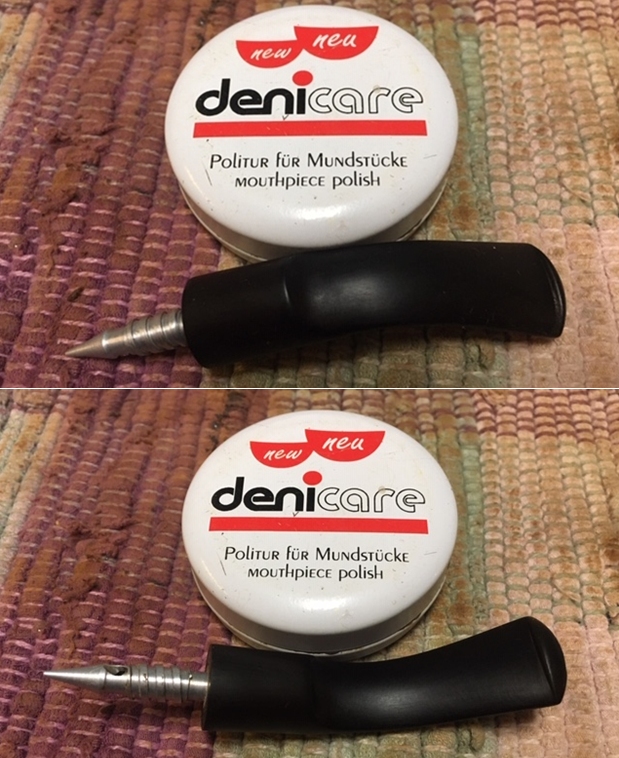
 

Restoring a Well Worn Dan Shape-Reformed 28 261 Sandblast Canted Chimney


Blog by Steve Laug

The next pipe on the worktable is an interestingly shaped pipe made by Pipe-Dan. It is a backward canted stack, tall and thin shank with a short lumberman style round vulcanite stem. The finish is an interesting mix of sandblast and rusticated. The bowl sides are horizontally rusticated and then sandblast over the top of the rustication. It gives the pipe a very unique finish. The rim top of the bowl bears the same combination of sandblast and rustication. The pipe is stained with black and various hues of brown. It truly is a beautiful finish. The pipe is stamped with a 28 on the heel of the bowl followed by 261. Next to that it is stamped DAN followed by Shape-Reformed. At the shank end it is stamped Pipe-Dan Copenhagen. The finish was very dirty and worn looking with a lot of grime and oils ground into the valleys and crevices of the blast. There was a thick cake in the bowl overflowing in lava filling in the rim top. The tapered vulcanite stem is heavily oxidized and had calcification over much carries on the twist of the shank. The stem looked very good. It is dirty with light tooth chatter on both sides near the button. Jeff took some photos of the pipe before he started his cleanup work. He took photos of the bowl and rim top to show their general condition. You can see the thick cake in the bowl. The cake and lava are so thick that it is not clear what the inner edge of the bowl looks like at this point. The lava also fills in the grooves and crevices in the finish of the rim top making it almost smooth. Jeff took some photos of the sides and heel of the bowl to give an idea of the unique finish that mixes sandblast and rustication giving the tall bowl a very tactile finish. You can also see the debris in the rustication around the bowl and rim. I cannot wait to see what it looks like once it is cleaned and polished. He took several photos of the stamping on the underside of the shank to capture it for me. It is clear and readable. It runs from the heel to the stem. It is 28 261 Dan Reformed-Shape followed by Pipe Dan Copenhagen. The vulcanite stem is a mess! It is heavily oxidized and there is calcification all over the stem from the button forward. There are also tooth marks and chatter on the stem on both sides. The button appears to be in good condition. The photos below show the condition of the stem.Before I started working on my part of the restoration I decided to do some research on the brand to see what I could learn. I turned first to PipePhil’s site to get a quick overview of the brand (http://www.pipephil.eu/logos/en/logo-p3.html). There found the following information. I am also including a screen capture of the pertinent section from the site.
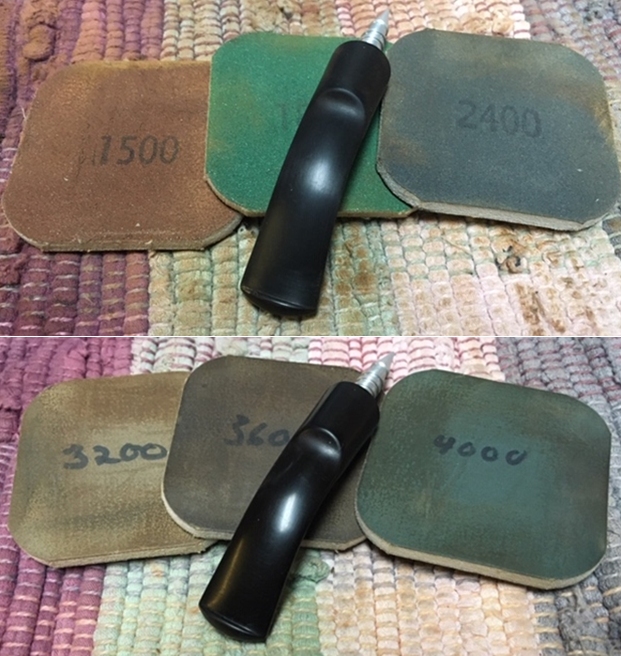
Brand created in 1943. The shop (Danish name: Pibe-Dan) which closed in 1991 was run by H. Dan Christensen. He sometimes designed pipes but he is merely renowned for having helped young artisans like Tom Eltang, Preben Holm, Jes Phillip Vigen, Hans Hartmann…

Pipe-Dan let the pipe maker stamp his own name on a pipe along with the shop’s name.

There was one line on the page that stood out to me because it applied specifically to the pipe on the table today. I quote:

The line name “Shape-Reformed” means that a traditional shape had been redesigned.I turned then to Pipedia to get more history and background to the brand and potentially more information on the pipe (https://pipedia.org/wiki/Pibe-Dan). I quote the article in full as well I have included a photo from the site showing the storefront.

The House of Pibe-Dan was founded in Copenhagen in May, 1943, and was named for H. Dan-Christensen, nicknamed Pibe-Dan. Pibe-Dan (Pipe-Dan) unfortunately closed in 1991, but during the 48 years it was in business it was the ultimate place to find pipes by Danish masters.

Pibe-Dan would often let the pipemaker stamp his own name along with the company name… Pibe-Dan published its first catalog in the late 1950’s and, as was the case with W.O. Larsen, published it in English given their international customer base. While they sold pipes by Stanwell, Kriswill, Brakner and others, the classic pipe sold from Pibe-Dan was the Dan Shape-Reformed Pipe, which had a very tall vertical bowl, and were hand made of Corsican briar. Pibe-Dan claimed that the design was longer, drier, cooler and more even smoking. The Shape-Reformed was available in various lines including the Danois, Standard, Champion, Half Chimney and others.

At the same time, Pibe-Dan had a long history of also including pipes by Danish artisans in their catalog. Sixten Ivarsson’s Peewit, Oliphant, Ukulele and other shapes first appeared in Pibe-Dan’s catalog, and other artists who either began with or sold through Pibe-Dan include, among many others, Hans Hartmann, Gert Holbek, Sven Knudsen, Tom Eltang, Arne Nygaard, P. Holtorp, Poul Hansen, and Ph. Vigen, among others. The legendary Preben Holm sold pipes to the Pibe-Dan shop before his sixteenth birthday in 1963, and soon after was selling twenty to thirty pipes a week to the company, with Pibe-Dan setting the prices. This relationship continued until 1968.

From that information I learned that the line name “Shape-Reformed” means that a traditional shape had been redesigned. This shape was the classic pipe sold by the company. They described the pipe as having a very tall vertical bowl and hand made from Corsica briar. They claimed that the design was longer, drier, cooler and more even smoking. The Shape-Reformed was available in various lines.

Now I had a pretty good idea of how the pipe was stamped and made. With that information I moved forward to work on the pipe itself and see what I had to do with it. The bowl looked unbelievably good in light of where it started. The stem looked much better with just a few tooth marks on each side of the stem just ahead of the button. He had done his normal thorough clean up – reaming, scrubbing, soaking and the result was evident in the pipe when I unpacked it. I took photos of the pipe before I started my work on it. The shape and finish on this pipe is very unique.

Just a word of explanation… I was excited to get started on this one so I did a repair on the tooth marks on the stem. I put a spot of superglue on both sides to fill the damaged areas. Then I recalled I did not take any  before photos. I went back and took the ones that follow! I took some photos of the rim top and stem. The rim top and bowl looked very good. He was able to clean up the thick lava as well as the cake in the bowl. The bowl and rim top look very good at this point. The close up photos of the stem shows that is it very clean. Remember my disclaimer above that I already filled in the deep tooth marks on the stem surface.I removed the stem from the shank and took a photo of the pipe at this point. You can clearly see the condition, size and shape of the pipe.I worked some Before & After Restoration Balm into the surface of the briar with my fingertips. The product works to clean, enliven and protect the briar. I let the balm sit for about ten minutes and then buffed with a cotton cloth to raise the shine. The photos show the bowl at this point in the restoration process. I had taken photos of the stem earlier when I had filled in the deep nicks/tooth marks on the top and underside in my rush to get started. Here are some close up photos to show the repaired areas.   When the repairs had cured I sanded the stem with a folded piece of 220 grit sandpaper to blend them into the surface of the stem and started polishing with 400 grit wet dry sandpaper. I polished the stem with some Denicare Mouthpiece polish – a red gritty paste that feels a lot like Tripoli. It works well to polish out some of the scratches. I find that it does a great job preparing the stem for polishing with micromesh sanding pads.  I polished the stem with micromesh sanding pads – dry sanding with 1500-12000 grit sanding pads. I wiped it down after each sanding pad with a cloth containing some Obsidian Oil. I finished polishing it with Before & After Pipe Stem Polish – both Fine and Extra Fine and buffed it off with a cotton cloth. I wiped the stem down with a coat of Briarville’s No Oxy Oil to protect the rubber and slow down oxidation. Putting this pipe back together was rewarding. The change in condition and appearance was remarkable. I put the stem back on the bowl and buffed the pipe lightly with Blue Diamond on the buffing wheel. I carefully avoided the stamping on the shank during the process. I gave the bowl multiple coats of Conservator’s Wax and the stem multiple coats of carnauba wax on the buffing wheel and followed that by buffing it with a clean buffing pad on the buffer. I hand buffed the pipe with a microfiber cloth to deepen the shine. The finished pipe is quite beautiful and is a uniquely shaped Danish pipe. The finish on the bowl combines various methods and stains to give it a living and tactile nature. It is very well done. Give the finished pipe a look in the photos below. I can only tell you that it is much prettier in person than the photos capture. The dimensions of the pipe are Length: 5 ¼ inches, Height: 2 inches, Outside diameter of the bowl: 1 inch, Chamber diameter: 5/8 of an inch. This interesting Dan Shape-Reformed Stack is a great looking pipe in great condition. Thanks for walking through the restoration with me as I worked over another beautiful pipe. I will be adding it to the rebornpipes store soon. If you want to add it to your collection send me an email or a message! Thanks for your time.


Continuing My Practice on Tenon Replacement… Working on a Connoisseur, NYC Pipe


Blog by Paresh Deshpande

Any learning consists of three phases; first is being taught, second is practice and the third phase is mastering!! Continuing on my learning curve, I wanted to practice replacing broken tenons on pipes to make them smoke worthy again.
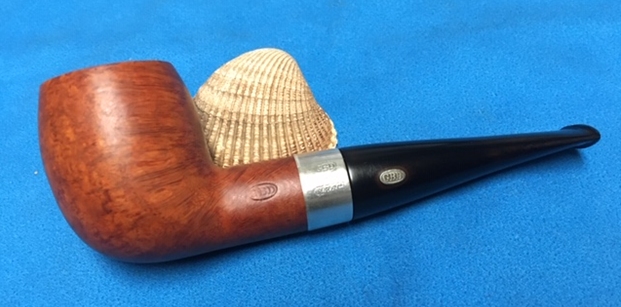
The pipe that I chose to practice on is a free hand that boasts of straight / flame grains all around the stummel with bird’s eyes on the heel of the bowl with a plateau rim top. It is stamped on the left of the shank as “CONNOISSEUR” over “N.Y.C.”. These stampings are crisp and easily readable. There is no other stamping seen on either the stummel or the stem. This is the first time that I am working on a Connoisseur and am keen to know more about this pipe brand, carver and also dating this pipe. As is my habit, the first site that I visit is rebornpipes where, over the years, it seems like Steve has chronicled almost all the pipes that were and are in existence. True enough, Steve has restored and researched a pipe from this maker. Here is the link for a detailed information on this pipe; https://rebornpipes.com/2015/05/23/restoring-an-ed-burak-connoisseur-tall-stack/

Further down the write up, he also gives out the dating methodology adopted by Ed Burak and the same is reproduced for immediate reference.

I also learned on Pipephil’s website (http://www.pipephil.eu/logos/en/about-en.html) that the stamping did indeed give some information that helped in identifying the period that a particular pipe was made. There I found that one may generally separate Connoisseur pipes’ date of manufacture into three periods.

From late 1960’s until 1974: no stampings
From 1974 until 1981: CONNOISSEUR over N.Y.C.
From 1981 on: CONNOISSEUR over N.Y.C. and Ed Burak’s signature.

Thus from the above information, it’s evident that this beautiful Connoisseur pipe in my hand is from the period 1974 to 1981!

INITIAL VISUAL INSPECTION
The first and foremost issue that I noticed and was aware of from the description given by the seller is that of the broken tenon. When I saw the pictures of this pipe for the first time, I had observed, apart from the most obvious broken tenon a number of other issues which presented a challenge of their own. The briar was natural and unstained. It had darkened slightly with age. This was how the pipe had reached me…discerning readers will easily make out other major issues that need to be addressed on this pipe. The chamber has a thick uneven layer of dry and hard cake with the inner rim edge showing darkening in 6 o’clock direction (marked in yellow). The condition of the inner walls of the chamber can be checked and ascertained only after the cake has been taken down to the bare briar. However, I do not envision any damage to the chamber walls. There is heavy lava overflow and debris embedded in the plateau of the rim top surface. The condition of the inner rim edge will be commented upon once the lava overflow has been removed. There are very strong and all pervading smells of old tobacco emanating from the chamber. Hopefully this issue should be addressed once the cake has been removed and the mortise is thoroughly cleaned. The stummel boasts of beautiful straight/flame grain all around and extend over the shank surface too!! The surface is covered in lava overflow, dirt and grime. The stummel briar is without a single fill and through all the dirt and grime, exudes a very high quality briar and craftsmanship. The foot of the stummel shows beautiful bird’s eye grains and is sans any damage. The slightly tapered end of the shank has the broken end of the tenon still embedded within. A prominent crack is visible over the shank on the right side. This pipe, in all probability, has suffered this catastrophic damage as a result of having fallen in stem down position. The mortise has the broken tenon stuck inside. I did try to wriggle it out with a screw driver, but the broken tenon wouldn’t budge. This will require more invasive technique. The heavy build up of cake in the chamber, dirty plateau rim top and the sorry condition of the stem all point towards a clogged mortise. This will be ascertained once the broken piece is removed from the shank end.The fancy stem has blobs of sticky oils and tars on both the surfaces as well as in between the nooks and crannies at the tenon end. There are significant tooth indentations on both the upper and lower buttons, to the extent that they would need to be rebuild completely. The slot just does not appear correct. It appears to be a orifice, but it is not a perfect round and  there are horizontal extensions on either side. Even this opening is clogged with old oils and tars. The broken tenon end of the stem is jagged and sharp at the place where the tenon has snapped. In my opinion, there is something which is not right about this stem. The quality of the stem is not something which is to be expected on a Connoisseur pipe. THE PROCESS
I began the process of refurbishing this pipe with cleaning the internals of the stem using pipe cleaners with isopropyl alcohol (99.9% pure) and dunking the stem in to “Before and After Deoxidizer” solution developed by my friend Mark Hoover. The solution helps to draw out heavy oxidation to the surface making its removal a breeze, while the minor oxidation is eliminated to a very great extent. I usually dunk stems of 5-7 pipes that are in-line for restoration and this pipe is marked in pastel blue arrow. I generally allow the stems to soak in this solution overnight for it to work its magic.With the stem soaking in the deoxidizer solution, I decided to remove the broken portion of the tenon from the shank. I select a drill bit that was slightly bigger than the tenon airway opening and mount it on my hand held drill. Very gently holding the drill absolutely straight, I give the drill machine a few forward turns. Once the drill bit is firmly embedded in to the broken tenon, I turn the drill machine in reverse. The reverse turns pull the broken end of the tenon out from the mortise. I breathe a sigh of relief as this is a very delicate step and a lot of things can go wrong if not executed with precision and patience. I further work the stummel, reaming the chamber with my PipNet reamer using head sizes 1 to 3. Using my fabricated knife, I further ream out the cake from places where the PipNet reamer could not reach and follow it with sanding the chamber walls with a 220 grit sand paper. I wipe the chamber with isopropyl alcohol and a cotton swab to remove all the carbon dust. This final cleaning of the chamber reveals a minor indentation in the wall opposite the draught hole, a result of over enthusiastic use of pipe cleaners to clean the mortise (marked in yellow semi- circle)!! Though not a major issue now, one will have to be careful with using pipe cleaners in future. Next, I clean the mortise with hard bristled and regular pipe cleaners dipped in isopropyl alcohol. I scrub the external surface of the bowl with undiluted Murphy’s oil soap and hard bristled tooth brush and dry it using paper towels and soft cotton cloth. I carefully clean the plateau rim top with a soft brass wire brush to remove the accumulated dirt and debris from the surface. Thereafter, I clean the mortise, plateau rim top and stummel surface with anti-oil dish washing soap on a shank brush and a tooth brush. The entire stummel, including the plateau rim top, cleans up nicely. I set the stummel aside to dry out naturally. The smells from the pipe, though reduced, are still very strong. Close observation of the stummel reveals the culprit to be the now moistened accumulated gunk in the mortise. Using my dental tools, I assiduously pick out and clean the mortise of all the gunk. I also clean the mortise with q-tips and alcohol. The amount of old grime that is scraped out from the mortise itself tells the story. The mortise is now clean and smells fresh.Moving ahead, I now address the crack that is seen on the right side of the shank, extending from the shank end to nearly half distance towards the stummel. Firstly, I clean off all the debris that is lodged in the crack using dental floss. The thin floss cleans the crack of all the dirt without widening it.I follow up this cleaning of the crack by marking the end points and turning points of the crack with a sharp dental pick. These marks help to guide the drill bit when drilling the counter hole. I take care that the drill is just sufficiently deep enough to arrest the further spread of the crack and not a through hole.I fill this crack with a mix of CA superglue and briar dust. To ensure a tight fill I clamp it down with pliers till the mix had cured, which by the way, is instantaneous!! Once the repair has cured for couple of hours, I sand it down with a flat needle file to achieve a rough match with the rest of the stummel surface. I fine tune the match with  220, 400 and 600 grit sand paper.To further stabilize the crack and prevent it from splitting again, I decide to place a band over the shank end. I select a band that is a tad bit smaller than the shank end diameter. When I place this band over the shank end, I realize that the last two letters of the stamping are being masked. I decide on grinding away the excess material from the band with my sanding drum mounted on a hand held rotary tool to a size which while being appropriate to stabilize the crack will not mask the stampings. The process is long and fraught with mistakes… The band has flown out of my hands a few times, since it can not withstand the stress of the sanding drum and is deformed , not to mention the time factor involved. However, through all these difficulties, I have prevailed to shape a band for the shank end. This is the pictorial depiction of the process and the result. Once I am satisfied with the fit, I heat the band with a heat gun in order to expand it and fix it over the shank end. I have avoided gluing it securely in place just in case I may have to revisit the entire process and go for a fresh band. Here is how the band fits over the shank end. Truth be told, I am not very confident that the band would be a success given the fitting of the band over the shank end. I set the stummel aside and decide to replace the tenon on the stem. I have explained in great detail the procedure that I have learnt and followed while replacing the tenon on a Preben Holm # 7 FH pipe. To avoid repetition of the process, I would request all to refer to the write up and other literature on the subject that is available on rebornpipes.

Given below are a series of sequential pictures explaining the procedure. Here I would also like to note that as I had mentioned earlier, the quality of the stem appeared circumspect and this was corroborated while drilling the stem air way to accommodate the new tenon. The plastic or some such low quality of the stem did pose a lot of resistance during the drilling and a straight drill was very difficult. However, my persistence has paid off and I am happy with the replaced tenon. Once the tenon is replaced, I try the fit of the stem in to the mortise. The fit though snug, reveals gaps and the seating of the stem in to the mortise is not flush. No amount of tweaking and minor adjustment by sanding of the tenon can ensure a flush seating. I feel that I have botched up the banding of the shank end and that is what has caused this issue. Here is how the seating appears after all the adjustments and tweaking. At this point in restoration, I shared pictures of this issue and then later in the day had a FaceTime chat with my Guru, Steve. Steve, with his vast experience and having worked on and researched a Connoisseur pipe before, immediately commented that the stem is not the right style for Connoisseur pipes and could be a replacement stem. I have another Connoisseur pipe (which awaits restoration) with a saddle stem in my collection and when the stem of this freehand was compared, it was no where near the quality that was seen on the other saddle stem. The pictures below show the difference in quality of the stem material and finish between the two pipes. Thereafter we discussed the shank band and he suggested to reband the shank end while going in for a completely new stem. Thereafter, we went through my can of spare stems and selected one that would be the best match for this pipe. Here are the pictures of the shortlisted stem. The slightly bent stem with all the calcification is the one that would replace the one that the pipe came with. The shortlisted stem, I am afraid, is not in the best of condition. The tapered slightly bent vulcanite stem is nearly the same length as the replaced one while being very thick at the tenon end. The quality of the re-replacement stem is very good. The stem is heavily oxidized with significant calcium deposition and deep tooth indentations in the bite zone on either surfaces of the stem. A couple of deep chips are seen along the seam on either sides as well as on the lower and upper surfaces of the stem. The button surfaces on either side has bite marks and the edges are equally damaged and deformed. The tenon and the horizontal slot shows heavy accumulation of oils, tars and gunk. All in all, the refurbishing and shaping of this stem presents a ton of effort and time.I begin the refurbishing and reshaping of the stem by first cleaning the stem, both internally and externally. With my fabricated knife and a paper cutter, I remove the entire calcium sediments from the bite zone. Using a dental tool, I dislodge all the dried oils and tars from the tenon and slot end. I clean the stem internals with pipe cleaners and shank brush dipped in isopropyl alcohol. I sand the entire stem surface with a folded piece of 150 grit sand paper to remove some oxidation as well as to even out some tooth chatter from the bite zone. Once the initial cleaning is done, I move ahead for shaping/sizing the stem. The tenon is too thick for the mortise and that is my start point. I mount a sanding drum on to my hand held rotary tool and sand the tenon till I achieve a rough fit in to the mortise. During the entire process, I frequently check the progress being made as I do not want to sand too much material from the tenon, making for a loose fit.I fine tune the fit of the tenon in to the mortise by hand sanding with flat head needle file and 180 grit followed by a 220 grit sand paper. The tenon attachment with the stem is shaped with a triangular needle file. I check the seating of the stem in to the mortise after I remove the shank band. The stem fit is nice and snug. Before I move to the final fit and shaping of the stem, I decide to reband the shank end. This time I select a band that was a snug fit as against a size smaller as I have done earlier. To reduce the thickness of the band, this time I manually sand it over a 150 grit sand paper instead of using my rotary tool and a sanding drum. It does take a long time, but the end result is much better. The last letter “R” has been masked, but I shall deal with it later (will I…?). I still have not glued the band in place, just to be on the safer side!!Now with the band in place, I move ahead with shaping and aligning the stem. The first thing that I proceed to do is to shave of the excess meat from the shoulders at the tenon end. Readers, when I say excess, please be aware that the word excess does not convey the quantum of excess… It  was hell of a lot of material to shave off!! I mount a 150 grit sanding drum on to the rotary tool and go to town sanding off the material from the shoulders of the stem. Once I have achieved a rough match, I use a flat head needle file to further match the fit. I progress to manual sanding with a 180 grit sand paper to fine tune the match. This is how the stem profile matches with the shank end of the stummel…not quite there but getting close. I feel that the mid region of the stem needs to be trimmed a bit and do so with a flat head needle file and a 180 grit sand paper. Here is where I have reached at this stage. Truth be told, eye balling the shape is not the easiest way to achieve the exact shape since I am always seeing it, shaping it and matching it. It’s something akin to optical illusion that I am experiencing. There is a bit of overhang at the shoulders of the stem and I need to shave off some more material from the area above it. Also a slight gap is seen at the lower end and on the left side of the stem that needs to be addressed. I decide to take a break from all the sanding of the stem and move on to shaping the stem to match the profile of the stummel. I insert a pipe cleaner through the stem’s air way to prevent it from collapsing once the stem is heated. I first straightened the stem by heating it with a heat gun. To impart the requisite bend, I try to adopt the technique that my friend, Dal Stanton of PipeSteward fame, uses and that is to draw a diagram marked with the plane of the stummel rim top, a parallel plane that is required, the present profile of the stem and thereafter, the exact place and shape of the bend that is needed. Well, it is an attempt that I made, but ended up eye balling the exact bend to be imparted. I heat the stem with my heat gun till the vulcanite becomes pliable and gives it the necessary bend. I hold it in place till the stem had cooled down a bit and thereafter, hold the stem under cold water for the bend to set. The next issue that is addressed is of the stem repairs. I insert a triangle shaped index card covered in transparent tape in to the slot. The tape prevents the mix of superglue and charcoal from sticking to the index card. I mix superglue and activated charcoal powder and generously apply it over the bite zone, including over the button. I also fill the couple of deep chips along the seam on either sides as well as on the lower and upper surfaces of the stem with the charcoal mix and set it aside to cure. Once the mix has cured, I remove the index card from the slot. While the stem fill is set aside to cure, I polish the stummel with micromesh pads, wet sanding with 1500 to 12000 pads. This time around, I do not repeat the mistake of polishing the plateau rim top as I had done with the PH # 3 earlier! I wipe the surface with a soft cloth at the end of the micromesh cycle. The stummel looks amazing with a deep shine and beautiful straight grains popping over the stummel surface. I rub a small quantity of “Before and After Restoration Balm” in to the briar. I rub this balm deep in to the nooks and crannies of the plateau rim top surface with my fingers and let it rest for a few minutes. The balm almost immediately works its magic and the briar now has a nice vibrant appearance with the dark brown hues of the grain contrasting with the rest of the stummel surface. I further buff it with a horse hair shoe brush. The appearance of the stummel at this stage motivates me further to complete this project at the earliest. I set the stummel aside and all that remains was to shape, align and polish the stem! Now motivated with the appearance of the stummel, I turn my attention to the stem repair. The fills have cured nicely and I move ahead and began the process of filing and shaping the button end with a flat head needle file. At this stage, I get in touch with Steve on Face Time and discuss the progress on the stem. He suggests that a slightly sharper bend to the stem from near the bite zone would accentuate the shape and flow of the shank with that of the stem. He also suggests that the profile of the stem near the shoulder and mid region needs to be more slender. So, it is back to heating the end of the stem with the heat gun and giving it the desired bend, of course, eyeballing it to the desired shape!As discussed with Steve, with a flat needle file, I shave off some more vulcanite from the shoulder and the mid region of the stem. I further sand the stem with 220, 320, 400, 600, 800 grit sand papers and finally with 0000 grade steel wool. I wipe the stem with a cotton pad dipped in alcohol to remove the resultant dust and rub some extra virgin olive oil onto the stem and set it aside to be absorbed.I polish the stem with micromesh pads, wet sanding with 1500 to 12000 grit pads. I rub a little extra virgin olive oil in to the stem at the end of the micromesh pads polishing cycle. I complete the polishing regime of the stem by rubbing a small quantity of Extra Fine Stem polish developed by my friend Mark Hoover, and giving it a final polish with a soft cotton cloth. The stem is now nice, smooth and shiny.To apply the finishing touches, I first mount a cotton cloth buffing wheel on to my hand held rotary tool and apply a coat of Blue Diamond to the stummel and the stem to polish out the minor scratches. Boy, am I glad to finally have reached the home run stretch to complete this project!! I shared these images with Steve for his comment. He suggested that the shoulder overhang needs to be reduced and under belly to be straightened out more.Well, here I was back with a flat needle file and 220 grit sand papers as against carnauba wax and rotary tool!! I again diligently worked on these issues, frequently checking for progress being made. Once I am satisfied that the shoulder overhangs and under belly issues have been resolved, I check the seating of the stem in to the mortise. The seating is canted backwards. I address this issue by heating the tenon and slightly pushing it upwards (that is, in the opposite direction). I check the seating and am quite pleased by the overall appearance of the stem and its seating. Thereafter, I go through the entire regime of sanding and polishing as explained above. At the end of the micromesh pads, I complete the polishing regime of the stem by rubbing a small quantity of Extra Fine Stem polish developed by my friend Mark Hoover, and giving it a final polish with a soft cotton cloth. The stem is now nice, smooth and shiny. With a cotton buffing wheel that I use for carnauba wax, I apply a coat of carnauba wax to the stummel and stem and continue to work on it till the complete coat of wax is polished out. I mount a clean cotton cloth buffing wheel and give the entire pipe a once over buff. I finish the restoration by giving the entire pipe a rigorous hand buffing using a microfiber cloth to deepen the shine further. The finished pipe is shown below. P.S. – This project was more tedious than I had anticipated, mostly because of my own faults and errors in judgement.  But then, isn’t this the fun part of being of the learning curve? I shall be avoiding the following in my future restorations:

(a) Using a band that is a tad smaller then the shank end diameter. I would rather use a band that has a snug and perfect fit over the shank end.

(b) Using a rotary tool with a sanding drum to get the band to the desired size. It’s better, safer and precise to manually sand the band on a sand paper.

(c) Clamping the shank end after filling a crack. I am not sure, but I think that the clamping down may have caused a slight deformation that had caused me such grief with the seating of the stem.

(d) Less reliance on “eye balling” for sizing and shaping…need to get on with hunting for a “PIMO TENON TURNING TOOL” and a set of “VERNIER CALIPERS”.

I am really fortunate to be in the process of learning the nuances of pipe restoration and cannot thank Steve enough for his support and guidance.

Thanks for your patience and looking forward to input about the write up. Cheers…