Tag Archives: vulcanite

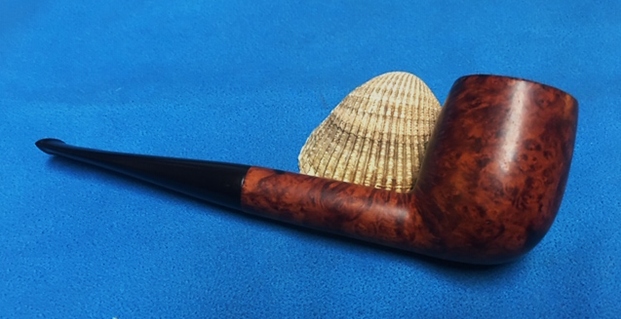
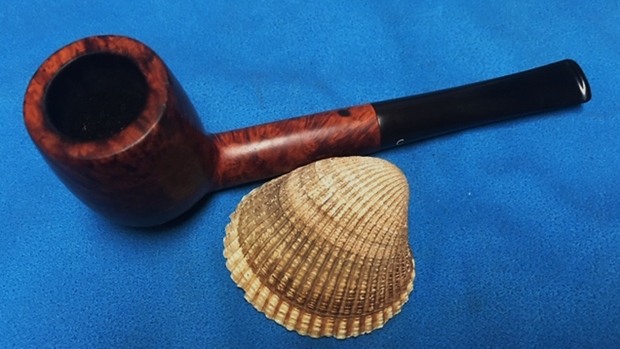
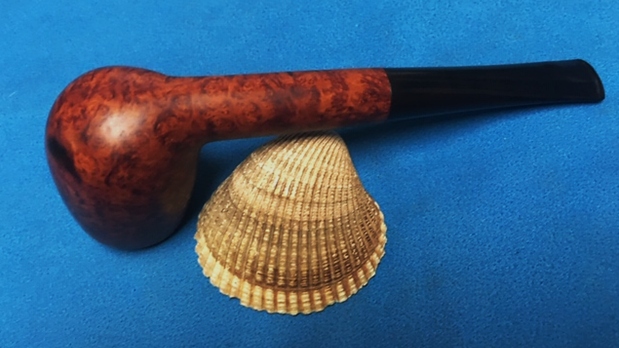
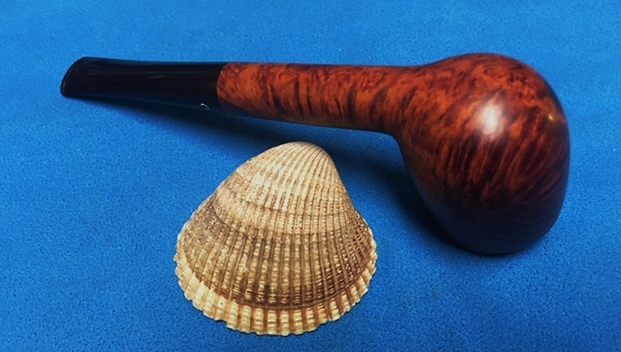
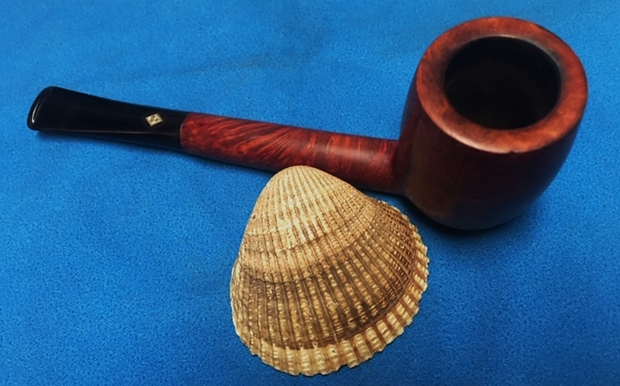
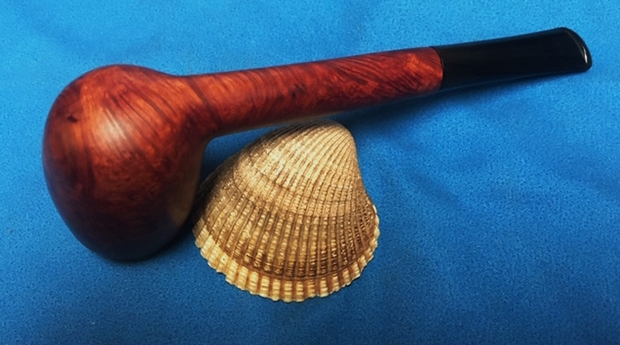
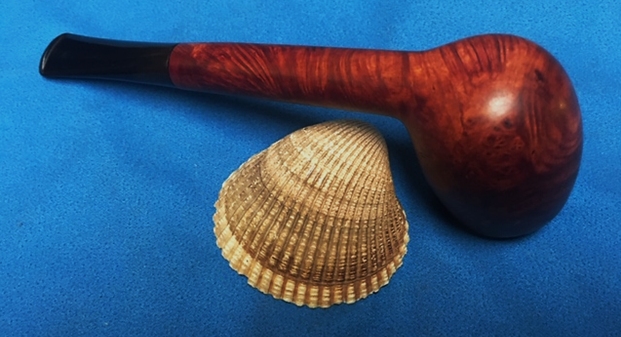
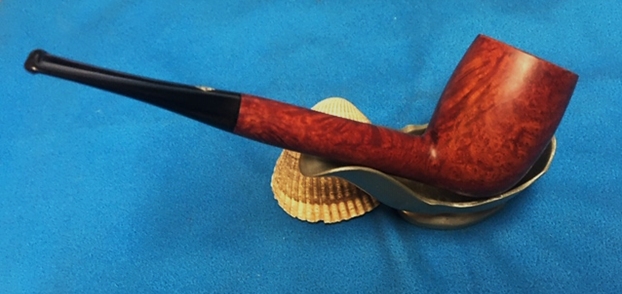
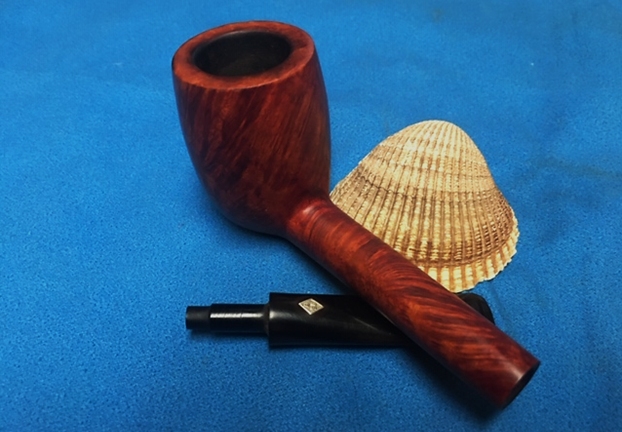
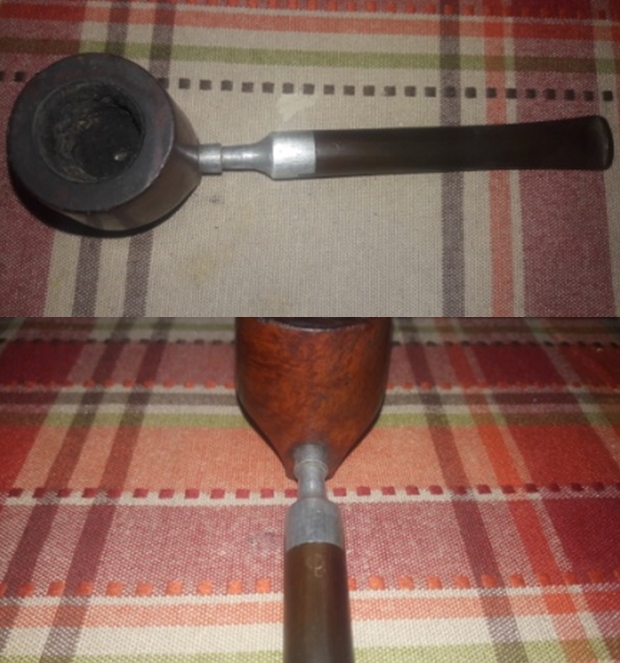
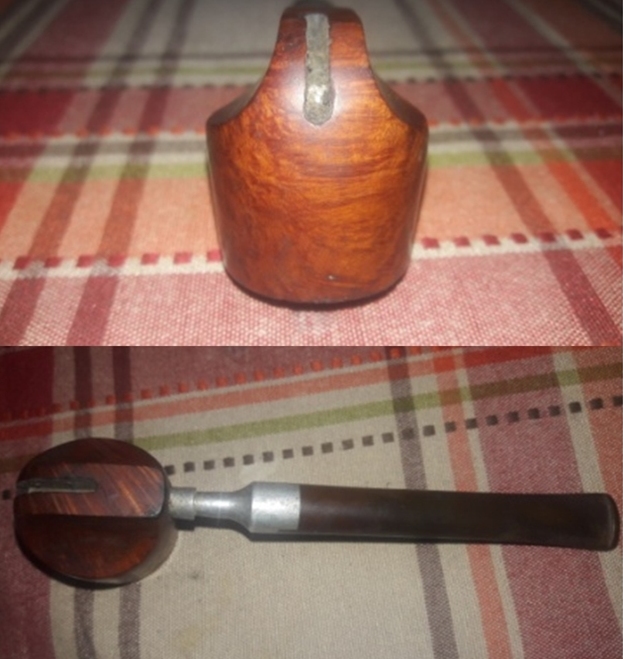
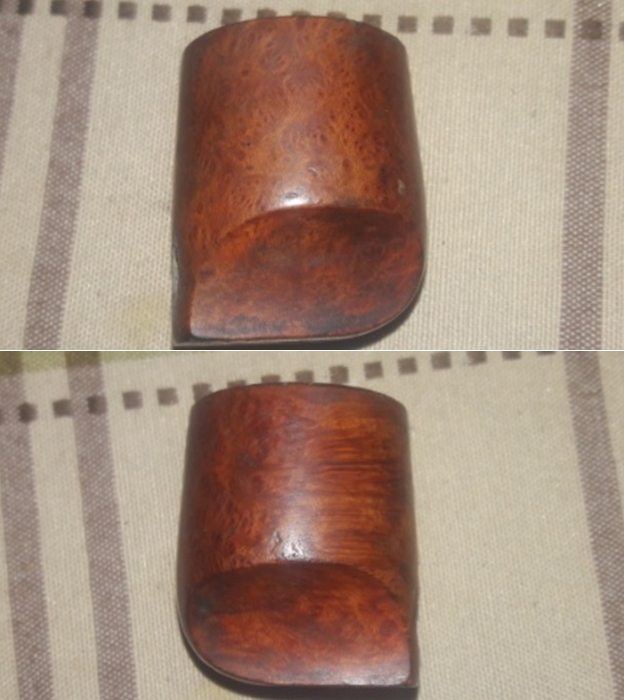
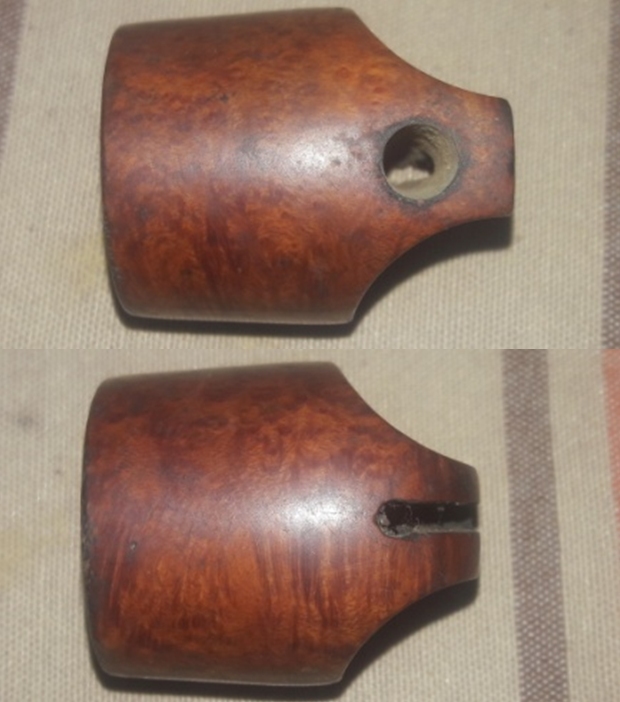
Ready For a Second Inning – Georg Jensen 72 Ekstra # 130 Compact Lumberman


Blog by Paresh Deshpande

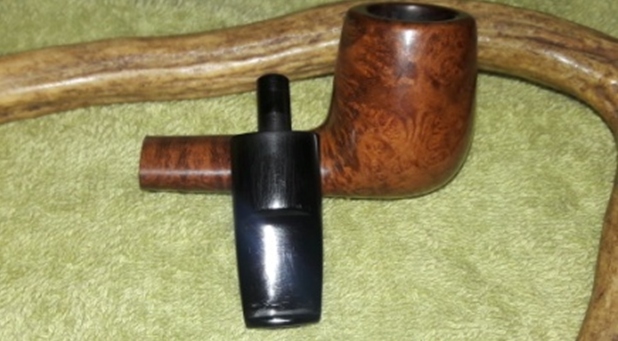
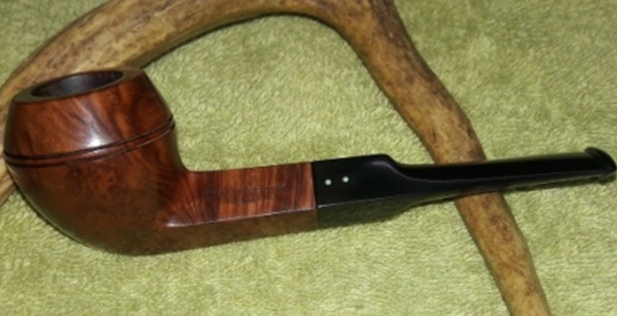
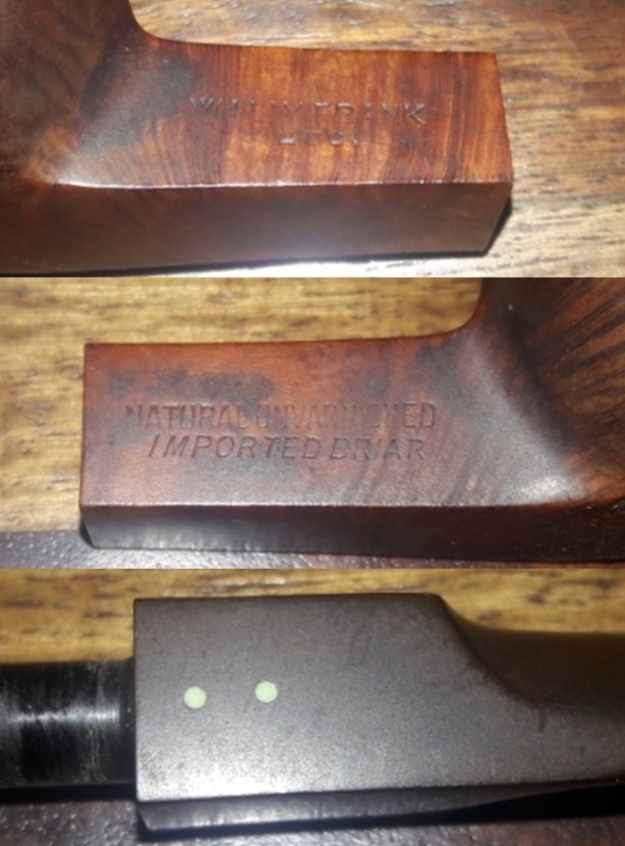
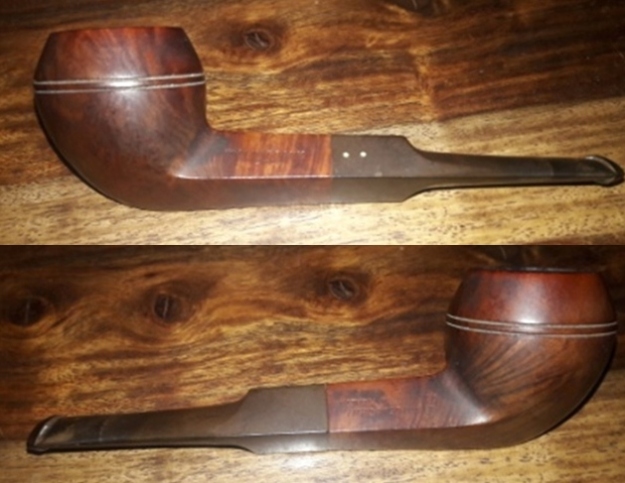
I had randomly selected four pipes to work on since I prefer to put a few pipe stems together in the “Before And After” Deoxidizer solution that has been developed by Mark Hoover. I have completed the restoration of two of these pipes, a Wally Frank “BLACKTHORNE” sandblast billiard and another also a Wally Frank stamped Natural Unvarnished Bulldog with two dots.

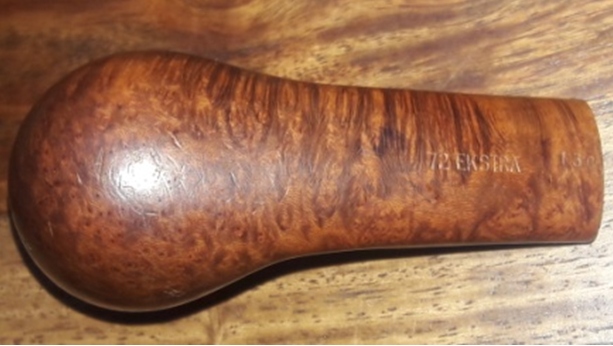
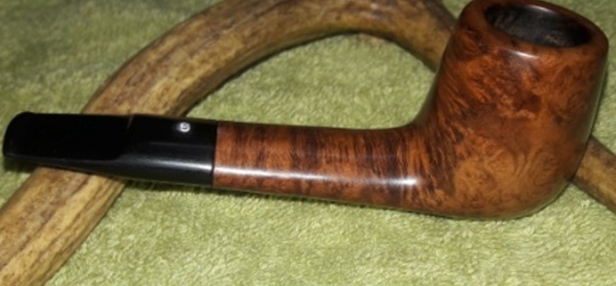
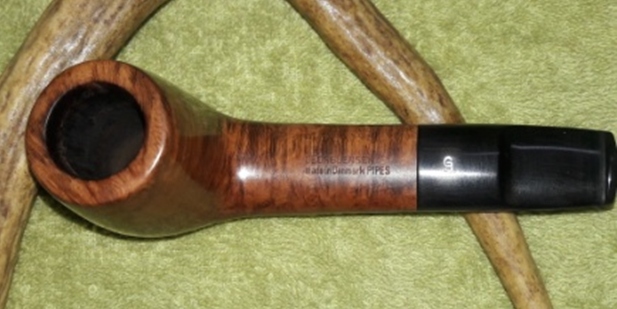
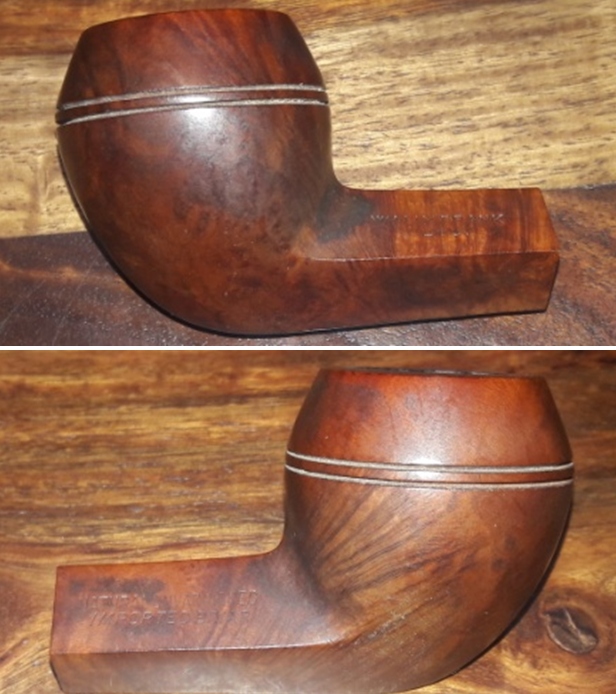
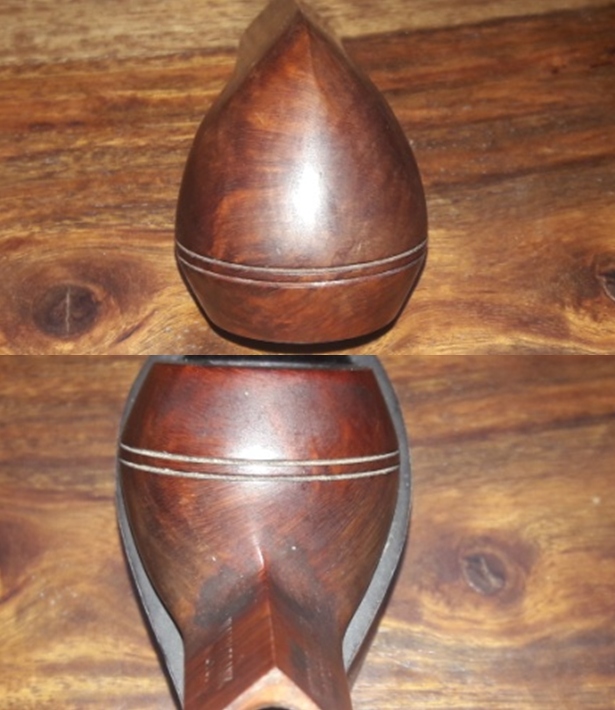
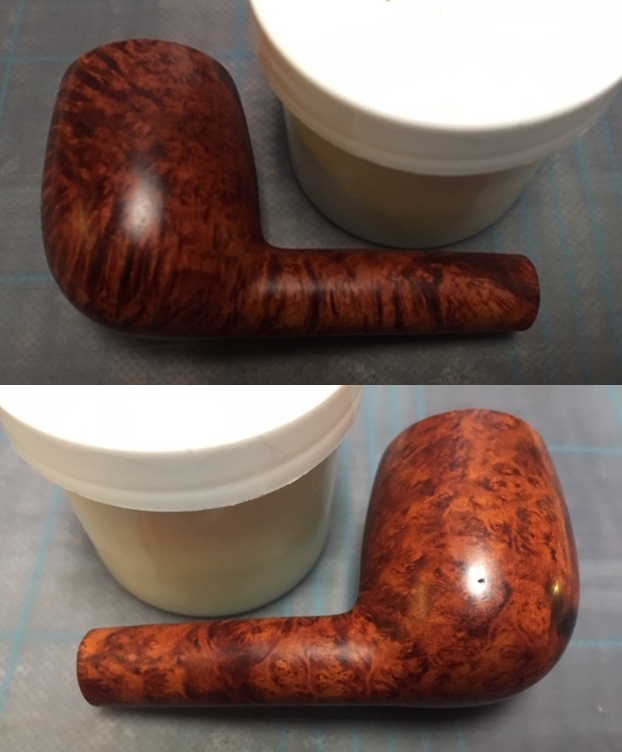
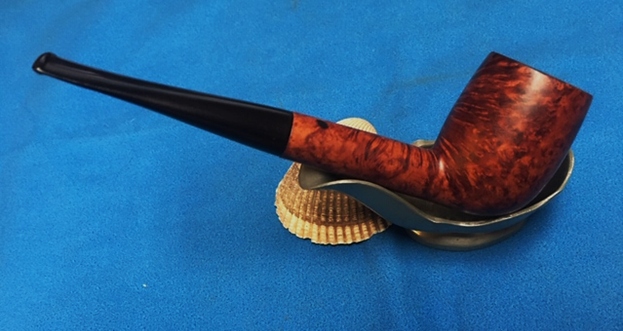
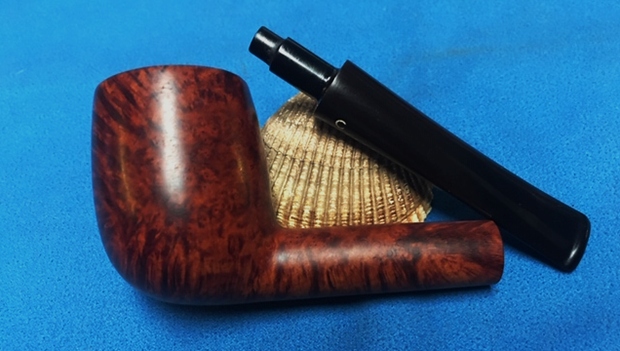
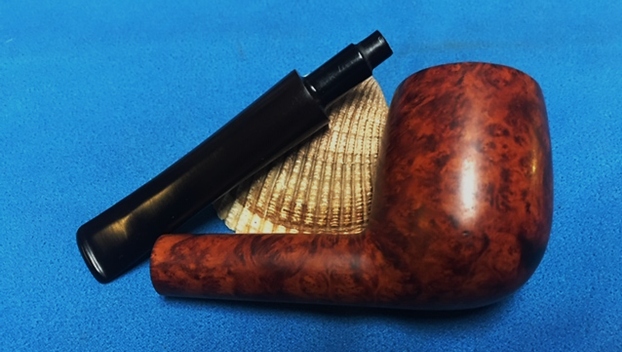
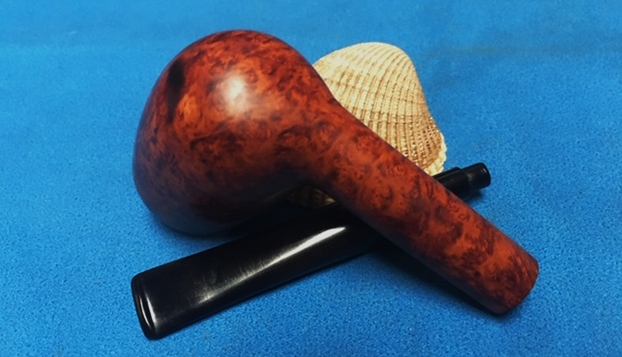
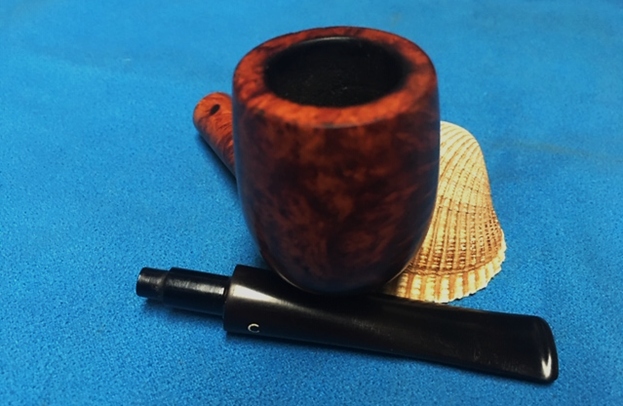
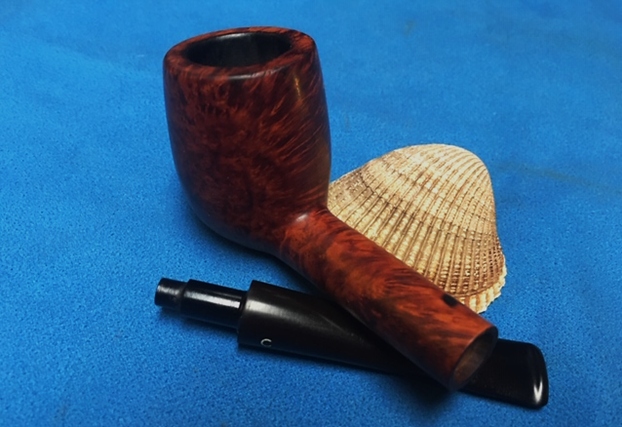
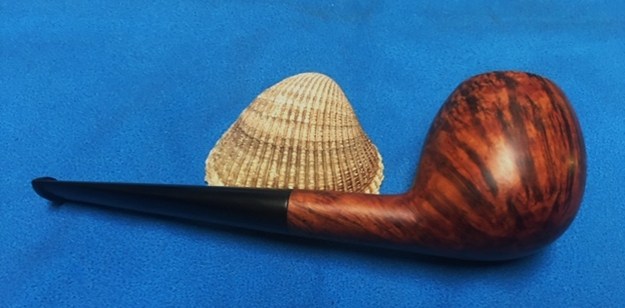
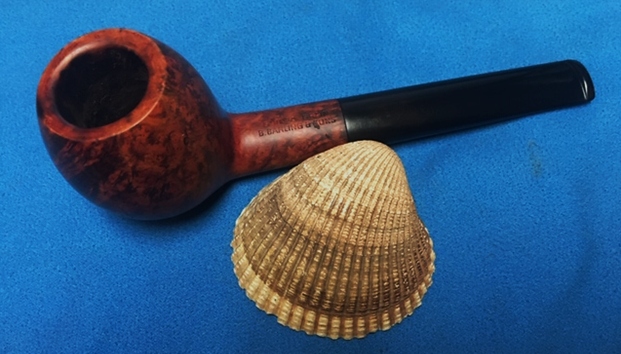
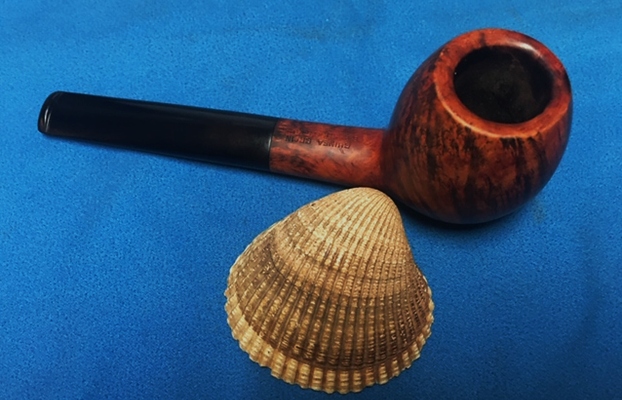
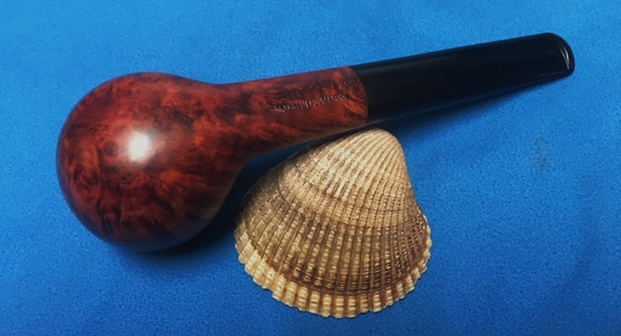
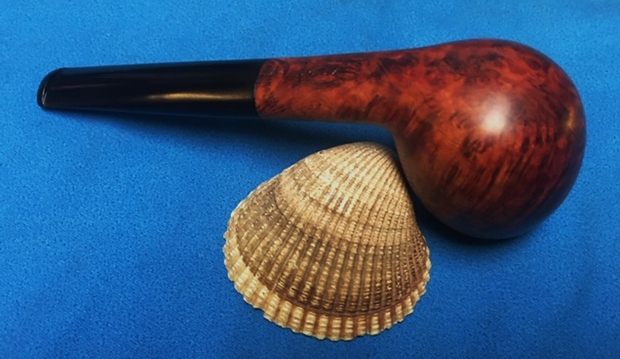
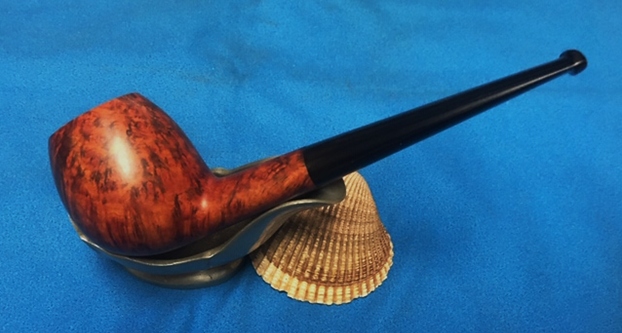
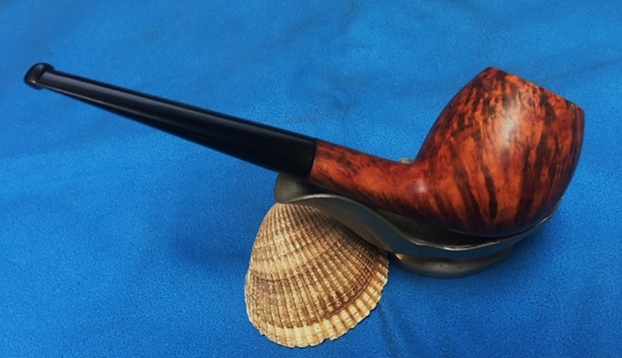
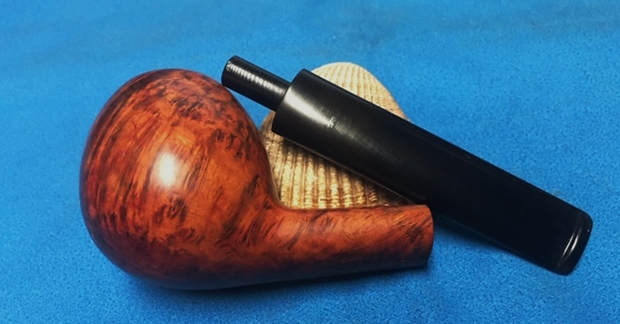
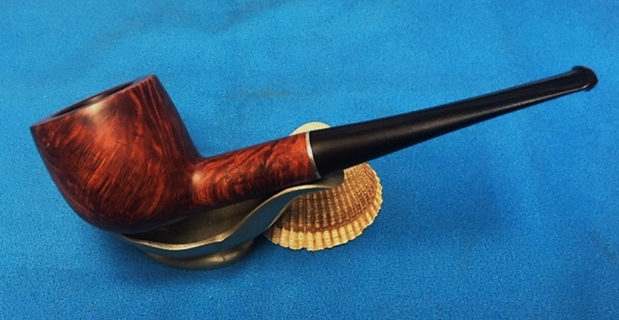
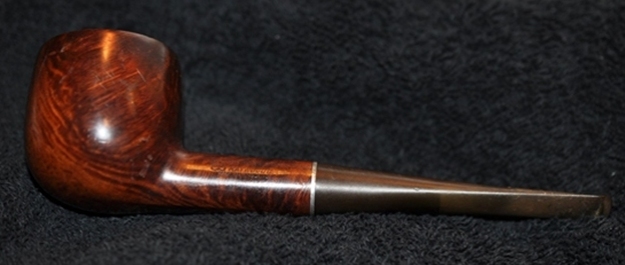
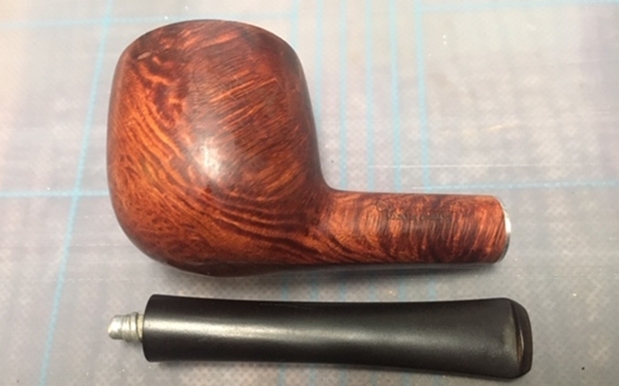
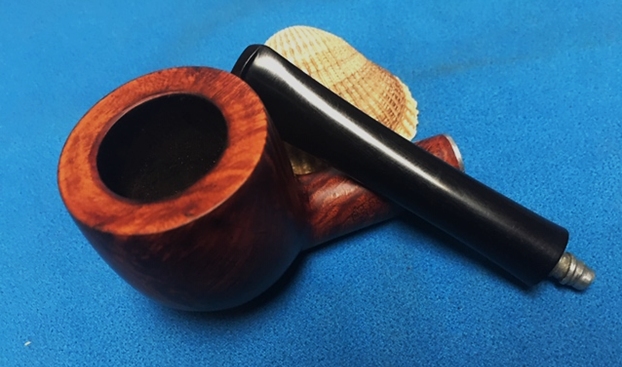
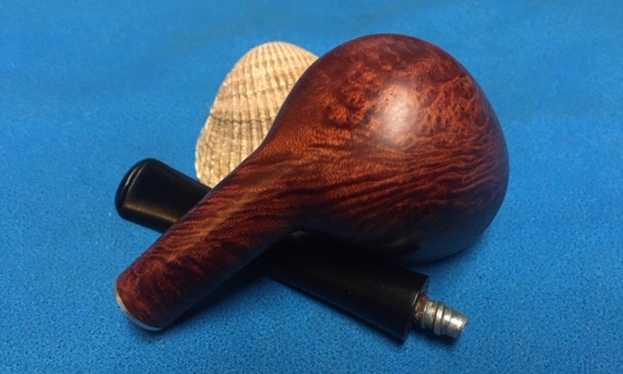
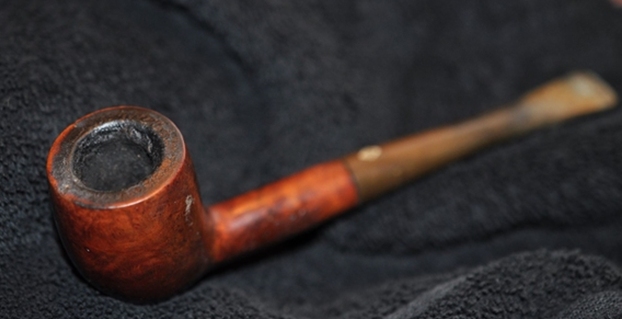
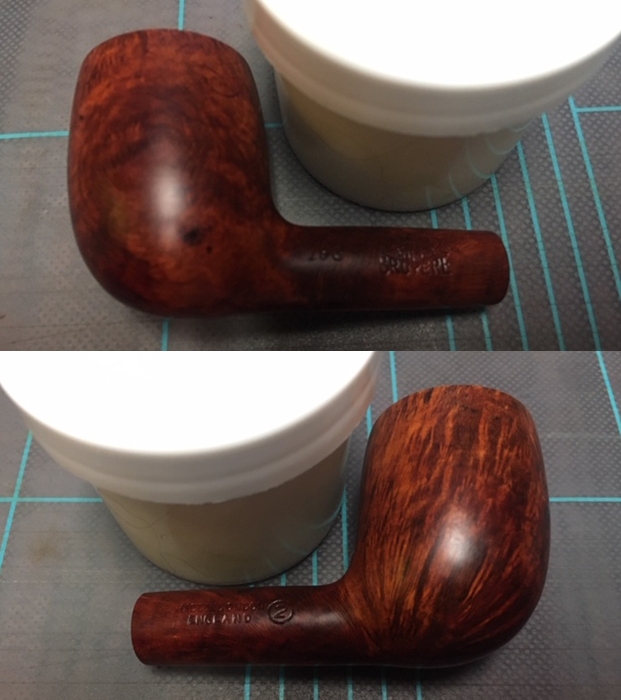
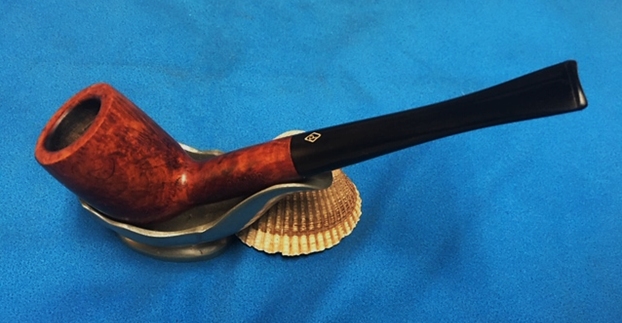
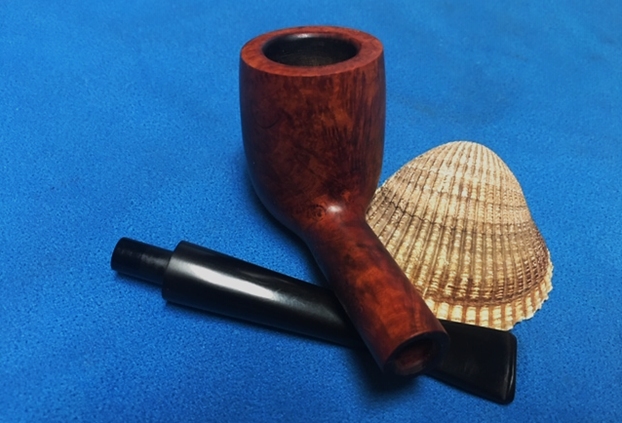
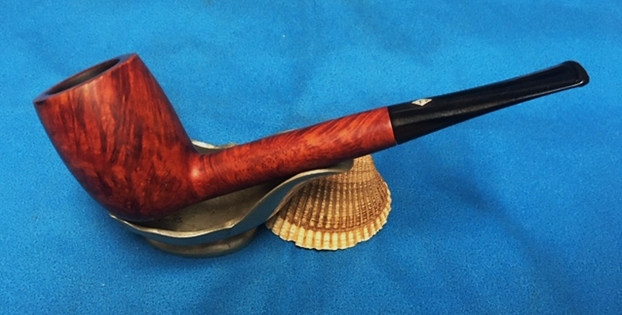
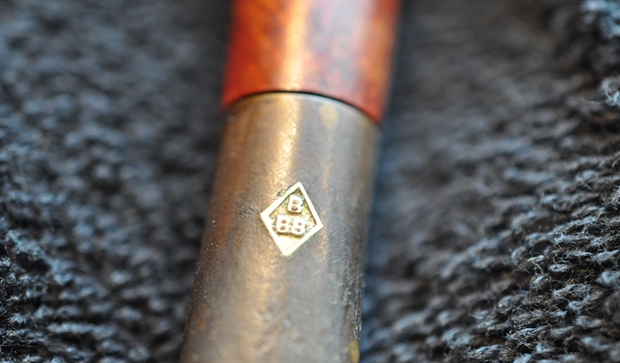
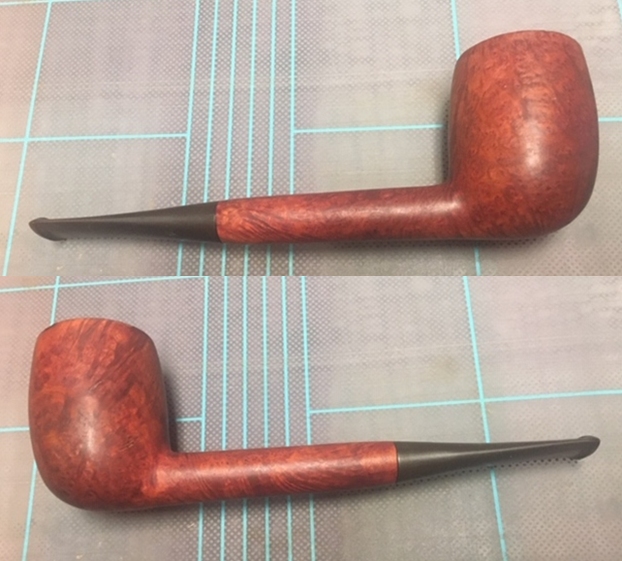
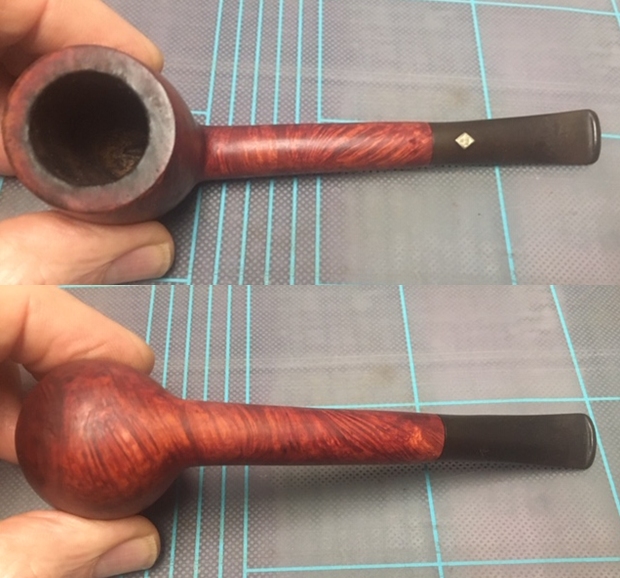
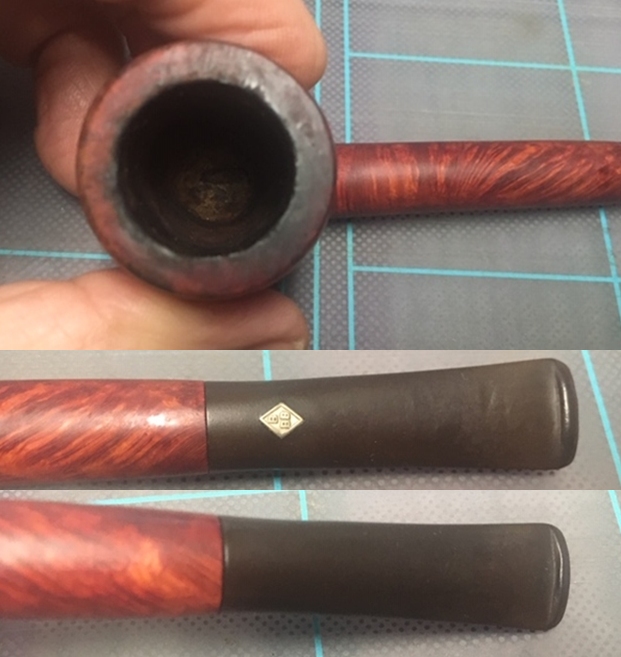
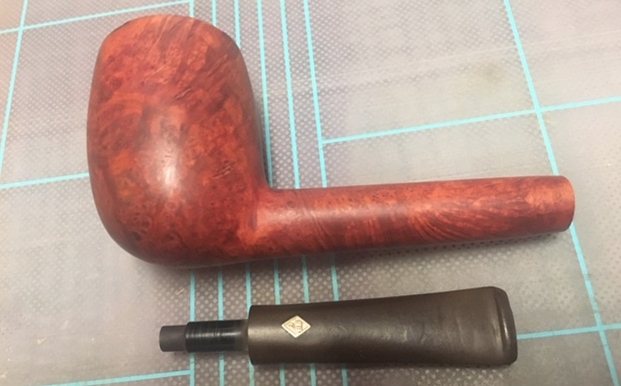
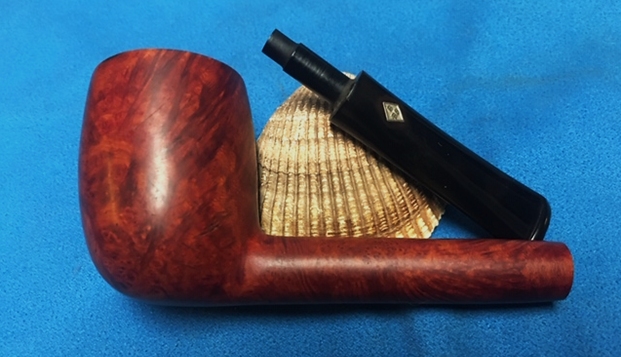
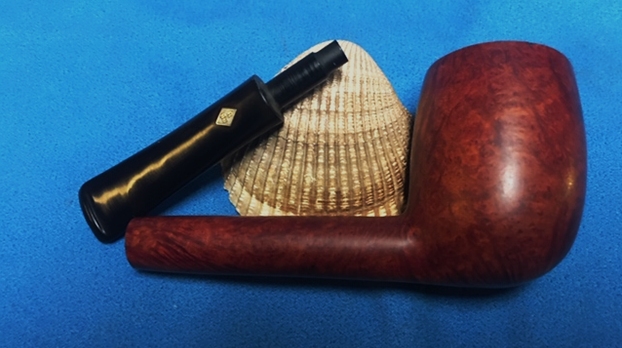
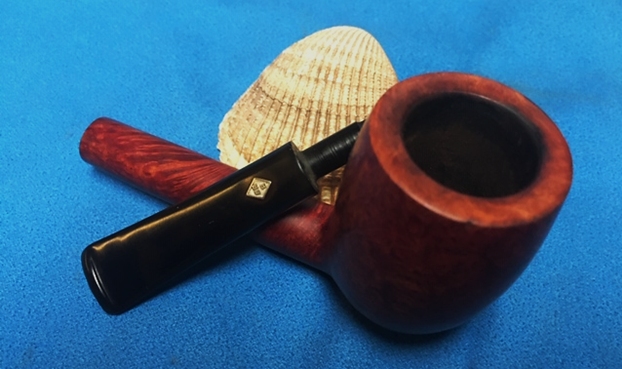
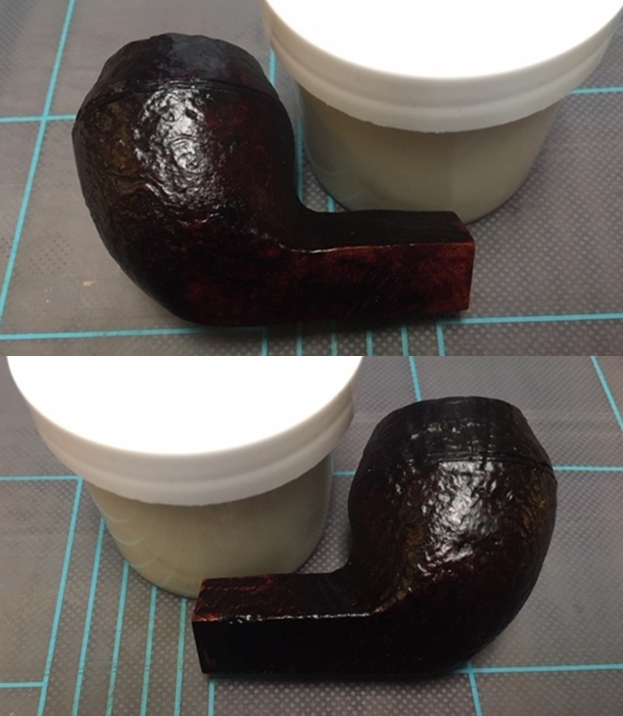
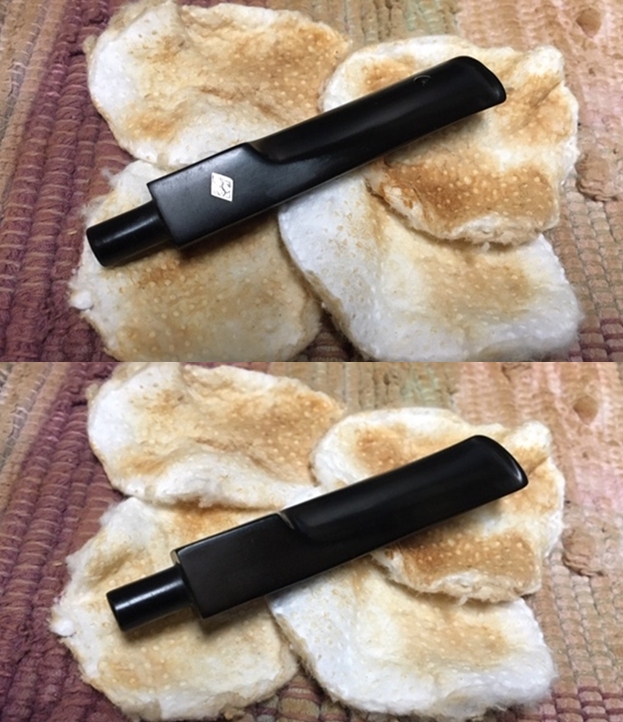
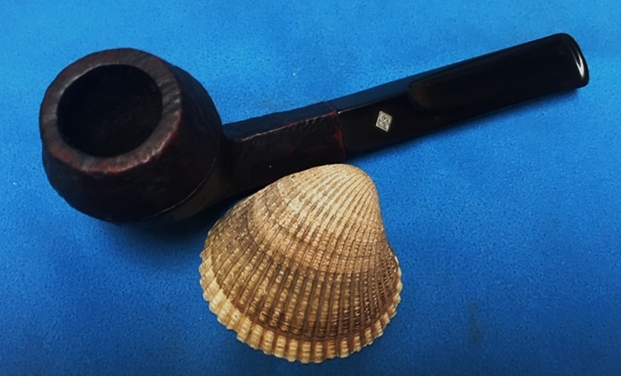
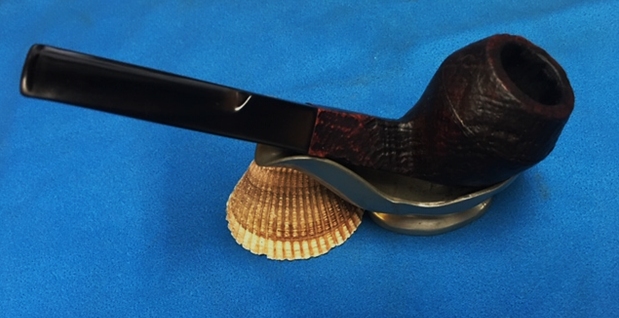
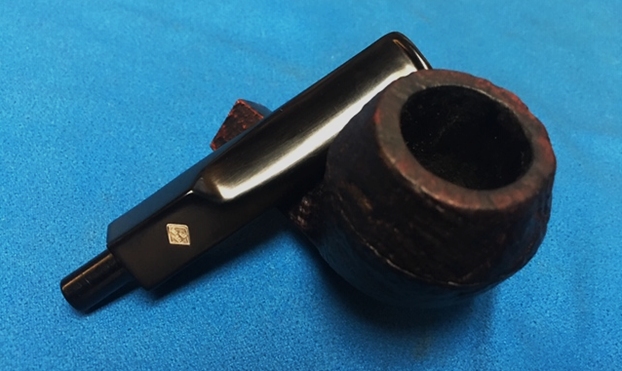
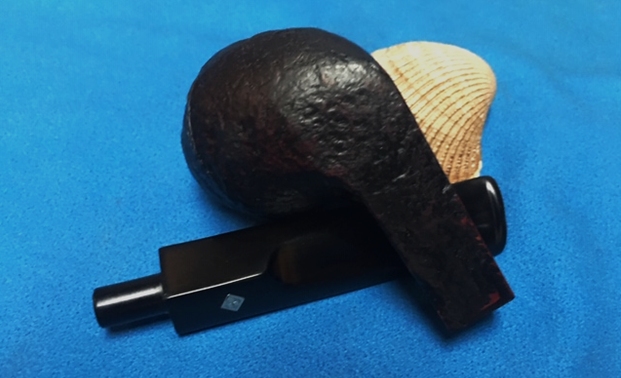
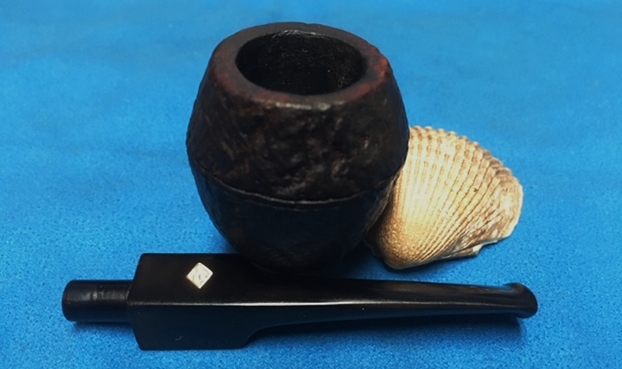
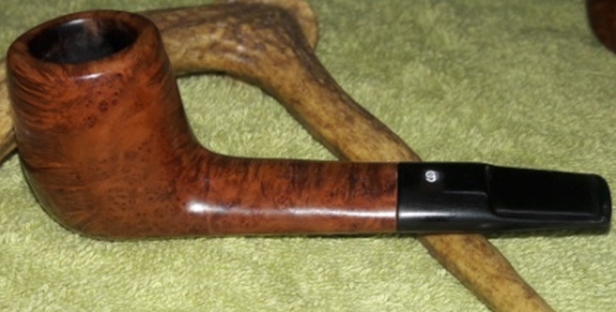
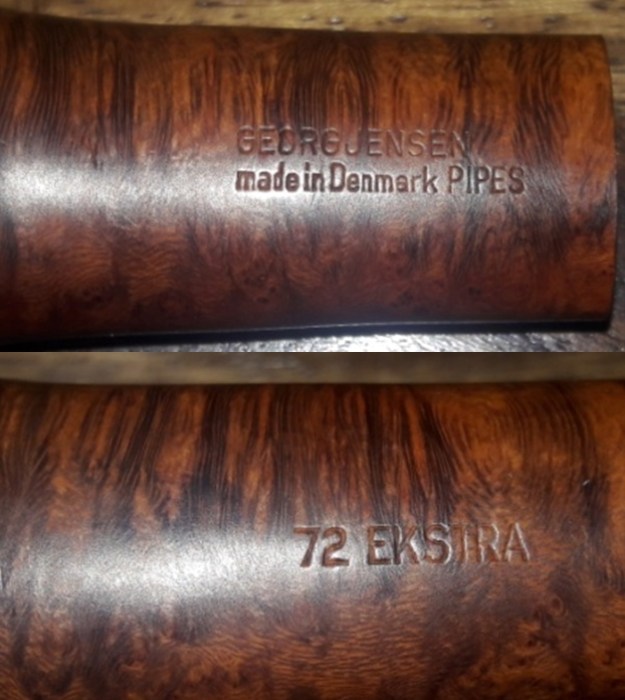
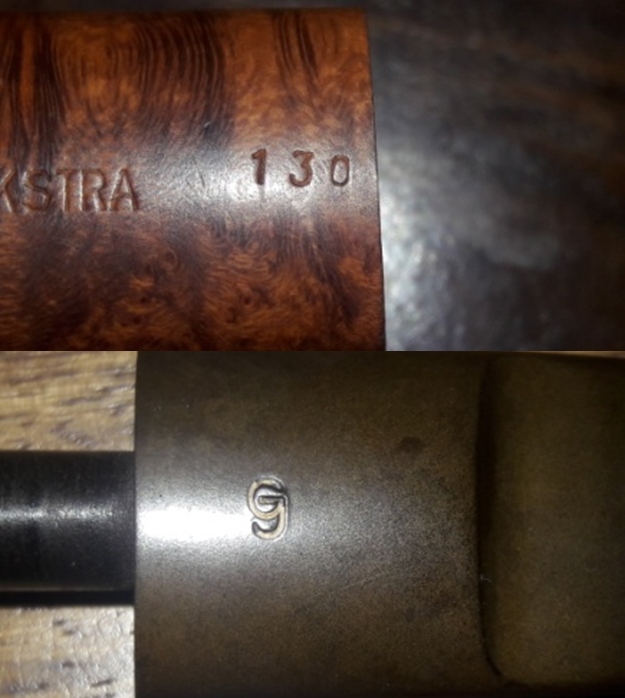
The third pipe that I decided to work on is not a classic Lovat or its variants, a Lumberman or a Canadian, but I would prefer to call it short compact Lumberman. This pipe is stamped on the upper smooth oval shank surface as “GEORG JENSEN” over “made in Denmark PIPES” and on the bottom of the shank surface as “72 EKSTRA” followed by shape code “130” towards the shank end. The stampings are all crisp and deep. The high quality vulcanite diamond saddle stem bears the logo of interlinked letters “GJ”. The smooth briar, shape and quality of the stem all oozed high quality. This would be the first Georg Jensen pipe that I have worked on and thus my curiosity was piqued as I have worked on and handled pipes from Denmark made by carvers like Preben Holms, Nording, Soren etc, but never a Georg Jensen pipe. I first searched rebornpipes and came across a catalogue uploaded by Jacek A. Rochacki. However, the pipe on my work table finds no mention of it in the brochure. The article has an interesting snippet of information that is reproduced below.
* “our” Georg Jensen – the pipe maker is not this famous Georg Jensen – Danish designer, silversmith and sculptor.

Here is the link to the article

https://rebornpipes.com/2014/04/13/georg-jensen-pipe-brochure-jacek-a-rochacki/

Having hit a wall here, I turned my attention to pipedia.org to gather background information about the carver and his work. Here is the link to the write up on Georg Jensen and a brief of the carver that I have reproduced from the site.

https://pipedia.org/wiki/Georg_Jensen

The Georg Jensen pipe factory was founded by Per Georg Jensen and his wife in 1954, in Kopenhagen, Denmark. Since the 80s the company is under the management of his daughter Lis, and his son with the same name, Per Georg Jensen. The company manufactured around 2,000 factory pipes per year. Among the top of the line pipes are hand carved special editions and free hands.

Top of the Line models of Georg Jensen have vulcanite or ebonite stems, factory pipes usually have acrylic stems.

Factory pipes (in increasing quality) were marked:

Danish Sand Achat / Amber Red Flame / Red Skin Sunrise / Orange extra / Starline Contrast / Bicolour / Harmon Excellent / Masterpiece

Pipes were commonly marked (in increasing quality) with: MODEL + MODEL NUMBER + “Made in Denmark”, GJ stamp in red on the stem. MODEL NUMBER + “Georg Jensen” in italic or fancy font.

Extremely rare and collectible freehands were marked with:

“Straight Grain” and a number that discerns the grading from 1 (lowest) to 13 (highest).

Special edition pipes were marked with: MODEL + MODEL NUMBER + “Handmade in Denmark” + GJ stamp in white on the stem.

The factory closed down in 2001 when Per Georg Jensen (jr) became “Tobacco Professor” for MacBaren Tobacco house.

Well, again there are no matching grades for the factory pipes or similarity in commonly marked pipes and it definitely is not a freehand pipe!!

I surf the net and visited Smokingpipes.com which has been some excellent source of information on pipe brands and found an exact same pipe as that is currently on my work table with the shape and stampings matching to the T. However, the details that were available were similar to that I had read on pipedia.org. Given below is the link to the site.

https://www.smokingpipes.com/pipes/estate/denmark/moreinfo.cfm?product_id=284941

I have not been able to accurately pinpoint the period that this pipe was made in or the grading of this pipe in Georg Jensen line up, so any assistance in this regard is welcome and highly appreciated.

Initial Visual Inspection
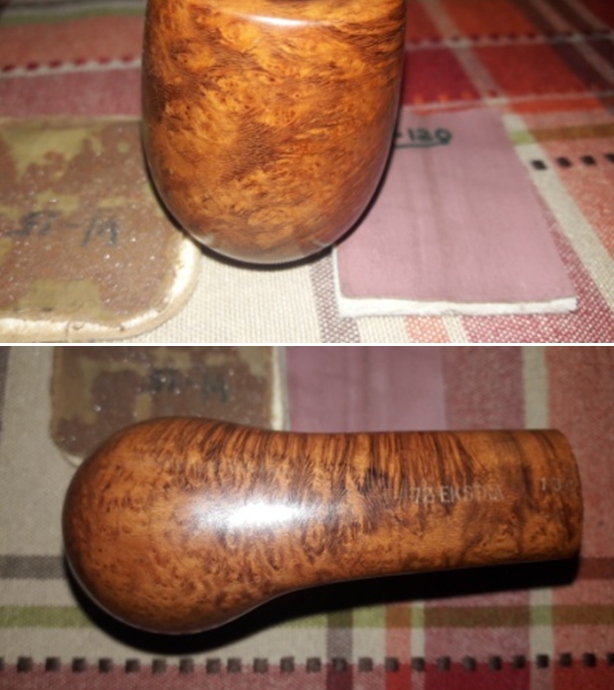
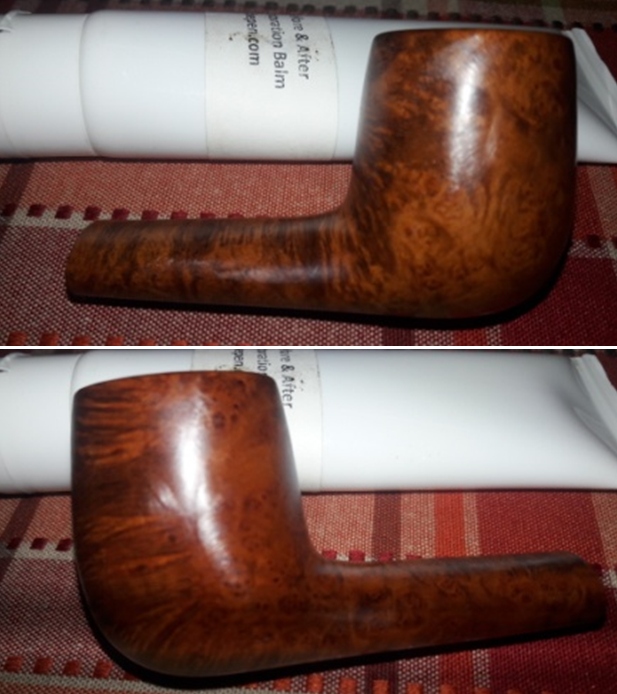
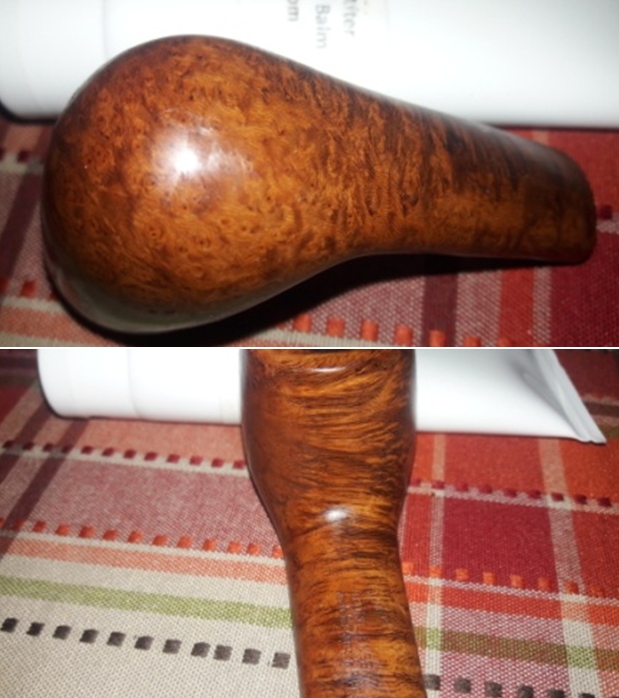
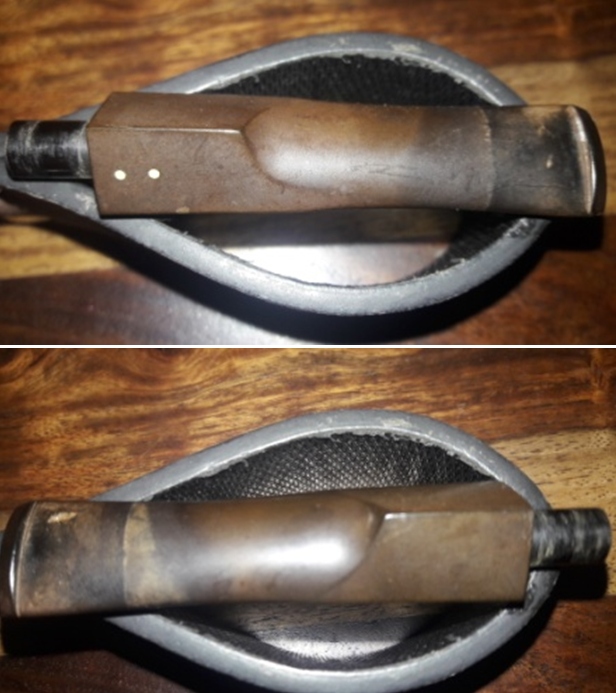
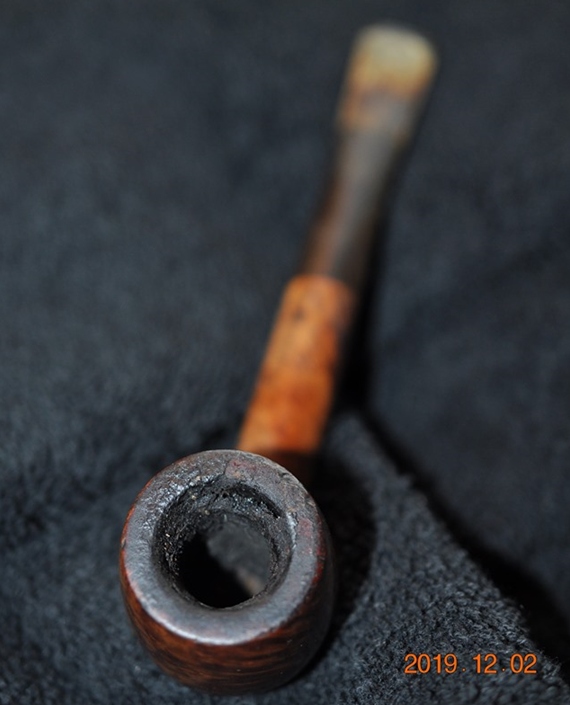
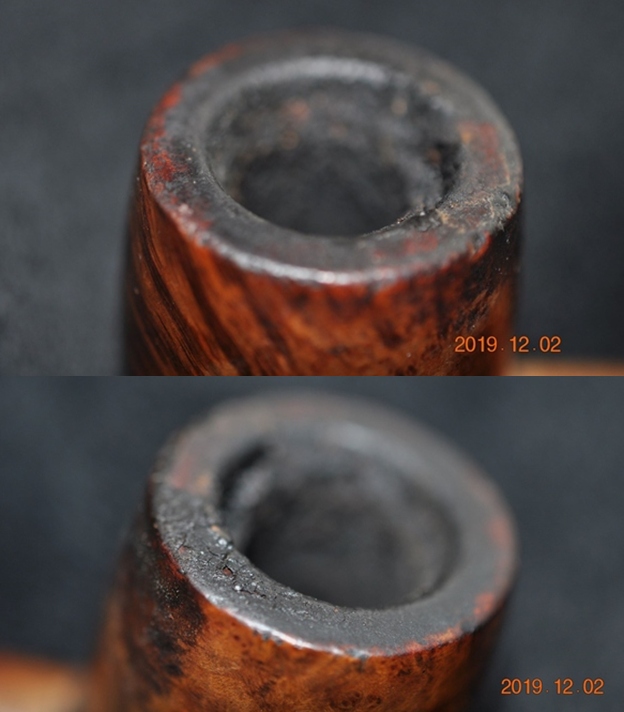
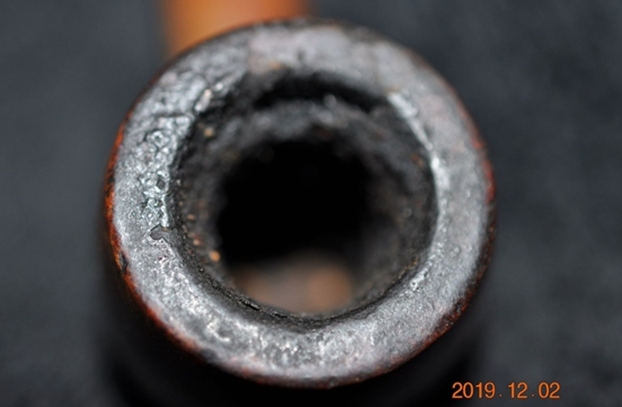
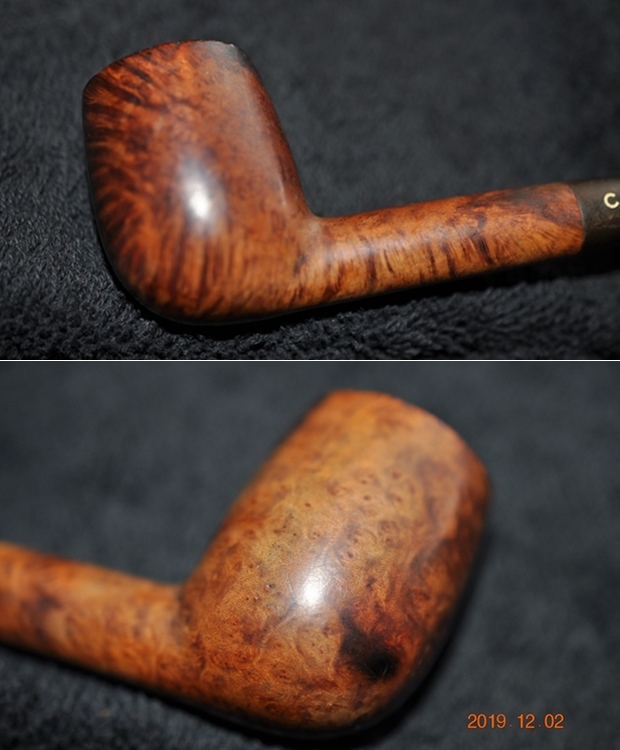
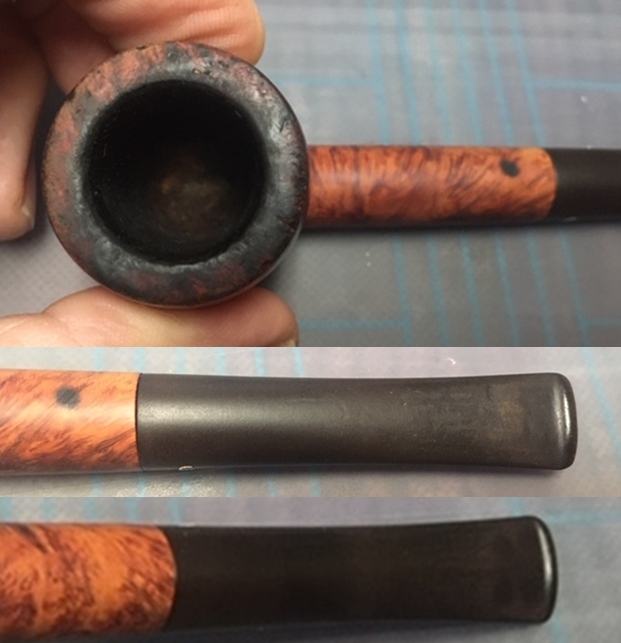
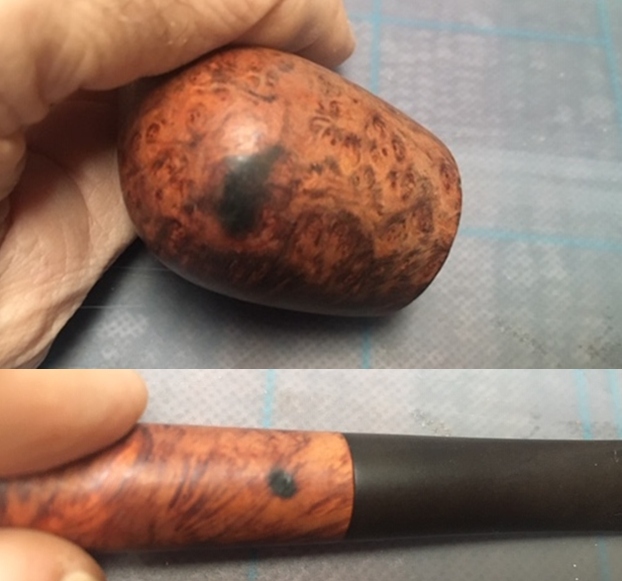
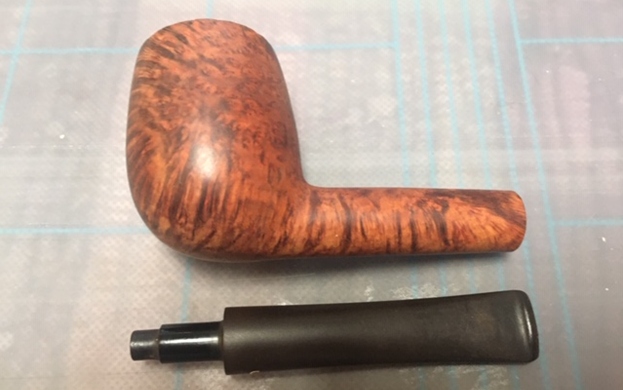
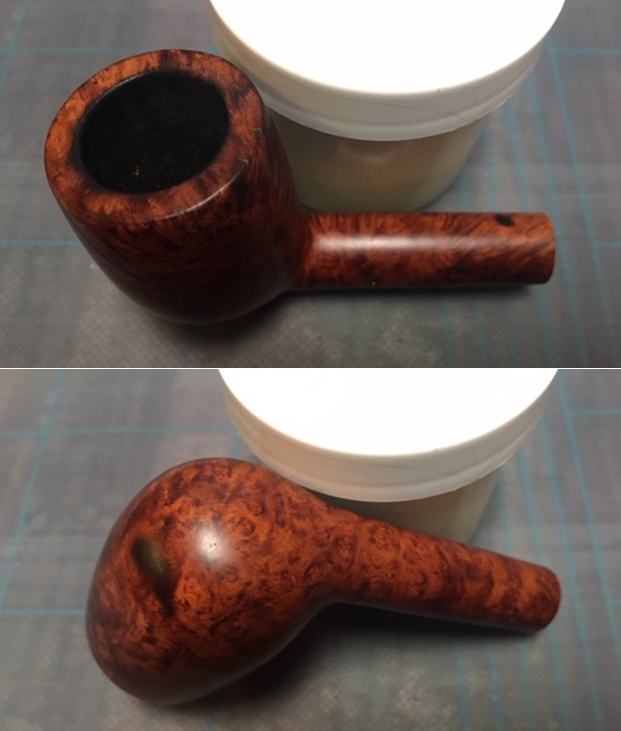
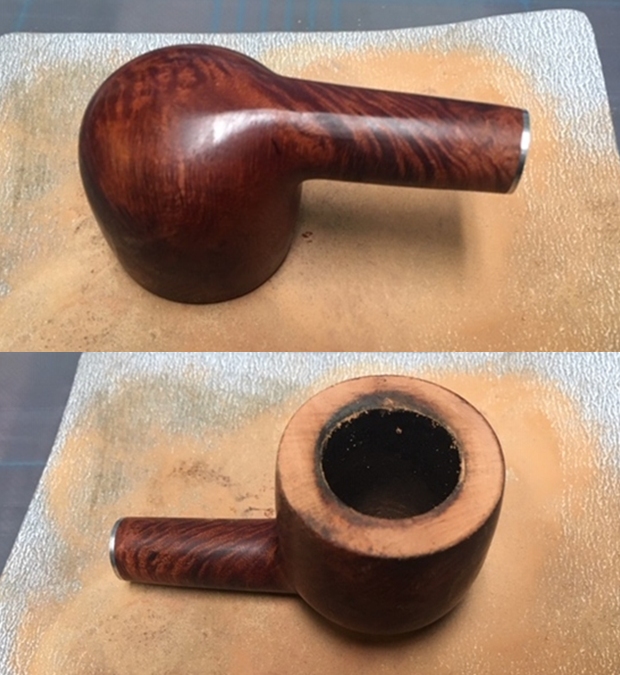
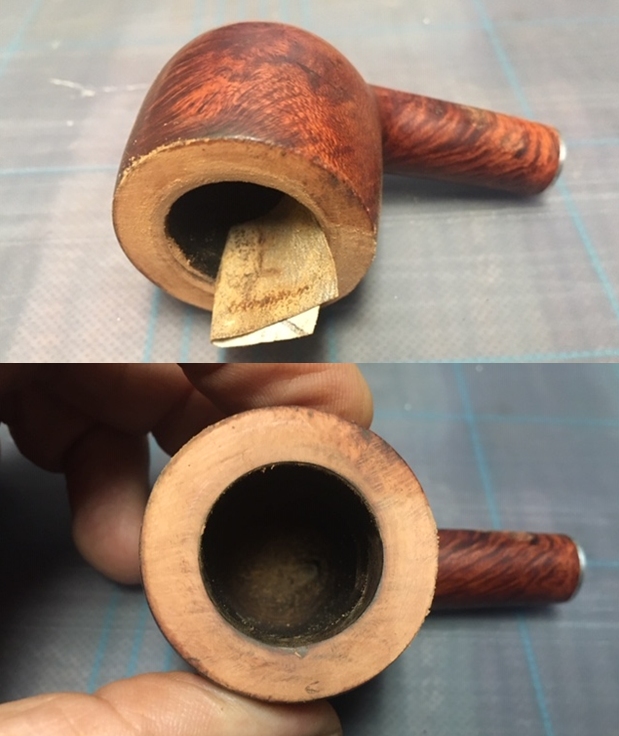
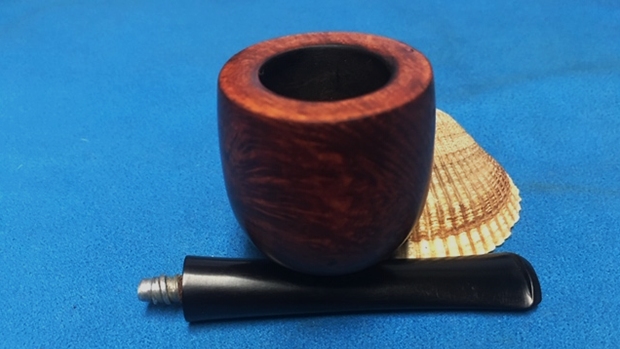
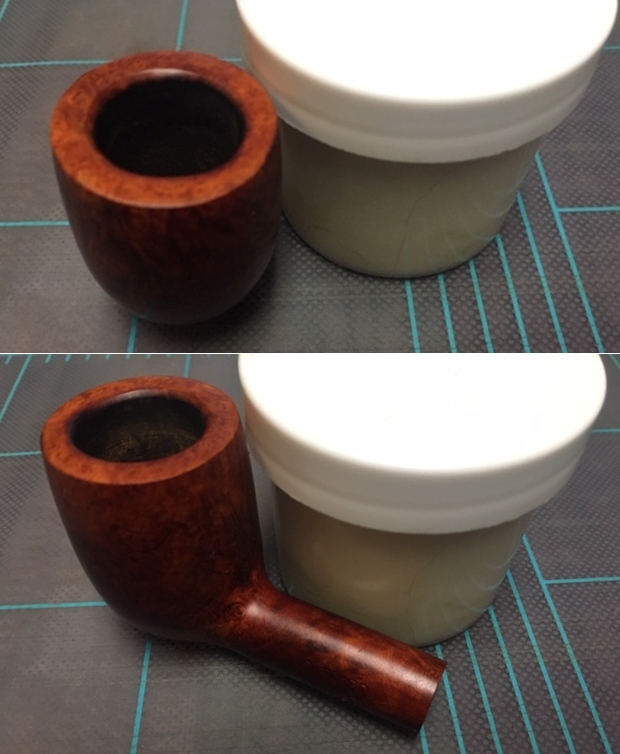
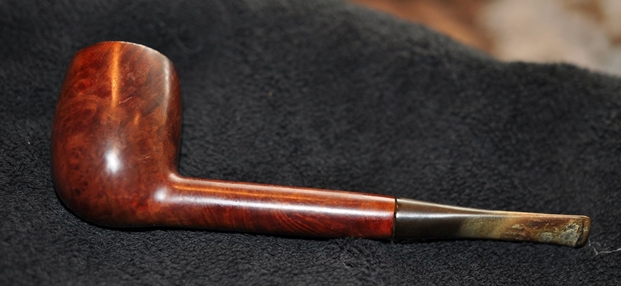
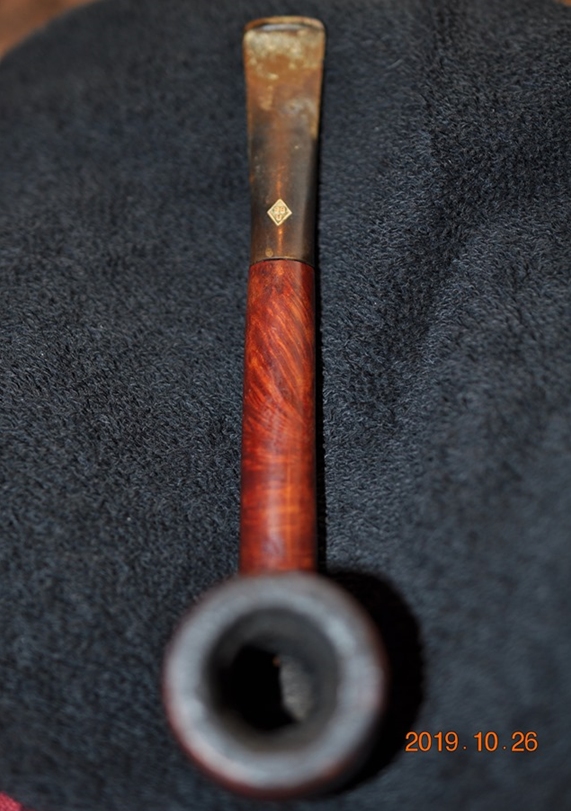
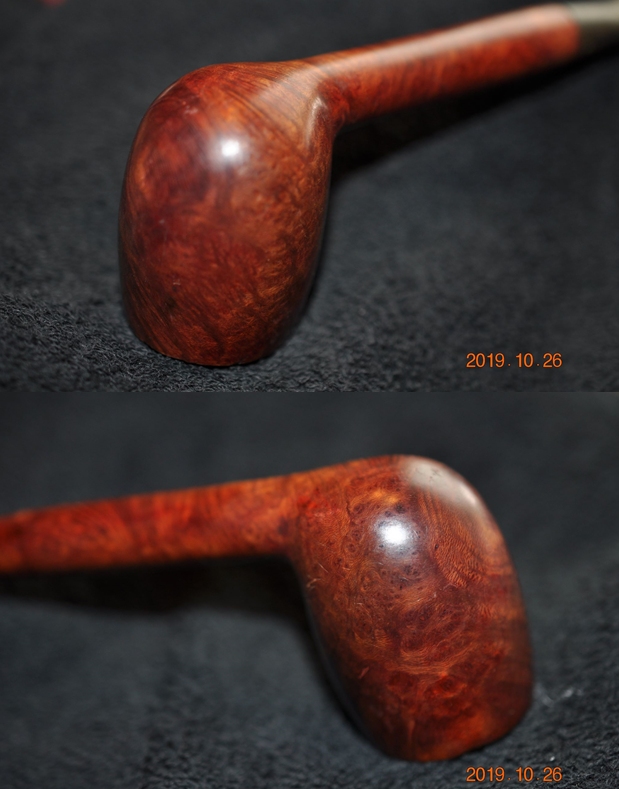
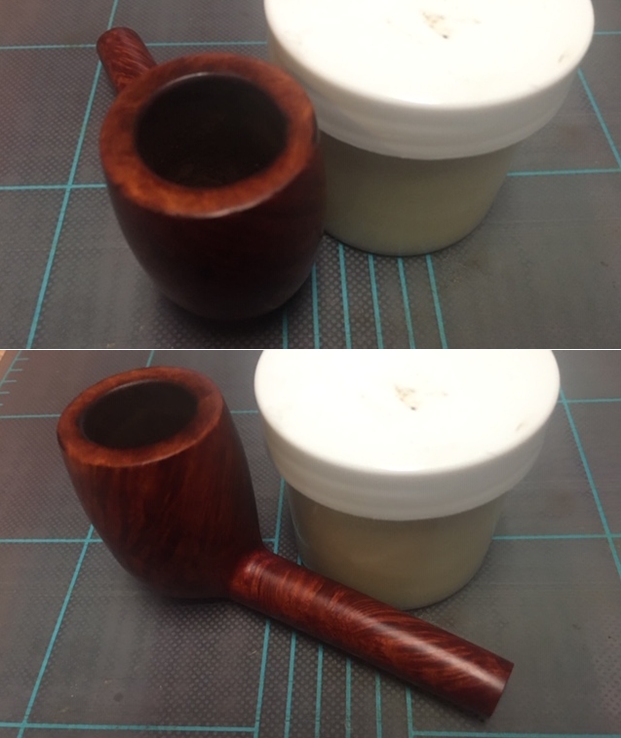
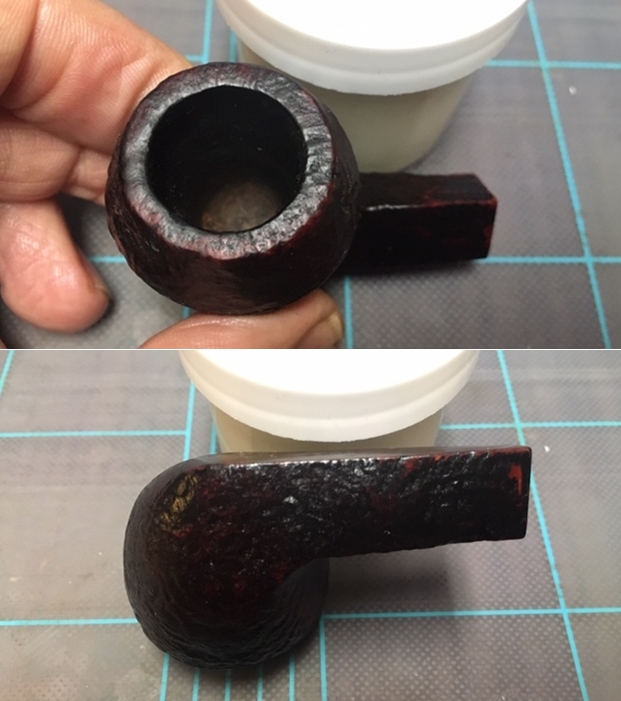
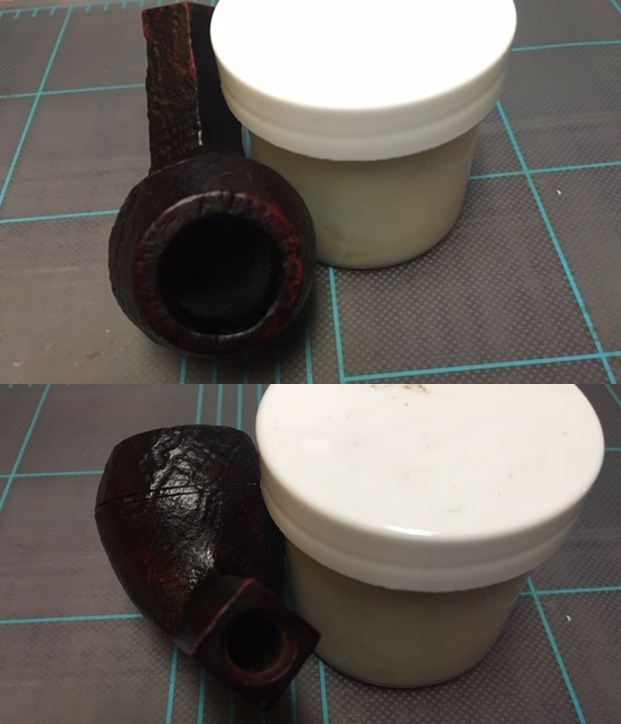
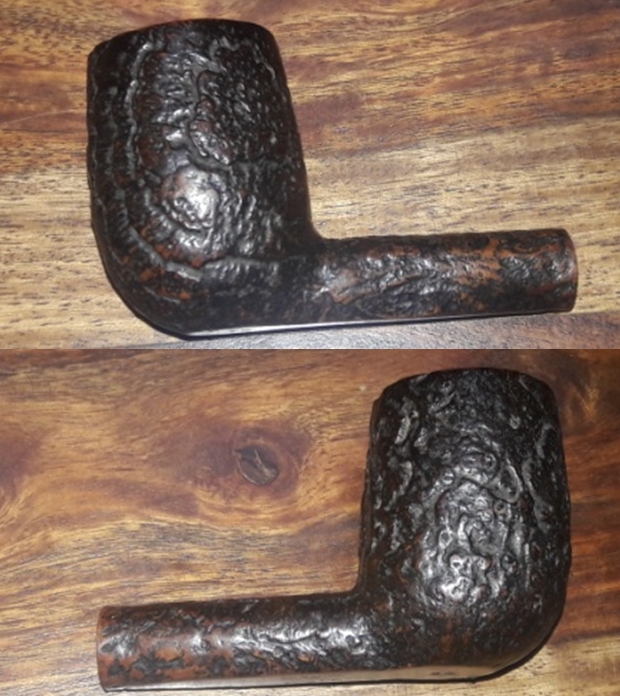
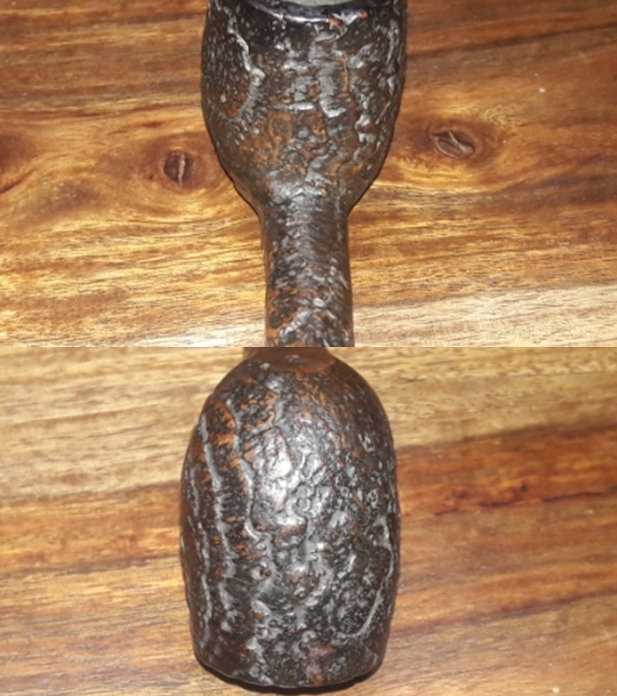
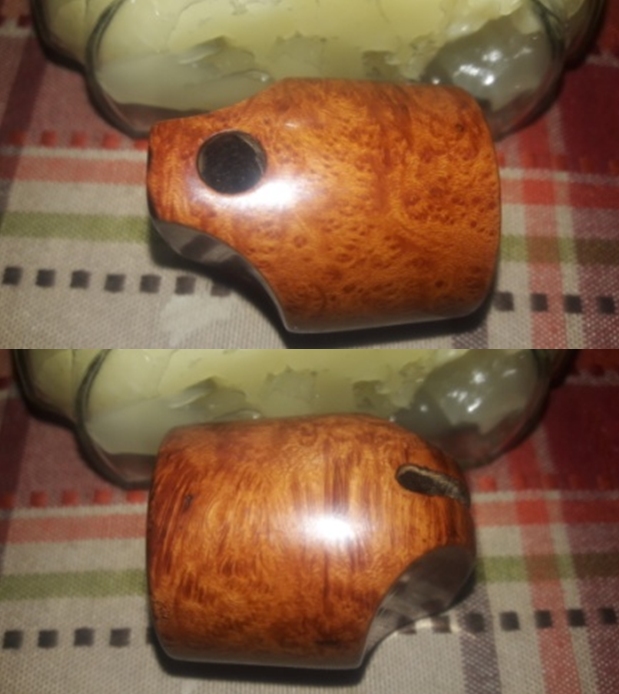
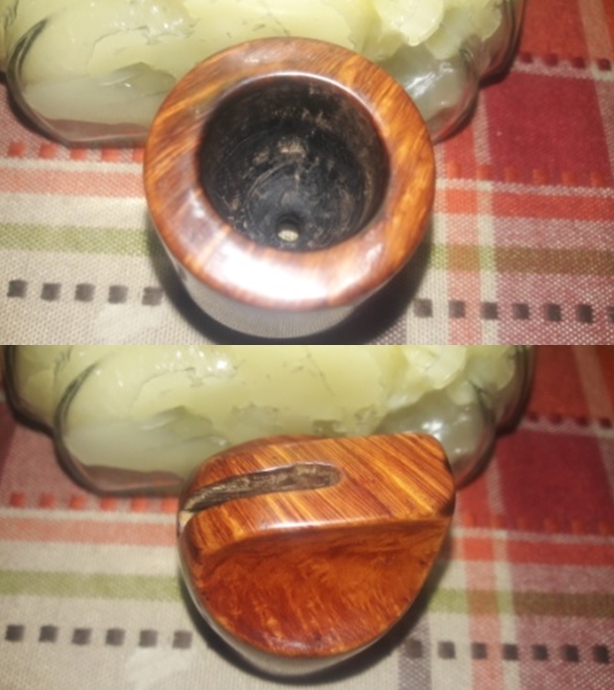
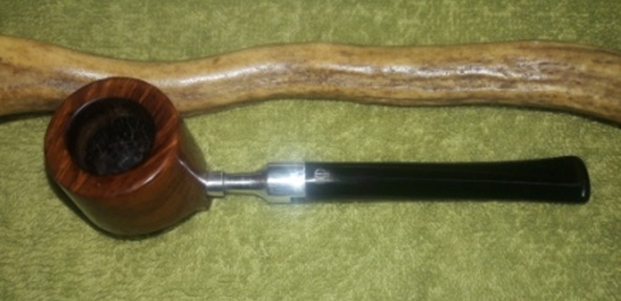
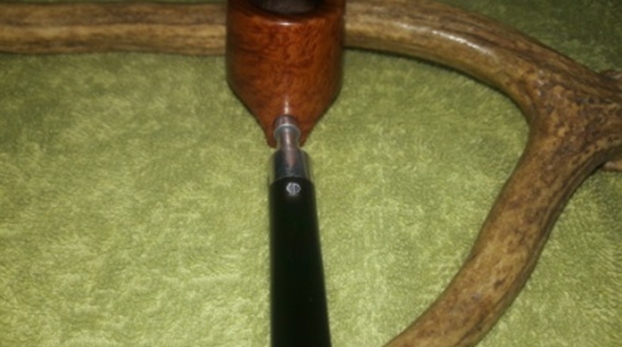
This pipe has a compact size with an oval shank and short saddle stem akin to a Lumberman. However the compact size of the pipe with a shorter shank length compels me to designate this shape as a short Lumberman. The stummel boasts of some beautiful cross grains to the front and back of the bowl and shank. The stummel is covered in dirt and grime of the overflowed lava. There is not a single fill in the briar which speaks of high quality selection of the briar. There is a decent layer of cake in the chamber and some damage is seen to the rim top surface. The stem is heavily oxidized with a few deep bite marks to the button edge in the bite zone. Here is how the pipe appears as it sits on my work table. Detailed Inspection Of The Pipe And Observations
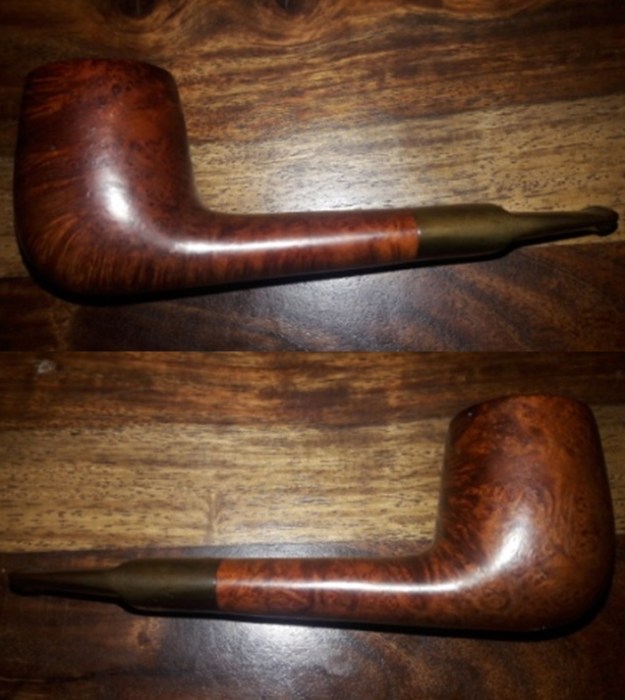
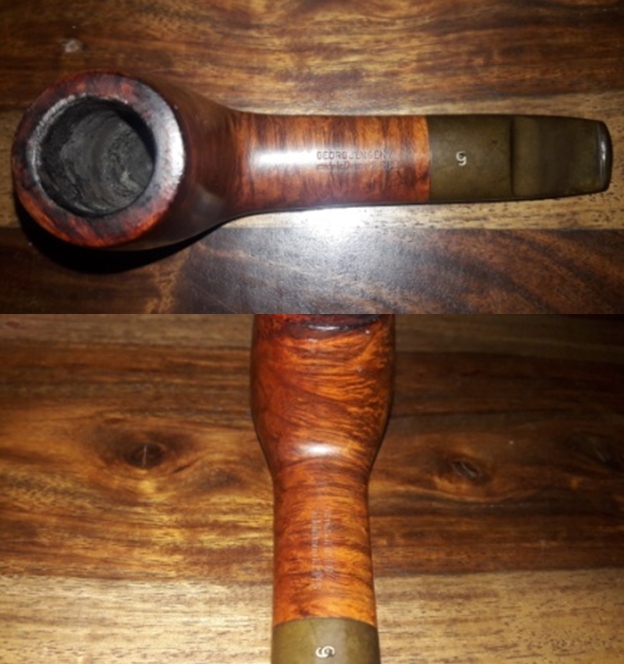
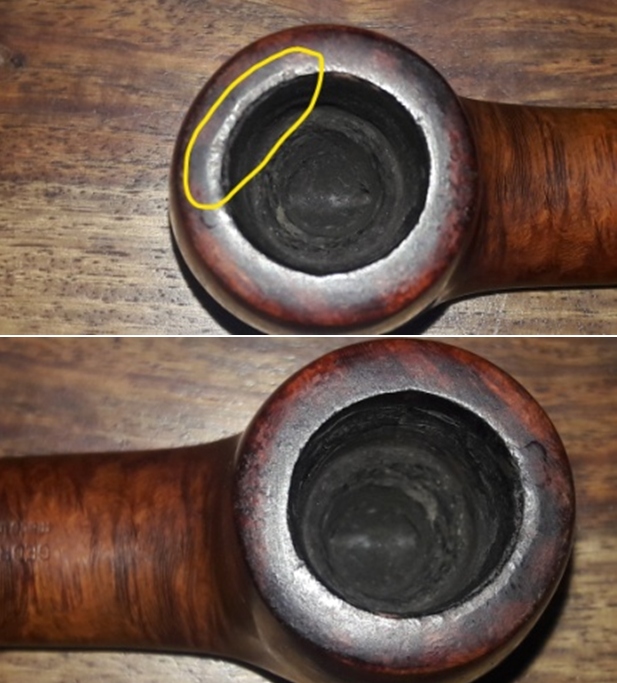
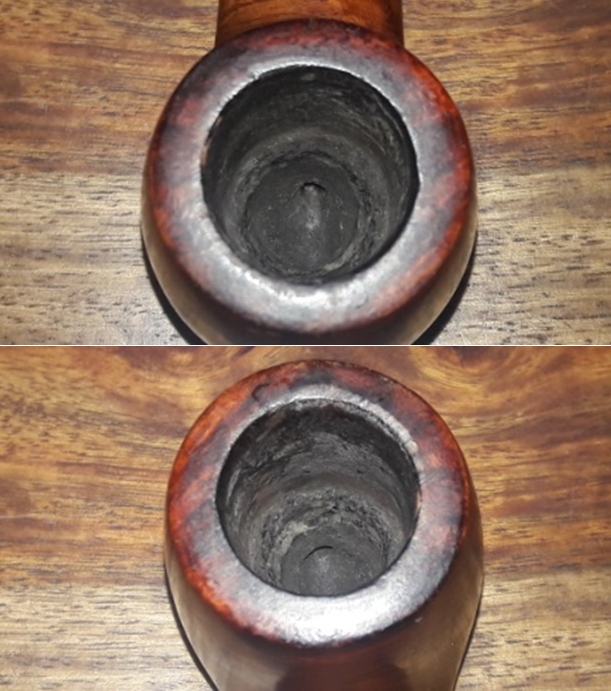
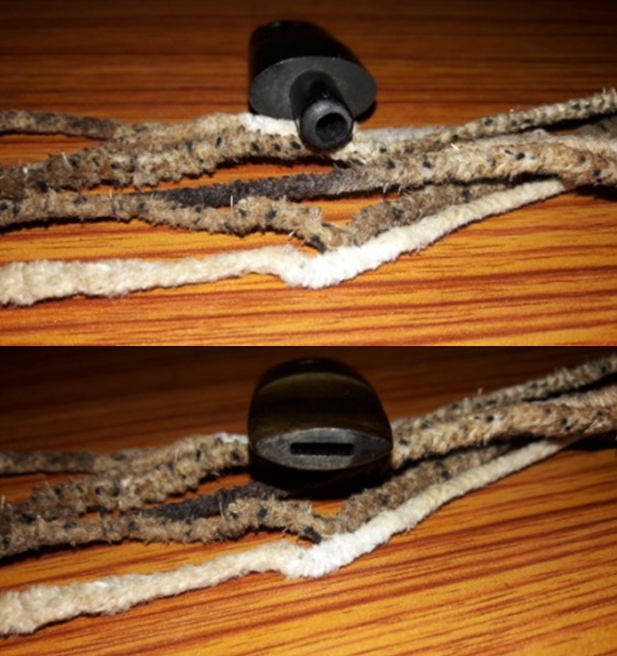
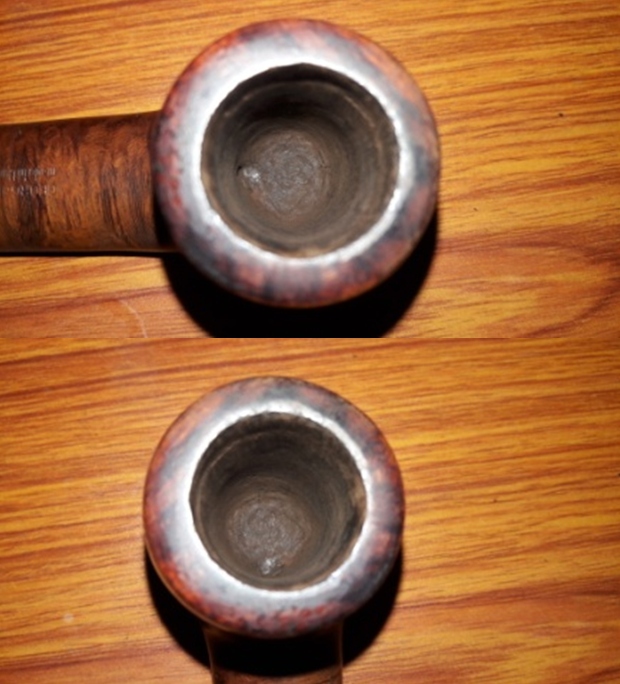
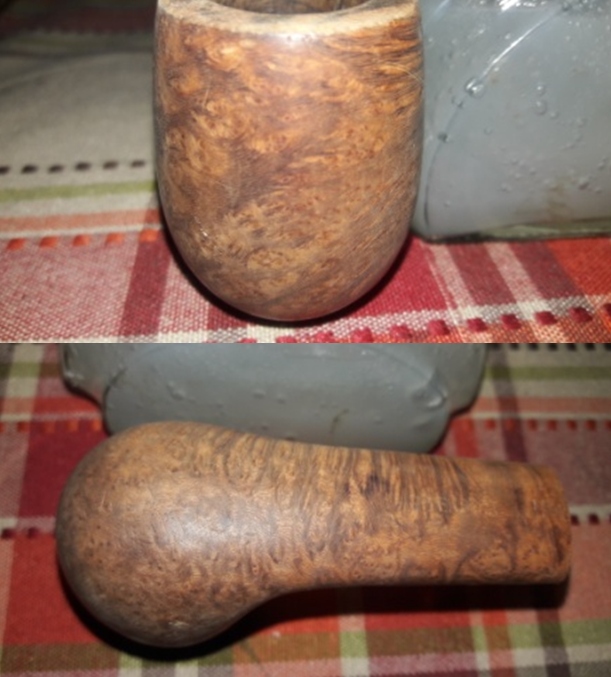
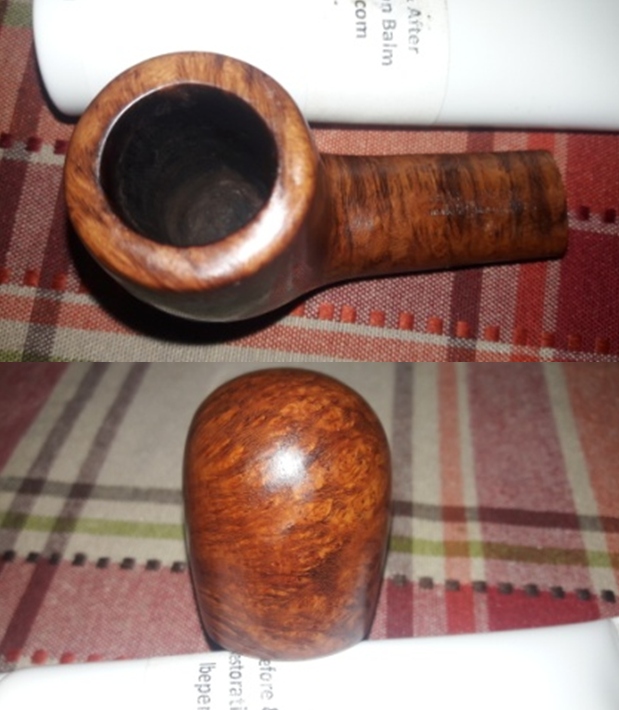
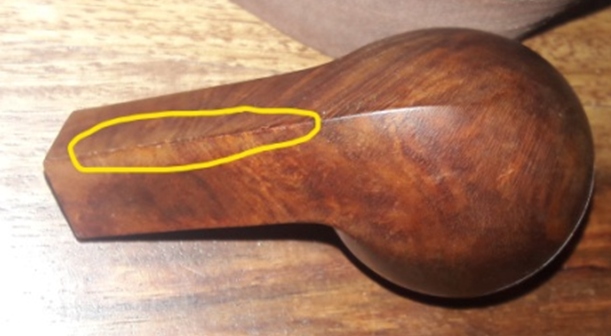
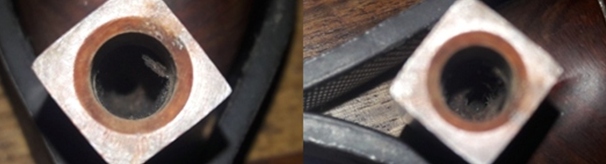
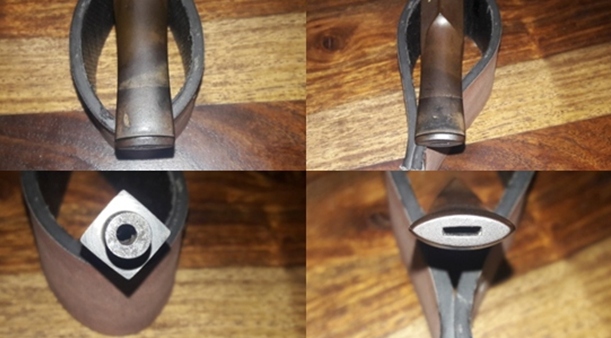
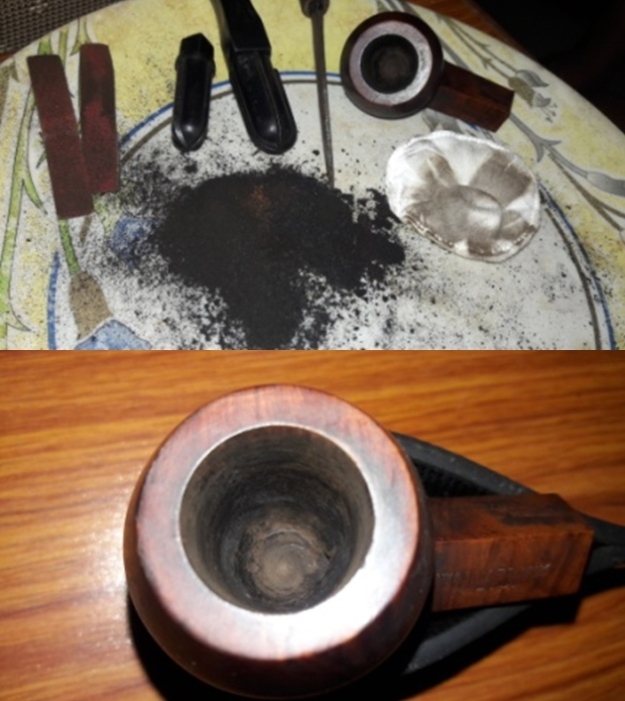
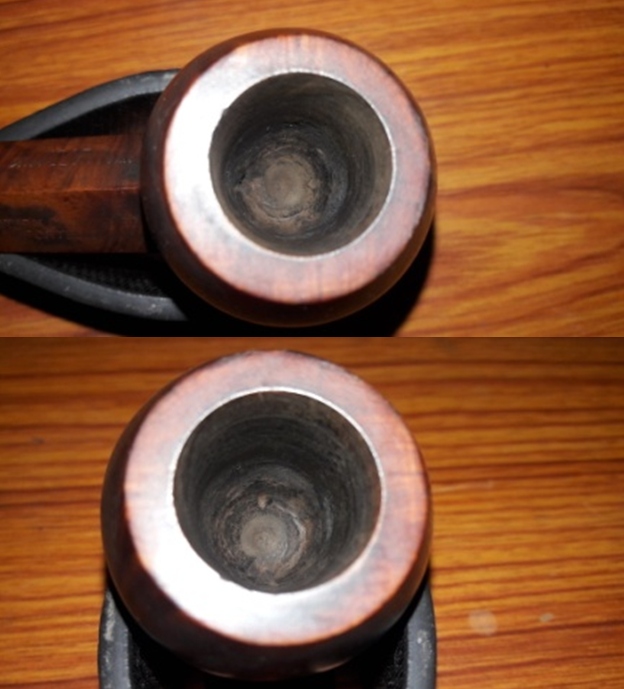
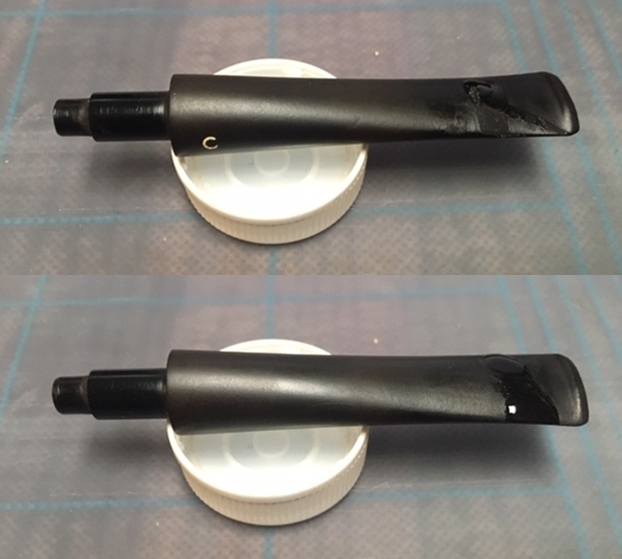
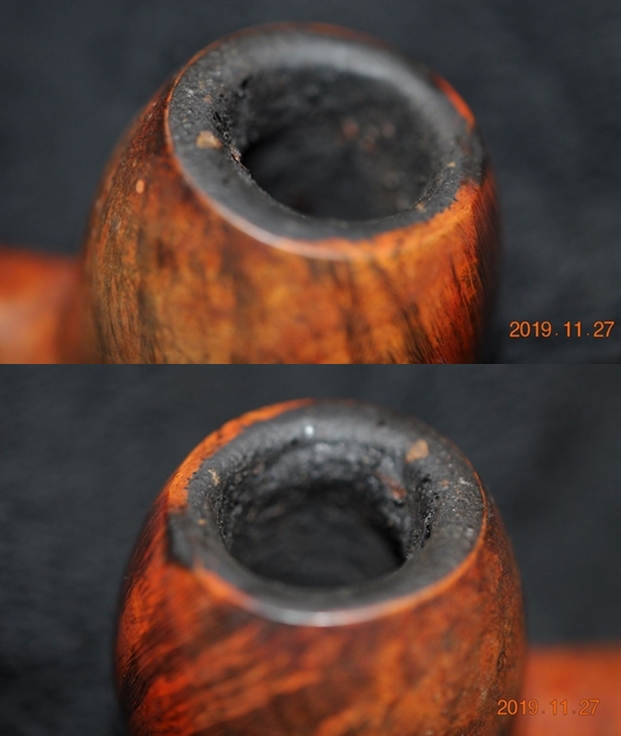
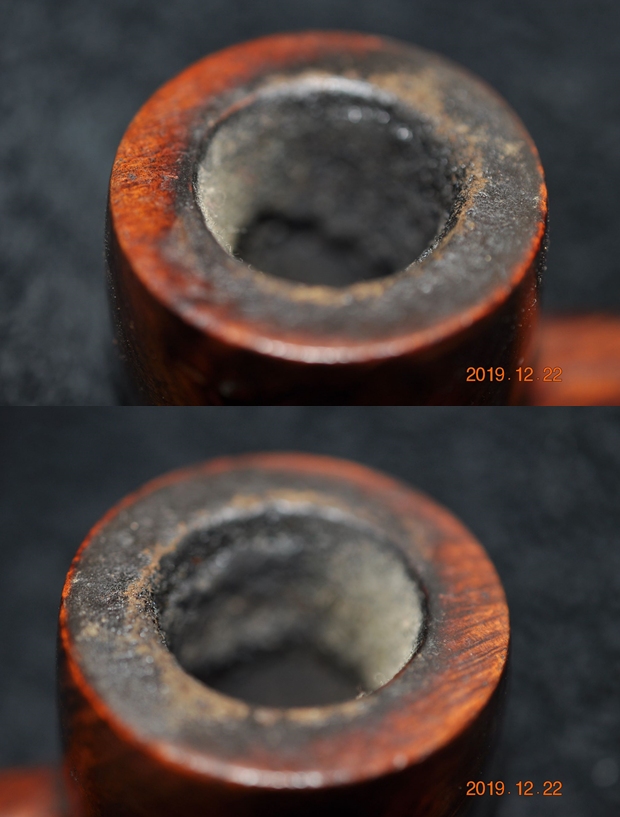
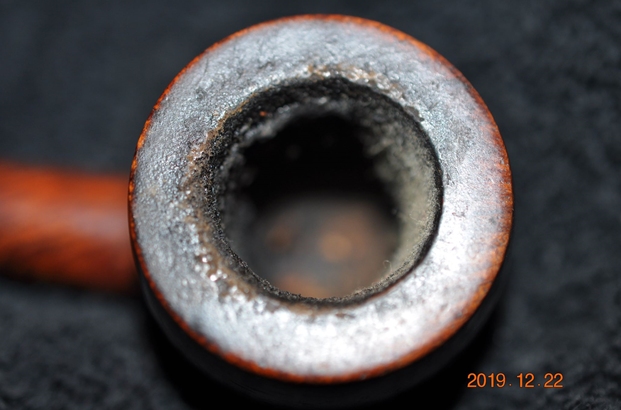
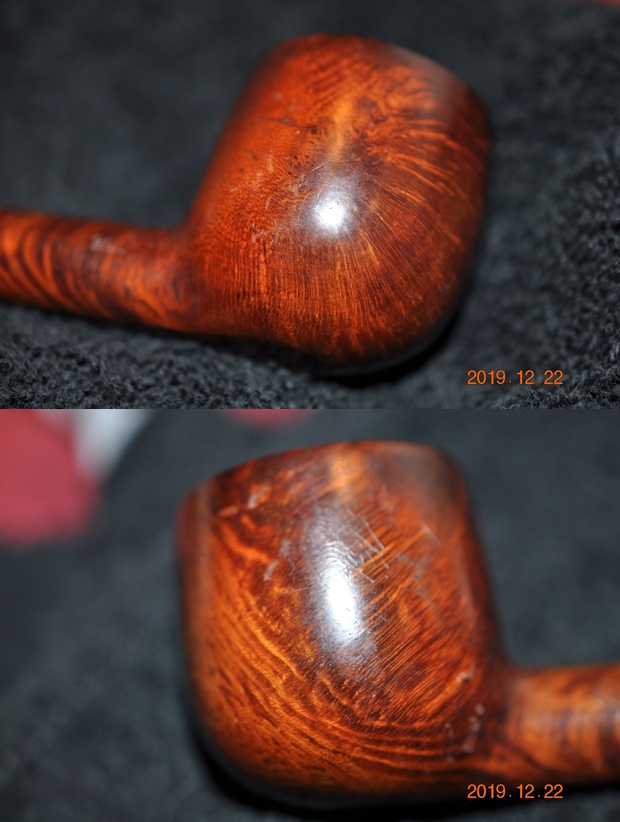
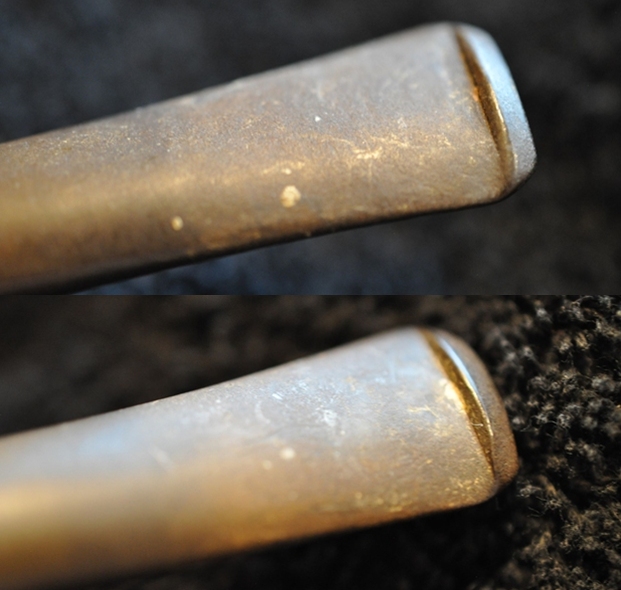
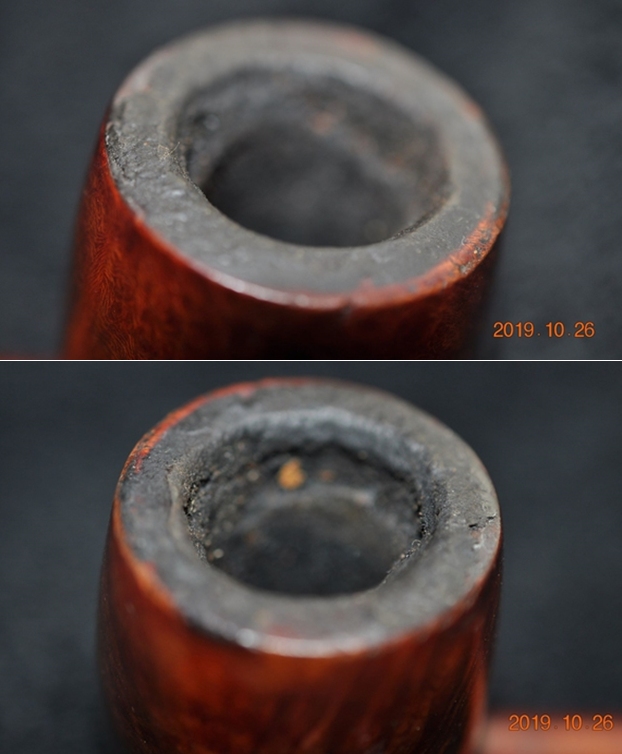
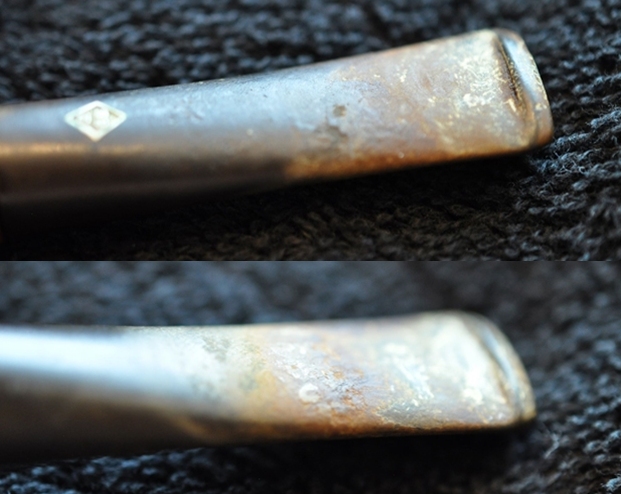
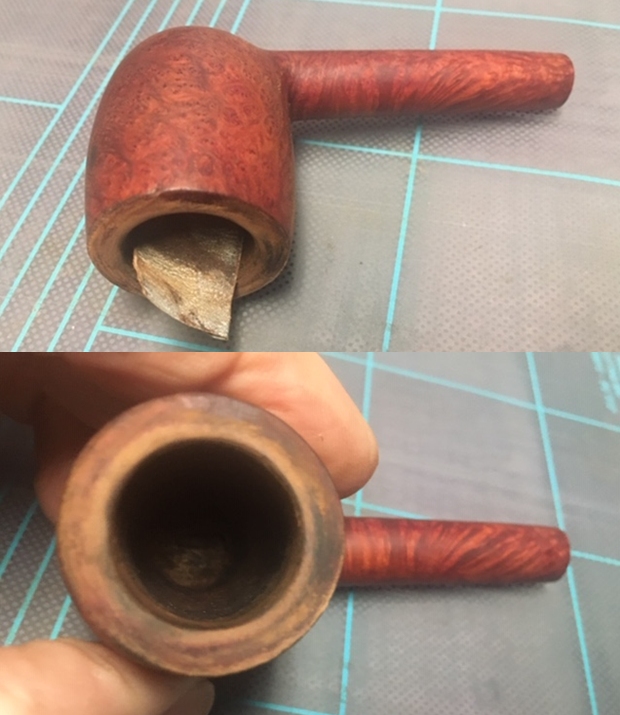
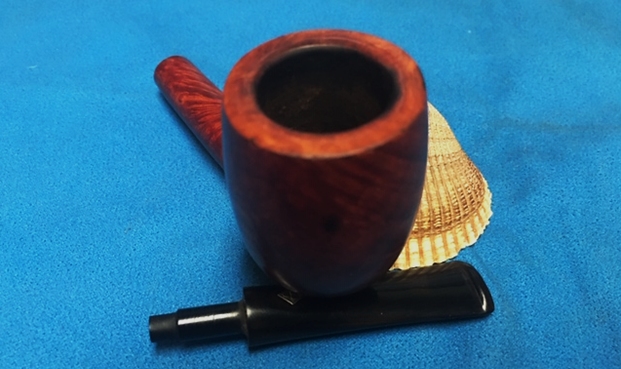
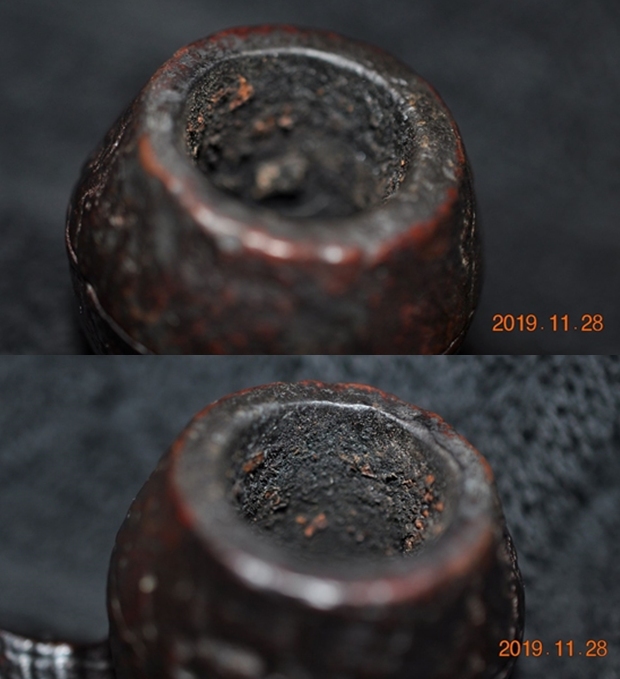
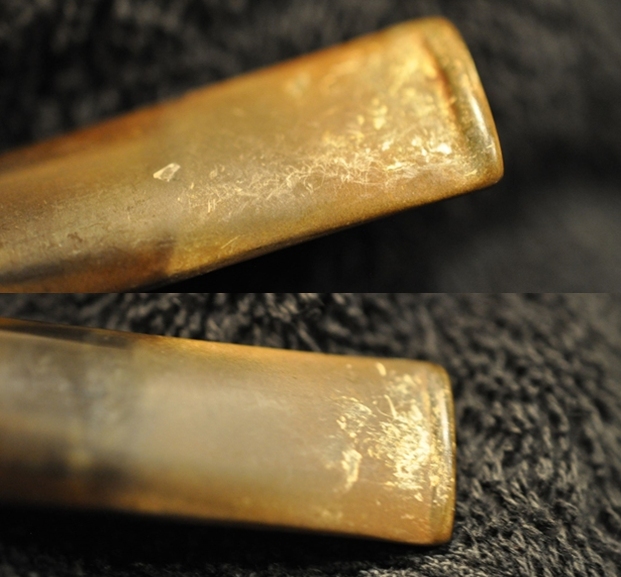
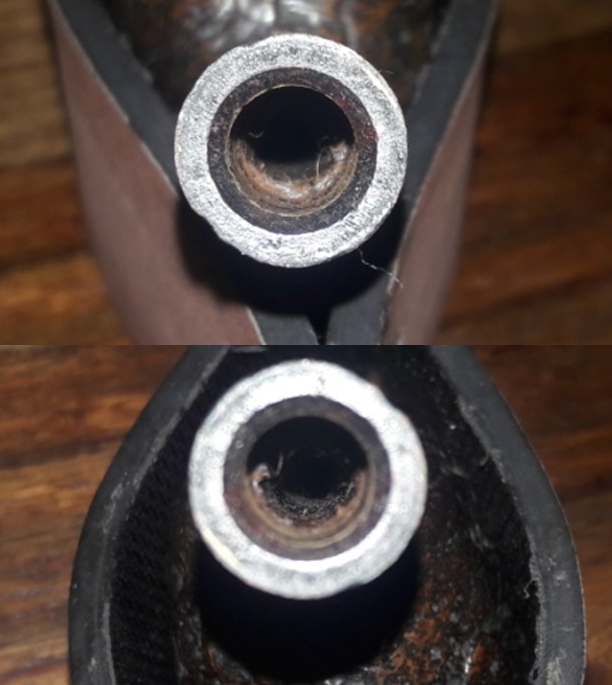
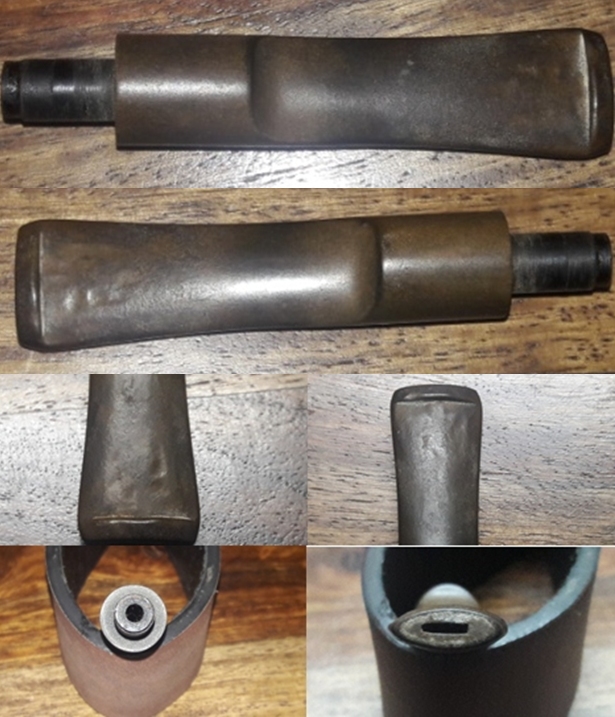
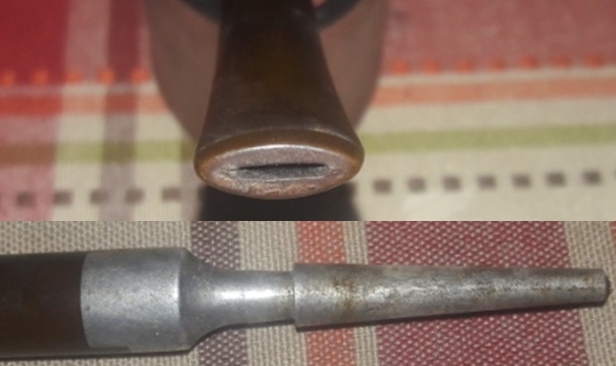
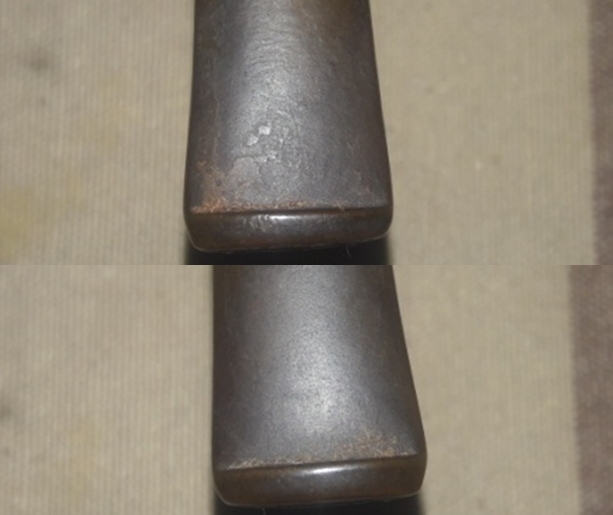
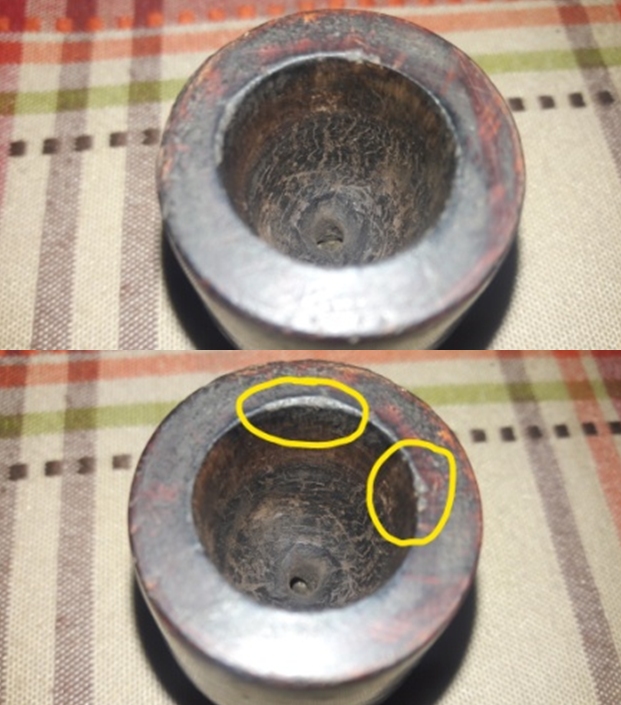
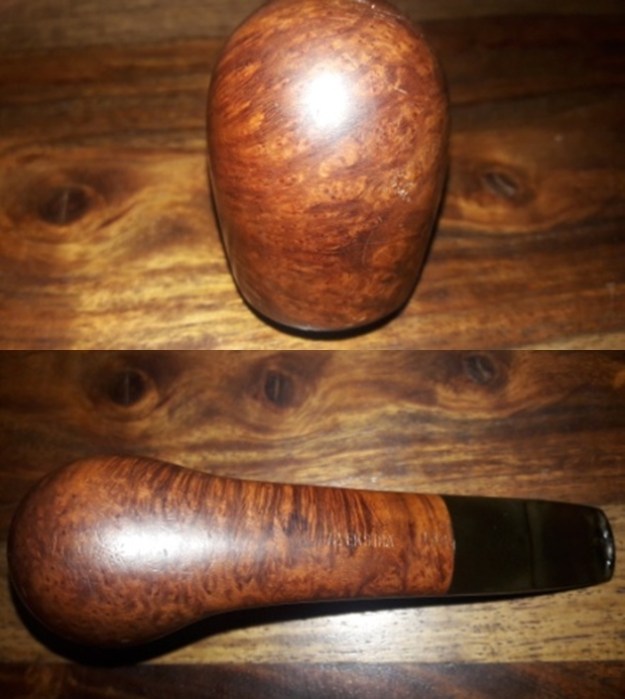
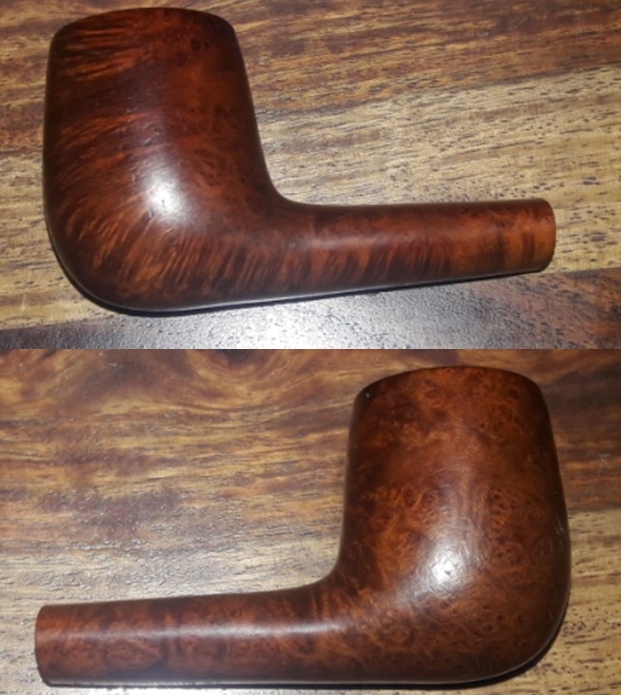
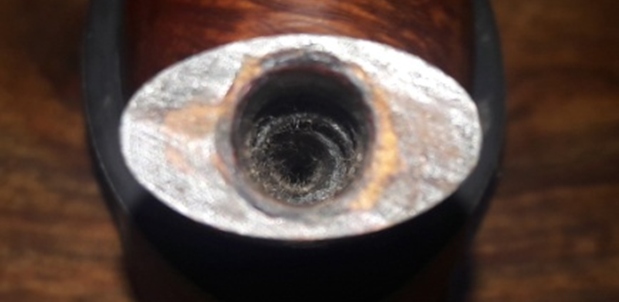
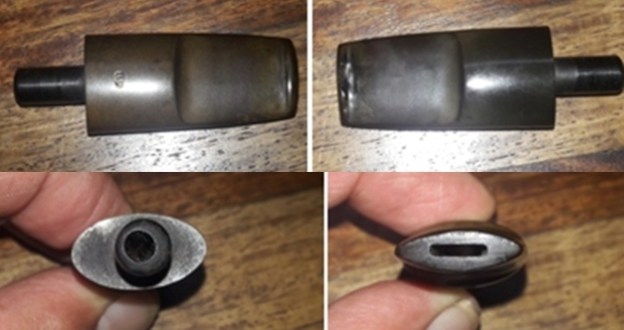
The bowl is slightly off round with a decently wide rim and a depth of about 1 7/8 inches. The draught hole is in the center and at the bottom of the chamber. The chamber has an uneven layer of thick crumbly cake. The smooth outward sloping rim top surface is severely damaged with dents/ dings and covered in lava overflow, dirt and grime. The inner front rim edge has suffered a few blows on a hard surface resulting in a dented and chipped edge surfaces to the between 12 o’clock and 2 o’clock direction and the same in enclosed in a yellow circle. The outer rim edge too has some minor dents in the 6 o’clock direction. The condition of the inner walls of the chamber can be commented upon after the cake has been taken down to the bare briar. There is a sweet smell in the chamber which is not very strong. The stummel appears solid to the touch all around and hence I do not foresee any serious damage to the walls in the form of burnout/ deep heat fissures/ lines or pits. The darkened inner rim edge may be charred further than anticipated and the same will be confirmed after the surface has been thoroughly cleaned. I need to resort to topping the rim top in order to address the damage to the surface. The ghost smells should reduce once the cake from the chamber is removed and the shank has been cleaned. The smooth stummel surface is covered in dust and grime through which one can make out the beautiful cross grains to the front and back of the bowl and shank. The stummel surface is peppered with scratches, dents and dings on the either sides of the stummel, over the foot and to the front and back of the stummel, probably due to likely falls during its time with the previous piper. However, there is not a single fill in the entire stummel, signifying very high quality of briar used in carving this pipe. The briar is looking lifeless and bone dry. I shall need to sand the stummel surface with sand papers to remove and minimize the scratches, dents and dings. Once the stummel has been thoroughly cleaned, these damages will be more apparent. Thorough cleaning and rising under warm water of the stummel surface should highlight the grain patterns. Micromesh polishing will further help minimize these dents and scratches to some extent. The mortise shows accumulation of oils, tars and gunk and the air flow is not full and smooth.The high quality vulcanite saddle stem is so heavily oxidized that it appears brownish green in color! Some minor tooth chatter and light tooth marks over the button edge is seen on the upper surface of the stem. There are a couple of very deep bite marks on the lower stem surface that have completely damaged the button edge. These issues are nothing serious to address. The lip edge on both sides is damaged and would necessitate a rebuild followed by reshaping. The tenon has accumulated ash and oils/ tars that have dried out on the inside as well as on the outside. The horizontal slot has scratch marks which will have to be addressed. The bite marks will be raised to the surface by heating to the extent possible and further will be filled using charcoal and CA superglue mix.   The Process
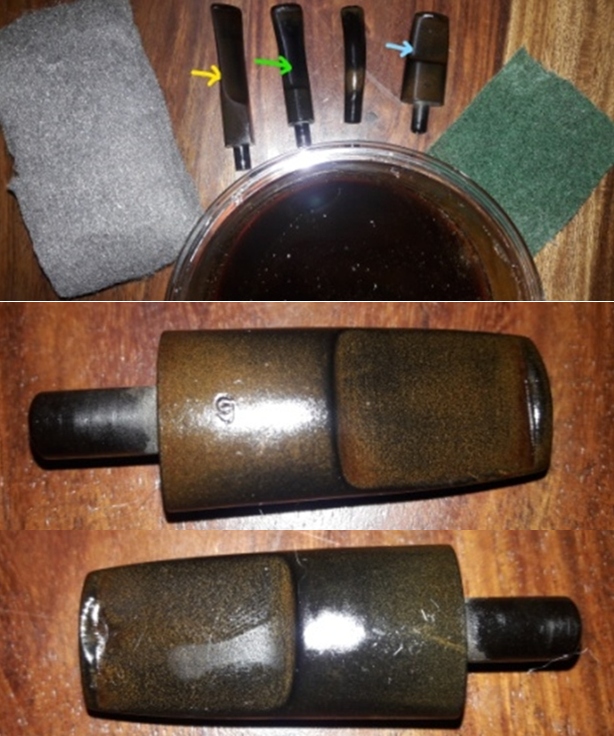
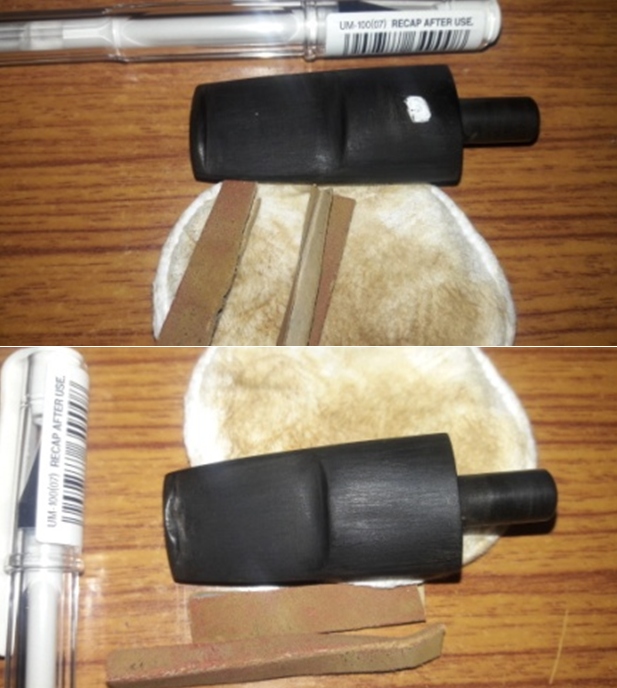
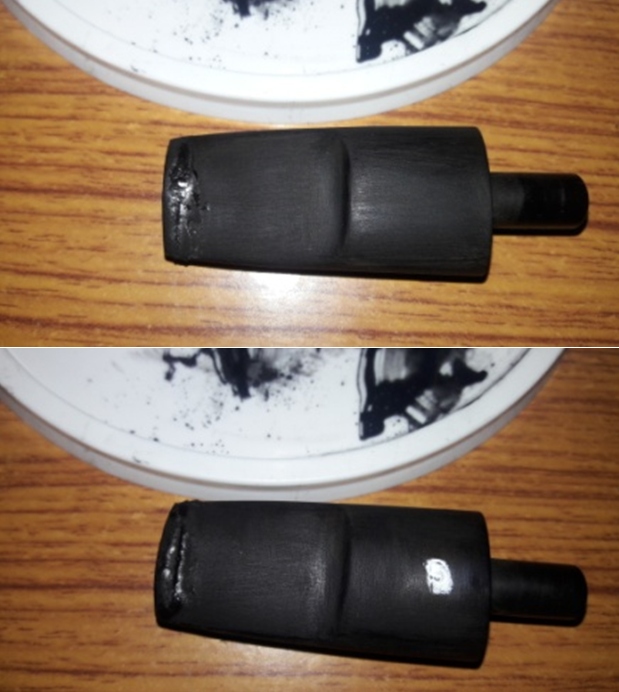
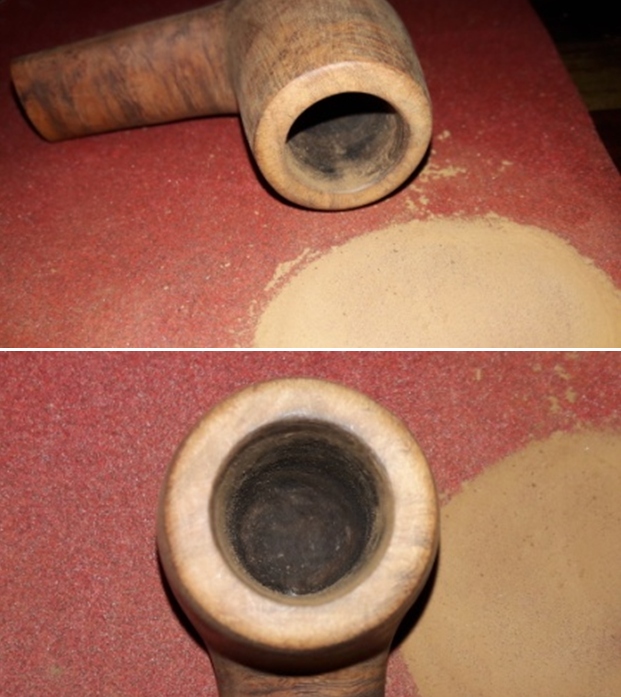
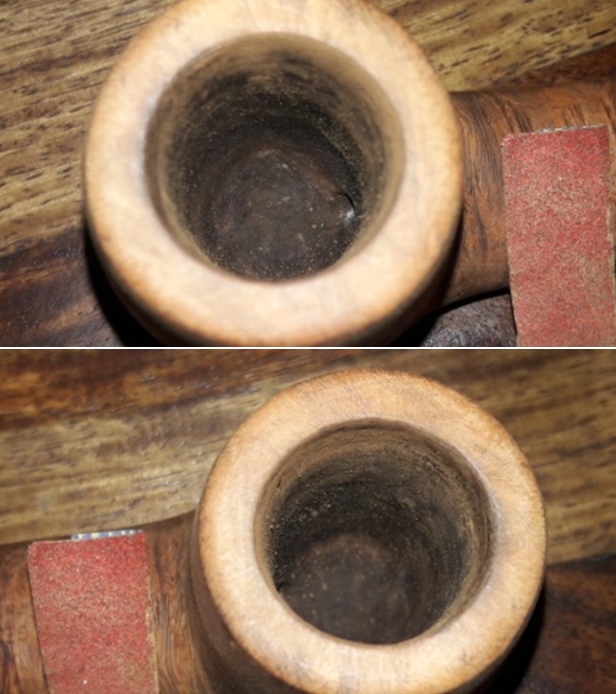
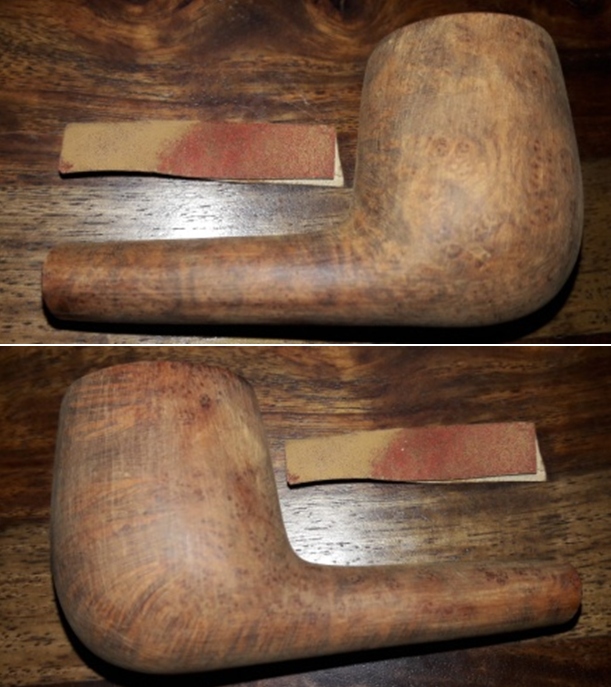
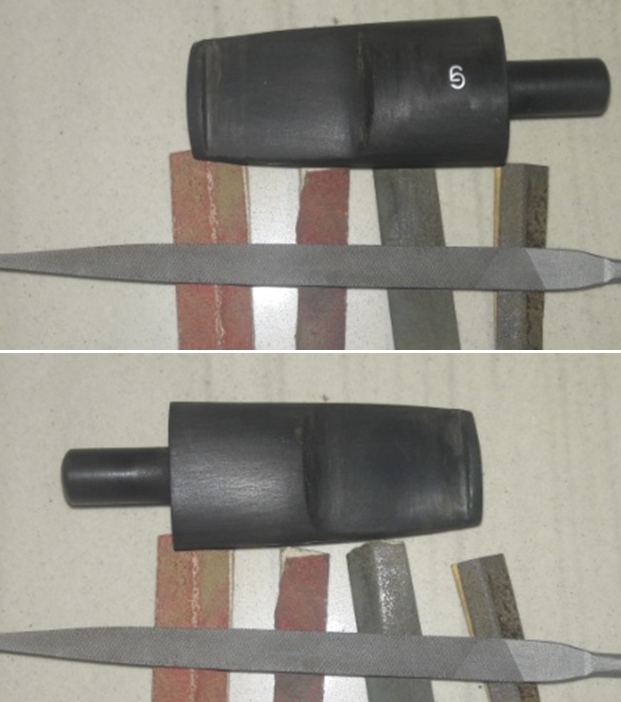
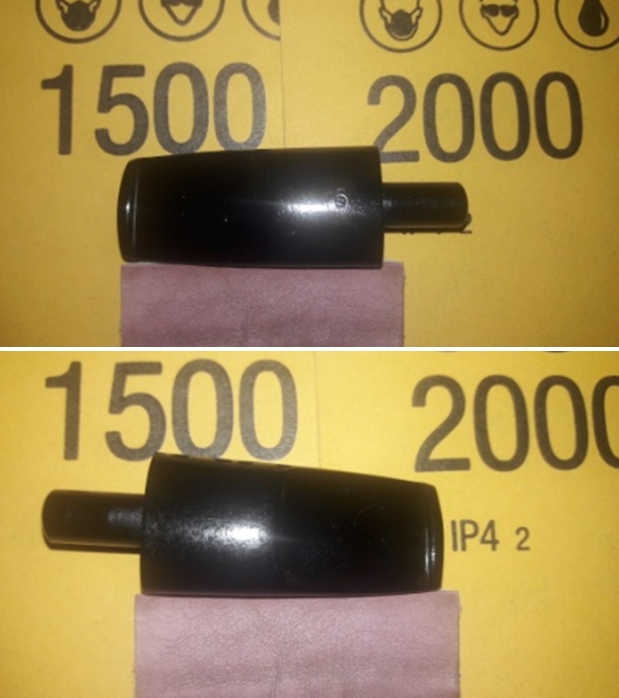
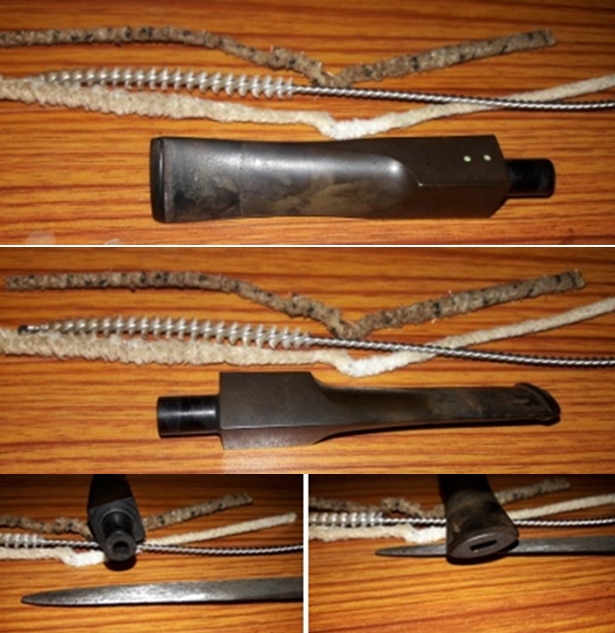
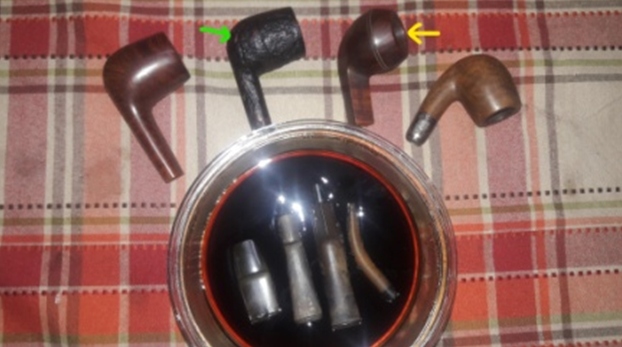
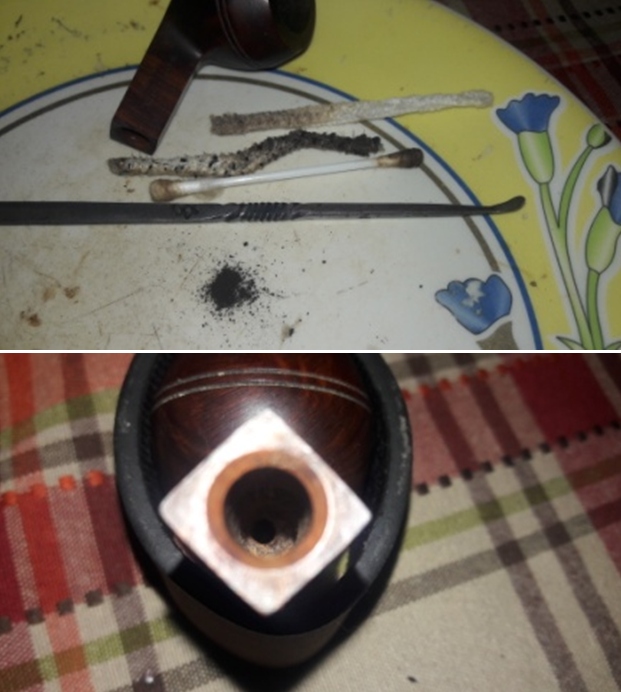
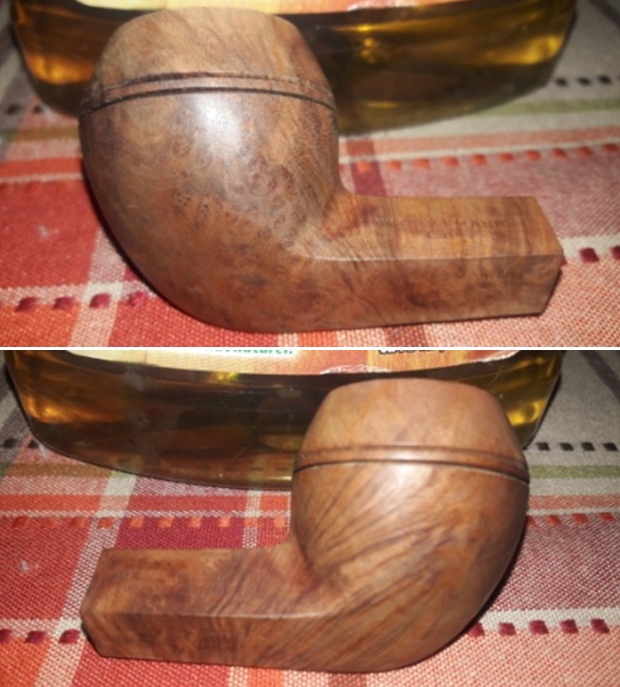
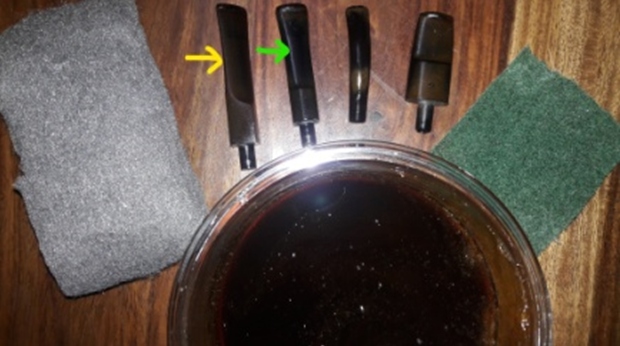
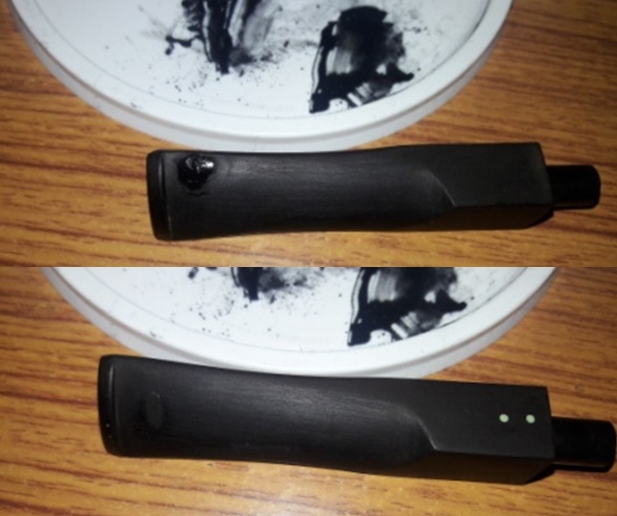
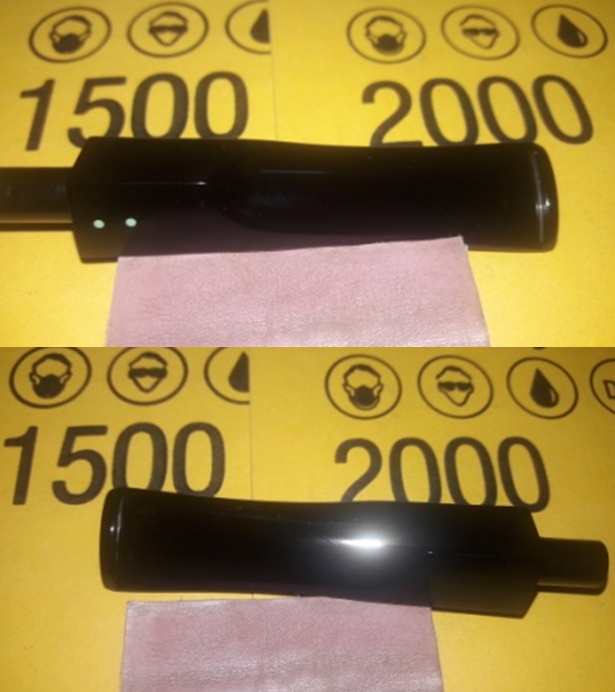
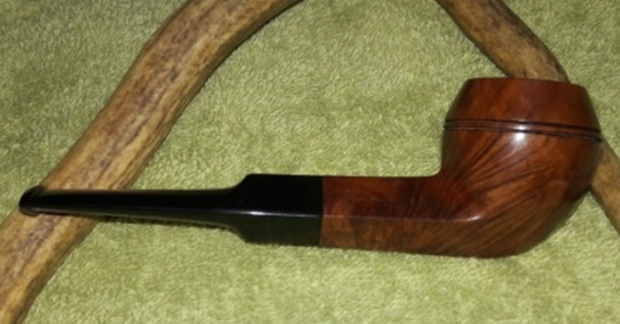
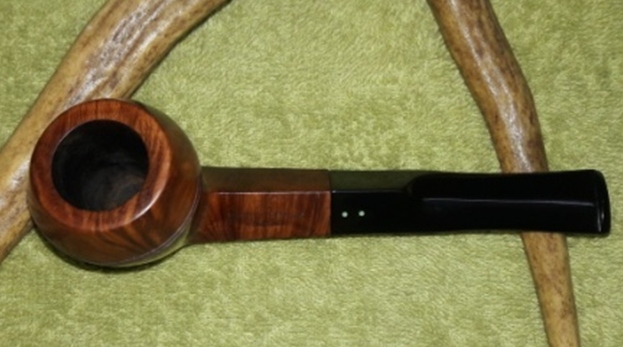
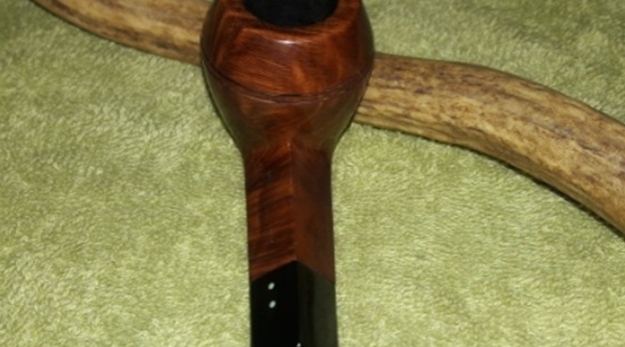
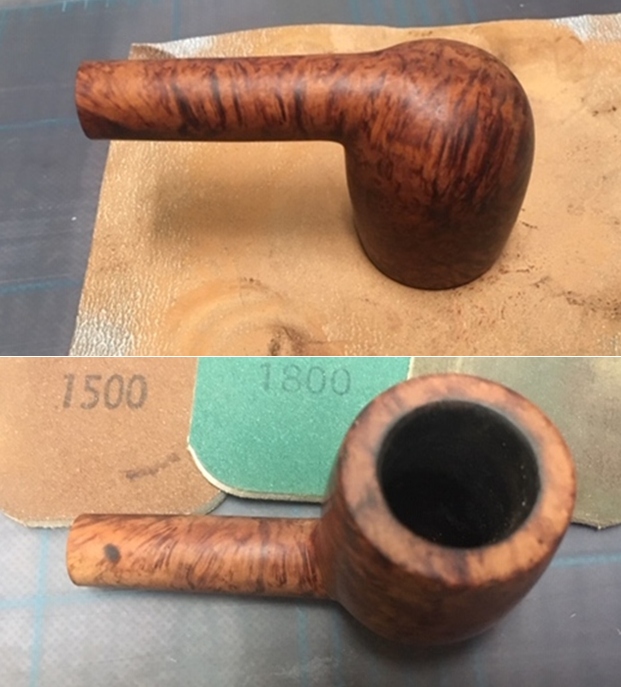
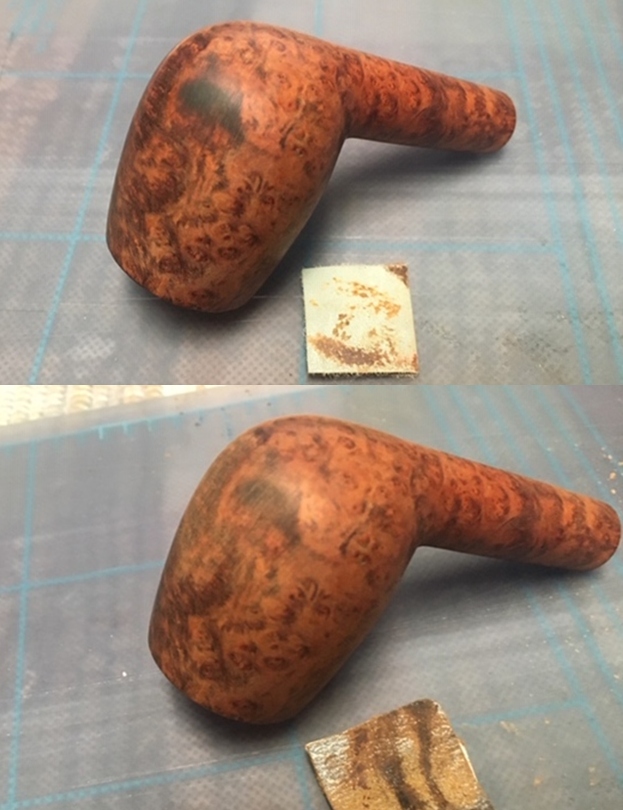
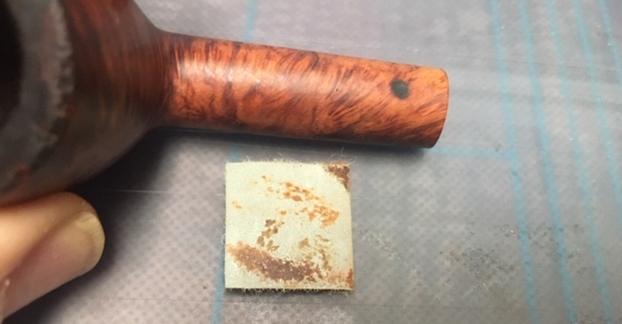
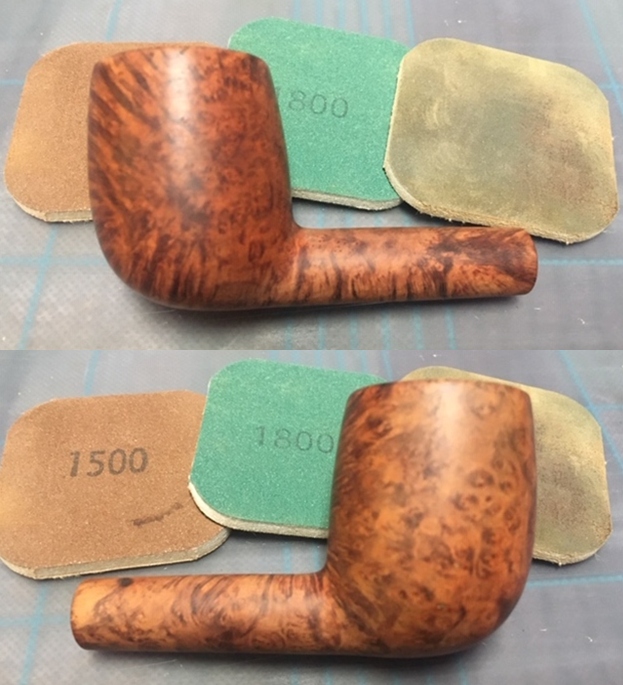
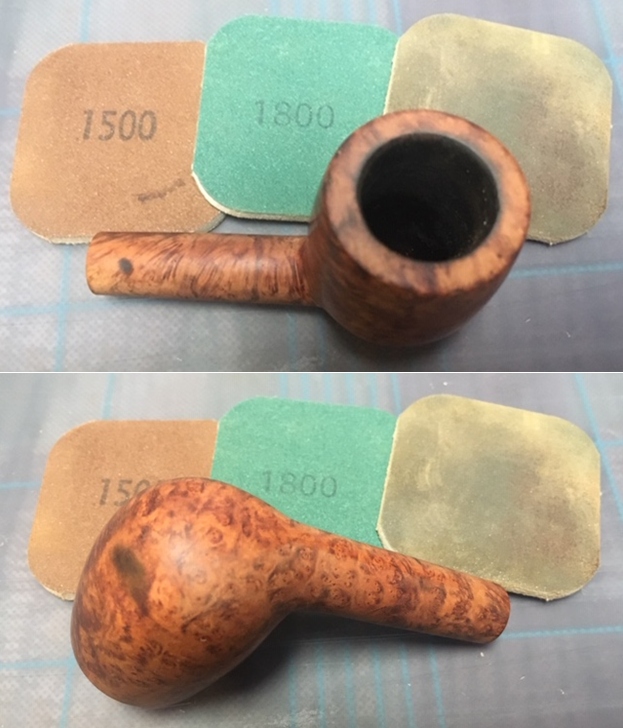
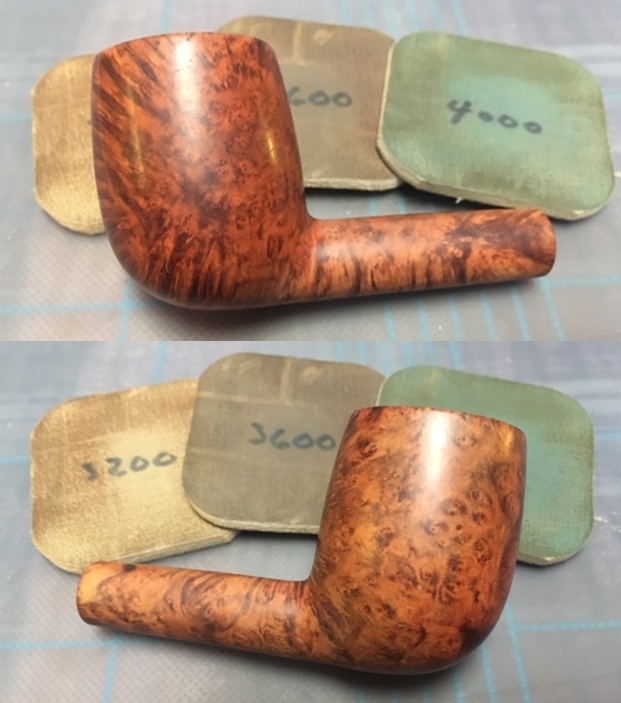
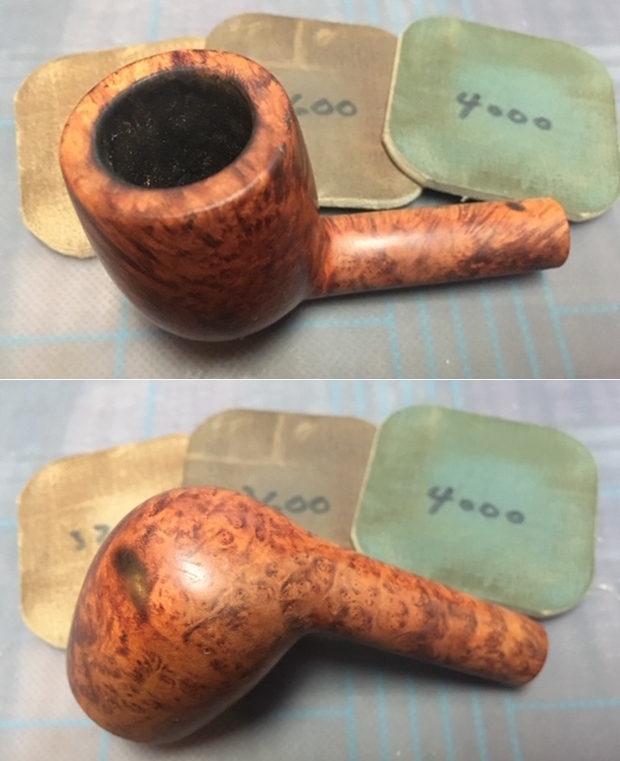
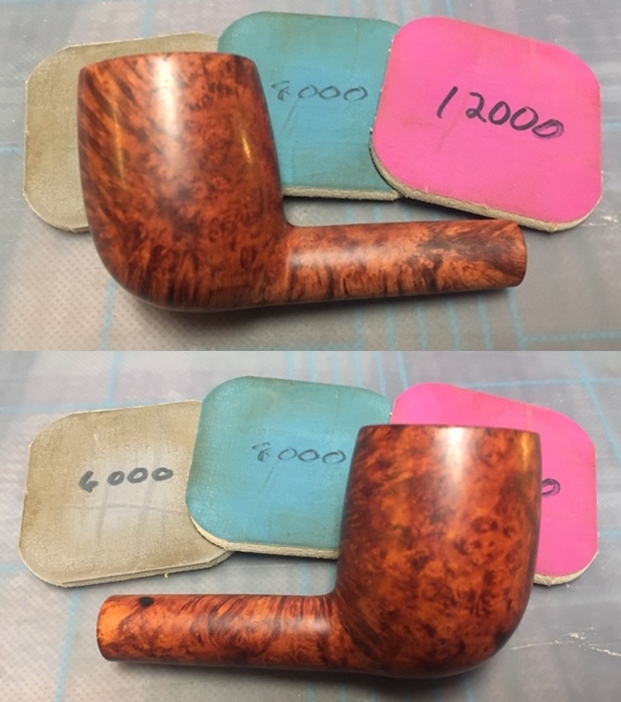
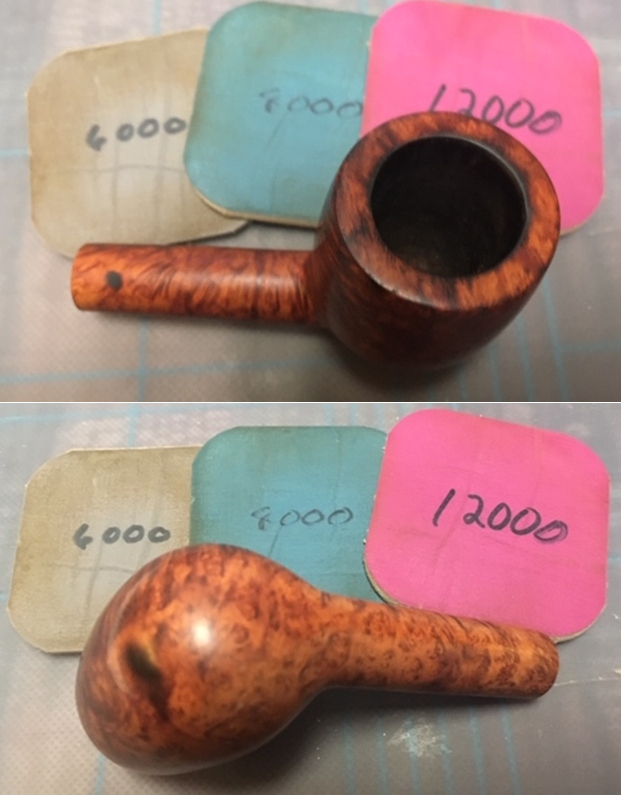
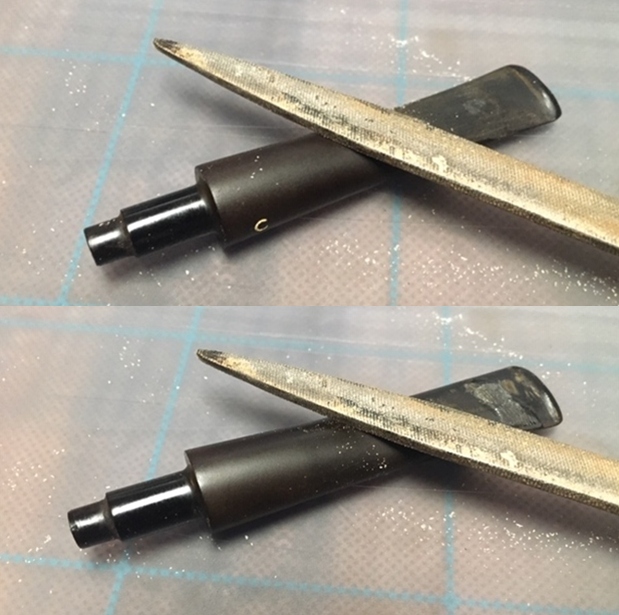
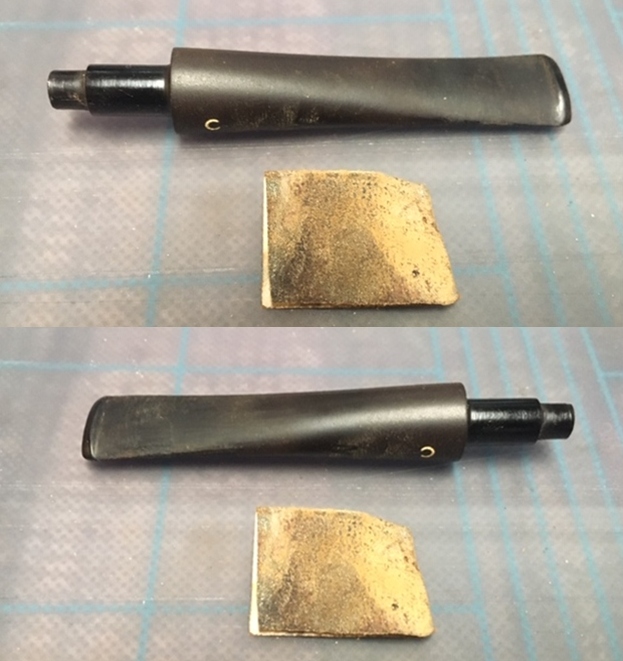
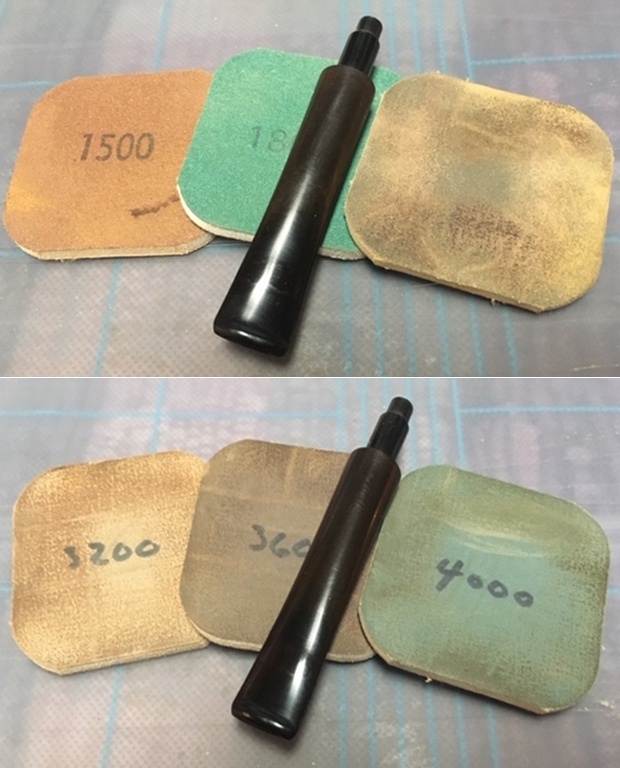
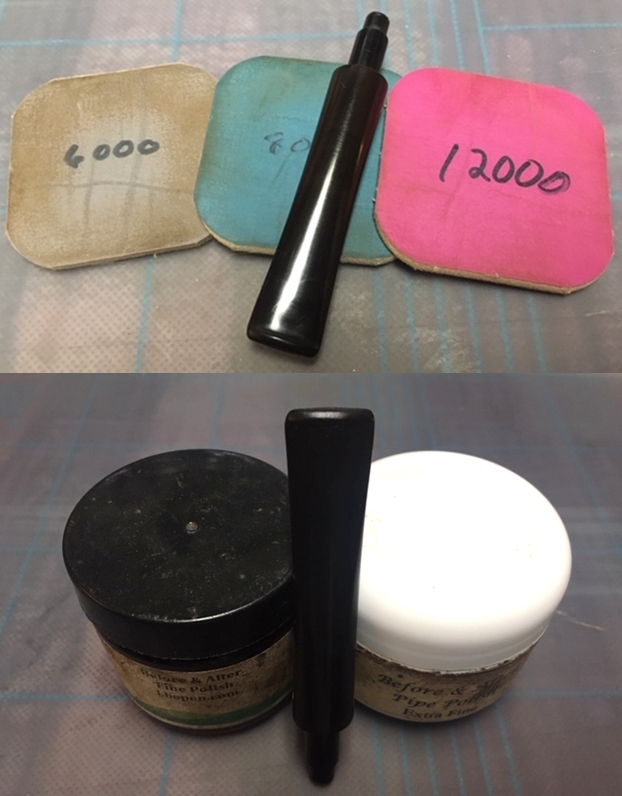
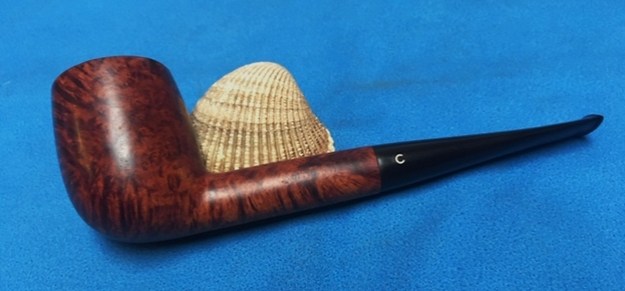
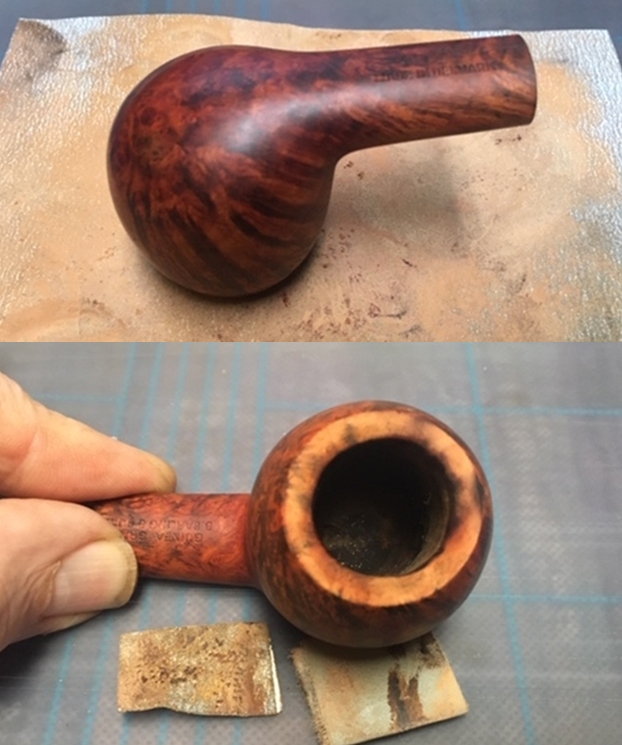
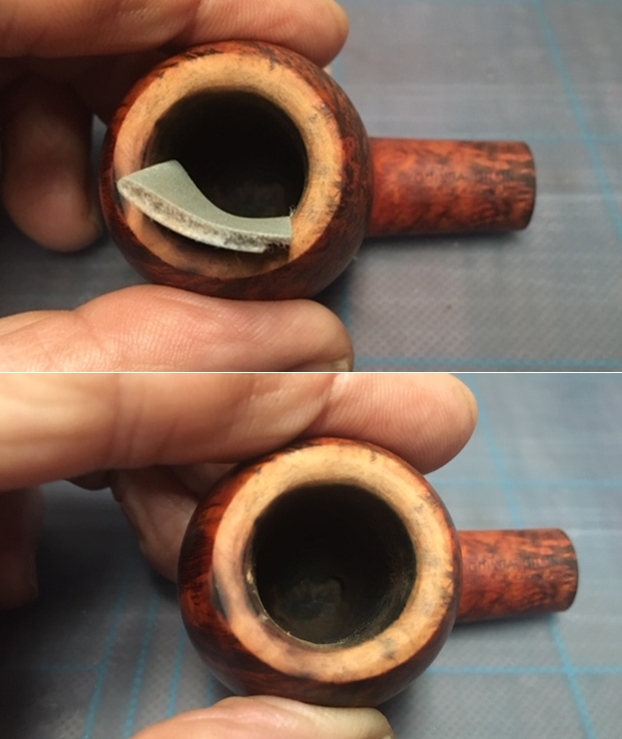
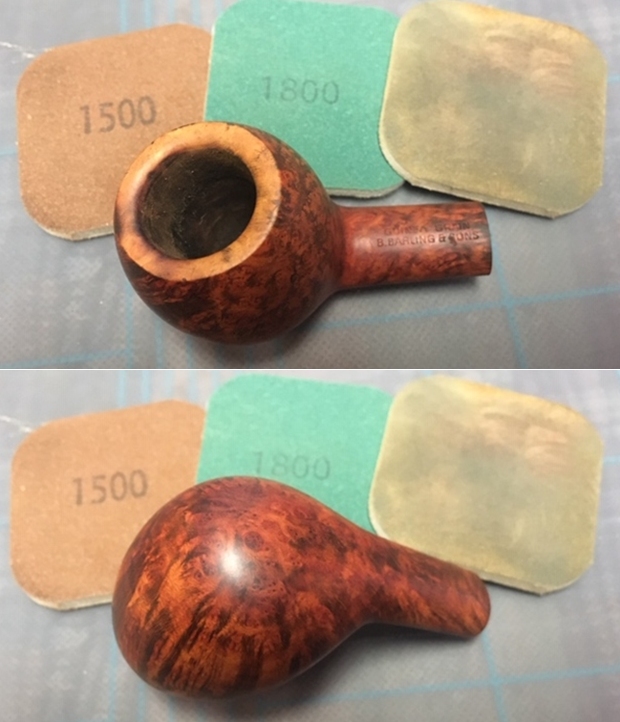
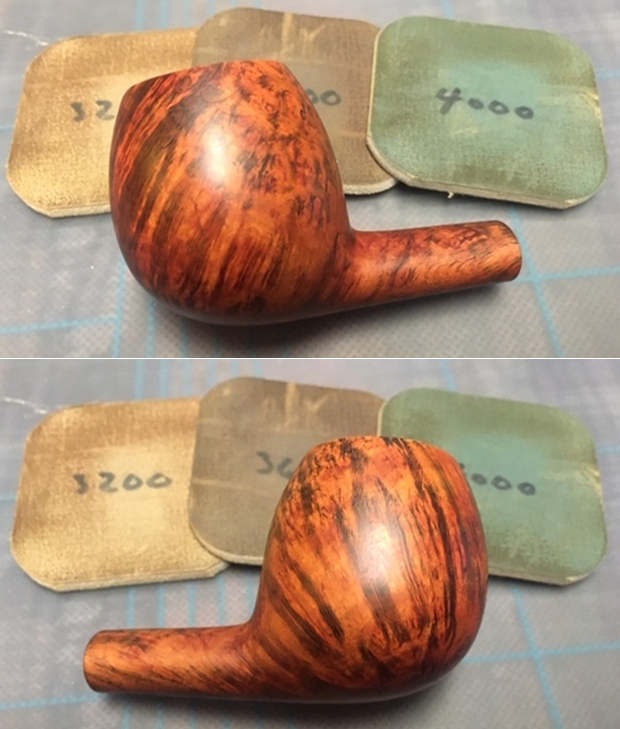
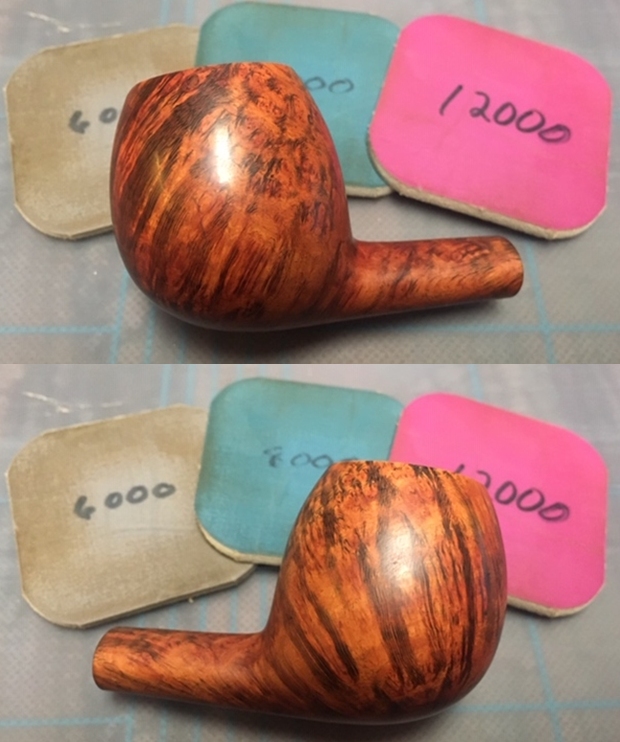
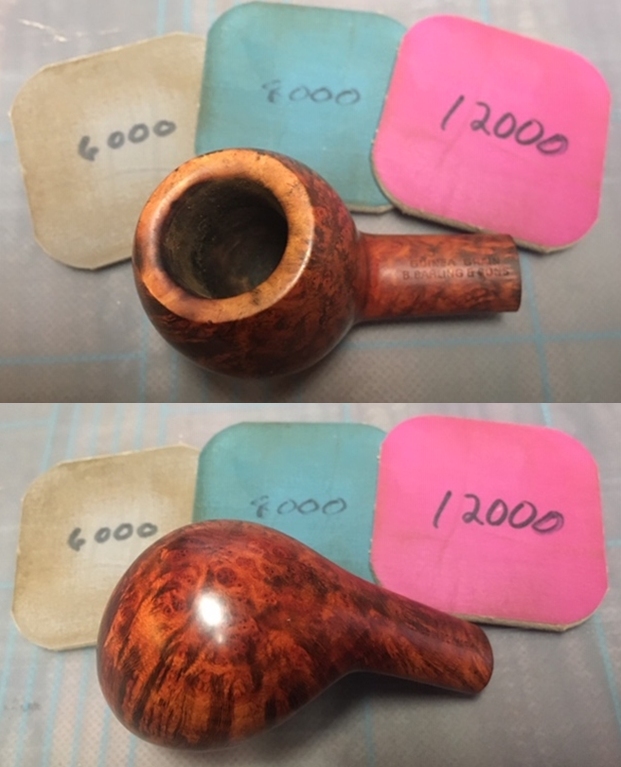
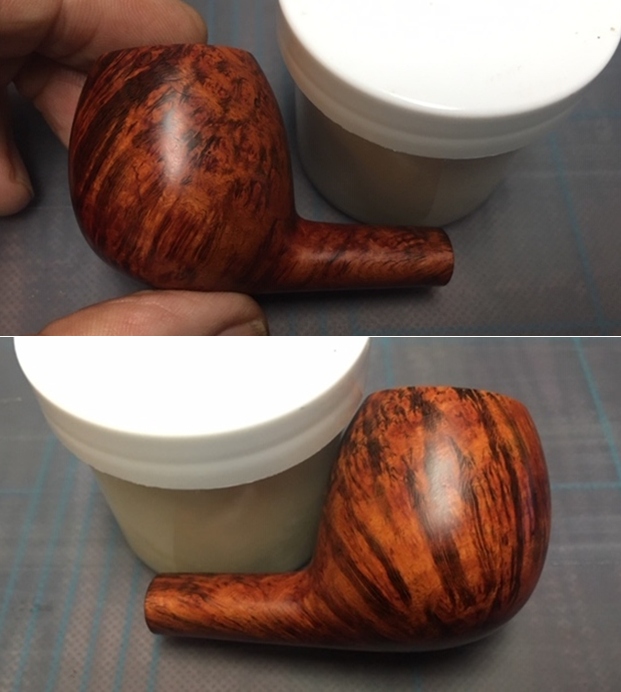
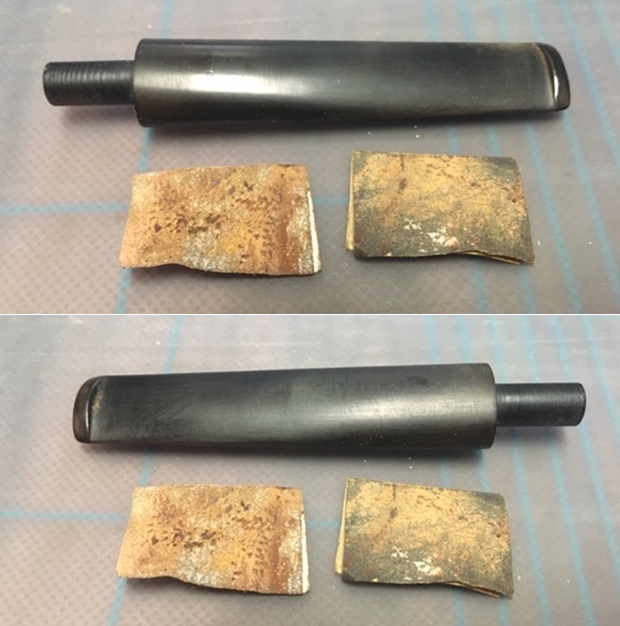
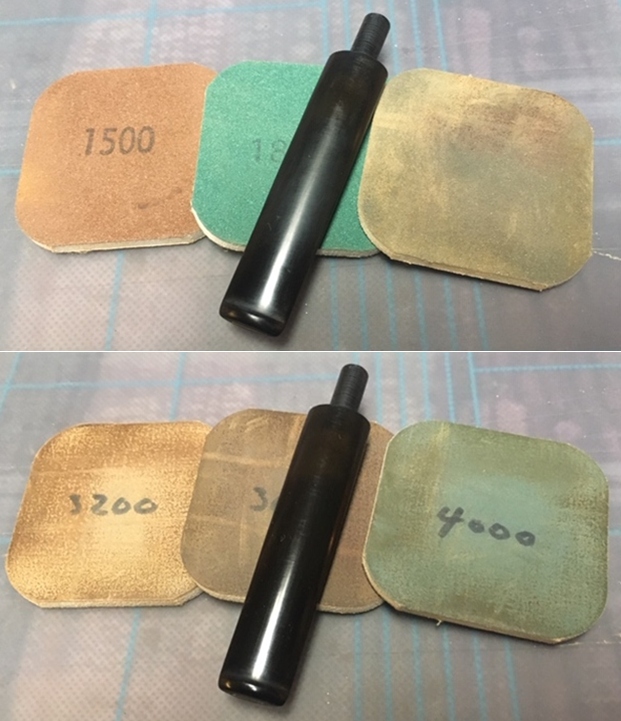
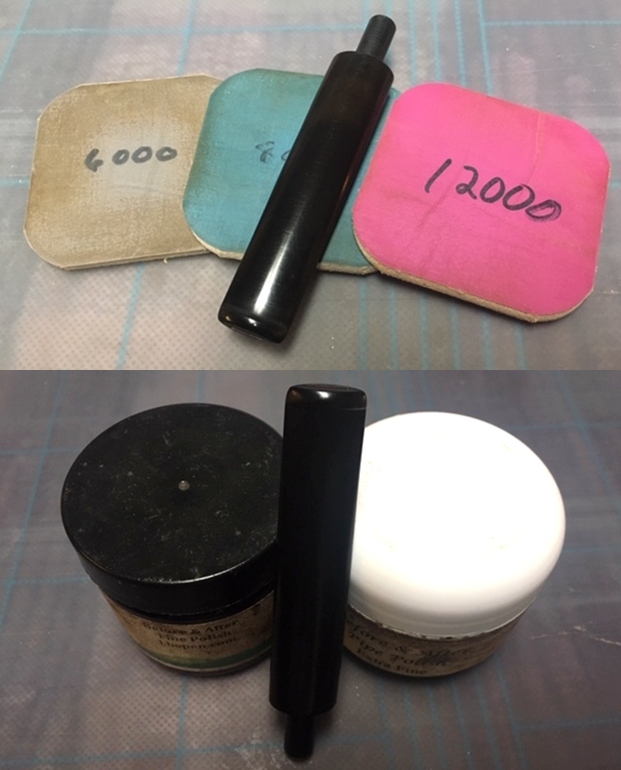
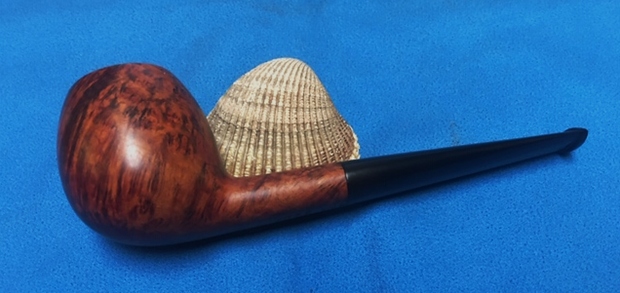
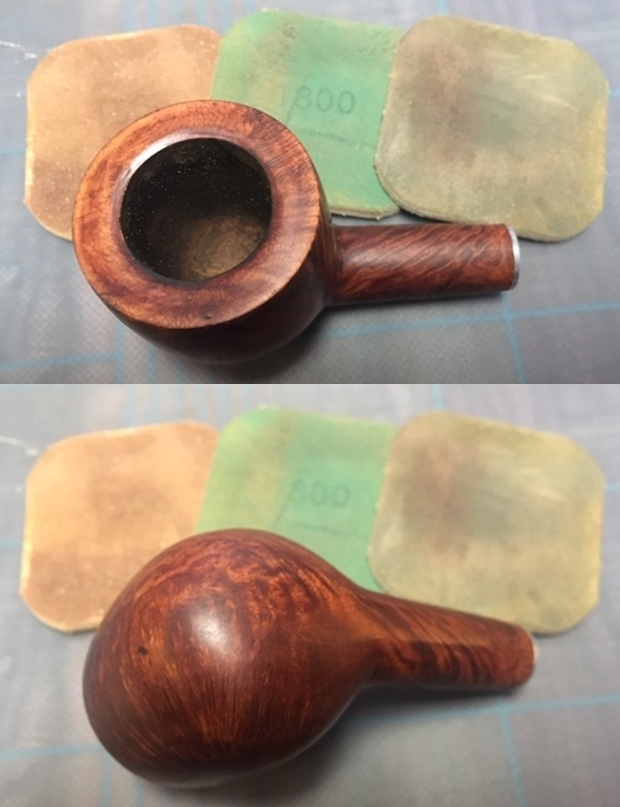
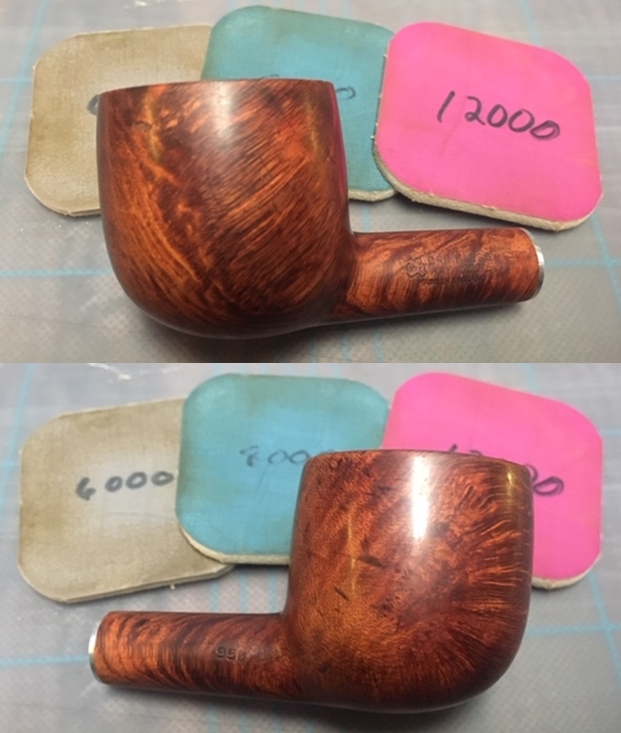
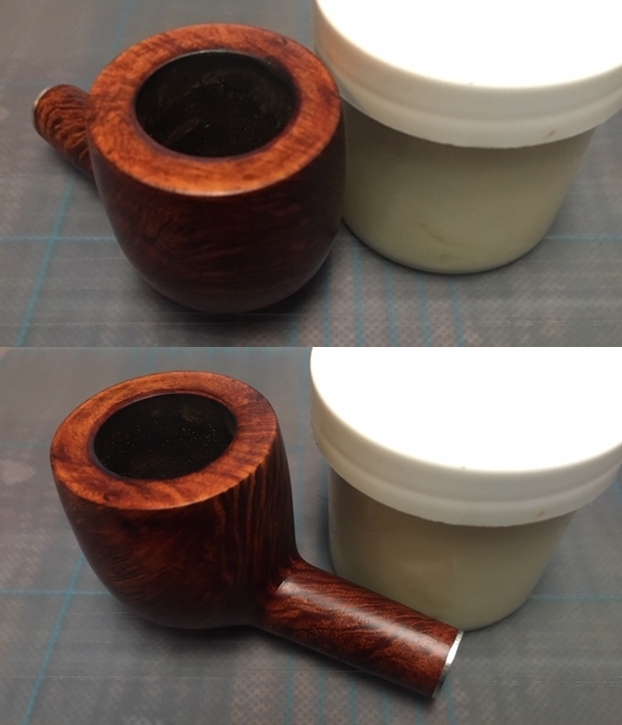
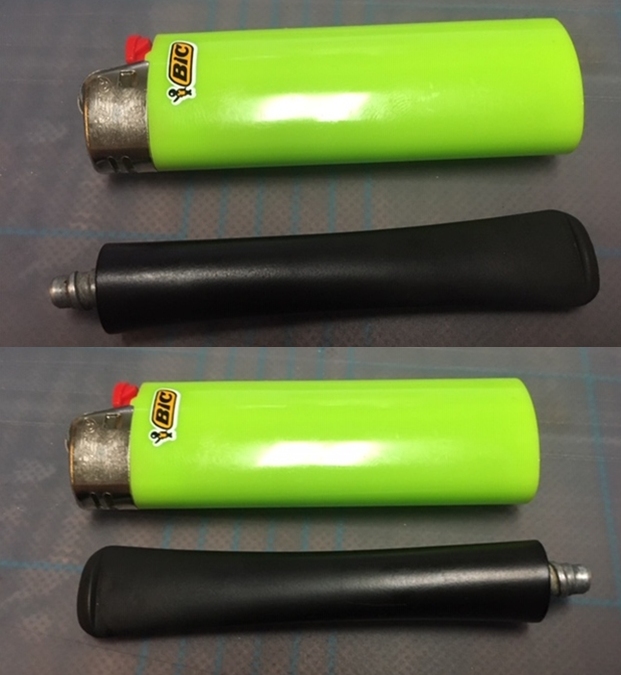
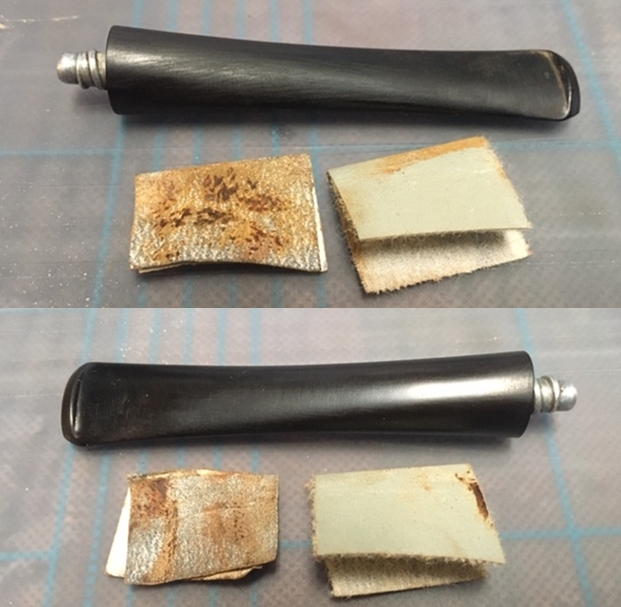
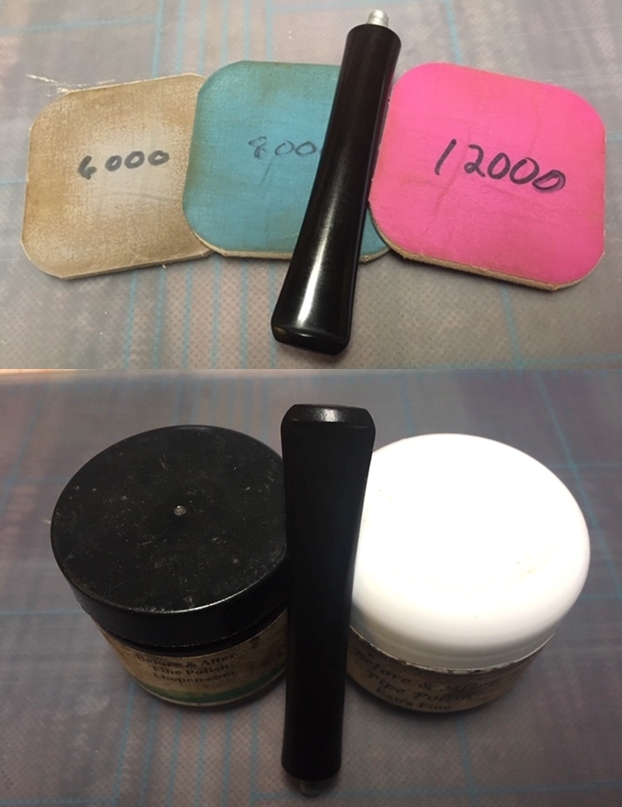
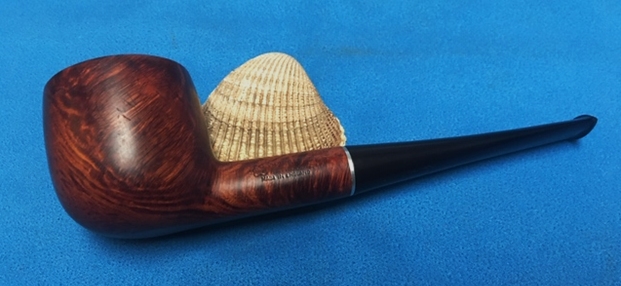
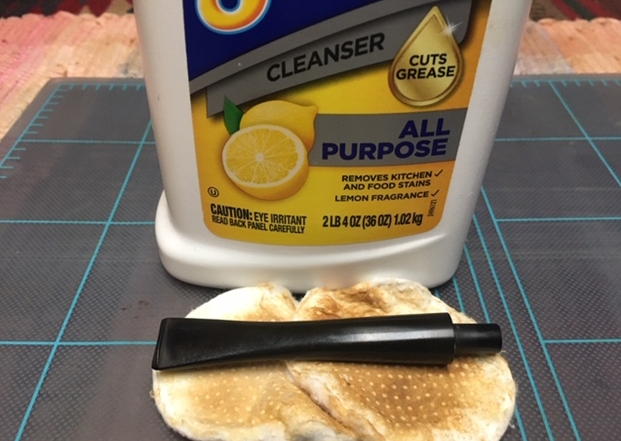
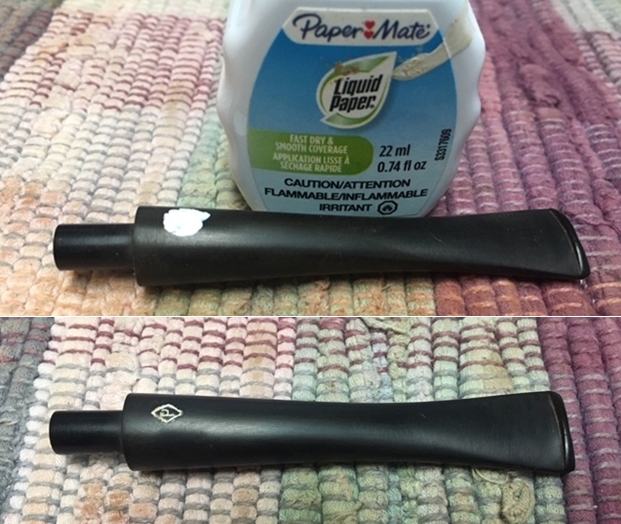
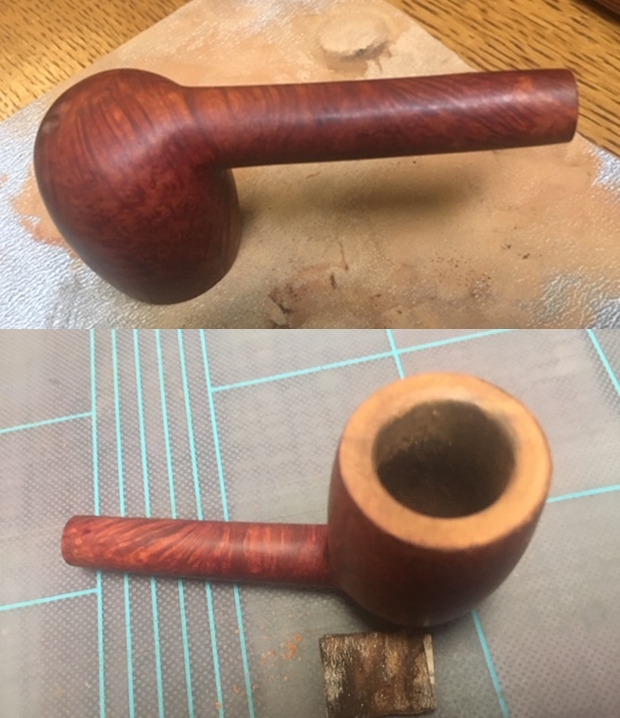
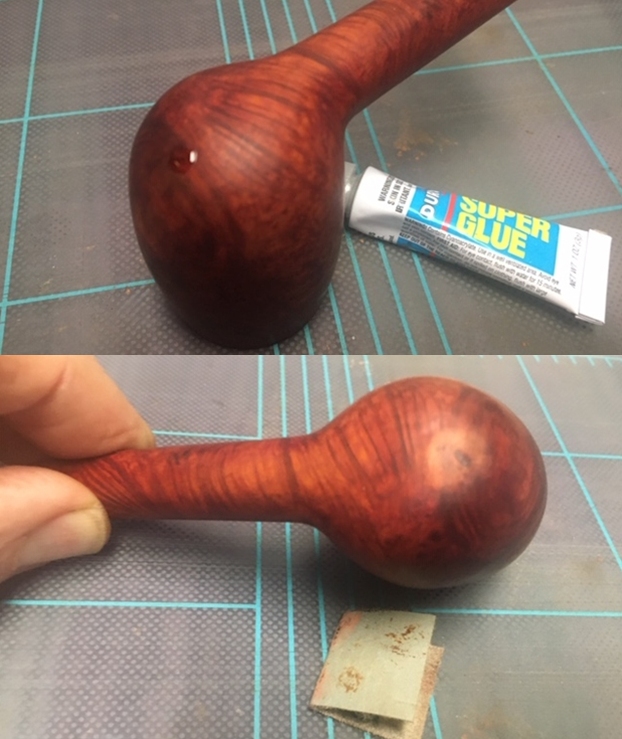
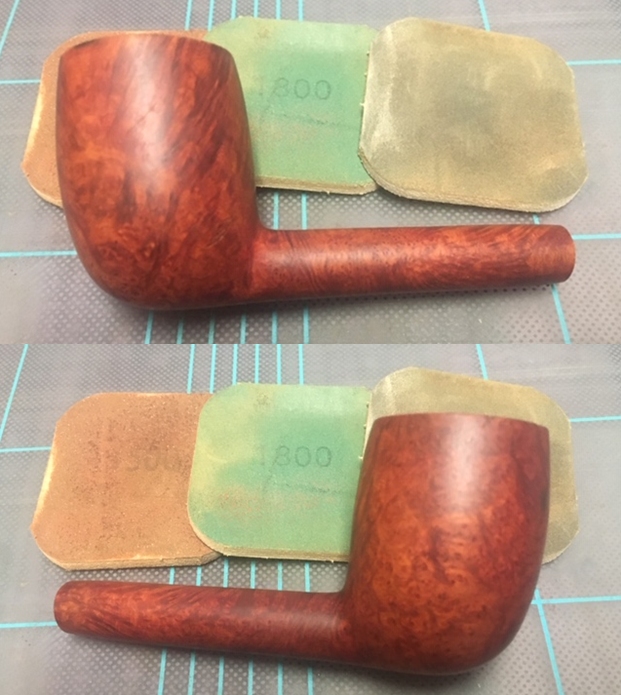
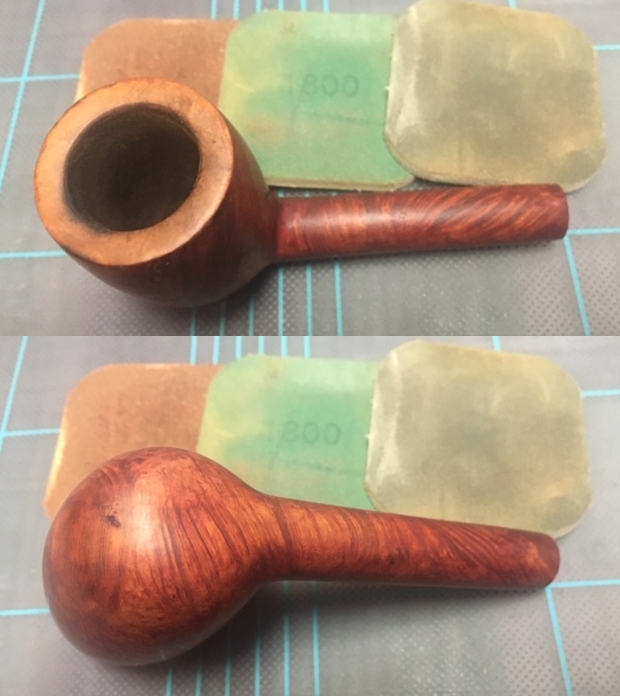
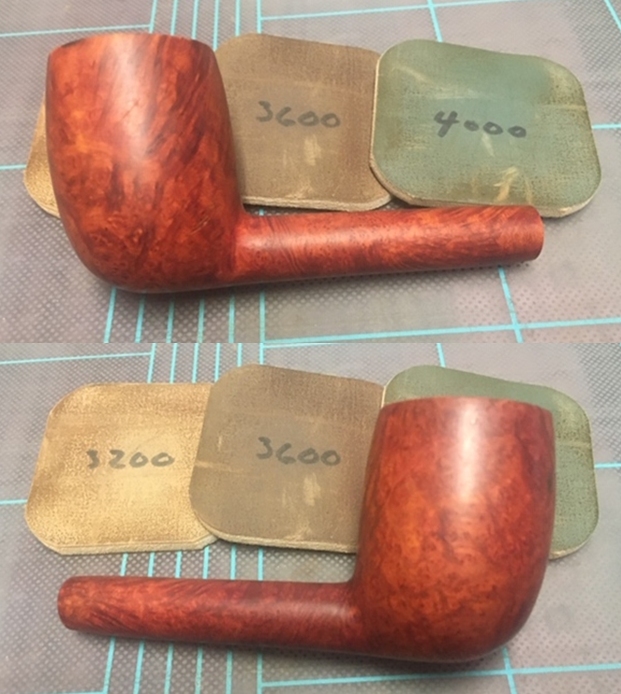
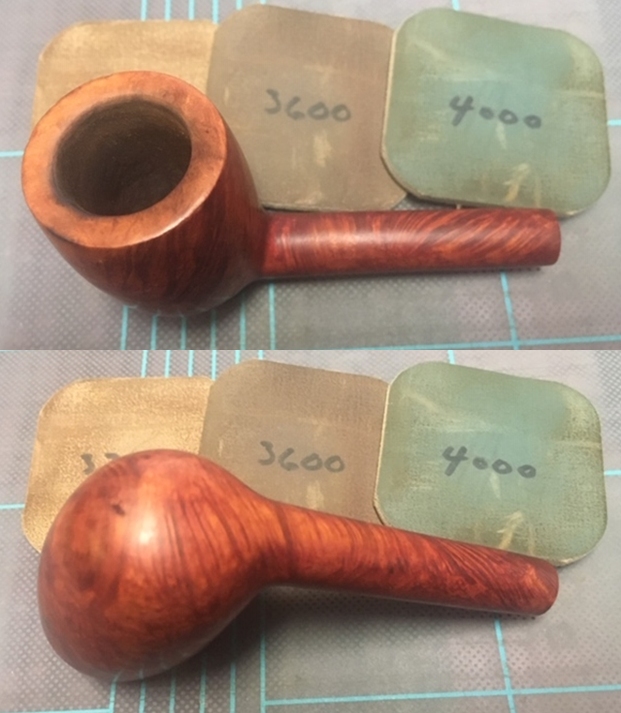
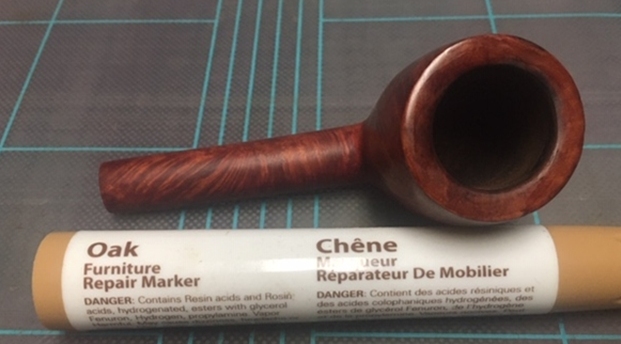
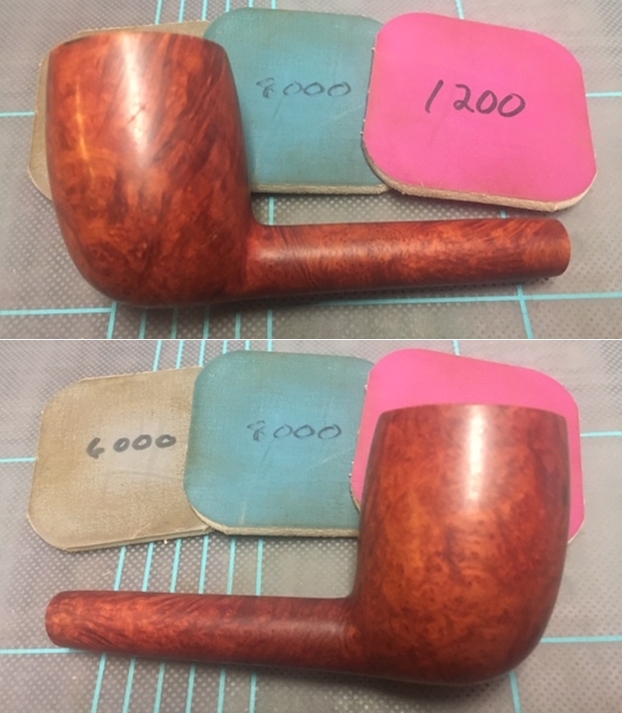
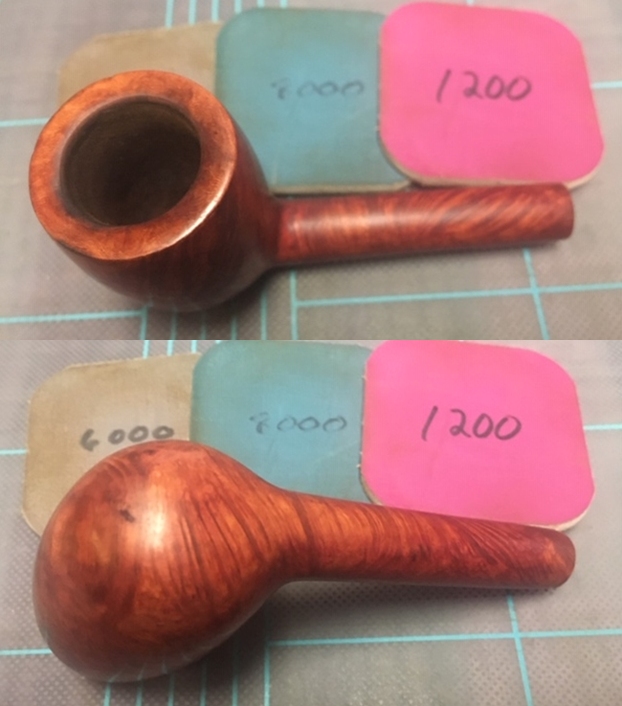
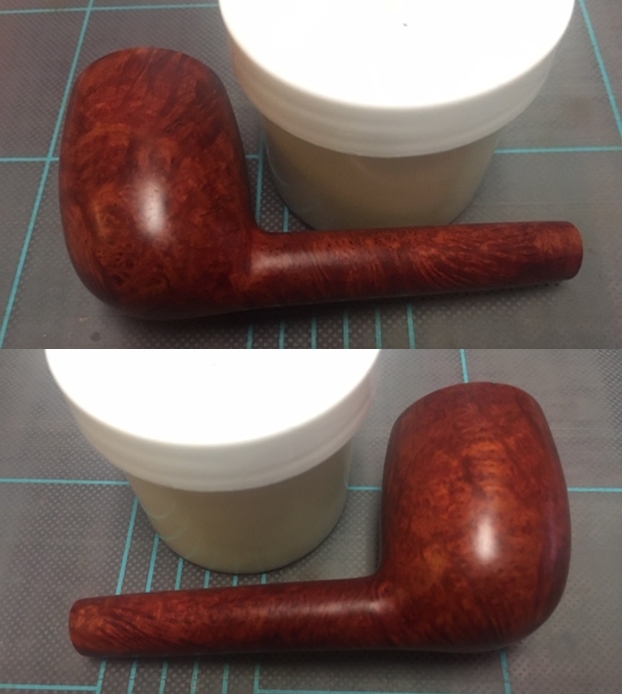
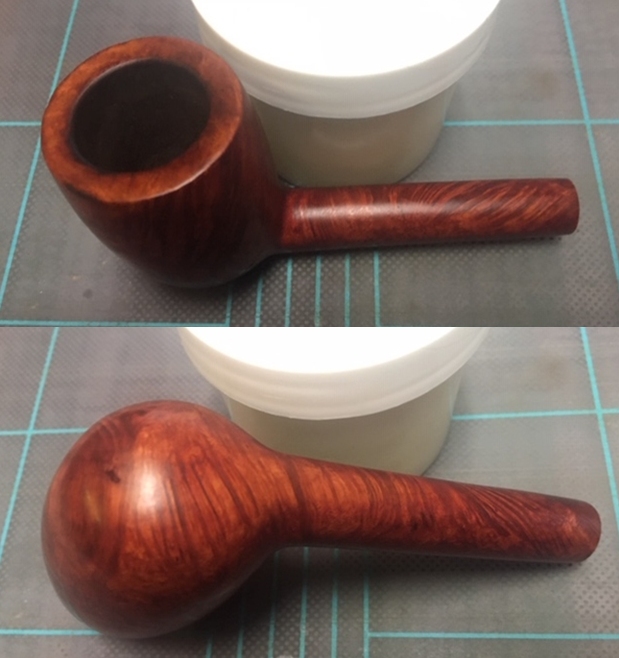
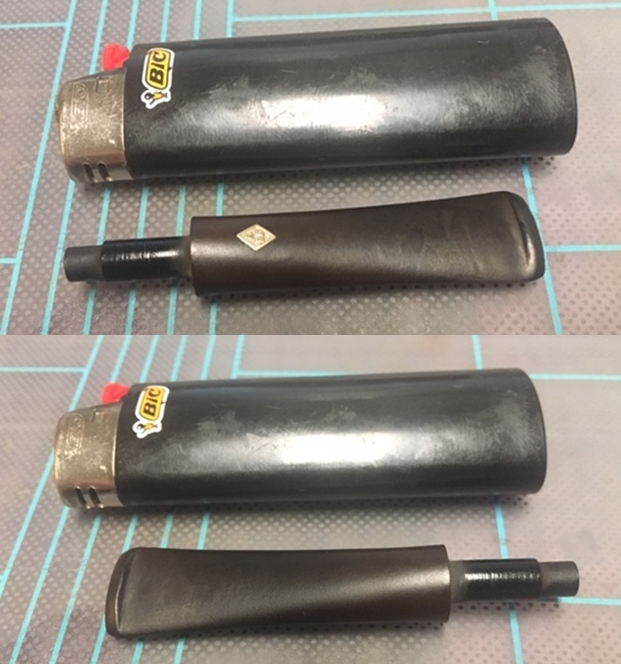
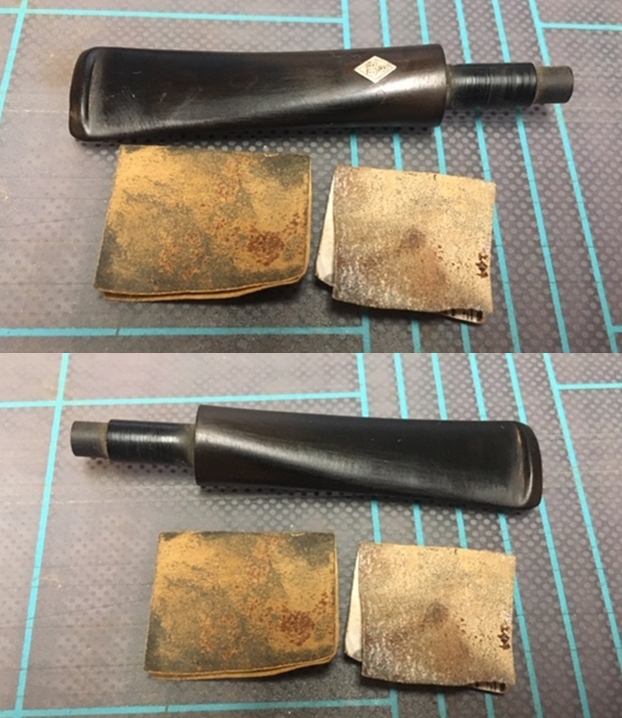
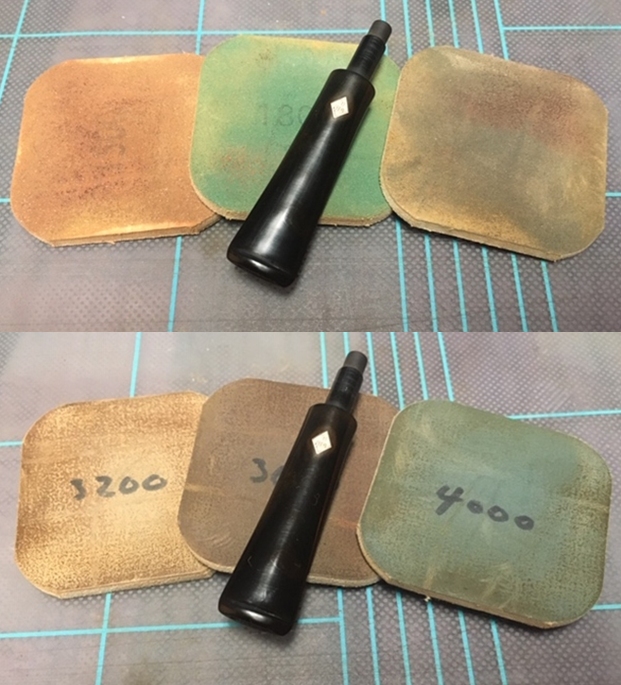
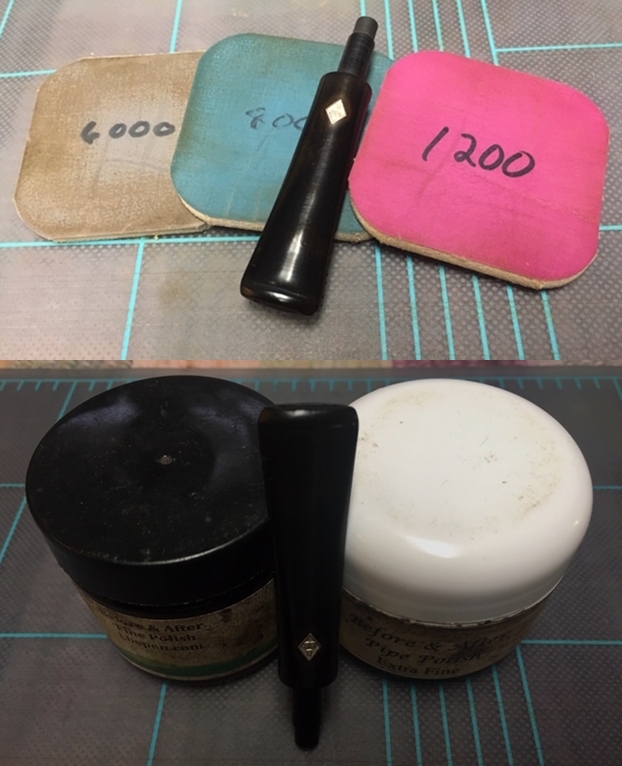
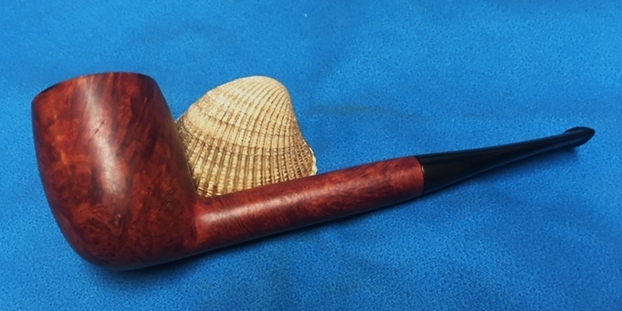
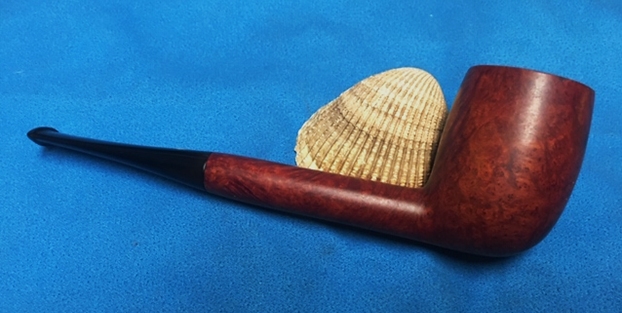
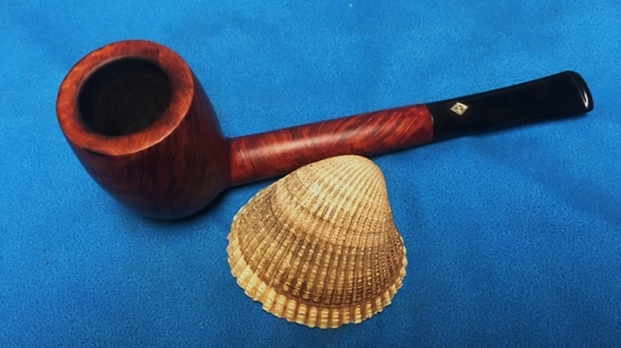
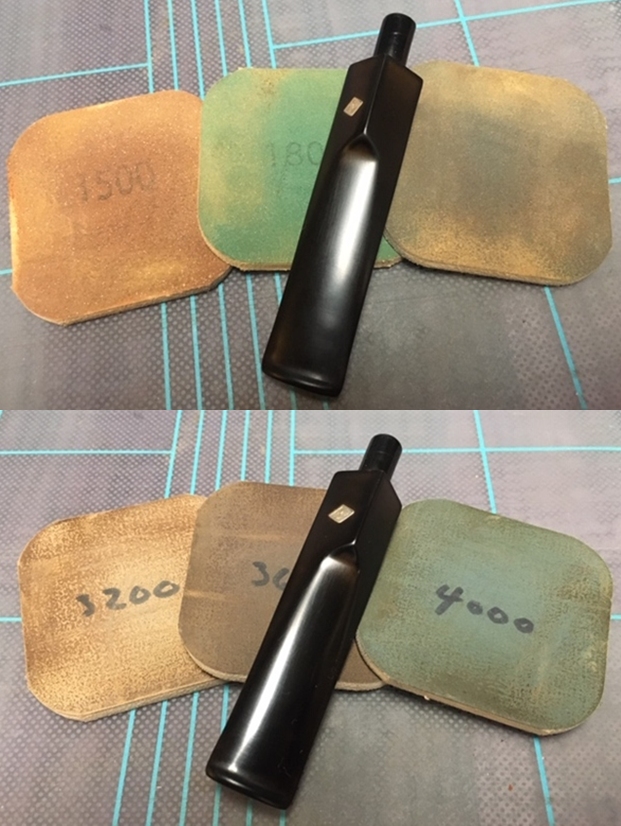
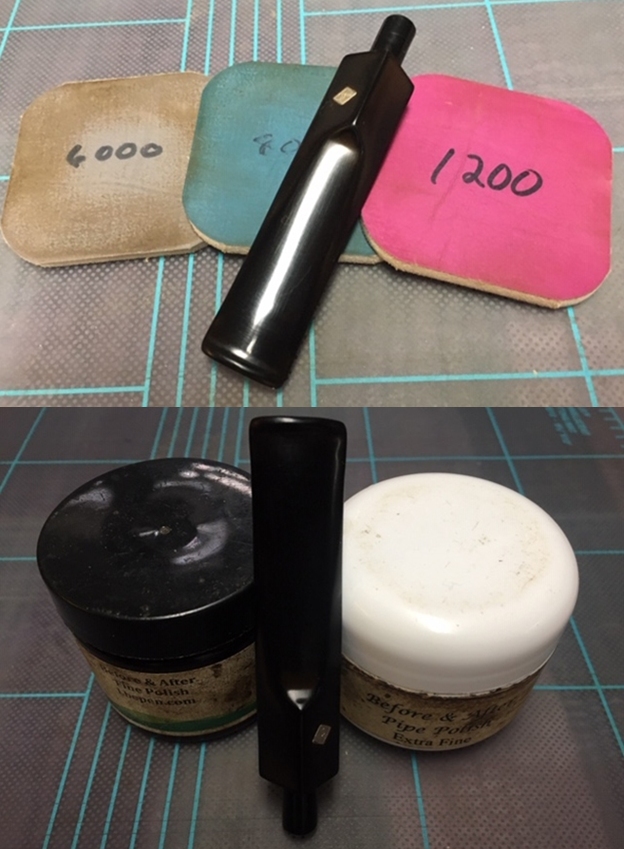
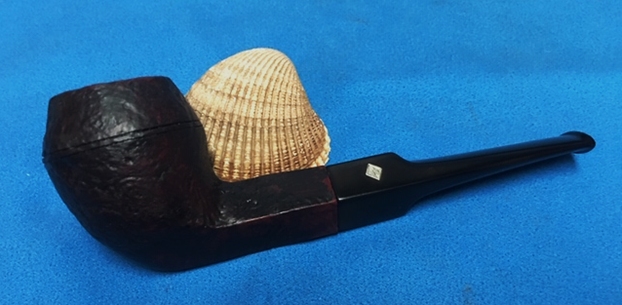
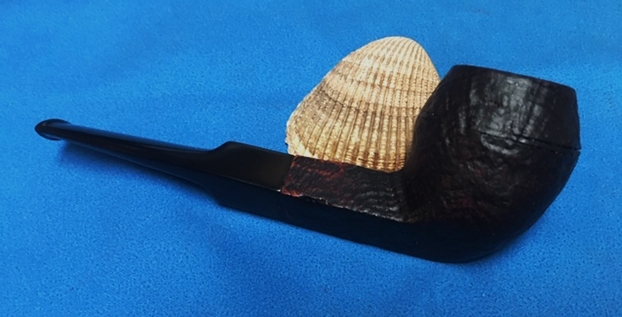
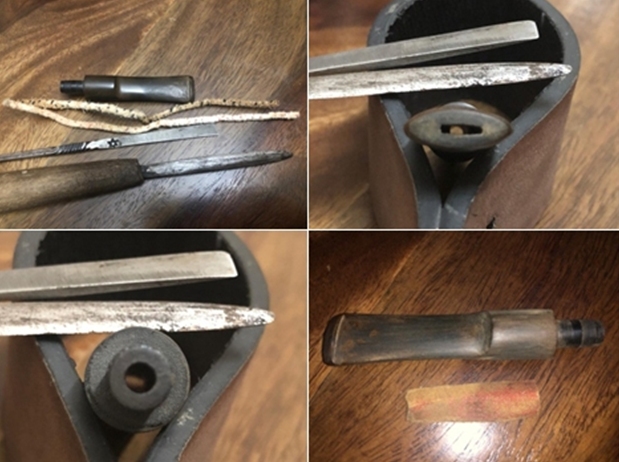
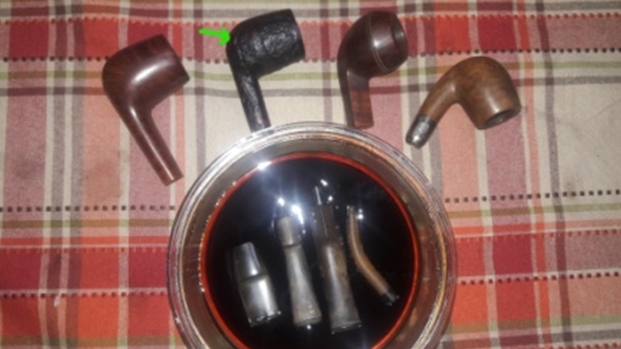
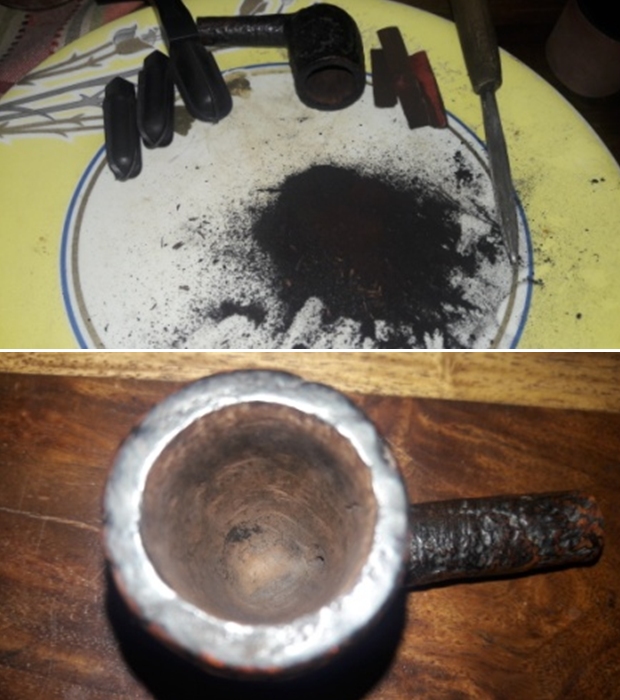
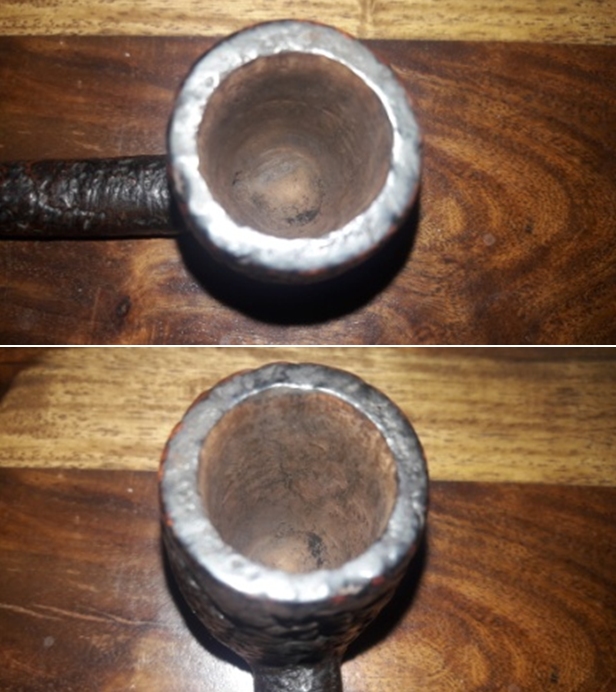
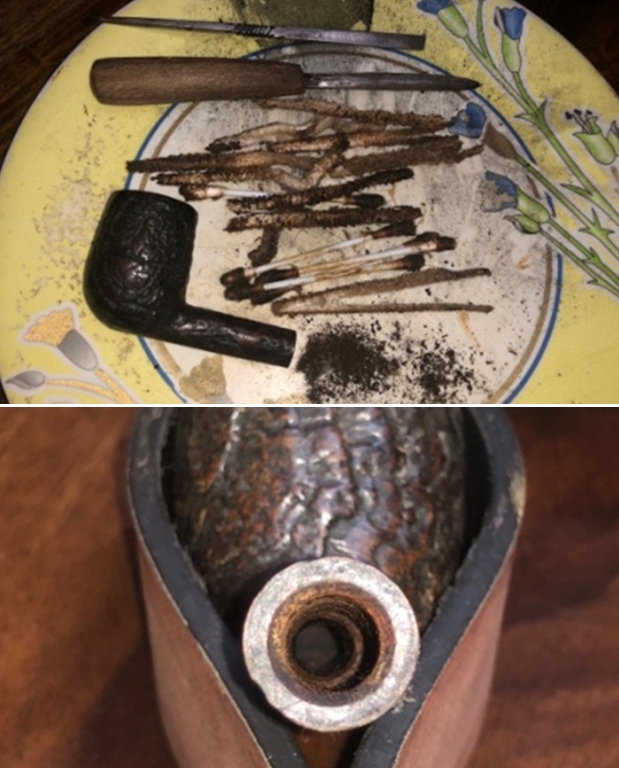
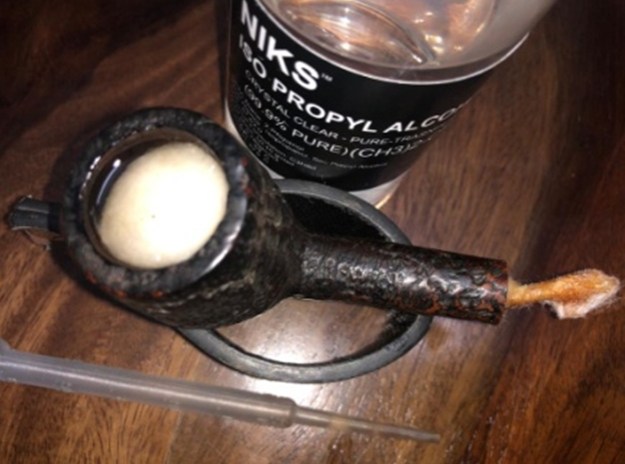
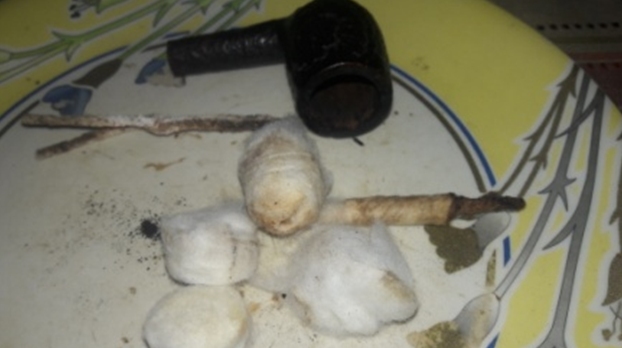
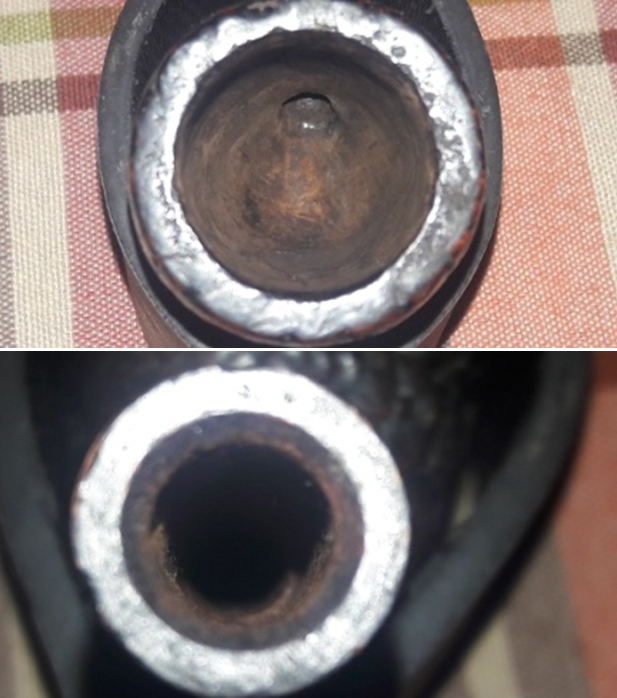
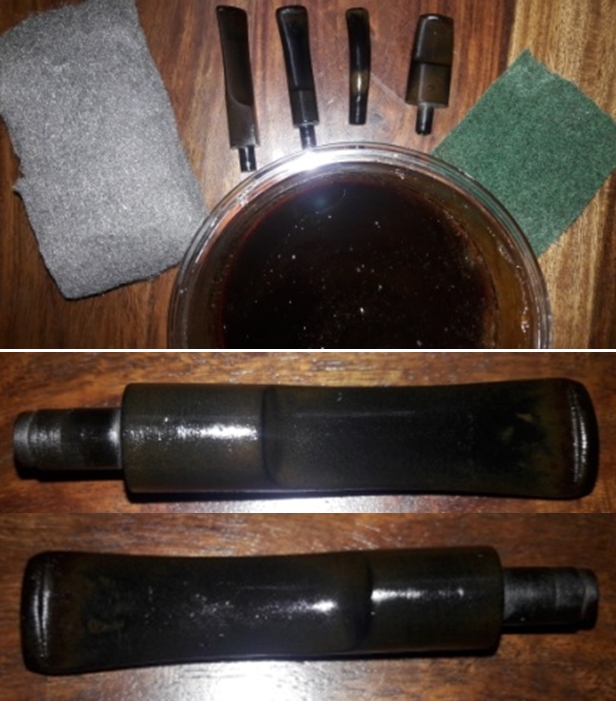
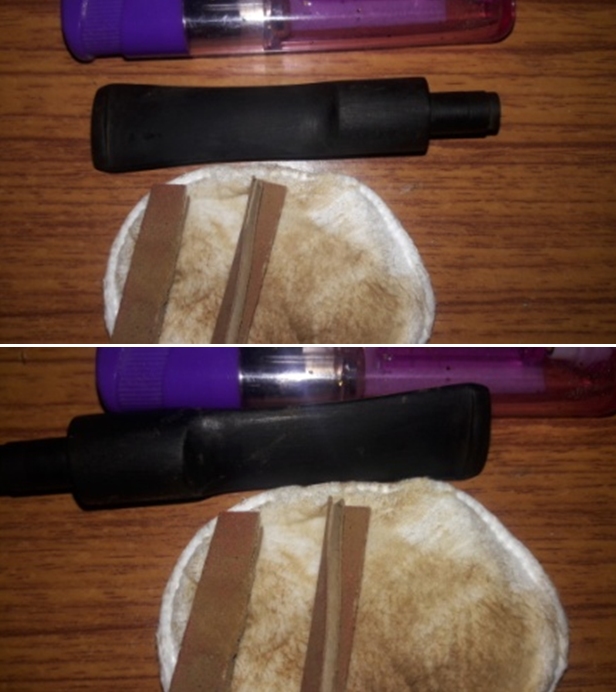
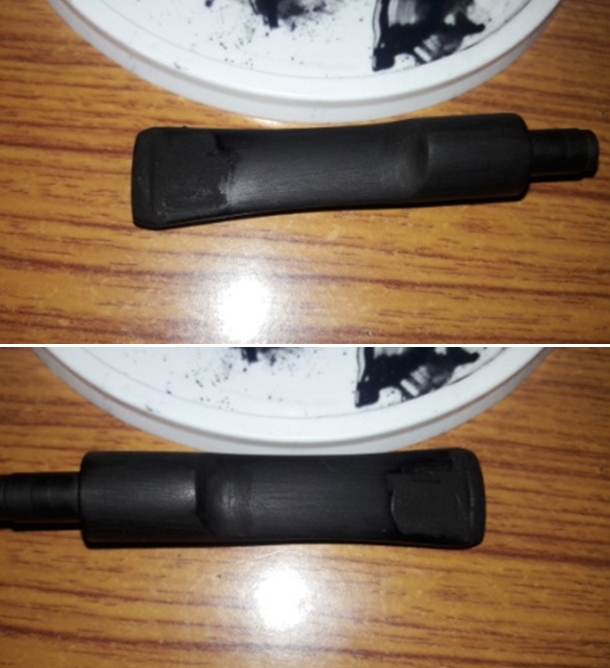
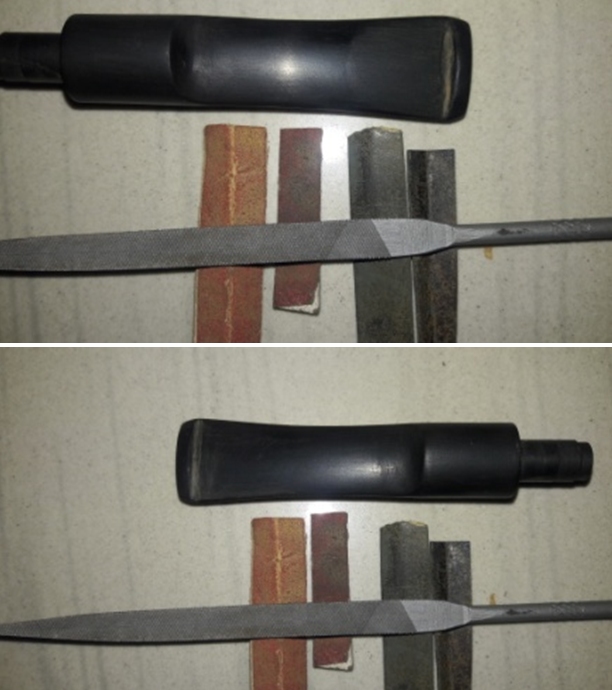
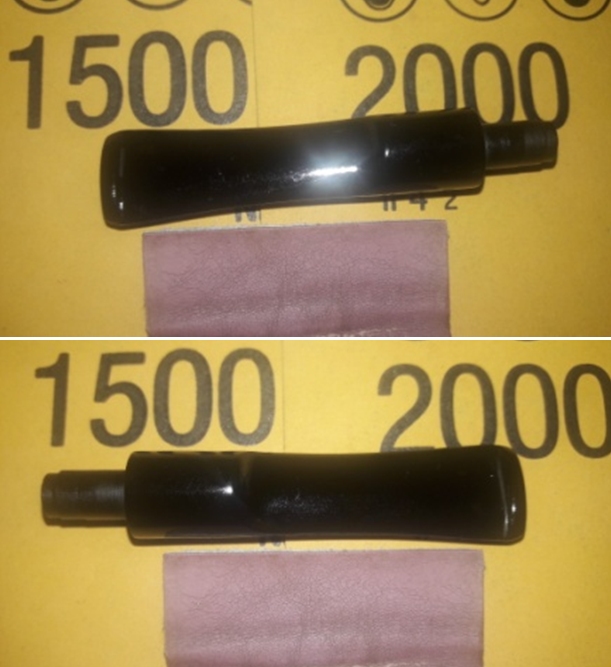
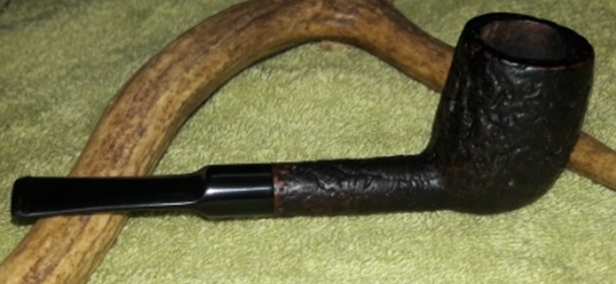
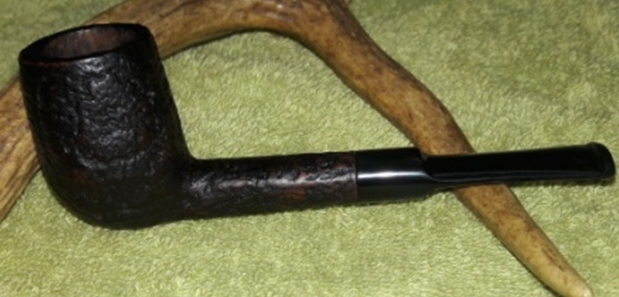
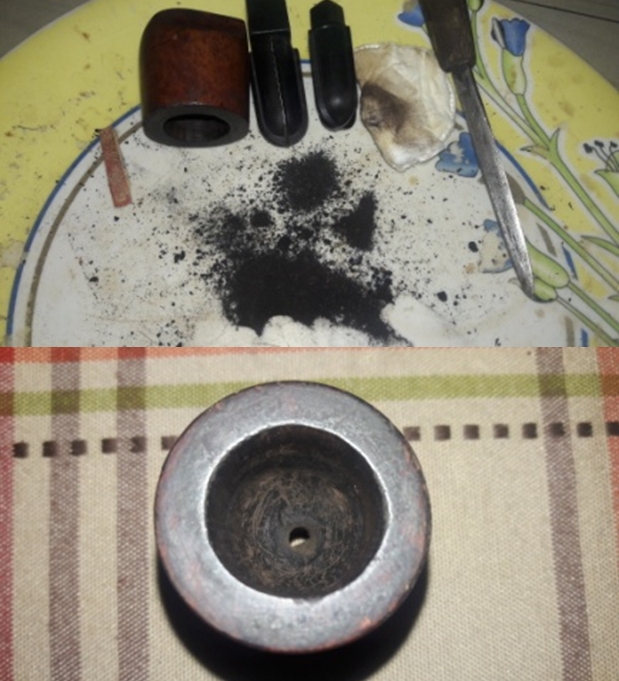
I started the restoration of this pipe by first cleaning the internals of the stem with bristled pipe cleaners and 99.9% pure isopropyl alcohol. I scraped out the dried oils and tars from the tenon end with my fabricated knife and also removed the dried oils and tars from the slot end. I followed it up by sanding the entire stem with a folded piece of 220 grit sand paper to remove the surface oxidation. It has been our (Abha, my wife and self) experience that sanding a stem before dunking it in to the deoxidizer solution helps in bringing the deep seated oxidation to the surface which in turn make further cleaning a breeze with fantastic result.    I dropped the stem in to “Before and After Deoxidizer” solution developed by my friend Mark Hoover. The solution helps to draw out heavy oxidation to the surface, making its further removal a breeze, while the minor oxidation is eliminated to a very great extent. The initial sanding helps to draw out the complete oxidation as the sanding opens up the stem surface that has been initially covered with oxidation. I usually dunk stems of 4-5 pipes that are in-line for restoration and this pipe is marked in pastel blue arrow. I generally allow the stems to soak in this solution overnight to do its work.While the stem was soaking in the deoxidizer solution, I worked on the stummel by first reaming the chamber with size 3 Castleford reamer head. I further scraped the chamber walls with my fabricated knife to remove the remaining carbon deposits where the reamer head could not reach. I scraped out the lava overflow from the rim top surface, especially from the area in the 12 o’clock direction. Once the cake was reamed back to the bare briar, I used a 150 grit sand paper followed by 220 grit sand paper to remove all the traces of remaining cake and also to smooth out the inner walls of the chamber surface. Finally, to remove the residual carbon dust, I wiped the chamber with a cotton pad wetted with 99.9% pure isopropyl alcohol. The chamber walls are sans any damage. The inner rim edge has a number of nicks which were revealed after the lava overflow was removed from the rim top. Thankfully the inner rim was not charred under the lava overflow. The ghost smells are negligible and may further reduce after the shank/ mortise are thoroughly cleaned.  With the bowl internals clean, I move to clean the exterior of the stummel. I used a hard bristled tooth brush and Briar Cleaner, a product that has been developed by Mark Hoover, to scrub the stummel and rim top. I set the stummel aside for 10 minutes for the product to draw out all the grime from the briar surface. After 10 minutes, I washed the stummel under running warm water with anti oil dish washing detergent till the stummel surface was clean and dried it using paper towels and soft cotton cloth. I simultaneously cleaned the shank internals with the detergent and hard bristled shank brush and set the stummel aside to dry out naturally. The stummel surface has cleaned up nicely with the beautiful grain patterns on full display.  While the stummel was drying, the next morning, Abha removed the stems (stem indicated with pastel bue arrow is the one being worked on) that had been soaking in the deoxidizer solution overnight. She cleaned the stem and the stem airway under running warm water and scrubbed the raised oxidation from the stem surface using a scotch brite pad and the airway with a thin shank brush. She further removed the oxidation by scrubbing the stem with 0000 grade steel wool and applied a little EVO to rehydrate the stem. This now gives a clearer picture of the extent of depth of the bite marks as can be seen in the pictures below. These will definitely require a fill. The oxidation is deep and stubborn and can be seen over the stem surface and in the concave of the saddle, as dirty brown coloration. I need to further sand the stem to completely remove the oxidation.I used a 220 grit sand paper to sand the stem and remove all the oxidation that was raised to the surface. This step further reduced the tooth chatter and bite marks present on the stem. I wiped the stem with Murphy’s Oil soap on a cotton swab. This helps in cleaning the stem surface while removing the loosened oxidation. Using a lighter, I flamed the surface of the stem. This helped in raising some of the tooth chatter and bite marks to the surface as vulcanite has a property to regain its original shape on heating. I used a white correction pen to highlight the stem logo. I smeared the correction ink over the logo and once dried, I shall gently wipe out the excess ink. The remaining tooth chatter and bite marks would be addressed subsequently by filling it with a charcoal and superglue mix.I addressed the deeper tooth chatter and bite marks by filling them up with a mix of activated charcoal and CA superglue. Once I had applied the mix, I set it aside to cure overnight. Once the fill has hardened, I shall file and sand the fills to match the surface of the stem and sharpen the button edges on either surface.  With the fills in the stem set aside to cure, I turned my attention back to the stummel. It was time to address the nicks, dents/ dings over the rim top and uneven inner rim edge. I decided to top the rim top surface, a process for which I have an aversion. However, it is a necessary evil if the rim top and rim edges are heavily damaged. I top the rim on a square piece of 220 grit sand paper, frequently checking for the progress. Once I was satisfied that the rim top is evenly smooth and also the damage to the inner (in 12 o’clock and 2 o’clock direction) and outer (dents in the 6 o’clock direction) rim edge has been reduced, I stopped the process of topping. Here is how the rim top surface appears at this point in restoration. The process of topping has flattened the rim top which originally had a slight OUTWARD slant from the inner rim edge. A few minor nicks to the inner and dings to the outer edge are still visible. I shall address these issues by hand sanding the edges to create a slight bevel to both the inner and outer edges.With a folded piece of worn out 180 grit sand paper pinched between my thumb and forefinger, I create a very slight bevel to the inner edge. This helped to remove the remaining nicks from the inner edge. With the same grit sand paper, I created a bevel to the outer edge while at the same time with outward movement of the sand paper, gave a slight outward slope from the inner edge. The rim top surface and the edges look very neat at this stage. Next I addressed the numerous scratches and dings to the stummel surface. I sand the stummel surface with a piece of 220 grit sand paper to remove/ minimize the scratches over the stummel surface. Though 95% of the scratches and dings have been eliminated, there still remains few very minor dings that are remnants of the deeper ones. I accept these dings as part of this pipe’s journey till date.  I followed it by wet sanding the stummel with 1500 to 12000 grit micromesh pads, wiping frequently with a moist cloth to check the progress. I really like the looks of the stummel at this point in restoration. The grains and the clean lines of this piece of briar is really appreciable. Next, I rubbed a small quantity of “Before and After Restoration Balm” deep in to the briar with my finger tips and let it rest for a few minutes. The balm almost immediately works its magic and the briar now has a nice vibrant appearance with the beautiful grain patterns displayed in their complete splendor. I further buffed it with a horse hair brush. The contrast of the dark browns of the flame and cross grains with the natural finish of the rest of the stummel adds an interesting dimension to the appearance of the stummel which may be insufficiently described in words and be rather seen in person.  With the stummel rejuvenation almost complete, save for the final wax polish, I worked the stem. The fill had hardened and with a flat head needle file, I worked on the filling till I had achieved a rough match with the surrounding surface and had sufficiently sharpened the button edges. For a better blending, I further sand the entire stem with 220 followed by 400, 600 and 800 grit sand paper. This helps to reduce the scratch marks left behind by the more abrasive 220 grit paper. To bring a deep shine to the vulcanite stem, I polished the stem, wet sanding with 1500 to 2000 grit sandpapers followed by further wet sanding with 3200 to 12000 grit pads. I wiped the stem with moist cloth after each pad and rubbed it down with Extra Virgin Olive oil to rejuvenate the vulcanite. The finished stem is shown below. The oxidation on this stem was the deepest and the most difficult to remove of all the pipes that I have worked on till date and I have worked on quite a few disastrous stems!! At one point in time, I had to resort to a 150 grit sand paper, the most abrasive one that I have in my inventory. The scratch marks left behind by the sand paper are still visible in the pictures but not noticeable in person (if that’s any consolation…) I have now reached the homestretch in this restoration project. To complete the restoration, I mount a cotton cloth buffing wheel on to my hand held rotary tool and polished the stummel and stem with Blue Diamond compound. This compound helps to remove the minor scratch marks that remain from the sanding. I mount another cotton buffing wheel that I have earmarked for carnauba wax and applied several coats of the wax. I finished the restoration by giving the entire pipe a rigorous hand buffing using a microfiber cloth to raise the shine further. The finished pipe looks amazingly beautiful. The finished pipe is as shown below. P.S. In my last write up a question “Why do I enjoy bringing these old battered and discarded pipes back to life?” had popped up in my mind.

Well, the first and foremost reason that I enjoy this hobby is because I enjoy smoking a pipe and it being an instrument of joy for me, is of utmost importance. Thus, bringing these instruments of enjoyment back to life from obscurity to function as it was intended to be gives me immense pleasures. I am sure the readers will understand this reasoning.

I wish to thank each one for sparing their valuable time to read through this write up and each one is my prayers. Stay home…stay safe!!

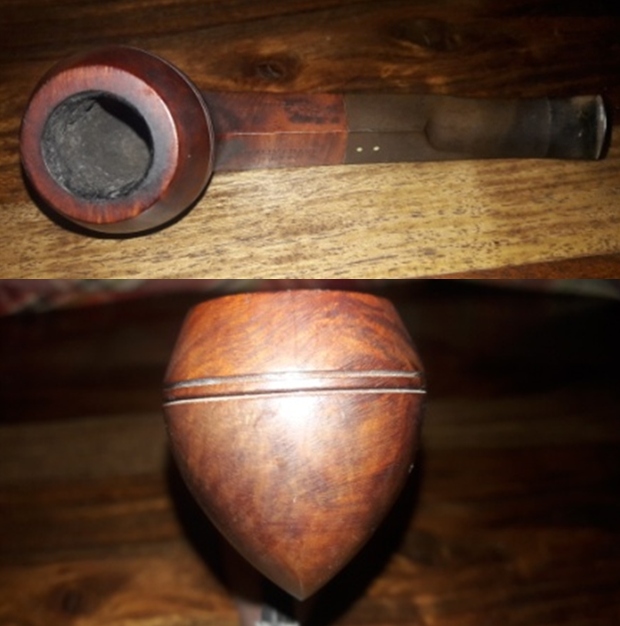
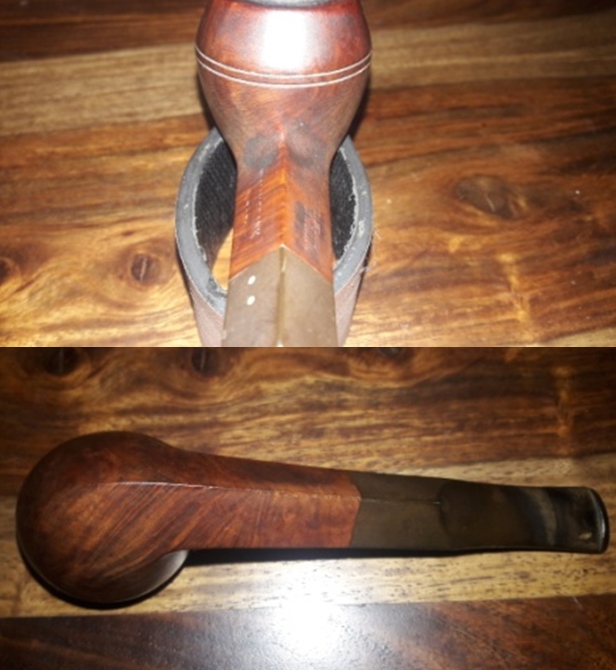
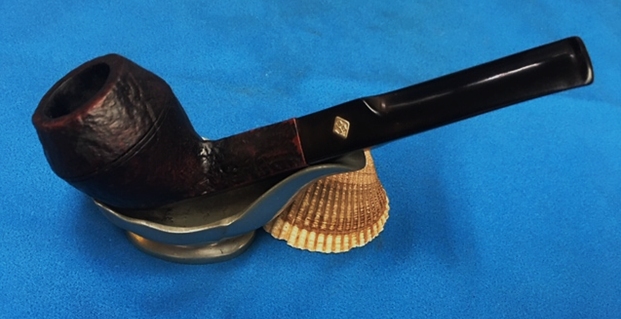
An Inherited Pipe Thought To Be Sasieni, Turned Out To Be A Wally Frank “Natural Unvarnished” Bulldog.


Blog by Paresh Deshpande

I had randomly selected four pipes to work on since I prefer to put a few pipe stems together in the “Before And After” Deoxidizer solution that has been developed by Mark Hoover. I have completed the restoration of one of these pipes, a Wally Frank “BLACKTHORNE” sandblast billiard.

The moment I had picked up this pipe, as had happened with the BLACKTHORNE, I thought this pipe to be a Family era Sasieni what with the two dots that peered back at me and the classic Bulldog shape. However, when I saw the stampings, again for the second time on the trot it turned out to be a US brand. The smooth briar, shape and quality of the stem all oozed high quality.

The pipe is a Bulldog with a diamond shank and a straight diamond saddle stem. It is a medium sized pipe with a nice hand feel and the light weight makes it easy for clenching. This pipe is stamped on the upper left smooth surface of the shank as “WALLY FRANK” over “LTD” and on the upper right shank surface as “NATURAL UNVARNISHED” over “IMPORTED BRIAR”, all in block capital letters. The stampings appear faint due to accumulation of dirt and grime over the surface. The high quality vulcanite diamond saddle stem has two Blue Dots. I had read about Wally Frank, while researching a Wally Frank Blackthorne, as being an old Tobacconist from around New York City in US who also sold English made pipes under his name since 1930s. The NATURAL UNVARNISHED was one of the lines/styles of pipes that was offered by Wally Frank. For the readers who wish to acquaint themselves with the Tobacconist and the brand, given below is the link to the write up on pipedia.org.

https://pipedia.org/wiki/Wally_Frank

To unravel the mystery of the two dots, I searched the internet and came across a forum Pipe Smokers Dens where there was thread on Wally Frank. Here is the link to the discussion;

https://pipesmokersdens.com/threads/show-us-your-wally-franks.3139/page-2

I reproduce the relevant part of the discussion which references the TWO DOTs seen on my pipe that makes for an interesting read.

Deadfrog said:

No, it’s just a standard push tenon. It’s a “Wally Frank Limited” & “Made in England”. I never delved too deep into who in England made pipes for them, but if I recall correctly, Sasieni and Charatan supplied them with pipes over the years. Regardless, this was a good buy. Some beautiful grain without a single fill. It’s a nice, classically shaped pipe.

Piffyr Replied

Comoy was their primary British supplier. If the pipe has a shape number, it likely matches the Comoy chart. They also bought pipes from Charatan and (maybe/likely) GBD. Also, a few smaller manufacturers in England that are mostly forgotten today. I think the Sasieni thing started because of the pale blue dots used on the Natural Unvarnished stems coupled with some wishful thinking, but it doesn’t hold up. The pipes aren’t COM stamped and the shapes don’t match. Sometimes, a pale blue dot is just a pale blue dot.

I have not been able to accurately pinpoint the period that this pipe was made in, so any assistance in this regard is welcome and highly appreciated.

Initial Visual Inspection
This pipe has the classic Bulldog shape with the rim cap separated from the rest of the stummel by two rings. The stummel boasts of some beautiful flame and cross grains all over the bowl and shank and is covered in dirt and grime of the overflowed lava. There is not a single fill in the briar which speaks of high quality selection of the briar. There is a decent layer of cake in the chamber. The stem is heavily oxidized with a few deep bite marks in the bite zone. Here is how the pipe appears as it sits on my work table. Detailed Inspection Of The Pipe And Observations
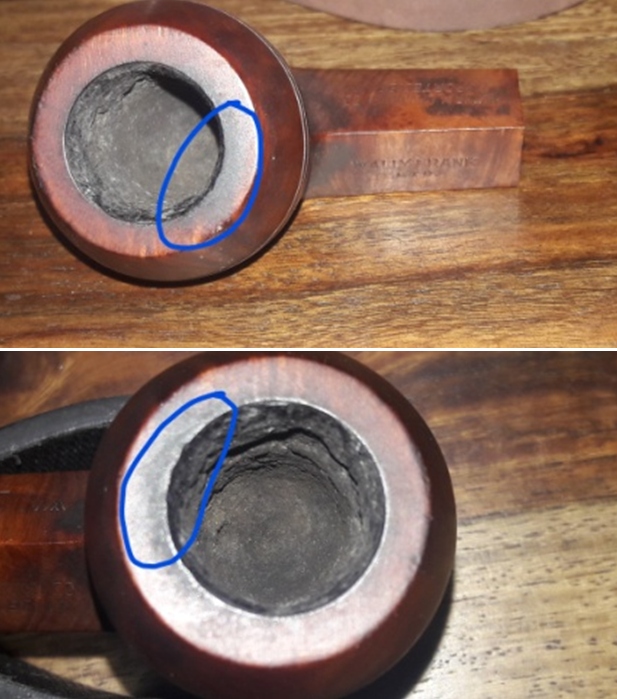
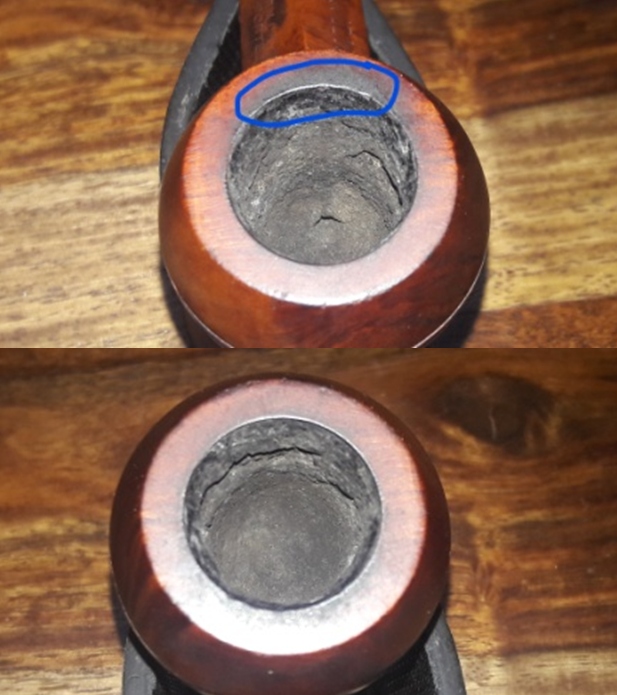
The bowl is in perfect round with a decently wide rim and a depth of about 1 7/8 inches. The chamber has an uneven layer of thick cake. The smooth rim top surface is covered in lava overflow and dirt and grime from previous usage and subsequent storage. The maximum deposition of lava is seen in the 6 o’clock direction (enclosed in blue circle). The inner rim appears to be in pristine condition and the outer rim has suffered a few blows on a hard surface resulting in a few minor chipped edge surfaces. The condition of the inner walls of the chamber can be commented upon after the cake has been taken down to the bare briar. The draught hole is dead center and at the bottom of the chamber and that makes me believe that it should great smoke and the thick cake in the chamber lends credence to this observation. The stummel appears solid to the touch all around and hence I do not foresee any serious damage to the walls in the form of burnout/ deep heat fissures/ lines or pits. The darkened inner rim edge may present a surprise in the form of charred rim edge making the chamber out of round. The smooth stummel surface has taken on a layer of aged patina, through which one can make out the beautiful flame grains all around interspersed with tightly packed cross grains. There are a few minor dents and dings on the lower edge of the diamond shank, probably due to likely falls and or rubbing against other pipes while being stored for more than 40 years. However, there is not a single fill in the entire stummel, signifying very high quality of briar used in carving this pipe. The two rings demarcating the rim cap is intact and the grooves are filled with grime and dust. The briar is looking lifeless and bone dry and has taken on dirty grey hues. I need to be careful while cleaning the paneled shank surfaces to preserve the stampings on this pipe. Thorough cleaning and rising under warm water of the stummel surface should highlight the grain patterns while preserving the patina. In all probability, I shall let these minor dents and dings to the lower edge of the shank remain and avoid the process of sanding the stummel with sand paper in order to preserve the beautiful patina. Maybe, micromesh polishing will address a few of these dents and scratches to some extent. The mortise shows accumulation of oils, tars and gunk and the air flow is not full and smooth. The high quality vulcanite diamond saddle stem is so heavily oxidized that it appears brownish green in color! It is evident that the pipe was used with a softie rubber bite as can be seen from the difference between the area covered by the rubber bite and rest of the stem surface. Some minor tooth chatter and one deep gouge mark is seen on the lower surface of the stem. There are a couple of not very deep bite marks on the upper stem surface. This issue should not be a major headache to address. The lip edge on both sides is in good shape requiring nothing more than minor reshaping. The tenon has accumulated ash and oils/ tars that have dried out on the inside as well as on the outside. The horizontal slot has grime deposits which will have to be cleaned. The tooth chatter and the bite marks will be raised to the surface by heating and the deeper tooth indentations will be filled using charcoal and CA superglue mix. The Process
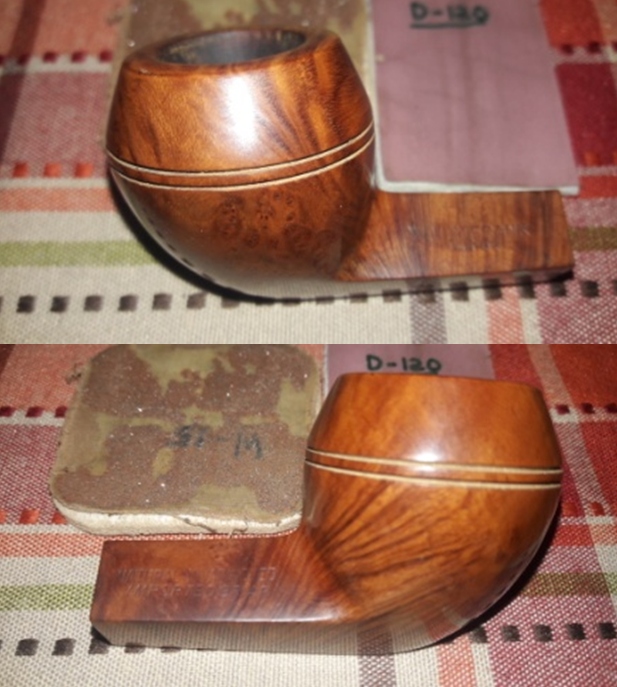
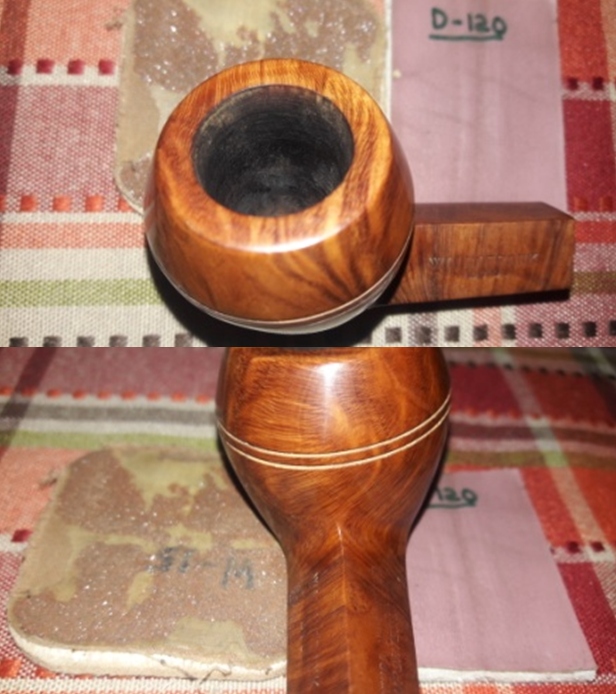
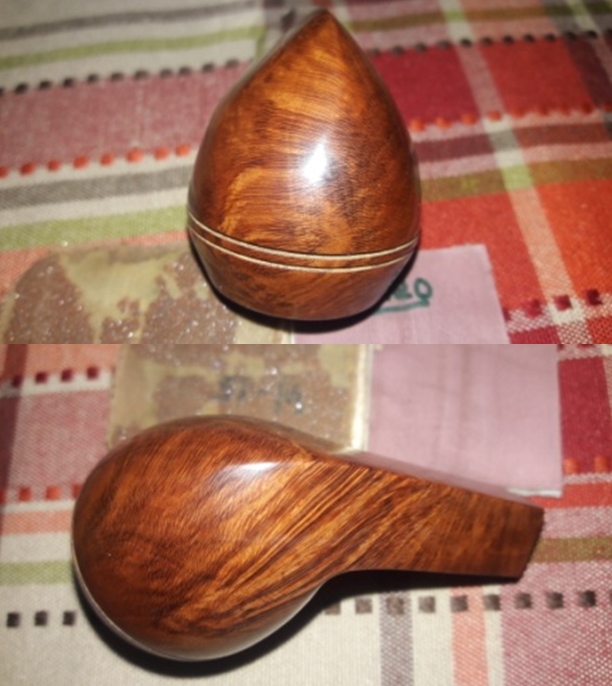
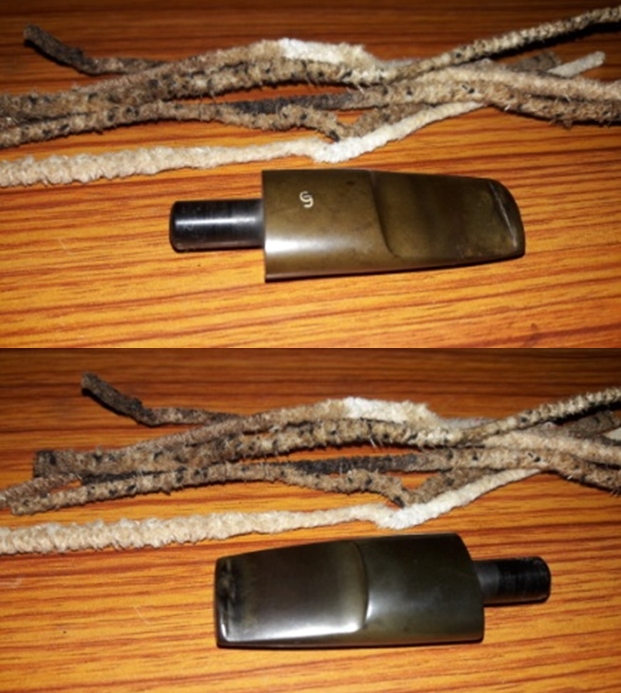
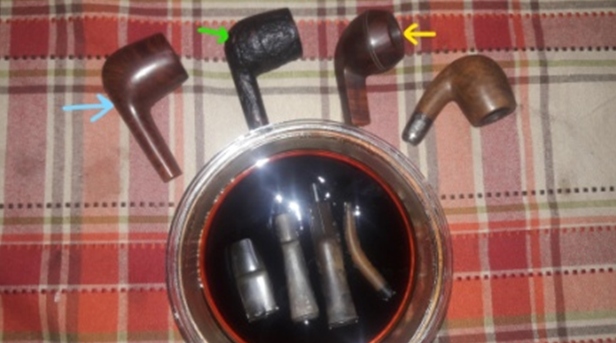
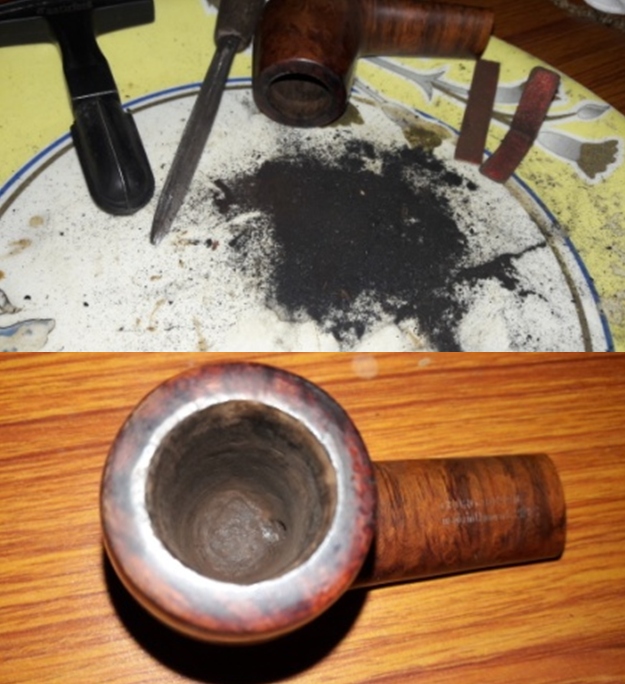
I started the restoration of this pipe by first cleaning the internals of the stem with bristled pipe cleaners and 99.9% pure isopropyl alcohol. I scraped out the dried oils and tars from the tenon end with my fabricated knife and also removed the dried oils and tars from the slot end. I followed it up by sanding the entire stem with a folded piece of 220 grit sand paper to remove the surface oxidation. It has been our (Abha, my wife and self) experience that sanding a stem before dunking it in to the deoxidizer solution helps in bringing the deep seated oxidation to the surface which in turn make further cleaning a breeze with fantastic result. I dropped the stem in to “Before and After Deoxidizer” solution developed by my friend Mark Hoover. The solution helps to draw out heavy oxidation to the surface, making its further removal a breeze, while the minor oxidation is eliminated to a very great extent. The initial sanding helps to draw out the complete oxidation as the sanding opens up the stem surface that has been initially covered with oxidation. I usually dunk stems of 4-5 pipes that are in-line for restoration and this pipe is marked in yellow arrow. I generally allow the stems to soak in this solution overnight to do its work.While the stem was soaking in the deoxidizer solution, I worked on the stummel by first reaming the chamber with size 1 and 2 Castleford reamer heads. I further scraped the chamber walls with my fabricated knife to remove the remaining carbon deposits. I scraped out the lava overflow from the rim top surface, especially from the area in the 6 o’clock direction. Once the cake was reamed back to the bare briar, I used a 150 grit sand paper followed by 220 grit sand paper to remove all the traces of remaining cake and also to smooth out the inner walls of the chamber surface. Finally, to remove the residual carbon dust, I wiped the chamber with a cotton pad wetted with 99.9% pure isopropyl alcohol. The chamber walls are sans any damage. There are a couple of minor chips to the inner edge of the inner rim which revealed themselves after the lava overflow was removed from the rim top in 7 o’clock direction. Thankfully the inner rim was not charred under the lava overflow. The ghost smells are negligible and may further reduce after the shank/ mortise are thoroughly cleaned. This was followed by cleaning the mortise with q-tips, pipe cleaners and shank brush dipped in isopropyl alcohol. I scraped the walls of the mortise with my fabricated knife to remove the dried oils and tars. I was surprised to find the shank a bit cleaner than I had anticipated from my detailed inspection. The ghost smells are history and the chamber now smells clean.With the bowl internals clean, I move to clean the exterior of the stummel. I used a hard bristled tooth brush and Murphy’s Oil soap to scrub the stummel and rim top. For this stummel cleaning, l I used Murphy’s Oil soap as I wanted to preserve the old patina that had developed on the stummel and was not sure how the Briar cleaner product would affect it. After the scrub with oil soap, I washed the stummel under running warm water with anti oil dish washing detergent till the stummel surface was clean and dried it using paper towels and soft cotton cloth. I simultaneously cleaned the shank internals with the detergent and hard bristled shank brush and set the stummel aside to dry out naturally. The stummel surface has cleaned up nicely with the beautiful grain patterns on full display. While the stummel was drying, the next morning, Abha removed the stems (stem indicated with yellow arrow is the one being worked on) that had been soaking in the deoxidizer solution overnight. She cleaned the stem and the stem airway under running warm water and scrubbed the raised oxidation from the stem surface using a Scotch Brite pad and the airway with a thin shank brush. She further removed the oxidation by scrubbing the stem with 0000 grade steel wool and applied a little EVO to rehydrate the stem. This now gives a clearer picture of the extent of depth of the bite marks as can be seen in the pictures below. These will definitely require a fill. The oxidation is deep and stubborn and can be seen over the stem surface and in the concave of the diamond shape, as dirty green coloration. I need to further sand the stem to completely remove the oxidation.I used a 220 grit sand paper to sand the stem and remove all the oxidation that was raised to the surface. This step further reduced the tooth chatter and bite marks present on the stem. I wiped the stem with Murphy’s Oil soap on a cotton swab. This helps in cleaning the stem surface while removing the loosened oxidation. Using a lighter, I flamed the surface of the stem. This helped in raising some of the tooth chatter and bite marks to the surface as vulcanite has a property to regain its original shape on heating. The remaining tooth chatter and bite marks would be addressed subsequently.I addressed the deeper tooth chatter and bite marks by filling them up with a mix of activated charcoal and CA superglue. Once I had applied the mix, I set it aside to cure overnight. Once the fill has hardened, I shall file and sand the fills to match the surface of the stem and sharpen the button edges on either surface.With the fills in the stem set aside to cure, I turned my attention back to the stummel. The minor dents to the lower edge of the diamond shank was bothering me as I wanted it to be as pristine as was possible. I decided to sand it down with a higher grade sandpaper. With a folded piece of 600 grit sandpaper I sand dents along the either sides of the shank edge till the dents are not easily discernible. I followed it by wet sanding the stummel with 1500 to 12000 grit micromesh pads, wiping frequently with a moist cloth to check the progress. I really like the looks of the stummel at this point in restoration. The grains and the clean lines of this piece of briar is really appreciable.  Next, I rubbed a small quantity of “Before and After Restoration Balm” deep in to the briar with my finger tips and let it rest for a few minutes. The balm almost immediately works its magic and the briar now has a nice vibrant appearance with the beautiful grain patterns displayed in their complete splendor. I further buffed it with a horse hair brush. The contrast of the dark browns of the flame and cross grains with the natural unvarnished finish of the rest of the stummel adds an interesting dimension to the appearance of the stummel which may be insufficiently described in words and be rather seen in person. With the stummel rejuvenation almost complete, save for the final wax polish, I worked the stem. The fill had cured and with a flat head needle file, I worked on the filling till I had achieved a rough match with the surrounding surface and had sufficiently sharpened the button edges. For a better blending, I further sand the entire stem with 220 followed by 400, 600 and 800 grit sand paper. This helps to reduce the scratch marks left behind by the more abrasive 220 grit paper. To bring a deep shine to the vulcanite stem, I went through the complete set of micromesh pads, wet sanding with 1500 to 2000 grit sandpapers followed by further wet sanding with 3200 to 12000 grit pads. I wiped the stem with moist cloth after each pad and rubbed it down with Extra Virgin Olive oil to rejuvenate the vulcanite. The finished stem is shown below. I have now reached the homestretch in this restoration project. To complete the restoration, I mount a cotton cloth buffing wheel on to my hand held rotary tool and polished the stummel and stem with Blue Diamond compound. This compound helps to remove the minor scratch marks that remain from the sanding. I mounted another cotton buffing wheel that I have earmarked for carnauba wax and applied several coats of the wax. I finished the restoration by giving the entire pipe a rigorous hand buffing using a microfiber cloth to raise the shine further. The finished pipe looks amazingly beautiful and is ready to join my collection. I only wish it could share with me its life story of the past years while I enjoy smoking my favorite Virginia blend in it or maybe an English blend or maybe just keep admiring it!! The finished pipe is as shown below. P.S. As I was working this pipe, a fleeting question “Why do I enjoy bringing these old battered and discarded pipes back to life?” crossed my mind…
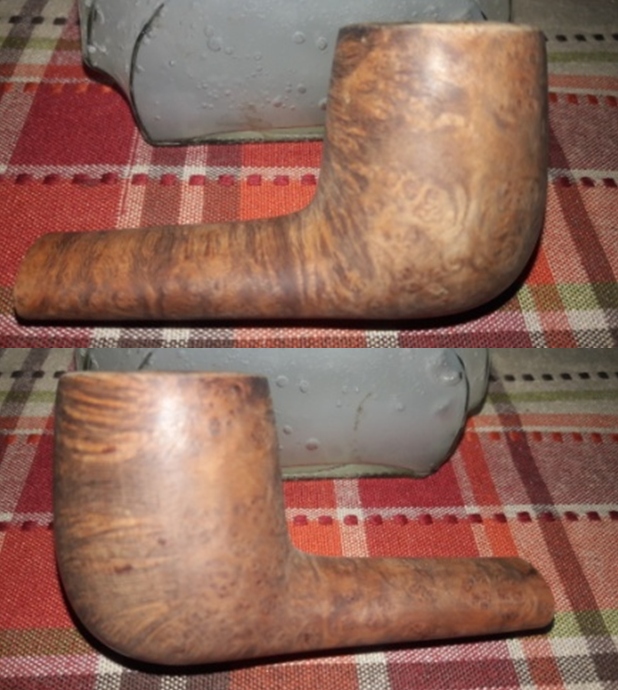
I wish to thank each one for sparing their valuable time to read through this write up and each one is my prayers. Stay home…stay safe!!

Restoring a Comoy’s Tradition 292 Billiard from Bob Kerr’s Estate


Blog by Steve Laug

The next pipe I have chosen from Bob Kerr’s Estate is a Comoy’s Tradition Billiard with a Comoy’s C on the stem. Bob had several Comoy’s Tradition pipes and this is the first of them I am working on. (Bob’s photo is to the left). If you have not “met” the man and would like to read a bit of the history of the pipeman, his daughter has written a great tribute that is worth a read. Because I have included it in most of the restorations of the estate to date I thought that I would leave it out this time. Check out some of the recent Dunhill restoration blogs (https://rebornpipes.com/2020/01/01/restoring-the-last-of-bob-kerrs-dunhills-a-1962-dunhill-bruyere-656-f-t-bent-billiard/).

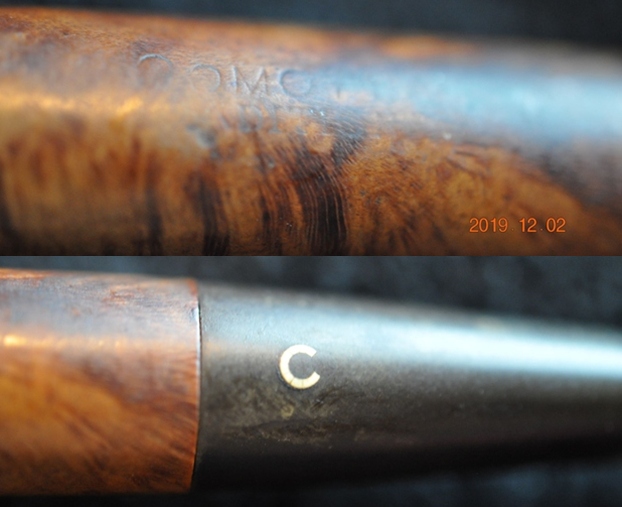
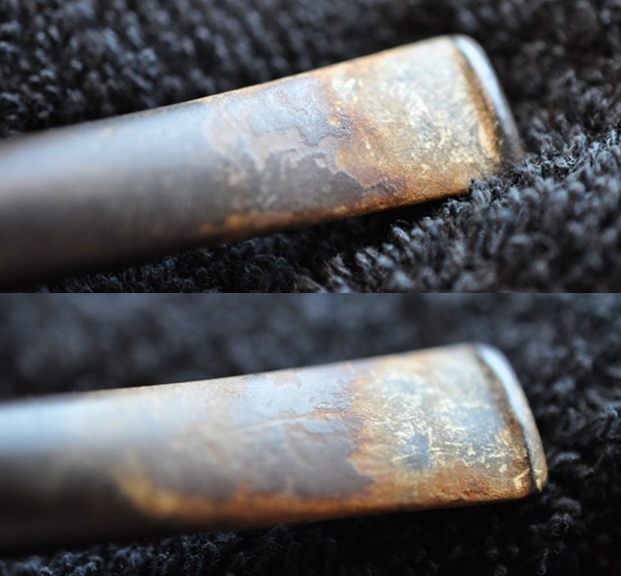
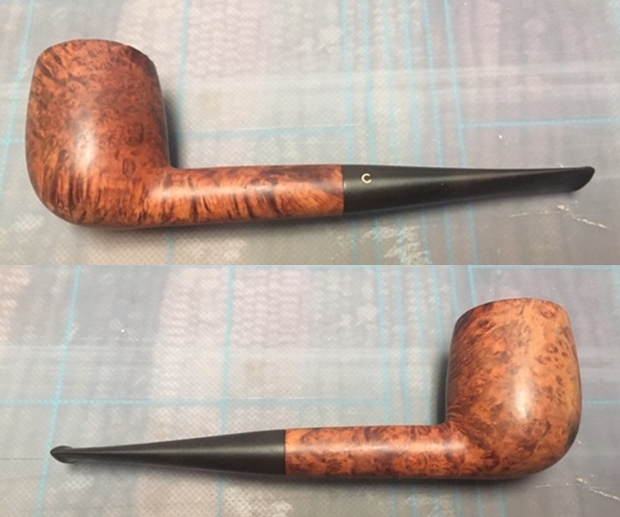
This Billiard is stamped Comoy’s [over] Tradition on the left side of the shank. On the right side it is stamped with the number 292 at the shank/bowl junction and the circular COM stamp. The tapered vulcanite stem had a Comoy’s C on the left side. The stem is oxidized, calcified and has light tooth marks and chatter on both sides near the button. The exterior of the bowl is grimy and dirty. There are burn marks on the top of the shank and on the heel of the bowl. There is a thick cake and lava overflow on the rim top. It is thick enough that it is hard to know if there is any damage on top and edges. Jeff took photos of the pipe to show its general condition before he did his cleanup. The exterior of the pipe was very dirty – grime and grit ground in from years of use and sitting. The rim top was covered with a coat of thick lava that overflowed the bowl. There was also some darkening on the rim top and inner edge of the bowl as well as a burn mark on the top front of the bowl. The bowl itself had a thick cake with flecks of tobacco stuck in the cake on the sides.  Jeff took photos of the sides and the heel of the bowl to give a better feel for the condition of the bowl. You can see the burn mark on the right side of the heel toward the front. The next photos show the stamping on the sides of the shank. The left side is faint but readable and the right side is even fainter and did not get captured with the photo. With a bright light they both read as noted above.The stem was dirty and extremely oxidized, calcified and had tooth marks on both sides ahead of the button. It was not nearly as chewed the other pipes in Bob’s estate.With over 125 pipes to clean from Bob’s estate I took a batch of them to the states with me when I visited and left them with Jeff so he could help me out. Jeff cleaned the pipes with his usual penchant for thoroughness that I really appreciate. Once he finished he shipped them back to me. This one was a real mess and I did not know what to expect when I unwrapped it from his box. He reamed it with a PipNet pipe reamer and cleaned up the reaming with a Savinelli Fitsall Pipe Knife. He scrubbed out the internals with alcohol, pipe cleaners and cotton swabs until the pipe was clean. He scrubbed the exterior of the bowl with Murphy’s Oil Soap and a tooth brush to remove the grime and grit on the briar and the lava on the rim top. The finish looks very good with good looking grain around the bowl and shank. Jeff scrubbed it with Soft Scrub and soaked it in Before & After Deoxidizer to remove the oxidation on the rubber. When the pipe arrived here in Vancouver for the second stop of its restoration tour it looked a lot better. I took photos before I started my part of the work. I took some close up photos of the rim top and also of the stem surface. I wanted to show what cleaned bowl and rim top looked like. The rim top shows damage and charring on the inner edge of the bowl. I also took close up photos of the stem to show the light tooth marks and the remaining oxidation on the stem surface. You can also see the marks on the surface of the stem.I took photos of the stamping on both sides of the shank and it is faint but readable. It is stamped as noted above.  You can see the C on the left side of the stem.I took some photos of the burn marks on the right front heel of the bowl and the topo of the shank near the stem junction. The burn mark did not go too deep in the briar. It looks like the pipe was laid in an ashtray against a burning ash or coal. The burn on the bowl front did not go through into the bowl so it was not a burn out. The inside of the bowl was smooth and undamaged.I removed the stem for the shank and took a photo of the bowl and stem to give a picture of what it looked like. You can see scratches in the stem surface.Now, on to my part of the restoration of this Comoy’s Tradition 292 Billiard pipe. I decided to start by dealing with the damage to the rim top and the inner edge of the bowl. I carefully topped the bowl on a board with 220 grit sandpaper to start removing the damage to the bowl. I used a folded piece of 220 grit sandpaper to clean up the damage to the bevel of the inner edge of the rim.I sanded the burn marks on the bowl front and the top of the shank with 220 grit sandpaper. While I could not remove the damage in total I was able to minimize it. I polished the bowl and rim top with micromesh sanding pads – wet sanding with 1500-12000 grit pads and wiping the briar down with a damp cloth after each sanding pad. I rubbed the bowl down with Before & After Restoration Balm. I worked it into the surface of the bowl sides and shank with my fingertips to clean, enliven and protect it. I let the balm sit for a little while and then buffed with a cotton cloth and shoe brush to raise the shine. I set the bowl aside and turned my attention to the stem. I filled in the small dents with clear super glue. Once the repairs had cured I used a needle file to smooth out the fills in preparation for sanding and blending them into the surface of the stem. I sanded out the remaining tooth marks and scratches on the stem surface with 220 grit sandpaper and started polishing them with 400 grit wet dry sandpaper. I polished the vulcanite with micromesh sanding pads – 1500-12000 grit pads. I wiped it down with a damp cloth after each sanding pad. I used Before & After Pipe Polish – both Fine and Extra Fine to further polish the stem. This Comoy’s Tradition 292 Billiard from Bob Kerr’s estate has some beautiful grain. Even with the burn marks it still is a beauty. It turned out to be another great looking pipe. The finish on the pipe is in great condition and works well with the polished vulcanite taper oval stem. I put the stem back on the bowl and carefully buffed the pipe with Blue Diamond on the buffing wheel using a light touch on the briar. I gave the bowl and stem multiple coats of carnauba wax on the buffing wheel and followed that by buffing the entire pipe with a clean buffing pad. I hand buffed the pipe with a microfiber cloth to deepen the shine. The finished Comoy’s Tradition Billiard fits nicely in the hand and feels great. Give the finished pipe a look in the photos below. The dimensions of the pipe are Length: 5 ¾ inches, Height: 1 ¾ inches, Outside diameter of the bowl: 1 ¼ inches, Chamber diameter: ¾ of an inch. If you are interested in carrying on Bob’s legacy with this pipe send me a message or an email. I have more to work on of various brands. Perhaps one of those will catch your attention. Thanks for reading this blog and my reflections on the pipe while I worked on it. This is an interesting estate to bring back to life.

Restoring a B. Barling & Sons Guinea Grain 4025 TVF Apple  from Bob Kerr’s Estate


Blog by Steve Laug

The next pipe I have chosen from Bob Kerr’s Estate is a B. Barling & Sons Guinea Grain oval shank apple with a Barling Cross on the top of the stem. It is the first of Bob’s Barlings pipes. (Bob’s photo is to the left). If you have not “met” the man and would like to read a bit of the history of the pipeman, his daughter has written a great tribute that is worth a read. Because I have included it in most of the restorations of the estate to date I thought that I would leave it out this time. Check out some of the recent Dunhill restoration blogs (https://rebornpipes.com/2020/01/01/restoring-the-last-of-bob-kerrs-dunhills-a-1962-dunhill-bruyere-656-f-t-bent-billiard/).

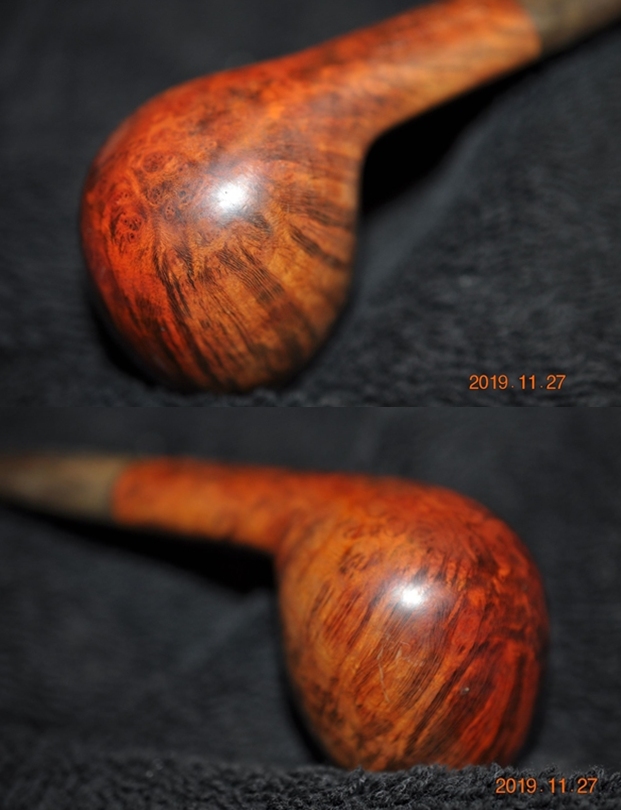
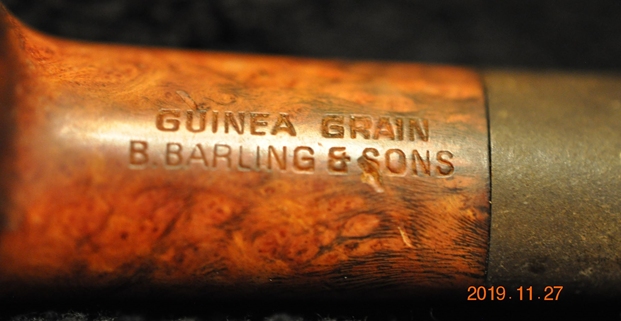
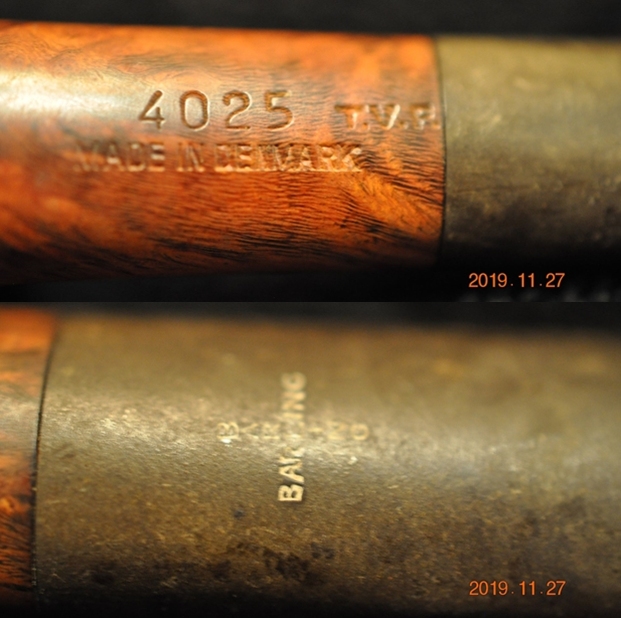
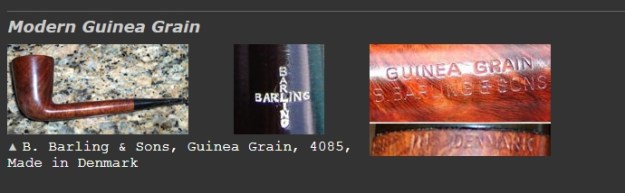
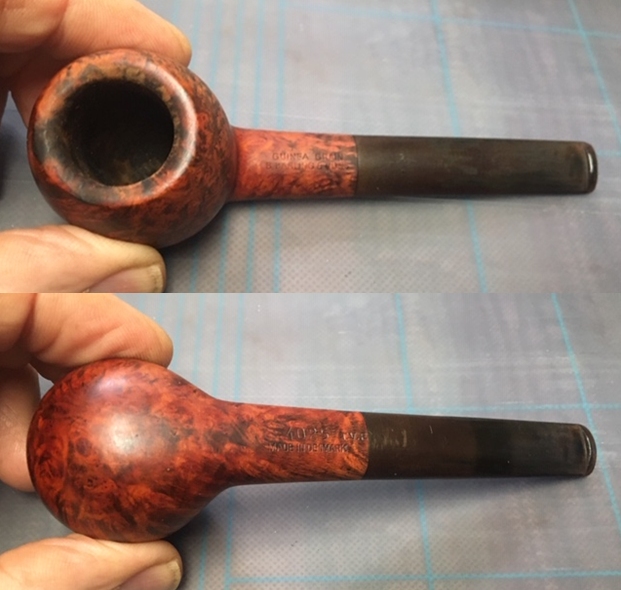
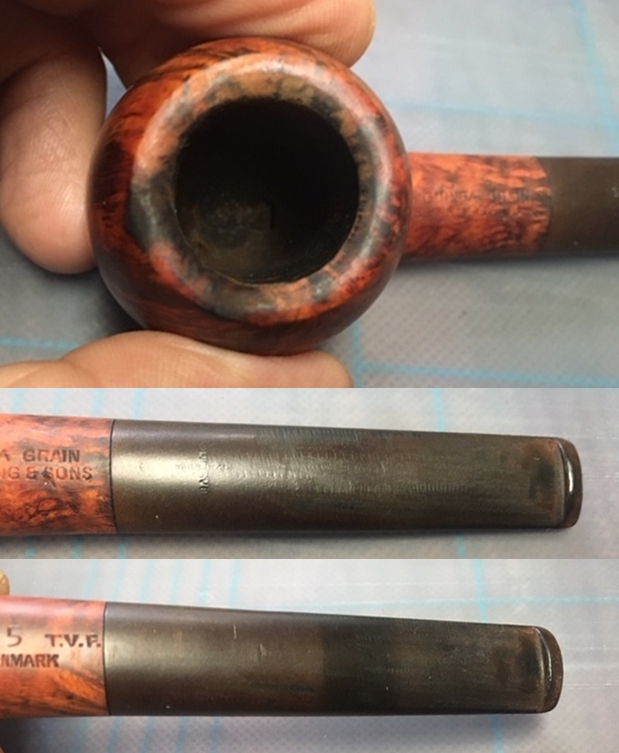
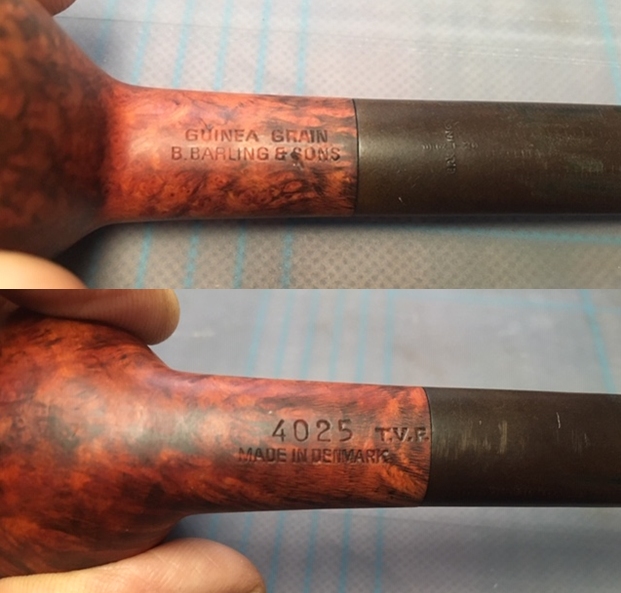
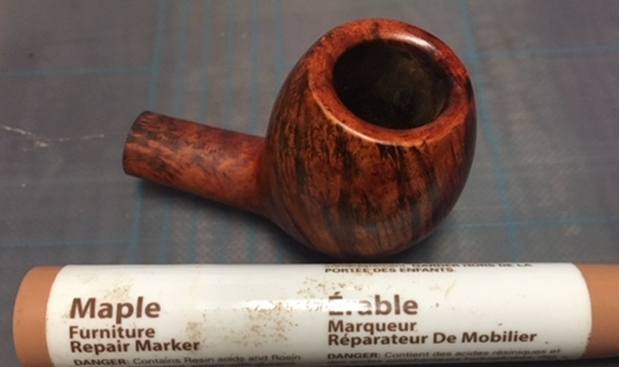
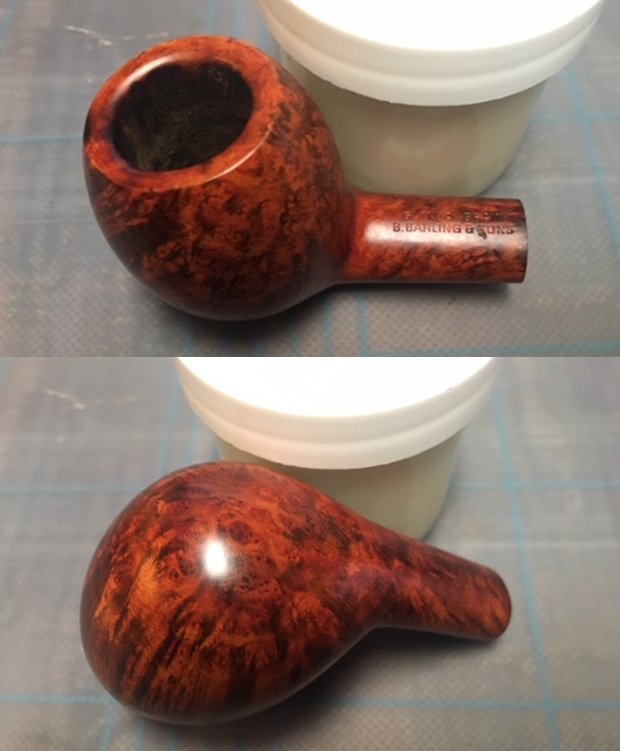
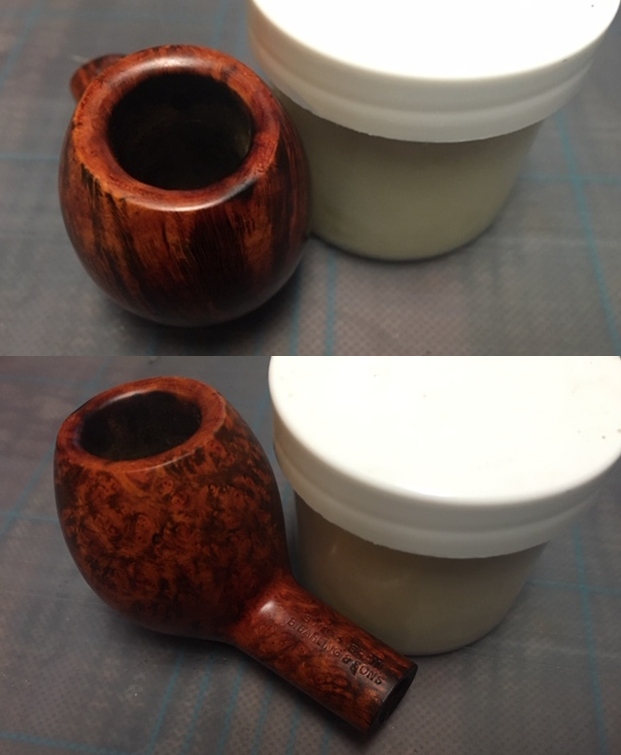
This Apple is stamped Guinea Grain [over] B. Barling & Sons on the top side of the stem. On the underside it is stamped with the number 4025 T.V.F. [over] Made in Denmark. The tapered oval stem had a Barlings Cross on the top. The stem is oxidized, calcified and has light tooth marks and chatter on both sides near the button. The exterior of the bowl is grimy and dirty. There is a thick cake and lava overflow on the rim top. It is thick enough that it is hard to know if there is any damage on top and edges. Jeff took photos of the pipe to show its general condition before he did his cleanup. The exterior of the pipe was very dirty – grime and grit ground in from years of use and sitting. The rim top was covered with a coat of thick lava that overflowed the bowl. There was also some darkening on the rim top and inner edge of the bowl as well as a burn mark on the top front of the bowl. The bowl itself had a thick cake with flecks of tobacco stuck in the cake on the sides.  Jeff took photos of the sides and the heel of the bowl to give a better feel for the condition of the bowl. The next photos show the stamping on the sides of the shank and it is very readable. It reads as noted above. The stem was dirty and extremely oxidized, calcified and had tooth marks on both sides ahead of the button. It was not nearly as chewed the other pipes in Bob’s estate.Before doing cleanup work on the pipe I decided to do some research on the pipe. I looked first on the Pipephil website and found some information on the B. Barling & Sons Guinea Grain, Made in Denmark 4025 with an oval tapered stem. (http://www.pipephil.eu/logos/en/logo-barling.html#modernguineagrain). I did a screen capture of the section on the brand that fits the pipe I am working on.The pipe is identified as a Modern Guinea Grain and is stamped the same as the one pictured other than the shape number. It is also noted in a memo there as Post-Transition Period.

I turned to Pipedia (https://pipedia.org/wiki/Barling) and read the section on the rough outline on the history of the brand that links the brand with the English section of the company. I quote:

I’m retaining the terms Transition and Post Transition here because the following information underscores why they’re not useful designations. As stated earlier in this update, the Transition era began in October of 1960 and ended in February of 1963. During the first 20 months of the Transition Era, the pipes that the Barling Company produced under Finlay ownership are indistinguishable from the pipes that the Barling Company produced under Barling ownership. The Barling family continued to manage the company for Finlay. The constants are the quality of the product and family management. The product of the first 20 months of the Transition can’t be identified, so the distinction is meaningless.

I did a search on the stamping “Made in Denmark” and came across a discussion on Pipesmoker Unlimited Forum (http://pipesmokerunlimited.com/archive/index.php/t-5515.html). I quote a section from that forum below:

“By 1970, the range of products had expanded to such an extent that Imperial Tobacco decided to reassign the Barling operation to its Ogden branch. About the same time the two Barling factories at Park Street and Jeffrey Place were closed down and the production of Barling pipes was outsourced to independent pipemakers. After a year or so, operations were transferred to Ogden’s Liverpool factory. Production of Barling pipes was shifted to several Danish firms, amongst them Eric Nording.”

The pipe I am working on is definitely from the Corporate Period which includes the Post transition period. The four digit shape number, the block stamping Guinea Grain and B. Barling & Sons, the T. V.F. (The Very Finest) all point to the pipe being from this time period. The Made in Denmark stamp identifies the pipe as being made around 1970 when Barling pipes were made in Denmark by several Danish firms.

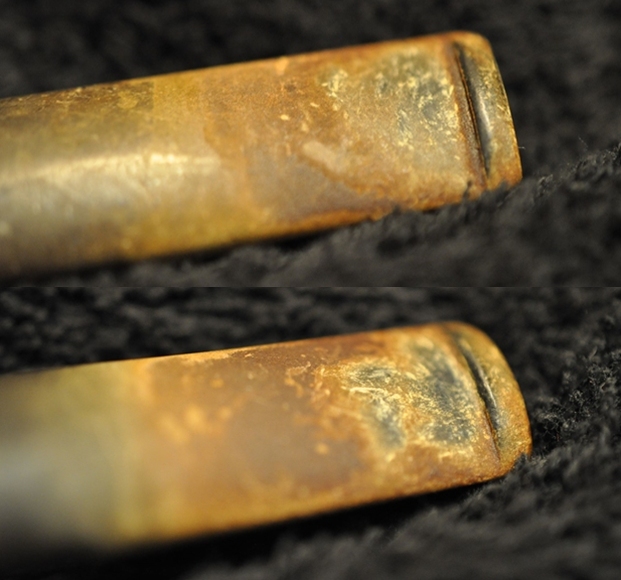
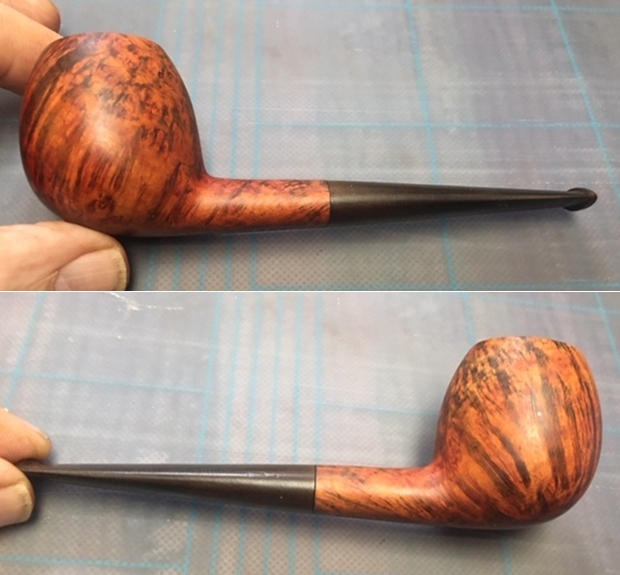
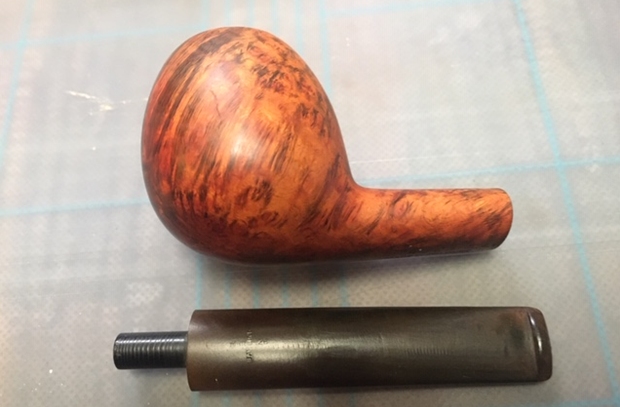
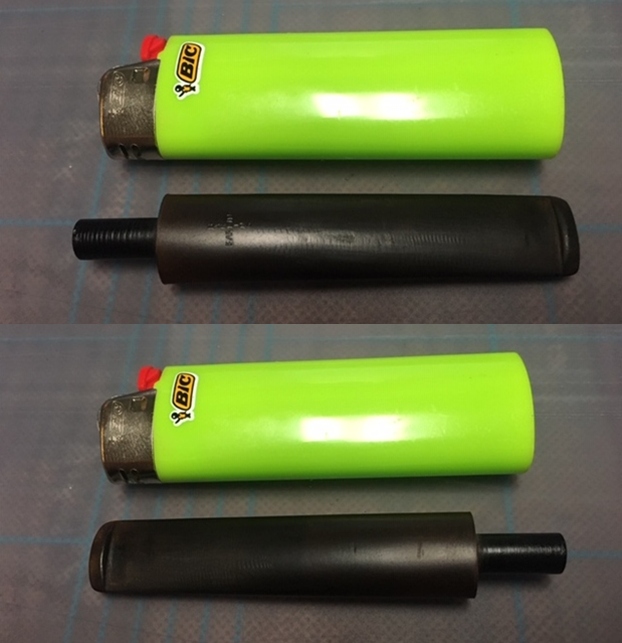
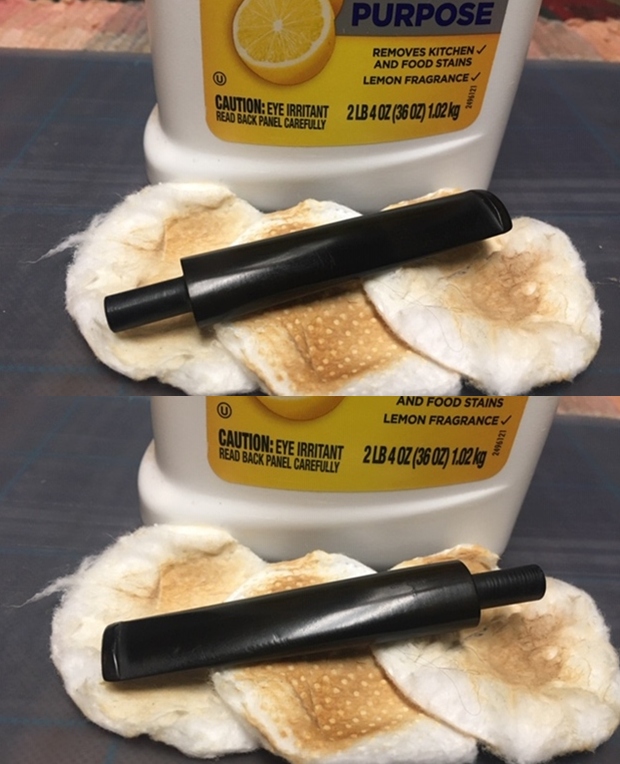
With over 125 pipes to clean from Bob’s estate I took a batch of them to the states with me when I visited and left them with Jeff so he could help me out. Jeff cleaned the pipes with his usual penchant for thoroughness that I really appreciate. Once he finished he shipped them back to me. This one was a real mess and I did not know what to expect when I unwrapped it from his box. He reamed it with a PipNet pipe reamer and cleaned up the reaming with a Savinelli Fitsall Pipe Knife. He scrubbed out the internals with alcohol, pipe cleaners and cotton swabs until the pipe was clean. He scrubbed the exterior of the bowl with Murphy’s Oil Soap and a tooth brush to remove the grime and grit on the briar and the lava on the rim top. The finish looks very good with good looking grain around the bowl and shank. Jeff scrubbed it with Soft Scrub and soaked it in Before & After Deoxidizer to remove the oxidation on the rubber. When the pipe arrived here in Vancouver for the second stop of its restoration tour it looked a lot better. I took photos before I started my part of the work.  I took some close up photos of the rim top and also of the stem surface. I wanted to show what cleaned bowl and rim top looked like. The rim top shows damage and charring on the inner edge of the bowl. I also took close up photos of the stem to show the light tooth marks and the remaining oxidation on the stem surface. You can also see the hash marks on the surface of the stem.I took photos of the stamping on both sides of the shank and it is clear and readable. It is stamped as noted above.  You can see the remnants of the Barling cross on the top of the stem in the first photo below.I removed the stem for the shank and took a photo of the bowl and stem to give a picture of what it looked like. You can see scratches in the stem surface.Now, on to my part of the restoration of this Barling’s Guinea Grain pipe. I decided to start by dealing with the damage to the rim top and the inner edge of the bowl. I carefully topped the bowl on a board with 220 grit sandpaper to start removing the damage to the bowl. I used a folded piece of 220 grit sandpaper to clean up the damage to the bevel of the inner edge of the rim. I polished the bowl and rim top with micromesh sanding pads – wet sanding with 1500-12000 grit pads and wiping the briar down with a damp cloth after each sanding pad. I stained the sanded rim top with a Maple stain pen to blend it into the surrounding briar. Once the stain cured I polished the briar to further blend it into the bowl.I rubbed the bowl down with Before & After Restoration Balm. I worked it into the surface of the bowl sides and shank with my fingertips to clean, enliven and protect it. I let the balm sit for a little while and then buffed with a cotton cloth and shoe brush to raise the shine. I set the bowl aside and turned my attention to the stem. I “painted” the surface of the stem with the flame of a lighter. The heat lifted the majority of the dents in the stem surface. It also had the added benefit of burning off some of the oxidation.I scrubbed the surface of the stem with Soft Scrub to further remove the remaining oxidation. The product works wonders in removing the oxidation on the stem. It took a bit of scrubbing but I was able to remove the majority of the oxidation around the shank end.I sanded out the remaining tooth marks and scratches on the stem surface with 220 grit sandpaper and started polishing them with 400 grit wet dry sandpaper. I polished the vulcanite with micromesh sanding pads – 1500-12000 grit pads. I wiped it down with a damp cloth after each sanding pad. I used Before & After Pipe Polish – both Fine and Extra Fine to further polish the stem.  Even though I avoided the faint stamping of the Barling Cross there was not enough depth to the stamp to hold white paint. It is still visible but just not deep enough to restore. This Barling Guinea Grain 4025 TVF Apple, Danish made pipe from Bob Kerr’s estate turned out to be another great looking pipe. The finish on the pipe is in excellent condition and works well with the polished vulcanite taper oval stem. I put the stem back on the bowl and carefully buffed the pipe with Blue Diamond on the buffing wheel using a light touch on the briar. I gave the bowl and stem multiple coats of carnauba wax on the buffing wheel and followed that by buffing the entire pipe with a clean buffing pad. I hand buffed the pipe with a microfiber cloth to deepen the shine. The finished Guinea Grain oval shank Apple fits nicely in the hand and feels great. Give the finished pipe a look in the photos below. The dimensions of the pipe are Length: 5 ¼ inches, Height: 1 ¾ inches, Outside diameter of the bowl: 1 ¼ inches, Chamber diameter: ¾ of an inch. This is one of Bob’s pipes that I am holding on to for a while as I really like the Danish flair it has. I have about 10 more of Bob’ pipes to go. Perhaps one of those will catch your attention. Thanks for reading this blog and my reflections on the pipe while I worked on it. This is an interesting estate to bring back to life.

Restoring a KB&B Kaywoodie Drinkless English Made 95B Pot from Bob Kerr’s Estate


Blog by Steve Laug

The next pipe I have chosen from Bob Kerr’s Estate is a KB&B Drinkless Kaywoodie English Made Pot with an unmarked stem. It is the last of Bob’s English made Kaywoodies. (Bob’s photo is to the left). If you have not “met” the man and would like to read a bit of the history of the pipeman, his daughter has written a great tribute that is worth a read. Because I have included it in most of the restorations of the estate to date I thought that I would leave it out this time. Check out some of the recent Dunhill restoration blogs (https://rebornpipes.com/2020/01/01/restoring-the-last-of-bob-kerrs-dunhills-a-1962-dunhill-bruyere-656-f-t-bent-billiard/).

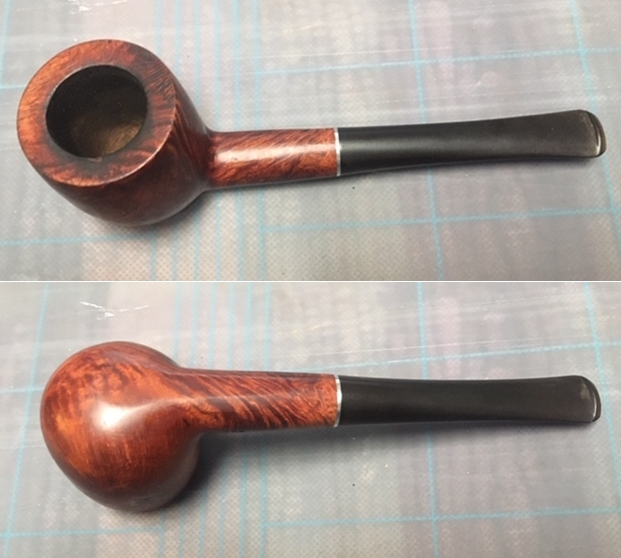
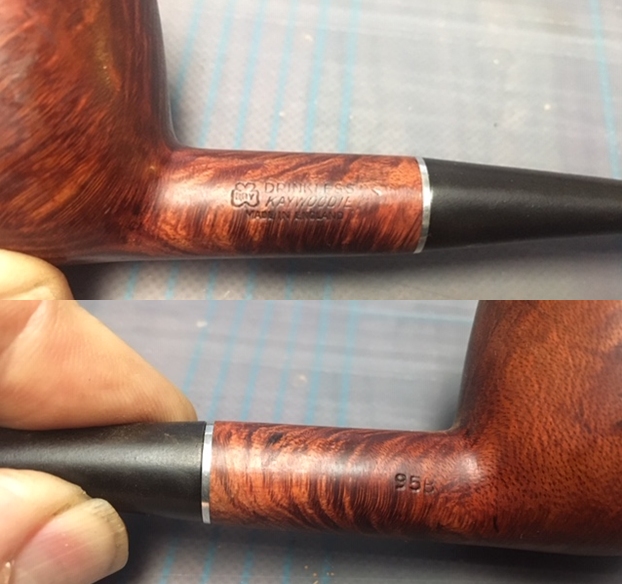
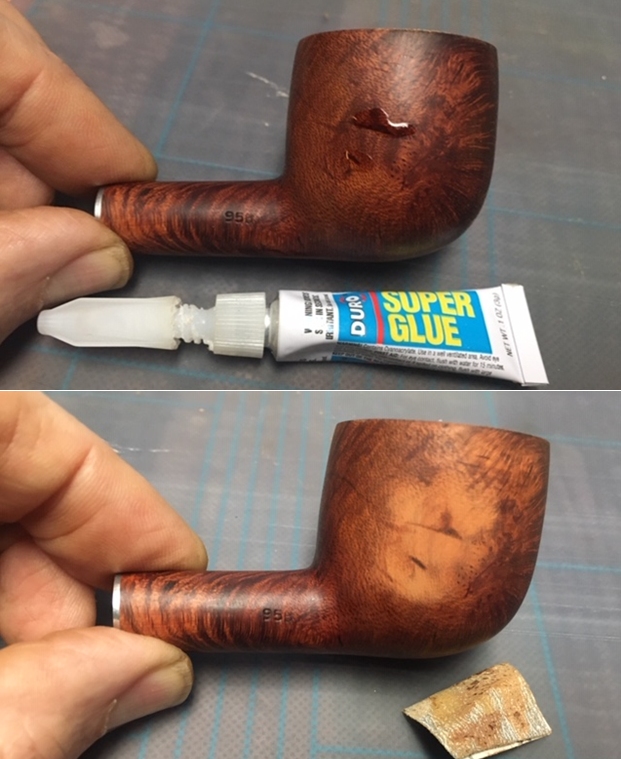
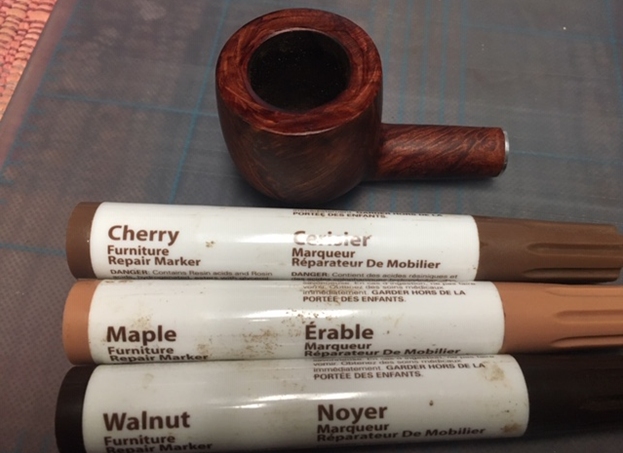
This Pot is stamped DRY in a KBB style cloverleaf followed by Drinkless [over] Kaywoodie [over] Made in England on the left side of the shank. On the right side it is stamped with the number 95B. The DRY stamp in the cloverleaf was new to me. The tapered stem is missing the typical white inlaid Kaywoodie Cloverleaf logo. The tenon is threaded and has been modified with the removal of the stinger. The stem is oxidized, calcified and has light tooth marks and chatter on both sides near the button. The exterior of the bowl is grimy and dirty. There is a thick cake and lava overflow on the rim top. It is thick enough that it is hard to know if there is any damage on top and edges. Jeff took photos of the pipe to show its general condition before he did his cleanup. The exterior of the pipe was very dirty – grime and grit ground in from years of use and sitting. The rim top was covered with a coat of thick lava that overflowed the bowl. There was also some darkening on the rim top and inner edge of the bowl. The bowl itself had a thick cake with flecks of tobacco stuck in the cake on the sides.    Jeff took photos of the sides and the heel of the bowl to give a better feel for the condition of the bark around the bowl.The next photos show the stamping on the sides of the shank and it is very readable. It reads as noted above.The stem was dirty and extremely oxidized. The stem appeared to be a replacement as it is missing the Kaywoodie logo and the metal stinger/tenon has been modified. I have learned that Bob was a chewer and his stems seemed to have been replaced often. This one at least fit well to the shank and did not yet have the chew marks that were a norm on Bob’s pipes.Before doing cleanup work on the pipe I decided to do some research on the pipe. I looked first on the Pipephil website and found some information on the white club inlay on the left side of the tapered stem. (http://www.pipephil.eu/logos/en/logo-kaywoodie.html). Since I did not have the original stem the information there was less helpful.

I turned to Pipedia (https://pipedia.org/wiki/Kaywoodie) and read the section on the rough outline on the history of the brand that links the brand with the English section of the company. I quote:

Again, demand for KBB pipes and especially Kaywoodie prompted another move for both the manufacturing facilities and the corporate offices. In 1930 the corporate office moved into the Empire State Building on Fifth Avenue in New York. By 1935, the manufacturing operations moved from Union City to 6400 Broadway in West New York, New Jersey which, at the time, was touted as the largest pipe making facility in the world. At the height of production, there were 500 employees producing up to 10,000 pipes per day.

The corporate offices were relocated in 1936 to the International Building, Rockefeller Center, 630 Fifth Avenue, New York. The invitation to visit the new office reads, “Kaywoodie is now on display at the world’s most famous address – Rockefeller Center. Here Kaywoodie takes its place among the leaders of industry and commerce.” The move to Rockefeller Center coincided with The Kaywoodie Company’s emergence as a subsidiary of KBB. All of the pipes manufactured by KBB including the Yello-Bole line were also on display here. By 1938 Kaywoodie had opened an office in London to meet worldwide demand. Kaywoodie of London was jointly owned with another famous pipemaker, Comoy’s of London.

From there I turned to a link on the article to a section called Guide to Kaywoodie Pipes (https://pipedia.org/wiki/Collector%27s_Guide_to_Kaywoodie_Pipes#NOTES_ON_.22OTHER.E2.80.9D_KAYWOODIE_PIPES).

English Kaywoodies. All of the catalogs reviewed in this research contained the following copyright notification: Printed in U.S.A., Kaufmann Bros. and Bondy, Inc., New York and London. Kaywoodie Pipe cases and smoker’s accessories were also marked with “New York and London”. The catalogs, however, do not present any information concerning Kaywoodie’s London operations, or how the English Kaywoodies might have differed from those manufactured and marketed in the U.S. Lowndes notes that he has several English Kaywoodies acquired in Vaduz and Zurich. English Kaywoodies are now made by Oppenheimer pipes. Lowndes notes that English Kaywoodies with the “screw-in bit” come in Ruby Grain, Custom Grain, Standard, and Relief Grain grades. The traditional push-bit models come in Continental Plain and Relief, London Made, Minaret, Air-way Polished No. 707, and Lightweight grades. Prices in 1985 ranged from 9.50 (pounds) to 26.00 (pounds). Lowndes notes that the Super Star was a special edition English Kaywoodie made of finest briar with a handmade silver band. Lowndes has two: one from Zurich with a large white-outlined logo, and beautifully cased; and one in walnut finish with the black-­in-white logo. A recent catalog shows the Super Star without a band and the ordinary small white logo. A 1985 letter from Oppenheimer states that the black-in-white logo has been discontinued and only the regular white logo is now used.

I turned to Pipedia’s Kaywoodie Shape Number chart to check out the number 95B that is stamped on the shank side (https://pipedia.org/wiki/Kaywoodie_Shape_Numbers). The chart gives the shape information and the time frame in which the shape was made. I did a screen capture of the shape number information and have included it below.From the above information I now knew that the pipe in hand was a Medium sized Pot with a long saddle stem originally. Somewhere in its life that stem disappeared and was replaced by a long taper stem. The pipe was made between 1940-1972 in London by Oppenheimer. It had screw-in bit.

With over 125 pipes to clean from Bob’s estate I took a batch of them to the states with me when I visited and left them with Jeff so he could help me out. Jeff cleaned the pipes with his usual penchant for thoroughness that I really appreciate. Once he finished he shipped them back to me. This one was a real mess and I did not know what to expect when I unwrapped it from his box. He reamed it with a PipNet pipe reamer and cleaned up the reaming with a Savinelli Fitsall Pipe Knife. He scrubbed out the internals with alcohol, pipe cleaners and cotton swabs until the pipe was clean. He scrubbed the exterior of the bowl with Murphy’s Oil Soap and a tooth brush to remove the grime and grit on the briar and the lava on the rim top. The finish looks very good with good looking grain around the bowl and shank. Jeff scrubbed it with Soft Scrub and soaked it in Before & After Deoxidizer to remove the oxidation on the rubber. When the pipe arrived here in Vancouver for the second stop of its restoration tour it looked a lot better. I took photos before I started my part of the work. I took some close up photos of the rim top and also of the stem surface. I wanted to show what cleaned bowl and rim top looked like. The rim top shows damage and charring on the inner edge of the bowl. I also took close up photos of the stem to show the light tooth marks and the remaining oxidation on the stem surface.I took photos of the stamping on both sides of the shank and it is clear and readable. It is stamped as noted above.  The new stamp to me is the KBB style Cloverleaf stamp with the word DRY stamped in the center of the leaf pattern.I unscrewed the stem for the shank and took a photo of the bowl and stem to give a picture of what it looked like. You can see the clipped off stinger that has been modified to leave behind a threaded tenon.Now, on to my part of the restoration of this KBB English Made Pot. I decided to start by dealing with the damage to the rim top and the inner edge of the bowl. I topped the bowl on a board with 220 grit sandpaper to remove the damage to the bowl. I used a folded piece of 220 grit sandpaper to smooth out the damage to the inner edge of the rim. I worked on the inner bevel to clean up the damage and the darkening. I moved on to deal with the gouges in the bowl on the right side. I fill them in with clear super glue. When the repairs had cured I sanded them smooth with 220 grit sandpaper to smooth them out.I stained the repaired and sanded areas with a blend of Cherry, Maple and Walnut stain pens to blend them into the surrounding briar. Once the stain cured I polished the briar to further blend it into the bowl. I polished the bowl and rim top with micromesh sanding pads – wet sanding with 1500-12000 grit pads and wiping the briar down with a damp cloth after each sanding pad. I rubbed the bowl down with Before & After Restoration Balm. I worked it into the surface of the bark on the bowl sides and shank with my fingertips to clean, enliven and protect it. I let the balm sit for a little while and then buffed with a cotton cloth and shoe brush to raise the shine. I set the bowl aside and turned my attention to the stem. I “painted” the surface of the stem with the flame of a lighter. The heat lifted the majority of the dents in the stem surface. There was one tooth mark on the underside that was just ahead of the button.There was one deep tooth mark on the underside of the stem next to the button. I filled it in with clear super glue. Once the repair cured I used a needle file to flatten the repair and sharpen the edge of the button. I sanded them out with 220 grit sandpaper and started polishing them with 400 grit wet dry sandpaper.   I polished the vulcanite with micromesh sanding pads – 1500-12000 grit pads. I wiped it down with a damp cloth after each sanding pad. I used Before & After Pipe Polish – both Fine and Extra Fine to further polish the stem. This KB&B Kaywoodie Drinkless 95B Pot, English made pipe from Bob Kerr’s estate turned out to be another great looking pipe. The Walnut finish on the pipe is in excellent condition and works well with the polished vulcanite taper stem. I put the stem back on the bowl and carefully buffed the pipe with Blue Diamond on the buffing wheel using a light touch on the briar. I gave the bowl and stem multiple coats of carnauba wax on the buffing wheel and followed that by buffing the entire pipe with a clean buffing pad. I hand buffed the pipe with a microfiber cloth to deepen the shine. The finished KB&B Kaywoodie Pot fits nicely in the hand and feels great. Give the finished pipe a look in the photos below. The dimensions of the pipe are Length: 5 ¾ inches, Height: 1 ½ inches, Outside diameter of the bowl: 1 ½ inches, Chamber diameter: 7/8 of an inch. If you are interested in carrying on Bob’s legacy with this pipe send me a message or an email. I have more to work on of various brands. Perhaps one of those will catch your attention. Thanks for reading this blog and my reflections on the pipe while I worked on it. This is an interesting estate to bring back to life.

Breathing Life into a Parker Super Bruyere793 Billiard from Bob Kerr’s Estate


Blog by Steve Laug

I have only 11 more of Bob’s pipes to finish before I have completed the restoration of his estate so I am continuing to work on them. The next one from Bob Kerr’s Estate is Parker Super Bruyere billiard. It is a nice looking Billiard pipe with nice grain. (Bob’s photo is to the left). If you have not “met” the man and would like to read a bit of the history of the pipeman, his daughter has written a great tribute that is worth a read. Because I have included it in most of the restorations of the estate to date I thought that I would leave it out this time. Check out some of the recent Dunhill restoration blogs that include the biographical notes about Bob. Here is a link to one of them (https://rebornpipes.com/2020/01/01/restoring-the-last-of-bob-kerrs-dunhills-a-1962-dunhill-bruyere-656-f-t-bent-billiard/).

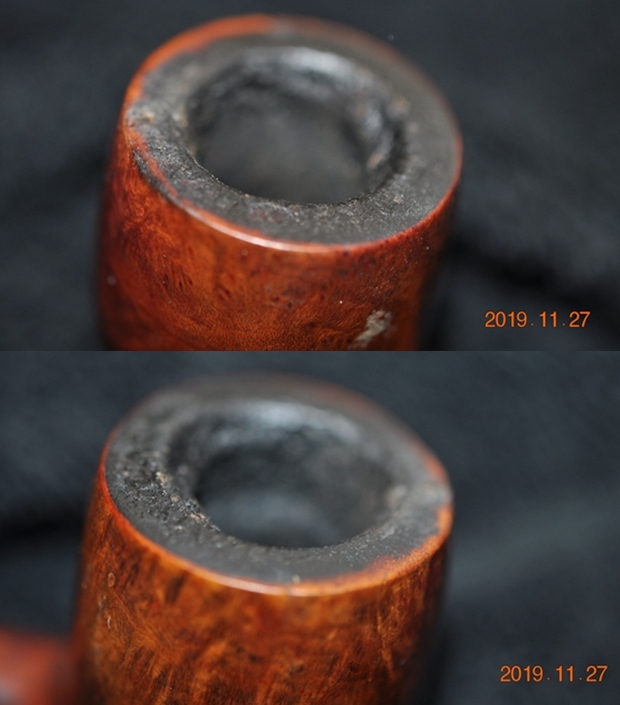
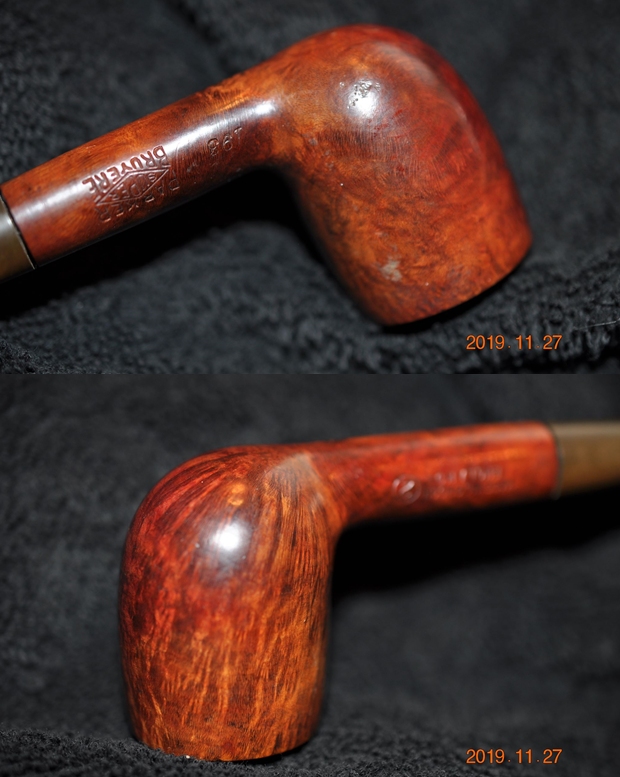
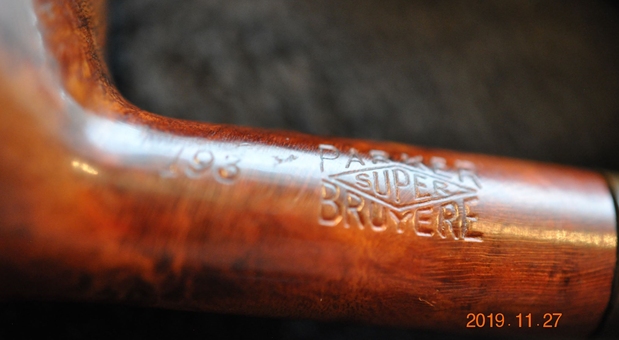
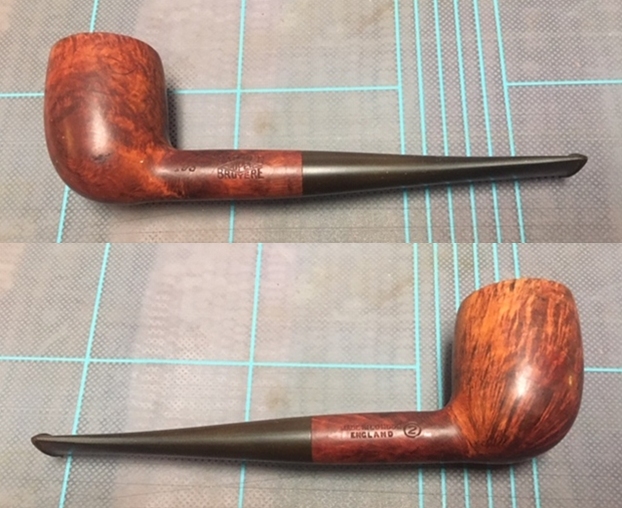
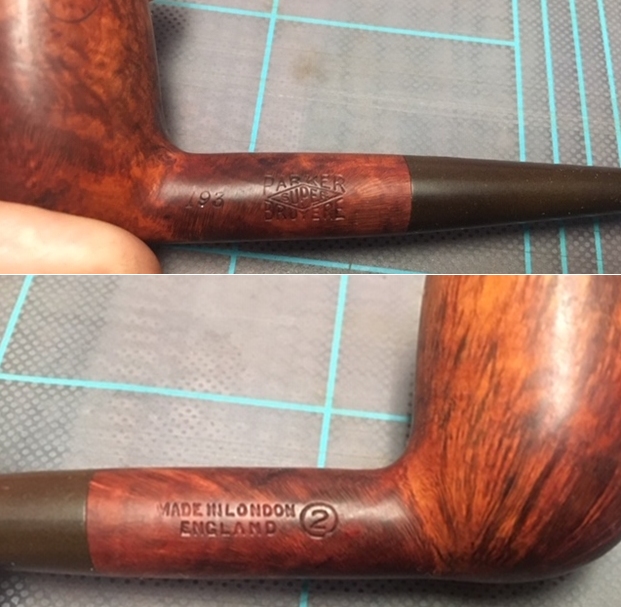
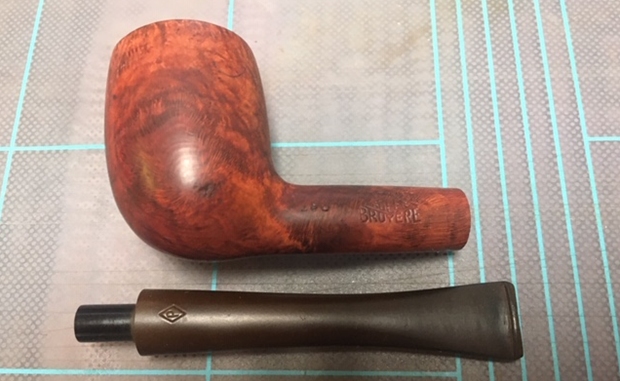
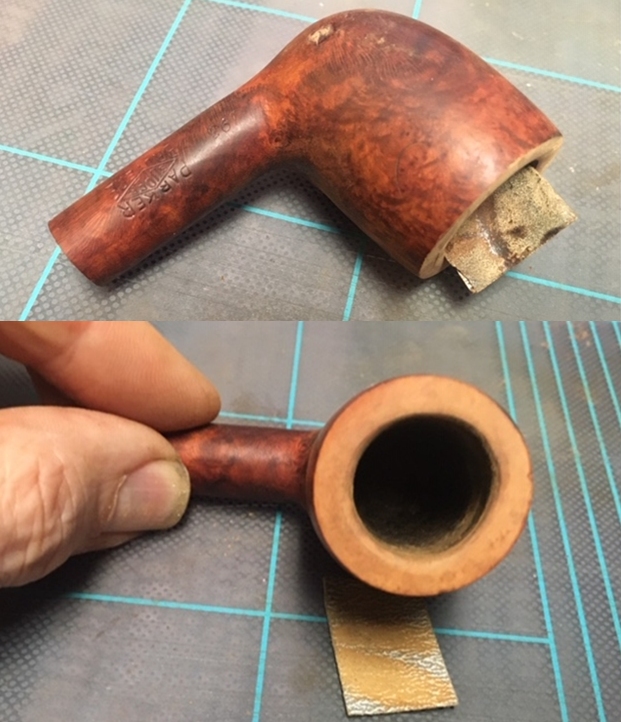
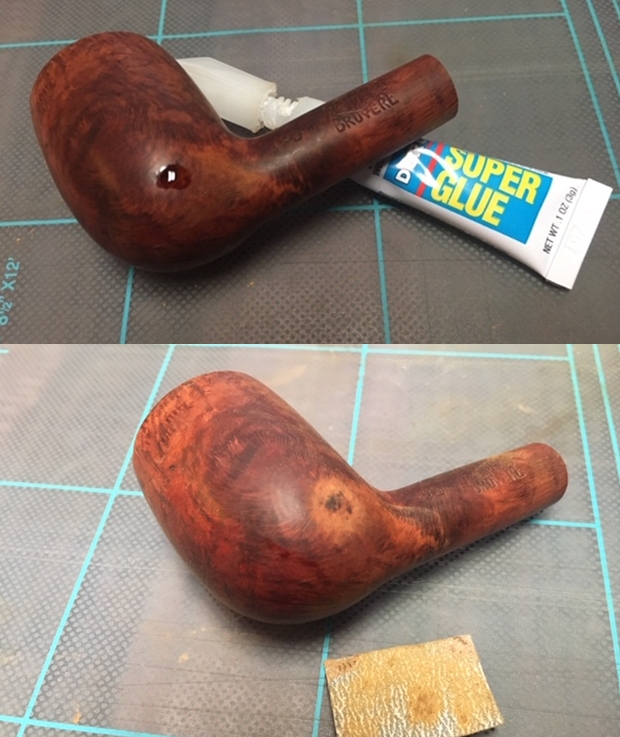
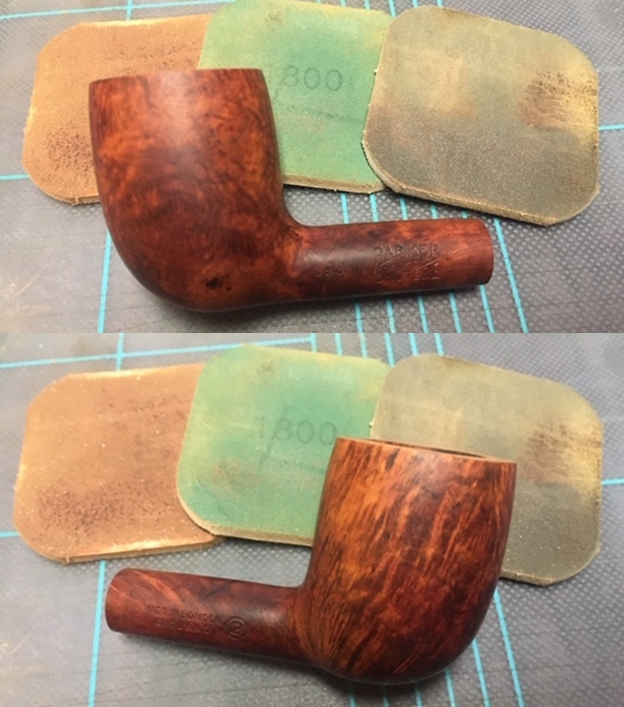
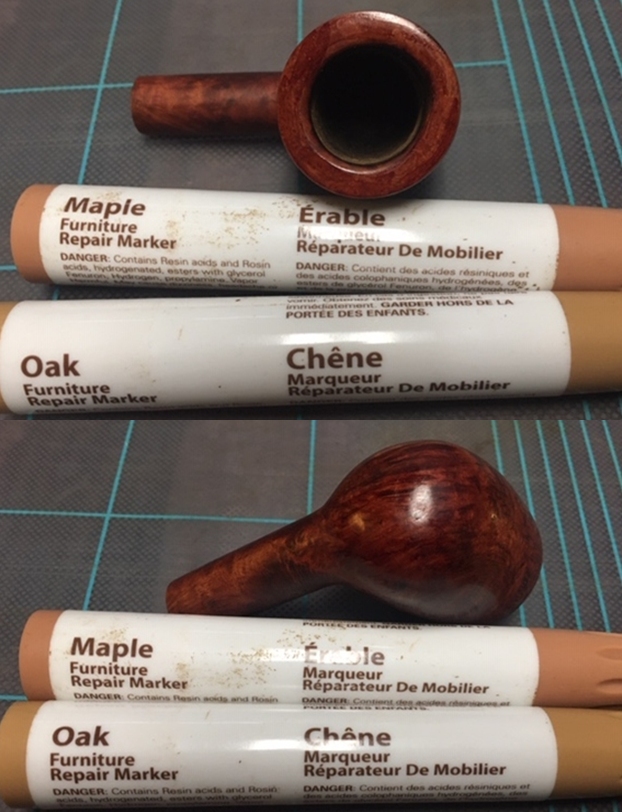
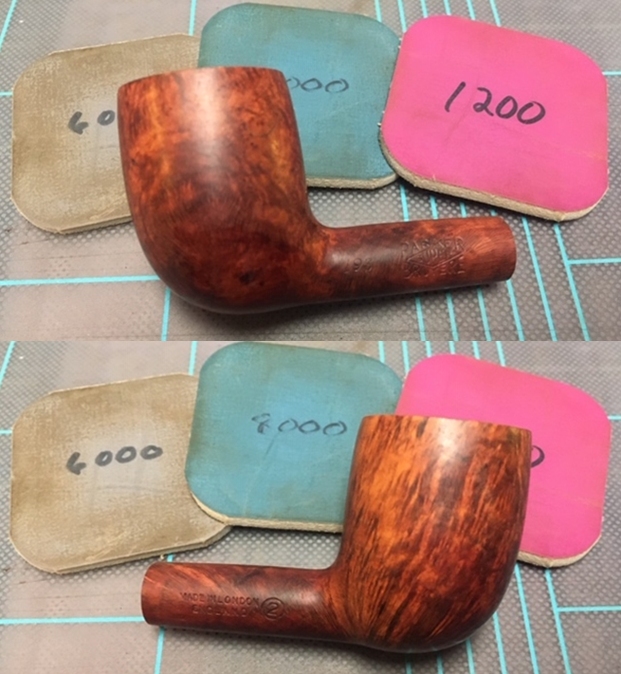
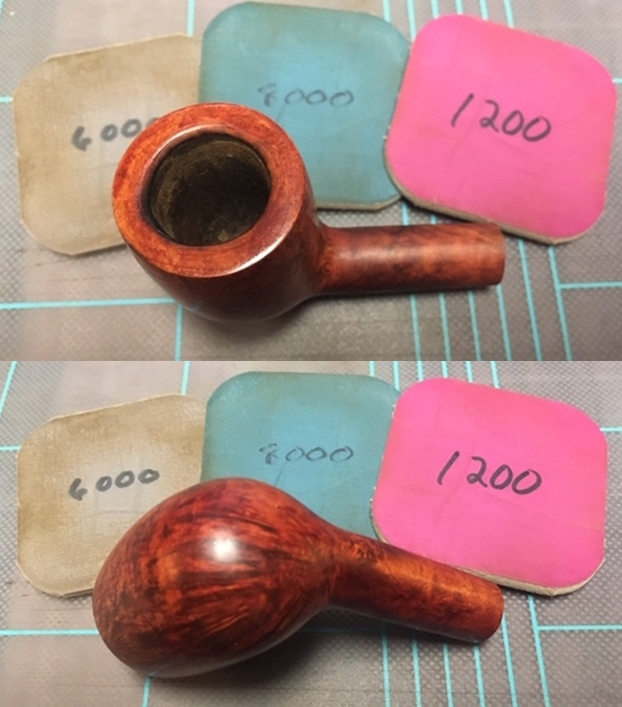
The Parker Super Bruyere Billiard has a taper vulcanite stem. It is a smooth finished bowl and shank that has a lot of dust and debris ground into the finish of the briar. The pipe is stamped on both sides of the shank. On the left it is stamped with the shape number793 followed by Parker over Super in a Diamond over Bruyere. On the right it is stamped with the number 2 in a circle followed by Made in London England. There was a thick cake in the bowl and lava overflow on the rim top. There was tobacco debris stuck on the bottom and sides of the bowl. The tapered vulcanite stem was calcified, oxidized and had tooth marks and chatter ahead of the button on both sides. It had the Parker Diamond P stamp on the topside of the stem. Jeff took photos of the pipe to show its general condition before he did his cleanup. As I mentioned above the exterior of the pipe was very dirty – grime and grit ground in from years of use and sitting. The rim top was covered with a coat of thick lava that overflowed from the thick cake in the bowl. It was hard to know what the rim edges looked like because of the lava.    Jeff took photos of the sides and the heel of the bowl to give a better feel for the condition of the briar around the bowl.       The next photos show the stamping on both sides of the shank. The stamping is clear and readable as noted above. There is also a stamped Diamond P on the top of the tapered stem.   The stem was dirty, calcified and oxidized with tooth chatter and marks on the top and underside of the stem at the button.      I have worked on quite a few Parkers over time and I have seen them stamped like the one I have however, there as a superscript after the D in England. I turned to Pipedia to see what I could find out a Super Bruyere without a date code(http://www.pipephil.eu/logos/en/logo-parker.html). I have included a screen capture of the section showing a similarly stamped pipe. With over 125 pipes to clean from Bob’s estate I took a batch of them to the states with me when I visited and left them with Jeff so he could help me out. Jeff cleaned the pipes with his usual penchant for thoroughness that I really appreciate. Once he finished he shipped them back to me. Bob’s pipes were generally real mess and I did not know what to expect when I unwrapped it from his box. I was surprised to see how well it turned out. He reamed it with a PipNet pipe reamer and cleaned up the reaming with a Savinelli Fitsall Pipe Knife. He scrubbed out the internals with alcohol, pipe cleaners and cotton swabs until the pipe was clean. He scrubbed the exterior of the bowl with Murphy’s Oil Soap and a tooth brush to remove the grime and grit on the briar and the lava on the rim top. The finish looks very good with good looking grain around the bowl and shank. Jeff scrubbed it with Soft Scrub and soaked it in Before & After Deoxidizer to remove the oxidation on the rubber. When the pipe arrived here in Vancouver for the second stop of its restoration tour it looked a lot better. I took photos before I started my part of the work.    I took some close up photos of the rim top and the stem surface. I wanted to show what cleaned bowl and rim top looked like. The rim top had some darkening but the inner and outer edges of the bowl were in excellent condition. I also took close up photos of the stem to show the tooth marks and the remaining oxidation on the stem surface.    I took photos of the stamping on both sides of the shank. The stamping on both the left and right side are clear and readable as noted above.    I removed the stem for the shank and took a photo of the bowl and stem to give a picture of what it looked like. The oxidation is very visible.I decided to start my part of the restoration work on this pipe by addressing the damage to the rim top and inner edge first. I topped the bowl on a piece of 220 grit sandpaper on a topping board to smooth out the damage. I used a folded piece of 220 sandpaper to address the damage on the inner edge and bring the bowl back to round.    There was a deep gouge on the left side of the heel of the bowl that I dealt with next. I filled it in with clear superglue and once it had cured sanded it smooth with 220 grit sandpaper.   I polished the briar with micromesh sanding pads – wet sanding it with 1500-12000 grit sanding pads. I wiped it down with a damp cloth between each sanding pad.   I paused the polishing for a moment and stained the rim top with a Maple and an Oak stain pen to blend the rim top colour into the bowl and shank colour.   I went back to polishing the bowl with 6000-12000 grit micromesh sanding pads.  The last three pads helped to blend in the restained areas of the repairs. I rubbed the bowl down with Before & After Restoration Balm. I worked it into the surface of the briar with my fingertips to clean, enliven and protect it. I let the balm sit for a little while and then buffed with a cotton cloth and shoe brush to raise the shine.      I set the bowl aside and turned my attention to the stem. I painted the stem surface with the flame of a Bic lighter to lift the dents in the surface of the vulcanite. I was able to lift most of them out. What remained were some light marks in the surface.  I scrubbed the stem with Soft Scrub and cotton pads to remove the remaining oxidation. It took a bit of elbow grease but I was able to remove it all. I sanded out the remaining tooth marks on both sides with 220 grit sandpaper. I started the polishing of the stem with 400 grit wet dry sandpaper.      I touched up the Diamond P stamp on the top of the taper stem with Liquid Paper. I worked it into the stamping with a tooth pick. I scraped off the excess with the tooth pick and the finished stamp looked much better.      I polished the vulcanite with micromesh sanding pads – 1500-12000 grit pads. I wiped it down with a damp cloth after each sanding pad. I used Before & After Pipe Polish – both Fine and Extra Fine to further polish the stem.    This nice looking Parker Super Bruyere 793 Billiard from Bob Kerr’s estate cleaned up really well and looks very good. The mixed stain brown finish on the pipe is in great condition and works well with the polished vulcanite taper stem. I put the stem back on the bowl and carefully buffed the pipe with Blue Diamond on the buffing wheel using a light touch on the briar. I gave the bowl and the stem multiple coats of carnauba wax on the buffing wheel and followed that by buffing the entire pipe with a clean buffing pad. I hand buffed the pipe with a microfiber cloth to deepen the shine. The finished Parker Super Bruyere feels great in the hand and I think it will feel great as it heats up with a good tobacco. Give the finished pipe a look in the photos below. The dimensions of the pipe are Length: 5 ½ inches, Height: 1 ¾ inches, Outside diameter of the bowl: 1 ¼ inches, Chamber diameter: ¾ of an inch. If you are interested in carrying on Bob’s legacy with this pipe send me a message or an email. I have more to work on of various brands. Perhaps one of those will catch your attention. Thanks for reading this blog and my reflections on the pipe while I worked on it. This is an interesting estate to bring back to life.

A New Life for a Beautiful BBB 2 Star Sandblast 414 Bulldog from Bob Kerr’s Estate


Blog by Steve Laug

I have only 13 more of Bob’s pipes to finish before I have completed the restoration of his estate so I am continuing to work on them. The next one from Bob Kerr’s Estate is one of two BBB pipes in his collection. It is a nice looking 2 Star sandblast Bulldog. (Bob’s photo is to the left). If you have not “met” the man and would like to read a bit of the history of the pipeman, his daughter has written a great tribute that is worth a read. Because I have included it in most of the restorations of the estate to date I thought that I would leave it out this time. Check out some of the recent Dunhill restoration blogs that include the biographical notes about Bob. Here is a link to one of them (https://rebornpipes.com/2020/01/01/restoring-the-last-of-bob-kerrs-dunhills-a-1962-dunhill-bruyere-656-f-t-bent-billiard/).

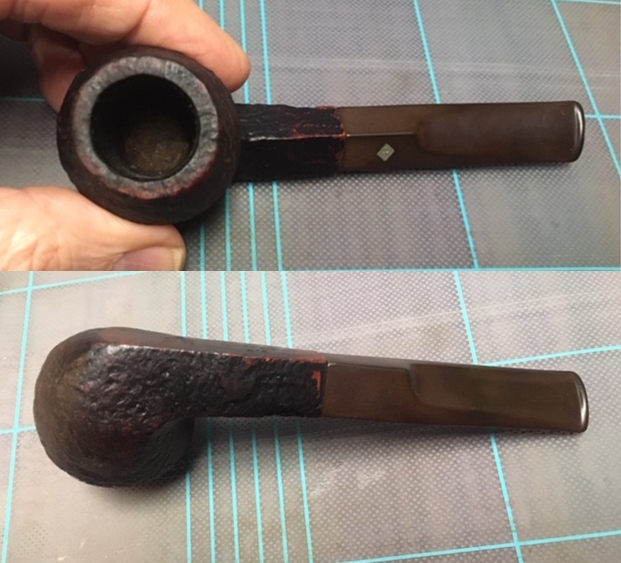
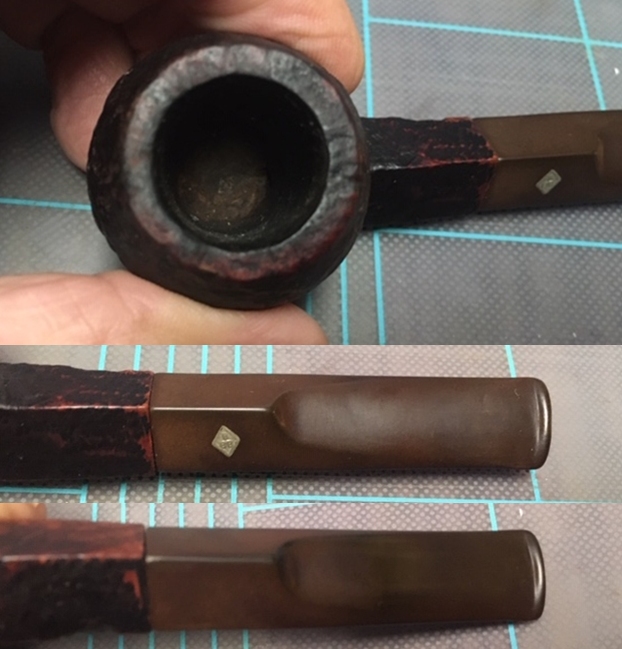
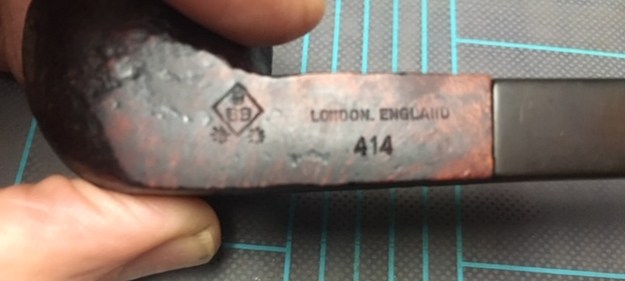
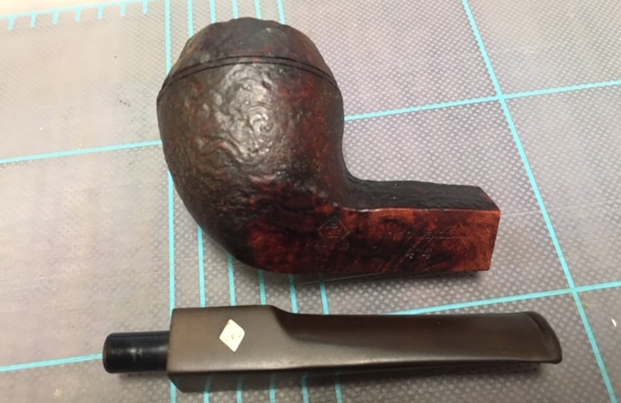
The BBB 2 Start Sandblast 414 Bulldog has a saddle vulcanite stem. It is a shallow sandblast finish around the bowl and shank that has a lot of dust and debris ground into the finish of the briar. It was stamped on left underside of the diamond shank. It is stamped BBB in a Diamond box (logo) [over] two stars **. Next to that it reads London, England [over] the shape number 414. There was a thick cake in the bowl and lava overflow on the rim top. There was tobacco debris stuck on the bottom and sides of the bowl. The vulcanite stem was calcified, oxidized and had tooth marks and chatter ahead of the button on both sides. Jeff took photos of the pipe to show its general condition before he did his cleanup. As I mentioned above the exterior of the pipe was very dirty – grime and grit ground in from years of use and sitting. The rim top was covered with a coat of thick lava that overflowed from the thick cake in the bowl. It was hard to know what the rim edges looked like because of the lava.          Jeff took photos of the sides and the heel of the bowl to give a better feel for the condition of the briar around the bowl.    The next photo show the stamping on the left underside of the diamond shank and it is very readable. It reads as noted above. The second photo shows the inlaid BBB Diamond logo on the upper left side of the diamond stem.     The stem was dirty, calcified and oxidized with tooth chatter and marks on the top and underside of the stem at the button.            With over 125 pipes to clean from Bob’s estate I took a batch of them to the states with me when I visited and left them with Jeff so he could help me out. Jeff cleaned the pipes with his usual penchant for thoroughness that I really appreciate. Once he finished he shipped them back to me. Bob’s pipes were generally real mess and I did not know what to expect when I unwrapped it from his box. I was surprised to see how well it turned out. He reamed it with a PipNet pipe reamer and cleaned up the reaming with a Savinelli Fitsall Pipe Knife. He scrubbed out the internals with alcohol, pipe cleaners and cotton swabs until the pipe was clean. He scrubbed the exterior of the bowl with Murphy’s Oil Soap and a tooth brush to remove the grime and grit on the briar and the lava on the rim top. The finish looks very good with good looking grain around the bowl and shank. Jeff scrubbed it with Soft Scrub and soaked it in Before & After Deoxidizer to remove the oxidation on the rubber. When the pipe arrived here in Vancouver for the second stop of its restoration tour it looked a lot better. I took photos before I started my part of the work.    I took some close up photos of the rim top and the stem surface. I wanted to show what cleaned bowl and rim top looked like. The rim top had some darkening but the inner and outer edges of the bowl were in excellent condition. I also took close up photos of the stem to show the tooth marks and the remaining oxidation on the stem surface.     I took photos of the stamping on the left and underside of the shank and it is clear and readable. It is stamped as noted above.   I removed the stem for the shank and took a photo of the bowl and stem to give a picture of what it looked like. The oxidation is very visible.I rubbed the bowl down with Before & After Restoration Balm. I worked it into the surface of the briar with my fingertips and a horse hair shoe brush to clean, enliven and protect it. I let the balm sit for a little while and then buffed with a cotton cloth and shoe brush to raise the shine. I set the bowl aside and turned my attention to the stem. I scrubbed the deep oxidation with Soft Scrub. It took a lot of elbow grease but I finally broke through to the shiny surface beneath the brown oxidation.         I polished the vulcanite with micromesh sanding pads – 1500-12000 grit pads. I wiped it down with a damp cloth after each sanding pad. I used Before & After Pipe Polish – both Fine and Extra Fine to further polish the stem.     This gorgeous BBB two star Sandblast Bulldog from Bob Kerr’s estate cleaned up really well and looks very good. The mixed stain brown finish on the pipe is in great condition and works well with the polished vulcanite taper stem. I put the stem back on the bowl and carefully buffed the pipe with Blue Diamond on the buffing wheel using a light touch on the briar. I gave the sandblast bowl multiple coats of Conservator’s Wax and the stem multiple coats of carnauba wax on the buffing wheel and followed that by buffing the entire pipe with a clean buffing pad. I hand buffed the pipe with a microfiber cloth to deepen the shine. The finished BBB Bulldog fits nicely in the hand and I think it will feel great as it heats up with a good tobacco. Give the finished pipe a look in the photos below. The dimensions of the pipe are Length: 5 ¼ inches, Height: 2 inches, Outside diameter of the bowl: 1 ¼ inches, Chamber diameter: ¾ of an inch. If you are interested in carrying on Bob’s legacy with this pipe send me a message or an email. I have more to work on of various brands. Perhaps one of those will catch your attention. Thanks for reading this blog and my reflections on the pipe while I worked on it. This is an interesting estate to bring back to life.

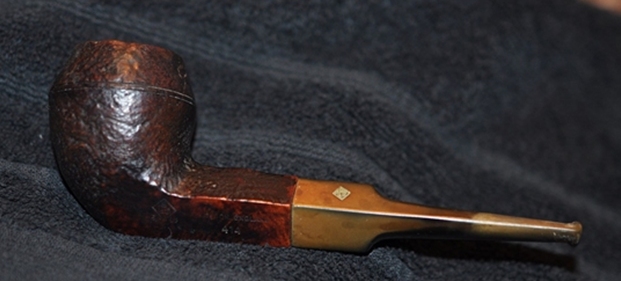
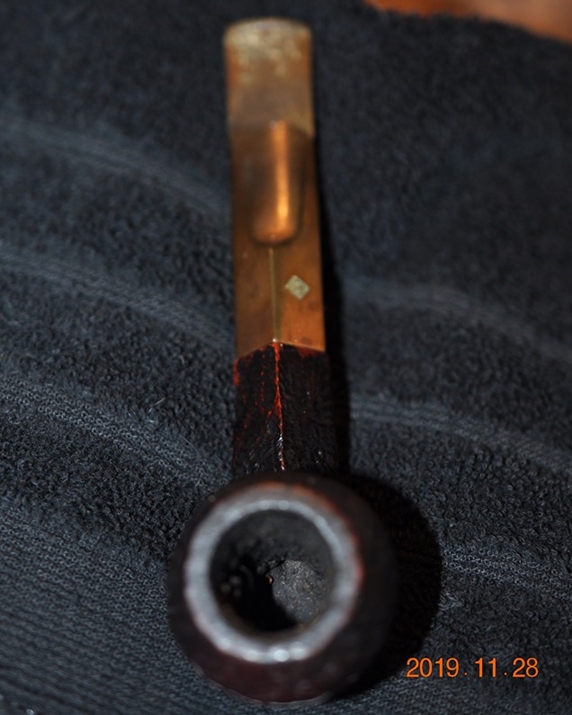
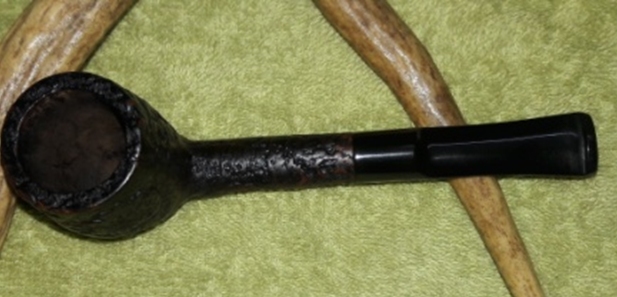
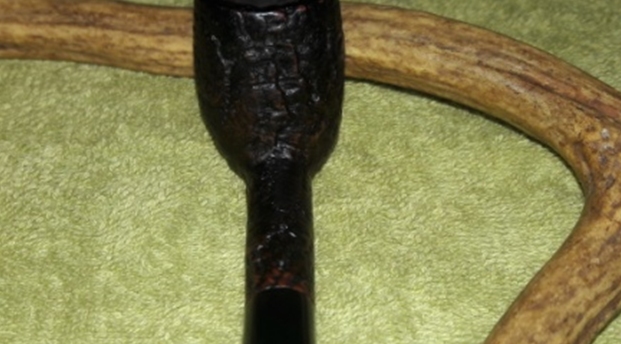
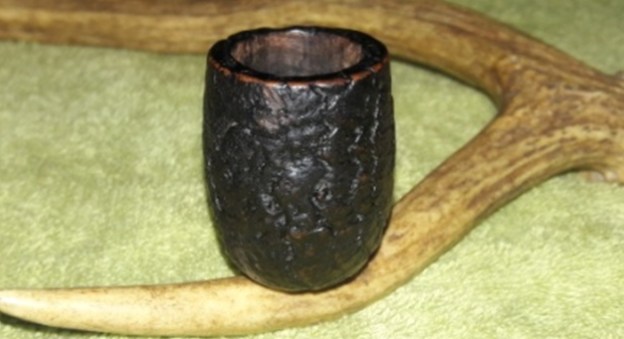
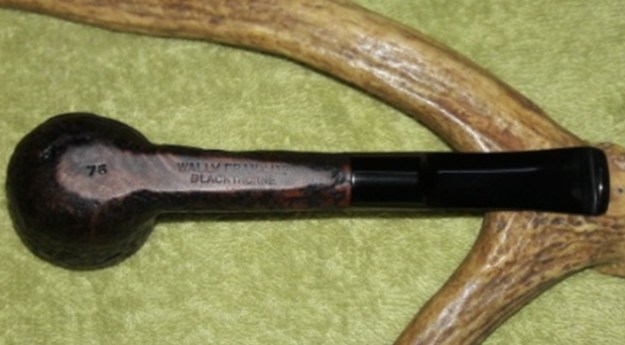
A New Beginning For An Inherited Wally Frank “Blackthorne” #75 Sandblast Billiard


Blog by Paresh Deshpande

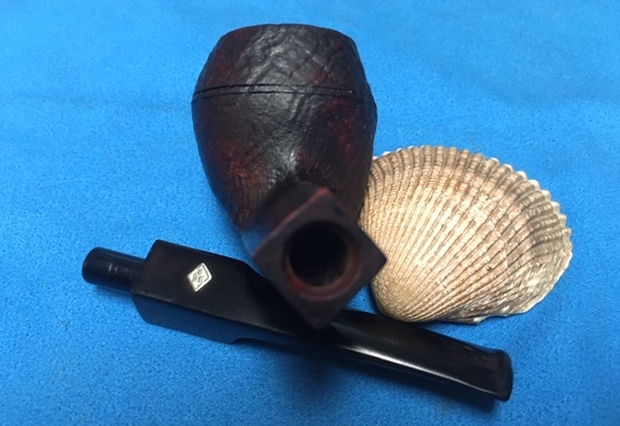
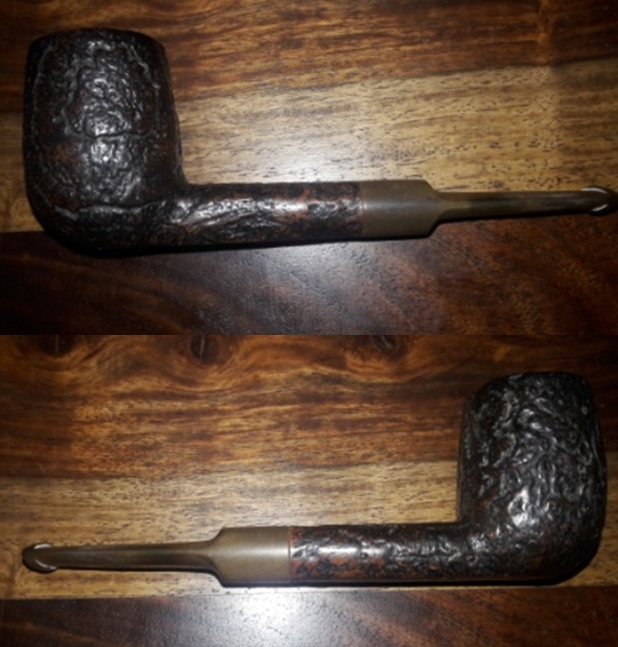
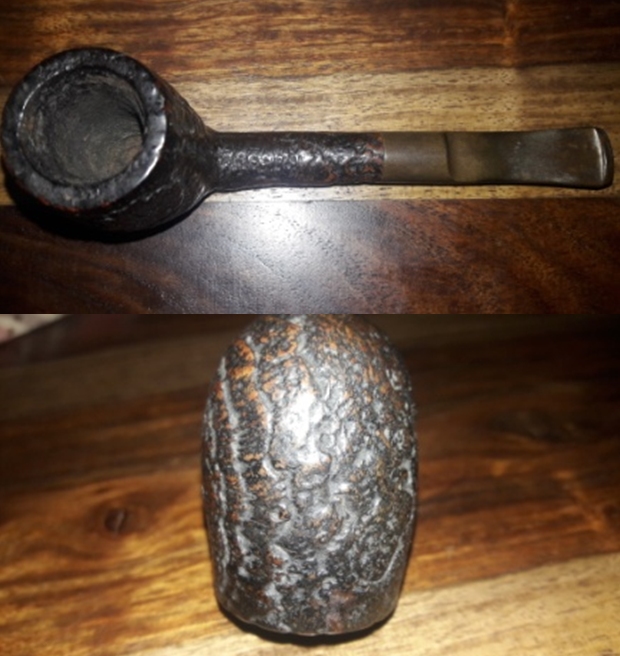
I love my classic shaped pipes and one such pipe from my inheritance is now on my work table. It’s a classic saddle stem Billiard with a deep scraggy sandblasted stummel. The moment I picked it up, I thought this could be a Barling’s “Fossil” or some English brand. However, when I saw the stampings, it was not English but a US brand. The sandblast, quality of the stem and the briar all oozed quality.

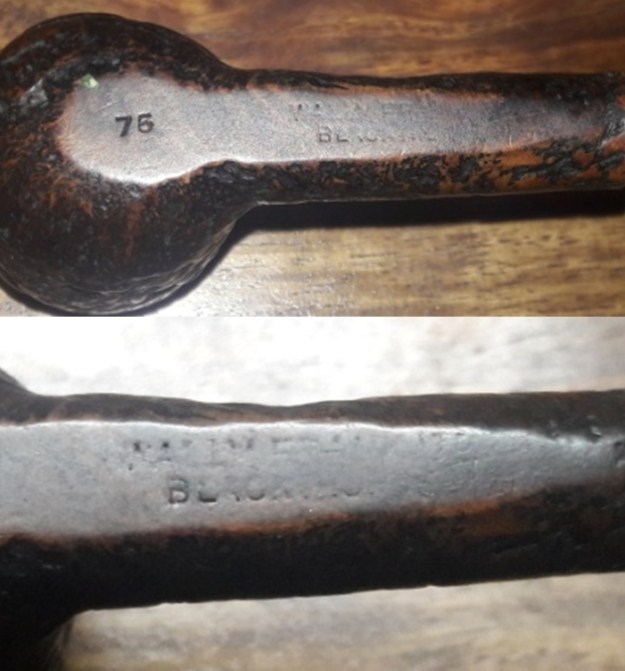
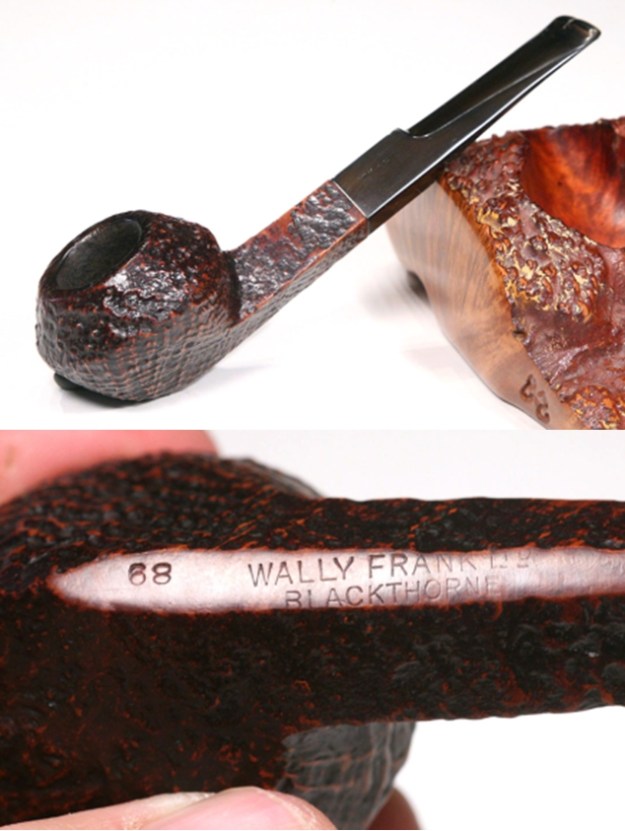
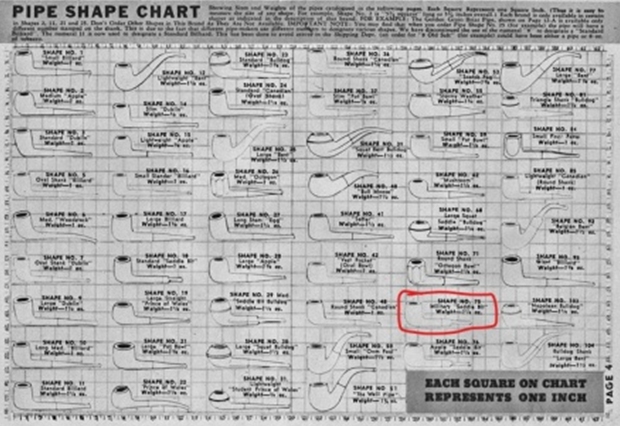
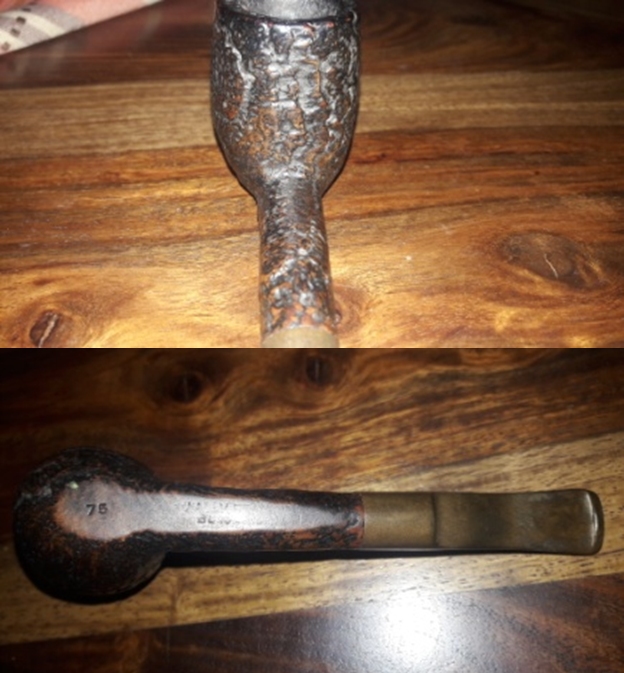
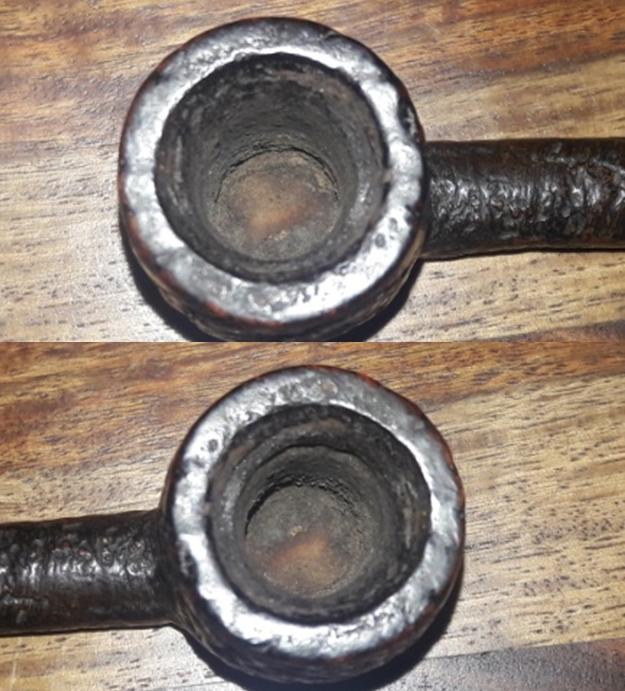
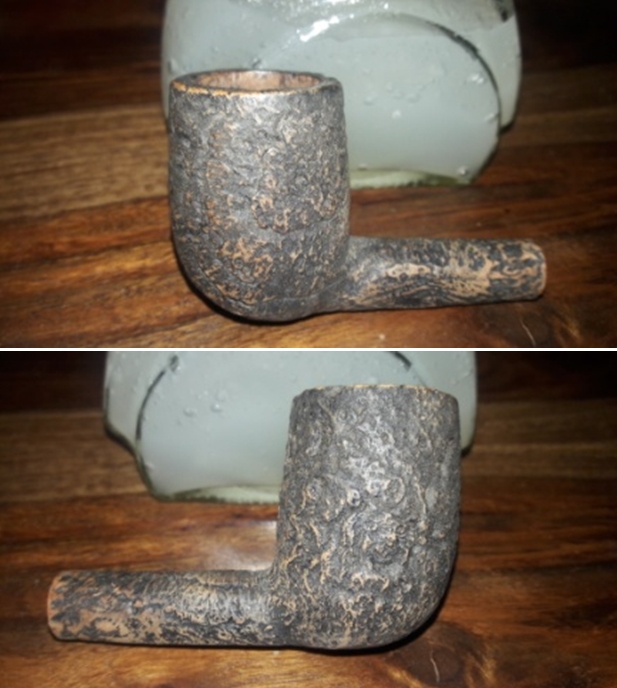
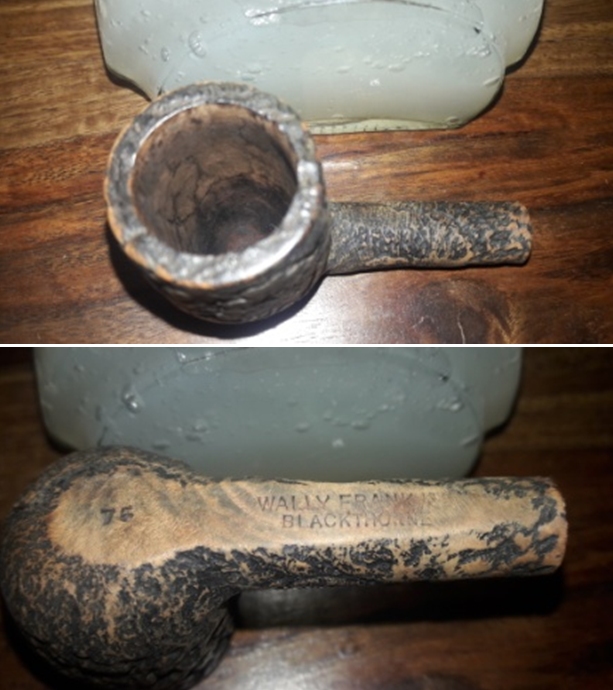
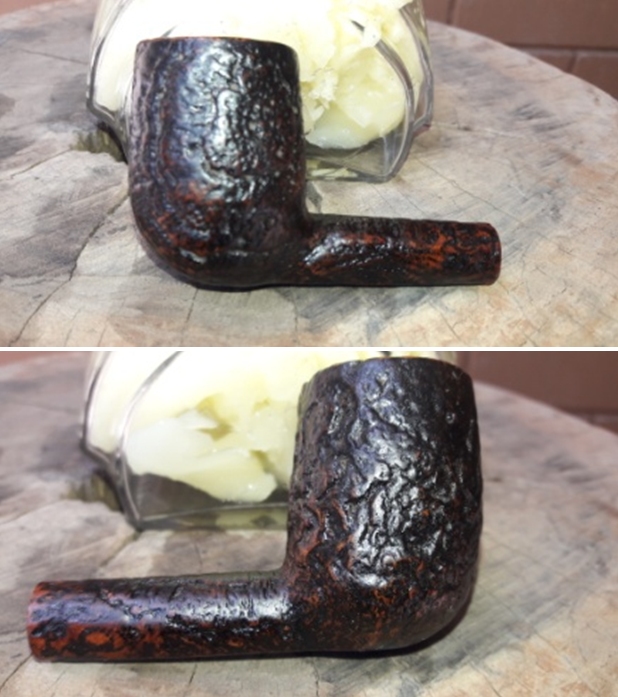
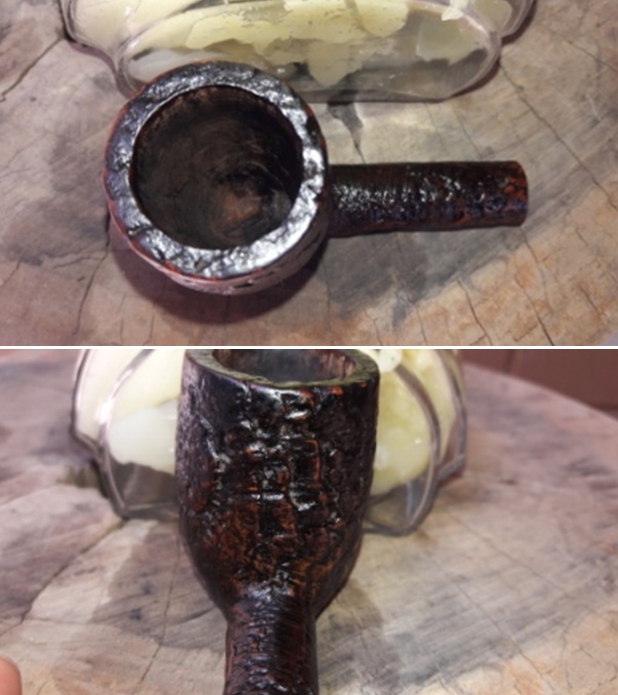
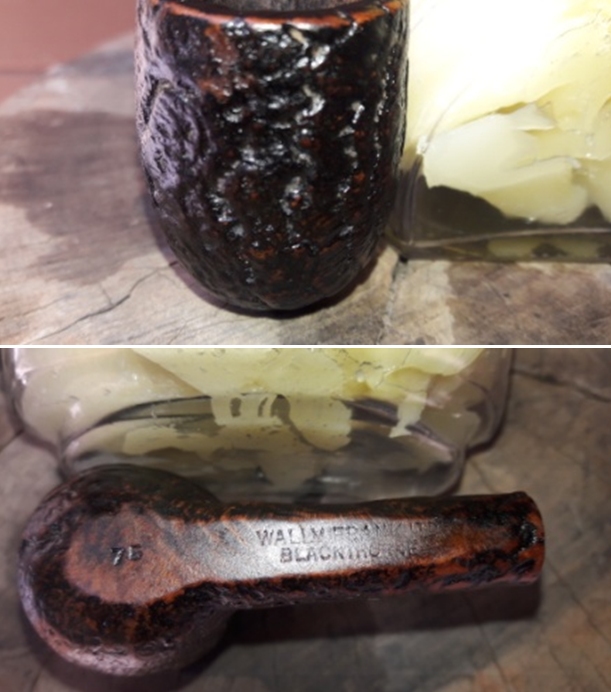
The pipe is a classic Billiard shaped sitter with deep craggy sandblast that feels tactile in the hand. It’s medium sized with a very light weight. This pipe is stamped on the bottom smooth surface of the shank with shape code # 75 at the foot followed by “WALLY FRANK LTD” over “BLACKTHORNE” in block capital letters. The stampings appear faint due to accumulation of dirt and grime over the surface. The high quality vulcanite saddle stem is sans any stampings.    I had read about Wally Frank while researching a Wally Frank era Custombilt sitter pipe about 2 years back and had a faint recollection of Wally Frank being an old Tobacconist from around New York City in US who also sold English made pipes under his name. To chronicle specific and detailed information about the brand, I first turned to Reborn pipes, which happens to be my first go to site whenever I need information on any pipe maker or brand. Sure enough, there was detailed information on the brand and a shape chart to boot!! Here is the link to the write up…. https://rebornpipes.com/2019/07/27/i-just-had-to-work-on-this-one-next-a-wally-frank-ltd-liverpool/

I visited pipedia.org to get the shape chart, pictures and other relevant information pertaining to the pipe on my work table.

Wally Frank, Ltd. was one of America’s oldest and most respected names in pipes and tobaccos, beginning in the early 1930’s. Wally Frank operated a chain of tobacco stores in New York City (the flagship store was in Lexington Avenue) and had a vast catalog business for pipes and pipe tobaccos. Their numerous private-label pipes were made by many makers, including Charatan, Sasieni, Weber, and many others. Wally Frank, Ltd. also owned the Pioneer brand of meerschaum pipes, made from both Turkish and African meerschaum. In addition to importing pipes, he had many pipes made in his own name and also employed pipemakers like Peter Stokkebye, Svend Bang, and Ed Burak (who later became the owner of Connoisseur). As a result, each Wally Frank pipe must be individually evaluated on its own merit.

Here are two sample pictures of BLACKTHORNE pipes from Wally Frank that I got from pipedia.org which were uploaded by Doug Valitchka.   Also shown below is the shape chart that Steve had referred to in his above write up. I have marked the pipe on my work table in red on this chart. The shape chart is from the 1943 catalogue! The shape code # 75 as described in the chart is MILITARY “SADDLE BIT” which corresponds to my pipe. With the provenance of the pipe now established and I move ahead with my initial visual inspection.

Initial Visual Inspection
The deeply sandblasted saddle stem sitter is covered in dirt, dust and grime. There is a decent layer of cake in the chamber and the flow of air through the mortise is not very smooth and full. The saddle stem is heavily oxidized and the bite zone is peppered with deep bite marks and minor tooth chatter on both the surfaces. Here is how the pipe appears as it sits on my work table. Detailed Inspection Of The Pipe And Observations
The bowl is nicely rounded and wide at the rim with a depth of about 2 inches. The chamber has an even layer of medium cake. The sandblasted rim top surface is covered in lava overflow and dirt and grime from previous usage and subsequent storage. The inner and outer rim is in pristine condition. The condition of the inner walls of the chamber can be commented upon after the cake has been taken down to the bare briar. The chamber has very strong smells from the old tobaccos. The draught hole is dead center and at the bottom of the chamber and that makes me believe that it should smoke smooth. The stummel all around appears solid to the touch and hence I do not foresee any serious damage to the walls in the form of burnout/ deep heat fissures/ lines or pits. I may have to resort to the salt and alcohol treatment of the chamber if the ghost smells are not reduced after the cake has been removed and the shank internals are thoroughly cleaned. As is commonly seen on rusticated or sandblasted pipes with some serious age on them, the crevices in such sandblasted surfaces are always filled with dust, dirt, oils, tars and grime from all the years of smoking and storage. This one is no exception to this observation. The grooves of the deep craggy sandblast are filled with dust while the smooth bottom shank which bears the stamping is covered in dust and grime. The fact that the grooved patterns are dusty and filled with dirt is accentuated more due to the brown and black hues on the stummel and the shank. The briar is looking lifeless and bone dry and has taken on dirty grey hues. I need to be careful while cleaning the shank bottom surface to preserve the stampings on this pipe. Thorough cleaning and rising under warm water of the stummel surface should highlight the grain patterns, depth and cragginess of the sandblast. The mortise shows accumulation of oils, tars and gunk and the air flow is not full and smooth.    The high quality straight vulcanite saddle stem is so heavily oxidized that it appears brownish green in color! Some minor tooth chatter and deep bite marks are seen on both surfaces of the stem. This issue should not be a major headache to address. The lip edge on both sides has bite marks and would need to be reconstructed and reshaped. The tenon has accumulated ash and oils/ tars that have dried out on the inside as well as on the outside. The horizontal slot has calcium deposits which will have to be cleaned. The tooth chatter and the bite marks will be raised to the surface by heating and the deeper tooth indentations will be filled using charcoal and CA superglue mix.      THE PROCESS
I started the restoration of this pipe by first cleaning the internals of the stem with bristled pipe cleaners and 99.9% pure isopropyl alcohol. I scraped out the dried oils and tars from the tenon end with my fabricated knife and also removed the calcified deposits from the slot end. I followed it up by sanding the entire stem with a folded piece of 220 grit sand paper to remove the surface oxidation. It has been our (Abha, my wife and self) experience that sanding a stem before dunking it in to the deoxidizer solution helps in bringing the deep seated oxidation to the surface which in turn make further cleaning a breeze with fantastic result.I dropped the stem in to “Before and After Deoxidizer” solution developed by my friend Mark Hoover. The solution helps to draw out heavy oxidation to the surface, making its further removal a breeze, while the minor oxidation is eliminated to a very great extent. The initial sanding helps to draw out the complete oxidation as the sanding opens up the stem surface that has been initially covered with oxidation. I usually dunk stems of 4-5 pipes that are in-line for restoration and this pipe is marked in green arrow. I generally allow the stems to soak in this solution overnight to do its work. While the stem was soaking in the deoxidizer solution, I worked on the stummel by first reaming the chamber with size 1, 2 and 3 Castleford reamer heads. I further scraped the chamber walls with my fabricated knife to remove the remaining carbon deposits. Once the cake was reamed back to the bare briar, I used a 150 grit sand paper followed by 220 grit sand paper to remove all the traces of remaining cake and also to smoothen out the inner walls of the chamber surface. Finally, to remove the residual carbon dust, I wiped the chamber with a cotton pad wetted with 99.9% pure isopropyl alcohol. The chamber walls are sans any damage, though a single minor superficial vertical heat line to the front and back of the stummel is seen. I may resort to coating the bowl with a mix of charcoal and yogurt to further protect the walls. The smells from the chamber are still very strong. I will have to resort to salt and alcohol treatment to get rid of the ghost smells.   This was followed by cleaning the mortise with cue tips, pipe cleaners and shank brush dipped in isopropyl alcohol. I scraped the walls of the mortise with my fabricated knife to remove the dried oils and tars. The heap of gunk scraped out and the number of pipe cleaners and q-tips tell the sordid saga of the condition of the shank internals. Though this further eliminated trace of old smells from previous usage, however, I must admit that I was still not very happy with the internal cleaning of the stummel and shank. The old smell was still very prevalent and called for more invasive methods to completely eliminate it.     To completely eliminate the smell, I decided to resort to salt and alcohol bath. I packed the chamber, just below the rim, with cotton balls. I stretched a cotton ball into a thick wick, tapering at one end and wound it around a folded pipe cleaner. I inserted it in to the shank and pushed it as far inside as I could so that the tip of the pipe cleaner came out through the draught hole and in to the chamber. I topped the bowl with isopropyl alcohol using an ink dropper. I know that it is generally a practice to use Kosher salt for this procedure, but since Kosher salt is not easily available here, and when available, it’s very expensive, I use cotton balls. I find that cotton balls work just fine in drawing out all the tars and smells from the mortise and the bowl. I topped the bowl with alcohol again after 20 minutes when the alcohol level had gone down and set it aside overnight for the soak to do its intended job. The next day, the cotton and alcohol had turned a dirty brown. I removed the cotton balls and ran pipe cleaners through the mortise to clean out all the loosened tars and gunk. I set the stummel aside to dry out all the alcohol from the walls of the chamber. The internals of the stummel is now clean and fresh. While the chamber was soaking overnight in the salt and alcohol bath, the next morning, Abha removed the stems that had been soaking in the deoxidizer solution overnight. She cleaned the stem and the stem airway under running warm water and scrubbed the raised oxidation from the stem surface using a Scotch Brite pad and the airway with a thin shank brush. She further removed the oxidation by scrubbing the stem with 0000 grade steel wool and applied a little EVO to rehydrate the stem. This now gives a clearer picture of the extent of depth of the bite marks as can be seen in the pictures below. These will definitely require a fill. The oxidation is deep and stubborn and can be seen over the stem surface as dirty green coloration. I need to further sand the stem to completely remove the oxidation.I used a 220 grit sand paper to sand the stem and remove all the oxidation that was raised to the surface. This step further reduced the tooth chatter and bite marks present on the stem. I wiped the stem with Murphy’s Oil soap on a cotton swab. This helps in cleaning the stem surface while removing the loosened oxidation. Using a lighter, I flamed the surface of the stem. This helped in raising some of the tooth chatter and bite marks to the surface as vulcanite has a property to regain its original shape on heating. The remaining tooth chatter and bite marks would be addressed subsequently.I addressed the deeper tooth chatter and bite marks by filling them up with a mix of activated charcoal and CA superglue. I applied a slightly thick layer over the lip which I will later sand down to create a defined edge. Once I had applied the mix, I set it aside to cure overnight. Once the fill has hardened, I shall file and sand the fills to match the surface of the stem and sharpen the button edges on either surface.   With the bowl internals clean, I move to clean the exterior of the stummel. I generously applied “Briar Cleaner”, a product that has been developed by my friend Mark Hoover, to the external surface of the bowl and the sandblasted rim top surface. It works similar to Murphy’s oil soap and needs to be applied to the stummel surface and set aside for 5- 10 minutes. The product pulls out all the dirt and grime to the surface making further cleaning easy. I am quite happy with this product. I used a hard bristled tooth brush to scrub the stummel and rim top with the solution. After the scrub with Briar cleaner solution, I washed the stummel under running warm water with anti oil dish washing detergent till the stummel surface was clean and dried it using paper towels and soft cotton cloth. I deliberately cleaned the sandblasted rim top with hard bristled toothbrush and set the stummel aside to dry out naturally. I simultaneously cleaned the shank internals with the detergent and hard bristled shank brush. The stummel surface has cleaned up nicely with the intricate sandblast patterns on full display. The brown hues of the raised portions of the sandblast contrast beautifully with the black of the rest of the stummel. These brown hues will darken considerably once the stummel briar is rehydrated and rejuvenated using the balm and subsequent wax polishing.  Next, I rubbed a small quantity of “Before and After Restoration Balm” in to the briar with my finger tips, working it deep in to the sandblasts and let it rest for a few minutes. I generously rubbed the balm in to the sandblasted rim top surface. The balm almost immediately works its magic and the briar now has a nice vibrant appearance with the beautiful sandblast patterns displayed in their complete splendor. The contrast of the dark browns of the raised sandblast with the dark black of the rest of the stummel adds an interesting dimension to the appearance of the stummel which may be insufficiently described in words and be rather seen in person. I further buffed it with a horse hair brush.  With the stummel rejuvenation almost complete, save for the final wax polish, I worked the stem. The fill had cured and with a flat head needle file, I worked on the filling till I had achieved a rough match with the surrounding surface and had sufficiently sharpened the button edges. For a better blending, I further sand the entire stem with 220 followed by 400, 600 and 800 grit sand paper. This helps to reduce the scratch marks left behind by the more abrasive 220 grit paper. To bring a deep shine to the vulcanite stem, I went through the complete set of micromesh pads, wet sanding with 1500 to 2000 grit sandpapers and dry sanding with 3200 to 12000 grit pads. I wiped the stem with moist cloth after each pad and rubbed it down with Extra Virgin Olive oil to rejuvenate the vulcanite. The finished stem is shown below. To complete the restoration, I mounted a cotton cloth buffing wheel on to my hand held rotary tool and applied several coats of carnauba wax. I finished the restoration by giving the entire pipe a rigorous hand buffing using a microfiber cloth to raise the shine further and remove any residual wax from in between the sandblasts. The finished pipe looks amazingly beautiful and is now ready for its long second innings with me. I only wish it could share with me its life story of the past years while I enjoy smoking my favorite Virginia blend in it or maybe an English blend or maybe just keep admiring it!! The finished pipe is as shown below.


A Difficult To Identify But Simple Restoration Of “Ornsby” Pipe


Blog by Paresh Deshpande

I had recently completed a challenging restoration of an ORLIK MEERSCHAUM LINED pipe that had broken meerschaum lining. I considered it to be a challenging project because I had never undertaken repairs of a meerschaum as a material and trespassing in to uncharted territories is always challenging. However, thanks to all the detailed and informative write ups on the subject that is available on rebornpipes.com, I was successful in restoring the pipe and making it smoke worthy!!

For my next project, I wanted something simple to work on and after rummaging through the huge pile of pipes awaiting restoration; I selected this interesting but different looking pipe that was in my grandfather’s collection. I say it is different since this pipe does not have a shank but the stem directly fits in to the bowl beneath the vertically placed draught hole on the heel. In addition to the vintage classic pipes, there are quite a few such different looking and unique pipes that I have been fortunate to inherit.

Beneath all the dust and grime, beautiful Bird’s eye grains to the sides and bold cross grains to front and back that extends to nearly half the width of the bowl on the left side can be seen over the stummel. Once the stummel has been cleaned and polished these grains will pop out and look more beautiful. The stummel is sans any stampings while the vulcanite stem with a conical aluminum tenon end has a symbol that is hard to describe. It’s an interlocked OP with a straight line from the base of the letter P. The lack of any Maker’s stamp and COM stamp makes the identification of this pipe very difficult.Lack of Maker’s stampings and COM stamp made research of this pipe very difficult. There was no point visiting rebornpipes.com as I did not have any name to search for. Similarly, visiting pipedia.org would not help as I did not have COM stamp to follow. Finally I turned to pipephil.eu and searched the Logos with a geometrical pattern and Logos with miscellaneous symbols sections. Again I came up with nothing matching the stem logo on the pipe in front of me. As a last resort, I just typed “pictures of unusual tobacco pipes” in to the Google search bar and there before me were a plethora of pictures. As I was scrolling through these images, after a couple of hours, I finally found a picture that was an exact replica of the pipe on my work table. A click on to this image took me to the site smokingmetals.co.uk. Here is the link to the web page; http://www.smokingmetal.co.uk/pipe.php?page=106

From the read I understood that this design was a part of the piper’s eternal quest for a cool and dry smoke. I reproduce a part of the information that should provide the readers with an insight in to the designer of the pipe and the Company that manufactured these pipes.

Invented by Chief Marine Officer, William Edward Ornsby in an attempt to create a cooler smoke and a dry bowl. Marketed by the Ornsby Pipe Company Ltd, Pennywell, Sunderland, Tyne & Wear, England, predominately in the North of England, this pipe is virtually a stem direct to bowl.
The push fit stem/bit can be rotated to clear any shreds of tobacco that may be blocking the airway. A half turn of the stem will cut any trapped leaf in the airway and a quick blow will eject the offending particle. As the centre photo shows, the metal part of the stem goes right through the bowl. The packaging was also unusual in that it was a tube.
The pipe came with two choices of stem, straight or curved and there was a choice of six bowls: Natural, Brown Sandblast, Black Sandblast, Smooth Mahogany Finish, Deep Cut Horizontal Carved or the Deep Cut Vertical Carved.
Overall length 5 3/4 inches (146 m/m)

My thanks to Richard Adamek for the following:
“ORNSBY PIPE COMPANY LIMITED At an Extraordinary General Meeting of the Members of the above-named Company, duly convened, and held at 7 Benton Terrace, Sandyford Road, Newcastle-upon-Tyne, on 27th October 1980, the following Extraordinary Resolution was duly passed:
“That it has been proved to the satisfaction of this Meeting that the Company cannot, by reason of its liabilities, continue its business, and that it is advisable to wind up the same, and accordingly that the Company be wound up voluntarily and that Brian Leslie Wilson, of Wilson Johnson, 7 Benton Terrace, Sandyford Road, Newcastle-upon-Tyne, be and he is hereby nominated Liquidator for the purposes of the winding-up.”
(803) Brian Dobinson, Director”
Richard also found the patent number… US patent 242261 of 1976

Thus from the above, it is now established that the pipe that I am dealing with is an ORNSBY with a Natural smooth finish and a straight vulcanite stem. The pipe was awarded a US Patent in 1976 and the company was liquidated in 1980. This places the pipe in between the period from 1970s to 1980 making it 40 plus years old!!

Initial Visual Inspection
The pipe has beautiful Bird’s eye and cross grain across the stummel that can be seen through all the dirt and grime from years of use and uncared for storage. The chamber has a thick layer of cake with lava overflow over the rim top surface. The vulcanite stem is heavily oxidized and the aluminum tenon contraption appears to be dull and lackluster. The bite zone is peppered with minor tooth chatter. I think this should be an easy refurbishing project. Here is how the pipe appears as it sits on my work table. The smooth stummel has some beautiful Bird’s eye grain on the sides with cross grains on the front and back of the stummel. At the bottom on either side of the stummel, is a sharply contoured cut that merges and forms a gap between the either sides of the stummel that houses the aluminum tenon end of the stem. The stummel surface is covered in dirt and grime giving the stummel a dull and lackluster appearance. There is not a single fill in the briar and the stummel just oozes out high quality. There are a few dents and dings on either side of the stummel. The gap at the foot of the stummel that houses the aluminum tenon is covered in oils, tars and grime from years of usage and storage. The housing for the tenon needs to be cleaned. The minor dents and dings will be addressed once the stummel is sanded down with a sand paper. A nice cleaning and polishing should highlight the beautiful grain on the briar. A thick layer of cake is seen in the chamber. The rim top surface has a few dings and is covered in thick overflow of lava, dirt, dust and grime. The condition of the inner walls of the chamber and rim top surface will be known once the cake has been taken down to the bare briar. The inner rim condition appears to be good with no burn/ charred surfaces. However, the outer rim edge is damaged most probably due to striking against a hard surface. In spite of the thick cake, the chamber odor is surprisingly not strong and should be addressed once the cake has been taken down to the bare briar and the shank internals have been thoroughly cleaned. The draught hole is in the dead center of the heel of the chamber and is constricted due to accumulation of the thick cake. Only once the stummel has been thoroughly cleaned that I can be sure of my initial appreciation. The dings over the rim surface will be addressed by topping while the damage to the outer rim edge will be taken care of by sanding or, if need be, by creating a bevel. The draught hole needs to be thoroughly cleaned for a full and smooth draw. The tapered vulcanite stem is unique and nothing like I had seen before. The tenon end is a conical aluminum extension and has a horizontal slot that is closed at the bottom, cut across the mid section which opens in to the stem airway. This slot is aligned with the draught hole. For a better understanding of the construction and functioning, shown below are a few pictures which shows the complete set up. The stem is heavily oxidized with minor tooth chatter in the bite zone. The aluminum tenon is stained with dried oils and tars and has a lackluster appearance. Deposits/ accumulation of gunk is seen in the horizontal slot in the conical tenon, clogging the air way. Apart from slight calcium deposition at the edge of the both the buttons, there is no damage to the button per se on either surface and no deep bite marks in the bite zone. I shall clean the stem internals and get rid of the surface oxidation. This internal cleaning will improve the air flow and external cleaning will help in aesthetics of the stem. The minor tooth chatter in the bite zone will be addressed by sanding the area. The Process
I decided to address the stem first for this restoration. There is no fixed routine that I follow during any restoration and I prefer to address first that part which requires maximum repairs or that what requires maximum time. I cleaned the internals of the stem with thin shank brush dipped in liquid dish washing soap and further cleaned it with regular and bristled pipe cleaners and 99.9% isopropyl alcohol. It has been my experience that initial cleaning with shank brush greatly reduces the subsequent requirement of pipe cleaners.Next, I reamed the chamber with size 2 followed by size 3 head of the Castleford reamer. I further sand the walls with a folded piece of 220 grit sand paper and took the cake down to the bare briar. I wiped the chamber with a cotton swab and isopropyl alcohol. It was a great relief to find a solid chamber with no heat fissures/ lines/ pits. The lava overflow from the rim top surface was gently scrapped off with my fabricated knife. I cleared the draught hole of all the obstructing cake and gunk with hard bristled pipe cleaners and alcohol. The gap at the foot of the stummel that houses the tenon was cleaned using shank brush, pipe cleaners and alcohol. The rim top surface needs to be scrubbed clean. This cleaning has revealed an uneven inner rim with chips to the edge, especially one in 12 o’clock direction. The damaged areas of the inner rim edge are marked in yellow circles. Further external cleaning of the stummel will present a clearer picture of the extent of damage. The chamber now smells fresh and clean.    The time that I was working on cleaning up of the stummel, Abha my wife worked on the stem. Since there was no requirement of any repairs to the stem, she volunteered to clean it up. With a folded piece of 180 grit sandpaper she rid the stem of the deep seated oxidation. She followed the 180 grit sandpaper with sanding the stem with progressively finer grit sandpapers of 220, 400, 600 and 1000 grit. The use of progressively finer grit sandpapers helps in removing complete oxidation from the stem surface while eliminating the sanding marks left behind by the coarser grit sandpapers. She cleaned up to the aluminum tenon end and the stem with 0000 grit steel wool and Murphy’s Oil soap and rubbed a little EVO deep in to the vulcanite. What fantastic results she has produced! The stem already looks polished and yet micromesh cycle is yet to be completed. Here is how the stem appears at this stage.With the internals of the stummel now clean, I cleaned the external surface of the stummel. I applied “Briar Cleaner”, a product that has been developed by my friend Mark Hoover, to the external surface of the bowl. It works similar to Murphy’s oil soap and needs to be applied to the stummel surface and set aside for 5- 10 minutes. The product pulls out all the dirt and grime to the surface making further cleaning easy. I am quite happy with this product. I used a hard bristled tooth brush to scrub the stummel with the gel like product, wiped it clean with a moist cloth and dried it using paper towels and soft cotton cloth. I deliberately cleaned the rim and the shank end by inverting the stummel and rotating it on a piece of Scotch Brite. I cleaned the gap that houses the conical aluminum tenon with a shank brush and dish washing soap to remove what little crud remained in the gap. I set the stummel aside to dry out naturally. The stummel is now nice and clean with the grains showing a lot of promise. The rim top surface has many dents and dings while the outer rim edge has many small divots carved, probably as a result of knocking against a hard surface to remove the dottle. The inner rim too has few dings and chipped edge. I shall resort to topping and creating a bevel over the edges to address these issues. Now that the stummel was clean, I could make out the exact extent of damage to the rim top surface and also to both inner and outer rim edges. I topped the bowl on a piece of 220 grit sand paper, checking ever so frequently the progress being made. One of the things that I prefer to avoid is topping a bowl as it compromises the shape of the bowl while also loosing briar estate. In case it is unavoidable, I prefer to keep it to the minimum. In this case, a few rotations later, I am at that point where the rim top surface damage has been addressed while the inner and outer rim edge damage has been addressed to a great extent. I need to create a slight bevel over both the edges to fully address the damage to the rim edges. To address the remaining dents and chips to the inner and outer rim edges, with a folded piece of 220 grit sand paper pinched between my forefinger and thumb, I created a slight bevel over both these edges. I am quite pleased with the way the rim top and the edges appear at this stage in restoration.    I subjected the stummel to a complete cycle of micromesh polish, wet sanding with 1500 to 12000 grit pads, the only variation being that since 1500 and 2400 grit micromesh pads have completely worn out and due to lockdown couldn’t order on line, I wet sand using 1500 and 2000 grit sand papers. I wiped the stummel with a moist cloth after every three grit pads to remove the sanding dust left behind by the pads. This also helps in monitoring the progress being made and ensures early corrective action. I am happy with the progress being made till now.    Next, I rub a small quantity of “Before and After Restoration Balm” in to the briar and the rim top surface with my finger tips and worked it deep in to the surface and let it rest for a few minutes. The balm almost immediately works its magic and the briar now has a nice vibrant appearance with the beautiful grain patterns on full display. The contrast of the dark browns of the grain with the light hues of the rest of the stummel adds an interesting dimension to the appearance of the stummel. I further buffed it with a horse hair brush to further deepen the shine. Simultaneously as I was carrying out repairs and polishing of the stummel, Abha was busy silently polishing the stem. She wet sanded the stem with 1500 and 2000 grit sand papers and followed it up with wet sanding using remaining micromesh grit pads 2400 to 12000. She even polished the conical aluminum tenon to a pristine smooth shining finish. Readers who have been following my write ups for some time now are aware of Abha’s penchant for not taking any pictures……and she has stayed true to this habit of hers. Sincere apologies as there are no pictures for this stage!!
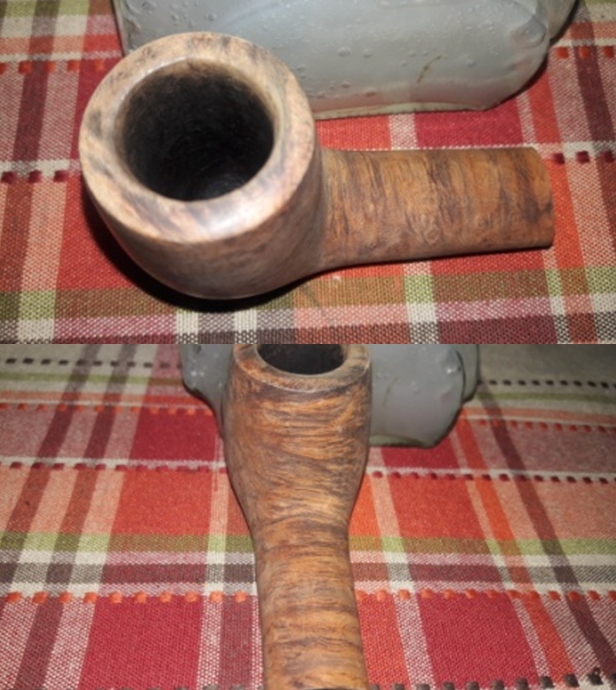
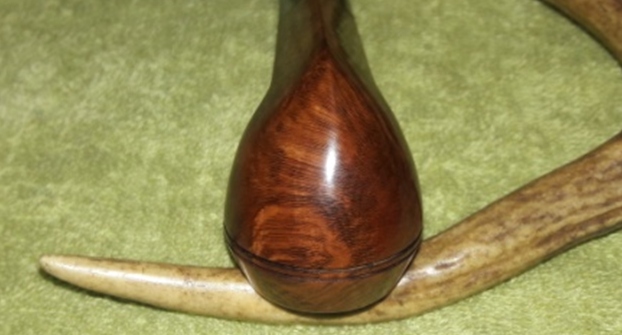
To complete the restoration, I mount a cotton cloth buffing wheel on to my hand held rotary tool and apply a coat of Blue Diamond to the stummel and the stem to polish out the minor scratches. With a cotton buffing wheel that I use for carnauba wax, I apply a coat of carnauba wax and continue to work on it till the complete coat of wax had been polished out. I mount a clean cotton cloth buffing wheel and give the entire pipe a once over buff. I finished the restoration by giving the entire pipe a rigorous hand buffing using a microfiber cloth to raise the shine further. The finished pipe looks amazingly beautiful and is now ready for its long second innings with me. I only wish it could share with me its life story of the past years while I enjoy smoking my favorite Virginia blend in it or maybe an English blend!! P.S. This pipe was an interesting project, the most difficult part being the research on the maker and brand of this pipe. This task was made difficult due to lack of any stampings on the stummel. However, once the provenance of this pipe was established, it was a simple straight forward restoration project.
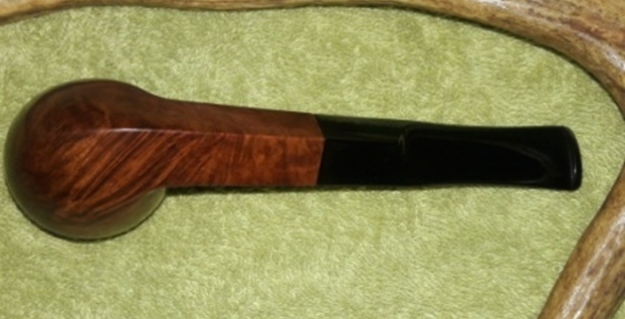
This pipe too shall be joining the few pipes in my collection that are a milestone in pipe smoker’s eternal quest for a cool and dry smoke.

A big thank you to all the readers who have thus far walked with me on this journey…

Praying for safety and well being of all readers of rebornpipes.com. Stay home, stay safe.