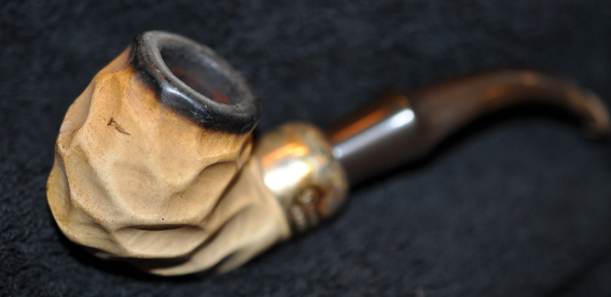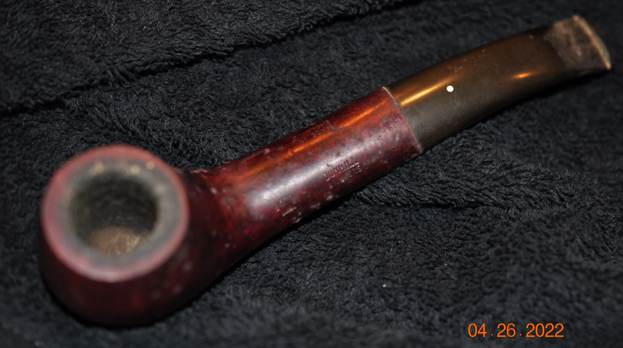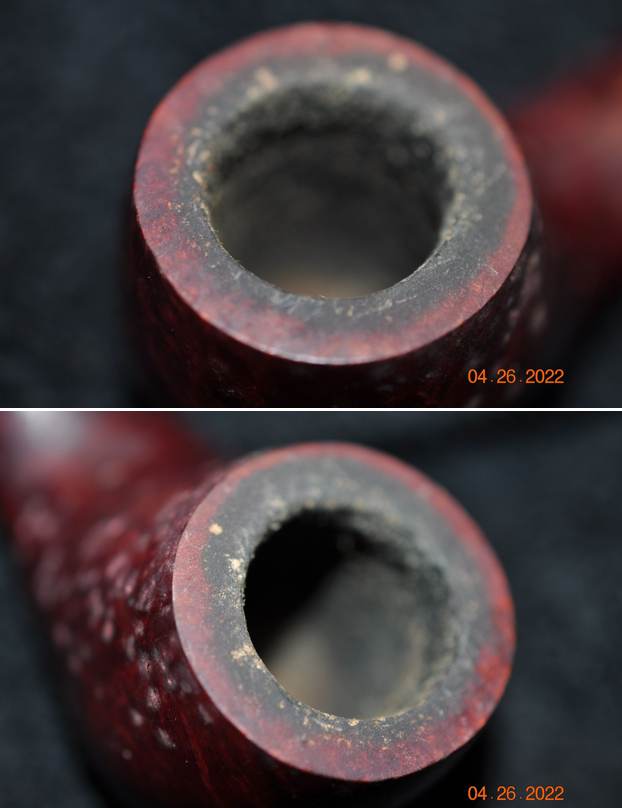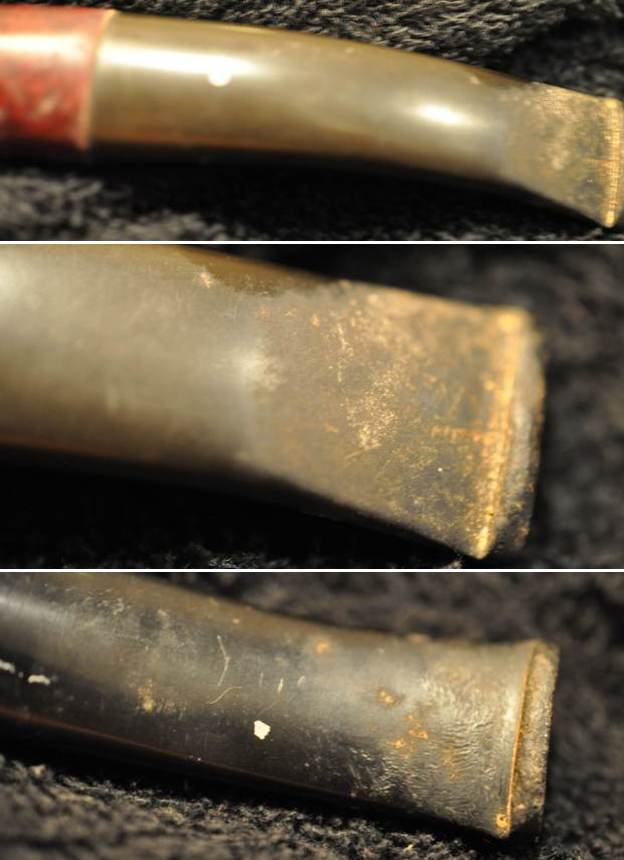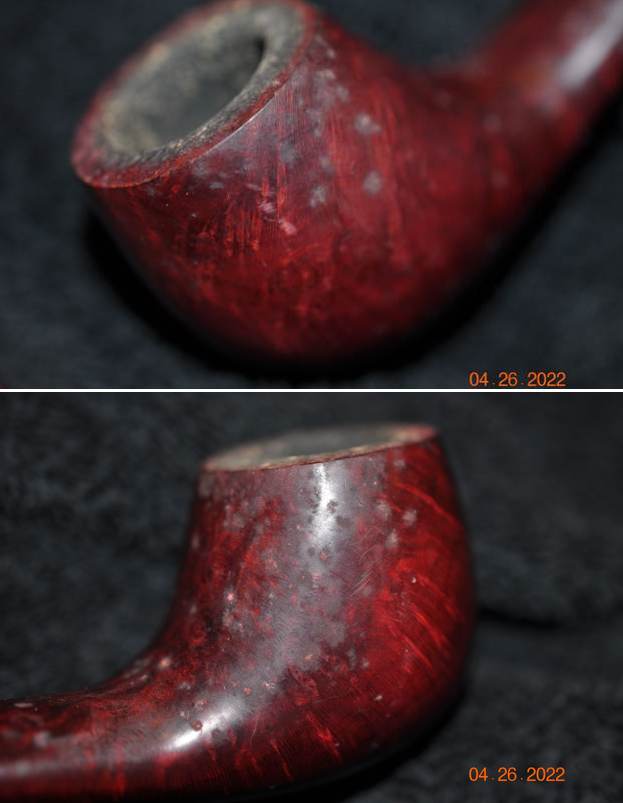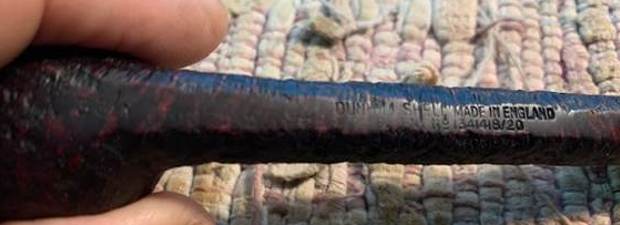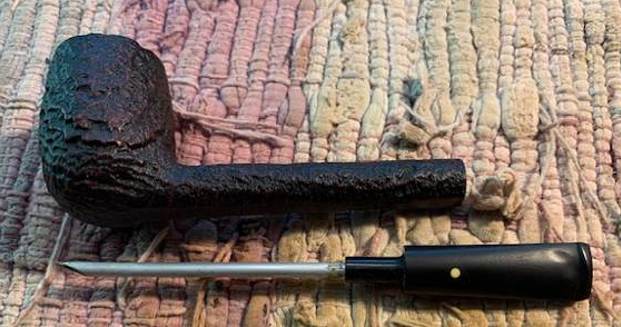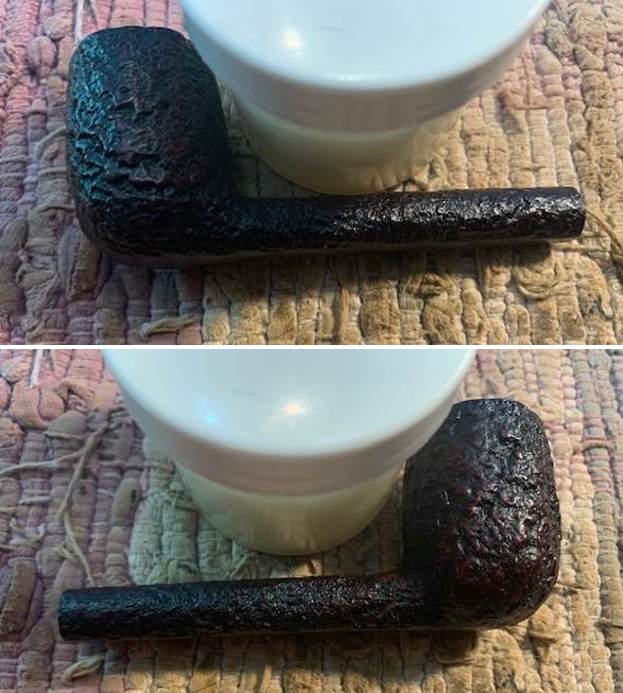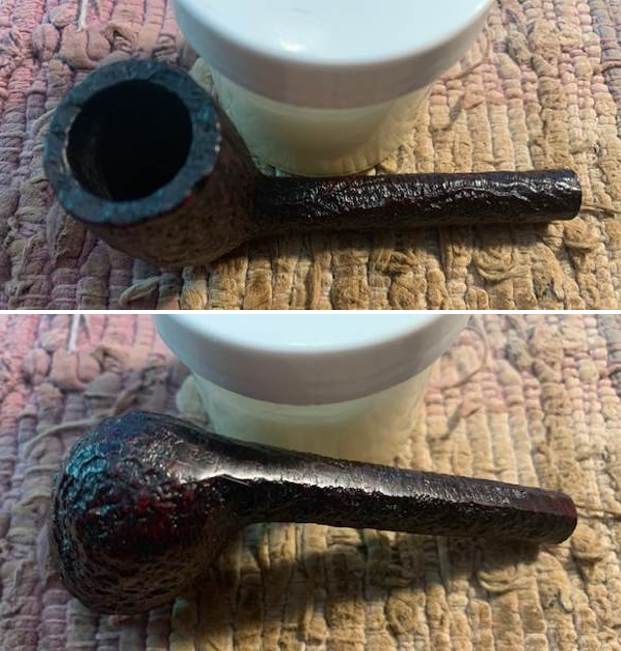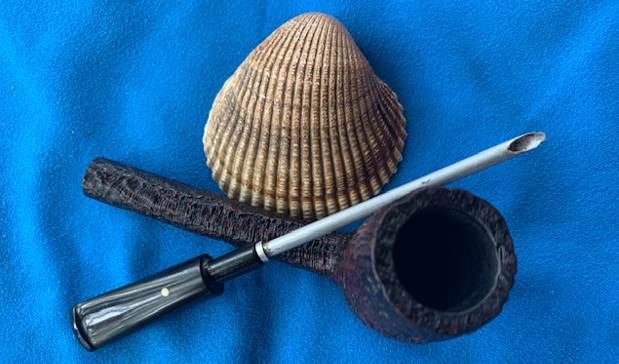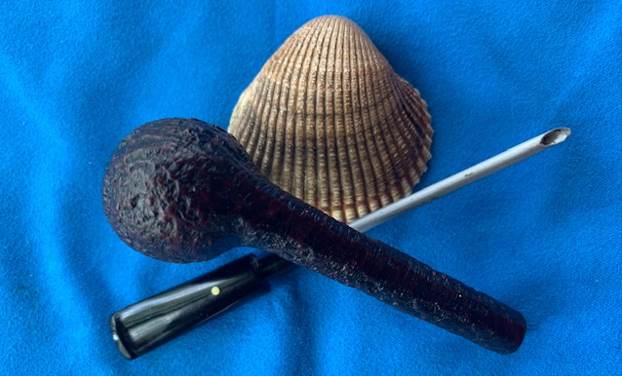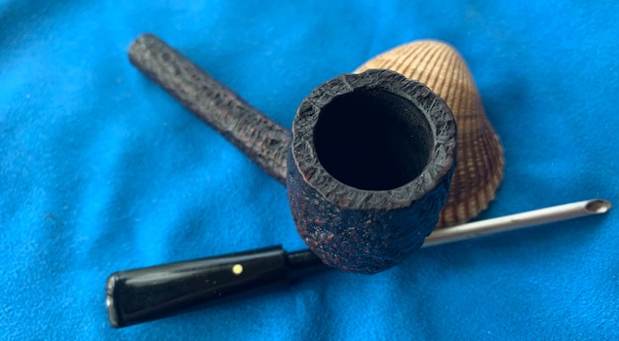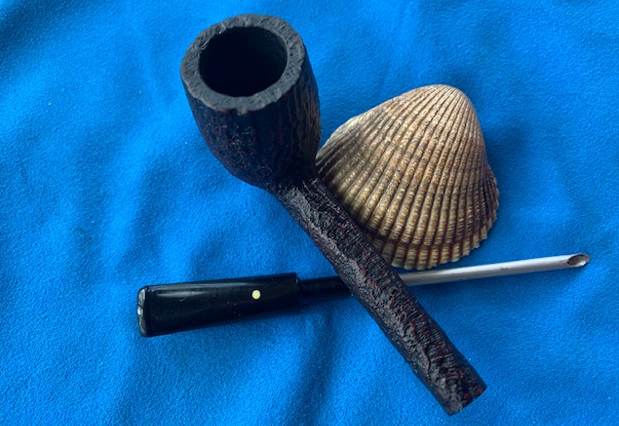
Tag Archives: vulcanite

A Chunky and Squat Custom-Bilt Pot


Blog by Steve Laug

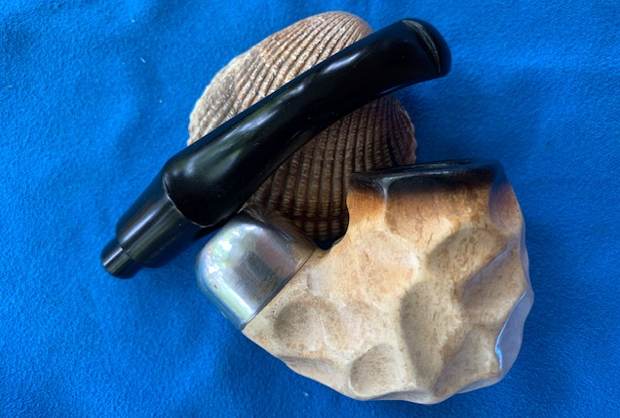
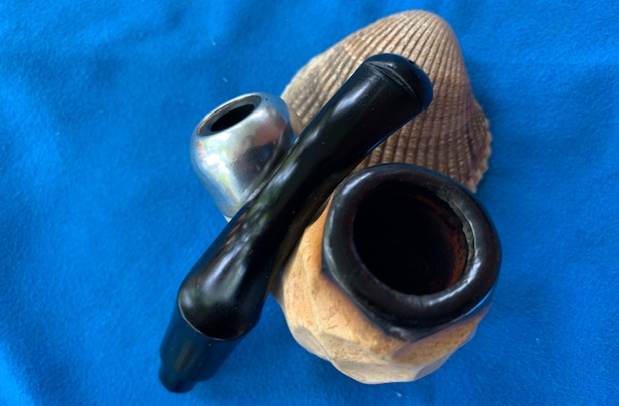
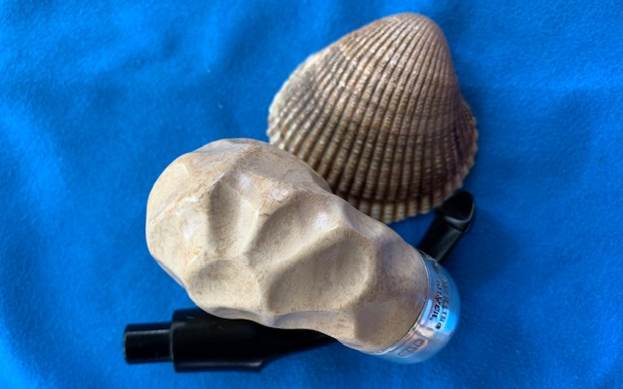
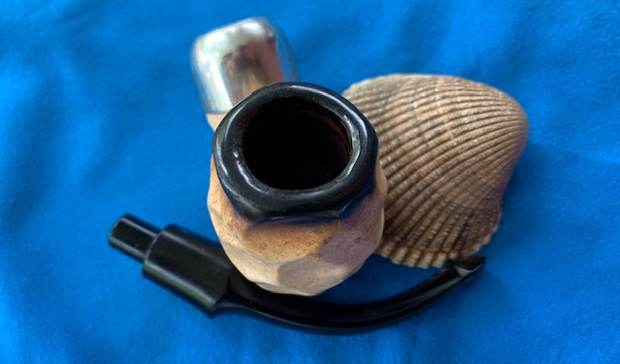
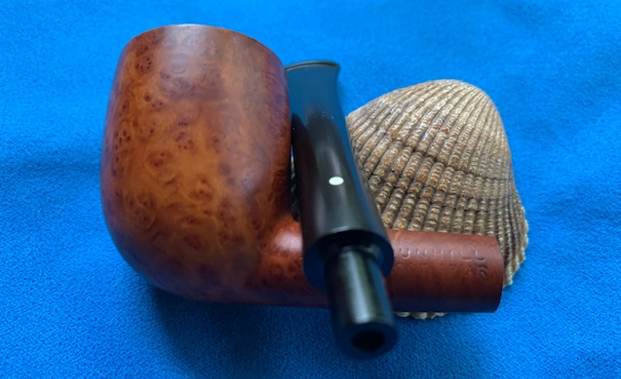
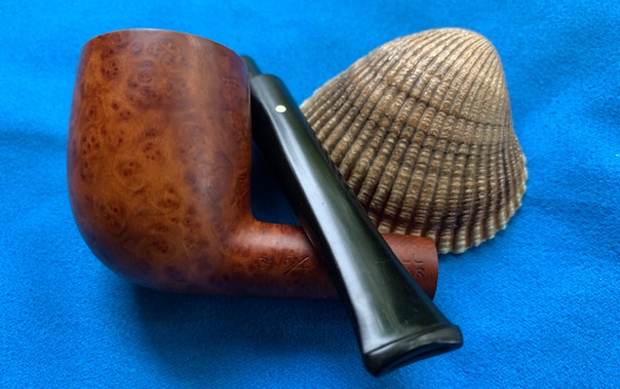
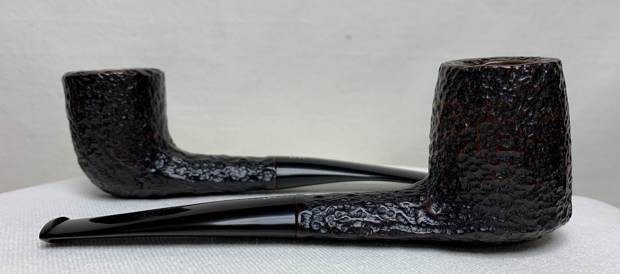
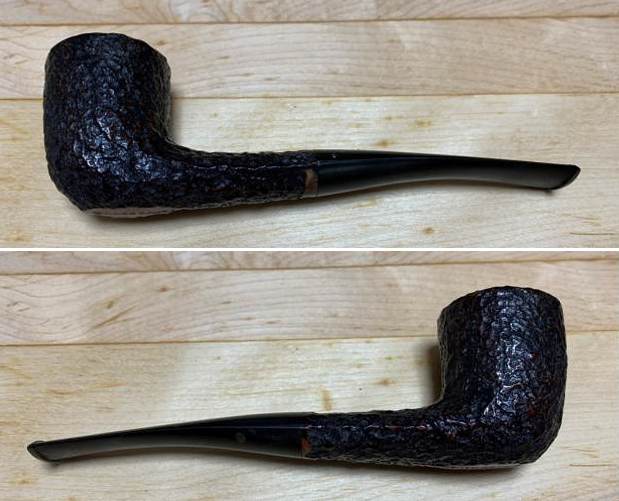
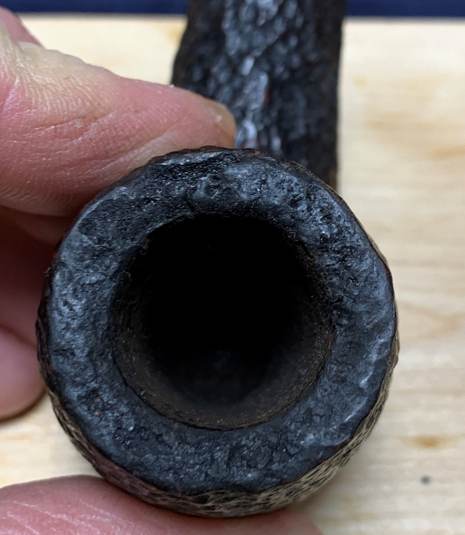
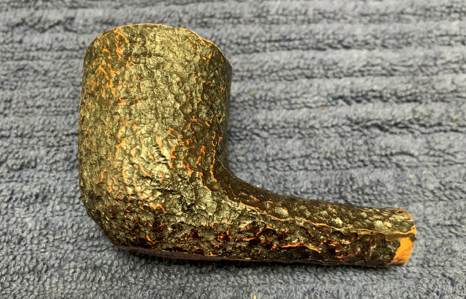
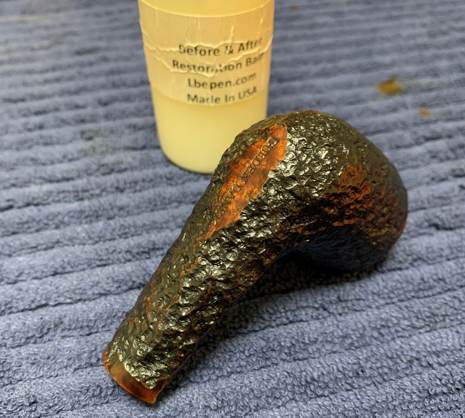
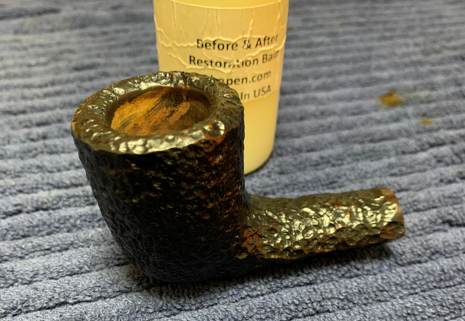
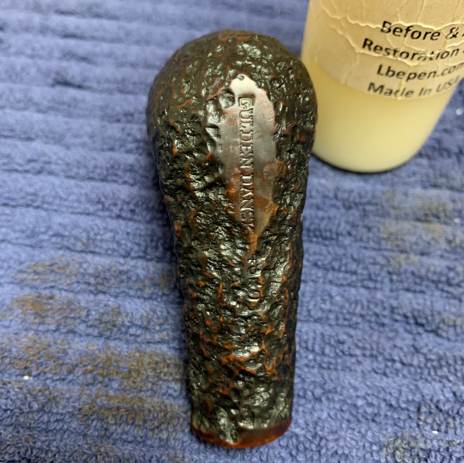
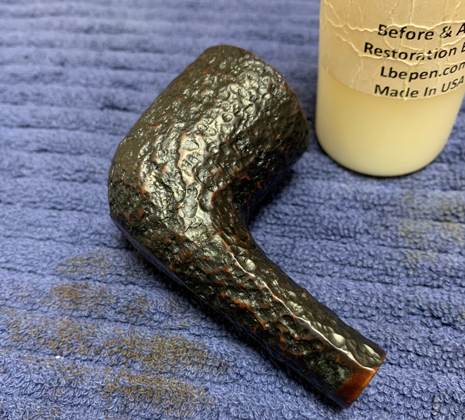
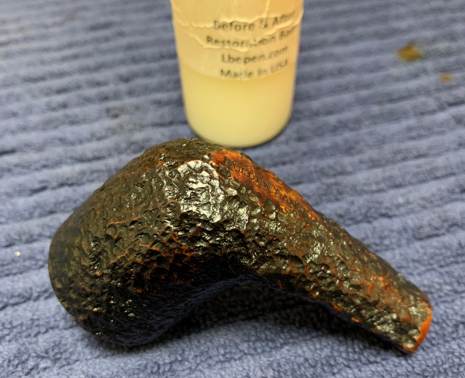
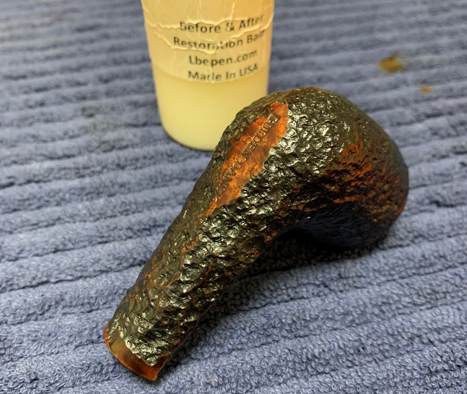
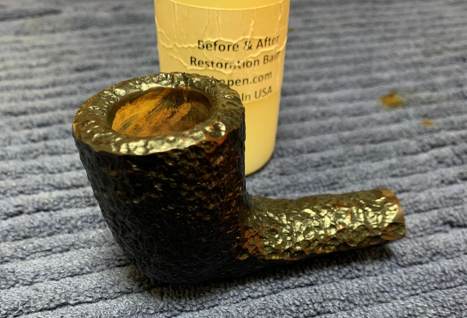
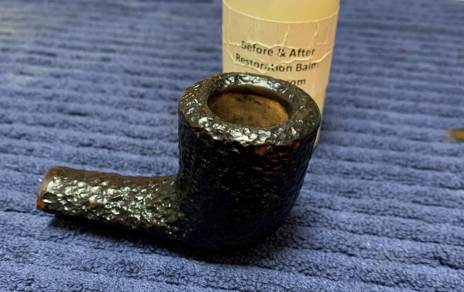
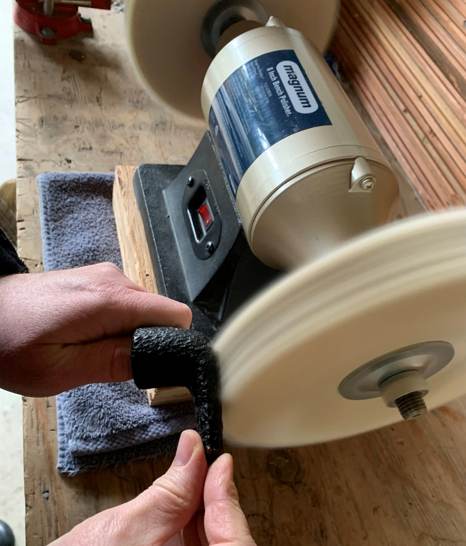
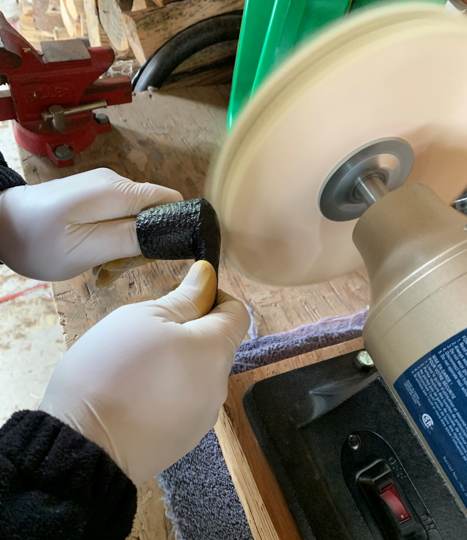
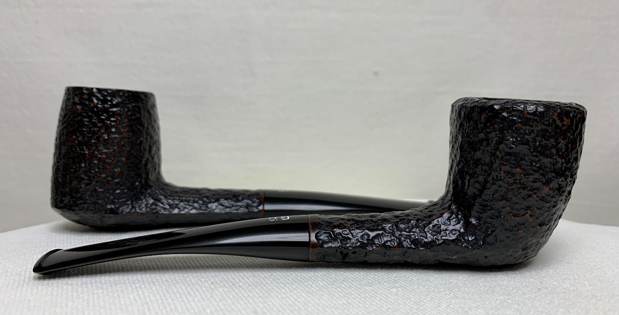
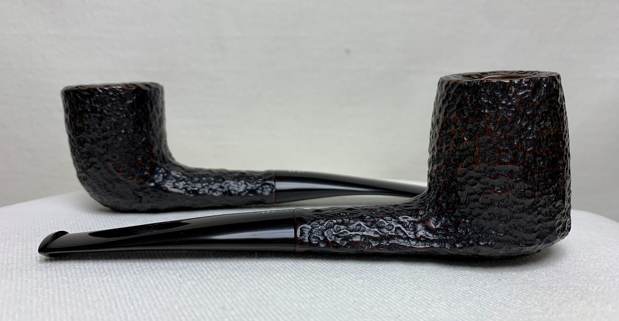
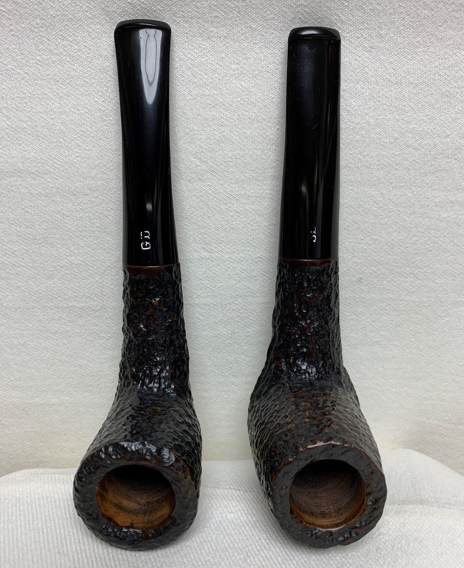
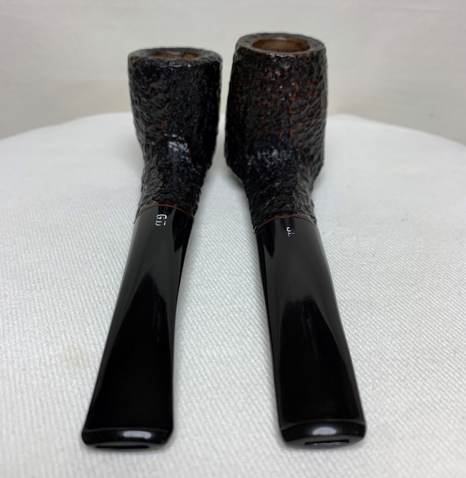
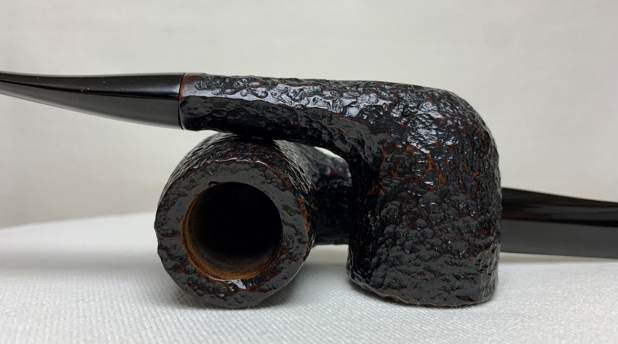
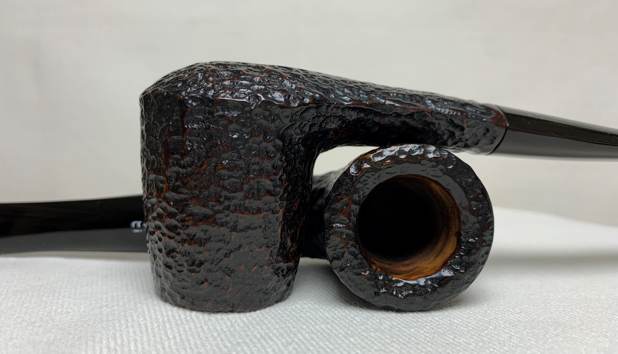
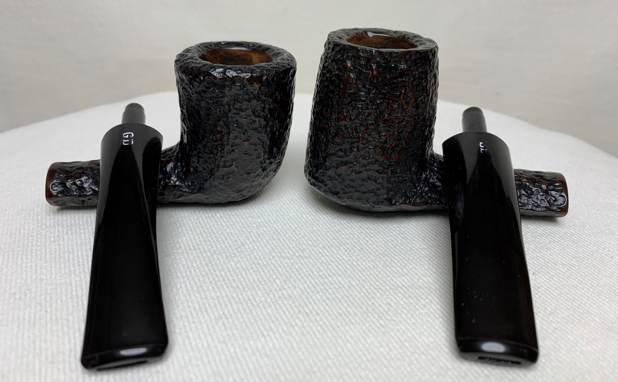
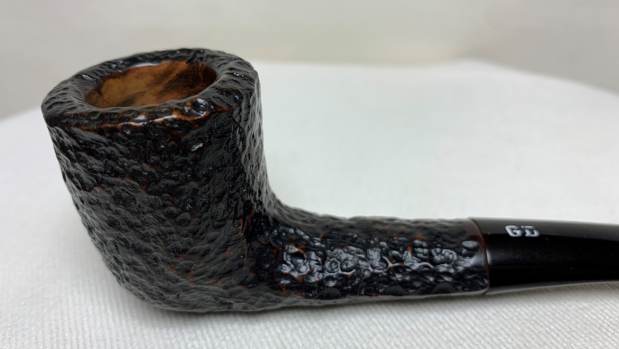
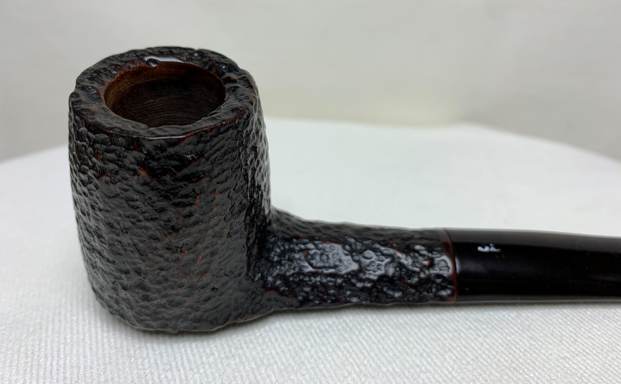
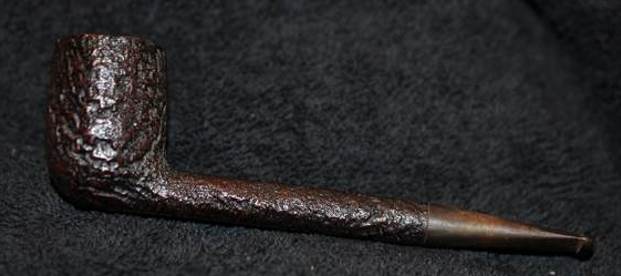
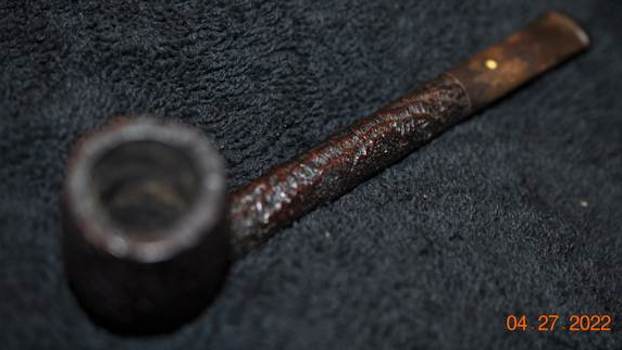
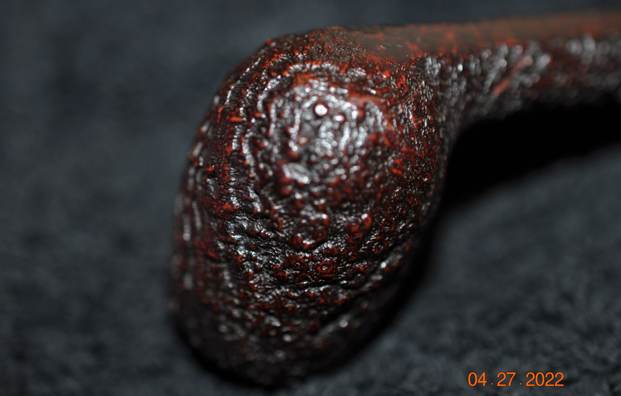
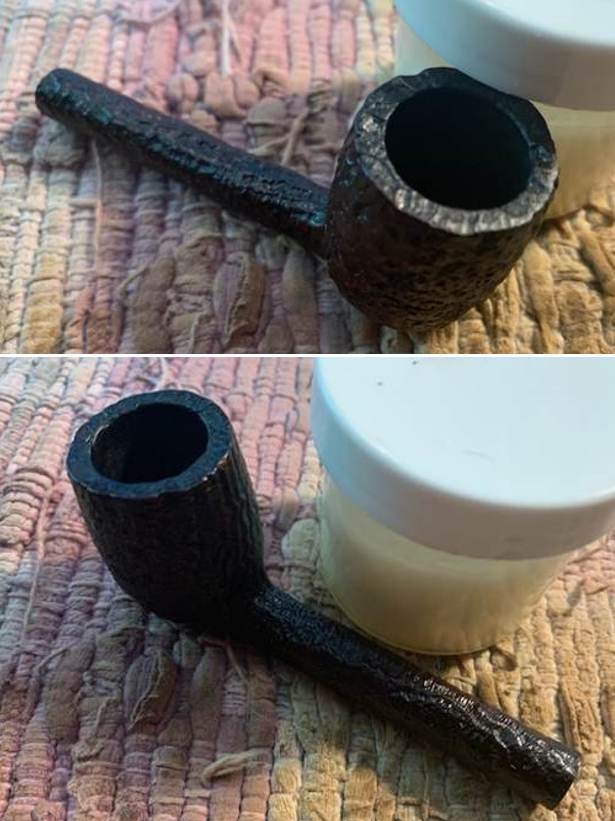
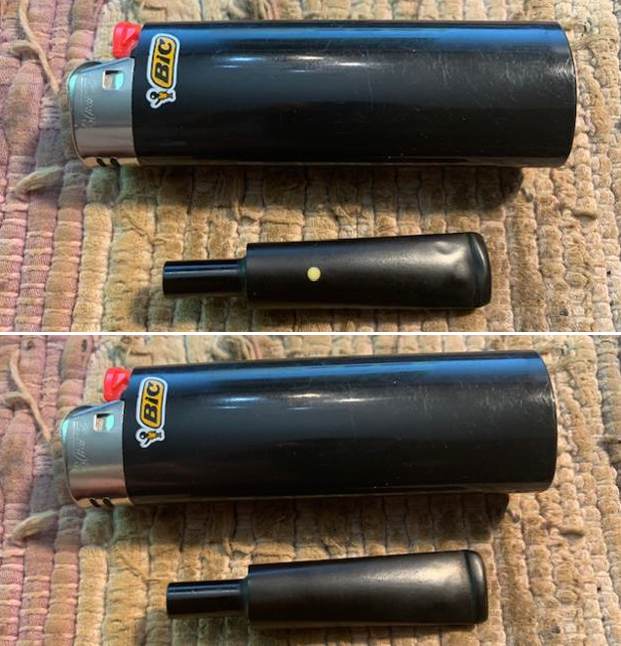
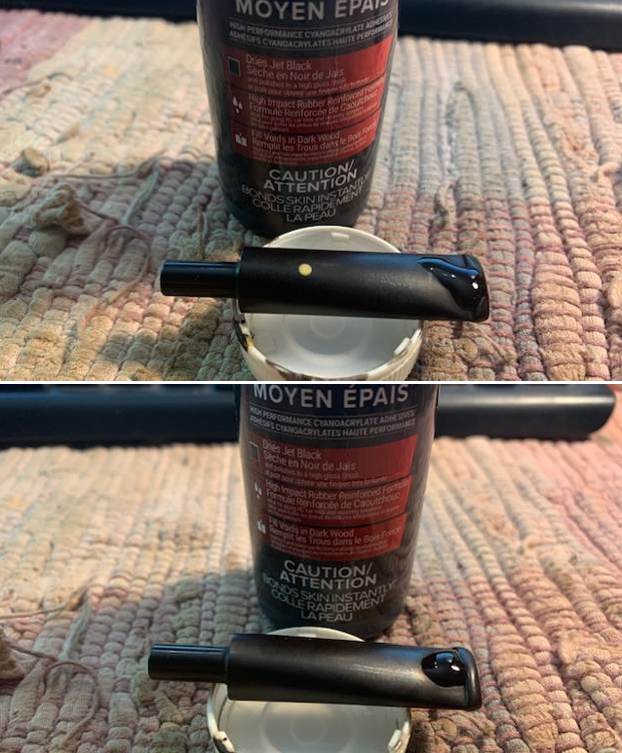
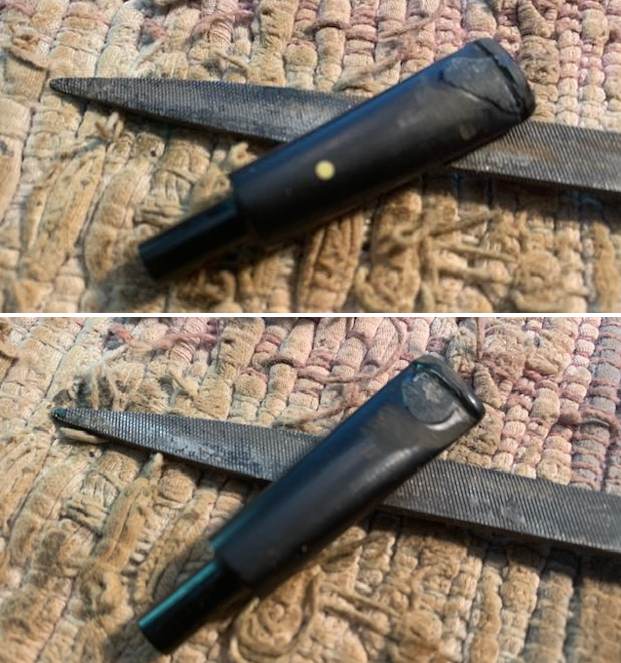
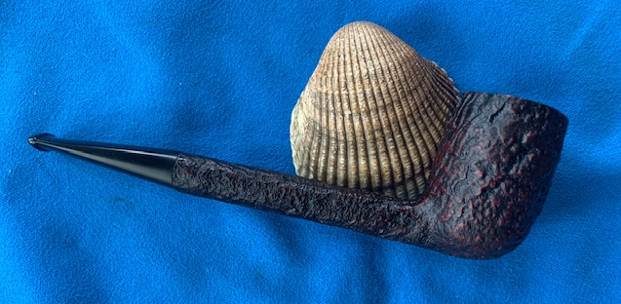
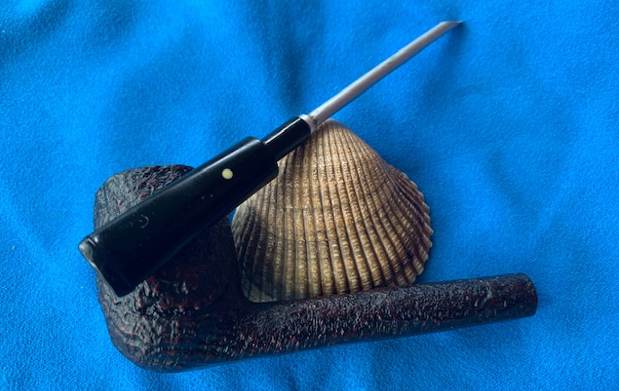
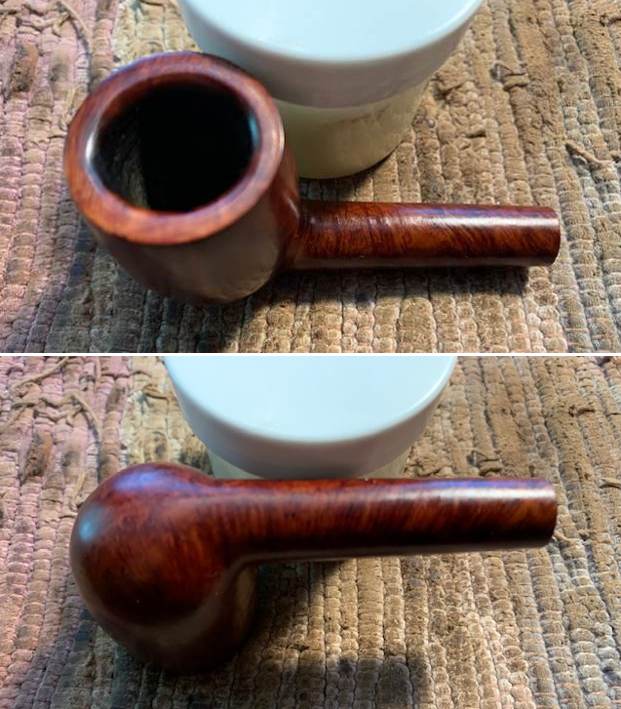
The next pipe I chose to work on is one that has been here in my box to work on since around 2016. It is a well made, interesting looking Custom-Bilt chunky Pot. The more I looked at it the more I thought that it had not gone through Jeff’s cleaning before it came here. I actually have no idea where it was from and when it came us. The bowl had moderate cake and the inner edge had damage and the rim top was darkened. The pipe is a classic Custom-Bilt piece – a rusticated Chubby shank Pot shaped pipe with some deep carving around the bowl. The pipe is stamped on the heel of the bowl and reads Imported Briar [over] Custom-Bilt. On the right side of the shank it bears a carved circle near the stem/shank junction. Looking at the pipe you can see signs that the bowl had been heavily caked with an overflow of lava on the rim top and the inner edge. The bowl and shank smelled dirty and seemed to be oily. The stem looked good and had tooth chatter and marks on the top and underside near the button. There were no markings or a logo on the taper stem. It looked pretty good when I brought it to the worktable. I took photos of the rim top and bowl to give a clear picture of the appearance of the rim top and edges of the bowl. There was some darkening on the rustication on the top and some lava in the grooves. There was also some damage to the inner edge of the bowl. I took photos of the top and underside of the stem to show the chatter and tooth marks. The stamping on the heel of the bowl is faint but still readable and read as noted above. I removed the stem and took a photo of the pipe to give a sense of the whole. It is a stubby pipe.I turned to Pipephil (http://www.pipephil.eu/logos/en/logo-c8.html) to get a quick view of the brand once again. I knew that I was working with one of the older pipes and probably made by Tracy Mincer himself. He stopped making the Custom-Bilt pipes in the early 1950s. The screen capture I included below shows a brief history of the brand. It also has a comment on the symbols stamped on the shank near the stem including the square that is stamped on this one.I turned to Pipedia (https://pipedia.org/wiki/File:CustomBilt_Stamp1.jpg) for a quick read. The majority of the information there included two book reviews of the “Custom-Bilt Story” by Bill Unger.

The one line I culled was the following: “Tracy Mincer started the original Custom-Bilt pipes it appears in 1934”.

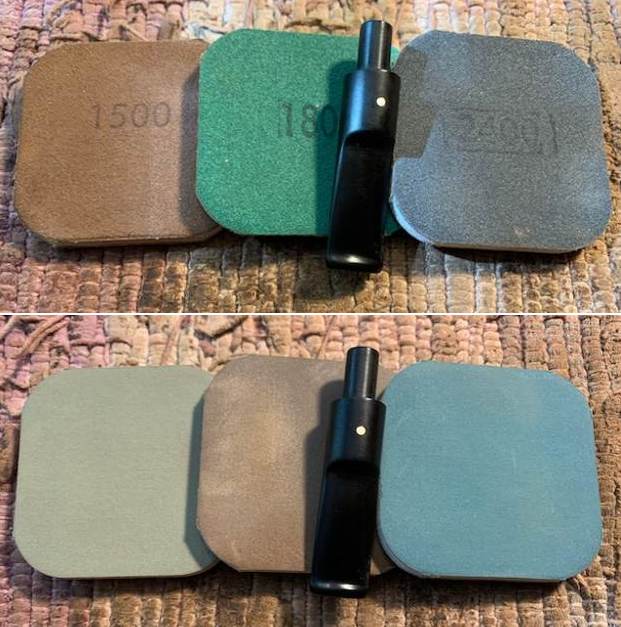
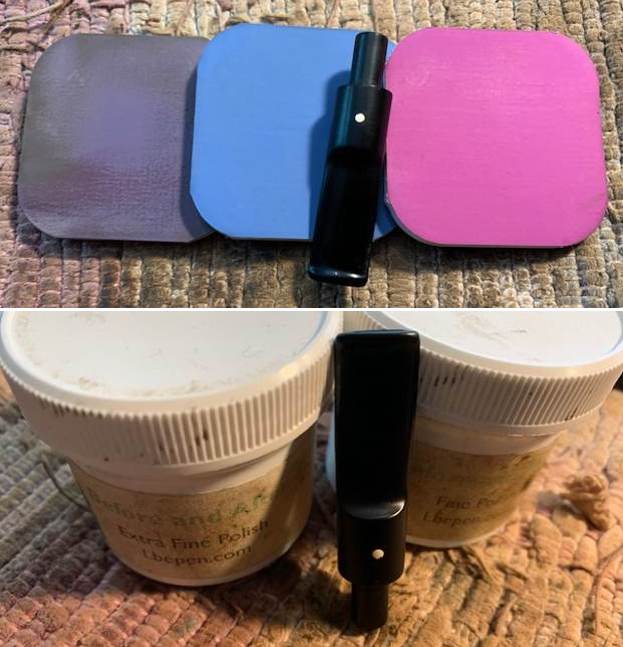
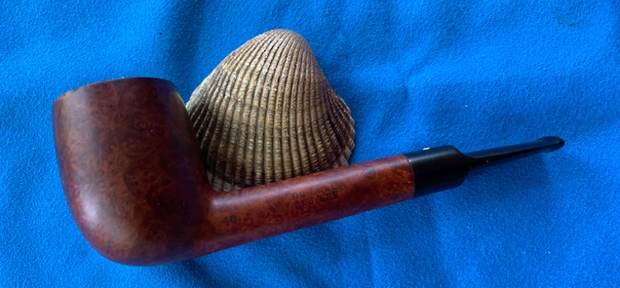
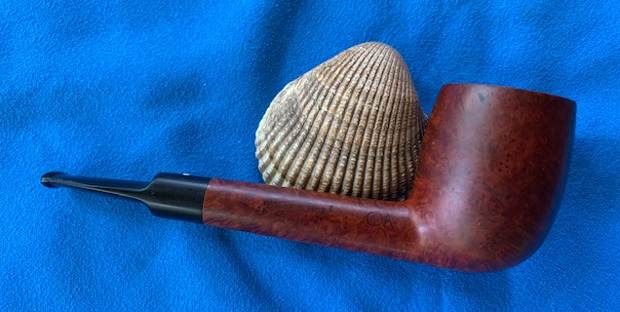
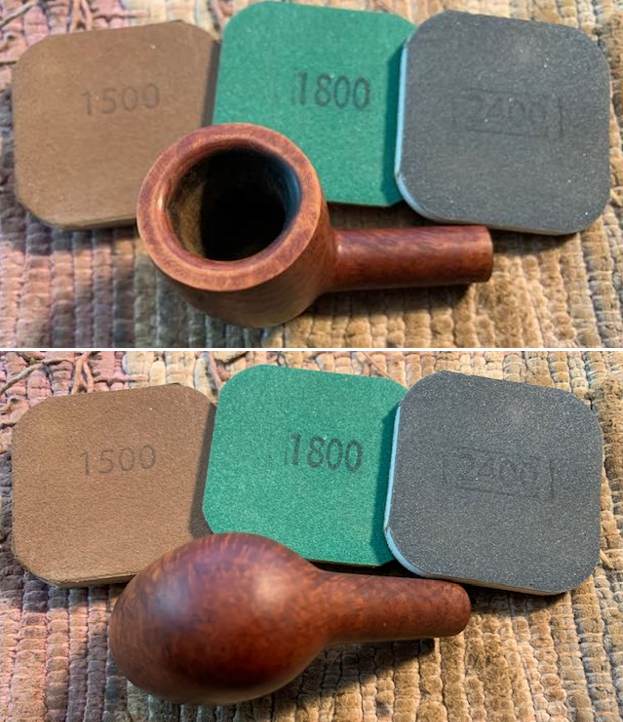
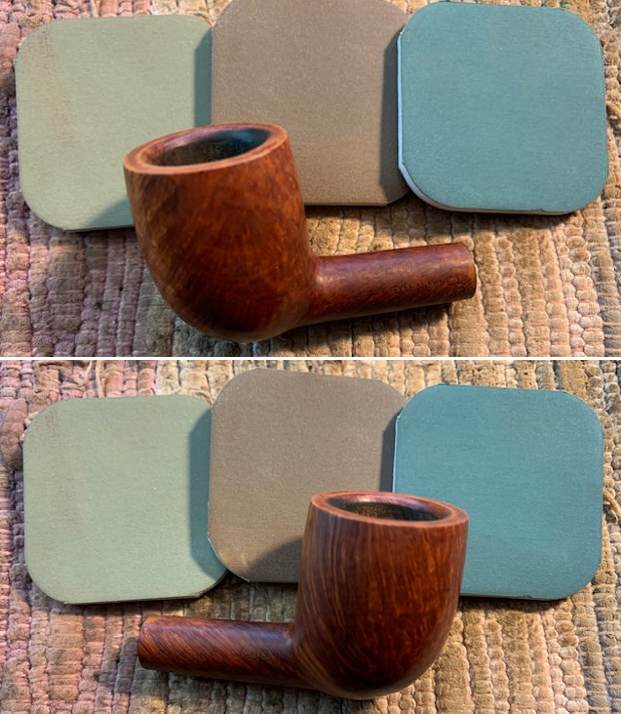
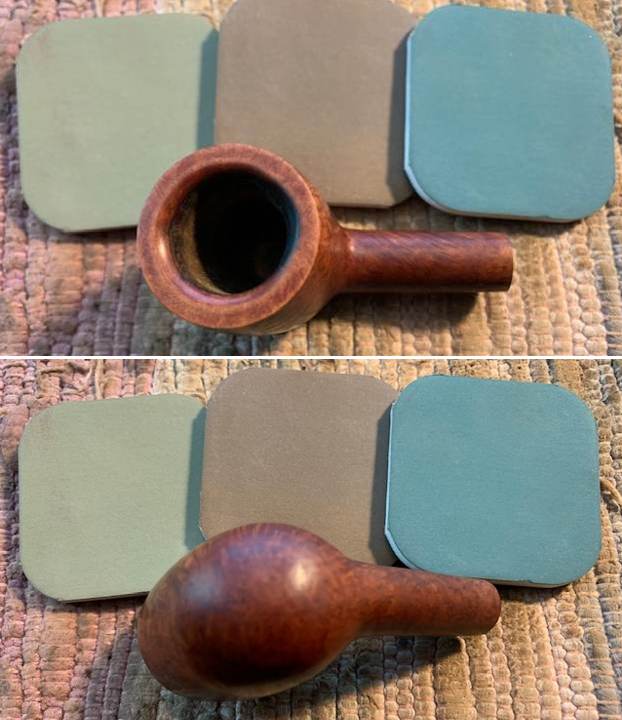
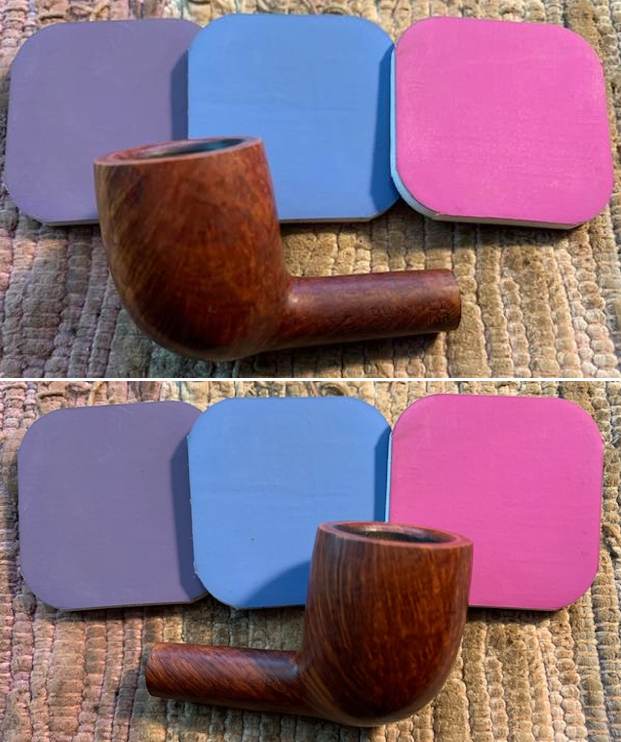
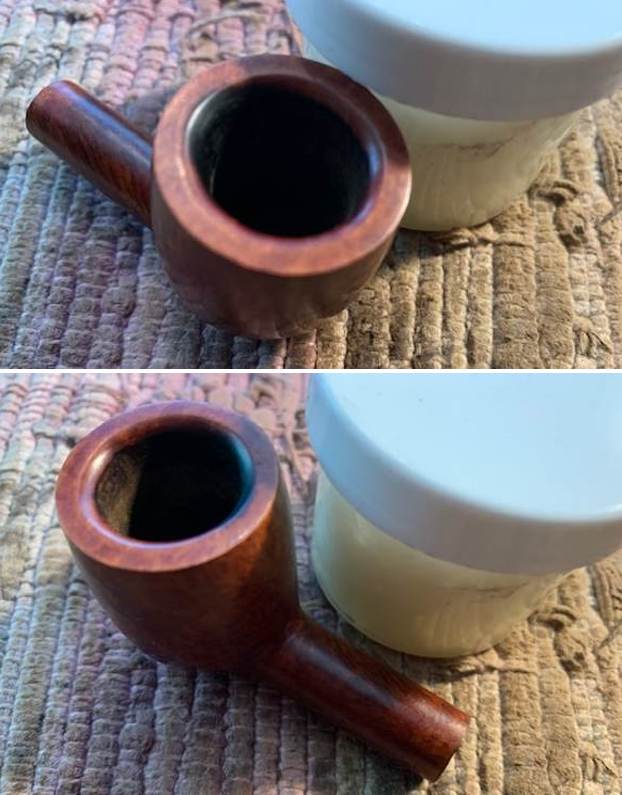
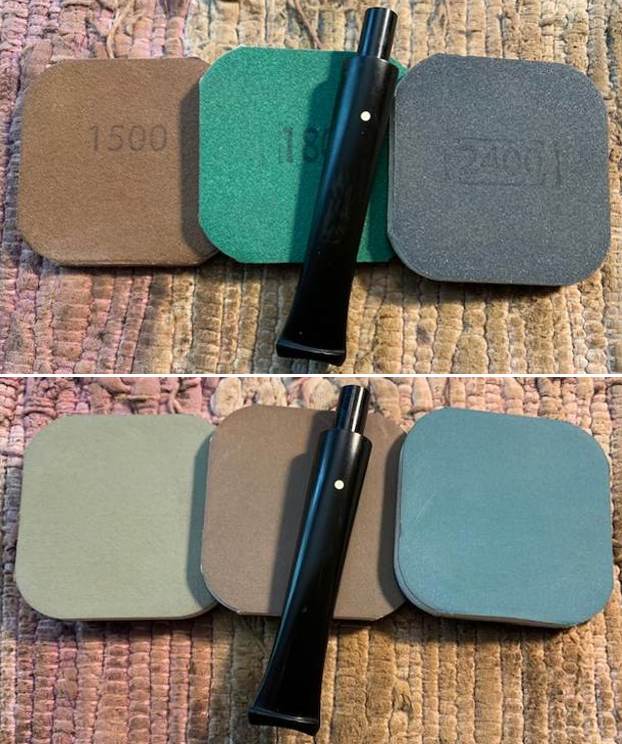
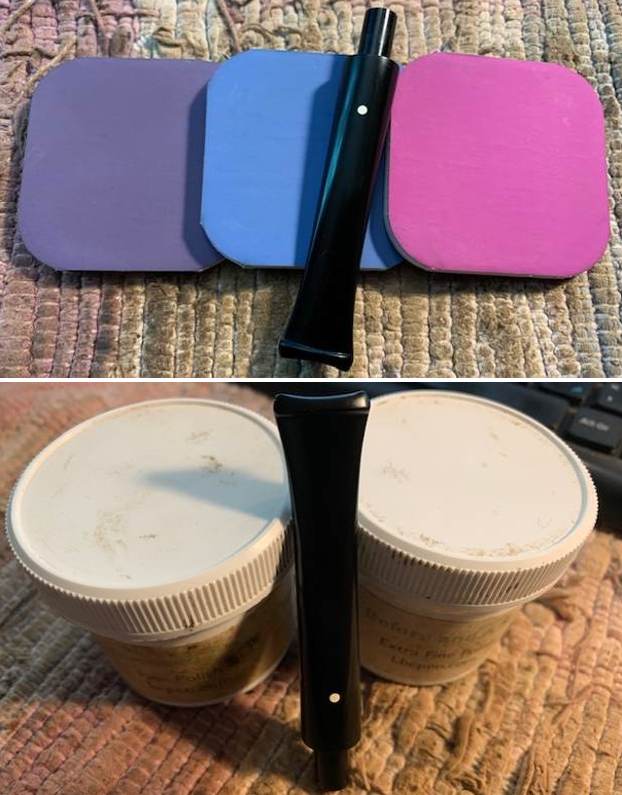
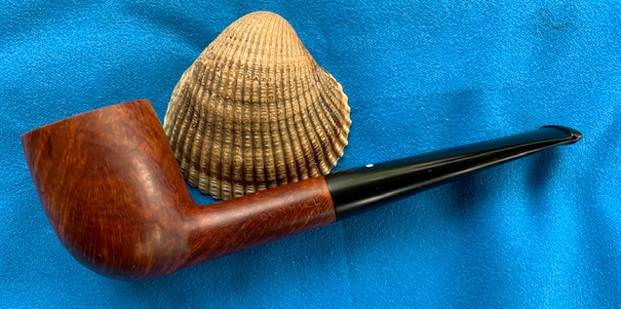
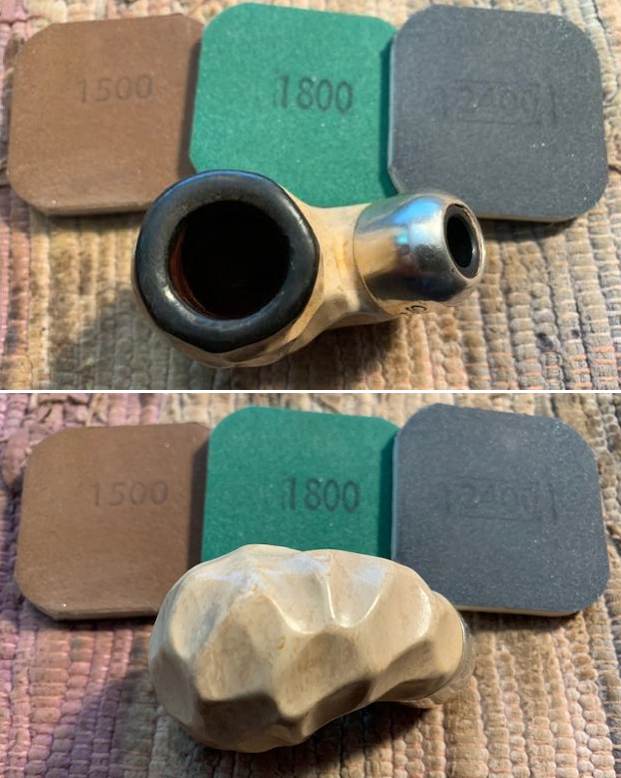
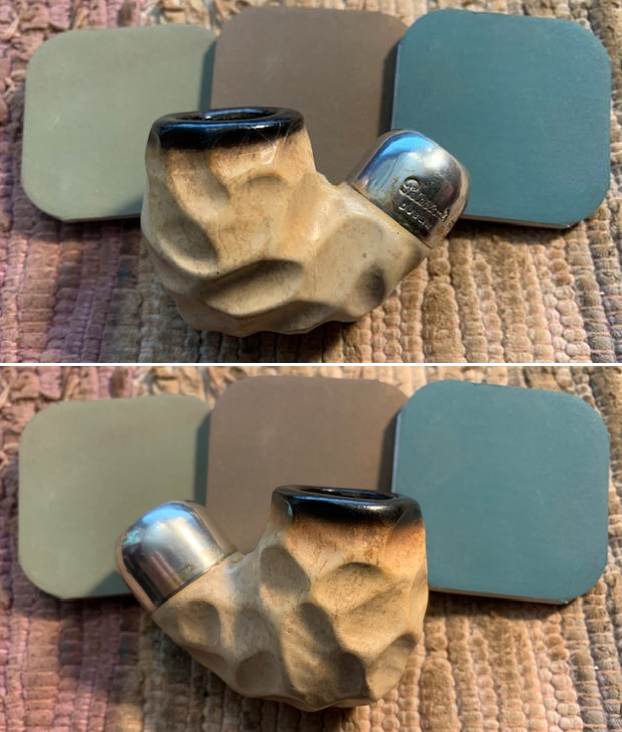
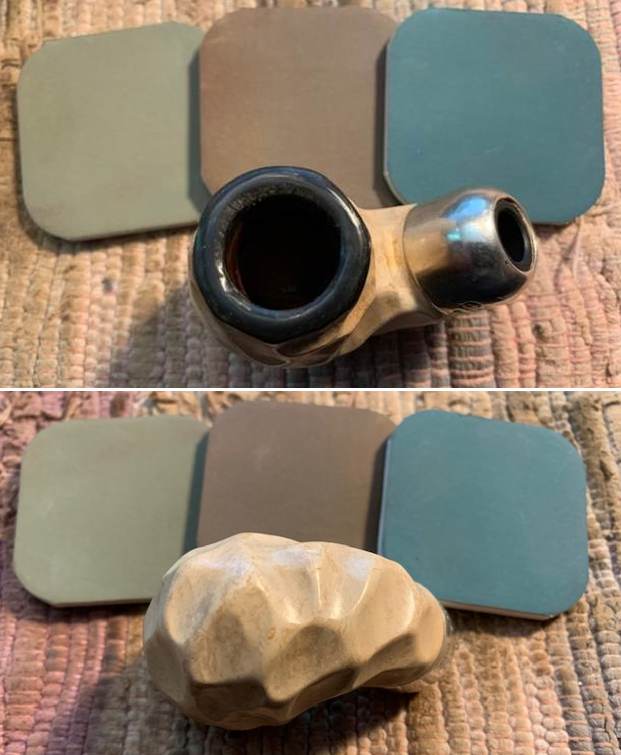
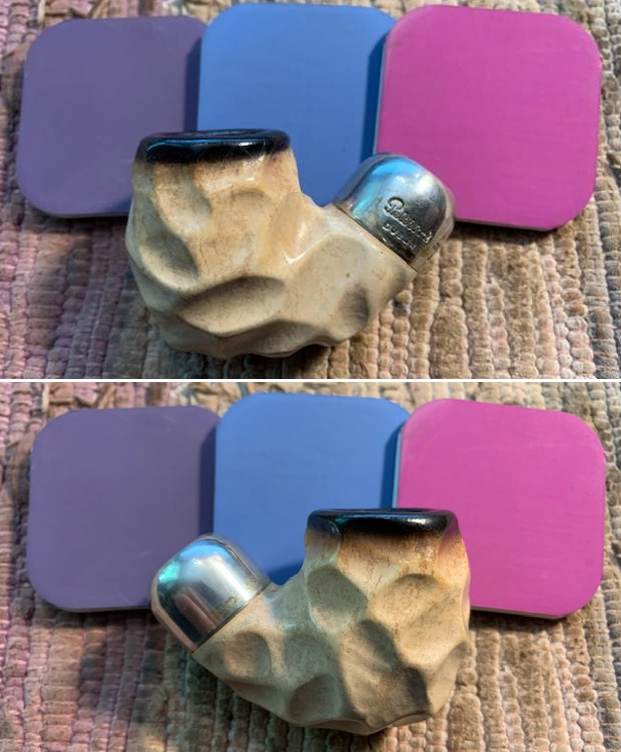
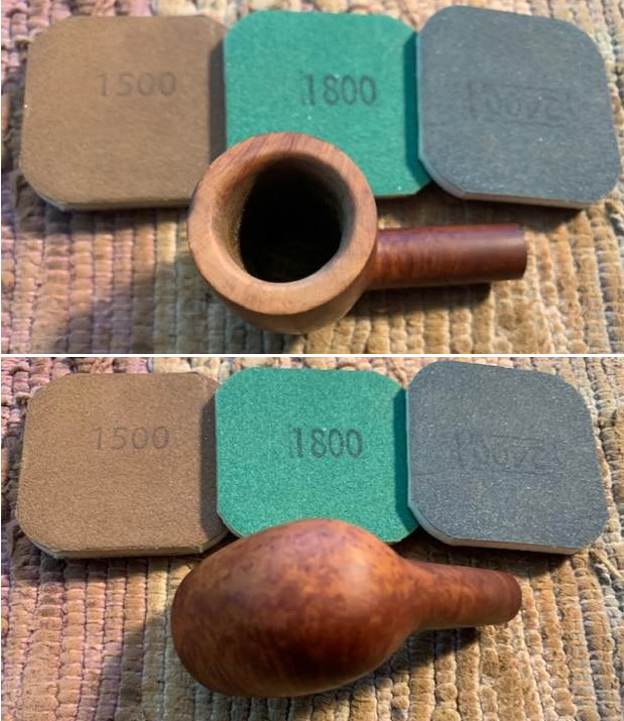
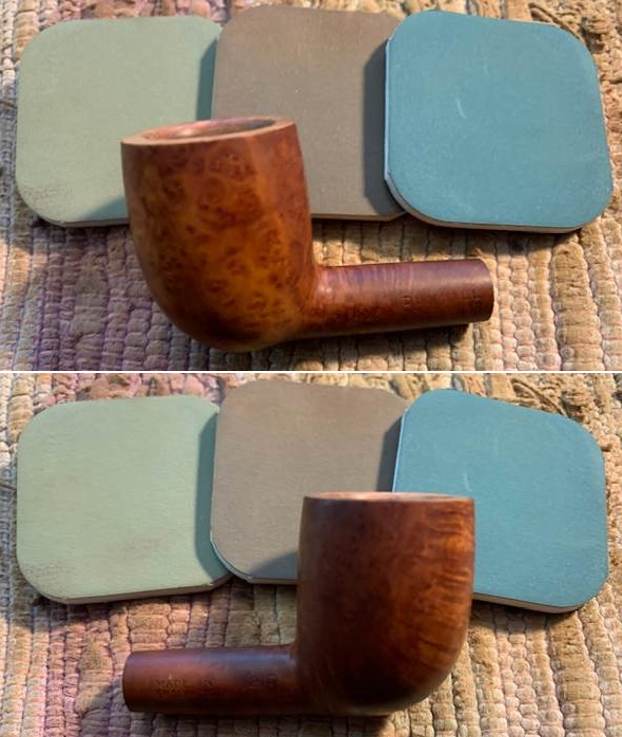
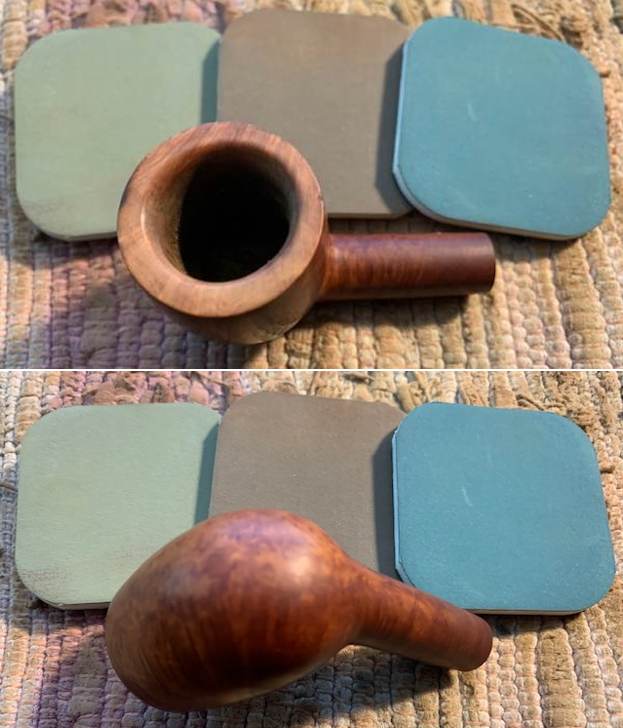
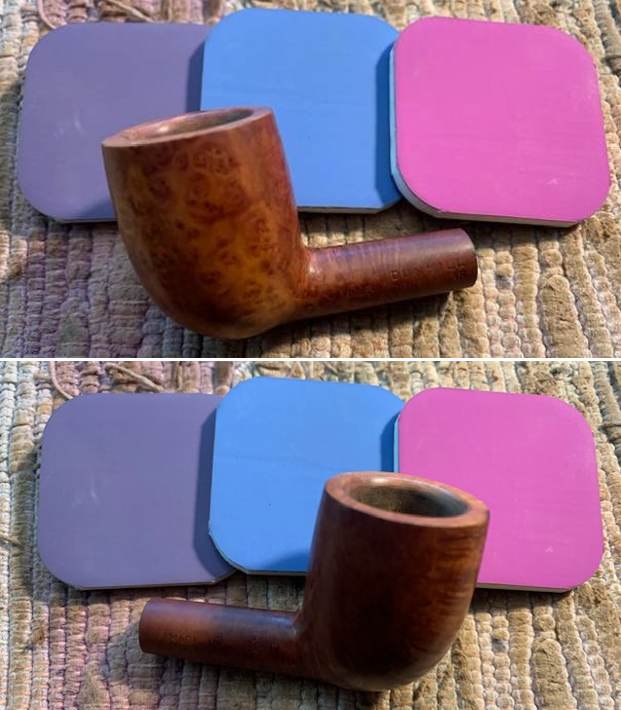
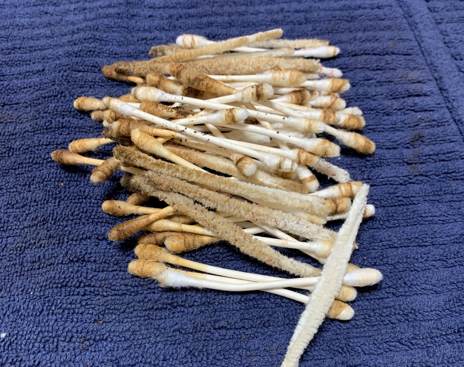
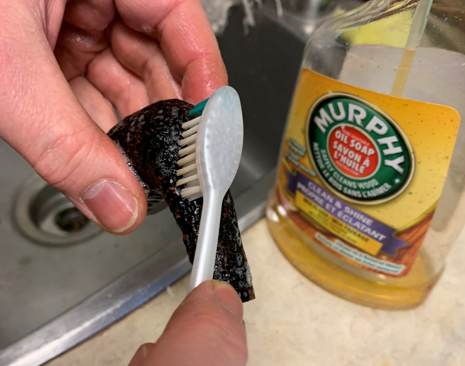
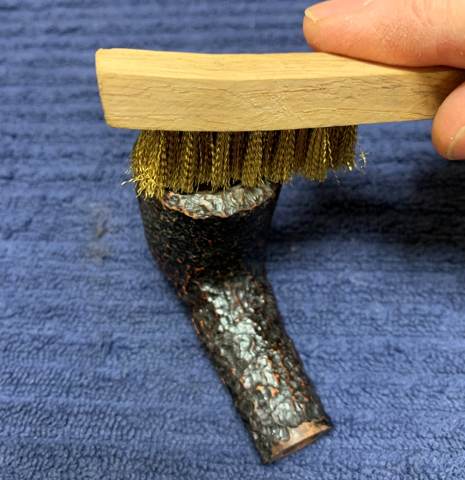
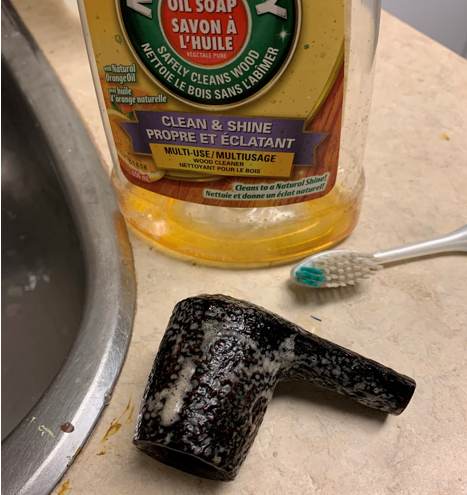
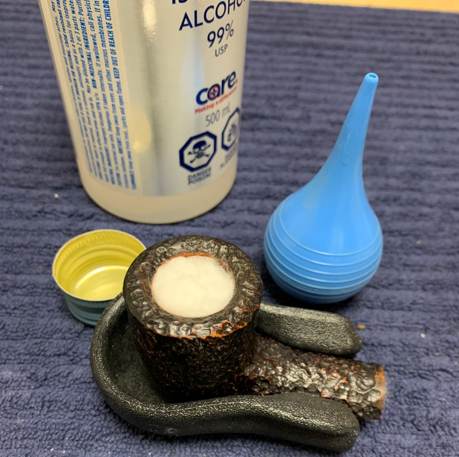
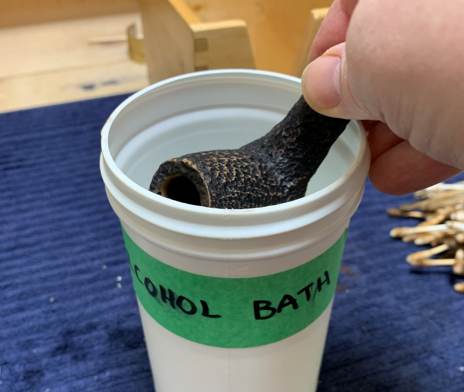
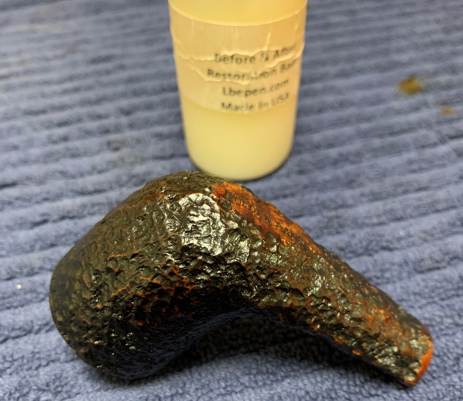
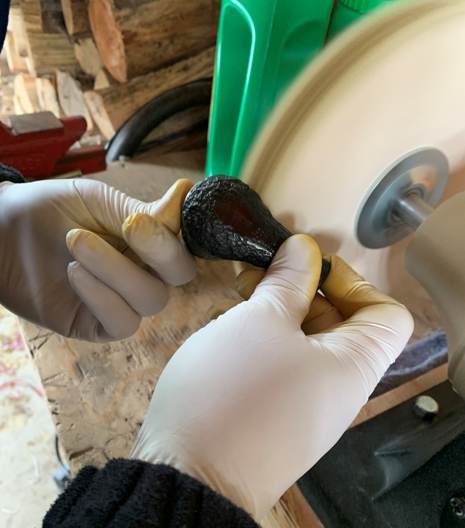
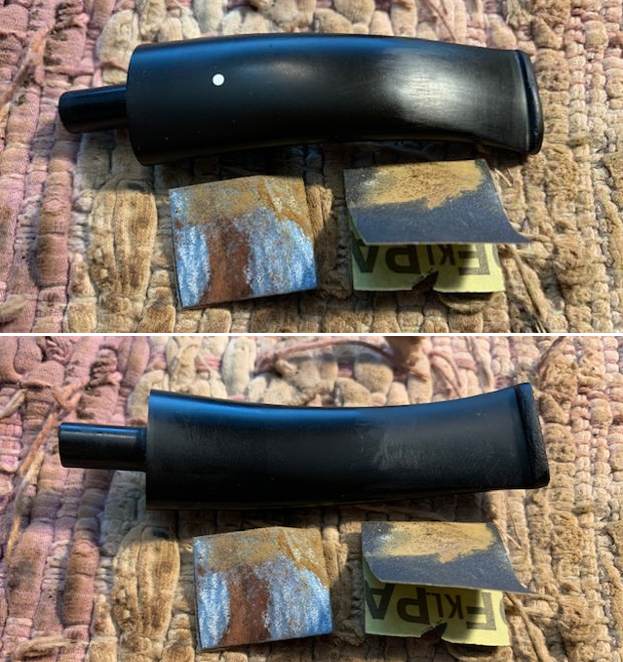
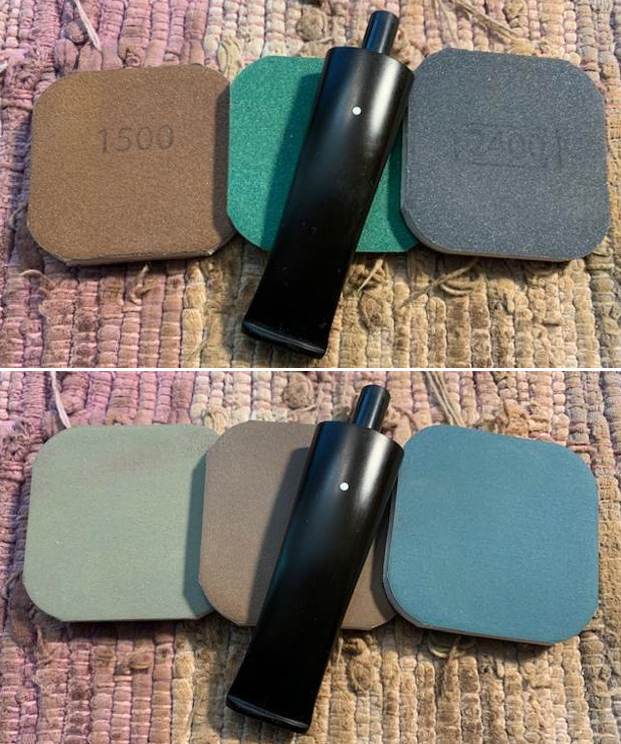
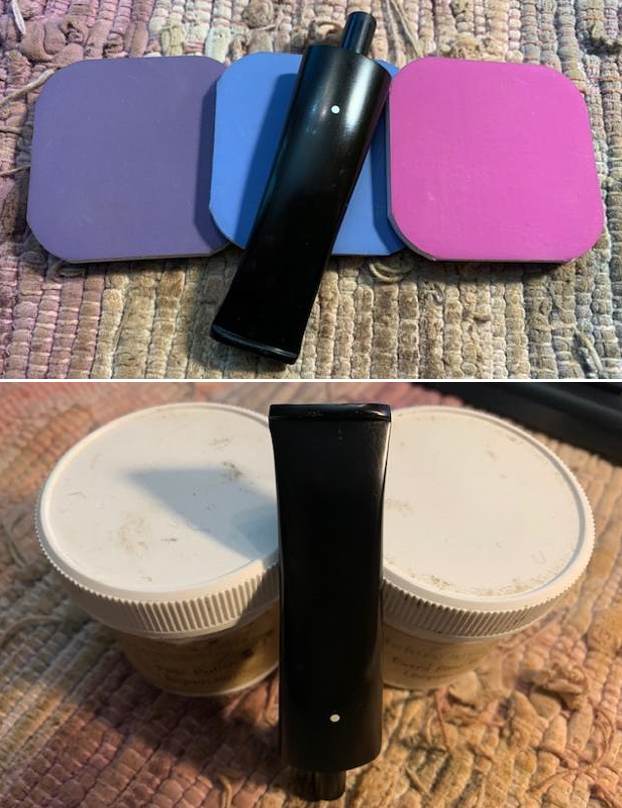
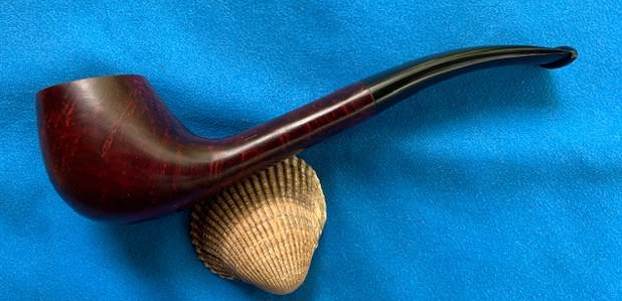
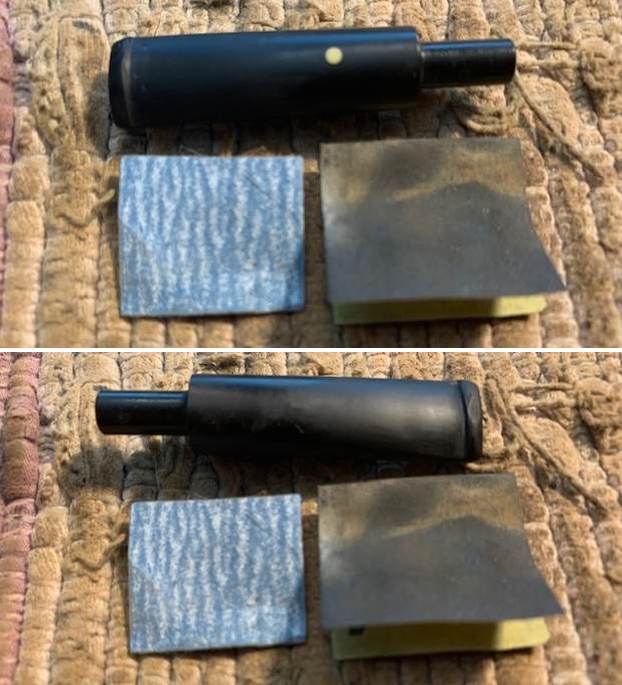
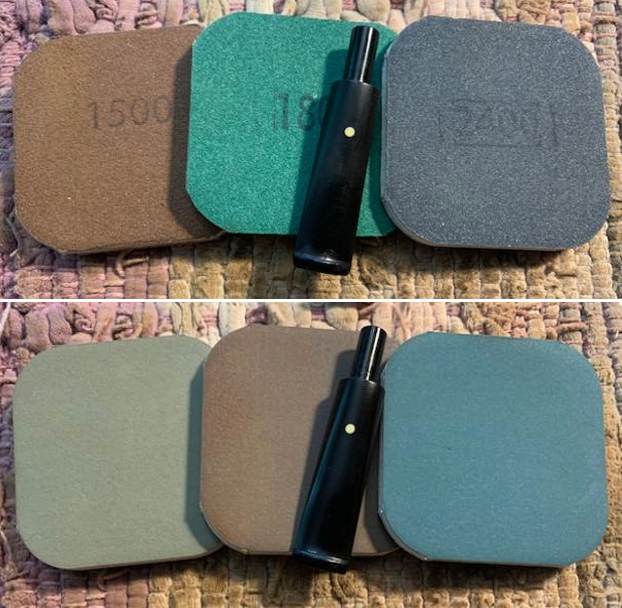
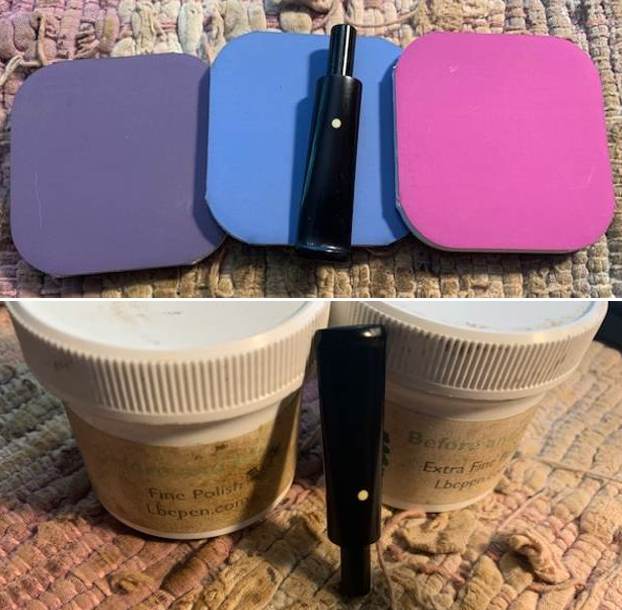
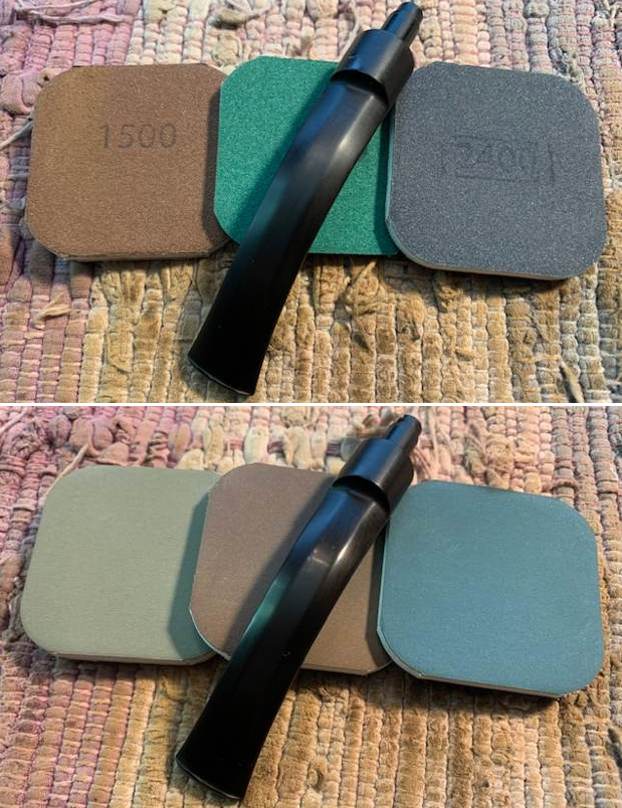
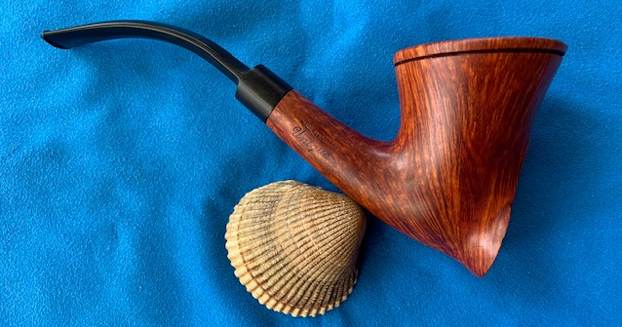
I did a screen capture of the stamping that matched the stamping on the pipe that I am working on. What I learned from that is that the stamp was used by Tracy Mincer in Indianapolis in the US from 1938-1946 and possibly in Chicago before 1938 as well. So now I had a possible date for this pipe. It was an old timer and it was well worth working on.Armed with that information I turned to work on the pipe itself. I started my work on the pipe by cleaning up the reaming in the bowl with a PipNet pipe reamer. I used a Savinelli Fitsall Pipe Knife to remove the remainder and then sanded the bowl walls with 220 grit sandpaper wrapped around a piece of dowel. The bowl walls looked very good. I scrubbed the externals with undiluted Murphy’s Oil Soap and a tooth brush. I worked over the rim top and the rest of the bowl and rinsed it off with warm water. I dried off the briar with a cotton towel.   I turned next to the remaining darkening on the rim top and used a brass bristle brush and worked it over to remove the grime and debris that was still present there. It looked better when I finished.  I cleaned up the damage to the inner edge of the rim. I used a folded piece of 220 grit sandpaper to reshape the edge. The finished rim top and edge looks better. I wiped the rim top down with alcohol to remove the sanding dust. Once I had dried it off I rubbed it down with Before & After Restoration Balm. I worked it into the surface of the bowl sides and shank with my fingertips and a horsehair shoe brush to clean, enliven and protect the briar. I let the balm sit for about 10-15 minutes and buffed with a cotton cloth to raise the shine.  While I was buffing it I found that I had forgotten to clean the insides of the shank and stem. I cleaned it with isopropyl alcohol, pipe cleaners and cotton swabs. It smelled much better.    I set the bowl aside and turned to work on the stem. I “painted” the stem with the flames of a lighter to lift them as much as possible. I filled in the remaining tooth marks with black super glue.     Once the repair cured I flattened the repair on the topside and shaped the button edge on both sides with a small flat file. I sanded the button edges and the repairs on the stem with 220 grit sandpaper to blend them into the surface of the vulcanite. I started polishing it with 400 grit wet dry sandpaper. It is starting to look very good.    I polished the vulcanite stem with micromesh sanding pads – 1500-12000 grit pads. I wiped it down with Obsidian Oil after each sanding pad. I used Before & After Pipe Polish – both Fine and Extra Fine to further polish the stem. This Custom-Bilt Pot is a great looking pipe now that it has been restored. The style of rustication that is used around the bowl is highlighted by the stain application and works well with both the shape and the polished vulcanite stem. I put the stem back on the bowl and carefully buffed the pipe with Blue Diamond on the buffing wheel using a light touch on the briar. I gave the bowl multiple coats of Conservator’s Wax and the stem multiple coats of carnauba wax on the buffing wheel and followed that by buffing the entire pipe with a clean buffing pad. I hand buffed the pipe with a microfiber cloth to deepen the shine. The finished Custom-Bilt is another pipe that fits nicely in the hand and feels great. Give the finished pipe a look in the photos below. The dimensions of the pipe are Length: 5 ½ inches, Height: 1 ½ inches, Outside diameter of the bowl: 1 ½ inches, Chamber diameter: 7/8 of an inch. The weight of the pipe is 42 grams/1.48 ounces. I will be putting it on the rebornpipes store in the American Pipemakers Section shortly. If you are interested in adding this pipe to your collection send me a message or an email. Thanks for reading this blog and my reflections on the pipe while I worked on it. There are many more to come!

Cleaning up an Ehrlich Special Panel Billiard


Blog by Steve Laug

The next pipe I chose to work on is one that has been here in my box to work on since around 2016. It is a well made, beautifully grained Panel Billiard with a square shank and taper stem. It had gone through Jeff’s cleaning before it came here so it was quite clean. The bowl had been reamed and the rim top scrubbed. The stem was still oxidized so I would guess that we picked it up before we started using Mark Hoover’s Before & After Stem Deoxidizer. The finish looked very good with amazing cross grain on the front and back of the bowl and birdseye on the bowl sides. It was very beautiful under the dull finish at this point. It was stamped on the left side of the shank and read Ehrlich in block caps. On the right side it was stamped Imported Briar [over] Special. It has a vulcanite square taper stem that is oxidized and is very tight in the shank. The stem bears Ehrlich “E” logo on the left side. I took photos of the pipe when I brought it to the work table.  I took photos of the bowl and rim top and the stem surfaces to show the condition of both. The bowl, rim top and edges look very good. There was some darkening on the op and inner and outer edges look very good. The stem is also in great condition other than the oxidation and speckles of grime stuck to the surface of the stem.I took photos of the stamping on the sides of the shank. It is clear and readable as noted above. The Ehrlich logo of E is on the left side of the stem is also in good condition. I took the stem off the shank to show the overall look of this interesting panel pipe. It really is a beautiful piece of briar.I set the pipe aside to do a bit of reading on the history of the brand before I worked on it. I have worked on quite a few Ehrlich pipes in the past and wanted to refresh my memory of the back story of the brand. I checked first on Pipephil (http://pipephil.eu/logos/en/logo-e1.html) and found photos of various pipes. The picture of the second pipe is stamped similarly to the one I am working on. The EHRLICH is stamped the same way and the E logo is the same. There are no photos of the SPECIAL. I am including a screen capture of the pertinent information. There was no other information in the sidebars.Then I turned to Pipedia and was more successful (https://pipedia.org/wiki/Ehrlich%27s). I quote a portion of that article below that gives a bit of history and more importantly cleared up where the pipes came from for me.

The David P. Ehrlich story – Pipemakers and Tobacconists for a Hundred Years, 1868-1968.

The David P. Ehrlich Company has remained solely in the hands of one family during its century of business, yet it has had several firm names and locations. David P. Ehrlich went to work in 1881 at the age of twenty for Ferdinand Abraham, who dealt in cigars and tobacco and who had begun business in 1868 at 1188 Washington Street in the South End, but in 1880 moved to the center of the city, where the firm has been ever since. David Ehrlich married the boss’s daughter. In 1916 the name became the David P. Ehrlich Company and Mr. Ehrlich devoted the rest of his life to this business. Since David’s death in 1912 it has been owned by – his nieces and nephews including Richard A. and William Ehrlich.

Ehrlich shop has since 1880 had a predilection for historic sites. 25 Court Street was close to the spot where from 1721-1726 James Franklin had, with the assistance of his brother Benjamin, published The New-England Courant. In 1908 the firm moved a few doors up Court Street to number 37, on the opposite corner of the alley that is grandiloquently named Franklin Avenue. This new location was on the site of the one-time printing office of Edes and Gill, publishers of the Boston Gazette, in whose back room some of the “Indians” of the Boston Tea Party assumed their disguises. Soon after the end of World War II at which time the store was located at 33 Court Street a move around the corner to 207 Washington Street brought the shop diagonally across from the Old State House and onto the site occupied from 1610-1808 by the First Church of Boston. The demolition of 207 Washington Street in 1967 caused still another move to 32 Tremont Street, adjoining King’s Chapel burying Ground, which is the oldest cemetery in Boston.

The David P. Ehrlich Co. has not just occupied sites intimately associated with Boston history and institutions; it has in the past century become a Boston institution in its own right. It has specialized in fine cigars, pipes, and pipe tobacco. In addition to the retail business, the firm has long specialized in the manufacture of pipes, both from Algerian briar root…

That gave the history of the brand and was written in a way that fascinated me. I included a lot of because of that. I knew that the pipe I was working on was stamped Imported Briar which generally points to a pipe made elsewhere for Ehrlich and brought to the US.

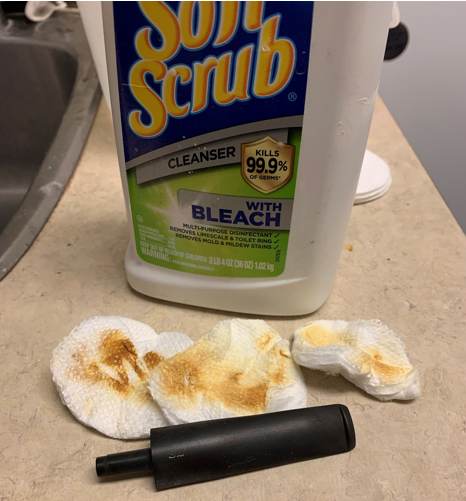
There were some deep scratches on the underside of the shank that I decided to steam out. I used a flat table knife, a damp cloth and the flame from my gas range to heat and create steam to raise the scratches. It worked quite well and removed some and minimized the others.  I polished the briar with micromesh sanding pads – dry sanding with 1500-12000 grit sanding pads. I was able to remove the varnish coat on the bowl and shank with the pads. I wiped the briar down with a damp cloth between each sanding pad. The briar took on a rich shine and there was some nice grain around the bowl and shank sides. I rubbed some Before & After Restoration Balm into the finish of the pipe. I worked it into the briar because the product cleans, enlivens and protects the briar. I let the pipe sit with the Balm for 10 minutes then buffed it off with a soft towel. The Balm did its magic and the pipe looked really good. I turned my attention to the stem. It was oxidized but did not have any tooth marks or chatter on either side. I scrubbed it with cotton pads and Soft Scrub all purpose cleanser. I worked on it until the stem surface was clean and ready polish.I touched up the E stamp on the side of the stem with white acrylic nail polish. I worked it into the E stamp with a tooth pick to get it into the grooves of the stamp. It was deep enough that it looked very good.I polished the stem with micromesh sanding pads – dry sanding with 1500-12000 grit pads. I wiped the stem down after each pad with a cloth impregnated with Obsidian Oil. I polished it with Before & After Stem Polish – both Fine and Extra Fine then gave it a final coat of Obsidian Oil and set it aside to dry. This Ehrlich Special Imported Briar Panel Billiard with a Taper Vulcanite stem looks really good. The grain around the bowl and shank stands out with the contrasting brown stains. I put the pipe back together and buffed the pipe with Blue Diamond on the wheel (being careful of the stamping on the stem so as not to damage it). I gave the bowl and stem multiple coats of carnauba wax and buffed the pipe with a clean buffing pad to raise the shine. I hand buffed it with a microfiber cloth to deepen the shine. The dimensions of this pipe are – Length: 5 inches, Height: 1 ¾ inches, Outside diameter of the bowl: 1 ¼ inches, Chamber diameter: ¾ of an inch. The weight of the pipe is 1.34 ounces/38 grams. It is a great looking pipe and one that will be going on the rebornpipes store in the American Pipe Makers section. If you want to add it to your collection let me know via email to slaug@uniserve.com or by message. Thanks for walking through the cleanup with me.

Restemming and Restoring a Medico Varsity Italian Made Apple


Blog by Steve Laug

While I am not taking on new work as a general rule I am still doing repairs for a couple of the local pipe and cigar shops. That works well as it trickles in slowly and folks do not see to be in too much of a hurry to get the pipes back. It has made for some interesting repairs ranging from stems for cobs to replacement tenons for higher end pipes. I never know when they will come but they do come. I received a series of emails from a fellow referred to me by the local shop asking about a replacement stem/repair for his pipe. I asked for pictures of the pipe and a description of what he wanted done. He sent me  a few photos of the condition of the pipe. I have included them below for you to see and assess what is needed. If you assessed that it called for a new stem you were absolutely correct. The stem on the pipe was broken off from both directions. It was missing almost a ¼ inch of the stem length and the entirety of the button. It is obviously a Medico pipe with a filter – in this case a charcoal one. The last of his photos shows the bowl side and the stamping on the shank. It reads Medico [over] Varsity [over] Select Briar [over] Italy. The finish on the bowl looks pretty good – shiny with its thick varnish coat. I have no idea what the bowl and rim top look like at this point but I knew it needed a stem and that he wanted a filter stem. I told him to stop by and drop off his pipe as I probably had a stem that would work on it in my collection of stems. He was pretty pumped.

This afternoon a fellow dropped off the pipe and we talked for a bit about it. I would clean it and restore it for him. He liked the shiny coat so I would leave that intact depending on what was under the thick lava coat on the rim top. I would ream and refurbish the pipe for him. I had my mandate and he left the pipe with me. I took some photos of the pipe to show what it looked like when I received it. What do you think of it? It has a great apple shape and looks very Italian to me which the stamping confirms. I took a picture of the rim top to give you an idea of the thickness of the cake and the lava buildup on the rim top. While the rest of the pipe is shiny this is a mess. I captured the stem surface as well to show the damage to the stem. It is a definite stem replacement.I tried to capture the stamping on the shank side. It reads as noted above and there is a V logo on the side of the stem. The new stem will not have the logo.I took a photo of the pipe with the stem removed to get a sense of the proportions and look of it. I actually quite like the shape.I went through my can of stems to see what I could find that would fit the shank. I had several Medico stems but I chose this relatively new looking stem that fit quite well and had the same diameter as the old one and had the aluminum spacer. I fit the stem on the bowl and took photos of the look of the pipe with the new stem. It worked perfectly. I took the stem off the bowl and set it aside. I reamed the bowl with a Pipnet pipe reamer and took the cake back to bare walls. I cleaned up the reaming with a Savinelli Fitsall Pipe Knife. I sanded the bowl walls with 220 grit sandpaper wrapped around a dowel. The walls were in good condition. I cleaned out the internals of the mortise/shank/ and airway in the shank and stem with pipe cleaners, cotton swabs and isopropyl alcohol.  I have several boxes of Dr. Grabow and Medico Filters. I pulled out a new charcoal filter made by Grabow to replace the one that was in the old stem.I rubbed the bowl down with Before & After Restoration Balm. I worked it into the briar with my finger tips. It works to clean, enliven and preserve the briar. I let it sit on the pipe for 10 minutes and then buffed it off with a clean cloth. The bowl has a rich look to it now and the rim top is clean. I set the bowl aside and turned my attention to the new stem. It was in great condition so it just needed to be polished. I polished the stem with micromesh sanding pads – wet sanding with 1500-12000 grit sanding pads. I wiped it down after each sanding pad with Obsidian Oil. I polished it with Before & After Pipe Stem Polish – both Fine and Extra Fine and wiped it down with Obsidian Oil one more time. I am glad to finish this Italian Made Medico Varsity Apple. I put the pipe back together and buffed it with Blue Diamond on the buffing wheel. I gave the bowl and the stem multiple coats of carnauba wax. I hand buffed the pipe with a clean buffing pad to raise the shine. It is fun to see what the polished bowl looks like with beautiful mixed grain all around it. The polished grain on the pipe looks great with the black taper stem. This smooth Medico Varsity Apple is great looking and the pipe feels great in my hand. It is light and well balanced. Have a look at it with the photos below. The dimensions are Length: 5 ½ inches, Height: 1 ½ inches, Outside diameter of the bowl: 1 ¼ inches, Chamber diameter: ¾ of an inch. The weight of the pipe is 39 grams/1.38 ounces. It turned out to be a beautiful pipe. I have called the pipeman who owns it and he will be picking it up on the weekend. Thanks for your time reading this blog and as Paresh says each time – Stay Safe.  

Breathing Life into a Custom-Bilt Rhodesian


Blog by Steve Laug

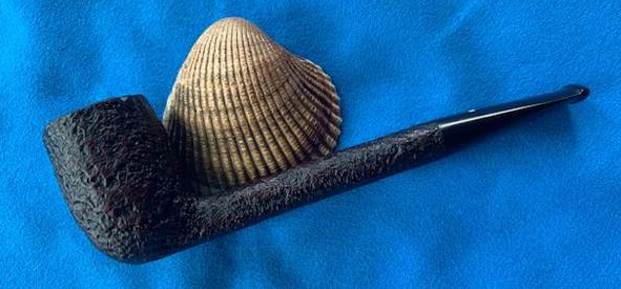
The next pipe on the work table came to us on 10/14/2017 from now closed antique shop in Pocatello, Idaho, USA. The pipe is a classic Custom-Bilt piece – a rusticated Diamond shank Rhodesian shaped pipe with some deep carving around the bowl. The pipe is stamped on the left underside of the shank and reads Custom-Bilt [over] Imported Briar. On the right underside of the shank it bears a carved square near the stem/shank junction. The bowl was heavily caked with a an overflow of lava on the smooth rim top toward the back and on the inner edge. The inside edges looked to be in good condition. The finish was dirty but the pipe still has a sense of charm. The stem was dirty and lightly oxidized. It had tooth chatter and marks on the top and underside near the button. The was a chipped area on the topside edge of the button. There were no markings or a logo on the saddle stem. It had promise but it was very dirty. Jeff took some photos of the pipe before he started his cleanup work. He took photos of the rim top and bowl to give a clear picture of the thickness of the cake and tobacco debris as well as the lava on the smooth rim top. He also took photos of the top and underside of the stem to show the oxidation and the chatter and tooth marks. The photo of the topside of the stem also shows the chipped edge of the button. Jeff took a photo of the heel of the bowl to give a picture of what the briar looked like. The rustication pattern around the bowl is instantly recognizable as done by Custom-Bilt. The stamping on the left underside of the shank and the right underside at the shank/stem joint is clear and readable and read as noted above.   I turned to Pipephil (http://www.pipephil.eu/logos/en/logo-c8.html) to get a quick view of the brand once again. I knew that I was working with one of the older pipes and probably made by Tracy Mincer himself. He stopped making the Custom-Bilt pipes in the early 1950s. The screen capture I included below shows a brief history of the brand. It also has a comment on the symbols stamped on the shank near the stem including the square that is stamped on this one.I turned to Pipedia (https://pipedia.org/wiki/File:CustomBilt_Stamp1.jpg) for a quick read. The majority of the information there included two book reviews of the “Custom-Bilt Story” by Bill Unger.

The one line I culled was the following: “Tracy Mincer started the original Custom-Bilt pipes it appears in 1934”.

I did a screen capture of the stamping that matched the stamping on the pipe that I am working on. What I learned from that is that the stamp was used by Tracy Mincer in Indianapolis in the US from 1938-1946 and possibly in Chicago before 1938 as well. So now I had a possible date for this pipe. It was an old timer and it was well worth working on.Armed with that information I turned to work on the pipe itself. Jeff had cleaned up the pipe with his usual penchant for thoroughness. He reamed the pipe with a PipNet pipe reamer and removed the rest of it with a Savinelli Fitsall Pipe Knife. He scrubbed the bowl with undiluted Murphy’s Oil Soap with a tooth brush. He rinsed it under running warm water to remove the soap and grime. He cleaned out the inside of the shank and the airway in the stem with alcohol, cotton swabs and pipe cleaners. He scrubbed the stem with Soft Scrub and a tooth brush and rinsed it off with warm water. I took photos of the pipe before I started my part of the restoration work. The rim top and the inner edge had some darkening and wear that would need to be addressed. The outer edge of the bowl look very good. The stem surface looked good with a few small tooth marks and chatter on both sides near the button. The biggest issue was the chipped button on the tops side.    The stamping on left side of the shank is clear and readable. I failed to take photos of the stamping on the heel and right side but they to are clear. It is stamped as noted above.I removed the stem and took a photo of the pipe to give a sense of the whole. It is a proportionally pleasing pipe.I started my work on the pipe by addressing the darkening on the rim top and cleaning up the damage to the inner edge of the rim. I used a folded piece of 220 grit sandpaper to reshape the edge and to clean up the rim top. The finished rim top and edge looks better.    I polished the rim top with micromesh sanding pads – dry sanding with 1500-12000 grit pads to develop a deep shine on the smooth portions of the bowl. I wiped the bowl down after each pad with a damp cloth to remove the sanding debris.   The bowl looked good at this point so I rubbed it down with Before & After Restoration Balm. I worked it into the surface of the bowl sides and shank with my fingertips and a horsehair shoe brush to clean, enliven and protect the briar. I let the balm sit for about 10-15 minutes and buffed with a cotton cloth to raise the shine.  I set the bowl aside and turned to work on the stem. I rebuilt the chipped button with black rubberized super glue. It was not a large chip and the glue would do the trick with it. I folded a pipe cleaner and greased it with Vaseline. I slipped it in place in the slot under the chipped area. I filled the chip in with the super glue. I rebuilt the inside edge using a tooth pick. I filled in the deep tooth marks with black super glue at the same time.  Once the repair cured I used a pottery trimmer blade to shape the inside of the slot. I need to do some light patching still to take care of some air bubbles in the inside edge. I also flattened the repair on the topside and shaped the button edge on both sides with a small flat file. It is starting to look very good.I sanded the button edges and the repairs on the stem with 220 grit sandpaper to blend them into the surface of the vulcanite. I started polishing it with 400 grit wet dry sandpaper.     I polished the vulcanite stem with micromesh sanding pads – 1500-12000 grit pads. I wiped it down with Obsidian Oil after each sanding pad. I used Before & After Pipe Polish – both Fine and Extra Fine to further polish the stem.     This Custom-Bilt Rhodesian is a great looking pipe now that it has been restored. The style of rustication that is used around the bowl is highlighted by the stain application and works well with both the shape and the polished vulcanite stem. I put the stem back on the bowl and carefully buffed the pipe with Blue Diamond on the buffing wheel using a light touch on the briar. I gave the bowl multiple coats of Conservator’s Wax and the stem multiple coats of carnauba wax on the buffing wheel and followed that by buffing the entire pipe with a clean buffing pad. I hand buffed the pipe with a microfiber cloth to deepen the shine. The finished Custom-Bilt is another pipe that fits nicely in the hand and feels great. Give the finished pipe a look in the photos below. The dimensions of the pipe are Length: 5 ½ inches, Height: 1 ½ inches, Outside diameter of the bowl: 1 ¾ inches, Chamber diameter: 7/8 of an inch. The weight of the pipe is 40 grams/1.41 ounces. I will be putting it on the rebornpipes store in the American Pipemakers Section shortly. If you are interested in adding this pipe to your collection send me a message or an email. Thanks for reading this blog and my reflections on the pipe while I worked on it. There are many more to come!
An interesting challenge – joining a broken shank and bowl on a Manx Meerschaum


Blog by Steve Laug

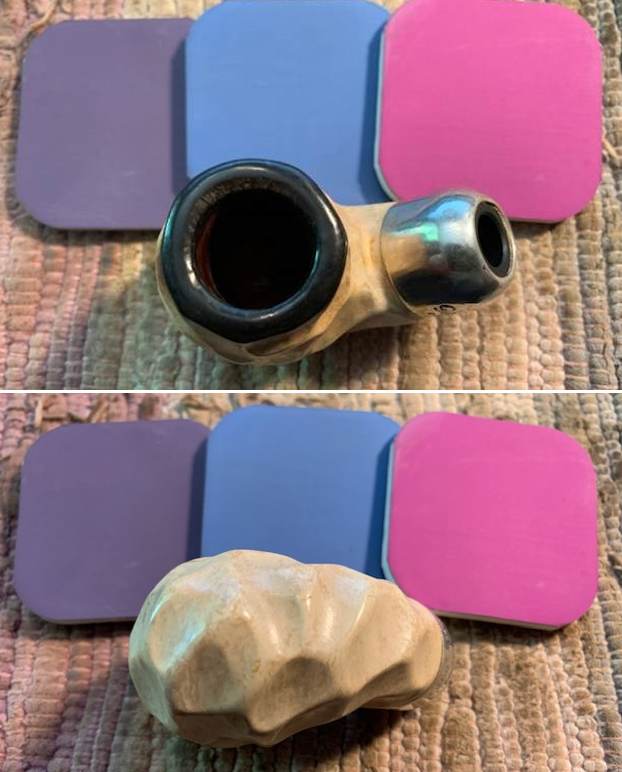
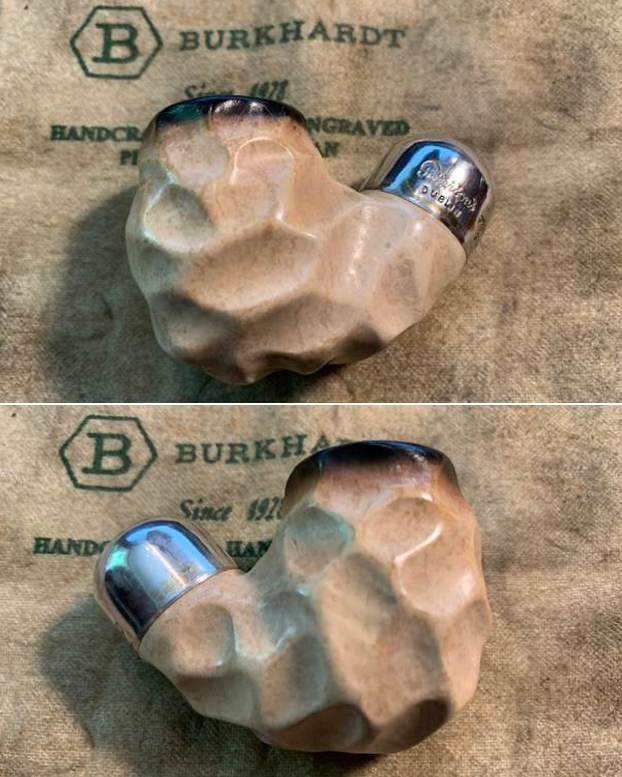
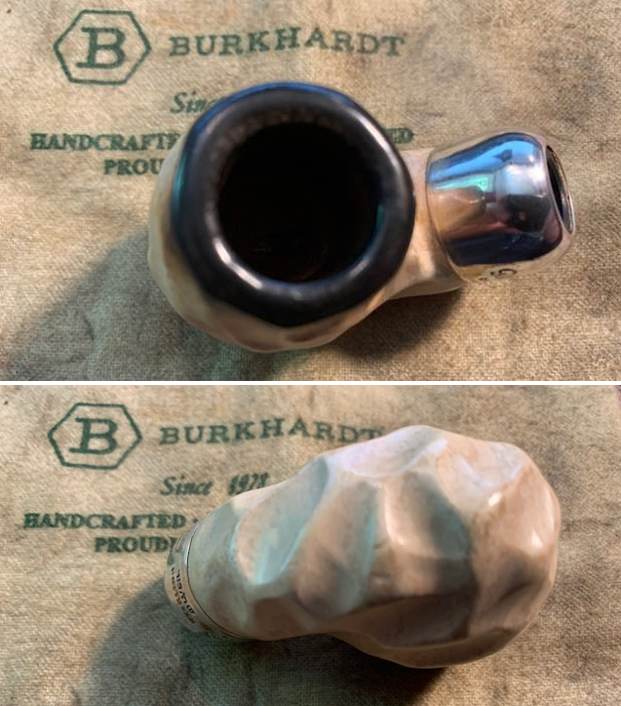
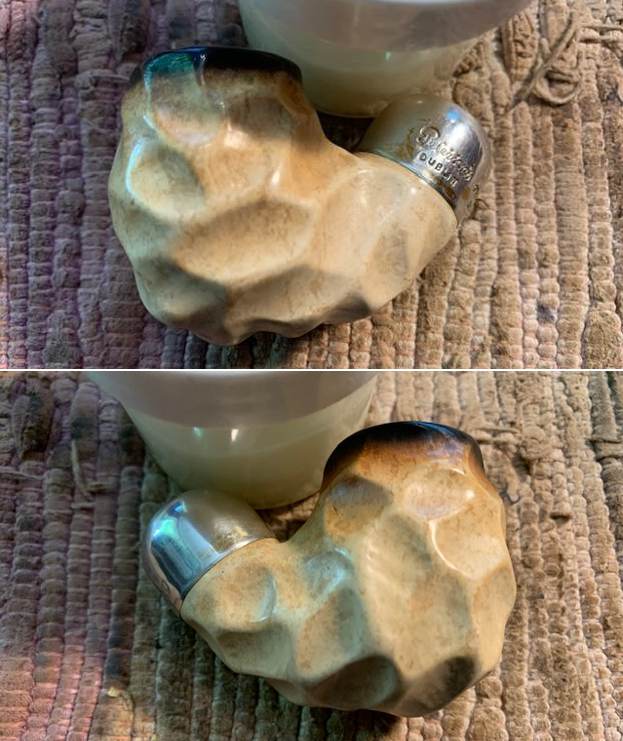
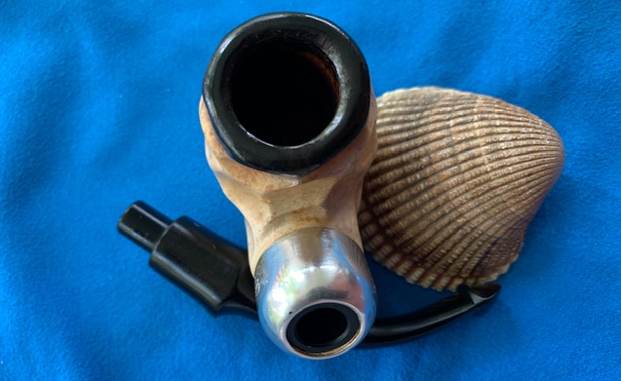
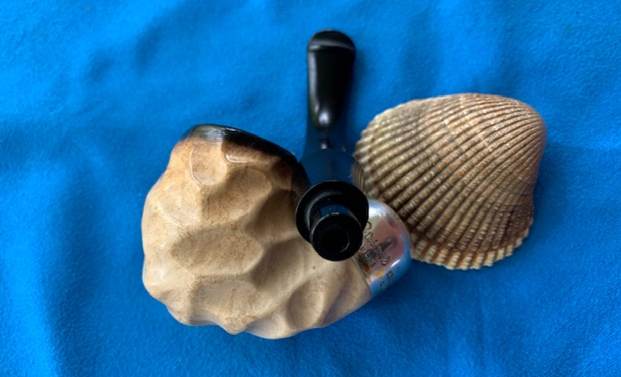
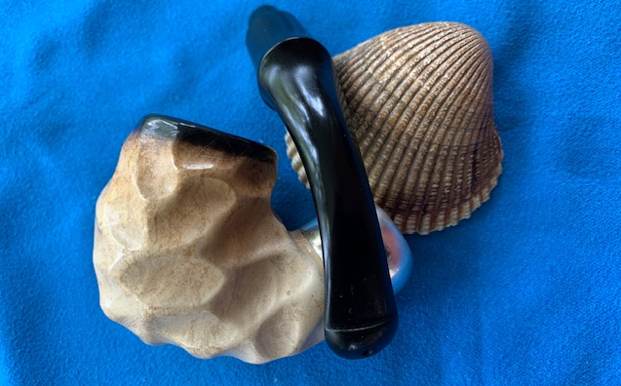
Yesterday afternoon a fellow stopped by for a visit and to show me his collection of Manx  Meerschaum pipes from the Isle of Man. It turned out that his great uncle had worked at the Laxey Pipe Factory which closed in 2002 so he had some of his pipes and some others that he had collected over time. He also wanted to show me sad victim or circumstance – a Manx Billiard that a friend had knocked out of his hand/mouth the night before. The shank had snapped off at the bowl. The break was very clean and there were no extraneous pieces to deal with. It was complete in the two parts. The stem and tenon were undamaged. Fortunately as he transported it to my porch wrapped in a scarf it did not chip or incur further damage. I took photos of it this morning when I brought it to my work table. I had a short piece of metal tubing. It is harder than the average aluminum inner tube and also a bit larger in diameter. It fit well in both sides of the broken airway. I was going to use super glue to anchor it in the bowl half first and let it harden very well. I did not want any slippage back and forth in the airway. I set the bowl aside to let the glue cure on the tube. I filed the tube to roughen it up and to make the fit in the shank part of the break work well. I slide it in place and took a photo of the fit of the shank to the bowl. It looks quite good. I will need to glue it to get a solid repair but it looks like it will work well with no gaps once it is glued.With the restoration going on in my basement shop area I could not put my hands on my epoxy so I went to the local tool shop near my house and chatted with one of the gents there about what I was working on. They had some JB Weld but he recommended a product called Weld Bond. It is good for repairing cracked pottery, stone and even wood. It dries rock hard in 24 hours and is clear once it dries (a bonus on this pipe). I spread the glue on both halves of the broken pipe and painted it on the surface of the tube as well with a tooth pick and worked it into the grooves of the break. I slid the shank piece on to the tube and lined the break up. I pressed the parts together and wiped off the excess glue with a cloth. I held it in place until it bonded the parts together. I pressed the parts together and bound it together with green tape. I wrapped the tape around the entire bowl and shank to hold it tightly in place while the glue cured. I set the bowl aside for 24 hours to let that happen. That is always the hardest part for me as I am impatient and want to move onto the next part. But the wait is on and I am gritting my teeth while I wait.  I set the bowl aside and turned my attention to work on the stem. It had a lot of tooth chatter and light marks on the surface on both sides. I had originally thought the stem was acrylic but it was a nice vulcanite. I “painted’ the surface of the stem with the flame of a Bic lighter to lift them as much as possible. The marks on the underside lifted well. The majority of the top side also lifted. I had a few deeper ones that need a spot of super glue to smooth them out. Once the repair cured I sanded the repairs on the stem with 220 grit sandpaper to blend them into the surface of the vulcanite. I started polishing it with 400 grit wet dry sandpaper. I polished the vulcanite stem with micromesh sanding pads – 1500-12000 grit pads. I wiped it down with Obsidian Oil after each sanding pad. I used Before & After Pipe Polish – both Fine and Extra Fine to further polish the stem. I removed the tape holding the repaired shank/stem repair together. It was solid. The crack was only visible on the lower right side and part of the underside. It is filled in but can be seen if you look for it. I filled in the remaining crack in the surface of the meer on the right lower/underside with the Weld Bond glue I used to bind it together. It dries clear so I am looking forward to seeing how it looks afterward.I reamed the pipe with a Savinelli Fitsall Pipe Knife. I cleaned the rim top with the tip of a knife and a brass bristle wire brush. I was able to get back some of the rustication on the top. I have had good success with Before & After Restoration Balm on Meerschaum so I worked it into the surface of the bowl and shank with my finger tips and a shoe brush to clean, enliven and protect the rusticated surface of the meerschaum. I let it sit for 15 minutes and then buffed it off with a soft cloth. It looked very good. This Manx Made Meerschaum Rusticated Billiard is a great looking pipe now that it has been restored. The style of rustication that is used around the bowl is classic Isle of Man rustication from the Laxley Pipe Company. It works well with both the shape and the polished vulcanite stem. I put the stem back on the bowl and carefully hand buffed the pipe with a microfiber cloth to deepen the shine. The finished Manx Made Meerschaum Billiard is another pipe that fits nicely in the hand and feels great. Give the finished pipe a look in the photos below. The dimensions of the pipe are Length: 6 inches, Height: 2 inches, Outside diameter of the bowl: 1 ¼ inches, Chamber diameter: ¾ of an inch. The weight of the pipe is 61 grams/2.15 ounces. I will be giving the fellow a call who dropped it off. I think he will enjoy the repair of one of his favourite pipes. Thanks for reading this blog and my reflections on the pipe while I worked on it. There are many more to come!

Sidle Up to the Bari


by Kenneth Lieblich

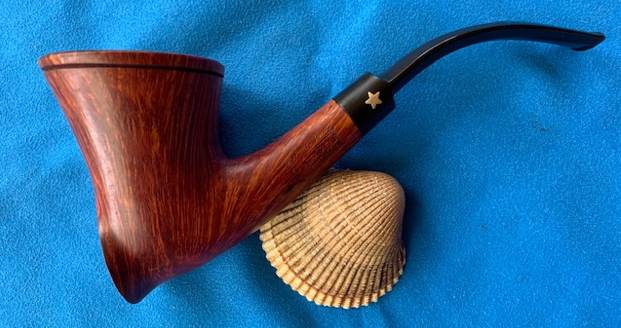
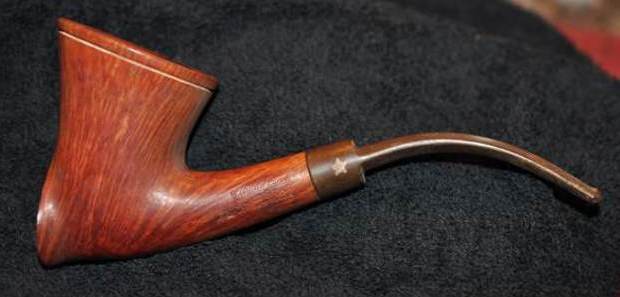
Next on the chopping block is a charming Danish pipe, likely by Bari. I say “likely” because it does not specifically name Bari on the pipe, but Steve assured me that he has seen other Bari pipes like it. He feels comfortable calling it a Bari and that is more than good enough for me. His imprimatur is worth its weight in gold!   There was only one marking on the pipe – the underside of the stummel read Made in [over] Denmark. There was no shape number or any other identifying marks.This freehand pipe is quite beautiful and many of its curves are reminiscent of ski slopes from my youth. It is a pretty pipe and feels light and comfortable in the hand.

From Pipedia, here is a very brief history of the Bari company:

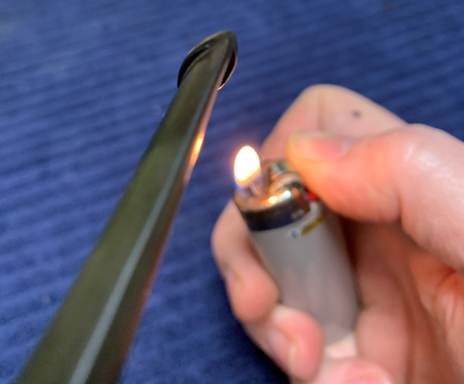
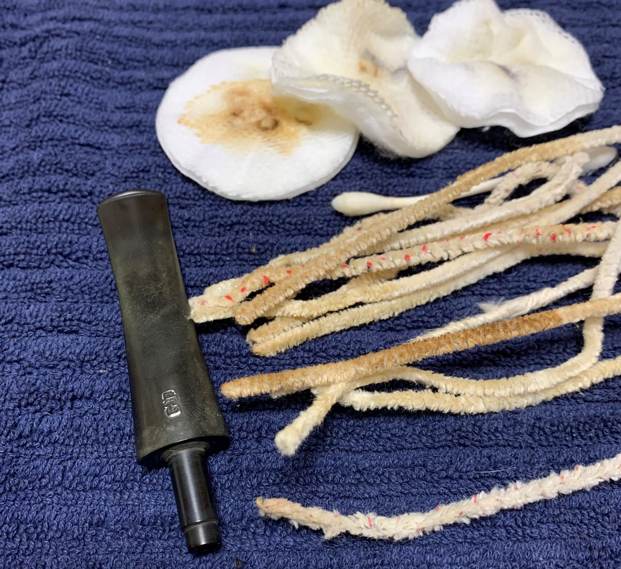
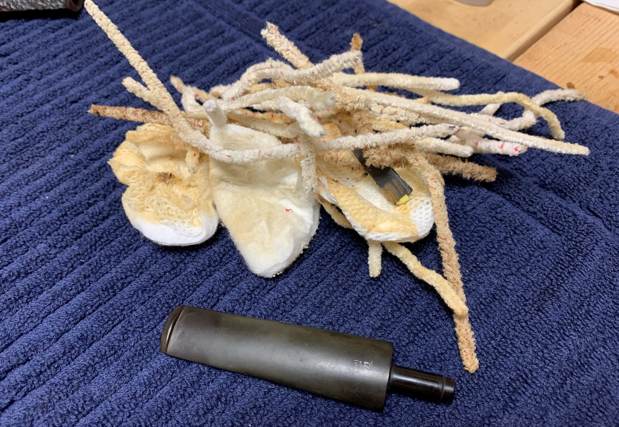
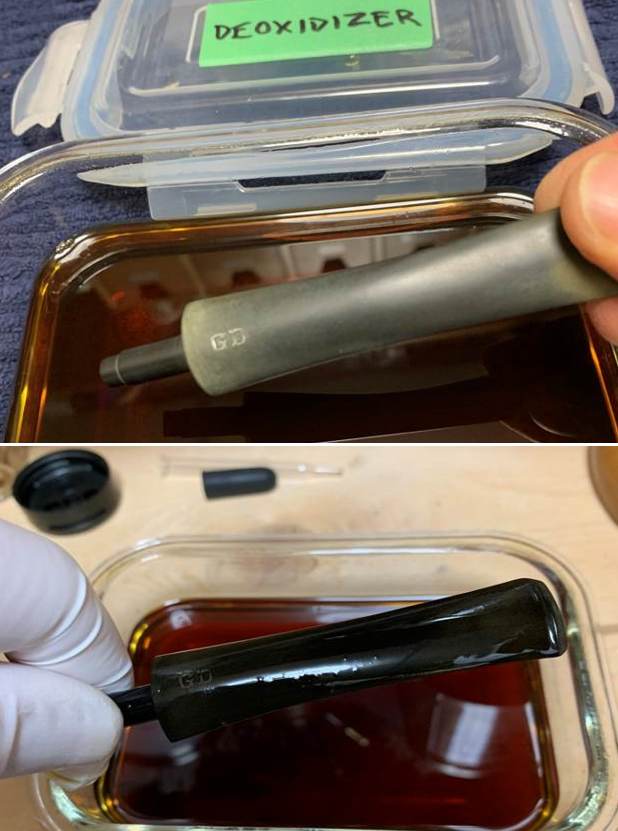
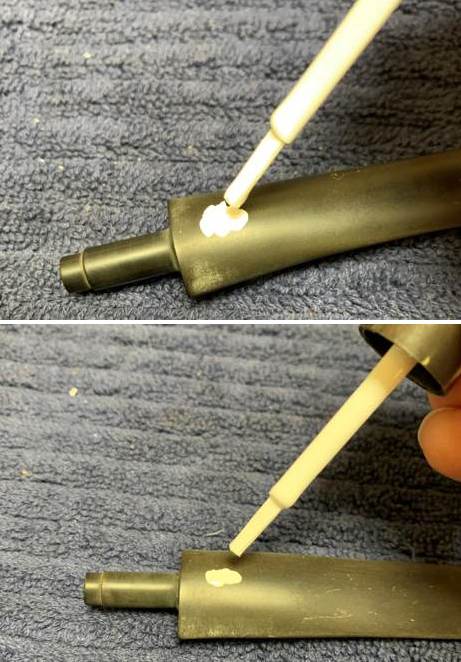
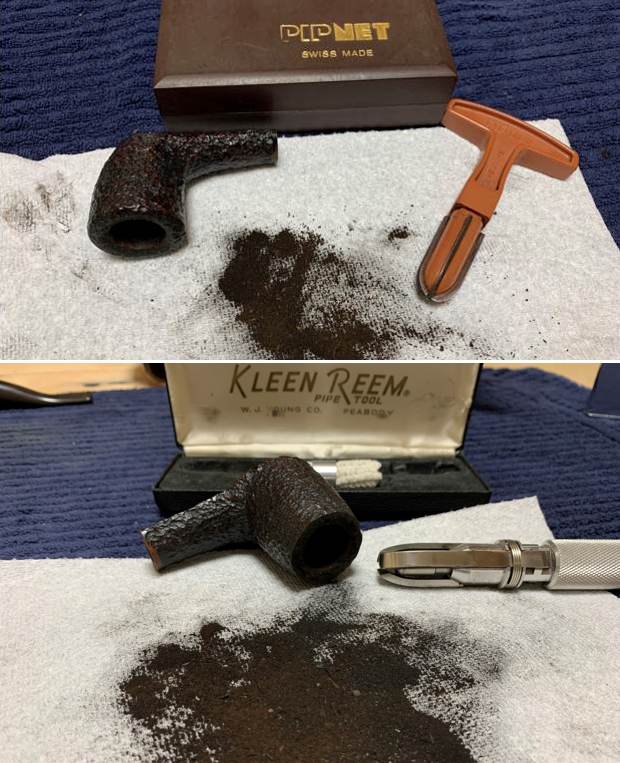
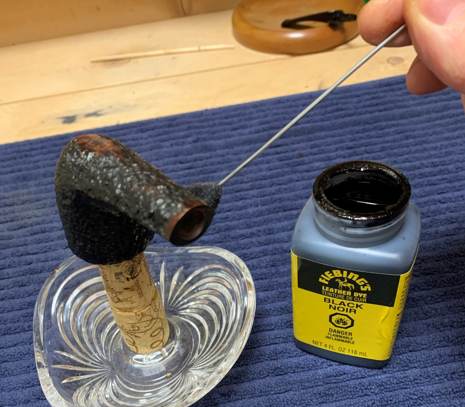
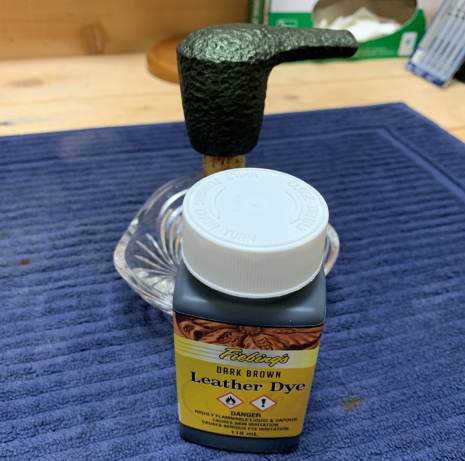
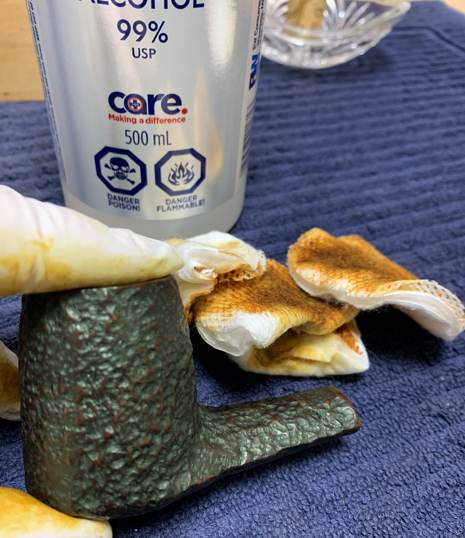
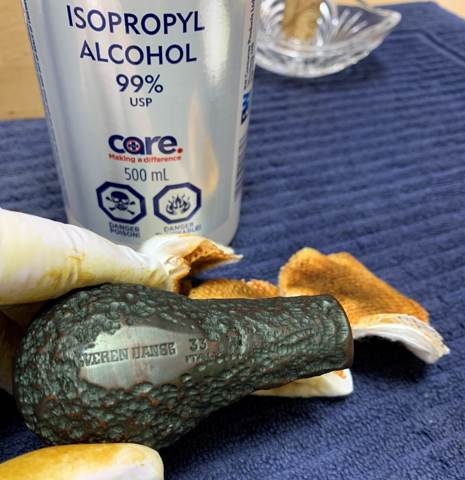
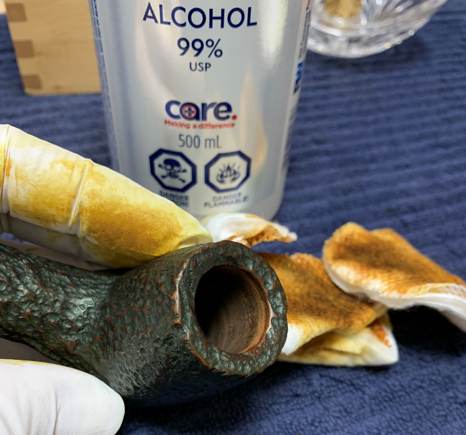
Bari Piber was founded by Viggo Nielsen in Kolding around the turn of 1950-51. Viggo’s sons Kai Nielsen and Jørgen Nielsen both grew into their father’s business from a very young age and worked there till 1975. Bari had very successfully adapted the new Danish Design that had been started mainly by Stanwell for its own models. When Viggo Nielsen sold Bari in 1978 to Joh. Wilh. von Eicken GmbH in Hamburg, Bari counted 33 employees. From 1978 to 1993 Åge Bogelund and Helmer Thomsen headed Bari’s pipe production. Thomsen bought the company in 1993 re-naming it to Bari Piber Helmer Thomsen. The workshop moved to more convenient buildings in Vejen. Bari’s basic conception fundamentally stayed the same for decades: series pipes pre-worked by machines and carefully finished by hand. Thus no spectacular highgrades but solid, reliable every day’s companions.On to the pipe: it was in decent shape, but there were a few issues. The stem had a bit of oxidation and a LOT of calcification, though fortunately, very few bite marks. The stummel also had a few issues. The outside of the bowl had some dings and a couple of fills that needed to be addressed. The wood also had some stains and paint splatter. There was lava and debris on the rim, and a small burn mark. Most significantly, there was a chunk missing from around the mortise end of the shank. Some serious repair work was needed there! The stem was first on my list. I wiped down the outside of the stem with Murphy’s Oil Soap on some cotton pads. There was so much calcification on the stem that I decided to take a blade and gently scrape it all off. You can see in the photos how much came off! I also took a BIC lighter and ‘painted’ the stem with its flame in order to lift the few bite marks and dents. This was moderately successful in raising the damage. Then, I cleaned out the insides with pipe cleaners and isopropyl alcohol. It was pretty dirty and required quite a few pipe cleaners. Once this process was done, the stem went for an overnight soak in the Pipe Stem Oxidation Remover. The following day, I cleaned all of the de-oxidizing mess off with alcohol, pipe cleaners, et cetera. The oxidation had migrated to the surface and would be fairly straightforward to remove. I scrubbed with SoftScrub on some cotton pads to remove the leftover oxidation on the stem. I built up the dents on the stem with cyanoacrylate adhesive and let them fully cure. Then I sanded the adhesive down with 220-, 400-, and 600-grit sandpapers to meld seamlessly into the stem. Finally, I used all nine Micromesh pads (1,500 through 12,000 grit) to bring out the lovely black lustre on the stem. I also used Obsidian Pipe Stem Oil in between each pad scrubbing.On to the stummel, and the usual cleaning procedures were in order for this pipe. I first decided to ream out the bowl. I used both the PipNet Reamer and the KleenReem to remove the built-up cake and followed that with 220-grit sandpaper to eliminate as much as I could. I took the bowl down to bare briar, as I wanted to ensure there were no hidden flaws in the walls of the bowl. Fortunately, there were none. I used a small butter knife to gently chip away at the lava on the rim and used more Murphy’s with a scrub brush to remove any remainder. This actually worked quite well. I then moved on to cleaning the outside of the stummel with Murphy’s Oil Soap and some cotton pads. That removed any latent dirt that blighted the wood. I then proceeded to clean out the insides of the shank with Q-tips, pipe cleaners, and isopropyl alcohol. There was some filth inside this stummel and it took quite a bit of cotton to get it clean. I followed that up by cleaning the insides with some dish soap and tube brushes.A de-ghosting session also seemed in order, so I thrust cotton balls into the bowl and the shank and saturated them with 99% isopropyl alcohol. I let the stummel sit overnight. This caused the oils, tars and smells to leach out into the cotton. Now it was time for the serious work: to fix the large gouge in the mortise, at the end of the shank. There were several problems to be addressed: to ensure that the repair was structurally sound, so it could withstand the wear and tear of the tenon going in and out; to ensure that the repair looked reasonably consonant with the surrounding wood, and to ensure that the inside of the mortise was smooth and conformed perfectly to the shape of the tenon. The repair was made with a mixture of briar dust and cyanoacrylate adhesive. This ensures a strong repair and one that looks similar to the surrounding wood. As it turned out, I had to build up the repair more than once to achieve the results I wanted. It was fairly straightforward to sand down the flat end of the shank, but it was very difficult to ensure that the inside of the mortise matched perfectly with the tenon. Honestly, it took a bit of trial and error to get it right. I sanded the repair down with a file and 200- and 400-grit sandpaper until it was level with the surrounding briar. Having completed that, I was able to address the small nicks on the rim and the bowl. I dug out my iron and a damp cloth to try to raise the nicks. The hot and moist steam can often cause the wood to swell slightly and return to shape. There was some movement – not a lot, but it was better than doing nothing. The repair was not perfect, but the remaining scratches would be improved by sanding. Now I could address the burn on the rim. I took some oxalic acid, used several Q-tips, and rubbed. The burn improved quite a bit. The burn was very superficial and did not affect the integrity of the wood at all.After removing the burn and checking in on the mortise repair to ensure its integrity, I used all nine Micromesh pads (1,500 through 12,000 grit) on the stummel to finish it off. After that, a light application of Before & After Restoration Balm brought out the best in the stummel’s grain. This is a very elegant Danish pipe. At this point, I checked in with Steve to see what he thought of the restoration so far. He made the excellent suggestion of applying a layer of Fiebing’s Black Leather Dye to the rim and the mortise-end of the shank. After applying the dye, flaming it, and letting it set, I wiped those areas down with isopropyl alcohol to remove most of the dye. The goal here was to accentuate the grain on those particular areas of the pipe with only residual amounts of black dye. In order to further the external beauty of this pipe, I applied some of Fiebing’s Medium Brown Leather Dye over the entire stummel. As usual, I applied flame from a BIC lighter in order to set the colour. I then added a second coat – just to make sure. It looked so much better with a richer colour. I then used some isopropyl alcohol to wipe down the pipe and remove some excess dye. At this point, I chose to re-sand the stummel with all of the micromesh pads. I followed up with some more Before & After Restoration Balm. What a wonderful result! Then it was off for a trip to the buffer. A dose of White Diamond and a few coats of carnauba wax were just what this pipe needed. The lovely shine made the wood look absolutely beautiful. In fact, it turned out so well that this pipe has already sold! I know that the new owner will enjoy smoking it for many years to come. I hope you enjoyed reading the story of this pipe as much I as I did restoring it. If you are interested in more of my work, please follow me here on Steve’s website or email me directly at kenneth@knightsofthepipe.com. Thank you very much for reading and, as always, I welcome and encourage your comments.

New Life for a Beautiful Rusticated Jirsa 96 Poker/Sitter


Blog by Steve Laug

I am back to a few other pipes that have been here for a long time. You can see from the photos that Jeff took that it is another one that has been here for a long time. We picked it up back in 2017 – I can’t believe that it is almost five years ago. It is about time I got around to working on it because it really is quite nice. Jeff purchased this pipe from an antique mall in Salt Lake City, Utah, USA. It had an interesting rusticated brown finish with a smooth band around the base and shank end as well as a smooth heel of the bowl. There is a carved ring around the top ¼ inch of the rim top and edge as well that is a nice touch. There was a thick cake in bowl and lava on the rim top and the inner bevel. The finish was filthy with grit and grime ground into the surface of the briar. The pipe is stamped on the underside of the shank Jirsa [over] the shape number 96. The stem surface was oxidized and had a rotting Softee bit with a lot of awful looking sludge built up around it. The stem did not have a Jirsa logo. Jeff took photos of the pipe before he started his clean up work. I like to have an idea of how the pipe was smoked before we got it and what the bowl and rim top looked like. Jeff always takes some photos of the bowl and rim from various angles to show what it looked like. He took photos of the stem with and without the Softee bit to show the condition. While the stem was dirty the Softee had protected it from tooth marks and chatter. He took photos of the sides and heel of the bowl to give a sense of the rustication on the pipe. The next two photos show the stamping on the underside of the shank. It is clear and readable as noted above.I did a quick scan of the rebornpipes blog and found a link to the Jirsa Octagonal Panel that I had restored (https://rebornpipes.com/2021/05/01/rebirthing-an-oldrich-jirsa-bent-octagonal-panel-138-billiard/). Rather than start over in my research on the brand I am quoting from that blog and the work I did there.

I turned to Pipephil’s site to see what he had on the Jirsa brand (http://pipephil.eu/logos/en/logo-j2.html). He had an entry that I did a screen capture of and also the following information on the brand. Artisan: Oldrich Jirsa (born 1962) makes pipes since 1994.I turned to Pipedia for more information on the brand (https://pipedia.org/wiki/Jirsa). I quote from the article below.

Jirsa is a Czech Republic brand owned by the family company headed by the artisan Oldrich Jirsa. They use Ebonite and cumberland stems. Best Grading: SG (Grain), three stars. Symbol: stylized J coming out of an oval. I knew that I was working on a Czech made pipe by Oldrich Jirsa. The stem on the one I was working on was vulcanite and was not stamped. I suppose it could be a replacement but the fit and slow makes me think it is original. Now it was time to work on the pipe.

Jeff had done a great cleanup on the pipe. He reamed the bowl with a PipNet pipe reamer and followed up with a Savinelli Fitsall pipe knife to remove the cake. He scrubbed out the mortise and the airway in the shank and the stem with alcohol, cotton swabs and pipe cleaners. He scrubbed the bowl exterior with a tooth brush and Murphy’s Oil Soap to remove the grime on the finish of the bowl and the lava from the rim top. He rinsed it under running water. One of the benefits of this scrub is that it also tends to lift some of the scratches and nicks in the surface of the briar. He dried it off with a soft cloth. He cleaned the internals and externals of the stem with alcohol, pipe cleaners and cotton swabs. He soaked the stem in Before & After Pipe Stem Deoxidizer and rinsed it off with warm water and cleaned out the airway in the stem with alcohol. When I received it the pipe looked very good. I took a photo of the rim top and stem to show the condition. The rim top and the beveled inner edge and outer edge of the bowl were in good condition. The stem was vulcanite and there was some light tooth chatter on both sides ahead of the button. The stamping on the pipe is clear and readable as noted above. I removed the stem from the shank and took a photo of the pipe to give a sense of the whole.I polished the smooth portions of the briar with 1200-1500 micromesh sanding pads and wiping it down with damp cloth after each sanding pad. The inner edge of the rim, the band on the shank end and the band round the smooth base were all polished. As I worked through the cycle of pads the shine developed with each change of pad. The pipe looks very good. I rubbed the bowl and shank down with Before & After Restoration Balm. I worked it into the surface of the bowl sides and shank with my fingertips and a horsehair shoe brush to clean, enliven and protect the briar. I let the balm sit for 10 minutes, then buffed with a cotton cloth to raise the shine. The Balm did its magic and the grain on the smooth portions stood and the rustication showed depth. I set the bowl aside and turned my attention to the stem. I polished the stem and built in band with micromesh sanding pads – 1500-12000 grit pads. I wiped it down with Obsidian Oil after each sanding pad. I used Before & After Pipe Polish – both Fine and Extra Fine to further polish the stem. The photos below show the polished stem. This Czech Rusticated Jirsa 96 Poker/Sitter with a vulcanite stem is a great looking pipe now that it has been restored. The rich browns of the stain made the grain and rustication come alive with the polishing and waxing. I put the stem back on the bowl and carefully buffed the pipe with Blue Diamond on the buffing wheel using a light touch on the briar. I gave the bowl multiple coats of Conservator’s Wax and the stem multiple coats of carnauba wax on the buffing wheel. I buffed the entire pipe with a clean buffing pad to raise the shine. I hand buffed the pipe with a microfiber cloth to deepen the shine. The finished Jirsa 96 Poker/Sitter really is a beauty and fits nicely in the hand. Give the finished pipe a look in the photos below. The dimensions of the pipe are Length: 5 ½ inches, Height: 2 inches, Outside diameter of the bowl: 1 ½ inches, Chamber diameter: 7/8 of an inch. The weight of the pipe is 1.87 ounces /53 grams. This beauty will be going on the rebornpipes store in the Pipes from Various Makers Section. Let me know if you are interested in adding it to your collection. Thanks for reading this blog and my reflections on the pipe while I worked on it. There are many more to come!

Restoring a MALAGA Rusticated Bent Apple


Blog by Steve Laug

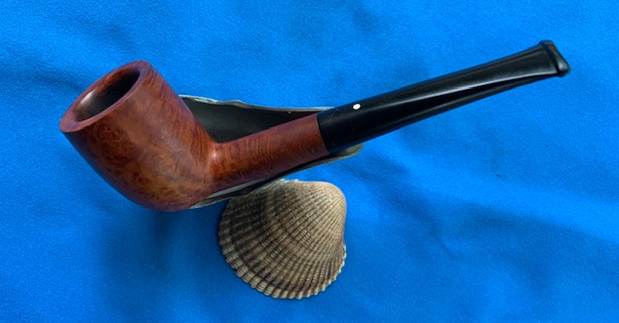
The next pipe on the table is another interesting Malaga pipe that Jeff. This pipe was purchased off EBay on 10/29/2017 from Manteca, California, USA. It is an interesting looking rusticated bent Apple. The finish looks a lot like a Brigham. It has the classic Malaga oil cured finish and some great looking grain on the smooth rim, shank top and right side. There was a smooth band around the shank end and the rim. The pipe is stamped on right side of the shank and reads MALAGA. The shape is well done and the fit of the stem against the shank is very well done. The carver did a great job of carving the pipe to capture the grain around the smooth portions bowl and shank. The bowl had a heavy cake with an overflow of thick lava on the rim top. The sides of the bowl and shank are very dirty with grime and oils ground into the rusticated finish from prolonged use. The vulcanite stem was heavily oxidized and calcified. It had tooth dents and chatter on the top and the underside of the stem near the button and on the button surface itself. Jeff took photos of the pipe before he started the cleanup work. With some work it will be a real beauty. Jeff took a close up photo of the bowl and rim to capture the condition of the pipe before he started the cleanup work. The bowl has a thick cake and the uneven overflow of lava on the rim top is quite thick all the way around but slightly heavier toward the back. The inside edge of the rim could be damaged but it quite hidden under the lava coat. The stem is deeply oxidized, calcified and dirty and there is tooth chatter and marks on both sides of the stem ahead of the button. He took a photo of the stamping on the right side of the shank. It read as noted above. Jeff took photos of the sides and heel of the bowl to give a picture of what the briar looked like. There is some nice grain around the sides. You can also see the damage to the rim edges and the heel of the bowl in the photos below.   I am including the link to a blog that I wrote that gives some of the history of the Malaga brand and the Malaga Pipe Shop in Royal Oak, Michigan in the USA. I have written an earlier blog to give a little history of the Malaga Brand and the pipemaker, George Khoubesser. Here is the link – https://rebornpipes.com/tag/malaga-pipes/.That blog also includes links to a catalogue and the history of the pipemaker George Khoubesser. Follow the link to get a feel for the brand and the pipemaker.

Jeff had cleaned up the pipe using his usual procedure. He reamed the pipe with a PipNet pipe reamer and removed the rest of it with a Savinelli Fitsall Pipe Knife. He scrubbed the bowl with undiluted Murphy’s Oil Soap with a tooth brush. He rinsed it under running warm water to remove the soap and grime. He cleaned out the inside of the shank and the airway in the stem with alcohol, cotton swabs and pipe cleaners. He soaked the stem in Before & After Deoxidizer and rinsed it off with warm water. When the pipe arrived and I unpacked it the stem was broken off at the end. There was about a ¼ inch of the stem and the entire button was in the bottom of the bag that the pipe was packed in. I took photos of the pipe once I received it. The rim top cleaned up really well. The rim top and outer edge of the bowl show some darkening over most of the surface. There is damage to the inner edge of the bowl and bowl is out of round. The stem surface looked very good with tooth marks and chatter on the top side and the underside near the button. The stamping on the right side of the shank is clear and readable. It reads as noted above. I removed the stem and took a photo of the pipe to give a sense of the whole.  I started my work on the pipe by dealing with a hard thick area of cake on the lower front of the bowl. The rest of the bowl was very clean but that area had a hard wedge of carbon that was impervious to reaming and scraping. It was thick and was a battle to remove. It is hard to capture a picture of it but you can see part of it in the photo below.  I stuffed the bowl with cotton bolls and plugged the shank. I filled the bowl with isopropyl alcohol and let it soak the carbon pack in the bowl. It sat for several hours and once I removed the cotton bolls the cake had softened some. I scraped and chipped the carbon wedge with the Savinelli Fitsall Pipe Knife and was able to remove all of it. It was rough then but much cleaner. I sanded the bowl walls with 220 grit sandpaper wrapped around a piece of dowel and smoothed out the roughness. I worked over the rim top and the inner edge of the rim with a folded piece of 220 grit sandpaper. I gave the inner edge a slight bevel and smoothed out the damage on the rim top.  I polished the rim top and smooth briar with micromesh sanding pads – wet sanding with 1500-12000 grit pads and wiping it down after each pad with a damp cloth. I also ran the pads over the high spots on the rustication as well to give some contrast.   I rubbed the bowl and shank down with Before & After Restoration Balm. I worked it into the surface of the bowl sides and shank with my fingertips and a horsehair shoe brush to clean, enliven and protect the briar. I let the balm sit for 10-15 minutes and then buffed with a cotton cloth to raise the shine. The grain came alive and the finish looked rich.     I set aside the bowl and turned my attention to the stem. I “painted” the surface of the stem with the flame of a Bic lighter to lift them as much as possible. I filled in the remaining tooth dents and marks with Black Super Glue and set it aside for the repairs to cure.   Once they cured I flattened them with a file. I cleaned up the repaired areas with 220 sandpaper to blend the repairs into the surface of the stem. I started polishing it with 400 grit wet dry sandpaper.     I polished the vulcanite stem with micromesh sanding pads – 1500-12000 grit pads. I wiped it down with Obsidian Oil after each sanding pad. I used Before & After Pipe Polish – both Fine and Extra Fine to further polish the stem.       This Malaga Rusticated Bent Apple with a vulcanite taper stem turned out to be a real beauty. The carver did a great job on the rugged rustication and the shape of the pipe. I polished stem and the bowl with Blue Diamond polish on the buffing wheel and the finish just popped and came alive. I gave the bowl and the stem multiple coats of carnauba wax. I buffed the pipe with a clean buffing pad to raise the shine. I hand buffed it with a microfiber cloth to deepen the shine. The pipe polished up pretty nicely. The pipe took on life with the buffing. The rich oil cured colour works well with the polished black vulcanite stem. The finished Malaga Bent Apple has a rich look that is quite catching. Have a look at it with the photos below. The shape, finish and flow of the pipe and stem are very well done. The dimensions are Length: 6 inches, Height: 1 ½ inches, Outside diameter of the bowl: 1 ¼ inches, Chamber diameter: 7/8 of an inch. The weight of the pipe was 38 grams/1.34 ounces. I will be putting it on the rebornpipes store shortly. It will be in the American Pipe Makers Section. Thanks for reading this blog and my reflections on the pipe while I worked on it. There are many more to come!   

Breathing Life into a GBD Oxford Saddle Stem Billiard


Blog by Steve Laug

The next pipe on the work table came to us from EBay on  06/11/2016 from Albuquerque, New Mexico, USA. The pipe is a classic newer GBD Billiard shaped pipe with a varnish coat on the bowl. The pipe is stamped on the left side of the shank and reads GBD in an oval [over] OXFORD. On the right side it is stamped Made in England. The finish is quite shiny and has some nice grain highlighted by the contrast stain. The bowl was moderately caked around the first ½ inch down into the bowl then there was bare briar. It was quite clean and the inner edge looked to be in good condition. There was a small nick on the left front outer edge. The saddle stem was vulcanite and was lightly oxidized. It had a stamped GBD Oval logo that was in good condition. It is a nice looking newer GBD made by Cadogan and will make someone a great small billiard. Jeff took some photos of the pipe before he started his cleanup work. He took a photo of the rim top and bowl to give a clear picture of the thickness of the cake and tobacco debris as well as the thick lava on the smooth rim top. Though there are no photos of the top and underside of the stem it is remarkably clean and undamaged. The stamping on the sides of the shank is clear and readable as noted above. The stamp on the stem is also quite clean. I turned to Pipephil and there was nothing listed for the Oxford model of GBD pipes. I was a little disappointed but have gotten used to that for some the newer GBDs. I have hit the wall in the search for information many times on these.

I turned then to Pipedia to see if I could find anything. On the main page there was a great summary of the history of the brand lots of information on the more known models. There was nothing there on the Oxford model.

At the bottom of the listing on Pipedia there was a link to a section on the various models so I clicked on the link (https://pipedia.org/wiki/GBD_Model_Information) and finally found something. At the bottom of the listing of models of GBD pipes there was a list of GBD seconds. I have included the some of models listed there below. I have highlighted the Oxford in red in the list below. That was the extent of information that I could find.

List of GBD “Seconds”

The lines listed below are either 2nds or lines made for other makers/pipeshops. Please send me any corrections or additional information you might have on these.

  • Matt Special — England, unknown if also made in France: “Warm Amber” on black dual tone Matt finish, “mid-priced” private label. -catalog ( 1976 ). This style was listed under “Private Brand Pipes” in the catalog which means that GBD would stamp a custom name of the pipe, often the name of a pipe shop or chain.
  • Medley — England, unknown if also made in France: “A collection of oversize Conquest and Collector shapes…varying shape selection”, varying finishs. -catalog ( 1981 )
  • Oxford — England, unknown if also made in France: –
  • Peerless — England, unknown if also made in France: –

Armed with that information I knew that I was working on a Cadogan era GBD pipe (made after 1981) I turned to work on the pipe itself.  Jeff had cleaned up the pipe with his usual penchant for thoroughness. He reamed the pipe with a PipNet pipe reamer and removed the rest of it with a Savinelli Fitsall Pipe Knife. He scrubbed the bowl with undiluted Murphy’s Oil Soap with a tooth brush. He rinsed it under running warm water to remove the soap and grime. He cleaned out the inside of the shank and the airway in the stem with alcohol, cotton swabs and pipe cleaners. He scrubbed the stem with Soft Scrub and a tooth brush and rinsed it off with warm water. I took photos of the pipe before I started my part of the restoration work.   The rim top and edges of the bowl looked great. There was one small nick on the left front outer edge of the bowl but otherwise the outer edge looks good. The vulcanite stem was very clean with no tooth marks or chatter. There was some light oxidation that I would need to deal with but otherwise it was clean. The stamping on sides of the shank is clear and readable as noted above. I removed the stem and took a photo of the pipe to give a sense of the whole. It is another proportionally pleasing pipe.The bowl and rim looked very good so I rubbed the pipe down with Before & After Restoration Balm. I worked it into the surface of the bowl sides and shank with my fingertips and a horsehair shoe brush to clean, enliven and protect the briar. I let the balm sit for about 10-15 minutes and buffed with a cotton cloth to raise the shine.    I set the bowl aside and turned to work on the stem. I needed to remove the light oxidation on the stem. I rubbed it down with Soft Scrub and was able to clean it up significantly.   I polished the vulcanite stem with micromesh sanding pads – 1500-12000 grit pads. I wiped it down with Obsidian Oil after each sanding pad. I used Before & After Pipe Polish – both Fine and Extra Fine to further polish the stem.     This Cadogan Era GBD Oxford Vulcanite Saddle Stem Billiard is a great looking pipe. The contrasting brown and black stain on the briar highlights the grain around the bowl and shank. It works well with both the shape and the polished vulcanite saddle stem. I put the stem back on the bowl and carefully buffed the pipe with Blue Diamond on the buffing wheel using a light touch on the briar. I gave the bowl and the stem multiple coats of carnauba wax on the buffing wheel and followed that by buffing the entire pipe with a clean buffing pad. I hand buffed the pipe with a microfiber cloth to deepen the shine. The finished GBD Oxford Billiard is another pipe that fits nicely in the hand and feels great. Give the finished pipe a look in the photos below. The dimensions of the pipe are Length: 5 ¼ inches, Height: 1 ½ inches, Outside diameter of the bowl: 1 inch, Chamber diameter: ¾ of an inch. The weight of the pipe is 32 grams/1.13 ounces.  I will be putting it on the rebornpipes store in the British Pipemakers Section shortly. If you are interested in adding this pipe to your collection send me a message or an email. Thanks for reading this blog and my reflections on the pipe while I worked on it. There are many more to come!
Breathing New Life into a Weber Short Snorter Oom Paul


Blog by Steve Laug

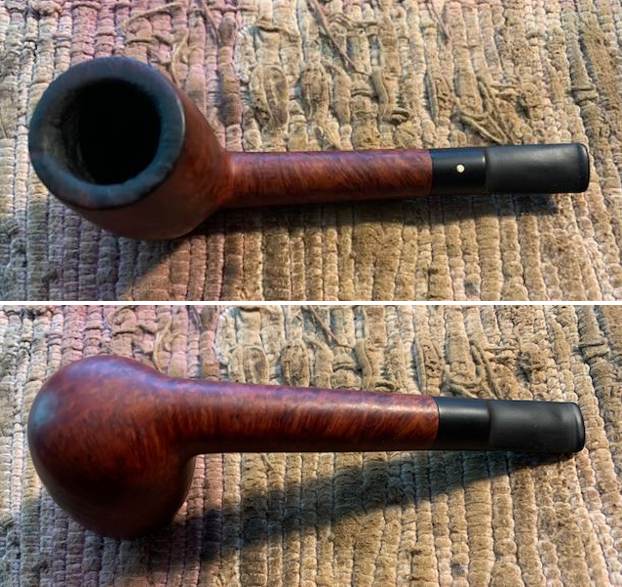
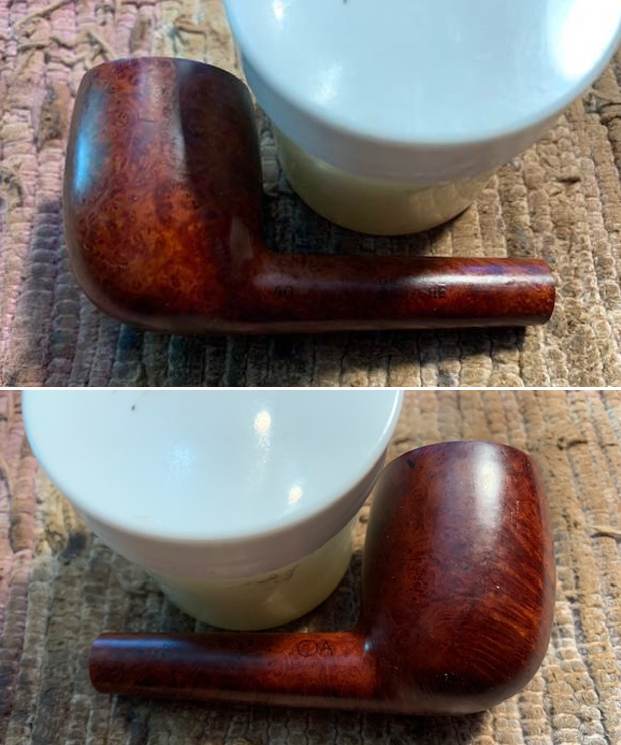
The next pipe on the work table came to us from an antique store in Bozeman, Montana, USA on 02/02/18. The pipe is a classic Oom Paul shaped pipe but almost a miniature. The pipe is stamped on the left side of the shank and reads Short [over] Snorter. On the right side of the shank it is stamped with the Weber oval logo. There was a lot of grime ground into the finish on the briar. The bowl was heavily caked with a thick overflow of lava on smooth rim top and inner edge of the rim. The inside and outer edges looked to be in good condition. The vulcanite saddle stem was dirty and lightly oxidized. It had tooth chatter and tooth marks on the top and underside near and on the button. It had promise but it was very dirty.  Jeff took some photos of the pipe before he started his cleanup work. He took photos of the rim top and bowl to give a clear picture of the thickness of the cake and tobacco debris as well as the thick lava on the smooth rim top. He also took photos of the top and underside of the stem to show the chatter and tooth marks. Jeff took photos of the sides and the heel of the bowl to give a sense of what the briar looked like. The finish was dark and through the obscuring dirtiness of the bowl you can see some nice grain peeking through. Jeff also included photos of the bowl with the stem removed showing more of the grain but also the stinger apparatus in the tenon.  The stamping on the sides of the shank is clear and readable as noted above.      The Short Snorter model from Weber was interesting. I remembered that Dal had done one earlier but I did not remember the connection to Weber. To find out information on the model I turned to Pipephil (http://pipephil.eu/logos/en/logo-w2.html) and there was nothing listed for the Weber Short Snorter pipes. There were other pipes shown but not that one.

I turned then to Pipedia to see if I could find anything. There was a great summary of the history of the brand (https://pipedia.org/wiki/Weber_Pipe_Co.). There was nothing on the Short Snorter Model that I was working on. I quote the general information below:

Carl B. Weber was a German from Bavaria. Aged 21 he emigrated to the USA in 1911. In 1938 he established Weber Briars Inc. in Jersey City, New Jersey. Later renamed in Weber Pipe Co..

The firm grew to be one of the giants of American pipe industry focusing itself in the middle price and quality zone. Trademark: “Weber” in an oval. Beside that Weber – especially in the years after 1950 – was a most important supplier for private label pipes that went to an immense number of pipe shops. Alone in New York, exactly the same pipes were found at Wilke’s, Barclay Rex, Trinity East, Joe Strano’s Northampton Tobacconist in Ridgewood, Queens, Don-Lou in Bensonhurst, Brooklyn… Nearly all pipes for Wilke were unstained and many models, for example the “Wilke Danish Bent”, could hardly deny originating of Weber.

Among other well reputed pipe makers Anthony Passante[1] worked for Weber.

Weber Pipe Co. owned and manufactured Jobey pipes – when mainly sold in the USA by the Tinder Box from 1970’s – 80’s. In addition Jobey / Weber bought Danish freehands from Karl Erik (Ottendahl). These pipes were offered as Jobey Dansk. Ottendahl discontinued exports to the United States in 1987 and in the very same year – obviously only as a ghost brand – Jobey was transferred to Saint-Claude, France to be manufactured by Butz-Choquin.

Carl B. Weber is the author of the famous book “Weber’s Guide to Pipes and Pipe Smoking”.

Armed with that information I turned to work on the pipe itself. Jeff had cleaned up the pipe with his usual penchant for thoroughness. He reamed the pipe with a PipNet pipe reamer and removed the rest of it with a Savinelli Fitsall Pipe Knife. He scrubbed the bowl with undiluted Murphy’s Oil Soap with a tooth brush. He rinsed it under running warm water to remove the soap and grime. He cleaned out the inside of the shank and the airway in the stem with alcohol, cotton swabs and pipe cleaners. He scrubbed the stem with Soft Scrub and a tooth brush and rinsed it off with warm water. I took photos of the pipe before I started my part of the restoration work. The rim top cleaned up quite well but there was a lot of darkening on the rim top and the inner edge of the bowl. The outer edge of the bowl looks good. The vulcanite saddle stem had some tooth marks and chatter on both sides ahead of the button. The stamping on sides of the shank is clear and readable as noted above. I captured the stamping on the sides for the photos below. It is faint but still readable.   I removed the stem and took a photo of the pipe to give a sense of the whole. It is another proportionally pleasing pipe. I started my work on the pipe by addressing the sandpits or flaws in the briar by filling them in with clear CA glue. Once they had hardened I sanded them with a folded piece of 220 grit sandpaper. I polished the briar bowl with micromesh sanding pads – dry sanding with 1500-12000 grit pads. I wiped the bowl down with a damp cloth after each pad to remove the debris.     The bowl and rim looked very good so I rubbed it down with Before & After Restoration Balm. I worked it into the surface of the bowl sides and shank with my fingertips and a horsehair shoe brush to clean, enliven and protect the briar. I let the balm sit for about 10-15 minutes and buffed with a cotton cloth to raise the shine. I set the bowl aside and turned to work on the stem. I removed the stinger from the stem to check on the cleanness of the airway. It was in good condition.I polished the vulcanite stem with micromesh sanding pads – 1500-12000 grit pads. I wiped it down with Obsidian Oil after each sanding pad. I used Before & After Pipe Polish – both Fine and Extra Fine to further polish the stem. This Weber SHORT SNORTER Oom Paul is a great looking small pipe now that it has been restored. The brown stain on the briar highlights the grain around the bowl and shank. It works well with both the shape and the polished vulcanite saddle stem. I put the stem back on the bowl and carefully buffed the pipe with Blue Diamond on the buffing wheel using a light touch on the briar. I gave the bowl and the stem multiple coats of carnauba wax on the buffing wheel and followed that by buffing the entire pipe with a clean buffing pad. I hand buffed the pipe with a microfiber cloth to deepen the shine. The finished SHORT SNORTER Oom Paul is another pipe that fits nicely in the hand and feels great. Give the finished pipe a look in the photos below. The dimensions of the pipe are Length: 3 ½ inches, Height: 1 ½ inches, Outside diameter of the bowl: 1 inch, Chamber diameter: 5/8 of an inch. The weight of the pipe is 22 grams/.78 ounces.  I will be putting it on the rebornpipes store in the American Pipemakers Section shortly. If you are interested in adding this pipe to your collection send me a message or an email. Thanks for reading this blog and my reflections on the pipe while I worked on it. There are many more to come!