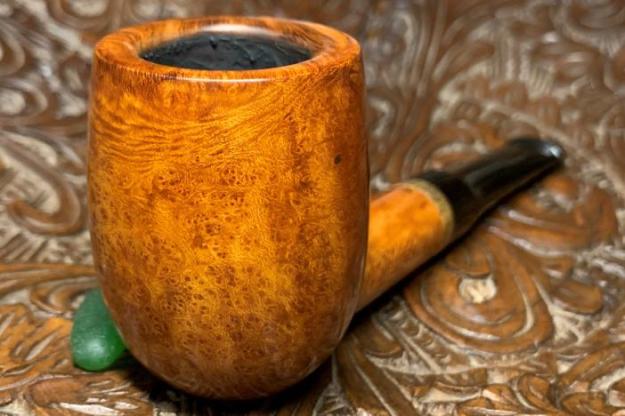
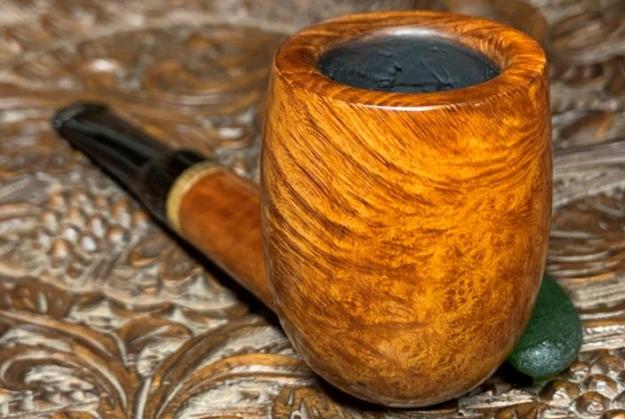
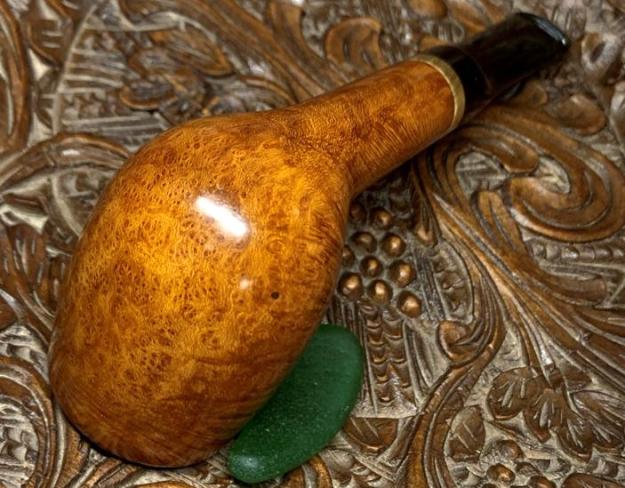
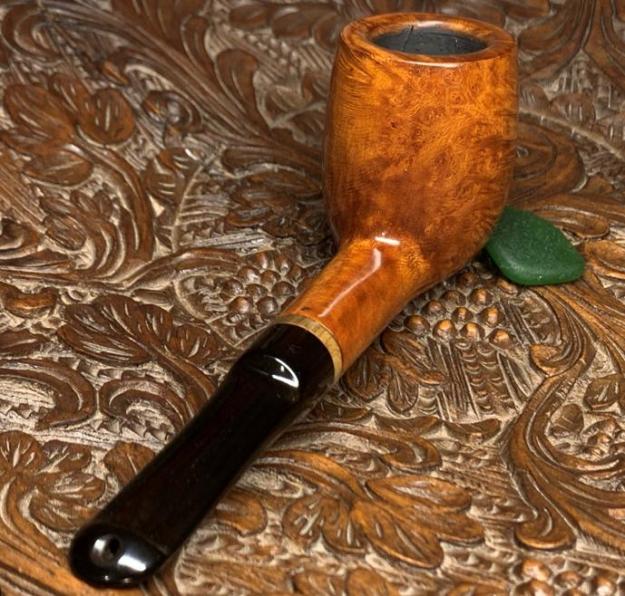
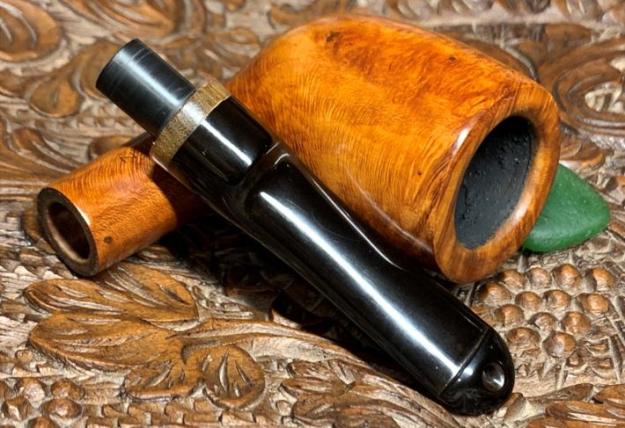
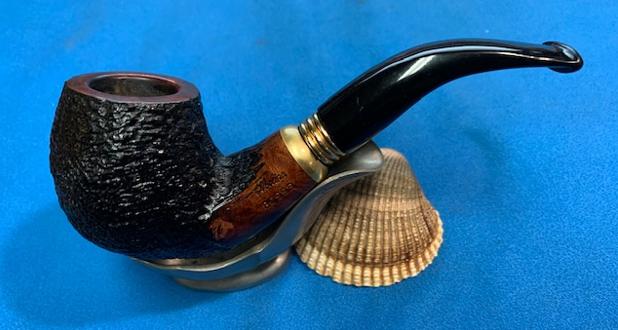
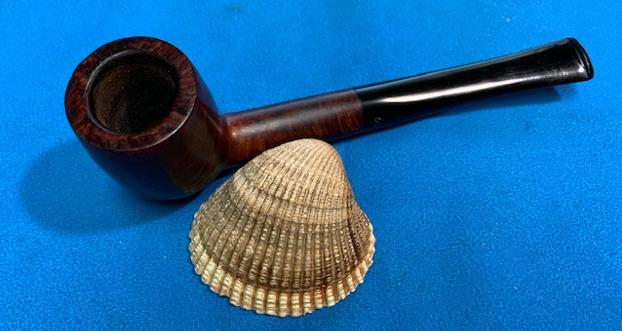
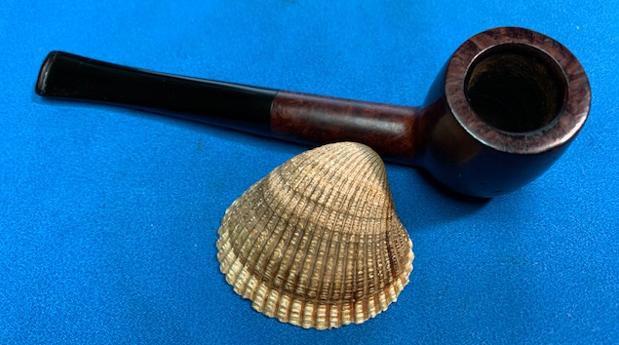
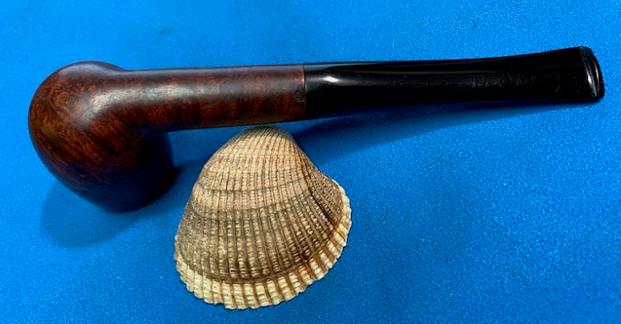
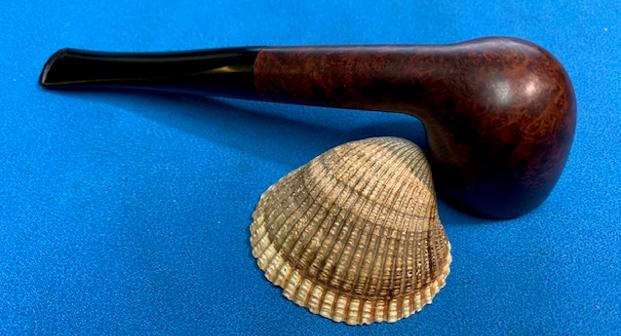
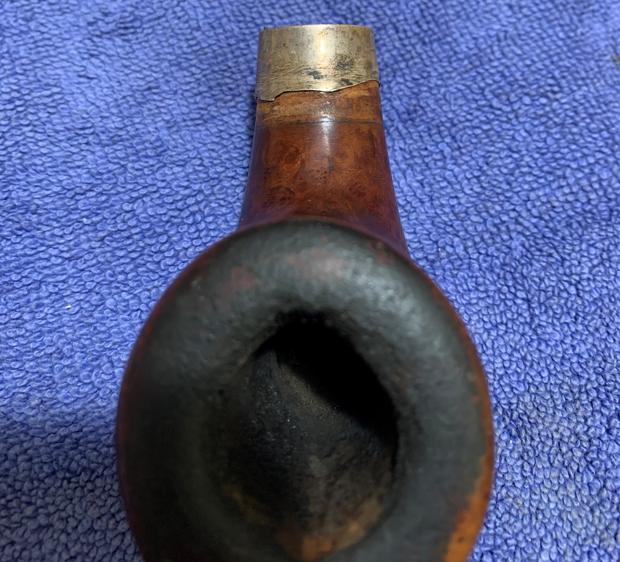
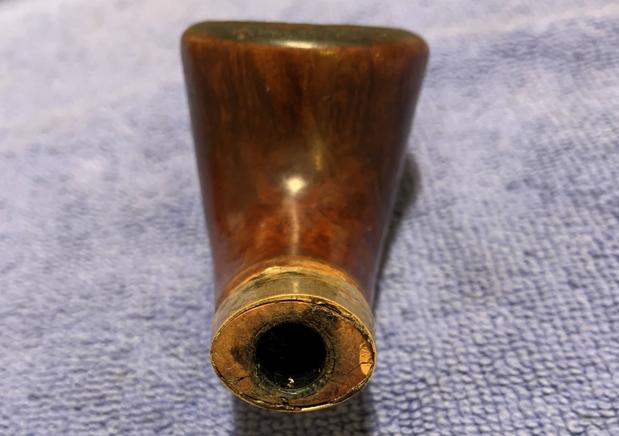
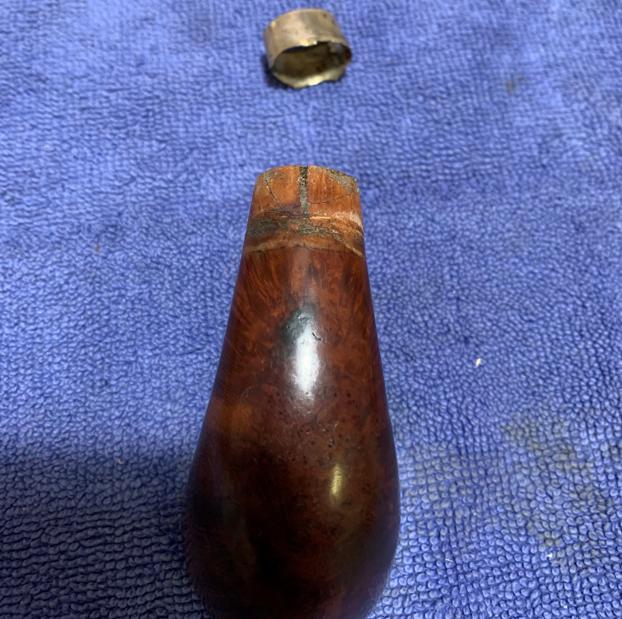
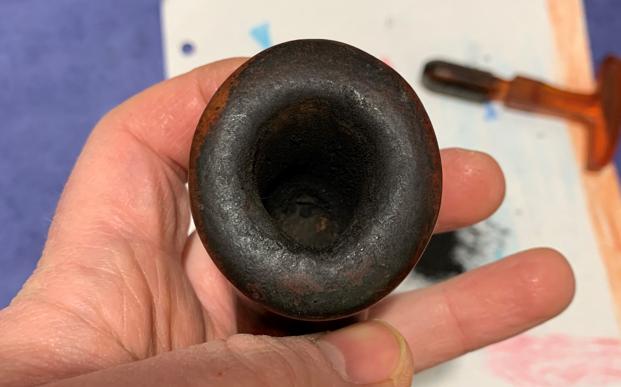
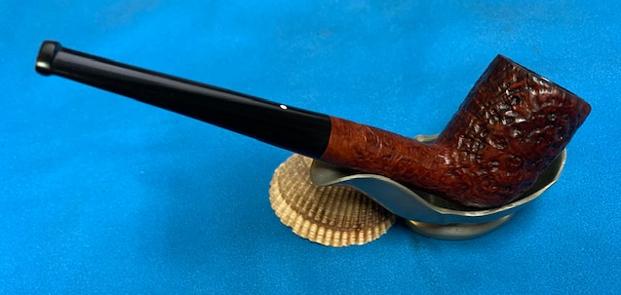
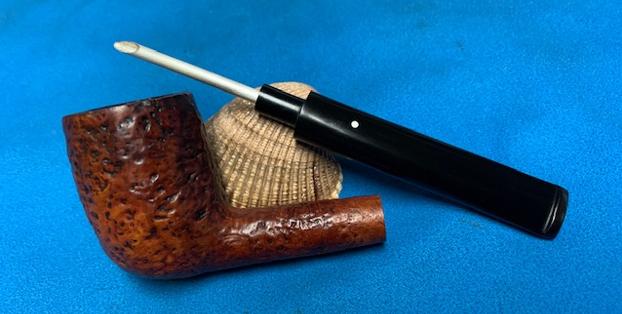
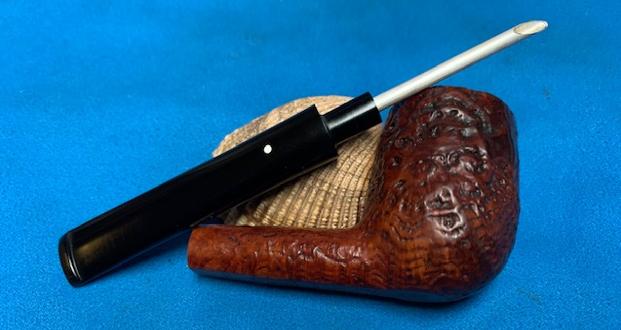
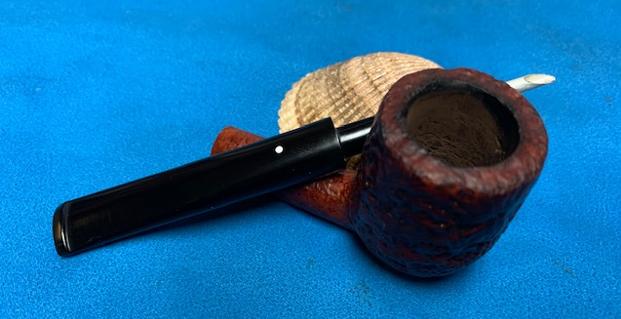
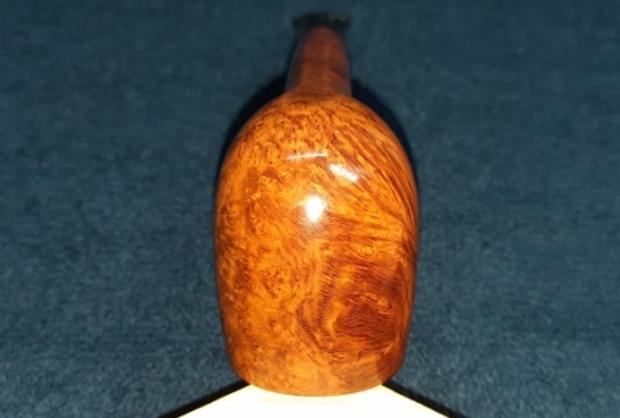
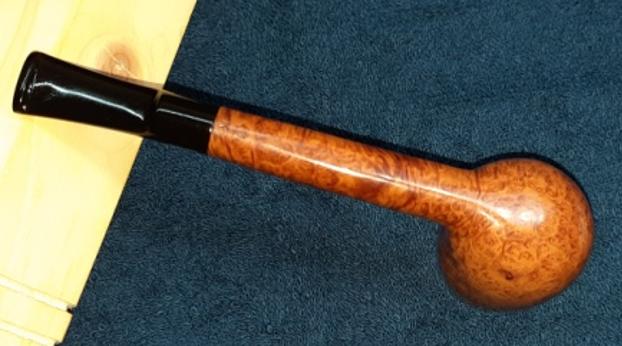
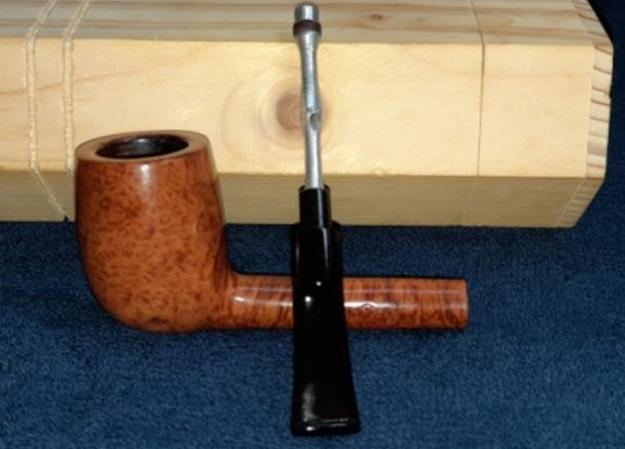
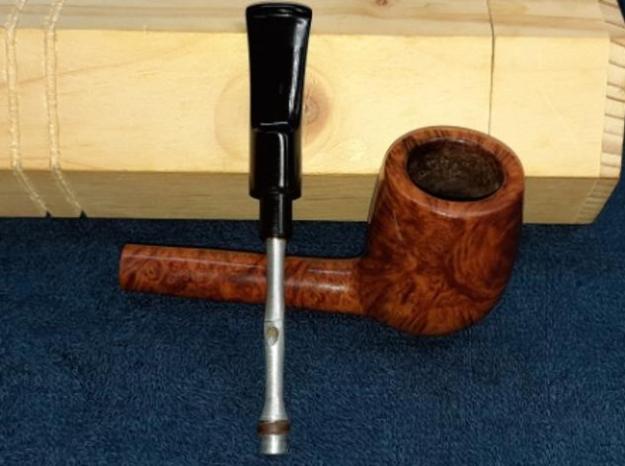
Tag Archives: topping a bowl

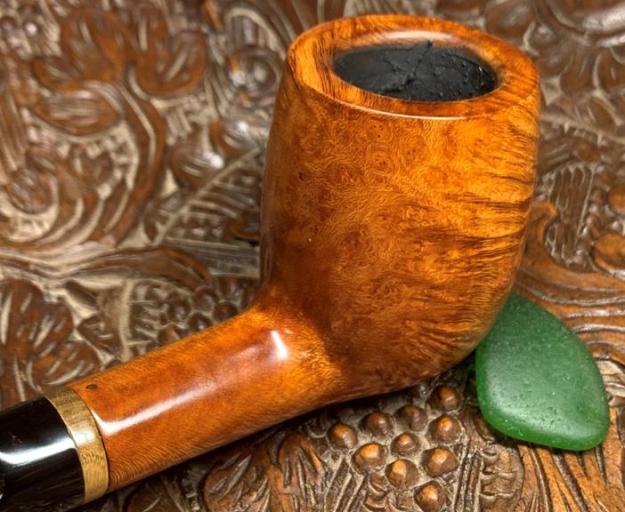
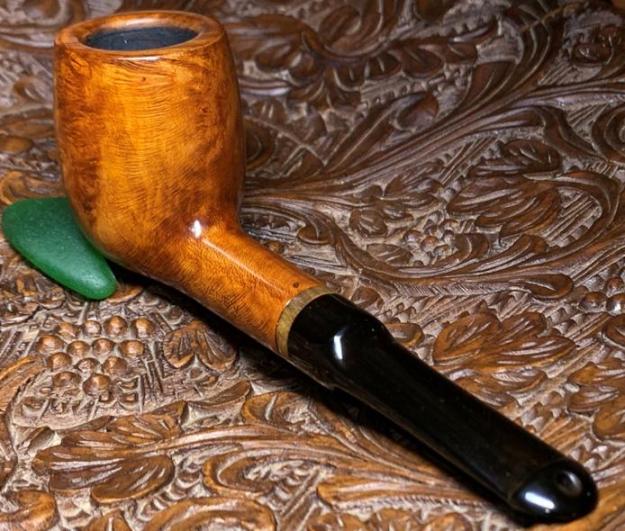
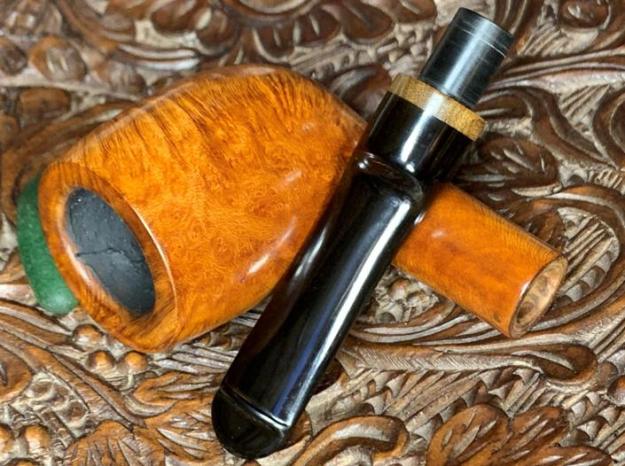
Breathing New Life into a German VAUEN 6294 P-Lip Saddle Billiard for a Special Young Lady


Blog by Dal Stanton

Darren has commissioned a number pipes from the For “Pipe Dreamers” Only! collection benefiting the Daughters of Bulgaria – helping women and girls who have been trafficked and sexually exploited.  I am grateful for this!  The first pipe restored for Darren came out beautifully (See: An Amazing Transformation of a Bruyere Extra Paneled Billiard).  Of all the pipes that Darren has commissioned, the one on the worktable now was the most difficult to choose.  I know this for certain because it took Darren several weeks finally to hear the whisper of a specific pipe for his youngest daughter, Lina.

God made fathers, I believe, with a special place in their hearts for daughters.  This coupled with the fact that Lina’s 18th birthday was on the horizon and in addition to this was Darren’s desire to continue a guarded family tradition where Dad gifts a pipe to each of his children at their 18th birthday.  A gifted pipe contributes to part of a rite of passage into adulthood.  Of course, when Darren shared this information with me in one communication, my response was to ask more questions about the tradition and about Lina – her personality, aspirations, etc., so that the pipe and its write up would in some small way reflect what was important to Darren and celebrate Lina’s life and her 18th birthday.

Darren’s response about his youngest daughter’s pipe was tentative.  He wrote:  As for my daughter’s pipe, I’m uncertain. For her siblings, I found appropriate p-lip Peterson pipes, making it easier for them to try different tobaccos alongside dad, and then discussing flavors. Unlike my other two, Madeleine (but she prefers Lina) said she has no interest in smoking the pipe (she knows) she’ll receive. Her birthday is August 1, but the timing is less important than the day it is given.  

Darren went on to write that Lina was unique, not only because she is the extrovert of the family, but that she has also grown to be a stronger person because of a hair loss condition she was diagnosed with at age four, alopecia totalis.  Later he sent a short essay Lina had written for a college application where she described the challenges she encountered with this condition and how she responded.  I repeat some excerpts of what Lina wrote – an amazing story:

Everyone experiences obstacles in their life.  We may not have control over when or what these hurdles will be, but we do get to choose how we respond to them. Alopecia Universalis became part of my story when I was four years old, and my mom noticed a patch of hair missing on the top of my head. Alopecia is an autoimmune disease that puts my immune system in hyper-drive and causes it “fight” against my hair, thinking it is unhealthy, like a virus or bacteria that it needs to attack. Imagine waking up and seeing gobs of hair on your pillow in the morning. Take that further and think of how scared you’d be to see clumps of hair falling off your head while you applied shampoo in the shower. I was young, and I did not understand what was happening to me. I had no idea how my friends would react to it, and I hated it when people stared at me, thought I was a boy, or assumed I was losing my hair because of cancer….

My parents worked hard to help me figure out how I wanted to handle my hair loss, what made me most comfortable; I tried wigs, hats, and bandanas, but nothing seemed to be the right fit for me. As an active young child, and eventually a student-athlete, wigs were way too hot and impractical. I would often just rip them off whenever I began to overheat, causing people who did not know I had Alopecia to startle a bit. Eventually, I realized that I did not want to wear anything extra and that none of those things made me feel more normal….

God gave me this disease because He knew I could handle it. He has given me the strength to know and believe that He made me in His image, and I am perfect in His eyes. It is not always easy, but I am bald; I have accepted it, and I have chosen to rock it! Even though it seemed impossible at the beginning, I can now be someone people look up to because I am strong and happy. I want to be an inspiration to others. At first, it was so weird, but now it is normal to me, just another character trait.  It has been so long since I had hair that for my family and friends, it [Strength? No hair? What?] is just … me. 

Through this disease, I have learned that I do not have to allow an obstacle to stop me, I can overcome them, and I can turn them into something useful. I will not let Alopecia stop me from doing anything. I have learned to think of it as something that makes me unique rather than an inconvenience. I like being different. I think it is pretty cool that I walk around bald every day; nothing can stop me.

With my request to include Lina’s story in this write up, Darren sent Lina’s photo.  The photo beautifully portrays the bold extroversion Darren described about his unique daughter, but more foundational were Lina’s words revealing the unyielding trust in God that buttressed that boldness – a special young lady.
My response to Darren was to propose one of the pipes that he had already commissioned as possibly matching Lina’s personality. Here is some of what I said:

…Your daughter is gold too 😊.  To have grown up with the hair condition and to overcome it with what appears, great style and grace, is in itself a beautiful thing….  Her apparent extroverted ‘in your face’ spunk and attitude, to me fits well with the reputation of Lorenzo.  Lorenzo, among not only Italian pipes, has the reputation of being on the ‘edge’ in design… There is no doubt, the Lorenzo walks with a bit of swagger…. I look forward to hearing from you.

Since I wanted to work on Lina’s pipe next, I was hopeful of a quick response from Darren regarding his thoughts about the Lorenzo.  Finally, some days later, after he again searched the ‘Dreamers’ collection 😊, another pipe finally whispered Lina’s name to dad.  Darren wrote that the German made VAUEN would be a good fit because, like the Petersons he had given to his other 2 children, the VAUEN sported a P-lip stem.

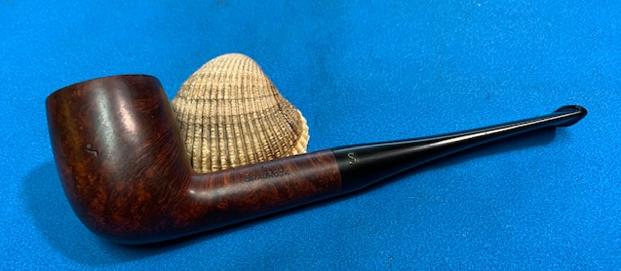
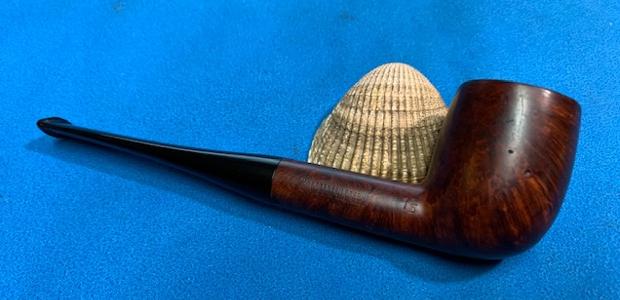
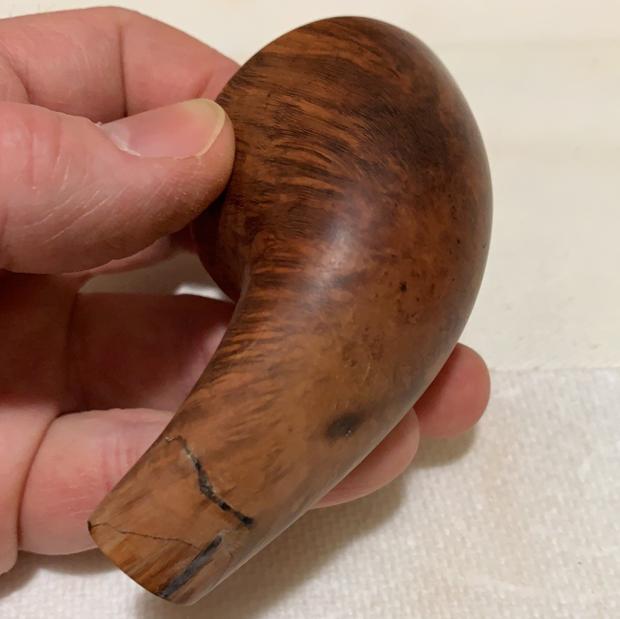
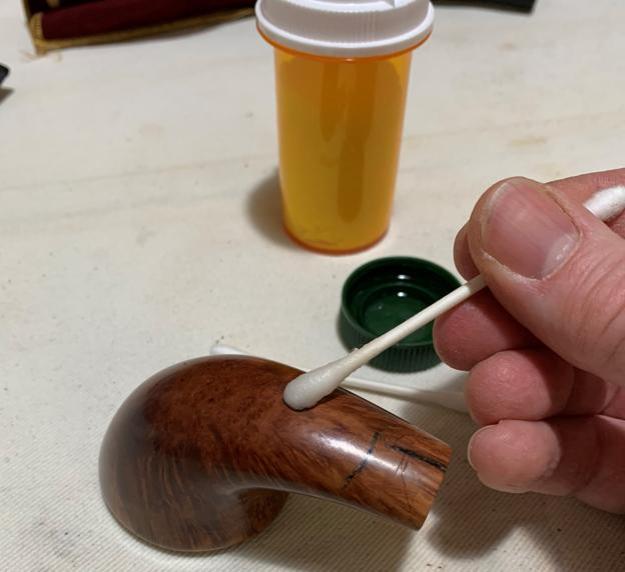
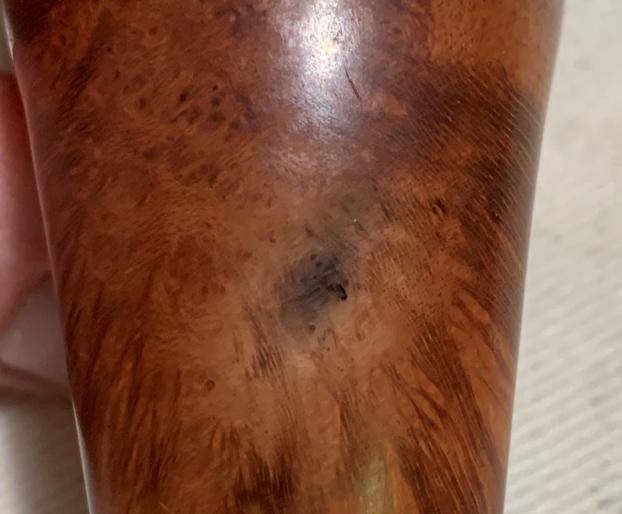
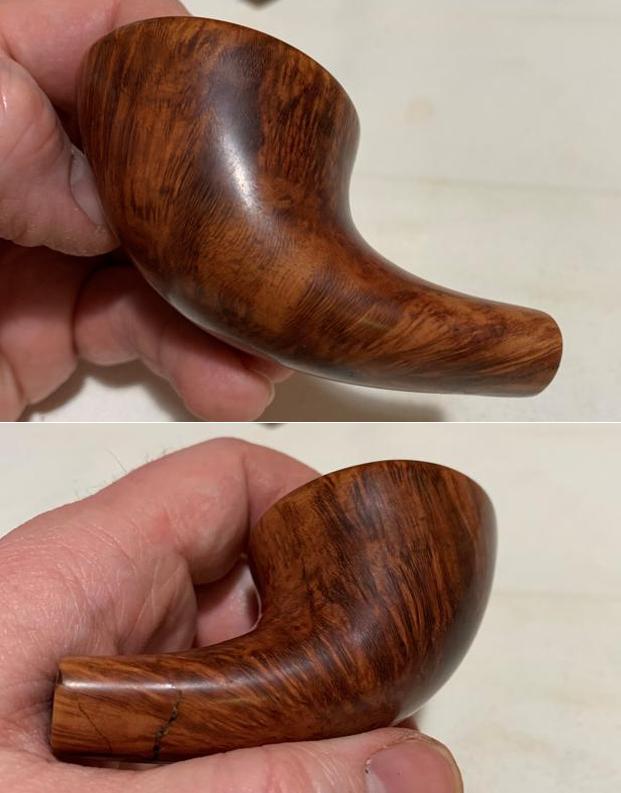
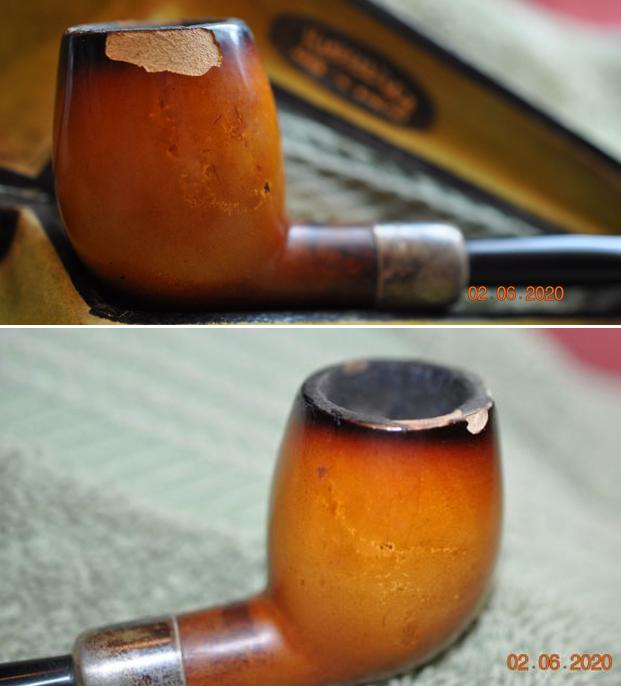
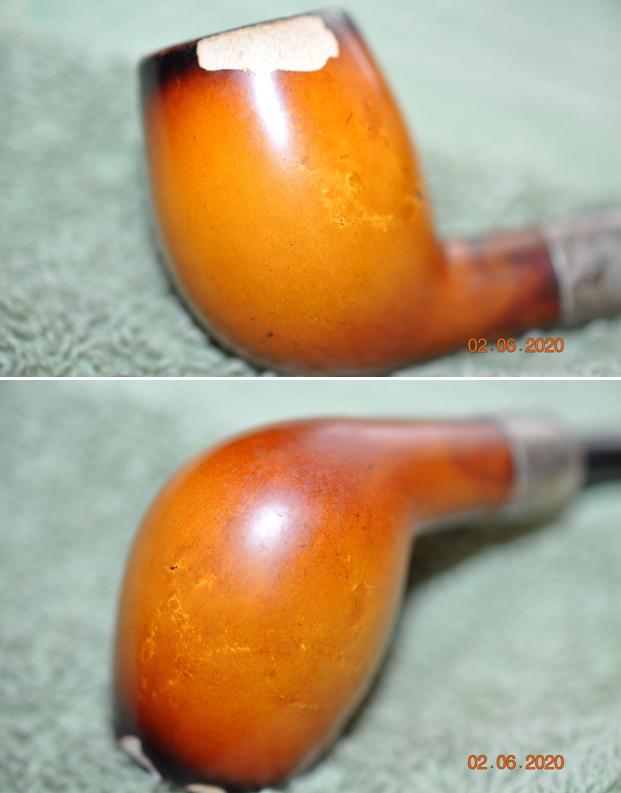
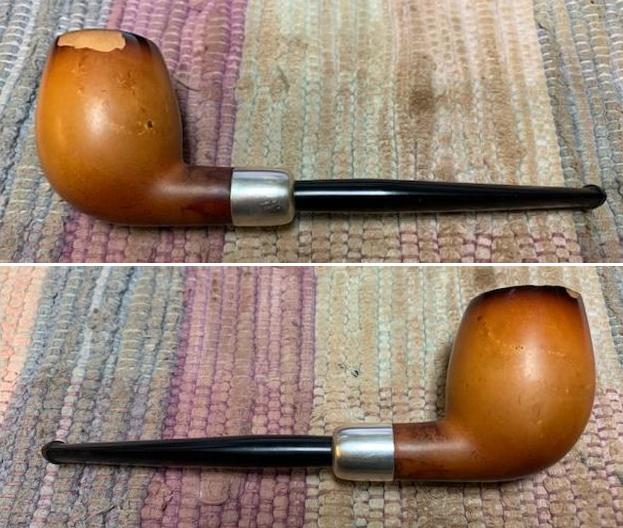
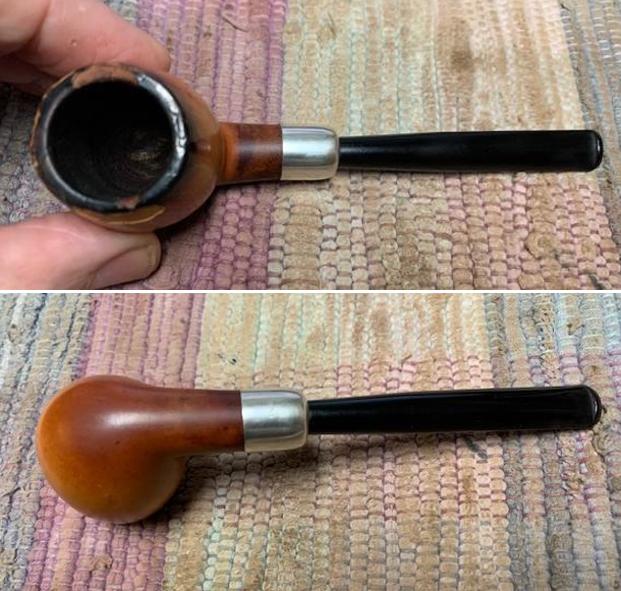
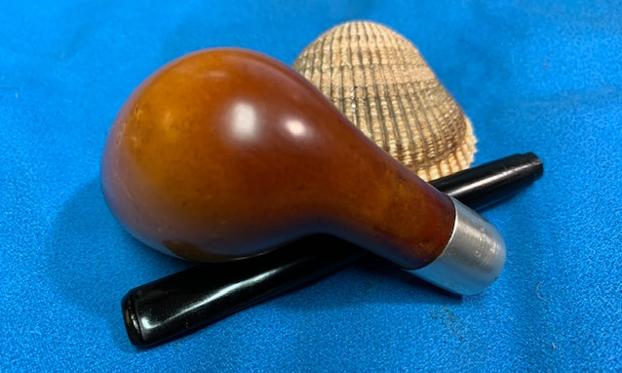
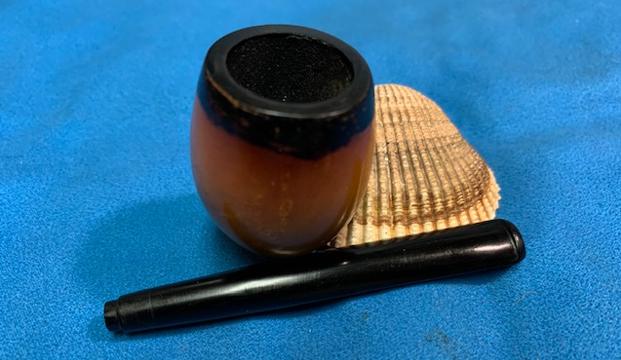
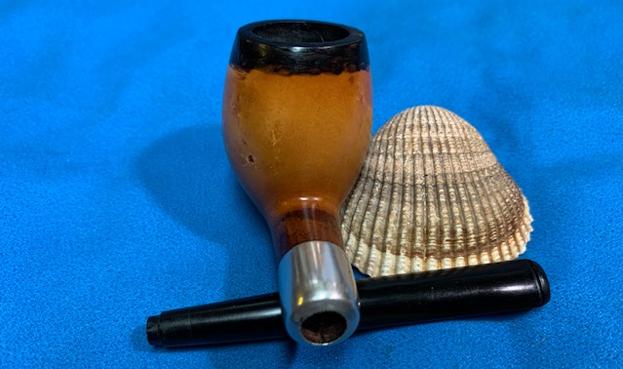
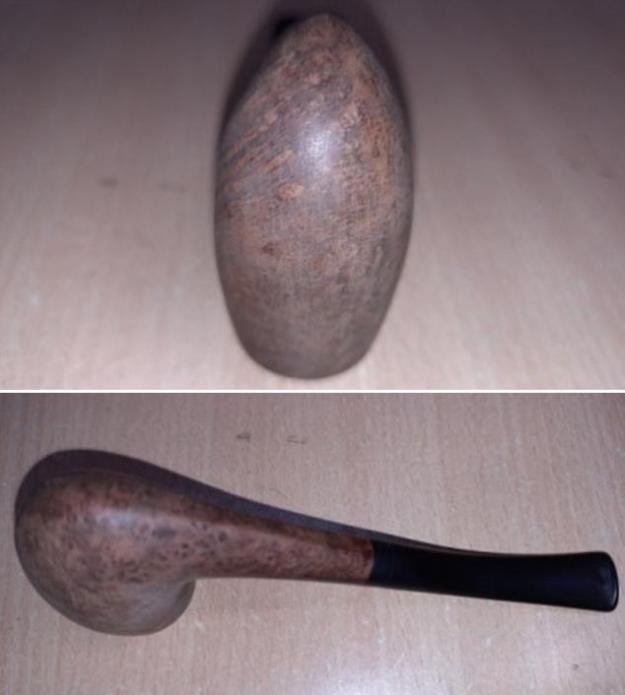
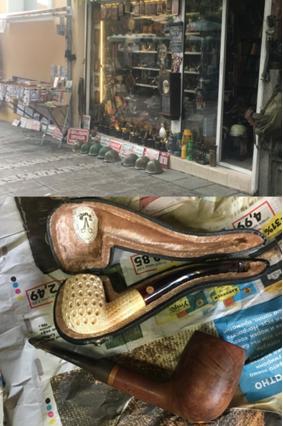
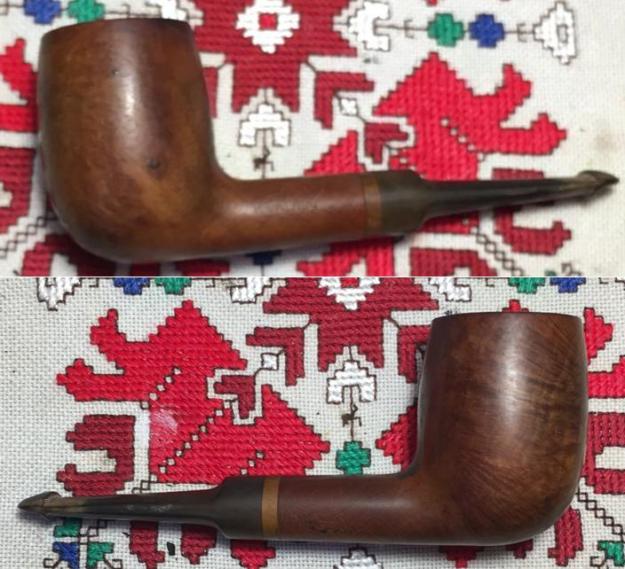
I found the VAUEN in August of 2017 when my wife and I were enjoying holiday on the Bulgarian Black Sea coast in the city of Burgas.  I found it at a favorite second-hand/antique store on the main walking street.  The VAUEN is pictured with an Altinay Meerschaum Teardrop Lattice which has already found a new home with a happy steward.

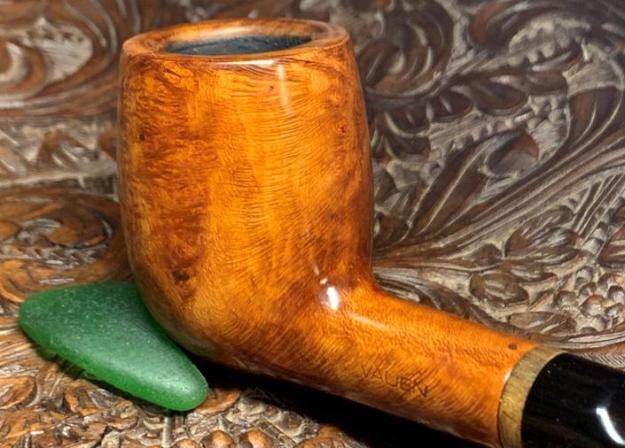
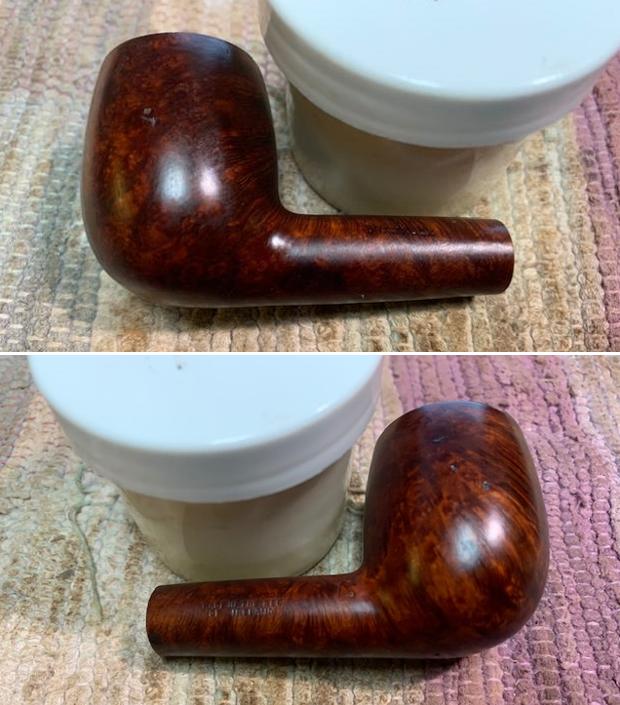
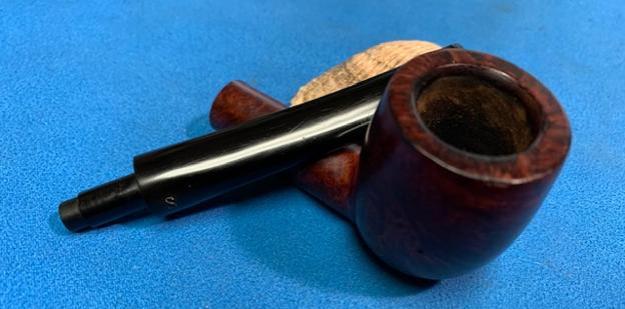
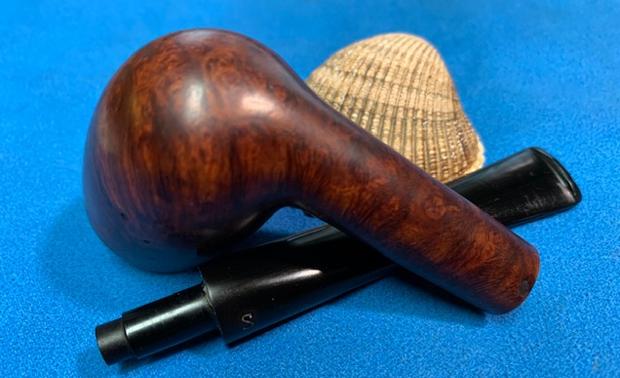
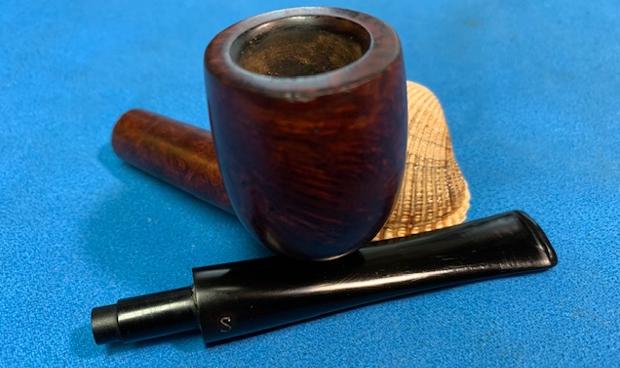
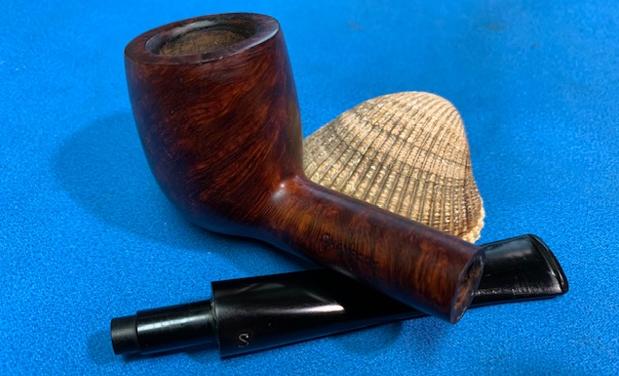
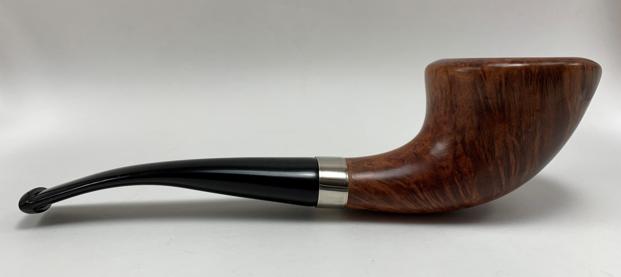
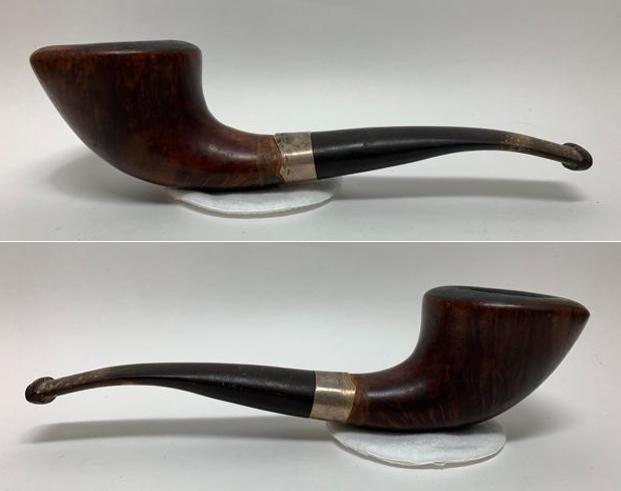
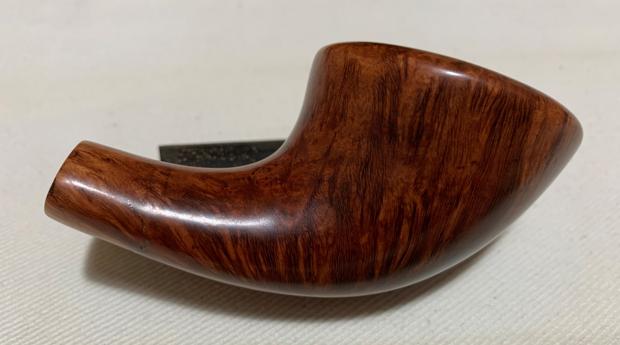
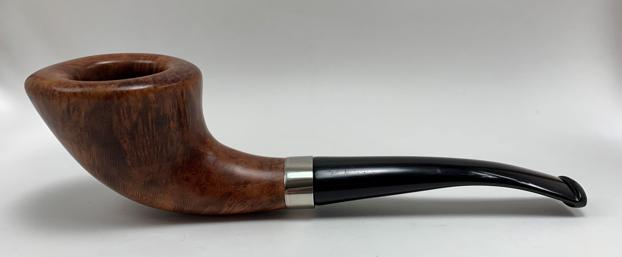
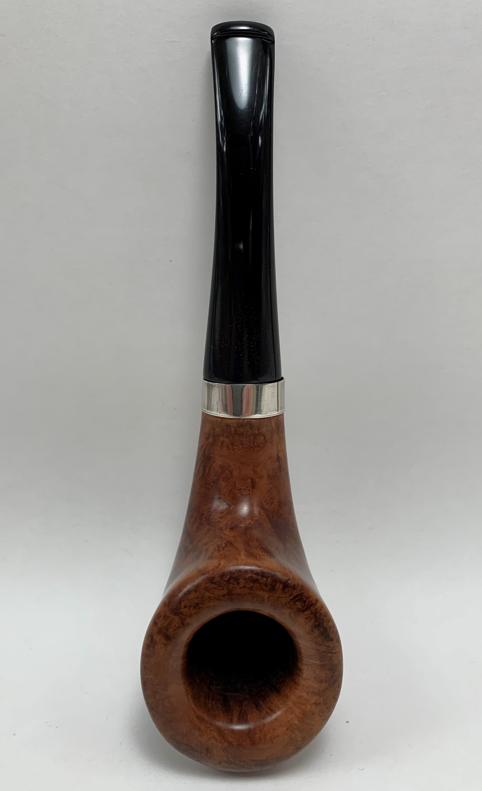
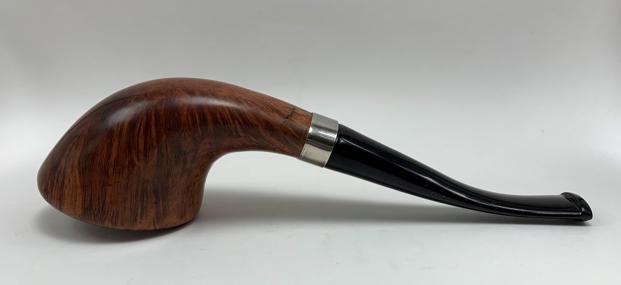
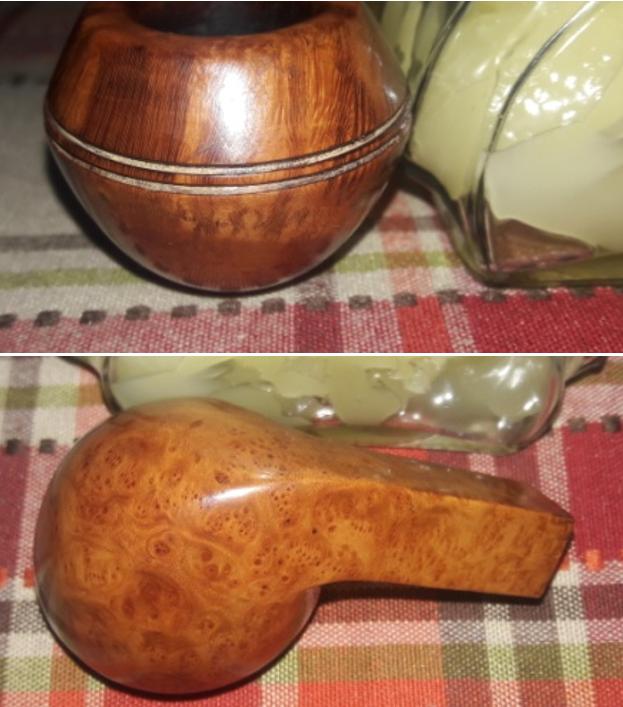
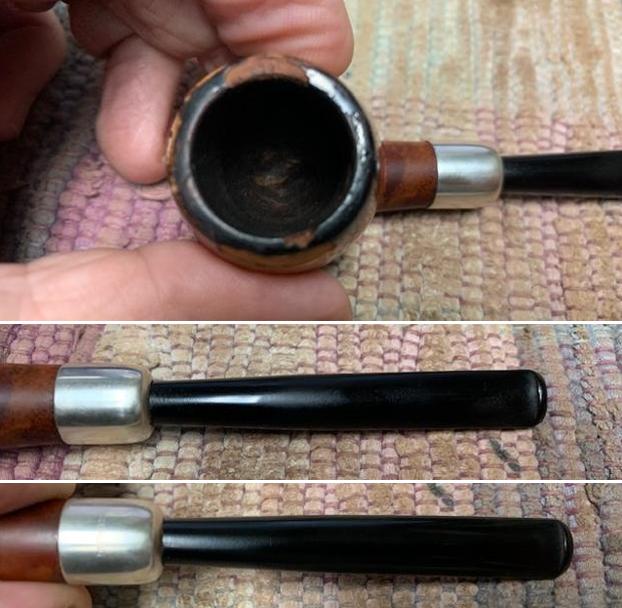
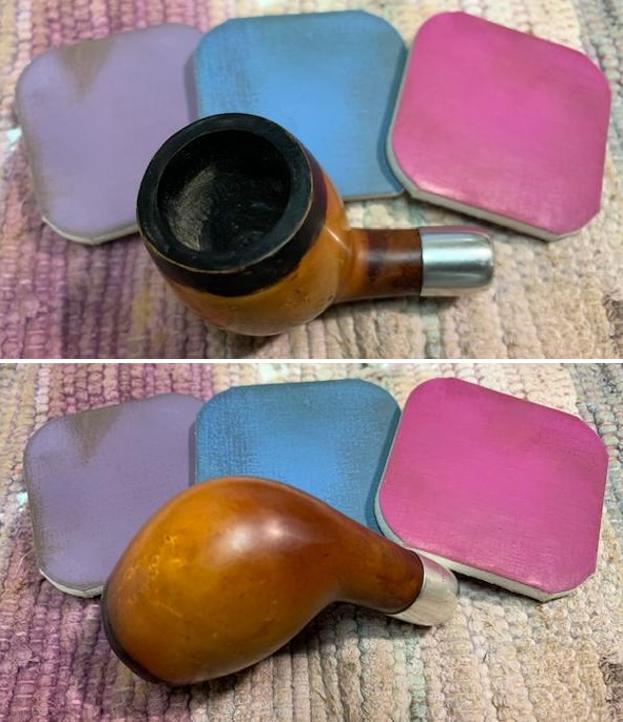
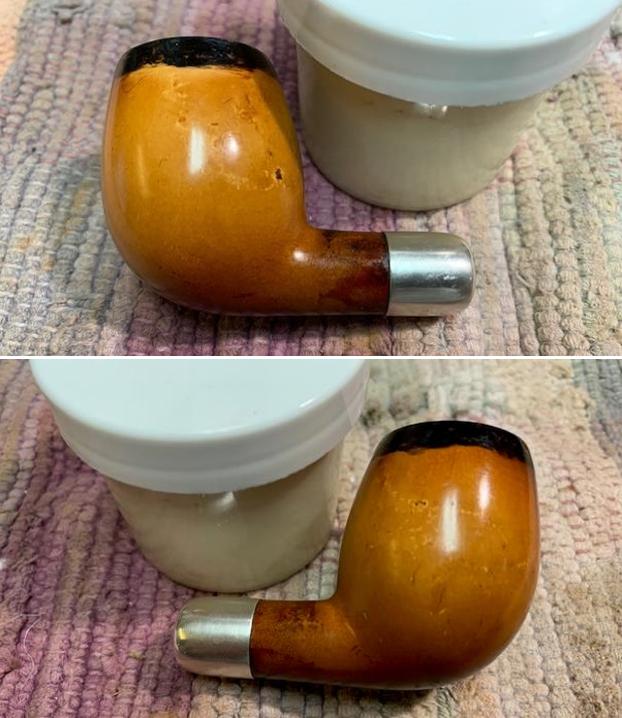
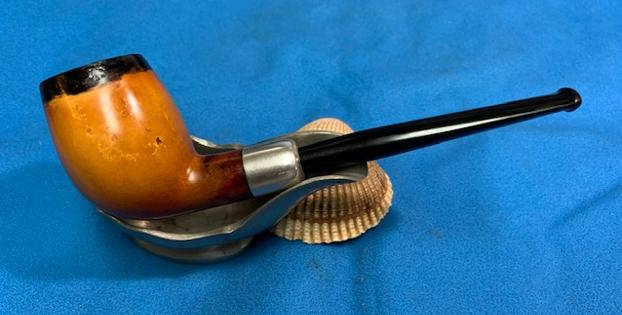
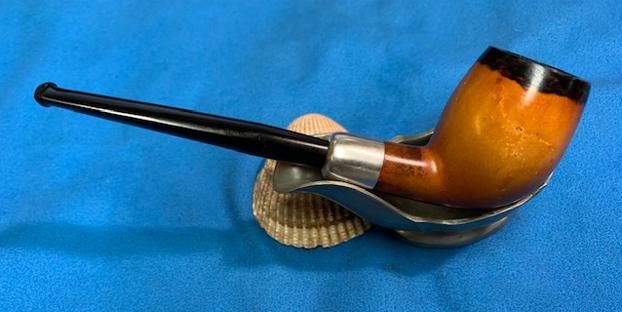
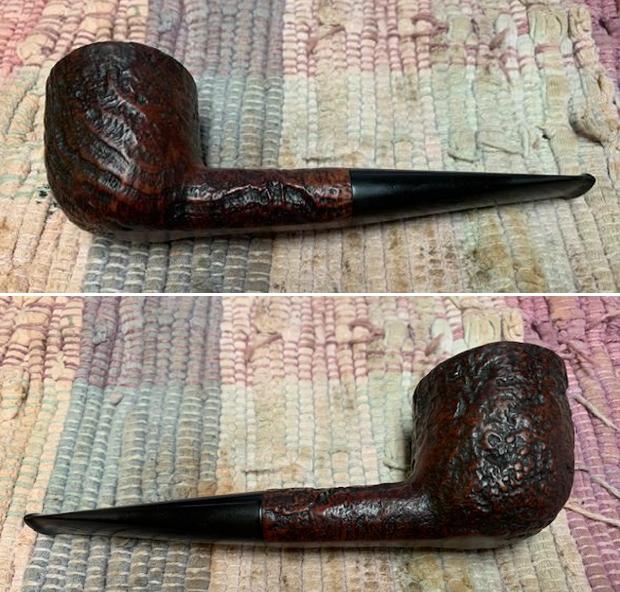
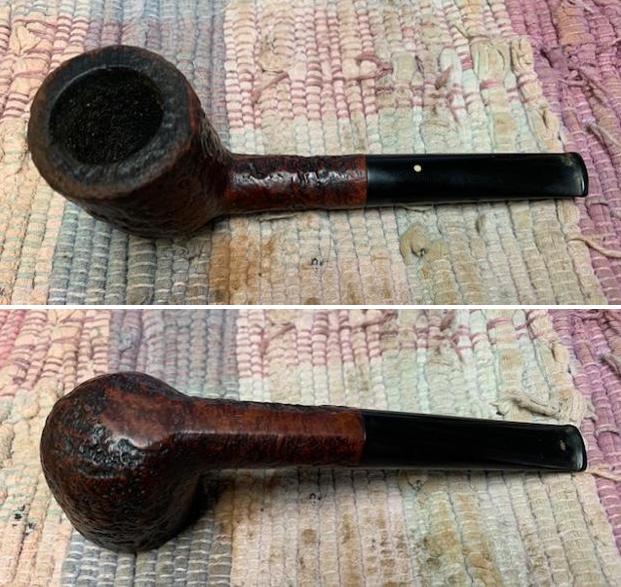
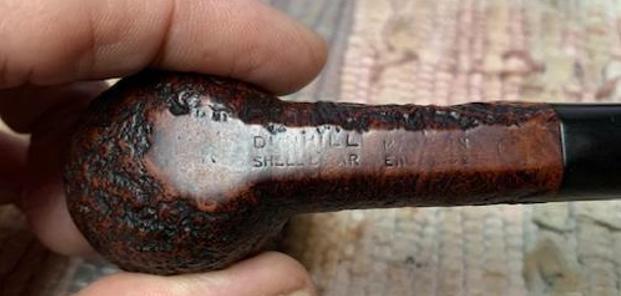
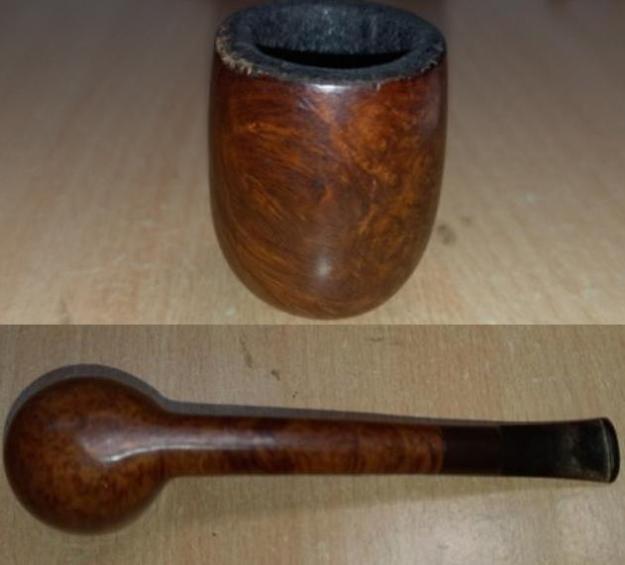
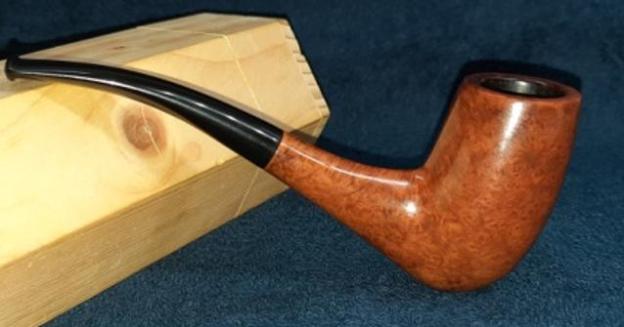
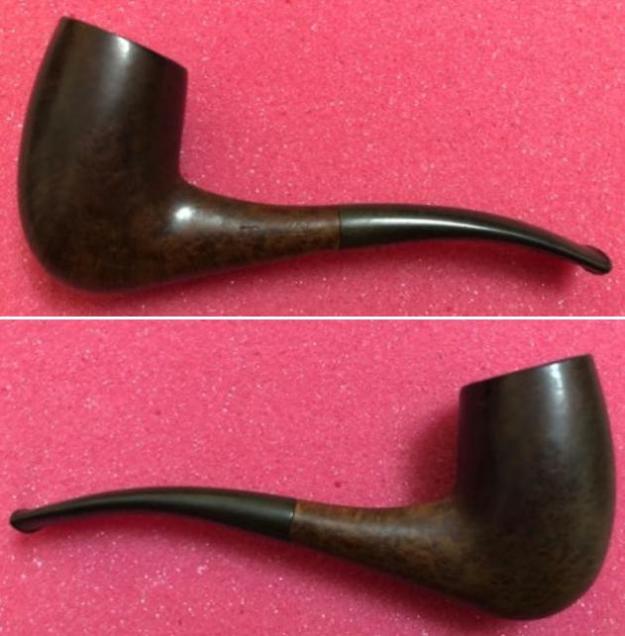
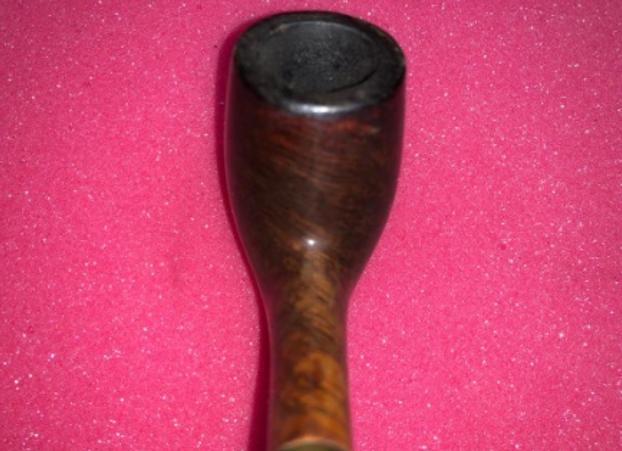
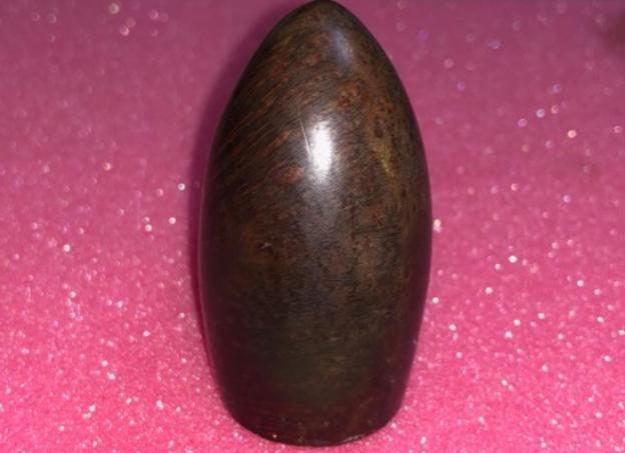
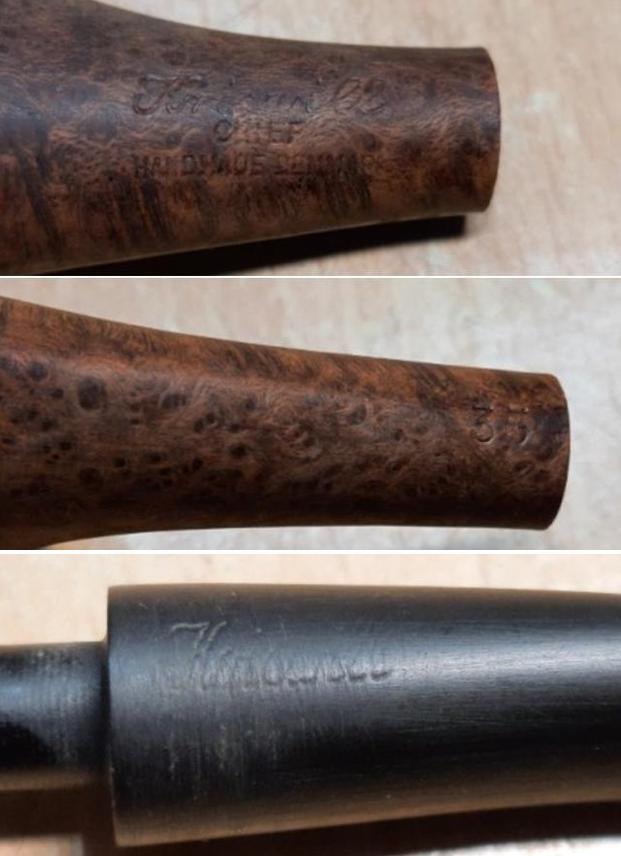
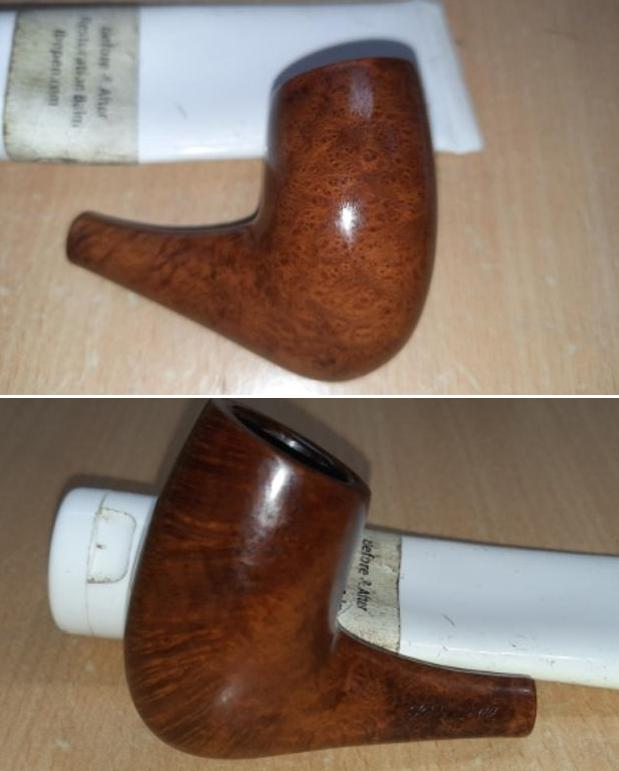
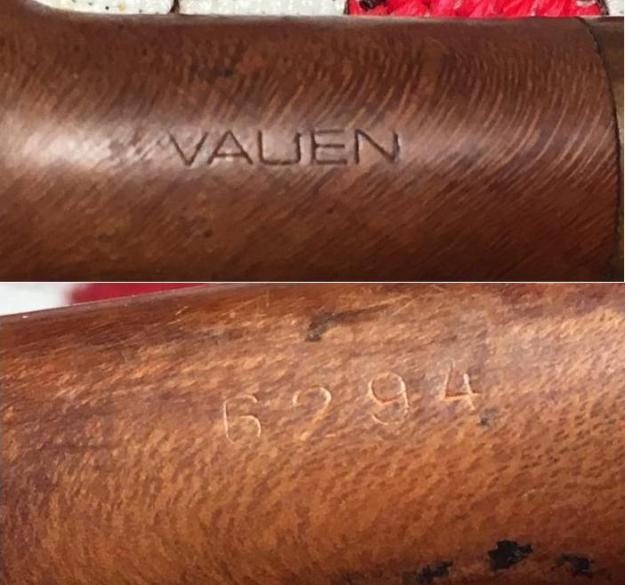
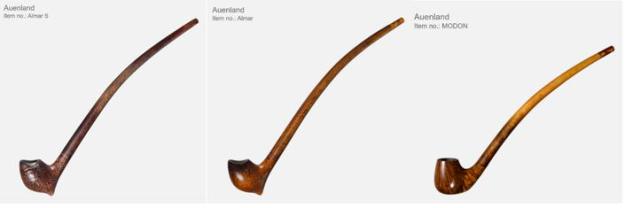
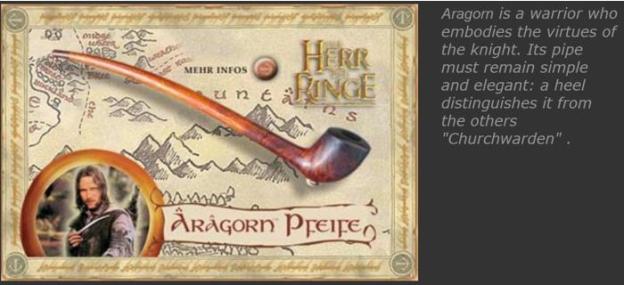
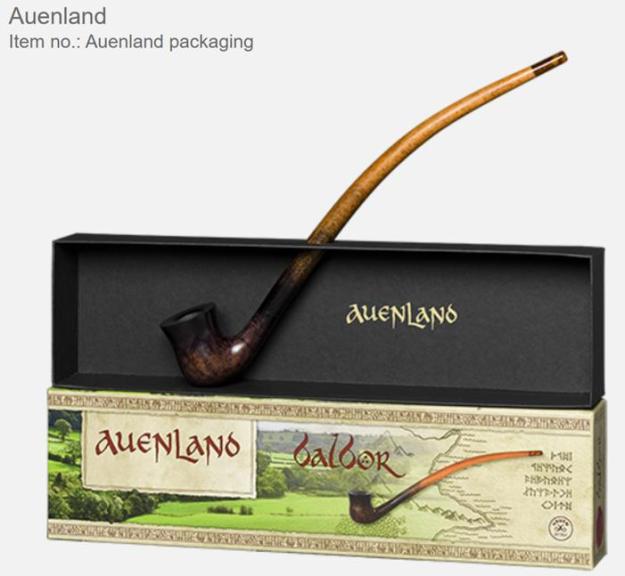
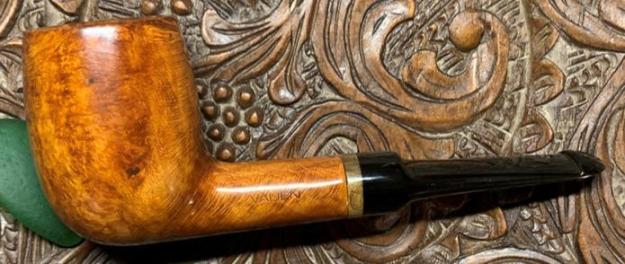
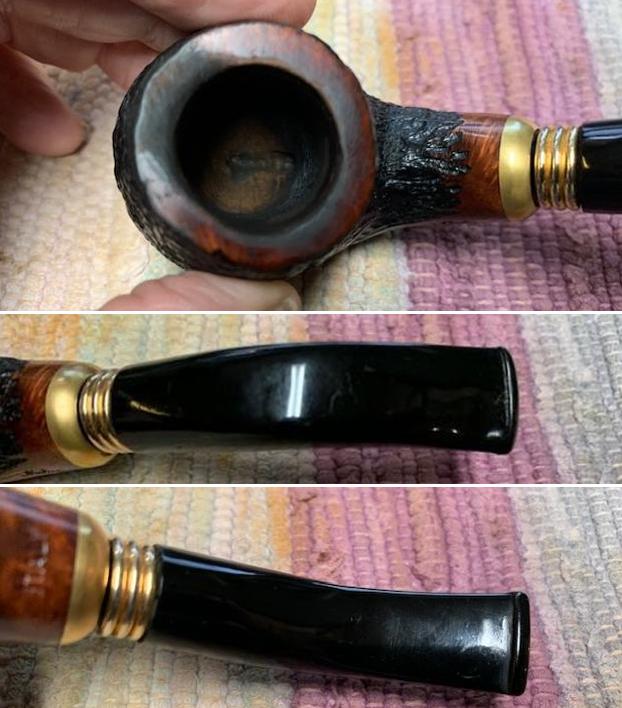
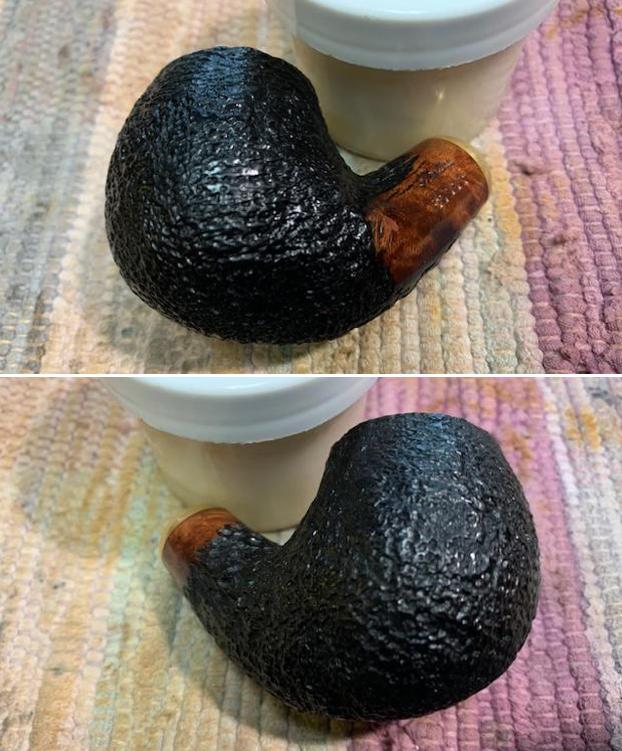
Here are a few pictures of Lina’s VAUEN that dad commissioned for her 18th birthday:The nomenclature is clear and crisp.  Stamped on the left flank of the shank is ‘VAUEN’.  Stamped on the underside of the shank is 6294, the shape number VAUEN has assigned to this hefty Billiard.This is my first opportunity working on a pipe marked with VAUEN. Pipedia’s article about VAUEN included a link that went directly to VAUEN’s English language website from which Pipedia’s information seems to have come in part. I was interested to see that VAUEN is a long-time name in pipe production based in Nuremberg, Germany. My first impression of the website revealing German quality and precision was, ‘Wow!’ The current pipes displayed are sharp and modern – an attractive blending of modernistic and classical tradition. I clipped these pipes as a sampling of pipes currently available and reflecting the style of today’s VAUEN. Looking through the site I did not find anything like Lina’s VAUEN, and I saw no P-lips. This clues me in that models with P-lip stems are perhaps a thing of the VAUEN past – but how far back did P-lips cease to be part of the VAUEN presentation? I found no answer for this.One other observation looking at VAUEN’s offerings – they have produced and have available an exceptional line of pipes called, AUENLAND. Google Translate helped me to crack the translation which brought on a smile, ‘Shire’. The Shire line is described with bowls made of briar, stems of beechwood and with an acrylic mouthpiece. Here are a few ‘Shire’ pipes which one would find hobbits, wizards, dwarfs, and kings in waiting, smoking across Middle Earth.Amazingly, Pipephil.eu (See: The Lord of the Rings) devotes an entire stand-alone article describing how VAUEN has perfected the ‘selling of a dream’ as a market strategy. Producing the ‘Shire’ line of pipes with each pipe named after a character, allows a would-be purchaser to identify with a favorite character and acquire THAT pipe. Who would not want Aragorn’s pipe? 😊 And of course, these ‘Lord of the Ring’ pipes, numbering about 16 different styles with characters attached as names, come in a packaging which helps convince one of the reasonableness of the purchase – I am moving in that direction! Resisting the urge to covet more, I turn to the question of the history of the VAUEN name? I look to the History section of the VAUEN website and again, I am impressed with the presentation. Whenever I work on a pipe, and especially when a pipe name is new to me, I enjoy looking at its history to appreciate the pipe more fully now on my worktable. From VAUEN’s website:
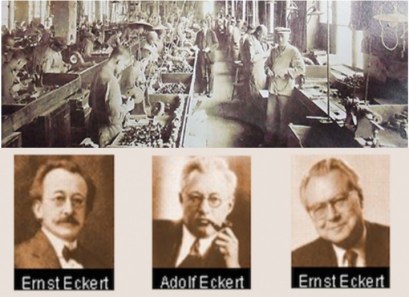
Quality and a wealth of ideas have a long tradition at VAUEN. 160 years of VAUEN: that means 160 years of skilled workmanship and modern technology and 160 years of experience in fulfilling the individual wishes of today’s pipe lovers, and those of tomorrow.

In Nuremberg in 1848, Karl Ellenberger and his partner Carl August Ziener turned an idea into reality: Germany’s first pipe manufacturer produced tobacco pipes for connoisseurs around the world using a selection of the best wood. In an amalgamation with the Gebhard Ott pipe factory, which was founded in 1866 in Nuremberg, the Vereinigten Pfeifenfabriken Nuremberg (United Pipe Factories Nuremberg, or VPFN) was born in 1901.  Under the management of Ernst Eckert, a descendent of the founding Ott family, a company was born whose products and services would shape the tobacco and smoking culture in Europe and overseas for the next 160 years and counting.

The question about the name, VAUEN, not being a name of a person and why it is capitalized throughout is explained:

In his search for a name that would be easily remembered by all pipe lovers, Ernst Eckert’s son, Adolf Eckert, coined a new name for the company in 1909: VAUEN – a composition of the first letters V (pronounced vow) of Vereinigte Pfeifenfabriken and N (pronounced en) of Nuremberg. A brand for the future was born.
Another interesting piece of information regarding the development of VAUEN pipes is the dot on the stem marking its pipes:

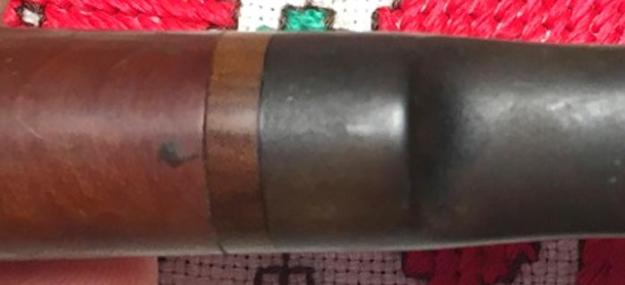
In 1911, Adolf Eckert began to mark pipes with extraordinary quality with a white dot on the mouthpiece. Today, the “white dot” is an internationally renowned trademark that guarantees carefully selected materials, attractive grains, and elaborate workmanship. VAUEN pipes made for export are marked with a grey dot.

What the VAUEN website does not reveal but is revealed in the Pipedia article is the legal entanglement with Dunhill VAUEN’s marking of the stem produced:

In the 1920s, VAUEN had taken out a trademark on a white dot on the mouthpiece for Germany and Austria, at the same time that Dunhill had done the same for the international market. The companies ended up in court with the result that Dunhill may use the white dot internationally, whereas VAUEN may use it only in Germany and Austria and has to use a differently-coloured dot for all other markets. They have used light blue and grey dots internationally since then. The white or coloured dot denotes the higher quality pipes of VAUEN; the lower-end pipes are only marked by the VAUEN imprint on the stem.

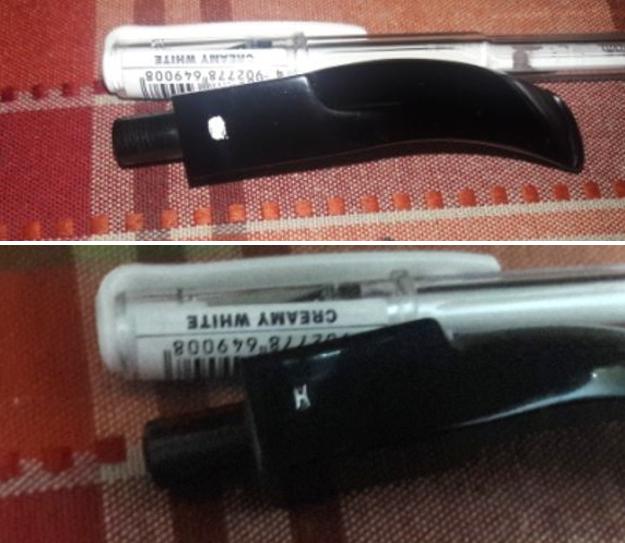
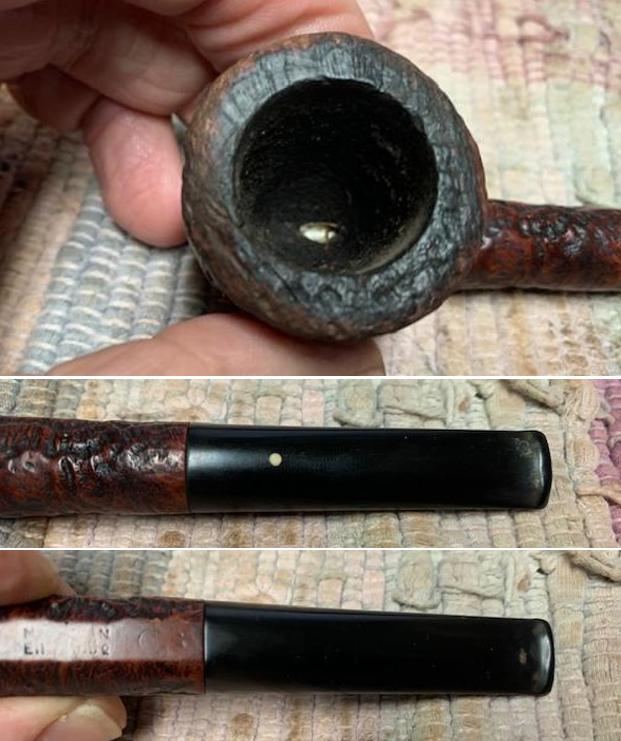
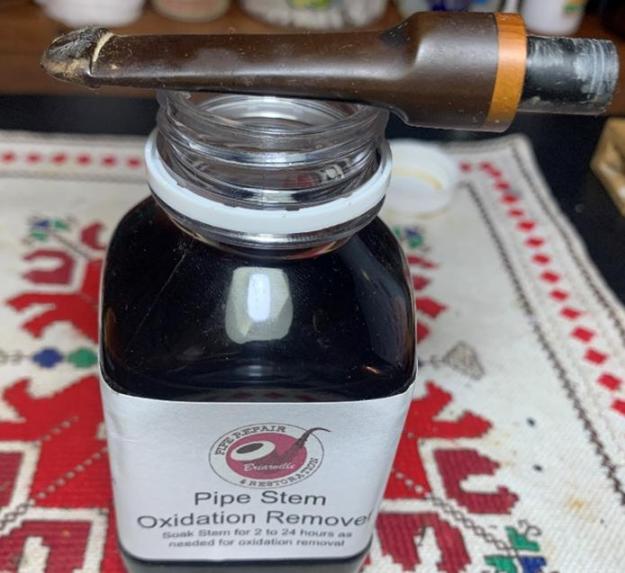
This information about the different dot colors used by VAUEN is of interest because in my initial inspection of the VAUEN on the worktable, I did not know about the dot nor did I see a dot.  The pictures taken do not show a dot and since the stem is now soaking in the oxidation remover since I started the process of the restoration before the writing and research, this is something I will be looking for when the stem is finished soaking!  From the picture, there is certainly no white dot – perhaps a more subdued blue or grey is dot hiding?  Nor do I see ‘VAUEN’ imprinted on the stem denoting a ‘lower end’ pipe.The history on the VAUEN website concludes describing the current leadership structure safeguarding the legacy of the 170-year-old family run business – quite an achievement:
Also in 2018 Julia Eckert, the youngest daughter from Alexander Eckert, joins the business and therefore represents the 6th generation of the family. She takes over the Strategic Marketing department and is from now on responsible for the establishment and extension for all the marketing activities (on- and offline). In 2020 Alexander Eckert hands over the entire management to his successor Martin Ramsauer and retires from the active management after 38 years. He will remain loyal as a partner of the family business and ‘sparring partner’ in general. In this way, it is ensured that pipe history will continue to be written successfully at VAUEN and our passion for enjoyment will be shared with pipe lovers all over the world.

One additional observation about the VAUEN website that was remarkably interesting were video links showing much of the current manufacturing processes of a modern-day pipe factory. Even though they are in German, the videos are fascinating and worth the watch – Pipe manufactory (VAUEN.com).

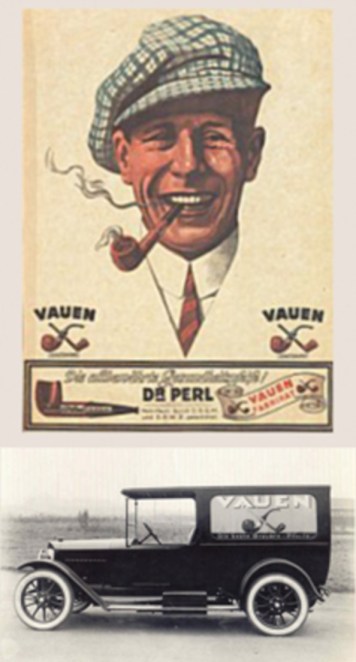
The question regarding the VAUEN P-lip stem seems at this point to be a possible aging marker for Lina’s VAUEN.  I did not look at every listing on the VAUEN website, but I did not see any pipes listed with a P-lip stem.  Pipephil.eu has a listing for VAUEN pipes and some examples of pipes.  There is also a link describing the VAUEN P-lip with other pipe maker P-lip styles (See: Peterson’s P-Lip and its variants).  The VAUEN pictured is part of the Dr. Perl line which bears no resemblance to Lina’s pipe.
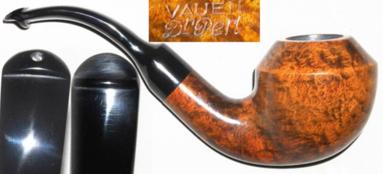
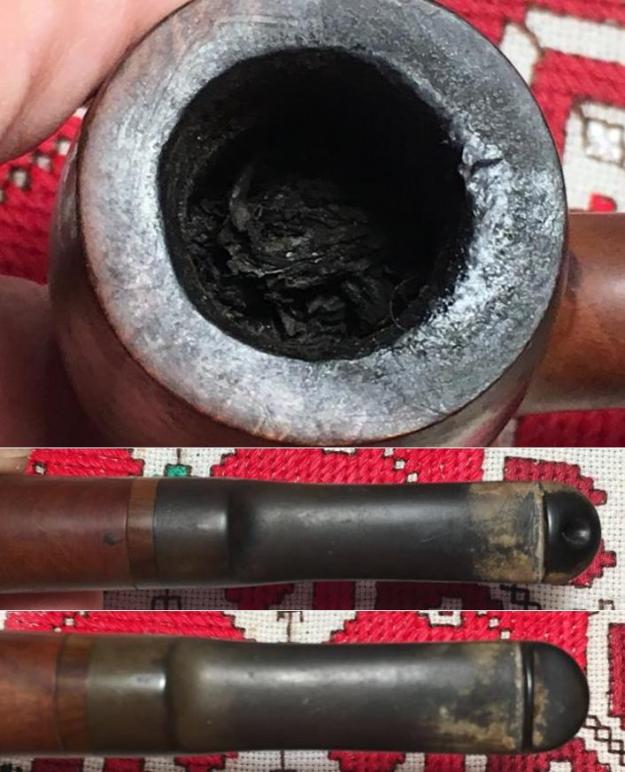
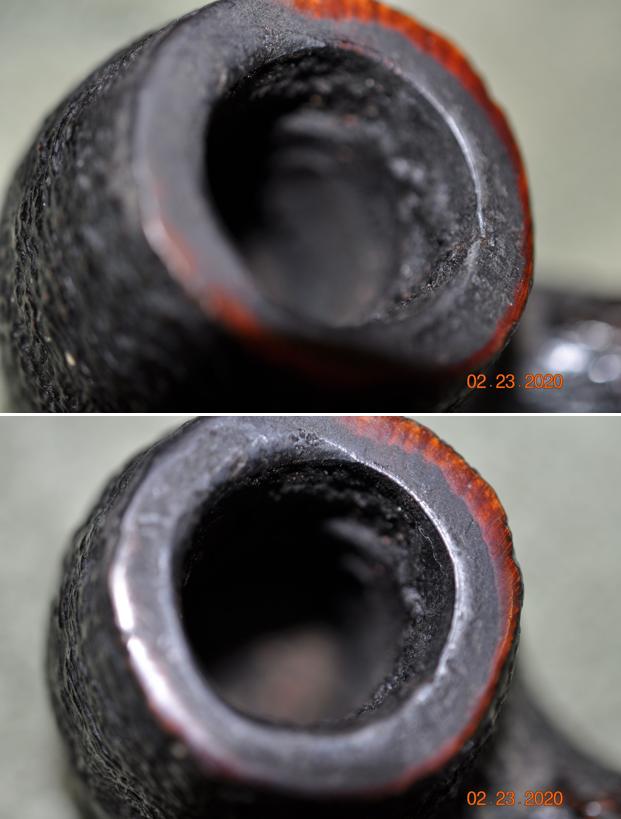
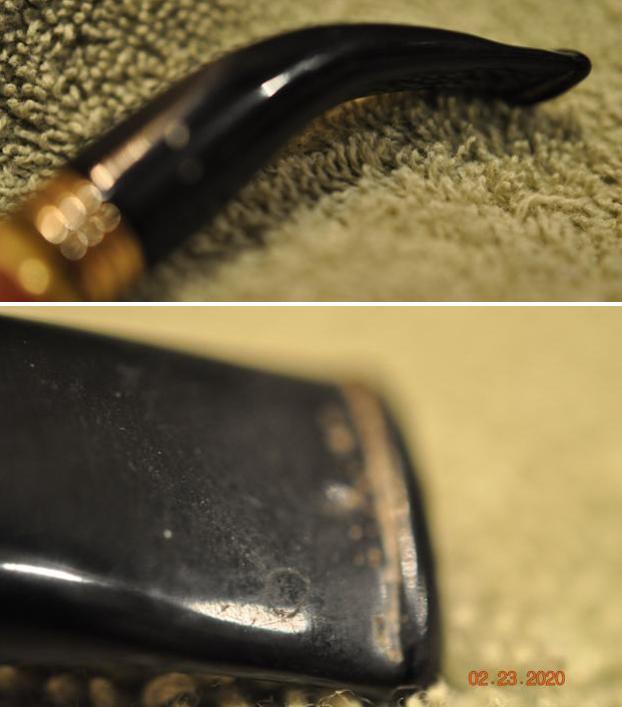
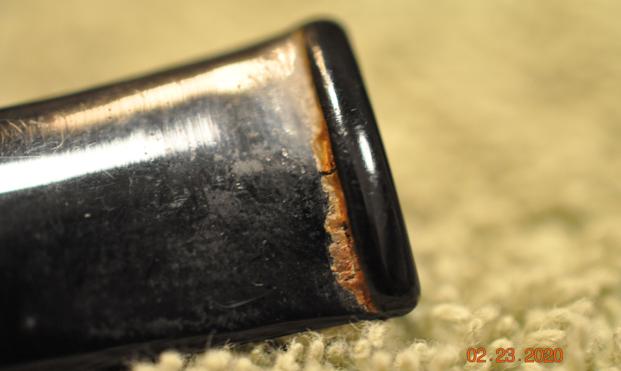
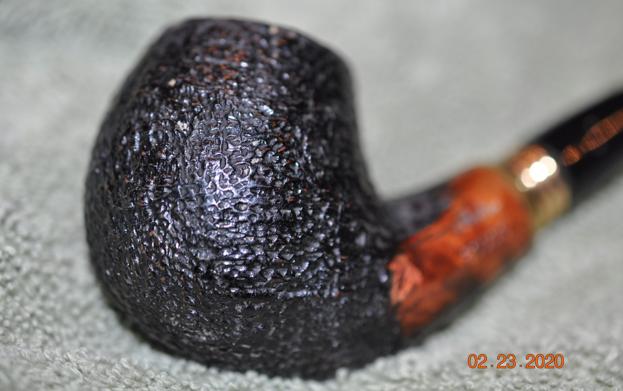
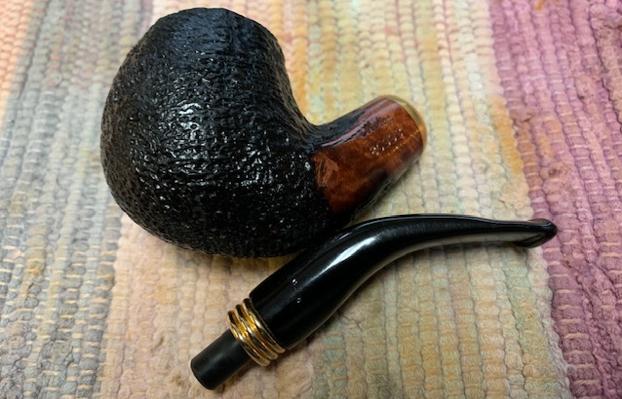
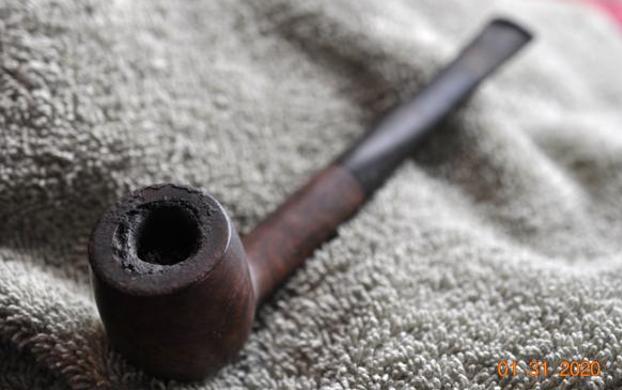
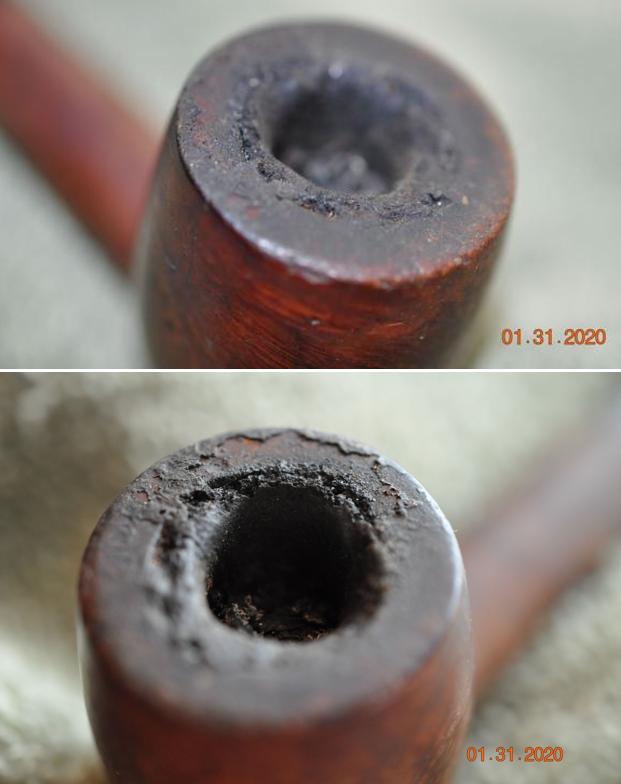
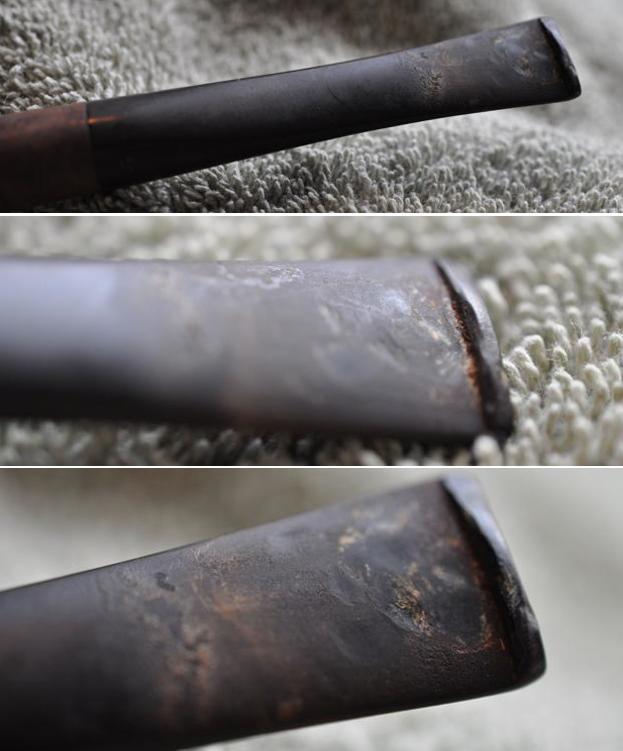
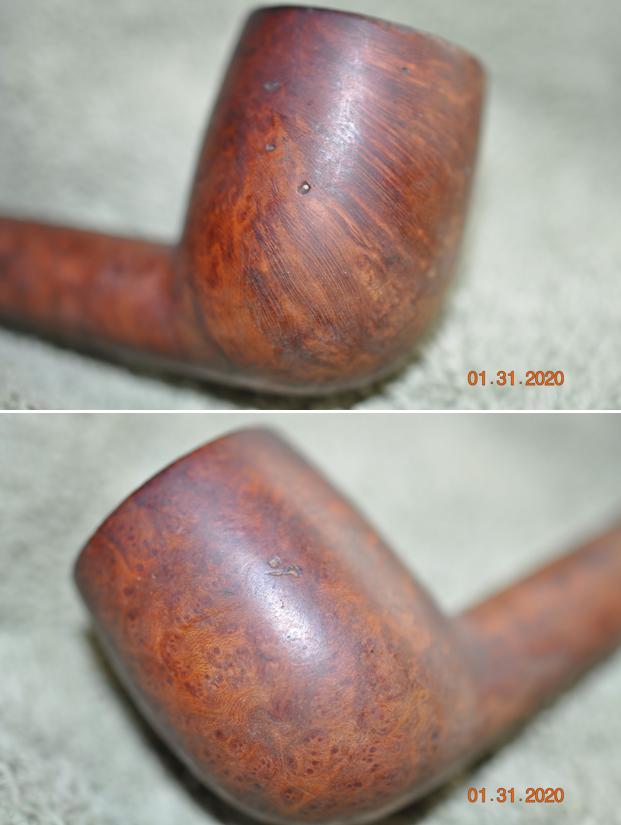
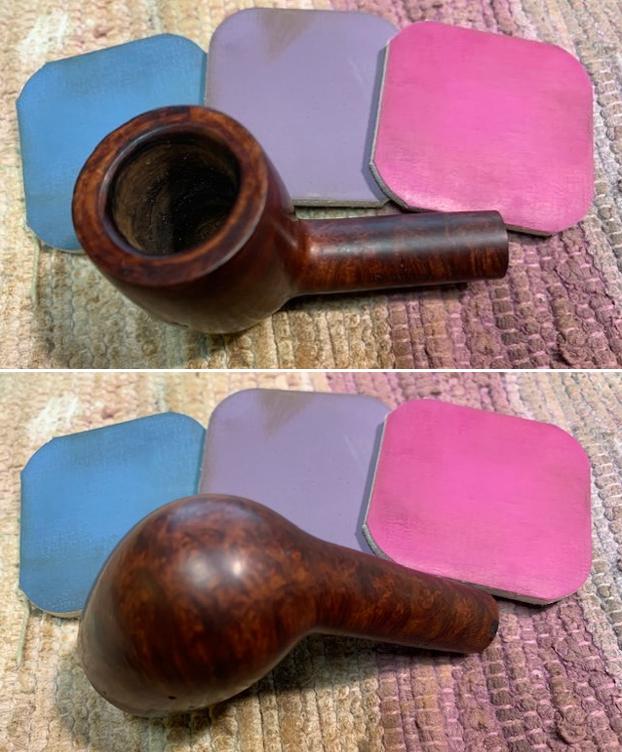
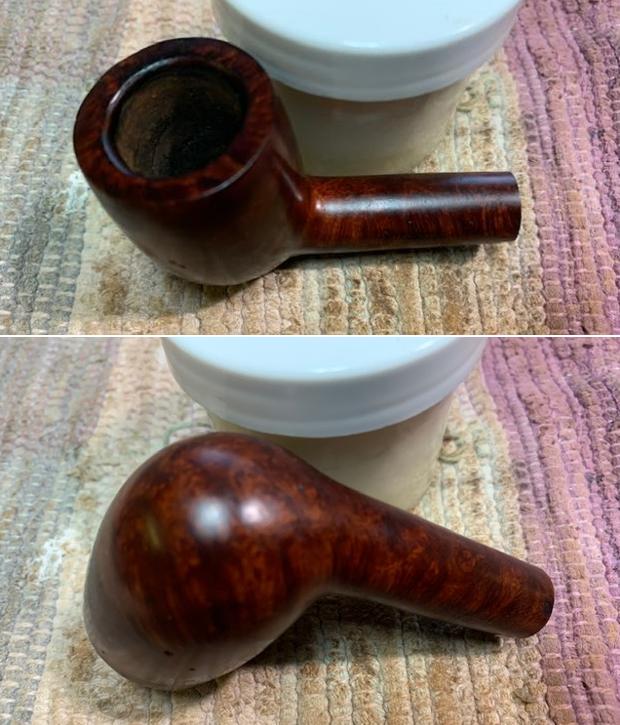
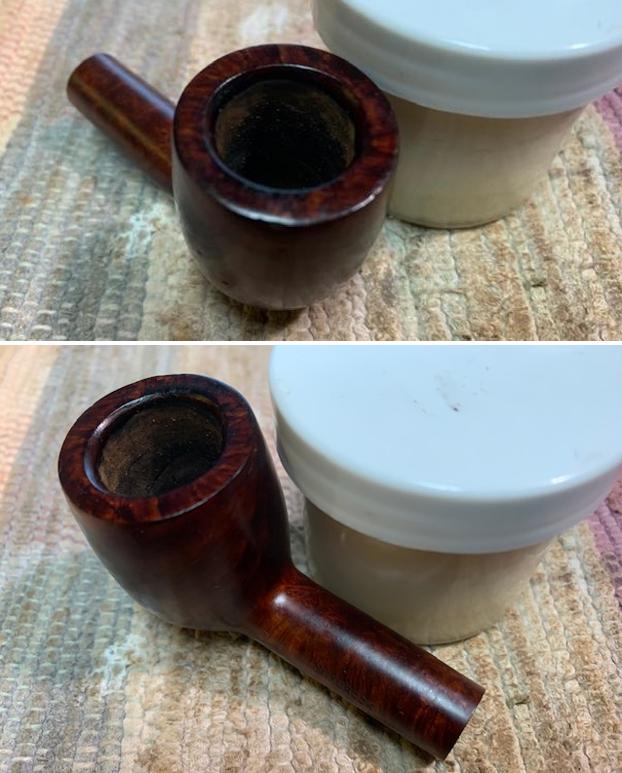
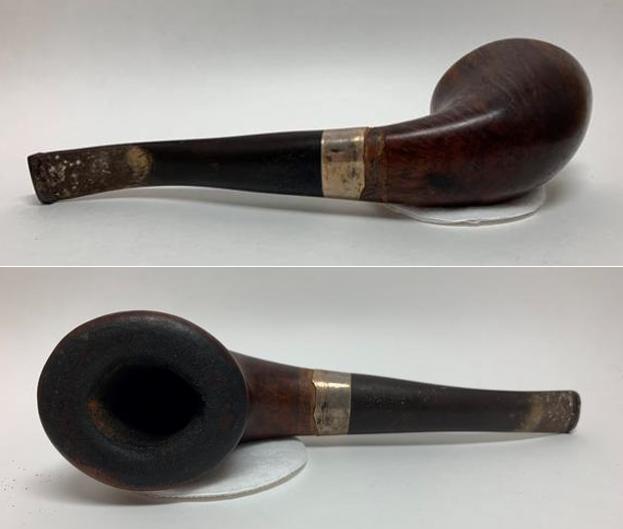
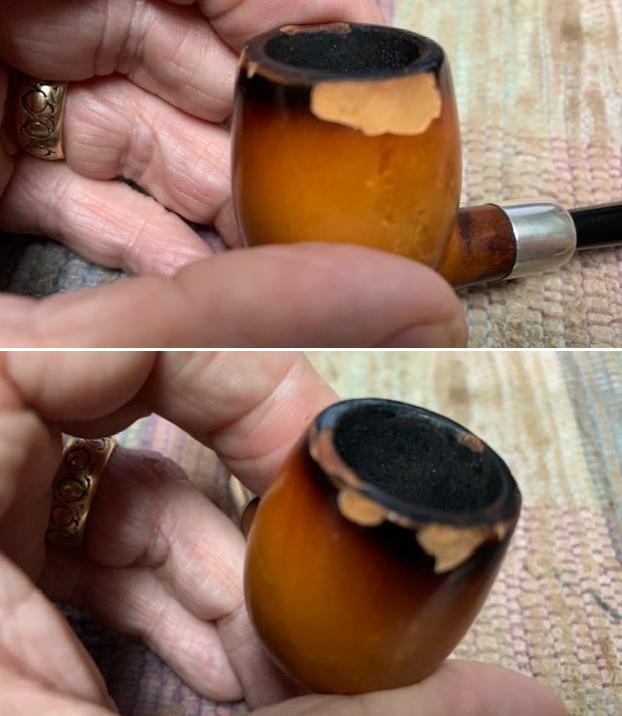
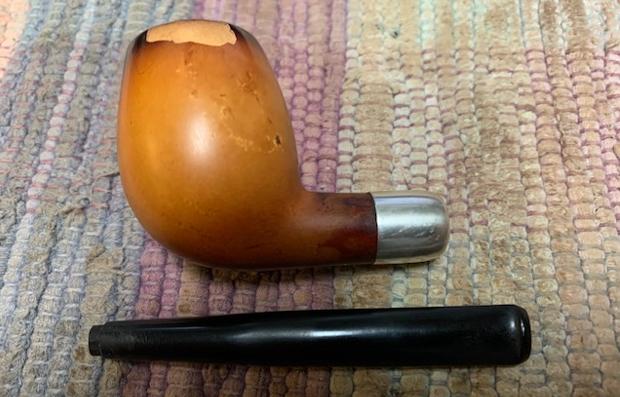
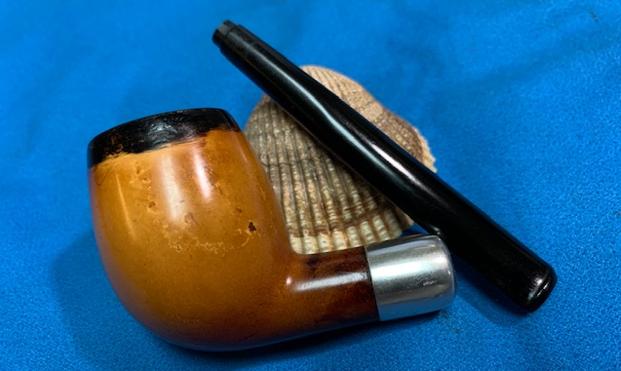
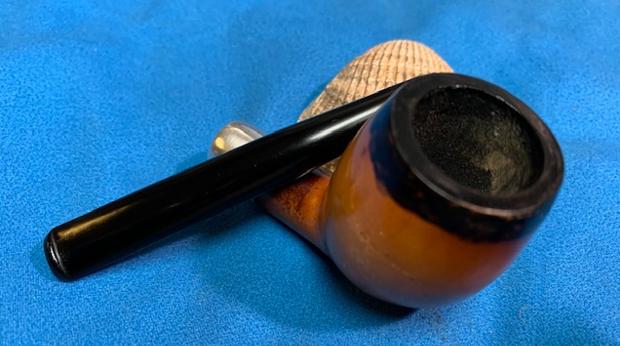
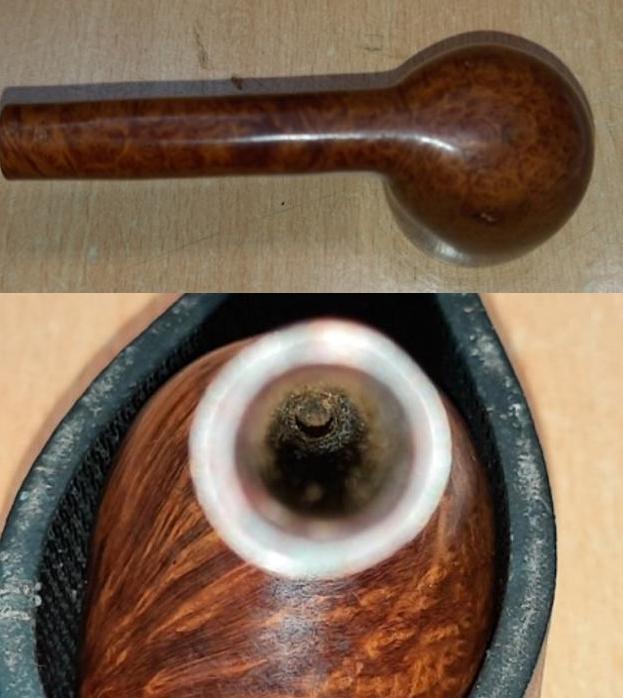
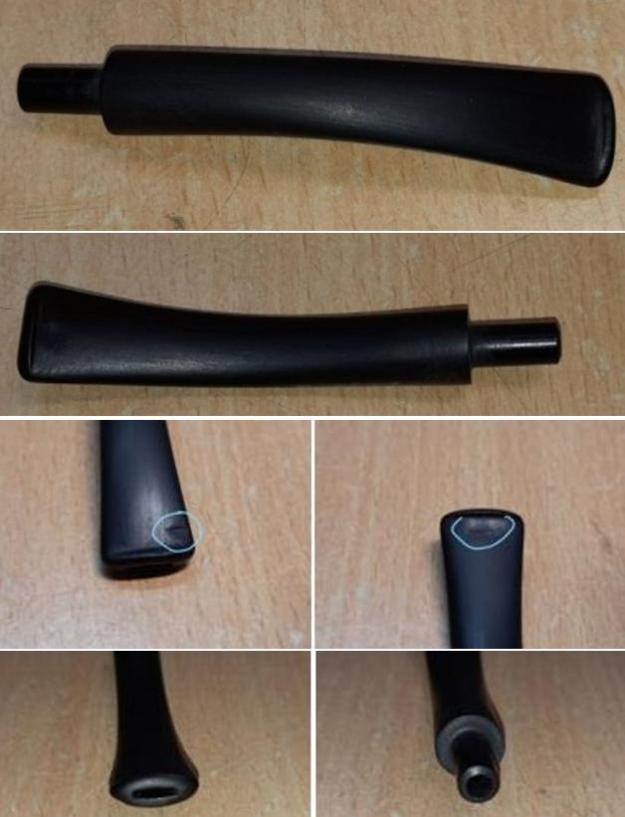
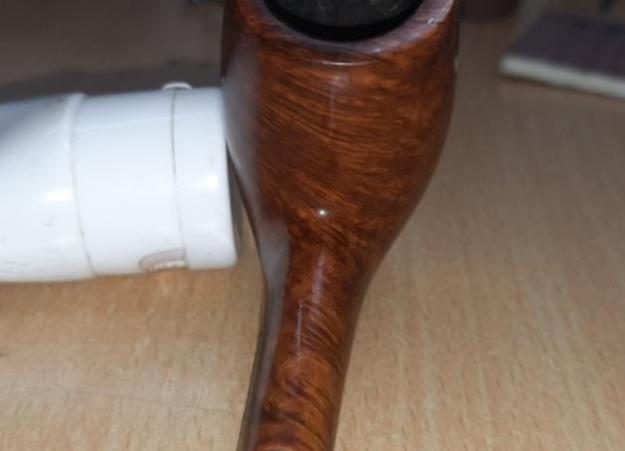
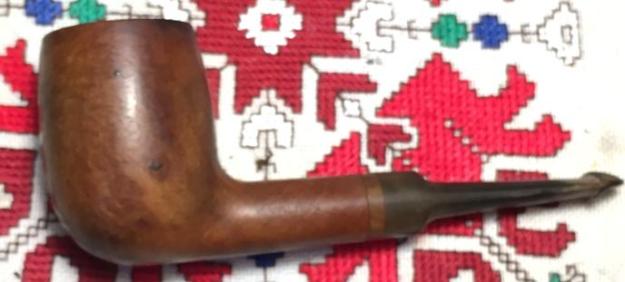
I have found nothing in the research giving a specific identification of the line or dating of the VAUEN on the worktable.  Even so, it indeed resembles the VAUEN ‘style’ with the sharp acrylic stem/shank divider or ring.  The condition of the pipe looks generally to be solid.  The chamber has moderately thick cake and the lava overflow crusting the rim needs attention.  The bowl is grimy dulling and obscuring the grain beneath.  The P-lip saddle stem has deep oxidation and calcification on the bit.  With a greater appreciation for this German made VAUEN Billiard, the restoration begins with the stem.

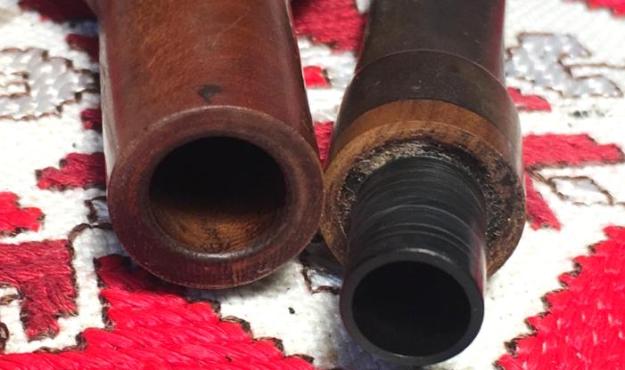
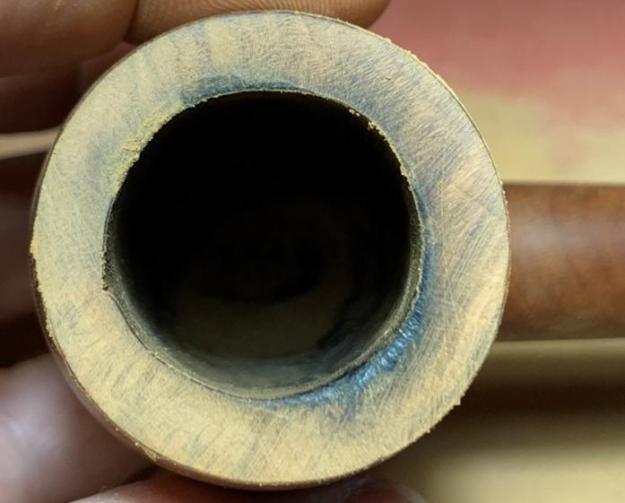
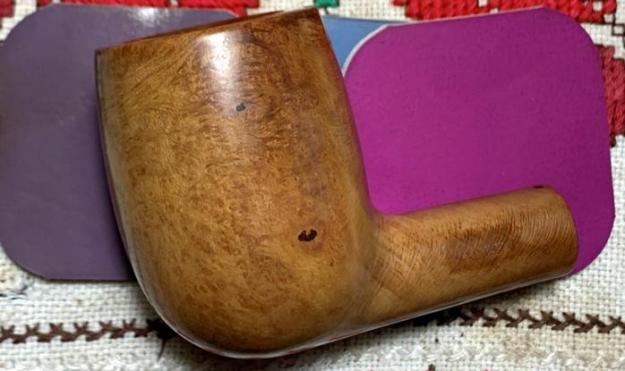
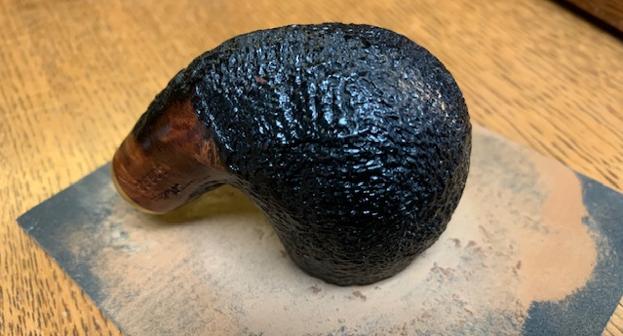
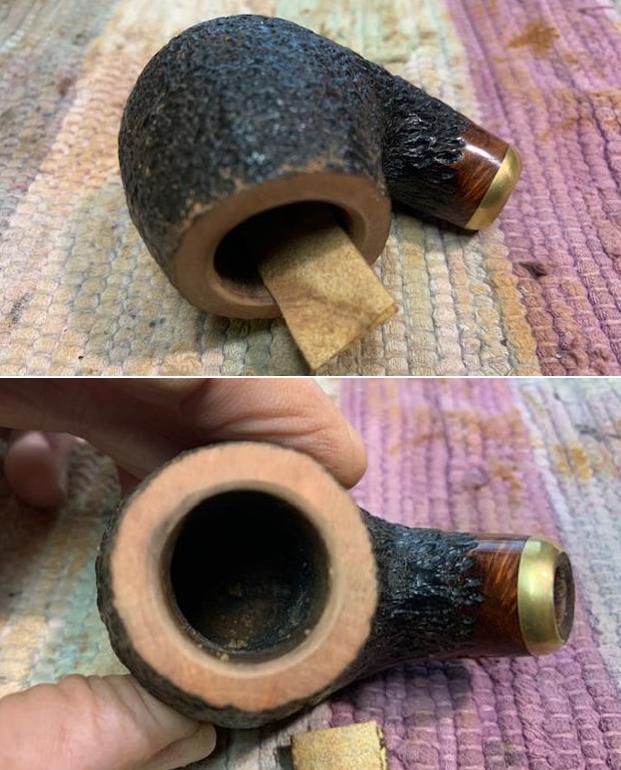
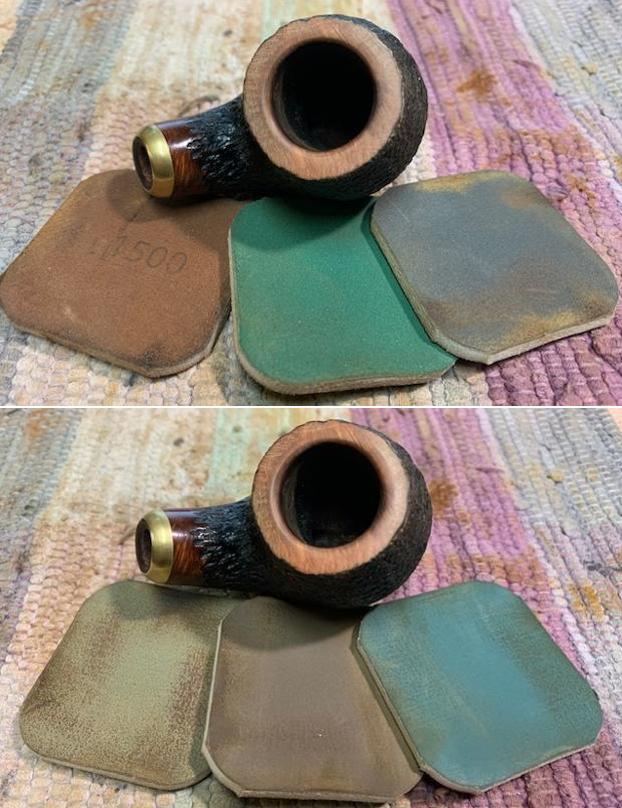
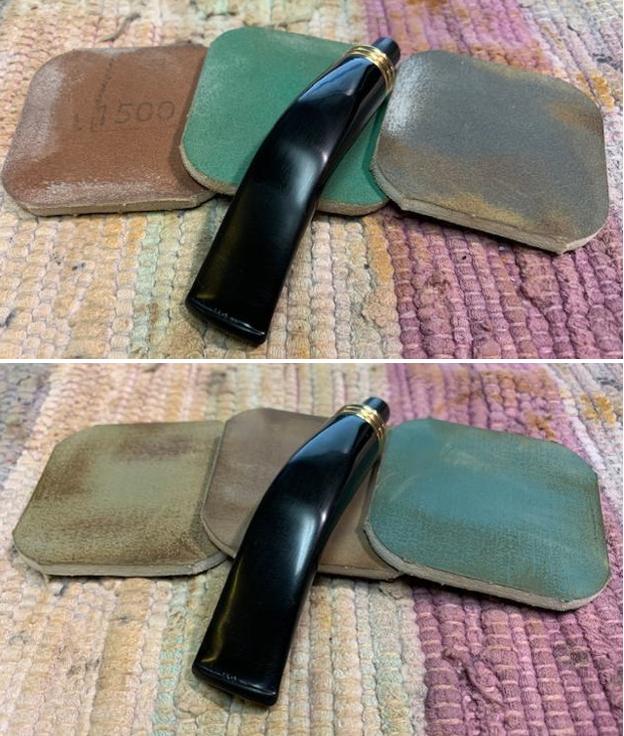
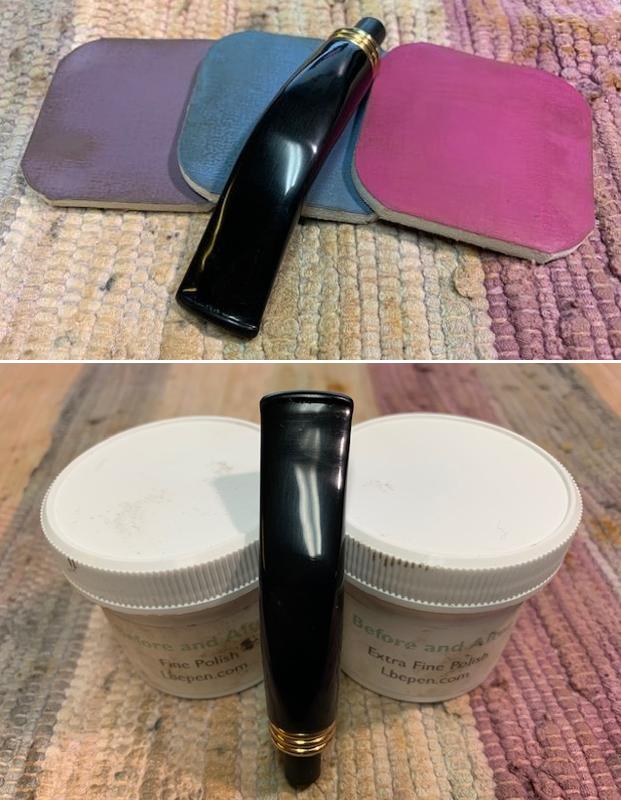
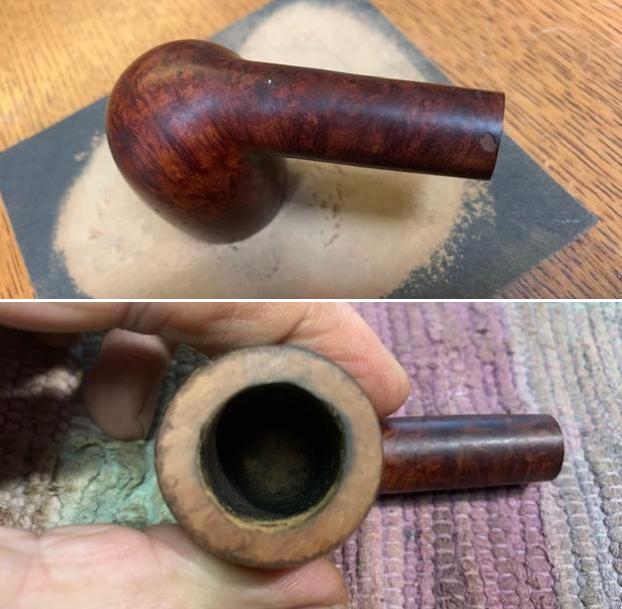
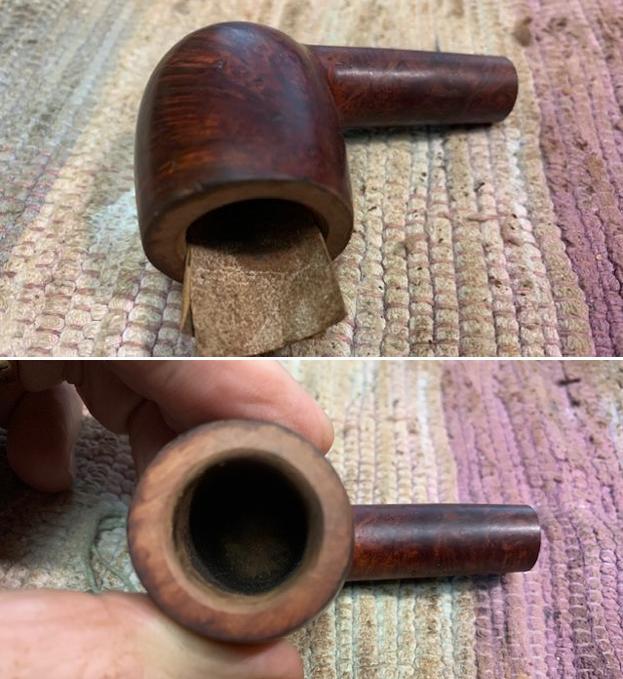
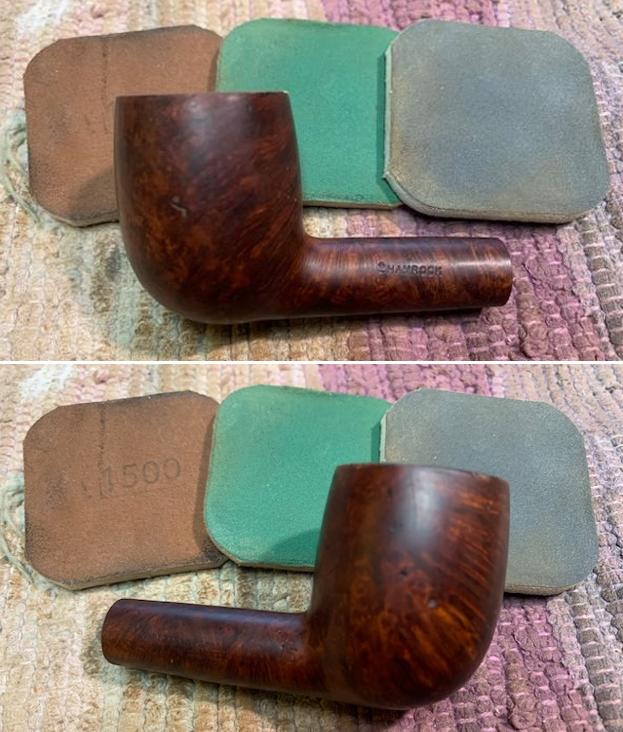
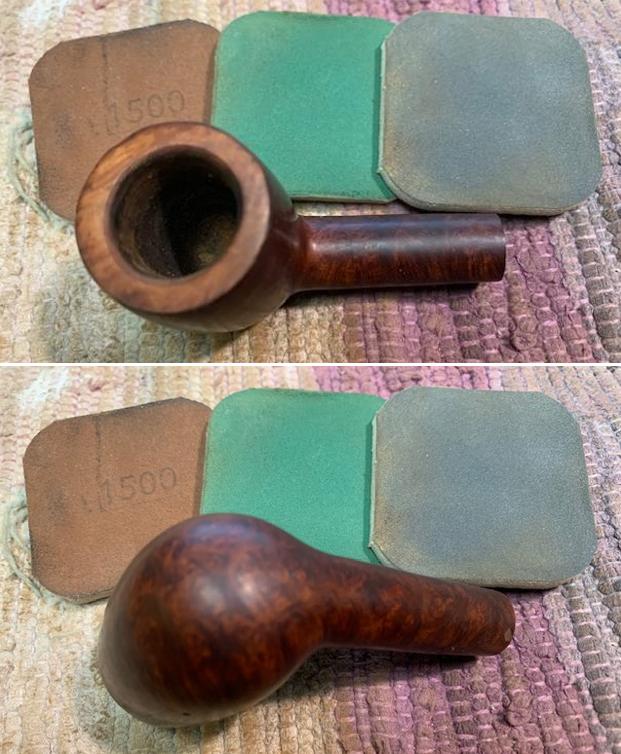
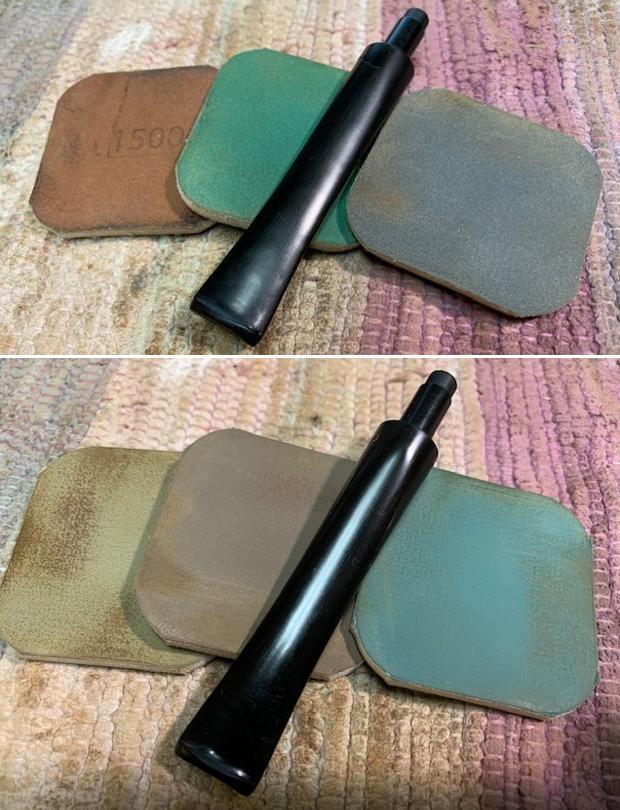
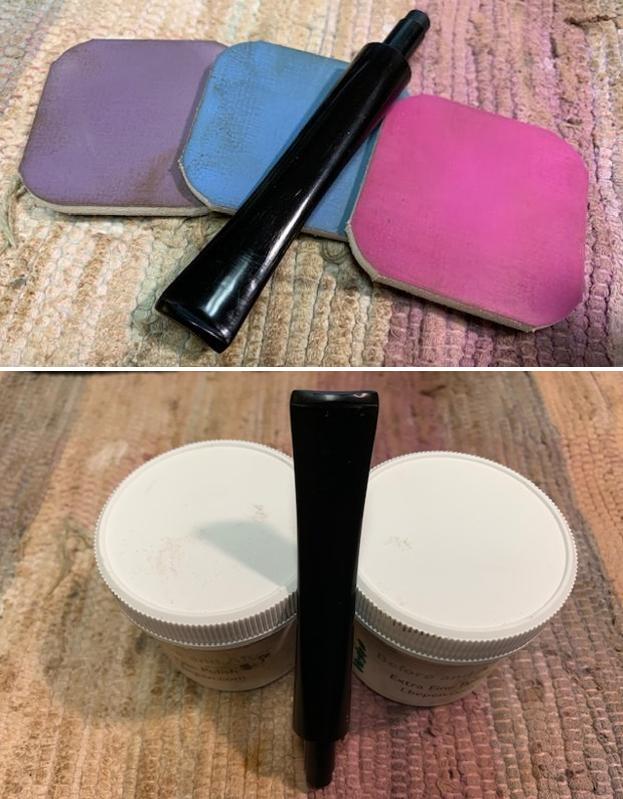
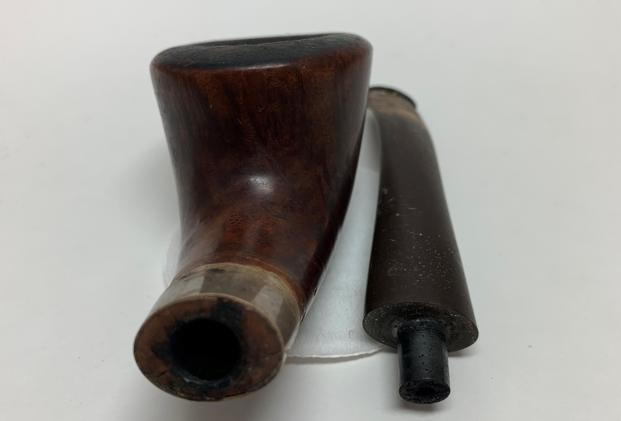
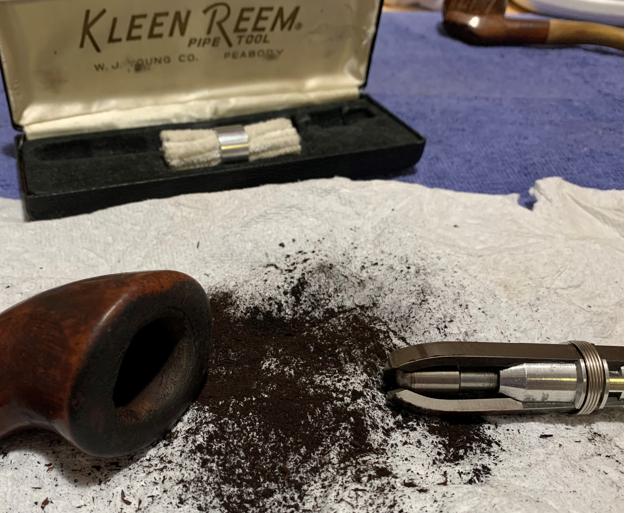
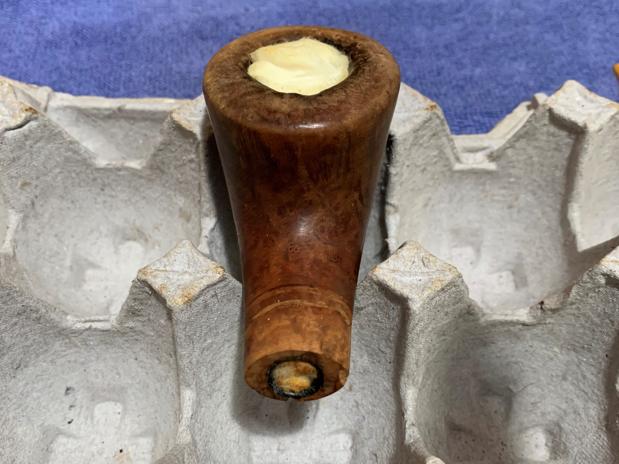
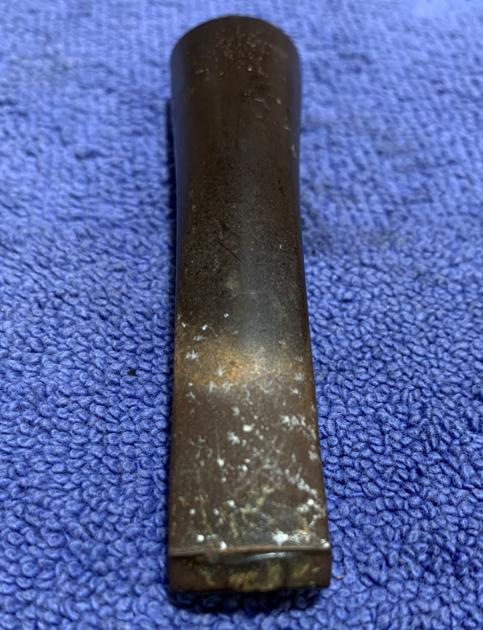
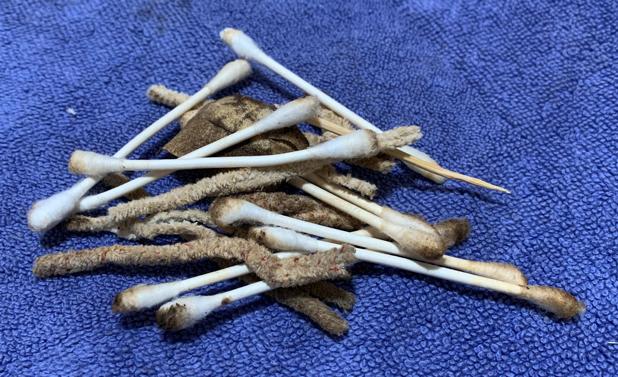
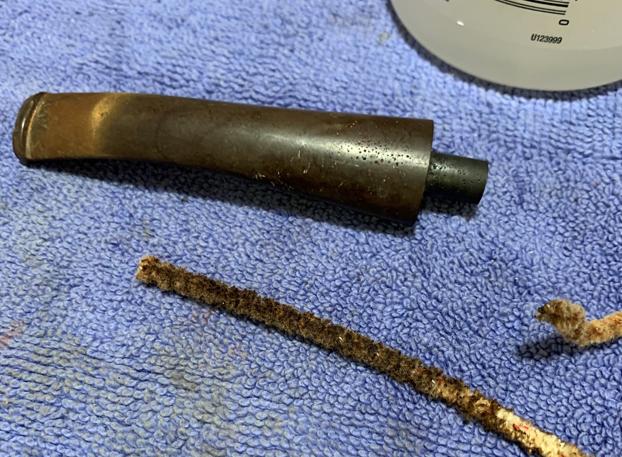
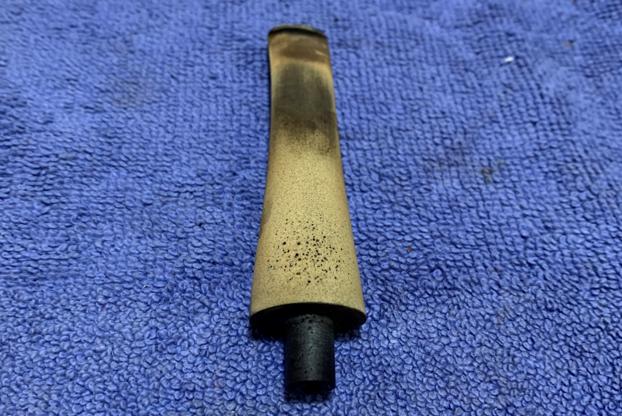
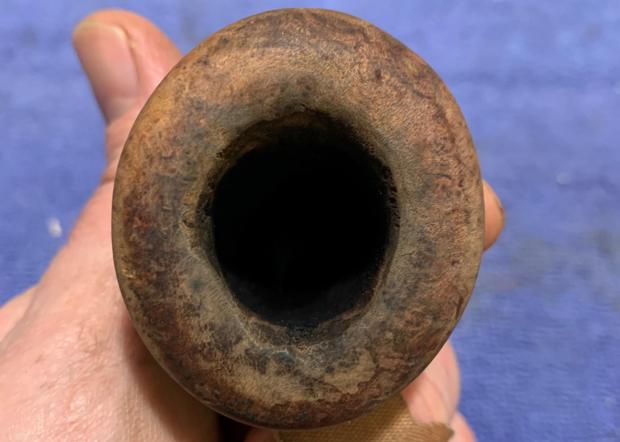
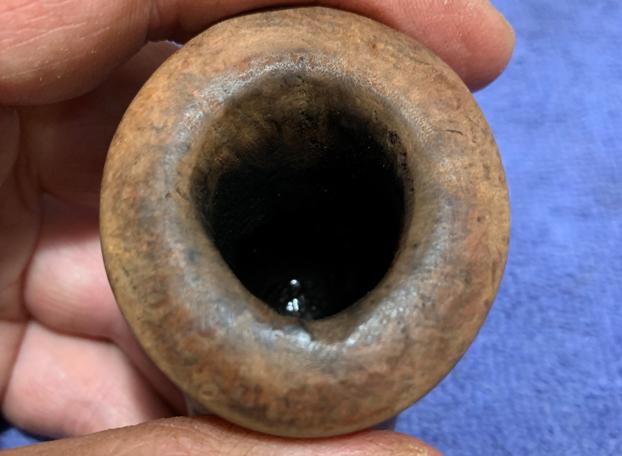
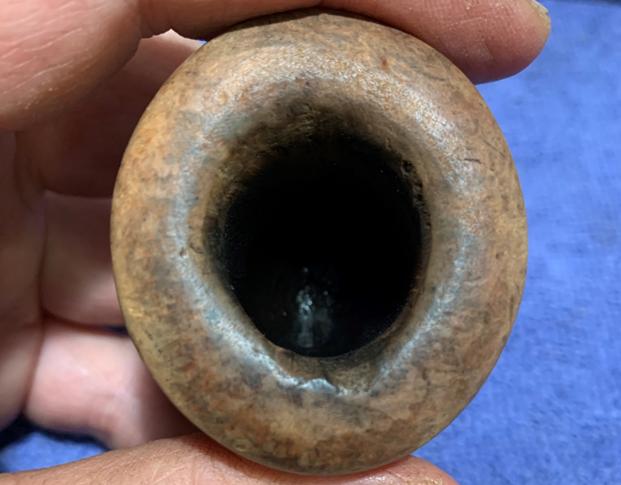
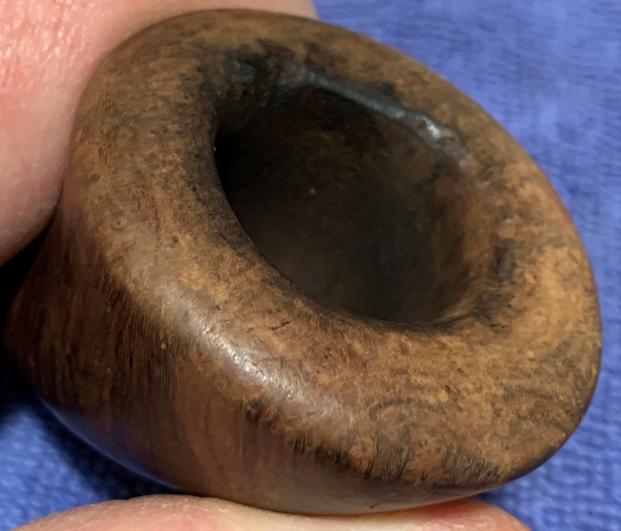
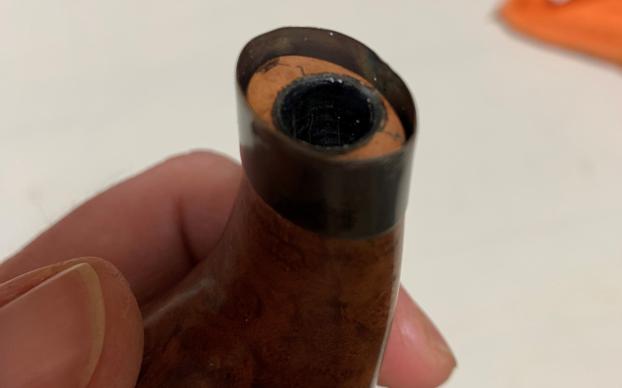
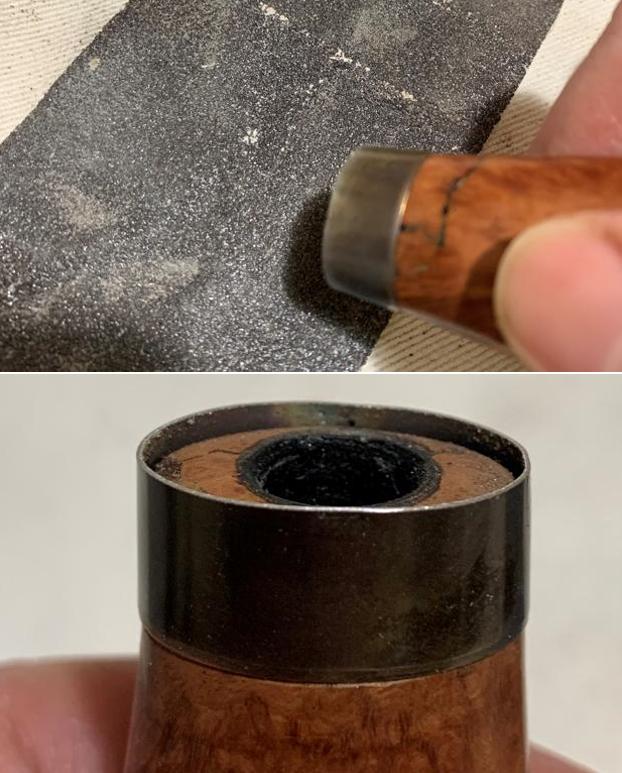
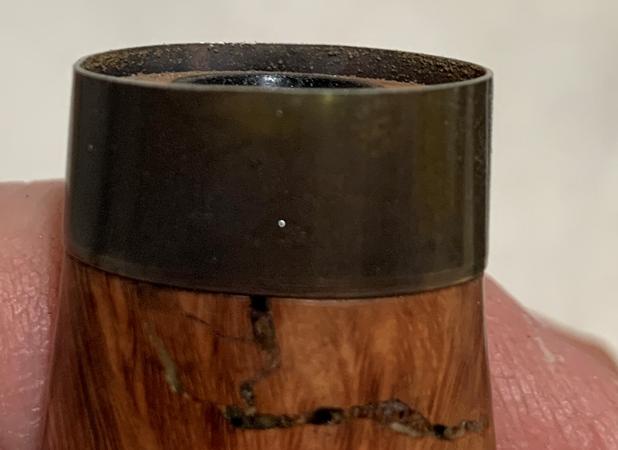
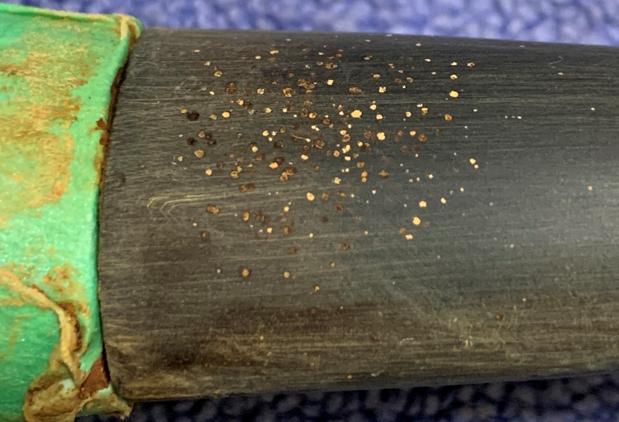
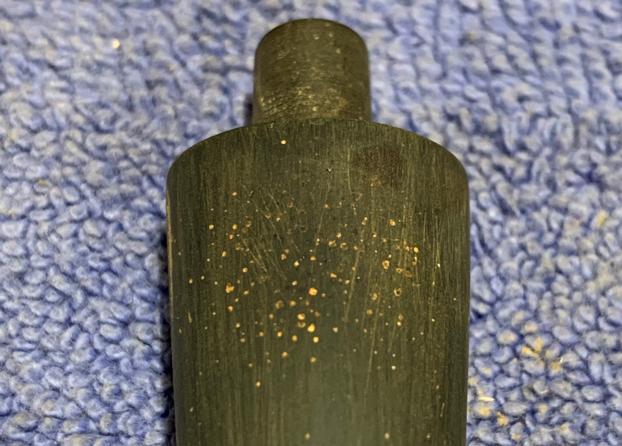
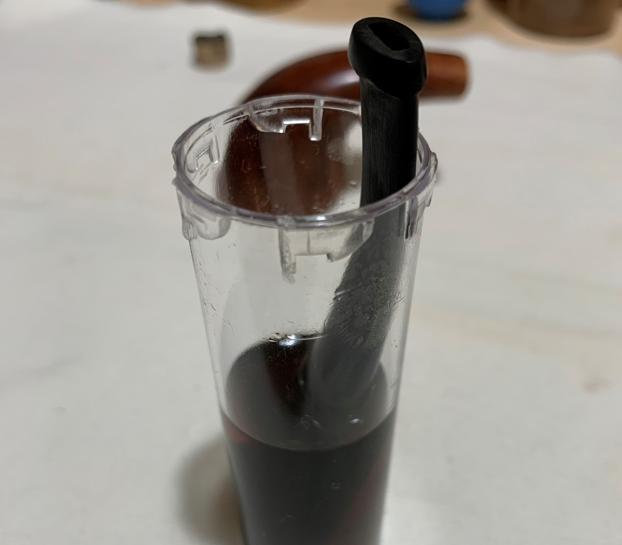
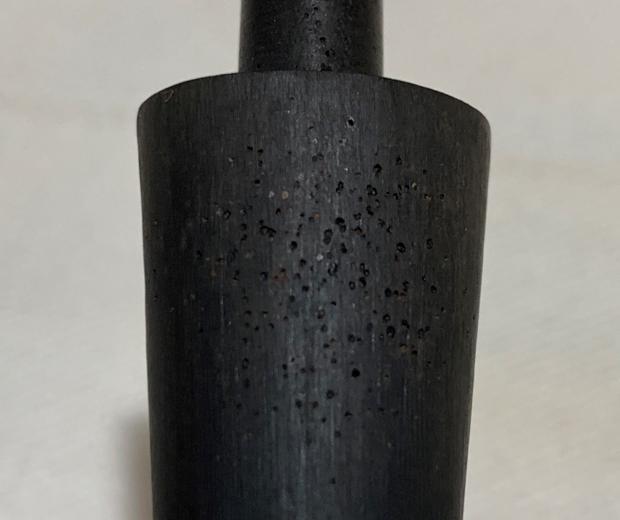
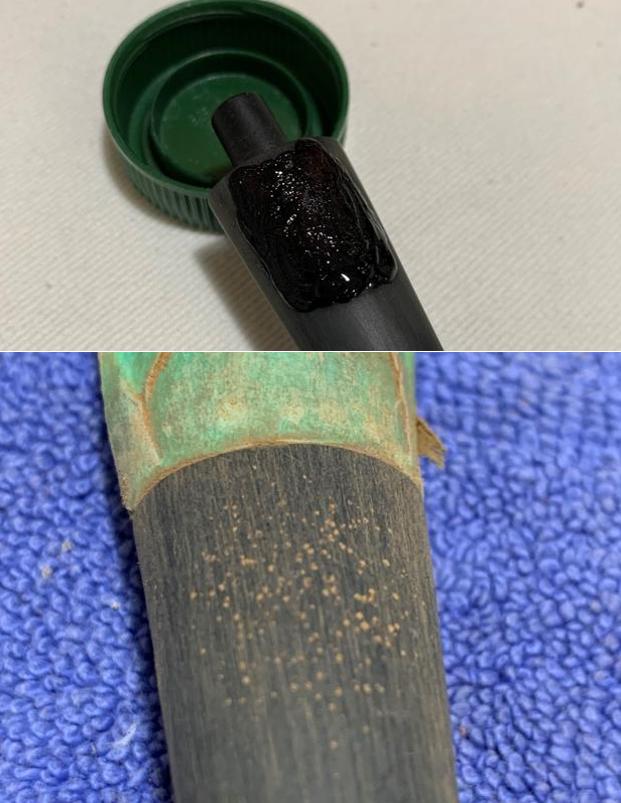
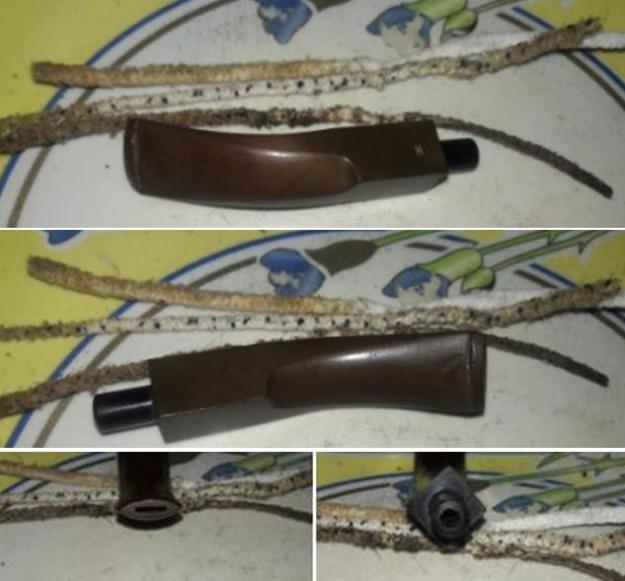
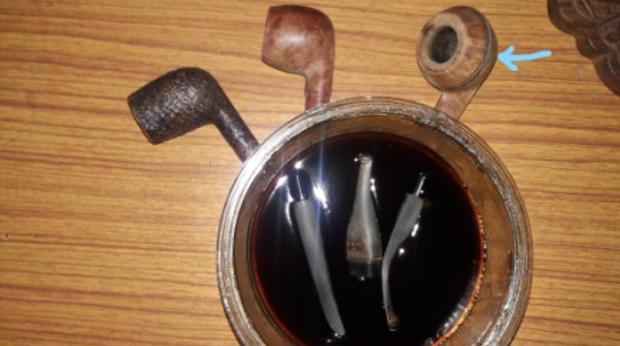
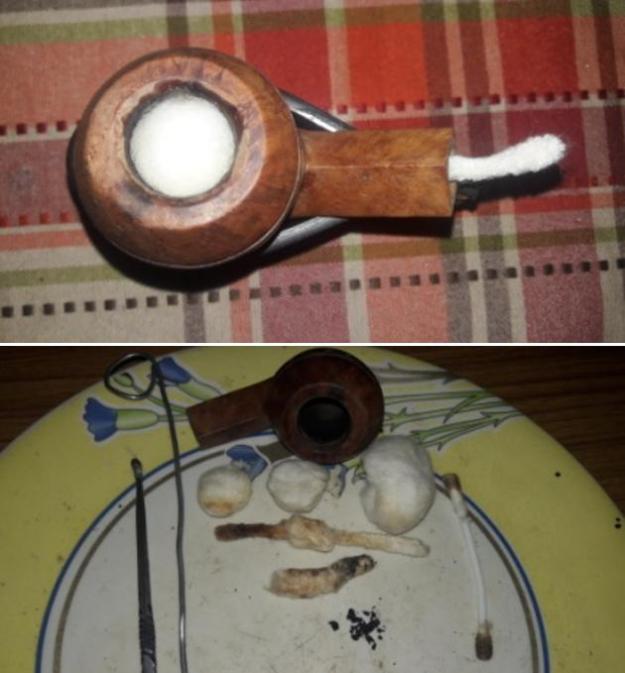
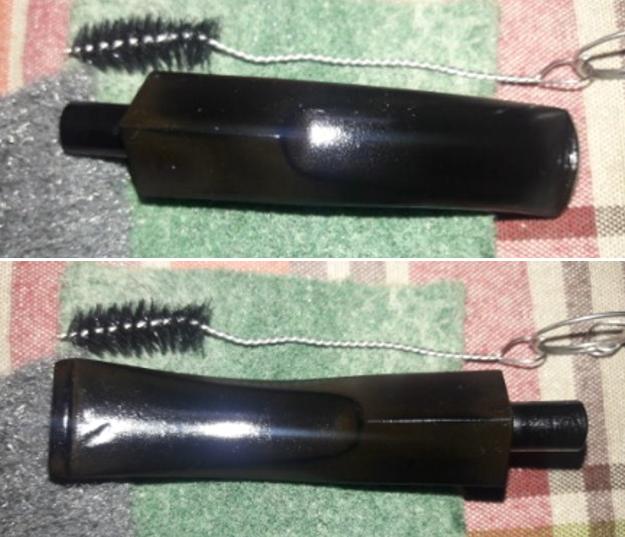
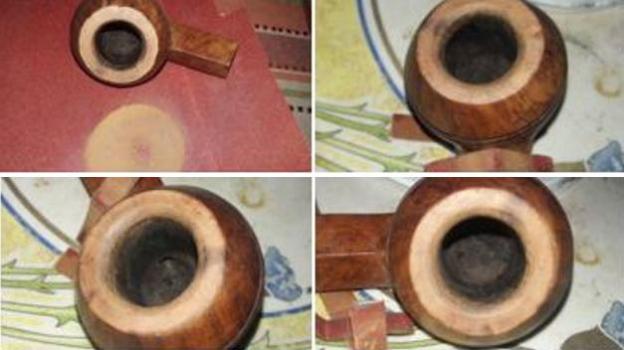
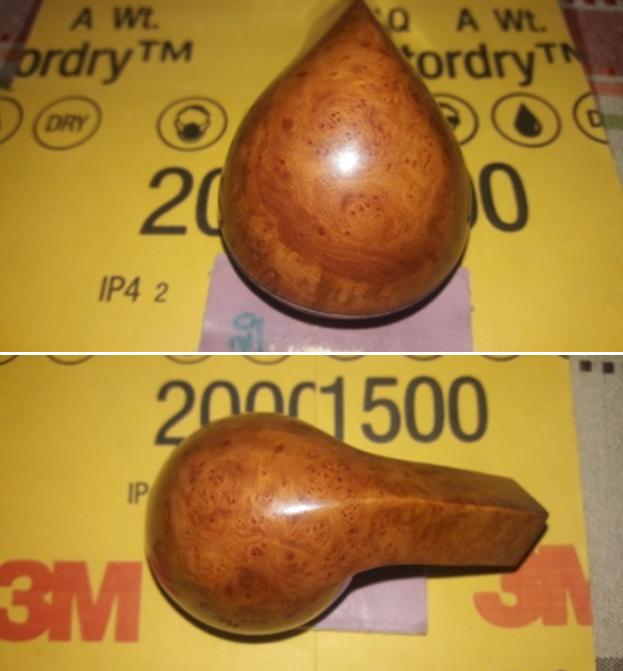
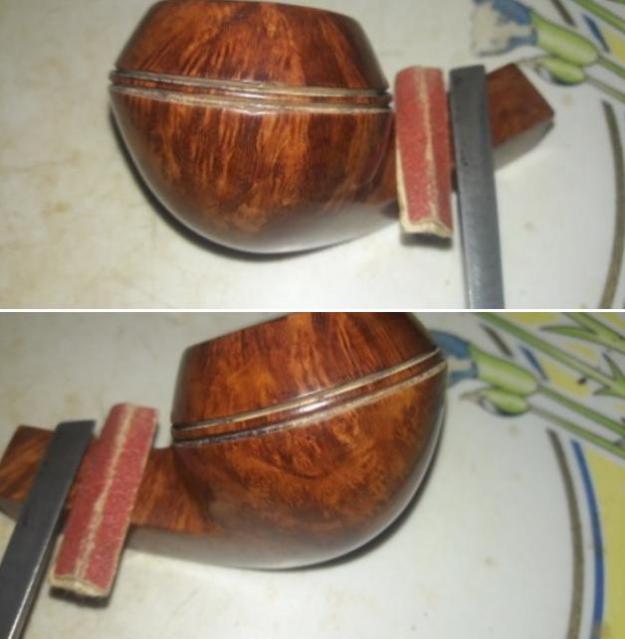
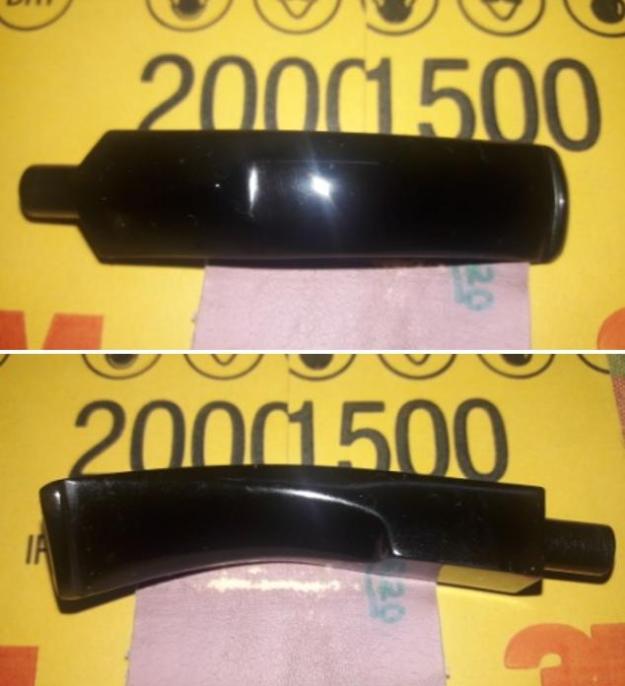
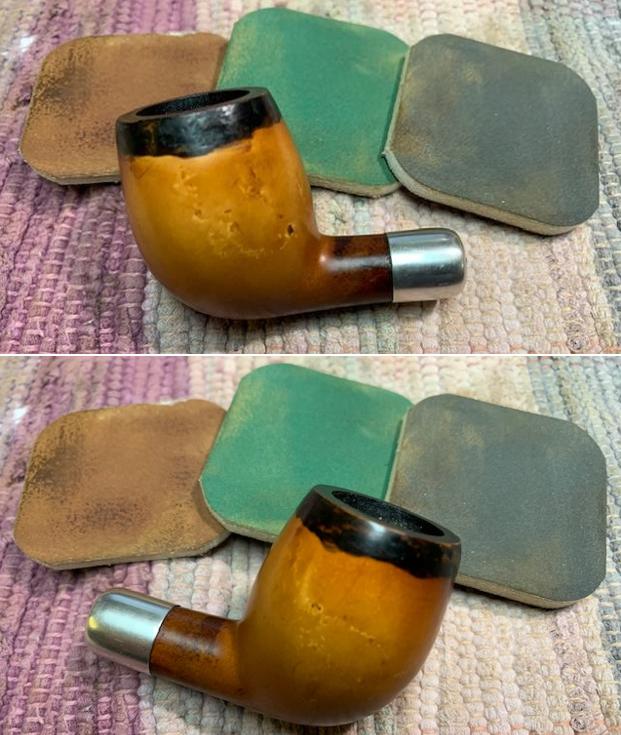
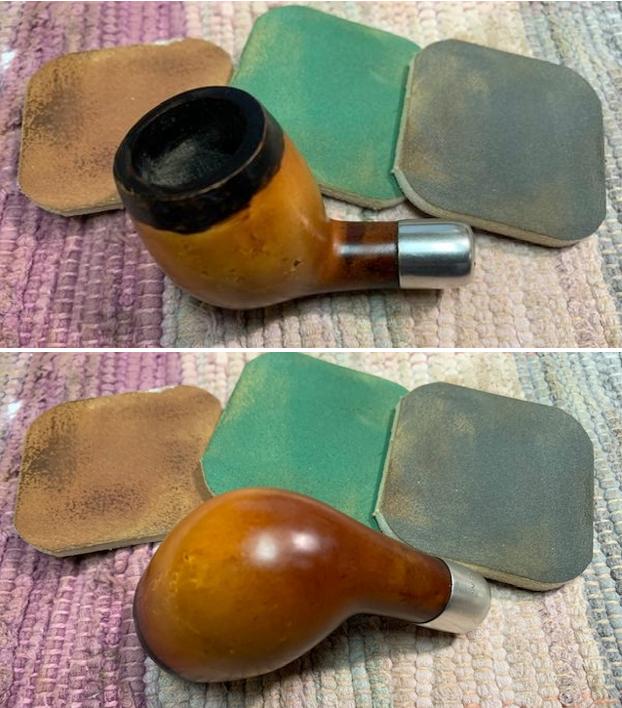
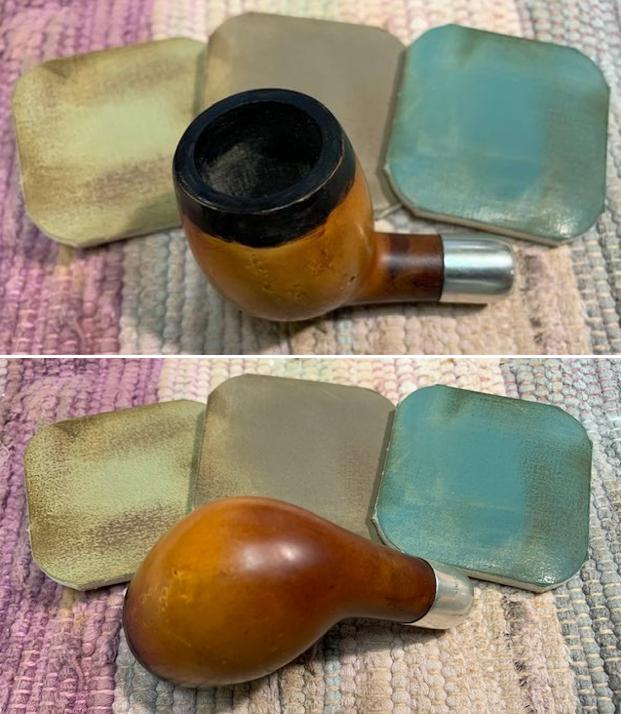
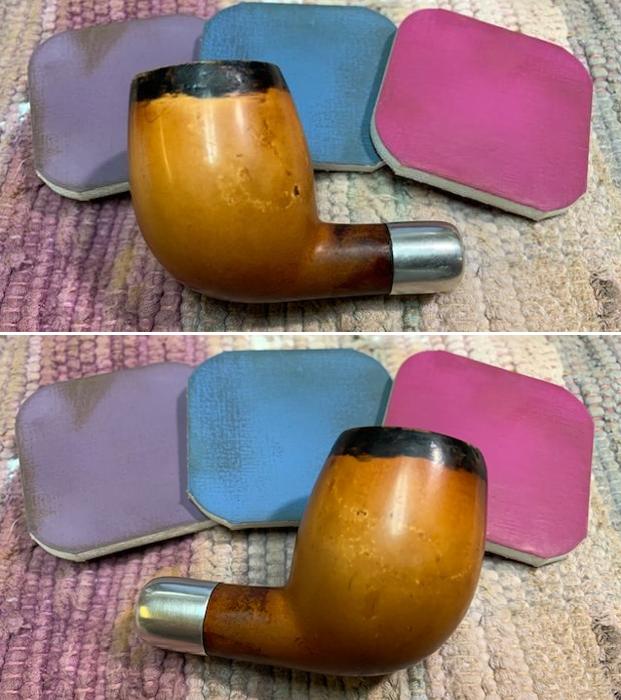
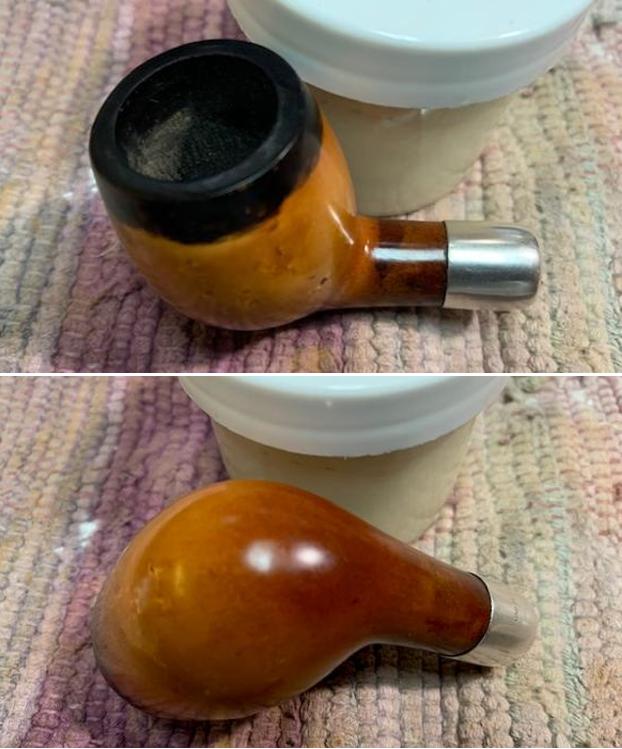
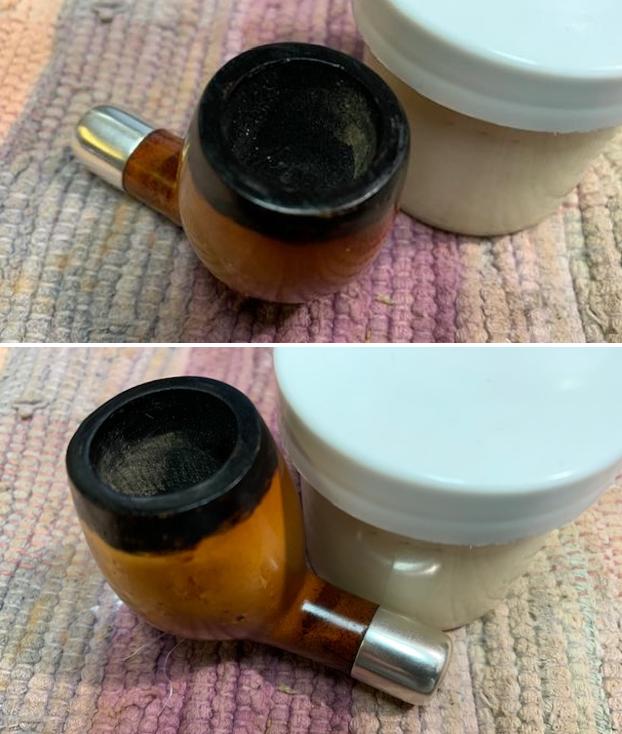
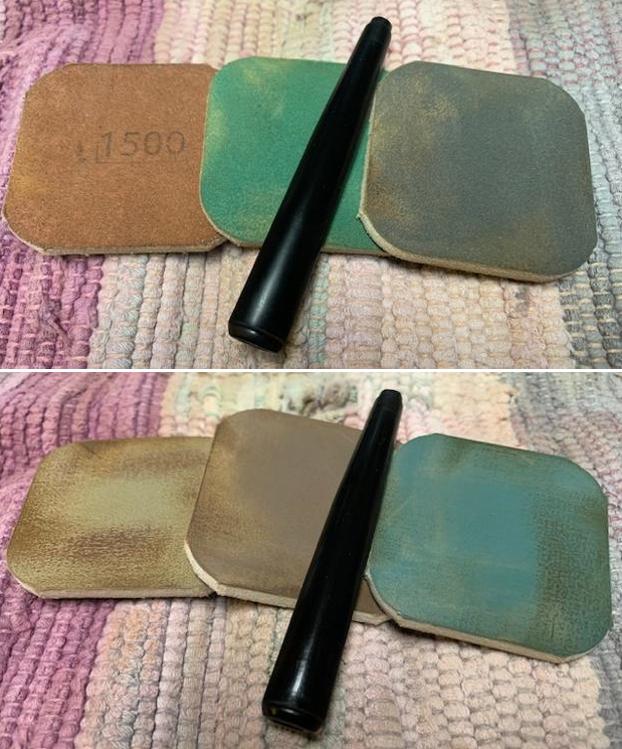
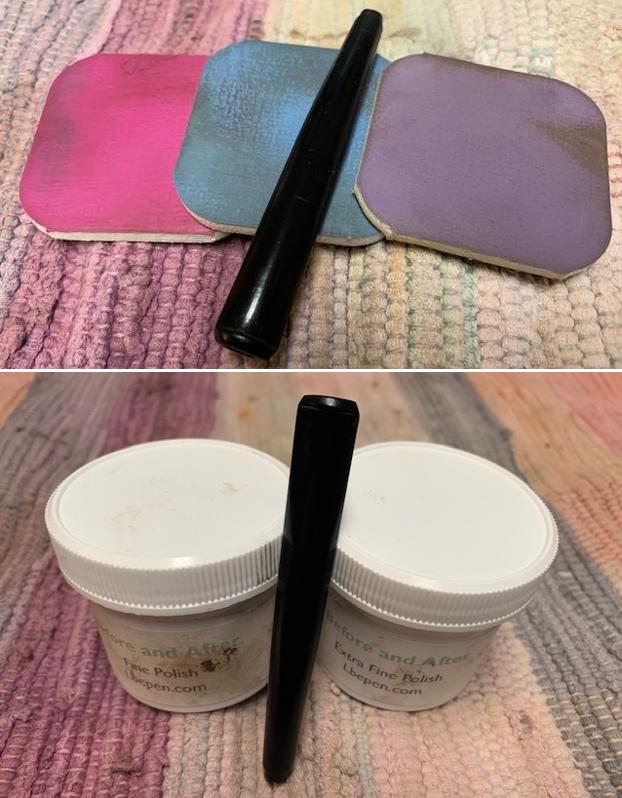
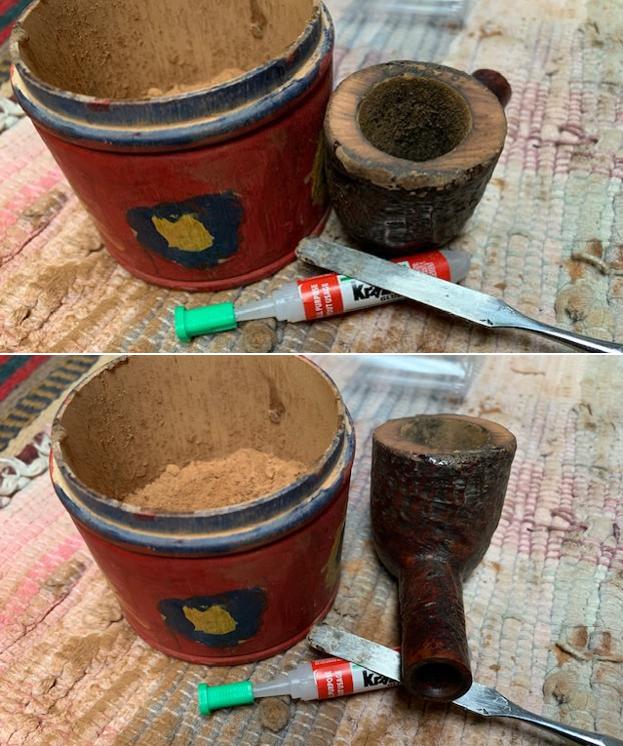
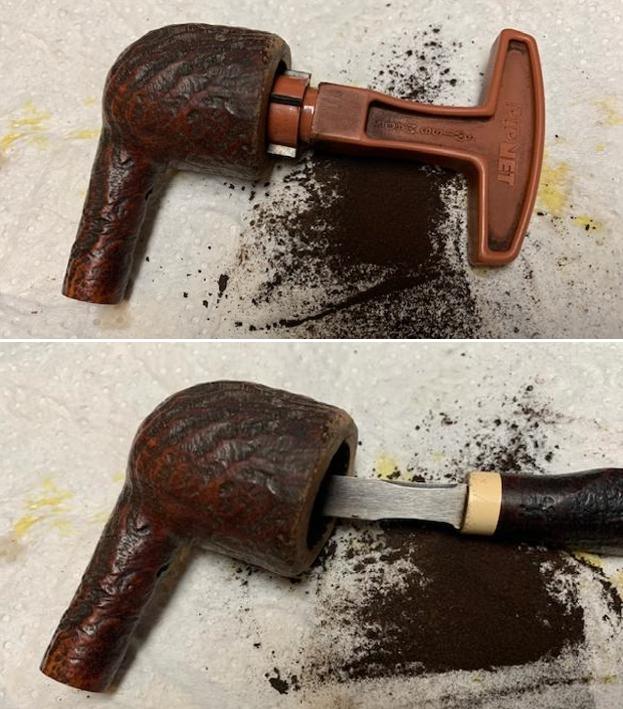
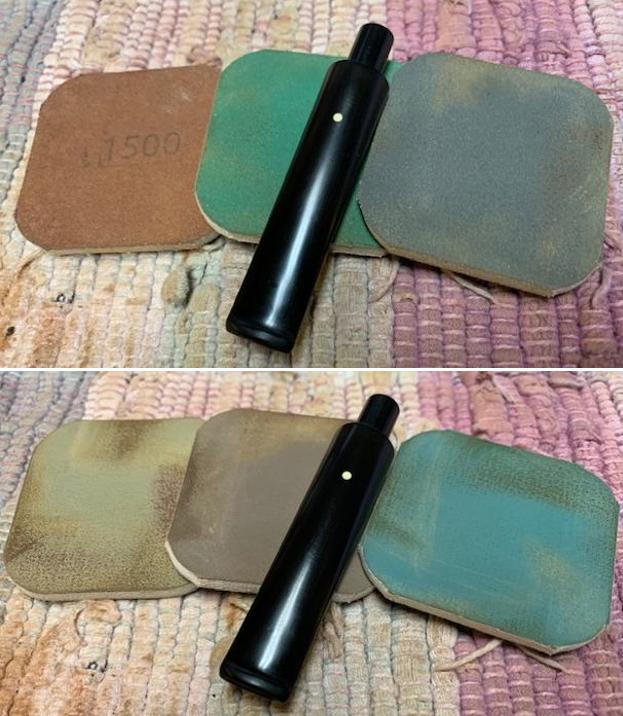
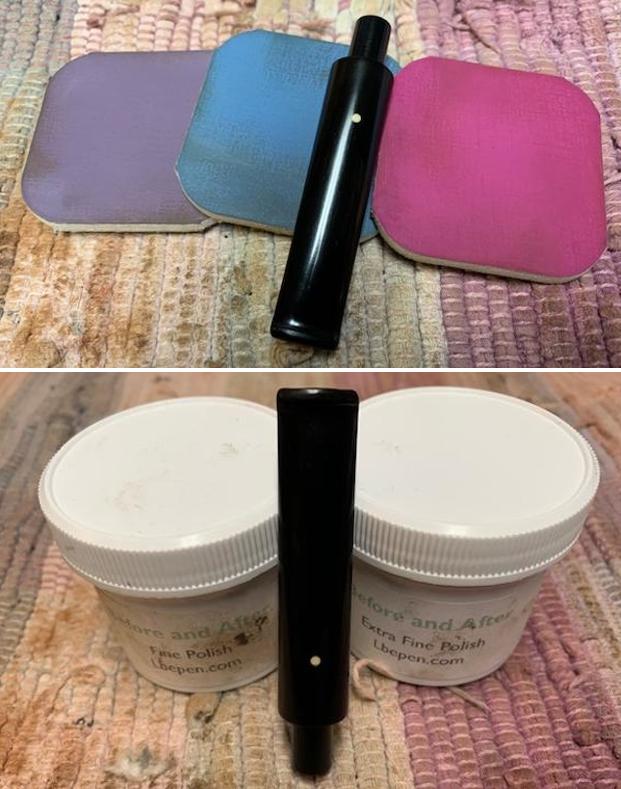
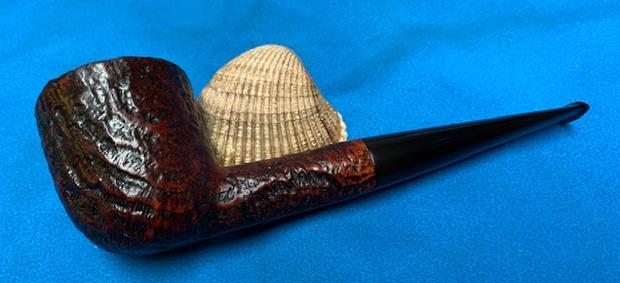
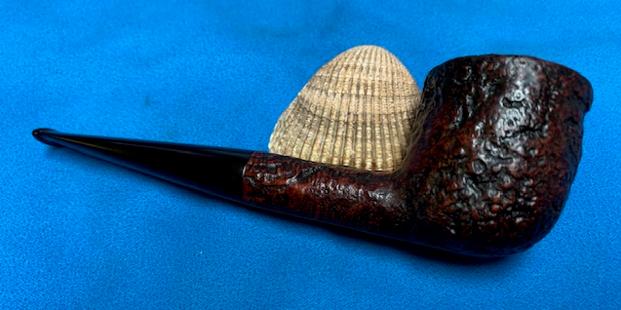
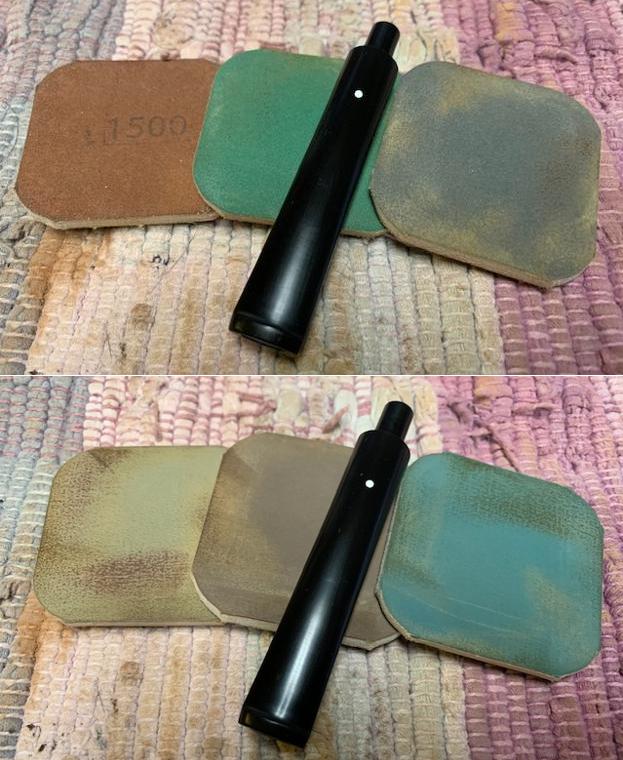
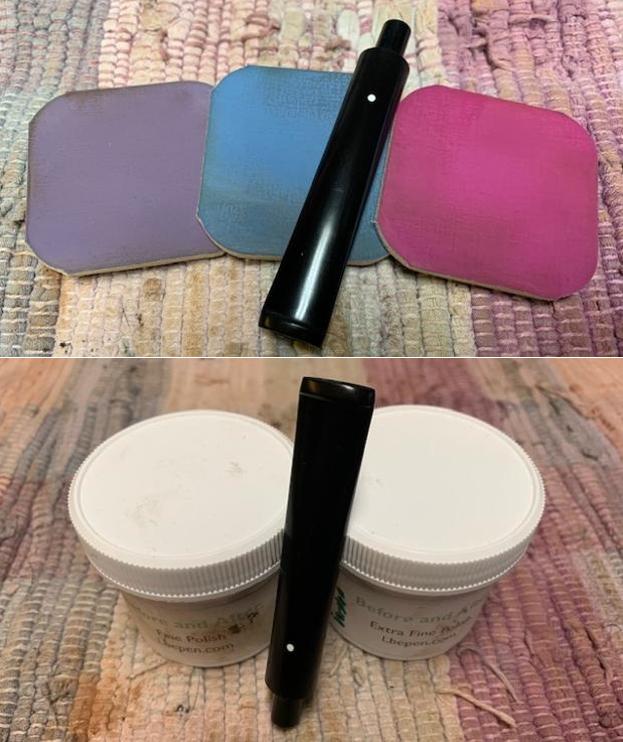
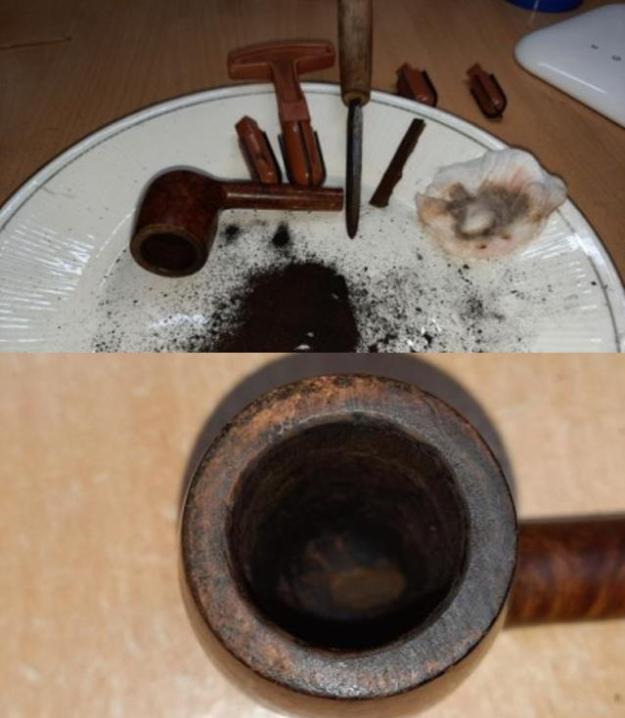
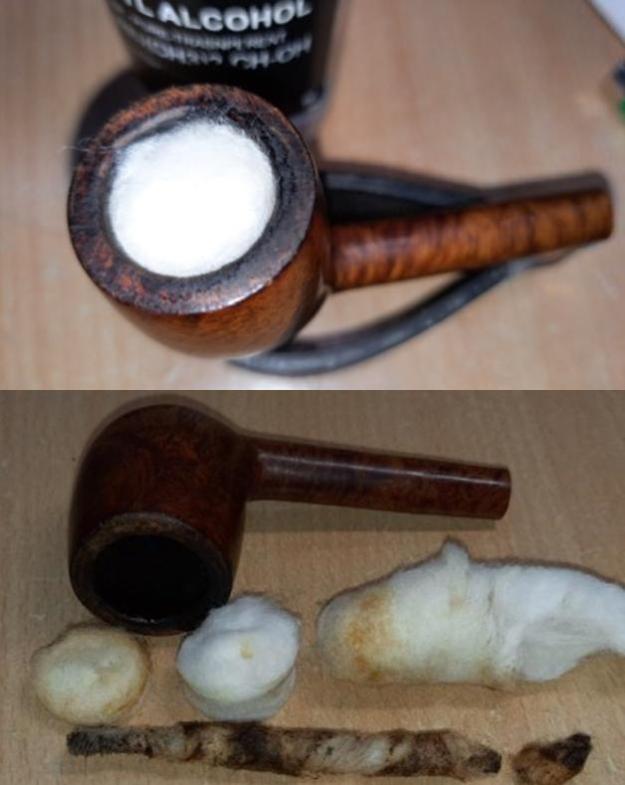
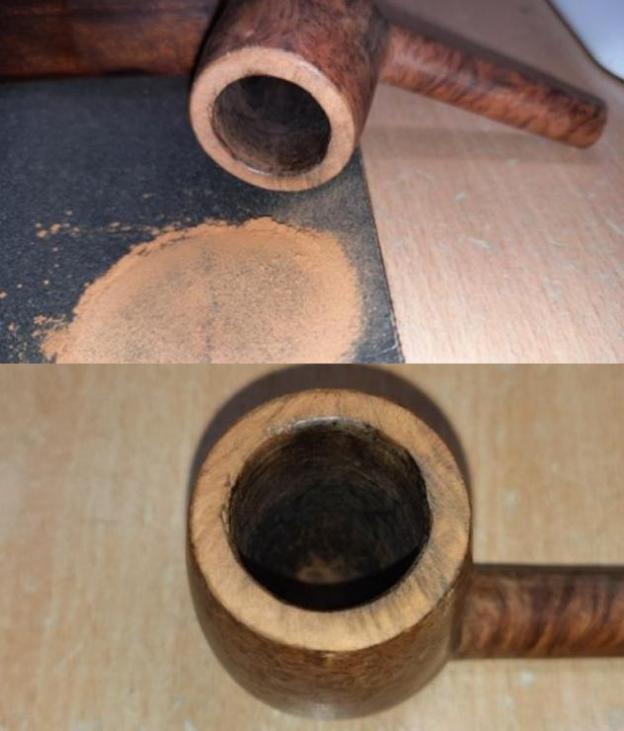
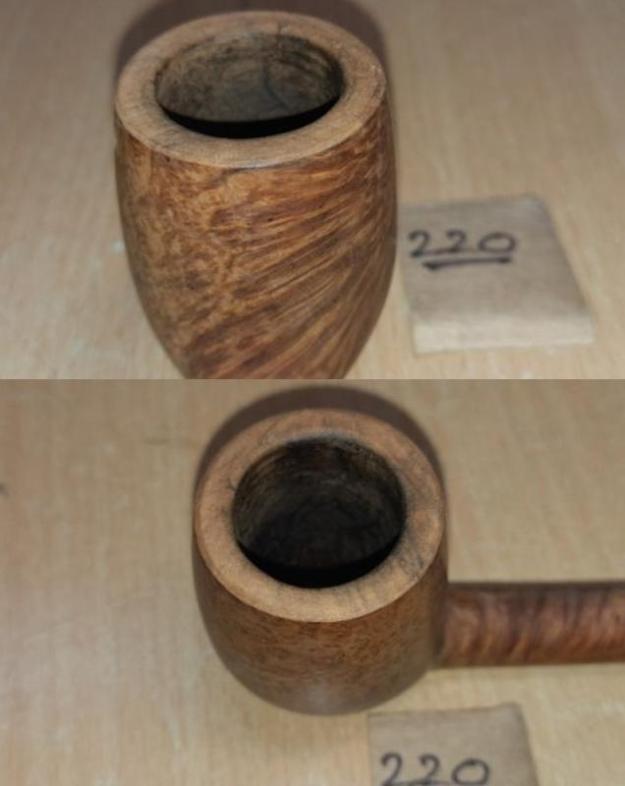
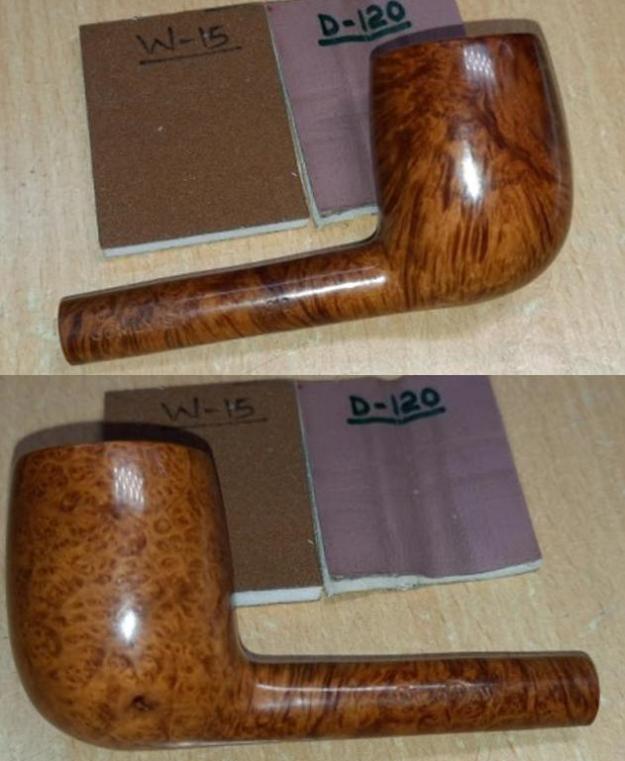
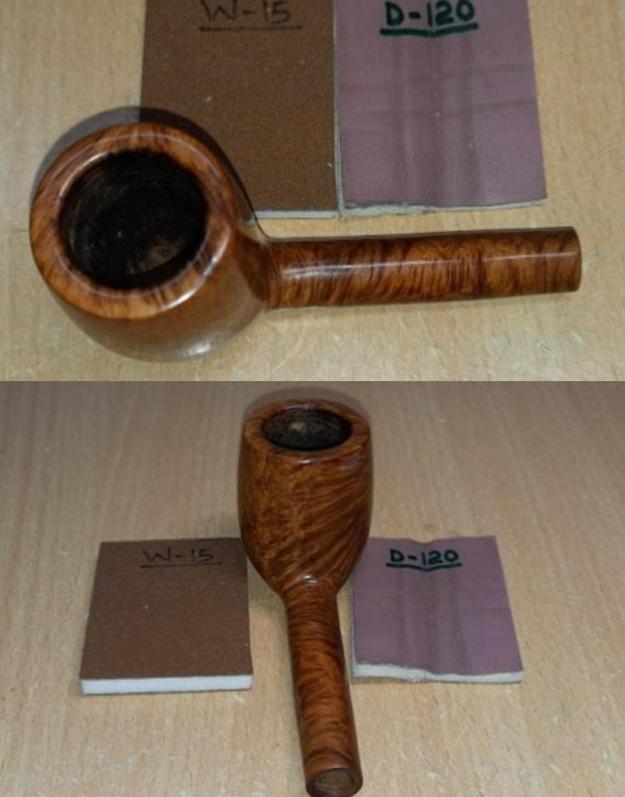
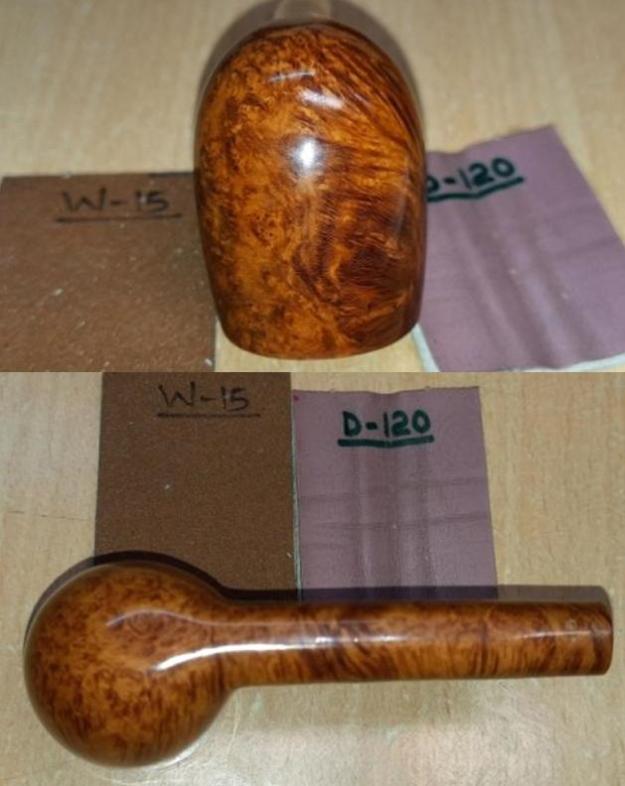
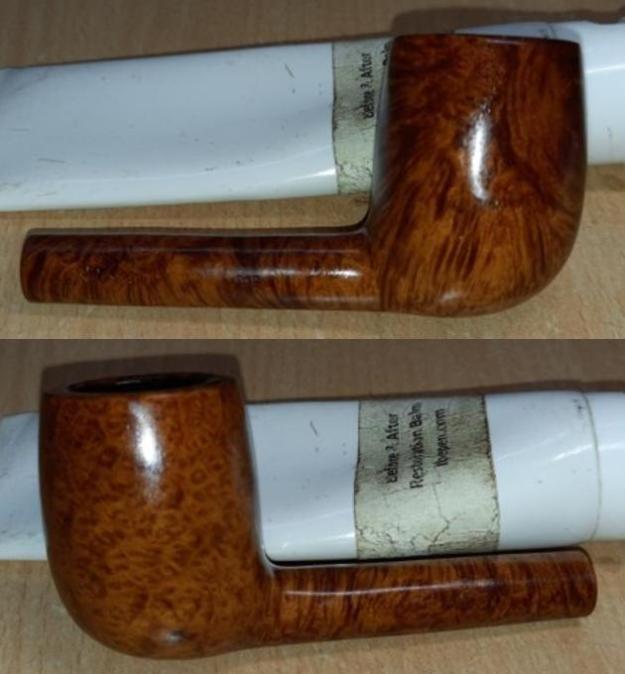
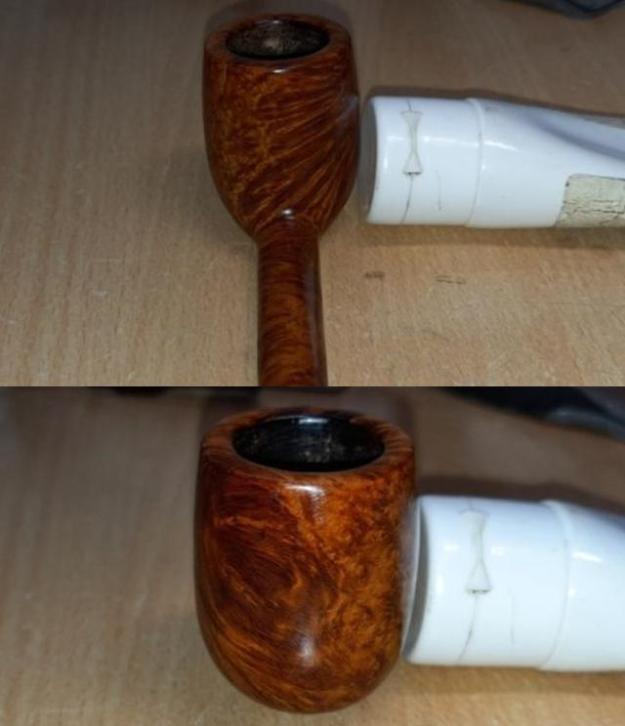
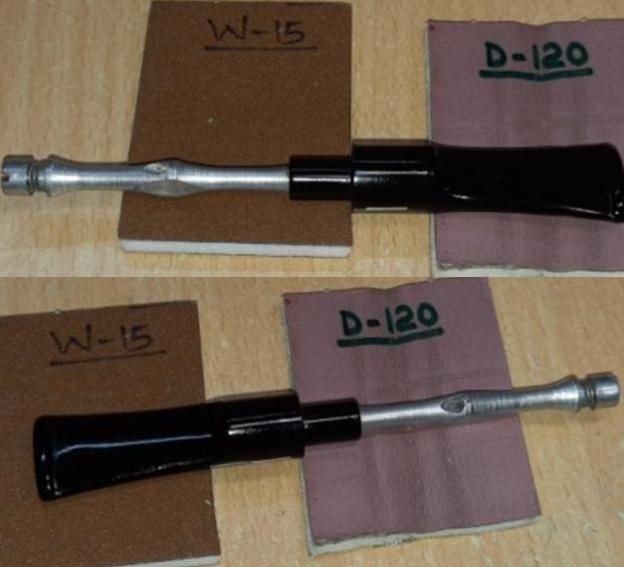
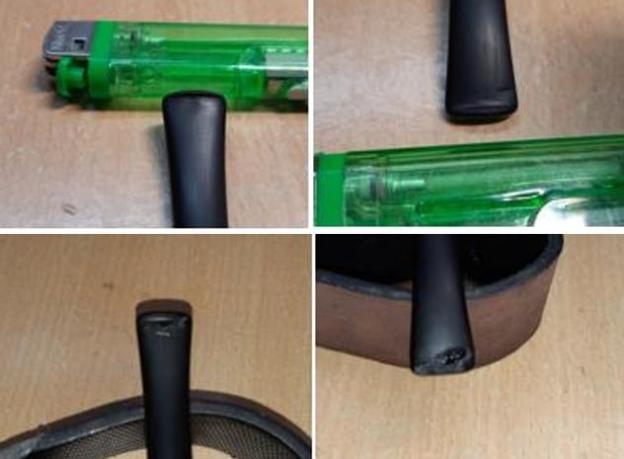
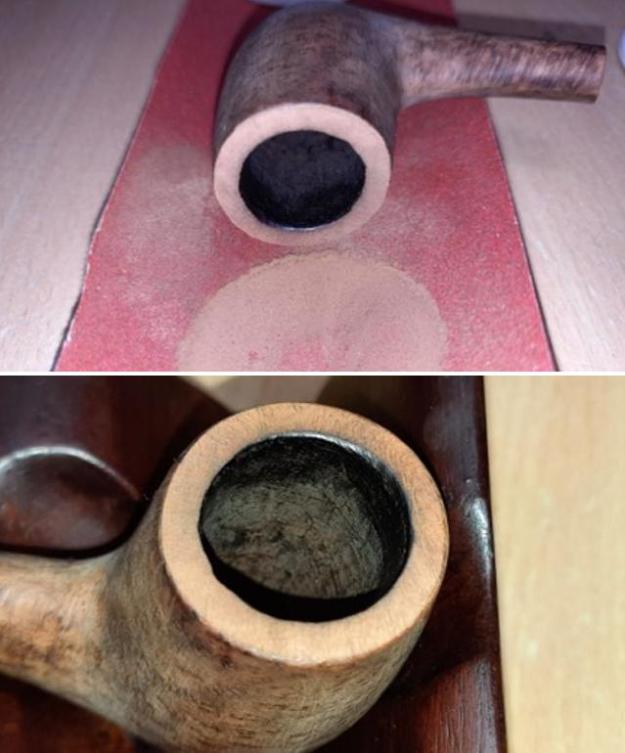
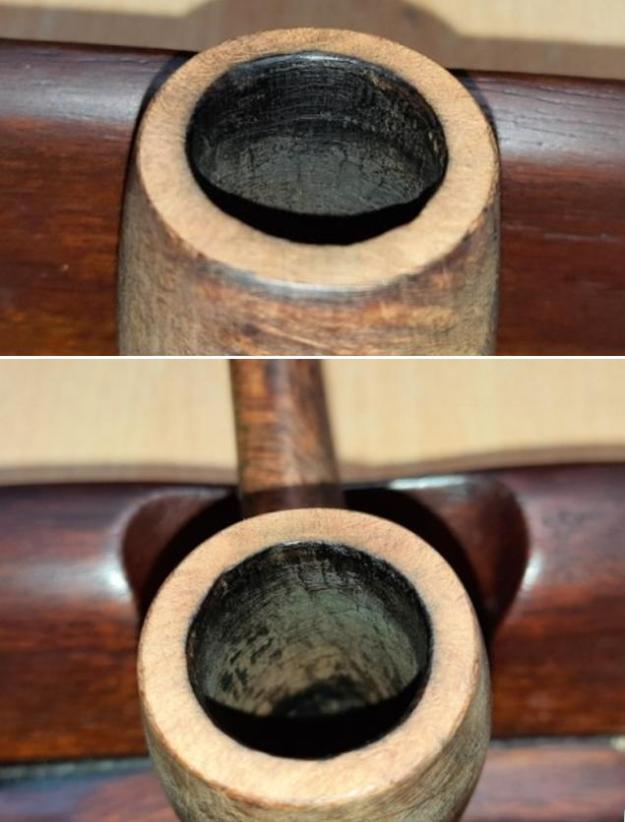
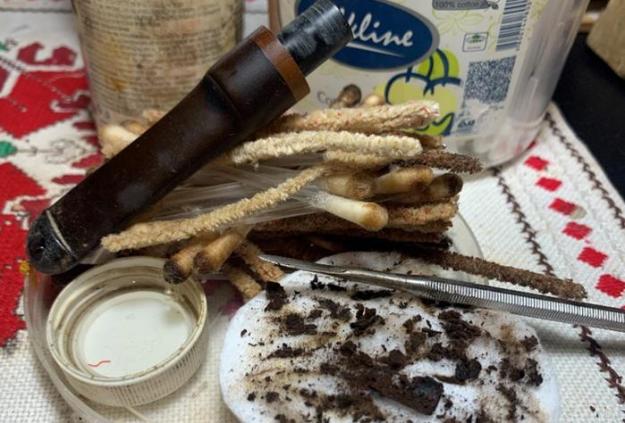
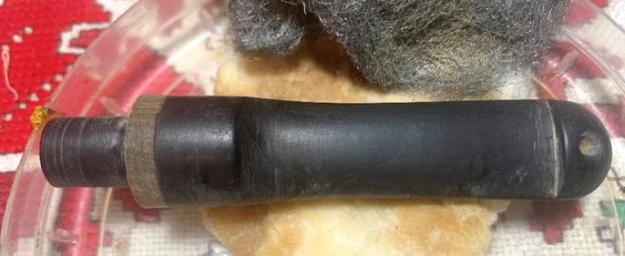
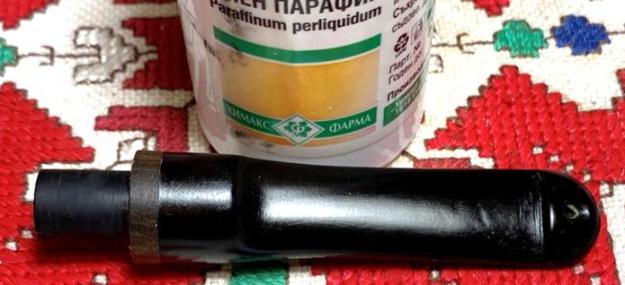
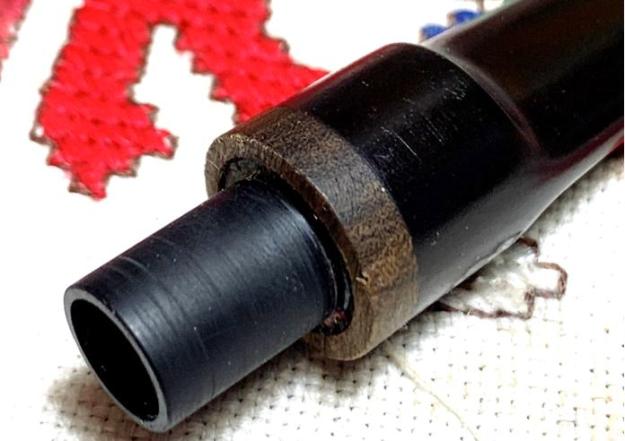
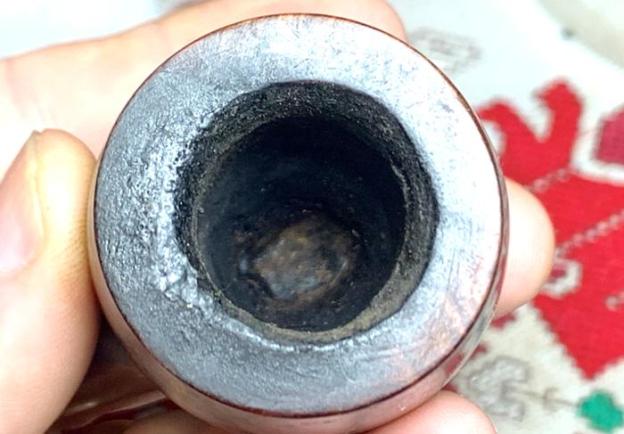
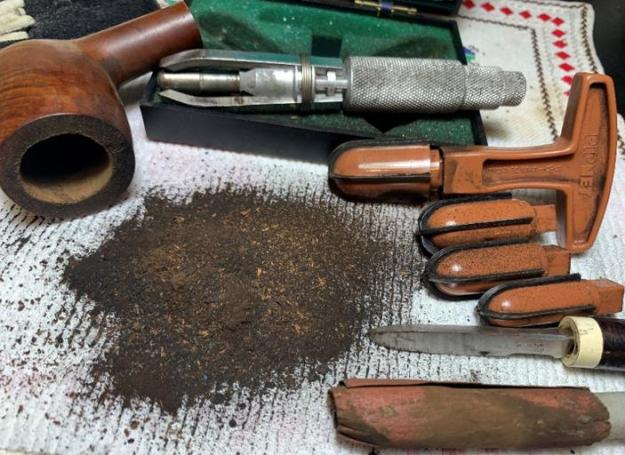
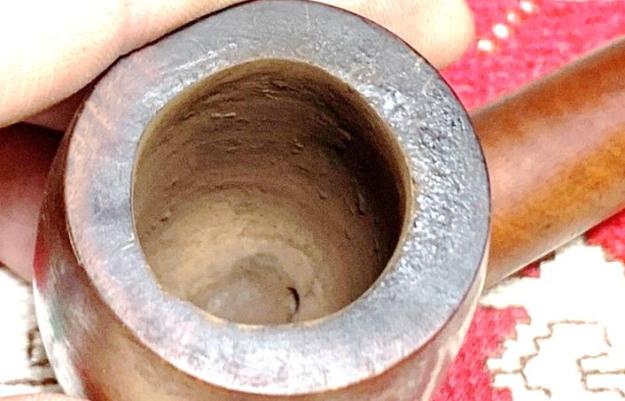
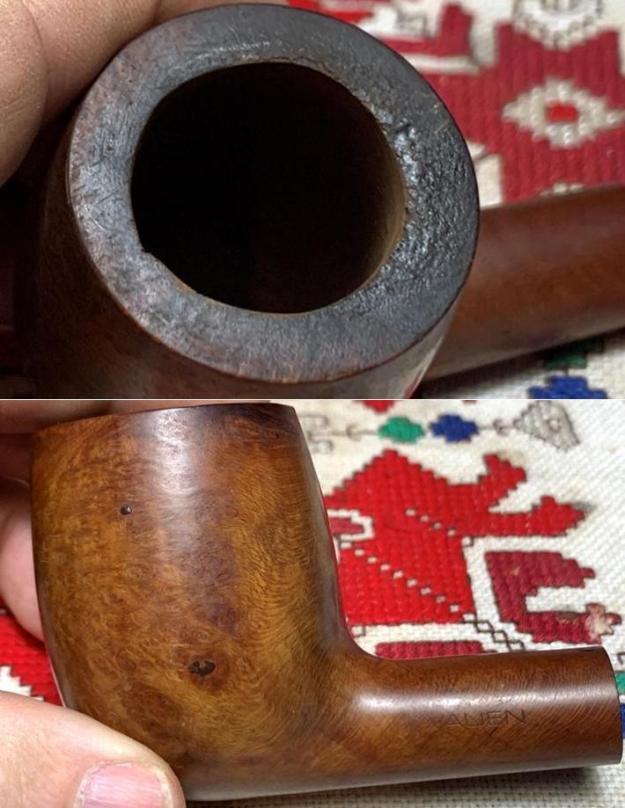
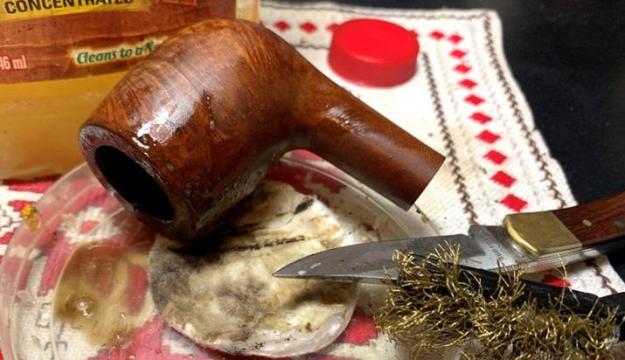
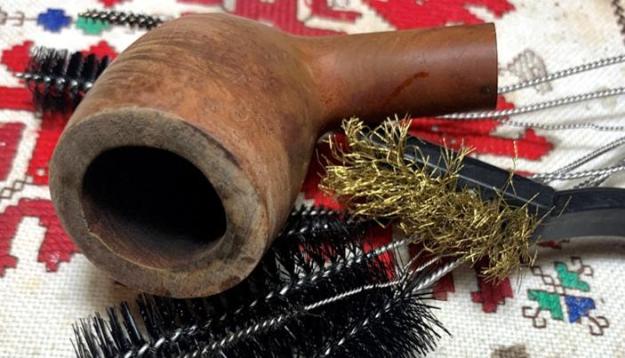
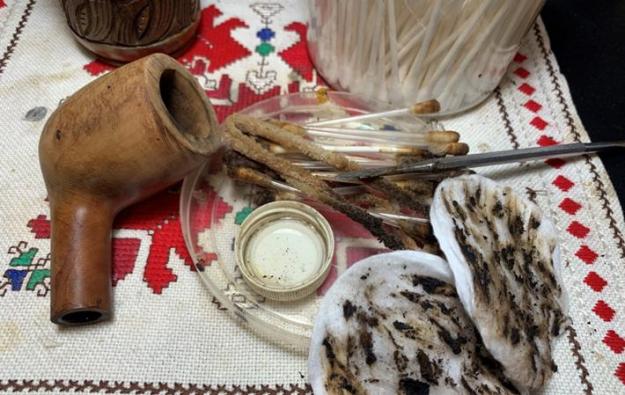
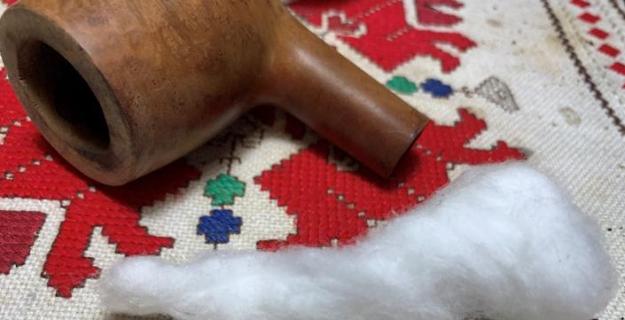
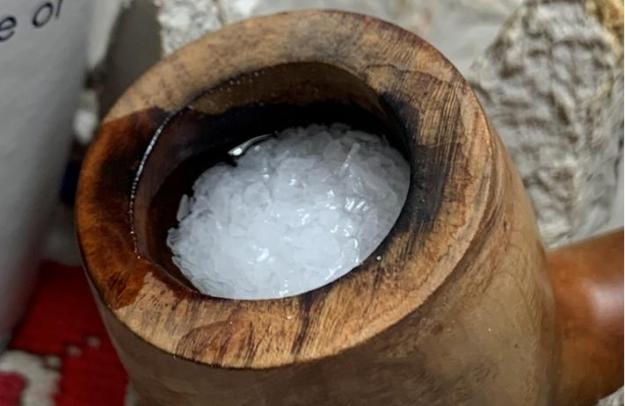
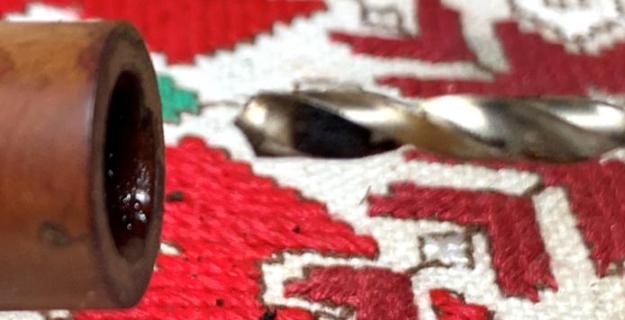
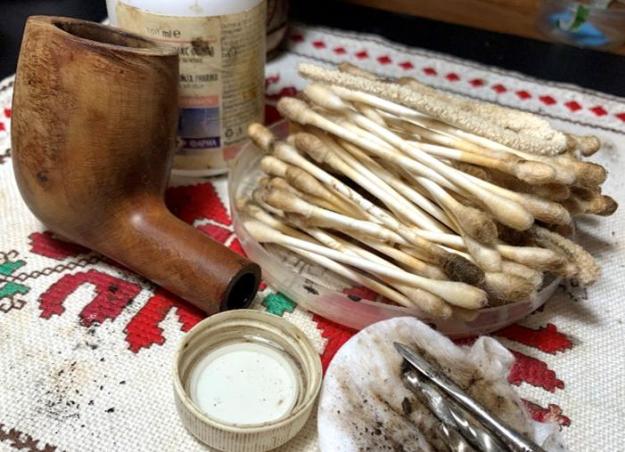
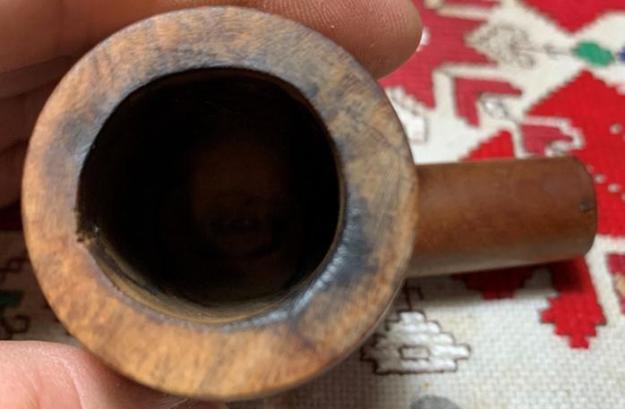
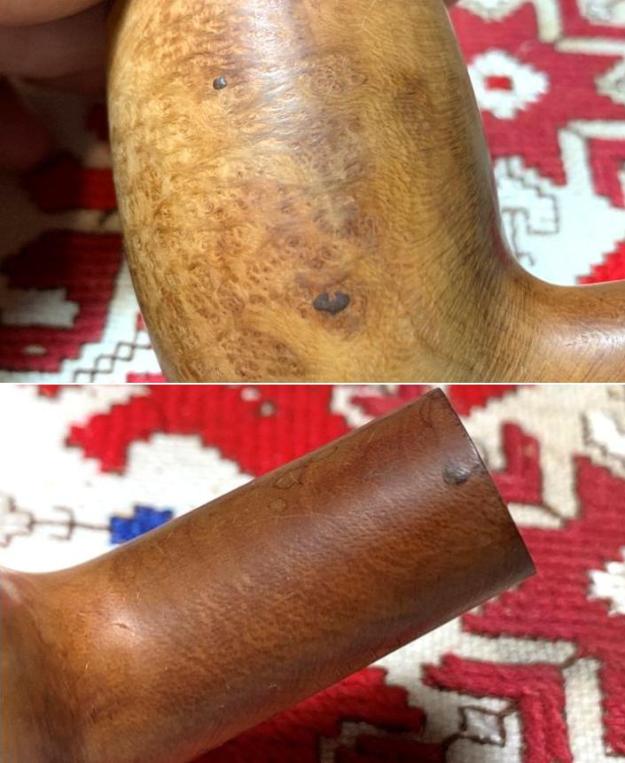
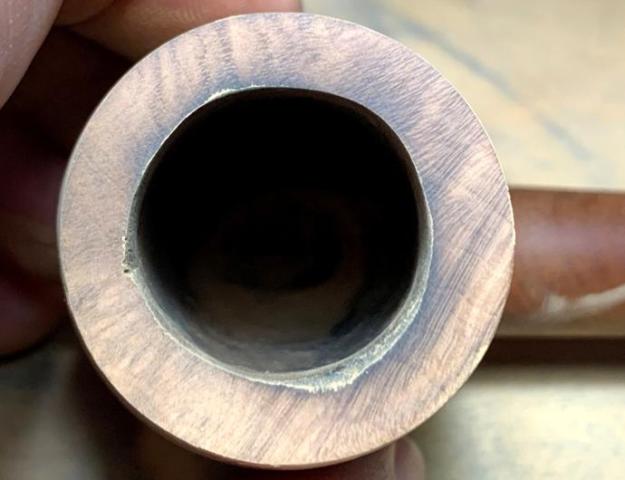
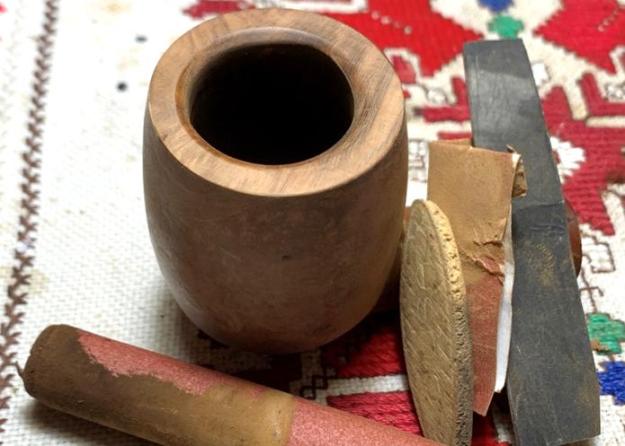
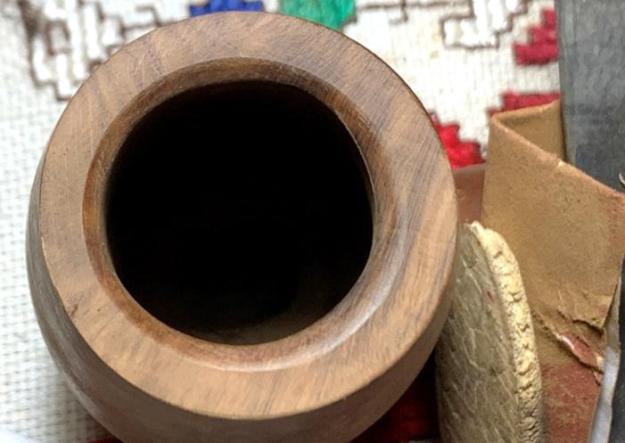
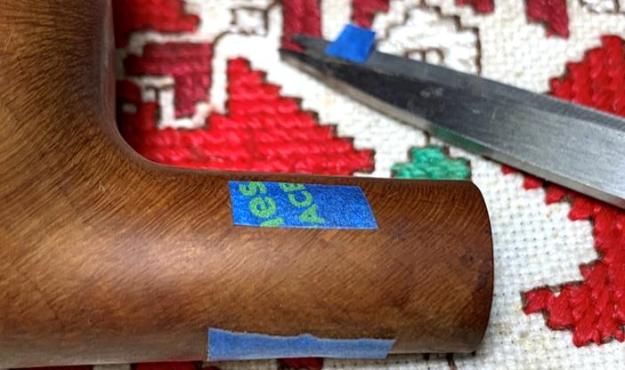
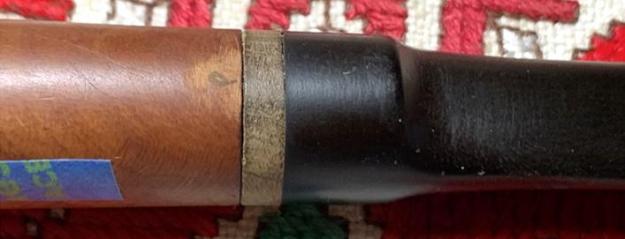
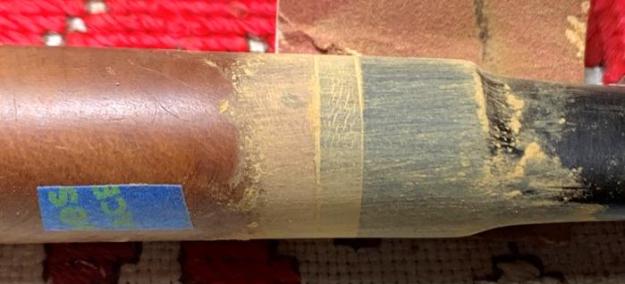
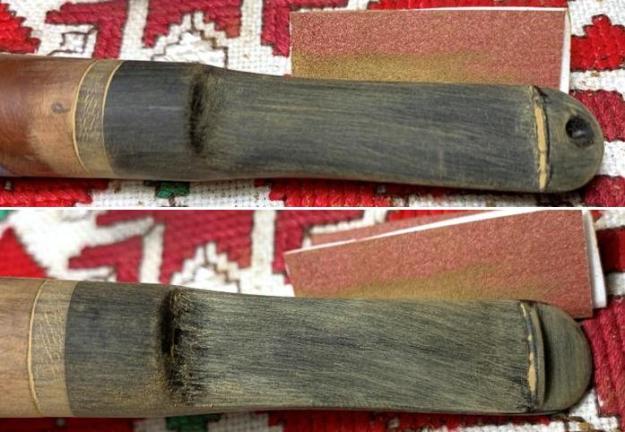
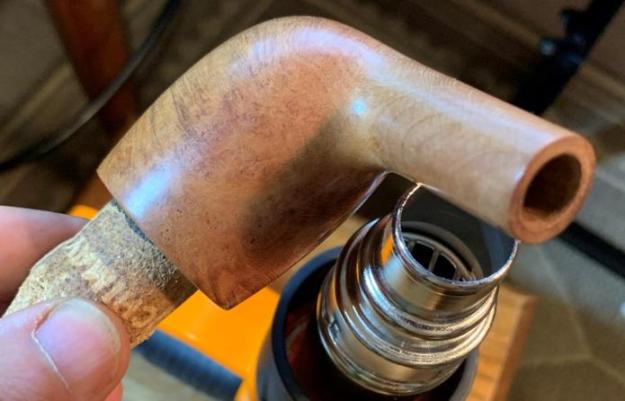
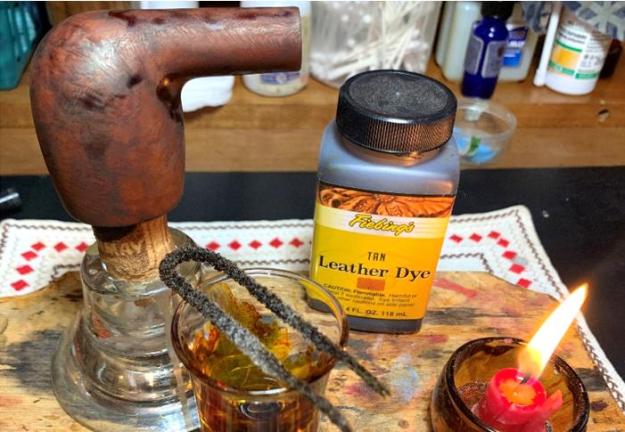
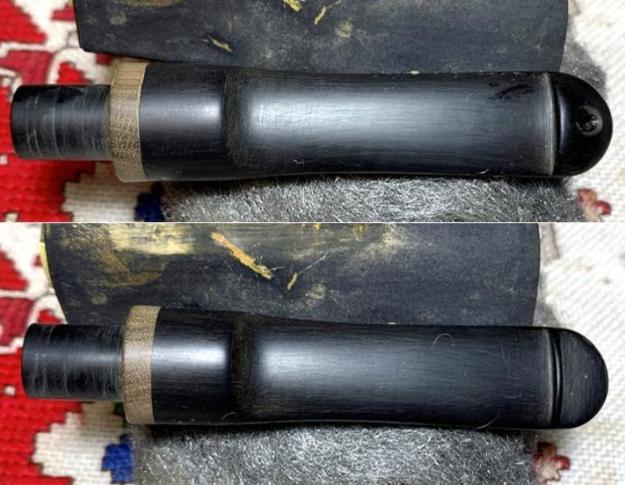
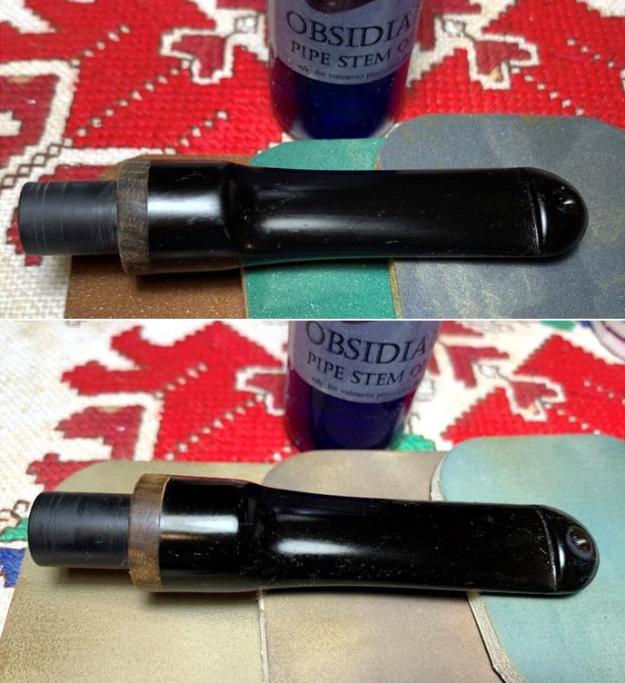
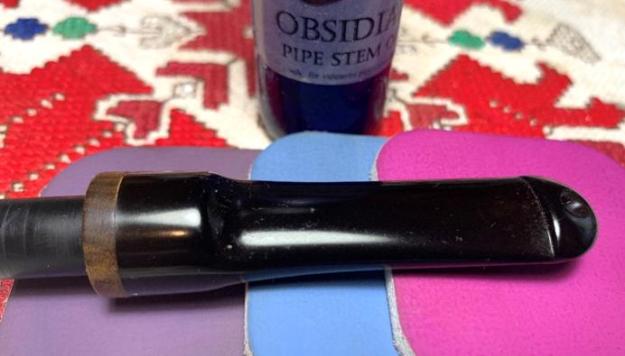
As I mentioned earlier, the work on the stem started earlier.  Before putting it into a soak to address the oxidation, many pipe cleaners and cotton buds were used to first clean the airway and the filter cavity.  I believe all VAUEN pipes are designed to be fitted with a filter of which VAUEN is also a producer.  The 9mm filter compartment is a prime collector of crud and a small dental spoon was also employed to excavate.  It takes fierce battling finally to call the airway and filter cavity clean. Next, the stem was put into a soak of Briarville’s Pipe Stem Oxidation Remover. I left the stem in the soak for a full 24 hours to leverage as much effort to the oxidation removal as possible. I am curious to see if a dot will surface which will be able to indicate the market area this VAUEN was headed toward when new.The stem has been soaking for 24 hours and when I fish it out the raised oxidation is pronounced. I first use a cotton pad wetted with alcohol to wipe off the raised oxidation.  After the cotton pad, I also apply 0000 grade steel wool to see if I can remove more oxidation.  The results seem good regarding the removal of a goodly portion of the oxidation.  Another mystery emerges – thoroughly inspecting the top of the saddle looking for a grey or blue dot comes up empty.  Perhaps there are exceptions to the VAUEN pipes receiving the dot?  I see no other markings on the stem.To condition the vulcanite stem, paraffin oil is then applied to the stem.The process also reveals that the stem ring or extender is not acrylic as I earlier thought. It is most definitely a wooden ring of some sort. It darkened through the process but as it dries and later sanded, it should spruce up nicely giving a nice contrasting transition from stummel to stem.Putting the stem aside for the time, I look more closely at the VAUEN stummel.  The stummel is huge with a chamber width of 1 inch and depth of 1 7/8 inches.  First, a fresh picture is taken to show the starting point.To clear the carbon cake in the chamber, all 4 of the Pipnet Reaming Tool blade heads are used.  The Kleen Reem Pipe Tool was also used to help break up the cake.  Following this, the Savinelli Fitsall Tool continues by scraping the chamber walls and then to finish, the chamber is sanded with 240 sanding paper wrapped around a Sharpie Pen. An inspection of the chamber walls shows small heating veins but no problems with significance.Next, a few pictures show the crusting lava flow on the rim and the grime spots on the briar surface.To start the external surface cleaning, undiluted Murphy’s Oil Soap is used with a cotton pad to scrub.  The rim is a bear, and the brass wire brush is used along with the pocketknife to carefully scrape the carbon.  The stummel is then transferred to the sink to continue the cleaning.  Using shank brushes with hot water, anti-oil liquid dishwashing soap is used to scrub the internal mortise.  Once the stummel is rinsed thoroughly, it comes back to the table.Next, to continue the cleaning of the internals, cotton buds and pipe cleaners wetted with isopropyl 99% are used to scrub.  The effort includes a small dental spoon digging and scraping into the mortise walls.  After a good amount of time, and with the hour getting close to quitting time, I decide to transition.To continue the cleaning through the night a kosher salt and alcohol soak will be used. This method helps to draw out the tars and oils from the internal briar. First, a cotton ball is pulled and stretched to act as a ‘wick’ to draw out the oils and tars. With the aid of a stiff wire, the wick is guided down the mortise into the airway.The bowl is then filled with kosher salt which leaves no aftertaste and set in an egg carton for stability and to angle the stummel so that the rim and mortise opening are roughly level.  Isopropyl 99% then fills the bowl with a large eye dropper until it surfaces over the salt. After a few minutes, the alcohol is topped off and the lights go off.The next morning, the soiled salt and cotton wick indicate the cleaning processes going on through the night.  After tossing the salt into the waste, the chamber is wiped with a paper towel and blowing through the mortise helps to clear any residual salt crystals. To continue the internal cleaning, I return to cotton buds and pipe cleaners wetted with isopropyl 99% for the last push which lasts much longer than hoped.  With many buds and pipe cleaners expended on the second day of cleaning the internals, I use the small dental spoon again to scrape the walls.  Drill bits are also used to excavate crud.  With a bit the same size of the airway, after mounting it on a power drill, it is hand turned (NOT powered up!) to move the drill down the airway. When the metal bit surfaces through the draft hole, I continue to hand turn the drill the same way and back it out of the airway.The dark area on the end of the drill shows the crud pulled out.  I repeat this process a few times and I use a larger bit as well that only excavated at the back of the mortise where the airway begins.  I discover that the VAUEN drilling for the filter included a ridge at the start of the internal airway that was tapered wider than the deeper airway so it wasn’t being addressed by the narrower drill bit.Well, the buds and cleaners finally began to emerge lighter. I call it done and move on.With the formal cleaning completed, I turn my attention to addressing the issues. The rim is in rough shape from the heavy lava flow and indications of charring. The darkened area on the shank side of the rim shows the place where the former steward drew the flame over the rim in lighting. The inner edge of the rim also reveals the round of the chamber being a bit compromised. A few pictures of the bowl and shank edge show a few small dark spots which I believe are old fill patches.  They seem solid but are raised – detectable by the touch.To address these issues I begin at the top of the stummel and work downward. I begin by topping the stummel to clean the rim. I place 240 sanding paper on the chopping board to serve as my desktop topping board. I take a starting picture to mark the beginning.With the stummel inverted, the stummel is rotated over the paper several times. Care is given to keep the stummel level and not to tilt it in any one direction.The following pictures show the progression after several rotations and then stopping to check the progress. I do not want to take off more briar than is necessary, but enough of the damaged rim needs to be removed to address the burn damage.At this point I stop the process on the 240 paper. I believe enough briar has been removed. The remaining darkened and damaged briar on the inner rim edge should be removed with introducing a bevel on the inner rim edge.Several quick rotations are applied on 600 grade paper to smooth the rim further.Next, using a hard surface as a backing against the sandpaper, a bevel is cut using 240 then 600 grade papers. The Sharpie Pen wrapped with 240 grade paper is also used to help sand and shape the inner chamber wall to fashion the chamber restoring the round.There continues an imbalance in the width of the rim going around the circumference, but there is nothing I can do about that. It looks much improved now.Now, moving downwardly, the raised fill spots are sanded with 240 paper and inspected. They still look solid.To protect the VAUEN nomenclature and shape number during sanding, painter’s tape works well.Next, I rejoin the stem with the stummel. I do this to protect the wooden stem connector ring from shouldering now that I know that it is wood. With the stem and stummel joined, the sanding moves over the junctions without shouldering.  Using 240 paper the saddle of the stem is sanded.The sanding is then expanded to the entire P-lip stem using 240 sanding paper. With the stem and stummel remaining joined, sanding sponges are applied to the stummel to clean it and remove imperfections in the briar.  Four sponges are used starting with the coarsest and moving to the fine grades.Next, continuing with the stummel alone, the full regimen of 9 micromesh pads is applied to the stummel.  The fine sanding starts by wet sanding with pads 1500 to 2400.  This is followed with pads 3200 to 4000 and pads 6000 to 12000.  The painter’s tape is removed after the first set of 3. I am pleased with how the grain has emerged through the micromesh sanding. To mask the dark fills and the darker areas around the stampings, and to bring out the grain with more contrast, I apply dye to the stummel. I decide to apply Fiebing’s Tan Leather Dye leveraging more toward subtle contrasting in the grain. After assembling the components necessary on the work desk, the stummel is warmed with a hot air gun to expand the briar. This helps the grain to be more receptive to the dye pigment. Next, using a folded pipe cleaner, the dye is applied in swatches over the stummel surface. With each application of dye, the wet aniline dye is ‘flamed’ using a lit candle. This combusts the alcohol in the dye and leaves the pigment behind in the briar. After the dye has been applied over the stummel, the stummel is set aside for several hours for the dye to ‘rest’ and settle into the grain.While the stummel is resting, I turn my attention to the stem. After sanding with 240 paper earlier, next is wet sanding using 600 grade paper. Following the 600 paper, 0000 grade steel wool is applied to the entire stem.Following the steel wool, the finer sanding begins with micromesh pads. Starting with wet sanding with pad 1500 to 2400 and then dry sanding with pads 3200 to 4000 and 6000 to 12000. Between each set of 3 pads, Obsidian Oil is applied to condition the stem and guard against oxidation. Wow! I love the pop that develops through the process. The P-lip with the wood stem ring is looking good.
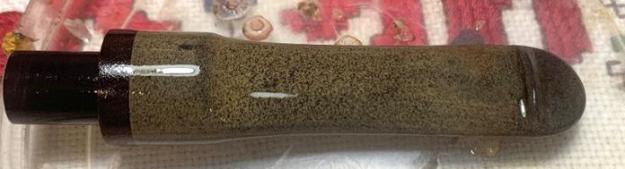
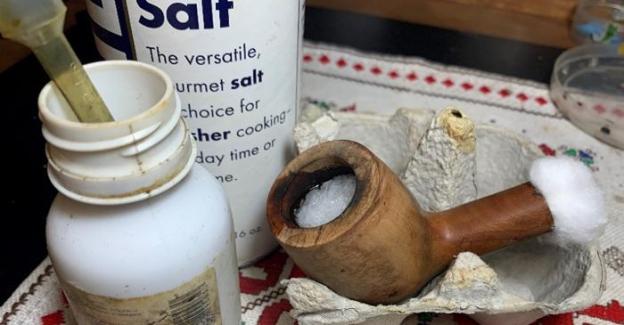
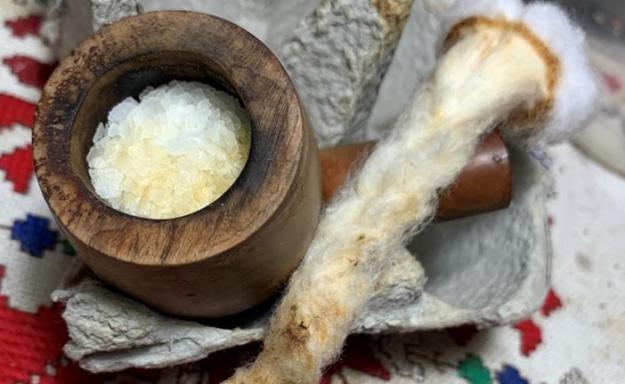
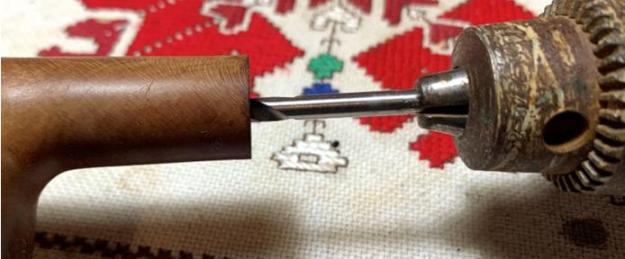
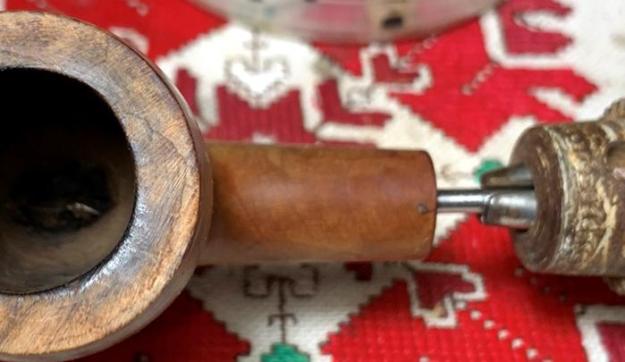
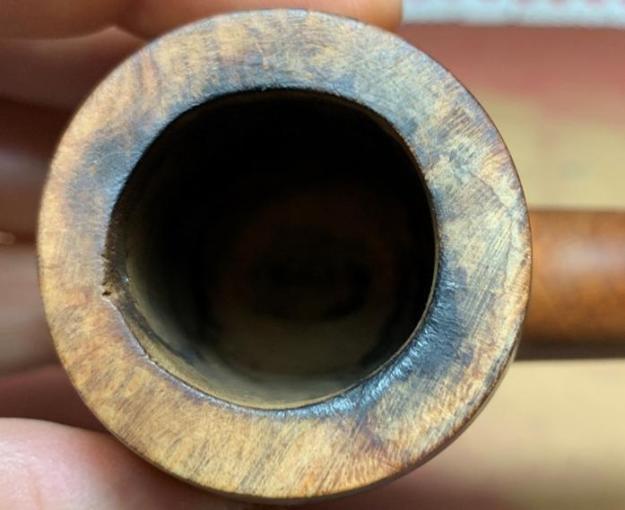
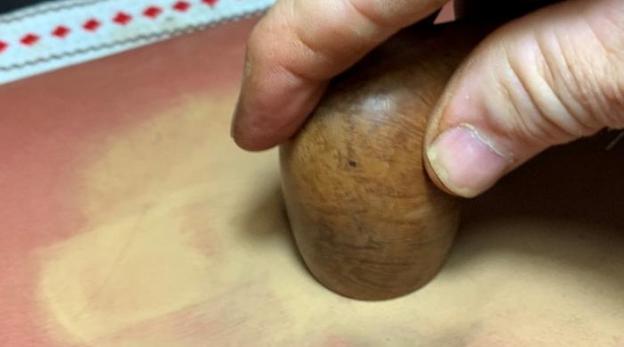
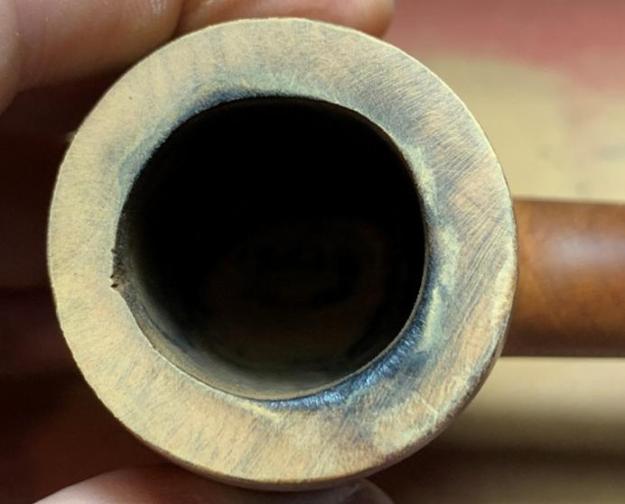
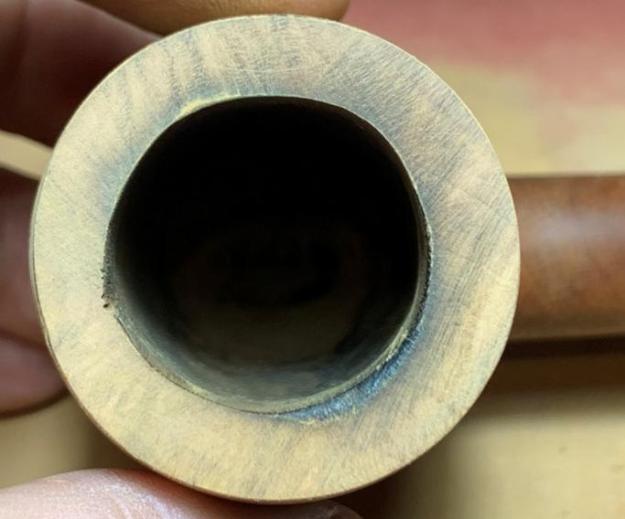
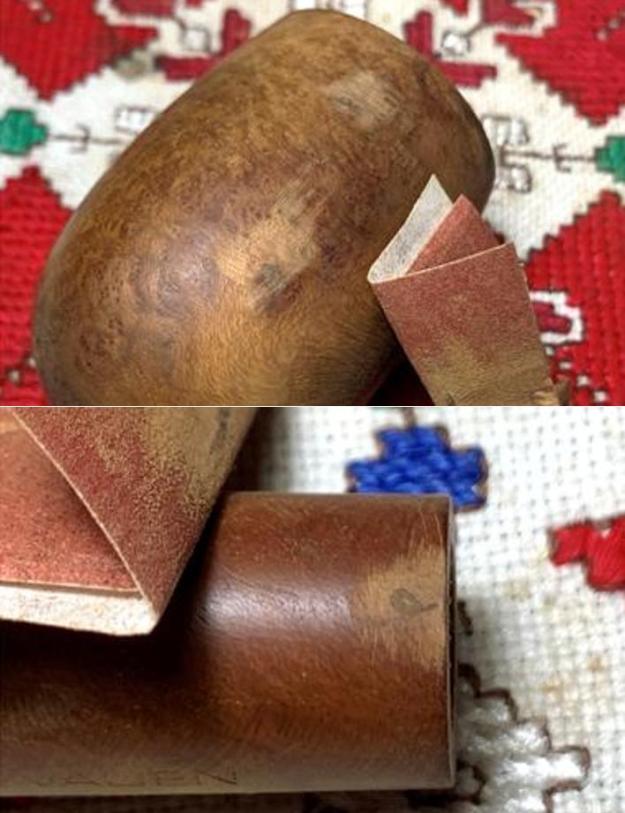
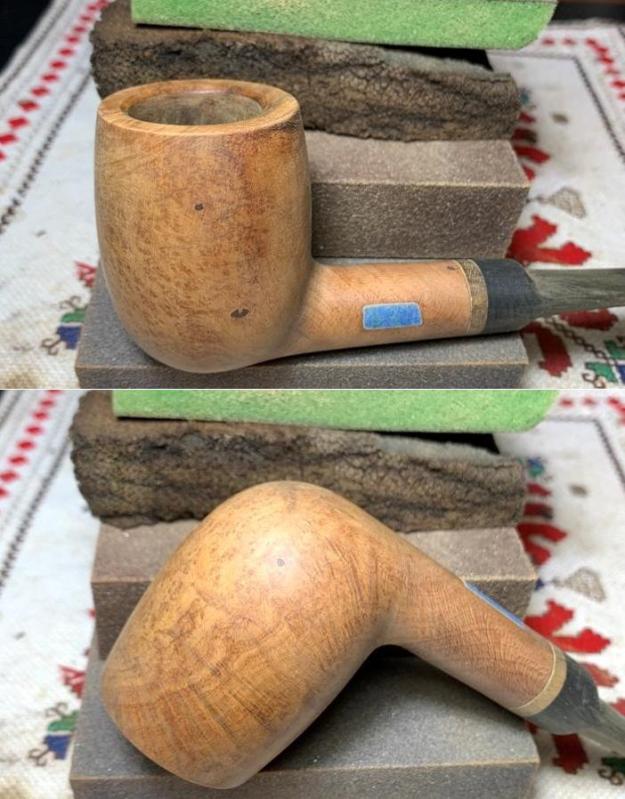
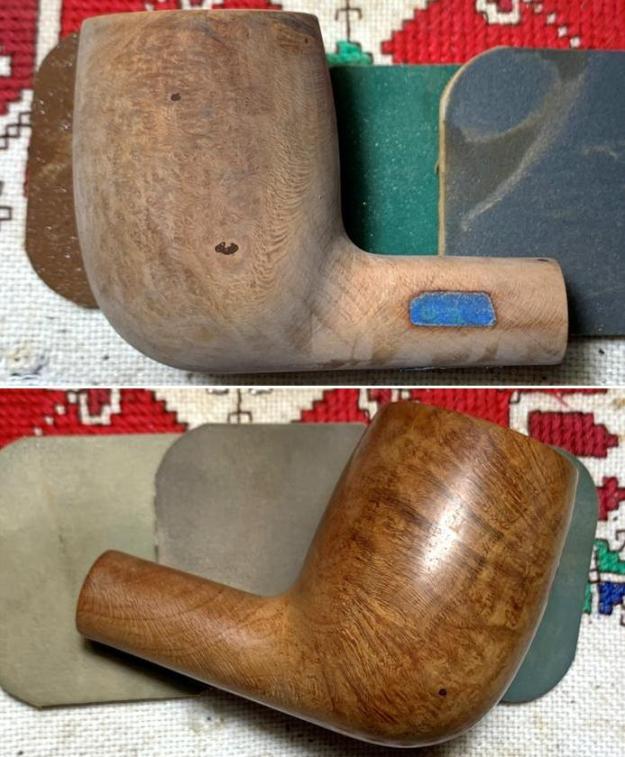
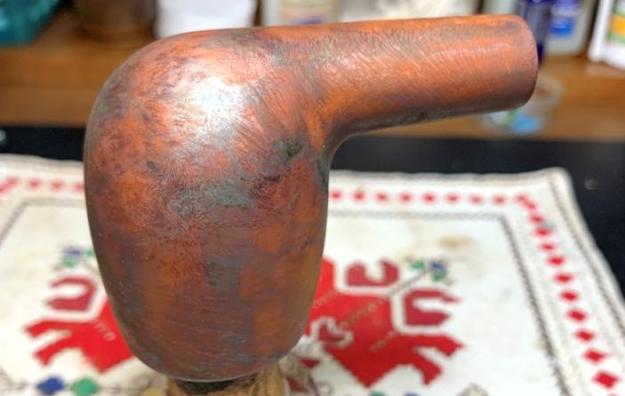
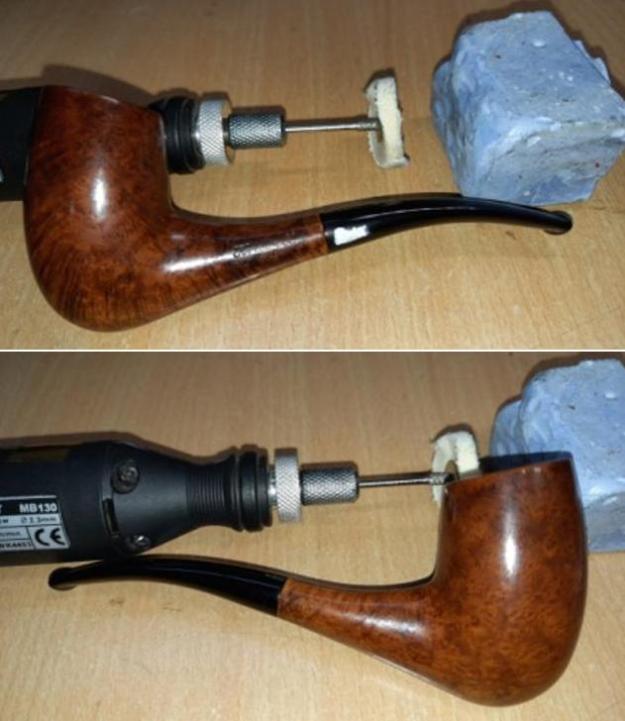
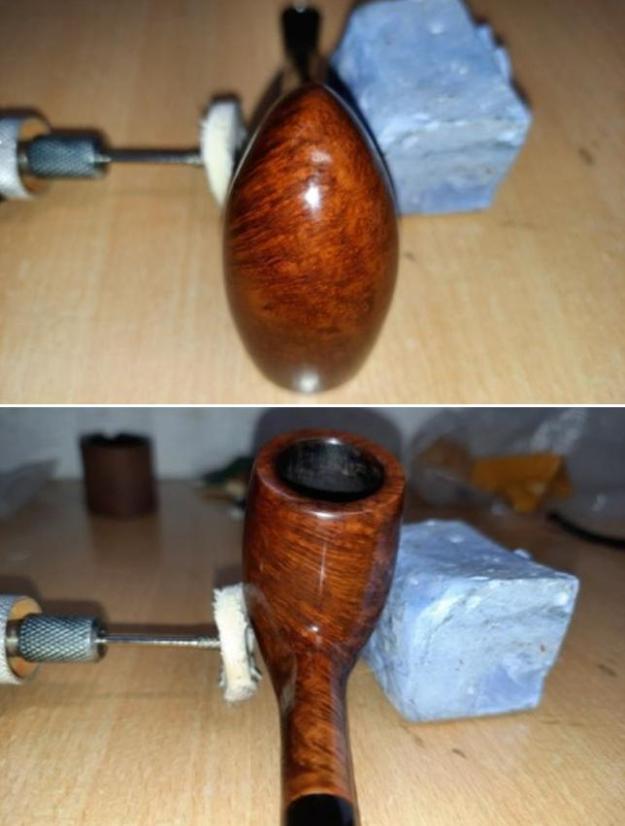
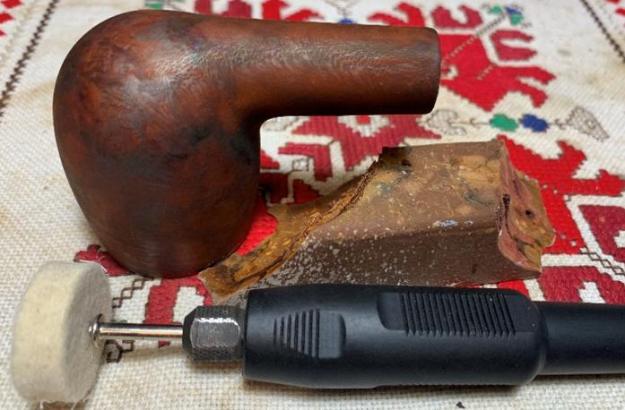
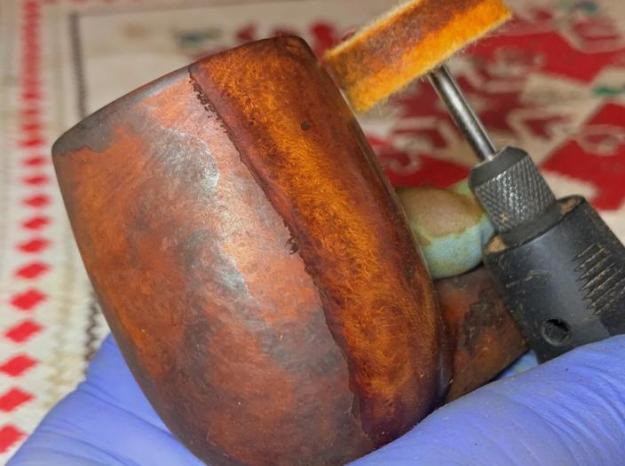
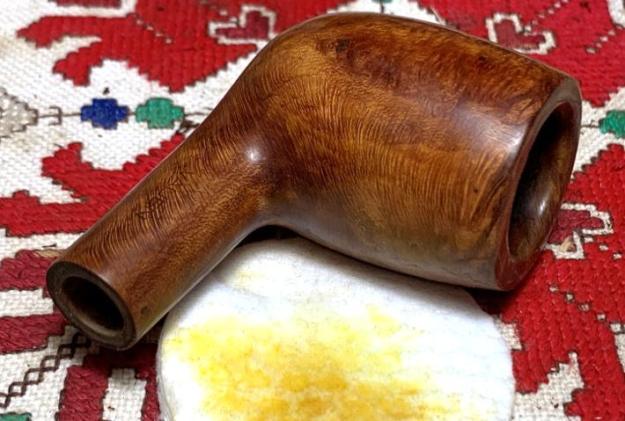
The newly dyed stummel has been resting for several hours and it is time for one of my favorite parts of restoration. I have applied a Tan hue which I believe will emulate the original VAUEN motif – a lighter and subtler contrasting with the grains. We will see! The rotary tool is mounted with a new felt buffing wheel and the speed is set a bit slower than normal – about 35% full power. I slow it down because using the coarser Tripoli compound and the abrasive felt buffing wheel provide a lot of friction and heating. I do not want to scorch the briar. The unwrapping process begins as the felt wheel clears the crusted shell from the flamed dye. The felt wheel is purged often during the process to clean and soften the felt. The picture below shows the gradual process of removing the excess dye to reveal the contrasted grains. I enjoy watching the grain emerge. After completing the heavy lifting with the felt wheel, not shown is the change to the cotton cloth wheel and another round of applying Tripoli with the speed of the rotary tool increased to about 50% full power. This helps to continue sharpening the grain and removing excess dye.Following the Tripoli, to blend the new dye and to remove the flamed dye excess debris, the stummel is wiped with a cotton pad wetted with alcohol.After reuniting the stem and stummel, another cotton cloth wheel is mounted, and the rotary tool’s speed is set to about 40% full power. The finer and less abrasive Blue Diamond compound is applied to the entire pipe. I decided to order a new Blue Diamond brick – it is becoming a bit tricky loading product onto the wheel!After the application of the Blue Diamond, the pipe is buffed with a felt cloth to remove the compound debris before applying the wax. The compound can cake up on the surface and needs a little help to be cleared. Well, I guess I forgot to take a picture of transitioning next to another cotton cloth buffing wheel mounted on the rotary tool to apply carnauba wax to the pipe. After application of the wax, the pipe is given a rigorous hand buffing to remove excess wax and to raise the shine.
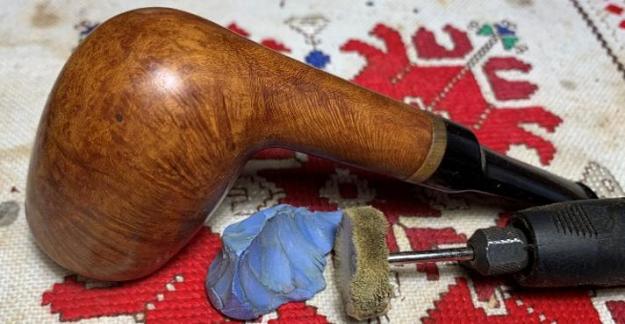
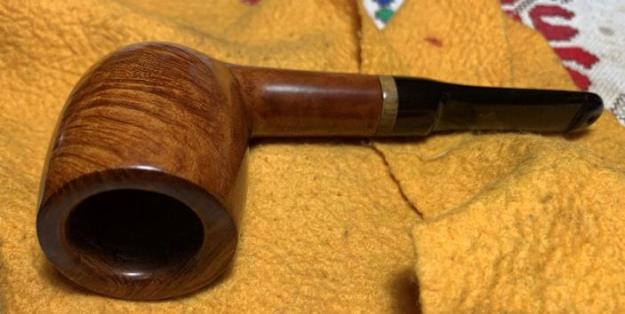
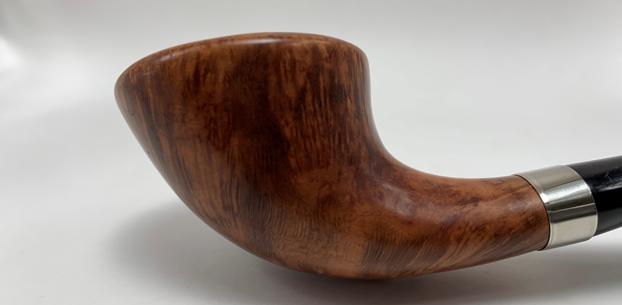
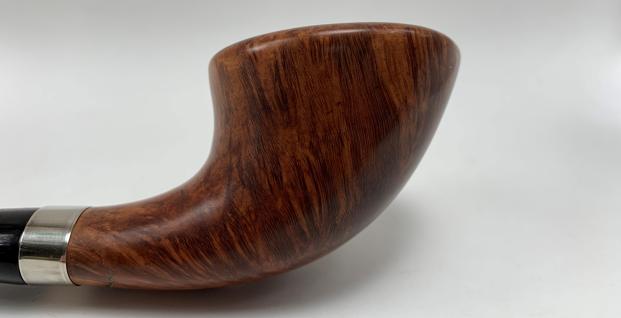
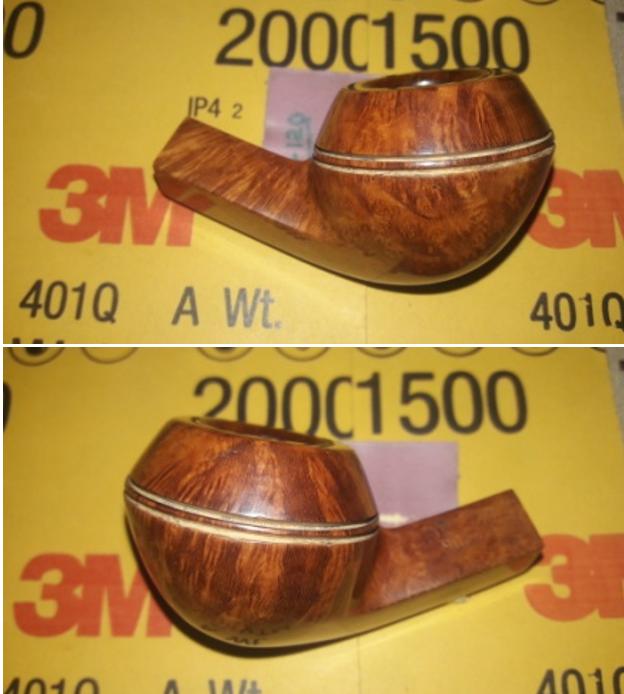
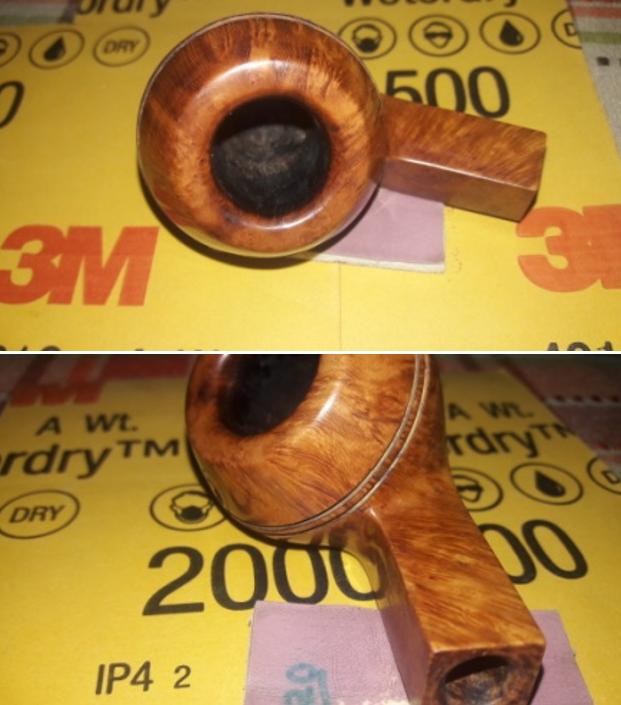
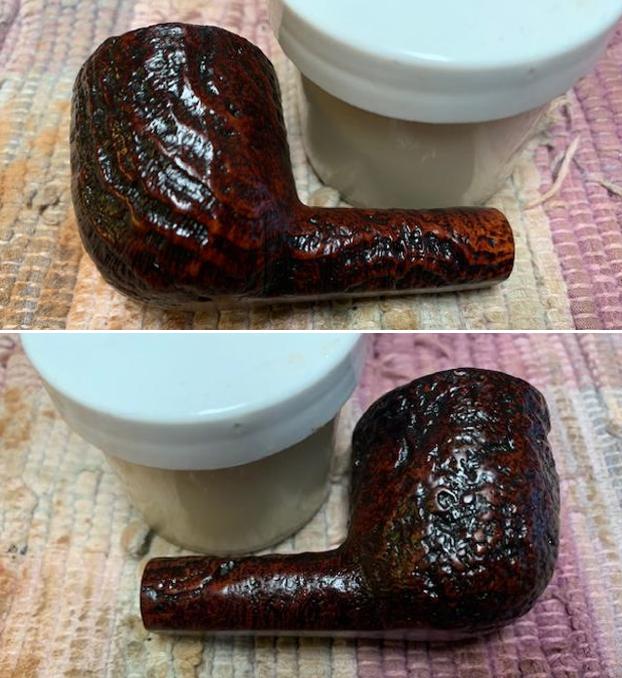
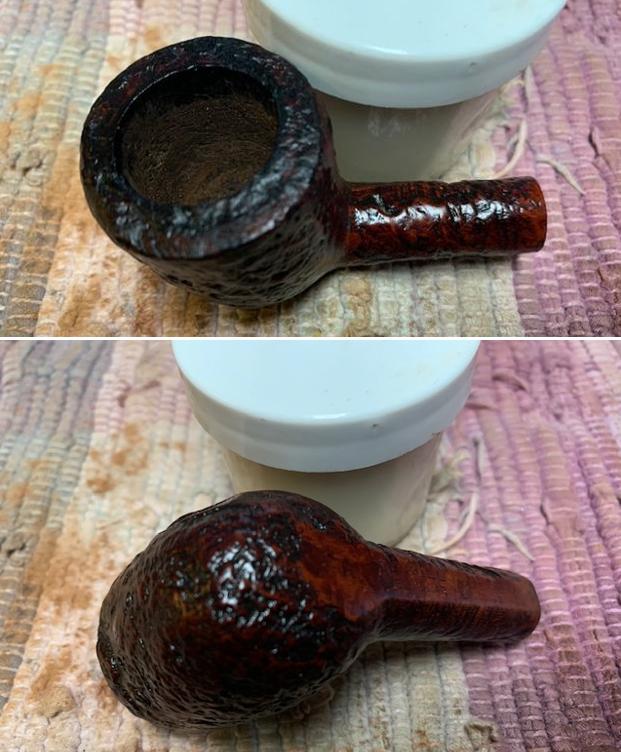
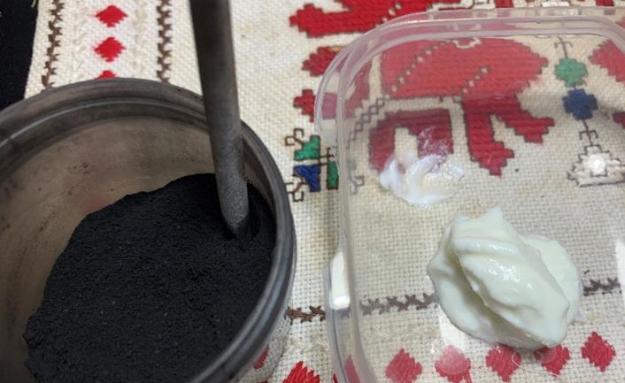
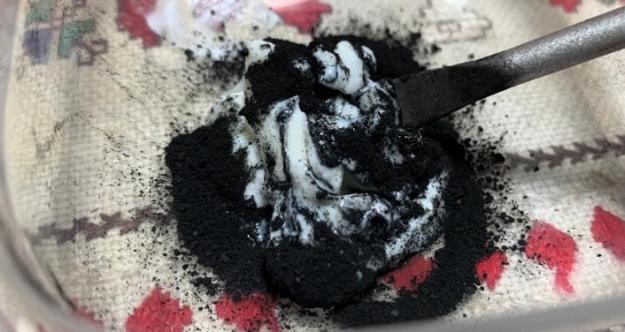
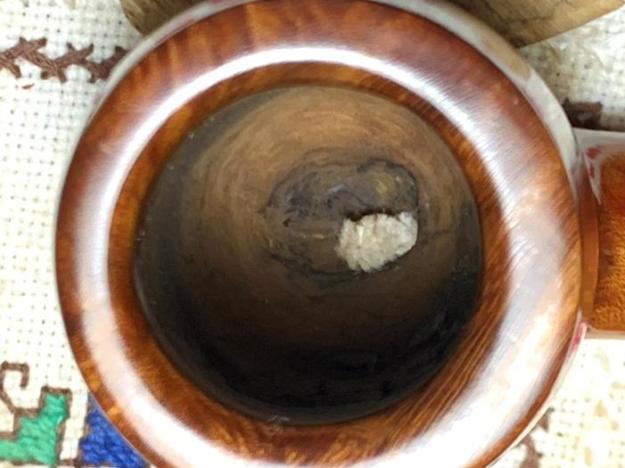
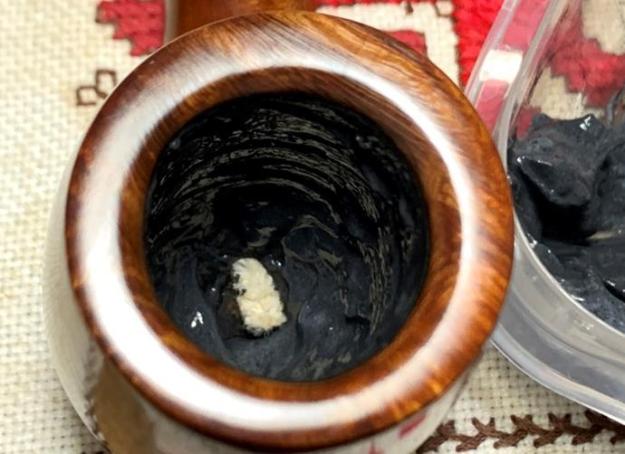
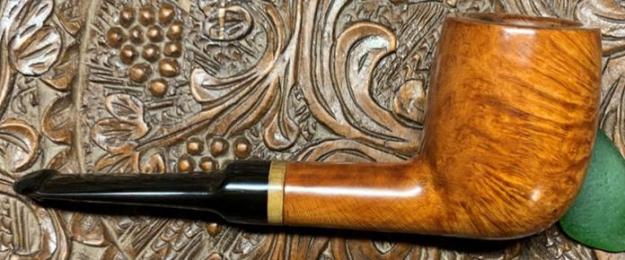
Earlier, after inspecting the chamber after the cake had been cleared, I observed that there were minor heating veins in the chamber wall. This is not a problem, but I decided to provide the chamber a coating of activated charcoal and yogurt to provide a starter for the development of a cake to protect the briar. The width of a healthy cake layer should be maintained at about the width of a dime. Applying the charcoal/yogurt mixture also provides a nice cosmetic upgrade in consideration of the pipe’s destiny as a gift for Lina. The yogurt is regular, non-flavored with whole milk – my wife’s yogurt 😊. A small amount of yogurt is placed in a plastic container. Charcoal powder is then added to the yogurt and mixed with the pipe nail tool. Charcoal is added gradually until it is thick enough not to drip off the tool – it hangs together. You do not want a runny mixture in the chamber.A pipe cleaner is inserted through the draft hole to block any of the mixture from clogging the airway.Next, I use the pipe nail carefully to trowel the mixture into the chamber, starting at the floor, and spreading the mixture over the chamber surface. When I get to the top, I can easily remove any stray mixture on the rim and leave a smart, dapper line at the foot of the bevel. It looks good. The stummel is left in an upright position to allow the cake starter to cure through the night. One word to the new steward – do not scrape the chamber with a metal tool after putting it into service for the first several times. Instead, using a folded pipe cleaner ‘brush’ the chamber to clear excess ash.The next morning, the pipe is given another rigorous hand buffing with a microfiber cloth. The quality and craftsmanship of this German made VAUEN 6294 P-lip Saddle Billiard is remarkable. I am pleased with the amazing resurrection of the grain presentation. Expressive and lively lateral grain flank the sides of the bowl which result in the expected showcase of bird’s eye grain swirls on the fore and aft briar canvas. The stylish ring of wood, very characteristic of the ‘VAUEN’ style, provides an attractive transition from the colossal, handful of a bowl to the classic P-lip Saddle stem. Since Darren commissioned this pipe as a special gift for a special daughter, he has the first opportunity to claim the VAUEN from The Pipe Steward Store benefiting the Daughters of Bulgaria – helping women and girls who have been trafficked and sexually exploited. Thanks for joining me! So that we don’t forget how far we have come:
Refurbishing A Hardcastle’s “Drawal” # 27


Blog by Paresh Deshpande

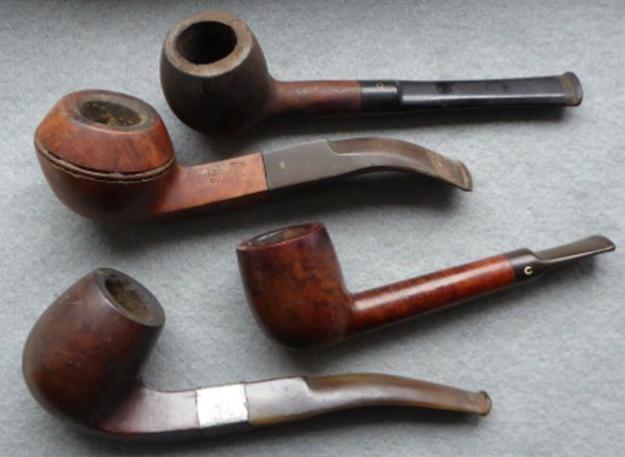
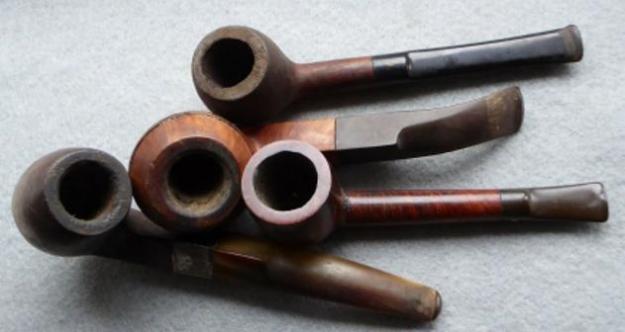
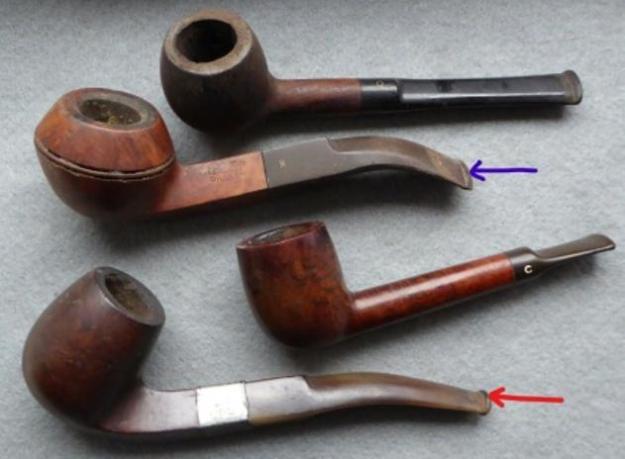
While surfing eBay for estate pipe lots, I came across a job lot that contained four estate pipes. The seller had not included any description for the item other than a simple statement that read “The lot is being sold as is. Pictures are part of description” or words to that effect. The worst part was that there were only two pictures that were posted by the seller!! Here are the pictures that were posted by the seller… I could make out one Orlik with dental stem, a Hardcastle’s Bulldog, one Comoy’s Lovat, and the last one was unidentifiable but appeared to be fitted with a horn stem. The pipes appeared to be in a decent condition and included some nice brand names. Soon the pipes reached Abha at my home town. I had restored the pipe with horn stem and it turned out to be a gem from an old and reputable maker “Salmon (Barnett) & Gluckstein” from the period 1894 (guesstimated). Here is the link to the write up that was posted on rebornpipes;

Refurbishing an 1894 (?) Hallmarked “S & G” Square Shank Bent Billiard With a Horn Stem | rebornpipes

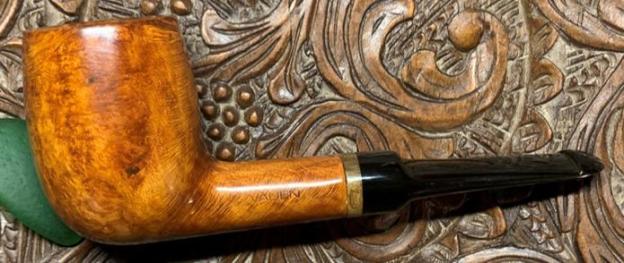
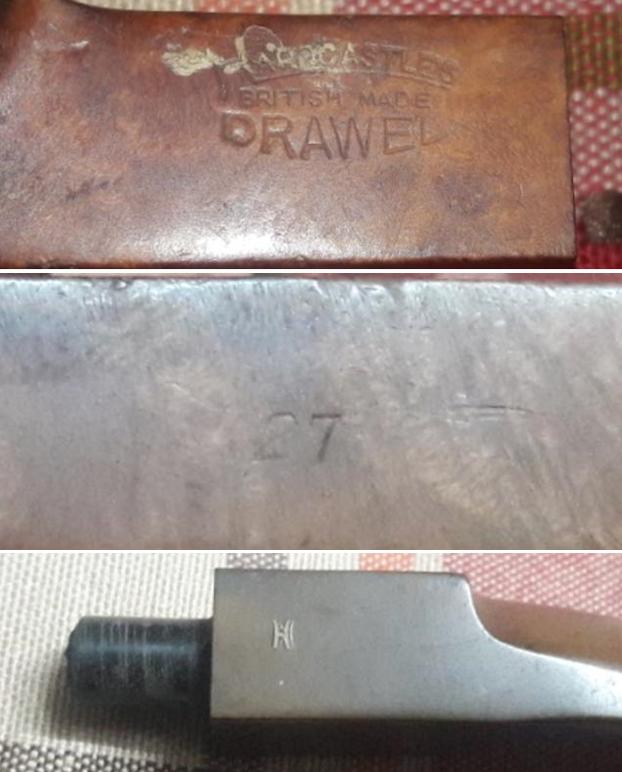
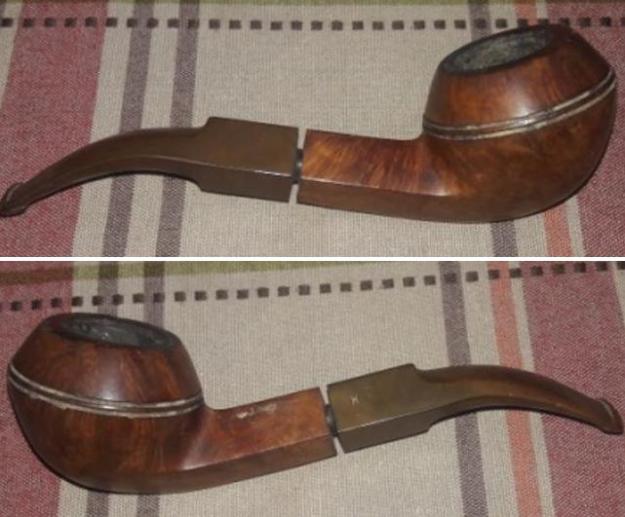
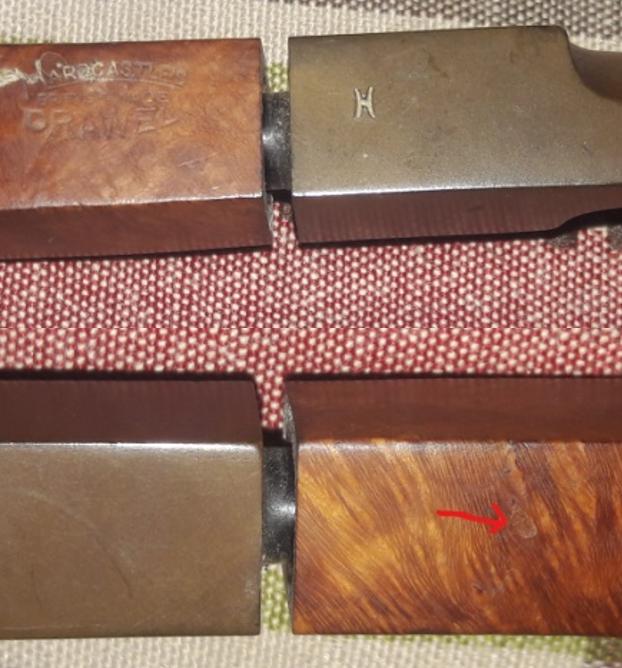
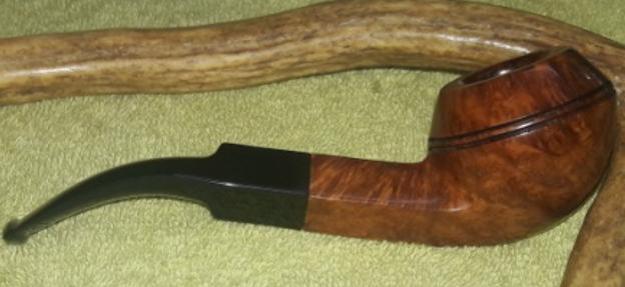
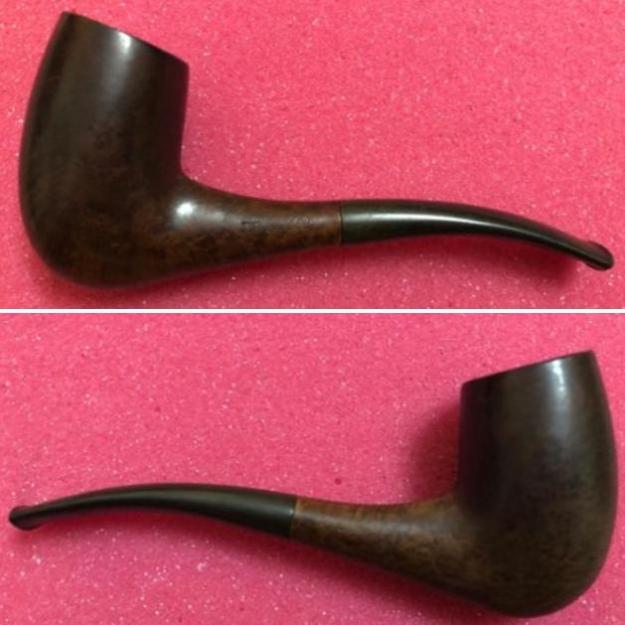
The 2nd pipe that I selected to work on from this lot is the Hardcastle’s Bulldog and is indicated with indigo blue arrow.The pipe is a classic Bent Bulldog with a diamond shank and a saddle vulcanite stem with a push-fit tenon. It is a medium sized pipe with a nice hand feel and a nice heft to it. The pipe may not have fantastic flame grains to boast, but has a beautiful mix of bird’s eye and straight grains scattered around the stummel surface and is without a single fill. The briar piece used to carve this pipe is of top quality and the construction and finish of the stummel and mouthpiece feels top notch too. It is stamped on the left shank panel as underlined “HARDCASTLE’S” in an arch in capital letters over “BRITISH MADE” over “DRAWEL” in an opposite arch forming a rugby ball shaped stamping. The right shank panel bears the shape code # 27 in the centre. The high quality saddle stem bears the trademark logo “H” on the left face of the saddle. The stampings are crisp and easily readable and shown below.I had cleaned up a Hardcastle’s Royal Windsor, a quaint lightweight sandblasted straight billiards with ring grains all round even before I started posting my work on rebornpipes and had read about the marquee. I remembered the brand to be British that was taken over by Dunhill and eventually relegated to being a seconds brand to even Parker, also taken over by Dunhill. To refresh my memory and relive the painful demise of a classic quality pipe maker from Britain, I visited pipedia.org. I have reproduced the snippets of relevant information for easy referencing of the esteemed readers.

Hardcastle – Pipedia

Hardcastle was founded in 1908 by Edmund Hardcastle and built itself a good reputation among the numerous British mid-graders. In 1935 Dunhill started to build a factory next door to Hardcastle in Forest Road, Walthamstow, London E17. The family owned Hardcastle Pipes Limited sold 49% of its equity to Dunhill In 1936.

Along with closing down its pipe factory in Notting Hill in 1946 Dunhill bought the remaining shares, turning Hardcastle into a 100% Dunhill subsidiary. As members of the Hardcastle family continued as executives in the company’s management Hardcastle retained a certain independence.

This ended in 1967. Dunhill merged Hardcastle with Parker (100% Dunhill as well). The new Parker Hardcastle Limited also absorbed the former Masta Patent Pipe Company. Hardcastle’s Forest Road plant was immediately given up and the production of Hardcastle pipes was shifted to Parker’s nearby St. Andrews Road factory – now consequently called Parker-Hardcastle factory.

In fact this put a definite end to Hardcastle as an own-standing pipe brand, and none other than Edwin Hardcastle, the last of the family executives, spoke frankly and loudly of Hardcastle pipes being degenerated to an inferior Dunhill second.

Today Hardcastle pipes use funneled down bowls that are not deemed suitable to bear the Dunhill or even the Parker name (as well as obtaining briar from other sources).

Timeline

  • 1903: Edmund Hardcastle establishes the brand
  • 1936: Family sells 49% of the Hardcastle Pipes Limited shares to Dunhill
  • 1946: Dunhill buys the remaining shares, but the family continues to manage the company
  • 1967: Dunhill merges Hardcastle with Parker. The new Parker-Hardcastle Limited company absorbs the Masta Patent Pipe Company also.
  • After 1967 it is speculated that Hardcastle became the brand for “Parker Seconds”

John Loring states in “The Dunhill Briar Pipe – ‘the patent years and after'” that in the absence of sales receipts, or other items of provenance, Hardcastles cannot be accurately dated. Loring further states that he knows of no way to distinguish the briar source when looking at Hardcastle, Parker, or Parker-Hardcastle pipes.

Models & Grades
Family Period
Straight Grain, Supergrain, Leweard, Nut Bruyere, De Luxe, Royal Windsor Sandhewn, Royal Crown, The Crown, Phito Dental, Old Bruyere, Jack O’London, Dental Briar, Phito, Dental, Dryconomy, Drawel, Phithu, Telebirar, Camden, Lightweight, The Table, Dovetail, Dental, Crescent Extra, Lonsdale, Welard De Luxe

Thus from the above, it is evident that the pipe on my work table is from the family era and made prior to 1967 when Hardcastle became the brand for “Parker Seconds”.

Initial Visual Inspection
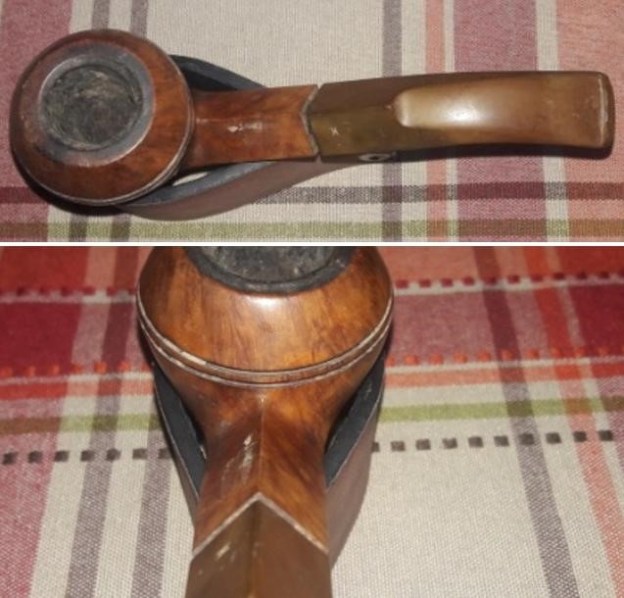
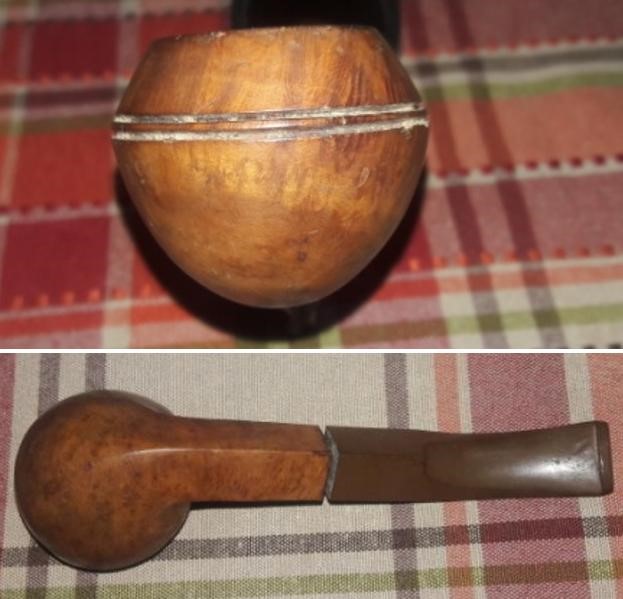
This pipe has the classic Bent Bulldog shape with a diamond shank and a medium sized bowl. The stummel boasts of some beautiful bird’s eye and cross grains all over the bowl and shank. The stummel surface is covered in dirt and grime of the overflowed lava. There is not a single fill in the briar which speaks of high quality selection of the briar. There is a thick layer of cake in the chamber. The saddle vulcanite stem is heavily oxidized with tooth chatter and light tooth indentations on either surface in the bite zone. The stem does not seat flush with the shank face. The set of pictures below shows the condition of the pipe when it had reached us. Detailed Inspection Of The Pipe And Observations
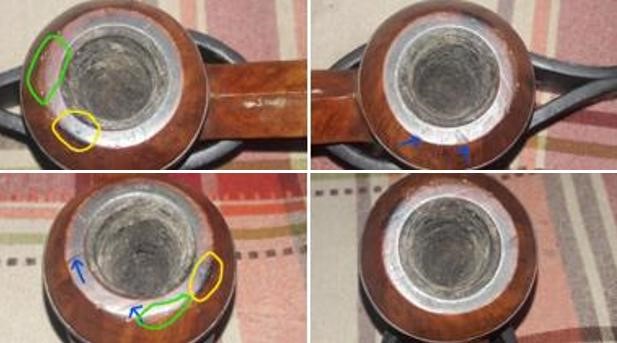
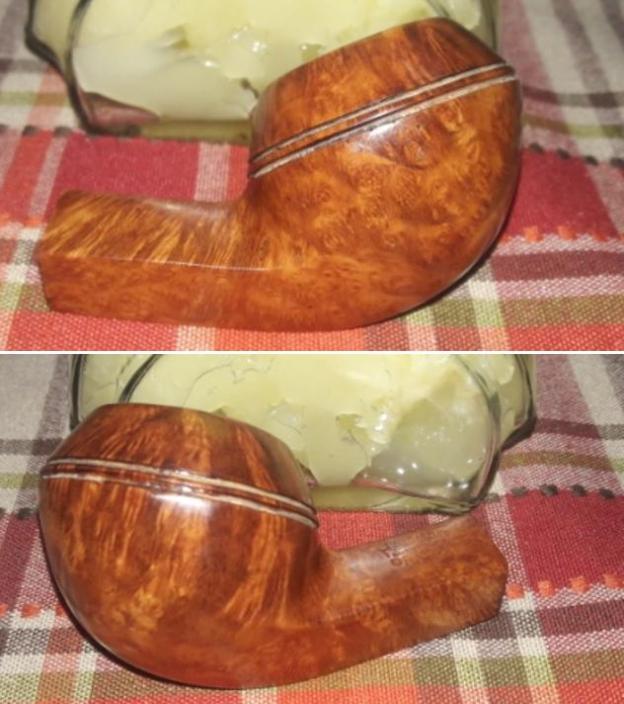
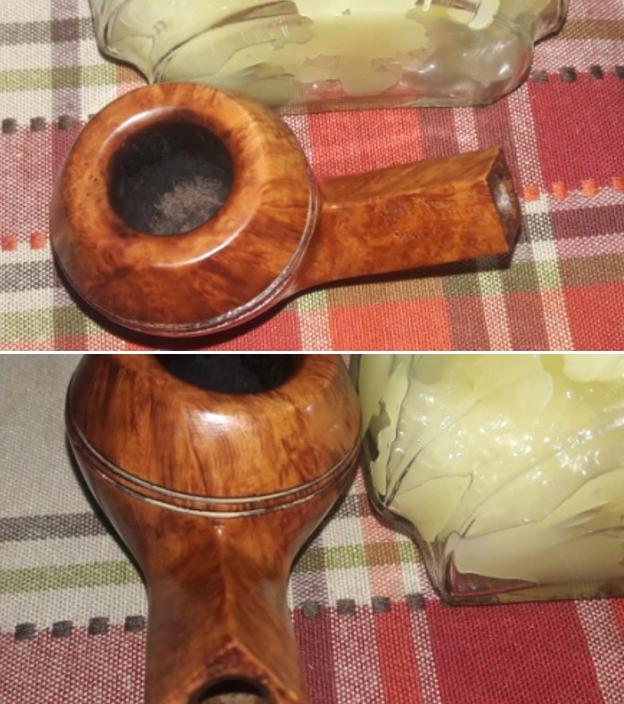
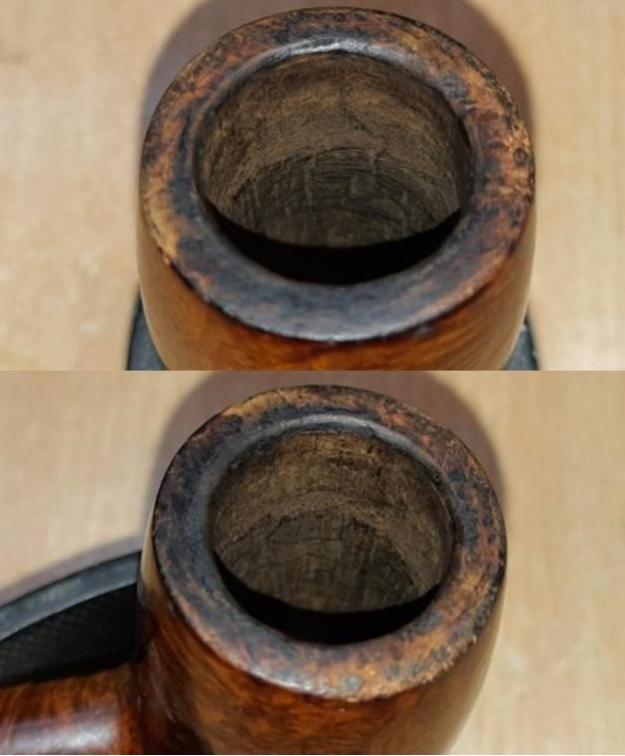
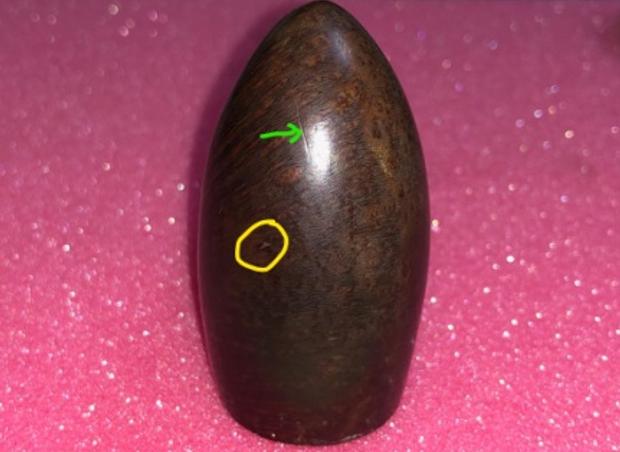
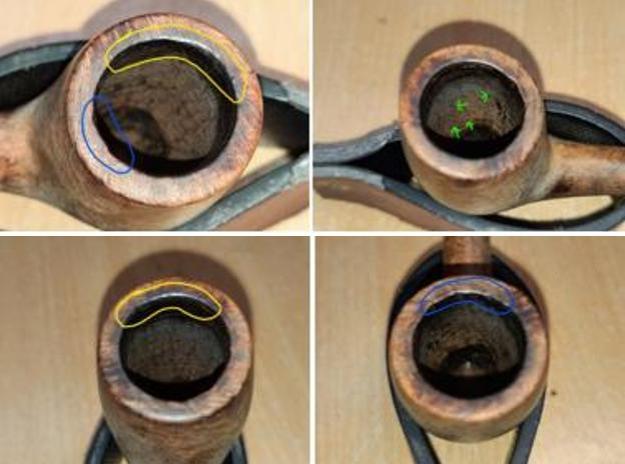
The chamber has an even layer of thick cake. The smooth rim top surface shows a couple of dents/ dings (indicated with blue arrows) and is covered in lava overflow, dirt and grime from previous usage. The outer rim edge has a charred spot in 10 o’clock direction (encircled in yellow) and has suffered a few blows on a hard surface resulting in a few chipped edge surfaces in 12 o’ clock direction (encircled in green). The inner edge appears to be in decent condition. The condition of the inner walls of the chamber can be commented upon after the cake has been taken down to the bare briar. The chamber exudes a very strong odor of old tobacco. The draught hole is dead center at the bottom of the chamber and that makes me believe that it should be a great smoke and the thick cake in the chamber lends credence to this observation. The stummel appears solid to the touch all around and hence I do not foresee any serious damage to the walls in the form of a burnout/ deep heat fissures/ lines or pits. To address the damage to outer rim edge, I shall create a slight bevel over the rim edge. Topping the rim surface should address the dents and dings over the rim top surface. The reaming and subsequent cleaning of the chamber and mortise should reduce the ghost smells from the chamber.The smooth stummel surface is covered in lava overflow that has attracted a lot of dust and dirt. The natural hued briar has taken on a layer of aged patina through which one can make out the beautiful cross grains that adorns most of the stummel surface and Bird’s eye grain at the foot and bottom of the shank. There are a few dents and chipped areas over the bowl cap (encircled in yellow), probably due to falls and or rough, uncared for handling of the pipe. Close observation of the stummel surface under magnification has revealed three very minute fills, two at the front of the bowl and one on the shank (indicated by red arrows) in the entire stummel. The double ring that separates the cap from the rest of the bowl is uneven but intact; however, it is filled with dust, dirt and grime. The briar looks lifeless and bone dry and has taken on dull dark hues. The mortise shows heavy accumulation of oils, tars and gunk and due to which the air flow is not full and smooth. Thorough cleaning of the stummel surface and rinsing it under warm water should highlight the grain patterns. This cleaning will further reveal any other damage to the stummel surface. In all probability, I shall let the minor fills in the stummel surface remain and avoid the process of refreshing these fills. The dents and dings to the bowl cap and the rest of the stummel will be addressed to an extent once the stummel is sanded and polished using micromesh pads.

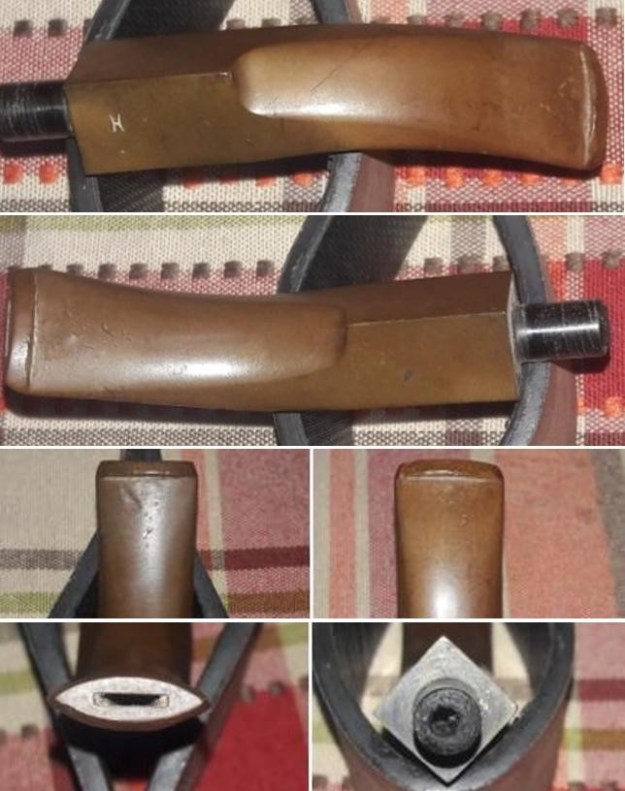
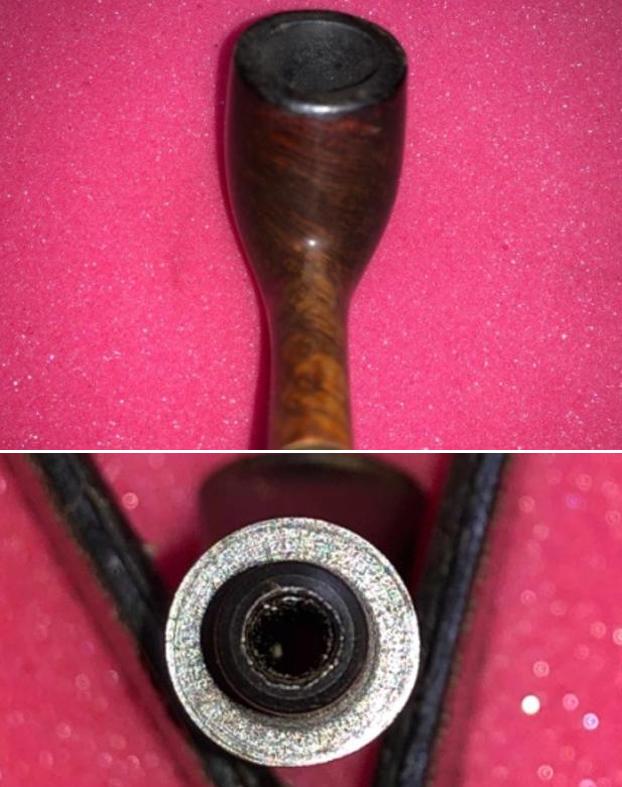
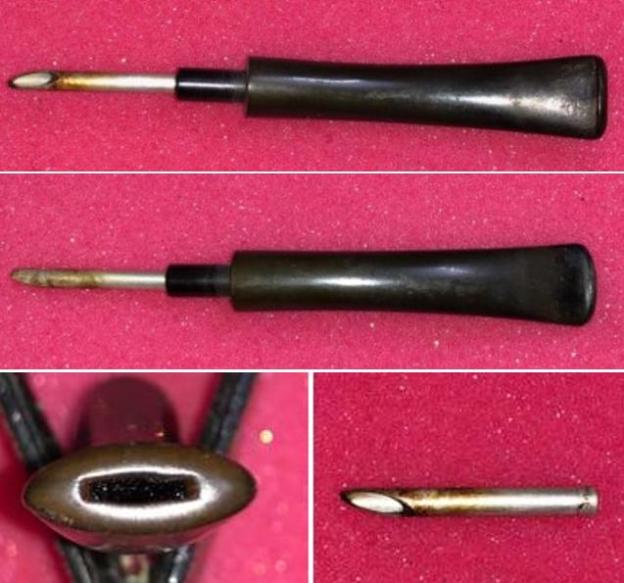
The seating of the stem tenon into the mortise is not flush. The most probable reason for this could be the accumulated gunk in the mortise. Thorough cleaning of the mortise should address this issue. The minor fill in the shank described above, is indicated with a red arrow. The vulcanite saddle stem is heavily oxidized. The bite zone has tooth chatter on either surface. The lower stem surface has deep tooth indentation that, in all probability, would need to be filled. The button edges on both surfaces have minor bite marks and would need to be sharpened. The tenon is smeared in oils and tars and grime and so is the horizontal slot. The high quality saddle stem bears the trademark logo “H” on the left face of the saddle and would need to be refreshed/ highlighted. Overall, the stem is in a decent condition and the high quality of the vulcanite means that it should take on a nice shine readily.The Process
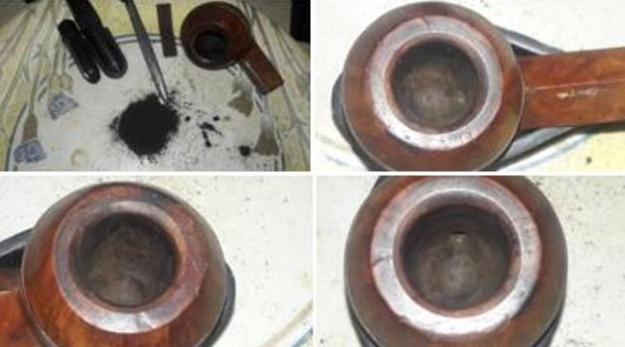
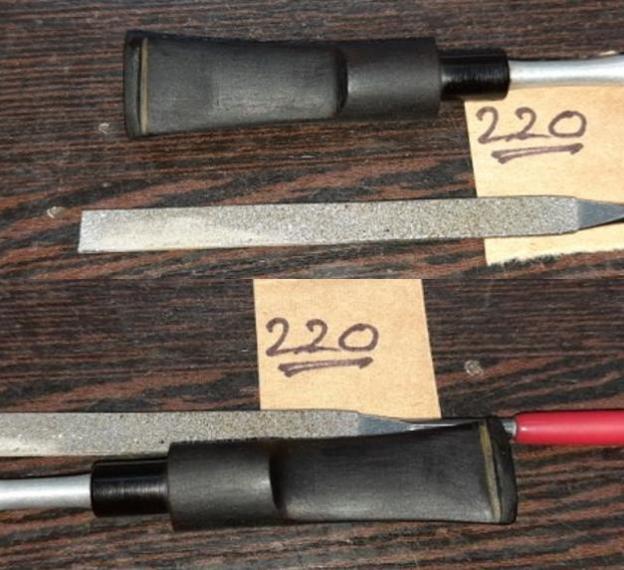
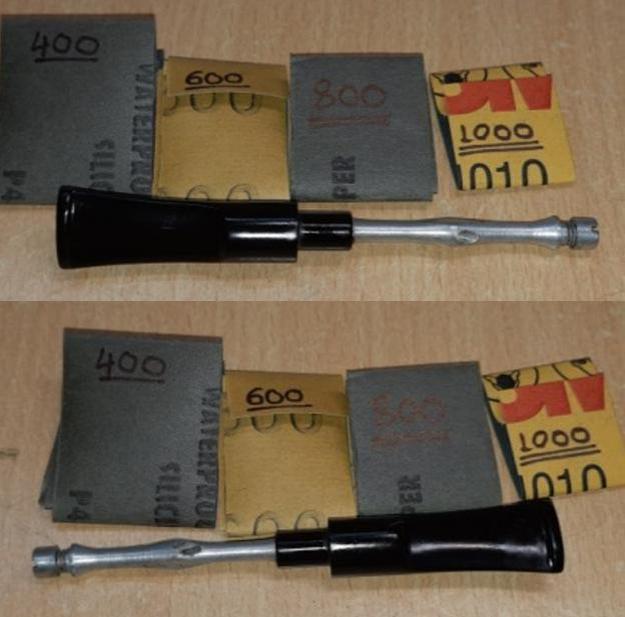
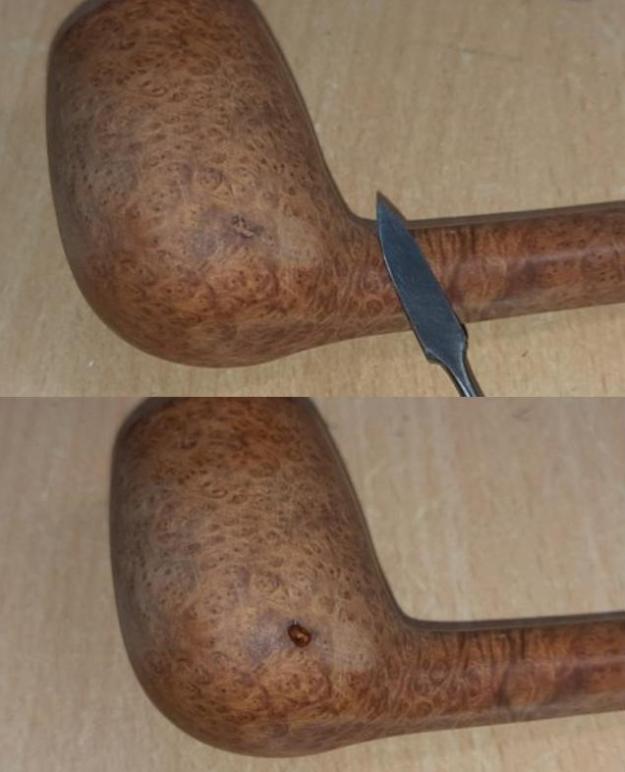
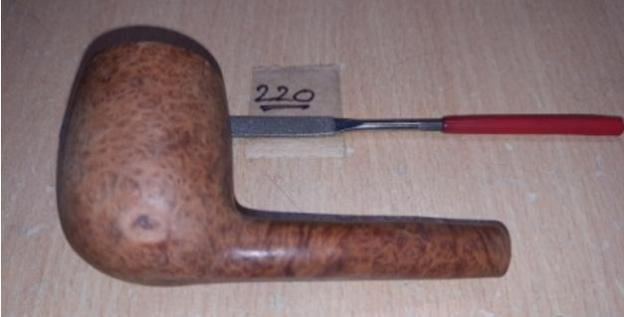
I started the restoration of this pipe by reaming the chamber with size 1 and 2 heads of the` Castleford reamer. With my fabricated knife, I further scraped the chamber walls to remove the remaining carbon deposits and also scraped out the lava overflow from the rim top surface. Once the cake was reamed back to the bare briar, I used a 220 grit sand paper to remove all the traces of remaining cake and also to smooth out the inner walls of the chamber surface. Finally, to remove the residual carbon dust, I wiped the chamber with a cotton pad wetted with 99.9% pure isopropyl alcohol. The chamber walls are in pristine condition with no signs of heat lines/ fissures. The beveled inner rim edge shows signs of minor charring in the 10 ‘O’ clock direction which will be addressed by light sanding along the beveled edge. This charring further extends to the outer rim edge as well and will be addressed while topping the rim top. The rim top surface itself is peppered with dents/ dings and scratches which will be smoothed by topping. The problem of the chipped outer edge will be resolved during the topping of rim surface followed by creating a slight bevel, if need be. The ghost smells are still very strong and may further reduce after the shank/ mortise are thoroughly cleaned. This was followed by cleaning the mortise with cue tips, pipe cleaners and shank brush dipped in isopropyl alcohol. I scraped the walls of the mortise with my fabricated knife to remove the dried oils and tars. The mortise was a bear to clean and the heap of pipe cleaners, q-tips that were used and the pile of scraped out gunk is an indication of how dirty the shank internals were. The old smells of the tobacco are still strong and would need more invasive methods to get rid of these odors.With the bowl internals clean, I moved to clean the exterior of the stummel. I used a hard bristled tooth brush and Briar Cleaner, a product that has been developed by Mark Hoover, to scrub the stummel and rim top. I set the stummel aside for 10 minutes for the product to draw out all the grime from the briar surface. After 10 minutes, I washed the stummel under running warm water with anti oil dish washing detergent till the stummel surface was clean and dried it using paper towels and a soft cotton cloth. I simultaneously cleaned the shank internals with the detergent and hard bristled shank brush and set the stummel aside to dry out naturally. I diligently cleaned the grooves between the bowl rings that separated the bowl cap from rest of the stummel surface. The stummel surface, including the rim top has cleaned up nicely with the beautiful grain patterns on full display. The lower edge of the bowl cap has chipped areas that were exposed during the cleaning of the grooves. I shall try to even it out by sanding in between the grooves with a folded piece of 220 grit sandpaper. The three very small fills that I had noticed under magnification, are all solid and refreshing them is not required. I shall subject the chamber to cotton and alcohol treatment to eliminate the ghost smells completely as the smell is still very strong. Next I cleaned the internals of the stem with bristled pipe cleaners and 99.9% pure isopropyl alcohol. With my fabricated knife, I gently scraped out the dried gunk from the tenon end and the horizontal slot. I further cleaned out the stem internals with a shank brush and dish washing liquid soap. Once the stem internals were cleaned, I sanded the entire stem surface with a 220 grit sand paper in preparation for dunking the stem in Before and After Deoxidizer solution.I thereafter, dropped the stem in to “Before and After Deoxidizer” solution developed by my friend Mark Hoover. The solution helps to draw out heavy oxidation to the surface, making it’s further removal a breeze, while the minor oxidation is eliminated to a very great extent. The initial sanding helps to draw out the complete oxidation as the sanding opens up the stem surface that has been initially covered with oxidation. I usually dunk stems of the pipes that are in-line for restoration and this pipe is marked in a pastel blue arrow. I generally allow the stems to soak overnight for the solution to do its work.While the stem was soaking in the deoxidizer solution, I continued the cleaning of the chamber and shank internals with a salt and alcohol bath. I used cotton balls which is an at par substitute as I have realized over the years. I drew out a wick from the cotton and along with a folded regular pipe cleaner; inserted it into the mortise and through the draught hole into the chamber. Thereafter, I packed the chamber with cotton balls to about quarter of an inch below the inner rim edge and soaked the cotton balls with isopropyl alcohol up to the brim. About half an hour later, the level of alcohol had gone down, having being absorbed by the cotton. I topped it up once again and set it aside overnight. By the next morning, the cotton and alcohol had drawn out all the remaining oils and tars from the chamber and mortise, fulfilling its intended task. I removed the cotton balls and ran pipe cleaners through the mortise to clean out all the loosened tars and gunk and further cleaned it with alcohol and q-tips. The chamber now smells clean and fresh. I set the stummel aside to dry out naturally.The next morning, after I had cleaned the chamber and shank, I removed the stem that had been soaking in the deoxidizer solution overnight. I cleaned the stem and the stem airway under running warm water and scrubbed the raised oxidation from the stem surface using a Magic Eraser pad followed by Scotch Brite pad and the airway with a thin shank brush. I further removed the oxidation by scrubbing the stem with 0000 grade steel wool and applied a little EVO to rehydrate the stem. This now gives a clearer picture of the extent of depth of the bite marks as can be seen in the pictures below. These will definitely require a fill even after I have heated and raised the vulcanite. I need to rebuild the entire button edges on both the upper and lower surface of the stem. Traces of stubborn deep seated oxidation can be seen, especially on the saddle portion of the stem that would need to be eliminated before polishing the stem.To begin repairs to the stem, I sanded the entire stem surface with a folded piece of 220 grit sand paper till the complete oxidation was eliminated from the stem and saddle portion in particular. I cleaned the entire stem and areas in the bite zone with cotton swab and alcohol. Next, I filled the tooth indentations in the lower surface with a mix of clear CA superglue and activated charcoal and set it aside to cure. After the glue had partially hardened on the lower surface, likewise, I filled the upper surface tooth marks and set the stem aside for the superglue to harden completely. Once the fill has hardened, I shall file and sand the fills to reconstruct the bite zone and the buttons on either surfaces and subsequently match it with the surface of the stem.I turned my attention to address the damage to the stummel. I next decided to smooth the rim top surface dents/dings and the charred surface in 10 o’clock direction extending from inner to outer rim edge. I topped the rim top surface on a piece of 220 grit sand paper, checking frequently for the progress being made as I hate to loose briar estate any more than absolutely necessary. The darkened rim top extending from inner to outer edges can still be seen, though much greatly reduced. With a folded piece of a 220 grit sand paper pinched between my thumb and forefinger, I cleaned the bevel on the inner edge of the rim top surface to minimize the darkening. This helps to mask and address the minor dents and dings that had remained on the rim edges after topping. I am careful so as not to alter the profile of the stummel by excessive topping or creation of the bevels. I am pretty pleased with the appearance of the rim top and edges at this stage. The following pictures show the progress being made and improvements to the inner and outer rim edges.I followed it by wet sanding the stummel with 1500 to 2000 wet & dry sand paper and further with 3200 to 12000 grit micromesh pads, wiping frequently with a moist cloth to check the progress. The minor outer rim damage was repaired to a very large extent and so was the darkening during this process. I really like the looks of the stummel at this point in restoration. The grain and the clean classic lines of this pipe are worthy of appreciation. At this point in the restoration, I remembered that I had to even out the lower edge of the bowl ring. I firstly cleaned the debris that was lodged in between the rings with a sharp knife after the sanding and polishing process. I folded a piece of 220 grit sand paper and inserting it into the grooves, evened out the edges.Next, I rubbed a small quantity of “Before and After Restoration Balm” deep in to the briar with my finger tips and let it rest for a few minutes. The balm almost immediately works it’s magic and the briar now has a nice vibrant appearance with the beautiful grain patterns displayed in their complete splendor. I further buffed it with a horse hair brush. The contrast of the dark browns of the Bird’s eye and cross grains with the natural patina of the rest of the stummel adds an interesting dimension to the appearance of the stummel which may be insufficiently described in words and be rather seen in person. With the stummel rejuvenation almost complete, save for the final wax polish, I worked the stem. The fill had cured and with a flat head needle file, I worked on the filling till I had achieved a rough match with the surrounding surface and had sufficiently sharpened the button edges. To bring a deep shine to the stem, I went through the complete set of micromesh pads, wet sanding with 1500 to 2000 wet & dry sand paper and further with 3200 to 12000 grit micromesh pads. I wiped the stem with moist cloth after each pad and rubbed it down with Extra Virgin Olive oil to rejuvenate the vulcanite. I am pretty happy with the way the stem repairs have shaped up and also the buttons have a nice delicate shape to them. The finished stem is shown below. I used a white correction pen to highlight the stem logo. I smeared the correction ink over the logo and once dried, I gently wiped out the excess ink. The stem logo “H” is now prominently visible.I have now reached the homestretch in this restoration project. To complete the restoration, I mounted a cotton cloth buffing wheel onto my hand held rotary tool and polished the stummel and stem with Blue Diamond compound. This compound helps to remove the minor scratch marks that remain from the sanding. I mounted another cotton buffing wheel that I have earmarked for carnauba wax and applied several coats of the wax. I finished the restoration by giving the entire pipe a rigorous hand buffing using a microfiber cloth to raise the shine further. The finished pipe looks amazingly beautiful and is ready to join my collection of other Hardcastle’s pipes that I have inherited. I only wish it could share with me it’s story of the past years while I enjoy smoking my favorite Virginia blend in it or maybe an English blend or maybe just keep admiring it!! A big thank you to all the readers who have joined me on this path by reading this write up as I restored and completed this project.

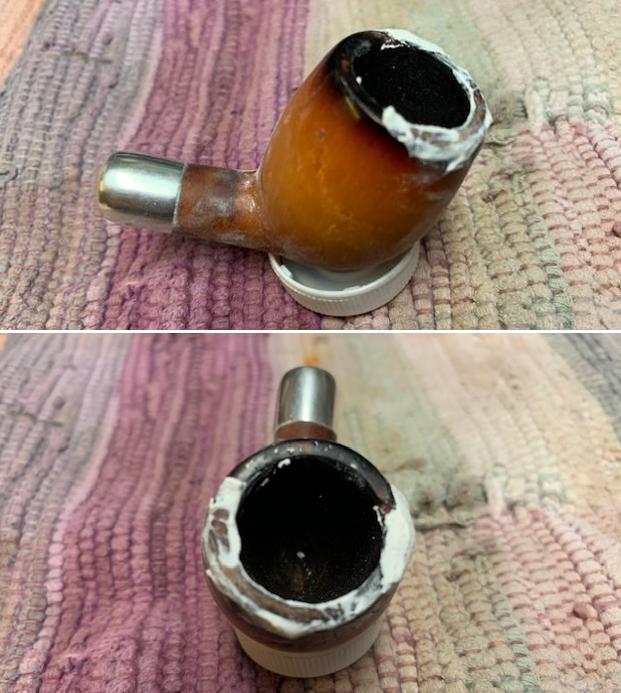
Breathing Life into a Badly Damaged Hardcastle Cased Meerschaum Egg


Blog by Steve Laug

I have finished restoring all two pipes from the collection of pipes that we purchased from the older gentleman. He sent me the photos and I was amazed at what I saw. You have seen many of the pipes that he had. These included Dunhill, BBB, Orlik, Barclay Rex, a cased Ben Wade, an H. Simmons all briar, Hardcastles and some Meerschaums. There were also some assorted others that I will get to in the days ahead. It was a great collection.

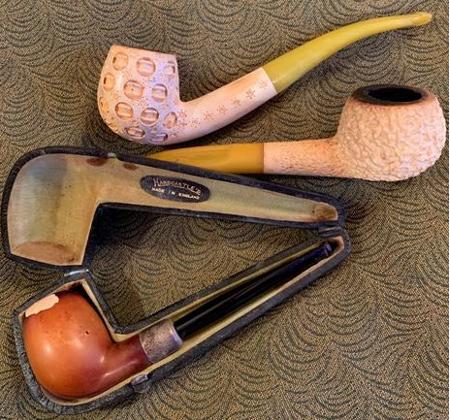
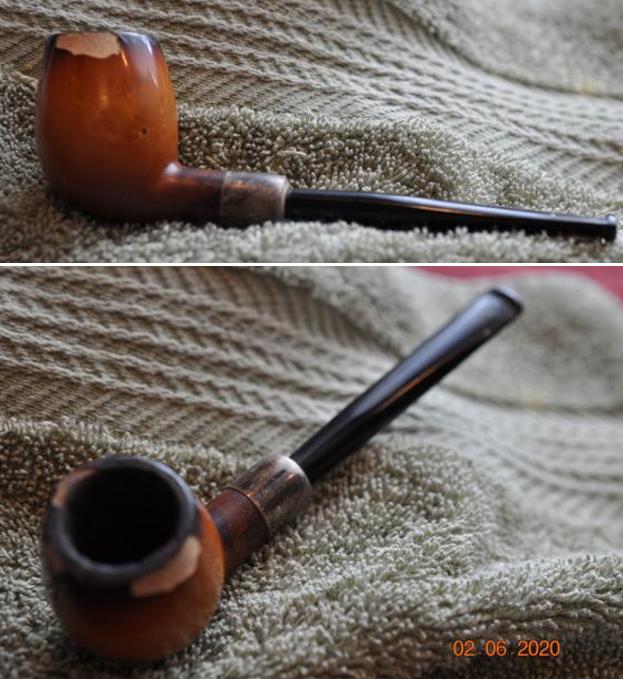
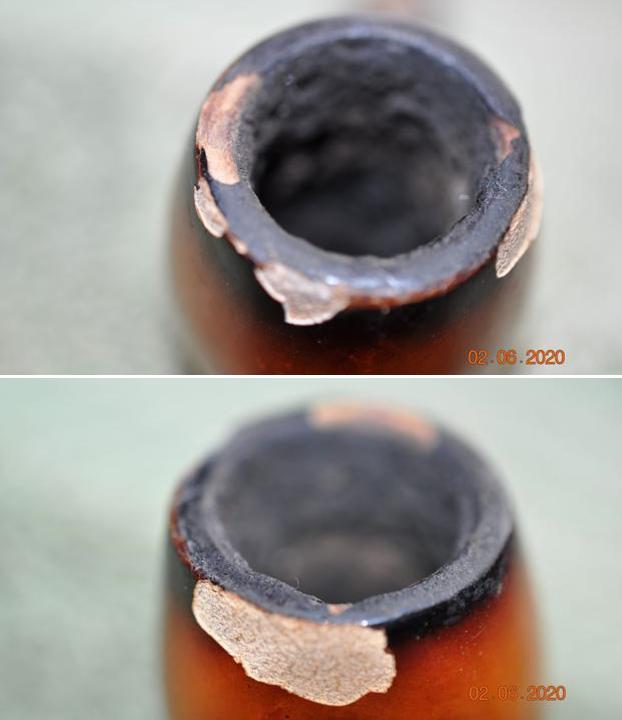
The next pipe I have chosen is a worn and damaged cased Hardscastle’s Meerschaum Egg. It had a flume around the top and down the outer edges of the bowl. It is the bottom pipe of the three meerschaum pipes in the photo above. There was a thick cake in the bowl and the rim top and edges were buried under a thick coat of lava. It was filthy both inside and out. The edges of the bowl on the top and down the sides was chipped and damaged leaving large gouges out of the sides of the bowl. The shape probably caught my eye because it is quite lovely even under the grime and wear. I think that the Hardcastle’s name made me want to try to redeem this old pipe. I have never worked on a meer like this one with this kind of damage. The stem is vulcanite and was in far better shape than the bowl. It had tooth marks and chatter on both sides ahead of the button. This was another well loved pipe that obviously been a good smoker!

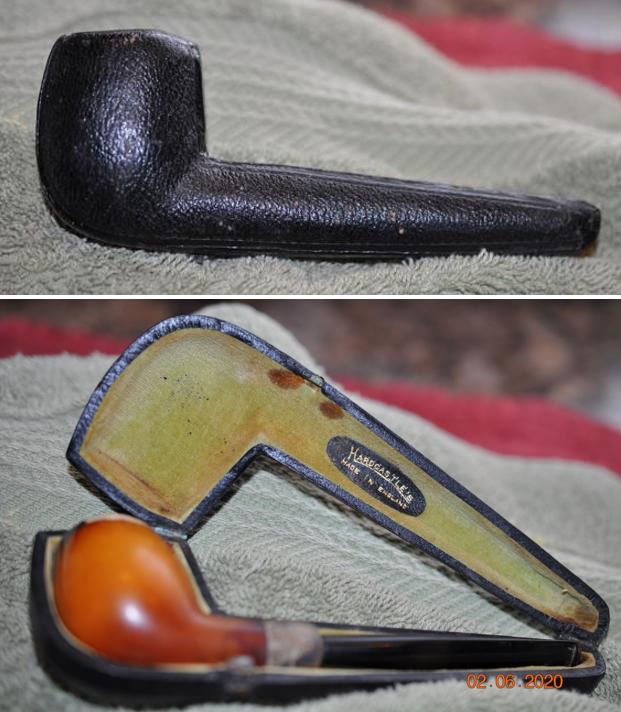
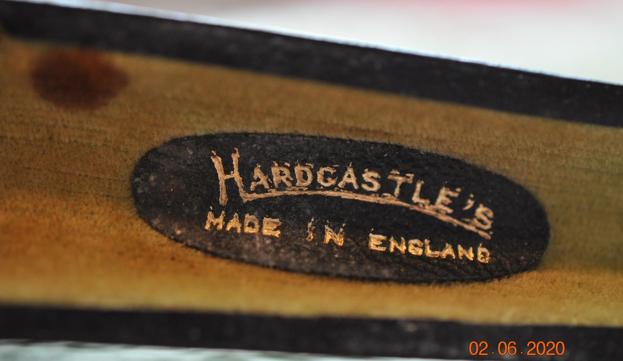
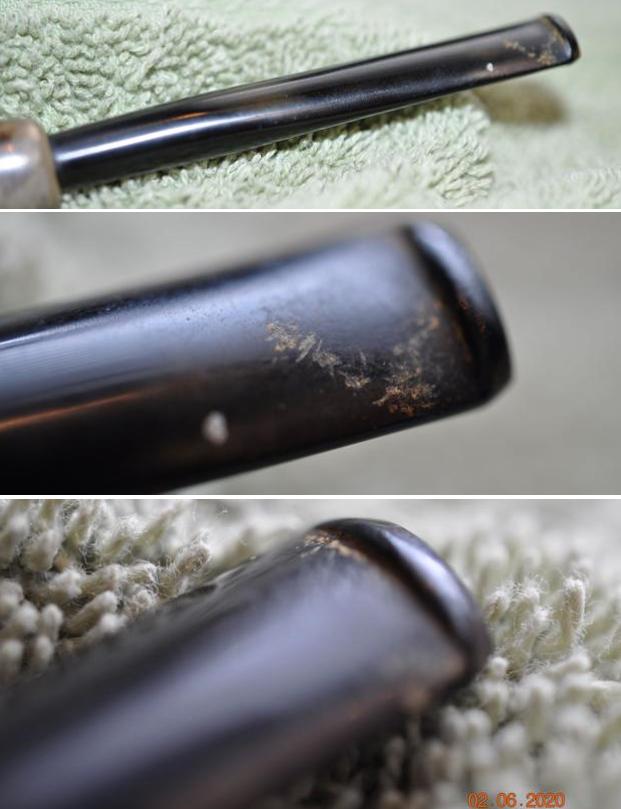
Jeff took some photos of the Hardcastle’s Case and Meerschaum egg with the lovely patina  before he worked his magic in cleaning up the pipe. It is a an interesting pipe with a lot of potential and what appears to be some great grain under the grime and debris of the years. The first three photos show the case, the pipe in the case and the stamp/logo decal on the inside of the lid that read Hardcastle’s Made In London.         Jeff took the pipe out of the case and took photos of it to show the damage to the bowl sides.Jeff took photos of the bowl, rim top to show the thickness of the cake in the bowl and the thick lava on the rim top. The rim top and inner edge are thickly covered with lava and there are large chips in the meerschaum on the rim top and on the outer edges and sides of the bowl. It really is a mess and it will be a challenge. He took photos of the top and underside of the vulcanite military bit stem showing the tooth marks and chatter on both sides. Jeff also took some photos of the Sterling Silver ferrule on the shank end to show the oxidation and condition.Jeff took photos of the sides and heel of the bowl to show the condition of the bowl and damages around the top edges. You can see the beautiful shape of the bowl and some interesting patterns in the meerschaum even through the damage, dirt and debris of many years. This Cased Hardcastle Meerschaum Egg is an interesting looking pipe. Because the old gentleman that we bought the pipes from intimated that he purchased his pipes at the Manhattan Barclay-Rex store I would imagine that he may have purchased this one from them as well. I was unable to pin down any information regarding the date this pipe so it was time to move on and work on the pipe.

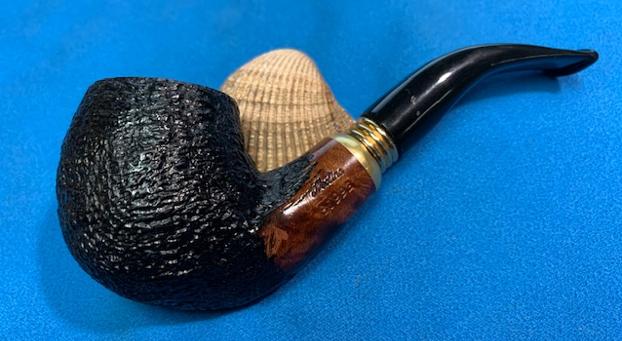
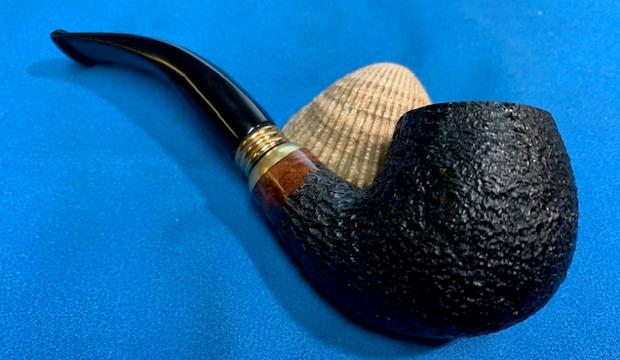
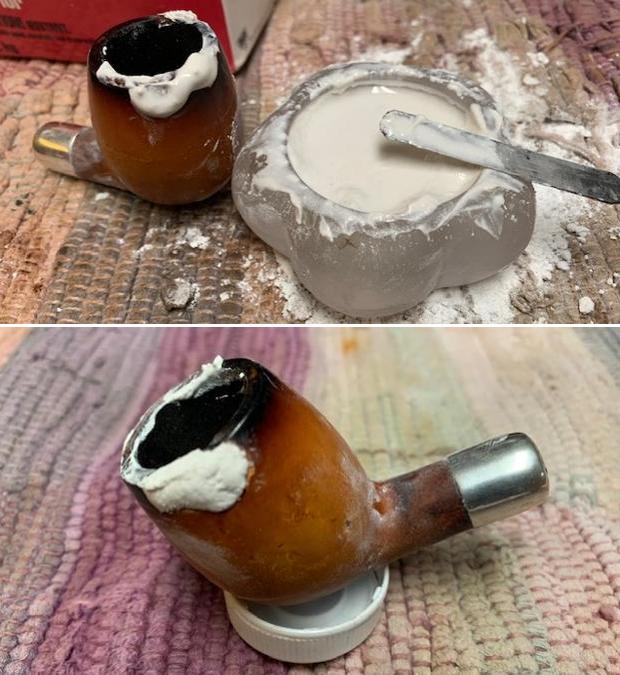
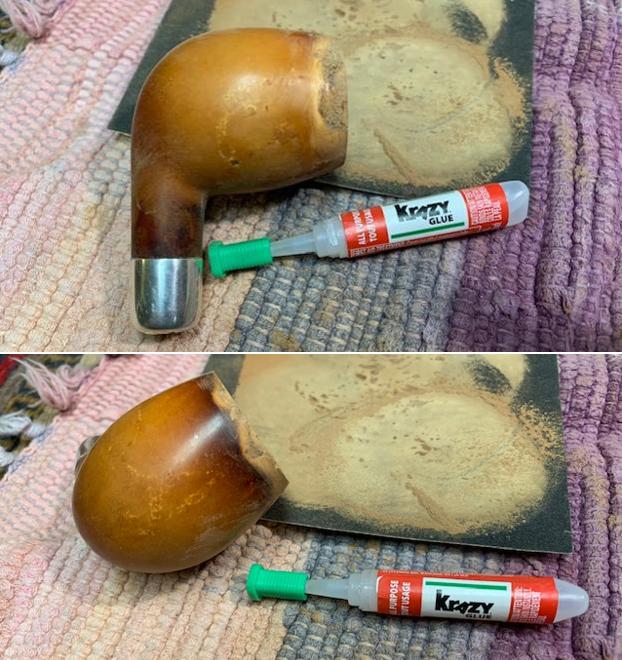
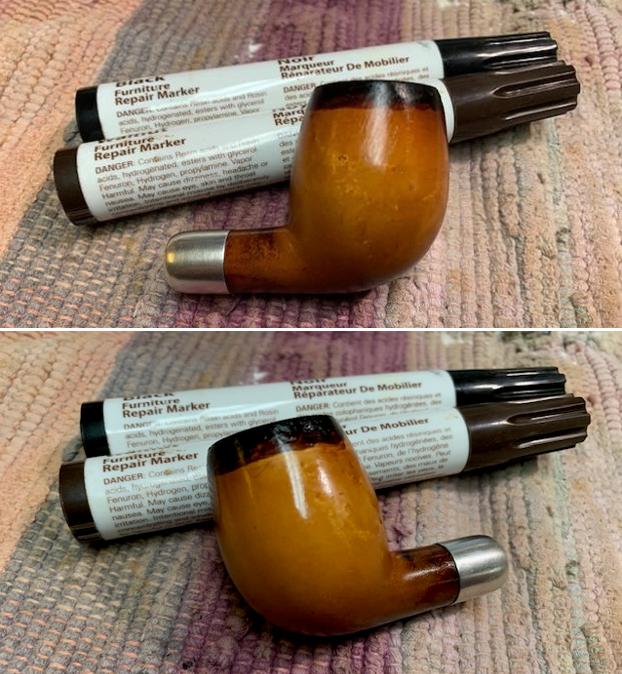
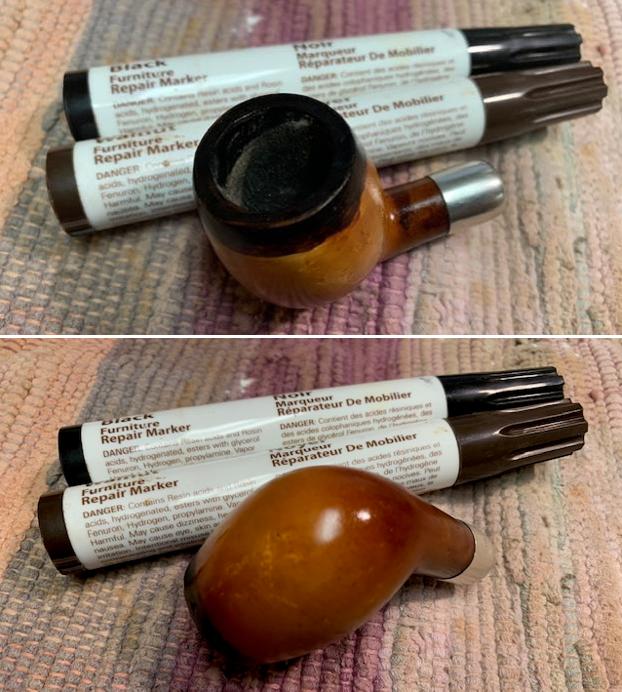
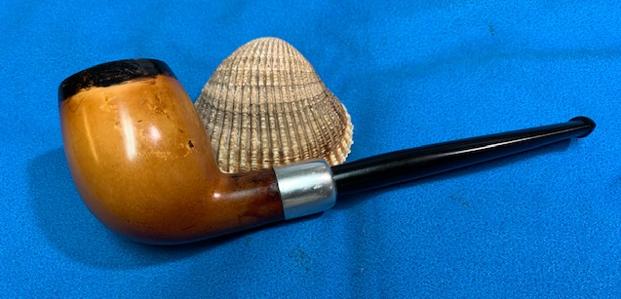
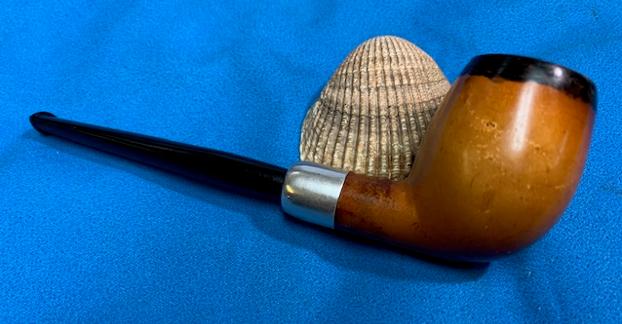
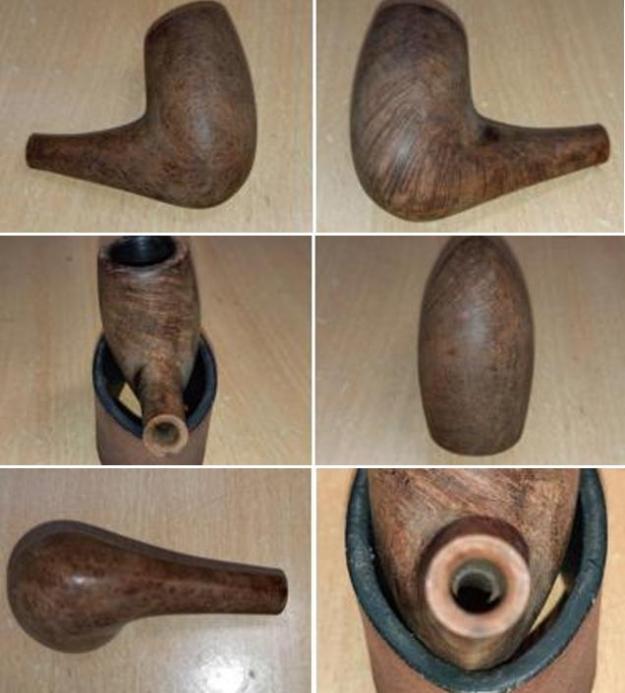
Jeff carefully cleaned the pipe so as not to damage it further. He reamed it with a PipNet pipe reamer and then cleaned up the reaming with a Savinelli Fitsall Pipe Knife. He scrubbed out the internals of the shank, stem and shank extension with alcohol, pipe cleaners and cotton swabs until the pipe was clean. He carefully scrubbed the exterior of the bowl with Murphy’s Oil Soap and a tooth brush to remove the grime and grit on the exterior of the bowl and rim top and lava on the rim top. The finish looks much better and has a deep richness in the colour that highlights the patina in the meerschaum. The damaged edges and rim top looked rough and will need some special attention. He soaked the stem in Briarville’s Pipe Stem Deoxidizer and after a soak of several hours rinsed it off. He scrubbed the vulcanite military bit with Soft Scrub to remove the residual oxidation. When the pipe arrived here in Vancouver I was amazed that it looked so good. Here are some photos of what I saw. I took some close up photos of the rim top and the stem surface. The top and inner and outer edge of the rim showed some darkening/heavy tars and damage. The stem had tooth marks and chatter on both sides near the button.I took some photos of the cleaned damaged areas around the rim top and sides to show how they looked when I received it. I would need to figure out a way to address this in my restoration. I needed time to think through the options. I set the pipe aside for a few days to ruminate on the process I would use.I removed the stem from the shank and took a photo of the parts of the pipe. After thinking through my options I decided to try to fill in the chipped and damaged areas with a mixture of Plaster of  Paris. It dries hard so once it was applied I set it aside to let the repairs harden and cure. I was not sure if it would work but I thought it was worth a try. I mixed the mud and filled in the chipped areas with a dental spatula. I apologize for the mess I made in the mixing process but it really was a pain to manage it. I let it sit for 48 hours to cure. Once the repairs cured I sanded it lightly with 220 grit sandpaper to smooth it out and blend it in. While I worked on it chunks of plaster fell out. The repair had not bonded to the meerschaum so I had to come up with a different plan. I topped the bowl and collected the sanding dust. I filled in the chipped areas with clear CA glue and sanding dust from the topping. Once it cured I sanded the repairs smooth and blended them in around the top edges of the bowl all around the top.Once I have the edges smoothed out and the rim top also smoothed out I decided to stain the rim top and the flumed area around the top outer edges of the bowl with a combination of Black and Walnut stains. It did a great job masking the repaired areas. I still needed to sand the flume to make it less uniform. I polished the smooth rim top with micromesh sanding pads – dry sanding with 1500-12000 grit sanding pads. I wiped the bowl down after each pad with a damp cloth to remove the sanding debris. I worked some Before & After Restoration Balm into the surface of the bowl and shank with my fingertips to clean, enliven and protect the briar. I let the balm sit for 15 minutes and then buffed with a cotton cloth to raise the shine. The photos show the bowl at this point in the restoration process. I polished the stem with micromesh sanding pads – dry sanding with 1500-12000 grit sanding pads. I wiped it down after each sanding pad with Obsidian Oil. I polished it with Before & After Pipe Stem Polish – both Fine and Extra Fine. I gave it a final coat of Obsidian Oil. It looks significantly better and is smooth but the repairs show! With the bowl and the stem finished I put the beautiful Hardcastle’s Straight Egg with a military bit back together and buffed it lightly on the wheel using Blue Diamond to give it a shine. I gave the stem multiple coats of carnauba wax on the wheel. I buffed the pipe with a horsehair shoe brush to raise the shine. I hand buffed it with a microfiber cloth to deepen the shine. The smooth and rusticated finish is a great looking. The dimensions of the pipe are – Length: 5 ¼ inches, Height: 1 ¾ inch, Outside diameter of the bowl: 1 inches, Chamber diameter: ¾ of an inch. The weight of this large pipe is 1.09 ounces /31 grams. This Hardcastle’s Straight Egg is another great find from this collection. It is much more beautiful in person than these photos can capture. I will be adding it to the rebornpipes store soon. If you want to add it to your collection it will make a fine smoking addition. This is another pipe that has the possibility of transporting the pipe man or woman back to a slower paced time in history where you can enjoy a respite. Thanks for walking through the restoration with me.
Breathing Life into a 1950 Dunhill Shell Briar R Pot


Blog by Steve Laug

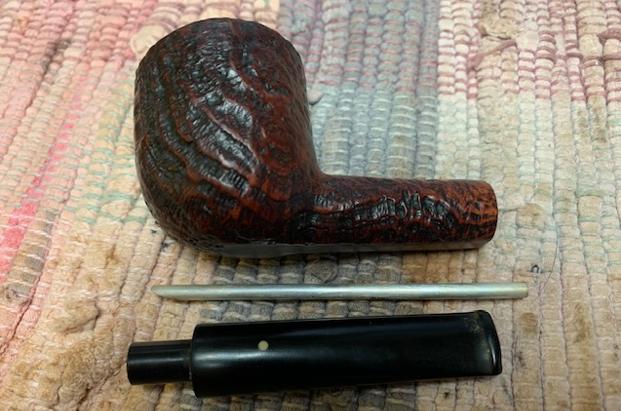
The next pipe on the table is the second one that came to me from a friend up the British Columbia Coast. It is the second of two Dunhill pipes that he found in a shop along the coast. It is a Shell Briar Pot that is worn and has a lot of damage to the rim top. It is the pipe in the front of the photo below. You can see the damage to the rim top and how the rim top is damaged at the back and the front of the rim top and the outer edge of the bowl. The photo was sent to me by Chris. When the pipe arrived I took photos of what it looked like. Chris had done some preliminary cleaning of the pipe before he sent it to me and it look quite clean. It is stamped on a smooth panel on the underside of the shank. On the heel of the bowl it is stamped with the shape number R followed by Dunhill [over] Shell Briar followed by Made in England with a superscript underlined 0. That is followed by 4 in a circle followed by S for Shell. Interpreting that stamp follows: The R is the shape for a straight stem Pot. The Dunhill Shell Briar is the finish which is corroborated the S in the circle. The underlined 0 following the D of England dates the pipe. The stamping is clear and readable. The age of the pipe and the oils in the sandblast finish has given the pipe a rich medium brown finish. There is also some interesting grain shows through the blast finish. There was still a thin cake in the bowl and a light overflow of lava on the rim top. The rim top had a lot of damage and wear on the top and outer edges.  The top was no longer flat. The vulcanite stem was lightly oxidized and had tooth marks and chatter ahead of the button. I took photos of the pipe to show what it looked like before I started working on it. I took photos of the bowl and rim top to show the thickness of the cake and the damages. The rim top and edges are a mess with lots of damage caused by beating it against a hard surface. The photos of the stem show the light oxidation and tooth marks and chatter on the surface on both sides. The stamping on the underside of the shank is shown in the photo below. It looks very good and readable. It reads as noted and explained above.I removed the stem from the shank and took a photo of the pipe parts to show what I was working with. It has potential to be a great looking pipe.  I turned to Pipedia’s section on Dunhill Shell Briar Pipes to get a bit of background on the Dunhill finishes (https://pipedia.org/wiki/Dunhill#Root_Briar). I quote:

Shell

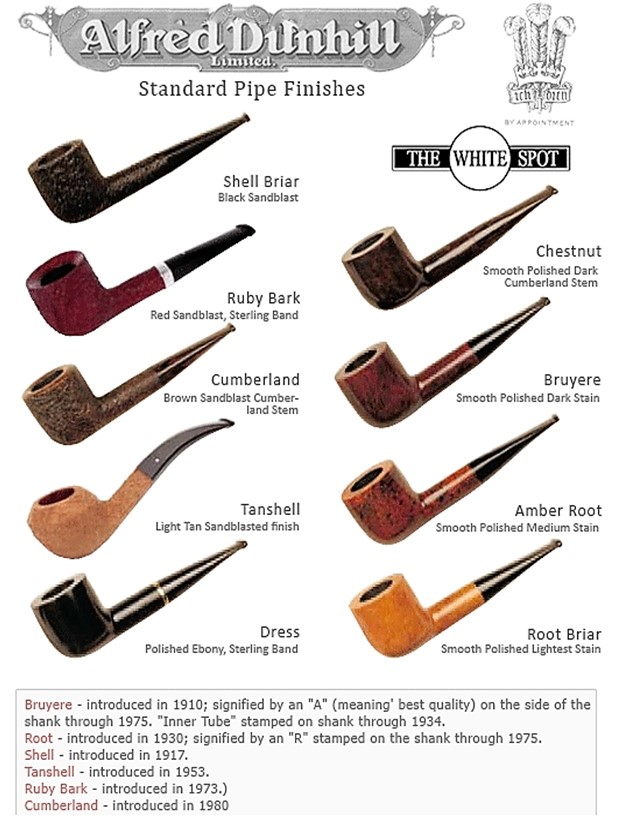
A deep craggy sandblast with a black stain finish (usually made using Algerian briar) – the color of the stain used has varied over the years. Although there is some doubt as to them being the first to sandblast pipes, Dunhill’s Shell pipes, and the sandblasting techniques developed to create them are considered one of Dunhill’s greatest and most lasting contributions to the art of pipe making.

The documented history of Dunhill’s inception of the Shell is largely limited to patent applications — there are no catalog pages or advertisements promoting blasted pipes at the time. The preliminary work on the English patent (No. 1484/17) was submitted on October 13, 1917. The patent submission was completed half a year later, on April 12, 1918, followed by the granting of the English patent on October 14, 1918. This was less than a month before the end of The Great War on November 11th.

In 1986 Dunhill released a line of premium Shell finish pipes – “RING GRAIN”. These are high-quality straight grain pipes which are sandblasted. Initially only Ring Grain, but now in two different finishes. In 1995 the “Shilling” was introduced with Cumberland finish – it is an extremely rare series. These pipes exhibit a deeper blast characteristic of that of the 1930’s – mid-1960’s (and the limited ‘deep blast’ pipes of the early 1980s) and show a fine graining pattern. These are considered the best new Dunhills by many enthusiasts today and are very rare. The finish is sometimes described as tasting like vanilla at first, with the taste becoming more normal or good as the pipe breaks in.

I have also included a chart from the site from Dunhill spelling out the Standard Pipe Finishes and giving short information and a timeline.

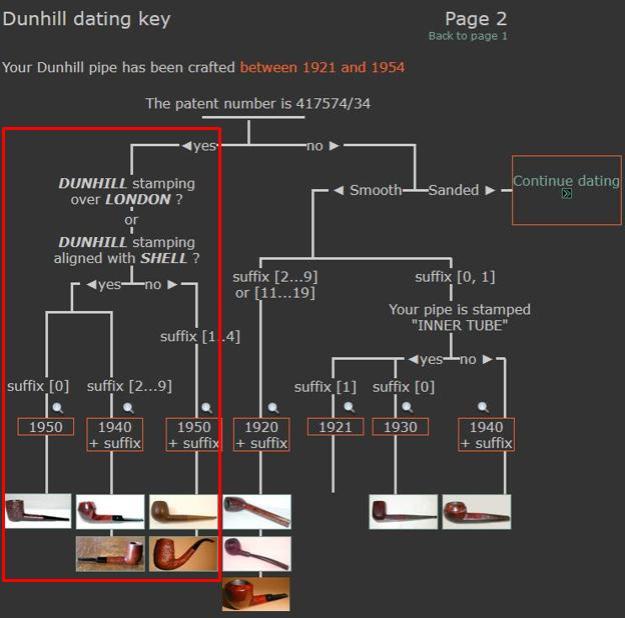
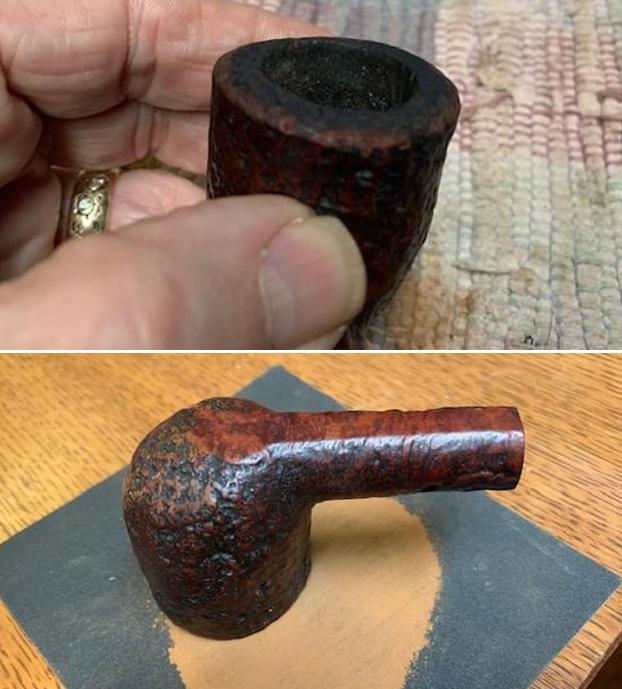
I turned to Pipephil to establish a date for a Dunhill with the stamping that was on this pipe. The date stamp 0  (http://pipephil.eu/logos/en/dunhill/cledat-en1b.html) I have marked the box below with a red box around the part of the date key that is applicable. The pipe dates to 1950.I decided to start the restoration on this one by working on the damaged rim top. I started the process by topping the bowl on a topping board and a piece of 240 grit sandpaper. My main concern was to flatten the top and remove some of the gouges and damages. I then built up the damaged areas on the front and back outer edges of the bowl with briar dust and CA glue. I wanted to raise the profile of the edge in those areas. I would rusticate them so I was not overly concerned with what it looked like at this point. I used various burrs on the Dremel to approximated the sandblast finish on the rim top and bring it back to reflect the sandblast and nooks and crannies on the sides of the bowl and shank. I stained the newly shaped rim top with an Oak and a Maple stain pen to match the colour of the bowl. I was pretty happy with the newly stained rim. It look a lot better than when I started and worked with the finish.I figured I should clean up the bowl after that work. I reamed it with a PipNet Pipe Reamer and took back the remaining cake to briar so I could check out the condition of the bowl walls. I cleaned up the remnants with a Savinelli Fitsall Pipe Knife. I cleaned out the mortise and the airway in the shank and stem with alcohol, cotton swabs and pipe cleaners. I also cleaned out the inner tube at the same time. With the repair completed I rubbed the briar down with Before & After Restoration Balm. I worked it into the briar with my fingertips and a horsehair shoe brush to work it into the nooks and crannies of the sandblast finish. The product works to clean, enliven and preserve the briar. I let it sit for 15 minutes while I worked on the stem. After the time passed I buffed it with a cotton cloth to deepen the shine. The briar really comes alive with the balm. I cleaned out the tooth marks with alcohol and filled them in with black super glue. I set the stem aside to allow the glue to cure. Once it cured I recut the edge of the button with a file and then sanded the repairs with 220 grit sandpaper to smooth them out and blend them into the rest of the stem surface. I set the bowl aside and turned my attention to the stem. I polished the vulcanite with micromesh sanding pads – 1500-12000 grit pads. I wiped it down with Obsidian Oil after each sanding pad. I used Before & After Pipe Polish – both Fine and Extra Fine to further polish the stem. This Dunhill Shell Briar R Pot is a beautiful sandblast that came out looking very good. The Shell Briar finish has a great rugged sandblast that Dunhill specialized in making. The finish on the pipe is in excellent condition. The oils off the smoker’s hands and the tan stain on the bowl works well to highlight the grain. The polished black vulcanite taper stem adds to the mix. With the dust gone from the finish and the bowl it was a beauty and is eye-catching. I put the stem back on the bowl and buffed the pipe with Blue Diamond on the buffing wheel being careful to not buff the stamping. I gave the bowl multiple coats of Conservator’s Wax and the stem multiple coats of carnauba wax on the buffing wheel and followed that by buffing it with a clean buffing pad. I hand buffed the pipe with a microfiber cloth to deepen the shine. The finished Shell Briar R Pot is quite nice and feels great in the hand. Give the finished pipe a look in the photos below. I can only tell you that like the other pipes I am working that it is much prettier in person than the photos capture. The dimensions of the pipe are Length: 5 ¼ inches, Height: 1 ¾ inches, Outside diameter of the bowl: 1 ½ inches, Chamber diameter: 7/8 of an inch. The weight of the pipe is 36grams/1.27oz. Thanks for walking through the restoration with me as I worked over another beautiful pipe. Remember we are not pipe owners; we are pipemen and women who hold our pipes in trust until they pass on into the trust of the next generation.

Breathing Life into a Dunhill Tanshell 253 Group 4 Billiard


Blog by Steve Laug

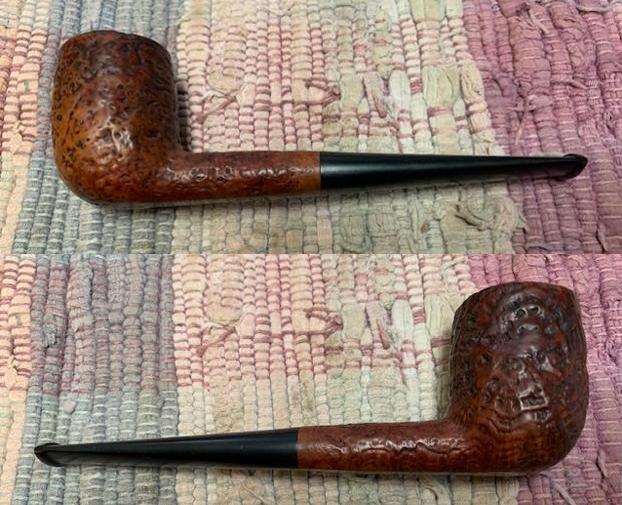
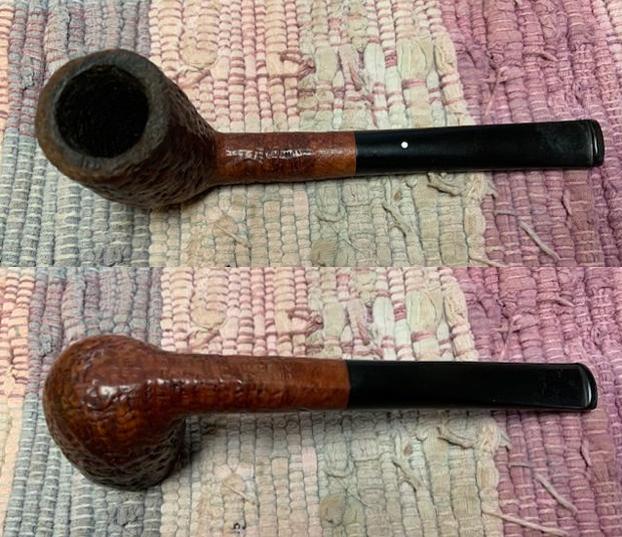
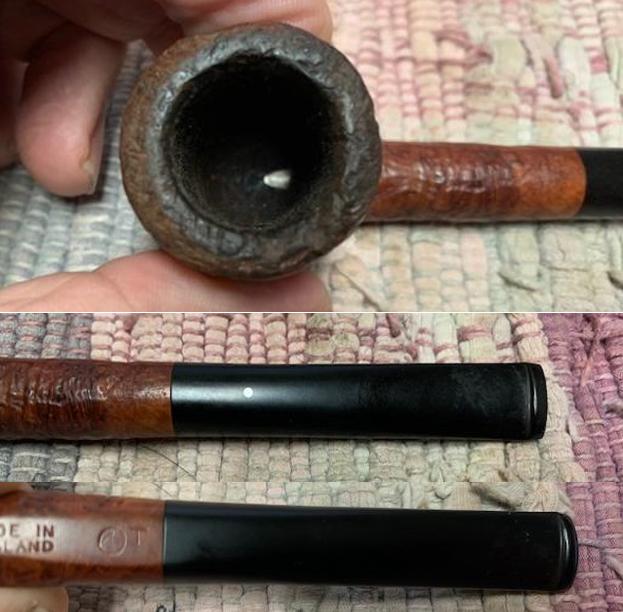
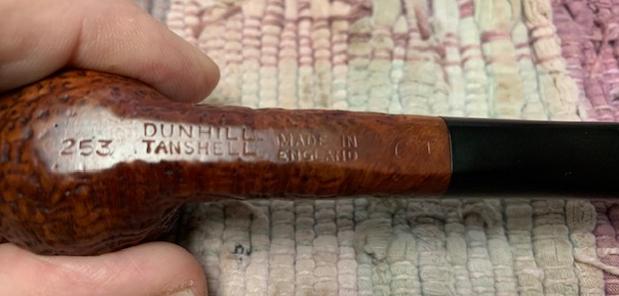
The next pipe on the table came to me from a friend up the British Columbia Coast. It is the first of two Dunhill pipes that he found in a shop along the coast. It is a Tanshell Briar Billiard that is worn and has a lot of damage to the rim top. It is the pipe at the back of the photo below. The second one is a Dunhill Shell Briar. The photo was sent to me by Chris. The second photo shows the damage to the rim top and edges. It was worn and damaged. The sandblast finish was destroyed and a chewed up top and edge was left behind.When the pipe arrived I took photos of what it looked like. Chris had done some preliminary cleaning of the pipe before he sent it to me and it look quite good. It is stamped on a smooth panel on the underside of the shank. On the heel of the bowl it is stamped with the shape number 253 followed by Dunhill [over] Tanshell followed by Made in England. That is followed by 4 in a circle followed by T for Tanshell. Interpreting that stamp follows: The 253 is the shape for a straight stem Billiard. The Dunhill Tanshell is the finish which is corroborated the T at the end of the stamping. There is no date stamp following the D of England to date the pipe. The stamping is clear and readable. The age of the pipe and the oils in the sandblast finish has given the pipe a rich medium brown finish. There is also some interesting grain shows through the blast finish. There was still a thin cake in the bowl and a light overflow of lava on the rim top. The rim top had a lot of damage and wear on the top, the inner and outer edges. The vulcanite stem was lightly oxidized and had tooth chatter ahead of the button.  I took photos of the pipe to show what it looked like before I started working on it. I took photos of the bowl and rim top to show the thickness of the cake and the lava overflow. The rim top and edges are a mess with lots of damage caused by beating it against a hard surface. The photos of the stem show the light oxidation and tooth marks and chatter on the surface on both sides. The stamping on the underside of the shank is shown in the photo below. It looks very good and readable. It reads as noted and explained above. I removed the stem from the shank and took a photo of the pipe parts to show what I was working with. It is a nice looking pipe.  I turned to Pipedia’s section on Dunhill Tanshell Pipes to get a bit of background on the Dunhill finishes (https://pipedia.org/wiki/Dunhill#Root_Briar). I quote:

Tanshell

The first lot was distributed in 1952 (usually made using Sardinian briar). The prototype was called “Root Shell “, produced in 1951. The Tanshell is a light tan sandblast. Sardinian briar was used for this sandblast. There is a distinct contrast in the sandblasts using Sardinian as opposed to Algerian briar. The Sardinian is much denser and much harder. The resulting pattern, when blasted, is far more even and regular both in terms of the surface texture and the finish.

The Tanshell was Dunhill’s fourth finish and its first major post-war line addition. Introduced in 1951/1952 the Tanshell was a naturally stained sandblasted pipe made exclusively from Sardinian briar through the 1960s. The Tanshell apparently was not simply a light stained Shell but rather was also the product of “certain processes [unrevealed] not previously employed.” Initially, it appears that the pipe was to be named the Root Shell and a stamp to that effect was ordered and received by Dunhill in May 1951. Ultimately, however, the name Tanshell was settled upon but the stamp for the Tanshell name was not received by Dunhill until the beginning of December. Thus while the Tanshell was in production in 1951 it appears that most if not all Tanshells made in that year did not enter into retail distribution until 1952 and were given a 1952 date code. Loring, J. C., The Dunhill Briar Pipe, The Patent Years and After (self-published, Chicago, 1998).

I have also included a chart from the site from Dunhill spelling out the Standard Pipe Finishes and giving short information and a timeline.I decided to start the restoration on this one by working on the damage to the inner edge of the rim. I used a folded piece of 220 grit sandpaper to give the inner edge of the rim a slight bevel to bring it back into round.  While the finished rim edge is not perfect it is far better. To deal with the damaged rim top I gently topped it on a topping board and a piece of 240 grit sandpaper. My main concern was to flatten the top and remove some of the gouges and damages.I used various burrs on the Dremel to approximate the sandblast finish on the rim top and bring it back to reflect the sandblast and nooks and crannies on the sides of the bowl and shank. I stained the newly shaped rim top with an Oak and a Maple stain pen to match the colour of the bowl. I was pretty happy with the newly stained rim. It look a lot better than when I started and worked with the finish.I figured I should clean up the bowl after that work. I reamed it with a PipNet Pipe Reamer and took back the remaining cake to briar so I could check out the condition of the bowl walls. I cleaned out the mortise and the airway in the shank and stem with alcohol, cotton swabs and pipe cleaners. I also cleaned out the inner tube at the same time. With the repair completed I rubbed the briar down with Before & After Restoration Balm. I worked it into the briar with my fingertips and a horsehair shoe brush to work it into the nooks and crannies of the sandblast finish. The product works to clean, enliven and preserve the briar. I let it sit for 15 minutes while I worked on the stem. After the time passed I buffed it with a cotton cloth to deepen the shine. The briar really comes alive with the balm. I set the bowl aside and turned my attention to the stem. I polished the vulcanite with micromesh sanding pads – 1500-12000 grit pads. I wiped it down with Obsidian Oil after each sanding pad. I used Before & After Pipe Polish – both Fine and Extra Fine to further polish the stem.  This Dunhill Tanshell 253 Billiard is a beautiful sandblast that came out looking very good. The Tanshell finish has a great rugged sandblast that Dunhill specialized in making. The finish on the pipe is in excellent condition. The oils off the smoker’s hands and the tan stain on the bowl works well to highlight the grain. The polished black vulcanite taper stem adds to the mix. With the dust gone from the finish and the bowl it was a beauty and is eye-catching. I put the stem back on the bowl and buffed the pipe with Blue Diamond on the buffing wheel being careful to not buff the stamping. I gave the bowl multiple coats of Conservator’s Wax and the stem multiple coats of carnauba wax on the buffing wheel and followed that by buffing it with a clean buffing pad. I hand buffed the pipe with a microfiber cloth to deepen the shine. The finished 253 Tanshell Billiard is quite nice and feels great in the hand. Give the finished pipe a look in the photos below. I can only tell you that like the other pipes I am working that it is much prettier in person than the photos capture. The dimensions of the pipe are Length: 5 ½ inches, Height: 1 ¾ inches, Outside diameter of the bowl: 1 ¼ inches, Chamber diameter: ¾ of an inch. The weight of the pipe is 36grams/1.27oz. Thanks for walking through the restoration with me as I worked over another beautiful pipe. Remember we are not pipe owners; we are pipemen and women who hold our pipes in trust until they pass on into the trust of the next generation.

Completing a Long Pending Repair and Restoration of Comoy’s Made “Air-O-Dry 212”


Blog by Paresh Deshpande

As I was winding up my stay at the old duty station, I came across a neatly packed zip-lock pouch that was stowed away in to the deepest part of the cupboard. In that pouch were three pipes; two Comoys and one Drury Lane # 484. I remembered that the Comoy’s had stingers that needed leather gaskets and one needed a top nut for the stinger. Steve had sent me the leather gaskets/ washers while a replacement for the stinger that required top nut, was in post that was delayed for more than a year due to the prevalent worldwide pandemic situation. I completed refurbishing the Drury Lane # 484 (Another Of My Inherited Pipes Restored…. A “Drury Lane # 484” | rebornpipes) and decided to work on the Comoy’s pipe that had an intact top nut but needed a leather gasket.

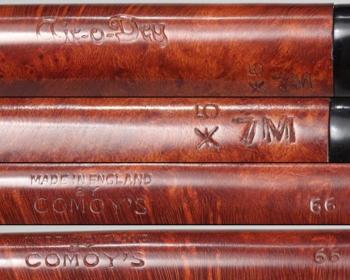
This pipe is a classic Lovat shape and is stamped on the left of the shank towards the shank end as “AIR-O-DRY” in fancy Gothic script. The right side of the shank surface is stamped as “MADE IN ENGLAND” over “BY” over “COMOY’S” and followed by the shape number “212” towards the chamber end. The bottom of the shank is stamped with *5 (this number denotes the leather washer size) over letter “K” (a mystery!!). The high quality vulcanite saddle stem bears the trademark BAR logo that appears to be an aluminum strip embedded in to the vulcanite. All the stampings are crisp and easily readable.The stampings on the pipe were categorical in pointing out that the pipe is English made and linked with Comoy’s. The shape code # 212 of Comoy’s Shape Number chart also corresponds to LOVAT shape of the pipe on my work table. However, the Air- O- Dry line does not find a mention in the list of seconds from Comoy’s on pipedia.org.

Pipedia.org has some information on this line of pipes and I quote:-

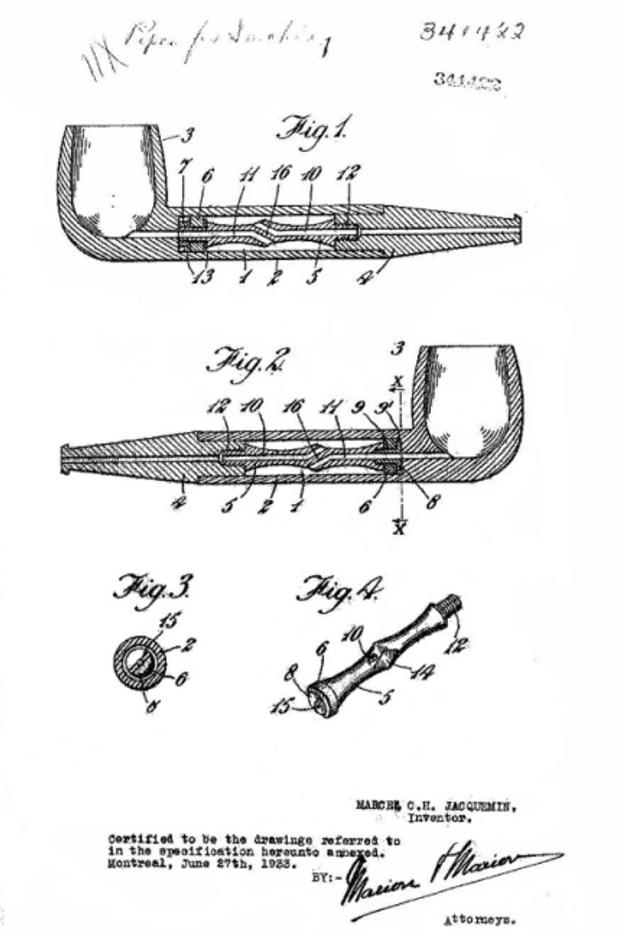
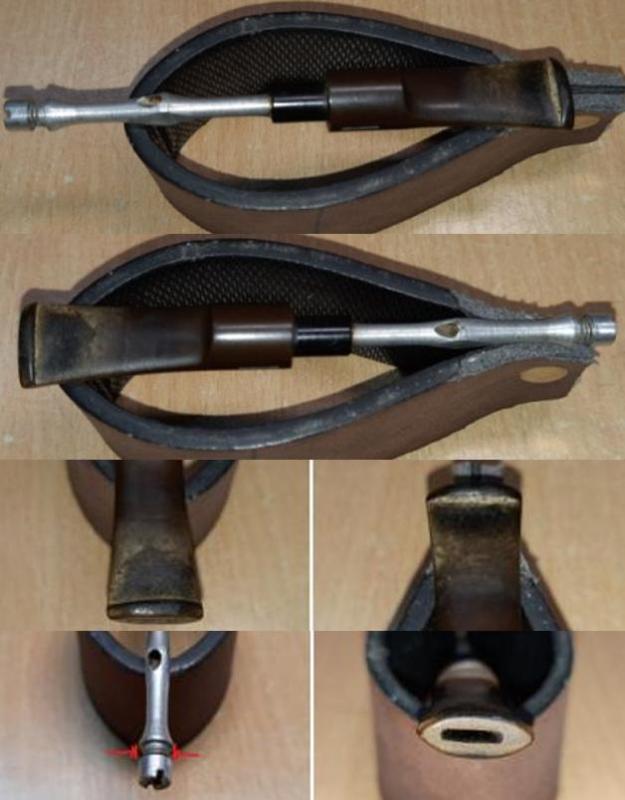
The Air-o-Dry pipe that follows was made by Comoy’s according to the stamp. The patent for the unusual stinger system shows it was invented by Marcel C.H. Jacquemin, as “Annexed” in Montreal, June 27th, 1933.

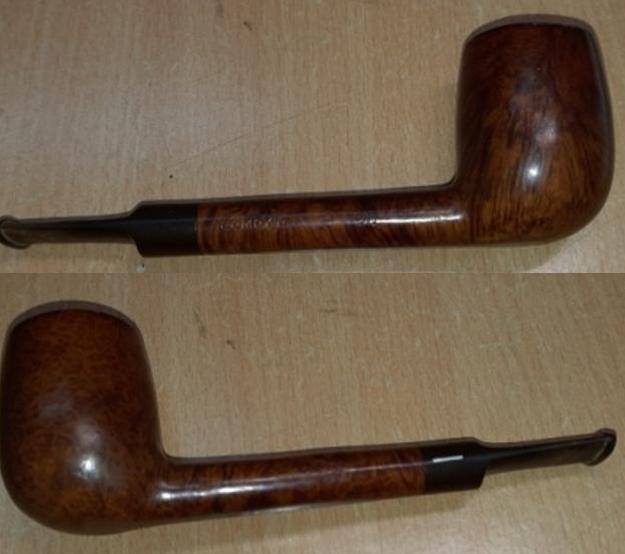
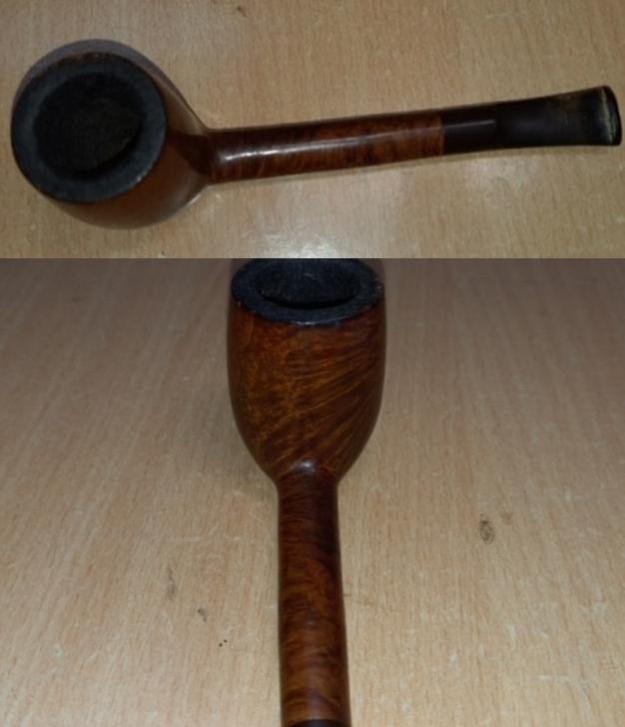
Here are a couple of pictures of the pipe and the patented details of the stinger that were available on pipedia.org, courtesy Dough Valitchka.The three digit shape number, COM stamp and the stinger system make me believe this pipe is from the 1930s to 1950s.  

Initial Visual Inspection
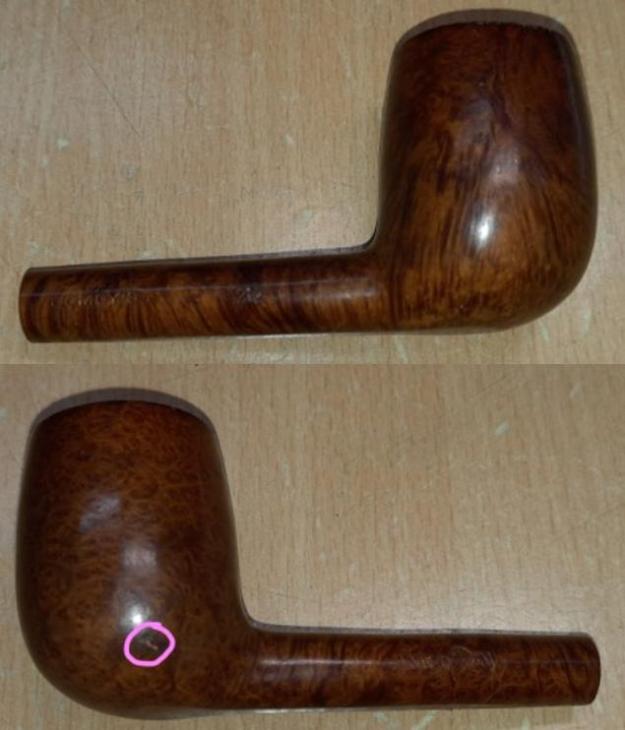
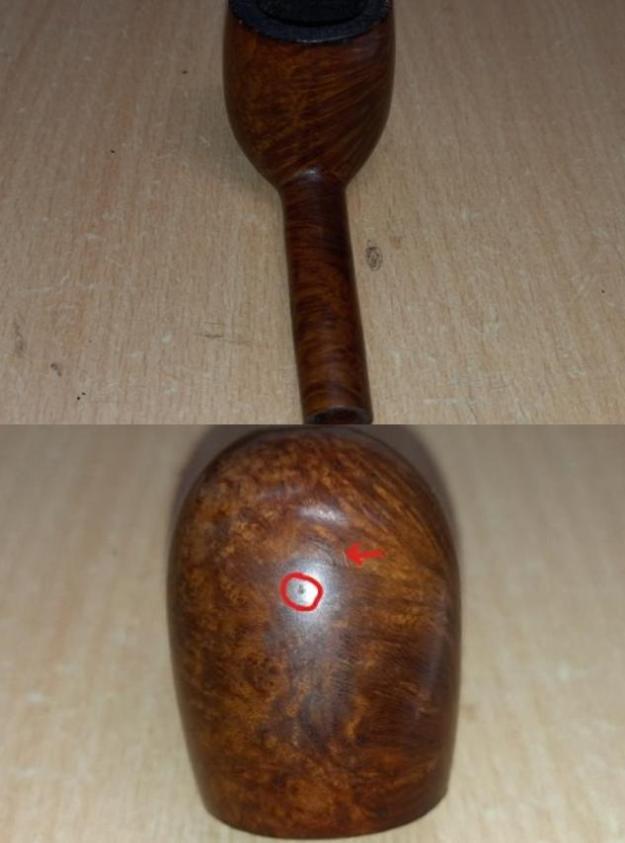
The pipe that is currently on my work table has a classic Lovat shape with a nice hand feel and heft to it. The stummel has rich light brown coloration that has turned dark over the years due to regular use. The stummel has a beautiful mix of cross grains and tightly packed bird’s eye grains peeking out from underneath the dirt and grime. Once the stummel has been cleaned and polished, these beautiful grains should add to the visual appeal of this piece of the briar. There is a thick layer of cake in the chamber with lava overflow over the rim top surface. The beveled inner rim edge has dents and dings and suspected charring in 12 o’clock and 6 o’clock directions. The outer edge has chipped surfaces all around, probably the pipe having being knocked against a hard surface. The vulcanite saddle stem is heavily oxidized with minor calcification and damage to the bite zone on either surface. The buttons on both surfaces have worn out slightly with minor tooth indentations. The following pictures will give the Readers an idea of the overall condition of the pipe as it sits on my work table. Detailed Visual Inspection
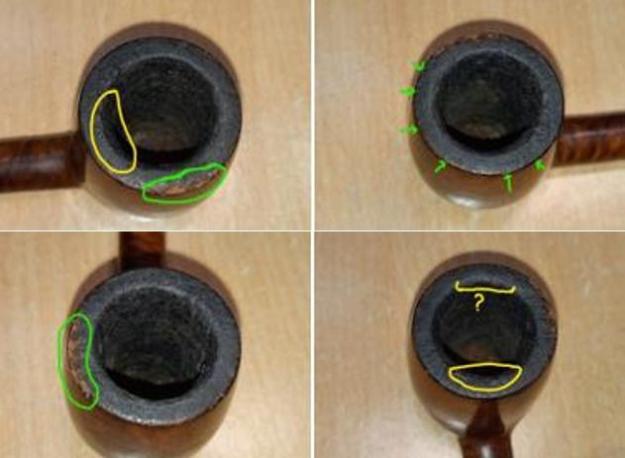
A thick and even layer of cake is seen in the chamber. The rim top surface is covered in overflow of lava, dirt, dust and grime and appears uneven underneath the overflow of lava. The condition of the inner walls of the chamber and rim top surface will be known once the cake has been taken down to the bare briar and the rim top crud has been scraped off completely. The inner rim has suspected burn/ charred surface in 12 o’clock (low probability, I guess) and 6 o’clock directions and is marked in yellow circle. Only once the stummel has been thoroughly cleaned that I can be sure of my initial appreciation. The outer rim edge has chipped surfaces all around (indicated with green arrows) but the most severe damage is in the 3 o’clock direction and is encircled in green. The chamber odor is strong.

Notes: – The stummel feels solid to the touch and I do not foresee any major issues with the condition of the chamber walls. The dents and dings to the rim top surface will necessitate topping. A thin delicate bevel to the outer edge should address the damage to a great extent. The strong ghost smells should be addressed to some extent once the cake has been taken down to the bare briar and the shank internals have been thoroughly cleaned. In case required, more invasive measures like salt and alcohol treatment will be resorted to if the ghosting prevails.Being a seconds pipe from Comoy’s, I had expected to find a few fills and some non-descript grain on the stummel briar. However, I was surprised to note that there is just a single fill in the stummel surface that’s already loosened (encircled in pastel pink). The stummel surface boasts of some beautiful cross grains around the front, back and over the shank surface while tightly packed Bird’s eye adorns the sides and foot of the bowl. The stummel surface is covered in dirt and grime giving the stummel a dull and oily appearance. The surface shows a few scratches, dents and dings (indicated in red). The mortise shows accumulation of old oils and tars which would need to be cleaned.

Note: – The loose fill will need to be refreshed with a mix of CA superglue and briar dust. Light sanding of the stummel with a piece of 220 grit sand paper should address the minor scratches and dings over the surface. A nice polish with micromesh grit pads will bring a nice shine to the stummel and highlight the grains. It does have a quality which is seen on vintage pipes in terms of perfection in size, briar material, quality of stem and perfectly centered draught hole drilled right at the bottom of the chamber. And not to forget, this is nearly a 50 plus year old pipe!! The vulcanite saddle stem is heavily oxidized, but otherwise in a decent condition. The bite zone on either surface shows some minor tooth indentations with a small amount of calcification at the base of the button edge. The button edges on either surface have worn down with minor bite marks. The horizontal slot and stinger openings show accumulation of dried oils and tars. There is a gap at the stinger head, between the top nut and the shoulder of the stinger (indicated by red arrows), where the leather washer is seated.

Note: The button edges will need to be sharpened and reshaped. The gap at the stinger head will be covered with the leather washer. All in all, the stem presents no major damage and should be an easy clean up.The Process
I started the restoration by reaming the chamber with size 2 followed by size 3 head of the PipNet reamer as I was keen to know the condition of the walls of the chamber. With my sharp fabricated knife, I removed the cake from the chamber where the reamer head could not reach and thereafter, using a folded piece of 180 grit sand paper, I sanded out the last traces of cake and exposed the walls of the chamber. I wiped the chamber with a cotton swab dipped in isopropyl alcohol to remove the carbon dust left behind by all the reaming and sanding process. Once the chamber walls were cleaned out, I was pleased to note a solid chamber. With the same sharp knife, I gently scraped off the lava overflow from the rim top surface. It was a big relief to note that the suspected charring in 6 o’clock and 12 o’clock direction is non-existent and the beveled inner rim edge has just darkened as a result of the lighting habits of my grandfather. However, the damage to the outer rim edge is very much a reality and will need to be addressed. Next, I cleaned out the internals of the shank and mortise. Using my dental tool, I scraped out all the dried oils, tars and gunk that had accumulated in the draught hole and on the walls of the mortise. The amount of crud that was scrapped out is an indicator as to how dirty the shank internal is.

Note: The darkened and uneven beveled inner rim edge and the dents/ dings to the rim top surface are now clearly seen. These issues should be easily addressed by topping and light sanding of the existing inner edge bevel. Similarly, the outer rim edge issue would be reduced after topping and what chipped areas remain will be masked by creating a light delicate bevel. The ghosting is still prevalent and will, in all probability, require invasive methods to completely eliminate it. I continued the cleaning of the chamber and shank internals with a salt and alcohol bath. I usually use cotton balls which is an at par substitute to Kosher salt as I have realized over the years. I drew out a wick from the cotton and along with a folded regular pipe cleaner; inserted it in to the mortise and through the draught hole into the chamber. Thereafter, I packed the chamber with cotton balls to about quarter of an inch below the inner rim edge and filled it with isopropyl alcohol up to the brim. About half an hour later, the level of alcohol had gone down, having been absorbed by the cotton. I topped it up once again with isopropyl alcohol and set it aside overnight. By next afternoon, the cotton was dark colored and with alcohol, had drawn out all the remaining oils and tars from the chamber and mortise, fulfilling its intended task. I removed the cotton balls from the chamber and the pipe cleaner with cotton from the shank and ran pipe cleaners through the mortise to clean out all the loosened tars and gunk. I further cleaned the mortise and chamber by scarping the walls with a dental tool and knife respectively, to completely remove the gunk. I blew through the draught hole to dislodge the trapped gunk, wiped the bowl clean and dried the shank and bowl with paper napkins and set it aside to dry for an entire day. By next day, the pipe was nice and dry and all the smells were history. With the stummel set aside for drying, I turned to address the stem issues. I addressed the deeper oxidation by sanding the entire stem with a folded piece of 220 grit sand paper. Once the oxidation was completely removed, I wiped the surface clean with Murphy’s oil soap on a cotton swab. I cleaned up the oils and tars from the surface of the stinger using alcohol on cotton pads followed by Murphy’s Oil soap. I followed it up with cleaning the internals of the stem using hard and normal bristled pipe cleaners and isopropyl alcohol. The gunk that came out with the pipe cleaners tells the sordid tale of the stem condition. To save on to the requirement of number of pipe cleaners, I have resorted to cleaning the stem internals using thin shank brushes with anti-oil dish washing soap and finally rinsing the stem with warm water to clean and freshen up the stem internals. With a pointed dental tool, I scraped out the entire dried gunk from the horizontal slot. I rubbed a little Extra Virgin Olive oil to hydrate the stem and kept it aside. Continuing with the stem refurbishing, I heated the bite zone with the flame of a lighter to raise the tooth indentations to the surface. Though the issue was addressed to a great extent, one bite mark on both surfaces (encircled in yellow) along with damage to the button edge (indicated in pastel blue) was still evident. The button edges and deeper tooth indentations on either surface of the stem were filled with a mix of CA superglue and activated charcoal powder and set aside for the fill to cure.With the stem repairs set aside for curing, I decided to clean the external surface of the stummel. I used a hard bristled tooth brush and Murphy’s Oil Soap to scrub the stummel and rim top. I further scrubbed the rim top surface with a brass bristled brush to completely remove the dirt and grime from the rim surface. I rinsed the stummel under running warm water. I cleaned the stummel with anti oil dish washing detergent till the stummel surface was clean and dried it using paper towels and soft cotton cloth. I simultaneously cleaned the shank internals with the detergent and hard bristled shank brush and set the stummel aside to dry out naturally.While the stummel was set aside for drying, I decided to complete the stem repairs and refurbishing. With a flat head needle file, I sanded the stem fills on either surface till I had achieved a rough match with the rest of the stummel surface. I reshaped and sharpened the button edges with the same flat needle file. The filled surface and button edges were worked upon with a piece of 220 grit sand paper to further blend in the repairs. I followed it up by further dry sanding the stem with 400, 600, 800 and wet sanding with 1000 grit sand papers to completely rid the surface of the oxidation and bring out the shine in the vulcanite. I applied a little EVO to stem surface to hydrate it and set it aside. While the stem was set aside to absorb the EVO, I addressed the issue of one single fill in the entire stummel surface. I removed the old fill from the surface with a sharp dental tool and cleaned the area with isopropyl alcohol in preparation for refreshing the fill. Since the area to be filled was very minute, I decided to fill it with a drop of CA superglue alone. Once that was done, I set the stummel aside for the fill to cure.Once the stummel fill had cured, I sanded it first with a flat needle file and followed it up with a piece of 220 grit sand paper. Simultaneously, I sanded the entire stummel surface with the 220 grit paper to eliminate the minor scratches and dings from the surface.The next stummel issue that I addressed was of uneven rim top and damages to the rim edges. I decided to address the issue of uneven and darkened rim top surface by topping the rim surface on a piece of 220 grit sand paper. The progress being made was frequently checked as I had no desire to lose any briar estate than was absolutely necessary. Once satisfied with the result, I wiped the rim top surface with a moist cloth. The darkened rim top had been addressed completely, however, the beveled inner rim edge was still dark and uneven (though greatly reduced) with slight charred edges. I addressed these issues by simply running a piece of 220 grit sand paper along the inner rim edge bevel, till the darkening was eliminated. I created a delicate but sharp bevel to the outer edge for a smooth and an evenly rounded outer edge. However, I was extremely careful that the profile of the stummel was not altered with the creation of the bevel. I subjected the stummel to a complete cycle of micromesh polish, dry sanding with 1500 to 12000 grit pads. I paid greater attention to polish the rim top surface and the bevel created on the inner and outer rim edge. I wiped the stummel with a moist cloth after every grit pad to remove the sanding dust left behind by the pads. This also helps in monitoring the progress being made and provides an opportunity to take early corrective action, if required. I was happy with the progress being made till now. The briar had taken on a nice deep shine with the original natural brown of the stummel and the darker brown stains to the grains contrasting beautifully. I really liked the dark brown coloration and the patina that was seen over the stummel surface. Next, I rubbed a small quantity of “Before and After Restoration Balm” into the briar with my finger tips and worked it deep in to the surface and let the balm be absorbed by the briar for a few minutes. The balm almost immediately works its magic and the briar now has a nice vibrant appearance with the beautiful straight and Bird’s eye grain patterns on full display. The contrast of the dark browns of the grain with the light brown hues of the rest of the stummel adds an interesting dimension to the appearance of the stummel. I further buffed it with a horse hair brush to further deepen the shine. Using micromesh pads, I completed the polishing of the stem by wet sanding the stem surface with 1500 to 12000 girt pads. I gave a final rub with “Before and After Extra Fine” stem polish compound from Mark Hoover to remove fine scratches from the stem surface. I rubbed a little quantity of Extra Virgin Olive oil in to the stem surface and set it aside to be absorbed by the vulcanite. The stem polished up nicely and appears as good as when new.The only repair aspect that remained was replacing the leather washer in the stinger head. Steve, my Guru/ Mentor/ Friend, had spared me two size 5 leather washers, for this pipe and other for Comoy’s “Grand Slam”. These leather washers will be put to good use, I assure you Steve!!

I soaked one leather washer in water to make it soft and more pliable. Carefully unscrewing the top nut (I had broken the top nut on the stinger of Grand Slam while trying to unscrew and the memory of the pain is still vivid), I fixed the leather washer and gently tightened the top nut. With a piece of 220 grit sand paper, I sanded off the excess leather material from the washer, frequently checking for the seating of the stinger into the mortise (remember my mantra… SAND ONCE, CHECK TWICE!). Once the seating was snug and just perfect, I stopped any further sanding and applied petroleum jelly to the washer to keep it moist and pliable.To put the finishing touches, I mounted a cotton cloth buffing wheel onto my hand held rotary tool and polished the stummel and stem with Blue Diamond compound. This compound helps to remove the minor scratch marks that remain from the sanding. Next, I mounted another cotton buffing wheel that I have earmarked for carnauba wax and applied several coats of the wax. I mounted a clean cotton cloth buffing wheel and gave the entire pipe a once over buff. I finished the restoration by giving the entire pipe a rigorous hand buffing using a microfiber cloth to raise the shine further. The finished pipe with the aged patina to the briar looks amazingly beautiful and now all that remains for me is to load it with some Regent’s Flake and get transported back in time when things were a bit more contemplative and people had time for each other… time to share!! P.S. The completion of this project would not have been possible without the help that was extended by Steve and I am really thankful to him.

Praying for the health and safety of all the readers and their loved ones in these troubled times…


Restoring A Vintage Kriswill “Chief # 35” Pickaxe


Blog by Paresh Deshpande

The next pipe selected for refurbishing is a commonly shaped pickaxe Danish pipe. I say common because through the 1960s and 70s, this shape and its variations was the most loved and common on many Kriswill and Stanwell pipes as well as with various artisan pipe carvers from Denmark.

This pipe has a smooth stummel with a natural finish (I guess) that has darkened over a period of time. For a pipe with a length of 5 ½ inches and bowl height of 2 inches and chamber depth of 1 ¾ inches, it’s pretty much ultra light weight, making it a perfect pipe to clench. The vulcanite stem is thin and delicate. The smooth stummel surface displays beautiful cross grains to the front and aft of the bowl while the sides boast of lovely bird’s eye grains. It would need a good TLC to bring these grains to the fore. Here are a few pictures of the pipe that Abha had taken before she did her part of initial cleaning of the pipe. The pipe is stamped on the left surface of the shank as “Kriswill” in script hand over “CHIEF” over “HANDMADE DENMARK”. The bottom of the shank, at the shank end, is stamped with the shape code “35”. The vulcanite stem bears the stamp “KRISWILL” in script hand over the left surface. Last year, I had worked on a unique Kriswill “GOLDEN CLIPPER” that had a stummel shaped like the chimney of early steam locomotive engines. Here is the link for the write up… Restoring a Kriswill “Golden Clipper” Freehand Chimney | rebornpipes. I am sure you will find it an interesting read.

I had researched the brand at that time and I went through the above write up and also through the material that was available on pipedia.org and pipephil.eu. There are three facts which I wish to highlight:-

Firstly, Prior to 1970 the stampings are in script letters on the shank and on the mouthpiece. The star on the stem and block letters on the shank were introduced from that date on”

Secondly, the stem stamping changed to “stylized compass rose” prior to 1969 and not 1970 as evidenced from the Kriswill Pipe catalog pages of January 1969 (https://pipedia.org/images/5/5f/KriswillCatalog-Jan1969.pdf)

Thirdly, there is no mention of this shape code # 35 in the “CHIEF” line up in the 1969 and 1970 catalogs further implying that this shape code was discontinued after 1969,of course this is assuming that the complete catalog is made available at the above given link.

On pipedia.org, I came across an early catalog which does have a shape code # 35 pipe that is currently on my work table and is indicated with a red arrow. It’s a Nature finished pipe in brown color as indicated by the shape code.Thus from the above, the pipe that I am now working on definitely pre-dates to 1970s since the stamping is in script and the stem is sans the star and probably even prior to 1969.

With the provenance of the pipe satisfactorily established, I proceeded to carry out a visual inspection of the condition of the pipe in my hand. This helps me map the road to restoring the pipe by identifying the issues involved and identify methods/ options to address the same beforehand.

Initial Visual Inspection
The chamber is so filled with cake that I am unable to reach the bottom of the bowl with my little finger. The build-up of the cake is heavier on the bottom half of the bowl, but overall well maintained. The condition of the inner walls of the chamber can be commented upon only after the cake has been taken down to the bare briar. The rim top appears darkened and is covered with dust, lava and grime. The inner rim edge is uneven under the lava overflow and the exact condition will be ascertained once the rim top has been cleaned. The chamber odors are not very strong and should be completely eliminated once the cake has been removed and the shank has been thoroughly cleaned.The stummel surface appears dull and lackluster due to the accumulated dirt, dust and grime of years of usage and subsequent uncared for storage. One minor nick (encircled in yellow) and a scratch (indicated with green arrow) is seen over the front of the stummel surface. The mortise is clogged with oils and tars. This should be an easy clean up job. The vulcanite stem is heavily oxidized. The button has some bite marks on both surfaces and will need to be rebuilt and reshaped. There is minor tooth chatter in the bite zone on both the surfaces. The airway in the stem is blocked resulting in a restricted draw and will need to be cleaned. The tenon and the horizontal slot show accumulation of dried oils, tars and gunk on the inside as well as on the outside. This will have to be cleaned. The aluminum inner tube is covered in dried oils and tars. I shall clean it and keep it aside in my box with other inner tubes and stingers as I never use them with my pipes.Initial Cleaning By Abha…
The initial cleaning on this pipe was done by Abha, my wife (she has cleaned up around 40-50 pipes and these had reached me for further restoration). She reamed out the complete cake and further smoothed out the chamber walls with a folded piece of 220 grit sand paper. She further cleaned out the internals of the shank with pipe cleaners and alcohol and cotton buds. She followed the internal cleaning of the shank with external cleaning of the stummel using Murphy’s Oil soap and hard bristled tooth brush and dried it with paper napkins and cotton cloth.Next she cleaned out the internals of the stem air way and immersed it in “Before and After Deoxidizer” solution along with the stem of other pipes in line for restoration (the pipe that I am working on is indicated by yellow arrow). Once the stem had soaked overnight, she cleaned the stem under running warm water and scrubbed the raised oxidation from the stem surface using Scotch Brite pad. She further removed the oxidation by scrubbing the stem with 0000 grade steel wool and applied a little olive oil to rehydrate the stem. She had removed the inner tube from the tenon and cleaned it with cotton swabs, pipe cleaners and alcohol.Once The Pipe Is On My Work Table…
The initial cleaning by Abha, my wife, is thorough and while saving me time, it also provides a clear picture of all the issues that needs to be addressed during the restoration process. She also makes a note of all the issues that she observed during initial cleaning for me to address and includes this note with each pipe that she packs. It’s a big saving on the time factor and I am really thankful to her for indulging me.

This is how the pipe came to me after Abha had worked her magic. The stampings on this pipe, as detailed above, are crisp and easily readable.The rim top surface does have a few issues that have now come to the fore after cleaning. The inner edge has minor charring between 12 o’clock and 1 o’clock direction and is encircled in yellow. The chamber walls have numerous, disjointed and very minor heat fissures which would need to be addressed. These heat fissures are indicated with green arrows. The inner edge is uneven in the 6 o’clock direction (encircled in blue). It has been my experience that these heat lines/ fissures may also appear if the complete cake has not been reamed out and once the complete carbon cake is reamed out, these lines disappear. That is what I shall try first! Through the cleaned stummel surface, the beauty of this piece of briar can be appreciated further. The beautiful bird’s eye and cross grains over the stummel will be further highlighted once the stummel has been polished and rejuvenated. I shall deal with the small nick that is observed over the front of the bowl either by filling it or may even leave it be. This nick and the scratch should be addressed to a great extent after I sand the stummel surface followed by subsequent polishing pads. The mortise is nice and clean with no ghost smells.The stem has cleaned up nicely and the oxidation is completely eliminated. One deep tooth indentation (marked in pastel blue) is seen on both the upper and lower stem surface in the bite zone. I shall address this issue with a fill of activated charcoal and CA superglue. The horizontal slot and the tenon end are clean with a full and even draw.The Process…
The first issue that I addressed was that of the stem repairs. I flamed the surface of the stem with a lighter to raise the tooth indentations on the stem. The heat from the flame of the lighter causes the vulcanite to expand and regain its natural shape, reducing the marks. I wiped the stem surface clean with a cotton pad dipped in alcohol to remove all the dust and dirt from the surface. The tooth marks which were visible after the flaming and sanding were filled with a mix of activated charcoal and clear CA superglue and set aside to cure overnight.With the stem fills set aside for curing, I worked the rim top surface. To address the uneven and charring of the inner rim edge, I topped the rim surface on a 220 grit sand paper. Though it is recommended to have a wooden board with the 220 grit sand paper firmly fixed over it, I just keep the sand paper on a flat table top, holding it firmly with my left hand and rotating the rim top over it with my right hand. I have come to realize that this set up gives me lot more freedom of movement, better control and convenience of storage. I frequently checked the progress being made as I hate to lose briar estate any more than absolutely necessary. I am pretty happy with the inner rim edge and what little darkening and unevenness remains will be masked by creating a slight bevel to the edge. This is how the rim top appears at this point in restoration. Taking these pictures, I remembered to ream the chamber to address the issue of suspected heat fissures. Using my fabricated small knife, I scraped away all the carbon from the chamber walls and followed it by sanding the wall surface using a 220 grit sand paper to a smooth surface. The chamber appears to be solid with no issues to the chamber walls. Staying with the rim, the next issue that I addressed was with the rim edges, both inner and outer. With a folded piece of 220 grit sand paper pinched between my thumb and fore finger, I created a bevel on the inner edge. This addressed the issue of the uneven and out of round chamber and also reduced the darkened edge.Next, I sanded the entire stummel with a piece of 220 grit sand paper. This helps to remove the minor scratches, nicks and dings from the stummel surface. While I was working on the stummel, the stem fills had completely cured. With a flat head needle file, I worked on the filling till I had achieved a rough match with the surrounding surface and had sufficiently sharpened the button edges. I further sanded the fills with a piece of 220 grit sand paper to achieve a better match. Thereafter, I began the process of bringing a nice shine to the surface by sanding with 320, 400, 600, 800 and 1000 grit sandpapers. I applied a little EVO to the stem surface to hydrate it and set the stem aside for the oil to be absorbed in to the surface.To bring a deep shine to the stem, I went through the complete set of micromesh pads, wet sanding with 1500 to 12000 grit sandpapers. I wiped the stem with moist cloth after each pad. At the end of micromesh cycle, I polished the stem with “Before and After Fine & Extra Fine” paste. I also refreshed the stem stamping with a white correction pen. The finished stem is shown below. With the repair completed, I turned my attention back to the stummel. I wet sanded the stummel with 1500 to 12000 grit micromesh pads, wiping frequently with a moist cloth to check the progress. I really like the looks of the stummel at this point in restoration. The grains and the clean lines of this piece of briar is really appreciable. Next, I rubbed a small quantity of “Before and After Restoration Balm” deep in to the briar with my finger tips and let it rest for a few minutes. The balm almost immediately works its magic and the briar now has a nice vibrant appearance with the beautiful grain patterns displayed in their complete splendor. I further buffed it with a horse hair brush. The contrast of the dark browns of the Bird’s eye and cross grains with the natural finish of the rest of the stummel adds an interesting dimension to the appearance of the stummel which may be insufficiently described in words and be rather seen in person. I have now reached the homestretch in this restoration project. To complete the restoration, I mounted a cotton cloth buffing wheel on to my hand held rotary tool and polished the stummel and stem with Blue Diamond compound. This compound helps to remove the minor scratch marks that remain from the sanding. Next, I mounted another cotton buffing wheel that I have earmarked for carnauba wax and applied several coats of the wax. I finished the restoration by giving the entire pipe a rigorous hand buffing using a microfiber cloth to raise the shine further. The finished pipe looks amazingly beautiful and is ready to join my collection. I only wish it could share with me it’s story of the past years while I enjoy smoking my favorite Virginia blend in it or maybe an English blend or maybe just keep admiring it!! The finished pipe is as shown below. P.S. I had completed this pipe (and next 6 restorations) during the months of November and December of last year. The reason for the delayed write ups is because I have moved out to a new work place and my luggage, including pipe restoration equipment, materials and pipes, were transported from old station to new place of work. My family will be moving in with me now (after a separation of nearly five years) by next month end after winding up the household in Pune. I should be settling down in to my new routine by end of April and only then will I be able to undertake any new projects. So in the intervening period, I intend to complete all my pending write ups so that I am still in touch with all the esteemed readers, who I miss very much.

A note of thanks to all the readers who have joined me in this journey that has been such a pleasure! You and your loved ones are always in our prayers…Stay home…stay safe!!

Breathing Life into a Rusticated Meerschaum Prince


Blog by Steve Laug

I have finished restoring quite a few of the pipes in this collection that we purchased from the older gentleman. He sent me the photos and I was amazed at what I saw. You have seen many of the pipes that he had. These included Dunhill, BBB, Orlik, Barclay Rex, a cased Ben Wade, an H. Simmons all briar, Hardcastles and some Meerschaums. There were also some assorted others that I will get to in the days ahead. It was a great collection.

The next pipe I have chosen is a worn and dirty looking rusticated Meerschaum Prince. It is the middle of the three meerschaum pipes in the photo above. There was a thick cake in the bowl and the rim top and edges were told buried under a thick coat of lava. It was filthy both inside and out. The shape probably caught my eye because it is quite lovely even under the grime and wear. The stem is yellow acrylic and it was a complete mess. The exterior of the bowl had a lot of debris in the rustication around the bowl. The stem had tooth marks on the top and underside near the button. This was another well loved pipe that obviously been a good smoker!

Jeff took some photos of the Rusticated Meerschaum Prince before he worked his magic in cleaning up the pipe. It is a an interesting pipe with a lot of potential and what appears to be some great grain under the grime and debris of the years. Jeff took photos of the bowl, rim top to show the thickness of the cake in the bowl and the thick lava on the rim top. The rim top and inner edge are so thickly covered that it is hard to know their condition. It appears that there were nicks and chips on the rim top. All of the issues will become clearer after the clean up. He took photos of the top and underside of the acrylic stem showing the tooth marks and chatter on both sides.   Jeff also took some photos of the threaded metal tenon in the shank and the threaded inside of the stem to show the appearance and condition of both.Jeff took photos of the sides and heel of the bowl to show the condition of the rustication. You can see the beautiful shape of the bowl and some interesting patterns in the meerschaum even through the dirt and debris of many years. This unstamped Meerschaum Prince is an interesting looking pipe. Because the old gentleman that we bought the pipes from intimated that he purchased his pipes at the Manhattan Barclay-Rex store I would imagine that he may have purchased this one from them as well. I was unable to pin down any information regarding the date this pipe so it was time to move on and work on the pipe.

Jeff carefully cleaned the pipe. He reamed it with a PipNet pipe reamer and then cleaned up the reaming with a Savinelli Fitsall Pipe Knife. He scrubbed out the internals of the shank, stem and shank extension with alcohol, pipe cleaners and cotton swabs until the pipe was clean. He scrubbed the exterior of the bowl with Murphy’s Oil Soap and a tooth brush to remove the grime and grit on the briar and lava on the rim top. The finish looks much better and has a deep richness in the colour that highlights the dimensions of the rustication. The edges looked good otherwise. He scrubbed the acrylic stem with Soft Scrub to remove the grime and oils on the stem and chewed stem end. When the pipe arrived here in Vancouver I was amazed that it looked so good. Here are some photos of what I saw. I took some close up photos of the rim top and the stem surface. The top and inner and outer edge of the rim showed some darkening/heavy tars and damage. The stem had tooth marks and chatter on both sides near the button.I removed the stem from the shank and took a photo of the parts of the pipe. I started my work on the pipe by addressing the damage and tars on the rim top and edges of the bowl. I topped it on a topping board with 220 grit sandpaper. I cleaned up the inner edge with a piece of 220 grit sandpaper.I polished the smooth rim top with micromesh sanding pads – dry sanding with 1500-12000 grit sanding pads. I wiped the bowl down after each pad with a damp cloth to remove the sanding debris. I worked some Before & After Restoration Balm into the surface of the bowl and shank with my fingertips to clean, enliven and protect the briar. I let the balm sit for 15 minutes and then buffed with a cotton cloth to raise the shine. The photos show the bowl at this point in the restoration process. I “painted” the stem surface with the flame of a Bic lighter to lift them. I have tried it before on acrylic stems but it has never worked and still did not. I filled in the tooth marks with clear CA glue and set it aside to cure. Once it cured I sanded it smooth with 220 grit sandpaper and started the polishing with 400 grit wet dry sandpaper. I polished the stem with micromesh sanding pads – dry sanding with 1500-12000 grit sanding pads. I wiped it down after each sanding pad with Obsidian Oil. I polished it with Before & After Pipe Stem Polish – both Fine and Extra Fine. I gave it a final coat of Obsidian Oil. It looks significantly better and is smooth but the repairs show! With the bowl and the stem finished I put the beautiful Rusticated Meerschaum Prince back together and buffed it lightly on the wheel using Blue Diamond to give it a shine. I gave the stem multiple coats of carnauba wax on the wheel. I buffed the pipe with a horsehair shoe brush to raise the shine. I hand buffed it with a microfiber cloth to deepen the shine. The smooth and rusticated finish is a great looking. The dimensions of the pipe are – Length: 4 ¾ inches, Height: 1 ½ inch, Outside diameter of the bowl: 1 ¼ inches, Chamber diameter: ¾ of an inch. The weight of this large pipe is 1.23 ounces /35 grams. This Rusticated Meerschaum Prince is another great find from this collection. It is much more beautiful in person than these photos can capture. I will be adding it to the rebornpipes store soon. If you want to add it to your collection it will make a fine smoking addition. This is another pipe that has the possibility of transporting the pipe man or woman back to a slower paced time in history where you can enjoy a respite. Thanks for walking through the restoration with me.
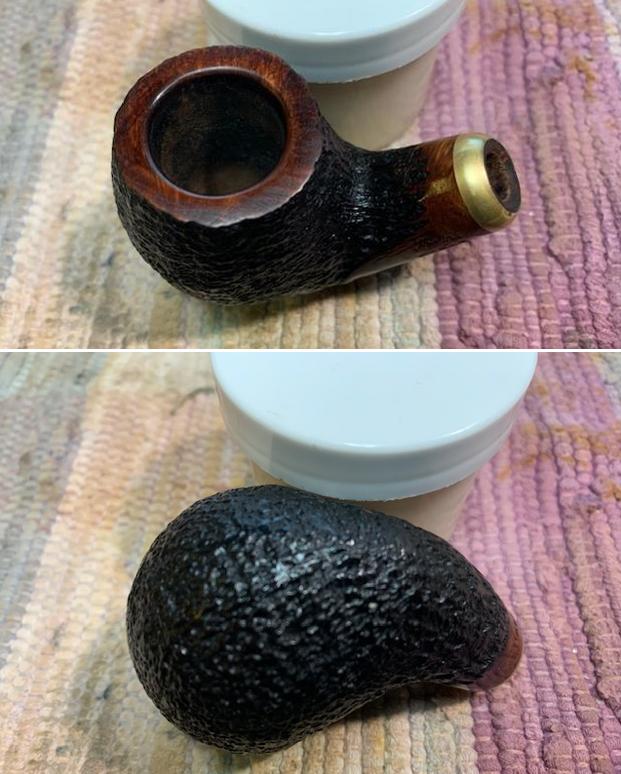
Resurrecting an old Bulldog with a Bakelite Stem


Blog by Steve Laug

I have finished restoring quite a few of the pipes in this collection that we purchased from the older gentleman. He sent me the photos and I was amazed at what I saw. You have seen many of the pipes that he had. These included Dunhill, BBB, Orlik, Barclay Rex, a cased Ben Wade, an H. Simmons all briar, Hardcastles and some Meerschaums. There were also some assorted others that I will get to in the days ahead. It was a great collection.

The next pipe I have chosen is a tired and worn looking older style Bulldog with a Bakelite stem with a bone tenon. I don’t know what it is about this pipe that caught my eye but something did. It certainly was not the condition of pipe. The bowl was in very rough shape. There was a thick cake in the bowl and the rim top and edges were told buried under a thick coat of lava. The pipe was really a stranger to pipe cleaners. It was filthy both inside and out. The shape probably caught my eye because it is quite lovely even under the grime and wear. The stem is Bakelite and it was a complete mess. It had the end gnawed off  leaving behind a chipped and chewed end that was not eve square. I am not sure how much longer it was when it was made but it must have been longer than what we saw when we got. This was one well loved pipe that had been “ridden hard and put away wet”! It would be a challenge to see what I could do with it! In the end that is probably what drew me to the pipe!

Jeff took some photos of the Bakelite Stemmed Bulldog before he worked his magic in cleaning up the pipe. It is a an interesting pipe with a lot of potential and what appears to be some great grain under the grime and debris of the years.Jeff took photos of the bowl, rim top to show the thickness of the cake in the bowl and the thick lava on the rim top. The rim top and both inner and outer edges are so thickly covered that it is hard to know their condition. It appears that there were nicks and chips on the outer edge at the back of the bowl that will require a bit of attention. All of the issues will become clearer after the clean up. He took photos of the top and underside of the Bakelite stem showing the gnawed end of the stem and the broken and missing chunks from the stem end. It appears that there were button remnants on both sides. Jeff also took some photos of the bone tenon and the shank end to show the appearance and condition of both.Jeff took photos of the sides and heel of the bowl to show the condition of the briar. You can see the beautiful shape of the bowl and some interesting grain even through the dirt and debris of many years.   Jeff took photos of the stamping on the sides of the shank to show the lack of a stamping. It appears that both sides had some sort of stamp on them but it was worn away.This unstamped Bulldog is an interesting looking pipe. Because the old gentleman that we bought the pipes from intimated that he purchased his pipes at the Manhattan Barclay-Rex store I would imagine that he may have purchased this one from them as well. I was unable to pin down any information regarding the date this pipe was made but the fact that it is among the old timers I have been working on and the older Bakelite stem make me think it is older as well.

Jeff carefully cleaned the pipe. He reamed it with a PipNet pipe reamer and then cleaned up the reaming with a Savinelli Fitsall Pipe Knife. He scrubbed out the internals of the shank, stem and shank extension with alcohol, pipe cleaners and cotton swabs until the pipe was clean. He scrubbed the exterior of the bowl with Murphy’s Oil Soap and a tooth brush to remove the grime and grit on the briar and lava on the rim top. The finish looks much better and has a deep richness in the colour that highlights the dimensions of the grain. The edges looked good otherwise. He scrubbed the Bakelite stem with Soft Scrub to remove the grime and oils on the stem and chewed stem end. When the pipe arrived here in Vancouver I was amazed that it looked so good. Here are some photos of what I saw. I took some close up photos of the rim top and the stem surface. The top and inner and outer edge of the rim showed damage. There was serious damage back outer edge of the bowl. The stem was gnawed and that damage is very visible in the photos. I took photos of the shank sides to show that the stamping was worn away.I removed the stem from the shank and took a photo of the parts of the pipe. I started my work on the pipe by dealing with the chewed end of the stem. I used a file/rasp that I have here to flatten the chewed off end. I squared it off to have a fresh surface to work on a new button. I propped the stem up on the shank to take a picture of the squared end of the stem.I used a triangular file to recut the sharp edge of a button on the newly shaped stem end. I used 220 grit sandpaper to shape the top of the stem and shape the angles.I spread a coat of clear CA glue on top of the button to seal the new edge and top of the button and set it aside to cure. I followed up on that by layering glue on the top of the button to build it up and give it some shape. Once the button repair cured I used the triangle file and 180 grit sandpaper to shape the button surface.There was still more shaping to do but the  stem was taking form. I took profile pictures of it to give a sense of the shape. There is much more sanding to do but it was coming along.I set the stem aside and turned my attention to the bowl. I used a folded piece of 180 grit sandpaper to bring the inner edges of the bowl back into round. I topped the bowl with 220 grit sandpaper to minimize the damage on the rim top and particularly the back of the bowl. I took a photo of the rim top after the topping. I polished the briar with micromesh sanding pads – dry sanding with 1500-12000 grit sanding pads. I wiped the bowl down after each pad with a damp cloth to remove the sanding debris. I stained the rim top with an Oak stain pen to match the surrounding briar. Once it is buffed the match should be perfect.I worked some Before & After Restoration Balm into the surface of the bowl and shank with my fingertips to clean, enliven and protect the briar. I let the balm sit for 15 minutes and then buffed with a cotton cloth to raise the shine. The photos show the bowl at this point in the restoration process. With stem reshaped and built earlier in the process all that remained was to polish it. I polished the stem with micromesh sanding pads – dry sanding with 1500-12000 grit sanding pads. I wiped it down after each sanding pad with Obsidian Oil. I polished it with Before & After Pipe Stem Polish – both Fine and Extra Fine. I gave it a final coat of Obsidian Oil. With the bowl and the stem finished I put the beautiful No Name Bulldog back together and buffed it on the wheel using Blue Diamond to give it a shine. I gave the bowl and the stem multiple coats of carnauba wax on the wheel. I buffed it with a clean buffing pad to raise the shine. I hand buffed it with a microfiber cloth to deepen the shine. The grain on this pipe really is a great looking. The dimensions of the pipe are – Length: 4 ¾ inches, Height: 1 ¾ inch, Outside diameter of the bowl: 1 ¼ inches, Chamber diameter: ¾ of an inch. The weight of this large pipe is 1.16 ounces /33 grams. This Old Bakelite Stemmed Bulldog is another great find from this collection. It is much more beautiful in person than these photos can capture. This is another pipe that has the possibility of transporting the pipe man or woman back to a slower paced time in history where you can enjoy a respite. Thanks for walking through the restoration with me.
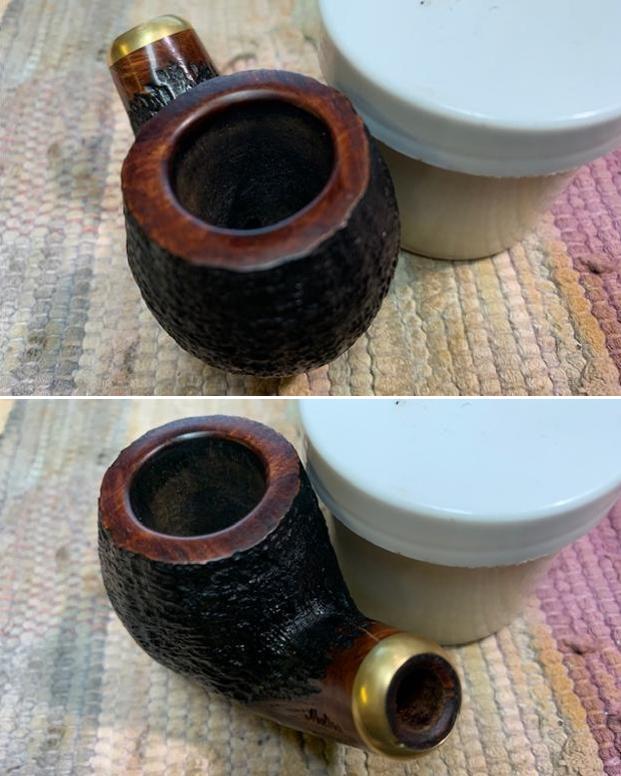
Resurrecting an interesting GBD  Square Shank Dura Mount 9488 Pot


Blog by Steve Laug

I have quite a few of the pipes in this collection that we purchased from the older gentleman. He sent me the photos and I was amazed at what I saw. You have seen many of the pipes that he had. These included Dunhill, BBB, Orlik, Barclay Rex, a cased Ben Wade, an H. Simmons all briar, Hardcastles and some Meerschaums. There were also some assorted others that I will get to in the days ahead. It was a great collection.

Now it was time to work on some of the single pipes that he had. The next one of these is a interesting Pot that is stamped on the left side of the diamond shank and reads DURA [over] GBD in an oval [over] MOUNT. On the right side it is stamped LONDON, ENGLAND [over] 9488 (the shape number). The stamping is clear and readable. It is a nice looking Pot that has the kind of damage to the rim edges that I have come to expect in this lot. The Duramount fitting on the shank end is something I have not seen before. The vulcanite saddle stem does not have any stamping on either side. It is the top pipe in the above photo.

Jeff took some photos of the GBD Dura Mount 9488 Pot before he worked his magic in cleaning up the pipe. It is a an interesting pipe with a lot of potential and what appears to be some great grain under the grime and debris of the years.Jeff took photos of the bowl, rim top to show the thickness of the cake in the bowl and the thick lava on the rim top. The rim top and both inner and outer edges are so thickly covered that it is hard to know their condition. It appears that there is a large chip on the outer edge at the back of the bowl that will require a bit of attention. All of the issues will become clearer after the clean up. He took photos of the top and underside of the vulcanite stem showing the oxidation, calcification, tooth marks, chatter and wear on the stem and button. Jeff took photos of the sides and heel of the bowl to show the condition of the briar. You can see the beautiful shape of the bowl and some interesting grain even through the dirt and debris of many years.   Jeff took photos of the stamping on the sides of the shank to show the clarity and readability of the stamp. It reads as mentioned above. He also took a photo of the brass GBD logo on the stem. I turned to Pipephil’s site and to the general GBD listing for the GBD Dura Mount pipe and other than a picture of the pipe and the stamping on Pipedia there was not any significant information on the line. I turned to the section on Pipedia on GBD Model Information to see what I could find (https://pipedia.org/wiki/GBD_Model_Information). There was one short line that I quote below.

Dura Mount — Factory unknown: Metal stem/bit fitting?

I assume from the design of the pipe the note above on Metal Stem/Bit Fitting ? is referring to the aluminum shank extension and mortise that holds the tenon firmly in place. I would guess that it was designed to protect both the shank and the tenon by providing this “DURABLE” shank end.

This GBD DURA MOUNT 9488 Pot is an interesting looking pipe. Because the old gentleman that we bought the pipes from intimated that he purchased his pipes at the Manhattan Barclay-Rex store I would imagine that he bought this one from them as well. I was unable to pin down any information regarding the date this pipe was made but the fact that it is among the old timers I have been working on makes me think it is older as well.

Jeff carefully cleaned the pipe. He reamed it with a PipNet pipe reamer and then cleaned up the reaming with a Savinelli Fitsall Pipe Knife. He scrubbed out the internals of the shank, stem and shank extension with alcohol, pipe cleaners and cotton swabs until the pipe was clean. He scrubbed the exterior of the bowl with Murphy’s Oil Soap and a tooth brush to remove the grime and grit on the briar and lava on the rim top. The finish looks much better and has a deep richness in the colour that highlights the dimensions of the grain. The chip on the back of the rim top was clear and looked like a relatively easy repair. The edges looked good otherwise. He soaked the stem in Briarville’s Pipe Stem Deoxidizer and scrubbed it with Soft Scrub to remove the remnants of oxidation. When the pipe arrived here in Vancouver I was amazed that it looked so good. Here are some photos of what I saw. I took some close up photos of the rim top and the stem surface. The top and inner and outer edge of the rim showed damage. There was serious damage back outer edge of the bowl. The stem had tooth marks just ahead of the button and on the button surface. I took photos of the stamping on the sides of the shank. It is readable and clear.I removed the stem from the shank and took a photo of the parts of the pipe. I started my work on the pipe by dealing with the damaged rim top and edges. I used a folded piece of 180 grit sandpaper to smooth out the nicks the inner edge of the bowl. I lightly sanded the rim top in preparation for the repair to the back outer edge. I stained the chipped area with a Maple stain pen to match the bowl and then built it up with clear CA glue. Once the glue cured I topped the bowl on a topping board with 220 grit sandpaper and sanded the outer edge with 220 at the same time. I took a photo of the rim top at this point in the process. I polished the briar and aluminum shank extension with micromesh sanding pads – dry sanding with 1500-12000 grit sanding pads. I wiped the bowl down after each pad with a damp cloth to remove the sanding debris. I stained the rim top with a Maple and a Cherry Stain pen to match the surrounding briar. Once it is buffed the match should be perfect.I worked some Before & After Restoration Balm into the surface of the bowl and shank with my fingertips to clean, enliven and protect the briar. I let the balm sit for 15 minutes and then buffed with a cotton cloth to raise the shine. The photos show the bowl at this point in the restoration process. I set the bowl aside and turned my attention to the stem. I “painted” the surface of the stem on both sides to lift the tooth marks. I was able to lift most of them. I filled in what remained next to the button with clear CA glue. Once the repairs cured, I sanded them with a folded piece of 220 grit sandpaper to smooth out the surface of the stem and reshape the button. I started polishing the stem with 400 grit wet dry sandpaper. I polished the stem with micromesh sanding pads – dry sanding with 1500-12000 grit sanding pads. I wiped it down after each sanding pad with Obsidian Oil. I polished it with Before & After Pipe Stem Polish – both Fine and Extra Fine. I gave it a final coat of Obsidian Oil. With the bowl and the stem finished I put the beautiful GBD Dura Mount 9488 Pot back together and buffed it on the wheel using Blue Diamond to give it a shine. I gave the bowl and the stem multiple coats of carnauba wax on the wheel. I buffed it with a clean buffing pad to raise the shine. I hand buffed it with a microfiber cloth to deepen the shine. The grain on this pipe really is a great looking. The dimensions of the pipe are – Length: 5 ¾ inches, Height: 1 ¾ inch, Outside diameter of the bowl: 1 ½ inches, Chamber diameter: 1 of an inch. The weight of this large pipe is 1.34 ounces /39 grams. This GBD Dura Mount is another great find from this collection. It is much more beautiful in person than these photos can capture. I will be putting it on the rebornpipes store soon. If you would like to add it to your collection let me know. This is another pipe that has the possibility of transporting the pipe man or woman back to a slower paced time in history where you can enjoy a respite. Thanks for walking through the restoration with me.