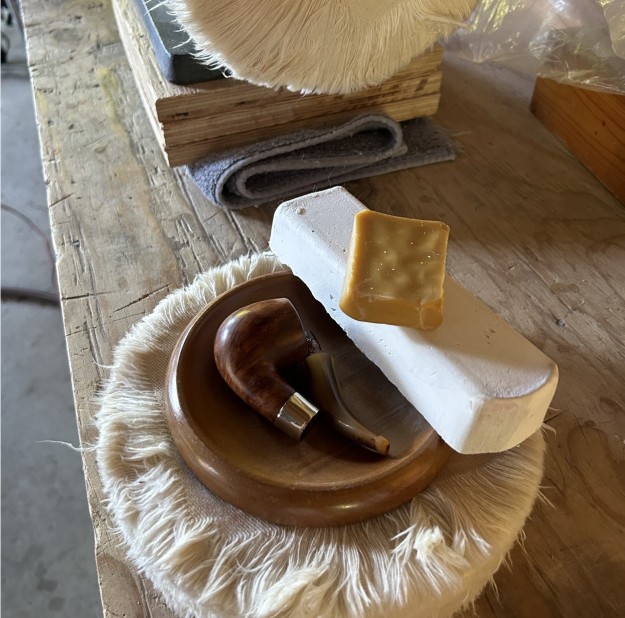
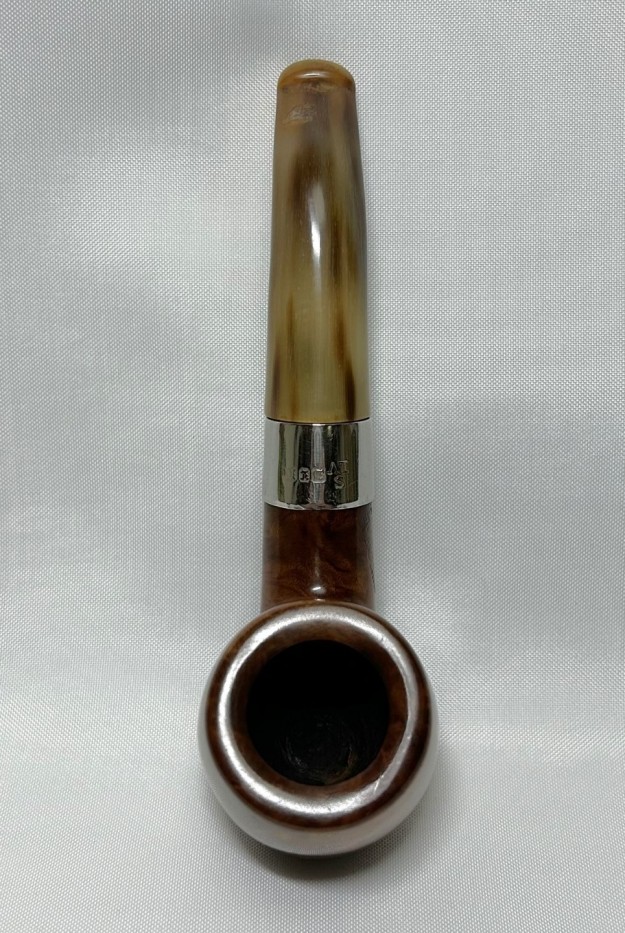
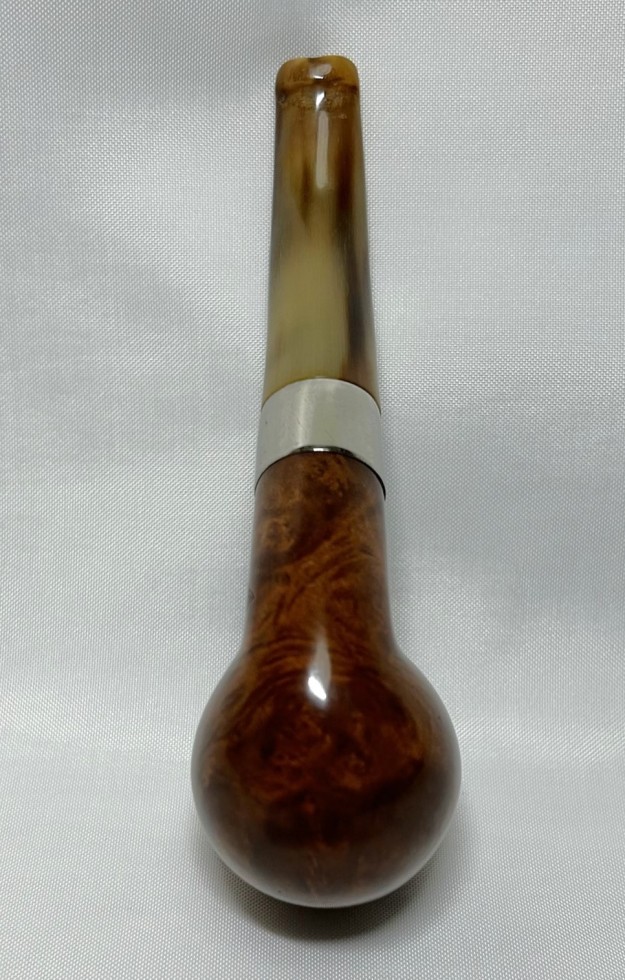
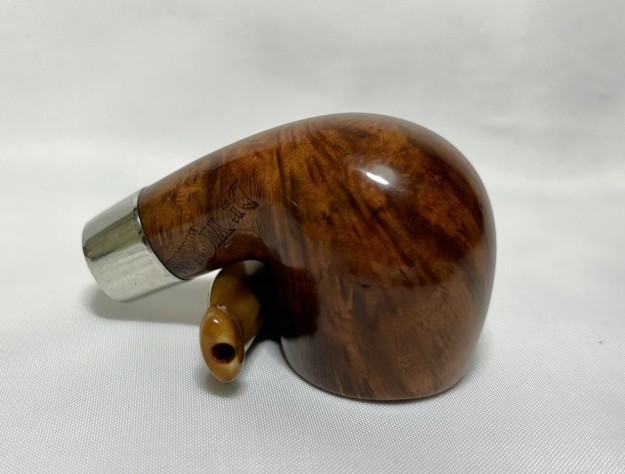
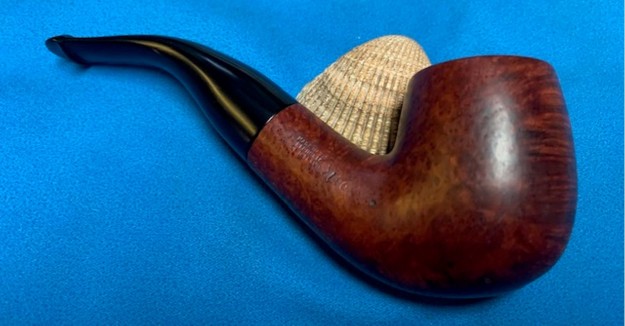
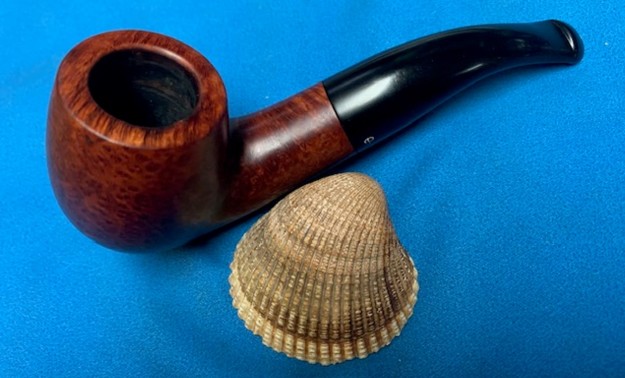
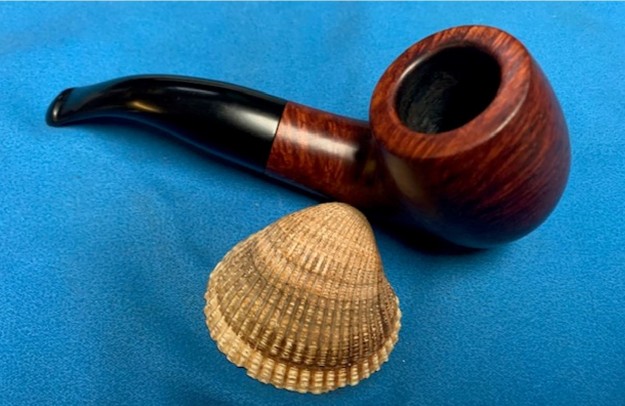
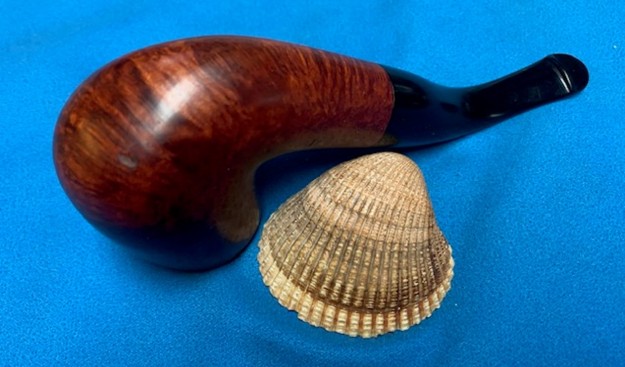
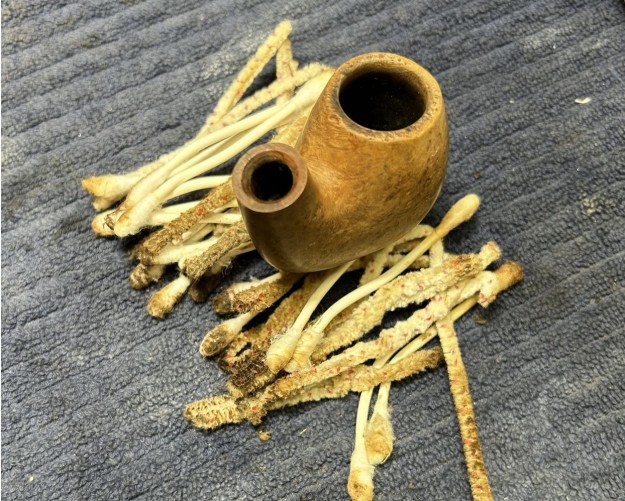
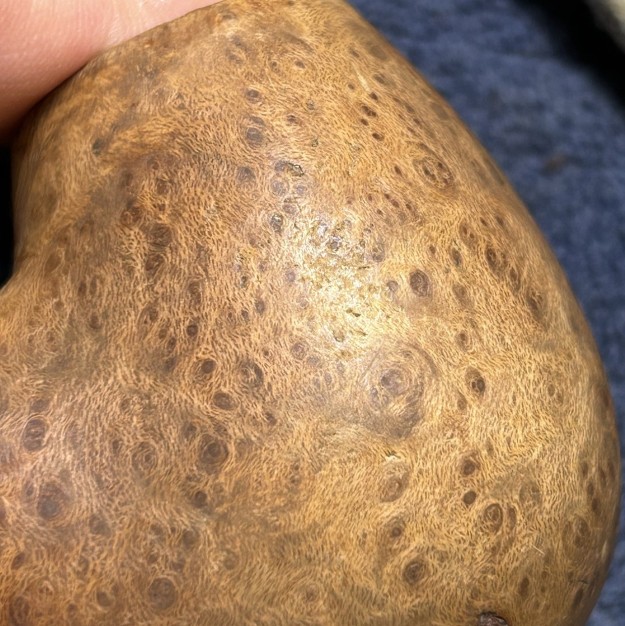
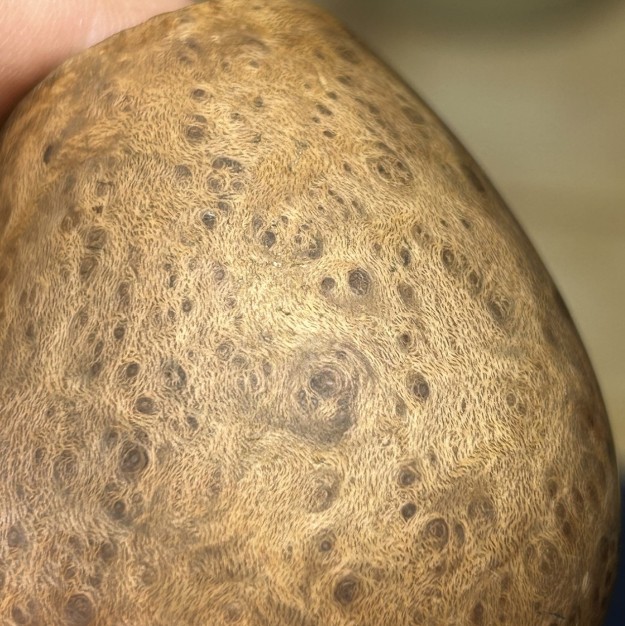
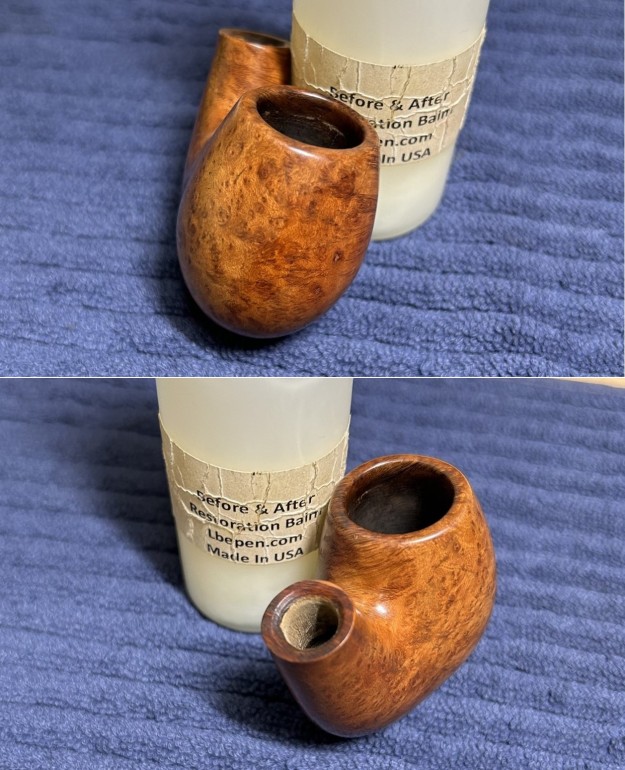
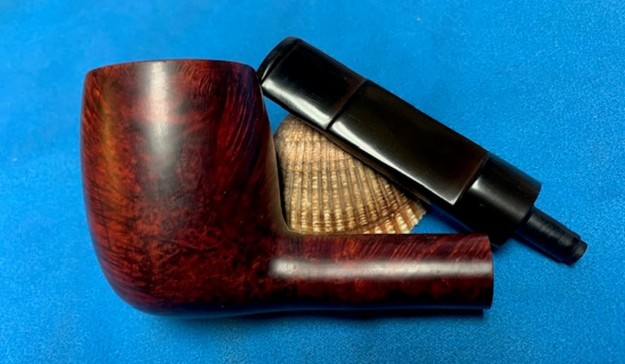
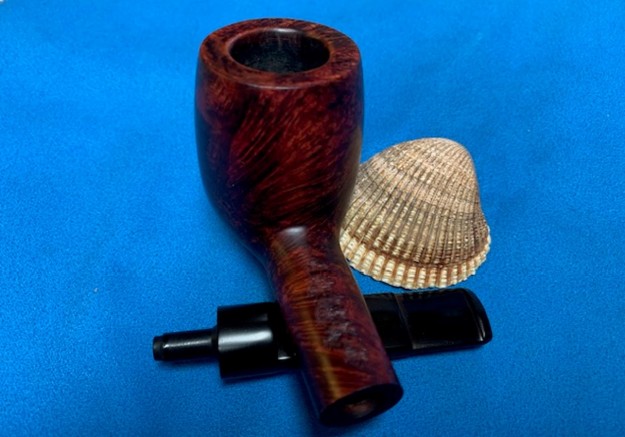
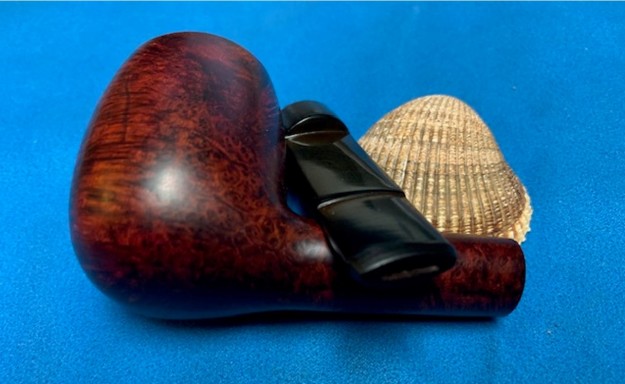
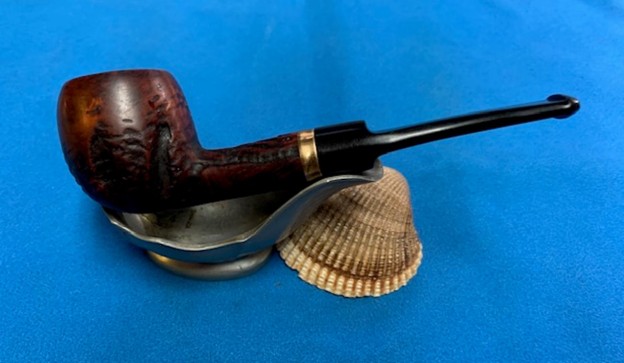
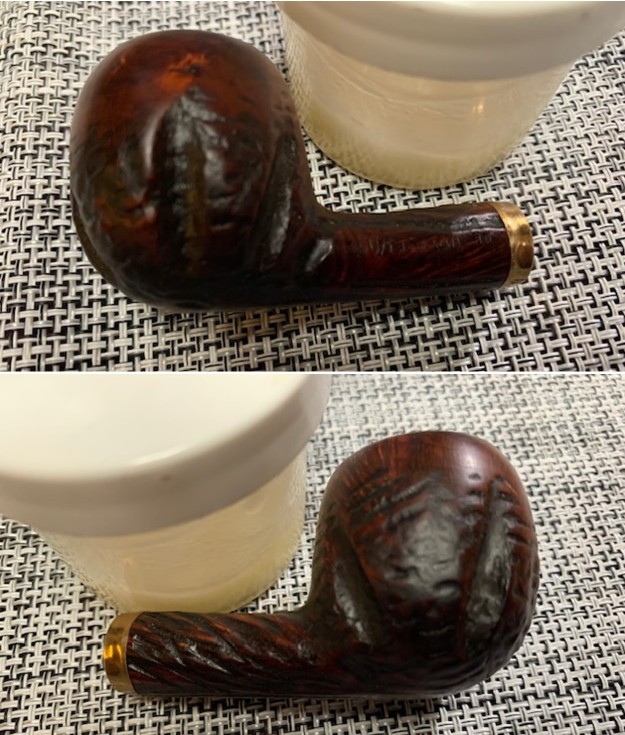
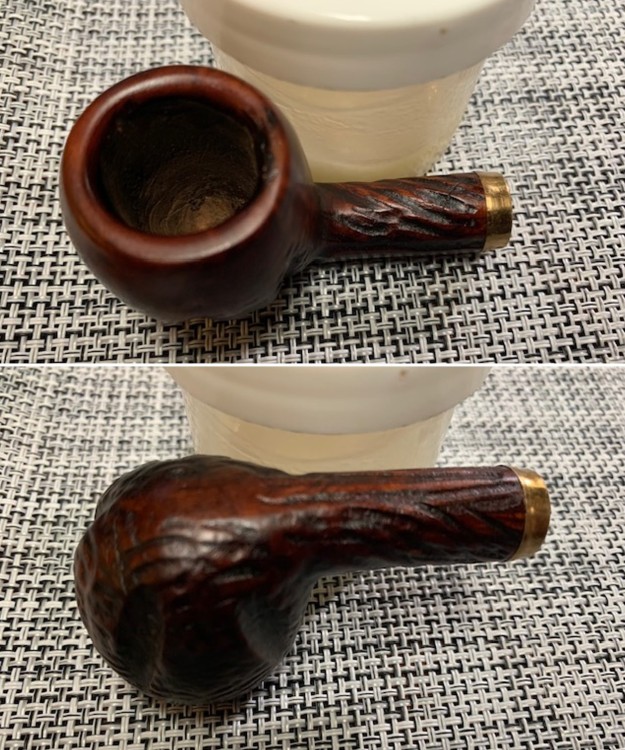
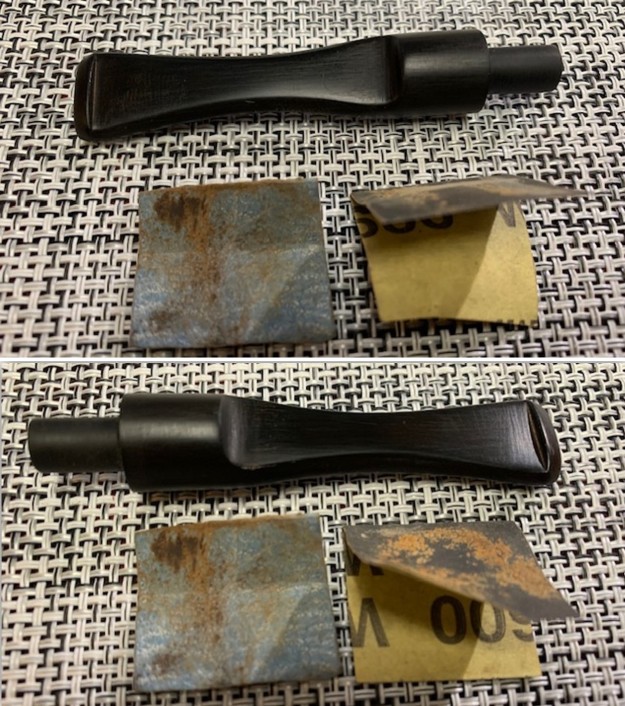
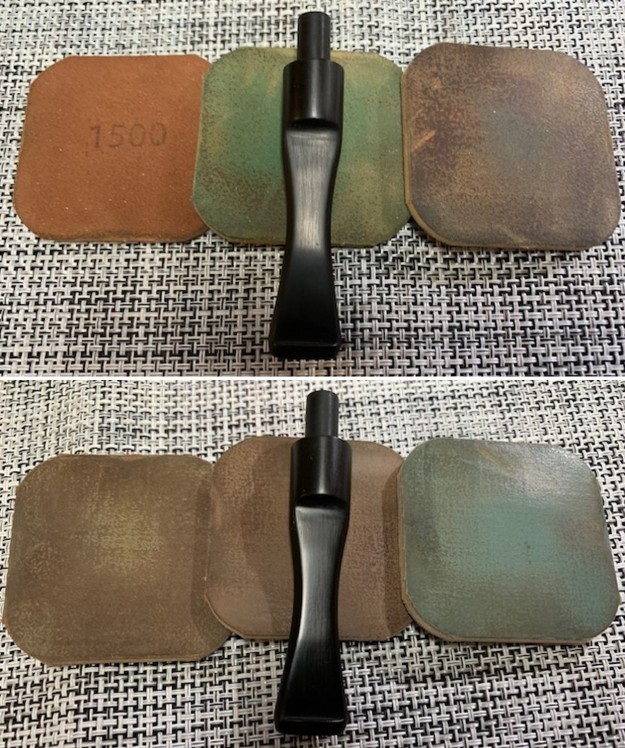
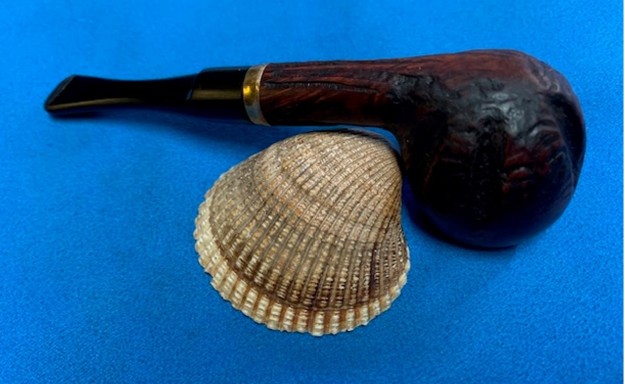
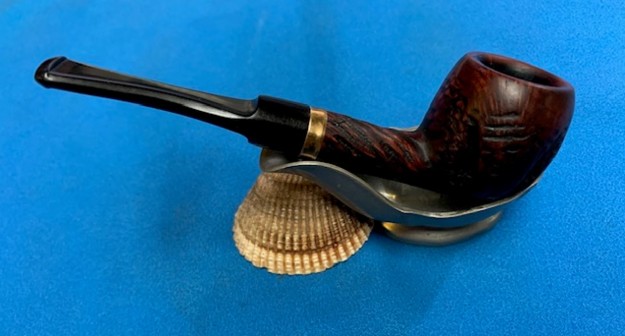
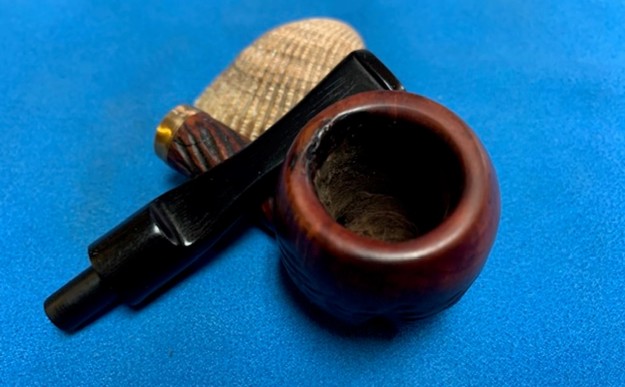
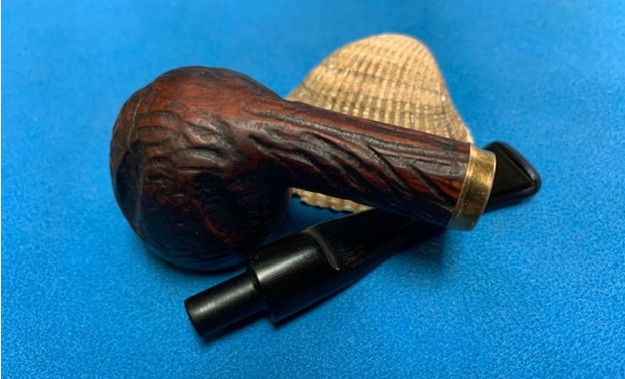
Tag Archives: topping a bowl

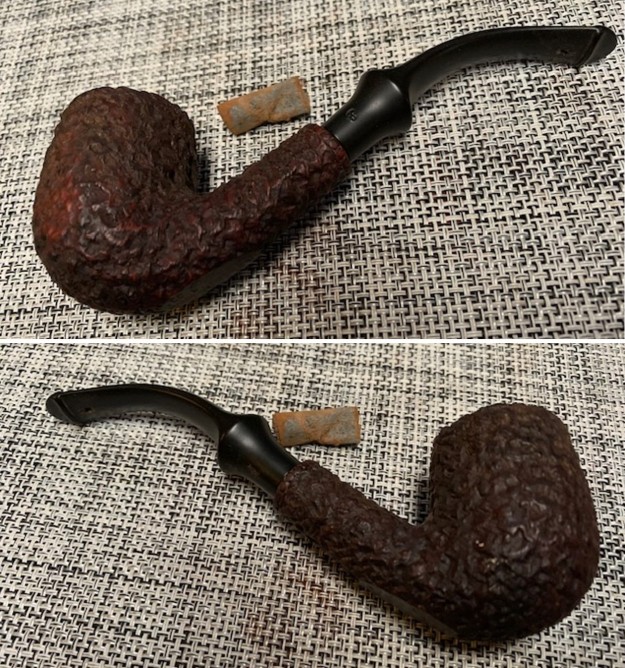
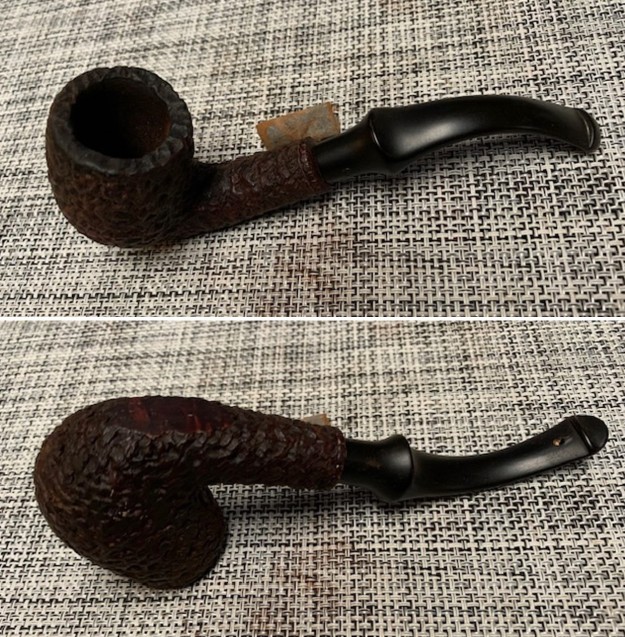
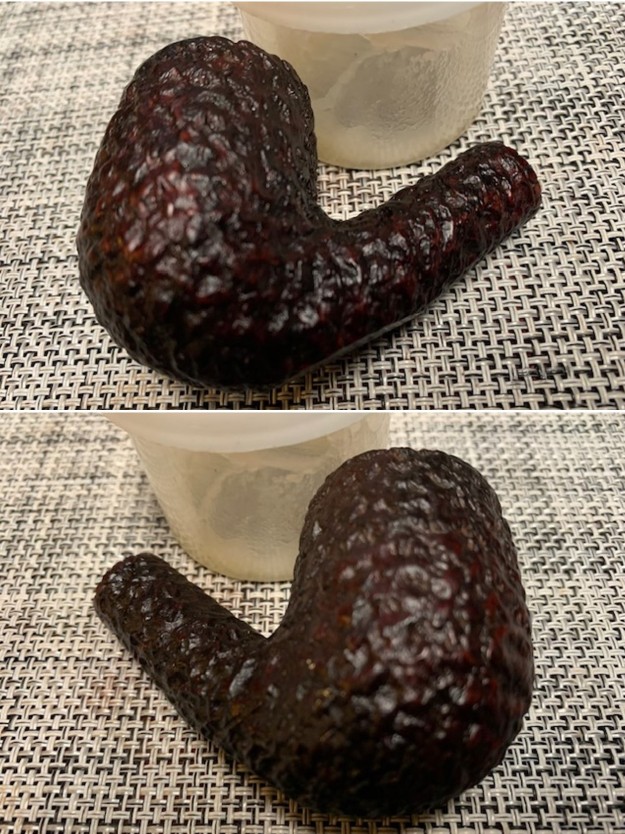
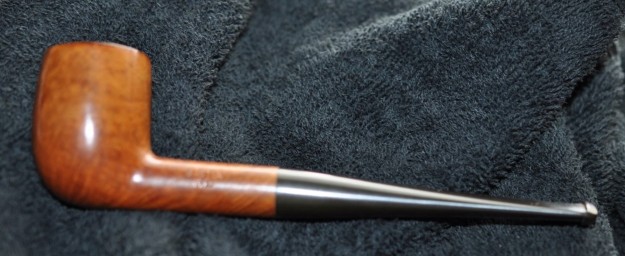
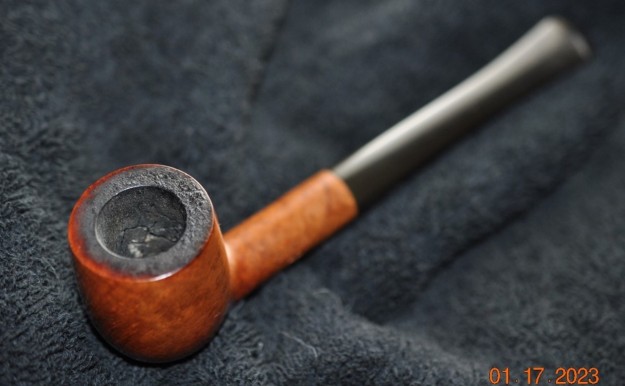
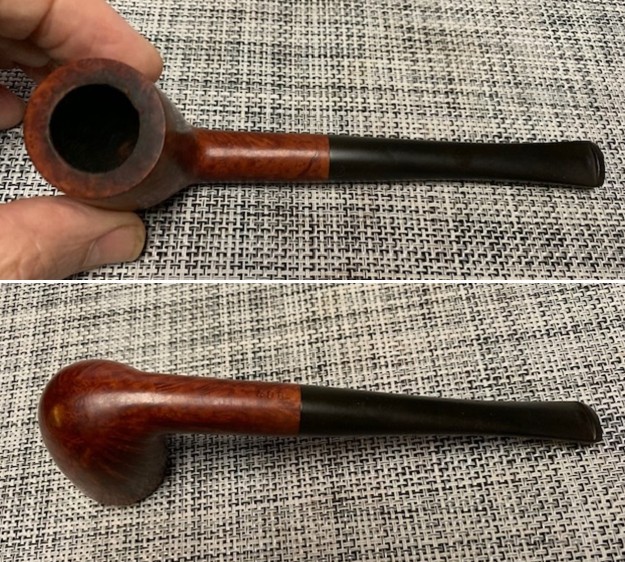
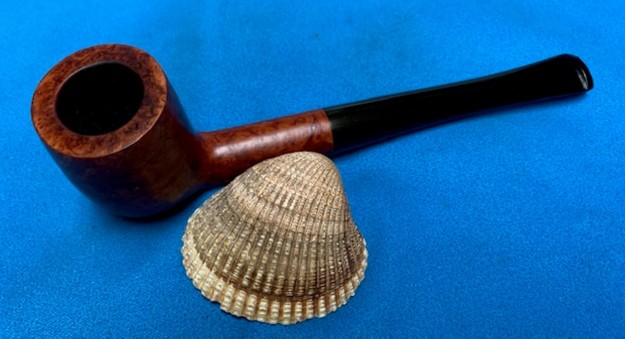
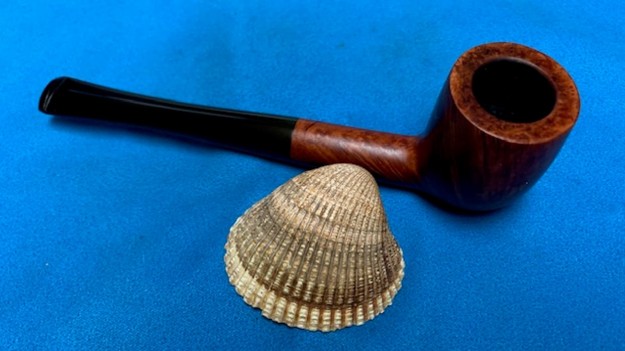
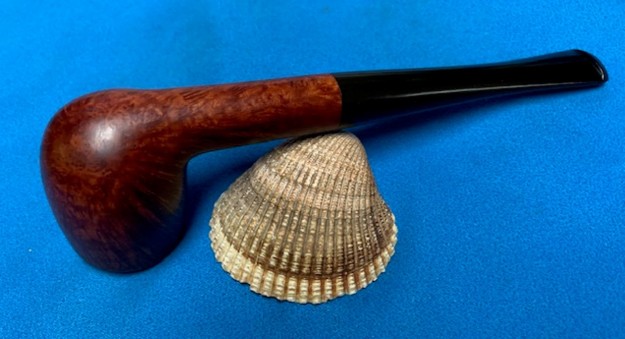
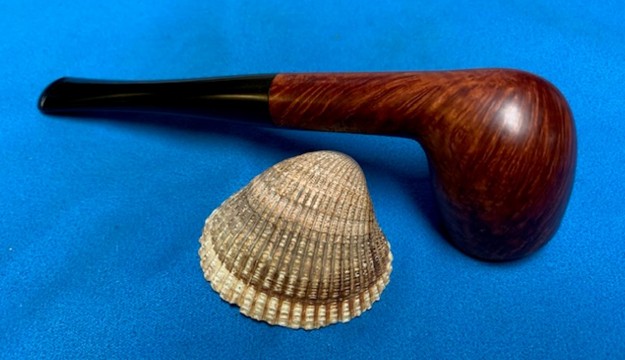
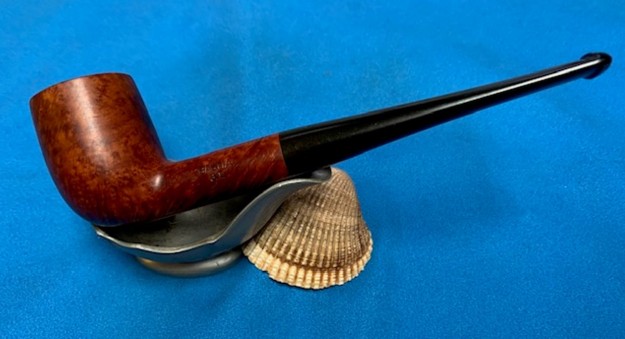
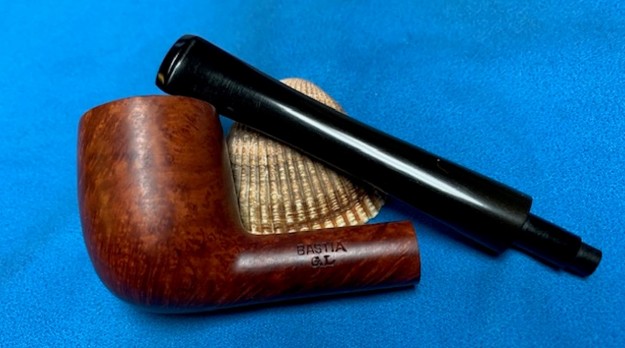
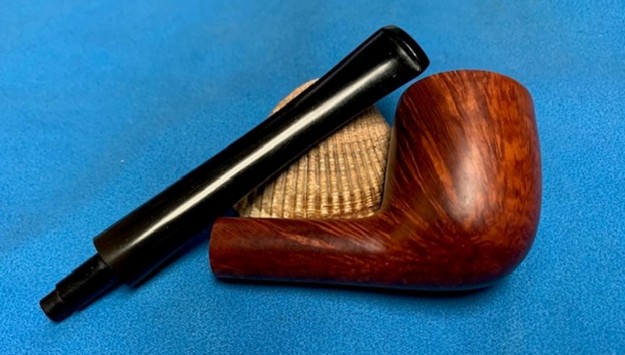
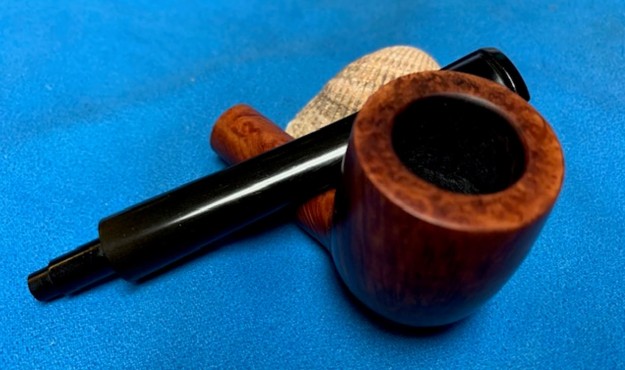
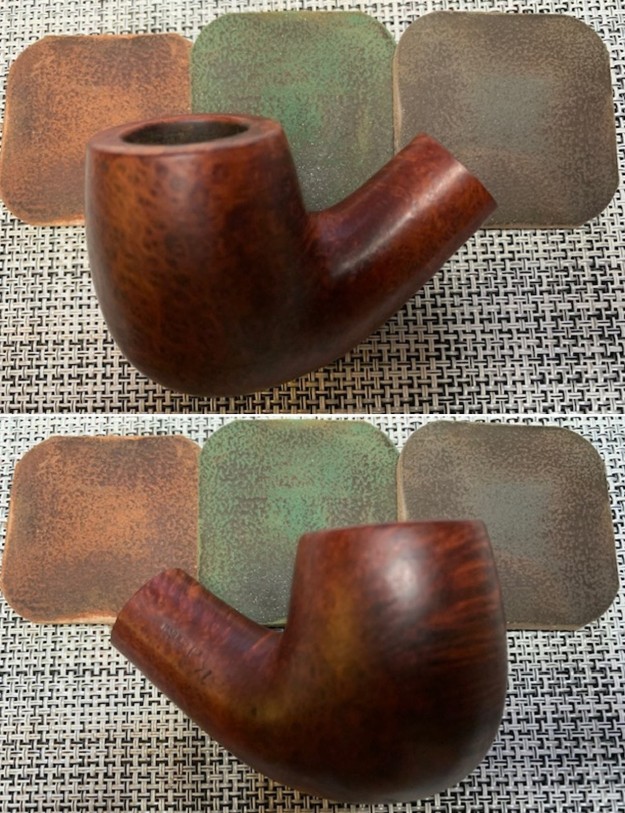
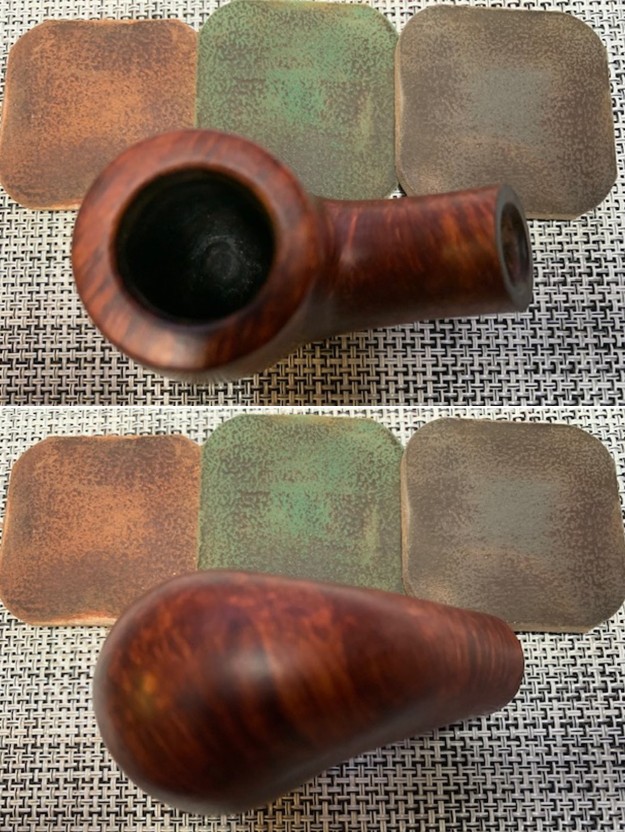
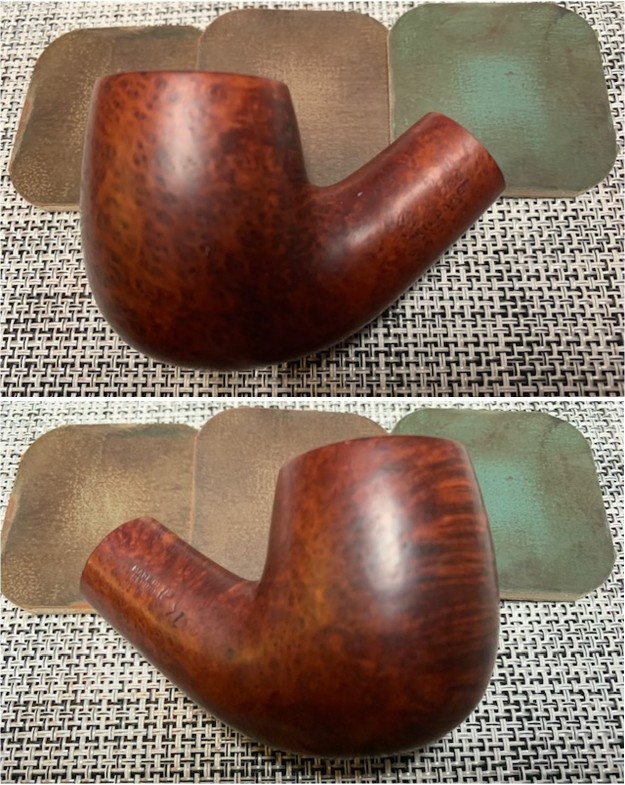
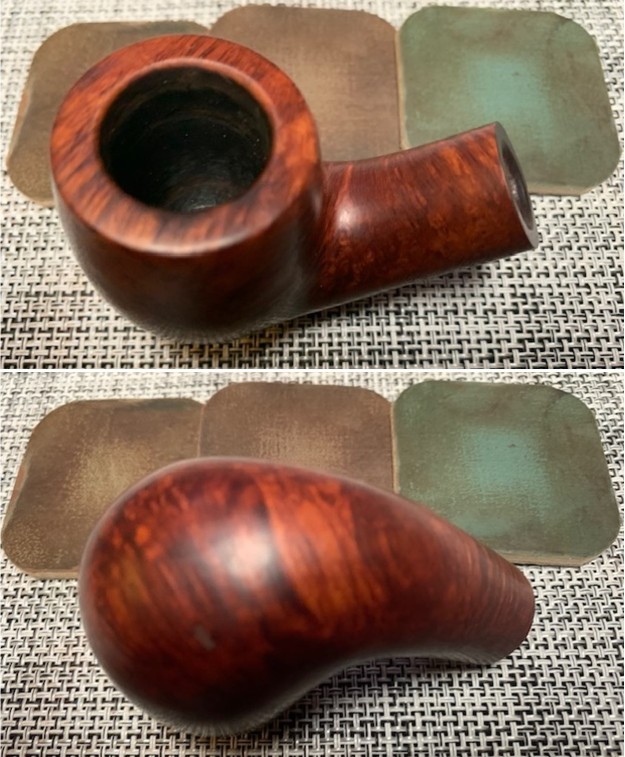
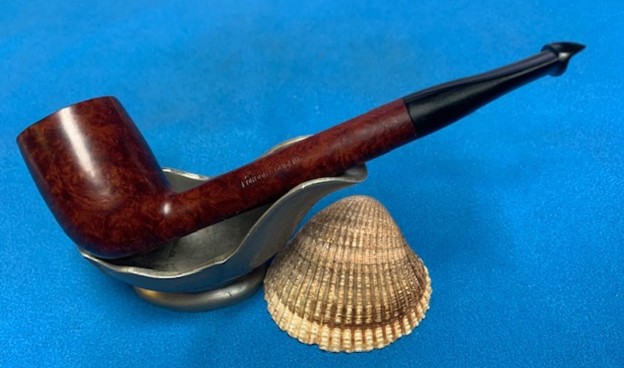
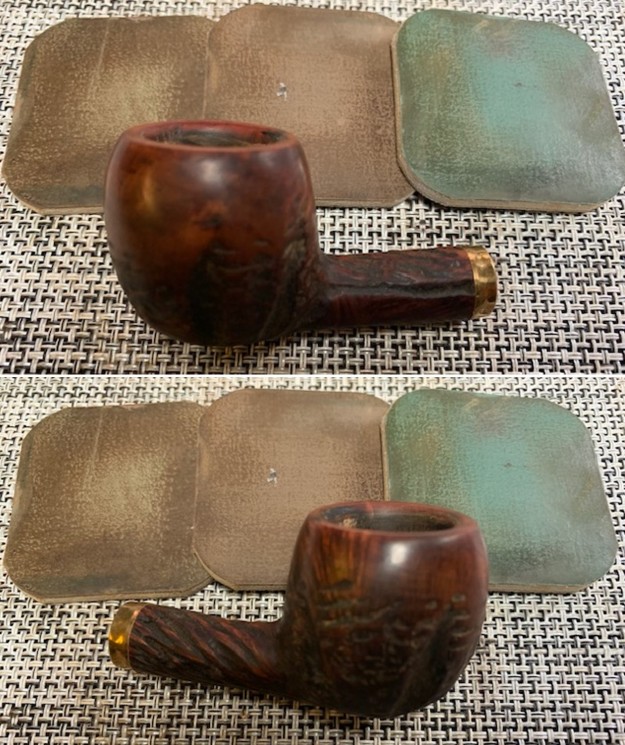
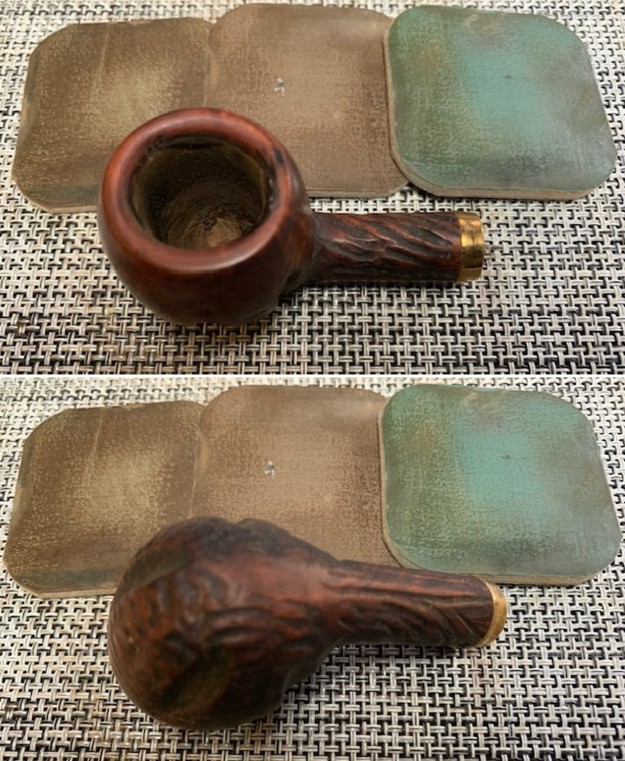
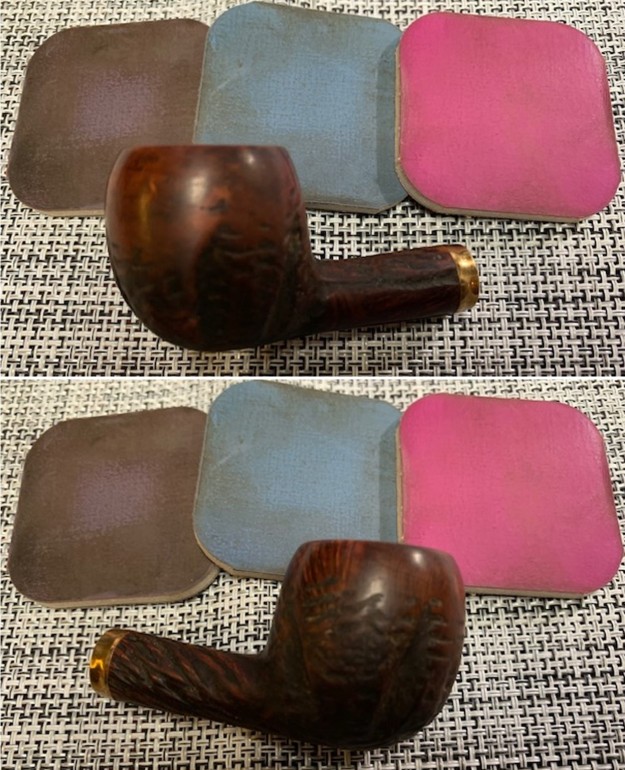
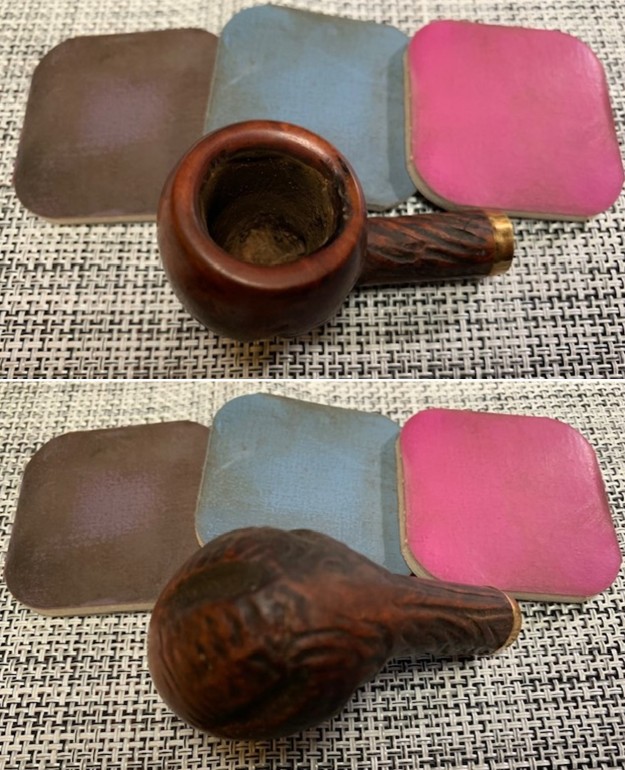
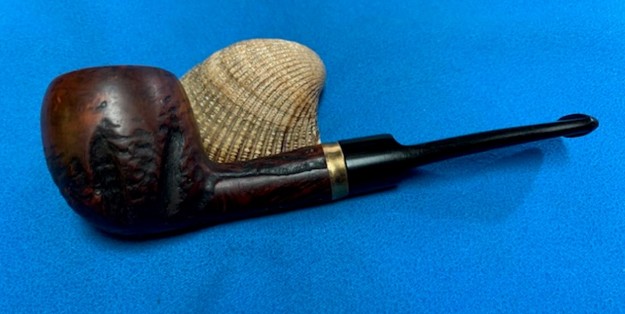
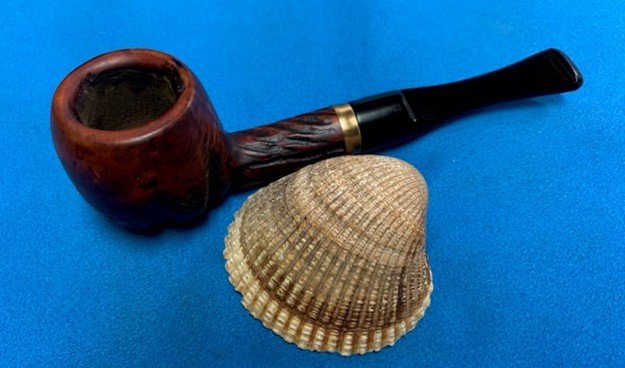
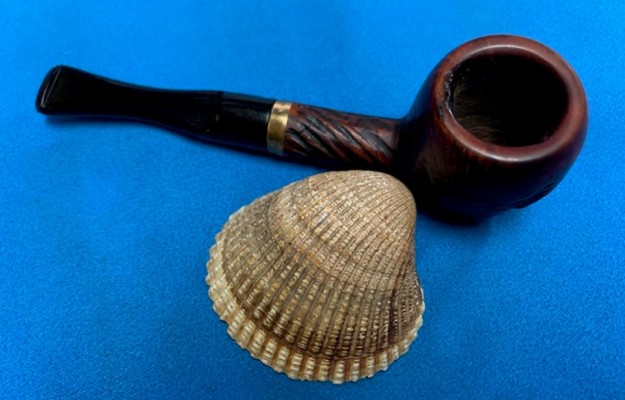
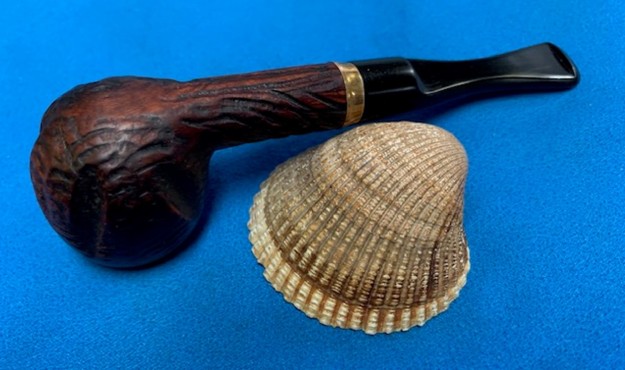
New Life for a Bastia Billiard 408 made by Lillehammer Pipes Norway


Blog by Steve Laug

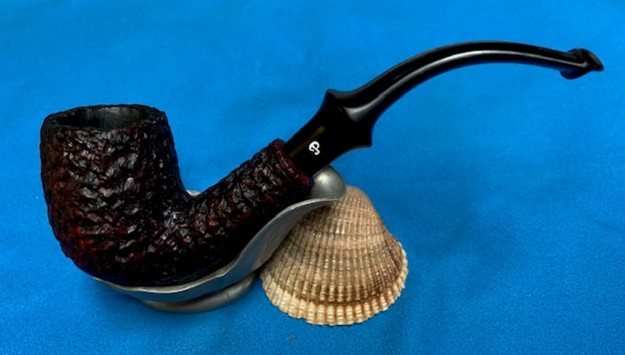
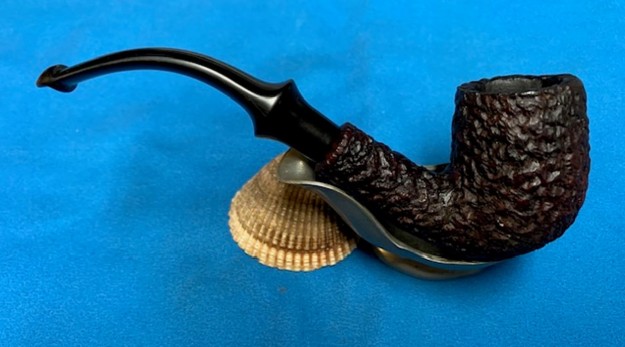
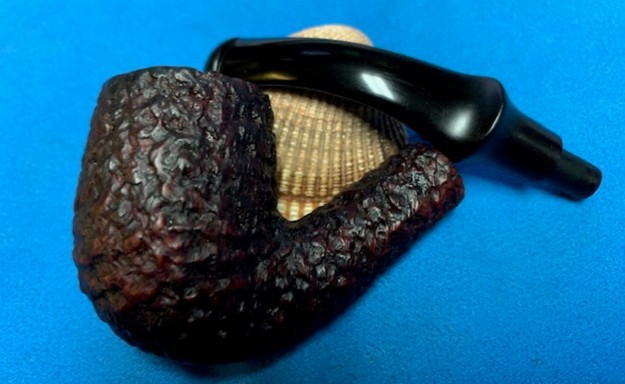
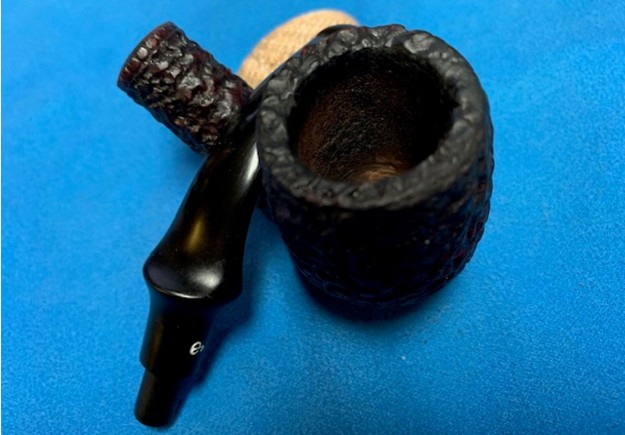
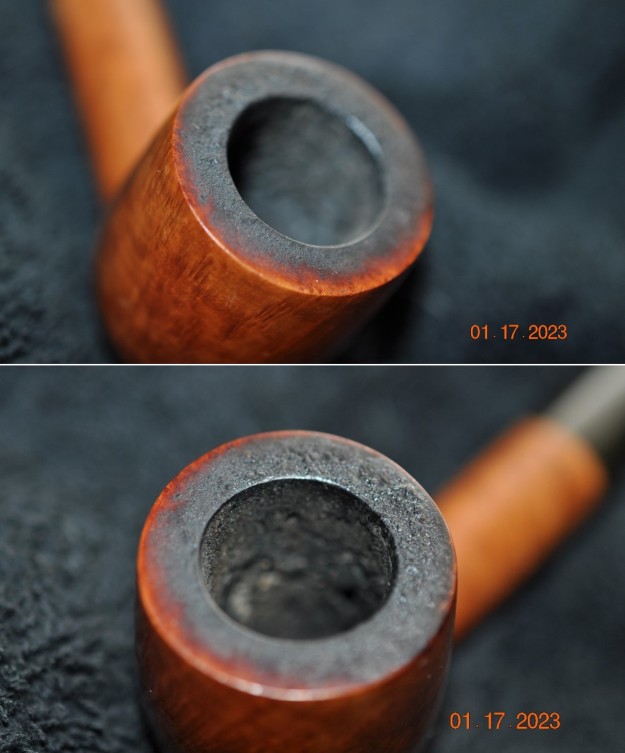
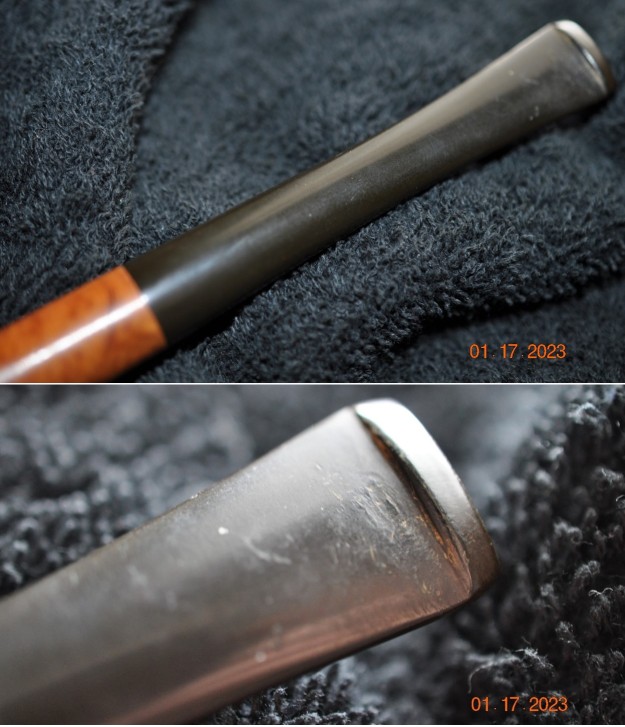
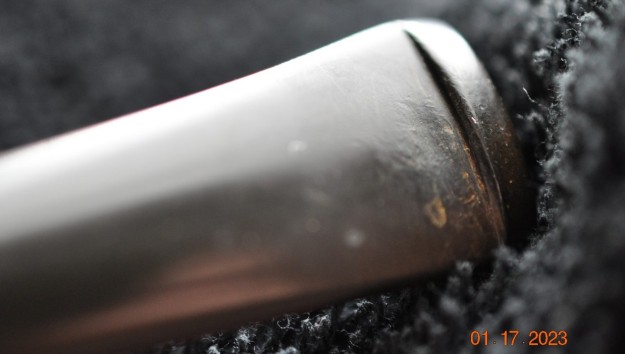
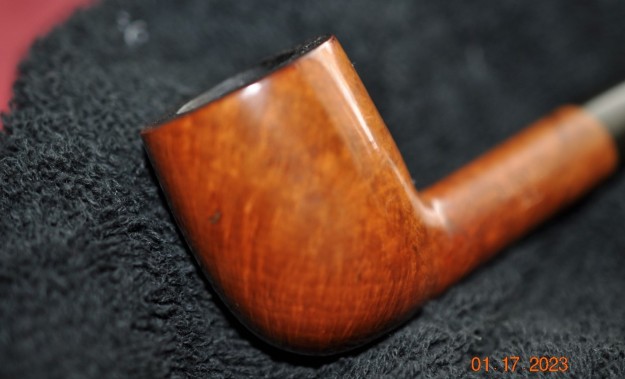
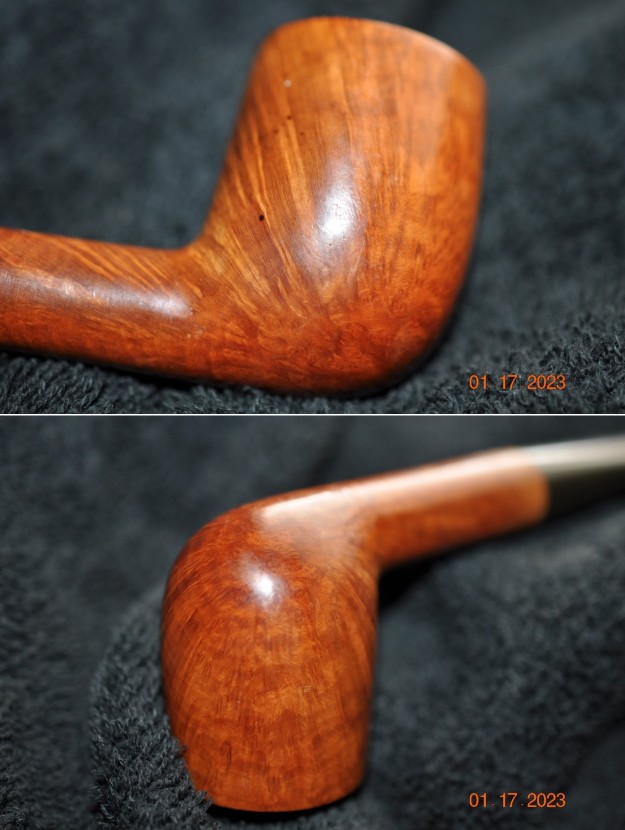
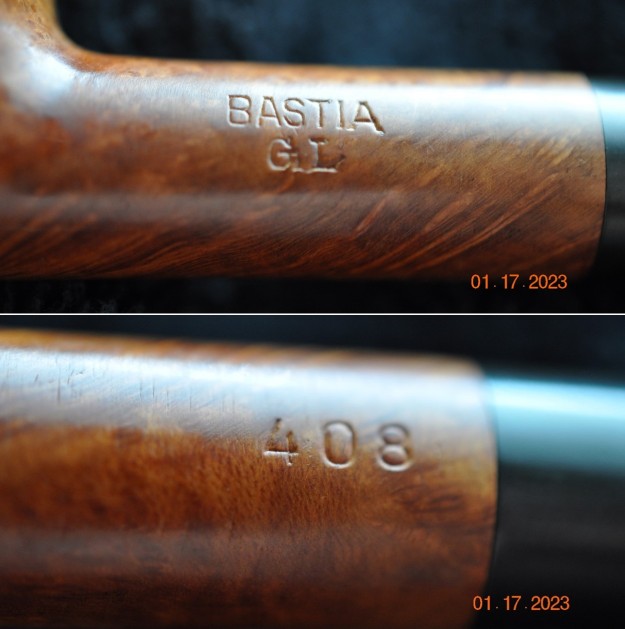
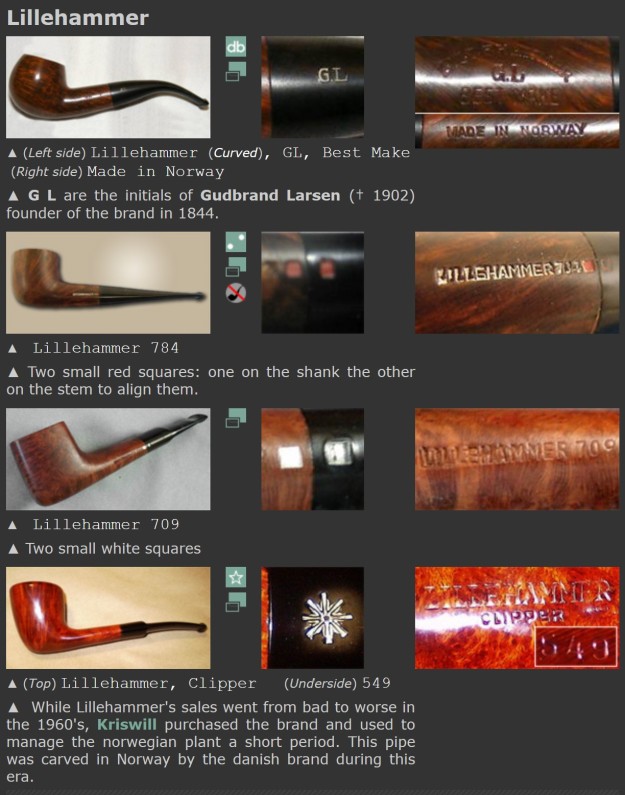
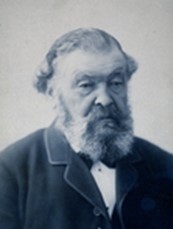
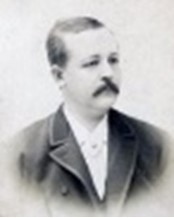
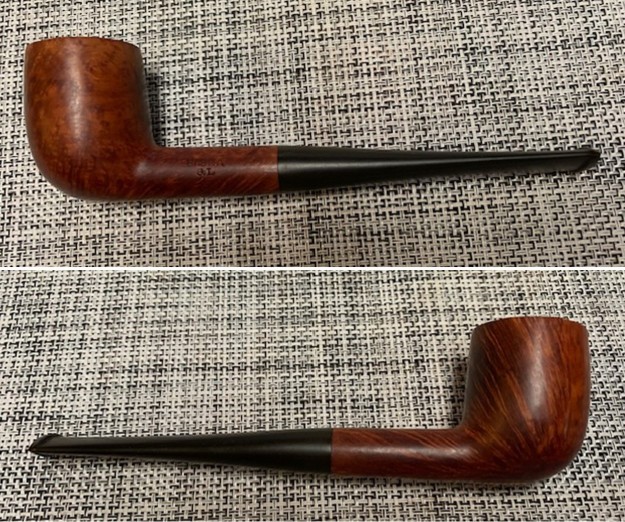
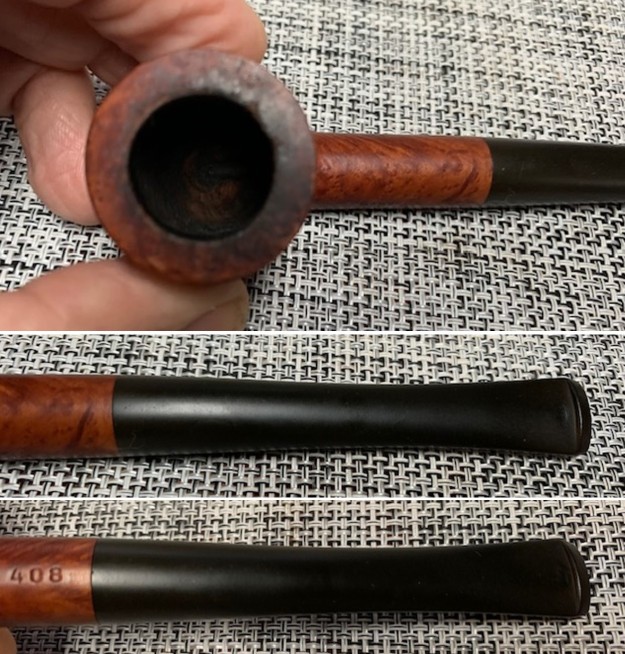
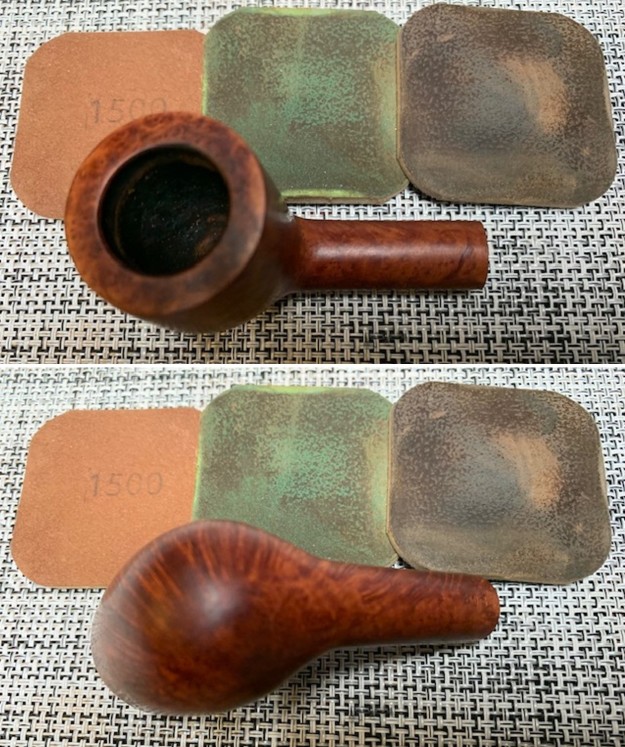
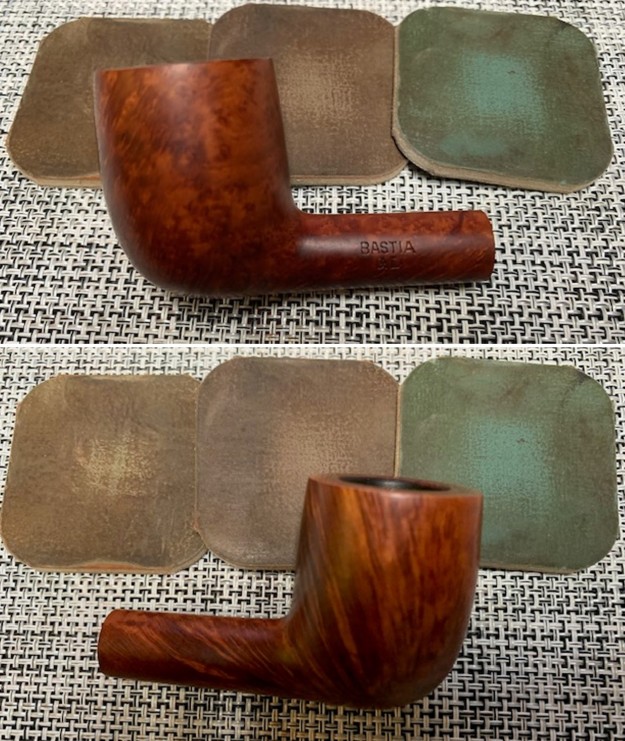
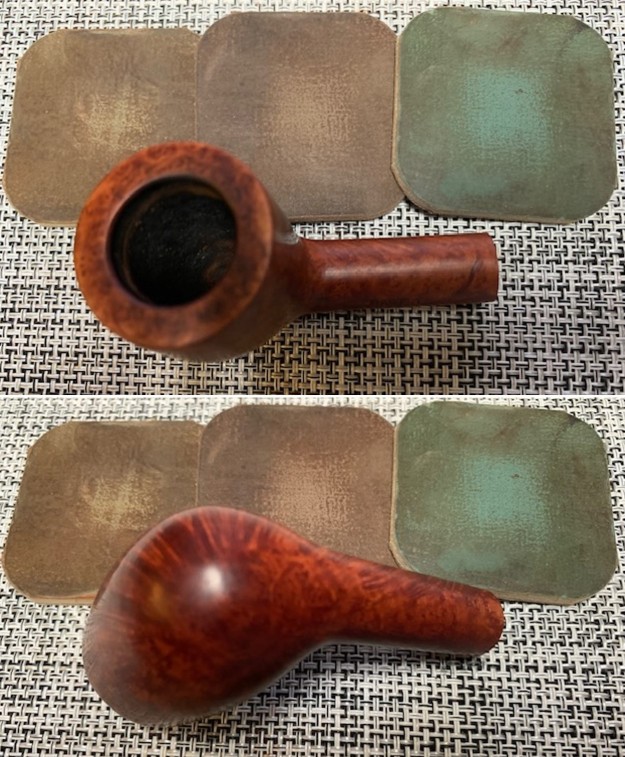
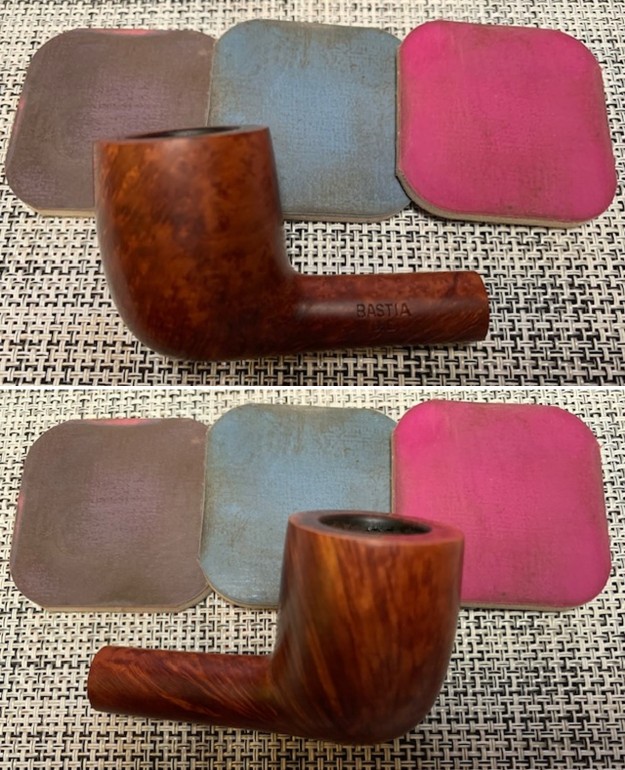
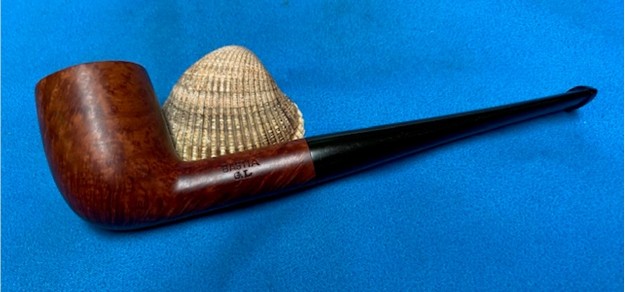
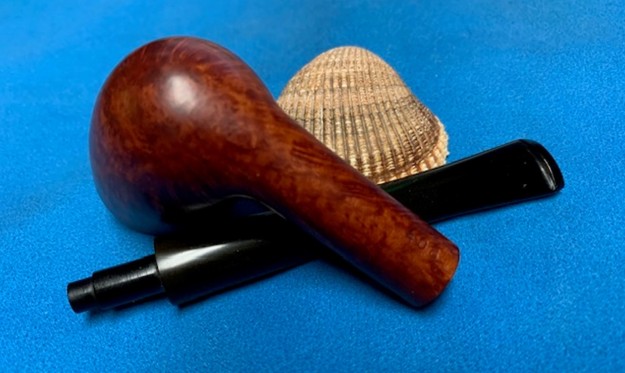
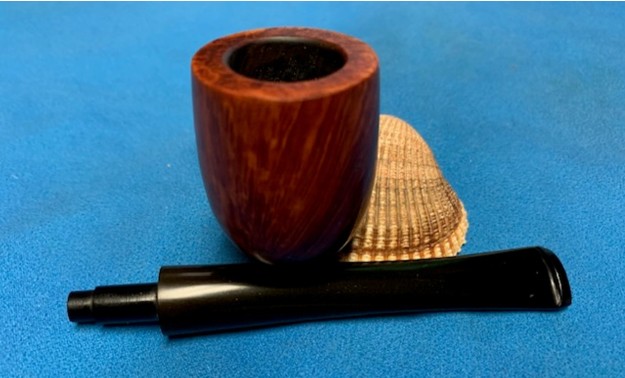
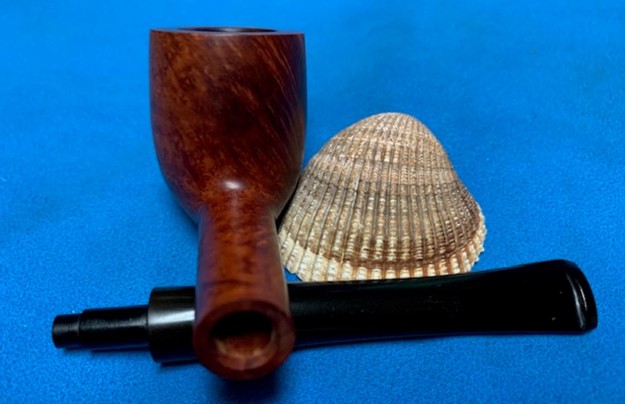
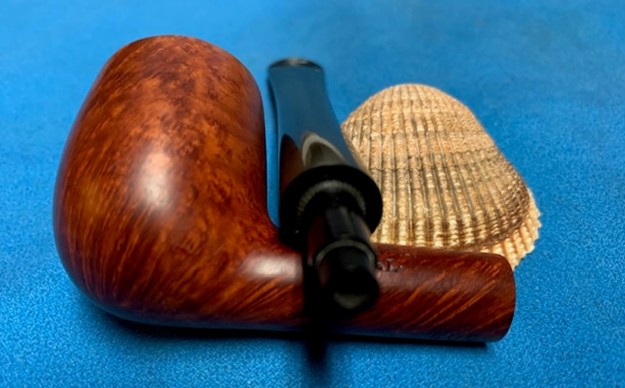
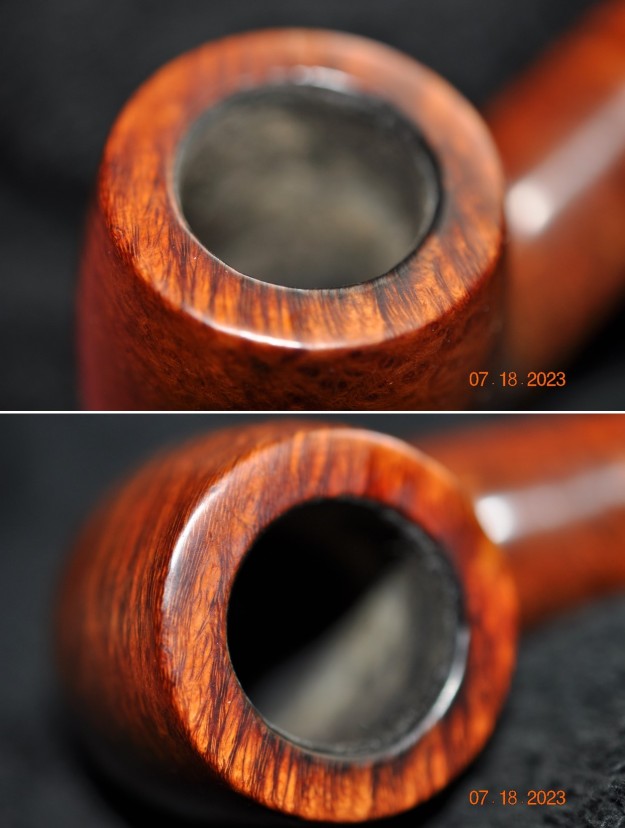
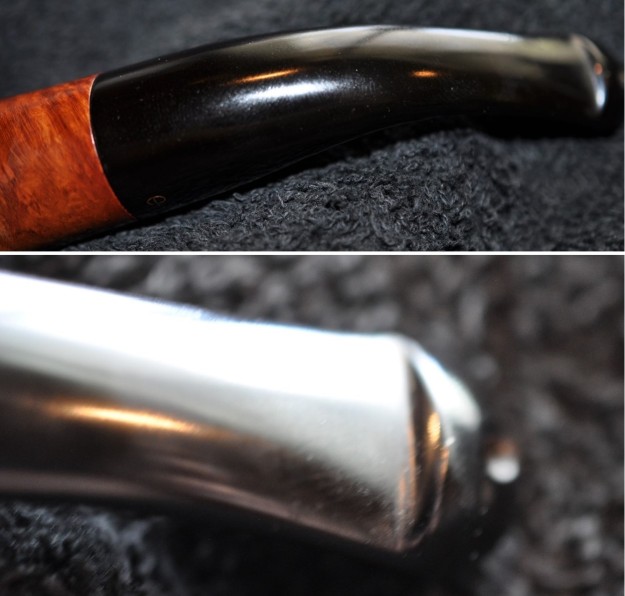
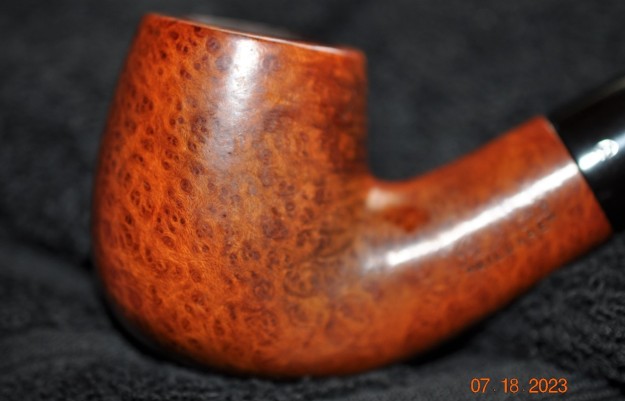
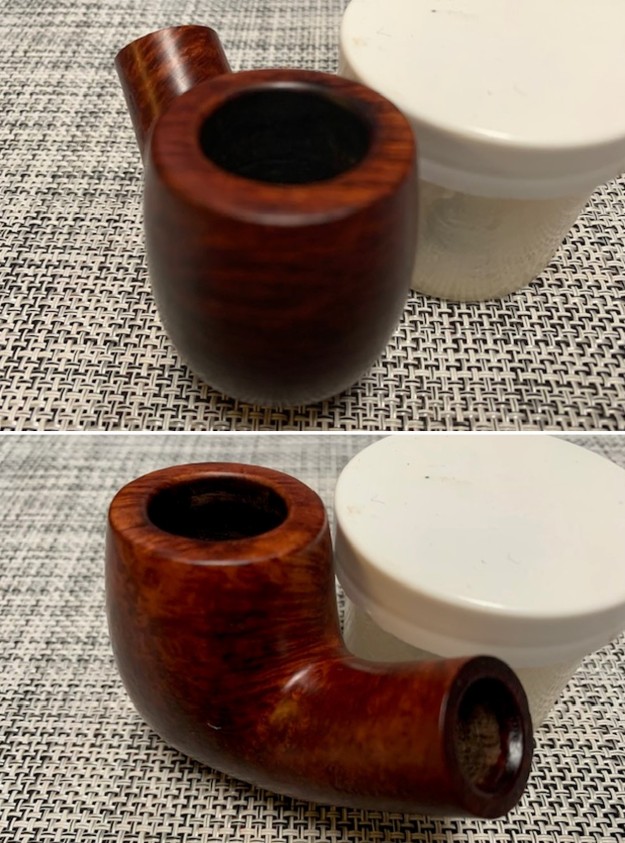
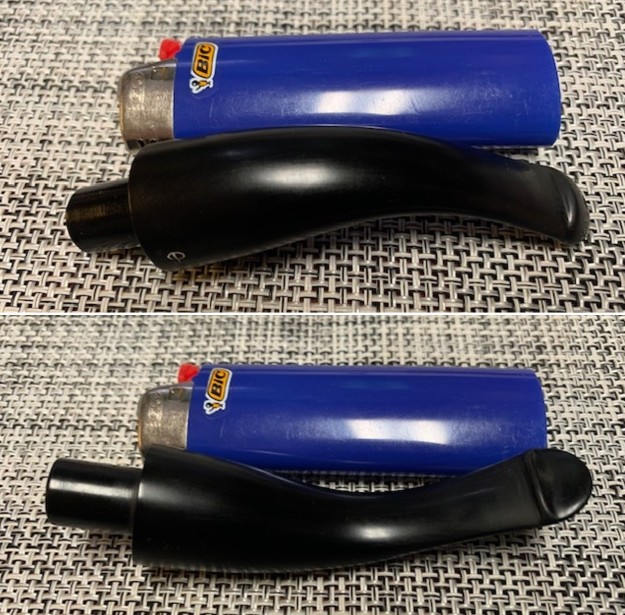
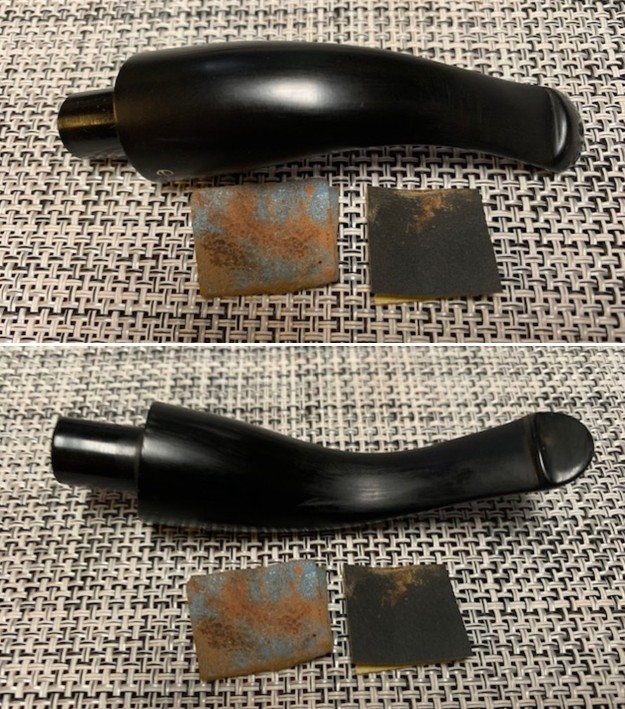
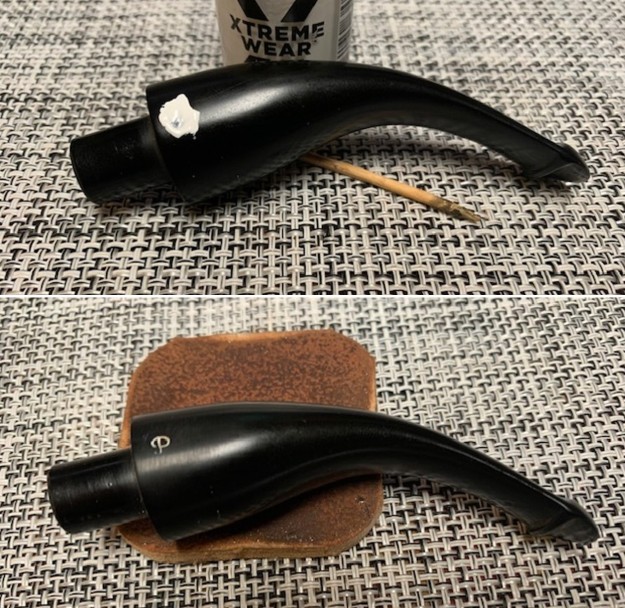
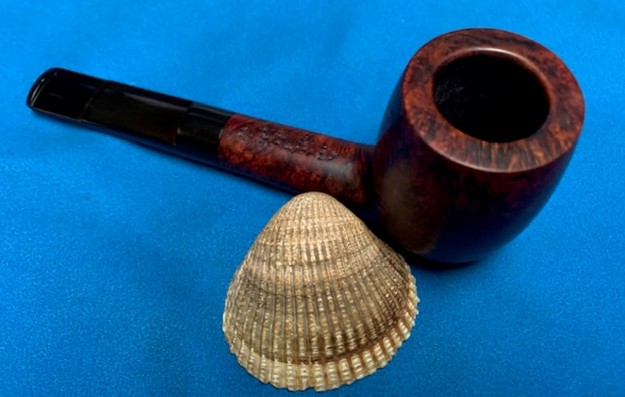
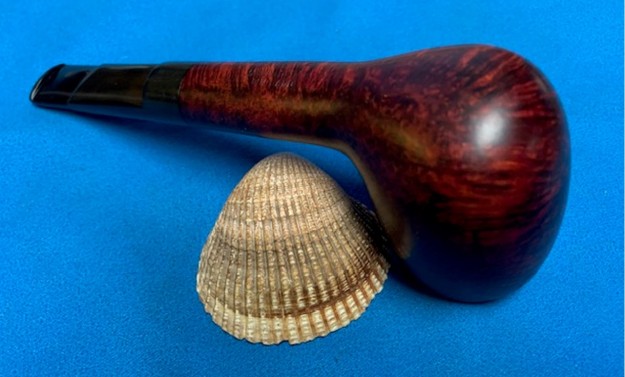
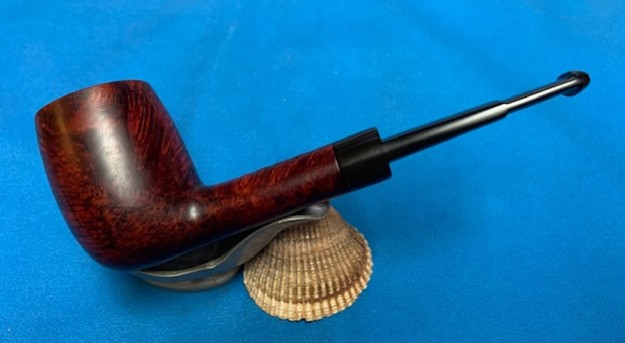
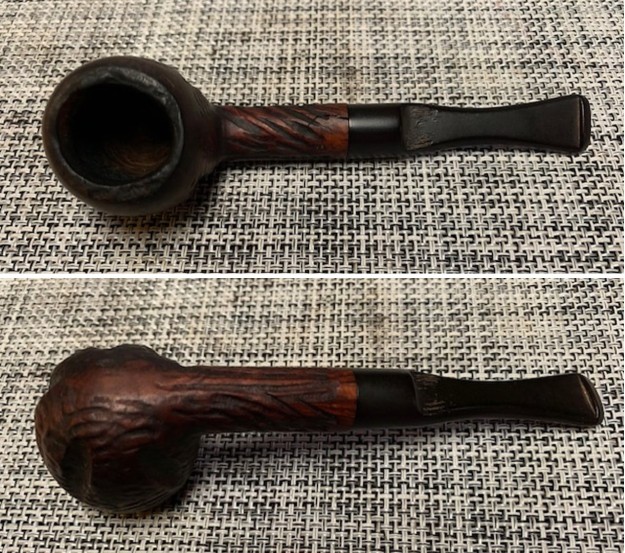
The next pipe I have chosen is an elegant Danish Straight Billiard with a mix of grain around the bowl and shank. This particular pipe came to us from a fellow in Copenhagen, Denmark on 11/14/2022. This Billiard was stamped on the left side of the shank and read Bastia [over] GL. It was stamped on the underside with the shape number 408. The pipe was in filthy condition when Jeff brought it to the table. The finish was dirty with oils and grime ground into the briar sides and rim. The bowl had a thick cake and some darkening on the inner edge of the rim. There was a lava coat flowing on to the rim top from the bowl – heavier on the back side than the front but very present. The stem was dirty – oxidized and calcified with light tooth marks and chatter on the top and underside ahead of the button. There was no stamp or identifying mark on the stem. Jeff took photos of the pipe before his cleanup work. They tell the story and give a glimpse of the promise that we see in this pipe. Jeff took photos of the rim top and stem to show the general condition of the pipe. The bowl showed some thick cake and some darkening on the inner edge. The rim top had a thick coat of lava on the surface, heavier on the back and right side of the top. The photos of the stem show the oxidation, calcification, tooth marks and chatter on both sides near the button. Jeff took some photos of the bowl sides and heel to show the beautiful grain that was around this bowl. It is a nice looking pipe.     He took photos of the sides of the shank to show the stamping. The stamping is readable in the photos below and is as noted above.     I am including the information from Pipephil on Lillehammmer pipes. It connects to the Bastia in sharing the GL initials under the brand stamp (http://www.pipephil.eu/logos/en/logo-l4.html). I have included a scan of the section on Lillehammer. You can see that the GL stamp are the initials of Gudbrand Larsen the founder of Lillehammer.I turned to the Pipedia site for more information (https://pipedia.org/wiki/Lillehammer). There I was able to learn the backstory and history of the brand. I quote in full from that article and include pictures of the two principals.

In the 1830’s a young Norwegian wood-carver named Gudbrand Larsen saw some pipes made from meershcaum. He though they were beautiful and wanted to make pipes like that, but he could not obtain the material. So he decided to go where it was to be found.

Gudbrand Larsen 91815-1902)

Larsen went to Eskisehir, Turkey, to learn all about meerschaum. But the most beautiful pipes in those days were not made there but in France, so he continued his journey to Marseielle, where he found work in one of the most famous factories at the time. In 1844 he returned to Norway and started a small factory for meerschaum pipes in the town of Lillehammer. The pipes garnered a good reputation from the first.

Gudbrand’s son, August, followed in his father’s footsteps and joined him in the business. However, father and son did not get along very well, so Junior–as August usually was called–did like his father once had, he traveled to learn more about pipe-making.

Martin August “Junior” Larsen (1855-1915)

Junior understood that briar, not meerschaum, was the material of the future, so during his journey he studied the subject carefully, first in England and then in France.

In Paris Junior earned a position with a pipemaker of good repute and became highly respected in his work. However, Gudbrand was getting old and considering retirement, so he asked his son to come home and take over the family business, an offer Junior willingly accepted. As a businessman Junior was even more successful than his father, and during his period of leadership the business prospered.

In 1902 Gudbrand Larsen died at almost 90 years of age. Then Junior passed away a dozen years later, in 1914. His death was followed by some unstable years for the factory because it lacked competent management. And World War I had just started on the continent, which made it difficult to obtain raw material.

In 1916 the factory was bought be a company that appointed new management, and a long, stable period of successful expansion had begun. That period was to last for almost half a century. The main part of the production was briar pipes, but they also continued to make some meerschaums.

Problems at the factory began again at the end of the 1960s, when sales slowed dramatically. The main reason was the “fancy pipes” had become very popular, and Larsen’s of Lillehammer had nothing to offer there. Something had to be done and two steps were taken. In the middle of the 1970s the Danish company Kriswill was bought, and in that way they obtained access to that company’s more modern shapes. A new designer was also employed, but these efforts were not sufficient, and in the 1979 the factory closed.

I turned to the Pipe Club of Sweden site to see if there was any more information. There was a great article on the pipe maker Bård Hansen who followed the tradition of the Lillehammer Factory and was trained by a retired engineer from the Lillehammer Factory thus tying him to the brand. In that article there is confirmation for the Pipedia information above (http://www.svenskapipklubben.se/en/pipemakers/bard-hansen/). I quote in part the article there by Jan Andersson. (Once again I have highlighted the pertinent information in the text below using bold, italic and underlined text and marking the main point highlighted in red.

In a Swedish tobacco shop, even in small places in the province, there were usually a fair number of pipes in the 50s and 60s with stems from aluminum. But even for the more traditional pipesmoker, who wanted a pipe from wood and ebonite, there was a lot to choose from. Ratos was the dominant brand, but for those who were willing to spend a little extra, there were usually at least a few more exclusive pipes – pipes in green or blue-checked boxes. Those pipes came from Norway, from G.L. Larsens pipe factory in Lillehammer.

Lillehammer pipes were found in two qualities, Bastia was a little cheaper and Lillehammer GL was for the truly discerning pipesmoker. Later I have learned that there were also more expensive and finer qualities, even one called Best Make, but those luxury pipes were never found in the shops in the small town where I lived. Lillehammer pipes were easily recognizable, they usually were rather slim and with a long stem, which was the fashion at the time. So while a true English gentleman smoked a Dunhill with the white dot on the stem, Norwegian or Swedish pipesmokers preferred an elegant Lillehammer.

We will not go into detail about the interesting story of Lillehammer, but unfortunately we can see that from the beginning of the 70s, it rapidly went downhill for the factory. They bought the Danish company Kriswill but that was not a success, nor was the new series of shapes created by the pipemaker Thorbjørn Rygh. So G.L. Larsen’s pipe factory in Lillehammer had to close, deeply missed by many of us. This feeling persists to this day, which is particularly evident in the great interest in the Lillehammer pipes at auctions and collector’s markets.

Gathering the data together from my research I have learned that the pipe I have on my worktable is made by Lillehammer prior to the buy out by the Kriswill Company with the hope that it would offer new markets for the Lillehammer brand. The Bastia was the cheaper of the lines and interestingly it also bears GL stamping tying it to the higher end pipes from the factory.

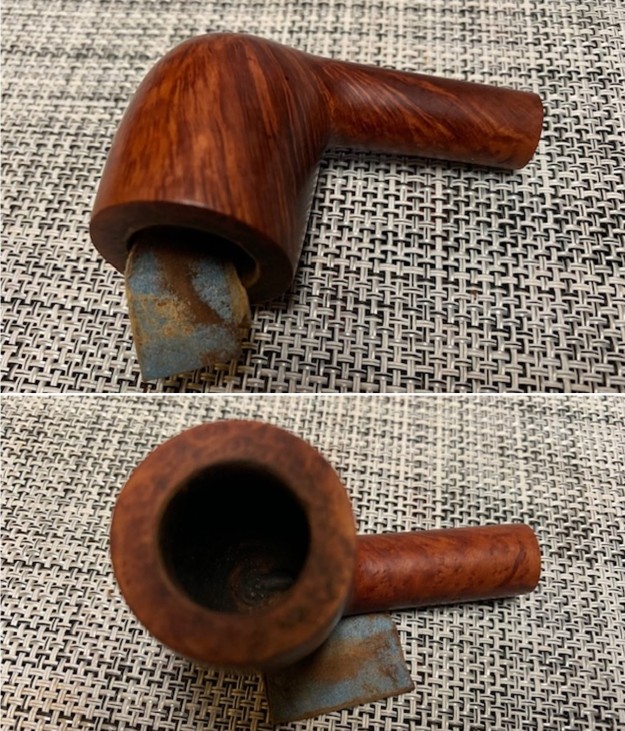
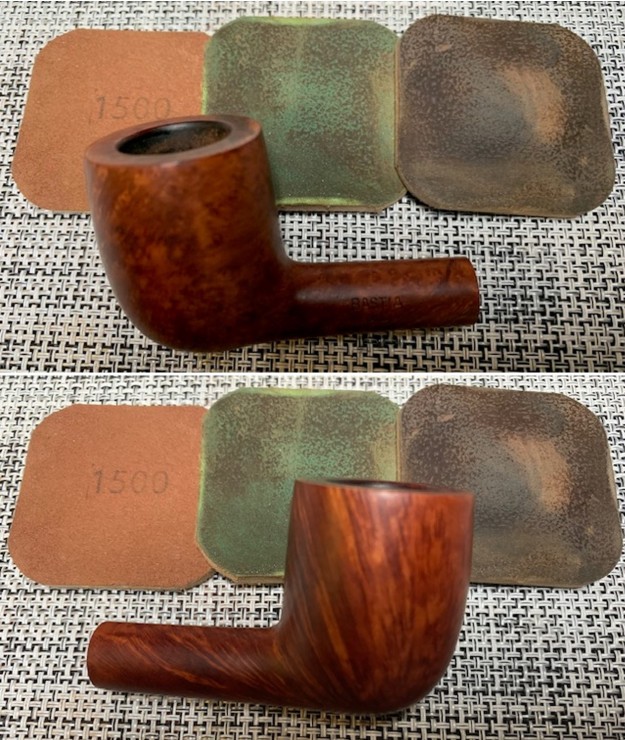
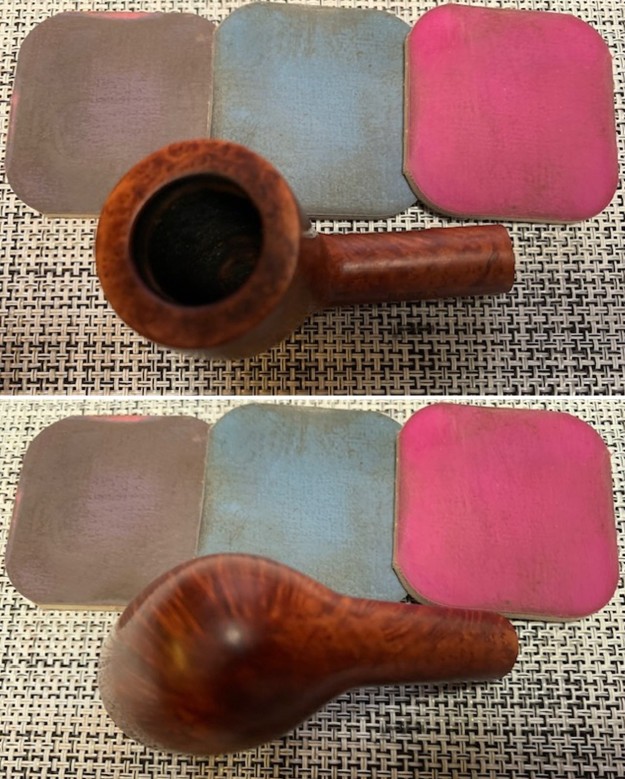
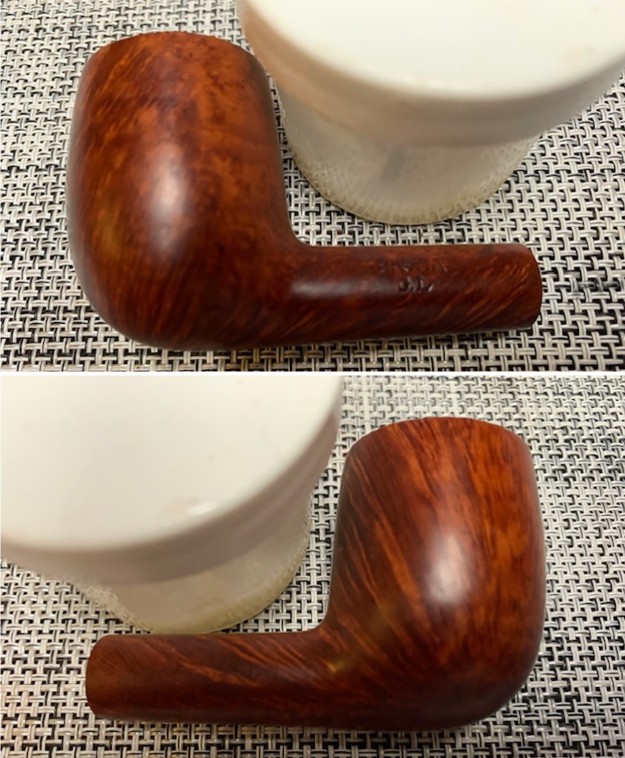
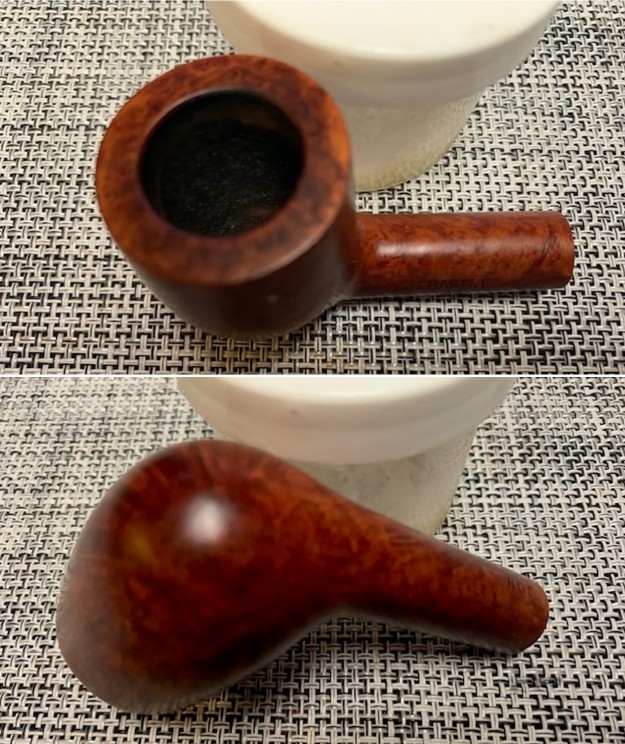
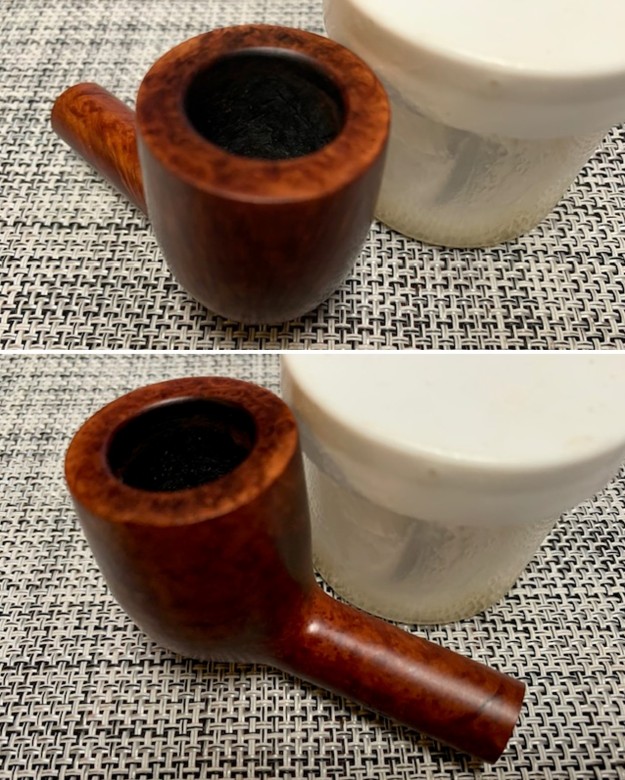
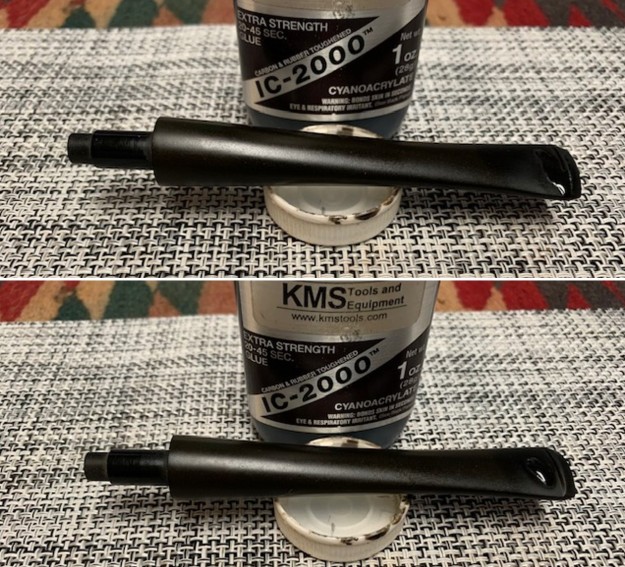
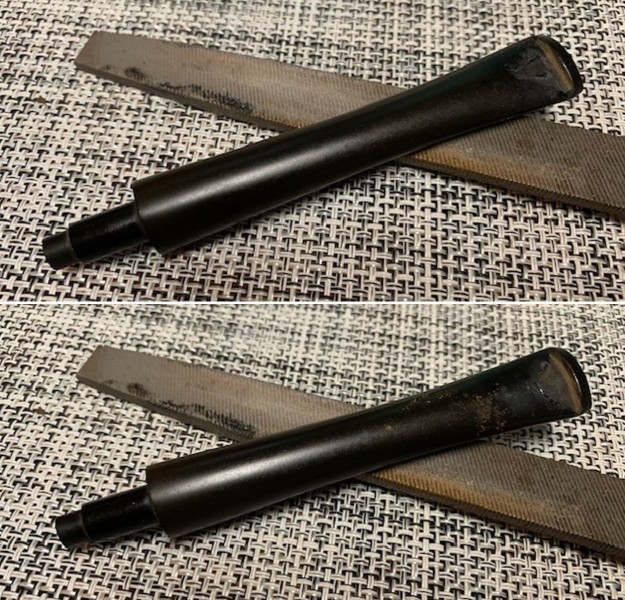
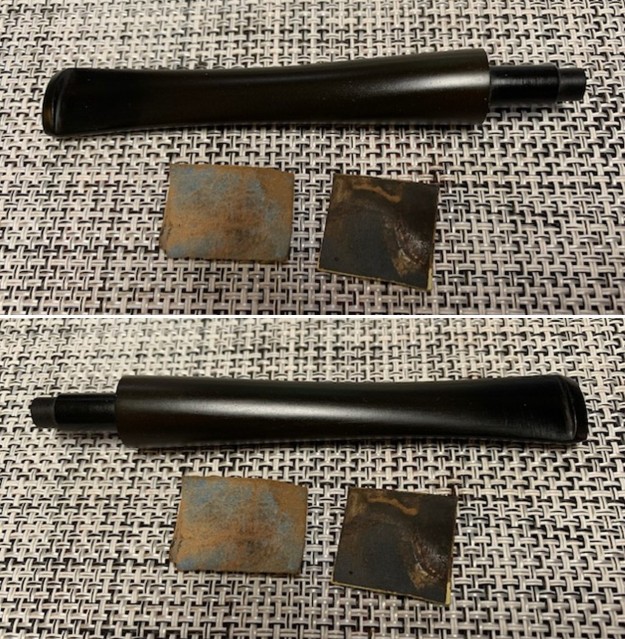
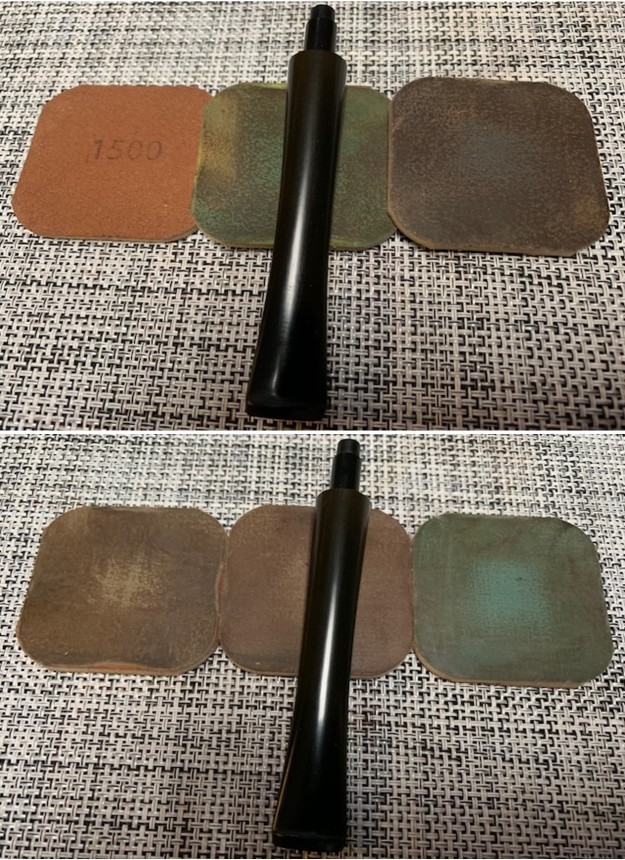
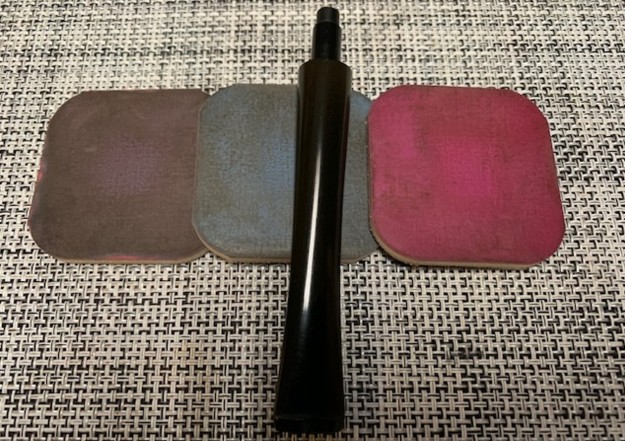
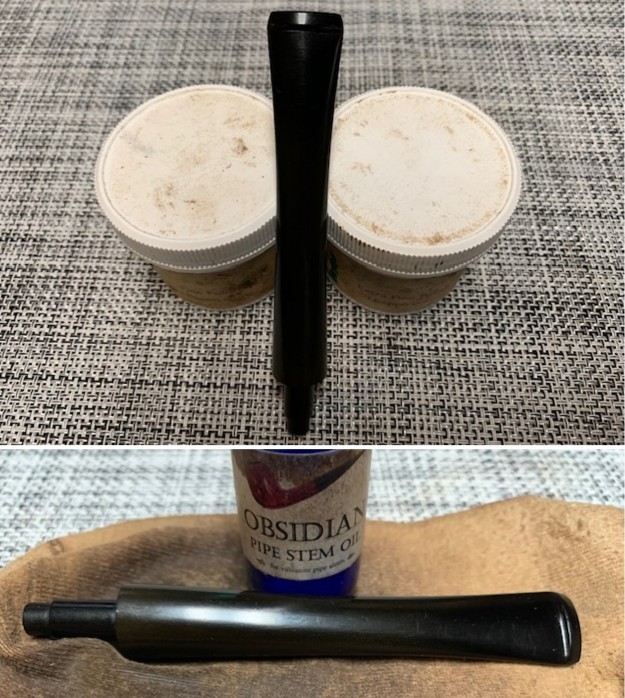
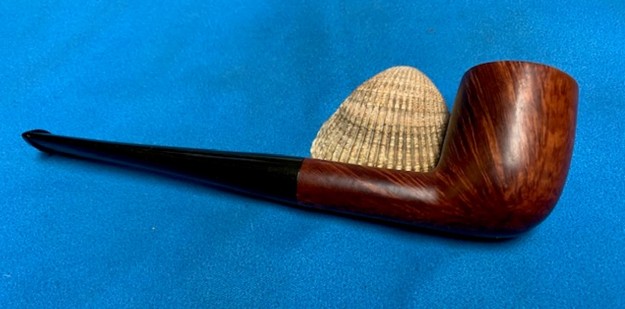
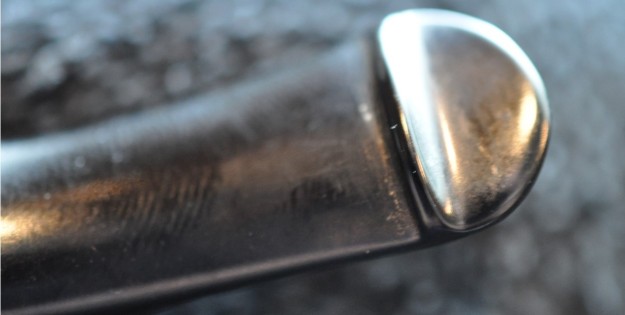
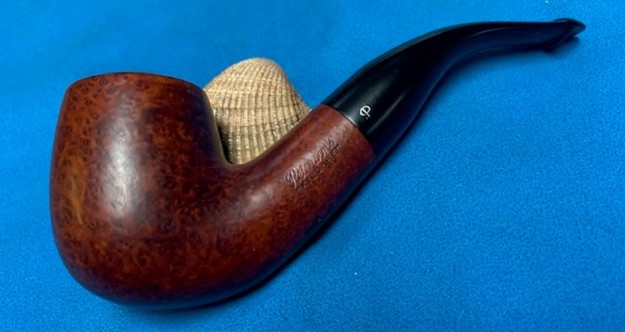
Armed with that information I turned to address the pipe itself. Jeff had cleaned up the pipe for me. He reamed the bowl with a PipNet pipe reamer and cleaned it up with a Savinelli Fitsall Pipe Knife. He scrubbed the exterior with Murphy’s Oil Soap and a tooth brush to clean off the grime off the finish and the heavy overflow of lava on the rim top. He cleaned up the internals of the shank, mortise and stem with pipe cleaners, cotton swabs and alcohol to remove all of the oils and tars in the pipe. The rim top still had some darkening that would need to be dealt with but it looked good. He soaked the stem in Briarville’s Pipe Stem Deoxidizer and was able to remove the remnants of the oxidation. When it arrived here in Vancouver it was a clean pipe and I knew what I had to work with. I took photos of it before I started my part of the restoration. The rim top had cleaned up pretty well but you can see the darkening on the inner edge. The burn damage on the rim top and edge at the back right of the bowl. The stem cleaned up very well. You can see the tooth marks on the surface just ahead of the button. I took photos of the stamping on the sides of the shank. You can see that it is stamped as noted above. It is clear and readable. I removed the stem and took a photo of the pipe to have a look at the parts and overall look.I decided to address the damage to the rim top and inner edge of the bowl first. I used a folded piece of 220 grit sandpaper to give the inner edge of the bowl a slight bevel on the inner edge to remove burned areas and blend them into the surrounding briar. I polished the bowl and shank with micromesh sanding pads – dry sanding with 1500-12000 grit pads. I wiped down the bowl after each pad with a damp cloth to remove the sanding debris.   I worked some Before & After Restoration Balm into the surface of the bowl and shank with my fingertips to clean, enliven and protect the briar. I let the balm sit for 15 minutes and then buffed with a cotton cloth to raise the shine. The photos show the bowl at this point in the restoration process. I set the bowl aside and turned my attention to the stem. I filled in the deep marks black CA glue. Once it cured I used a file to flatten them and start blending them into the surface of the surrounding vulcanite. I sanded the repaired areas with a folded piece of 220 grit sandpaper. I started polishing it with 600 wet dry sandpaper.   I polished the stem with micromesh sanding pads – wet sanding with 1500-12000 grit sanding pads. I wiped it down after each sanding pad with Obsidian Oil. I finished polishing the stem with Before & After Pipe Stem Polish – both Fine and Extra Fine. I wiped the stem down with a final coat of Obsidian Oil and let it sit and absorb into the vulcanite. I am excited to finish this Bastia GL 408 Billiard made by Lillehammer. I put the pipe back together and buffed it with Blue Diamond on the buffing wheel. I gave the bowl and the stem multiple coats of carnauba wax. I hand buffed the pipe with a clean buffing pad to raise the shine. It is fun to see what the polished bowl looks like with beautiful cross and birds eye grain all around it. Added to that the polished black vulcanite stem combined with the bowl made a stunning pipe. This smooth Norwegian Bastia GL 408 Billiard is great looking and the pipe feels great in my hand. It is light and well balanced. Have a look at it with the photos below. The dimensions are Length: 6 ¼ inches, Height: 1 ¾ inches, Outside diameter of the bowl: 1 ¼ inches, Chamber diameter: ¾ of an inch. The weight of the pipe is 34 grams/1.20 ounces. It is a beautiful pipe that I will soon be putting on the rebornpipes store in the Danish Pipe Makers Section. If you are interested in adding it to your collection send me an email or a message. Thanks for walking through the restoration with me as I worked over this pipe. Thanks to each of you who are reading this blog.

As always, I encourage your questions and comments as you read the blog. Thanks to each of you who are reading this blog. Remember we are not pipe owners; we are pipe men and women who hold our pipes in trust until they pass on into the trust of those who follow us.

Amazing Research in the Restoration of a Classic French Pipe


Blog by Kenneth Lieblich

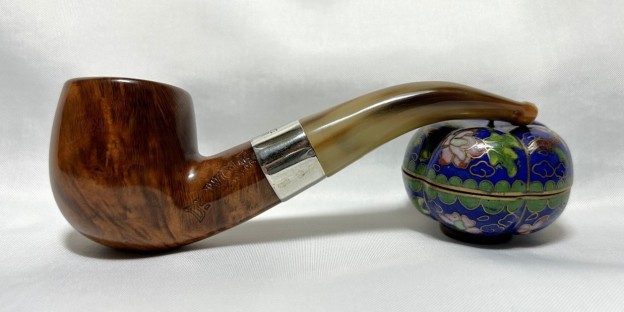
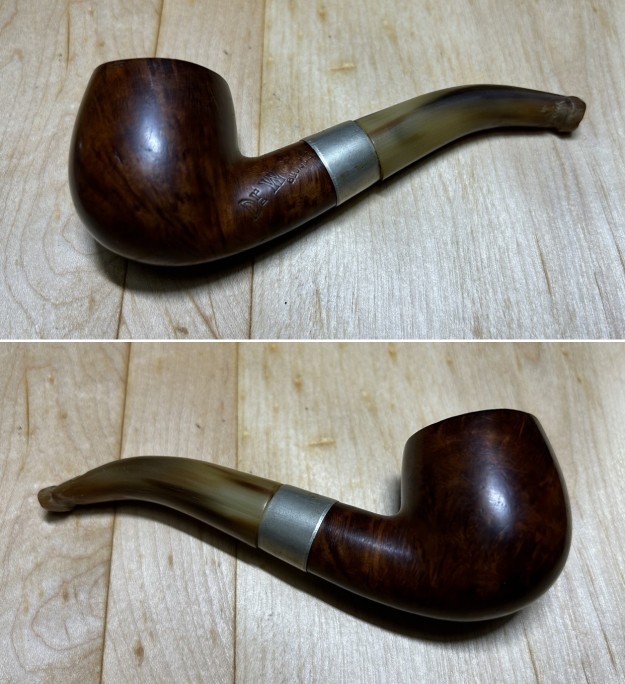
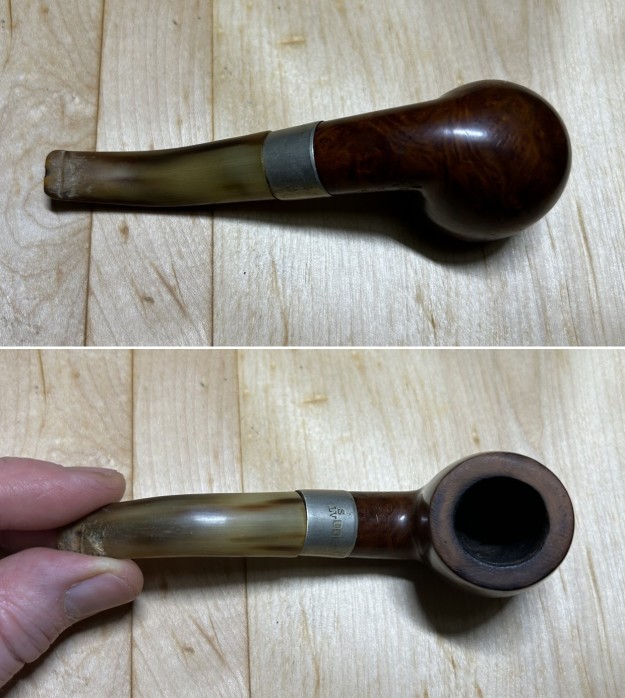
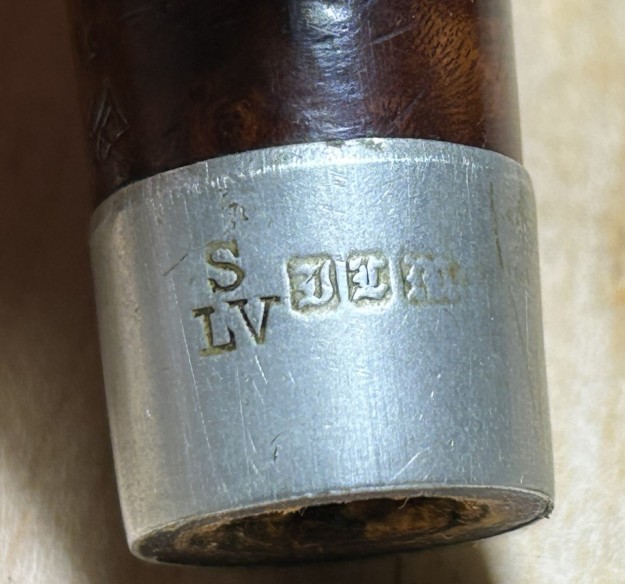
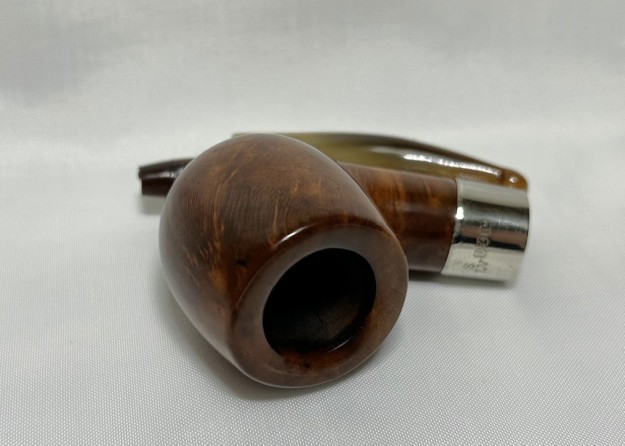
Next on ye olde chopping block is a charming pipe from France and it dates back a century – or more. It’s a very attractive bent billiard pipe that I acquired in a lot from France. Recently, I had the pleasure of meeting a young man studying for the priesthood. While he as visiting the Vancouver area, he told me he was interested in acquiring a pipe. I had him over to the house and showed him many pipes. He picked this very pipe. He wanted one of modest size and this fit the bill very well. The briar wood was quite lovely and it had an equally fetching stem made of horn. There was also a nickel band around the shank which read, S [over] LV. This was next to some blackletter characters that I couldn’t quite make out. Meanwhile, the markings on the left side of the shank read: Dr Wolf [over] BTE. S.G.D.G. The Dr Wolf part was clear enough, but I needed to confirm what the other letters referred to. I was fairly sure this was something to do with French patents, but I googled to make sure. Indeed, it was a type of French patent, extant between 1844 and 1968. The letters BTE. S.G.D.G. stand for Breveté Sans Garantie du Gouvernement, meaning “patent without government guarantee”. As Wikipedia explains:

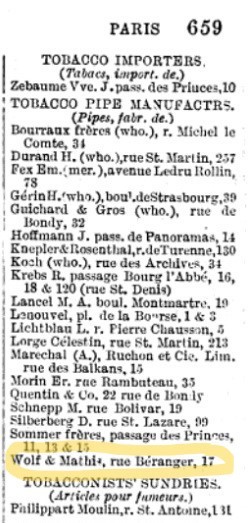
In France, the law of 1844 states that patents are issued “without prior examination, at the risk of the applicant and with no guarantee of function, novelty and merit of the invention also in terms of precision or accuracy of the description”. Back to the brand name, Dr Wolf. This was tricky – I wasn’t familiar with the brand Dr Wolf and there was nothing about it online – except for one seemingly unhelpful advertisement. This ad was on an antique shop’s website and it was listed as being from the “end of the 19th century”. I was annoyed by the lack of information, but I am nothing if not tenacious in discovering the history of pipes – especially French pipes, for which I have a particular fascination. I saved that advertising image to my computer, so I could show it in this article.My first step was consulting both Wilczak & Colwell and my own personal database of French pipe makers and, of course, there was no listing for “Dr Wolf”. However, in my database, the name, “Wolf”, did appear in the listing for a late-19th century pipe maker: CC Paris. Here is the write-up from Pipedia on CC Paris:

Every collector of antique pipes knows that pipe factory and retail store catalogs from the 1800s – early 1900s are as rare as hen’s teeth to find…and an even rarer occasion, when found complete and in good to better condition. This fragile catalog from this little-known French manufactory, merchandised its pipes with the logo of a triangle bearing the letters “C C Paris” embossed in fitted cases. Cases with this logo are known, but the Wolf and Mathiss name, until now, was not known as the factory behind the retail establishment.

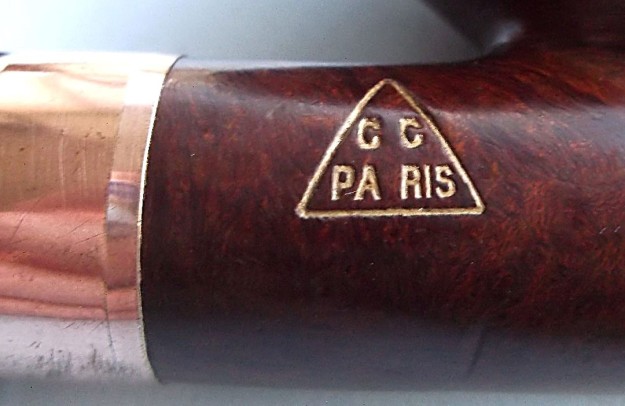
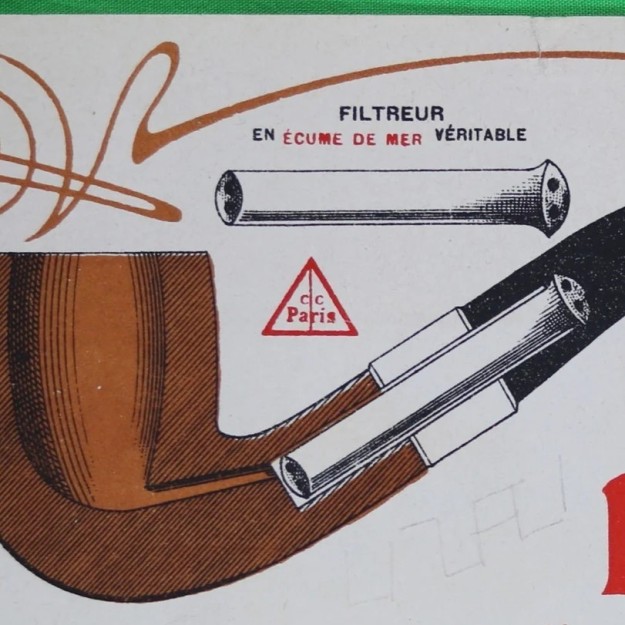
Wolf & Mathiss was originally known as Cawley & Henry, a pipe manufacturer founded in 1867. The product line was fairly robust, catering to not only pipe and cigar smokers, but also to cigarette consumers, because the catalog includes cigarette rolling papers that, according to company information, had received silver medals at two expositions, Anvers (1885) and Paris (1889).Unfortunately, the name “Wolf” is not uncommon and there was nothing to suggest that this Wolf was the same as Dr Wolf. There was also no indication of what the given names were for either Mr Wolf or Mr Mathis. As a side note, I assume that the correct spelling is “Mathiss”, not “Mathis”, as shown on Pipedia. A 1907 copy of Kelly’s Directory of Merchants, Manufacturers and Shippers lists the name with a single “S”.However, the Pipedia page for CC Paris made me wonder about a connection to Dr Wolf. First of all, the pipes on catalogue pages shown there bear some resemblance to my Dr Wolf pipe – hardly a definitive clue, but interesting nonetheless. The other thing that struck me was the logo, shown here:There is no obvious reason why the logo would be of interest, but I recognized it and couldn’t remember where I’d seen it. I love researching pipe history, but it’s always frustrating when one hits a dead end. And then it struck me! That logo! I’d seen it in the very same advertisement I downloaded earlier. Here it is (zoomed in) and look what it shows!!!So there we have it – the Wolf of Wolf & Mathiss must, in fact, be Dr Wolf. I am delighted to have made this discovery. It completes the loop between the relevant pipe makers and demonstrates the origin of the Dr Wolf name.

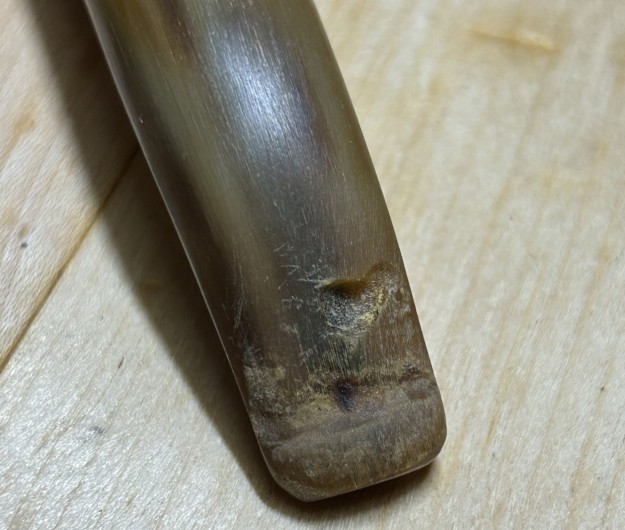
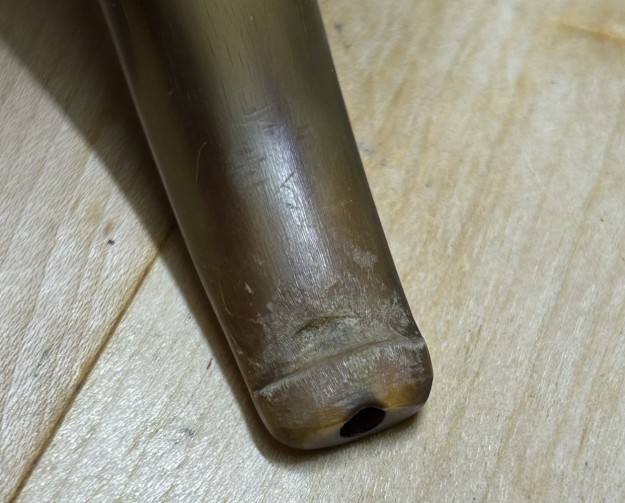
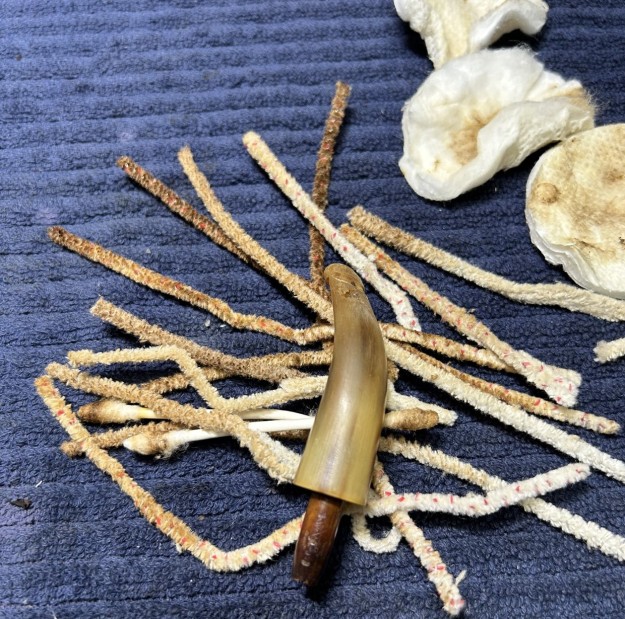
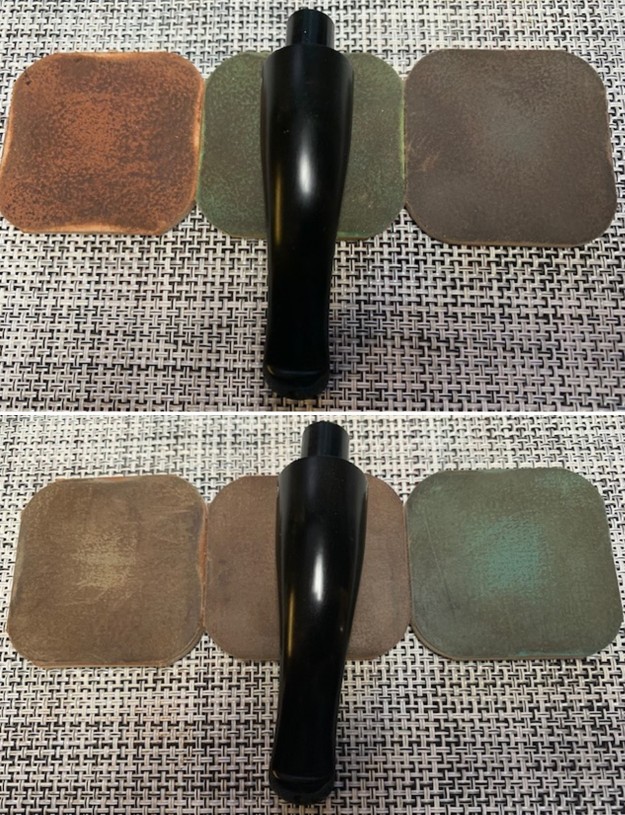
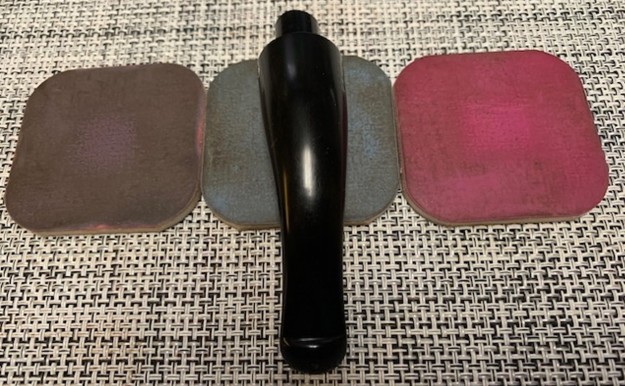
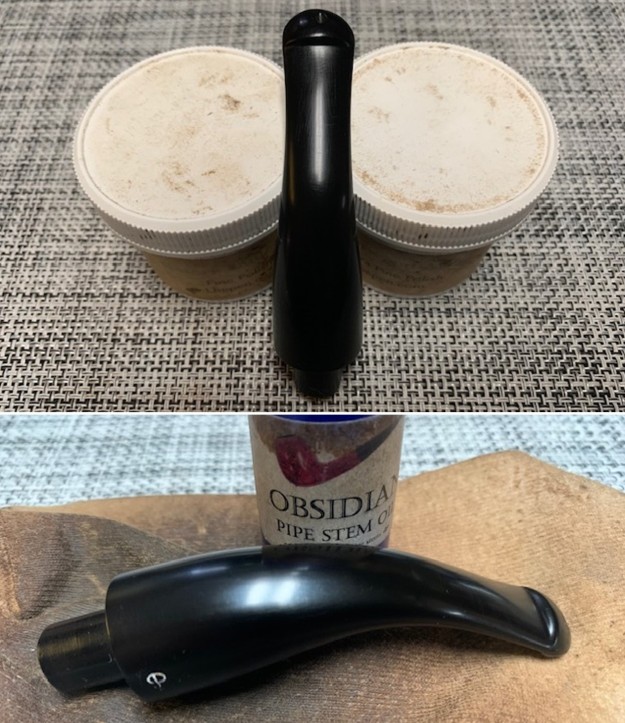
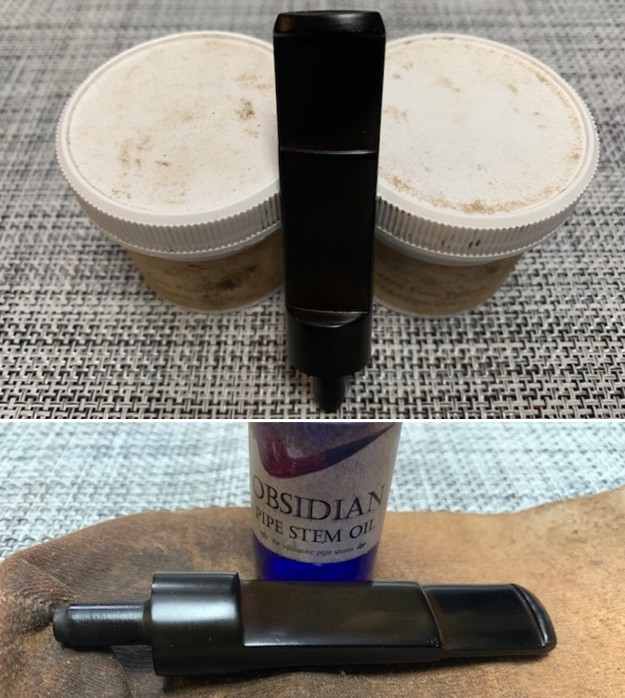
Clearly, this particular pipe had been well-loved, as it arrived well worn, with plenty of filth inside, a few dents in the work, gouges in the horn stem, and scratches all over the rim. Interestingly, this pipe had an orific button at the end of the stem, a feature that apparently disappeared by the 1930s, so it must be around a hundred years old. For more information on the orific button, take the time to read Steve’s interesting article on the subject. Well, time to get to work! I started by wiping the stem with Murphy’s Oil Soap on some cotton pads, then cleaned out the inside with pipe cleaners and isopropyl alcohol. Fortunately, it wasn’t overly dirty, and it only needed a handful of pipe cleaners. One of the odd features of this pipe was that the tenon was also made of horn. I quite liked that feature, but it did make it a pain to clean. I built up the bite marks and gouges on the stem with clear cyanoacrylate adhesive and let them fully cure. Following that, I sanded the adhesive down with 220- and 400-grit sandpapers to meld seamlessly into the stem. I then used all nine Micromesh pads (1,500 through 12,000 grit) to bring out the lovely grain of the horn on the stem, with some Obsidian Pipe Stem Oil in between each pad scrubbing.

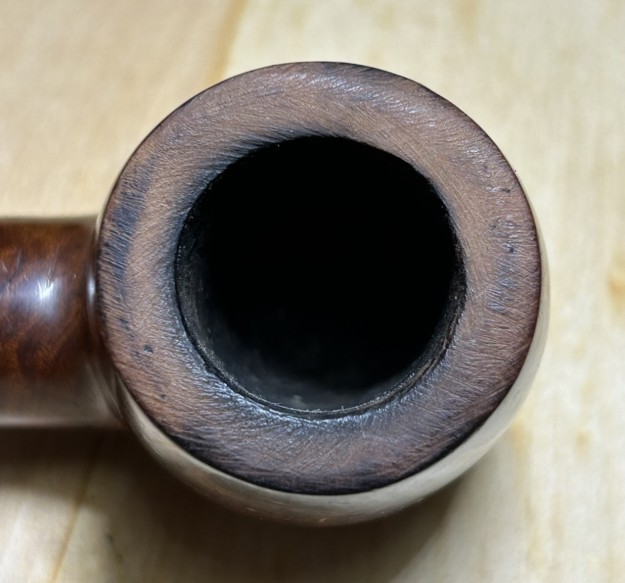
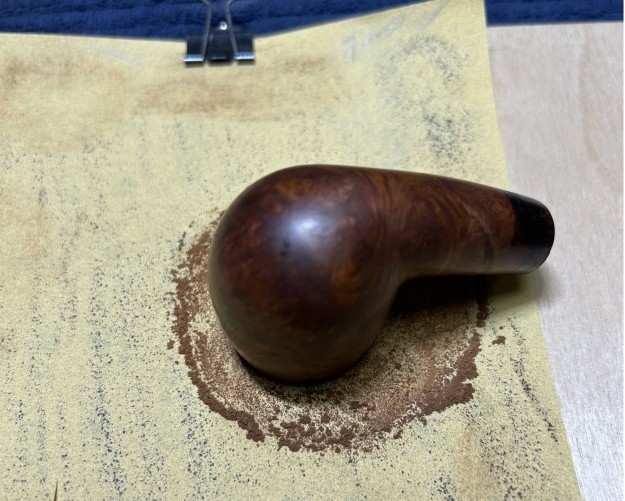
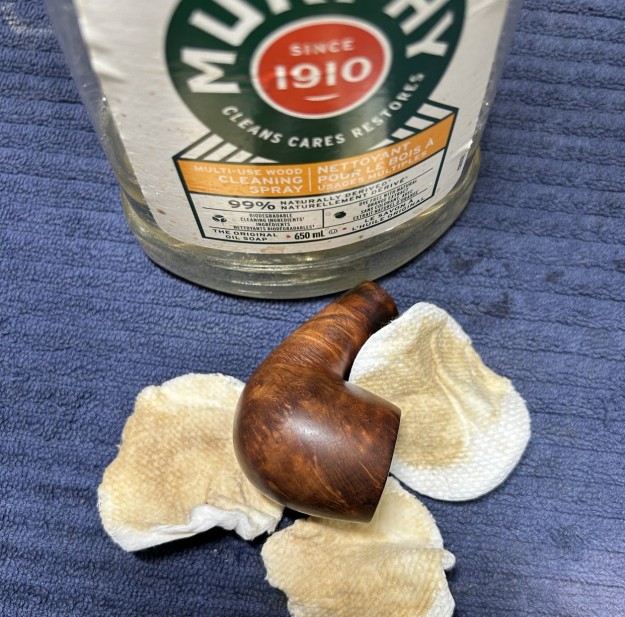
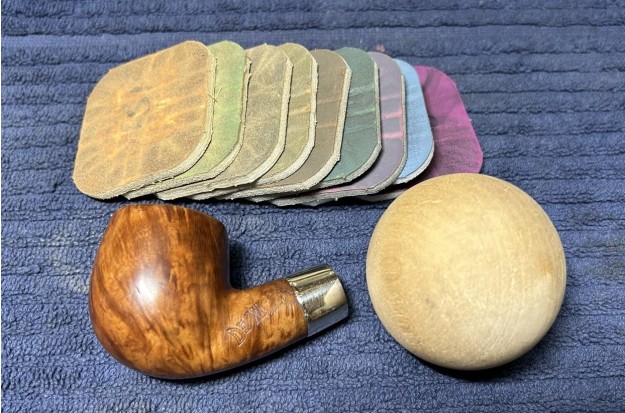
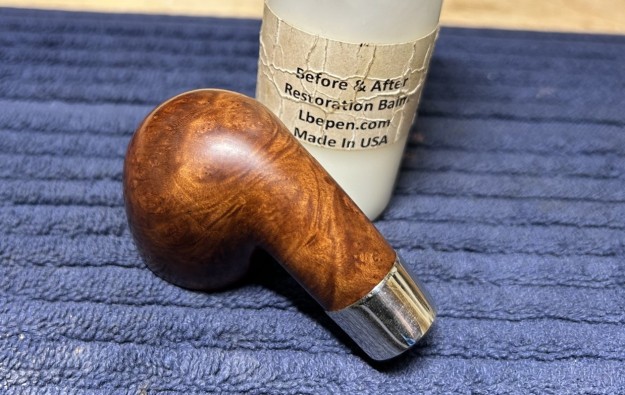
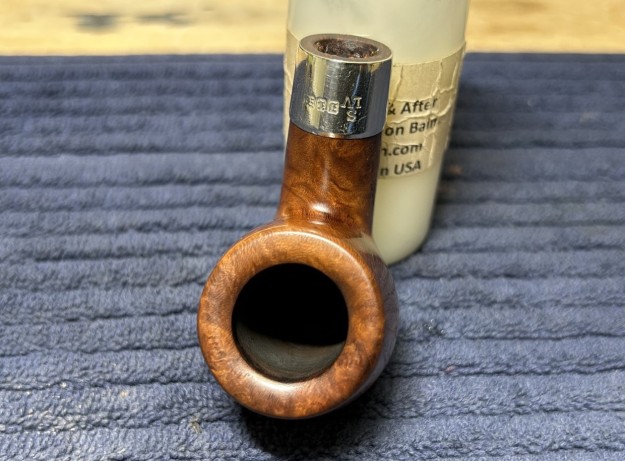
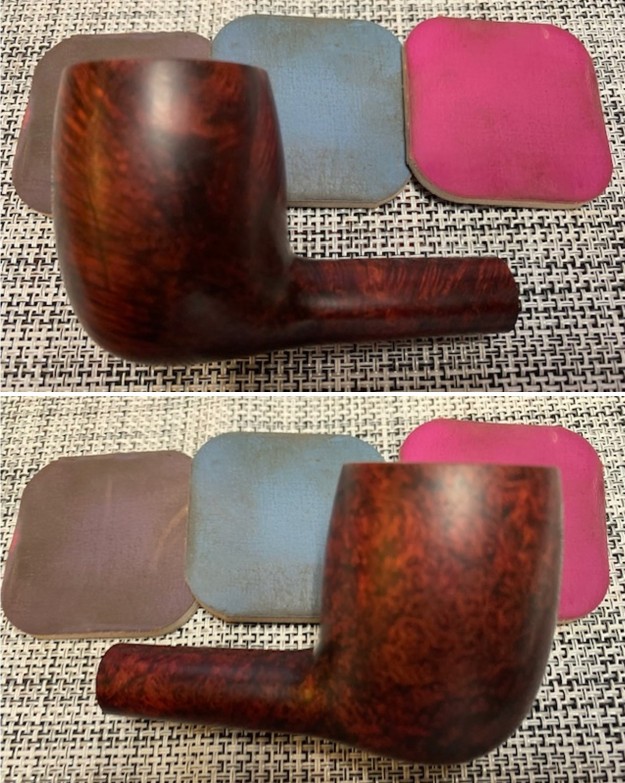
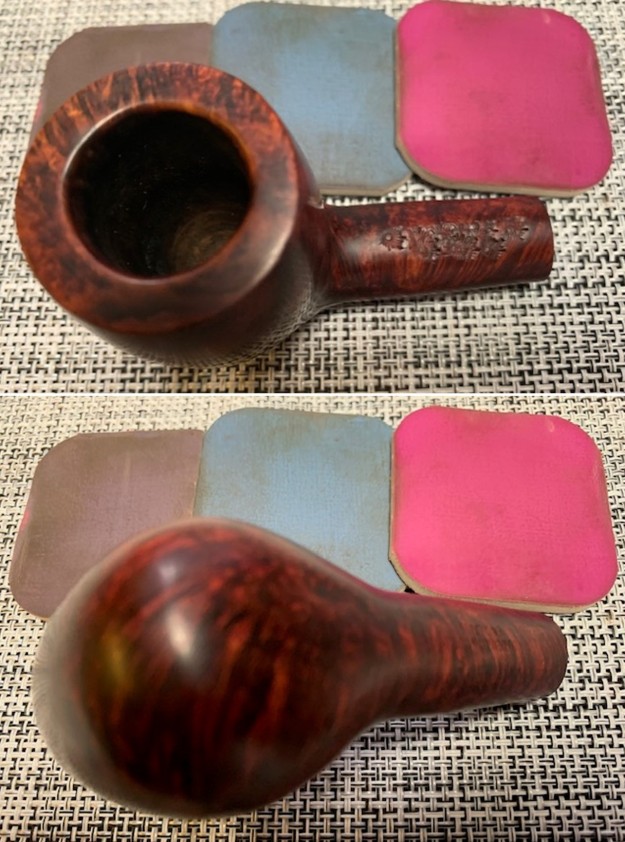
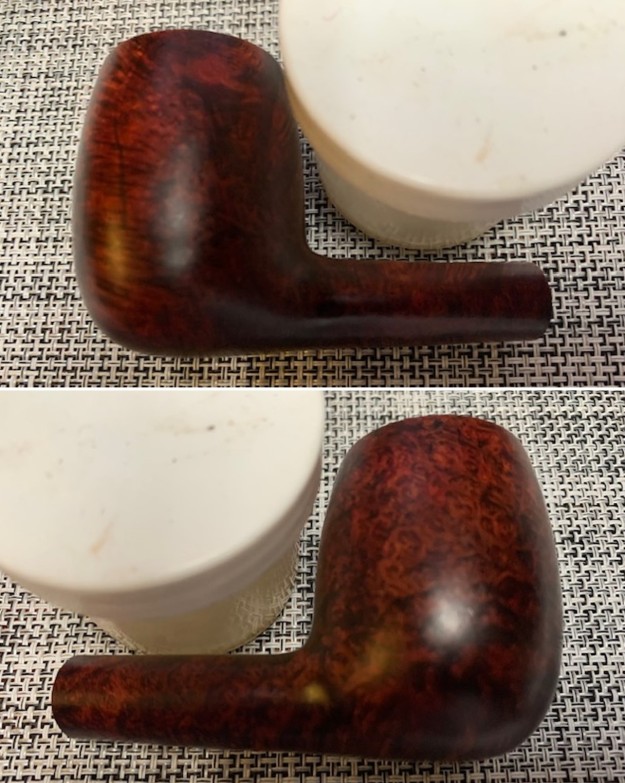
Now for the stummel. Firstly, I decided to ream out the bowl. I used the PipNet Reamer to remove the built-up cake and followed that with 220-grit sandpaper taped to a dowel to eliminate as much as I could. I took the chamber down to bare briar, as I wanted to ensure there were no hidden flaws in the wall. I also took this opportunity to wash the stummel with Murphy’s Oil Soap and remove as much grime as I could. Following this, of course, I cleaned out the insides with the requisite pipe cleaners and isopropyl alcohol. Boy, it was dirty! One issue that complicated the cleaning of the stummel was the mortise was lined with cork. This was a nifty feature, but I had to ensure that I didn’t damage the cork as I used the alcohol and implements to clean the insides. In order to restore it a bit, I added petroleum jelly to the cork with a cotton swab.The rim was so badly scratched that I had to “top” the pipe – that is, I gently and evenly sanded the rim on a piece of 220-grit sandpaper. This effectively removed the damage without altering the look of the pipe.The old patina was nice enough that it didn’t need a new stain so I cleaned it with some Murphy’s and then set it for a de-ghosting. I followed that up by cleaning the insides with some Castile soap and tube brushes. Due to the wear on the rim of the pipe, I used my wood sphere, wrapped in 220-grit sandpaper, to create a beautiful, chamfered edge on the rim. This also helped return the opening of the bowl to round. I think the results turned out very nicely. I then finished it up by sanding with my Micromesh pads (1,500 through 12,000 grit). Then applying some Before & After Restoration Balm added that je ne sais quoi which brings out the wood’s beauty. One of the issues you will have noticed in the photos is that the stem’s tenon didn’t fit well in the shank’s mortise. In order to make it fit properly, I built up one side of the tenon with some clear cyanoacrylate adhesive. This worked like a charm and the fit was perfect after I fiddled with the adhesive for a bit.I also cleaned the nickel band with SoftScrub and that worked well. I also gave it a polish with a few of my finer MicroMesh pads – then finished with my jewellery cloth which added some much-needed pizzaz. Finally, it was off for a trip to the buffer. A dose of White Diamond and a few coats of carnauba wax were just what this pipe needed.This is a handsome pipe with a classic look and feels very comfortable in hand. The lovely shine made the wood very attractive, and I know that the new owner will enjoy smoking it for many years to come. I hope you enjoyed reading the story of this pipe as much as I did restoring it. If you are interested in more of my work, please follow me here on Steve’s website or email me directly at kenneth@knightsofthepipe.com. Thank you very much for reading and, as always, I welcome and encourage your comments.

Breathing New Life into a Chunky Peterson’s “Kildare” XL90 Bent Billiard Filter Pipe


Blog by Steve Laug

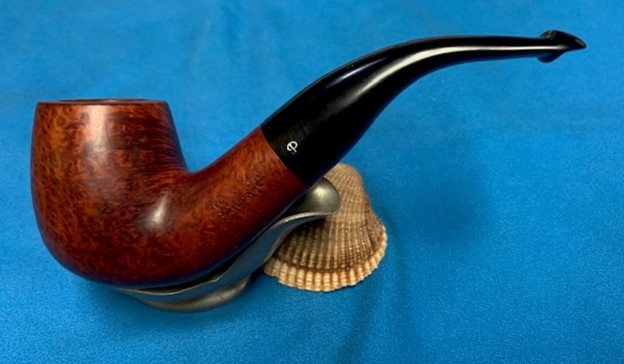
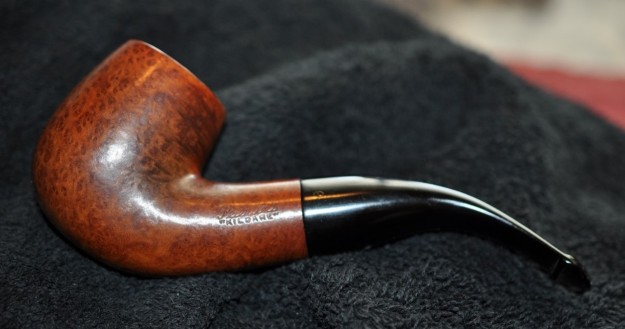
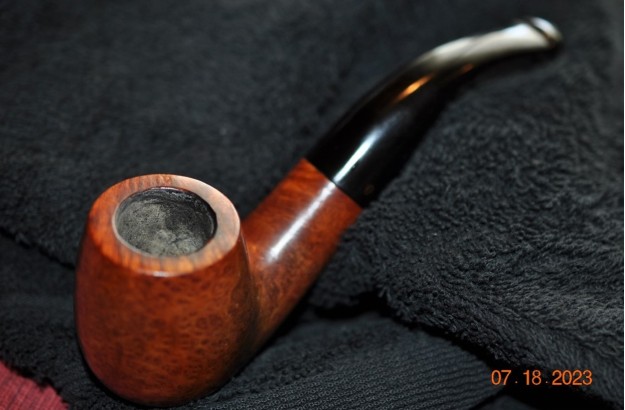
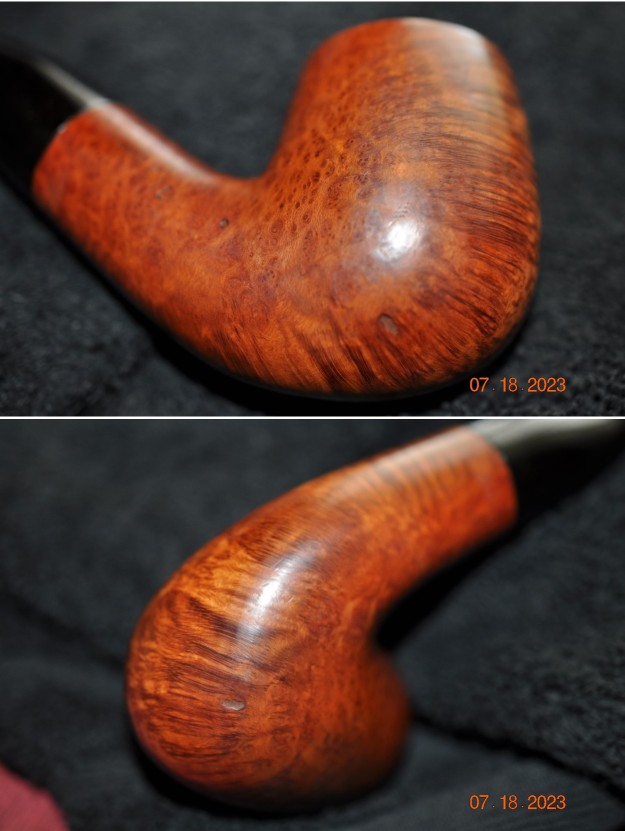
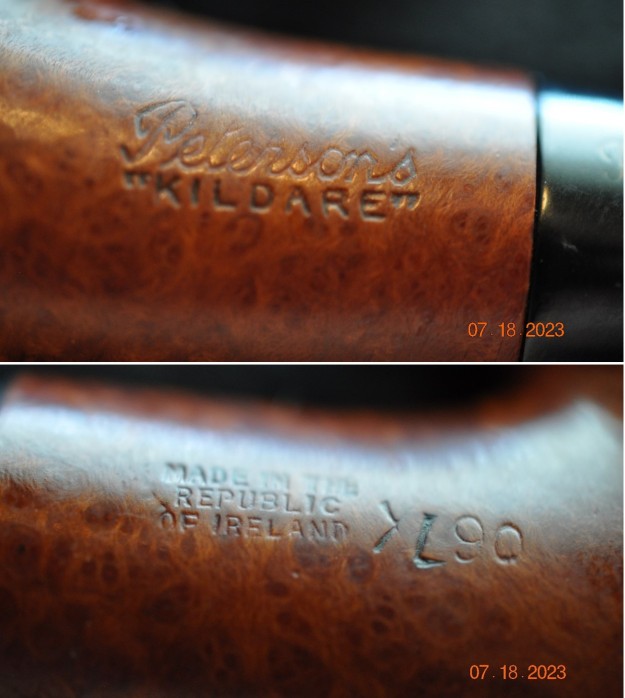
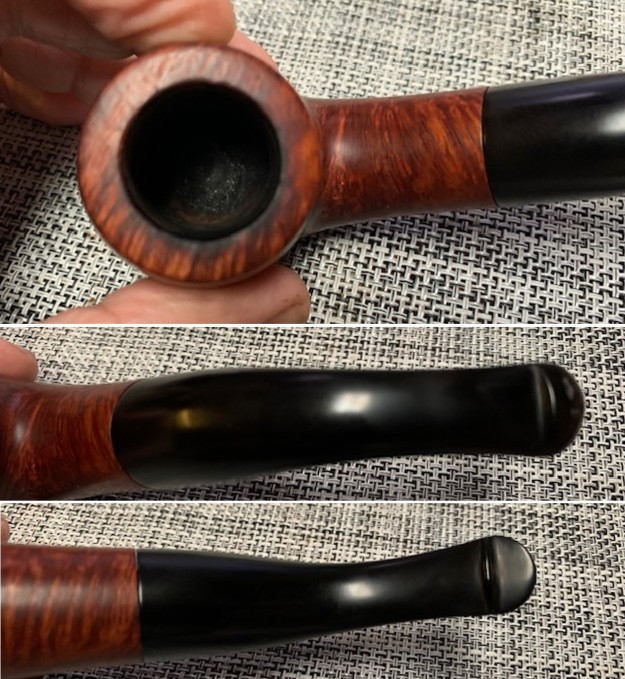
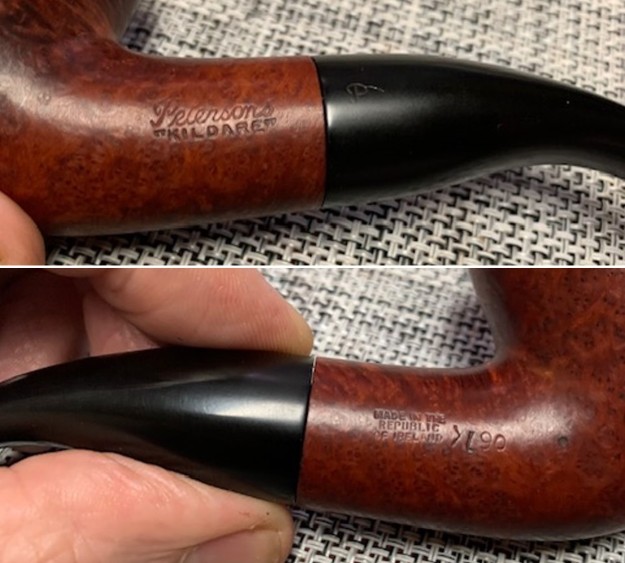
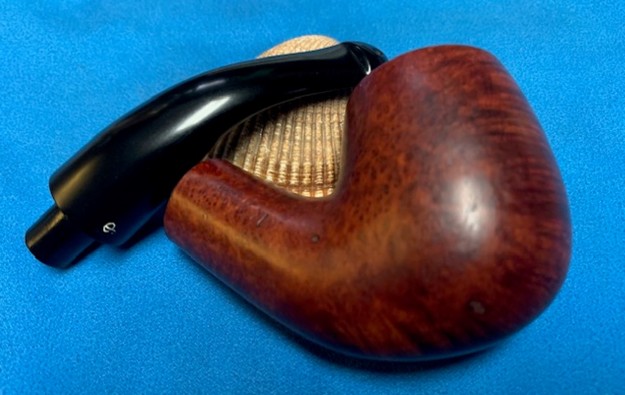
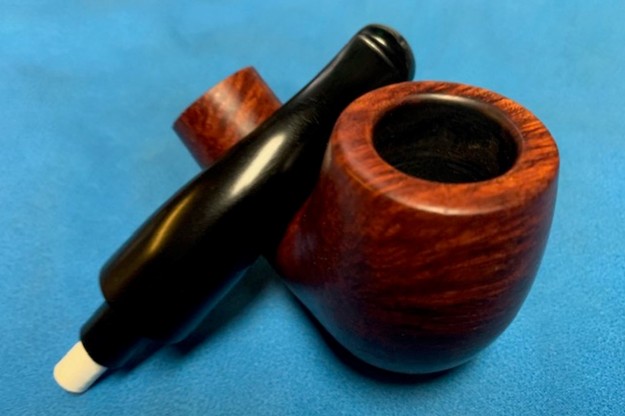
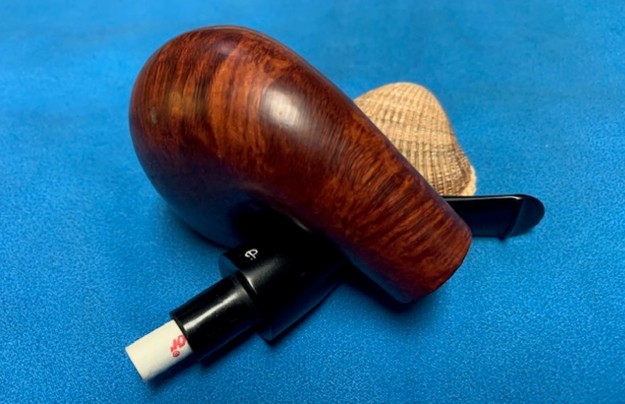
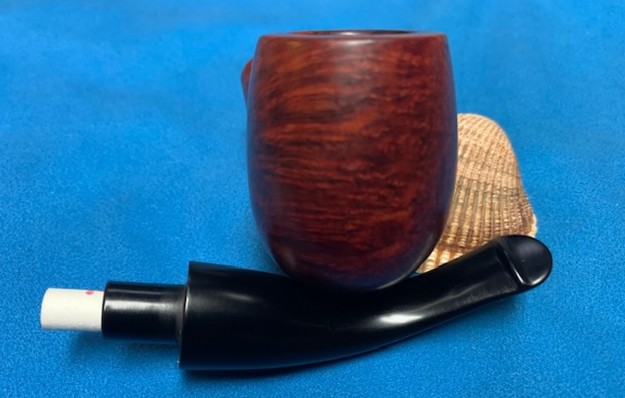
The next pipe I have chosen is large, chunky, smooth finished Peterson’s “Kildare” Bent Billiard. This shape is one of my favourites – a class thick shank bent billiard that is a pleasure to hold and to smoke. This particular pipe had a very dirty/grimy finish but had some good looking grain around the bowl sides and shank. It came to us from a fellow in Copenhagen, Denmark on 04/11/2023. This Bent Billiard was stamped on the left side of the shank and read Peterson’s [over] “Kildare”. It was stamped on the right side and read Made in the Republic of Ireland (three lines). Following that near the shank/bowl junction it is stamped XL90. The pipe was in filthy condition when he brought it to the table. The finish was dirty with oils and grime ground into the briar sides and rim. The bowl had a thick cake and some darkening on the inner edge of the rim. There was some light lava on the rim top. The stem was dirty but there was no oxidation or calcification on it. There were light tooth marks and chatter on the top and underside on and near the P-lip button. There was a faint “P” stamp logo on the taper stem. The tenon was made for a 9mm filter. Jeff took photos of the pipe before his cleanup work. They tell the story and give a glimpse of the promise that we see in this pipe. Jeff took photos of the rim top and stem to show the general condition of the pipe. The bowl showed some moderate cake and some darkening on the inner edge. The rim top looked quite clean with small specks of lava on the surface. The photos of the stem show the light tooth marks and chatter on both sides near the button. Jeff took some photos of the bowl sides and heel to show the amazing grain that was around this bowl. It is a nice looking pipe.     He took photos of the sides of the shank to show the stamping. The stamping is readable in the photos below and is as noted above.     I am including the information from Pipedia’s article on Peterson pipes. It is a great read in terms of the history of the brand (https://pipedia.org/wiki/Peterson). I have included a bit of the pertinent history here.

1950 – 1989 The Republic Era – From 1950 to the present time, the stamp for this era is “Made in the Republic of Ireland” in a block format generally in three lines but two lines have been used with or without Republic being abbreviated.

During the 1950’s and 60’s the Kapp & Peterson Company was still in the ownership of the Kapp family. However 1964 saw the retiral of the company Managing Director Frederick Henry(Harry) Kapp.

I turned to “The Peterson Pipe” by Mark Irwin and Gary Malmberg to get some background on the Peterson’s System Line. On page 314 it had the following information.

Kildare (1965-) First issue of line with matte-finish in Classic Range shapes, P-Lip and fishtail mouthpiece. Second issue C.1979 as Kildare Patch, with rusticated patches on pipe surface. Third issue 2010, matte-brown, P-Lip or fishtail mouthpiece, no band. Fourth issue 2011-, burgundy sandblast finish, nickel army mount, fishtail mouthpiece, exclusive to smokingpipes.com.

Judging from the description above I believe that I am working on a First Issue of the line in the time period of 1965-1979. It is a late Republic Era Classic Shaped pipe with a matte-finish and a P-Lip stem. Now it was time to work on the pipe.

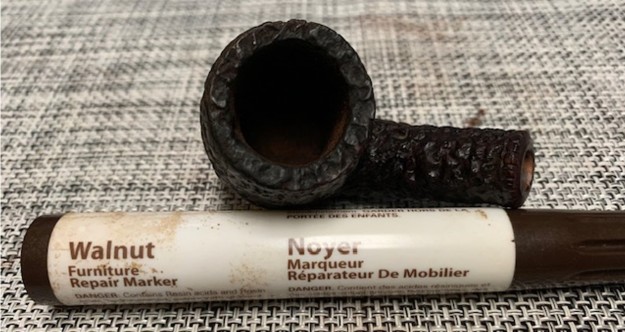
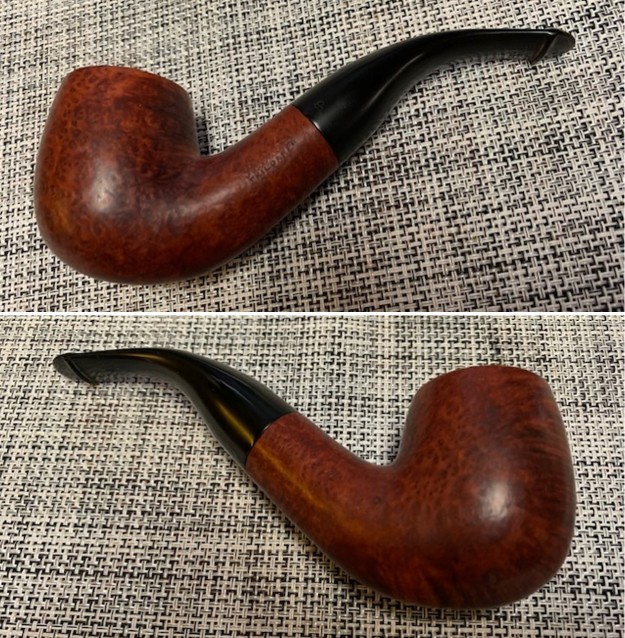
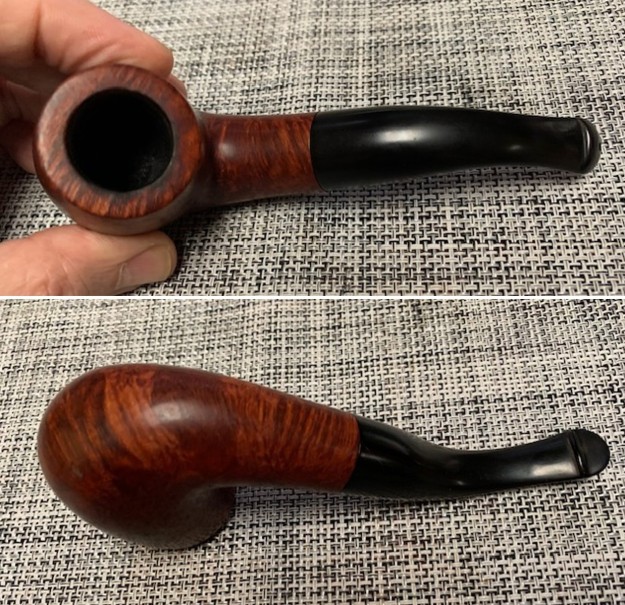
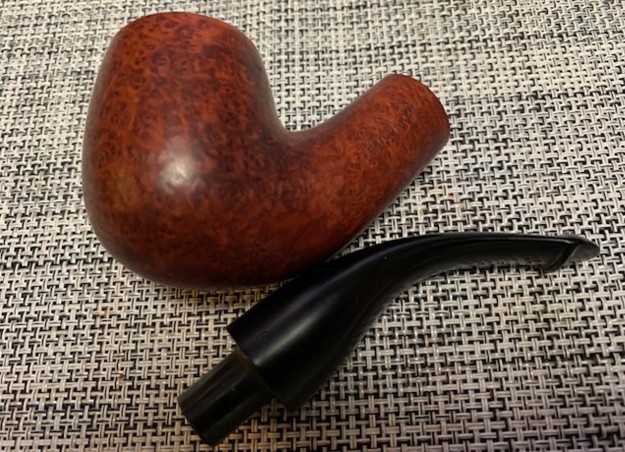
Jeff had done a great job cleaning up the pipe as usual. He reamed the pipe with a PipNet reamer and cut back the cake back to the bare briar. He cleaned up the walls with a Savinelli Fitsall Pipe Knife. He scrubbed the interior of the bowl and shank with pipe cleaners, cotton swabs and alcohol to remove the tars and oils. He scrubbed the exterior of the pipe with Murphy’s Oil Soap and a tooth brush to remove the grime from the finish. He worked on the rim top lava and the darkened spots with the soap and tooth brush. He scrubbed the inside of the stem with alcohol and pipe cleaners. He scrubbed the exterior with Soft Scrub and then soaked it in Briarville Pipe Stem Deoxidizer. He washed it off with warm water to remove the Deoxidizer. The pipe looked far better when it arrived. I decided to address the damage on the rim top and the burn damage to the inner edge of the bowl first. I used a folded piece of 220 grit sandpaper to smooth out the damage and bring the bowl back to as close to round as possible. I used a walnut stain pen to stain the inner edge of the bowl and the rim top to match the rest of the pipe. The stem cleaned up very well. I would only need to polish it with micromesh sanding pads – the buff it. I took photos of the stamping on the sides of the shank. You can see that it is stamped as noted above. It is clear and readable. I removed the stem and took a photo of the pipe to have a look at the parts and overall look. I decided to address the damage to the front rim top and inner edge of the bowl first. I used a folded piece of 220 grit sandpaper to give the inner edge of the bowl a slight bevel on the inner edge to remove burned areas and blend them into the surrounding briar.I polished the bowl and shank with micromesh sanding pads – dry sanding with 1500-12000 grit pads. I wiped down the bowl after each pad with a damp cloth to remove the sanding debris.   I worked some Before & After Restoration Balm into the surface of the bowl and shank with my fingertips to clean, enliven and protect the briar. I let the balm sit for 15 minutes and then buffed with a cotton cloth to raise the shine. The photos show the bowl at this point in the restoration process. I set the bowl aside and “painted” the stem surface with the flame of a “Bic” lighter to lift the tooth marks. I was able to raise them and I sanded the remaining marks to blend them into the surface of the surrounding vulcanite. I touched up the “P” logo stamping on the left side of the stem with some white acrylic fingernail polish. I pushed it into the logo mark with a toothpick. Once it had dried I polished off the excess on the stem with a worn 1500 grit micromesh sanding pad.I polished the stem with micromesh sanding pads – wet sanding with 1500-12000 grit sanding pads. I wiped it down after each sanding pad with Obsidian Oil. I finished polishing the stem with Before & After Pipe Stem Polish – both Fine and Extra Fine. I wiped the stem down with a final coat of Obsidian Oil and let it sit and absorb into the vulcanite.I am excited to finish this Republic Era Peterson’s “Kildare” XL90 Filter Stem Bent Billiard. I put the pipe back together and buffed it with Blue Diamond on the buffing wheel. I gave the bowl and the stem multiple coats of carnauba wax. I hand buffed the pipe with a clean buffing pad to raise the shine. It is fun to see what the polished bowl looks like with beautiful mixed grain all around it. Added to that the polished black vulcanite stem combined with the bowl made a stunning pipe. This smooth Classic Peterson’s “Kildare” XL90 Bent Billiard with a filter stem is great looking and the pipe feels great in my hand. It is light and well balanced. Have a look at it with the photos below. The dimensions are Length: 5 ½ inches, Height: 2 inches, Outside diameter of the bowl: 1 ¼ inches, Chamber diameter: ¾ of an inch. The weight of the pipe is 66 grams/2.33 ounces. It is a beautiful pipe that I will soon be putting on the rebornpipes store in the Irish Pipe Makers Section. If you are interested in adding it to your collection send me an email or a message. Thanks for walking through the restoration with me as I worked over this pipe. Thanks to each of you who are reading this blog.

As always, I encourage your questions and comments as you read the blog. Thanks to each of you who are reading this blog. Remember we are not pipe owners; we are pipe men and women who hold our pipes in trust until they pass on into the trust of those who follow us.

Restoring a Peterson’s London and Dublin 35P London Made Canadian


Blog by Steve Laug

The next pipe I have chosen is smooth finished Peterson’s London& Dublin Canadian pipe that had a very dirty/grimy finish but had some good looking grain around the bowl sides and shank. It came to us from a fellow in Copenhagen, Denmark on 10/03/2022. This Lightweight Canadian was stamped on the left side of the shank and read Peterson’s [over] London & Dublin. It was stamped on the right side and read London Made [over] England. On the underside near the shank/stem junction it is stamped 35P. The pipe was in filthy condition when he brought it to the table. The finish was dirty with grime ground into the briar sides and rim. There was a thick cake in the bowl and a coat of lava on the rim top but the edges of the bowl. The inner edge of the bowl was rough and looked like it had been reamed with a knife and had a lot of rough edges. The stem was dirty but there was no oxidation or calcification on it. There were tooth marks and chatter on the top and underside on and near the button. There was no “P” stamp logo on the taper stem. Jeff took photos of the pipe before his cleanup work. They tell the story and give a glimpse of the promise that we see in this pipe. Jeff took photos of the rim top and stem to show the general condition of the pipe. The bowl is caked and the rim top has a lava coat and the inner edge of the bowl is rough and shows knife damage. The photos of the stem show tooth marks and chatter on both sides near the button. Jeff took some photos of the bowl sides and heel to show the amazing grain that was around this bowl. It is a nice looking pipe.    He took photos of the sides of the shank to show the stamping. The stamping is readable in the photos below and is as noted above.  I am including the link to the Pipedia’s article on Peterson pipes. It is a great read in terms of the history of the brand (https://pipedia.org/wiki/Peterson).

I turned to “The Peterson Pipe” by Mark Irwin and Gary Malmberg to get some background on the Peterson’s London Made England line. On page 296-297 it had the following information.

MADE IN over ENGLAND and variations shown below (1936-62) Peterson maintained a factory in England for about a quarter of a century, from the late 1930s to ’62. Corporate transcripts and London business periodicals suggest the London operation on White Lion Street was about to get underway in ’37. Only a handful of London hallmarked Petersons are documented, stamped with date marks of 1936 and 1939, and these have no COM stamp. Their output would be limited by the onset of the Battle of Britain in July 1940, but it seems reasonable to suppose pipes were made in the London factory during WWII, inasmuch as the K&P Staff Register lists twelve employees earning wages there in January ’44. London hallmarked Petersons have been identified with dates of 1949-54. Most London made Petersons in a collector’s inventory were made in these postwar years, from 1949 until the closing of the factory in ’62. This narrow range of dates is probably the most reliable indicator of years when the stamp and the variations listed below were employed. The presence of one variation or another on a pipe is not by itself a reliable indicator of age.

Made In over England

Made In England forming a circle

Made In England forming an ellipse

Made in England in a line

A “Peterson’s Product” over Made In England

A Peterson’s Product over Made In England

A Peterson Product over Made in England

Made In over Great Britain

Great Britain

London Made over England

London Made

Now I knew a date range for the pipe I was working on – 1949-1962. I have underlined and made the text bold in the above list to show the stamping on the pipe I am working on. Now it was time to work on the pipe.

Jeff had done a great job cleaning up the pipe as usual. He reamed the pipe with a PipNet reamer and cut back the cake back to the bare briar. He cleaned up the walls with a Savinelli Fitsall Pipe Knife. He scrubbed the interior of the bowl and shank with pipe cleaners, cotton swabs and alcohol to remove the tars and oils. He scrubbed the exterior of the pipe with Murphy’s Oil Soap and a tooth brush to remove the grime from the finish. He worked on the rim top lava and the darkened spots with the soap and tooth brush. He scrubbed the inside of the stem with alcohol and pipe cleaners. He scrubbed the exterior with Soft Scrub and then soaked it in Briarville Pipe Stem Deoxidizer. He washed it off with warm water to remove the Deoxidizer. The pipe looked far better when it arrived. I took some close up photos of the rim top and also of the stem surface. I wanted to show how well it had cleaned up. The rim top had some looked quite good and the inner edge had some darkening and damage. It should clean up really well. I also took close up photos of the stem to show the tooth marks on the surface near the button. I took photos of the stamping on the sides of the shank. You can see that it is stamped as noted above. It is clear and readable. I removed the stem and took a photo of the pipe to have a look at the parts and overall look. I decided to address the damage on the rim top and the hacked inner edge of the bowl first. I used a folded piece of 220 grit sandpaper to smooth out the damage and bring the bowl back to as close to round as possible. The thinness of the walls did not leave a lot of room to work with so it is better but not perfect. I used a walnut stain pen to stain the inner edge of the bowl and the rim top to match the rest of the pipe. I polished the bowl and shank with micromesh sanding pads – dry sanding with 1500-12000 grit pads. I wiped down the bowl after each pad with a damp cloth to remove the sanding debris.   I worked some Before & After Restoration Balm into the surface of the bowl and shank with my fingertips to clean, enliven and protect the briar. I let the balm sit for 15 minutes and then buffed with a cotton cloth to raise the shine. The photos show the bowl at this point in the restoration process. I set the bowl aside and “painted” the stem surface with the flame of a “Bic” lighter to lift the tooth marks. I was able to raise them and I sanded the remaining marks to blend them into the surface of the surrounding vulcanite. I polished the stem with micromesh sanding pads – wet sanding with 1500-12000 grit sanding pads. I wiped it down after each sanding pad with Obsidian Oil.I finished polishing it with Before & After Pipe Stem Polish – both Fine and Extra Fine and buffed it off with a cotton cloth. I gave it a coat of Obsidian Oil to preserve and protect the stem. I am excited to finish this London Made English Peterson’s London & Dublin, Canadian 35P. I put the pipe back together and buffed it with Blue Diamond on the buffing wheel. I gave the bowl and the stem multiple coats of carnauba wax. I hand buffed the pipe with a clean buffing pad to raise the shine. It is fun to see what the polished bowl looks like with beautiful mixed grain all around it. Added to that the polished black vulcanite stem combined with the bowl and brass band on the shank and made a stunning pipe. This smooth Classic Older Peterson’s London & Dublin English Made Canadian 35P is great looking and the pipe feels great in my hand. It is light and well balanced. Have a look at it with the photos below. The dimensions are Length: 5 ½ inches, Height: 2 inches, Outside diameter of the bowl: 1 ¼ inches, Chamber diameter: ¾ of an inch. The weight of the pipe is 34grams/1.20oz. It is a beautiful pipe that I will soon be putting on the rebornpipes store in the Irish Pipe Makers Section. If you are interested in adding it to your collection send me an email or a message. Thanks for walking through the restoration with me as I worked over this pipe. Thanks to each of you who are reading this blog.

As always, I encourage your questions and comments as you read the blog. Thanks to each of you who are reading this blog. Remember we are not pipe owners; we are pipe men and women who hold our pipes in trust until they pass on into the trust of those who follow us.

Life-Support for a Butz-Choquin Oom Paul Egg


Blog by Kenneth Lieblich

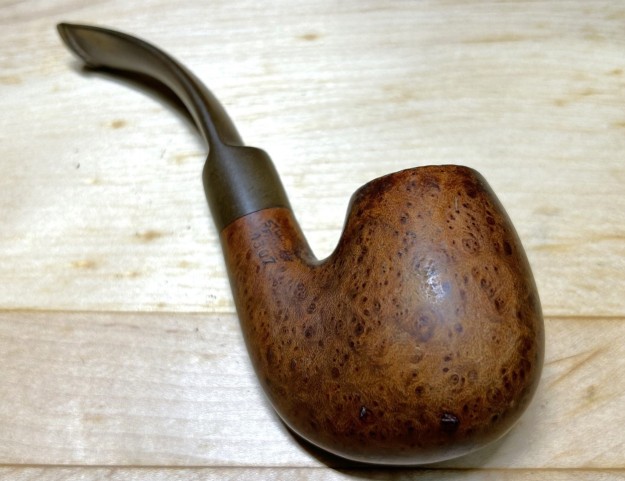
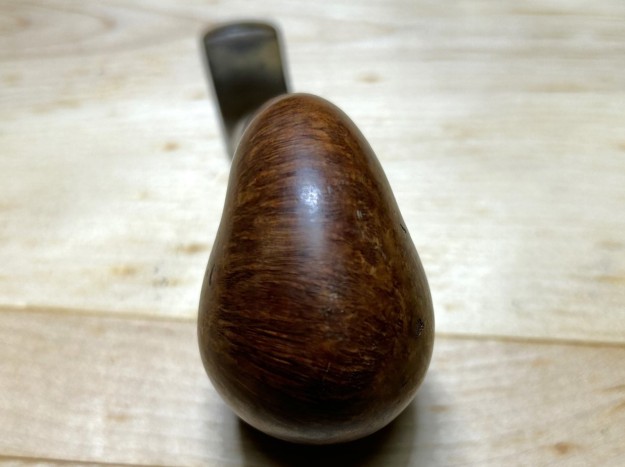
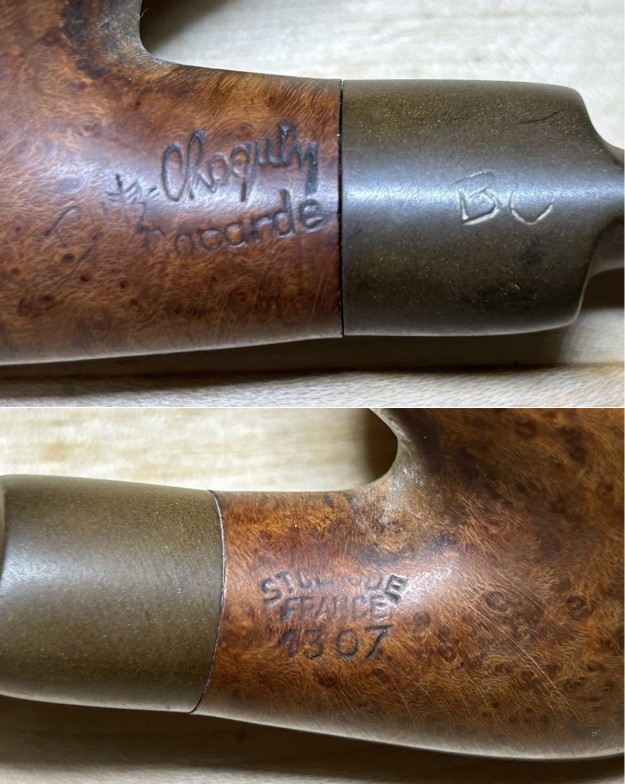
Another pipe in my ongoing “French Collection”, this new addition came in a lot of pipes from France (appropriately). I pulled it out of the pile of filthy pipes and found it quite charming. This pipe is an Oom Paul Egg shape. It was made by the famous and long-standing French pipe maker Butz-Choquin and is a small, wounded, but very attractive pipe. On the left side of the shank, it reads Butz-Choquin [over] Cocarde (which is the model name). On the right side of the shank, it reads St Claude [over] France [over] 1307. On the left side of the stem is the company’s logo, a “BC”. The logo is badly worn and will be difficult to restore.Both Pipedia and Pipephil have good write-ups on the history of Butz-Choquin and I encourage you to read both. Also, Steve has restored quite a few and it’s worth having a look at his writings too. For the moment, here is some information from Pipedia:

The pipe, from Metz to Saint-Claude.

Jean-Baptiste Choquin of Metz started out as a tobacconist. This enterprise was prosperous; he had several employees. Among those, there was a certain Gustave Butz who was its first workman and who became his son-in-law by marrying Choquin’s daughter Marie in 1858.

In 1858 Jean-Baptiste Choquin created, in collaboration with Gustave Butz, the Choquin pipe. This bent pipe with a flat-bottomed bowl was finished with an albatross-bone mouthpiece, fixed with silver rings.

In 1858, still in Metz, Gustave Butz built an establishment for the manufacture of the Choquin pipe which took the name of . In 1951, the Berrod-Regad company bought the trademark, continuing manufacture until 2002. Departing from Metz, the workshop was relocated to Saint-Claude, then also called “the world capital of the briar pipe”, under the Berrod-Regad group. The Berrod-Regad group would go on to completely rebuild the network of representatives until finally entering the export market in 1960 and has since won several prizes, as well as the Gold Cup of French good taste.

In a few years, the brand’s collection increased from ten to seventy series. 135 years after it was founded, the pipe is still well-known not only in France but throughout the world. In 2002, the Berrod family, wishing to preserve manufacture of pipes in Saint-Claude, handed over the company to Fabien Guichon, a native of the area, who will continue to develop the brand during the 21st century.

Meanwhile, Pipephil says this:

The origin of the brand reaches back to 1858 when Jean-Baptiste Choquin in collaboration with his son-in-law Gustave Butz created their first pipe in Metz (France). Since 1951 Butz-Choquin Site officiel Butz Choquin, pipes de Saint-Claude jura. BC pipe de bruyere luxe is a brand of the Berrod-Regad group (Saint-Claude, France).

Jean Paul Berrod managed the company from 1969 to 2002 when he retired and sold the corporate to Mr Fabien Gichon. Denis Blanc, allready owner of EWA, took over the S.A. Berrod-Regad in 2006.

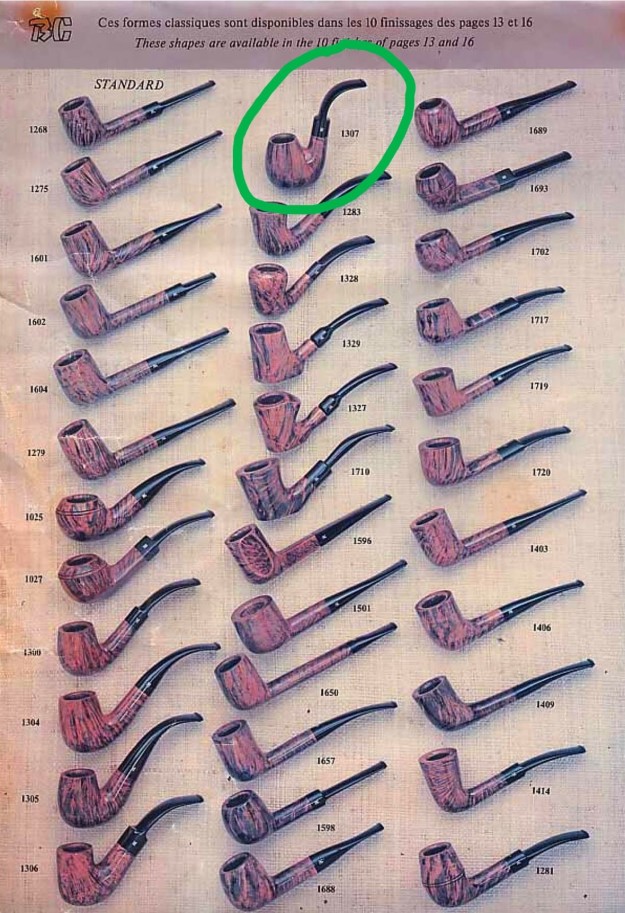
In an old Butz-Choquin catalogue, I found the pipe shape in question, listed with its requisite number:This is an older pipe, and is heavily used, though the stem is in reasonably good shape, compared to the stummel. There are a few minor tooth marks, some oxidation and calcification, but nothing too serious. Additionally, over the decades, the stem has straightened somewhat, so it will need to be bent back into place. The stummel is a different kettle of fish. The wood is very nice, but it has several fills on the outside of the bowl, there are nicks around the rim, the wood is filthy, and there are scratches around the bowl. It just looks tired and worn. The stem was first on my list. . .  This stem has a stinger in it – and it was being quite stubborn about coming out! The goo had glued the stinger into the tenon, so I opted to warm the stem and stinger with my heat gun and this provided just enough softening of the internal gunk to allow me to pull it out. It then went for a soak in some lemon-infused isopropyl alcohol. I let it sit for several hours and then cleaned it off and it looked much improved. I then finished it with some metal cleanser and moved on. Next, I wiped the outside down with Murphy’s Oil Soap on some cotton pads. I also took a BIC lighter and ‘painted’ the stem with its flame in order to lift the few bite marks and dents. Then I cleaned out the inside with pipe cleaners and isopropyl alcohol. It was pretty dirty, and I went through a good amount of pipe cleaners. I then wiped down the stem with SoftScrub cleaner to remove surface oxidation. Once this process was done, the stem went for an overnight soak in the Pipe Stem Oxidation Remover. This allows me to clean the oxidation off in a couple of ways: by applying a mild cleaner to the surface and sanding the stem. The next day, I used SoftScrub again with some cotton rounds. After this, I used some nail polish to restore the logo on the stem. I painted the area carefully and let it fully set before proceeding. I built up the dents on the stem with black cyanoacrylate adhesive and let them fully cure. I then sanded the adhesive down then with 220-, 400-, and 600-grit sandpapers to meld seamlessly into the stem. As I previously mentioned, the stem had straightened itself out over the years; so I used my heat gun to warm the stem and return it to its original shape.I then used all nine Micromesh pads (1,500 through 12,000 grit) to bring out the lovely black lustre on the stem. I also used Obsidian Pipe Stem Oil in between each pad scrubbing.On with the stummel! I decided to ream out the bowl. I used the PipNet Reamer and the KleenReem to remove the built-up cake and followed that with 220-grit sandpaper taped to a dowel to eliminate as much as I could. I took the chamber down to bare briar, as I wanted to ensure there were no hidden flaws in the wall. Fortunately, there were none. I used cotton rounds and some Murphy’s Oil Soap to scrub the outside of the stummel and a toothbrush with Murphy’s for the lava on the rim of the pipe.I then proceeded to clean out the insides of the shank with Q-tips, pipe cleaners, and lemon-infused isopropyl alcohol. The shank was absolutely caked with debris and I went through an extraordinary amount of cotton to clean it out. With all the filth in this pipe, I opted for an alcohol bath to clean it thoroughly. I followed that up by cleaning the insides with some dish soap and tube brushes. I decided to de-ghost the pipe in order to remove any lingering smells of the past. I thrust cotton balls into the bowl and the shank and saturated them with 99% isopropyl alcohol. I let the stummel sit overnight. This caused any remaining oils, tars and smells to leach out into the cotton. The bowl was nice and clean after this.Having completed that, I was able to address the blemishes to the outside of the bowl. First, I repaired the half-dozen fills with CA glue and briar dust. For the nicks on the rim and bowl, I dug out my iron and a damp cloth to raise the nicks. The hot and moist steam can often cause the wood to swell slightly and return to shape. A little unusually, this technique worked brilliantly and the next two photos (before and after) show a good example of what the iron can do. Now I could address the burn on the rim. I took some sandpaper and my Micromesh pads to sand and smooth everything out. After that, a light application of Before & After Restoration Balm brought out the best in the stummel’s grain, then took it to the buffer. A dose of White Diamond and a few coats of carnauba wax were just what this pipe needed. This little pipe looks fantastic again and is ready to be enjoyed again by the next owner! I am pleased to announce that this pipe is for sale! If you are interested in acquiring it for your collection, please have a look in the ‘French’ pipe section of the store here on Steve’s website. You can also email me directly at kenneth@knightsofthepipe.com. The approximate dimensions of the pipe are as follows: length 4 in. (100 mm); height 3¾ in. (94 mm); bowl diameter 1⅜ in. (36 mm); chamber diameter ¾ in. (19 mm). The weight of the pipe is 1⅜ oz. (41 g). I hope you enjoyed reading the story of this pipe’s restoration as much as I did restoring it. If you are interested in more of my work, please follow me here on Steve’s website or send me an email. Thank you very much for reading and, as always, I welcome and encourage your comments.

Restoring a Charatan’s Make Belvedere 4 Saddle Stem Billiard with the stamping starred out


Blog by Steve Laug

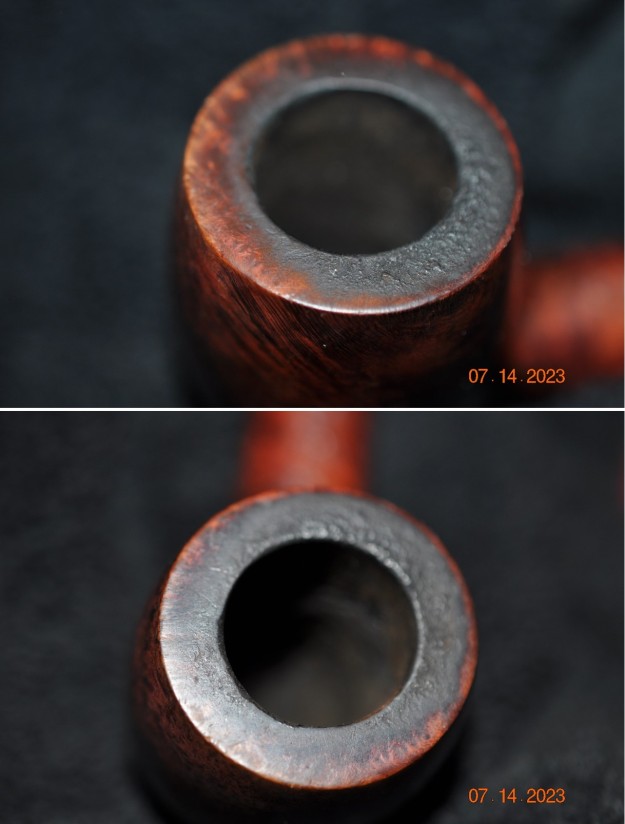
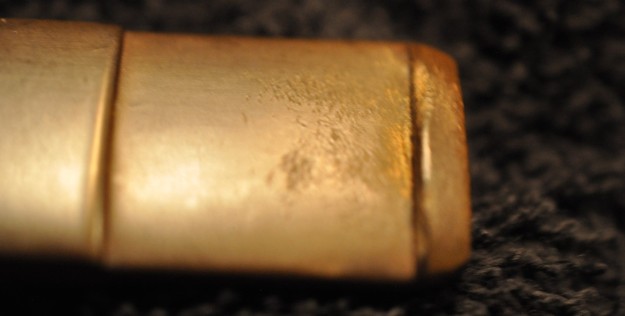
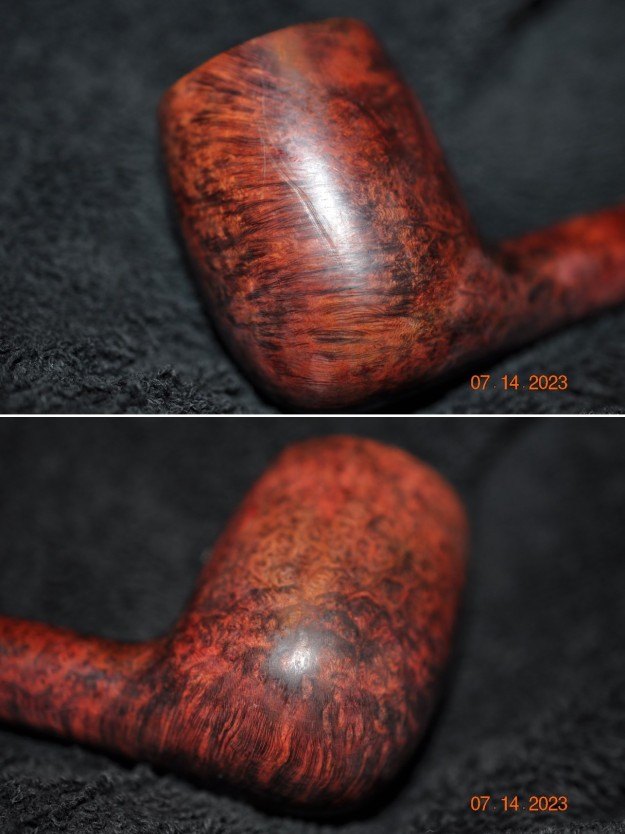
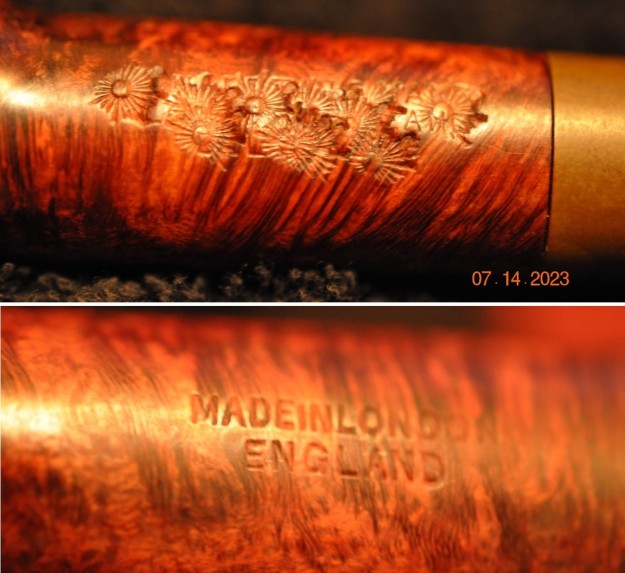
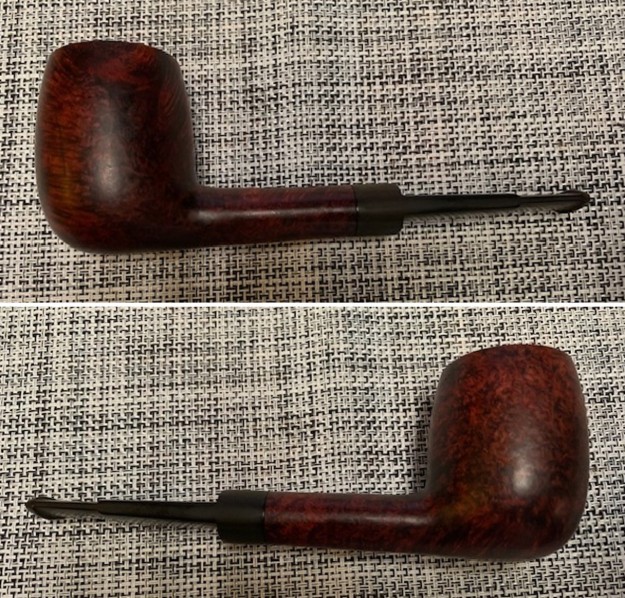
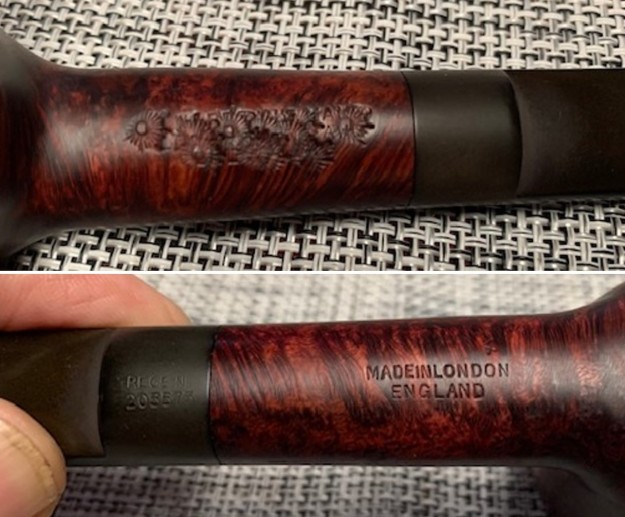
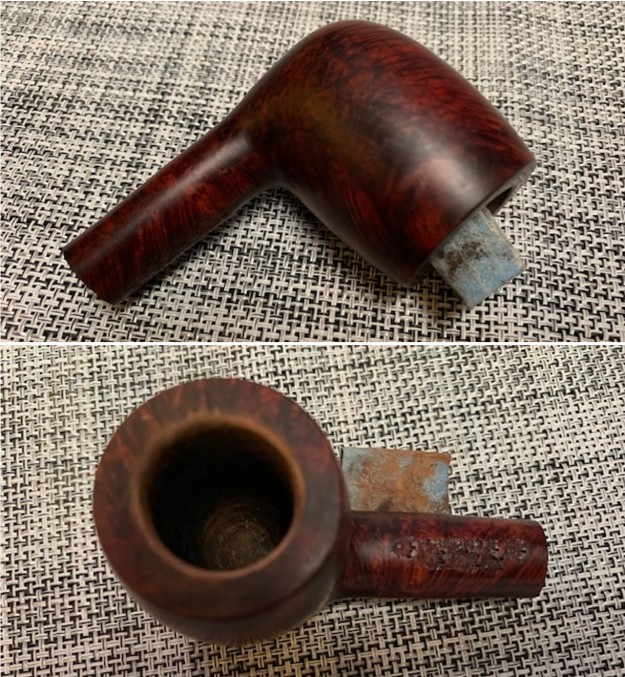
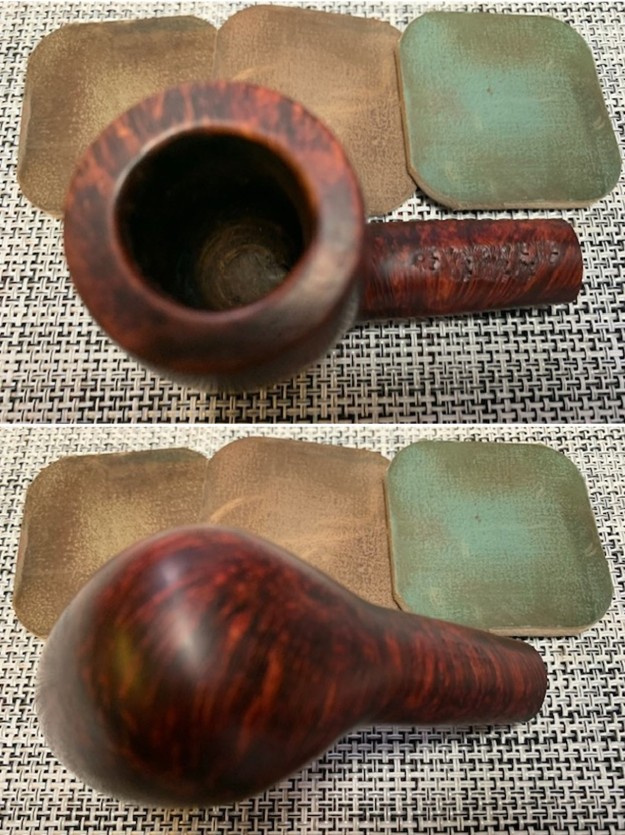
The next pipe on the table is a strange one. It is a well made Charatan’s Make billiard with some nice grain around the bowl and shank. The stamping is quite clear though the entire stamp has been covered with flower/star stamps obliterating it for the most part. I am not sure what it means as I have not seen this before. Under the flower stamps it is stamped on the topside and reads Charatan’s Make[over] London England [over] Belvedere in three lines. On the underside it is stamped Made in London [over] England. Above that it has a number stamp 4 which I assume is a shape number. We purchased the pipe on 06/24/2023 from an auction in Garland, Texas, USA. The finish on the pipe was dirty but obviously well loved. There was a thick cake in the bowl with lava flowing up and onto the rim top and edges. It is heavier on the back side of the rim top but is present all the way around. The stem was oxidized and light calcification on the area around the button. There were light tooth marks and chatter on both sides. There was no CP stamp on the sides of the stem but it was stamped on the underside and read REGD NO [over] 203573. It had the DC or Double Comfort step down saddle stem. Jeff took photos of the pipe before he started his clean up work on the pipe.He took photos of the bowl and rim top to show their general condition. You can see the tars on the inner edge of thick lava coated rim top. The cake in the bowl is quite thick and there is tobacco debris on the walls of the bowl. The finish on the bowl is very dirty with grime and oils ground into the bowl, but still very stunning. This pipe has a classic Charatan Double Comfort stem that has some oxidation, calcification on the surface of the vulcanite. There is chatter and tooth marks on the top and underside. Jeff took some photos of the sides and heel of the bowl to give an idea of the grain on this particular piece of briar. It is amazing and I cannot wait to see what it looks like once it is polished and waxed. He took photos of the stamping on the top and underside of the shank to capture it for me. The first photo shows the topside of the shank and the floral/sunburst overstamping as noted above. The second shows the underside of the shank with the Made in London [over] England as noted above. You cannot see the numeral 4 but it is above the Made in London stamp.An added part of pipe restoration for me is to try to gather as much background on a brand and maker as I can find. With Charatan that is an enjoyable web to untangle. There is a lot of information and it can lead to understanding what era a pipe was made in. To try to figure out the era of the Charatan’s pipe I was working on I turned to the Pipephil website, Logos and Stampings (http://www.pipephil.eu/logos/en/logo-charatan.html). There is some really helpful information on each of the lines of Charatan’s Make pipes that entered the market. There is an alphabetical listing of the lines but the Belvedere they showed had a stem made for a 9mm filter while the one I have is a nonfiltered pipe. The site did give a short history of the brand. I quote the portion that is most pertinent.

The brand was founded in 1863 by Frederik Charatan. When his father retired in 1910, Reuben Charatan took over the family business. All the pipes were handmade until 1973. The brand name has been overtaken by Dunhill in 1978 and sold in 1988 to James B. Russell Inc. (NJ, USA). During the period 1988-2002 Charatans were crafted by Butz Choquin in St Claude (France). Dunhill re-purchased Charatan brand name in 2002 and Colin Fromm (Invicta Briars, Castleford) followed up on freehand production.

Next, I turned to Pipedia to see if I could find more information on the brand and possibly a link to the Belvedere line (https://pipedia.org/wiki/Charatan) but once again in the general article it was not listed. It did give a little more historical information. I quote the pertinent parts and have highlighted in red the sections that give information on this particular pipe.

In 1863 Frederick Charatan, a Russian/Jewish immigrant, opened a shop in Mansell Street, located in the borough of Tower Hamlets, London E1, where he began to carve Meerschaum pipes. These pipes got very popular soon, and thus Charatan moved to a bigger workshop in Prescot Street, just around the corner. Here he began to make briar pipes which should make the name famous the world over. Charatan was the first brand to make entirely hand-made briars from the rough block to the finished pipe including the stems. The nomenclature “Charatan’s Make” refers to this method of production and was meant to differentiate Charatan from other brands who “assembled” pipes from pre-drilled bowls and delivered mouthpieces.

Being the undisputed No. 1 in English pipemaking, Charatan was approached by Alfred Dunhill who was unsatisfied with the quality of the pipes he imported from France. During 1908 – 1910 Dunhill bought pipes from Charatan paying exorbitant prices to ensure he had some of the very best pipes for sale in England. In 1910 he lured away Joel Sasieni, one of Charatan’s best carvers, and opened his own small pipe workshop on 28 Duke Street. On the retirement of his father in 1910 Reuben Charatan took over the family business…

…The pre-Lane period (prior to 1955) and the Lane era pipes (1955 to until sometime between 1979 – 1984) are of primary interest the collector. The Lane era is often quoted as beginning about 1950… Charatan records are almost non-existent before Lane due to a factory fire, making it difficult to date pre-Lane pipes. Charatan used 4 basic grades prior to 1950: Supreme, Selected, Executive, and Belvedere. After 1950 Herman Lane’s influence began, and the grades started to expand. In 1955 Lane took over sole distributorship of Charatan in the US. In 1957 he introduced the Supreme S. Most of his other introductions were from the 60’s and early 70’s…

From this I am fairly certain I am dealing with an early Lane pipe made in 1955 and because of the Belvedere stamp it could potentially go back as far as before 1950. There are none of the expected Lane stampings on the pipe which is interesting though the Double Comfort bit helps point to the Lane time.

I continued digging further into the dating of the pipe, but what I had found above was a good start for me. If some of you would like to try your hand at dating it more accurately as to the time period it came out you might want to check out the article on Pipedia on Dating Charatans (https://pipedia.org/wiki/Dating_of_Charatans).

I also reread the article on Pipedia by the Italian fellow who contributed some really helpful information on the brand (https://pipedia.org/wiki/Charatan_-_Milan_2014). I quote the section on the Second period: Reuben Charatan 1910 – c. 1962. I have highlighted a portion of the section on the shank in red to point out some more helpful dating information.

– In 1962 Herman Lane took over the business from the Charatan family, although he had already influenced production from the 1950s.

– The pipes were mostly larger than the previous ones and corresponded in size to Dunhill group 5. These are slightly less rare, but still difficult to find.

– Stem: Usually in ebonite, saddle shaped or tapered, bearing a fine “CP” stamp, underbore system (see below) used when necessary.

– Shank: The shape code is stamped on it together with the nomenclature “CHARATAN’S MAKE LONDON ENGLAND” arranged in two lines. From 1955 onwards on the models marketed for the USA there is also a serif and circled capital “L” (but not all models bear this) which resembles the pound sterling symbol. The “L” is for Lane, the importer.

From 1958, Lane changed the nomenclature for models marketed for the US to clarify the message: “MADE BY HAND”.  In this period the underbore was introduced. Its manufacturing period ranged between 1920 and c.1930. This model was equipped with a duralumin plunger trap fitted in the stem, which served to clean the residue more easily. This particular model bore a special stamp on the stem, and also had its own catalogue…

QUALITY GRADES…The stem did not only display the stamps mentioned above. Another stamp that can help dating is the one referring to the quality of the pipe. Until Herman Lane arrived on the scene there were four quality grades. Starting with the lowest: Belvedere, Executive, Selected, and Supreme. Lane went on to add higher grades from time to time: Supreme S, Supreme S100, S150, S200, S250, S300, Coronation, Royal Achievement, Crown Achievement, and Summa Cum Laude; these last three are extremely rare and almost impossible to find. He also invented other, different grades, even changing the previous pipe classification standards. We will not go into detail here, but it means that if we find an S100 or Coronation the pipe was manufactured following Herman Lane’s acquisition. In particular, the FH mark, or Freehand pipe was commissioned to the famous Danish craftsman, Preben Holm.

Now I knew I was working on an early Lane pipe which actually means it was made around 1955 as shown by the stamping. I wanted to now see if I could find any information the shape 4 number as it was not listed in any shape charts I could find.

With that information at hand I turned to work on the pipe itself. Jeff had thoroughly cleaned up the pipe. He reamed the pipe with a PipNet Pipe Reamer and cleaned up the remnants with a Savinelli Fitsall Pipe Knife. He scrubbed the bowl with undiluted Murphy’s Oil Soap with a tooth brush. He rinsed it under running warm water to remove the soap and grime. He cleaned out the inside of the shank and the airway in the stem with alcohol, cotton swabs and pipe cleaners. He scrubbed the exterior of the stem with Soft Scrub to remove as much of the oxidation and calcification as possible. He soaked the stem in Briarville’s Pipe Stem Deoxidizer and rinsed it off with warm water. I took photos of the pipe once I started to work on it.  I took some photos of the rim top and stem. The rim top and bowl looked very good. The cake and lava overflow were gone and the inward inward edge of the rim was very clean. There was damage on the back and front of the inner rim edge. Jeff had been able to get rid of most of the darkening and all of the lava and tars. The rim top looked good with no marks or nicks on the surface or edges. The closeup photos of the stem shows that it is a much cleaner and better-looking stem. There is still some residual oxidation on the saddle and blade that I will need to deal with. The light tooth chatter was still present but faint and the stem looked really good. I took some photos of the stamping on the shank sides to show the condition after the cleanup. Often the stamping takes a hit with the cleaning and is lessened in its clarity. Jeff does a great job in leaving the stamping looking very good. I also removed the stem from the shank and took a photo of the pipe to show the proportions of the pipe. It is a pretty pipe. Now it was time to work on the pipe. I started working on this pipe by turning to the bowl. I chose to deal with the darkening and burn damage on the inner rim edges and top. I used a folded piece of 220 grit sandpaper to remove the damage and darkening. It took a little work but I was able to remove all of the darkening. It is a beautiful piece of briar with some great grain.Once rim edges were reshaped and reworked I needed to blend them into the rest of the briar. I polished the briar with micromesh sanding pads. I choose to dry sand the briar rather than wet sand it. Again, it is a matter of personal preference. I prefer to use the pads dry and find they work very well on the briar. I sand with each pad (9 in total) and group them by threes for ease of reference. I also work over the plateau areas at the same time. I wipe the bowl down after each pad with a damp cloth to remove the sanding debris and check the briar. I love seeing the developing shine on the briar as I move through the pads which is why I include so many photos of this step. For the past few years now I have been using Before & After Restoration Balm. It is a “waxy” paste/balm that is rubbed into the surface of the briar and the plateau. The product works to deep clean the nooks and crannies of finish, enliven and protect the briar. I worked it into the briar with my finger tips and let it sit for 10 minutes to do its work. I wiped it off with a soft cloth and buffed it with a cloth. The briar really took on a deep shine and the grain shone through. The photos I took of the bowl at this point mark the progress in the restoration. It is a gorgeous pipe. I set the bowl aside and turned my attention to the stem. The stem was in good nick other than the light oxidation on the top side. There some light tooth marks next to the button edge button chatter on the surface. I “painted” the surface in those areas with the flame of a light and raised them. I sanded out what remained with 220 grit sandpaper and then started polishing with 600 grit wet dry sandpaper.  I scrubbed the stem surface with Soft Scrub cleanser to remove the oxidation in the vulcanite. I was able remove all of the residual in the finish and the stem looked much better. I used micromesh sanding pads and water to wet sand the stem with 1500-12000 grit sanding pads. I wiped it down after each sanding pad with Obsidian Oil on a cotton rag after each sanding pad as I find it does two things – first it protects the vulcanite and second it gives the sanding pads bite in the polishing process.   After finishing with the micromesh pads I rub the stem down with Before & After Fine and Extra Fine stem polish as it seems to really remove the fine scratches in the vulcanite. I rub the Fine Polish on the stem and wipe it off with a paper towel and then repeat the process with the extra fine polish. I finish the polishing of the stem down with a final coat of Obsidian Oil and set the stem aside to let the oil absorb. This process gives the stem a shine and also a bit of protection from oxidizing quickly.I finished with the Blue Diamond and moved on to buffing with carnauba wax. Once I have a good shine in the briar and vulcanite I always give the bowl and the stem multiple coats of carnauba wax. I have found that I can get a deeper shine if I following up the wax buff with a clean buffing pad. It works to raise the shine and then I follow that up with a hand buff with a microfiber cloth to deepen the shine. It is always fun for me to see what the polished bowl looks like with the polished vulcanite and acrylic combination stem. It really is a beautiful pipe. The smooth finish around the bowl sides and shank show the grain shining through the rich brown stains of this Charatan’s Make London England Belvedere 4 Billiard overstamped with flower/sun figures. The finished pipe feels great in my hand. It is light and well balanced. Have a look at it with the photos below. The dimensions are Length: 6 inches, Height: 2 inches, Outside diameter of the bowl: 1 ½ inches, Chamber diameter: ¾ of an inch. The weight of the pipe is 2.01 ounces/57 grams. It is a beautiful pipe and one that I will be putting on the rebornpipes store in the British Pipe Maker section.

Thanks to each of you who are reading this blog. I am always open to questions and comments from you who are reading the blog. Remember we are not pipe owners; we are pipe men and women who hold our pipes in trust until they pass on into the trust of those who follow us.

A Second Pipe from the Old Gentleman’s Estate – A Cracked Shank Whitehall 1B Rustic Apple


Blog by Steve Laug

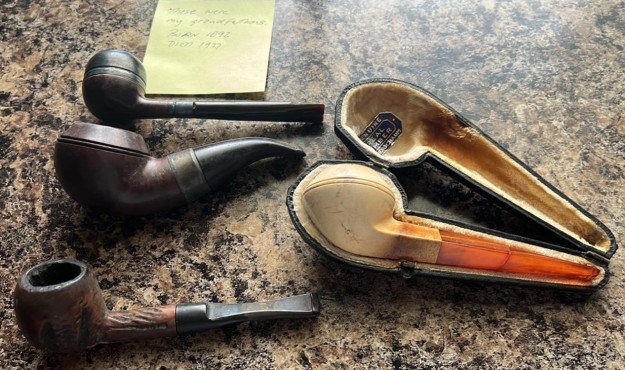
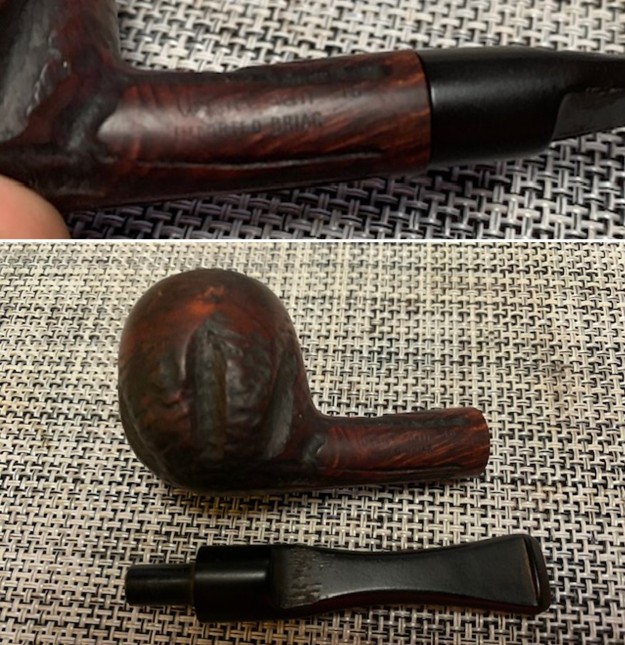
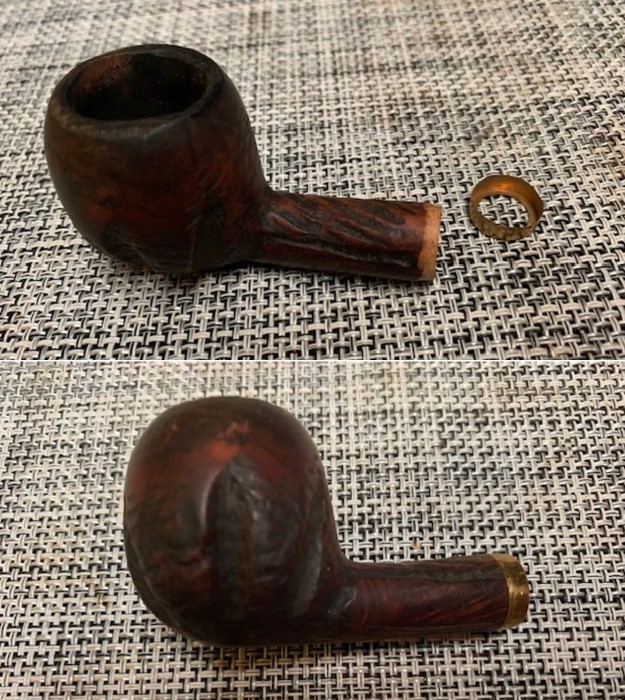
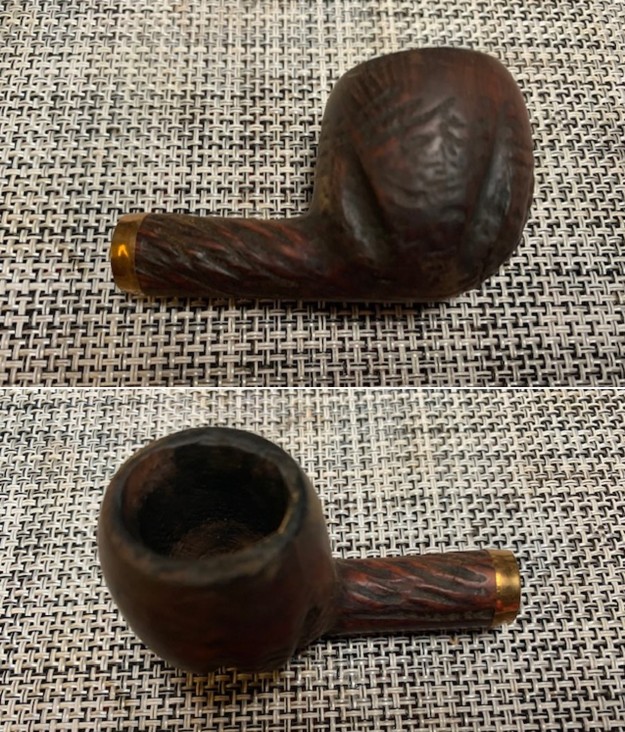
I decided I needed a change of pace in my restoration/clean up work. I went through my pipes waiting in the queue and chose pone from a group of four pipes that were given to us by a woman in Columbus, Ohio, USA. It had belonged to her Grandfather who lived from 1882 to 1977. There were four pipes that she sent us from his estate – the metal bowled apple, a cased meerschaum with a broken shank and an amber stem, a Whitehall rusticated apple and a BBB Glokar Fraternity Pipe.Even though I generally pass on Whitehall pipes I decided to work on this one because it came with a great back story. The older pipe man who had used it obviously had enjoyed it beyond measure. Since he passed away in 1977 I knew that the pipe was much earlier than that. It was well smoked, reamed with a knife. And it had continued to be smoked even after the shank crack. I am guessing from the marks on the stem that the crack happened when he tried to remove the stem with a pair of pliers. The stamp on the left side of the shank read Whitehall 1B [over] Imported Briar. The pipe was dirty and well used. The finish had deep grime ground into the rustication around the bowl. The bowl had tobacco debris in it and a very thick cake overflowing as lava onto the rim top. The rim top looked to be in rough condition with damage from reaming and burns particularly on the back side of the edge and top. The stem was vulcanite and fit the cracked shank well. It had oxidation, calcification and deep gouges from pliers just behind the saddle. There were light tooth marks and chatter on both sides ahead of the button. Jeff took photos of the pipe before he started his cleanup work.Jeff took photos of the rim top and bowl to show the condition. You can see the thick cake int eh bowl and the lava coat on the top of the rim. The inner edge of the bowl is a mess and very out of round. It was obviously her grandfather’s favourite pipe even though some of his others were nicer. The vulcanite saddle stem was oxidized, calcified and had deep nicks at the saddle end from what appeared to be pliers. It too was going to take some work. Jeff took photos of the cracked shank to show the condition of the crack. He also took photos of the damage to the stem surface just behind the saddle on both sides where it looks like the stem was twisted with pliers. Jeff took photos of the sides and heel of the bowl to show the composition of the pipe. The combination of smooth and rustication is quite nice. There are Custom-bilt like channels from top to bottom of the bowl and horizontal rustication around the bowl between the channels. The rim top and top half of the bowl are smooth. The shank has horizontal rustication all around leaving a smooth panel on the left side for the stamping. It is quite nice looking. He took a photo of the stamping on the smooth panel on the left side of the shank. You can see that it is readable as noted above.I knew that there was a connection between Block Brothers Tobacco and Whitehall as I have had pipe coupons in boxes of Kentucky Club tobacco but I wanted to verify that and get the details. I turned to the listing on Pipedia for Whitehall and read it (https://pipedia.org/wiki/Whitehall). I quote from the site below.

Whitehall pipes are frequently misunderstood to be a model rather than an actual pipe company, which has led collectors to mistakenly ascribe their manufacture to Civic and Ben Wade (Who Made That Pipe; Wilczak & Colwell, 1997).  In fact, Whitehall refers to the pipe company (not a model), which itself produced models such as the Hialeah, Jumbos, London Hall, and Thermofilter.  The history of the Whitehall Pipe Co., Inc. (Richmond Hill, NY), is a complicated one, involving several parent companies and subsidiaries including Whitehall Products, Inc. (Helmetta, NJ), The Bloch Bros. Tobacco Co. (Wheeling, WV), Helme Products, Inc., apparently all subsidiaries of Culbro Corp. (owner also of General Cigar).  The “Imported Briar” stamp on many of the pipes, and the unmistakable Whitehall logo bearing resemblance to the American-made tobaccos of that brand strongly suggest that these are products made for the Whitehall Pipe Co., Inc., an American company.  There is furthermore no evidence that Civic or Ben Wade outsourced any manufactory of pipes to Italy; nor did Ben Wade manufacture pipes with aluminum screw tenons, paper filter inserts and molded acrylic stems.  For irrefutable proof that the American company Whitehall Pipe Co., Ltd., was, in fact, responsible for these brands, one need only consult the University of California, San Francisco “Truth Tobacco Archives” which clearly links these brands to the company (see image below) [on the Pipedia site]…

When the pipe arrived in Vancouver it was very clean. The briar and stem were spotless. The vulcanite stem looked much better and you can see the gouges in the top and underside behind the saddle. The crack in the shank was also very clean and ready to repair. Jeff had reamed the bowl with a Pipenet Pipe Reamer and cleaned up the bowl walls with a Savinelli Fitsall Pipe Knife. He scrubbed the airway in the stem and shank with pipe cleaners, cotton swabs and alcohol. He scrubbed the exterior of the bowl and shank with Murphy’s Oil Soap (undiluted) and a tooth brush. He rinsed the exterior with warm running water and dried. He polished the briar and stem with a small drop of olive oil. The pipe really looked very good. It was going to be a fun one to work on for my part.  I took photos of the pipe when I brought it to the table for my work. This is what I saw. I took photos of the bowl and the rim top to show the condition. It is clean and the damage is quite extensive. The bowl is very clean and there were nicks, burn damage and cuts all around the inner edge and top. The bowl was out of round due to the damage. The crack on the top left of the shank is also visible in the photo below. The vulcanite stem is clean and the damage visible at the blade where it joins the saddle portion. The button and stem surface ahead of the button is clean and undamaged. I took a photo of the left shank side to capture the stamping on the briar. It is faint but it is still readable. I took a photo of the bowl and shank separated to show the condition of the pipe. It really is a great looking pipe.I started my work on the pipe by addressing the cracked shank. I smoothed out the end of the shank so that the band would fit smoothly and not be hampered by the rustication. I used the Dremel and a sanding drum to get it prepared for the band. I heated the band and pressed it onto the shank end. It fit well and bound the crack tightly together. With the shank repair complete I turned to address the issues with the rim top and edge. I started by smoothing out some of the damage with a folded piece of 220 grit sandpaper. I topped the bowl on a topping board with 220 grit sandpaper to flatten on the damage on the rim top. I used a wooden ball and a piece of sandpaper to give the rim edge an inward bevel and smooth out the top. It looked much better! I filled in the damaged back inner edge of the bowl with clear CA glue and briar dust. The edge was damaged but it did not go deeply into the bowl. I sanded out the inside of the edge with a piece of 220 sandpaper wrapped around a dowel. I smoothed out the rim top with a folded piece of 220 grit sandpaper and bevelled the rim a bit more with the sandpaper. I stained the rim top with a Maple Stain Pen to match the smooth portions of the bowl. It was looking good. I polished the briar with micromesh sanding pads – 1500-12000 grit pads. I dry sanded the briar and then progressively brought a shine to the pipe. It looked really amazing – the combination of rustic and smooth portions of the briar. It is a beauty! I rubbed the bowl down with Before & After Restoration Balm. I worked it into the finish with my fingertips and a shoe brush. The product works to clean, preserve and protect the briar. I let it sit and absorb for 10 minutes. I buffed it off with a soft cloth and then gave it a rigorous buff to raise the shine. It looks good at this point. I filled in the gouges in the stem surface on both sides by the saddle with black CA rubberized glue. Once it cured I sanded it smooth with 220 grit sandpaper and started polishing it with 600 grit wet dry sandpaper.I polished out the scratches left behind by the sandpaper on the stem surface with micromesh sanding pads – dry sanding with 1500-12000 grit sanding pads. I wiped it down with Obsidian Oil on a cloth after the sanding pads. I finished the hand polishing of the stem with Before & After Pipe Polish – both the Fine and Extra Fine polishes. I gave it a final coat of Obsidian oil and set it aside to dry. I am really happy with the way that this Whitehall Rusticated Imported Briar 1B Apple turned out. It really is a beautiful looking pipe with a great shape and smooth finished on the upper half of the bowl and rusticated on the lower portion of the bowl and shank. The vulcanite saddle stem turned out very nice. The polished stem works well with the briar both the smooth and rusticated finish. The briar really came alive with the buffing. The rich brown stains of the finish gave the pipe a sense of depth with the polishing and waxing. I put the stem back on the bowl and carefully buffed the pipe with Blue Diamond on the buffing wheel using a light touch on the briar. I gave the bowl multiple coats of Conservator’s Wax and the stem multiple coats of carnauba wax on the buffing wheel. I buffed the pipe with a clean buffing pad to raise the shine. I hand buffed the pipe with a microfiber cloth to deepen the shine. The finished Whitehall Rusticated Saddle Stem Apple really is a beauty and feels great in the hand and looks very good. Give the finished pipe a look in the photos below. The dimensions of the pipe are Length: 5 inches, Height: 1 ½ inches, Outside diameter of the bowl: 1 ¼ inches, Chamber diameter: ¾ of an inch. The weight of the pipe is 27 grams/ .95 ounces. I will be putting the pipe on the rebornpipes store in the American Pipemakers Section. If you would like to add it to your collection let me know. Thanks for reading this blog and my reflections on the pipe while I worked on it. It was a fun one to work on!

As always, I encourage your questions and comments as you read the blog. Thanks to each of you who are reading this blog. Remember we are not pipe owners; we are pipe men and women who hold our pipes in trust until they pass on into the trust of those who follow us.

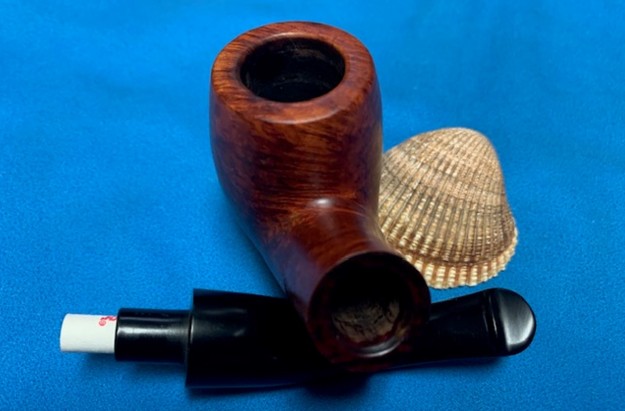
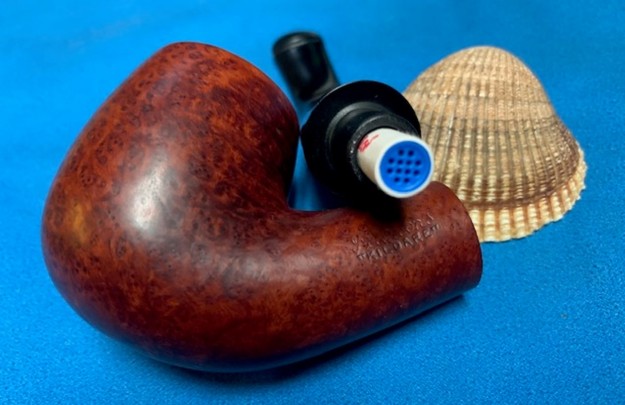
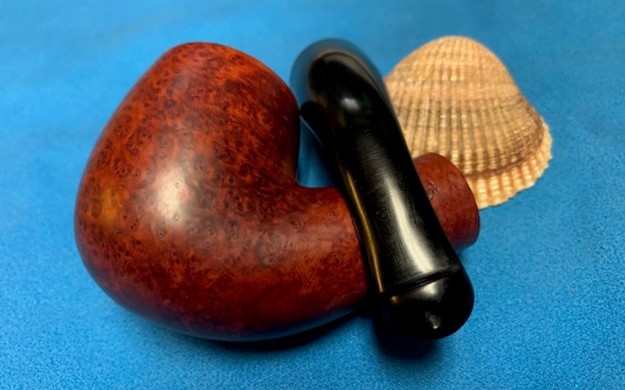
Restoring a Unique “Malaga” Custom Carved Fluted Bent Egg


Blog by Steve Laug

Jeff and I have been picking up Malaga pipes for a very long time. It does not seem that long ago that we picked them up for $4 – $5USD each. We purchased an estate of more than 30+ Malaga pipes. It was not long before the brand had our attention. The pipes are very well made and all are oil cured with a “secret” recipe and process.

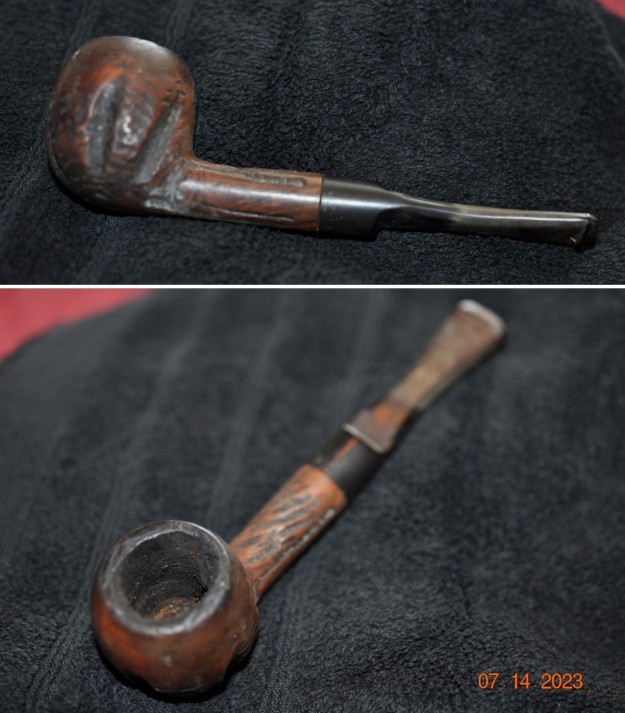
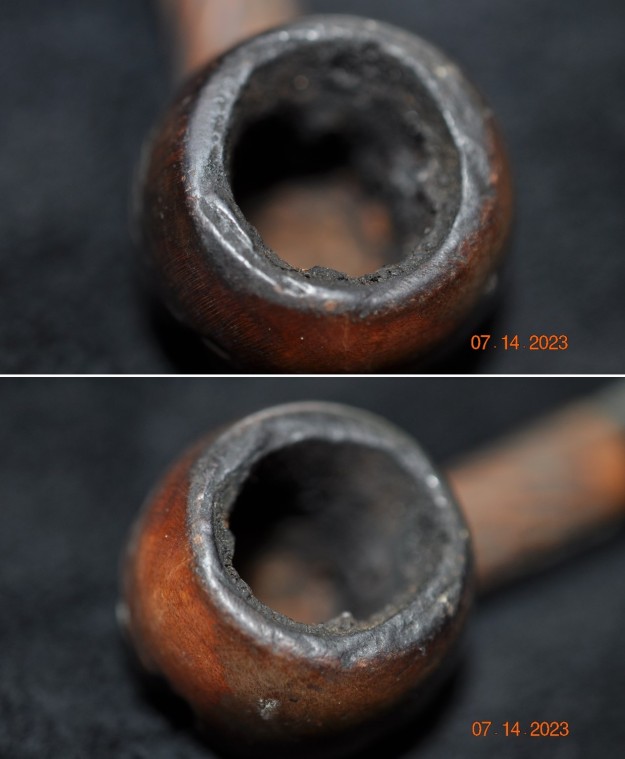
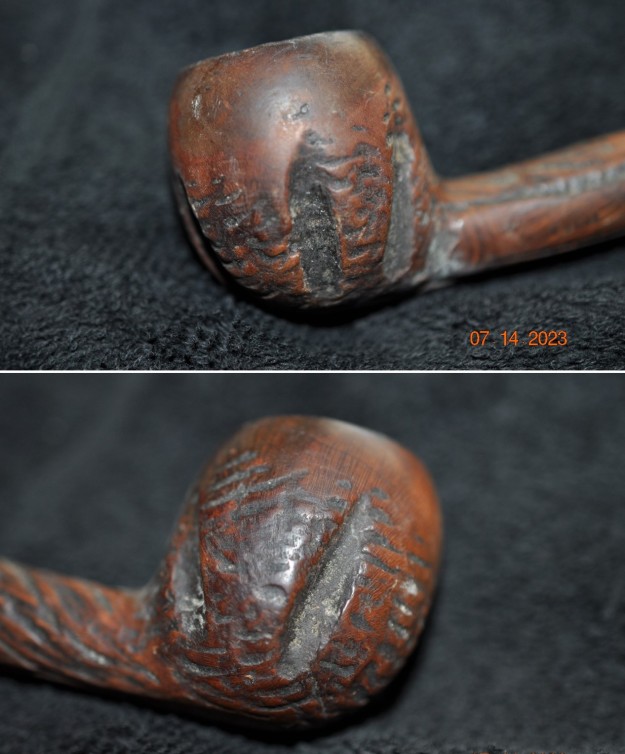
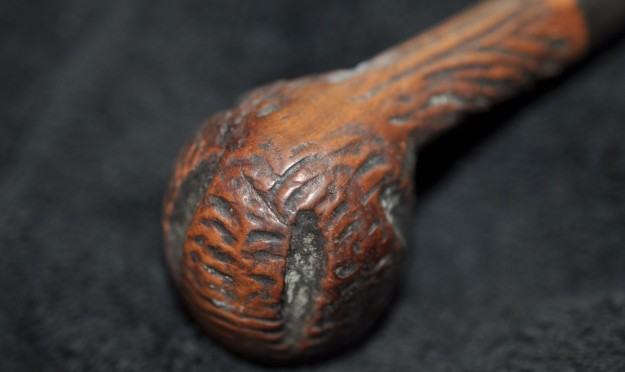
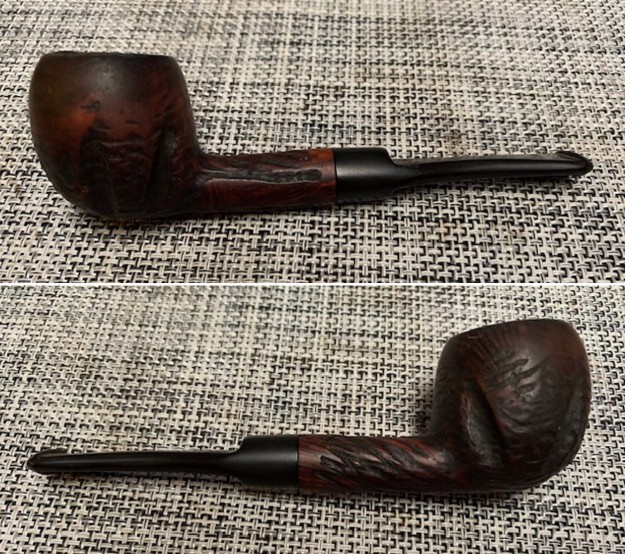
The next pipe on the table is a “Malaga” pipe that is made in a shape that I would define as a Twisted Bent Egg. We picked it up from a seller on eBay in Bristol, Indiana, USA. It has some great cross and birdseye grain and a tapered vulcanite bent stem. The grain around the bowl and shank combined with the stem make it a stunning pipe. The carver did a great job of uniquely shaping the pipe to follow the grain on the briar. The twists and turns in the bowl are well done and almost seem to be carved for fingers to fit against the bowl either left or right handed. The bowl had a thick cake that overflowed with lava onto the rim and there were scratches and nicks on the top and edges under the grime. The sides of the bowl and shank are very dirty with grime and oils from prolonged use. The stamping on the left side of the shank read “MALAGA” in quotations. On the right side it is stamped in script and reads CUSTOM CARVED. The vulcanite stem had light tooth dents and chatter on the top and the underside of the stem. The button was worn on both sides. Jeff took these photos before he started the cleanup work on the pipe.Jeff took a closeup photo of the bowl and rim to capture the condition of the pipe before he started his cleanup work. The rim top had some lava overflow and darkening on the back of the bowl. There are nicks around the inner outer edges of the bowl and rim top. The stem is oxidized and dirty and there is tooth marks (dents) and chatter on the button edges and surfaces ahead of the button. The shank was too dirty for the stem to fit snugly and it looks like it is poorly fit. I will know more once I have it in hand. He also took photos of the sides and bottom of the bowl and shank to show the beautiful grain around the bowl. The photos show the general condition of the bowl and wear on the finish. It is very dirty but this is another beautiful pipe. Jeff took a photo to capture the stamping on the shank. The photos show the stamping “MALAGA” on the left side of the shank and CUSTOM CARVED on the right side. The stamping is very readable.I am including the link to a blog that I wrote that gives some of the history of the Malaga brand and the Malaga Pipe Shop in Royal Oak, Michigan in the USA. I have written an earlier blog to give a little history of the Malaga Brand and the pipemaker, George Khoubesser. Here is the link – (https://rebornpipes.com/2013/02/09/george-khoubesser-and-malaga-pipes/). That blog also includes a catalogue and the history of the pipemaker George Khoubesser. Follow the link to get a feel for the brand and the pipemaker.

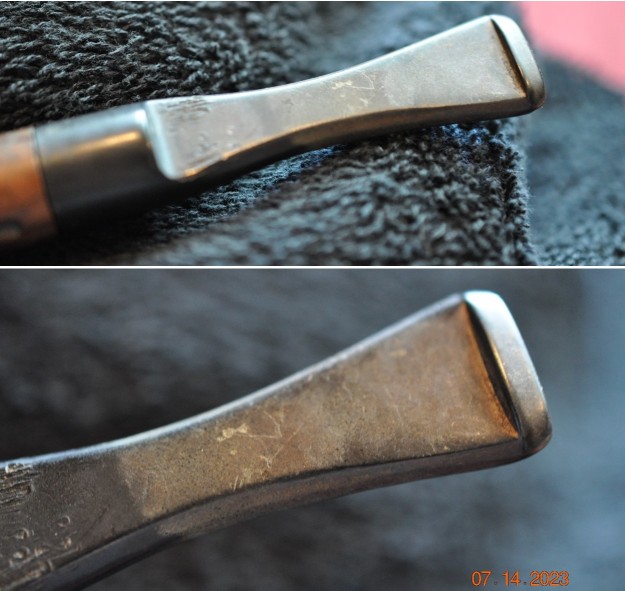
Jeff reamed the bowl with a PipNet pipe reamer and followed up with a Savinelli Fitsall pipe knife to remove the cake. He scrubbed out the mortise and the airway in the shank and the stem with alcohol, cotton swabs and pipe cleaners. He scrubbed the exterior of the bowl, rim, shank and stem with a tooth brush and Murphy’s Oil Soap to remove the oils and tars on the rim and the grime on the finish of the bowl. He rinsed it under running water. He dried it off with a soft cloth. He was able to remove the lava build up on the rim top and the flat surface of the rim looked very good. The inner edge of the rim has some serious burn damage on the front inner edge. The outer edge looked very good. He soaked the stem in Before & After Deoxidizer and rinsed it with hot water. I took photos of the pipe to show its condition before I started my work on it. Note that I will need to bend the stem slightly to fit the bend of the shank.  I took close up photos of the bowl and rim top as well as the stem. You can see the condition of the rim top and bowl in the first photo. Jeff was able to remove all of the tar and oils but you can now see the on the rim top and edges. The vulcanite stem had tooth chatter on both sides near and on the button surface.I took a photo of the stamping on the shank to show how good the condition is. It shows the “MALAGA” stamp on the left side and CUSTOM CARVED on the right side. The stamping is very legible. I took a photo of the pipe with the stem removed to give a clear picture of the character of the pipe. I started my work on the pipe by addressing the darkening on the inner edge of the bowl and the scratching and nicks on the rim top. It looked much better than when I started.I polished the rim top and the briar with micromesh sanding pads. I wet sanded the bowl with 1500-2400 grit sanding pads to prepare the rim top for staining. I wiped the bowl down after each pad with a damp cloth to remove the sanding dust. I worked some Before & After Restoration Balm into the surface of the briar with my fingertips to clean, enliven and protect it. I let the balm sit for a little while and then buffed with a cotton cloth to raise the shine. The following photos show the bowl at this point in the restoration process. I am very happy with the results. I turned to the stem to address the issues on the surface of both sides at the button. I painted the surface of the stem with the flame of a lighter to lift the tooth marks from the surface. I was able to lift them to some degree but they would need to be repaired. I also heated the stem with the flame to soften the vulcanite and bend the stem to match the angles on the bowl. I filled in the tooth marks in the top and underside of the stem with black rubberized CA glue. I set it aside to cure. Once it cured I use a small file to flatten the repairs and blend them into the stem surface. I sanded the stem surface with 220 grit sandpaper to flatten the repairs and blend them into the surface. I started the polishing with 600 grit wet dry sandpaper. I also cleaned up the tenon for a better fit to the shank. I polished the stem with micromesh sanding pads – wet sanding with 1500-2400 grit pads and dry sanding with 3200-12000 grit pads. I wiped the stem down after each pad with Obsidian Oil. I finished the hand polishing of the stem with Before & After Pipe Polish – both the Fine and Extra Fine polishes. I gave it a final coat of Obsidian oil and set it aside to dry.This Malaga Custom Carved Twisted Fluted/twisted Bent Egg with a vulcanite tapered stem turned out to be a real beauty. It has great grain around the bowl and the carver really maximized that with the shape of the pipe. Everything about the pipe – the shape of the bowl, the thin flat rim top and the cut of the briar work well to highlight the grain around the bowl sides. I polished stem and the bowl with Blue Diamond polish on the buffing wheel and the grain just popped and came alive. I gave the bowl and the stem multiple coats of carnauba wax. I buffed the pipe with a clean buffing pad to raise the shine. I hand buffed it with a microfiber cloth to deepen the shine. The pipe polished up pretty nicely. The grain took on life with the buffing. The rich oil cured colour works well with the polished vulcanite stem. The finished Malaga Custom Carved Fluted Bent Egg has a rich look that is quite catching. Have a look at it with the photos below. The shape, finish and flow of the pipe and stem are very well done. The dimensions are Length: 6 inches, Height: 2 inches, Outside diameter of the bowl: 1 ¼ inches, Chamber diameter: ¾ of an inch. I will be adding the pipe to the rebornpipes store in the American Pipemakers Section shortly. If you are interested in adding this pipe to your rack send me an email or message on Facebook. Thanks for walking through the restoration with me as I worked over another estate pipe.

As always, I encourage your questions and comments as you read the blog. Thanks to each of you who are reading this blog. Remember we are not pipe owners; we are pipe men and women who hold our pipes in trust until they pass on into the trust of those who follow us.

Resurrecting a Large Dunhill Bruyere ODA 836 Panel Billiard


Blog by Steve Laug

A few weeks ago I was contacted from a fellow in Montana who was selling his pipes as they had not been used for quite a few years. I asked him for a picture and he sent me the one to the left. It included the following brands (from the top to the bottom of the photo): Savinelli Autograph 5 Freehand, Mastro de Paja Ciocco 0C Bulldog, Mastro de Paja Media 1B Bent Billiard, Ser Jacopo Delecta Octagonal Bent Billiard, Caminetto Business KS 118 Canadian, Radici Rind Rhodesian, Dunhill Bruyere ODA 836 Panel Billiard, Barontini Straight Grain B3 Freehand and a Ben Wade Martinique Hand Made in Denmark Freehand.

Almost all of them were higher end pipes and all were hand made pipes. They were a mix of finishes – smooth, sandblast and also rusticated. They were a mix of shapes as well and the majority of them were Italian Made other than the Dunhill and the Ben Wade Martinique. They were beautiful pipes and after exchanging quite a few photos of the pipes from various angles to get a sense of what was there we struck a deal. We sent him the payment and the pipes arrived in Idaho a few days after I left for Vancouver.

Jeff cleaned them all and this week I received them in Vancouver. I am impressed with the way they cleaned up and the beauty of the brands. They truly are some beautiful pipes. I just need to put the final touches on each of them and address minor issues on the bowl rims and the stems and they should be good to go. I am really looking forward to working on each of them in the days ahead.

This warm, late afternoon I decided to continue working on the lot. I chose to work on the smooth Dunhill Bruyere Panel. This one is a bit different than any of the other Dunhill pipes that I have worked on. It is very nice looking piece of briar and has a square stem. The pipe is stamped on the sides of the shank. It was clear and readable. On the left side the shape number reads ODA [over] 836 followed by the stamping Dunhill [over] Bruyere. On the right side it is stamped Made in [over] England followed by an equal size 14. The reddish/brown stained finish was very dirty with grime ground in the finish all over the whole bowl and shank. Toward the bottom of left side of the bowl there was some road rash. It was rough and I would need to smooth it out some – though it would never truly be gone. The bowl had a thick cake and the rim top/inner edge had thick lava flowing up from the bowl. It appears that there is damage on the back side of the inner edge. It was hard to know its full condition with certainty until it was cleaned. The vulcanite taper stem is was dirty, oxidized, calcified and had tooth marks and chatter on both sides ahead of the button. There was the inlaid Dunhill White Spot on the top of the stem. Jeff took photos of the pipe before he started his clean up work on it. He took photos of the bowl and rim top to show the thickness of the cake and the darkening and lava overflow on the rim top. There were also nicks around the outer edge of the bowl. The photos of the stem show the oxidation, calcification and tooth marks and chatter on the surface on both sides. The photos of the sides and heel of the bowl show the great grain on the pipe. It is a beauty under the grime and dust. The stamping on the underside of the shank is shown in the photos below. It looks very good and readable. It reads as noted and explained above. The third photo shows the white spot on the stem.  I turned to Pipedia’s section on Dunhill Bruyere Pipes to get a bit of background on the Dunhill finishes (https://pipedia.org/wiki/Dunhill#Root_Briar). I quote:

Bruyere

The original finish produced (usually made using Calabrian briar), and a big part of developing and marketing the brand. It was the only finish from 1910 until 1917. A dark reddish-brown stain. Before the 1950s, there were three possible finishes for Dunhill pipes. The Bruyere was a smooth finish with a deep red stain, obtained through two coats, a brown understain followed by a deep red.

There was a link on the above site to a section specifically written regarding the Bruyere finish (https://pipedia.org/wiki/Dunhill_Bruyere). I turned there and have included the information from that short article below.

Initially, made from over century-old briar burls, classified by a “B” (denoted highest quality pipe); “DR” (denoted straight-grained) and an “A” (denoted first quality), until early 1915. After that, they became a high-end subset to the Dunhill ‘Bruyere’. The DR and B pipes, a limited production, they should be distinguished as hand-cut in London from burls as opposed to the Bruyere line which was generally finished from French turned bowls until 1917, when the Calabrian briar started to be used, but not completely. Only in 1920 Dunhill took the final step in its pipe making operation and began sourcing and cutting all of its own bowls, proudly announcing thereafter that “no French briar was employed”.

Bruyere pipes were usually made using Calabrian briar, a very dense and hardy briar that has a modest grain but does very well with the deep red stain.

“Before the 1950s, there were three possible finishes for Dunhill pipes. The Bruyere was a smooth finish with a deep red stain, obtained through two coats, a brown understain followed by a deep red. The Shell finish was the original sandblast with a near-black stain (though the degree to which it is truly black has varied over the years). Lastly, the Root finish was smooth also but with a light brown finish. Early Dunhill used different briars with different stains, resulting in more distinct and identifiable creations… Over the years, to these traditional styles were added four new finishes: Cumberland, Dress, Chestnut and Amber Root, plus some now-defunct finishes, such as County, Russet and Red Bark.”

There was also a link to a catalogue page that gave examples and dates that the various finishes were introduced (https://pipedia.org/wiki/File:Dunnypipescatalog-1.png). I turned to Pipephil’s dating guide to show how I arrived at the date of manufacture for this pipe (http://www.pipephil.eu/logos/en/dunhill/cledat-en1a.html). I am including the chart that is provided there for the dating a pipe. I have drawn a red box around the section. Since the pipe I am working on has a suffix 14 it points to the 1960 line on the chart below. I have drawn a red box around the pertinent section in the chart.On Pipedia they also have an ODA shape chart that was helpful. I have included that below (https://pipedia.org/wiki/A_DUNHILL_ODA_SHAPE_CHART).I now knew that I was working on a Bruyere that came out in 1974. The shape of the pipe is a Panel Billiard that Dunhill put out and that the #ODA 836 was a normal Panel Billiard shape with a taper stem.

I turned to work on the pipe itself. Jeff had carried out his usual thorough cleanup of the pipe. He had reamed it with a PipNet reamer to remove the cake and cleaned the reaming up with a Savinelli Fitsall Pipe Knife. He scrubbed the internals of the bowl and stem with alcohol, cotton swabs and pipe cleaners. He scrubbed the externals with undiluted Murphy’s Oil Soap and rinsed the bowl off with running water. He soaked the stem in Briarville’s Pipe Stem Deoxidizer and once it had soaked rinsed it off with warm water to remove the residual solution. He dried it off and scrubbed it down with Soft Scrub All-Purpose cleaner to remove any oxidation that was still on the stem. The pipe looked very clean when I received it though a light oxidation still remained on the stem surface. I took a photo of the rim top. Jeff had been able to remove the thick lava coat from the rim top and inner edge. There is some darkening and burn damage on the back inner edge and rim top and a burn spot on the front top and inner edge. The stem is clean but has some oxidation remaining on each end (ahead of the white spot and ahead of the button). There was also oxidation on the tapered sides of the stem.I took photos of the stamping on the right and the left side of the shank. It is clear and readable as noted above. I took a photo of the pipe with the stem removed to get a sense of what the pipe looked like. It is quite a large bowl. I started my work on the pipe by addressing the burn damage on the inner edge of the rim and the rim top. I worked on the darkening on the inner edge with a folded piece of 220 grit sandpaper to start the process. I worked on the burnt spot on the front top and the inner edge on the back top. I then used a wooden ball and a piece of 220 grit sandpaper to give the inner edge a slight bevel to hide the damage on the edges. I finished by working on it once again with a folded piece of sandpaper to smooth and shape it a bit more. I polished the briar with micromesh sanding pads – dry sanding it with 1500-12000 grit pads. I wiped the bowl down after each sanding pad with a damp cloth to remove the dust and debris from the surface of the briar. I worked some Before & After Restoration Balm into the surface of the briar with my fingertips. The product works to clean, preserve and protect the briar. I let it sit and work into the briar for 10 minutes then wiped it off with a cotton cloth. I buffed the briar with a clean cloth. The bowl is starting to look beautiful and there is a shine developing. I set the bowl aside and turned my attention to the stem. The tooth marks were very light and shallow so I moved immediately to sanding it with micromesh sanding pads. I wet sanded the stem with 1500-2400 grit pads to remove the remaining oxidation on both ends and the tooth chatter ahead of the button. I dry sanded it with 3200-12000 grit micromesh sanding pads. I wiped the stem down after each pad with some Obsidian Oil. I finished the hand polishing of the stem with Before & After Pipe Polish – both the Fine and Extra Fine polishes. I gave it a final coat of oil and set it aside to dry.I put the Dunhill Bruyere ODA 836 Panel Billiard bowl and stem back together. I polished the bowl and stem with Blue Diamond to polish out the scratches in the briar and the vulcanite. I gave the bowl and the stem multiple coats of carnauba wax. I buffed the pipe with a clean buffing pad to raise the shine. I hand buffed it with a microfiber cloth to deepen the shine. The pipe polished up pretty nicely. The reddish/brown stains worked amazingly well with the polished vulcanite taper stem. The grain around the bowl and shank and looks quite remarkable. This is truly a beautiful Dunhill Bruyere Panel Billiard ODA 836 pipe. The finished pipe is shown in the photos below. The dimensions of the pipe are Length: 6 inches, Height: 2 inches, Outside diameter of the bowl: 1 ½ inches, Chamber diameter: 7/8 of an inch. The weight of the pipe is 1.62 ounces/46 grams. I will be putting it on the rebornpipes store shortly in the British Pipemakers Section. Thanks for walking through the restoration with me. Cheers.

As always, I encourage your questions and comments as you read the blog. Thanks to each of you who are reading this blog. Remember we are not pipe owners; we are pipe men and women who hold our pipes in trust until they pass on into the trust of those who follow us.

Barontini Straight Grain B3 Hand Made Freehand with a Variegated Orange Acrylic Stem


Blog by Steve Laug

A few weeks ago I was contacted from a fellow in Montana who was selling his pipes as they had not been used for quite a few years. I asked him for a picture and he sent me the one to the left. It included the following brands (from the top to the bottom of the photo): Savinelli Autograph 5 Freehand, Mastro de Paja Ciocco 0C Bulldog, Mastro de Paja Media 1B Bent Billiard, Ser Jacopo Delecta Octagonal Bent Billiard, Caminetto Business KS 118 Canadian, Radici Rind Rhodesian, Dunhill Bruyere ODA 836 Panel Billiard, Barontini Straight Grain B3 Freehand and a Ben Wade Martinique Hand Made in Denmark Freehand.

Almost all of them were higher end pipes and all were hand made pipes. They were a mix of finishes – smooth, sandblast and also rusticated. They were a mix of shapes as well and the majority of them were Italian Made other than the Dunhill and the Ben Wade Martinique. They were beautiful pipes and after exchanging quite a few photos of the pipes from various angles to get a sense of what was there we struck a deal. We sent him the payment and the pipes arrived in Idaho a few days after I left for Vancouver.

Jeff cleaned them all and this week I received them in Vancouver. I am impressed with the way they cleaned up and the beauty of the brands. They truly are some beautiful pipes. I just need to put the final touches on each of them and address minor issues on the bowl rims and the stems and they should be good to go. I am really looking forward to working on each of them in the days ahead.

This quiet Sunday afternoon I decided to continue working on the lot. I chose to work on the smooth Barontini Freehand (possibly a Rhodesian). The Barontinis I have worked on generally are nice looking pieces of briar and have had acrylic stems. This one had a nicely grained finish and a plateau style rim top. The pipe is stamped around the sides of the bowl. It was clear and readable. On the left side it reads Barontini [over] Straight Grain. On the right side it is stamped with a B3 and vertically next to the stem it is stamped Italy. On the underside of the shank it reads Fatta [over] A Mano. The stamping is clear and readable. The medium brown stained finish was very dirty but seemed to have a shellac coat over the whole bowl and shank. The bowl had a thick cake and the plateau style rim top/inner edge had thick lava flowing up from the bowl filling in the grooves. The inner edge of the bowl was covered enough with lava that it was hard to know its condition with certainty. The saddle stem is variegated orange and cream acrylic and was dirty and had tooth marks and chatter on both sides ahead of the button. There was an inlaid logo dot on the top of the stem. It was a red dot encircled with silver. Jeff took photos of the pipe before he started his clean up work on it. Jeff took photos of the bowl and rim top to show what they looked like before the clean up. You can see the thick cake in the bowl overflowing as lava on the inner edge and rim top. He also took some photos of the stem to show the condition of both sides. You can see the tooth marks and chatter on the top and underside next to the button. The photos of the sides and heel of the bowl show the beautiful grain around the bowl and shank. The stain adds depth finish on the pipe. Even under the grime it is a real beauty. The stamping on the sides of the shank are shown in the photos below. It is clear and readable as noted above. I looked up some information on the brand on the Pipephil website to get a quick overview of the history (http://www.pipephil.eu/logos/en/logo-b2.html). I did a screen capture of the listing for the brand. The fascinating thing that I learned in this quick overview was the connection to the entire Barontini family and to other companies like Aldo Velani. It is interesting to see the breadth of the brand in the following screen capture.Pipedia gives further history of the brand (https://pipedia.org/wiki/Barontini,_Cesare). It is a very brief article with little information. I quote that article in full below.

In 1890 Turildo Barontini opened a factory for the production of briar. In 1925 his son Bruno began to produce the first pipes. Cesare Barontini, son of Bruno, started direction of the factory in 1955, and still runs it together with his daughters Barbara and Silvia.

Unfortunately, on neither site was there any pertinent information on the Barontini Straight Grain pipe. I decided to do a quick google search and found a listing for what appears to be the actual pipe I am working on (https://pipes.collectionhero.com/outer/view_item.php?id=55163). I include that information and photo below. Looks like the fellow I purchased the pipe from purchased it from this auction potentially? He got it for a steal at that price as they tend to run between $90 and $120 online. I guess I will never know for sure but at least I found the pipe online. It is now time to work on the pipe itself.

Jeff had reamed the bowl with a PipNet pipe reamer and followed up with a Savinelli Fitsall pipe knife to remove the cake. He scrubbed out the mortise and the airway in the shank and the stem with alcohol, cotton swabs and pipe cleaners. He scrubbed the exterior of the bowl, rim, shank and stem with a tooth brush and Murphy’s Oil Soap to remove the oils and tars on the rim and the grime on the finish of the bowl. He rinsed it under running water. He dried it off with a soft cloth. The rim was thoroughly cleaned and the damaged areas were obvious. Without the grime the finish looked really good. The Lucite stem would need to be worked on but I really like the profile it cast. I took photos of the pipe to show its condition before I started my work on it. I took close up photos of both the rim top and the stem. Jeff had been able to get the grime and lava off of the rim top and it looked very clean. The stem looked very clean. The tooth marks and chatter were predominantly near the button.The stamping on the sides of the shank was readable as noted above. I took photos of the stamping to show the condition and readability. I took a photo of the pipe with the stem removed to give an idea of the perspective and design of the pipe. I scrubbed the carved plateau rim top of the bowl with a brass bristle wire brush to remove the remaining darkening and debris in the nooks and crannies of the rim top. It looked much better once I finished.I wiped down the bowl with acetone to remove the shiny coat. It barely broke through the coat. I wiped it down repeatedly and then moved on to the micromesh pads. I polished bowl with micromesh sanding pads using 1500-12000 grit sanding pads and wiping it down after each sanding pad with a pad and acetone to remove the sanding dust and debris from the finish. I paused the polishing after the 4000 grit micromesh sanding pad to stain the lighter spots on the bowl and shank. I used an Oak Stain Pen to match the colour of the rest of the bowl and shank. The colour was a perfect match. I touched up the light spots on the shank end, the rim cap and spots around the bowl sides. It looks much better. I finished polishing it with 6000-12000 grit micromesh sanding pads. I worked some Before & After Restoration Balm into the finish of the bowl and shank with my fingers and into the plateau carved rim top with a horsehair shoe brush. I want the product to go deep into the finish because it works to clean, enliven and protect the briar. Once I was confident that it was deeply worked into the finish I wiped it off and buffed it with a soft cloth to polish it. The pipe really began to have a rich shine. I took some photos of the bowl at this point to mark the progress in the restoration. The grain really stands out on the pipe in the photos below. I set the bowl aside and turned to work on the stem. I sanded the surface of the stem with 220 grit sandpaper to remove the tooth marks and chatter. I started polishing the acrylic stem with a folded piece of 600 grit wet dry sandpaper.I polished the stem with micromesh sanding pads – wet sanding it with 1500-12000 grit pads. I wiped it down with Obsidian Oil after each sanding pad. I know many think it is useless to use the Obsidian Oil on acrylic stems but I find that it is a good lubricant when I am sanding with the micromesh pads. For me it works! I finished the hand polishing of the stem with Before & After Pipe Polish – both the Fine and Extra Fine polishes. I gave it a final coat of oil and set it aside to dry.I put the Barontini Straight Graini B3 bowl and stem back together. I polished the smooth part of the bowl and stem with Blue Diamond to polish out the scratches in the briar and the vulcanite. I gave the sandblasted bowl and shank several coats of Conservator’s Wax and the stem multiple coats of carnauba wax. I buffed the pipe with a clean buffing pad to raise the shine. I hand buffed it with a microfiber cloth to deepen the shine. The pipe polished up pretty nicely. The medium brown stains worked amazingly well with the polished orange acrylic stem. The grain around the bowl and shank and looks quite remarkable. This is truly a beautiful Barontini Straight Grain Freehand pipe. The finished pipe is shown in the photos below. The dimensions of the pipe are Length: 5 ½ inches, Height: 2 ¼ inches, Outside diameter of the bowl: 1 1/8 inches, Chamber diameter: 7/8 of an inch. The weight of the pipe is 1.76 ounces/51 grams. I will be putting it on the rebornpipes store shortly in the Italian Pipemakers Section. Thanks for walking through the restoration with me. Cheers.
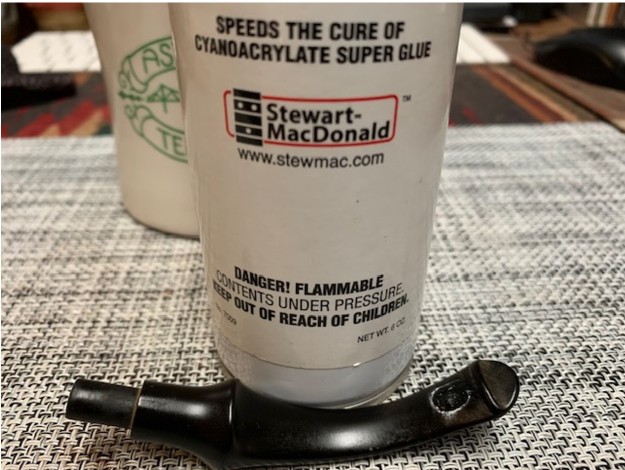
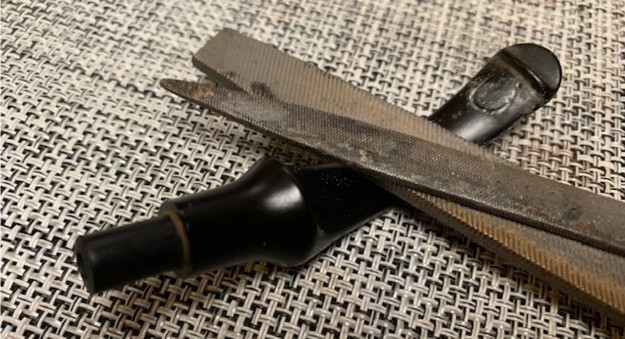
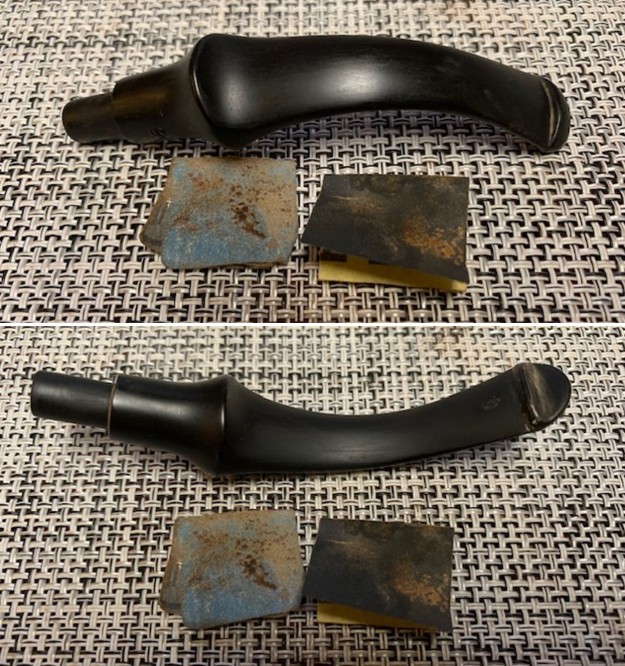
As always, I encourage your questions and comments as you read the blog. Thanks to each of you who are reading this blog. Remember we are not pipe owners; we are pipe men and women who hold our pipes in trust until they pass on into the trust of those who follow us.