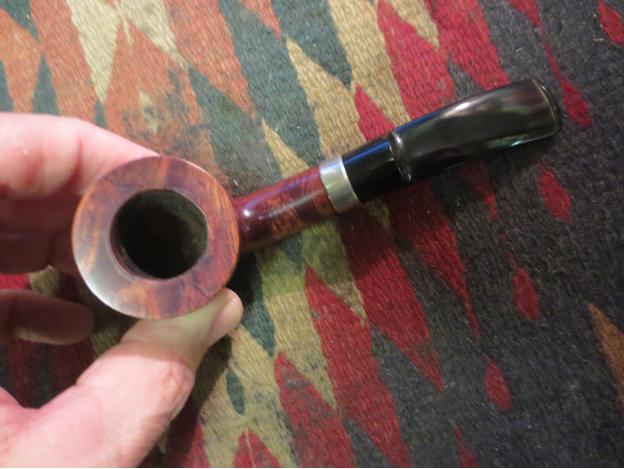
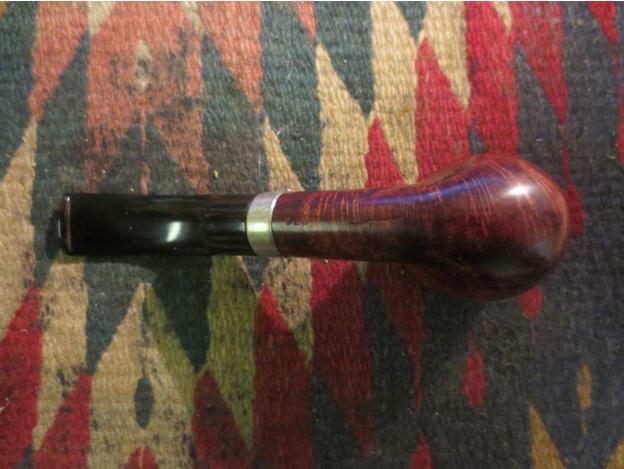
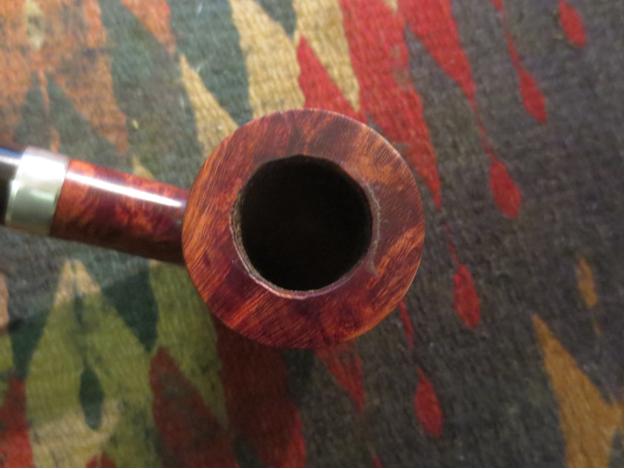
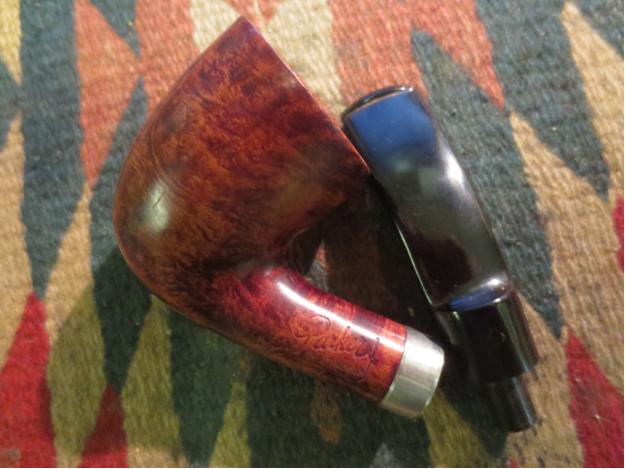
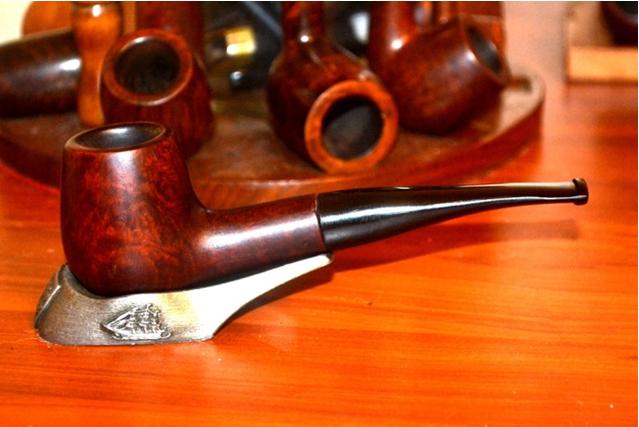
Tag Archives: topping a bowl

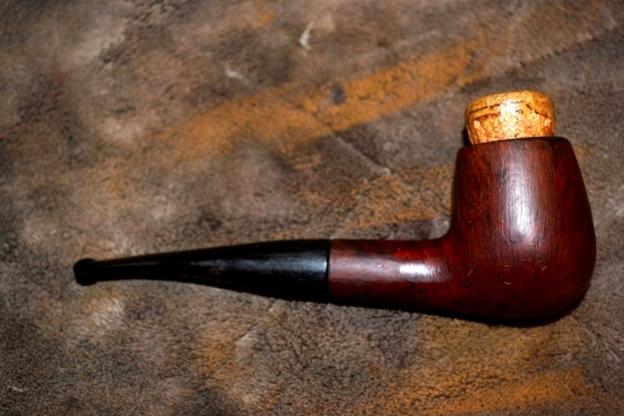
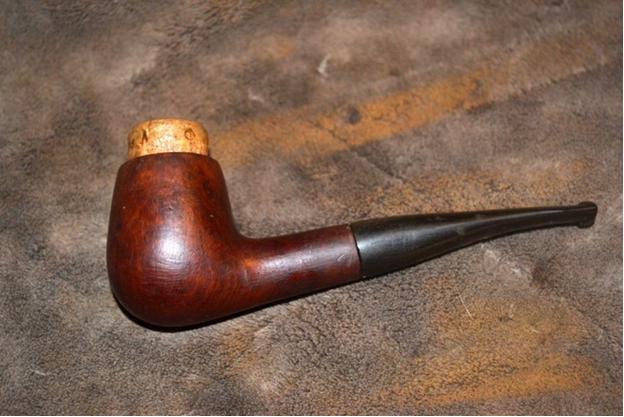
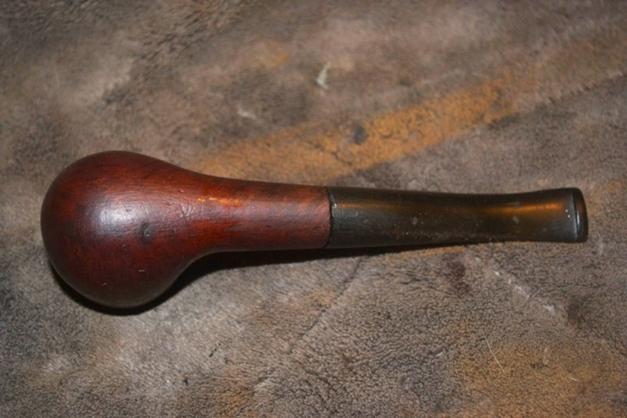
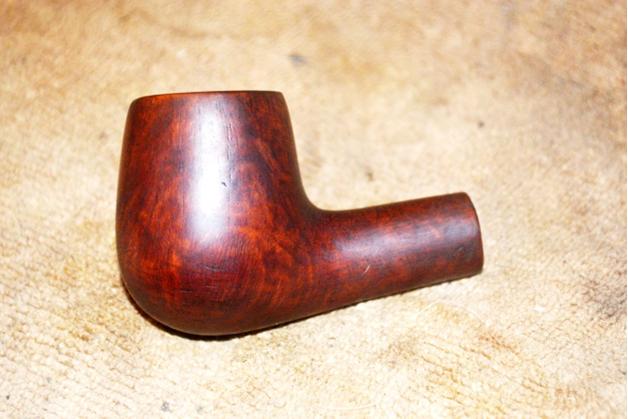
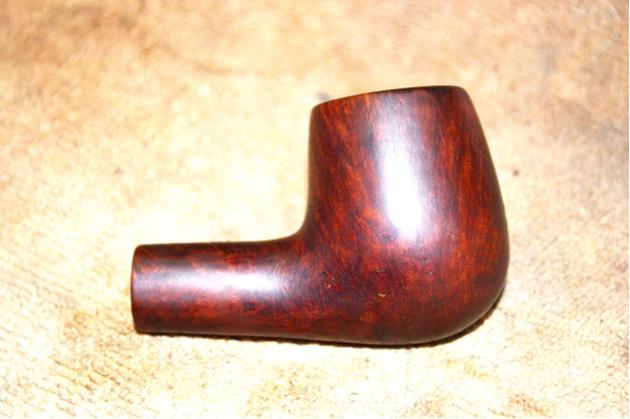
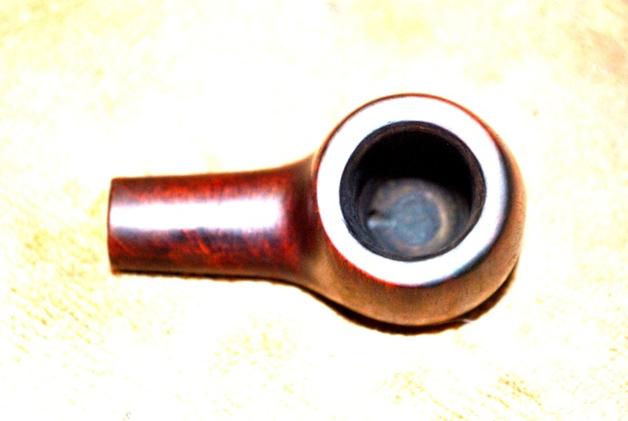
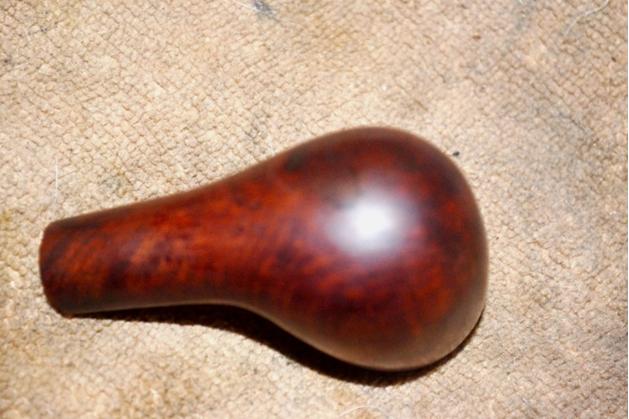
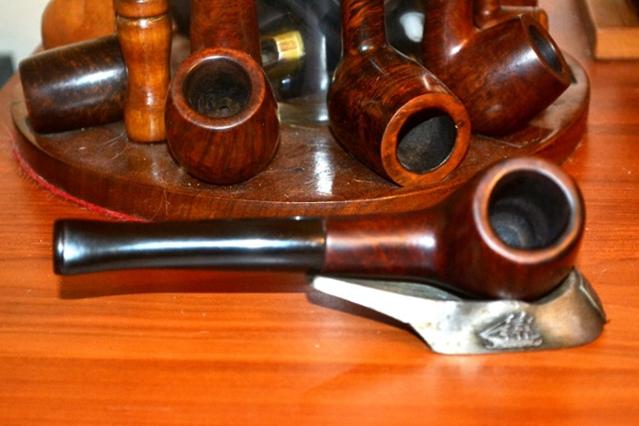
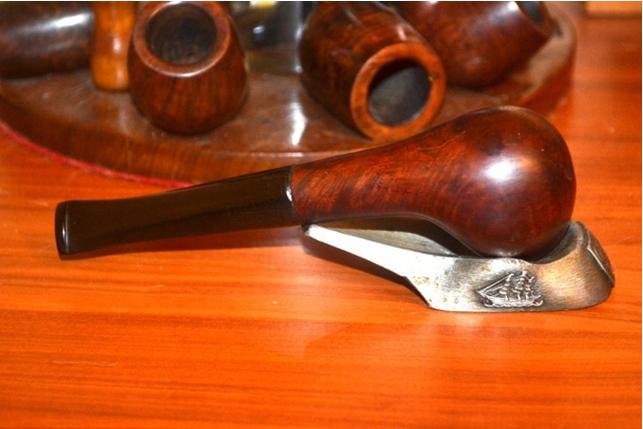
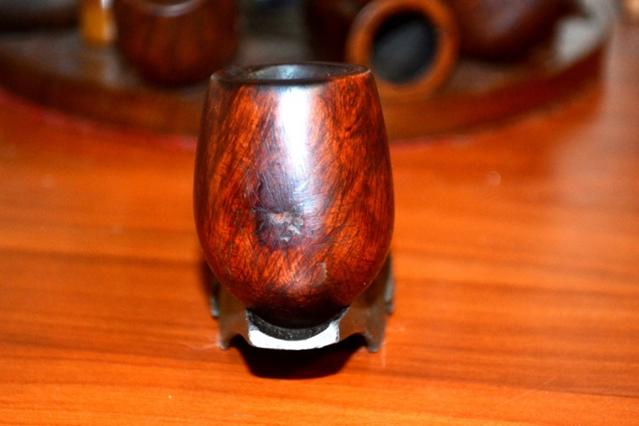
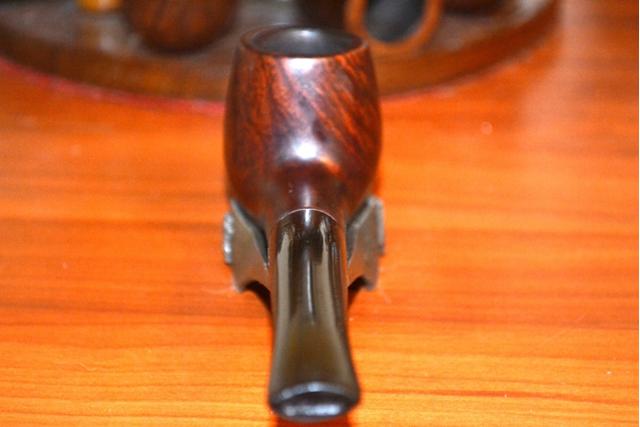
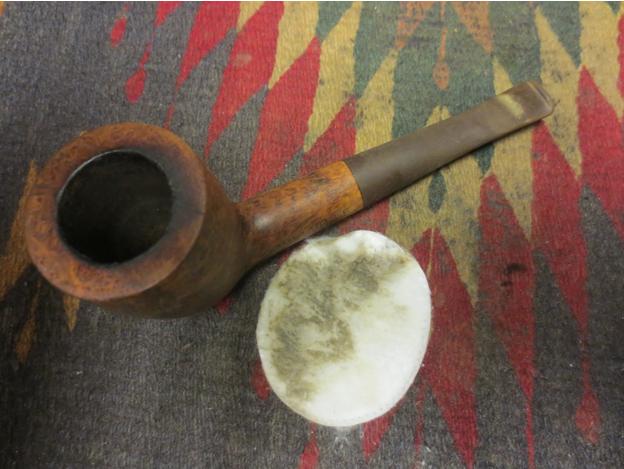
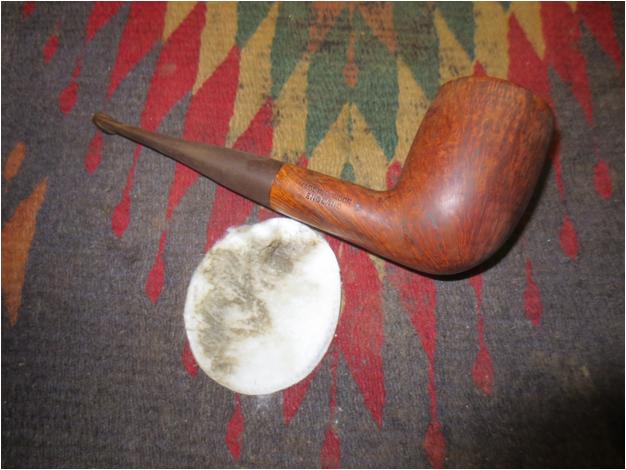
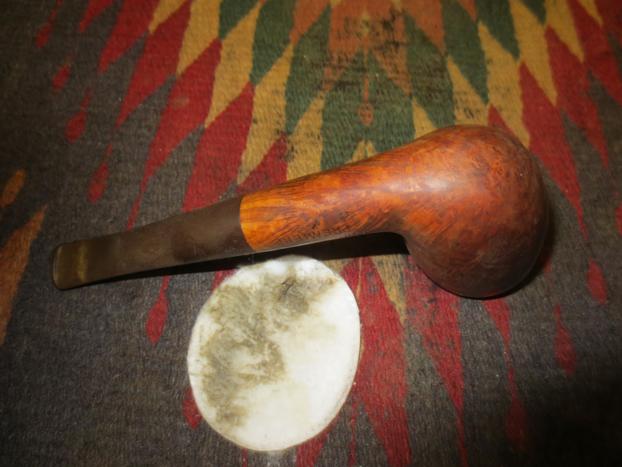
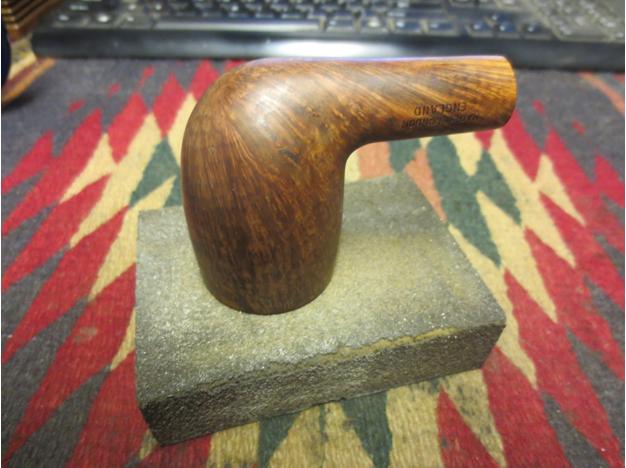
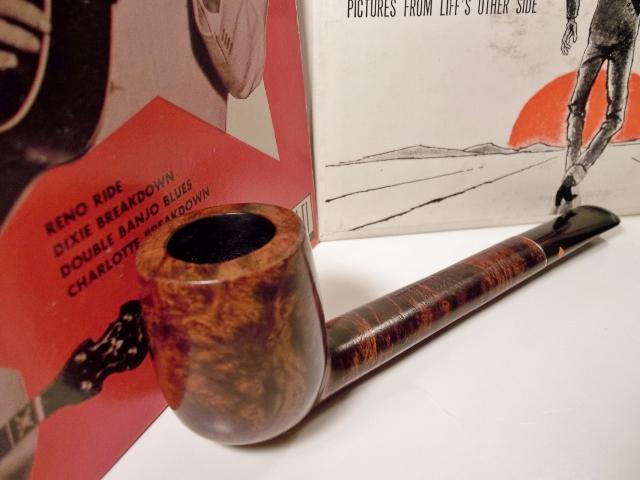
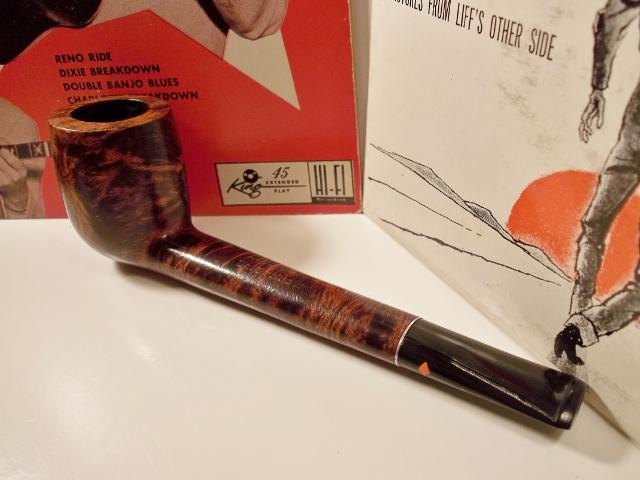
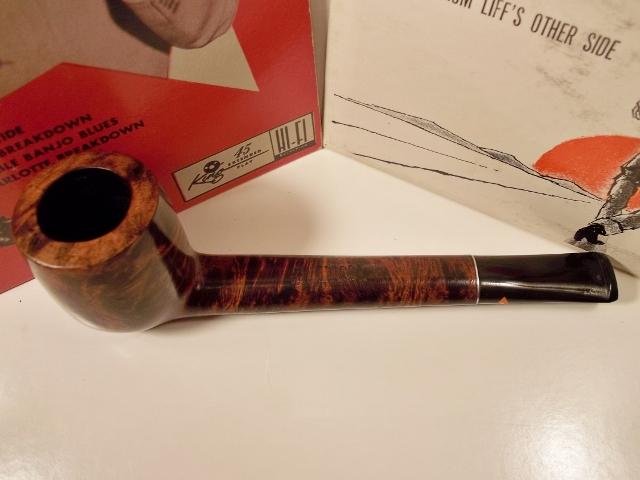
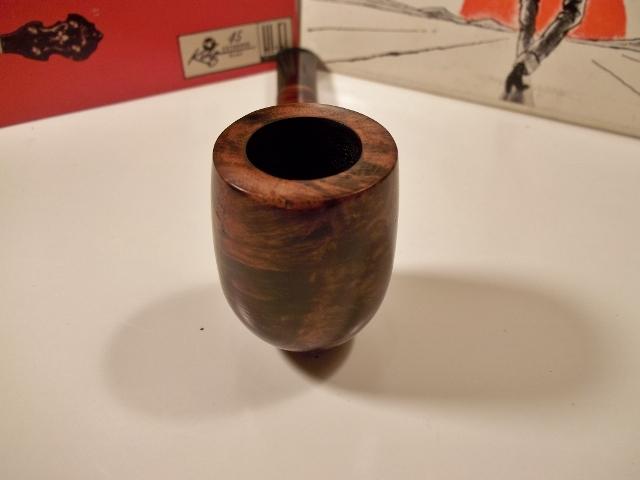
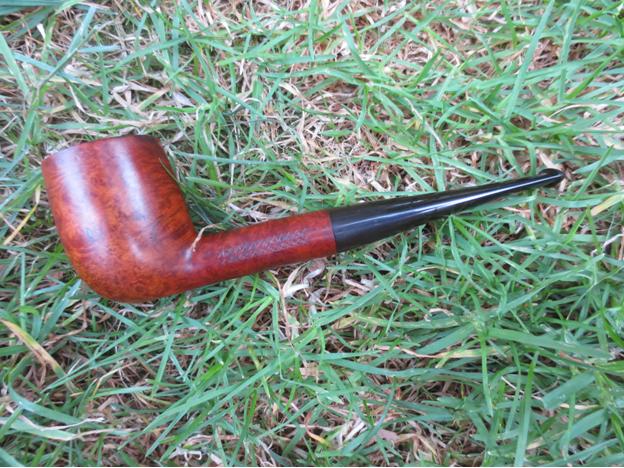
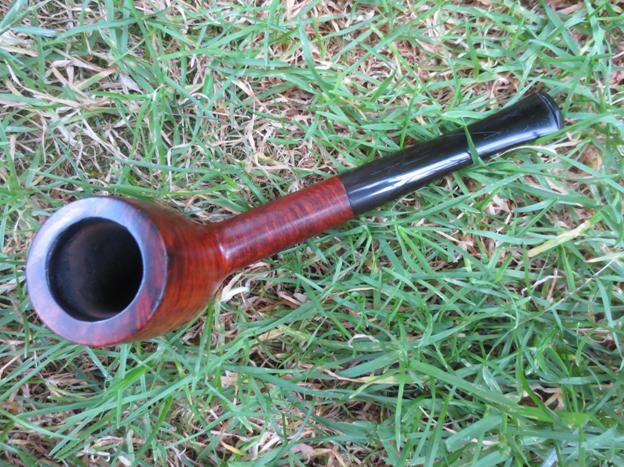
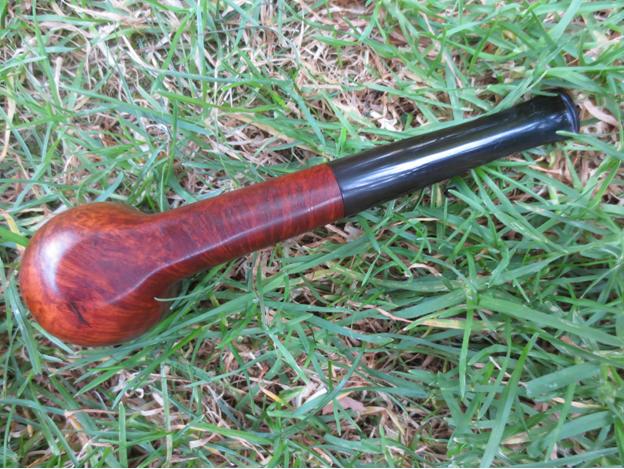
A No-Account, Son-of-a-Gun, Sorry Excuse for a Bent Billiard


Guest Blog by Robert M. Boughton
Member, North American Society of Pipe Collectors
http://www.naspc.org
http://www.roadrunnerpipes.com
http://about.me/boughtonrobert
Photos © the Author

“Pipes are like dogs: the smokin‘ man’s best friend. Why, you can cuss at ’em, shout out loud about the state of the world to ’em, carry on all you like ’til yer blue in the face an‘ sore in the jaw about how great the whole place would be if only you was in charge, heck, even put ’em out of mind and ignore ’em altogether…for a while. In fact, a perfectly good, loyal pipe, same as an old coonhound, will even put up with a might mess of outright scandalous behavior an‘ never even consider turnin‘ on you – say, like as if the dog was to chomp off yer ignorant head or the pipe up an‘ went to dumpin‘ hot, burnin‘ ash in yer lap all on its own…But Heaven help the man that treats either his pipe or dog like garbage to be thrown in the dumpster or a bug to be stomped on. He’ll end up with a companion called Cujo if it doesn’t find a better master in time to escape. The pipe or the dog, that is.”
― The Author, in “Musings of a Mind Bored Silly by a Roommate with ADHD Who Just Doesn’t Know the Meaning of Silence Is Bliss,” today

INTRODUCTION
My friend, Phil, he’s a heck of a nice guy. He’s a real big fella – six-three, 280 pounds or right there in the ballpark – and one of the smartest dudes you could ever meet. Now by smart I’m not implicating he’s got some big old stuffy nansy-pansy degree from any of your fancy-schmancy Poison Ivy Universities, with a capital U, back east somewheres, or anyplace else, for all that matters. What would he need with some piece of paper, outside of hangin it one of his walls? Now that’s the day I’d like to see! And if he was the type to frame up a piece of paper all marked with gibberish scrawling like the tests I used to get back from my teachers when I was just a young buck, where do you suppose he’d hang it? I’ll tell you, I will! Right in the throne room, direct across from where he’d be sitting to ponder what the heck good it does him, and other earth-shaking notions and such.

No, boy! Phil’s smarts are part on account of he was born that way, with a genius IQ is my guess, and the other part from all the books and fancy magazines he reads. Plus old Phil, why, he never watches regular TV; doesn’t even own one, not counting this huge thin flat monster that rightly belongs on a wall like I’ve seen at some of the old-timey stores you can still find at the mall, only he connects it to his computer with nary a cord somehow, and that’s how he likes it. Hooks it up to his little old lap computer right through the air with what he calls Wi-Fi and something else that goes by Blue Teeth or Blue Fairy or whatever. Anyhow, whatever kind of magic it is he does to make all this confounded tech-nol-o-gy happen that bring all of his gadgets, not just the TV monster but his walk-around pocket phone and even this genuine Made in China nineteen-hundred and seventies-era Ghetto Blaster he has, work together – well, it’s something else, and how! Why, it’s like he’s at Carnegie Hall in New York City, or at least that’s what I hear tell. Personally, I went to the Grand Ole Opry in Nashville once when I was a kid, and that was good enough for me.

Now, to get to the meat and potatoes of this little fireside story, my friend Phil, he’s a good man, and he’s also one heck of a carpenter. When it comes to woodwork, why, there aint a thing he doesn’t know about all the woods ever grown, and how to build a custom home, with balloon walls and the works, from the ground up – and up and up – and pretty much all by himself. He’s as comfortable with his tools, from his cat’s paw and level to a pettibone, as he is with his own big mitts. And when it comes to the strength and soundness of the whole enchilada, Phil just pretends to listen to all the back-seat drivers, even if it’s the new owner! And you can bet all the money in your sock old Phil won’t take any guff from some pissant, oil-palmed CCI snagger with his eyes out for left-over parts to pilfer more than finding any real faults with the job. Yessir, Phil knows his stuff, from cripples to “A” Braces, trimmers, bearing walls and joists. But…

Ain’t there always a but? Well, Phil’s but is that for all he knows about wood and carpentry, he doesn’t have a bull pucket of a clue about restoring tobacco pipes, even if it’s a fair shake he could whip one up that would be right-on engineering-wise and even show his own, one-of-a-kind style. He’s even told me a few of his ideas, and they sound pretty clever and original. Only, as far as using a wood that wouldn’t give him rashes or boils or even the Big C, and staining the shapely wonder with something other than a nice, thick, shiny, Chinese-style lacquer that would leave the wood Code Red as far as breathing goes, he’s, well, clueless. And then there’s all the taking care not to forget to tuck it away all safe and sound instead of setting it on his work table with all of his sandpapers and rasps and drill bits and other implements of construction that are, what you might say, not Kosher to keep around a frail work of art, plus dropping it and all around banging the thing every chance he gets.

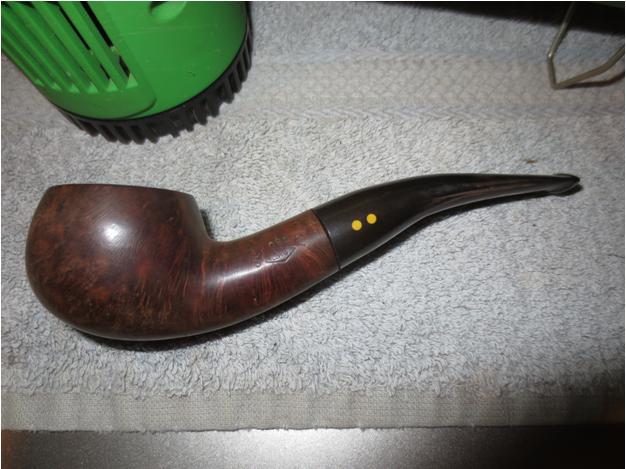
To put it nice, Phil is pretty dang bullheaded when it comes to thinking he can do, make or fix anything, and what’s more, that he’s better than the experts that are here to do it right. And he wouldn’t budge when I suggested he must have had something to do with the billiard’s condition when I got a gander of it. He held to the story that he had nothing to do with it; never touched it, he said, other than smoking it. So I’m sure you all can use whatever cents you had to rub together when you were born and come up with a notion of how dramatic it was for him to – well, ask ain’t the right word – oh, snap! He intimidated that he could use “some advice” on how to fix this no-name, no country but probably Italian bent billiard. Okay, okay, I’m a nice guy, too, and I knew what he was driving at, so when he said it was one of the first pipes I gave him and I said I made it myself, I didn’t want to be rude, but I almost couldn’t help it. One thing is, I’ve never made a pipe in my life nor said I did, even if I have plans to soon; I even bought a nice square block of walnut with grain that’s the bomb and is big enough for two pipes. I figure I’ll go vertical with both of them, seeing as how once I cut it in half I’ll be all-in one way or the other. Anyways, to get back to what I was saying, the other thing is, I did finish a few pre-formed pipes I got my hands on and even made them look pretty smart, if I say so myself, but this here bent billiard wasn’t one of them, no way, no how.

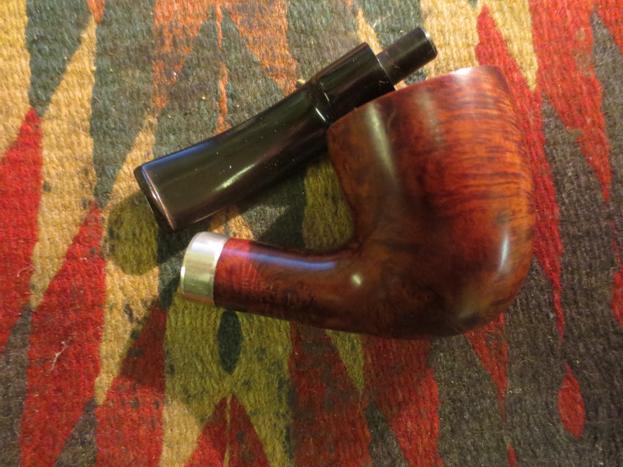
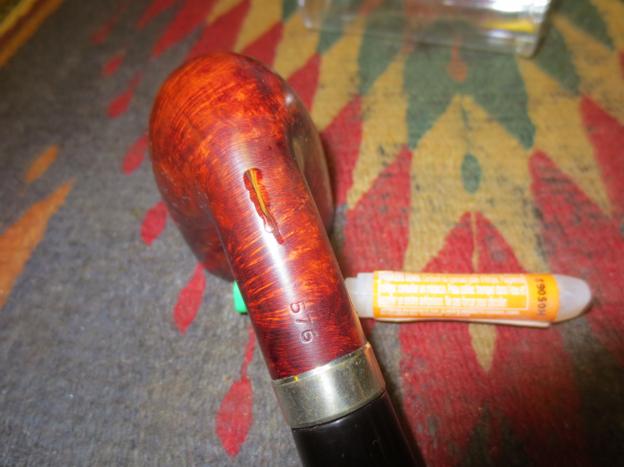
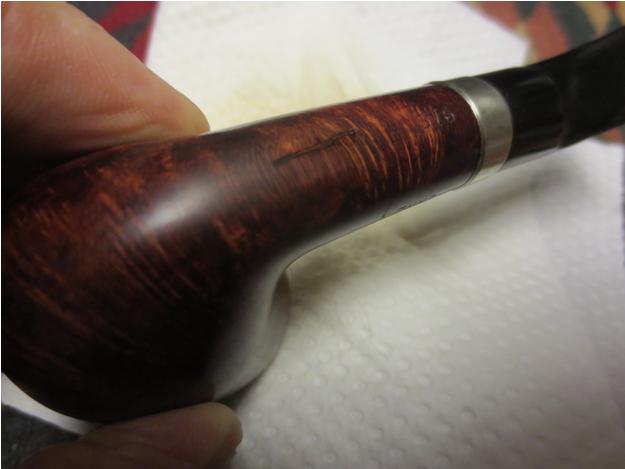
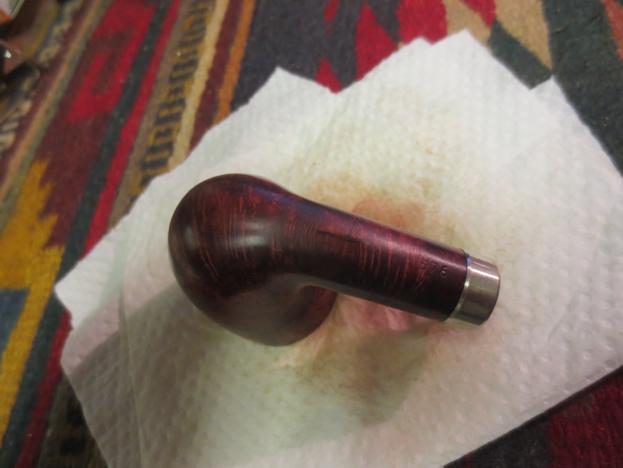
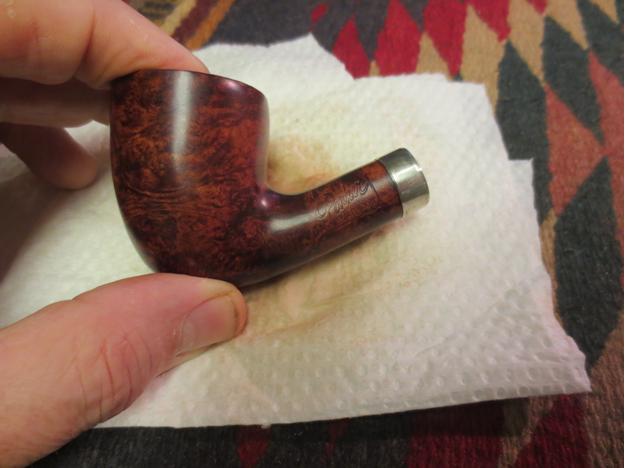
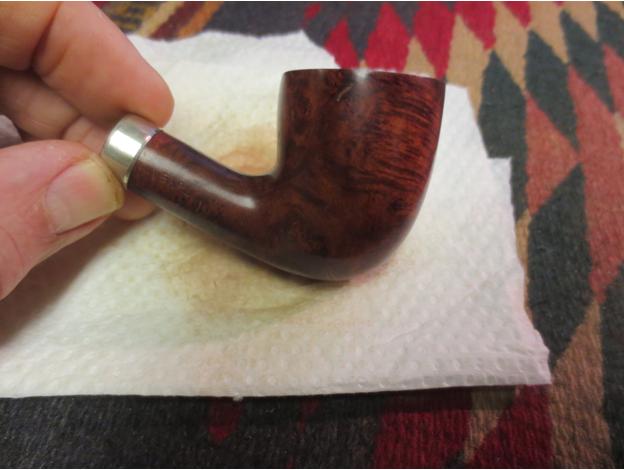
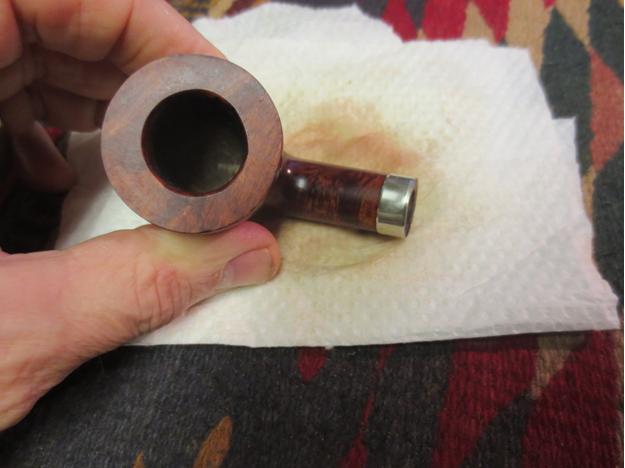
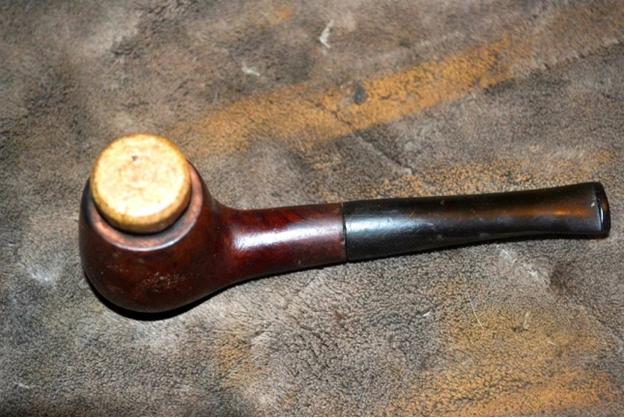
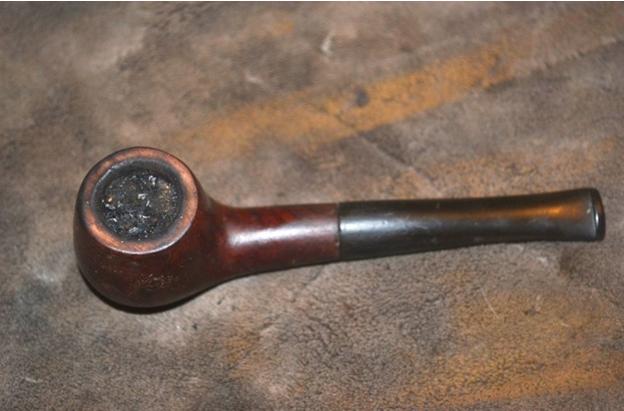
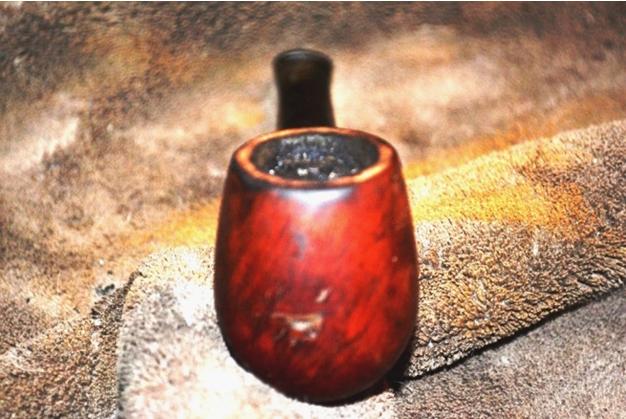
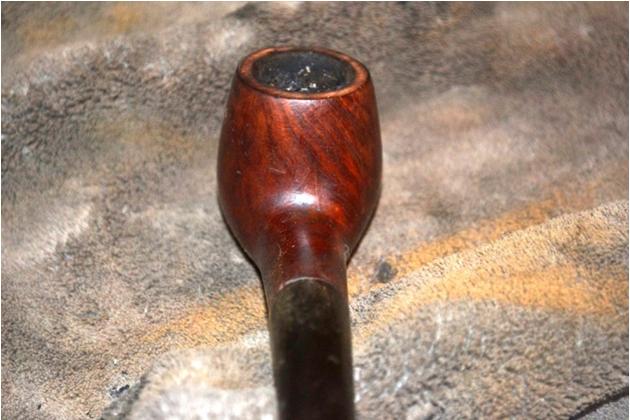
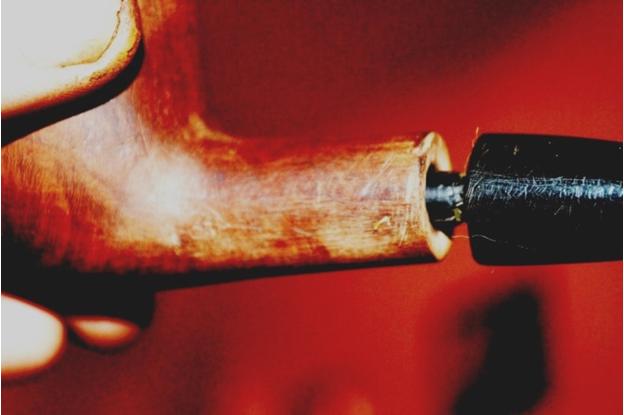
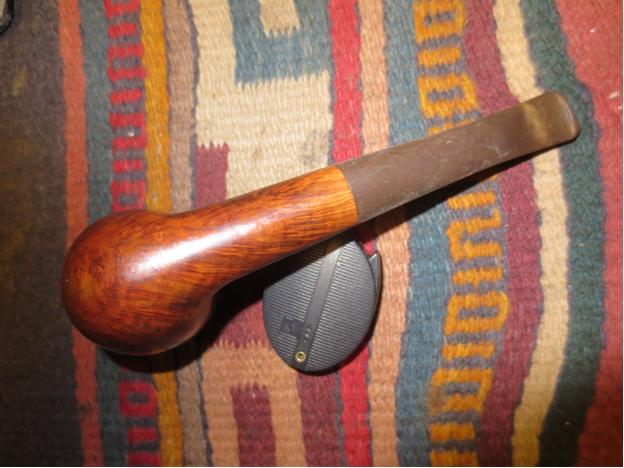
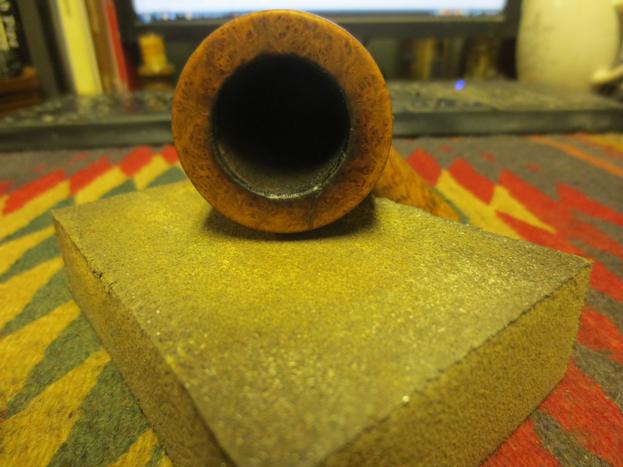
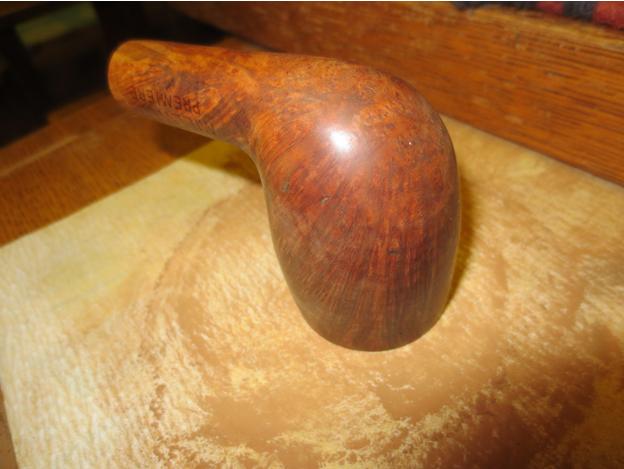
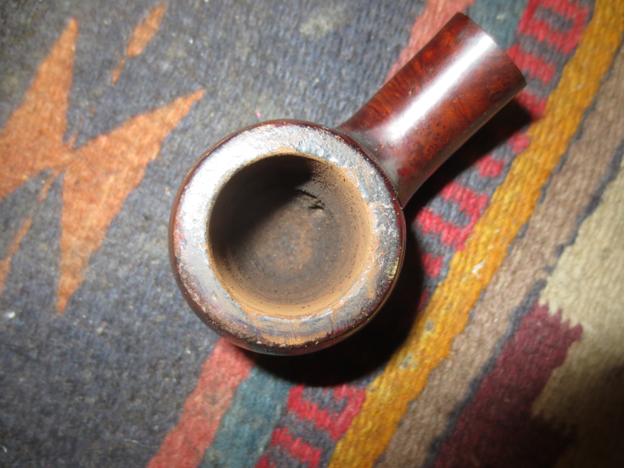
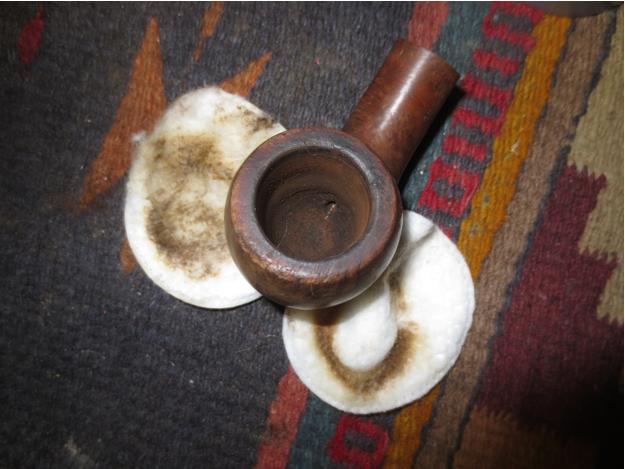
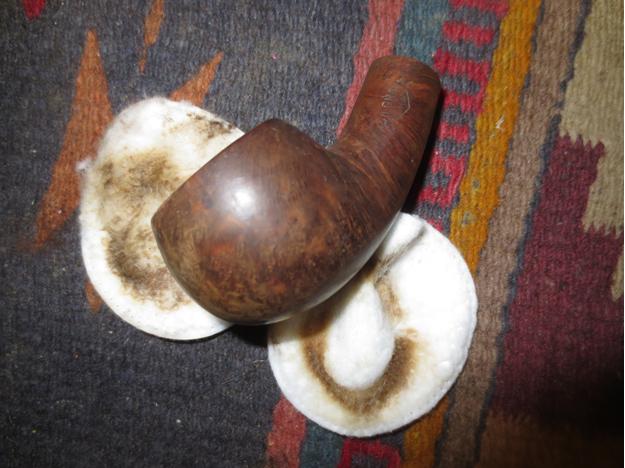
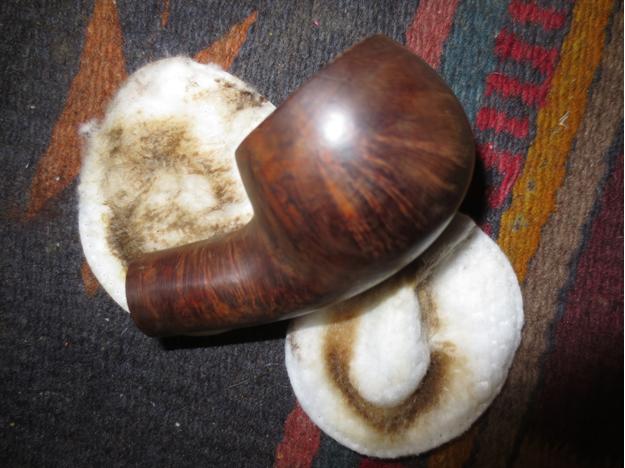
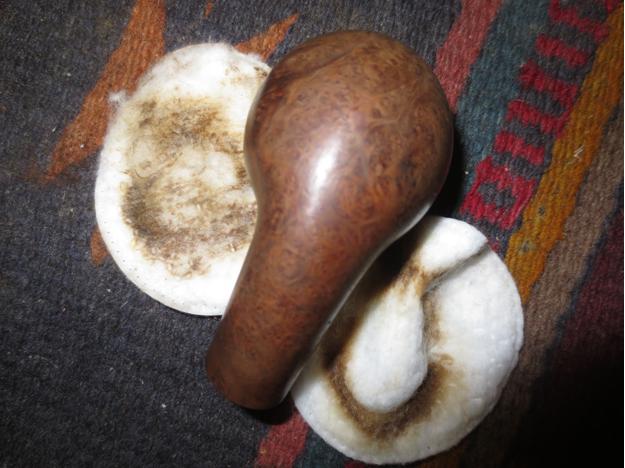
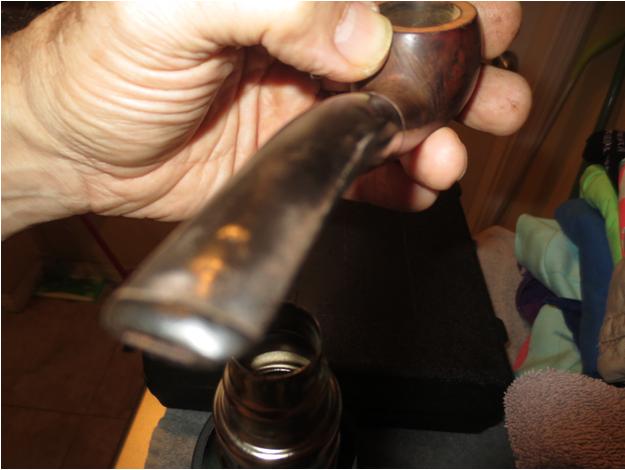
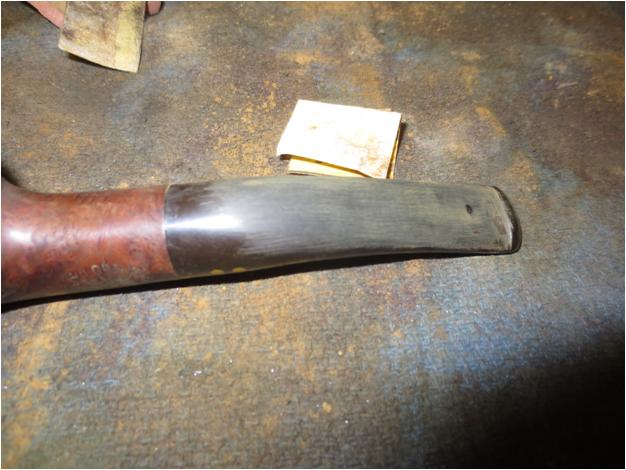
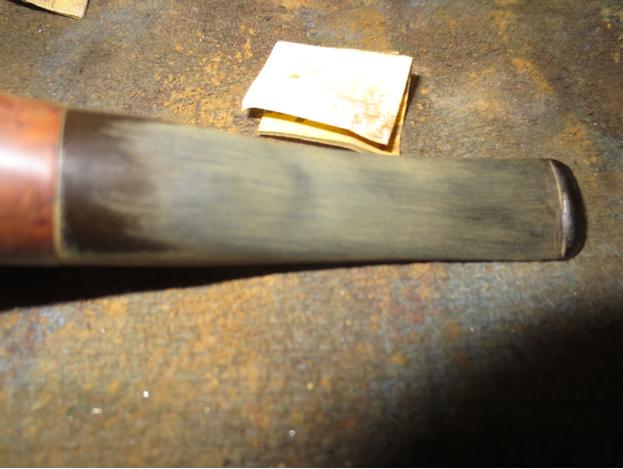
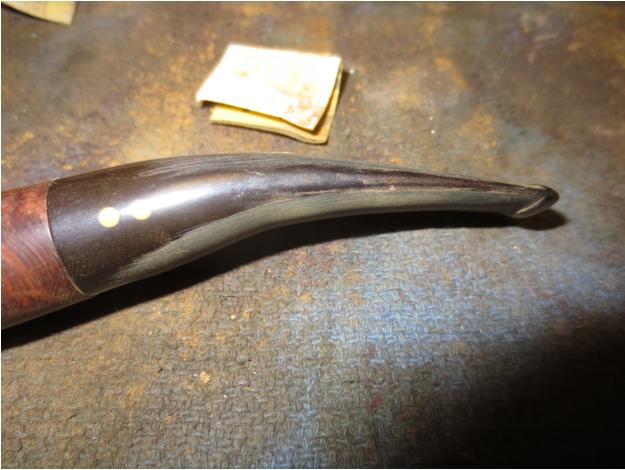
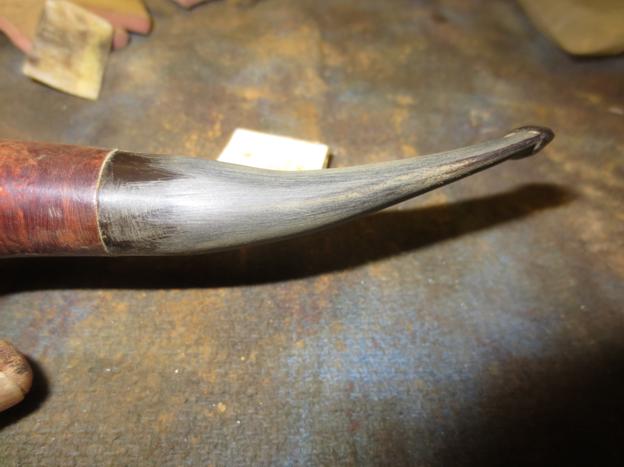
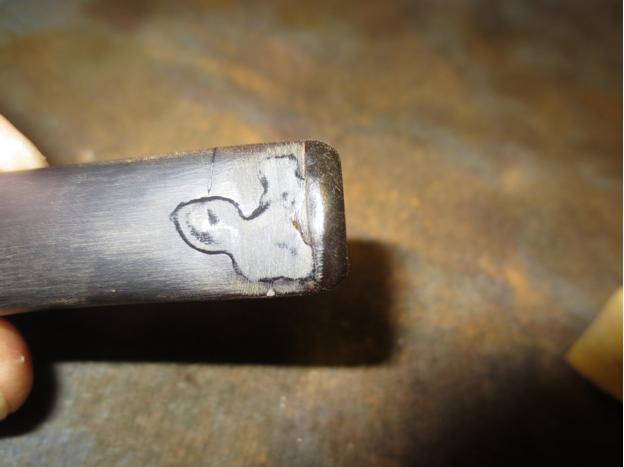
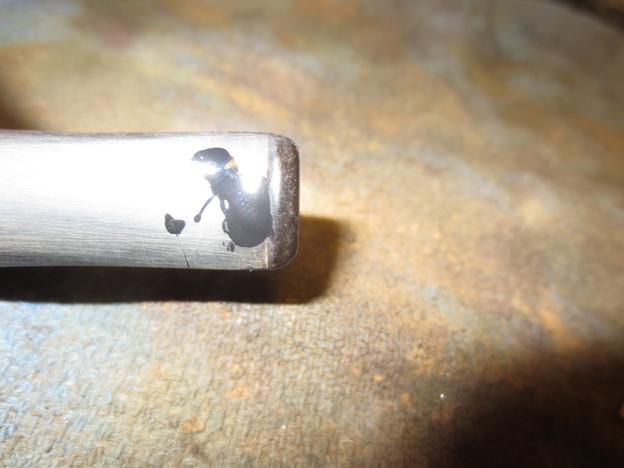
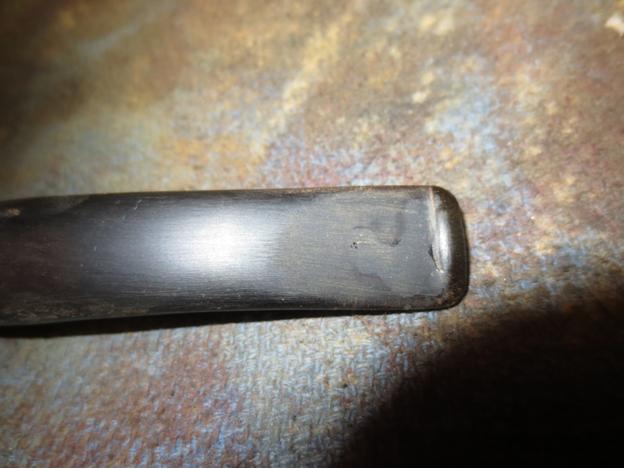
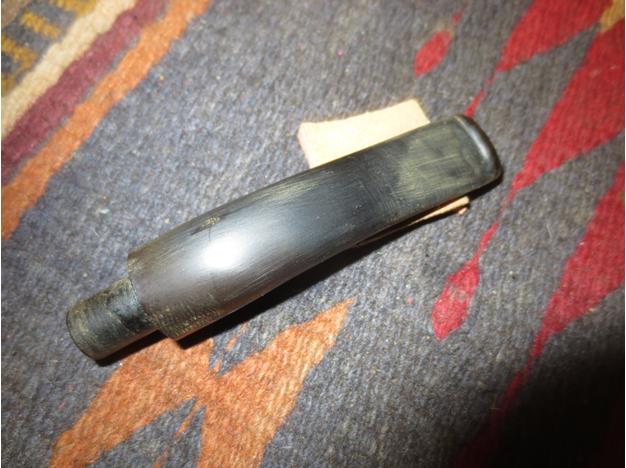
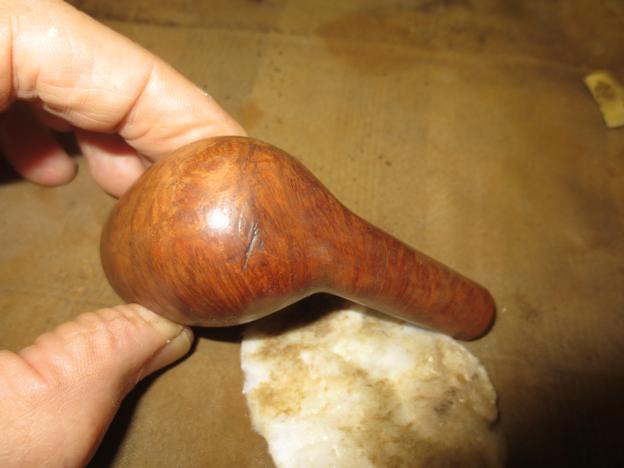
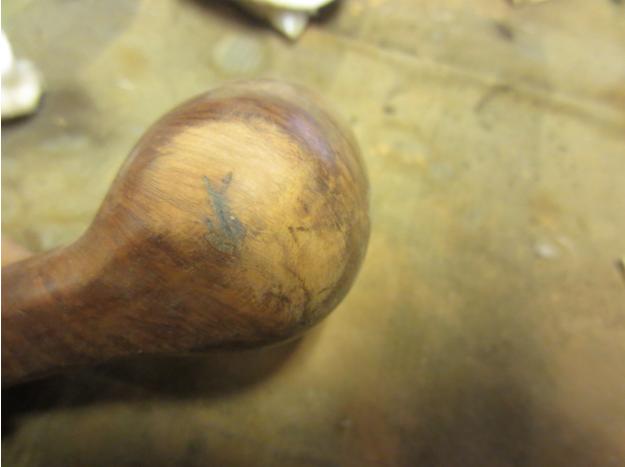
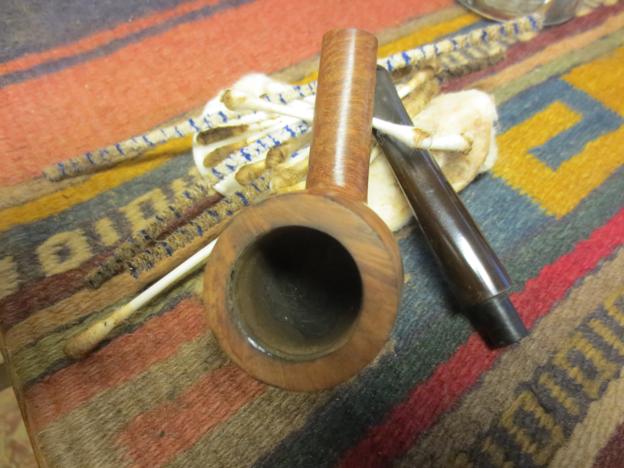
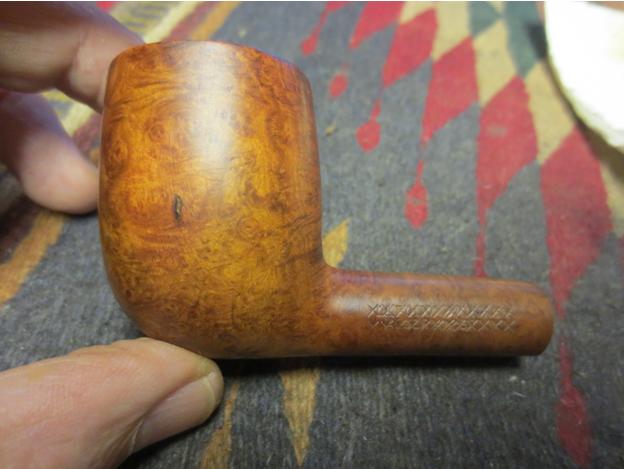
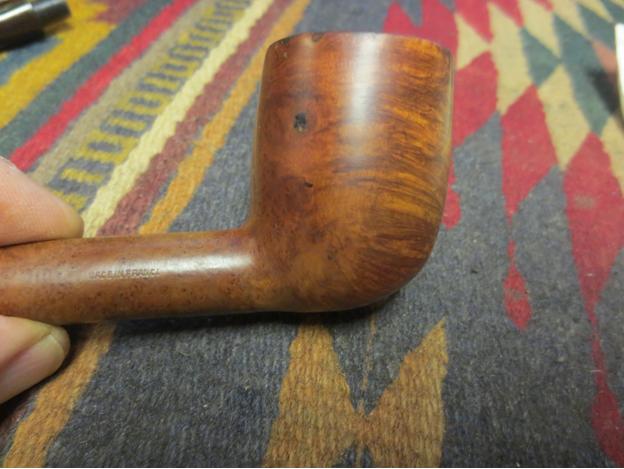
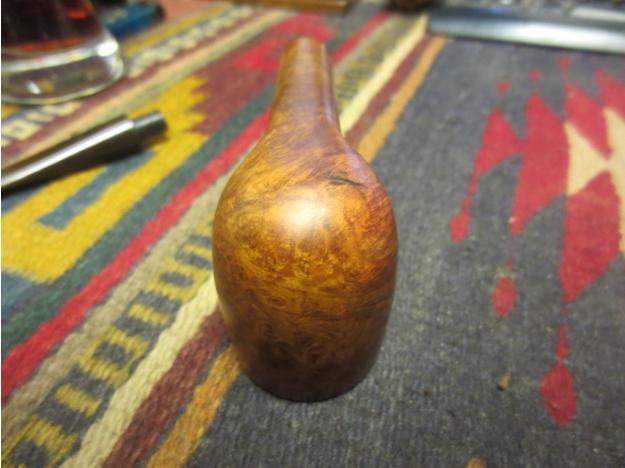
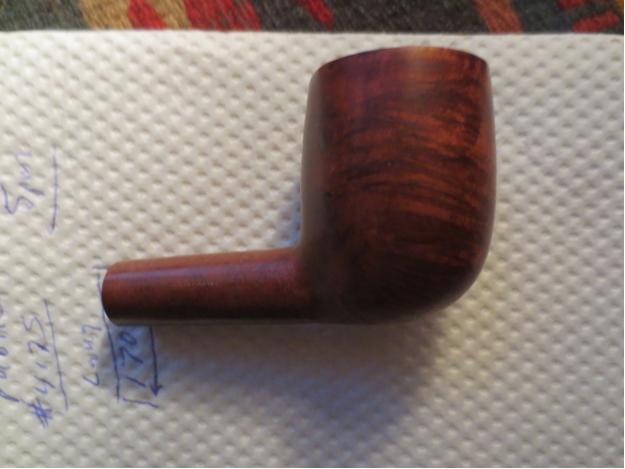
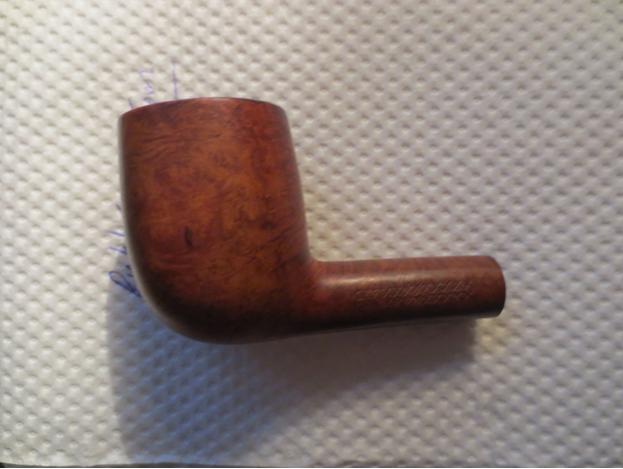
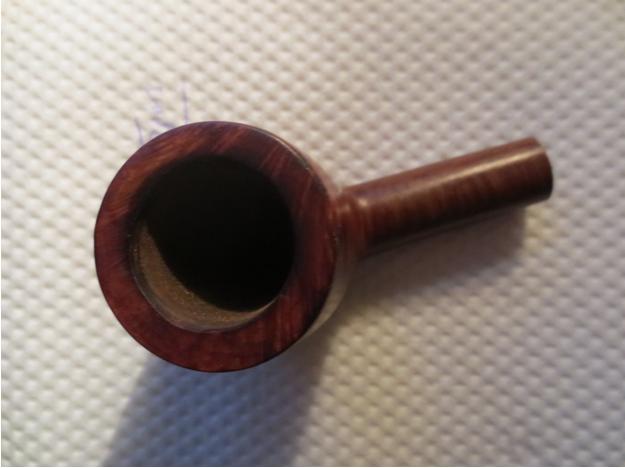
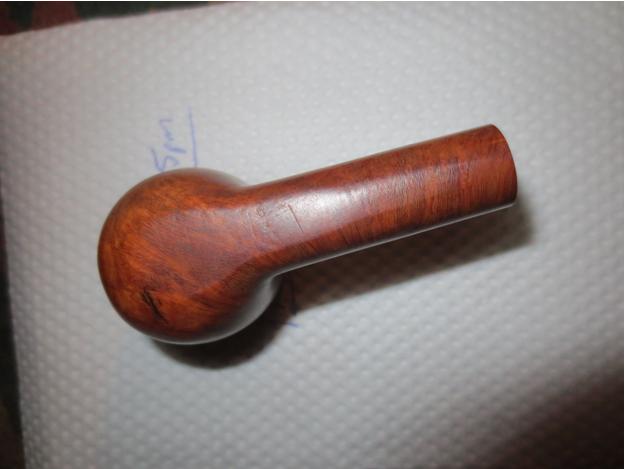
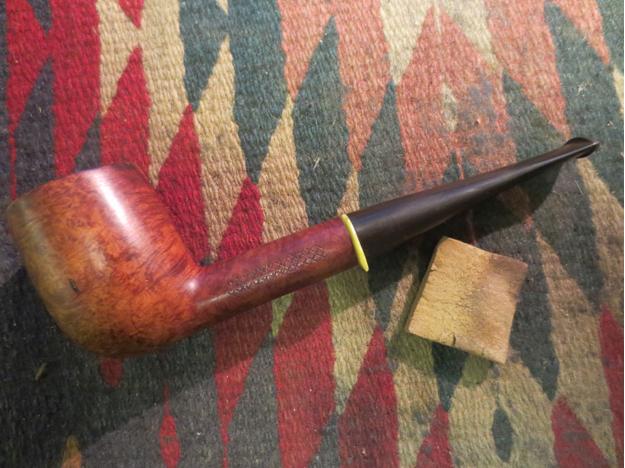
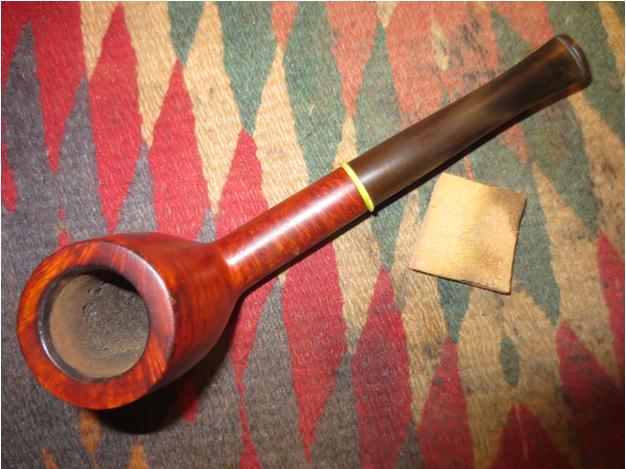
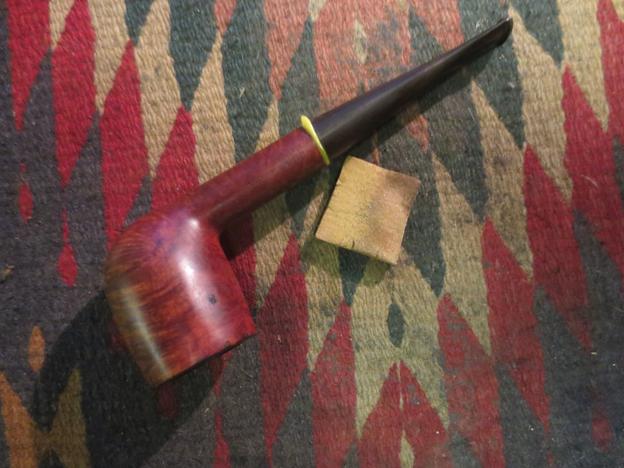
So Phil, he hands the thing to me, and from the second he picks it up from the Blitzkrieg debris that his apartment was full of that day, I saw it was totally FUBAR. I mean, it looked like it was all that could be dug from the rubble of some poor Englishman’s former place of commode during the Battle of Britain after a buzz bomb attack where one of those nasty suckers stopped its buzzing and fell out of the night sky right through his roof before it went off. Okay, so maybe I’m exaggerating, but you get the picture. I’ll tell you, the real shocker to me was that Phil had somehow let this happen when he took real good care of all the other pipes I remembered giving him, including a su-weet, smooth Peterson Aran B11 Bent Brandy I fixed up from my collection and gave to him on his birthday or something after he’d developed a real taste for pipe tobacco. I threw in a sleeve, and he’s kept it the same as the day I gave it to him.Phil1 Back to the sad billiard, while I’m turning it in my hands, forced to admire the almost total stripping of the wax I told myself had to be there when and if I actually gave him the once proud pipe, not to mention the unbelievable uniformity of scratches all over it that – I kid you not – looked to me to be the work of a man with a careful if twisted plan, Phil even uses that word, plan, just as I’m thinking it! I would have jumped if the awfulness of the billiard’s deformities hadn’t already made me numb all over, like. Here’s my favorite angle.Phil2 Phil’s going on how he has some plans for it, like re-staining it some special, unknown color and yada-yada-yada, but he’s real quiet like he never gets unless he’s embarrassed and wants to ask a favor, which he doesn’t ever quite get around to doing. Well, I wasn’t born yesterday, and I just keep it in hand until I’m set to leave, and then I ask him all casual, “Hey, Phil, mind if I hold onto this to look it over some more?” And of course he just has to put on like he doesn’t want to, when that was the plan all along, but in the end I walked out the door with the mysterious, thrashed pipe still in my hand.
RESTORATIONPhil3

Phil4

Phil5

Phil6

Phil7

Phil8

Phil9

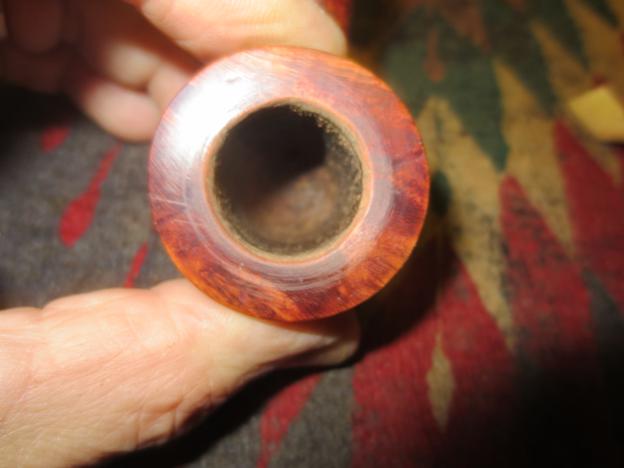
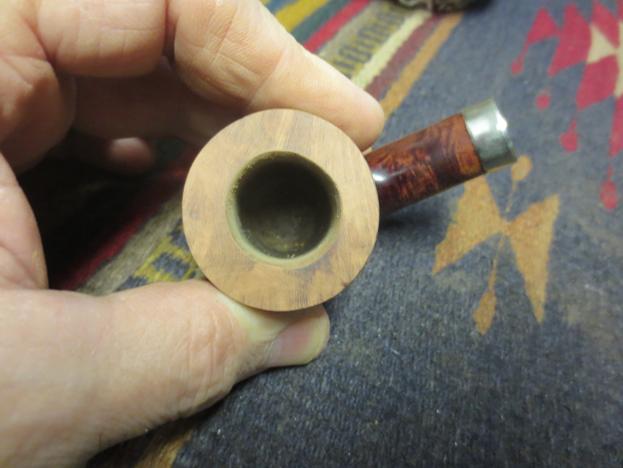
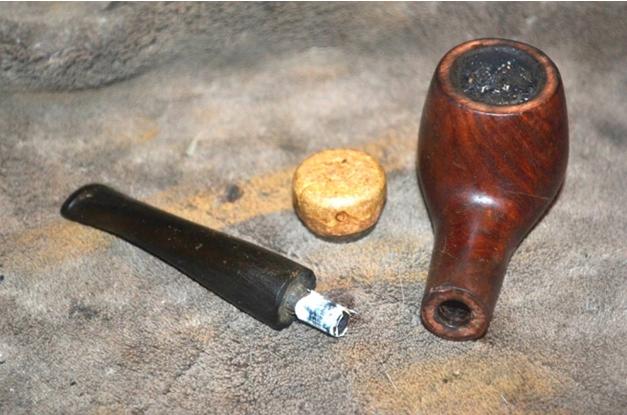
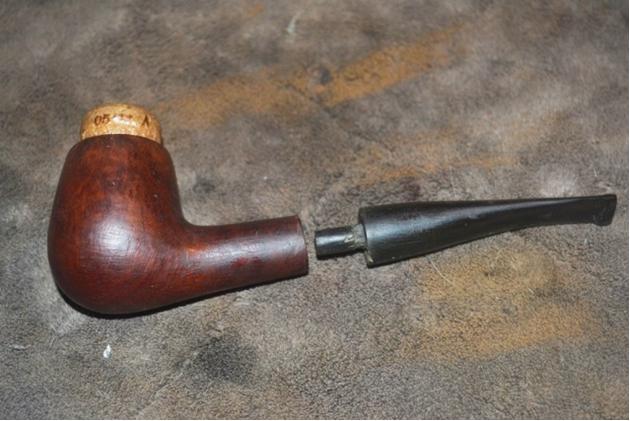
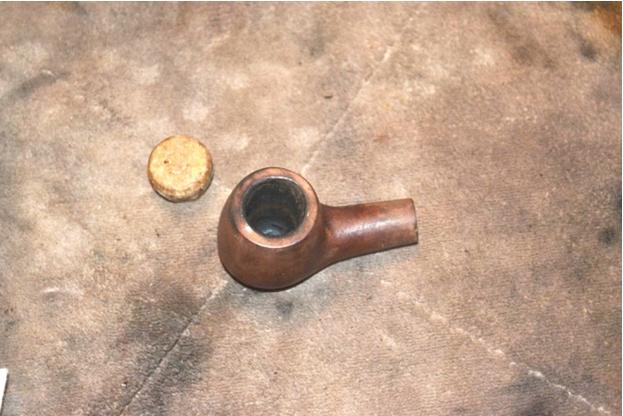
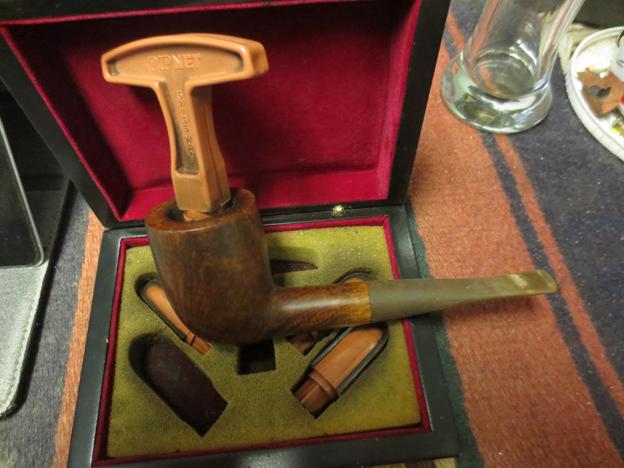
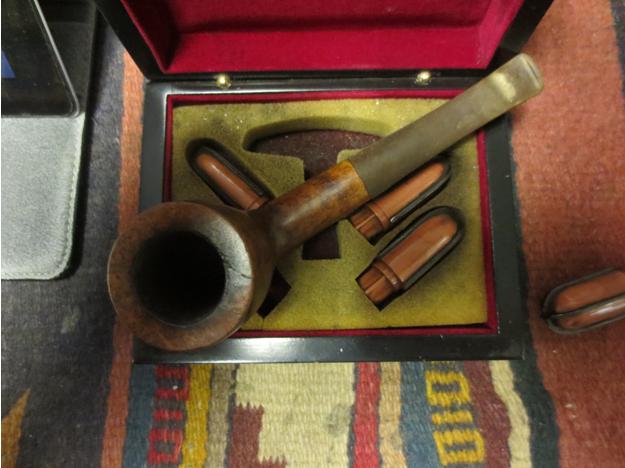
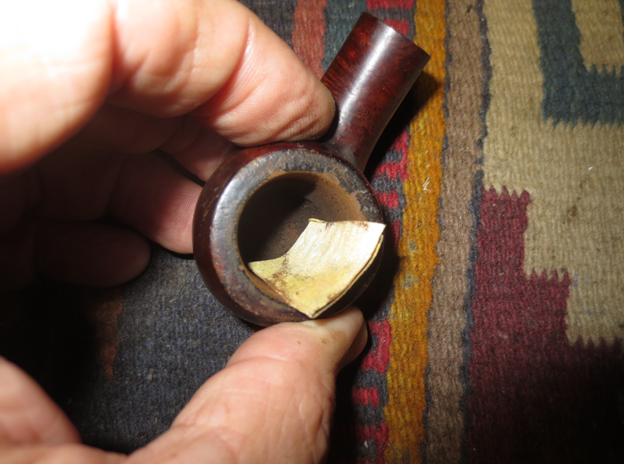
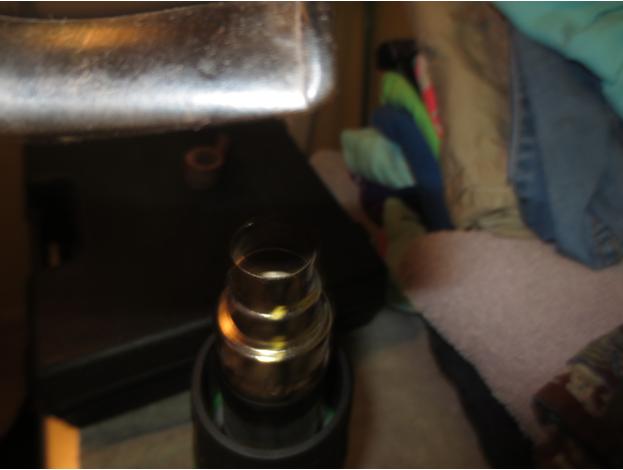
Phil10 I really like three of the things you’ll notice in the first of those photographs: the peculiar piece of cork used for some reason I won’t go into, the chamber chock-full of some leaf and the little improvised piece of paper on the tenon to make it fit right like it did when he got it (whoever gave it to him in the first place).

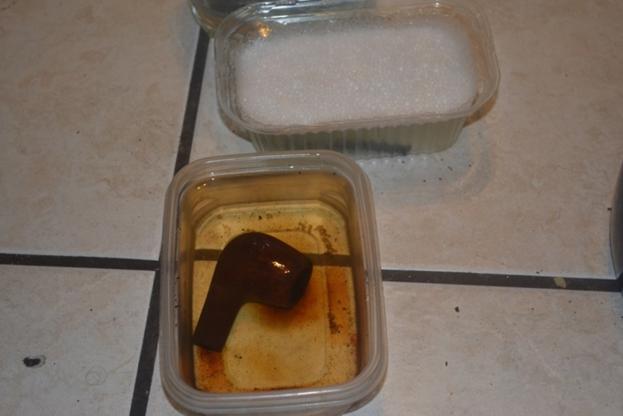
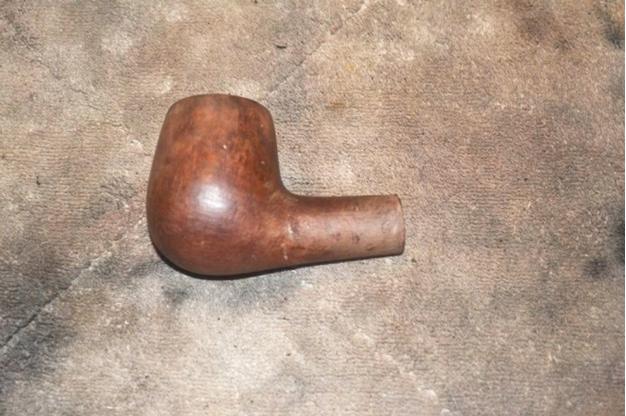
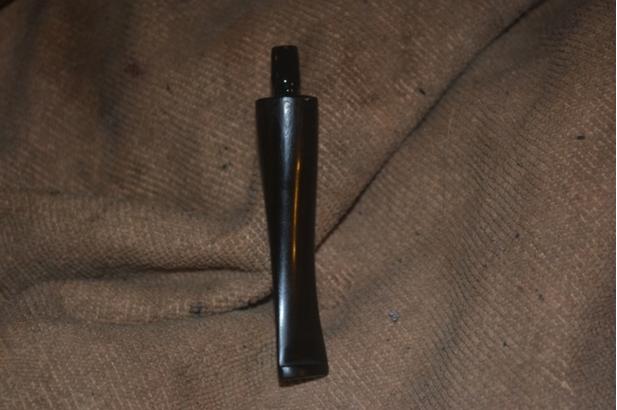
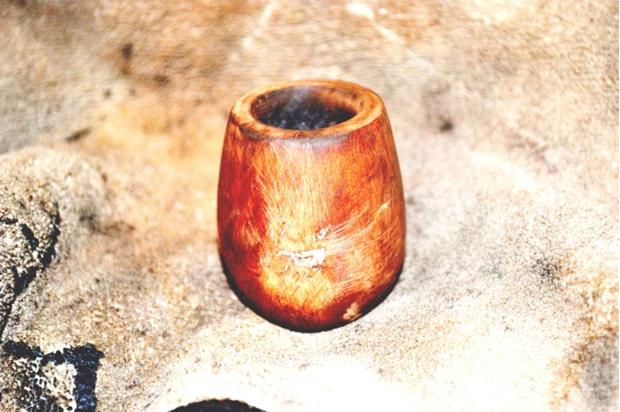
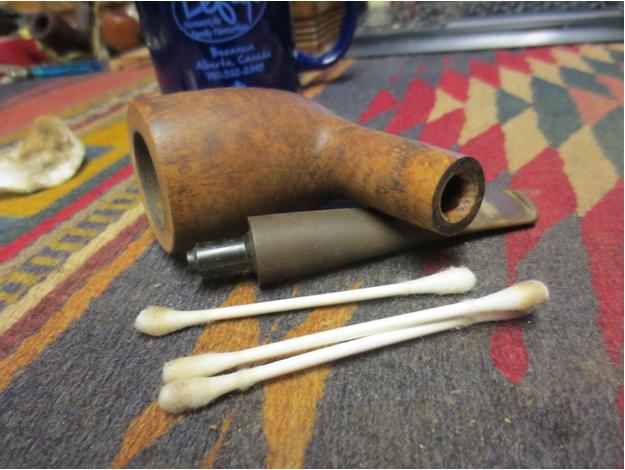
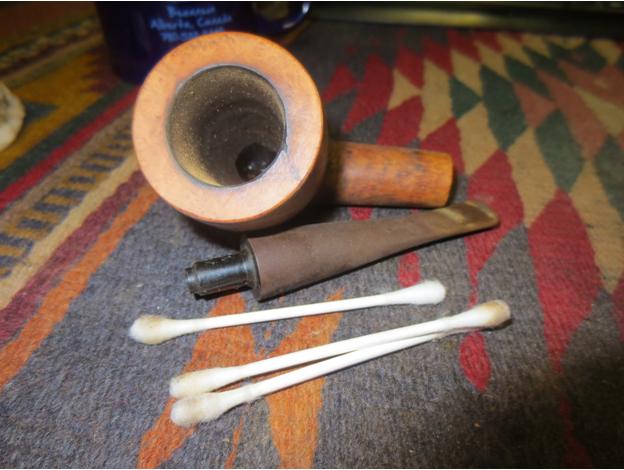
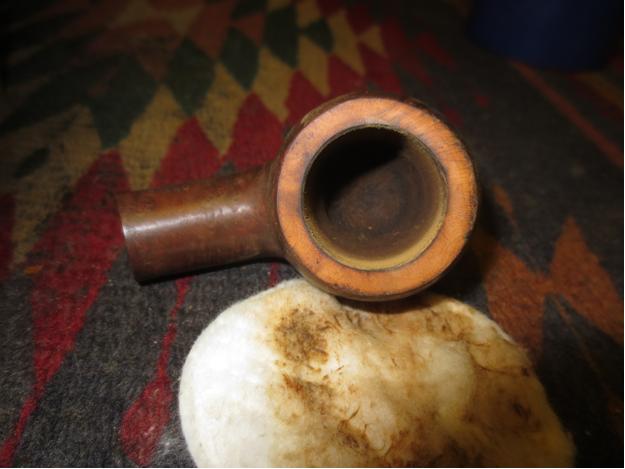
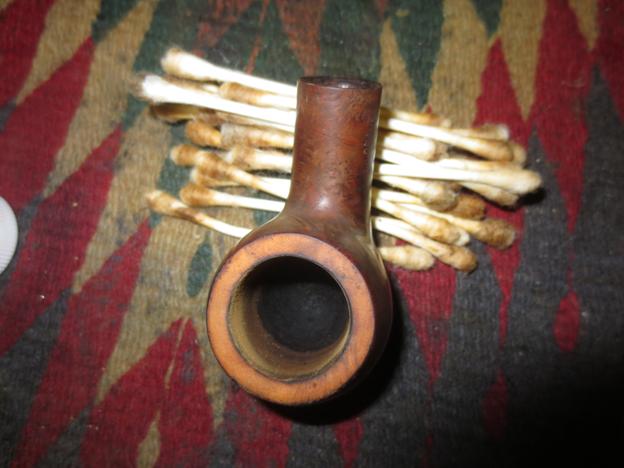
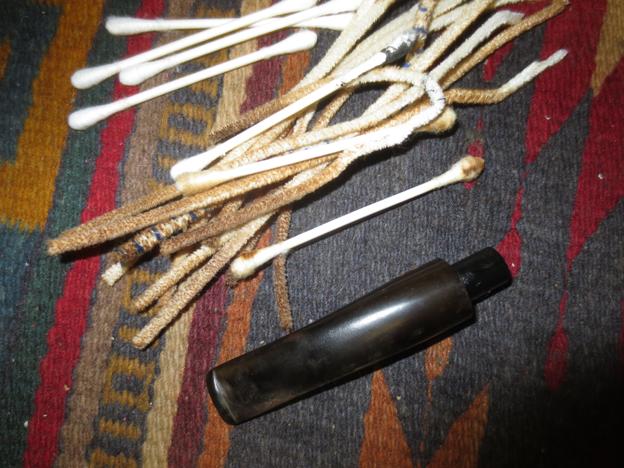
First off I scooped out all the stuff in the chamber and peeled away the sticky paper on the tenon. Without the paper, here’s a good general idea of how it looked.Phil11 Now I don’t know about you, but I couldn’t abide with that ghostly remnant of stain, so I set to stripping all of it down to the bone and soaking the bit in an OxiClean bath.Phil12 I took the wood out of the Everclear after a couple of hours and saw it still need some help removing the old stain. I used 500-grit paper and made the bowl and shank a little better.Phil13

Phil14

Phil15

Phil16

Phil17 And back to the stem for a minute. For a number of reasons, it clearly didn’t fit the shank, and so the motive behind the cover-up with paper. The OxiClean didn’t do much other than get rid of a whole lot of dirt and other mess inside and out, but this is a better view of the tenon and how someone had undercut it at the bottom and generally made a mess of the whole try at making it fit right in the shank. I suppose Phil had nothing to do with that, too.Phil18

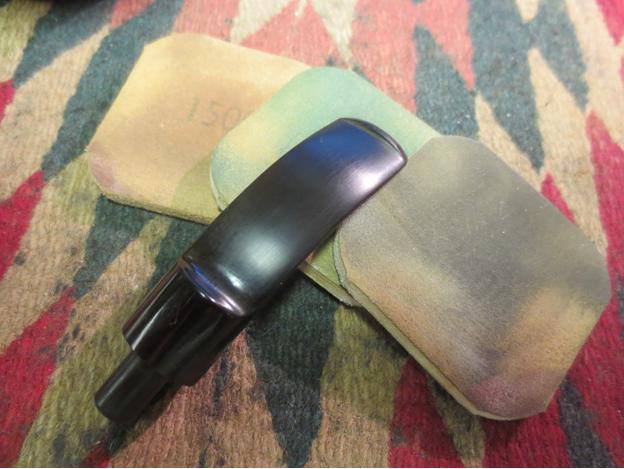
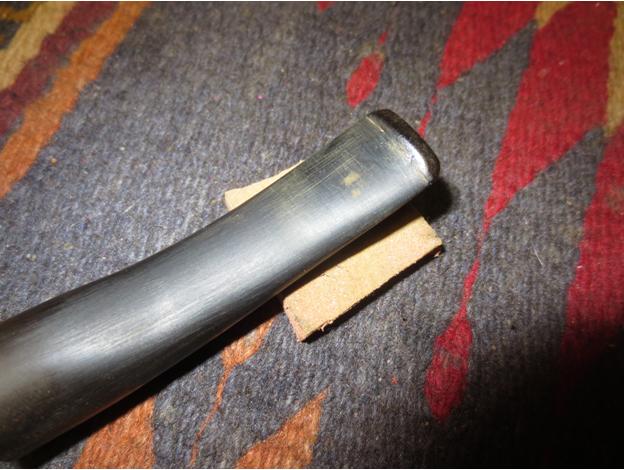
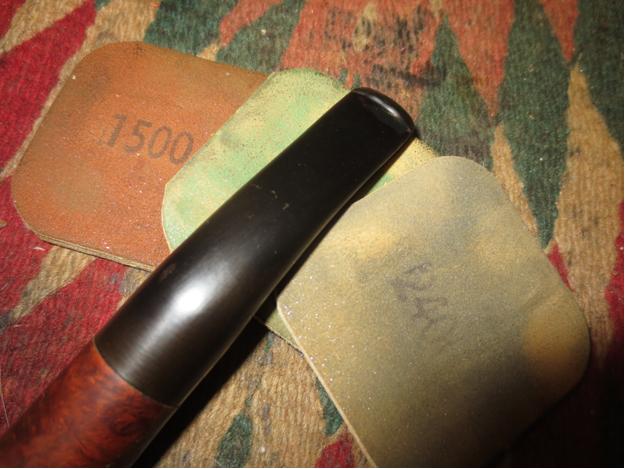
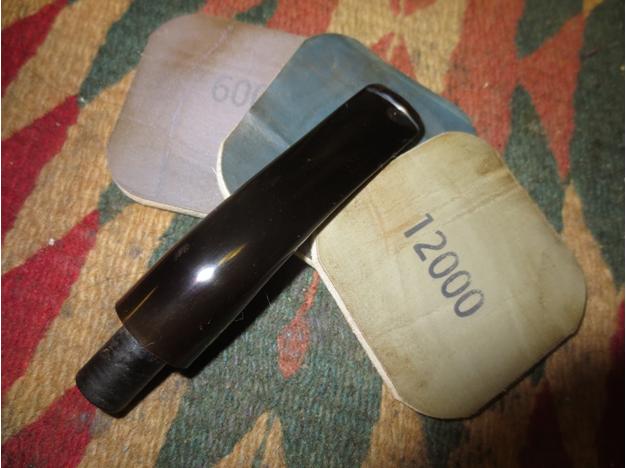
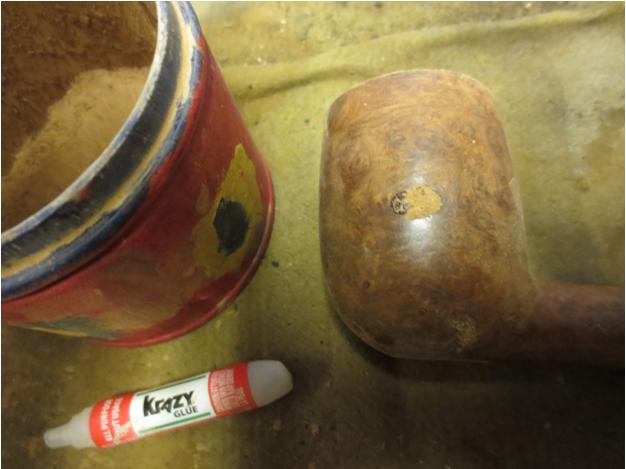
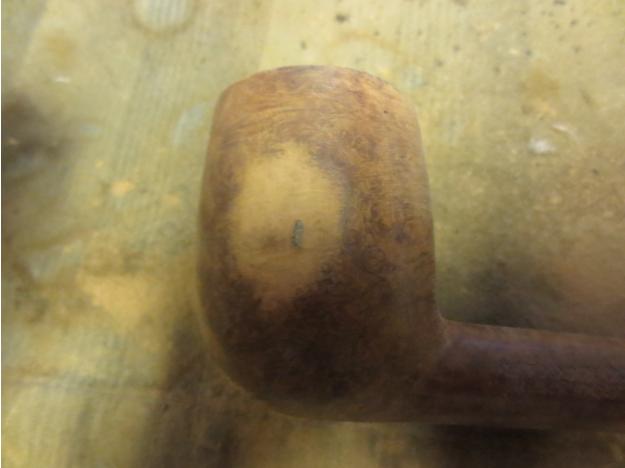
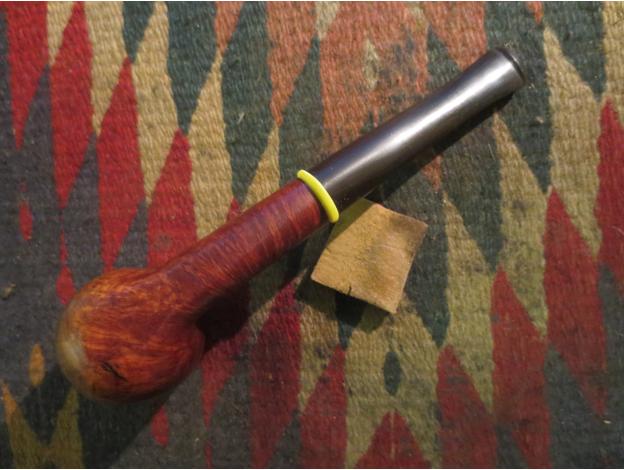
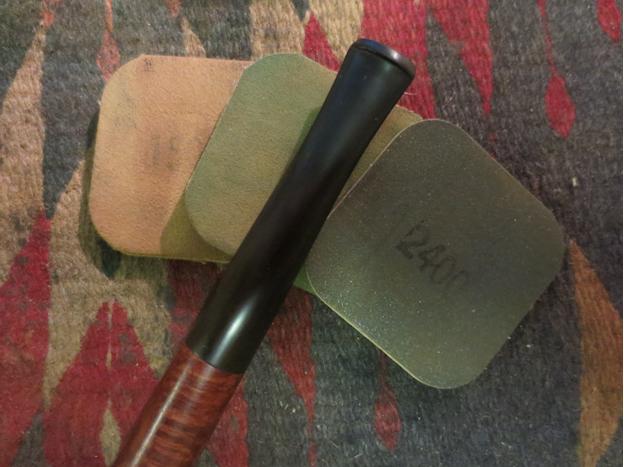
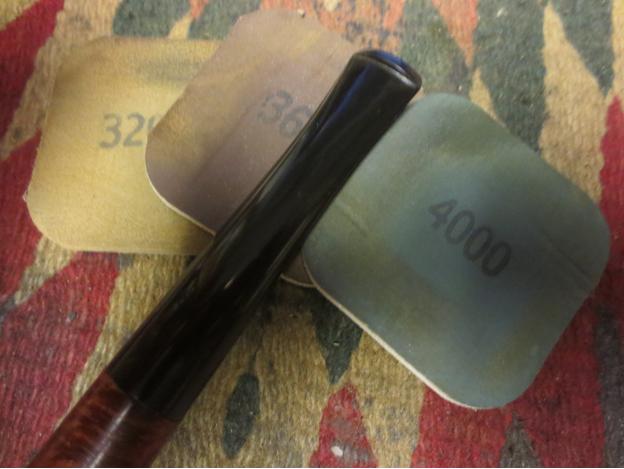
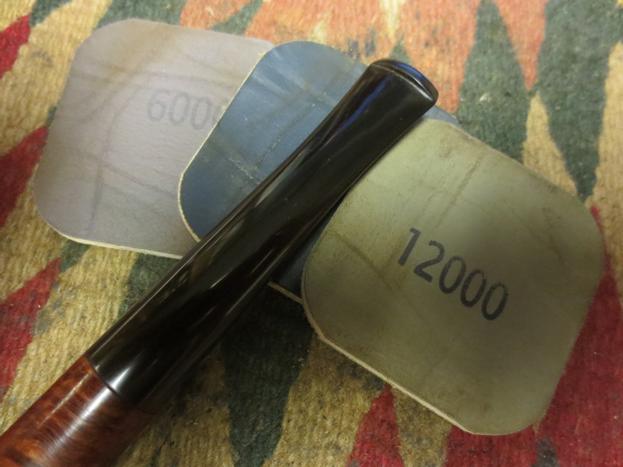
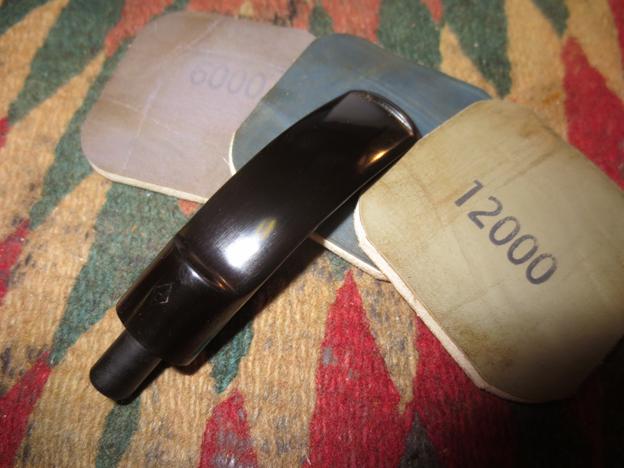
Phil19 Other than replacing the whole stem, a plan I wasn’t keen on seeing as how it was going to be for free, I figured I could mend it another way. I sanded it all over with 200-grit paper before putting the 400 to it and micro-meshing as far as I could go, from 1500-12000. With that a done deal, I put a liberal amount of Black Super Glue on the tenon, most of it on the undercut part, to make it all even again.Phil20 Meanwhile, back to the bowl and shank. The stripping ferreted out more cover-up: the front of the pipe, no big surprise considering it wasn’t proud enough of the results to put a name to it or even the country it came from, had a nice little weed-like patch of holes that needed wood putty.Phil21

Phil22 Since I had some time on my hands while the putty and Black Super Glue finished drying, I smoked my own pipe for a spell. Actually it was one heck of a long spell. But it came to an end, like everything else in this life.

I smoothed the putty real gentle with the old 12000 micromesh and used a brown indelible marker, then an orange one, to make it look a little more natural. Then I put just a thin coat of regular Super Glue over that. I had to get out of my place anyway, so while it dried I did some errands. Heck, yeah, even I have errands to run.

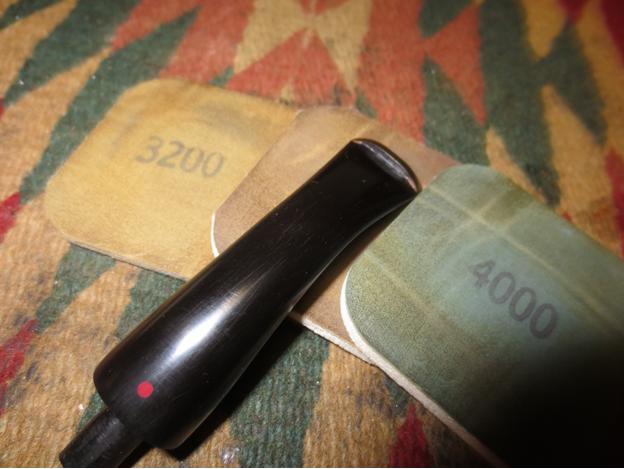
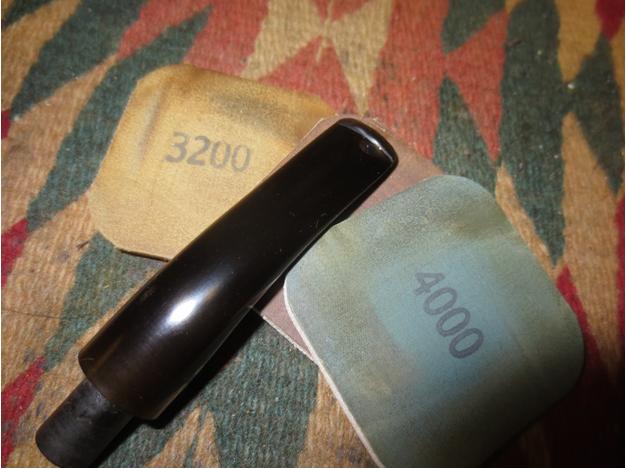
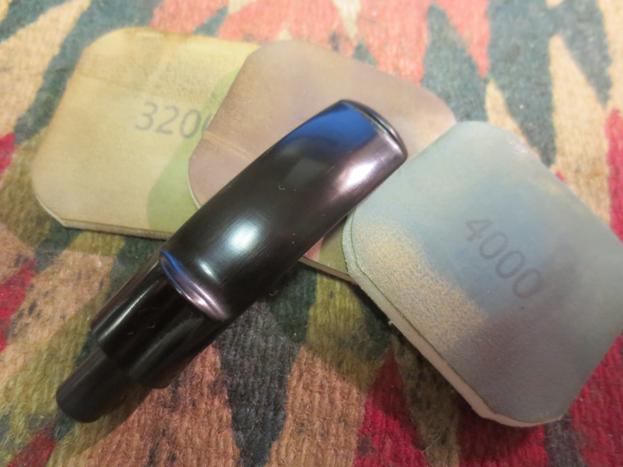
What with the swamp cooler on full-blast, by the time I got home again the Super Glue was good and hard and ready for a smoothing of its own. This time I needed something a little rougher and settled on 3200 micromesh with a respectful light touch. And I’ll be darned if it didn’t just do the trick! The rest of the wood I went the whole nine yards micro-meshing.
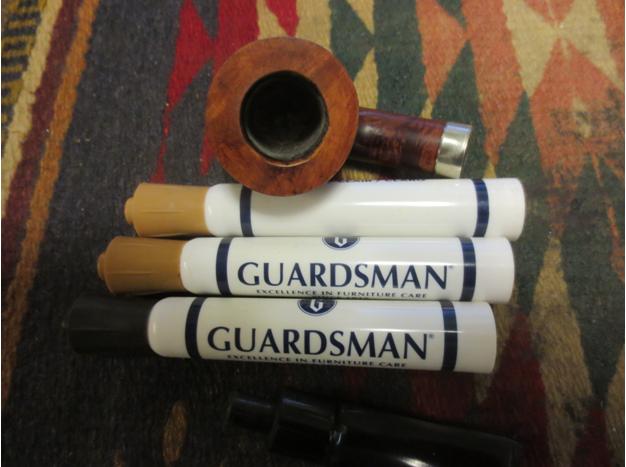
One of the ideas Phil had for doing it himself was to use a “different” color. After thinking on it a while, I came up with a mix of Lincoln Marine Cordovan and Fiebing’s brown boot stains – don’t ask me what was going through my head because I don’t remember. Anyways, it worked nice enough, so I flamed it and let it sit to cool before using the 3200 again to clear off the char.Phil23

Phil24

Phil25

Phil26

Phil27

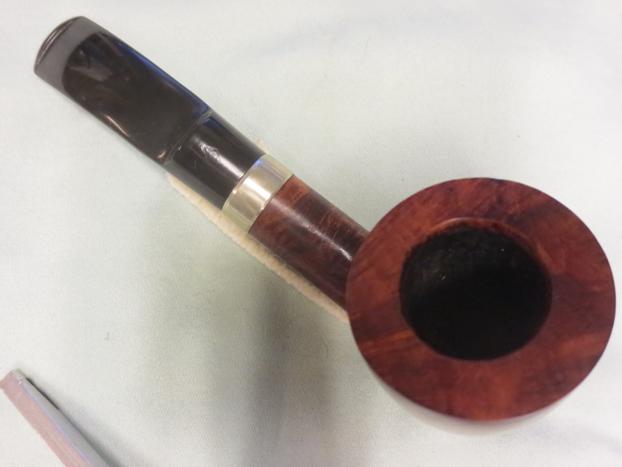
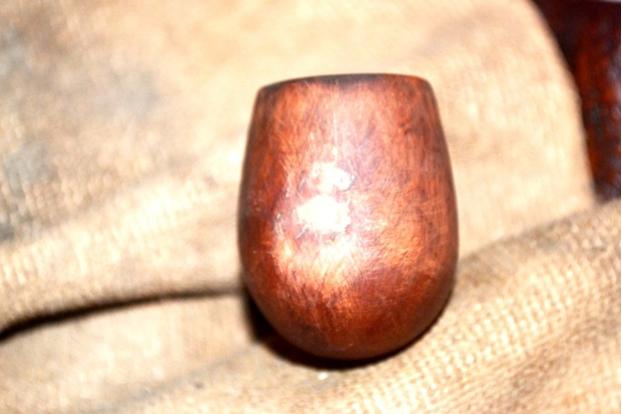
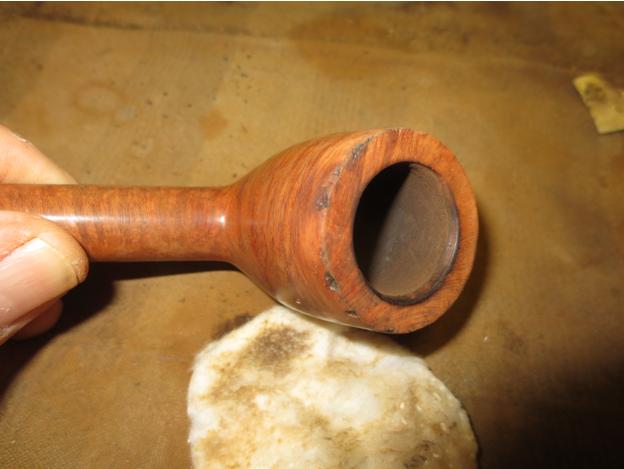
Phil28 Alright, now, hold your water! I know it! The front view here shows a need for more attention, which you’ll just have to trust me when I say I gave it because I forgot to snap a shot after. Also I sanded down the shank opening so the stem would meet it better.Phil29 Again, I know it’s not perfect, but this was for free and besides, Phil was starting to breathe down my neck to get it back. Finally I just buffed it up on the wheels with a few waxes.Phil30

Phil31

Phil32

Phil33

Phil34

Phil35 CONCLUSION
Phil is happy with the job I did – and the replacement cork that fit.

I don’t know if I improved this old meer or just made it worse


Blog by Steve Laug

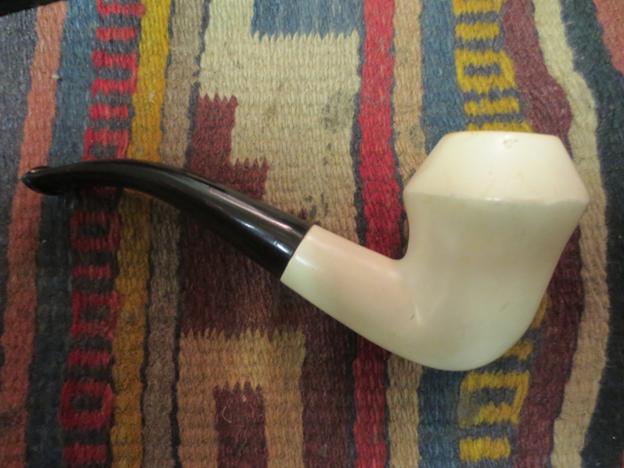
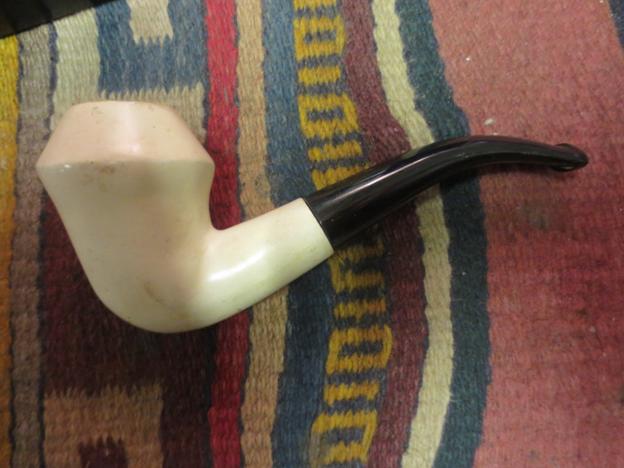
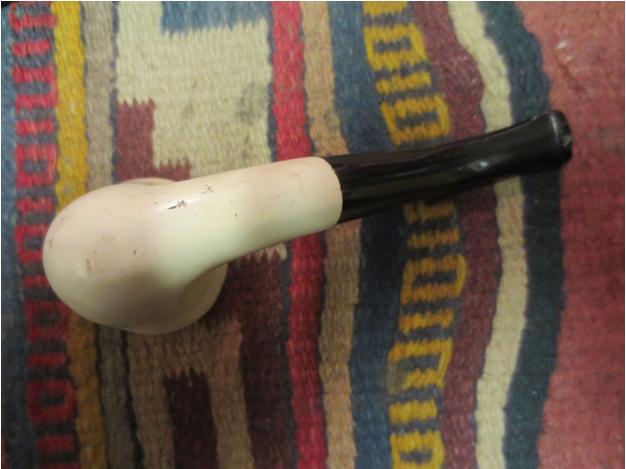
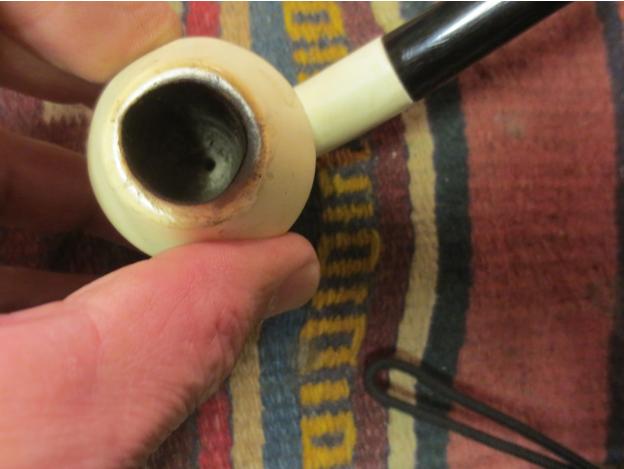
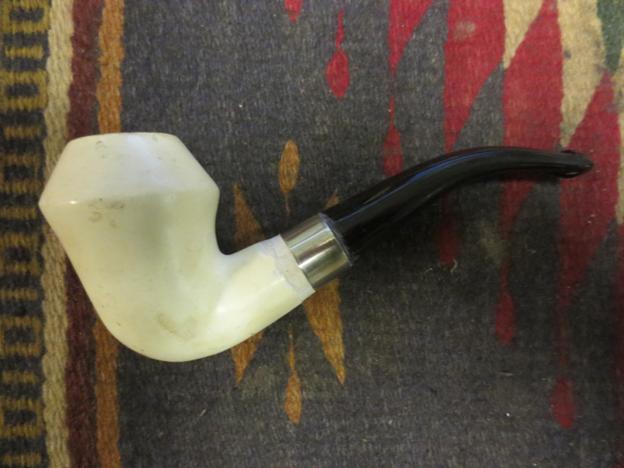
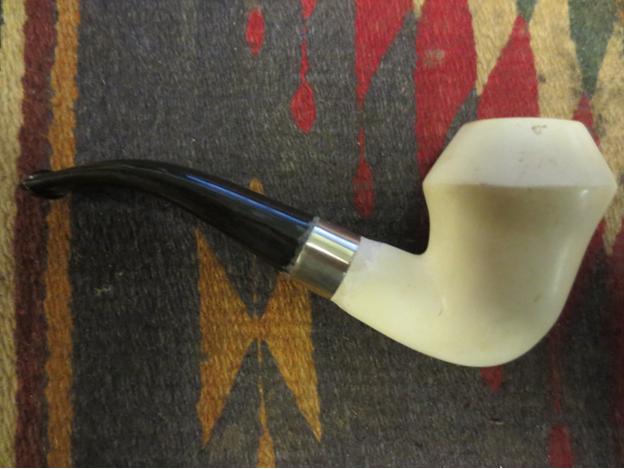
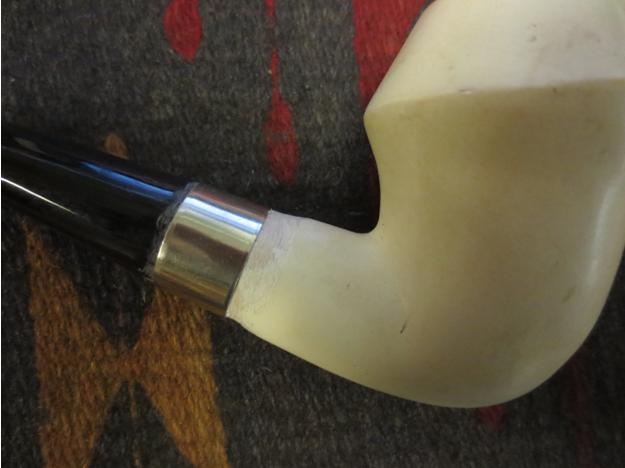
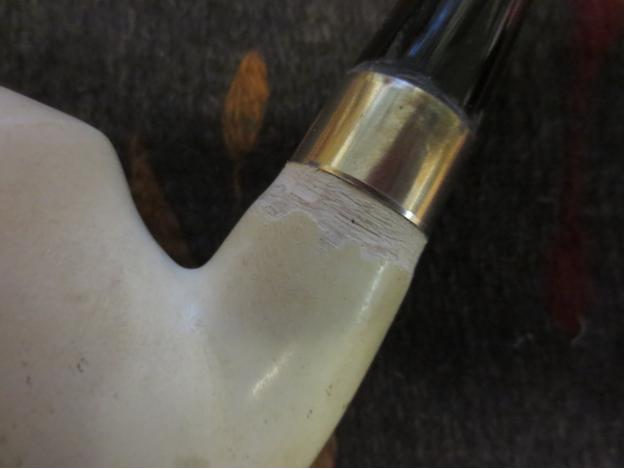
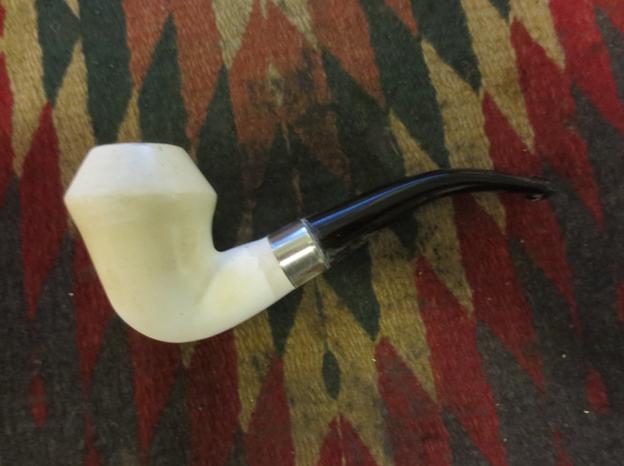
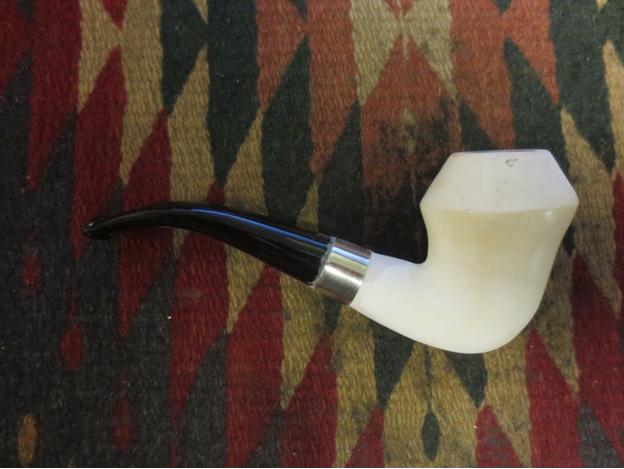
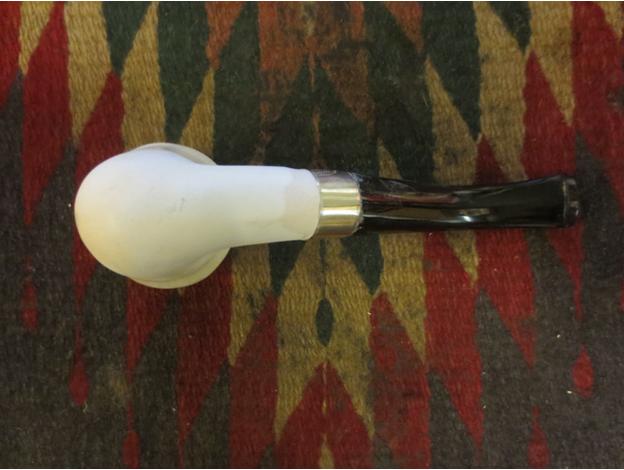
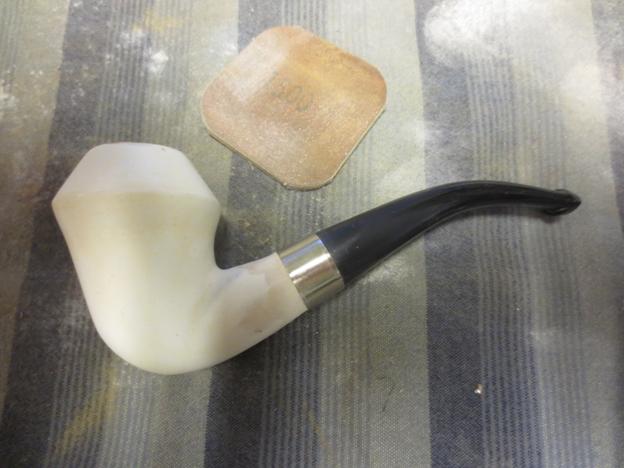
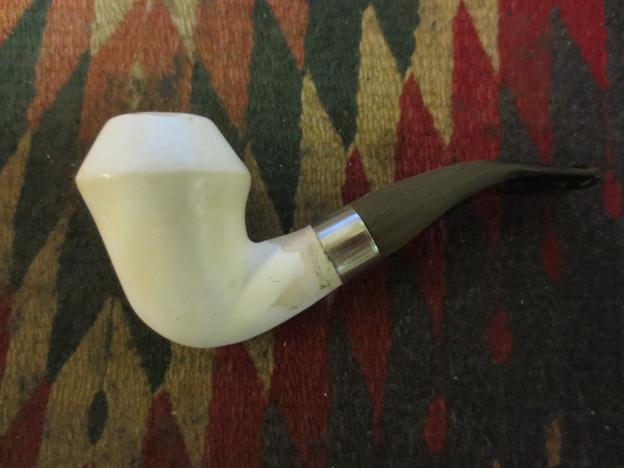
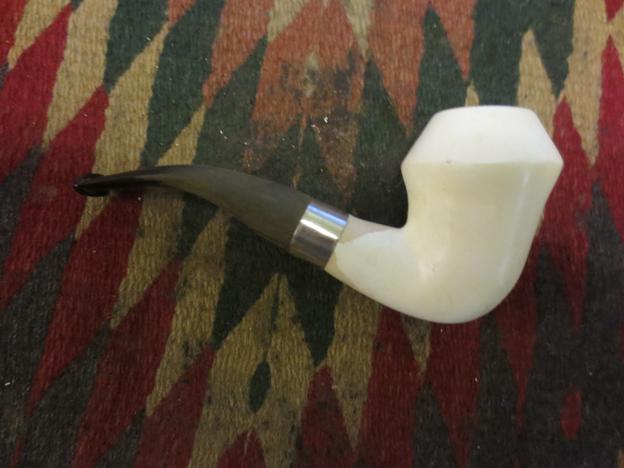
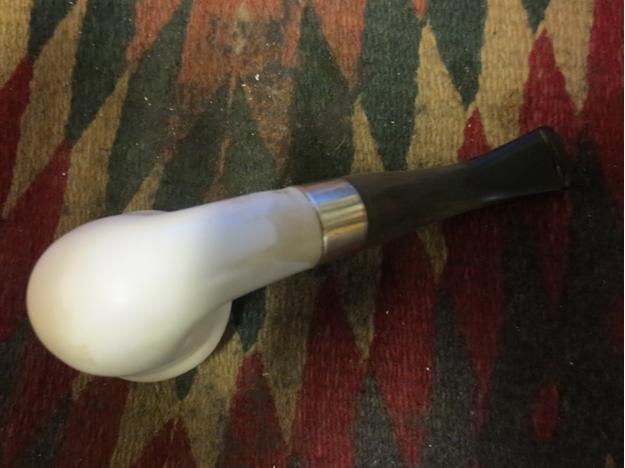
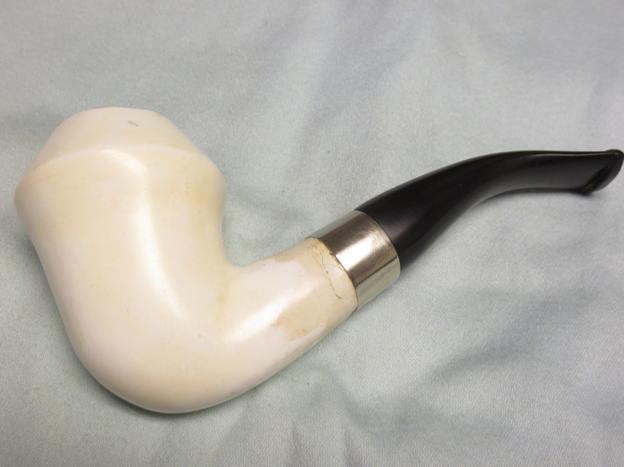
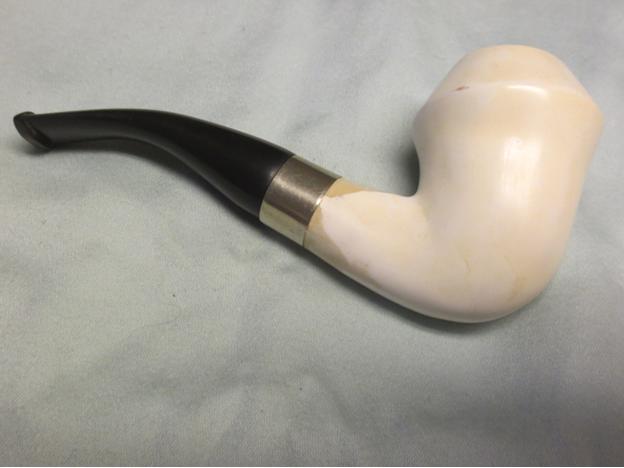
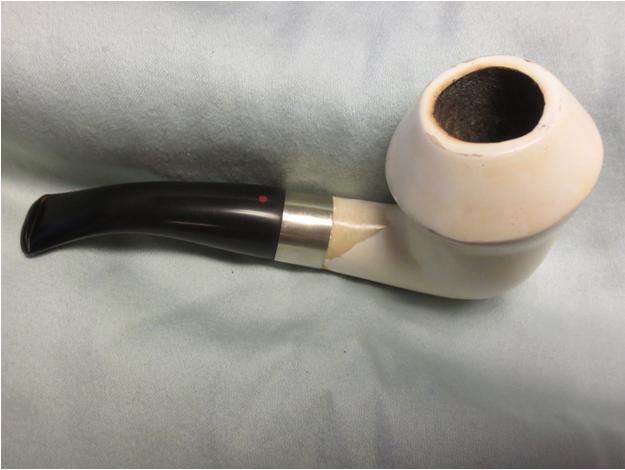
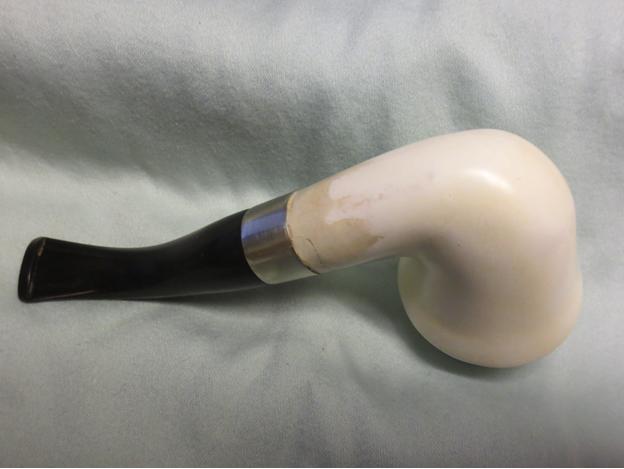
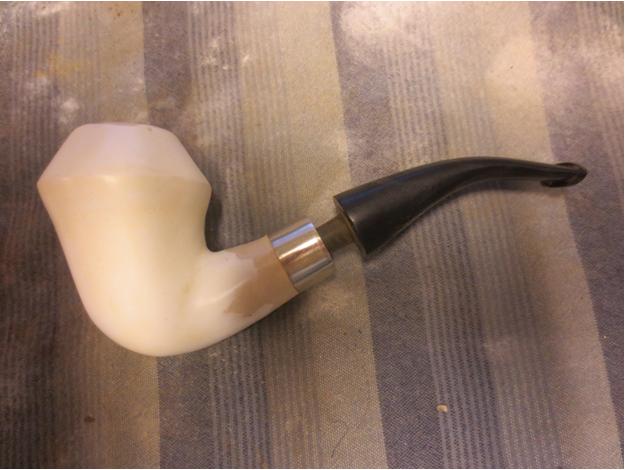
Sometimes when I take on a project it is a no win situation. Or at least it appears that way! This is one of those times. In the box of recent pipes that I am working on cleaning up to sell was an older no name meerschaum calabash shaped pipe. The meer was in passable shape – some nicks and scratches and some run over on the rim but it should have been an easy clean up. If you look at the first set of photos below you may well wonder about the comments that follow. It actually looks far worse than the pictures depict. The stem shank joint does not match even though it the photo it looks great. If I went just be the photo I would have been better off to leave well enough alone — still even having the pipe in hand I may have been smarter to just polish and sell it as is.

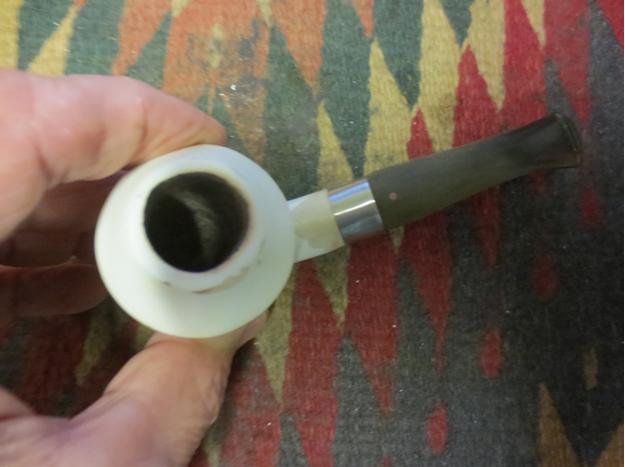
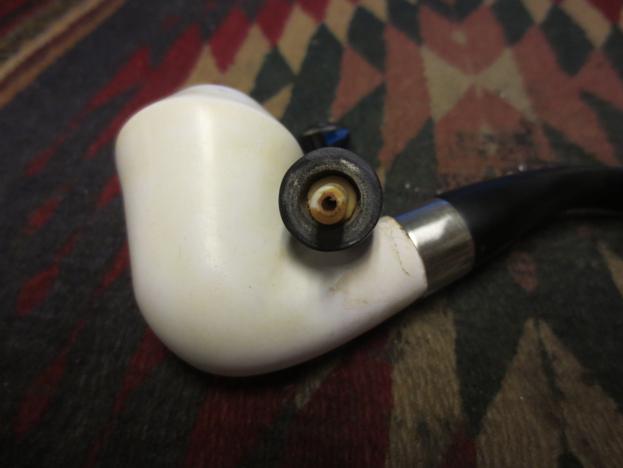
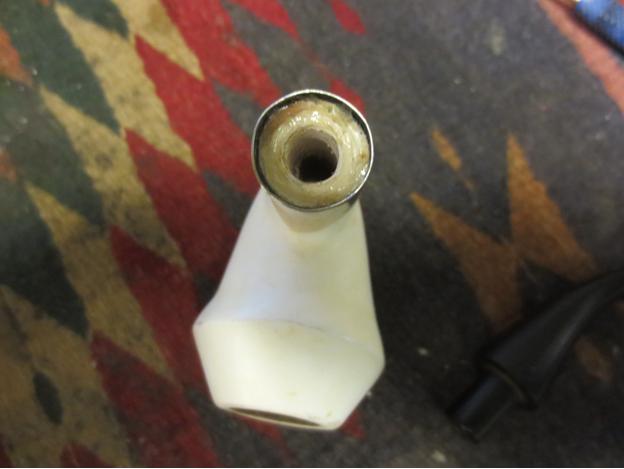
Here is my diagnosis and the assessment I did that led me to the conclusions that it was worth fussing with the pipe to see if I could at least improve upon it. Starting with the bowl I could see that it was slightly out of round but I am not sure it did not come that way. The whole pipe has a bit of a lopsided look to it – a slant towards the left. I pulled the stem and there were more issues that needed to be addressed. Someone had installed a push tenon and mortise replacement. The mortise insert had not been set all the way into the shank but it had been epoxied in place. The tenon was deeply set into the hollowed out end of the stem to accommodate the lip that had been left on the mortise insert. The end of the push tenon had been cut off at an angle and the end was constricted from the cutter. This seriously hampered the clear airflow through the stem.

At this point you will have to trust my assessment because the pictures do not clearly show a pipe that fits this description. But honestly – the stem was slightly smaller in diameter than the shank so with the fiddling that had been done to the stem it was a loose fit. It was wobbly in the shank. The stem was bent in such a way that it was cocked to the left and just irritated me. Looking back after the fact I can honestly say that at this point I should have made the decision to just lightly clean this one up and let somebody have it as a bargain. I certainly would have saved me a lot of grief as you will see if you follow this tale to the end.Mess1

Mess2

Mess3

Mess4

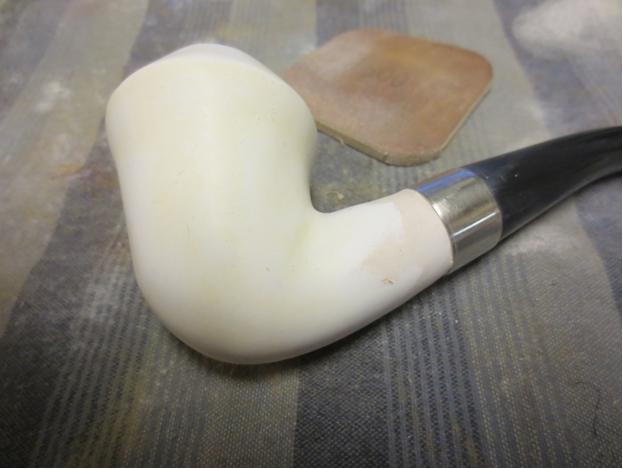
Mess5 Sadly I have to tell you that what I should have done and what I ended up doing are two singularly different tales. I decided that I could definitely improve the draw on the pipe, clean up the tenon and mortise area, and maybe give the pipe a bit more distinguished appearance. So…I took the Dremel and sanded down the shank to slightly smaller than the diameter of the stem so that I could add a nickel band and dress this pipe up. This is where the first issue became apparent. It became clear that the bowl was pressed rather than block meerschaum. When I removed the “shiny” surface coat the underneath meerschaum was a different, almost tan colour. The shiny coat was like an egg-shell over the tan undercoat. What had been a simple project just changed. I had planned to hand shape the shank to the bowl and remove the new hump that I had created and make the shank a bit more delicate looking and in keeping with the flow of the band and stem. But now, the top shiny coat removal left me with a bit of a dilemma. If I removed more of the shape to bring it into line I would also remove more of the shiny coat. What to do? Honestly at this point I put the pipe back in the box and almost decided to just bite the bullet, buy it myself and scavenge a few parts from it. It looked that bad to me. I left it and cleaned up the Stanwell Volcano Sitter that I posted about earlier on the blog.Mess6

Mess7

Mess8

Mess9 After I finished working on the other pipe, I decided to pull the meerschaum out and have another look at it. It was bad. No it was actually worse than that – it was downright ugly. However, I don’t give up easily – though I wonder if in this case I should have. You will have to ask if my stubbornness was a good thing in this case as you read the rest of the process. All I know is that each step I took to improve the pipe ended up making more work for me. Each adjustment led to more adjustments. But at this point, for better or worse, I decided to work on the shape and see what I could do. Maybe I could bring out the shape in such a way that it incorporated the different tan coloured portion of the bowl and the rim. I sanded the shank with 220 grit sandpaper to shape it and round it out. I smoothed out the roughness left behind by the Dremel and worked on the fit of the stem. It was still crooked but at least I could get it to sit straight against the shank and just inside the band. I also lightly topped the bowl to remove the tars and some of the rim damage.Mess10

Mess11

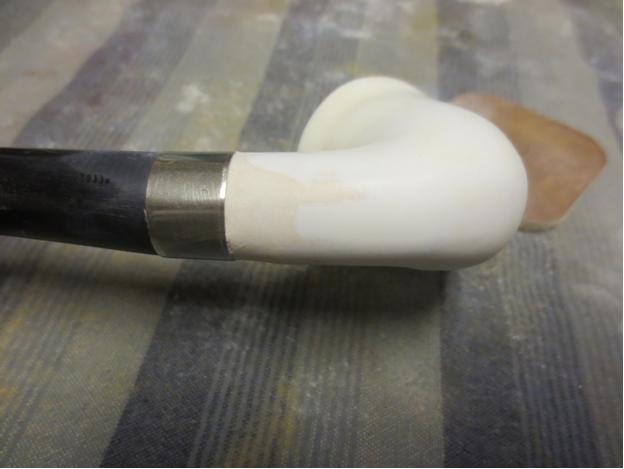
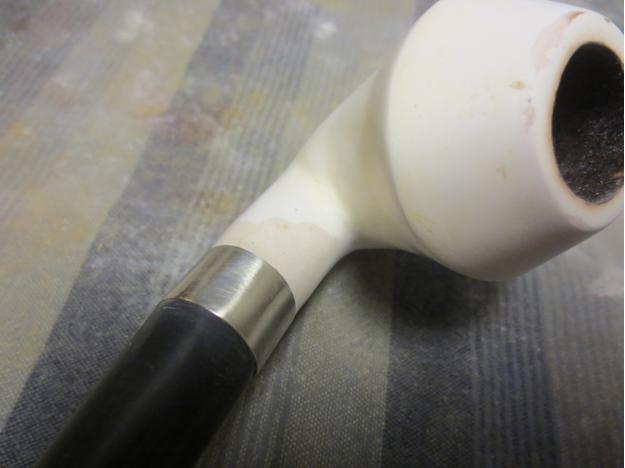
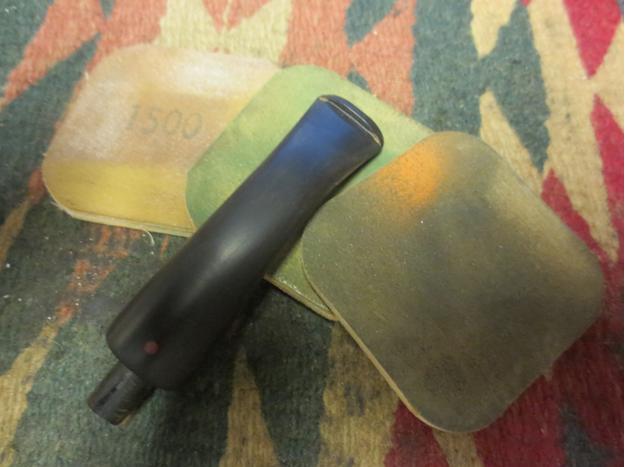
Mess12 I sanded the pipe outside in the yard while Spencer played so as not to make a mess of white dust all over my work area. I finished the rough shaping and went over it with a medium and a fine grit sanding sponge and a fine grit sanding block before I brought it back inside. Once I had it back at the work table I sanded the shank with 1500 micromesh sanding pads to smooth out the surface and shape it even more. All the sanding was merely fine tuning. It turned out that the “shiny” coat was actually quite thin so you can see the flame like extensions up the shank toward the bowl. The nice thing was that the micromesh was giving the meer a bit of a shine. I worked on the scratches on the stem and fit in the band with the micromesh 1500 grit pad as well and the stem was beginning to shine.Mess13
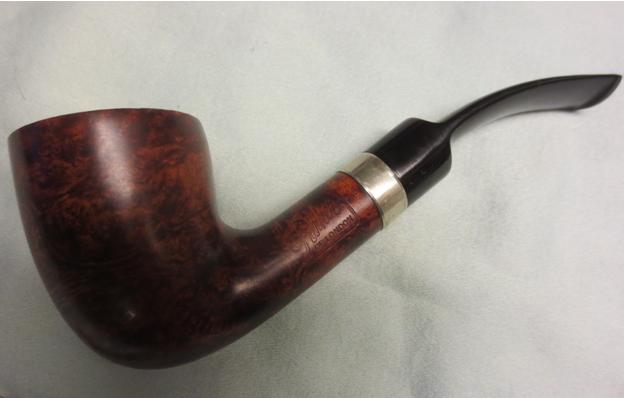
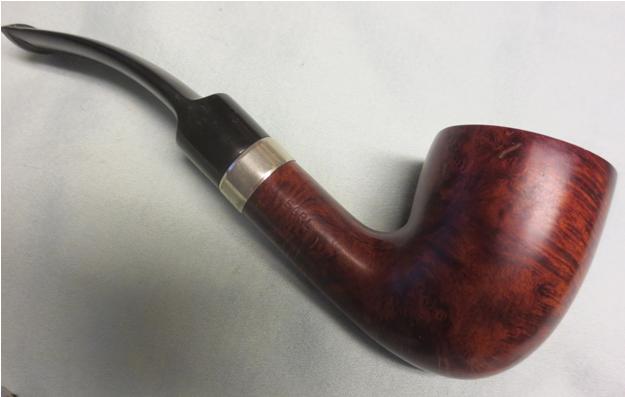
Mess14

Mess15

Mess16 So far what do you think of my major make work project? This is a refurb that did not have to go this way. Those of you who are refurbishing pipes learn from this tactical error and think twice before having the audacity of thinking you can make something better when really all it needs is a quick clean up. You will save yourself a lot of headaches if you learn from my poor example on this “deadly” meer.

Today after work I went back to the meer. I probably should never have touched it again. I am telling you this thing is a nightmare. I removed the stem so that I could heat it and rebend it. I set up things as normal and held the stem about 6 inches above the heat gun. I was worried about melting the plastic stem. I should not have worried about that because I never even had the opportunity to try to bend it. Within seconds I heard a small pop – the stem crack horizontally across the top about an inch from the button. I could not believe it. Now I would have to make a new stem for it. Ah well that should not be a problem. I took out some new push stems to see if they would work in the shank insert in the meer. They were too large. That meant that I would need to pull the shank insert and replace it with another one. The trouble was that it was epoxied into the shank and I could not turn it out of the threads.

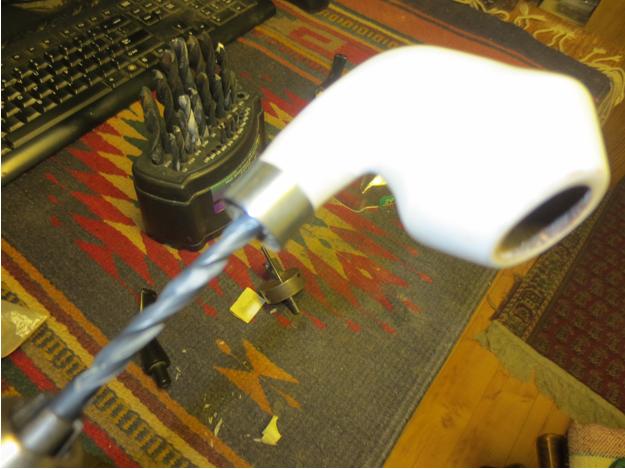
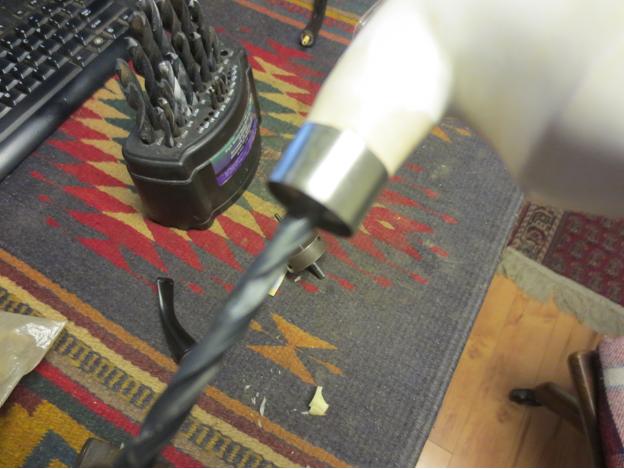
That basically left me with one choice. I would need to drill out the existing mortise push insert so I could put a new one in place. I set up the drill with a bit that would work and hand turned the shank on to the bit. It did not take long to drill through the old insert but cleaning out the epoxy in the threads was another story. It was like rock. I decided to use the next size drill bit and just remove the threads. This pipe was now destined for a push tenon on a regular vulcanite stem. That would solve the draw and make the thing a lot better smoking pipe.Mess17

Mess18 Here is a picture of the newly drilled out shank. It is open and clean. I used a small needle file to clear out the debris from the drilling and a wet cotton swab to remove the dust from the walls and base of the mortise. Now I had to turn a tenon to fit the mortise. Again that should have been quite simple.Mess19 I found a stem in my can of parts that would do the trick and turned the tenon down to the measurements of the mortise. This finally was going great! I should have been warned that another ugly turn in events was about to happen. With the fit perfect I turned the stem into the shank and felt a pop on my fingers. I removed the stem and could see two small hairline cracks in the pressed meer. What made this humorous was that I had just read an email from Troy about how easily pressed meer crack under pressure. No worries the band had already been pressed into place and the crack was contained.Mess20

Mess21 Then I examined it around the other side of the band and on the left side saw some fine spider web like cracks – so tiny that formed an arch from the edge of the band at the top and curved down the side to the bottom. The issues with this old pipe never seemed to end. I cleaned out the crack and used some of the meer powder and superglue to fill in the crack. I sanded the crack with micromesh pads to smooth things out once again. I sanded the stem with 220 grit sandpaper to make the fit right. The next series of photos show the improved look – repairs and all.Mess22

Mess23

Mess24

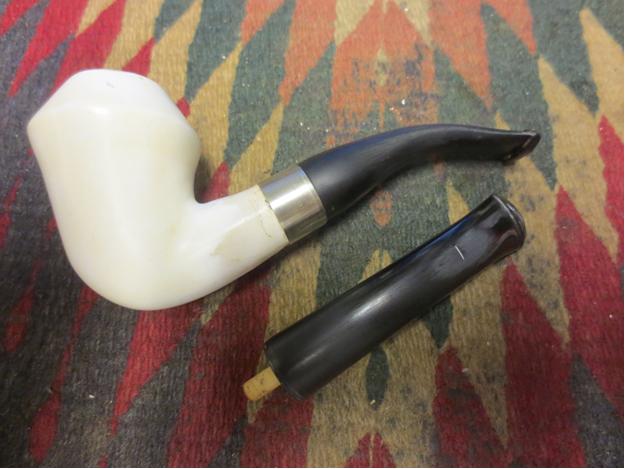
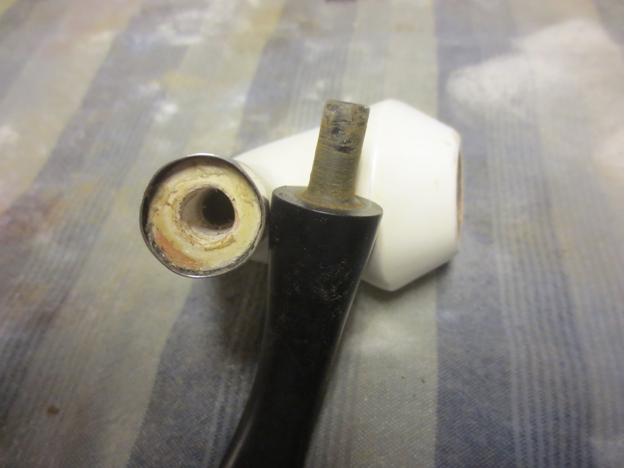
Mess25 I put the pipe away and called it a night. To say I was frustrated is probably an understatement. I can’t tell you how many times in this process I came close to throwing the pipe away and scavenging the parts for later use. In the morning I worked some more on the stem to make the stem/band junction smooth. I thought I would take the next two photos of the new stem along side of the original stem to show the changes. The first shows the deep inset of the push tenon in the original. The second photo shows the crack across the top of the stem. It appears as a white line.Mess26

Mess27 At this point I think the pipe looks great! The new stem fits well and the look is improved – from a distance. You can see the repaired crack next to the band on the left side if you look carefully at both pictures. I think that this one will end up staying with me or being a giveaway. It is a shame really as the shape looks far better.

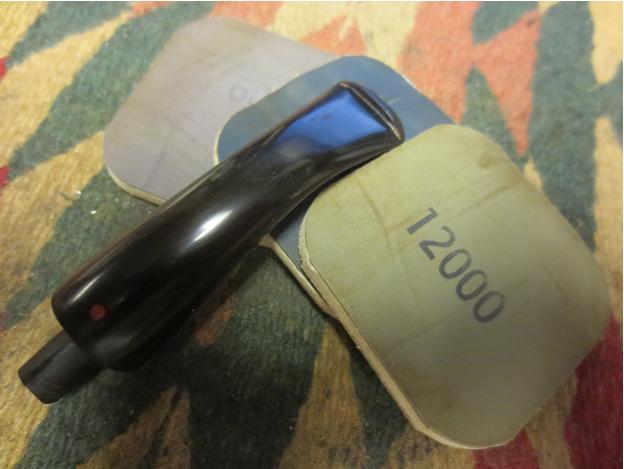
I worked over the stem and the bowl with micromesh sanding pads – wet sanding with 1500-2400 grit pads and dry sanding with 3200-12000 grit pads. I rubbed the stem down with Obsidian Oil and then continued to sand it through the next three grit pads. I finished the last grit and gave it a final coat of the oil and set it aside to dry.Mess28

Mess29

Mess30 I buffed the stem and the bowl lightly with Blue Diamond polish and then gave the stem multiple coats of carnauba wax. I hand buffed it with a microfibre cloth. The photos below show all of the flaws of this old pipe. There is nothing hidden. The small web of cracks on the left side of the shank, the areas on the sides of the rim and on the shank where the shiny coat disappeared when I sanded it are all visible. It is a great looking shape. The stem and the flow of the pipe are greatly improved but it is sadly not one that will be for sale. My improvements ended up making the pipe different from the original. I think the verdict is still out in terms of if I made it better or worse. Maybe it is just a difference in terms of degree of worse! It certainly is a better smoking pipe now. The draw is easy and open so I gained that in the process. I think this one will end up being a shop pipe here. What do you think?Mess31

Mess32

Mess33

Mess34

UPDATE: I just came in from sitting int he backyard with my dog giving this pipe an inaugural smoke. I loaded up a bow of Kohlhase & Kopp Easter Edition and enjoyed it for over an hour sitting and watching Spencer play with sticks. It delivers a flavourful smoke with effortless draw. The stem is comfortable in the mouth and I actually enjoyed smoking the pipe. Who knows what it will deliver over the days ahead. Worst case scenario I will have pressed meer to smoke that I will not care about damaging…

Restoring a Millville Premiere Large Billiard


Blog by Steve Laug

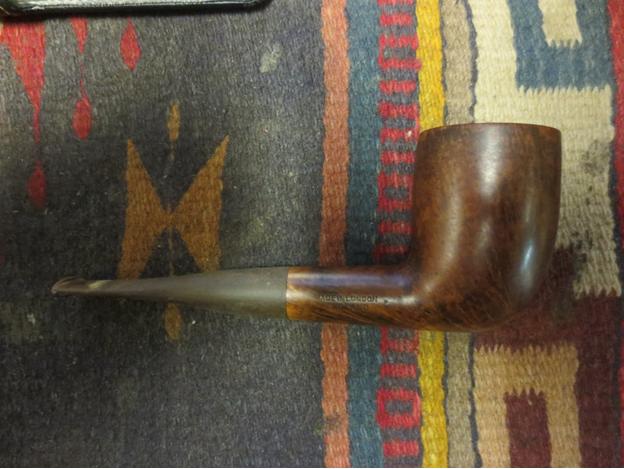
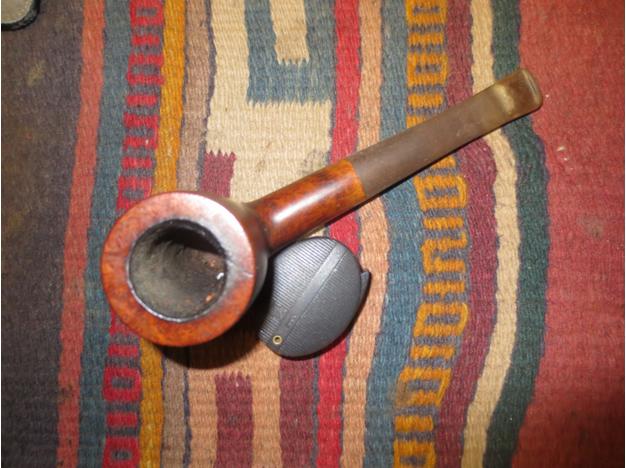
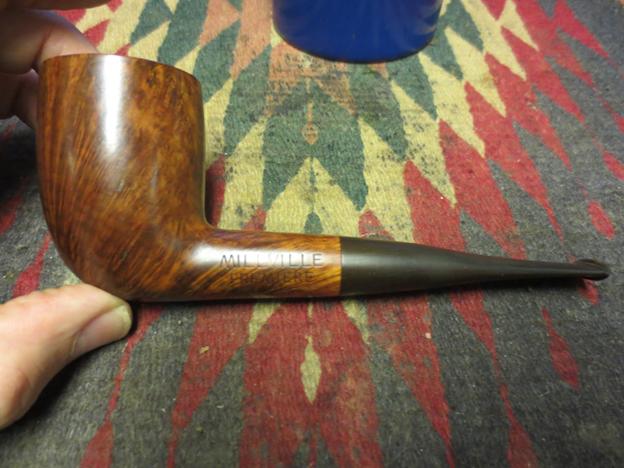
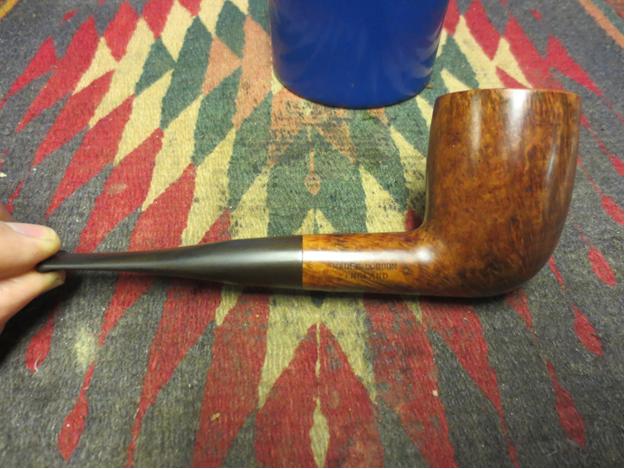
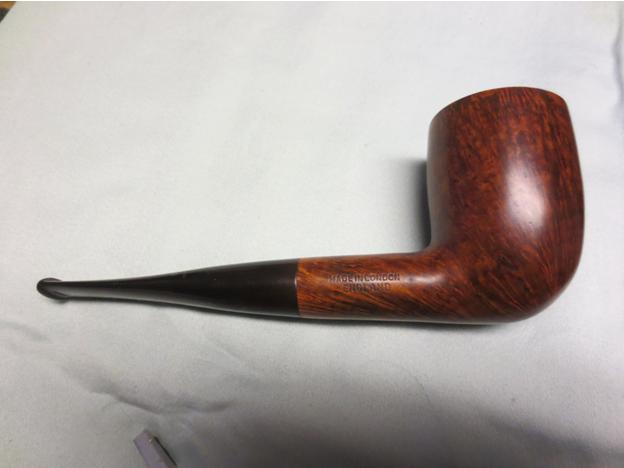
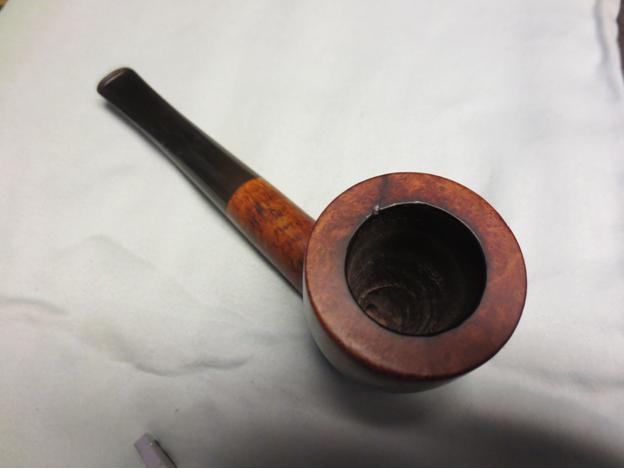
The next pipe on the worktable is another that will be for sale for the benefit of Smokers Forum online community. It is a truly beautiful piece of briar that is stamped Millville Premier on the left side of the shank and Made in London over England on the right side. I have had a few Millville pipes come across my table over the years but this is by far one of the most stunning. The grain on it is beautiful. When I got it the finish was dirty and the grain did not stand out clearly. The stem was rough and porous feeling and was oxidized. There seemed to have been a softee bit in place at one time on the stem as it had left behind the characteristic calcification on the vulcanite. There were two light tooth marks on the top and bottom of the stem near the button. The fit of the stem is perfect to the shank and there is a very faint characteristic M that graces this brand of pipe. It is almost gone from over-buffing but I am hoping it will still show when I have finished cleaning up the pipe. The finish was lightened at the shank stem junction and would need to be darkened. The rim had what appeared to be a gouge across the top surface at the backside of the bowl.
I wanted to know more about the brand so I did a bit of searching on the web to see what I could find out about Millville pipes. Dennis Marshall started the brand in 1980. He had worked for Barling and Charatan for many years. His son John now makes all of the Millville pipes as Dennis is retired. Their pipes still very closely follow the artistic, freeform designs and grading of the old Charatan lines. The pipes are sold almost exclusively in Piccadilly, London in a stall in the market in front of St. James’s Church. Though you can sometimes find them online at British pipe sellers such as Bond’s of London. According to Pipedia the prices of their pipes “start at about 20 £ – hardly the price of a cheapish Stanwell. These were made from pre-turned bowls. The better pipes, entirely hand-made freehands in the old Charatan style, are made from a stock of very old briar, as John stresses. They use several grades like “Unique” or “Executive”. A “Bamboo” can make it up to 500 £.”

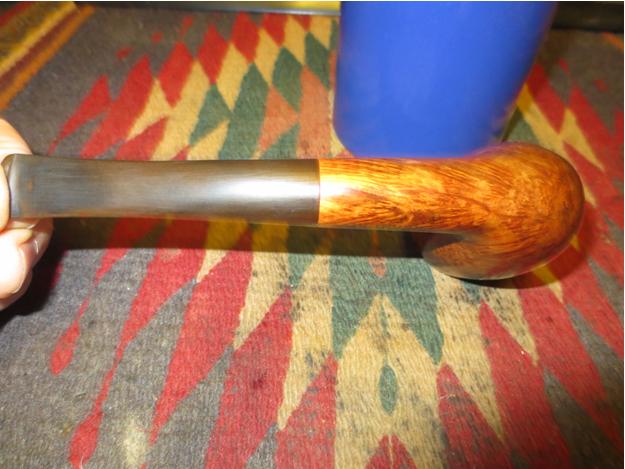
Below are some photos of the pipe when I received it. It is a beauty that needed some TLC but it would soon be shining again.Mill1

Mill2

Mill3

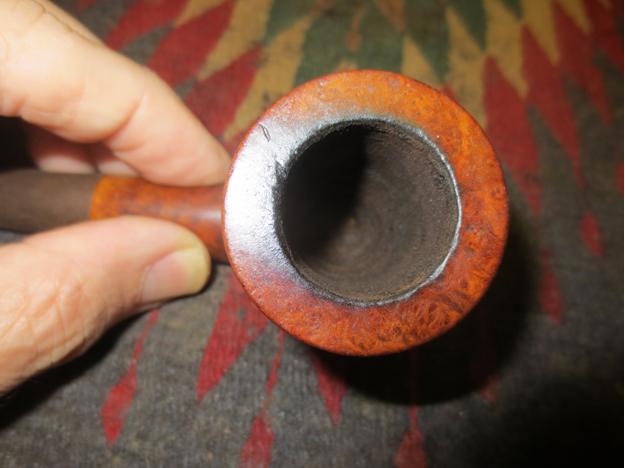
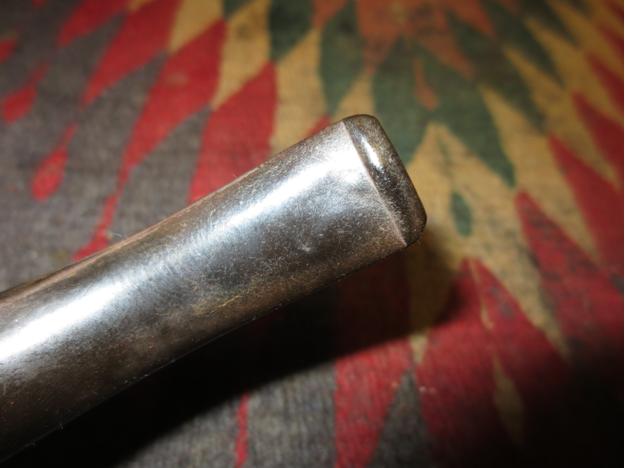
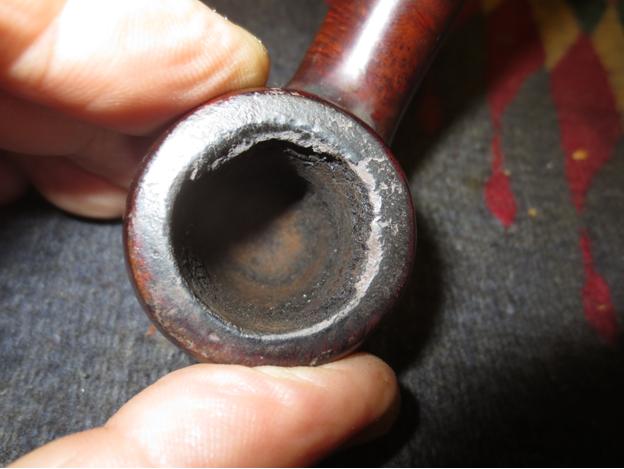
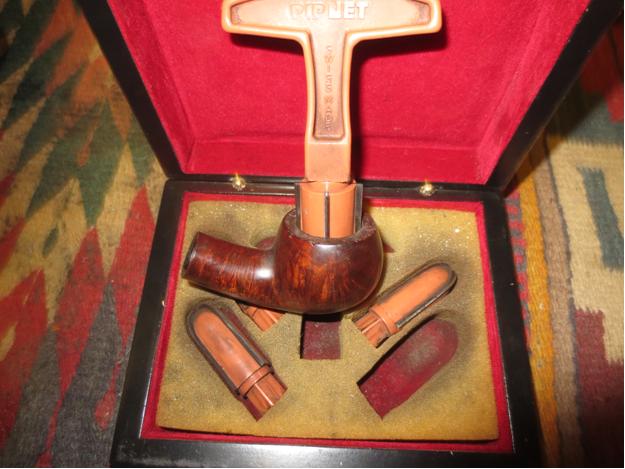
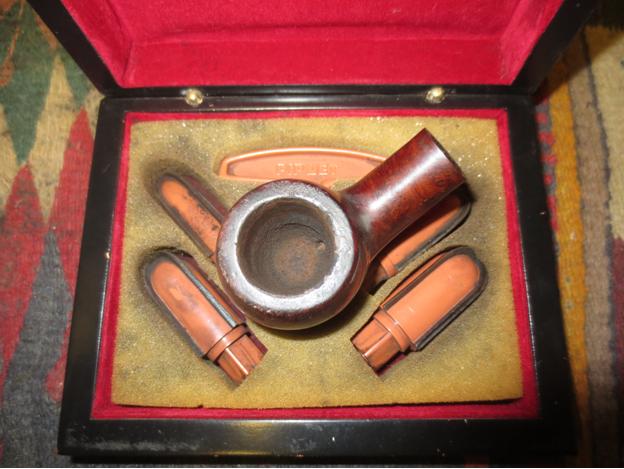
Mill4 I reamed the bowl with a PipNet pipe reamer to take the cake back to the briar. I wanted to clean up the inner edge of the rim before I worked on the mark on the surface.Mill5

Mill6 I took the next photo to show what appeared to be a gouge in the top of the rim. It went at an angle from the inside of the bowl across the back surface of the rim.Mill7 I used some alcohol on a cotton pad to scrub down the surface of the briar. Once the grime was removed you can see the stunning grain on this beauty!Mill8

Mill9

Mill10

Mill11 I spent some time examining the rim with a loupe to check how deep the gouge went and if I could steam it or if I would need to sand it to repair it. To my surprise I found that it was not a gouge at all but rather a fill. Somehow along the way the fill had shrunken and left the divot in the surface of the rim. I decided to top the bowl and see if I could minimize the divot. I started with a medium grit sanding sponge to see if that would do the job. I hate to use the extreme of topping the bowl with a full topping.Mill12

Mill13 While it worked to some degree it did not remove the dip in the surface of the bowl. I decided to lightly top the bowl with the sandpaper on the topping board.Mill14 In the next photo you can clearly see the fill in the rim. I was able to flatten the surface of the rim so that it is smooth to touch.Mill15 I sanded the inner edge of the rim with a folded piece of 220 grit sandpaper to smooth out the nick in the rim. Then it was time to clean out the bowl, shank and stem. I used pipe cleaners, cotton swabs and alcohol to remove the tars and oils in the pipe. It did not take a lot of scrubbing before the pipe was clean.Mill16

Mill17 To smooth out the rough texture of the stem and remove the oxidation I sanded it with 220 grit sandpaper and then with a medium and a fine grit sanding sponge.Mill18 For a change of pace, I turned my attention to the bowl finish. I used a stain pen to touch up the lighter areas of the finish at the stem shank junction and on the rim that I had topped. I blended two of the stain pens – the medium and the dark stain pen – to get the colour to match the bowl. I then buffed the bowl with White Diamond on the wheel to smooth out the blend. I would also need to use the micromesh sanding pads in the higher grits to bring the finish to a nice blend.Mill19

Mill20

Mill21

Mill22 I worked on the stem with micromesh sanding pads – wet sanding with 1500-2400 grit pads and then rubbed the stem down with Obsidian Oil. I dry sanded with 3200-4000 grit pads and gave it another coat of oil. This time I let the oil dry on the stem before I took it to the buffer.Mill23

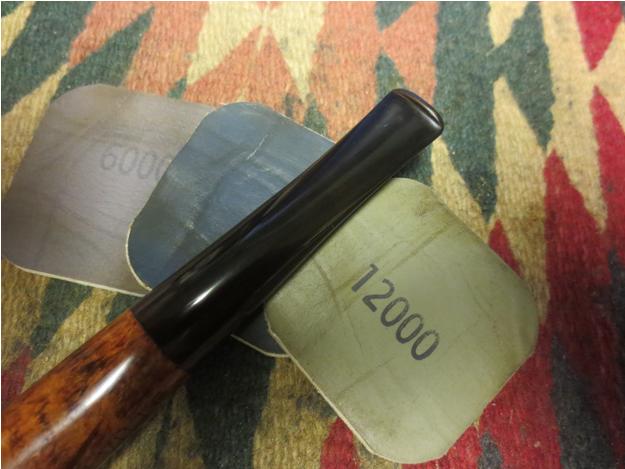
Mill24 I buffed the bowl and stem with White Diamond and then finished sanding with 6000-12000 grit micromesh sanding pads. I gave the stem a final coat of Obsidian Oil and let it dry.Mill25 I buffed the pipe with Blue Diamond and then gave it multiple coats of carnauba wax. I buffed it with a soft flannel buffing pad and then hand buffed it with a microfibre cloth to add depth to the shine. The finished pipe is shown in the photos below.Mill26

Mill27

Mill28

Mill29

Mill30

Mill31

Reviving a Savinelli Silver 806


Blog by Dave Gossett
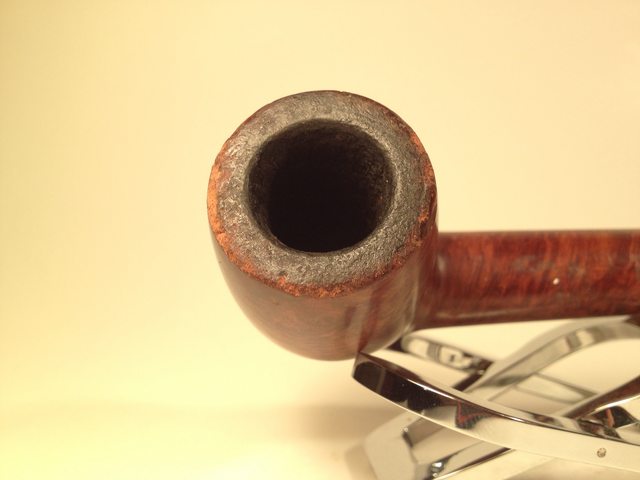
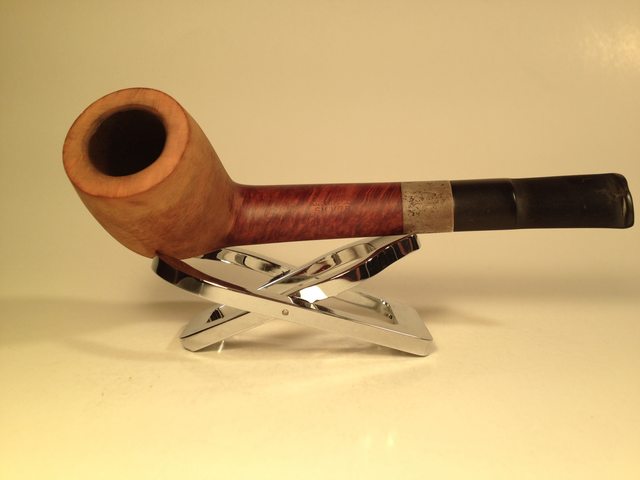
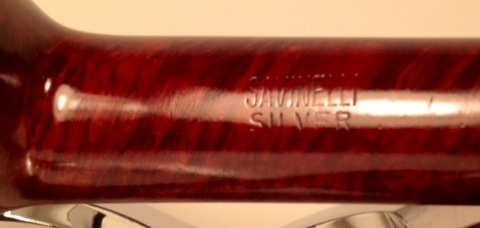
Dave1 My Army cousin stationed in Italy came to the states recently bearing gifts. He bought me 9 pipes at a swap meet in Vencenza – 5 Savinelli’s, 2 Brebbia’s, 1 Rossi, and 1 lesser known Italian briar. I’m a sucker for silver bands, long shanks, and Sav’s, so naturally this is the first one out of the batch I cleaned up.

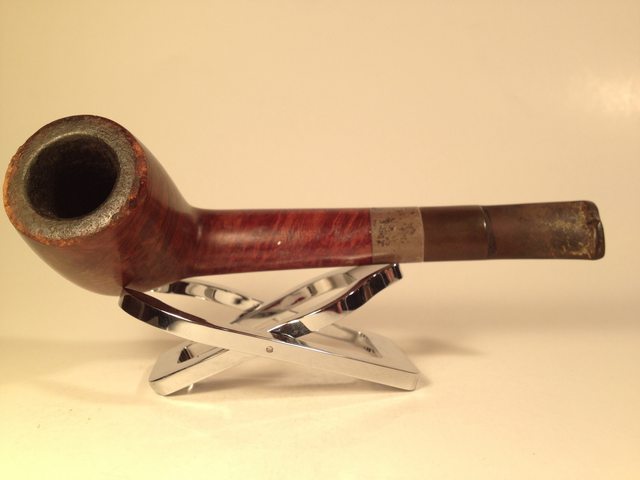
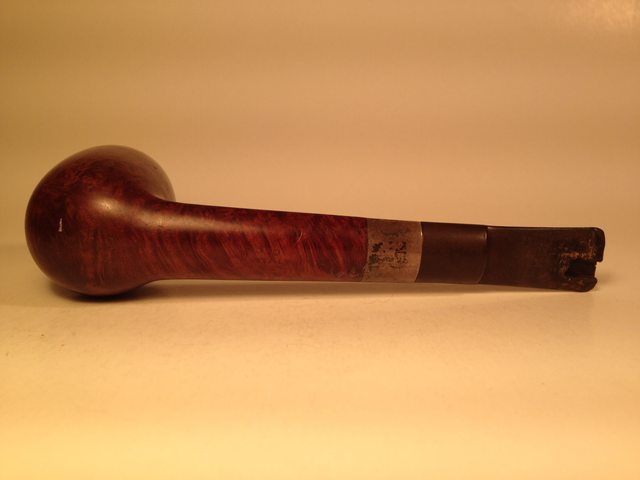
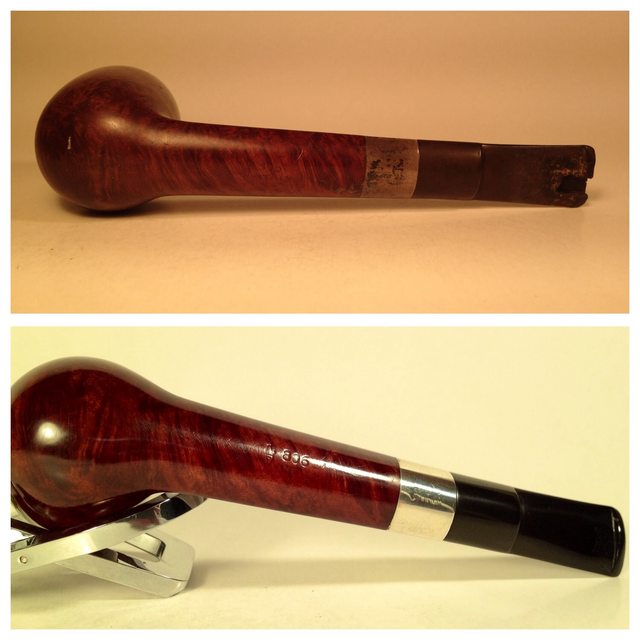
This one had not been “smoked lightly” as the saying goes. The rim was beat up, the stummel had plenty of scratches, and the stem had a hefty chunk missing.Dave2

Dave3

Dave4 I started out by reaming and cleaning the airways. Then I topped the bowl and beveled it, and sanded the scratches from the exterior.Dave5 After removing the damage from the stummel, I gave it a light alcohol scrub to remove the rest of the stain.

I gave it a dark contrast stain starting with Fiebings dark brown and a hint of oxblood, then after drying for 24 hours I sanded it to lighten it up and make the grain pop. A cloth dampened with alcohol can be used around the stampings to lighten the stain a bit without compromising the nomenclature.

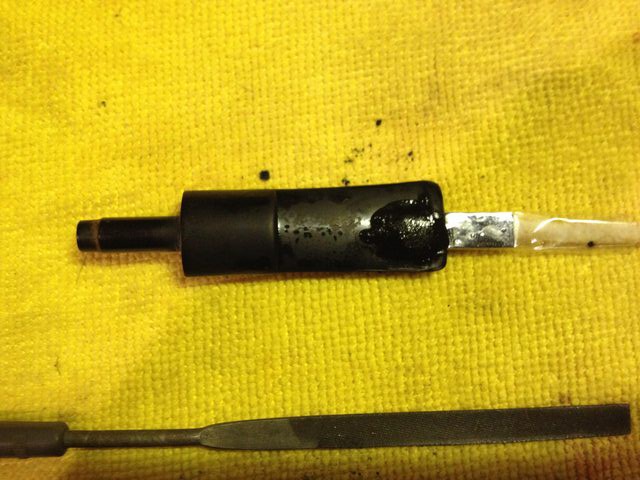
Next up, the stem. I removed the oxidation and scored the area around the repair site. Patched up the missing vulcanite with CA and charcoal, then filed it down and wet sanded smooth, followed by a light run on the wheel with compound.Dave6 I’ve already put a few bowls of Syrian Reserve through it since the pictures were taken. Great smoker. This one’s a keeper.Dave7

Dave8

Dave9

Dave10

Dave11

Dave12

Dave13

Breathing New Life into an LHS Sulgrave


Blog by Steve Laug

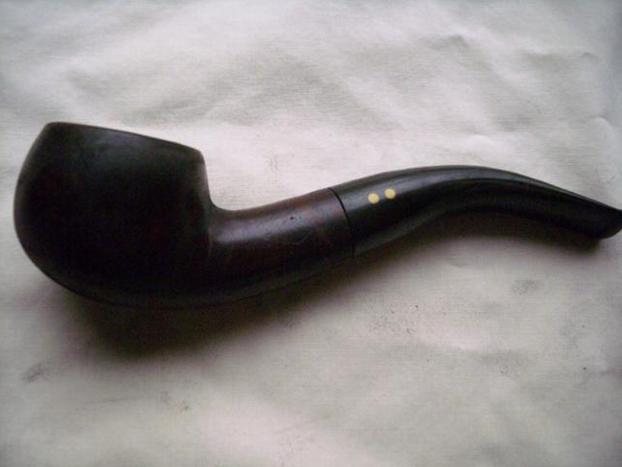
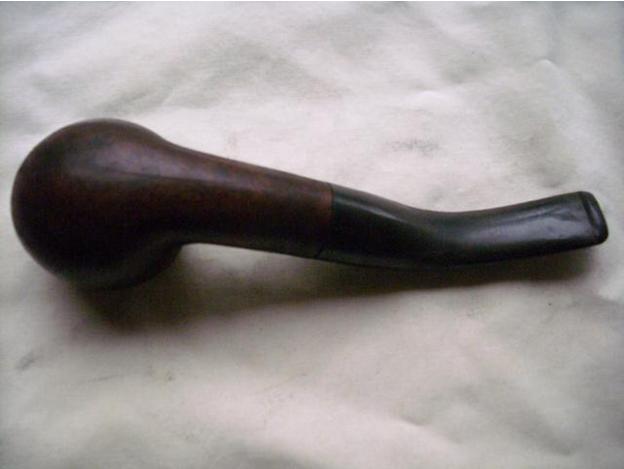
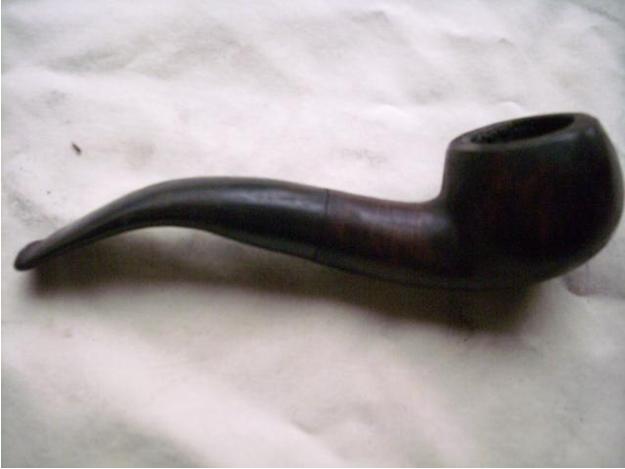
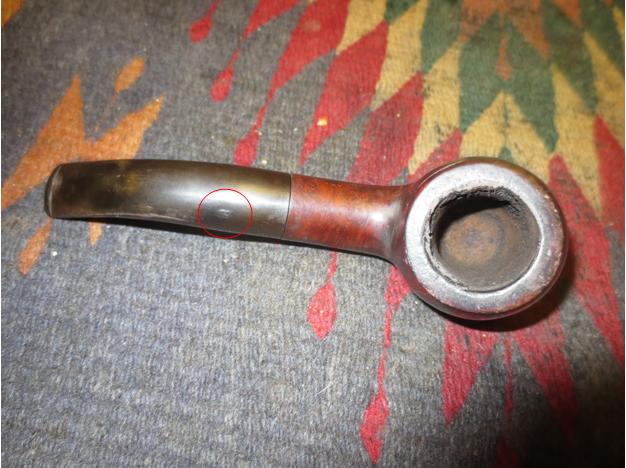
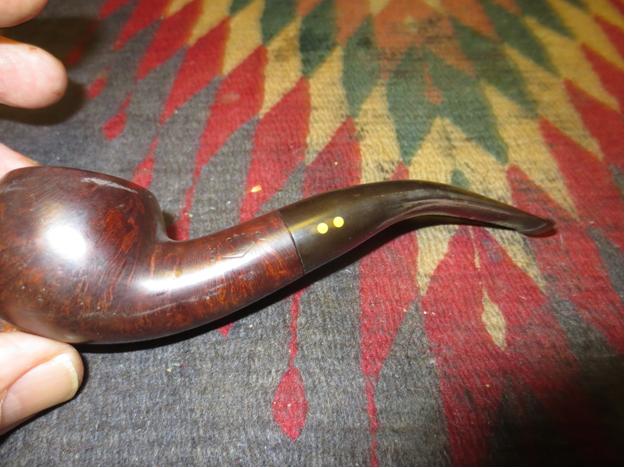
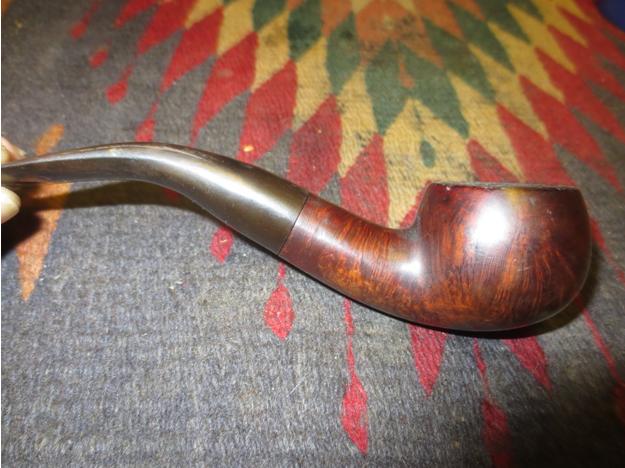
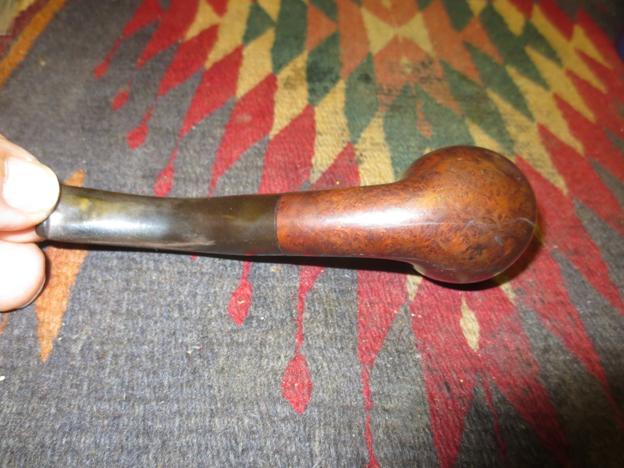
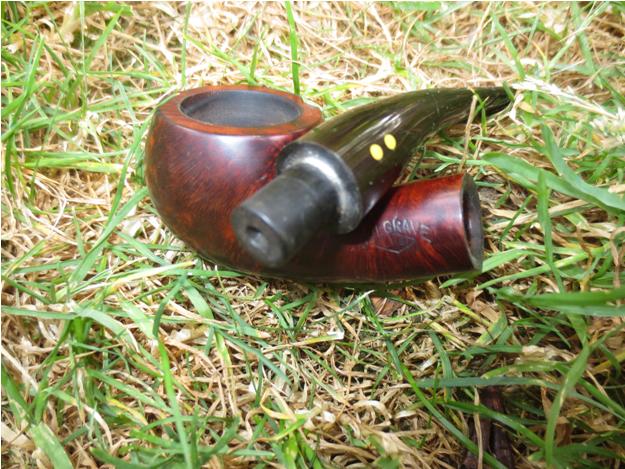
I have become a fan of older LHS pipes and restored quite a few of them lately. I am always on the lookout for different LHS lines that I have not seen. Recently I picked up this LHS Sulgrave from a fellow on the Dr. Grabow Collectors Forum for $15. It is a line that I had not heard of before. He described it as a lightly smoked briar pipe. When I saw it I wanted it as it was my kind of shape. Never sure what to call this shape – bent banker, squat apple – not sure but I like it. He gave the following description in the sale listing. The shank is stamped Purex Sulgrave arched over LHS in a Diamond on the left side. The stem has two light coloured dots on the left side. The pipe is 5 1/8 inches long from the bottom of bowl to end of bit. The bowl chamber diameter is 7/8 inch and bowl depth is 1 1/4 inch. There is light caking in bowl. There is light tooth wear on end of the stem near the button. It has normal wear and tear (dings, oxidation and scratches) for an estate pipe. Nice overall shape and condition. Here are the photos that he included when I emailed him for details.LHS1
LHS2

LHS3

LHS4 When the pipe arrived I was not disappointed. The shape was perfect. The description was accurate and the only variation that I could see was that the stamping did not include PUREX on the shank. Not a big deal in my book. The bowl was unevenly caked and appeared to have been reamed. The back side of the bowl had a thicker portion of cake that gave the inside wall on the back side an uneven and out of round look. I was pretty certain that with a good reaming and a light sanding the rim would look better. The stem was over bent and there was a slight crease on the underside of the bend. There was a coat of wax or some kind of coating on the stem and bowl. The stem was oxidized. In the first photo below you can see slight imperfection in the vulcanite stem. I have circled it to highlight it in the photo below. It is not a hole or worn spot, it is actually a thread of cord in the rubber. Its presence gives some idea of the date of manufacture as recycled rubber was used in WWII pipes.LHS5

LHS6

LHS7

LHS8 The stem also had a lot of tooth dents and chatter along both top and bottom with some very deep marks on both. I tried to capture them in the next two close-up photos but they are still not very clear. The odd thing was that the dents went up the stem over an inch. The slot in the button was not centred and appeared to have left the factory that way. The dents were deep enough that I was concerned regarding the thinness of the stem surface over the airway. The mortise and airway in the shank were dirty and the end of the mortise was chipped away. It looked as if there had originally been a stinger in the tenon but it was no longer with the pipe.LHS9

LHS10 I also have included the next close-up photo of the rim and the bowl interior to show the cake that gave the bowl an out of round appearance.LHS11 I reamed the bowl with a PipNet pipe reamer using the largest cutting head. I took the cake back to bare wood to even out the inner edge of the bowl. I wanted to get rid of the cake so that I could smooth out the edge.LHS12

LHS13 I folded a piece of 220 grit sandpaper to smooth out inner edge. It took a little effort remove the inner edge damage and clean up the roundness of the bowl.LHS14

LHS15 I wiped down the bowl with acetone on cotton pads to remove the tars and the wax coat on the briar. With them removed the outer edge of the bowl showed damage as well. The bowl had been knocked about on the front edge particularly. The grain on this pipe was lovely.LHS16

LHS17

LHS18

LHS19 To minimize the outer edge damage I topped the bowl with 220 grit sandpaper on a topping board. I sanded it to remove the damage to the top of the bowl and clean up the outer edge of the bowl.LHS20

LHS21 I cleaned out the shank and the bowl with pipe cleaners, cotton swabs and alcohol to remove the grime inside. It took quite a few of both to clean out the shank but finally they came out clean.LHS22 I heated the stem with a heat gun to try and lift some of the dents to the surface and to also take out some of the bend. I also wanted to smooth out the sharpness of the bend on the bottom side.LHS23

LHS24

LHS25 I cleaned out the airway in the stem with pipe cleaners, cotton swabs and alcohol.LHS26 The heat had raised most of the dents significantly. The ones that were left in the stem needed to be sanded out and then filled to take care of them. I used 220 grit sandpaper to smooth out the surface. I also worked on the curve on the underside of the stem to make it less sharp looking.LHS27

LHS28

LHS29

LHS30 The dents in the stem needed to be filled to bring the surface back to smooth flowing condition. I used a black super glue to fill the surface and set the stem aside to dry for several hours. Once dry, I sanded the fills with 220 grit sandpaper and then used a medium and a fine grit sanding sponge to feather them into the surface of the stem.LHS31

LHS32

LHS33

LHS34

LHS35

LHS36 I used a needle file to clean up and sharpen the edge of the button and give it more definition. I sanded the sharp edge with sandpaper and then sanded it with micromesh sanding pads. I wet sanded the stem with 1500-2400 grit micromesh pads and dry sanded with 3200-12,000 grit pads. I rubbed the stem down with Obsidian Oil between each set of three pads and then let it dry after sanding with a 12,000 grit pad.LHS37

LHS38

LHS39 I buffed the pipe with White Diamond and Blue Diamond on the buffing wheel to polish and remove the slight remnants of oxidation that had come to the surface. I gave it multiple coats of carnauba wax and buffed it with a clean flannel buffing pad. I brought it back to the table and hand buffed it with a microfibre cloth. The finished pipe is shown in the photos below.LHS40

LHS41

LHS42

LHS43

LHS44

LHS45

LHS46

Refurbishing a Dr. Grabow Westbrook 84L Smooth Canadian


Blog by Troy Wilburn

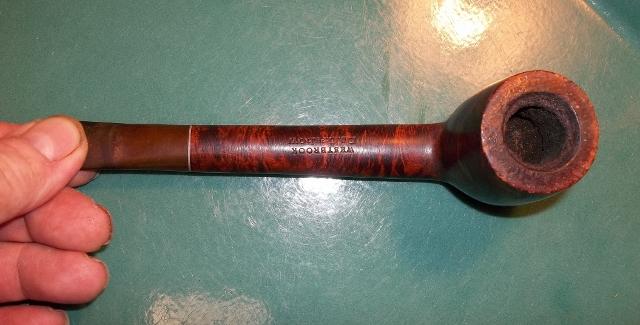
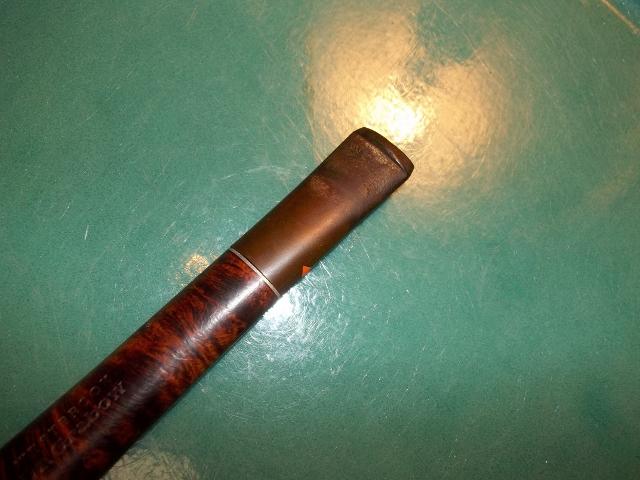
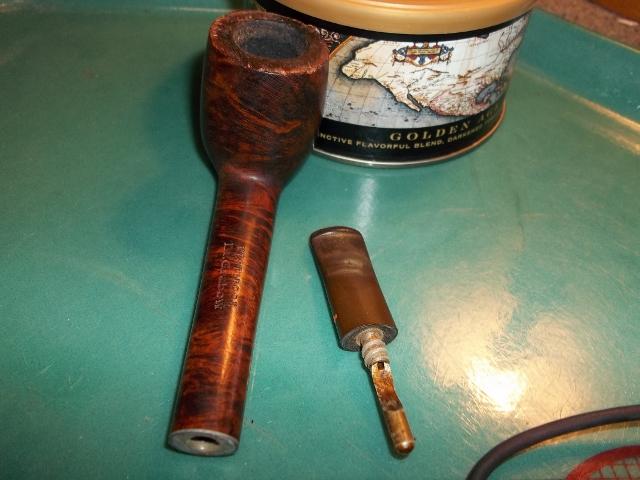
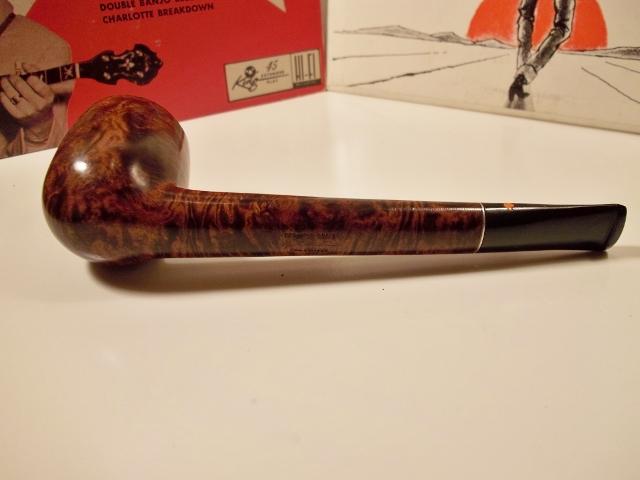
I got this pipe in a trade. I was pleasantly surprised when it showed up it was an 84L and not a regular 84. The stampings are crisp. The rim did have some dings so I had to lightly top it and restain it. There are still some very light dings on pipe but I let them go as the factory finish and color was excellent. So I just cleaned and buffed it other than rim. The stem still has some teeth marks I could not get out fully. The old bowl cake came out easy and the shank was not that dirty and I’m glad because these Canadian shanks are a pain to clean lol. It has zero fills too, which on that much briar was a nice surprise. All and all I’m very happy with it.

Here is the pipe when it arrived.West1

West2

West3

West4

West5 I took pics of it after I had finished restoring it with a couple of my favorite 45 EPs .

After: West6

West7

West8

West9

West10

West11

West12

West13

West14

West15

West16

West17

West18

Breathing New Life into a La Fond’s Vintage, Algerian Briar Reject Billiard


Blog by Steve Laug

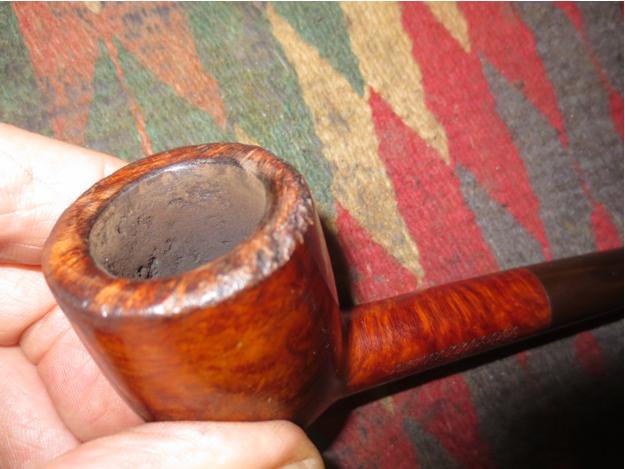
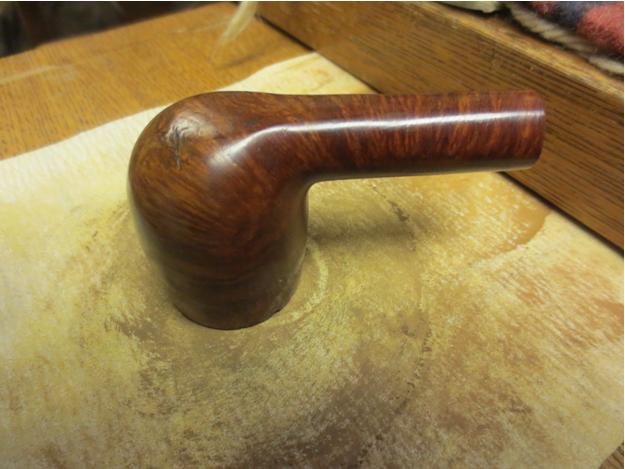
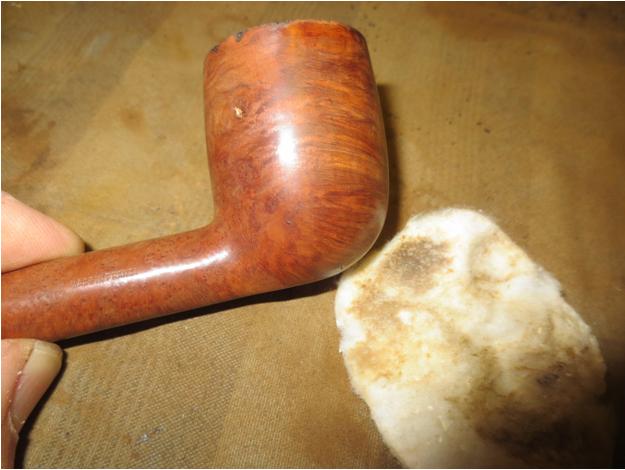
This old pipe came to me in a lot that was a gift from a friend and it was in very rough shape. The bowl covered in varnish and the rim had been used to hammer nails. There was not one smooth surface on the rim of the pipe. The outer edge of the bowl was very rough particular on the backside with chunks of briar missing. There were several fills on the bowl – on both sides that were missing and there were large deep scratches on the bottom of the bowl.LaFond1
LaFond2

LaFond3

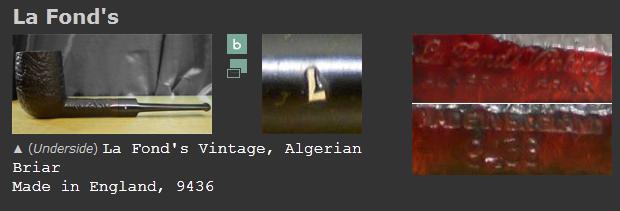
LaFond4 I have included a close-up photo of the rim to show the extent of the damage.LaFond5 I also took some close-up photos of the stamping to give an idea of what that looks like. The shank is stamped on the right side with the words MADE IN FRANCE. On the left side it is stamped with a double line of XXXX’s. I interpret that as the stamping that a pipe company uses to declare a pipe a REJECT. Some of the English companies actually stamp the pipe reject while others X out the stamping. In this case I was able to read through the X’s and see that underneath it was stamped La Fond’s Vintage on the first line and below that it read Algerian Briar. There is not a shape number on the shank.LaFond6
LaFond7 I looked in Who Made That Pipe to see if I could find any information on the brand. The book listed that the brand was unknown but was English made. I looked on pipephil’s site, Pipes: Logos and Markings and found the listing below http://www.pipephil.eu/logos/en/logo-l1.html. The left side of the shank on the pipe I am working on is stamped identically to the one in the photo. The right side of mine says Made in France instead of Made in England. There is also no shape number on the one I have.LaFond8 I think that an educated guess can be made regarding the company behind this brand of pipe. Looking at the shape of the pipe and the shape number on the pipe in the photo it looks to me that the brand may well have been a sub brand of GBD. Certainly the 9436 shape number matches the same shape number that GBD stamped on that shape pipe.

As I have been doing lately, I reamed the bowl with a PipNet pipe reamer to take the cake back to bare briar. I wanted to see if there was any significant damage to the inside walls of the bowl considering the damage everywhere else. After reaming I would need to sand the inside of the bowl as the cake was both crumbly in some places and hard and pitted in others.LaFOnd9

LaFond10

LaFond11 The rim damage made it necessary to top the bowl to remove as much of it as possible. I used the topping board and 220 grit sandpaper to do the work.LaFond12 I removed as much of the top of the rim as possible without changing the overall appearance of the pipe. I was able to remove the majority of the damage. There were still some missing chunks of briar on the back side of the bowl near the top edge that I would need to address in a different manner.LaFond13 I wiped the bowl down with acetone on cotton pads to remove the varnish coat that covered the bowl and shank. Fortunately it came off quite easily. At least they did not coat the bowl with urethane or some other modern plastic coat. I worked on the damaged areas and the missing fills to make sure that I was able to get the grit and grime out of the holes.LaFond14

LaFond15

LaFond16

LaFond17 I picked out any pieces of debris in the divots and wiped it down one final time. I filled the holes with briar dust and then dripped clear super glue on top of the briar dust. I added more briar dust and more glue until I had the surfaces built up and repaired.LaFond18

LaFond19

LaFond20 I sanded the repairs with 220 grit sandpaper to blend the patches into the surrounding briar. It took a bit of sanding to smooth things out and leave the patches only in the holes that needed to be repaired and not on the surface of the bowl. Once the surface was smooth I sanded the areas with a medium and fine grit sanding sponge to remove the scratches.LaFond21

LaFond22

LaFond23 I sanded the inside of the bowl and then scrubbed out the bowl, shank and stem with pipe cleaners, cotton swabs and isopropyl alcohol. I scrubbed until the shank was clean.LaFond24 I used the stain pens to blend in the sanded areas with the colour of the rest of the bowl. I used it on the rim and the repairs around the bowl. I blended light brown and dark brown stain pens to get the colour to match. I sanded the bowl and rim with a fine grit sanding block to feather in the stained areas.LaFond25

LaFond26

LaFond27

LaFond28

LaFond29 After sanding I rubbed the bowl down with a light coat of olive oil and buffed it into the briar.LaFond30

LaFond31

LaFond32

LaFond33 I would need to wax and polish the bowl once I had finished with the stem but it was done for the time being. I turned to the stem and sanded it with 220 grit sandpaper to remove the ripples in the vulcanite on the top and bottom of the stem from the button toward the bowl for about 1 ½ inches. It was obvious and ugly in my opinion. I finished smoothing out the stem surface and then sanded it with a medium and a fine grit sanding sponge to smooth out the scratches.LaFond34

LaFond35

LaFond36

LaFond37 There was some oxidation on the stem that needed some more work so I repeated the process until the oxidation was removed. I wet sanded the stem with 1500-2400 grit micromesh sanding pads. I rubbed the stem down with Obsidian Oil and then dry sanded it with 3200-4000 grit pads and gave it another coat of oil I finished sanding with the micromesh pads dry sanding with 6000-12000 grit. I gave the stem a final coat of Obsidian Oil and let it dry.LaFond38

LaFond39

LaFond40 I buffed the pipe with Blue Diamond on the buffing wheel and then gave it multiple coats of carnauba wax. I buffed it with a clean flannel buffing pad and then took it back to the work table and hand buffed it with a microfibre cloth. Dave Gossett wrote about doing that several blogs ago and I have been doing it ever since. It seems to add depth to the shine that a buffer alone does not give. The finished pipe is shown in the photos below. I took the photos outside in the waning light of the day. I really like the look of the pipe in the grass. The green sets off the colours of the briar and the black of the stem. This old timer is ready for a long life ahead of service to whoever takes it home to their rotation. Thanks for looking.LaFond41

LaFond42

LaFond43

LaFond44

Rejuvenating and Repairing a Whitehall Dublin


Blog by Steve Laug

This old Whitehall pipe came to me from the antique shop in Victor, Idaho, a small town on the way to Jackson Hole, Wyoming. On a recent trip to Idaho my brother and his family and my daughters and I visited Jackson Hole. On the way home, we stopped in Victor to stretch our legs and wander a bit. I went into the antique shop and struck up a conversation with the owner. Eventually a tin of five pipes and some parts came out from under the counter. I bought all of them. They traveled back to Vancouver with me and will one day all be refurbished.

This Dublin shaped pipe is stamped Whitehall on the left side of the shank – though the stamping is faint. On the right side it is stamped Imported Briar (also faint). It has a flat bottom and sits well on that. The finish was very worn but was a rich oxblood colour under the grime. The bowl sides have some great cross grain. There were some small fills near the top of the bowl on the left side. The rim was damaged on the outer edge and very caked from the bowl over the rim top. The inner edge of the rim was still round and did not show signs of damage under the thick cake. The stem appeared to be a poor fit but as I looked at it I realized that it was upside down. The flattened bottom of the bowl had not been continued on the stem so it sat wrong.Dublin1

Dublin2

Dublin3

Dublin4 I took some close-up photos of the rim and sides of the bowl. The rim photo shows the tarry buildup and the side photos show the stamping.Dublin5

Dublin6

Dublin7 I generally ream the bowl when I start a clean up to remove the cake so I can examine the pipe thoroughly to check for inside wall damage and potential issues. I reamed it with a PipNet reamer and took the cake back to bare briar.Dublin8 While I was at it I scrubbed the rim with alcohol and cotton pads to remove some of the tars. I had to use a sharp blade to gently scrape away the thick coat of tars while I was scrubbing. The photo below shows the initial cleanup of the rim and newly reamed bowl.Dublin9 I sanded the rim with 220 grit sandpaper to further remove the tars and to minimize the outer edge damage. There was a burn mark on the front left of the rim that I was able to reduce but not remove altogether.Dublin10 I scrubbed out the shank and the bowl with alcohol, cotton swabs and pipe cleaners.Dublin11 I wiped down the exterior with alcohol and cotton pads to remove the finish and to clean it up. In doing so I found that there was a small shallow crack/flaw toward the bottom of the bowl on the left side. In the photo below the dental pick is at the close end of the crack and the dark spot is the far end.Dublin12 I picked out the crack with the dental pick, drilled two small holes – one on each end of the crack to stop it from going further. Interestingly this crack followed the pattern of the grain on the side of the bowl. Once I had it cleaned out I wiped it down with alcohol a final time. I pressed briar dust into the crack, dripped super glue into it and then pressed more briar dust on top of the glue. The photo below shows the repaired crack. Fortunately the crack was not deep and did not affect the interior of the bowl. It did not go all the way through and appeared to be more of a flaw in the briar than damage.Dublin13 I sanded the repair with 220 grit sandpaper to remove the excess patch and blend it into the surface of the briar. I sanded it with a medium and a fine grit sanding sponge to remove the scratches in the briar and feather out the surface. I sanded the entire bowl and rim with the same sanding sponges and sandpapers.Dublin14 I aligned the stem and sanded it with 220 grit sandpaper to smooth out the rough surface and then flatten the bottom to match the bottom of the shank.Dublin15

Dublin16

Dublin17

Dublin18 I wiped down the bowl with alcohol and then stained it with an oxblood alcohol based stain. I put the stain on heavy around the sanded areas on the shank and the bowl repair. I also darkened those areas with a dark brown stain pen following the pattern of the grain. I lightly buffed the pipe by hand and took the pictures below to show how the newly stained pipe looked at this point.Dublin19

Dublin20

Dublin21

Dublin22 I darkened the rim with the stain pen and gave it another top coat of the oxblood stain. I flamed it and buffed it lightly.Dublin23 With the bowl finished I worked on the stem. I wet sanded it 1500-2400 grit micromesh sanding pads. I rubbed it down with Obsidian Oil. I continued by dry sanding it with 3200-4000 grit pads, rubbed it down again with oil and then finished by dry sanding with 6000-12000 grit pads. I gave it a final coat of Obsidian Oil and let it dry.Dublin24

Dublin25

Dublin26 I buffed the bowl and stem with Blue Diamond on the buffing wheel, gave it multiple coats of carnauba wax and then buffed it with a clean flannel buff. I brought it back to the work table and then hand buffed it with a microfibre cloth. The finished pipe is shown below. It looks better than it did when I started, in my opinion. The rich oxblood colour helps to hide the repair and the burn mark on the rim. It should be a great smoking pipe if the amount of cake buildup that was there when I started is any indication. It should continue to provide great service to whoever ends up with it in their pipe rotation. Thanks for looking.Dublin27

Dublin28

Dublin29

Dublin30

Dublin31

Dublin32

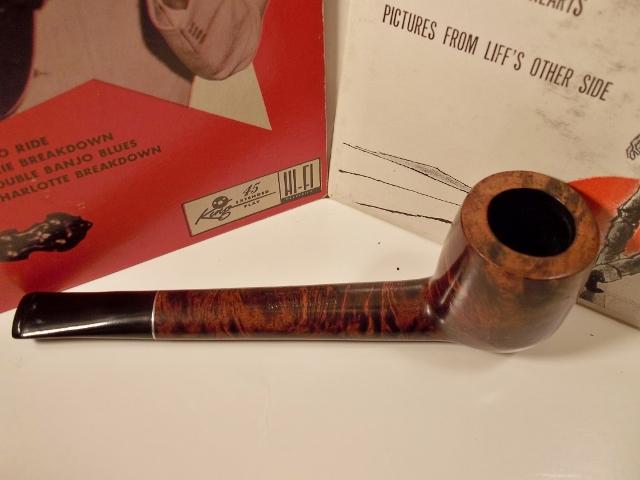
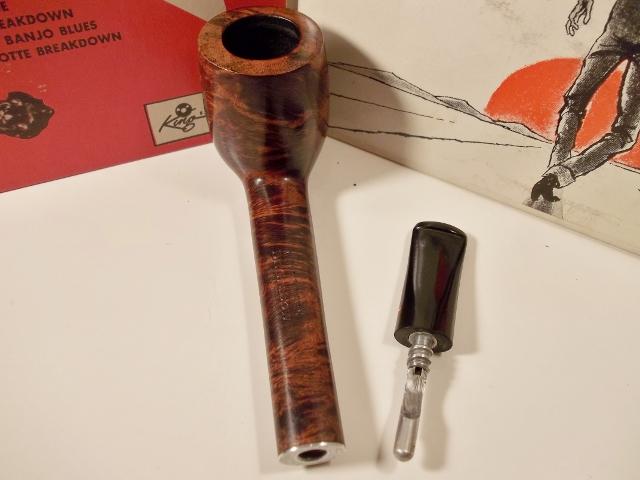
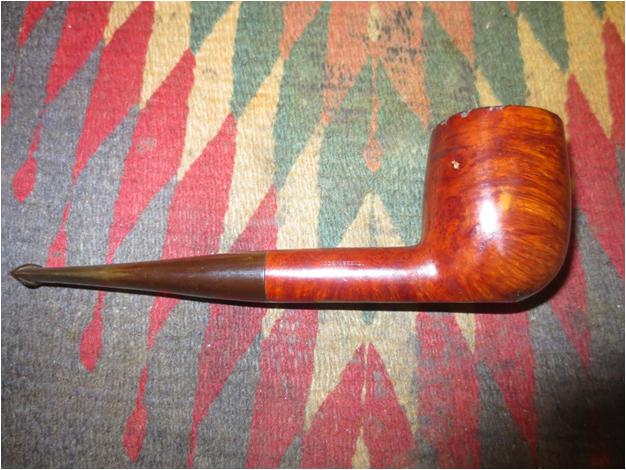
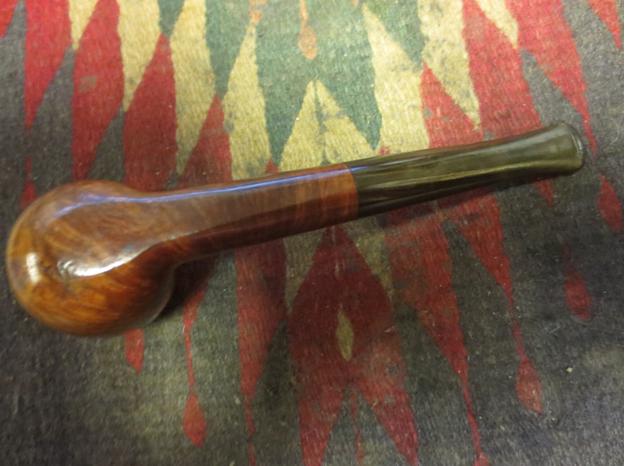
A Dr. Grabow Sportsman #72


Blog by Troy Wilburn

This is a pipe I got from Joe’s lot. From looking at Grabow charts I believe this is a shape # 72 Sportsman. Joe mudded and coated inside bowl for me before he mailed it off ……Thanks Joe :).

Here is what it looked like when I received it.G1

G2

G3

G4 I had to top the bowl and I found a nick or inclusion that was pretty deep I took it down as far as I thought I should go. You can still see it in rim but I got it pretty small and will let it be. Unfortunately the rim lacked much if any grain at all. I canted bowl slightly to give it a “Devil Anse” type of look. Then just basically sanitized, sanded, oiled, waxed and buffed.

Rough sanding done on topping of bowl.G5 Sanded, cleaned ready for oil wax and buff.G6 Very cloudy here today so pics not the greatest, but a lovely little pipe I think and will be in my collection a very long time.

Here are some photos of the finished pipe.G7

G8

G9

G10

G11

G12

G13

G14

Cleaning up a Hilson Made in Belgium Meerlined Bulldog, Shape S60


Blog by Steve Laug

This is another pipe from the Idaho Falls antique mall. The funny thing is I went back another day to show my daughters some of the antique jewelry and did not think much of looking for more pipes as I had already cleaned out the ones I had an interest in. One of my daughters called me over to a display case where there was a pipe rest with a golden Cocker Spaniel on it. She thought it would be a great memory piece for me. I looked in the case and there on the bottom shelf was a pipe that I had not seen on the previous day. It was a nice straight Bulldog pipe. The bowl looked like it was a mess but the briar and stem looked to be in pretty good shape. I had the clerk pull it out and was surprised by the stamping on it. It read Hilson over Made in Belgium on the upper left side of the shank and Imported Briar in an arch over Block Meerschaum on the upper right side of the shank. There were some other letters underneath the arch that ran in a straight line but I could not read them without a lens. Of course I had to have the old pipe. I knew that it at least was made before Gubbels Pipe Factory in Holland bought out the Hilson brand in 1980 because of the Belgium stamping.Hilson1

Hilson2 When I got home I looked at the shank under a bright light using a lens and could see more clearly some of the marks under the arch. The arch appeared to be over stamped and underneath on the left of arch it read S and the other letters faded out. On the right side of the arch it read TYLE. I am wondering if it originally read S60 (which is the shape number that has been more recently stamped on the underside of the right side of the shank) BLOCK STYLE in a straight line over MEERSCHAUM (the center and bottom words in and under the arch). If so then when it left Belgium and headed to the USA it must have been over stamped with the arched IMPORTED BRIAR which is stamped with a slightly smaller font. I also examined the stem and found that on the underside of the right side it had a small stamped M and what looked like part of an E. All of that will remain a bit of a mystery but it makes this old pipe interesting.

The briar portion of the pipe was in pretty decent shape. I was not sure about the briar on the rim as it was pretty covered with an overflow of tars that had come up out of the bowl and over the rim. The meerschaum bowl was invisible at this point in the process. It was somewhere inside the mess but how far down I was not sure. I had no idea of the thickness of the Hilson bowls in comparison with others. The other Hilson Meerlined pipe I had did not have the lining and the briar was very thin so I was thinking that this one would be like that. The finish was dirty on the rest of the bowl but did not have any damage. The briar looked pretty decent other than a few small fills on the underside of the shank. The stem was dirty and lightly oxidized. The pipe and the stem smelled awful! The bowl smelled like old cigarettes left in an ashtray in the rain. The stem smelled like old tires with a hint of sulfur. It would take a bit of work to clean up this one without damaging the meerlined bowl.Hilson3

Hilson4From a bit of research on the web I found that the company was originally started in 1846 by a German named Jean Knödgen who produced clay pipes in Belgium. According to a note on the Pipephil website it seems that in the late 19th century Jean Hillen married into the Knödgen family and later took over the company. He changed the company from a clay pipe producer to a factory able to manufacture briar pipes. Jean Hillen had 2 sons: Jos Hillen was responsible for sales and Albert Hillen was responsible for the production. After WWII his son Albert founded the HILSON brand which was a combination of Hillen and Son and exported his pipes all over the world. The brand did very well in the 1960s and 1970s and the brand was sold throughout Germany and Europe. In 1980 the company ran into financial difficulties and was bought by the Royal Dutch Pipe Factory owned and operated by Gubbels who still makes the Big Ben pipe.

Hilson meerschaum-lined briar pipes were manufactured in Belgium at the original Hilson factory in the 1970’s and used Block Meerschaum to make the inserts for their pipes. This was much better quality than most meerschaum lined pipes. Usually the lining was made of pressed meerschaum which was made from ground up meerschaum. Block Meerschaum is carved from the meerschaum as it is mined. High quality meerschaum pipes are always made from block meerschaum.

I took the next three close-up shots to give an idea of the state of the bowl when I started. There is a hint that it is a meerschaum lined bowl when you see the line on the edge of the bowl just inside of the briar. The thick coat of carbon built up on the rim and down into the bowl made it hard to see. I was glad that this was a block meerschaum insert rather than a compressed one because there was some hope that the bottom of the bowl had not begun to disintegrate of break up. The second and third photos below give an idea of the stamping on the shank of the pipe.Hilson5

Hilson6

Hilson7 The next photo shows the stinger apparatus in the tenon of the pipe. Most of the other Hilson pipes that I have worked on have an inner tube extension rather than a tenon so this was a new one to me. It is also unique among the stingers that I have seen.Hilson8 I decided to top the bowl to remove all of the carbon build-up and see what was happening with the top of the meerschaum insert and the briar rim. I knew that the cake in this one was out of control but I wanted to see if I could see the original inner line before I dealt with the cake.Hilson9 The next photo shows the topped bowl. Once I had it topped I folded a piece of sandpaper and worked at the inner edge to remove the cake. I wrapped the sandpaper around my finger after the initial sanding and went as deeply into the bowl as I could reach. There was some staining around the back and right side of the meerschaum lining where it came in contact with the briar. I think some of the tars and oils wicked into the meerlining and stained it.Hilson10 The surface of the rim was scratched from the 220 grit sandpaper so I used a medium and a fit grit sanding block and cleaned up the rim.Hilson11 The next two photos show the rim and the bowl after reaming. I reamed what I could not reach with a sharp pen knife and removed all of the cake in the bowl.Hilson12

Hilson13 I removed the stinger from the tenon. I always twist the tenon rather than just pull it in case it is threaded. In this case it came out easily enough.Hilson14 I was going to use the retort to clean this pipe but thought better of it as I did not want to soften or damage the meer liner with the alcohol. So, I resorted to the old tried and true method of cotton swabs and alcohol to clean out the shank and wipe down the inside of the bowl. It took a lot of swabs to get the shank clean. The mortise ran the length of the shank to accommodate the long stinger.HIlson15 The stem took a lot less work. After just a few pipe cleaners and alcohol the pipe cleaners came out clear.Hilson16 I scrubbed the stinger with alcohol and 0000 steel wool to remove the tars that had stained the aluminum.Hilson17 I wiped down the bowl with alcohol on cotton pads and then took the following picture to show the state of the pipe thus far. It is going to be a beautiful pipe.Hilson18 I wiped the bowl and shank down with a light coat of olive oil to enliven the briar and bring out the grain. The birdseye grain on the sides of the bowl were stunning. It is hard to see with the freshly oiled bowl but in later photos it will stand out.Hilson19

Hilson20

Hilson21

Hilson22 The stem was cleaned and ready to polish. I wet sanded it with 1500-2400 micromesh sanding pads and then gave it a coat of Obsidian Oil. Before the oil dried I dry sanded it with 3200-4000 grit pads and gave it another coat of oil and then sanded it with 6000-12000 grit pads to finish the shine. I gave it a final coat of Obsidian Oil and let it dry. Once dry I buffed it with White Diamond on the wheel.Hilson23

Hilson24

Hilson25 I buffed the finished pipe with Blue Diamond Polish on the wheel and then gave it multiple coats of carnauba wax. I buffed it with a clean flannel buff and then again by hand with a microfibre cloth to bring depth to the shine. The finished pipe is shown in the photos below. Other than the stain around the back and right side edge s of the meerschaum lining the pipe looks like new. It should offer many more years of service.Hilson26

Hilson27

Hilson28

Hilson29

Hilson30

Hilson31