Tag Archives: super glue

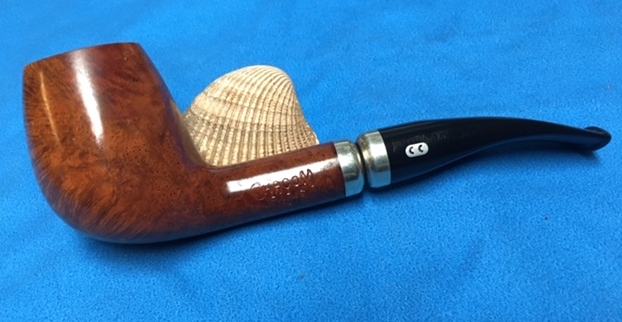
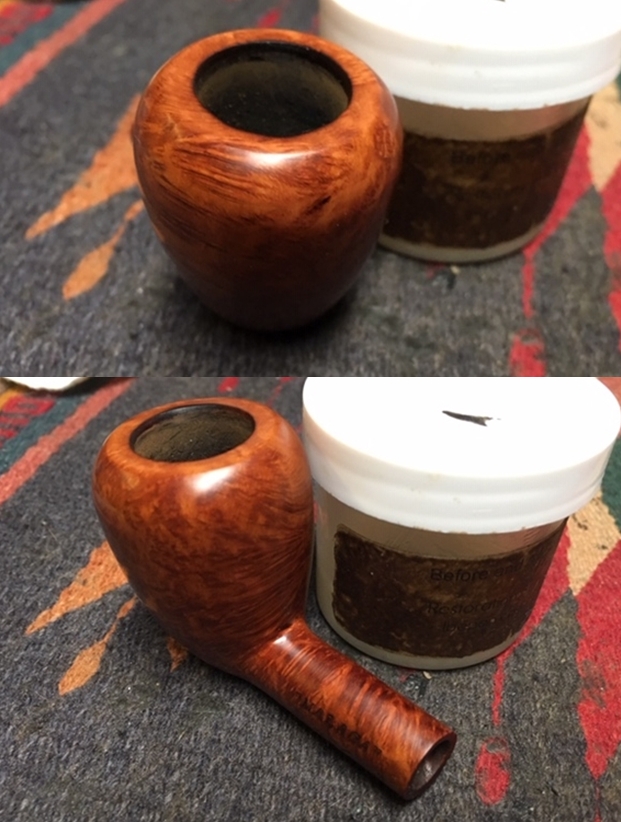
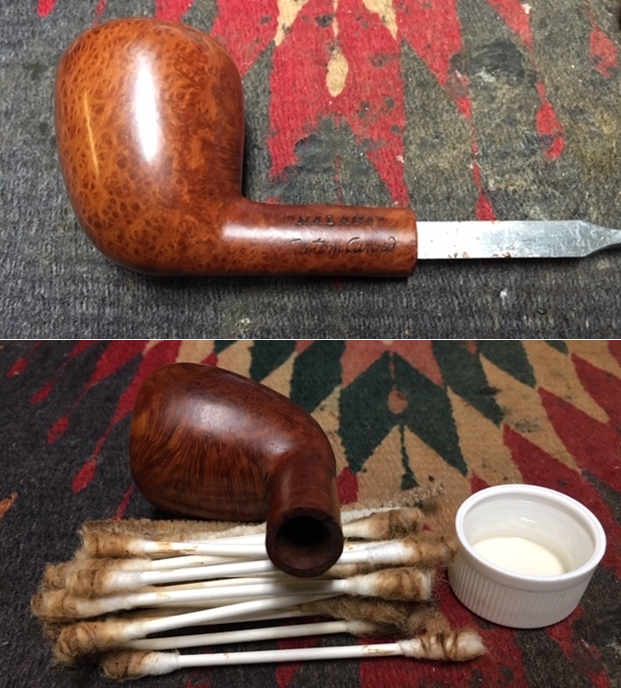
Breathing Life into a Chacom Paris 861 Quarter Bent Brandy


Blog by Steve Laug

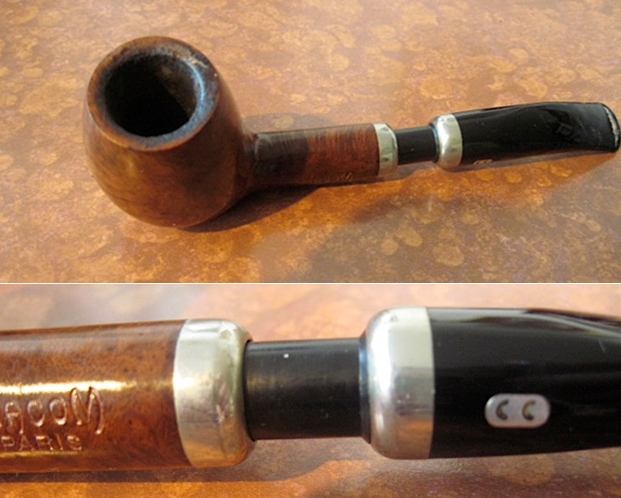
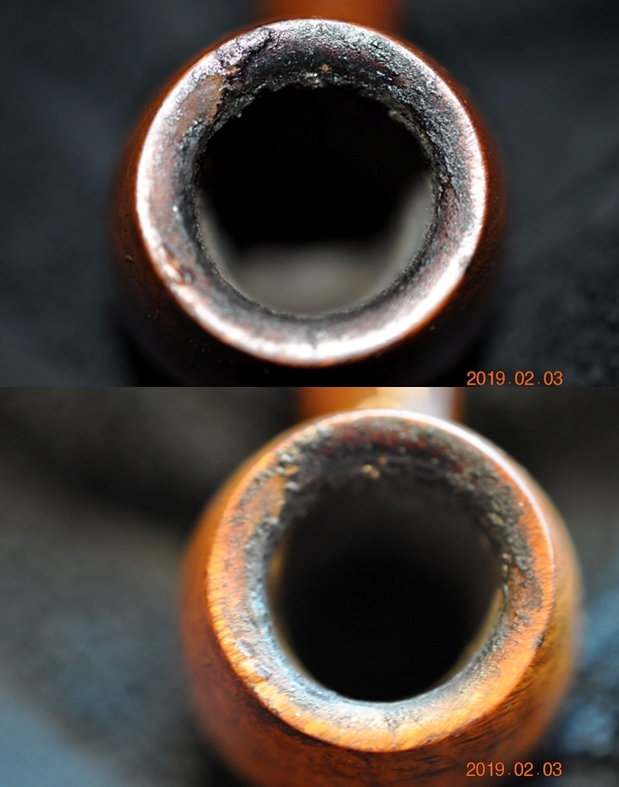
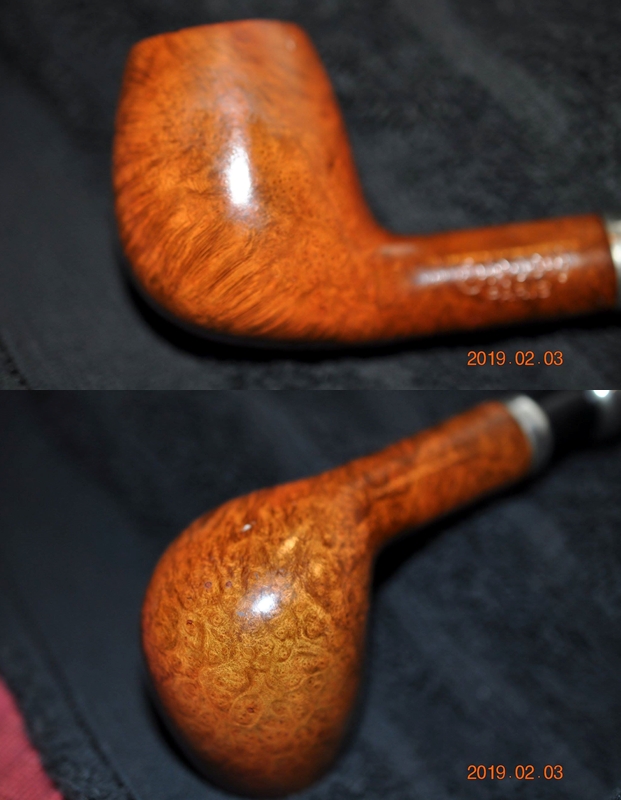
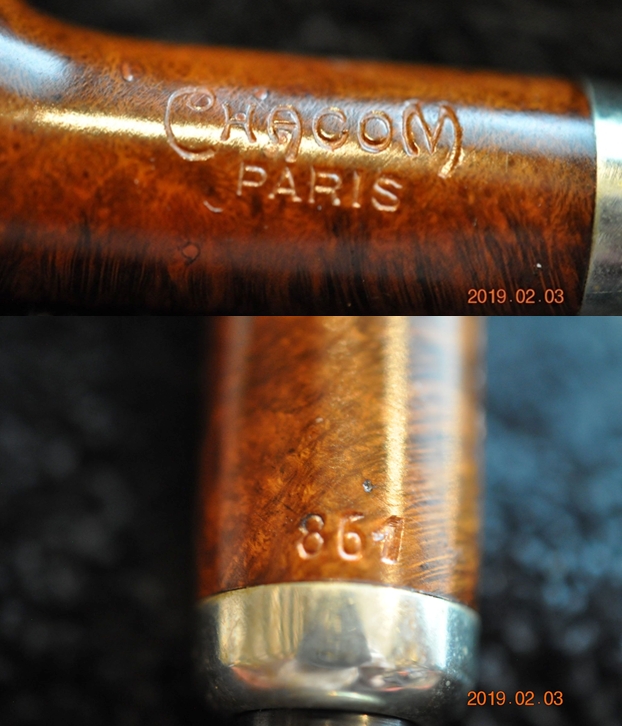
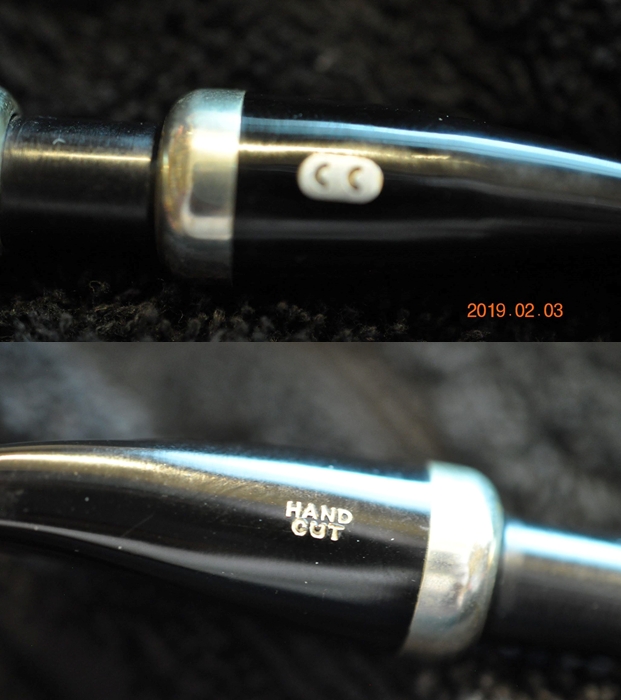
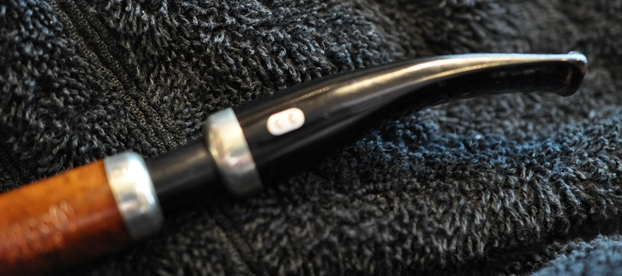
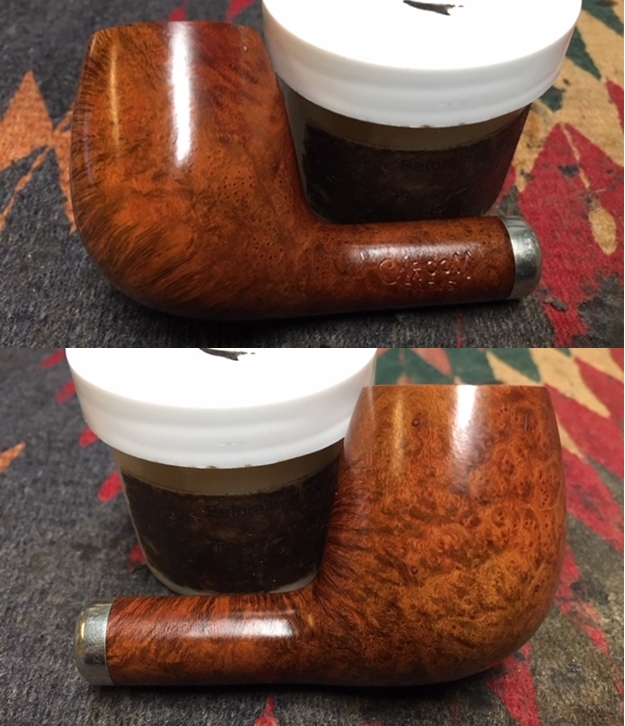
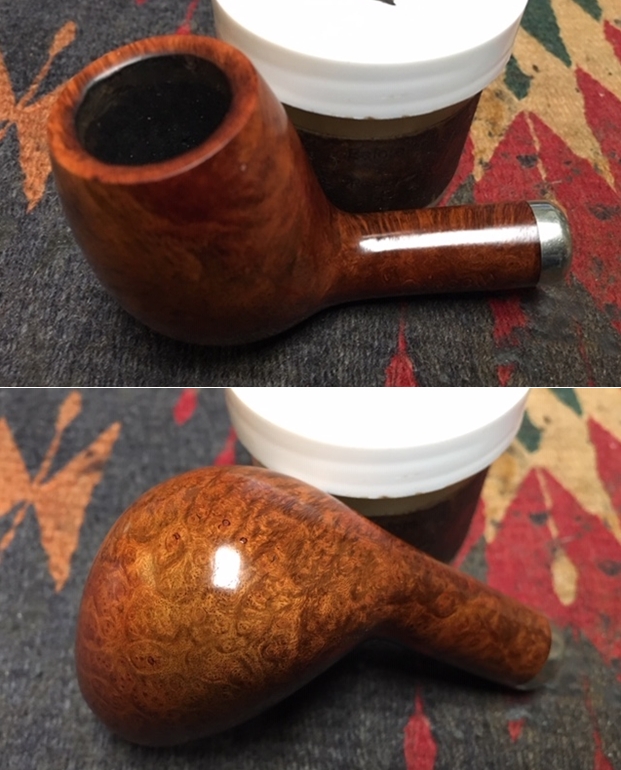
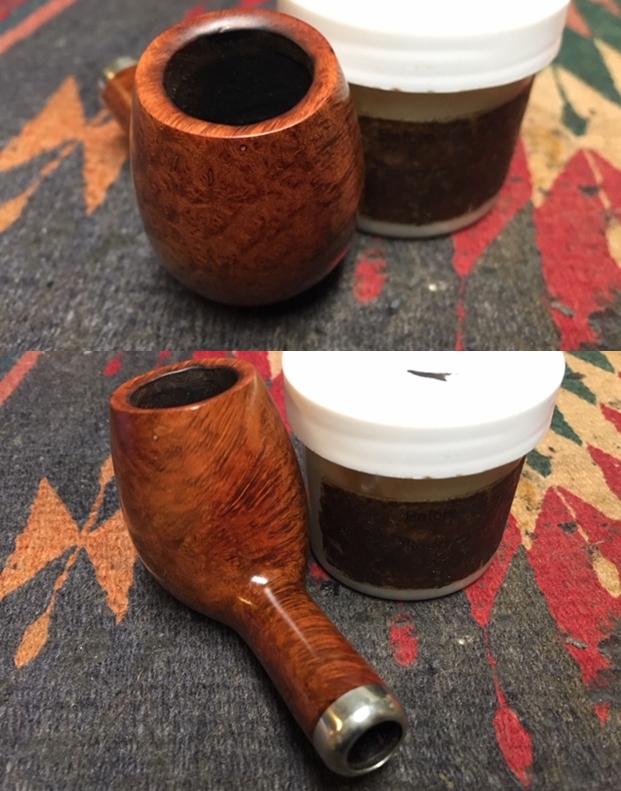
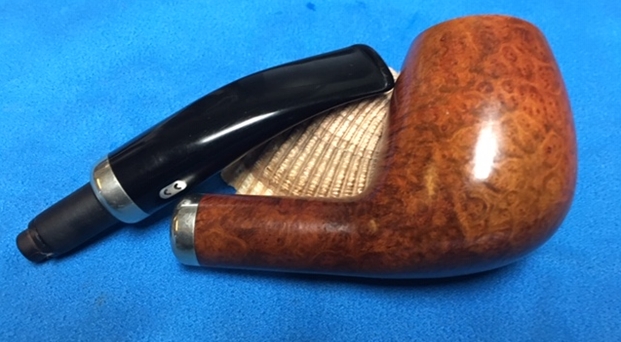
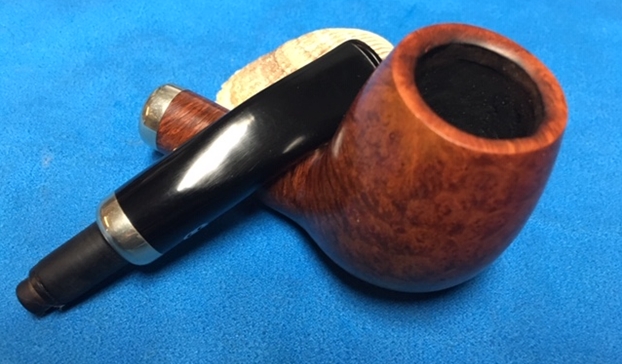
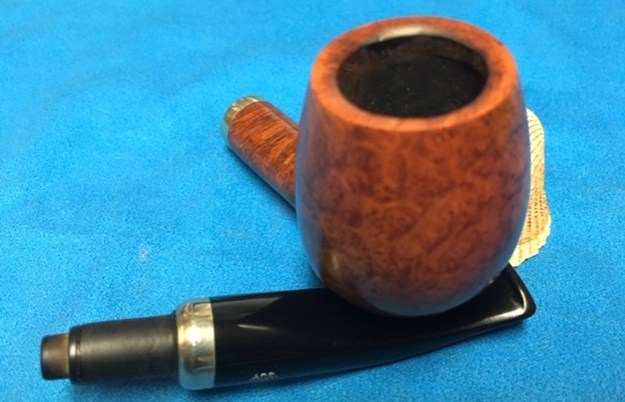
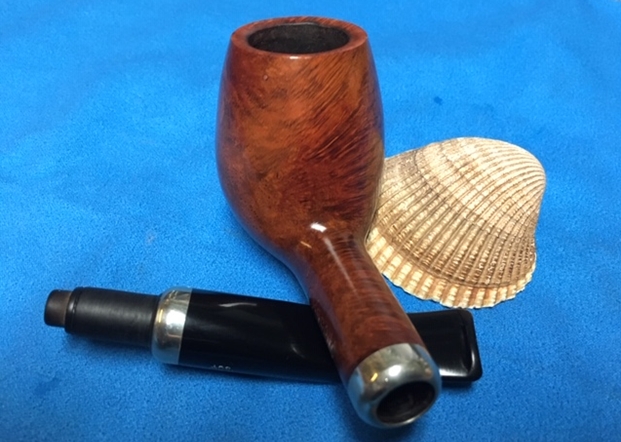
One of the pipes that Jeff and I picked up from a fellow in Pennsylvania was a Chacom Paris straight Brandy. He contacted us about purchasing his pipes as he was cleaning out his collection. This particular pipe showed promise but it was in rough condition. It had some beautiful grain – birdseye and mixed grain. The rim top was beveled inward. The pipe is stamped on the left side of the shank Chacom over Paris and there is Chacom CC logo stamped in the left side of the tapered, acrylic stem. We seem to pick up some really dirty pipes and this pipe was no exception. It was very dirty with a thick cake in the bowl and a heavy layer of lava overflowing on to the rim top. It was hard to know what the inner edge of the rim looked like because of the lava and cake. From the photos it appeared that the inner edge was in good condition. Other than being dirty the finish also appeared to look very good. The stem and the shank end had a decorative metal ferrule that was supposed to meet once the stem was in place. On this pipe the stem would not sit in the shank and there was a gap between the stem and shank. I am including some photos of the pipe that the seller emailed me when we were discussing the pipe.Needless to say we went for the deal and soon the pipe was on its way to Jeff’s place for cleaning and preparation for restoration. Jeff took these pictures when it arrived. You can see the issues that I noted above in the following photos. It was going to take some work to bring it back to what it was supposed to look like. He took photos of the rim top to show the thick cake in the bowl and the overflow of lava. The cake is thick and hard and the lava overflow is a thicker toward the back of the beveled rim. The bowl and the rim are a real mess. This must have been a great smoking pipe.The next photo shows the right side of the bowl and shank to give a clear picture of the beauty of the birdseye and mixed grain around the bowl of the pipe. It is a beauty. Jeff took photos of the stamping on the left side of the shank and the shape number 861 on the underside of the shank near the ferrule to capture the clarity of it even under the grime. He also included some photos of the CC logo on the left side of the stem and the Hand Cut stamp on the right side. Jeff took a photo of the fit of the stem in the shank. The tenon (Delrin) did not seem to fit in the mortise. I would need to check it out because it did not look right to me.The acrylic stem was in okay condition other than some heavy tooth marks on the button surfaces and some calcification where the seller had used a softee bit. There looked like there were some light tooth marks and chatter on the stem that should not take too much work to remedy. The brand Chacom turned up (1934) after fusion of Chapuis-Comoy with La Bruyère. Yves Grenard (†2012), second cousin of Pierre Comoy headed the company from 1971. He was responsible for Chapuis Comoy’s recovering its independence from Comoy. His son Antoine Grenard took over the direction of the company in 2007. Chacom is a brand of Cuty-Fort Entreprises (Jeantet, Vuillard, Jean Lacroix, Ropp …) (http://www.pipephil.eu/logos/en/logo-chacom.html).

Pipedia gives a great historical overview of the brand (https://pipedia.org/wiki/Chacom). I have not included that here but if you are interested click on the link and you can read about the company from its inception to its current status.

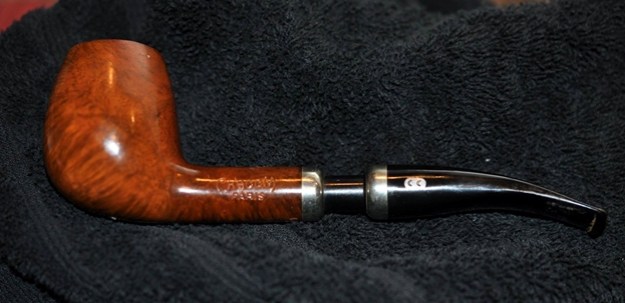
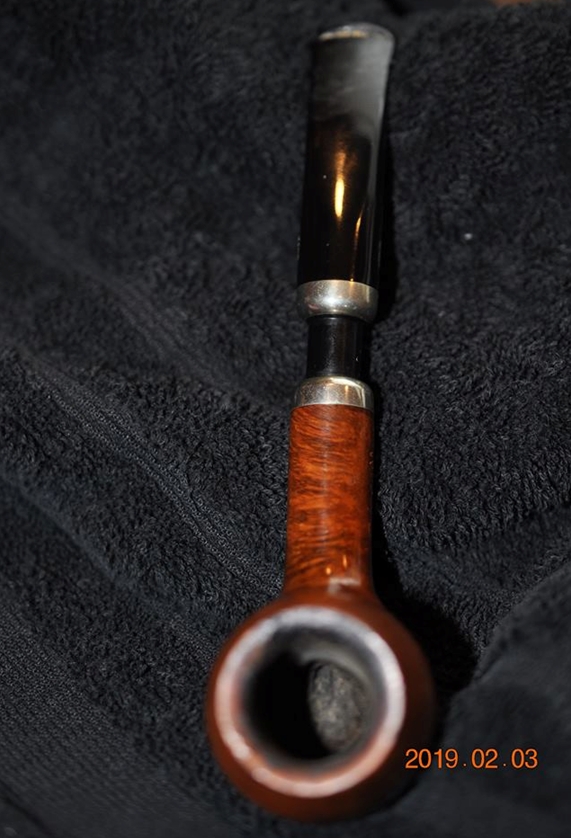
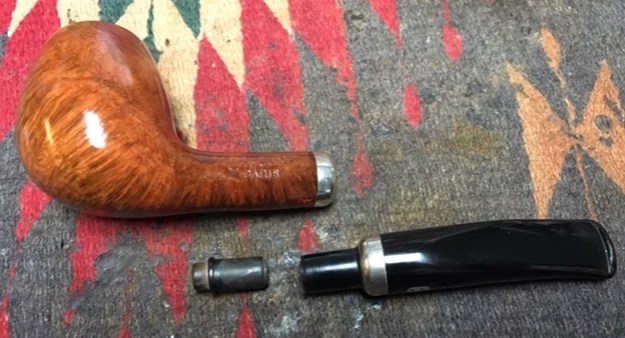
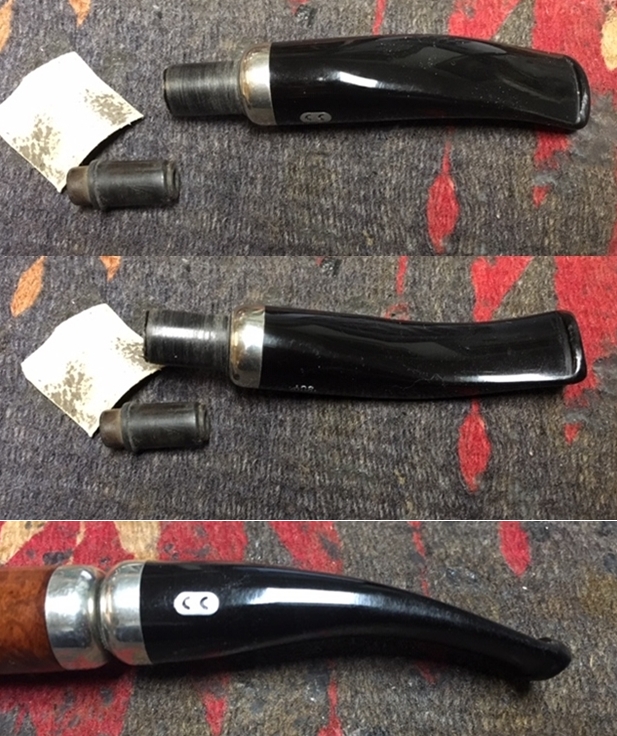
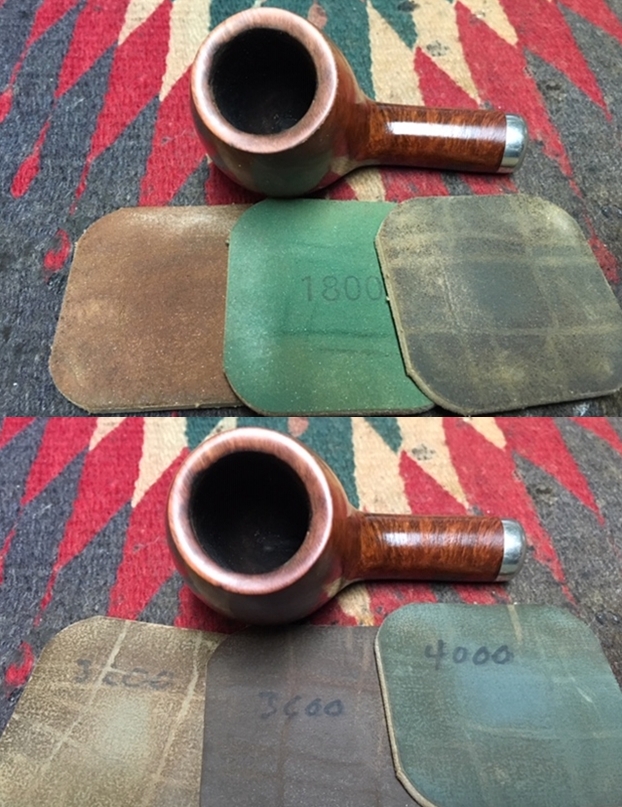
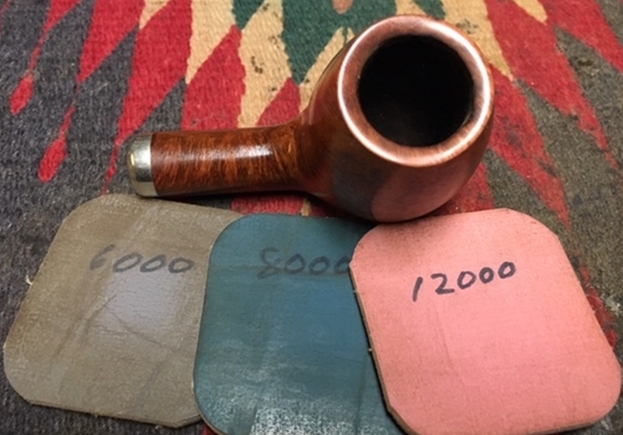
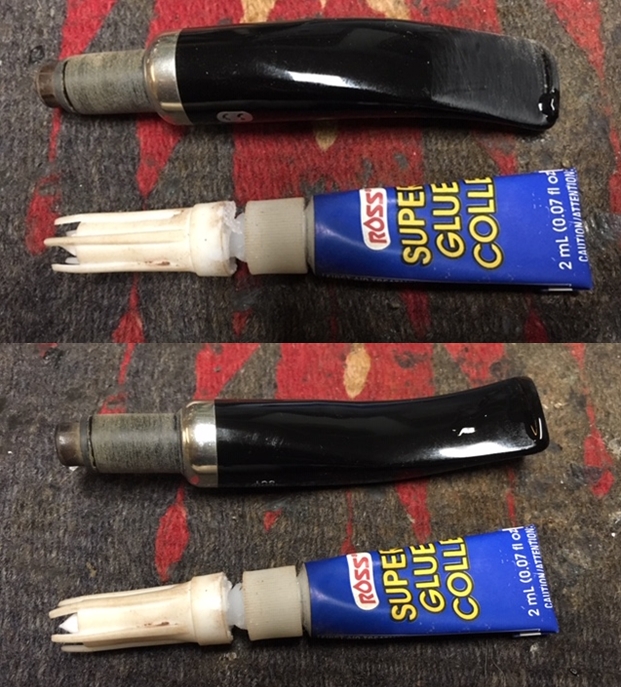
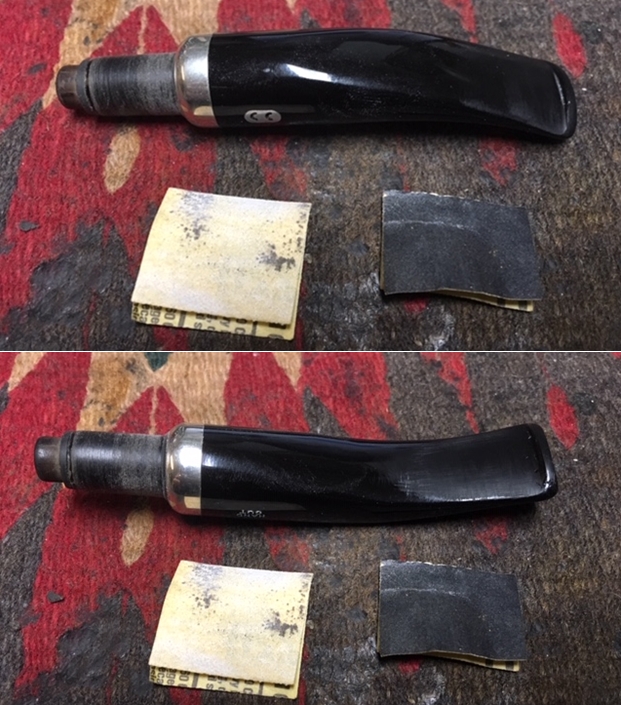
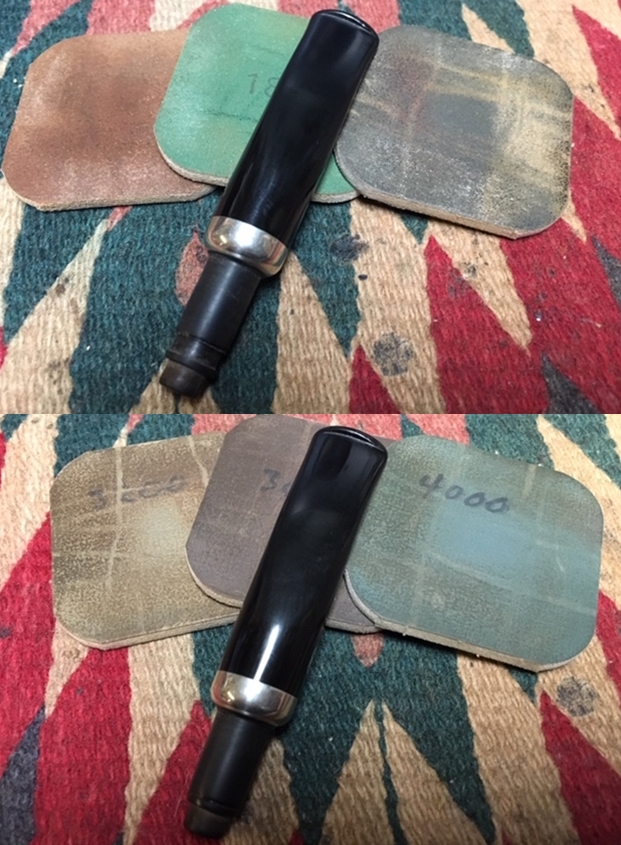
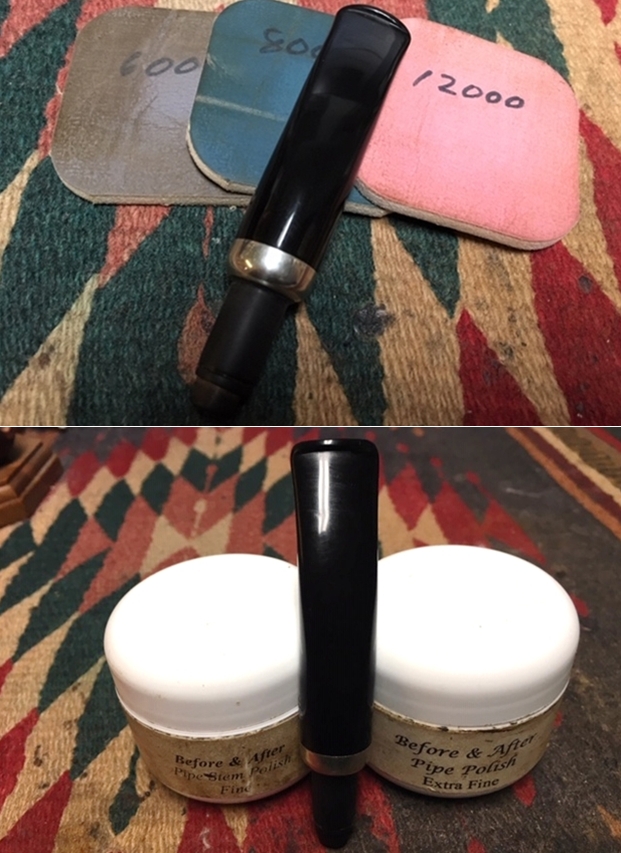
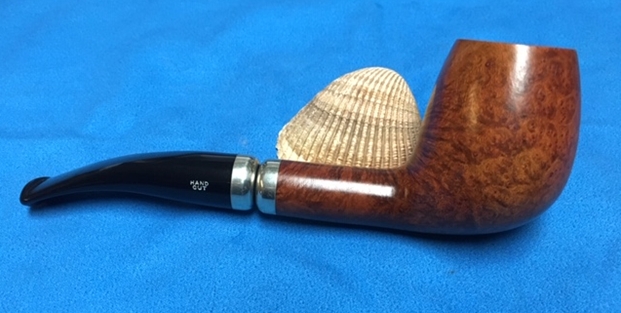
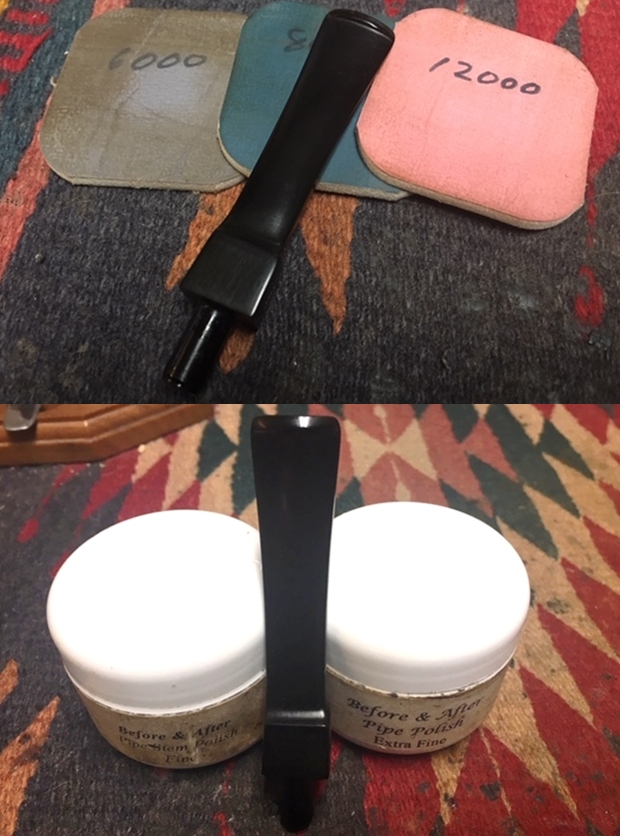
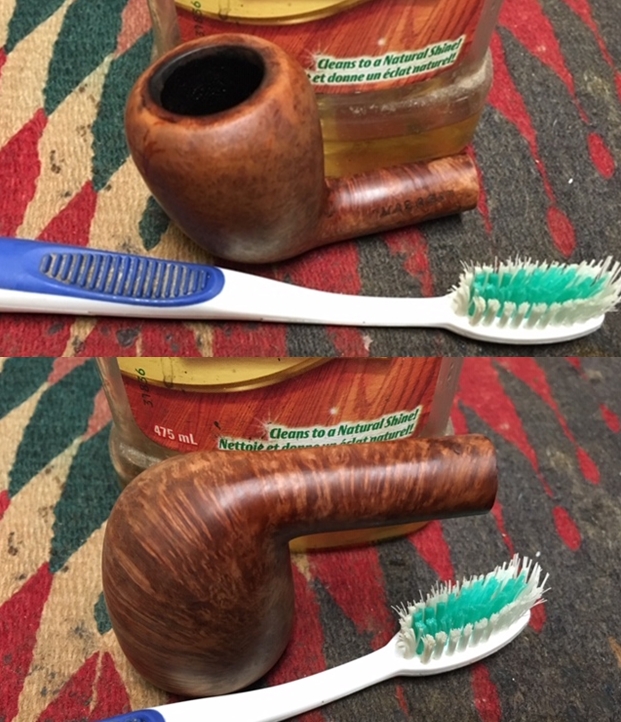
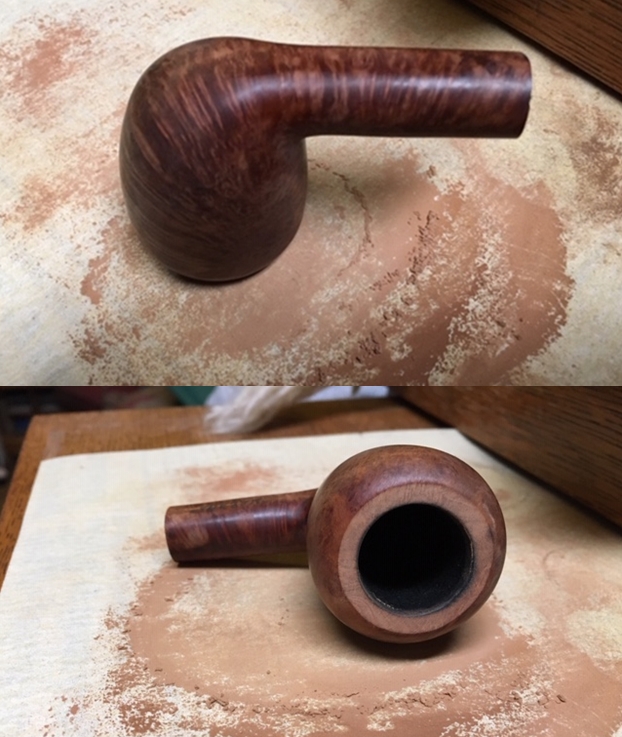
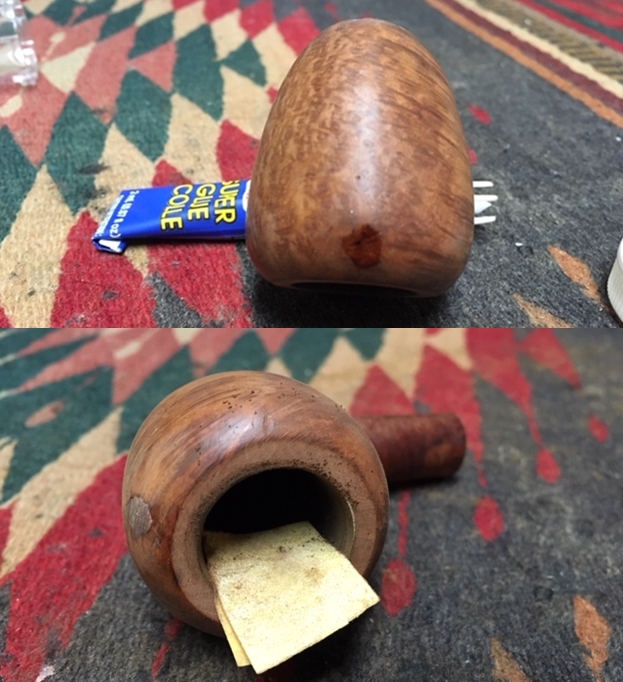
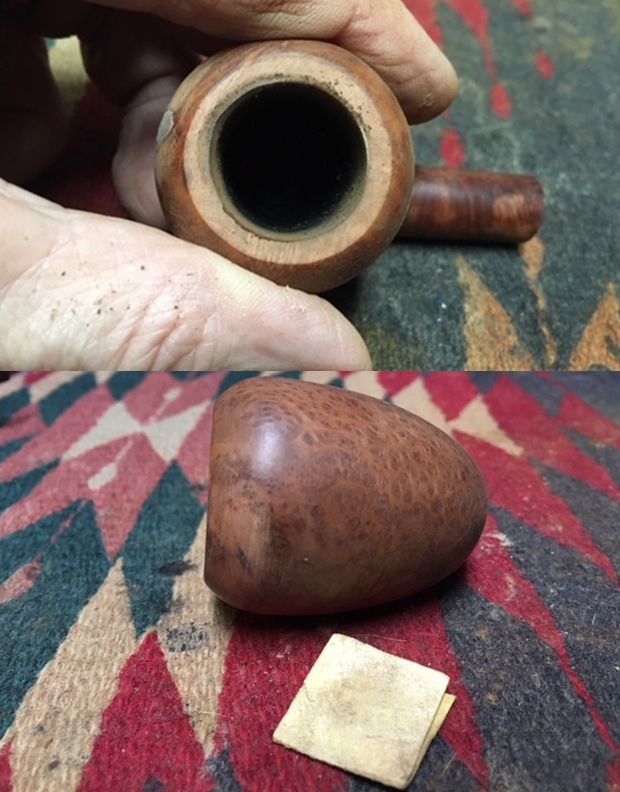
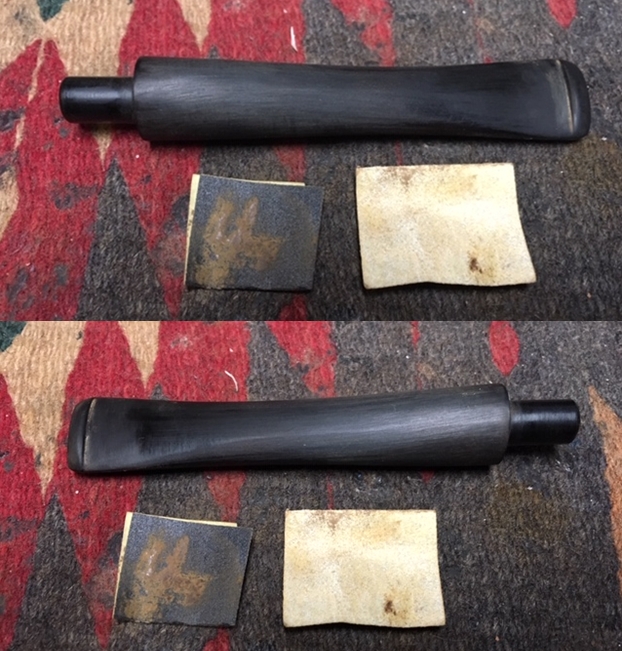
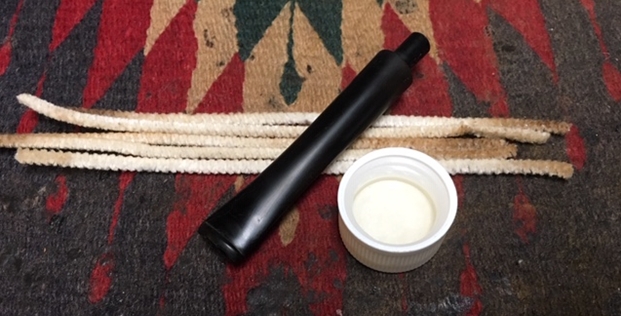
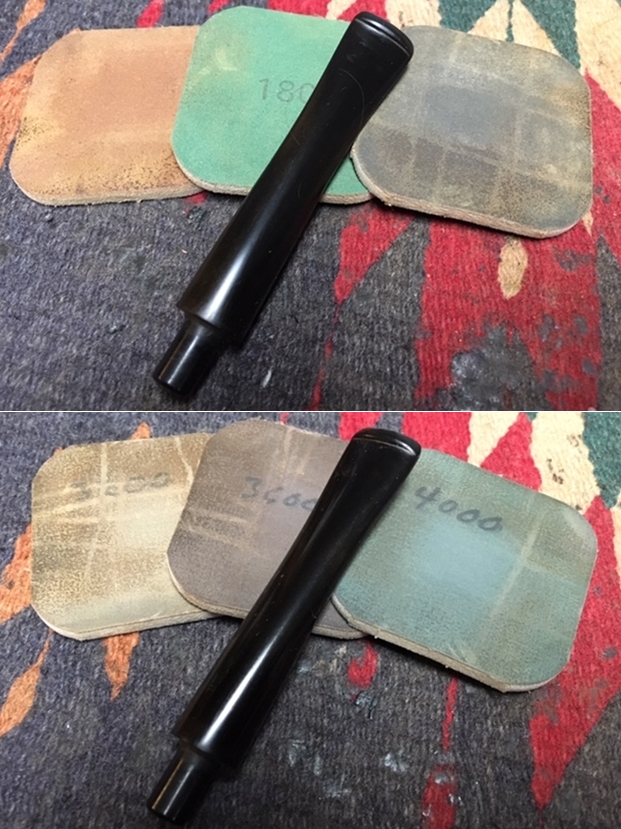
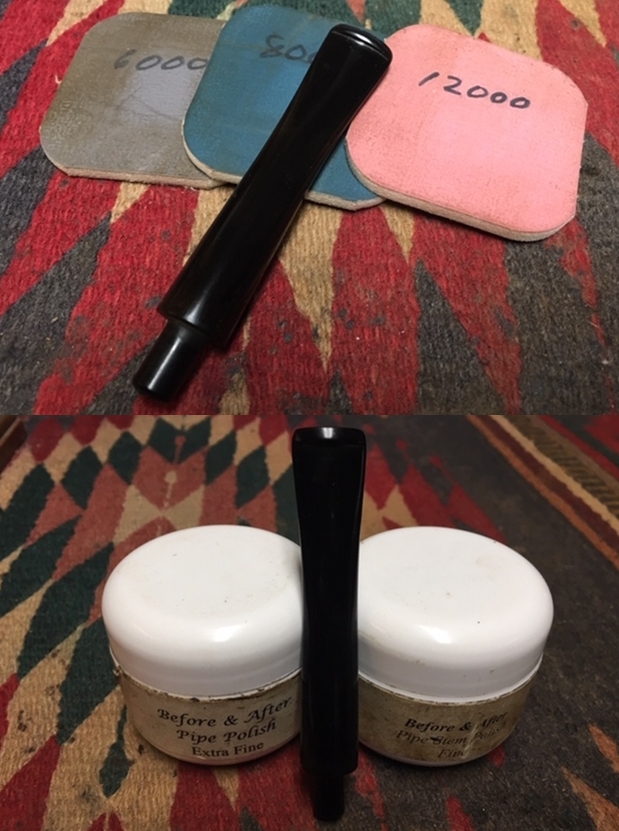
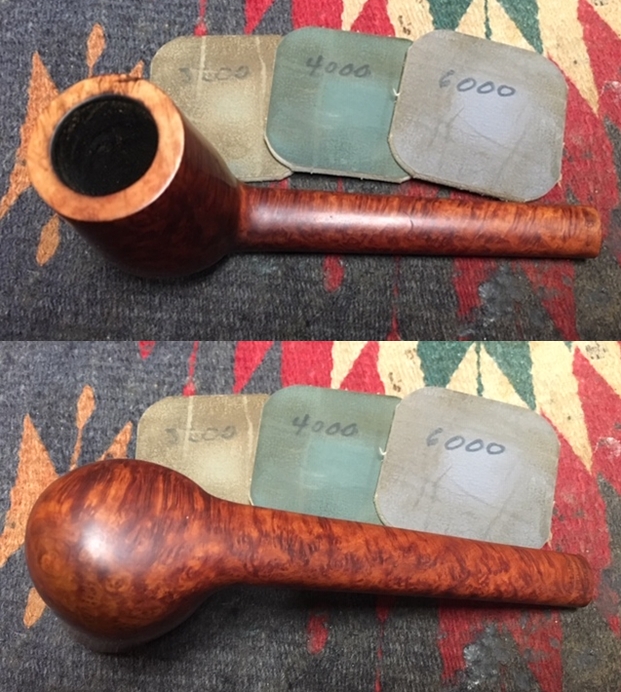
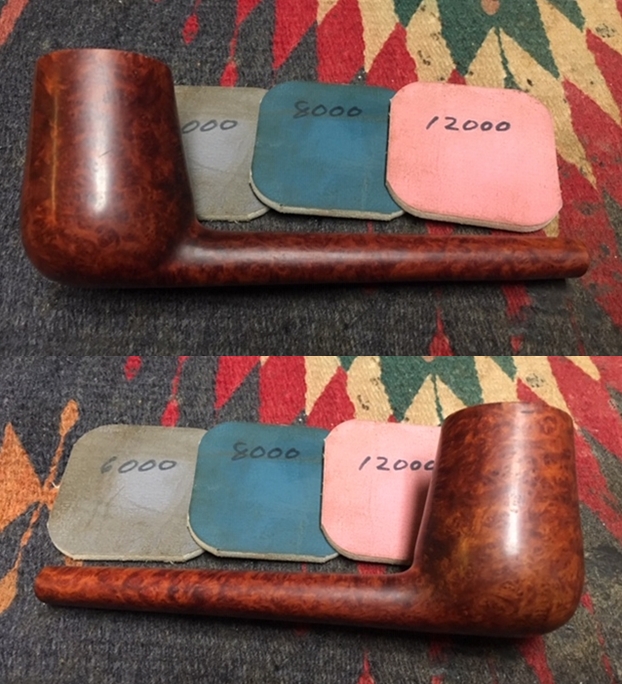
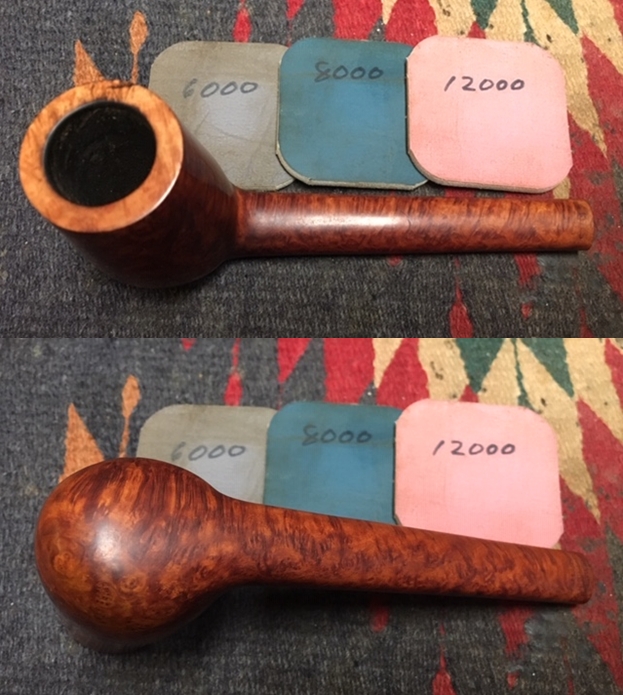
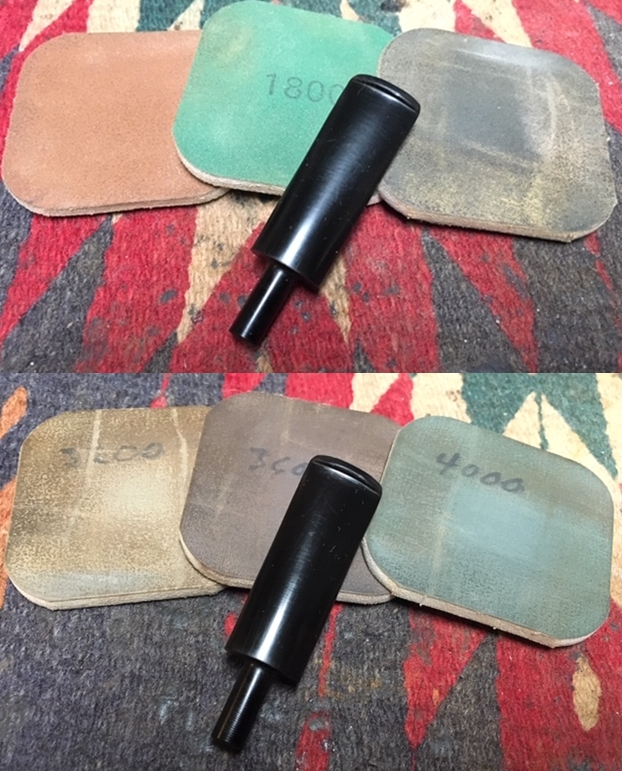
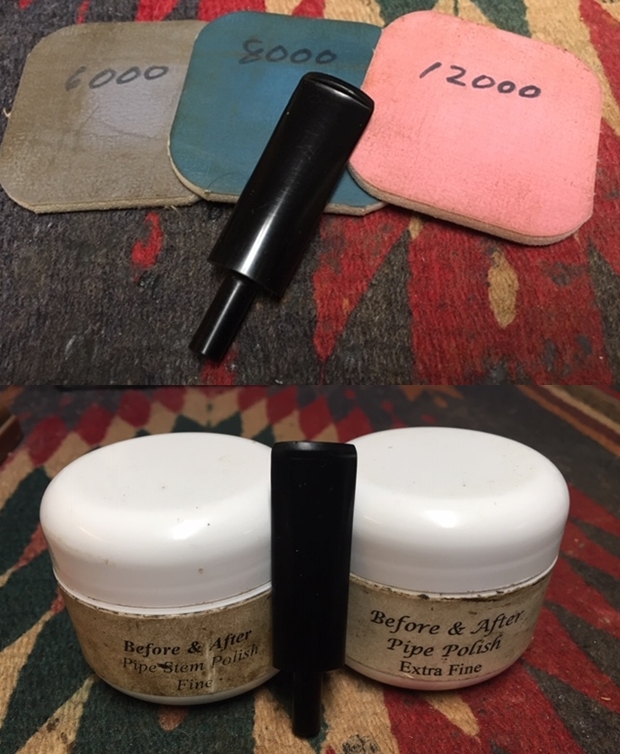
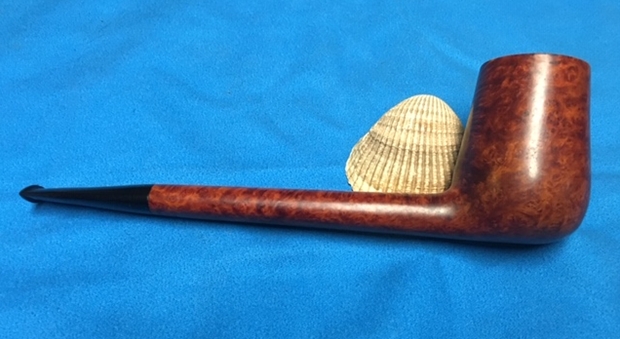
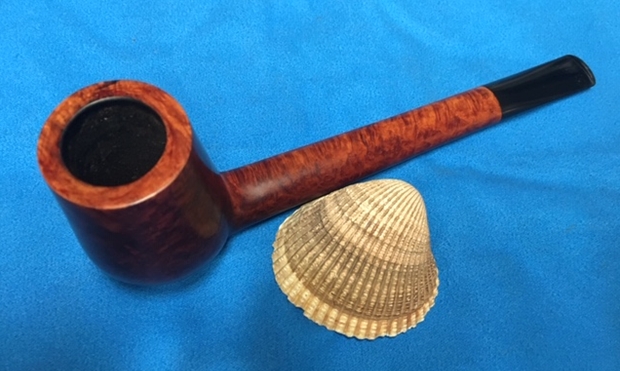
I wanted to know what the pipe should have looked like when it was made so I did a quick google search to see if could find a photo. I turned up a straight shank brandy in a red stain that showed the way that the tenon and mortise should have worked. The stem should have fit into the mortise and the silver ferrule on the shank end and the one on the stem should have met. Now I knew what I was aiming for and work to get the correct fit. Armed with the information I needed I turned to address the pipe itself. Jeff had already cleaned up the pipe before sending it to me. He had reamed the bowl with a PipNet pipe reamer and cleaned it up with a Savinelli Fitsall Pipe Knife. He scrubbed the exterior with Murphy’s Oil Soap and a tooth brush to clean off the grime off the finish and the heavy overflow of lava on the rim top. He cleaned up the internals of the shank, mortise and stem with pipe cleaners, cotton swabs and alcohol to remove all of the oils and tars in the pipe. When it arrived here in Vancouver it was a clean pipe and I knew what I had to work with. I took photos of it before I started my part of the restoration. I took photos of the rim top and the stem to show their condition. Jeff was able to clean up the thick cake and lava overflow that was shown in the rim and bowl in the earlier photos. He was also able to get rid of the grime and grit in the surface of the briar. The rim top looked a lot better than when he started. There was still some pitting and darkening on the surface of the inward bevel but it should clean up very well.As I examined the stem I found that it had an adapter in the tenon to convert the pipe from a 9mm filter pipe to a non-filtered pipe. The adapter was removable so that the pipe could be smoked either way. I took the adapter out of the tenon and took a photo of the parts.I decided to address the improperly fitting tenon first. I removed the adapter from the tenon and sanded it with a folded piece of 220 grit sandpaper to reduce the diameter of the tenon. The third photo shows the stem after I have reowrked the tenon. The fit is perfect.I set the stem aside to address the issues with the rim top. It had some light pitting and scratches in the surface of the bevel. I sanded the surface with micromesh sanding pads – wet sanding with 1500-2400 grit pads and dry sanding with 3200-12000 grit pads. I wiped the rim down with a damp cloth after each pad. I was able to polish out the scratches without damaging the finish to the rim top. A side benefit was that the darkening also was removed. The finish on the rest of the bowl was in excellent condition. After it was finished with the rim polishing I rubbed the bowl and shank down with Before & After Restoration Balm to deep clean the finish on the bowl and shank. The product works to clean, enliven and protect the briar. After it sat for a little while I wiped it off and buffed it with a soft cloth. The briar really began to have a rich shine. I took some photos of the bowl at this point to mark the progress in the restoration. It is a beautiful bowl. I set the bowl aside and worked on the stem at this point in the  process. I still needed to polish the tenon but I decided to start by repairing the deep tooth marks on the stem. The button on the top edge had tooth marks and the flat portion of the stem on the underside also had tooth marks. I filled them in with clear super glue and set the stem aside to allow the repairs to cure overnight.In the morning the repairs had cured so I blended them into the surface of the acrylic with a folded piece of 220 and began polishing the stem with 400 grit sandpaper. I also began polishing the tenon at the same time with the 400 grit sandpaper. The repaired areas looked very good at this point in the process.I polished the Lucite stem with micromesh sanding pads – wet sanding with 1500-2400 grit pads and dry sanding with 3200-12000 grit pads. I wiped the stem down after each pad with a damp cloth to remove the sanding dust. I polished Before & After Pipe Stem Polish – both Fine and Extra Fine. I gave it a final hand buff with a microfiber cloth. I polished the metal at the same time. I put the stem back on the pipe and the pipe to the buffer. I worked it over with Blue Diamond to polish out the remaining small scratches. I gave the bowl and the stem several coats of carnauba wax and buffed the pipe with a clean buffing pad to raise the shine. I hand buffed it with a microfiber cloth to deepen the shine. The pipe polished up really well and the beveled rim top looked good. I was happy with the look of the finished pipe. The photos below show what the pipe looks like after the restoration. I have a dress black Chacom Paris that is a lot like this pipe. The shape and the fitments are very elegant. The polished black Lucite stem looks really good with the browns of the briar. The dimensions of the pipe are Length: 6 inches, Height: 2 inches, Outside diameter of the bowl: 1 1/4 inches, Chamber diameter: 3/4 of an inch. This is another pipe that I will be putting it on the rebornpipes online store shortly, if you are interested in adding it to your collection. The shape of the pipe and the ¼ bent stem give this pipe a great feel in the hand and the mouth. This one should be a great smoker. Thanks for walking through the restoration with me on another beauty!

Tina’s first choice: Renewing a Lindbergh 324 Poker


Blog by Dal Stanton
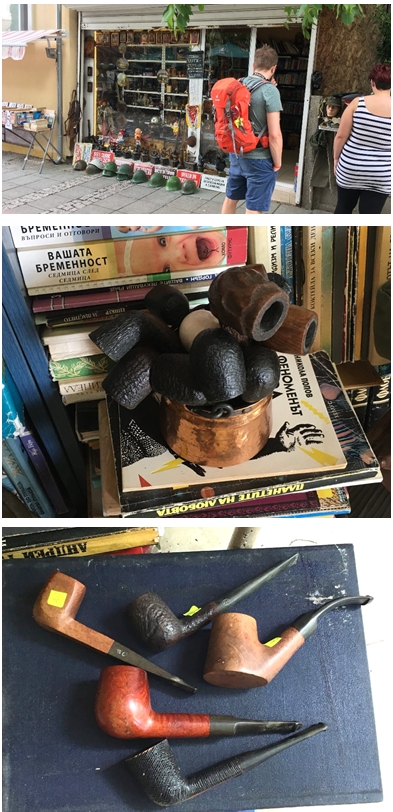
Burgas, Bulgaria, is a coastal city on the Black Sea where my wife and I as often as we can, go to find some rest and relaxation on the beach, especially during the summer months.  When we’re not enjoying the surf and sand, one of my favorite activities is to go pipe picking, of course!  I found the Lindbergh 324 Poker on one of these expeditions in 2017 on the main walking streets in Burgas – an antique shop I’ve visited before did not let me down on this visit!

I found the treasure trove in a copper pot waiting for me on a stack of books.  I carefully and methodically sifted through the pipes in the brass pot and culled 5 nice candidates who were calling my name!  They were a Butz Choquin Supermate 1596 Paneled Billiard – St Claude-France, a Rusticated Harvey Meerschaum Lined Dublin (LONDON/PARIS/NEW YORK), a Lincoln London Made Real Sandblasted Billiard, and an Old Bruyere Billiard with an interesting P-Lip saddle stem and the Lindbergh Select 324 Poker.

I was drawn to both the Lincoln and the Harvey because they had the “RESEARCH ME!” aura about them in addition to being cool looking pipes.  The BC Panel had gain that said, “Let me loose!”  Yes, I believe pipes speak if we have ears to hear and my ears were fine-tuned having spent time on the beach clearing the senses!  After negotiations were completed, the Burgas 5 were wrapped and bagged and came home with me to Sofia.

As with most of my acquisitions that benefit the Daughters of Bulgaria, they are pictured, recorded, catalogued and put into the online For “Pipe Dreamers” Only! collection waiting for a steward to hear them calling from the virtual ‘Help Me!’ baskets.

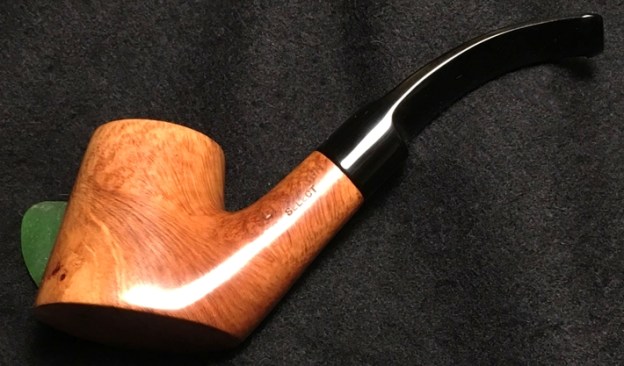
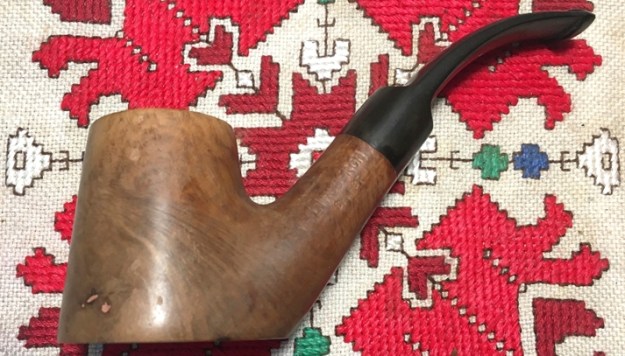
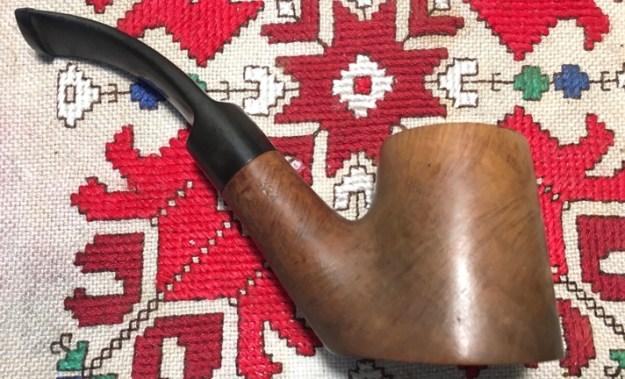
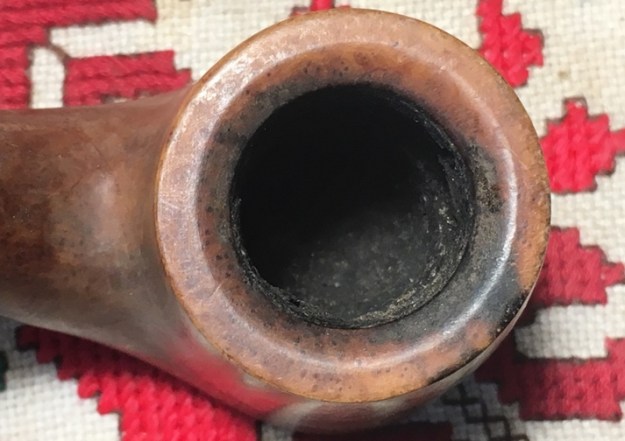
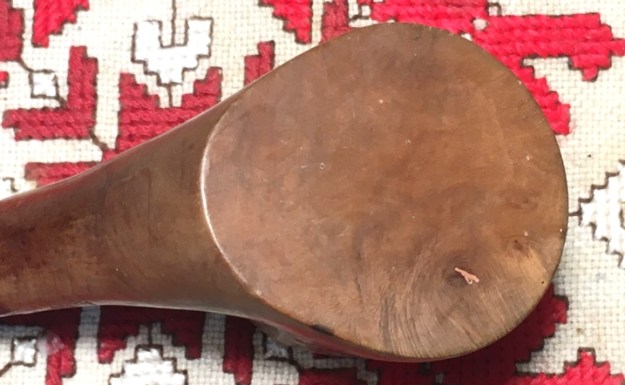
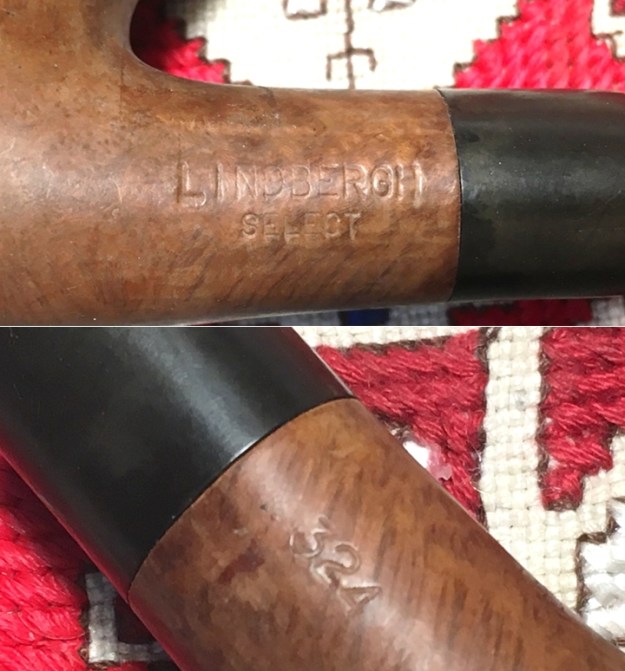
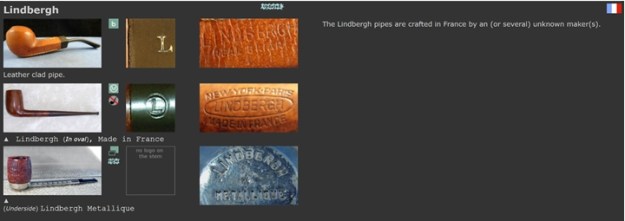
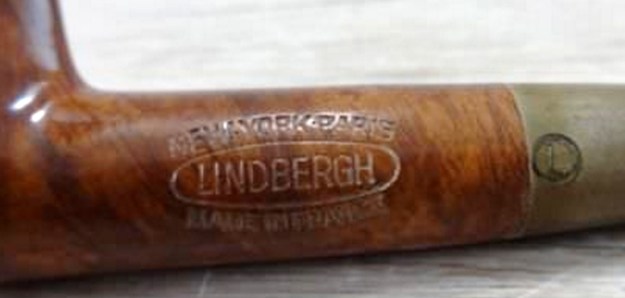
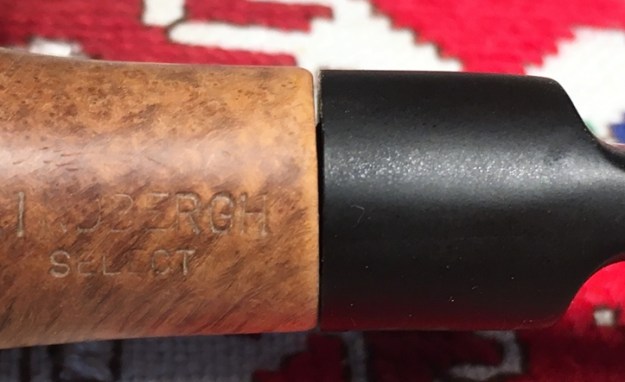
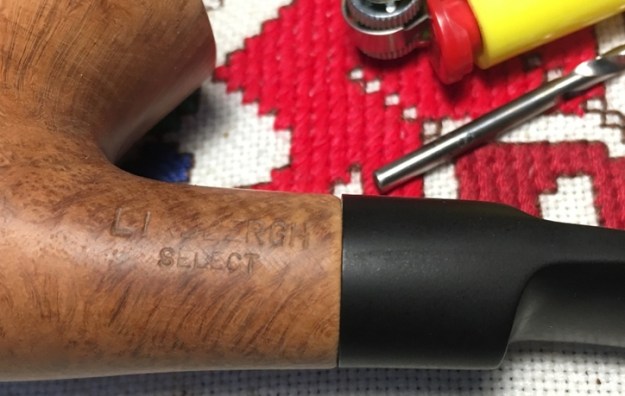
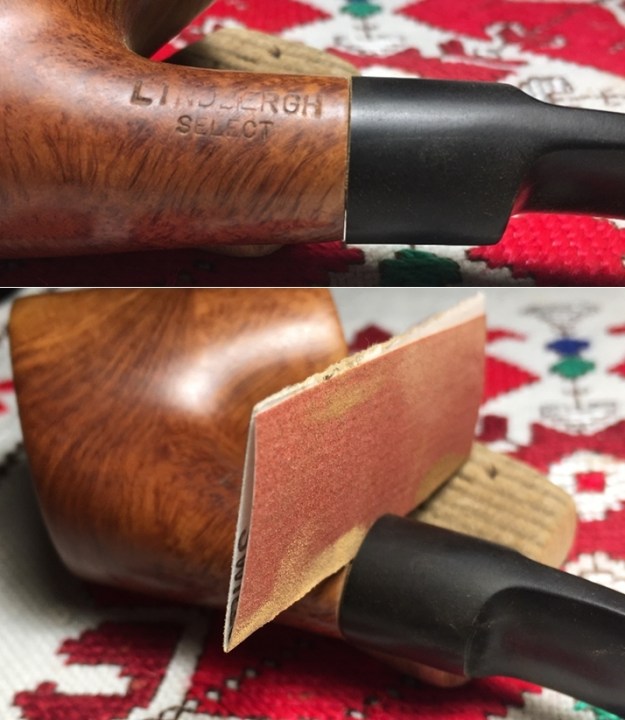
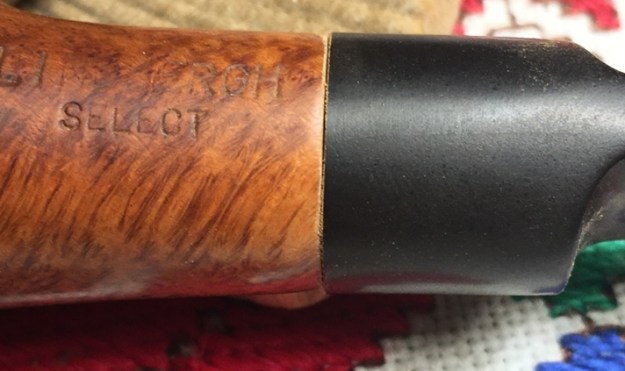
Tina was visiting us in Bulgaria with a group of other ladies from Birmingham, Alabama, USA, and with most of our visitors, they heard of my ‘interesting’ hobby of collecting and restoring vintage pipes.  Tina was intrigued and asked to see my work table and some pipes – she had the growing idea of commissioning some pipes FOR THE DAUGHTERS to gift special men in her life – husband, sons, colleagues…. This was my kind of visit!  She started going through the troves of pipes that I have in the inventory for the Daughters and it was fun watching her settle on certain pipes that ‘matched’ the man she had in mind and in the end, she commissioned 4 pipes to be restored and one Churchwarden project which I will fashion from a repurposed bowl.  I gave her estimates for the pipes she had chosen, and she solemnly agreed to a vow of PATIENCE.  I’m thankful for her patience which is finally bearing fruit on my work table!  I chose the Lindbergh Select Poker with a shape number of 324 to work on first.  I love the iconic Poker shape and the story associated with the utilitarian purpose of the Poker’s flat bottom, that easily finds a casual place on the card table next to the adult beverage while its hopeful steward looks expectantly at the cards dealt.  This Poker has a large swatch of briar real estate and an attractive canted volcano-like descent that results in a larger card table base or heel.  The 3/4 bent shank/stem gives the entire pipe a casual, reach for me feel.  Here are pictures of the Lindbergh Select 324 now on my work table: The stamping on the left flank of the shank is ‘LINDBERGH’ [over] ‘SELECT’.  The right flank is stamped with what I’m assuming is the Poker’s shape number, 324.  There are no other identifying marks that I can see.To learn more about Lindbergh Select, I look to Pipedia with no nibbles.  My copy of Herb Wilczak and Tom Colwell’s, ‘Who Made That Pipe?’ also came up empty.  Turning next to Pipephil.eu I found more.  The examples of Lindbergh I found there were of various markings without a strong sense of a positive hit.  The note that was included in this name that gave a COM of France was that they were most likely crafted by more than one maker, which makes sense looking at the different markings and especially the stem stampings and different stem lettering.  Seemingly no continuity in the markings.This was a helpful bit of information which pushes my thinking a bit broader than a single manufacturer of the Lindbergh name.  Next I do a Google search and found another Lindbergh SELECT that was for sale on an auction block (LINK) and found an interesting similarity – the sharply beveled internal rim. Unfortunately, the pictures they provided did not show the nomenclature but did show a shape number – 601 for the oval shank Billiard.  My search took me next to a discussion thread about a Lindbergh pipe on PipesMagazine.com that brought me as close to understanding the origins of this pipe as I’m going to get for now.  The thread started with sablebrush52 who purchased a Meerlined Panel with the markings Lindbergh with the addition of ‘New York – Paris’ in the nomenclature.  The thread described the historical attachment the French have with the famous and controversial aviator Charles Lindbergh, whose historic jaunt across the Atlantic in the prop plane, The Spirit of St. Louis, captured the imaginations and hearts of the French at that time.  This national embrace of Charles Lindbergh would explain how pipes were produced from different French sources with the Lindbergh name – more of a historical commemoration of this event.  The nomenclature of the pipe under discussion in the thread is pictured here:I’m including one well-known contributor’s statement as a summary of this history and fascination with Charles Lindbergh.  From mso489:

Lindberg was one of the early American mega-celebrities, which both immortalized his life and damaged it in various ways, the later kidnapping of his child and his relationship with the rise of the Nazi regime with their interest in aeronautics. So this pipe reflects that tender moment in history where his mere name sent out sparks of admiration. It’s appropriately a handsome example of industrial design. Lindberg was a farsighted designer of aircraft which is why he succeeded first with his flight. His plane, The Spirit of St. Louis, was a masterpiece of prioritization, economy, and spareness; he gave up a front windshield substituted with a periscope to make room for yet another fuel tank — but that’s an easy example. The whole plane was conceptualized that way. Then there was the whole problem of staying awake to fly the plane, which he managed to do.

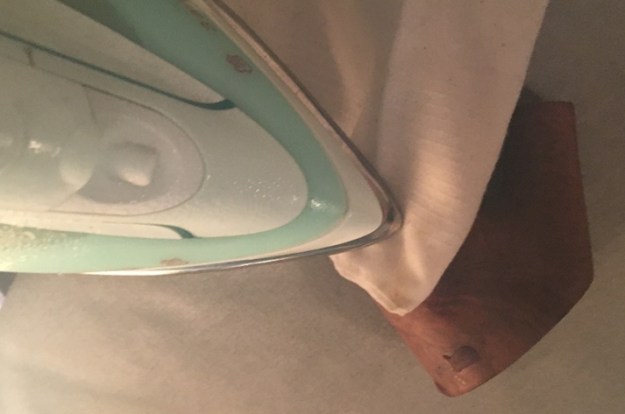
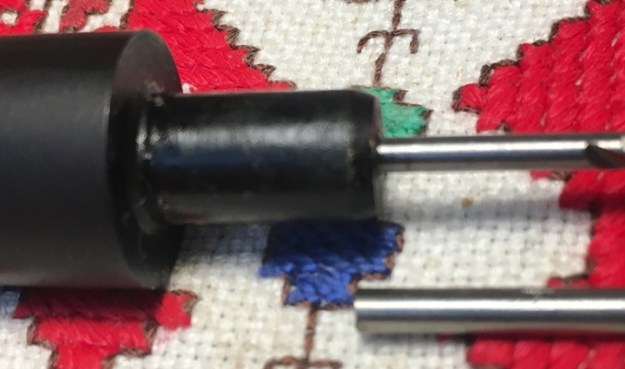
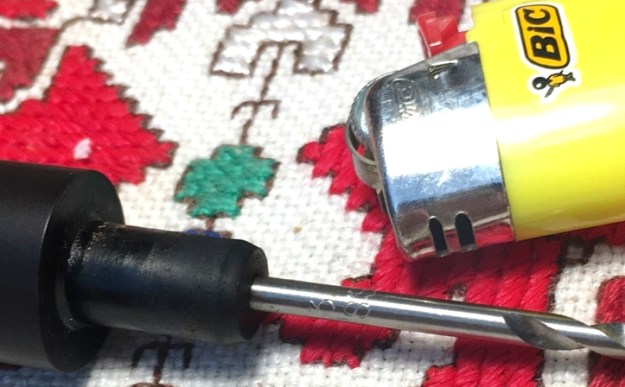
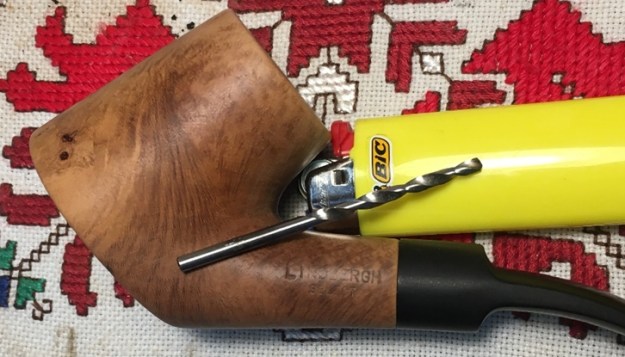
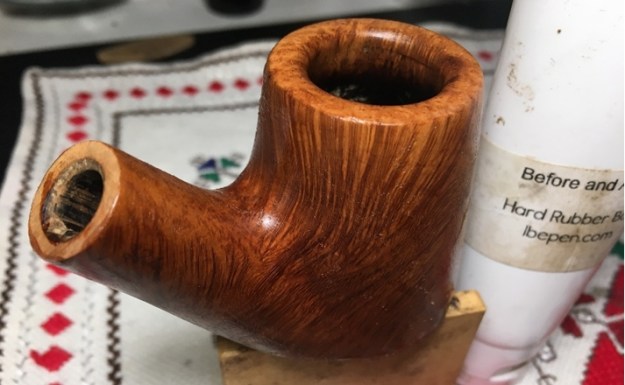
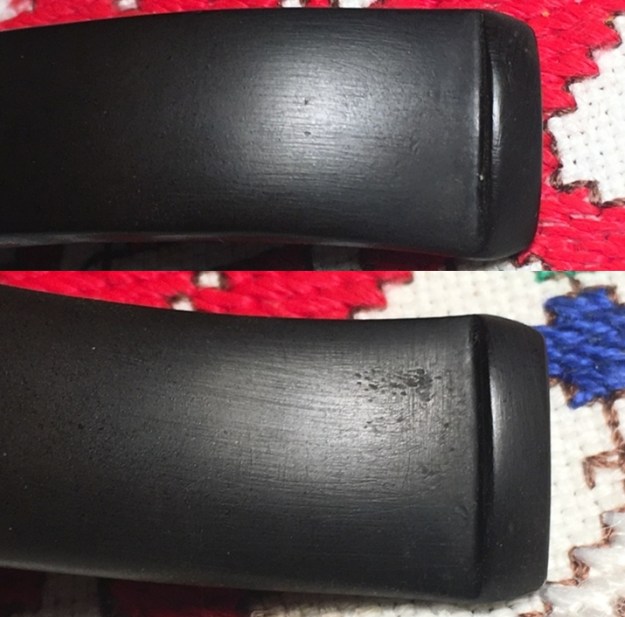
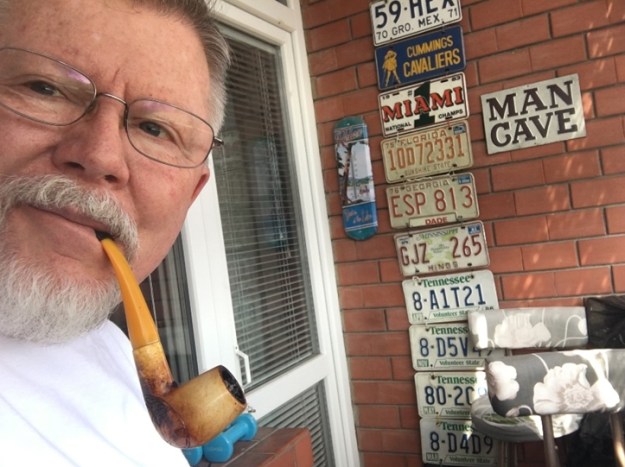
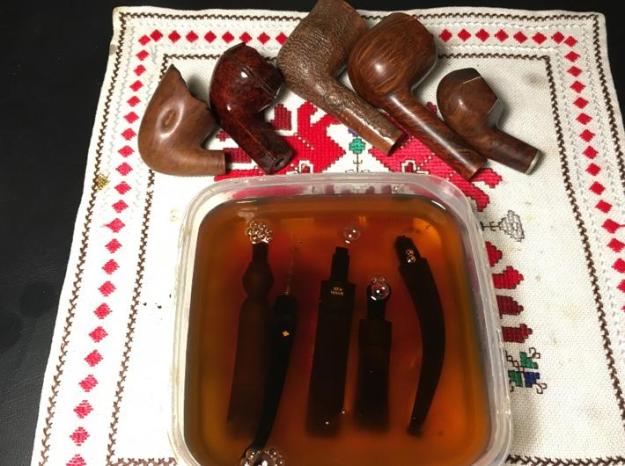
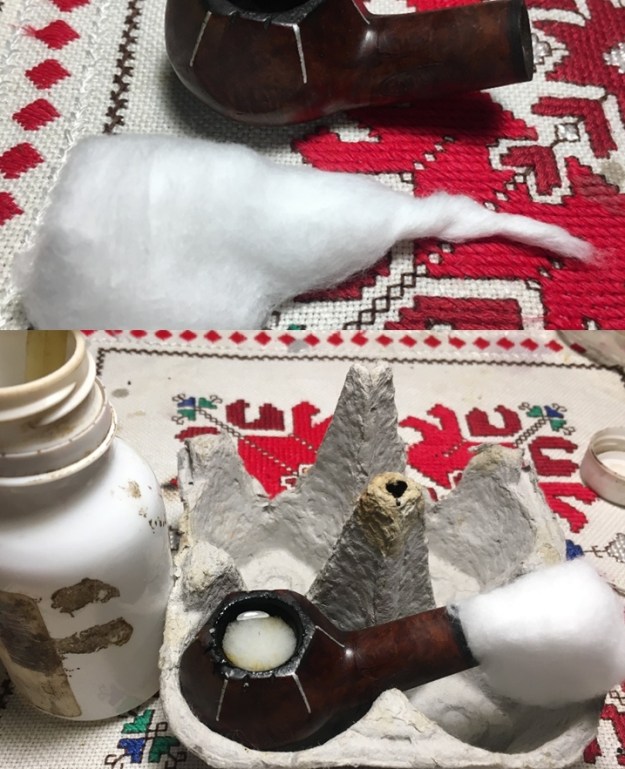
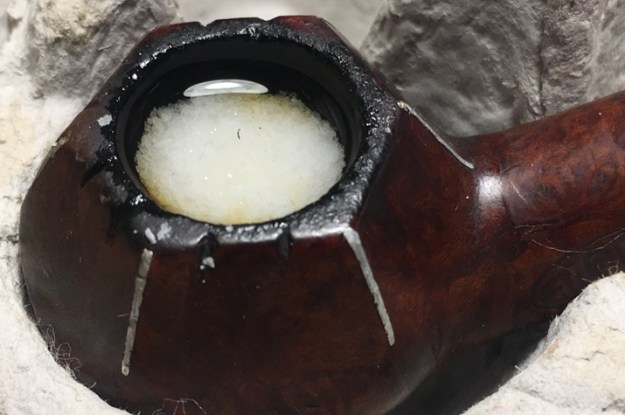
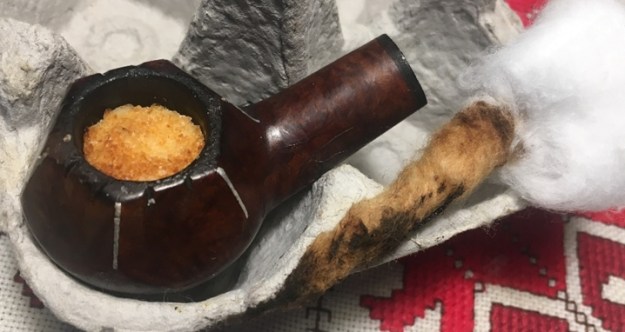
Looking more closely at the Lindbergh Select on my work table, the chamber has light cake and some lava flow on the rim and shows some scorching on the right forward quadrant.  The large Poker stummel has several fills that will need to be cleaned out and refilled on the stummel side and the heel.  The upper right side of the bowl has a dent which might be able to be drawn out through heating.  The saddle stem has oxidation.  The bit has very little tooth chatter at all. I discover that scotch tape was wrapped around the tenon in order to tighten the fit.  When I remove the tape, the result is a very loose fitting tenon – rattling around in the mortise! It’s very possible that this stem is a replacement, but it should fit nicely. The balance of the Poker is perfect – it sits quite nicely. I start the restoration of this Lindbergh Select Poker by first cleaning the internal airway of the stem with pipe cleaners dipped in isopropyl 95% and then placing it in a bath of Before & After Deoxidizer along with other pipes and stems in the queue – most commissioned by Tina! After some hours, I fish out the Lindbergh bent Saddle Stem and allow the B&A Deoxidizer to drain off.  I also run another pipe cleaner through the airway to force the Deoxidizer out and then wipe the raised oxidation with cotton pads wetted with isopropyl 95%.  Much oxidation is removed.After finishing the removal of oxidation, I begin to revitalize the vulcanite stem by applying a coat of paraffin oil (a mineral oil) and I put the stem aside to soak in the oil and dry.Turning now to the Poker stummel, using 3 of the 4 blade heads available in the Pipnet Reaming Kit, I ream the chamber.  I follow by employing the Savinelli Fitsall tool to fine tune by scraping the chamber walls further.  Finally, I use a Sharpie Pen wrapped with 240 grade paper and sand the chamber removing the residue carbon and revealing fresher briar.  I wipe the chamber with a cotton pad wetted with alcohol to remove the remaining carbon dust.  After inspection of the chamber, all looks great!  There are no evidences of heating problems. Next, I clean the external real estate of the Poker’s briar using undiluted Murphy’s Oil Soap and a cotton pad.  I keep my eye on the old fills to see how they react.  I also utilize a brass bristled brush to work on the darkened scorched area on the rim.  I also carefully scrape the rim with the sharp edge of a Buck pocket knife.The results of the cleaning are good, but the rim still shows the burn trail of the lighting practice of the former steward – pulling the flame over the rim instead of over the tobacco and pulling the flame downwardly.As I suspected would be the case, the old fill material softened, and I easily remove it from the side and heel of the stummel using a sharp dental probe.Before moving further with the external repairs, I clean the internals of the stummel by using pipe cleaners and cotton buds wetted with isopropyl 95%. The internals turn out to be nasty and I do much excavating using a dental spatula – scraping the mortise walls of tars, old oils and much gunk. I also use a shank brush to clean the airway. Finally, the crud starts giving away and cotton buds start emerging a much lighter hue. I call the job done for now, to return later for a kosher salt and alcohol soak to draw more tars and oils from the internal cavity as well as to freshen the stummel.To continue the work on the stummel surface, I start from the top down.  First, to address the deep scorching on the rim, I use the topping board with 240 grade paper on it to top the stummel.  Thankfully, this stummel as a good bit of real estate but I still am very stingy in giving up the briar.  I take a picture to mark the start and then a few pictures showing the progression as I rotate the inverted stummel over the 240 grade paper. I come to a place that is the tension between complete removal of the dark area and having given up enough top briar in the effort.  I stop and switch out the paper to 600 grade paper and give the stummel a few more rotations to smooth out the scratches of the 240 paper.  The rim lines are refreshed, but a darkened area remains at this point.To now sharpen the bevel and clean the rim further, I use 240 grade paper tightly rolled and sand the internal bevel. I follow this with 600 grade paper (which I forgot to picture!) and then, one final rotation on the topping board with 600 grade paper to sharpen the rim lines once more.  I like it.  The rim looks great.With the rim repair advanced to this point, I now work on refilling the pits on the side and the heel of the stummel that were left after removing the old fill.I mix briar dust and thick CA glue to form a putty that I use to fill the pits.  After putting a small amount of briar dust on an index card, I then place some CA glue next to it.  Using a toothpick, I gradually mix briar dust into the CA glue until it thickens to the consistency of molasses.  I then apply the putty to the pits using a tooth pick.  When filled, I put the stummel aside for the putty to cure.After the briar dust patches have set up sufficiently, I now work on the two dents on the upper part of the Poker.  I take a couple pictures to capture the larger and the smaller dents from different angles.The heating method can work very well to expand the compressed wood by using heat to hydrate the wood and causing it to expand.  I’m thankful that my wife allows use of her iron to do the job.  I go to the ironing board for this activity.  I wet a cotton cloth handkerchief and place the wet cloth over the dents then I apply the hot iron over the dented area. It steams a lot as the moisture in the cloth rapidly evaporates and steam is forced toward the wood surface.After doing this steaming procedure a few times, I take another picture.  You can still see the outline of the injury, but compared to where it was, by touch it is much less pronounced and should easily sand out.With the briar putty patches now fully cured after several hours, I use a flat needle file to begin working the patch mounds down to the briar surface. From the needle file I transition to 240 grade paper and remove the remainder of the excess briar patch material bringing the fill flush with the briar surface.Next, I again bring out the topping board with 240 grade paper.  This time, though, I’m topping the heel of the stummel which has taken the brunt of the wear and tear.  It is interesting to see the progression of the ‘topping’ of the heel which is not flat.  The first picture marks the starting point followed by a progression of rotations on the topping board. I switch the topping paper to 600 grade paper and take the heel a few more rotations to smooth the heel surface after the 240 grade paper.  The grain on the heel looks good.Now moving to the stummel proper, I return to the dents that I used the steaming method to expand and minimize the dents.  To fully remove these injuries, I lightly sand the area with 240 grade paper and follow with 600 grade paper to smooth further.  The steaming method helped and now the dents have been erased.With all the patches and blemishes addressed, I use a progression of sanding sponges from coarse, medium to light to sand the entire stummel removing the nicks and scratches.  I lightly address the surface around the Lindbergh Select nomenclature and shape number. I’m at a junction point for the stummel – moving on to the micromesh pad regimen.  I also have a stem that is waiting in the wings for attention.  I reunite the stem and Lindbergh Select Poker to get a look at the progress.  I love the shape of this Poker as its heel expands outwardly to form a stable platform to sit. With the reunification of the stem and stummel, I’m reminded again of the very loose-fitting junction of the tenon’s seating in the mortise.  During the cleaning of the stem, I discovered that the stem fitting had been tightened by wrapping scotch tape around the tenon.  The picture below shows the extent of the looseness. To rectify this by expanding the tenon, I use a drill bit one size larger than what will fit comfortably into the airway. To introduce the larger drill bit end into the tenon’s airway to begin expanding it, I first heat the end of the tenon with a Bic lighter to soften the vulcanite.  When the heated vulcanite becomes supple, I begin to gently insert the drill bit into the airway.  The larger bit expands the airway which pushes the tenon’s diameter outwardly.  As the bit begins to enter less supple, cooler vulcanite while I’m inserting it, the bit is straightened by this, so I don’t have to worry about the tenon during the supple stage to be angled improperly.After the first try, I refit the stem into the shank and it is tighter, but it needs a little more tightening for a snugger fit. I repeat the process and heat more of the tenon and then insert more of the bit into the expanding airway.  Before taking the bit out of the airway, I set the vulcanite with cool water from the tap so that the expansion holds. The second procedure works like a charm with a good snug junction.  I’m pleased.I decide to move forward with the finishing of the stummel’s briar surface with the micromesh regimen.  I plan to apply a dye to the Poker, but we’ll see how things develop.  I first wet sand using pads 1500 to 2400 and then dry sand with pads 3200 to 4000 and 6000 to 12000.  I love this part of teasing out the grain of this large Poker stummel.  I’m amazed at how the grain darkened and deepened during the micromesh process.  Before this, I was thinking that I would need to stain the stummel to mask the patches on the briar surface.  After looking at the natural grain, the patches look like natural knots in the briar.  I decide at this point to go with the natural briar hue. Before applying Before & After Restoration to the briar surface, I eyeball once more the junction between stem and stummel.  I’m not satisfied with the seating of the stem in the shank.  I can see a gap on the lower side of the shank/stem junction.  The top of the junction is riding high preventing a clean meeting on the lower side.  To address this, I fold a piece of 240 grade paper in half and insert it between the upper shank/stem junction and sand between the two.  This eventually lowers the top side helping the lower junction to seat better.  I’m not totally pleased with the junction at the end, but I’ve learned when to stop striving for perfection! With the stem and shank junction fitting much better, I put the stem aside again and apply Before & After Restoration Balm to the Poker surface.  I place some of the Balm on my finger and work it in to the briar surface.  After about 10 minutes I wipe off the excess and buff up the surface with a microfiber cloth.  The grain hues deepen and the natural briar finish is very nice.Turning now to the stem, the tooth marks on the bit are very minor.Using 240 grit paper, I sand out the minor issues on the bit very quickly.I then wet sand the stem using 600 grade paper and then follow by applying 0000 grade steel wool.  In addition, I scrub the surface with Magic Eraser to finish the cleaning. With my day ending, I have two projects that I’ll leave to work through the night.  I apply paraffin oil to the stem to further rejuvenate it.I also give the stummel internals a further cleaning and freshening with a kosher salt and alcohol soak.  I create a mortise ‘wick’ by pulling and twisting a cotton ball and then insert it down the mortise with the help of a stiff straight wire.  I then sit the Poker in its natural state on the table and fill the bowl with salt.  I then fill the bowl with isopropyl 95% until it surfaces over the salt.  After a few minutes the alcohol has been absorbed and I top the bowl with more alcohol and turn out the lights. The next morning, the soak had furthered the cleaning – there was minor discoloration in the salt and wick.  I tossed the salt in the waste and cleaned out the stummel with a paper towel and blowing through the mortise to be sure to remove all the expended salt.  To be on the safe side, I expend a few more pipe cleaners and cotton buds to clean up residue after the soak.  All was clean!  Moving on. Now back to the stem.  I now apply the full regimen of micromesh pads from 1500 to 12000 to the stem.  I first wet sand using pads 1500 to 2400, then dry sand using pads 3200 to 4000 and 6000 to 12000.  After the wet sanding I move out to the satellite work desk on my 10th floor ‘Man Cave’ balcony where spring is trying to show itself.  A shot of me enjoying the change of weather and the view that I have of Sofia’s Vitosha Mountain nursing a bowl of Land BCA with my smooth Meer and teasing out more patina!

Next, I reunite stem and stummel and after mounting a cotton cloth buffing wheel to the Dremel, I adjust the speed to about 40% of full power and apply Blue Diamond compound to the entire Lindbergh Select Poker.  Following the compound, I wipe/buff using a felt cloth to clean the pipe of compound dust.  I then mount a cotton cloth buffing wheel dedicated to applying carnauba wax.  Leaving the Dremel and 40% power, I apply several coats of wax and finish by hand buffing with a microfiber cloth.

The Lindbergh Select 324 Poker fits and exceeds the expectations of this classic shape.  The grain is displayed over the large briar landscape and the broad heel is an added benefit.  The vertical flame grain terminates in the rim revealing distinctive bird’s eye grain – very nice.  The 3/4 bent saddle stem also adds to the overall balanced feel of the iconic Poker.  The Lindbergh Select’s specific manufacturer will remain a mystery, but the French origin seems secure.  Tina commissioned this pipe along with 4 others from the For “Pipe Dreamers” Only! collection to give as gifts to special men in her life.  She will have the first opportunity to acquire the Lindbergh Select in The Pipe Steward Store.  This pipe benefits the Daughters of Bulgaria – women and girls who have been trafficked and sexually exploited.  Thanks for joining me!

Breathing Life into a Paneled Royal Esquire 730 Dublin


Blog by Steve Laug

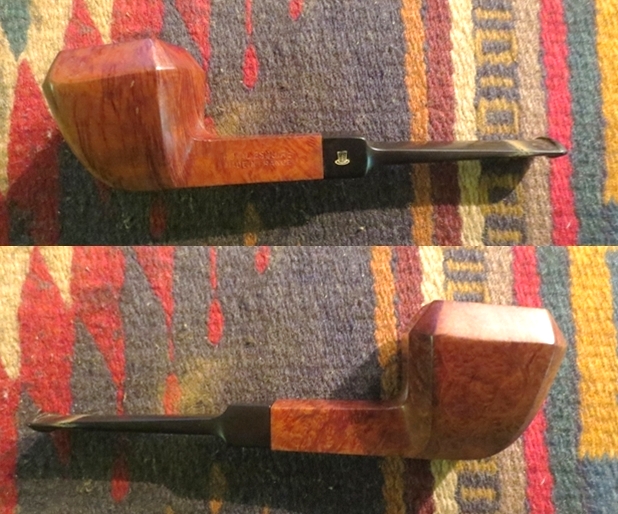
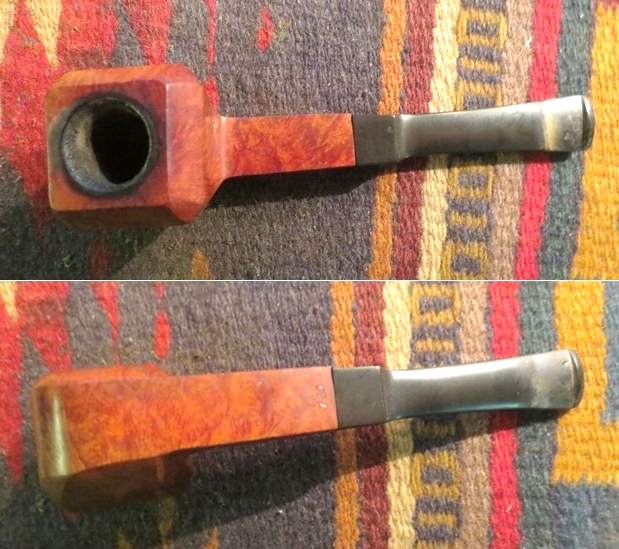
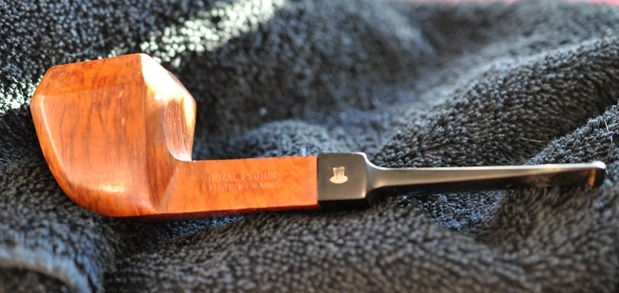
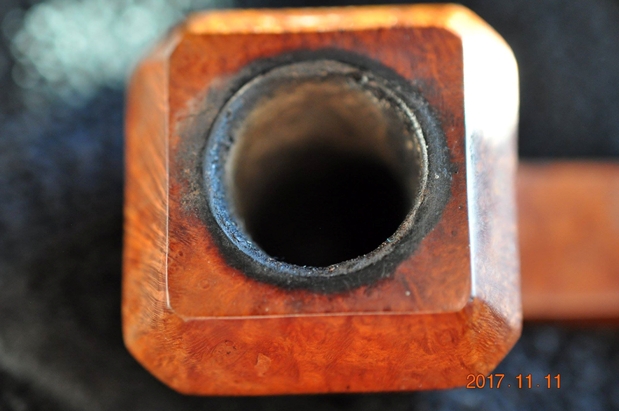
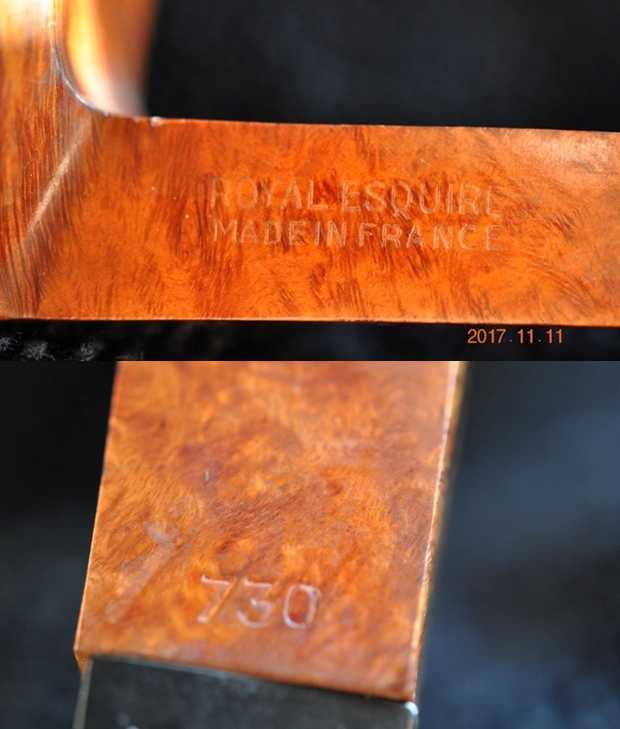
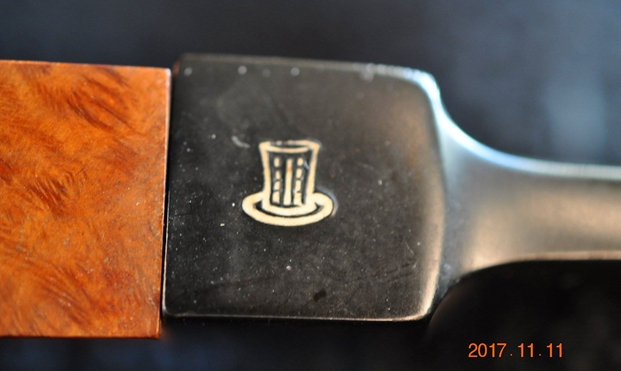
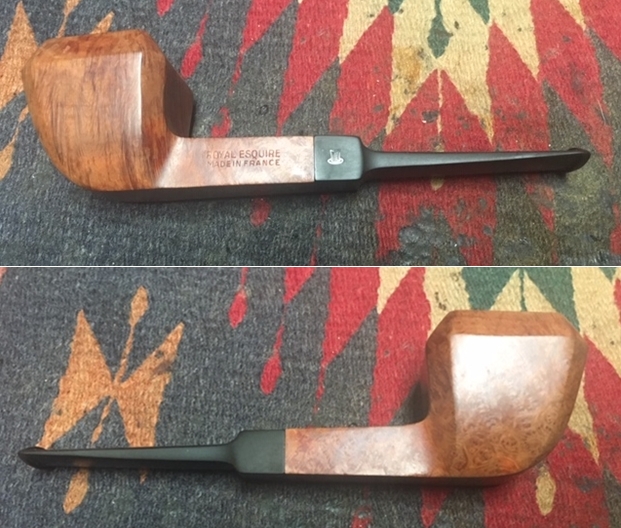
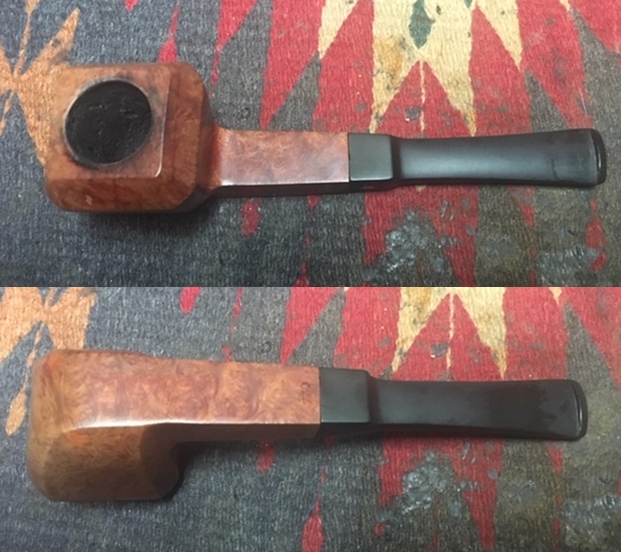
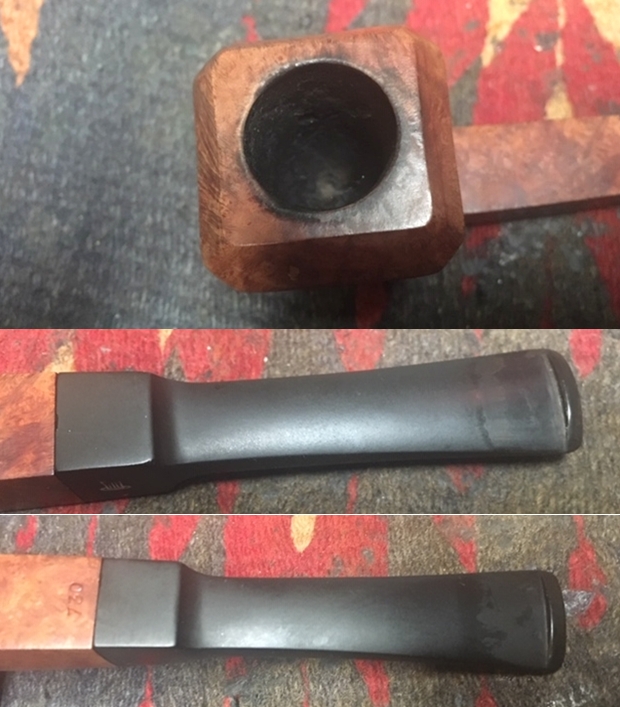
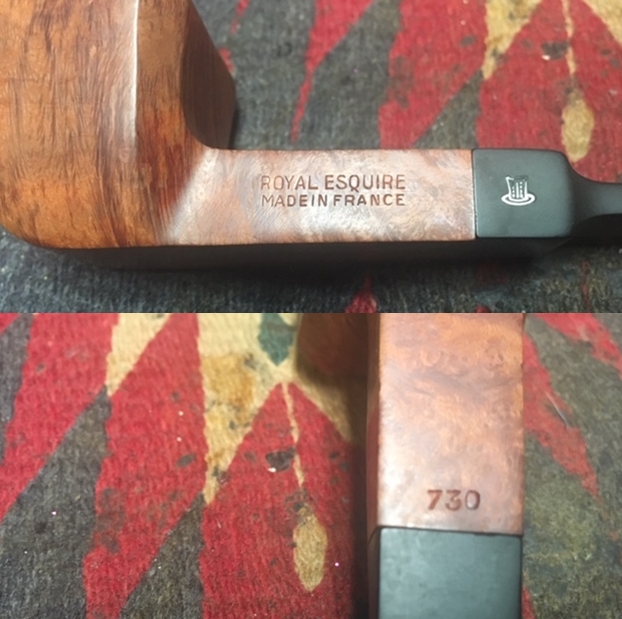
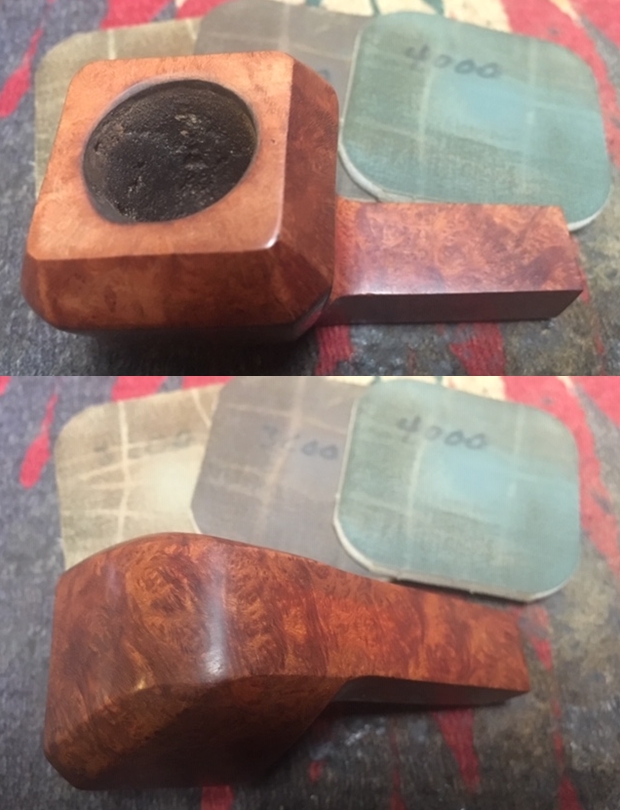
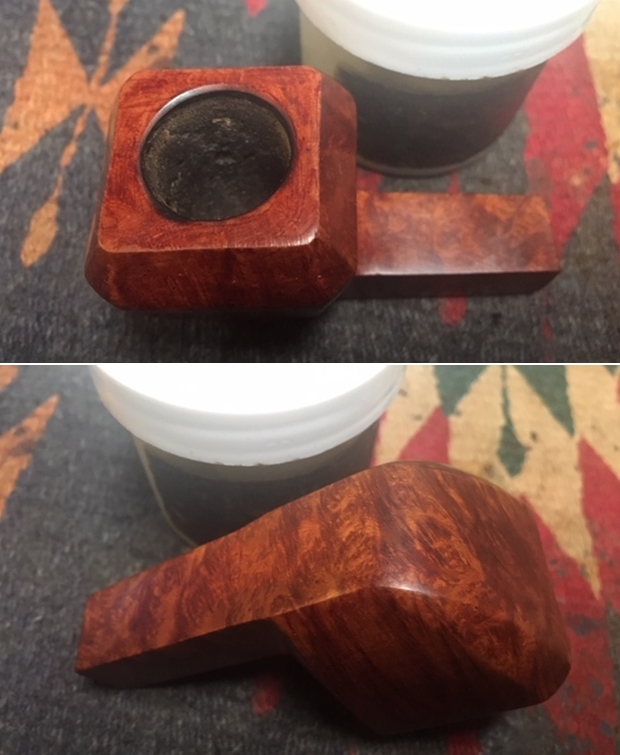
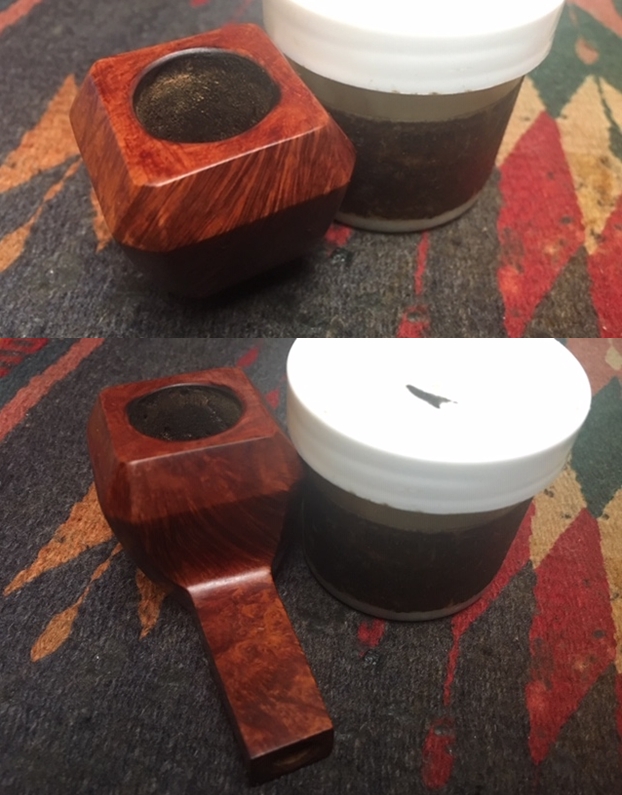
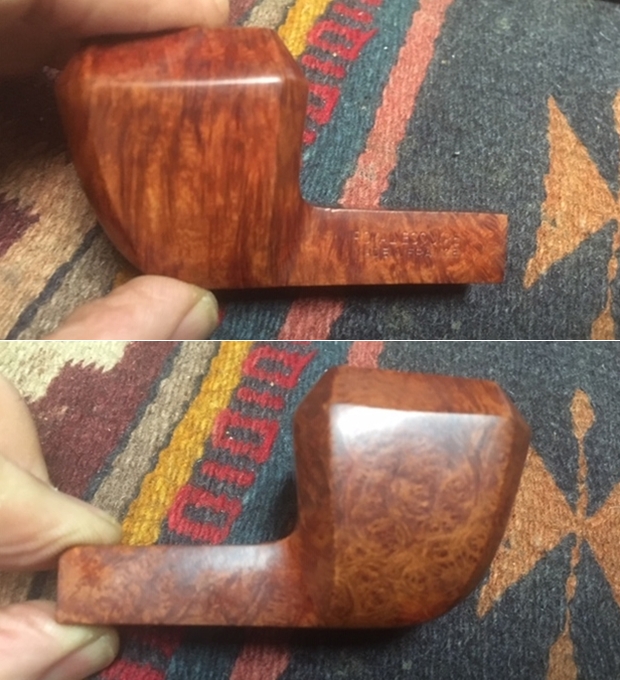
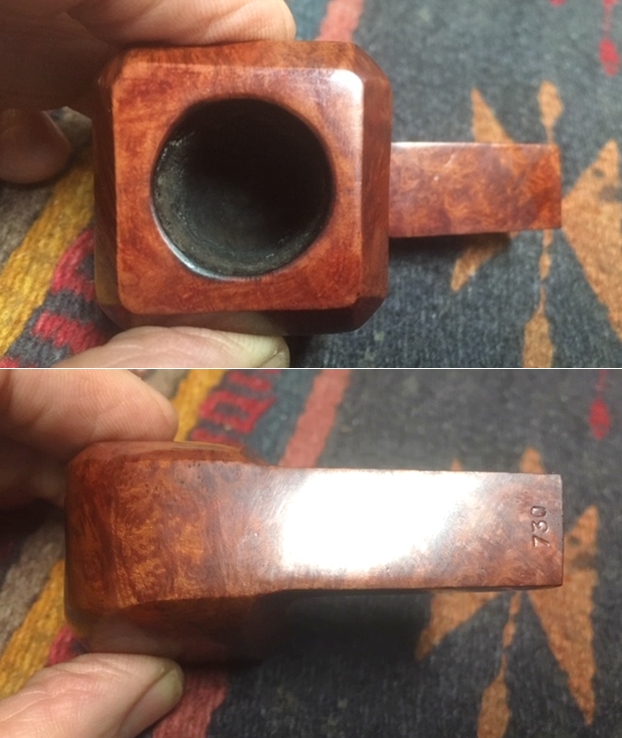
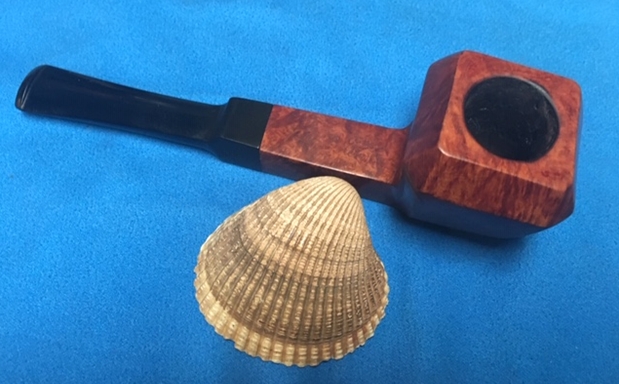
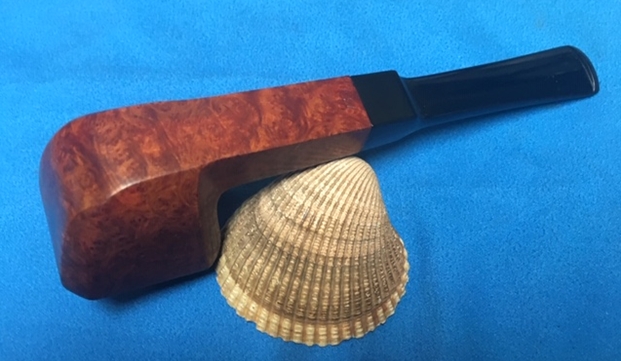
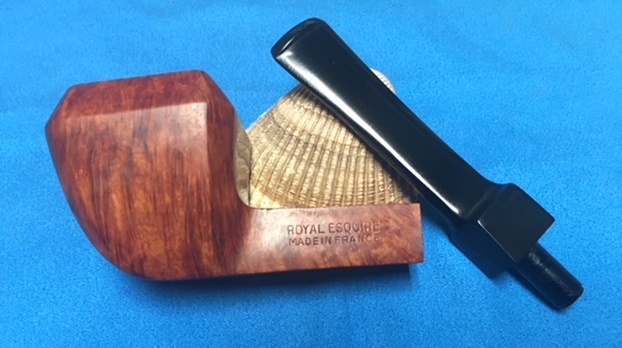
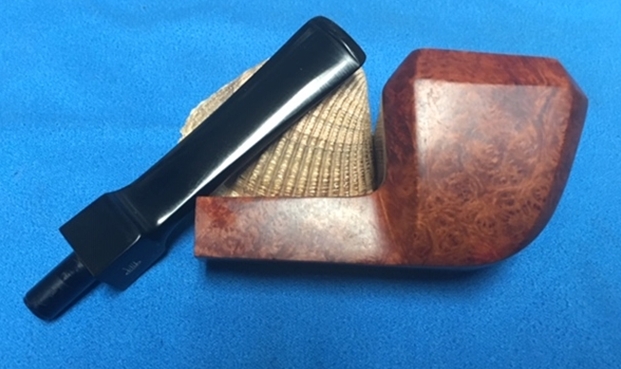
The next pipe on my worktable is yet another pipe from a local pipe shop. It is another of the pipes that came from the estate of an older gentleman whose wife returned his pipes to the shop for restoration and resale. This one is a smooth finished Paneled Dublin. It is stamped on a left side of the shank Royal Esquire over Made in France with the shape number 730 next to the shank/stem junction on the underside of the shank. On the left side of the saddle stem is the is a stamped top hat logo. The pipe was very dirty with a thick cake in the bowl and some lava overflowing on to the rim top. It was hard to know what the inner edge of the rim looked like because of the lava and cake. There were some nicks on the left side of the bowl and the cap that would need to be dealt with. The stem was lightly oxidized and had come calcification where a pipe Softee bit had been. There was some tooth chatter and tooth marks on both sides of the stem at the button. I included this pipe in the batch that I sent off to my brother for cleaning. I know I have said this before but I will have to say it again. I can’t say enough how much I appreciate his willingness to clean and ream the pipes for me. It allows me to move through the repairs much more quickly. When he received the pipe he took a series of photos of it to show its condition.He took a photo of the rim top to show the thick cake in the bowl and the overflow of lava on the rim top.He took photos of the sides and bottom of the bowl to give a clear picture of the beauty of the grain on this smooth finished old pipe. Under the grime there is some great grain peeking through. Jeff took photos of the stamping to capture the clarity of it even under the grime. The brand and the shape number are very readable. He also included a photo of the Top Hat logo on the stem. The stem looked dirty and oxidized with the calcification left behind by a pipe Softee bit. The edges of the button had bite marks and there was some tooth damage to the surface of the stem next to the button on both sides.I have worked on one other Royal Esquire pipe previously from this same collection. It was a poker with a lot of fills in the shank and bowl. It was a mess and once finished turned out very well. Here is the link to that blog: https://rebornpipes.com/2018/03/25/breathing-new-life-into-a-royal-esquire-french-made-poker/. On the previous pipe I had done a lot of searching and hunting to find out about the maker and found nothing on Pipedia or on PipePhil’s site. It remains a mystery to me. Are any of you familiar with the brand? Let us know.

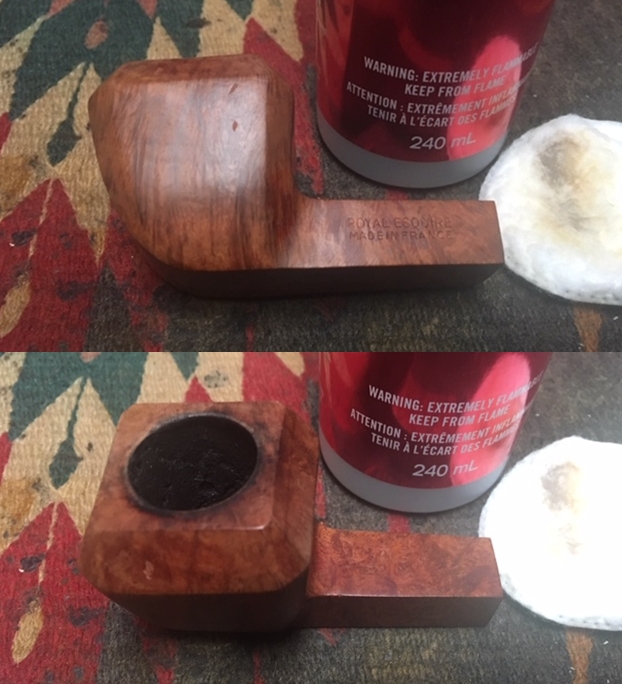
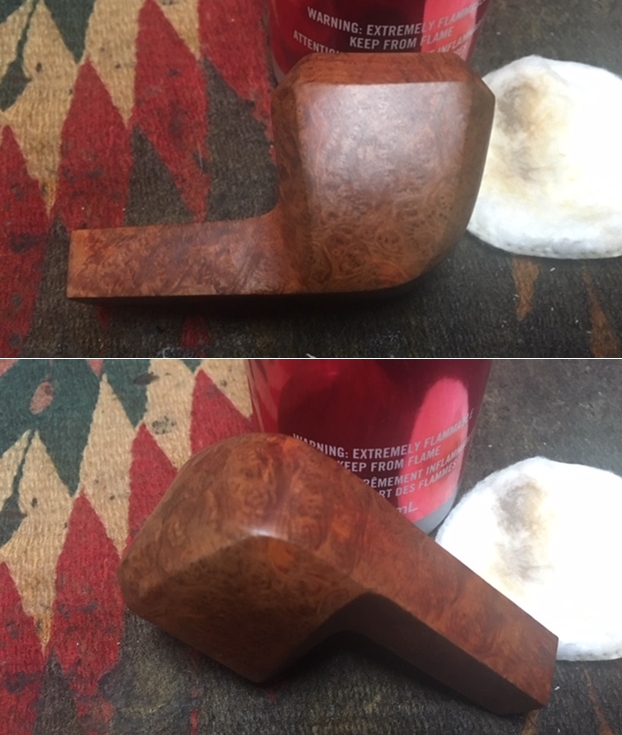
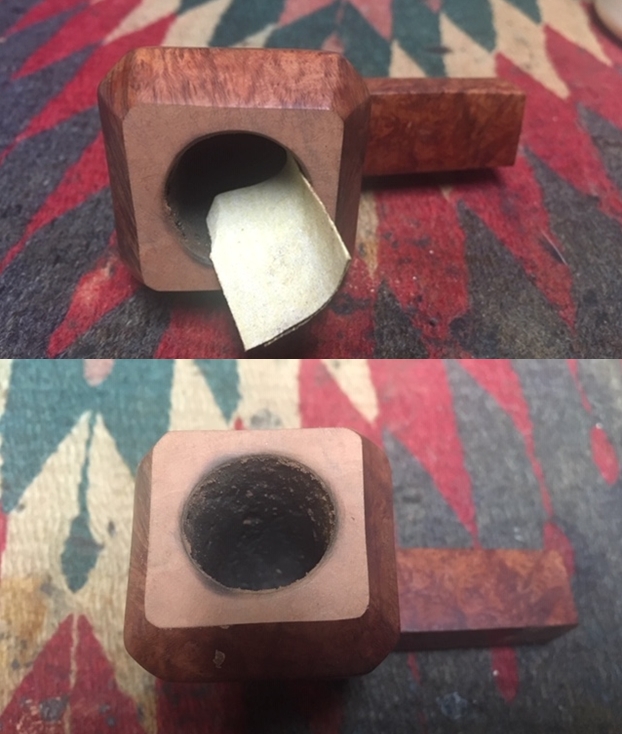
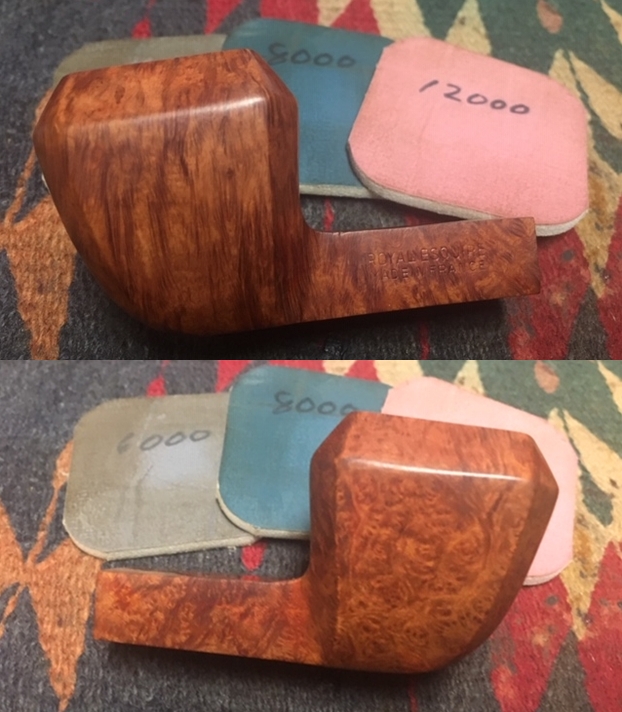
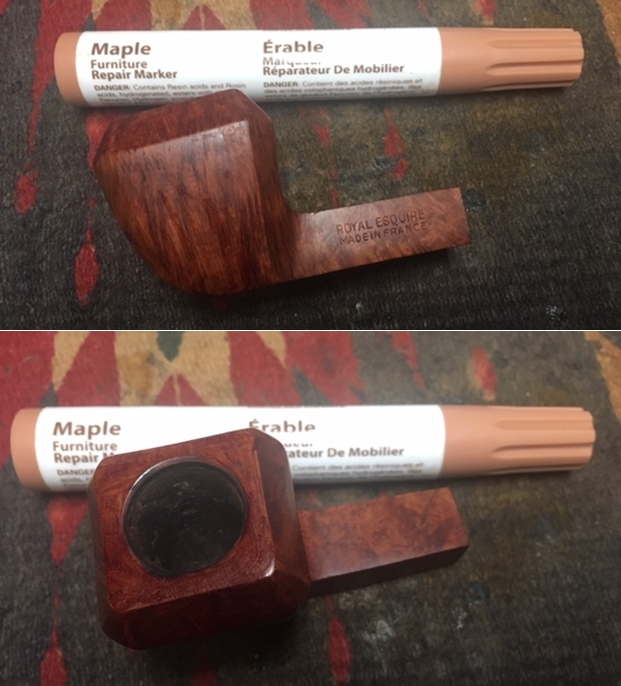
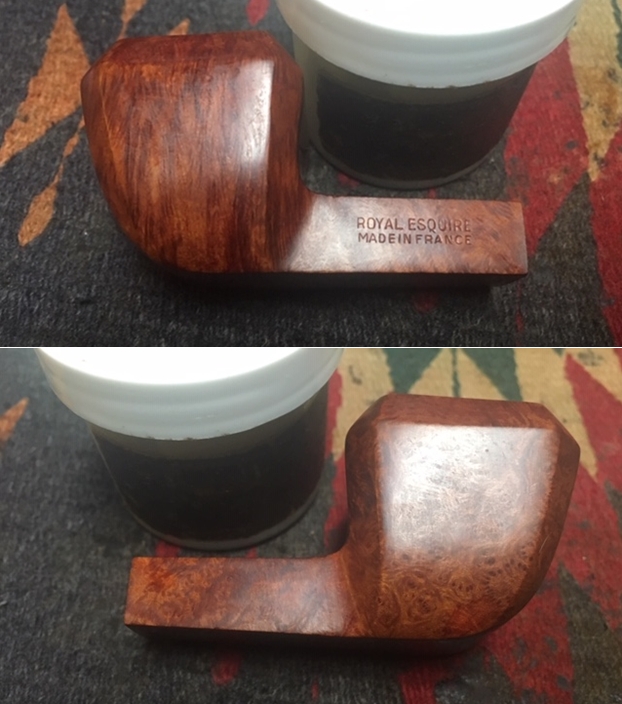
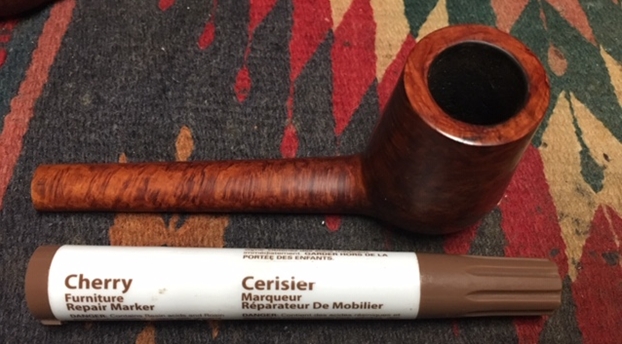
Jeff cleaned up the pipe for me. He reamed the bowl with a PipNet pipe reamer and cleaned it up with a Savinelli Fitsall Pipe Knife. He scrubbed the exterior with Murphy’s Oil Soap and a tooth brush to clean off the grime in the sandblast finish and the heavy overflow of lava on the smooth rim top. He cleaned up the internals of the shank, mortise and stem with pipe cleaners, cotton swabs and alcohol to remove all of the oils and tars in the pipe. When it came back to Vancouver it a cleaner and better looking pipe. I took photos of it before I started the restoration. I took photos of the rim top and the stem to show their condition. Jeff was able to clean up the grime and darkening on the rim top. The inner edge of the bowl had some damage on the front left and right. There was some general rim darkening and the rim top was damaged from tapping it out on hard surfaces. The stem had light tooth chatter and some deeper tooth marks on both sides near the button.I was able to get a very clear picture of the stamping on the left and underside of the shank and the Top Hat logo on the saddle stem.I decided to address the issues with the bowl and rim top first. I wiped the bowl down with acetone on a cotton pad to remove the shiny spots of the lacquer coat that remained on the shank. The acetone also cleaned off any remaining debris on the briar. You can see the deep nicks and gouges on the left side of the bowl in the photos below. I  topped the bowl on a topping board with 220 grit sandpaper to clean up the rim top damage and to minimize the burn damage on the edge of the bowl. I used a folded piece of 220 grit sandpaper to smooth out the inner edge and give it a slight bevel to remove more of the burn marks and damage. I repaired the gouges and nicks in the left side of the bowl and cap with clear super glue and briar dust. Once the repairs cured I sanded them smooth with a folded piece of 220 grit sandpaper. I polished the rim top and the bowl and shank with micromesh sanding pads – wet sanding with 1500-2400 grit pads and dry sanding with 3200-12000 grit pads. I wiped the bowl down after each pad with a damp cloth. The photos tell the story. I used a Maple coloured stain pen to blend the newly sanded areas on the side of the bowl and the rim top into the rest of the bowl.I rubbed the bowl and shank down with Before & After Restoration Balm to deep clean the finish on the bowl and shank. The product works to clean, enliven and protect the briar. I worked it in with my fingers to get it into the finish. After it sat for a little while I wiped it off with a soft cloth. I buffed the bowl with a horsehair shoe brush to polish it. The briar really began to have a rich shine. I took some photos of the bowl at this point to mark the progress in the restoration. I buffed the bowl with Blue Diamond polish on the buffing wheel to even out the look of the stain on the bowl sides and rim top. The pipe is looking really good at this point. It is even better in person than the photos show. I set the bowl aside and worked on the stem. I repaired the tooth marks with clear super glue. I set the stem aside to let the repairs cure. Once the glue cured I cleaned up the edge of the button and flattened out the repaired areas with a needle file. I sanded the repaired areas with folded pieces of 220 to remove the scratches and file marks on the stem surface. I sanded them with 400 grit sandpaper until the repairs were blended into surface of the stem.I polished the stem with micromesh sanding pads – wet sanding with 1500-2400 grit pads and dry sanding with 3200-12000 grit pads. I wiped the stem down after each pad with a damp cloth to remove the sanding dust. I used the Before & After Pipe Polish to remove the small minute scratches left in the vulcanite. I finished by wiping the stem down with a final coat of Obsidian Oil and set it aside to dry. I put the stem back on the pipe and worked it the pipe over with Blue Diamond to polish out the remaining small scratches. I gave the bowl and the stem several coats of carnauba wax and buffed the pipe with a clean buffing pad to raise the shine. I hand buffed it with a microfiber cloth to deepen the shine. The pipe polished up really well with the repairs disappearing into the new finish. The finished pipe is shown in the photos below. There is something about the pipe that reminds me of some of the Edwards pipes that I have repaired and restored over the years. The paneled Dublin and cap polished really well. The polished black vulcanite looks really good with the browns of the briar. The dimensions of the pipe are Length: 5 3/4 inches, Height: 1 3/4 inches, Outside diameter of the bowl: 1 1/2 inches, Chamber diameter: 3/4 of an inch. This is another pipe that I will be putting it on the rebornpipes online store shortly, if you are interested in adding it to your collection. Thanks for walking through the restoration with me as I worked over this interesting smooth finished paneled Dublin with a square shank. It was a fun one to work on.


A Unique Piece of Pipe History – A Beautiful WDC Calabash with Bling


Blog by Steve Laug

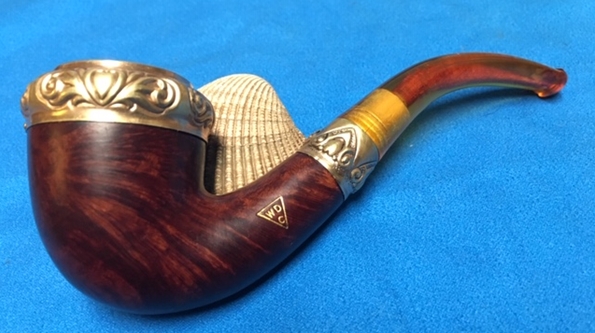
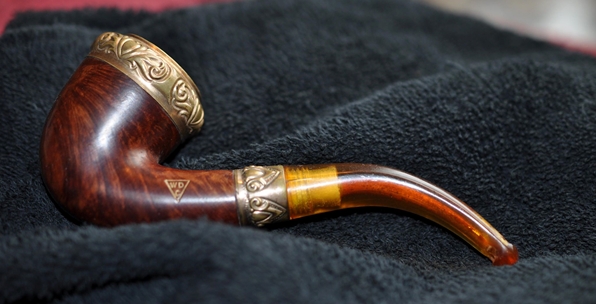
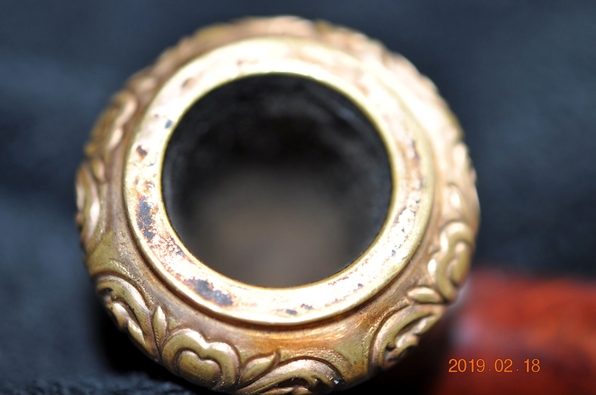
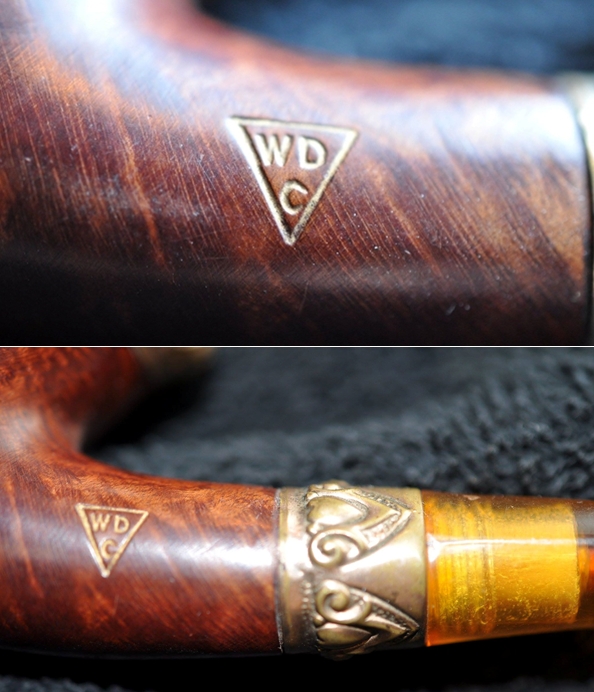
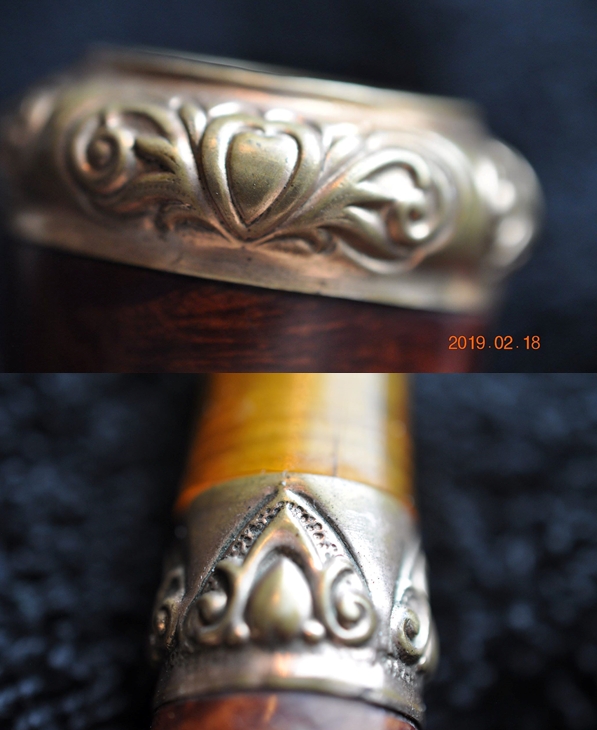
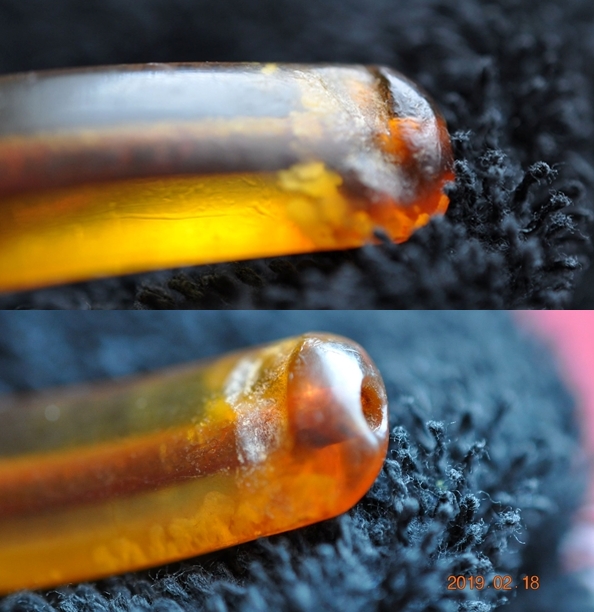
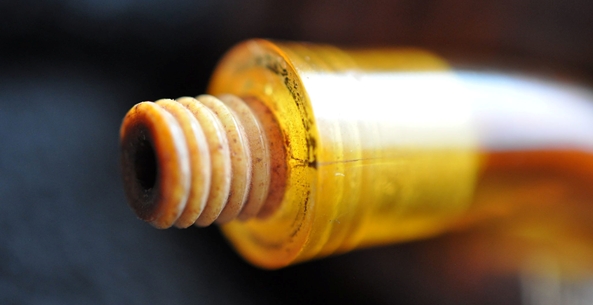
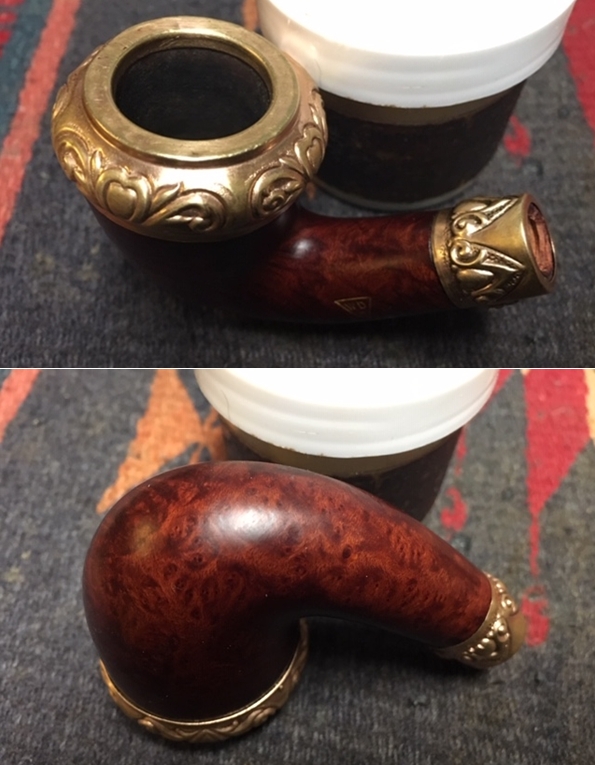
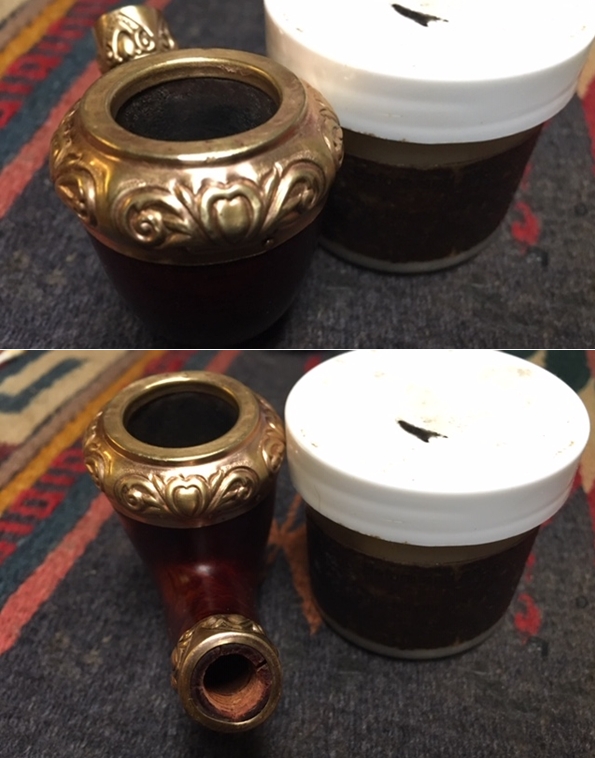
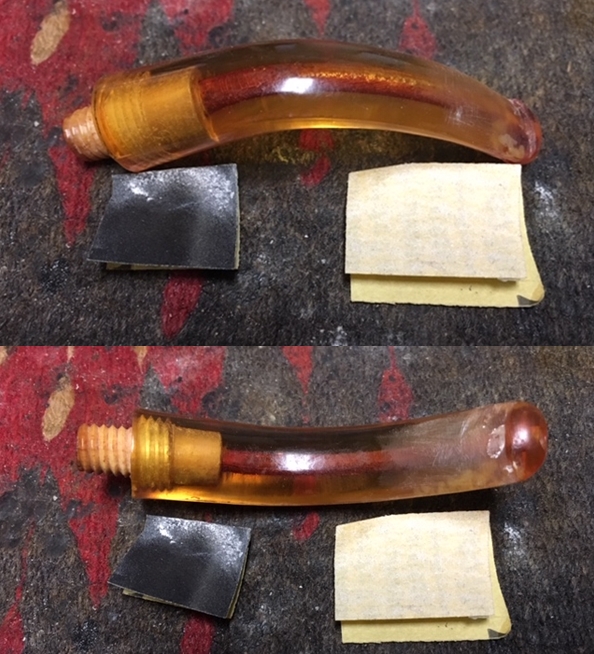
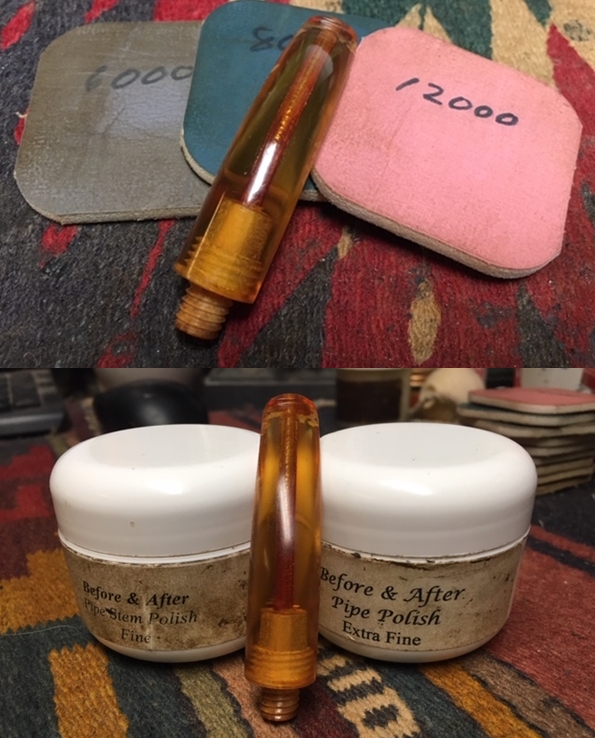
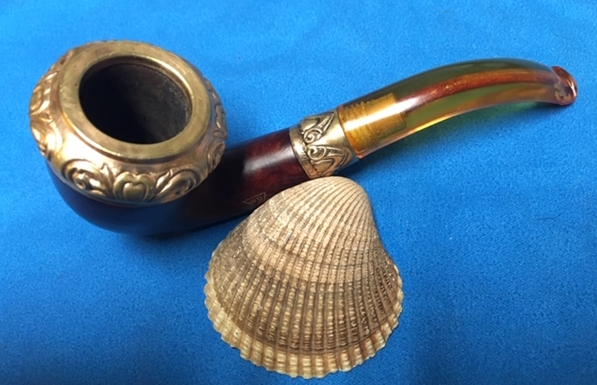
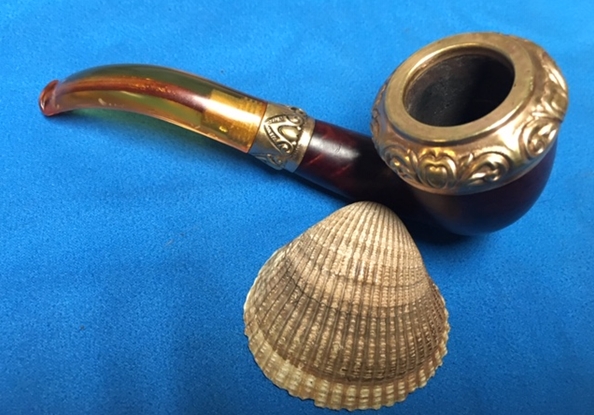
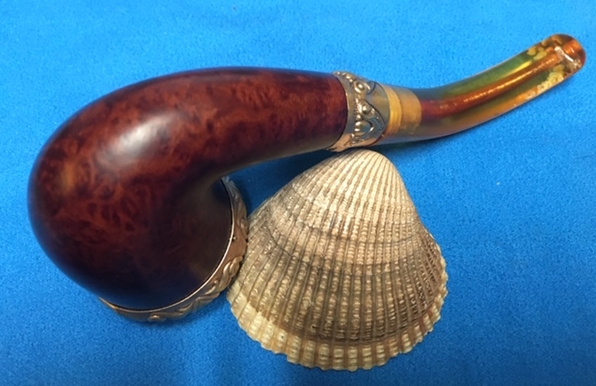
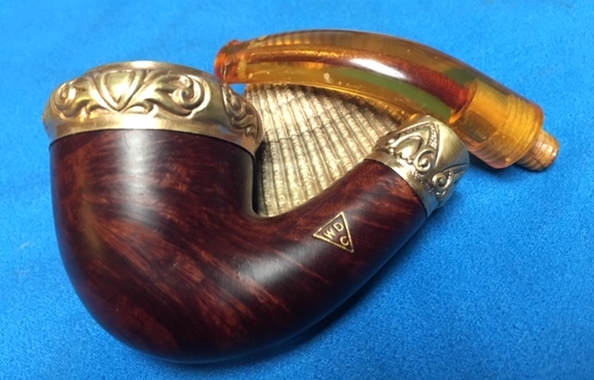
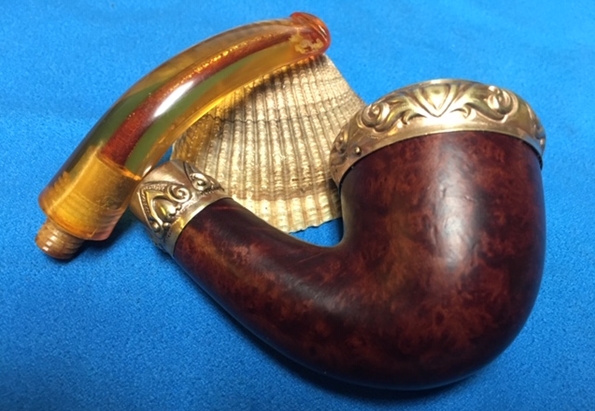
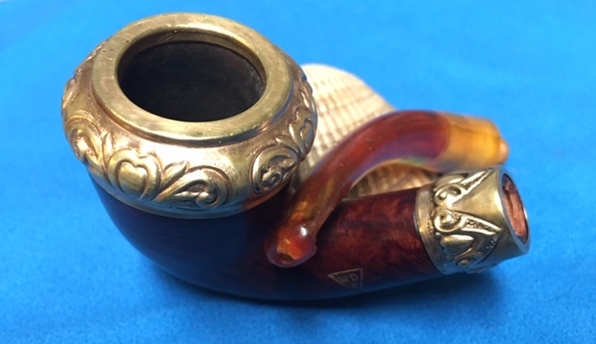
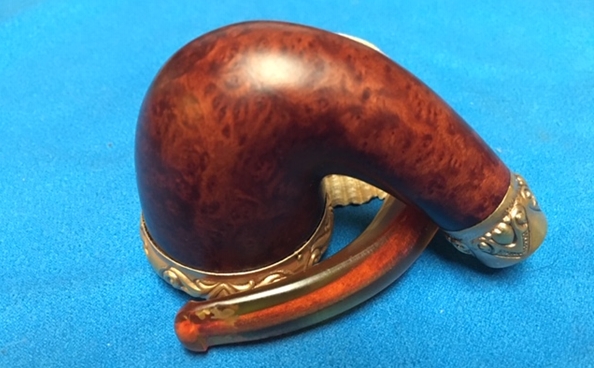
The next pipe in the queue is an old timer that Jeff picked up somewhere in his journeys whether online in his pipe hunting is antique shops. This one an interesting older WDC Calabash with a brass shank cap and a rim top cap. The stem is Bakelite with an amber colour. It is stamped on the left side of the shank WDC in a triangle (William DeMuth & Company). It is a Calabash shaped pipe decorated with a brass rim top and cap as well as a brass ferrule. Both have a pattern of filigree and hearts. These older WDC and CPF Calabashes were decorative and had a real flourish that makes them readily identifiable. The finish is smooth and is in good condition despite the years. The brass rim top has some dings in it and there was some lava buildup on various spots. The inner edge of the brass cap was turned down into the inner edge of the bowl. It was dirty with lava and there was a thick cake in the bowl. The brass was tarnished but looked easy to clean up. The pipe was dusty but the finish looked like it was rich and would clean up well. The stem is an amber coloured Bakelite with a threaded tenon in the shank and the stem. The stem has tooth marks and chatter on both sides at the button edge. The photos below tell the story and give a glimpse of the pipe before clean up. Jeff took a photo of the bowl and rim to show the condition of the pipe before he started his cleanup work. The spots of lava overflowing on the rim top made me thick that some of the lava had been scraped off by the seller.  There was a thick cake in the bowl that would need to be reamed out. There was dust and debris in the curls and curves of the brass cap.He also took a photo of the right side and underside of the bowl and shank to show the amazing birdseye and swirling grain around the bowl. The classic WDC stain looked pretty good under the grime.Jeff took photos of the stamping on the left side of the shank and the setting between the brass ferrule and the bowl. The WDC triangle logo stamping is legible and very readable.The next photos show the rim cap and ferrule and highlight the heart and filigree patterns in the brass. You can also see the oxidation on the brass in the photos.The next two photos show the stem surface. They show the tooth marks and chatter on both sides near the button. They also show the deep oxidation on the stem. The third photo below shows the threaded bone tenon. Jeff did a thorough clean up job on the pipe so that  when it arrived here in Vancouver it looked amazingly good for a pipe that is at least a hundred years old. Jeff carefully reamed the bowl with a PipNet pipe reamer and followed up with a Savinelli Fitsall pipe knife to remove the cake. He scrubbed out the mortise and the airway in the shank and the stem with alcohol, cotton swabs and pipe cleaners. He scrubbed the exterior of the bowl, rim, shank and stem with a tooth brush and Murphy’s Oil Soap to remove the oils and tars on the rim and the grime on the finish of the bowl of the pipe. He rinsed it off under running water. He dried it off with a soft cloth. He was able to remove all of the lava build up on the beveled rim top of the pipe. The brass rim top and ferrule looked very good. The birdseye and cross grain was beautiful and the pipe looked very good. There were tooth marks and chatter visible on both sides of the stem at the button. I took photos of the pipe to show its condition before I started my work. I took close up photos of the bowl, rim and stem surfaces to capture the condition of the pipe after Jeff had done his cleanup. The rim top was clean and the brass inner edge was in excellent condition. The stem was quite clean with some tooth marks and chatter on the top and underside near the button.I took a photo of the stamping on the left side of the shank and the flow of the grain on the shank and bowl side. It is a beautiful piece of briar.The bowl and rim top looked really good after Jeff’s clean up work. I decided to go straight to polishing the bowl. I worked some Before & After Restoration Balm into the surface of the briar with my fingertips to clean, enliven and protect it. I let the balm sit for a little while and then buffed the bowl with a cotton cloth to raise the shine. The following photos show the bowl at this point in the restoration process. The bowl and the rim top look really good and the grain really stood out on the smooth rim. The finish looks very good with the grain popping through the brown stain on the bowl and the brass on the rim top and shank end. I set the bowl aside and turned my attention to the stem. I filled in the deep tooth marks on both sides with clear super glue. It takes a while  to cure so I set it aside and worked on another pipe while it hardened.Once the repairs had cured I used a needle file to sharpen the edge of the button and smooth out the repairs on the surface of the stem. I sanded it with 220 and 400 grit sand paper to smooth out the repairs and blend them into the surface of the stem. I polished the stem with micromesh sanding pads – wet sanding with 1500-2400 grit pads and dry sanding it with 3200-12000 grit pads. I wiped the stem down with Obsidian Oil after each pad. I further polished it with Before & After Pipe Polish – both Fine and Extra Fine. I finished by giving it a final coat of Obsidian Oil and setting it aside to dry. Since I had finished both the bowl and stem I put them back together and carefully polished the bowl and stem with Blue Diamond polish on the buffing wheel. The combination of metal, Bakelite and briar makes this a very touch process. I gave the bowl and the stem multiple coats of Conservator’s Wax. I carefully buffed the pipe with a clean buffing pad to raise the shine. I hand buffed it with a microfiber cloth to deepen the shine. The pipe polished up pretty nicely. The brass rim cap and shank end and the beautiful grain of the briar on the bowl came alive on the buffing wheel. The rich brown stain works well with polished amber coloured Bakelite stem. The finish looks amazing and it is smooth and light weight in the hand. Judging from the condition when we got it, I am sure that this will be another amazing smoker. Have a look at it with the photos below. The dimensions are Length: 5 1/4 inches, Height: 2 inches, Outside diameter of the bowl: 1 7/8 inches, Chamber diameter: 3/4 of an inch. This beauty will be going into my collection of old WDC and CPF. Thanks for walking through the restoration with me on this beautiful old time WDC Calabash pipe.

Restoring a Surprising Silver Treasure: a Robinson 8494 Quarter Bent Paneled Tomato


Blog by Dal Stanton

I acquired this interestingly shaped pipe in an eBay Lot acquisition from France which has contained several very collectible pipes.  The challenge with this French Lot has been that several names stamped on the pipes are unfamiliar to me and require more research to uncover the origins.  This pipe continues that trend as its origins aren’t clear. My good friend and former colleague working in Ukraine, a pipe man and restorer himself (see: https://www.thepipery.com), saw this Robinson Paneled Tomato in the For “Pipe Dreamers” Only! collection and reached out to me about commissioning it which I was more than happy to do!

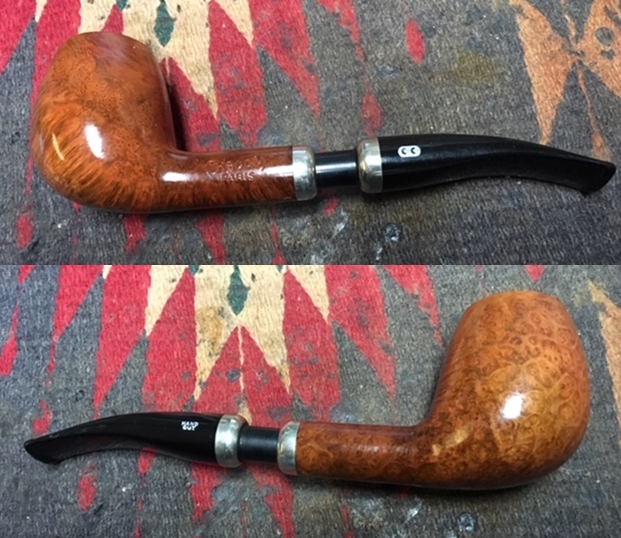
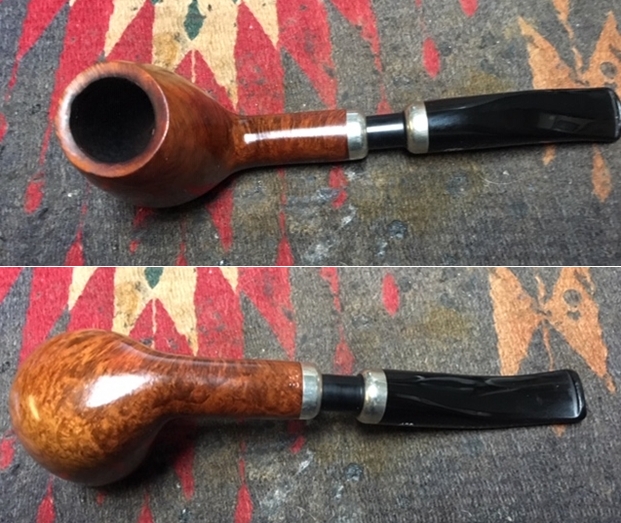
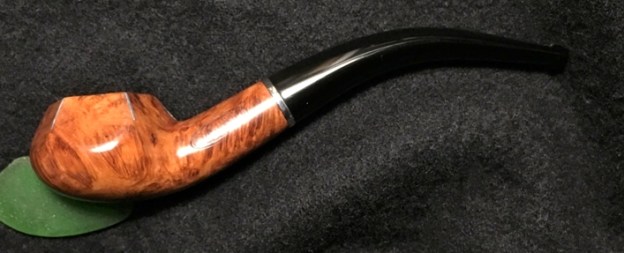
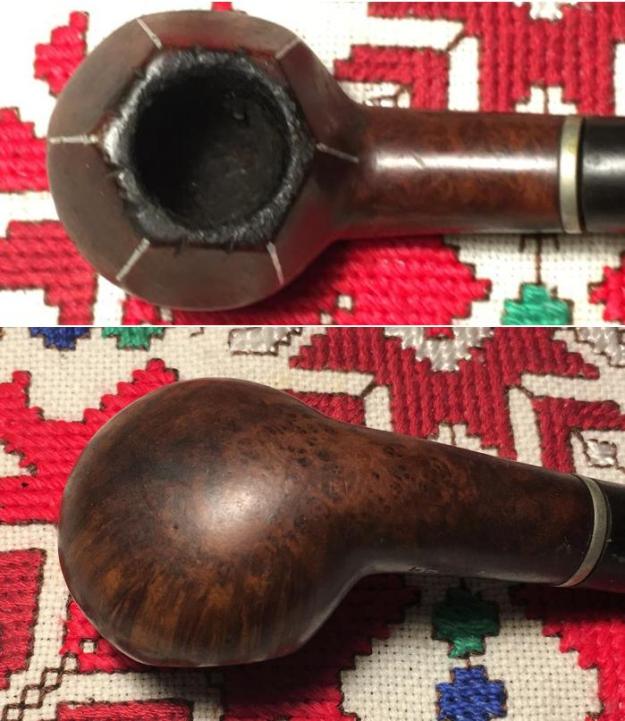
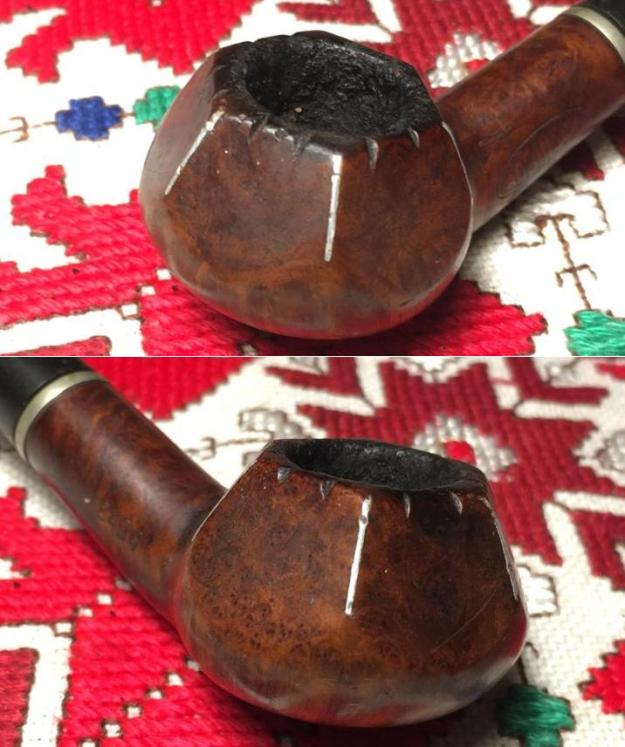
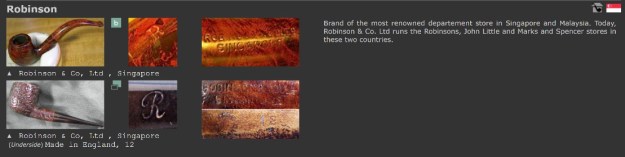
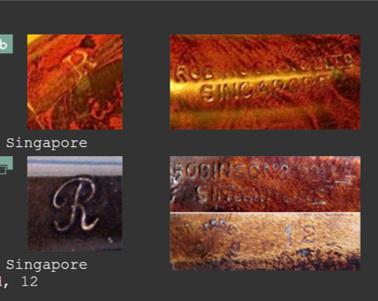
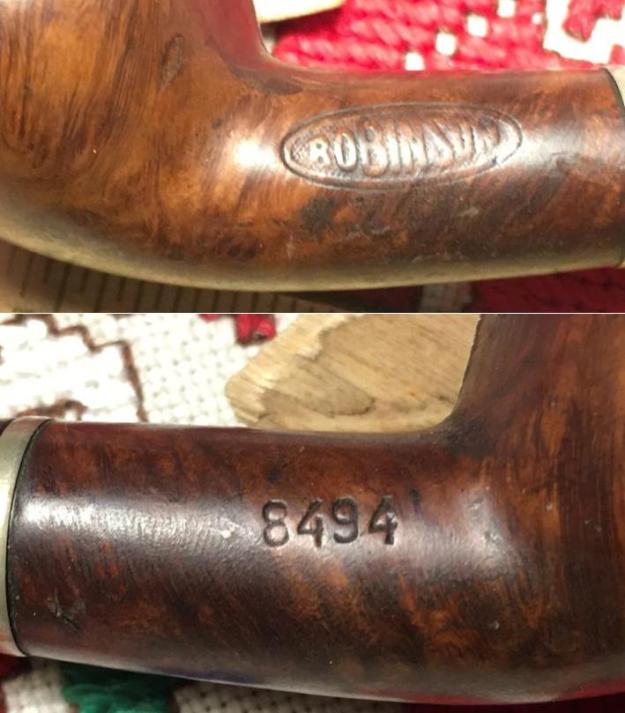
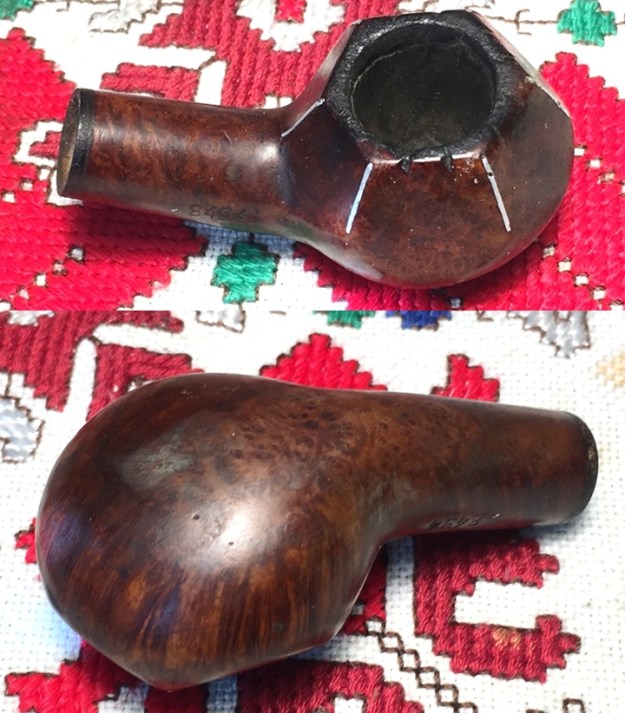
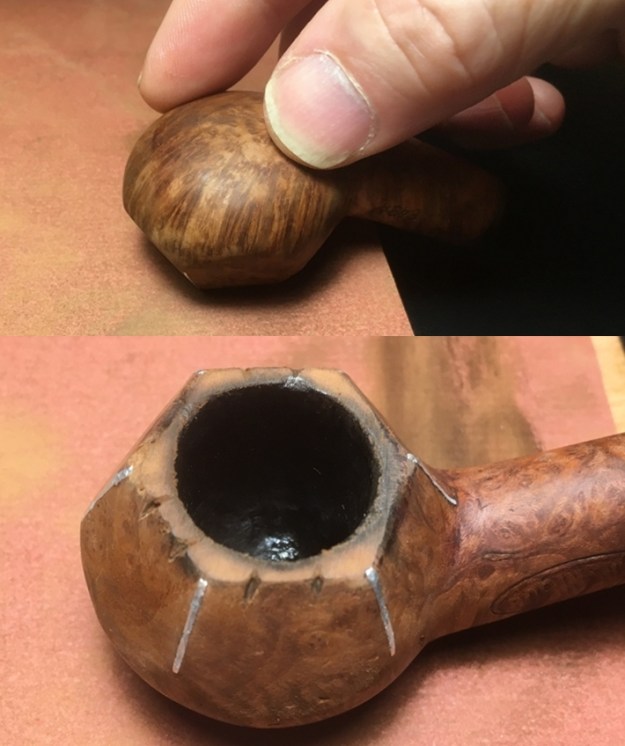
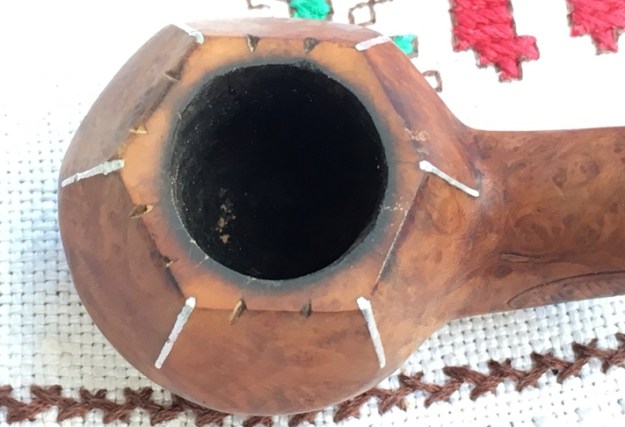
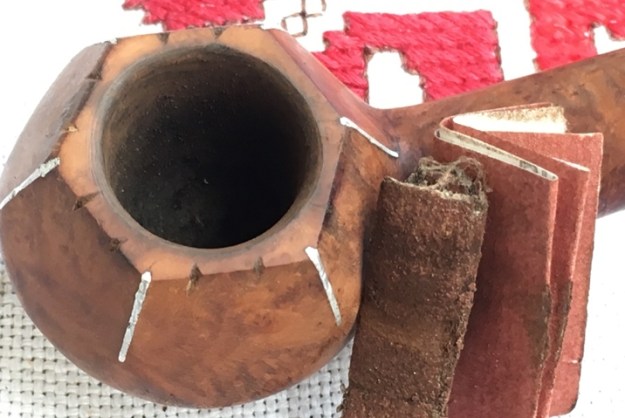
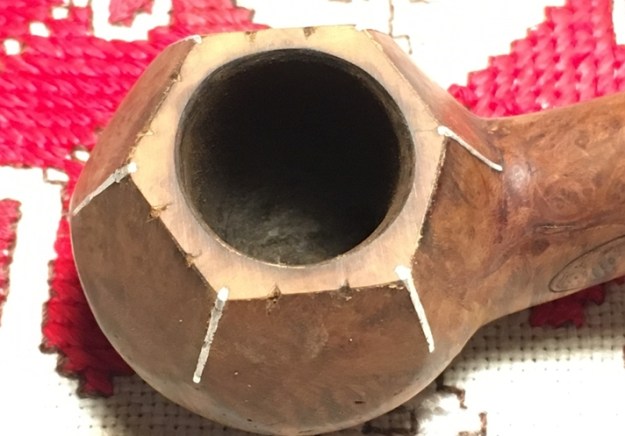
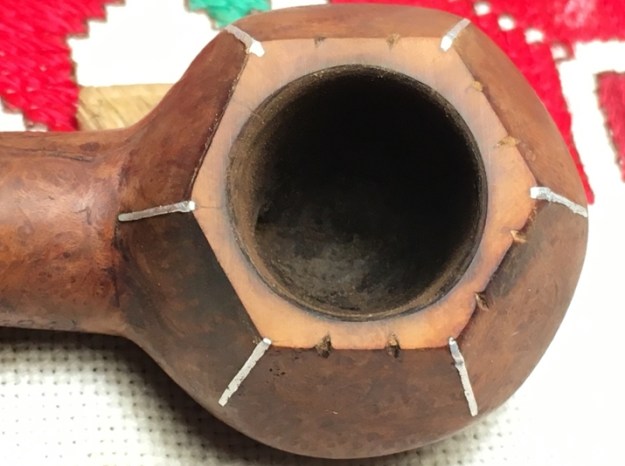
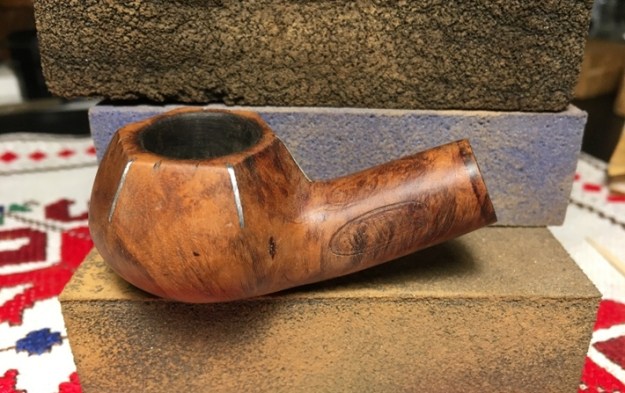
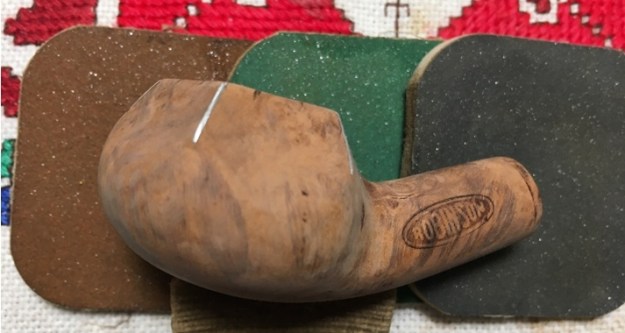
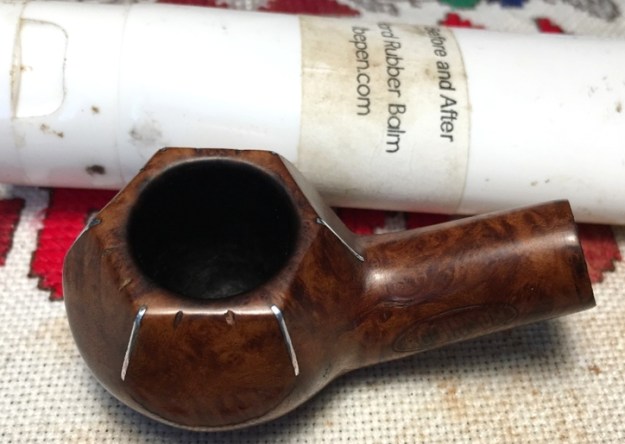
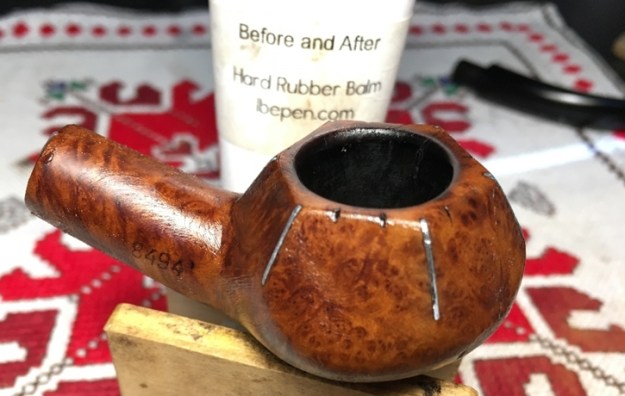
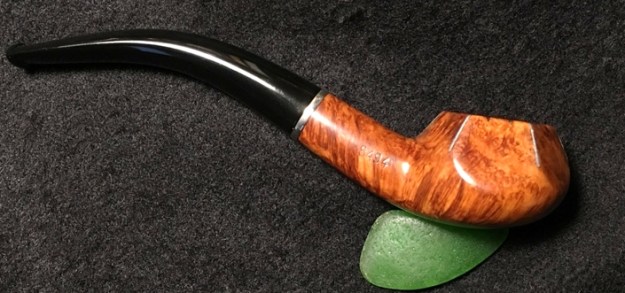
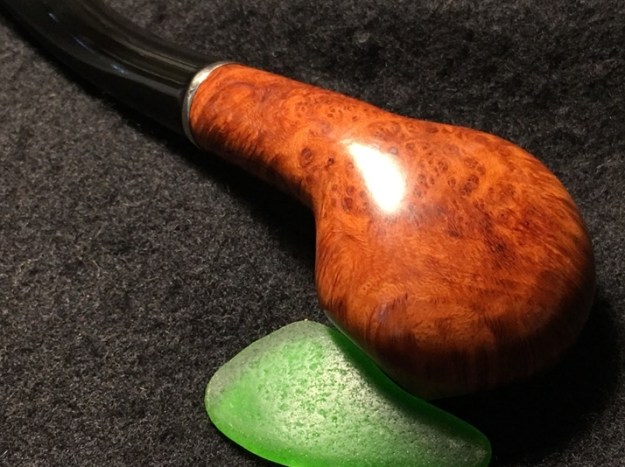
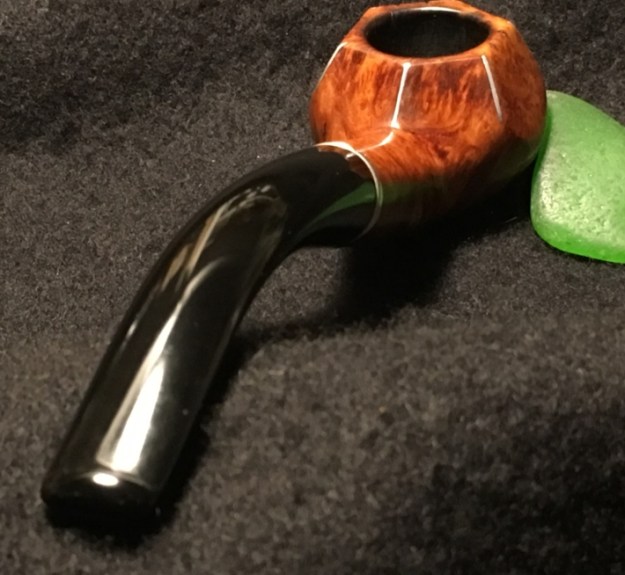
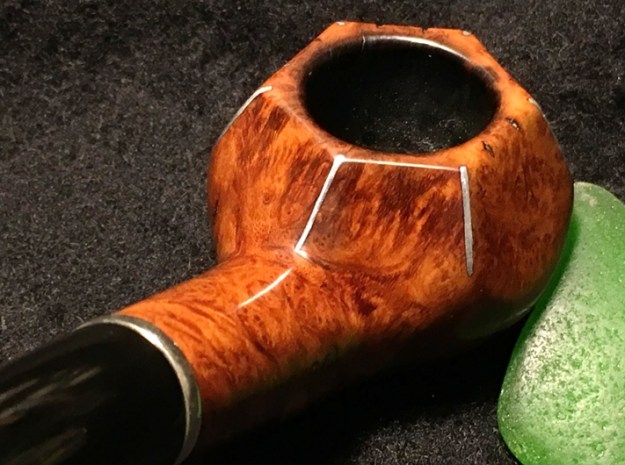
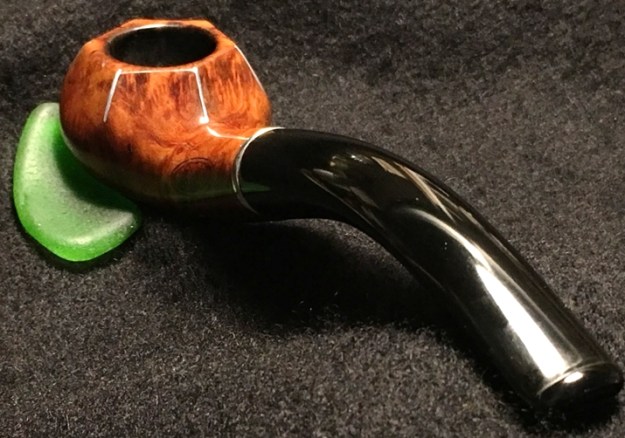
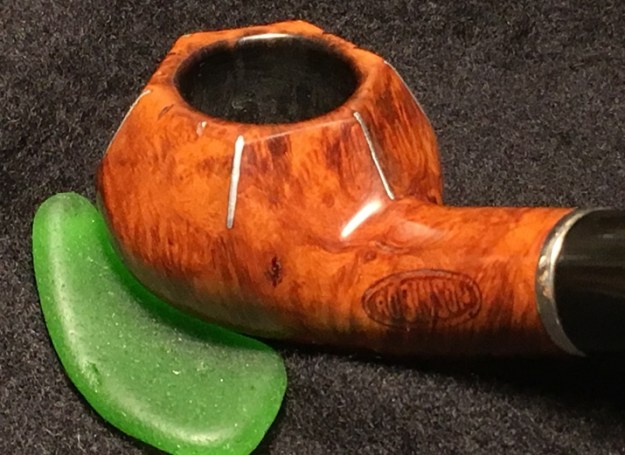
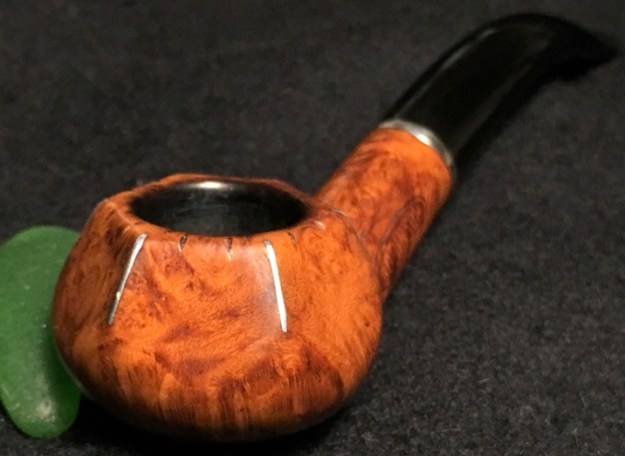
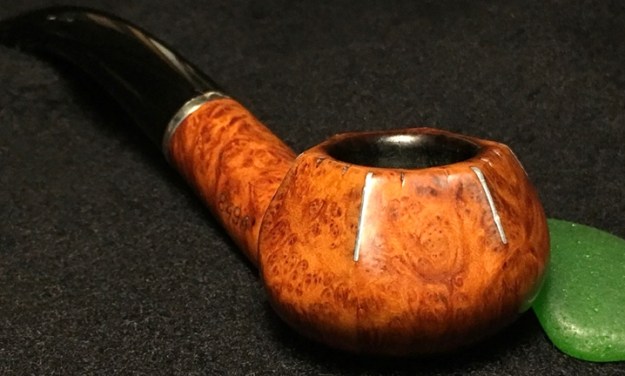
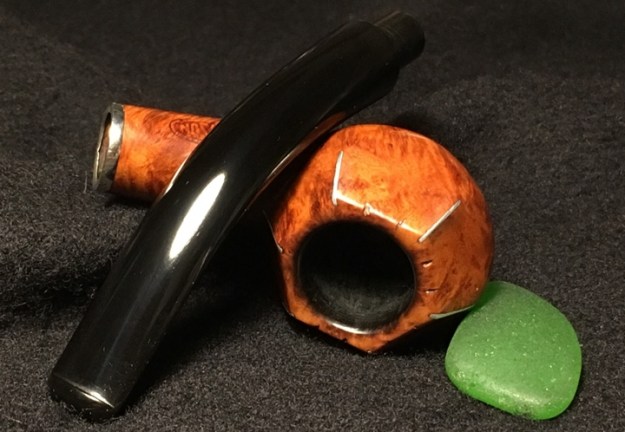
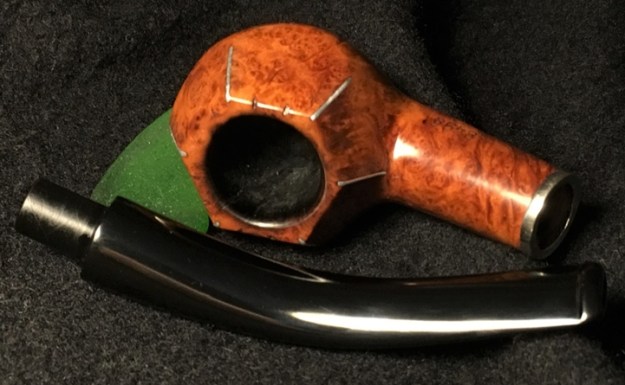
I’m categorizing this Paneled Tomato (though a case could be made that this is a Prince shape, but the shank is a bit too broad I think) pipe as a petite as its dimensions are: Length: 5 ¾ inches, Height: 1 inch, Tomato bowl width: 1 1/2 inches, Chamber width: 5/8 inches, and Chamber depth: 7/8 inches. It has a very attractive and sleek shape with the 1/4 bent stem, but what I haven’t seen before are the painted panel boarders setting off the upper dome of the Tomato along with sculpted rim notches.  Here are pictures of the pipe now on my worktable: What I thought at first was a stinger that had been cut off, might be a slotted insert of some sort.  I’ll work on removing it later.The left side of the shank bears the ornate, oval with ‘ROBINSON’ stamped.  The right side of the shank bears what I believe is a shape number ‘8494’.  I looked in my autographed copy of Herb Wilczak & Tom Colwell 3/3/97 – ‘Who Made That Pipe?’ and found only one entry for ‘Robinson’ belonging to a ‘John J. Robinson’ with the COM listed as USA.  I found no reference to a ‘John J. Robinson’ in Pipedia’s listings or Pipephil.eu, my regular first stops for information.  I’m dubious of the COM of USA because, and I know this is subjective, the pipe has a European feel.  Its diminutive size reflects more the English and French values of the last century and the pipe has a sense of some age to it in spite of the painted panel edges and rim notches that may have been added later.  Also, the shape number of ‘8494’ doesn’t lend itself to a COM of USA.  I decide to do a quick survey of English/French pipe shape charts to find this shape number that corresponds to the Paneled Tomato I’m looking at.  Often established pipe manufacturers will put out lines of pipes for a 3rd party company with the party’s name stamped on it but the shape will emulate the shapes that the mother manufacturer already produces.  I investigate BBB and GBD specifically as the most likely possibilities but found no match that might make this Robinson 8494 a positive second or sub-brand of these well-known English/French sources.   Next, I go back to Pipephil.eu and instead of searching John J. Robinson, the Wilczak & Colwell clue, I simply search more broadly, ‘Robinson’ and find an interesting listing.Robinson & Co. Ltd, is a retail company in Singapore and Malaysia with obvious historic English connections.  Wishing to know more about this company, I found this lengthy article in Wikipedia, Robinsons & Co. that gave much information.

Robinsons & Co. Pte Ltd is a retail company which has department stores in Singapore and Malaysia. The company owns the Robinsons department store, John Little in Singapore and has franchise outlets of Marks and Spencer in both countries. The company has grown into one of the country’s most renowned department stores. Robinsons celebrates their 160th anniversary in 2018.

Robinsons & Co. Limited is currently part of the UAE-based Al-Futtaim Group.

The article outlines the formation of the company in 1858 by Phillip Robinson of England when the British Empire had a colonial presence in Singapore.  With partnership changes the exclusive, high end department store became known as Robinson and Co., in 1859.  Through the remainder of the 1800s and into the 1900s it became a landmark in the downtown Singapore store and catered mainly to expatriates and higher end customers among the local population – royalty, business, and political spheres.  During WWII, the store was bombed by the Japanese and was finally closed during Japanese occupation.  After WWII it reopened when the British returned to Singapore in 1946 and the business flourished. During the 1970s, the business was less profitable due to international and local conditions and finally, the publicly traded Robinson & Co. Limited was acquired by Dubai based Al Futtaim Group in 2008.

From Pipephil.eu information, I’m able to establish two facts – the Robinson Department Store in Singapore DID market pipes with ‘Robinson Co. LTS’ which, secondly, have a COM of ‘Made in England’.

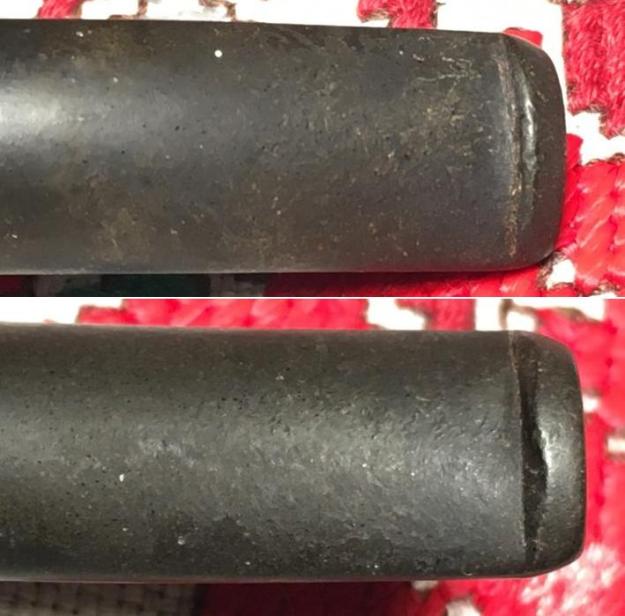
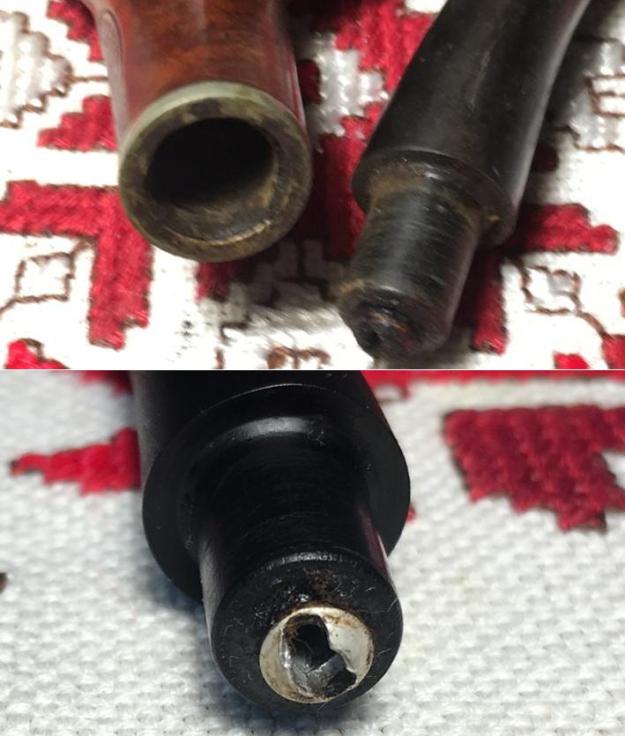
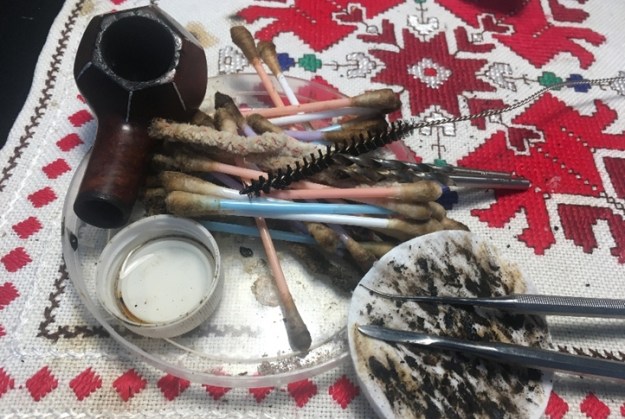
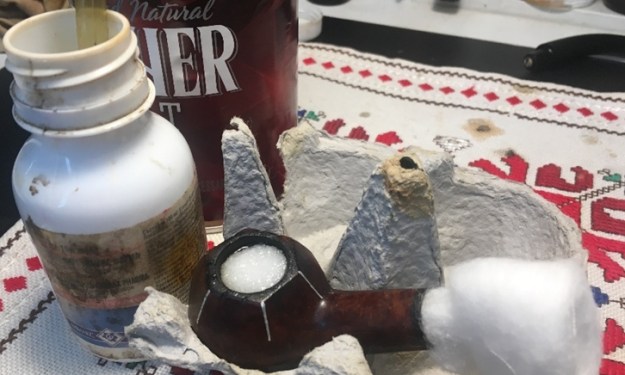
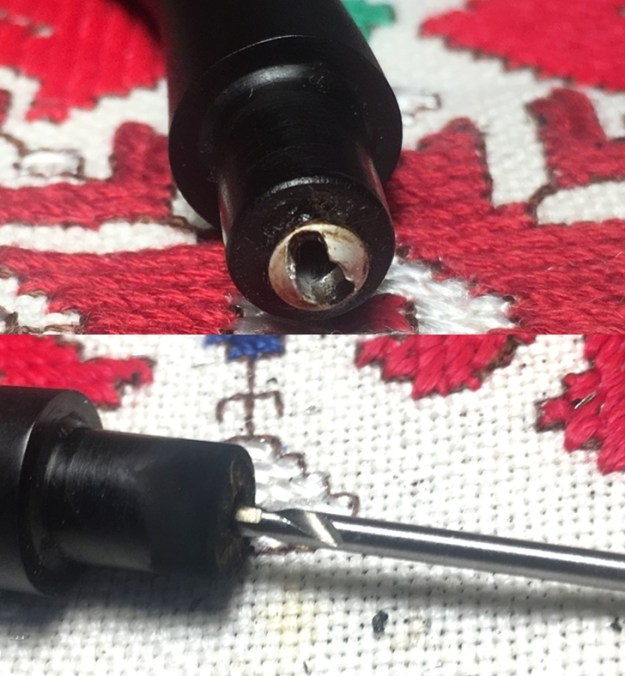
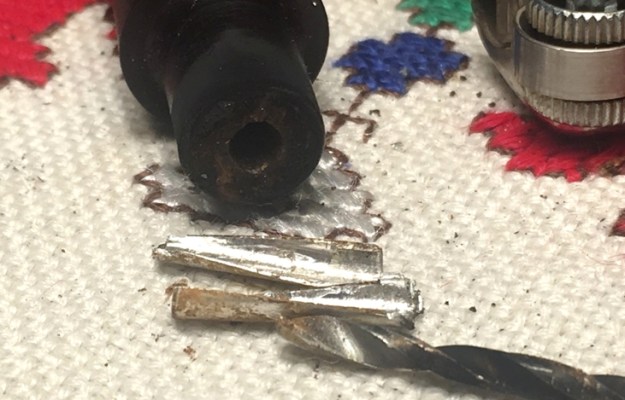
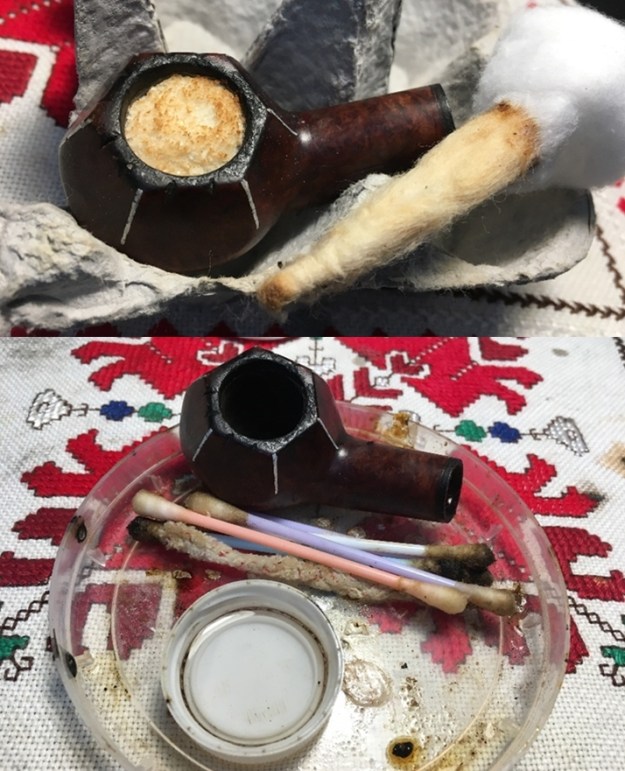
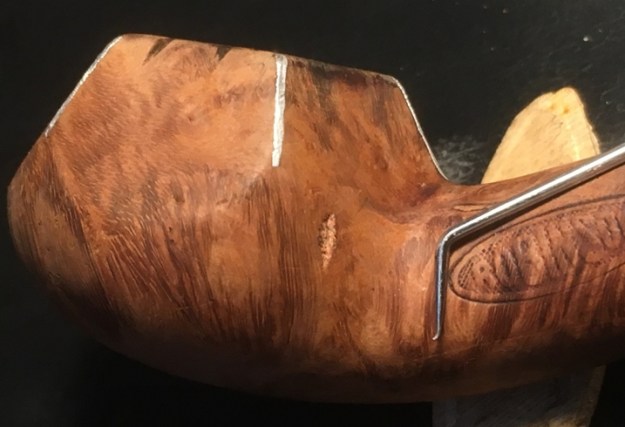
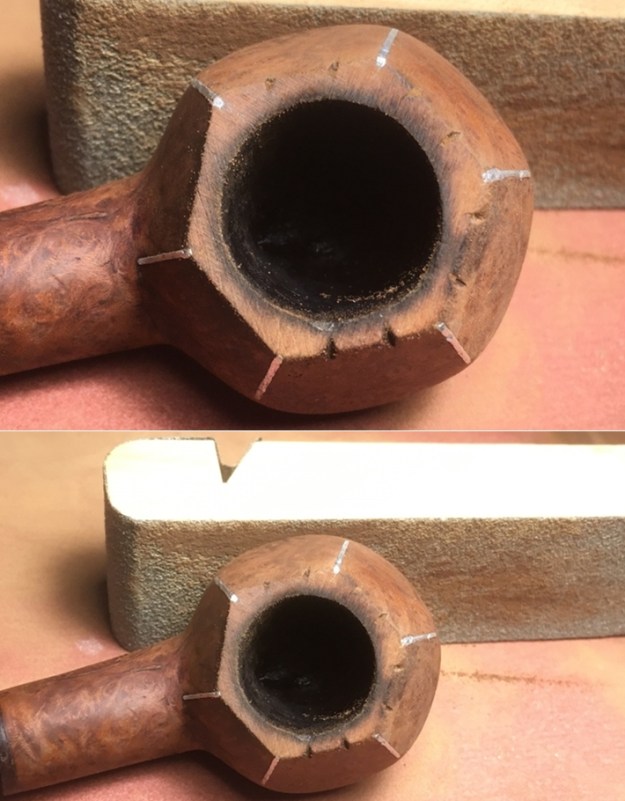
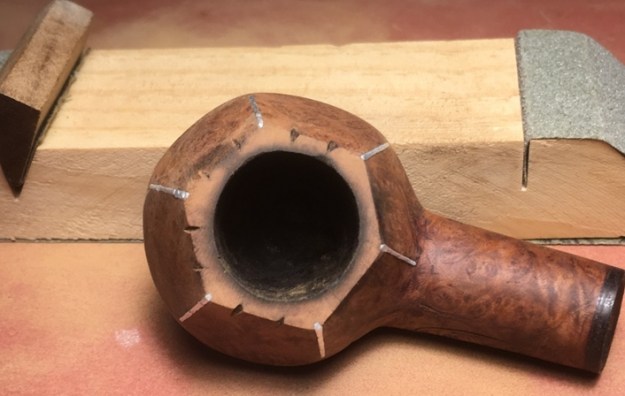
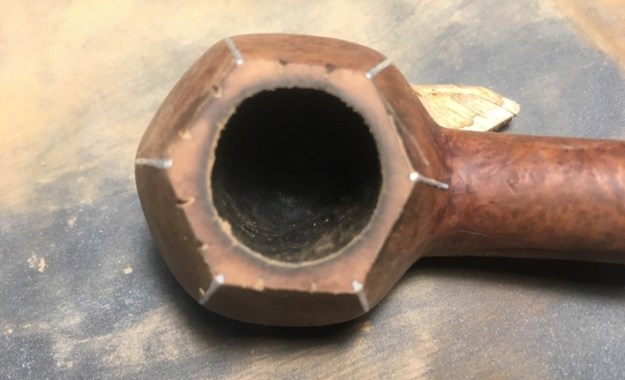
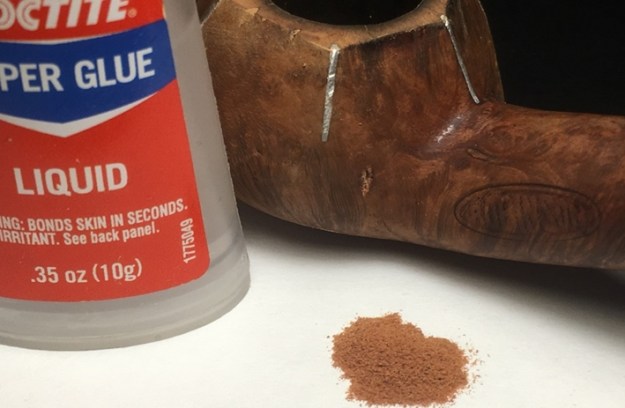
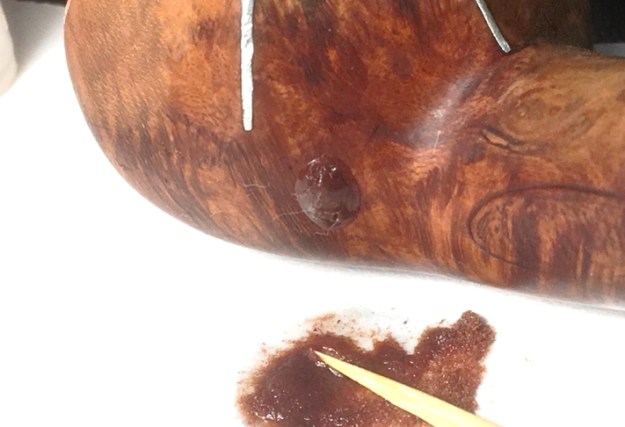
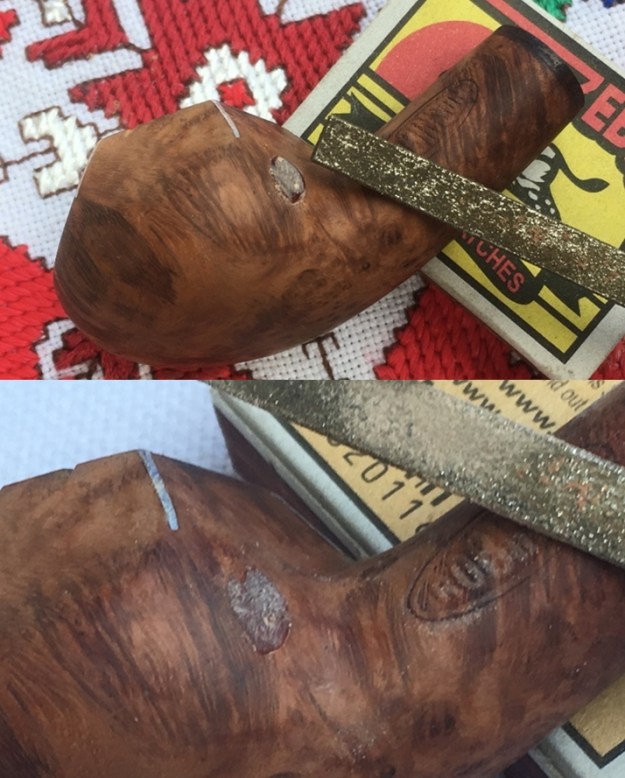
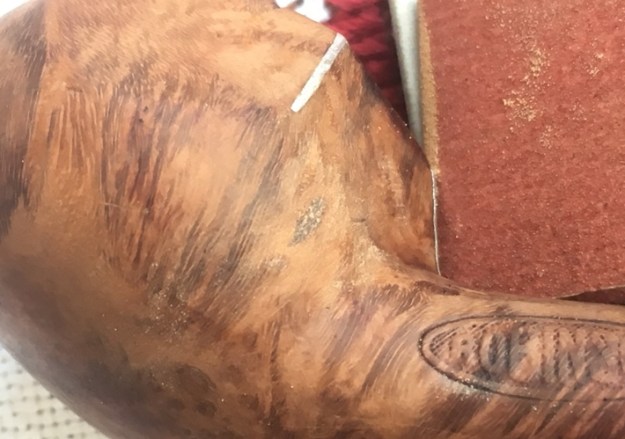
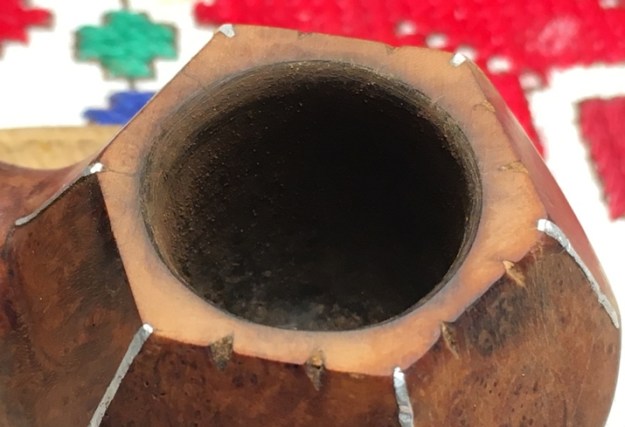
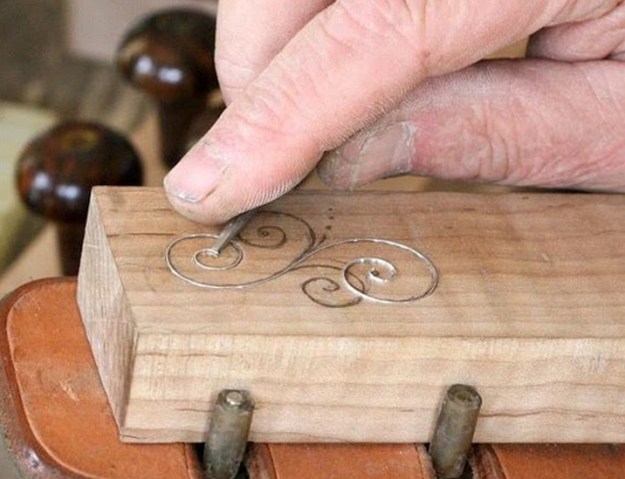
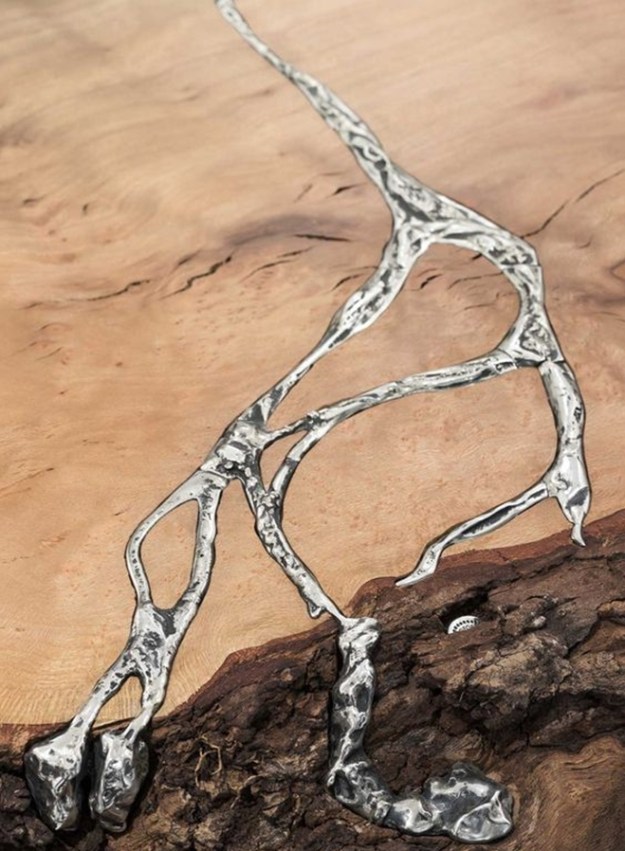
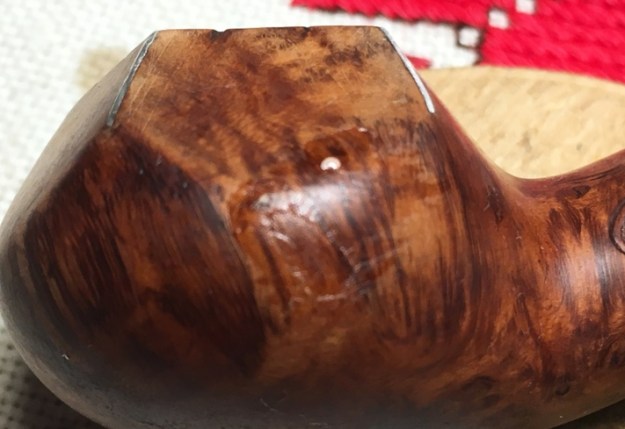
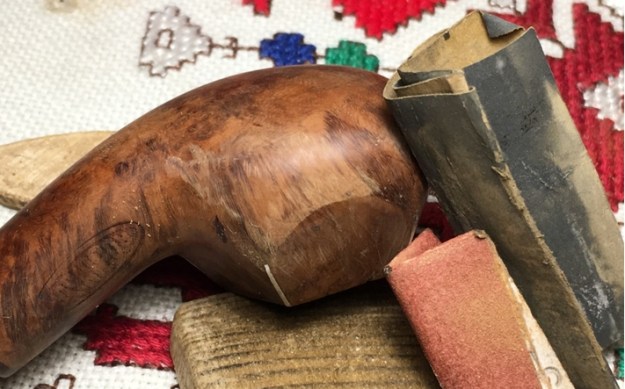
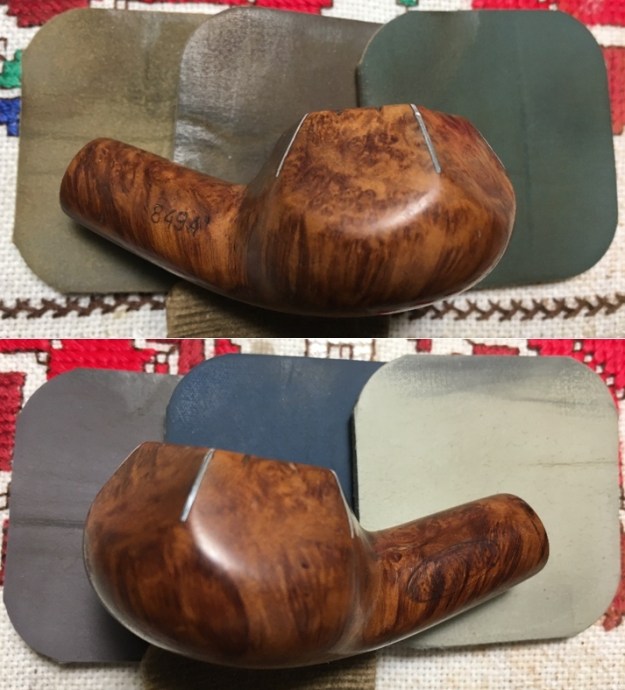
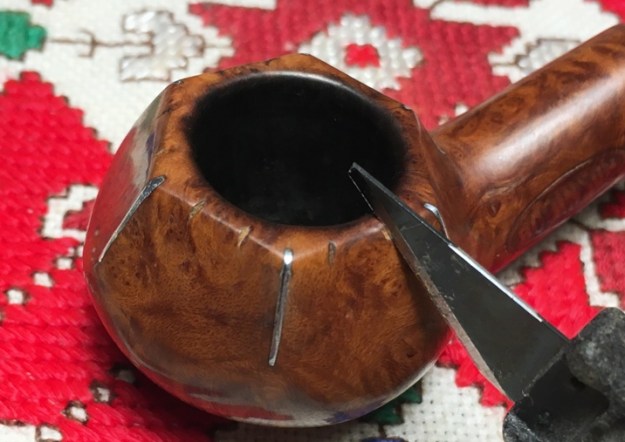
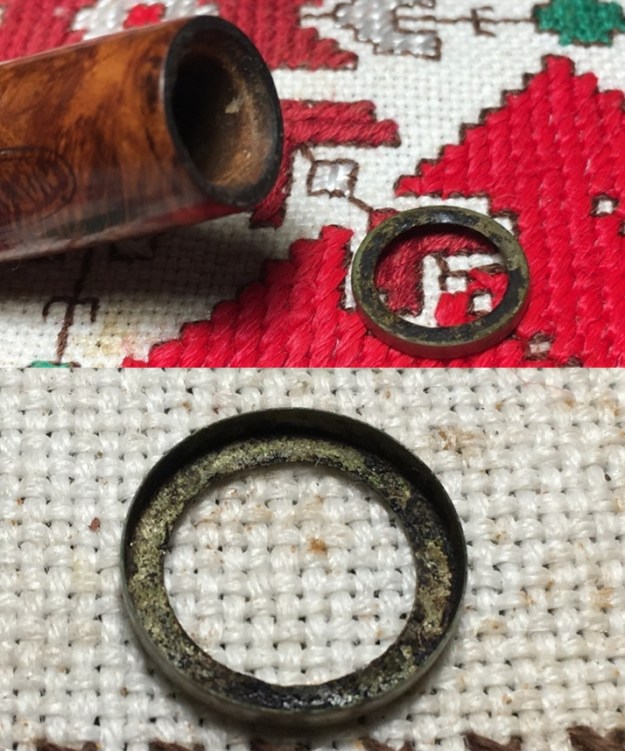
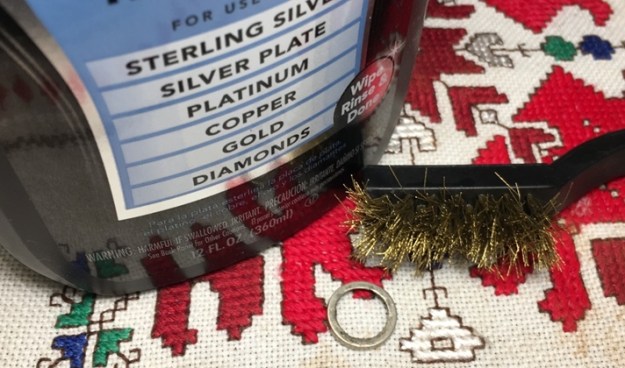
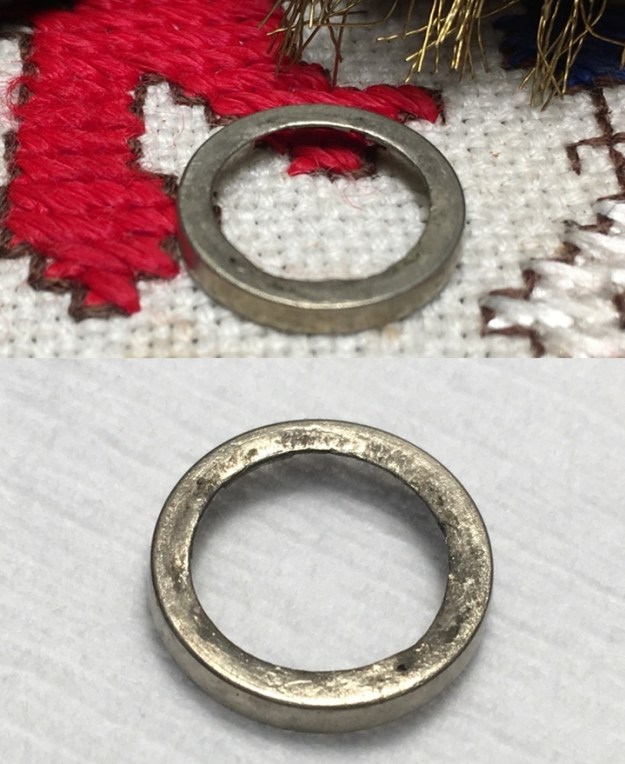
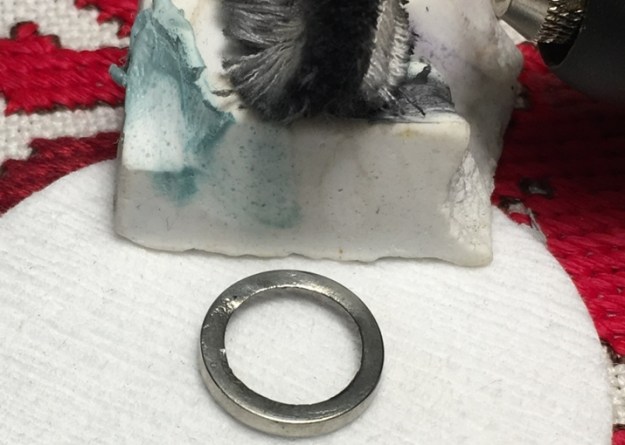
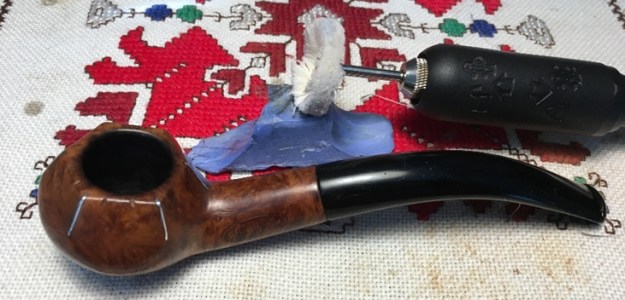
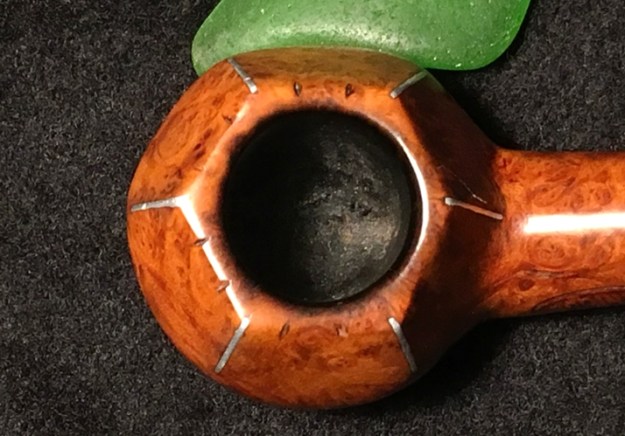
The theory takes shape in my mind, with the absence of any other corroborating information, that it is possible that the ‘Robinson’ on my table is indeed connected to the ‘Robinson & Co.’ of Singapore.  The Robinson on my table lacks stampings that confirm this as with the pipes shown on Pipephil.eu. But it is conceivable, yet I cannot substantiate this, that the Robinson I have is an older version before what appears to be the newer and more developed marketing applied to the later Robinson store pipe.  This is obviously a guess, which I could not substantiate even after searching for older catalogues and any other ‘Robinson’ pipes out there on the internet!  So, armed with a theory which I will continue to mull over, I move on!I begin the restoration of this possibly English made for Singapore, Robinson Quarter Bent Paneled Tomato, by addressing the moderate oxidation in the stem. After cleaning the airway with pipe cleaners dipped in isopropyl 95%, I then include the stem in a bath of Before & After Deoxidizer along with other stems of pipes that have already been restored and sent on to join new stewards.  The Robinson is the last stem in this Before & After Deoxidizer batch.Several hours later I fish out the Robinson stem and wipe it down with cotton pads wetted with isopropyl 95% to remove the raised oxidation.  The texture of the vulcanite stem is rougher than usual it seems.  After cleaning the stem surface, I run a few more pipe cleaners through the airway to assure that the Before & After Deoxidizer is gone.  The stem looks good after the treatment.To start the revitalization of the vulcanite, I then apply paraffin oil – a mineral oil, to the stem and then put it aside to absorb the oil and dry.Now, turning to the waiting stummel, I first address the moderate carbon cake by using the smallest blade head of the Pipnet Reaming Kit.  This blade head fits the chamber perfectly.  I follow by using the Savinelli Fitsall Tool to scrape the chamber wall further revealing fresher briar.  Finally, I sand the chamber with 240 grit paper wrapped around a Sharpie Pen and then wipe the chamber clear of carbon dust with a cotton pad wetted with isopropyl 95%. After clearing the carbon cake, I inspect the chamber and it looks good.I then move directly to the internal cleaning of the mortise and airway.  I start using cotton buds and pipe cleaners dipped in isopropyl 95% and…. The text describing the cleaning process is much shorter than the cleaning process.  I had noticed earlier that this stummel was a bit of a stinker, so I was anxious to begin addressing this olfactory offense to my nose and adjoining rooms in our 10th floor apartment in a formerly Communist Bloc apartment building.  In addition to pipe cleaners and cotton buds, I use a dental spatula to scrape the mortise walls, as well as a drill bit inserted into the airway and hand turned to excavate the tars and oils.  I also use a long wire shank brush to scrub the internals. The picture shows the weapons brought to bear….I’m still not seeing cleaner cotton buds and pipe cleaners that would reveal progress, so I decide to move on to giving the stummel a kosher salt and alcohol soak with hopes that this will loosen the grunge and clean the internals.  After stretching and twisting a cotton ball to serve as a wick to help draw out the tars and oils, I insert it into the mortise and the airway with the help of a straight stiff wire. I then fill the bowl with kosher salt and place it in the egg crate to keep it steady.  Using a large eye dropper, I add isopropyl 95% to fill the bowl until is surfaces over the salt.  After it absorbs in a few minutes, I refill the bowl with alcohol and put it aside to soak. The next day, the salt and wick are heavily soiled and hopefully the condition of the internals is improved.  Using a pipe cleaner and cotton buds, I soon find out that the condition is much the same.  I put on surgical gloves a long time ago during this cleanup process!  I continue to dig and excavate using all the tools listed above.With a glimmer of hope beginning to dawn with cotton buds and pipe cleaners starting to lighten, I again provide a kosher salt and alcohol soak with the hope that the tide is turning.  What I discover as I became intimately familiar with the internal layout of the mortise as I inserted spatulas and dental probes to clean, was that the drilling of this stummel was in two phases.  A larger drill bit was used to open the mortise.  Then a smaller drill bit was used to drill the short airway and exiting into the chamber forming the draft hole.  The slight up-tick in the angle of the second drilling created a small trap of sorts that collected much tar and oils over the years.  It would be difficult to clean with normal pipe cleaners as they would go over to the top of the trap on their cleaning mission.  To intentionally clean this small angled trap, it needs to be intentionally and regularly scraped with a probe – something stiff enough to dislodge anything collecting. With the kosher salt and alcohol soak cooking a second time, I pick up the stem and take another look at the slotted insert in the tenon.  It doesn’t appear to be a snipped stinger, but perhaps an air restrictor insert of sorts with a slotted opening – I’m not sure if its threaded but I doubt it. I don’t have much sympathy for stingers and restrictors as they simply create more angles for the airflow – this creates condensation and more moisture….  I heat the metal insert and tenon with a Bic lighter to loosen the grip and using a pair of needle nose pliers I do not pull the insert out but accomplish snapping the top of the insert off!  I hand screw a drill bit into the shaft of the metal insert remaining in the tenon and after reheating the tenon and drill bit, and a few retries, I succeed in extracting the remainder of the inserted air restrictor.  It will be much easier to clean now as well. Looking now at the stem, the bit area on the upper and lower has some bite compressions, but not significant.  The lower button lip has also been chewed a little.  I’m thinking that sanding and a little filing should rectify the situation.I use a flat needle file to freshen the button and 240 grit paper to sand out the compressions.  This works well.I also sand the entire stem with 240 grit paper to remove the rough, goose skin surface of the vulcanite. I employ a disc I fashioned to guard again shouldering the shank face of the stem.I then wet sand the entire stem using 600 grade paper followed by 0000 steel wool.Without pause I move to the micromesh regimen using pads 1500 to 12000.  First, I wet sand using pads 1500 to 2400 followed by dry sanding with pads 3200 to 4000 and 6000 to 12000.  Between each set of three I apply Obsidian Oil to the stem to revitalize the vulcanite – and it is coming to life!  The rough surface smoothed and polished up well. The next morning (again), with something akin to Handel’s Hallelujah Chorus in the backdrop of my mind joyfully reverberating and echoing, I see that the second kosher/alcohol soak has furthered the cleanup effort significantly.  After dumping the soiled salt and cleaning the stummel of salt crystals, I run a few more buds and pipe cleaners through the internals and the cleaning is now complete!  The bowl is also freshened from the stink odor that dominated its presence before.  This cleaning was a bear – and it’s not finished!Turning now to the external briar surface, I wonder what the cleaning will do to the paint job this stummel has received.  If it’s acrylic paint, the cleaning should remove it.  If not, well, it’s something else, probably oil based.  I have a very difficult time conceiving of any scenario where paint was part of the original motif of this Paneled Tomato – I believe the rim notches were a later addition as well, but perhaps not!  I’ll clean and see what happens.  I use undiluted Murphy’s Oil Soap with cotton pads to clean the stummel.  There’s lava overflow covering the rim which I also deal with using a brass bristle brush.The cleaning removes the grime and I discover the panel boarder painted strips firmly intact, hmm.  On the left flank of the stummel is the loan fill that I detect after seeing more of the stummel.  After the cleaning, the old fill material is soft, and I remove it easily with a dental probe to be replaced later with CA and briar dust putty.The stummel cleans up well and has lightened considerably revealing some nice grain patterns on the diminutive bowl, but it also shows the nicks, wear and tear of normal usage.  After the cleaning and scrubbing, the rim is still showing some burn areas.Not much consideration was needed to bring out the chopping board that serves as my topping board.  I use 240 grade paper to refresh the paneled rim.  I would like the six sides and corners to be sharper and more distinct.  The shank extends beyond or above the rim plane, so I hang the shank over the edge and begin the topping like that.  I also utilize a small sanding block that is very useful for fine-tuning a topping project by allowing me to focus on an area.  The pictures show the progression using 240 grade paper. When satisfied with the progress, I change the board to 600 grade paper to smooth the rim from the 240 grit scratches.Next, before working on the stummel proper, I repair the small pit on the left side of the stummel by refilling it with a putty created from mixing briar dust and CA glue.  It doesn’t take much to fill.  I use an accelerator after mixing and applying the putty with a tooth pick.  This quickens the curing process so that I can quickly file and sand it and continue the project. Thankfully, Bulgaria is beginning to experience some intermittent spring-like weather.  I take advantage of the mild weather and move out to the Man Cave, my 10th floor balcony, where I file and sand the patch mound and enjoy Red’s Cherry blend in my Gasparini MGM Rock 1912.  A wonderful time filing and sanding! To erase as much of the inner rim scorching damage that darkens the briar, I introduce a bevel.  I first tightly roll a piece of coarser 120 grit paper to do the initial clearing.  I then follow with 240 grit paper also tightly rolled. After applying the bevel, I return to the topping board and turn a few rotations to refresh the rim.Oh my!  At this point in the restoration, I discover that I’m not restoring a mangled pipe that was painted and rim notched for fun!  After re-topping the rim, I see that what I thought was paint framing the panels is not paint at all.  It’s metal – a metal inlay of some sort.  An inlay?!  That takes time and skill!  I examine the rim where the top of the ‘paint’ met the rim and I see that it has depth.  I take a few more close ups to show the dimensions from differing angles. Not sure what I’m looking at, I show my discovery to my wife, and she asks me if I have a magnet?  I didn’t, but she took a magnet off the freezer holding up a photograph and she says to test the magnetic pull of the metal.  It has no magnetic pull at all.  Her conclusion is, “It’s probably silver.”  After a quick search on Google for, ‘Silver inlay in wood’, I found these pictures on Pinterest. I am suddenly more firmly convinced of my theory about the origin of this ‘Robinson’ – from a high-end store in Singapore.  Who would pay for such a pipe as this?  Who would be drawn to a pipe with silver inlay? Now that I know what it is, the pipe itself is transformed from a discarded pipe that someone painted and notched trying to be cleaver to a pipe that was the recipient of a fine jeweler’s careful process of silver inlay in wood – and not just wood but situated perfectly and uniformly framing the panels of this pipe.  Looking at some videos and pictures I see online, the process was probably done using a silver wire that was tapped into place as the first picture above.  The next urgent question coming to mind was not how to remove it but how to protect it!?  The inlay has stayed intact this long, I don’t want to change the status quo!  I decide to use sanding sponges to work on the scratches and nicks that are prevalent on the stummel. The sponges shouldn’t be too invasive if inadvertently moving over the silver.  Before starting with the sponges, I see that the left side of the stummel, just under the panel, has significant pitting.  I apply a small amount of CA glue here to fill the pits and apply an accelerator to quicken the curing time.I use 240 grit paper, then 600, to sand out the patches until flush with the briar surface and smooth.I then use sanding sponges, starting with coarse, medium, then light, to work out the blemishes throughout the stummel.  I avoid as much as possible direct movement over the silver inlay but work around it on each panel.I then utilize the full regimen of micromesh pads, 1500 to 12000.  I first wet sand using pads 1500 to 2400, then dry sand with 3200 to 4000 and 6000 to 12000.  As with the sanding sponges, I do not intentionally focus the pads over the silver inlay but work around it. With the assumption now that the twin rim notches on the forward panels are part of the original motif, I freshen two of them using a carpenter’s blade.During the initial cleaning of the stummel, the shank cap had popped off and I put it aside for safe keeping.  Now that I’ve discovered the silver inlay, I’m wondering if this cap is more than the nickel plating that I originally suspected.  To clean, I take it to the sink and wash it with warm water and mild soap, using my fingernail as well as a brass brush to help in the cleaning.  After cleaned I rinse it and dry it thoroughly.I then apply Tarn-X to the ring with a cotton pad and wipe thoroughly then take it to the sink and again rinse and dry.This time with a magnifying glass, I check the band and my original assumption seems to be correct that it is nickel.  I find no stamping on the metal to indicate that it is silver.  Next, I apply the magnet to the ring, and it is not magnetic at all.  After a quick search in Google to check the magnetic composition of nickel, I discover that it is indeed magnetic.  The band, shank cap before me is not.  It is becoming clearer now that I am not working on a maligned basket pipe.  If this band is indeed silver, it is rawer and unmarked.  Again, my theory of an English, Singapore, connection is encouraged. Before reattaching the cap to the shank, I mount a cotton cloth buffing wheel to the Dremel dedicated to applying White Diamond compound on silver.  I have wheels dedicated for several different compounds and metals.  I carefully hold the band and buff it with White Diamond compound and then buff it with a microfiber cloth.To bring out the depth of the grain that has emerged, I apply Before & After Restoration Balm to my fingers then work it into the surface of the briar.  The Balm begins with a thinner oil consistency then thickens as I work it into the surface.  At the end it’s like a wax.  I allow it to sit for several minutes then I wipe it off with a clean cloth and buff it up until the stummel is clear of excess Balm.  The Balm does a great job bringing out the nuanced tones of the briar. After applying the Restoration Balm and without remounting the silver shank cap, I reunite the stem and stummel setting the speed at 40% full power and apply Blue Diamond compound to the entire pipe.  I don’t remount the silver shank cap so that I can apply the compound without worry of impacting the band.  As well, during the buffing, I stay clear of the silver inlay to avoid the chemical reaction that can stain the wood with black.  After the application of Blue Diamond compound is finished, I apply two small dots of CA glue to the inner side of the silver shank cap and remount it on the end of the shank.  It looks great! Now in the homestretch, I remount the stem to the stummel and apply coats of carnauba wax to the entire pipe, still avoiding the silver inlay and band.  After completing the application of wax, I give the pipe a rigorous hand-buffing to raise the shine of the briar and the luster of the silver.

My final theory for the origins of this silver laden Robinson Quarter Bent Paneled Tomato is that it was produced in England in the years immediately following the close of WWII after the British returned in 1946 after Japanese occupation and the Robinson department stores in Singapore and Malaya soared in sales – reaching 1 million US for the first time in its history (LINK) and saw expansion well into the 1950s with the acquisition of the John Little Co., the largest and older competitor to the Robinson presence in Singapore.  This is only a guess as to the period, but with what appears to be an older Robinson stamping from the examples I found online, I’m thinking that this guess is pretty good but still a guess!  How I viewed the pipe morphed from being a marginal basket pipe that had been maligned to a very nice pipe with a touch of opulent class.  The briar grain itself is beautifully presented on the heel of the stummel and is showcased in each of the six silver-framed panels. The diminutive size puts this pipe squarely in English tradition and the gently bent stem is elegant with the striking silver band providing the bowl/stem transition.  The absence of formal markings on the silver band is still a question, but it might be explained in that it was destined as a store pipe.  My friend, Dave, commissioned this Robinson Paneled Tomato and he will have the first opportunity to claim it from The Pipe Steward Store.  This pipe, as with others, benefits our work here in Bulgaria with the Daughters of Bulgaria – women and girls who have been trafficked and sexually exploited.  Thanks for looking!


Mumbai Bonanza: Stefano “Exclusive” Restoration…a month long project


Blog by Paresh Deshpande

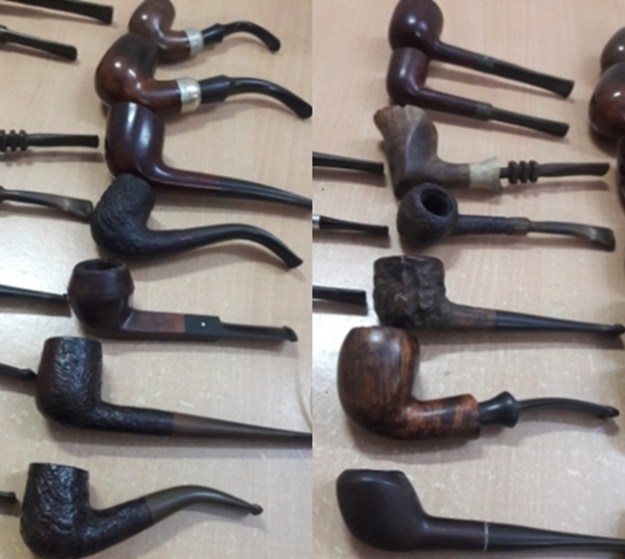
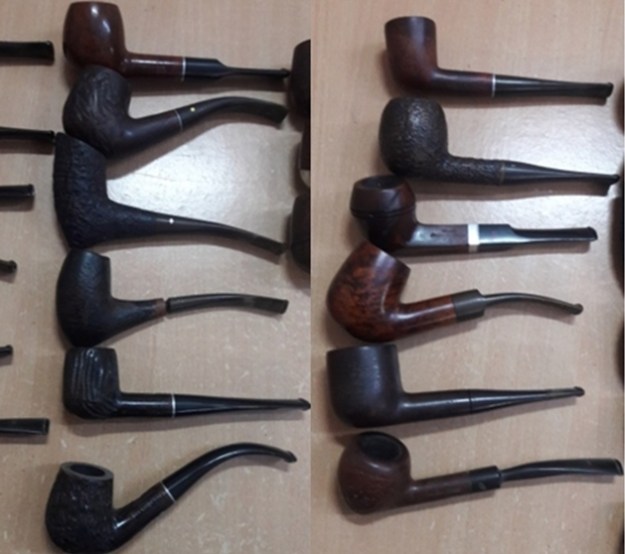
I was on leave a few months back. Two days before I was to rejoin my work place, I received a call from a friend in Mumbai saying that he had come across a person who collects trash and unwanted items from all posh bungalows and apartments in the area and that he had a seen a few pipes, similar to the ones I restore, in his cart. This friend had taken down his contact number and shared it with me. Now the readers of this write up must understand that we do not have a “Pipe Culture”!! During colonial days, smoking a pipe was common and after the British left, in next few decades, it died its natural death. Today, pipes are not available here and neither is pipe tobacco!! So with this background, it came as a big surprise to me that a trash collector had pipes. I had nothing to lose by giving him a call and this is exactly what I did. While I was speaking to him, it dawned on me that this person did not know what he was selling, could not read or text me the stampings on the pipes. The conversation that I had with him in my local dialect was nothing short of being hilarious. I could not make out what I would be purchasing and he did not know what he was trying to sell!! He had 30 pipes for sale. I am very pathetic at any form of gambling and in such case bad luck follows me like a shadow. I shared this dilemma with Mr. Steve who suggested that I should go ahead and strike a deal. If nothing else, I shall have some spares!! That sounded logical and I struck a deal with the “kabadiwala” (this is what a trash collector is called here in local parlance) for all 30 pipes. The next day I joined my work place and the parcel reached Abha, my wife, after about 10 days. Here is what she received in the parcel. This parcel contained some very nice collectible pipes, a few well known brand pipes and some mediocre pipe brands. Overall, with seven Dunhills, a Preben Holm #1, a couple of Made in England Pete System pipes, Charatan’s and other assorted pipes, I would say that I had hit a huge jack pot!!! Hence, I like to call this find as “Mumbai Bonanza”.

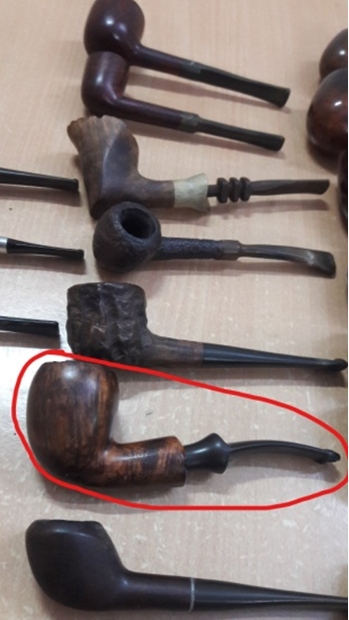
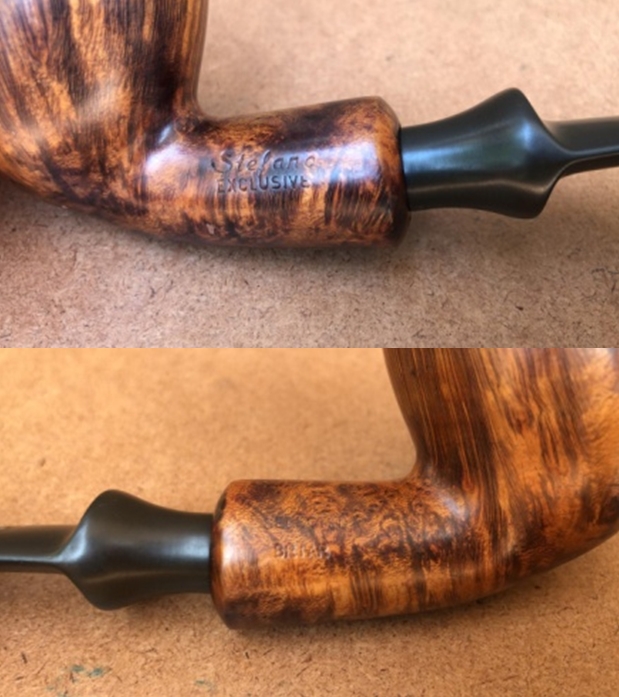
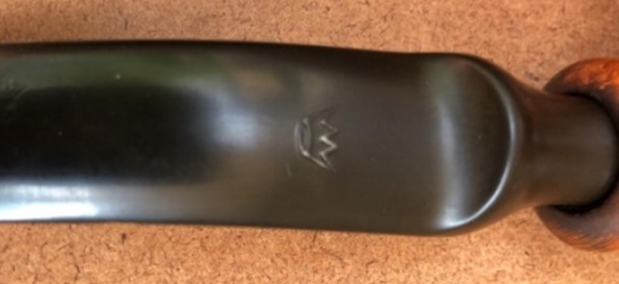
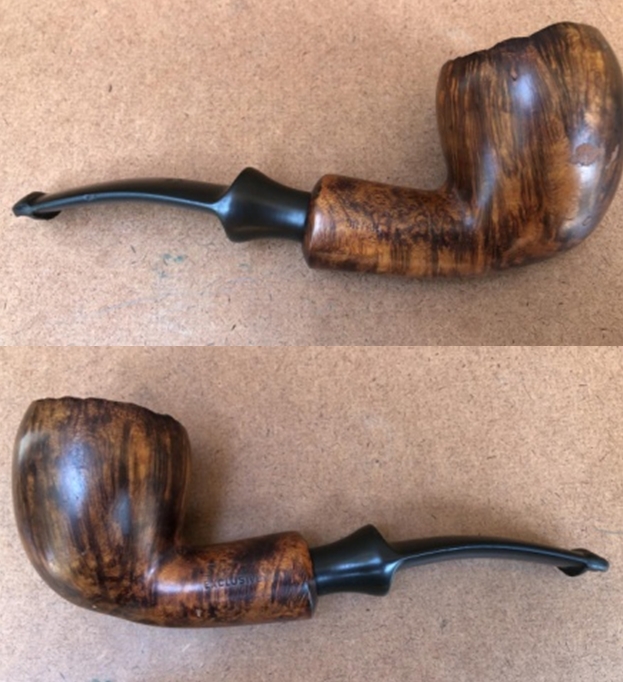
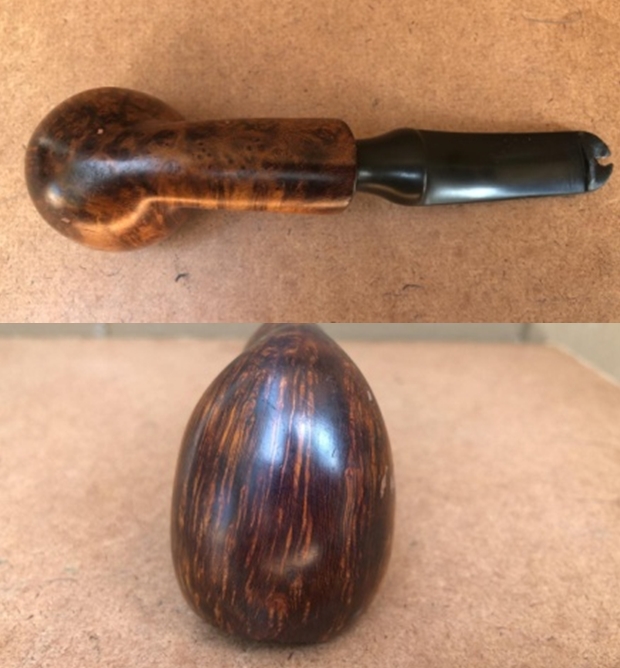
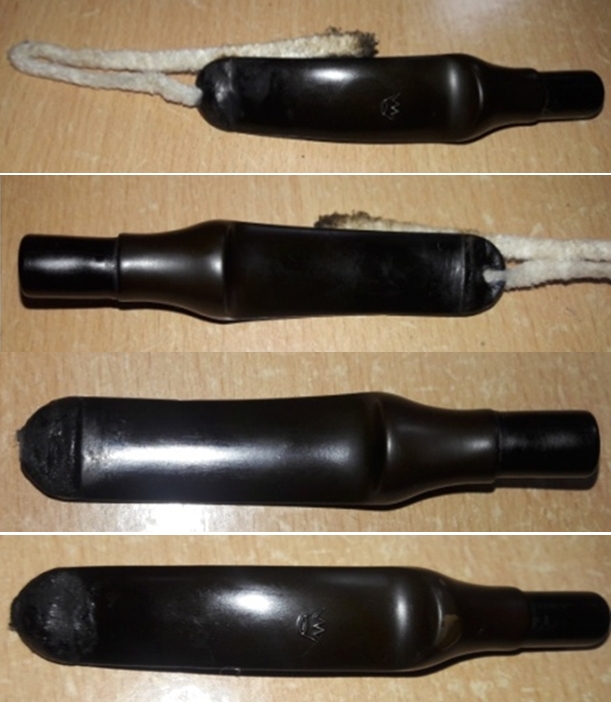
The pipe that I decided to work on is from this find and is marked in a red circle in the picture below (little did I know what I was getting in to at this point!!!). It’s stamped as “Stefano” in small italics over “EXCLUSIVE” in block letters on the left side of the shank and on the right side of the shank it is stamped as “SELECTED” over “BRIAR”. The stummel shows some lovely straight grain which contrasts with the rest of the swirls on the stummel surface. The quarter bent tapered saddle vulcanite stem bears the “crown” logo on the top surface and is designed to take a 9mm filter.

To research this pipe, I turned to pipedia.org and the search for “Stefano” led me to the page on Stefano Santambrogio,  here is the link to the page; https://pipedia.org/wiki/Santambrogio

The information gleaned from this page is that this is an Italian manufactured pipe by Santambrogio family who are in to pipe manufacturing since 1912!! The present owner, Mr. Stefano Santambrogio has been at the helm of affairs since 1981. What really baffled me was the stem logo which was very different to what I have on the pipe in front of me. I decided to narrow down my research for the stem logo and turned to another site which I frequent, pipephil.eu.

I specifically searched for stems with crown logo and there it was at the end of the list marked as “Stefano”. The match was perfect. One click on the link led me to http://www.pipephil.eu/logos/en/logo-s3.html#santambrogio

Here the information available was more or less similar to that on pipedia.org, however, it was mentioned that Stefano could be a Santambrogio second. Another click on Stefano took me to a page which had pipes with identical stamping on the shank and stem logo to the one I was working on. It was revealed that Stefano was indeed a Santambrogio export for the German market!!

With this information, I proceed ahead with the restoration of this handsome pipe.

INITIAL VISUAL INSPECTION
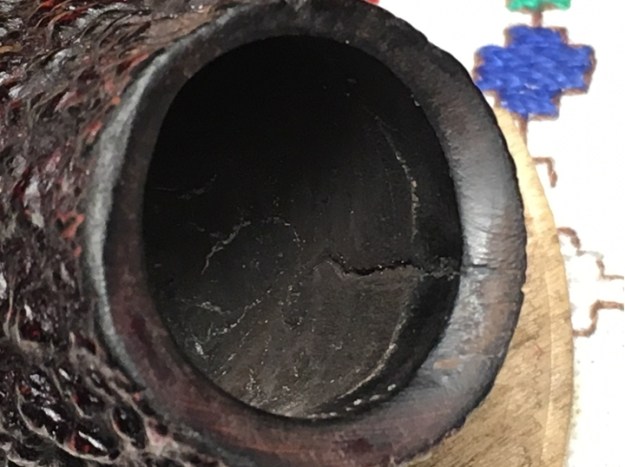
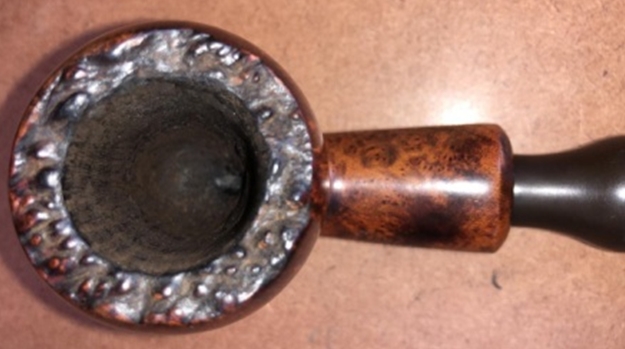
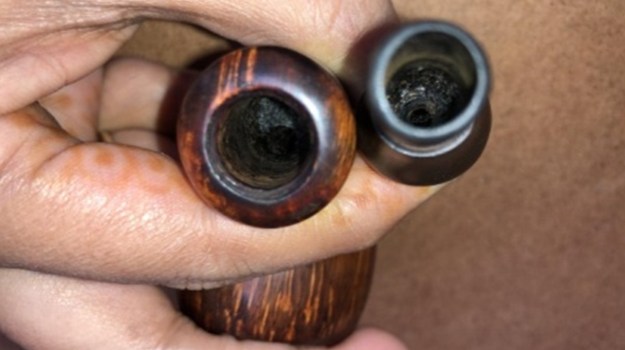
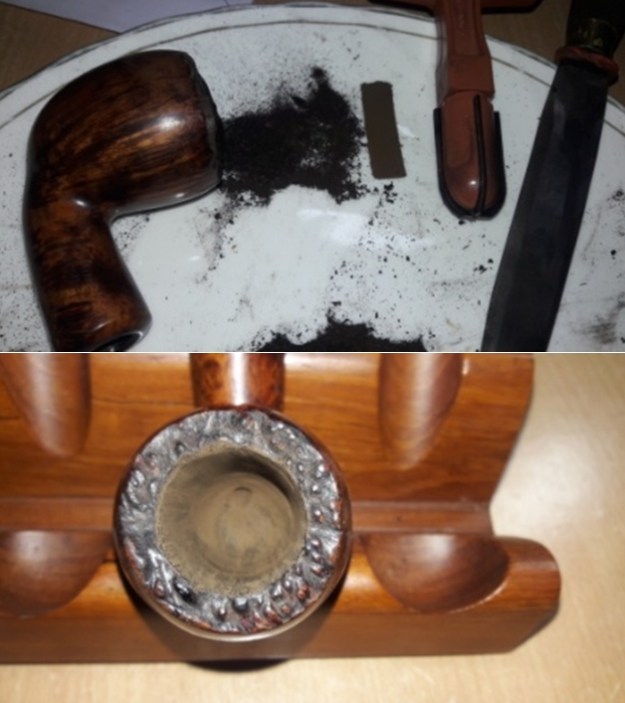
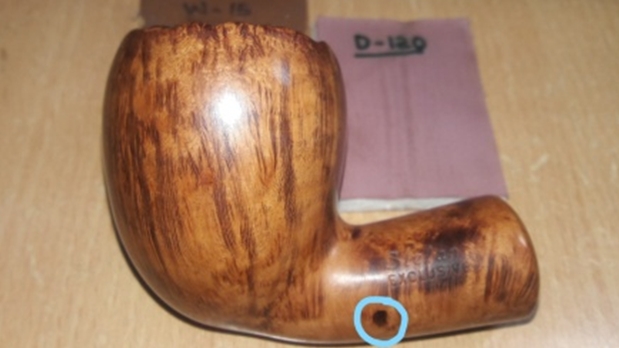
The chamber is clean with a thin layer of cake which pleases me no end as this would be a first for me. From what I can see, the chamber walls appear to be sans any damage. The chamber smells of a strong aromatic tobacco and needs to be addressed.The stummel is stained in an orange dye which has worn out in time. At places, it appears like a patch work. The stummel surface is peppered with numerous dents and dings, and a large number of huge fills on the right side of the stummel and the shank. These fills need to be refreshed. I intend to sand the stummel surface with grit papers with two-fold aim; first is to get rid of the orange stain color and second is to minimize the dents and dings from the surface. The plateau rim top surface has little traces of lava overflow and should be easy to deal with. The mortise is surprisingly filthy given how clean the chamber and the rim top appear to be. The vulcanite stem shows significant damage to the upper button, side wall and the round slot, but it is not oxidized. The pseudo p-lip style bit has a through and through hole exposing the airway. This will require major repairs. The quality of vulcanite is good.

THE PROCESS
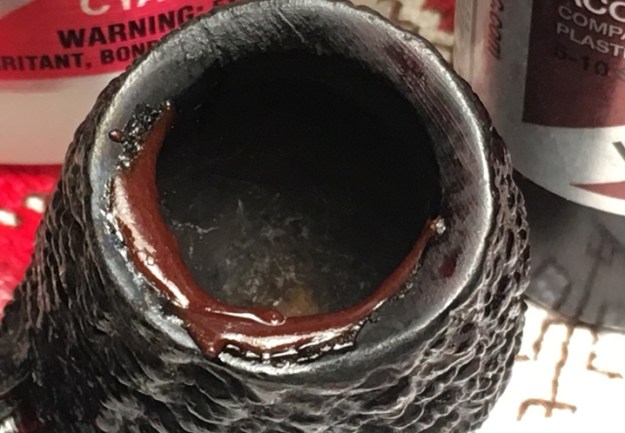
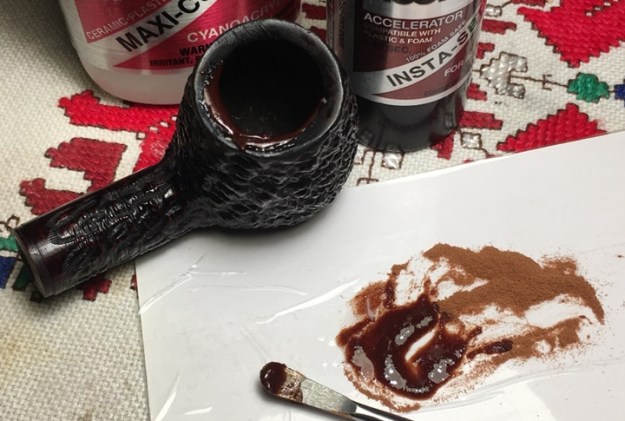
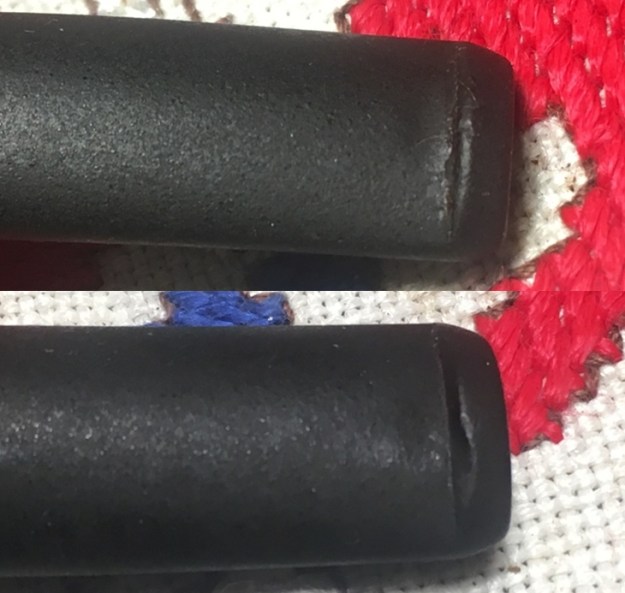
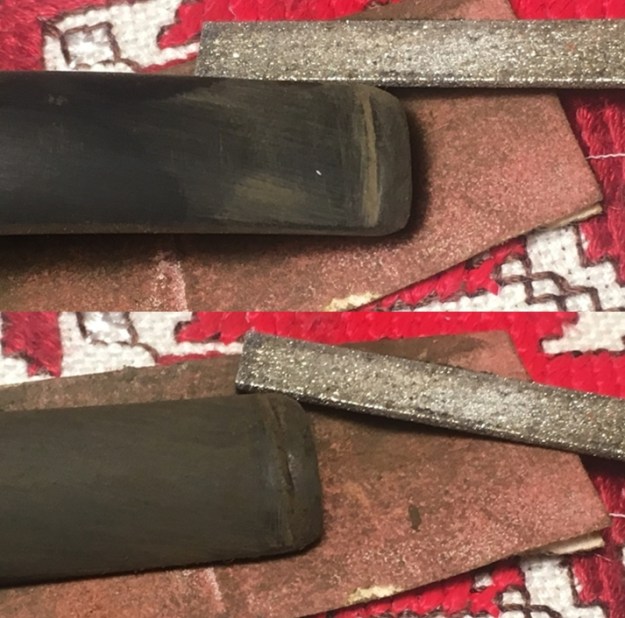
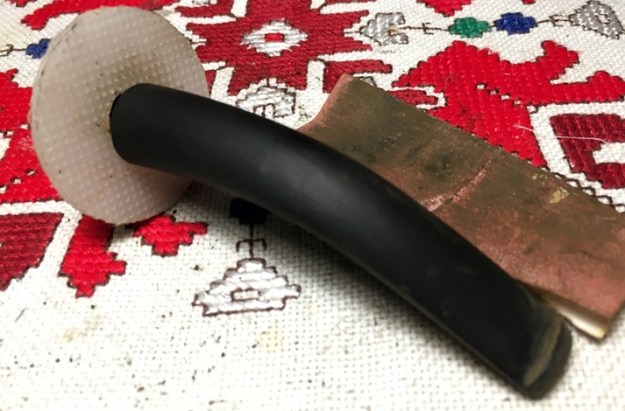
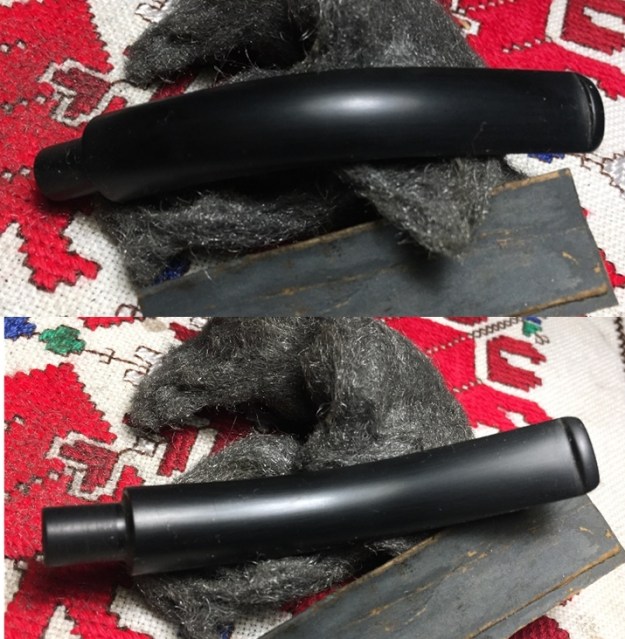
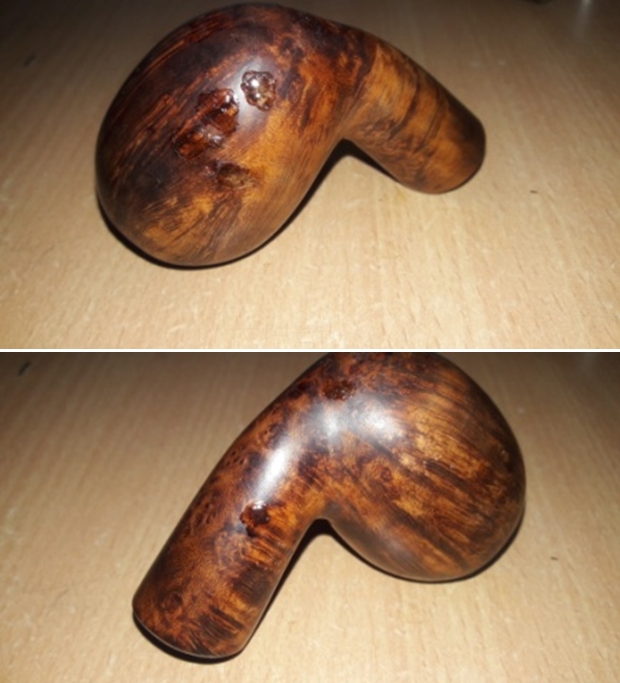
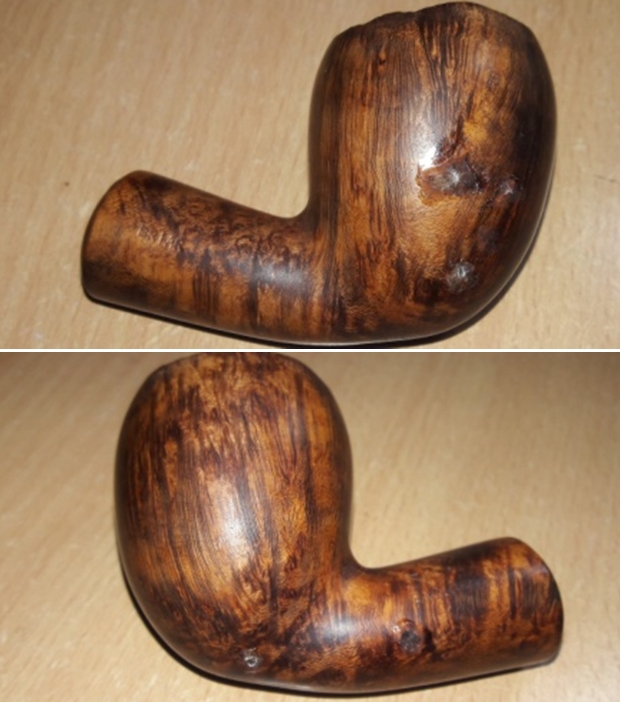
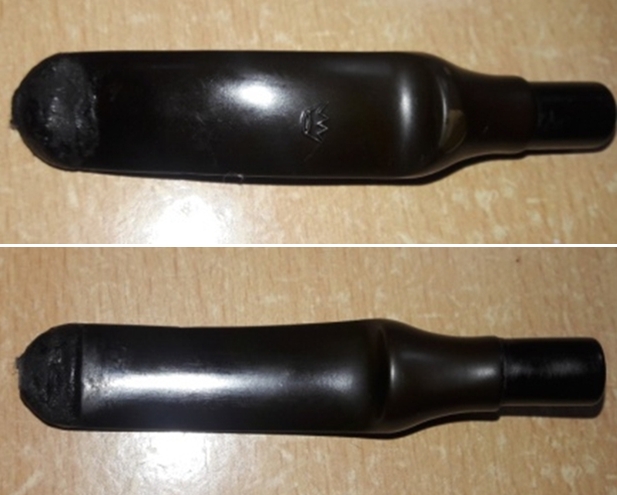
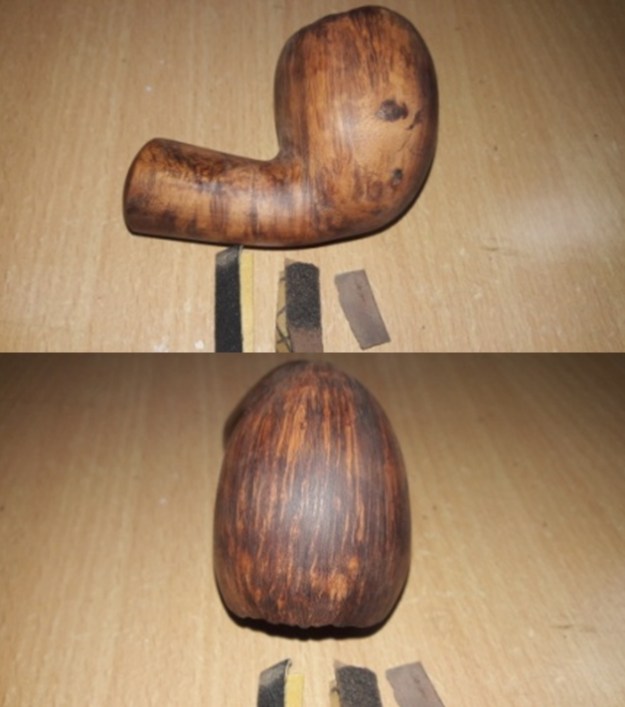
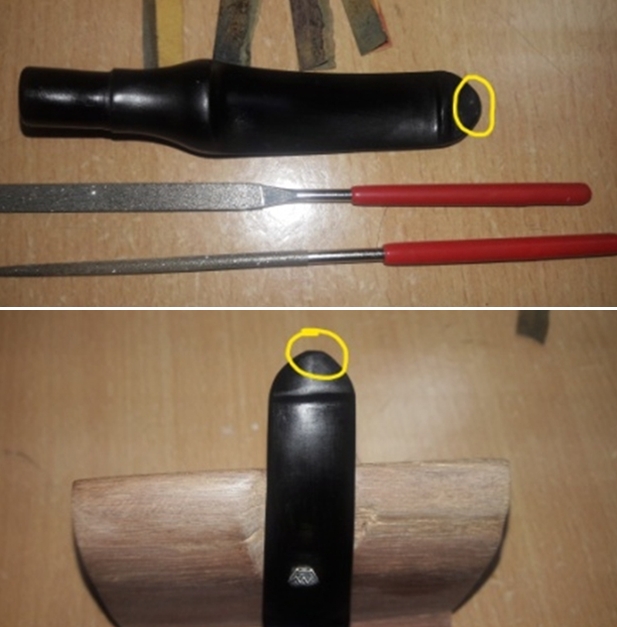
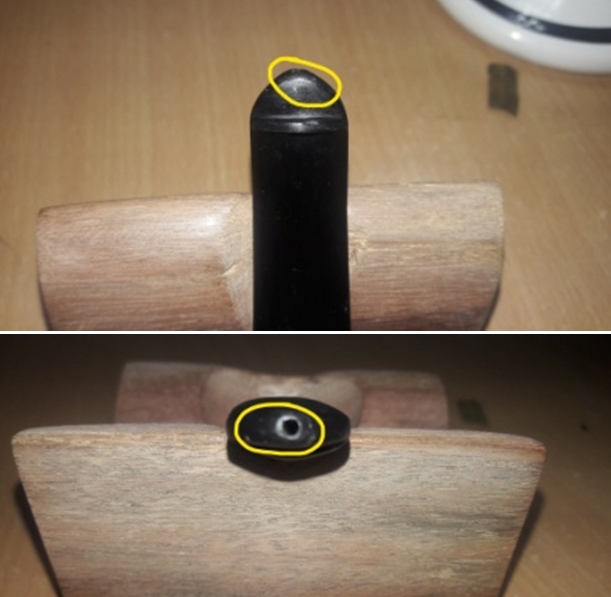
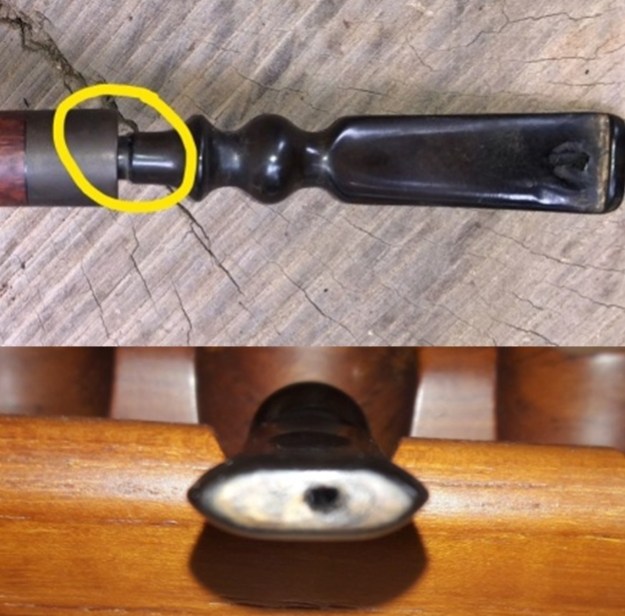
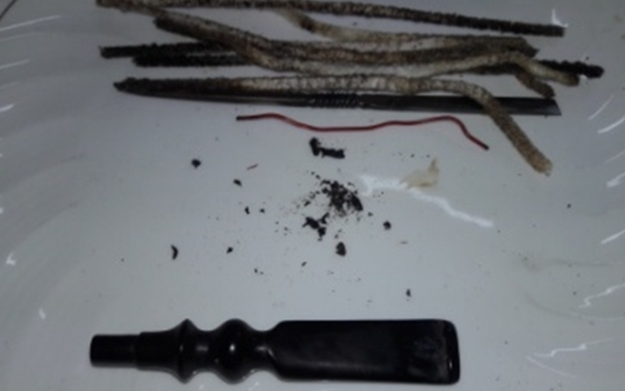
Since the stem has significant damage, and from my experience of stem repairs this will be the most time consuming and laborious part of this restoration, I start this project by tackling the stem first. I was faced with two options in my approach to this stem repair; first was to recreate a new button around the broken part and maintain the existing stem profile with a round slot and the second option was to cut away the damaged button and reconstruct an entirely new button with a straight horizontal slot, sacrificing the P-lip shape. I decided to take the former approach. This decision was partly dictated by the fact that I do not have a rotary cutting blade to cut the damaged button end and partly to my innate desire to maintain the originality of any pipe.

Now that I was clear about the path to be followed, I cleaned out the internals of the stem with hard bristled and regular pipe cleaners dipped in isopropyl alcohol. I also cleaned the wide tenon with q-tips dipped in alcohol. Once I was satisfied with the internal cleaning, I wiped the stem surface, particularly the damaged button end, with a cotton pad and alcohol to remove any traces of dirt and grime. To begin the stem repairs, I smeared a pipe cleaner with petroleum jelly and inserted it in to the stem airway. I prepared a mix of CA superglue and activated charcoal and generously applied it over the gaping hole in the button of the stem and set it aside for curing over night. Before moving ahead, I would like to mention here that I had applied this mix in layers, over the week, to achieve sufficient thickness which would help during the filing and sanding while shaping the button.While the stem repair was progressing at its own pace, I moved ahead to deal with the stummel repairs. Given the size of the chamber, I reamed the chamber with size 4 head of a PipNet reamer. I used my fabricated knife and scraped out all the remaining cake. The amount of cake reamed out of the chamber really surprised me as I was expecting minimum cake. I further used a folded piece of 180 grit sand paper to sand out the last traces of remaining cake and expose the walls of the chamber to ascertain that there are no cracks/ heat fissures. I wiped the chamber with a cotton pad dipped in isopropyl alcohol to remove the carbon dust left behind by all the reaming and sanding process. The walls of the chamber were solid with no damage. I gently scraped the plateau rim top surface with a sharp knife to remove the lava overflow. This was followed by cleaning the mortise with cue tips, pipe cleaners and shank brush dipped in isopropyl alcohol. This further eliminated traces of old smells from previous usage. The old smell was still strong, though. Continuing the cleaning regime, using a hard bristled tooth brush dipped in undiluted Murphy’s oil soap, I very deliberately scrubbed the surface of the stummel. I cleaned the plateau rim top with a brass wired brush. The original orange dye was also washed away to some extent. The stummel and rim top was dried using paper napkins and soft cotton cloth. The old fills are now clearly visible and appear like festering flesh wound, ugly in appearance. This will have to be addressed. I set the stummel aside to dry out naturally. To completely eliminate the smell, I decided to resort to alcohol bath. I packed the chamber, just below the rim, with cotton balls. I stretched a cotton ball into a thick wick, tapering at one end, and inserted it in to the shank and pushed it as far inside as I could along with a regular pipe cleaner. I topped the bowl with isopropyl alcohol using a syringe. I know that it is generally a practice to use Kosher salt for this procedure, but since Kosher salt is not easily available here, and when available, it’s very expensive, I use cotton balls. I find that cotton balls work just fine in drawing out all the tars and smells from the mortise and the bowl. I topped the bowl with alcohol again after 30 minutes when the alcohol level had gone down and set it aside overnight for the cotton and alcohol to do its intended job. The next day, the cotton and alcohol had fulfilled its intended task. The pipe cleaner had also drawn out all the stain from within the mortise. I removed the cotton balls and ran pipe cleaners through the mortise to clean out all the loosened tars and gunk. The internals of the stummel is now clean and fresh and the ghost smells are history too.The stage is now set for repairs to the stummel surface. I address the fills, first by gouging out the old fills with a sharp knife and cleaning the surface with a cotton pad dipped in isopropyl alcohol. This was followed by filling these gouges with a mix of briar dust and CA superglue. I always over fill the gouges so that when I sand them down they are smooth and I can feather in the fills with the rest of the briar. I set the stummel aside to cure overnight. I would like to remind the readers that all these days, layering of the stem button with charcoal and superglue had been in progress and now I was satisfied with the thickness of the layering. Using a needle file, I sand the filling to match the surface of the stem. However, disaster struck within a few moments of filing!! The filling broke away from the intact portion of the button. It was, in all probability, due to higher content ratio of activated charcoal in the mix (though I am not convinced entirely) or could be lack of adequate curing (most likely). The bottom line remains that I had to repeat the entire layering process on the button end again…..frustrating to say the least, thus NO PICTURES OF THE DISASTER TAKEN!!Well, what was to happen has happened!! Moving on, the stummel fills had cured and I proceeded to sand the fills with a flat head needle file and 180 and 220 grit sand papers to achieve a rough blend of the fills with the rest of the stummel.  For a better blending, I further sanded the entire stummel with 220 followed by 400 and 800 grit sand paper. This helps to reduce the sanding marks left behind by the more abrasive 220 grit paper. To bring a deep shine, I went through the complete set of micromesh pads, wet sanding with 1500 to 2400 grit pads and dry sanding with 3200 to 12000 grit pads. I wiped the stummel with a moist cloth after each wet pad. The fills are still looking ugly and somehow I have a gut feeling that this pipe is not yet done with me!! This pipe is really testing my skills and patience!! I rub a small quantity of “Before and After Restoration Balm” in to the briar with my finger tips and let it rest for a few minutes. The balm almost immediately works its magic and the briar now has a nice vibrant appearance. I further buff it with a horse hair shoe brush. This is when I observed that there are air pockets in two fills (marked in yellow circle) and the plateau rim top is still not clean! Aargh…both my faults, I know. I will address them all over again. I would like to remind the readers that all this while the layering of stem is still a work in progress!! I spot fill these air pockets with superglue and let it cure for complete two days. Finally, the button construction appears solid and I progress with filing with a flat head needle file and followed it up with sanding and finer shaping using 220, 320, 600 and 800 grit sand papers. I shaped the round slot by gentle use of a round needle file. I liberally rub some Extra Virgin Olive oil to rehydrate the vulcanite stem. But readers please do not rejoice just yet!! The repairs show a white edge in the repairs near the round slot indicating that the repair is not solid and likely to fall apart and also presence of the dreaded air pockets!! This pipe is just not willing to take repairs. It’s now becoming a fight of WILLS between us. I kept up the self conviction and self confidence, which was constantly assuaged by the encouraging words of my mentor, Mr. Steve. I persisted with the repairs and filled these areas with clear superglue and keep it aside for curing. Not wanting to waste time, I picked up the stummel again and went through the complete process of filing and sanding the fills and ending with the micromesh cycle. The fills are nice, solid and even. I even cleaned up the plateau rim top by scrubbing it with a dry brass wired brush till clean. Here is the picture of the fill at this stage. Now the only thing that remains is to blend these fills with the rest of the stummel. I intend to stain it in dark brown dye.I use the powder variety of stain and mix it with 99% isopropyl alcohol. I heated the stummel surface with a heat gun and applied the stain with a folded pipe cleaner. As I paint the stummel with stain over sections at a time, I burn the dye using a Bic lighter that combusts the alcohol in the aniline dye and sets the dye pigmentation in the wood.  After fully saturating the stummel and covering the whole surface, including the plateau rim top, I set the stummel aside to rest for several hours. Now with the stummel surface absorbing the stain, I turn towards the stem repair again. I followed the complete regime, as previously described, till I reached the stage which required micromesh sanding to bring deep shine to the vulcanite. All looked good till this stage. I sand the entire stem with 220 followed by 400 and 800 grit sand paper. This helps to reduce the sanding marks left behind by the more abrasive 220 grit paper. To bring a deep shine, I went through the complete set of micromesh pads, wet sanding with 1500 to 2400 grit pads and dry sanding with 3200 to 12000 grit pads. I wiped the stem with alcohol after each pad and rubbed it down with Extra Virgin Olive oil. Once I was through with the micromesh cycle, this is what I saw…DO NOT LOOSE HEART, I kept reminding myself and proceed to redo the entire button repair again for… I do not even remember the number of times!!! After going through the entire stages again, these repairs turn out to be good enough. But I forgot to take pictures!!!

Once the stem repair was completed, I turned my attention to the stummel. The stain had set nicely. I mount a cotton cloth buffing wheel (because I do not have felt cloth buffing wheels!!) on the Dremel and set the speed at about 40% of full RPM and apply red compound to the stummel. This does help in revealing the grains gradually while masking the darker fills.

To finish, I re-attach the stem with the stummel. I mounted a cotton cloth buffing wheel to the Dremel (actually it is not the brand machine, but a local machine which is similar).  I set the speed at about half of the full power and applied White Diamond compound to the entire pipe. I wiped/ buffed the pipe with a soft cotton cloth to clear it of any leftover compound dust. I then mounted another cotton cloth wheel on to the polishing machine and applied several coats of carnauba wax. I finished the restoration by giving the entire pipe a rigorous hand buffing using a microfiber cloth to raise the shine further. The completed pipe looks lovely, fresh and vibrant; the photographs in this case, do not do justice to the appearance of this beautiful little pipe. Thank you for having the patience to reach this far while reading the write up, which I felt was boring and a drag while typing. So these thanks are well deserved for you. PS: – I agree with all who have observed that the stummel fills are still visible. I have observed it too, but no amount of stain pen usage, re-staining and polishing made any difference. Some fills just do not blend for whatever reason. An interesting definition of a Fill in glossary page on pipedia.org means: “A void, pit or flaw in the briar which is made level with the surface of the pipe with either putty or a mix of briar dust and cyanoacrylate glue and which, despite staining, is often visible on close inspection”.


Restoring a Tim West Pipe!!


Blog by Paresh Deshpande

Tim West with a couple of his pipes

This sure is going to be an embarrassing while being a challenging project. Why? It’s embarrassing because the pipe that I have decided to work on now is made by a living legendary pipe repairman and a pipe maker from USA and here I am one who has just embarked on a journey into the world of pipe restoration with minimum of equipment, materials, spares and experience!!! It’s challenging because he is very well known to my friend and mentor, Mr. Steve Laug and living up to their standards is always a huge challenge. The project that I have selected to work on is a huge freehand pipe from Tim West!!

No, this pipe did not come to me in inheritance, but was purchased on eBay about 9 months back. Boy, am I glad that I made this purchase!! It’s a huge and heavy piece of briar with beautiful straight grain all around, including on the shank, with a plateau rim top and a vulcanite shank extension in to which fits a fancy, straight vulcanite stem. It has a shiny ring insert (or so it appears) between the shank and the shank extension. The shank extension helps in breaking the monotony of the briar while easing the flow of the humongous stummel in to the stem. The pipe has minimalistic stamping with “TIM WEST” in a slight arch over “PIPE” on the left side of the shank.I was keen to know more about Tim West, the carver and repairman, his pipe making techniques and philosophy. I searched pipedia.com and there is a very nice write up on him. I reproduce snippets information available on pipedia.com from his interview in December 1995, for a quick read.

Tim made his first pipe in 1967 and went full-time as a pipe maker in 1975. Only the best quality fully cured natural Greek Briar goes into a Tim West Briar Pipe. Tim’s designer shapes are designed for eye appeal and a great smoke. All processes, step by step, are natural processes insuring a sweet cool smoke for every recipient of a Tim West Briar Pipe.

In 1980, Tim opened Tim West Pipes, a retail shop in the Ohio Center near downtown Columbus. He closed the shop in 1991 and moved the entire business to his home workshop to concentrate on wholesaling. The workshop takes up most of the basement of his house, but it isn’t very big–some tools, racks of briar blocks, cabinets full of stems and boxes of half-finished pipes. To this day, Tim believes that he is much less mechanized than most pipemakers he knows of. He does have a top turner and a frazer, but they’re not hooked up, and the top turner is his television stand.

Tim acknowledges that, as a pipemaker, he is entirely self-taught, having learned through trial and error. He believes that pipemakers who have had the chance to study pipemaking or to work with established pipemakers are lucky because ‘it just mystified me for years wondering how they did it–while I was doing it.” And though he does use some power equipment today to drill, shape, sand and buff, everything is still set up, guided and shaped by hand.

When I asked Tim about his philosophy of papermaking, he laughed for some time. We talked further about the changes in his pipemaking over the years, and he allowed as how, during his first year at Monkey’s Retreat, a good 50 percent of his pipes were sculptured (piano pipes, toilet pipes, guitar pipes, etc.) because he had lots of time and could take a week to carve a pipe for someone. It might be his only sale for a week but would still provide enough cash to keep him in business. As his popularity grew, he needed to make more pipes and thus increasingly produced smooth shapes, either freehand or standard.

The entire interview makes for a very interesting read and is a highly recommended. Here is the link to the interview: https://pipedia.org/wiki/West

INITIAL VISUAL INSPECTION
The stummel surface of this pipe boasts of beautiful straight grain all along the stummel surface as well as on the shank. The stummel surface is covered in heavy overflow of lava which in turn has attracted a lot of dust and grime and has a few dents and dings likely due to uncared for storage. The briar is dull and lifeless and has taken on a layer of aged patina, through which one can make out the beautiful grains all round. This beautiful piece of briar will definitely clean up nicely. This pipe must have been a favorite of the previous Steward (I really like this address of a pipe smoker as coined by Mr. Dal Stanton and his reasoning for calling them as ‘Steward’) and has seen considerable use as evidenced by the thick layer of cake in the chamber. The condition of the inner walls of the chamber can be ascertained only after the cake has been removed completely and taken down to bare briar. However, the bowl feels robust and solid to the touch from the outside. This issue should be a breeze to address. There is a very strong but pleasant smell in the chamber.The plateau rim top has darkened considerably, due to frequent lighting, on the back side of the rim. There is a very heavy overflow of lava on the plateau rim top and covers the surface completely. This can be seen in pictures above and below. The condition of the inner edge and rim top can be commented upon only once the rim has been cleaned. The vulcanite shank end extension is heavily oxidized and is also covered in oils and tars and grime from previous usage. The mortise does show heavy accumulation of dried oils, tars and remnants of ash, greatly restricting the air flow. The vulcanite stem on this pipe is where the maximum damage is seen. The previous Steward must have been very fond of clenching his pipes while smoking. This is apparent from the damage that is seen towards the end of the stem. The stem has significant damage in the form of deep bite marks and cinching on the upper stem surface near the edge of the lip, while the lower surface has a through hole, exposing the stem’s airway. The stem’s surface around the damaged portion has become very brittle and considerably thin. The tenon on stem is covered in dried oils and tars and so is the airway. The button end hole is completely blocked save for a small opening, greatly constricting the airflow. The air flow through the stem is laborious to say the least. The fit of this stem in to the mortise is very tight and the stem does not seat completely in to the mortise (marked in yellow circle). This issue may get addressed after the mortise and tenon have been cleaned. All in all, restoring the stem will be the biggest challenge in this project. THE PROCESS
I embarked on the journey of restoring this pipe by addressing the stem first since it was damaged the most and would take considerable time to repair. First thing to do was to clean up the external surface and the internals of the stem. Since the button hole was clogged up, I used all the tools available to me in clearing up the button hole. It was not surprising at all to see chunks of dried gunk which had accumulated in the airway coming out of the airway. Once satisfied with the internal cleaning, I wiped the external surface of the stem with a cotton pad dipped in isopropyl alcohol to get rid of all the dirt and grime accumulated over the surface. The number of pipe cleaners used does not tell the real story of how difficult it really was to get the internals of the stem cleaned up.I followed up this cleaning regime by gently removing the thin and cracked chips of vulcanite from around the damaged stem surface till I reached the solid vulcanite. I did so because I planned on anchoring the stem fill on solid surface. To begin the stem repairs, I smeared a pipe cleaner with petroleum jelly and inserted it in to the stem airway. I prepared a mix of CA superglue and activated charcoal and applied it over the gaping hole and cinched surface of the stem and set it aside for curing over night. For the discerning reader who would have noted that I did not resort to the trick of using the Bic lighter, the answer is that I was apprehensive that the heat from the flame of the Bic lighter would put additional stress on the expanding vulcanite resulting in greater damage to the stem. What followed this stage were endless hours and days spent in sanding, layering with a coat of charcoal and superglue mix and again following the same sequence till I achieved a solid fill. I am afraid that I have not taken enough pictures to show the progress as I had three beautiful pipes, all with their button end chewed off for about an inch and inch and a half, being worked on simultaneously. These projects were also proving to be very difficult and tedious.While the stem fillings were curing, I worked on the stummel. I started by reaming the chamber with size 4 head of PipNet reamer. The size of the chamber was so huge that I had to use the Kleen Reem reamer also. This is where I hit the second hurdle in the restoration of this pipe. There was a bump (circled in red) on the chamber walls that had hardened to an extent that the blades of the PipNet or Kleen Reem reamer could not cut through it. I began wondering with wrenching guts, if the bump is not a JB Weld repair. To further probe this bump, using my fabricated knife, I gouged at the corners and realized that it was not a JB Weld repair but just a very, very hard accumulation of cake.  I decided to soak the chamber in alcohol to loosen the cake. I packed a few cotton balls half way in to the chamber and soaked it in isopropyl alcohol for a few hours. A few hours later and the hardened cake came off easily. I used a 220 grit sand paper, pinched between my thumb and forefinger, to sand the inner walls of the chamber. Once I had reached the bare briar, I wiped the chamber with a cotton pad dipped in isopropyl alcohol. This removed all the residual carbon dust. However, in spite of the alcohol soak and removing all the cake, the ghosting was still all too pervading!! Hopefully after the completely choked mortise has been cleaned, the smells will also fade away to oblivion. I followed up the reaming by cleaning the mortise and air way of the pipe, using hard bristled and regular pipe cleaners, q-tips and shank brush dipped in alcohol. The mortise and the draught hole was so chock-a- block with all the dried tars, oils and gunk that I had to use my fabricated spatula and the drill bit from the Kleen Reem pipe reamer!!!! Chunks of the gunk that were removed from the mortise are a testimony to how badly this pipe was abused by the previous Steward. I gave a final clean with shank brushes dipped in alcohol and dried the mortise with a rolled paper napkin. The shank internals and the draught hole appear to be clean. But the strong ghosting still persists. I shall address this issue later by giving the chamber an alcohol bath.Before progressing any further, I had to get the stummel all cleaned up. Using a hard bristled tooth brush dipped in undiluted Murphy’s oil soap, I very deliberately scrubbed the stummel, cleaning the surface thoroughly. Special attention was paid to scrub out all the dirt, dust and lava from the crevices in the plateau rim top with a brass wired brush. The stummel and plateau rim top were dried using paper napkins and soft cotton cloth. To eliminate the ghost smells from the pipe, I had decided to treat it with salt and alcohol. I do not use Kosher salt as it is not readily available here and if available, it’s very expensive. I use cotton balls which is an at par substitute as I have realized over the last year or so. I draw out a wick from the cotton and along with a folded regular pipe cleaner; insert it in to the mortise and through the draught hole in the chamber. Thereafter, I pack the chamber with cotton balls to about quarter of an inch below the rim inner edge. I soak the cotton balls with isopropyl alcohol up to the brim. About half an hour later, the level of alcohol has gone down, having being absorbed by the cotton. I top it up once again and set it aside overnight. By next afternoon, the cotton and alcohol has drawn out all the remaining oils and tars from the chamber and mortise and the cotton and alcohol had fulfilled its intended task. I removed the cotton balls and ran pipe cleaners through the mortise to clean out all the loosened tars and gunk. My, was I surprised to see that the pipe cleaners come out all sticky, black and dirty. I persisted with the cleaning till the pipe cleaners came out clean!!!! The next set of pictures tells the story by themselves. Finally, after hours of toiling and large number of pipe cleaners, I can say that the mortise is now well and truly cleaned. Also the ghosting is now consigned to history.Now that the internals of the stummel are clean, I work the external surface. I sand the vulcanite shank extension with 220 and follow it up with 320 and 600 grit sand papers and got rid of all the oxidation. I wanted to further highlight the grain seen on the stummel. To achieve this aim, I sand down the stummel using micromesh pads, wet sanding with 1500 to 2400 grit pads and dry sanding with 3200 to 12000 grit pads. The stummel now has a deep shine with grains popping out with magnificent contrast. Though this part of restoration is the second most time consuming and laborious, the end results are also the most satisfying. The play of grains, the contrast and the smooth surface are well worth the efforts. I rub a small quantity of Extra Virgin Olive oil in to the shank extension and set the stummel aside for the oil to be absorbed by the vulcanite shank extension. I rub a small quantity of “Before and After Restoration Balm” in to briar and let it rest for a few minutes. I took some extra efforts to work the balm in to the plateau rim top of the bowl. The balm almost immediately works its magic and the briar now has a nice vibrant appearance. I further buff it with a horse hair shoe brush. With the stummel nice and clean and attractive, I worked the stem of the pipe. The fill on the stem had cured nicely and I sand it down with a flat head needle file. I sharpened the lip edges using a needle file and sand the entire stem with 220 followed by 400, 800 and 1000 grit sand paper. This helps to reduce the sanding marks left behind by the more abrasive 220 grit paper. To bring a deep shine to the vulcanite stem and the tenon, I went through the complete set of micromesh pads, wet sanding with 1500 to 2400 grit pads and dry sanding with 3200 to 12000 grit pads. I wiped the stem with alcohol after each pad and rubbed it down with Extra Virgin Olive oil. The pictures of the final results are shown below. What is not stated and pictured here is the fact that the fills on this stem had caved in thrice and that many times I had to rebuild it from the scratch. Every time I tried to match the fill to the surrounding surface, the fill area would get thinned out and break apart. In the end, I left the fill slightly higher than the rest of the surface and was better masked during the micromesh cycle. At this point, I check for the seating of the tenon inside the mortise the find that the stem sits flushed in the mortise. To finish, I re-attach the stem with the stummel. I mount a cotton cloth buffing wheel on to my local machine which is similar to a Dremel.  I set the speed at about half of the full power and applied White Diamond compound to each of the three pipes. I wiped/ buffed the pipe with a soft cotton cloth to clear it of any leftover compound dust. I then mounted another cotton cloth wheel on to the polishing machine and applied several coats of carnauba wax over the stummel and the stem of the pipe. I finished the restoration by giving the pipe a rigorous hand buffing using a microfiber cloth to raise the shine further. The completed pipe, with the dark brown hues of the stummel contrasting with the shiny black shank extension and stem, looks lovely, fresh and vibrant; the photographs speak for themselves. The beauty, size and shapes of this pipe make it one of my favorites and will find a place of pride in my modest collection. If only the pipe could tell some of the stories and techniques used by Mr. Tim West while carving pipes….Cheers!!


Giving New Life to a “Malaga” Custom Carved Acorn


Blog by Steve Laug

I am working through a lot of the queue of pipes that are sitting in my repair bin in the evenings this week. Next on the table is another Malaga from Alex that he dropped off for a restoration. It is what Malaga called a Custom Carved pipe. It is an Acorn or Strawberry shaped pipe with a smooth finish. The top is slightly crowned with a flat rim top. The pipe has an unstained natural oil finish. The pipe had been lightly reamed and cleaned according to the seller. The bowl and shank were dirty but there was a light cake that was heavier in the bottom half. The rim top had a thick lava coat and some damage on the top surface. There was a deeper burn mark on the front inner edge. The pipe is stamped on the right side of the shank and reads “MALAGA” over Custom Carved. The finish on the pipe is spotty with a lot of grime and dust ground into the finish. The stem was very deeply oxidized and polished over the oxidation. There was tooth damage on the button itself and on both sides of the stem. The photos give a pretty clear picture of the shape of the pipe and its general condition when I received it. I took a close up photo of the bowl and rim to capture the condition of the pipe before I started my restoration of the pipe. The rim top had some tars and lava build up but the edges were fairly clean. There was a light burned are on the right front inner edge of the bowl. The stem itself was an interesting mess. It had been shinned and polished but there was still some very deep oxidation that is visible – with the shine is a cloudy brown colour. There are also tooth marks on both sides of the stem and on the button surface. I took a photo to capture the stamping on the right side of the shank and one of the underside of the shank. The first photo shows stamping as noted above. The stamping on this pipe is clear and readable. This time it includes the quotation marks that show up on various Malaga pipes. There was also the letter C was stamped on the underside of the shank at the stem/shank junction. I believe this refers to the fact that the pipe has the Malaga Carved finish. For those of you who are unfamiliar with the brand, I am also including the link to a blog that I wrote that gives some of the history of the Malaga brand and the Malaga Pipe Shop in Royal Oak, Michigan in the USA. Here is the link – https://rebornpipes.com/tag/malaga-pipes/. That blog also includes links to a catalogue and the history of the pipemaker George Khoubesser. If you are interested to learn more, than I invite you to follow the link to get a feel for the brand and the pipemaker.

I reamed the bowl with a Savinelli Fitsall Pipe Knife to clean up the remaining cake and to scrape away the tars and lava on the rim top.I scrubbed the exterior of the bowl with undiluted Murphy’s Oil Soap and a tooth brush. I rinsed the bowl under running water and dried it off with a soft cloth. I took photos of the bowl at this point in the cleanup process. I started my work on the pipe topping the bowl on a topping board with 220 grit sandpaper. I wanted to remove as much of the damage to the rim top as possible and minimize the burn damage on the front edge of the bowl. Once I had the bowl topped I repaired a damaged spot on the front of the bowl with clear super glue and briar dust. While the repair dried I used a folded piece of sandpaper to smooth out the inner edge of the bowl. Once the repair cured I sanded it smooth. I polished the bowl, shank and the freshly sanded rim top with 2400-12000 grit micromesh sanding pads – wet sanding with 1500-2400 grit pads and dry sanding with 3200-12000 grit pads. I wiped the rim top down with a damp cloth after each pad. I found that with each successive grit of micromesh the grain stood out more and gave a shine to the pipe. I liked what I saw when I looked at it. I worked some Before & After Restoration Balm into the surface of the briar with my fingertips to clean, enliven and protect it. I let the balm sit for a little while and then buffed with a cotton cloth to raise the shine. The following photos show the bowl at this point in the restoration process. The bowl and the rim top look really good and the darkening is gone. The finish looks very good with the rich oil finish on the bowl and rim. I am very happy with the results. I cleaned out the airway in the shank and wiped out the bowl to clean out the tars and oils. I used a dental spatula to scrape out the hard tars that coated the walls of the mortise. I scrubbed it with cotton swabs, pipe cleaners and isopropyl alcohol. With the bowl finished I set it aside and turned my attention to the stem. I “painted” the surface of the stem with the flame of a lighter to raise the deep tooth marks. Heat can raise dents and level out the surface of the stem. Even though I was not able to remove all of them I was able to remove the majority.I filled in the remaining two tooth dents on each side of the stem with clear super glue and set the stem aside to let the repairs cure.Once the repairs cured, I sanded the stem surface with 220 grit sandpaper to blend in the repairs with the surface of the stem and to remove the oxidation. I am happy with the stem surface once that was done. I started the polishing of the surface with 400 grit wet dry sandpaper.I cleaned out the airway in the stem with alcohol and pipe cleaners until all of the tars and oils were removed.I polished the stem with micromesh sanding pads – wet sanding it with 1500-2400 grit pads and dry sanding it with 3200-12000 grit pads. I wiped the stem down with a damp cloth after each pad. I further polished it with Before & After Pipe Polish – both Fine and Extra Fine. I wiped it down with a coat of Obsidian Oil and set it aside to dry. Now with both parts of the pipe finished, I polished stem with Blue Diamond polish on the buffing wheel. I gave the bowl and the stem multiple coats of carnauba wax. I buffed the pipe with a clean buffing pad to raise the shine. I hand buffed it with a microfiber cloth to deepen the shine. The pipe polished up pretty nicely. The grain came alive with the buffing. The rich oil finish on the briar works well with the polished black vulcanite stem. The finished pipe is a beauty and feels great in the hand. Have a look at it with the photos below. The dimensions are Length: 5 3/4 inches, Height: 2 inches, Outside diameter of the bowl: 1 1/2 inches, Chamber diameter: 3/4 of an inch. This one will be going back to Alex with the rest of his pipes that I am working on. Thanks for walking through the restoration on this Custom Carved “Malaga” Acorn.

Rebuilding a Rim and Chamber for an Aldo Velani Trio Rusticated Volcano


Blog by Dal Stanton

This Rusticated Volcano came to my worktable in what I call the St. Louis Lot of 26 that my son, Josiah, found in an antique shop before last Christmas. He was impressed by the quality of pipes in the Lot and emailed me in Bulgaria with a proposition of going in together for the Lot of 26.  His part in the purchase would be his Christmas present to me – that I would choose a pipe for my own from the Lot.  My part of the purchase would be to restore the pipes to benefit the Daughters of Bulgaria.  It was a proposal hard to refuse and some weeks later I unwrapped the St. Louis Lot of 26 in Denver where our family had gathered for Christmas.  I chose as my gift from Josiah an unbelievable find: a Churchwarden – EP Champion Made in France.  After my restoration of the EPC Majestic, I know that this pipe also has a very auspicious nomenclature dating back to pre-WW2 from the now defunct Paris based A Pandevant & Roy Co. which has now been included in Pipedia as a new entry based on my research during that restoration – Woohoo!  To see my first Pipedia entry, see this LINK!  This picture, after opening the Lot of 26, just happens to have both subjects on the top – the Aldo Velani Trio Rusticated Volcano and my historic EP Churchwarden.Now, back in Bulgaria, on the 10th floor of our formerly Communist apartment complex block, each pipe in the Lot of 26 has been sorted and populated on the website in the ‘For “Pipe Dreamers” Only!’ collection.  Stephen saw the Aldo Velani when I posted a picture on Facebook of the Lot of 26 earlier.  The former steward of this estate liked the Aldo Velani Trio set.  In the Lot, in addition to the Rusticated Volcano came three others from the Aldo Velani Trio set.  The common characteristics of the set is the bright Oxblood hue, the double-ringed gold banding and an assortment of acrylic stems.  The set is obviously meant to appeal to an upscaled expectation.Stephen was drawn to the deeply Rusticated Volcano and after communicating back and forth, he decided to commission it.  Here are more pictures taking a closer look at the Aldo Velani Rusticated Volcano.The rusticated version of the set of Aldo Velani Trio is cast somewhat darker than the smooth briar brothers.  The chamber shows moderate build up of cake and some lava flow over the rim.  This guy was well used by his former steward.The darker ruby red – burgundy acrylic stem shows heavy tooth chatter and chewing on the bit and button.  The lower bit has a deeper bite compression that needs addressing.The amazing ‘fire’ of the acrylic stem presents in a spectrum of ruby red to burgundy and is eye catching and when the entire pipe is cleaned up, will probably steal the show.The gold band I’m assuming is nickel plated as there are no markings showing a gold metal content.  The double-bumped band is attractive and adds a touch of class as it joins the acrylic stem and rusticated stummel.  The band will shine up nicely.The nomenclature on the left shank side is cursive script, ‘Aldo Velani’ [over] ‘TRIO’ with the shape number ‘53’ set to the left side of the smooth shank panel.  Barely visible in the picture below is the stamping ‘Italy’ next to the band and the very bottom. The Aldo Velani stem stamp is interesting and takes a closer look to figure out.  I found in Pipedia’s Aldo Velani article, an example and details of the stamping on an original Aldo Velani box, courtesy of Doug Valitchka.  The stamp depicts a pipe as the front leg of the ‘A’ for Aldo and the back leg of the ‘A’ forms the front riser of the ‘V’ of Velani. The article cited from Pipedia provides helpful information understanding the provenance of the Aldo Velani name:
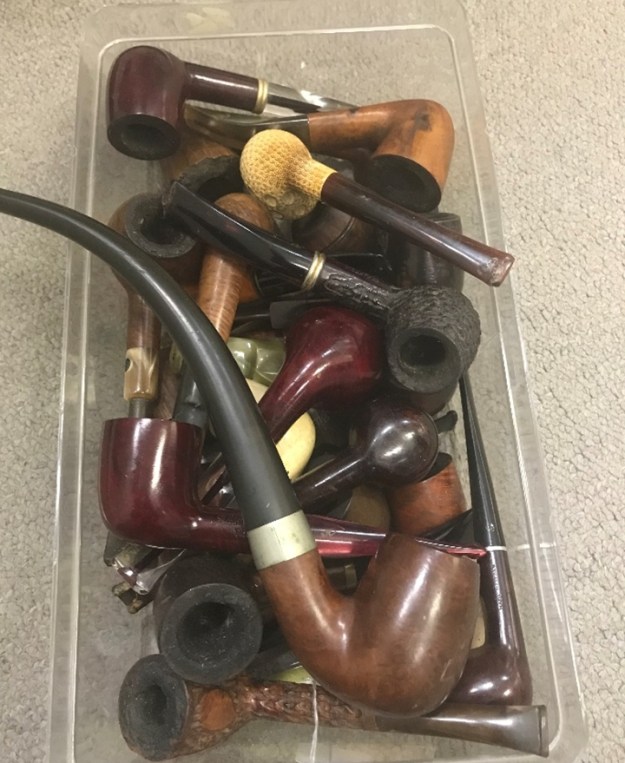
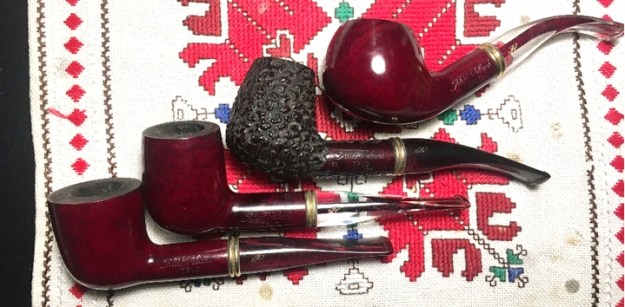
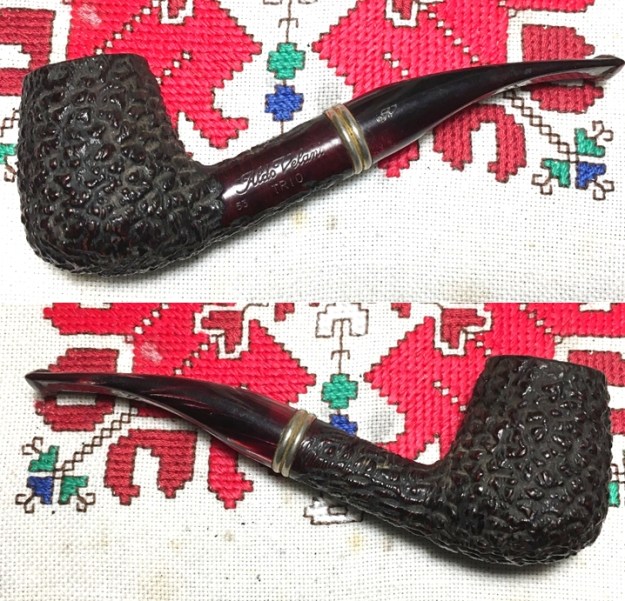
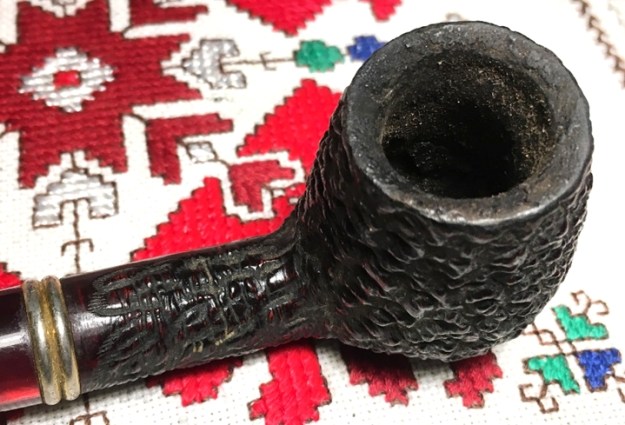
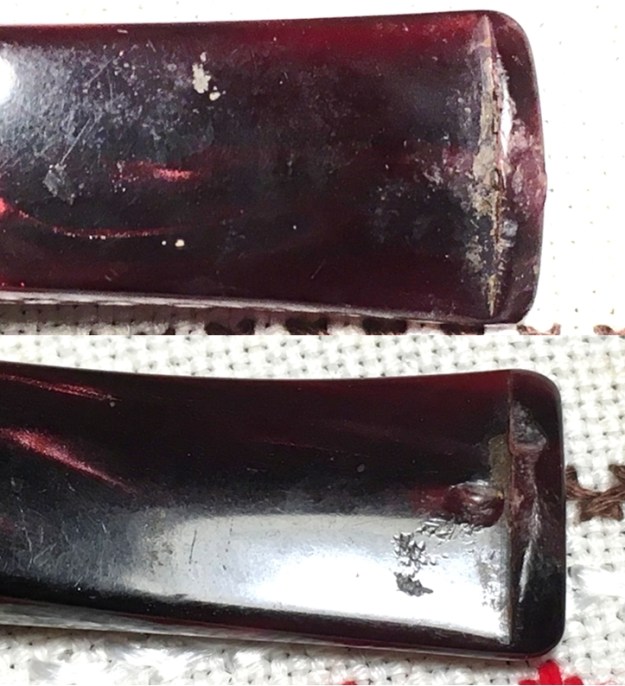
Most Aldo Velani pipes are made in Livorno, Italy, for the USA market by Cesare Barontini. They were previously imported by Lane Limited. Lane spokesman Frank Blews once described Velani’s stylish, intrinsically Italian designs as “Billiards with more ball, bulldogs with more jaw.” The name “Aldo Velani” is actually fictional.

Another Barontini 2nd is named “Cesare”.

I learn two interesting things from this information.  First, Aldo Velani is a faux name that does not describe an Italian pipe house but a specific pipe line.  Secondly, the Aldo Velani is made by the Casare Barontini name based in Livorno, Italy.   Further information is available cross referencing to Casare Barontini in Pipedia:

In 1890 Turildo Barontini opened a factory for the production of briar. In 1925 his son Bruno began to produce the first pipes. Cesare Barontini, son of Bruno, started direction of the factory in 1955, and still runs it together with his daughters Barbara and Silvia.

Sub-brands & Seconds: Aldo Velani. Cesare, L’artigiana, Stuart, Cortina

Pipephil’s site has several examples of the Aldo Velani line depicted which tend to be very stylish and nice-looking pipes which confirms the Pipedia assertion that Casare Brontini produced the Aldo Velani lines primarily for export.  It is evident that there was not a consistency in the stem stamping or name style for Aldo Velani as different examples are given.  Here are the stem stamping variations provided by Pipephil:With a better understanding of the Aldo Velani Trio Rusticated Volcano before me, I begin his recommissioning by cleaning him up!  I start by disassembling the parts – I find that the gold band easily is removed which will allow cleaning of each element to be easier.I then take the stummel and ream the chamber using the Pipnet reaming kit.  I use the 2 smaller blade heads then switch to the Savinelli Fitsall tool.  It doesn’t take long digging in the chamber and clearing away the cake that I realize there are problems.  I remove the carbon cake and then sand the chamber wall with 240 grade paper wrapped around a Sharpie Pen to further clean and allow me to see the chamber wall with more clarity.  I wipe the chamber with a cotton pad wetted with isopropyl 95% to aid me in my assessment. The first thing I note was strange was what looks like a ‘stoop’ at the lower back side of the chamber that gives the appearance of the draft hole entering the chamber floor more ‘forward’ than usual.  What becomes more evident as I clear away the thick cake is that the back side of the chamber had fallen away revealing excessively burned briar.  I see carbon fissures reaching into the chamber wall which I continue to remove by scraping with the Savinelli Fitsall Tool knowing that I need to find solid, healthier briar underneath the carbon cake.  After sanding and cleaning, I take these pictures skewed toward an opened aperture to reveal the darker chamber confines with a pipe cleaner giving reference to the draft hole entry.  I was able to find solid briar and now a cleaned surface with only 2 heat fissures that I see but the burning toward the aft of the bowl has reduced the diameter of the briar thickness significantly compared to the forward chamber wall thickness.  The following pictures show what I’m seeing and it’s not good. This final assessment picture below shows evidence of the wall thinning only in reference to the rim’s condition.  The rim is dangerously thin.With much to think about now regarding how to proceed with the chamber damage, I proceed with the normal cleaning regimen which is needful and gives time to think!  Using undiluted Murphy’s Oil soap on a cotton pad and with a bristled tooth brush, I clean the attractive rusticated surface.  I also use a brass wire brush and a little help from my thumb’s fingernail to clean the remaining lava off the labored, bemangled rim.  The cleaning does well and reveals the smooth briar rim motif of the original design of the Aldo Velani.  The smooth briar rim would have popped in contrast to the rustication.  I like it, but unfortunately, much of the original rim is now smoke history. To the internals – I use pipe cleaners and cotton buds wetted with isopropyl 95% to do the job.  With the condition of the chamber lack of care and maintenance, it’s not surprising that the internals are grungy.  I also use a dental spatula to scrape the mortise wall as well as long shank brushes to clean the airway.  In time, the pipe cleaners and buds start surfacing less soiled and I move to the next phase of cleaning the internals.I continue the internal cleaning with a kosher salt and alcohol soak.  I stretch and twist a cotton ball to serve as a mortise wick and then insert it down the mortise into the airway with the help of a straight stiff wire.  I then fill the bowl with kosher salt which, unlike iodized salt, does not leave a ghosted aftertaste.  After putting the stummel in an egg crate to provide some stability, I fill the bowl with isopropyl 95% until it surfaces over the salt.  After a while, the alcohol is absorbed into the salt and cotton wick and I add some more alcohol to top it off and put the stummel aside to soak for several hours. With the kosher salt doing its thing, I turn now to the stem.  The first thing to do is clean the internals using a pipe cleaner and isopropyl 95%.  The pipe cleaners discover not too much resistance.  I then wipe down the acrylic stem external surface to clean it from the grunge so I can examine the surface closely.The stem is in good shape with only expected scratches and scrapes from normal wear.  The bit is a different story with a compressed button and tooth chatter on the upper side and a deep compression on the lower bit with button damage and chatter.  Starting with the upper bit challenges, I sand using 240 grit paper on the bit and button.  I’m thinking that sanding alone might address the damage on this side.  I also use a flat needle file to help shape and freshen the button.  As I had hoped, sanding and filing alone erases the compressions and chatter.The lower bit is a different approach.  I realize from the outset that sanding alone will not address the damage – the compressions on the bit and button are too deep.  Because of this, I apply a patch of thick CA glue to the areas and then use an accelerator too quicken the curing time.  I start with CA glue because I want the footprints of the compressions to be larger so that the CA has more to attach to. I then address the cured CA patch first by filing with a flat needle file and then by sanding with 240 grade paper.  I reshape the button with the file as I work on filing the patch mounds down to the acrylic surface.  Then, switching to 240, I bring the patches down flush with the acrylic surface.  The ruby red and burgundy hues should shine through the transparent CA glue after sanded and polished.Sometimes an air pocket is uncovered in the sanding and filing like in the picture below.  To remedy this, I add another drop of CA glue to fill this. I finish this phase of the repair using the flat needle file and 240 grit paper. To erase the scratches of the 240 grit paper I follow by wet sanding with 600 grade paper and the I apply a 0000 grade of steel wool.Then, the micromesh process using 9 pads from 1500 to 12000.  First, I wet sand with pads 1500 to 2400 and then follow by dry sanding with pads 3200 to 4000 and 6000 to 12000.  I’m not sure it revitalizes the acrylic material, but as I do with vulcanite stems, I apply obsidian oil to the stem after each set of 3 pads.  My – the fire in this acrylic stem is beautiful.  The problem is that it’s difficult to capture with my iPhone 6s camera! Next, I shine up the gold nickel plated double-ringed band – shank cap.  I first wash it with warm water and dish soap using a bristled tooth brush to get into the center crease.  After I dry the band, I then apply Tarn-X with a cotton pad and after scrubbing it well, rinse with cool tap water and dry it.  It looks great.  Later, I will buff it up more with the Dremel. It has been several hours since starting the kosher salt and alcohol soak.  The salt and cotton wick have soiled somewhat, not as much as I thought it would, but perhaps my initial cleaning had accomplished more than I thought!  After I toss the expended salt in the waste, clean the chamber with a paper towel, I also use broad bristled shank brushes to clean the residue salt left behind.  I blow through the mortise to loosen and remove salt crystal remaining in the airway.  Finally, to make sure the cleaning has done the job, I expend a few more pipe cleaners and cotton buds with alcohol and discover that the internals are clean.  Moving on!I’ve had some time to think about the issues with the burning damage to the chamber.  The good news is that there are no burn throughs, but the briar on the back side of the chamber is thin. The rim on the backside is also thinner in comparison to the front side of the rim which is evident in the first picture.  In the second picture I’ve tried to show how the inner chamber has bowed out because of the loss of briar through burning.  During the reaming and removal of all the charred wood, left behind is a bowed cavity where it should be relatively straight-vertical.  The third picture shows the remaining fissure that crawls up the left side of the chamber and impacts the rim. I’ve looked very closely and thankfully, the fissure crack is isolated where it is.  There are no skulking cracks over the rim into the rusticated surface. To give this pipe a longer life, I will employ two different approaches that hopefully will build the rim up and fill the bowl cavity out to increase the mass on the rear chamber wall.  To do this I’ll use JB Kwik Weld to build a new chamber lining and to fill the fissure on the left side of the bowl.  JB Weld will be the main strategy in the chamber itself because of its heat resistant capabilities.  This is the lower chamber strategy.  Before starting this, I will first build out the rim thickness using a mixture of thick CA glue and briar dust to form a putty that will cure and provide the upper scaffolding for a rear rim rebuild. I’ll form this first around the back side of the rim and as I form the rim mold with the putty, I’ll intentionally fashion an ‘under-ridge’ with the briar dust putty.  This ‘under-ridge’ will form the raised boarder that the JB Kwik Weld will butt against when it is applied afterwards.  I hope this plan will work!
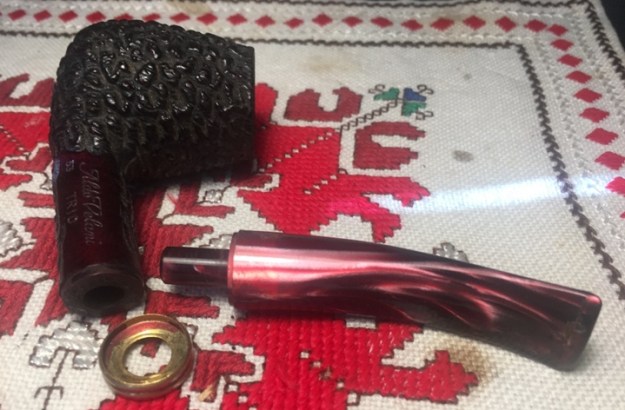
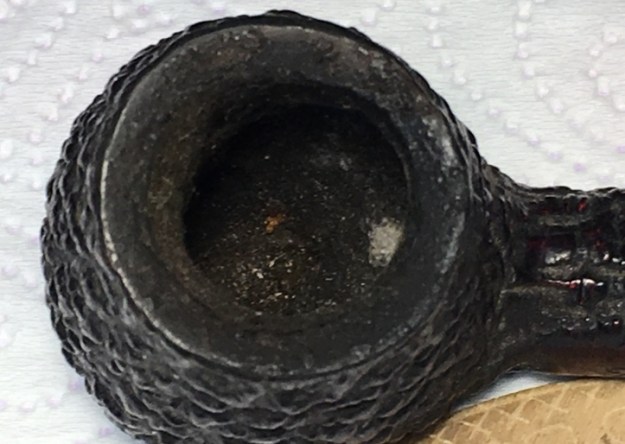
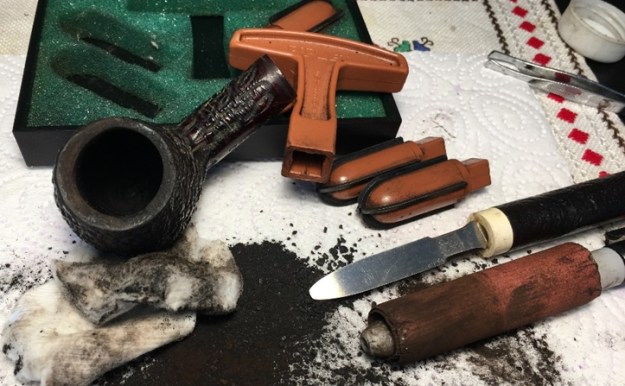
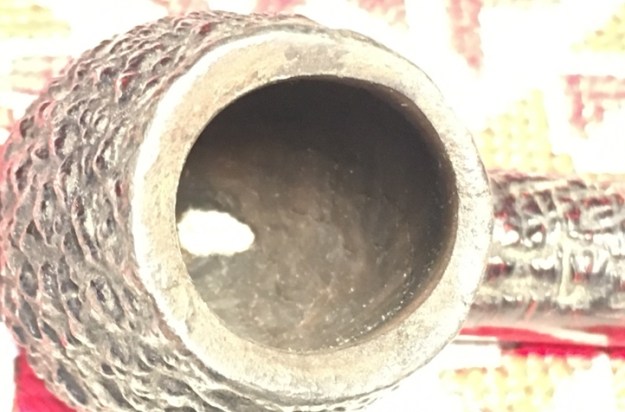
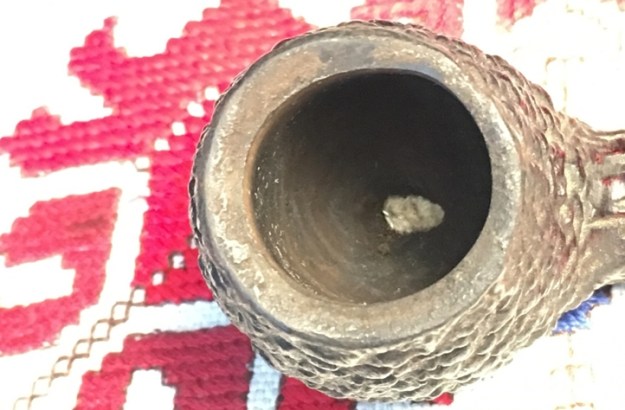
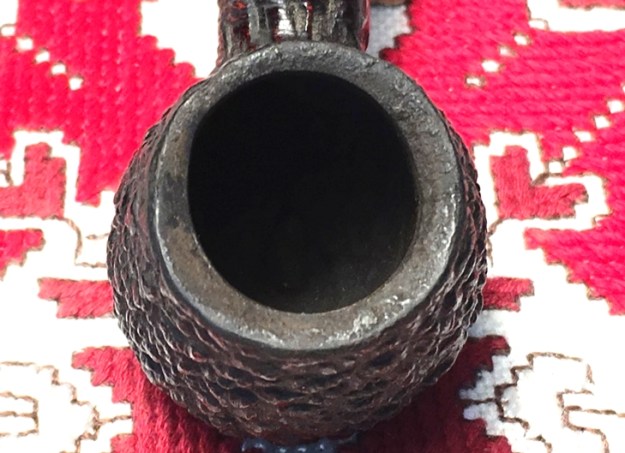
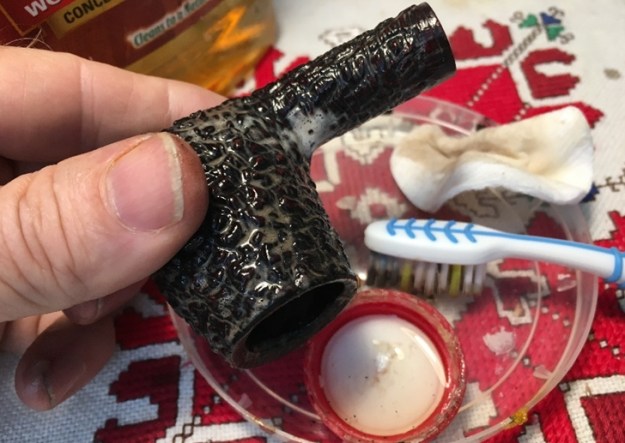
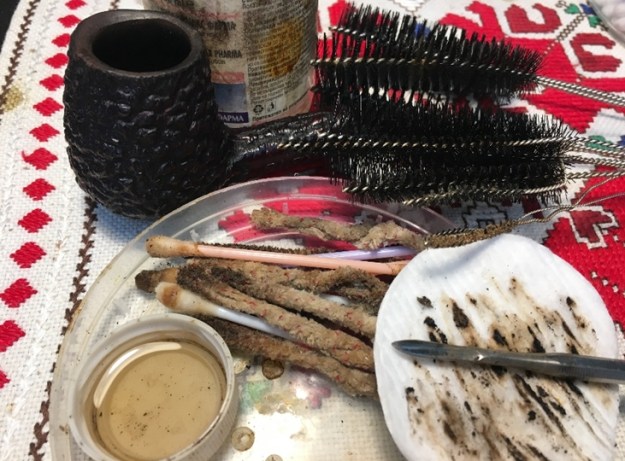
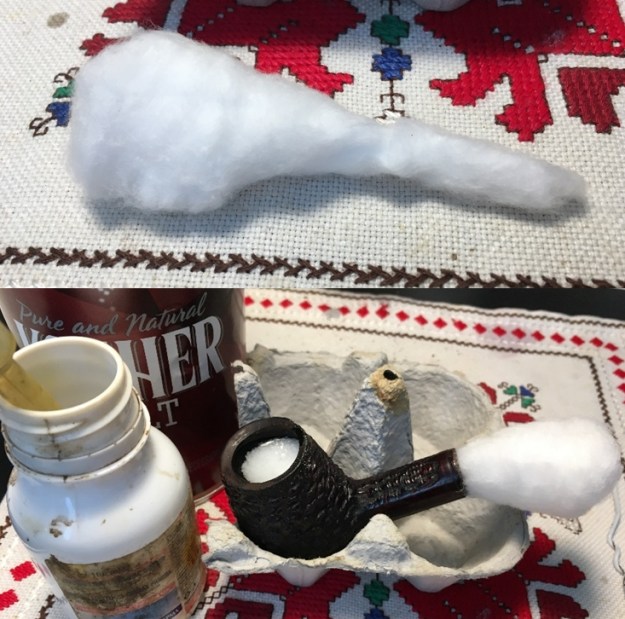
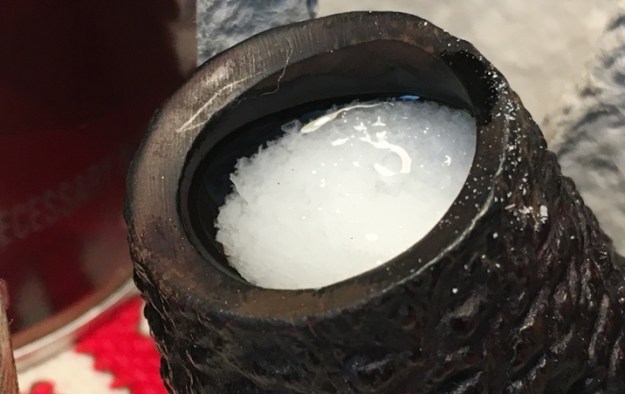
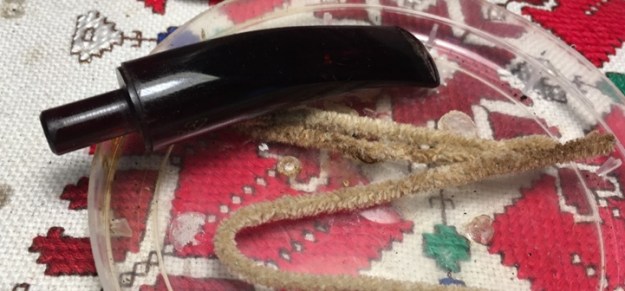
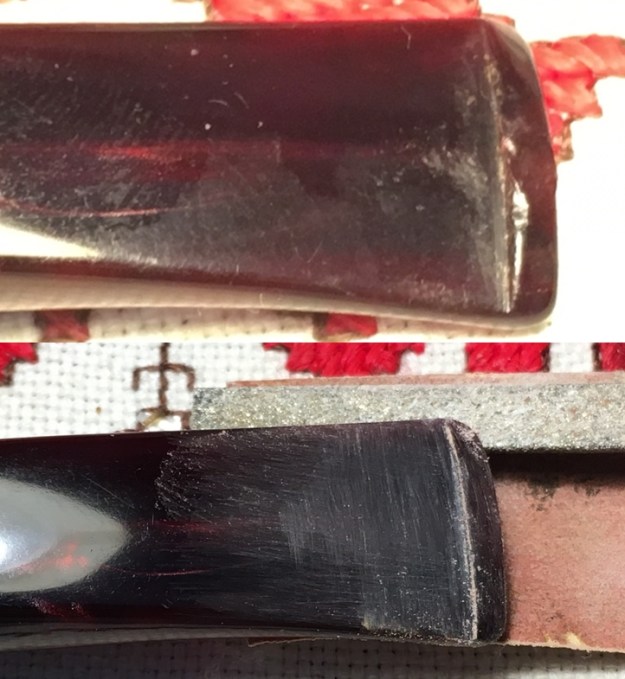
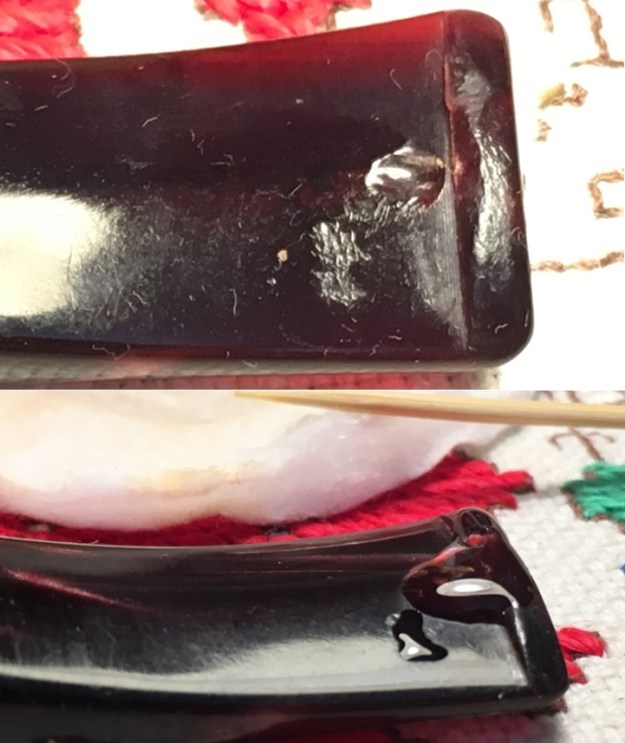
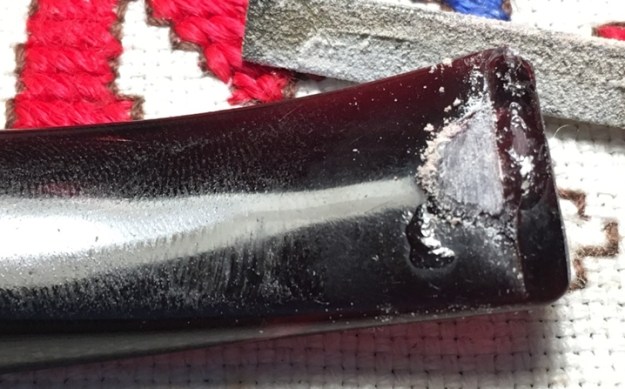
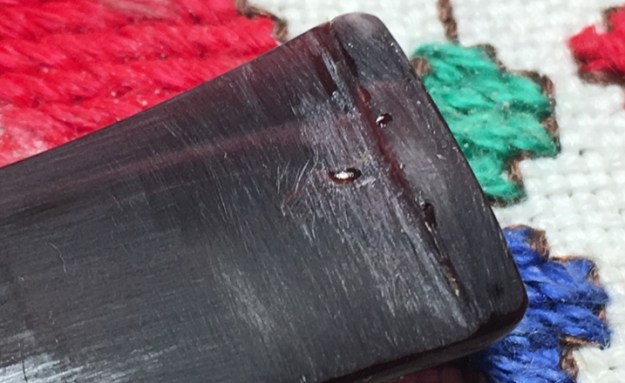
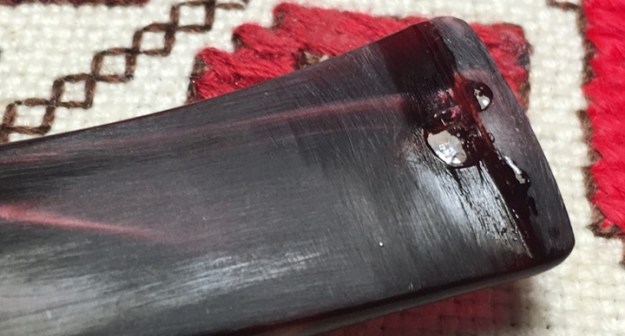
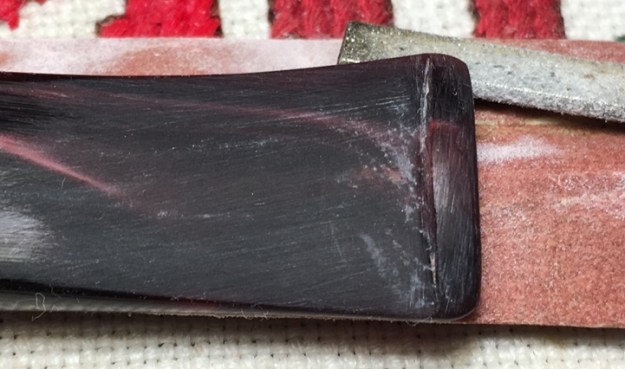
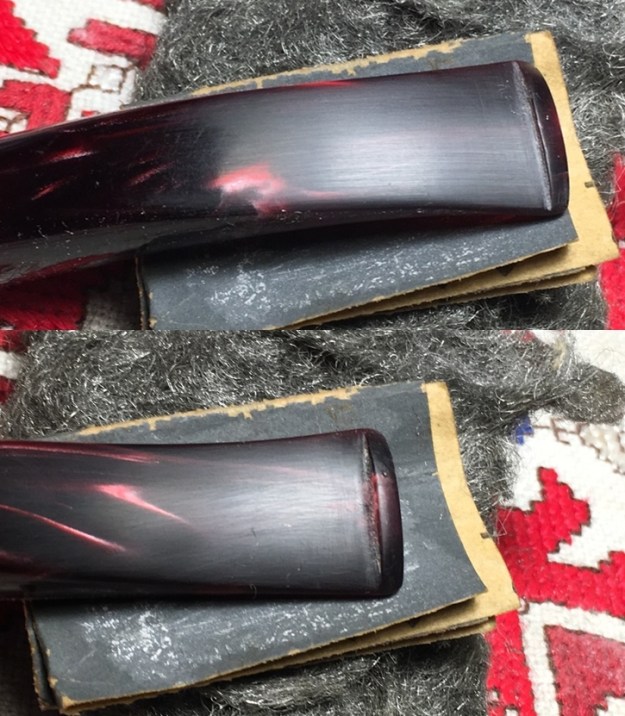
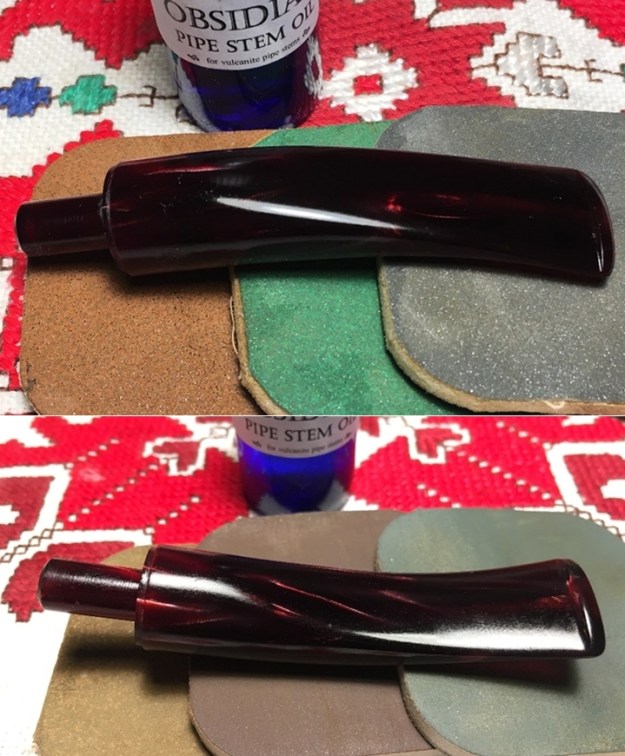
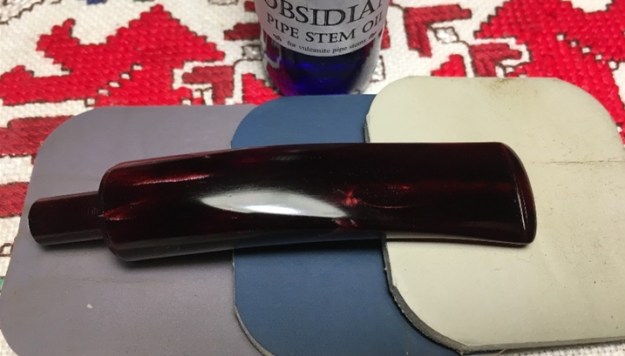
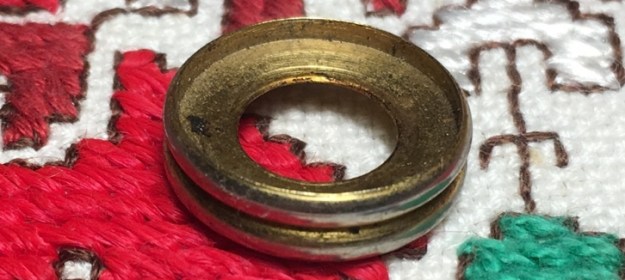
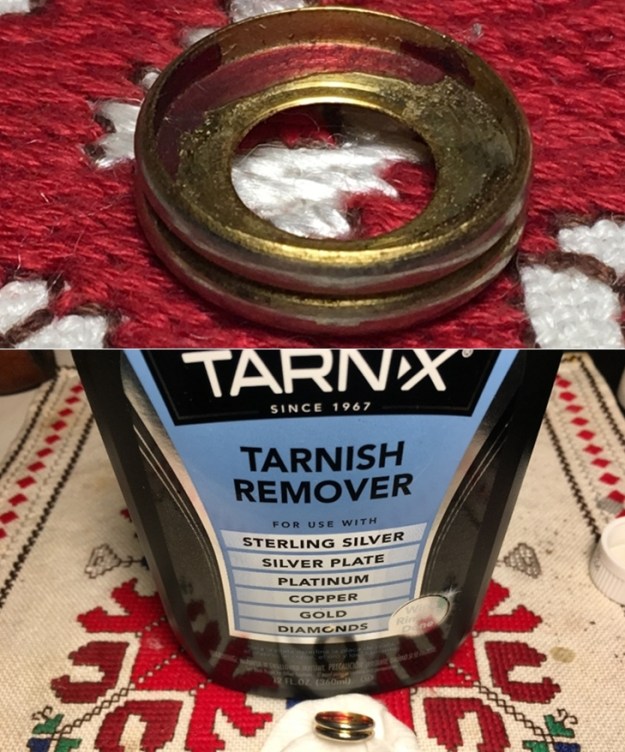
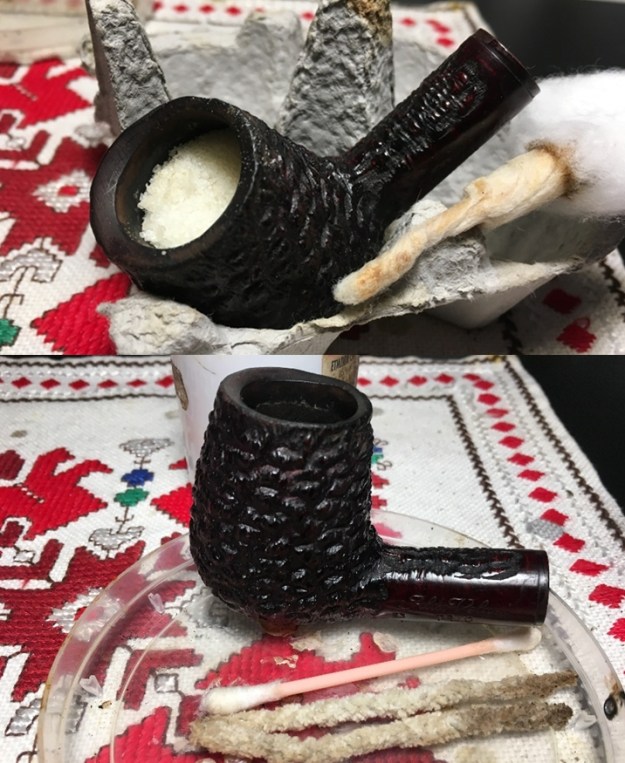
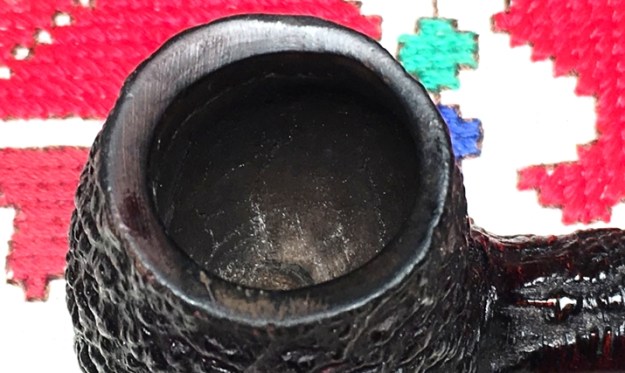
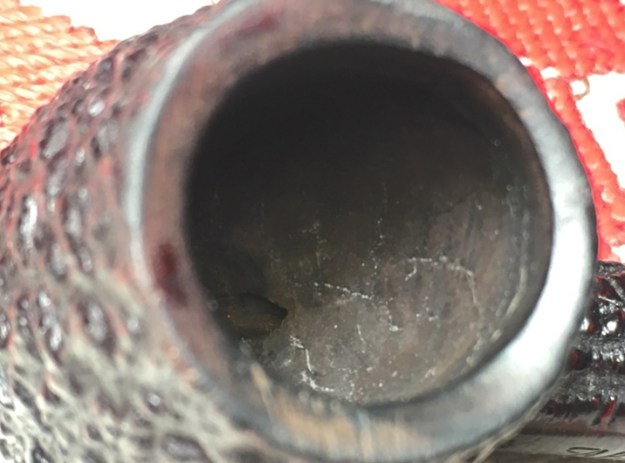
The first thing I do is wipe the bowl and rim with alcohol and a cotton pad to clean the surface.  Then I mix a batch of briar dust and thick CA glue on an index card.  When it’s about the viscosity of molasses so it will hold together and not run, I trowel it to the rim with a curved dental spatula shaping the rim form.  As I’m working, I see that the putty isn’t firming up on the rim as I hoped and so I use an accelerator to help quickly set the putty in place and cure.  I apply three separate batches of putty to build up the rim which are shown in the pictures.  The first phase looks good.  The pictures show the progress. Next, I mix equal parts of the two components of JB Kwik Weld, the steel and hardener.  After the two elements meet, there is about 4 minutes of relative pliability to apply the Weld in place.  After four to five minutes the Weld begins to harden.  I use a spatula to trowel the Weld into the chamber – trying to avoid the rim, but that wasn’t easy to do.  As I apply the Weld into the chamber, I spread it on the back wall and fill the fissure.  As it hardens, I tamp it down and shape.  After applying and shaping, I set the stummel up so that the back of the bowl is down allowing gravity to help.  I turn out the lights and call it a day. The next day I’m anxious to start to work on shaping the rim after the JB Kwik Weld and briar dust putty have thoroughly cured.  My main work horse to begin with is the Dremel mounted with a round grinding stone and a half-rounded needle file.  The grinding stone is the perfect size at 5/8 inches in diameter to fit into the narrowed Volcano summit and yet, large enough to provide a larger and less abrupt grinding footprint.  As I begin to grind the internal lip of the rim patch, I remove the excess briar dust putty patch material.  I go slowly and patiently eyeballing the roundness of the rim.  I decide to employ a caliper to measure the original intact part of the rim to help me measure the removal process.  I would rather leave more and work down slowly sanding with paper than to be greedy with the Dremel grinder and take off too much.After a time, a take a picture to mark the progress removing and rounding. When I’m close to being satisfied with the removal and rounding with the Dremel grinding stone, I use both a flat and half rounded needle files to begin removal of the excess patch material on the rim top.  The entire rim bevels inwardly and slanting toward the chamber and I patiently and gently file in that direction. After filing, I transition to 240 grade paper to continue to shape and to blend the rim patch with the resident briar.  I do a dance back and forth between sanding and filing and eyeballing the angle of the rim slant – seeking as much uniformity as possible!I’m satisfied with where I am at this juncture.  The inner rim looks round and the rim rebuild is holding together very well.  The area is still rough, and I’ll continue to work on that later, but now I turn my attention from the rim rebuild and restoration to the chamber. I wet a cotton pad with alcohol and wipe out the chamber so that I can assess where the chamber repair is with the JB Kwik Weld.  With the shank oriented downwardly, I take a few pictures after replacing the pipe cleaner through the draft hole.  The pictures are difficult to see what I can feel with my finger as I examine the contours of the hardened JB Weld.  The cavity created by the burn damage has been filled partially and reinforced well.  I no longer have any concerns about the thinness of the briar on the back of the bowl.  I don’t believe I can fill the entire cavity with JB Weld and will not try.  But I still can feel an abrupt ridge underneath the rim repair.  This I need to fill to provide a smoother transition from the rim repair to the chamber repair. Orienting the picture now to the left side of the chamber, the JB Weld has filled the fissure very nicely.  I’ll sand the excess off later. After dealing with the fissure proper, I’ll address the upper part of the fissure crack that reaches to the rim.For the second strategic application of JB Kwik Weld, I cover the rim and upper bowl with masking tape to protect from accidental drips of the Weld.  After mixing the two parts of the JB Weld, again I use a dental spatula to apply the epoxy to specific areas underneath the rim rebuild to provide the foundation for a smooth, seamless transition between the two reconstruction areas.  As before, to be careful, I place a pipe cleaner through the draft hole even though there is no plan for Weld to be applied in that area.  After troweling enough JB Weld to the area targeted, I patiently and carefully continuously tamp the area to massage the epoxy into the best positioning.   As the 4-minute window passes, the epoxy is thickening allowing me the final opportunity to shape and smooth the epoxy before it sets.A few hours later, I begin the dance of sanding and utilizing the round grinding stone mounted onto the Dremel.  The sanding paper I use is a coarse 120 grit and I wrap it around the end of the flat needle file to give me some reach and leverage as I apply pressure during the sanding.  The goal is to remove all excess JB Kwik Weld only leaving that which provides necessary filling to the burned-out area and to the heat fissure.  These pictures show the dance, but the reality is this phase is a mess with dust flying all over!  Living and working in our 10th floor flat of a formerly Communist bloc apartment complex in the winter provides much opportunity for me to thank my wife for her patience and helping to take a few of the pictures below! After I’m satisfied with the heavy duty grinding and sanding, I switch to a sanding drum mounted to the Dremel.  It serves to fine tune the sanding and makes my job easier.I finish with the rim/chamber rebuild.  After cleaning the chamber blowing and wiping with a cotton pad wetted with isopropyl 95%, I’m pleased with the outcome.  The pictures show remaining epoxy in the areas of need.  The first picture shows well the fissure that is now secured with epoxy.  The lighter epoxy is visible but to the touch, there is nothing there.The next pictures show the transition between the two repair projects.  The briar dust rim rebuild transitions to the chamber burn repair.  The JB Weld contours to the chamber wall building out the large burned area that threatened the aft chamber wall, but thankfully never burned through.  The aesthetics are still nothing to get excited about but I’m hopeful through the sanding and polishing process the rim rebuild will blend well with the surrounding briar.  Later, I will apply a coating of pipe mud to the chamber to encourage the growth of a new, healthy protective cake. I move on now to fine tuning the rim.  I use 240 grit paper to clean up scratches left over from the restoration project and then I apply 600 grade paper to smooth. With all the sanding, filing and grinding of epoxy and briar, I do a quick clean up of the stummel by taking it to the sink and running tap water over it and scrub it with the bristled tooth brush.  I also wipe the chamber and the rim with a cotton pad wetted with isopropyl 95% and run a pipe cleaner through the airway also wetted with alcohol to make sure all is clean.Next, before progressing further with the sanding of the rim, I color the rim to hide and blend the repairs.  I use straight Fiebing’s Oxblood with a cotton bud to apply several coats of the dye to the rim.  I also touch up the rusticated areas on the peak of the Volcano bowl that had lightened because of all the construction and cleaning going on. I’m hopeful that the dye will also be absorbed by the rim patch area which is speckled now after the sanding.  After applying the dye several times, I give the rim a light wipe of a cotton pad wetted with alcohol simply to blend and gather excess dye. Next, I move directly to applying micromesh pads to the rim and to the smooth briar panel on the left shank flank.  I begin by wet sanding with pads 1500 to 2400 and I realize immediately that I had made a mistake in the order of things.  As soon as I began wet sanding the Oxblood dye that I had just applied was, for the most part, now running down the drain.  I realize that I should have completed the micromesh regimen and then applied dye to the rim.  Not able to change anything at this point, I continue after wet sanding with the first set of three, to dry sand using the remaining pads, 3200 to 12000.  The pictures show the results – the rim looks great regarding the sanding and polishing but the coloring of the rim is lost for the most part.  I also discover as I micromeshed the smooth panel that the color was coming off as well….  I’m encouraged by the fact that we learn as much from what not to do as doing something well.  The pictures show the results. Circumstances create the environment for decisions and decisions shaped by past successes and failures is the definition of wisdom.  What is the wise course of action!? Previously, I planned to keep the original finish as it was and move to the polishing phase.  Now, I decide to apply Fiebing’s Oxblood Leather Dye to the entire stummel and not just as a touch up.  At this point there are too many ‘touch up’ points and it is better simply to refresh the entire bowl with dye.  I assemble all the components of my tabletop dying station and then wipe the stummel down with alcohol to clean the surface.  Using a hot air gun, I heat the stummel to open the briar to be more receptive to the dye pigmentation.After heated, I then apply the Oxblood dye to the stummel using a folded pipe cleaner holding on the cork which is inserted into the shank as a handle.  As I paint the stummel with dye over sections at a time, I ‘fire’ the dye using a lit candle that combusts the alcohol in the aniline dye and sets the dye pigmentation in the wood.  After fully saturating the stummel and covering the whole surface, I set the stummel aside to rest for several hours.Several hours later I’m ready to ‘unwrap’ the fired crust on the surface of the rusticated stummel.Since I’m working with a rusticated stummel, I don’t use a felt buffing wheel as is my approach with smooth briars.  I mount a cotton cloth buffing wheel on the Dremel and set the speed at about 40% full strength, I apply Tripoli compound to the stummel.I’m always fascinated by the way the grain emerges during the unwrapping process with the Tripoli.  The picture below shows the ‘front line’ of the buffing process and the richness of the rusticated surface being revealed.  Yes, surgical gloves!  In this way I keep stain of my hands which keeps my wife happier!With my wife’s help, the next few pictures show my customary ‘Dremel posture’ – my lap top station working on a chopping board.  I keep the overhead lamp close and I’m able to see the movement of the compounds and waxes I apply during the use of the Dremel.Working on rusticated and blasted surfaces are rough on the cotton cloth buffing wheels and I’ll be tossing this one when I’m finished!  I buy buffing wheels in bulk.  The smaller buffing wheel allows me to rotate the orientation of the stummel to follow the rusticated valleys and ridges – I keep moving and it takes a good bit of time to work through the rustication.  Patience reveals good results most of the time!After completing the Tripoli regimen, I wipe the bowl with a cotton pad wetted with alcohol.  I do this not really to lighten the aniline stain but to blend the Oxblood dye and to wipe off excess dye.With a rusticated surface as distinct and deep as this Aldo Velani Trio, I use a 1500 grade micromesh pad and lightly ‘brush sand’ the surface of the stummel.  What this does is sand the tips of many of the rustication ridges and lightens them.  This creates more contrast in the rustication that I first saw many restoration ago, restoring a rusticated fully bent Billiard, Lorenzo Rialto.  The ‘speckled’ effect creates a mesmerizing rusticated surface – I like it.  The picture shows these results.Next, I mount another cotton cloth buffing wheel to the Dremel, maintaining the same speed and I apply Blue Diamond compound to the stummel surface.  I decide not to reunite the stem at this point to apply the Blue Diamond in order to use a different buffing wheel with the acrylic stem.One of the reasons for letting the newly dyed and fired stummel to ‘rest’ for several hours before working on it is that it helps the dye to set and less of it comes off later on the steward’s hands.  This does happen especially the first few times a pipe is put in service and the bowl heats up for the first time.  I’m concerned that the rusticated surface will hold more unseasoned dye surface and to mitigate against Oxblood dye coming off on the hands, I heat the stummel with the hot air gun and with the bowl heated, I wipe it heartily with a few cotton pads to capture the unseasoned dye.  I hope this helps!Before turning to the stem, I have two additional projects to complete before the final phase of applying wax.  I need to remount the gold band/shank cap and polish it.  Also, I need to apply a mixture of sour cream (or natural yogurt) and activated charcoal to the chamber to aid the formation of a cake to serve to buffer the newly repaired chamber wall from the fire.  Starting first with the band, I apply a small drop of thick CA glue inside the cap and then attach it to the end of the shank.  I use a thicker variety so that it doesn’t run and get on something that it shouldn’t!Next, I mount a cotton cloth buffing wheel on the Dremel that is dedicated to the application of White Diamond compound on nickel.  You don’t mix buffing wheels!  I label each wheel for what compound or wax is used and on what surface – metals and wood are different! I also am careful while buffing the band to stay on the metal and not bleed over onto the briar.  The black residue that comes off the metal can darken and stain briar – careful!  Wow!  I thought the cap was shiny before, but now it beams!Next, applying the natural yogurt and charcoal mixture to the chamber walls to provide a buffer between the briar and the burning tobacco helps as a ‘starter’ to develop a protective cake.  I’ve learned that I have used too much yogurt in the past and toss a lot in the waste.  This time, I use much less.I mix the charcoal in until it thickens.  I’ve learned to mix a little more charcoal than I think is necessary so that it is firmer.  The test I’ve used to know when I’ve mixed enough charcoal into the soup is when I can scoop some of the mixture on a flat dental spatula and it doesn’t run off.  That lets me know that it will stay where I put it on the chamber wall and not be overcome by gravity pulling it down to the floor of the chamber.When the mixture seems good, and after I put a pipe cleaner through the draft hole, so it stays clear, I dollop the black mixture using a dental spatula and paint the chamber walls up to the rim.  I got the mixture right.  After covering the chamber walls fully, I take a picture – it’s not easy to see, but it looks good and will serve the needed purpose.  A word to the new steward of the Aldo Velani Trio, when you put the pipe into service do not scrape the chamber to clean it!  Gently stirring the ash loosens it allowing it to dump easily.  Then, use a folded over pipe cleaner and ‘rub’ the chamber wall which cleans adequately.  You want to allow enough time for a cake to develop. With the stummel waiting for the yogurt/charcoal mixture to dry, I now turn to the stem.  I mount another cotton cloth wheel on the Dremel, maintain speed at 40% full power and apply Blue Diamond to the beautiful fiery acrylic stem.  After this, I mount another cotton cloth wheel, maintain the same speed and apply White Diamond compound. After completed, I wipe and buff the stem with a felt cloth to remove the compound dust.Next, I want to spice up this classy stem by refreshing the Aldo Velani stamp on the side of the stem. It is unique with the A and V in cursive script, but to me the clincher is the pipe forming the left leg of the A.  It’s just cool.  With all the gold in the band, I think gold would be a good color to bring out this noteworthy stem stamping given that I don’t have a picture of the original intent but what I see looking closely at the stamp, it may have been gold but I’m not positive.  I use Rub’nBuff European Gold to apply the color.  As the name says, I apply it over the stamp with a cotton bud and then wipe it of with a cotton pad.  I need to rub it well to clean up the excess but what is in the stamping stays in the stamp.  It looks great! Now the home stretch.  The charcoal/yogurt mixture has set up and time to apply carnauba wax. I unite stem and stummel and mount another cotton cloth buffing wheel on the Dremel, increase the speed to about 50% full power.  I increase the RPMs to increase the heat in applying the wax – more heat causes the wax to liquefy more as it’s working into the briar which makes application of the wax to the rougher rusticated surface more likely not gunk up. When applying wax to the stem, I back the speed off to 40% full power.  After completing the application of wax, I give the pipe a hearty hand buffing to raise the shine even more.
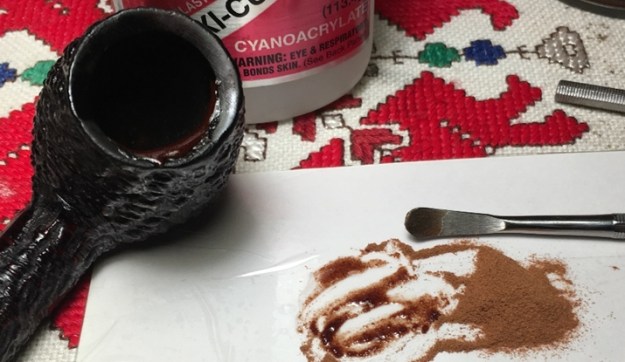
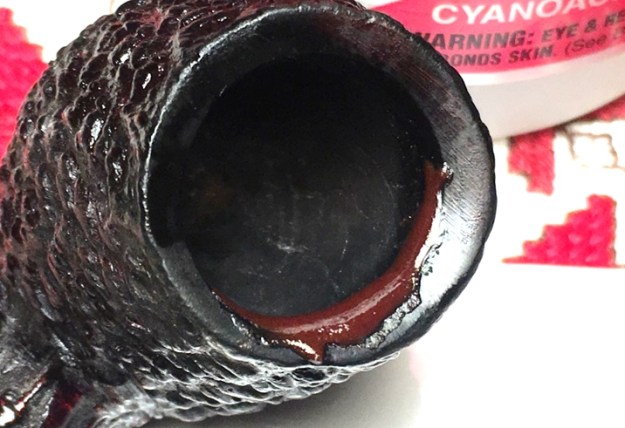
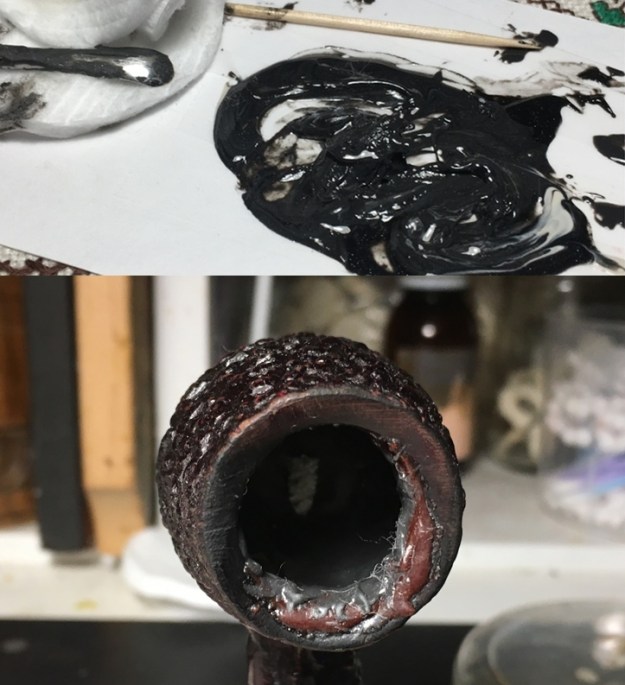
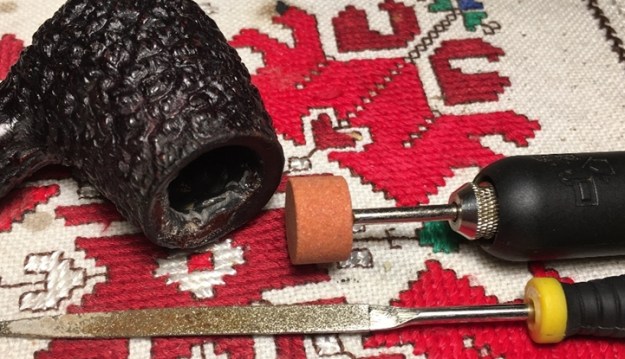
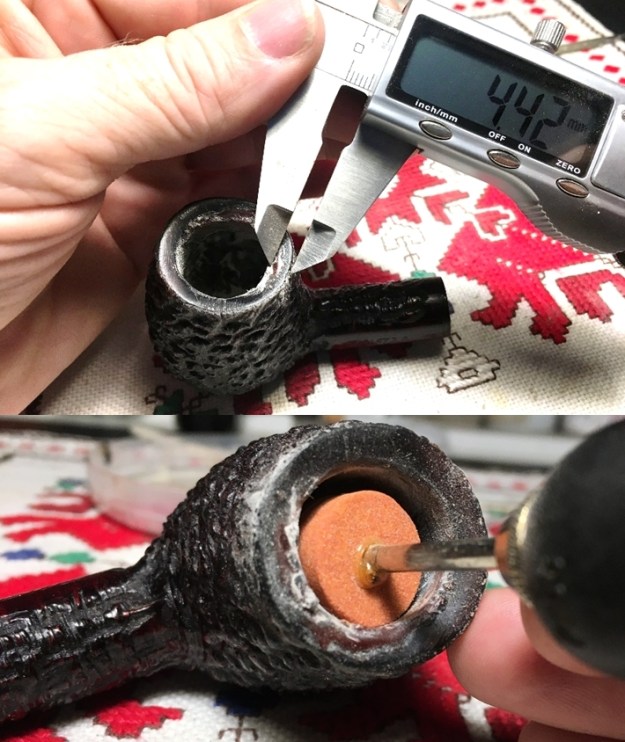
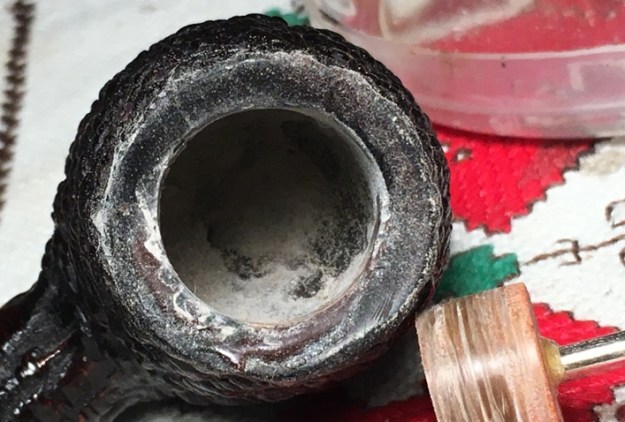
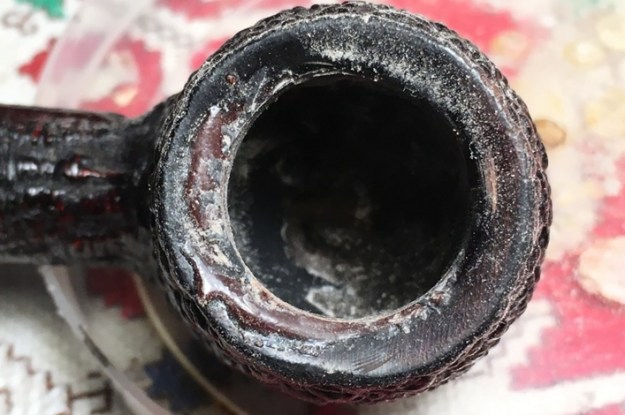
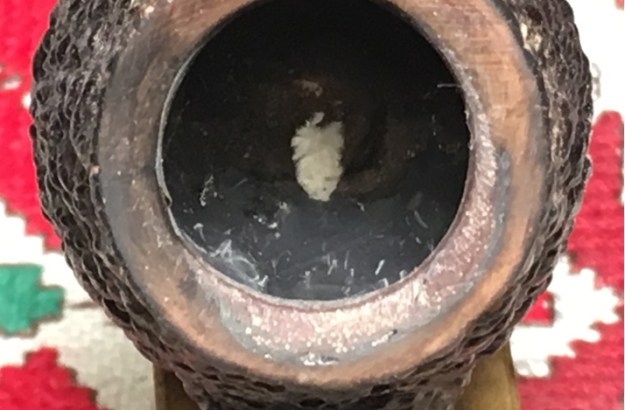
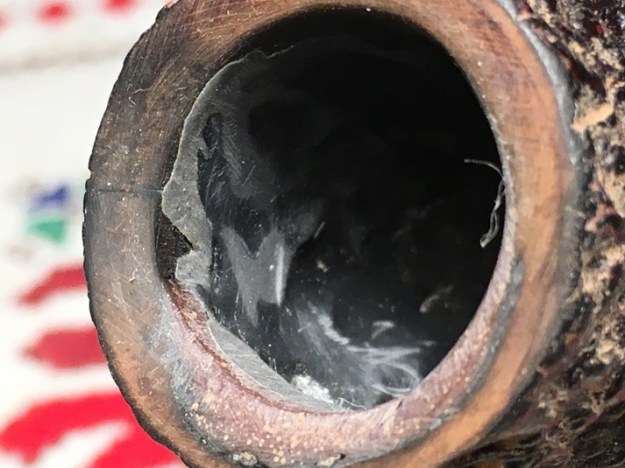
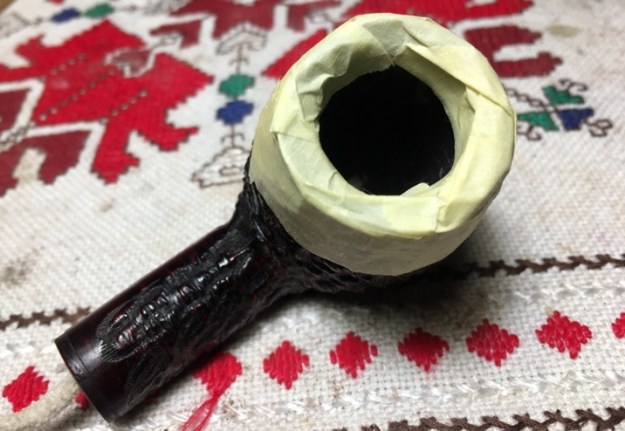
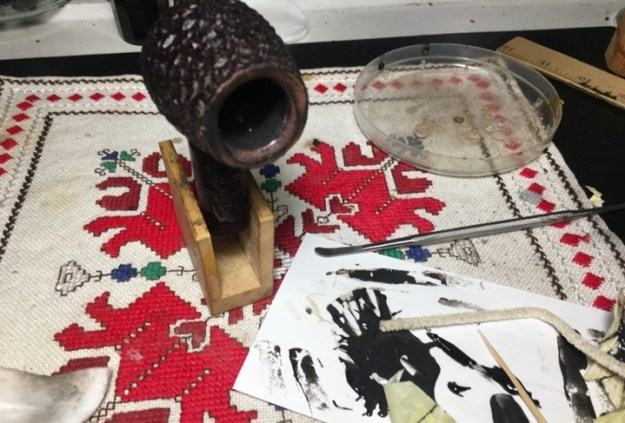
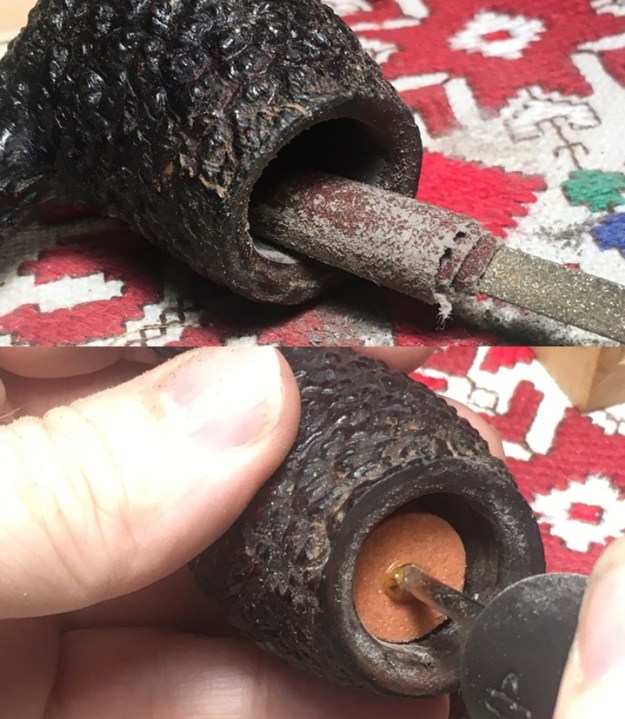
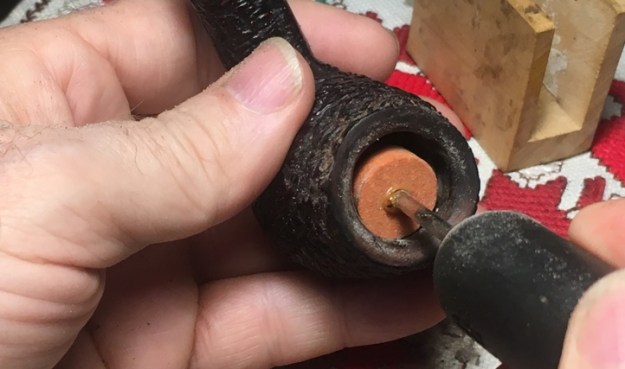
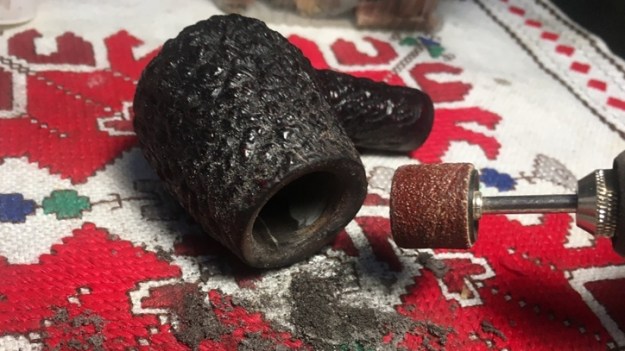
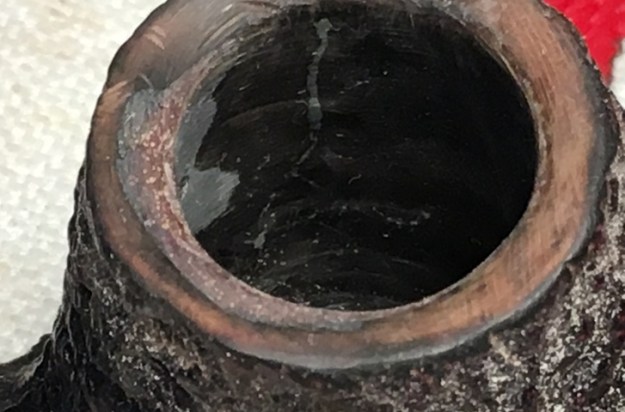
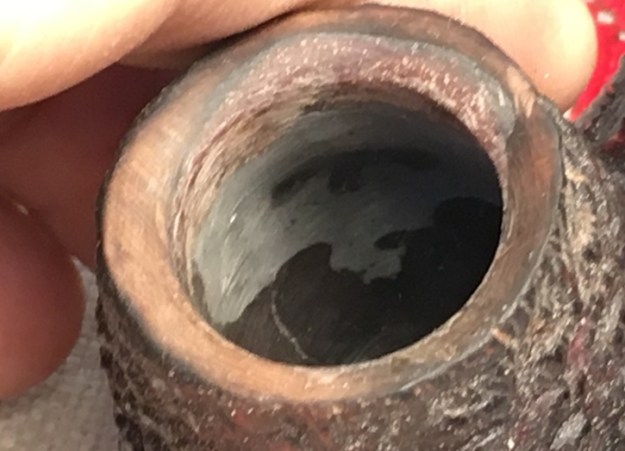
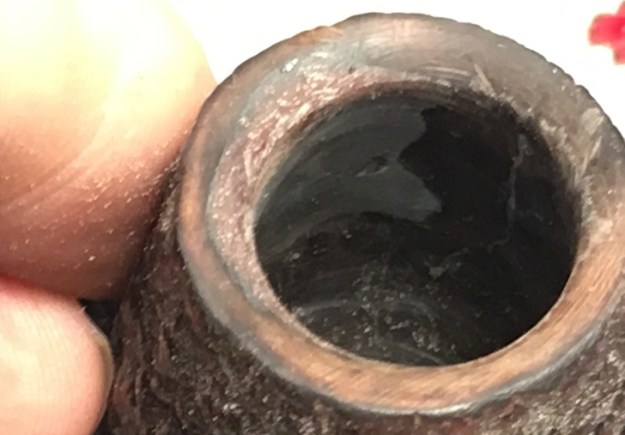
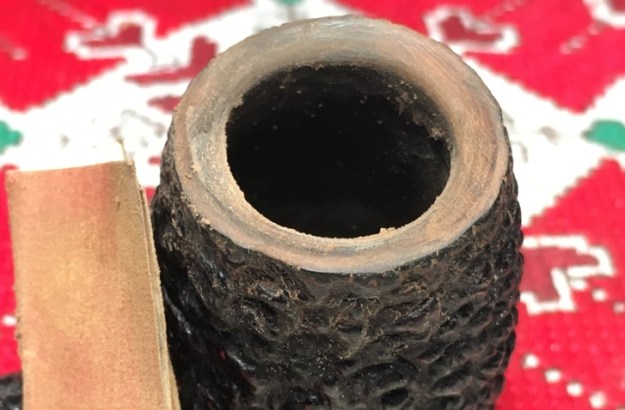
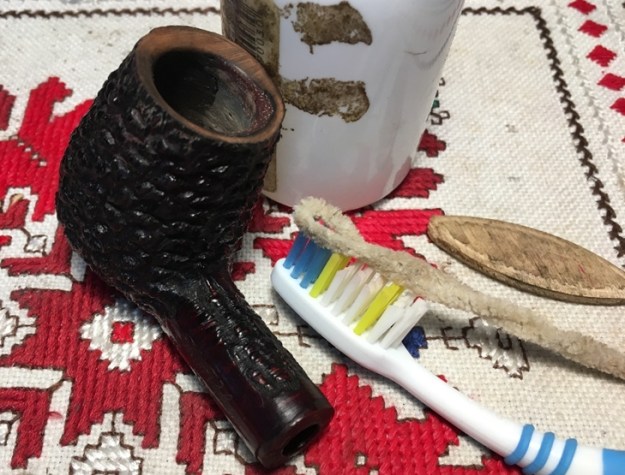
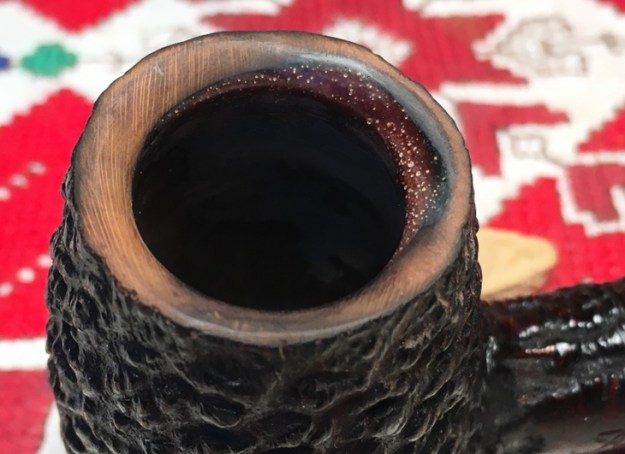
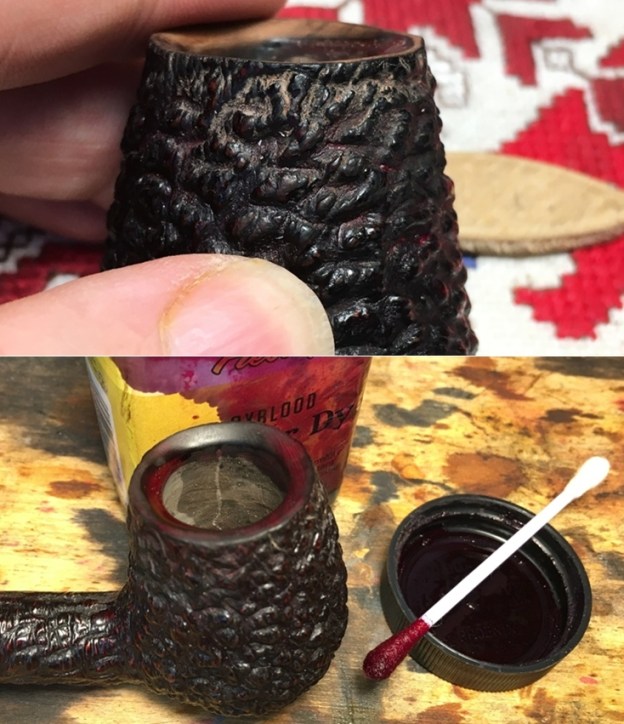
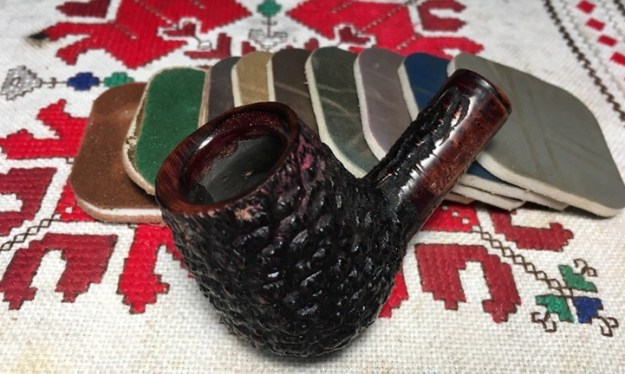
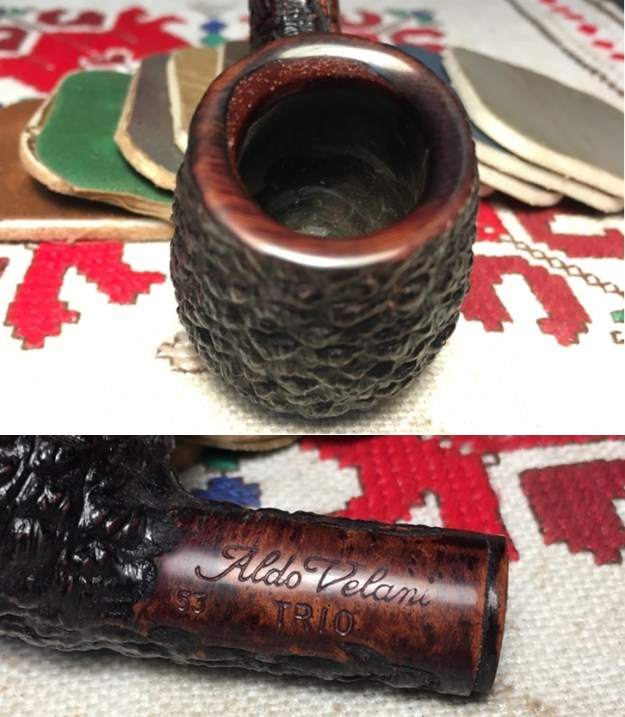
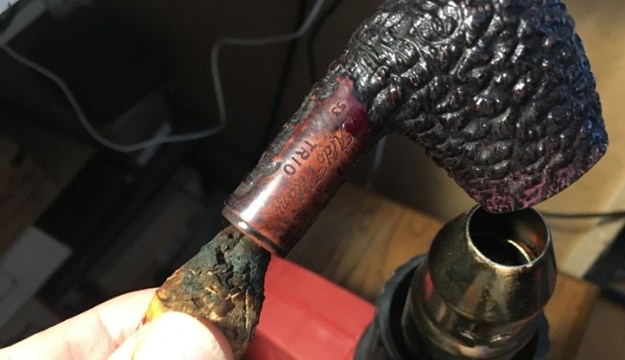
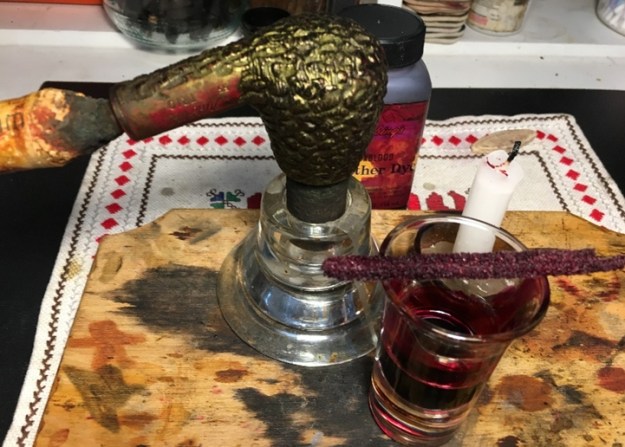
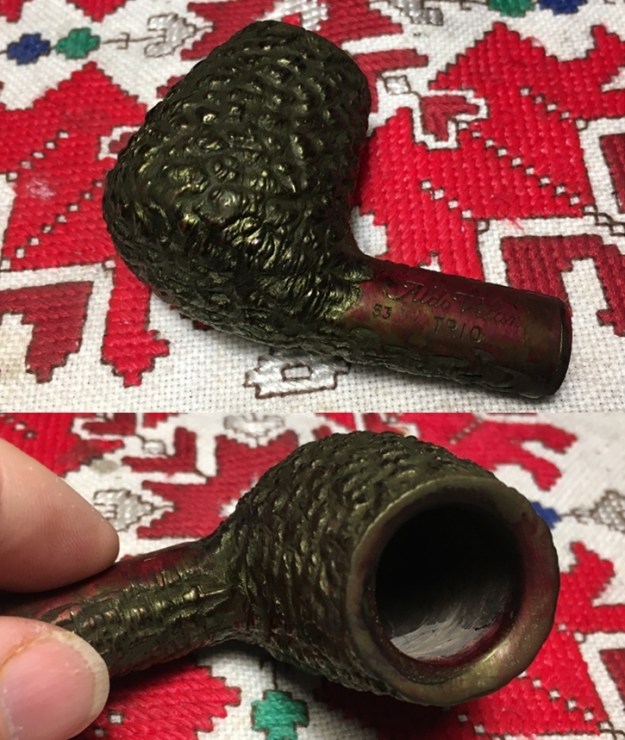
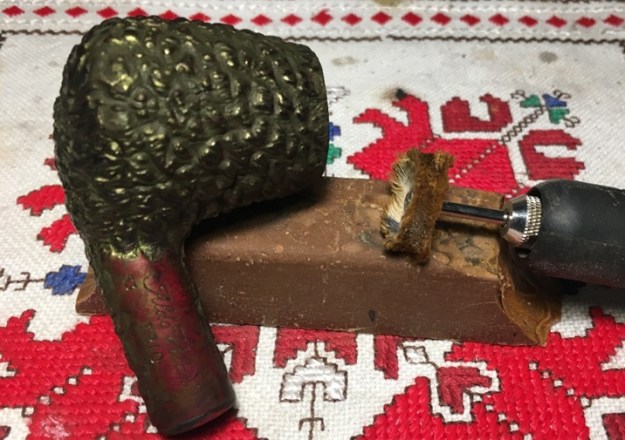
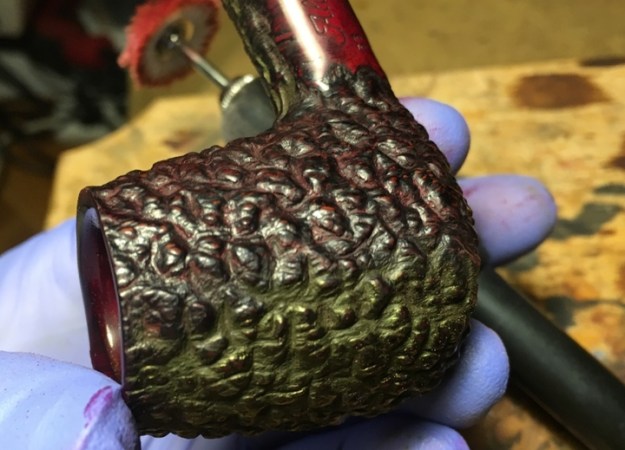
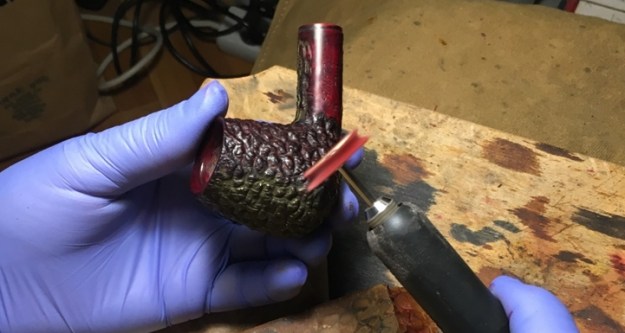
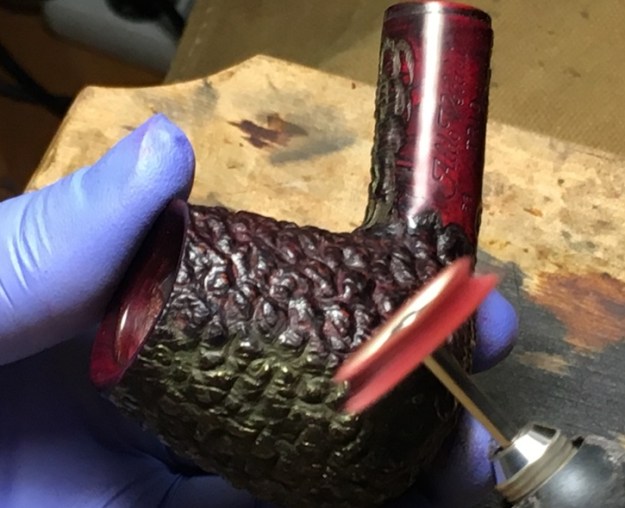
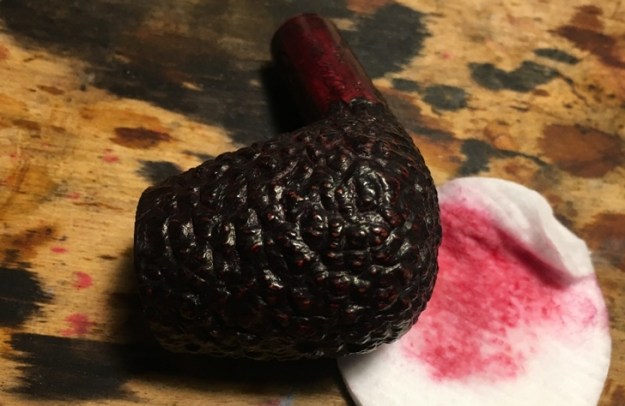
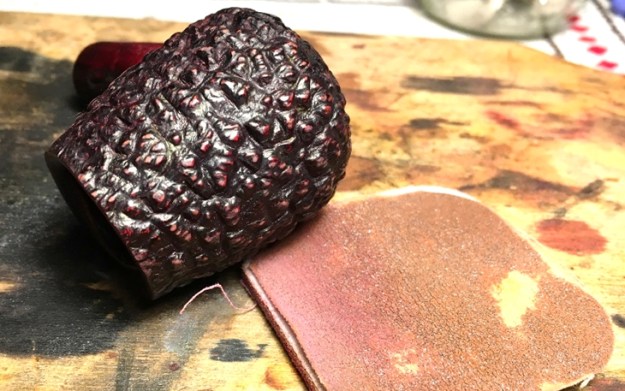
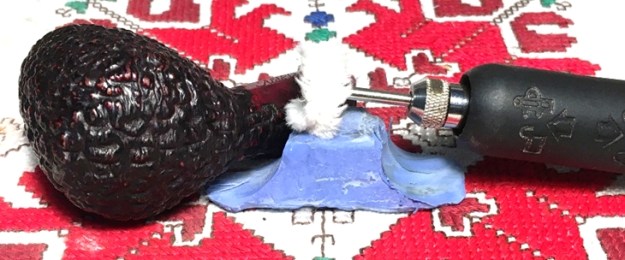
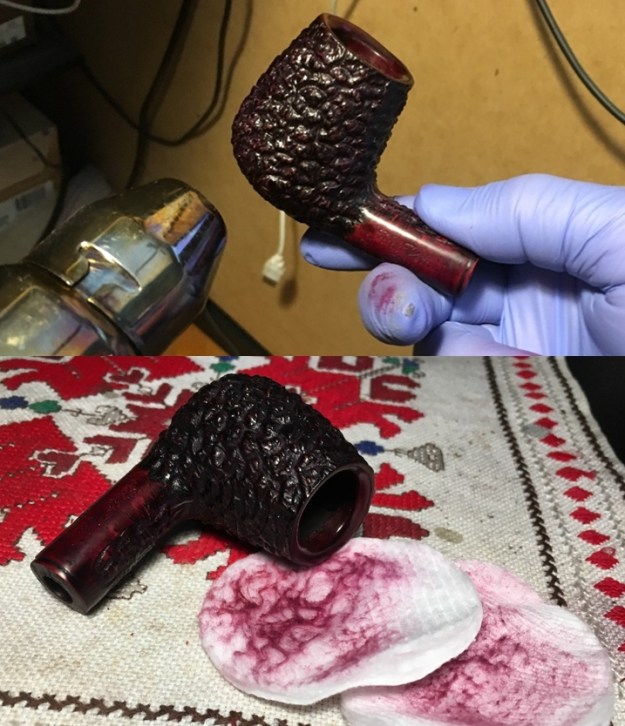
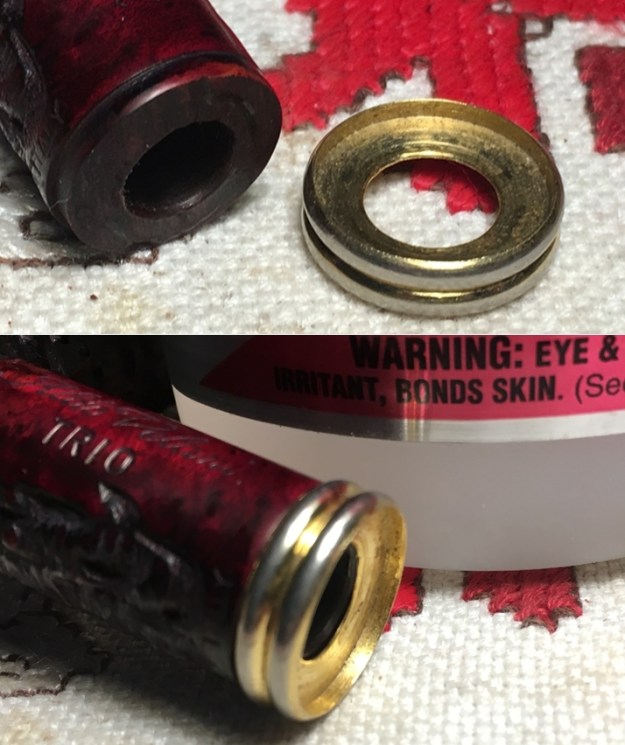
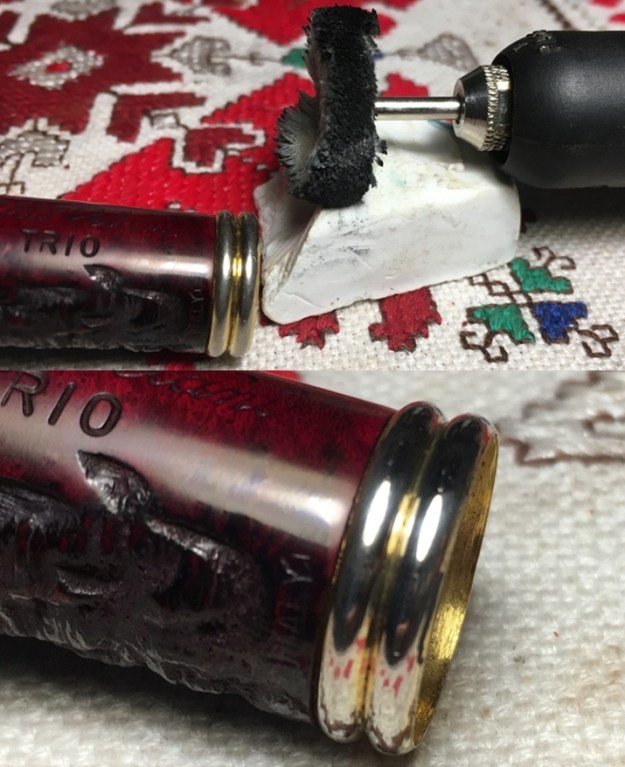
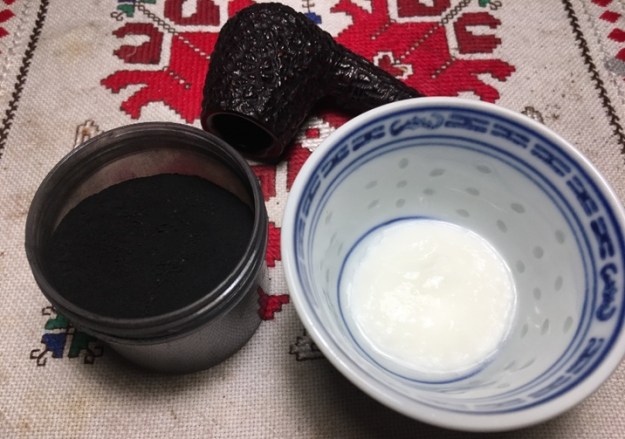
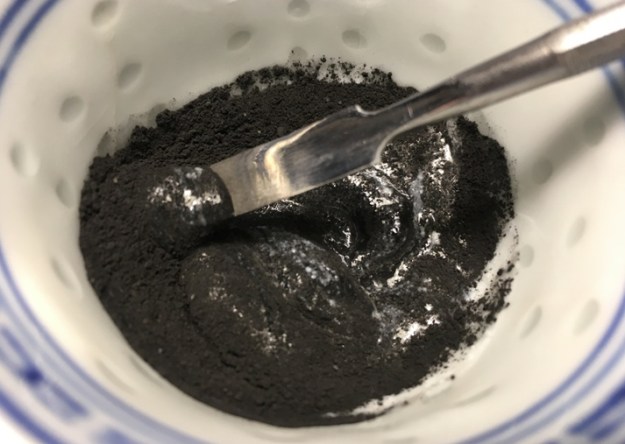
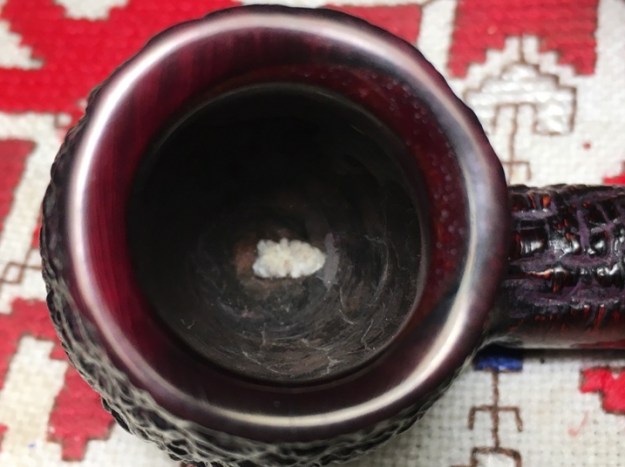
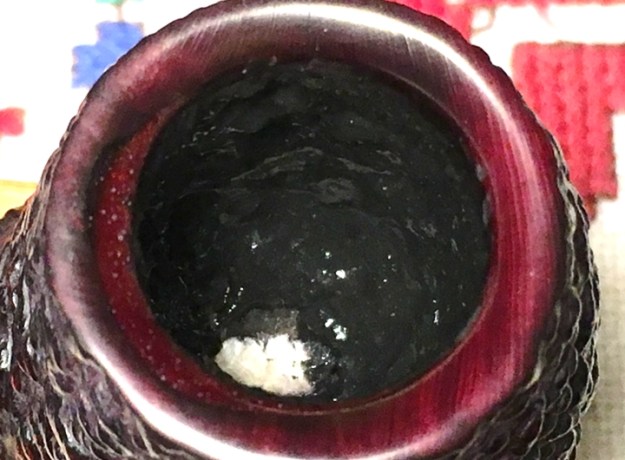
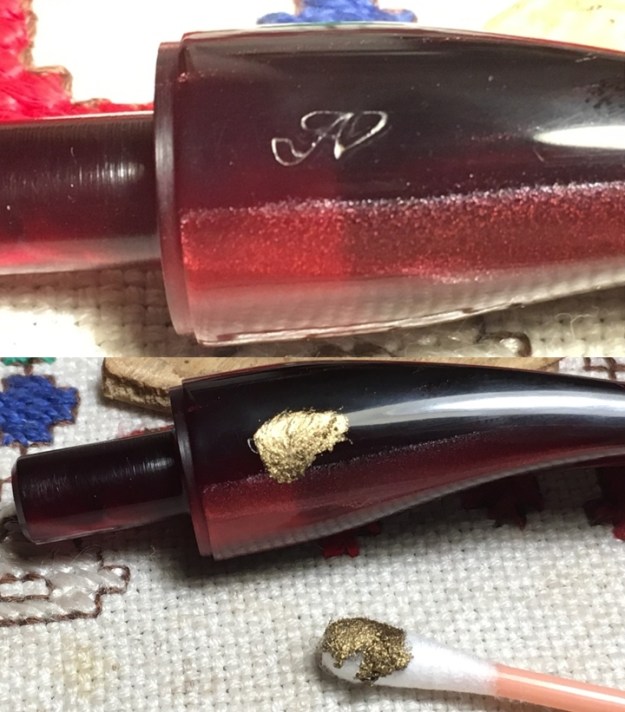
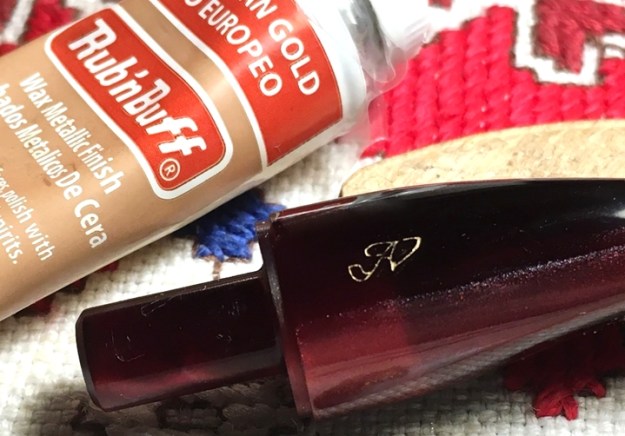
Oh my.  This Barontini Aldo Velani Trio Rusticated Volcano is a classy pipe – I would call it a ‘dinner pipe’.  It requires a more upscale dress code!  This pipe required a lot of work – a repaired stem bit and button, a rim rebuild and a restoration of the damaged chamber.  What a difference!  The rustication is distinctive, and the Volcano shape is enhanced by the craggy rise of the bowl tightening into the summit of the smooth briar rim contrast.  Transitioning to the stem the band adds to the class and the acrylic stem is simply on fire – it’s alive and the Oxblood hue of the briar is… did I say ‘classy’ already?  This Aldo Velani Trio was commissioned by Stephen and he has the first opportunity to claim him from The Pipe Steward Store.  This pipe benefits the Daughters of Bulgaria – women and girls who have been trafficked and sexually exploited. Thanks for joining me!
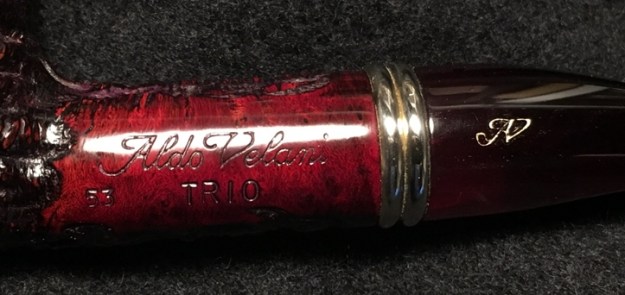
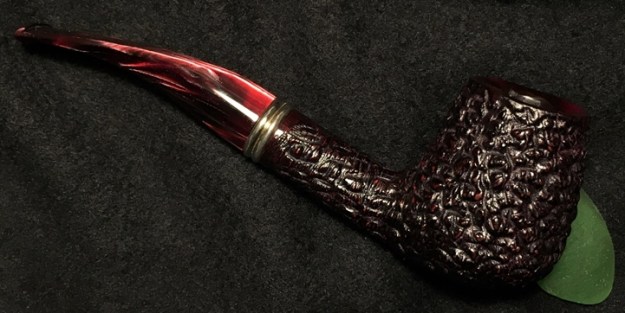
 

Breathing Life Into a W.O. Larsen Handmade Select Canadian/Brandy


Blog by Steve Laug

The next pipe in the queue is from a fellow in Florida who picks up some pipes for Jeff and me. It was one of several that he found and sent to us. It is a well-made W.O. Larsen Select, Brandy shaped Canadian. The entire pipe had some beautiful cross grain on the front and rear of the bowl and the top and underside of the shank. It had some great birdseye grain on both sides of the bowl and shank. The bowl has a Brandy snifter shaped bowl and a long, oval shank that defines the Canadian shape. The pipe has a rich medium brown finish that really makes the grain on the pipe stand out. The carver at Larsen did a great job utilizing the block of briar to maximize the grain. The pipe is stamped on the underside of the shank. It reads W.O. Larsen over Handmade over Made in Denmark. On the topside of the shank it is stamped SELECT. The stamping is horizontal on the end of the shank on both sides next to the stem/shank junction. The stem is short, tapered vulcanite and has no marking or stamping on it. This is a beautiful example of the work coming from W.O. Larsen.

Jeff took some photos of the pipe when he received them to show the general condition of the pipe before he started his cleanup work. The pipe was very dirty and well used. There was a thick cake in the bowl and a thick coat of lava overflowing onto the rim top. It was hard to know if the edges of the bowl were damaged or not because of the cake and lava. The exterior of the briar was dirty with grease and oils from being held. The vulcanite stem is dirty and had deep tooth marks on both sides of the stem at the button edge and some wear on the button edge itself. The photos below tell the story and give a glimpse of this beauty. Jeff took photos of the bowl and rim to capture the condition of the pipe before he started his cleanup work. There was a thick coat of lava on the rim and the cake in the bowl. It shows the mess this pipe was in when we received it. The thick lava overflow on the rim top made it hard to know what the inner edges of the bowl looked like. The outer edge appeared to have deep gouge on the right side of the rim top. I have circled it in red to identify the issue. There is also a general accumulation of grease and grime ground into the finish on the rest of the bowl and shank. He also took a photo of the right and underside of the bowl and shank to show the interesting grain around the bowl and shank. The finish is very dirty but the grain is visible in the photos.Jeff took photos of the stamping on the top and underside of the shank. It reads as noted above and is clear and legible. The next two photos show the stem surface. They show the tooth marks and chatter on both sides near the button. There are also some marks on the sharp edge of the button. The stem is dirty and is covered in scratches.I wanted to refresh my memory about the pipes coming out of Ole Larsen’s Copenhagen tobacco shop. I knew that many famous Danish Carvers started their careers carving for the shop. I turned first to the pipephil wesite to get and over view of the brand. Here is the link (http://www.pipephil.eu/logos/en/logo-l2.html). I did a screen capture of the section on the site showing a summary of the brand and the typical stamping. I then turned to Pipedia to do a bit more reading about the brand and the various lines making it up. Here is the link (https://pipedia.org/wiki/W.%C3%98._Larsen). The link took me to some pages on the finepipes.com website. Here is the link to the summary of the history of the brand. I quote it in full. I have marked the pertinent section with bold font to mark out the section on the SELECT series (https://www.finepipes.com/pipes/danish/w-o-larsen?sort=20a&page=2&zenid=562ff4b9d62f4f612d0f6ee60cab1224).

W.O. Larsen was one of the most famous tobacco shops in Copenhagen, with a beautiful store located on Copenhagen’s famous “Walking Street.” During the flowering of the Danish pipe in the ’60’s, they first began retailing pipes by such carvers as Sixten Ivarsson, Sven Knudsen, Poul Rasmussen, and Brakner. Urged on by his store manager Sven Bang, the owner, Ole Larsen, decided to begin making pipes in the basement of the shop. He first hired Sven Knudsen as the pipe maker, who soon passed the job to his protégé Hans “Former” Nielsen. Larsen’s fortunes rose along with the rest of the Danish pipe business, and Former was soon managing a group of carvers in the old Larsen cigar factory. Among these were Teddy Knudsen, Tonni Nielsen, Jess Chonowitch, Peter Hedegaard and others, who were responsible for the Select and Straight Grain series before they branched out on their own. After Former left to start Bentley pipes in Switzerland, his duties were taken over by Soren Refbjerg Rasmussen, while the straight grains were made by Teddy’s student Benni Jorgenson. As Ole’s health began to fail, the reins were taken over by his son Nils. Nils became convinced that the way for Larsen to prosper was by entering the low-end market, and acquired the Georg Jensen pipe factory to make an array of less expensive pipes. This turned out to be a fatal error, and Larsen was recently sold to Stanwell, who continue to produce so-called “Larsen” pipes in their huge factory. Thus ended an important part of Danish pipe history.

Also included on the finepipes site was a pipe that was very similar to the one on my worktable. It was similarly shaped and was called a Canadian/Brandy. The most important difference is the Cumberland stem on the one in the photo below. Here is the link to the pipe (https://www.finepipes.com/index.php?main_page=product_info&cPath=5_61&products_id=10289&zenid=562ff4b9d62f4f612d0f6ee60cab1224).From the above information I knew that the pipe came from the 1960s and was carved by some of the Danish greats who were responsible for the SELECT and STRAIGHT GRAIN series. Names like Teddy Knudsen, Tonni Nielsen, Jess Chonowitch, Peter Hedegaard and others are some of those associated with the series pipe that I am working on. In many ways it is a high grade pipe made by a great maker but a pipe that I may never know the actual carver who crafted it in WO Larsen’s studio.

Armed with that information I turned to the pipe on my table. Jeff had reamed the bowl with a PipNet pipe reamer and followed up with a Savinelli Fitsall pipe knife to remove the cake. He scrubbed out the mortise and the airway in the shank and the stem with alcohol, cotton swabs and pipe cleaners. He scrubbed the exterior of the bowl, rim, shank and stem with a tooth brush and Murphy’s Oil Soap to remove the oils and tars on the rim and the grime on the finish of the bowl. He rinsed it under running water. He dried it off with a soft cloth. He was able to remove the lava build up on the rim top and you could see the overall condition of the bowl top and edges of the rim. He scrubbed the stem with soap to remove the grime on the surface. I took photos of the pipe to show its condition before I started work on it. I took a close up photo of the rim top to show the darkening on the top and the deep gouge on the right side of the outer edge of the rim top. Jeff had done an amazing job cleaning off the lava buildup. The outer edge of the rim has some deep nicks on the front of the bowl. The inner edge of the bowl had some darkening and some wear on the left side. The vulcanite stem photos show the tooth marks and the wear on the button surface on both sides. I also decided to take photos of the stamping on both the top and underside of the shank to show its condition. I decided to start my work on the pipe by addressing the darkening and damage to the rim top and edges. I topped the bowl on a topping board with 220 grit sandpaper to remove the damage and minimize the outer and inner edge damage. I was able to remove much of the damage. To address the gouge in the rim top on the right side I filled it in with clear super glue and continued the topping until it was smooth. I cleaned up the inner edge with a folded piece of 220 grit sandpaper to minimize the damage to the edge.I polished the bowl sides and rim top with micromesh sanding pads. I wet sanded with 1500-2400 grit pads and dry sanded with 3200-12000 grit pads. I wiped the bowl and rim down with a damp cloth after each pad. As I polished it the sanded rim top began to shine and blend in with the rest of the briar. When I finished polishing the rim top I stained it with a Cherry stain pen to match the colour of the rest of the bowl. Once the stain had dried. I worked some Before & After Restoration Balm into the surface of the briar with my fingertips to clean, enliven and protect it. I let the balm sit for a little while and then buffed with a cotton cloth to raise the shine. The following photos show the bowl at this point in the restoration process. The bowl and the rim top look really good. The pipe looks very good with the rich finish on the bowl and rim. I am very happy with the results. I used a folded piece of 220 grit sandpaper to smooth out the damage to the stem and reshape the button. Once the surface was smooth I sanded out the scratch marks and started the polishing of the stem with a folded piece of 400 grit sandpaper. I wiped the stem down with Obsidian Oil and took the following photos.I polished the stem with micromesh sanding pads – wet sanding it with 1500-2400 grit pads and dry sanding it with 3200-12000 grit pads. I wiped the stem down with a damp cloth after each pad. I polished it with Before & After Pipe Stem Polish – Fine and Extra Fine. I wiped it down with a coat of Obsidian Oil and set it aside to dry. I put the stem back on the bowl and polished them both with Blue Diamond polish on the buffing wheel. I gave the bowl and stem multiple coats of carnauba wax. I buffed the pipe with a clean buffing pad to raise the shine. I hand buffed it with a microfiber cloth to deepen the shine. The pipe polished up pretty nicely. The grain on the natural brown briar that had darkened over time came alive with the buffing. The finish worked well with the polished black vulcanite stem. Have a look at it in the photos below. The dimensions are Length: 7 inches, Height: 2 1/4 inches, Outside diameter of the bowl: 1 3/8 inches, Chamber diameter: 3/4 of an inch. This beauty will soon be on the rebornpipes store. It would make a beautiful addition to somebody’s pipe rack. Thanks for walking through the restoration of this Danish take on the Canadian/Brandy shape from the 60s with me as it was a fun pipe to work on.