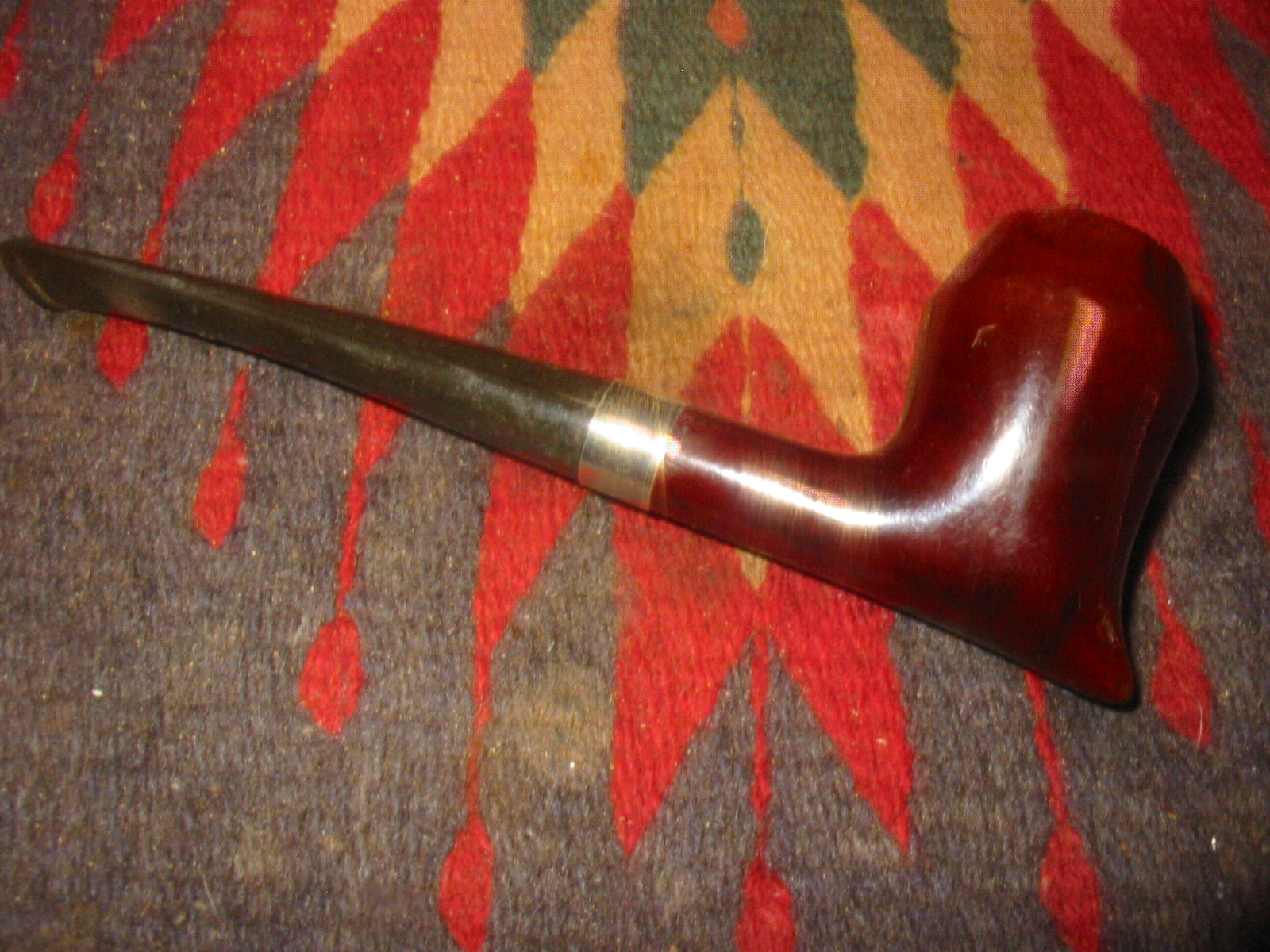
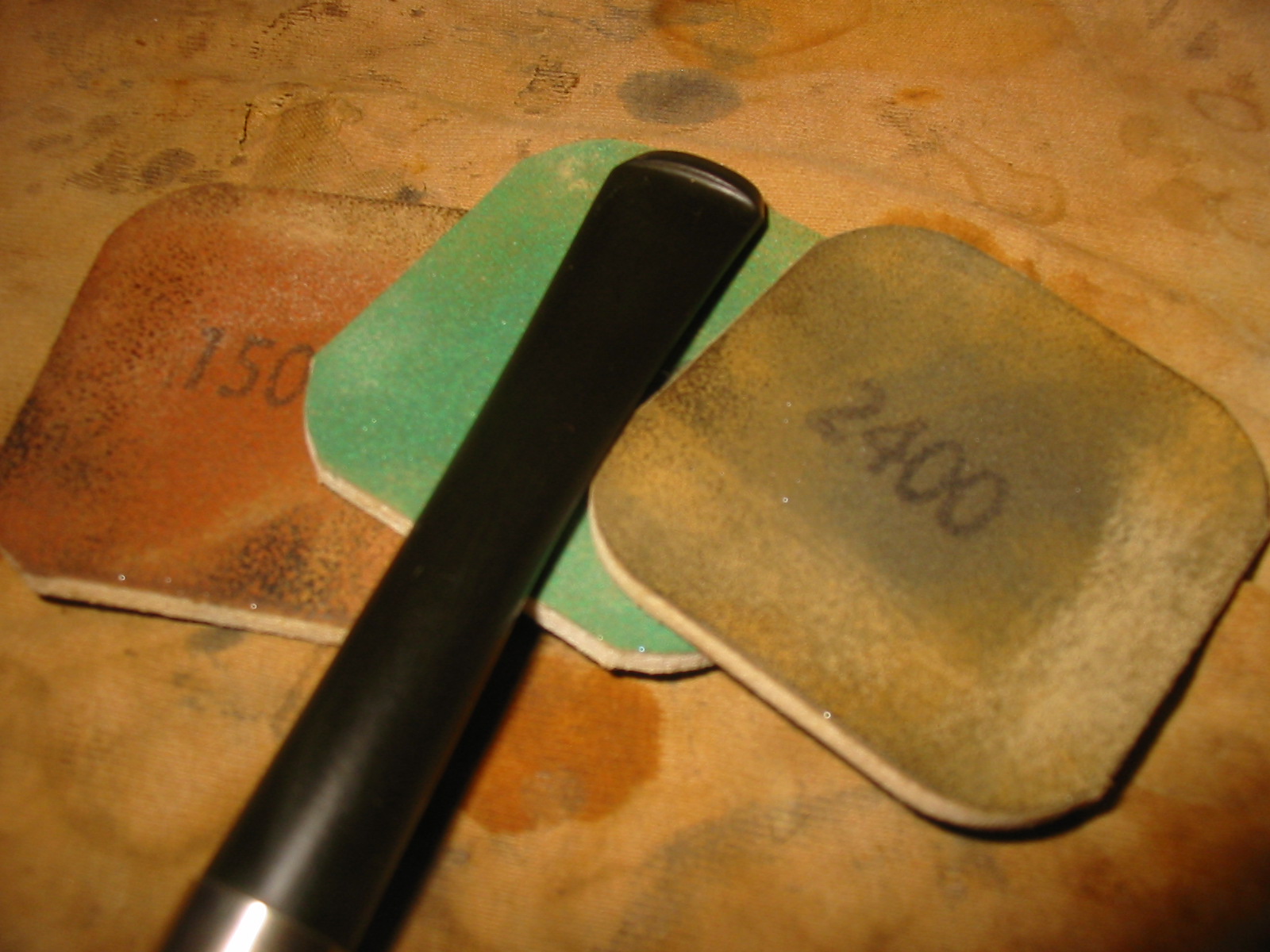
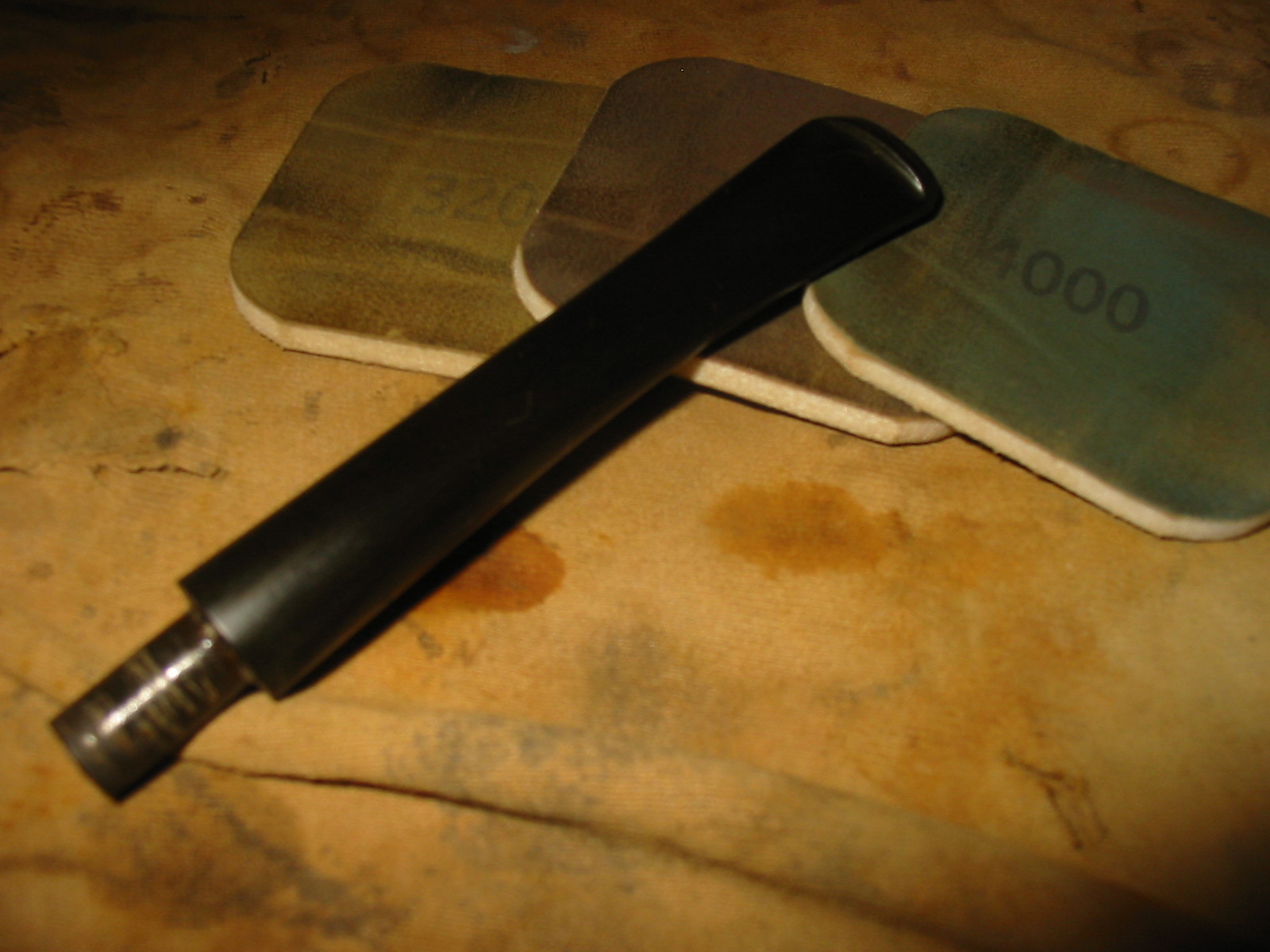
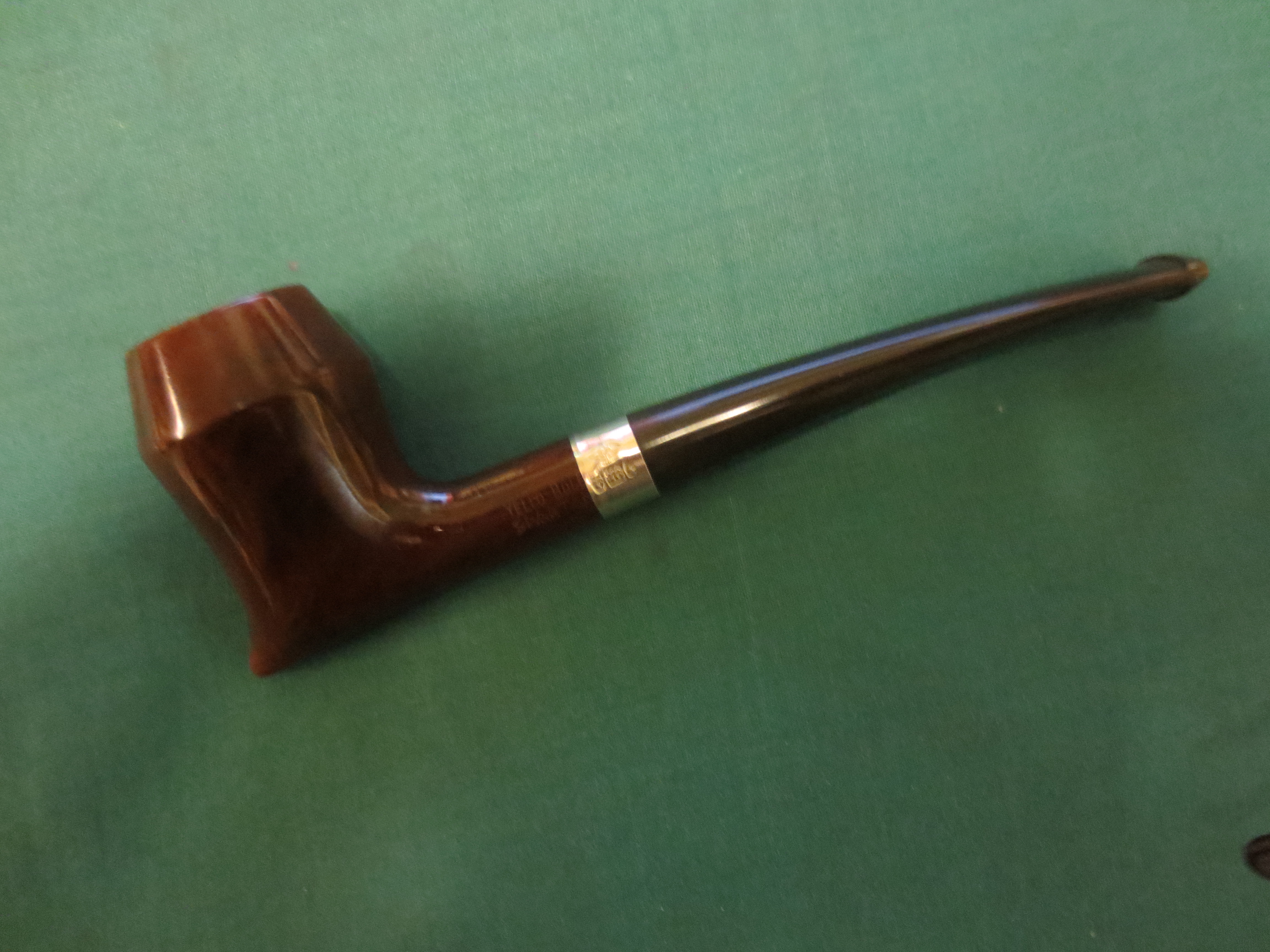
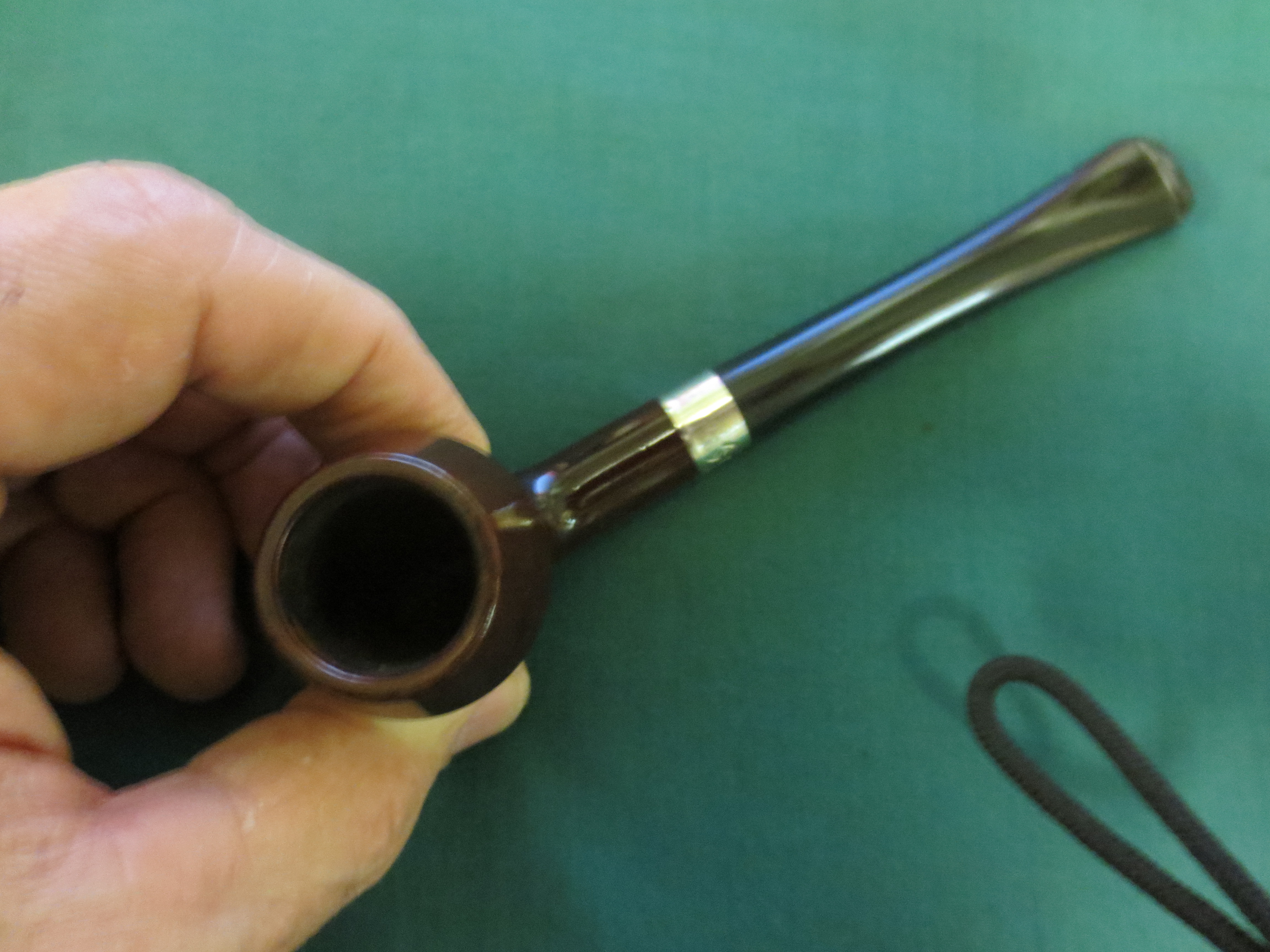
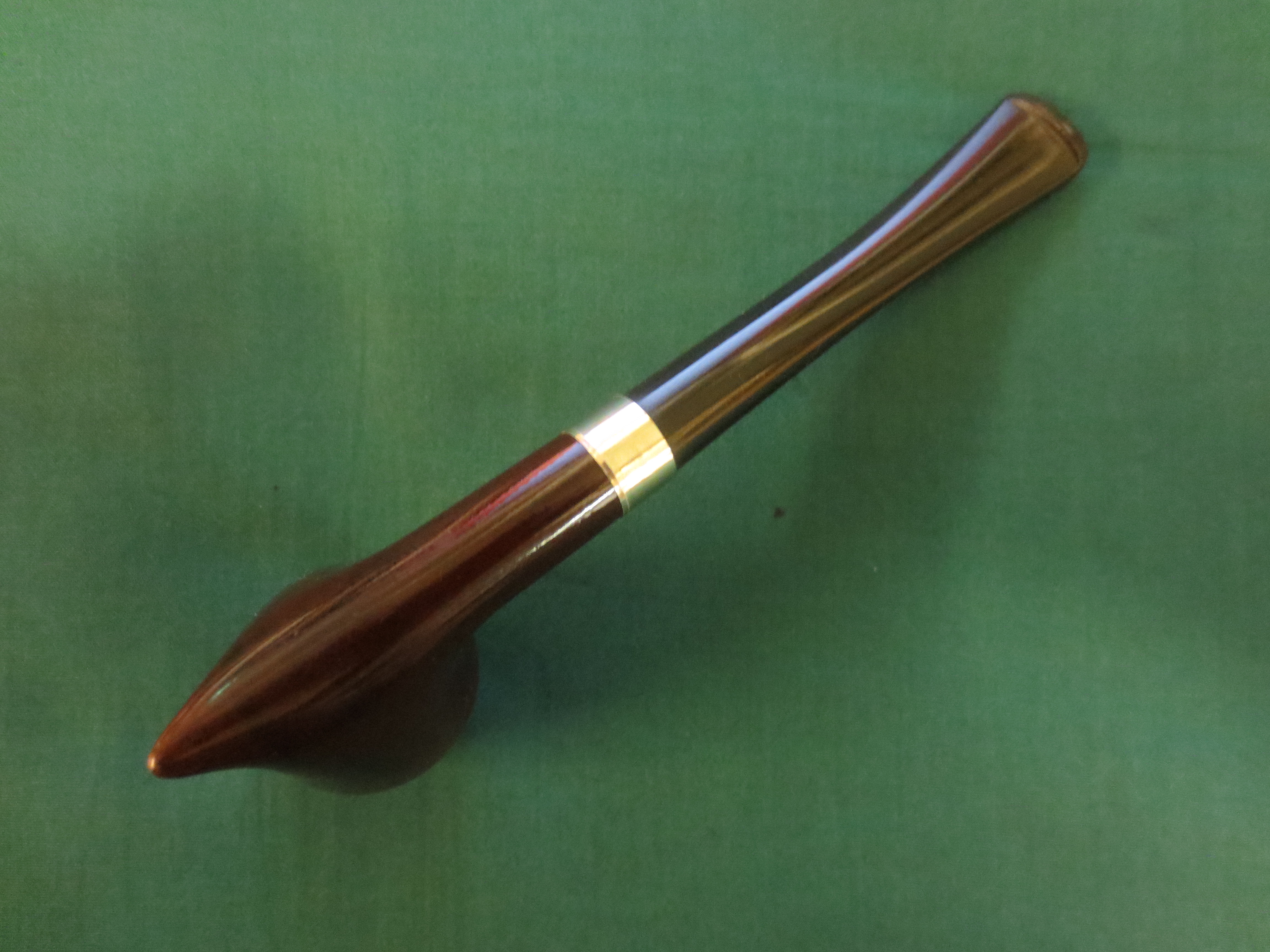
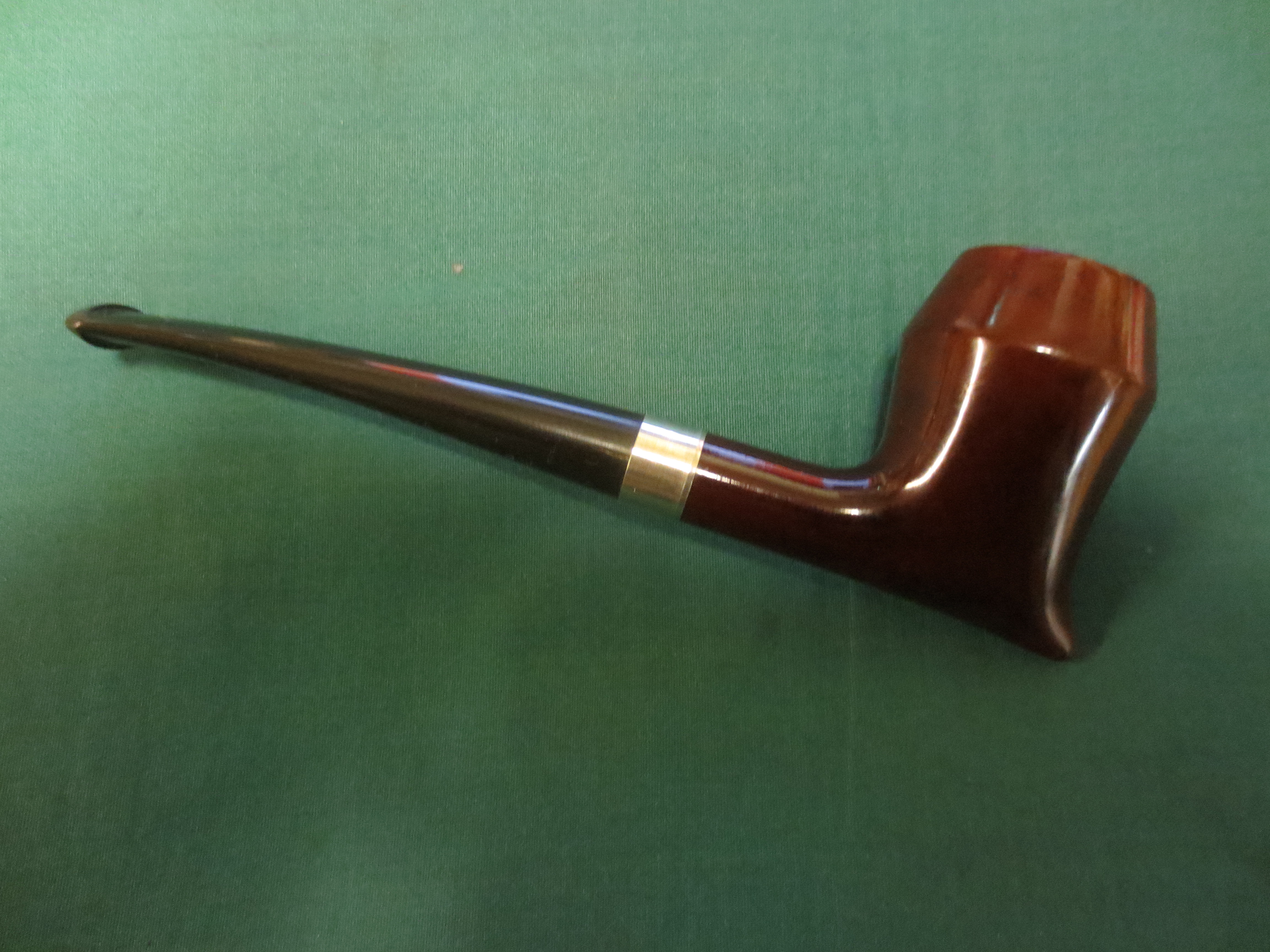
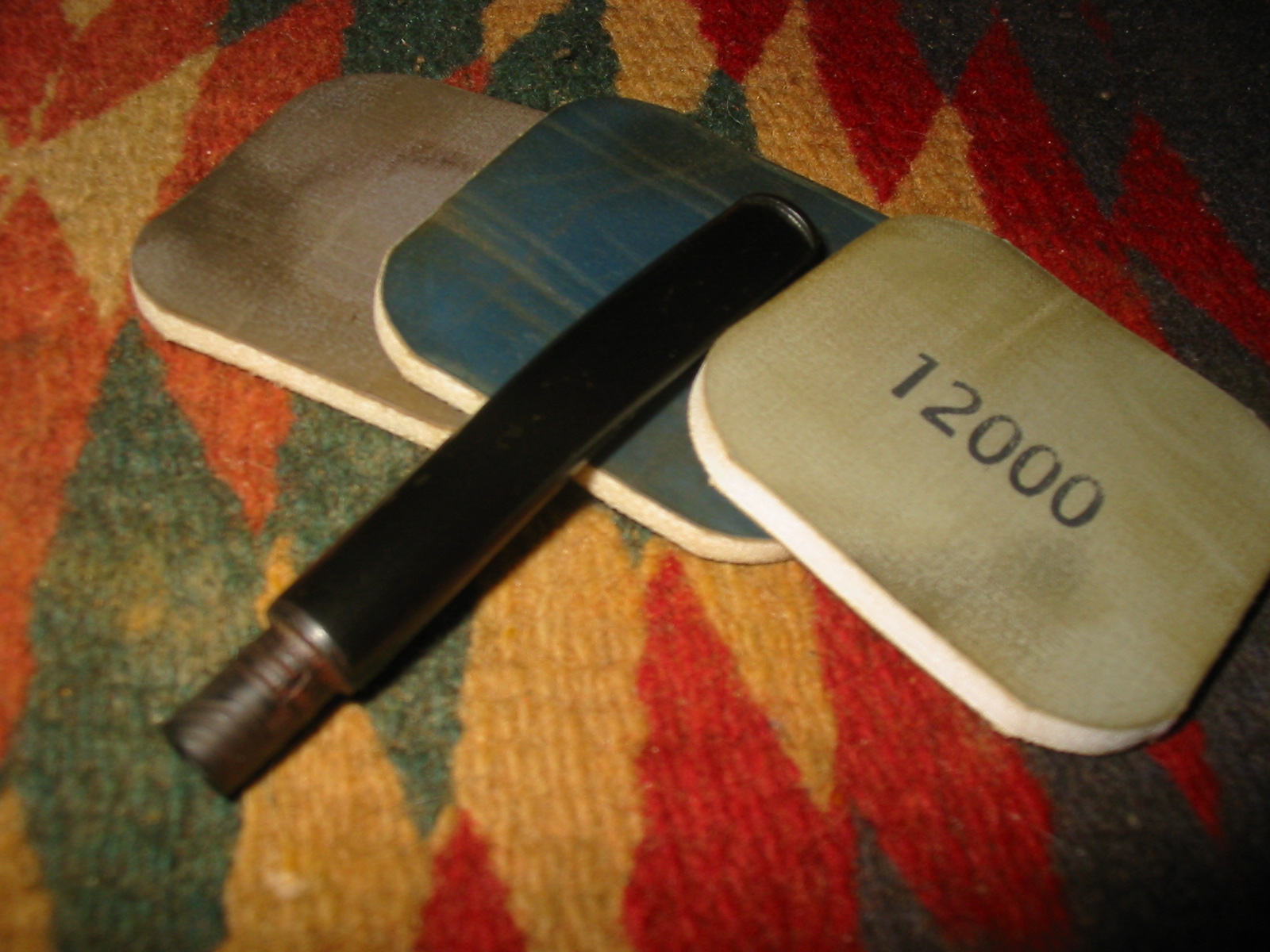
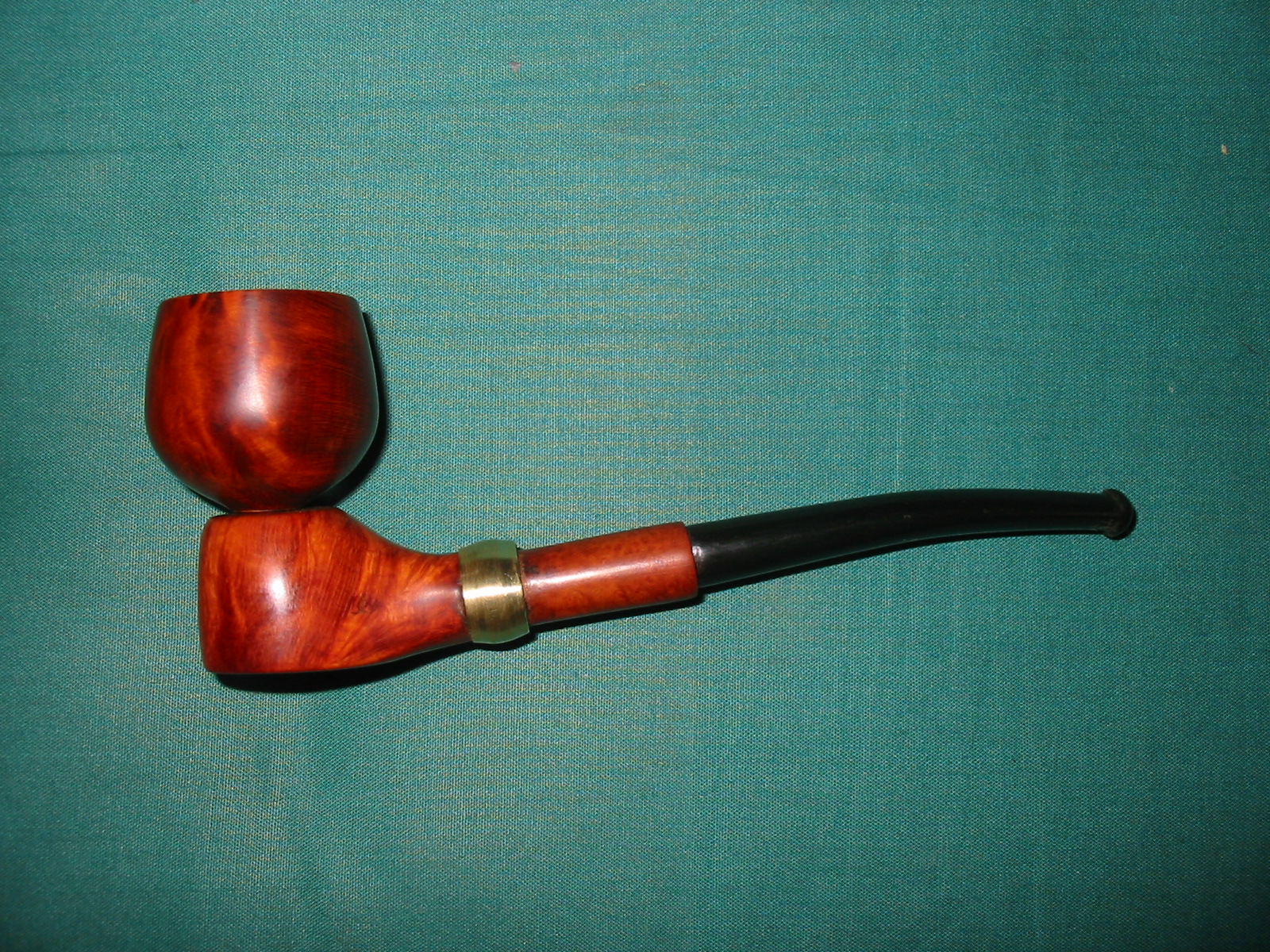
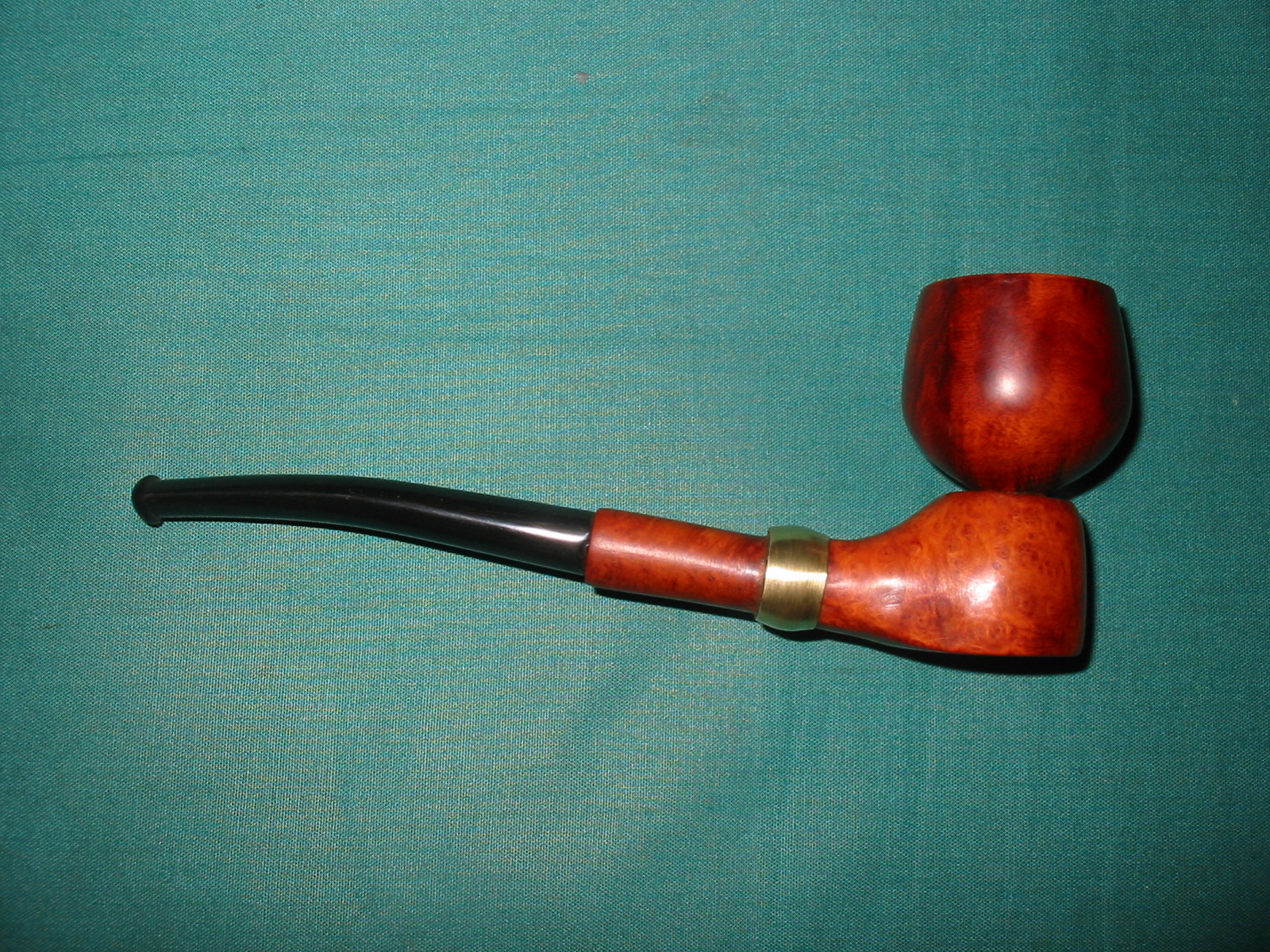
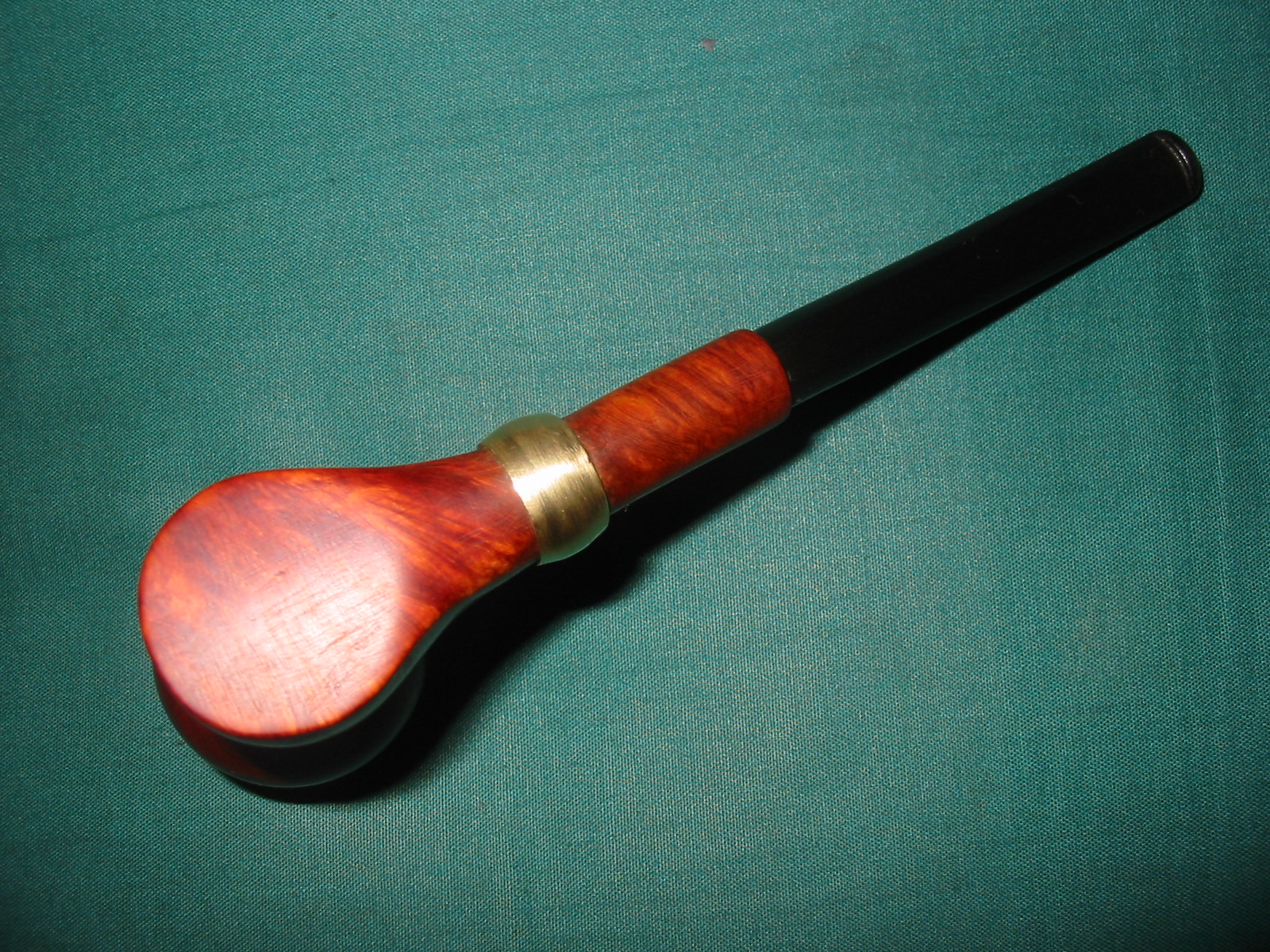
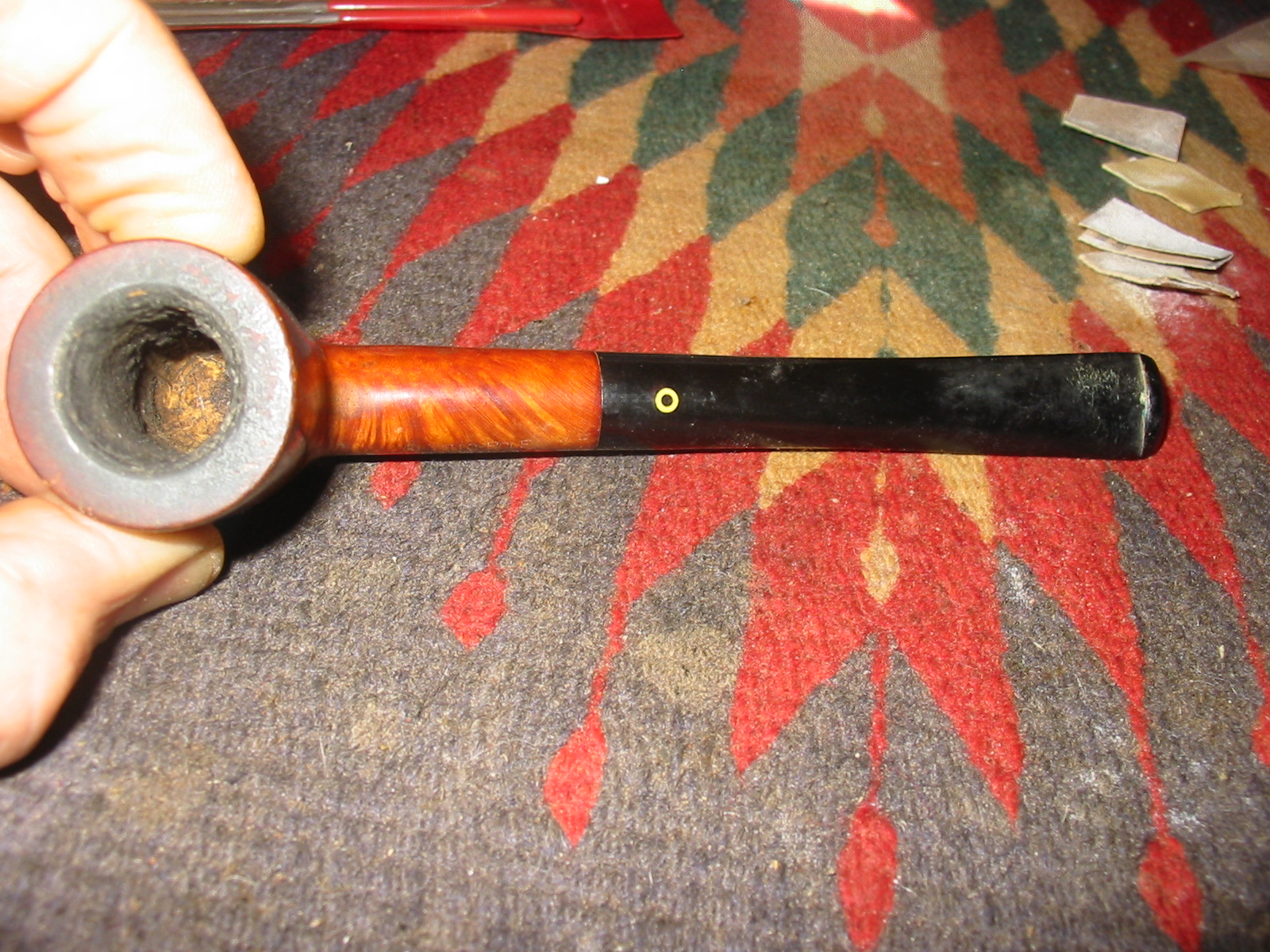
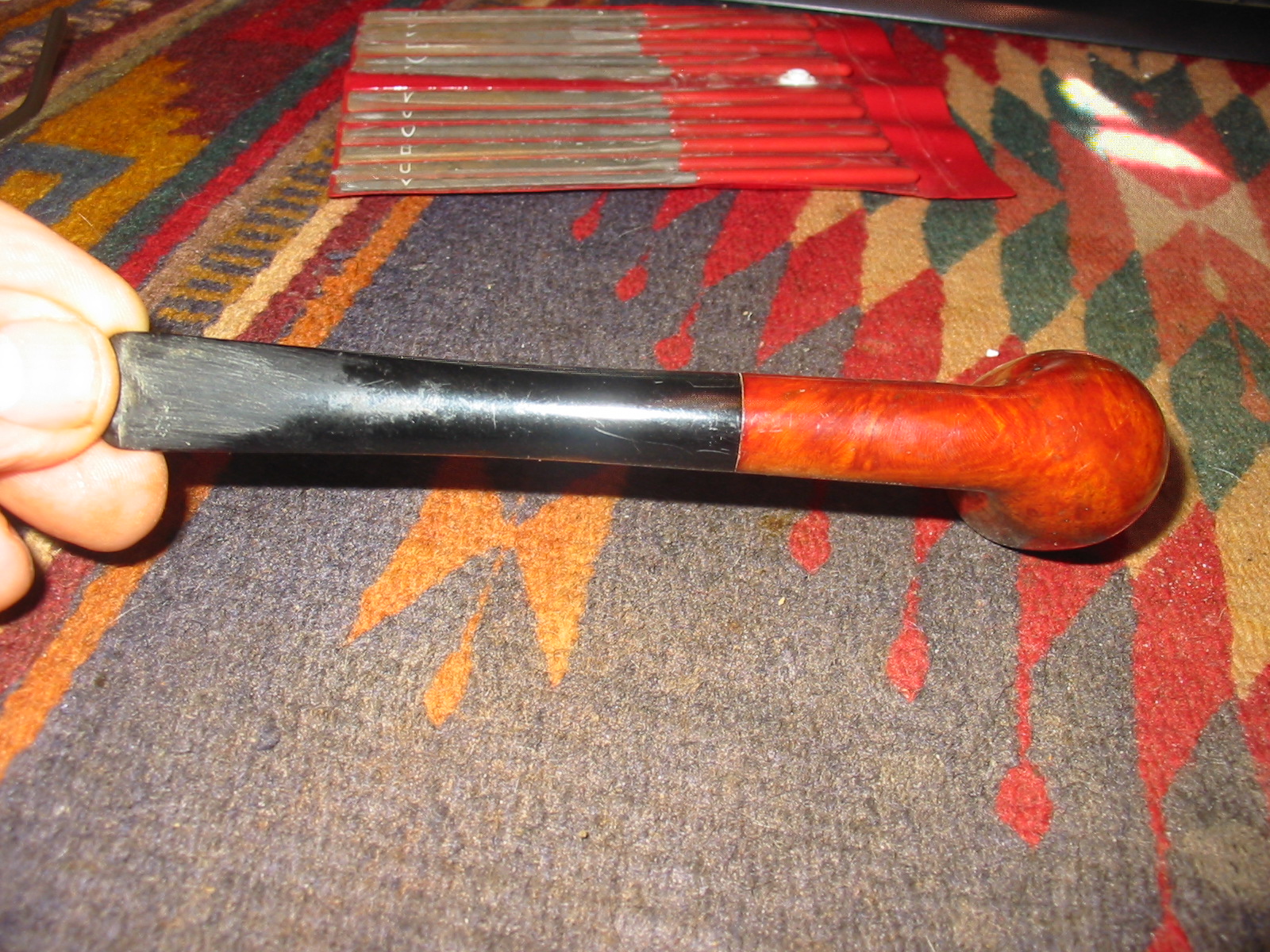
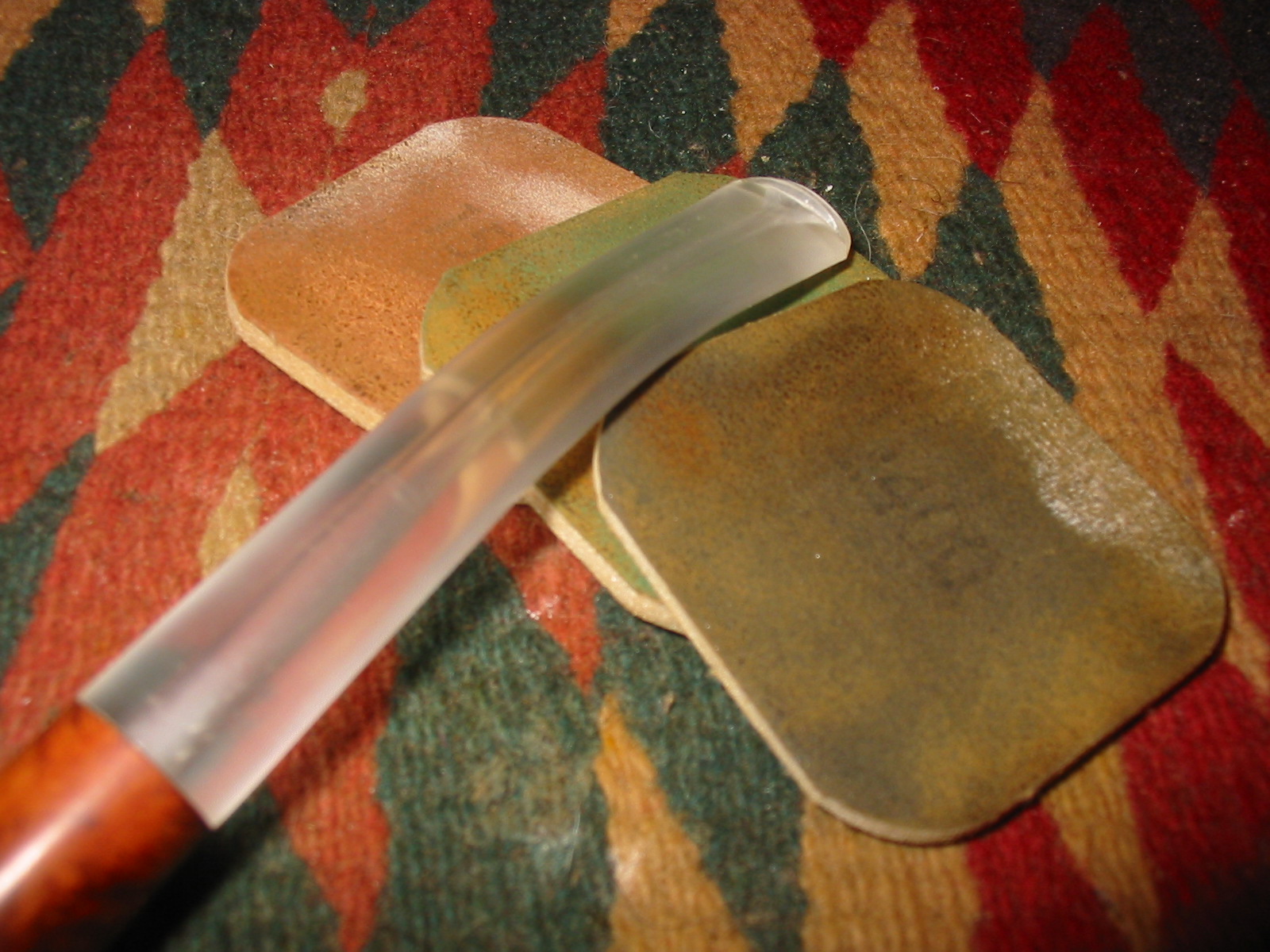
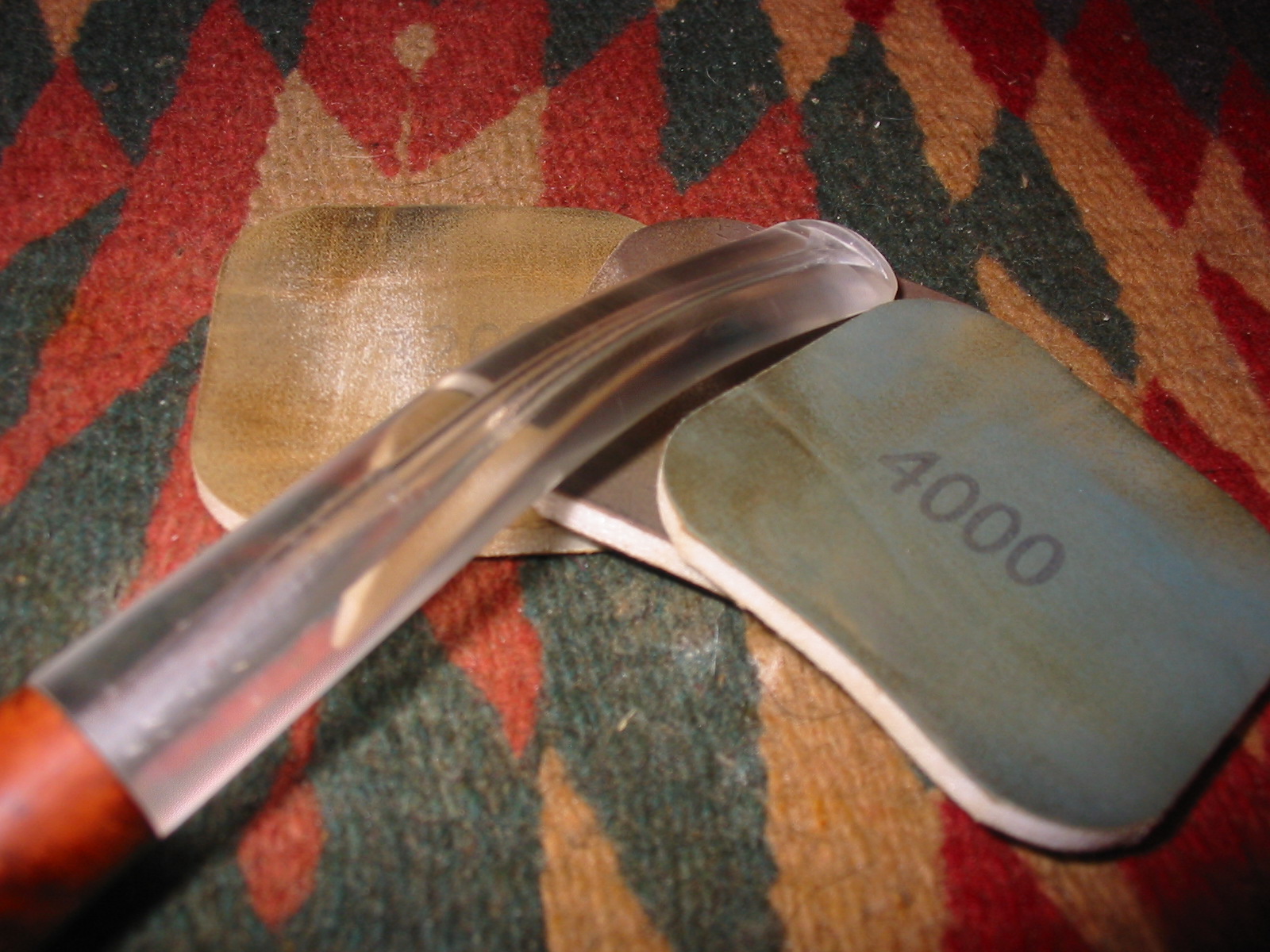
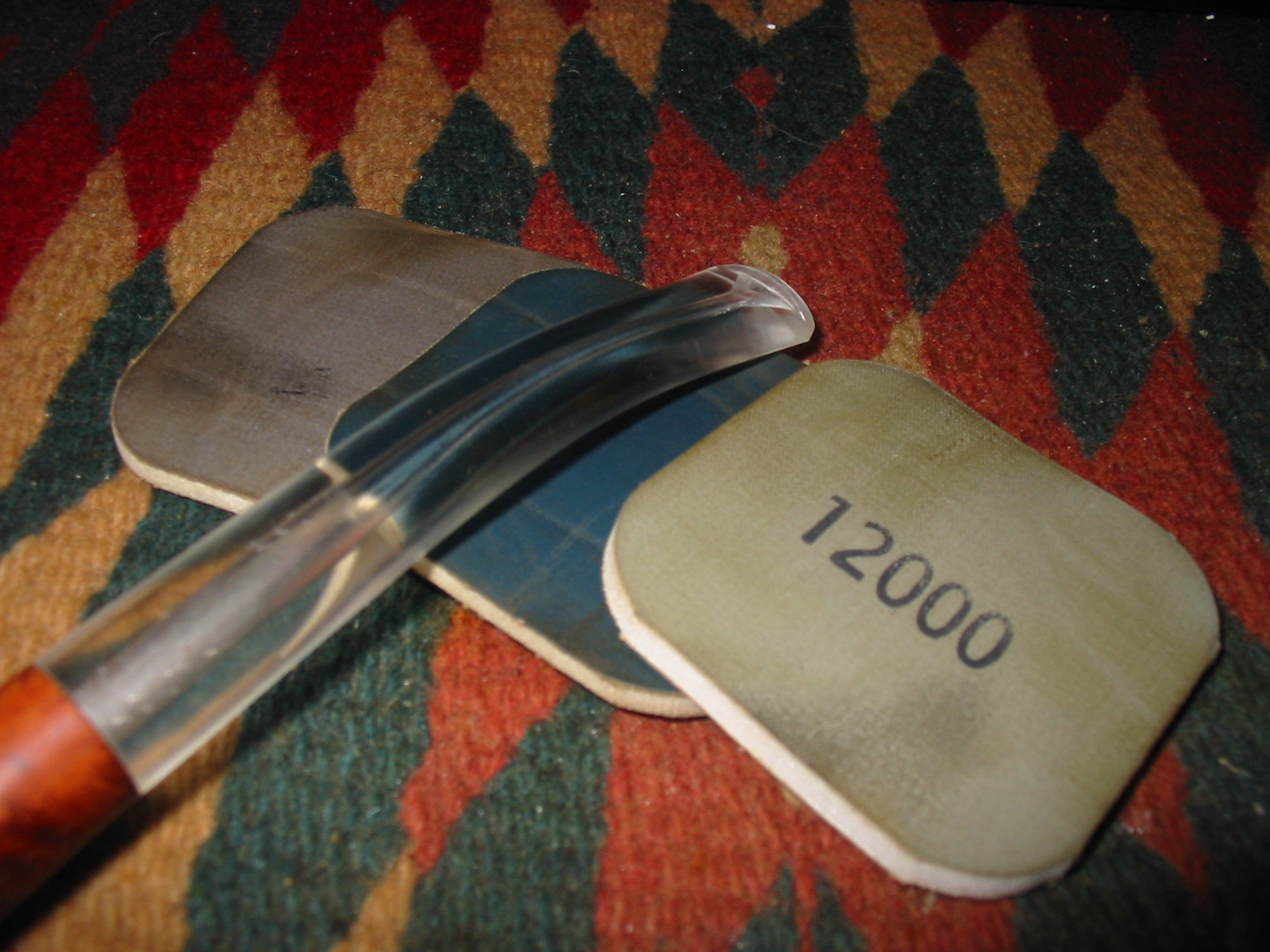
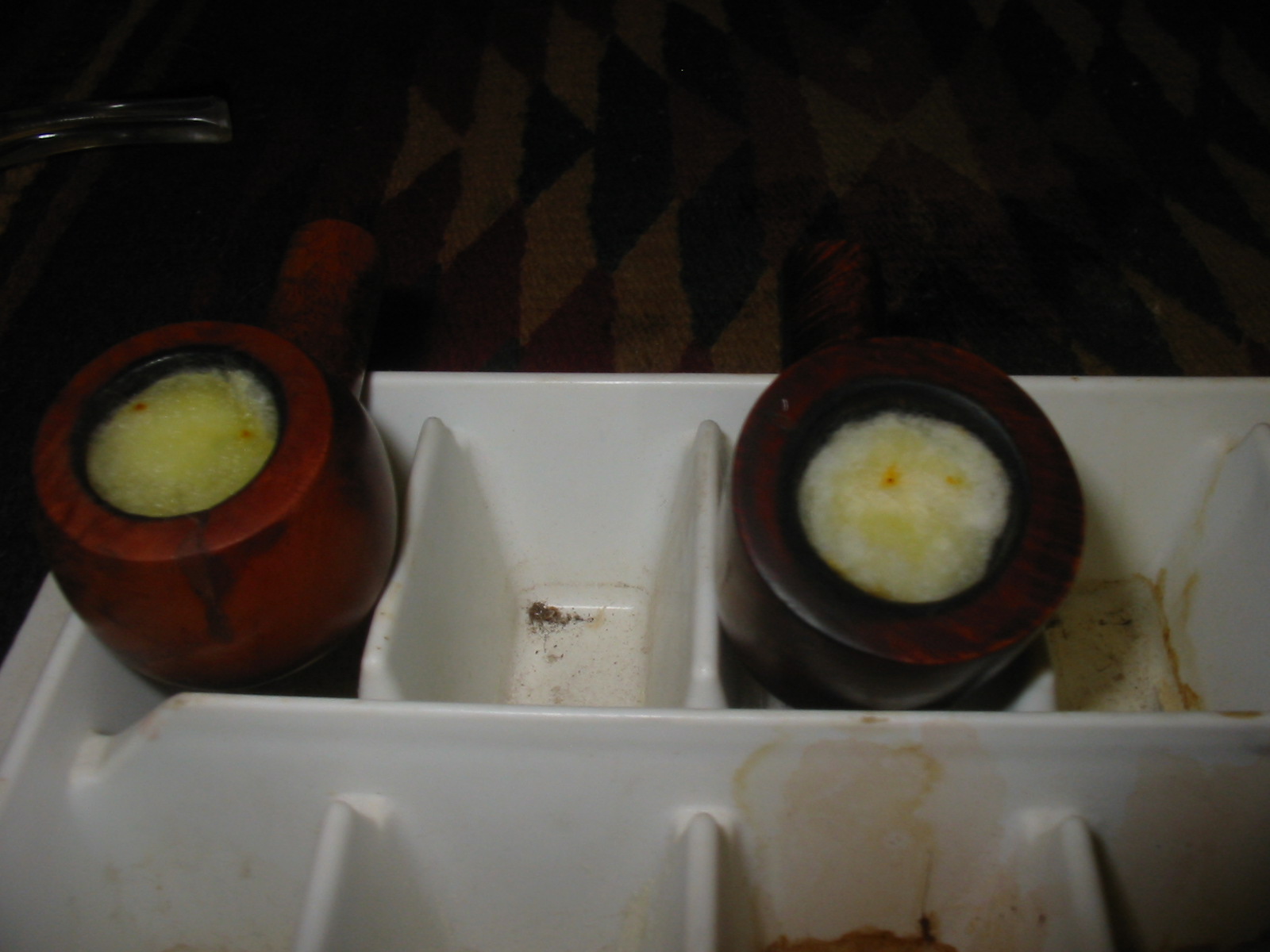
Tag Archives: stem work

Restoring an Old BBK Hunter Pipe


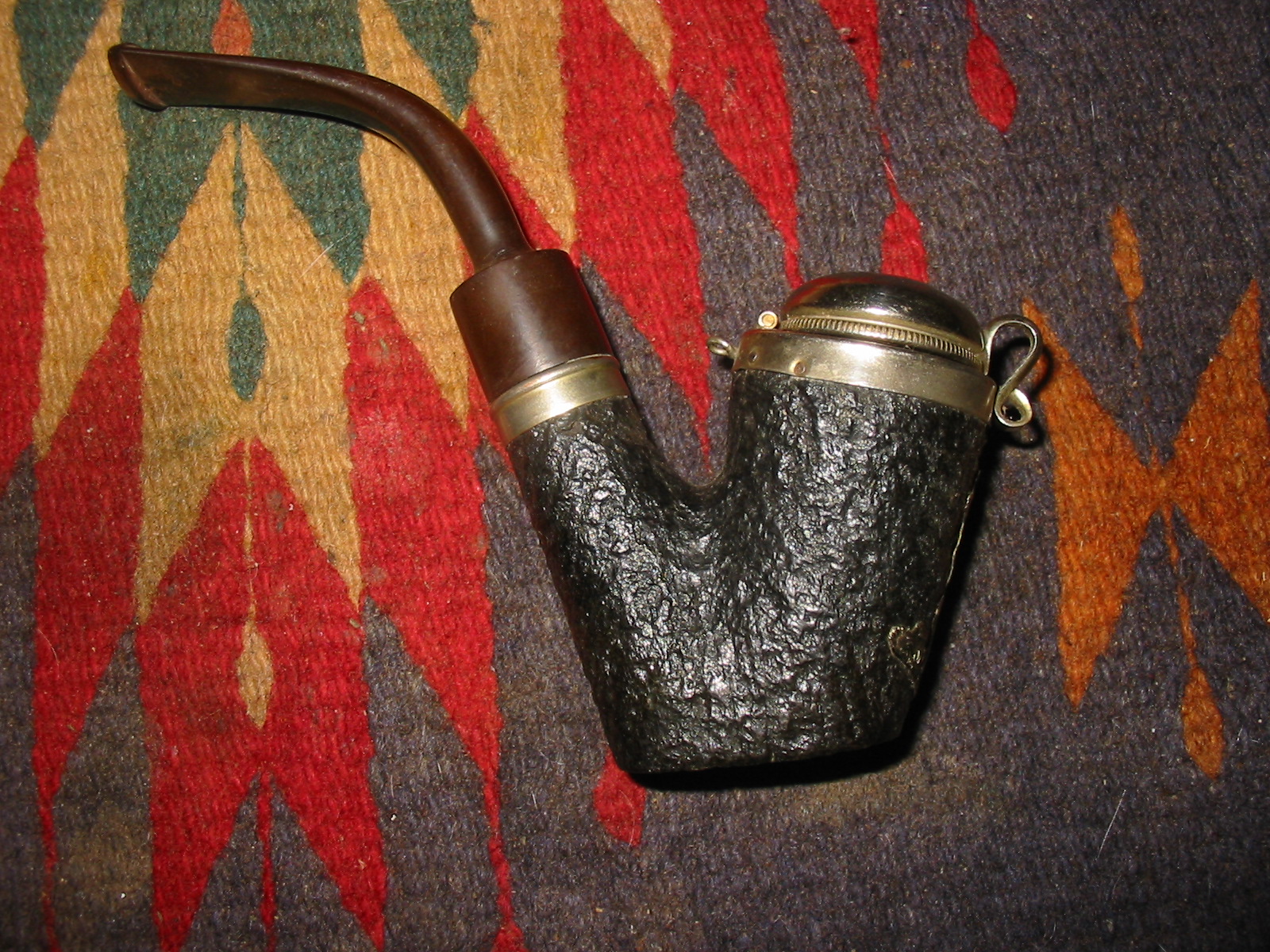
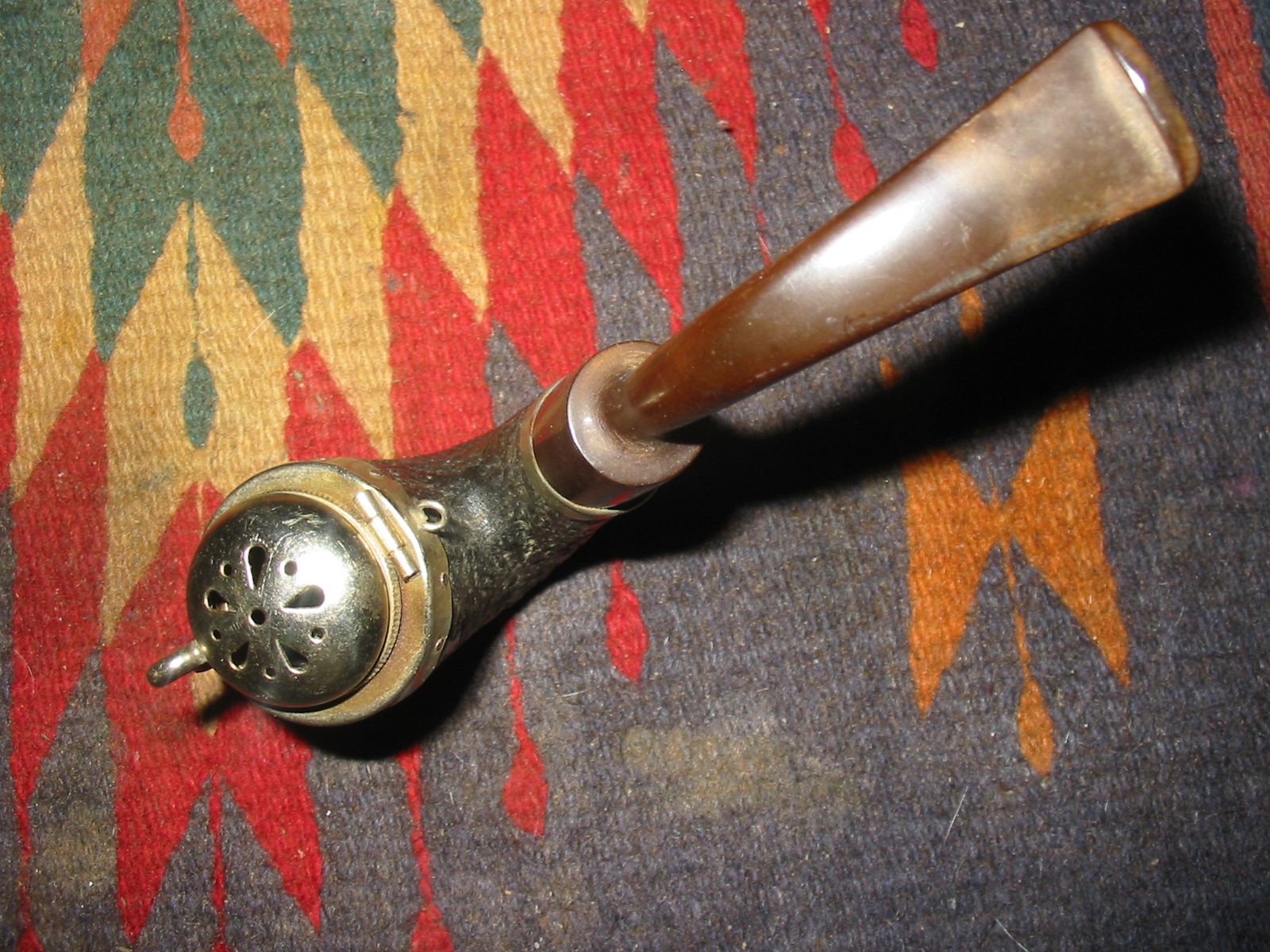
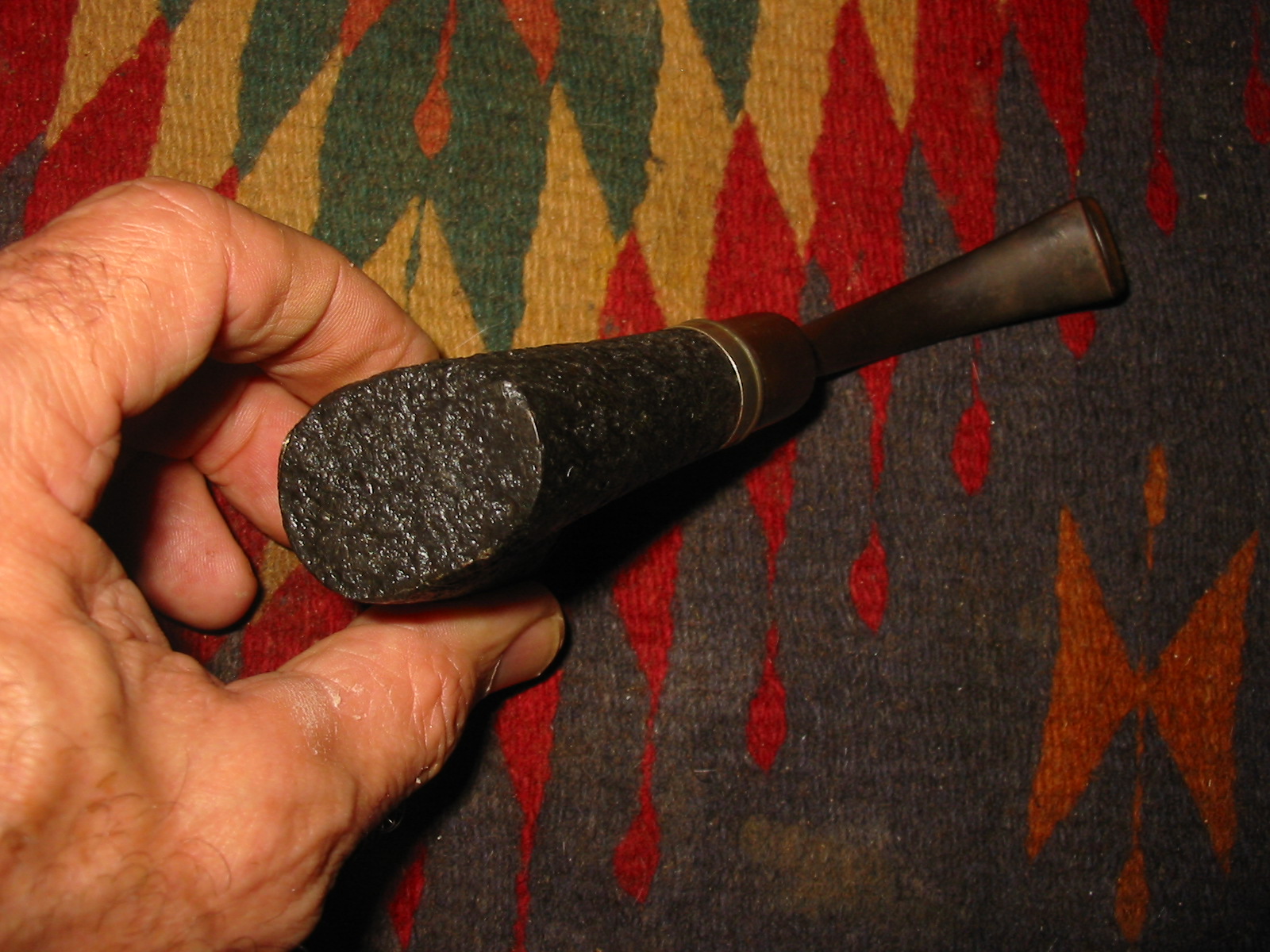
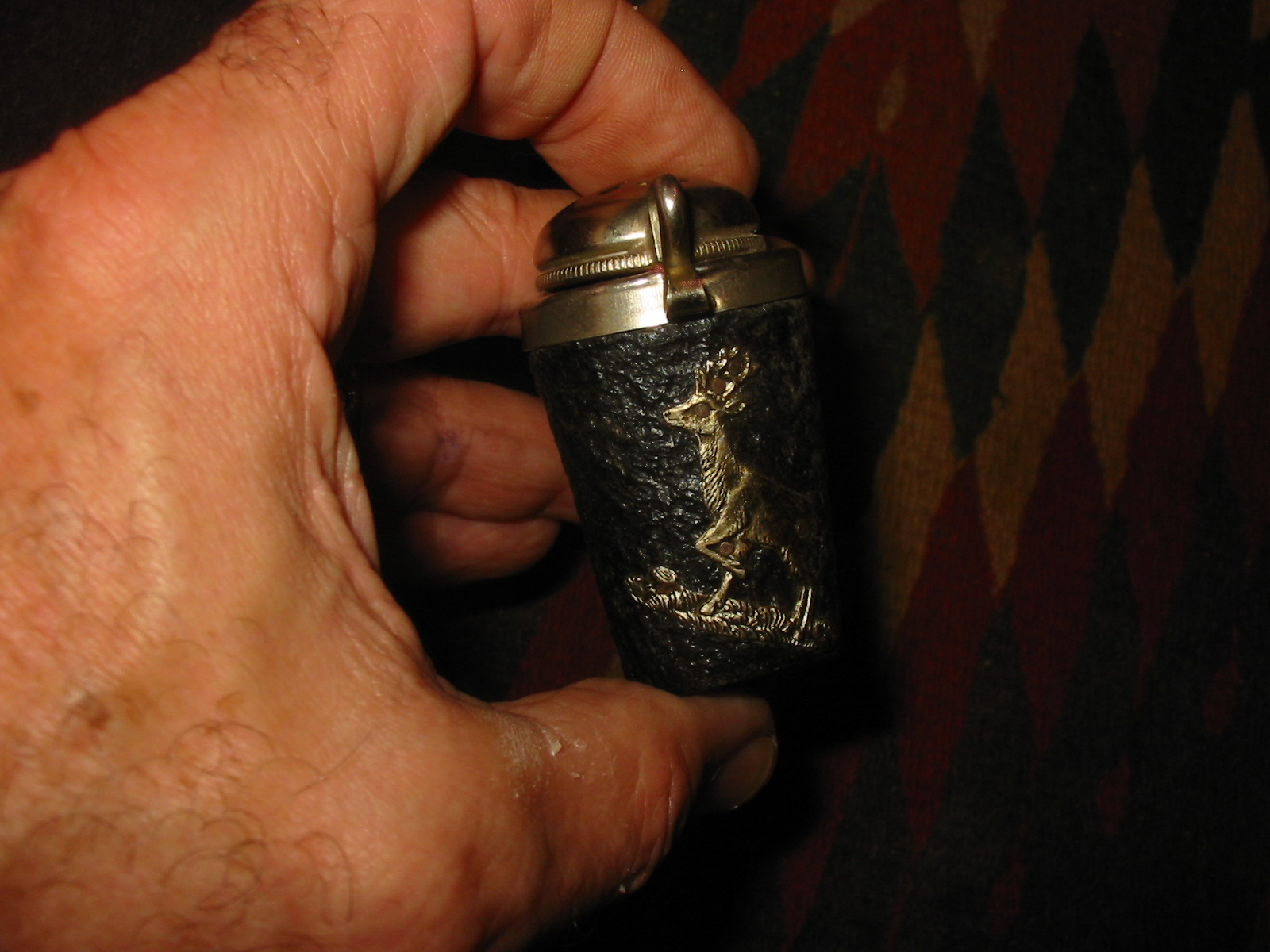
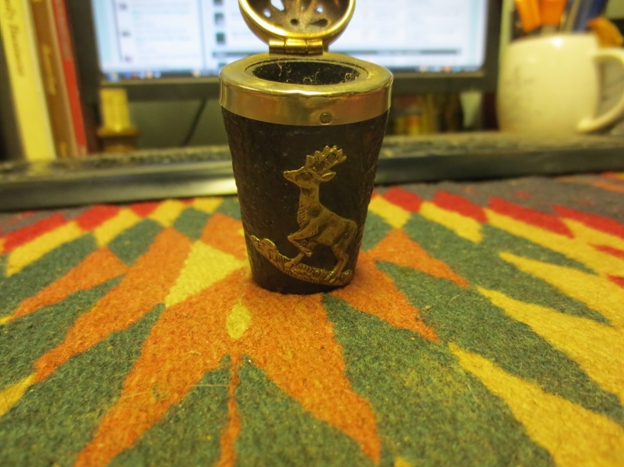
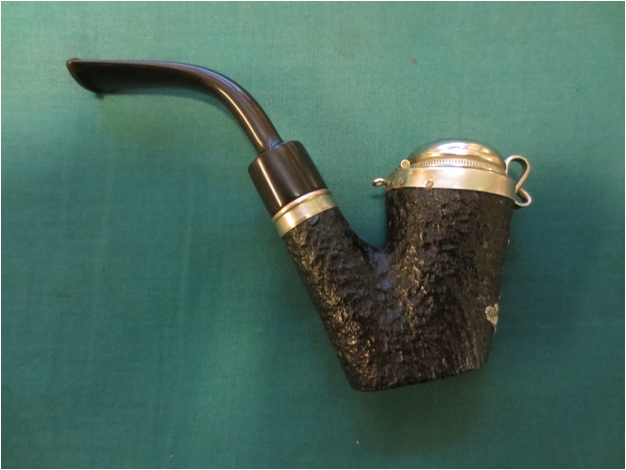
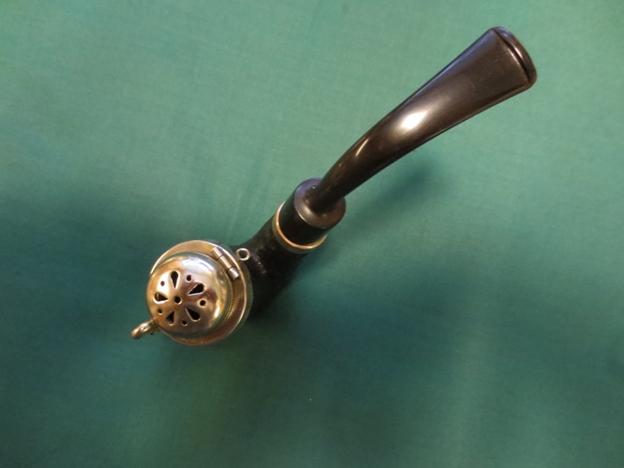
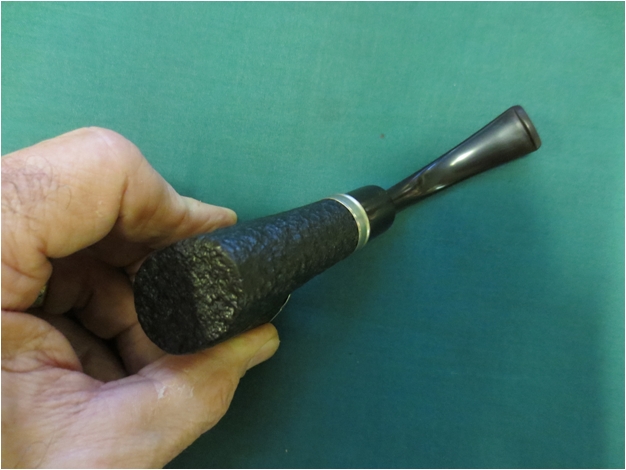
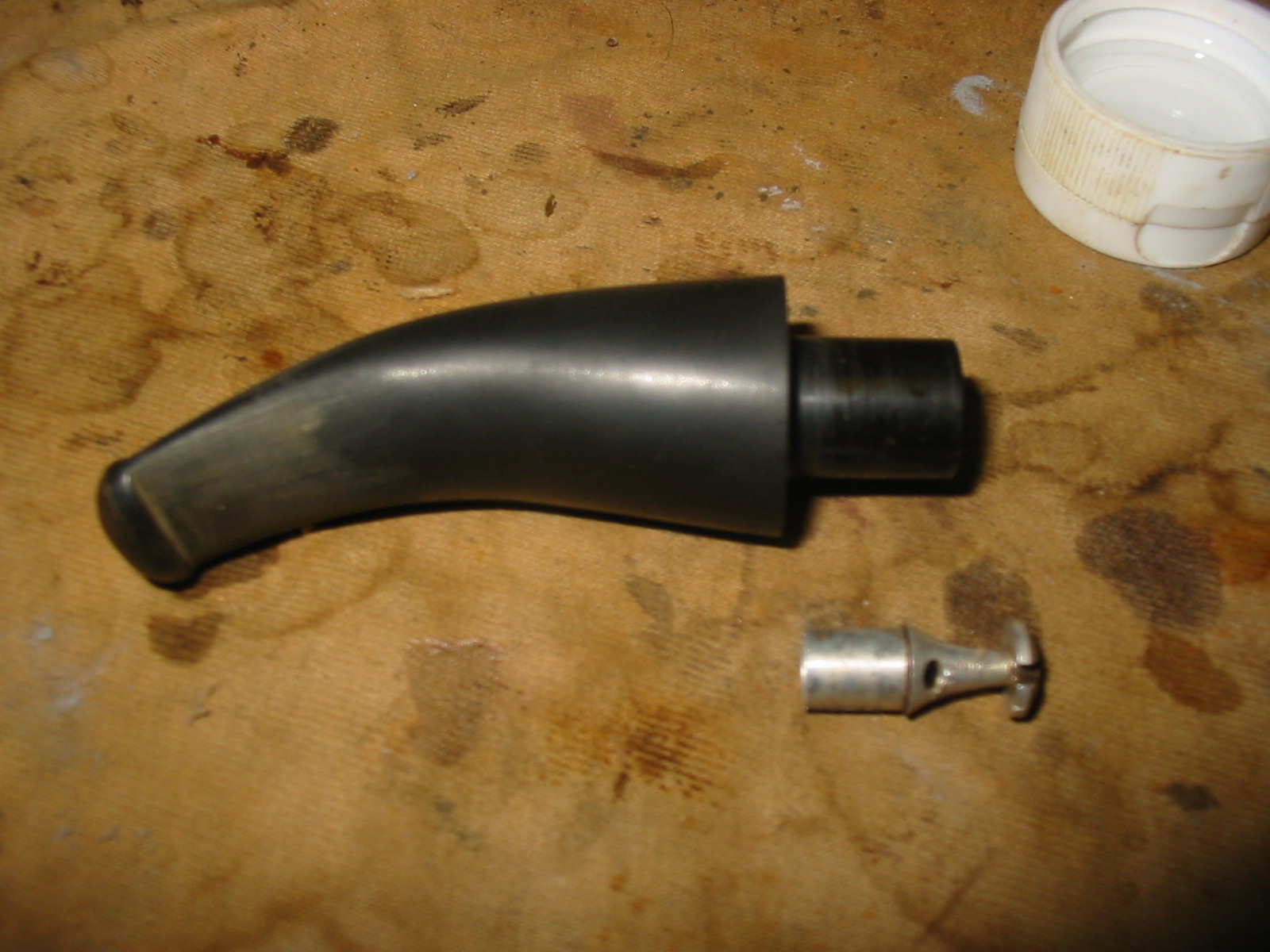
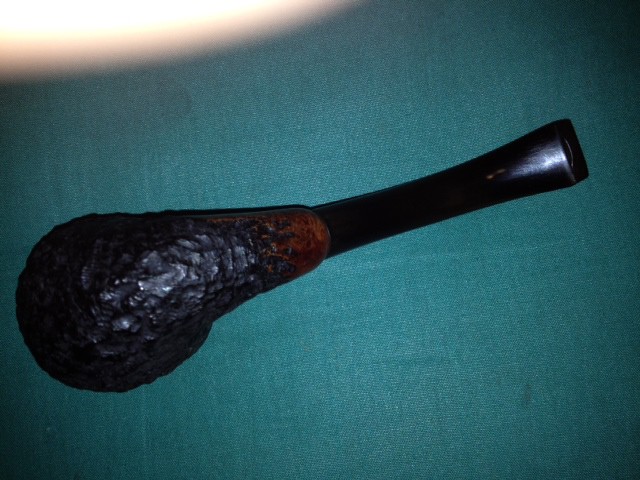
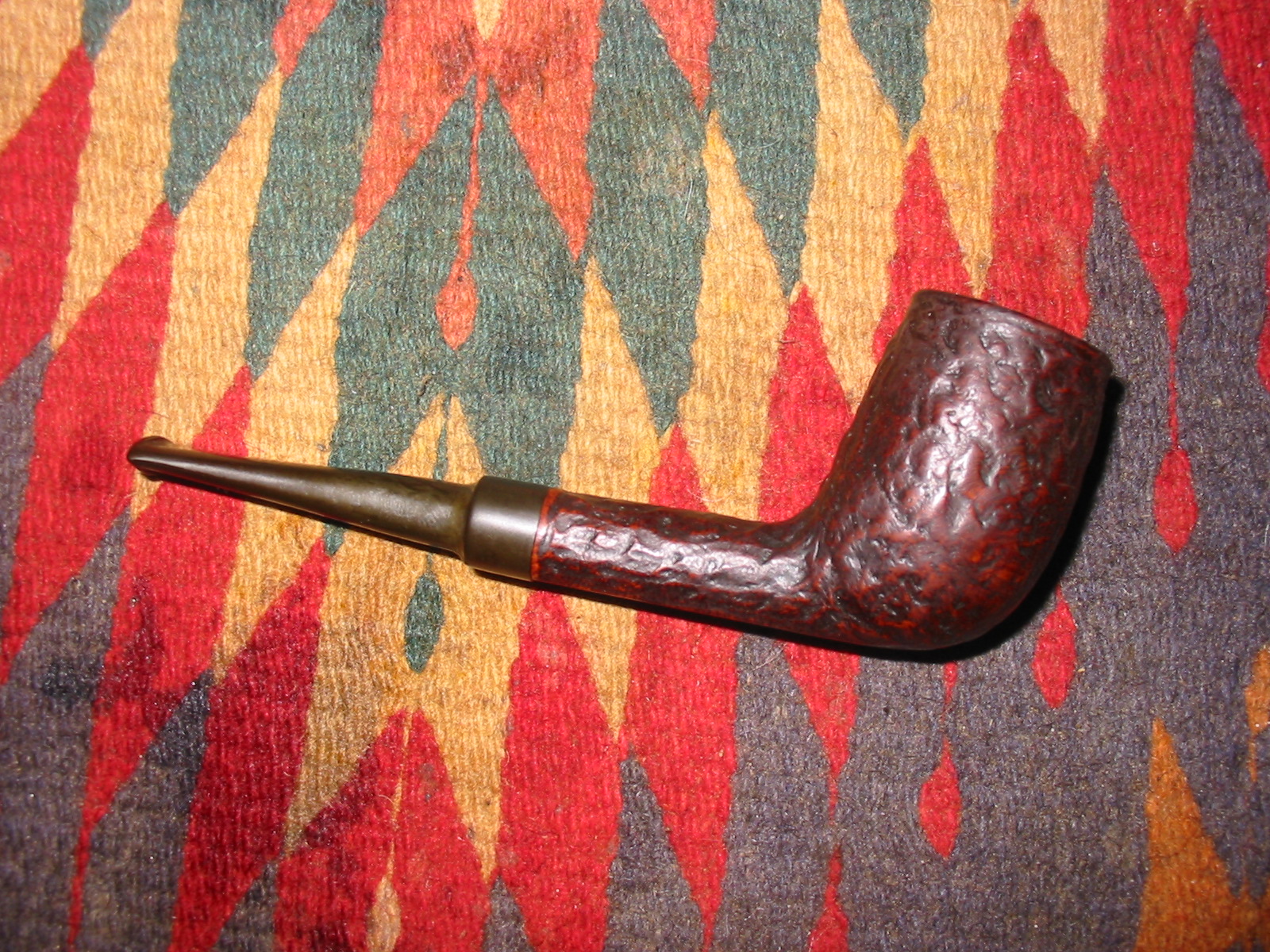
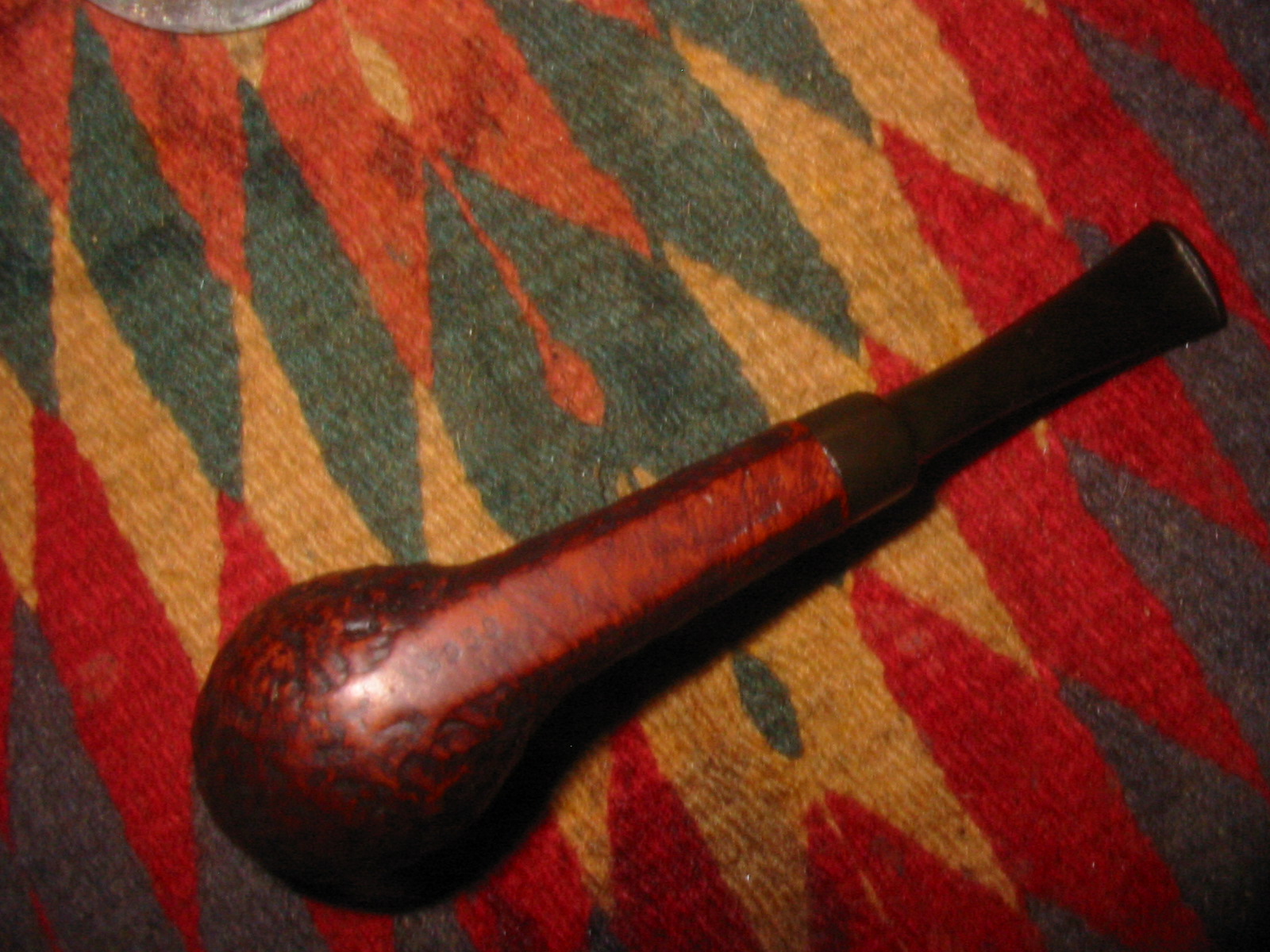
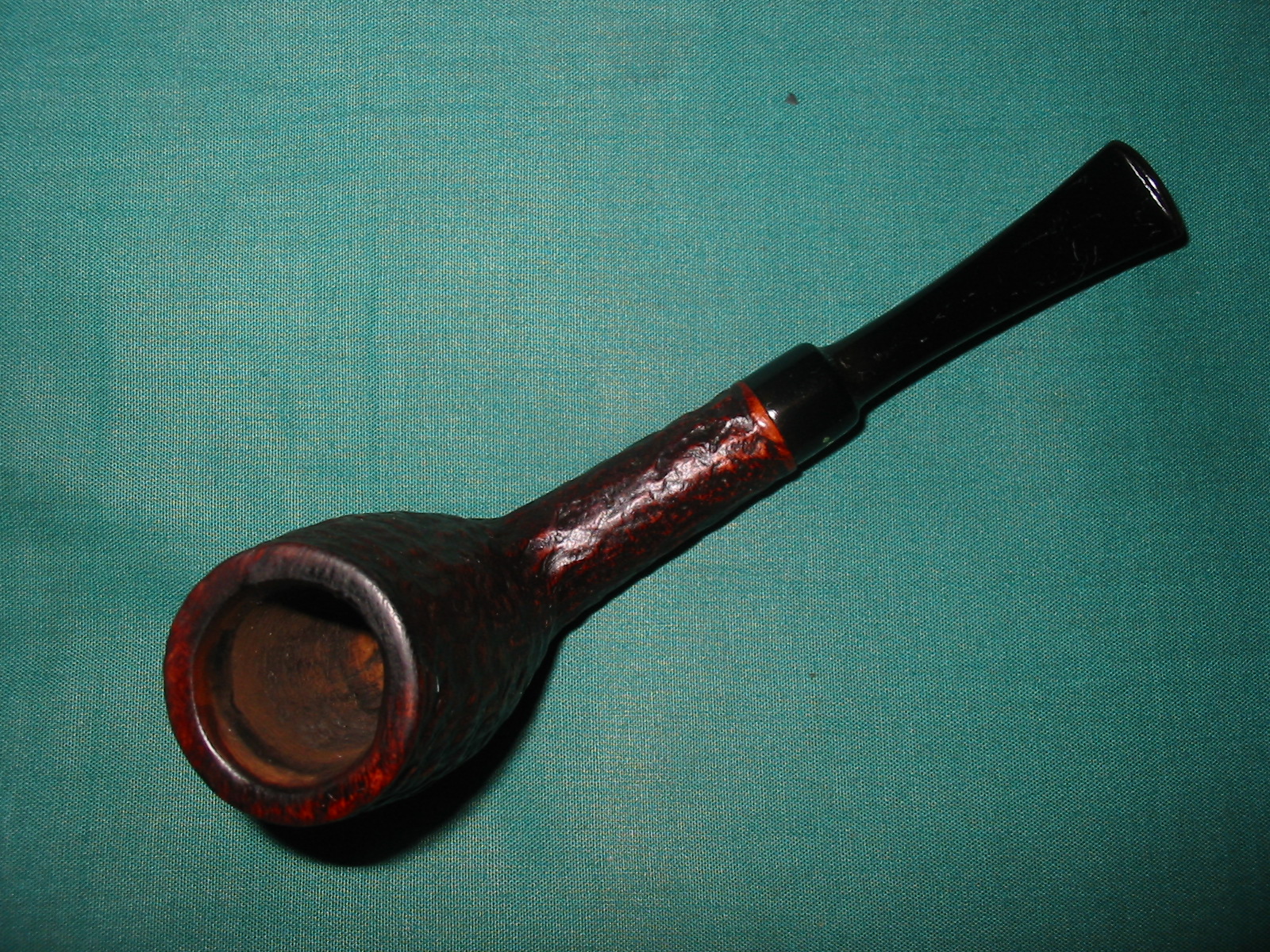
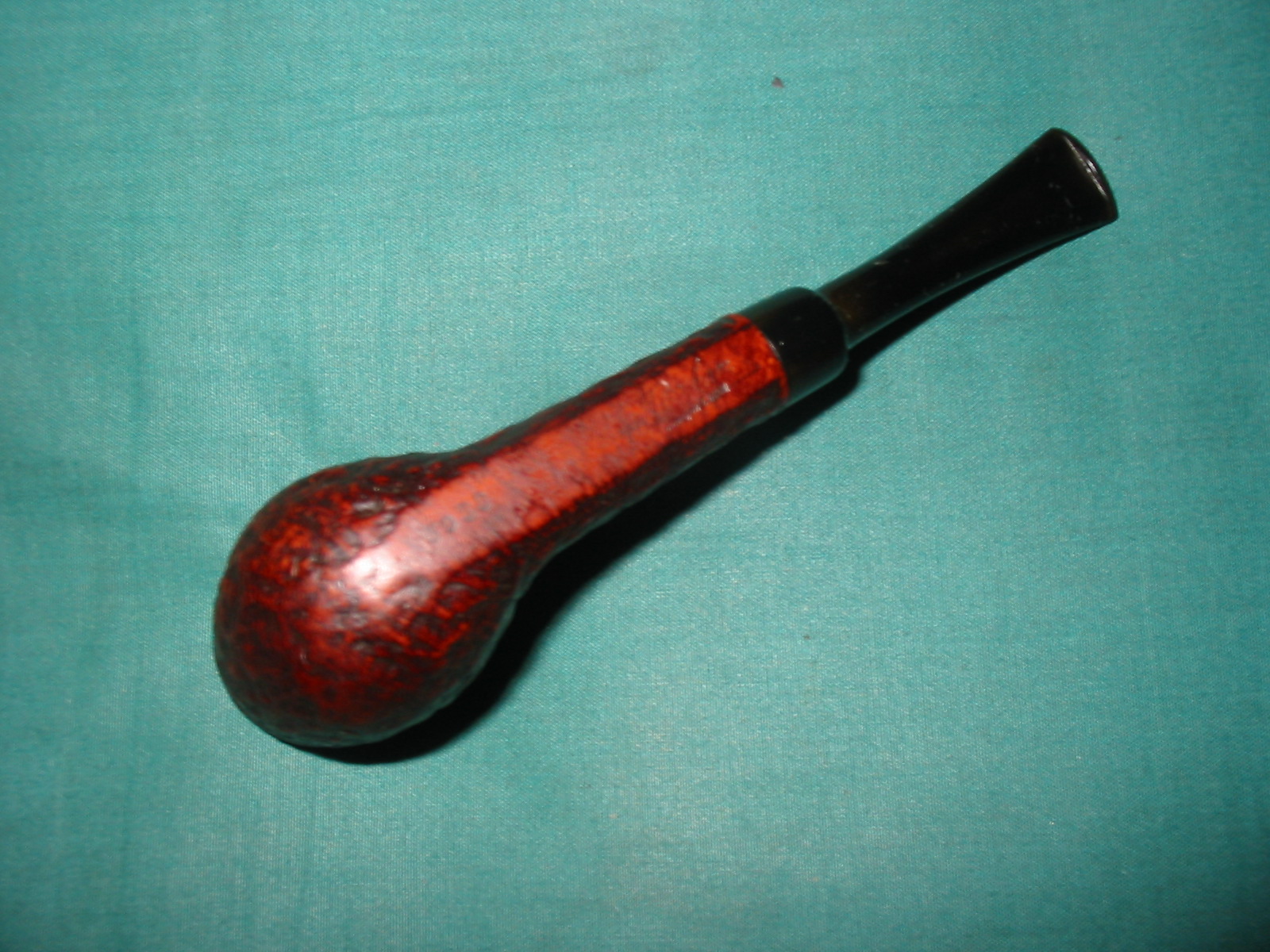
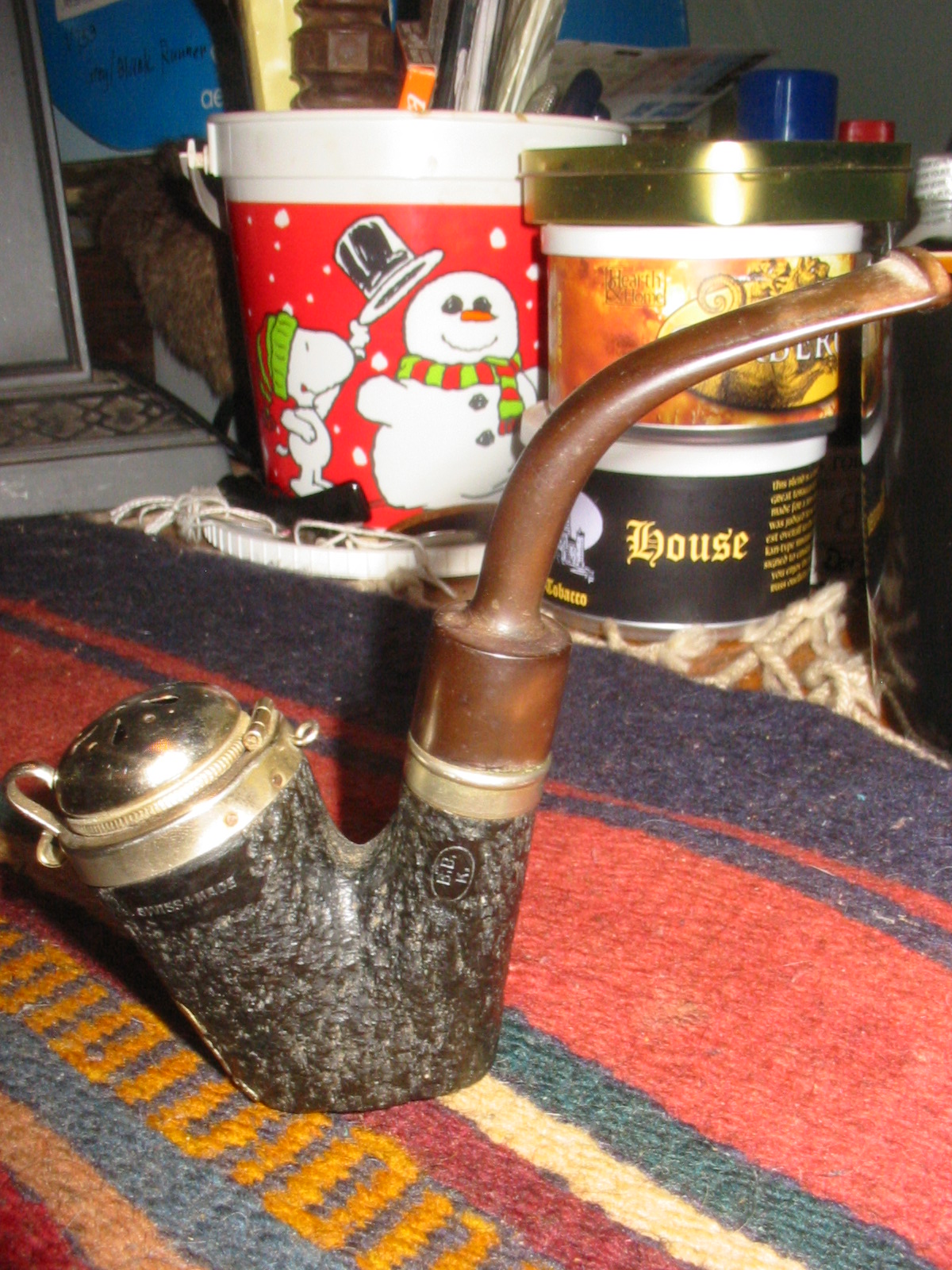
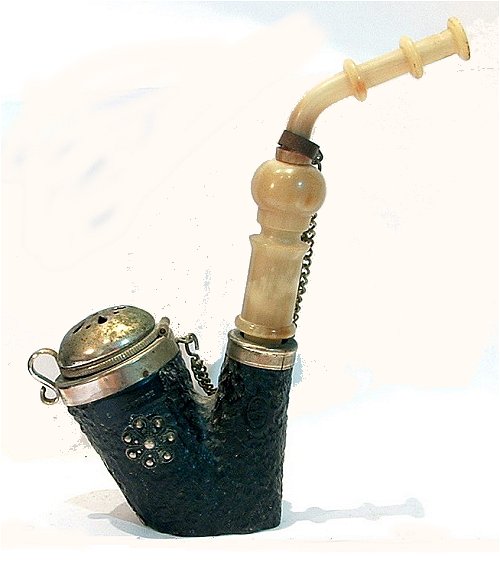
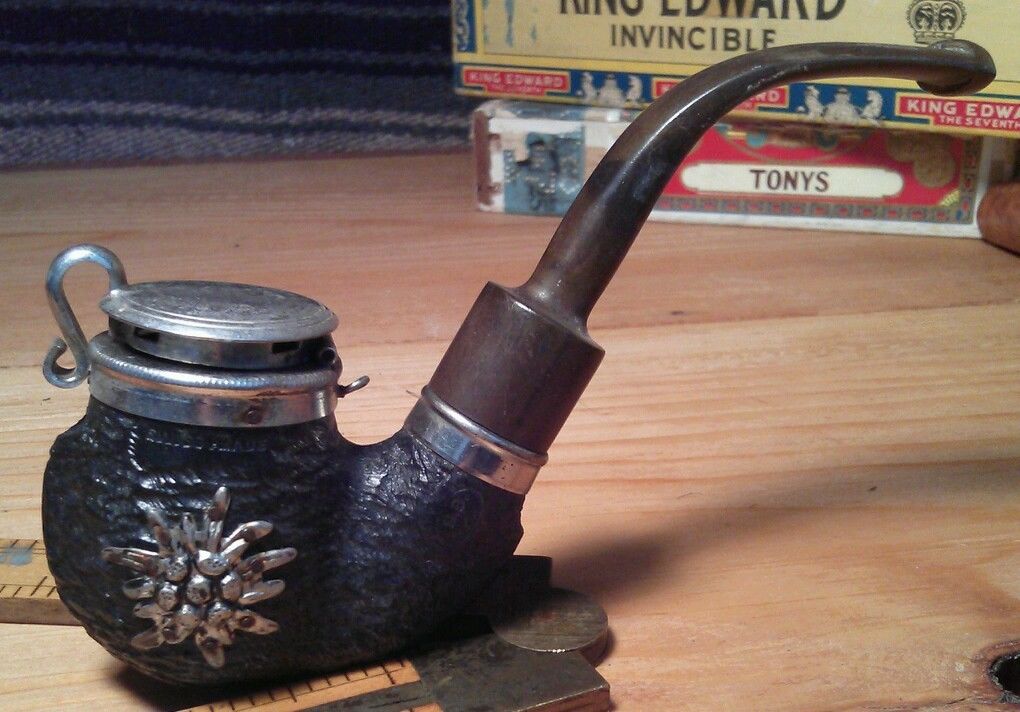
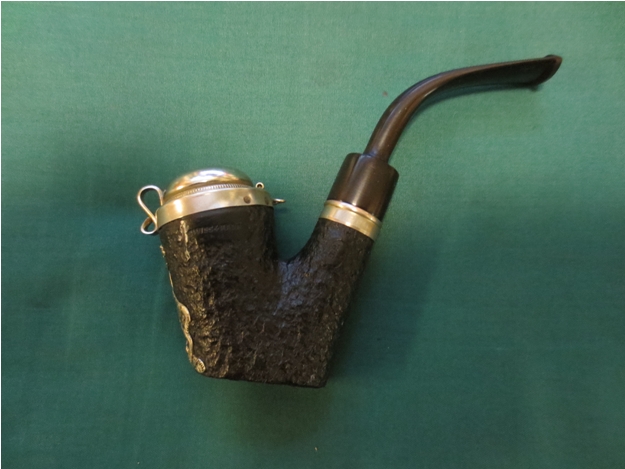
In the box of pipe bowls that I received was a complete sitter with a silver shank band and windcap. Upon looking at the side of the bowl I could see that it was stamped Swiss Made and on the side of the shank it was stamped BBK. The finish was sandblasted and well done. The stain was either a dark brown or a black. The cap was in good shape. Under the cap the silver rim trim was also blackened and tarry. The end cap/band on the shank was also silver and quite nice. Inside the cap was blackened and the bowl was caked with a crumbly aromatic smelling cake. The inside of the shank was black with tars and oils and the stem was very tight in the shank. The stem was clean of tooth marks and dents but was badly oxidized. On the front of the bowl was a carved/pressed stag climbing the bowl. There were nails holding the top rim cap and the stag emblem on the briar. On the back of the rim cap was a small silver ring where a chain had obviously been sometime along the way. It was missing as was the place on the stem where it attached to the stem. I have seen these before on German-made pipes as a means of keeping the stem and bowl together.
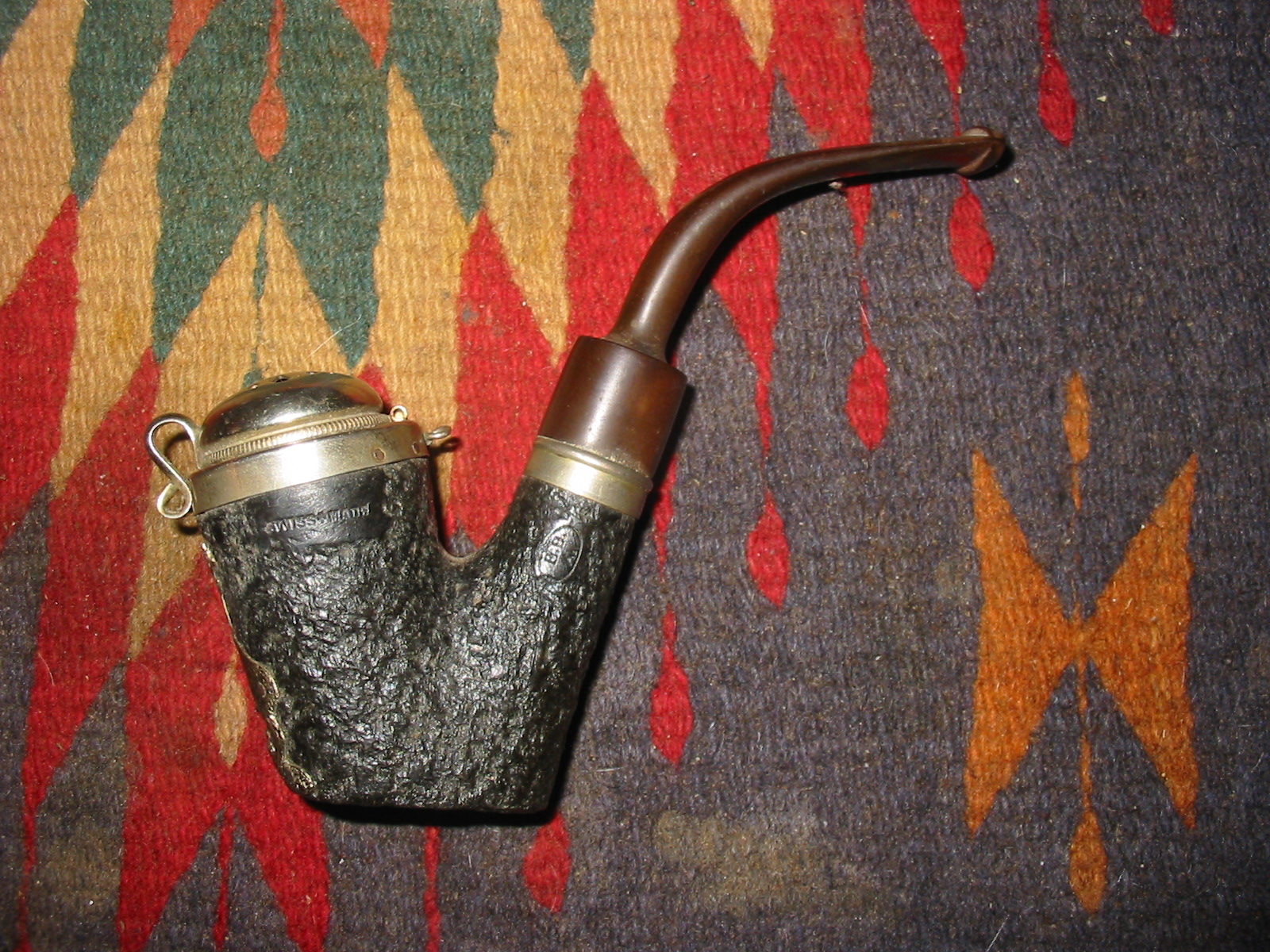
IMG_8233 IMG_8234 IMG_8236 IMG_8237 IMG_8238
I have cleaned up several BBK pipes over the years. The last one was a square shank panel billiard that I have written about previously on the blog https://rebornpipes.com/2012/09/21/refurb-on-a-bbk-panel-billiard-swiss-made/. I had never done much research on the maker or the meaning of the BBK initials. I knew that it was a Swiss made brand as the shanks of all the pipes I had cleaned up and restored were stamped with that moniker. I did not however have any idea of the history of the brand. This time I decided to do a bit of digging and see what I could find out about the pipemaker. IMG_8245 I checked one of my usual sources of information, Pipedia and found that there was actually quite a bit of helpful information to be found there. http://pipedia.org/index.php?title=Bru-Bu. I have copied, edited and summarized that material below. I find the information quite fascinating to read and gives me more appreciation for the pipes themselves.
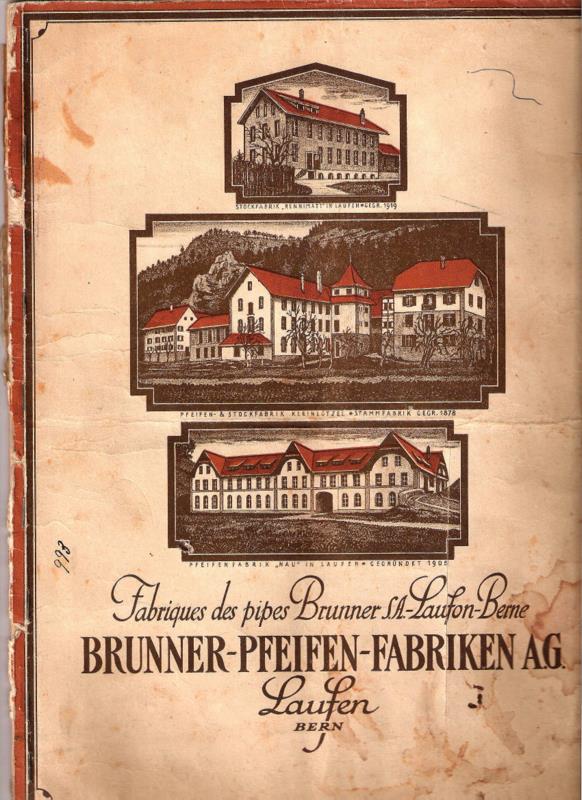
“Josef Brunner, oldest son of the farmer Konstantin Brunner from the hamlet Nieder-Huggerwald, belonging to the community of Kleinlützel (Canton Solothurn), was sent in 1871 to a pipe turner in Winkel/Alsace for his apprenticeship. As was usual at that time, Brunner wandered as a journeyman after ending the apprenticeship. Eventually, he went to Saint-Claude, France which was then the world’s stronghold of briar pipe manufacturing. There, Brunner was able to increase and deepen his knowledge in the field of industrial pipe making. When he returned home in 1878, he installed a small turner’s workshop in the house of his father. With the energetic support of his two younger brothers, he began to produce tobacco pipes of his own calculation, taking them to the markets in the surrounding area. In 1893, Bernhard Brunner’s wife inherited the mill in Kleinlützel. At this point, the pipe fabrication was transferred to an annex belonging to the mill. Now it was possible to drive the machines by water power – an important relief to the workers and a considerable innovation compared to the previous pedal-driven system.

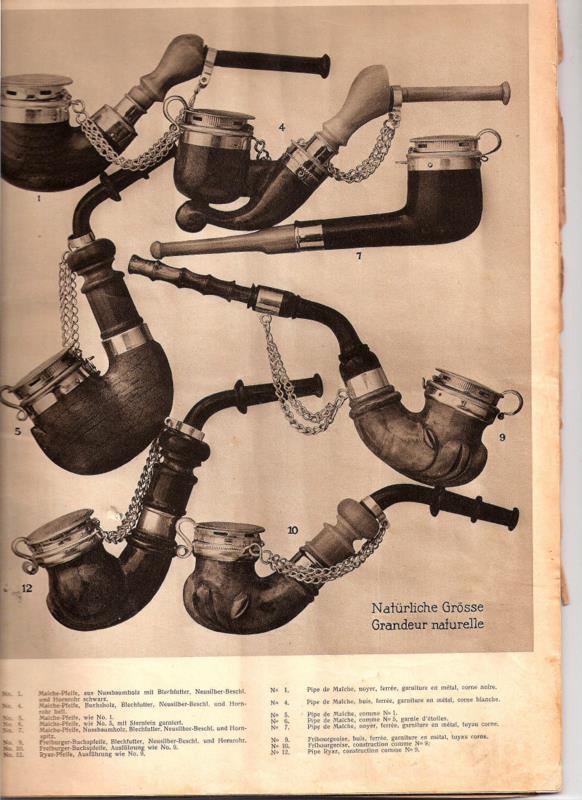
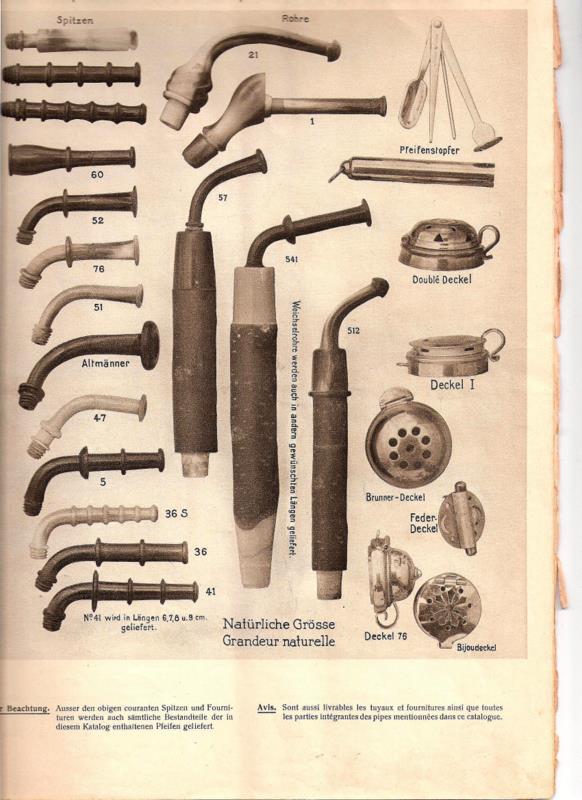
On the Pipedia site they also had some photos of a catalogue from BBK that was interesting. They note that it was an early catalog and came to them courtesy of Guido Brunner, Josef Brunner’s grandson.” Unbenannt Unbenannt2 Unbenannt3
Also on the Pipedia site was a photo of a pipe that was very similar to the one I have but obviously older. The stem on mine is not horn but is rather a hand cut vulcanite that makes it much newer in age than the one below. However the shank cap, the rim cap, the Double Deckel wind cap (pictured on the last page of the above catalogue are the same. The one I have is also missing the chain from the cap to the stem but the finish and everything else about the pipe below is parallel to the one I worked on. It was interesting to see how they attached the chain to the stem. That gave me an idea on how to attach a new chain to the one that I have. The stem on this one however made me question whether the one that I had was an original or some newer replacement stem. More digging would be required to know whether my stem was original or not. BBK_9 A bit more digging revealed one for sale on EBay that had the exact same stem as the one I have. It also was missing the chain and the shape and top cap was slightly different but the stem was identical. Now I knew that the one I had was at least original. BBK Further information was found on the Pipedia site that spoke of the growth of the company. “The production was boosted, and business developed pleasantly. A new factory building was realized by 1896. Corresponding to another demand, a department producing walking sticks was added in 1900. The pipes from Kleinlützel were well appreciated and received many awards, e.g., a gold medal for outstanding craftsmanship at the National Swiss Fair in Bern in 1914.
The business developed so well after the turn of the century that even a lack of workers in Kleinlützel occurred. The problem was solved by founding a subsidiary company in the small nearby town Laufen an der Birs in the Canton of Bern. This plant didn’t exist too long. The disastrous economic crisis in the 1920’s and early 1930’s forced the Brunner family to restrict the fabrication of pipes dramatically. In addition the big French pipe factories in Saint-Claude – although suffering from the same circumstances – flooded the Swiss market with pipes at prices that couldn’t be matched by Swiss producers. By 1931 ca. 150 of 180 Brunner employees had been sacked – the rest remained in Kleinlützel, where the cheap electric energy ensured a meager survival.

In 1932, Mr. Buhofer joined the Brunner family. The company was named Brunner-Buhofer-Kompagnie, and, shortly thereafter, Bru-Bu. Buhofer had made his fortune in the United States but, homesick, returned to Switzerland to search for a new challenge.

Bru-Bu’s fabrication program was expanded with many handcrafted wooden art articles: carved family coats of arms, bread plates, fruit scarves, and – more and more – souvenir articles for the expanding Swiss tourism industry. Pipes remained in the program continuously, but the offerings changed from traditional Swiss pipes to the more standard European shaped pipes. Bru Bu is widely known as BBK.”

One further point of interest to me was found in the last paragraph of the Pipedia article linking BBK pipes to Former Nielsen. I have two of Former’s pipes so this stood out to me.

“At some point in the late 1970’s, Bru-Bu went out of business. Some of the Brunners, as far as known, continued as timber traders. But in 1986 new life filled the old Bru-Bu pipe workshop, when Dr. Horst Wiethüchter and “Former” Nielsen started to produce the high-grade Bentley pipes there.”

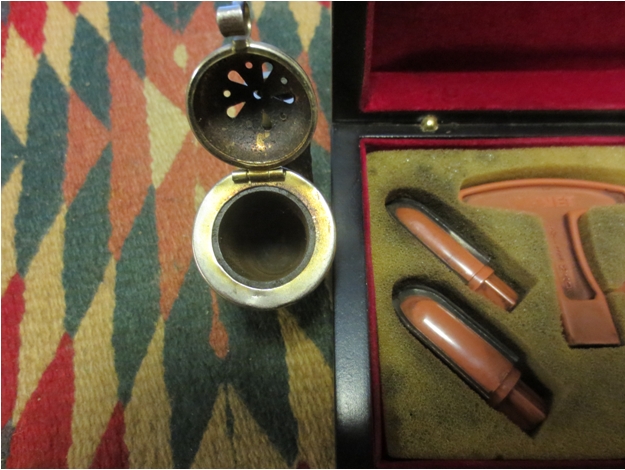
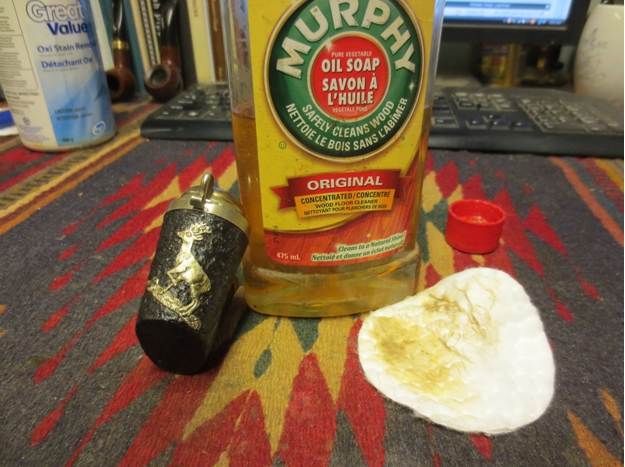
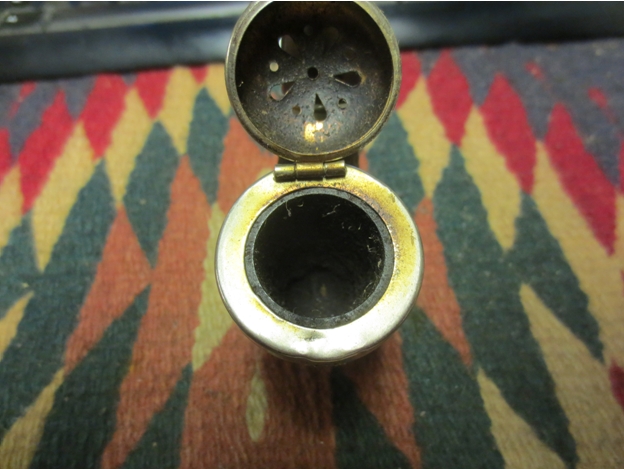
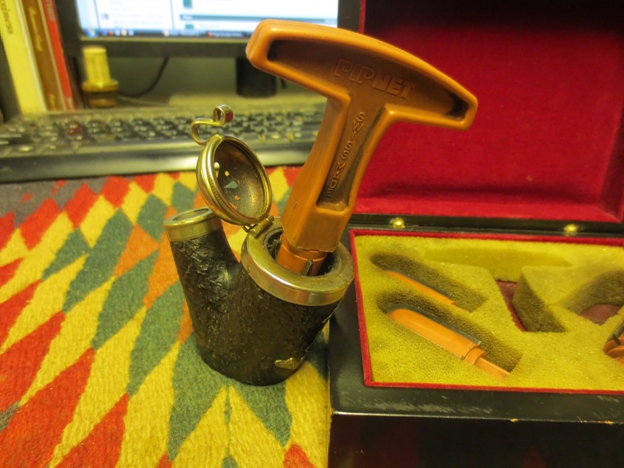
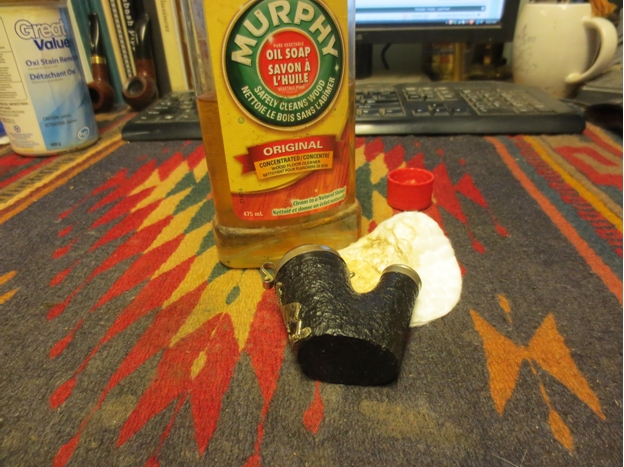
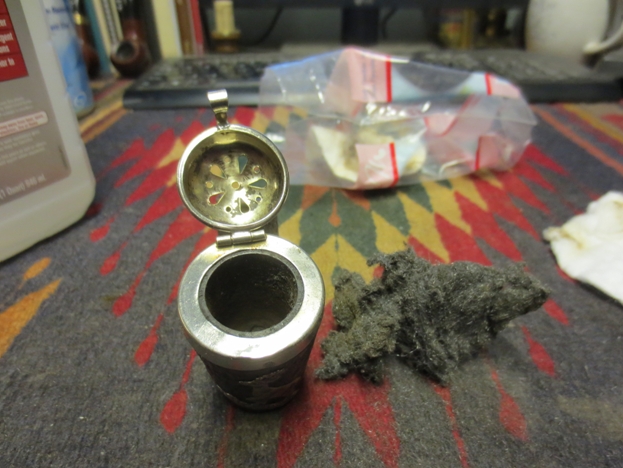
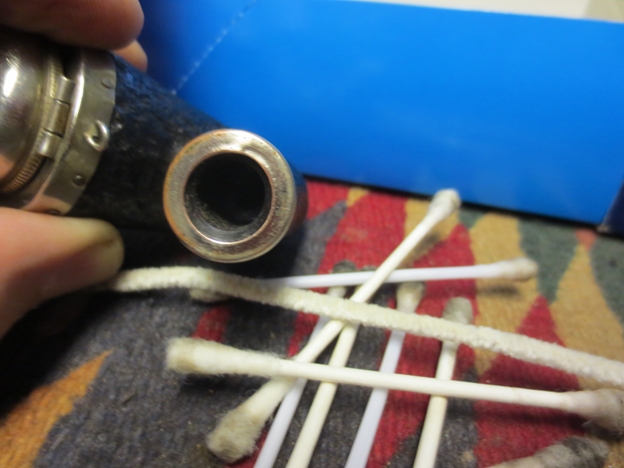
I am not sure why it works this way but once I have some background information on a pipe I move into cleaning and restoring it with more gusto. It seems to energize me knowing a little about the company or individual who carved the pipe I am working on at the moment. I took the next two photos show the inside of the lid and the front of the bowl before I started cleaning up the pipe. The tars and oils on the inside of the lid were rock hard did not come off with scrubbing with alcohol or oil soap. Instead it would take more work to remove it. IMG_1685 IMG_1686 I reamed the pipe with a PipNet reamer (also Swiss Made by the way) to remove the cake buildup around the inside of the rim. Once the bowl was clean and smooth I wiped it out with cotton swabs and isopropyl alcohol. IMG_1690 IMG_1691 I scrubbed the briar with undiluted Murphy’s Oil Soap and then wiped it off with a cotton pad. The finish was in great shape under the grime and once polished with a soft cloth and Halcyon II wax it had a rich glow to the sandblast. I wiped down the silver with a silver polishing cloth and the tarnish on the rim cap, the shank cap, wind cap and stag emblem came off very easily and the silver shone. IMG_1692 IMG_1694 IMG_1693 I scrubbed the inside of the windcap and the rim with 0000 steel wool to remove the tars and oils that had hardened on the surface of the caps and the inside of the windcap. It came off easily and then I polished with the silver polishing cloth. IMG_1695 I cleaned out the inside of the shank with pipe cleaners, cotton swabs and isopropyl alcohol. The tars that came out of the shank were black and thick. It took quite a few swabs before the shank and sump area were clean and the cotton was still white after I ran it through the shank. IMG_1696
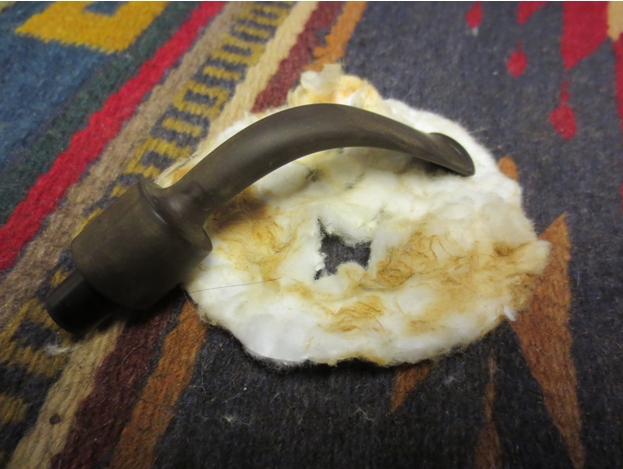
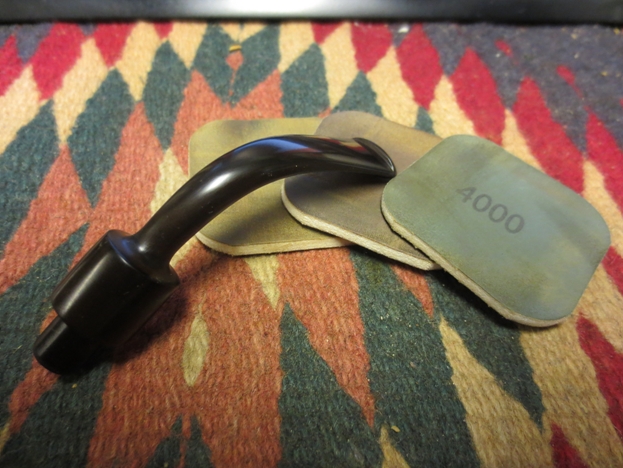
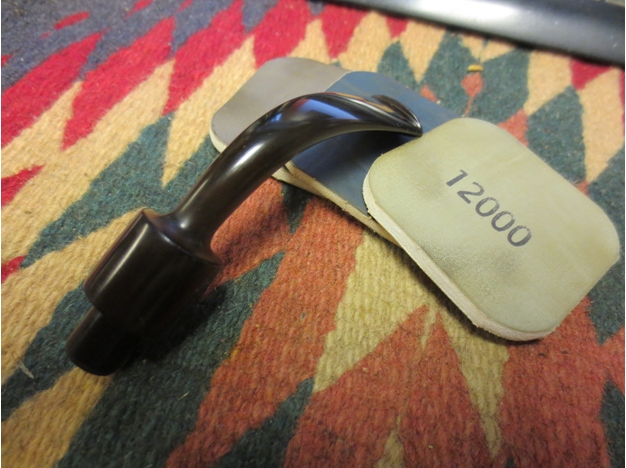
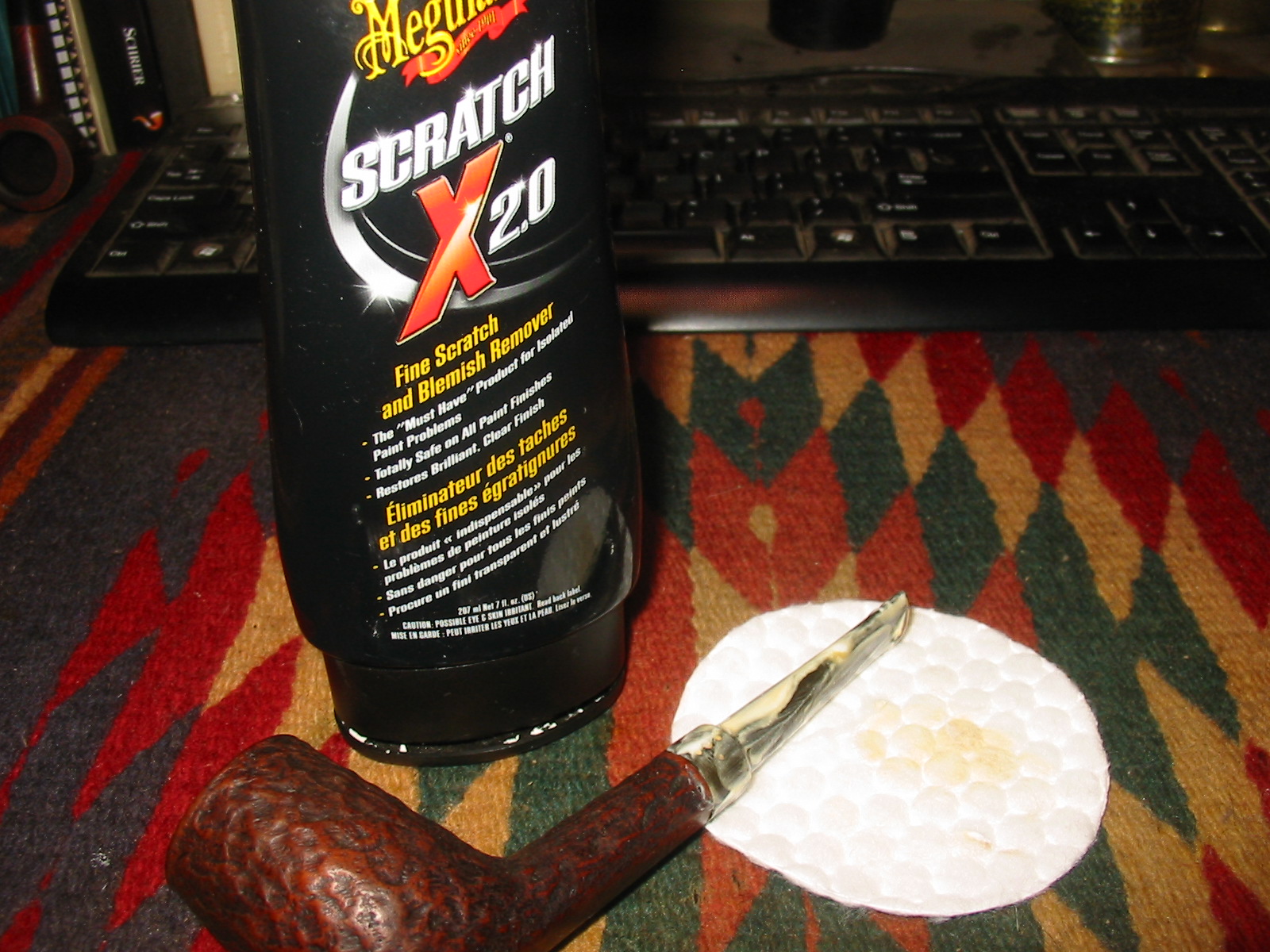
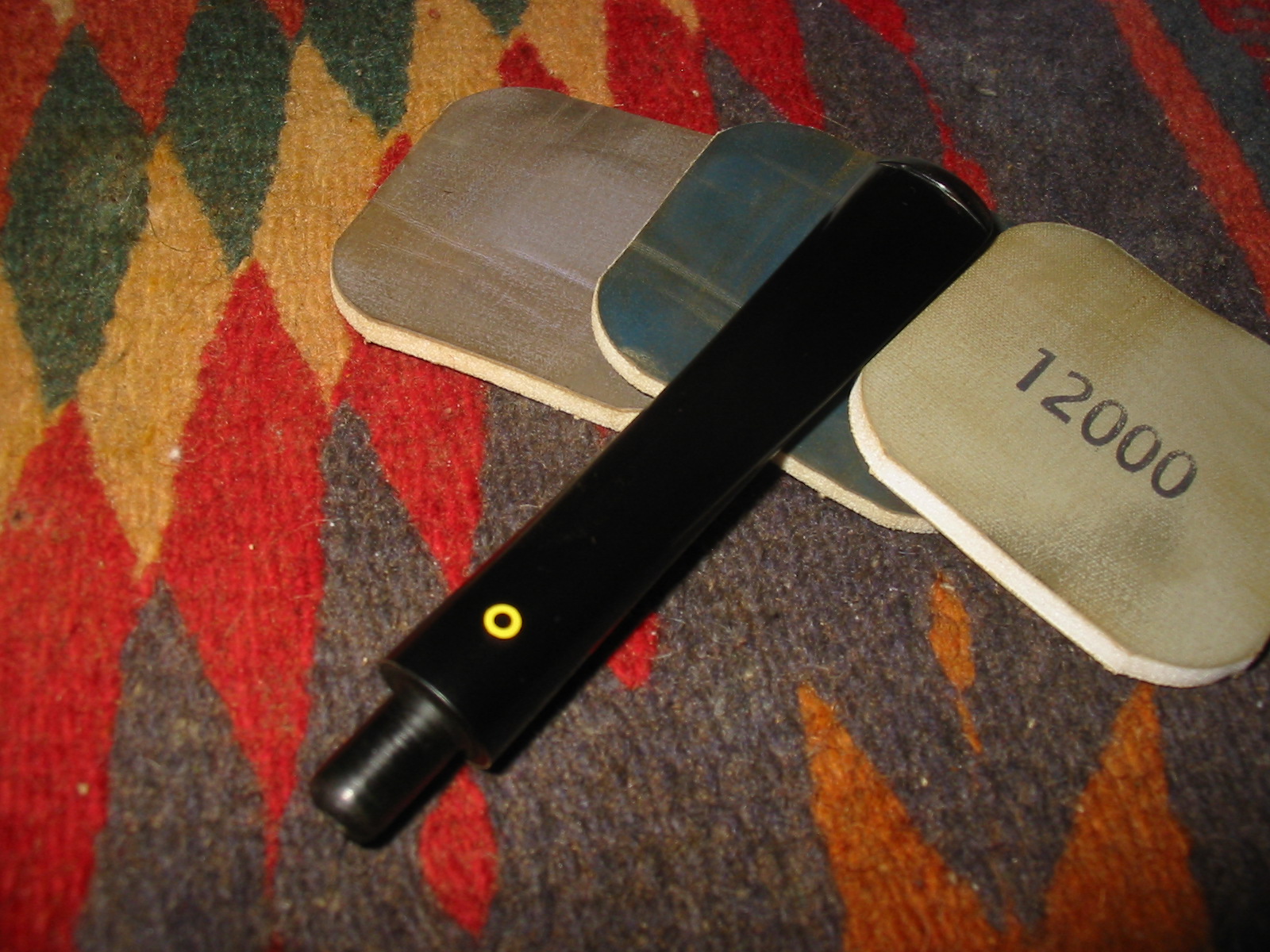
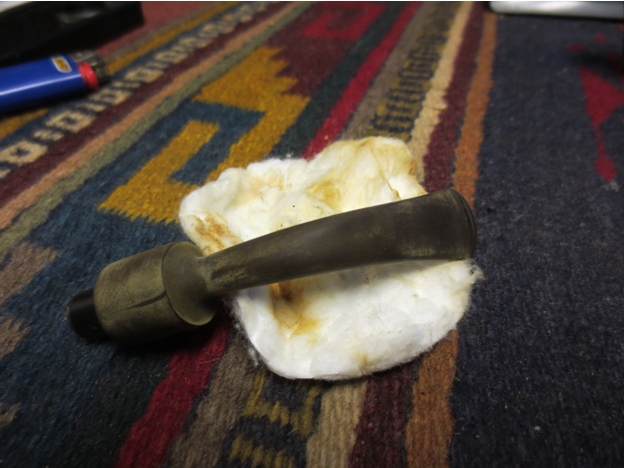
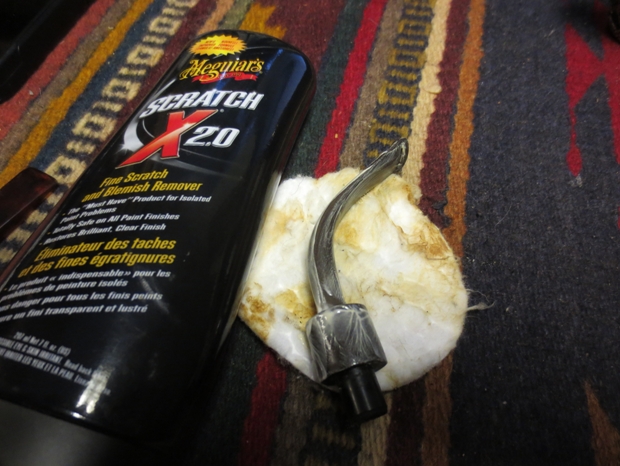
IMG_1697 The stem had been soaking in Oxy Clean while I worked on the bowl. I removed it from the bath and dried it off. The oxidation had softened significantly and I was able to see the black of the vulcanite show through the brown oxidation. IMG_1698 I scrubbed the stem with Meguiar’s Scratch X2.0 and once dry wiped it off to see how much more of the oxidation had been removed. The second photo shows the stem after I had wiped off the polish. There was still a lot of work to do on this stem. IMG_1699 IMG_1700 I sanded the stem with 220 grit sandpaper and then with medium and fine grit sanding sponges to remove more of the surface oxidation. It took some careful sanding but the oxidation was finally coming off and the stem was moving toward the place where I would sand it with micromesh sanding pads. IMG_1701 I buffed the stem with red Tripoli and White Diamond before sanding with the micromesh pads. I wet sanded with 1500-2400 grit pads and dry sanded with 3200-12,000 grit pads. I rubbed the stem down with Obsidian Oil between each set of three pads. I buffed the stem with White Diamond and then rubbed it down with Obsidian Oil one last time. I buffed it with carnauba wax and then a soft flannel buffing pad to raise the shine. IMG_1702 IMG_1703 IMG_1704 I gave the silver caps a final polish with the silver polishing cloth, buffed the pipe by hand with a shoe brush and then took the final photos below. The finished pipe is ready to load a bowl and fire up its inaugural smoke. I still have to do a hunt for a piece of chain to connect the cap to the stem and make a strap or connector to hold it to the stem. IMG_1705 IMG_1706 IMG_1707 IMG_1708 IMG_1709
Yello-Bole Spartan – A Brylon Pipe Restemmed and Restored


Blog by Steve Laug

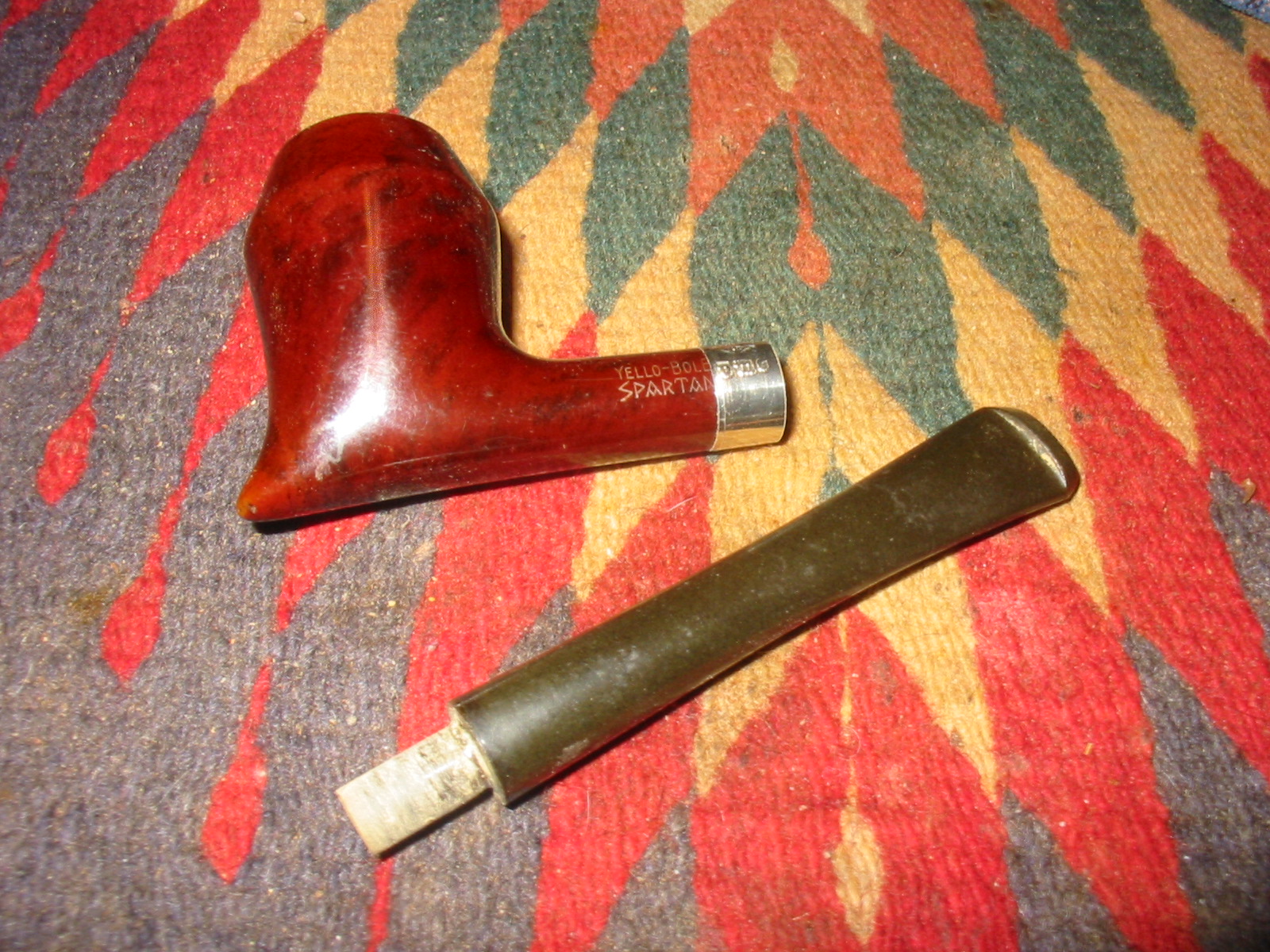
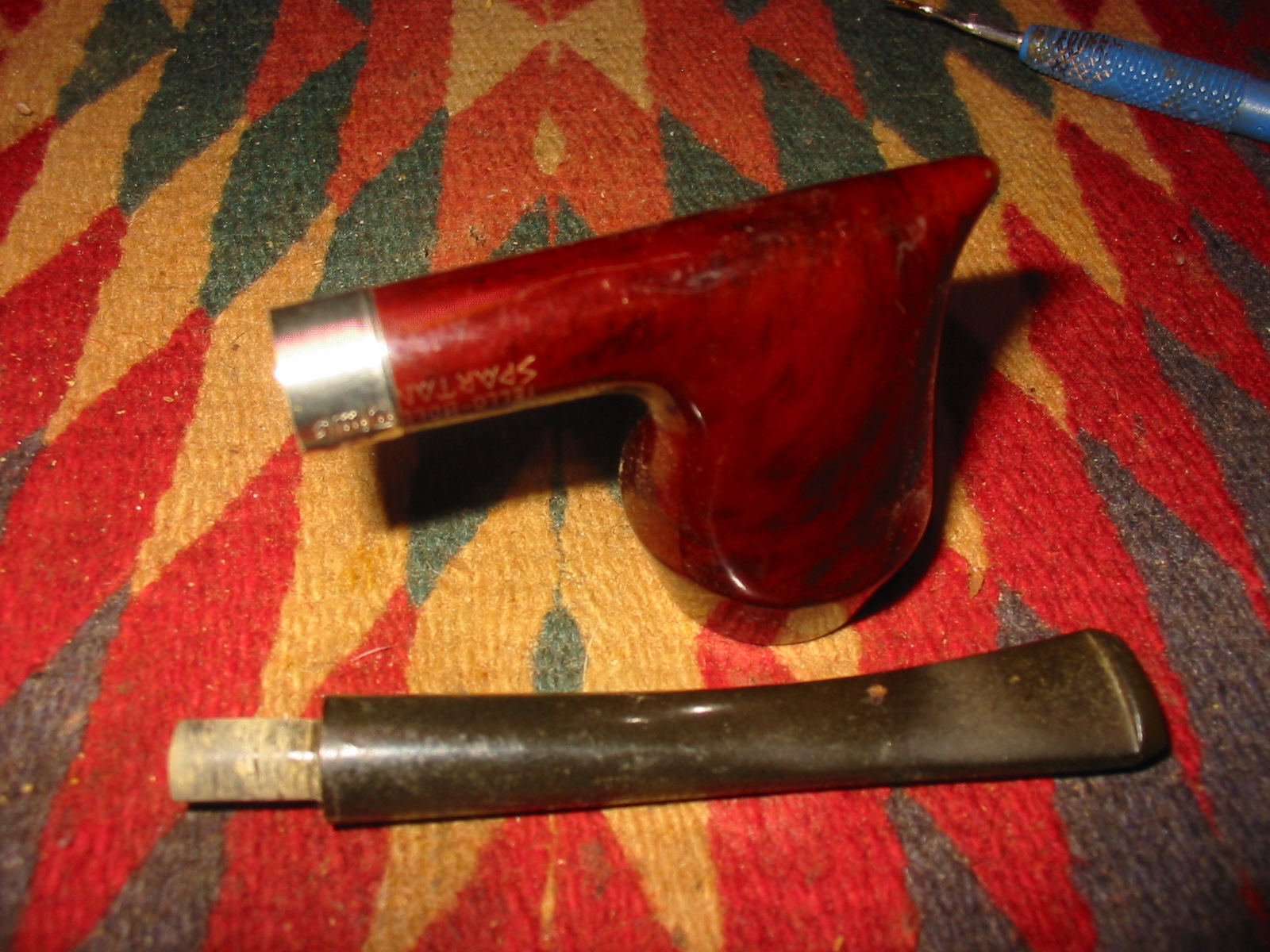
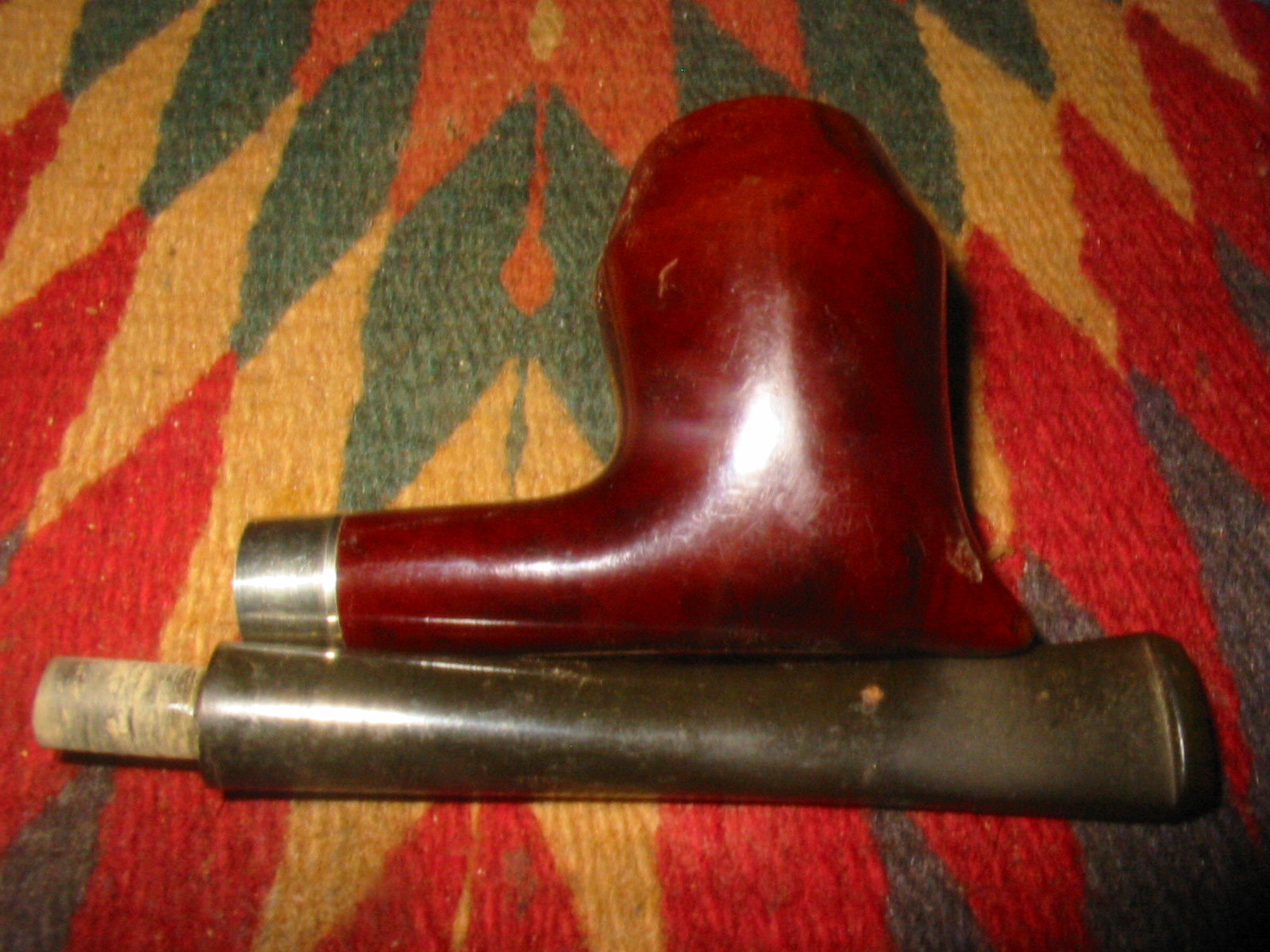
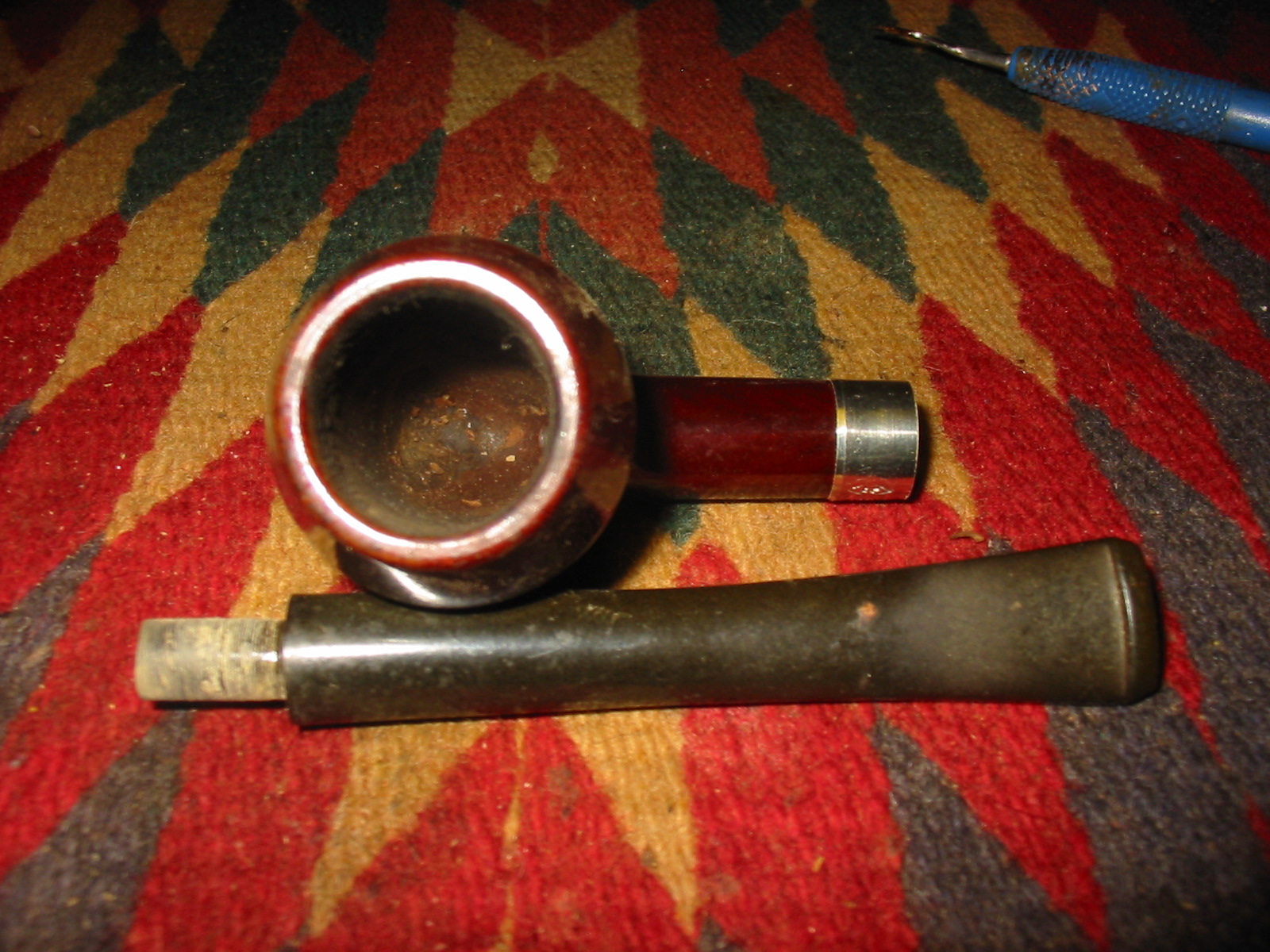
I was gifted a box of pipe bowls and stems from Jim Wagner on Smoker’s Forums. It is a great to have this box of interesting old pipes. Jim, I sure appreciate the gift box and am enjoying looking at it and choosing what to do next. The first one that caught my eye was a Yello-Bole Spartan. From reading about them the Spartan was originally a briar pipe but this one was definitely not briar. It was synthetic for sure and brown like some of the older Bakelite pipes that I have picked up over the years. I knew though from the feel of it that I was dealing with a Brylon pipe. Many folks hate them because they say the burn hotter and are heavier than briar pipes. While that may well be true I still have an older Medico I picked up 32 years ago when my first daughter was born and have smoked it a lot since that time. Several years ago I put a long Church Warden stem on it and a brass ferrule and made it into a good-looking long pipe. I have smoked it long enough that it even has developed a cake and now smokes quite well. If I am mindful to not puff hard it stays relatively cool.

Knowing that it was a Brylon pipe made me want to do a bit of digging into the history of the material. I looked on the S.M. Frank website (http://www.smfrankcoinc.com/home/?page_id=2) and found the following information:

“In 1966, S. M. Frank developed a synthetic material called Brylon as a cheaper alternative to briar. The material, a high temperature resin mixed with wood flour, was cheaper than briar, more resistant to cracking, chipping, charring and burnouts. However to some there are some drawbacks, heavier in the mouth, hotter when smoked quickly, and also simply put, “wasn’t briar.” Millions of these pipes have been sold in the 3 decades since and continue to be part of the Yello-Bole and Medico lines. Two Brylon lines in Kaywoodie, Marmont and Impulse, were briefly tried and abandoned in the late 80′s.”

I know that Brylon has a bad name among pipemen and gets a lot of disparaging comments whenever it is brought up on the pipe forums. However, pipes are still being made and sold so there must be some enduing quality. Maybe it is the indestructibility of the pipe. Perhaps we will never know what attracts folks to them. But I have one in my hand that needs work and I am loath to pass up the opportunity to learn from the process of rejuvenating this old pipe.

As usual reading the history of the material helped to give me a clearer picture of the pipe that I was working on this time. It also gave me some background on another Brylon pipe that I have in my collection. I bought that Brylon new at a 7-Eleven convenience store along with a pouch of Borkum Riff the day my oldest daughter was born. It was a delicate billiard and attracted me that early morning in 1982. I have smoked it enough that it has developed a good cake and finally smokes very cool. A few years back I restemmed it with a long Church Warden Stem and banded it with a brass ferrule to liven it up a bit. The finish was worn to I polished it. I still smoke that old Brylon and enjoy it.

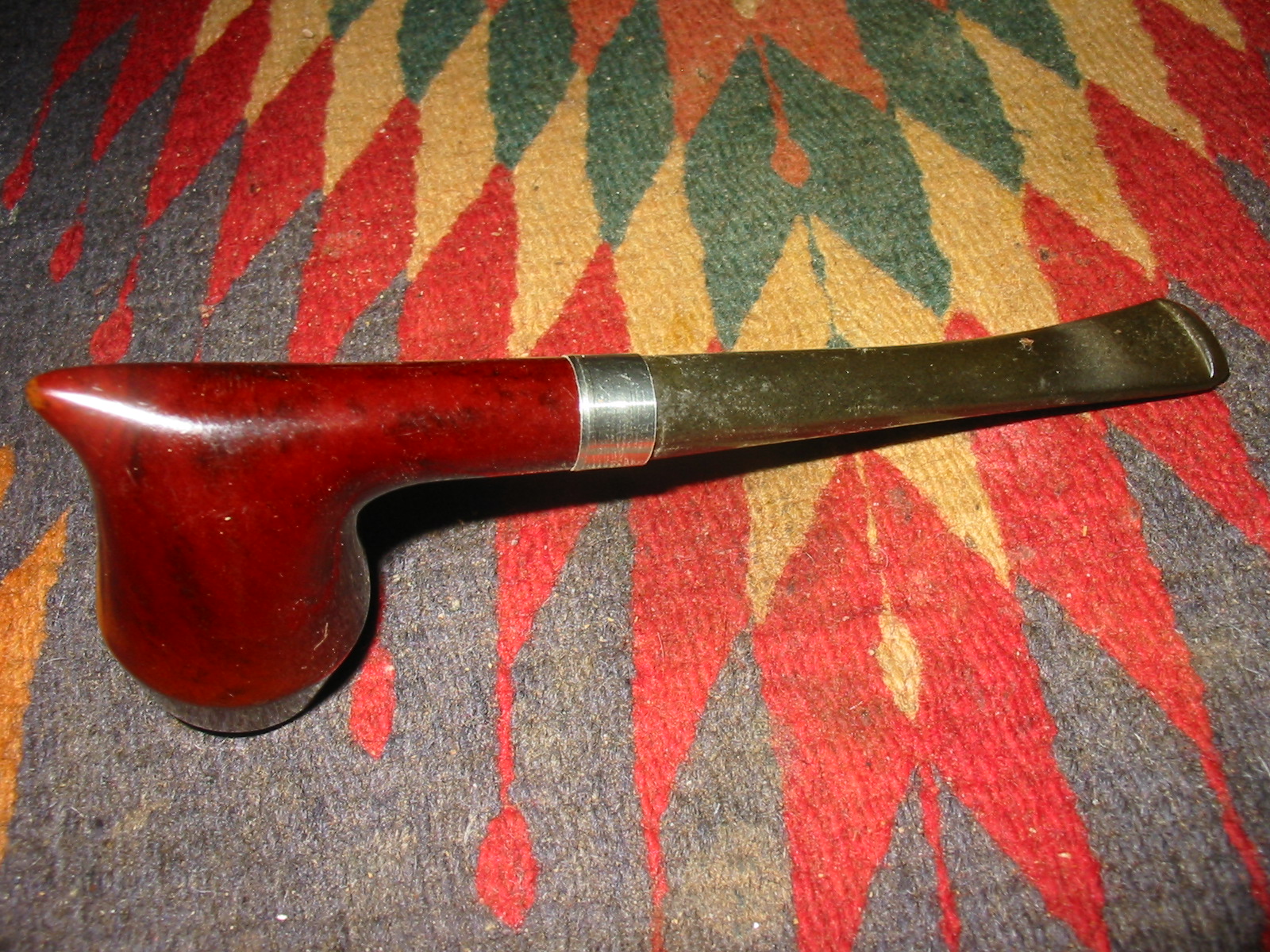
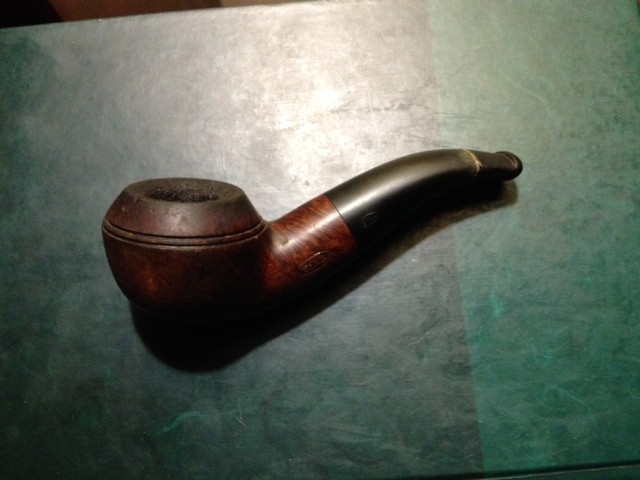
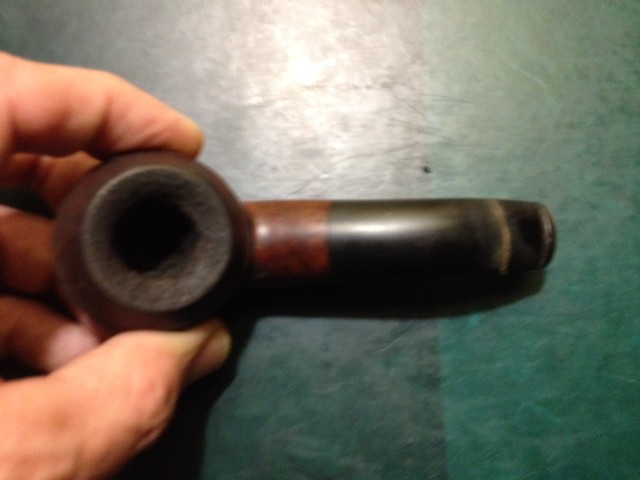
However, back to the Brylon pipe at hand. This bowl was an unusual shape and one that I had not seen before. It was smoked but clean. There was the beginning of a cake in the bowl so it would soon be a cool smoker as well. It was without a stem so I found one in my stem can with a slight bend that had the same diameter as the shank and sanded the tenon by hand with 220 grit sandpaper until it was a snug fit in the shank. It looked good on the pipe but there was still something missing when I sat back and looked at the pipe. I thought maybe a bit of bling would do the trick so I went through my nickel bands and found one that was the perfect size to press on the shank and not cover the stamping on the left side.

I heated the band with a lighter and then pressed it into place on the shank. Heating the band causes it to expand and slide on to the shank while it is still hot. Once the band cools it contracts and the fit is tight unmovable. I used a sharp knife to bevel the inside edge of the mortise to accommodate the new stem solidly against the end of the shank. IMG_8222 IMG_8226 IMG_8225 IMG_8223 The stem was one that I repurposed from another pipe and it looked like it belonged on the Spartan in my opinion. The slight bend looked good with the shape of this Brylon Spartan. The stem was oxidized and dirty but did not have any tooth marks of gouges. Once I had the pipe banded I pushed the stem into place and took the photos below. IMG_8228 IMG_8231 IMG_8230 IMG_8229 I removed the stem and sanded it with 220 grit sandpaper followed by a medium and a fine grit sanding sponge. For me this step always cleans up the stem and allows me to deal with subtle reshaping of the stem. In this case the reshaping was minimal but I did some work on the underside to give it more of an arc than originally was present. I sanded until the scratches and oxidation was removed from the stem. It was clean and the flow and angles were what I was looking for. Then I sanded with micromesh sanding pads – wet sanding with 1500-2400 grit pads and dry sanding with 3200-12,000 grit pads. I rubbed the stem down with Obsidian Oil between each set of three micromesh pads. Since Brylon is plastic like I decided to also sand the Brylon bowl to remove some of the scratches and smooth out one small nick in the surface of the bowl. Each successive grit of micromesh gave the finish a deeper shine and the contrasts in the Brylon surface began to stand out. IMG_8240 IMG_8243 IMG_8241 When I had finished sanding the bowl and the stem I buffed them with White Diamond and then gave the pipe several coats of carnauba wax. I polished it with a soft flannel buff to give a shine. In retrospect, I think that Brylon must be pretty indestructible and I figure I could have just thrown the pipe in the dishwasher to sanitize it. I am sure it would not have caused the least bit of damage. The finished pipe is shown below. It is cleaned, has a light cake and is ready to be fired up with an inaugural smoke. Who knows I might even like it enough to keep it around as a yard pipe. IMG_1677 IMG_1683 IMG_1682 IMG_1678

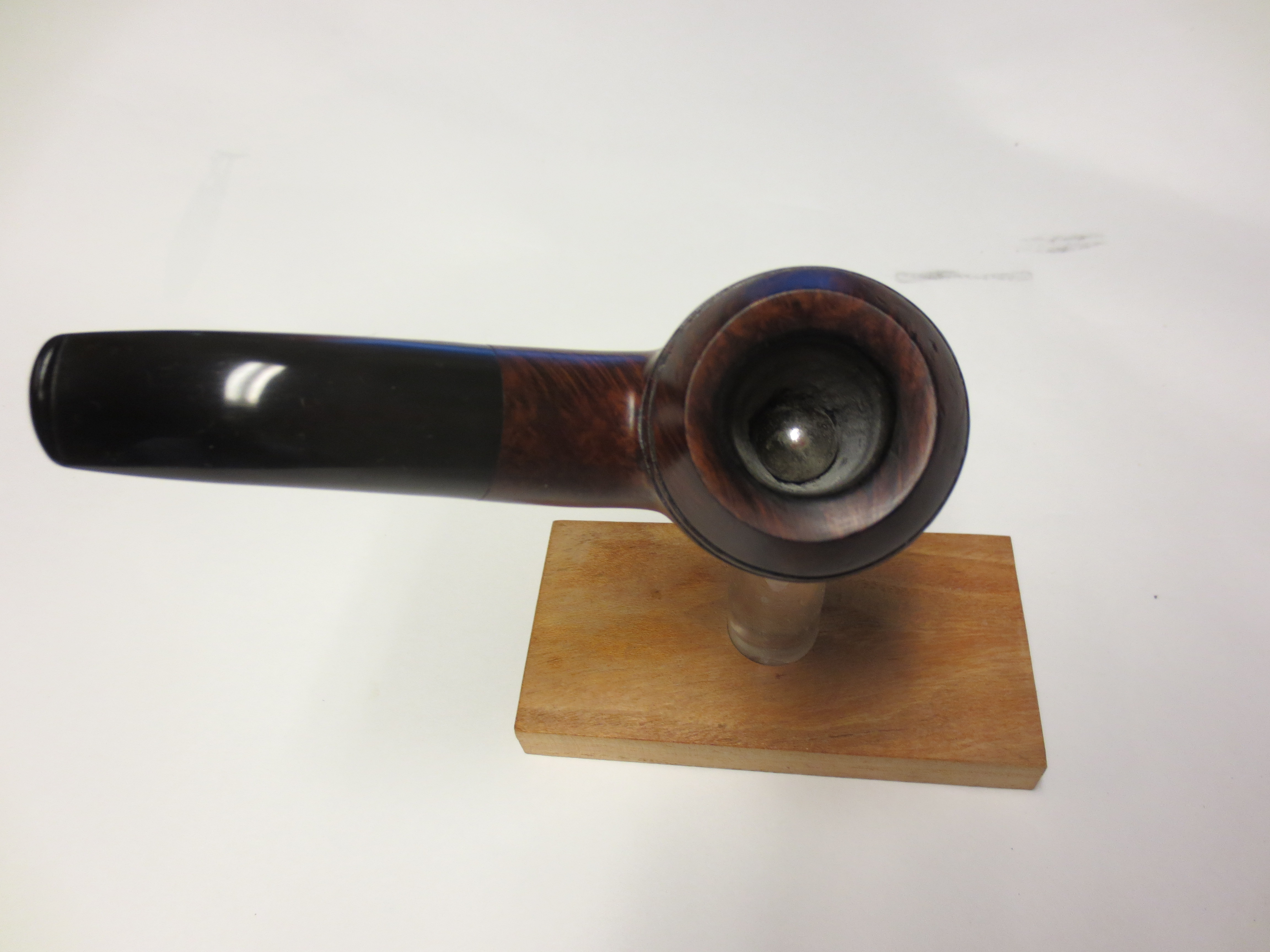
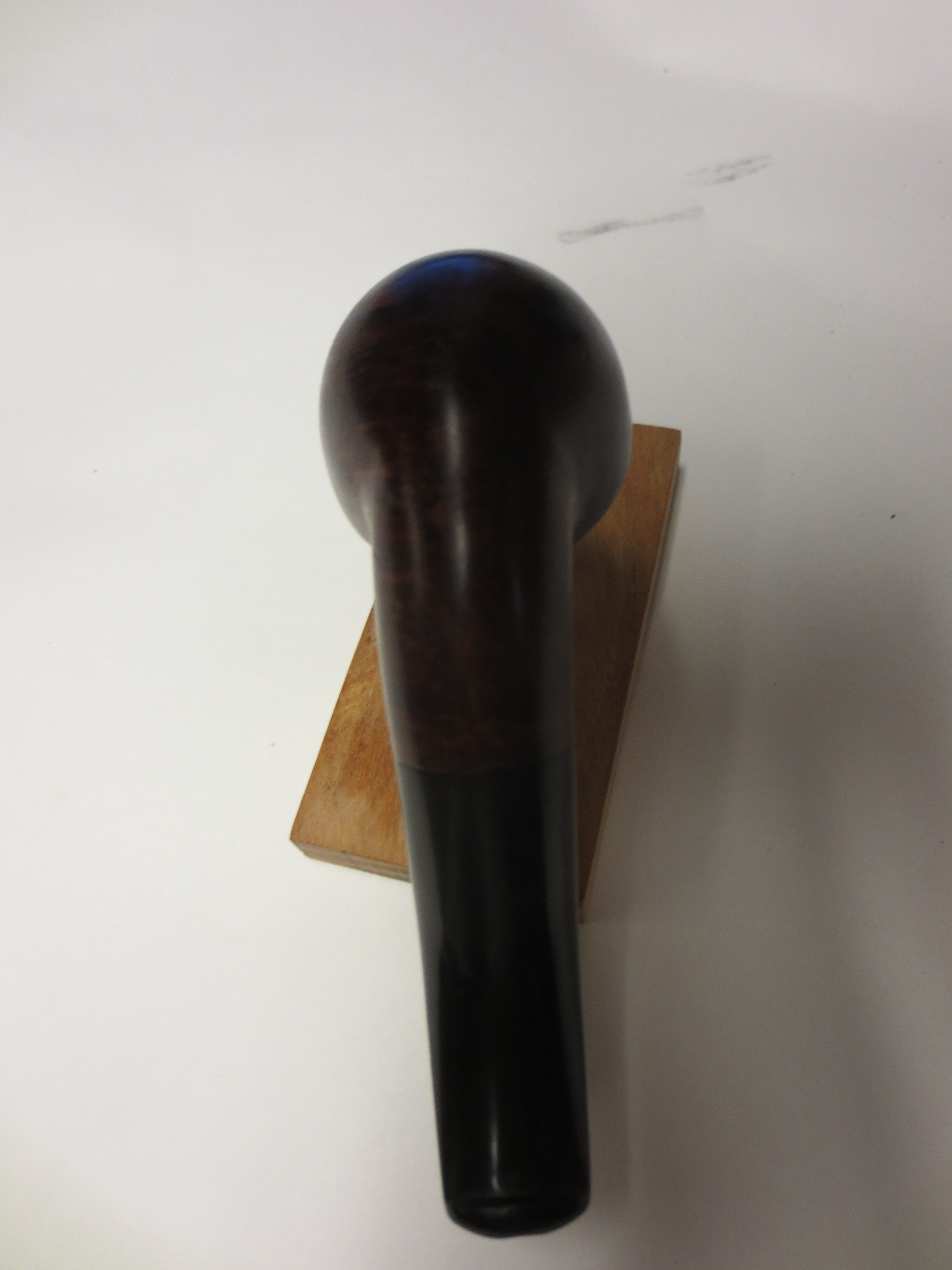
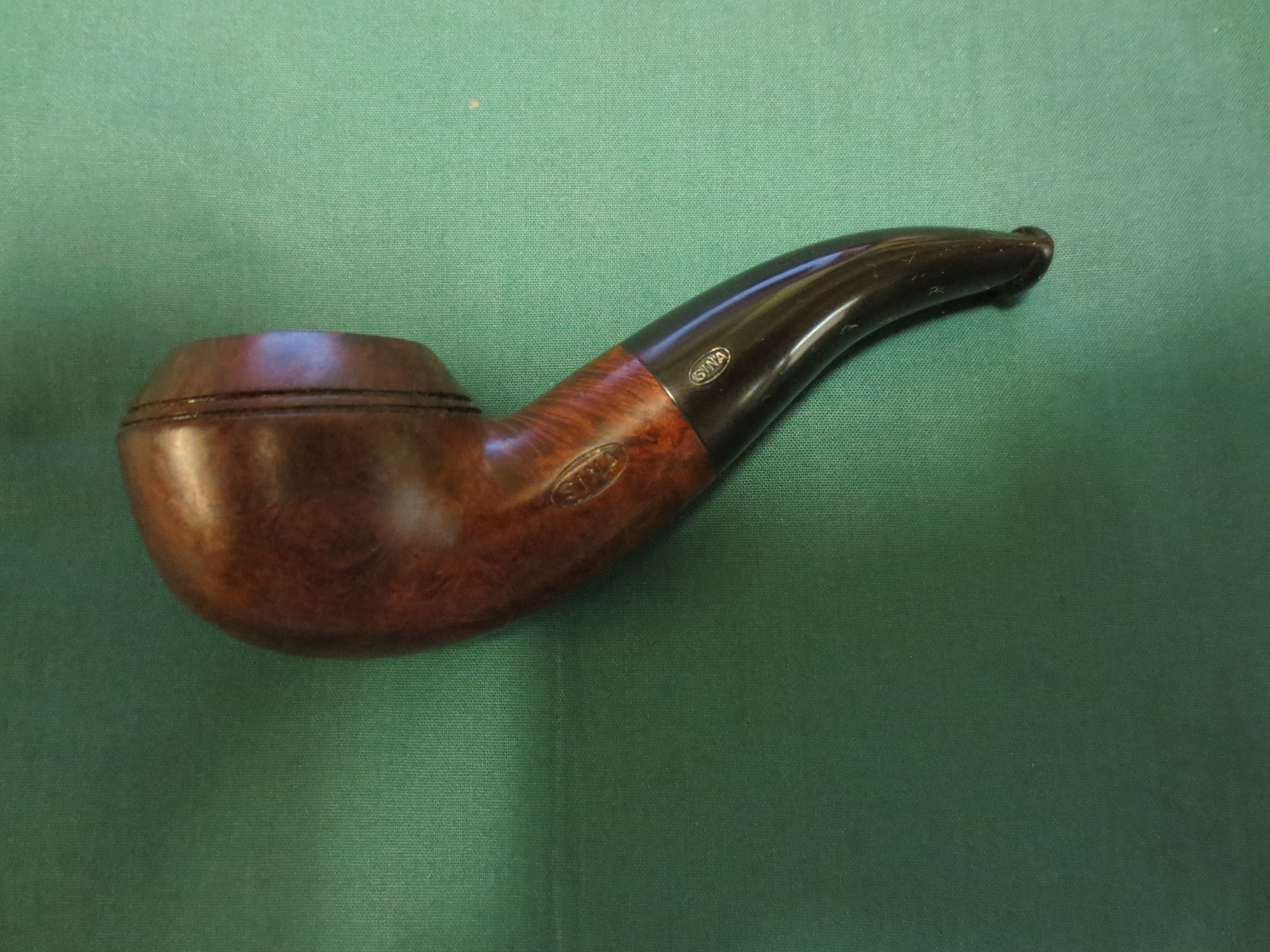
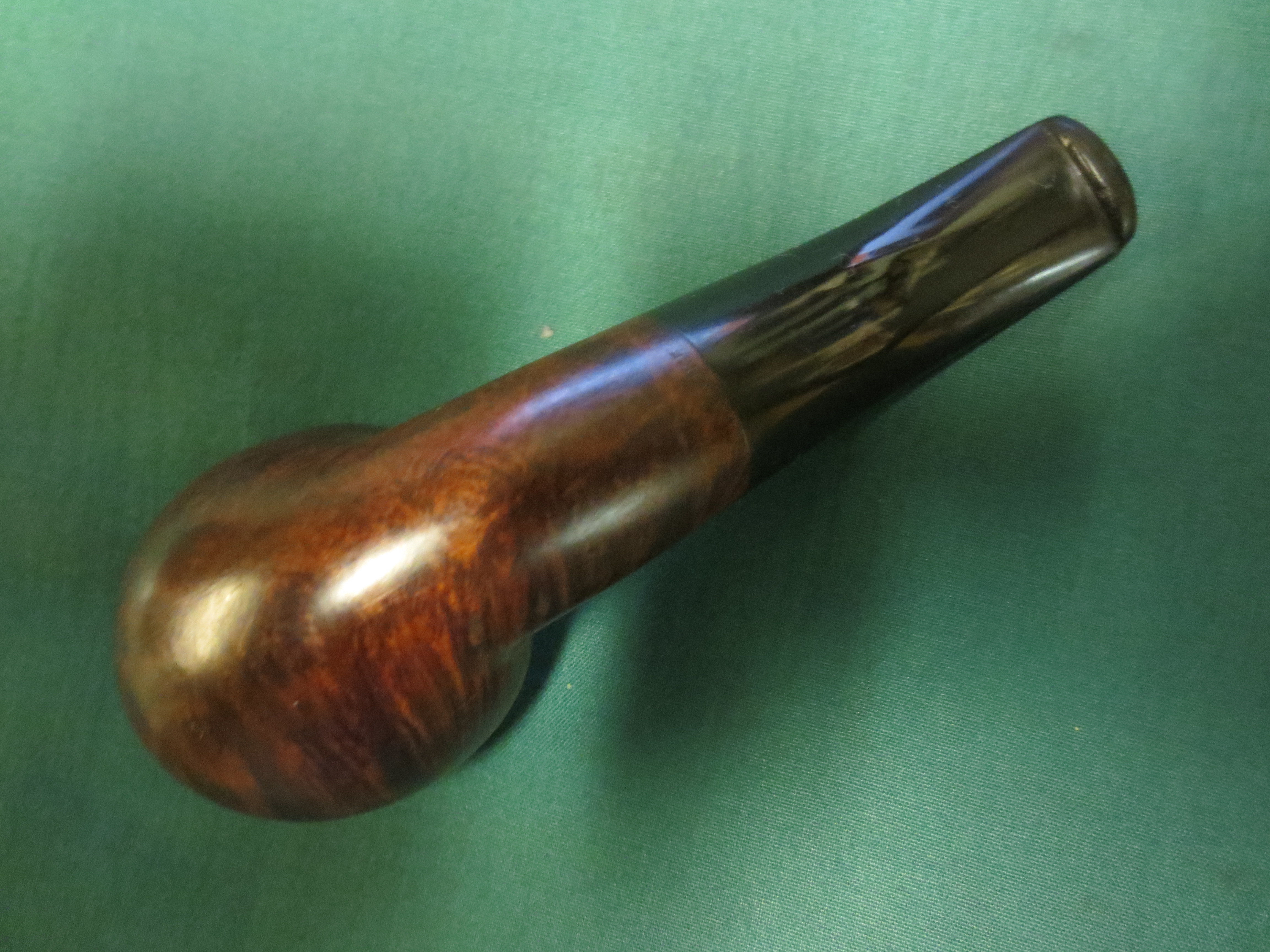
Giving New Life to a SINA Rhodesian


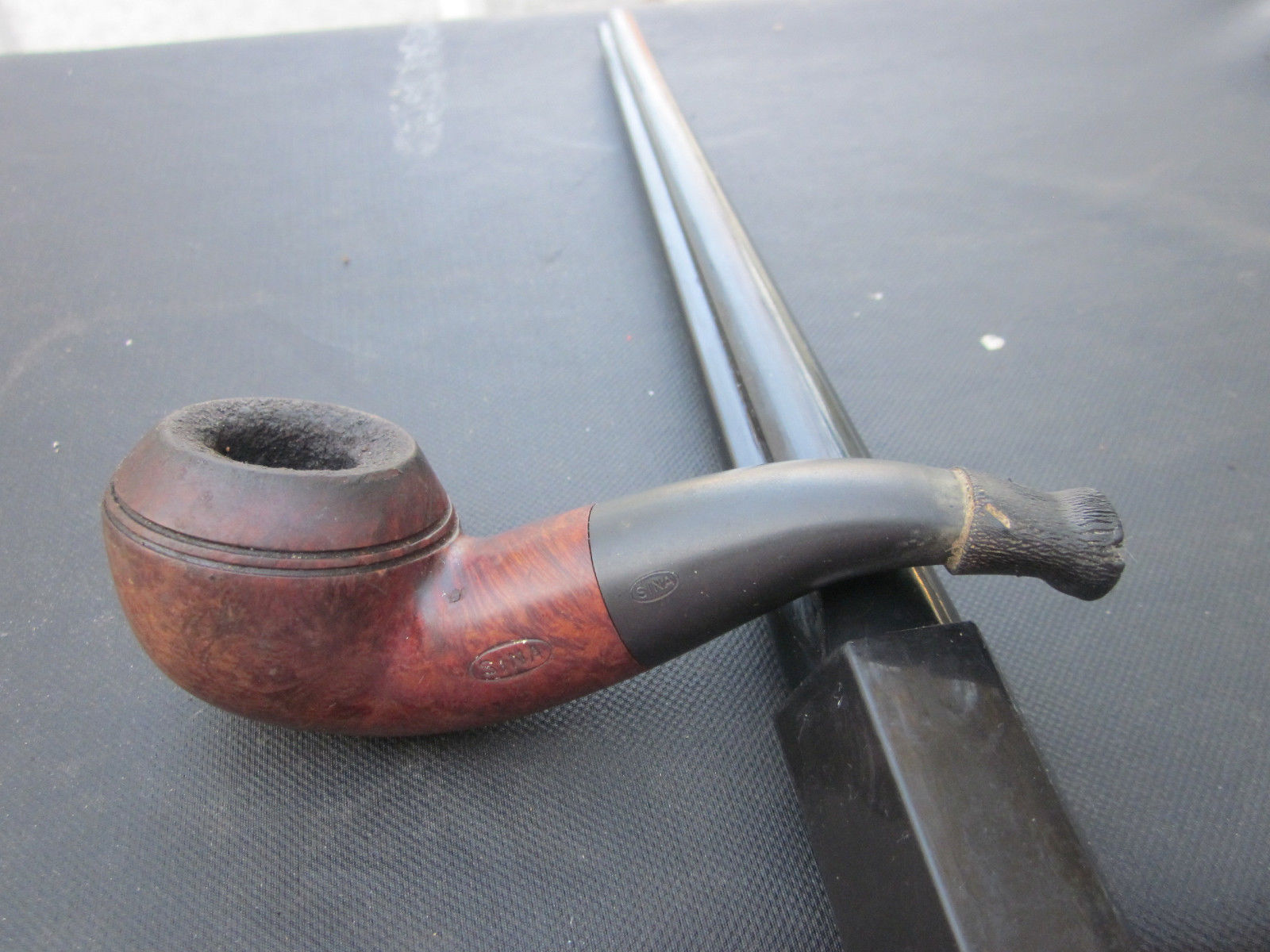
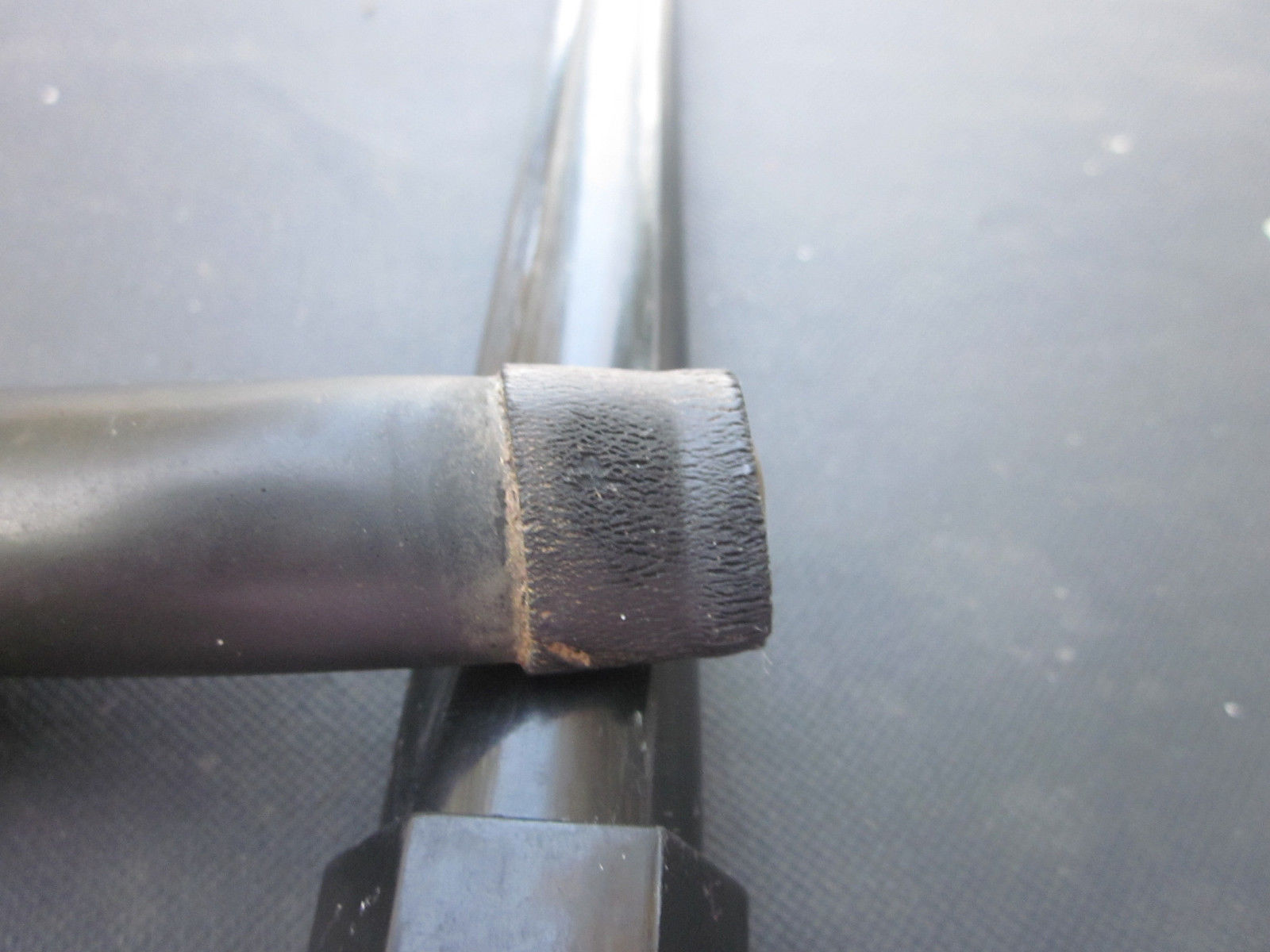
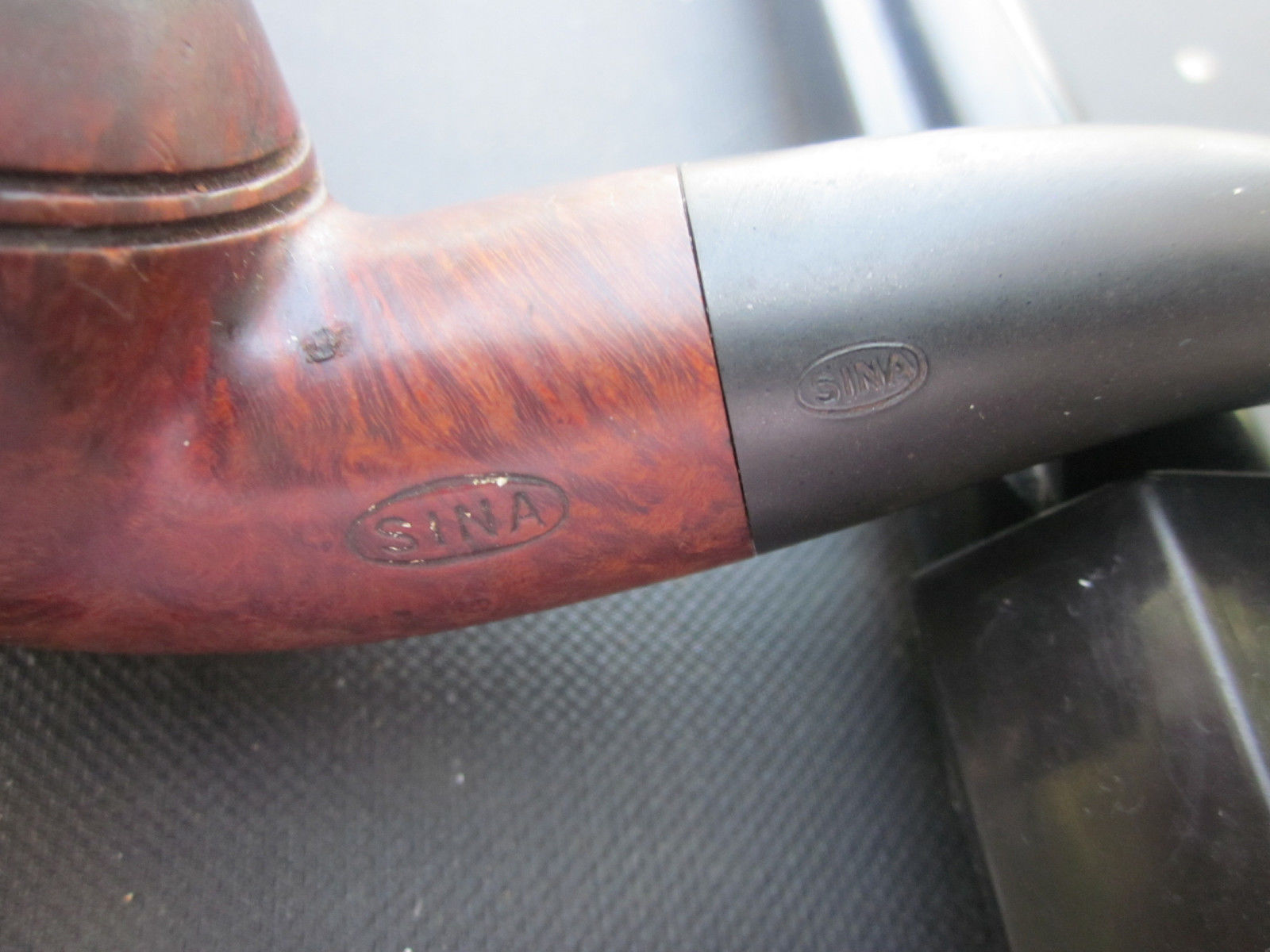
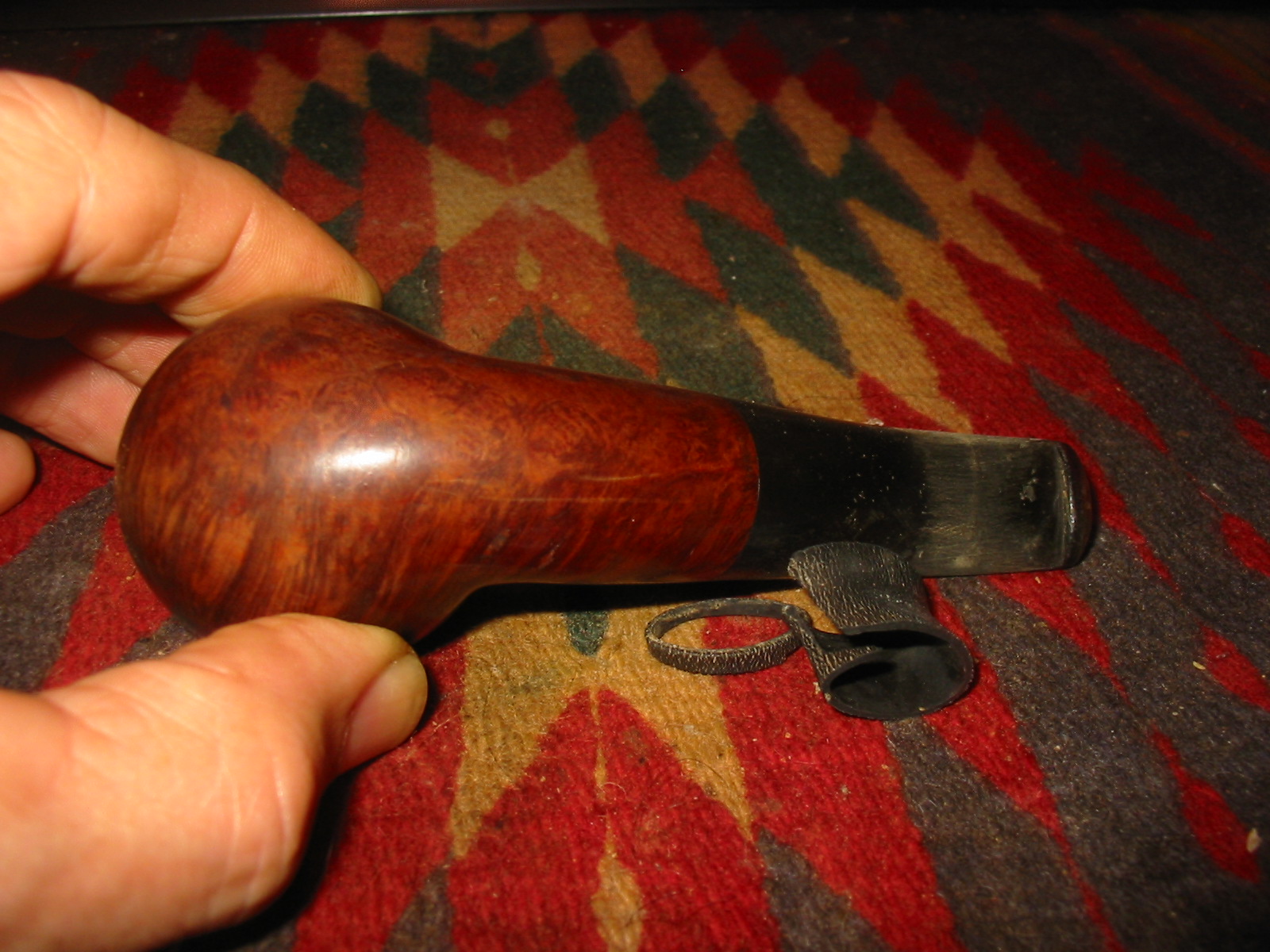
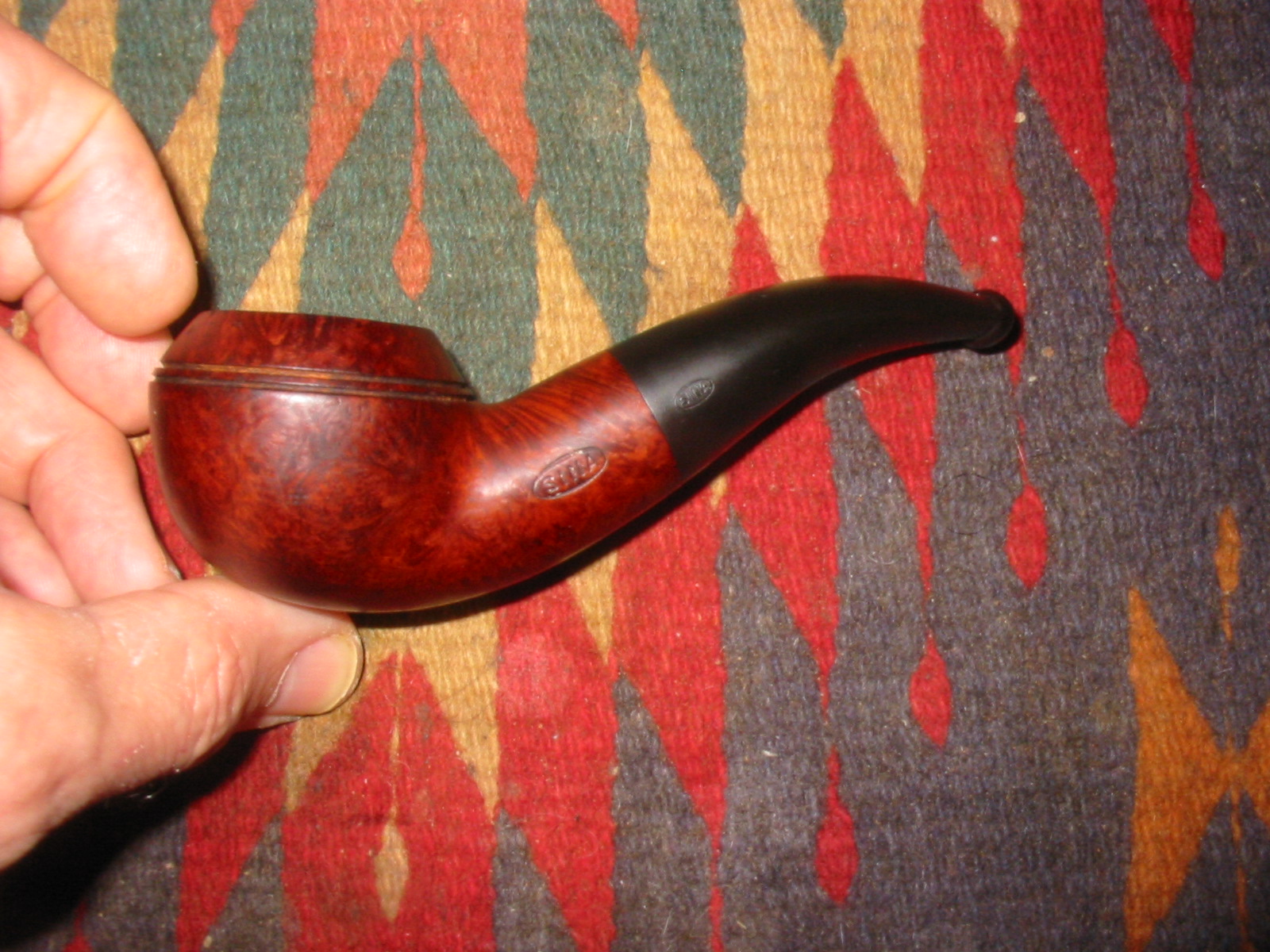
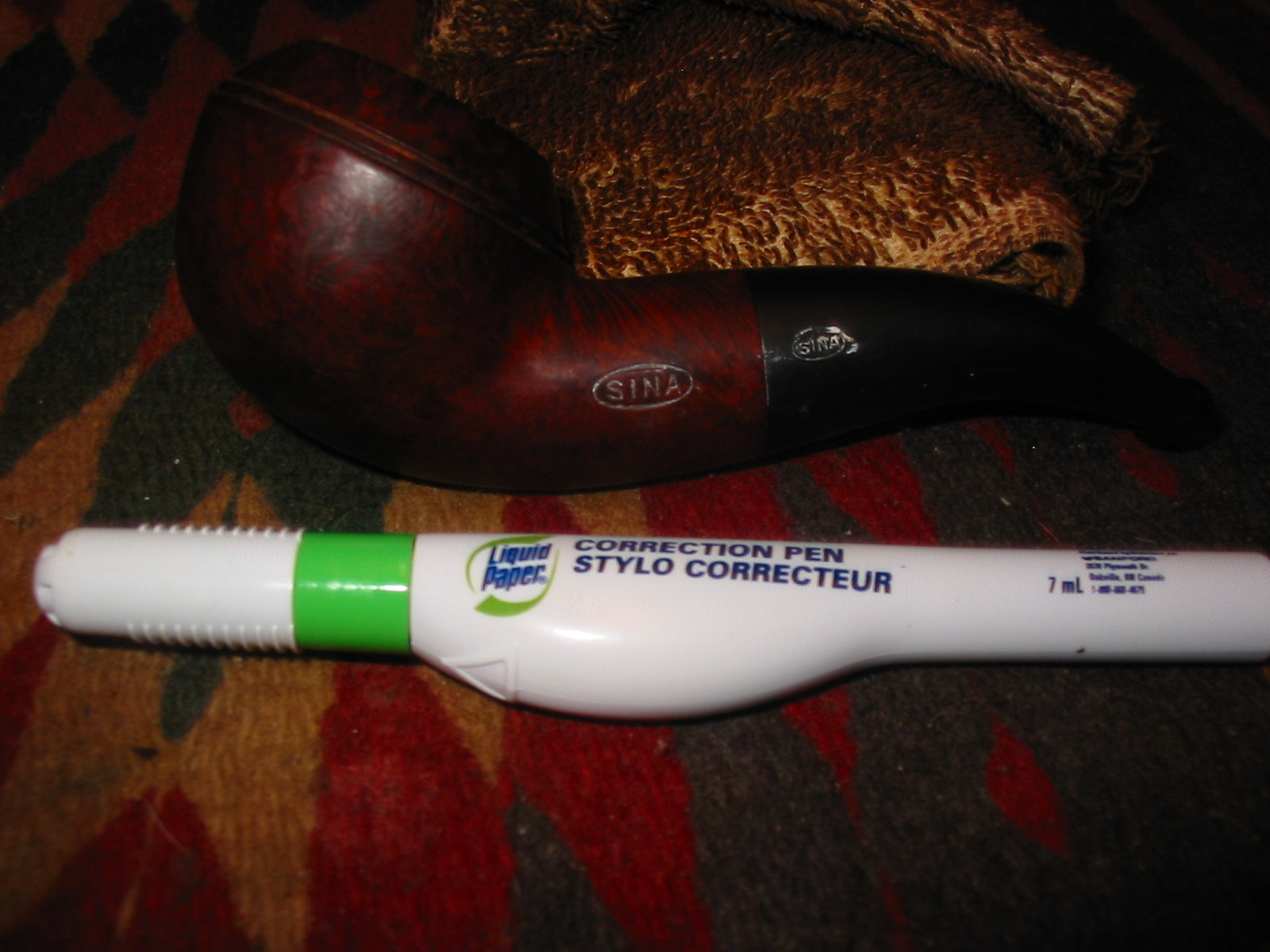
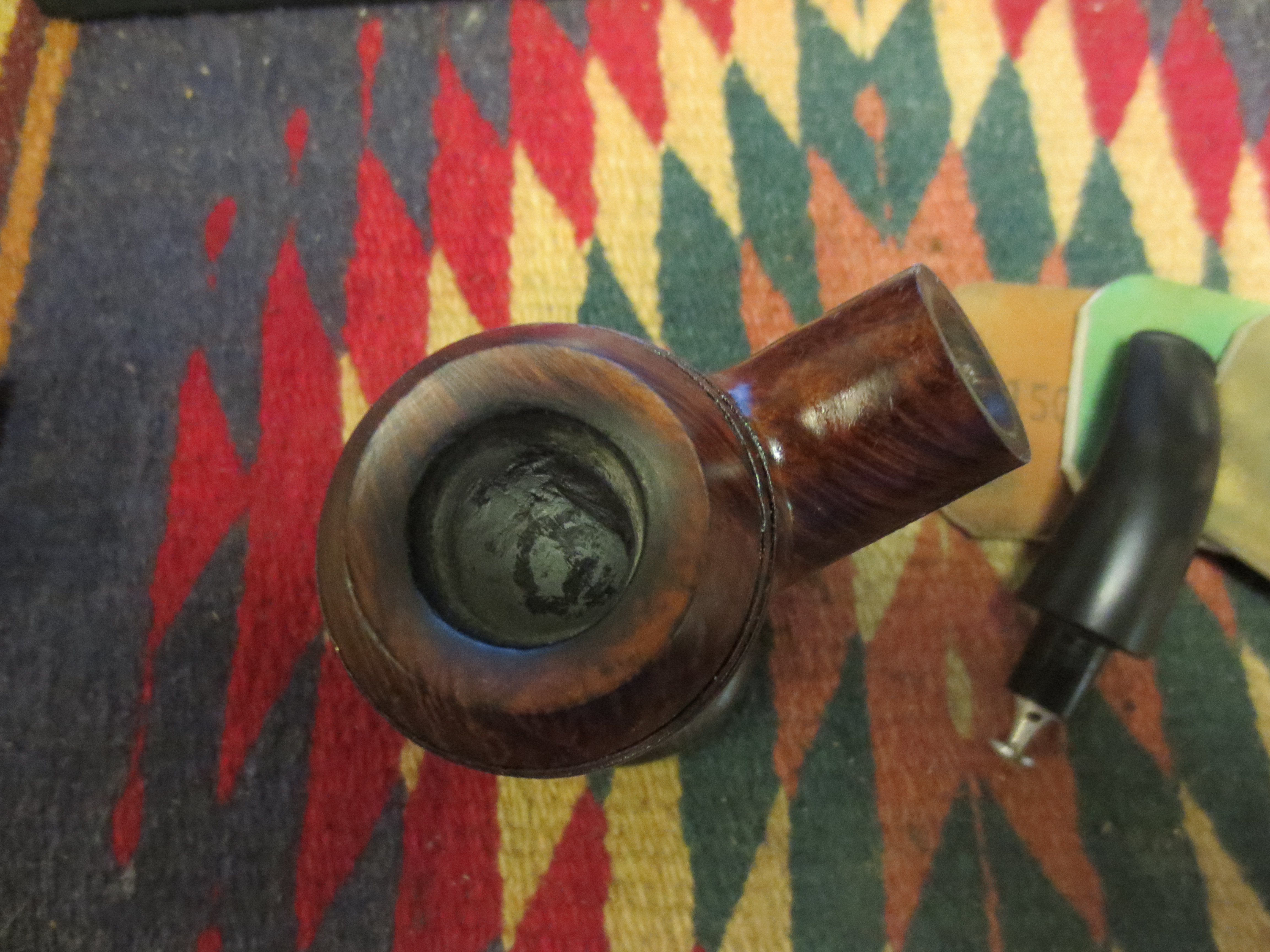
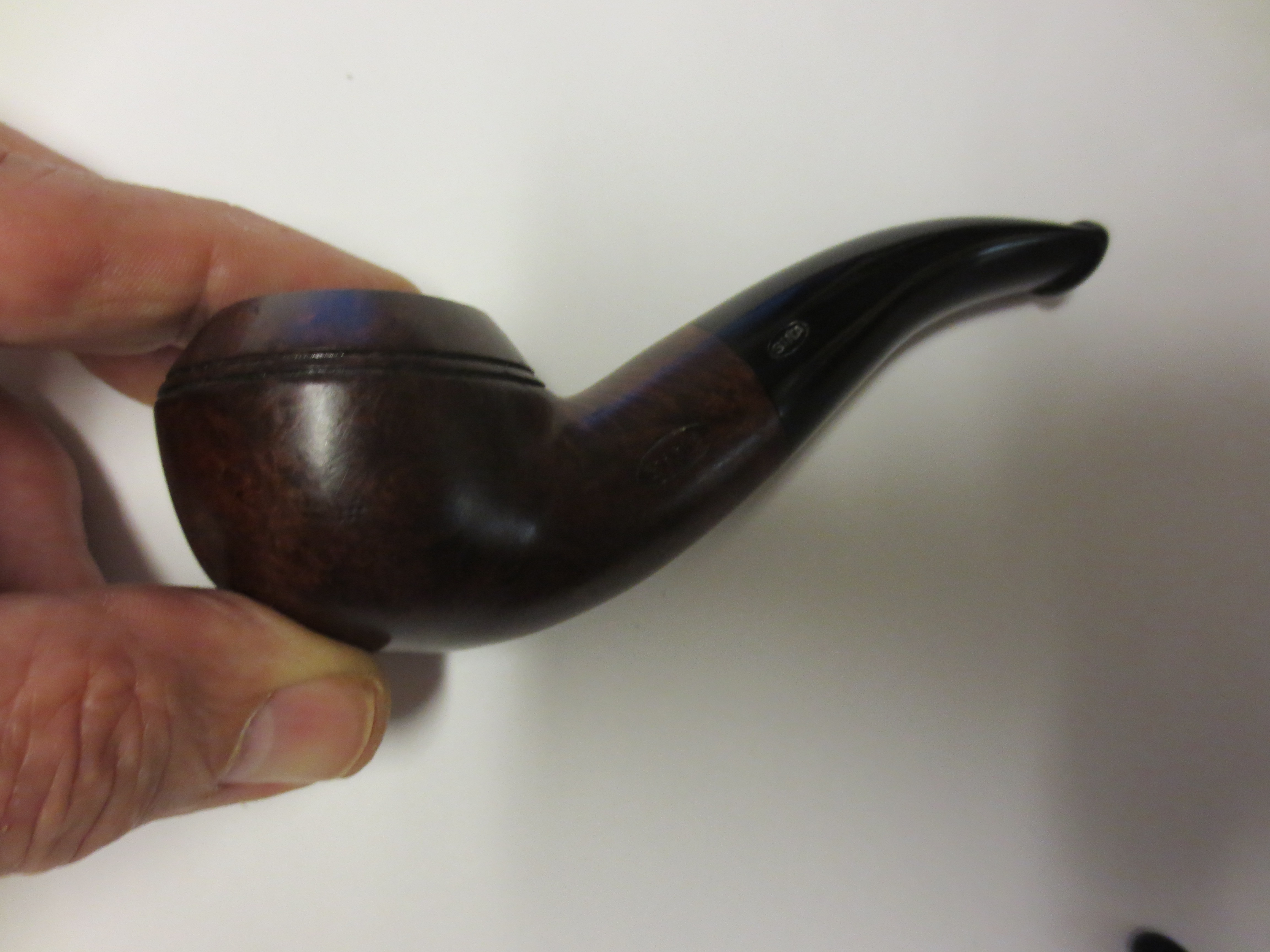
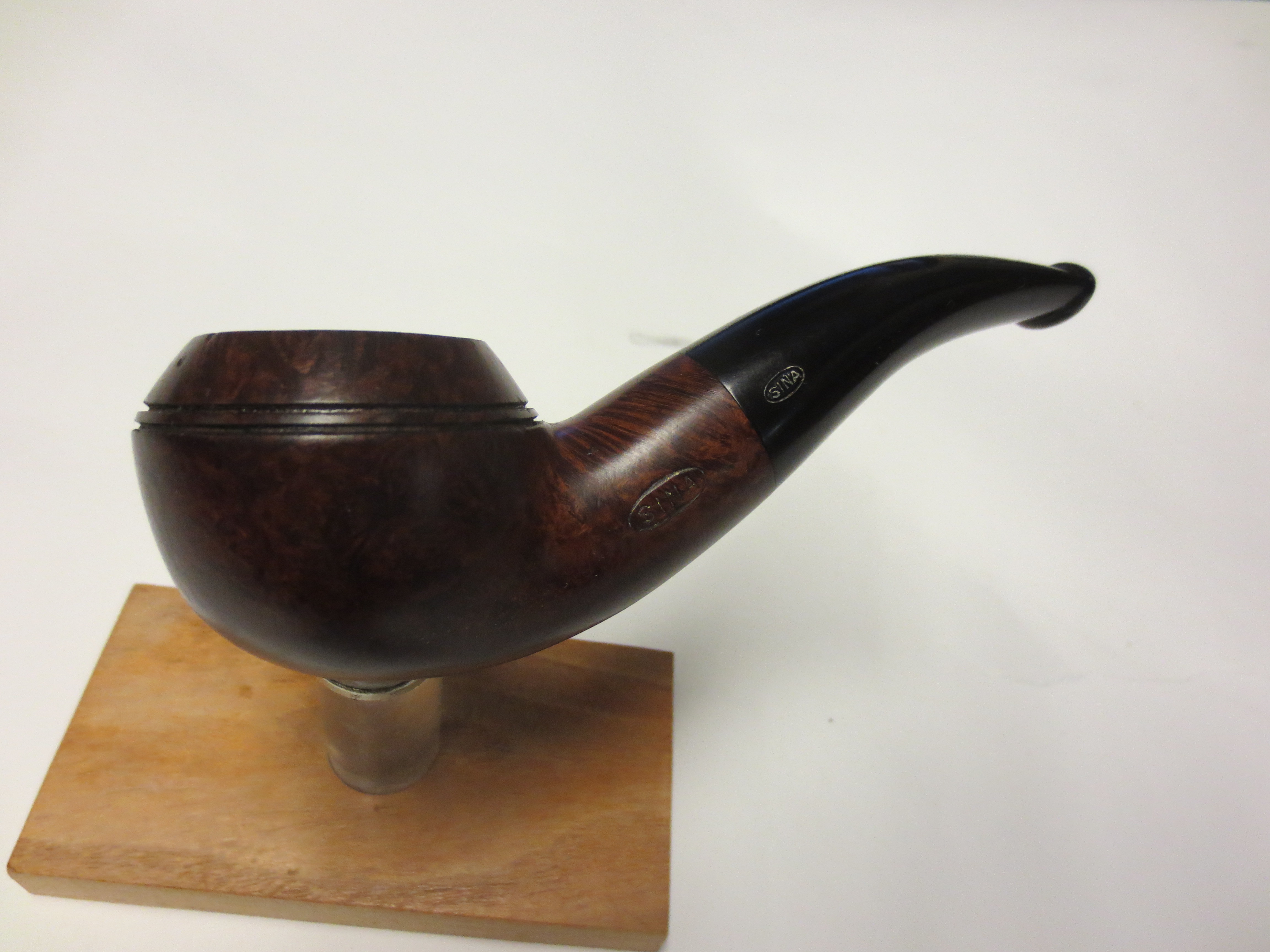
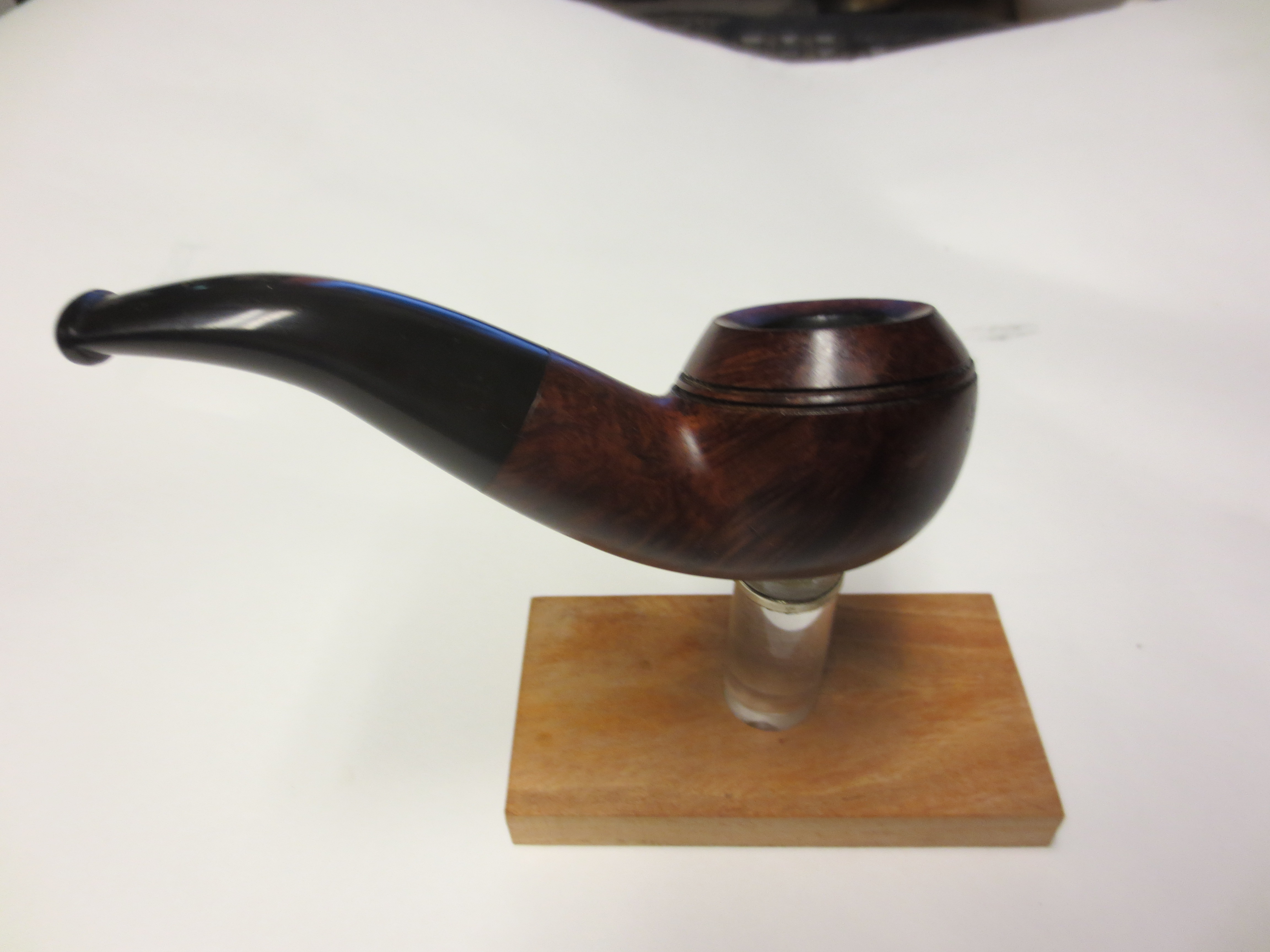
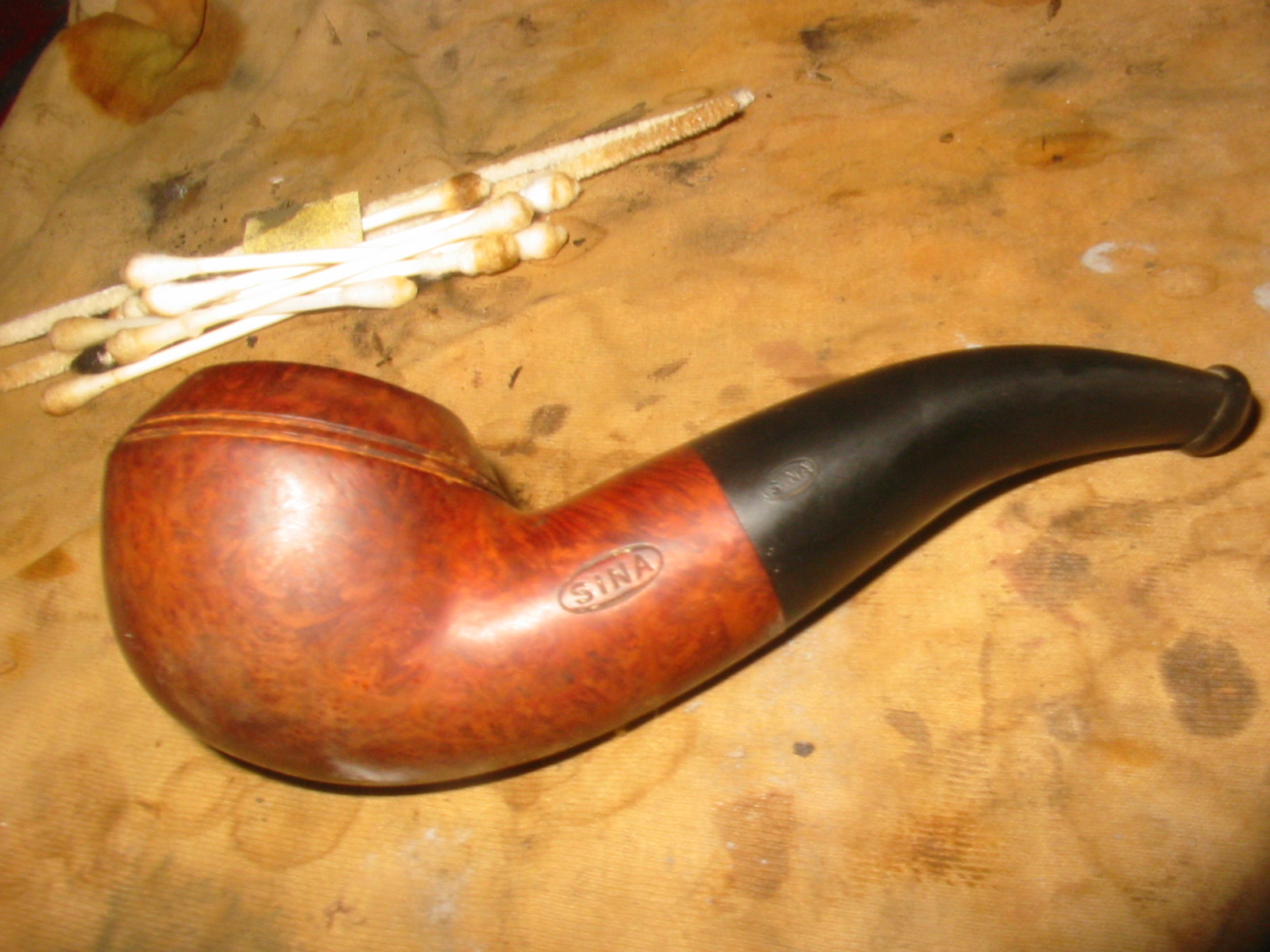
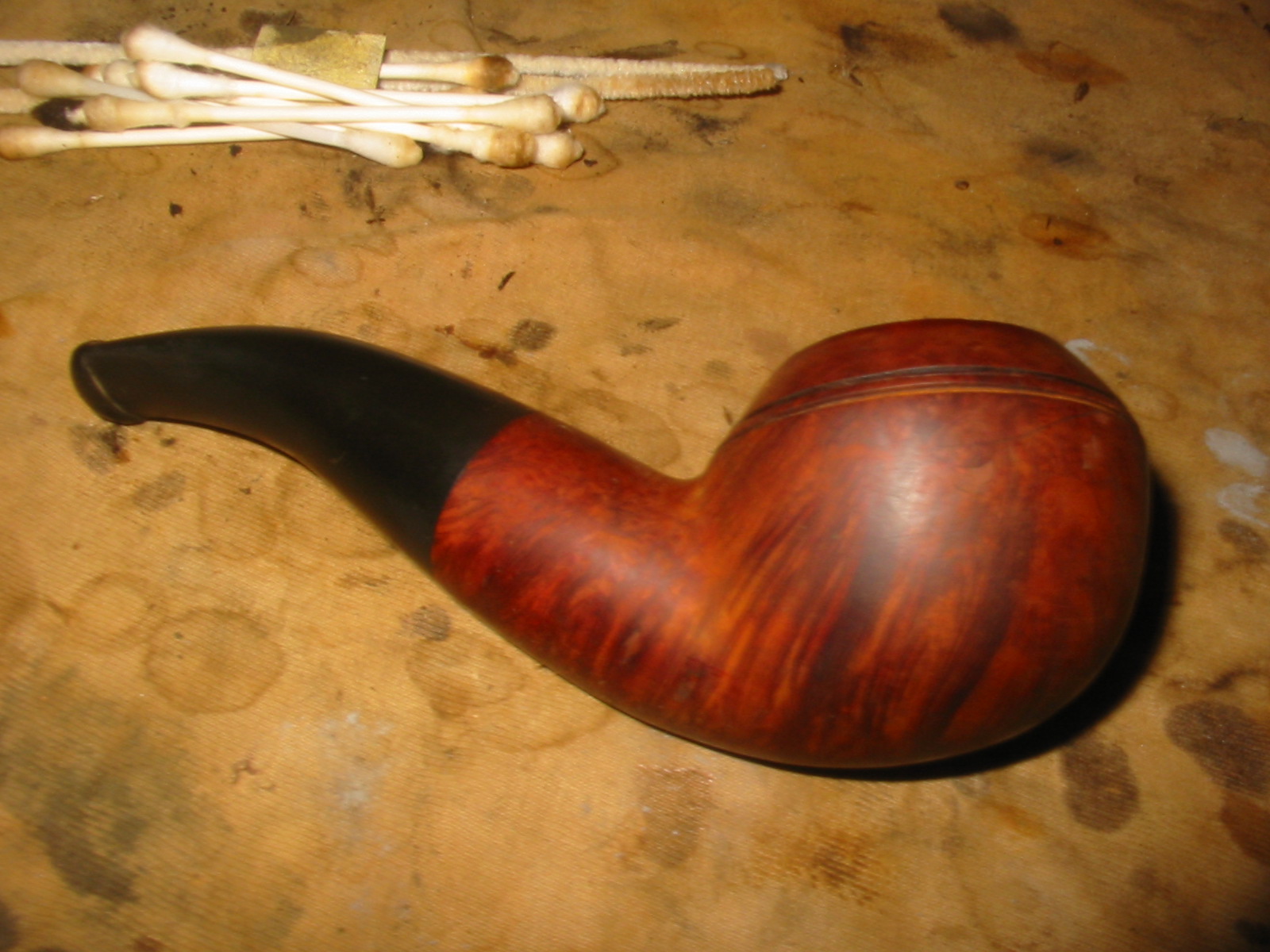
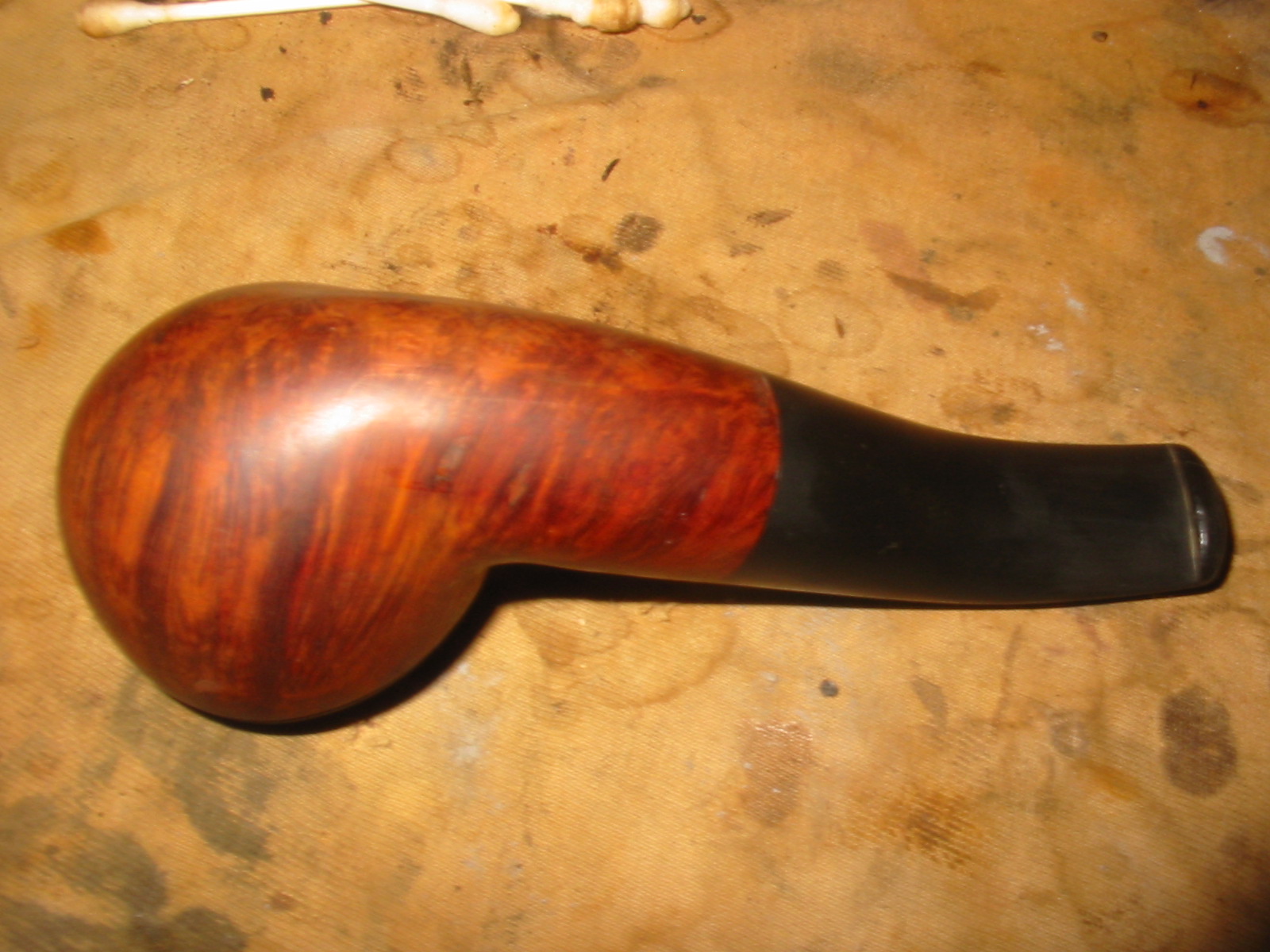
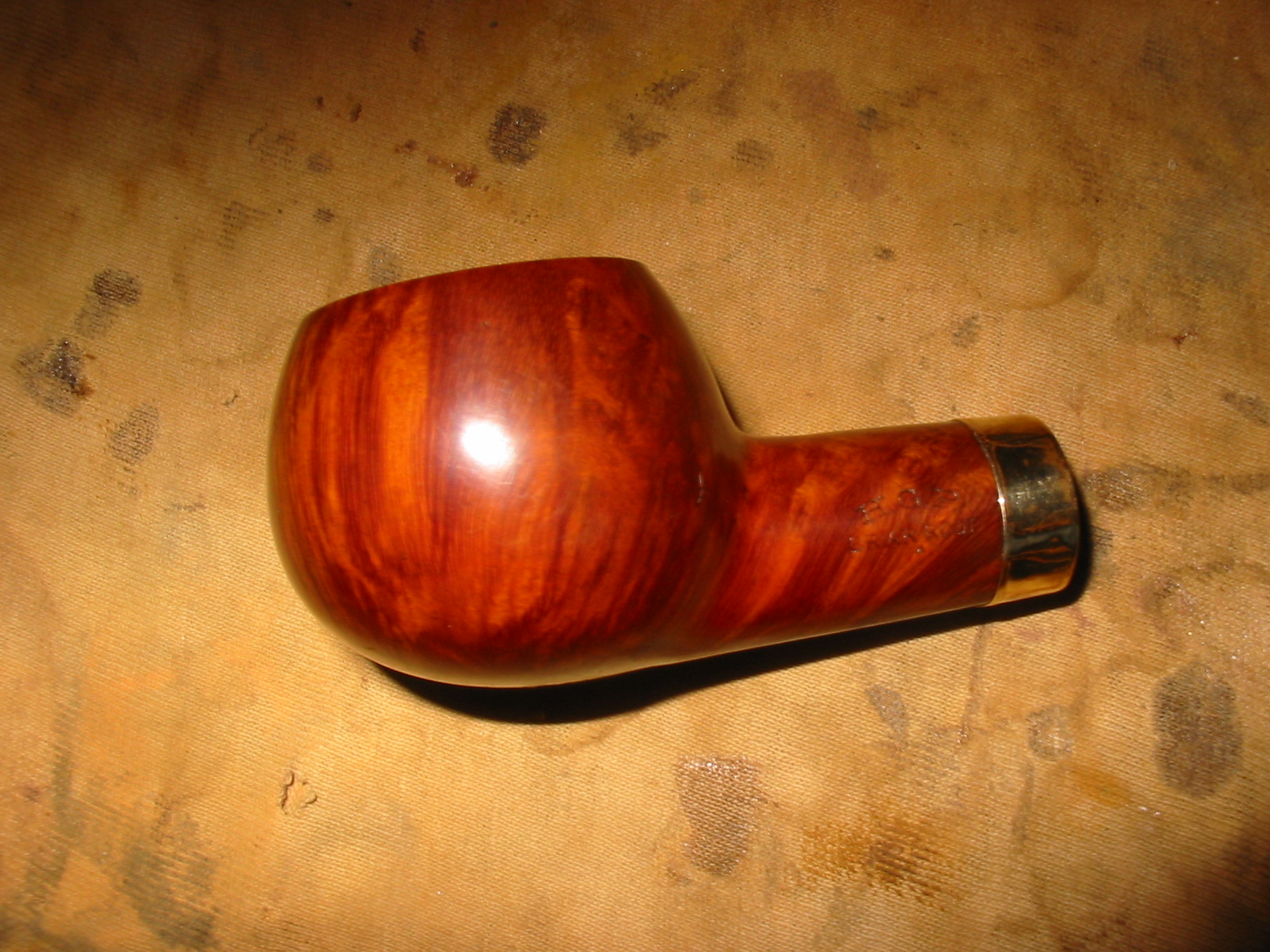
When I first saw this old Rhodesian on Ebay I wanted it. It had the look of GBD 9242 but was chunkier than normal. I have had the 9242 on my wish list for a long time and have missed many over the years on Ebay. But this one seemed to be under the radar. It was stamped SINA on the shank and the stem and France on the underside of the shank near the stem. It looked to be in rough shape in terms of cake and finish. The stem looked oxidized and the rubber bite guard looked positively ancient. I watched the pipe for several days and there was no action so I bid a low-ball bid on it. No one else bid until the last two hours. Then there was some hot action between one other bidder and myself. I threw the top price I was willing to pay for the pipe in and sat out the auction to see what would happen. I won the pipe and only had to wait to receive it. The seller sent it out on a Friday from New Jersey in the US and it arrived in Vancouver, Canada on Tuesday. I was very surprised when I came home to find that it was already here. The photos below are from the seller. They give an accurate portrayal of the condition of the pipe. Sina1 Sina2 Sina3 Sina4 The photos showed that the condition of the pipe was rough. The cake build up on the rim was like rock. The finish was worn and had hardened pieces of tobacco stuck to the finish. The outer edge of the rim was actually still in good shape and the bowl was still round. The inner edge looked to be fine under the grime. The double ring around the bowl was in fair shape with some small chipping on the bottom edge of the ring. It was minor and would definitely clean up. The grooves of the rings were filled with grit so that they were almost the same height as the rest of the bowl surface in some places on the pipe. There were some fills on the side of the bowl and shank but they were hard to see under the grime. The shank was dirty and the stem did not fit flush against it due to the buildup. The stamping was crisp and showed white paint on both the shank and the stem. There was an ancient fossilized rubber bit guard on the end of the stem so I was hoping that it had protected the stem from damage.

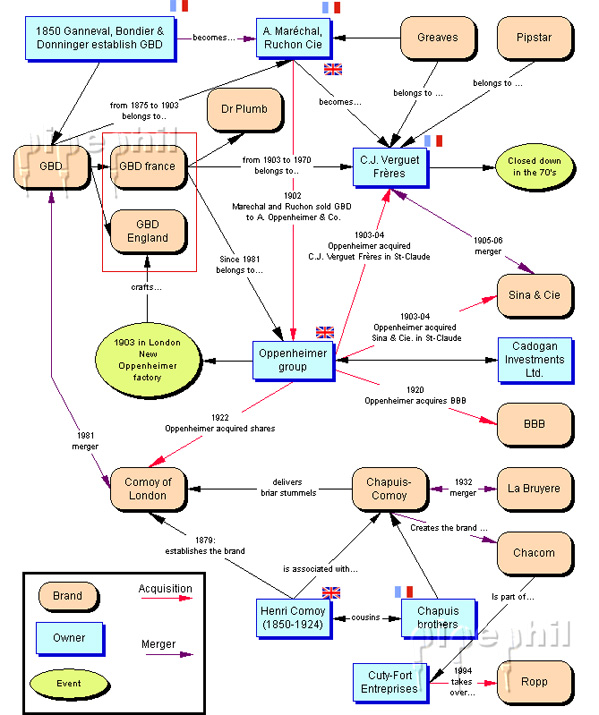
I did a bit of research to find out about the maker of the SINA pipe. I looked on Pipephil’s site and was able to find out that there was indeed a connection to GBD. The connection was with the French branch of GBD. Noname From the screen capture above you can see the two links under the photo on the left. The first connects the pipe to the Marechal Ruchon & Co. factory that made GBD pipes. They eventually sold out to the Oppenheimer group. The French brand was also connected to C.J. Verguet Freres and to Sina & Cie which were sold to Oppenheimer in 1903-1904. In 1905-1906 Oppenheimer merged the two companies. The accompanying chart gives an overview of the twisted trail of the GBD brand and its mergers and sales. The chart also comes from the Pipephil site and was the second link under the above photo. GBD Pipe Connections Armed with that information I knew that the pipe was made before the 1905-1906 mergers. This also fits well with the thick hard rubber stem and the shape of the button and orific opening. The thick shank also fits well with the period as the 9242 shape thinned down considerably in the later years of manufacture. I really like the shape and style of this era of pipe history so this one would be a pleasure to clean up.

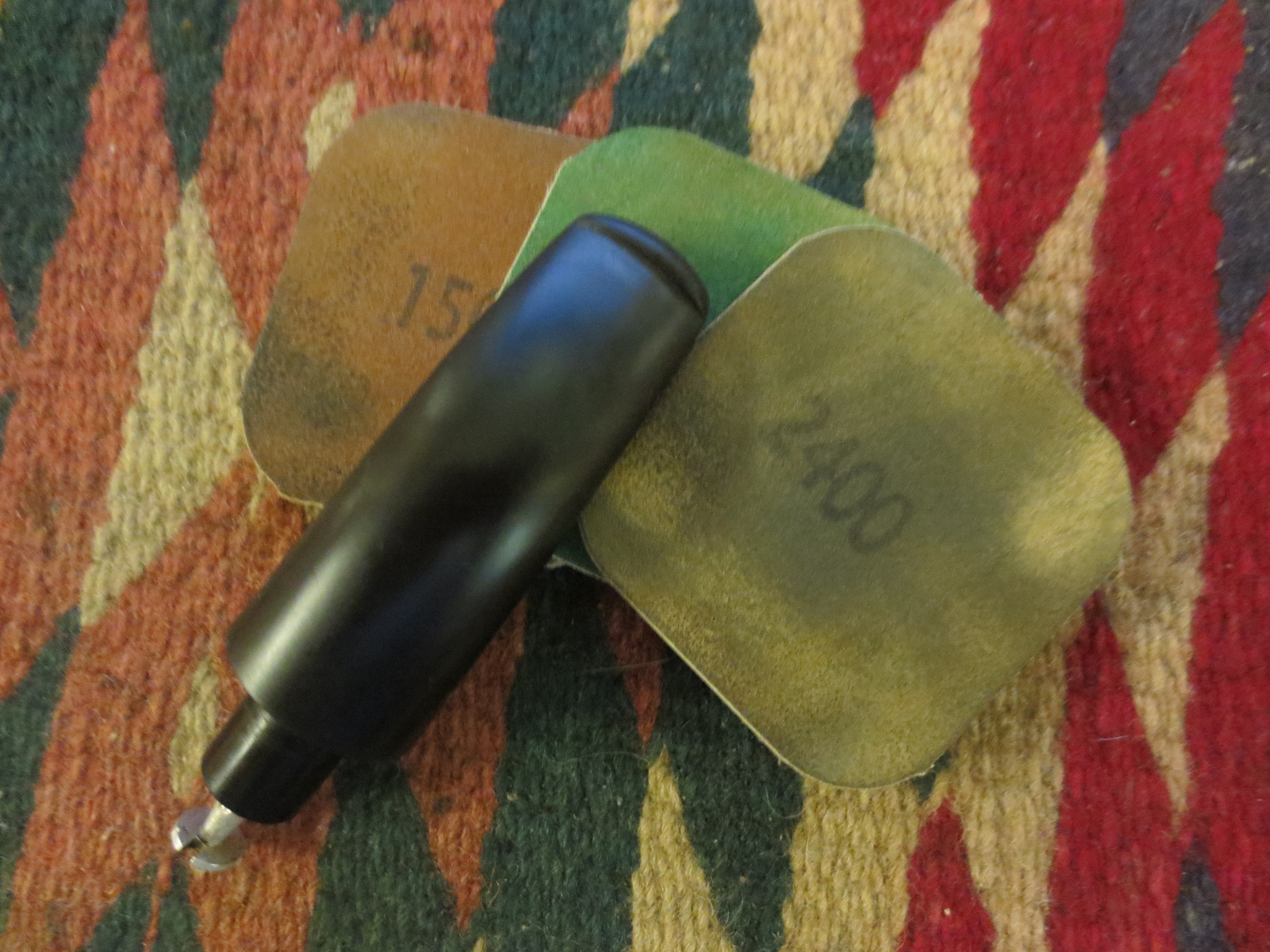
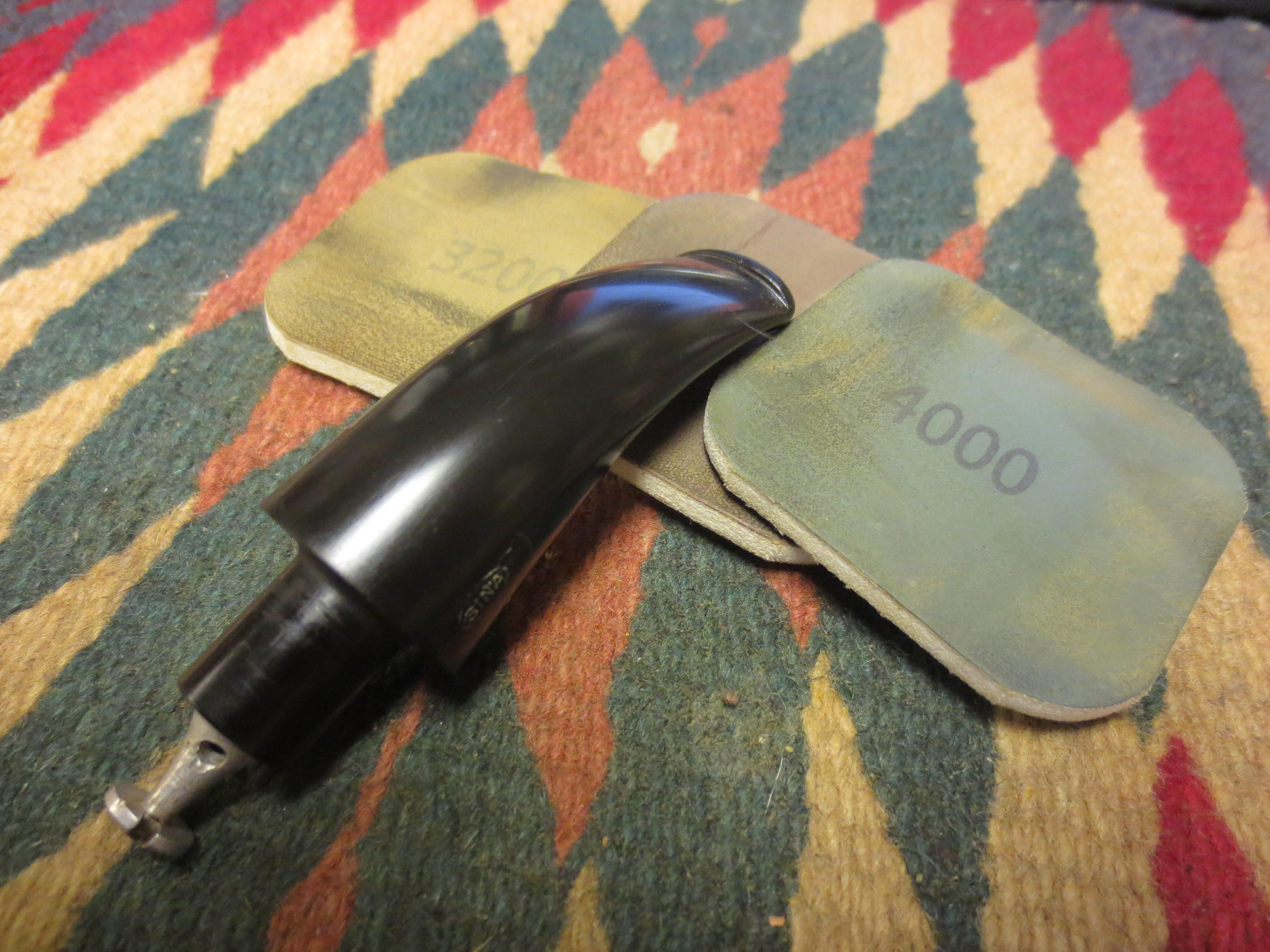
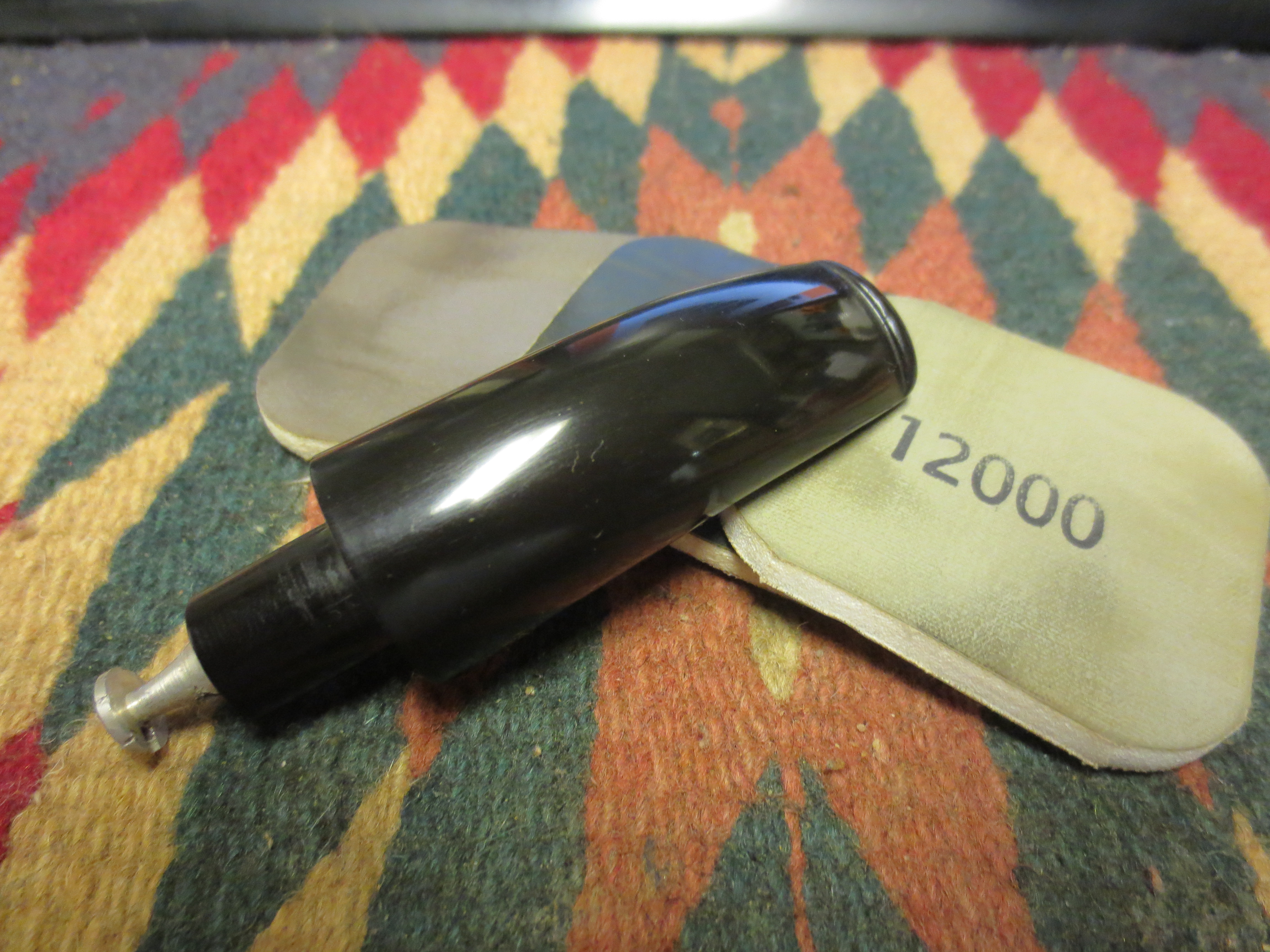
I started by cutting off the fossilized rubber bit guard. Underneath the stem was in fairly decent shape. There was a tooth indentation on the top and bottom of the stem next to the button but it was very shallow. The rubber of the stem was clean underneath behind the calcified line on the stem. Sinaa IMG_8184 IMG_8183 Sinaf Sinad I reamed the bowl with a PipNet reamer using the smallest cutting head first and then working up to one that fit the bowl. I find that if I use this procedure I am less likely to damage the shape of the bowl and inner rim.IMG_8185 The tarry buildup on the rim was impervious to Murphy’s Oil Soap or even saliva and a hard scrub. It was hard as rock. I sanded it lightly to see if I could remove the tar. It looked like that was the only way this stuff would be removed. I carefully sanded the bevel of the rim to remove the tars and clean it up. I wiped it down with oil soap after each sanding to make sure I was only removing the surface. I sanded the inner edge with a folded piece of sandpaper and reached down into the bowl with the sandpaper as well. IMG_8198 I was able to remove the tar but there was some charring and darkening at the back inner edge of the rim that remained. I sanded it smooth but it is still visible in the photo below. I scrubbed out the shank which was absolutely filthy and smelled of sweet aromatic tobacco. The bowl itself also needed to be cleaned and I found that the back inside wall of the bowl around the entrance of the airway was damaged. It was pitted and the opening was very flared so I would need to use some pipe mud to repair that and reshape the opening. I used isopropyl alcohol 99%, cotton swabs and pipe cleaners to clean out the shank. IMG_8200 I mixed a batch of pipe mud – water and cigar ash to repair the inside of the bowl. I put a pipe cleaner in the shank with the tip showing in the bottom of the bowl and rebuilt the wall around the bottom of the bowl next to the airway. I used a dental spatula that Joyal sent to me and it worked perfect for pressing the pipe mud into place and packing it into the rough wall. I was able to reshape the airway so that the wall was smooth and clean. Once it was packed and cured for a short time I removed the pipe cleaner so that the air would move freely through the bowl and shank and allow the mud to cure. IMG_8204 I wiped down the outside of the bowl with undiluted Murphy’s Oil Soap to remove the grime and tobacco bits from the finish of the bowl. I also scrubbed the hard rubber stem with the oil soap to remove the grime on it. The rubber was not too badly oxidized at all once the grime was gone. I find that this old rubber does not have the same trouble with oxidation as later vulcanite stems. The rim damage is visible in the photos below. I would need to do some more sanding on the surface to smooth it out and remove as much of the damage as possible without changing the shape of the rim bevel. IMG_8207 IMG_8209 IMG_8210 IMG_8211 With the bowl cleaned I set it aside to let the pipe mud cure and turned my attention to the stem. There was a unique stinger apparatus in the end of the tenon that looked like a mushroom cap on the end. It was black with tars and the draw on the stem was quite tight. IMG_8199 I cleaned the stinger with alcohol on cotton pads and swabs and was able to remove the tarry buildup. It took quite a bit of scrubbing but I was also able to push a pipe cleaner through the stem and out the button. I had to guide it around the mushroom cap end but I cleaned it until the metal was shiny. IMG_8201 IMG_8202 IMG_8203 Once it was clean I could see that it appeared to be pressure fit into the tenon and not threaded. I was not certain so I wrapped a cotton pad around the end and carefully turned it by hand until it popped free of the end. The photo below shows the insert clearly. It had to slits on the sides that could be spread open to make a tighter fit if necessary. The end of the tenon was quite open without the stinger. The insert end of the stinger gives some idea of the diameter of the airway. With the stinger out of the way I cleaned the stem with cotton swabs, pipe cleaners and isopropyl alcohol until it was clean. IMG_8205 I buffed the stem with red Tripoli and White Diamond and then sanded it with micromesh sanding pads. I wet sanded with 1500-2400 grit pads and dry sanded with 3200-12,000 grit pads. I gave the stem a final buff with White Diamond and then gave it several coats of carnauba wax. IMG_1654 IMG_1659 IMG_1660 I decided not to stain the pipe but rather to give a rubdown with olive oil and let it dry for several days. The photo below shows the pipe after it has been drying for several days. The rich dark reddish brown colour of the briar comes out nicely and the fill areas are well blended into the finish. IMG_8212 I used a correction pen with white out to restore the white in the stamping on the left side of the shank and also on the stem. I applied the white out and then let it dry before rubbing it off with a cloth. IMG_8213 IMG_8214 I gave the bowl a coat of Danish Oil to protect the finish and give it a completed look. I applied the oil with a cotton pad and set it up to dry overnight. The pipe is shown in the photos below after the oil has dried.
IMG_1655 IMG_1656 IMG_1657 IMG_1658 My old camera is slowly dying so I am adjusting to a new camera. I had my daughter help me with the following photos. I like the overall look that the new camera delivers as it is truer in terms of colour and shine of the pipe. I am still learning the ropes with all the settings though. I took two series of photos for the finished pipe. The first series of five photos I used a flat white background to see how that would turn out. The last series of four photos I used the same green background I have used in the past. The photos against the green background actually give a truer picture of the colour of the pipe. Ah well still a lot to learn with this camera. IMG_1661 IMG_1662 IMG_1663 IMG_1664 IMG_1665 The finished pipe is cleaned and ready to fire up with its inaugural bowl. The old soldier from the early 1900’s will once again feel the warmth of the fire and tobacco and the draw of a pipe man enjoying its feel in his hand. I think this weekend will be the time to enjoy a nice bowl of aged 5100 in this pipe. IMG_1666 IMG_1669 IMG_1668 IMG_1667

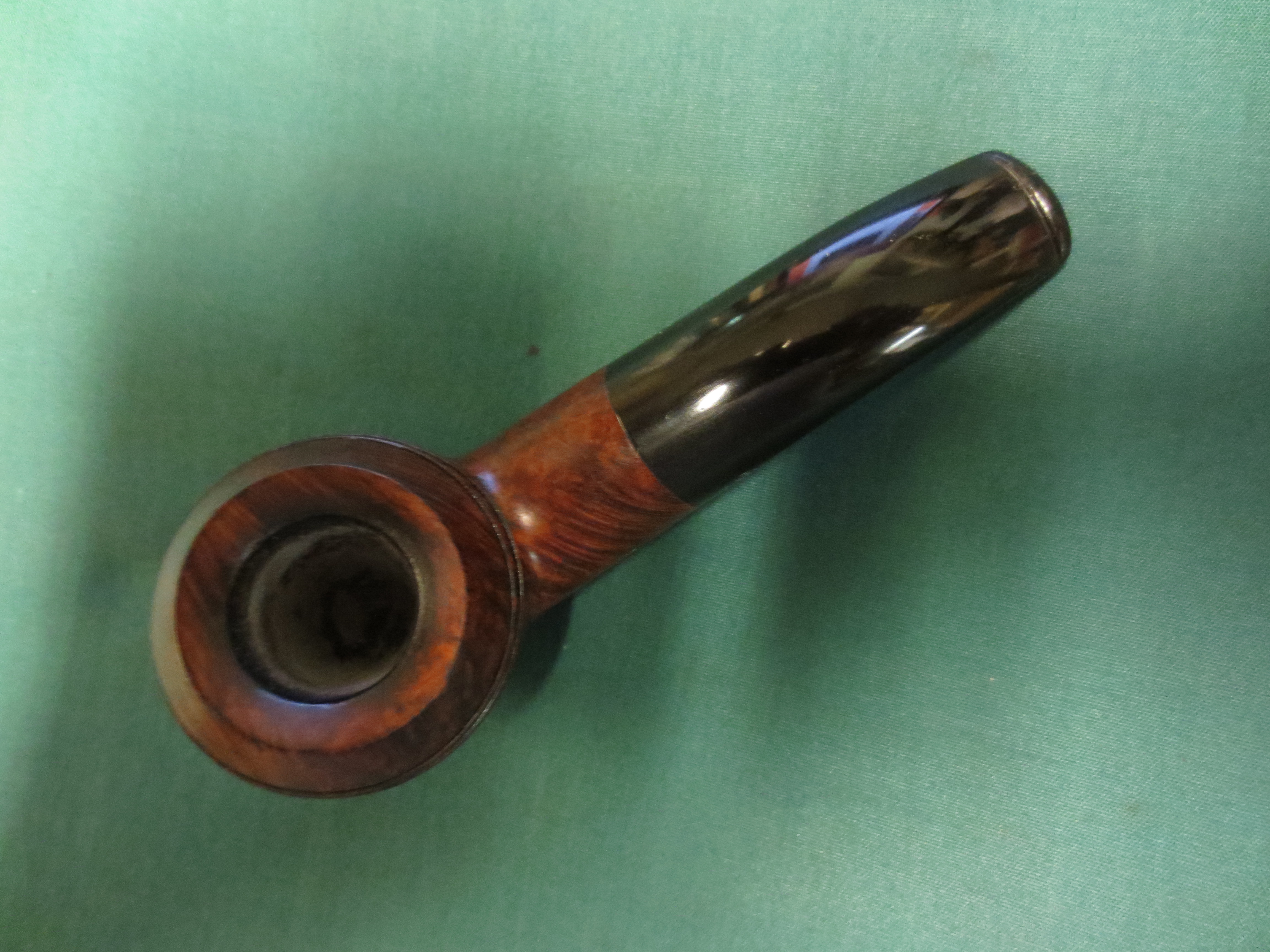
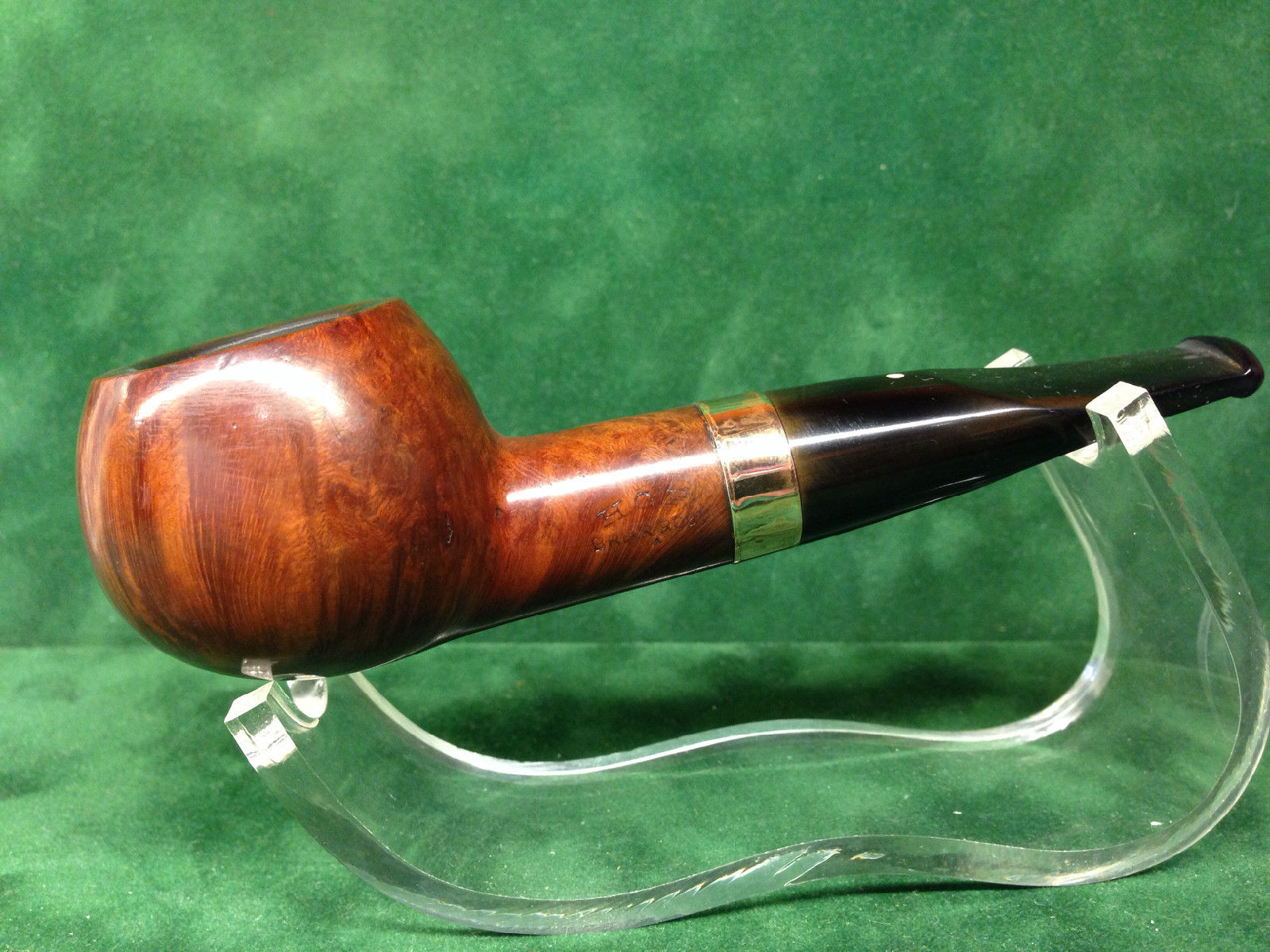
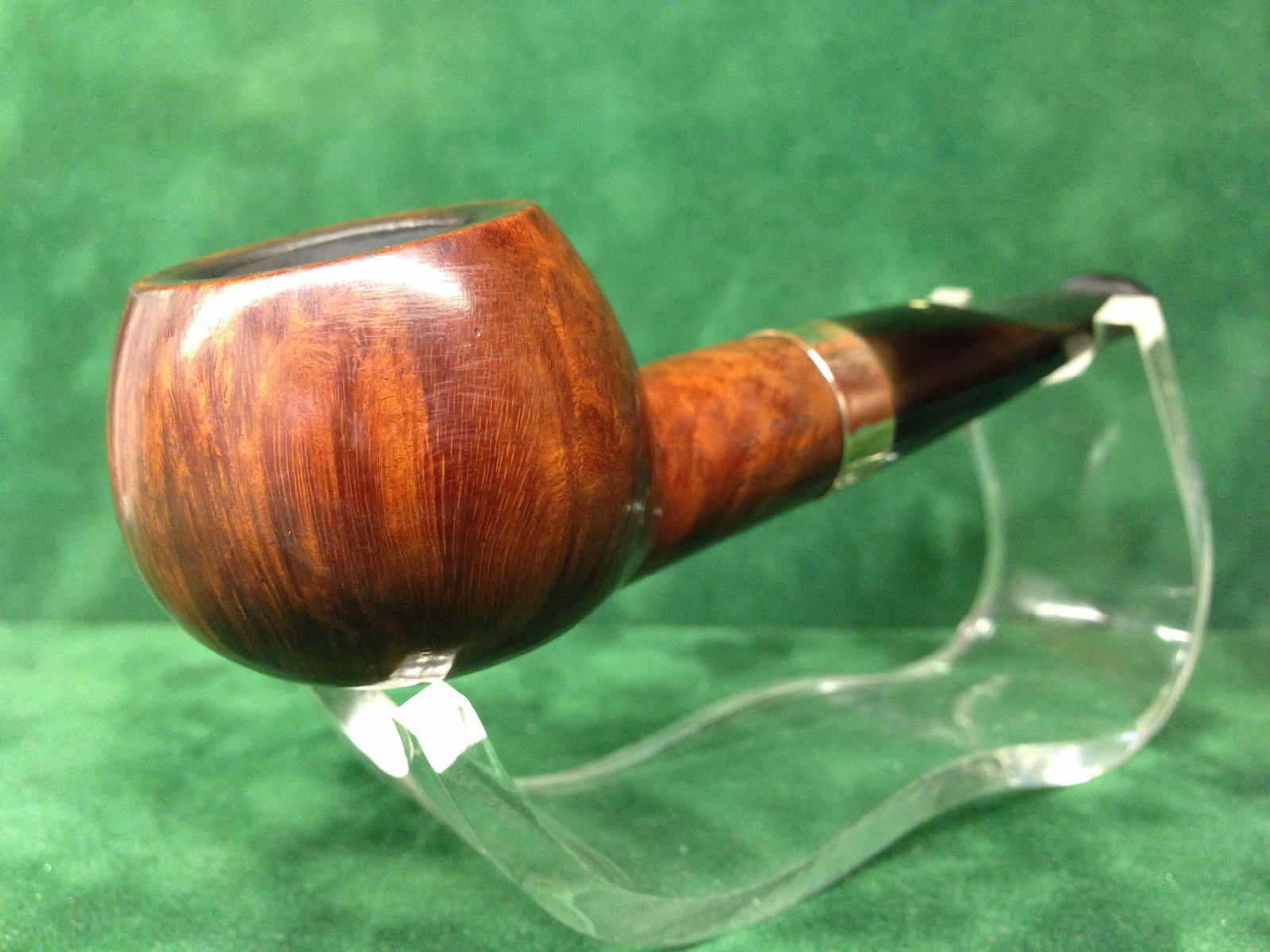
Restoration of a Barclay Rex HGP Briar Root Labelled “THE DUKE”


I read a post by dmcmtk on Pipe Smokers Unlimited Forum regarding a pipe he picked up that was a Barclay Rex with a white spot on the stem. He had written to the store and received a response that the pipe was made for them by Dunhill. I had no idea that Dunhill had made pipes for the NY shop so I began to hunt down some of these pipes looking for the tell-tale white dot on the stem. I found some on Ebay under the Barclay Rex shop store there and one stood out to me and seemed to call my name. The write-up on the ad read:
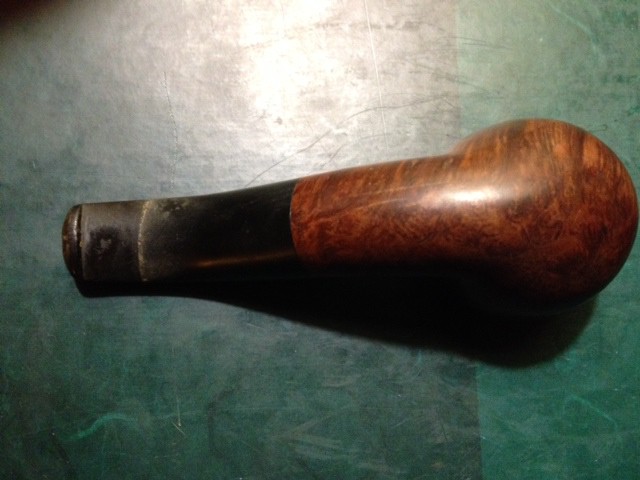
“This is a HGP Stubby Briar Root estate pipe that has been carefully restored on-site.The stem is in excellent condition and has very little visible wear; there are a few nicks on the bowl. This pipe was made by hand for Barclay Rex and likely dates to before 1960. The letters HGP actually stand for the craftsman’s initials.”

The story and the shape intrigued me and it had the white spot on the stem. I was hooked. It had a buy it now price so I went for it. I contacted the store and paid the bill and the pipe was mine. I was not too concerned about the condition as I would work on it anyway. The ad said that it had been carefully restored on-site so I would see what that meant when it arrived. The photos below were on Ebay and give a good idea of why the shape caught my attention. $_57 $_58 $_59 $_60 $_61 $_62 $_63 $_64 $_65 $_66 I wrote to Barclay-Rex to find out a little background information on this pipe and the stamping it showed in the pictures. I received this email response:
Dear Steve,
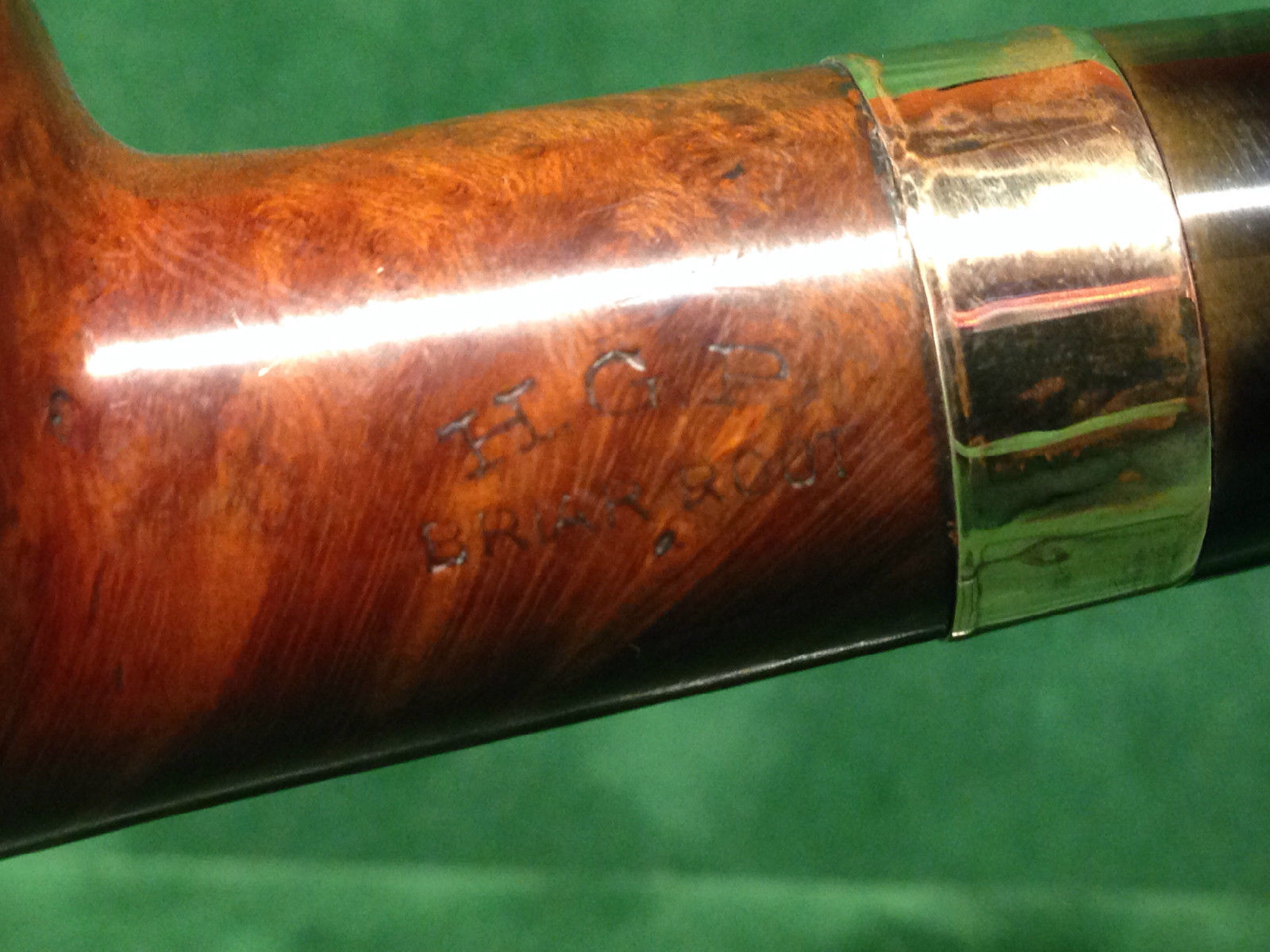
This was made by a pipe maker who worked for Barclay Rex for a time in the mid-20th century. His initials were HGP and he would stamp his pipes as such. We are unsure why the maker decided to place a white dot on his stem, but we have come across one or two more of his with the same combination. Unfortunately, his full name has been forgotten with time.
– barclayrex1910

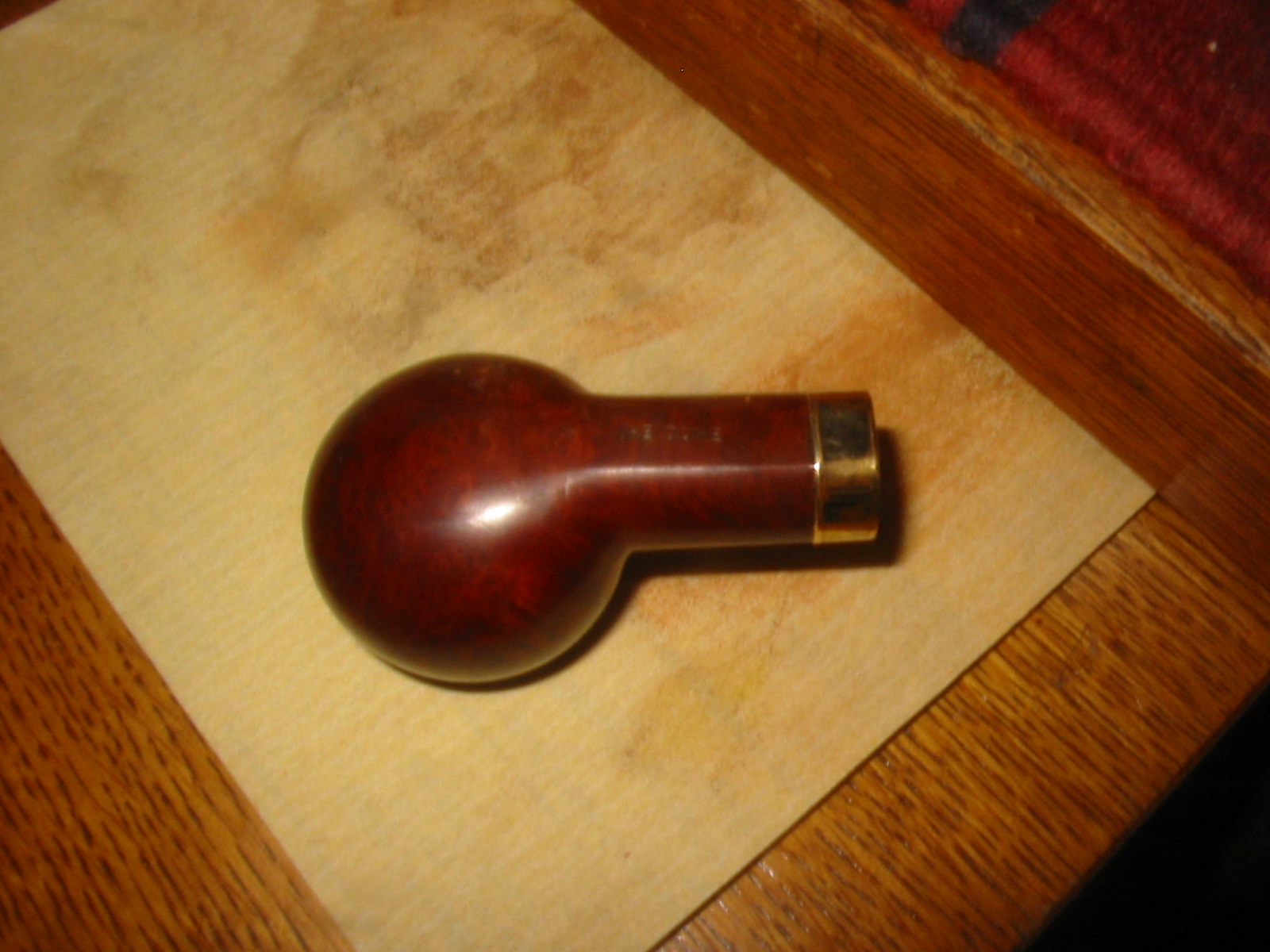
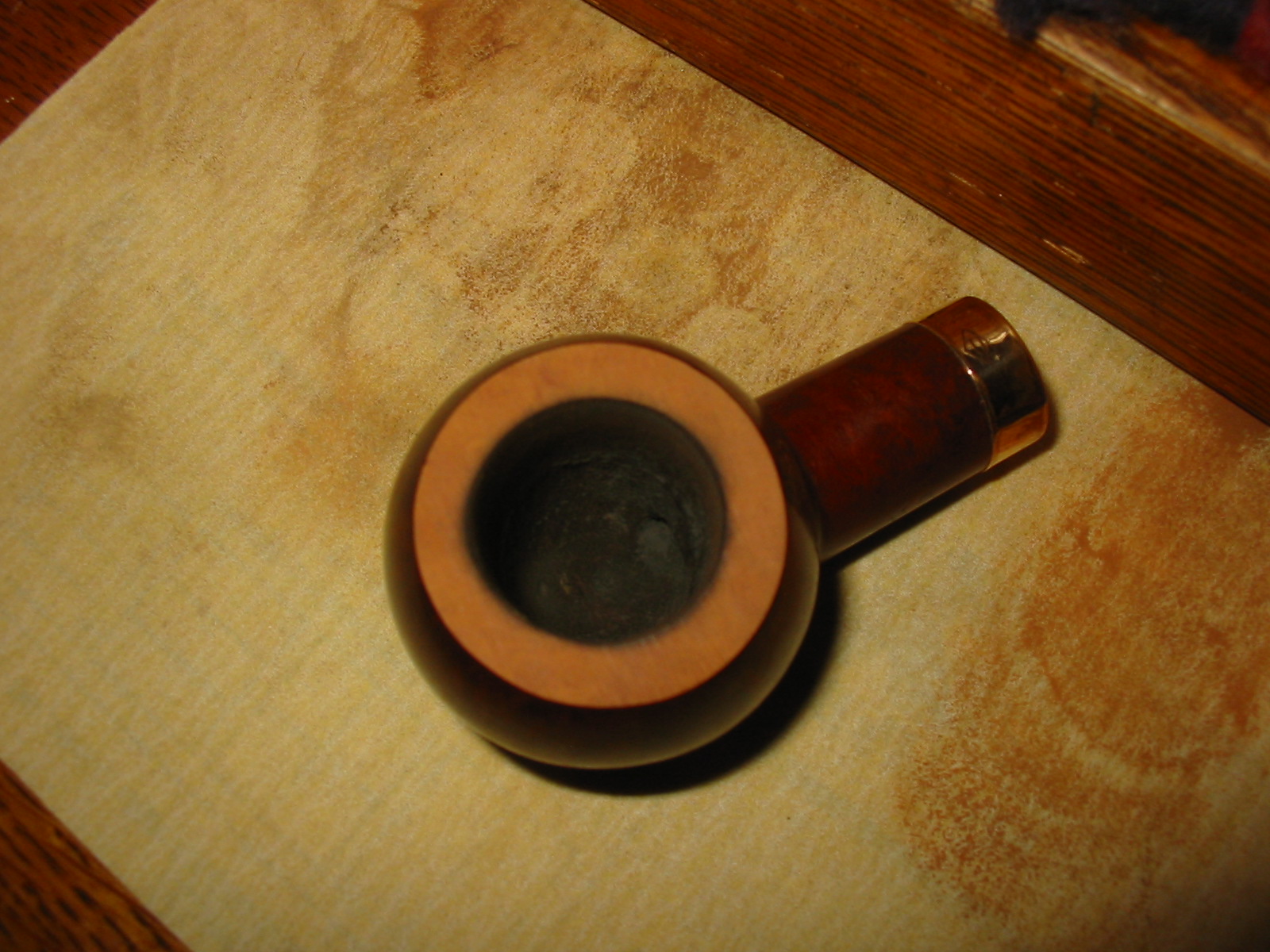
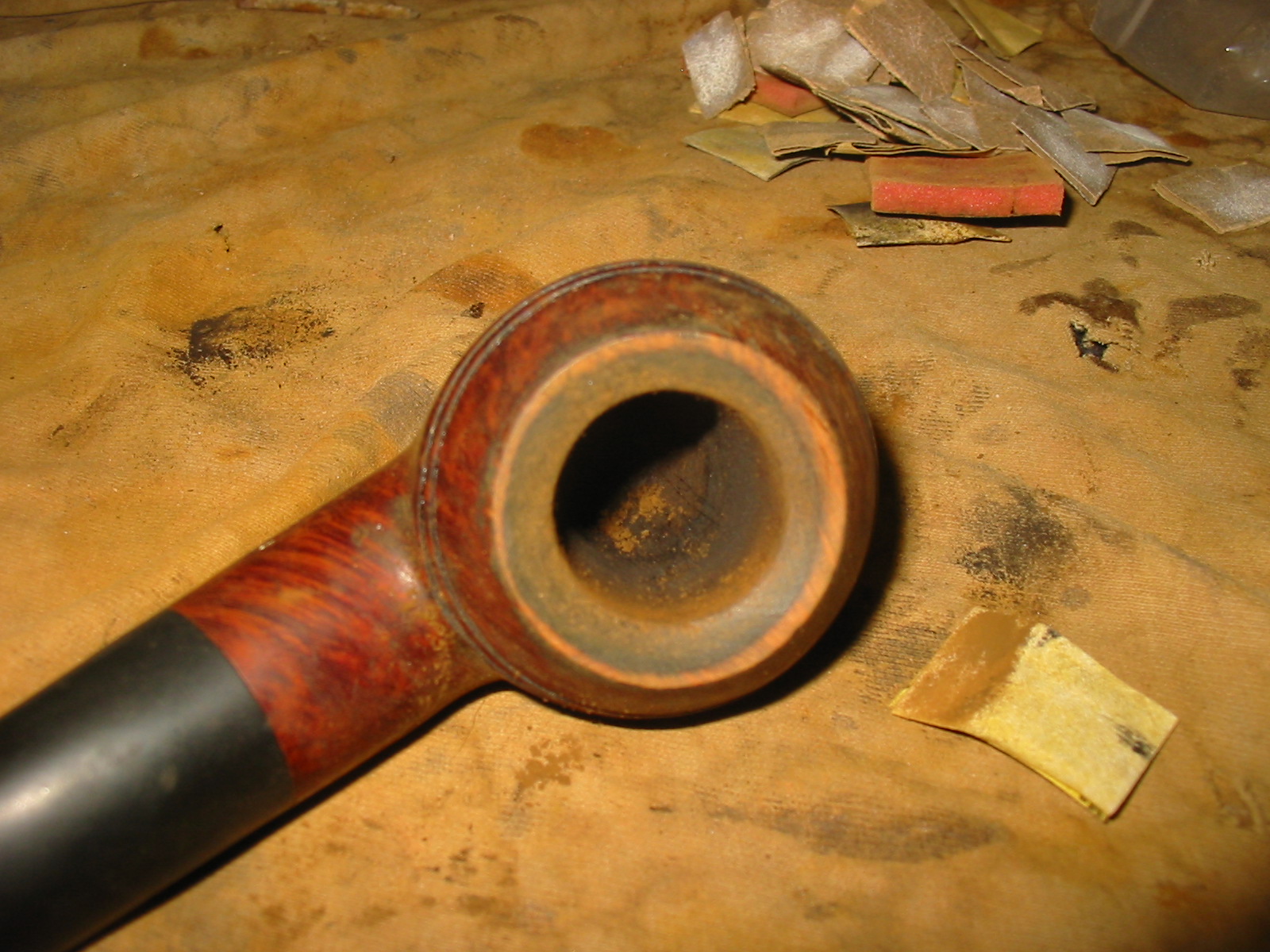
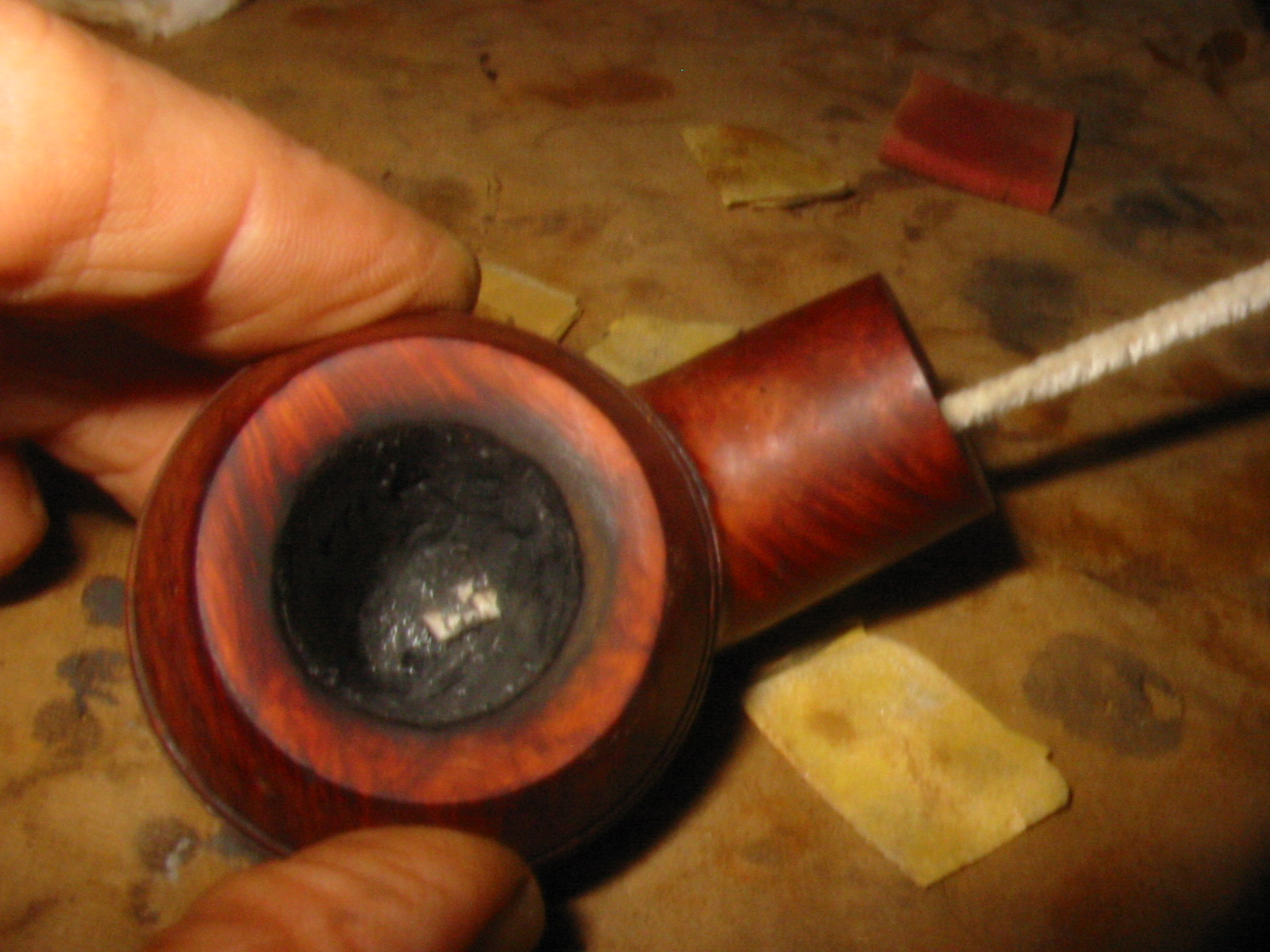
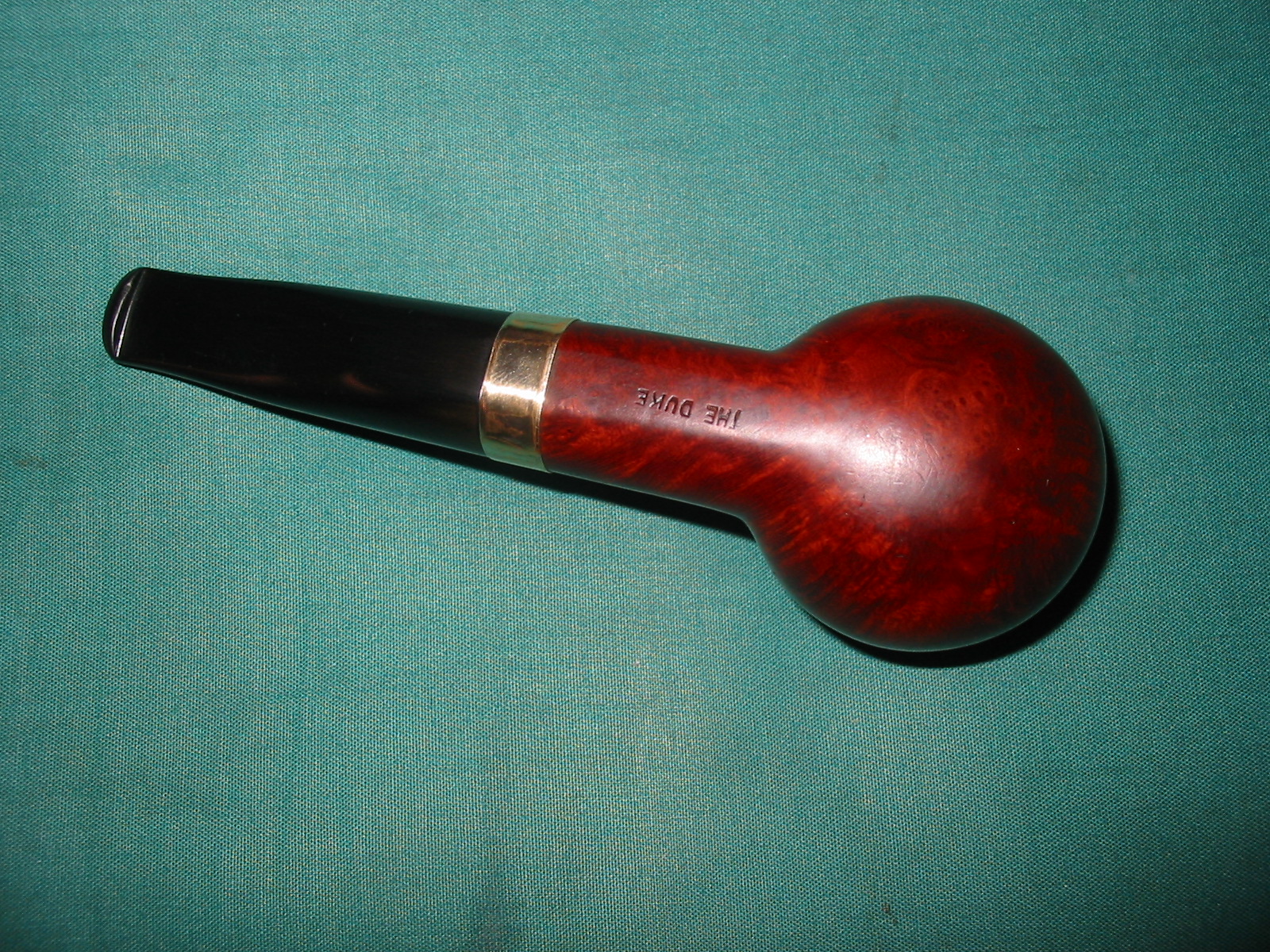
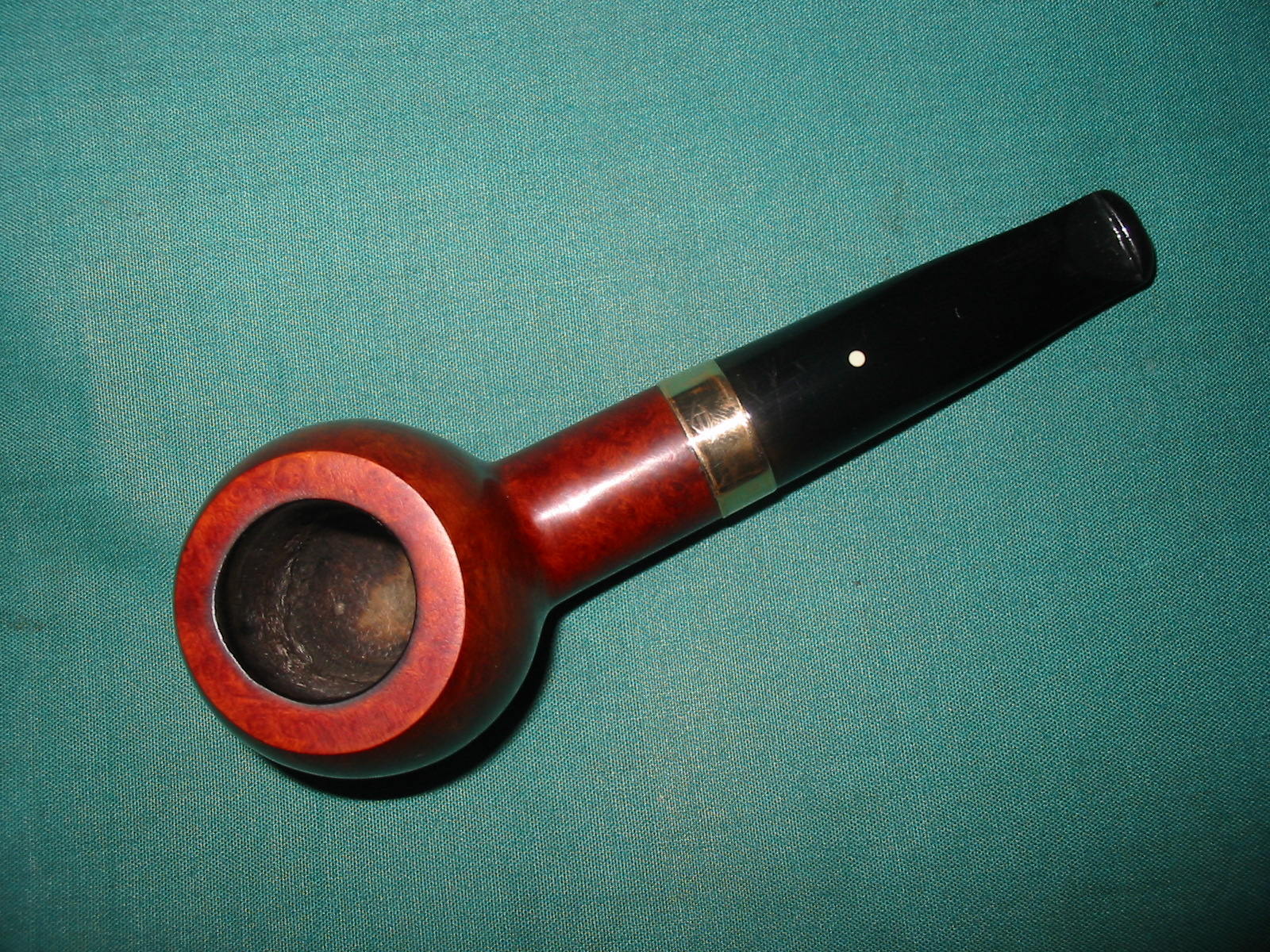
When the pipe arrived it was in good shape. The stamping indeed was HGP over Briar Root on the left side of the shank and The Duke on the bottom of the shank. Part of the shank and bottom of the bowl was flattened so that it was a sitter. I took it apart to examine it more closely. It was anything but cleaned and restored. The stem was rough – there was oxidation next to the band that went quite deep. There was a gouge on the right side of the stem that was quite deep. The top and the bottom of the stem from the taper to the button had obviously been modified to make a more pronounced taper. The file marks were still evident in the vulcanite. The width of the button end of the stem had also been modified and was narrower than originally designed as the sides of the stem also showed file marks. The button itself had a orific opening but someone had modified it into a poorly shaped slot. The stem had deep tooth marks on the surface of top and bottom near the button. There was a bite through on the top side next to the button. The angle of the taper was very abrupt and sharp with distinct cut marks. The tenon was fit for a filter by the appearance of it and the inside was very tarry. A filter would not have fit with all of the buildup in the stem. The bowl was another story. It was out of round with burn marks on the inner edge that needed some work. It had been reamed so that was not an issue. Then inside of the shank was filthy. The tars and oils were thick against the end of the mortise.

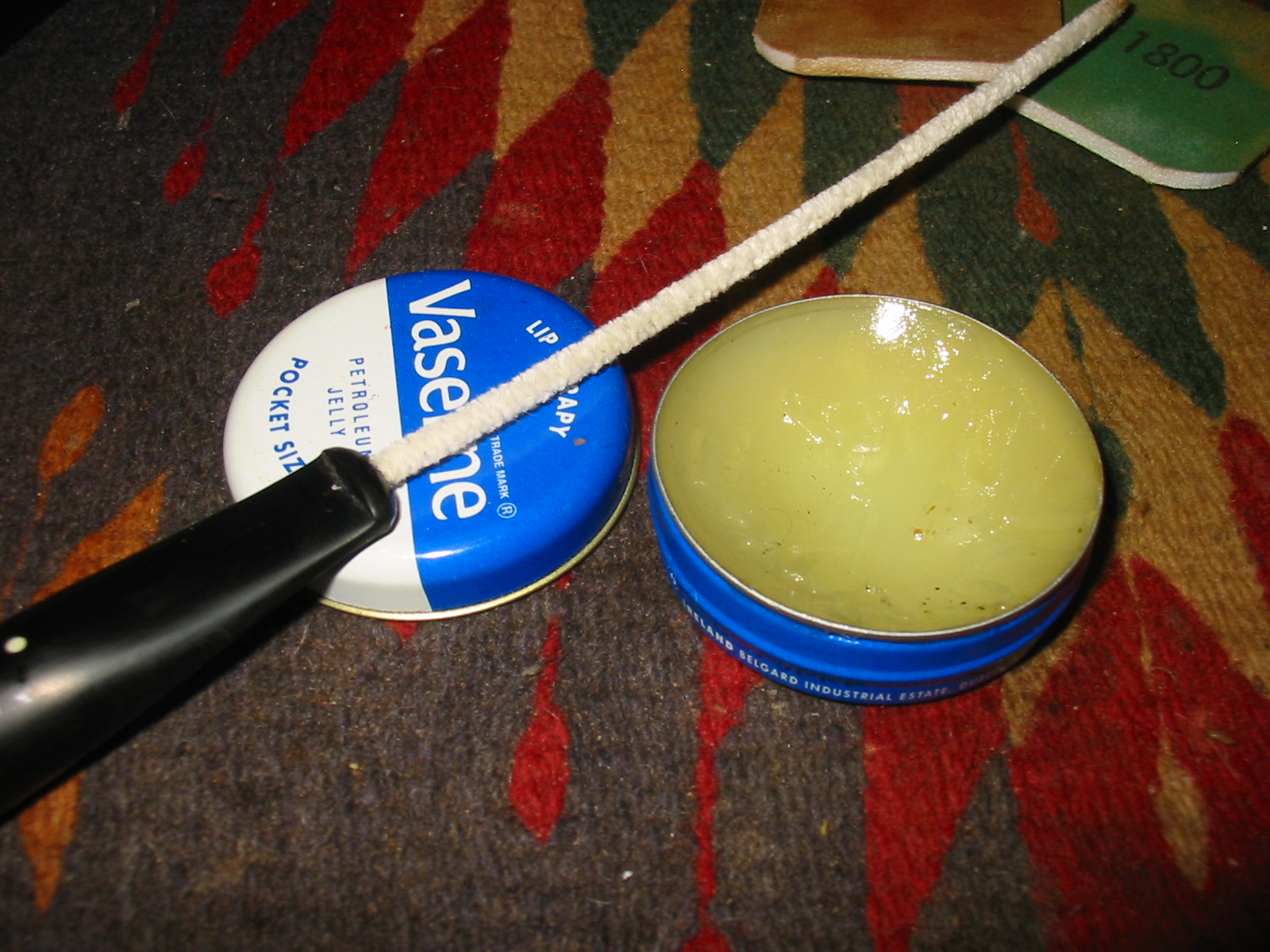
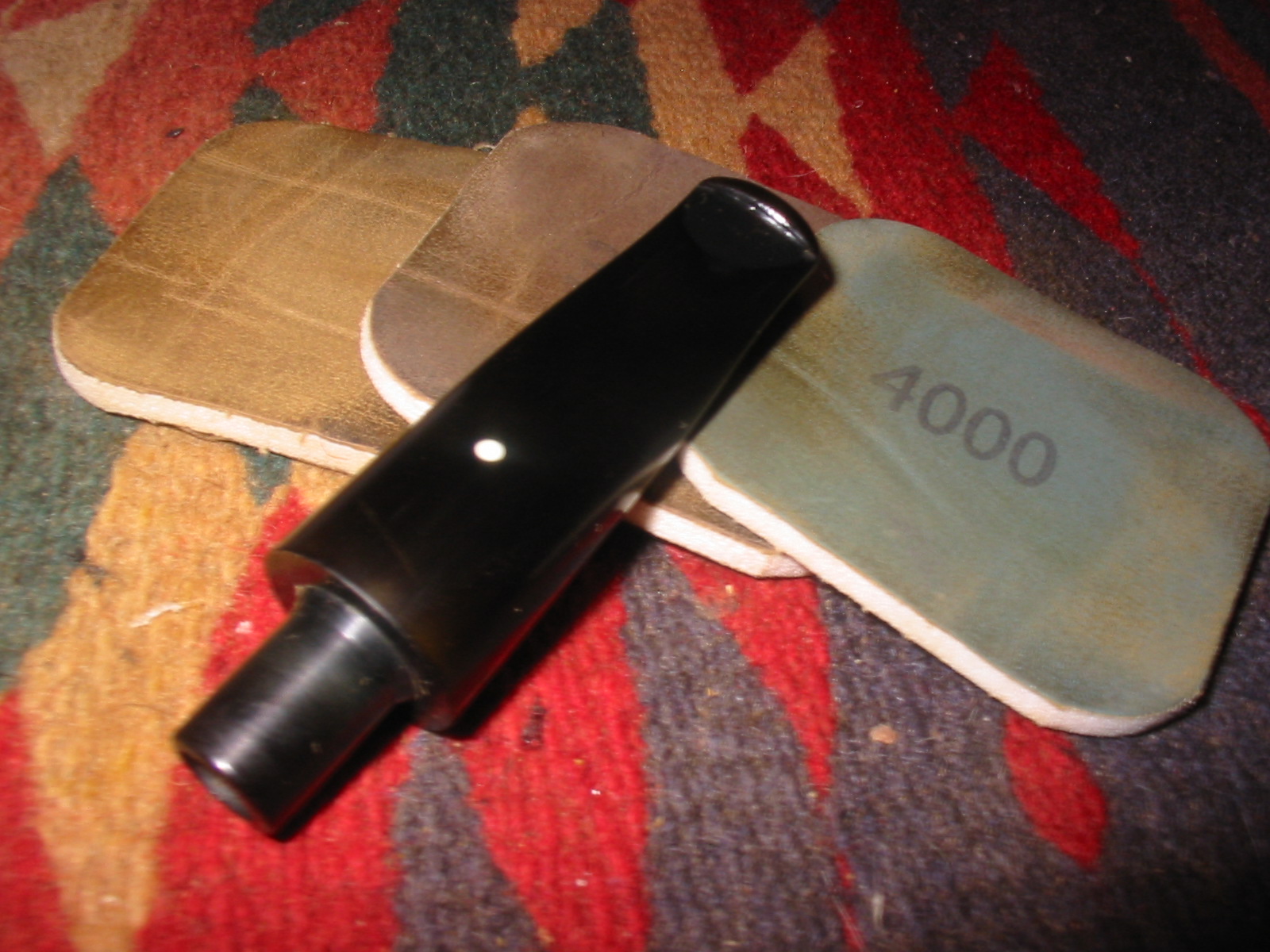
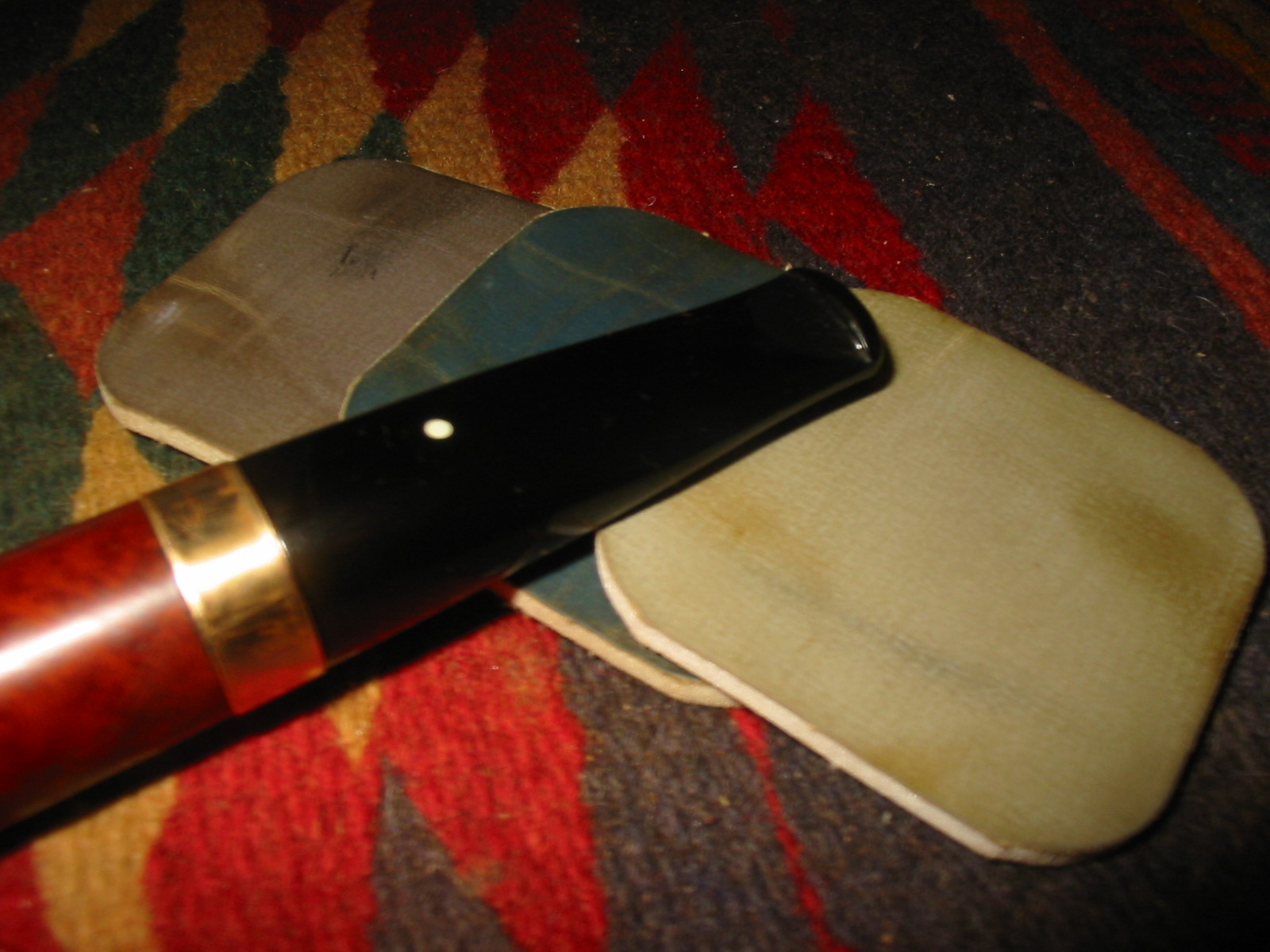
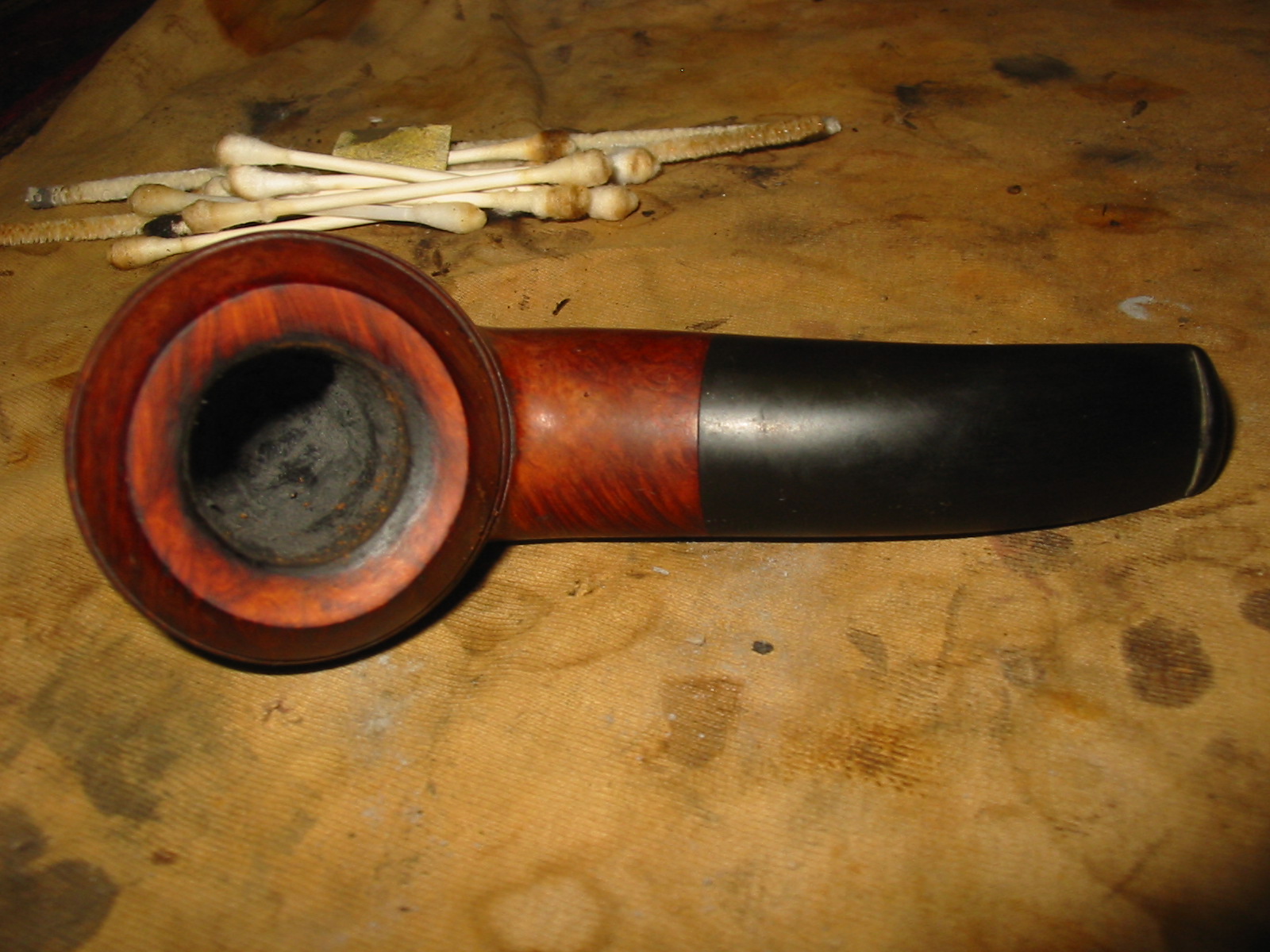
I decided to work on the stem first. I wanted to address the taper of the stem and cleanup the file marks and gouge in the top portion. I sanded the stem with 220 grit sandpaper to remove the scratches and reshape the taper. This took quite a bit of sanding to reshape the angles and edges of the stem. There was a slight hip on both sides of the stem that needed to be sanded out to get a smooth flow to the lines of the sides. The next series of photos show the progress in reshaping and repairing the stem. I worked on the taper first to remove the sharp angles of the sides and top of the taper and work on a flow to the profile of the stem. IMG_8158 IMG_8159 I sanded the gouge on the top right side of the stem until it disappeared and also worked on the transition from the flattened top and bottom of the taper and the round end next to the shank. The wet spot on the first photo next to the button highlights the spot where the small hole in the top of the taper was. At this point the taper is smooth and the transition is beginning to look right. The profile shot below shows the work that has been done. IMG_8163 IMG_8164 I continued to sand and smooth out the taper to give it a look similar to a Peterson tapered stem. The first photo shows the taper after all of the shaping. I rubbed some Vaseline on a pipe cleaner and inserted it in the orific slot in the button so that I could patch the hole in the top side of the stem. The second photo below shows the size and placement of the hole. IMG_8178 IMG_8180 I used black super glue for the repair and sprayed it with the accelerator to harden it more quickly. I found that the accelerator allows me to sand more quickly but curing actually takes longer. I sanded it with sanding sticks to smooth it out and then build it up several more times to give more thickness to the stem at the button. I reshaped the sharp inner edge of the button with a needle file. Superglue patch IMG_8181 After sanding with the sticks I sanded the patched area with 220 grit sandpaper and then with medium and fine grit sanding sponges to smooth out the scratches and blend in the superglue patch with the rest of the stem surface. IMG_8182 I finished sanding the stem with micromesh sanding pads – wet sanding with 1500-3200 grit pads and dry sanding with 3600-12,000 grit pads. I rubbed the stem down with Obsidian Oil between each three grit sequence of pads and let it sit until absorbed before continuing with the next set of three pads. When I finished sanding with the last three grits of micromesh I rubbed it down with a final coat of Obsidian Oil and when dry put the back on the pipe and gave it a buff with White Diamond. IMG_8187 IMG_8188 IMG_8189 I set the stem aside and turned my attention to the bowl. I decided to top the bowl to even out the rim as most of the inner rim damage did not go too deeply into the bowl. Topping it would smooth out the rim and allow me to correct the damage that made it out of round. I set up the topping board with the 220 grit sandpaper and sanded the top until the rim was smooth and the burn damage was minimized. I sanded the inner edge with a folded piece of 220 grit sandpaper to further mask the damage to the inner rim. IMG_8161 IMG_8162 I sanded the topped bowl with medium and fine grit sanding sponges and then with 1500-4000 grit micromesh sanding pads. I cleaned out the sanding dust from the bowl with a damp cloth and wiped down the top of the bowl with an alcohol wipe to prepare it for restaining. I decided against restaining the whole bowl and to just stain the rim. Thanks to Greg I have a set of staining pens that make this kind of thing quite easy. I started with the lightest stain pen and then used the medium stain pen to match the colour of the bowl. I buffed it with White Diamond and then gave the bowl and rim a quick buff with carnauba wax. After the buffing I sanded the band with the micromesh sanding pads and then polished it with a polishing cloth. The finished bowl is shown in the photos below. IMG_8167 IMG_8168 IMG_8169 IMG_8171 IMG_8172 The next photo shows what I did next, though in retrospective I probably should have done this first, I did not. I cleaned out the inside of the shank with isopropyl alcohol, cotton swabs and pipe cleaners to remove the tarry buildup in the mortise and airway of the pipe. IMG_8175 Once I finished cleaning out the inside of the pipe I gave it a quick buff with White Diamond and then gave it multiple coats of carnauba wax, buffing with a soft flannel buff between coats. The finished pipe is shown below. The restoration and refurbishment are complete and now it can be honestly said that it has been “restored”. The amount of work it took to bring this pipe back to a finished look was far more than I expected when I bid on it. I honestly was surprised at how dirty and unfinished it was when it arrived. Now I have a pipe that I can be proud of and enjoy smoking. The look and feel in the hand is exactly what I like and I look forward to firing up the first bowl in it very soon. IMG_8192 IMG_8193 IMG_8194 IMG_8196
Restemming and Rejuvenating a Pipe for my Son-in-Law


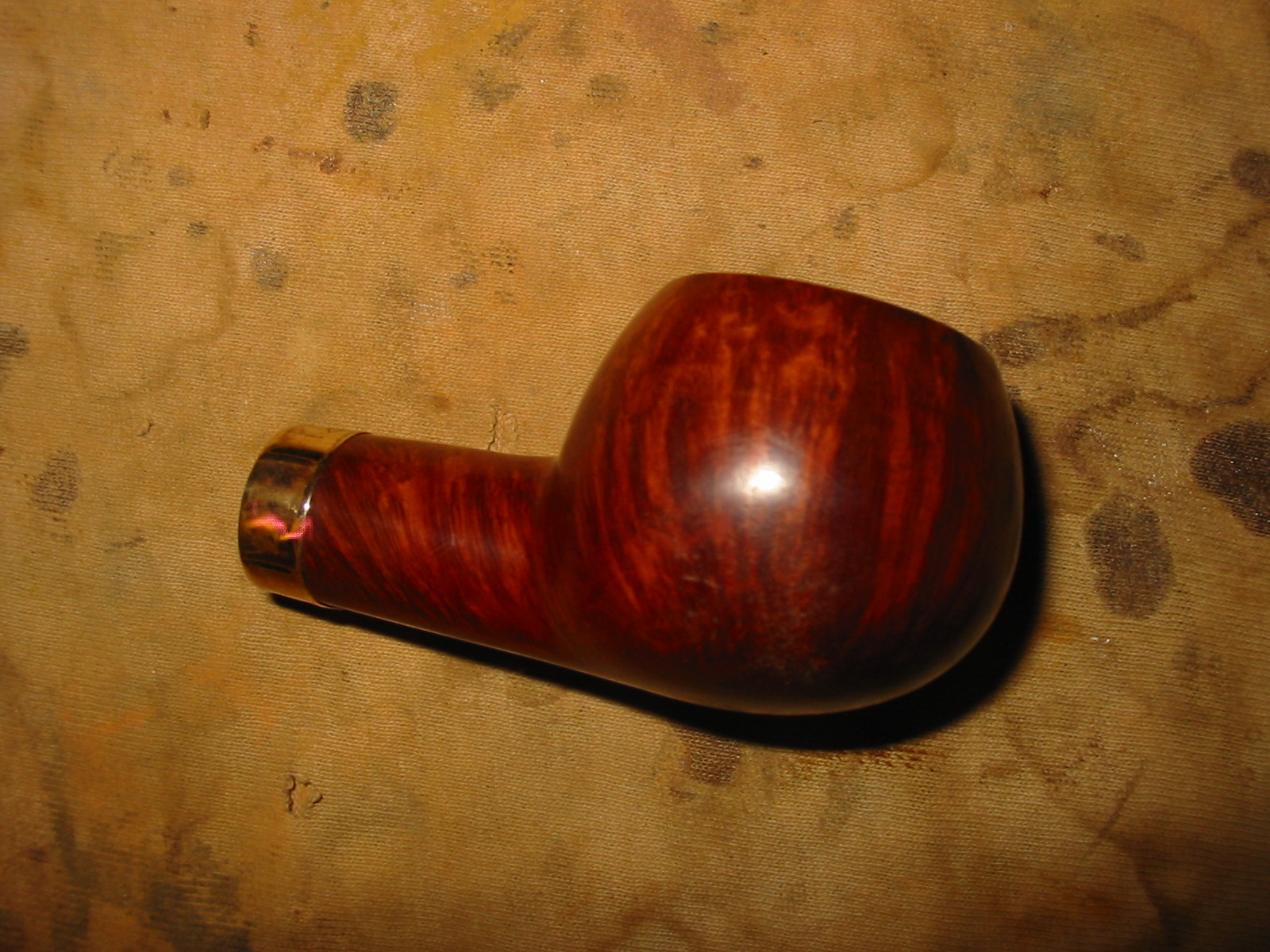
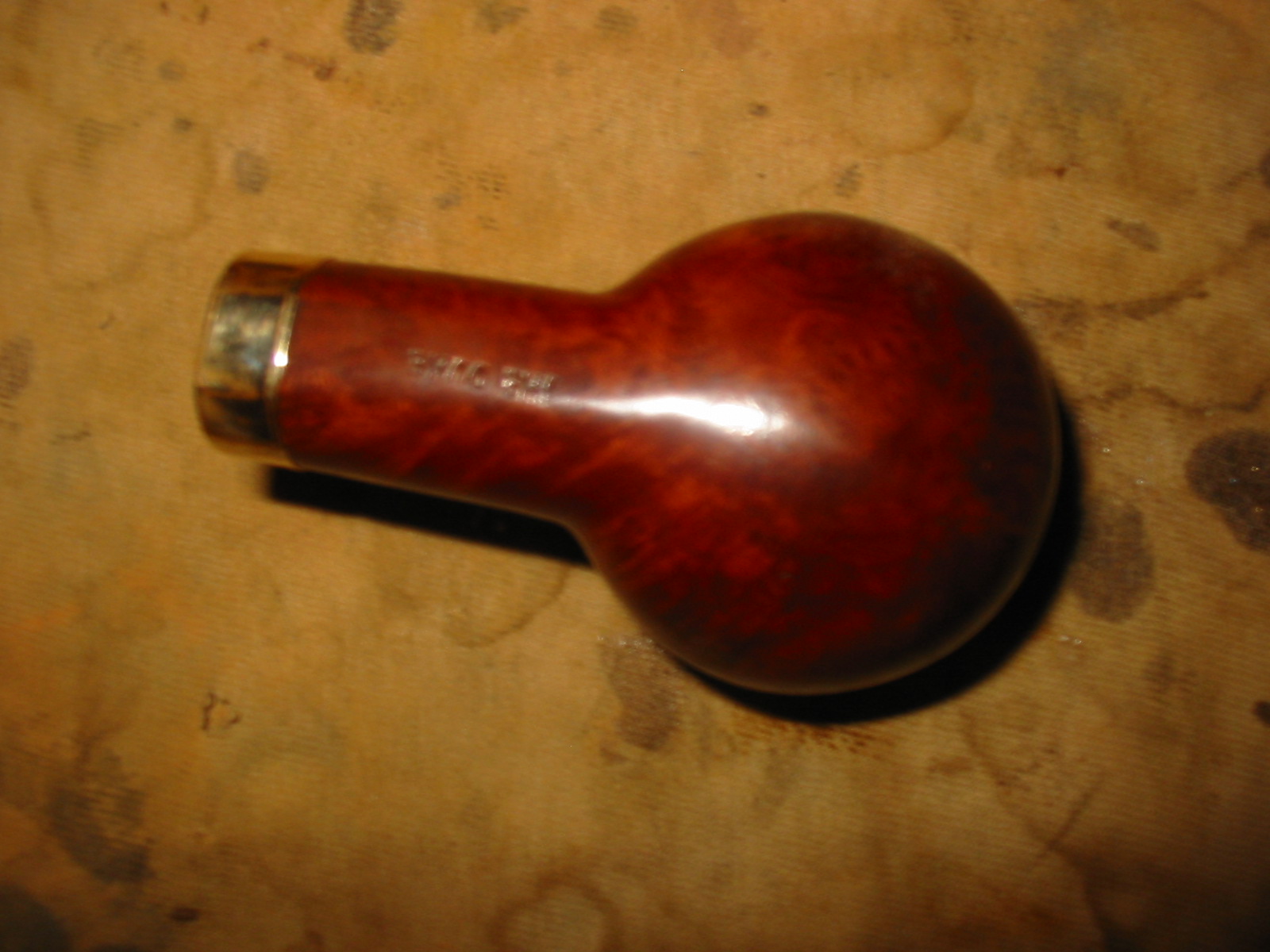
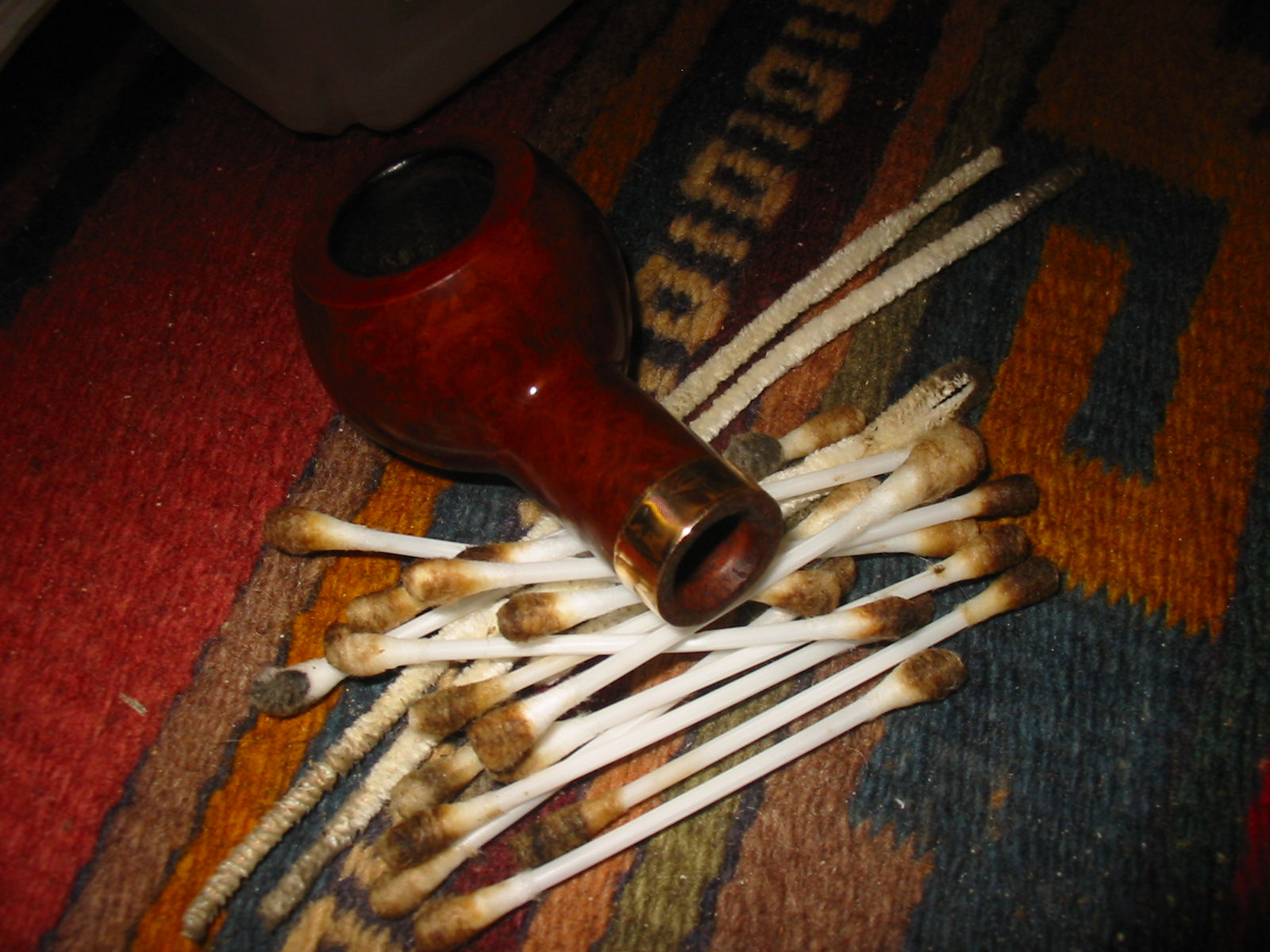
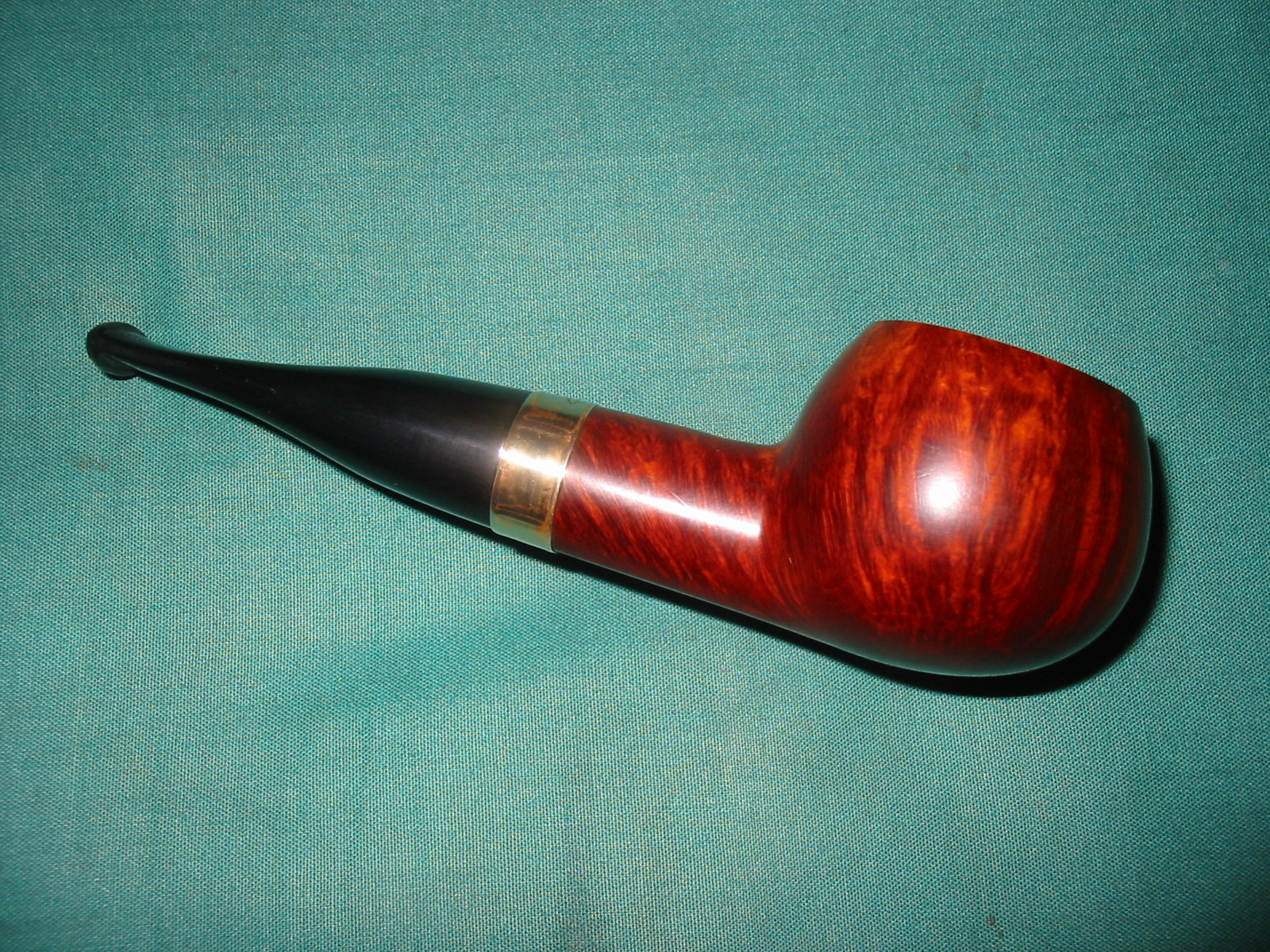
Last evening my daughter and her husband had us over for a wonderful meal of pulled pork and salads. My daughter is a great cook but this time around her husband made the main course. My daughter called just before we went and asked that I bring my pipe and some tobacco to share. I could relax on the back porch and her husband, Lance and I could share a few bowls. It was a great evening and we shared a few bowls. I looked over his pipes and realized that most of them had come from me. In fact the first pipe he had ever smoked came from me – many years ago now. His brother had worked for me and I had introduced them both to the pipe. Anyway, as we spoke he said he had one with a broken stem. The pipe was an Italian basket pipe and had a hard Lucite stem. Somehow he had stepped on it and the stem had snapped in half. In the photo below you can see the break in the stem. It had been sitting with the stem out of the shank for a long time and the tenon no longer fit into the shank. The edges of the stem had been rounded to give it an interesting look, but it did nothing for me. The shank itself was also rounded so it would not take a stem the same diameter as the shank. IMG_8143 To take out the rounded end would have shortened the shank by almost ½ inch so I decided to leave that detail alone and restem it with a stem similar to the original. I also decided to use vulcanite instead of Lucite. The new stem is shown below. It is the same diameter as the previous stem and would have a similar look to it. I would not round the end of the stem but rather leave it flat to sit flush against the top of the crowned shank. IMG_8144 The stem was one from my stem can that had previously been on a different pipe. It was bent the proper angle already so I would not need to bend it or shape it. I just need to clean it up and remove the oxidation from the outside and clean out the interior as well. I also use some 220 grit sandpaper and worked on the tenon so that it had a good snug fit in the shank. I twisted it into place in the shank and took the photo below to get an idea of the new look. IMG_8145 The next two photos give a picture of just a few of the pipe cleaners I used to clean out the stem. I also used a sharp knife to bevel the end of the tenon into a funnel. The previous stem had been drilled off centre and did not match the airway in the end of the mortise. It was well drilled and centered so the funnel on the tenon end would encourage good airflow through the pipe. A quick draw on the stem demonstrated that the draught was good and open now as opposed to the tight draw that it had before. I sanded the calcification on the stem with 220 grit sandpaper and then with medium and fine grit sanding sponges to remove the scratches and the oxidation at the end of the stem. IMG_8146 IMG_8147 I took the pipe to the buffer and gave it a quick buff with Tripoli and White Diamond to clean off the rim and also clean up the stem some more. I still need to sand the stem around the shank junction to remove stubborn oxidation and then polish it. I sanded the stem with 220 grit sandpaper and medium and fine grit sanding sponges to remove the oxidation near the shank. Then I used my usual array of micromesh pads – wet sanding with 1500-2400 grit pads and dry sanding with 3200-15,000 grit pads. IMG_8150 IMG_8151 I wiped the stem down with Obsidian Oil and when it dried I buffed it with red Tripoli and worked on the area near the tenon. I buffed it with White Diamond after than to polish it. Then I took it back to the work table and sanded it with the last three micromesh sanding pads. IMG_8154 I polished the stem with Meguier’s Scratch X2.0 and then buffed a final time with White Diamond. I gave the stem multiple coats of carnauba wax and buffed it with a soft flannel buff. I lightly buffed the bowl with wax and a soft buff as well. The finished pipe is shown below. On Wednesday evening I will deliver it to my son in law so he can fire it up after several years of not using it. I look forward to hearing what he thinks of the new stem. photo 1 photo 2 photo 3 photo 4
Yet Another Frankenpipe – A pipe made from assorted pieces


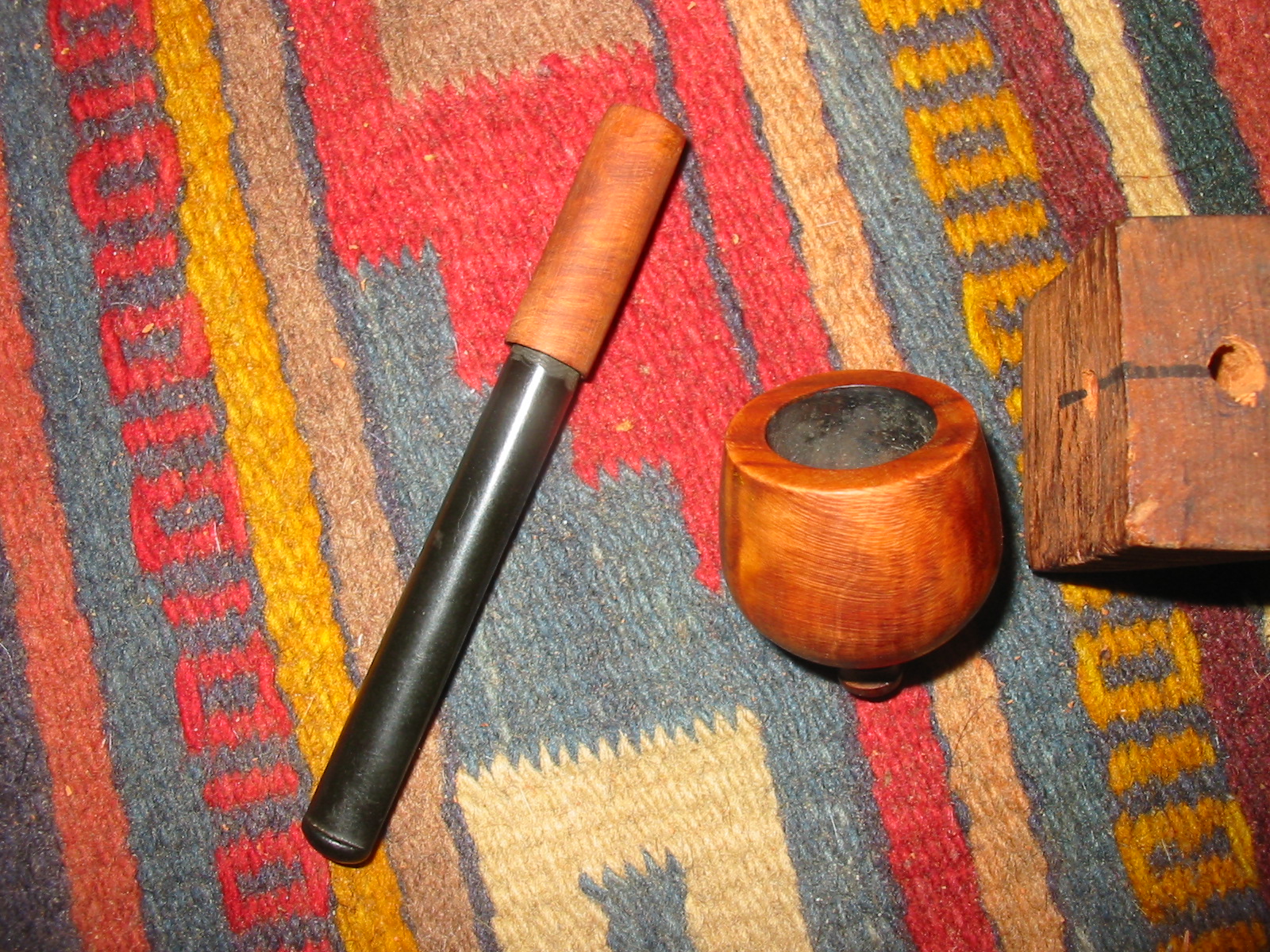
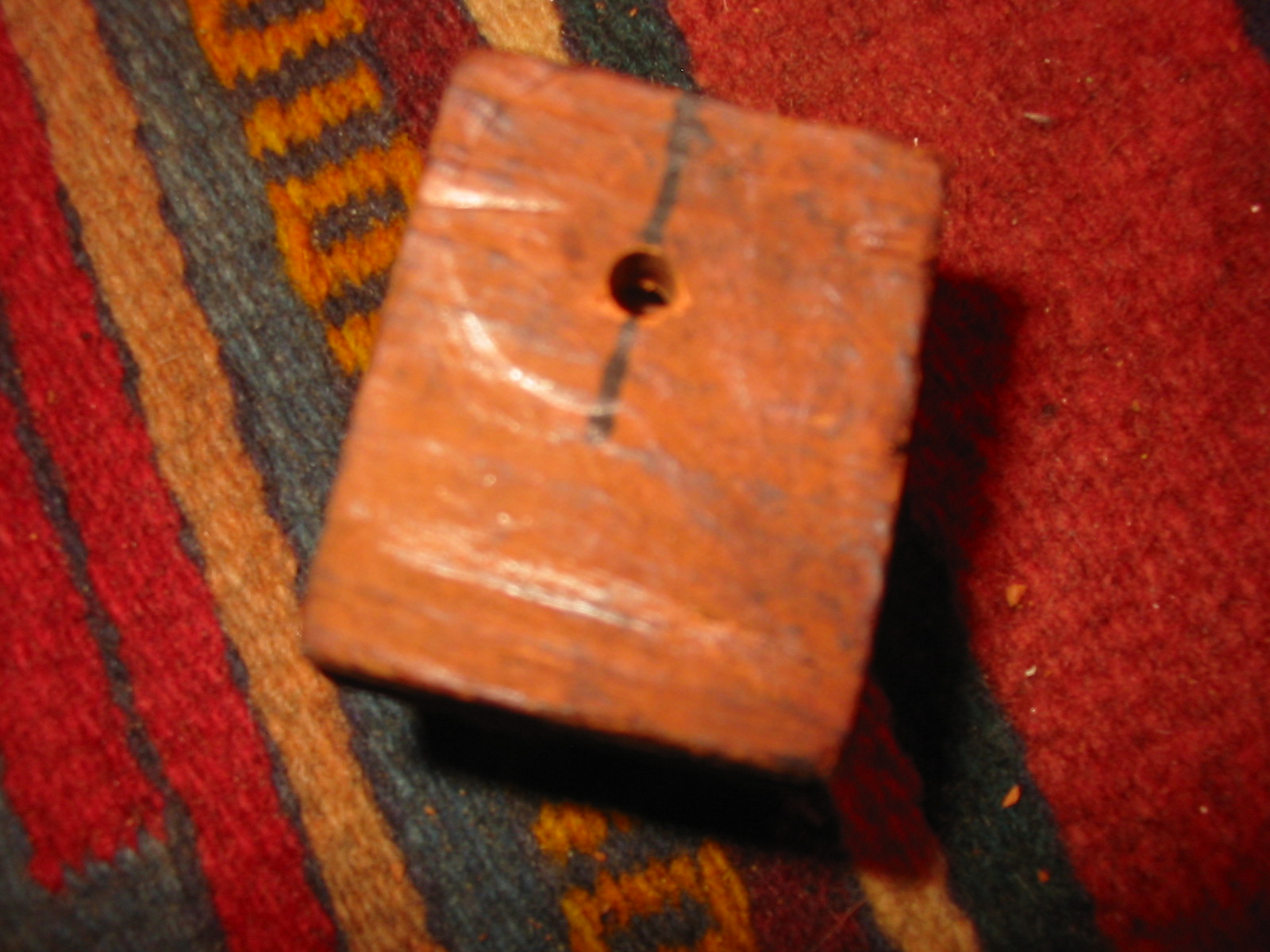
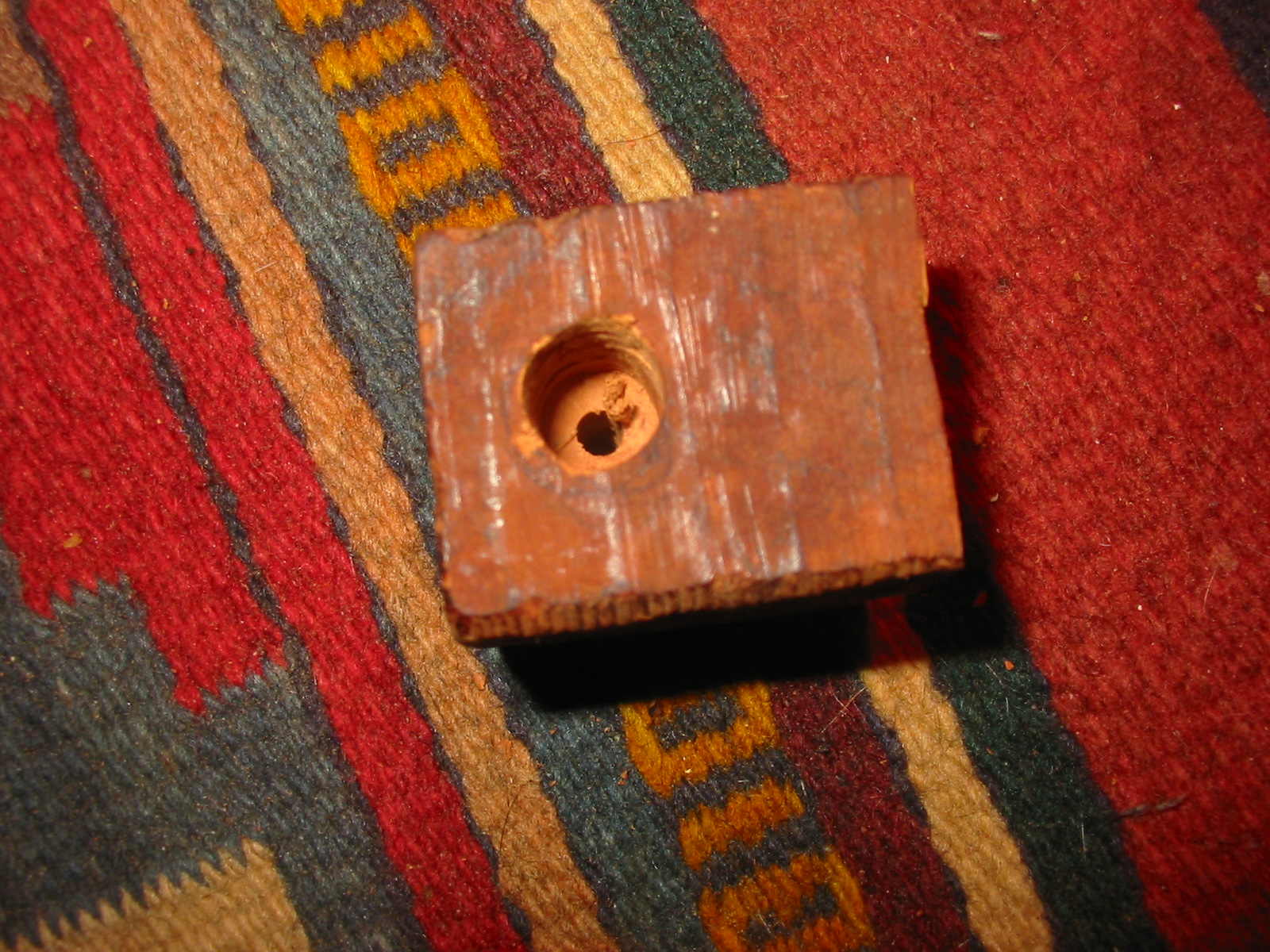
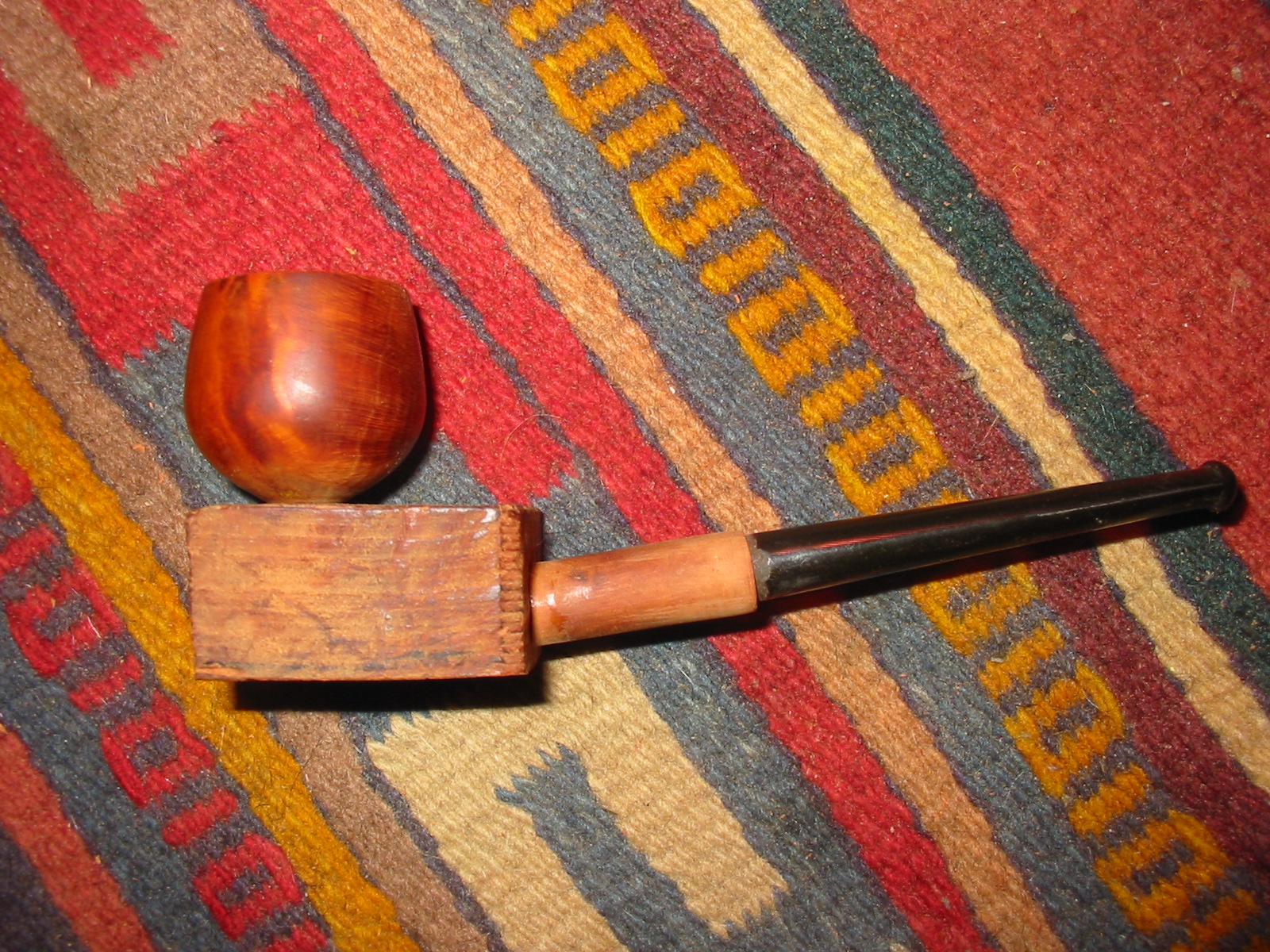
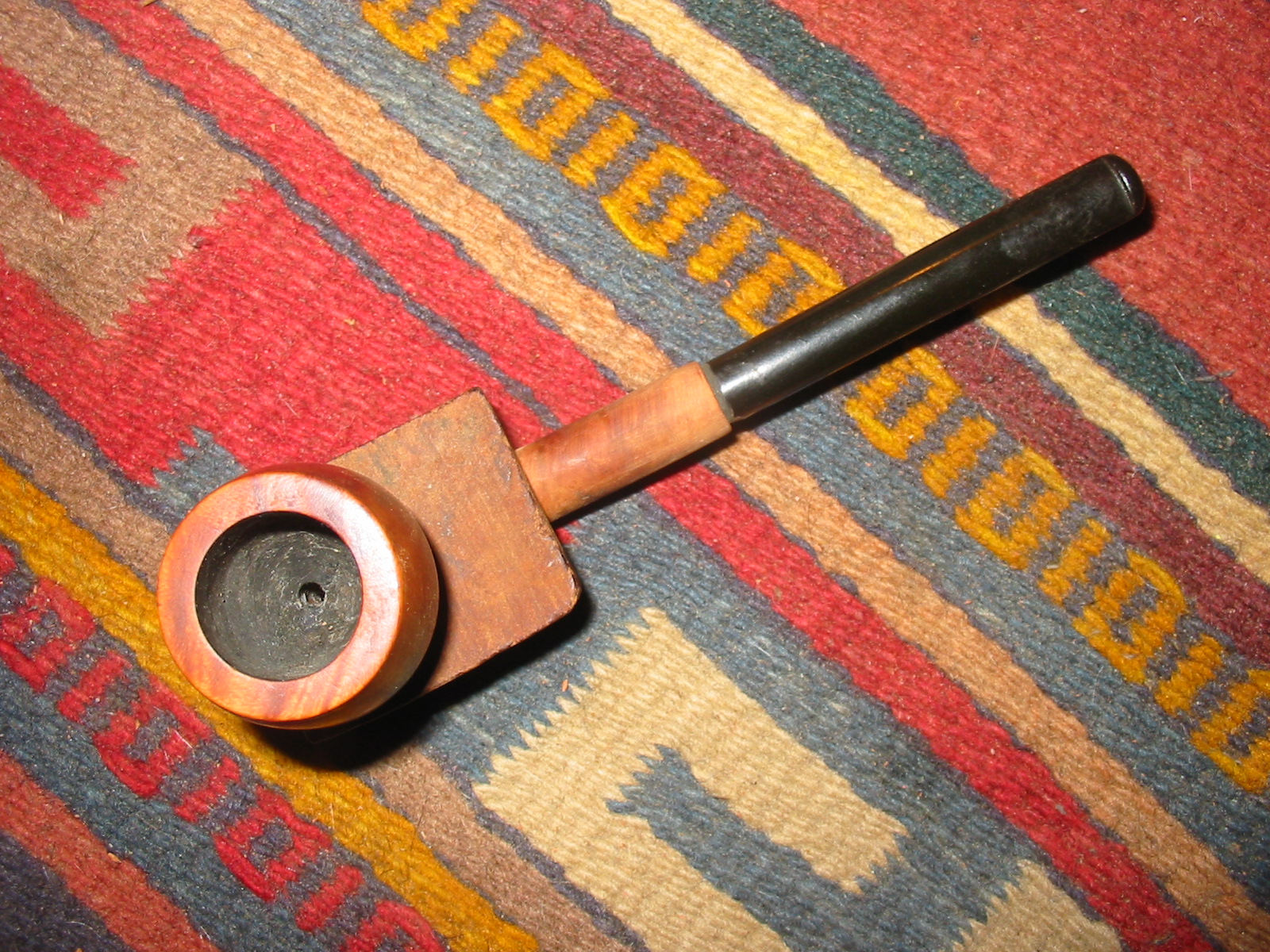
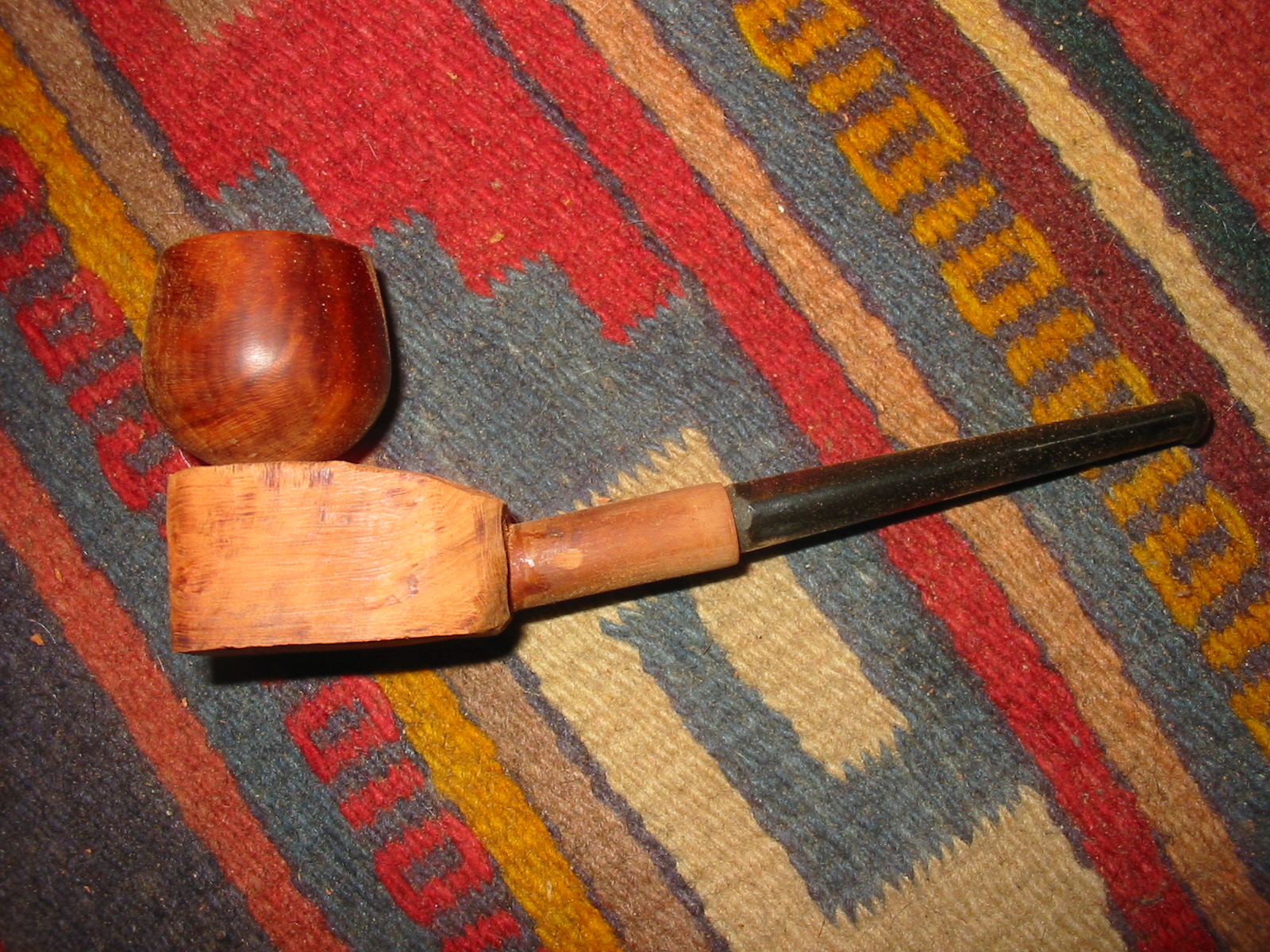
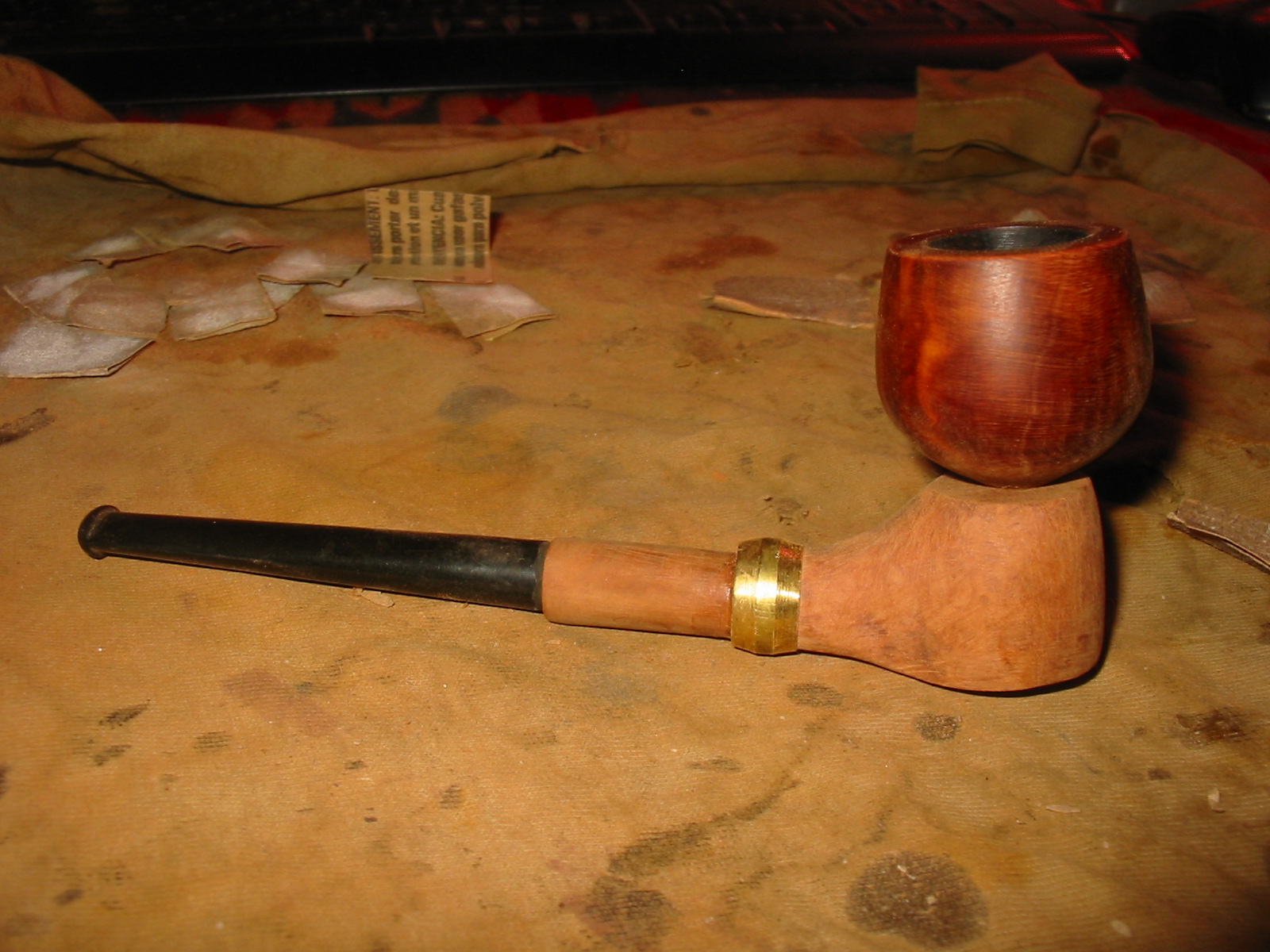
Frankenpipes are born out of having no more pipes in the refurb box to work on. I have many in transit at the moment but none with which to sit and unwind. That always is a recipe for me to dig in the boxes of parts and see what I can come up with to keep the hands busy. The pipe that follows was born of fiddling with parts in my parts box. The part I started with was an old bowl that I received in a gift box recently that did not have a pipe to go with it. It was a pressure fit bowl that obviously sat on a base of some kind of system pipe. I searched the Metal Pipes website to see if I could find out any information but did not find any likely candidates for this mystery bowl. It had some nice grain on it so it seemed like a shame to just let it sit in the box and wait for a potential pipe for it. I also I had a cut off shank piece that I had made for another purpose, a stem that fit the shank nicely and a block of briar that was too tiny for a pipe. The small block is one that I have been scavenging pieces off of to make plugs for burnout repairs. As I looked at the pieces I had an idea for putting them together into an interesting pipe that had kind of art deco feel to it. Now it was time to bring the pipe together and actualize my vision. IMG_8072 I measured out the drilling areas for the block. I needed to drill the airway large enough to insert the briar shank. I would use the Missouri Meerschaum concept of inserting the shank into the briar block. I started by drilling the first hole in the end of the block. I drilled the mortise area first. I did this in stages as it needed to be big enough for the shank piece to be pressure fit into place. Afterward I drilled the rest of the airway in the block. I decided to drill it all the way through to the other side of the block so that I could put in a funky plug on the front end. I looked around for what I would use and had several ideas. Time would tell which I would choose in the end. IMG_8069 I moved through several drill bits until the bit that was the size of the shank piece. I drilled it deep enough to inset the shank quite deep in the hole. IMG_8070 I marked the airway exit on the top of the block with a permanent marker and drew a line to show the track of the airway. I marked my drill bit to the depth of the top of the airway and drilled the hole in the top of the block. I wanted the hole to be the size of the nipple on the bottom of the bowl so that it would pressure fit into the hole. I wanted the hole to go through to the top of the airway so that the nipple on the bowl would sit on top and create good airflow from bowl to stem. IMG_8071 I pressure fit the bowl in the top of the block and the shank in the end of the block for the next two photos. I wanted to see if the parts all fit together well. I gave the shank a slight angle upward and would later bend the stem if the look was correct. Everything worked well at this point. For the plug on the end of the block I decided to do something simple. I wanted a plug that would be like a coloured dot on the end of the base. I cut off a piece of knitting needle and inserted it in the airway at the end of the block that is not showing at this point. I glued it in place and used the Dremel to take the overage back flush with the block. IMG_8073 IMG_8074 The height of the block was too much so I wanted to cut it in half. I do not have power tools to do that kind of thing so a bit of sweat equity and a small hack saw did the job. I sliced off the bottom half of the block to be used in making bowl plugs at a later date and now the height was more suitable to this little sitter. IMG_8078 I glued the shank into place in the block with epoxy and angled it the way I wanted it to be when I finished the work on the base. IMG_8079 IMG_8080 IMG_8081 IMG_8082 I used the Dremel and a sanding drum to begin to shape the block into a base for the pipe. I wanted a slope upward to the bowl – the sides would also slope upward. My idea was to have the bowl sitting on top of a volcano like base. IMG_8088 IMG_8089 It took a lot of sanding to get the shape even close to what I had envisioned and in the process I ran into my first problem. The joint of the block and the shank could not be sanded smooth or the walls would be too thin and the shank would break too easily. I probably should have used a Delrin tenon to connect the two parts but as usual looking back is not overly helpful. So I had to improvise with this one. I had a small brass pressure fitting that would look kind of interesting on this little Frankenpipe so I worked the joint area to accommodate the brass fitting. The photos below show the pipe taking shape with the brass band high on the shank. (At the time of these photos I had not yet glued the band on the shank.) IMG_8090 IMG_8091 IMG_8092 IMG_8093 I filled in the openings around the edges of the fitting where the shank joined the block with briar dust and wood glue packed into place with a dental pick. I sanded the ridges on the fitting with 150 grit sandpaper to remove them. I would have to do more work on the look of the band as I worked out the details later. I took the following photos after I had done more shaping of the base and glued the band in place. While the band is not beautiful it certainly strengthens the joint on the shank of the pipe and makes up for my lack of planning! IMG_8094 IMG_8098 The photo below shows the base with the bowl removed. You can get a clear picture of the base without the bowl and how the bowl looks from the bottom. The hole in the base is the same size as the nipple on the bowl. IMG_8099 I sanded it for another hour before calling it a night and then wiped it down with some light olive oil to get an idea where the scratches were that I needed to do more work on and also to see the grain. The next four photos show the pipe at this point in the process. There is still more sanding to do on the base and shank as well as some minor shaping. The idea though is clear – and the pipe is smokeable. The draw is very good and there are no leaks around the joint where the bowl presses into the base. So far so good. IMG_8100 IMG_8103 IMG_8104 IMG_8106 I set up a heat gun and bent the stem over the rounded handle of the heat gun to get a slight bend in it. I set the bend with cool water. With the bend the pipe is a sitter. The bend pulls the weight backward and the pip sits nicely on the button and the flat bottom of the base. IMG_8108 IMG_8110 IMG_8111 I did quite a bit more sanding and shaping of the base with 150 and 220 grit sandpaper. Once I had the shape to where I wanted it I sanded it with medium and fine grit sanding sponges. I gave the bowl and shank a wipe down with a cloth that was dampened with olive oil. Other than that the bowl and shank are not stained. IMG_8118 IMG_8119 IMG_8120 IMG_8126 While the shaping was finished there was still a lot of sanding to do to remove the scratches that remain in the briar. I also want to do some sanding on the band to remove scratches and polish it as well. The vulcanite stem also needs sanding and polishing. I took the pipe apart and sanded all the pieces with micromesh sanding pads. I sanded all of them with 1500-2400 grit pads and then finished sanding them with a 6000 grit pad. I buffed the parts with red Tripoli and then White Diamond and gave each part of the bowl and base multiple coats of carnauba wax. IMG_8127 I sanded the stem with a fine grit sanding sponge and then with the various grits of micromesh sanding pads. I wet sanded with 1500-2400 grit pads and dry sanded with 3200-12,000 grit pads. I buffed the stem with White Diamond, rubbed it down with Obsidian Oil and finished by giving it a buff with carnauba wax. IMG_8128 IMG_8129 IMG_8130 I sanded the brass band with the micromesh pads to polish it as well. When I had finished I gave the pipe a final buff with White Diamond and then applied carnauba wax to each part. I buffed them with a soft flannel buff to finish the shine. IMG_8132 IMG_8133 IMG_8134 IMG_8135 The final photo is of the front of the pipe. The knitting needle plug that I used is a bright reddish orange circle that sits at the base of the pipe on the front. The colour of the pipe is the red of the previous four finished photos. The last photo was taken with my cell phone and is a bit washed out. photo 2
Restoring a Gift Brigham 595S Zulu – A new stem and a new look


I wrote earlier in a blog post about helping a Bill Tonge with the stamping on a Brigham pipe that he had picked up. He had told me that the stamping was 5955 on the underside of the shank. He said he had called Brigham and that they had told him that number was not on their shape charts. He had hit a dead-end. We connect on Twitter so he contacted me and asked for help. I thought I would give it a try to see what I could find out about the pipe. I Googled and read various online pipe forums where information was given. I searched for Brigham shape and numbering charts and old catalogues. Nothing helped. Then I decided to go to the Brigham site itself and go through the layers of information there and see what I could dig up. I was certain the clue to the mystery had to be there. It was just a matter of spending the time reading through the layers of information there to see what could be found.

Using this information I took the number that was given to me – 5955 stamped on the bottom of the pipe’s shank – as my starting place. The first number in the stamp denoted the series (1 to 7). Thus the pipe was a 500 series pipe. The next 2 numbers indicated the shape number which in this case was 95. I am assuming that is the shape number for the Zulu or yachtsman shape of this pipe. Summarizing what I had learned so far – I now knew what the first three digits in the stamping meant. The “595” indicated a 500 series pipe in shape #95. Reading further I found that a letter could follow the numbers in the stamp – particularly on older pipes. The letter indicated the size of the bowl. Thus the letter S = small, M = medium, ML = medium/large, L = large. I wrote the questioner and asked him to magnify the stamping on his pipe. Sure enough, the pipe was a 595S – the final stamp was the letter S, making this pipe a 500 series Zulu with a Small bowl. Mystery solved on this one.

I sent him the information and shortly later received a tweet from him that he was sending the pipe to me. He thought I would enjoy working on it and seeing what I could do with it. It arrived here in Vancouver yesterday and I opened the box Bill had sent. Inside were quite a few samples of English tobaccos that he was passing on to me, a nylon Falcon style pipe that Bill had refinished and the old Brigham Zulu. The smells were divine and I am looking forward to enjoying Bill’s generosity. But last evening I had to get started on the old pipe. I had a Brigham 5 dot stem in my stem can that I had scavenged from a friend who had a Brigham that he converted to a church warden. He did not want the saddle style stem so he gave it to me. Being the scavenger that I am I have had it in the can for about 15 years. Last night it met the pipe that it would grace.

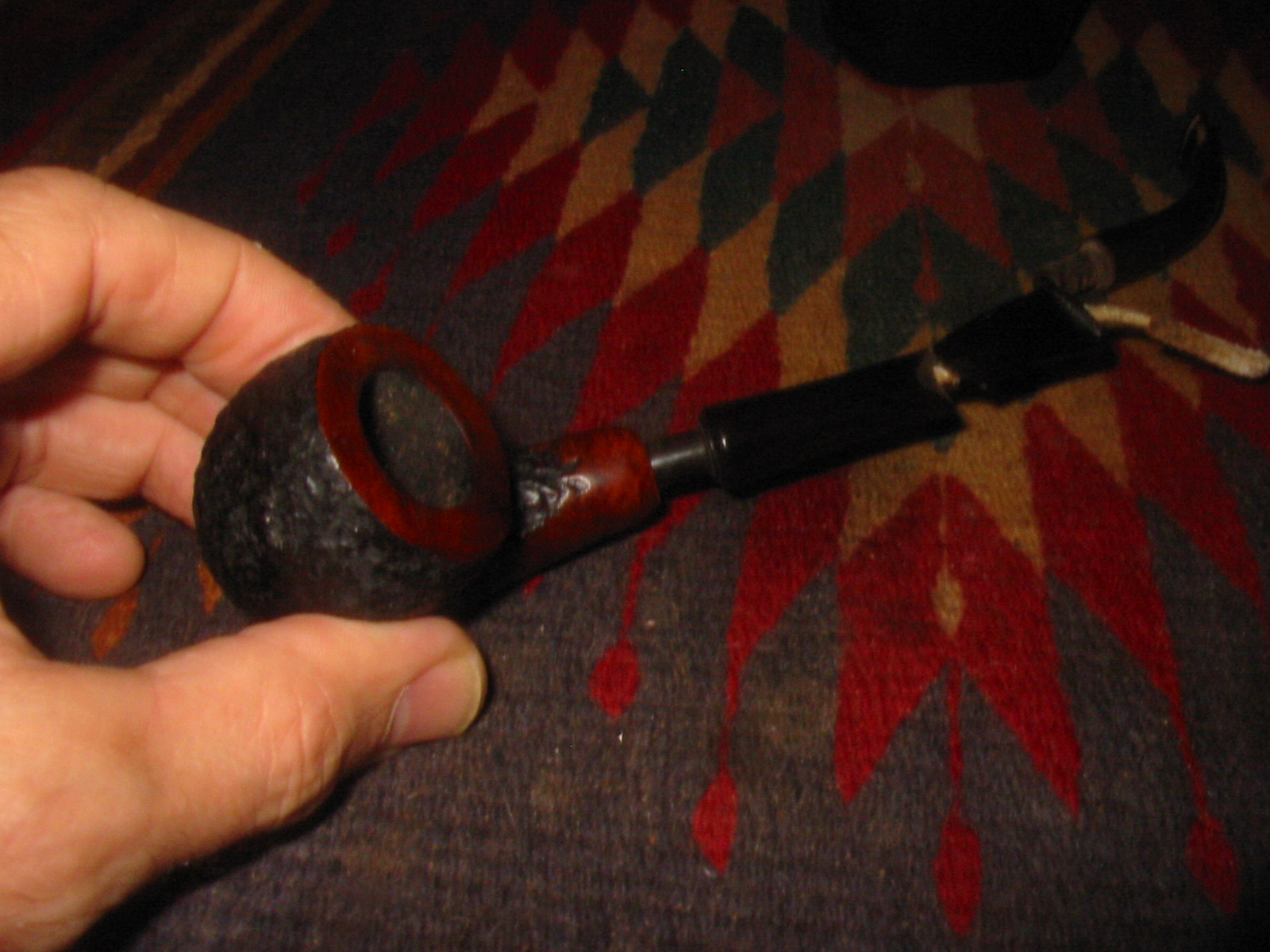
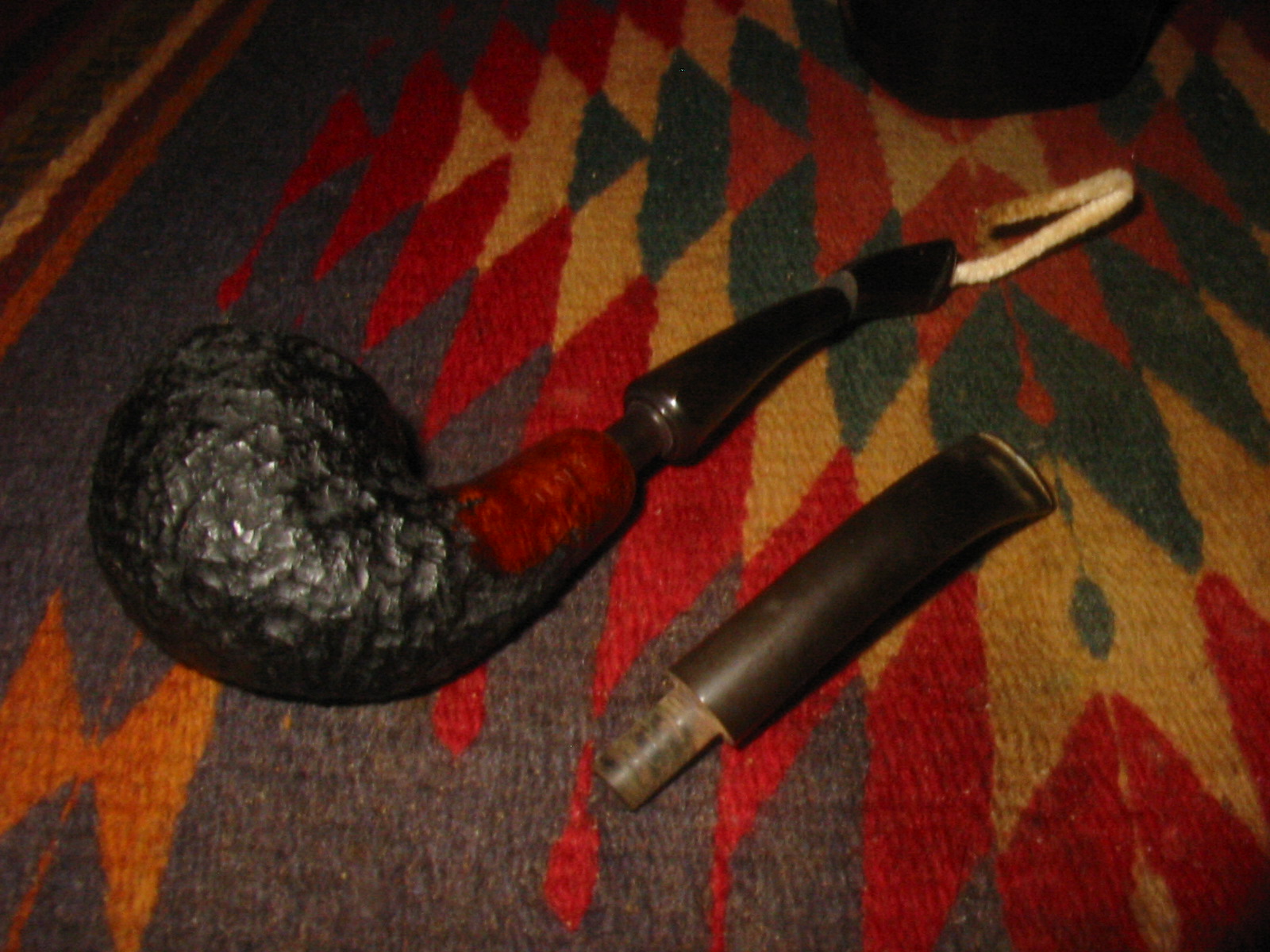
Before I worked on the fit of the new stem I took some pictures of the pipe when it arrived. The pipe was definitely a Brigham, stamping and finish said that clearly. The stem was not a Brigham stem. It was a poorly made replacement stem. It was larger in diameter than the shank and bulged as it moved away from the shank. The finish on the stem was rough and the fit was poor. The rubber had a different feel to it than most of the vulcanite stems I have worked with. It was very thick at the bit and was not a comfortable stem to hold in the mouth. The tenon was definitely not a Brigham tenon. At first it looked to have been cut off but upon closer examination it was clear that the back part of the tenon was like a Dr. Grabow or Medico filter tenon with the slits on the sides that allowed the tenon to be widened to fit tighter in the shank. Into that tenon someone had inserted a piece of aluminum tubing that had walls that were approximately twice as thick as the aluminum used in the Brigham tenon. When I tried to fit the Brigham filter in, which should have fit nicely in even a cut off tenon, it did not fit. All of that confirmed my suspicions that the tenon was a repair replacement. IMG_8038 IMG_8039 The finish on the bowl was dirty and the grooves were plugged with an oily build up almost to the point that the Brigham rustication was smoothed over. The bowl was slightly out of round with some burn damage on the inner rim at the back left and right sides of the bowl. The cake in the bowl was quite heavy and smelled of good heavy latakia tobacco. It was uneven and I wanted to do some work on the inner rim and try to bring it back as close to round as I could so I would need to ream the bowl back to the wood to do that work. IMG_8040 The stamping on the underside of the bowl is worn but legible. The Brigham stamp is identifiable as 595S and next to that is a patent number that is almost illegible but I think it reads Can. Pat. 372982 which is the same patent number as one of my older Brighams. The Brigham logo is stamped over Made in Canada and is next to the patent number. IMG_8041 I removed the stem from the bowl, reamed it and cleaned the outer surface with Murphy’s Oil Soap and a tooth brush. I use the soap undiluted and scour until the surface is clean and then rinse it off with running water. I keep the water out of the inside of the bowl and shank. IMG_8022 IMG_8023 IMG_8024 IMG_8025 I cleaned out the inside of the bowl and shank with cotton swabs, pipe cleaners and isopropyl alcohol. Once I had the majority of the tarry buildup out of the shank I found that the metal end of the hard maple filter had broken off inside the shank and was stuck against the airway. I examined the airway from the inside of the bowl and poked at it with a dental pick. I soon found that the airway was clogged at the side of the bowl with a tarry, oily buildup. I picked it free and found the airway very open and quite large. I was able to carefully turn a drill bit by hand into the shank and catch the metal of the end cap and draw it out of the shank. I then scoured the shank with alcohol until all the cleaners came out white.
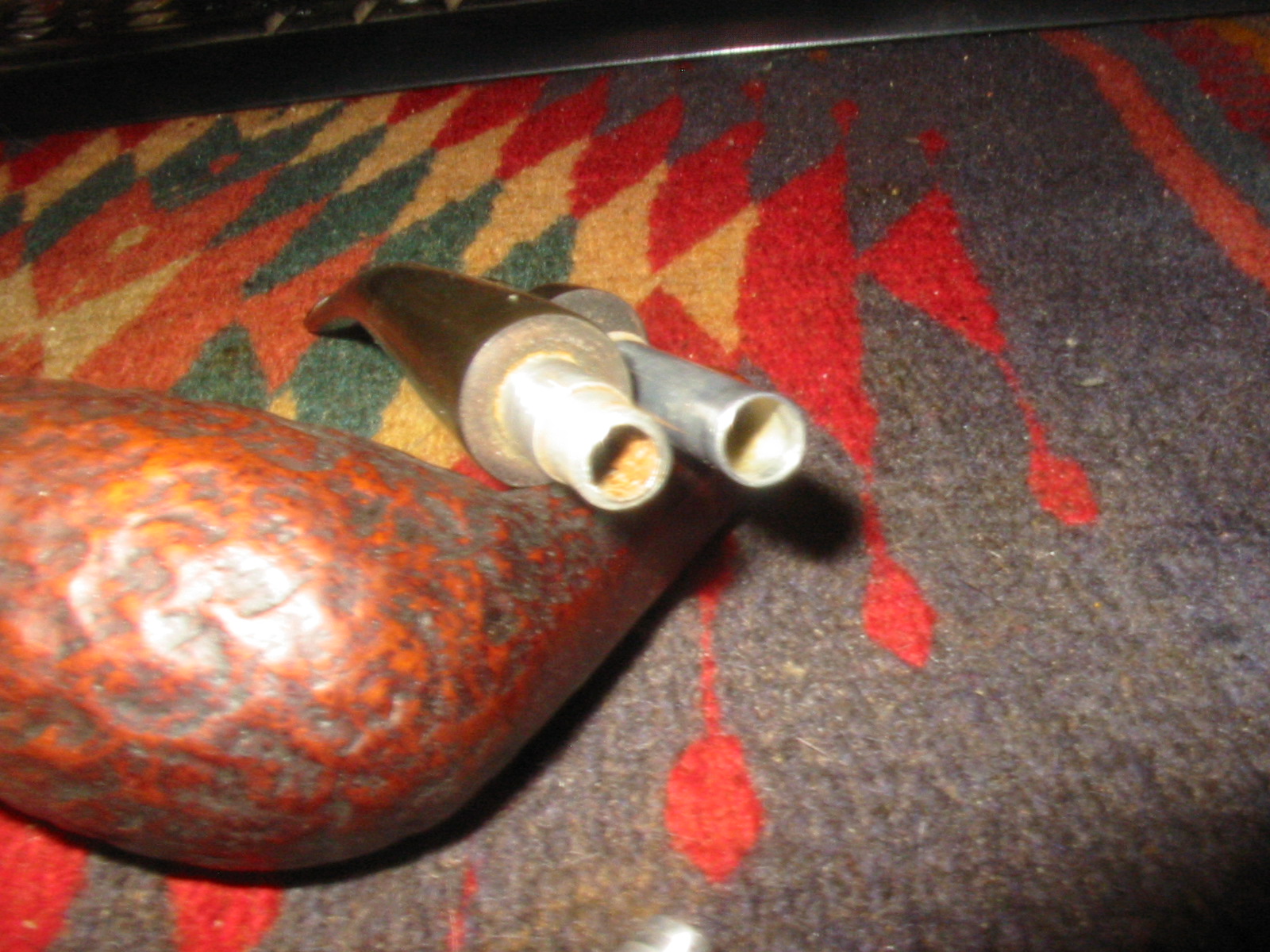
I then cleaned the inside of the 5 dot stem that I had and fit it into the shank of the pipe. It fit well and actually had an interestingly look (IMHO). It was oxidized and needed work but it fit. The shank was still very tight at the end so I was not able to get the maple filter to fit in the tenon and still fit tightly against the shank. I have to do a bit more work opening the far end of the mortise to accommodate that. The next series of four photos show the 5 dot stem and give a rough idea of the look of the pipe at this point. IMG_8029 IMG_8032 IMG_8034 IMG_8035 I took the next three photos of the two stems side by side to show see the difference in diameter of the stems and the difference in shape of the two tenons. In the first photo the top stem is the replacement one and the bottom is the original Brigham made stem. The second and third photos show an end view of the two different tenons side by side. The one on the left is the replacement tenon and the one on the right is the original Brigham. Note the difference in diameter of the inner circle of the opening and the thickness of the walls of the tube in both tenons. The maple filter tube fit tightly in the replacement stem with no allowance for air to flow around the tube. It was shorter as well so the filter would not have been used with the replacement stem. IMG_8042 IMG_8043 IMG_8044 To start the cleanup on the oxidized stem I decided to use the Meguiar’s Scratch X2.0 scratch remover on the stem. It works quite well to remove some of the surface oxidation. I let it dry before buffing it off with a soft cloth. IMG_8045 The deeper oxidation still remained so I sanded the stem with 220 grit sandpaper and medium and fine grit sanding sponges. I followed up with micromesh sanding pads – wet sanding with 1500-2400 grit pads and dry sanding with 3200-12,000 grit pads. I rubbed it down with Obsidian Oil between each set of three pads and a final rub down at the end. IMG_8047 IMG_8050 IMG_8051 Once the Obsidian Oil had dried I buffed the pipe with White Diamond and then gave the bowl a light coat of carnauba wax and the stem several coats of carnauba wax. I buffed in between with a soft flannel buff to polish each coat. The finished pipe is shown below. I am looking forward to firing it up with one of the good English tobaccos that Bill sent along. Thanks again Bill for the great addition to my collection. IMG_8059 IMG_8060 IMG_8061 IMG_8062
I Found the Black Box – Bill Tonge


I recently was gifted a box of Brigham pipes from someone on eBay who bought one of my pipes. The one in this particular write up is the fourth one down which is a 429 Author shape.
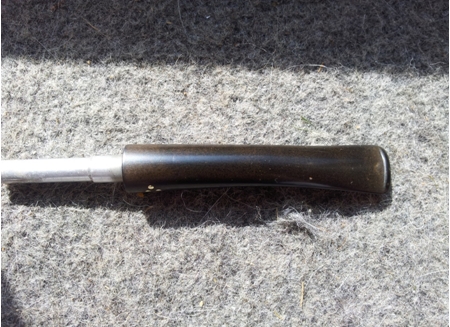
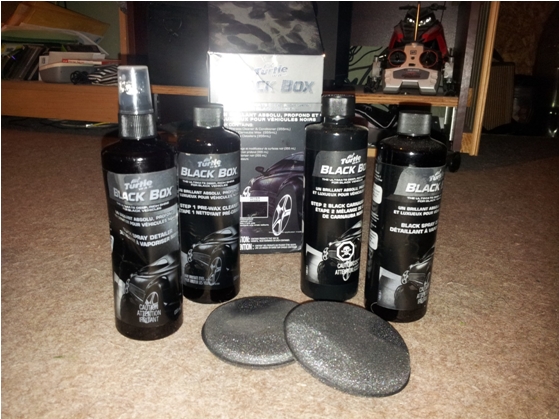
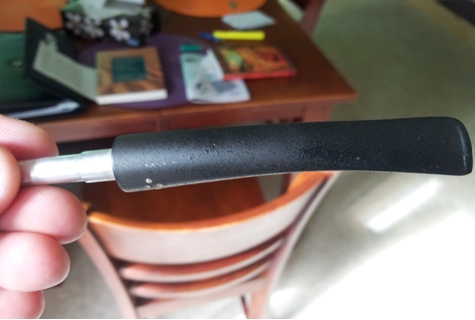
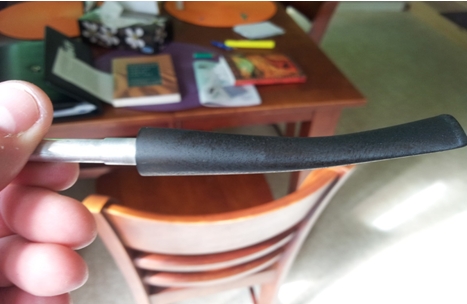
Bill1 I pulled the pipe apart and did my usual cleaning which entails the bowl, shank and lightly sanding it for some contrast. Then I went at the stem. I did my Oxi-Clean and Magic Eraser to the stem and then used the micro mesh pads. When I finished I noticed that the stem was still brownish in spots. Bill2 Bill3 So I went out to the shop and dug out my Black Box from when I had my black car. Bill4 I used it exactly the same way you use it on your car following every step. The first step involves the scratch remover and the second step is the black carnauba wax. I just dabbed it all over the stem and let it sit until it turned to a gray haze. The next set of pics shows the stem covered in the black wax. Bill5 Bill6 Bill7 The final step is to buff it up. As you can see from the pics it covers the brown pretty well. Bill8 Bill9 And of course a pic of the final pipe cleaned, waxed and back together. Another happy Brigham. Bill10

Restoring an older KBB Yello-Bole Imperial Dublin


Blog by Steve Laug

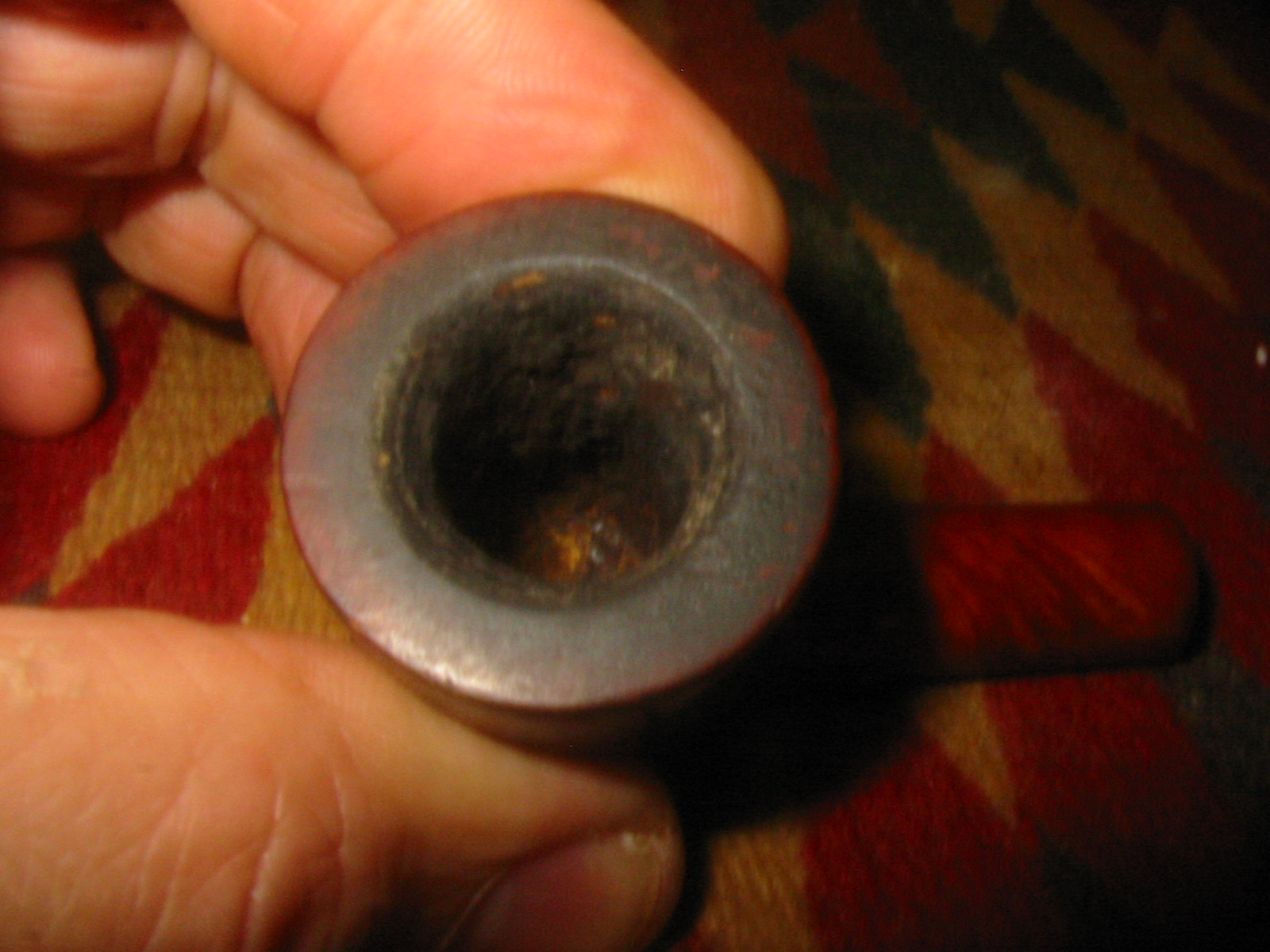
This is the last of the pipes I picked up when I was down in Washington State with my wife for 38th Anniversary. It is an older KBB (no ampersand between the two B’s). It had no shape numbers on the right side of the shank, but on the left side it had the KBB in the cloverleaf/club and next to it was stamped Yello-Bole over Imperial over Imported Briar. The Imperial stamping had been over-stamped with a cross hatch pattern. The bowl was in decent shape. The finish had dark soiling and oils on both sides of the bowl. There were also some dark spots on the sides of the bowl. There was a heavy coat of varnish over the bowl except for the worn spots where the oils and darkening was. The rim was heavily caked with tars and oils. The bowl was caked from the top half way down the bowl, though the yellow honey coating was still visible on the bottom half of the bowl. There were some burn marks along the outer edge and top of the rim.

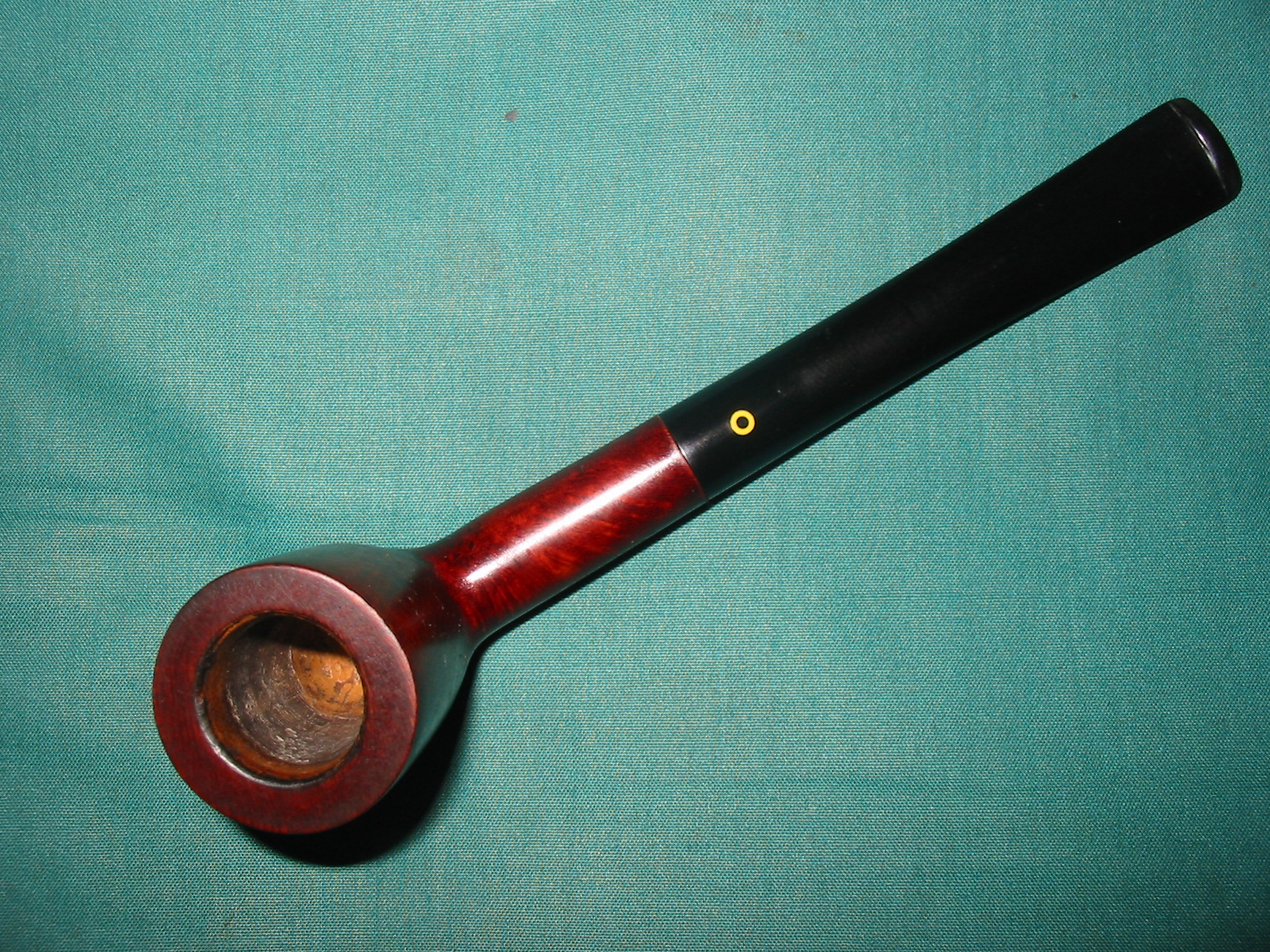
Again since Yello-Bole is one of my favourite older US brands I did some more reading online to see if I could narrow down when this one was made. I have come to understand that these older Yello-Boles are great smoking pipes and underrated. I turned to one of my go to sources of information on all things KBB and Kaywoodie – the Kaywoodie forum http://kaywoodie.myfreeforum.org/ftopic13-0-asc-0.php. There I found a very helpful article by Dave Whitney that helped narrow down the date. The pipe I have has the shovel drinkless mechanism, the KBB-in-a-clover logo on the left side of the shank and the yellow circle on the stem. From what I can ascertain from Dave’s information it seems to have been produced between the years of 1938-42. I am fairly certain that it did not come from the later period of 1945-50 (World War II) since it did not have the aluminum stem ring and the aluminum drinkless mechanism which came out during those years.

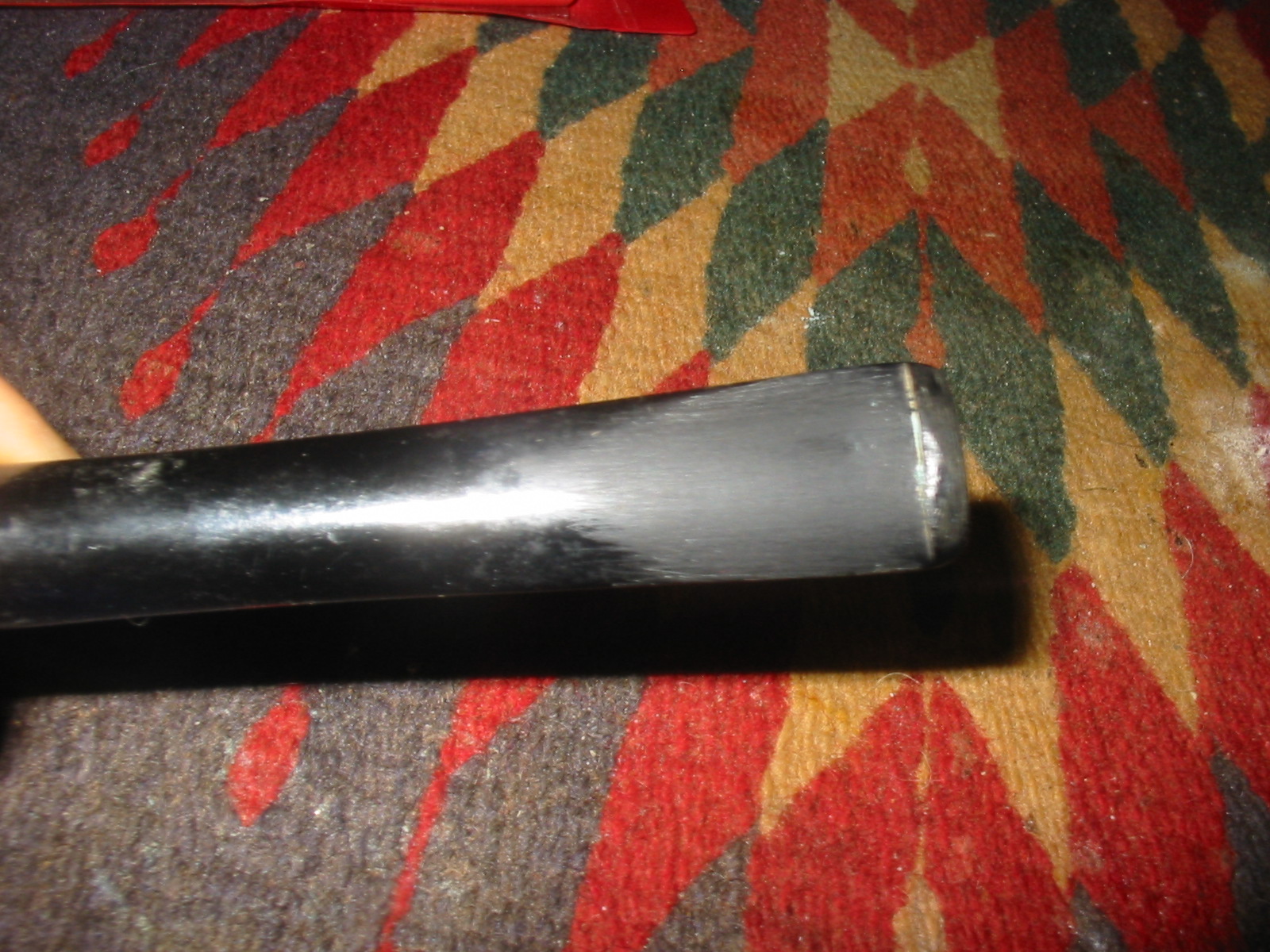
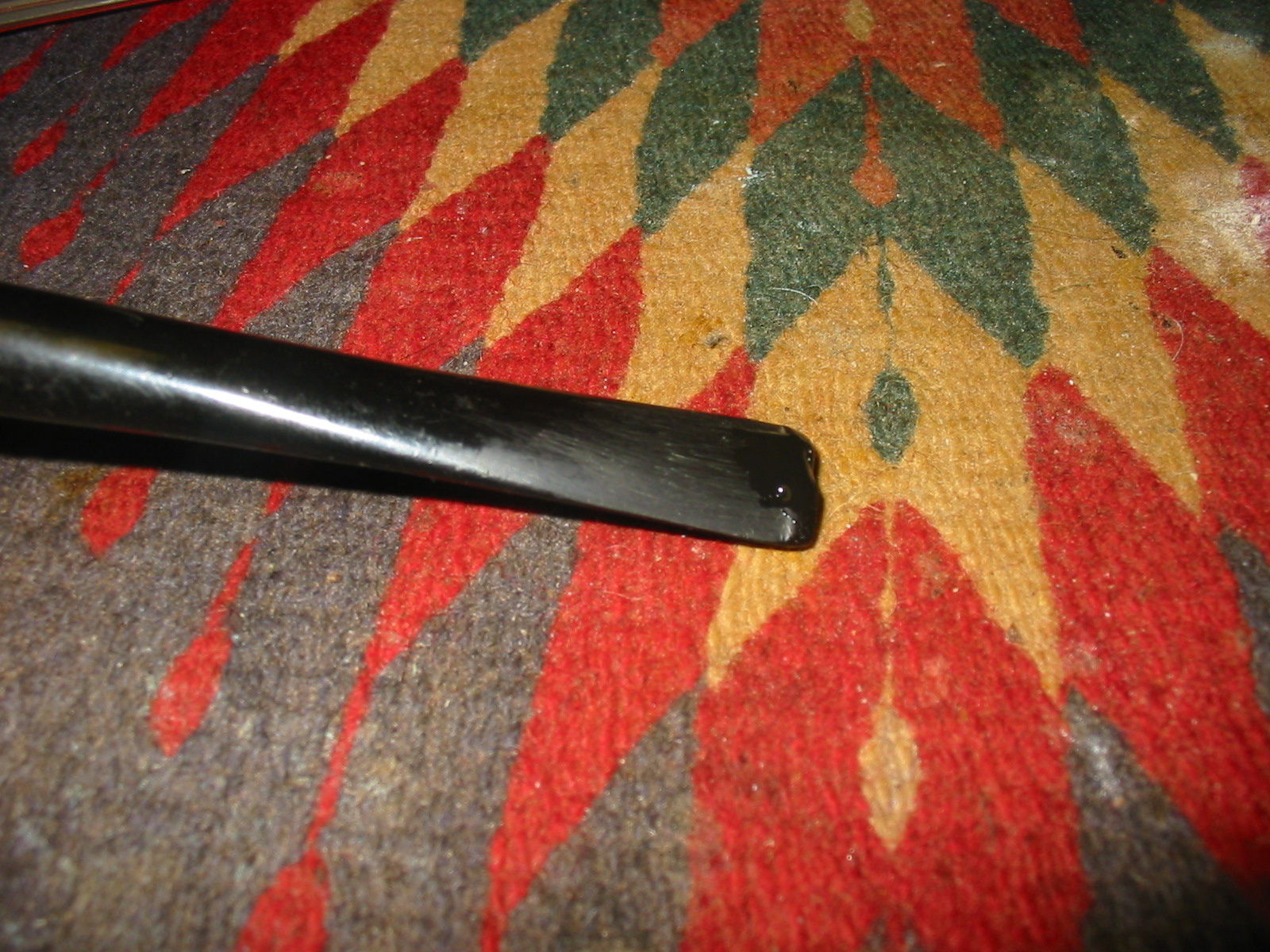
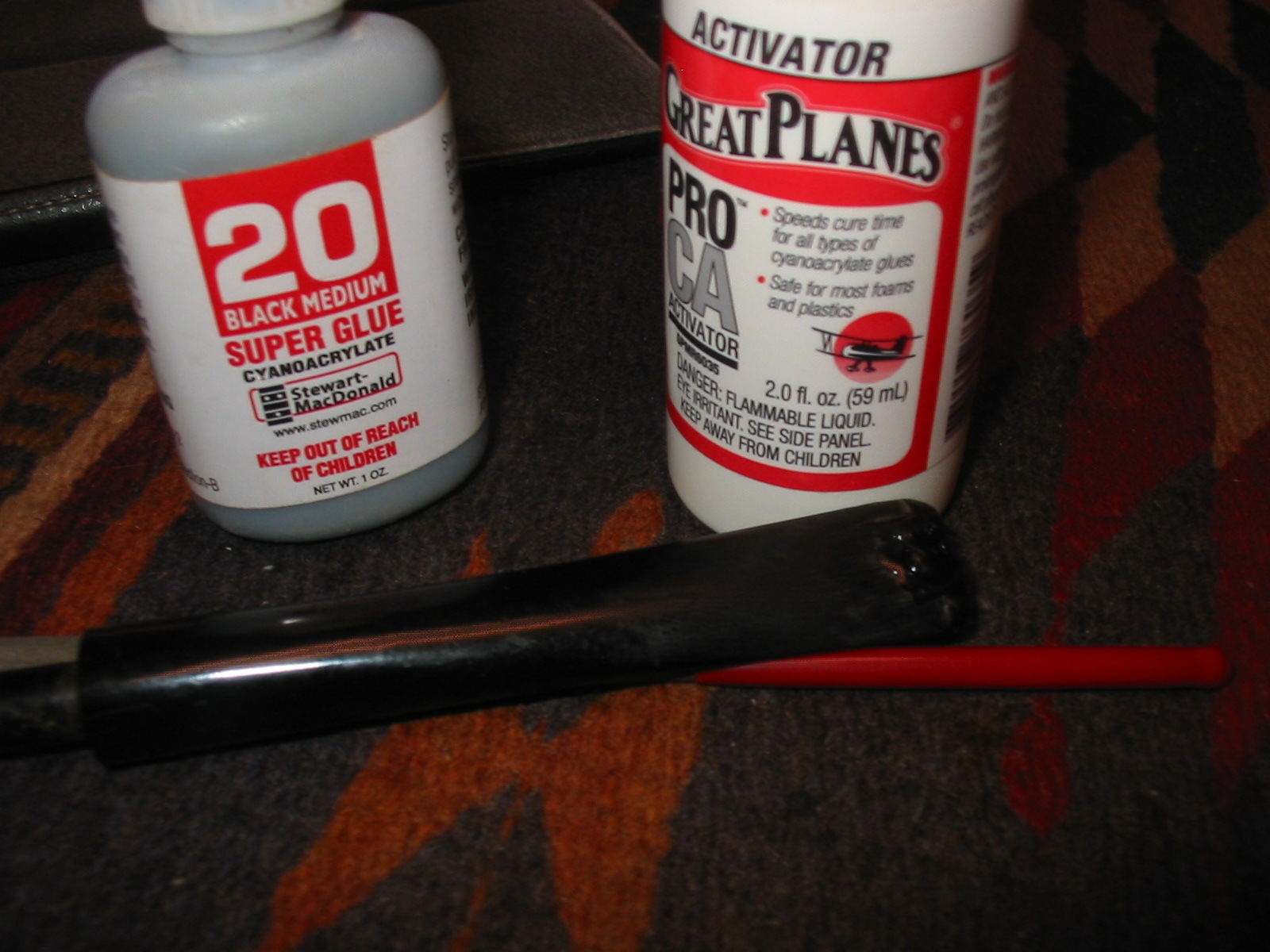
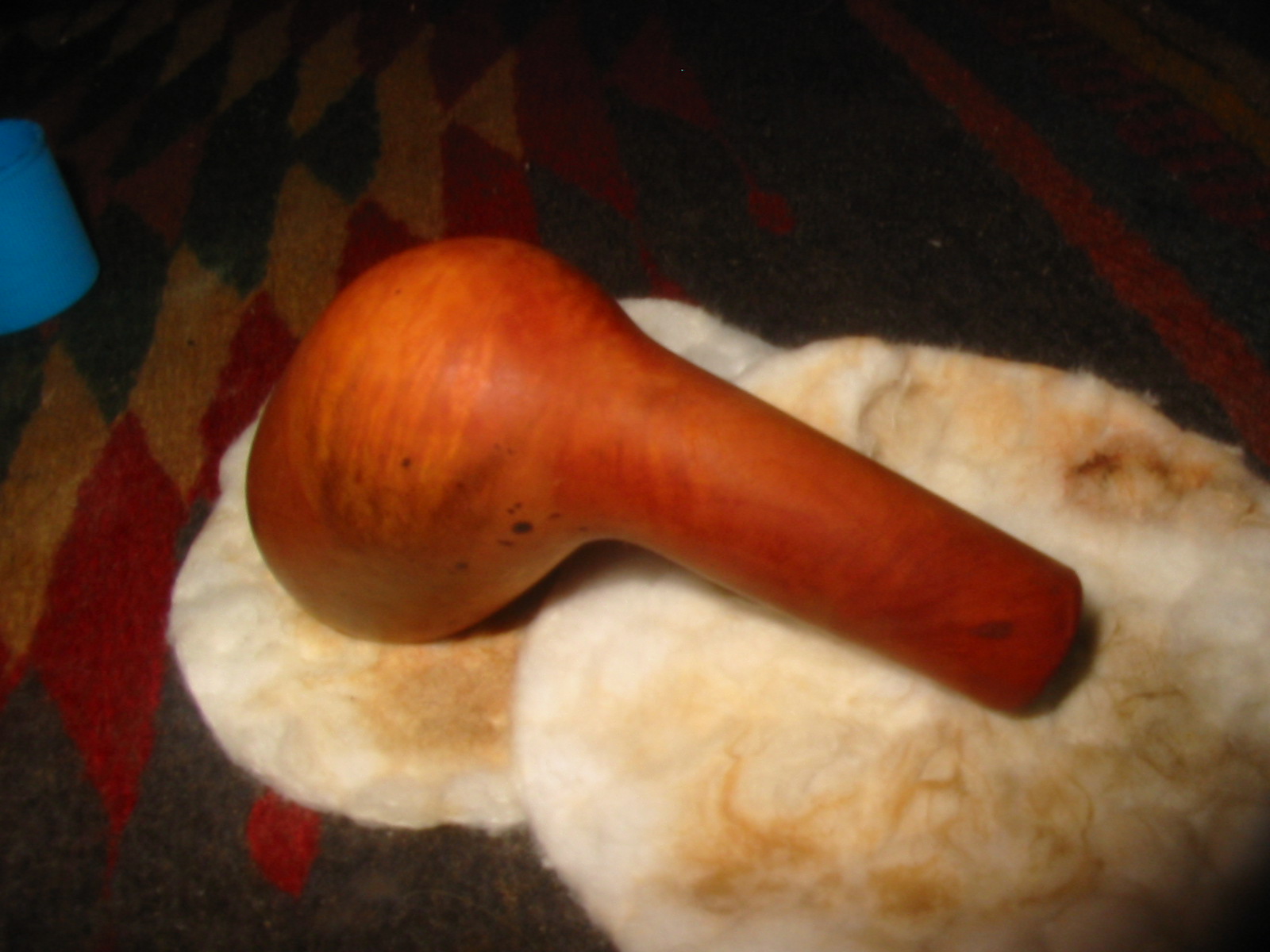
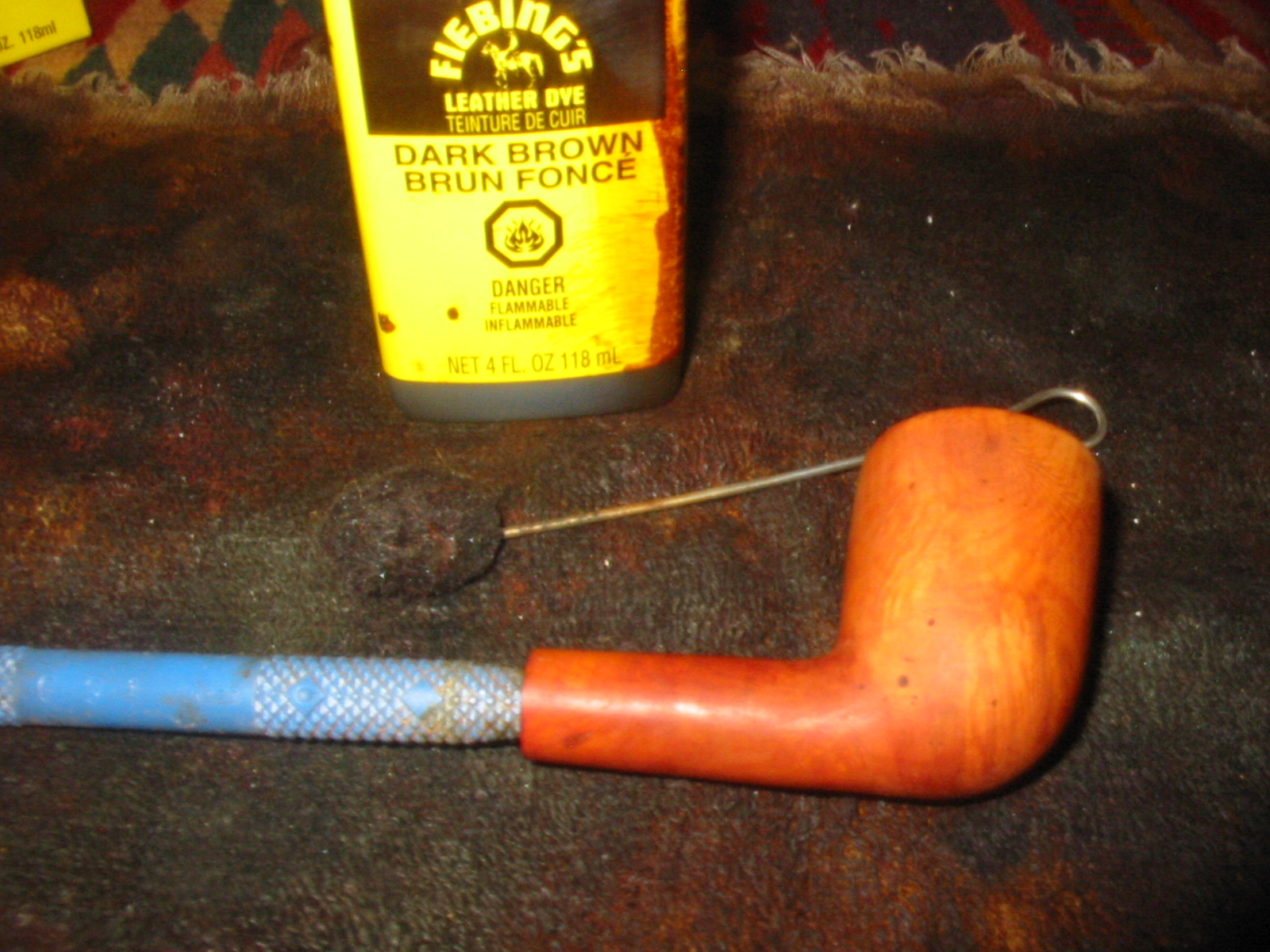
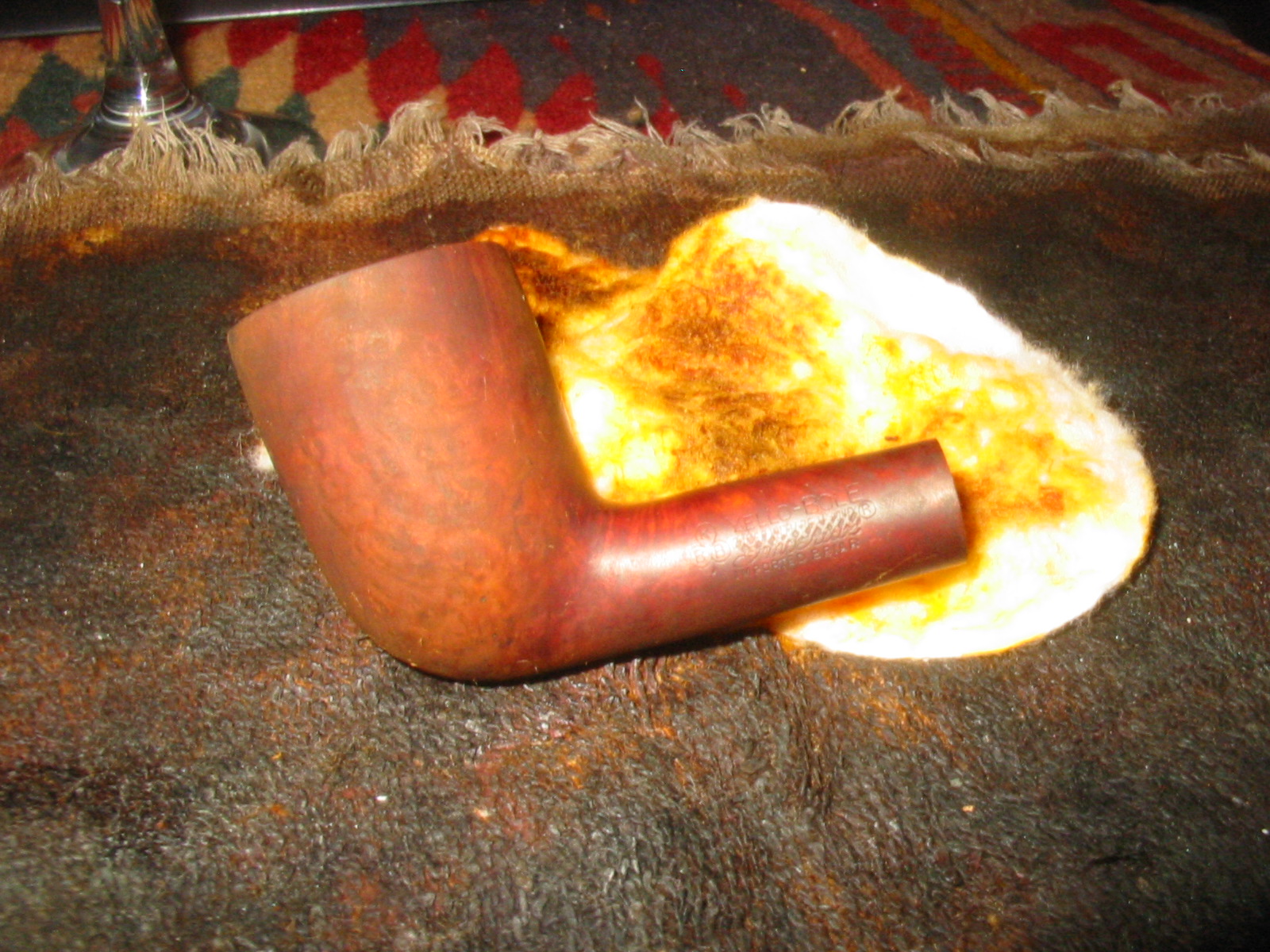
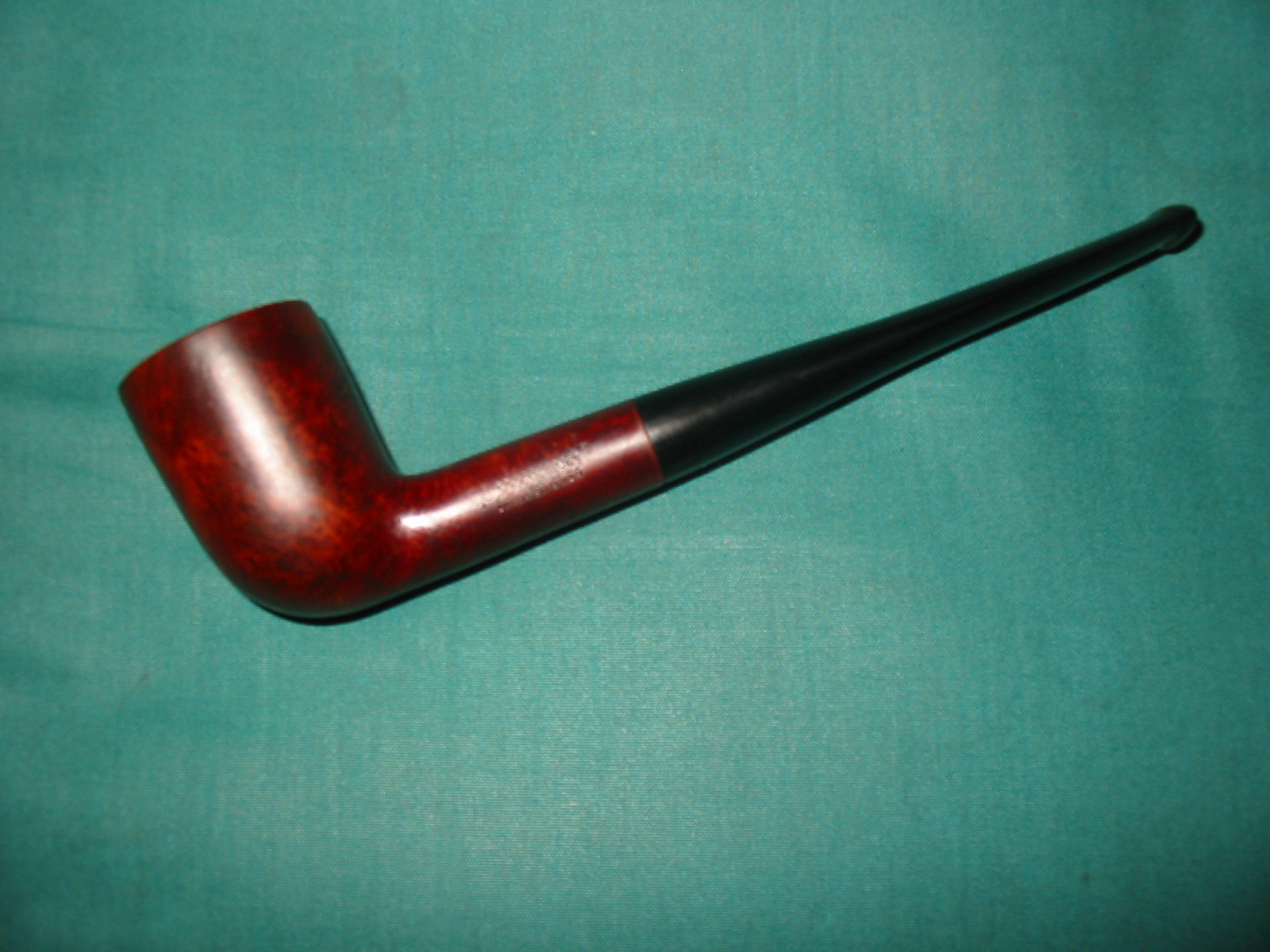
The photos below show the pipe as it was when I found it in the antique shop. IMG_7924 IMG_7926 IMG_7923 IMG_7927 The stem is made of nylon rather than vulcanite. It has the yellow circle inset in the top near the shank of the pipe. The button area was chewed and dented. There was a shallow dent on top of the stem and deeper ones on the underside of the stem next to the button. The button had been chewed down and had deep dents on the underside while the slot had been dented in so that it was not longer straight. IMG_7920 IMG_7922 I sanded the stem down and was able to remove the dents on the topside. The underside tooth mark was too deep to sand or even heat and raise. IMG_7929 I sanded it with 220 grit sandpaper to clean up the chatter further up the stem and then picked the area clean around the large dent with a dental pick. I wiped the stem down with alcohol to clean off the dust and then filled it with black super glue that I purchased from Stewmac online. I filled it the first time and sprayed it with an accelerator. Once it dried it had shrunken and left a divot in the stem surface. I refilled it with the glue and then sprayed it again with the accelerator. I set it aside overnight to cure and worked on the bowl. IMG_7928 IMG_7942 The bowl and rim were caked with an uneven cake so I reamed it with a PipNet pipe reamer to take it back to the briar. The cake was soft and once I removed it from the middle portion of the bowl I could see the yellow coating on the bottom half and partway down from the rim. The only portion that was darkened was in the centre of the bowl. IMG_7930 IMG_7931 I set up my topping board to remove the hard tars on the rim and also the burn damage. Fortunately the burn damage did not go too deep but merely sat on the surface under the tar coat. IMG_7932 I wiped down the bowl with acetone on cotton pads to remove the finish and as much of the dark staining on the side of the bowl as possible. The dark spots were deep in the finish of briar so I was not sure I would be able to remove them. IMG_7937 IMG_7934 IMG_7936 IMG_7939 Even after wiping down the bowl repeatedly the dark stains on the sides remained, lighter though still present. The dark spots appeared to be ink stains and they too remained. I decided to let the bowl soak in an alcohol bath overnight and address it again in the morning. IMG_7941 The next morning I removed the bowl from the alcohol bath and found that it had done its magic. The stains were gone and the ink stains were significantly lighter. I cleaned out the shank with cotton swabs, pipe cleaners and alcohol. I kept cleaning until the pipe cleaners and swabs came out clean. IMG_7946 I stained the bowl with Fiebings Dark Brown aniline stain. I applied the stain and then flamed and repeated the process until the coverage was even. IMG_7947 IMG_7948 I wiped it down with alcohol on cotton pads to remove some of the opaque colour of the stain and to make the grain more visible. IMG_7949 IMG_7950 IMG_7951 I buffed the bowl with White Diamond. The next three photos show the bowl at this point in the process. IMG_7953 IMG_7954 IMG_7957 Once I had finished the work on the bowl to this point I decided to work on the stem. I used a coarse grit sanding stick to cut the sharp edge of the button. While it worked relatively well I could see that the hardened super glue needed something with more teeth to cut into the repair. I used a file to take off the overfill on the repair and then followed that with the sanding stick and 220 grit sandpaper. IMG_7963 IMG_7964
IMG_7965 I sanded the stem further with the 220 grit sandpaper and then with medium and fine grit sanding sponges to remove the scratches in the surface. I wet sanded with 1500-2400 grit micromesh sanding pads and dry sanded with 3200-12,000 grit pads. Between each grit of micromesh I wiped the stem down with olive oil. I have found that the olive oil allows the micromesh sanding pads to really cut into the surface of the nylon stem. I cleaned up the stinger with alcohol and cotton pads and then 0000 steel wool. IMG_7972 IMG_7979 IMG_7983 I gave the bowl a coat of walnut stain and boiled linseed oil to bring out a shine. I wanted the pipe to have a similar shine to what it originally had when it left the factory but did not want to use a varnish coat. I wiped it on the bowl with a cotton pad and then set it aside to air dry. IMG_7975 Once the finish had dried I buffed the pipe with White Diamond and then gave it several coats of carnauba wax and buffed to a shine with a soft flannel buff. I hand waxed the stem with Paragon Wax as I find that the nylon stems are hard to buff. Without a light touch the wheel can do irreparable damage to the nylon stem. The heat generated by the buffer will actually cause the stem to melt. The final photos below show the finished pipe cleaned, polished and ready to enter into the next years of its life. I think that this one will outlive me if properly cared for by the next pipeman after me. IMG_7986 IMG_7987 IMG_8003 IMG_8008

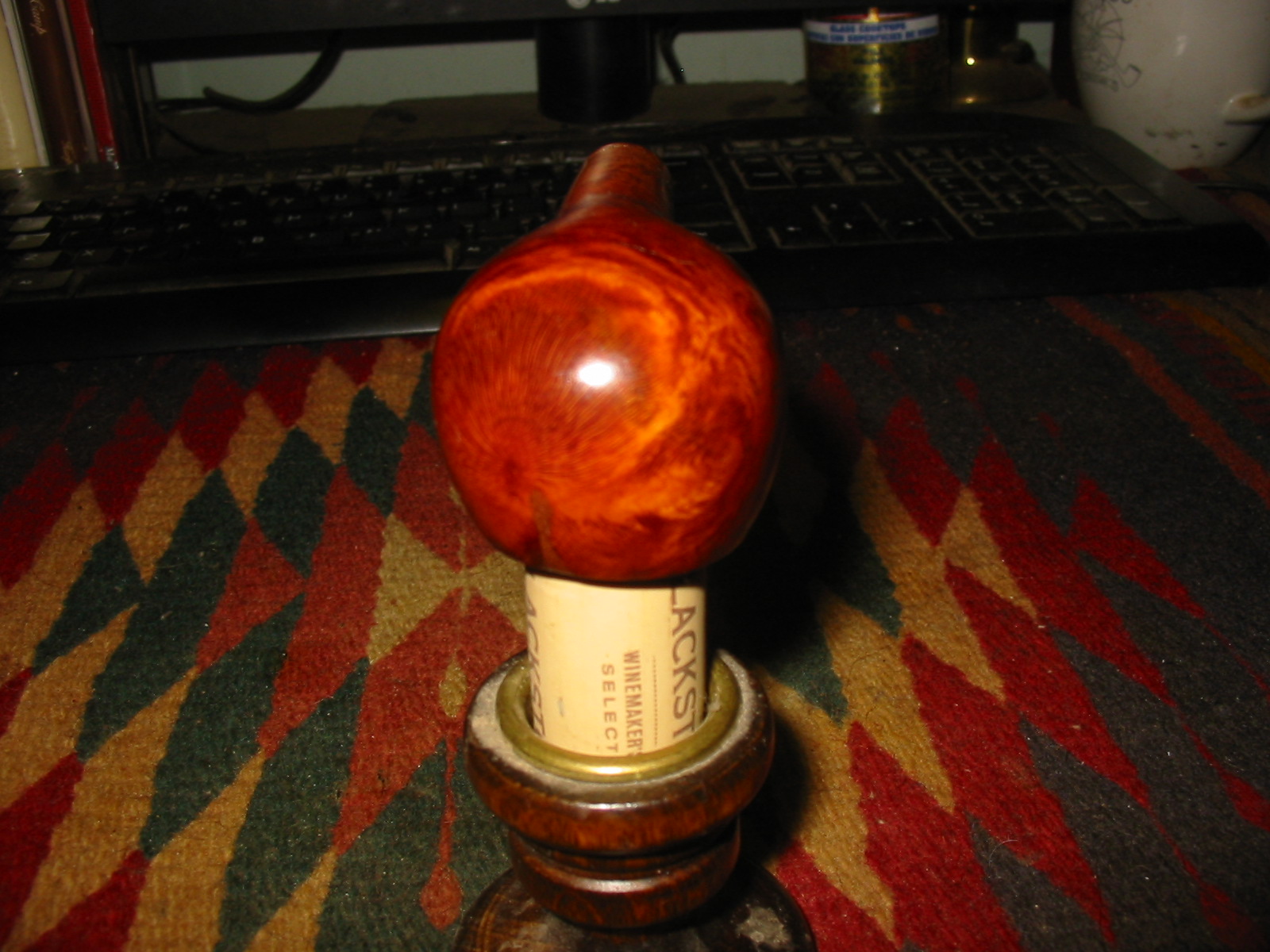
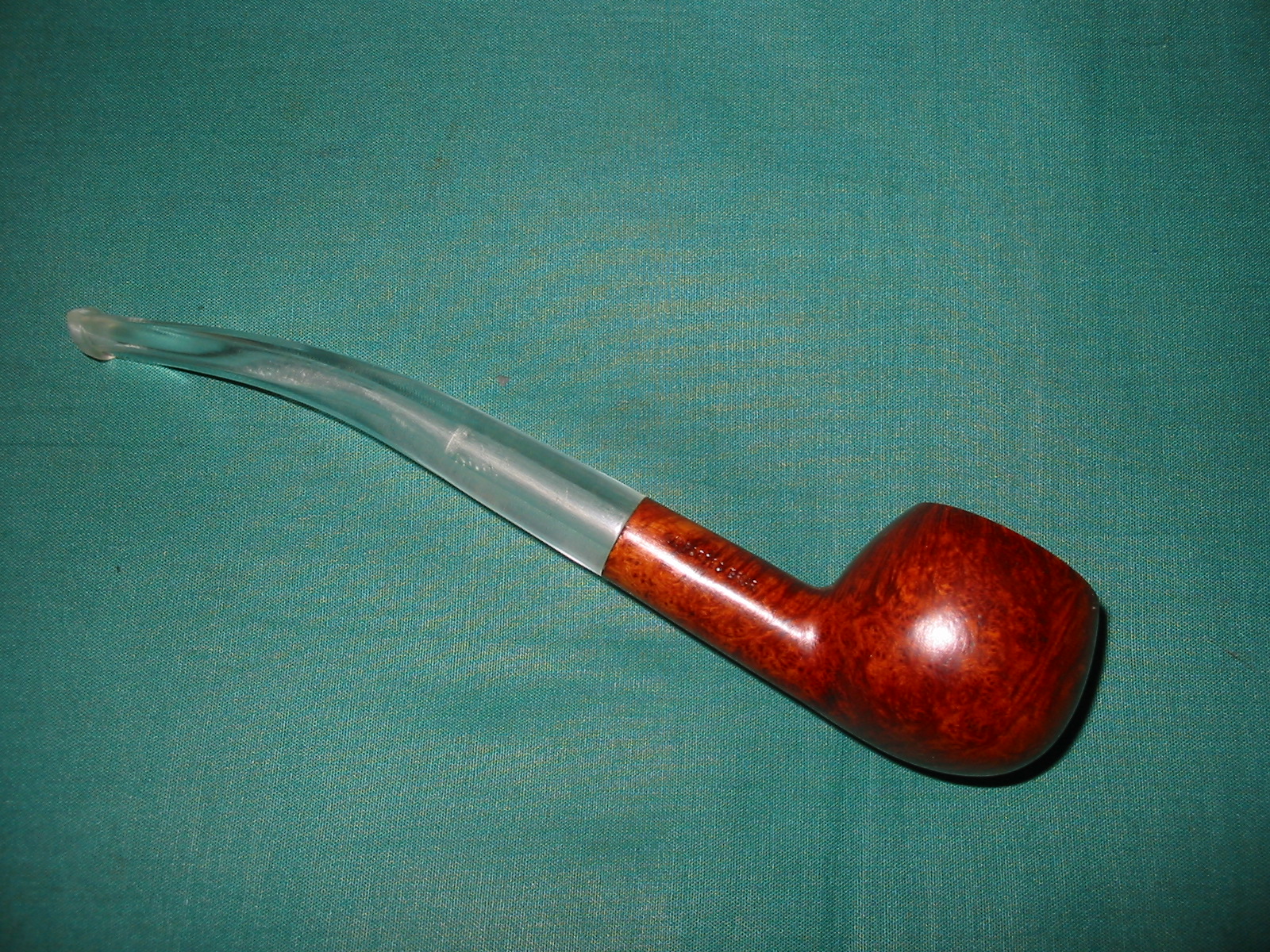
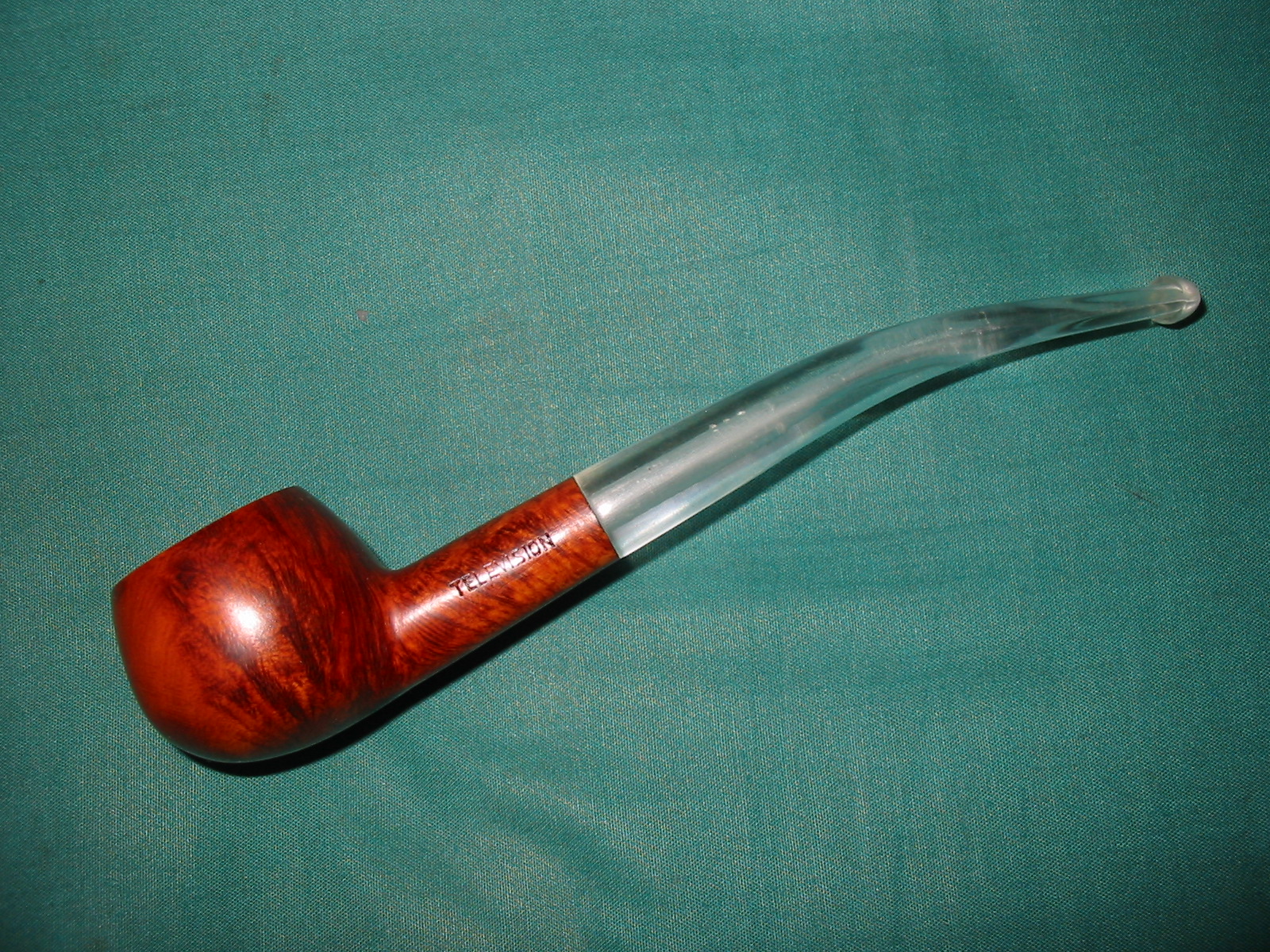
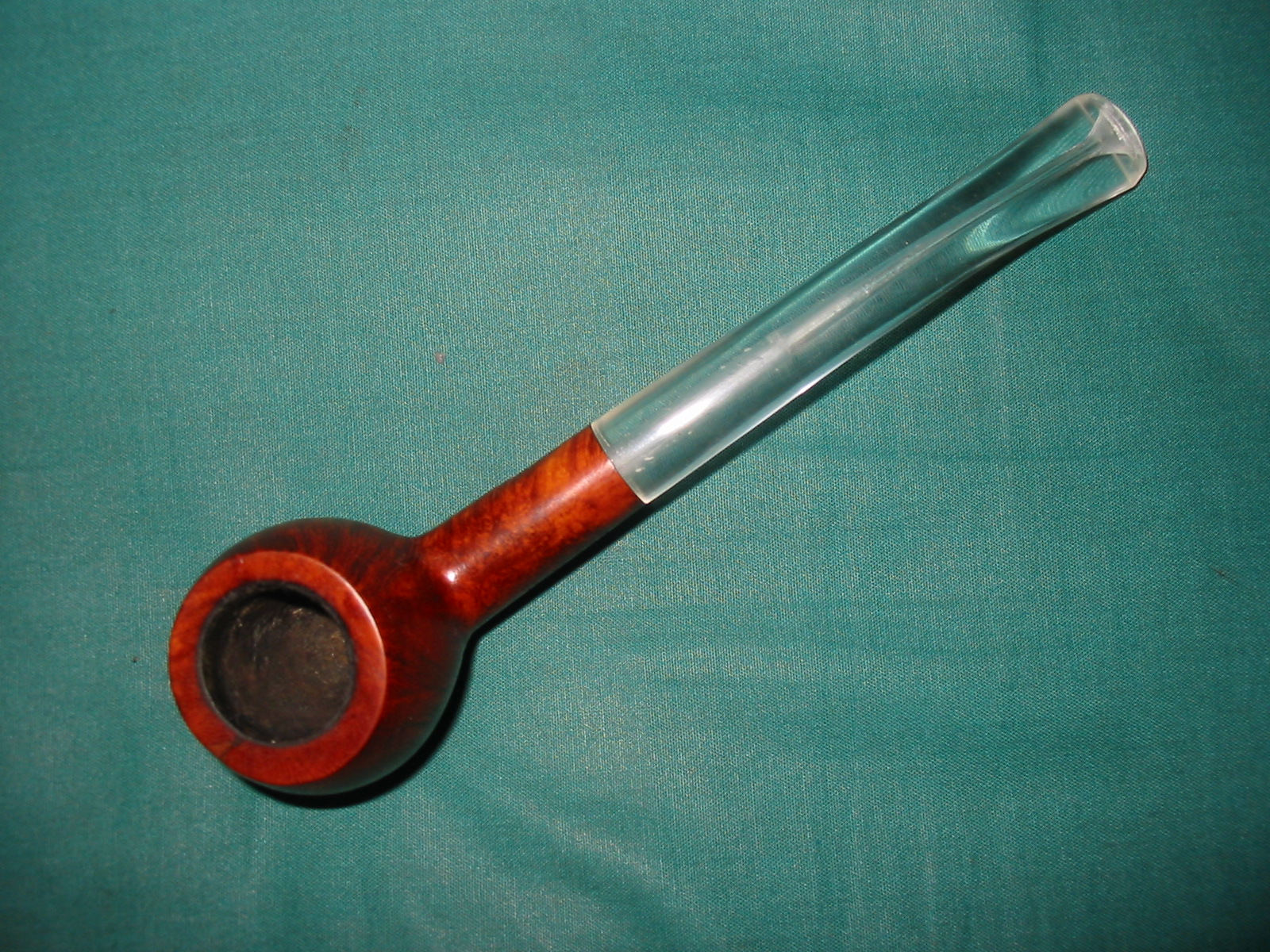
Restoring and restemming a second Television Pipe – a Prince


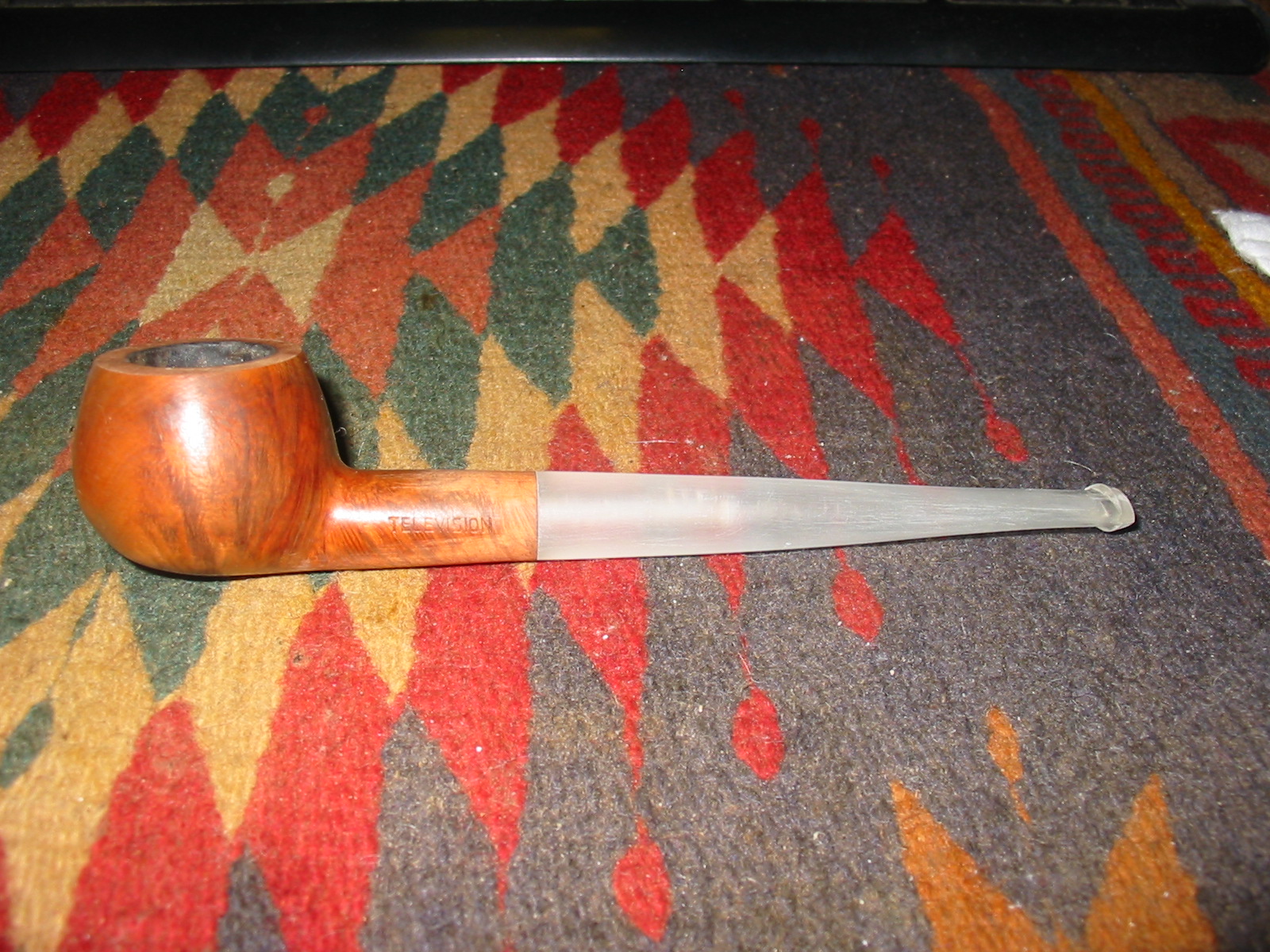
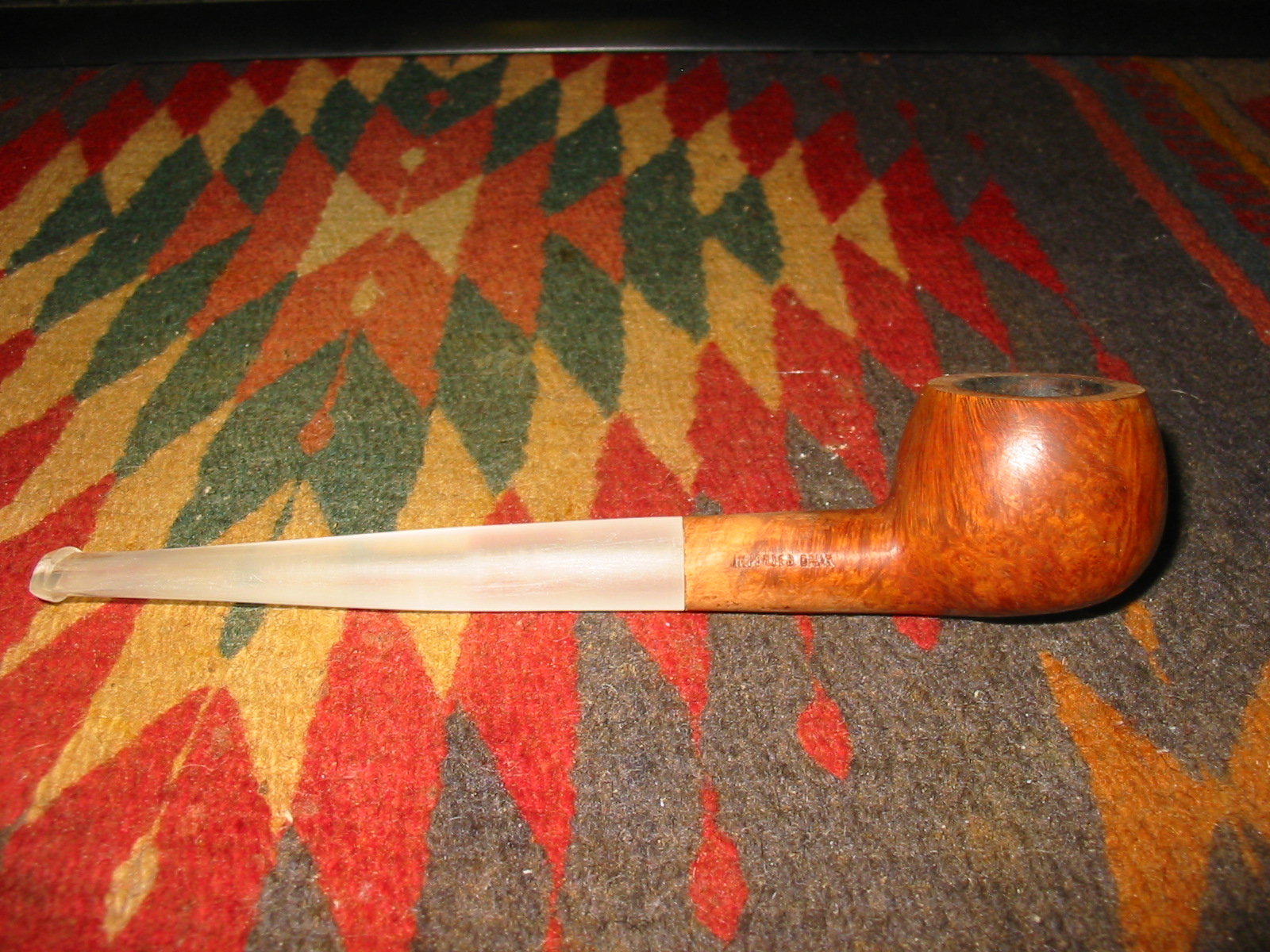
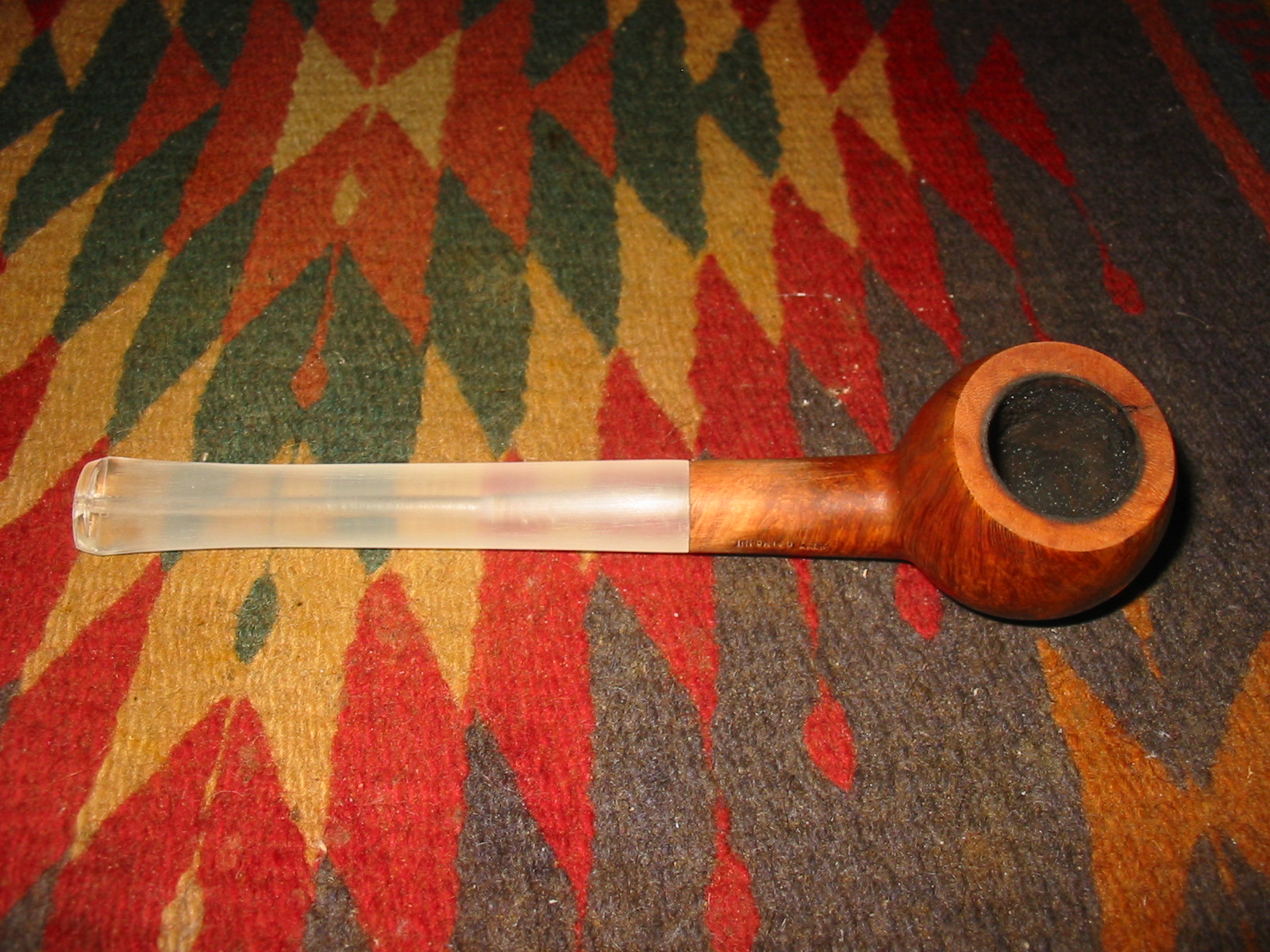
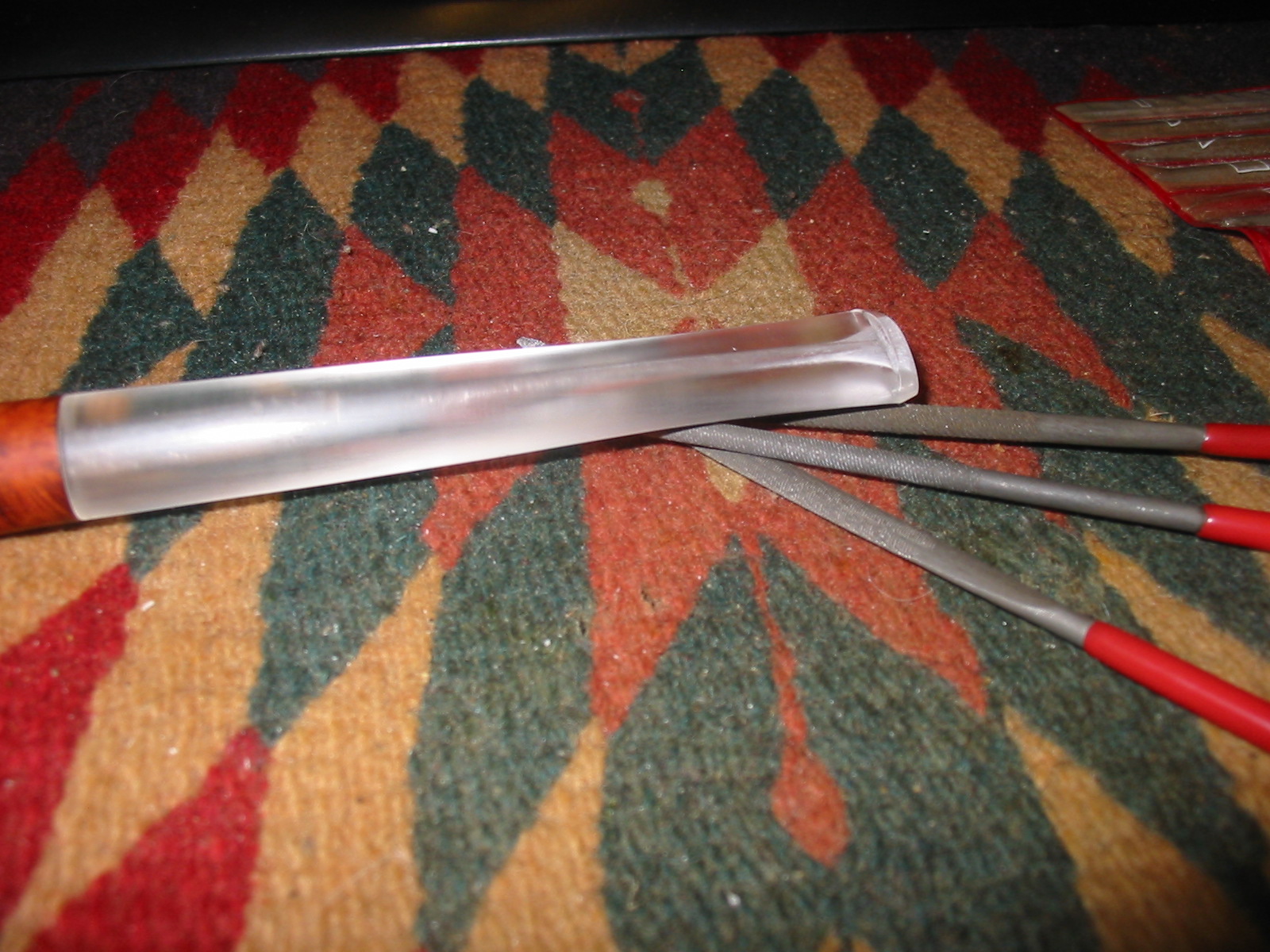
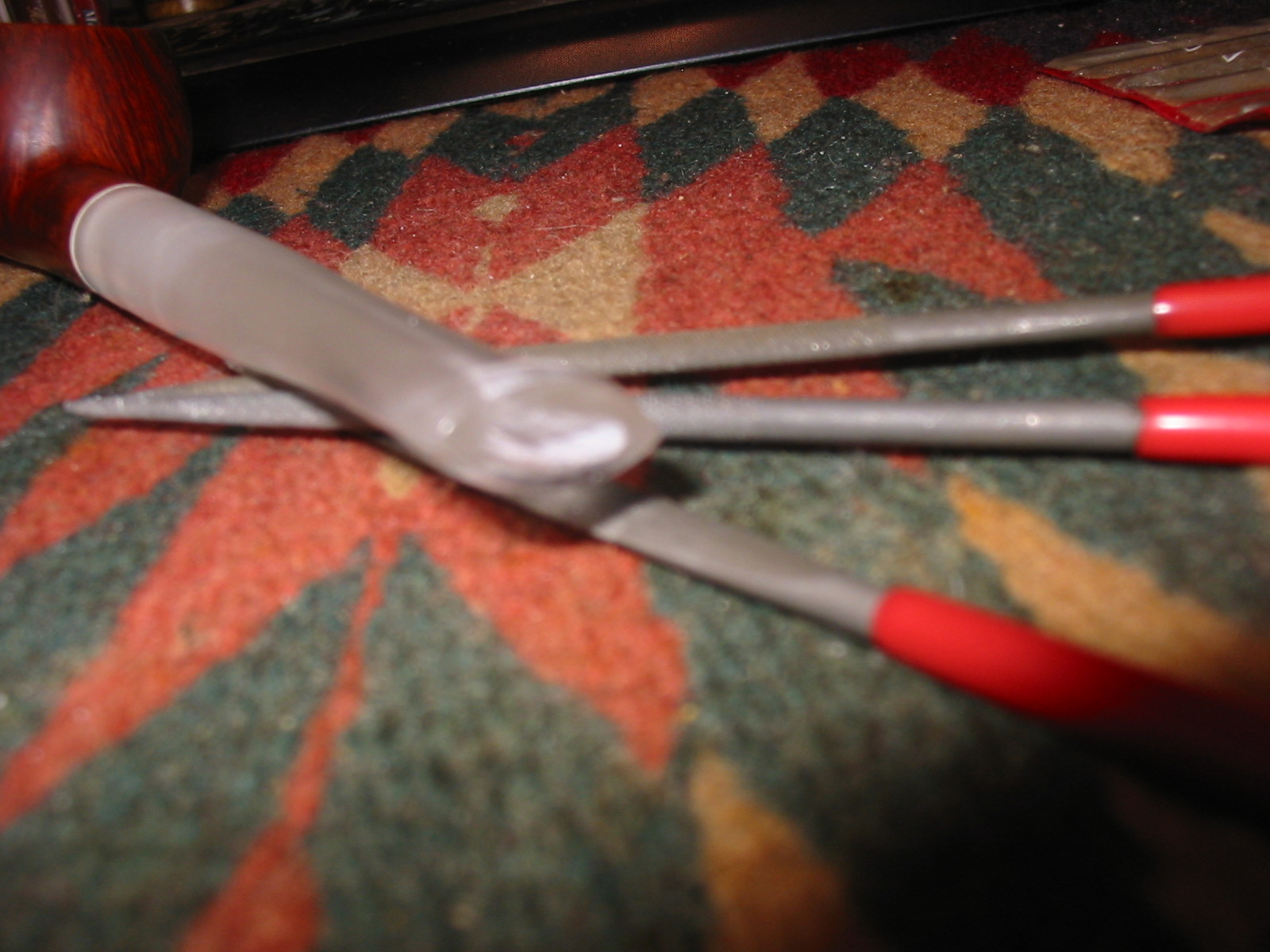
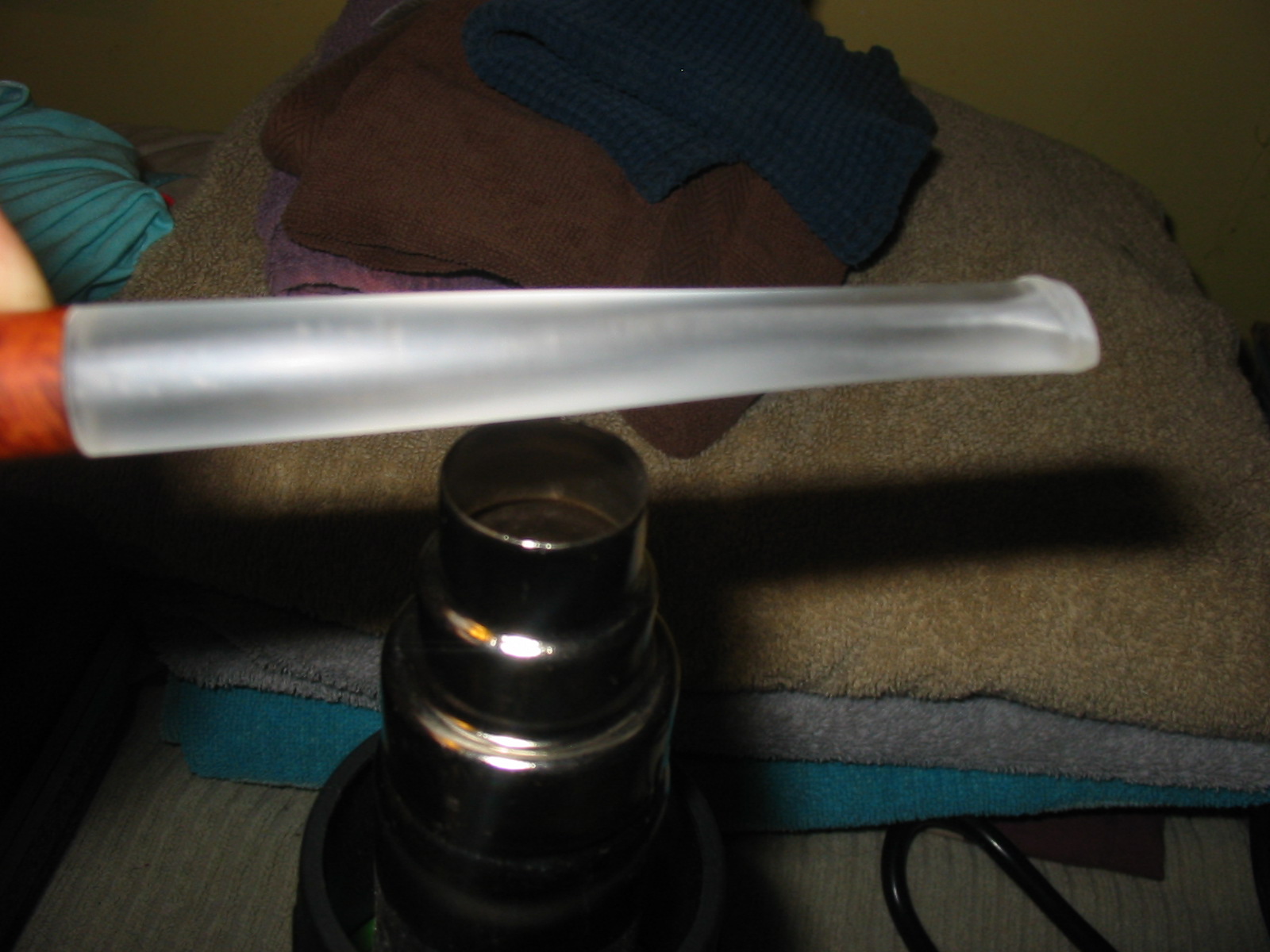
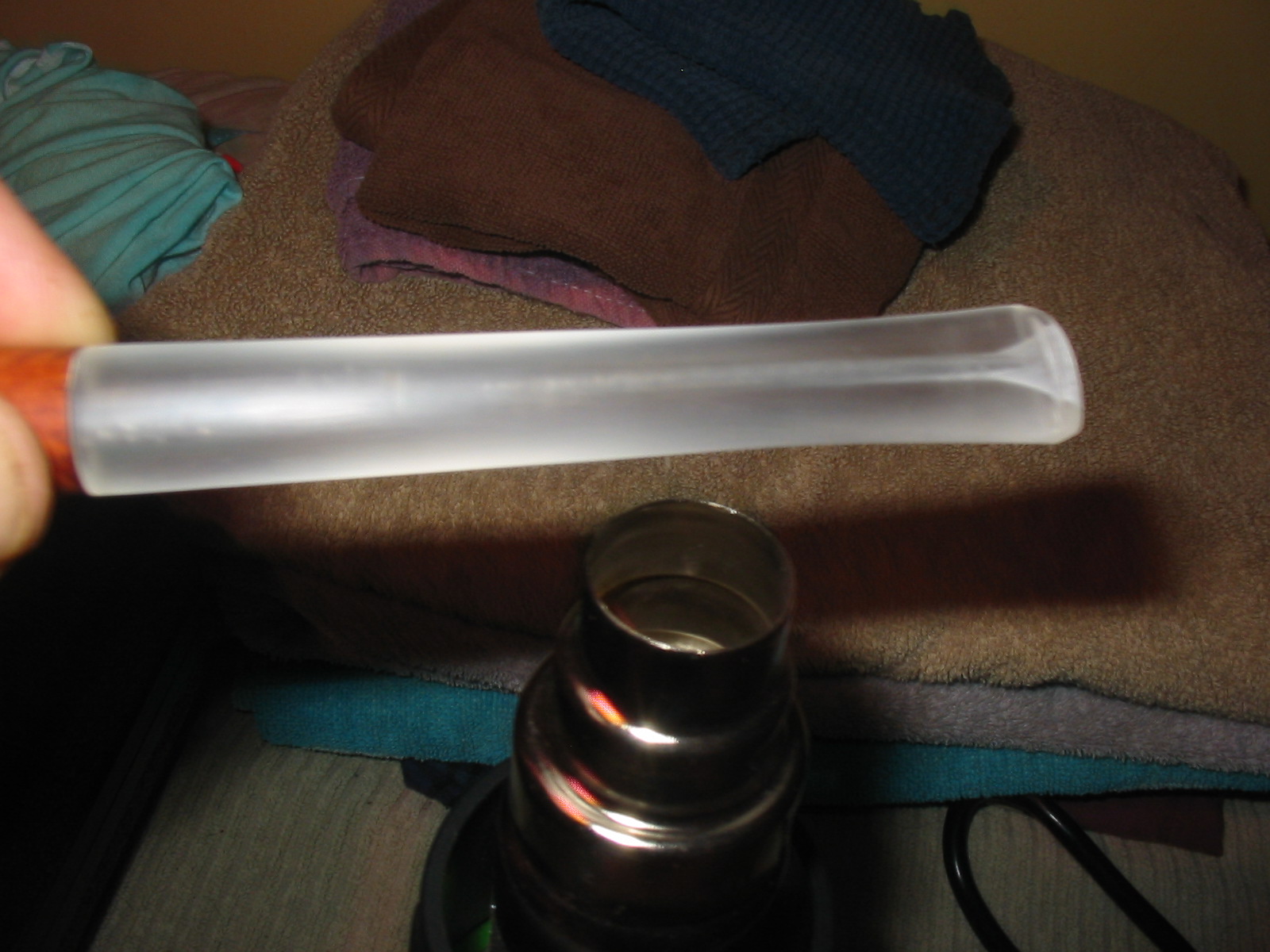
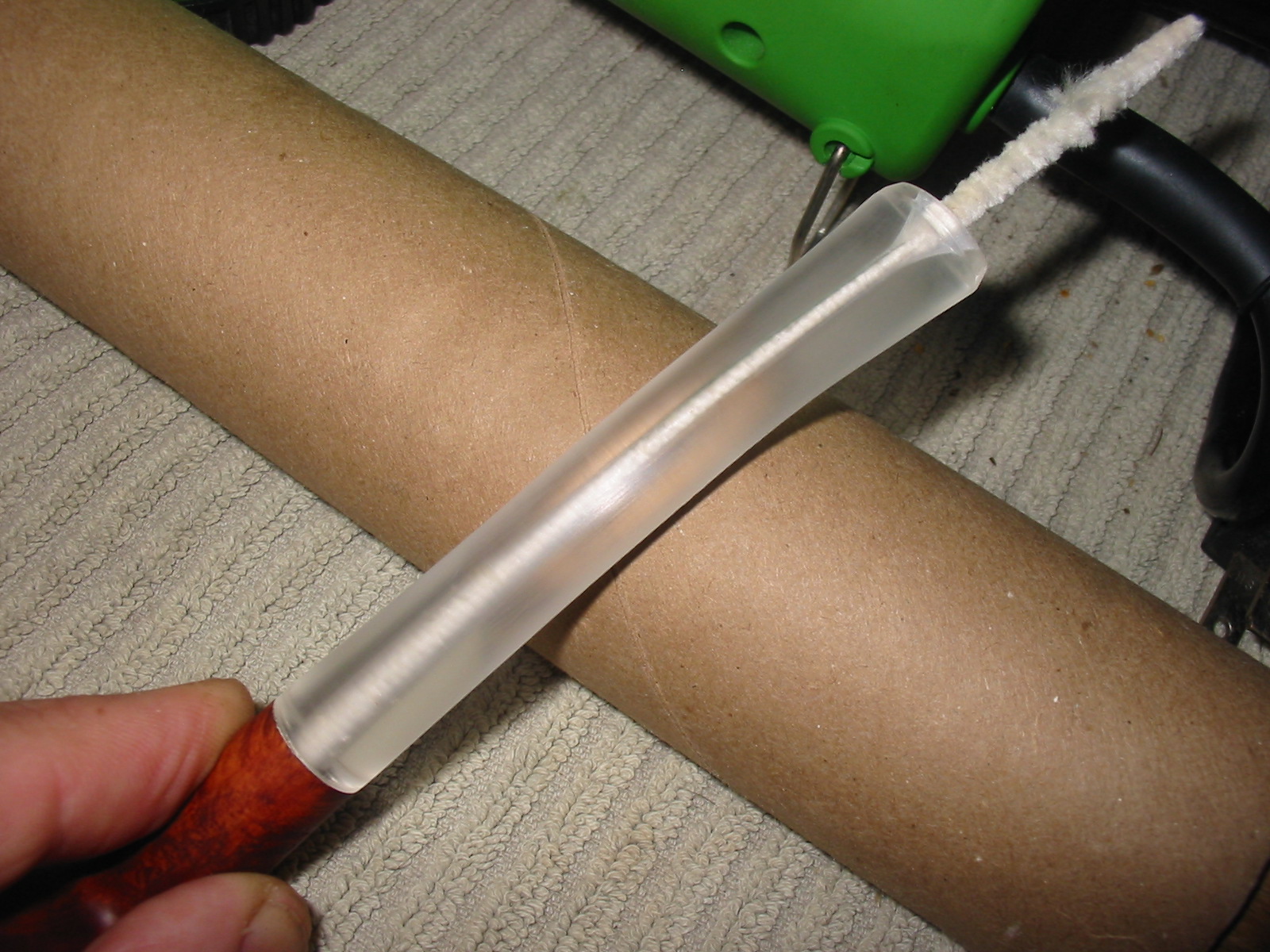
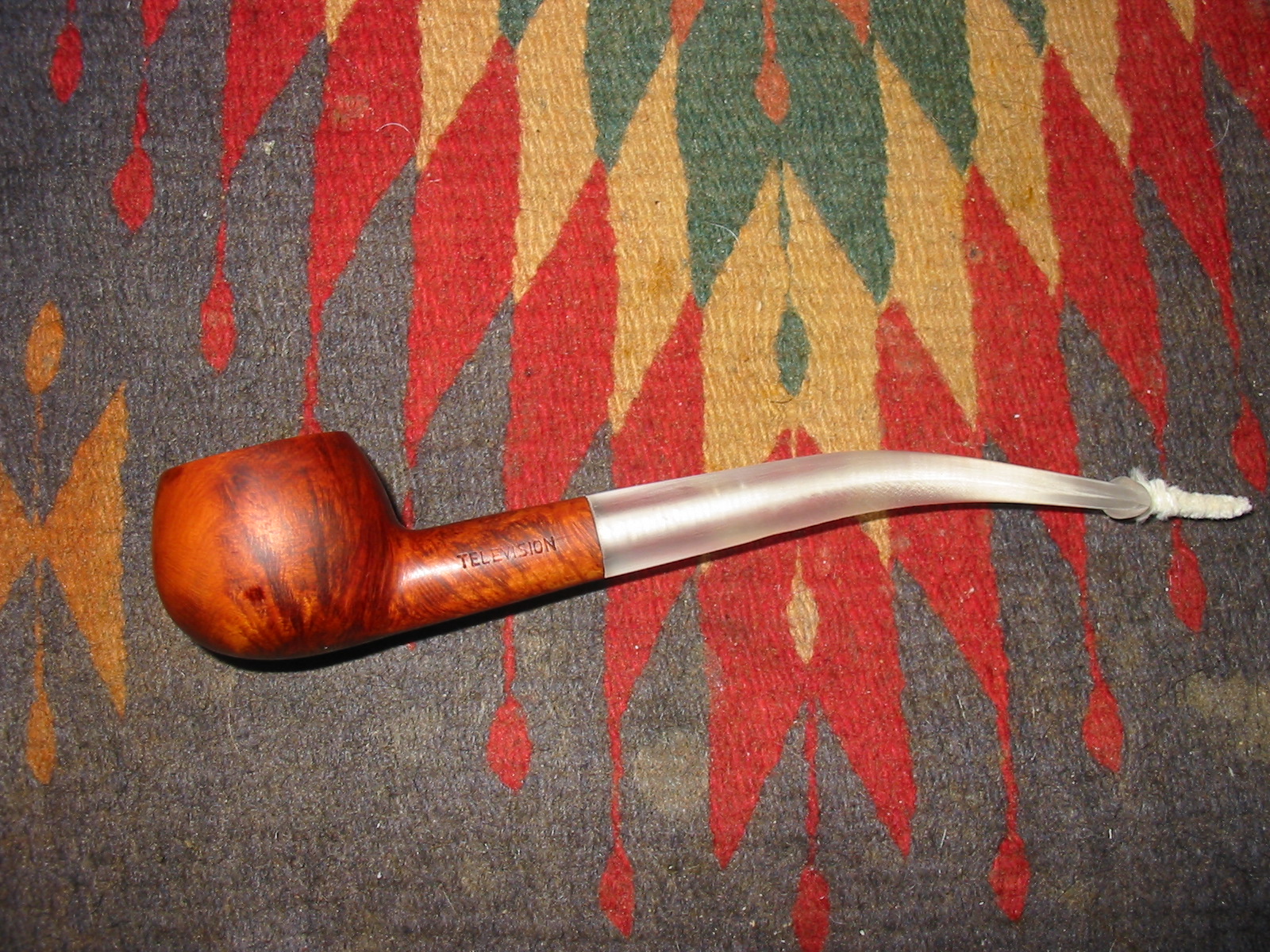
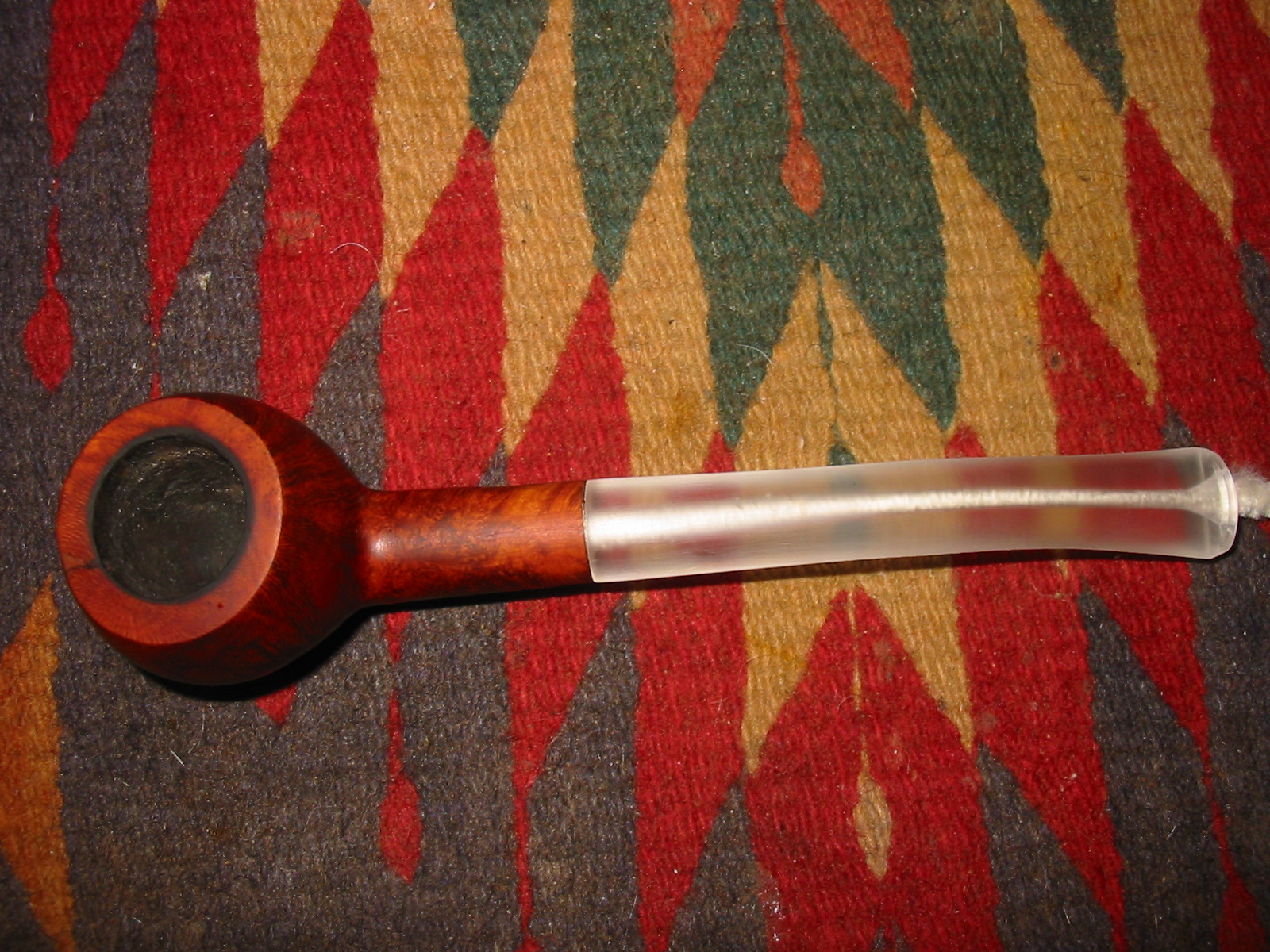
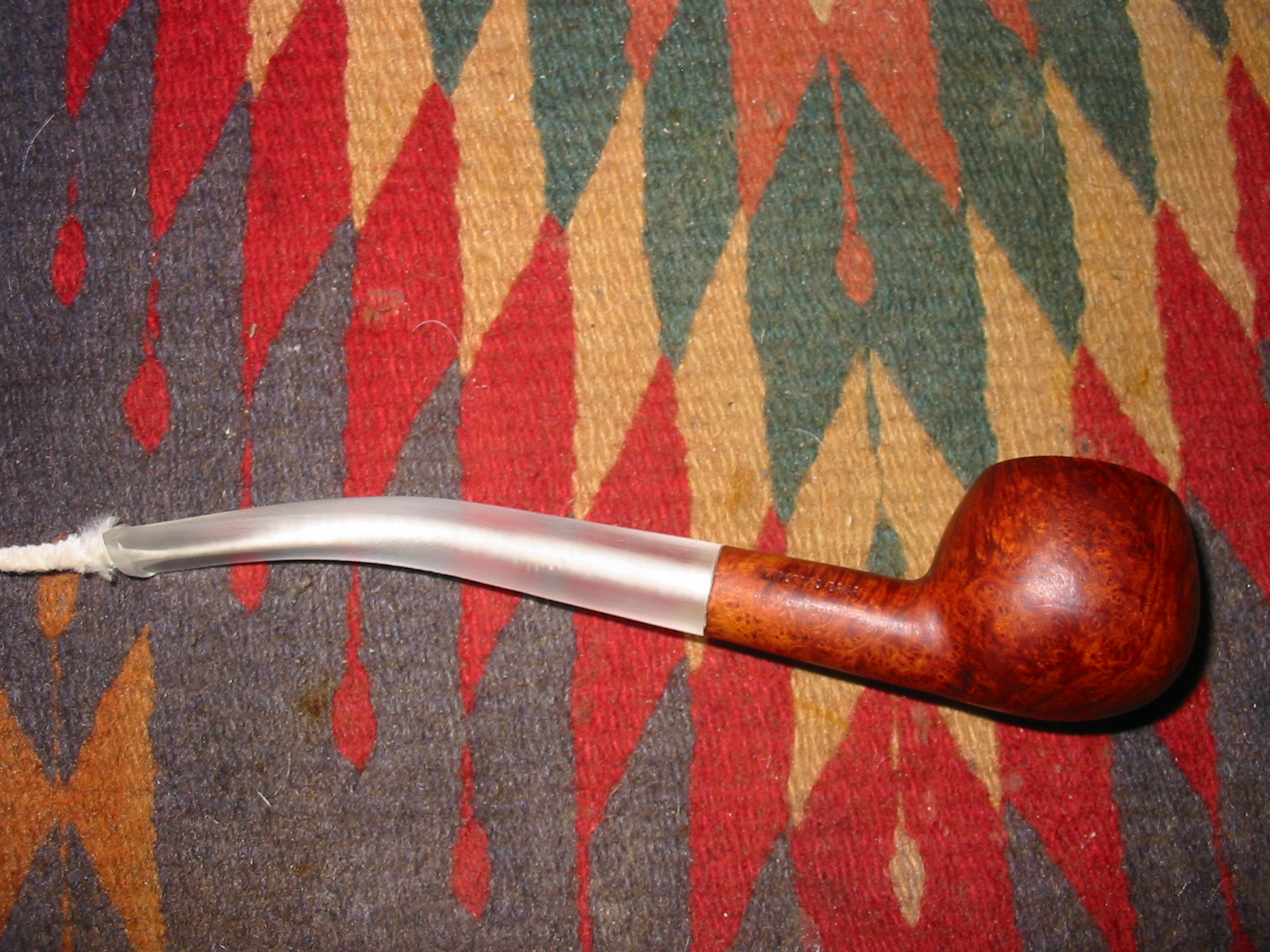
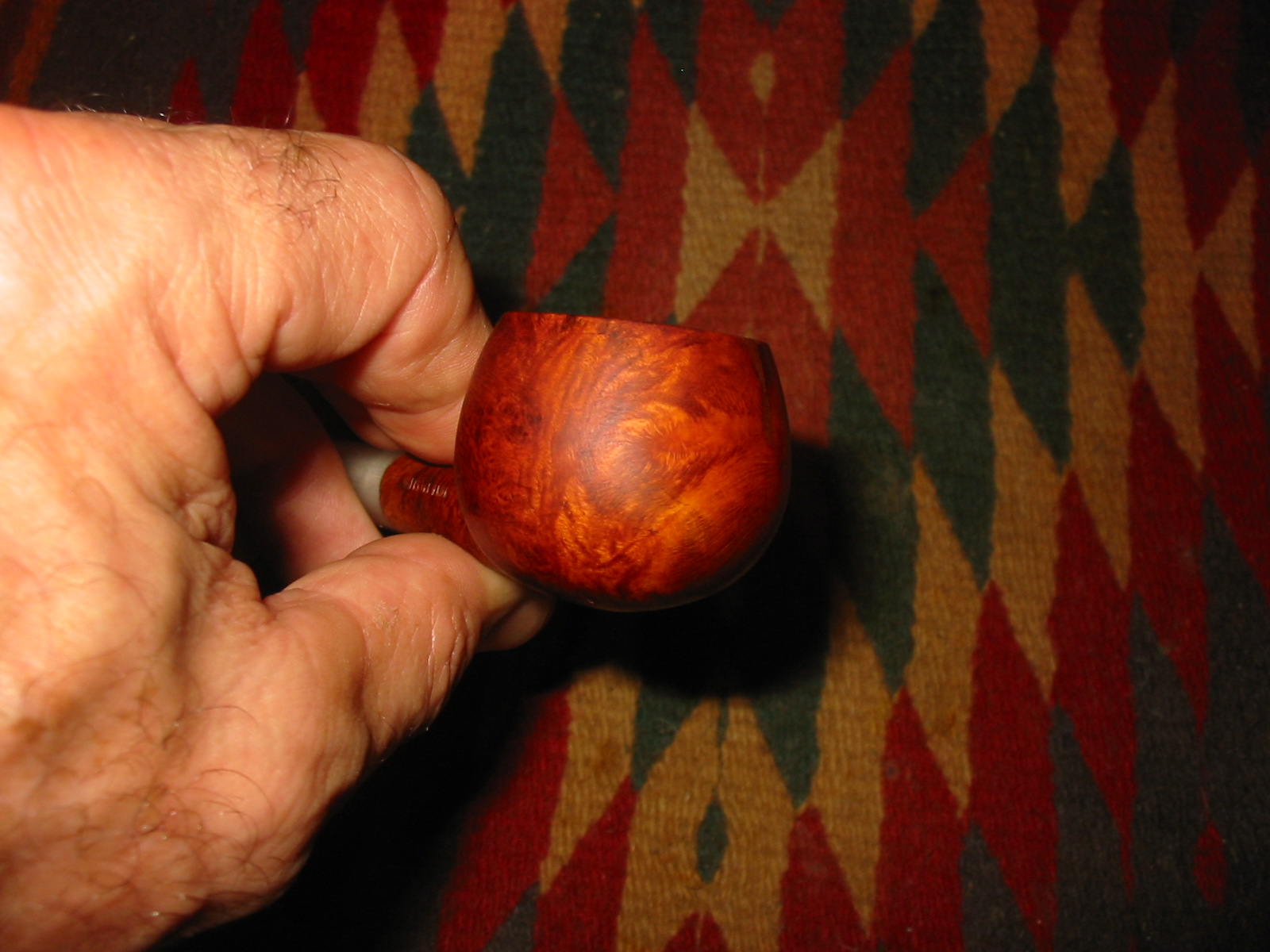
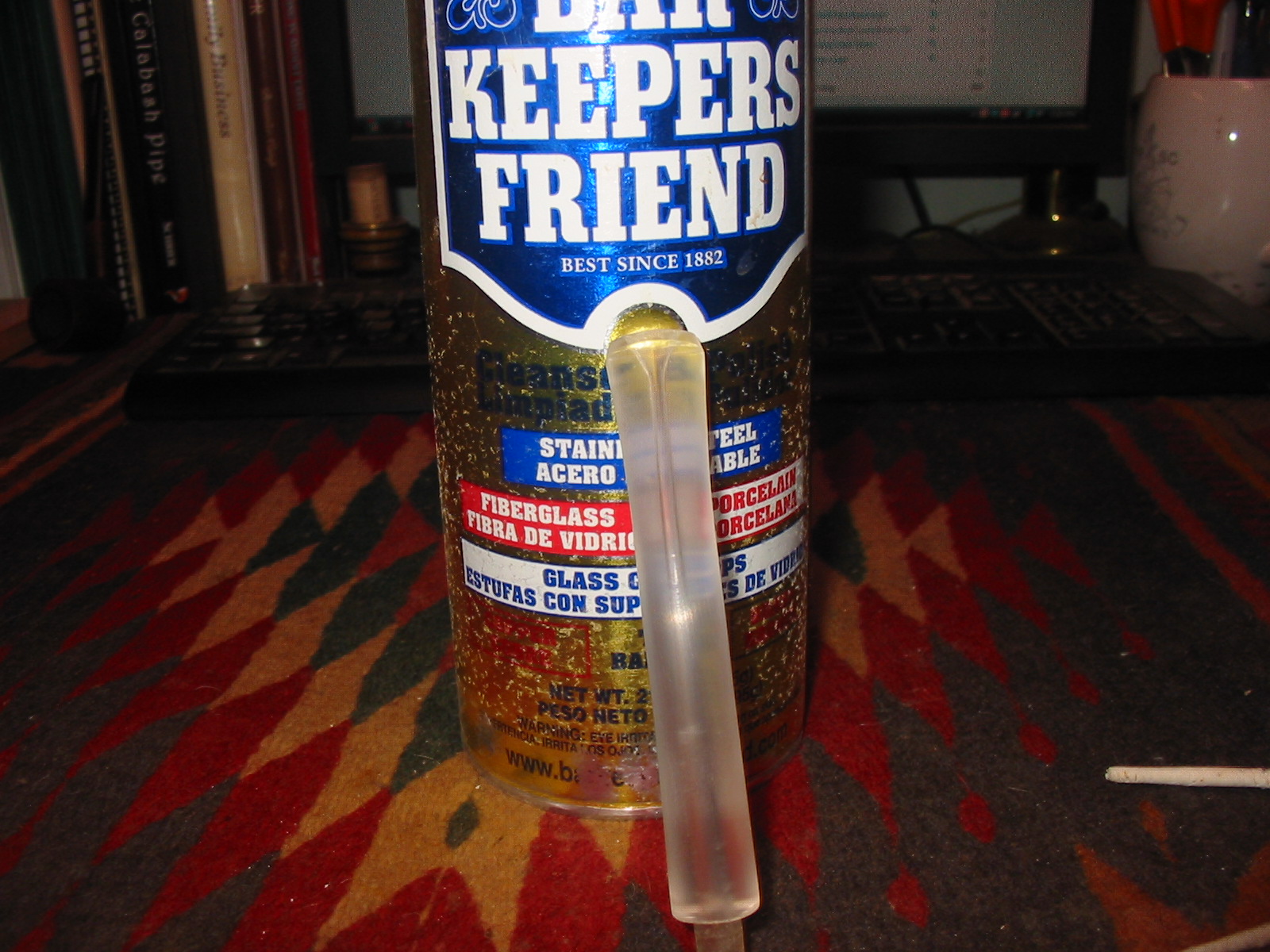
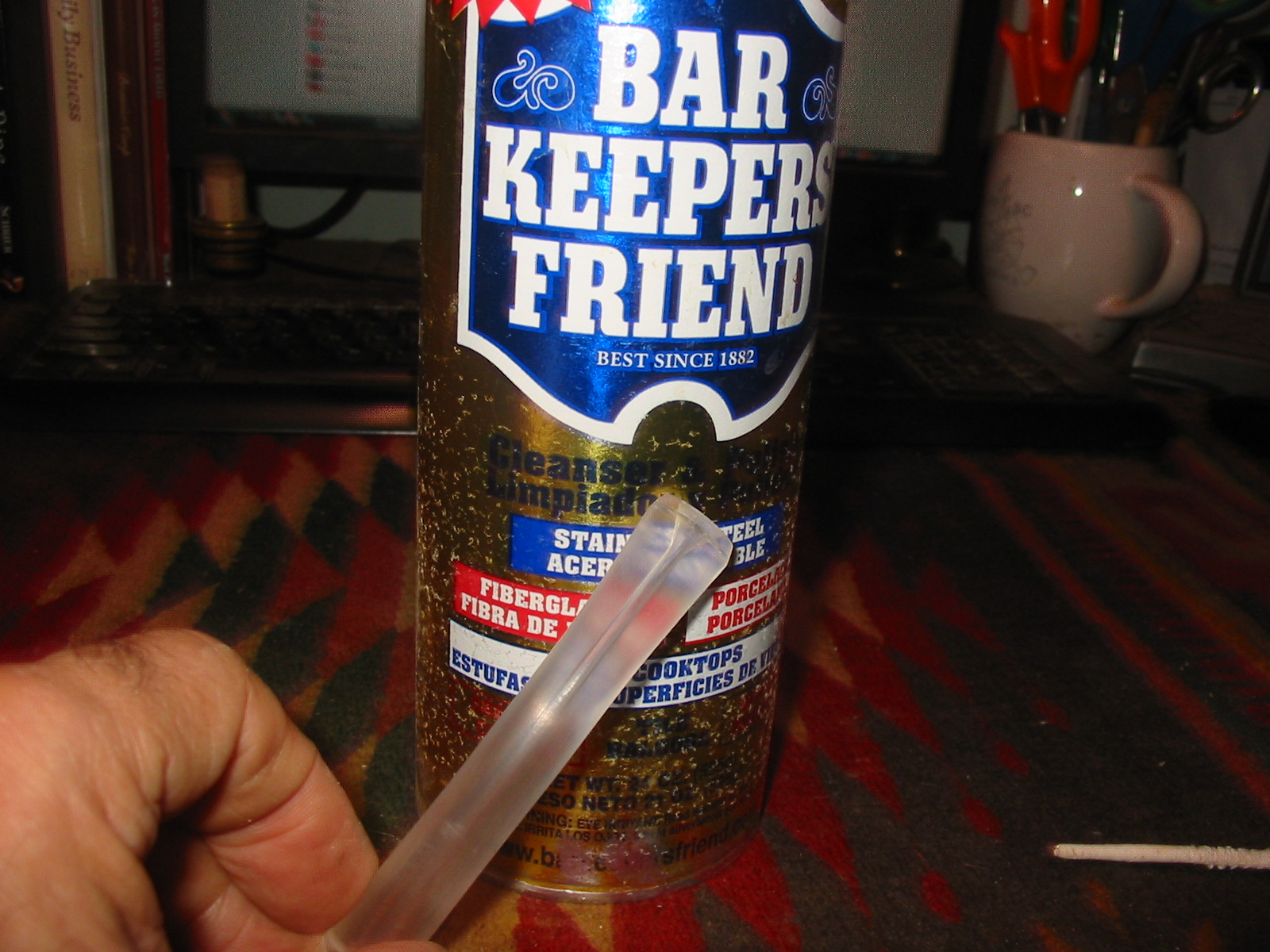
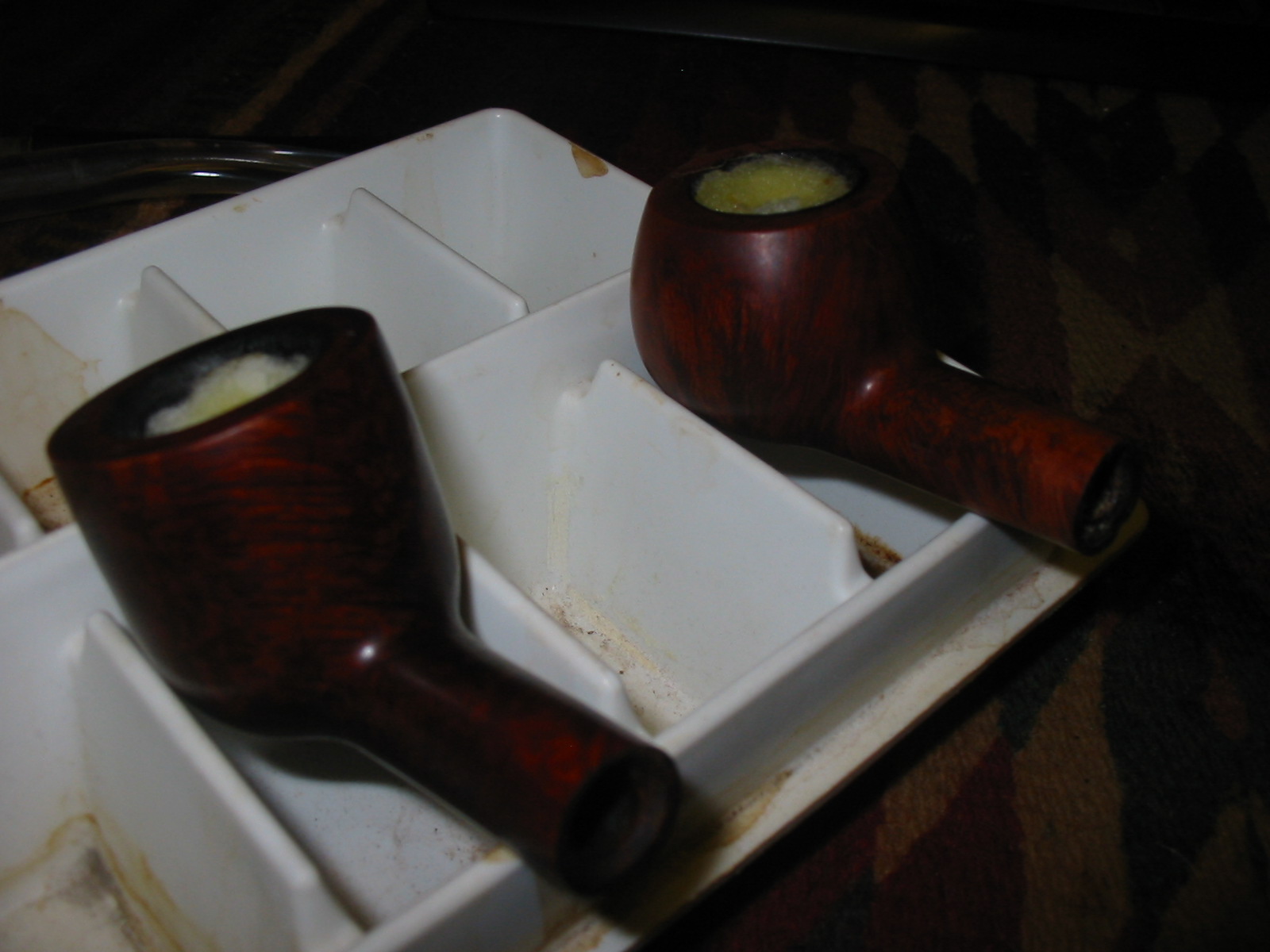
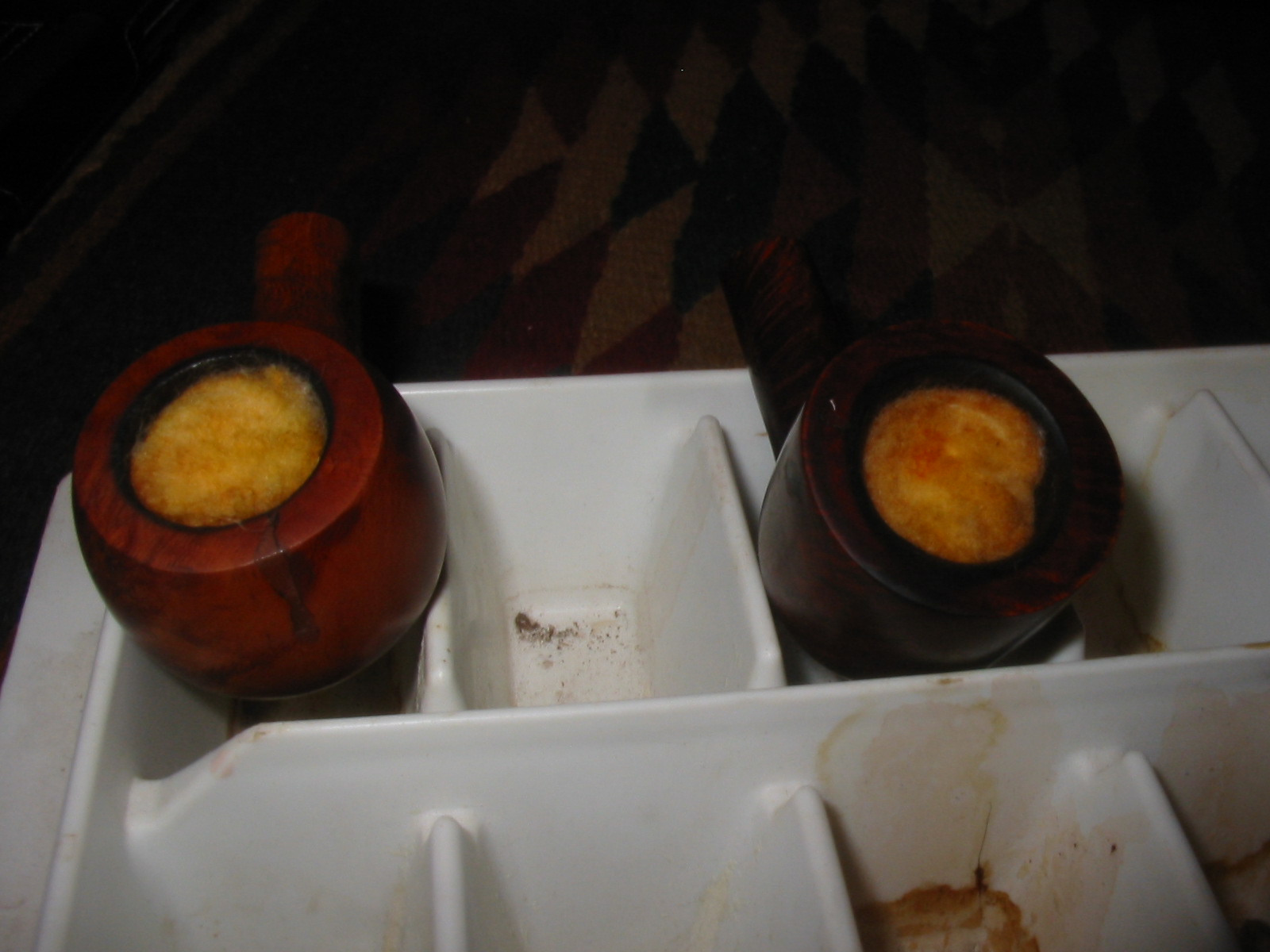
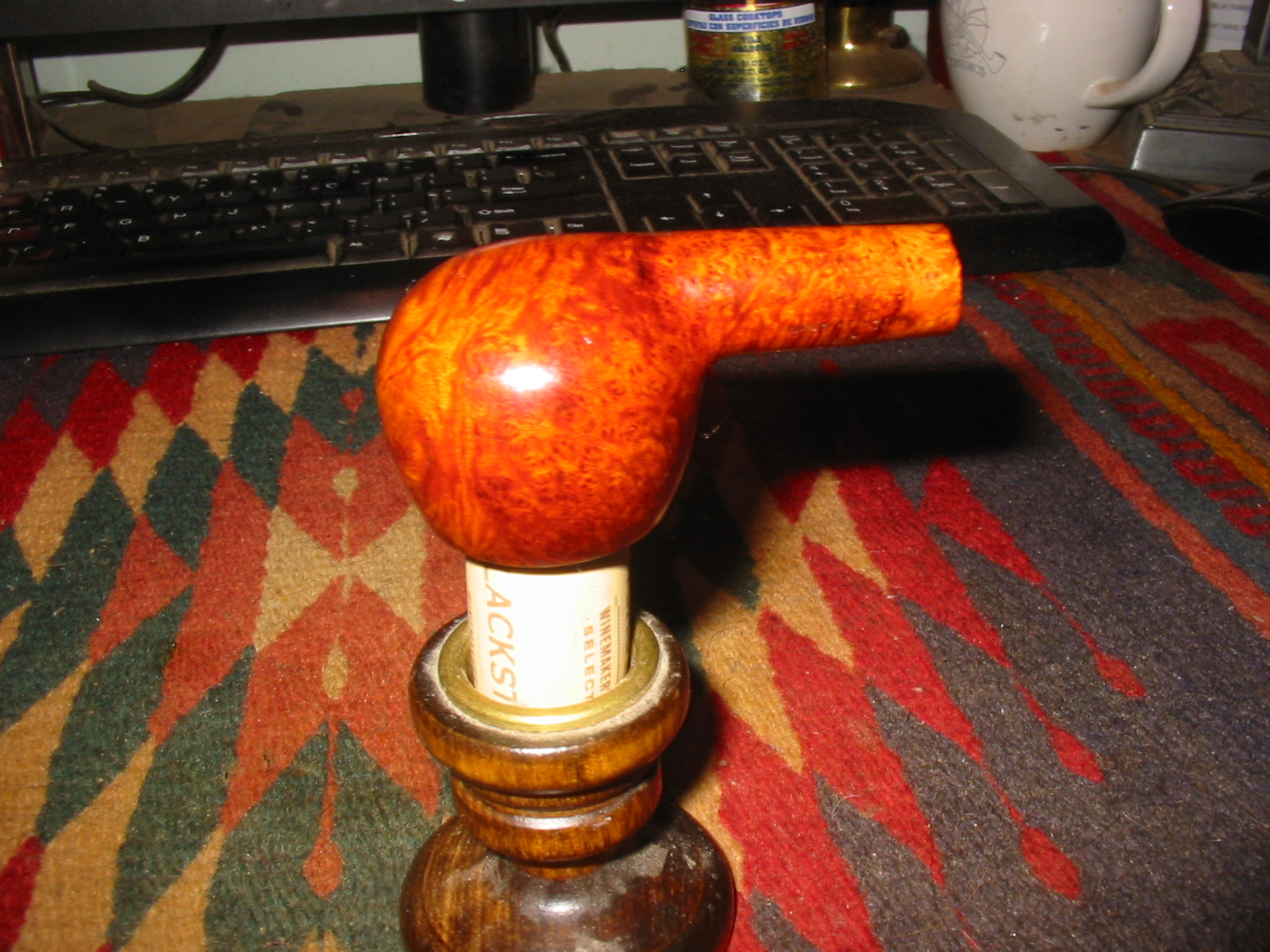
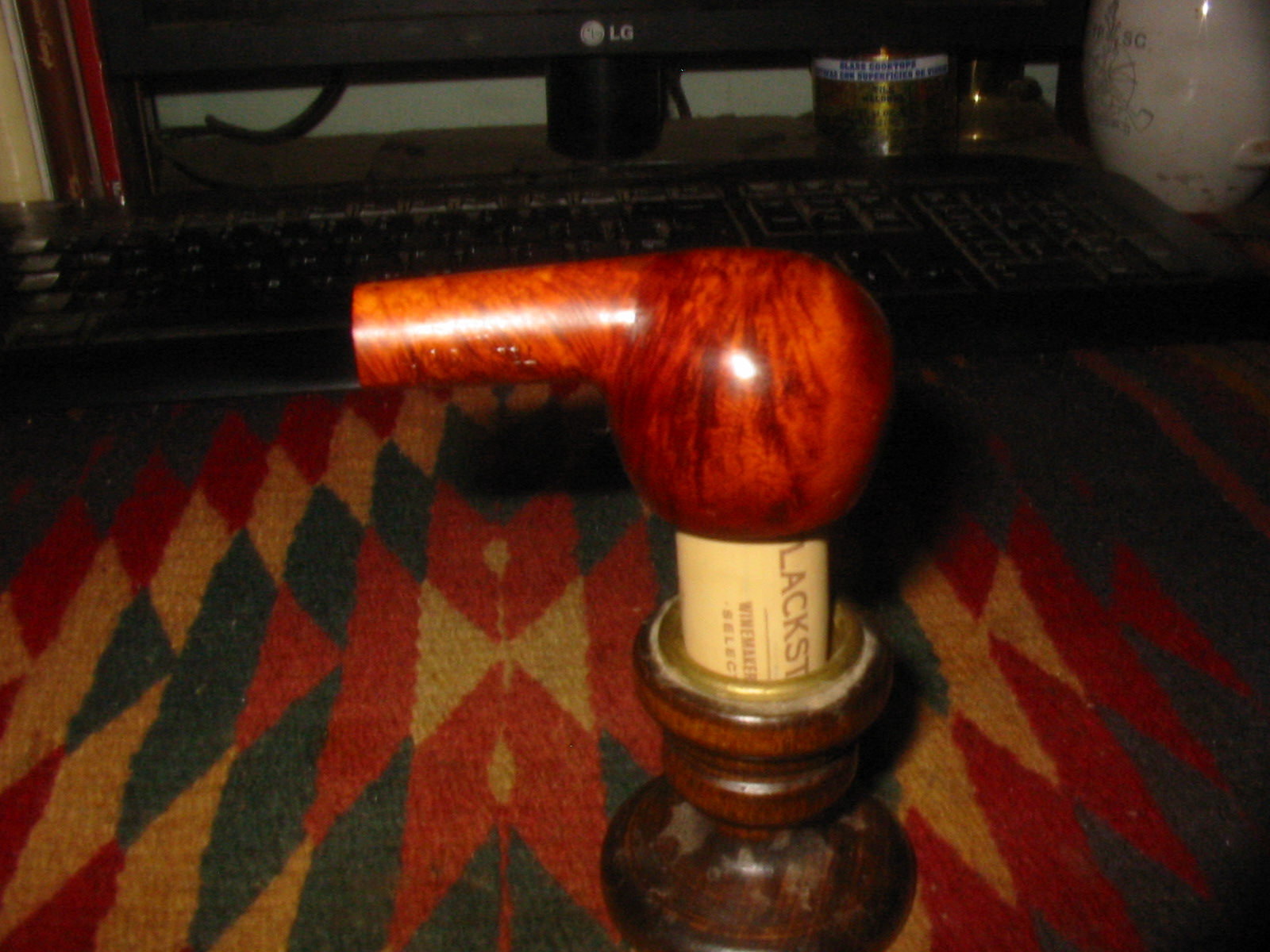
The second Television Pipe I received was a prince shape bowl without a stem. From the previous post I found out that it was an English Brand with a long stem. The brand was sold by A. Grunfield Co. and was produced by Gasparini. That bit of information came from Jose Manuel Lopes – Pipes Artisans and Trademarks. The bowl had a thick coat of varnish and a large fill on the front of the bowl. It appeared to be a deep fill and went from the top edge of the rim down about a third of the bowl. It did not go all the way through the briar to the bowl itself. There was also a smaller fill on the bottom of the bowl near the shank bowl junction. The grain was very mixed. On the back side and on the left and right sides there was some nice straight grain. The front of the bowl looked bald with the fill in the middle. The rim had a tarry buildup and was rough. The bowl had an uneven cake on the inside. Since there was no stem with the pipe and I did not have any church warden stems on hand I had some choices to make on the stem. I had a vulcanite stem and a clear Lucite stem that had potential. They were both longer than a typical prince stem but still not a church warden style. IMG_7880 IMG_7881 IMG_7883 I wiped the bowl down with acetone on a cotton pad to remove the varnish and the grit that was in the finish. IMG_7885 IMG_7887 I set up my topping board and 220 grit sandpaper to top the bowl and smooth out the surface. With the fill going from the rim down the side I wanted to clean off the surface to see what repairs would need to be done. IMG_7888 Once the top was cleaned off the fill looked like it was a crack that ran from the inside to the outside of the bowl. Upon examination with a loupe I could see that it was not a crack but the edges of the putty fill. I decided not to remove the fill at this point as I did not want to destabilize the bowl so I left it. IMG_7889 I reamed the cake back with a PipNet reamer. IMG_7890 I decided to use the clear Lucite stem that I had so I turned the tenon down with the PIMO Tenon Turning Tool on a cordless drill. IMG_7891 I fine tuned the fit in the shank with 220 grit sandpaper. The diameter of the stem was wider than that of the shank so I sanded it with 150 grit sandpaper to bring it down in size. IMG_7892 When I got it close to the proper diameter I sanded it with 220 grit sandpaper and a medium and fine grit sanding sponge to smooth out the scratches in the Lucite. I sanded the shank to match so I had a smooth transition. I intended to restain the pipe any way so this was not a real problem. I liked the overall look of the new stem and with a slight bend it would look like a long stemmed prince. IMG_7893 IMG_7894 IMG_7896 The Lucite stem did not have a slot carved in the end – merely a drilled airway so that I would need to use needle files to open and shape it into a funnel. The next four photos show the progress of the shaping of the slot. I apologize for the blurriness of the last two photos but they do give a rough idea of the shape of the slot at this point. IMG_7898 IMG_7899 IMG_7902 IMG_7903 To bend the stem I set up my heat gun and heated the Lucite until it was pliable and then bent it over my rolling pin. It took a few tries to get the bend that I wanted but eventually I set it with cool water. IMG_7904 IMG_7905 IMG_7906 The next series of five photos show the bend in the stem. I still needed to do some sanding on the underside of the bend to thin it and shape it more cleanly. The angle appears a little abrupt but some sanding and shaping would take care of that. I also rubbed down the bowl with a cloth and olive oil to darken the briar to get a better idea of the grain patterns. I often use this method to show the grain but I am careful to not put too much oil on it. IMG_7907 IMG_7908 IMG_7909 IMG_7910 IMG_7911 To polish the inside of the stem/airway I used a pipe cleaner dipped in Bar Keepers Friend (a cleanser). I have found that the grit of the cleanser polishes the inside of the airway. IMG_7912 IMG_7913 I sanded the stem to thin it on the top and on the underside of the bend with 220 grit sandpaper and when it was an even taper I sanded it with medium and fine grit sanding sponges. I sanded with my usual array of micromesh sanding pads – wet sanding with 1500-2400 grit pads and dry sanding with 3200-12,000 grit pads. IMG_7915 IMG_7916 IMG_7917 I buffed the pipe and stem with White Diamond to raise the shine. I put cotton balls in the bowls of the prince and the other Television pipe and used an ear syringe to put isopropyl alcohol in them to draw out the tars and oils of the tobacco. I set them in an old ice cube tray overnight. In the morning the alcohol had drawn out a lot of oils and the cotton was dark. I removed the cotton and cleaned the bowl and shank with cotton swabs and pipe cleaners. IMG_7918 IMG_7919 IMG_7952 I rubbed down the bowl with some walnut stain in a Danish Oil and put it on a cork to dry. I know that many may question the use of linseed oil on pipe bowls but I use it sparingly on a few specific pipes that I want to give protection. In the case of this particular pipe, the large fill in the front seemed like it needed the extra protection. IMG_7959 IMG_7961 IMG_7962 I buffed the finished pipe with White Diamond and gave the bowl and stem several coats of carnauba wax to protect it. I buffed it with a soft flannel buff to give it a shine. The finished pipe is shown below. It is drying on a pipe stand to let any residual alcohol from the cotton ball and alcohol soak to evaporate. After than it will be given an inaugural smoke to make sure the draw is correct and the stem is comfortable. Who knows I may even reheat the stem and experiment some more with the bend. IMG_7967 IMG_7968 IMG_7969 IMG_7970