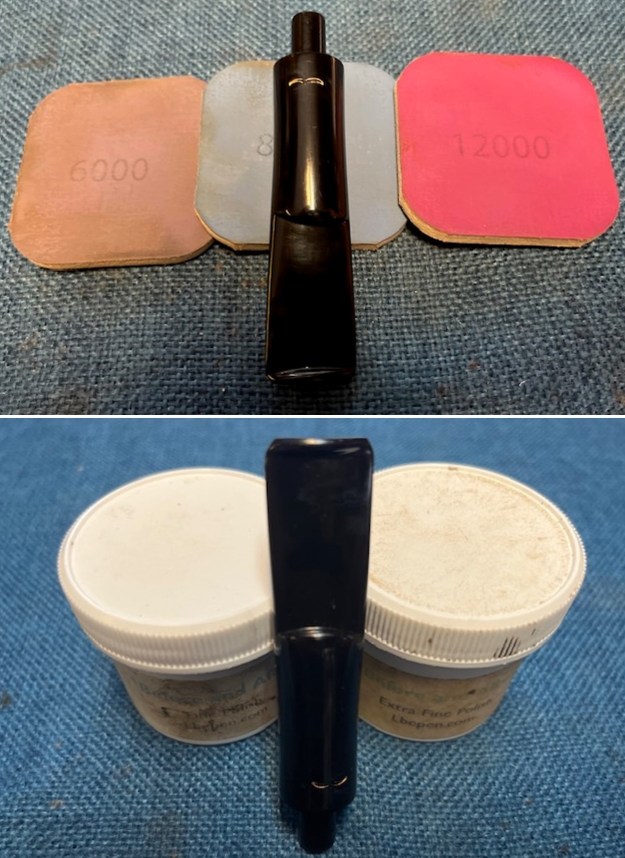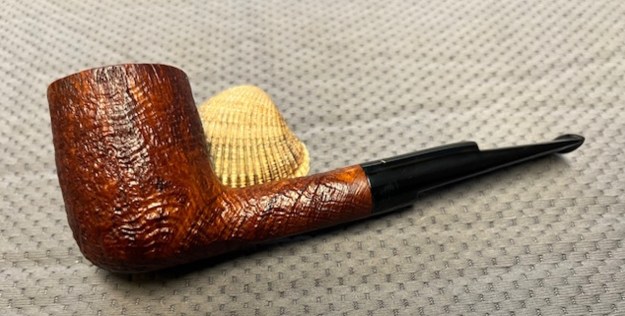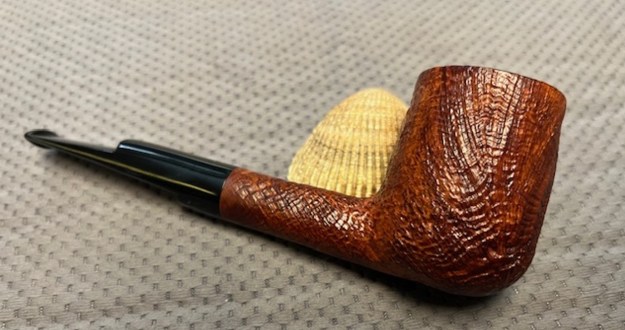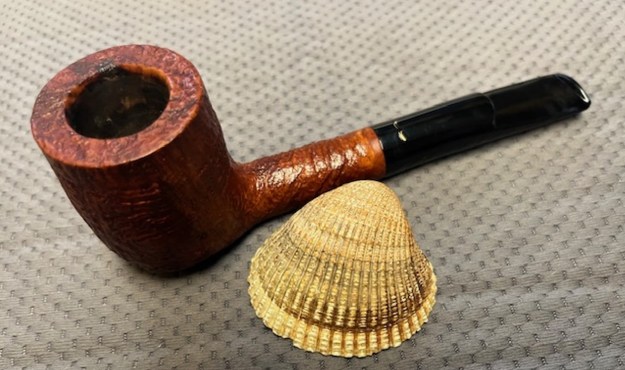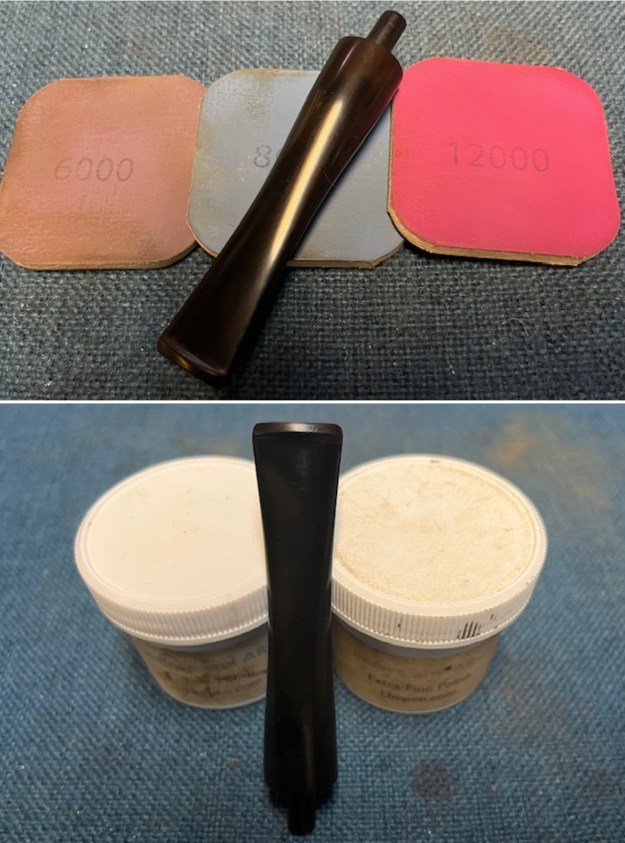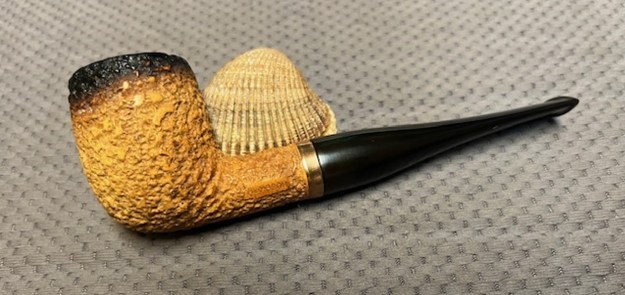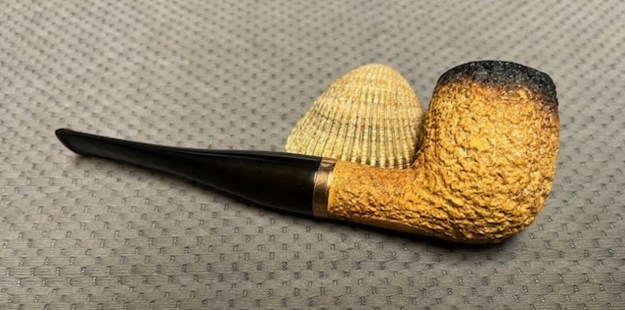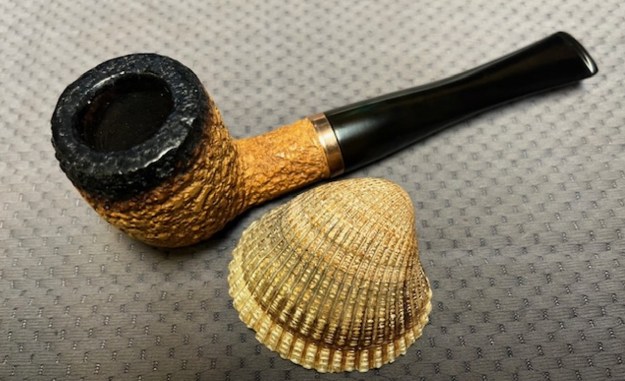
Tag Archives: stem work

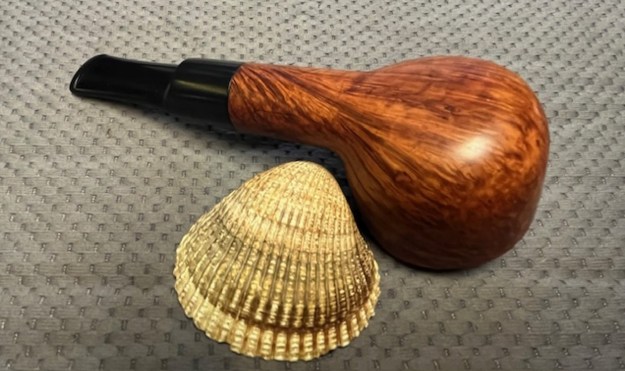
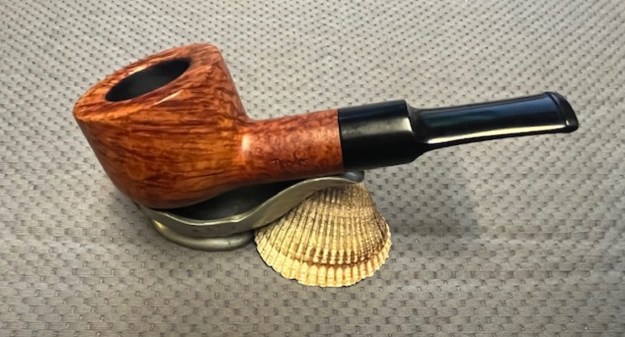
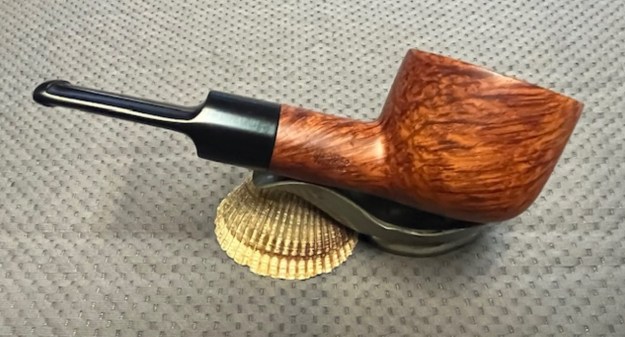
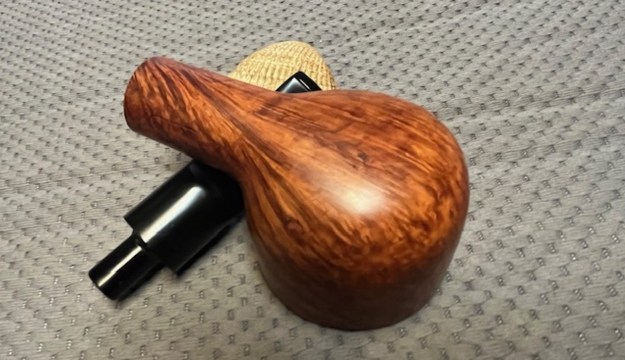
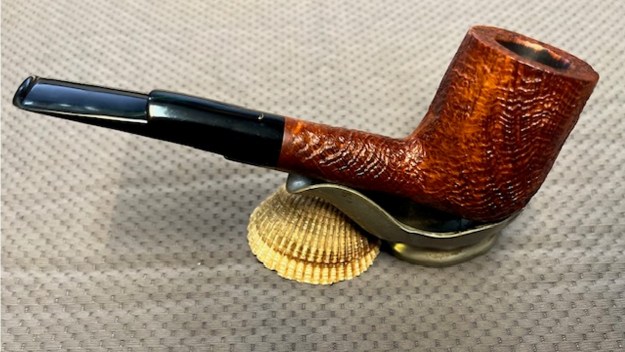
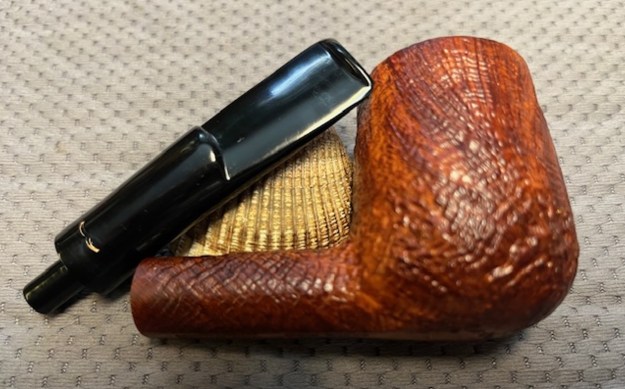
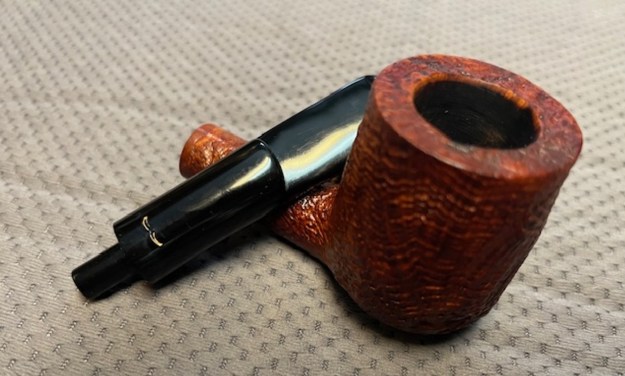
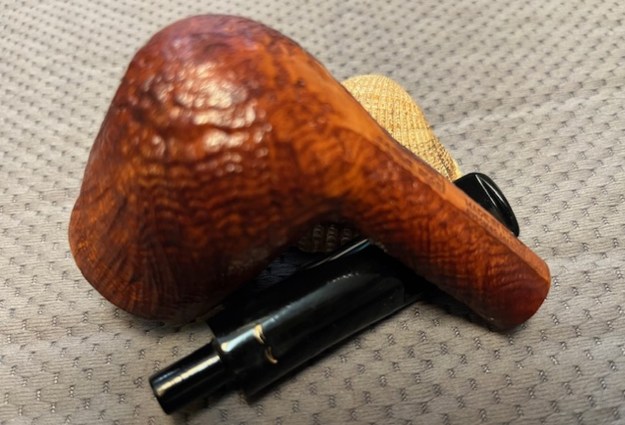
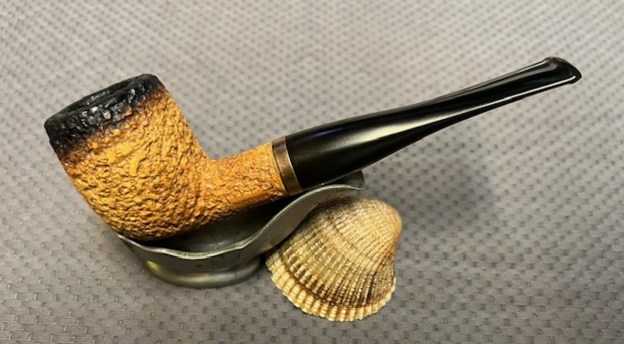
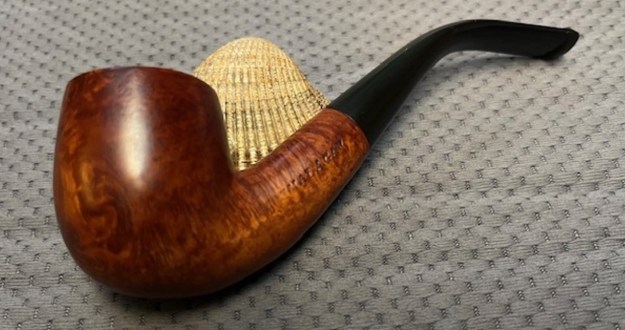
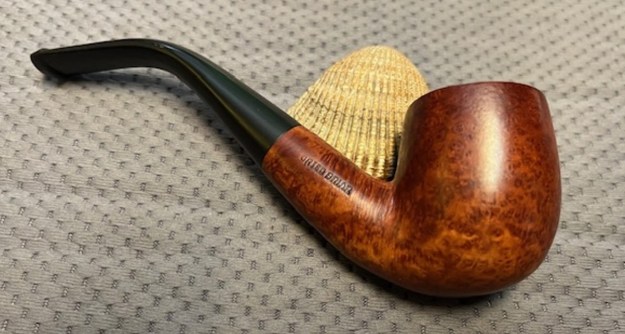
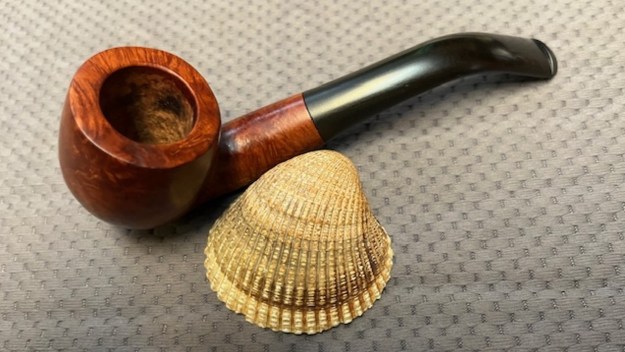
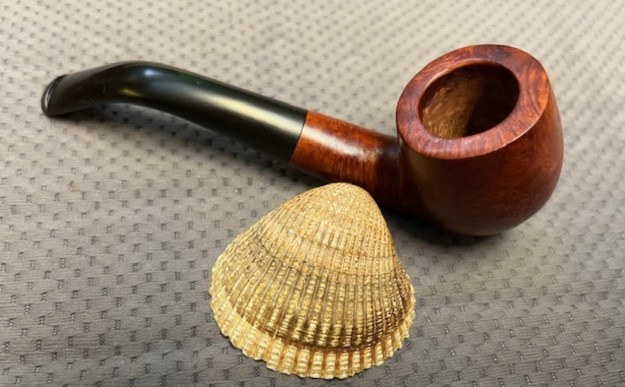
Cleaning up a Beautiful Rogers Rarity Imported 285 Bruyere Large Bowl Pot


by Steve Laug

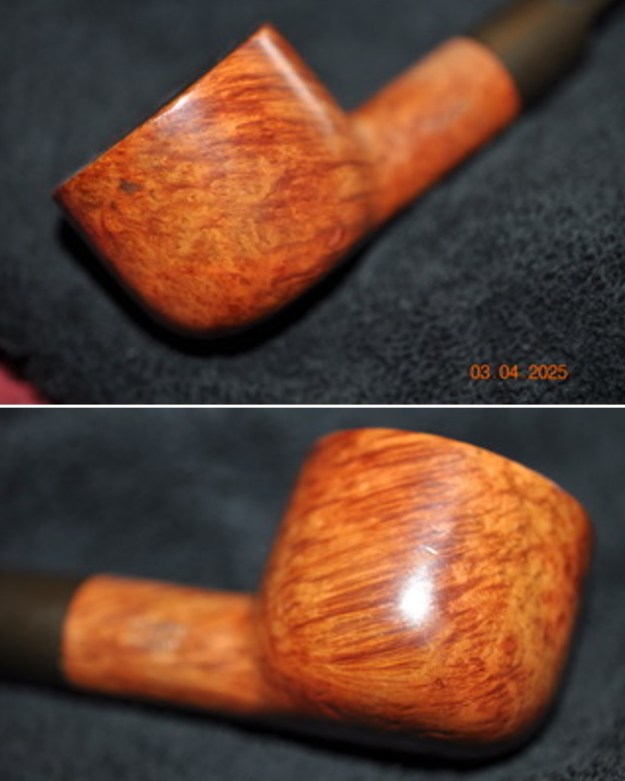
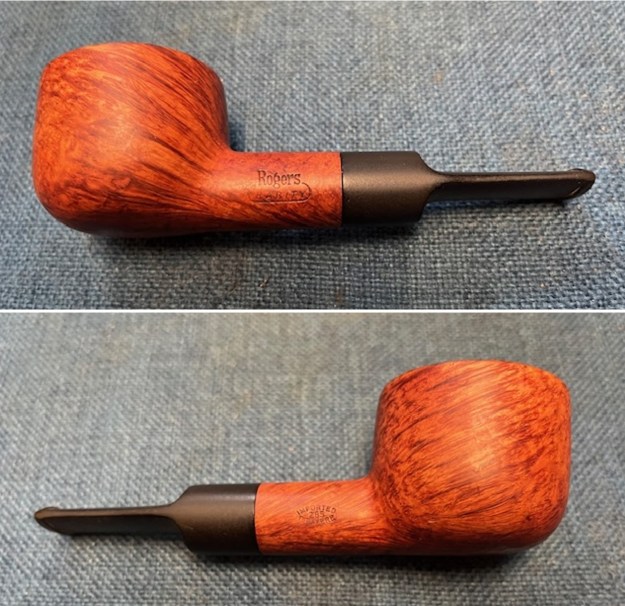
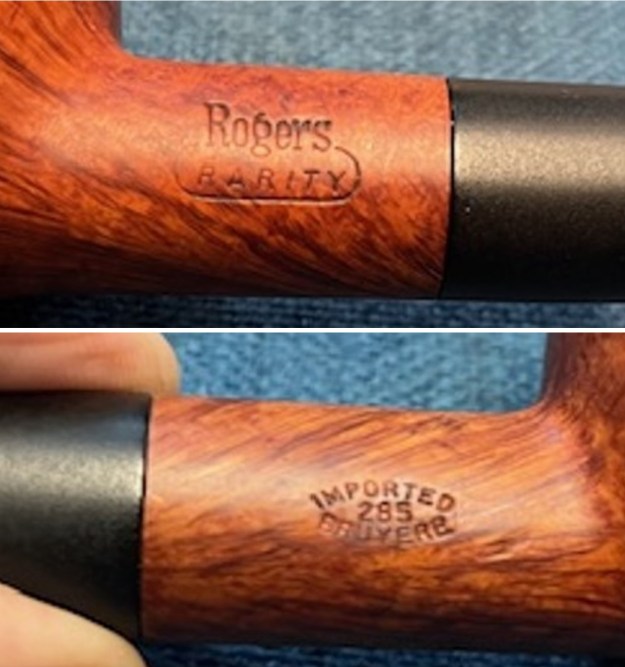
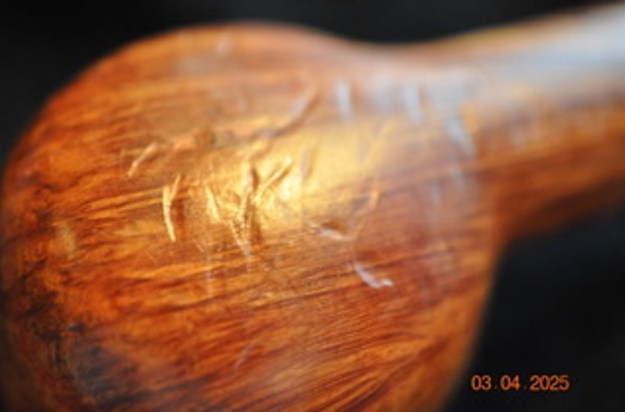
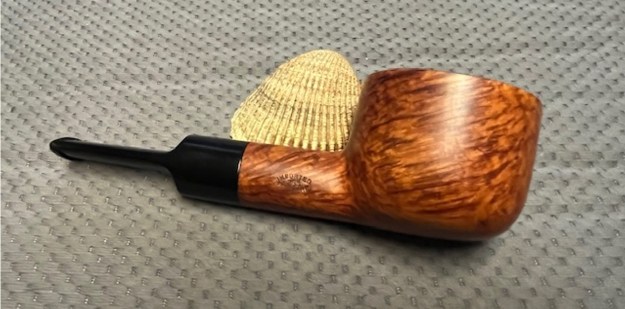
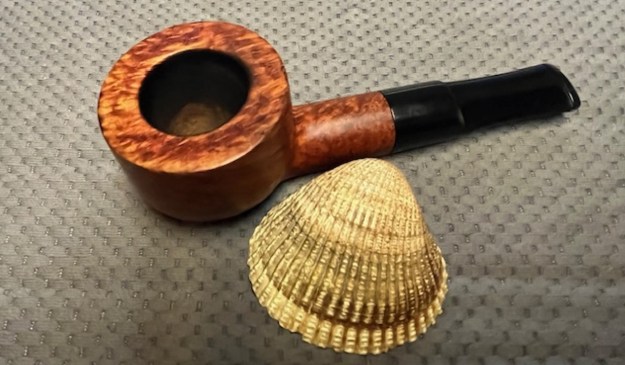
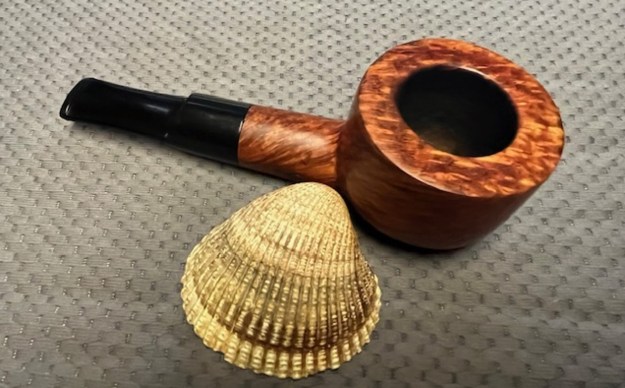
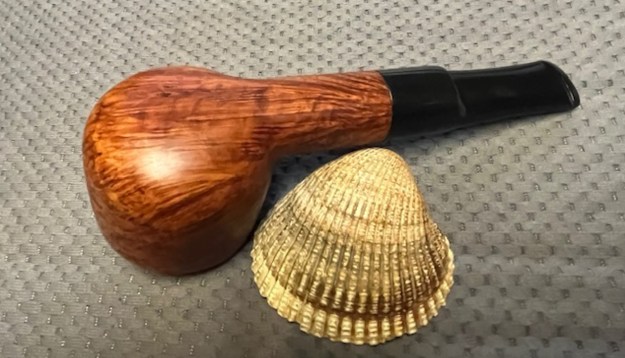
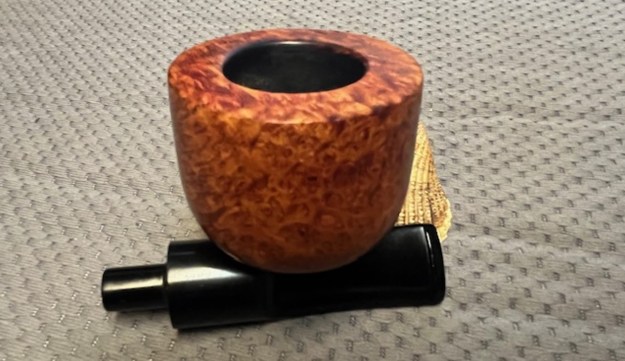
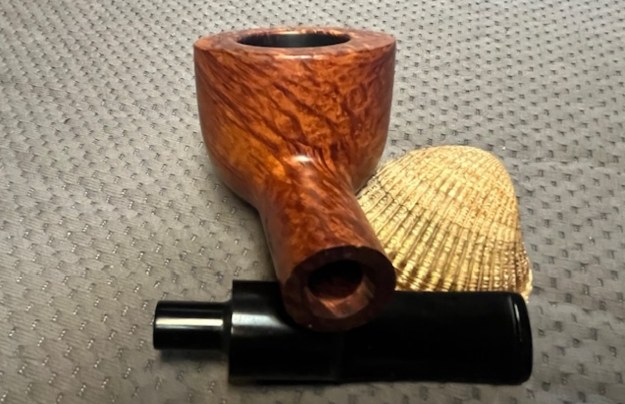
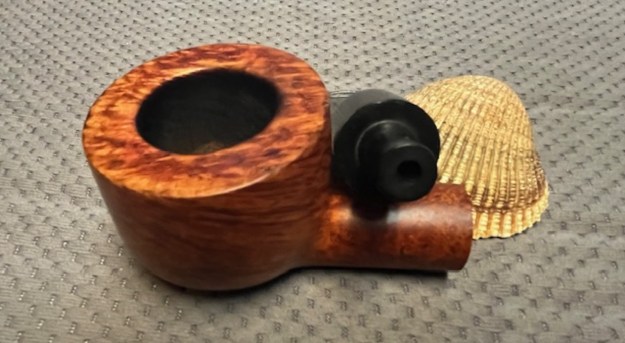
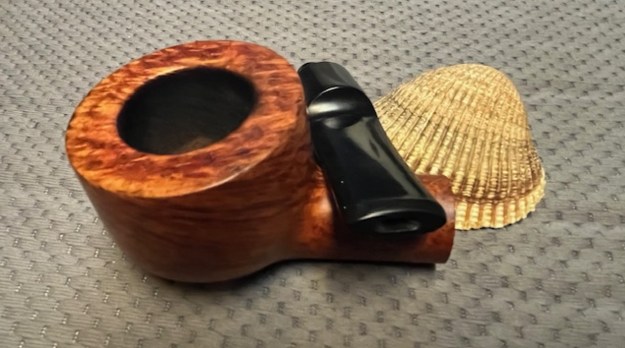
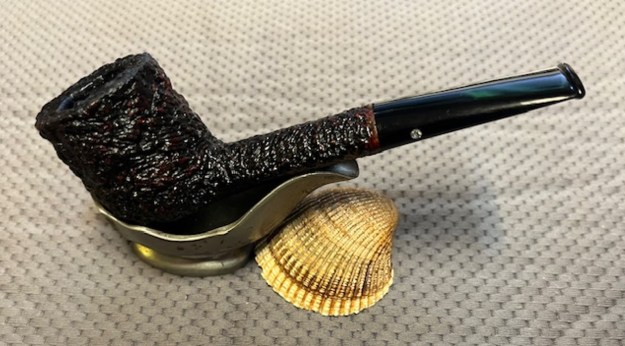
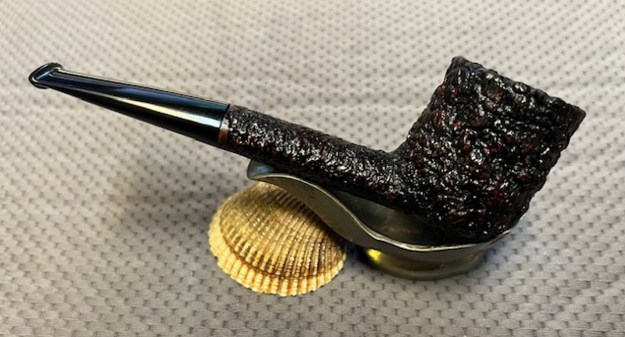
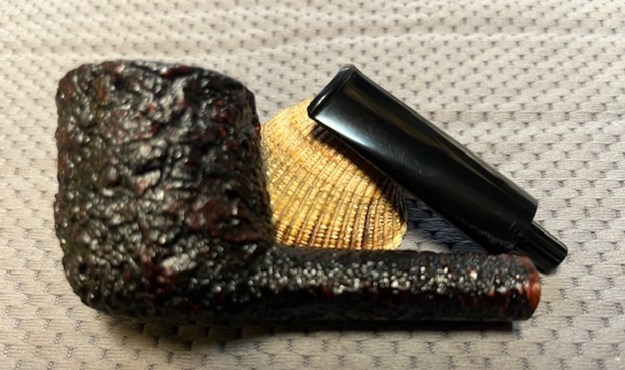
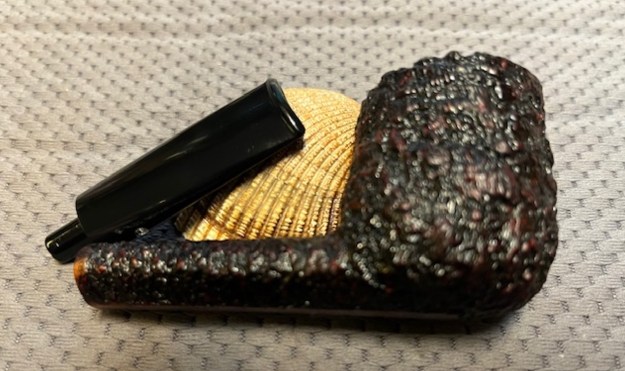
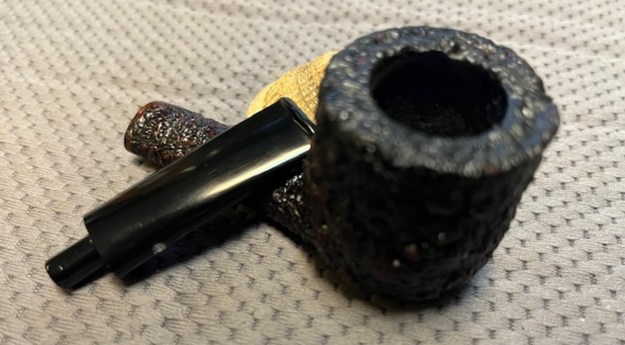
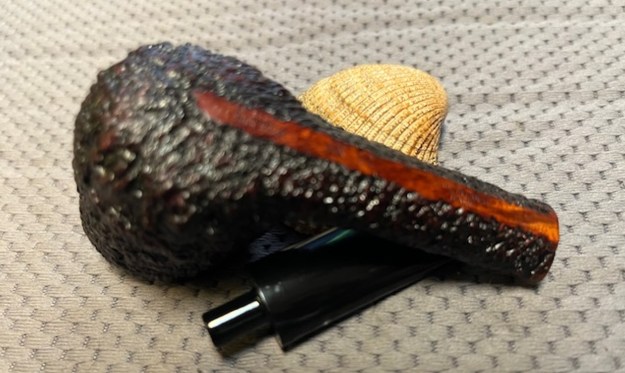
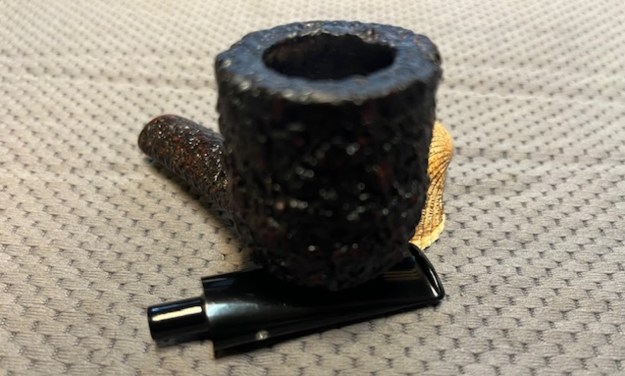
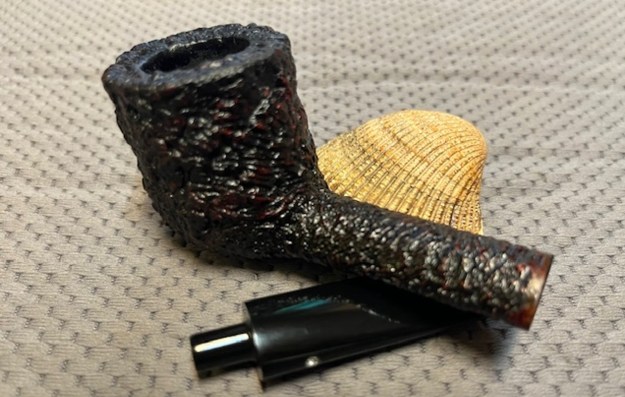
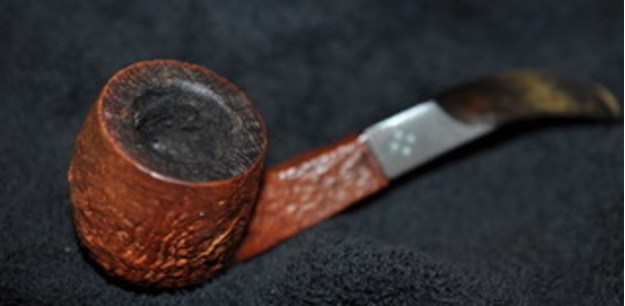
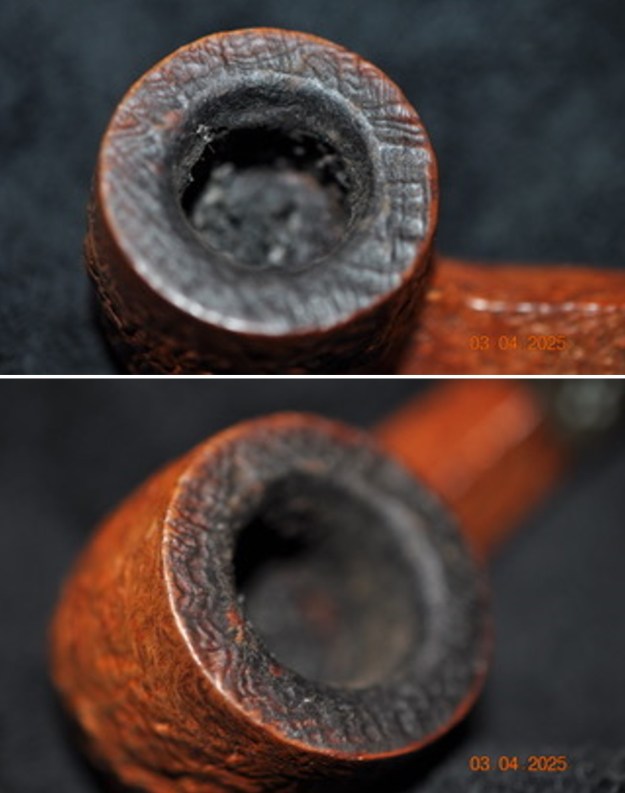
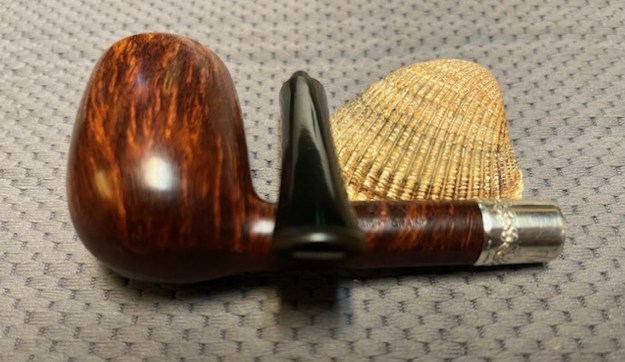
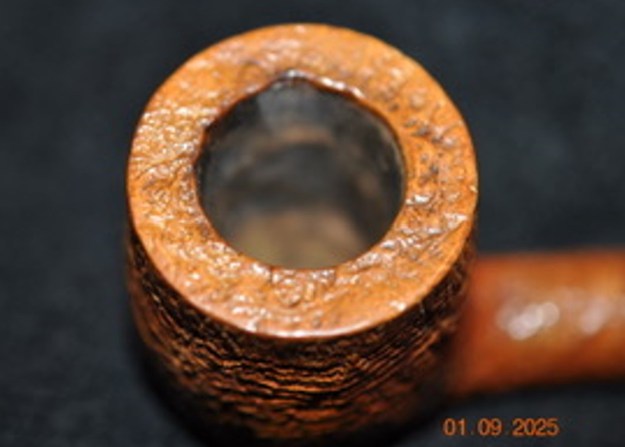
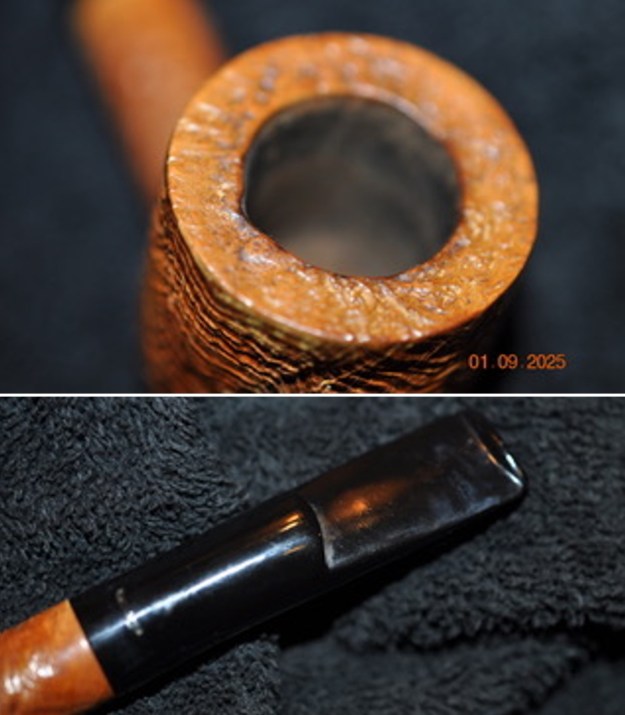
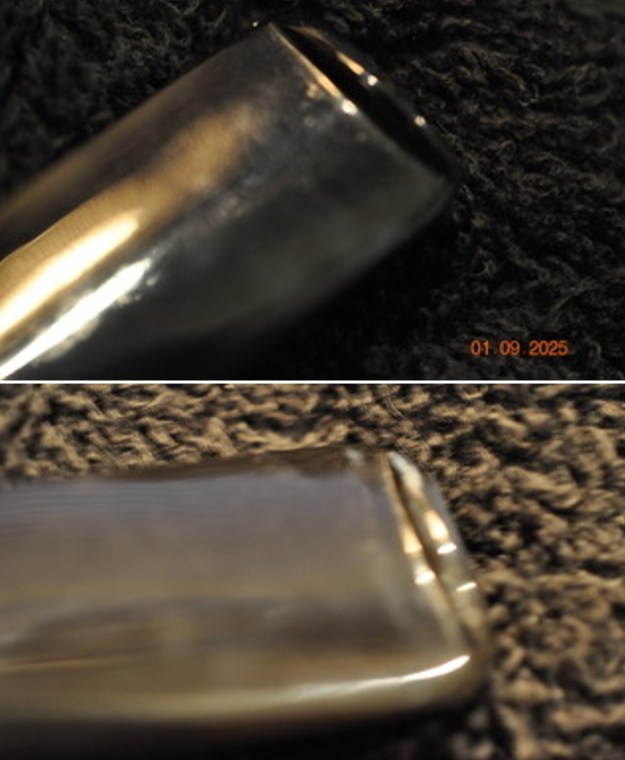
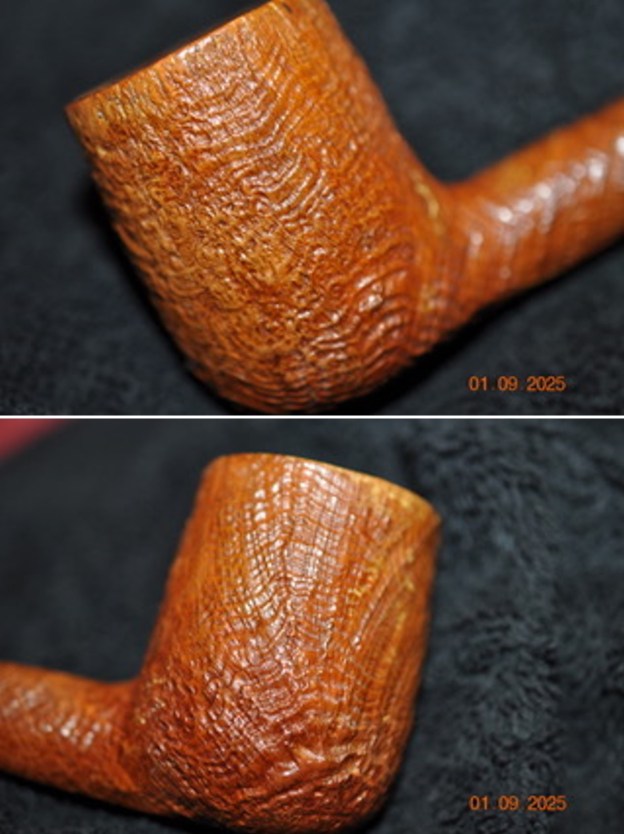
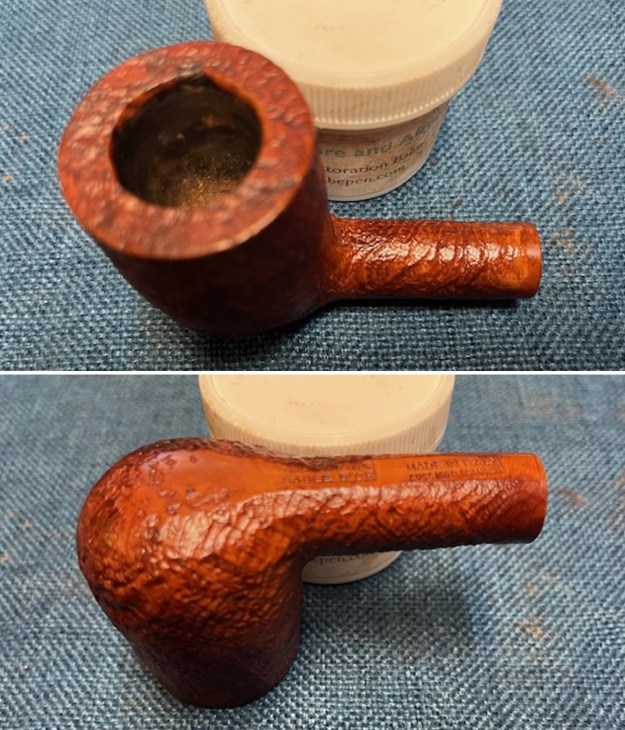
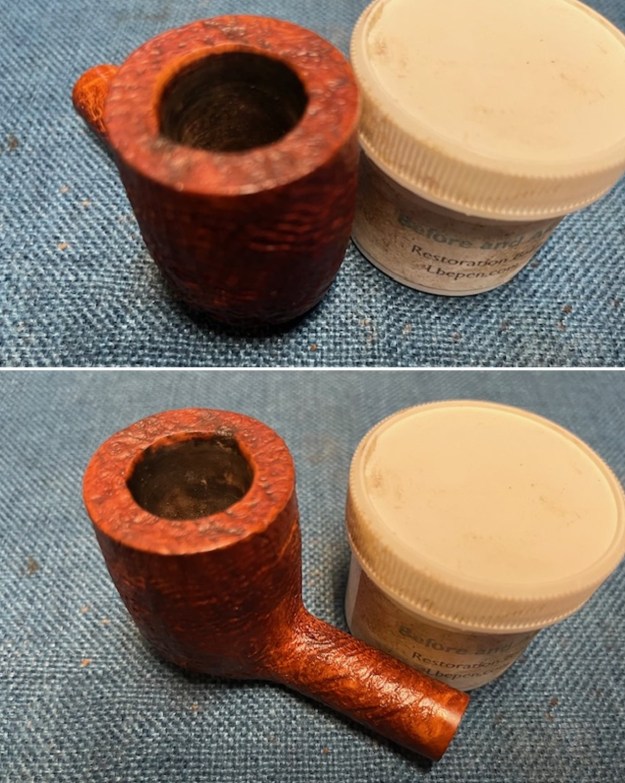
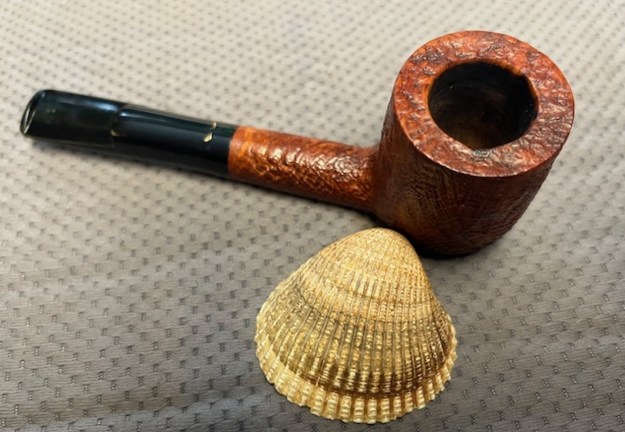
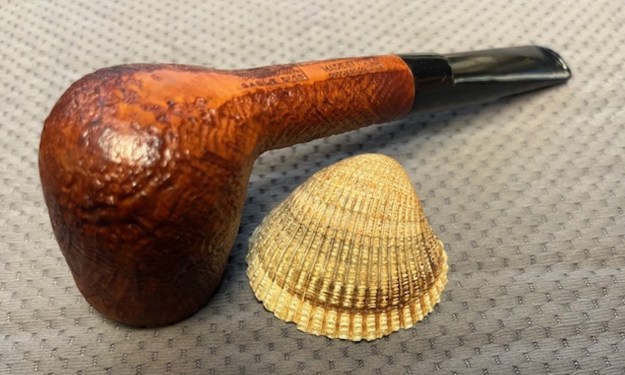
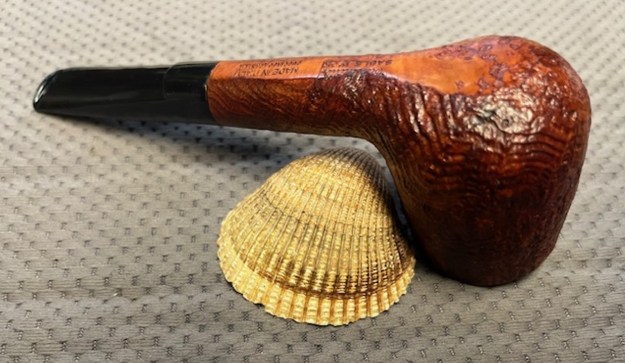
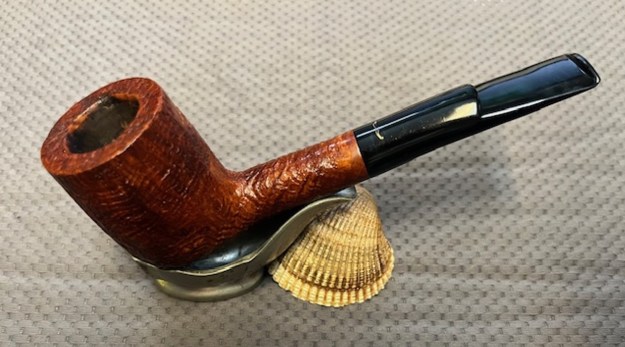
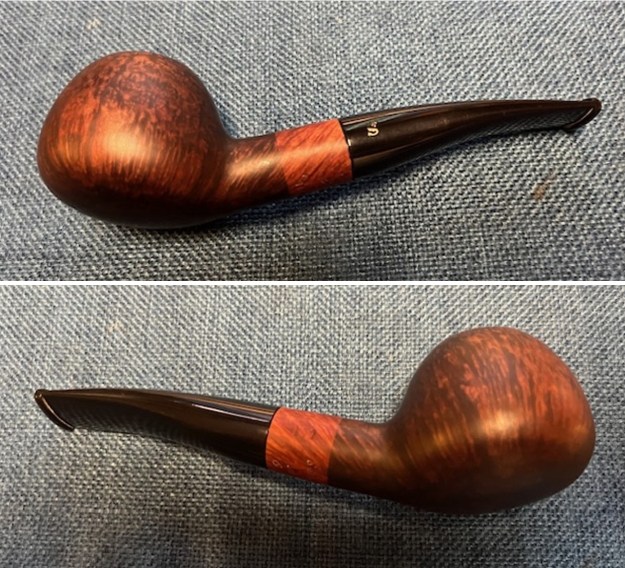
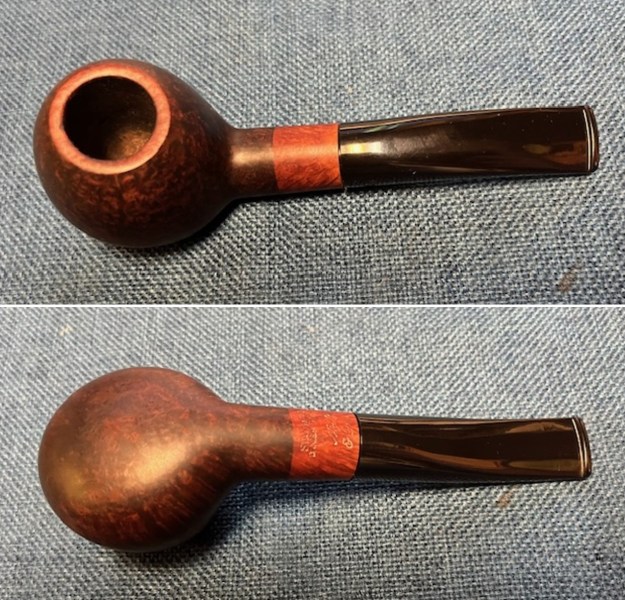
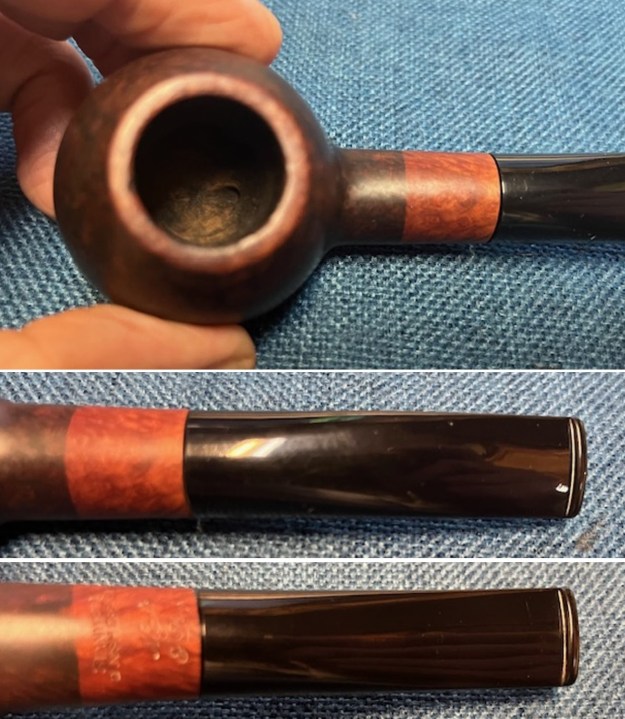
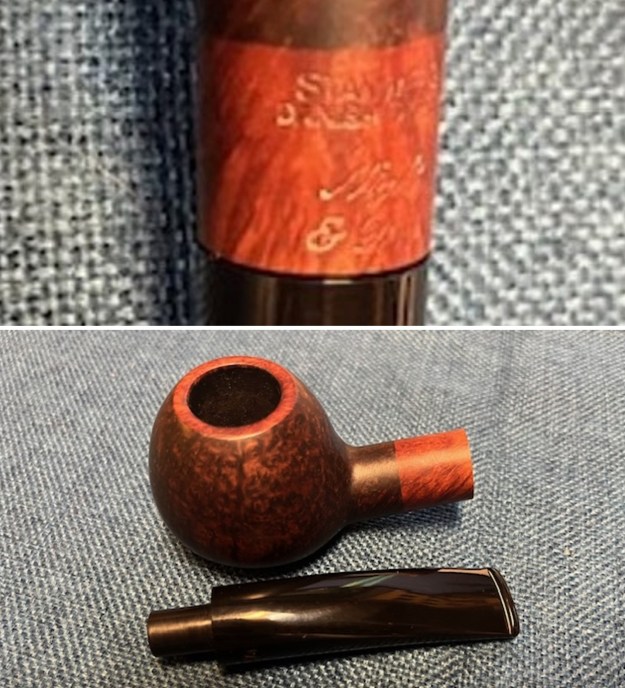
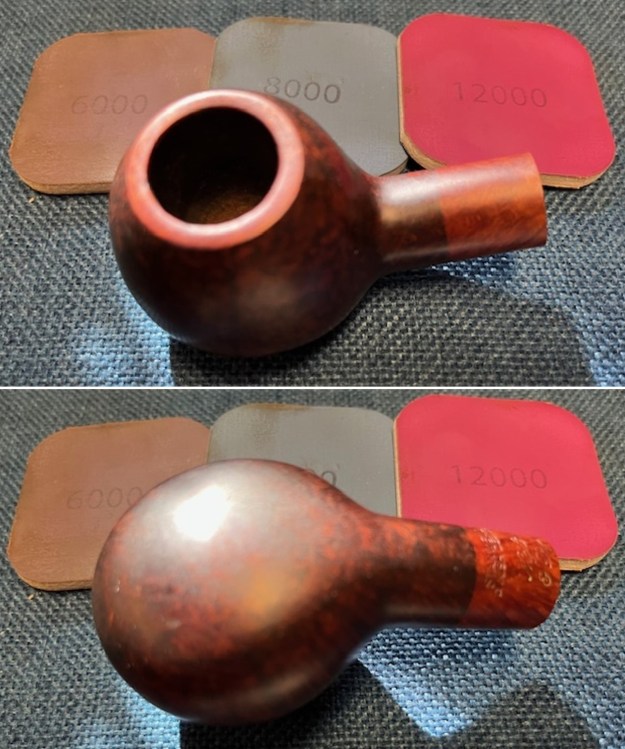
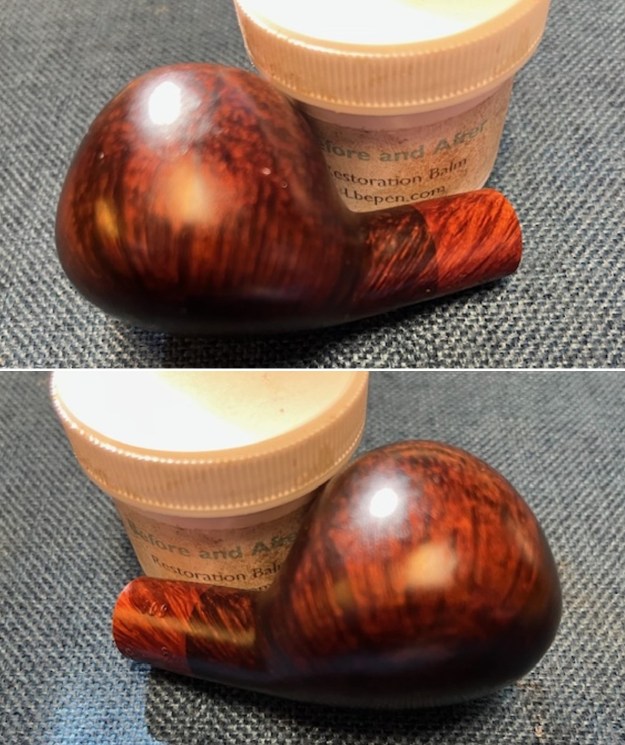
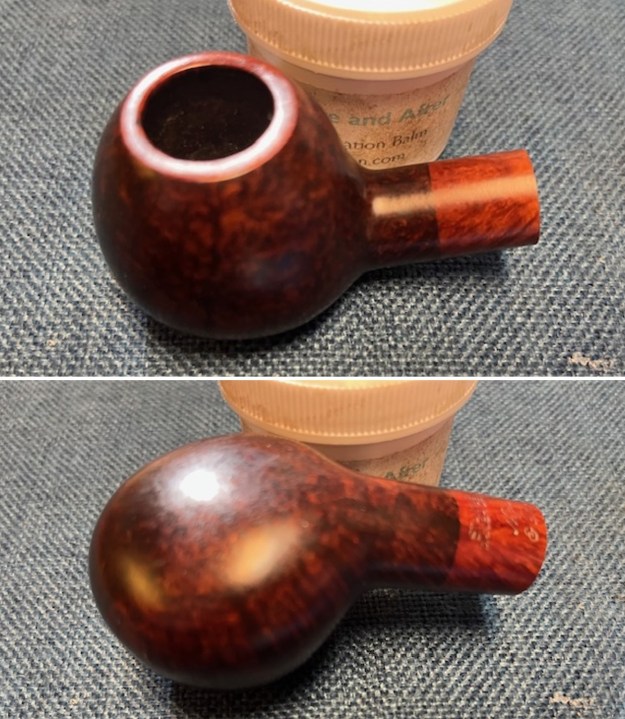
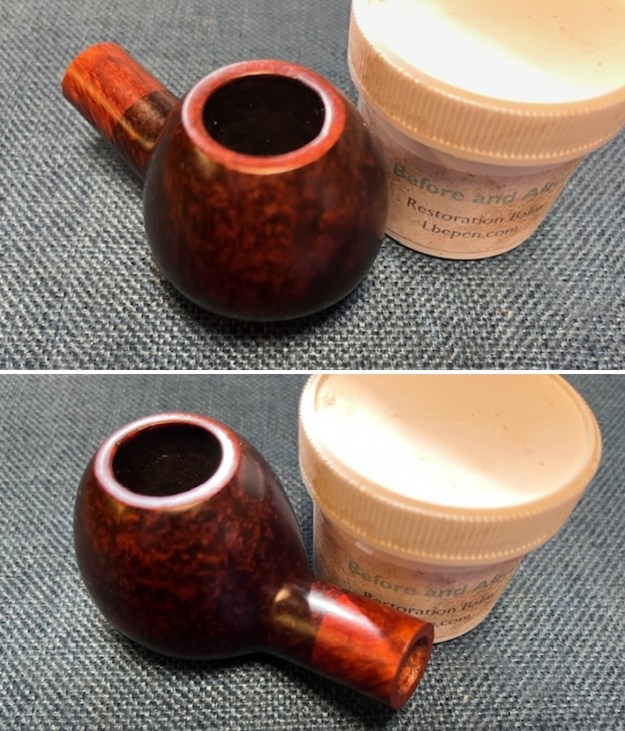
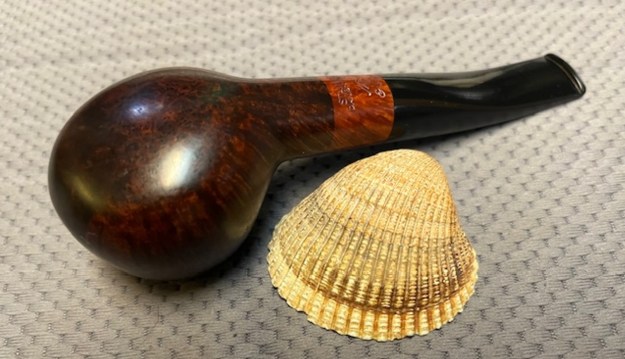
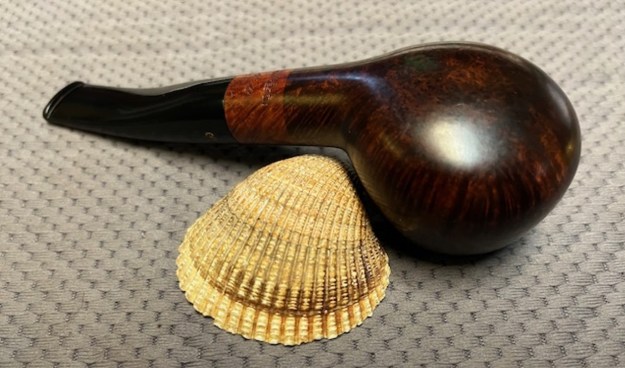
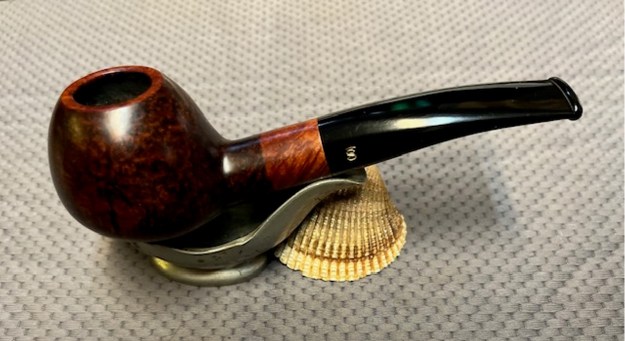
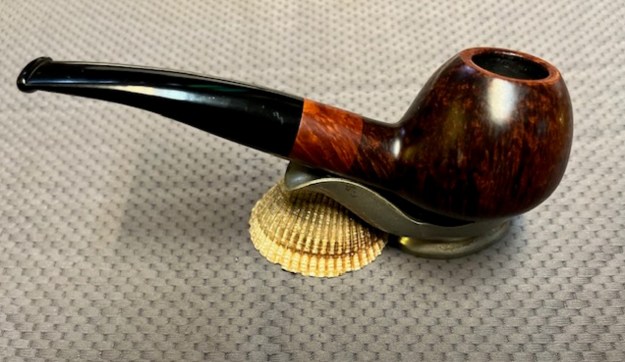
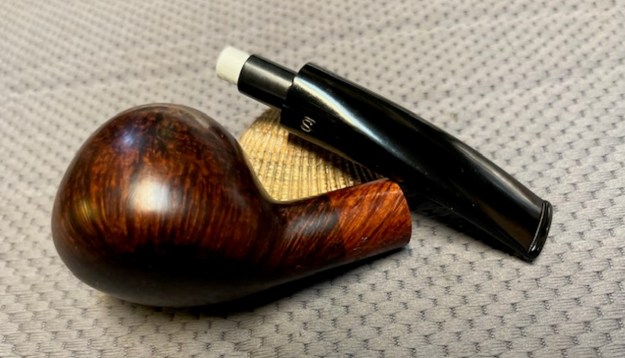
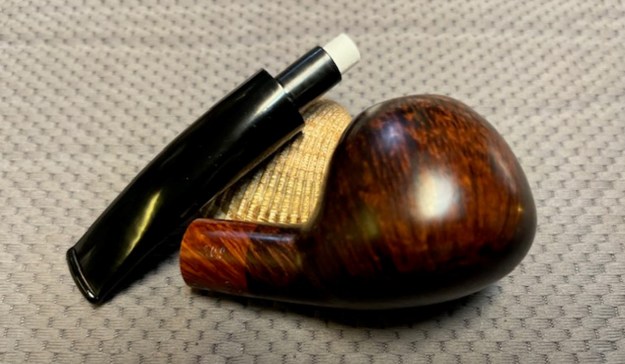
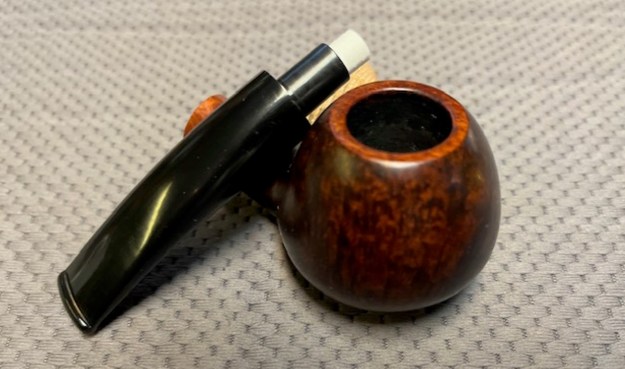
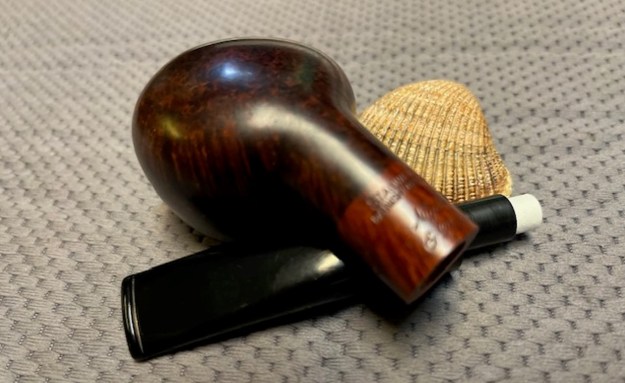
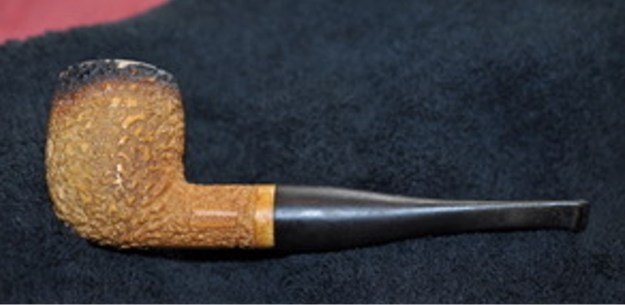
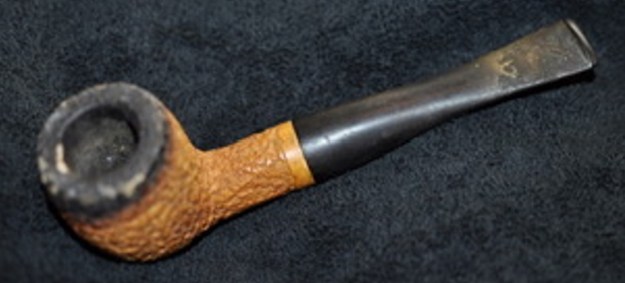
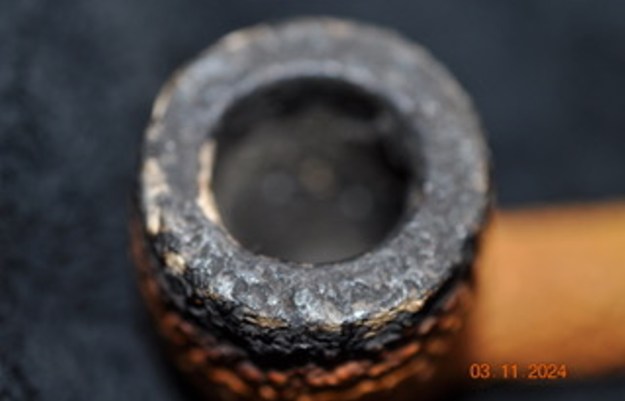
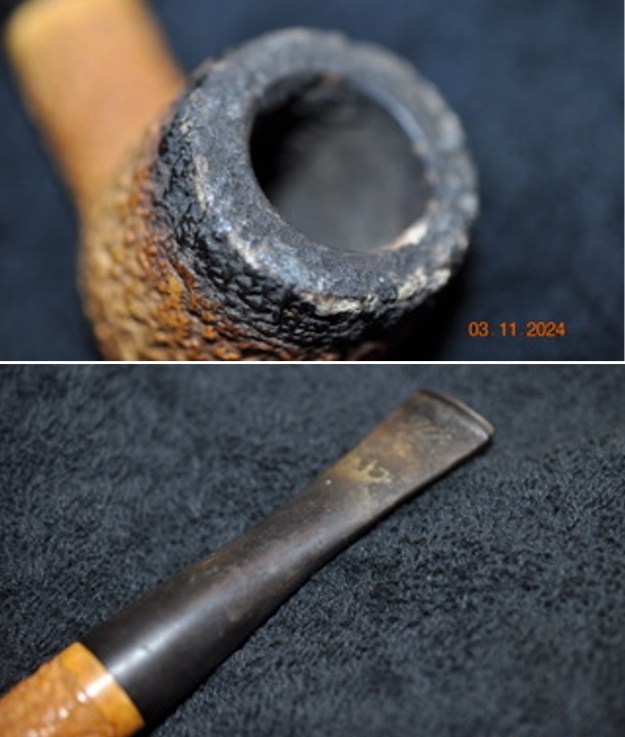
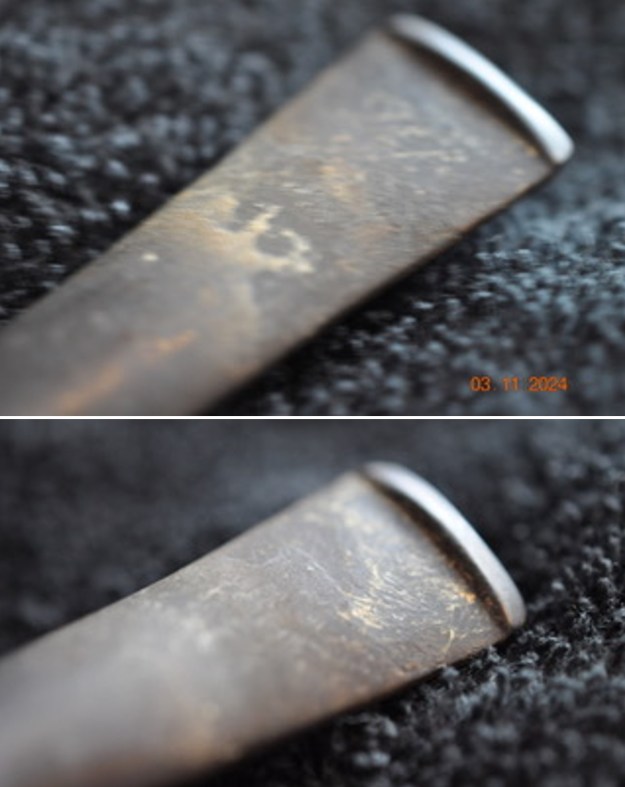
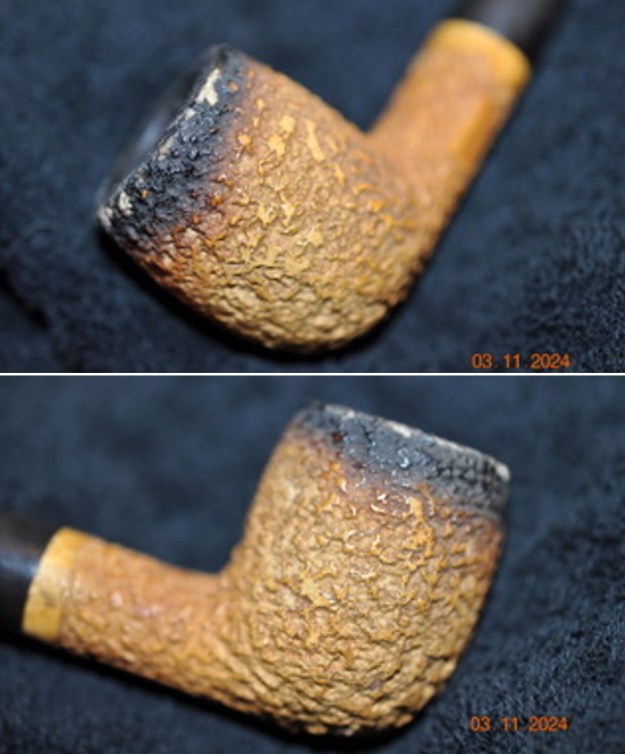
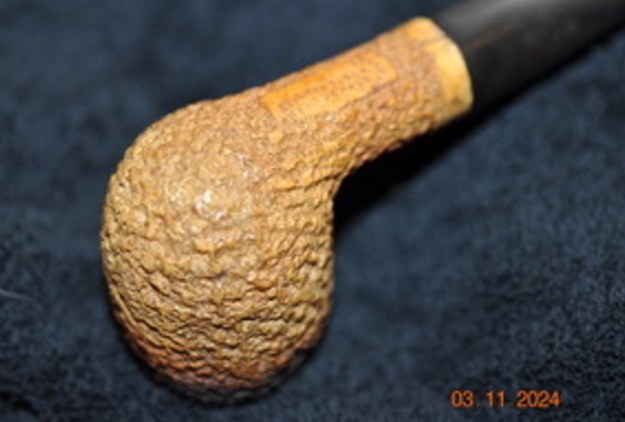
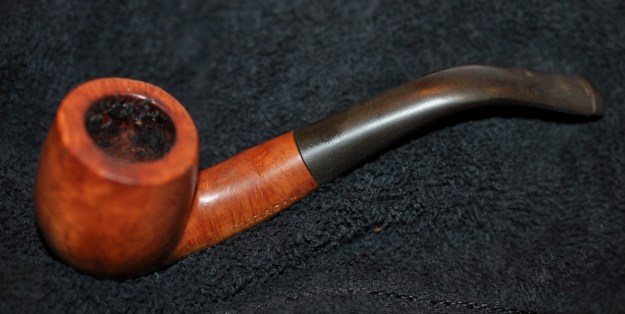
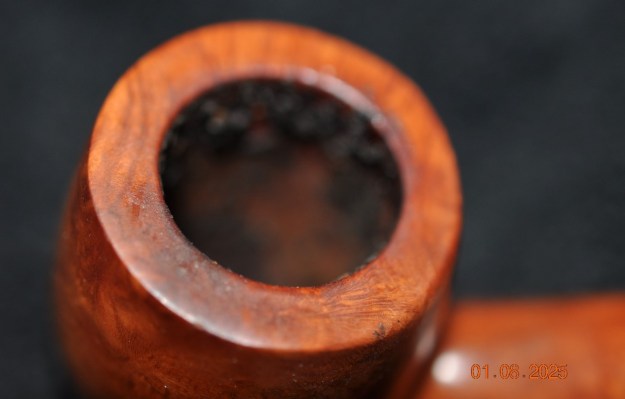
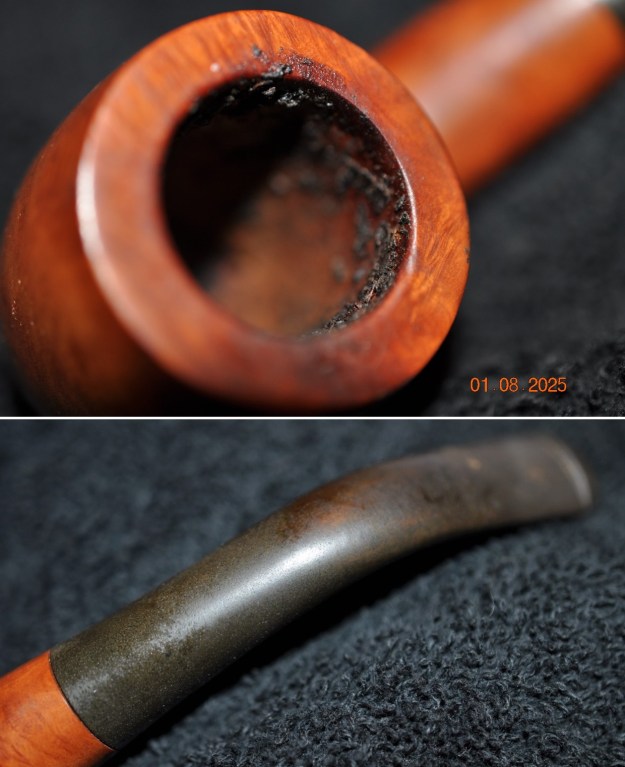
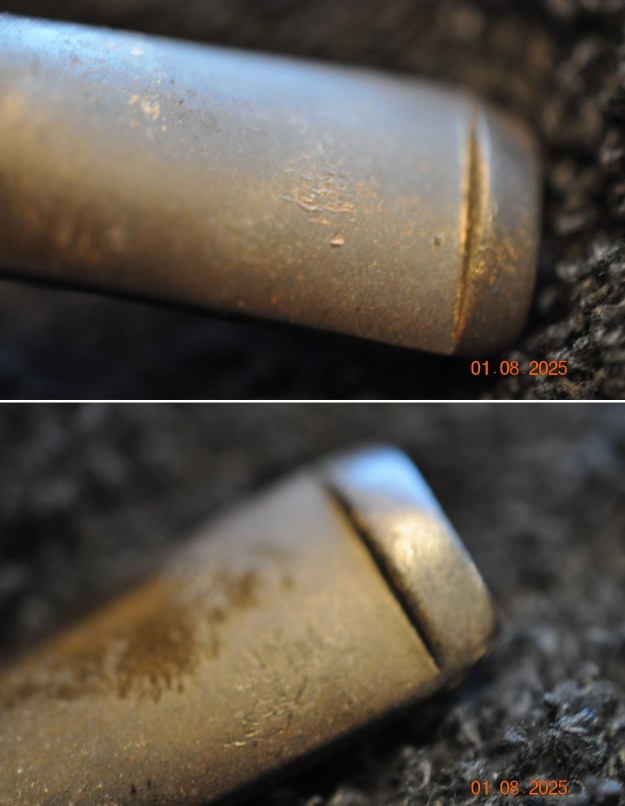
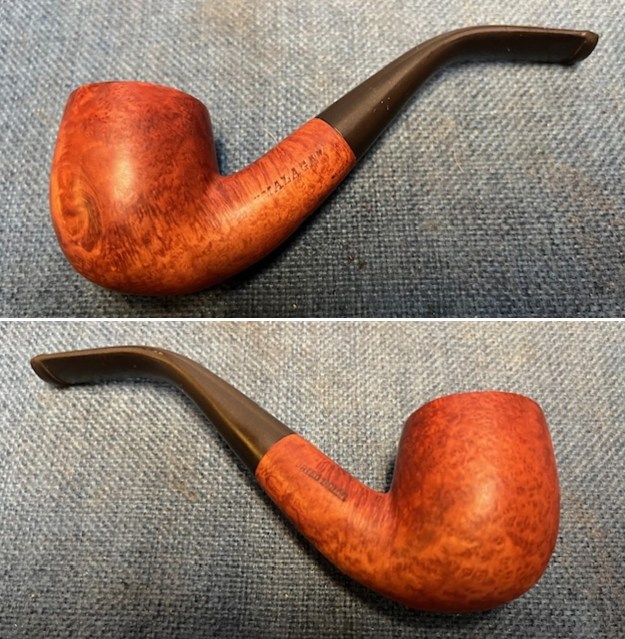
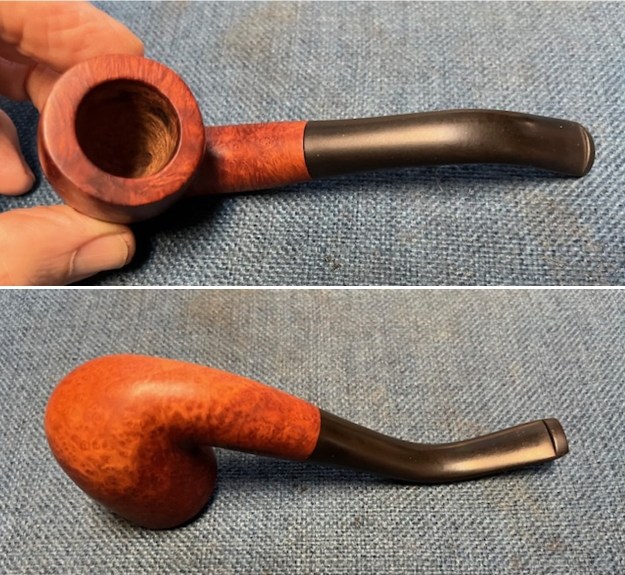
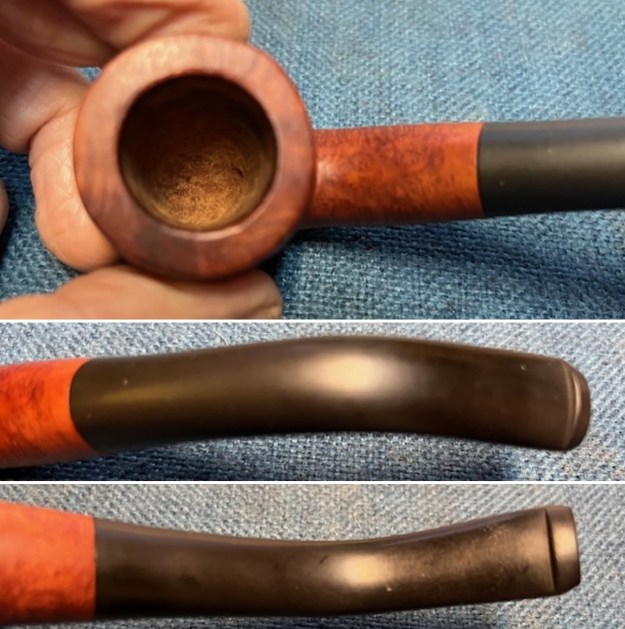
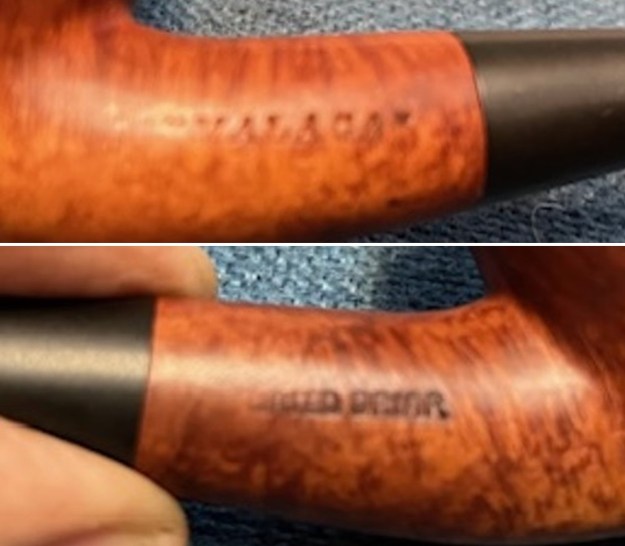
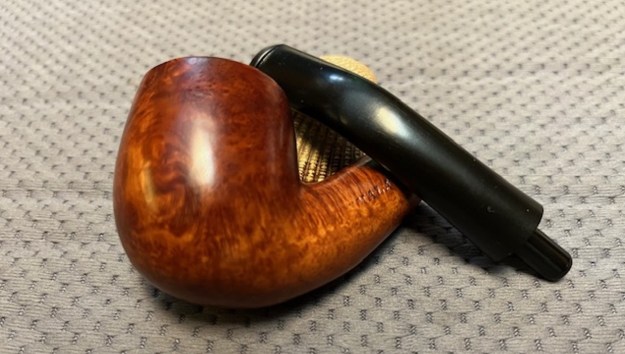
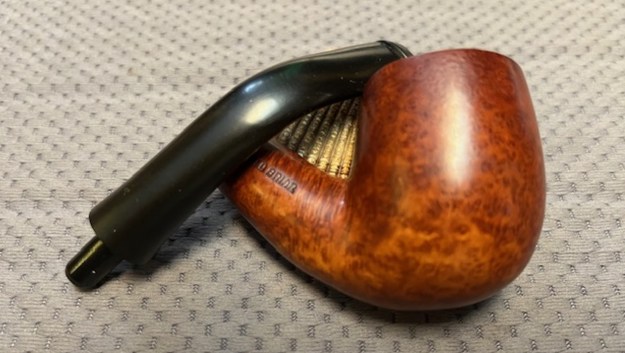
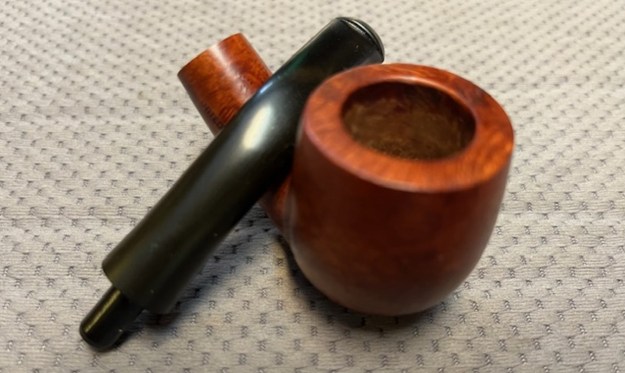
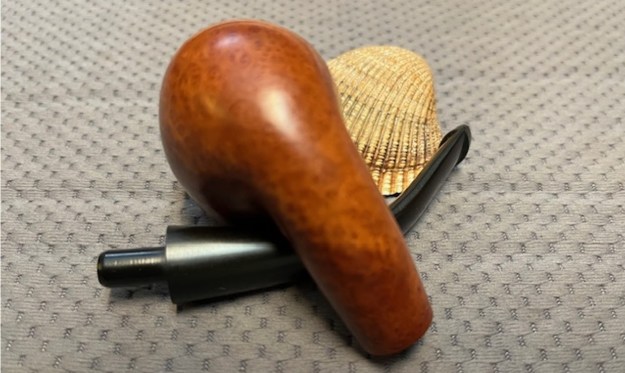
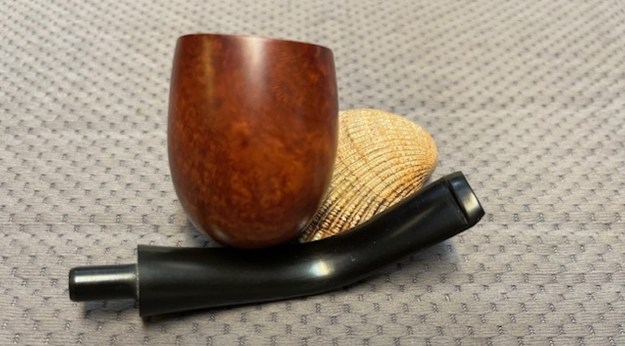
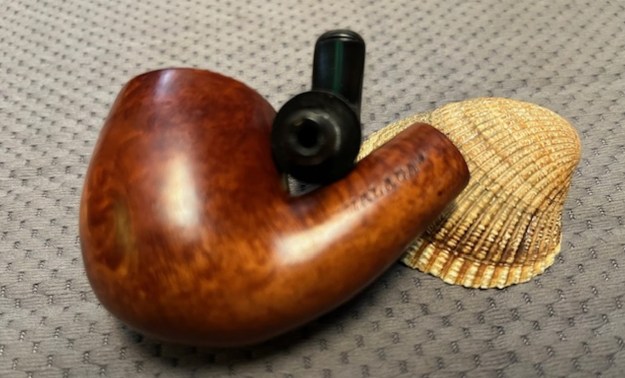
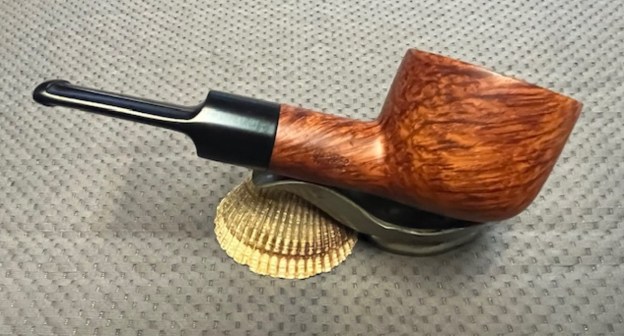
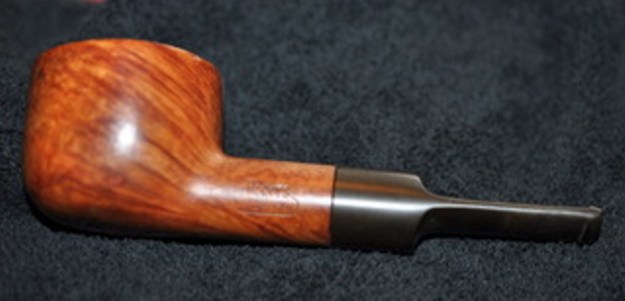
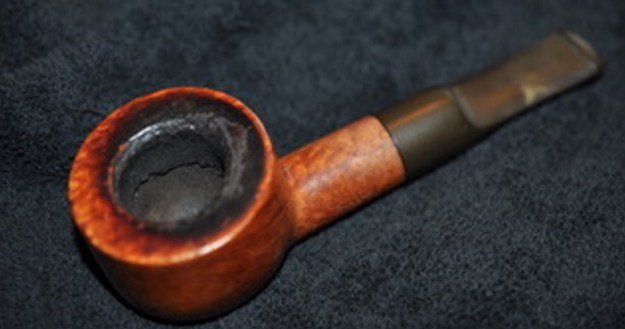
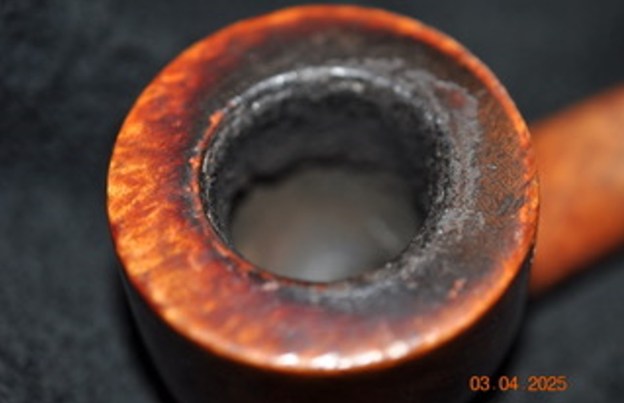
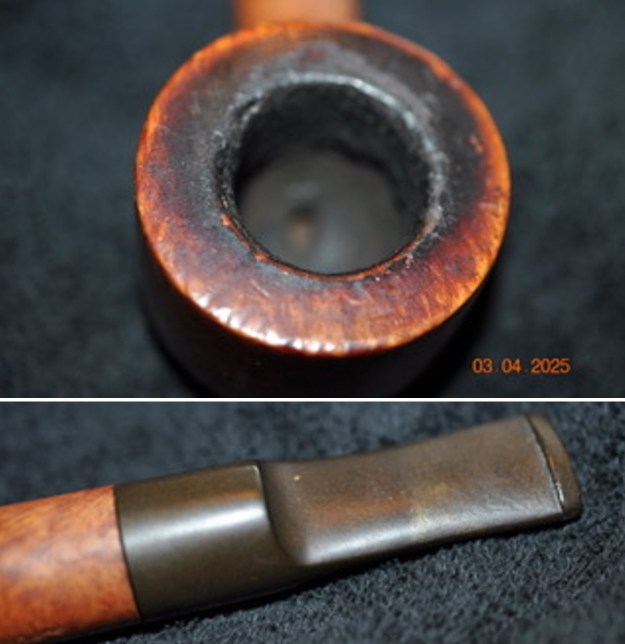
The next pipe is a really neat looking chubby, large bowled Pot with a vulcanite saddle stem. The thick shank and stubby looking pipe was made to hold in your hand. It is quite light weight for its size and the blade on the stem is thin and looks comfortable. We picked up this pipe from an antique Store in Ogden, Utah, USA on 10/10/2024. It is stamped on the left side of the shank and reads Rogers [over] Rarity in an oval. On the right side it is stamped Imported [arched over] 285 [over] Bruyere. The pipe came with dents in the heel of the bowl and was oily and dirty looking. There was a heavy cake in the bowl and an eruption of thick lava on the rim top – heavier on the sides and back of the bowl It was hard to know the condition of the rim top and rim edges because of the grime and thickness of the cake and lava. The cleaning would make it very clear! The stem was dirty and lightly oxidized with light tooth marks and chatter on both sides but nothing like what I was expecting from the condition of the bowl. Jeff took photos of the pipe to give a clear picture of what we were up against with this pipe. He captured the cake in the bowl and the thick eruption of lava on the rim top and edges exceptionally well in the next photos. It was very clear that the pipe had not been seriously cleaned since the first smoke. But it is also very clear that it was an exceptional smoker! The stem is oxidized, calcified and shows the took marks on the button surface and chatter on both sides ahead of the button. Jeff once again captured some of the beauty of the shape and the grain in the next photos. You can certainly see what lies beneath the grime and even paint on the briar.He took photos of the heel of the bowl to shoe the deep dents in the surface of the briar from hammering it against a hard surface.He took photos of the stamping on the top left and right of the shank. It is clear and readable as noted above.From reading Bill Unger’s book on Custom-Bilt Pipes I remember “Rogers Rarity” was made by the same company as one of it non-sculptured or rusticated pipes. I did a Google search to see if I could confirm that online. I found a pipe labeled Rogers Rarity for sale on Worthpoint, an online sales site (https://www.worthpoint.com/worthopedia/rogers-rarity-custombilt-large-briar-1821532853). In the description they made the link to Custombilt. I quote:
Rogers Rarity briar pipes were made by Custombilt, and show all the beauty and originality of the brand.

I searched further and found a conversation asking about the brand on Pipesmagazine online forum. There was a great conversation about the brand.

(https://pipesmagazine.com/forums/threads/help-with-dating-a-pipe.62314/). I found a particular response by Jon Guss of the Seattle Pipe Club particularly helpful. I quote from Jon in full.

First, “Rodgers” is a misspelling; it was always spelled “Rogers”. Three generations of the Rogers family ran one of the leading importers of pipes (including Petersons for a number of years) and resellers of pipes and smokers articles; they also did a bit of manufacturing. The name of the company was Rogers Imports, Inc.

Second, for several reasons I also believe that Rogers Rarity pipes were made for Rogers Imports by CustomBilt.

The Rogers Rarity line was introduced by the company in late 1945. The advertising copy from the spring of 1946 described Rogers Rarity pipes as “The height of pipe luxury and enjoyment”, and claimed that they were “Carved by hand of Algerian bruyere over 150 years old”. Was it true? I would guess not, but age fabrication regarding the briar from which pipes were made was a kind of industry trope for generations. While most of the Rarity pipes apparently sold for $5, the listed price range stated various models cost from $5-25. The $5 pipes were available in natural and grain finishes; there was also a $10 version called the Rogers Rarity Deluxe that was sterling banded and meerschaum lined.

I can’t be sure when the line ceased production, but believe it was by the end of 1949. Certainly Rogers Rarity pipes are no longer listed in the RTDA Almanac from 1950 on, and mentions of the pipe in advertisements to consumers become thin on the ground. More tellingly newspaper ads from 1951 show the pipe heavily discounted, suggesting that excess inventory of an obsolete line was being flushed through the channel…

Now I knew that my memory was correct. The pipe was made by CustomBilt for Rogers Imports. I also knew that it was made between 1945-1949 when the line was no longer made. It was a bit of an old timer… Now it was time to work on the pipe.

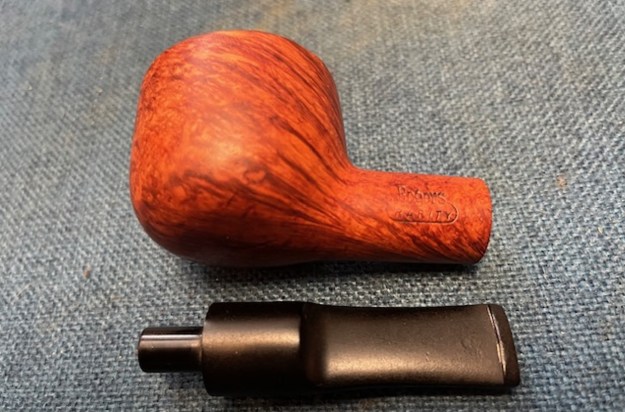
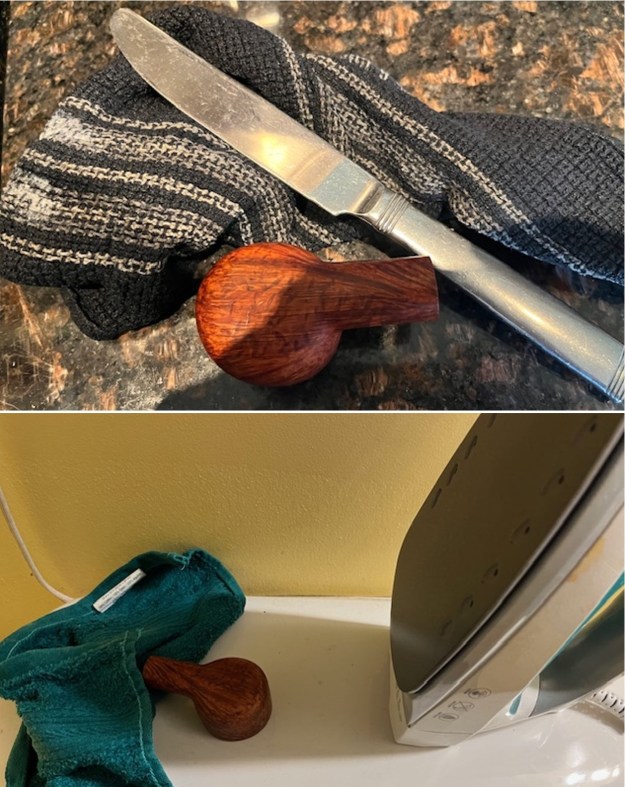
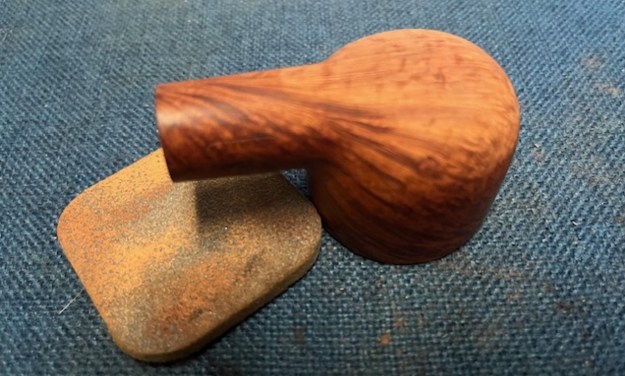
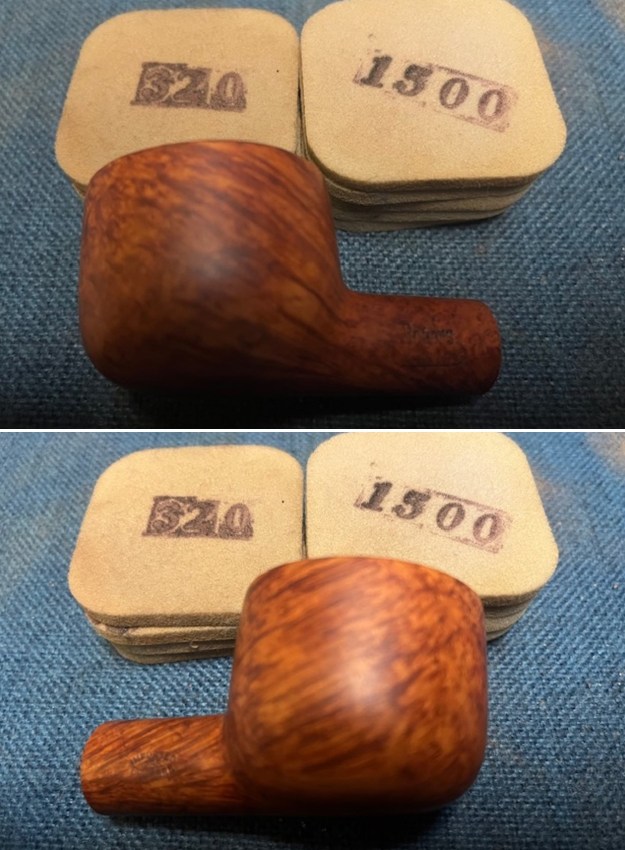
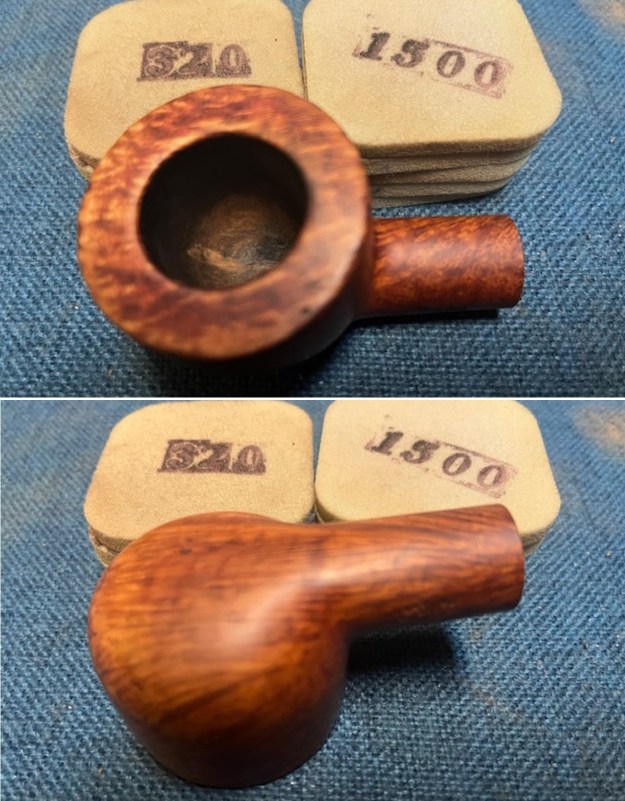
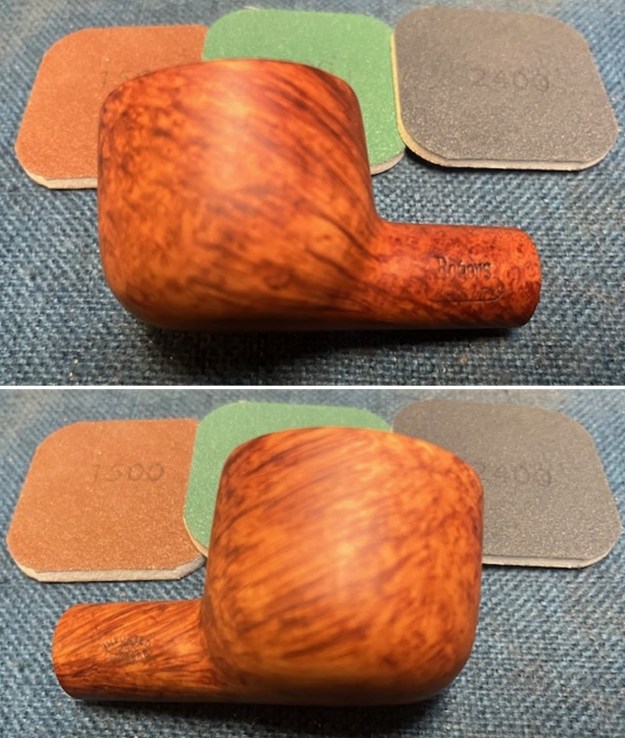
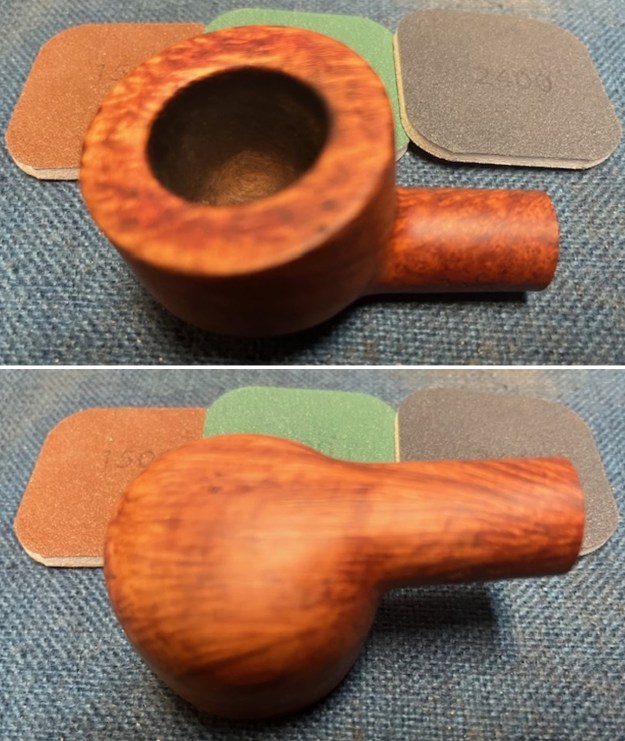
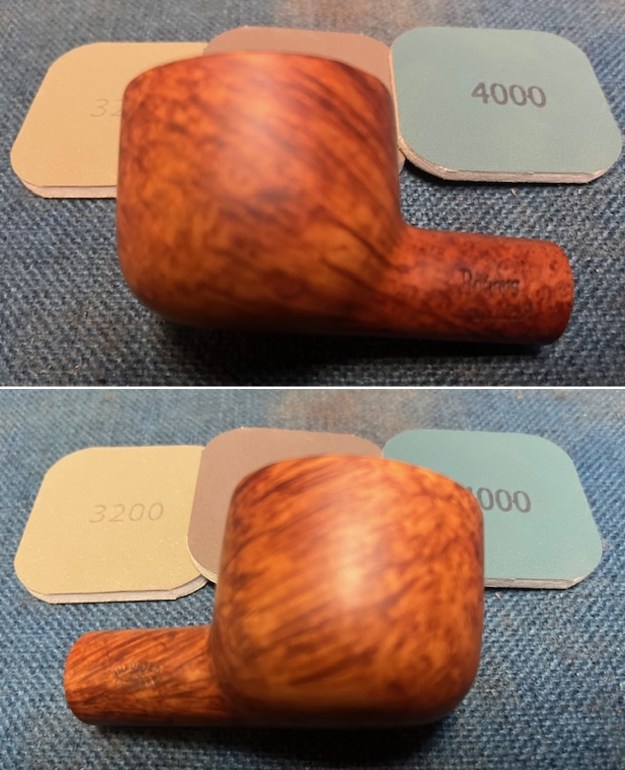
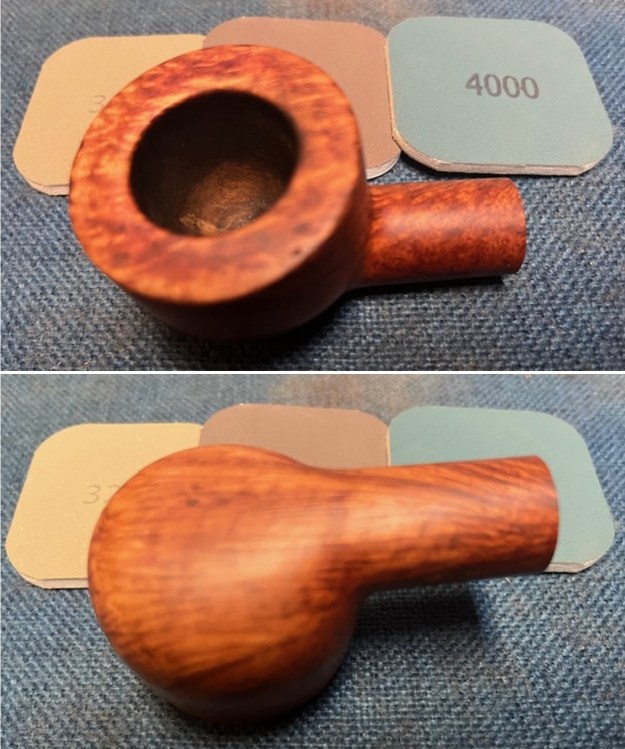
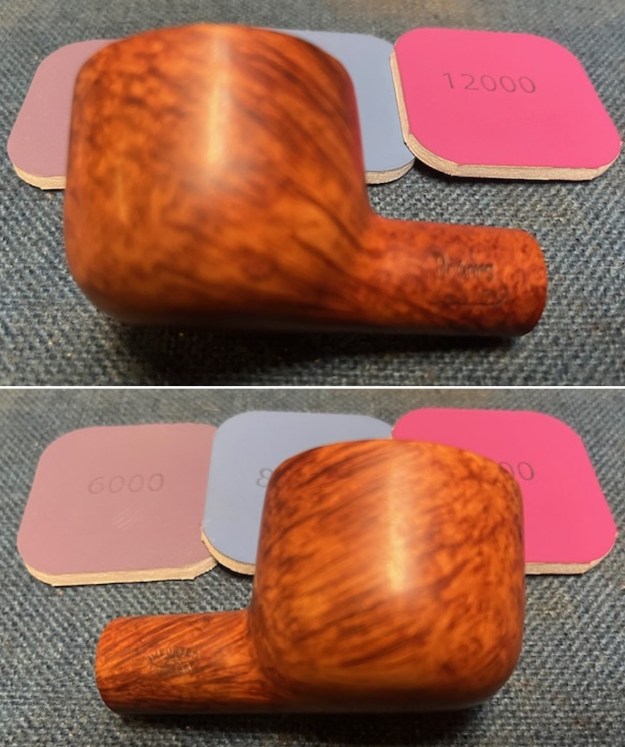
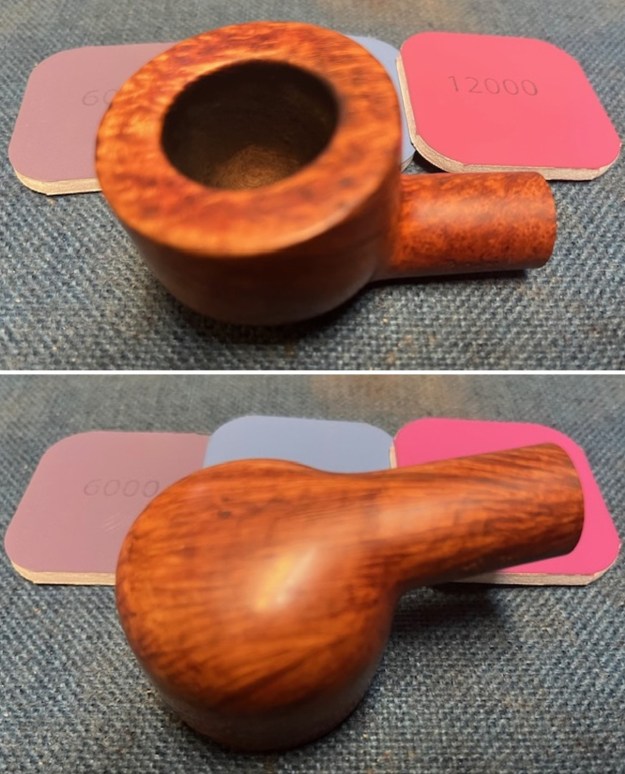
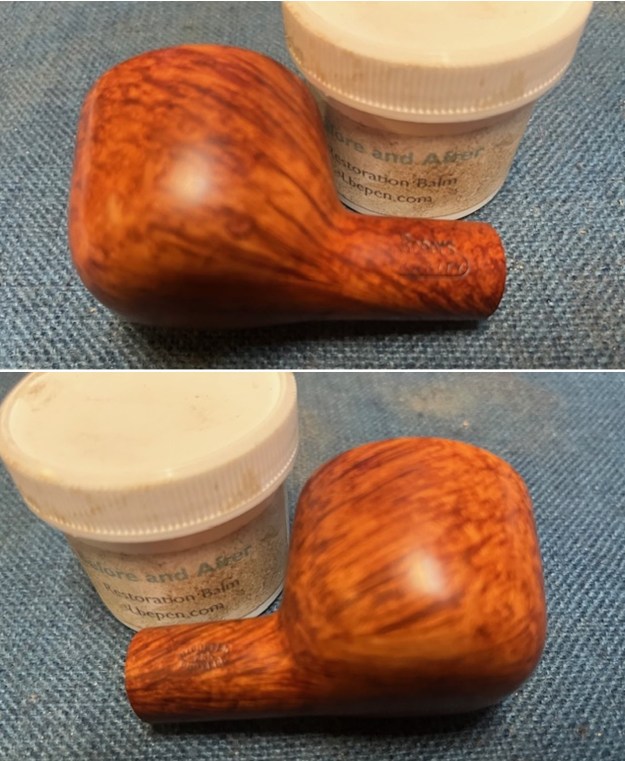
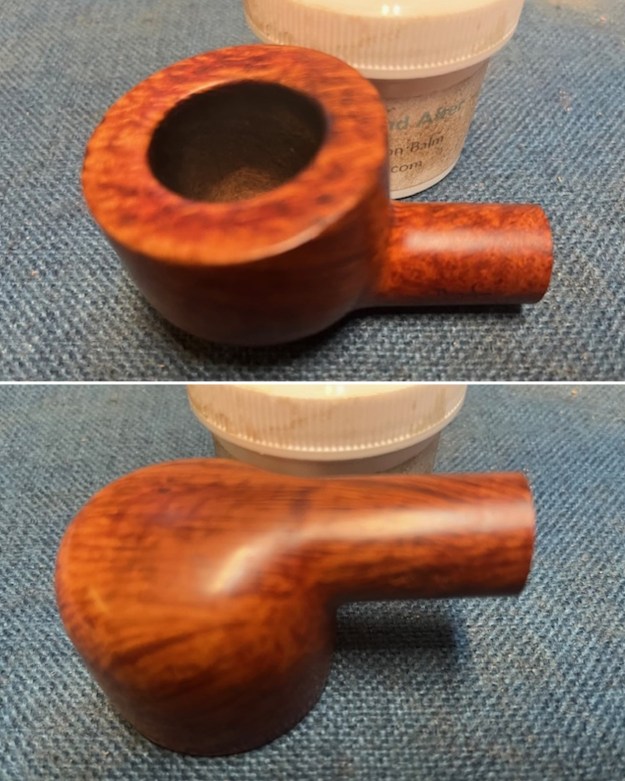
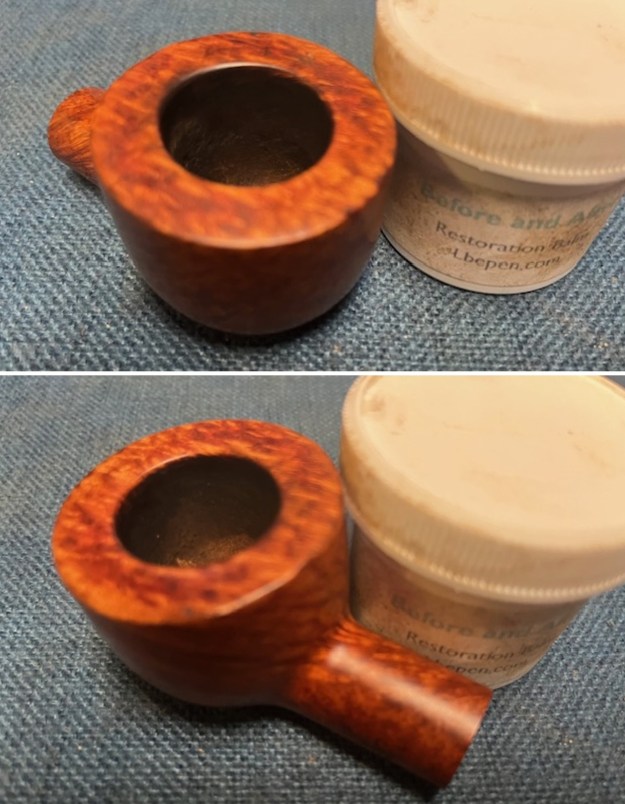
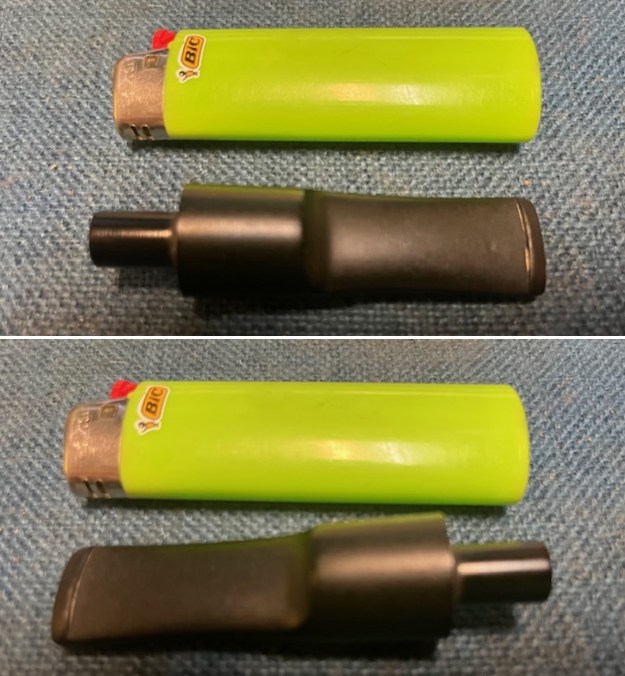
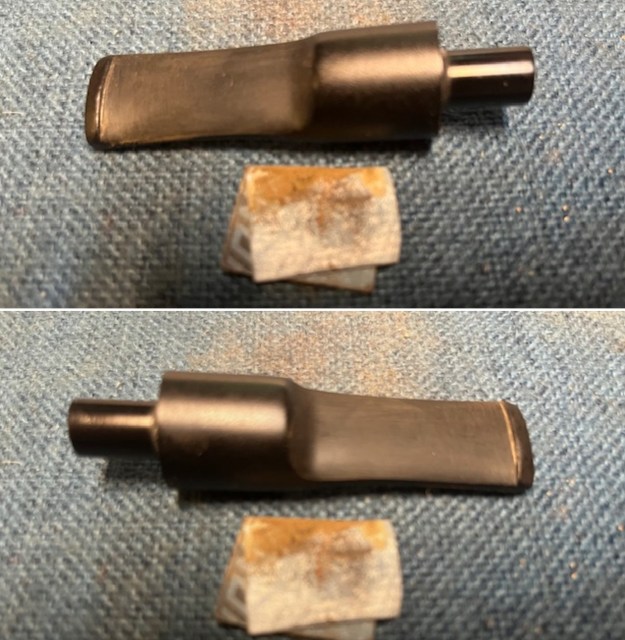
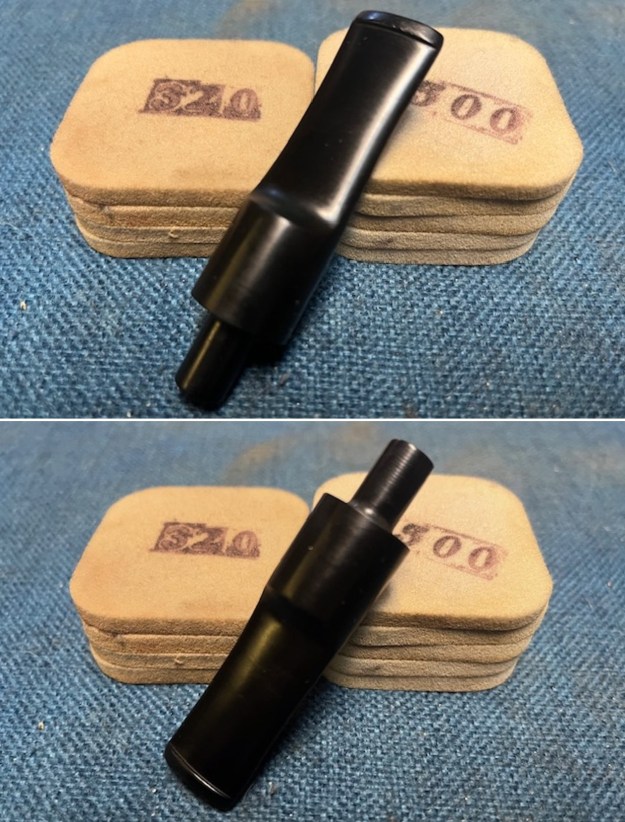
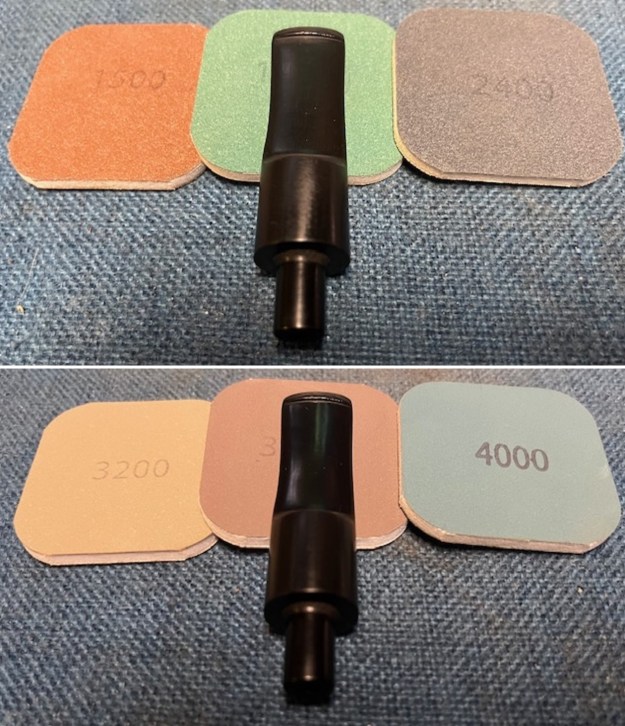
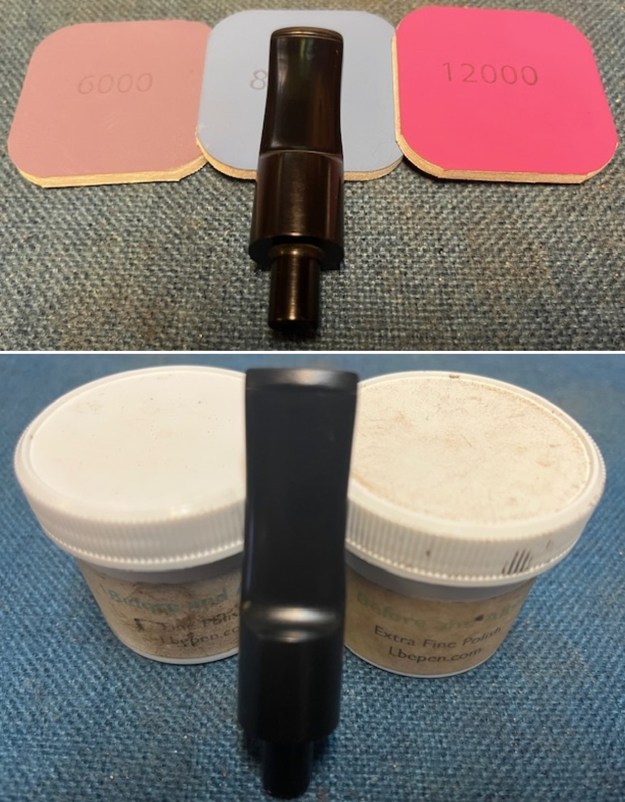
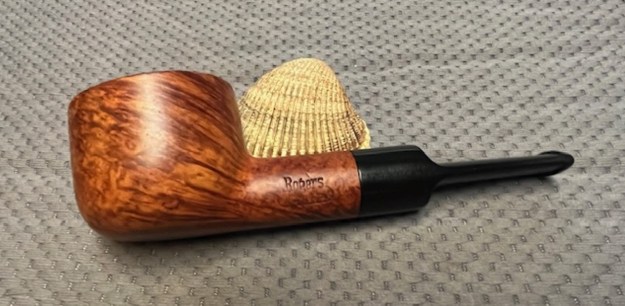
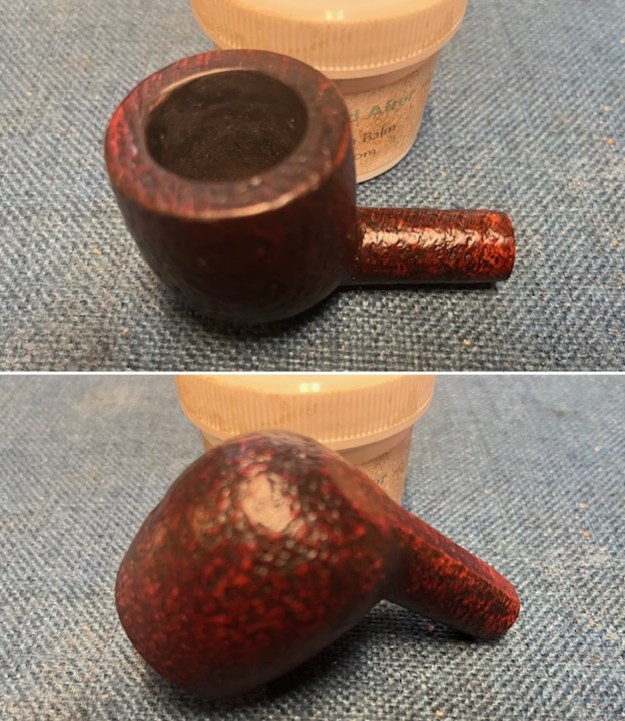
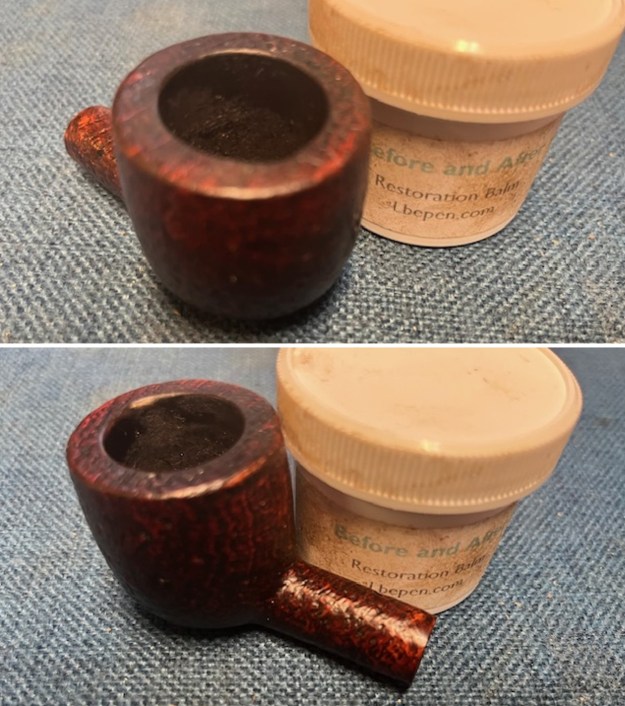
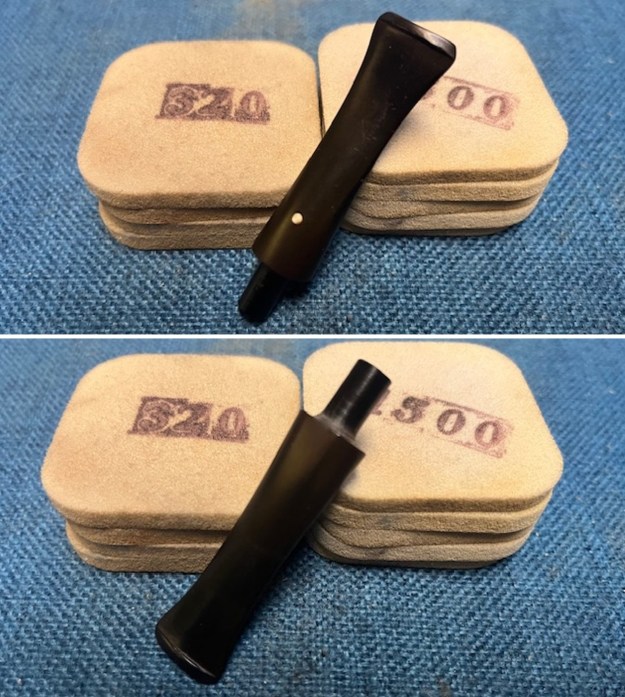
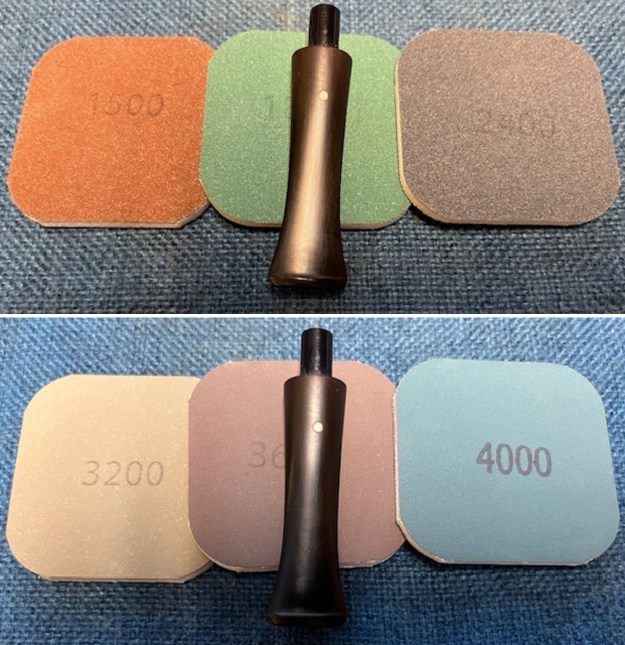
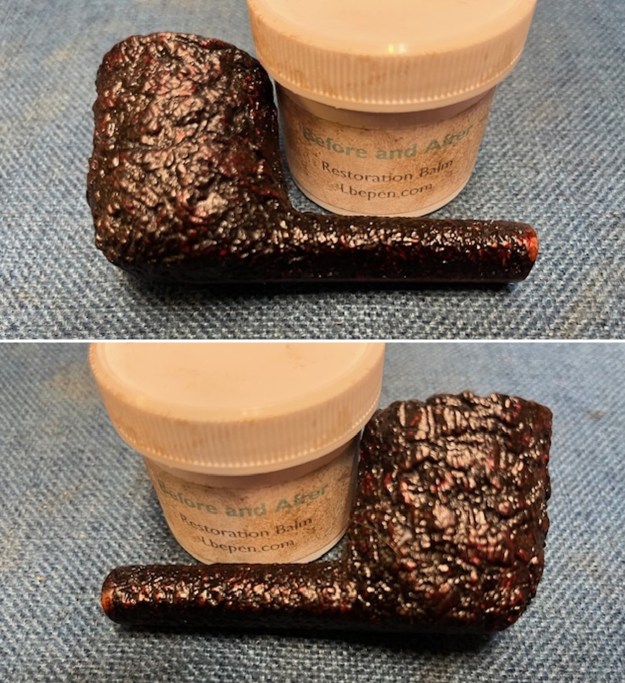
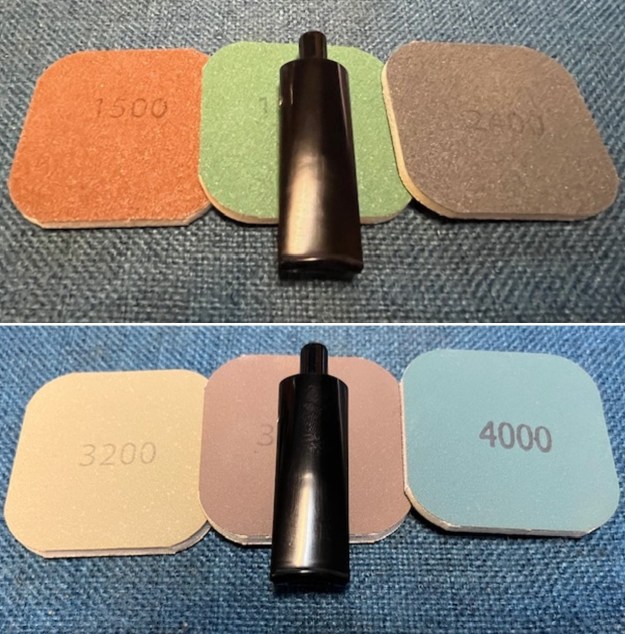
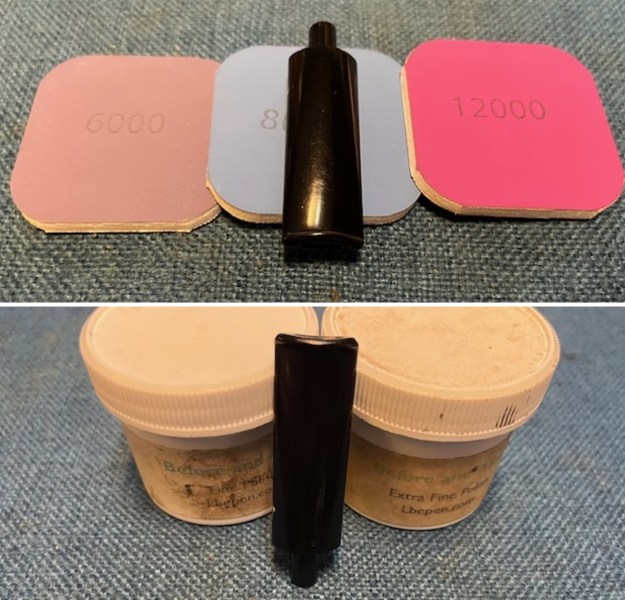
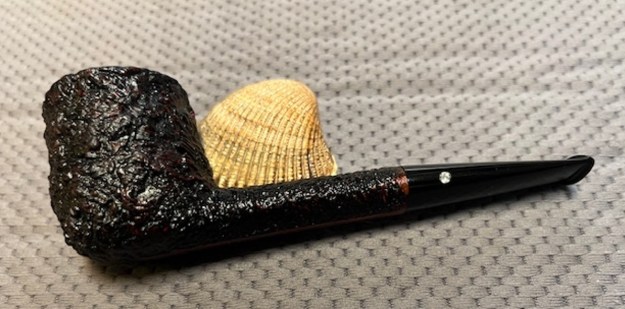
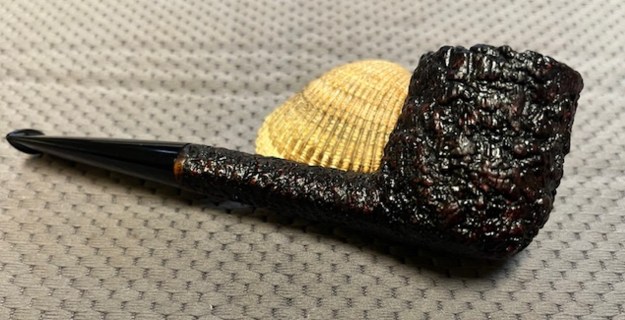
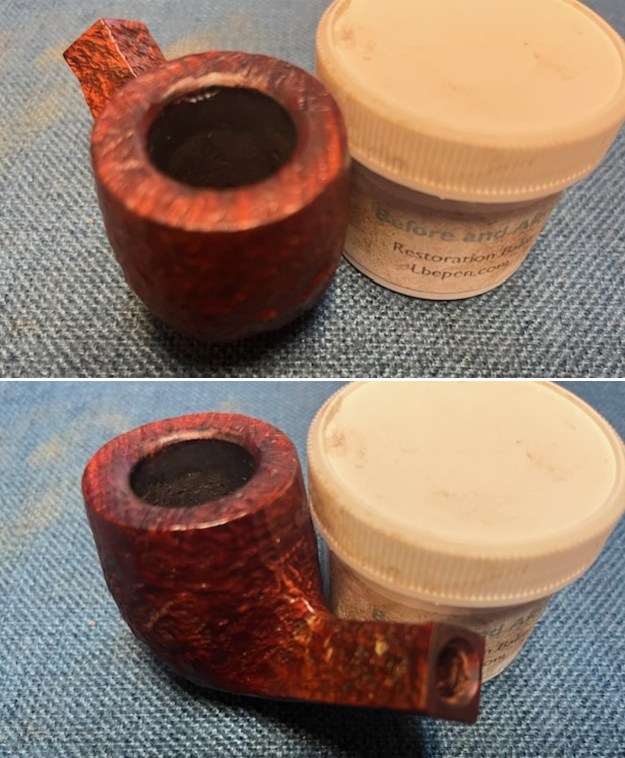
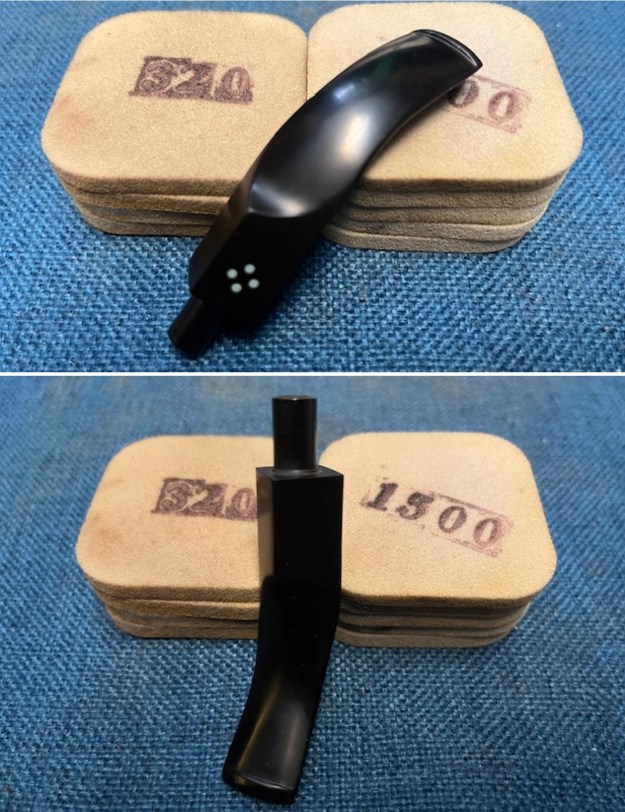
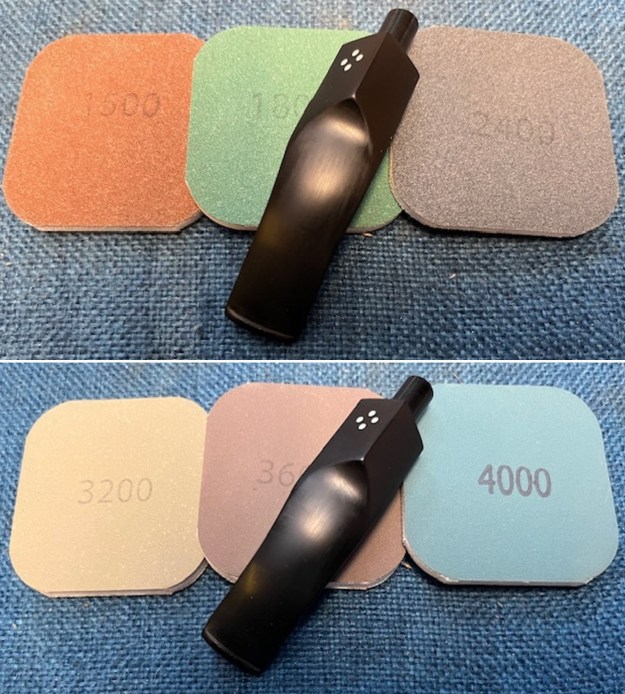
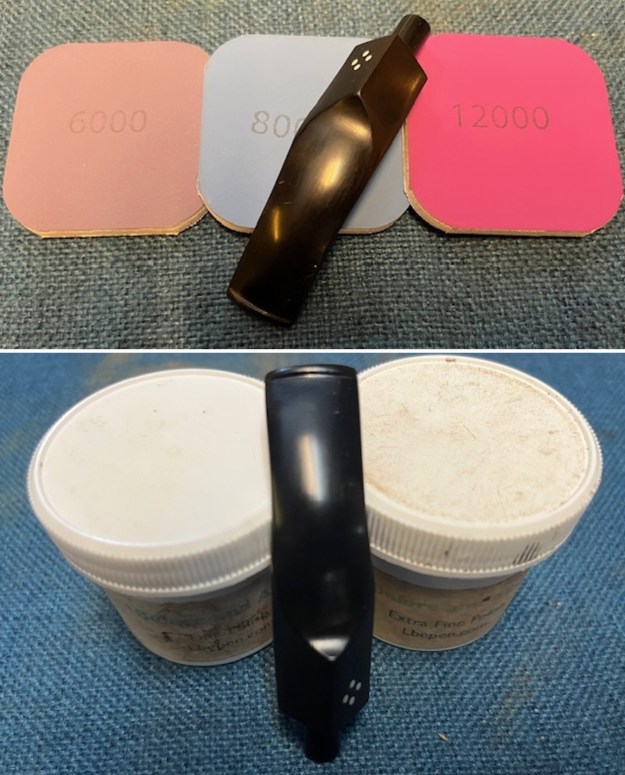
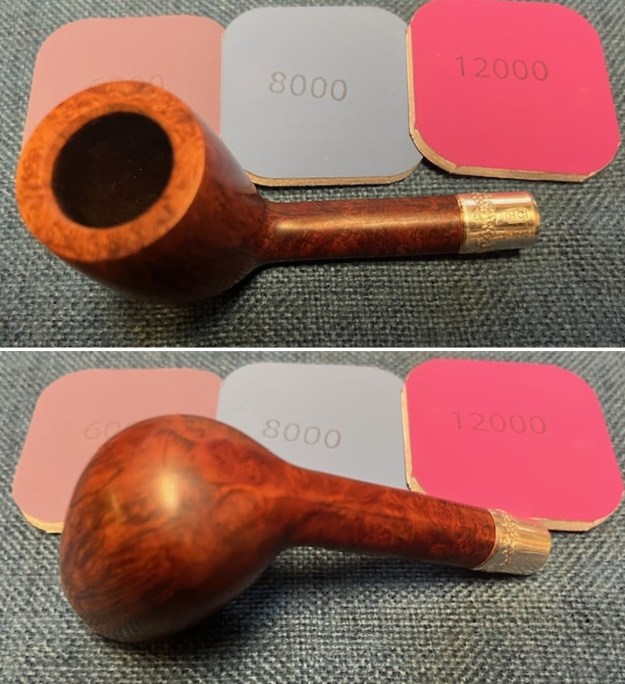
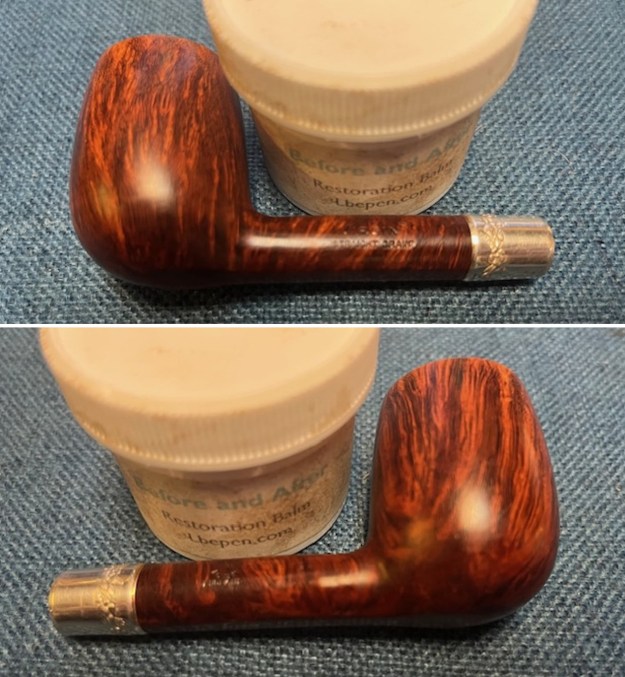
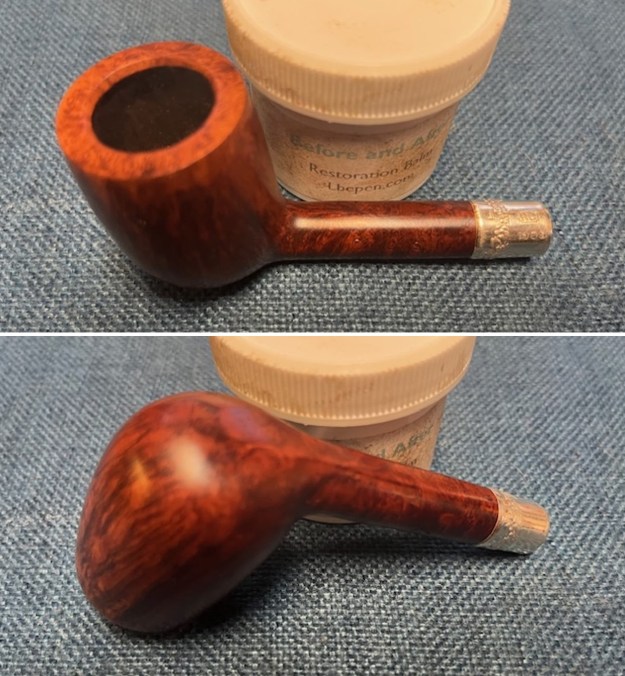
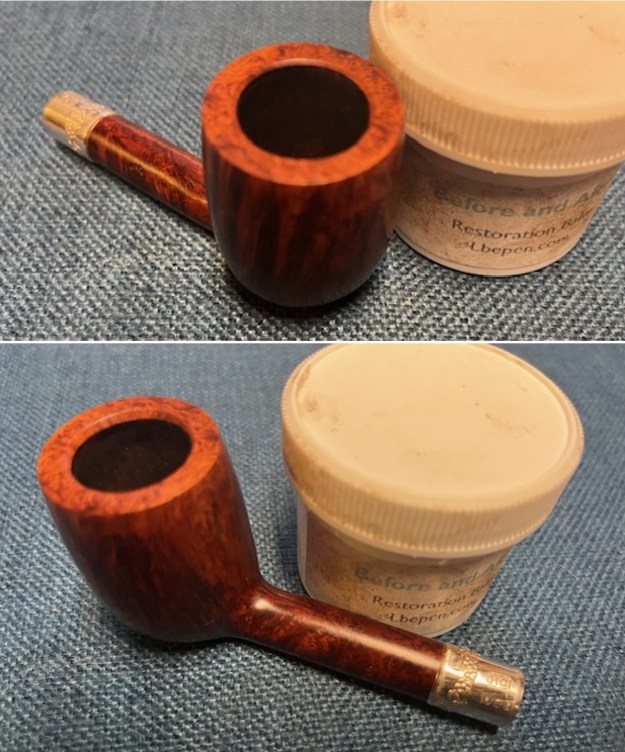
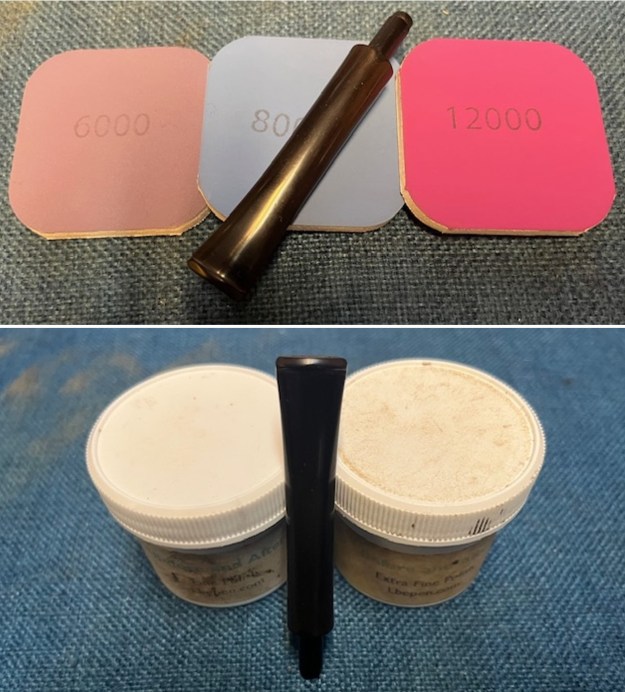
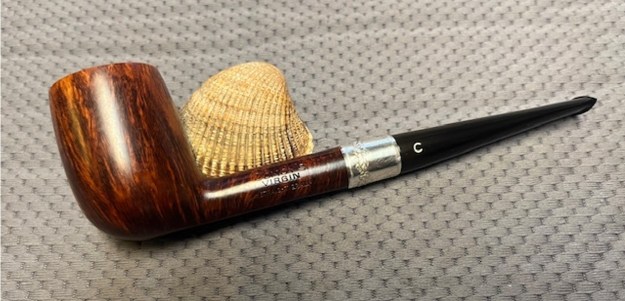
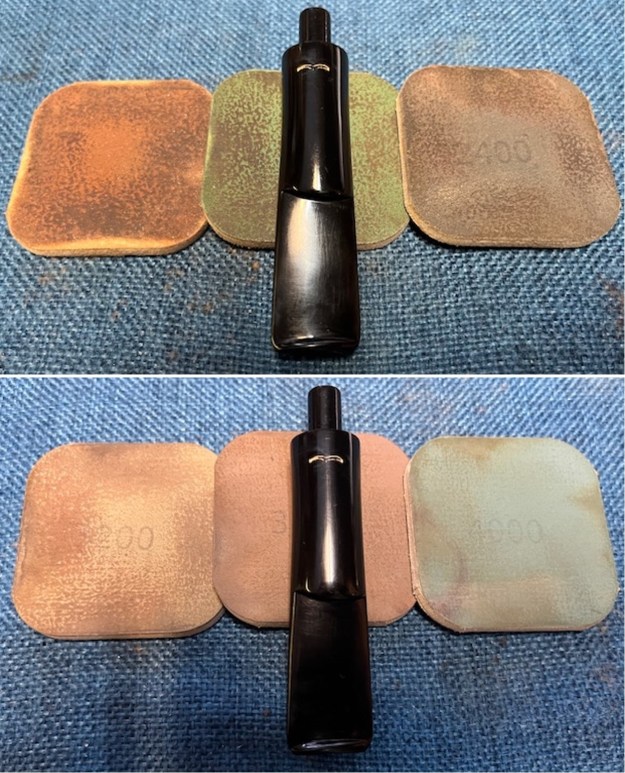
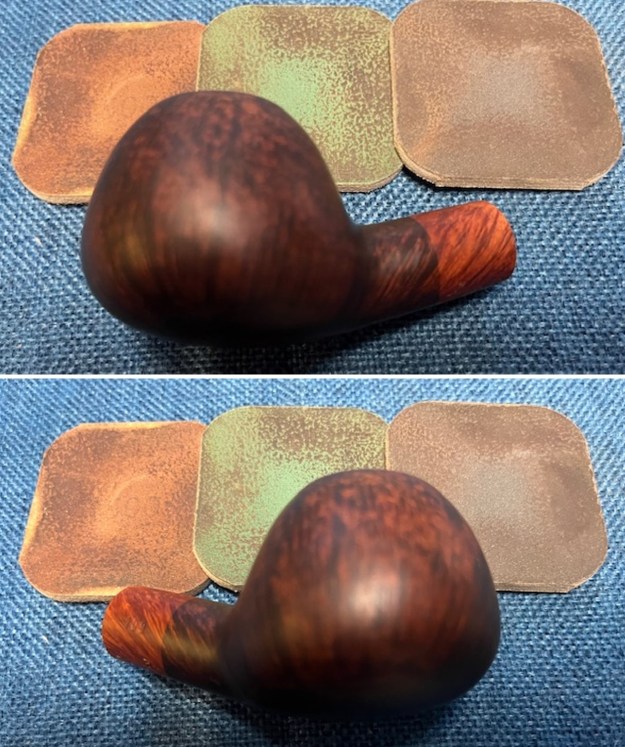
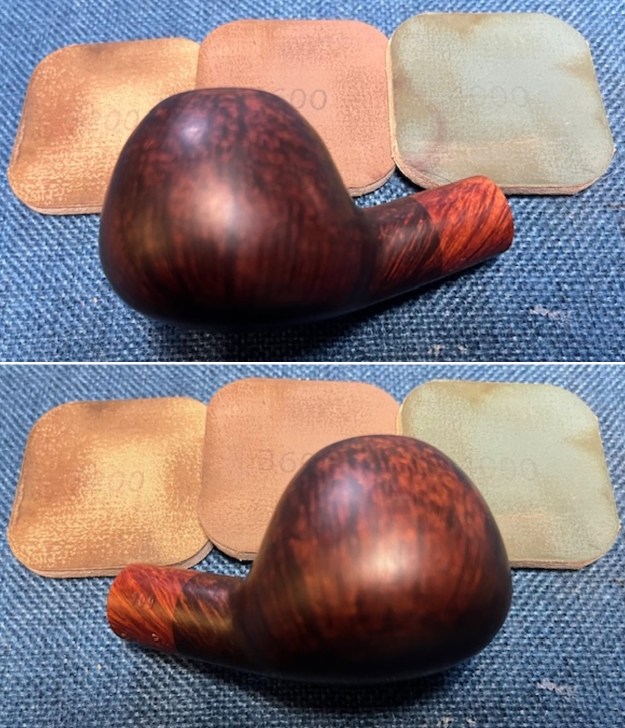
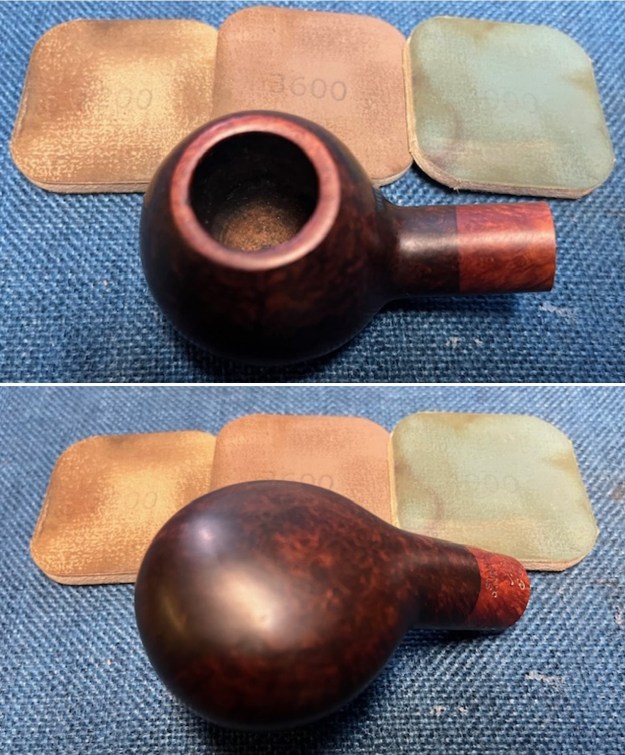
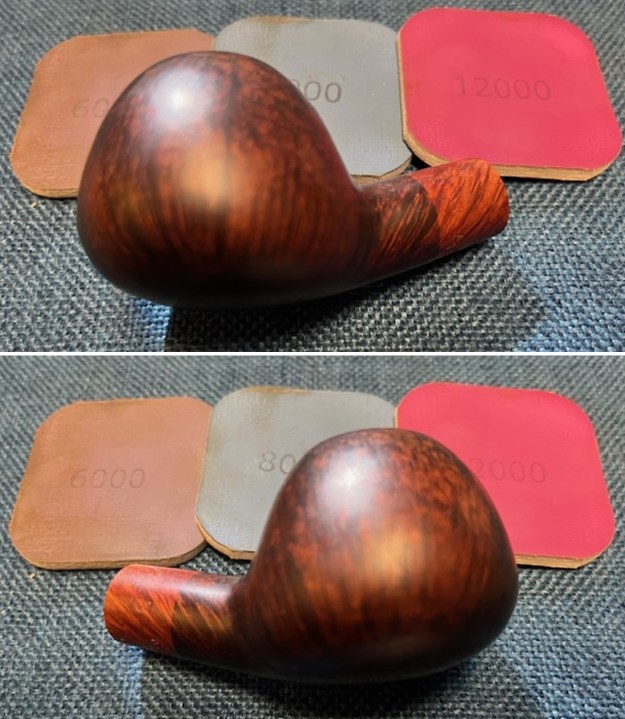
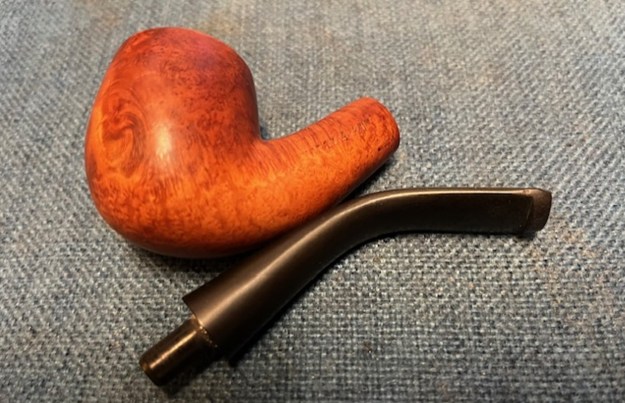
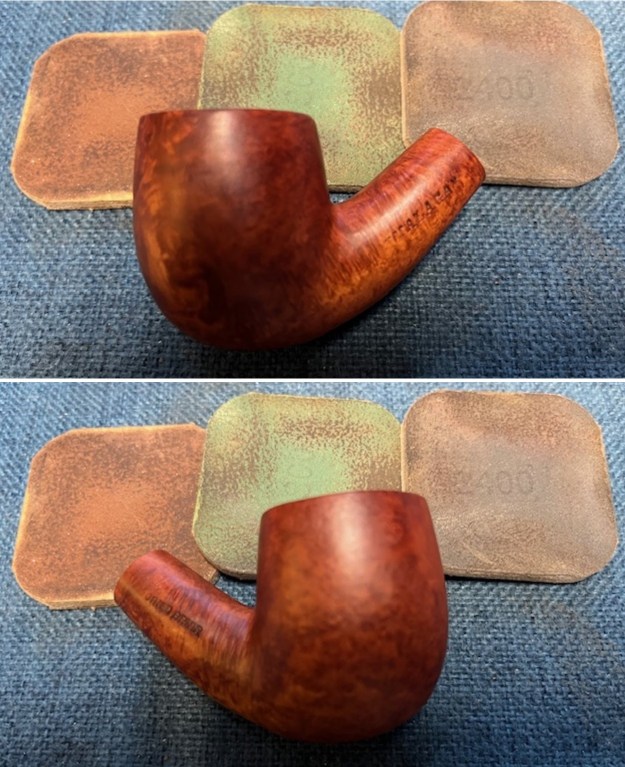
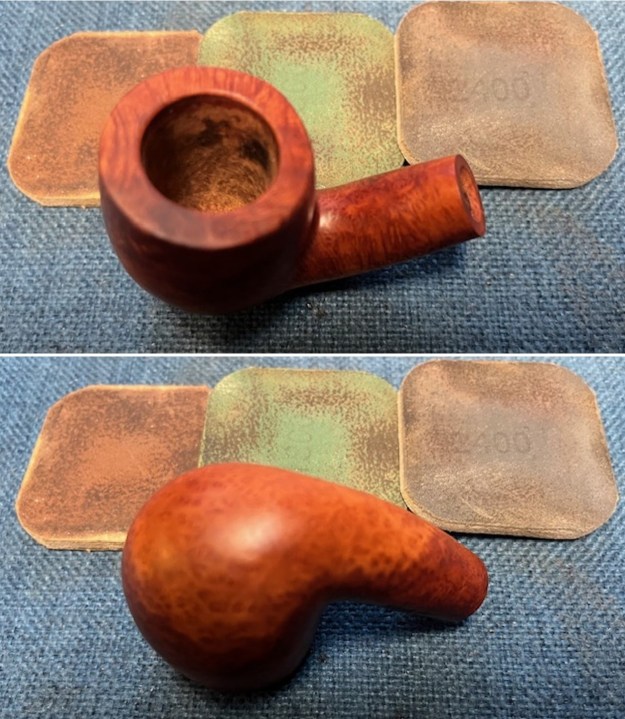
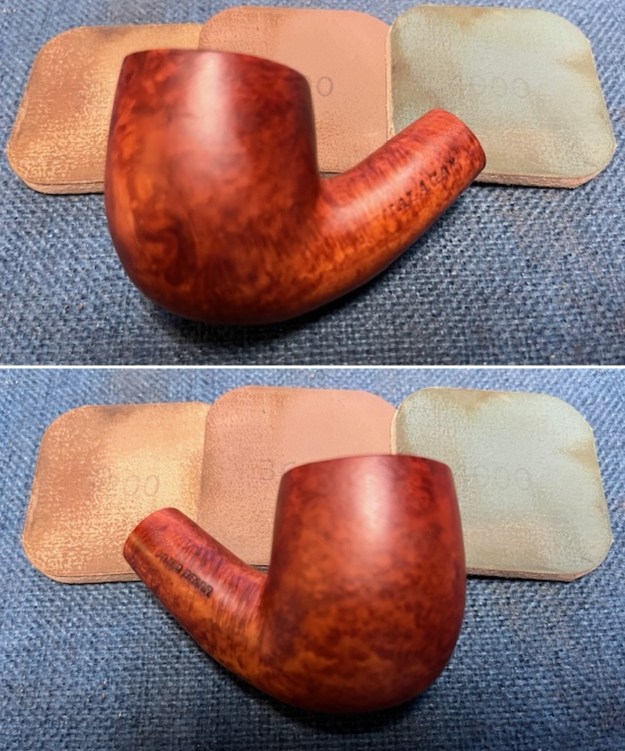
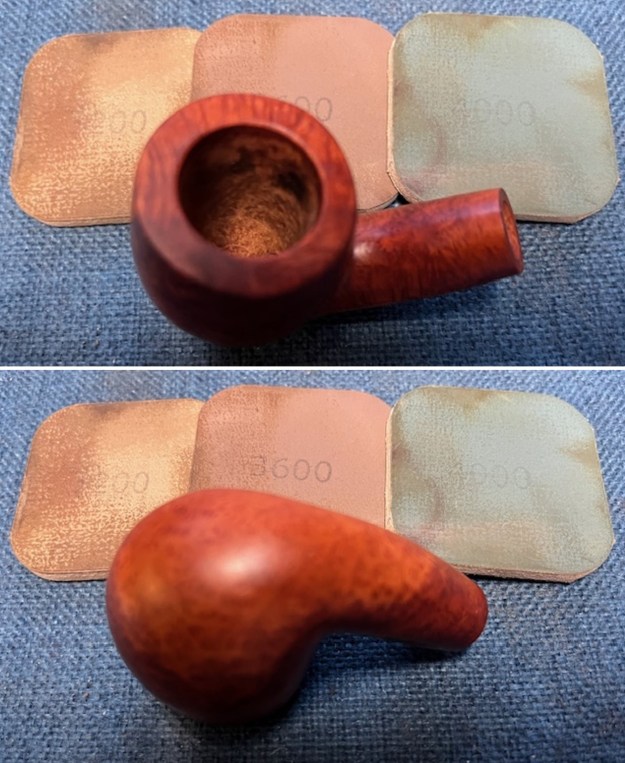
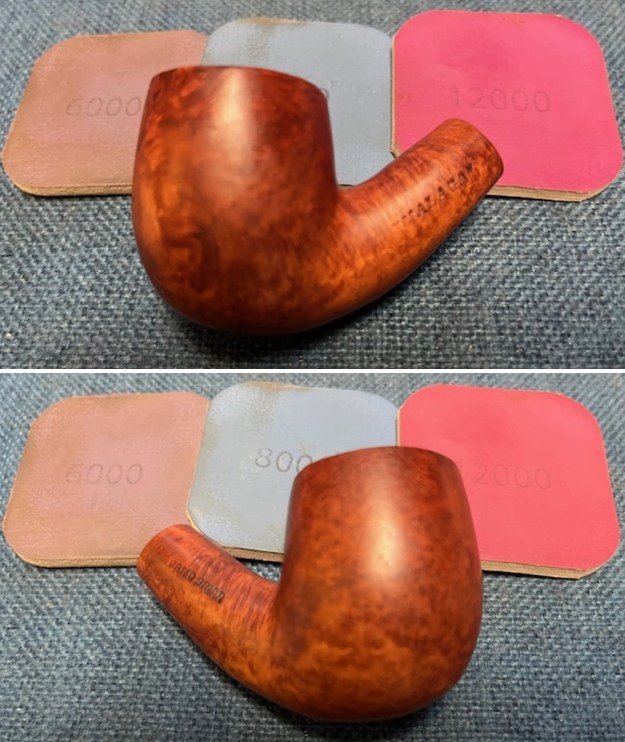
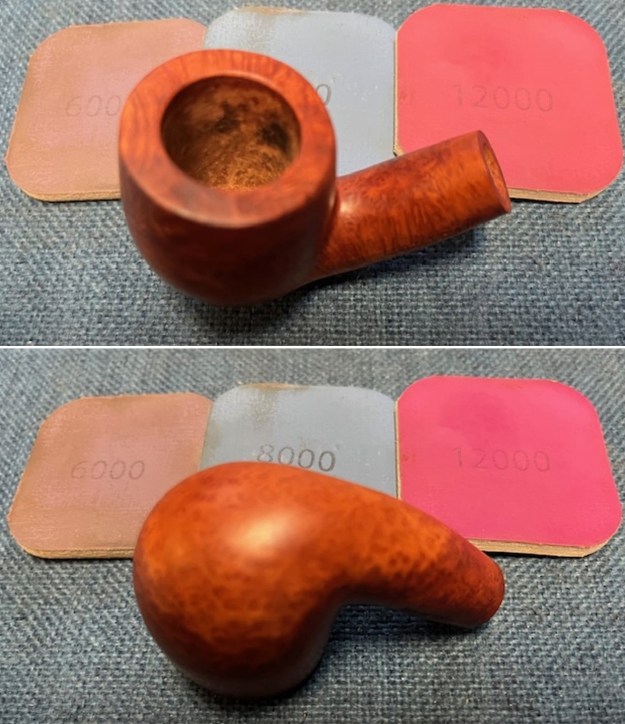
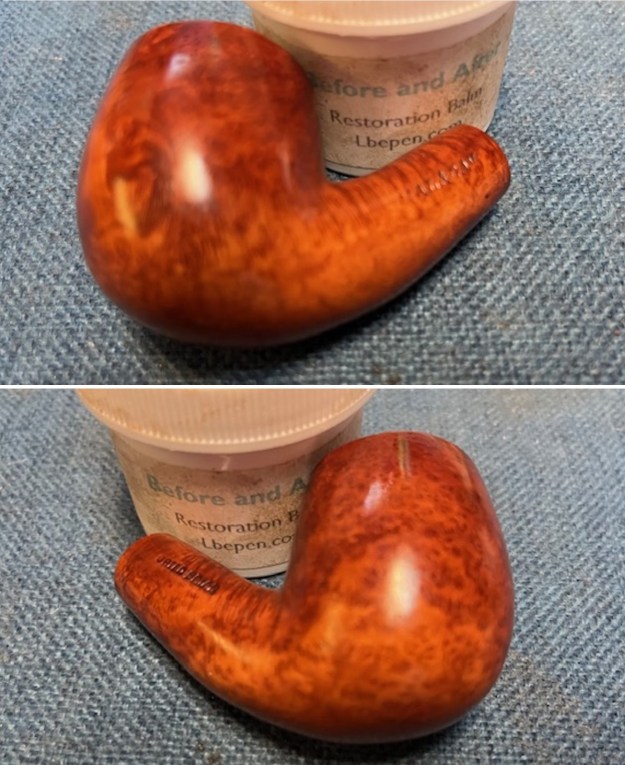
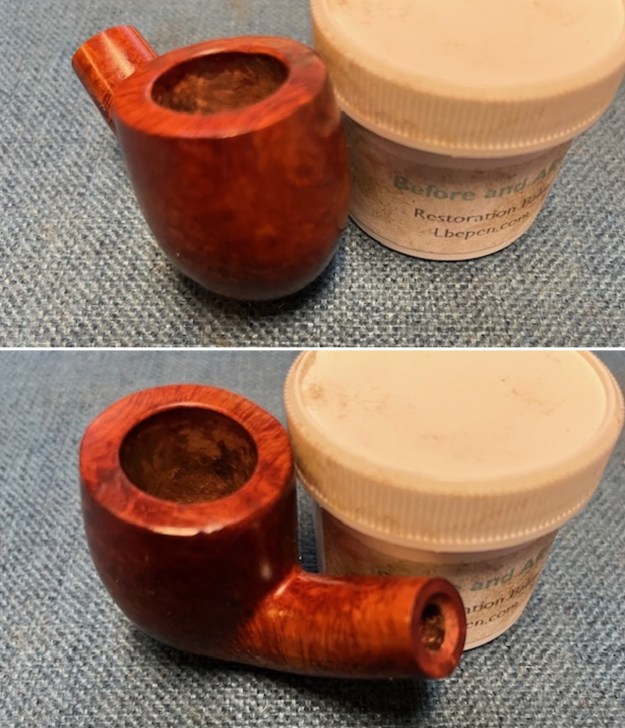
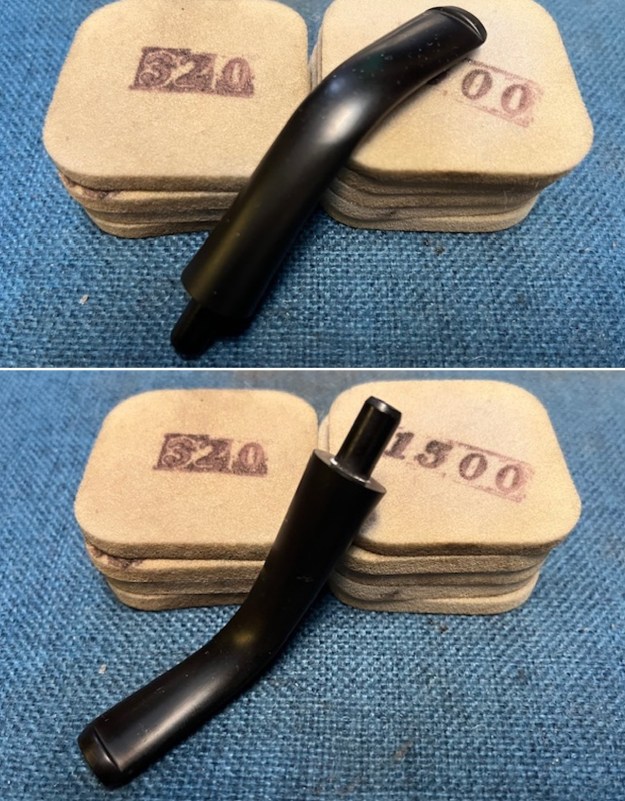
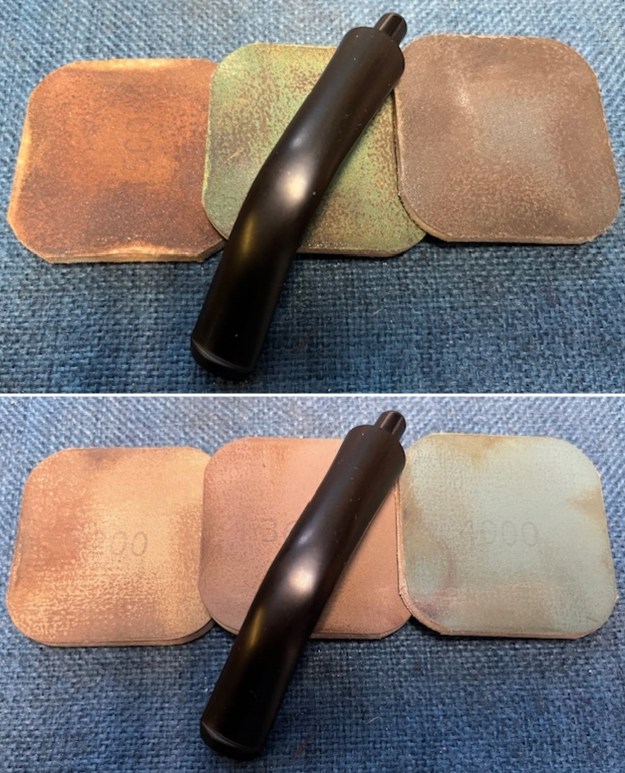
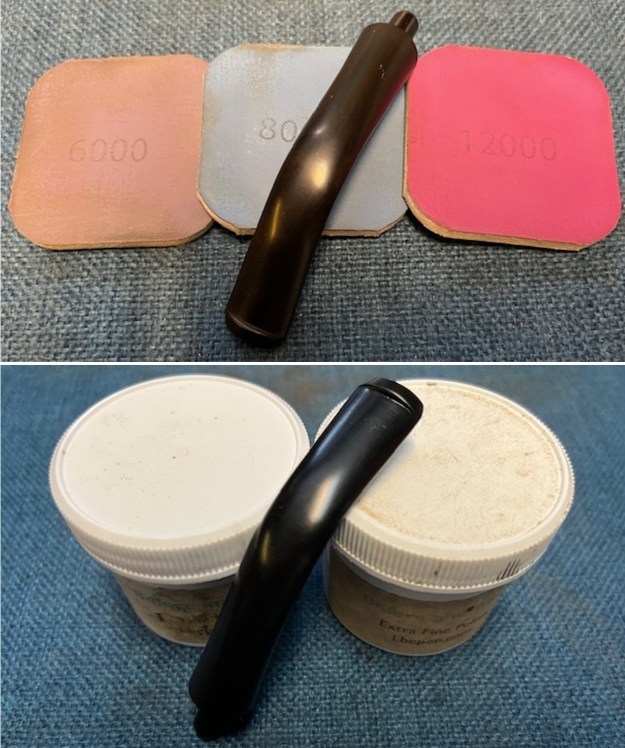
I was amazed at how clean and new the pipe looked when I took it out of the box. It is really a beautiful piece. Jeff had done a great cleanup on the pipe. He reamed the bowl with a PipNet pipe reamer and followed up with a Savinelli Fitsall pipe knife to remove the cake. He scrubbed out the mortise and the airway in the shank and the stem with alcohol, cotton swabs and pipe cleaners. He scrubbed the bowl exterior with a tooth brush and Murphy’s Oil Soap to remove the grime on the finish of the bowl and the lava from the rim top. He rinsed it under running water. One of the benefits of this scrub is that it also tends to lift some of the scratches and nicks in the surface of the briar. He dried it off with a soft cloth. He cleaned the internals and externals of the stem with alcohol, pipe cleaners and cotton swabs. He soaked the stem in Briarville’s Pipe Stem Deoxidizer and rinsed it off with warm water and cleaned out the airway in the stem with alcohol. I took photos of the pipe as I saw it when I put it on the table. I took photos of the rim top and stem to show the condition. The rim top looked pretty good but the inner edge of the bowl showed some damage and was out of round. There was also some nicks on the outer edge of the bowl on the front. The stem was vulcanite and there were light tooth marks and chatter on both sides ahead of the button.The stamping on the top left and right sides of the shank are clear and readable. It reads as noted above. I also removed the stem and took a photo of the parts of the pipe to give a sense of the size of this beauty. I started my work on this pipe by dealing with the dents in the heel of the bowl. I steamed them out as much as possible with a hot knife and a damp cloth, but it did not do too much. I then moved on to a hot iron and a damp cloth as the dents were quite extensive. I was able to raise the majority of them. Some left scars but they are smooth. I sanded the surface of the heel with a 320 grit sanding pad to work them into the briar. I moved on to the damage to the inner edge of the bowl. I used a folded piece of 220 grit sandpaper to smooth out the inner edge and give it form once again. I sanded the rim top with a 320 grit sanding pad. The cleaned up rim top and inner edge looked very good.I sanded the exterior of the bowl with 320-3500 grit sanding pads. I wiped it down with a damp cloth after each sanding pad to remove the sanding debris. The bowl began to take on a rich shine and the grain really stood out. I polished the briar with 1200-1500 micromesh sanding pads and wiping it down with damp cloth after each sanding pad. As I worked through the cycle of pads the shine developed with each change of pad. The pipe looks very good. I rubbed the bowl and shank down with Before & After Restoration Balm. I worked it into the surface of the bowl sides and shank with my fingertips to clean, enliven and protect the briar. I let the balm sit for 10 minutes, then buffed with a cotton cloth to raise the shine. The Balm did its magic and the grain stood out on the briar. I set the bowl aside and turned to the stem. I “painted” the surface of the stem with the flame of a lighter to lift the tooth marks. It worked very well. What remained I was able to sand smooth with 220 grit sandpaper. I sanded the stem with 320-3500 grit sanding pads and wiped the stem down after each pad with some Obsidian Oil on a cloth. The shine is coming back beautifully.I polished it with micromesh sanding pads – 1500-12000 grit pads. I wiped it down with Obsidian Oil after each sanding pad. This Chubby 1945-49 Rogers Rarity 285 Imported Bruyere Pot with a vulcanite saddle stem is a well grained pipe with a flowing shape that looks great . The rich browns of the darkened natural finish make the grain come alive with the polishing and waxing. I put the stem back on the bowl and carefully buffed the pipe with Blue Diamond on the buffing wheel using a light touch on the briar. I gave the bowl and the stem multiple coats of carnauba wax on the buffing wheel and followed that by buffing the entire pipe with a clean buffing pad. I hand buffed the pipe with a microfiber cloth to deepen the shine. The finished Rogers Rarity Pot really is a beauty and fits nicely in the hand and looks very good. Give the finished pipe a look in the photos below. The dimensions of the pipe are Length: 5 inches, Height: 1 ½ inches, Outside diameter of the bowl: 1 ¾ inches, Chamber diameter: 1 inch. The weight of the pipe is 1.76 ounces/50 grams. This old timer will soon be on the American Pipe Makers Section of the rebornpipes store if you would like to add it to your collection. Thanks for reading this blog and my reflections on the pipe while I worked on it. There are many more to come!

Breathing New Life into Dunhill Shell Briar RF F/T Pot


by Steve Laug

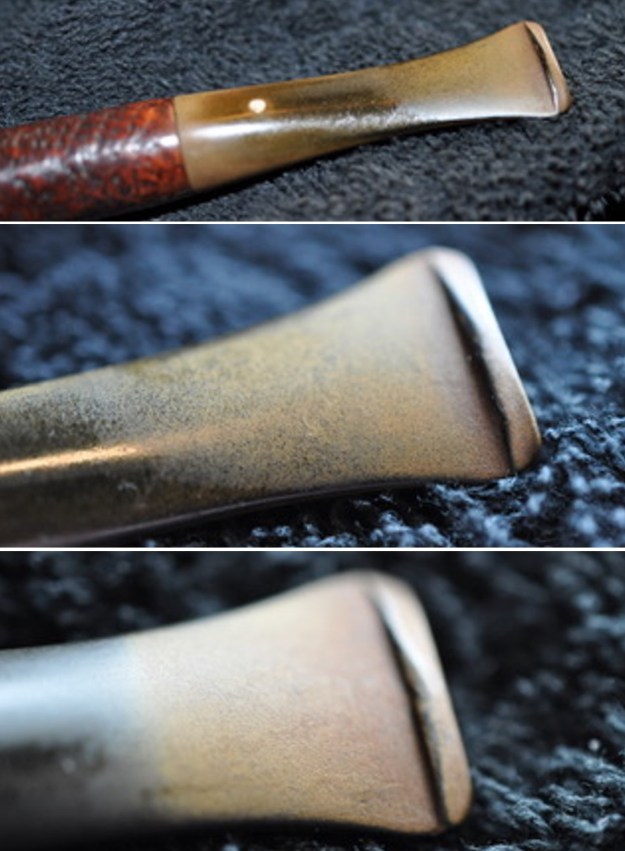
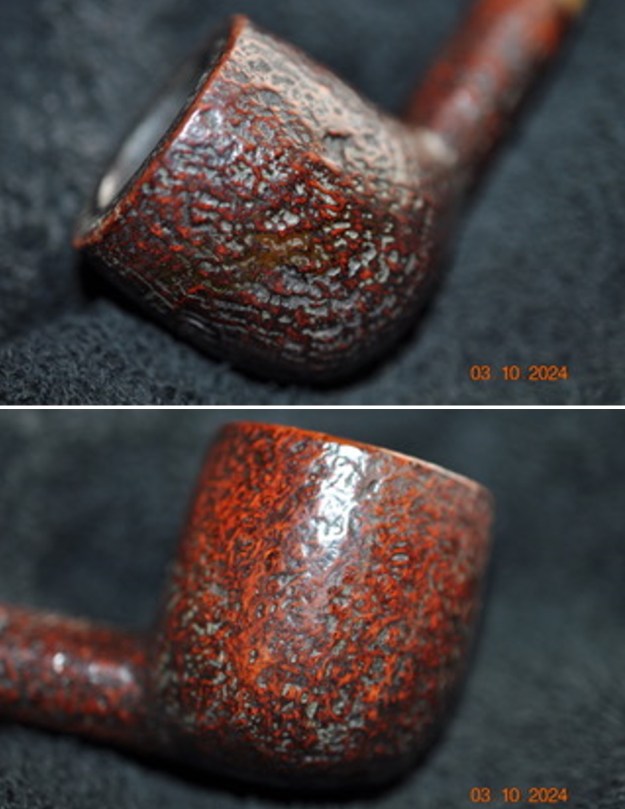
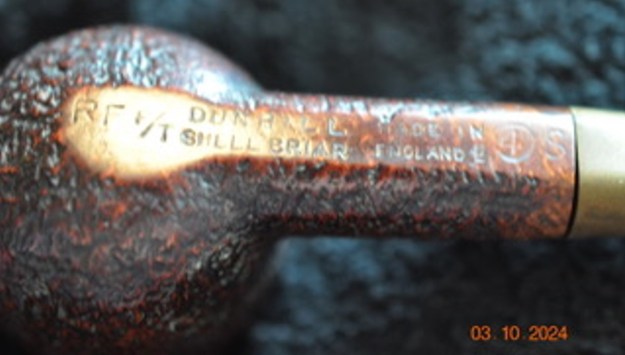
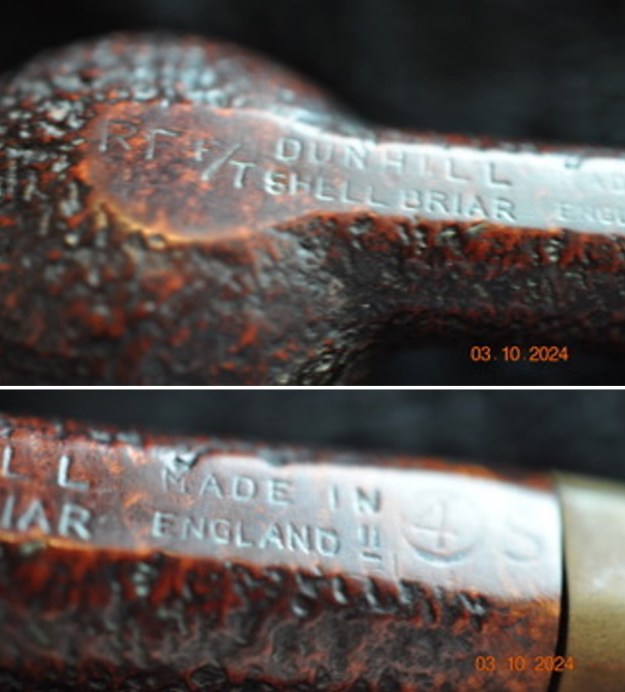
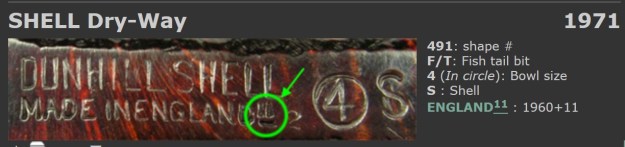
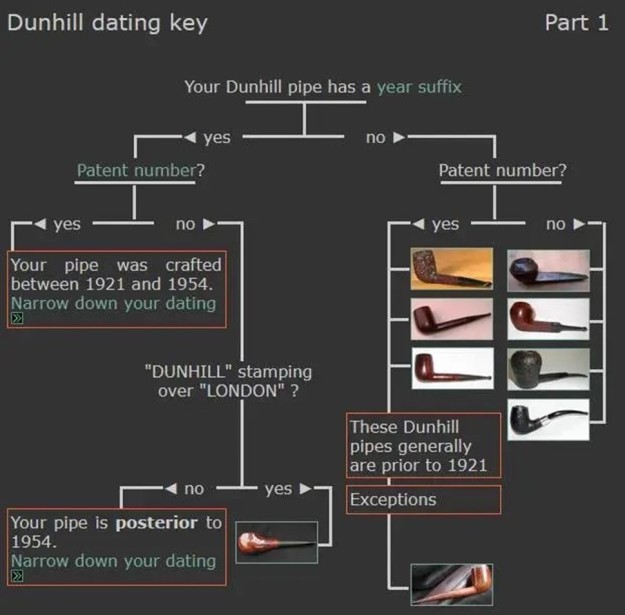
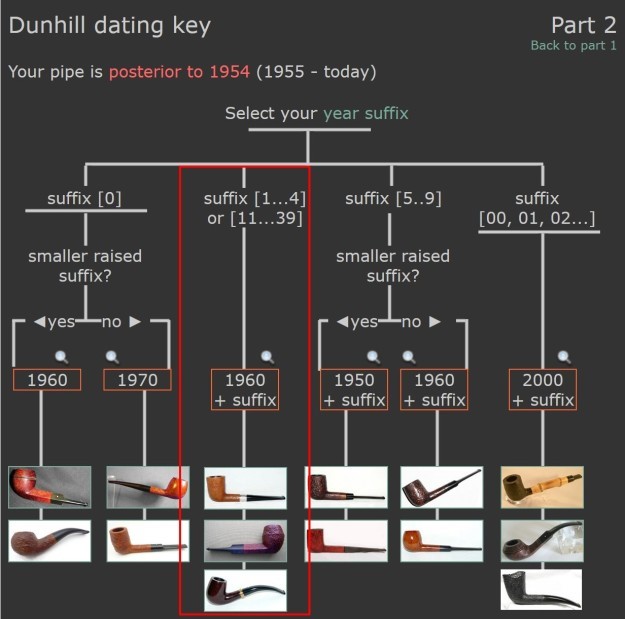
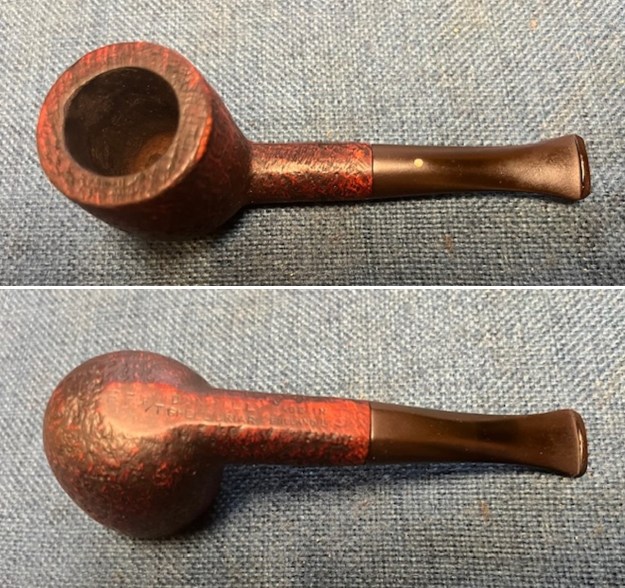
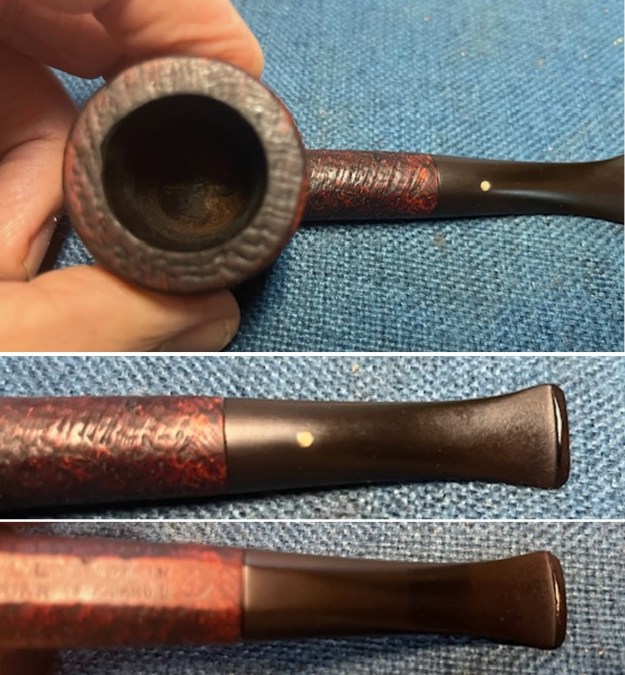
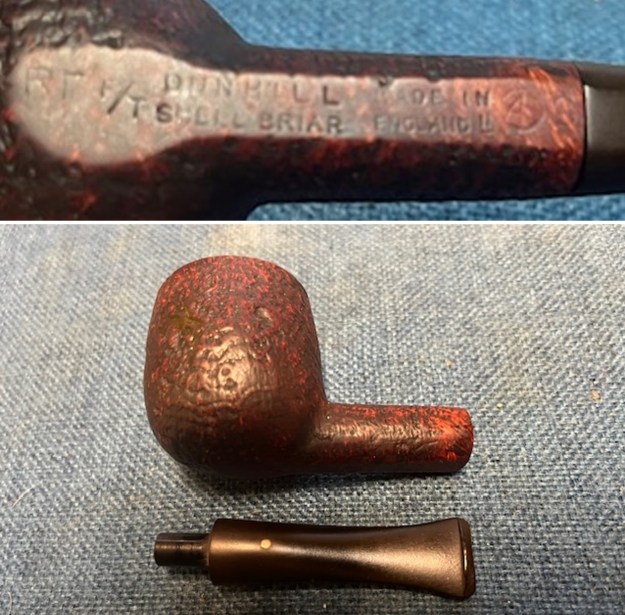
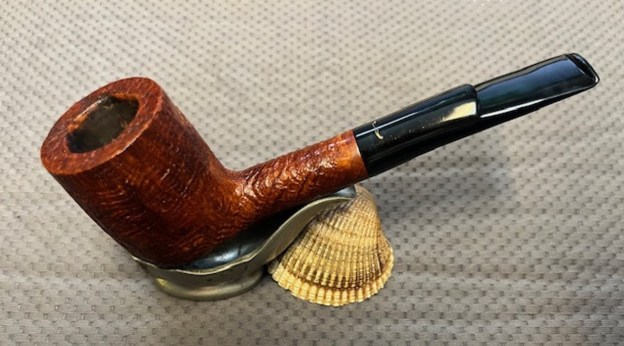
The next pipe on the table is one that we picked up from our contact in Copenhagen, Denmark on 08/09/2024. The Shell Briar Sandblast finish on this English made Pot shaped pipe and the white spot on the topside of the taper vulcanite stem are what caught our eye. It is stamped on the heel of the bowl and shank and reads RF followed by F/T followed by Dunhill [over] Shell Briar. That is followed by Made in [over] England with an underlined superscript 11 after the D. A circle 4 S is at the end of the stamping. It has a classic Shell Briar mixed brown/oxblood/black stain on the sandblast finish that is a stark contrast to the black vulcanite taper stem. It has a lot of grime and dirt in the sandblast finish on the bowl and straight shank Pot. The bowl was heavily caked around the top third of the bowl and the inner edge and the top were covered with a light lava coat in the sandblast. The vulcanite stem was heavily oxidized and had tooth marks and chatter on both sides ahead of the button. The white spot logo on the topside of the taper stem looks to be in good condition. Jeff took some photos of the pipe to show the general condition of the pipe before he started his clean up. He took some photos of the rim top and bowl from various angles to give me a clear picture of the condition of the rim top and bowl. The inside of the bowl is heavily caked around the top 1/3 of the bowl and there was lava on the inner edge and in the sandblast on the rim top. He included photos that show the top and underside of the stem. It is as described above. Jeff took some photos of the sides and heel of the bowl to show the condition of the rusticated finish on the pipe. The photos showed some great grain around the bowl and shank even with the grime in the finish. It is a great looking piece of briar. He took a photo of the stamping on the heel of the bowl and the underside of the shank. It was clear and readable as noted above. I wanted to unpack the Dunhill stamping on the shank and work to understand each element of the stamp. I generally use the Pipephil site to gather as much initial information as possible (http://pipephil.eu/logos/en/dunhill/shell-briar1.html). The stamping is interpreted as follows: The shape is defined as RF is the shape reference for a taper stem Pot. The F/T is the designation for a Fish Tail stem. The Shell Briar stamp refers to the finish. The underlined, superscript number 11 following the D of England would give the date the pipe. The circle 4S tells me that the pipe is a group 4 sized pipe and the S is for the Shell finish. The photo below shows a pipe with similar stamping to the one I am working on. It is the same date stamp so I think the one I have is also a 1971 pipe. I will verity that.Pipephil also has some helpful dating keys on the site that are basically flow charts that you can walk through to date your pipe (http://pipephil.eu/logos/en/dunhill/cledat-en1.html). I turned to Part 1 of the Dating Key and followed the chart. This pipe has 16 following the D in England. There was no patent number so that took me to the section on the chart below (column one) which instructed me that the pipe could be dated as being made “posterior to 1954”.I followed the link under “Your pipe is posterior to 1954. Narrow down your dating”. That took me to Page 2 of the dating key (http://pipephil.eu/logos/en/dunhill/cledat-en1a.html). The second column – suffix [1…4] or [11…39] led me to the next section. Since the 11 after the D in England the date of the pipe spelled as 1960 + 11 making the date 1971.I then turned to Pipedia’s section on Dunhill Shell Briar to get a bit of background on the Dunhill finishes (https://pipedia.org/wiki/Dunhill#Root_Briar). I quote:
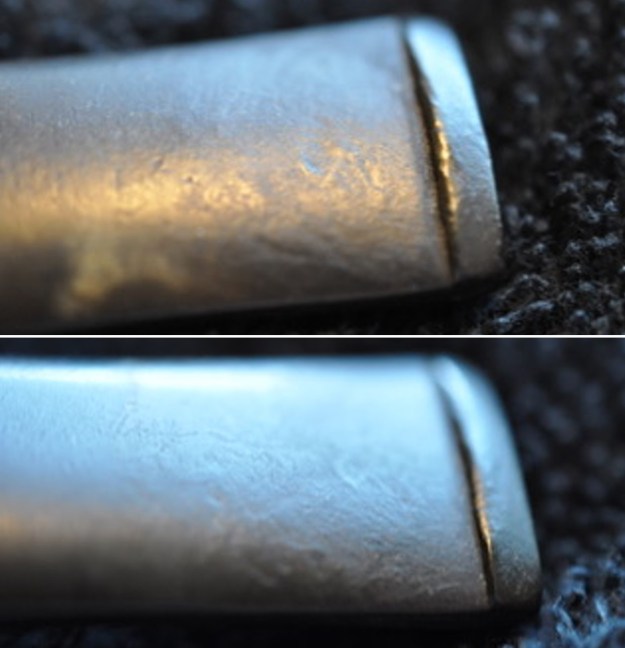
Shell

A deep craggy sandblast with a black stain finish (usually made using Algerian briar) – the color of the stain used has varied over the years. Although there is some doubt as to them being the first to sandblast pipes, Dunhill’s Shell pipes, and the sandblasting techniques developed to create them are considered one of Dunhill’s greatest and most lasting contributions to the art of pipe making.

The documented history of Dunhill’s inception of the Shell is largely limited to patent applications — there are no catalog pages or advertisements promoting blasted pipes at the time. The preliminary work on the English patent (No. 1484/17) was submitted on October 13, 1917. The patent submission was completed half a year later, on April 12, 1918, followed by the granting of the English patent on October 14, 1918. This was less than a month before the end of The Great War on November 11th.

In 1986 Dunhill released a line of premium Shell finish pipes – “RING GRAIN”. These are high-quality straight grain pipes which are sandblasted. Initially only Ring Grain, but now in two different finishes. In 1995 the “Shilling” was introduced with Cumberland finish – it is an extremely rare series. These pipes exhibit a deeper blast characteristic of that of the 1930’s – mid-1960’s (and the limited ‘deep blast’ pipes of the early 1980s) and show a fine graining pattern. These are considered the best new Dunhills by many enthusiasts today and are very rare. The finish is sometimes described as tasting like vanilla at first, with the taste becoming more normal or good as the pipe breaks in.

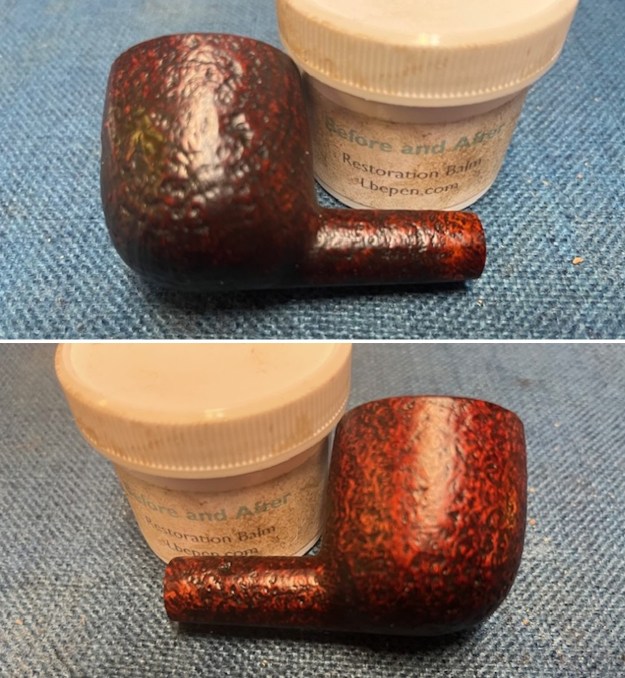
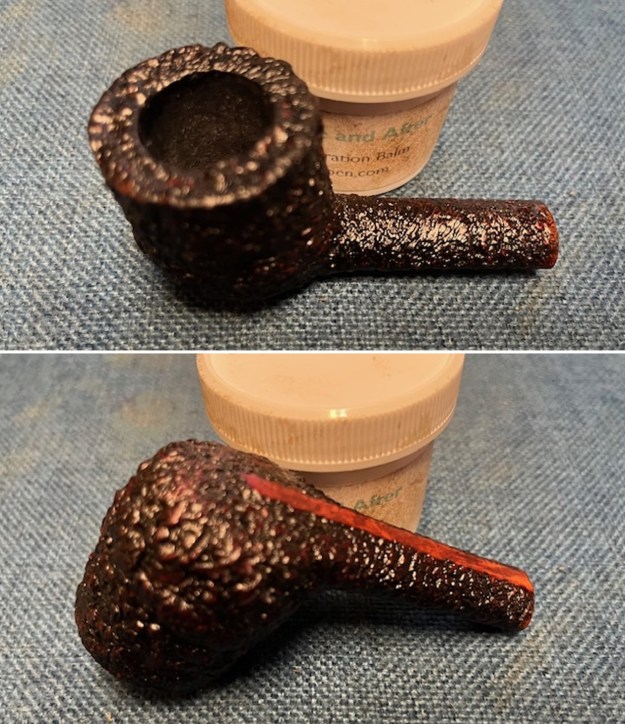
I turned to work on the pipe itself. Jeff had done an amazing cleanup of the pipe. He reamed the cake with a PipNet reamer and cleaned up that with a Savinelli Fitsall Pipe Knife. He scrubbed the internals of the bowl and stem with alcohol, cotton swabs, pipe cleaners and shank brushes. He scrubbed the externals with undiluted Murphy’s Oil Soap and rinsed the bowl off with running water. His scrubbing removed the varnish on the bowl with just a few spots remaining. He soaked the stem in Briarville’s Pipe stem Deoxidizer and once it had soaked rinsed it off with warm water to remove the residual solution. He dried it off and rubbed it down to remove any oxidation that was still on the stem. The soak did not penetrate the varnish on the stem at all but it certainly looked better. Other than the shiny spots in the finish where the varnish remained, the pipe looked very good when I received it. You can also see the sunken state of the white spot on the stem surface. I took close up photos of the bowl, rim top and stem to show how clean the pipe was. The bowl was clean and the rim top and the inner edge look good. The stem was clean and the tooth marks and chatter though not visible in the photos are still present.I took a photo of the stamping on the underside of the shank. It is very clear and readable and read as noted above. I also removed the stem from the shank and took photos of the pipe to show the look of the parts.The exterior of the bowl was beautiful. I worked some Before & After Restoration Balm into the briar with my finger tips and a shoe brush. I let it sit on the bowl for 10 minutes and then buffed it off with a paper towel and soft cloth. The product is a great addition to the restoration work. It enlivens, enriches and protects the briar while giving it a deep glow. It is a product I use on every pipe I restore. I set the bowl aside and turned to the stem. I sanded the it with 320-3500 grit sanding pads and wiped the stem down after each pad with some Obsidian Oil on a cloth. The shine is coming back beautifully.I polished it with micromesh sanding pads – dry sanding with 1500-12000 grit pads and wiping the surface down with Obsidian Oil after each sanding pad. It is really shining. I polished it further with Before & After Stem Polish – both Fine and Extra Fine. I gave it another coat of Obsidian Oil to finish this step. This 1971 Dunhill Shell Briar RF F/T Pot with a vulcanite taper stem has a beautiful, unique Dunhill Sandblast finish that highlights the grain. The Shell Briar mixed brown finish highlights some great grain around the bowl and shank. The polished vulcanite taper stem adds to the mix. I put the stem back on the bowl and buffed the pipe with Blue Diamond on the buffing wheel being careful to not buff the stamping. I gave the bowl and the stem multiple coats of carnauba wax on the buffing wheel and followed that by buffing it with a clean buffing pad. I hand buffed the pipe with a microfiber cloth to deepen the shine. The finished Dunhill Shell Briar RF F/T Pot is quite nice and feels great in the hand. Give the finished pipe a look in the photos below. The dimensions of the pipe are Length: 5 inches, Height: 1 ½ inches, Outside diameter of the bowl: 1 ½ inches, Chamber diameter: 7/8 of an inch. The weight of the pipe is 1.31ounces/37 grams. Thanks for walking through the restoration with me as I worked over another beautiful pipe. This one will be going on the rebornpipes store in the British Pipe Makers Section. Thanks for your time.

New Life for a Castello Sea Rock Briar KK32 Canadian


by Steve Laug

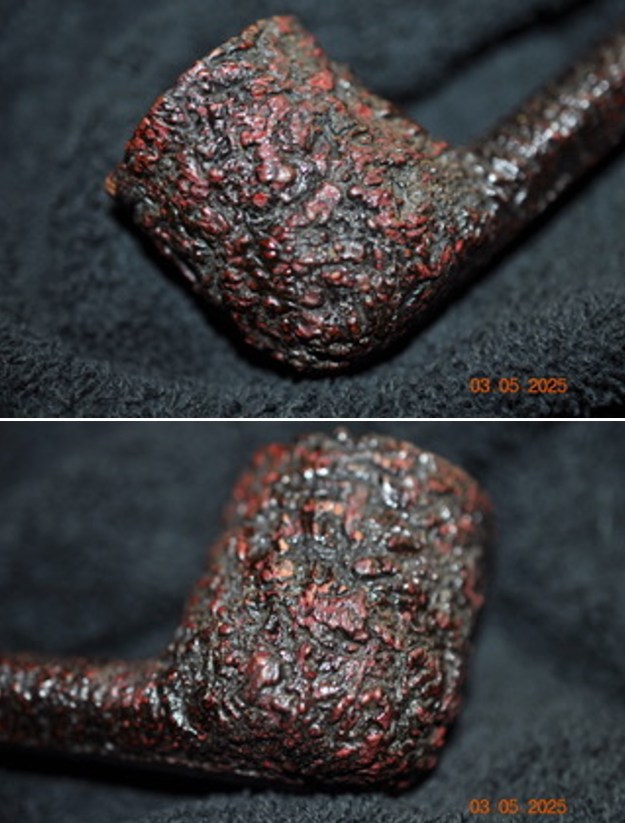
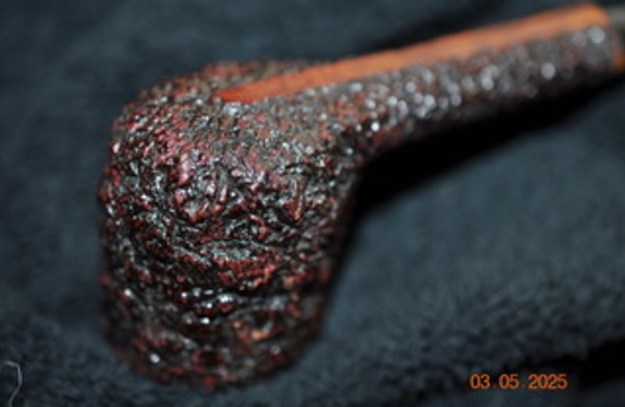
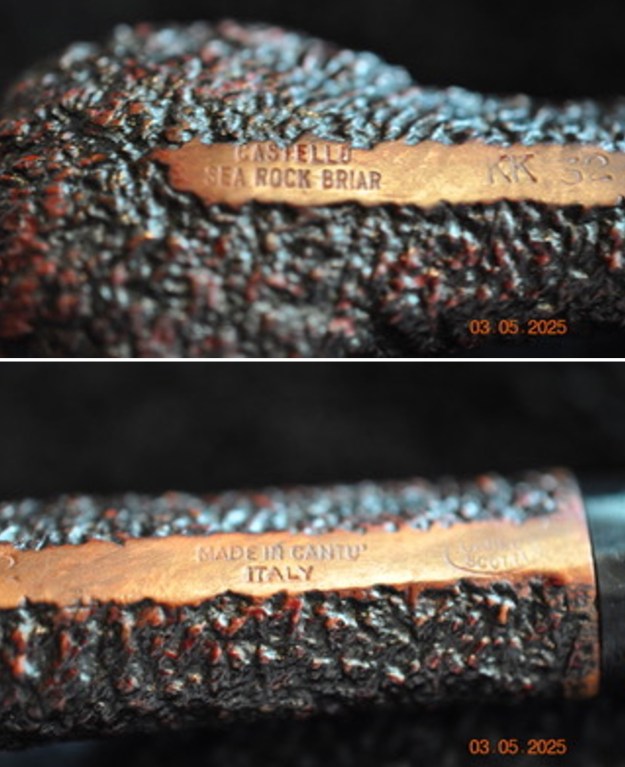
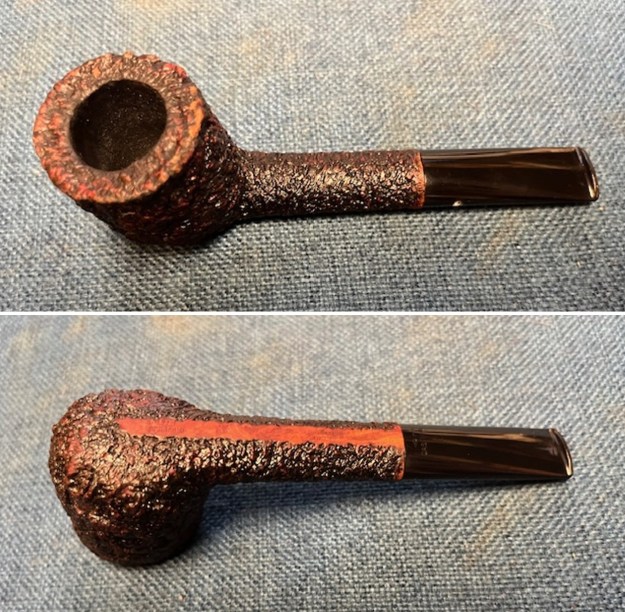
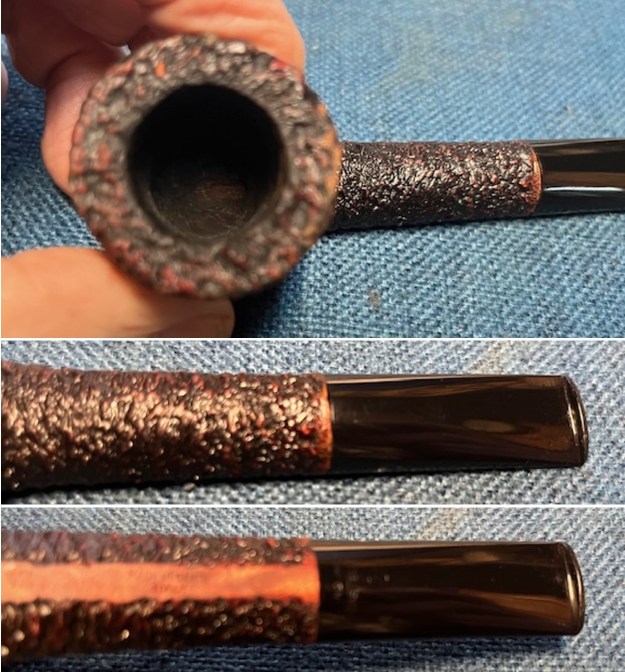
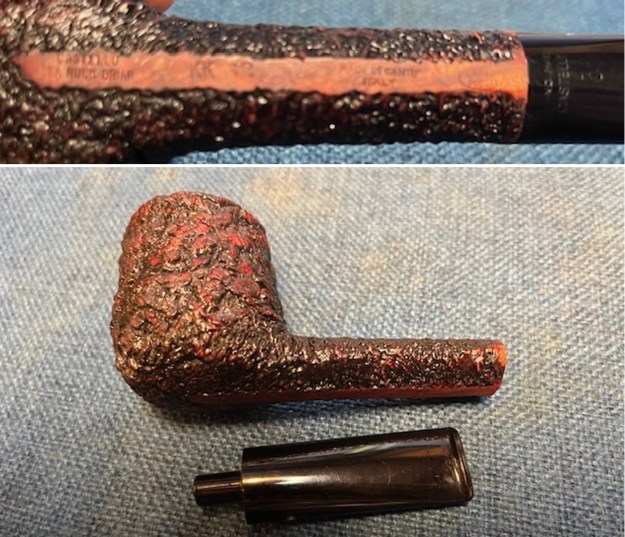
The next pipe on the table is one that we picked up in the lot from an eBay seller in Harrison Township, Michigan, USA on 08/22/2024. The Sea Rock Rusticated finish on this Italian made Canadian shaped pipe and the faux diamond inset on the left side of the oval taper stem are what caught our eye. It is stamped on the heel of the bowl and reads Castello [over] Sea Rock Briar. That is followed by KK 32 and to the right it reads Made in Cantu [over] Italy. That is followed Carlo Sciotti in an oval next to the stem/shank junction. It has a classic Reddish Black stain on the rusticated finish that is a stark contrast to the black acrylic taper stem. It has a deep rusticated finish on a straight oval, long shank Pot. The bowl was heavily caked and the inner edge and the top were covered with a thick lava coat in the rustication. The acrylic stem was dirty and had tooth marks and chatter on both sides ahead of the button. The faux diamond logo on the left side of the taper stem looks to be in good condition. Jeff took some photos of the pipe to show the general condition of the pipe before he started his clean up. He took some photos of the rim top and bowl from various angles to give me a clear picture of the condition of the rim top and bowl. The inside of the bowl is heavily caked with lava on the inner edge and in the sandblast on the rim top. He included photos that show the top and underside of the stem. It is as described above. Jeff took some photos of the sides and heel of the bowl to show the condition of the rusticated finish on the pipe. The photos showed some great grain around the bowl and shank even with the grime in the finish. It is a great looking piece of briar. He took a photo of the stamping on the heel of the bowl and the underside of the shank. It was clear and readable as noted above. As usual I cannot seem to retain the details on Castello pipes in my head for long for some reason. The stamping on this one – Castello and the Carlo Scotti stamp left me with some questions that I need to answer before I began to work on the pipe. I turned first to the Pipephil site (http://www.pipephil.eu/logos/en/logo-castello.html) because of the general quick summary of information I get there. I quote:

Castello PIPA CASTELLO di Carlo Scotti & C. was founded in 1947 by Carlo Scotti († 1988). Franco Coppo (AKA “Kino”) who married Carlo Scotti’s daughter Savina, manages (2012) the corporate since 1985.

The site also gave a good summary of the grading and sizes of the pipes. I quote that in full.

Sizes (ascending):

1K to 4K, G (Giant) and GG (Extra large)

Rusticated grading: SEA ROCK, OLD SEA ROCK, NATURAL VERGIN,

Sandblasted grading: ANTIQUARI, OLD ANTIQUARI

Smooth grading (ascending): TRADEMARK, CASTELLO, COLLECTION

Other stampings: Great Line (Non-standard or freestyle) Fiammata (Straight grain)

Production (2012): ~4000 pipes / year

I also found a note on the page that the Rhinestone logo was originally on pipes for the US market. It is occasionally used now.

I turned then to Pipedia for more information on the brand (https://pipedia.org/wiki/Castello). The majority of the information was what was already quoted above in abbreviated form. However there was a link to an article by Bob Hamlin that gave some interesting bits of information that I found helpful (http://www.pipes.org/BURST/FORMATTED/196.016.html). I quote in part from that article.

SEA ROCK [Carved Black or dark brown]:  This is the lowest grade of the Castello line and is the most common in the USA.  Sea Rocks are produced by taking a smooth bowl that has not been “final finished” and surface carving the finish with tools. This “carved” finish is then evened out using a steel wire brush, stained and then waxed. The Natural Vergin carved finish is left unstained and unwaxed as a rule, although we have seen waxed and partially waxed “Vergins”.

All carved Castello pipes are graded by the number of K’s that are stamped on each piece and are K-graded by SIZE.  1K is the smallest and fairly rare, 2K is small to medium, with 3K or 4K being the most common and ranges from medium to medium large. Large pieces are stamped “G” for giant and extra-large pieces are stamped “GG” for double giant.  In addition to the number of K’s on a carved Sea Rock piece the shape number is almost always added. As a rule a Sea Rock Castello is stained Black, although recently there have been quite a few coming in stained deep brown and still stamped “Sea Rock”.  American Logo’d Sea Rocks are all priced the same to the consumer, although most are 2 or 3 K’ed models. G/GG models are charged at a higher price on American pieces and are basically the same as their European counterparts.

The Castello Sea Rock Briar KK 32 I was working on was definitely one made for the American Market with the Rhinestone in the stem. It had the dark finish or black stain.

Pipedia also gave a link to Mike’s Briar Blues site for help in dating and determining shapes (http://www.briarblues.com/castello.htm).

Shape numbers. Shape numbers are all 2 digits. A 2 in front indicates a “fancy” interpretation, a 3 in front means that the carving is somehow unique. I don’t know when the change was made, but currently, a π symbol is used instead of the 3xx. I’ve only seen this on Sea Rocks, but that doesn’t mean anything…

Now I had more information to work with. The Castello Sea Rock Briar in my hands was 2K graded. That told me that it is a mid-sized pipe. The number 32 makes it a unique and a Canadian shape.

I turned to work on the pipe itself. Jeff had done an amazing cleanup of the pipe. He reamed the cake with a PipNet reamer and cleaned up that with a Savinelli Fitsall Pipe Knife. He scrubbed the internals of the bowl and stem with alcohol, cotton swabs, pipe cleaners and shank brushes. He scrubbed the externals with undiluted Murphy’s Oil Soap and rinsed the bowl off with running water. His scrubbing removed the varnish on the bowl with just a few spots remaining. He soaked the stem in Briarville’s Pipe stem Deoxidizer and once it had soaked rinsed it off with warm water to remove the residual solution. He dried it off and rubbed it down to remove any oxidation that was still on the stem. The soak did not penetrate the varnish on the stem at all but it certainly looked better. Other than the shiny spots in the finish where the varnish remained, the pipe looked very good when I received it.
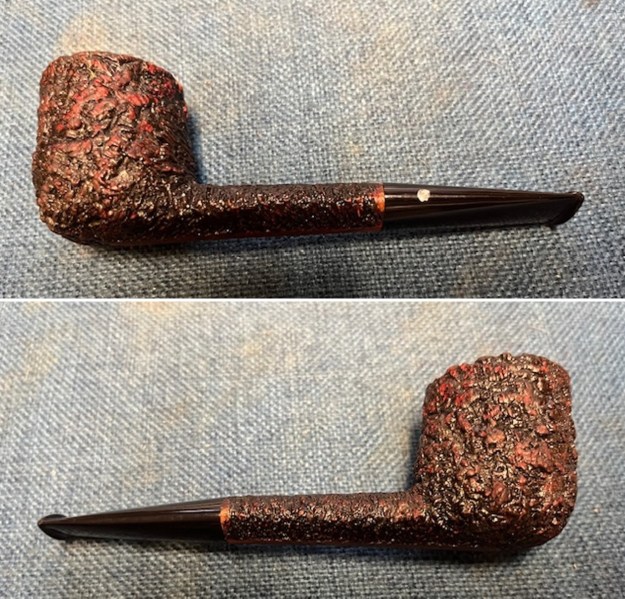
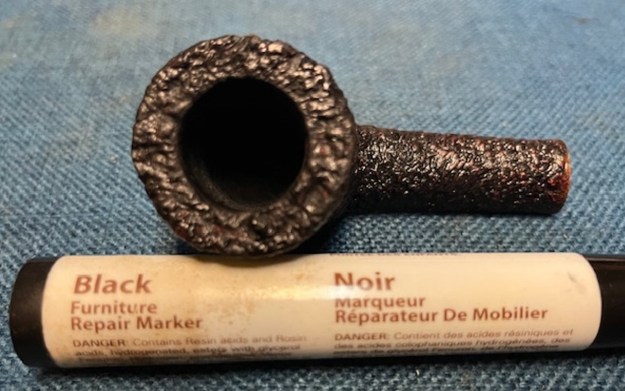
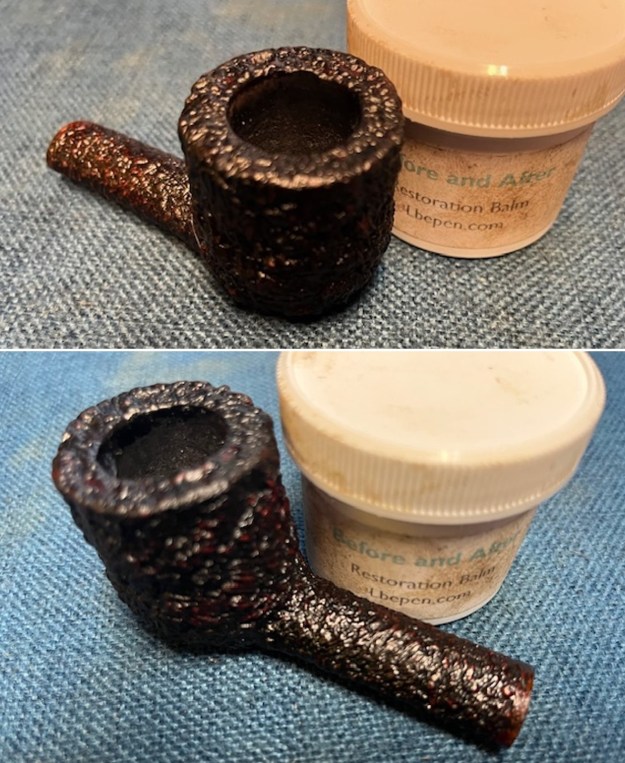
I took close up photos of the bowl, rim top and stem to show how clean the pipe was. The bowl was clean and the rim top and the inner edge look beautiful. I would need to touch up the stain but it was very clean. The stem was clean and the chatter is light and hardly visible.I took a photo of the stamping on the underside of the shank. It is very clear and readable and read as noted above. I also removed the stem from the shank and took photos of the pipe to show the look of the parts.I touched up the rim top with a black stain pen to match the rest of the bowl sides and top. Once it is polished and buffed the match will be perfect.The exterior of the bowl was beautiful. I worked some Before & After Restoration Balm into the briar with my finger tips and a shoe brush. I let it sit on the bowl for 10 minutes and then buffed it off with a paper towel and soft cloth. The product is a great addition to the restoration work. It enlivens, enriches and protects the briar while giving it a deep glow. It is a product I use on every pipe I restore. I set the bowl aside and turned to the stem. I sanded the it with 320-3500 grit sanding pads and wiped the stem down after each pad with some Obsidian Oil on a cloth. The shine is coming back beautifully.I polished it with micromesh sanding pads – dry sanding with 1500-12000 grit pads and wiping the surface down with Obsidian Oil after each sanding pad. It is really shining. I polished it further with Before & After Stem Polish – both Fine and Extra Fine. I gave it another coat of Obsidian Oil to finish this step. This Castello Sea Rock Briar KK32 Canadian with an acrylic taper stem is a great looking pipe now that it has been restored. The beautifully deep rusticated finish really works well with the shape and the polished finish is stunning. I put the stem back on the bowl and carefully buffed the bowl and the stem with Blue Diamond on the buffing wheel. I gave the bowl multiple coats of Conservator’s Wax and the stem multiple coats of carnauba wax on the buffing wheel and followed that by buffing the entire pipe with a clean buffing pad. I hand buffed the pipe with a microfiber cloth to deepen the shine. The finished Castello Sea Rock Briar KK32 Canadian fits nicely in the hand and feels great. Give the finished pipe a look in the photos below. The dimensions of the pipe are Length: 5 ¼ inches, Height: 1 ¾ inches, Outside diameter of the bowl: 1 ½ inches, Chamber diameter: ¾ of an inch. The weight of the pipe is 39 grams /1.38 ounces. I will be putting it on the rebornpipes store in the Italian Pipe Makers Section shortly. Let me know via email or a message if you are interested in adding this pipe to your collection.

As always, I encourage your questions and comments as you read the blog. Thanks to each of you who are reading this blog. Remember we are not pipe owners; we are pipe men and women who hold our pipes in trust until they pass on into the trust of those who follow us.

Restoring a beautiful Sasieni 4 Dot Ruff Root Light 5 Diamond Shank Bent Billiard


by Steve Laug

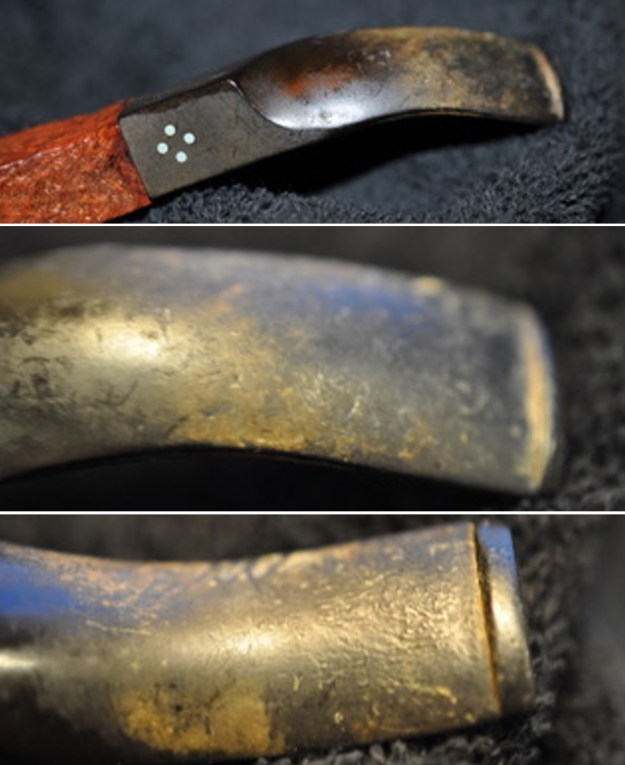
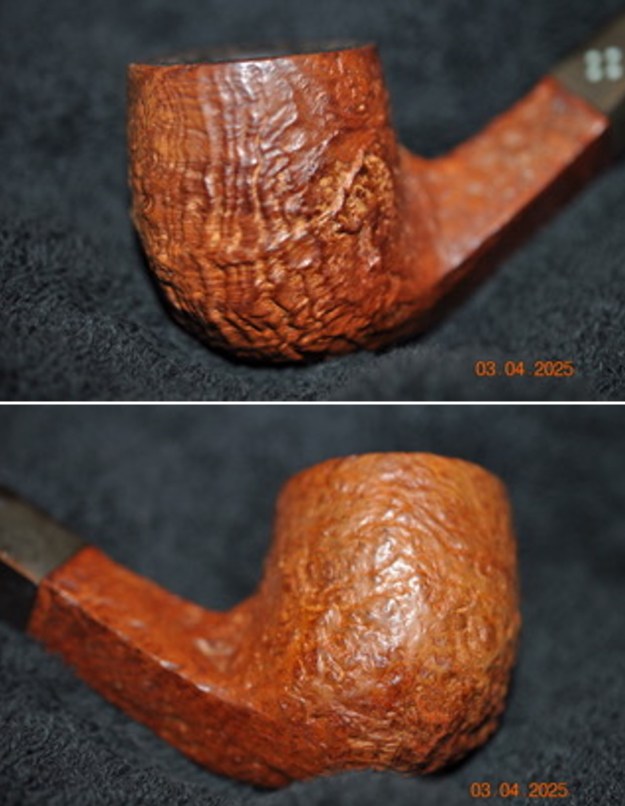
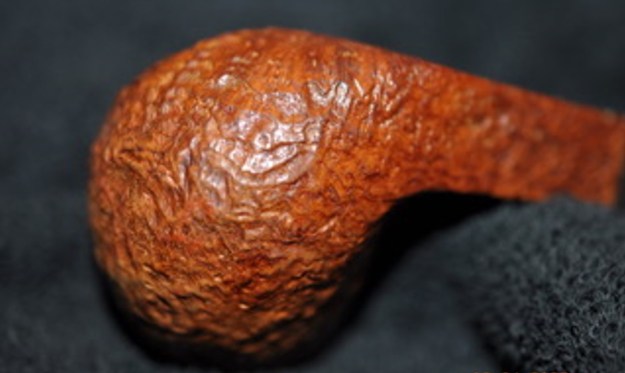
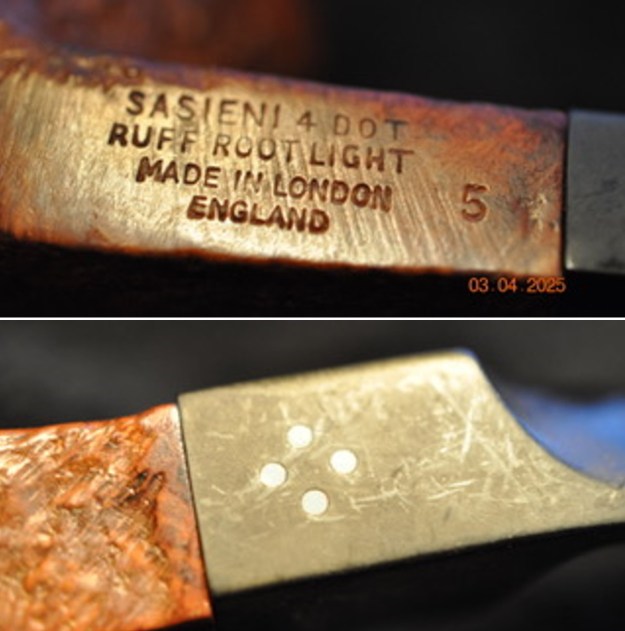
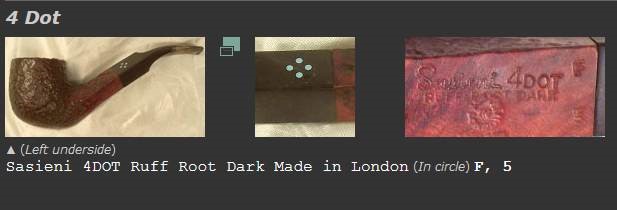
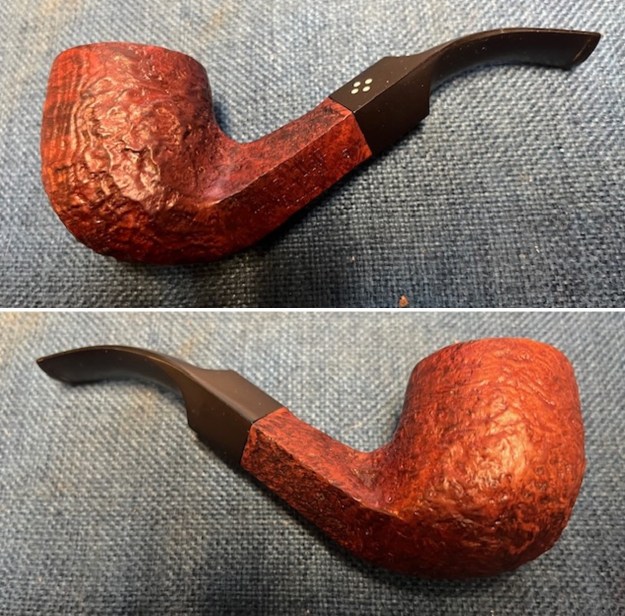
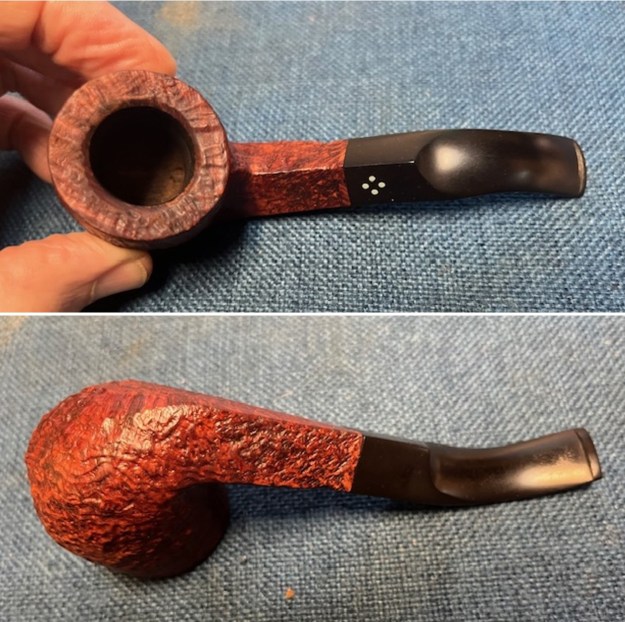
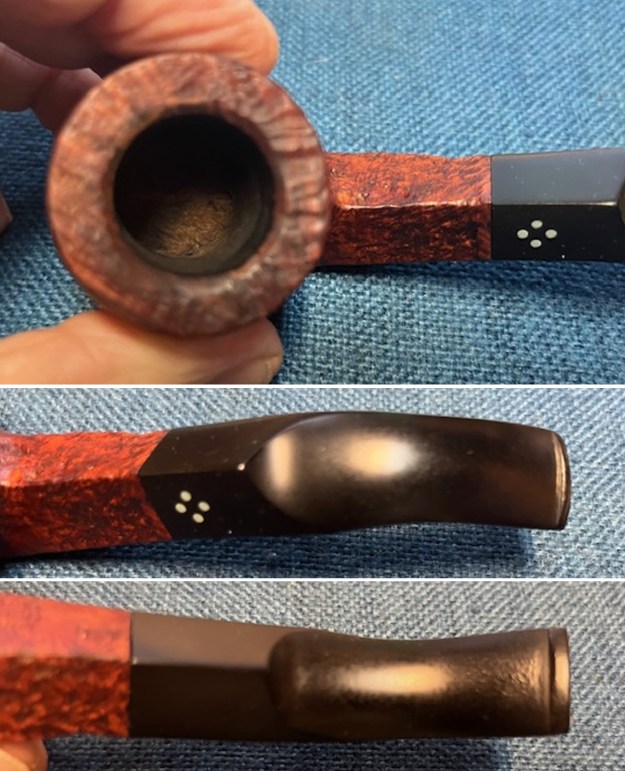
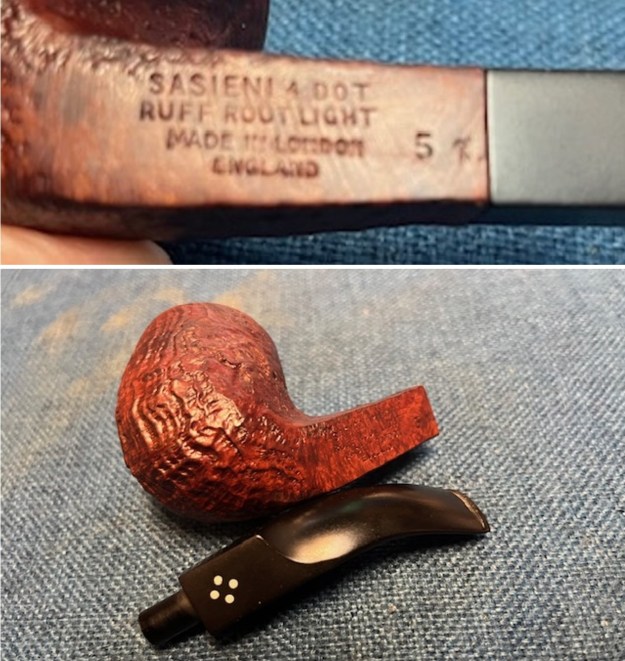
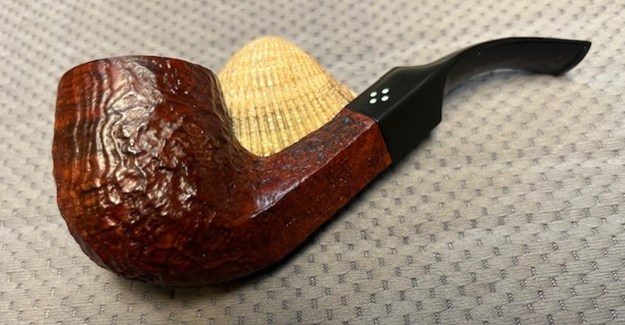
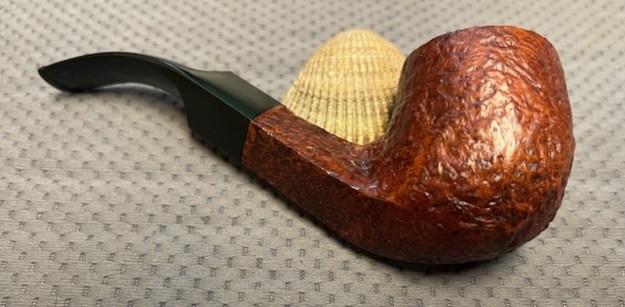
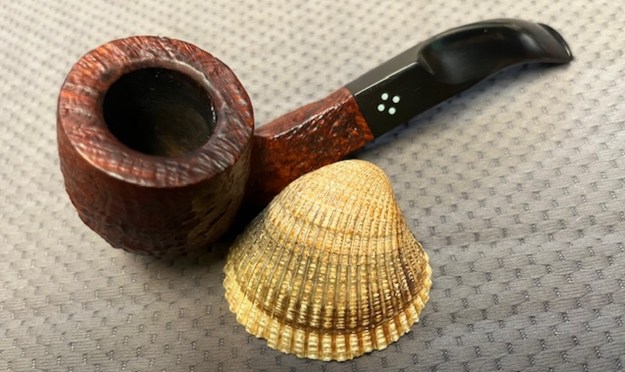
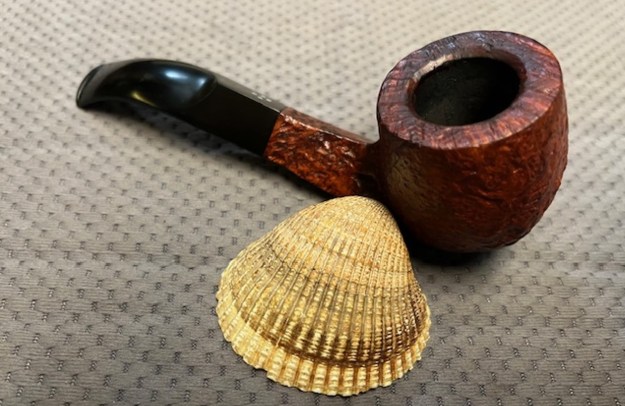
The next pipe on the table is one that we picked up in the lot from an eBay seller in Harrison Township, Michigan, USA on 08/22/2024. The sandblast finish on this English made pipe and the four blue dots on the side of the saddle stem are what caught our eye. It is stamped on the left underside of the diamond shank and reads Sasieni 4 Dot [over] Ruff Root Light [over] Made in London [over] England. That is followed by the shape number 5 or possibly the size number near the stem/shank joint. It has a classic Reddish Brown stain on the sandblast finish that is a stark contrast to the black vulcanite saddle stem. It has a deep sandblast finish on a bent Billiard. The bowl was heavily caked and the inner edge and the top were covered with a thick lava coat in the blast. The stem was oxidized, calcified and had tooth marks and chatter on both sides ahead of the button. The Sasieni 4 Dot four blue dots logo on the left side of the saddle stem looks to be in good condition. Jeff took some photos of the pipe to show the general condition of the pipe before he started his clean up. He took some photos of the rim top and bowl from various angles to give me a clear picture of the condition of the rim top and bowl. The inside of the bowl is heavily caked with lava on the inner edge and in the sandblast on the rim top. He included photos that show the top and underside of the stem. It is as described above. Jeff took some photos of the sides and heel of the bowl to show the condition of the sandblast finish on the pipe. The photos showed some great grain around the bowl and shank even with the grime in the finish. It is a great looking piece of briar. He took a photo of the stamping on the left underside of the diamond shank. It was clear and readable as noted above. He also photographed the 4 dot pattern on the side of the stem.I decided to do some work on the stamping of this pipe to get an idea of the time period it was carved. I turned first to Pipephil’s site to see what I could learn (http://pipephil.eu/logos/en/logo-sasieni.html). I found a pipe that was shaped and stamped similarly to the one I am working on. It is stamped on the underside of the shank and reads like the first two lines on the one in the screen capture photo below. Mine is stamped the same way Sasieni in upper case letters without the flourish. It is followed by 4 DOT [over] Ruff Root Light [over] 5. I included the side bar notes below the picture. From that I knew that the pipe was made during Post-transition Period 1986-today.Post transition, 1986 – today, “4 dot”. Ruff Root Dark: Name for a sandblasted finish. Notice the 4DOT stamping replacing the FOUR DOT from 1986.

I then turned to Pipedia for more detailed information (https://pipedia.org/wiki/Sasieni). I quote a section of that article below. It refers to the Patent Number that is on the pipe I have on the table. The underlined portion below is particular pertinent to this pipe.

To begin with, there are three main elements to dating the Sasieni pipe, the patent number, the style of the name “Sasieni” as it appears on the shank, and the Dots themselves. Naturally, there are exceptions to these rules (this hobby would be boring without them), but for the most part these guidelines apply better than 95% of the time. All Sasieni One, Four, and Eight Dot pipes made before W.W.II and destined for the U. S. market carried a patent number on the shank which usually started with the numbers “15″, with 150221/20 and 1513428 being representative of the group. Also, the name “Sasieni” was stamped on the shank in a very florid manner, with the tail of the last “i” sweeping underneath the name forming a shape which has been compared to a fish by more than one collector. This script was discontinued by Alfred almost immediately after he took over the company, so this alone tells you your pipe is pre W.W.II. Underneath in block lettering are the words “London Made”, with the patent number making the third line…

…The nomenclature changed again in 1986, with the sale of the company to the Post-Transition firm. The three line nomenclature was changed to two lines, with the first reading “Sasieni 4 Dot” and the second identifying the finish, e.g. Natural, Walnut, or Ruff Root. Note how 4 Dot is spelled, using an Arabic numeral 4, as opposed to spelling out the word “four”. This is the easiest way to spot a Post-Transition Sasieni, as the new company has used both script and block lettering to spell the word “Sasieni” on the shank.

The pipe I have is one that does not have a flourished “i” as that was discontinued by Alfred so that confirms that the pipe was made Post-transition, 1986 forward. The stamping shows the Sasieni name and the 4 Dot stamp on one line. Underneath it bears the finish Ruff Root Light stamp. With all that information I knew that my pipe was from the period after the transition (Post Transition) so it was a newer one.

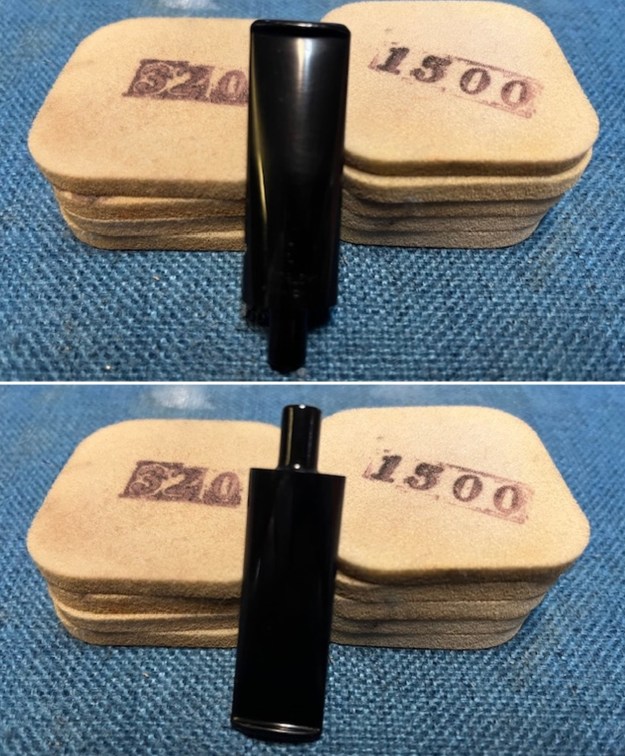
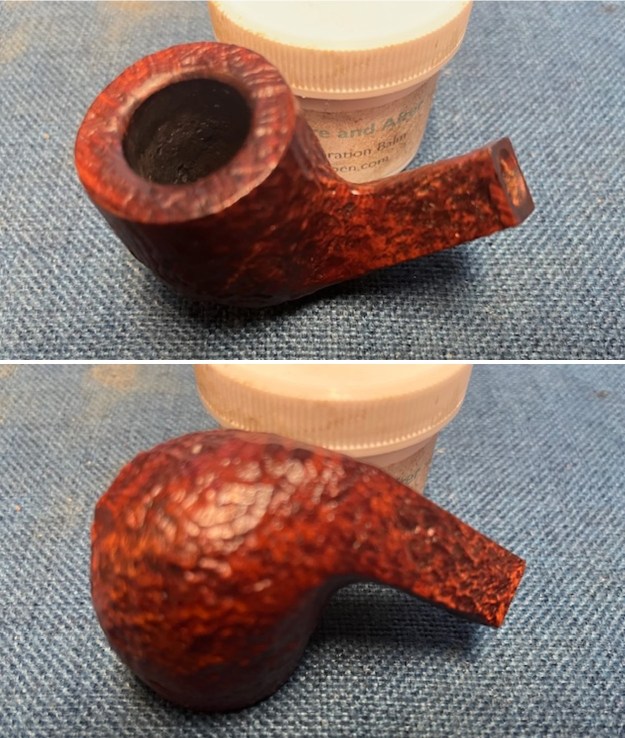
Since Jeff always follows the same pattern of work in his cleanup we do not include photos but rather just a simple summary. Jeff reamed the bowl with a PipNet pipe reamer and followed up with a Savinelli Fitsall pipe knife to remove the cake. He scrubbed out the mortise and the airway in the shank and the stem with alcohol, cotton swabs and pipe cleaners. He scrubbed the exterior of the bowl, rim, shank and stem with a tooth brush and Murphy’s Oil Soap to remove the oils and tars on the rim and the grime on the finish of the bowl. He rinsed it under running water. He dried it off with a soft cloth. He was able to remove the lava build up on the rim top and you could see the damages to the top and edges of the rim. I think this pipe may well been before we worked with Mark Hoover’s Before & After Deoxidizer so he cleaned the internals and externals. The stem was clean but lightly oxidized. I took photos of what the pipe looked like when I brought to my worktable. I took close up photos of the bowl, rim top and stem to show how clean the pipe was. The bowl was clean and the rim top and the inner edge look beautiful. The stem was clean and the tooth marks on the topside are visible. The chatter is light and hardly visible.I took a photo of the stamping on the underside of the left diamond shank. It is very clear and readable and read as noted above. I also removed the stem from the shank and took photos of the pipe to show the look of the parts.The exterior of the bowl looked amazing. I worked some Before & After Restoration Balm into the briar with my finger tips and a shoe brush. I let it sit on the bowl for 10 minutes and then buffed it off with a paper towel and soft cloth. The product is a great addition to the restoration work. It enlivens, enriches and protects the briar while giving it a deep glow. It is a product I use on every pipe I restore. I set the bowl aside and turned to the stem. I sanded the it with 320-3500 grit sanding pads and wiped the stem down after each pad with some Obsidian Oil on a cloth. The shine is coming back beautifully.I polished it with micromesh sanding pads – dry sanding with 1500-12000 grit pads and wiping the surface down with Obsidian Oil after each sanding pad. It is really shining. I polished it further with Before & After Stem Polish – both Fine and Extra Fine. I gave it another coat of Obsidian Oil to finish this step. This Sasieni 4 Dot Ruff Root Light 5 Diamond Shank Bent Billiard with a vulcanite saddle stem is a great looking pipe now that it has been restored. The beautifully grained sandblast finish really works well with the shape and the polished finish is stunning. I put the stem back on the bowl and carefully buffed the bowl and the stem with Blue Diamond on the buffing wheel. I gave the bowl and the stem multiple coats of carnauba wax on the buffing wheel and followed that by buffing the entire pipe with a clean buffing pad. I hand buffed the pipe with a microfiber cloth to deepen the shine. I wiped down the Sterling Silver band with a jeweller’s cloth to protect and polish it. The finished Sasieni 4 Dot Ruff Root Bent Billiard 5 fits nicely in the hand and feels great. Give the finished pipe a look in the photos below. The dimensions of the pipe are Length: 5 ½ inches, Height: 2 inches, Outside diameter of the bowl: 1 ½ inches, Chamber diameter: 7/8 of an inch. The weight of the pipe is 50 grams /1.76 ounces. I will be putting it on the rebornpipes store in the British Pipe Makers Section shortly. Let me know via email or a message if you are interested in adding this pipe to your collection.

As always, I encourage your questions and comments as you read the blog. Thanks to each of you who are reading this blog. Remember we are not pipe owners; we are pipe men and women who hold our pipes in trust until they pass on into the trust of those who follow us.

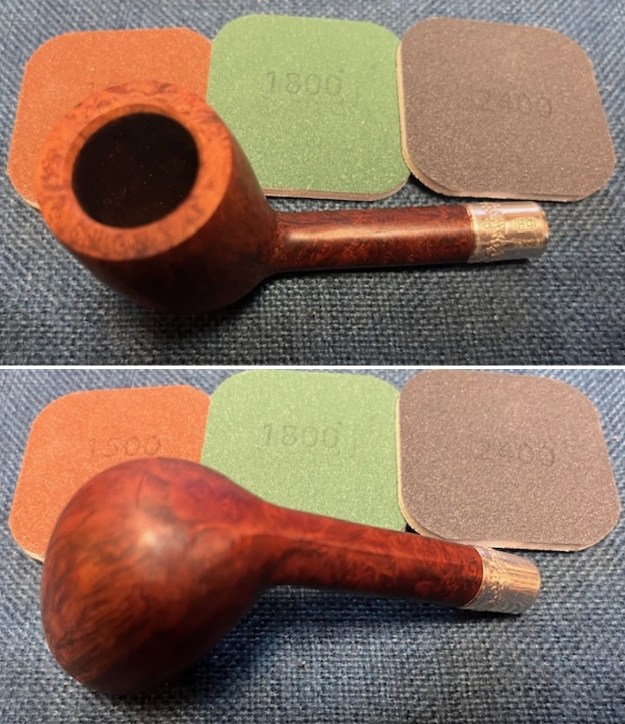
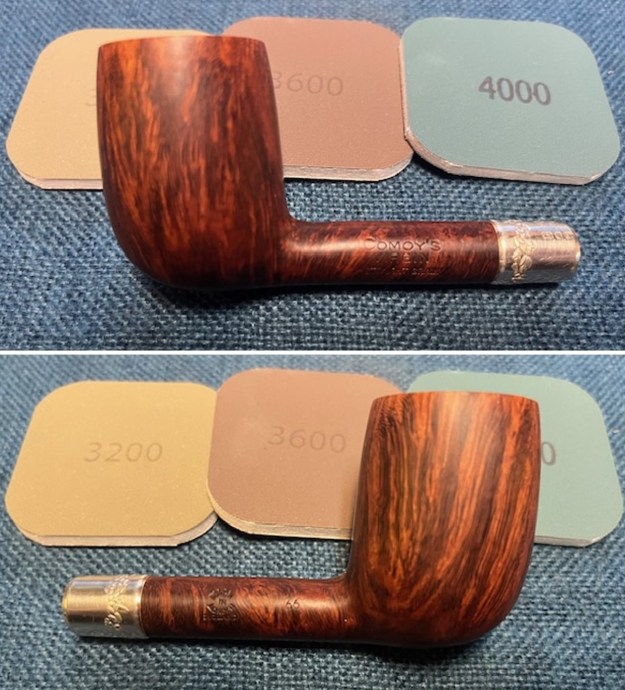
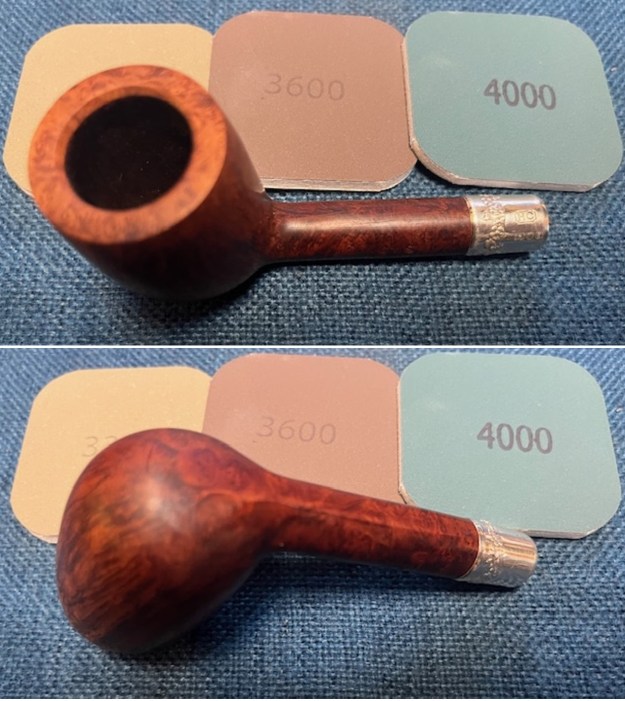
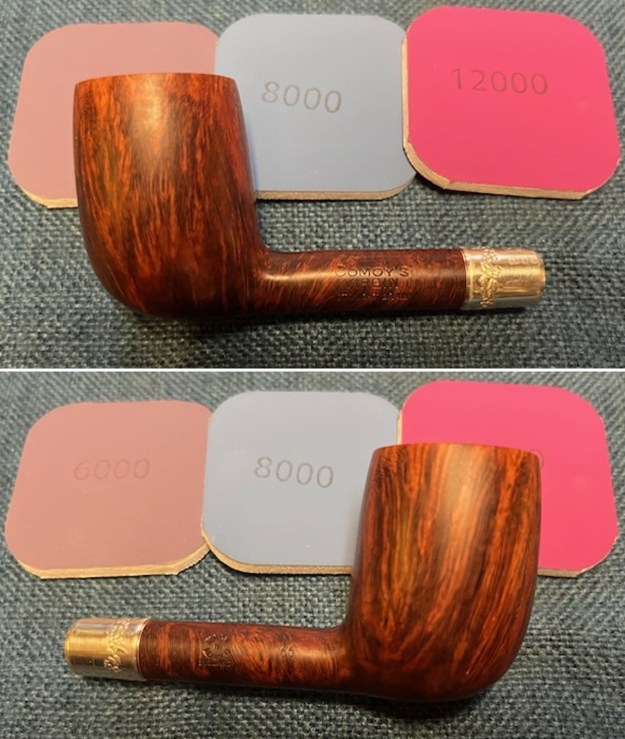
Restoring a 1979 Comoy’s Virgin Straight Grain 66 Large Liverpool with a silver band


by Steve Laug

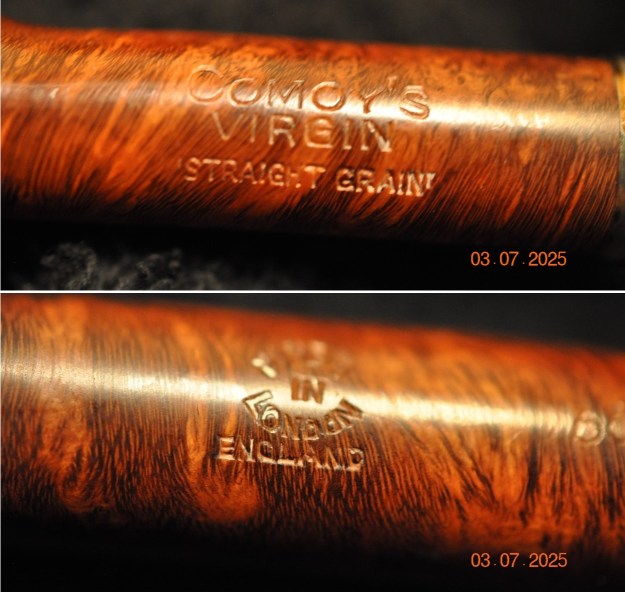
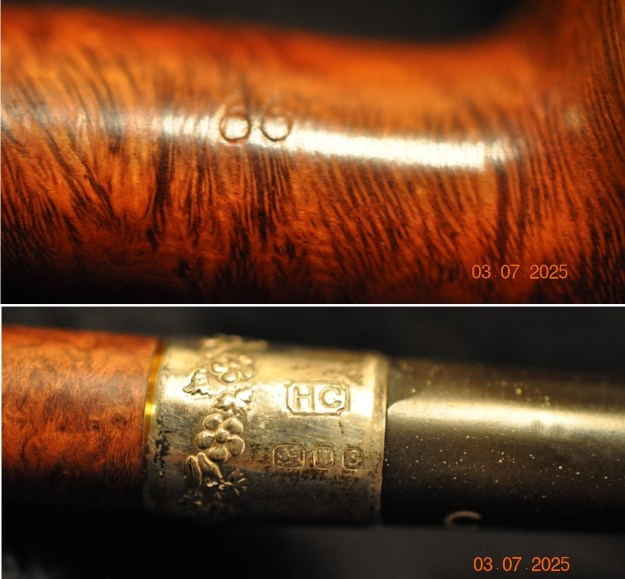
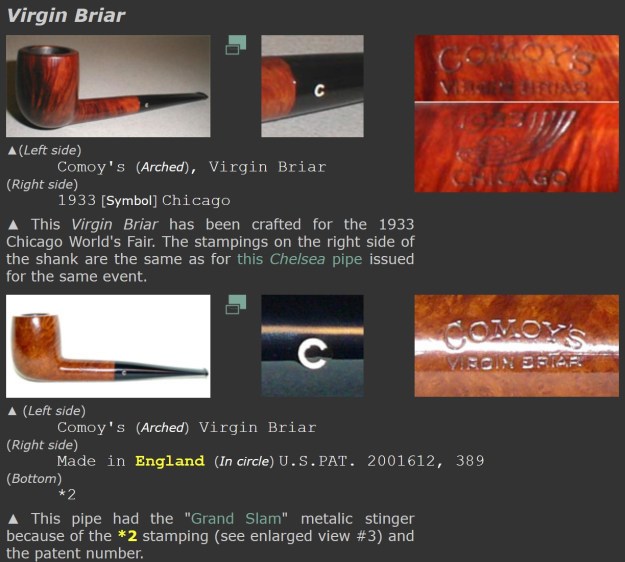
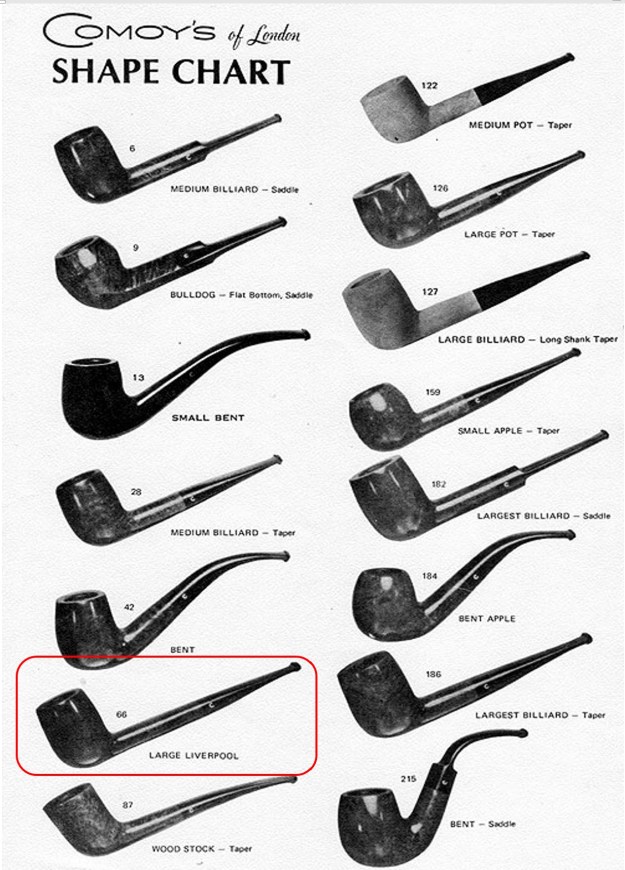
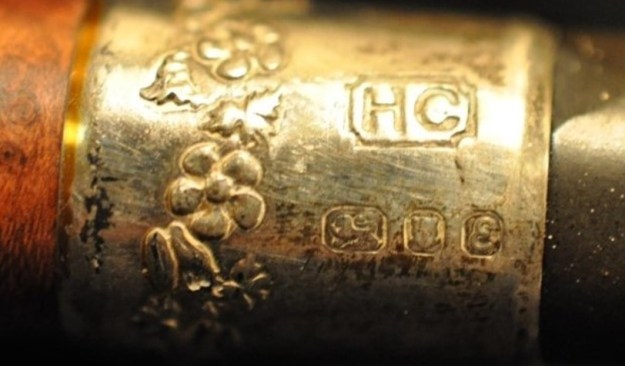
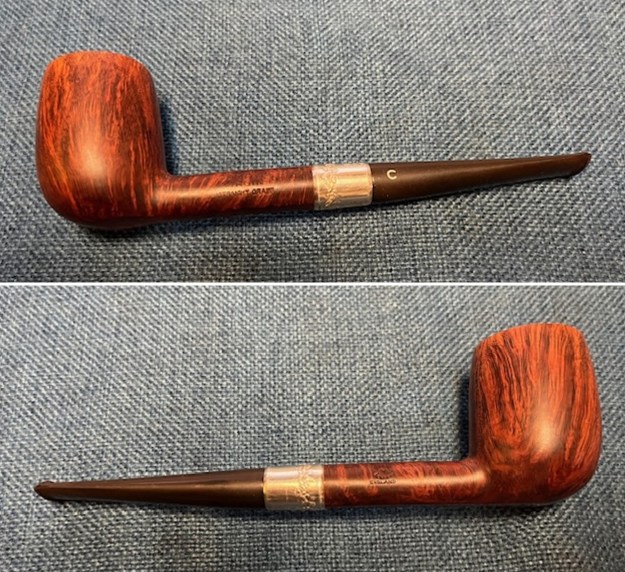
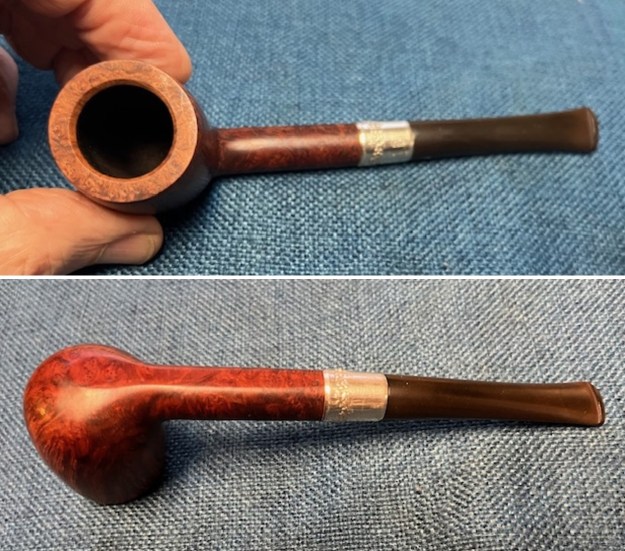
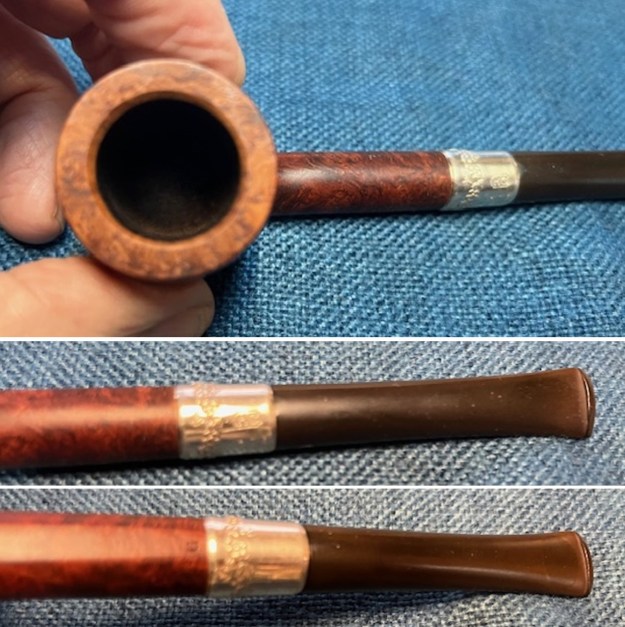
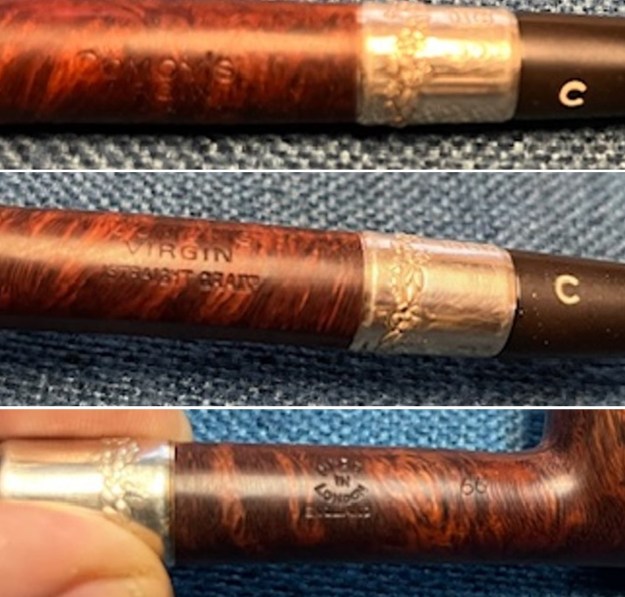
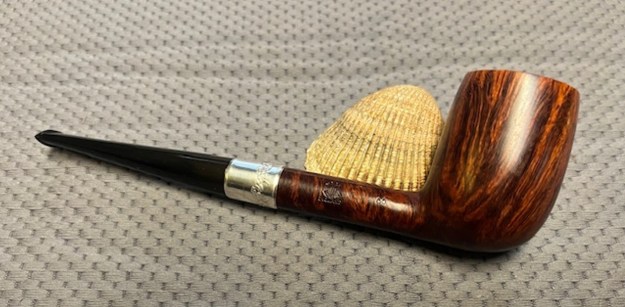
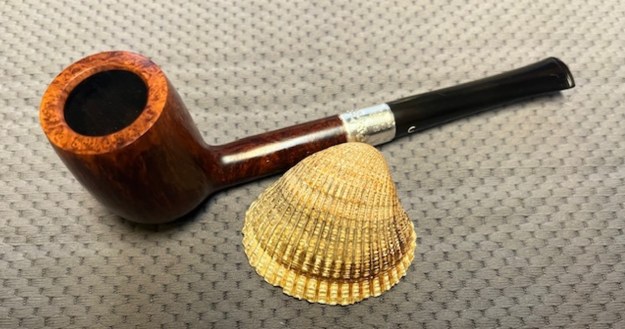
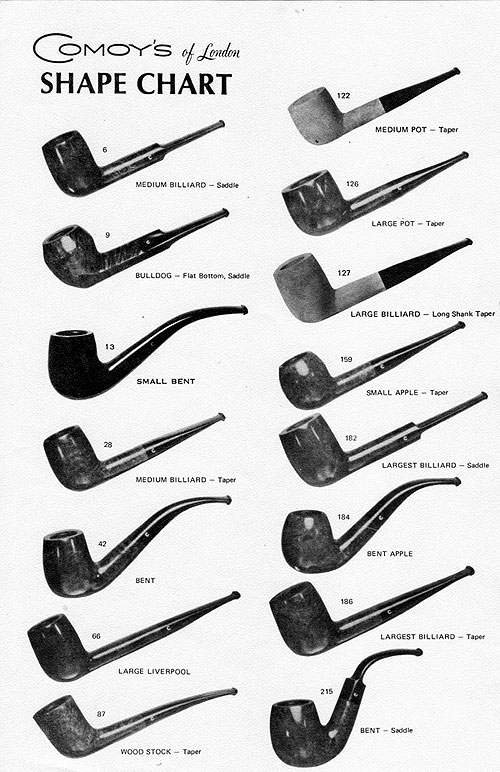
The next pipe on the table is one that we picked up in the lot from a good friend in Barrington, Rhode Island, USA on 08/22/2024. The smooth finish on this English made pipe and the Comoy’s stamping are what caught our eye. It is stamped on the left side of the shank and reads Comoy’s [over] Virgin [over] Straight Grain. On the right side it is Made in London in a circle [over] England. It is stamped with the shape number 66 near the bowl shank joint. There is an uppercase G on the underside of the shank ahead of the silver band. It has a classic Walnut Brown stain on the smooth finish that is a stark contrast to ornate silver band and vulcanite stem. The silver band gives the shank a length that added to the taper stem makes for a Liverpool shaped pipe. The bowl was lightly caked, though it also seems to have been recently reamed. The inner edge and the top look good though there is some darkening and some spots of lava on the top. The stem was lightly oxidized and had tooth chatter on both sides ahead of the button. The Comoy’s C logo looks to be one piece and was inset on the left side of the stem and looks to be in good condition. Jeff took some photos of the pipe to show the general condition of the pipe before he started his clean up. He took some photos of the rim top and bowl from various angles to give me a clear picture of the condition of the rim top and bowl. It is quite clean and the inside of the bowl is lightly caked. He included photos that show the top and underside of the stem. It is as described above. Jeff took some photos of the sides and heel of the bowl to show the condition of the finish on the pipe. The photos showed some great grain around the bowl and shank even with the grime in the finish. It is a great looking piece of briar. He took photos of the stamping on the sides of the shank. It was clear and readable as noted above. He did not capture a photo of the G stamp on the underside of the shank. He also captured the stamping on the silver band on the shank end. It is also clear. The silver is hallmarked which should help with dating this pipe. I looked on Pipephil’s site for information on the Comoy’s Virgin Straight Grain line and found the following information on pipes stamped Virgin Briar. I have included a screen capture below (http://www.pipephil.eu/logos/en/logo-comoy.html). It is interesting that the Virgin Briar originally came out in 1933 and by 1965 was no longer listed in the Comoy’s catalogues. It is different from the one I have as it is not stamped Virgin Briar and the Comoy’s is not arched but the C on the stem is similar in terms of thinness.I also went to the the Comoy’s article on Pipedia and found nothing in the great historical article that was pertinent. I did find a shape chart that listed the 66 as a Large Liverpool. I have included a screen capture of the page that included that shape number. I have outlined it in red in the photo included below(https://pipedia.org/images/d/d7/Shape_Chart_1975_1.jpg).I turned to the article on Pipedia about dating Comoy’s pipes but the style of the stamping (https://pipedia.org/index.php?title=Comoy%27s_Dating_Guide#1917_to_the_end_of_the_1930.27s_.28at_least_1938.29). I have included the section in the screen capture below that date this pipe to the 1930s.

From the 1950s – Now the Comoy’s stamp can be found in three variants:

  1. A simple block-letter style without serifs but with the C larger than the other letters and the apostrophe before the “S”.
  2. A return to the slightly more fancy block letters with serifs and the apostrophe. (It seems that some grades carried different stamps, or at least that the stamping changed in different years for some grades.)
  3. A simple block-letter style without serifs and without the apostrophe and with the “C” the same size as the rest of the letters. This stamp was probably not used very long.
  4. A simple block-letter style without serifs but with the apostrophe before the “S” and with the “C” the same size as the rest of the letter

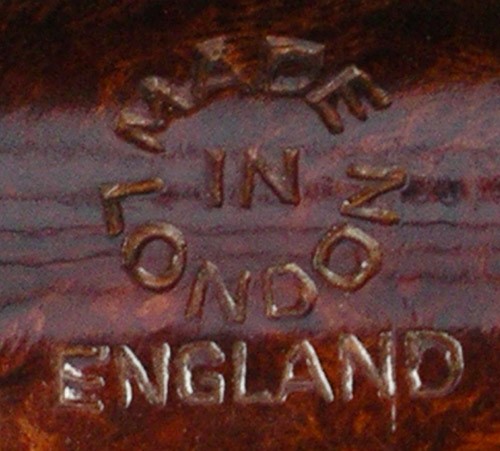
Made in London England

Appears in two versions. This is again stamped in a circle with “MADE” at the top, “IN” in the middle, and “LONDON” at the bottom, with “ENGLAND” in a straight line beneath. It can be assumed that this stamp was first used in the export drive in the early 1950s. On a Bulldog Sandblast from the early 50s the Comoy name no. 2 above was used together with “MADE IN LONDON” over “ENGLAND”. There are no known examples of pre-WW II Comoy’s stamped in this way. The second version is the same as above but in a “rugby ball ” shape. This shape is verified on Comoy´s “Extraordinaire” pipes.

 That article gave me some helpful information. I knew that the pipe the stamping on the shank of the pipe dated as post 1950. The 1950s stamping of the Comoy’s stamp was as noted above. The 66 shape number was tied to a Large Liverpool with a taper stem. I still needed to check on the Silver hallmarks but so far I had some progress.

Now to look at the silver hallmarks. The hallmarking system in England comprises a series of symbols and numbers, including letters, numbers, and symbols that indicate the silver’s purity, the date of manufacture, and the location where the item was hallmarked. Each hallmark includes several symbols, such as the maker’s mark, standard mark, assay office mark, and date letter. The first on this silver band is the Rampant Lion which signifies the quality of the Sterling Silver in the band. The second is a leopard’s head which signifies the city of London, England as the location of the assay office. The third hallmark is the letter E in an italicized cursive style script that helps establish the date of the silver. The HC in the box above the hallmarks is the silversmith’s initials and in this case are those of Henri Comoy.

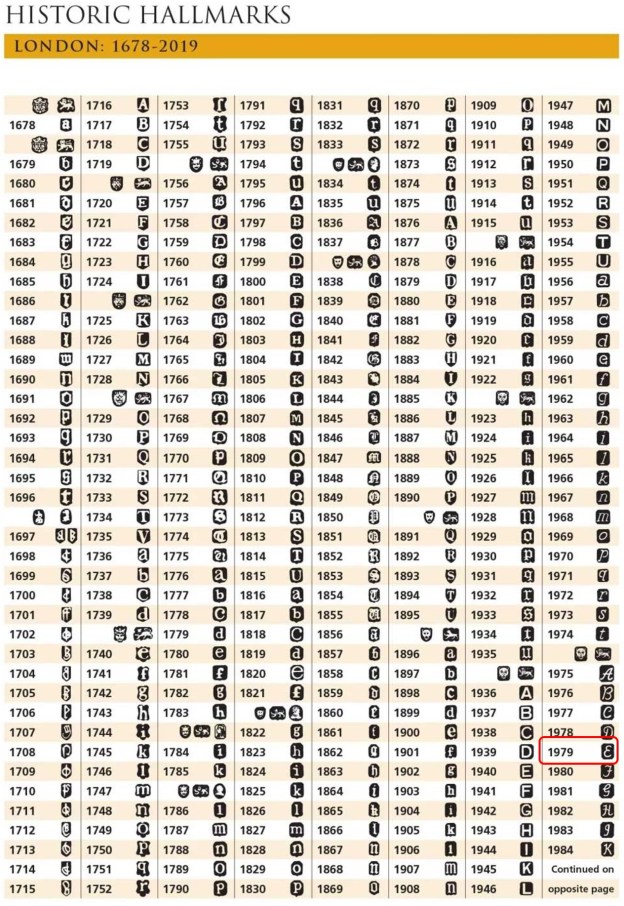
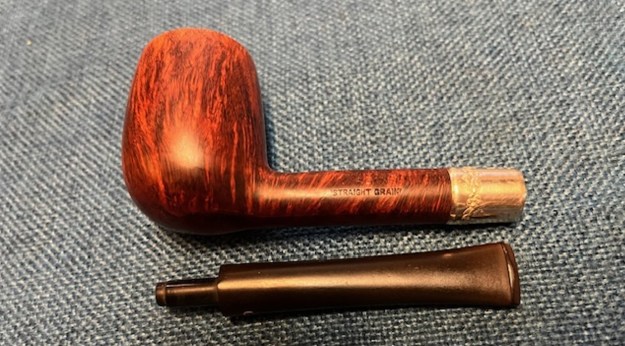
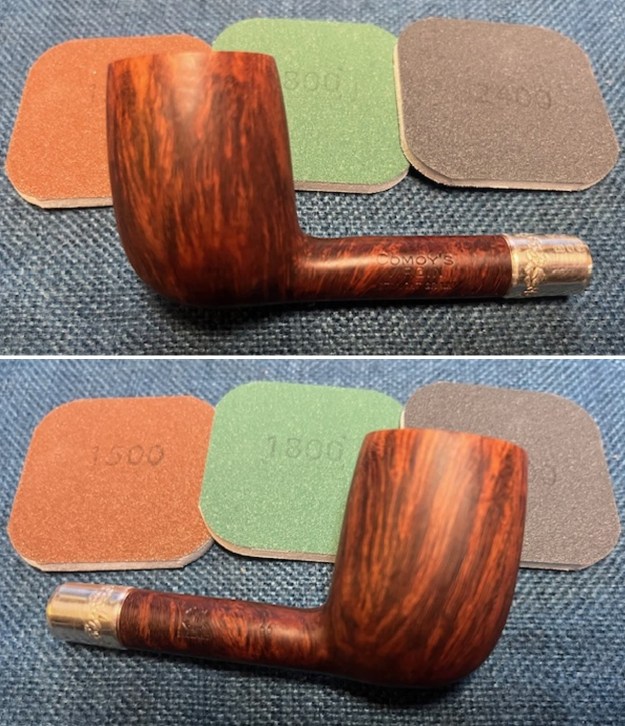
I turned to a blog on Historic Hallmarks – London 1678-2019 to determine the date of this pipe (https://huntvintage.co/blog/how-to-identify-silver-marks). I drew a red box around the date on this one – it is from 1979 as the hallmark matches the style of the E below.Since Jeff always follows the same pattern of work in his cleanup we do not include photos but rather just a simple summary. Jeff reamed the bowl with a PipNet pipe reamer and followed up with a Savinelli Fitsall pipe knife to remove the cake. He scrubbed out the mortise and the airway in the shank and the stem with alcohol, cotton swabs and pipe cleaners. He scrubbed the exterior of the bowl, rim, shank and stem with a tooth brush and Murphy’s Oil Soap to remove the oils and tars on the rim and the grime on the finish of the bowl. He rinsed it under running water. He dried it off with a soft cloth. He was able to remove the lava build up on the rim top and you could see the damages to the top and edges of the rim. I think this pipe may well been before we worked with Mark Hoover’s Before & After Deoxidizer so he cleaned the internals and externals. The stem was clean but lightly oxidized. I took photos of what the pipe looked like when I brought to my worktable. I took close up photos of the bowl, rim top and stem to show how clean the pipe was. The bowl was clean and the rim top and the inner edge look beautiful. The stem was clean and the tooth marks on the topside are visible. The chatter is light and hardly visible.I took photos of the stamping on the sides of the shank. It is very clear and readable and read as noted above. I also removed the stem from the shank and took photos of the pipe to show the look of the parts.I polished the bowl and shank with 1500-12000 grit micromesh sanding pad – dry sanding it with the pads. I wiped the bowl down with a damp cloth after each pad. It began to take on a deep shine. The exterior of the bowl look better after sanding. I worked some Before & After Restoration Balm into the briar with my finger tips. I let it sit on the bowl for 10 minutes and then buffed it off with a paper towel and soft cloth. The product is a great addition to the restoration work. It enlivens, enriches and protects the briar while giving it a deep glow. It is a product I use on every pipe I restore. I polished the silver band with a jeweller’s cloth to remove the tarnish and protect the silver from further tarnishing. It really took on a rich shine. I set the bowl aside and turned to the stem. I sanded the it with 320-3500 grit sanding pads and wiped the stem down after each pad with some Obsidian Oil on a cloth. The shine is coming back beautifully.I polished it with micromesh sanding pads – dry sanding with 1500-12000 grit pads and wiping the surface down with Obsidian Oil after each sanding pad. It is really shining. I polished it further with Before & After Stem Polish – both Fine and Extra Fine. I gave it another coat of Obsidian Oil to finish this step. This Comoy’s Virgin Straight Grain 66 Liverpool with a vulcanite taper stem is a great looking pipe now that it has been restored. The beautifully grained finish really works well with the shape and the polished finish is stunning. I put the stem back on the bowl and carefully buffed the bowl and the stem with Blue Diamond on the buffing wheel. I gave the bowl and the stem multiple coats of carnauba wax on the buffing wheel and followed that by buffing the entire pipe with a clean buffing pad. I hand buffed the pipe with a microfiber cloth to deepen the shine. I wiped down the Sterling Silver band with a jeweller’s cloth to protect and polish it. The finished 1979 Comoy’s Virgin Straight Grain Liverpool fits nicely in the hand and feels great. Give the finished pipe a look in the photos below. The dimensions of the pipe are Length: 6 inches, Height: 1 ¾ inches, Outside diameter of the bowl: 1 ¼ inches, Chamber diameter: ¾ of an inch. The weight of the pipe is 36 grams /1.23 ounces. I will be putting it on the rebornpipes store in the British Pipe Makers Section shortly. Let me know via email or a message if you are interested in adding this pipe to your collection.

As always, I encourage your questions and comments as you read the blog. Thanks to each of you who are reading this blog. Remember we are not pipe owners; we are pipe men and women who hold our pipes in trust until they pass on into the trust of those who follow us.

Restoring a Caminetto Sable D’Or Sandblast Billiard


by Steve Laug

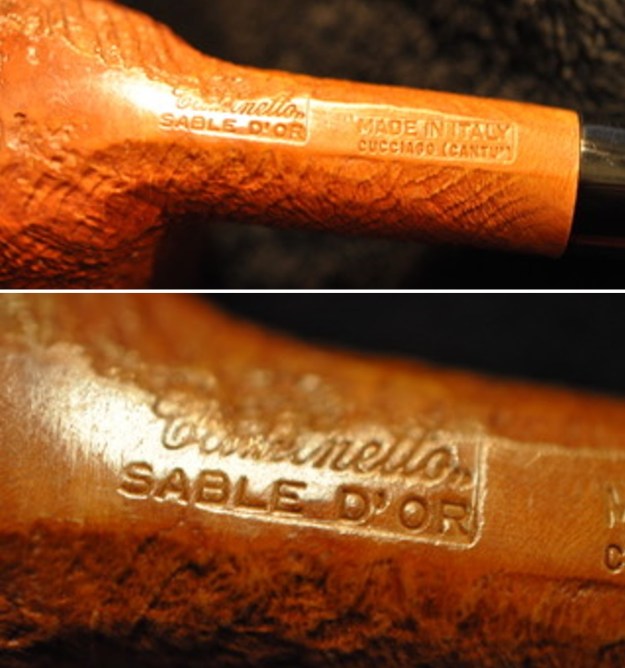
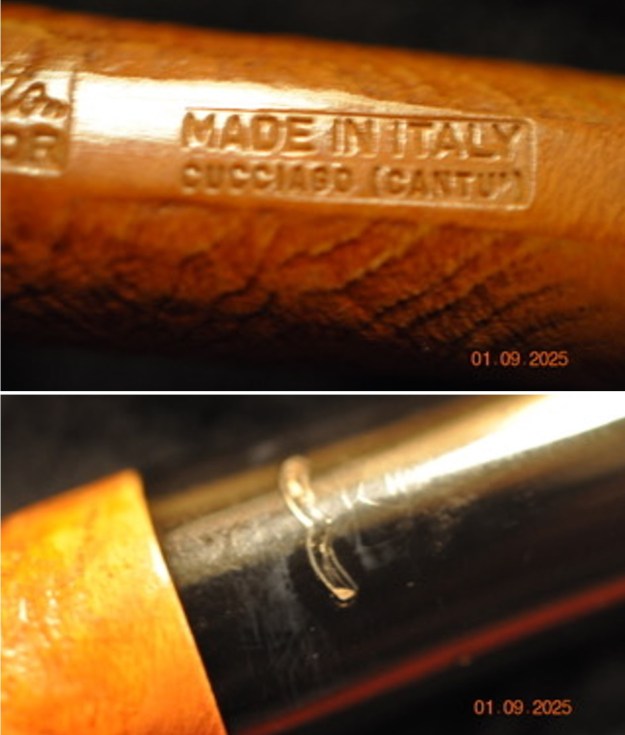
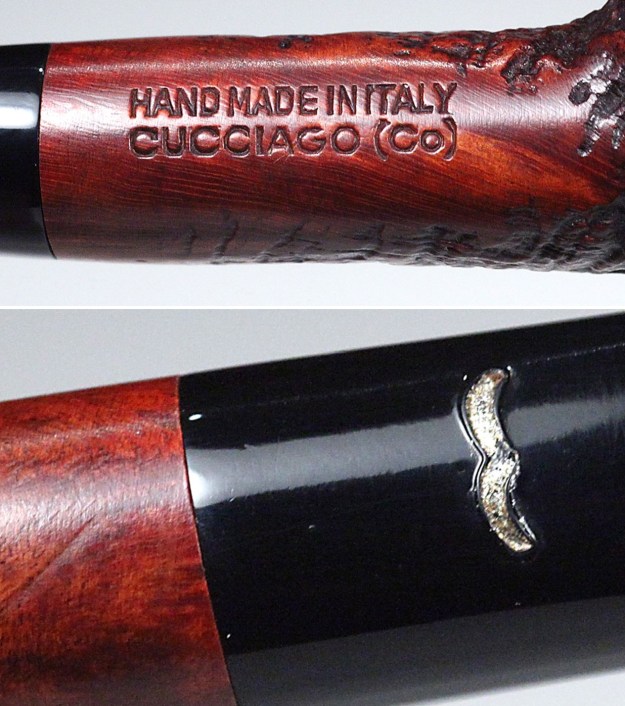
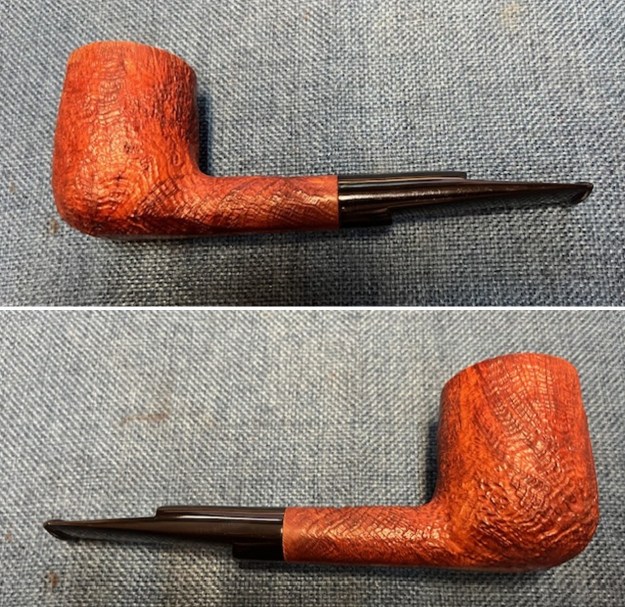
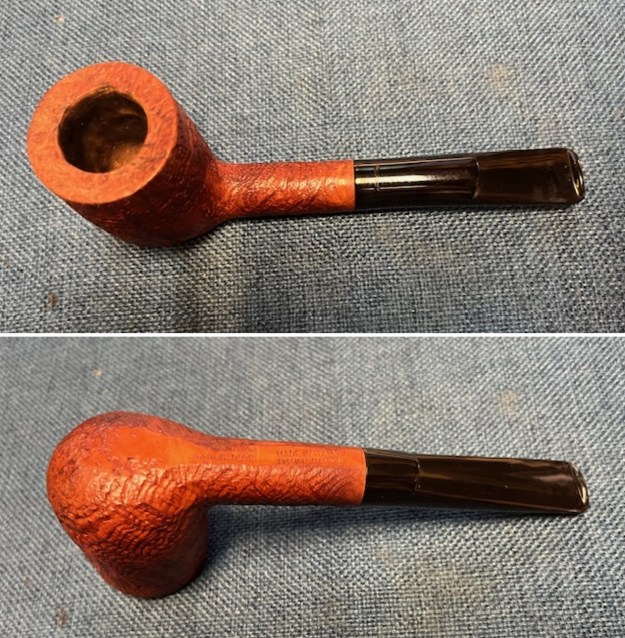
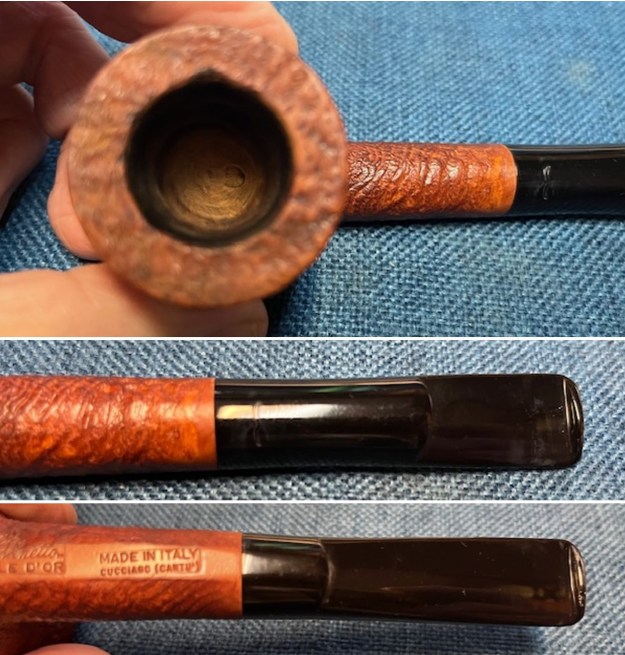
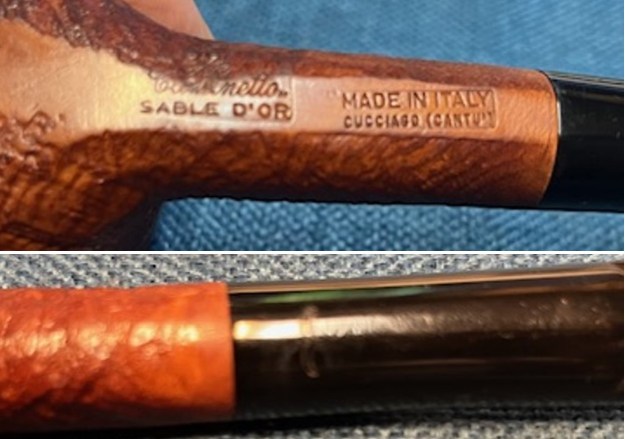
The next pipe on the worktable is a nice looking Caminetto Billiard that we purchased from a seller in Wellsville, Kansas, USA on 12/09/2024. The stamping on the pipe was very clear and readable. On the underside of the shank it reads Caminetto [over] Sable D’Or [followed by] Made in Italy [over] Cucciago (Cantu). The finish was in good condition though it was dusty. The sandblast grain shone through the grime and was beautiful. The pipe appears to have been recently reamed and the bowl was clear briar on the bottom half of the bowl. The rim top was clean though dusty. The inner edge had a burn mark on the inner edge on the right side of the bowl. The stem had a gold Moustache logo on the topside of the saddle. It was dirty and had some light tooth marks and chatter on both sides ahead of the button. It had a lot of potential. Jeff took photos of the pipe as he saw it at this stage of his examination. Jeff took close up photos of the rim top from various angles to show the general condition of the bowl and rim. The photos show the recently reamed bowl and a burn mark on the inner edge on the right side. The acrylic stem was dirty and had light tooth marks and chatter on both sides ahead of the button. Jeff took a photo of the sides and heel of the bowl to give an idea of the beauty of the grain on the heel and sides of the bowl.The stamping on the underside of the shank is clear and readable as noted above. He also took a photo of the Caminetto Moustache logo on the left side of the stem. I turned to Pipephil (http://www.pipephil.eu/logos/en/logo-c1.html) to see what I could learn about the Sable D’Or line and the thin Caminetto Moustache on the stem. Brand created in 1968 by Giuseppe Ascorti († 1984), Luigi Radice and Gianni Davoli as distributor.

  • 1979: End of he first Caminetto period. Luigi Radice left the company. Giuseppe Ascorti produced the Sergio pipes (a short time) and moved into his new workshop with his son Roberto. (See also Capitello)
  • 1986: New Caminetto period by Roberto Ascorti

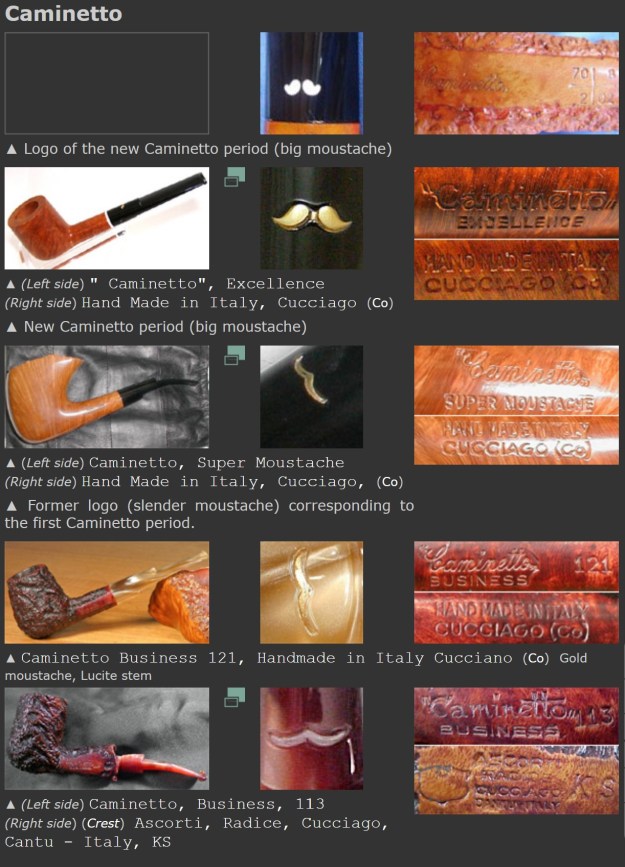
From the information there I am fairly certain that the pipe was made between 1968-1979 when the first Caminetto period ended. The thin moustache also signals the first Caminetto period. The pipe is probably crafted by Guiseppe Ascorti or Luigi Radice.

From there I turned to Pipedia for more detailed information about the Caminetto brand (https://pipedia.org/wiki/Caminetto). I quote below:

Caminetto’s history started in 1959 when Guiseppe Ascorti, from Cucciago, and known to his friends as “Peppino”, was hired by Carlo Scotti to work at Castello, located in nearby Cantu. Since it’s foundation in 1947 Castello had contributed substantially to regained glory for Italian pipemaking.

Talent and assiduity soon made Ascorti one of Scotti’s most notable pipemakers – a man he counted on for the future. But, Ascorti had his own far reaching plan: He wanted to work as a self-employed pipemaker! After his wife, Paola, had taken over her parent’s small greengrocery in the early 1960’s this plan became more concrete. The additional income from the shop enabled him to buy tools and machines little by little to furnish his own workshop. By the end of 1968 he was ready and left Castello. Ascorti also persuaded his co-worker, the young and highly-talented pipemaker Luigi Radice (born 1939), to join him – the two were neighbors in Cucciago. Carlo Scotti, whom is known as a perfect gentleman, is reported to have spoken unreservedly about this development.

Ascorti & Radice started to manufacture pipes on their own. One of the first who agreed to market their pipes was Gianni Davoli, proprietor of a tobacco shop in Milan. The situation was perfect–two pipemakers in search of a distributor, and a pipe merchant in search of a mainstay brand to market. Davoli – via friends and relations in the States – had made flourishing contacts with US pipe wholesalers and traders. He shipped some pipes across the pond for inspection and received excellent feedback for the very high quality of the pipes. He, shortly after, offered to be the sole distributor worldwide, and Ascorti & Radice happily accepted.

Then came the legendary evening when Ascorti, Radice and Davoli gathered around the fireplace after a hard day’s work enjoying their pipes, a glass of wine, and humorous conversation. Davoli is said to be the one who associated the pipes with the fireplace or chimney, which is “camino” in Italian. Hence “Caminetto”, the diminutive (smaller) singular version of camino, was coined as the brand’s name. Ascorti, Radice and Davoli later became famous as “I tre Camini” – the three chimneys. Maybe, they had more than one glass of wine each, but it’s not certain whether the distinctive mustache logo on the stem and the Caminetto slogan “La Pipa del Baffo” – “the pipe with the mustache” – was created the same night. In fact, Ascorti and Radice both wore impressively large mustaches, and a pharmacist in the neighborhood had been kidding them about that. (Davoli, for reasons of corporate identity, later wore a big mustache, too.)

Now, Davoli concentrated on marketing the Caminetto brand in the United States. His strategy was as simple as it was brilliant. There was a remarkable Castello hype at the time. Castello pipes were highly sought after but hard to get due to limited production. Davoli filled the gap, promoting the Caminetto to be absolutely equal to the Castello in terms of quality, while asking only half the price. And best of all: the Caminetto pipes were consignable! The Tinder Box International would be under contract with successful nationwide distribution. The brand’s success was overwhelming – far beyond any expectation, with the rusticated Business line becoming the most popular.

Ironically enough, the increasing demand soon drove Ascorti and Radice to the limits of their production abilities. The brand had been introduced successfully in Germany, and in Italy to some extent. By the end of 1970 more hands were needed. Even Ascorti’s elder son, Roberto Ascorti (born 1958; and the current owner) helped with stamping and shipping the pipes when he was just a schoolboy. The most important employee is Cesare Vigano, who has worked for Caminetto /Ascorti for more than thirty years. To bring about more stability and higher production, Davoli invested a considerable amount of money in modern pipemaking machinery, and in doing so went from distributor to co-owner of Caminetto. By 1973 he held the vast majority of the company’s capital.

The boom continued strongly – especially in the US. Production increased steadily, from 3,000 to 5,000 and then 7,000 pipes being made per year, placing Caminetto at the top of US sales in their market segment. The 1974 Tinder Box catalog celebrated Gianni Davoli as “master pipe maker and designer” and “sole creator of Caminetto” without a single mention of Ascorti or Radice!

Dating Caminetto pipes is very difficult. However, the way the pipe is stamped can narrow it down some and the look of the mustache logo also helps. Pipedia has a helpful article on the process (https://pipedia.org/wiki/The_History_of_Caminetto_(shapes,_stamping,_articles,_etc.). I quote from it below.

First off, dating earlier Caminetto’s is nearly impossible. Nevertheless, there were three phases, some in which were much earlier, of development that occurred in the stamping process of Caminetto. Before that though, every pipe had the stamp of Caminetto in one of two ways: Caminetto in script or Caminetto within quotation marks in block letters (I do not know how it was decided which pipe got which stamp, as I have had EARLY Caminetto’s with both). The stampings:

1. ASCORTI – RADICE –

CUCCIAGO – CANTU-ITALY

1. HAND MADE IN ITALY

CUCCIAGO (Co)

1. MADE IN ITALY

CUCCIAGO (CANTU)

In addition to the above stampings, there was always the trademark mustache on the stem. The earlier models (1968/69-1974/75) had the iconic gold, sometimes white, “bird-in-flight” moustache and the later models (1975-1979/80/81) had a gold, or white, “double comma” moustache. Tinder Box often stamped their shield on the pipes as well.

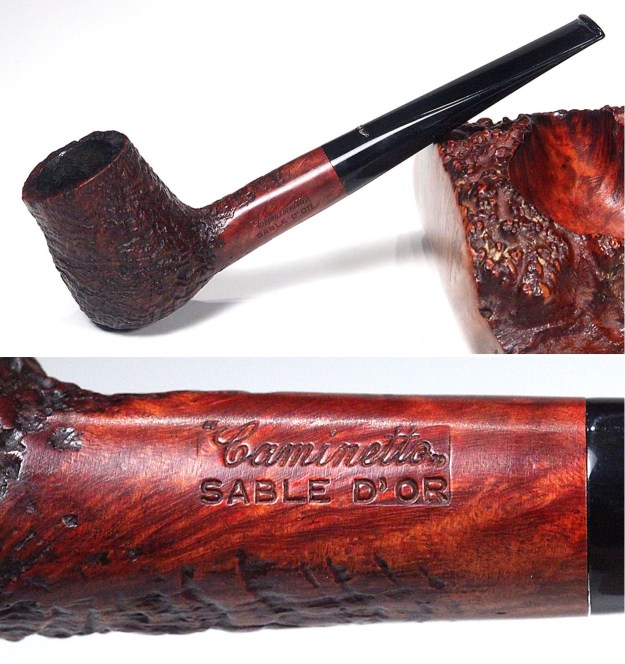
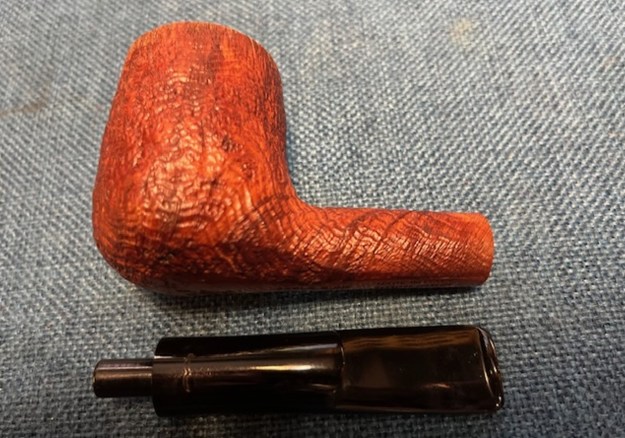
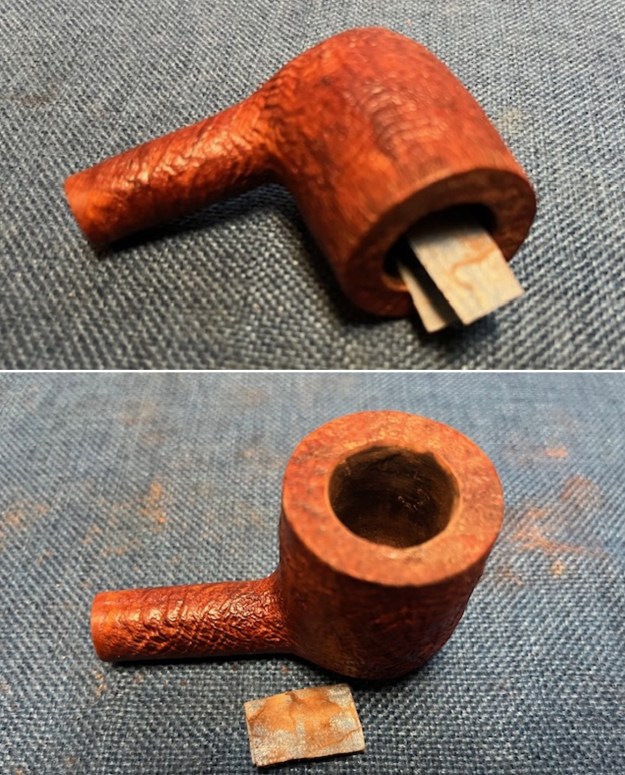
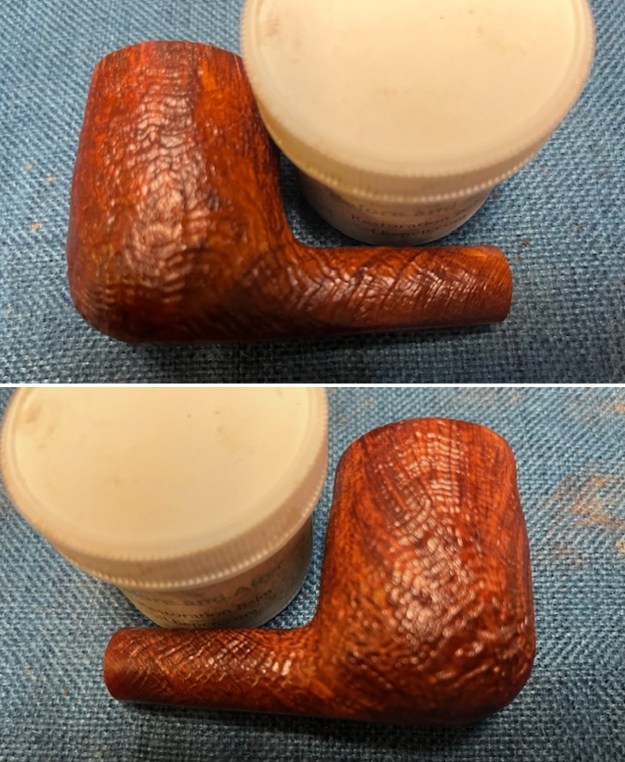
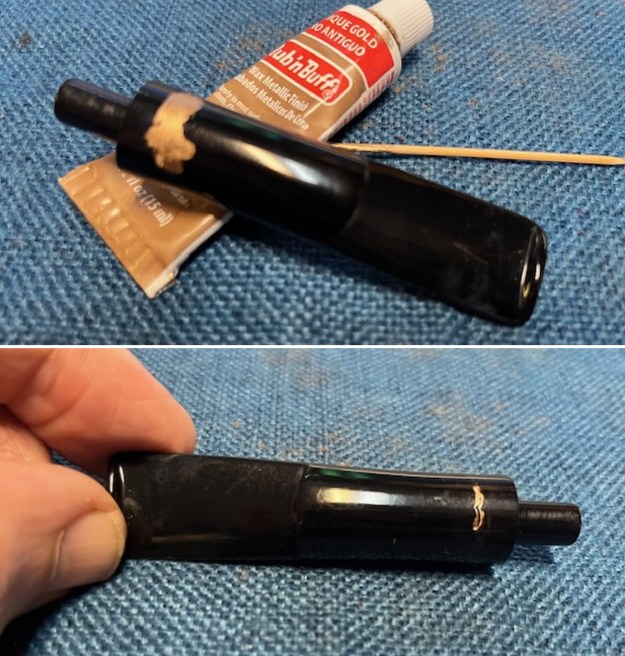
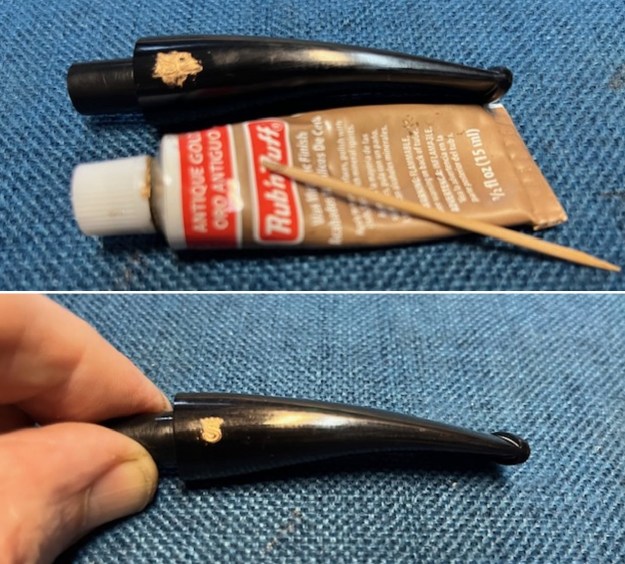
Sable D’Or and Sable D’Or KS, KS1 (black, chestnut, natural, mahogany, red or walnut; sandblast). SABLE D’OR, a rare sandblast finished pipe by Caminetto (note nomenclature, and ‘bird-in-flight’ moustache). Photos courtesy Doug Valitchka Now it was time to work on the pipe. Jeff had done his usual thorough clean up of the pipe. He had reamed it with a PipNet reamer and finished with a Savinelli Fitsall Pipe Knife. He scrubbed the exterior with Murphy’s Oil Soap and the interior with isopropyl alcohol, shank brushes, cotton swabs and pipe cleaners. He worked on the acrylic stem with Soft Scrub then let it soak in Before & After Pipe Stem Deoxidizer. It has a few tooth marks and chatter on both sides. I took photos of the pipe before I started my work. I took some close up photos of the bowl/rim top and the stem to show the condition they were in at this point. The rim top and edges looked good and the bowl was clean. The stem had light tooth marks and chatter on both sides near the button.I took a photo of the stamping on the underside of the shank. It is clear and readable as noted above. I also captured the moustache logo on the top of the saddle stem. I removed the stem from the shank to give a sense of the pipe. I started my work on the pipe by addressing the burned area on the right inside edge of the bowl. I sanded it with a folded piece of 220 grit sandpaper.I worked some Before & After Restoration Balm into the surface of the briar with my finger tips and a shoe brush. The product is amazing and works to clean, enliven and protect the briar. I let it sit on the briar for 10 or more minutes and then buff it off with a soft cloth. It really makes the briar come alive and look quite rich. I set the bowl aside and turned my attention to the stem. I touched up the gold Crown S stamp on the left side o the taper stem with some Rub’n Buff Antique Gold. I worked it into the stamp with a tooth pick and buffed it off with a soft cloth.The chatter and marks were light enough that I polished it with micromesh sanding pads – dry sanding with 1500-12000 grit pads. I wiped the stem down after each pad with a cloth and Obsidian Oil. I finished the polishing with Before & After Pipe Stem Polish – both Fine and Extra Fine. I gave it a final coat of Obsidian Oil. I am excited to put the finishing touches on this Caminetto Sable D’Or Sandblast Billiard with a fancy acrylic saddle stem. I put the pipe back together and buffed it with Blue Diamond on the buffing wheel. I gave the bowl and the stem multiple coats of carnauba wax. I buffed the pipe with a clean buffing pad to raise the shine and hand buffed it with microfiber cloth to deepen the shine. It is fun to see what the polished bowl looks like with the polished black, fancy turned vulcanite stem was beautiful. This Caminetto Sable D’Or Billiard is nice looking and the pipe feels great in my hand. It is light and well balanced. Have a look at it with the photos below. The dimensions are Length: 6 inches, Height: 2 inches, Outside diameter of the bowl: 1 ½ inch, Chamber diameter: ¾ of an inch. The weight of the pipe is 2.15 ounces/61 grams. It is a beautiful pipe and one that I will be putting in the Italian Pipemaker Section on the rebornpipes store. Thanks for walking through the cleanup with me as I worked over this pipe.
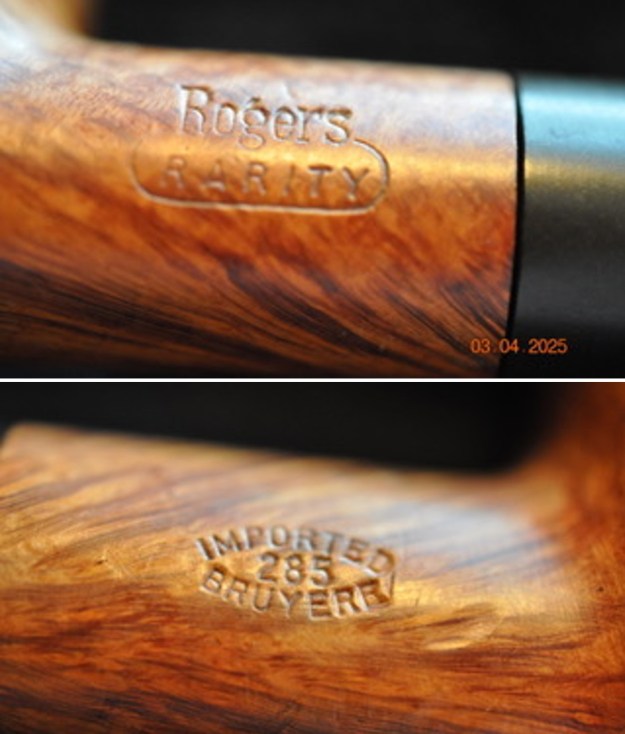
Restoring a Stanwell Danish Design Night and Day 109 Apple


by Steve Laug

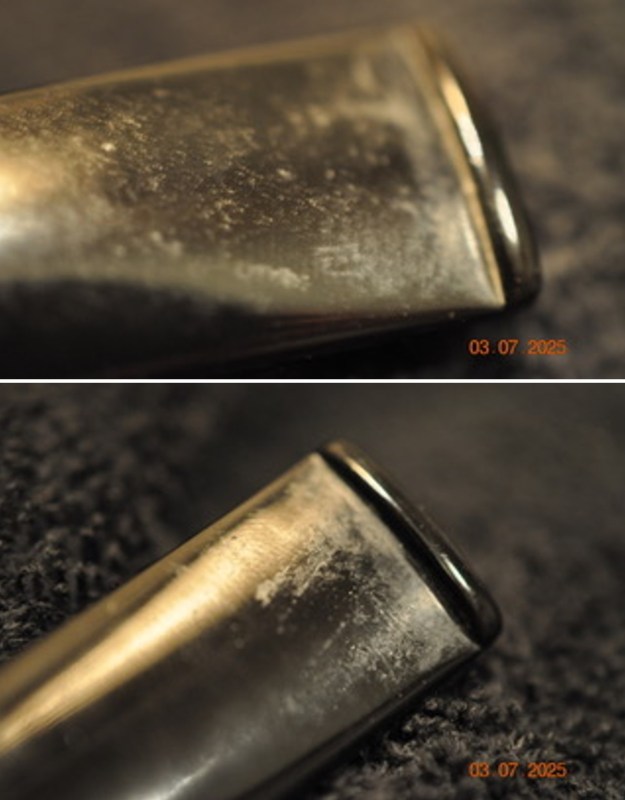
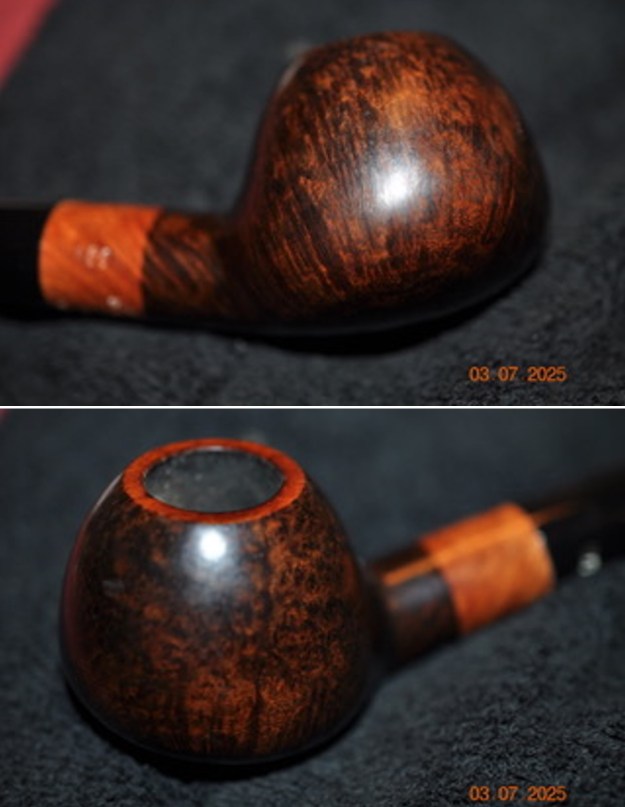
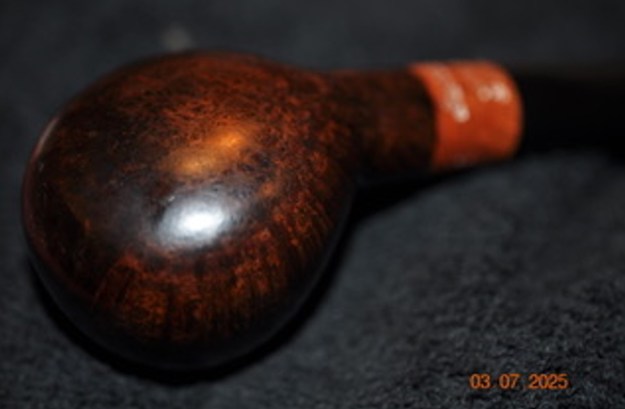
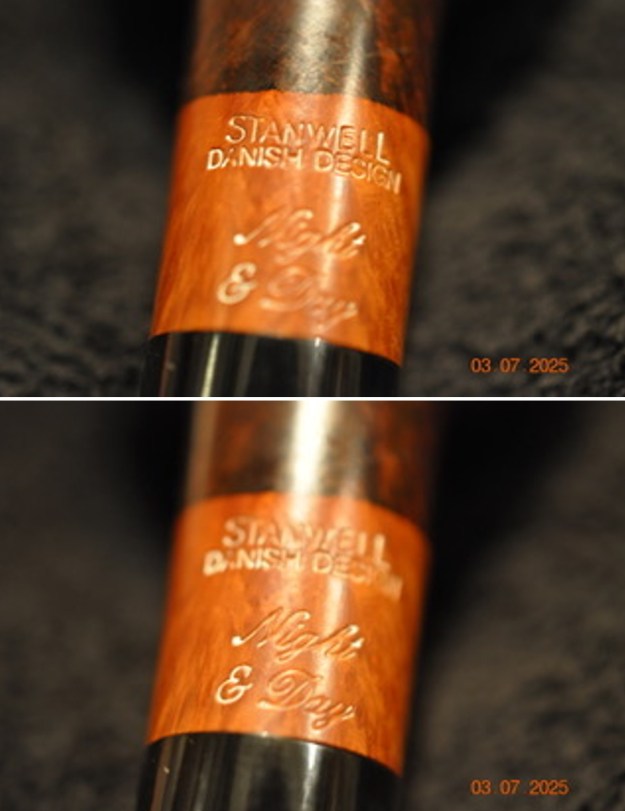
The next pipe on the worktable is a nice looking Stanwell pipe that we purchased from a fellow in Ogden, Utah, USA on 12/21/2024. The stamping on the pipe was very clear and readable. On the underside of the shank it reads Stanwell [over] Danish Design [over] Night and Day. On the right side of the shank it is stamped with the shape number 109 mid shank. The finish was in good condition though it was dirty. The grain shone through the grime and was beautiful. There was a light cake in the bowl and some light lava on the inner edge and rim top. The stem had a Crown S gold logo on the left side of the taper. It was dirty and had some light tooth marks and chatter on both sides ahead of the button. It is a 9mm filter stem. It had a lot of potential. Jeff took photos of the pipe as he saw it at this stage of his examination. Jeff took close up photos of the rim top from various angles to show the general condition of the bowl and rim. The photos show the thickness of the cake in the bowl and the darkening and spotty lava build up on the inner edge – heavier toward the back of the bowl. The edge looks like it might have some damage on the front left of the bowl but will probably be fine once the bowl is reamed and cleaned. The acrylic stem was dirty and had tooth marks and chatter on both sides ahead of the button. Jeff took a photo of the sides and heel of the bowl to give an idea of the beauty of the grain on the heel and sides of the bowl. The stamping on the underside of the shank is clear and readable as noted above. The shape number on the right side is also clear.
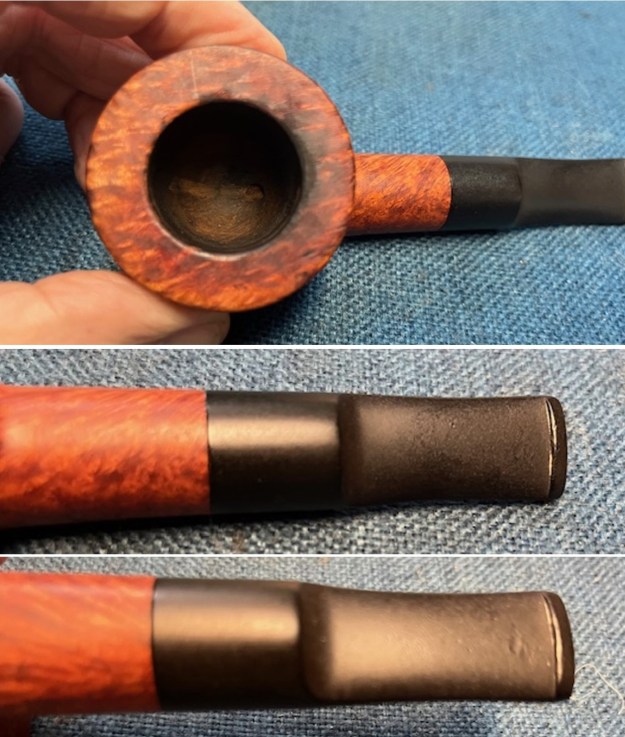
I did some reading to see if I could find out anything about the Danish Design Night & Day Line of Stanwell pipes. The pipe I have does not say Made in Denmark and from what I can find it seems that the line is a newer one and was made in Italy. I can’t find anything listed on the line itself on either PipePhil or Pipedia.

I did find several listed on the web for sale so they are available. I found the line offered online on cigarsunlimited.co.uk site (https://www.worthpoint.com/worthopedia/stanwell-night-day-9mm-filter-pipe-480014213). The description was helpful so I have included that below.

Stanwell Night & Day 9mm Filter Pipe Shape No.109. The Stanwell Night/Day pipe series is a stunning line of pipes. Each pipe features contrasting woods in the shank, providing an appearance that resembles night and day.

I also did some looking through the catalogues on Pipedia and the information there and did not find the line listed. I did have a look at the article on Shape Numbers and Designers there (https://pipedia.org/wiki/Stanwell_Shape_Numbers_and_Designers). From there I found that 109 was a Quarter-bent apple with a tapered stem, sometimes with an army mount. Reminiscent of the English ‘banker’ shape, or Savinelli’s shape 320.

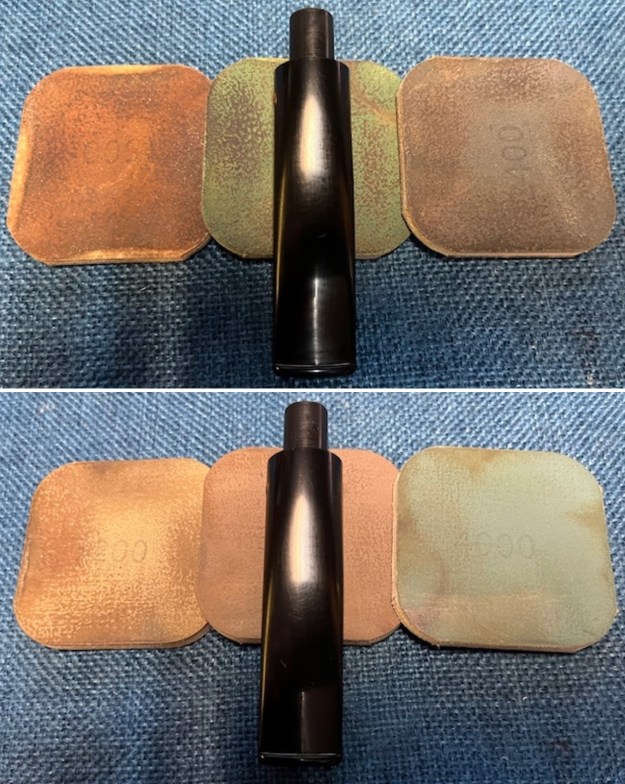
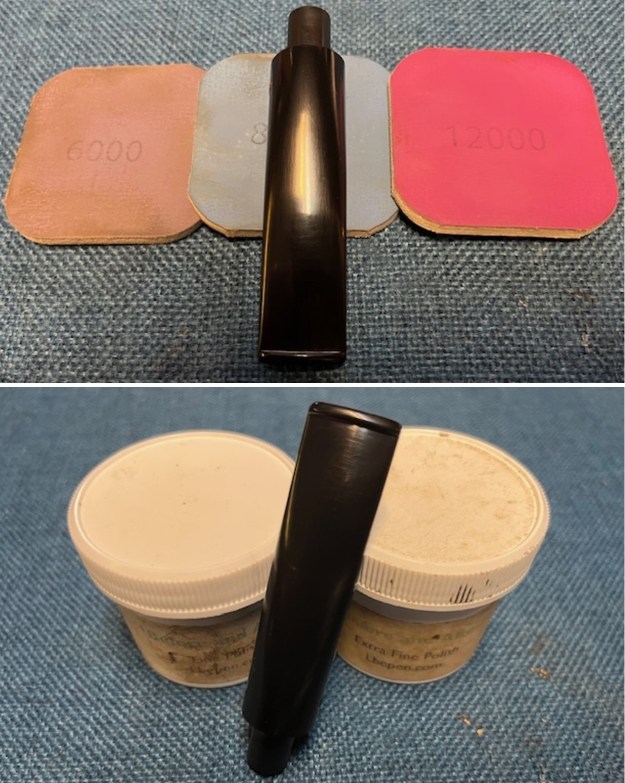
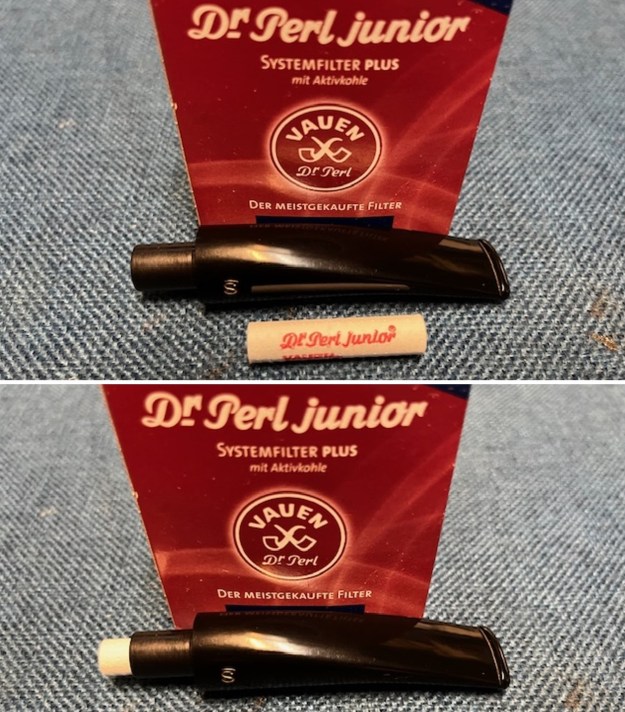
Jeff had done his usual thorough clean up of the pipe. He had reamed it with a PipNet reamer and finished with a Savinelli Fitsall Pipe Knife. He scrubbed the exterior with Murphy’s Oil Soap and the interior with isopropyl alcohol, shank brushes, cotton swabs and pipe cleaners. He worked on the acrylic stem with Soft Scrub then let it soak in Before & After Pipe Stem Deoxidizer. It has a few tooth marks and chatter on both sides. I took photos of the pipe before I started my work. I took some close up photos of the bowl/rim top and the stem to show the condition they were in at this point. The rim top and edges looked good and the bowl was clean. The stem had light tooth marks and chatter on both sides near the button.I took a photo of the stamping on the underside of the shank. It is clear and readable as noted above. I also captured the shape number on the right side of the shank. I removed the stem from the shank to give a sense of the pipe.I polished the briar with micromesh sanding pads – dry sanding it with 1500-12000 grit pads. I wiped the bowl down after each pad with a damp cloth. The finished bowl and shank look very good. I worked some Before & After Restoration Balm into the surface of the briar with my finger tips. The product is amazing and works to clean, enliven and protect the briar. I let it sit on the briar for 10 or more minutes and then buff it off with a soft cloth. It really makes the briar come alive and look quite rich. I set the bowl aside and turned my attention to the stem. I touched up the gold Crown S stamp on the left side o the taper stem with some Rub’n Buff Antique Gold. I worked it into the stamp with a tooth pick and buffed it off with a soft cloth.The chatter and marks were light enough that I polished the stem with micromesh sanding pads – dry sanding with 1500-12000 grit pads. I wiped the stem down after each pad with a cloth and Obsidian Oil. I finished the polishing with Before & After Pipe Stem Polish – both Fine and Extra Fine. I gave it a final coat of Obsidian Oil. I fitted the 9mm filter stem with a Dr. Perl Junior 9mm Filter. It sat well in the tenon and would slip into the shank perfectly.I am excited to put the finishing touches on this Stanwell Danish Design Night & Day 109 Apple. I put the pipe back together and buffed it with Blue Diamond on the buffing wheel. I gave the bowl and the stem multiple coats of carnauba wax. I buffed the pipe with a clean buffing pad to raise the shine and hand buffed it with microfiber cloth to deepen the shine. It is fun to see what the polished bowl looks like with the polished black, fancy turned vulcanite stem was beautiful. This Stanwell Danish Design Night & Day 109 is nice looking and the pipe feels great in my hand. It is light and well balanced. Have a look at it with the photos below. The dimensions are Length: 5 ¾ inches, Height: 1 ½ inches, Outside diameter of the bowl: 1 inch, Chamber diameter: ¾ of an inch. The weight of the pipe is 2.15 ounces/61 grams. It is a beautiful pipe and one that I will be putting in the Danish Pipemaker Section on the rebornpipes store. Thanks for walking through the cleanup with me as I worked over this pipe.

Restoring a Genuine Thompson Block Meerschaum Gt. Britain Rusticated Billiard


by Steve Laug

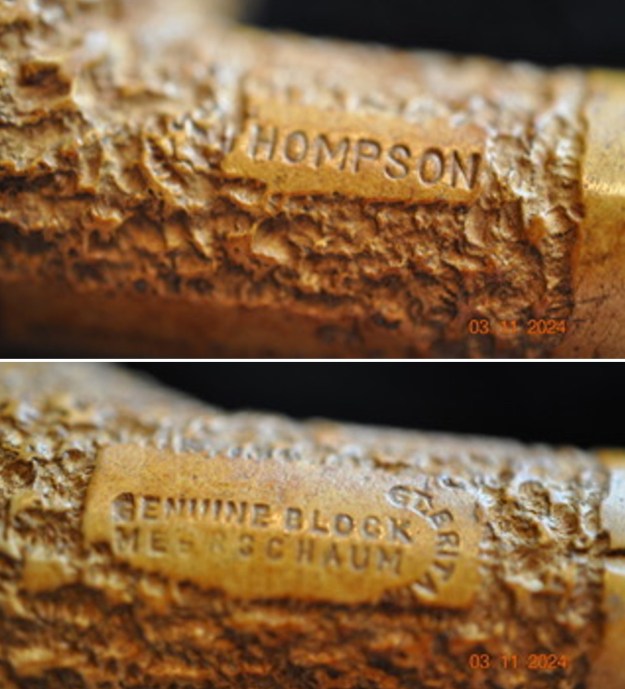
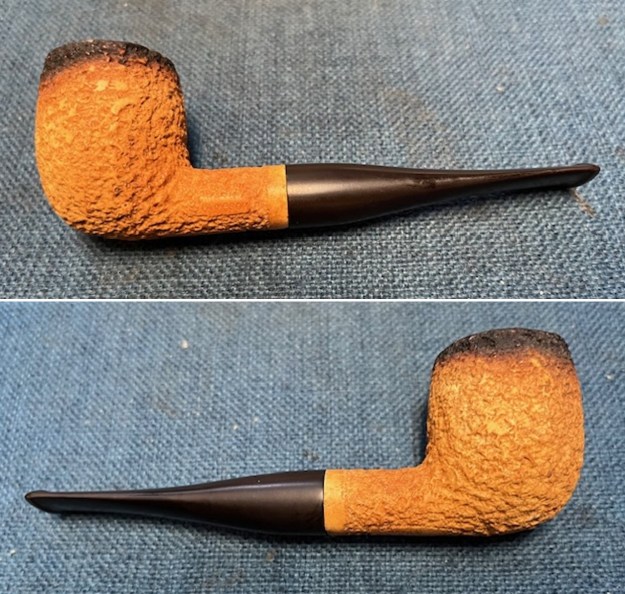
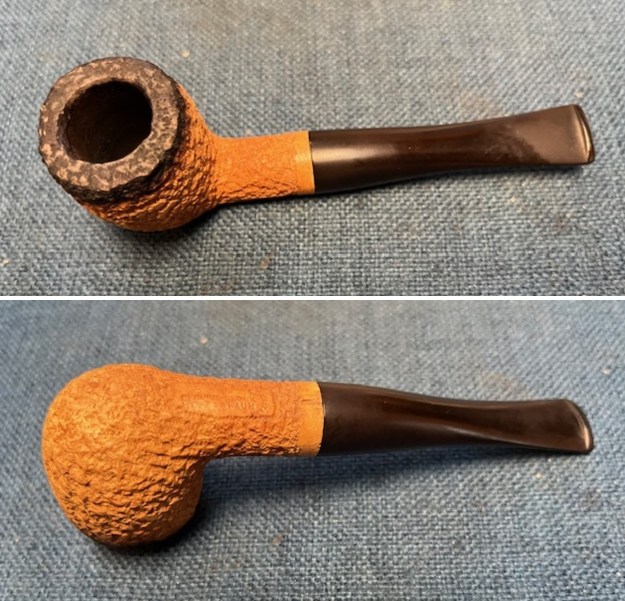
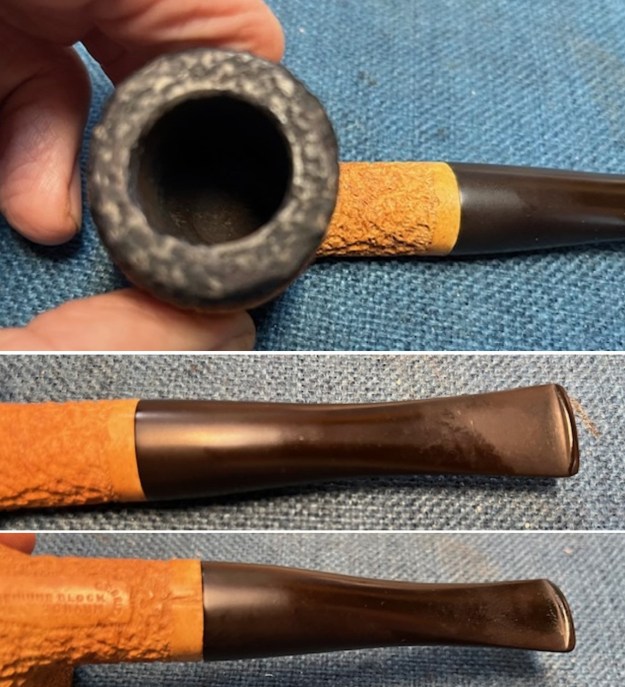
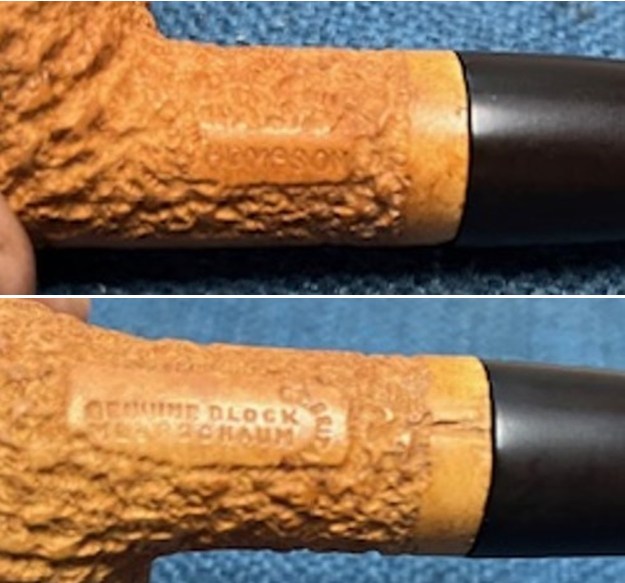
The next pipe I have chosen is a medium sized rusticated African Meerschaum Billiard. The stem is a vulcanite taper. We purchased it from an Antique Store on 08/24/2024 in Wheeler, Oregon, USA. The rugged rustication on the meerschaum points me to an Isle of Man pipe probably made by Laxey Pipes Ltd. It was stamped left side of the shank and read Thompson. On the underside it is stamped Genuine Block [over] Meerschaum. After the “m” at the end of Meerschaum there is an arched Gt. Britain. The pipe was heavily smoked. The bowl was moderately caked there was lava on the rusticated rim top and inner edge. The condition of the rim and top were slightly worn and the fluming around the top edge are faded in places. The black vulcanite stem was in good condition other than being dirty and having light tooth marks and chatter on both sides of the stem ahead of the button. The fit against the shank end was snug and there was no damage to the shank end. There was no stamping or logo on the stem itself though it is certainly the original. Jeff took photos of the pipe before his cleanup work. They tell the story and give a glimpse of the pipe. Jeff took close up photos of the bowl and rim to capture the condition of the pipe before he started his cleanup work. The cake in the bowl and the lava on the edges and rim top are visible. There are also some chips on the top and inner edge where the white was visible. He also took photos to show the condition of the stem surface. There is oxidation, calcification and light tooth marks and chatter on both sides near the button and wear on the button surface and edges. He also took a photo of the bottom of the bowl and shank to show the condition of the finish around the top edge and rim top. The photo shows the general condition of the bowl and wear on the finish. It is very dirty but still an interesting pipe. He took photos of the stamping on the sides of the shank. They are clear and readable as noted above.I turned to the bog and looked for a blog that I remembered Dal Stanton had written on a Thompson Meerschaum pipe. Here is the link (https://thepipesteward.com/2024/03/23/diving-into-the-provenance-of-a-thompson-genuine-block-meerschaum-gt-britain-brandy/). I quote his research below:

My research on the origins of the Thompson Block Meerschaum name can be summarized like this: It was made with African Meerschaum from the Tanganyika Meerschaum Corporartion (Tanganyika Meerschaum Corporation – Pipedia) and produced by Laxey Pipe Ltd. on the Isle of Man.  This conclusion was deduced from comments made about Thompson from various pipe forum threads.  Here is one example from Pipesmagazine.com (2012) among several that I found that demonstrates what I have found generally:

@tschiraldi – Thanks! It’s my understanding that the Thompson Meerschaum pipes were made by the Manx Meerschaum Company on the Isle of Mann (Great Britain). Back story is that my 3x Great Grandfather was Sir Hall Caine who was a famous author known as the Manx Man and lived on the Isle of Mann. I thought it would be cool to own a pipe made by the Manx Meerschaum Company which was made on the Isle of Mann. Just thought it was interesting.

“It’s my understanding…” is the key idea.  I found several comments with the assumption that Thompson Block Meerschaum pipes were produced by ‘Manx’ or ‘Laxey’ – the same producer.  When doing the research on James’ first commission, I discovered that the Laxey Co. produced the Peterson’s Meerschaum.  Here is the Pipedia information on Laxey Pipes Ltd.:

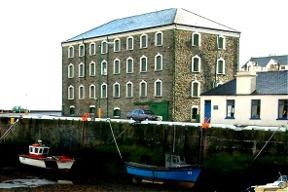
Laxey Pipes Ltd. resided in a historical 19th century four-storey Man stone building at The Quay, Old Laxey, Isle of Man, which thankfully has been preserved.

The company specialized in the production of meerschaum pipes using the Meerschaum mined by the Tanganyika Meerschaum Corporation in the Amboseli basin in Tanganyika (since 1964 part of the United Republic of Tanzania).

Please note: you may often find names like “Manx Pipes Ltd.”, “Man Pipe Co.” and others more, but there is no indication of another Isle of Man pipe producer other than Laxey Pipe Ltd. at any time!
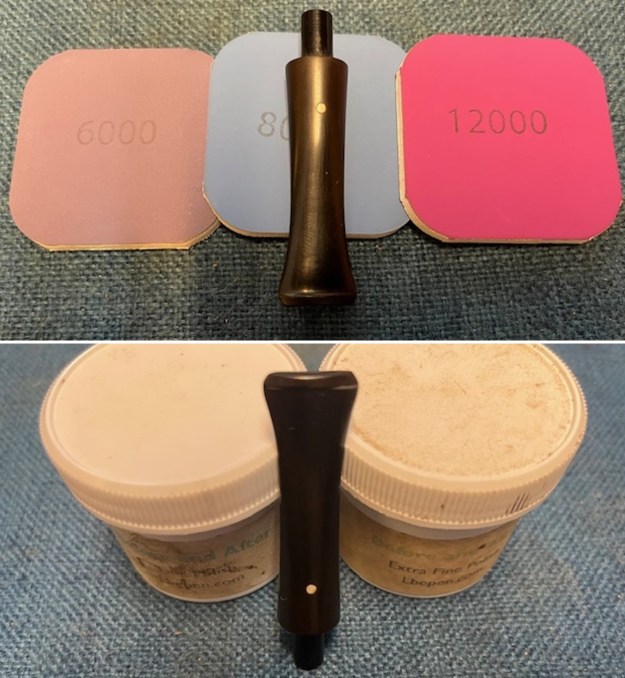
Laxey Pipes Ltd. marketed their own brands like “Manxpipe”, “Manxman”, “Manxland” e.c. Names like “John Bull”, “White Knight” (unwaxed), “Domino” (black, or lined) indicated some shapes / colours of Laxey’s own series. The stems either showed the astronomical sign for “male” or “man” (circle + arrow), or the crest of the Isle of Man, the 3-legged X in a circle. Manxpipes and Laxey’s other brands were available through pipe retailers in general, but also were sold (mainly) to tourists through their own shop in Laxey.

Furthermore Laxey Pipes Ltd. manufactured the meer bowls for PetersonBarlingNørding and others from the later 1960’s until 2001. Man Pipe e.g. was a brand distributed by Comoy’s. The bowls usually showed no nomenclature indicating the orderer. “Genuine Block Meerschaum” was engraved frequently. Often, just the stems were different, while bowls were the same.

Supply of meerschaum from East Africa ran out (Kenya / Tanzania exhausted, Somalia inaccessible), and thus the last Laxey meers were supplied to trade in May, 2001. Laxey Pipes Ltd. tried to survive continuing with briar pipes – mainly in the Danish style -, but to no success. It closed down business in July 2002.

In this article from Pipedia, there is no direct mention of Thompson Block Meerschaum however, it was left open that there were other brands produced from the 1960s until 2001 beyond those mentioned – Peterson, Barling, and Nording.

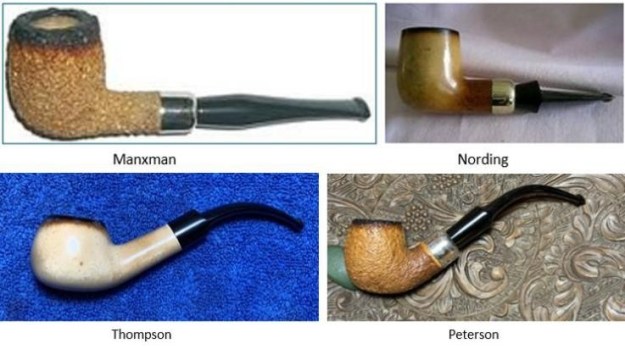
I tend to agree with the sentiments of the Thompson Block Meerschaum pipes being produced by Laxey. Why? First, with the COM being ‘GT. Britain’ leaves few options (if any) of a Meer block being produced other than on the Isle of Man.  Secondly, the Thompson on the worktable resembles other products of Laxey with the smokestack coloring and the usual stamping: “Genuine Block Meerschaum”.  Here are examples of Laxey pipes including our Thompson.The last characteristic that promotes the Isle of Man provenance is that the Thompson is made with African Meerschaum. Tanganyika Meerschaum that was used by the Laxey production is described as tougher, less porous, and cheaper than Meerschaum mined in Turkey (Tanganyika Meerschaum Corporation – Pipedia). The denser characteristics of the Thompson on the worktable I believe fits the general characteristics of African Meerschaum. Even though I can find no direct link with Laxey and Thompson, I believe it is a safe assumption that Thompson was produced by the Laxey Company on the Isle of Man.  If this is to be accepted, the dating of the Thompson would be no later than 2001 when Meerschaum ran its course from the mines of Tanganyika.

In terms of the pipe that I am working on I concur with Dal’s conclusions on the Thompson pipe he restored. This one is also a Laxey Made pipe using the African Meerschaum. The rusticated finish is precisely like some of the Laxey Peterson’s Meerschaums that I have worked on. It has a lot of promise to it.

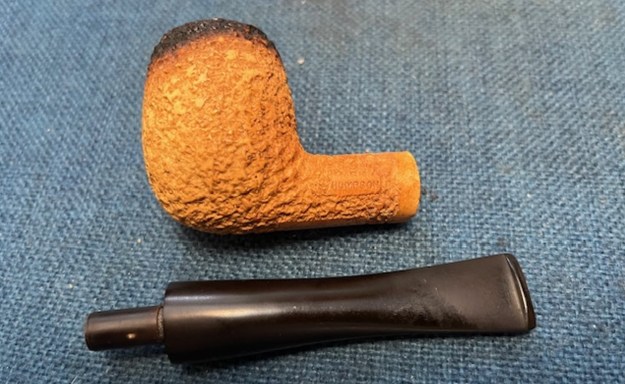
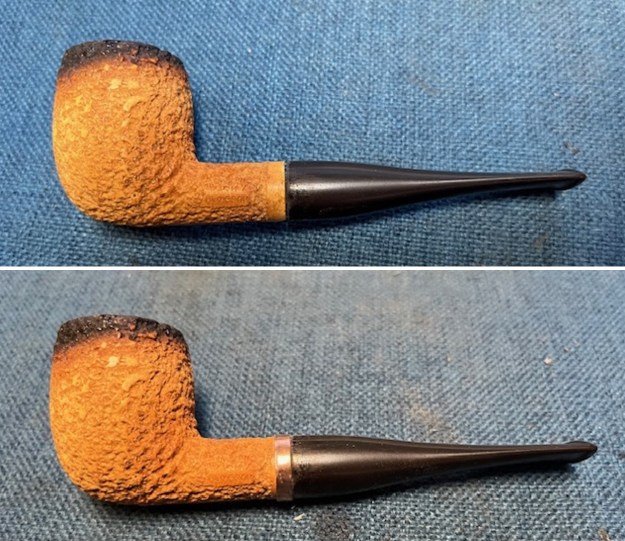
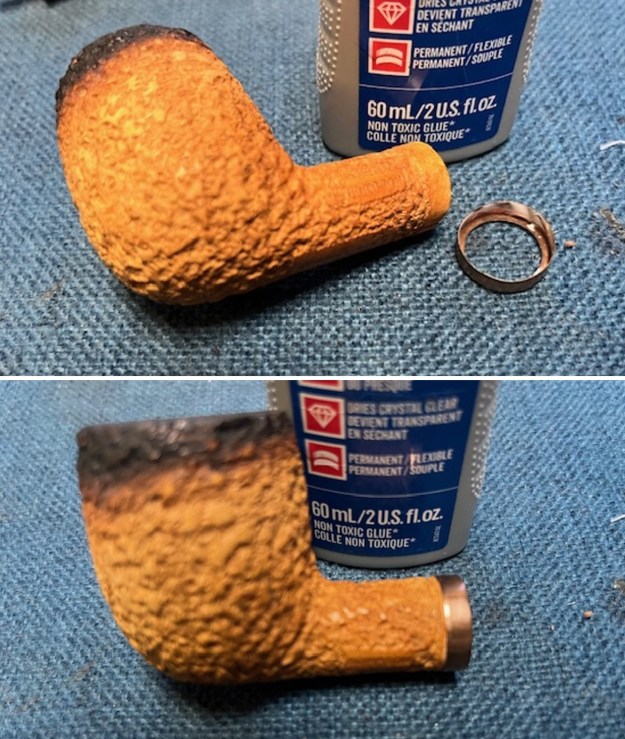
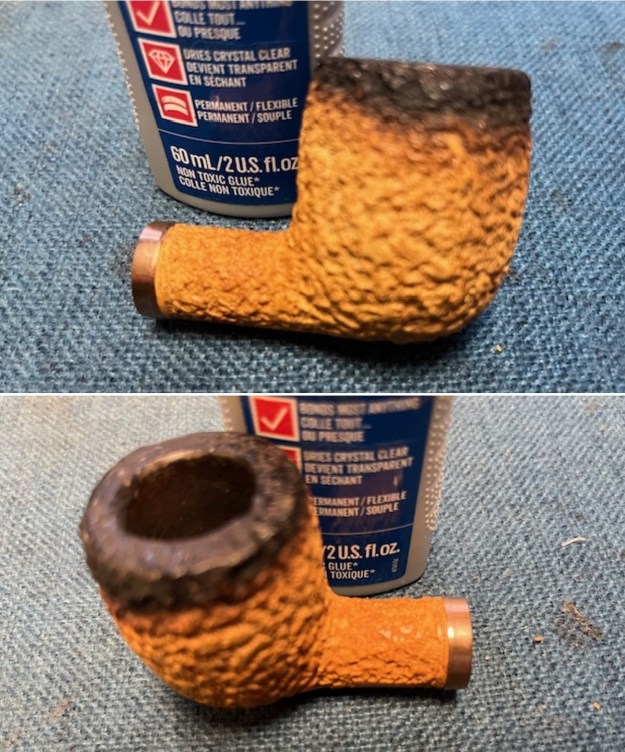
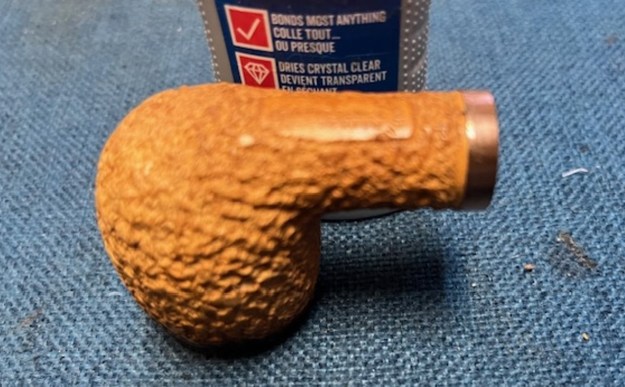
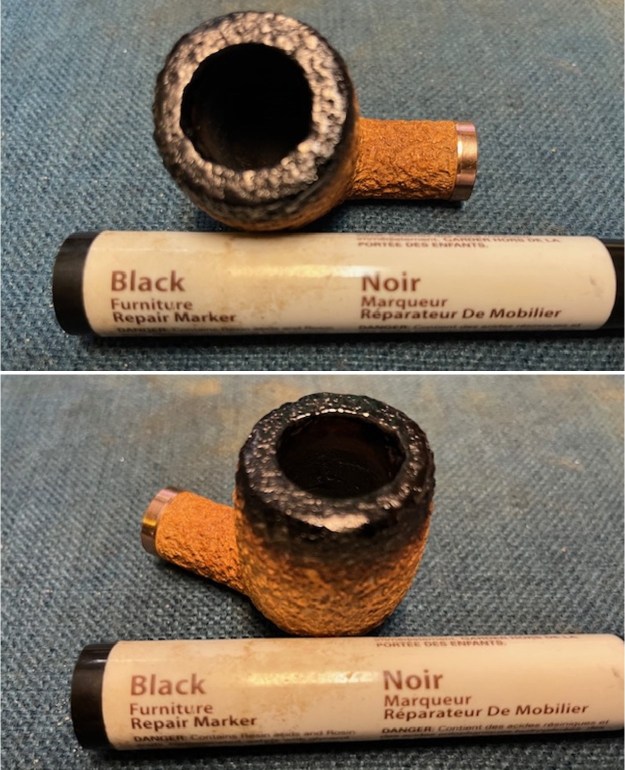
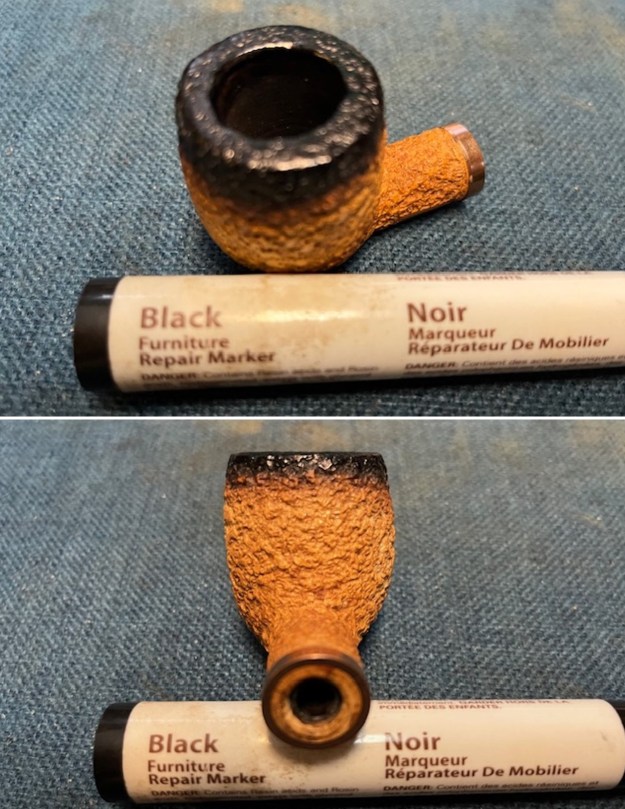
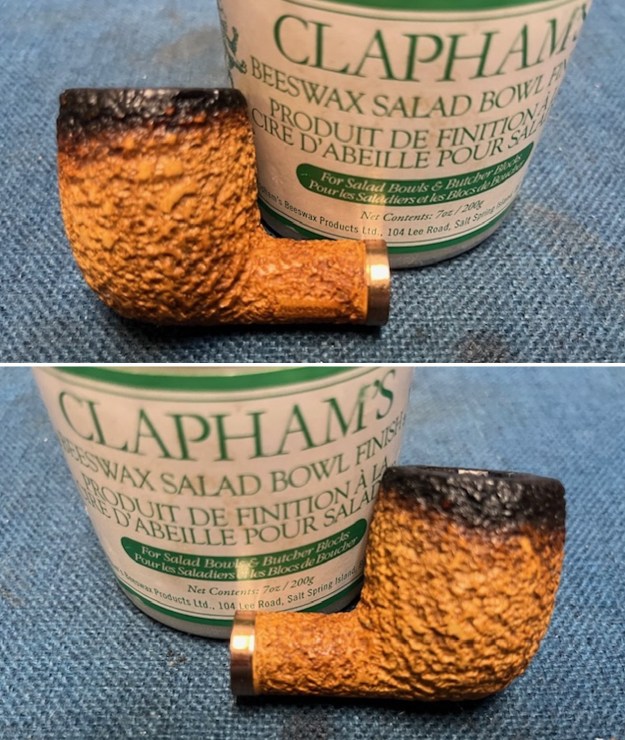
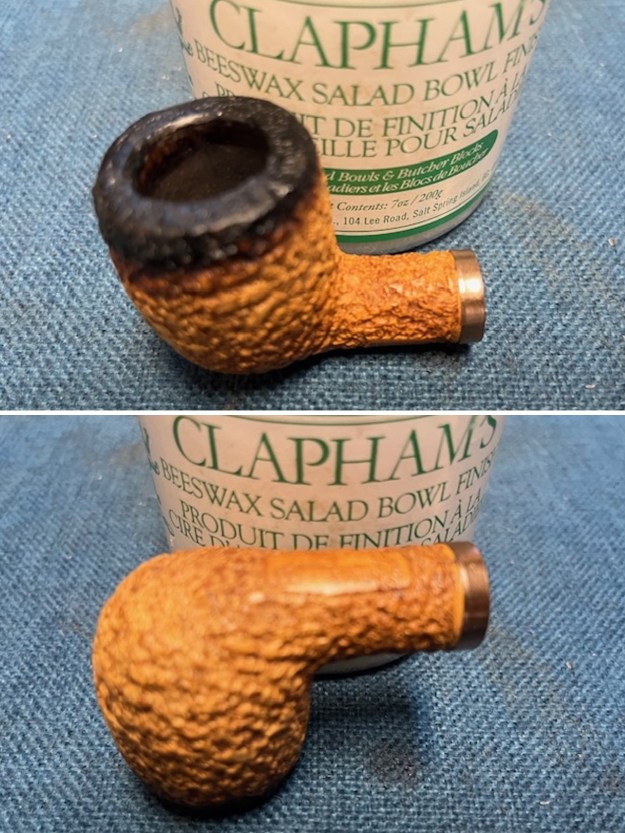
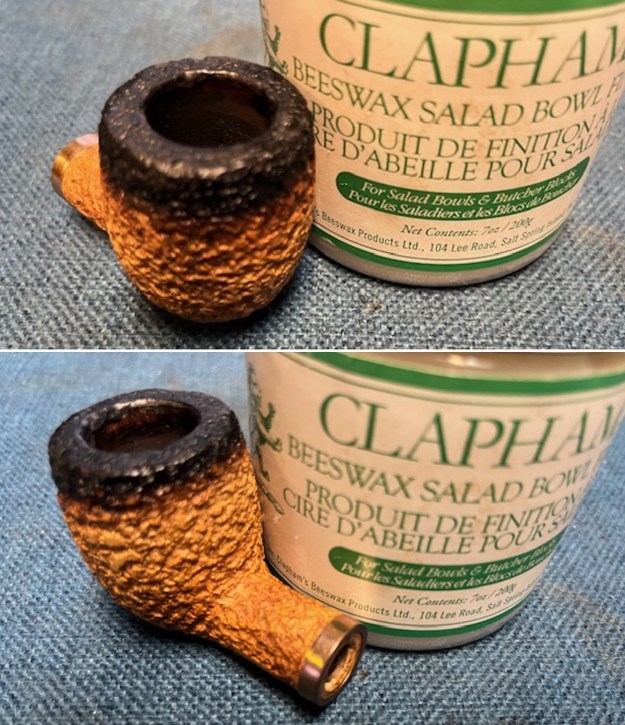
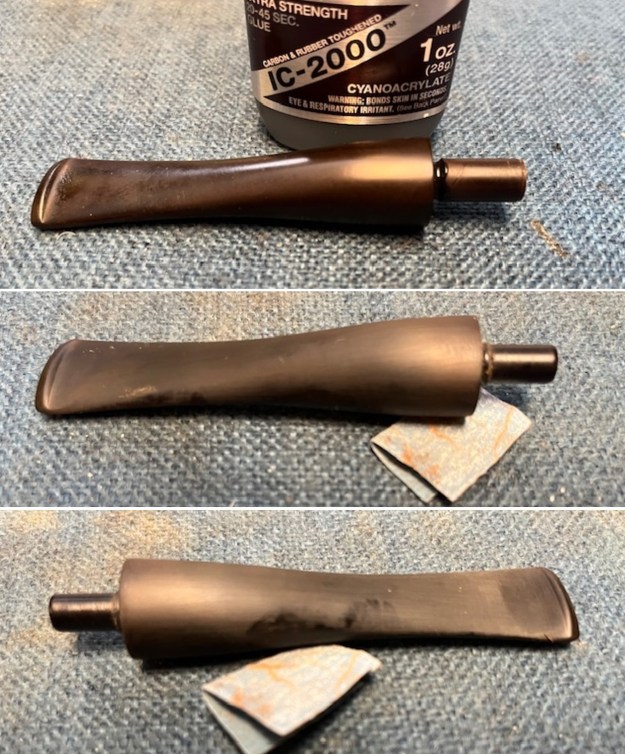
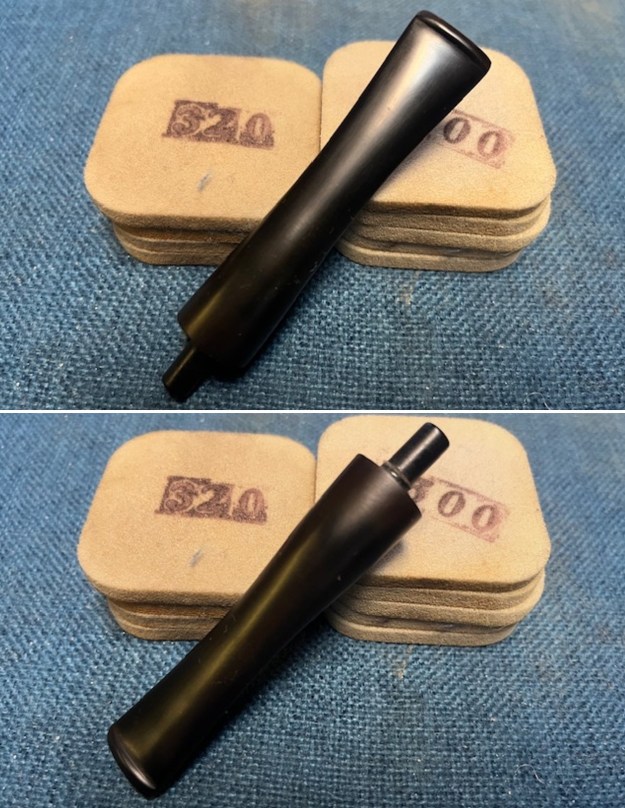
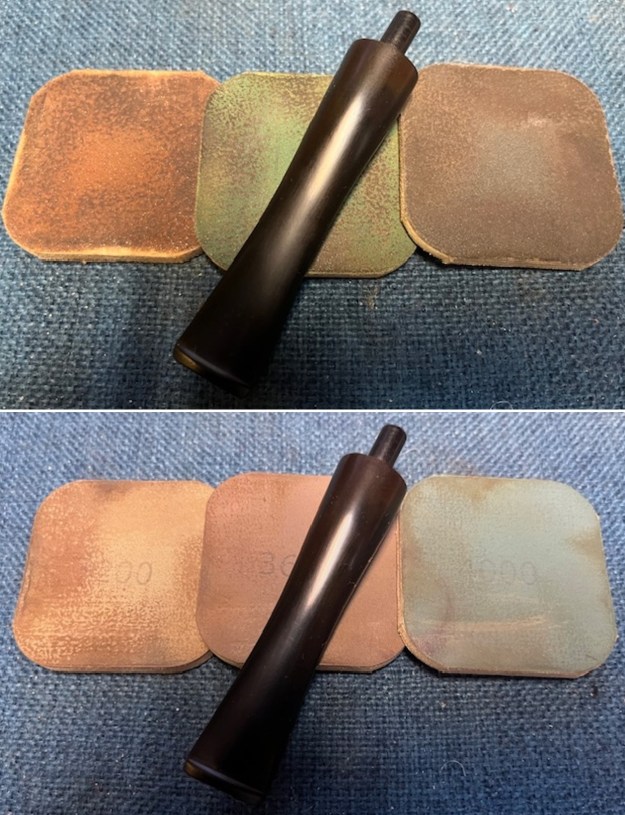
Now it is time to work on the pipe itself. Jeff reamed the bowl with a PipNet pipe reamer and followed up with a Savinelli Fitsall pipe knife to remove the cake. He scrubbed out the mortise and the airway in the shank and the stem with alcohol, cotton swabs and pipe cleaners. He scrubbed the exterior of the bowl, rim, shank and stem with a tooth brush and undiluted Murphy’s Oil Soap to remove the oils, tars and lava on the rim and the grime on the finish of the bowl. He rinsed it under running water. He dried it off with a soft cloth. He was able to remove the lava build up on the rim top and the flat surface of the rim looked better. The inner edge of the rim and the outer edge looked much better. He soaked the stem in Before & After Deoxidizer and rinsed it with hot water. I took photos of the pipe to show its condition before I started my work on it. I took close up photos of the rim top and the stem surface. I wanted to show how well it had cleaned up. The rim top and edges looked very good. Somehow in the cleanup process the black stain on the fluming of the bowl filled in many of the spots on the rim top and edges that were faded and missing stain. I took photos of the stem to show the condition it was in. There was light chatter on both sides ahead of the button.I took photos of the stamping on the sides of the shank. You can see that it is stamped as noted above and is clear and readable. I took the pipe apart and took a photo of the pipe. It is a good looking pipe with great grain. The fit of the stem on the shank was perfect though loose as the tenon was not snug in the mortise. The look of the pipe at this point was a bit dull though clean to me. I decided to try a thin brass band on the shank to see what that would do to the look. Sometimes a band is not for restoration or repair but merely for adding a bit of bling to an otherwise dull pipe.I liked the look of the band on the shank as shown in the photo above but decided to get a few more opinions about the look. Everyone I asked like the look of the band on the shank. I decided to glue the band on the shank end. I used some white all purpose glue and applied it to the inside of the band and then pressed onto the shank. I set it aside and let the glue cure. I used a black stain pen to touch up the light spots on the rim top and the edges of the bowl – both inside and outside edges. Once the stain had set in the finish the rim top and edges looked very good. I worked some Clapham’s Beeswax/Carnauba wax into the finish of the bowl. I used a horsehair show brush to work it into the rusticated finish. I set it aside to allow the wax to dry. I buffed the pipe with a soft cotton cloth to raise the shine on the meerschaum. I set the bowl aside and turned my attention to the stem. I filled in the gap of the replacement tenon in the stem with black CA glue. I also gave the surface of the tenon a coat of the glue to build it up for a snug fit in the shank. Once the glue cured I used a piece of 220 grit sandpaper to smooth out the joint and the surface of the tenon. Once finished the stem fit snugly in the shank.I sanded the stem with 320-3500 grit sanding pads to remove the tooth marks and chatter against the button edge and sand the logo. It worked well on the tooth marks but did little on the logo on the stem top.I polished the stem with micromesh sanding pads – dry sanding with 1500-12000 grit sanding pads. I wiped it down after each sanding pad with Obsidian Oil. I polished it with Before & After Pipe Stem Polish – both Fine and Extra Fine. I put the stem back on the Rusticated Thompson Genuine Block Meerschaum Gt. Britain Billiard and took it to the buffer. I buffed the stem with Blue Diamond to polish the vulcanite. Blue Diamond does a great job on the smaller scratches that remain on the surface. I gave the bowl multiple coats of Clapham Wax and the stem several coats of carnauba wax and buffed the pipe with a clean buffing pad to raise the shine. I hand buffed it with a microfiber cloth to deepen the shine. I am amazed at how well it turned out. The finished pipe is shown in the photos below. This is a beautiful Thompson Genuine Meerschaum Billiard with a smooth finish and the vulcanite taper stem has a great look. The dimensions of the pipe are Length: 5 ½ inches, Height: 1 ¾ inches, Outside diameter of the bowl: 1 ¼ inches, Chamber diameter: ¾ of an inch. The weight of the pipe is 1.83 ounces/52 grams. This is another pipe that I will be putting on the rebornpipes online store in the Meerschaum and Ceramic Pipes Section shortly, if you are interested in adding it to your collection. Thanks for walking through the restoration with me on this beauty!

As always, I encourage your questions and comments as you read the blog. Thanks to each of you who are reading this blog. Remember we are not pipe owners; we are pipe men and women who hold our pipes in trust until they pass on into the trust of those who follow us.

Cleaning Up a Fabulous Harcourt S Freehand


by Kenneth Lieblich

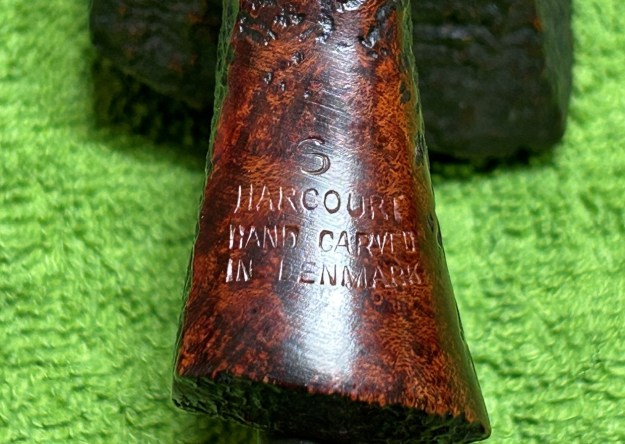
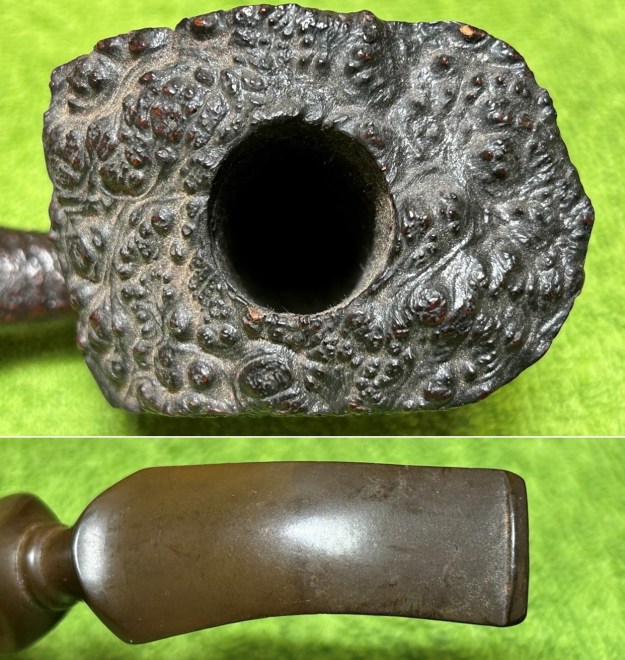
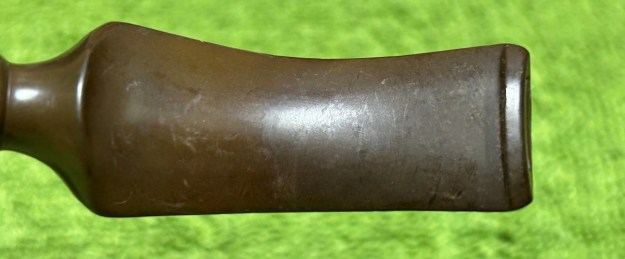
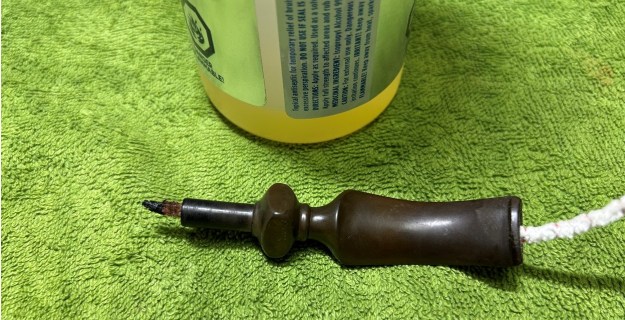
I was recently commissioned to clean up this pipe for a local gentleman – a tugboat captain, no less! I admit that this is not the sort of pipe I imagined in the mouth of a tugboat captain, but that just shows you how little I know! Anyway, great-looking pipe. It is a Harcourt S freehand and it really commands your respect. Fortunately, there wasn’t too much wrong with this beauty – just needed a good cleaning. The markings on the pipe were nice and clear. The underside of the shank read S [over] Harcourt [over] Hand Carved [over] in Denmark. There were no other marks. I went straight over to Pipedia to see what I could find about Harcourt and it confirmed the information I already knew:

The brand Harcourt was produced by Preben Holm (†) for Dunhill to secure a share of the Danish fancy boom for Dunhill’s principal pipe dealers. Later Erik Nørding made Harcourt pipes for a shorter period. These pipes are sometimes (partially) rusticated. It had been reported that the second generation of Harcourt pipes were sold exclusively through Dunhill stores, but we now know through Rich Mervin that the Brick Church Pipe Shop, a chain of 3 stores in NJ sold Danish freehands in the 1970s and 80s including Knute, Ben Wade, and Harcourt. They were also an authorized Charatan and Dunhill retailer. So, apparently Harcourt freehands were sold through at least some Dunhill dealers as well as the Dunhill stores. The stamping includes a letter, and seem to adhere to the Preben Holm grading scale with grades of A, B, C and D in ascending order.

Pipephil didn’t have much more to add:

Anglo-Danish brand whose pipes were made by Nording and Preben Holm in the 1960s for the US distributor Lane Ltd. In the 1970s these pipes were crafted for Dunhill at Preben Holm’s workshop.

I know from Steve’s previous Harcourt restorations (see here) that it is not entirely clear what the ‘S’ refers to. Personally, I find it hard to believe that Preben Holm’s grading went from A to S, but I do wonder if the S stands for ‘sandblast’ – it certainly fits if that’s the case. If you have any thoughts, please let me know in the comments below. Let’s get cleaning! I cleaned the inside of the stem with both pipe cleaners and cotton swabs dipped in 99% lemon-infused isopropyl alcohol. I scrubbed thoroughly to make sure the interior was clean. It was fairly dirty inside. The goal of the next step is the removal (or minimization) of oxidation. Going to my sink, I used cream cleanser, cotton rounds, and a toothbrush, and scoured the stem to remove as much surface oxidation as possible. As the photos show, the result is a hideous brownish mess – but better off the stem than on it.Once the stem was reasonably clean, I soaked it overnight in some Briarville Stem Oxidation Remover. This solution works to draw oxidation in the stem to the surface. This is a major aid and an important step in ensuring a clean stem. The following day, I drew the stem out from its bath and scrubbed the lingering fluid with a toothbrush.The penultimate step for the stem is sanding. I use all nine of the micromesh sanding pads (1,500 through 12,000 grit) to sand out flaws, even out the vulcanite, and provide gentle polishing of the finished surface. I also apply pipe-stem oil while using the last five micromesh pads. There was a wonderful, deep black shine to the stem when I was done.Now that the stem is (nearly) complete, I can move on to the stummel. The first step for me is to ream out the bowl – that is to say, remove all the cake inside the bowl. This accomplishes a couple of things. First (and most obviously), it cleans the bowl and provides a refurbished chamber for future smoking. Second, when the old cake is removed, I can inspect the interior walls of the bowl and determine if there is damage or not. I used a reamer, a pipe knife, and a piece of sandpaper taped to several wooden dowels. Collectively, these ensure that all the debris is removed.Similar to the stem, I then cleaned the stummel with both pipe cleaners and cotton swabs dipped in 99% lemon-infused isopropyl alcohol. It took quite a bit of cotton to get clean.I then decided to ‘de-ghost’ the pipe – that is to say, exorcize the remaining filth from the briar. I filled the bowl and the shank with cotton balls, then saturated them with 99% isopropyl alcohol. I let the stummel sit overnight. This caused any remaining oils, tars and smells to leach out into the cotton.To tidy up the briar, I also wiped down the outside with some oil soap on cotton rounds (and a toothbrush on the plateau rim). This does a good job of cleaning any latent dirt on the surface of the briar. The last step of the cleaning process is to scour the inside of the stummel with some soap and tube brushes. This is the culmination of a lot of hard work in getting the pipe clean.No micromesh needed on this stummel. I rubbed some Before & After Restoration Balm into the briar and let it sit for 20 minutes or so. The balm moisturizes the wood and gives a beautiful depth to the briar. I then buffed it with a microfibre cloth. For the final step, I took the pipe to my bench buffer and carefully polished it – with three coats of conservator’s wax. This procedure makes the pipe look its best – the stummel sings and the stem glows.All done! This Harcourt S freehand looks fantastic again and is ready to be enjoyed by its new owner. It was a pleasure to work on. It’s a heavy pipe, but a gorgeous pipe. The approximate dimensions of the pipe are as follows: length 6¾ in. (171 mm); height 2⅞ in. (75 mm); bowl diameter 1⅞ in. (49 mm); chamber diameter ¾ in. (20 mm). The weight of the pipe is 3⅓ oz. (100 g). I hope you enjoyed reading the story of this pipe’s restoration as much as I enjoyed restoring it. If you are interested in more of my work, please follow me here on Steve’s website or send me an email at kenneth@knightsofthepipe.com. Thank you very much for reading and, as always, I welcome and encourage your comments.
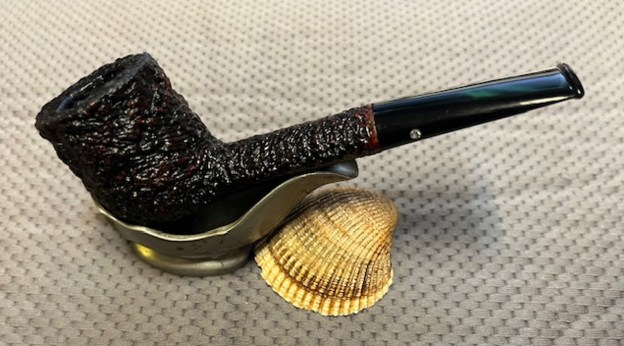
Restoring a “Malaga” Bent Billiard


by Steve Laug

The next pipe I have chosen is a medium sized Bent Billiard. The stem is a vulcanite taper. We purchased it recently as one of two pipes from eBay from a seller in Aurora, Colorado, USA. The contrast of the brown stains on this oil cured pipe makes the grain stand out. It was stamped left side of the shank and read “Malaga”. On the right side it is stamped Imported Briar. The pipe was lightly smoked. The bowl was moderately caked there was a spotty coat of lava on the rim top and inner edge. The condition of the rim and top look very good. The black vulcanite stem was in good condition other than being dirty and having light tooth marks and chatter on both sides of the stem ahead of the button. There were no stampings or logo on the stem itself though it is certainly the original. Malaga stems were well fit but never bore any identifying marks on the surface. Jeff took photos of the pipe before his cleanup work. They tell the story and give a glimpse of the pipe. Jeff took close up photos of the bowl and rim to capture the condition of the pipe before he started his cleanup work. The moderate cake in the bowl and the light lava on the edges and rim top are visible. The next photos show the stem surface. There is light oxidation and light tooth marks and chatter on both sides near the button and wear on the button surface and edges. He also took a photo of the bottom of the bowl and shank to show the beautiful grain around the bowl. The photo is a little out of focus but it does show the general condition of the bowl and wear on the finish. It is very dirty but this is another beautiful pipe.He took photos of the stamping on the sides of the shank. They are clear and readable on the whole though the photos are a little out of focus.I am including the link to a blog that I wrote that gives some of the history of the Malaga brand and the Malaga Pipe Shop in Royal Oak, Michigan in the USA. I have written an earlier blog to give a little history of the Malaga Brand and the pipemaker, George Khoubesser. Here is the link – https://rebornpipes.com/tag/malaga-pipes/.That blog also includes links to a catalogue and the history of the pipemaker George Khoubesser. Follow the link to get a feel for the brand and the pipemaker.

I am also including a flyer “The Pipe of True Smoking Enjoyment” that Malaga sent with each pipe they made. The language of the brochure is well written and gives a clear picture of how Malaga sees the process of breaking in their pipes. Take time to read it as it is very much written in the language of the times.Now it is time to work on the pipe itself. Jeff reamed the bowl with a PipNet pipe reamer and followed up with a Savinelli Fitsall pipe knife to remove the cake. He scrubbed out the mortise and the airway in the shank and the stem with alcohol, cotton swabs and pipe cleaners. He scrubbed the exterior of the bowl, rim, shank and stem with a tooth brush and undiluted Murphy’s Oil Soap to remove the oils, tars and lava on the rim and the grime on the finish of the bowl. He rinsed it under running water. He dried it off with a soft cloth. He was able to remove the lava build up on the rim top and the flat surface of the rim looked very good. The inner edge of the rim looked very good. The outer edge looked very good. He soaked the stem in Before & After Deoxidizer and rinsed it with hot water. I took photos of the pipe to show its condition before I started my work on it. I took close up photos of the rim top and the stem surface. I wanted to show how well it had cleaned up. The rim top and edges looked very good. I took photos of the stem to show the condition it was in. There were light tooth marks on both sides ahead of the button.I took photos of the stamping on the sides of the shank. You can see that it is stamped as noted above. It is clear and readable on the left side but the stamping on the right is faint on the left side of the stamp. I took the pipe apart and took a photo of the pipe. It is a good looking pipe with great grain. I polished the briar with micromesh sanding pads – dry sanding with 1500-12000 grit pads. I wiped the bowl down after each pad with a damp cloth to remove the sanding dust. By the end of the process the pipe bowl looked very good. I worked some Before & After Restoration Balm into the surface of the briar with my fingertips to clean, enliven and protect the briar. I let the balm sit for 15 minutes and then buffed with a cotton cloth to raise the shine. The photos show the bowl at this point in the restoration process. I set the bowl aside and turned my attention to the vulcanite stem. I sanded the stem with 320-3500 grit sanding pads to remove the tooth marks and chatter against the button edge and sand the logo. It worked well on the tooth marks but did little on the logo on the stem top.I polished the stem with micromesh sanding pads – dry sanding with 1500-12000 grit sanding pads. I wiped it down after each sanding pad with Obsidian Oil. I polished it with Before & After Pipe Stem Polish – both Fine and Extra Fine. I put the stem back on the “Malaga” Imported Briar Bent Billiard and took it to the buffer. I buffed the bowl and stem with Blue Diamond to polish the briar and the vulcanite. Blue Diamond does a great job on the smaller scratches that remain in both. I gave the bowl and the stem several coats of carnauba wax and buffed the pipe with a clean buffing pad to raise the shine. I hand buffed it with a microfiber cloth to deepen the shine. I am amazed at how well it turned out. The finished pipe is shown in the photos below. This is a beautiful “Malaga” Bent Billiard with a smooth finish and the vulcanite taper stem has a great look. The dimensions of the pipe are Length: 5 ½ inches, Height: 1 ¾ inches, Outside diameter of the bowl: 1 ¼  inches, Chamber diameter: ¾ of an inch. The weight of the pipe is 1.38 ounces/39 grams. This is another pipe that I will be putting on the rebornpipes online store in the American Pipe Makers and Pipemaking Companies Section shortly, if you are interested in adding it to your collection. Thanks for walking through the restoration with me on this beauty!
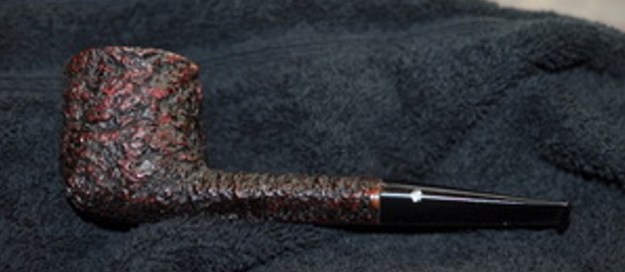
As always, I encourage your questions and comments as you read the blog. Thanks to each of you who are reading this blog. Remember we are not pipe owners; we are pipe men and women who hold our pipes in trust until they pass on into the trust of those who follow us.