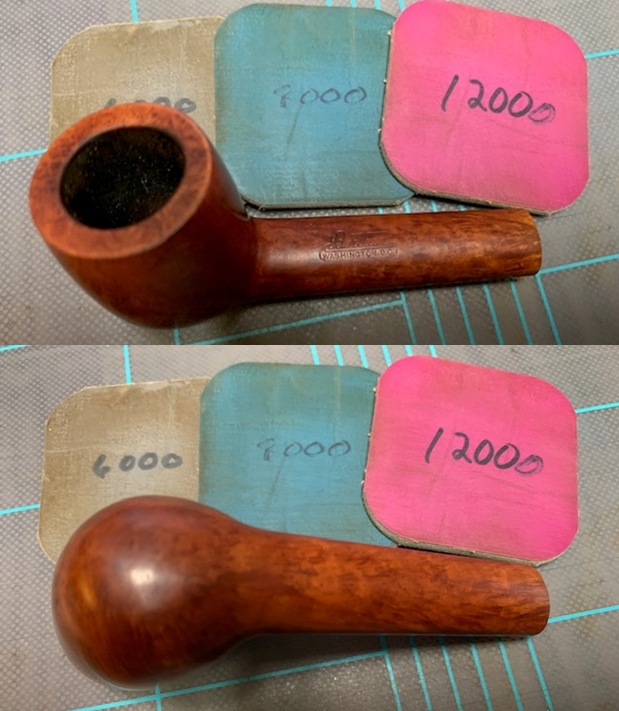
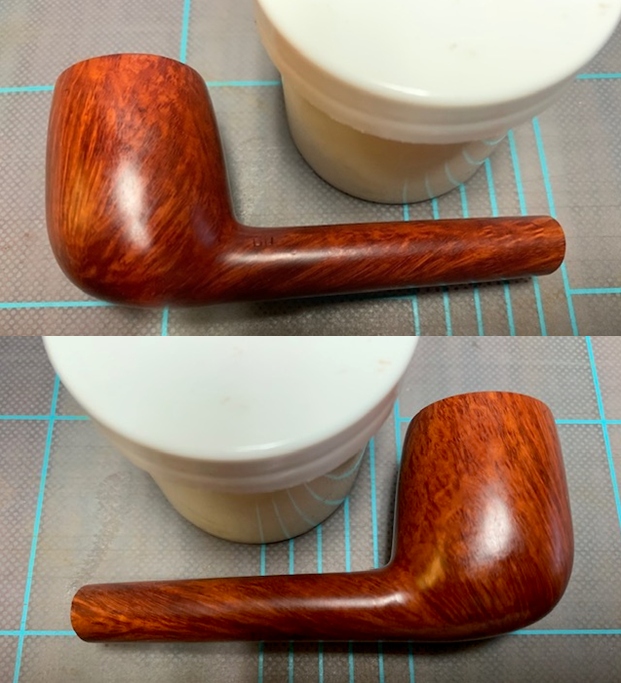
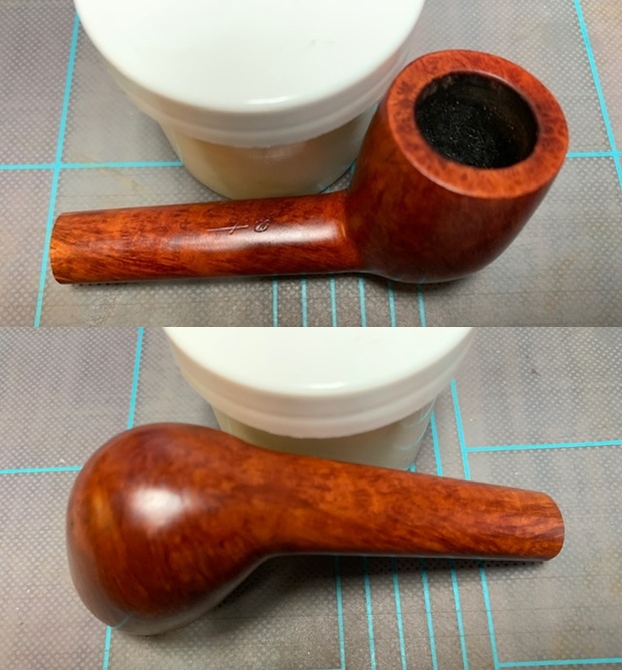
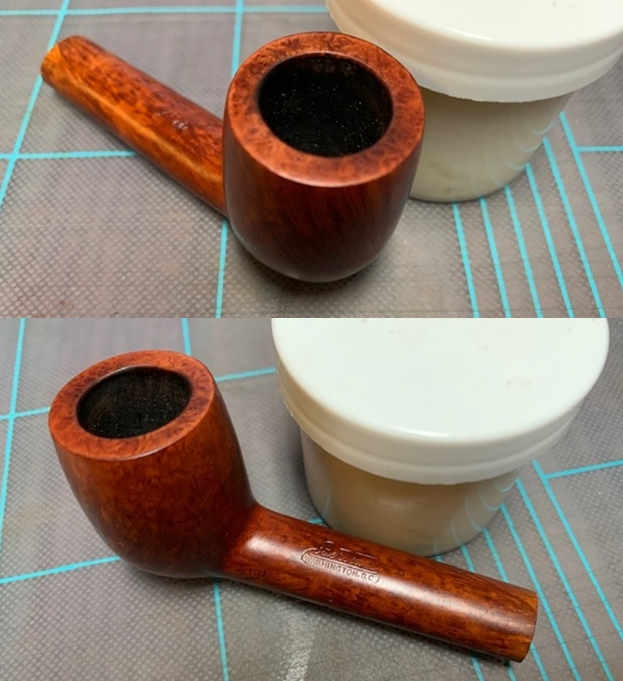
Tag Archives: Stem repairs

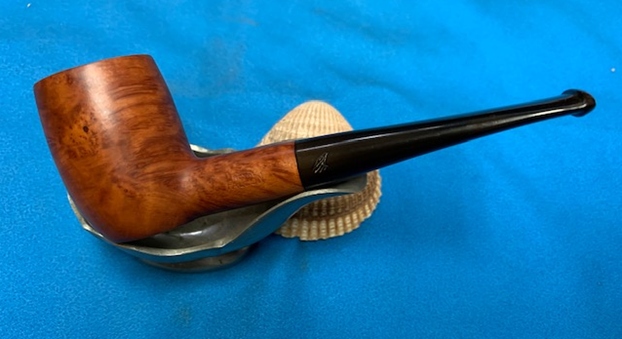
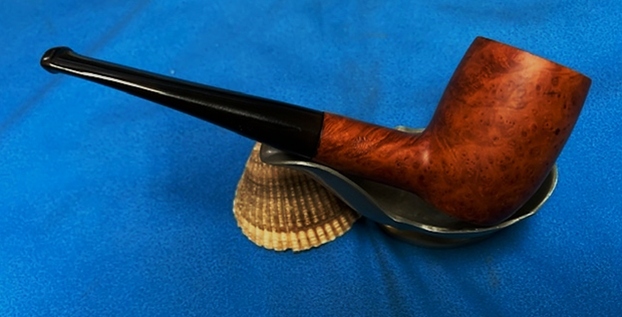
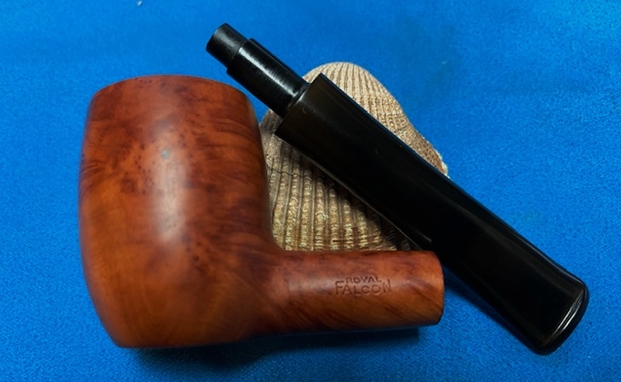
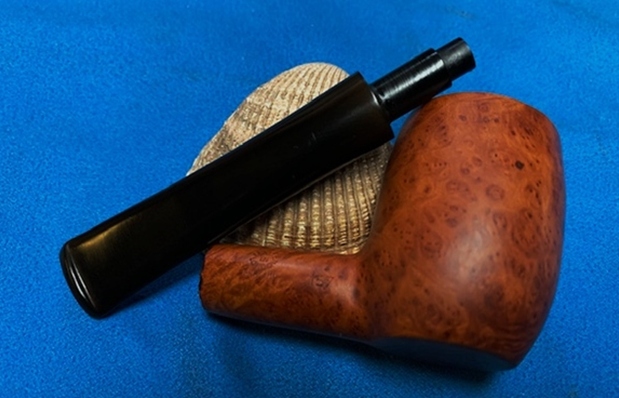
A Rebirth for a Comoy’s Made Royal Falcon 157 Tankard


Blog by Steve Laug

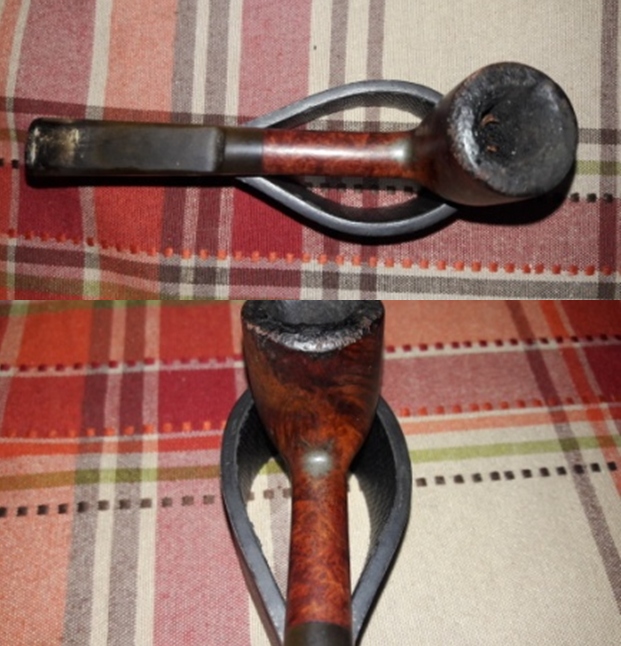
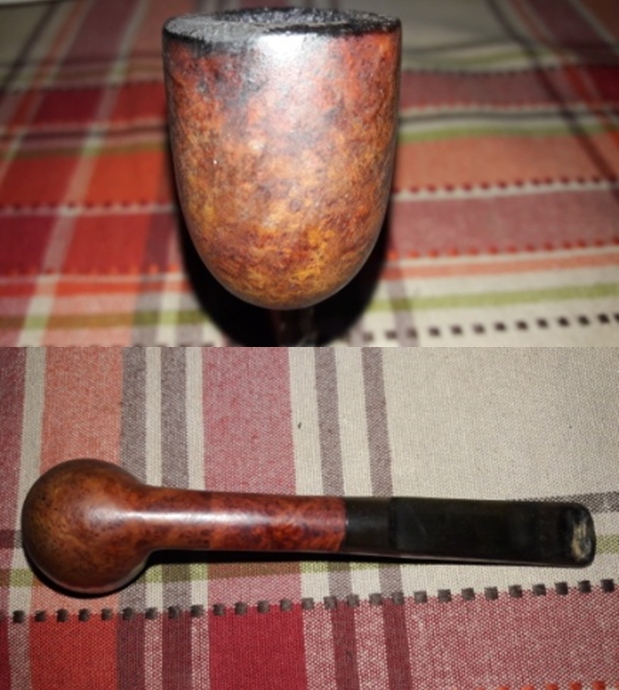
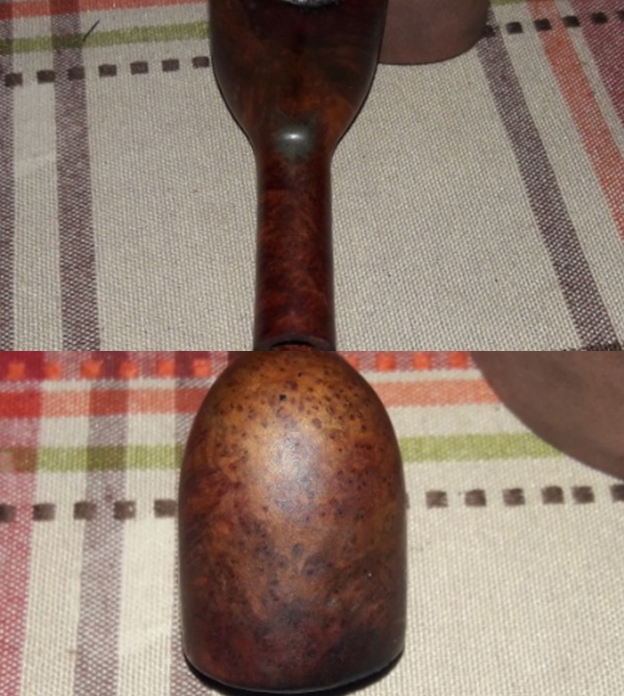
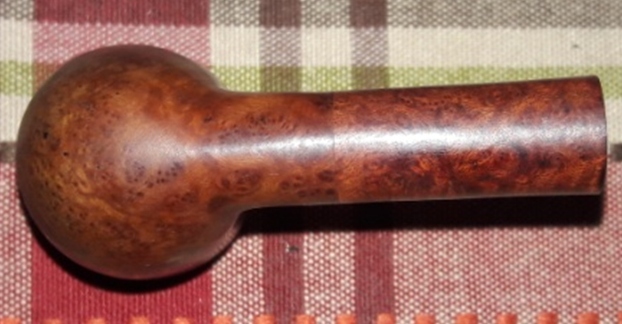
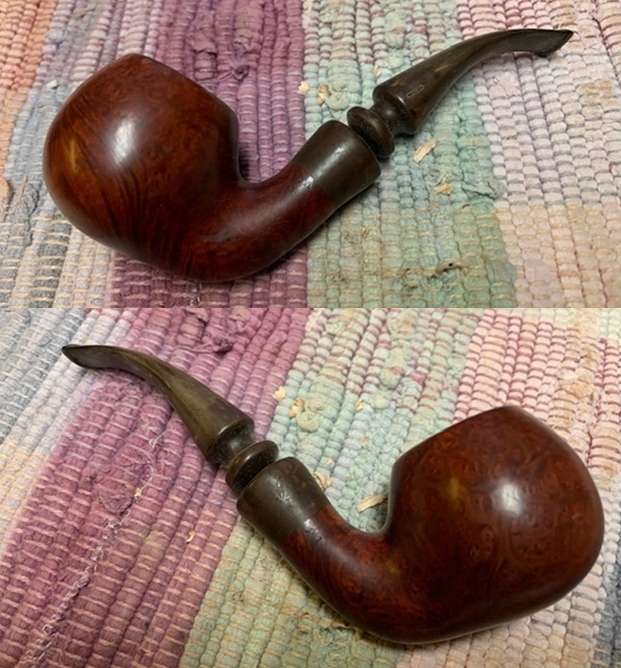
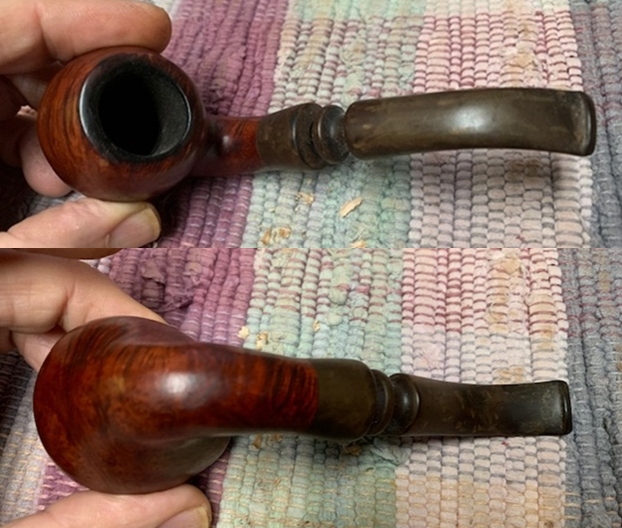
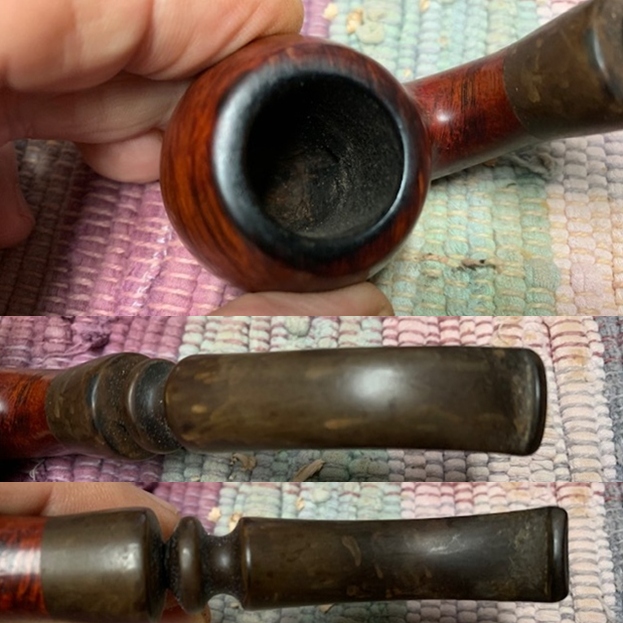
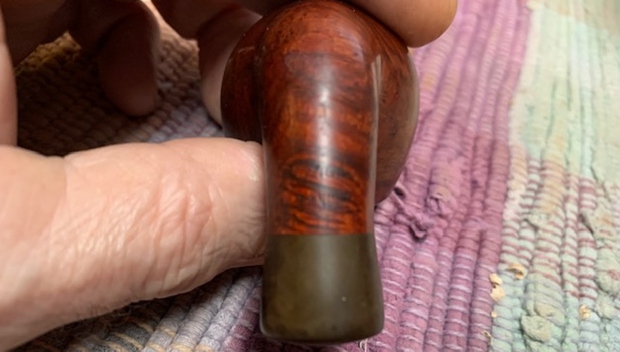
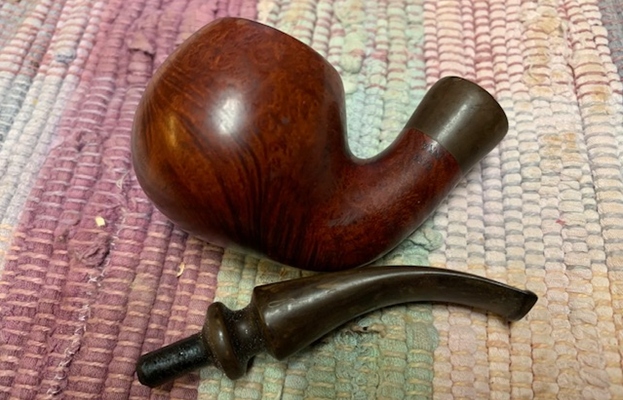
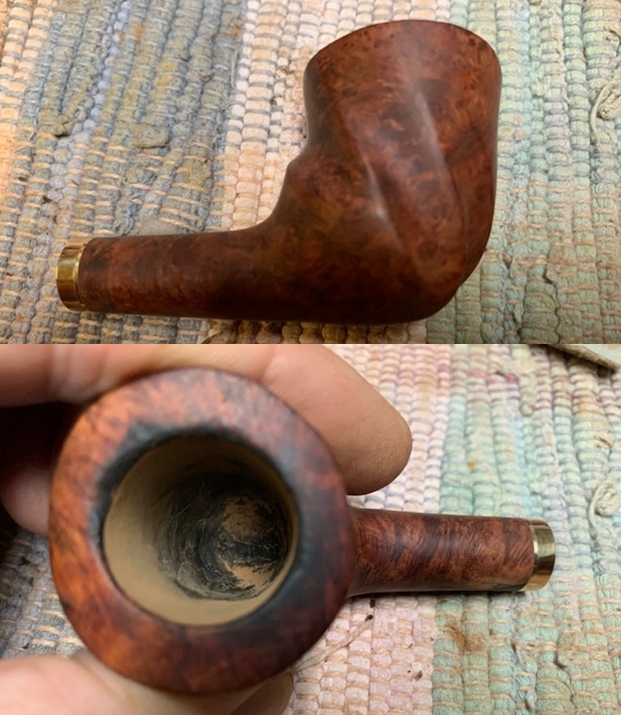
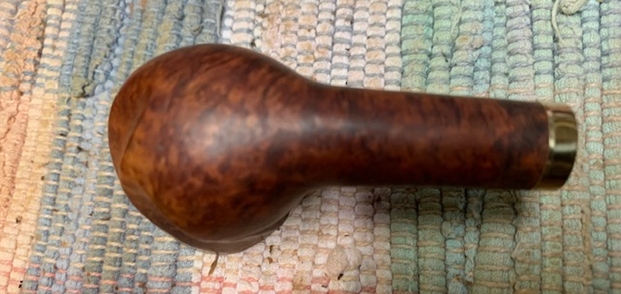
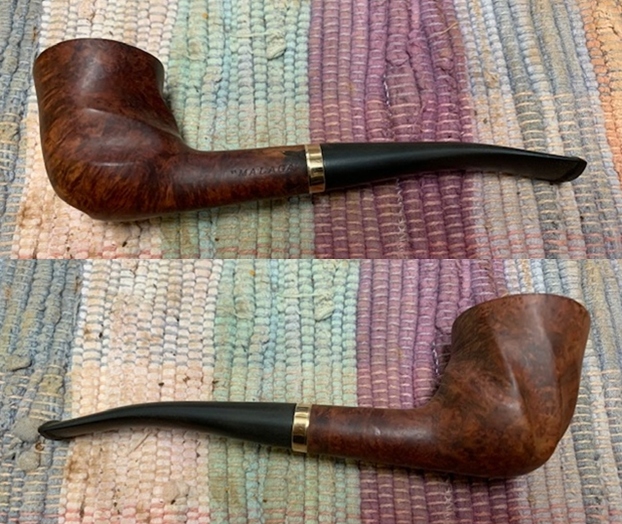
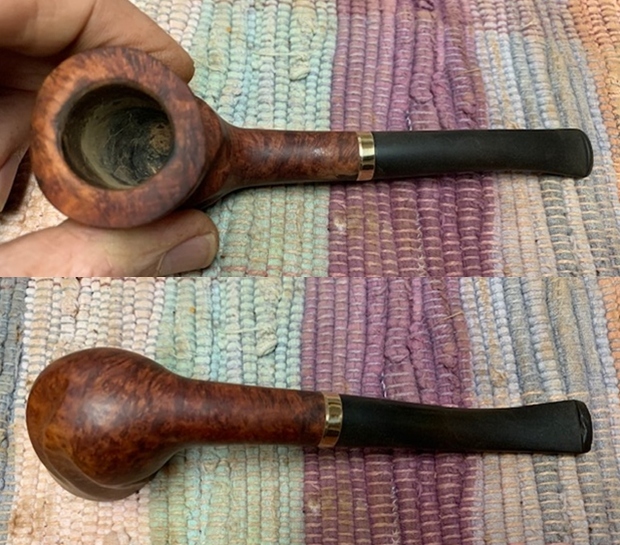
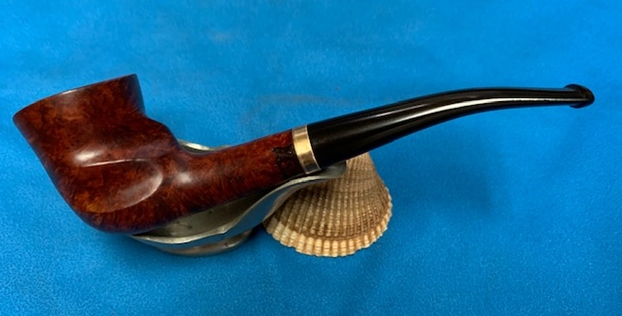
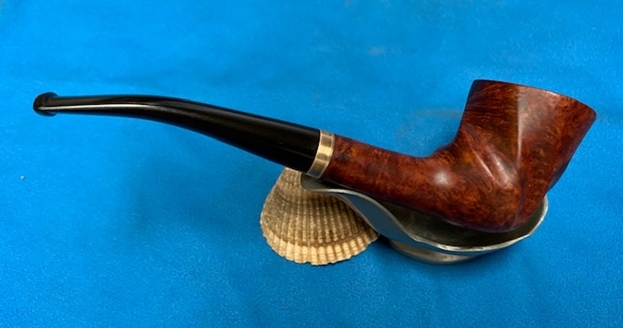
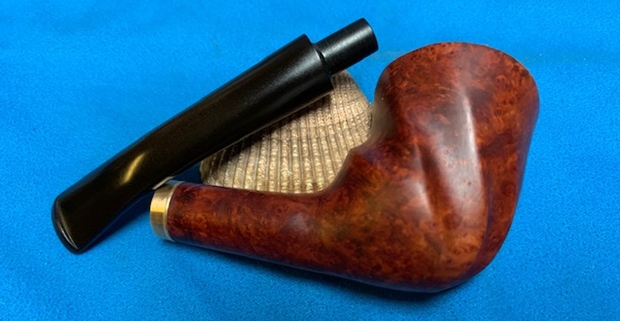
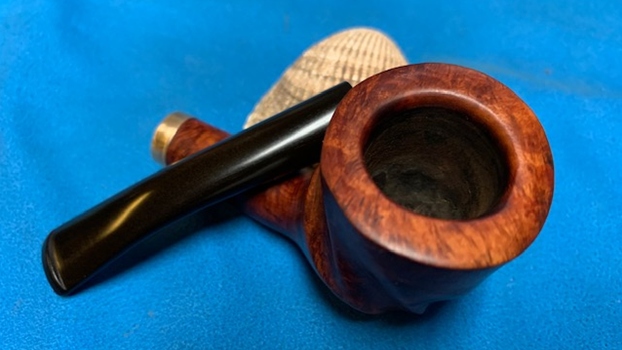
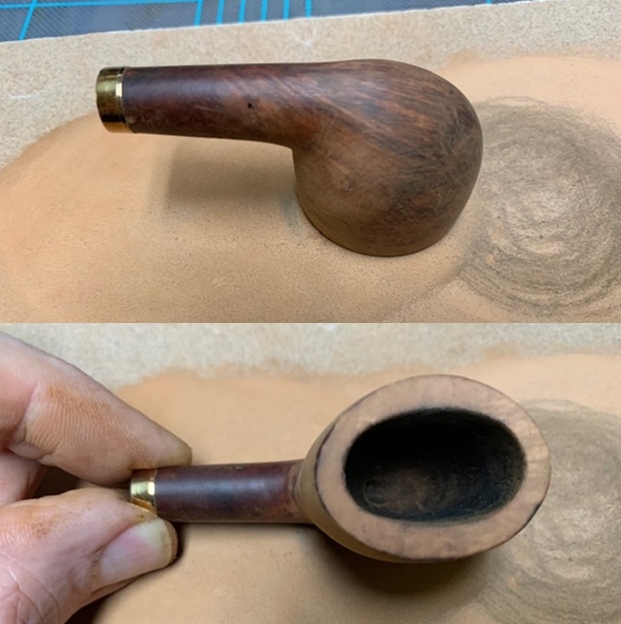
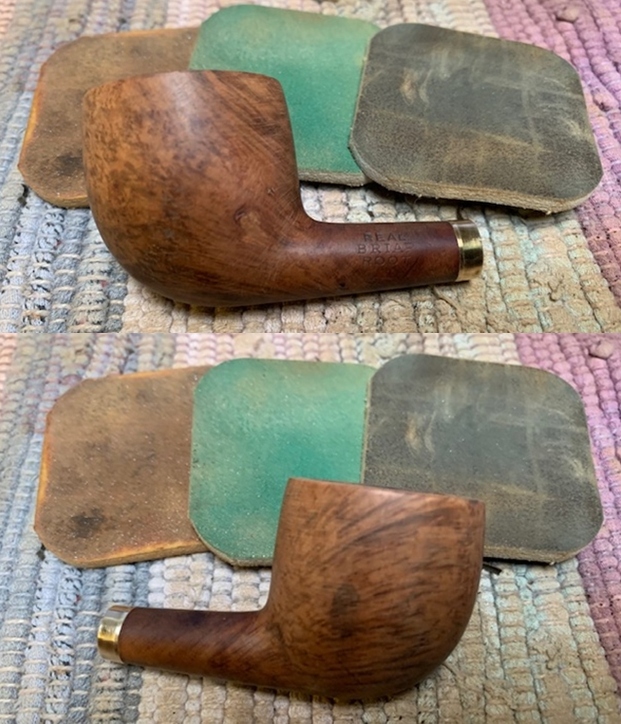
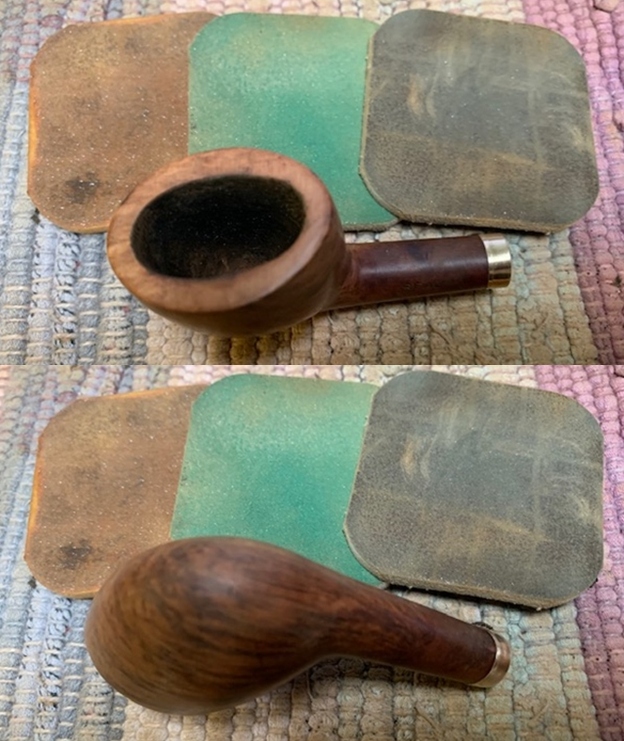
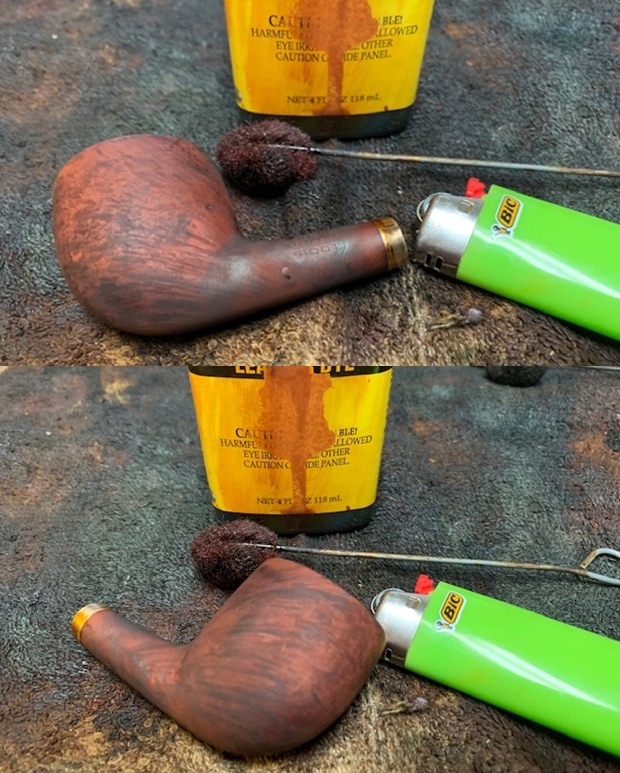
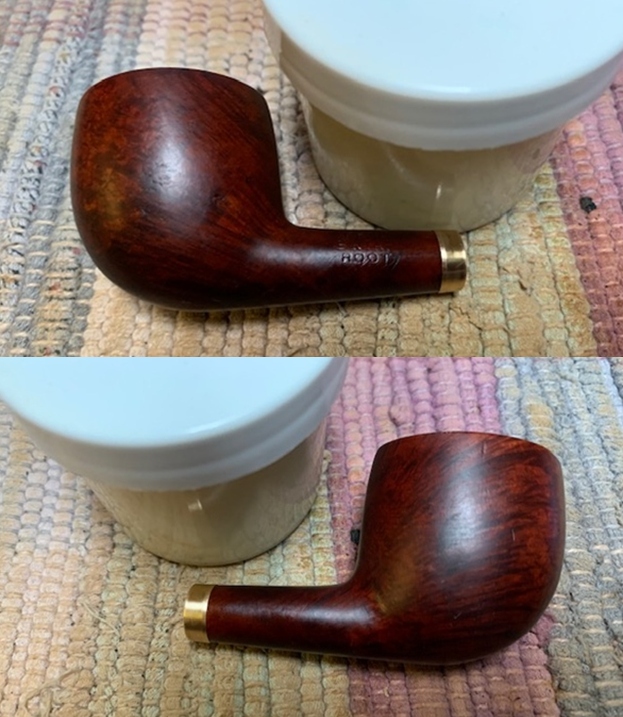
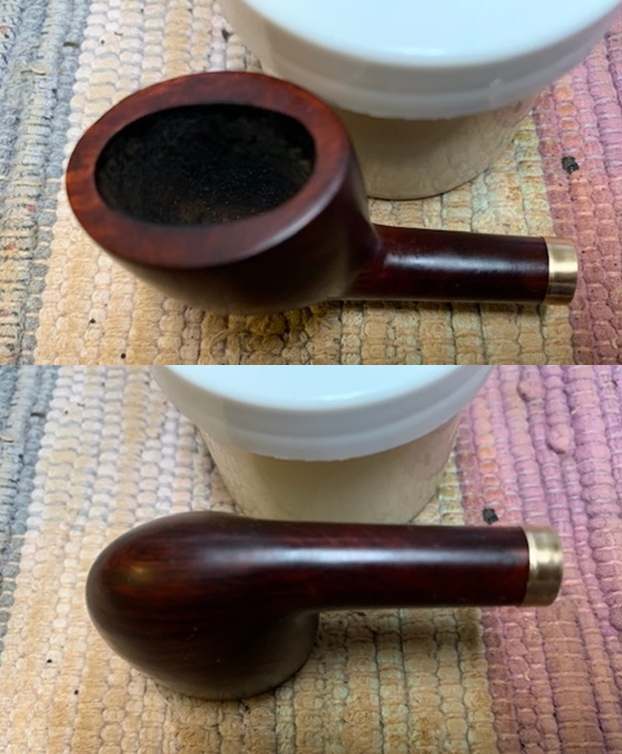
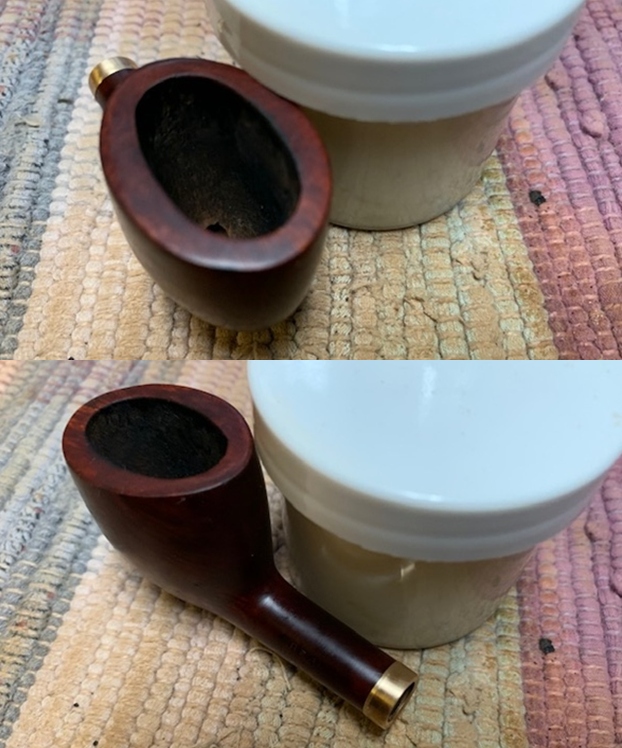
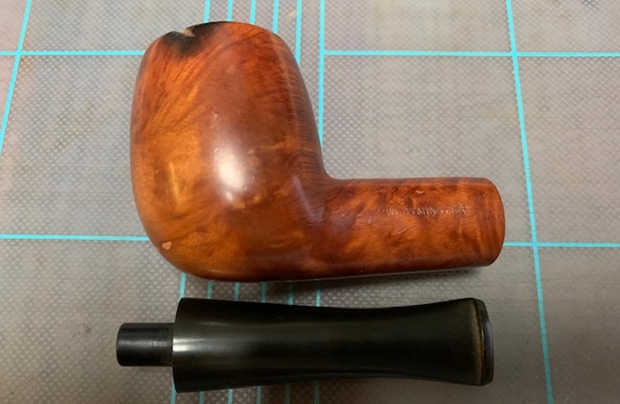
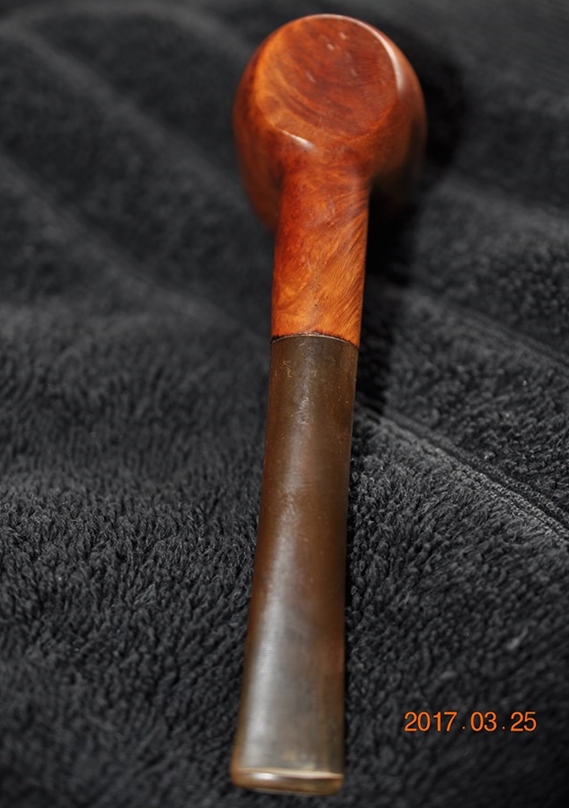
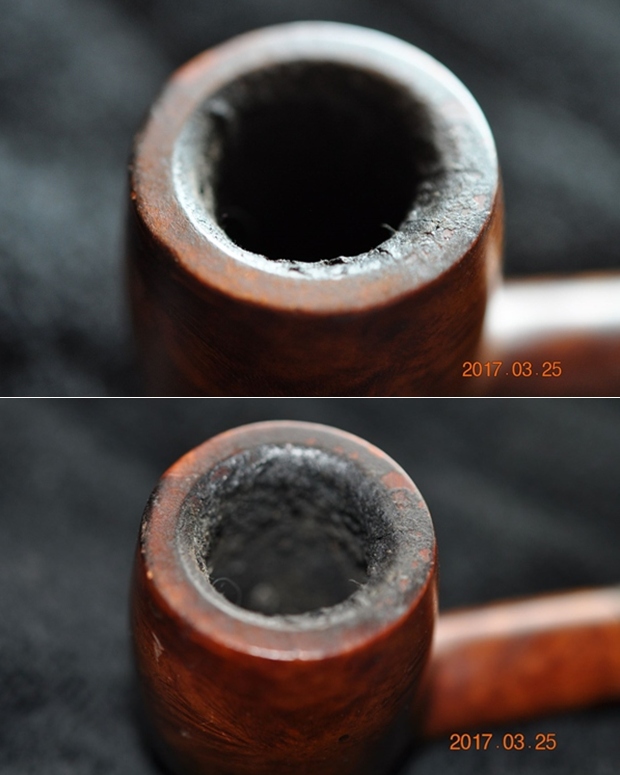
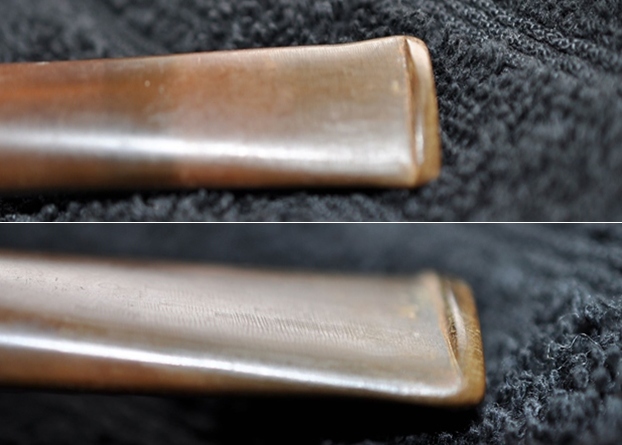
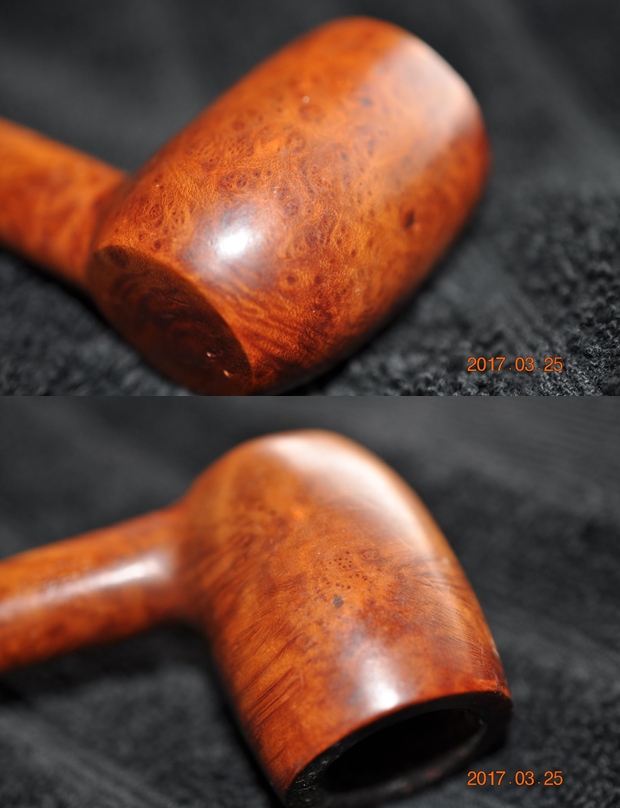
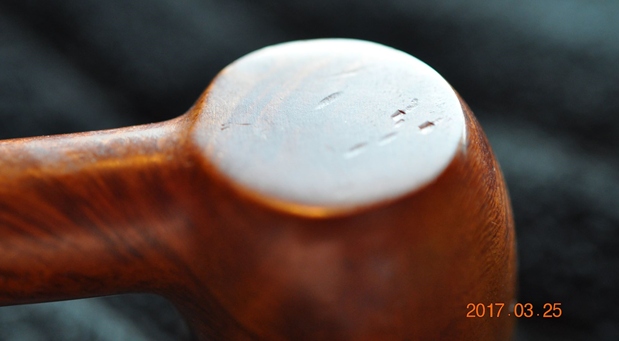
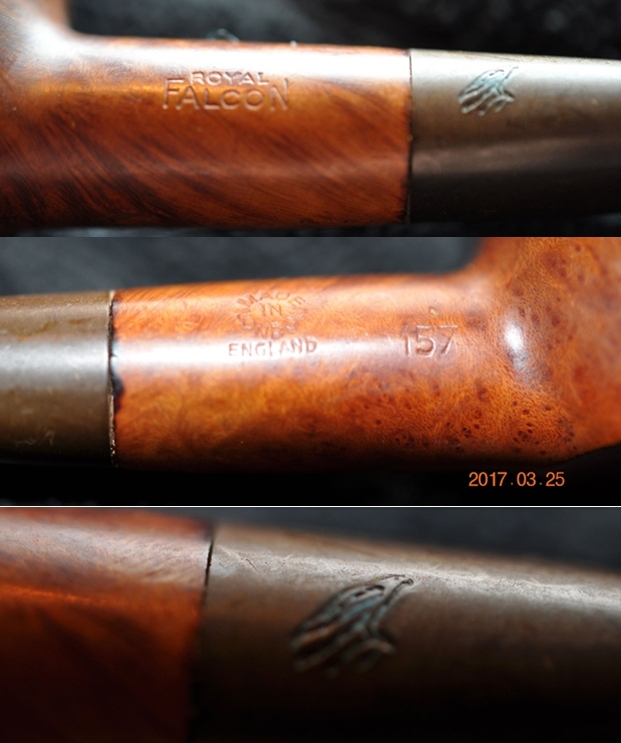
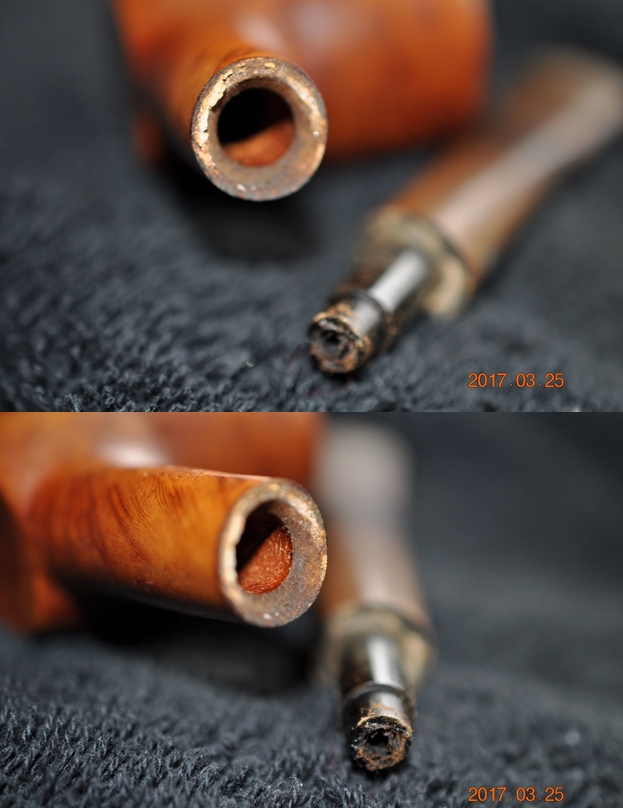
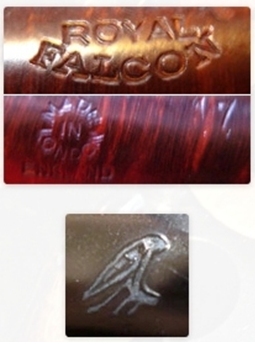
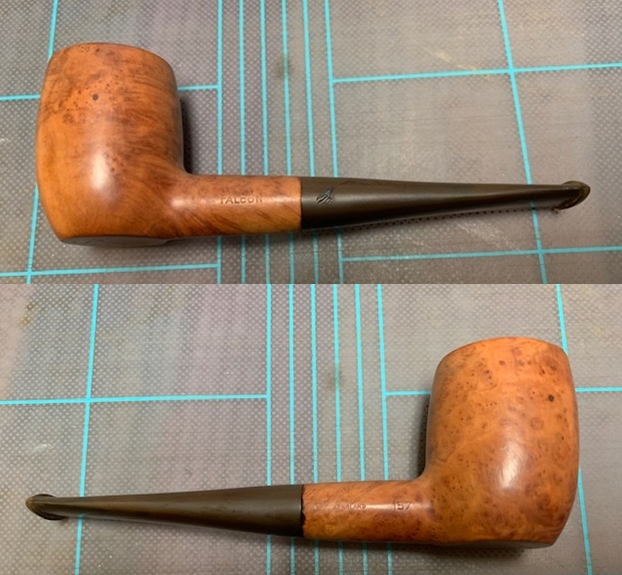
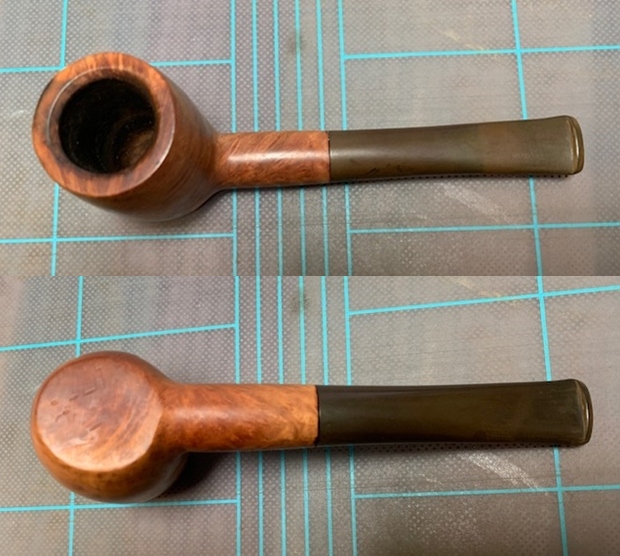
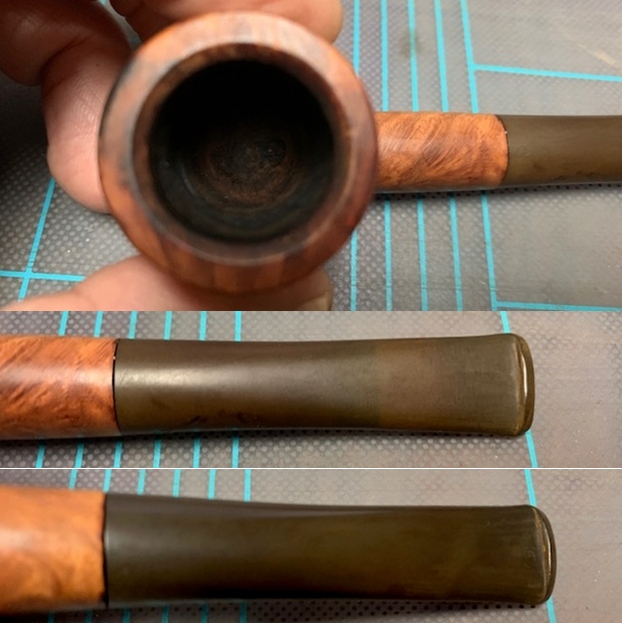
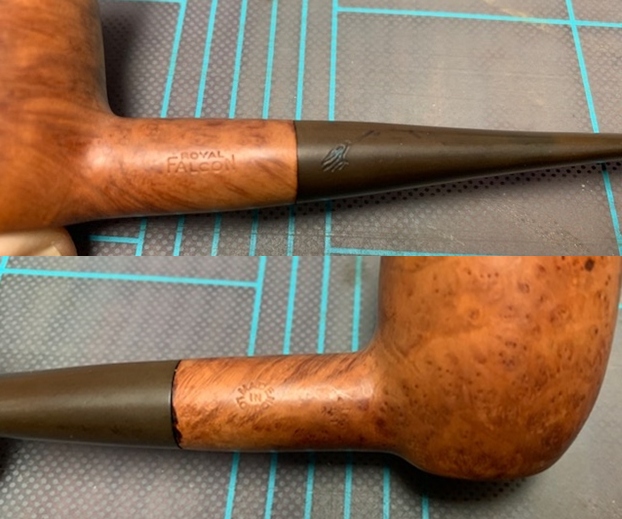
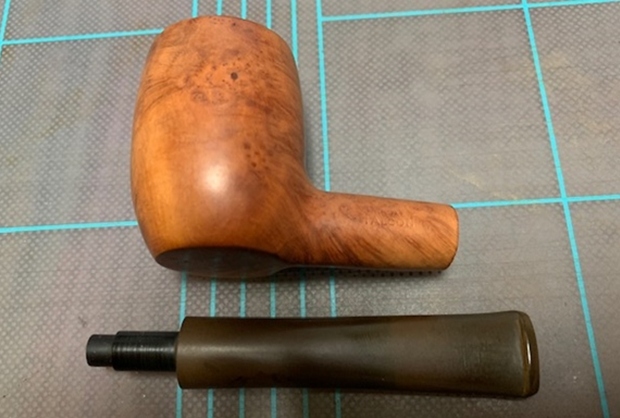
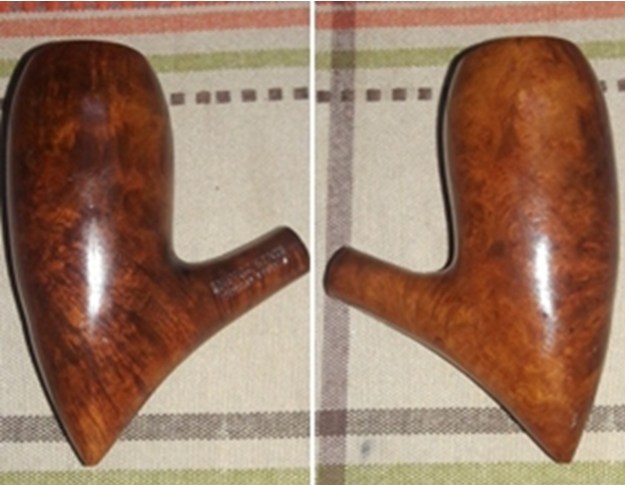
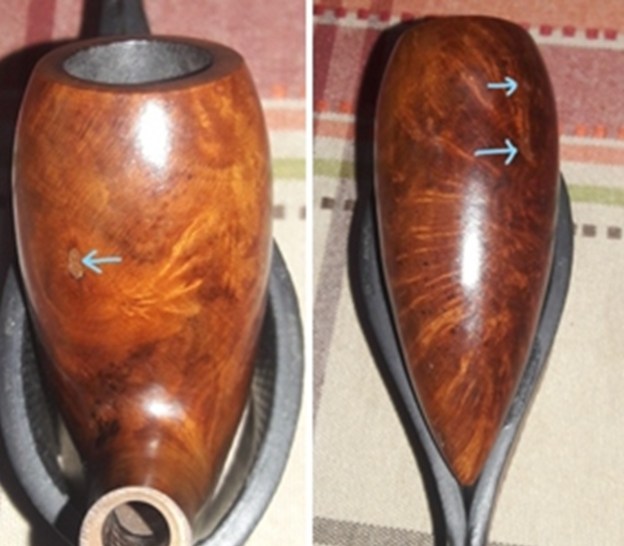
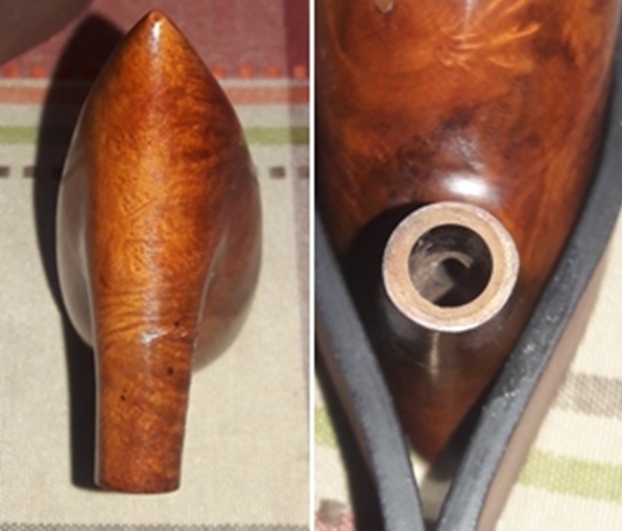
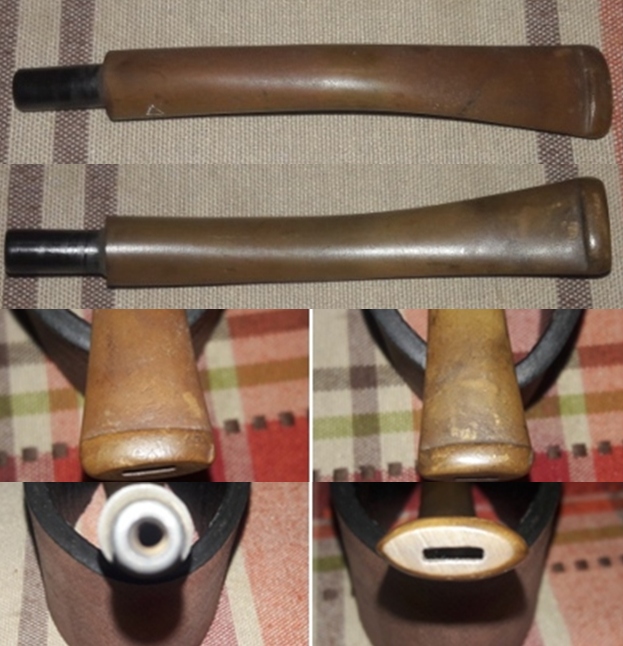
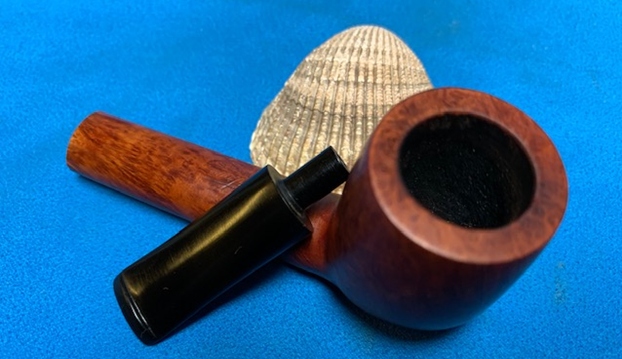
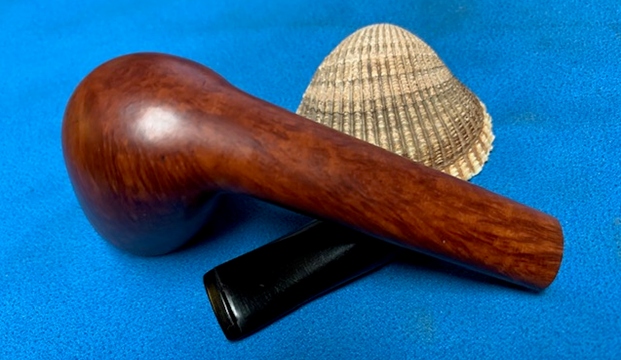
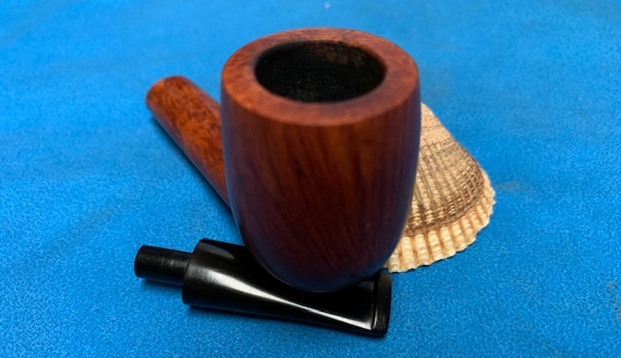
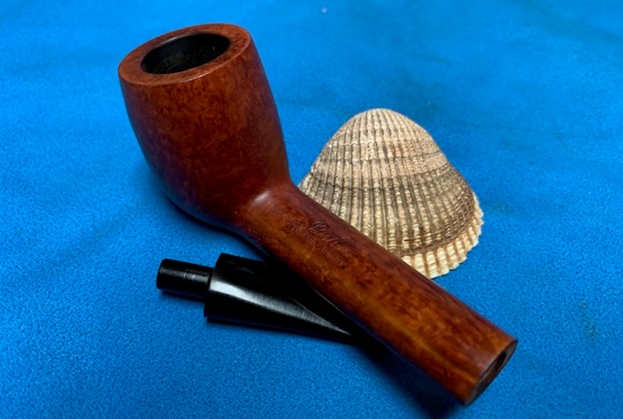
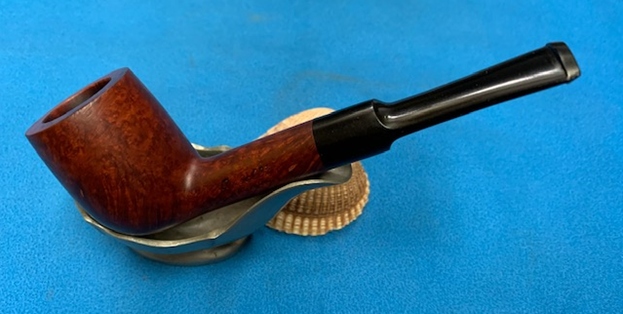
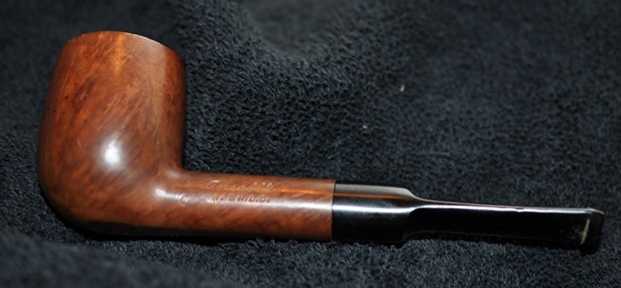
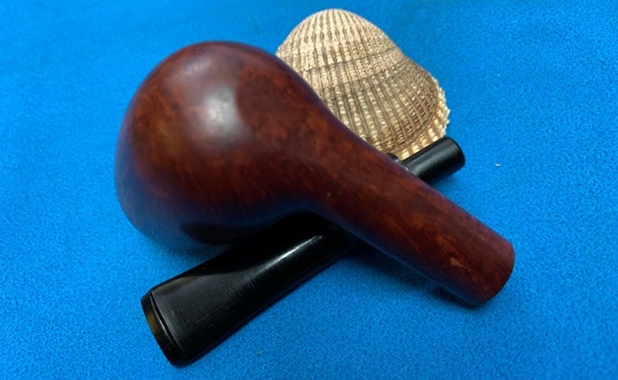
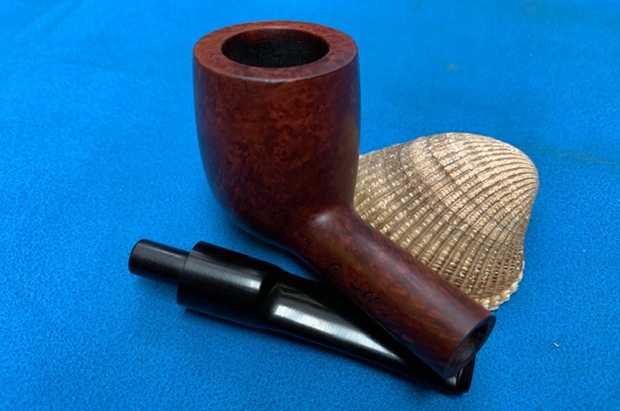
The next pipe on the work table came to me from one of our estate purchases. Between us we pick up quite a few pipes for restoration. I try to work them into the restoration queue so that I can keep them moving. The next one is interestingly shaped Tankard with a mix of grains around the bowl. It was stamped on both sides of the shank. On the left side it is stamped Royal [over] Falcon. On the right side it has the shape number 157 next to the bowl shank junction and to the left of that it has Made in London in a circle [over] England COM stamp. The finish was dirty with dust and grime ground into the bowl sides. There was a thick cake in the bowl and lava overflow on the rim top. The vulcanite stem was oxidized and had tooth marks and chatter ahead of the button on both sides. Jeff took photos of the pipe to show its general condition before he did his cleanup.  As I mentioned above the exterior of the pipe was very dirty – grime and grit ground in from years of use and sitting. The rim top was covered with a coat of thick lava that overflowed from the thick cake in the bowl. It was hard to know what the rim edges looked like because of the lava.  The stem was dirty, calcified and oxidized with tooth chatter and marks on the top and underside of the stem at the button.  Jeff took photos of the sides and the heel of the bowl to give a better feel for the condition of the briar around the bowl. You can also see some of the few fills in the briar in the photos.   The next photos show the stamping on the sides of the shank and it is very readable. It reads as noted above. You can also see the Falcon head logo on the left side of the stem.  Jeff took photos of the pipe with the stem of the shank showing the staining and buildup on the shank end and tenon. It was a real mess. The pipe is stamped on the left side of the shank, Royal over Falcon as pictured to the left. On the right side it is stamped Made in London in a Circle over England. Next to that is stamped shape number 157 which is a Comoy’s number. In checking on Pipephil’s site on the Royal Falcon brand (http://www.pipephil.eu/logos/en/logo-r6.htmlit) it is clear that the pipe is definitely a Comoy’s brand. The stem has the same logo as Phil shows on his site though the pipe in hand has much fainter stamping.

I turned to Pipedia’s article on Comoy’s pipes and scrolled down to the section on seconds and the brand is listed there (https://pipedia.org/wiki/Comoy%27s). There was also was a photo of a Comoy’s made Royal Falcon on the site. Underneath it is written the following: Early Comoy’s Royal Falcon with circular Made in England stamp. Thin pencil shank pipe. 1930’s? The pipe I am working on is stamped with the same Made in England circular stamp.

From the above information I knew that I was working on an early Comoy’s made Royal Falcon. Perhaps as early as the 1930s!

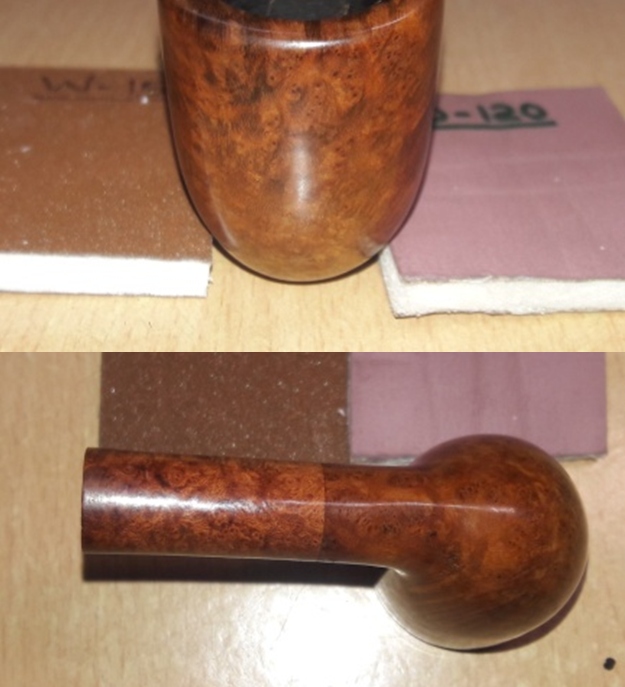
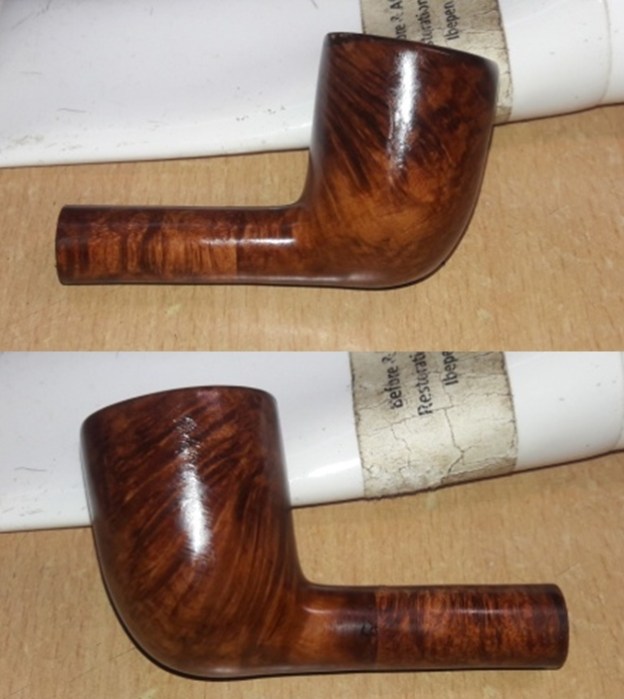
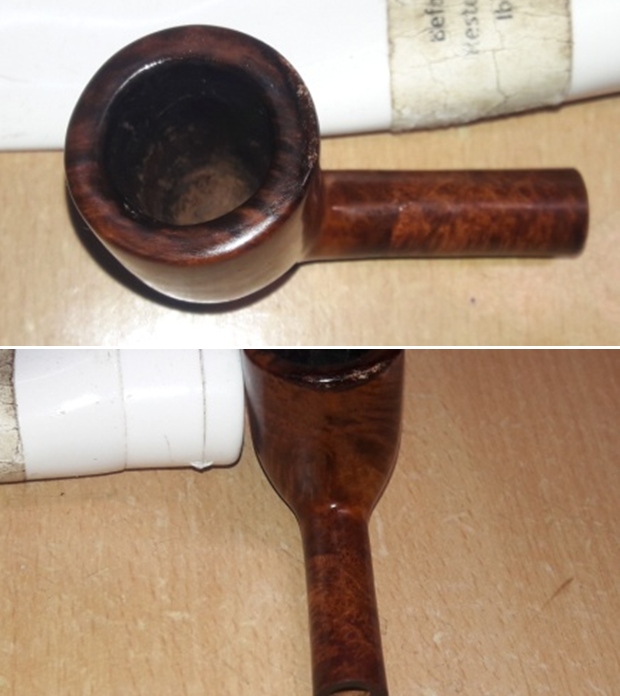
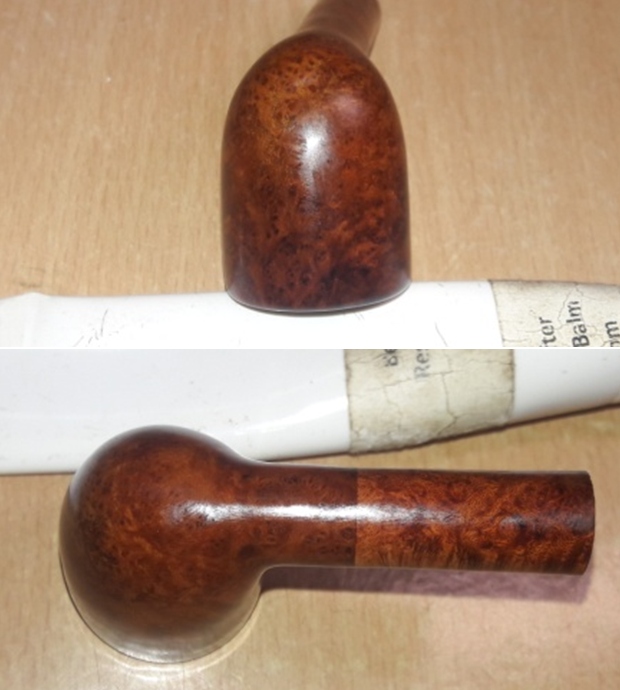
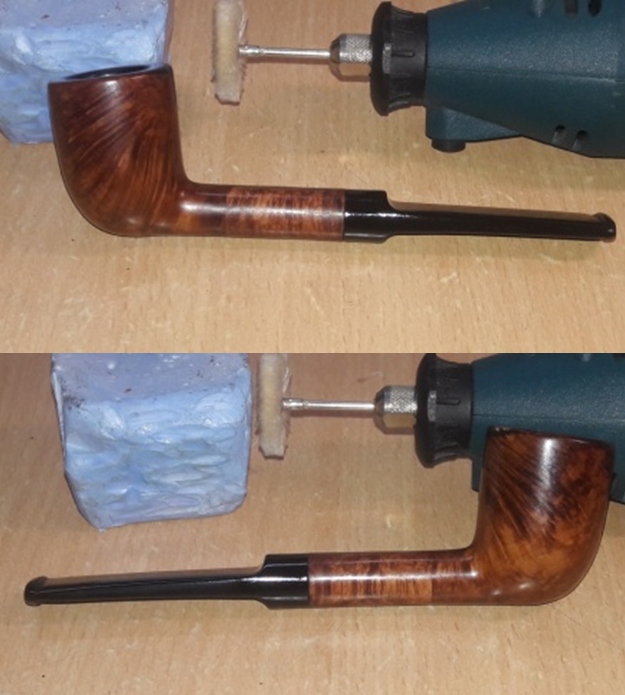
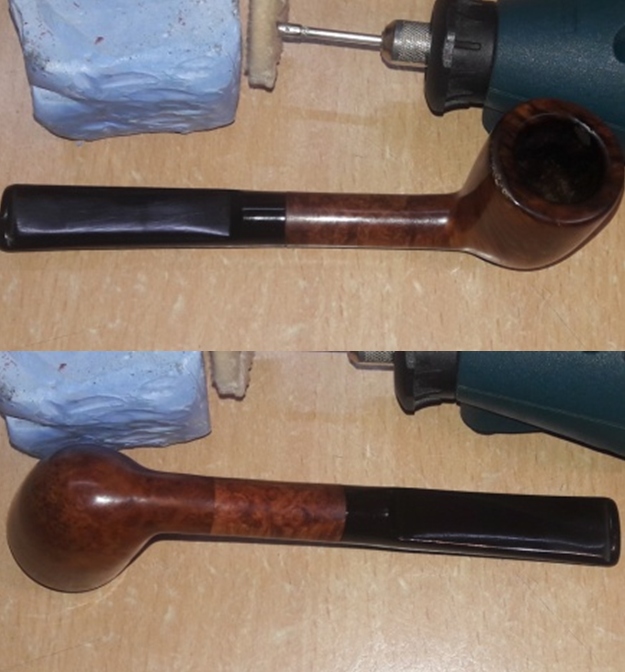
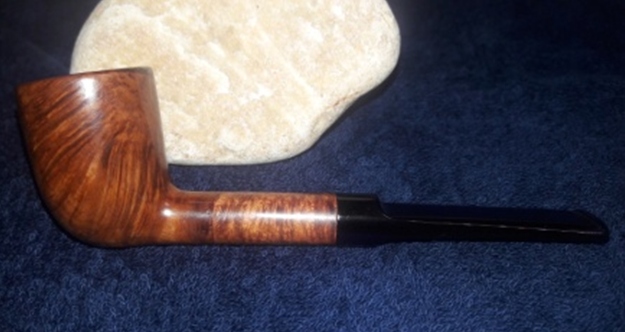
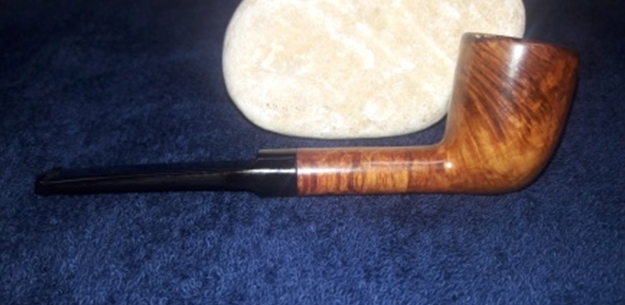
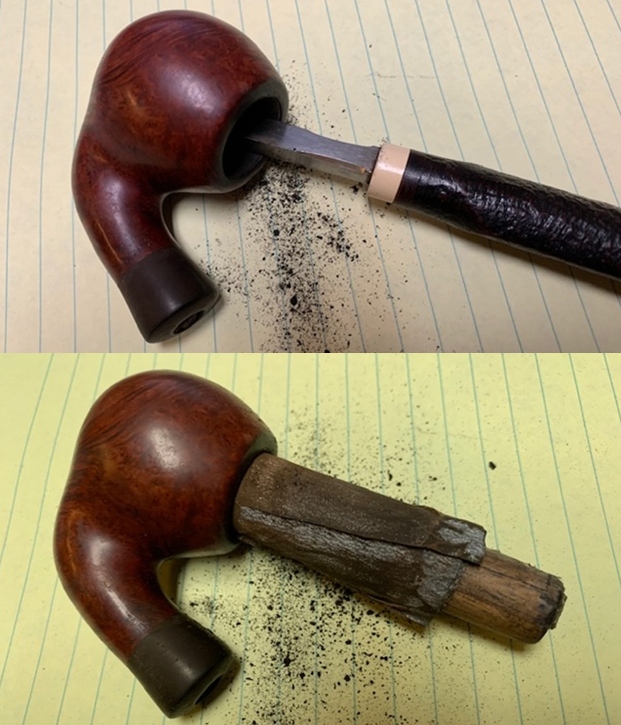
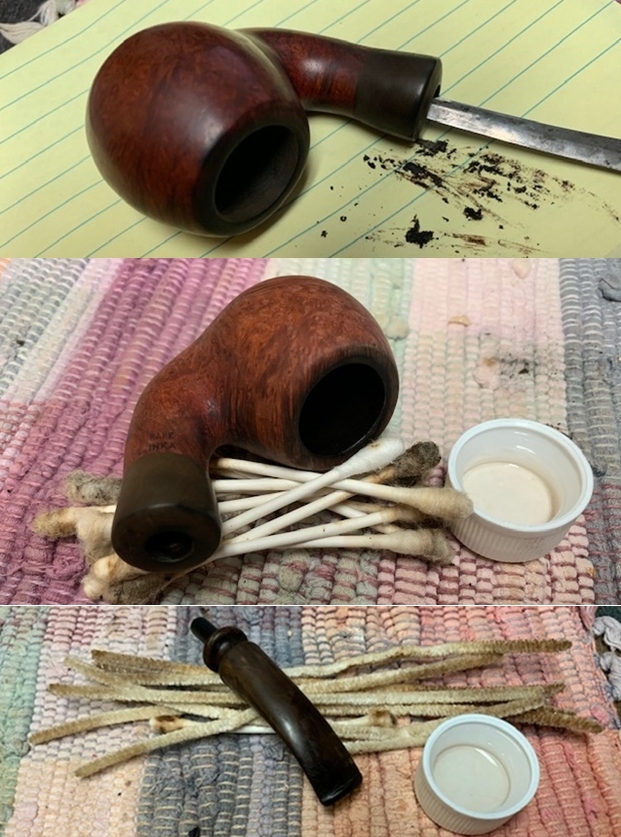
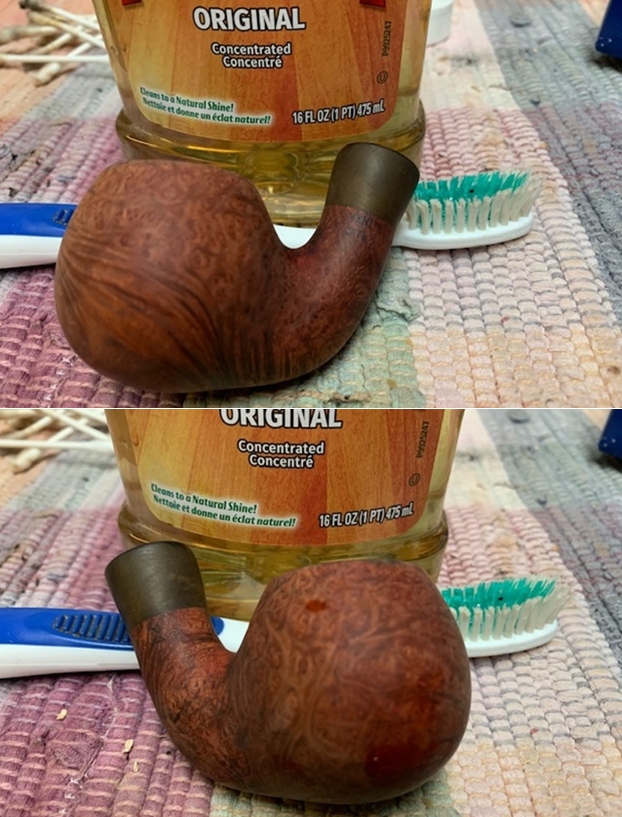
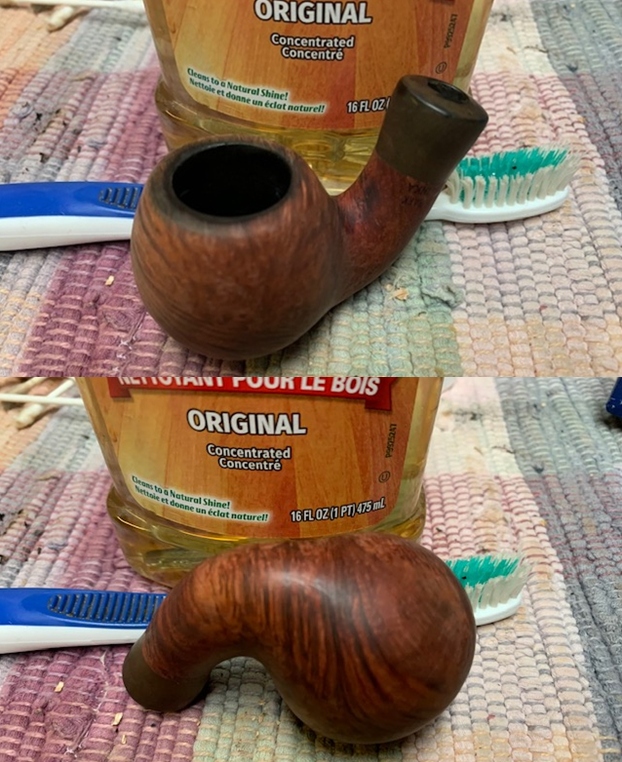
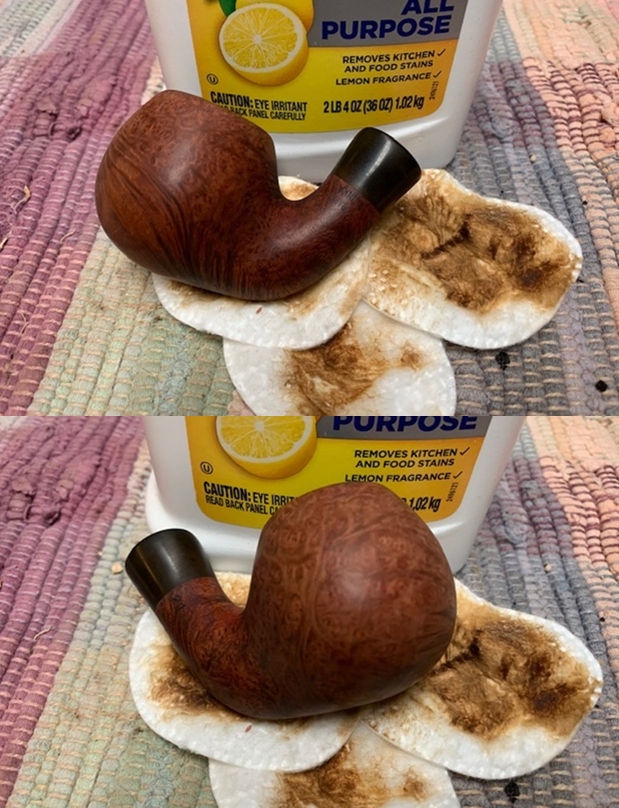
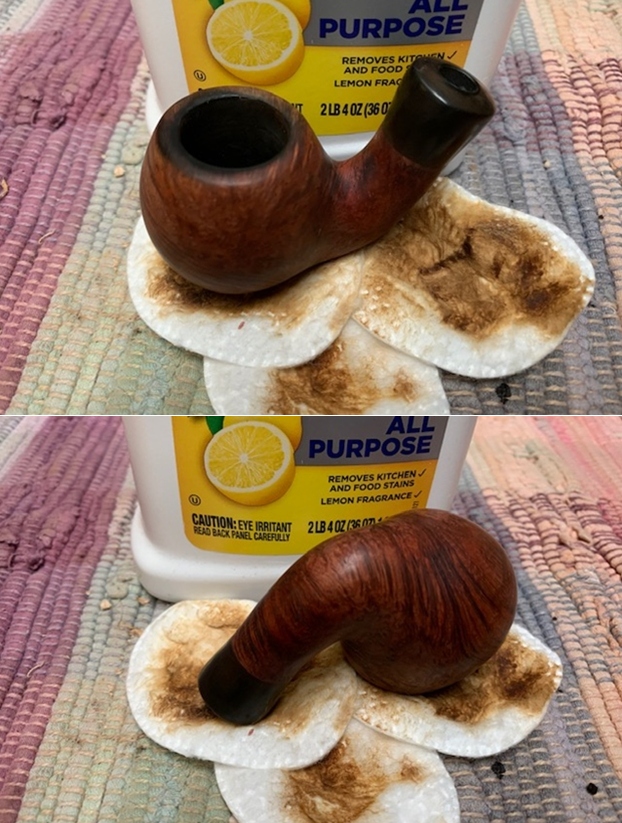
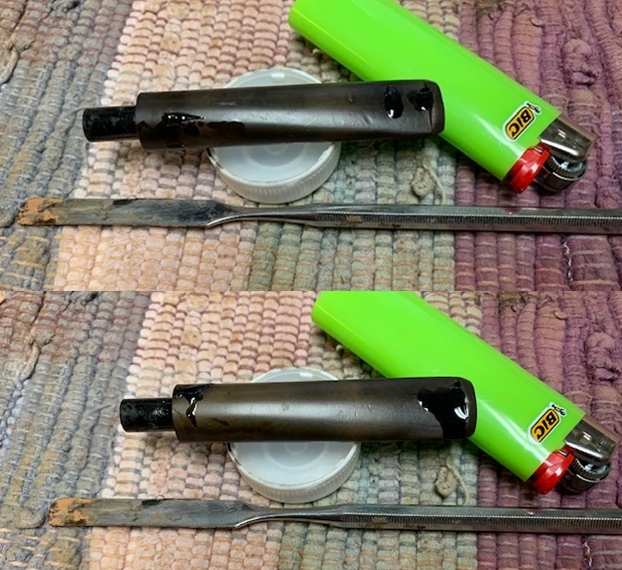
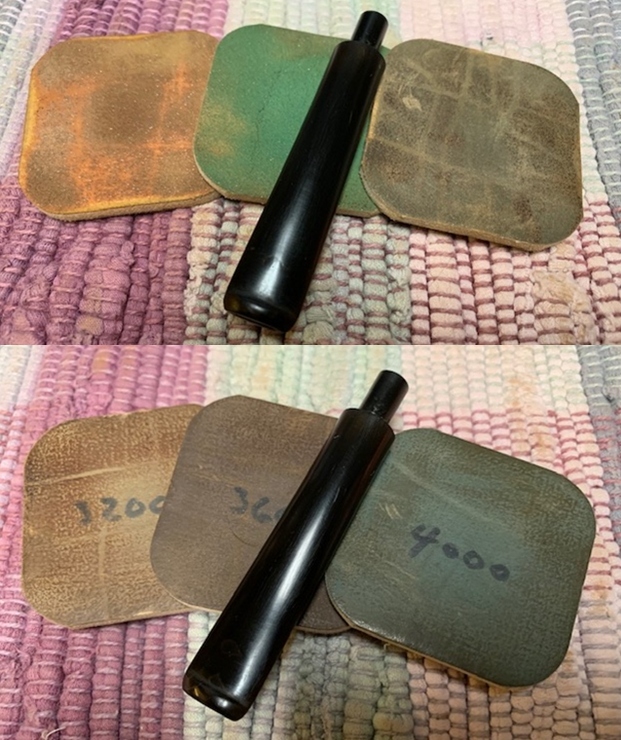
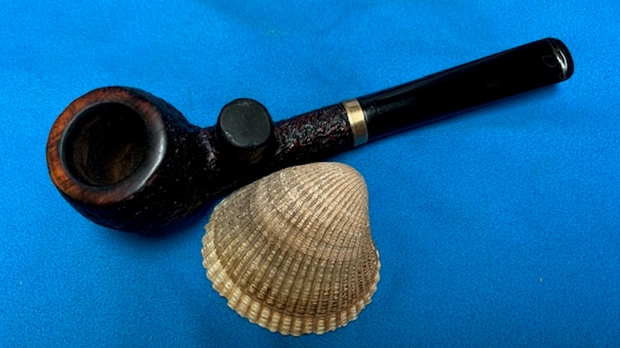
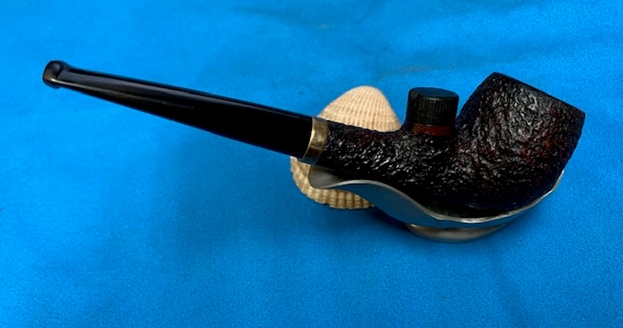
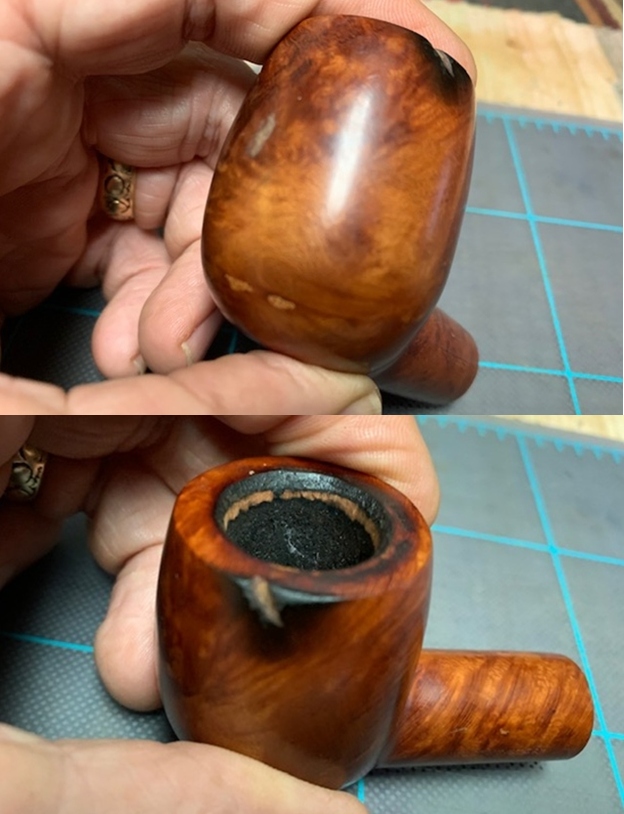
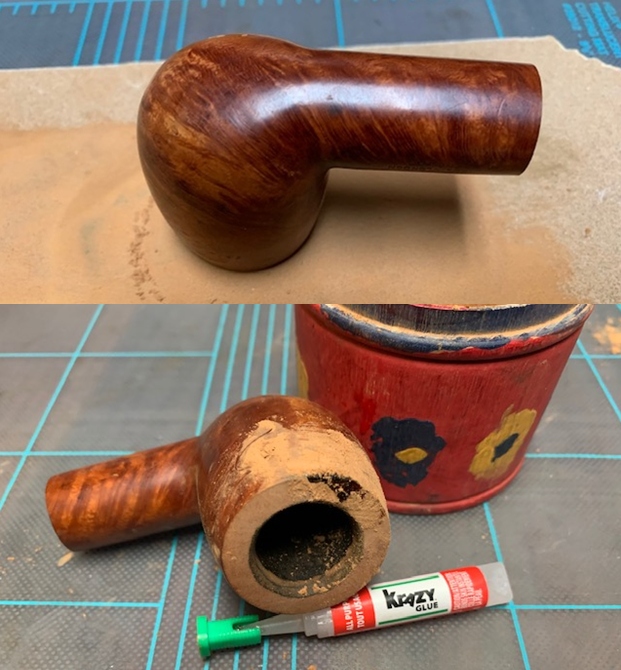
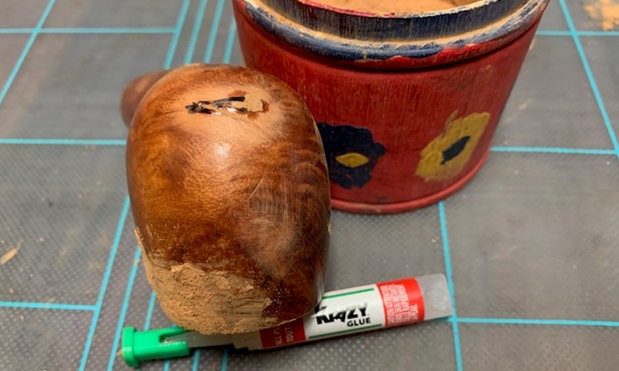
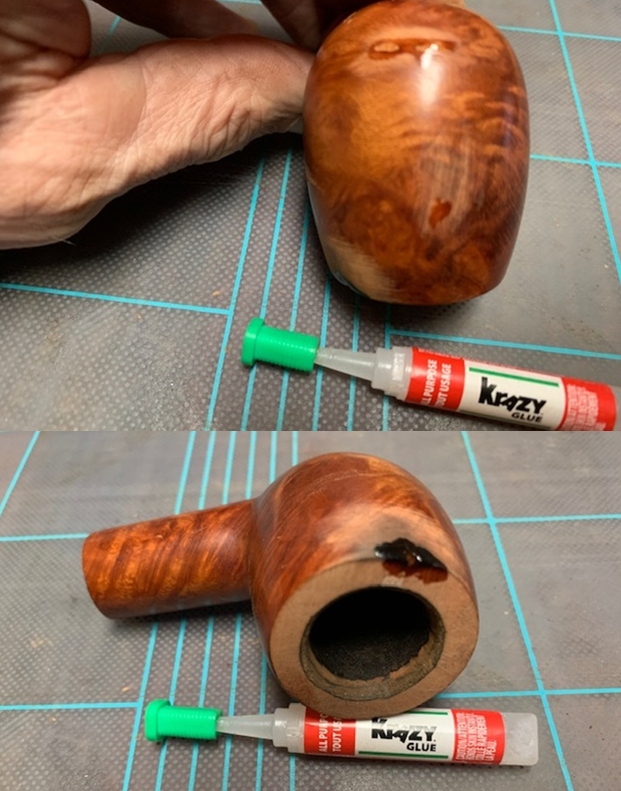
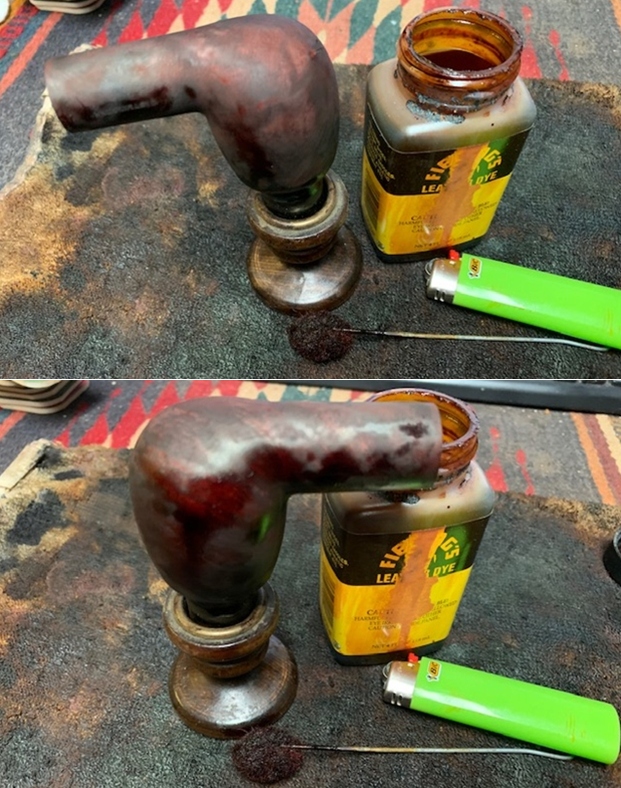
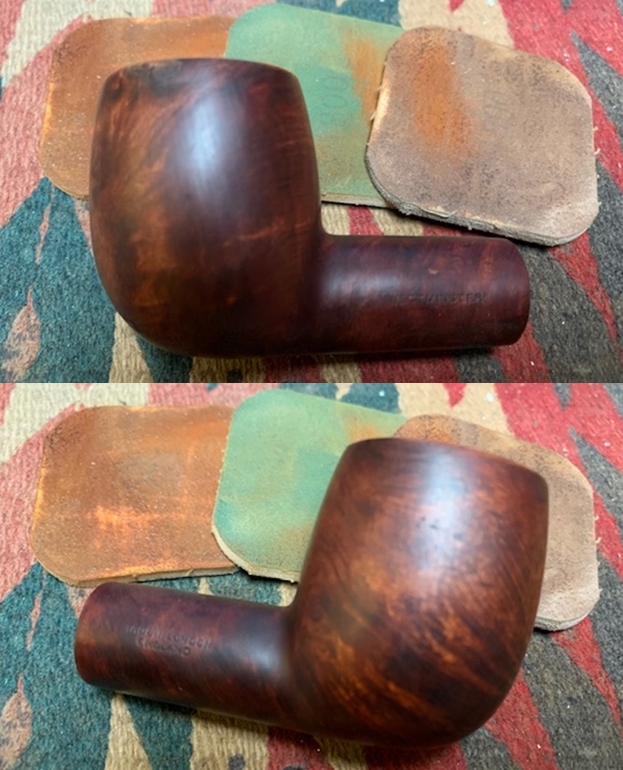
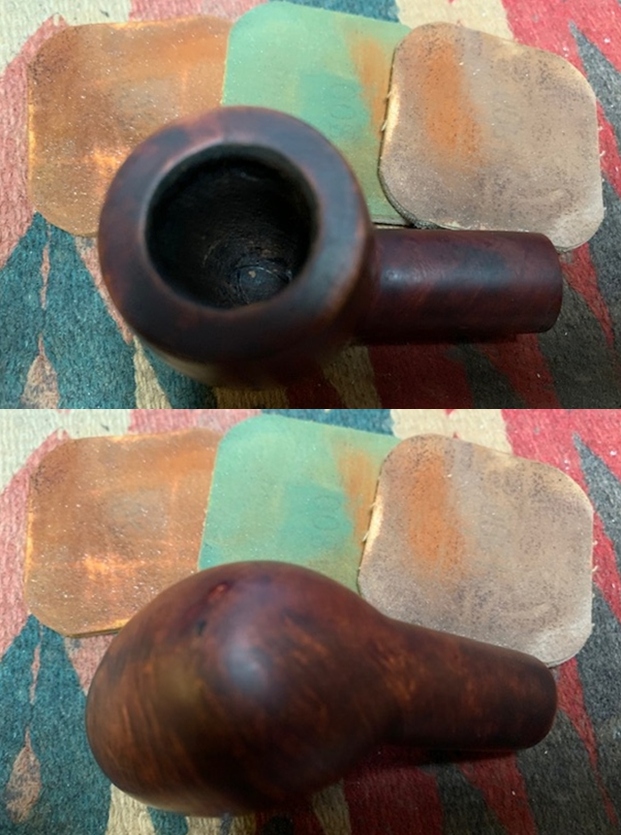
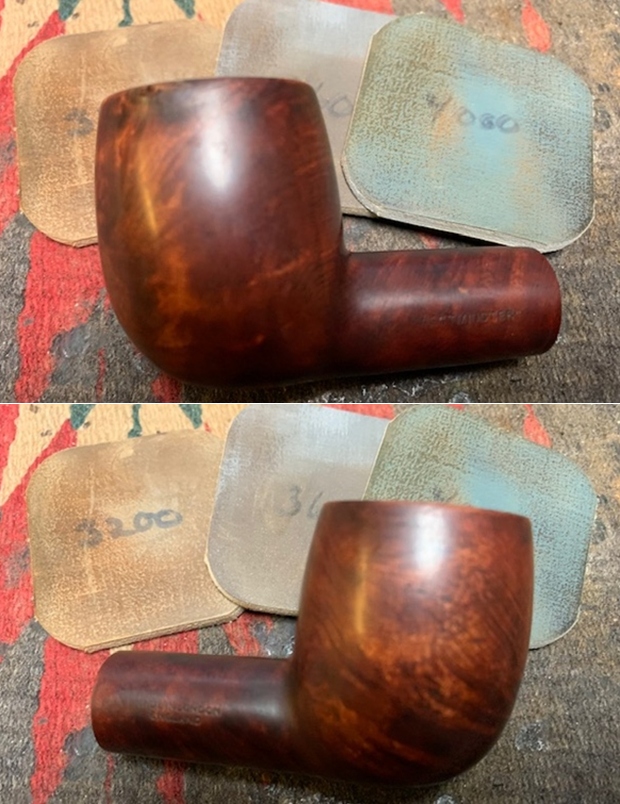
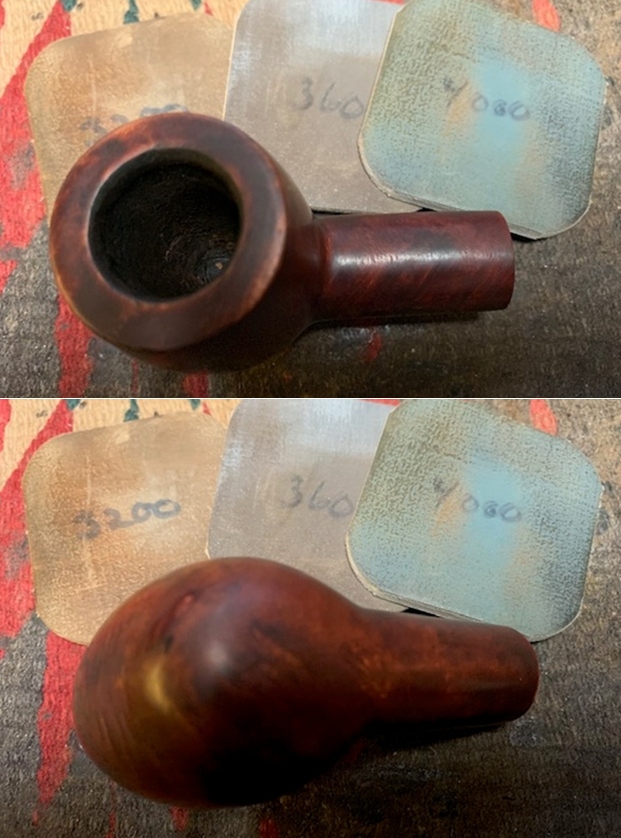
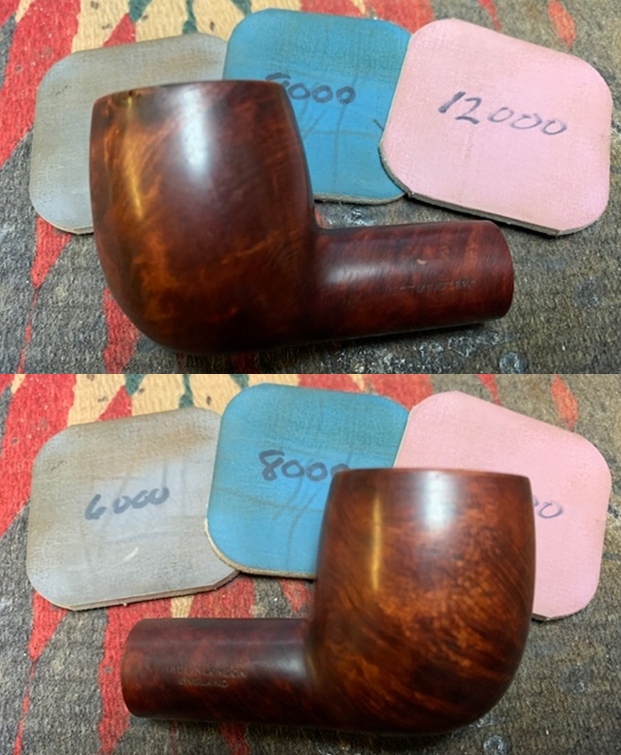
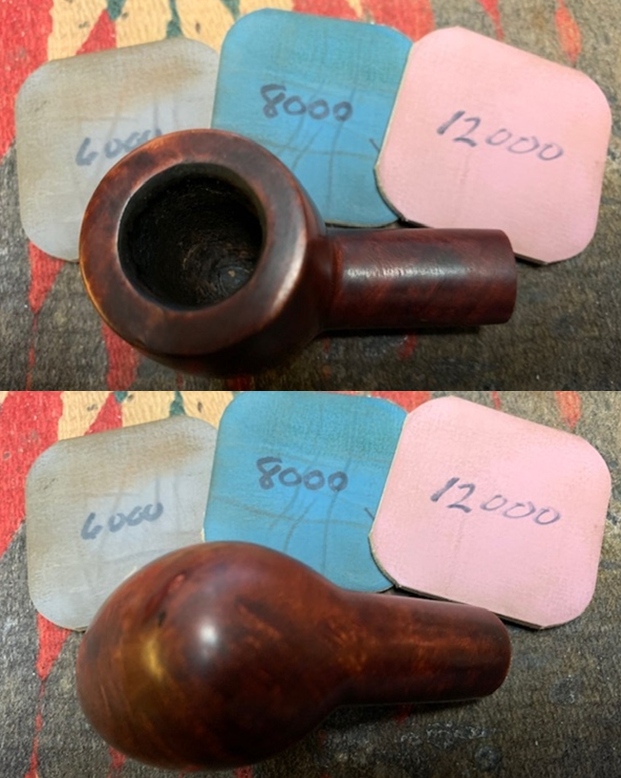
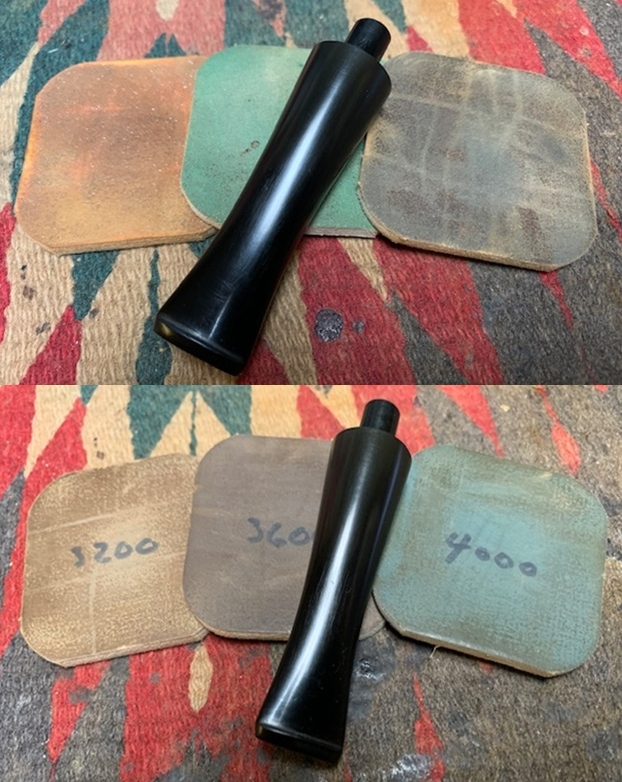
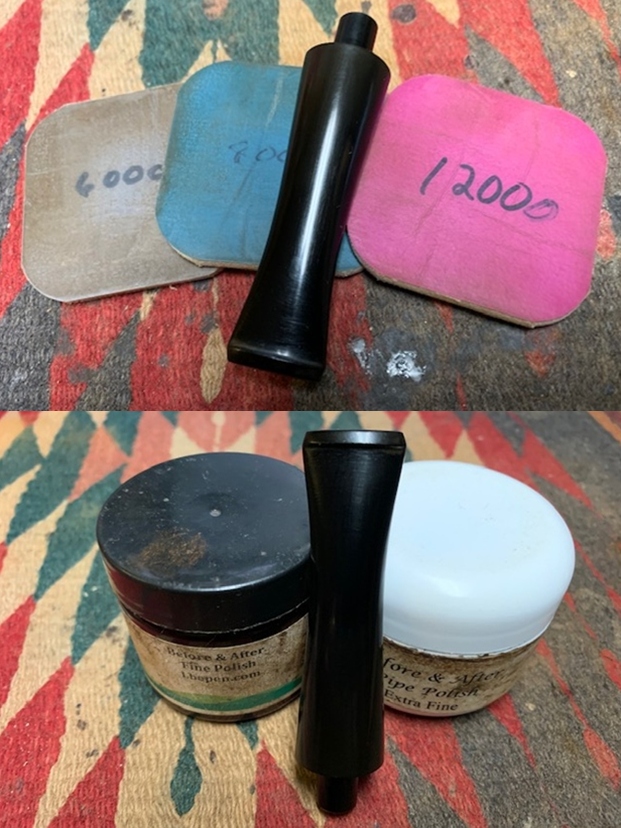
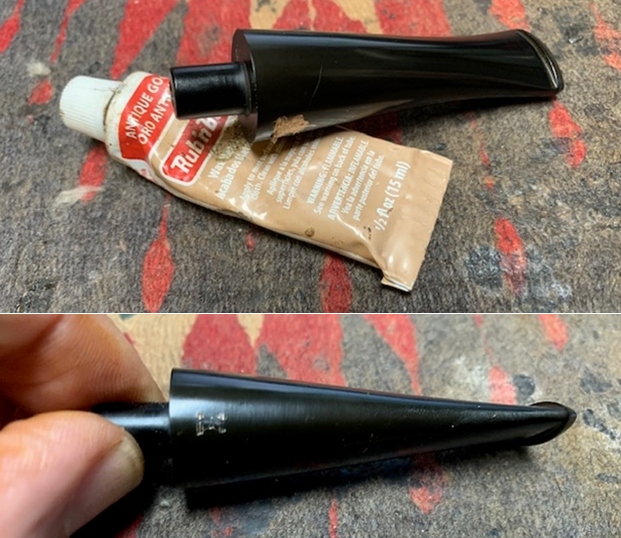
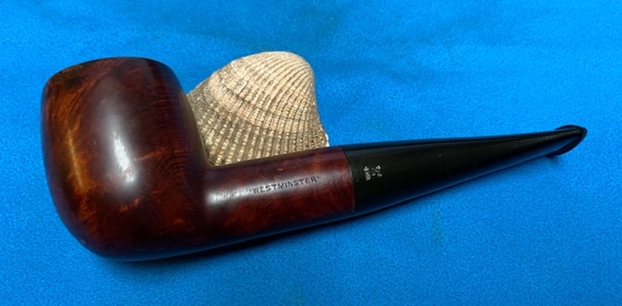
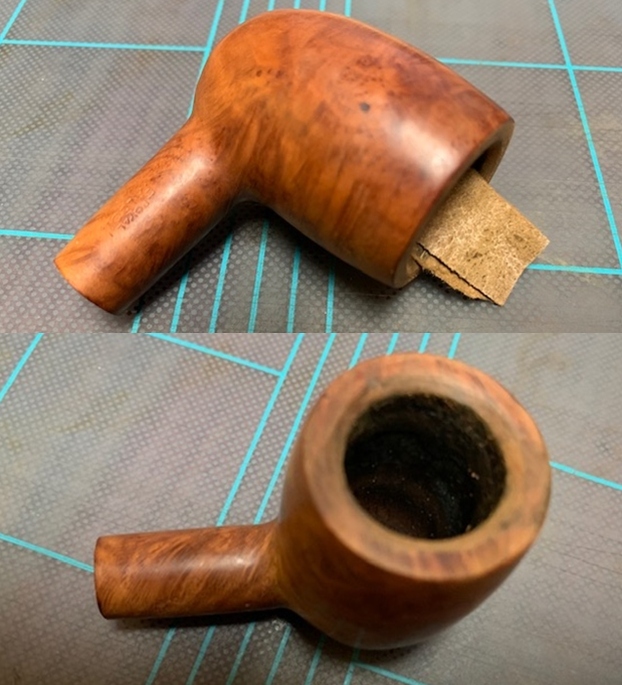
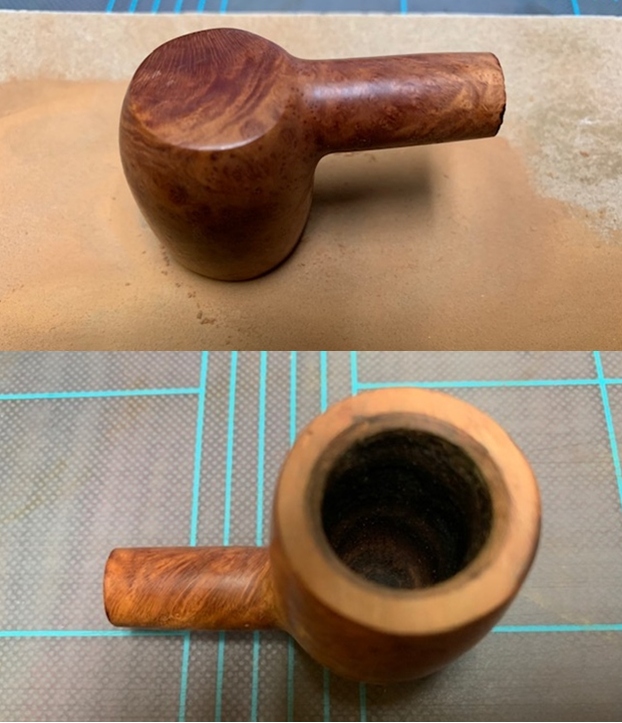
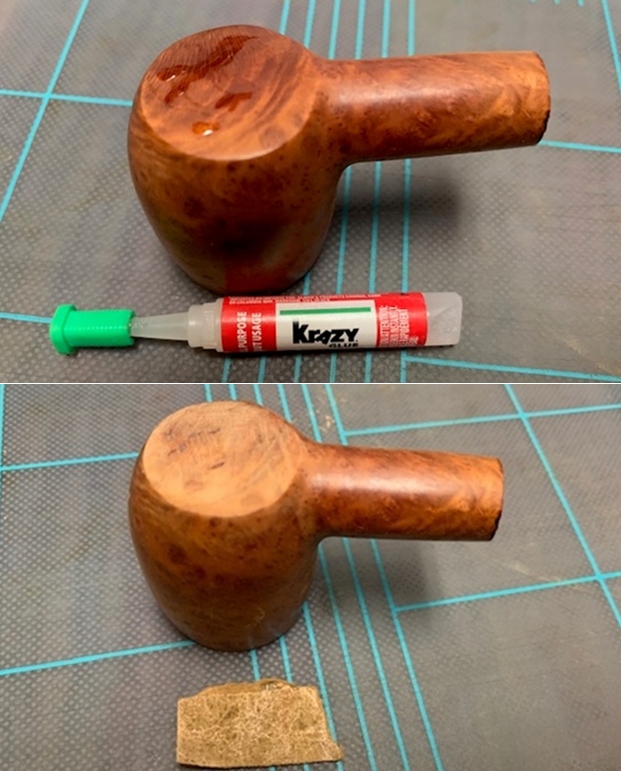
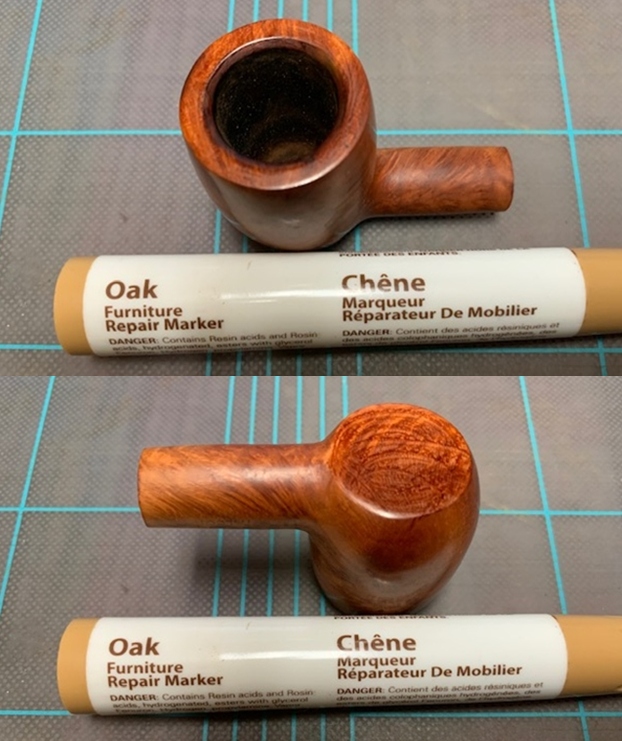
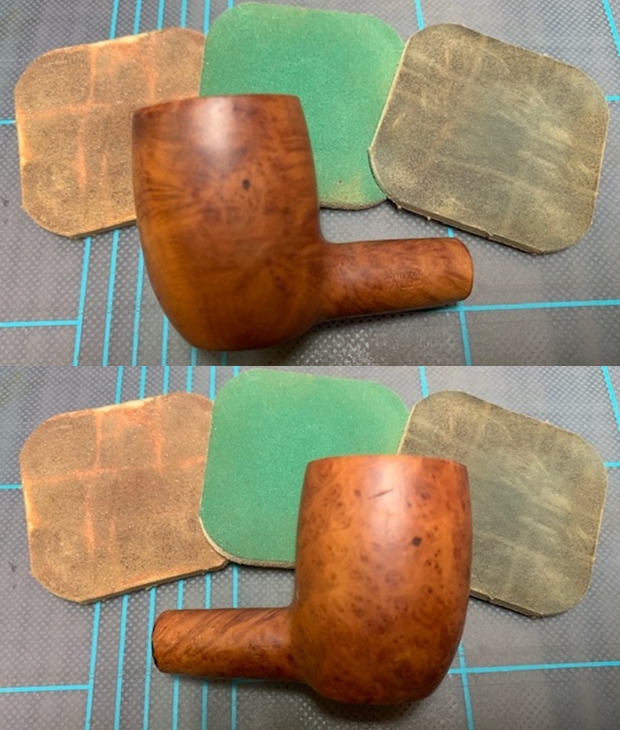
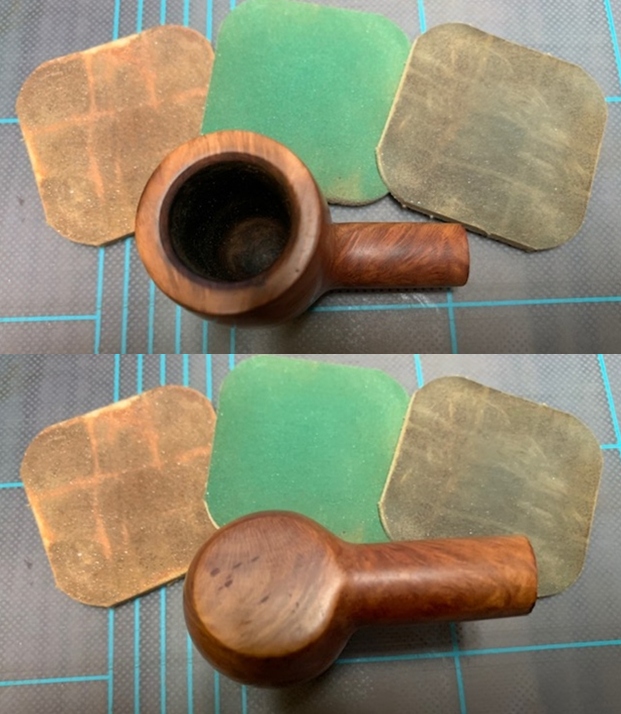
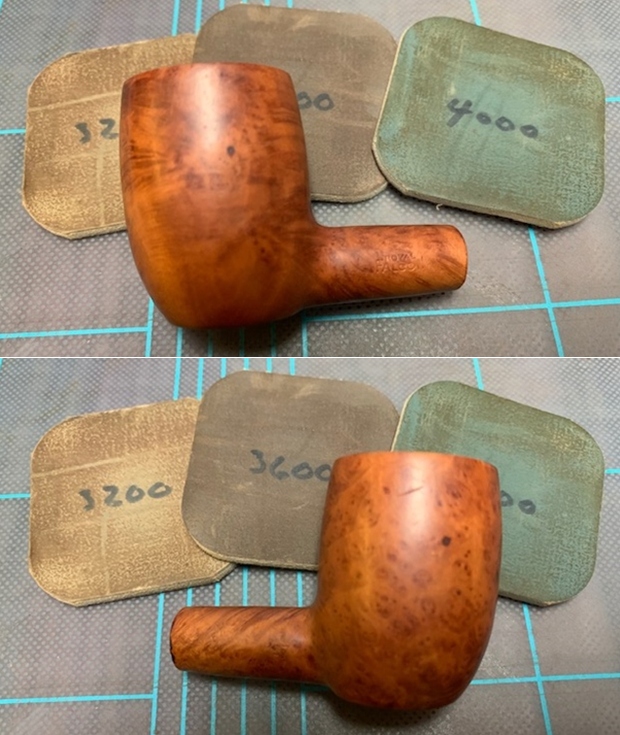
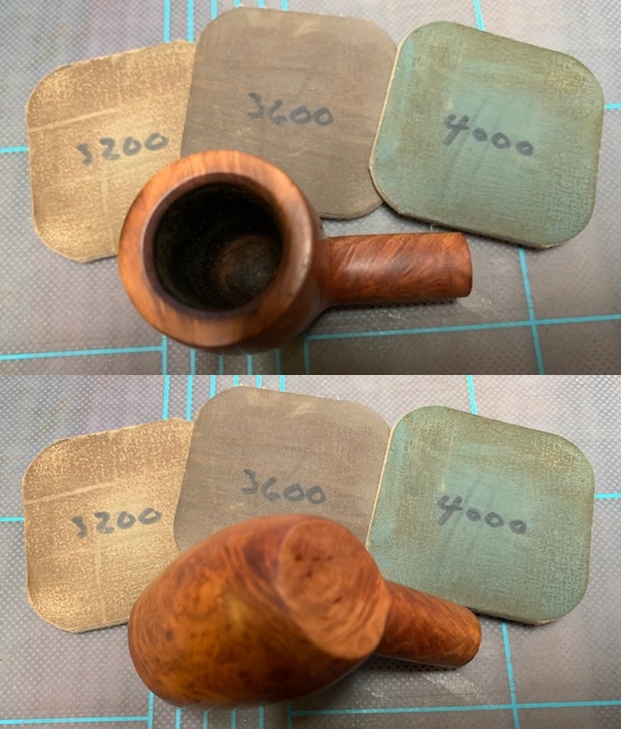
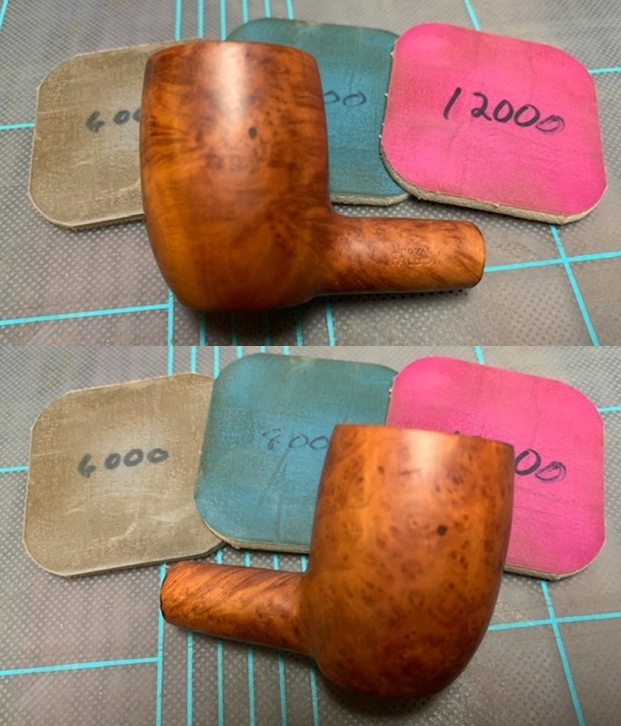
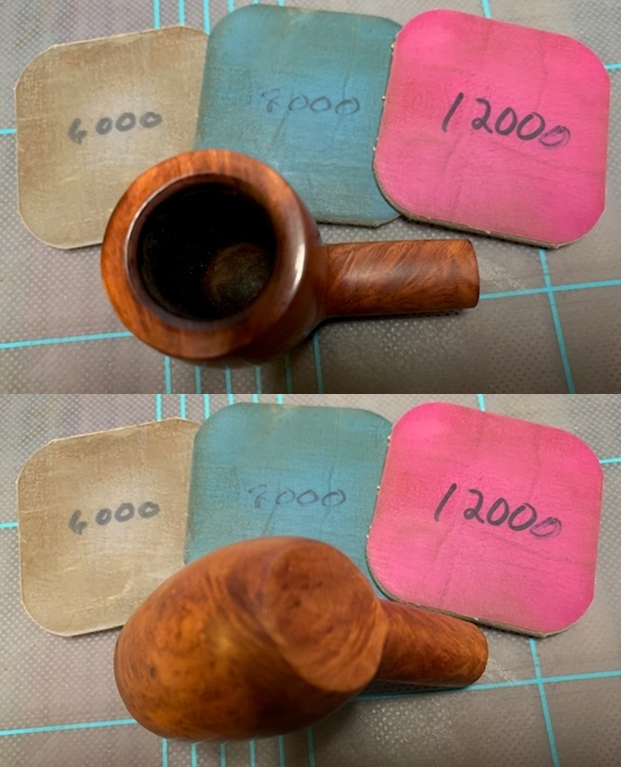
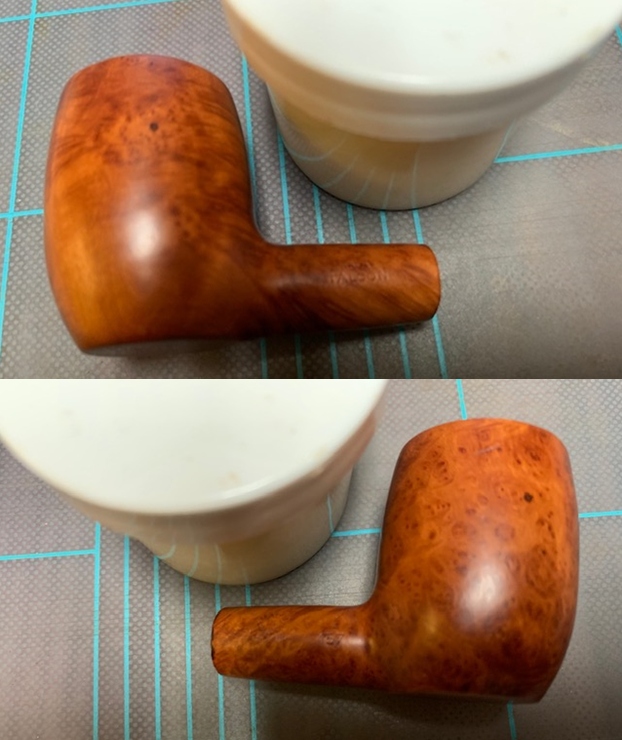
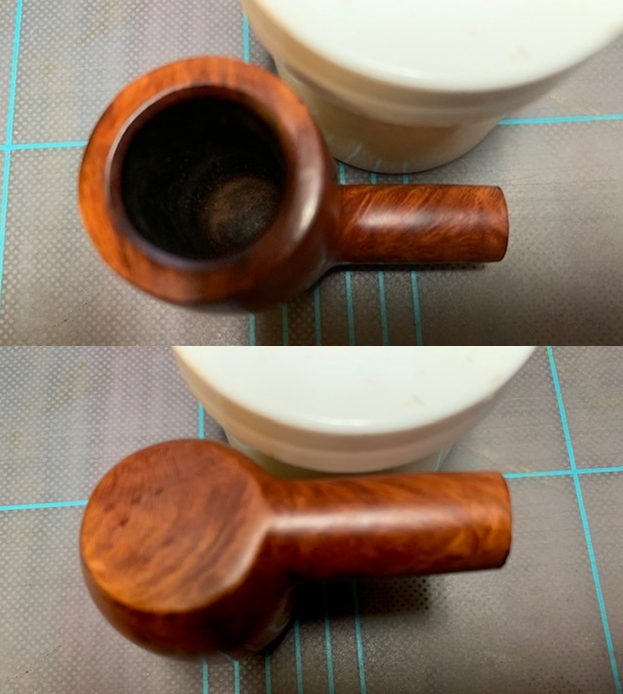
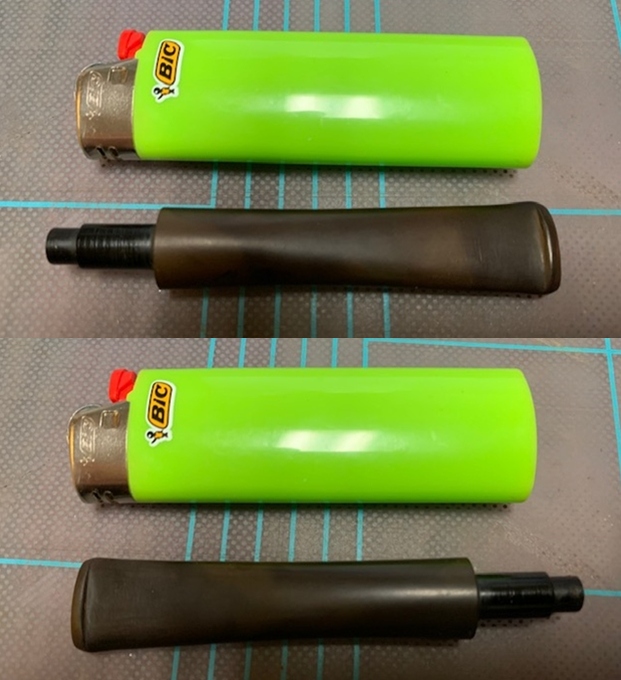
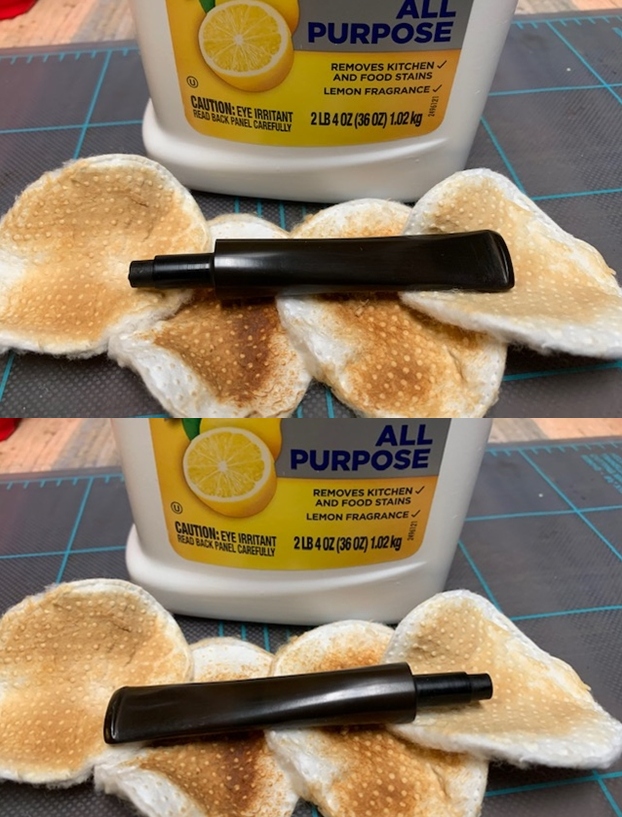
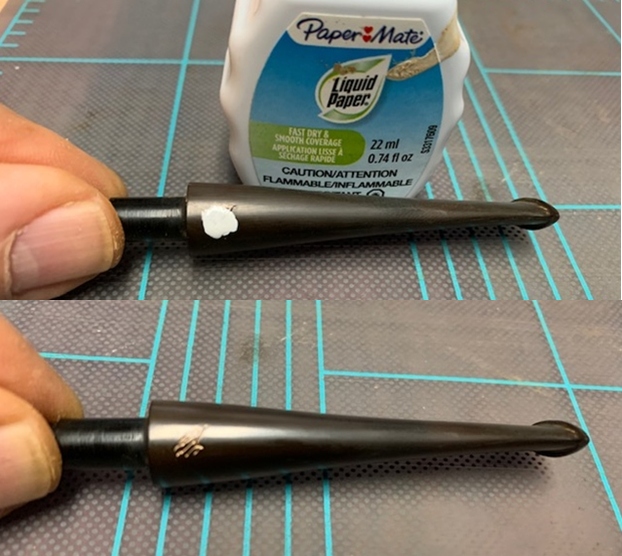
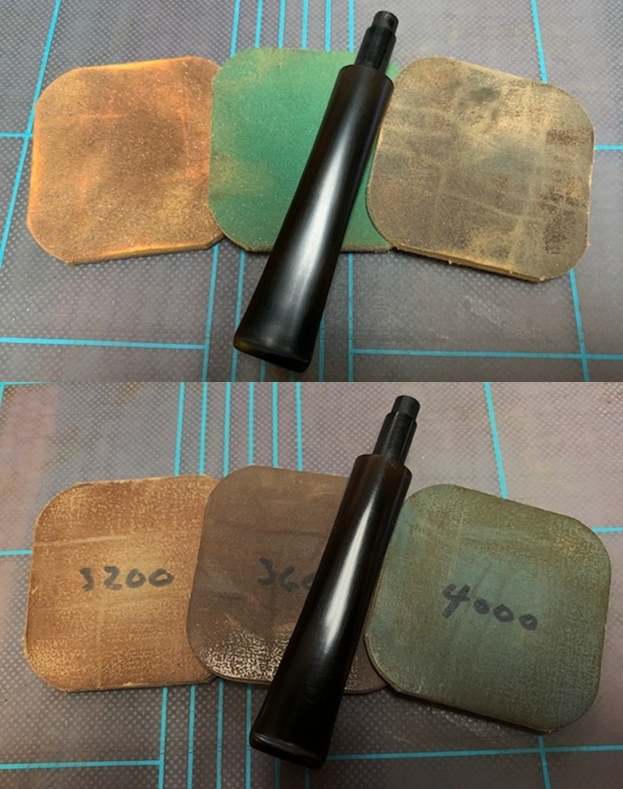
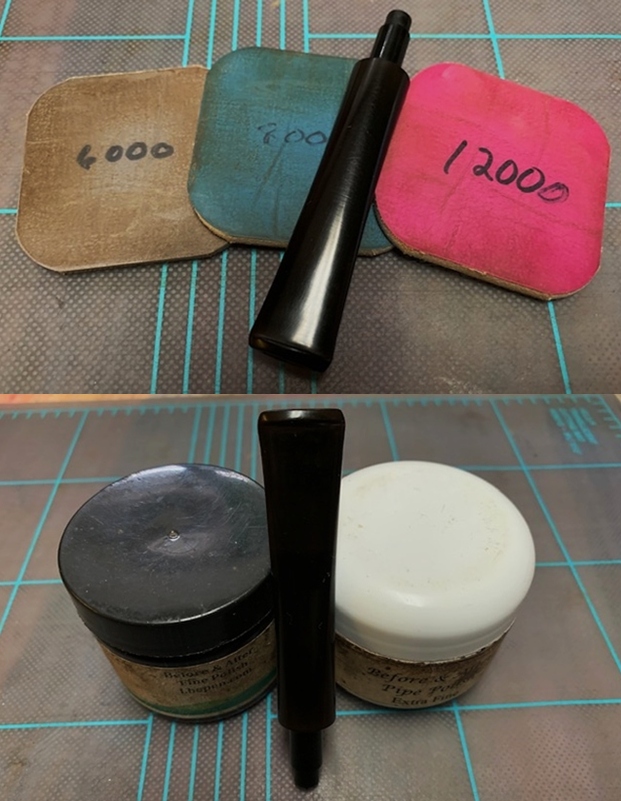
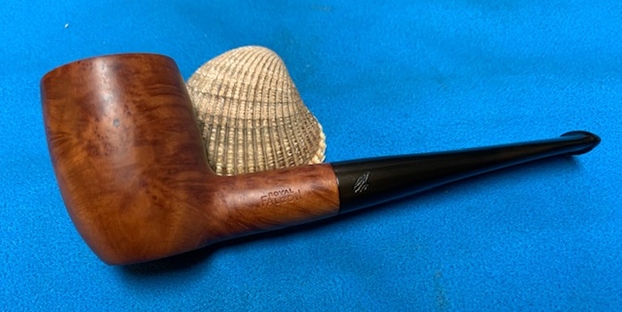
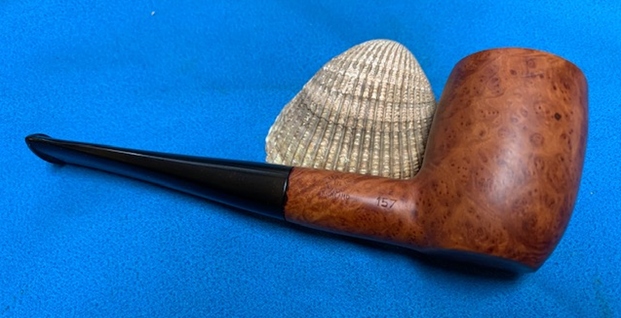
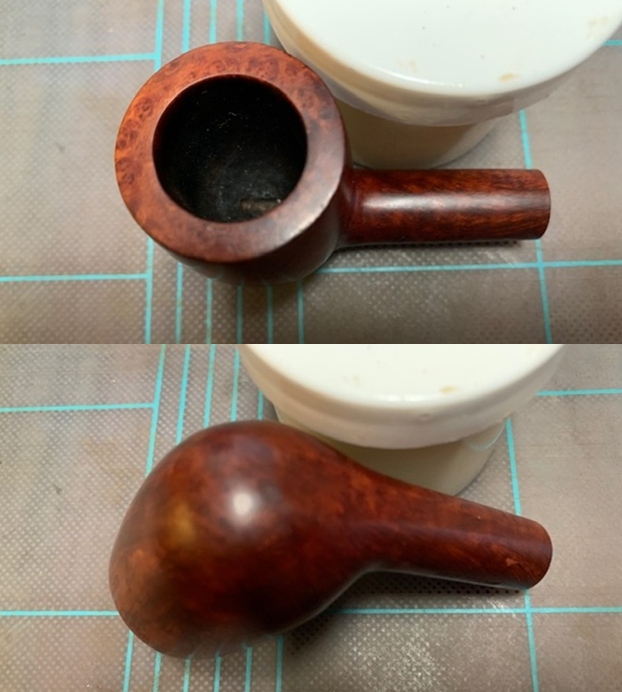
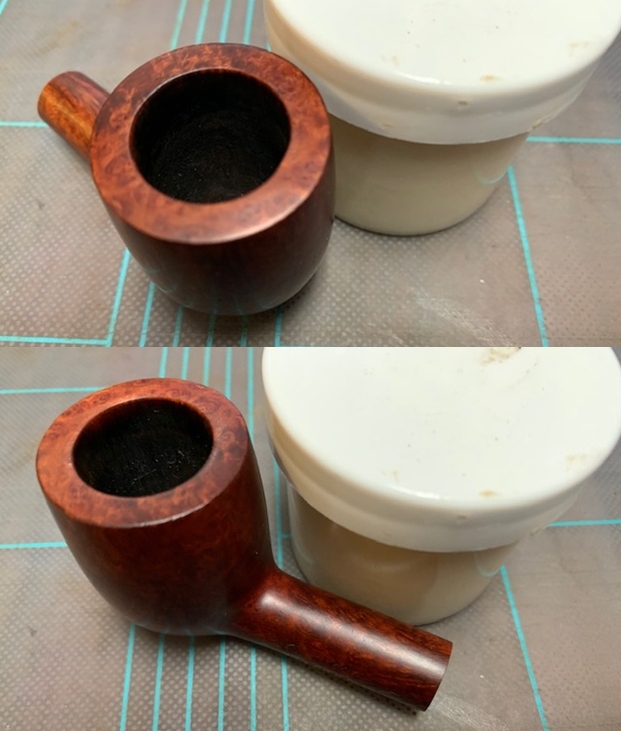
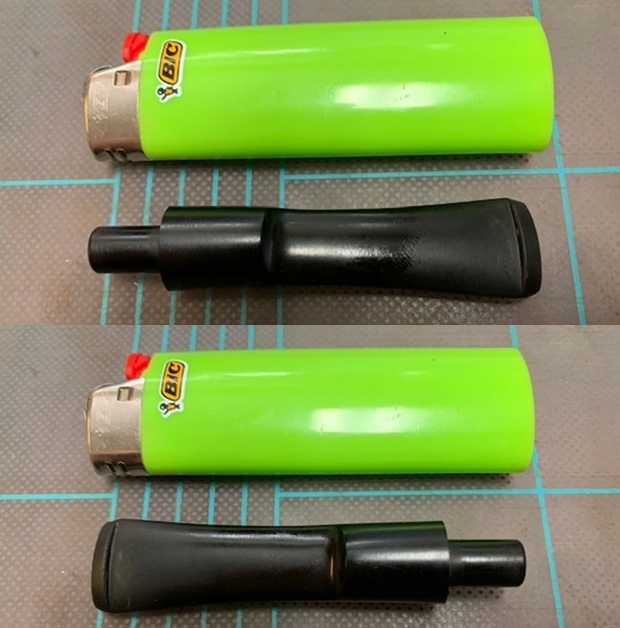
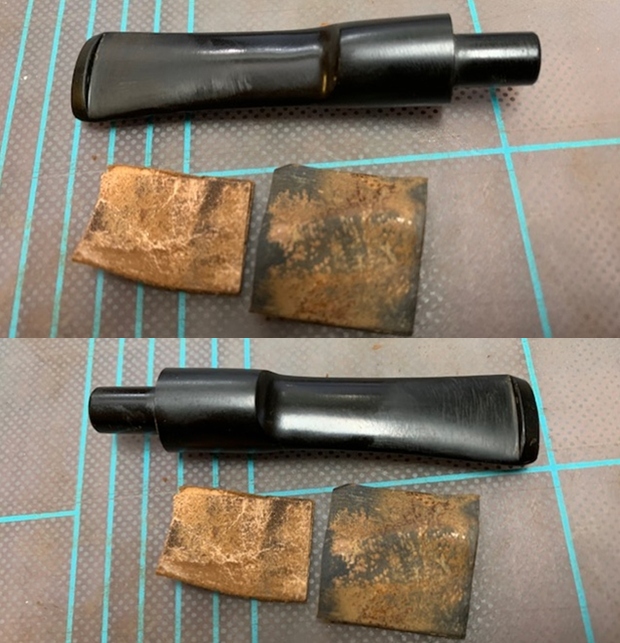
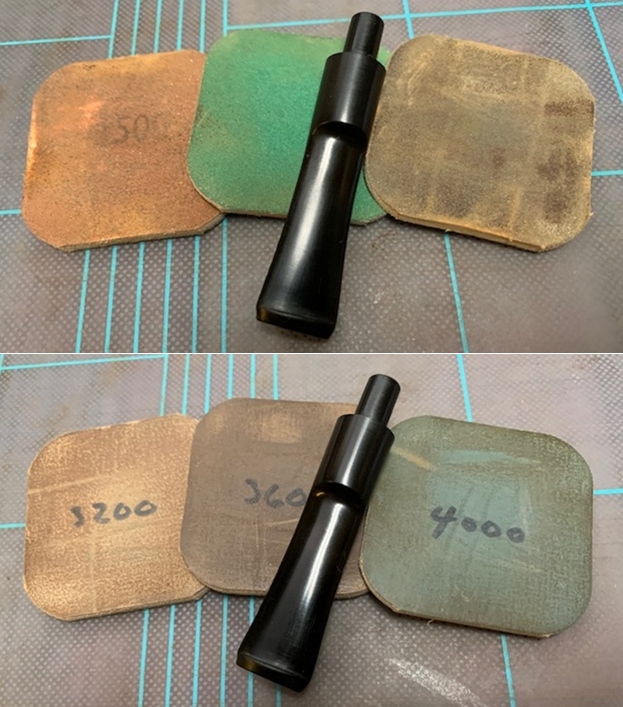
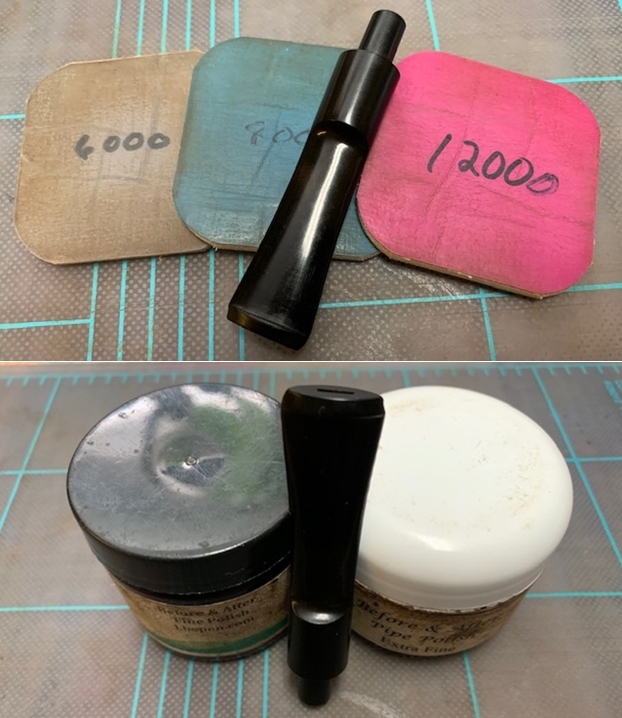
Jeff cleaned the pipes with his usual penchant for thoroughness that I really appreciate. Once he finished he shipped them back to me. Bob’s pipes were generally real mess and I did not know what to expect when I unwrapped it from his box. I was surprised to see how well it turned out. He reamed it with a PipNet pipe reamer and cleaned up the reaming with a Savinelli Fitsall Pipe Knife. He scrubbed out the internals with alcohol, pipe cleaners and cotton swabs until the pipe was clean. He scrubbed the exterior of the bowl with Murphy’s Oil Soap and a tooth brush to remove the grime and grit on the briar and the lava on the rim top. The finish looks very good with good looking grain around the bowl and shank. Jeff scrubbed it with Soft Scrub and soaked it in Before & After Deoxidizer to remove the oxidation on the rubber. When the pipe arrived here in Vancouver for the second stop of its restoration tour it looked a lot better. I took photos before I started my part of the work. I took some close up photos of the rim top and the stem surface. I wanted to show what cleaned bowl and rim top looked like. The rim top shows some damage on the outer edge of the bowl on the right front and on the inner edge at the top of the bevel and rim top. I also took close up photos of the stem to show the tooth marks and the remaining oxidation on the stem surface.    I took photos of the stamping on the sides of the shank and it is clear and readable. It is stamped as noted above. There is some staining around the shank end.     I removed the stem for the shank and took a photo of the bowl and stem to give a picture of what it looked like. The heavy oxidation is very visible.Now, on to my part of the restoration of this Comoy’s made Royal Falcon Tankard. I decided to clean up the damaged rim top and inner edge of the bowl. I cleaned up the inside of the bowl edges with a folded piece of 220 grit sandpaper. Once I was finished the edge looked a lot better. I gave the bowl a light topping to clean up the damage on the outer edge and the rim top.    I filled in the flaws and marks on the flat heel of the bowl with clear super glue. Once the repairs cured I sanded them with a folded piece of 220 grit sandpaper to blend them into the surface of the bowl.     I stained the rim top with an Oak Stain pen to blend the repairs on the rim top and the heel of the bowl into the surrounding briar.     I polished the top of the bowl and the entirety of the bowl with micromesh sanding pads – wet sanding with 1500-12000 grit pads and wiping the briar down with a damp cloth after each sanding pad. I rubbed the bowl down with Before & After Restoration Balm. I worked it into the surface of the briar with my fingertips to clean, enliven and protect it. I let the balm sit for a little while and then buffed with a cotton cloth and shoe brush to raise the shine.   I set the bowl aside and turned my attention to the stem. I used a Bic lighter to “paint” the surface of the stem with the flame to lift the tooth marks on both sides of the stem. The heat lifted the tooth marks and the surface was smooth.      I scrubbed the surface of the stem with Soft Scrubb All Purpose scrub. It removed the oxidization from the stem. It took a lot of scrubbing with cotton pads and the surface was clean.  I touched up the Royal Falcon, Falcon Head log with PaperMate Liquid Paper. Once it was dry I scraped it off and buffed the stem.I polished the vulcanite with micromesh sanding pads – 1500-12000 grit pads. I wiped it down with a damp cloth after each sanding pad. I used Before & After Pipe Polish – both Fine and Extra Fine to further polish the stem.  I left a little oxidation around the stamp so as not to damage it more.       This Comoy’s Made Royal Falcon 157 Tankard turned out to be a great looking pipe. The mixed stain brown finish on the pipe is in great condition and works well with the polished vulcanite taper stem. I put the stem back on the bowl and carefully buffed the pipe with Blue Diamond on the buffing wheel. I gave the bowl and stem multiple coats of carnauba wax on the buffing wheel and followed that by buffing the entire pipe with a clean buffing pad. I hand buffed the pipe with a microfiber cloth to deepen the shine. The finished Royal Falcon Tankard fits nicely in the hand and feels great. Give the finished pipe a look in the photos below. The dimensions of the pipe are Length: 5 inches, Height: 1 ¾ inches, Outside diameter of the bowl: 1 ¼ inches, Chamber diameter: ¾ of an inch. If you are interested in carrying on the pipe man’s legacy with this pipe send me a message or an email. I have more to work on of various brands. Perhaps one of those will catch your attention. Thanks for reading this blog and my reflections on the pipe while I worked on it.

Refurbishing a Third Pipe From a Lot Of Six Pipes: a Barling That Has Had It’s Shank Repaired


Blog by Paresh

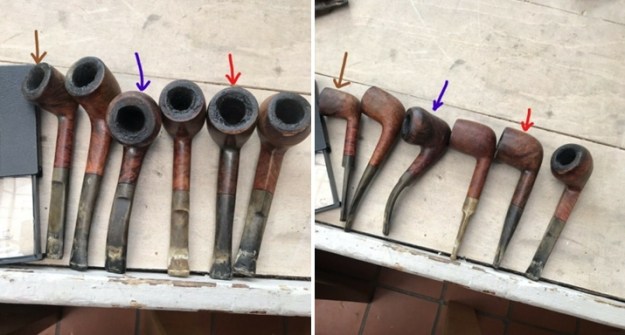
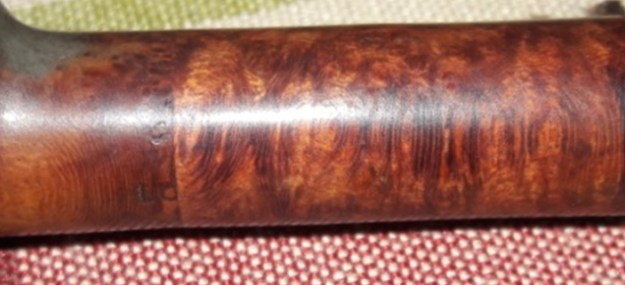
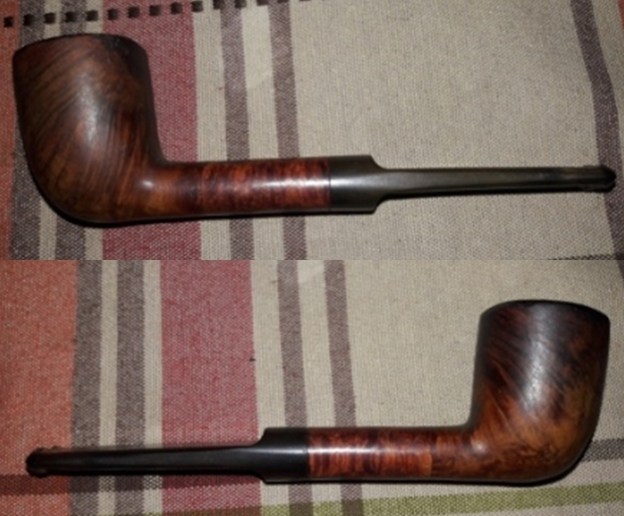
I had picked up a job lot of six pipes from a Curio Store on eBay. This lot contained brands like Barling’s, Parker and Orlik and other English make pipes. These are some of my favorite brands and I couldn’t pass them over even though they were in a hopelessly beat up condition. Here are pictures of the pipe lot that the seller had posted. This lot contained a variety of nicely shaped and grained pipes which I had been looking forward to work on. The two pipes from this pipe lot that I have completed are indicated in red and indigo arrow. The third pipe that I had selected to work on is shown in brown arrow. The third pipe that I decided to work on from this lot is a small sized classic Dublin shaped pipe. This pipe sometime during its period of existence has had its shank repaired, thus obliterating any stampings that would have been stamped on it when it came out of the factory. However, the quality of the briar, shape and the stem style all scream BARLING!! A couple of years ago I had restored a quaint little Billiard pipe from my inherited pipe lot and this pipe does remind me of it. I visited rebornpipes.com and went through the write up (https://rebornpipes.com/2018/12/10/decking-out-my-grandfathers-battered-pre-transition-barling-1354/) to compare these two pipes. The more I saw the pre-transition Barling, the more I was convinced that this pipe had to be a Barling. The partially visible stamping on the left side of the shank shows the start of the letter B in cursive hand over LO in block letters. Having just recently worked on an Early Corporate Era Barling pipe and the shape of the stem that tapers from the broader slot end in to a narrow saddle portion is typical of Barling. The tapered vulcanite stem too has its stampings completely buffed out!With no clues whatsoever to pursue and me being convinced about this pipe being a Barling, I proceed with my initial visual inspection.
Initial Visual Inspection
This pipe has a quaint little bowl size with a chamber depth of about 1 inch. The stummel boasts of some beautiful cross grains to the sides and back of the bowl and all around the shank and tight Bird’s Eye to the front of the stummel. The stummel is covered in dirt and grime of the overflowed lava and dirt accumulated over the years of heavy smoking and uncared attention to cleaning. The stummel has a dull and lifeless appearance to it. The stem repair, though clearly visible, the repairs are solid and seem to have been done by a professional. There is a thick layer of cake in the chamber and some damage is likely to the front of the rim top surface. The stem is heavily oxidized with a few deep bite marks to the button edge in the bite zone. The pipe’s appearance, as it sits on my work table, does not present an encouraging picture. The condition and state of this pipe including the damages are identical to the last two pipes that I had worked on. I think all these pipes are from the same estate and the previous piper was set in his ways of smoking and handling his pipes.Detailed Inspection Of The Pipe And Observations
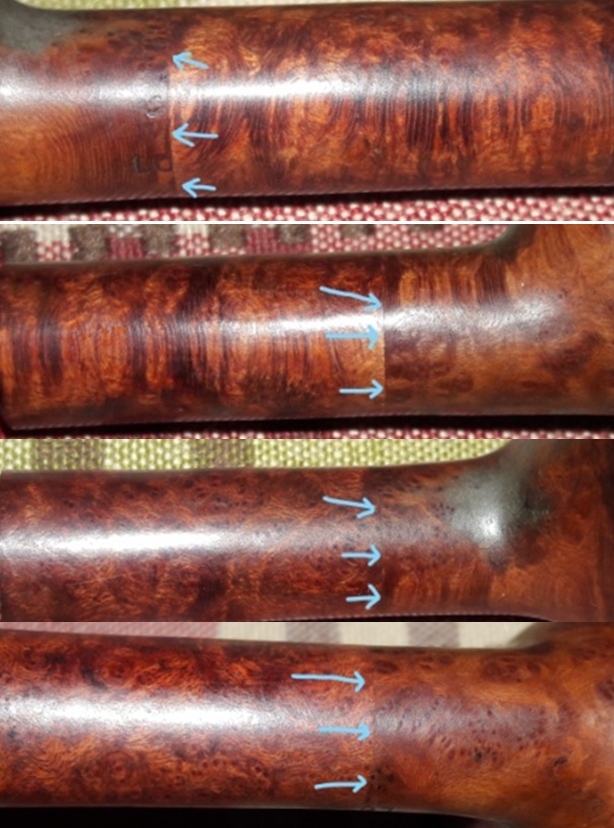
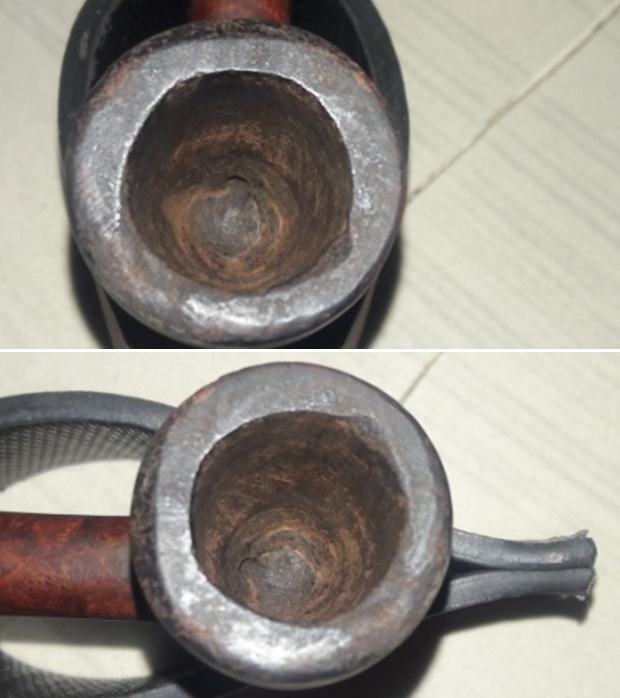
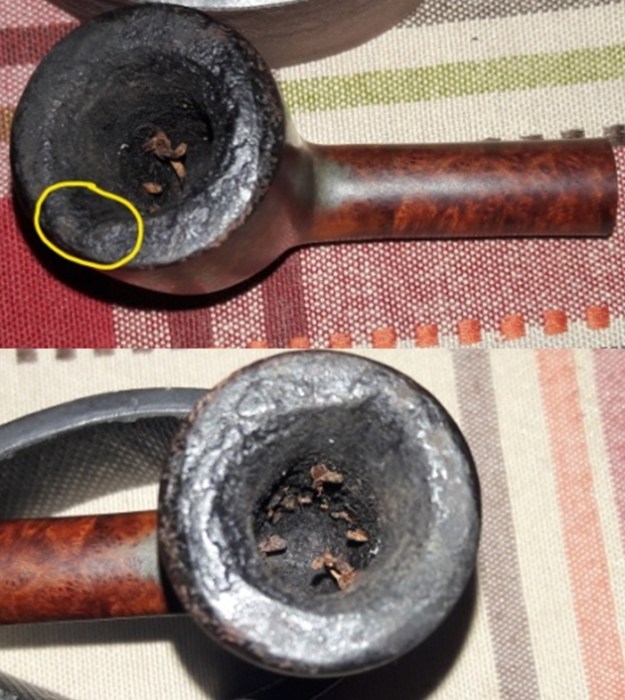
This is a small sized pipe with a chamber depth of about I inch. The bowl rim slightly tapers down towards the heel giving it a classic Dublin shape. The draught hole dead center and at the bottom of the heel. The chamber has an even layer of very thick hard cake with remnants of un-burnt tobacco seen at the heel of the chamber. The rim top surface is covered with thick lava overflow and has max accumulation in the 6 o’ clock direction. The layer of lava overflow is so thick that the rim top surface is just not visible. The inner rim edge is charred and damaged in the 10 o’ clock direction (encircled in yellow) which makes the chamber appear out of round. The outer rim edge has dents and dings all around but is most severely damaged in the 6 o’clock direction (encircled in green), a damage that can result only due to repeated strikes against a hard edged surface. The condition of the inner walls of the chamber can be commented upon after the cake has been taken down to the bare briar. There is a strong ghost smell in the chamber which is all pervading. The stummel appears solid to the touch all around and hence I do not foresee any serious damage to the walls in the form of burnout/ deep heat fissures/ lines or pits. The dark inner rim edge, in the 10 o’clock direction, may be charred further than anticipated and the same will be confirmed after the surface has been thoroughly cleaned. I need to resort to topping the rim top in order to address the damage to the surface. The ghost smells should reduce once the cake from the chamber is removed and the shank has been cleaned.  The smooth stummel surface is covered in dust, lava overflow and grime through which one can make out the beautiful cross grains to the sides and back of the bowl and all around the shank and tight Bird’s Eye to the front of the stummel. There are no fills in the stummel signifying the use of a very high quality piece of briar.  The briar is looking lifeless and bone dry. For a pipe that has been so heavily smoked, there are surprisingly no dents and dings over the stummel surface save for the outer rim edge. Once the stummel has been thoroughly cleaned, dents and dings to the stummel surface, if any, will be apparent. Thorough cleaning and rising of the stummel under warm water will highlight the grain patterns. Micromesh polishing will help in imparting a nice shine to the briar. The shank was spliced but the joint is one that is seamless and smooth transition between the old shank and the spliced shank piece (indicated by pastel blue arrows). The repairman had even ensured that the seating of the stem in to the mortise is factory perfect. The repairs are solid and speak highly of the competence of the repairman and his skill sets. I shall not be tinkering with the shank repairs as it is professionally well executed and in excellent solid shape.The mortise shows accumulation of oils, tars and gunk and the air flow is not full and smooth. The shank end face is a perfect round pointing to excellent craftsmanship and attention to quality. The seating of the stem is flush and aligned perfectly and precisely. The air flow will smooth and the draw full once the mortise is cleaned out. The ghost smells should further reduce after the mortise and shank walls are thoroughly cleaned. The high quality vulcanite tapered saddle stem is typical Barling with a narrow saddle at the end of a proportionately broad stem. The stem is so heavily oxidized that it appears brownish green in color! Deep calcification is seen in the bite zone probably from prolonged use of rubber bit. Some heavy tooth chatter and deep bite marks in the bite zone are seen on both the upper and lower surfaces of the stem. The button edges on either surface have been completely flattened with the lip edges seen as mere straight thin edges with no shape and sharpness at all. The tenon air opening is completely blocked with accumulated ash and oils/ tars that have dried out on the inside as well as on the outside. The horizontal slot end is completely deformed and the slot itself is chock-a-block with gunk. The bite marks will be raised to the surface by heating to the extent possible and further will be filled using charcoal and CA superglue mix. The button end, including the button itself on either surface will have to be completely rebuilt and reshaped. The tooth chatter and the calcified deposits will be removed by sanding with a piece of 220 grit sand paper.I am convinced that all the pipes in this lot is from one estate as the damage to the rim, damage to the stem and general condition of each is exactly the same.
The Process
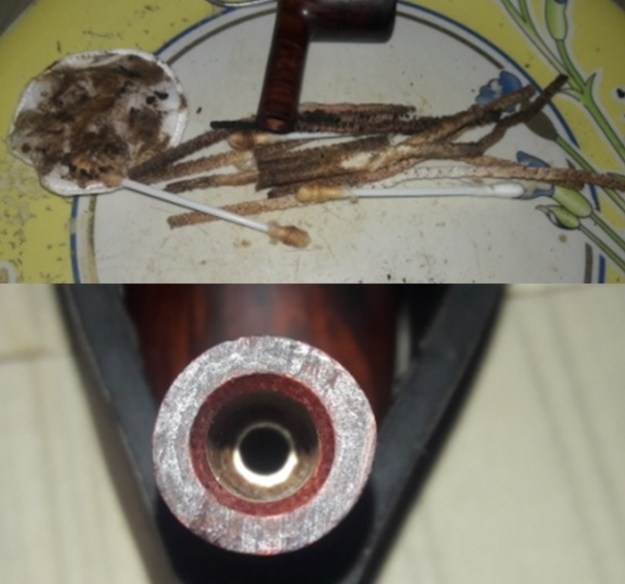
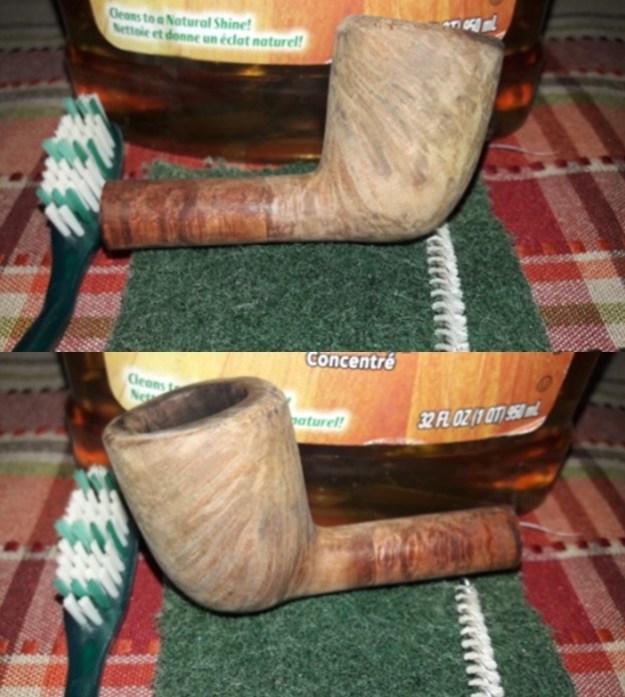
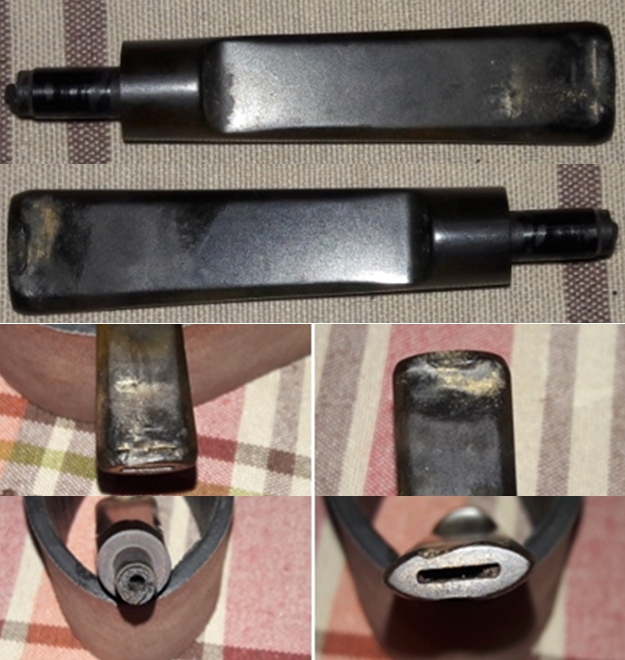
Abha, my wife, first cleaned the internals of the stem with stem brush, bristled/ regular pipe cleaners and 99.9% pure isopropyl alcohol. She scraped out the dried oils and tars from the tenon end with my fabricated knife and also removed the dried oils and tars from the slot end. She followed it up by sanding the entire stem with a folded piece of 220 grit sand paper to remove the surface oxidation. The amount of gunk that has been scraped out of the stem surface just to get to the black vulcanite shows that the oxidation was very deep and heavy over the stem surface. It has been our experience that sanding a stem before dunking it in to the deoxidizer solution helps in bringing the deep seated oxidation to the surface which in turn make further cleaning a breeze with fantastic result. She, thereafter, dropped the stem in to “Before and After Deoxidizer” solution developed by my friend Mark Hoover. The solution helps to draw out heavy oxidation to the surface, making its further removal a breeze, while the minor oxidation is eliminated to a very great extent. The initial sanding helps to draw out the complete oxidation as the sanding opens up the stem surface that has been initially covered with oxidation. We usually dunk stems of 4-5 pipes that are in-line for restoration and this pipe is marked in green arrow. We generally allow the stems to soak in this solution overnight to do its work.While the stem was soaking in the deoxidizer solution, I worked on the stummel by first reaming the chamber with size 1 followed by size 2 Castleford reamer head. I further scraped the chamber walls with my fabricated knife to remove the remaining carbon deposits where the reamer head could not reach. I scraped out the lava overflow from the rim top surface, especially from the area in the 6 o’clock direction. Once the cake was reamed back to the bare briar, I used a 150 grit sand paper followed by 220 grit sand paper to remove all the traces of remaining cake and also to smooth out the inner walls of the chamber surface. Finally, to remove the residual carbon dust, I wiped the chamber with a cotton pad wetted with 99.9% pure isopropyl alcohol. The inner rim edge was charred in 10 ‘O’ clock and 2 o’clock direction which have been encircled in red. I scrapped off the charred briar from these areas and now the chamber is seriously out of round. The outer rim edge damage is significantly deeper than I had anticipated (marked in green circle). The chamber walls are pristine without any damage. The inner rim charring in the 10 o’clock is very deep and creating a bevel to mask it will result in a very thin rim top surface. I may consider rebuilding both the damaged inner and outer rim edge with superglue and briar dust after I have topped the rim surface. The ghost smells are still very strong and may reduce after the shank/ mortise are thoroughly cleaned. The rim top surface is still considerably darkened and would need to be thoroughly cleaned to know the exact damage to the surface. I followed up the reaming with cleaning the mortise using cue tips, pipe cleaners and shank brush dipped in isopropyl alcohol. I scraped the walls of the mortise with my fabricated knife to remove the dried oils and tars. The end of the mortise now shows the shiny end of a metal tubing which has been inserted to strengthen the spiced joint, another pointer to an excellent and solid repair job. The ghost smells are still very strong and would require a salt and alcohol treatment.I continued the internal cleaning of the chamber and shank with a salt and alcohol bath. I use cotton balls which is an at par substitute as I have realized over the years. I draw out a wick from the cotton and along with a folded regular pipe cleaner; insert it in to the mortise and through the draught hole in to the chamber. Thereafter, I packed the chamber with cotton balls to about quarter of an inch below the inner rim edge and soaked the cotton balls with isopropyl alcohol up to the brim. About half an hour later, the level of alcohol had gone down, having being absorbed by the cotton. I topped it up once again and set it aside overnight. By next afternoon, the cotton and alcohol had drawn out all the remaining oils and tars from the chamber and mortise, fulfilling its intended task. I removed the cotton balls and ran pipe cleaners through the mortise to clean out all the loosened tars and gunk and further cleaned it with alcohol and q-tips. The chamber now smells clean and fresh. I set the stummel aside to dry out naturally.With the bowl internals clean, I move to clean the exterior of the stummel. I used a hard bristled tooth brush and Murphy’s Oil soap to scrub the stummel and rim top. I set the stummel aside for 10 minutes for the oil soap to draw out all the grime from the briar surface. After 10 minutes, I washed the stummel under running warm water with anti oil dish washing detergent till the stummel surface was clean and dried it using paper towels and soft cotton cloth. I simultaneously cleaned the shank internals with the detergent and hard bristled shank brush and set the stummel aside to dry out naturally. The stummel surface has cleaned up nicely and the beautiful grain patterns are now on full display. The charring to the inner rim edge in 10 o’clock direction is significantly deeper than anticipated. The outer rim edge chipping too is significant. I shall have to resort to topping to address this damage and also the issue of chipped outer rim edge to some extent. To completely address these issues, I shall have to resort to a rebuild the damaged portion of outer and inner rim edge using briar dust and superglue. Continuing with the stummel repairs, I topped the rim top over a piece of 220 grit sand paper till I had a smooth even surface and the charred surface in the 2 o’clock direction was completely eliminated. However the out of round chamber in the 10 o’clock direction and the chipped outer rim edge damage is still significant and would necessitate a rebuild. These damages are highlighted in the last two pictures below. Further repairs to the stummel is being put on hold as I did not have briar dust in required quantity and neither did I have any superglue at home. I shall complete these repairs once I rejoin my place of work once the lockdown due to COVID-19 pandemic is lifted.

While the stummel repairs were being put on hold, the next morning Abha removed the stem that had been soaking in the deoxidizer solution overnight. She cleaned the stem under running warm water and scrubbed the raised oxidation from the stem surface using a Scotch Brite pad and cleaned the airway with a thin shank brush. She further removed the oxidation by scrubbing the stem with 0000 grade steel wool and applied a little EVO to rehydrate the stem. This now gives a clearer picture of the extent of depth of the bite marks as can be seen in the pictures below. These will definitely require a fill even after I have heated and raised the vulcanite. The buttons on either surface will have to be reconstructed and reshaped. I need to further sand the stem to completely remove the oxidation. The deep tooth indentations are now clearly visible and I decided to address these issues at this stage. Since I did not have a lighter (I generally prefer to use it for this purpose), I used a lit candle instead. The result is equally good; however, one has to be doubly careful as the heat from a candle flame is more intense as compared to a lighter. These tooth indentations were raised to the surface to some extent due to the heating; however, it would require a fill to complete the repairs.I prepared a mix of CA superglue and activated charcoal and carefully applied it over the damaged bite zone on both surfaces and lip and set it aside for curing over night. I applied this mix in sufficient thickness as it would help during the filing and sanding to match the fills with the stem surface and reshaping the button.Using a flat head needle file, I reshaped the button and followed it up by sanding the stem with a folded piece of 220 grit sand papers. I followed it up by further sanding the stem with 320, 600 and 800 grit sand papers. Once I was satisfied that the fills had perfectly matched with the rest of the stem surface, using micromesh pads, I completed the polishing cycle by wet sanding the surface with 1500 and 2000 grit sand papers and further dry sanding with 3200 to 12000 grit pads. The stem looks great with the fills nicely matched with the rest of the surface. I rub a little quantity of Extra Virgin Olive oil into the stem surface. I have since rejoined back at my place of work and necessary tools, equipment and materials are now available to me to complete my pending projects that I have carried back from home to my work place. I had noted the issues that needed to be addressed on each pipe that I had carried and this pipe needed the rim inner as well as outer rim edge rebuilt, micromesh polishing of the stummel and final carnauba wax polish.

Starting with the rebuild of the rim edges, I reconstructed the inner and outer rim edge with briar dust and CA superglue using the layering technique. I ensured that the fill was slightly above the rest of the rim top surface as this would enable me to get a correct perspective of the match with rest of the stummel surface when I file and sand these reconstructed parts with the rest of the rim top. I set the stummel aside for the mix to cure. Once the fills had sufficiently hardened, with a flat head needle file, I sand the top portion of the fill to achieve a rough match with the rim top surface. I used a flat head needle file to match reconstructed portion of the outer rim edge with the rest of the stummel surface. For matching the inner rim edge fill with the chamber walls, I resorted to a 180 grit sand paper as the needle file did not afford me the flexibility that was required to shape this portion of the fill. I am quite pleased with the progress being made so far. For a perfect match of the reconstructed portion of the rim edges and also to further reduce the darkened rim top in 2 o’ clock direction, I again topped the rim surface on a piece of 180 grit sand paper. With a folded piece of 220 grit sand paper, I created a slight bevel to both the outer and inner rim edges to blend in the fills and also to address the minor dings and charring to the outer and inner rim edges respectively. The fills are now perfectly matched and rim top now looks pristine. To protect the briar dust and superglue fill on the inner edge of the rim from coming in to direct contact with the burning tobacco and also to prevent the heat from reaching the external surface of the stummel and causing a burnout, I plan, firstly, to fill only the small reconstructed inner rim edge of the chamber with J B Weld followed by a second coat of activated charcoal and yogurt to the entire chamber which would assist in faster cake formation. J B Weld is a two-part epoxy Cold Weld that consists of two parts; hardener and steel which are mixed in equal parts in a ratio of 1:1 with hardening time of 5-6 minutes and complete curing time of 6-8 hours. I poured the contents of the two tubes and mixed it well. With a flat bamboo frond, I applied this mix and filled the intended rebuilt inner rim edge. I worked fast to ensure a complete and even filling of the inner rim edge and set the stummel aside for the J B Weld to harden.Once the J B Weld had sufficiently cured, I sand it down with a semi circular needle file to remove excess weld from the area. I used a folded piece of 220 grit sand paper to further sand the fill and achieve a perfect blend and smooth coat of J B Weld over the reconstructed inner rim edge.At this stage, I observed a couple of air pockets over the outer rim edge rebuilt surface. I applied a coat of clear CA superglue and set the stummel aside for the coat of superglue to cure. Once the superglue had hardened, I sand the portion with a piece of 220 grit sand paper to match the rest of the rim edge. I followed it by wet sanding the stummel with 1500 to 12000 grit micromesh pads, wiping frequently with a moist cloth to check the progress. The outer rim edge is now smooth and completely filled with no air pockets. However, the light colored patches are still visible. I shall stain the rebuilt patch with a dark brown stain pen to mask these pockets. The spliced shank with the joint is now clearly visible. With the spliced part of the shank having such beautiful Bird’s eye and cross grains over the surface, I really don’t have the heart to stain it just to mask the repairs!! Next, I rubbed a small quantity of “Before and After Restoration Balm” deep in to the briar with my finger tips and let it rest for a few minutes. The balm almost immediately works its magic and the briar now has a nice vibrant appearance with the beautiful grain patterns displayed in their complete splendor. I further buffed it with a horse hair brush and gave a vigorous buff with a microfiber cloth to deepen the shine. The dark browns of the bird’s eye and cross grains spread across the stummel makes for a visual treat. It really is a nice piece of briar. I shared the pictures of the pipe and sought his opinion if I should stain the pipe to mask the shank repairs on leave it be? His characteristic reply was that “he would not stain it”!! With this aspect decided, I move ahead with the final polishing of the pipe. I mount a cotton cloth buffing wheel on to my hand held rotary tool and polished the stummel and stem with Blue Diamond compound. This compound helps to remove the minor scratch marks that remain from the sanding. This pipe is starting to look really beautiful with the glossy dark brown through which the beautiful grains pop out over the stummel surface. I mount another cotton buffing wheel that I have earmarked for carnauba wax and applied several coats of the wax. I finished the restoration by giving the entire pipe a rigorous hand buffing using a microfiber cloth to raise the shine further. The finished pipe looks amazingly beautiful and coupled with the quaint size and ultra light weight makes it an ideal pipe for a quick smoke while you continue working with your hands. If you feel that this pipe calls out your name, please let Steve know and we shall make arrangements for it to reach you. P.S. To avoid the J B Weld coated minor spot, though high nearer to the rim top from coming in to direct contact with the burning tobacco and also to aid in faster cake formation, I gave the bowl a coat of yogurt and activated charcoal. Unfortunately, I missed out on taking pictures of the process.

I wish to thank each one for sparing their valuable time to read through this write up and each one is my prayers. Stay home…stay safe!!

Adding a Bit Of Dazzle While Restoring An Italian “Empire State” Pickaxe Pipe.


Blog by Paresh

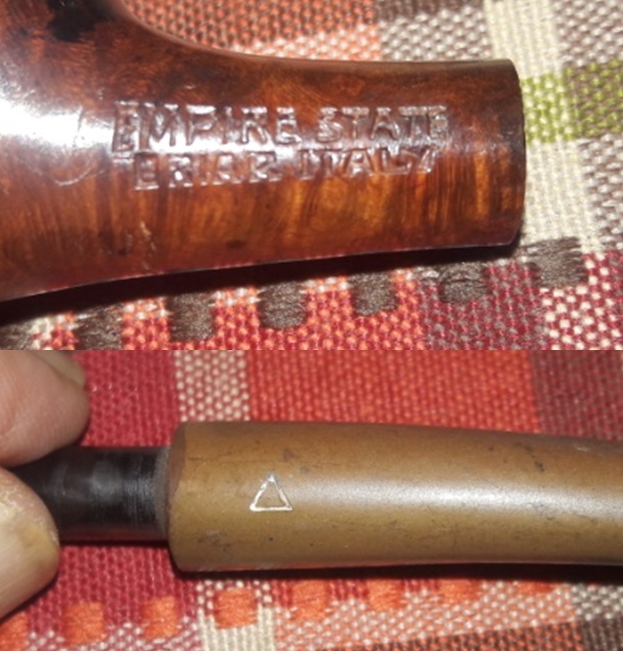
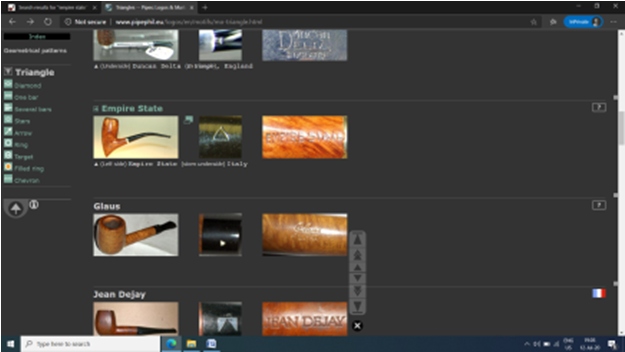
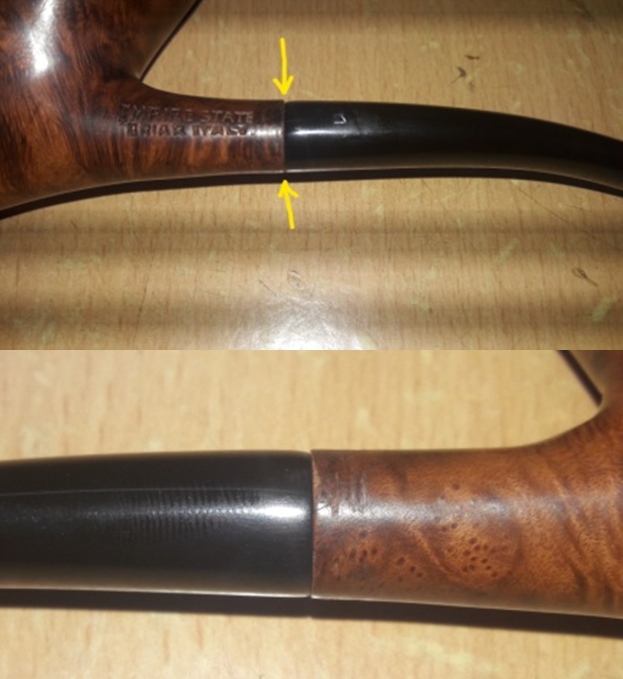
The next pipe selected for refurbishing is a beautifully shaped pickaxe pipe. The stummel has a slender tall chamber with a subtle flare about ½ inch below the outer rim edge. It’s a shape that I have, generally speaking, come to associate predominantly with Danish carvers; however, this one has its links with either USA or Italy!! This pipe has a smooth surface with a nice hand feel as it comfortably fills my entire palm. For a pipe with a length of 5 ½ inches and bowl height of 3 ½ inches, it’s pretty much ultra light weight, making it a perfect to clench. The vulcanite tapered stem is thin and delicate with a slight bend that matches the curve from the foot of the stummel to the shank end. The pipe as it sits on my work table is shown below. The pipe is stamped on the left side of the shank as “EMPIRE STATE” in caps over “BRIAR ITALY”, also in capital letters. The thin vulcanite tapered stem is stamped on the left side with an equilateral triangle as stem logo.This brand of pipe was completely new to me and had not even heard about this brand. It was, thus, natural that I had to first know about the pipe that I was working on. I turned to pipephil.eu to know more of this brand. I referred to the stem logos “triangle” to narrow down my search parameters to save on time. True enough, there on the screen staring at me was an exact same pipe with exact same shape and stampings!! The only difference being that the site says that “Italy” is stamped on the stem’s underside whereas the pipe on my table has “BRIAR ITALY” stamped on the shank itself. Also there is a band at the shank end which was conspicuous by its absence on my pipe. Given below is the link to the site and a screen shot of the relevant portion with the pipe. http://www.pipephil.eu/logos/en/motifs/mo-triangle.htmlSadly, there was no information about the brand on this site. Next I visited rebornpipes.com and pipedia.org to seek information on this brand. However, my search was futile as neither site had any information on this pipe.Home

Has this brand got to do anything or related in any which way to the famous EMPIRE STATE BUILDING of New York which housed many famous pipe companies like S M Frank & Co, KBB etc? I am not aware and would request readers to shed some light and share their knowledge with our fraternity.

With the provenance of the pipe a mystery, I proceeded to carry out a visual inspection of the condition of the pipe in my hand. This helps me map the road to restoring the pipe by identifying the issues involved and identifying methods/ options to address the same beforehand.

Initial Visual Inspection
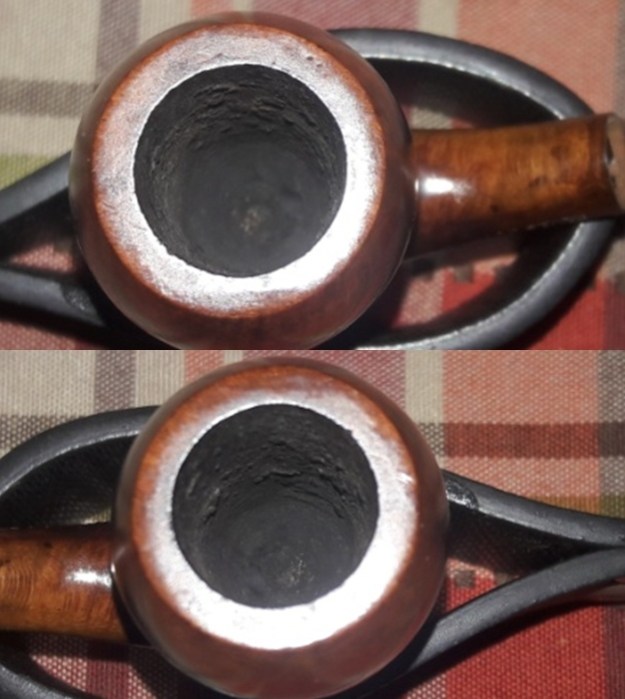
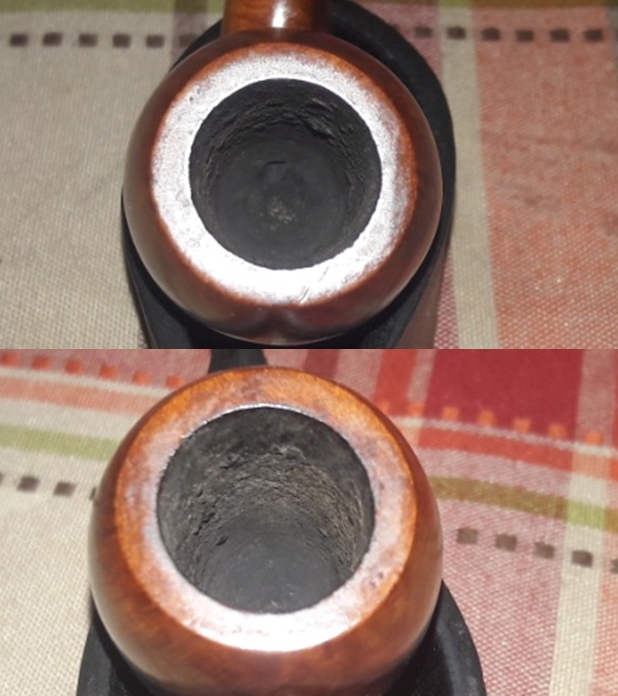
The chamber has a decent build up of cake. The build-up of the cake is heavier on the middle half of the bowl, but overall well maintained. The condition of the inner walls of the chamber can be commented upon after the cake has been taken down to the bare briar. The draught hole is right at the bottom of the chamber with a nice wide opening. The rim top is clean and a couple of minor dings are visible over the rim top surface. The chamber odors are not very strong and should be completely eliminated once the cake has been removed and the shank has been thoroughly cleaned. The pipe does not seem to have seen much use or possibly it has been used but nicely taken care of as is apparent from the condition of the pipe. The chamber has a nice thickness to it and should provide a nice cool smoke. The stummel surface appears dull and lackluster due to the accumulated dirt, dust and grime. I could identify a couple of fills over the stummel surface and the same are indicated with pastel blue arrows. There are few scratch marks over the bottom surface of the shank. The mortise is relatively clean with small amount of oils and tars accumulated on the walls of the mortise. Thorough cleaning and rising under warm water of the stummel surface will confirm if these fills are required to be refreshed or otherwise and should also highlight the grain patterns. I shall need to sand the stummel surface with sand papers to remove and minimize the scratches, dents and dings. Micromesh polishing will further help minimize these dents and scratches to some extent. The delicate vulcanite tapered stem is heavily oxidized and has taken on a dirty brown coloration. The lip has some minor bite marks on both surfaces and will need to be rebuilt and reshaped. There is some minor tooth chatter seen in the bite zone on both the surfaces. The stem airway appears to be relatively clean. Further internal cleaning of the stem should make the draw full and open. The tenon and horizontal slot is nice and clean. The removal of deep and heavy oxidation from the stem surface is going to be the most tedious and time consuming part of this restoration. The Process
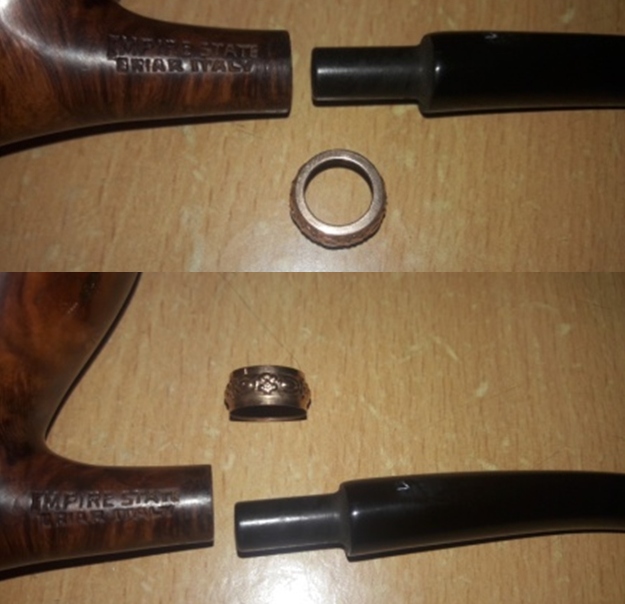
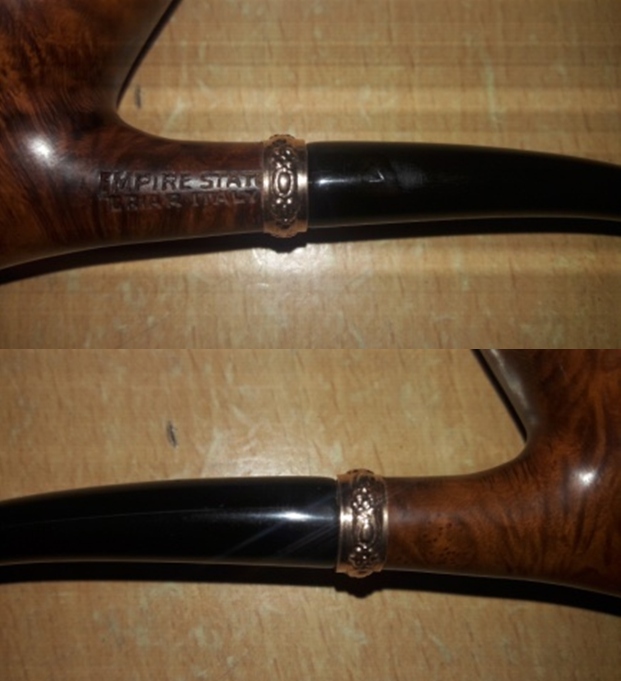
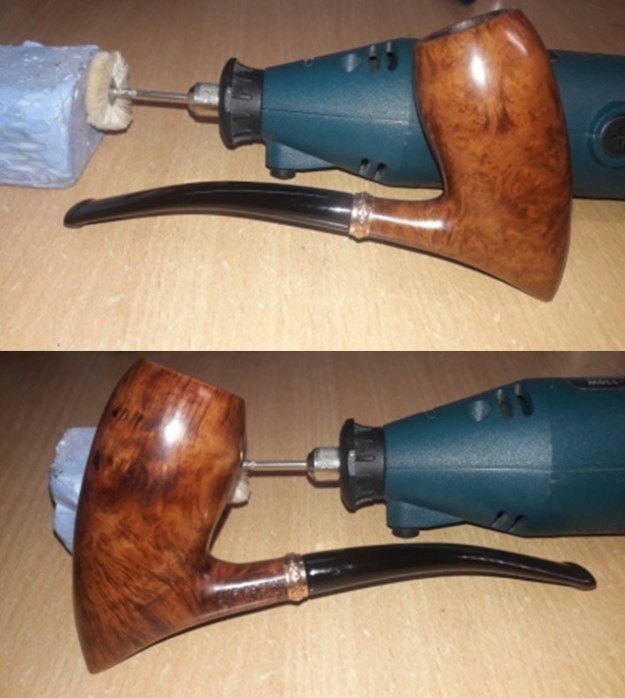
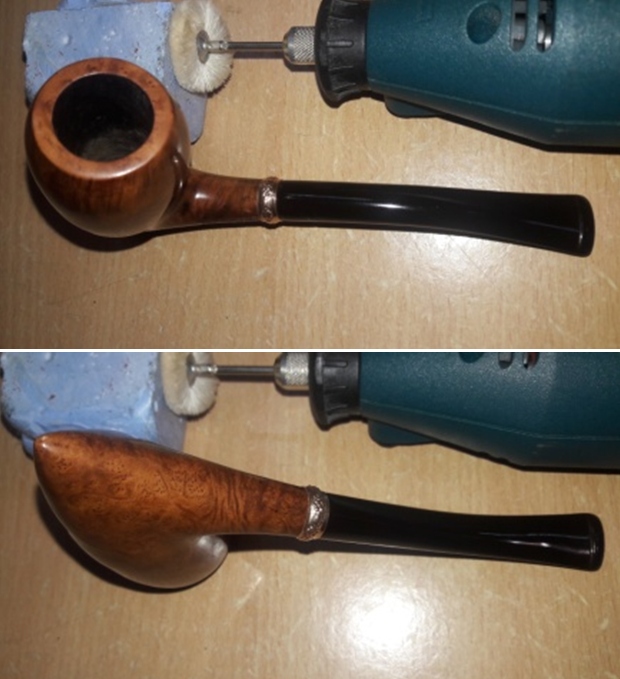
The process of refurbishing this pipe started with the cleaning of the stem. Abha cleaned the stem air way with regular and bristled pipe cleaners dipped in 99.9% pure isopropyl alcohol. She further cleaned the stem internals with thin shank brushes and dish soap to remove the stubborn and thick gunk from within the airway. The heap of pipe cleaners and their appearance tells a sordid story. With a sharp fabricated knife, she scraped off the little gunk and dried tars from the tenon and slot end. Since this stem did not have any issues to address and I wanted Abha, my wife, to progress beyond just initial cleaning to stem polishing, I requested her to complete this stem. She agreed though with great reluctance!!The stem surface was sanded down with a worn out piece of 180 grit sand paper by Abha. We have realized that following this step prior to immersion into the “Before and After Stem Deoxidizer” solution has two advantages, firstly, the stem surface oxidation gets loosened and the solution works deeper and more efficiently in pulling the deep seated oxidation from the stem surface. Secondly, the minor tooth chatter and calcium depositions are taken care of prior to the immersion. She immersed it in “Before and After Deoxidizer” solution along with the stem of other pipes in line for restoration. This solution has been developed by Mark Hoover and works to draw out all the deep seated oxidation from the surface making its subsequent cleaning and polishing a breeze. I would definitely recommend this product as it saves on to time and efforts. The pipe has been marked with a yellow arrow for easy identification.  With the stem in the deoxidizer solution, Abha, my wife, dealt with the cake by reaming the chamber with a fabricated knife as the narrow chamber opening was small even for size 1 head of the reamer. She further scraped the cake from the bottom of the bowl and also the walls of the chamber. She was especially very careful while reaming with the knife so as not to damage the inner edge of the rim. Once the solid briar was exposed, she further smoothed the walls and removed remaining cake by sanding with a 180 followed by 220 grit sand paper. Another advantage of this process is the elimination of traces of ghosting to a great extent. She wiped the chamber with a cotton swab wetted with 99.9% isopropyl alcohol. The chamber walls are pristine and solid with no heat fissures or pits. Simultaneously she cleaned out the internals of the shank/ mortise and airway using q- tips, pipe cleaners and isopropyl alcohol. She scraped the walls of the mortise with a fabricated knife till the accumulated gunk was removed. Further cleaning of the shank internals will be carried during the external cleaning of the stummel.Thereafter, she generously rubbed “Briar Cleaner”, a product that has been developed by my friend Mark Hoover, into the external surface of the bowl and the rim top surface. It works similar to Murphy’s oil soap and needs to be applied to the stummel surface and set aside for 5- 10 minutes. The product pulls out all the dirt and grime to the surface making further cleaning easy. We are quite happy with this product. She used a hard bristled tooth brush to scrub the stummel and rim top with the solution. After the scrub with Briar cleaner solution, she washed the stummel under running warm water with anti oil dish washing detergent till clean and dried it using paper towels and soft cotton cloth. She simultaneously cleaned the shank internals with the detergent and hard bristled shank brush. The stummel surface has cleaned up nicely with the mixed grains on full display. The stummel now looks and smells fresh and the old smells are all gone. She set the stummel aside to dry out naturally. I checked the fills for solidity and realized that all the fills had gone soft and would need to be refreshed. Otherwise the stummel had cleaned up nicely and the rim top surface was in pristine condition. The next morning, Abha removed the stems that had been soaking in the deoxidizer solution overnight. She cleaned the stem and the stem airway under running warm water and scrubbed the raised oxidation from the stem surface using a Scotch Brite pad and the airway with thin shank brush. She further removed the oxidation by scrubbing the stem with 0000 grade steel wool and applied a little olive oil to rehydrate the stem.While Abha was busy with the stem cleaning and sanding, I removed the old fills from the stummel surface with a thin edged sharp knife. I cleaned the gouged out spots with cotton swab and alcohol in preparation for a fresh fill. Using the layering method, I filled the gouged out spots with CA superglue and briar dust. I always ensure that the fill is above the rest of the stummel surface. This helps in subsequent sanding and blending in of the fills with rest of the surrounding surface. I set the stummel aside for the fills to cure. I had run out of medium CA superglue and had only the thin superglue. This glue is not ideal for a fill as it spread all over the stummel surface. It sure does look messed up, however, since I was to sand the entire stummel to achieve a perfect blending of the fill with the rest of the surface, I was not very perturbed with the spreading of the superglue. With me working on the stummel repairs, Abha had continued her work of polishing the stem. She further sanded the stem surface with a folded piece of 220 and 320 grit sand papers to completely remove the remaining traces of oxidation and reduce the sanding marks and followed it with wet sanding the entire stem with 1500 to 12000 grade micromesh pads (1500 to 2400 grit micromesh pads had completely worn out and we were unable to order a set due to lockdown. The use 1500 and 2000 grit wet or dry sand paper is the nearest option that we had). She wiped the stem with a moist cloth to remove the dust and monitored the progress being made after every three grit pads. The stem polished up nicely and had a rich deep black shine to it. She applied a little Extra Virgin Olive oil to rehydrate the vulcanite and set the stem aside.Once the fills had sufficiently cured, with a flat head needle file she sanded the fills and achieved a rough match with the rest of the stummel surface. To achieve a perfect blending in of the fills and to remove the excess spread of the thin superglue, She sanded the entire stummel surface with a folded piece of 220 grit sand paper. The minor scratches that were observed at the bottom surface of the shank were also addressed by this sanding. The fills have blended in nicely and further polishing with micromesh pads should further mask these fills and sanding marks left behind by the abrasive 220 grit sand paper. Abha polished the stummel by wet sanding with 1500 to 2000 grit wet or dry sand paper and followed it up with further wet sanding with 3200 to 12000 grit micromesh pads. The stummel has taken on a nice deep and dark brown color, nicely masking the refreshed fills to naked eyes. I was prepared to satin the stummel if need be to mask the fills, however, that does not seem necessary at this stage. We are very happy with the appearance of the stummel at this point in restoration. Next, I rubbed a small quantity of “Before and After Restoration Balm” in to the briar with my finger tips, working it deep in to the briar and let it rest for a few minutes. The balm almost immediately works its magic and the briar now has a nice vibrant appearance with the beautiful grain patterns displayed in their complete splendor. The contrast of the dark brown of the stummel interspersed with darker cross grains and Bird’s eye, adds an interesting dimension to the appearance of the stummel. I further buffed it with a horse hair brush. On to the home stretch!! I attach the stem to the stummel to first polish it with Blue Diamond. This helps in addressing the minor scratches that are left behind. It was at this point in restoration that I noticed that the stem was inadvertently rounded at the shoulder, causing what is called “shouldering” (indicated with yellow arrows). Abha felt very guilty for having caused it, however, I showed her the picture of the pipe on pipephil.eu and suggested that when I reach back at my place of work I shall band it and that it will look very nice and original.Now that I have reached my place of work, I rummaged through the various bands that I have and found one that matched perfectly with the size of the shank end. It was an ornately designed brass band with embossed floral design. I tried a rough fit and realized that the stamping was being covered when the brass band was completely seated on the shank face. The letter “E” of the word “STATE” was getting masked under the band. I shall address this issue by sanding down the band to a size that would not cover the stamping at all. I have had a terrible experience of using a sanding drum on my hand held rotary tool once and since then I have been doing such band modifications by manually sanding it on a piece of 150 grit sand paper. The aesthetics of the pipe has been transformed completely by this addition of the band. Abha, my wife, too liked the appearance of this pipe with this addition of the brass band. I attach the stem to the stummel to first polish it with Blue Diamond. This helps in addressing the minor scratches that are left behind. The fills that were refreshed have merged beautifully with surrounding briar. I mounted a cotton cloth buffing wheel on to my hand held rotary tool and applied several coats of carnauba wax. I finished the restoration by giving the entire pipe a rigorous hand buffing using a microfiber cloth to raise the shine further and remove any residual wax from in between the sandblasts. The finished pipe looks amazingly beautiful and is now ready for its long second innings with me. I tweaked the seating of the stem in to the mortise a bit and now it seats flush with the shank band. P.S. This pipe shall always remain special to me and will find a place of pride in my modest collection…reason? Well, this is the first pipe that was worked on by Abha and it has turned out to be the most beautiful pipe, just like her!!

I wish to thank each one for sparing their valuable time to read through this write up and praying for the health and safety of entire mankind. Stay home…stay safe!!

Life for an American Made Pipe – A Bertram Washington DC 60 Canadian


Blog by Steve Laug

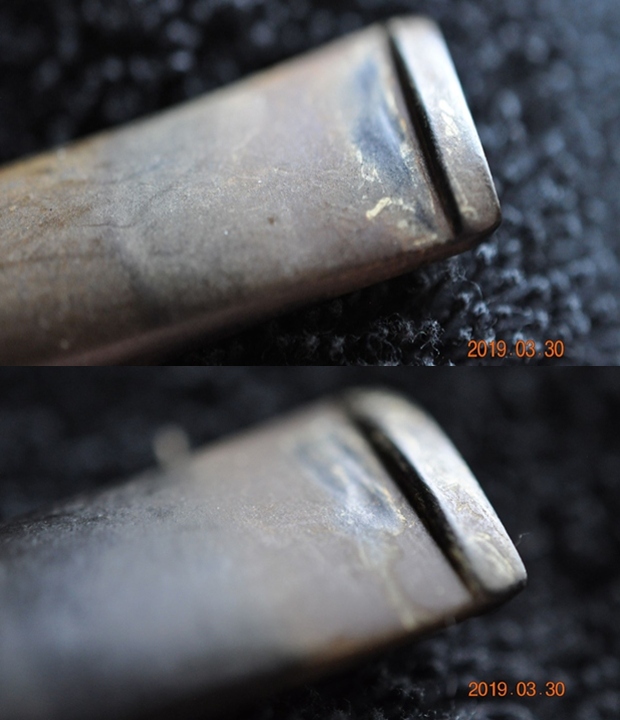
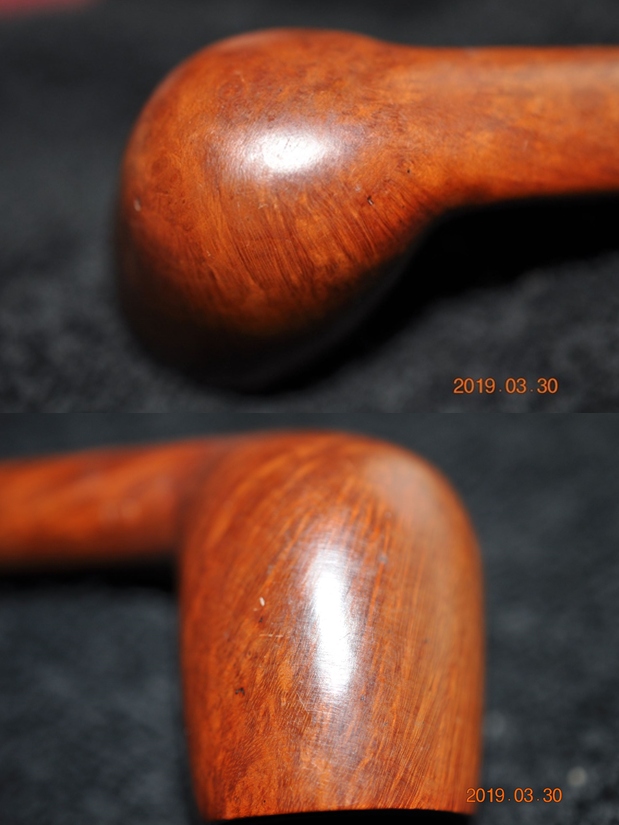
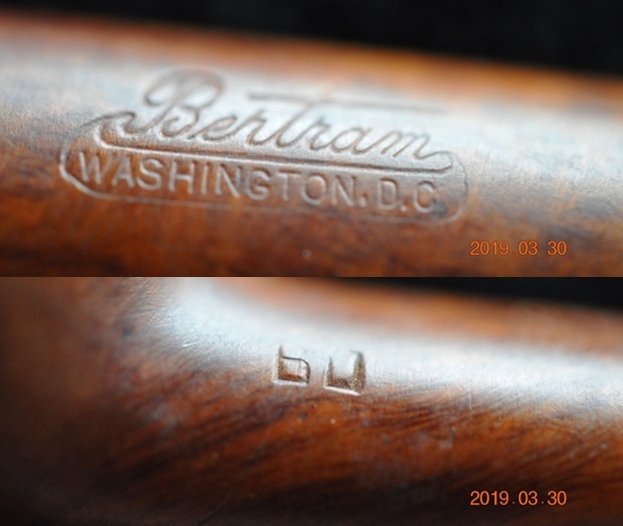
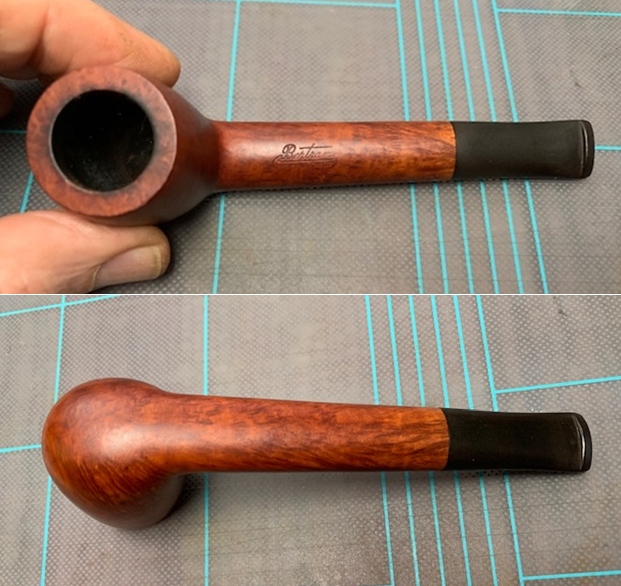
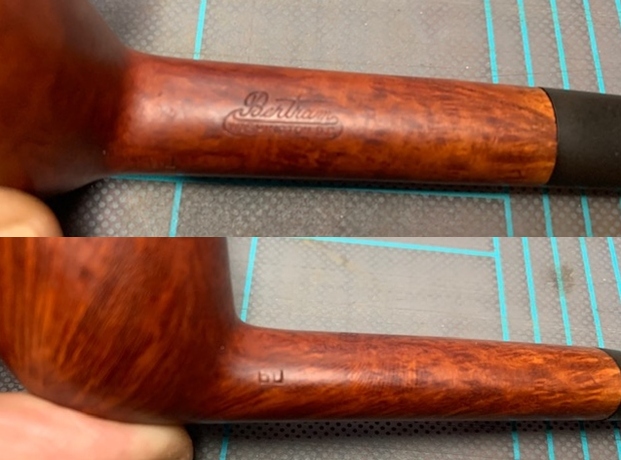
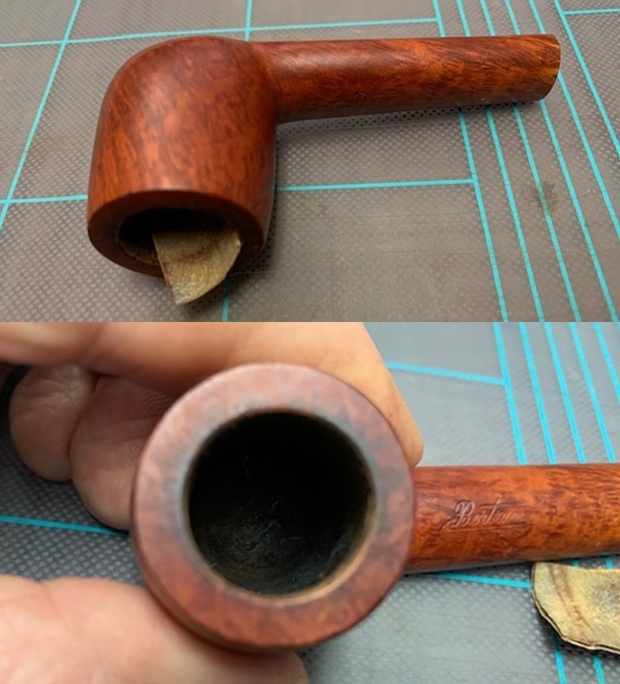
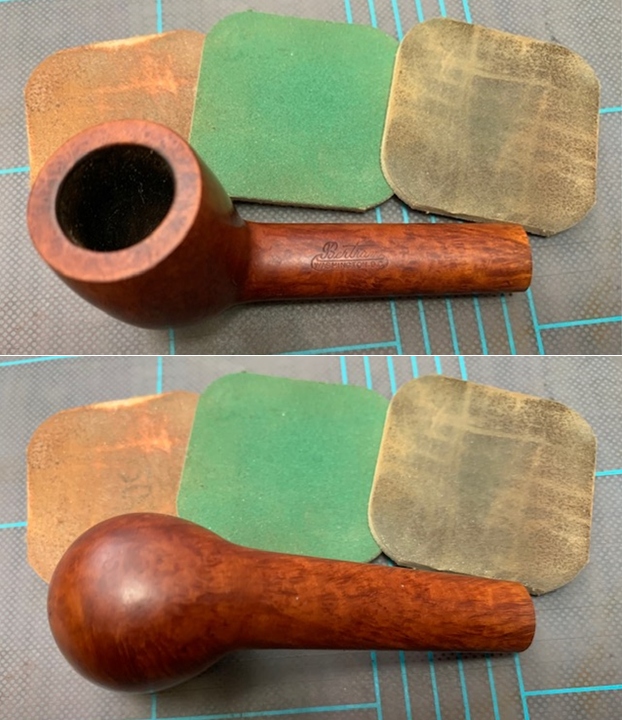
The next pipe on the work table came to me from one of our estate purchases. Between us we pick up quite a few pipes for restoration. I try to work them into the restoration queue so that I can keep them moving. We picked up over 120 Bertram pipes from an estate that a fellow on the east coast of the US was selling. This next one is from that estate – a beautifully grained short Canadian 60 Grade Bertram with a tapered vulcanite stem. The pipe is stamped on the left side with the Grade 60 number and on the top of the shank it is stamped Bertram [over] Washington D.C. The finish had a lot of grime ground into the smooth finish on the bowl and some darkening around the sides of the bowl. The bowl was thickly caked with an overflowing lava coat on the top of the rim. The edges looked to be in good condition. The stem was oxidized, calcified, dirty and had tooth chatter and marks on the top and underside near the button. There were not markings or a logo on the taper stem. It had promise but it was very dirty. Jeff took some photos of the pipe before he started his cleanup work.  He took photos of the rim top and bowl to give a clear picture of the thickness of the cake and the overflow of lava on the rim top. He also took photos of the top and underside of the stem to show the chatter and tooth marks. Otherwise the stem is quite clean.     Jeff took photos of the sides and heel of the bowl to give a picture of what the briar around the pipe looked like. There is some stunning grain under the grime.  He took photos of the stamping on the left side of the shank. It reads as noted above and is clear and readable. As I have worked on Bertrams I have written on the brand and have included the following information. If you have read it in past blogs, you can skip over it. If you have not, I have included the link to Bertram history and information. I would recommend that if you don’t know much about them take some time to read the background. I include a link to the write up on Pipedia (http://pipedia.org/wiki/Bertram). Bertram pipes were based out of Washington DC. They were popular among famous politicians and celebrities of the time. They made many products for them from FDR’s cigarette holders to Joseph Stalin’s favorite pipe. They were considered some of the best America had to offer till they finally closed their doors in the 70s. Bertram graded their pipes by 10s and sometimes with a 5 added (15, 25, 55 etc.), the higher the grade the better. Above 60s are uncommon and 80-90s are quite rare. I have worked on one 120 Grade billiard. I have several blogs that I have written on rebornpipes that give some history and background to Bertram pipes. (https://rebornpipes.com/2015/06/16/an-easy-restoration-of-a-bertram-grade-60-217-poker/).

I have included the following link to give a bit of historical information on the pipe company. It is a well written article that gives a glimpse of the heart of the company. http://www.streetsofwashington.com/2012/01/bertrams-pipe-shop-on-14th-street.html#

From this information I learned that all of these Bertrams were made before the closure of the shop in the 1970s. This Bertram Pot with stunning grain has no fills around the bowl or shank. This pipe has a 60 Grade stamp on it which I am sure explains the quality of the briar.

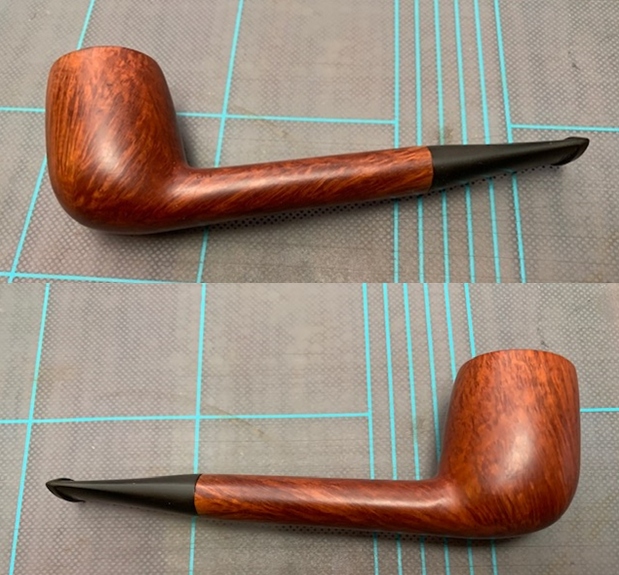
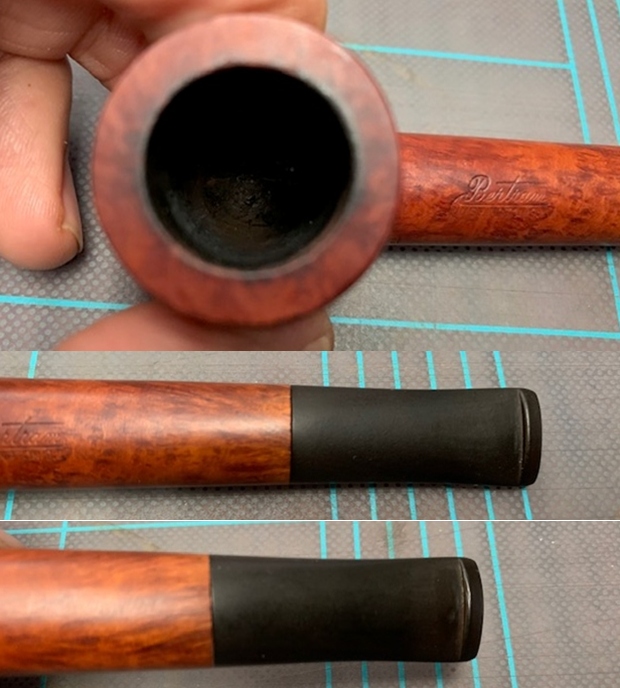
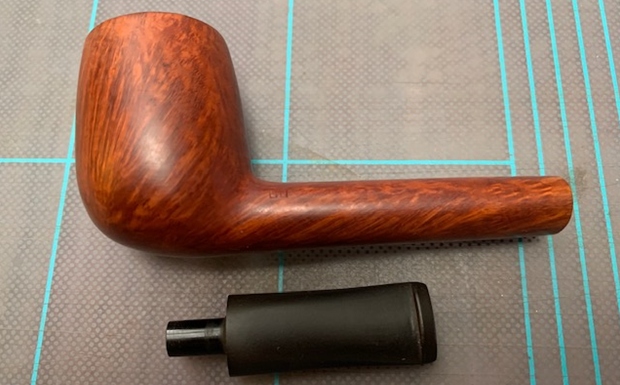
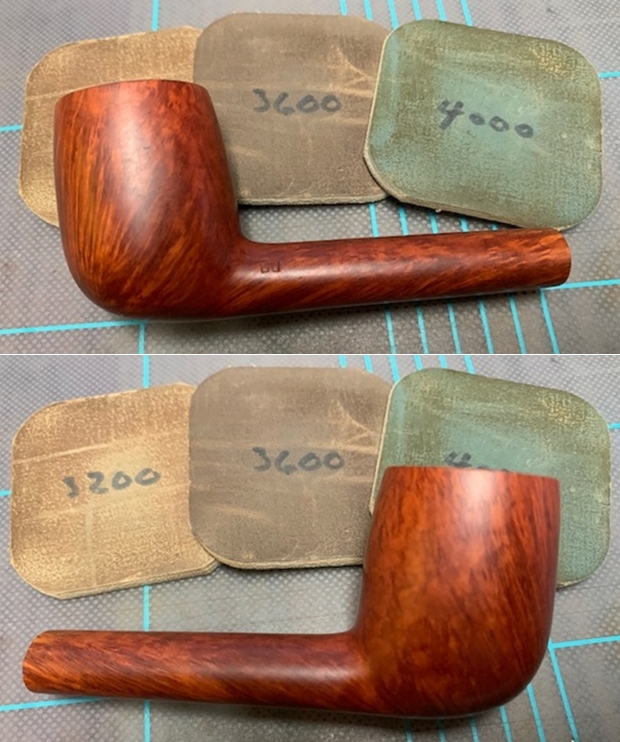
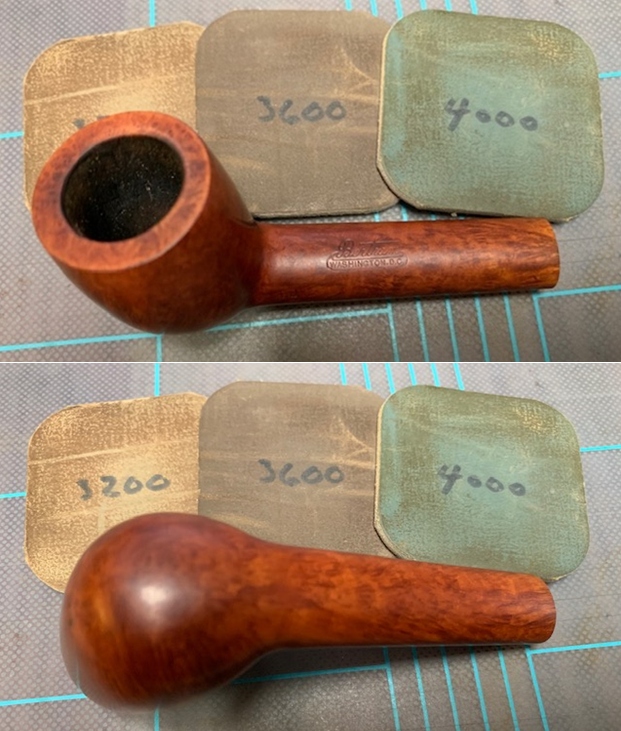
Jeff had cleaned up the pipe with his usual penchant for thoroughness. He reamed the pipe with a PipNet Pipe Reamer and cleaned up the remnants with a Savinelli Fitsall Pipe Knife.  He scrubbed the bowl with undiluted Murphy’s Oil Soap with a tooth brush. He rinsed it under running warm water to remove the soap and grime. He cleaned out the inside of the shank and the airway in the stem with alcohol, cotton swabs and pipe cleaners. He soaked the stem in Before & After Deoxidizer and rinsed it off with warm water. I took photos of the pipe once I received it.  The rim top cleaned up really well with the lava coat removed. The inner and outer edge of the rim looked good. There was a little darkening on the back inner edge of the rim.  The stem surface looked very good with a few small tooth marks and chatter on both sides near the button.    I took photos of the stamping on the shank. The Bertram Washington DC is on the left side of the shank toward the top. Lower on the shank it is stamped with the Grade 60 number.   I removed the stem and took a photo of the pipe to give a sense of the whole. The stem is tapered and narrow.Now it was time to do my work on the pipe. I cleaned up the darkened inner edge on the back side of the bowl with a folded piece of 220 grit sandpaper.    I polished the bowl and the rim top, sides and shank with micromesh sanding pads – wet sanding with 1500-12000 grit pads and wiping it down after each pad with a damp cloth.    I rubbed the bowl and shank down with Before & After Restoration Balm. I worked it into the surface of the bowl sides and shank with my fingertips to clean, enliven and protect the briar. I let the balm sit for a little while and then buffed with a cotton cloth to raise the shine.     I set the bowl aside and turned to work on the stem. I “painted” the stem with the flame of a Bic lighter to lift the tooth marks. I was able to lift the majority of them. There were a few remaining tooth marks next to the button. I filled them in with clear super glue. Once the repair cured I smoothed it out with a needle file. I finished shaping it with 220 grit sandpaper to smooth it into the button and sharpen the edge.    I polished the vulcanite stem with micromesh sanding pads – 1500-12000 grit pads. I wiped it down with a damp cloth after each sanding pad. I used Before & After Pipe Polish – both Fine and Extra Fine to further polish the stem.         This Bertram Washingto DC 60 Canadian with a vulcanite stem is a great looking pipe now that it has been restored. I put the stem back on the bowl and carefully buffed the pipe with Blue Diamond on the buffing wheel using a light touch on the briar. I gave the bowl and the stem multiple coats of carnauba wax on the buffing wheel and followed that by buffing the entire pipe with a clean buffing pad. I hand buffed the pipe with a microfiber cloth to deepen the shine. The finished Bertram 60 Canadian fits nicely in the hand and feels great. Give the finished pipe a look in the photos below. The dimensions of the pipe are Length: 5 inches, Height: 1 ¾ inches, Outside diameter of the bowl: 1 ¼ inches, Chamber diameter: ¾ of an inch. If you are interested in adding this pipe to your collection send me a message or an email. Thanks for reading this blog and my reflections on the pipe while I worked on it. There are many more to come!


Life for an American Made Pipe – An Ansell’s Wash. D.C. Imported Briar Billiard


Blog by Steve Laug

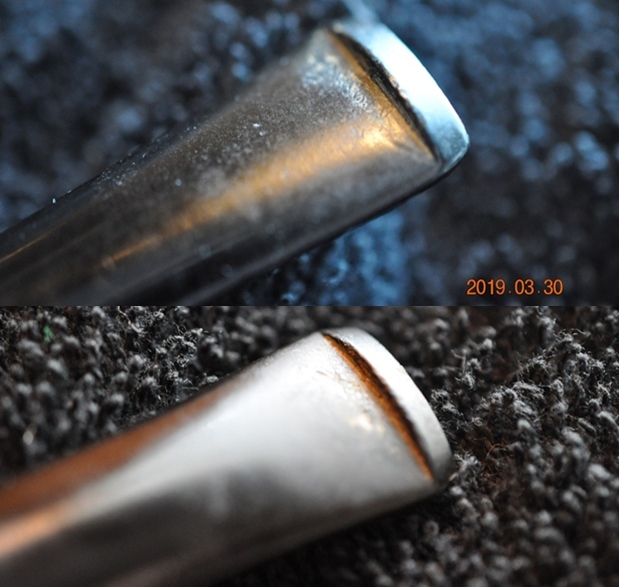
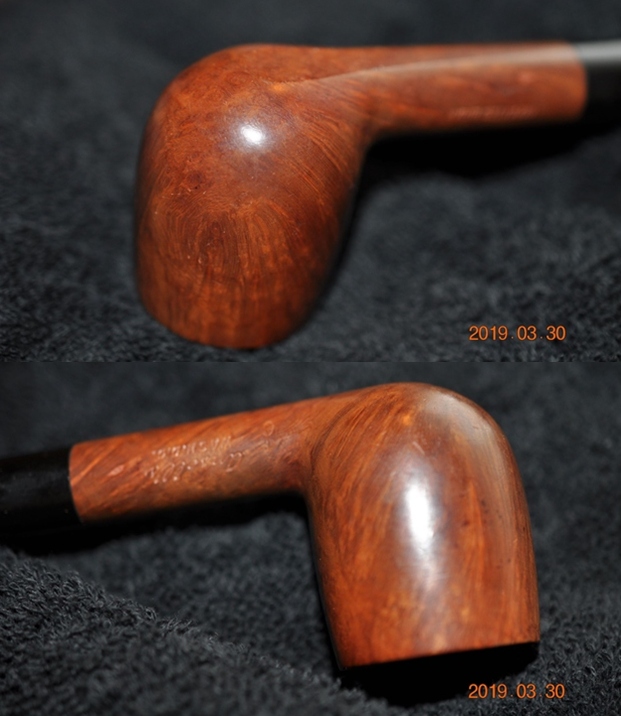
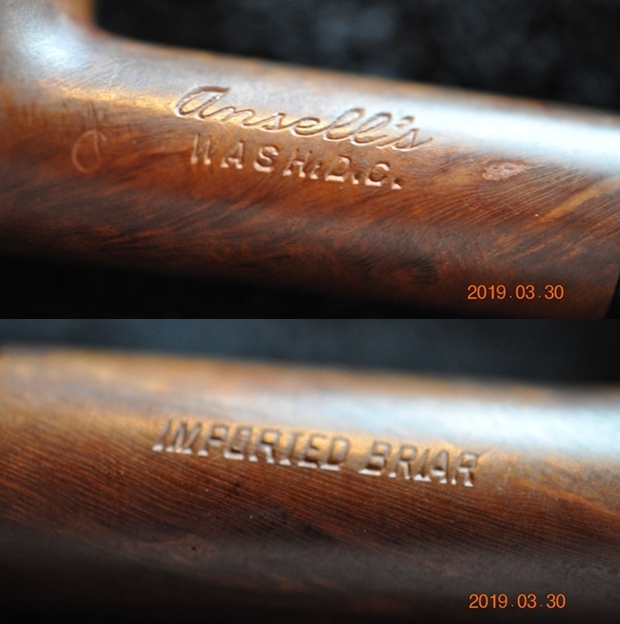
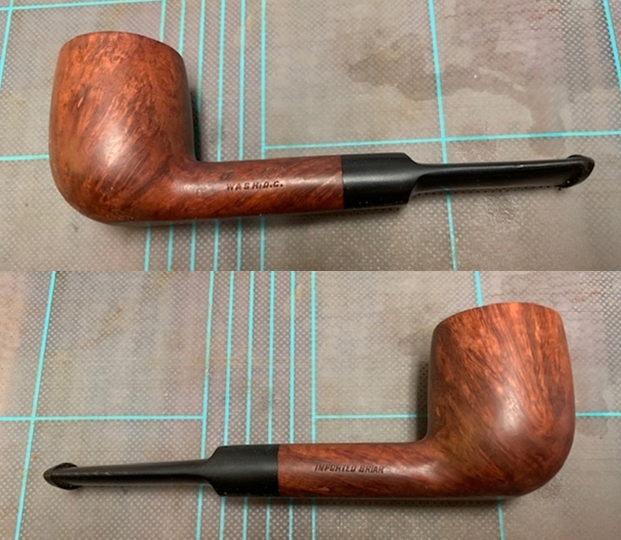
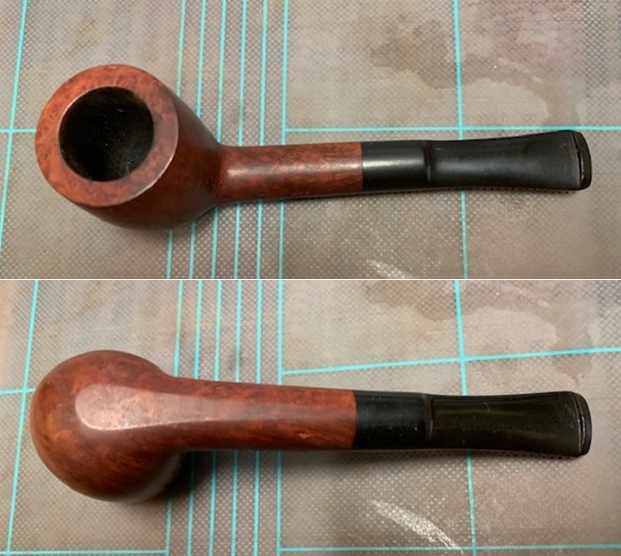
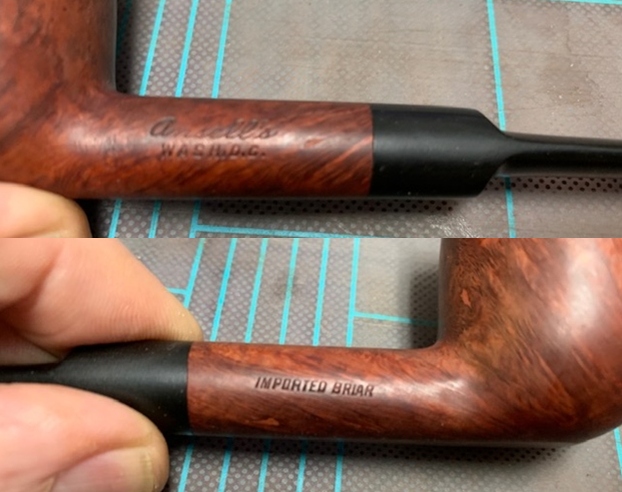
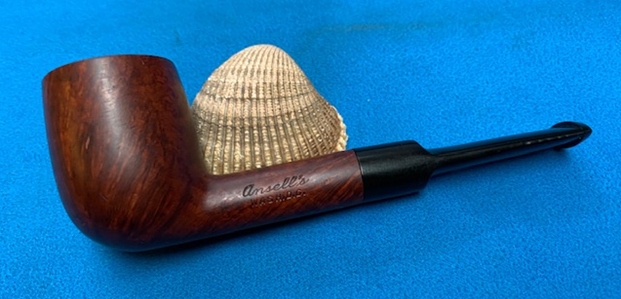
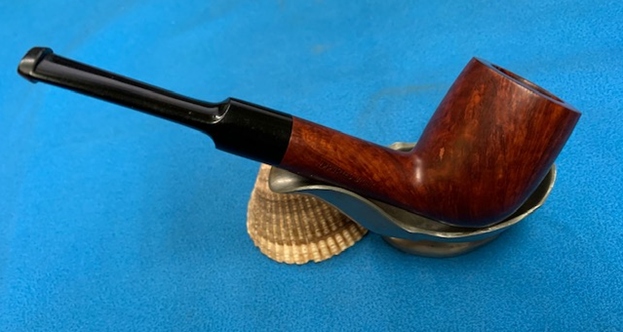
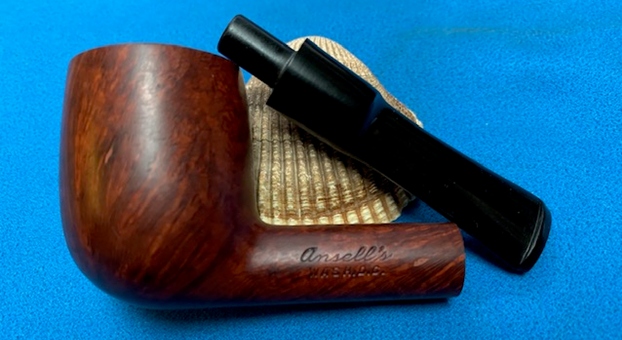
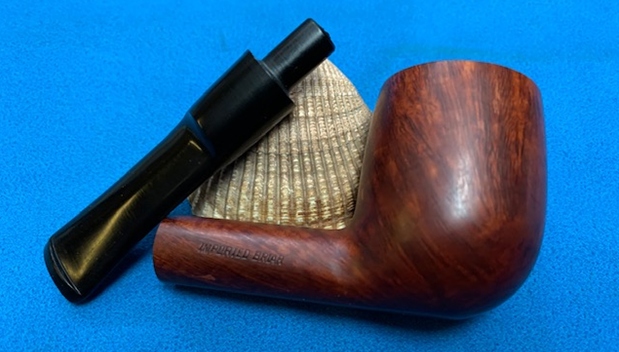
The next pipe on the work table came to me from one of our estate purchases. Between us we pick up quite a few pipes for restoration. I try to work them into the restoration queue so that I can keep them moving. We picked up over 120 Bertram pipes along with a few Ansell’s and A. Garfinkel pipes from an estate that a fellow on the east coast of the US was selling. This next one is from that estate – a beautifully grained Billiard with a vulcanite saddle stem. The pipe is stamped on the left side with the letter C followed by Ansell’s [over] Wash. On the right side of the shank it reads Imported Briar. The finish had a lot of grime ground into the smooth finish on the bowl and some darkening around the sides of the bowl. The bowl was thickly caked with an overflowing lava coat on the top of the rim. The edges looked to be in good condition. The stem was lightly oxidized, dirty and had tooth chatter and marks on the top and underside near the button. There were not markings or a logo on the taper stem. It had promise but it was very dirty. Jeff took some photos of the pipe before he started his cleanup work.  He took photos of the rim top and bowl to give a clear picture of the thickness of the cake and the overflow of lava on the rim top. He also took photos of the top and underside of the stem to show the chatter and tooth marks. Otherwise the stem is quite clean.  Jeff took photos of the sides and heel of the bowl to give a picture of what the briar around the pipe looked like. There is some stunning grain under the grime.  He took photos of the stamping on the left side of the shank. It reads as noted above and is clear and readable.   I turned to Pipedia to see if there was any information on the brand that gives me the background info that I enjoy as I work on a pipe (https://pipedia.org/wiki/Ansell%27s). I found a brief article and I quote it below in full.

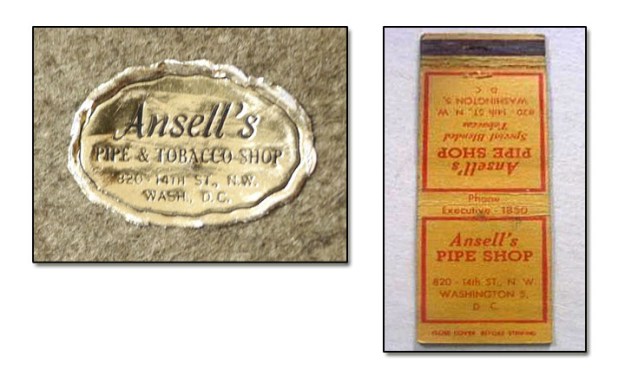
Ansell’s Pipe and Tobacco store was at 820 14th St. NW in Washington D.C. It was one of three pipe brands I know of which are marked with Wash. D.C. The others are Bertram pipes and A. Garfinkel.

There was also a photo of a label and matchbook. Thanks to Doug Valitchka for his photos.

Label and matchbook, courtesy Doug ValitchkaFrom this information I learned that Ansell’s was a Pipe and Tobacco Shop in Washington DC and along with Bertrams and Garfinkel made and sold their own pipes. Since Jeff and I picked it up in a lot of pipes that were bought at the closing auction of the Bertram’s Pipe Shop in 1970 I think that it is safe to assume that the pipe was made prior to that.

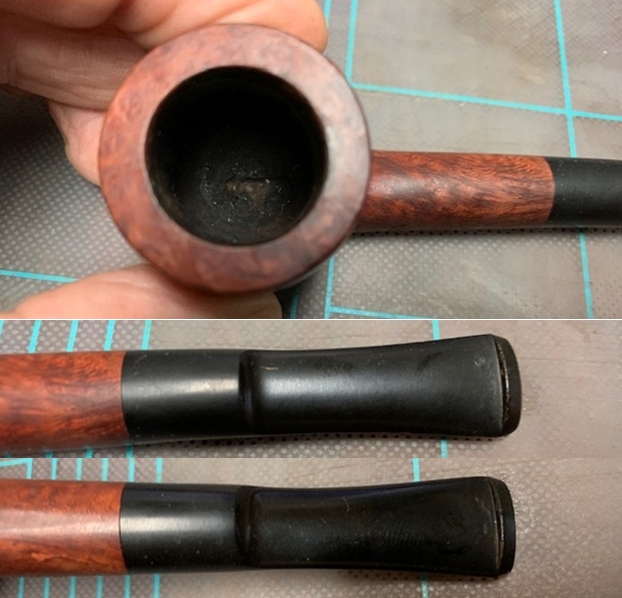
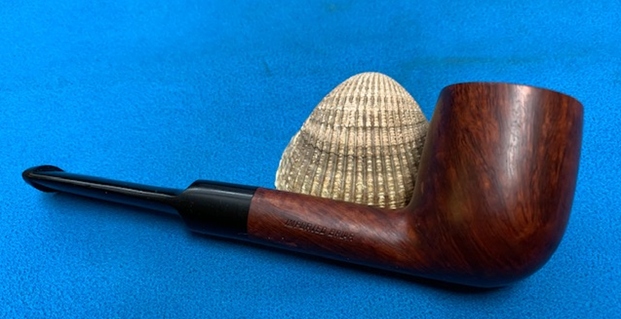
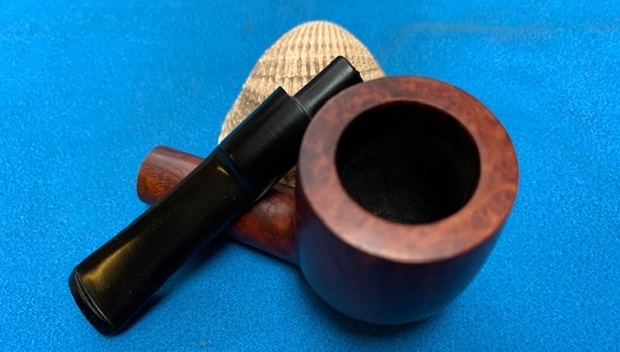
Jeff had cleaned up the pipe with his usual penchant for thoroughness. He reamed the pipe with a PipNet Pipe Reamer and cleaned up the remnants with a Savinelli Fitsall Pipe Knife.  He scrubbed the bowl with undiluted Murphy’s Oil Soap with a tooth brush. He rinsed it under running warm water to remove the soap and grime. He cleaned out the inside of the shank and the airway in the stem with alcohol, cotton swabs and pipe cleaners. He soaked the stem in Before & After Deoxidizer and rinsed it off with warm water. I took photos of the pipe once I received it.      The rim top cleaned up really well with the lava coat removed. The inner edge of the rim had some light damage but the outer edge looked to be in excellent condition.  The stem surface looked very good with a few small tooth marks and chatter on both sides near the button.      I took photos of the stamping on the shank. There is a C stamp next to the shank/bowl junction followed by Ansell’s Wash. D.C. on the left side of the shank and on the right side it is stamped Imported Briar.      I removed the stem and took a photo of the pipe to give a sense of the whole. The saddle stem billiard is a nice looking pipe. You can see a few fills around the bowl and shank.Now it was time to do my work on the pipe. The inner edge of the rim was slightly damaged so I used a folded piece of 220 grit sandpaper to clean it up and remove the damage.     I polished the bowl and the rim top, sides and shank with micromesh sanding pads – wet sanding with 1500-12000 grit pads and wiping it down after each pad with a damp cloth.    I rubbed the bowl and shank down with Before & After Restoration Balm. I worked it into the surface of the bowl sides and shank with my fingertips to clean, enliven and protect the briar. I let the balm sit for a little while and then buffed with a cotton cloth to raise the shine.    I set the bowl aside and turned to work on the stem. I “painted” the stem with the flame of a Bic lighter to lift the tooth marks. I was able to lift the majority of them. I finished smoothing out the surface of the stem with 220 grit sandpaper to smooth it into the button and sharpen the edge. I  started polishing it with 400 grit wet dry sandpaper.     I polished the vulcanite stem with micromesh sanding pads – 1500-12000 grit pads. I wiped it down with a damp cloth after each sanding pad. I used Before & After Pipe Polish – both Fine and Extra Fine to further polish the stem.   This Ansell’s Wash.D.C. Imported Briar Billiard with a vulcanite saddle stem is a great looking pipe now that it has been restored. I put the stem back on the bowl and buffed the pipe with Blue Diamond on the buffing wheel. I gave the bowl and the stem multiple coats of carnauba wax on the buffing wheel and followed that by buffing the entire pipe with a clean buffing pad. I hand buffed the pipe with a microfiber cloth to deepen the shine. The finished Ansell’s Saddle Stem Billiard fits nicely in the hand and feels great. Give the finished pipe a look in the photos below. The dimensions of the pipe are Length: 5 ¼ inches, Height: 1 ¾ inches, Outside diameter of the bowl: 1 ¼ inches, Chamber diameter: ¾ of an inch. If you are interested in adding this pipe to your collection send me a message or an email. Thanks for reading this blog and my reflections on the pipe while I worked on it. There are many more to come!

A Fresh Look for a Comoy’s Made Royal Coachman 497 Square Shank Pot


Blog by Steve Laug

The next pipe on the work table came to me from one of our estate purchases. Between us we pick up quite a few pipes for restoration. I try to work them into the restoration queue so that I can keep them moving. This next one is from our ongoing hunt – a beautifully grained square shank Pot with a saddle vulcanite stem. The pipe is stamped on the left side of the shank and reads Royal Coachman in a Germanic Script and on the right side has the shape number 497 and the typical round Comoy’s style COM Stamp Made in London in a circle [over] England. The stamping is identical to many of the pipes that I have restored from various lines of Comoy’s pipes. The finish had a lot of grime ground into the surface of the briar. The bowl was thickly caked with an overflowing lava coat on the rim top. The edges looked to be in good condition though there is some possible damage under the lava. The stem was oxidized, calcified, dirty and had tooth chatter and marks on the top and underside near the button. There were not markings or a logo on the taper stem. It had promise but it was very dirty. Jeff took some photos of the pipe before he started his cleanup work.  He took photos of the rim top and bowl to give a clear picture of the thickness of the cake and the overflow of lava on the rim top. He also took photos of the top and underside of the stem to show the oxidation and the chatter and tooth marks. There was also damage on the button surface itself.       Jeff took photos of the sides and heel of the bowl to give a picture of what the briar around the pipe looked like. There is some stunning grain under the grime.  He took photos of the stamping on the left and underside of the shank. It reads as noted above and is clear and readable.   I turned to Pipephil to read the article on the Royal Coachman brand to see the connections (http://www.pipephil.eu/logos/en/logo-r6.html). I have included a screen capture of the section below.I turned to Pipedia’s article on Comoy’s Seconds and have included a list of the various pipes that they make (https://pipedia.org/wiki/Comoy%27s). I have highlighted the Royal Coachman in red in the list below.

Seconds made by Comoy’s

Ace of spades, Ancestor, Astor, Ayres, Britannia, Carlyle, Charles Cross, Claridge, Coronet?, Cromwell, Dorchester, Dunbar, Drury Lane, Emerson, Everyman, Festival of Britain, Golden Arrow, Grand Master, Gresham, Guildhall, Hamilton (according to Who Made That Pipe), Kingsway, Lion’s Head, Lord Clive, Lumberman, Hyde Park, Lloyds, Mc Gahey, Moorgate, Newcastle, Oxford, O’Gorman, Rosebery Extra, Royal Falcon, Royal Guard, Royal Lane, Scotland Yard, St James, Sunrise, Super Sports, Sussex, The Academy Award, The Golden Arrow, The Mansion House, The Exmoor Pipe, Throgmorton, Tinder Box Royal Coachman, Townhall, Trident, Trocadero, Westminster, Wilshire

From the two sites I knew that the pipe I was working on was  a Comoy’s Second. The shape number confirmed that as it was a Comoy’s Shape number. The COM stamp on the right side of the shank was also a typical Comoy’s COM stamp. Now it was time to work on the pipe.

Jeff had cleaned up the pipe with his usual penchant for thoroughness. He reamed the pipe with a PipNet Pipe Reamer and cleaned up the remnants with a Savinelli Fitsall Pipe Knife.  He scrubbed the bowl with undiluted Murphy’s Oil Soap with a tooth brush. He rinsed it under running warm water to remove the soap and grime. He cleaned out the inside of the shank and the airway in the stem with alcohol, cotton swabs and pipe cleaners. He soaked the stem in Before & After Deoxidizer and rinsed it off with warm water. I took photos of the pipe once I received it.    The bowl and rim top cleaned up really well with the lava coat removed. The inner edge of the rim was in good condition.  The plateau was clean but had some darkening. It looked very good. The stem surface had some oxidation and some tooth marks and chatter on both sides near the button.  There was damage to the button surface on both sides.I took photos of the stamping are clear and read the same as noted above.    Now it was time to do my work on the pipe I polished it with micromesh sanding pads using 1500-12000 grit sanding pads and wiping it down after each sanding pad with a damp cloth to remove the sanding dust and debris.   I rubbed the bowl and shank down with Before & After Restoration Balm. I worked it into the surface of the bowl sides and shank with my fingertips to clean, enliven and protect the briar. I let the balm sit for a little while and then buffed with a cotton cloth to raise the shine. The stain brings the rich reddish brown tone to life. It is a nice looking pipe.       I set the bowl aside and turned to work on the stem. I cleaned up the area around the button edges with alcohol and then filled in the damaged button edge and top with black super glue. Once the repair had cured I shaped it with a needle file. I sanded the repaired areas, the button edges and the oxidation on the stem with 220 grit sandpaper and started the polishing with 400 grit wet dry sandpaper. The stem is starting to look very good.   I polished the vulcanite with micromesh sanding pads – 1500-12000 grit pads. I wiped it down with a damp cloth after each sanding pad. I used Before & After Pipe Polish – both Fine and Extra Fine to further polish the stem.   This Comoy’s Made Square Shank Royal Coachman 497 Pot with a vulcanite saddle stem turned out to be a great looking pipe now that it has been restored. I put the stem back on the bowl and carefully buffed the pipe with Blue Diamond on the buffing wheel using a light touch on the briar. I gave the bowl and the stem multiple coats of carnauba wax on the buffing wheel. I buffed the entire pipe with a clean buffing pad to raise the shine. I hand buffed the pipe with a microfiber cloth to deepen the shine. The finished Royal Coachman Pot fits nicely in the hand and feels great. Give the finished pipe a look in the photos below. The dimensions of the pipe are Length: 5 ½ inches, Height: 1 ¾ inches, Outside diameter of the bowl: 1 ½ inches, Chamber diameter: 1 inch. If you are interested in adding this pipe to your collection send me a message or an email. Thanks for reading this blog and my reflections on the pipe while I worked on it. There are many more to come!

Refurbishing A Second Pipe From A Lot Of Six Pipes: A Barling Garnet Grain # 5059.


Blog by Paresh Deshpande

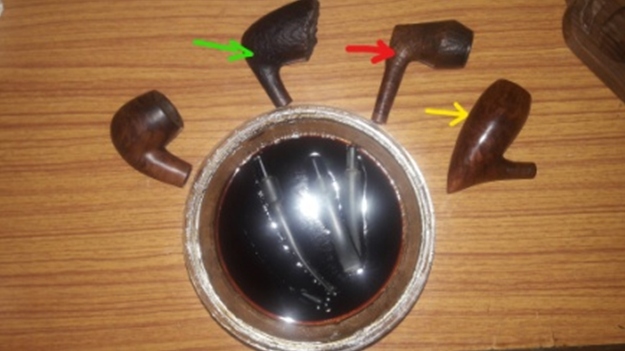
I had picked up a job lot of six pipes from a Curio Store on eBay. This lot contained brands like Barling’s, Parker and Orlik and other English make pipes. These are some of my favorite brands and I couldn’t pass them over even though they were in a hopelessly beat up condition. Here are pictures of the pipe lot that the seller had posted. This lot contained a variety of nicely shaped and grained pipes which I had been looking forward to work on. The first pipe from this pipe lot that I had worked on was a classic Billiards indicated in red arrow. The second pipe that I have selected to work on is shown with an indigo arrow.The second pipe that I decided to work on from this lot is an hour glass shaped pipe with beautiful tightly packed bird’s eye grain to the sides of the stummel and cross grains to the front, back and over the shank surfaces. This pipe is stamped on the left shank surface as “Barling” in running hand over “LONDON ENGLAND” in block capital letters over the grade “GARNET GRAIN”. The right side of the shank is stamped with the shape code “5059”. The stampings are all crisp and deep. The trademark Barling styled vulcanite saddle stem bears the trademark Barling stamped in cross. The size, shape and feel of the pipe are solid in hand. Barling’s pipe brand has been well researched and chronicled on pipedia.org and by Steve when he worked on many of Barling’s pipes over decades and thus, shall not waste time in repeating the information that is available. I too have carefully read and researched this brand as I do have many pipes that I have inherited. However, to refresh my memory, I read the entire article once again and tentatively date this pipe as being an Early Corporate Era pipe, that is made between 1962/3 to prior to 1970. I have based my conclusions based on the following facts that I have read on pipedia.org (https://pipedia.org/wiki/Barling)

(a) Barling logo on the shank is stamped in script without an apostrophe and without ‘S’, as against BARLING’S MAKE that was in use during the Family Era.

(b) The revamped Early Corporate Era grade includes the GARNET GRAIN that replaced the Ye Olde Wood finish (having dark or Plum stain) from the Family Era.

(3) The presence of London England in block lettering underneath the Barling stamp in script.

(4) The absence of the T.V.F stamping since the Ye Olde Wood and TVF both were discontinued at the beginning of the Corporate Era. These were reintroduced in the mid 1960s.

I have dated this pipe tentatively as being from the Early Corporate Era when the facts are conclusive enough, is because of the stummel shape. In my reading and knowledge, early Barlings pipes have always been in classic shapes and this one is anything but a classic shape. Any insight in to this aspect is most appreciated.

Initial Visual Inspection
This pipe has a decent medium bowl size with chamber depth of about 1 7/8 inches. The stummel boasts of some beautiful cross grains to the front and back of the bowl and all around the shank and tight Bird’s Eye to the left side of the stummel. The stummel is covered in dirt and grime of the overflowed lava and dirt accumulated over the years of heavy smoking and uncared attention to cleaning. The stummel has a nice deep and dark color to it, reminiscent of the Ye Olde Wood finish. There is a thick layer of cake in the chamber and some damage is likely to the back of the rim top surface. The stem is heavily oxidized with a few deep bite marks to the button edge in the bite zone. The pipe’s appearance, as it sits on my work table, does not present an encouraging picture. Detailed Inspection Of The Pipe And Observations
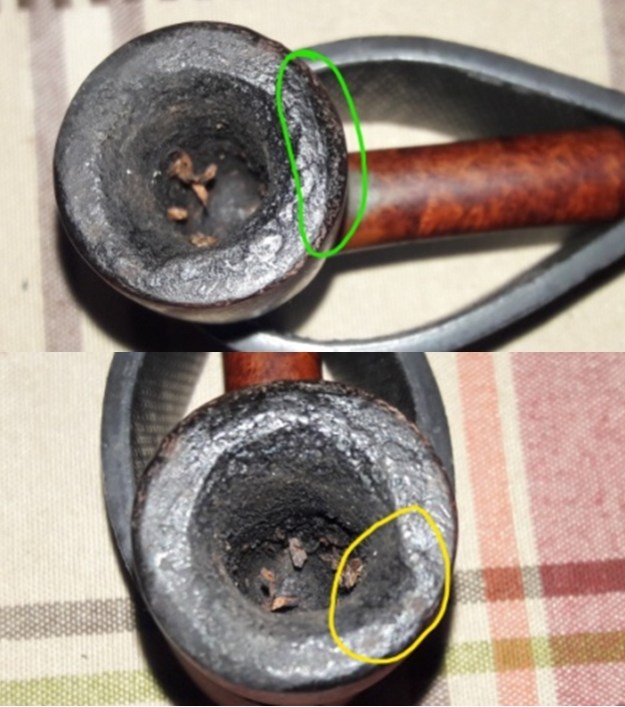
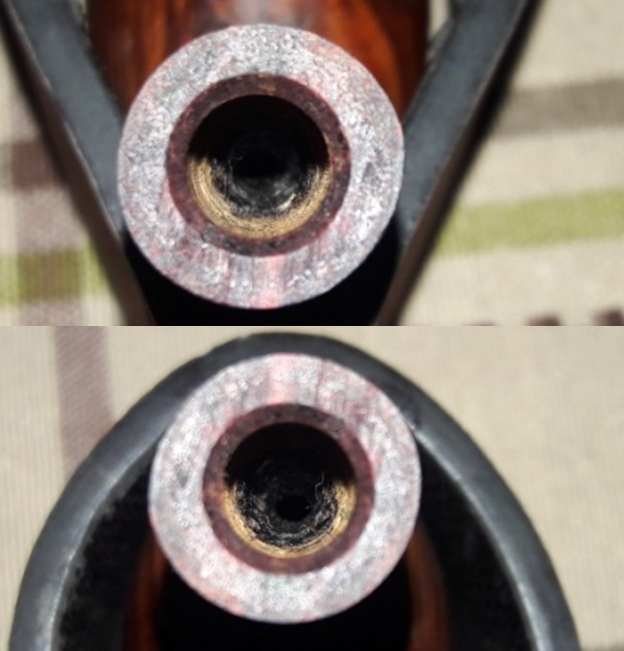
The bowl has a wide rim that slightly tapers down towards the heel and has a chamber depth of about 1 7/8 inches. The draught hole is in the center and at the bottom of the chamber. The chamber has an even layer of thick hard cake with remnants of un-burnt tobacco seen at the heel of the chamber. The rim top surface is covered with thick lava overflow and has max accumulation in the 6 ‘O’ clock direction. Through this layer of lava, a few dings can be seen over the rim top surface. The inner rim edge in the 6 ‘O’ clock direction appears dark and worn out. The outer rim edge is sans any damage. The condition of the inner walls of the chamber can be commented upon after the cake has been taken down to the bare briar. There is a strong ghost smell in the chamber which is all pervading. The chamber is out of round in the 10 ‘O’ clock direction (encircled in red) due to the charred inner rim edge. There are a number of dents and chipped areas over the outer rim edge (indicated with green arrows). There are a number of dents/ dings and scratches that are visible over the rim top surface. The stummel appears solid to the touch all around and hence I do not foresee any serious damage to the walls in the form of burnout/ deep heat fissures/ lines or pits. The dark inner rim edge, in the 10 ‘O’ clock direction, may be charred further than anticipated and the same will be confirmed after the surface has been thoroughly cleaned. I need to resort to topping the rim top in order to address the damage to the surface. The ghost smells should reduce once the cake from the chamber is removed and the shank has been cleaned.   The smooth stummel has an hour glass shape (or should I call it a fancy Dublin?) that is broad at the rim, narrow in the mid region and is slightly flared at the bottom/ foot. The surface is covered in dust, lava overflow and grime through which one can make out the beautiful cross grains to the front and back of the bowl and shank. The stummel surface has two small fills, one to the right side of the stummel and the other at the front of the bowl. These fills are difficult to spot against the dark finish of the stummel and can be seen only in a bright white light. The briar is looking lifeless and bone dry. For a pipe that has been so heavily smoked, there are surprisingly no dents and ding over the stummel surface. Once the stummel has been thoroughly cleaned, these fills will be more apparent. I intend to refresh only that fill which has loosened out with a fresh fill of briar dust and superglue. Thorough cleaning and rising of the stummel under warm water will highlight the grain patterns. Micromesh polishing will help in blending these fills while imparting a nice shine to the briar. The mortise shows accumulation of oils, tars and gunk and the air flow is not full and smooth. The shank end face is not a perfect round but slightly flattened at the top. The seating of the stem is not flush with the shank face if not aligned perfectly and precisely. The out of round shank end face is another pointer that this pipe is not from the Family Era!! The ghost smells should further reduce after the mortise and shank walls are thoroughly cleaned. The high quality vulcanite tapered stem is typical Barling with a narrow saddle at the end of a proportionately broad stem. The stem is so heavily oxidized that it appears brownish green in color! Deep calcification is seen in the bite zone probably from prolonged use of rubber bit. Some heavy tooth chatter and deep bite marks in the bite zone are seen on both the upper and lower surfaces of the stem. The button edges on either surface have been completely flattened with the lip edges seen as mere straight thin edges with no shape and sharpness at all. The tenon air opening is completely blocked with accumulated ash and oils/ tars that have dried out on the inside as well as on the outside. The horizontal slot end is completely deformed and the slot itself is chock-a-block with gunk. The other fact that is noticed, if observed closely, is that the trademark stem logo of BARLING CROSS is upside down!! The bite marks will be raised to the surface by heating to the extent possible and further will be filled using charcoal and CA superglue mix. The button end, including the button itself on either surface will have to be completely rebuilt and reshaped. The tooth chatter and the calcified deposits will be removed by sanding with a piece of 220 grit sand paper. I am convinced that all the pipes in this lot is from one estate as the damage to the rim, damage to the stem and general condition of each is exactly the same.
The Process
Abha, my wife, first cleaned the internals of the stem with stem brush, bristled/ regular pipe cleaners and 99.9% pure isopropyl alcohol. She scraped out the dried oils and tars from the tenon end with my fabricated knife and also removed the dried oils and tars from the slot end. She followed it up by sanding the entire stem with a folded piece of 220 grit sand paper to remove the surface oxidation. The amount of gunk that has been scraped out of the stem surface just to get to the black vulcanite shows that the oxidation was very deep and heavy over the stem surface. It has been our experience that sanding a stem before dunking it in to the deoxidizer solution helps in bringing the deep seated oxidation to the surface which in turn makes further cleaning a breeze with fantastic results.   She, thereafter, dropped the stem into “Before and After Deoxidizer” solution developed by my friend Mark Hoover. The solution helps to draw out heavy oxidation to the surface, making its further removal a breeze, while the minor oxidation is eliminated to a very great extent. The initial sanding helps to draw out the complete oxidation as the sanding opens up the stem surface that has been initially covered with oxidation. We usually dunk stems of 4-5 pipes that are in-line for restoration and this pipe is marked in green arrow. We generally allow the stems to soak in this solution overnight to do its work.While the stem was soaking in the deoxidizer solution, I worked on the stummel by first reaming the chamber with size 1 followed by size 2 Castleford reamer head. I further scraped the chamber walls with my fabricated knife to remove the remaining carbon deposits where the reamer head could not reach. I scraped out the lava overflow from the rim top surface, especially from the area in the 6 o’clock direction. Once the cake was reamed back to the bare briar, I used a 150 grit sand paper followed by 220 grit sand paper to remove all the traces of remaining cake and also to smooth out the inner walls of the chamber surface. Finally, to remove the residual carbon dust, I wiped the chamber with a cotton pad wetted with 99.9% pure isopropyl alcohol. The inner rim edge was charred in 10 o’clock and 3 o’clock direction which have been encircled in red. I scraped off the charred briar from these areas and now the chamber is out of round. The chamber walls are pristine without any damage. I shall give the inner rim edge a slight bevel to get the bowl back to a perfect round and mask the damage. The ghost smells are still very strong and may reduce after the shank/ mortise are thoroughly cleaned. The rim top surface is still considerably darkened and would need to be thoroughly cleaned to know the exact damage to the surface.    I followed up the reaming with cleaning the mortise using cue tips, pipe cleaners and shank brush dipped in isopropyl alcohol. I scraped the walls of the mortise with my fabricated knife to remove the dried oils and tars. The ghost smells are still very strong and would require a salt and alcohol treatment.   With the bowl internals clean, I move to clean the exterior of the stummel. I used a hard bristled tooth brush and Briar Cleaner, a product that has been developed by Mark Hoover, to scrub the stummel and rim top. I set the stummel aside for 10 minutes for the product to draw out all the grime from the briar surface. After 10 minutes, I washed the stummel under running warm water with anti oil dish washing detergent till the stummel surface was clean and dried it using paper towels and soft cotton cloth. I simultaneously cleaned the shank internals with the detergent and hard bristled shank brush and set the stummel aside to dry out naturally. I had anticipated that this thorough cleaning of the shank would help eliminate the strong ghost smells, but that was not to be. The stummel surface has cleaned up nicely and the beautiful grain patterns are now on full display. The fills, even the smallest ones, are now clearly discernible. I probed each of the two fills on the stummel surface with a sharp dental tool to check for solidity and thankfully, each fill was nice and solid without any give. I decided not to refresh these fills as my horrific experience while using the thin superglue that was available to me for the purpose, on my last project Bewlay “GENERAL”, still being fresh in my mind. The charring over the rim top surface in 3 o’ clock (encircled in red) is significantly deeper than anticipated. I shall have to resort to topping to address this damage and also the issue of chipped outer rim edge. The chamber and shank needs to be subjected to a salt and alcohol treatment to remove the deeply embedded ghost smells from the stummel.   I continued the cleaning of the chamber and shank internals with a salt and alcohol bath. I use cotton balls which is an at par substitute as I have realized over the years. I draw out a wick from the cotton and along with a folded regular pipe cleaner; insert it in to the mortise and through the draught hole in to the chamber. Thereafter, I packed the chamber with cotton balls to about quarter of an inch below the inner rim edge and soaked the cotton balls with isopropyl alcohol up to the brim. About half an hour later, the level of alcohol had gone down, having being absorbed by the cotton. I topped it up once again and set it aside overnight. By next afternoon, the cotton and alcohol had drawn out all the remaining oils and tars from the chamber and mortise, fulfilling its intended task. I removed the cotton balls and ran pipe cleaners through the mortise to clean out all the loosened tars and gunk and further cleaned it with alcohol and q-tips. The chamber now smells clean and fresh. I set the stummel aside to dry out naturally.While the stummel was drying, the next morning, Abha removed the stem that had been soaking in the deoxidizer solution overnight. She cleaned the stem under running warm water and scrubbed the raised oxidation from the stem surface using a Scotch Brite pad and cleaned the airway with a thin shank brush. She further removed the oxidation by scrubbing the stem with 0000 grade steel wool and applied a little EVO to rehydrate the stem. This now gives a clearer picture of the extent of depth of the bite marks as can be seen in the pictures below. These will definitely require a fill even after I have heated and raised the vulcanite. The buttons on either surface will have to be reconstructed and reshaped. I need to further sand the stem to completely remove the oxidation. Further stem repairs would have to be kept on hold till I got back to my work place where I have a couple of superglue tubes for the purpose.With further stem repairs being on hold, I turned back to the stummel repairs. I topped the rim top over a piece of 220 grit sand paper till I had a smooth even surface and the charred surface in the 3 o’clock direction was completely eliminated.    With a folded piece of worn out 180 grit sand paper pinched between my thumb and forefinger, I carefully gave a bevel to the inner and outer rim edge and addressed the issues of out of round chamber and chipped outer rim edge. The rim top surface and the edges look very neat at this stage with the bowl in a nice round shape. I followed it by wet sanding the stummel with 1500 to 2000 wet & dry sand paper and further with 3200 to 12000 grit micromesh pads, wiping frequently with a moist cloth to check the progress. It was at this stage of restoration when I was taking pictures that I saw the numerous tiny fills at the bottom of the bowl and shank junction. I heaved a sigh of relief when I checked and found these fills to be solid and not requiring any work. I really like the looks of the stummel at this point in restoration. The grains and the clean lines of this piece of briar are worthy of appreciation. The topping has resulted in the rim top surface being lighter than the rest of the stummel surface. I shall darken the rim top surface with a dark brown stain pen once I reach back to my place of work. Next, I rubbed a small quantity of “Before and After Restoration Balm” deep in to the briar with my finger tips and let it rest for a few minutes. The balm almost immediately works its magic and the briar now has a nice vibrant appearance with the beautiful grain patterns displayed in their complete splendor. I further buffed it with a horse hair brush and gave a vigorous buff with a microfiber cloth to deepen the shine. The dark browns of the bird’s eye and cross grains spread across the stummel makes for a visual treat. It really is a nice piece of briar. The dark YOW like stain elevates the beauty of this pipe to a new level.     Now, having rejoined my place of work after a hiatus of four months I need to work real fast to complete my backlogs of write ups and complete the repairs on pipes that were worked on during the lockdown period while at home. I have completed a few and now this pipe has inched forward on to my work table. While packing these pipes for its journey with me, I had noted all the issues that had to be addressed on each pipe. This one needed stem repairs to include filling of deeper tooth indentations, rebuilding/ reshaping of the buttons, stem and stummel polishing with a carnauba wax.

With the stummel rejuvenation almost complete, save for the final wax polish, I worked the stem. Here is how the damage to the stem looks as it sits on my work table. The damage to the buttons and the deep tooth indentations are also clearly visible. Once I have repaired these damages, the entire stem needs to be polished and the stem logo needs to be refreshed. That I have to use the CA Wood Superglue gives me shudders as I still am reeling under the frustrations of using this glue while I repaired the stem of the Bewlay “GENERAL” pipe, my last project!!I carefully inserted a triangle shape index card covered in transparent tape in to the slot so as not to break the bite zone. The tape prevents the mix of superglue and charcoal from sticking to the index card. I mixed superglue and activated charcoal powder and generously applied it over the bite zone, including over the buttons, on either surfaces of the stem and set it aside to cure. Once the fill has hardened, I shall file and sand the fills to match the surface of the stem and sharpen the button edges on either surface. This glue hardens immediately and allowed me only a few seconds of application whereas the all purpose CA superglue allowed me enough time to get an even spread over the damaged surface.The fill had hardened and with a flat head needle file, I worked on the filling till I had achieved a rough match with the surrounding surface and had sufficiently sharpened the button edges. As with the stem repair of my previous project, Bewlay “GENERAL”, this too had many air pockets. I filled these air pockets with clear CA superglue and set the stem aside for the superglue to harden.

While the stem repairs were curing, I stained the rim top surface with a Dark Brown stain pen and set the stummel aside for the stain to set. The rim top now blends in nicely with the rest of the dark stained stummel surface. Once polished it should match perfectly with the rest of the stummel surface.Once the fill had cured sufficiently, I sand the fills with a flat head needle file and reshaped the button, roughly blending the fills with the surrounding stem surface. For a better blending, I further sand the entire stem with 220 followed by 400, 600, 800 and 1000 grit sand paper. This helps to reduce the scratch marks left behind by the more abrasive 220 grit paper.   To bring a deep shine to the vulcanite stem, I polished the stem by wet sanding with 1500 to 12000 grit micromesh pads. I wiped the stem with moist cloth after each pad and rubbed it down with Extra Virgin Olive oil to rejuvenate the vulcanite. The finished stem is shown below. The sanding with 400 to 1000 grit sand papers followed by wet sanding with micromesh pads had miraculously eliminated most of the many air pockets that were observed earlier. A few air pockets do remain but they are few and not significant at all. I am pretty pleased with this appearance of the stem.  I polished the rim top surface with a cotton cloth buffing wheel mounted on my hand held rotary tool and Red compound. I wiped the rim top with cotton swab and alcohol to increase the transparency of the stain. I am quite pleased with the match of the rim top with the rest of the stummel surface.  I mount a cotton cloth buffing wheel on to my hand held rotary tool and polished the stummel and stem with Blue Diamond compound. This compound helps to remove the minor scratch marks that remain from the sanding. This pipe is starting to look really beautiful with the glossy dark plum like stain through which the beautiful grains pop out over the stummel surface.  The only cosmetic, yet important aspect that remained was to refresh the stem logo. I applied a coat of white correction ink over the logo and once dried, I gently wiped it with a cloth. The logo is now clearly visible.   I mount another cotton buffing wheel that I have earmarked for carnauba wax and applied several coats of the wax. I finished the restoration by giving the entire pipe a rigorous hand buffing using a microfiber cloth to raise the shine further. The finished pipe looks amazingly beautiful and coupled with the size, heft and the hand feel, makes it quite a desirable pipe. If you feel that this pipe calls out your name, please let Steve know and we shall make arrangements for it to reach you. I wish to thank each one for sparing their valuable time to read through this write up and each one is my prayers. Stay home…stay safe!!


A Story Of The Restoration Of An Old Battered Bewlay “General” That Went Awry…


Blog by Paresh Deshpande

I had picked up a job lot of six pipes from a Curio Store on eBay. This lot contained brands like Barling’s, Parker and Orlik and other English make pipes. These are some of my favorite brands and I couldn’t pass them over even though they were in a hopelessly beat up condition. Here are pictures of the pipe lot that the seller had posted. The first pipe from this pipe lot that I decided to work on is a classic Billiards and is indicated in red arrow. This classic Billiard shaped pipe is stamped on the left shank surface as “BEWLAY” in artistic running hand over “GENERAL” in block letters and on the right shank surface as “MADE IN ENGLAND” in capital letters. The bottom of the shank bears the numeral (or is it letter) “0” towards the shank end. The stampings are mostly all worn out and can be roughly made out under bright light and under magnification. The vulcanite tapered saddle stem bears the logo of letter “B”.    This would be the first BEWLAY pipe that I have worked on and thus my curiosity was piqued. I first searched rebornpipes and came across a catalogue uploaded by Jacek A. Rochacki. However, the pipe on my work table finds no mention of it in the brochure. The article has an interesting snippet of information that is reproduced below.

Here is the link to the article – https://rebornpipes.com/2014/03/07/house-of-bewlay-pipes-tobacco-leaflets/

“Bewlay House was a chain of English pipe stores whose pipes were made by Barling, Charatan, and Loewe, so the English considered the Bewlay pipes a quality pipe in its own right. The English brand of Bewlay & Co. Ltd. (formerly Salmon & Gluckstein Ltd.), was in business from the early 20th century until the 1950’s. The brand ended up being sold and taken over by Imperial Tobacco Co. The shop chain closed in the 1980’s but there seems to be one shop still in business on Carr Lane in the city of Hull”.

Unfortunately, the catalogue has no mention of shape “0” and there are no apparent signs of other numerals being worn out. Having hit a wall here, I would like to request readers of Reborn pipes if they could fill in the void by sharing their knowledge with other readers.

Initial Visual Inspection
This pipe has a nice large bowl size equivalent to a Dunhill group size 4. The stummel is covered in dirt and grime of the overflowed lava and dirt accumulated over the years of heavy smoking and uncared attention to cleaning. The stummel boasts of some beautiful mix of swirls, cross and bird’s eye grain over the stummel surface that can be made out under the grime. There is a very thick layer of cake in the chamber and some damage is seen to the rim top surface and the rim edges. The stem is heavily oxidized with a few deep bite marks to the button edge in the bite zone. Here is how the pipe appears as it sits on my work table. Detailed Inspection Of The Pipe And Observations
The bowl has a decently wide rim and a chamber depth of about 1 7/8 inches. The draught hole is in the center and at the bottom of the chamber. The chamber has an extremely thick layer of hard cake with remnants of tobacco flakes embedded in it. The rim top surface appears to be damaged with dents/ dings and is covered in lava overflow, dirt and grime. The inner front rim edge appears to be charred (enclosed in a yellow circle) in the 11 o’clock direction. The outer rim edge has suffered a few blows on a hard surface resulting in a dented and chipped edge surfaces in 12 o’clock and 6 o’clock direction and the same in enclosed in a blue circle. The condition of the inner walls of the chamber and the inner rim edge can be commented upon after the cake has been taken down to the bare briar. The chamber has very strong and sharp ghost smell to it. The stummel appears solid to the touch all around and hence I do not foresee any serious damage to the walls in the form of burnout/ deep heat fissures/ lines or pits. The darkened inner rim edge may be charred further than anticipated and the same will be confirmed after the surface has been thoroughly cleaned. I need to resort to topping the rim top in order to address the damage to the surface. The ghost smells should reduce once the cake from the chamber is removed and the shank has been cleaned.   The smooth stummel surface is covered in lava overflow, dust and grime through which one can make out the beautiful swirls, cross and Bird’s eye grains over the bowl and shank. The stummel surface has a few scratches, dents and dings on the either sides of the stummel, probably due to likely falls during its time with the previous piper. I could make out two fills, one at the back and one to the right side of the stummel (circled in blue). The briar is looking lifeless and bone dry. Once the stummel has been thoroughly cleaned, these damages will be more apparent. Thorough cleaning and rising under warm water of the stummel surface will confirm if these fills are required to be refreshed or otherwise and should also highlight the grain patterns. I shall need to sand the stummel surface with sand papers to remove and minimize the scratches, dents and dings. Micromesh polishing will further help minimize these dents and scratches to some extent. The mortise shows heavy accumulation of oils, tars and gunk and the air flow is not full and smooth. Cleaning of the mortise/ shank will further improve the seating of the stem and also further reduce the strong odors from the pipe.The high quality vulcanite tapered stem has a nice broad flare to the button end and looks good with the stout large stummel. The stem is so heavily oxidized that it appears brownish green in color! Deep calcification is seen in the bite zone from prolonged use of rubber bit. Some heavy tooth chatter and deep bite marks in the bite zone are seen on both the upper and lower surfaces of the stem. The button edges on either surface have been completely flattened with the lip edges seen as mere straight thin edges with no shape and sharpness at all. The tenon air opening is completely blocked with accumulated ash and oils/ tars that have dried out on the inside as well as on the outside. The horizontal slot has a crack to the upper lip and the slot itself is chock-a-block with gunk. The bite marks will be raised to the surface by heating to the extent possible and further will be filled using charcoal and CA superglue mix. The button end, including the button itself on either surface will have to be completely rebuilt and reshaped. I suspect that the upper lip, or whatever remains of it, is cracked in the center.   Overall, this pipe is in a filthy condition and will be a bear to clean up. There is likelihood that this pipe may spring a few unforeseen surprises during the restoration process. It was surely one of the most beloved pipes of the previous owner as it has been heavily smoked.

The Process
Abha, my wife, first cleaned the internals of the stem with stem brush, bristled/ regular pipe cleaners and 99.9% pure isopropyl alcohol. She scraped out the dried oils and tars from the tenon end with my fabricated knife and also removed the dried oils and tars from the slot end. She followed it up by sanding the entire stem with a folded piece of 220 grit sand paper to remove the surface oxidation. The amount of gunk that has been scraped out of the stem surface just to get to the black vulcanite shows that the oxidation was very deep and heavy over the stem surface. It has been our experience that sanding a stem before dunking it in to the deoxidizer solution helps in bringing the deep seated oxidation to the surface which in turn make further cleaning a breeze with fantastic result.   She, thereafter, dropped the stem in to “Before and After Deoxidizer” solution developed by my friend Mark Hoover. The solution helps to draw out heavy oxidation to the surface, making its further removal a breeze, while the minor oxidation is eliminated to a very great extent. The initial sanding helps to draw out the complete oxidation as the sanding opens up the stem surface that has been initially covered with oxidation. We usually dunk stems of 4-5 pipes that are in-line for restoration and this pipe is marked in pastel blue arrow. We generally allow the stems to soak in this solution overnight to do its work.While Abha was working on the stem, simultaneously, I worked on the stummel by first reaming the chamber with size 2 and followed by size 3 Castleford reamer head. I further scraped the chamber walls with my fabricated knife to remove the remaining carbon deposits where the reamer head could not reach. I scraped out the lava overflow from the inner rim edge and the rim top surface, especially from the area in 11 o’clock direction. Once the cake was reamed back to the bare briar, I used a 150 grit sand paper followed by 220 grit sand paper to remove all the traces of remaining cake and also to smooth out the inner walls of the chamber surface. Lastly, to remove the residual carbon dust, I wiped the chamber with a cotton pad wetted with 99.9% pure isopropyl alcohol. The chamber walls are sans any damage. The inner rim edge has a nice thick bevel which was revealed after the lava overflow was removed from the rim top and rim edge. Thankfully the inner rim was not charred under the lava overflow. There is a fill on the rim top surface in 11 o’clock direction (encircled in red) that has come to the notice after the lava overflow was scraped off. The rim top is still considerably darkened and will need deep cleaning. The outer rim and rim top damage will necessitate topping and creating a slight bevel to the outer rim edge.  I followed up the reaming with cleaning the mortise using cue tips, pipe cleaners and shank brush dipped in isopropyl alcohol. I scraped the walls of the mortise with my fabricated knife to remove the dried oils and tars. The ghost smells are still very strong and would need a salt and alcohol treatment.   I continued the cleaning of the chamber and shank internals with a salt and alcohol bath. I use cotton balls which is an at par substitute as I have realized over the years. I draw out a wick from the cotton and along with a folded regular pipe cleaner; insert it in to the mortise and through the draught hole in to the chamber. Thereafter, I packed the chamber with cotton balls to about quarter of an inch below the inner rim edge and soaked the cotton balls with isopropyl alcohol up to the brim. About half an hour later, the level of alcohol had gone down, having being absorbed by the cotton. I topped it up once again and set it aside overnight. By next afternoon, the cotton and alcohol had drawn out all the remaining oils and tars from the chamber and mortise, fulfilling its intended task. I removed the cotton balls and ran pipe cleaners through the mortise to clean out all the loosened tars and gunk and further cleaned it with alcohol and q-tips. The chamber now smells clean and fresh.   With the bowl internals clean, I move to clean the exterior of the stummel. I used a hard bristled tooth brush and Briar Cleaner, a product that has been developed by Mark Hoover, to scrub the stummel and rim top. I set the stummel aside for 10 minutes for the product to draw out all the grime from the briar surface. After 10 minutes, I washed the stummel under running warm water with anti oil dish washing detergent till the stummel surface was clean and dried it using paper towels and soft cotton cloth. I simultaneously cleaned the shank internals with the detergent and hard bristled shank brush and set the stummel aside to dry out naturally. The stummel surface has cleaned up nicely with the beautiful grain patterns on full display. However, this cleaning has also revealed the fills (encircled in blue) that have gone soft. The spot of fill in the rim top (encircled in red) is now clearly seen. This too would need to be refreshed. Darkening around the outer edge (encircled in yellow) is suggestive of charred briar and would need to be addressed. With a sharp thin edged blade, I gouged out the fill to the right side and one at back of the stummel. However, I decided not to address the fill at the rim top at this juncture since I was, anyway, going to top it and there is always a possibility that the fill is not very deep and is eliminated completely.   I top the rim on a piece of 220 grit sand paper to even out the rim surface dents/ dings and also to reduce the charred outer rim edge surface that was noticed after the stummel was thoroughly cleaned. The rim top looks perfect with a flawless inner rim edge. However the fill, though reduced in size, is very much visible as a dot. The damages to the outer rim edge (marked in red) in the 12 o’clock and 6 o’clock direction, though minimized, will need to be addressed by creating a bevel. I removed the old fill from the rim top surface with a sharp dental tool till I reached solid briar underneath the fill.   While I continued with the stummel repairs the next morning, Abha removed the stems that had been soaking in the deoxidizer solution overnight. She cleaned the stem and the stem airway under running warm water and scrubbed the raised oxidation from the stem surface using a Scotch Brite pad and the airway with a thin shank brush. She further removed the oxidation by scrubbing the stem with 0000 grade steel wool and applied a little EVO to rehydrate the stem. This now gives a clearer picture of the extent of depth of the bite marks as can be seen in the pictures below. These will definitely require a fill even after I have heated and raised the vulcanite. It is now confirmed that the lip edge on the upper surface is cracked. This crack will be repaired when I rebuild the entire button on both the upper surface of the stem. With the stem cleaning in progress in some of the finest hands, I decided to refresh the fills that I had gouged out yesterday. Using the layering method, I filled these gouges with a mix of briar dust and CA superglue till the mound of the mix was slightly above the rest of the stummel surface. This helps in a better blending of the fill with the rest of the stummel surface while sanding and reduces the scratches caused by the use of a needle file as you have a correct perspective of the sanding that is required. I set the stummel aside for the fills to cure. I realized with a cringe that I had run out of medium CA superglue that was at my home and since the entire country being in a lockdown, I could not order for some. All that was available to me was very thin CA superglue that was almost of the viscosity of water. Not wanting to waste time, I had decided to continue my repairs using what was available only to realize at the very end how wrong that decision was…. Abha, in the meanwhile, had cleaned the stem and handed it over to me to deal with the damages that I had described during my initial inspection. To raise the deep bite marks in the bite zone, I heated the damaged potion with the flame of a candle. The heat from the candle flame helps to raise these bite marks to the surface as vulcanite has the property to raise and attain its original shape when heated. Though addressed to some extent, these bite marks would need to be filled with a mix of activated charcoal and superglue. The buttons would need to be entirely rebuilt and reshaped. The stem is cracked (indicated in yellow arrows) on the stem upper surface over the lip. Further stem repairs would have to be kept on hold till I got back to my work place where I have a couple of superglue tubes for the purpose.  With further stem repairs being on hold, I turned back to the stummel repairs. Using a flat head needle file, I sand the fill till I had achieved a rough match with the surrounding stummel surface. I sand the entire stummel with a piece of 220 grit sand paper to address the dents and dings to the stummel surface and also to further match the fill with the rest of the stummel surface. Though 95% of the scratches and dings have been eliminated, there still remains few very minor dings that are remnants of the deeper ones. I accept these dings as part of this pipe’s journey till date.   I addressed the inner rim darkening to the bevel in the 11 o’clock direction by sanding the inner bevel with the same piece of 220 grit sand paper. To address the dents to the outer rim, I created a slight bevel with a folded piece of 220 grit sand paper pinched between my thumb and index finger. The rim top surface definitely looks a lot better at this stage in restoration.    I followed it by wet sanding the stummel with 1500 to 12000 grit micromesh pads, wiping frequently with a moist cloth to check the progress. I really like the looks of the stummel at this point in restoration. The grains and the clean lines of this piece of briar is really appreciable.   Next, I rubbed a small quantity of “Before and After Restoration Balm” deep in to the briar with my finger tips and let it rest for a few minutes. The balm almost immediately works its magic and the briar now has a nice vibrant appearance with the beautiful grain patterns displayed in their complete splendor. I further buffed it with a horse hair brush. The contrast of the dark browns of the flame and cross grains with the natural finish of the rest of the stummel adds an interesting dimension to the appearance of the stummel which may be insufficiently described in words and be rather seen in person. It is the two fills, one to the right and one at the back of the stummel surface that is an eye sore. I shall stain the stummel with a dark brown stain to mask these fills. Now, having rejoined my place of work after a hiatus of four months I need to work real fast to complete my backlogs of write ups and complete the repairs on pipes that were worked on during the lockdown period while at home. I have completed a few and now this pipe has inched forward on to my work table. While packing these pipes for its journey with me, I had noted all the issues that had to be addressed on each pipe. This one needed stem repairs; stem polishing and stummel staining to mask the ugly fills.
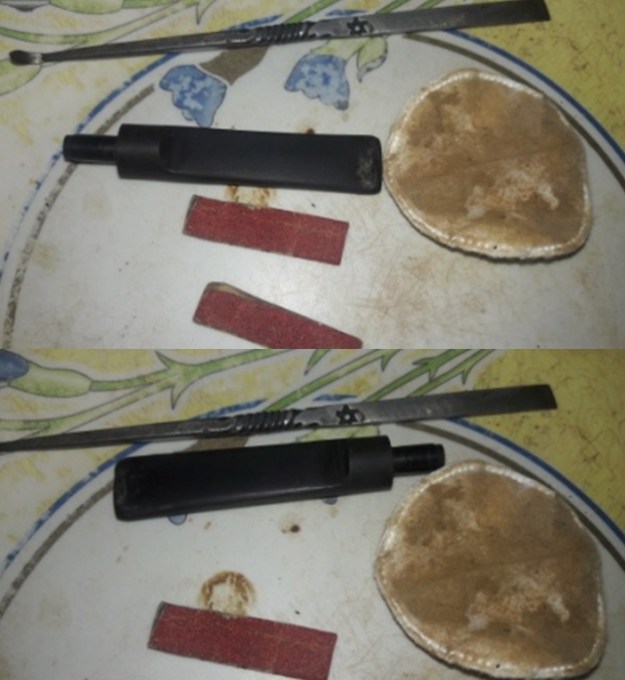
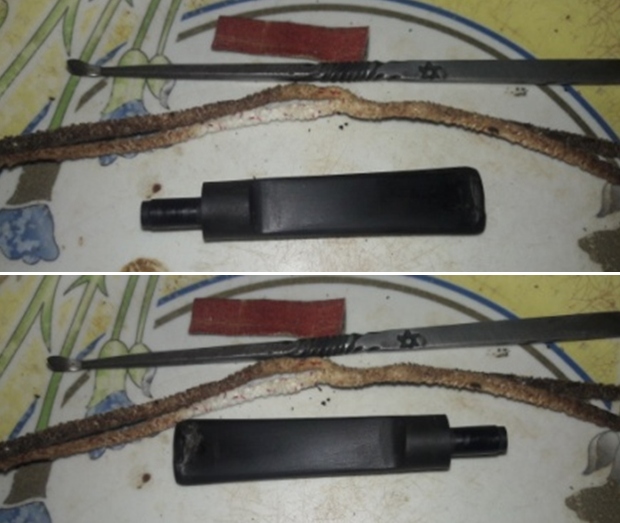
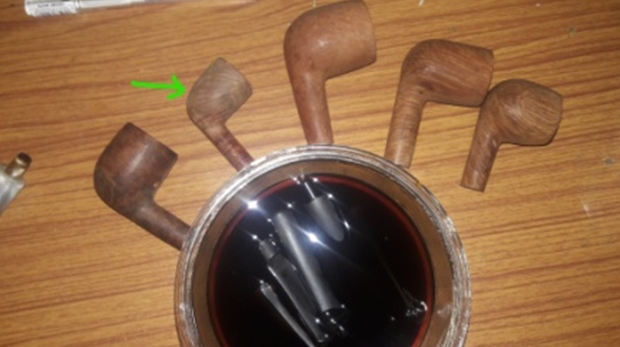
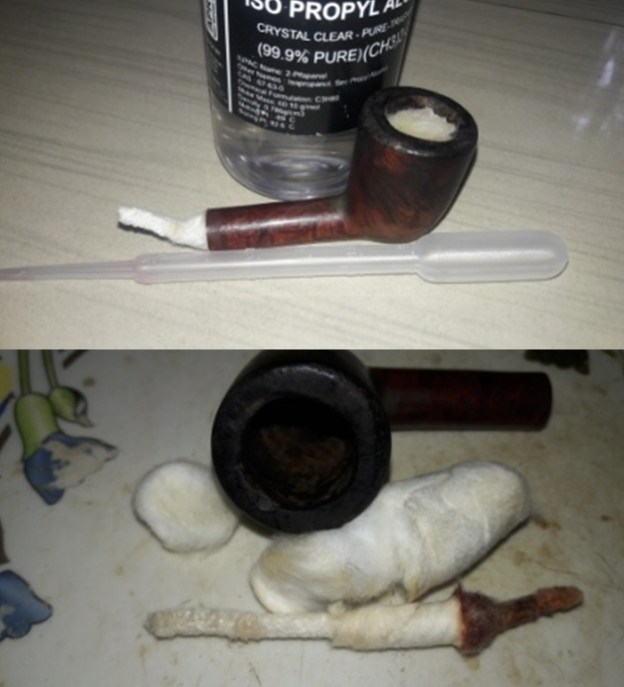
I start with stem repairs since these take the longest. Here is how the damage to the stem looks as it sits on my work table. The crack is indicated by yellow arrows and would need to be repaired. The damage to the buttons and the deep tooth indentations that remain after the heating is also clearly visible. Once I have repaired these damages, the entire stem needs to be polished and the stem logo needs to be refreshed. And here I noticed that the super glue tubes that I had stashed before proceeding on leave, had completely dried out on me…. Can’t describe the agony!! So another delay of couple of days and I get delivered CA Wood Glue and not ALL PURPOSE that I always use. This too has contributed to the end results of this restoration.  Continuing with the stem repair, I inserted a triangulated index card covered in transparent tape in to the slot. The tape prevents the mix of superglue and charcoal from sticking to the index card. The moment I inserted the index card, a big chunk of the bite zone, including the button edge just broke off completely. My pain in restoring this pipe is increasing by leaps and bounds… Undaunted by this setback, I persisted with the stem repairs. I mixed superglue and activated charcoal powder and generously applied it over the bite zone, including over the buttons, on either surfaces of the stem and set it aside to cure. Once the fill has hardened, I shall file and sand the fills to match the surface of the stem and sharpen the button edges on either surface. This glue hardens immediately and allowed me only a few seconds of application whereas the all purpose CA superglue allowed me enough time to get an even spread over the damaged surface. The fill had hardened and with a flat head needle file, I worked on the filling till I had achieved a rough match with the surrounding surface and had sufficiently sharpened the button edges. It was at this stage that I noticed something that no pipe restorer is desirous of observing…air pockets in the freshly sanded fills! These air pockets are circled in yellow.   No option here but to redo the entire fill with a mix of charcoal and superglue but with the variation that this time around I mixed very little charcoal. I applied this mix and set the stem aside for the fill to cure.   I sand the stem fills a second time and again these dreaded air pockets surfaced in these same areas. To cut the whole story short, I had to repeat the fill five times with the same results. Finally I got frustrated and continued with the filing and polishing.

I sand the fills with a flat head needle file and reshaped the button, roughly blending the fills with the surrounding stem surface. For a better blending, I further sand the entire stem with 320 followed by 600, 800 and 1000 grit sand paper. This helps to reduce the scratch marks left behind by the more abrasive 220 grit paper. To bring a deep shine to the vulcanite stem, I polished the stem, wet sanding with 1500 to 12000 grit micromesh pads. I wiped the stem with moist cloth after each pad and rubbed it down with Extra Virgin Olive oil to rejuvenate the vulcanite. The finished stem is shown below. Though the air pockets are now not so glaringly visible (if that’s any consolation….), I very well know that they are there and that troubles me no end. Maybe at a later date when someone decides to make this pipe his/ her own, I may rework the stem to make it flawless. Till then, I shall pretend that they don’t exist.  Now that I had made peace with the stem air pockets, I turn my attention to the stummel. As I had commented earlier, the fills are an eye sore against the beautiful grains and coloration of the rest of the stummel and hence to mask it, I decided to stain the bowl using Feibing’s Dark Brown leather dye. I heated the stummel surface with my heat gun to open up the pores on the stummel so that the stain is well set while being careful that I do not overheat the fill, a lesson learned while restoring Steve’s Alexander Zavvos pipe. I dipped a folded pipe cleaner in Feibing’s Dark Brown leather dye and liberally applied it over the heated surface, flaming it with the flame of a lighter as I went ahead to different self designated zones of the surface. This helps in the setting of the stain in the grain of the briar. The next evening, approximately 18 hours later, as Dal describes, I began to unwrap the stain in the hope to see beautiful grains. I mount a felt cloth buffing wheel on my hand held rotary tool and setting the tool at its slowest speed, again my recent experience while working on Steve’s pipe came in handy and the damage that can be caused due to heating while using the felt buffing wheel still fresh in my memory; I began to peel off the stain from the stummel surface first using Red compound. The stain was peeled out gradually. This is where the problem of using very thin superglue for the fill came in to focus. The thin glue had spread and was not noticed until I had stained the stummel and these areas presented themselves as light spots which did not take on the stain. I had reached the end of my tethers and I decided to move ahead with the restoration.   This was followed with wiping the stummel with a cotton swab and alcohol to lighten the stain a little as it was too dark for my liking. This also helps in cleaning the surface of all the residual stain and highlighting the grains. The grains really pop out from under the stain and the fills are hardly discernible. Save for the light spots where the thin glue had spread, I am quite pleased with the appearance of the stummel at this stage.   Next, I mount a fresh cotton cloth buffing wheel and polish the stummel with White Diamond compound. HUGE MISTAKE… the stummel had now taken on darker hues and the grains are now less prominently visible. Is it because of the White Diamond or some other reason, I do not know. The following pictures will help in comparing the stummel after wiping down with alcohol (above pictures) and after applying the White compound.   I have now reached the homestretch in this restoration project. To complete the restoration, I mount a cotton cloth buffing wheel on to my hand held rotary tool and polished the stummel and stem with Blue Diamond compound. This compound helps to remove the minor scratch marks that remain from the sanding. This too was a mistake, I feel since the stummel appears too dark with no grains visible at all!! However, the stummel and stem has taken on a nice shine. The only cosmetic, yet important aspect that remained was to refresh the stem logo. I applied a coat of white correction ink over the logo and once dried, I gently wiped it with a cloth. The logo is now clearly visible.  I mount another cotton buffing wheel that I have earmarked for carnauba wax and applied several coats of the wax. I finished the restoration by giving the entire pipe a rigorous hand buffing using a microfiber cloth to raise the shine further. The finished pipe looks amazingly….dark!! The finished pipe is as shown below. P.S. This then is one project which has not given me the satisfaction that I usually experience after I have completed a restoration. So, if that is the case, then why am I taking the pain to even do the write up and posting it for others to read about my failures?

Well, the reasons are two fold…

Firstly, I am not too concerned with successes or failures. What matters to me is the journey. This project has been a journey of experimenting and learning. This was the first time that I used White Compound after staining and alcohol wipe as I had read that this compound brings in a further transparency to the stain. Well, apparently, this did not work for me. I would definitely like to learn the views of other more experienced professional restorers on the best method of staining and the process thereafter to increase the transparency of the stain.

Secondly, if through my mistakes somebody else is able to derive benefits, then the entire effort was worthwhile. This platform that was made available to me by Steve to learn pipe restoration has helped me immensely to learn the art and this write up is my contribution for a newbie to learn what needs to be avoided.

Thank you for your patience and valuable time in reading this far. Hope all the readers and their loved ones are in the best of health and spirits. Be safe and stay safe in these troubled times.

Life for a Republic Era Irish Second Bent Apple


Blog by Steve Laug

The next pipe on the work table came to me from one of our estate purchases. Between us we pick up quite a few pipes for restoration. I try to work them into the restoration queue so that I can keep them moving. This next one is from our ongoing hunt – a beautifully grained bent apple with a thick shank and a tapered vulcanite stem. The pipe is stamped on the left side of the shank and reads Irish Seconds and on the right side reads Made in the Republic of Ireland. It is obviously a Peterson’s second. In the photos you can see the large fills on the lower left side of the bowl. The finish had a lot of grime ground into the finish on the bowl. The bowl was thickly caked with an overflowing lava coat on the top of the rim. The edges looked to be in good condition though there is some possible damage under the lava. The stem was oxidized, calcified, dirty and had tooth chatter and some deep marks on the top and underside near the button. There were not markings or a logo on the taper stem. It had promise but it was very dirty. Jeff took some photos of the pipe before he started his cleanup work. He took photos of the rim top and bowl to give a clear picture of the thickness of the cake and the overflow of lava on the rim top. He also took photos of the top and underside of the stem to show the oxidation and the chatter and tooth marks.     Jeff took photos of the sides and heel of the bowl to give a picture of what the briar around the pipe looked like. There is some stunning grain under the grime.  He also took a photo of the large fill on the front left side of the bowl. Lots of putty in that area.He took photos of the stamping on the left side of the shank. It reads as noted above and is clear and readable.     I turned to Pipedia to read the article on Irish Seconds (https://pipedia.org/wiki/Irish_Seconds). I quote it below in full.

Irish Second pipes begin life alongside Peterson pipes in Dublin, but at some point a flaw appears making future life as one of those celebrated pipes impossible. At this point the pipes were roughly finished, given a standard vulcanite stem instead of a P-Lip, and stamped only with “Irish Second” and “Made in the Republic of Ireland”. These pipes were sold at a far more affordable rate than Peterson pipes, but are believed to no longer be sold new.

I knew from previous research that the pipe was made in the Republic Era – the years between 1950 – 1989 because of the Republic of Ireland stamp. Now it was time to work on the pipe.

Jeff had cleaned up the pipe with his usual penchant for thoroughness. He reamed the pipe with a PipNet Pipe Reamer and cleaned up the remnants with a Savinelli Fitsall Pipe Knife.  He scrubbed the bowl with undiluted Murphy’s Oil Soap with a tooth brush. He rinsed it under running warm water to remove the soap and grime. He cleaned out the inside of the shank and the airway in the stem with alcohol, cotton swabs and pipe cleaners. He soaked the stem in Before & After Deoxidizer and rinsed it off with warm water. I took photos of the pipe once I received it.    The bowl and rim top cleaned up really well with the lava coat removed. The inner edge of the rim was in good condition.  The stem surface had some oxidation and some tooth marks and chatter on both sides near the button.    I took photos of the stamping (though a little out of focus) are clear and read the same as noted above.I removed the stem and took a photo of the pipe to give a sense of the whole. The stem is tapered and narrow.Now it was time to do my work on the pipe. I decided to address the damaged fills on the lower left side of the bowl first. I took a photo of the area before I began my work. The fill was actually quite solid with some damaged areas and some shrinkage. I sanded the areas and wiped them down with alcohol to clean up any loose fill material. I filled in those areas with a clear super glue.   Once the patches cured I sanded them smooth with 220 grit sandpaper and began polishing them with 400 grit wet dry sandpaper. It really made a difference in that they were smooth and no longer pink in colour!  I wiped the bowl down with acetone to remove the stain around the bowl and prepare it for a new stain coat.   I restained it with Light Brown aniline stain. I applied the stain and lit it with a Bic lighter to flame the stain. It burns the alcohol off the surface and sets the stain in the grain.   I wiped the bowl down with alcohol and cotton pads to gain some transparency on the stained bowl. I also wanted the grain to stand out.    I buffed the bowl with Blue Diamond on the buffing wheel to raise a shine on the bowl. The grain really stands out now that it is polished. I rubbed the bowl and shank down with Before & After Restoration Balm. I worked it into the surface of the bowl sides and shank with my fingertips to clean, enliven and protect the briar. I let the balm sit for a little while and then buffed with a cotton cloth to raise the shine. The stain brings the rich reddish brown tone to life. It is a nice looking pipe. I set the bowl aside and turned to work on the stem. I “painted” the surface of the stem with the flame of a Bic lighter to lift the tooth marks in the stem surface. The flame did an excellent job of raising the marks to the surface. I would only need to polish out the oxidation on the stem and not need to do a lot of sanding.   Because the oxidation was mostly on the surface and the tooth damage had been minimized I could immediately move ahead to polishing the stem. I polished the vulcanite with micromesh sanding pads – 1500-12000 grit pads. I wiped it down with a damp cloth after each sanding pad. I used Before & After Pipe Polish – both Fine and Extra Fine to further polish the stem.   This Peterson’s Made Republic Era Irish Second Bent Apple vulcanite stem is turned out to be a great looking pipe now that it has been restored. I put the stem back on the bowl and carefully buffed the pipe with Blue Diamond on the buffing wheel using a light touch on the briar. I gave the bowl and the stem multiple coats of carnauba wax on the buffing wheel. I buffed the entire pipe with a clean buffing pad to raise the shine. I hand buffed the pipe with a microfiber cloth to deepen the shine. The finished Irish Second Bent Apple fits nicely in the hand and feels great. Give the finished pipe a look in the photos below. The dimensions of the pipe are Length: 5 inches, Height: 1 ¾ inches, Outside diameter of the bowl: 1 ½ inches, Chamber diameter: ¾ of an inch. If you are interested in adding this pipe to your collection send me a message or an email. Thanks for reading this blog and my reflections on the pipe while I worked on it. There are many more to come!
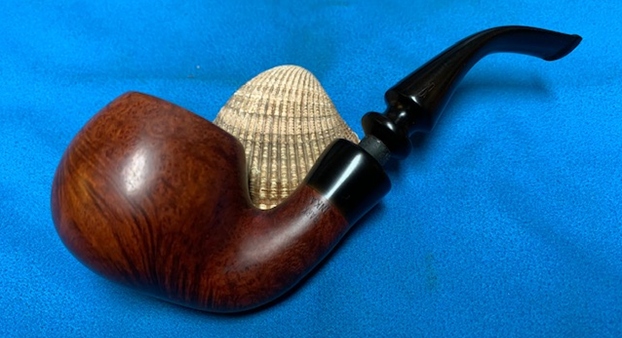
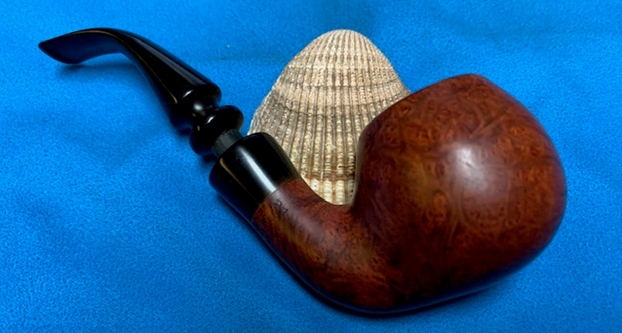
Life for a British Made Nilsson Supreme Sandblast Bent Apple


Blog by Steve Laug

The next pipe on the work table came to me from one of our estate purchases. Between us we pick up quite a few pipes for restoration. I try to work them into the restoration queue so that I can keep them moving. This next one is from our ongoing hunt – a beautifully sandblast apple or maybe a billiard with a tapered vulcanite stem. The pipe is stamped on the underside of the shank and reads Nilsson Supreme [over] Made in London England. The finish had a lot of grime ground into the sandblast finish on the bowl and some darkening around the rim top and edges. The bowl was thickly caked with an overflowing lava coat on the top of the rim. The edges looked to be in good condition though there is some possible damage on the back  inner edge of the rim top. The stem was oxidized, calcified, dirty and had tooth chatter and some deep marks on the top and underside near the button. The button itself was also worn down on both sides. There were not markings or a logo on the taper stem. It had promise but it was very dirty. Jeff took some photos of the pipe before he started his cleanup work.  He took photos of the rim top and bowl to give a clear picture of the thickness of the cake and the overflow of lava on the rim top. He also took photos of the top and underside of the stem to show the chatter and tooth marks. Otherwise the stem is quite clean.   Jeff took photos of the sides and heel of the bowl to give a picture of what the briar around the pipe looked like. There is some stunning grain under the grime.    He took photos of the stamping on the left side of the shank. It reads as noted above and is clear and readable.  I checked my usual sources of information for the brand and came up empty handed. Neither Pipedia or Pipephil had anything. I am convinced it is a second line from possibly Charatan or even GBD but there are no shape numbers to help. So I will leave it at that unless some of you who are reading the blog have some information.

Jeff had cleaned up the pipe with his usual penchant for thoroughness. He reamed the pipe with a PipNet Pipe Reamaer and cleaned up the remnants with a Savinelli Fitsall Pipe Knife.  He scrubbed the bowl with undiluted Murphy’s Oil Soap with a tooth brush. He rinsed it under running warm water to remove the soap and grime. He cleaned out the inside of the shank and the airway in the stem with alcohol, cotton swabs and pipe cleaners. He soaked the stem in Before & After Deoxidizer and rinsed it off with warm water. I took photos of the pipe once I received it.    The bowl and rim top cleaned up really well with the lava coat removed. The inner edge of the rim had some damage at the back right otherwise it was in good condition.  The stem surface was rough with some remaining oxidation and some deep tooth marks and chatter on both sides near the button. The surface of the button was also worn down.      I removed the stem and took a photo of the pipe to give a sense of the whole. The stem is tapered and narrow.Now it was time to do my work on the pipe. I used a folded piece of 220 grit sandpaper to smooth out the damage to the back edge of the rim. I gave the entire rim edge a slight bevel to blend in the damaged area with the rest of the bowl and make sure it was as close to round as possible.    I cleaned the rim top with some undiluted Murphy’s Oil Soap on a paper towel to remove the remaining grime and sanding dust. The rim top definitely looks better. I rubbed the bowl and shank down with Before & After Restoration Balm. I worked it into the surface of the bowl sides and shank with my fingertips and a horsehair shoe brush to clean, enliven and protect the briar. I let the balm sit for a little while and then buffed with a cotton cloth to raise the shine. The sandblast finish looks very good. The briar has a rich reddish brown tone to it. I set the bowl aside and turned to work on the stem. I filled in the damaged stem surface with black super glue and rebuilt the button surface and edges at the same time. Once the repair cured I smoothed it out with a needle file. I finished shaping button and blending in the repairs with 220 grit sandpaper. I also worked on the stubborn oxidation with the sandpaper.  I started the polishing of the stem with 400 grit wet dry sandpaper.   I polished the vulcanite stem with micromesh sanding pads – 1500-12000 grit pads. I wiped it down with a damp cloth after each sanding pad. I used Before & After Pipe Polish – both Fine and Extra Fine to further polish the stem.   This English Made Nilsson Supreme Sandblast Bent Apple with a vulcanite stem is a great looking pipe now that it has been restored. I put the stem back on the bowl and carefully buffed the pipe with Blue Diamond on the buffing wheel using a light touch on the briar. I gave the bowl multiple coats of Conservator’s Wax and the stem multiple coats of carnauba wax on the buffing wheel. I buffed the entire pipe with a clean buffing pad to raise the shine. I hand buffed the pipe with a microfiber cloth to deepen the shine. The finished Nilsson Supreme fits nicely in the hand and feels great. Give the finished pipe a look in the photos below. The dimensions of the pipe are Length: 5 ½ inches, Height: 2 inches, Outside diameter of the bowl: 1 ½ inches, Chamber diameter: ¾ of an inch. If you are interested in adding this pipe to your collection send me a message or an email. Thanks for reading this blog and my reflections on the pipe while I worked on it. There are many more to come!