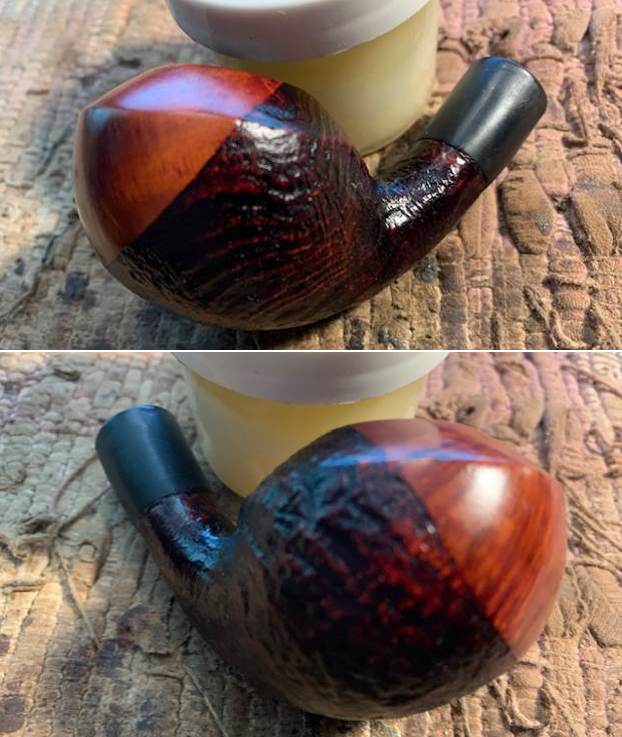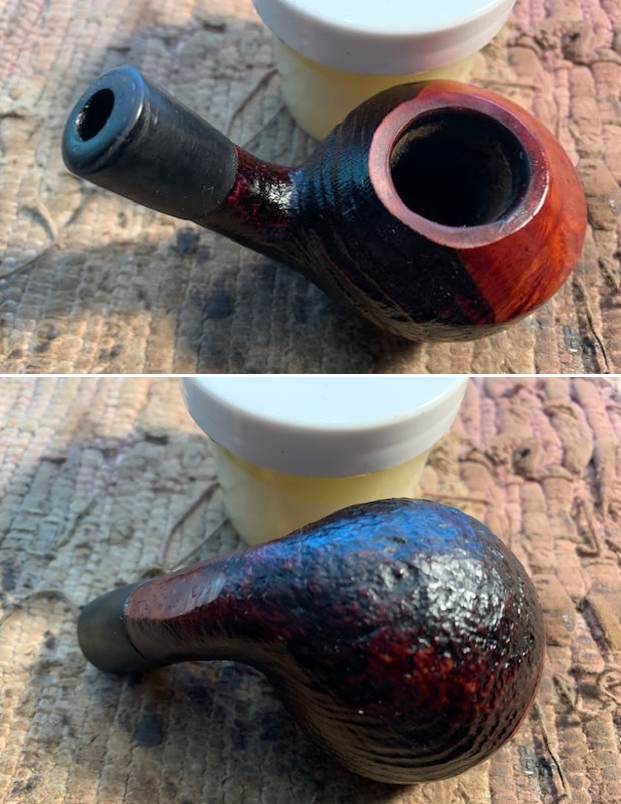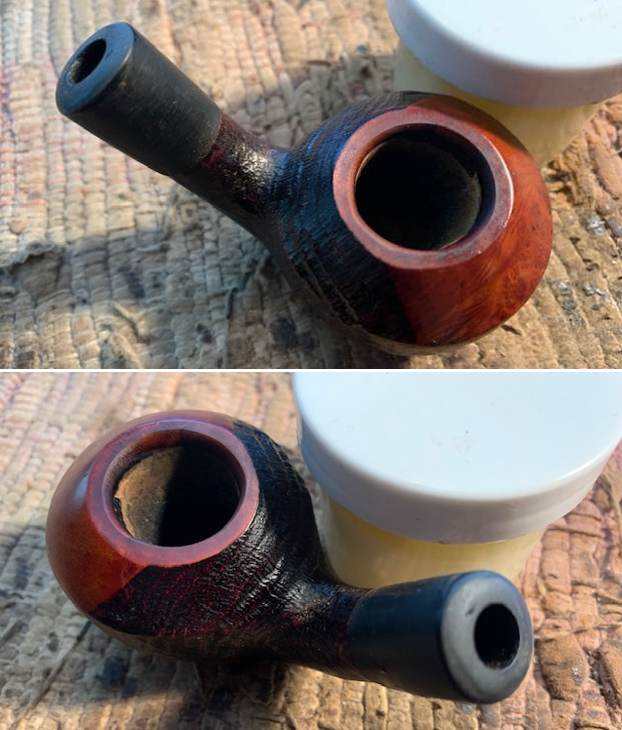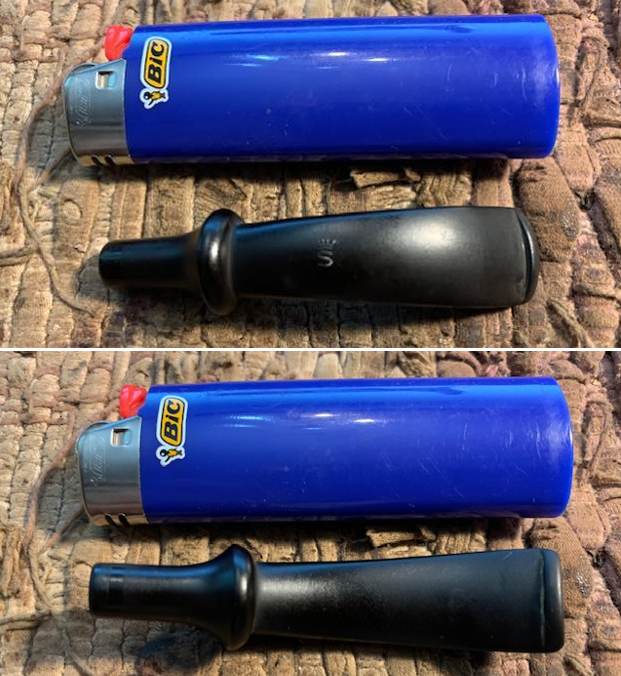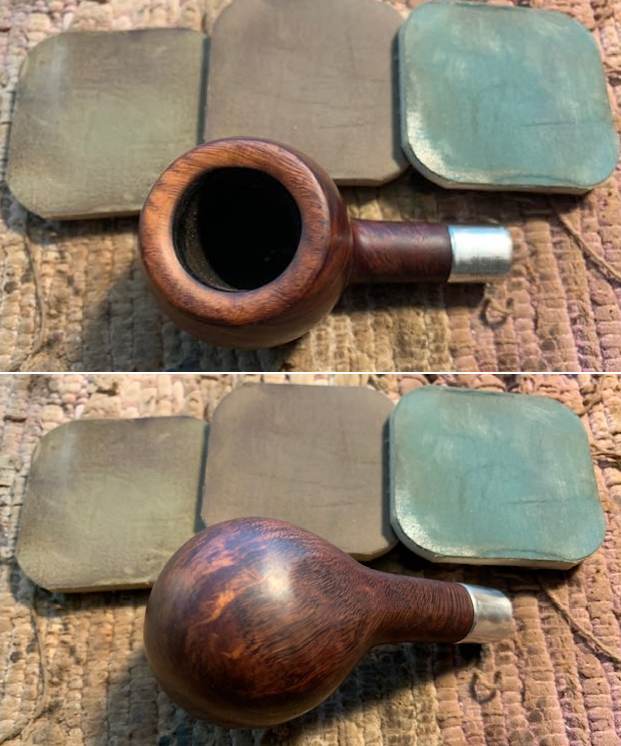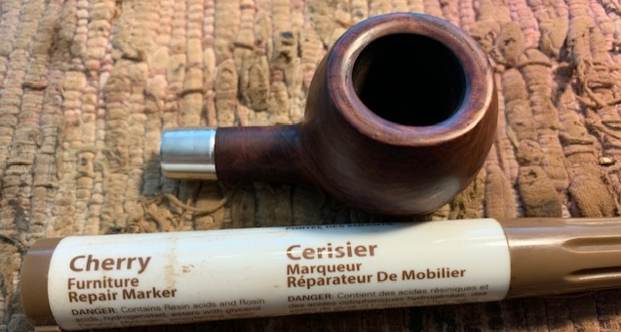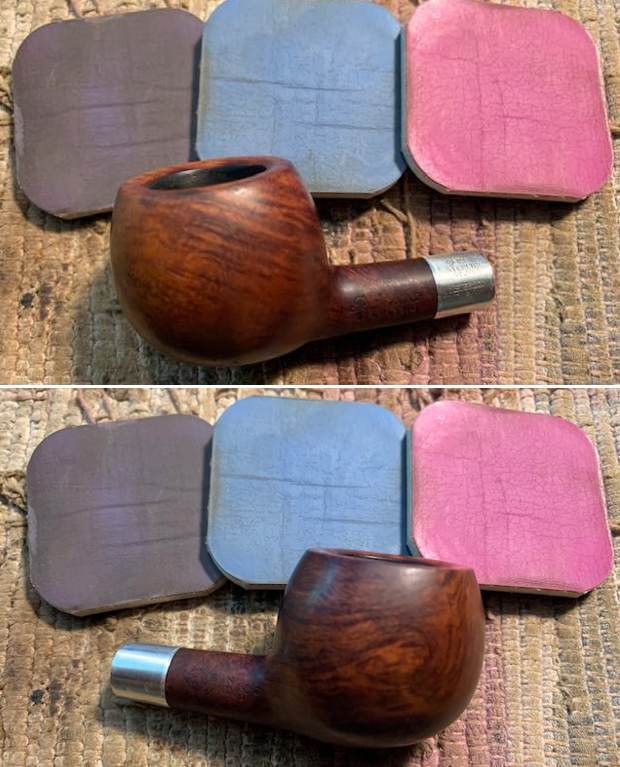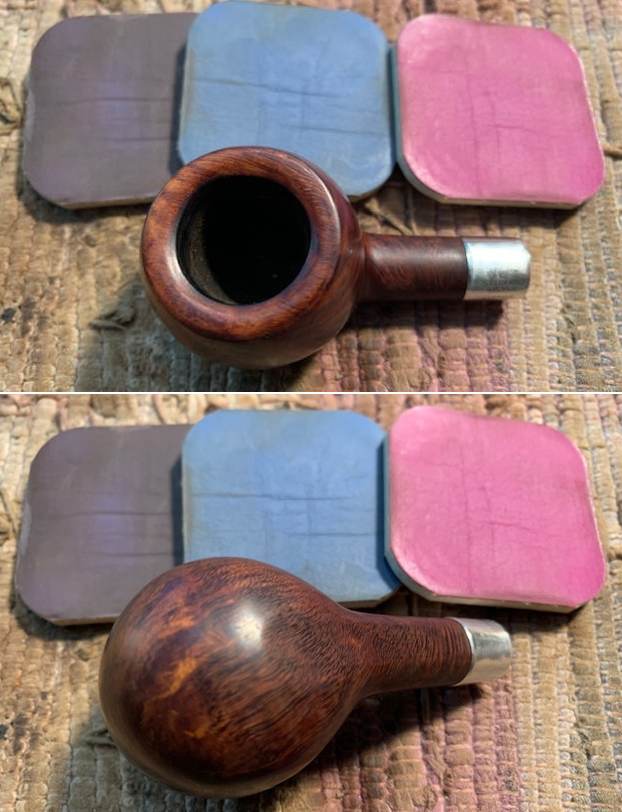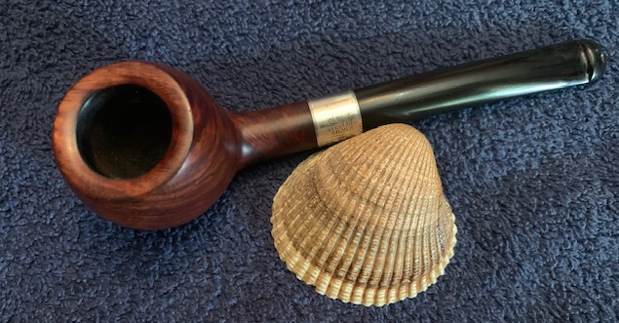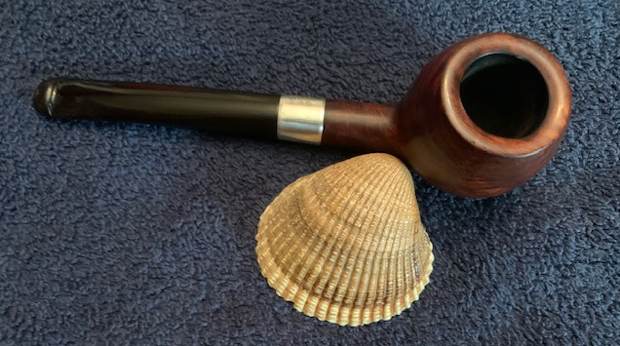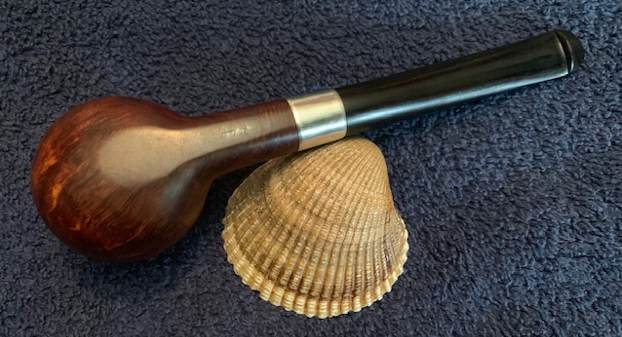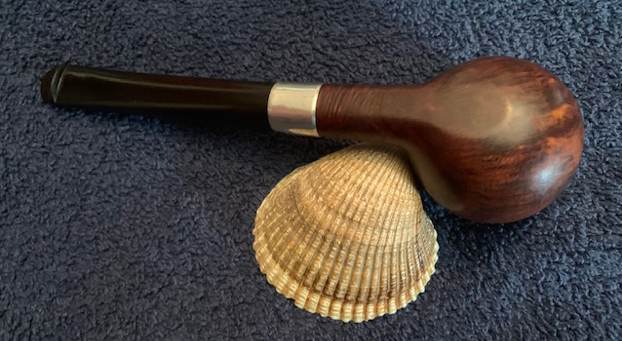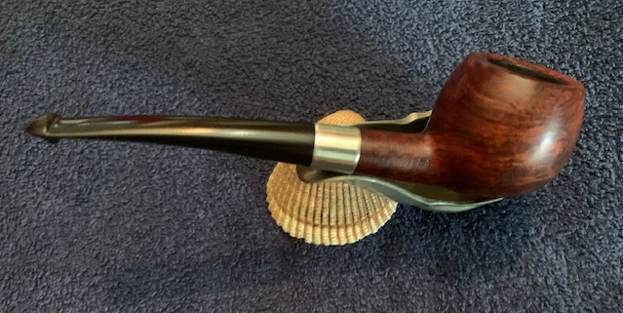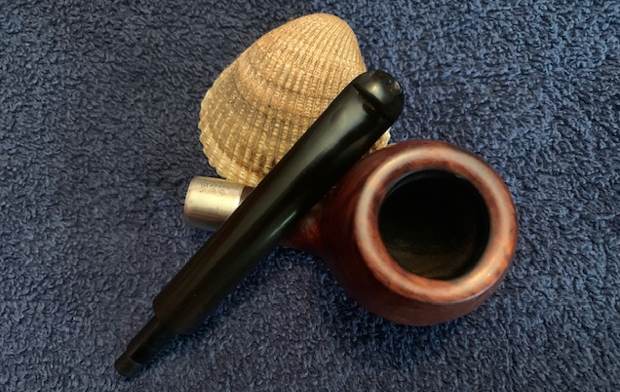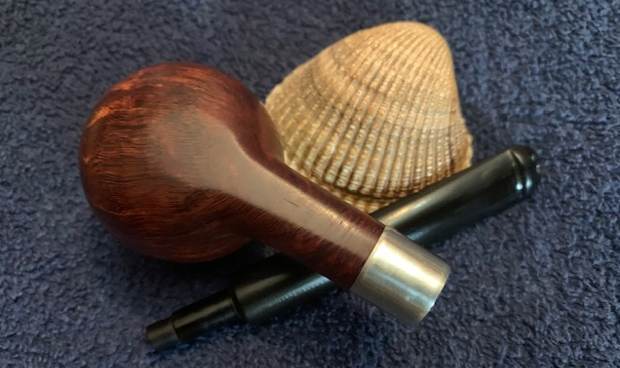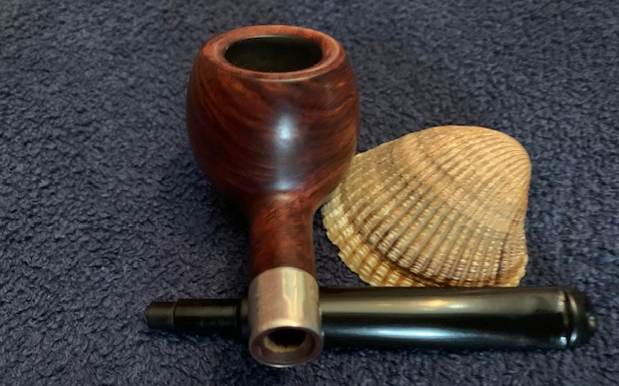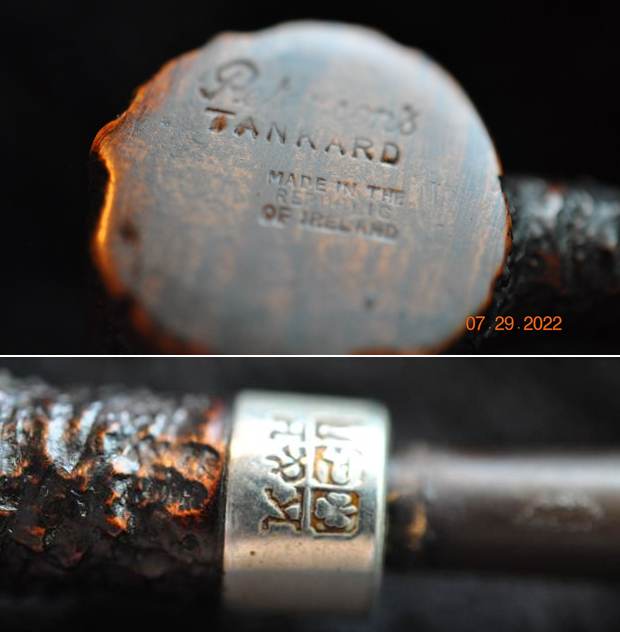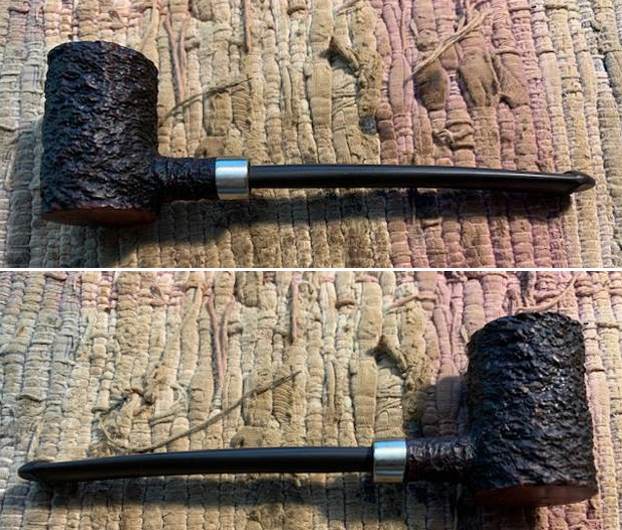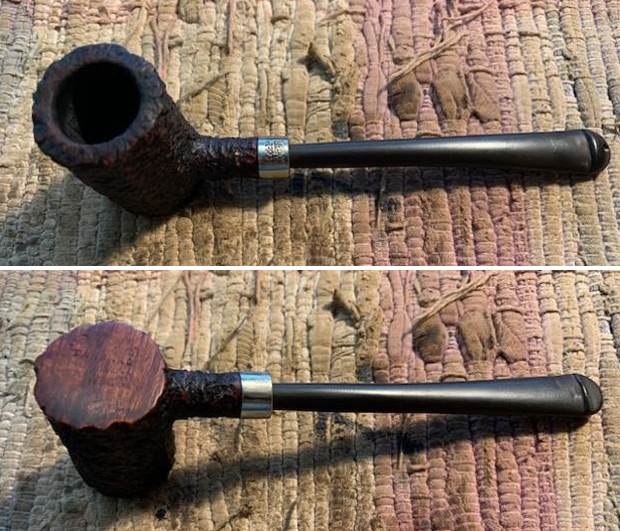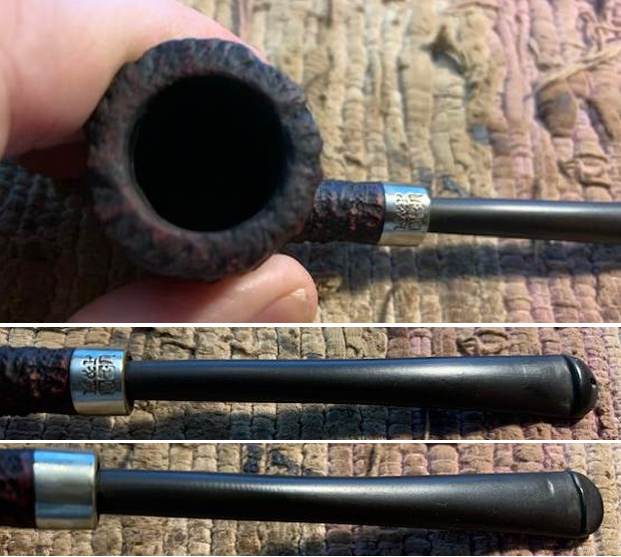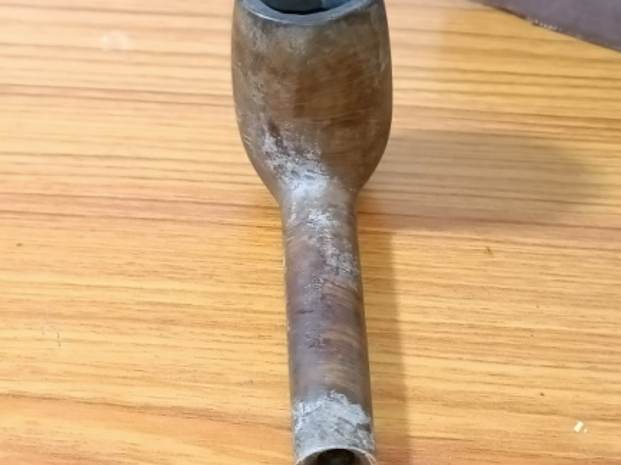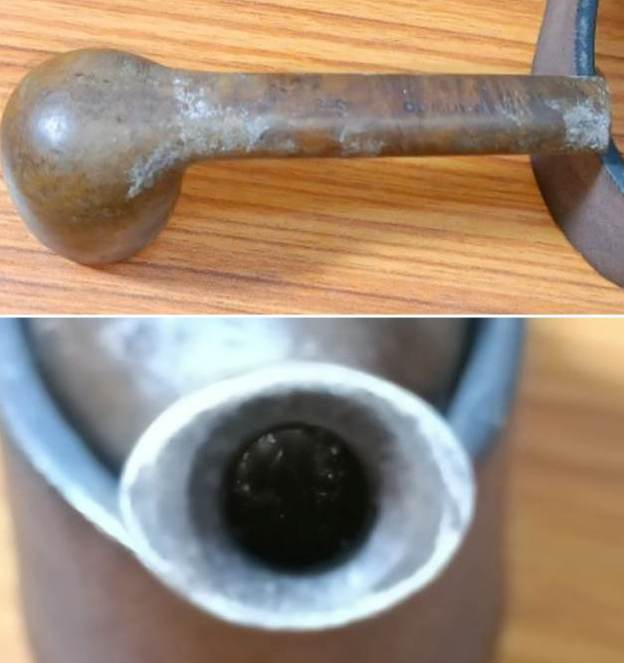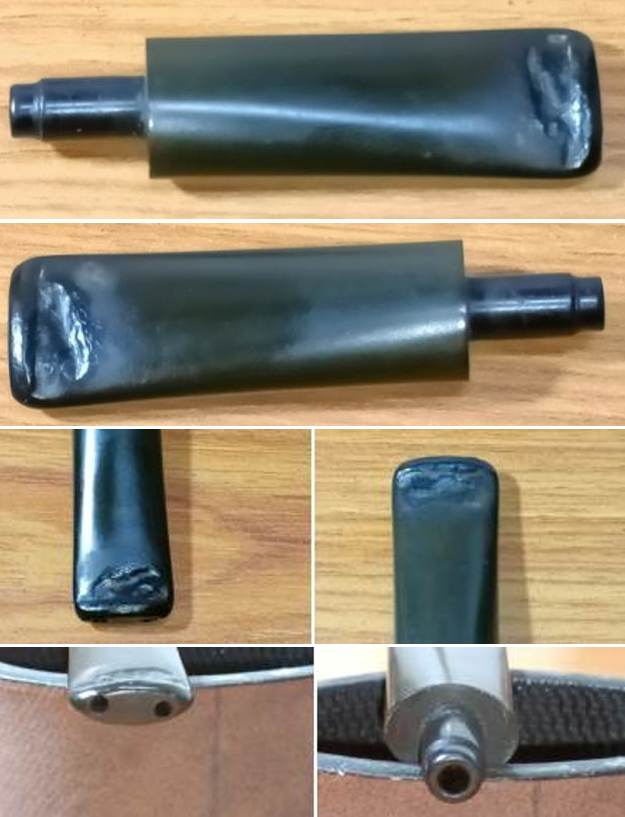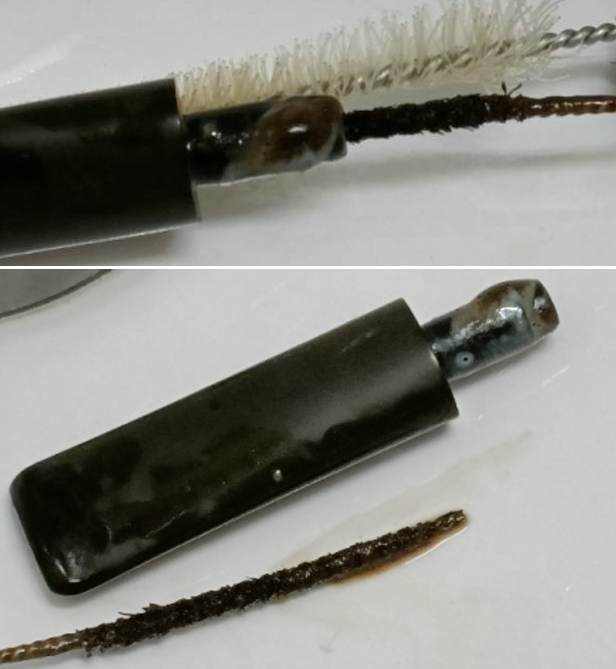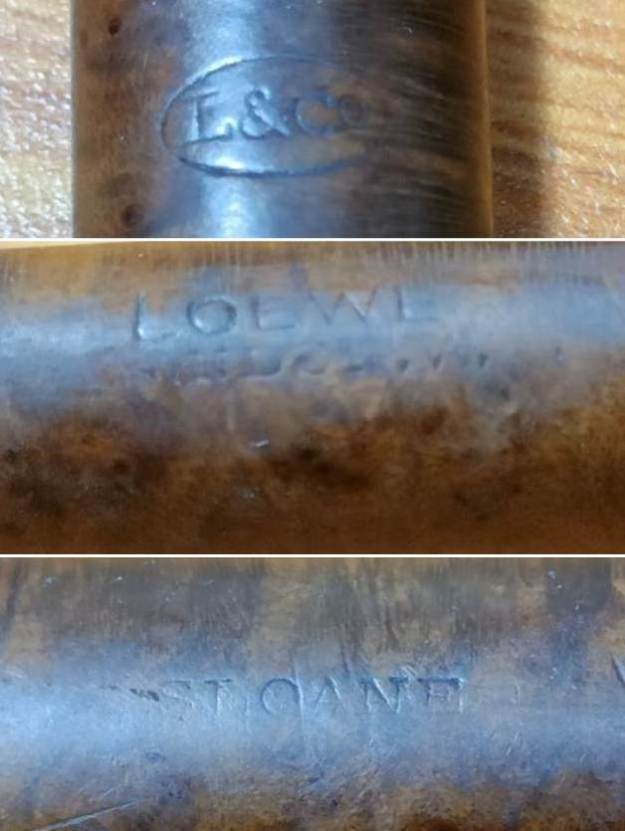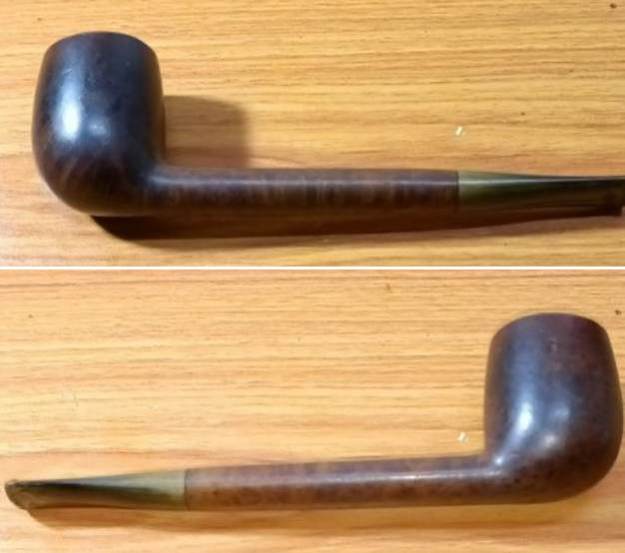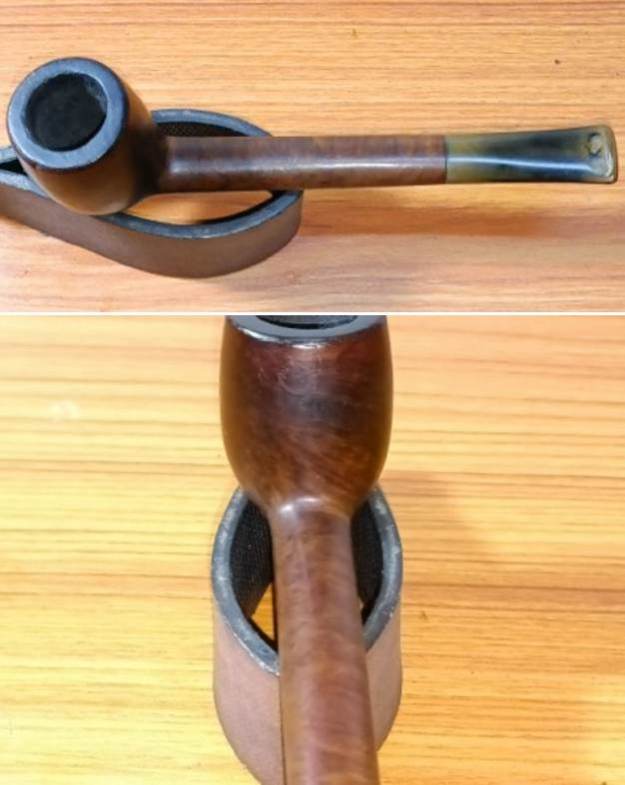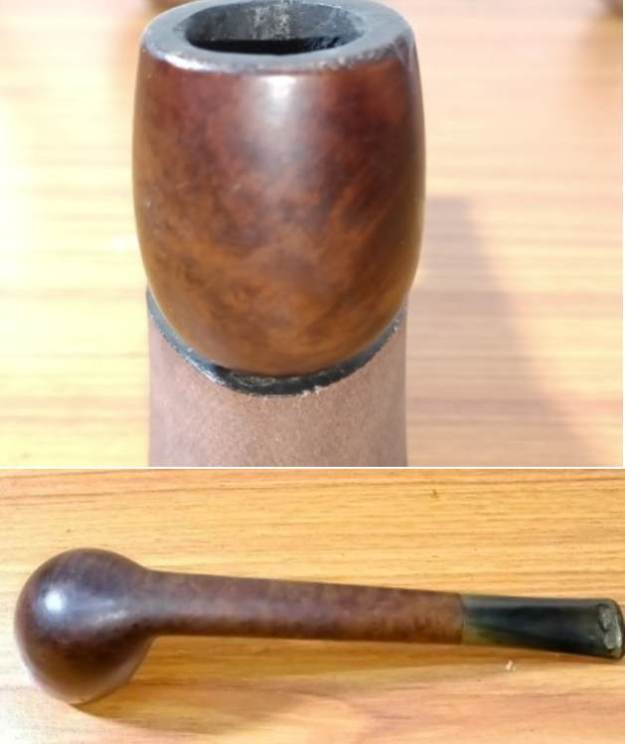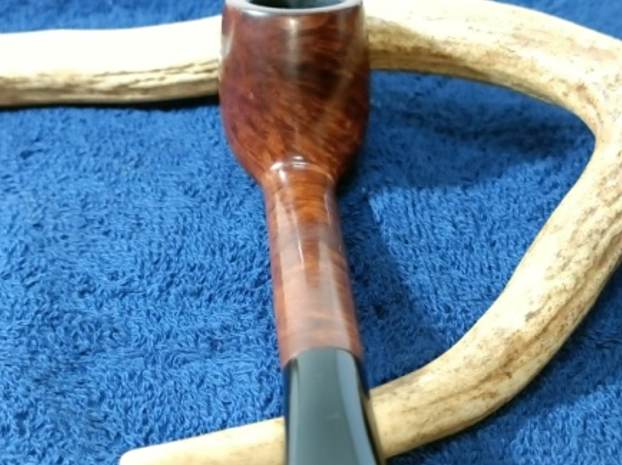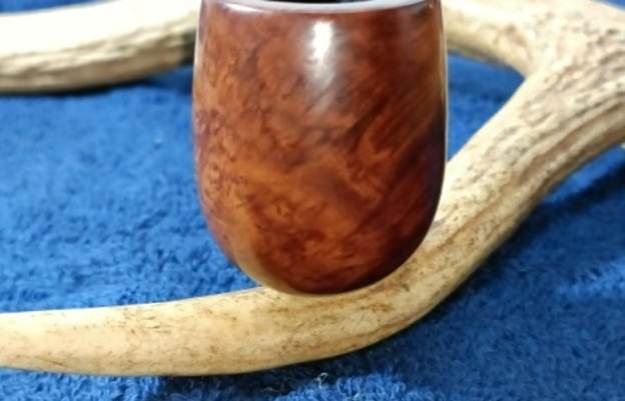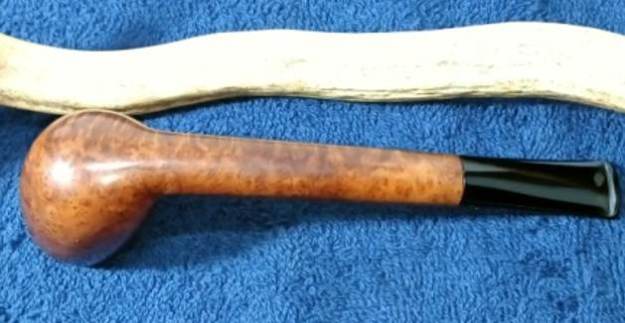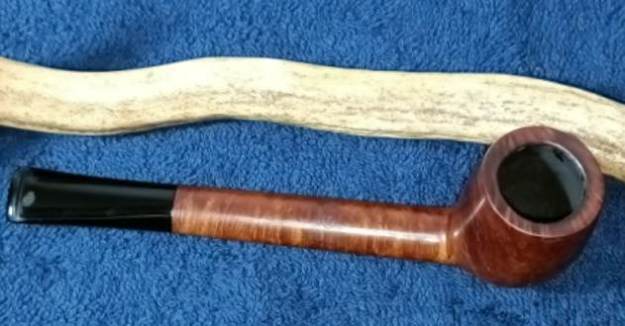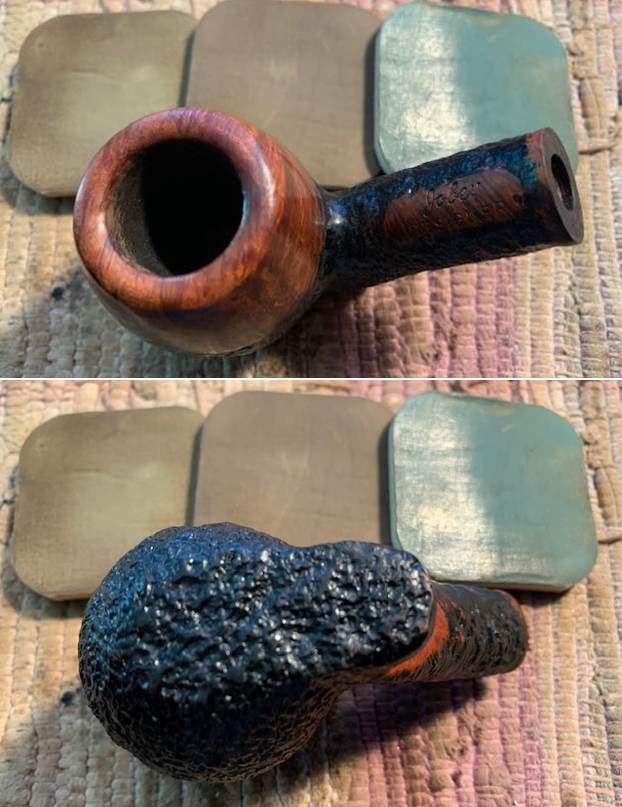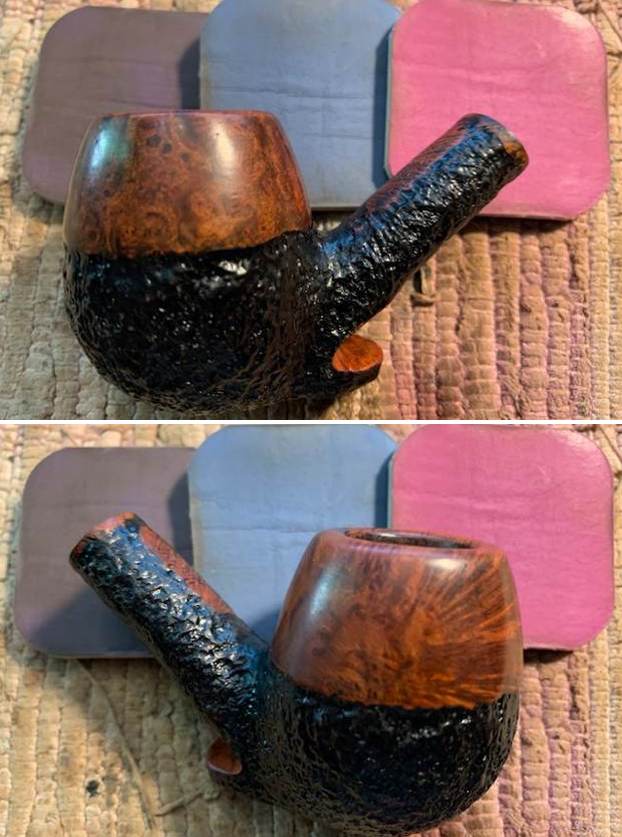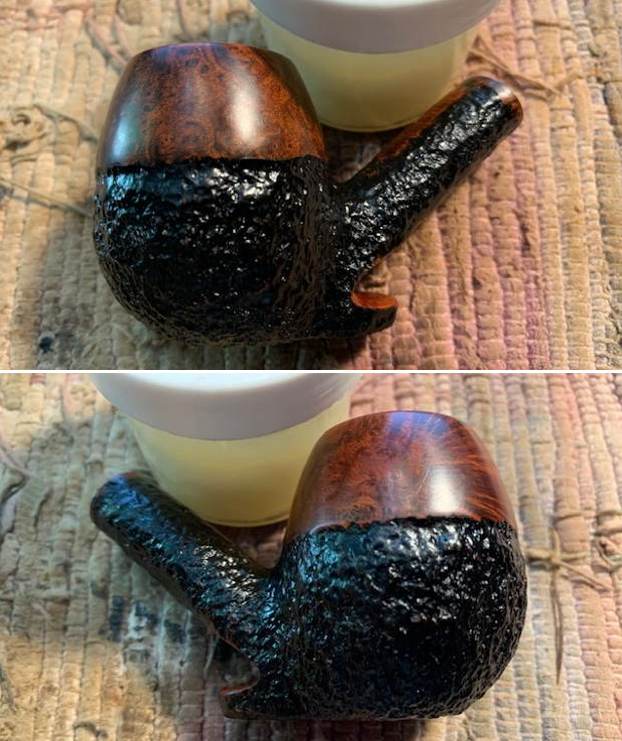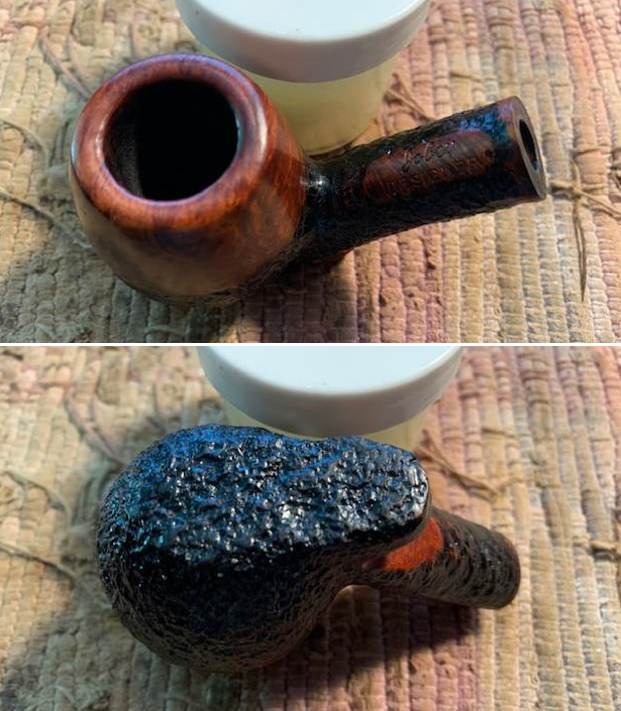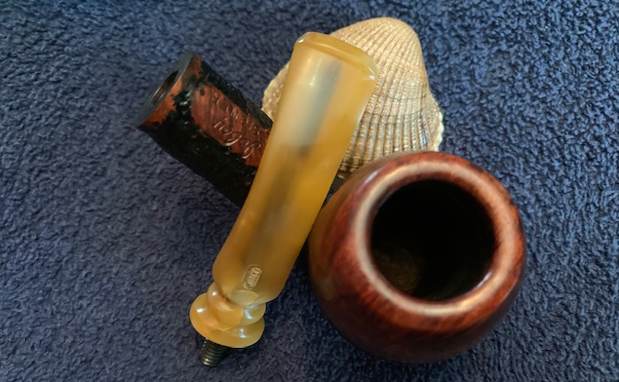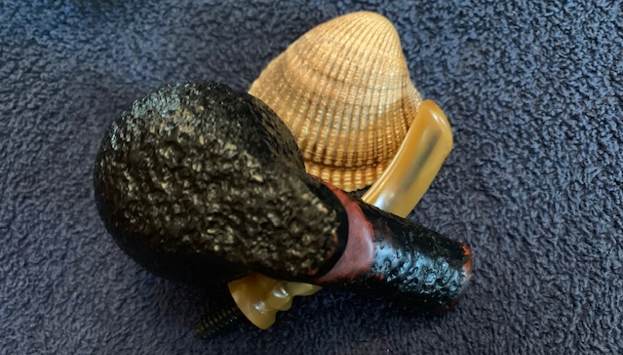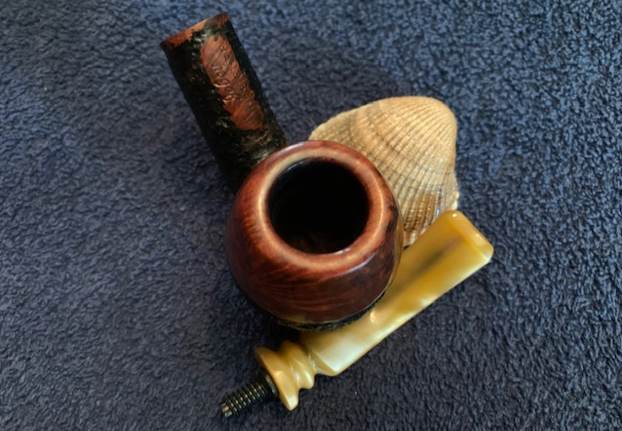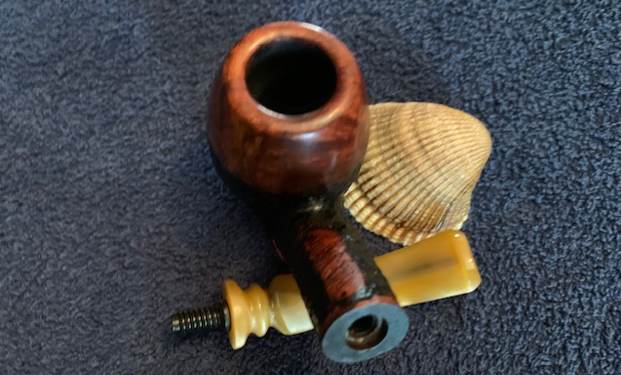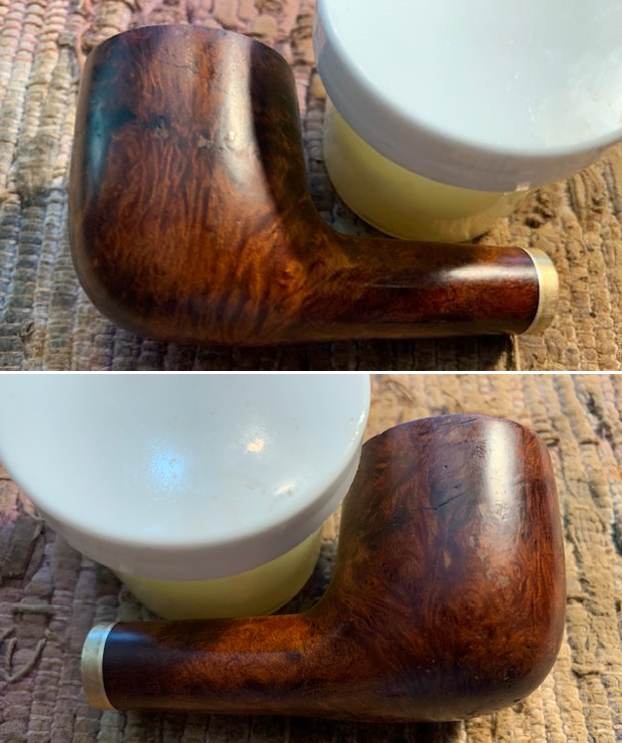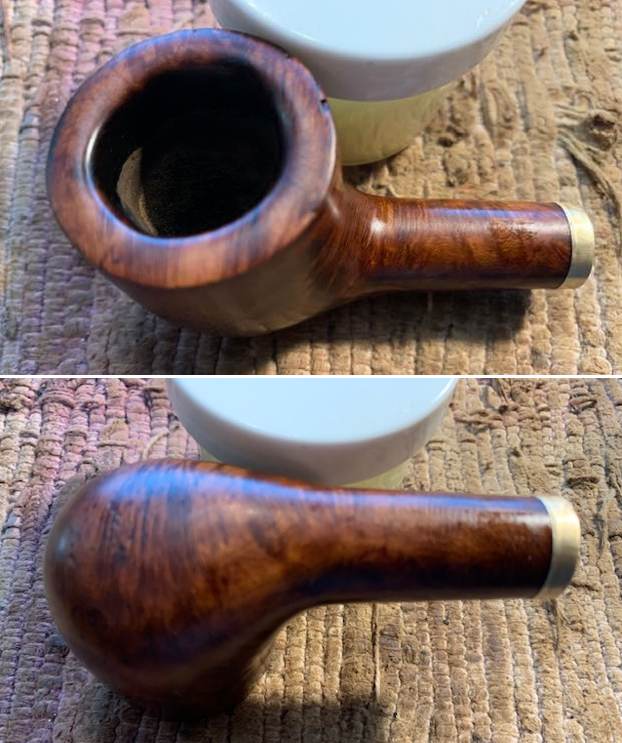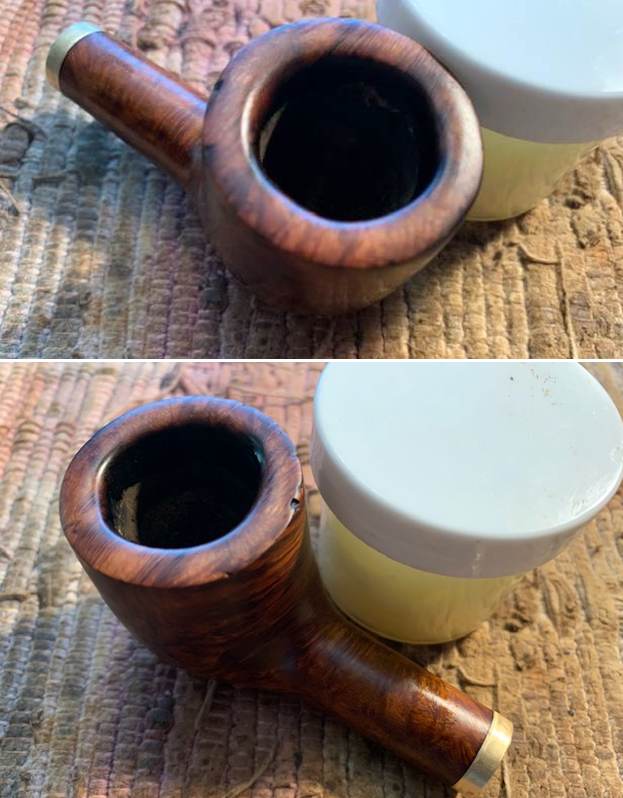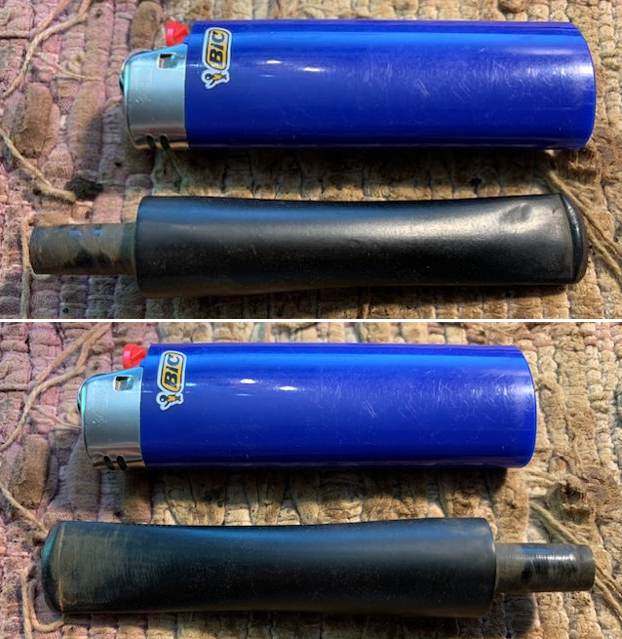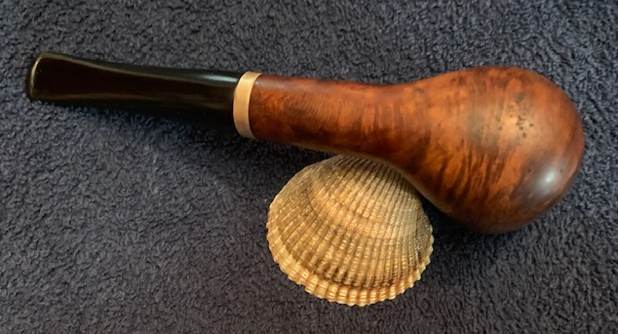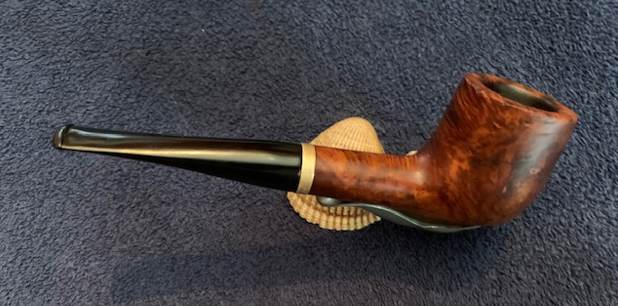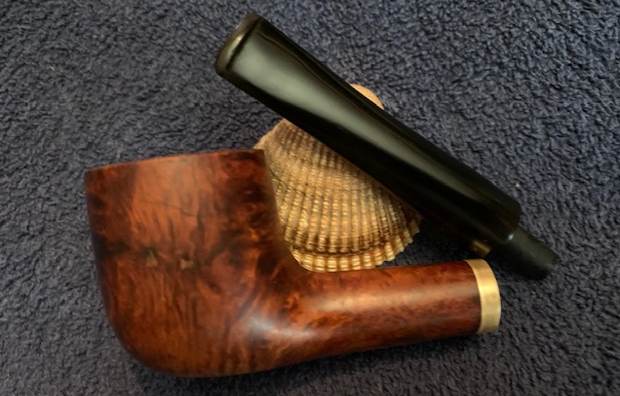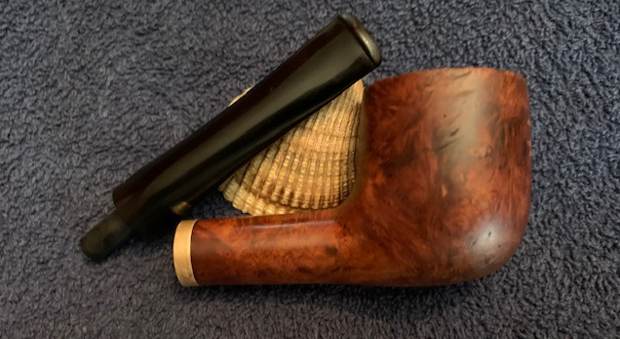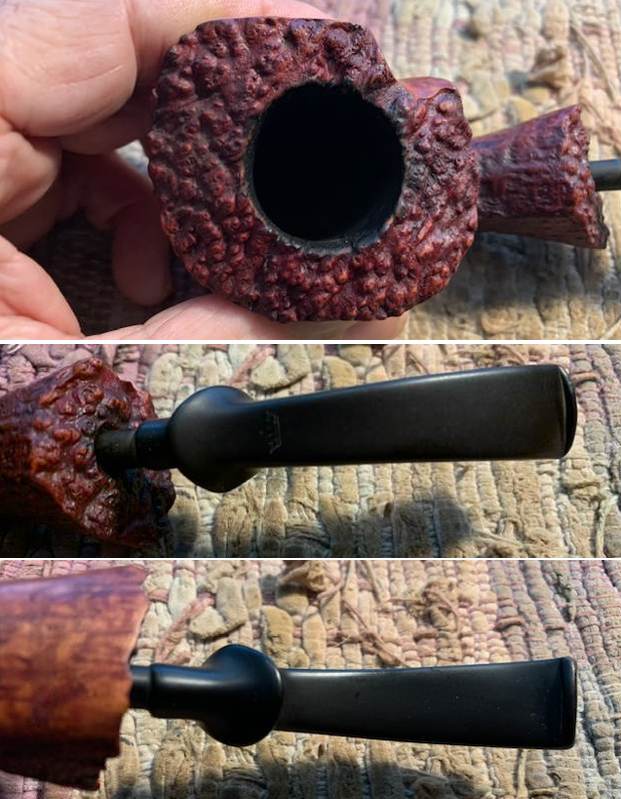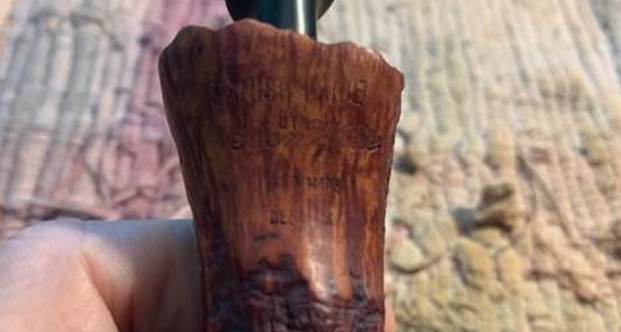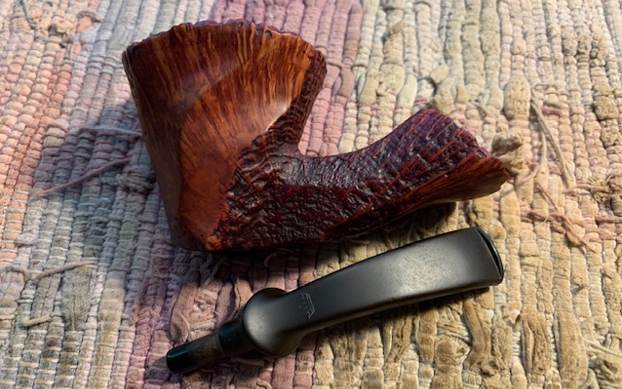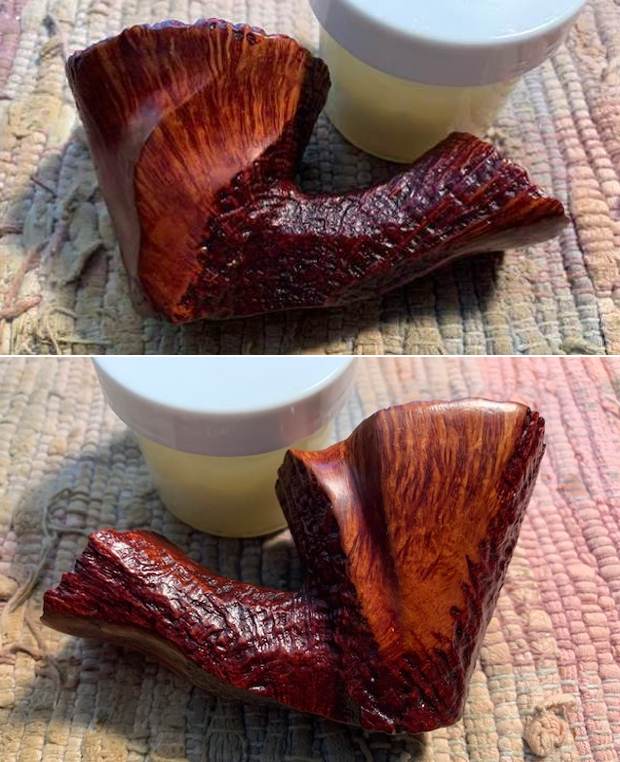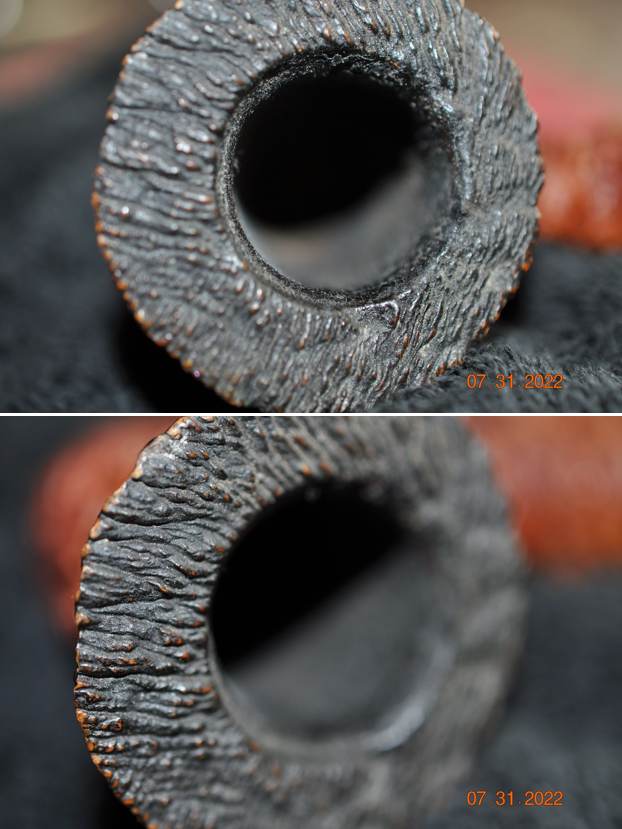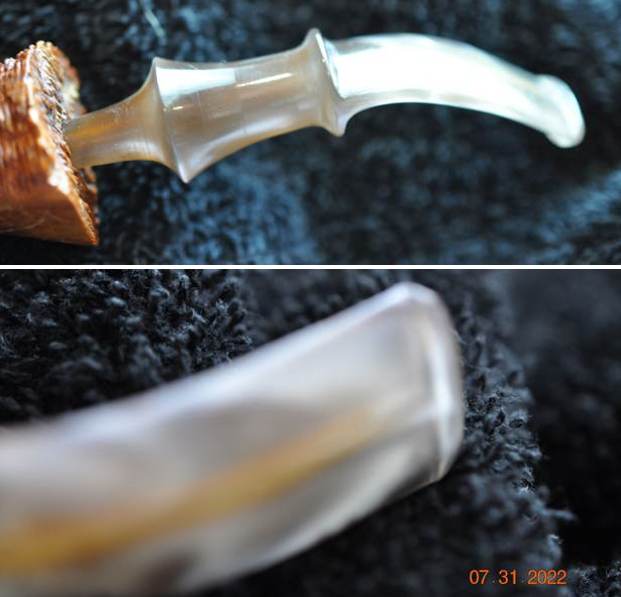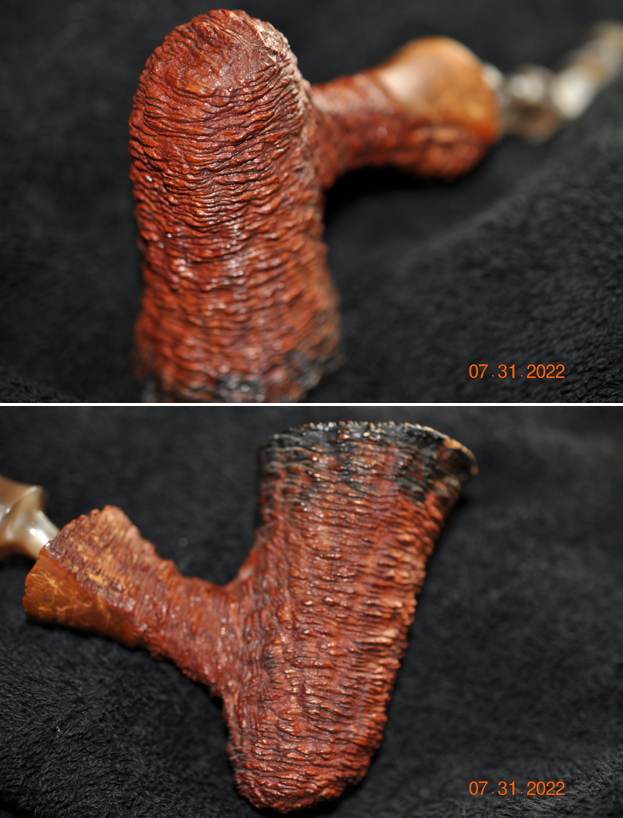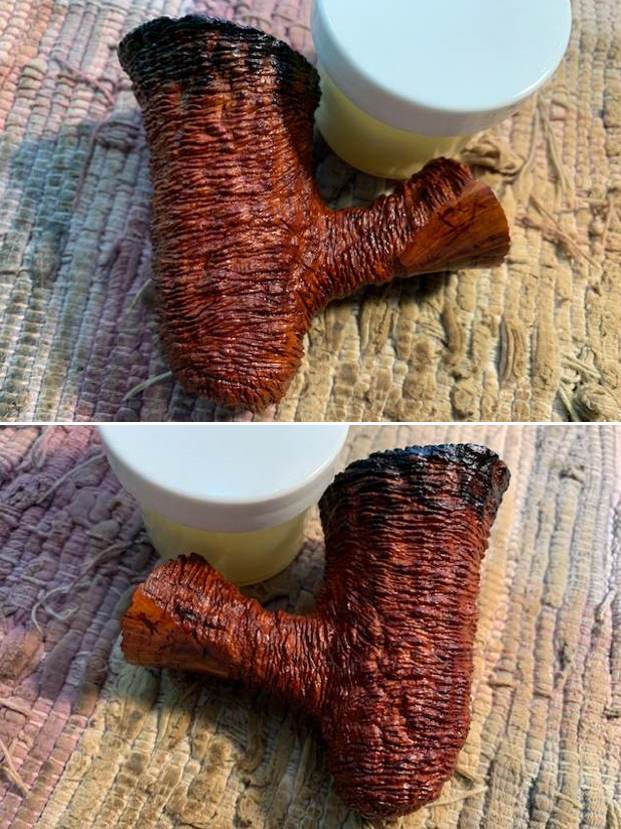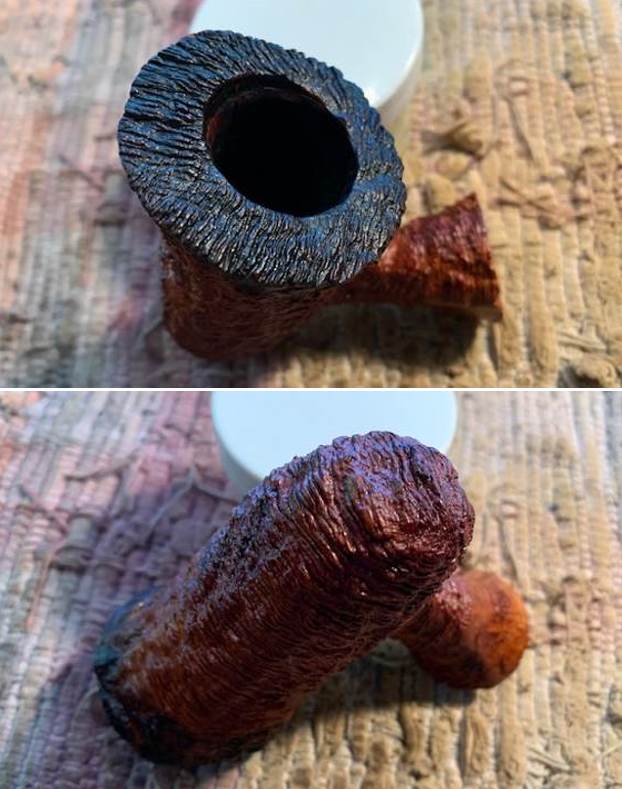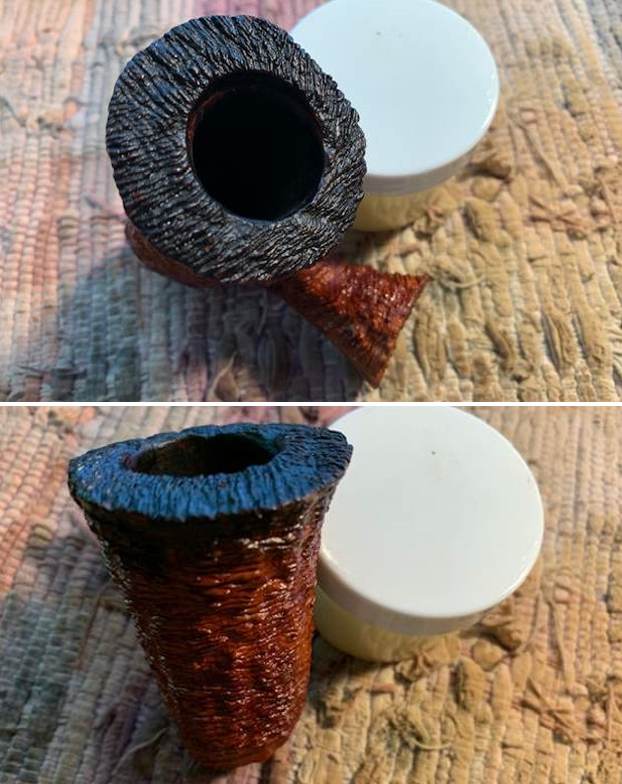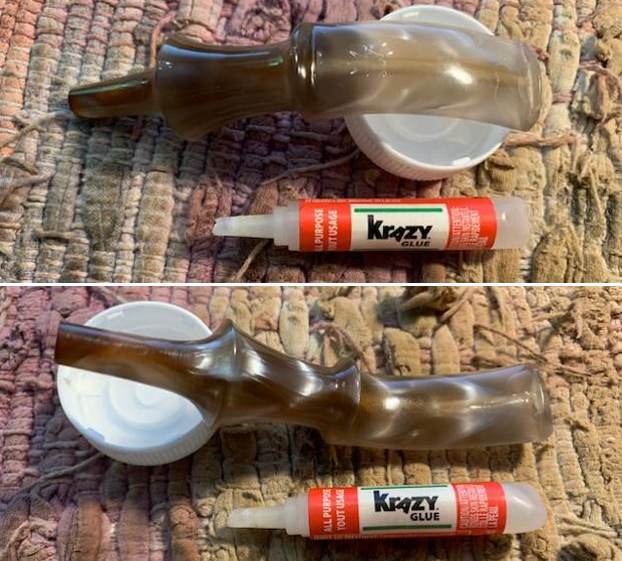
Tag Archives: Stem repairs

Restoring a Wire Brushed Savinelli Extra 125 Pot


Blog by Steve Laug

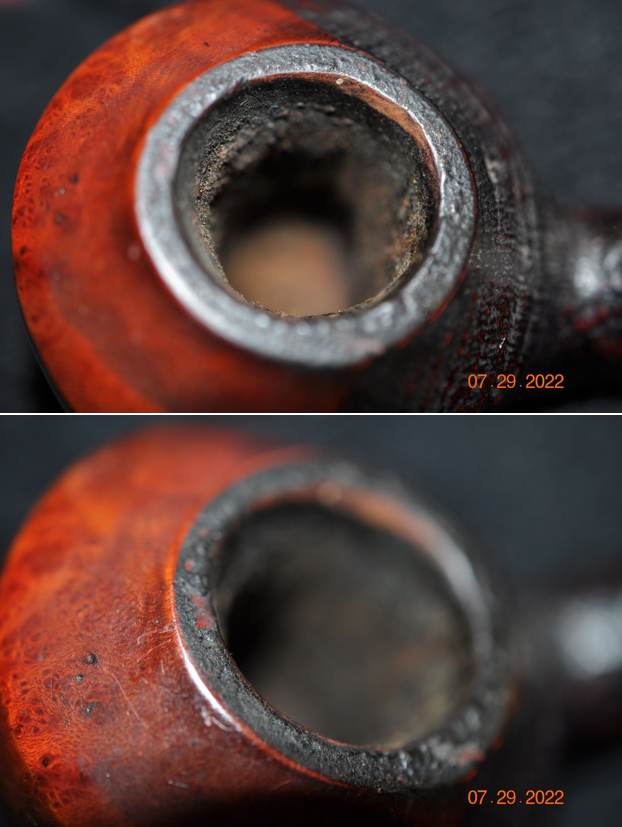
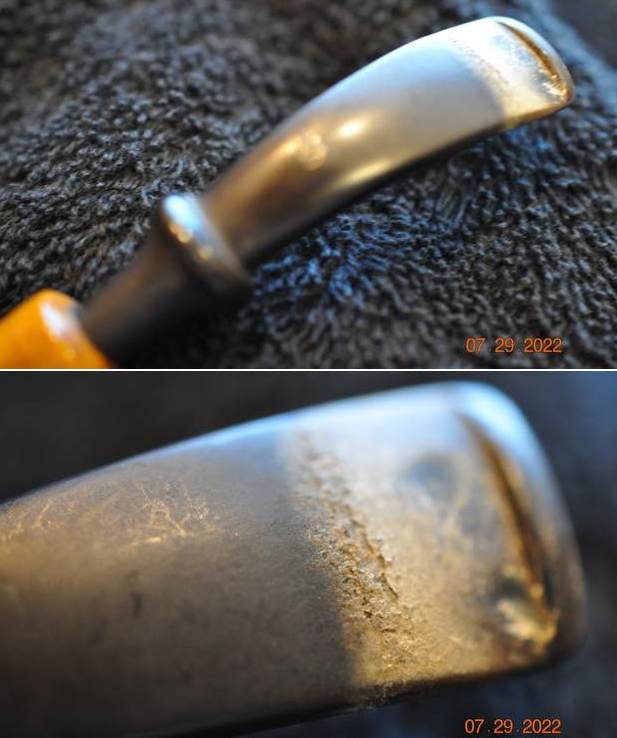
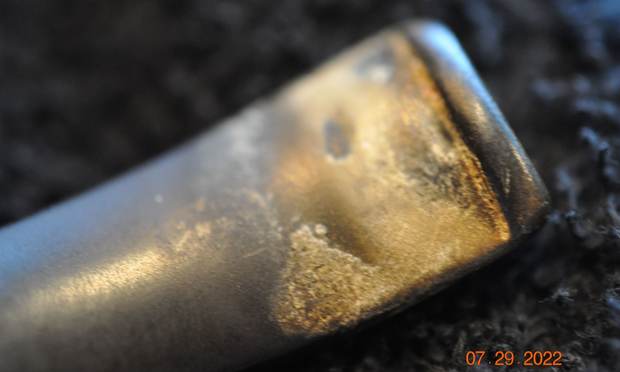
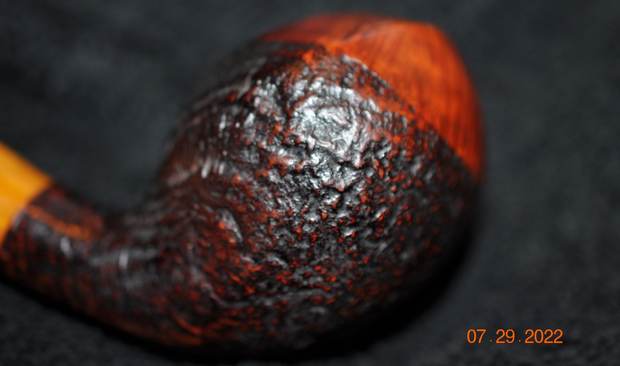
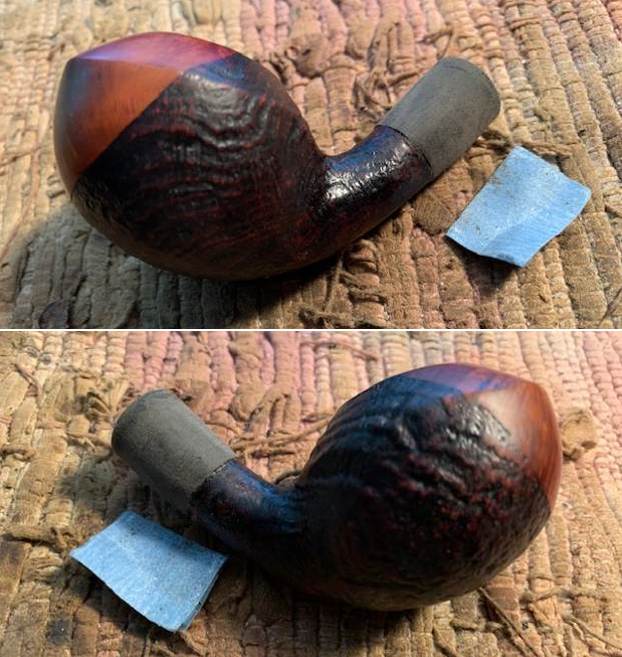
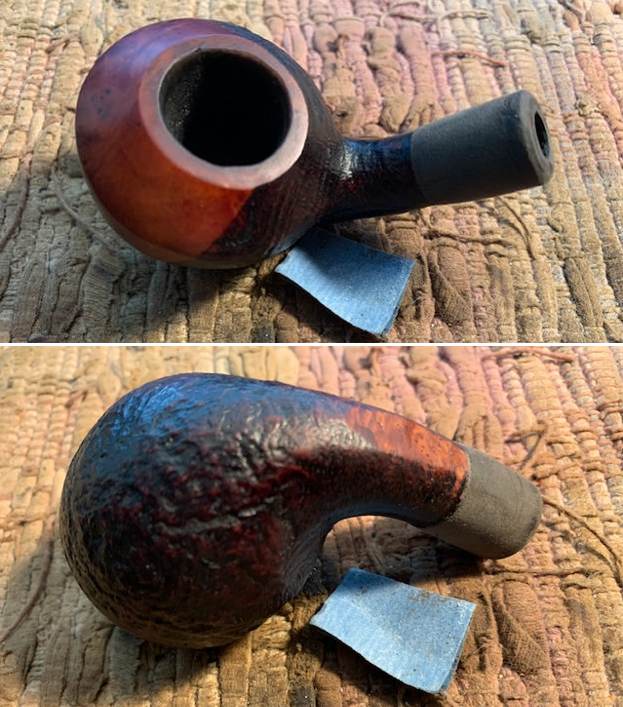
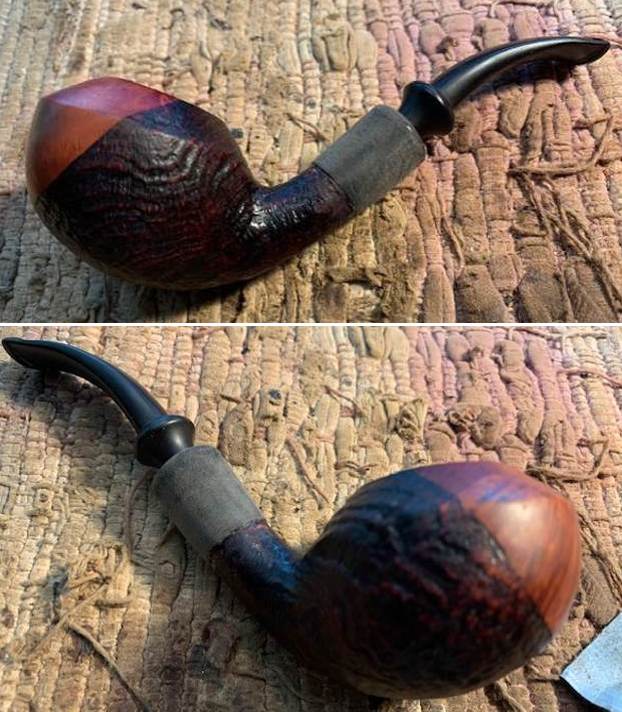
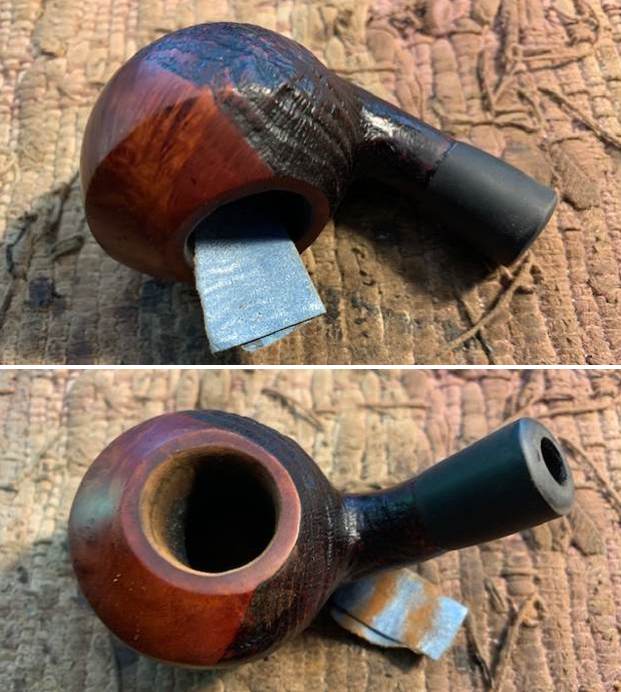
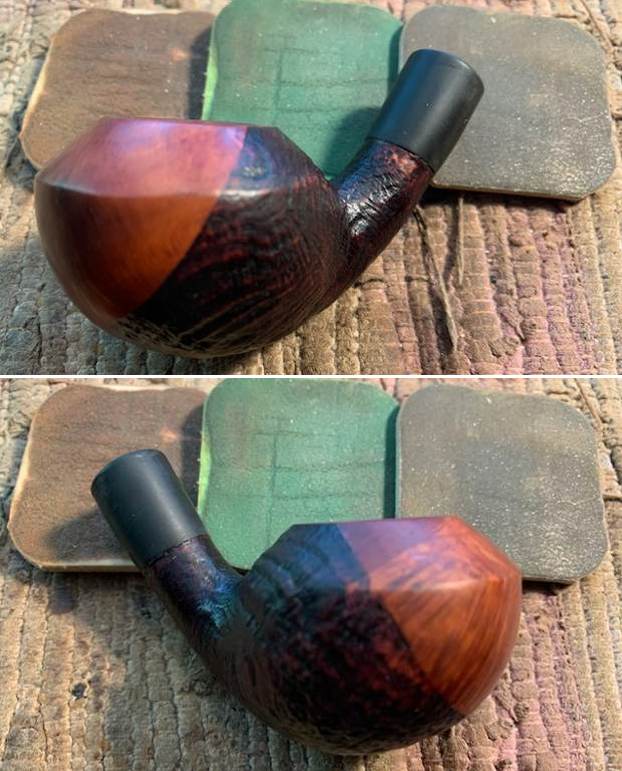
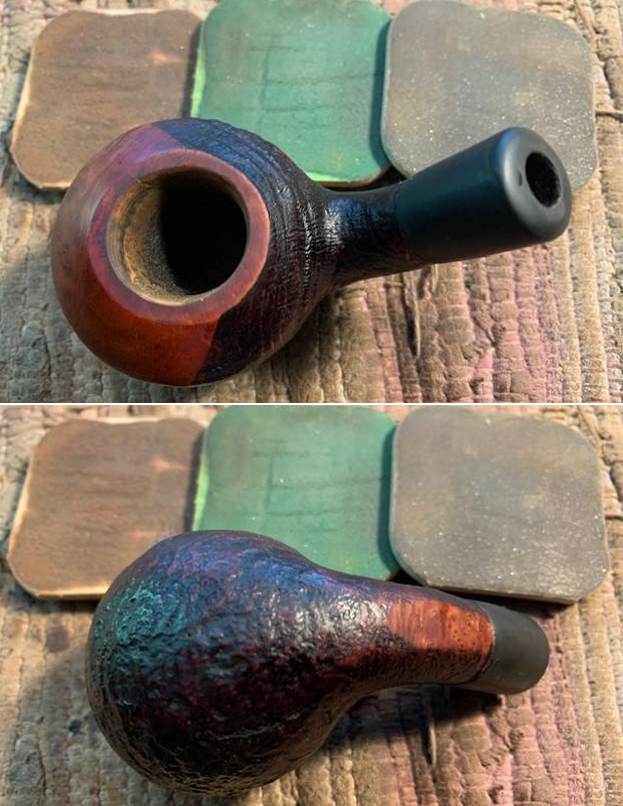
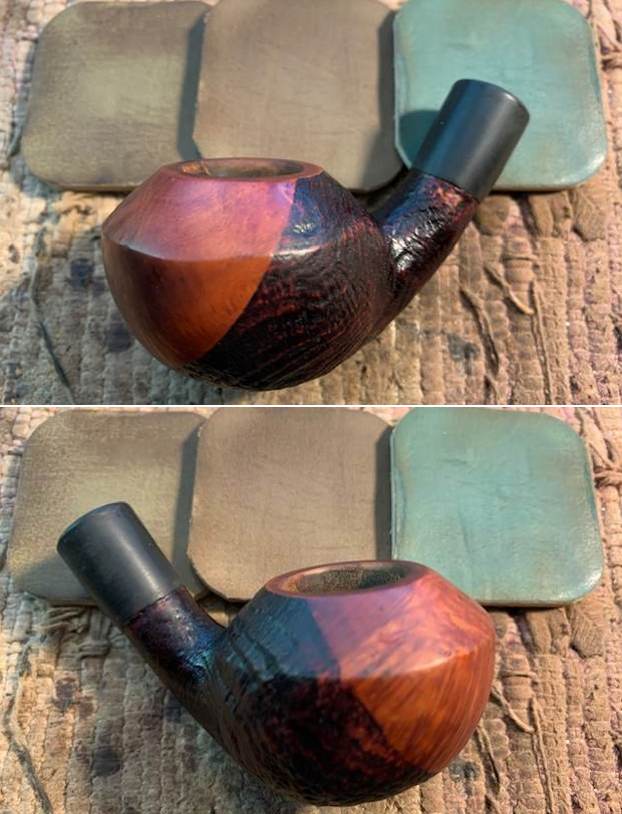
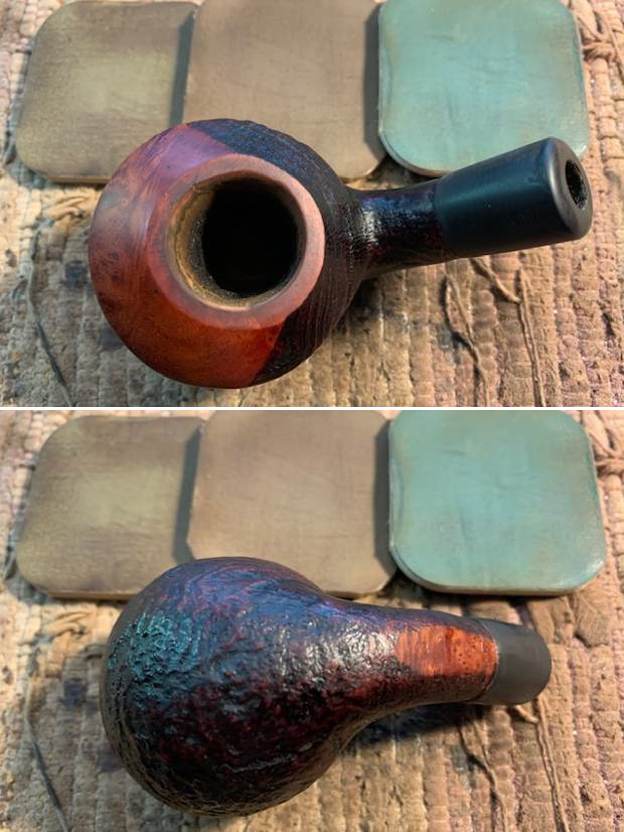
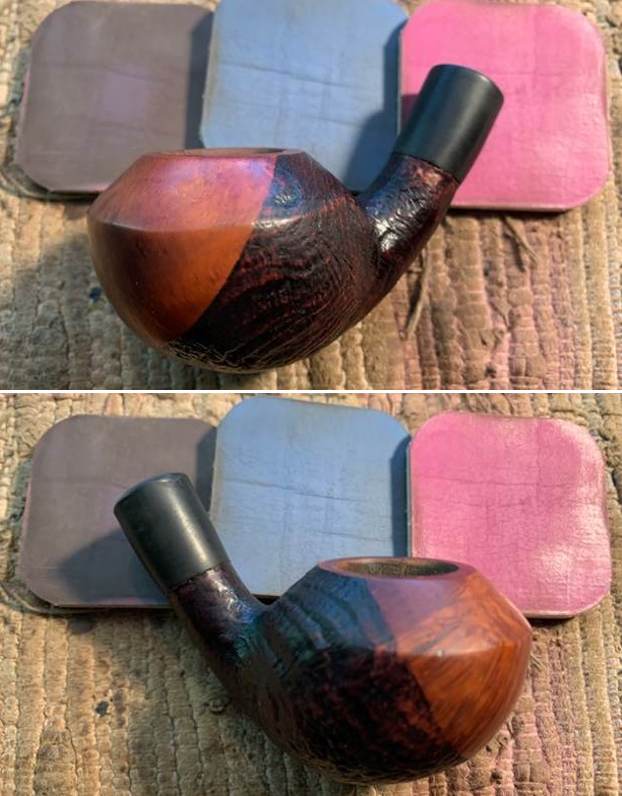
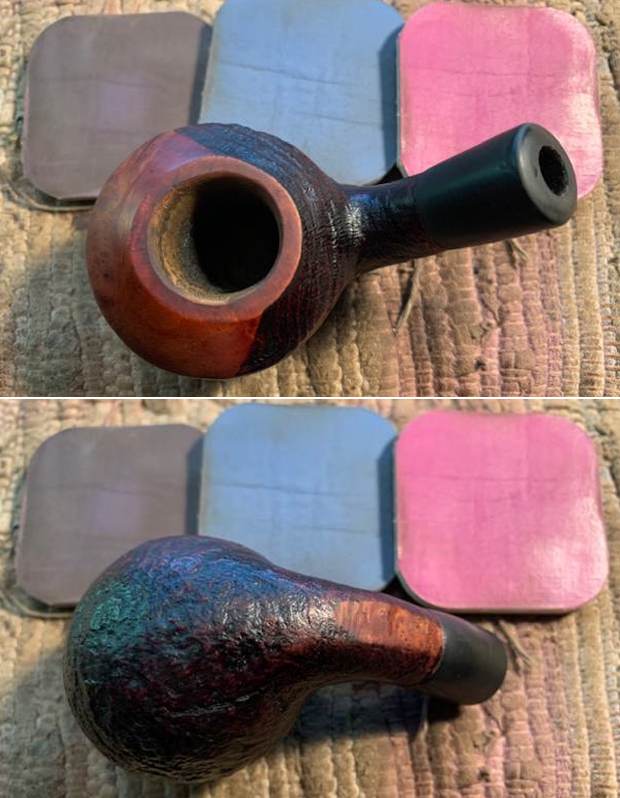
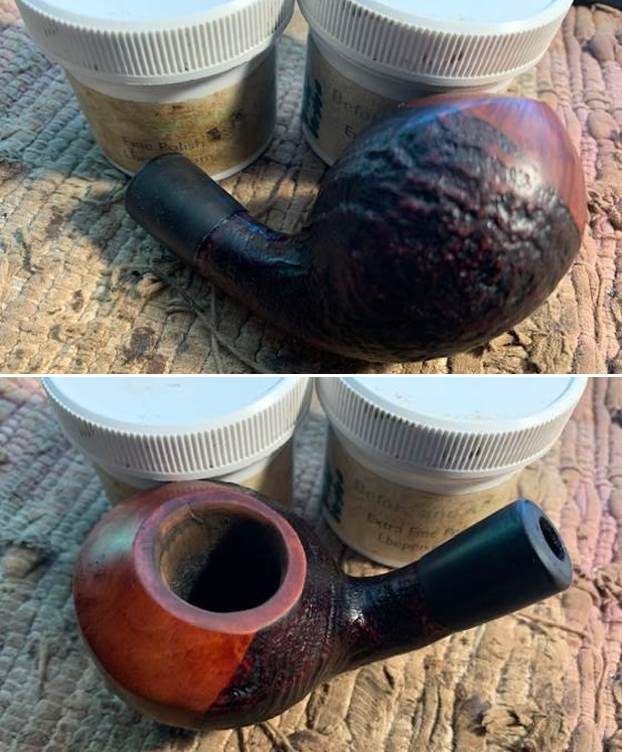
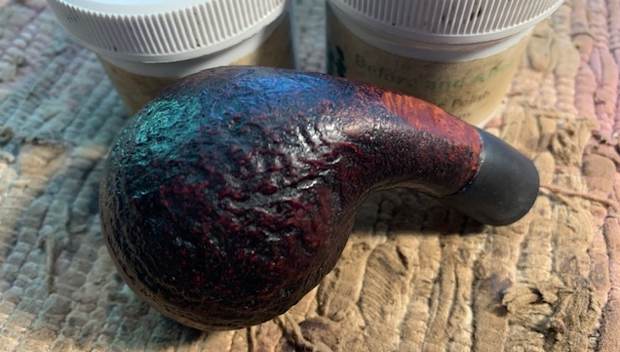
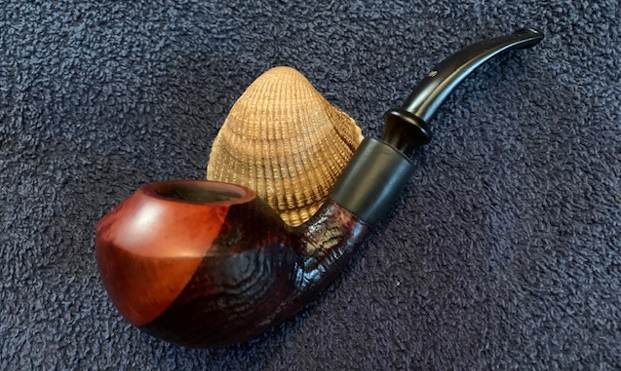
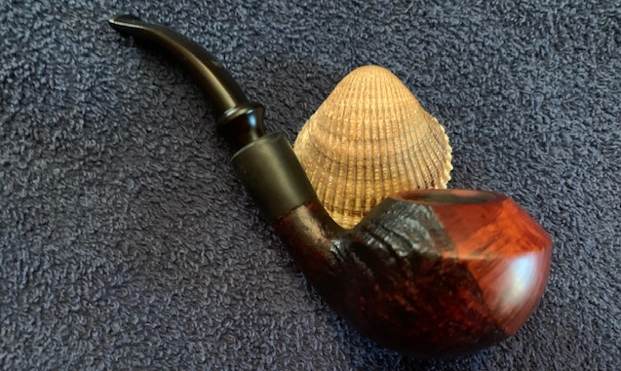
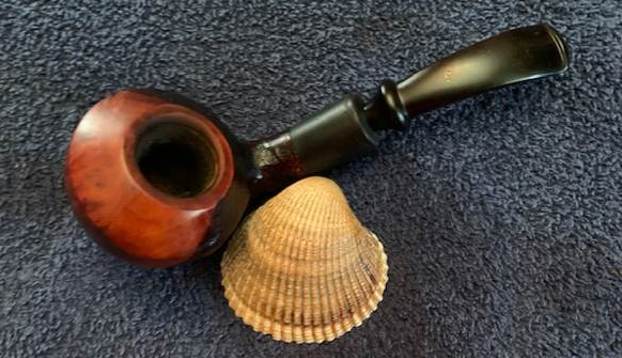
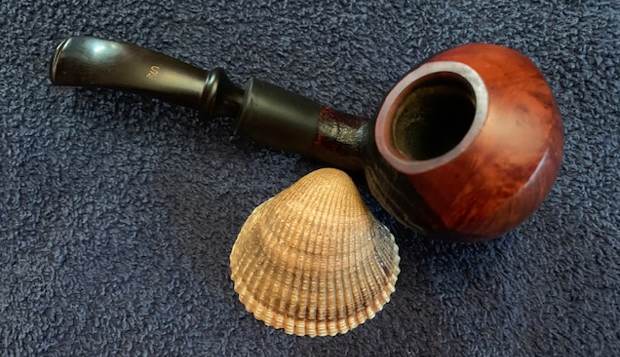
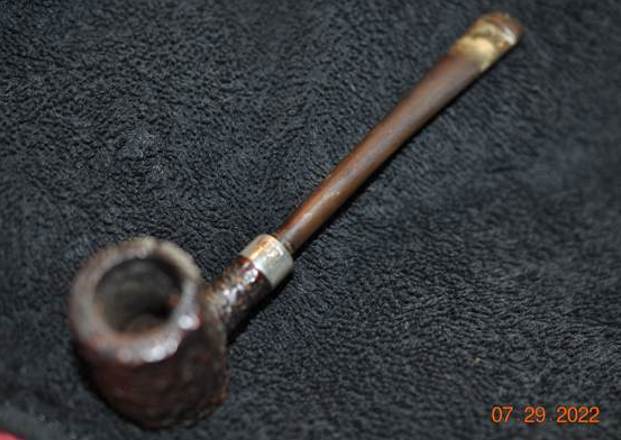
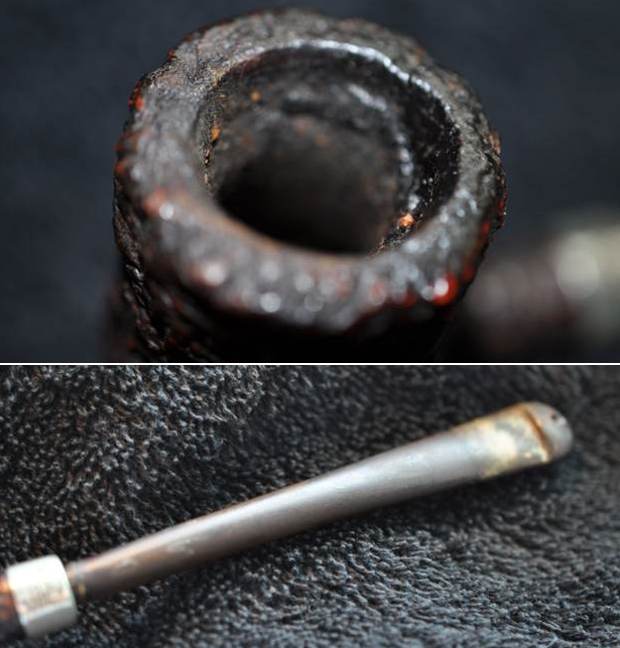
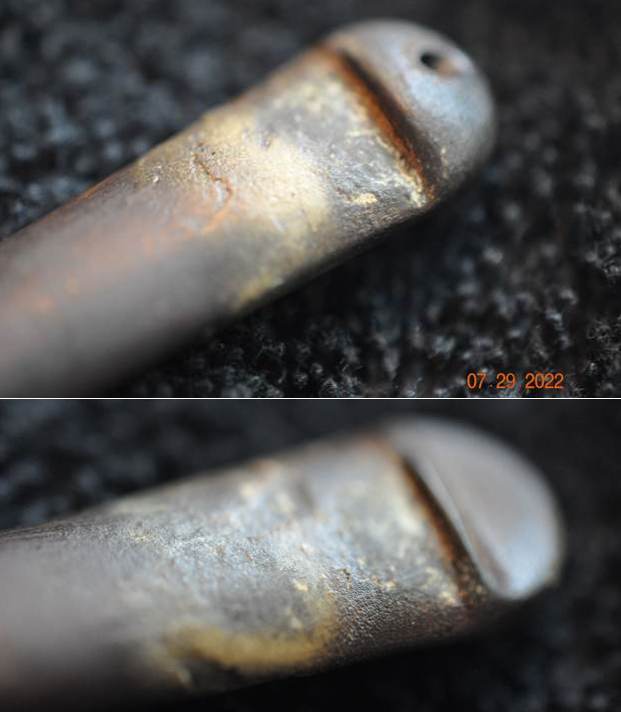
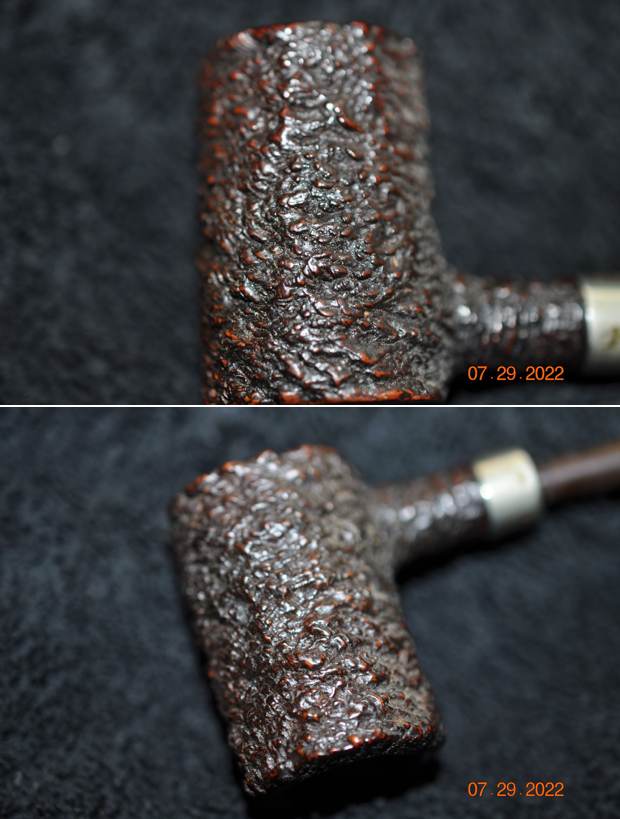
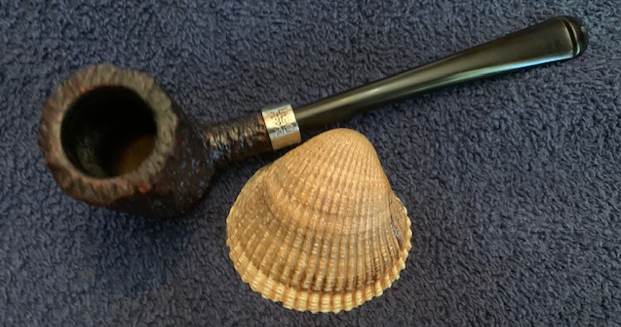
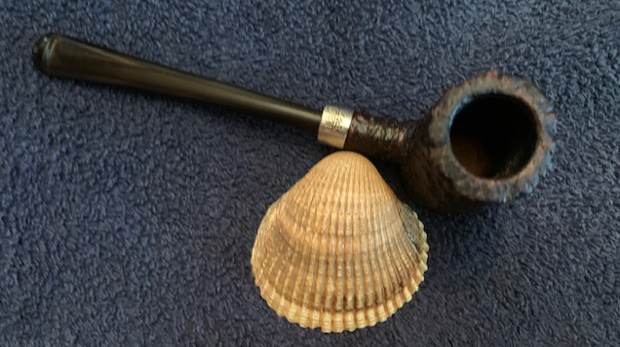
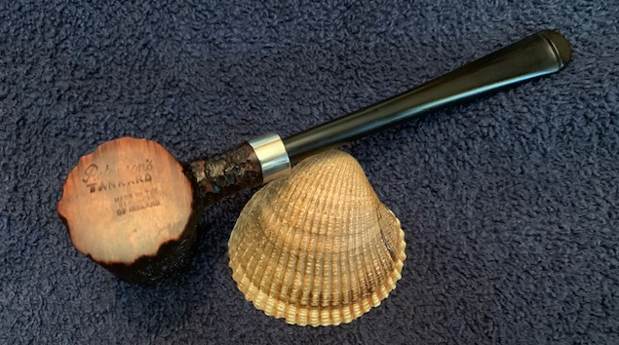
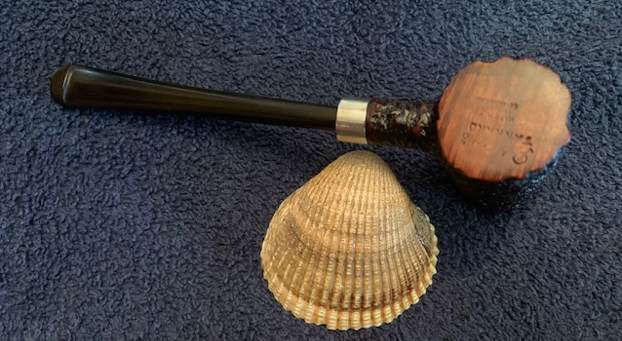
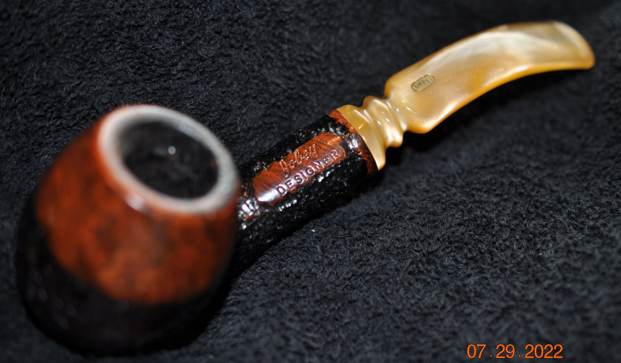
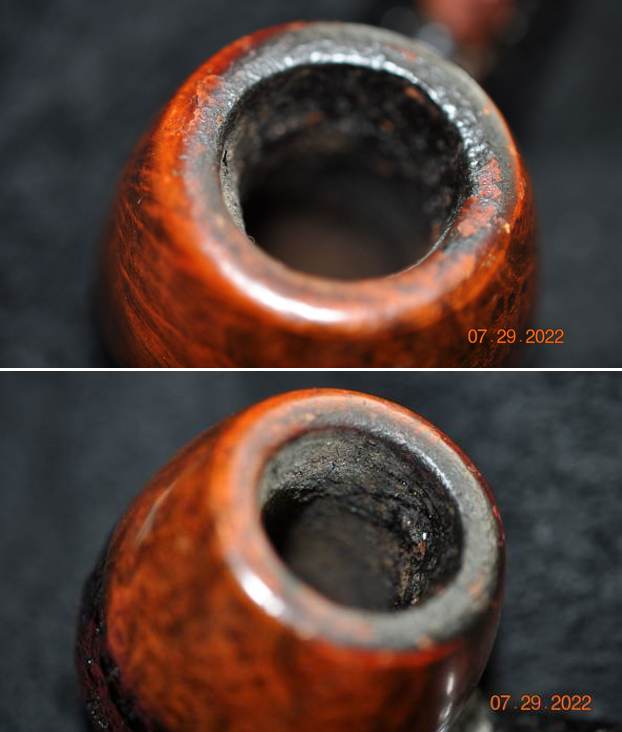
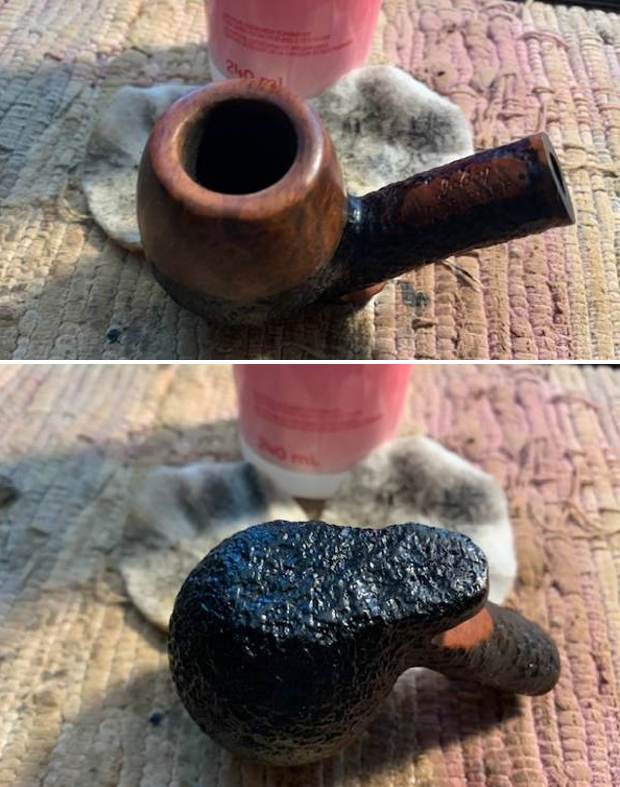
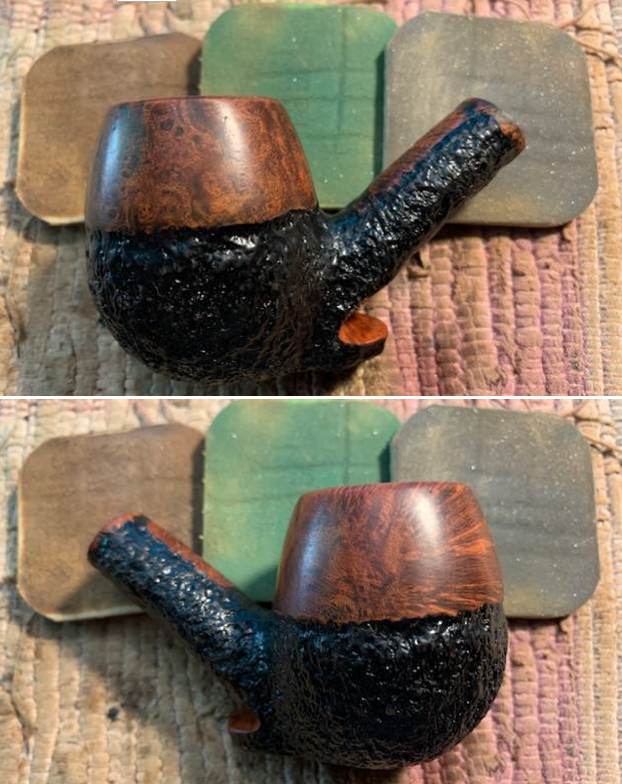
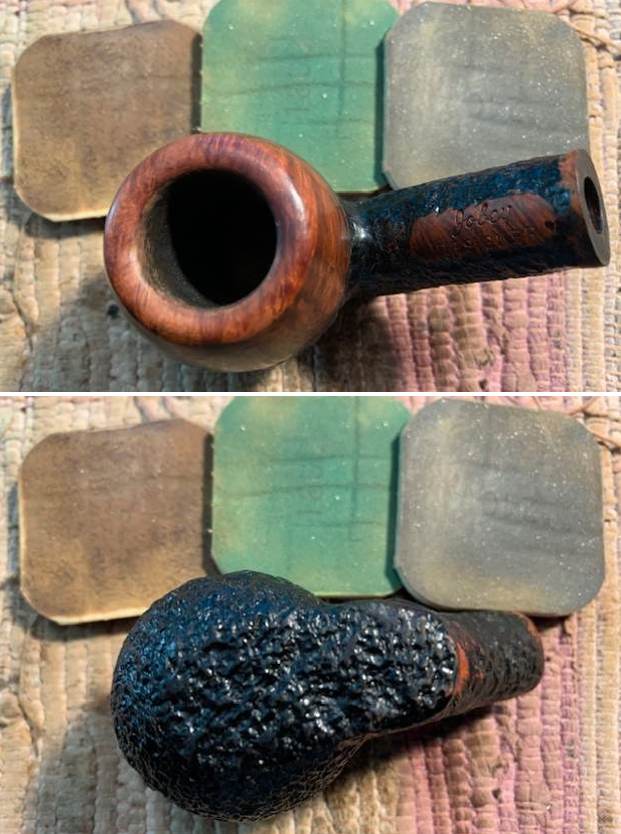
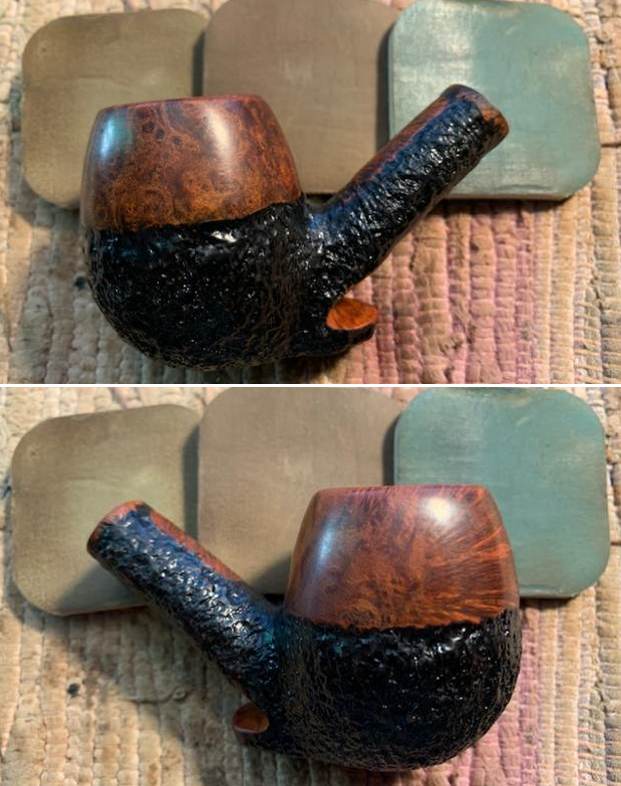
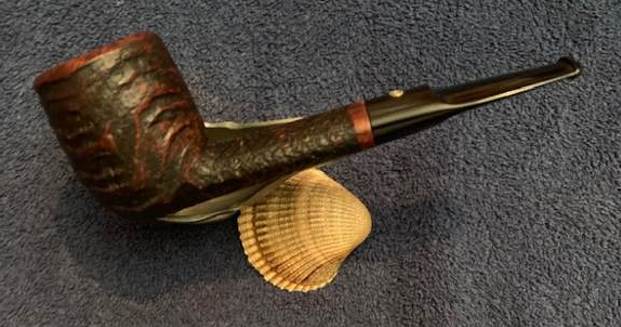
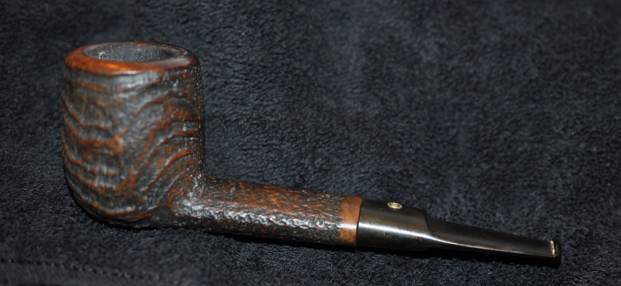
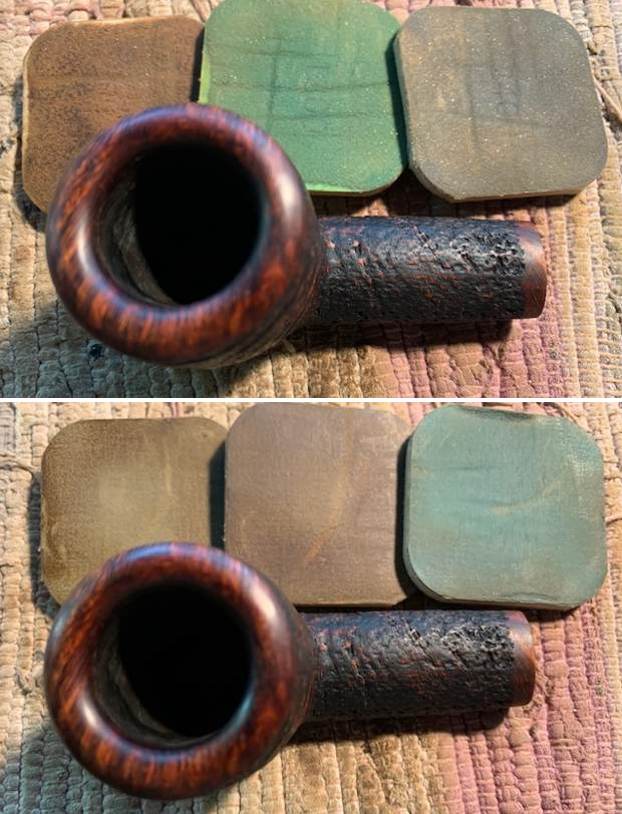
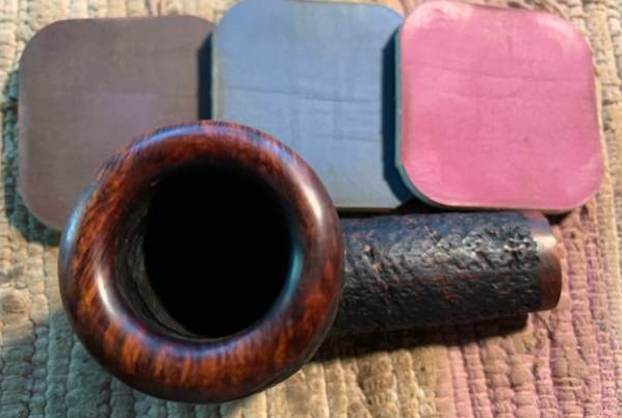
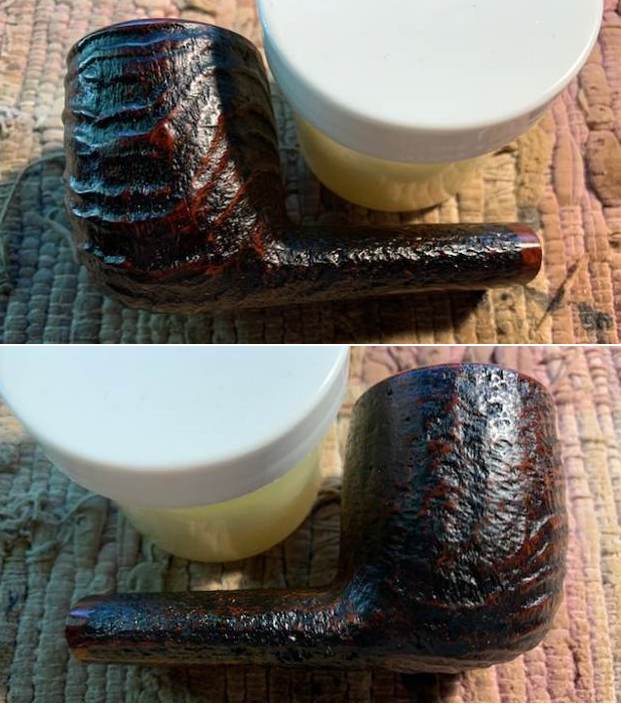
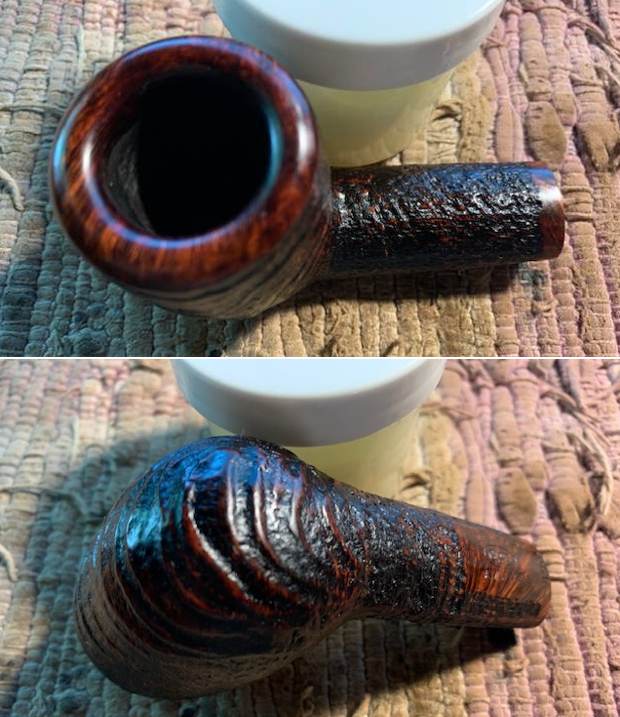
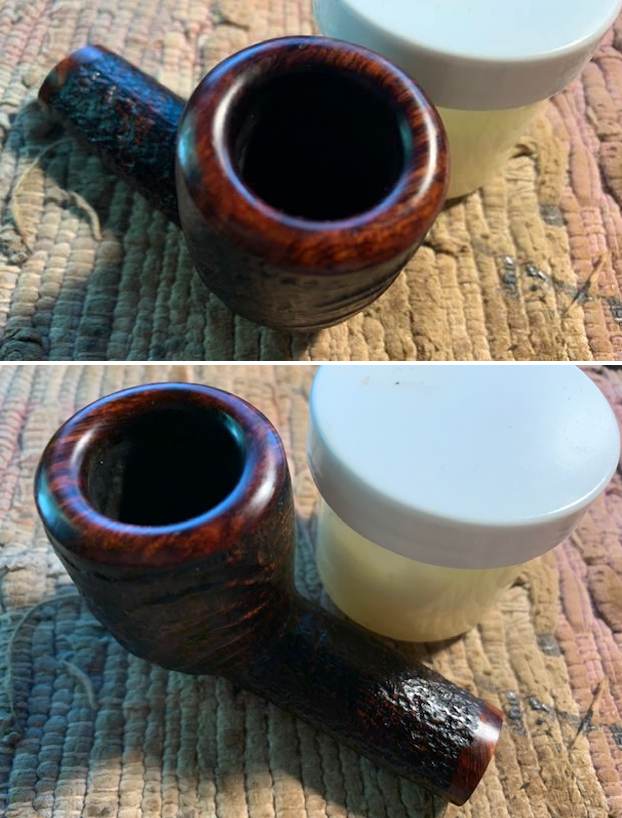
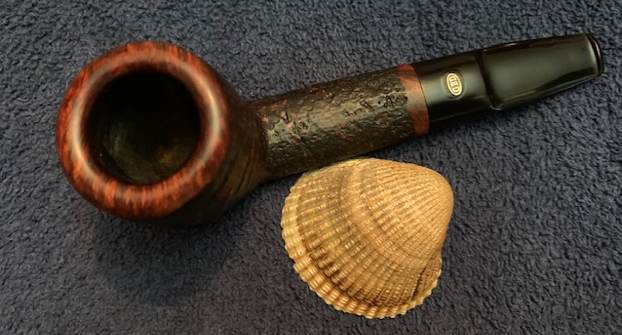
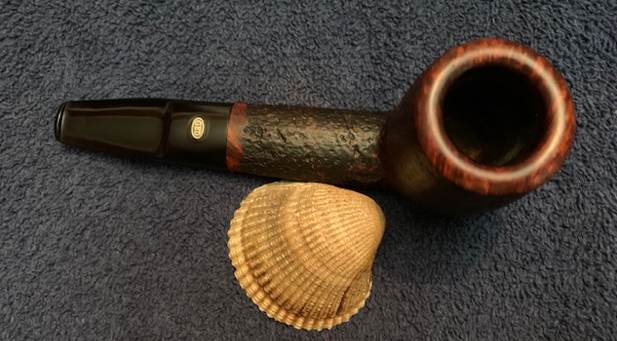
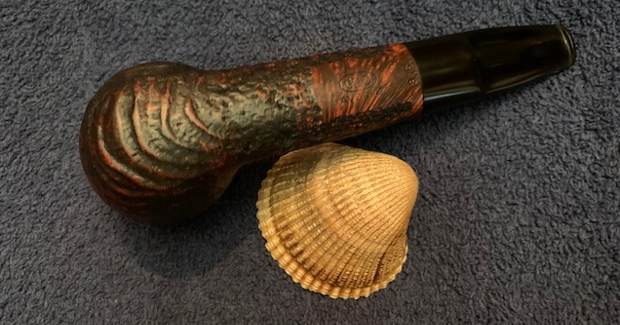
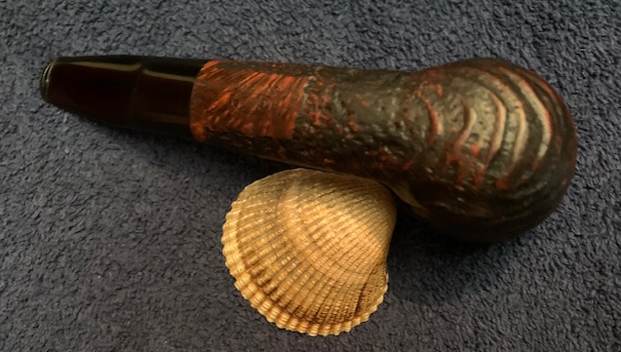
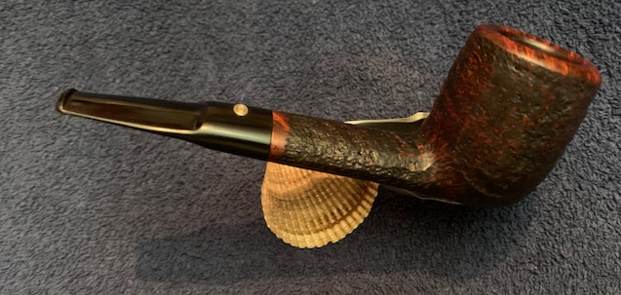
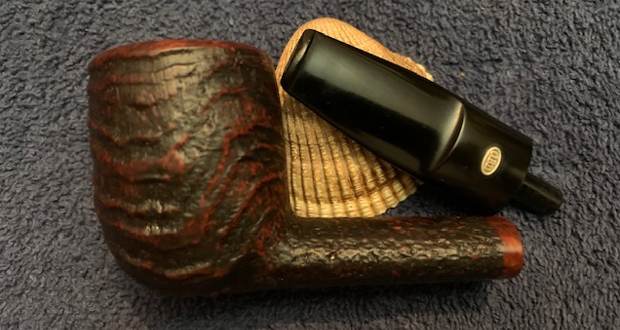
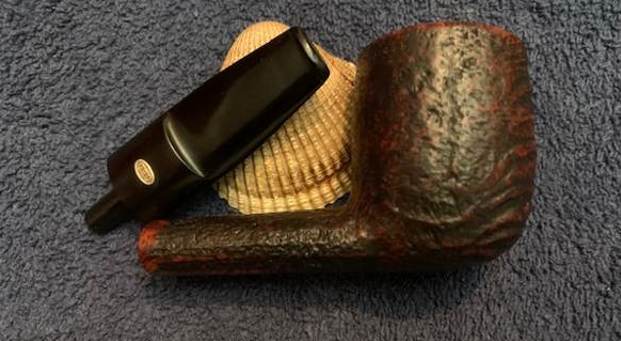
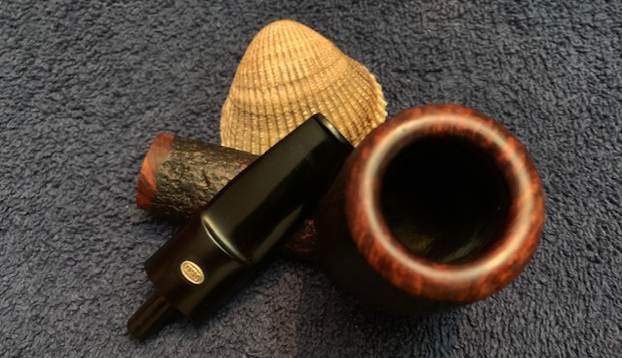
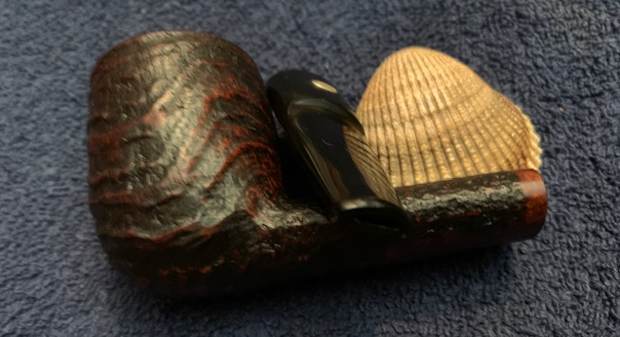
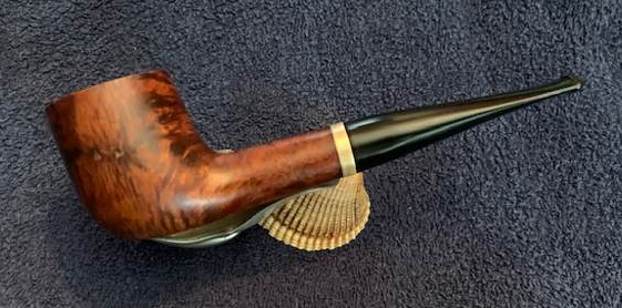
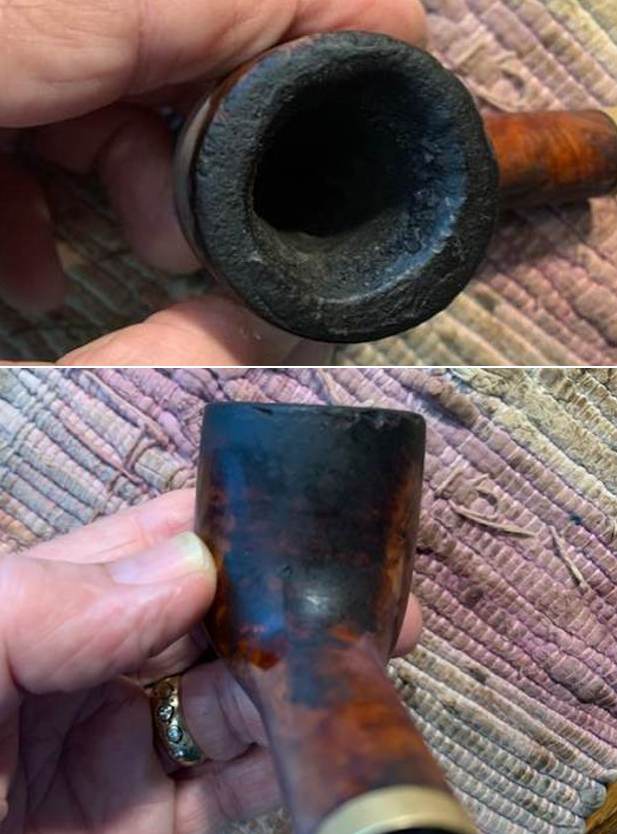
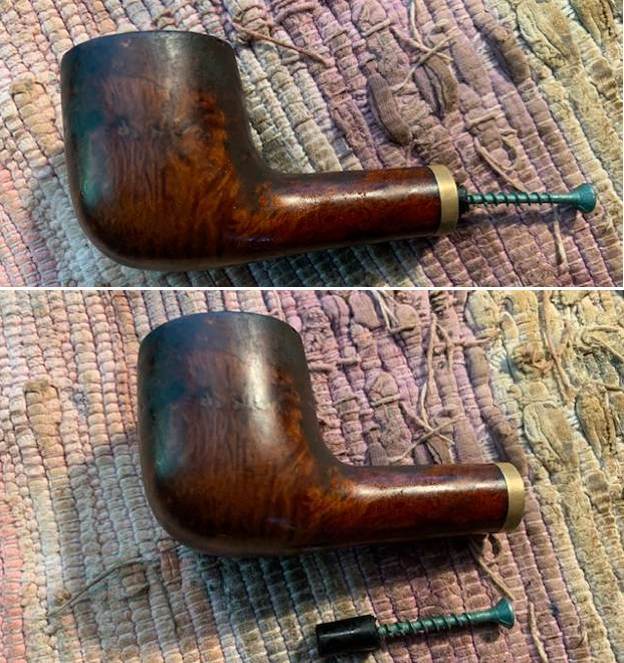
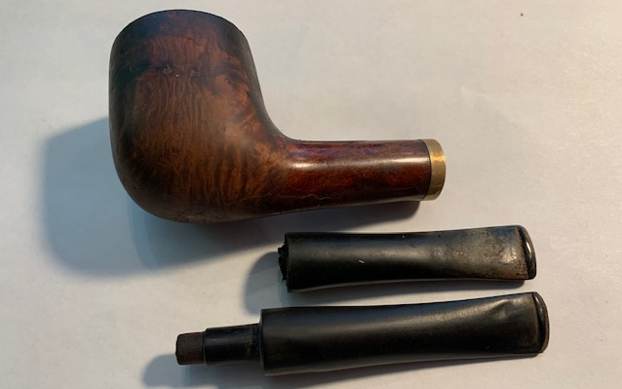
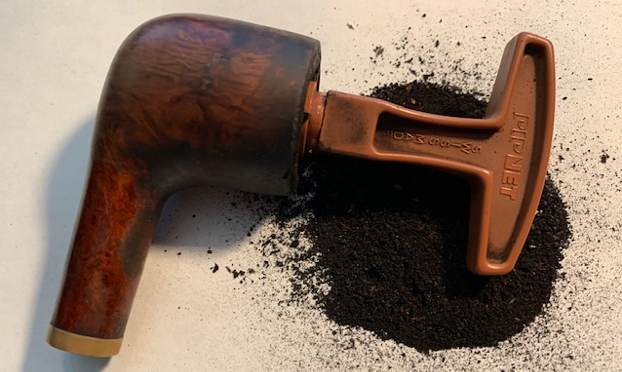
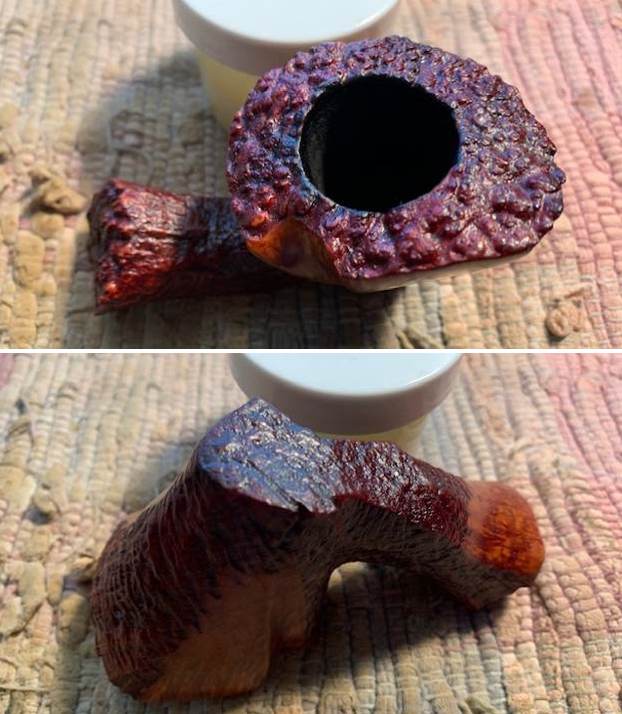
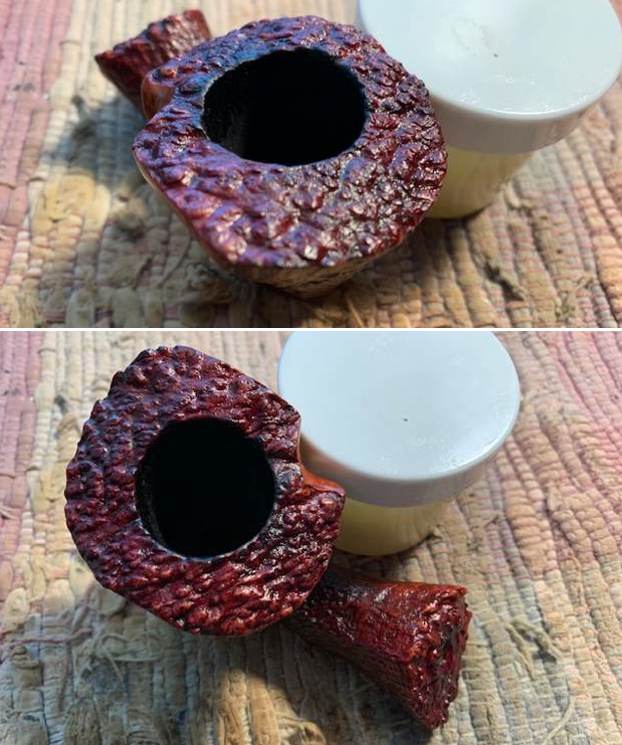
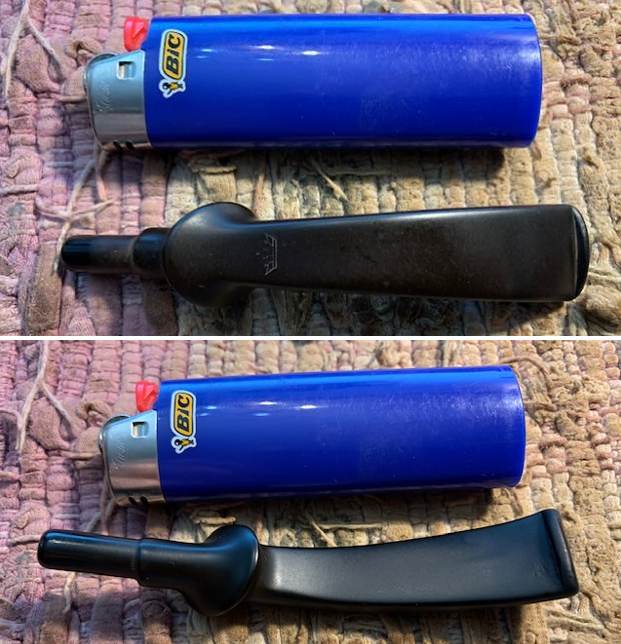
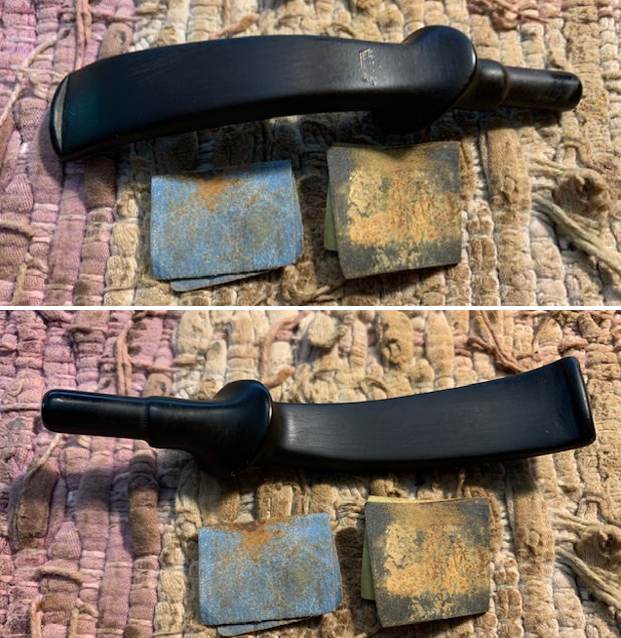
The next pipe on my work table a wire rusticated Bent Billiard shaped pipe. It is stamped on the heel of the bowl and the underside of the shank and reads Savinelli [over] Extra followed by the Savinelli shield S then the shape number 125 [over] Italy. The straight taper vulcanite stem is has a very faint Crown stamp on the left side. The briar has a wire rusticated finish around the bowl and shank. This pipe was purchased as part of a lot from an online auction service on 06/07/17 from Lakewood, Colorado, USA. The finish was dirty dusty on the rim edges and sides of the bowl but the shape was good looking. The rim top had some lava in the rustication on the rim top but the edges looked very good. There was a moderate cake in the bowl and some tobacco debris. The shank and stem airway was very dirty. The stem was lightly oxidized, calcified and had tooth marks and chatter on both sides ahead of the button. There was a faint crown stamp on the left side of the taper stem. Jeff took photos of the pipe before he started his clean up. He took photos of the rim top and bowl to show the cake in the bowl, and the lava on the top and inner edge. The stem photos show the oxidation, calcification and tooth chatter and marks very well. Jeff took photos of the sides of the bowl to highlight the rustication around the bowl sides and heel. He captured the stamping on the heel of the bowl and the underside of the shank in the next photos. They are clean and readable as noted above. The stem also had a faint crown stamped on the left side. I turned to Pipephil (http://www.pipephil.eu/logos/en/logo-savinelli2.html) to get a quick view of the Extra Line. I did a screen capture of the site’s information and have included that below. I turned to Pipedia (https://pipedia.org/wiki/Savinelli) for a quick read. The site is worth reading the history of the Savinelli brand and its philosophy of pipemaking. There was a photo of a brochure that included the Extra (https://pipedia.org/wiki/File:Sav_Extra.jpg) that came from Doug Valitchka.Jeff cleaned up the pipes with his usual thoroughness – reaming the bowl with a PipNet pipe reamer and cleaning up the reaming with a Savinelli Fitsall Pipe Knife. He scrubbed the internals of the shank and the stem with alcohol, cotton swabs and pipe cleaners. He scrubbed the exterior with Murphy’s Oil Soap to clean off the dust and grime on the finish. When he sent it the pipe was ready to restore. I could not believe how good the rim top looked in comparison to what it was when he started. I took photos of the pipe when I unpacked it. The briar was clean and the rustication quite unique. The finish was in great condition overall and shone. I took a close up photo of the bowl and rim top after Jeff had cleaned it up. The look of the rim top and edges is very good. He had been able to remove the cake and the lava very well. The bowl was spotless. The stem is also shown and was very clean. He had scrubbed it with Soft Scrub but there was still some oxidation on both sides. There was tooth chatter and deep marks still remaining.I took a photo of the stamping on the heel and the underside of the shank. It is clear and readable as noted above.I removed the stem from the shank and took a photo of the pipe to show the look of the pipe. It is a real beauty.The bowl was very clean and the briar looked good. I decided to rub the briar down with Before & After Restoration Balm. I worked it into the briar with my fingertips and a horsehair shoe brush. The product cleans, enlivens and preserves the briar. I let it do its magic. It sat for 10 minutes and then I buffed it off with a cotton cloth. The bowl really is looking good at this point. I set the bowl aside and turned my attention to the stem. I scrubbed the stem down with Soft Scrub to remove the deep oxidation on the stem surface. I was able to remove much of what was present. Once I worked it over with micromesh it would be better.  I polished the stem with micromesh sanding pads – dry sanding with 1500-12000 grit pads. I wiped the stem down after each pad with a cloth impregnated with Obsidian Oil. I polished it with Before & After Stem Polish – both Fine and Extra Fine then gave it a final coat of Obsidian Oil and set it aside to dry.  There is something about this finish that make this a beautiful pipe. This wire rusticates Savinelli Extra 125 Pot looks great. The swirling wire etching of the rustication on the pipe is quite nice with the dark finish. I put the stem on the shank and buffed the pipe with Blue Diamond on the wheel (being careful of the stamping so as not to damage that). I gave the bowl multiple coats of Conservator’s Wax and the stem multiple coats of carnauba wax and buffed the pipe with a clean buffing pad to raise the shine. I hand buffed it with a microfiber cloth to deepen the shine. The dimensions of this pipe are – Length: 5 ½ inches, Height: 1 ¾ inches, Outside diameter of the bowl: 1 ½ inches, Chamber diameter: 7/8 of an inch. The weight of the pipe is 1.41 ounces/40 grams. It is a great looking pipe and one that will be going on the rebornpipes store in the Italian Pipe Makers Section. If you want to add it to your collection let me know via email to slaug@uniserve.com or by message. Thanks for walking through the restoration with me.

Bringing Benaderet’s Coral Billiard Back to Life


Blog by Steve Laug

The next pipe on the table is a sandblasted large Billiard. This pipe was purchased from a fellow in Scottsdale, Arizona, USA on 09/17/2018. The pipe is a real mess with dust and grime in all of the valleys of the sandblast and the rim top is covered in lava. The beveled inner edge of the rim is very dirty and darkened and there is a thick cake in the bowl. The cake was so thick in parts of the bowl that it was hard to guess the condition of the rim edge. The finish appears to be a reddish brown/cordovan with dark highlights underneath. On the underside of the shank it is stamped Benaderet’s Coral followed by London England [over] the shape number 2515. The stem was oxidized, calcified and there were tooth marks and chatter on both sides just ahead of the button. There was not any stamping on the stem so it did not have any identifying marks. Jeff took photos of the pipe before he started working on it. I include those below. Jeff took photos of the bowl and rim top to show the cake in the bowl and the lava build up on the rim top and dust and grime in the sandblast. It was thick and hard and heavier toward the front of the bowl. The lava is deep in the rustication and there is a buildup on the inner edge of the bowl. Hopefully it had protected the rim and edges from damage. The photos of the top and underside of the stem show the oxidation, calcification and deep tooth marks on both sides of the stem surface and button. Jeff took a photo of the side and heel of the bowl to show the condition of the finish – the grime and grit all over the sides and bottom of the bowl. The grooves in the sandblast are full of grime but it is interesting. This is a very tactile finish and one that I enjoy.     Jeff took two photos of the stamping on the underside of the shank to capture all of it. It is faint but readable other than the edge of the shank where the London Made and 2515 number are stamped. The second photo also shows a flaw in the briar between the N and D of England.  From the shape number on the shank I was pretty certain I was dealing with a GBD pipe. The stamping Benaderet’s Coral was a dead end but the shape number hit the mark. I turned to Pipedia’s shape number listing and found it (https://pipedia.org/wiki/GBD_Shapes/Numbers). I have included a screen capture of the listing below.Benaderet’s was a pipe shop in San Francisco that closed in the 70’s. Their house pipes were made by Comoys or Sasieni although smokingpipes had one made by GBD once. Good find.

The other link was to a blog (http://theothersideofthelizard.blogspot.com/2018/11/benaderets-pipe-shop.html). That blog gave the original address of the shop in San Francisco and the names of the owners of the shop.

Benaderet’s Cigarette, Pipe and Tobacco Shop215 Sutter Street [Formerly at 566 California Street],San Francisco.

Owners: Robert and Edith Rashaw (Robert Rashaw: born 1916. Edith Edna Rashaw: born 1916.) Store still extant in the late seventies. No longer there by the eighties. At one point, they had Egyptian cigarettes made for them. Their house pipes were usually by Comoys. There are also Benaderet’s Sasienis. More research required.

Quote: “Benaderet’s Inc., was California’s oldest pipe and tobacco store when it went out of business in 1980. Sam Benaderet was a tobacconist from New York City who came to San Francisco in 1915 to work at the Panama Pacific International Exposition. An immigrant to the United States from Turkey, Mr. Benaderet decided that he liked the West Coast’s Mediterranean like climate. After the Exposition closed, he stayed to open his own tobacco business. This new firm produced custom private-label cigarettes for men’s clubs. A lavish retail store was opened in the late 1920’s that quickly became a mecca for tobacco connoisseurs.”

So what I could find out about the pipe is that it is a pipe made by GBD (Shape number confirms this). It turns out that the pipe was a GBD pipe made for Benaderet’s Cigarette, Pipe and Tobacco Shop in San Francisco, California. Since the shop went out of business in 1980 I now knew that the pipe was made before that time. Now it was time to work on the pipe.

This pipe was a real mess like many of the pipes we work on. I was curious to see what it would look like when I unpacked it. I was surprised at how good it looked. Jeff reamed it with a PipNet pipe reamer and cleaned up the reaming with a Savinelli Fitsall Pipe Knife. He scrubbed out the internals with alcohol, pipe cleaners and cotton swabs until the pipe was clean. He scrubbed the exterior of the bowl with Murphy’s Oil Soap and a tooth brush to remove the grime and grit on the briar and the lava on the rim top. The finish on the bowl looked really good when I got it. The rim top looked much better and the inner and outer edges were looking good. He had cleaned the internals and scrubbed the exterior of the stem and soaked them in Before & After Deoxidizer bath to remove the oxidation. The stem looked very good other than the tooth marks and chatter in the surface. When the pipe arrived here in Vancouver for the second stop of its restoration tour it looked very good. I took photos of the pipe before I started my work on it. I took photos of the condition of the rim top and stem before I started working. The rim top looks very good. The crevices and valleys of the sandblast and the beveled inner edge of the rim are clean and look great. The bowl is spotless. The stem is lightly oxidized and has some tooth marks and tooth chatter. I took a photo of the stamping on the underside of the heel and the shank. It is clear and readable as noted above.I removed the stem and took a photo to give a sense of the pipe. Note the deep sandblast as it is quite a beauty.I worked on the remaining darkening on the rim top with a brass bristle wire brush. I took time to carefully clean out the dark places in the depths of the sandblast.I worked some Before & After Restoration Balm into the finish of the bowl and the rim top and shank with my fingertips and a horsehair shoe brush to clean, enliven and protect it. I find that the balm really makes the briar come alive again. The contrasts in the layers of stain and the separate finishes really made the grain stand out. I let the balm sit for a little while and then buffed with a cotton cloth to raise the shine. The bowl really looks good at this point. I set the bowl aside and turned my attention to the stem. I tried to lift the tooth marks with a flame of lighter but they did not lift. I filled in the deeper ones on each side with clear super glue. I sanded the stem to remove the oxidation that was on the surface and to smooth out the repaired areas. I used a folded piece of 220 grit sandpaper and a piece of 400 grit wet dry sandpaper. At this point the stem is looking better and the tooth marks are gone.  I polished the stem with micromesh sanding pads – wet sanding it with 1500-12000 grit pads. I polished it further with Before & After Pipe Stem Polish – both fine and extra fine.   Once again I am at the part of the restoration that I always look forward to – the moment when all the pieces are put back together. I put the Benaderet’s Coral 2515 Billiard back together and lightly buffed the bowl with Blue Diamond. I buffed the stem with a heavier touch with Blue Diamond on the buffing wheel. I gave the bowl multiple coats of Conservator’s Wax and the stem multiple coats of carnauba wax. I buffed the pipe with a clean buffing pad to raise the shine. I hand buffed it with a microfiber cloth to deepen the shine. It is fun to see what the polished bowl looks like with the combination of rustication and smooth finishes. The black vulcanite stem stands out as a shiny black contrast to the colours of the bowl. The reddish brown stain on the Benaderet’s Coral Pot looks absolutely great. It is nice to know that it has a west coast tie to the San Francisco area and a long gone pipe shop. It must have been a fine smoking pipe judging from the condition it was when we received it. Have a look at it in the photos below. The dimensions are Length: 6 inches, Height: 1 ¾ inches, Outside diameter of the bowl: 1 ½ inches, Chamber diameter: 7/8 of an inch. This is one that will go on the British Pipemakers section of the rebornpipes online store shortly. Thanks to each of you who are reading this blog. Remember we are not pipe owners; we are pipemen and women who hold our pipes in trust until they pass on into the trust of the next generation.

Restoring a 1950s Era Comoy’s Patina 495 Pot


Blog by Steve Laug

This nice looking Comoy’s Pot shaped pipe has some nice grain around the bowl. We purchased it on 04/20/18 from an estate pipe collection in Sterling Heights, Michigan, USA. It was a filthy pipe with a lot of grime ground into the surface of the briar. The stamping on the shank was clear and readable. On the left side it reads Comoy’s [over] Patina. On the right side it is stamped 495 next to the joint of the shank and bowl. Near the stem joint it is stamped with the characteristic Made in London in a circle over England. The C on the saddle side of the stem is a three part C so that helps date it as an older pipe. There was a thick cake in the bowl that overflows as thick lava on the rim top. The bevel on the inner edge of the rim looked to be in good condition but had some thick lava on it. The outer edge actually appeared to be in good condition. The stem was oxidized and has some deep tooth marks and chatter on both sides ahead of the button. There was a lot of promise in the pipe but it was going to take some work. Jeff took the following photos before he started his clean up work on the pipe. He captured the thick cake in the bowl and the heavy lava cake on the rim top. It really was a mess. I thought the rim top would be okay under the lava. There inner bevel on the rim top looked pretty good under the grime. The photos of the stem show the oxidation and the tooth marks and chatter on the top and underside ahead of the button. He took a photo of the briar from the heel and right side of the bowl. The grain is quite nice.He took photos of the stamping on the shank sides. It is clear and readable as noted above. You can also see the 3 part C in the photo of the stem side.   I decided to do a bit of research on the Comoy’s Patina line before I worked on it. I could not find any listing for the Comoy’s Patina line on either Pipephil’s site or Pipedia. I decided however to move forward and try to pin down the shape number and the date of the pipe. I found a shape list on Pipedia (https://pipedia.org/wiki/Comoy%27s_Shape_Number_Chart). I did a screen capture of the shape 495-496 and included it below.I then turned to another shape number chart that had pictures of the various shapes that made up the Comoy’s lines (https://pipedia.org/wiki/Comoy%27s_Shape_Number_Chart/en). I have included a chart below and drawn a red box around the shape of the pipe I am working on.From there I turned to look for information on the stamping on the pipe that would help nail down a date for this pipe. I turned to Pipedia’s article “A Guide Toward Dating the Pipes –  https://pipedia.org/wiki/A_History_Of_Comoy%27s_and_A_Guide_Toward_Dating_the_Pipes. I quote from the article below. I have highlighted the pertinent sections in red for ease of reference.

Comoy’s Name

1900 to about 1919. Normally, the Comoy’s name will be found in a joined flowing script canted forward, with a long tail running backwards from under the “S” to below the “C.” There are, however, 2 pipes in the 1909 catalogue where Comoy’s does not have a tail at all. I also have examples between 1913 to 1919 where the Comoy’s name is still in the same joined flowing script, canted forward but with a short tail running forwards from the bottom of the “Y” to under the “S.”

From about 1917 to the end of the 1930s, the slightly fancy “Comoy’s” can be found stamped in a curve, in upper case script with serifs, apostrophe before the “S,” and the “C” larger than the other letters. The arched Comoy’s with serifs and apostrophe may have been continued for a short time after the war. I have an “Old Bruyere” stamped this way that is just post-war. Pipes can also be found with the name stamped across the top of the stem as apposed to along the side.

During the 1940s, not many pipes were made, but just after WW II, in 1945 or slightly later, the “Comoy’s” stamp was changed from the curve to a straight line.

From the 1950s, the Comoy’s stamp can be found in three variants: (1) A simple block-letter style without serifs but with the C larger than the other letters and the apostrophe before the “s.” (2) A return to the slightly more fancy block letters with serifs and the apostrophe. My 1959/60 gold-banded example falls into this category. (3) A simple block-letter style without serifs and without the apostrophe and with the “C” the same size as the rest of the letters. I don’t think that this stamp was used for very long.

“Made In” Stamp

London Made. Comoy’s were the first London pipe maker to use this phrase. It is the earliest stamp to be used and can be found from 1902 or perhaps earlier and on into the 1930s . At this time, it can appear as “London” over “Made” or in a straight line.

Made in London. I have only seen this stamp on two Old Bruyere pipes dated 1921, and it appears in a straight line under the arched “Comoy’s.”

Made in England. This is stamped in a circle with “Made” at the top, “in” in the middle, and “England” forming the bottom of the circle. I call this the football shape or F/B for short. I have seen this stamp on a Cecil dated as early as 1910 and on an Old Bruyere of 1921 and then only on pipes from the 1930s.

Made in London England. This is again stamped in a circle with “Made” at the top, “In” in the middle, and “London” at the bottom, with “England in a straight line beneath the F/B. I believe this stamp was first used in the export drive in the early 1950s, and I have not seen any pre-WW II Comoy’s stamped in this way.

Inlaid “C”

“C” was first inlaid in the side of the mouthpiece around 1919. This was a complex inlay needing three drillings. First, a round white inlay was inserted, then the centre of the white was drilled out, and a smaller round black inlay was inserted. Finally, another drilling was made to remove the open part of the “C,” and an even smaller black inlay was inserted. This inlaid “C,” known as the “three-piece C,” was continued until the Cadogan era in the 1980s. However, the “C” in the 1920s and early 30s is much thinner and more delicate than the one post-war. Cadogan first changed the “C” to a single drilling with an inlay that had the “C” in the centre, and more recently it became a laser imprint. I have a cased pair of early 1920’ “Par Excellence” where the “C” is on top of the mouthpiece. Finish

Now it was time to work on the pipe itself. Jeff reamed the bowl with a PipNet pipe reamer and followed up with a Savinelli Fitsall pipe knife to remove the cake. He scrubbed out the mortise and the airway in the shank and the stem with alcohol, cotton swabs and pipe cleaners. He scrubbed the exterior of the bowl, rim, shank and stem with a tooth brush and undiluted Murphy’s Oil Soap to remove the lava, oils and tars on the rim and the grime on the finish of the bowl. He rinsed it under running water. He dried it off with a soft cloth. He was able to remove lava build up on the rim top and you could see the great condition of the bowl top and edges of the rim. There was still some darkening to the rim top toward the back of the bowl. He soaked the stem in Before & After Deoxidizer to remove the oxidation. I took photos of the pipe before I started my work on it.  I took a close up photo of the rim top to show the condition of the bowl and rim after Jeff had cleaned up the grime and lava. The beveled rim edge and top looked very good. The stem photos show light oxidation and the tooth marks and chatter on the stem and the button surface. I took photos of the stamping on the shank sides and the C logo on the stem. The stamping was clear and read as noted above.   I removed the stem from the shank and took a photo. You can see the small fill toward the top of the left side.The bowl was in good condition so I did not need to do any extra work on the rim or edges. It looked great so I polished the bowl and rim top with micromesh sanding pads – dry sanding it with 1500-12000 grit pads. I wiped the bowl down with a damp cloth after each pad to remove the sanding debris. After the final sanding pad I hand buffed it with a cotton cloth to raise a shine. I worked some Before & After Restoration Balm into finish of the briar with my fingertips to clean, enliven and protect it. I let the balm sit for a little while and then buffed with a cotton cloth to raise the shine. The Restoration Balm really makes the grain stands out beautifully.   I set the bowl aside and turned my attention to the stem. I “painted” the tooth marks with the flame of a Bic lighter. I was able to lift them a lot. The small spots that remained I filled in with clear CA glue.   I used a folded piece of 220 grit sandpaper to blend the repairs into the surface of the stem. I started polishing the stem with a folded piece of 400 grit sandpaper. I wiped the stem down with Obsidian Oil.    I polished the stem with micromesh sanding pads – dry sanding it with 1500-12000 grit pads. I wiped the stem down with Obsidian Oil after each pad. I polished it with Before & After Pipe Polish – both Fine and Extra Fine and gave it a final coat and set it aside to dry.     I put the stem back on the Comoy’s Patina  Made in London England 495 Pot and buffed the pipe with Blue Diamond on the buffing wheel. I polished the briar and the vulcanite of the stem until there was a rich shine. This classic Comoy’s Pot shape and finish really highlights some amazing grain on a proportionally well carved pipe. Once I buffed the pipe the briar came alive and the mixture of grain – straight, flame and birdseye – popped with polishing. The repaired black vulcanite stem had a rich glow. This Comoy’s Patina 495 Pot fits well in the hand and sits right in the mouth. Have a look at it with the photos below. The dimensions are Length: 5 ½ inches, Height: 1 ¾ inches, Outside diameter of the bowl: 1 ½ inch, Chamber diameter: 1 inch. The weight of the pipe is 1.48 ounces/41 grams. This beauty will be going on the rebornpipes online store in the English Pipemakers Section. If you are interested let me know. Thanks for walking through the restoration with me as it was a pleasure to work on.

A GBD Mystery Pipe – Unreadable Shape Number and Line Information


Blog by Steve Laug

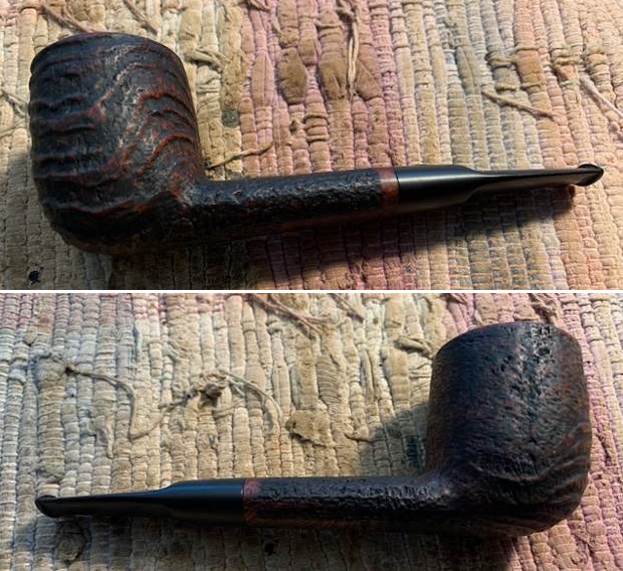
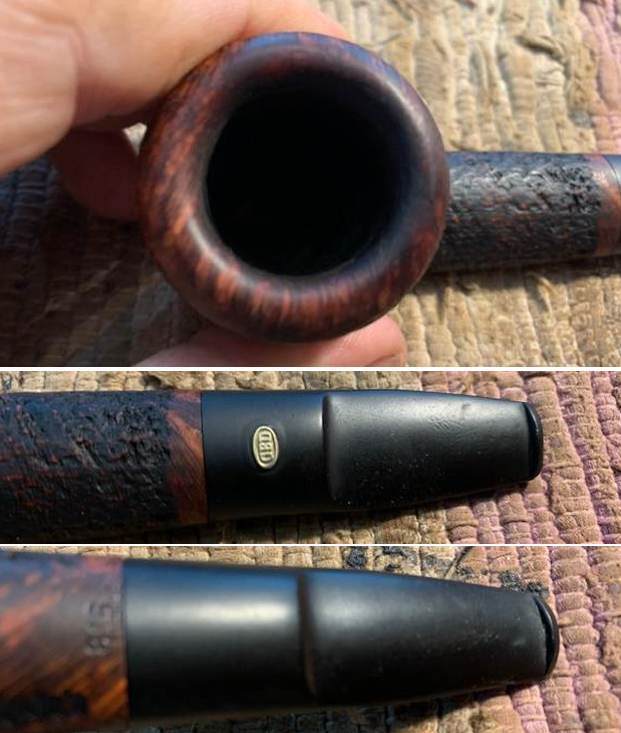
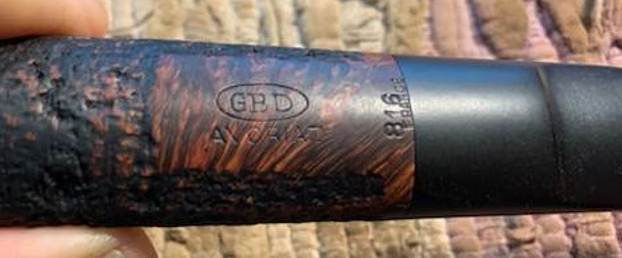
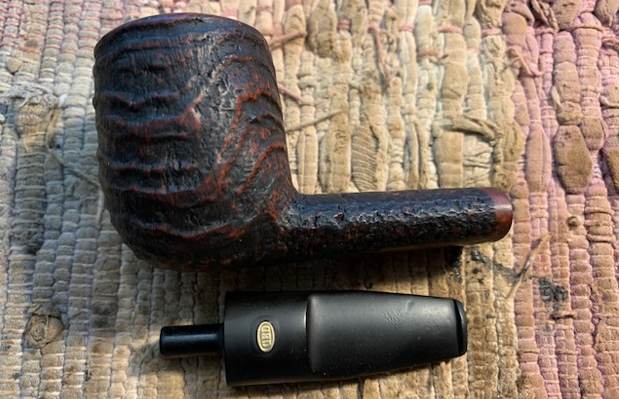
The next pipe on the table is a nice looking oval shank Billiard with an oval saddle stem. The shape number and line information is worn off with buffing. The stem has the GBD brass rondelle in the top of the saddle. There is a very faint GBD stamp in a logo on the top of the shank and some very faint stamping on the top and underside. This pipe was purchased from a antique seller on 04/07/18 in Pocatello, Idaho, USA. The finish was very dirty but the briar shows some beautiful grain on the bowl and shank sides. The bowl had a thick cake and heavy lava overflow onto the rim top. It looked like the edges and top were damaged but we would know more once it was cleaned. The stem did not show oxidation but had bite marks on the top and underside of the stem surface of the button. Jeff took photos of the pipe to show what it looked like before he cleaned it up. He captured the thick cake in the bowl and the heavy lava cake on the rim top. It really was a mess. I really wondered what the rim would look like under that. There appeared to be an inner bevel on the rim top. The photos of the stem show the tooth marks on the top and underside of the button surface. He captured the grain around the bowl sides and heel in the next photos. You can see the grime in the finish and a flaw in the briar on the lower front of the bowl. The stamping on the shank is very faint. It appears that there is a GBD in an oval and the faint numbers on the shank that are not clear. The brass oval on the stem top is in good condition. I did some digging on Pipephil and found that a French made GBD that was shown on the site was the same shape as the one I am working on (http://pipephil.eu/logos/en/logo-gbd.html). I have included a screen capture of the section below. The stamping on the one in hand is unreadable so I cannot be certain but it certainly looks like the same pipe. I turned to Pipedia to read about the French made GBD (https://pipedia.org/wiki/GBD). I have included the following information on the French made GBD. It gives me a possible date for the making of this pipe if it is indeed a French made pipe. That date is somewhere between early 1950s and the time the pipes moved to be made in England (1981). I quote:

The Paris factory moved to Saint-Claude in 1952. Since 1981 the majority of GBD pipes come from the English factory. At about that same time GBD merged with Comoys, since then all production for both GBD and Comoy comes from a single factory.

I then turned to a section on Pipedia (https://pipedia.org/wiki/GBD_Shapes/Numbers) where the shape numbers are listed. I went through the list and looked for an oval shank Billiard. I found the following listing that fits the pipe.

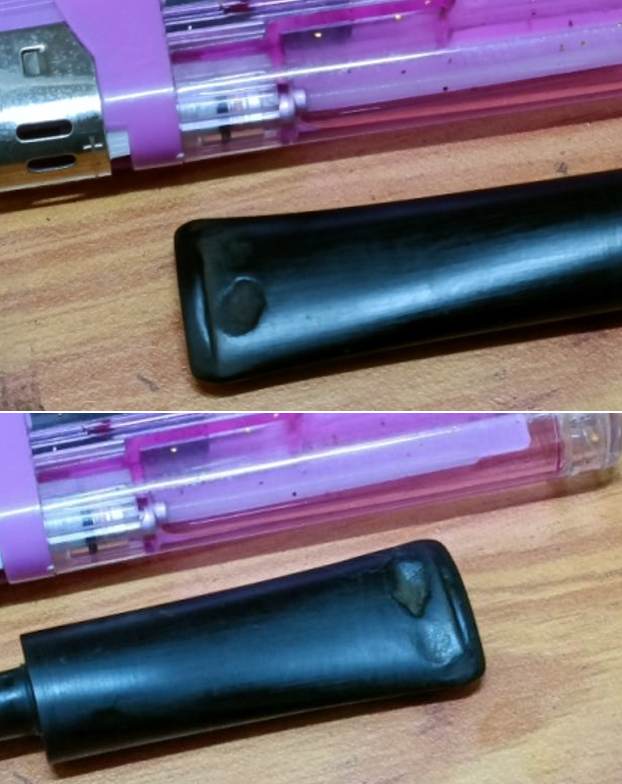
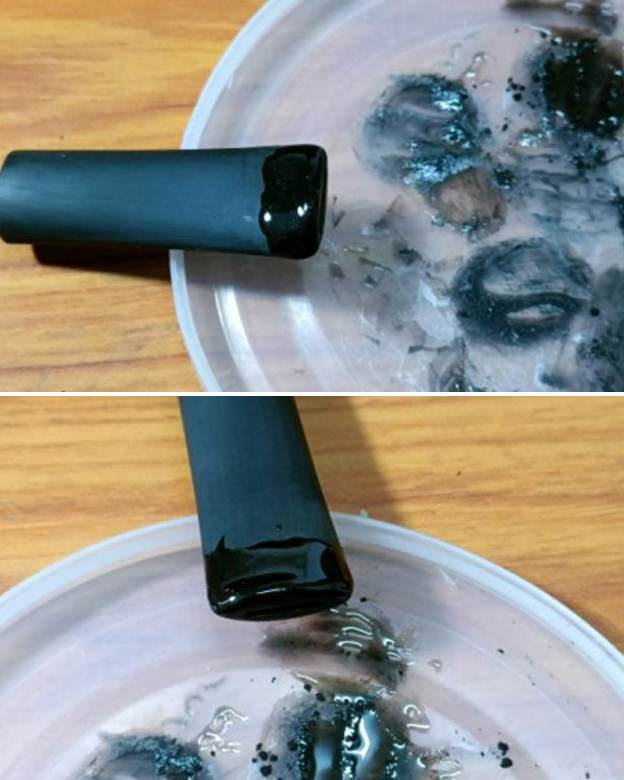
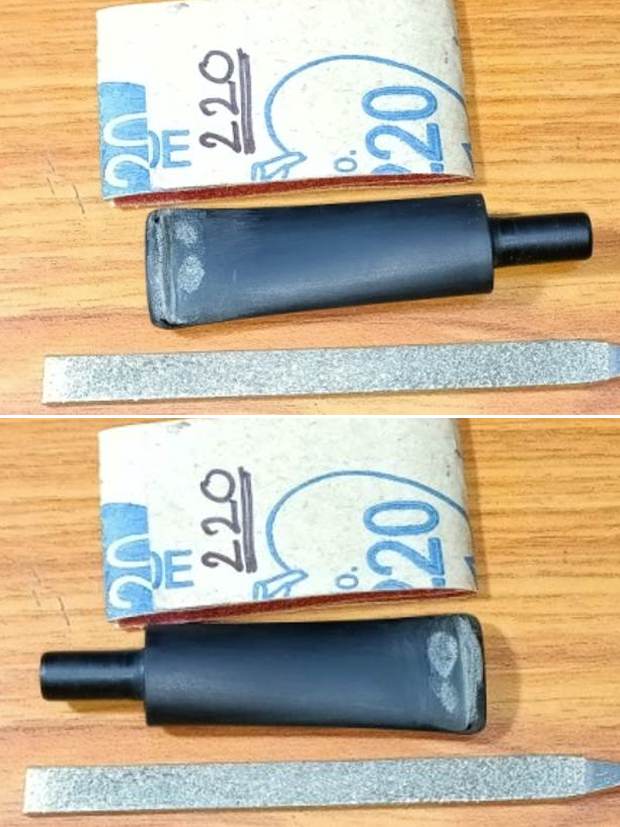
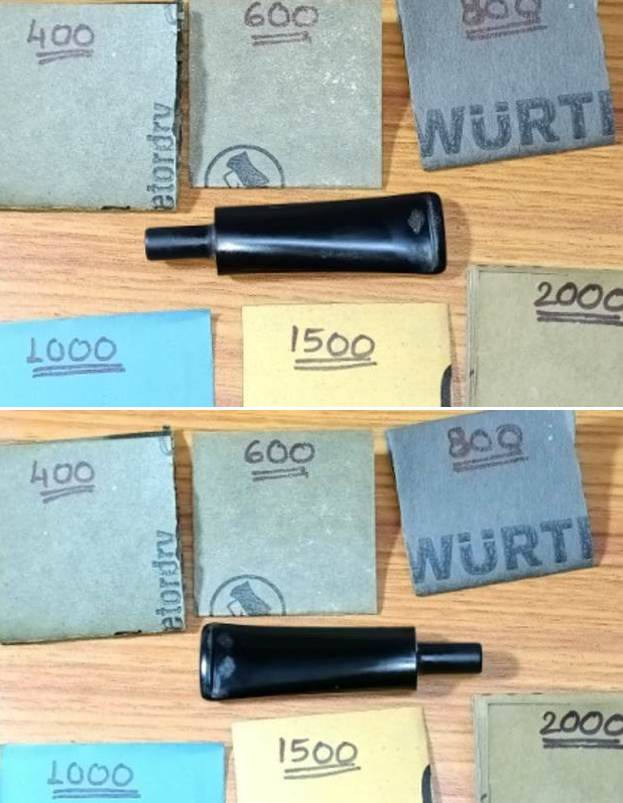
Now it was time to work on the pipe itself. Jeff reamed the bowl with a PipNet pipe reamer and followed up with a Savinelli Fitsall pipe knife to remove the cake. He scrubbed out the mortise and the airway in the shank and the stem with alcohol, cotton swabs and pipe cleaners. He scrubbed the exterior of the bowl, rim, shank and stem with a tooth brush and undiluted Murphy’s Oil Soap to remove the lava, oils and tars on the rim and the grime on the finish of the bowl. He rinsed it under running water. He dried it off with a soft cloth. He was able to remove lava build up on the rim top and you could see the great condition of the bowl top and edges of the rim. There was still some darkening to the rim top toward the back of the bowl. He soaked the stem in Before & After Deoxidizer to remove the oxidation. I took photos of the pipe before I started my work on it.  I took a close up photo of the rim top to show the condition of the bowl and rim after Jeff had cleaned up the grime and lava. The beveled rim top had some darkening on the whole rim top though darker on the backside of the rim and there were cuts, dings and nicks in the surface. The stem photos show the tooth marks and chatter on the stem and the button surface. It appears that the brass GBD rondelle is slightly crooked.I took photos of the faint stamping on the top and underside of the shank. The GBD oval is barely visible on the top of the shank. There are also remnants of the shape number on the underside.  I decided to address the damage on the rim top and edges. To begin I sanded the top of the rim on a topping board to smooth out all the cuts and ridges on the rim top.    I used a folded piece of 220 grit sandpaper to start the bevel on the inner edge of the rim. The goal would be to restore the original one. I then used a wooden ball wrapped with 220 grit sandpaper to work over the rim top and give the inner edge a bevel.  I filled in the flaw in the briar on the front of the bowl heel with clear CA glue. I set it aside to cure. I carefully filled it so I could polish it off with 1500 grit micromesh once it cured.I polished the bowl and rim top with micromesh sanding pads – dry sanding it with 1500-12000 grit pads. I wiped the bowl down with a damp cloth after each pad to remove the sanding debris. After the final sanding pad I hand buffed it with a cotton cloth to raise a shine.   I worked some Before & After Restoration Balm into finish of the briar with my fingertips to clean, enliven and protect it. I let the balm sit for a little while and then buffed with a cotton cloth to raise the shine. The Restoration Balm really makes the grain stands out beautifully.   I set the bowl aside and turned my attention to the stem. I used some black CA glue to rebuild the button top and bottom. I set it aside to let it cure.  Once it cured I used a small file to redefine the button edge and flatten out the surface of the stem. Once I had removed the largest part of the fills I used clear CA glue to fill in the air bubbles and work on the repaired edge shape.  I then used the file to flatten and reshape those repairs.  I used a folded piece of 220 grit sandpaper to blend the repairs into the surface of the stem. I started polishing the stem with a folded piece of 400 grit sandpaper. I wiped the stem down with Obsidian Oil.    I polished the stem with micromesh sanding pads – dry sanding it with 1500-12000 grit pads. I wiped the stem down with Obsidian Oil after each pad. I polished it with Before & After Pipe Polish – both Fine and Extra Fine and gave it a final coat and set it aside to dry.     I put the stem back on the GBD Mystery Oval Shank Saddle Billiard and buffed the pipe with Blue Diamond on the buffing wheel. I polished the briar and the vulcanite of the stem until there was a rich shine. This classic oval shank Billiard shape and finish really highlights some amazing grain on a proportionally well carved pipe. Once I buffed the pipe the briar came alive and the mixture of grain – straight, flame and birdseye – popped with polishing. The repaired black vulcanite stem had a rich glow. This GBD Oval Shank Billiard fits well in the hand and sits right in the mouth. Have a look at it with the photos below. The dimensions are Length: 6 inches, Height: 1 ¾ inches, Outside diameter of the bowl: 1 1/8 inch, Chamber diameter: ¾ of an inch. The weight of the pipe is 1.23 ounces/35 grams. This beauty will be going on the rebornpipes online store in the French Pipemakers Section. If you are interested let me know. Thanks for walking through the restoration with me as it was a pleasure to work on.

Comoy’s Made Lord Clive 827 Bulldog (made for Wally Frank Ltd.)


Blog by Steve Laug

The next pipe is one that Jeff picked up from an antique store on 10/14/17 in Pocatello, Idaho, USA. The store is no longer there so it is a memory that we both share having bought pipes from them over the years. This one is a very English looking straight Bulldog with a taper stem. It is stamped on the top left of the diamond shank and reads Lord Clive in script [over] MADE IN ENGLAND. On the left underside of the shank it is stamped WALLY FRANK [over] LIMITED. On the top right side of the diamond shank it is stamped with the shape number 827. The finish is very dirty with a thick cake and lava overflow on the rim top. There are some nicks in the surface of the briar as well. The twin rings around the cap are in good condition which is a blessing as these are often chipped and damaged. The stem has shield with a C in the middle stamped in gold on the left top side of the diamond taper. It is lightly oxidized and has tooth marks and chatter on both sides ahead of the button. There is also a chip on the right underside of the button that will need to be addressed. It is a proportionally pleasing looking pipe with some interesting grain poking through the grime. Jeff took photos of the pipe before he started his cleanup and I have included them below. Jeff took photos of the rim top and stem to give a clear picture of the condition of the bowl, rim top and stem. You can see the thick cake in the bowl and the lava build up on the crowned rim top. There are some nicks and damage but it is hard to know what is under the lava coat and cake. The photos of the stem show the damage on the right underside button and the area ahead of it. It almost makes the tooth marks and chatter in the stem invisible. But believe me they are very present. He captured the grain on the side of the bowl as well as the deep gouge in the next photo. It is a nice piece of briar. Jeff took a few photos of the stamping on the shank and stem to capture it for me. The photos show the stamp on the left upper and lower diamond shank and stem as well as the upper right side of the shank. It is clear and readable as noted above. The look of the pipe, the shape number and the Made in England stamp all reminded me of Comoy’s made pipes. I turned to Pipephil to see what I could learn there about the brand and its  provenance (http://pipephil.eu/logos/en/logo-l6.html). Sure enough the site had a listing which I have captured in the next two photos. All of the stamping looks precisely the way the one I am working on looks minus the Wally Frank LTD stamp. Sure enough the pipe is made by Comoy’s so my guess was not wrong. I then turned to Pipedia for more information. There was nothing listed under Lord Clive so I turned to the section on Comoy’s (https://pipedia.org/wiki/Comoy%27s). I scrolled through the great historical information sections of the wiki until I came the section I have included below. In the list of names I found Lord Clive and have marked it in red.

Seconds made by Comoy’s – Academy Award, Ace of spades, Ancestor, Astor, Ayres, Britannia, Canadian Club, Carlyle, Charles Cross, Claridge, Coronet?, Cromwell, Damman?, Dorchester, Dunbar, Drury Lane, Emerson, Everyman, Festival of Britain, Golden Arrow, Grand Master, Gresham, Guildhall, Hamilton (according to Who Made That Pipe), Kingsway, Lion’s Head, Lord Clive, Lumberman, Hyde Park, Lloyds, Mc Gahey, Moorgate, Newcastle, Oxford, O’Gorman, Rosebery Extra, Royal Falcon, Royal Guard, Royal Lane, Scotland Yard, St James, Sunrise, Super Sports, Sussex, The Academy Award, The Golden Arrow, The Mansion House, The Exmoor Pipe, Treaty Bond, Throgmorton, Tinder Box Royal Coachman, Townhall, Trident, Trocadero, Westminster, Wilshire

I now knew I was dealing a pipe that Comoy’s had made for Wally Frank Ltd. It was classic shaped Comoy’s 827 straight Bulldog with a taper stem. But I still wanted to know “Who is Lord Clive?”.

So I continued my exploration of the web and turned to Wikipedia to see what I could learn about the person (https://en.wikipedia.org › wiki › Robert_Clive). I quote a summary below and also include a photo.

Robert Clive – Wikipedia

Major-General Robert Clive, 1st Baron Clive, KB, FRS (29 September 1725 – 22 November 1774), also known as Clive of India, was the first British Governor of the Bengal Presidency. Clive has been widely credited for laying the foundation of the British East India Company rule in Bengal.

That short summary told me what I needed to know. It also said more than was written. To the British he was a hero and to the people of India he was an oppressor. But it is interesting to know a bit about him.

Jeff reamed the bowl with a PipNet pipe reamer and followed up with a Savinelli Fitsall pipe knife to remove the cake. He scrubbed out the mortise and the airway in the shank and the stem with alcohol, cotton swabs and pipe cleaners. He scrubbed the exterior of the bowl, rim, shank and stem with a tooth brush and undiluted Murphy’s Oil Soap to remove the lava, oils and tars on the rim and the grime on the finish of the bowl. He rinsed it under running water. He dried it off with a soft cloth. He was able to remove lava build up on the rim top and you could see the great condition of the bowl top and edges of the rim. There was still some darkening to the rim top toward the back of the bowl. He soaked the stem in Before & After Deoxidizer to remove the oxidation. I took photos of the pipe before I started my work on it.  I took a close up photo of the rim top to show the condition of the bowl and rim after Jeff had cleaned up the grime and lava. The crowned rim top had some darkening on the whole rim top though darker on the backside of the rim and there were dings and nicks in the surface. The stem photos show that the oxidation is gone. The tooth marks and chatter are eclipsed by the missing chunk of the stem on the right edge of the button and up the stem. I took photos of the stamping on the sides of the diamond shank showing how it was laid out. I was also able to capture the C in the shield on the left topside of the taper stem. I removed the stem from the shank and took a photo of the pipe to show the proportions and the look of the grain on the bowl. I also show the damage to the side of the stem in both photos. The first one shows the top right and the second the bottom right. The pipe really is a beauty!  I sanded the top of the rim with a folded piece of 220 grit sandpaper to remove the damage and the darkening. I would polish it later and think it would look very good. The photo shows how the rim looked at this point.    I repaired the deep gouges on the bowl sides with clear CA glue. Once they cured I sanded them smooth with 220 grit sandpaper to blend them in and reduce the shininess of the repair. I am happy with how it looks. I polished the bowl and rim top with micromesh sanding pads – dry sanding it with 1500-12000 grit pads. I wiped the bowl down with a damp cloth after each pad to remove the sanding debris. After the final sanding pad I hand buffed it with a cotton cloth to raise a shine.   I worked some Before & After Restoration Balm into finish of the briar with my fingertips to clean, enliven and protect it. I let the balm sit for a little while and then buffed with a cotton cloth to raise the shine. The Restoration Balm really makes the grain stands out beautifully. I set the bowl aside and turned my attention to the stem. I greased a pipe cleaner with Vaseline and inserted it in the slot. I used some very thick black CA glue and worked it into the damaged area on the button and stem using a dental spatula. I set it aside to let it cure.  Once it cured I used a small file to redefine the button edge and flatten out the surface of the stem. Once I had removed the largest part of the fills I used clear CA glue to fill in the air bubbles and work on the repaired edge shape.  I then used the file to flatten and reshape those repairs. I used a folded piece of 220 grit sandpaper to blend the repairs into the surface of the stem. I started polishing the stem with a folded piece of 400 grit sandpaper. I wiped the stem down with Obsidian Oil.   I polished the stem with micromesh sanding pads – dry sanding it with 1500-12000 grit pads. I wiped the stem down with Obsidian Oil after each pad. I polished it with Before & After Pipe Polish – both Fine and Extra Fine and gave it a final coat and set it aside to dry.    I put the stem back on the Comoy’s Made Lord Clive 827 Bulldog  and buffed the pipe with Blue Diamond on the buffing wheel. I polished the briar and the vulcanite of the stem until there was a rich shine. This classic English straight Bulldog shape and finish really highlights some amazing grain on a proportionally well carved pipe. Once I buffed the pipe the briar came alive and the mixture of grain – straight, flame and birdseye – popped with polishing. The repaired black vulcanite stem had a rich glow. This Lord Clive 827 Bulldog fits well in the hand and sits right in the mouth. Have a look at it with the photos below. The dimensions are Length: 5 ¾ inches, Height: 1 ¾ inches, Outside diameter of the bowl: 1 ¼ inch, Chamber diameter: ¾ of an inch. The weight of the pipe is 1.45 ounces/41 grams. This beauty will be going on the rebornpipes online store in the English Pipemakers Section. If you are interested let me know. Thanks for walking through the restoration with me as it was a pleasure to work on.

Yet another from the Bertrams Collection – a Flat Bottomed Bertram 30 Billiard


Blog by Steve Laug

Rather than repeat myself and give the blog readers grief with the repetition please refer to the previous blogs posts on the Bertrams to learn about how we got this collection. Just know that we purchased a collection of Bertrams and a smattering of other brands, that when they were unwrapped, filled three boxes. The photo below is included to show the size of the collection we had purchased. To be honest it was a bit overwhelming to see all of the collection in boxes. We were looking at a lot of work to bring these back to life. The pipe I am working on now is one from that collection. I am gradually finishing most of these pipes.I cannot tell you how glad I am that Jeff worked through the clean up of all of these pipes as they many and they were filthy! It would have been a more daunting task than it was if I had to clean and restore all of them. I am leaving it to him to choose which pipes to work on. He has chosen some interesting shaped ones to restore. Here is how we are working out the transfer from him to me. As he finishes a batch of them he boxes them up and sends them to me. I believe I have all of the pipes here and the numbers are thinning down a lot. I am working through the pipes I have boxed to work on here and this Bertram caught my eye as the next pipe that I would work on. This pipe was another very dirty one! The smooth finish was grimy and dusty but some interesting grain shone through showing me that this was a beautiful pipe. It was a short, thick shank Billiard shaped pipe with a flat bottom and a tapered stem. There was a thick cake in the bowl and heavy lava overflowing on to the rim top. It was hard to know the condition of the edges due to the cake and lava. The stem showed some light oxidation and some chatter on the top and some deep tooth marks on both sides ahead of the button. The photos below tell the story and give a glimpse of the pipe. Jeff took a close-up photo of the bowl and the crowned rim to capture the condition of the pipe when it arrived. The bowl had a thick cake. The flat rim top had a thick coat of lava that was heavier on the back side thick around the edges. The photos of the stem show the tooth marks and chatter ahead of the button on both sides. Jeff took pictures of the bowl sides and the heel to show the marvelous grain on the bowl. It really is quite stunning underneath the thick and ugly grime!   Jeff took 2 photos to capture the stamping on the left side of the shank. The first photo shows stamping on the left side which read Bertram over Washington, D.C. The stamping on this pipe is clear and readable. The second photo shows the grade number stamping lower on the left side near the bowl/shank junction. It read number 30 which shows the quality of the pipe. If you have read the previous blogs I have posted on the Bertram pipes that I have cleaned up you can skip the next bit. But if you have not, then I include the link to Bertram history and information. I would recommend that if you don’t know much about them do some research on them. I include a link to the write up on Pipedia (http://pipedia.org/wiki/Bertram). Bertram pipes were based out of Washington DC. They were popular among famous politicians and celebrities of the time. They made many products for them, from FDR’s cigarette holders to Joseph Stalin’s favorite pipe. They were considered some of the best America had to offer till they finally closed their doors in the 70s. They graded their pipes by 10s, the higher the grade the better. Above 60s are uncommon and 80-90s are quite rare. I’ve only seen one 100 grade. I have several blogs that I have written on rebornpipes that give some history and background to Bertram pipes. (https://rebornpipes.com/2015/06/16/an-easy-restoration-of-a-bertram-grade-60-217-poker/).

I have included the following link to give a bit of historical information on the pipe company. It is a well written article that gives a glimpse of the heart of the company. http://www.streetsofwashington.com/2012/01/bertrams-pipe-shop-on-14th-street.html#

I am also including this photo of the shop in Washington D.C. and a post card of the shop. From this information I have learned that the shape and grade Bertram I have in front of me now was made before the closure of the shop in the 1970s. This Bertram Flat Bottomed Billiard is a bit of a unique shape among the Bertram pipes I have worked on. With a grade 30 stamp it is just below the mid-range mark.

Jeff reamed the bowl with a PipNet pipe reamer and followed up with a Savinelli Fitsall pipe knife to remove the cake. He scrubbed out the mortise and the airway in the shank and the stem with alcohol, cotton swabs and pipe cleaners. He scrubbed the exterior of the bowl, rim, shank and stem with a tooth brush and undiluted Murphy’s Oil Soap to remove the lava, oils and tars on the rim and the grime on the finish of the bowl. He rinsed it under running water. He dried it off with a soft cloth. He was able to remove lava build up on the rim top and you could see the great condition of the bowl top and edges of the rim. There was still some darkening to the rim top toward the back of the bowl. He soaked the stem in Before & After Deoxidizer to remove the oxidation. I took photos of the pipe before I started my work on it.    I took a close up photo of the rim top to show the condition of the bowl and rim after Jeff had cleaned up the grime and lava and the rim top looked really good. The stem photos show that the light oxidation is gone. The light tooth chatter and marks are hard to see but I should be able to sand it out quite easily. I also took a photo of the stamping on the left side and the underside of the shank showing how the stamping was laid out. I removed the stem from the shank and took a photo of the pipe to show the proportions and the look of the grain on the bowl. It is a beauty! I sanded the top of the rim with a folded piece of 220 grit sandpaper to remove the damage and the darkening. I would polish it later and think it would look very good. The photo shows how the rim looked at this point.     I polished the bowl and rim top with micromesh sanding pads – dry sanding it with 1500-12000 grit pads. I wiped the bowl down with a damp cloth after each pad to remove the sanding debris. After the final sanding pad I hand buffed it with a cotton cloth to raise a shine.   I worked some Before & After Restoration Balm into finish of the briar with my fingertips to clean, enliven and protect it. I let the balm sit for a little while and then buffed with a cotton cloth to raise the shine. The Restoration Balm really makes the grain stands out beautifully.   I used a lighter to “paint” the deep marks on both sides of the stem near the button. I was able to lift them all. I used a folded piece of 220 grit sandpaper to smooth out the remaining chatter into the surface of the stem. I started polishing the stem with a folded piece of 400 grit sandpaper. I wiped the stem down with Obsidian Oil.    I polished the stem with micromesh sanding pads – dry sanding it with 1500-12000 grit pads. I wiped the stem down with Obsidian Oil after each pad. I polished it with Before & After Pipe Polish – both Fine and Extra Fine and gave it a final coat and set it aside to dry. I put the stem back on the Bertram Flat Bottomed Billiard and buffed the pipe with Blue Diamond on the buffing wheel. I polished the briar and the vulcanite of the stem until there was a rich shine. This Bertram classic Apple shape and oil cured finish really highlights some amazing grain on a proportionally well carved pipe. Once I buffed the pipe the briar came alive and the mixture of grain – straight, flame and birdseye – popped with polishing. The black vulcanite stem had a rich glow. Like the other Bertrams I have worked on, this one fits well in the hand and sits right in the mouth. Have a look at it with the photos below. The dimensions are Length: 5 ½ inches, Height: 1 ¾ inches, Outside diameter of the bowl: 1 ¼ inch, Chamber diameter: ¾ of an inch. The weight of the pipe is 1.62 ounces/46 grams. This beauty will be going on the rebornpipes online store in the American Pipemakers Section. If you are interested let me know. Thanks for walking through the restoration with me as it was a pleasure to work on.

This Interesting Old Keyser Hygienic Patent Bent Billiard Was Clogged and Unsmokeable


Blog by Steve Laug

This next pipe is another that has been here for a very long time. I have no idea where I purchased it or whether it came to me in a trade for labour. I don’t remember. I have worked on quite a few of these English made Keyser Hygienic Pipes over the years and know that they were made for the South African market. They were unique in that one stem pretty much fit all of their models. They have a unique system in the shank end – a tube that aligns with a tube in the stem. The aluminum mortise acts as a cooling chamber. This  particular pipe has some nice grain and a few fills in the heel area. There is a shiny top coat on the pipe – varnish I think. The aluminum was dull. The bowl had been reamed but the pipe otherwise was filthy. I could blow air through the stem but not through the bowl and shank. It was clogged and unsmokeable. The rim top was quite clean and the inner edge was damaged on the front with darkening and burn marks. The stem was chipped on the end that fit in the shank and was missing a small chunk. The top and underside of the stem was covered with deep tooth marks. Internally it was filthy with build up in and around the tube inside. The pipe smelled like older English tobacco. I took some photos of the pipe to give a sense of what I saw before I started.   I took photos of the rim top and inner edge of the bowl to show the burn damage and darkening there. I also tried to capture the chipped end at the place it inserts in the shank and the tooth marks in the stem on the top and underside of the stem just ahead of the button. I removed the stem from the shank and took a photo of the pipe to give a sense of the proportion. I tried to capture the “plumbing” in the shank and in the stem. The inner tube in the shank was straight and the tube in the stem was aimed downward. The mortise acted as a cooling chamber. You can also see the chip missing from the end of the stem. I also had some saved advertisements on the system that I have included below to show how it works. It is a unique pipe.It is stamped on the left side of the shank and reads Keyser [over] Hygienic [over] Patent. On the right side it is stamped Made in England. There was also  long patent number stamp in the inside of the aluminum shank extension. I am including two links below. The first is to a blog I wrote on a Keyser Bent Billiard that is very similar to the one on the table now. It is a good read in terms of history and detail on the brand (https://rebornpipes.com/2018/09/27/restoring-a-keyser-hygienic-patent-from-a-garden-shed-in-england/). The second one is to a pamphlet that I have on rebornpipes about the brand. It is a classic piece of old advertising (https://rebornpipes.com/2018/10/01/keyser-hygienic-pipes-pamphlet/). Give it a read.

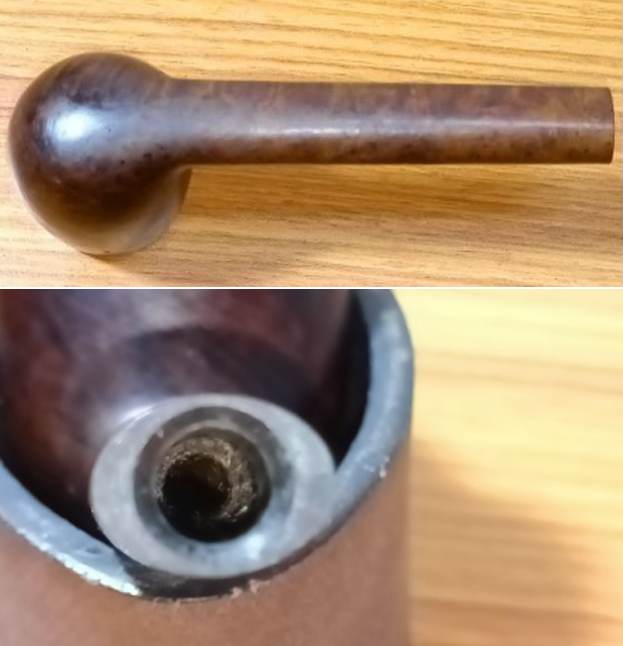
Now it was time to work on the pipe. I decided to address the blockage in the airway from the shank to the bowl. I worked many pipe cleaners through but was not able to break through at all. I finally used a straightened paper clip and carefully worked it into and around the inside of the airway and was able to break the clog. It took quite a bit of probing with the clip to finally remove the blockage and give the bowl good draught but once it was open it was great. I cleaned out the chamber in the shank and in the stem as well as the airways in both with pipe cleaners, cotton swabs and Isopropyl 99% alcohol. Many pipe cleaners and much time passed and the draught was clean and open in both the stem and the shank. With the bowl and shank clean I moved on to repair the shrunken fills in the heel. I used the tip of a Maple and black stain pen to darken the putty spots before putting a drop of clear CA glue on top to fill them in. Once the repairs cured I sanded them smooth with 220 grit sandpaper to blend them into the surface of the bowl. While they are dark spots and look quite large at this point once I work them over with micromesh they will be smaller and a bit lighter.   With that done I worked on the burn damage and darkening on the inner edge of the rim. I used a folded piece of 220 grit sandpaper to give the edge a light bevel to minimize the damage and bring the bowl back to round.   I polished the bowl and rim top with micromesh sanding pads – dry sanding it with 1500-12000 grit pads. I wiped the bowl down with a damp cloth after each pad to remove the sanding debris. After the final sanding pad I hand buffed it with a cotton cloth to raise a shine.   I worked some Before & After Restoration Balm into finish of the briar with my fingertips to clean, enliven and protect it. I let the balm sit for a little while and then buffed with a cotton cloth to raise the shine. The Restoration Balm really makes the grain stands out beautifully.   I set the bowl aside and turned my attention to the stem. I used a topping board to smooth out the chip on the right side of the stem. To do that I flattened the end and reduced the diameter of the stem to fit more smoothly into the shank of the pipe.   I filled in the tooth marks on both sides of the stem with clear CA glue. Once it cured I flattened out the repairs with 220 grit sandpaper (I forgot to take photos of this step).  I polished the stem with micromesh sanding pads – wet sanding with 1500-2400 grit pads and dry sanding with 3200-12000 grit pads. I wiped the stem down after each pad with Obsidian Oil. I polished it with Before & After Pipe Stem Polish – both fine and extra fine and buffed it with a cotton pad. I gave it a final coat of Obsidian Oil and set it aside to dry.  I carefully polished stem with Blue Diamond to polish out the remaining small scratches. I used a very light touch so as not to damage the stem. I buffed the bowl with Blue Diamond as well – a bit more vigorously. I gave the bowl and the stem multiple coats of carnauba wax. I buffed the pipe with a clean buffing pad to raise the shine. I hand buffed it with a microfiber cloth to deepen the shine. The pipe polished up pretty nicely. The grain came alive with the buffing and works well with the polished aluminum ferrule and the polished black vulcanite stem. Altogether the pipe has a rich look. The finished pipe is shown in the photos below. The shape, finish and flow of the pipe and stem are very well done. The dimensions are Length: 5 ½ inches, Height: 1 ¾ inches, Outside diameter of the bowl: 1 ¼ inches, Chamber diameter: ¾ of an inch. The weight of the pipe is 1.55 ounces/44 grams. I will be gifting this pipe to a good friend of mine who I think will appreciate cool smoke the pipe delivers. Thanks for walking through the restoration with me as I worked over this well-made Keyser Hygienic Bent Billiard Patent pipe.

Restemming and Restoring a Heavily Smoked Meerschaum Bacchus Figural


Blog by Steve Laug

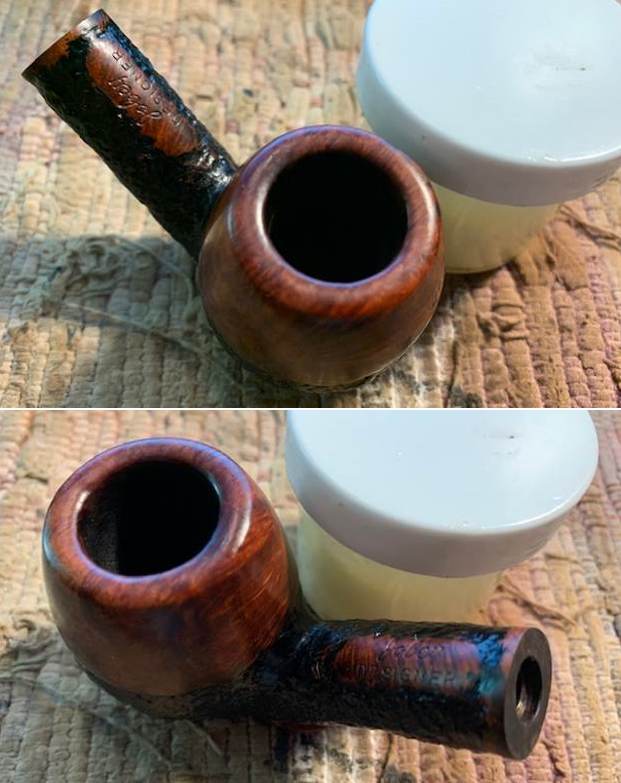
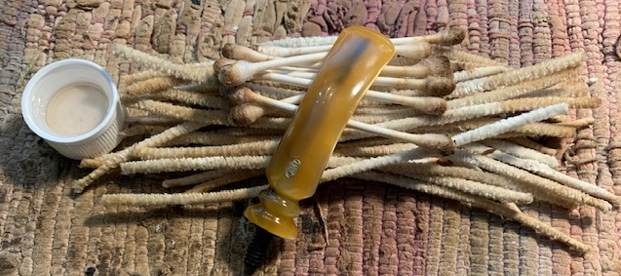
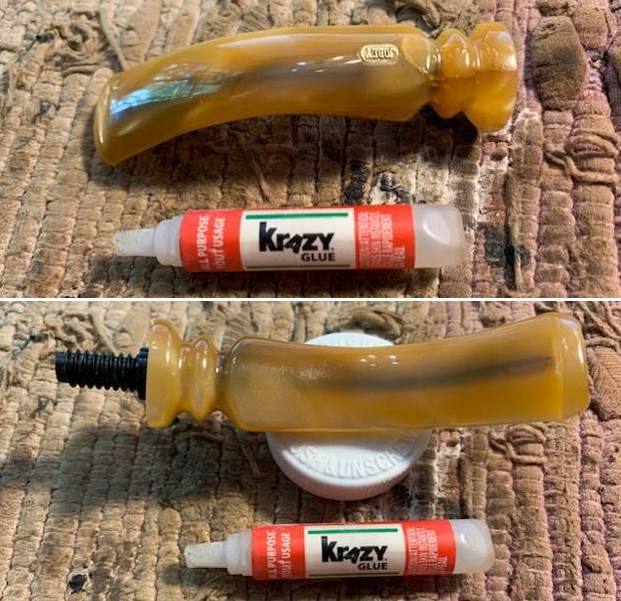
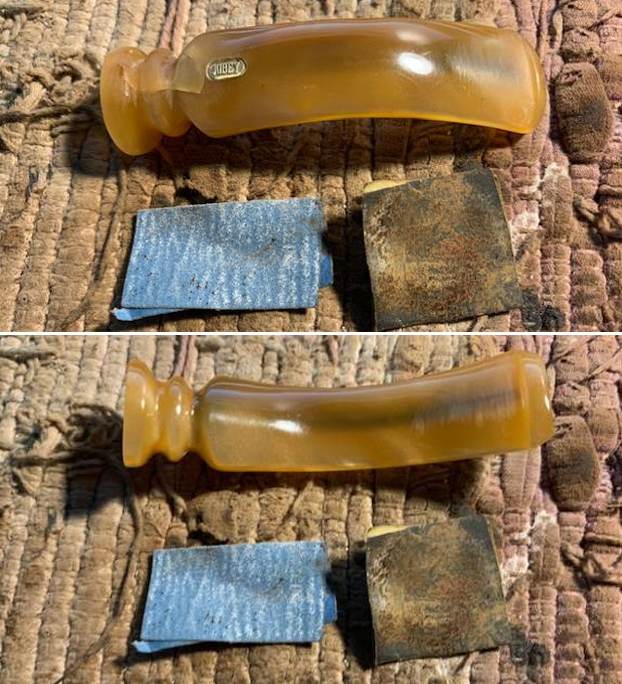
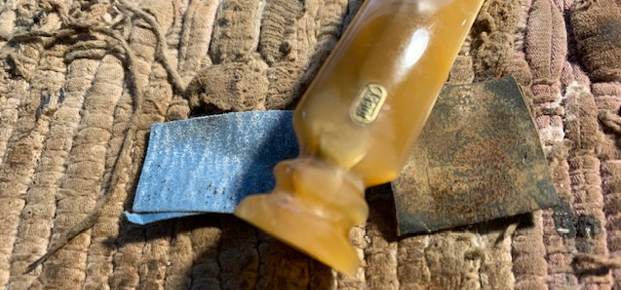
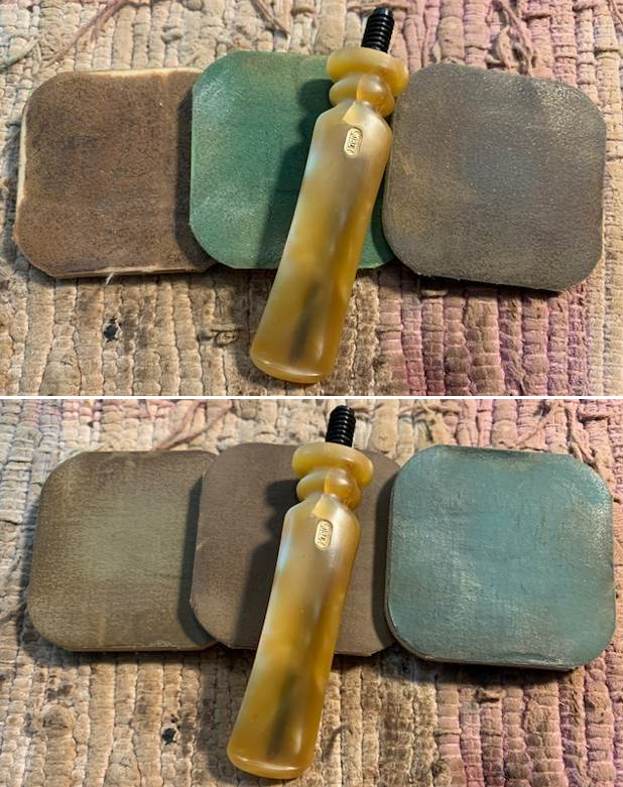
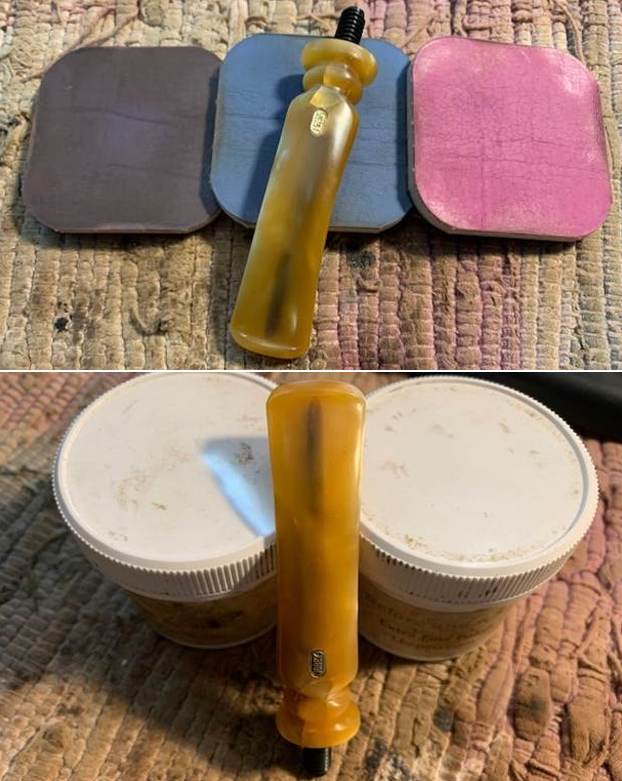
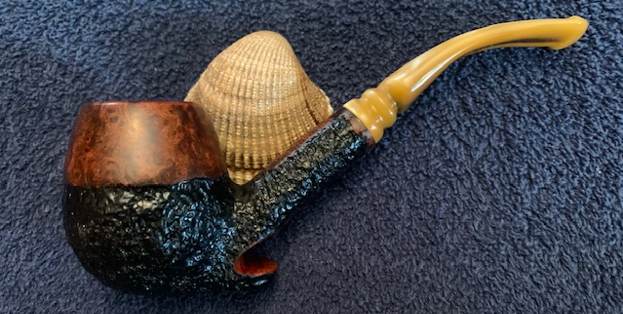
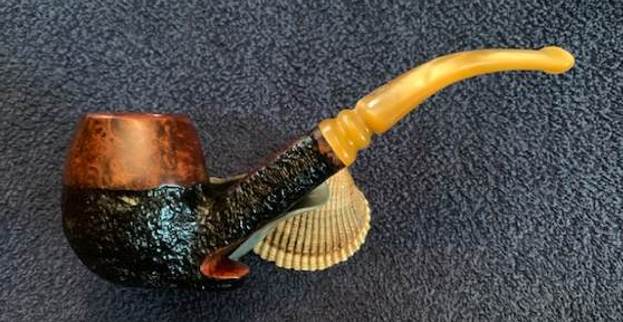
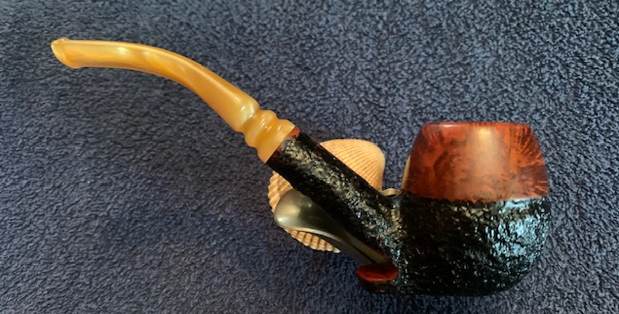
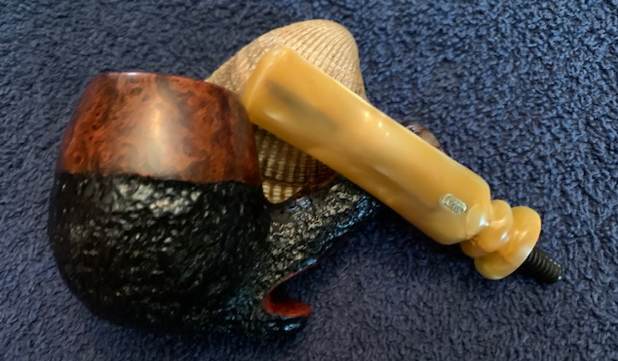
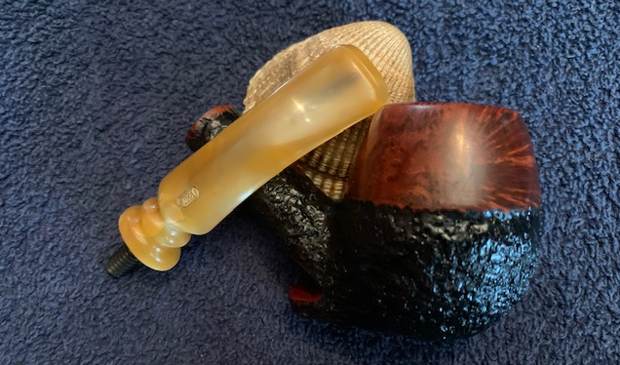
The next pipe on my table was a filthy meerschaum carved figural. Jeff believes that we got this meerschaum on 07/30/2019 from an online auction in Oceanside, New York, USA. It had some golden brown patina developed under the thick dark grime and tar on the face and leaf had of the figural. It also cover the rim top and the grapes on the shank. There was a thick cake in the bowl and a heavy build up of lava on the rim top. It really was a mess. The carving on the figural was very well done as were the leaves and grapes that made up the headdress. The stem was a replacement I believe as it was a soft acrylic that did not fit very well. Someone had fit the stem with a push tenon but the shank was threaded so it was a poor and sloppy fit. It was dirty and the airway was almost clogged with tars and oils. The surface of the button on the end had been chewed through and there were holes on both sides. Long and short of it the stem would need to be replaced yet again. Here are some photos Jeff took of the pipe before he started his clean up work on it. It has a lot of potential and a lot of promise. Time and work will tell!He took photos of the bowl to clearly show the facial features of this well carved meerschaum. The features are really well done and the details are quite remarkable. The pipe should clean up really well and look quite amazing. It is certainly worth restemming. He took photos of the bowl from the side to show the carving details on the leave and grapes along the side of the bowl and shank. Even those details are quite well done.   Jeff took a photo of the heel of the bowl. It was flat and the bowl sat as a sitter with the stem removed. It also has some scratches and nicks in the surface and debris in the carved swirls of the beard.The rim top and bowl were filthy. There was a thick cake on the walls of the bowl and a heavy overflow of lava on the rim top and top of the headdress. It was black, heavy and quite thick. The replacement stem was a disaster as well with major holes in the top and underside of the stem at the button and on the button itself. The photos of the stem show the odd placement of a push tenon in the stem end even though the shank is threaded. You can also see the split in the top side and the chewed end of the button and hole I the underside.  Jeff did a remarkable job on the cleanup of this pipe. He reamed the bowl carefully with a PipNet reamer and cleaned up the reaming with a Savinelli Fitsall Pipe Knife. He scrubbed the surface and crevices of the carved figural with undiluted Murphy’s Oil Soap and a tooth brush to remove the grime and leave behind the patina. He rinsed the bowl with warm water and dried it off with a clean cotton towel. He cleaned the internals of the bowl and shank with alcohol, cotton swabs and pipe cleaners to clean out the built up tars and oils that were present there. We through away the stem as it was very unusable. When the pipe arrived here it looked amazing and the features and the patina in the meerschaum is beautiful. I took photos of it when I brought it to the table this morning. I would need to restem it but it would be worth it.    I started my work on the pipe by working on the darkening and damage on the inner edge of the rim. I used a folded piece of 220 grit sandpaper to smooth it out and clean it. The finished edges looked much better.I went through my can of stems and found several that looked like they would work. I settled on gold/amber fancy turned acrylic stem that had a bone tenon in place. It would look great but had a few tooth marks and chatter on the top and underside of the stem.   I filled in the tooth marks on the button edge and surface of the stem on both sides with clear CA glue. I set it aside to let the repairs cure. Once they had cured I reshaped the button edges and top with a small file. I smooth it out further and reshaped it with 220 grit sandpaper. I started the polishing with 400 grit wet dry sandpaper.   I polished the stem with micromesh sanding pads – dry sanding with 1500-12000 grit pads. I wiped it down after each sanding pad with a cloth impregnated with Obsidian Oil. I polished it with Before & After Pipe Stem Polish – both Fine and Extra Fine. I gave it a final rubdown with Obsidian Oil and set it aside to cure.    I set the stem aside and polished the meerschaum with micromesh sanding pads – dry sanding with 1500-12000 grit pads. I wiped it down after each pad with a damp cloth to remove the sanding dust. I worked some Clapham Beeswax Salad Bowl Finish into the meerschaum carving on the bowl. It is a combination of Mineral Oil, Beeswax and Carnauba Wax that works very well on waxing a bowl. I buffed it briskly with a cotton cloth to raise a shine and the bowl looks very good. Once again I am excited to finish a pipe that I am working on. I put the nicely patinaed Bent Bacchus Meerschaum back together and buffed it with Blue Diamond on the buffing wheel. I gave the bowl multiple coats of Clapham’s Beeswax and the stem multiple coats of carnauba wax. I buffed the pipe with a clean buffing pad and hand buffed it to raise the shine. It is fun to see what the polished bowl looks like with the patina colouring the meerschaum on the smooth and the grooves of the carving. Added to that the polished golden acrylic fancy saddle stem worked to give the pipe just the right touch. It is light and well balanced. Have a look at it with the photos below. The dimensions are Length: 6 inches, Height: 2 ½ inches, Outside diameter of the bowl: 1 ½ x 2 ¼ inches, Chamber diameter: 7/8 of an inch. The weight of the pipe is 86 grams/3.03 ounces. It is a beautiful pipe and one that will be on the rebornpipes store in the Ceramic and Meerschaum Pipes Section. If you are interested in adding it to your collection let me know. Thanks for walking through the restoration with me as I worked over this pipe. Thanks to each of you who are reading this blog. I remind us all of the fact that we are not pipe owners; we are pipemen and women who hold our pipes in trust until they pass on into the trust of the next pipeman or woman.
Reviving a Lovely Stanwell Liverpool


by Kenneth Lieblich

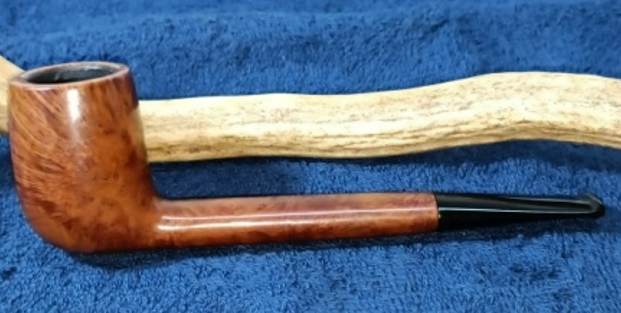
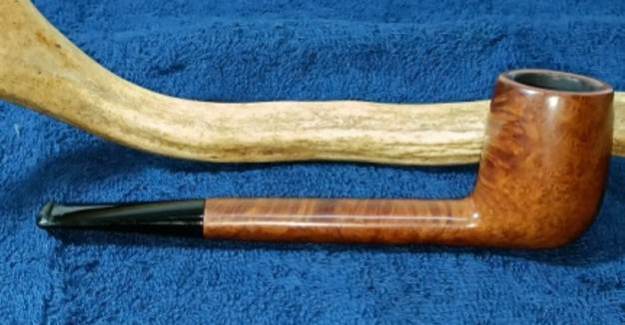
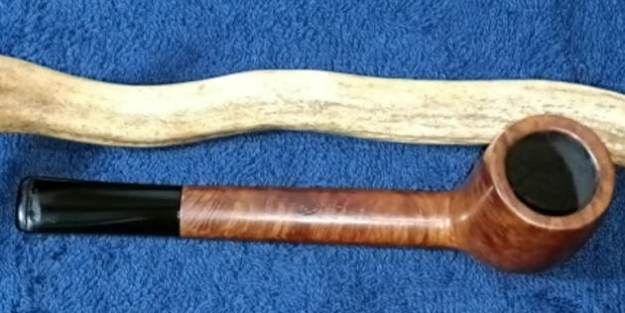
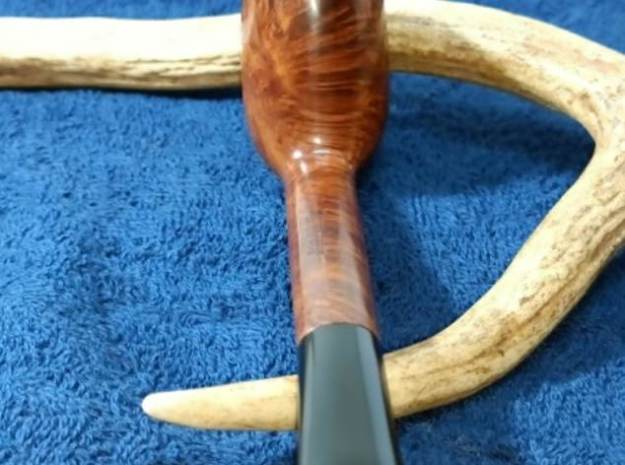
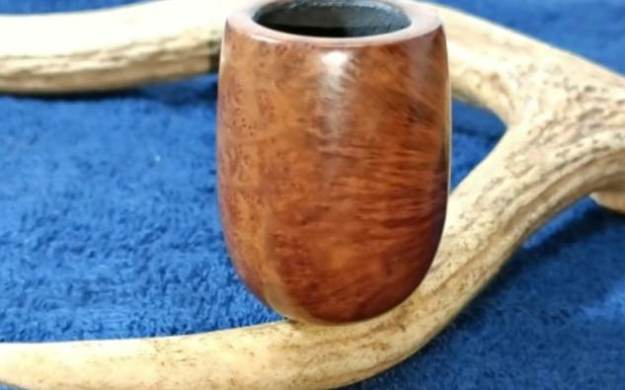
Next on the chopping block is beautiful Danish pipe from Stanwell. I acquired it locally from the estate of an old boy who kept a lovely collection of pipes. The shape of this pipe is a Liverpool – a member of the Canadian pipe family. For some reason, the Liverpool is far less common than the Canadian. Both types have a shank length 1½ to 2 times the height of the bowl. The difference between the two is as follows: the Canadian has an oval-shaped shank whereas the Liverpool has a round-shaped shank. This Stanwell Liverpool is so charming that I was tempted to keep for myself, but, as a life-long Manchester United fan, I cannot have anything named Liverpool in my home!   As I mentioned, this is a Stanwell de Luxe 298 Liverpool. It has beautiful briar from the bowl all the way down the long shank to a short-but-elegant stem. The left side of the shank reads Stanwell [over] Regd. No. 969-48 [over] de Luxe. The right side of the shank reads Fine Briar [over] 298. Finally, the stem’s left side also has the trademark S of the Stanwell company. Of course, 298 refers to the model number and I went to check the list of Stanwell shapes, here on Reborn Pipes. There was no 298 on this list. Hmm. Well, I did find some images from an old Stanwell catalogue (rather vaguely dated as 1960-70). The image below does not mention a shape “298”, but it does show a “98” which looks very similar to the pipe I have. I am assuming that there is a connection.I know from information at Pipephil that the pipe I have is certainly more than 50 years old – and this corresponds to the catalogue above. My pipe has both the “Regd. No.” and the S logo without a crown. This screen capture explains that clearly.Meanwhile, Pipedia has a good amount of information on the Stanwell brand and its history. I certainly recommend looking it over: https://pipedia.org/wiki/Stanwell.

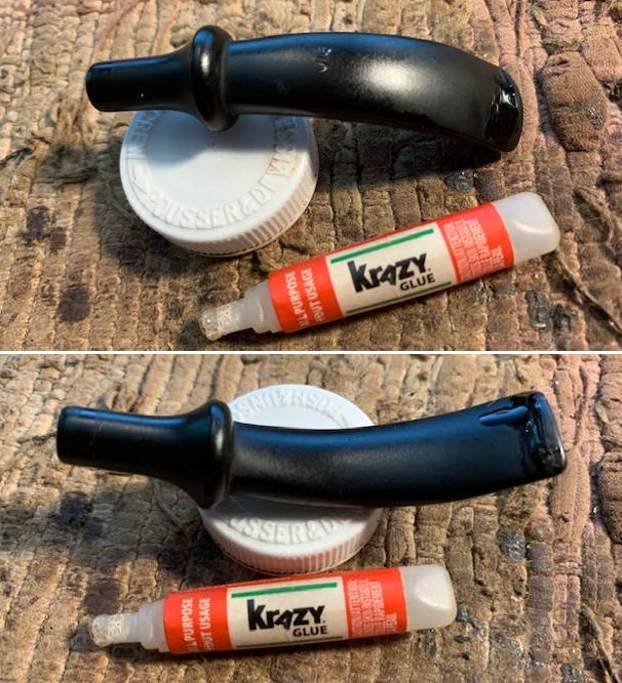
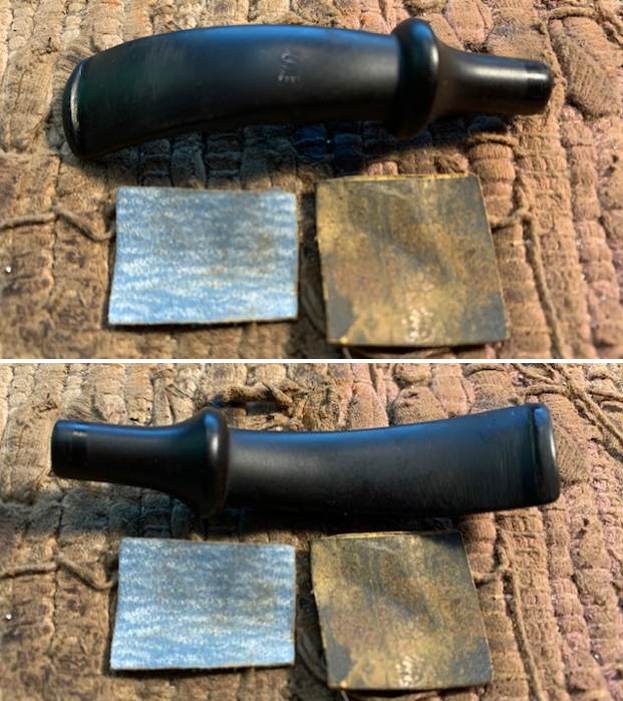
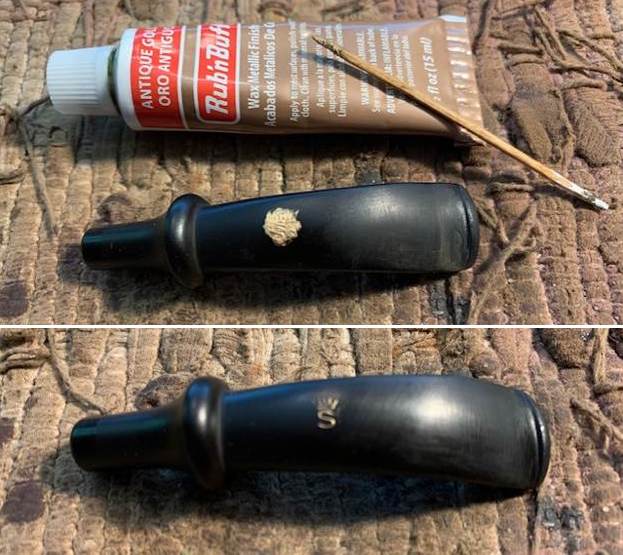
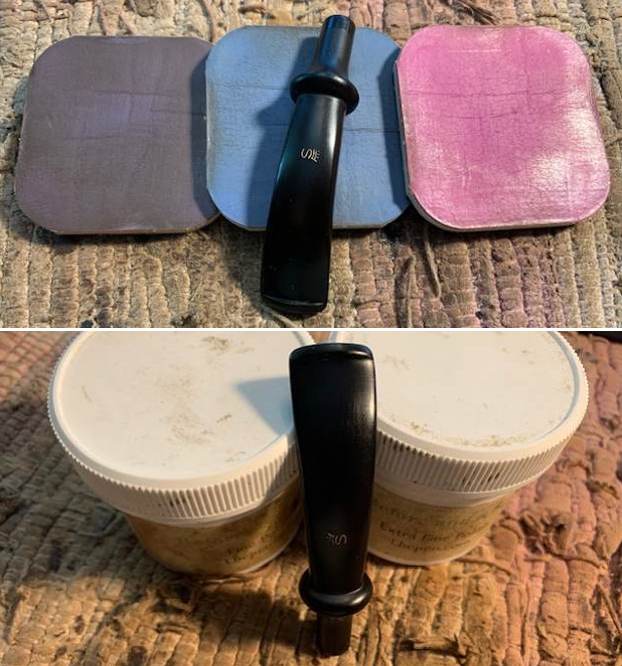
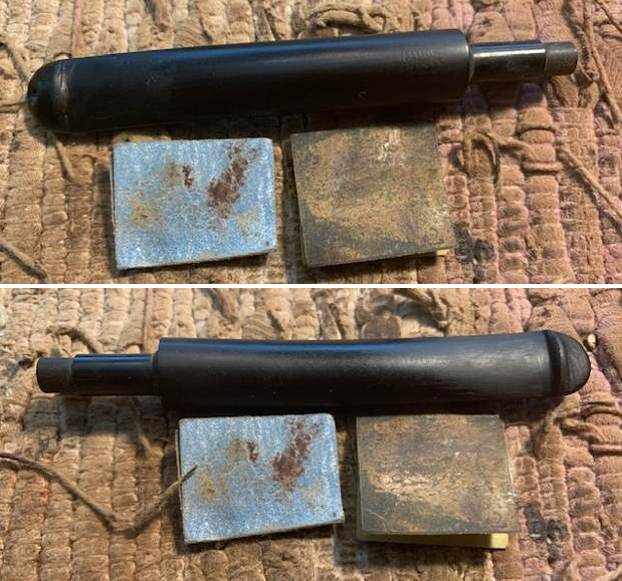
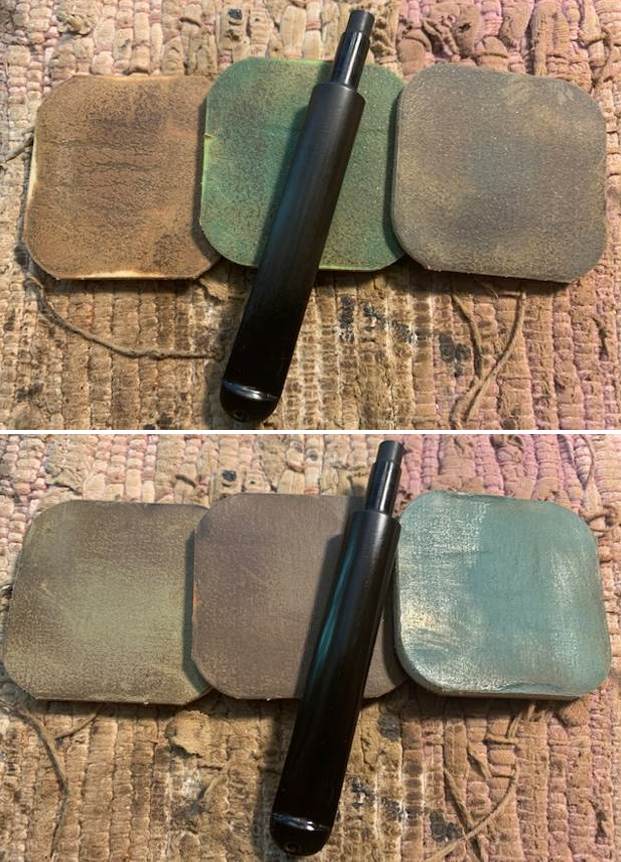
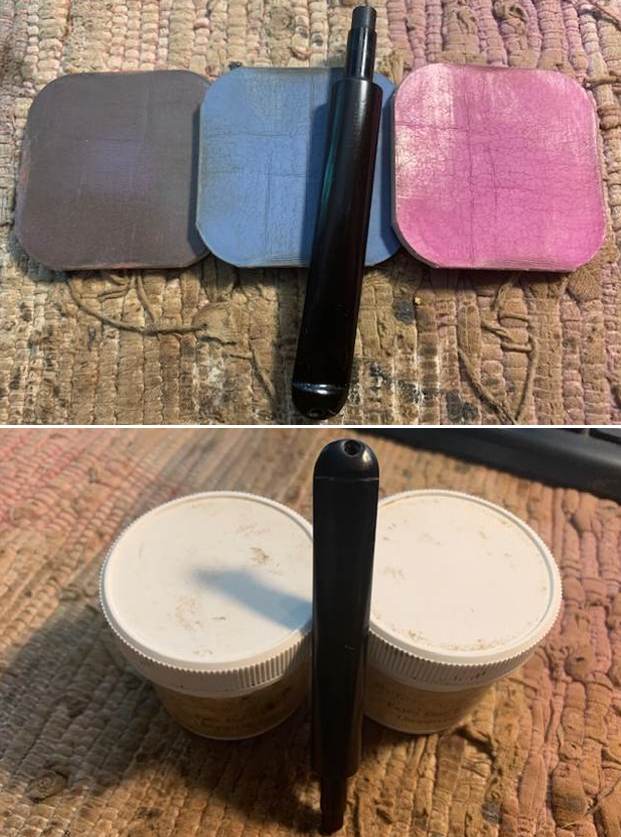
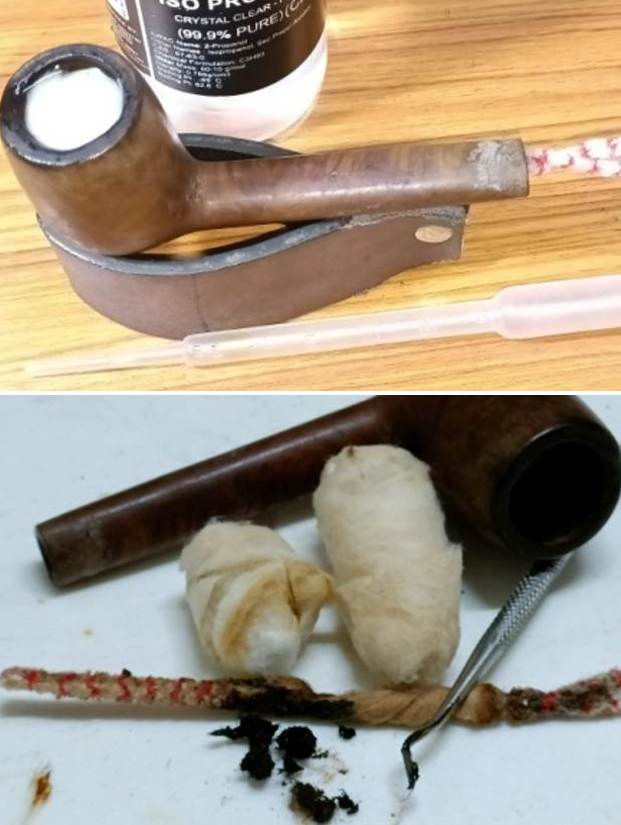
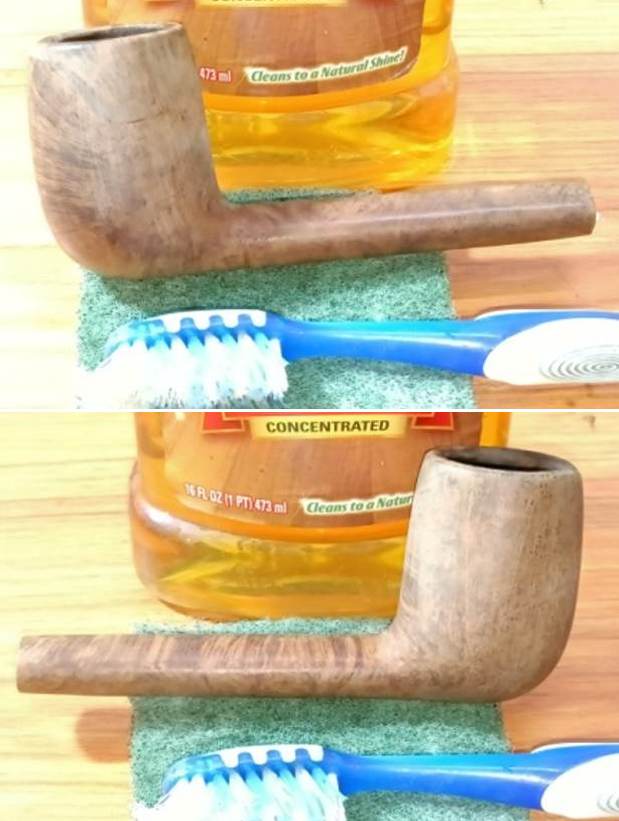
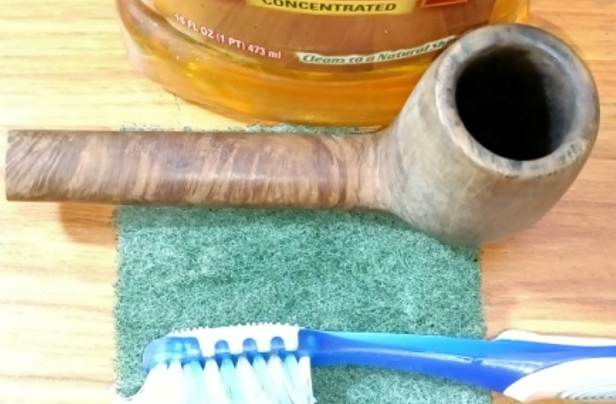
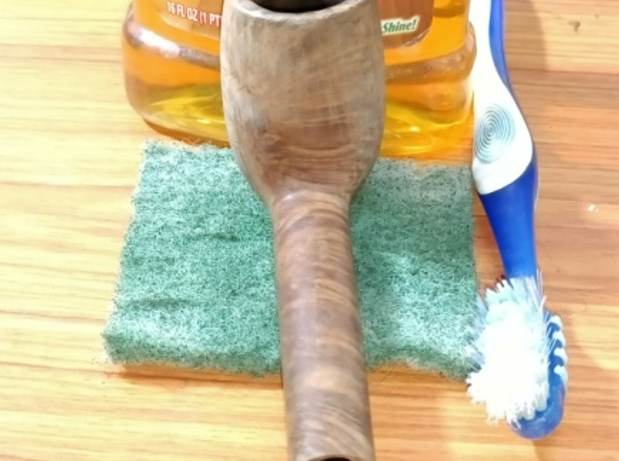
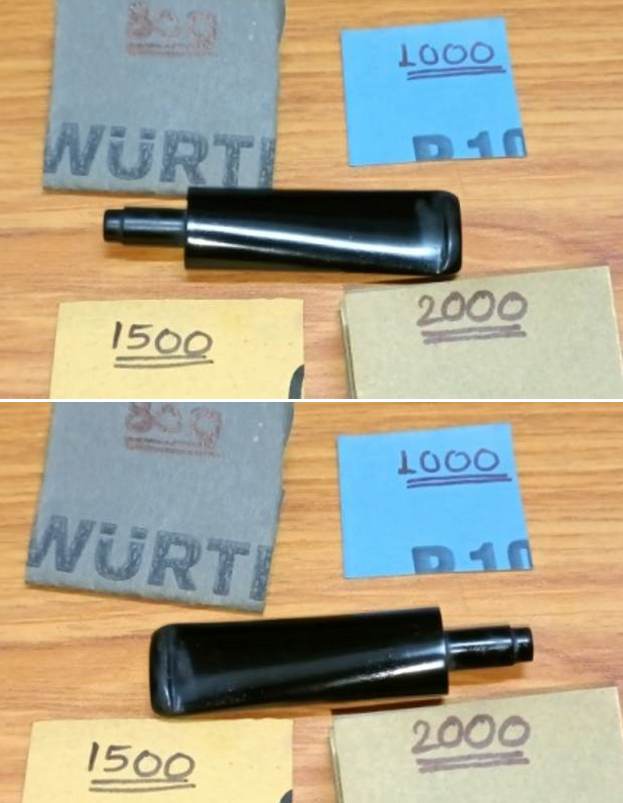
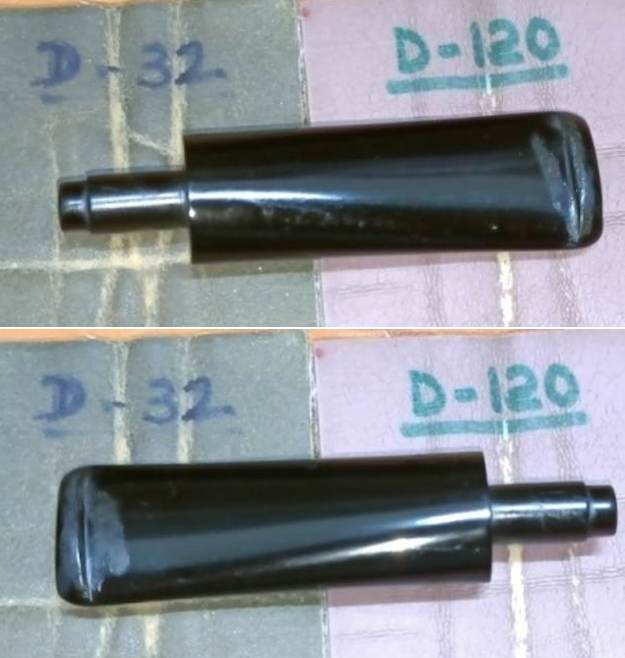
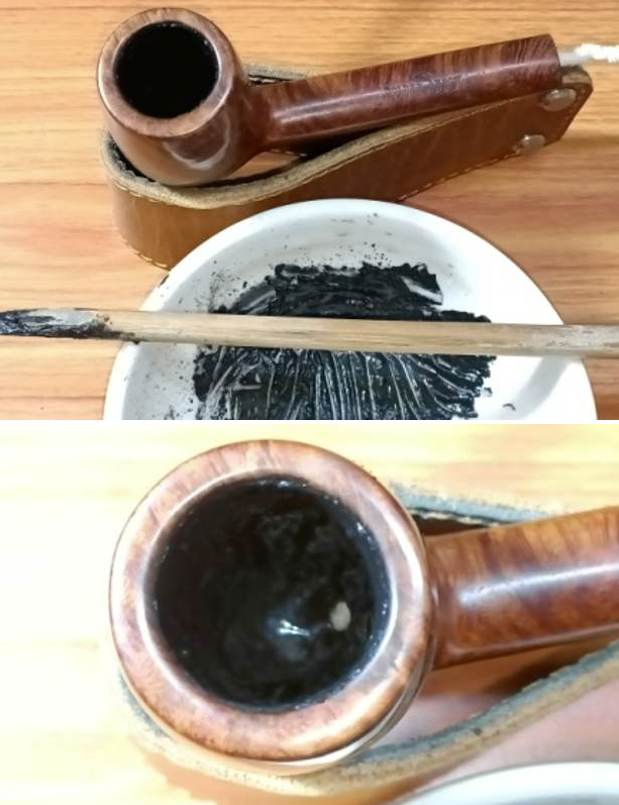
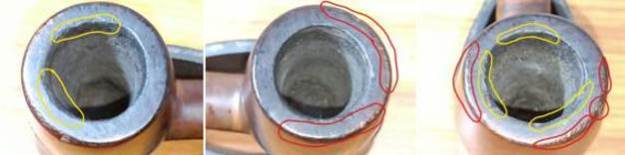
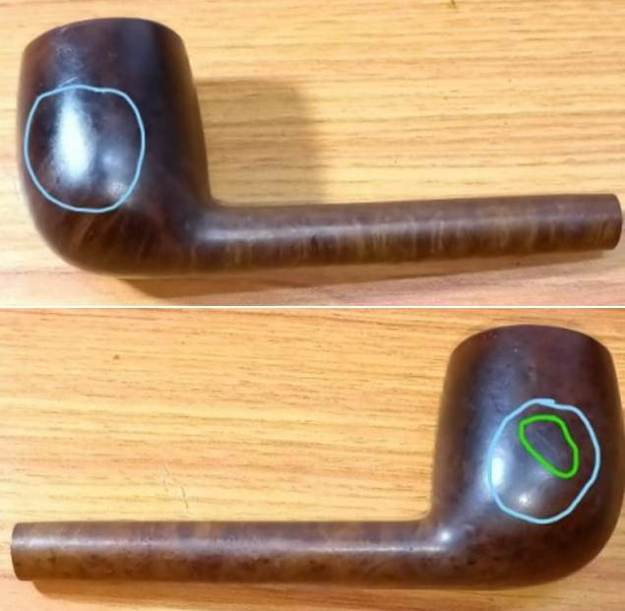
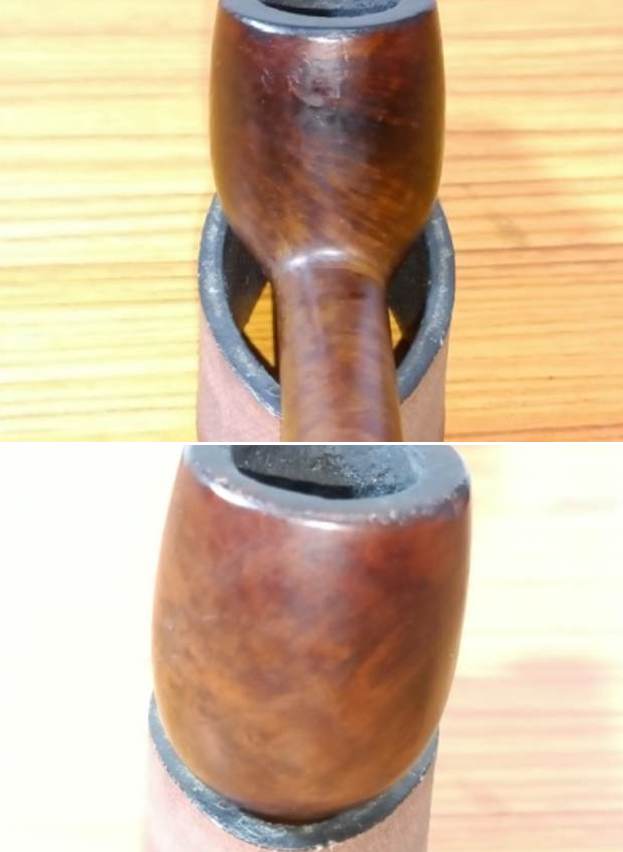
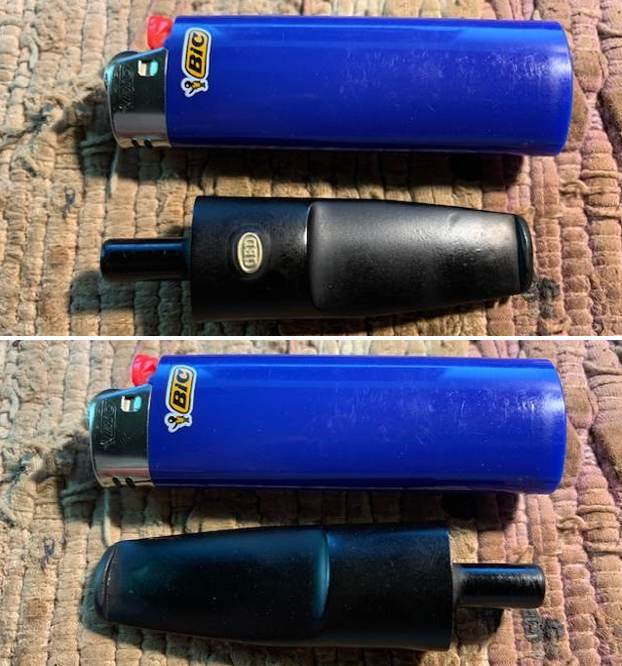
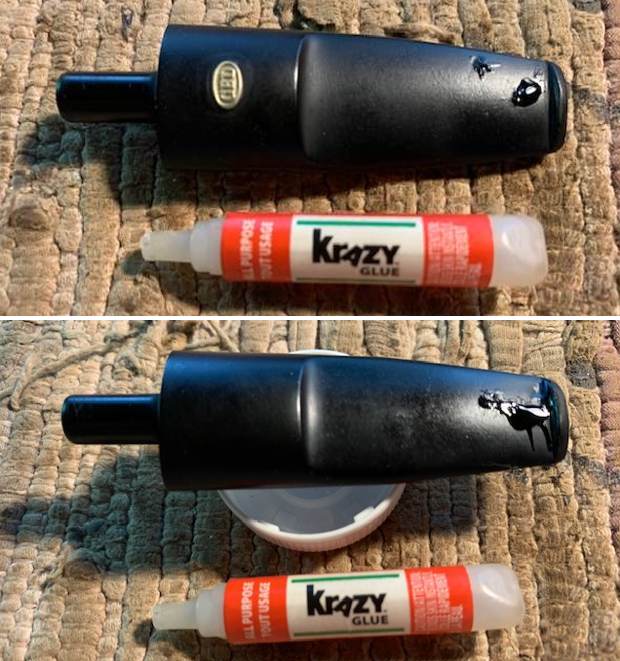
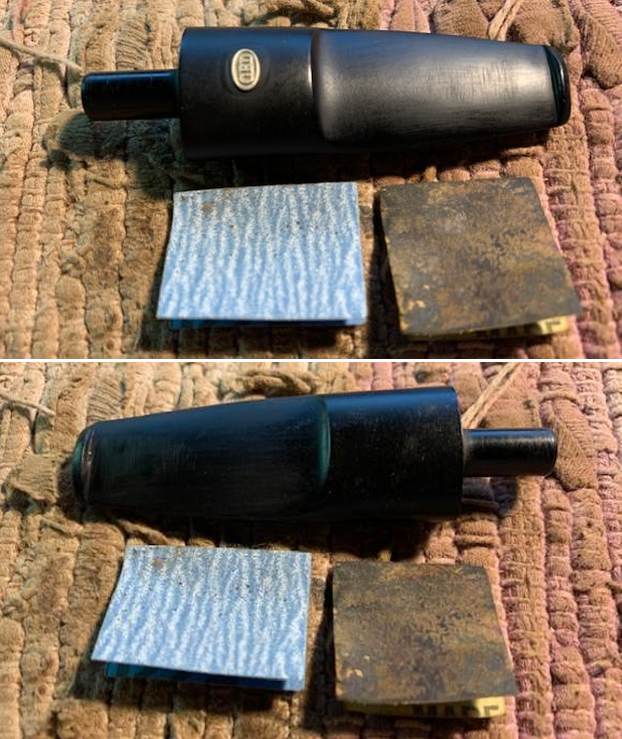
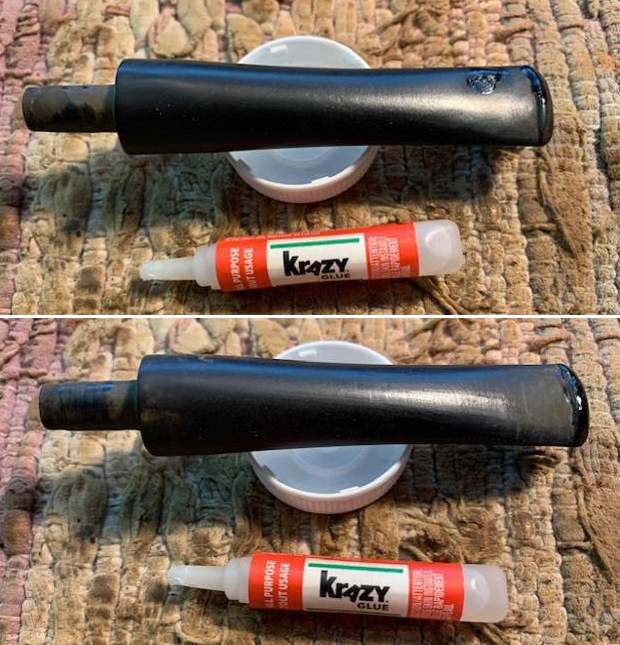
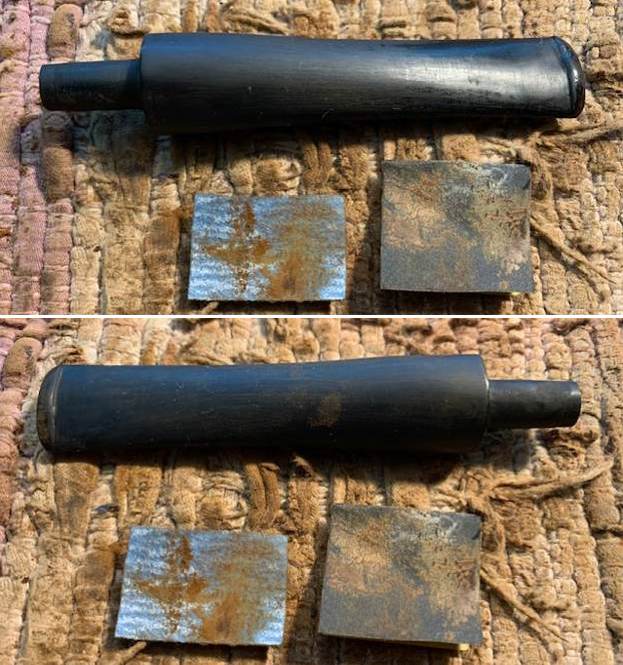
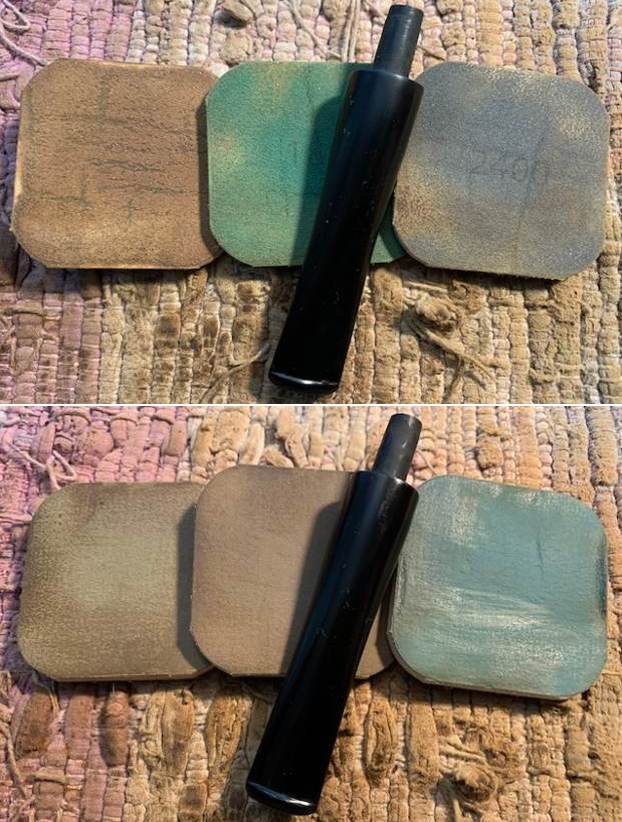
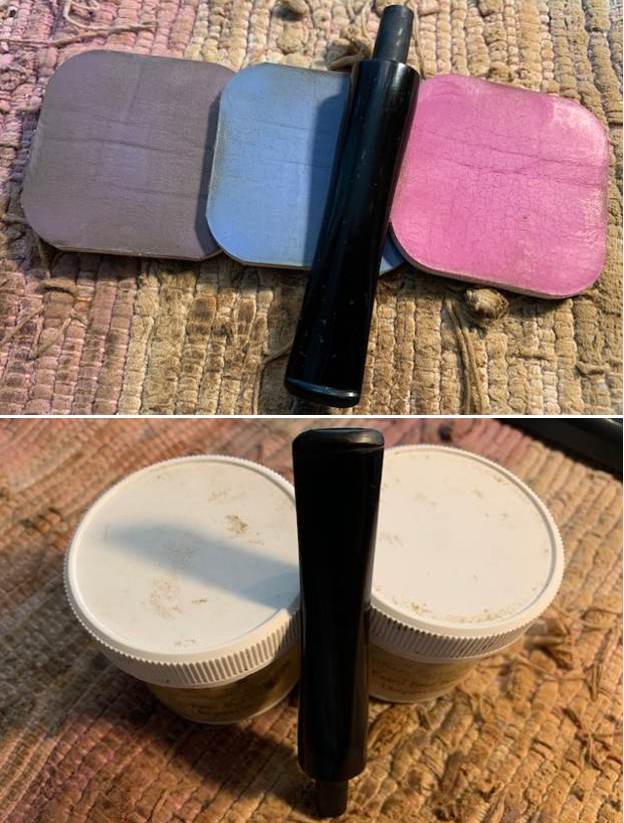
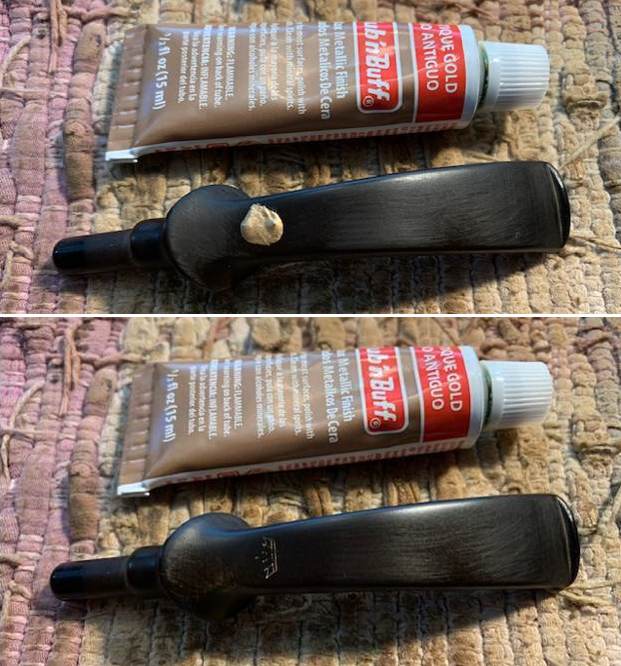
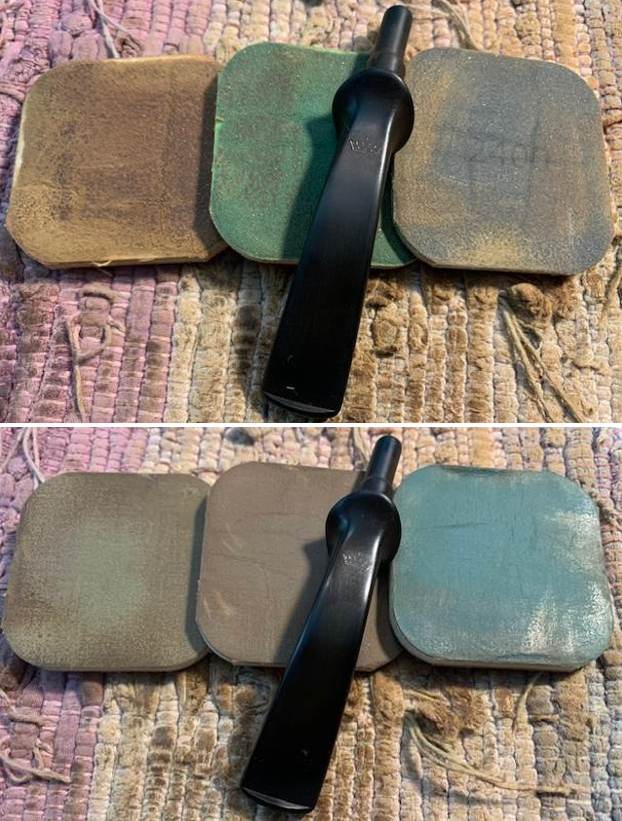
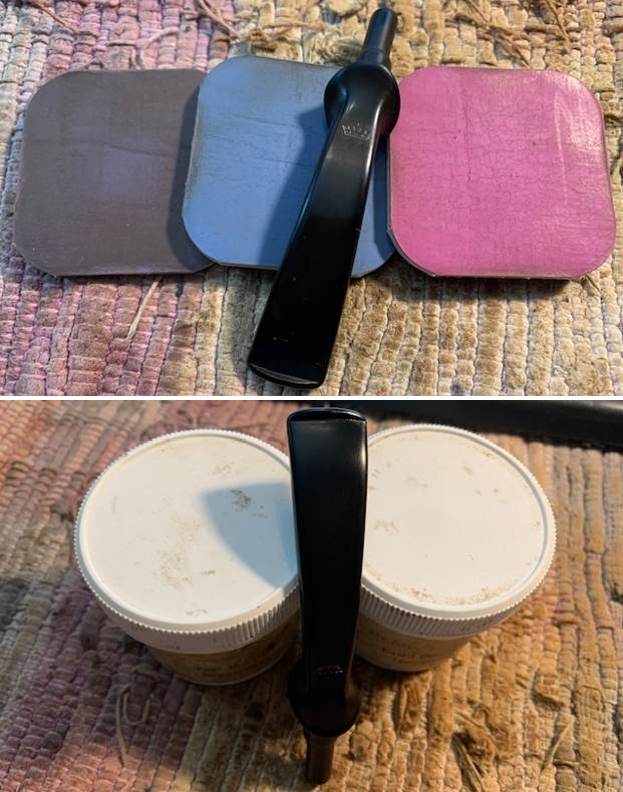
Anyway, this really is a good-looking pipe. No major issues to resolve – just a few minor ones. The stem was dirty, though not too beat up. There were some small scratches and a couple of bite marks, as well as some oxidation and calcification on the vulcanite. The rim on the stummel was blackened and a bit burnt – that would need to be addressed. The insides were fairly dirty and would need some work to clean out. In addition, there was a strange colour to the wood that just wasn’t right. The stem was first on my list. I wiped down the outside of the stem with Murphy’s Oil Soap on some cotton pads. There was enough calcification on the stem that I decided to take a blade and gently scrape it off. I also took a BIC lighter and ‘painted’ the stem with its flame in order to lift the bite marks and dents. Unfortunately, this didn’t really work, but I have ways of sorting this out. Then, I cleaned out the inside with pipe cleaners and isopropyl alcohol. It wasn’t too dirty and only required a few pipe cleaners.I then wiped down the stem with SoftScrub cleaner to remove some surface oxidation. Once this process was done, the stem went for an overnight soak in the Pipe Stem Oxidation Remover. As the name suggests, this liquid removes oxidation, but, more than anything, it helps draw oxidation to the surface of the vulcanite. This allows me to clean the oxidation off in a couple of ways: both by applying a mild abrasive cleaner to the surface, then by sanding the stem.  The next day, I used SoftScrub again with some cotton rounds and, as you can see, more revolting colour came off the stem.The bite marks on and around the button had to be dealt with, so I whipped out my black cyanoacrylate adhesive to fill those in and let them fully cure. After curing, I used some nail polish to restore the letter S on the stem. I painted the area carefully and let it fully set before proceeding.For sanding the adhesive, I used 220- and 400-grit sandpapers to meld seamlessly into the stem.  Then I used a set of nine Micromesh pads (1,500 through 12,000 grit) which gradually erased the ravages of time and brought out the stem’s lovely black lustre. For the last five pads, I also lightly coated the stem with Obsidian Pipe Stem Oil in between each scrubbing. At last, I set the finished stem aside.    Off to work on the stummel! The bowl needed a bit of reaming, so I used the PipNet Reamer to scrape off the built-up cake and I followed that with 220-grit sandpaper taped to a dowel to eliminate as much as possible. Generally, I prefer to sand the chamber down to bare briar. When restoring, it is important to ensure that there is no damage to the briar in the bowl, under the cake. Fortunately, there were no hidden flaws to the briar on this pipe.   I then proceeded to clean out the insides of the shank with Q-tips, pipe cleaners, and lemon-infused isopropyl alcohol. There was a bit of filth inside this stummel and it took a fair amount of cotton to get it clean. I followed that up by cleaning the insides with some dish soap and tube brushes.    I decided to de-ghost the pipe in order to remove any lingering smells of the past. I thrust cotton balls into the bowl and the shank and saturated them with 99% isopropyl alcohol. I let the stummel sit overnight. This caused any remaining oils, tars and smells to leach out into the cotton. The bowl was nice and clean after this. I used cotton rounds and some Murphy’s Oil Soap to scrub the outside of the stummel and a toothbrush with Murphy’s for the lava on the rim of the pipe. With the lava on the rim removed, I could see that the burn marks remained (see the photo below).In order to remove the remaining burns, I “topped” the pipe – that is to say, I gently and evenly sanded down the rim on a piece of 220-grit sandpaper. I enhanced this further by running the same sandpaper along the inside edge of the rim and creating a very subtle (and beautiful) chamfer. This effectively removed the damage, without altering the look of the pipe. This is always a tricky business – I want to find the balance between removing old burns and maintaining as much of the pipe as possible. But I believe that the photos at the end of this blog show that I got the balance right.

As I mentioned earlier, there were some remnants of an oxblood-like stain on the wood. I’m not sure if this was the original colour of the pipe or if it was added later, but – regardless – it didn’t look good at all. I hoped (and expected) that sanding would help this problem. I used all nine Micromesh pads (1,500 through 12,000 grit) on the stummel to make it lovely and smooth.  However, not all of the colour was gone, so I removed it with 99% isopropyl alcohol and other stuff I had on hand. It looked so much better with that colour gone.

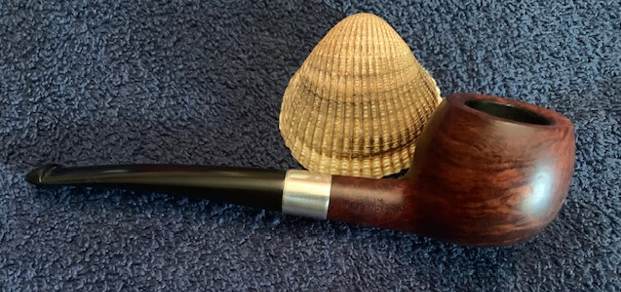
At this point, I rubbed some Before & After Restoration Balm into the briar and left it to sit for 10 or 15 minutes. I brushed it with a horsehair brush and buffed it with a microfibre cloth. The BARB does wonderful things to the wood, and I really like the natural colour of the briar.   Finally, it was off for a trip to the bench polisher. A dose of White Diamond and a few coats of carnauba wax were the perfect complement to the briar. The lovely shine made the wood look absolutely beautiful. This pipe is elegant, light, and incredibly comfortable to hold. I thoroughly enjoyed bringing this Stanwell de Luxe 298 Liverpool back to life and I am pleased to announce that this pipe is for sale! If you are interested in acquiring it for your collection, please have a look in the “Danish” pipe section of the store here on Steve’s website. You can also email me directly at kenneth@knightsofthepipe.com. The approximate dimensions of the Stanwell are as follows: length 6 in. (152 mm); height 2 in. (50 mm); bowl diameter 1⅛ in. (29 mm); chamber diameter ¾ in. (19 mm). The weight of the pipe is 1⅛ oz. (33 g). I hope you enjoyed reading the story of this restoration as much as I enjoyed restoring it. If you are interested in more of my work, please follow me here on Steve’s website or send me an email. Thank you very much for reading and, as always, I welcome and encourage your comments.

Yet another from the Bertrams Collection – a Straight Bertram 60 Apple


Blog by Steve Laug

Rather than repeat myself and give the blog readers grief with the repetition please refer to the previous blogs posts on the Bertrams to learn about how we got this collection. Just know that we purchased a collection of Bertrams and a smattering of other brands, that when they were unwrapped, filled three boxes. The photo below is included to show the size of the collection we had purchased. To be honest it was a bit overwhelming to see all of the collection in boxes. We were looking at a lot of work to bring these back to life. The pipe I am working on now is one from that collection. I am gradually finishing most of these pipes.I cannot tell you how glad I am that Jeff worked through the clean up of all of these pipes as they many and they were filthy! It would have been a more daunting task than it was if I had to clean and restore all of them. I am leaving it to him to choose which pipes to work on. He has chosen some interesting shaped ones to restore. Here is how we are working out the transfer from him to me. As he finishes a batch of them he boxes them up and sends them to me. I believe I have all of the pipes here and the numbers are thinning down a lot. I am working through the pipes I have boxed to work on here and this Bertram caught my eye as the next pipe that I would work on. This pipe was another very dirty one! The smooth finish was grimy and dusty but some interesting grain shone through showing me that this was a beautiful pipe. It was a short, thick shank Apple shaped pipe with a tapered stem. There was a thick cake in the bowl and heavy lava overflowing on to the rim top. It was hard to know the condition of the edges due to the cake and lava. The stem showed some light oxidation and some chatter on the top and some deep tooth marks on both sides ahead of the button. It almost looked like someone had converted it to a bit of a dental bit. The photos below tell the story and give a glimpse of the pipe. Jeff took a close-up photo of the bowl and the crowned rim to capture the condition of the pipe when it arrived. The bowl had a thick cake. The crowned rim top had a thick coat of lava that was heavier on the back side thick around the edges. The photos of the stem show the deep gouge along the edge of the button on both sides. Jeff took pictures of the bowl sides and the heel to show the marvelous grain on the bowl. It really is quite stunning underneath the thick and ugly grime!   Jeff took 2 photos to capture the stamping on the left side of the shank. The first photo shows stamping on the left side which read Bertram over Washington, D.C. The stamping on this pipe is clear and readable. The second photo shows the grade number stamping lower on the left side near the bowl/shank junction. It read number 60 which shows the quality of the pipe. If you have read the previous blogs I have posted on the Bertram pipes that I have cleaned up you can skip the next bit. But if you have not, then I include the link to Bertram history and information. I would recommend that if you don’t know much about them do some research on them. I include a link to the write up on Pipedia (http://pipedia.org/wiki/Bertram). Bertram pipes were based out of Washington DC. They were popular among famous politicians and celebrities of the time. They made many products for them, from FDR’s cigarette holders to Joseph Stalin’s favorite pipe. They were considered some of the best America had to offer till they finally closed their doors in the 70s. They graded their pipes by 10s, the higher the grade the better. Above 60s are uncommon and 80-90s are quite rare. I’ve only seen one 100 grade. I have several blogs that I have written on rebornpipes that give some history and background to Bertram pipes. (https://rebornpipes.com/2015/06/16/an-easy-restoration-of-a-bertram-grade-60-217-poker/).

I have included the following link to give a bit of historical information on the pipe company. It is a well written article that gives a glimpse of the heart of the company. http://www.streetsofwashington.com/2012/01/bertrams-pipe-shop-on-14th-street.html#

I am also including this photo of the shop in Washington D.C. and a post card of the shop. From this information I have learned that the shape and grade Bertram I have in front of me now was made before the closure of the shop in the 1970s. This Bertram Apple one of the unique shapes among the Bertram pipes I have worked on. With a grade 60 stamp it is just above the mid-range mark.

Jeff reamed the bowl with a PipNet pipe reamer and followed up with a Savinelli Fitsall pipe knife to remove the cake. He scrubbed out the mortise and the airway in the shank and the stem with alcohol, cotton swabs and pipe cleaners. He scrubbed the exterior of the bowl, rim, shank and stem with a tooth brush and undiluted Murphy’s Oil Soap to remove the lava, oils and tars on the rim and the grime on the finish of the bowl. He rinsed it under running water. He dried it off with a soft cloth. He was able to remove lava build up on the rim top and you could see the great condition of the bowl top and edges of the rim. There was still some darkening to the rim top toward the back of the bowl. He soaked the stem in Before & After Deoxidizer to remove the oxidation. I took photos of the pipe before I started my work on it.    I took a close up photo of the rim top to show the condition of the bowl and rim after Jeff had cleaned up the grime and lava but the crowned rim top had some darkening on the whole rim top though darker on the backside of the rim. Otherwise the crowned rim look good. The stem photos show that the oxidation is gone. The light tooth chatter is hard to see but I should be able to sand it out quite easily. The deep tooth marks on both sides near the button will take a little more work to remove. I also took a photo of the stamping on the left side and the underside of the shank showing how the stamping was laid out. I removed the stem from the shank and took a photo of the pipe to show the proportions and the look of the grain on the bowl. It is a beauty!I sanded the top of the rim with a folded piece of 220 grit sandpaper to remove the damage and the darkening. I would polish it later and think it would look very good. The photo shows how the rim looked at this point.     I polished the bowl and rim top with micromesh sanding pads – dry sanding it with 1500-12000 grit pads. I wiped the bowl down with a damp cloth after each pad to remove the sanding debris. After the final sanding pad I hand buffed it with a cotton cloth to raise a shine.   I worked some Before & After Restoration Balm into finish of the briar with my fingertips to clean, enliven and protect it. I let the balm sit for a little while and then buffed with a cotton cloth to raise the shine. The Restoration Balm really makes the grain stands out beautifully.   I used a lighter to “paint” the deep marks on both sides of the stem near the button. I was able to lift them a bit but not significantly, I filled in what remained with black super glue and flattened the repair with a dental spatula. Once it cured I used a small file to redefine the button edge. I used a folded piece of 220 grit sandpaper to blend the repairs into the surface of the stem. I started polishing the stem with a folded piece of 400 grit sandpaper. I wiped the stem down with Obsidian Oil.  I polished the stem with micromesh sanding pads – dry sanding it with 1500-12000 grit pads. I wiped the stem down with Obsidian Oil after each pad. I polished it with Before & After Pipe Polish – both Fine and Extra Fine and gave it a final coat and set it aside to dry.  I put the stem back on the Bertram Apple and buffed the pipe with Blue Diamond on the buffing wheel. I polished the briar and the vulcanite of the stem until there was a rich shine. This Bertram classic Apple shape and oil cured finish really highlights some amazing grain on a proportionally well carved pipe. Once I buffed the pipe the briar came alive and the mixture of grain – straight, flame and birdseye – popped with polishing. The black vulcanite stem had a rich glow. Like the other Bertrams I have worked on, this one fits well in the hand and sits right in the mouth. Have a look at it with the photos below. The dimensions are Length: 5 inches, Height: 1 ½ inches, Outside diameter of the bowl: 1 inch, Chamber diameter: ¾ of an inch. The weight of the pipe is 1.20 ounces/34 grams. This beauty will be going on the rebornpipes online store in the American Pipemakers Section. If you are interested let me know. Thanks for walking through the restoration with me as it was a pleasure to work on.